Open dates in 2026: March 1- Sept 27, Sat & Sun, National Heritage Week, Aug 15-23, 9am-1pm
Fee: adult €6, student/OAP €2, child free

donation
Help me to pay the entrance fee to one of the houses on this website. This site is created purely out of love for the subject and I receive no payment so any donation is appreciated!
€15.00
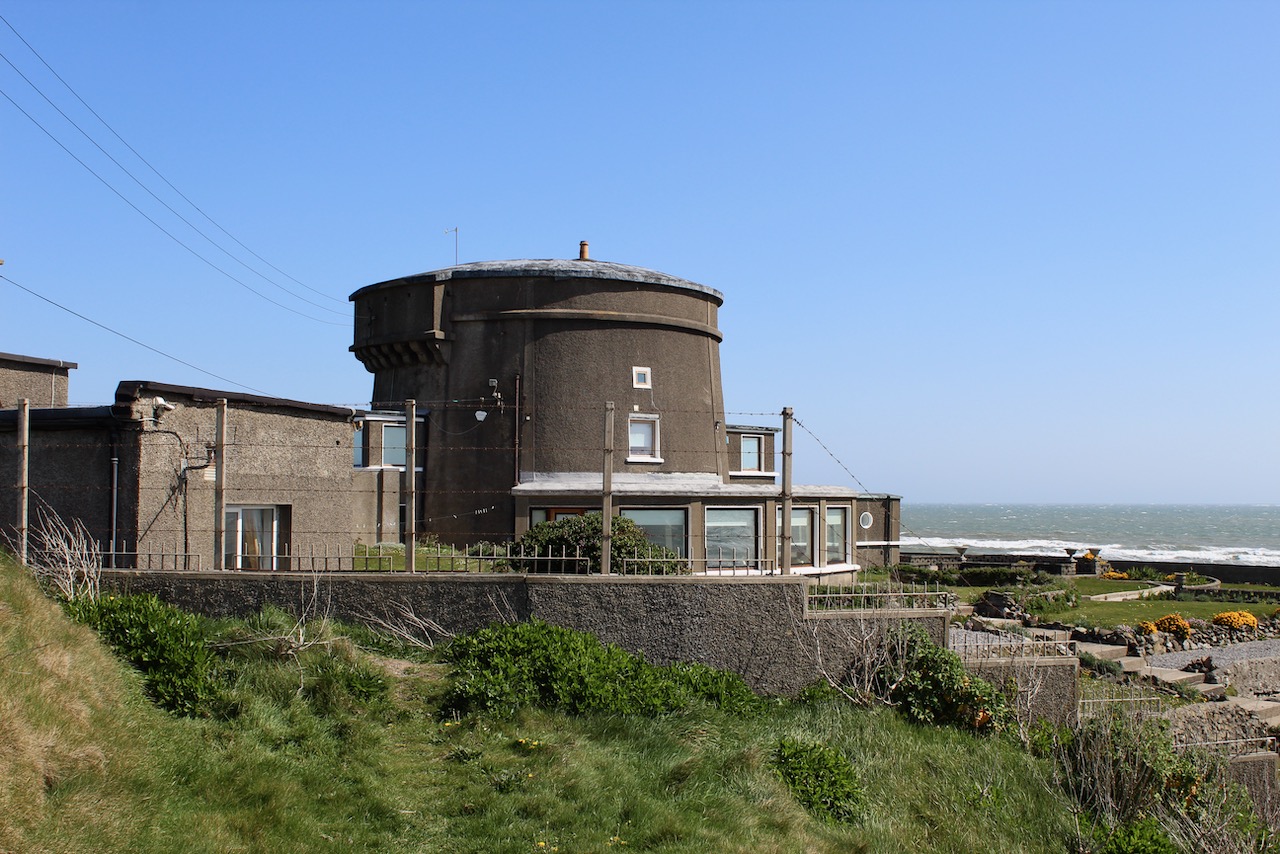
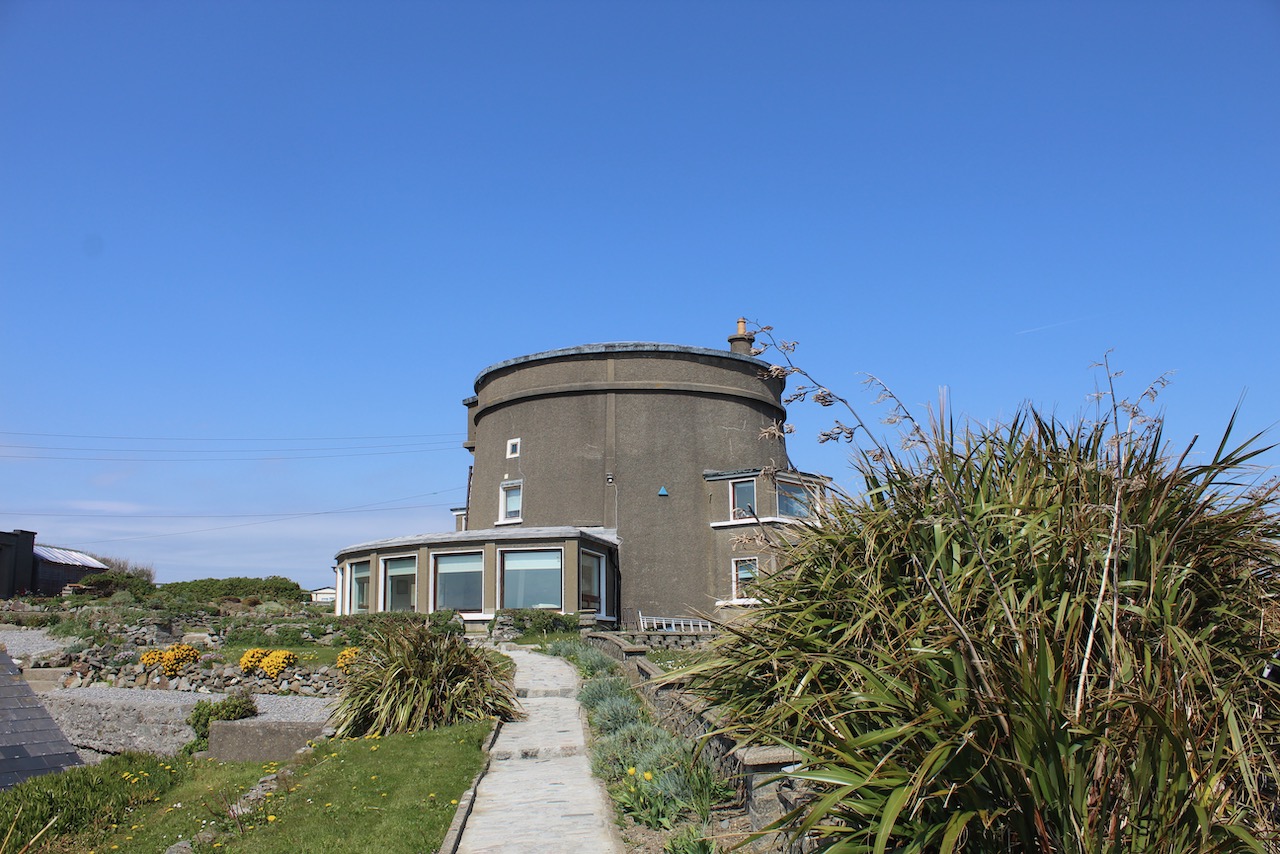
Terry was very welcoming to her home, North Tower Number 7 of Dublin bay’s Martello towers. She showed us around inside and her friend, gardener and Martello tower expert Bryan gave us a tour outside. You may recognise the tower from RTE television show “Home of the Year.”
First, Terry told us a bit about the history of the Martello towers of Dublin. The Martello towers were built to protect Ireland from French invasion from Napoleon’s army. Twenty four towers were built around the bay of Dublin, and twenty-one are still standing. There are also some in Limerick and Cork. No two towers are exactly alike. Some are larger, built for larger cannons. Some of the Martello towers have cellars and some do not.
This particular tower was built in 1805-6. In 1793, under the command of Vice Admiral John Jervis, a tower in Corsica, Cape Mortella was besieged, and he noted with great interest how well it withstood a battery of cannonballs. After three days the English landed ashore and took it by force. Jervis realised that the squat rounded shape of the tower and the thickness of its walls allowed it to withstand the attack. The British copied the design for their own defensive towers, but changed the name and called them “Martello” towers. The walls facing the sea are nine feet thick and on the land side eight feet thick. The Martellos around Dublin bay are built in the line of sight of each other, with the objective of ensuring the arc of canon fire from one would meet or overlap that from its neighbours.

Napoleon never came to Ireland, however, so the towers were never used to defend the coast. Terry told us that the British admiralty took the land to build the towers as they didn’t have time to locate the owners of the land. The towers were each built of local stone.

This tower came into private ownership in the 1920s. It has been altered to create a family home. Before Terry and her husband purchased the tower, it was owned by bookseller Derek Hughes of Hughes & Hughes bookstores. Earlier owners named Ian Coulhane, Walter Douglas and Fred Thorpe broke out walls on four sides of the tower and installed extensions at each.
The cannon would have been placed on the roof of the tower. Martello towers were built of a height suitable for the cannon range, and can be up to forty feet high. The cannons were able to rotate around a track to fire 360 degrees around the tower, and it took twelve soldiers to operate the cannon. It was planned that the soldiers would maintain a 24 hour lookout, taking it in two shifts, with approximately 24 men working and living in the tower. That never happened, although some invalided soldiers did work in Tom and Terry’s tower.


We entered the house through a door into the kitchen. The kitchen had previously been a two-car garage.

Terry showed us around her tower, pointing out where she and her husband made changes and renovations, where previous owners made changes, and where one can see original features of the tower. Her son Anton Savage, a radio and tv presenter, read up all about Martello towers and made lots of discoveries in his own home.
The kitchen leads into the tower itself. On our right was a spiral staircase, which is built inside the walls of the tower. The spiral staircase takes its shape from ancient tower houses which used spiral stairs for defence, narrow and built in a way so right-handed swordsmen on the second-floor would have the advantage over invaders coming up the stairs, who would be forced to fight using their left hands.


The inside of the round tower has two storeys, but the floor in the centre has been removed to create a beautiful double-height gallery of two floors of mahogany bookcases.


When Terry and her husband Tom removed the layer that had been applied inside the stone walls to expose the original stone, they discovered a fireplace. They installed a stove.

When renovating the ground flooring, they discovered a hole in the floor, revealing what must have been a cistern with enough space to store water for twenty five men for twenty five days. Terry and Tom had the space glassed over to create a feature in the floor, rather like the floor in our local Lidl, which has a similar feature in the floor revealing the remains of an 11th century house and another revealing an 18th century ‘pit trap’ associated with the stage workings of the former Aungier Street Theatre, where an actor could disappear beneath the stage or reappear like magic.
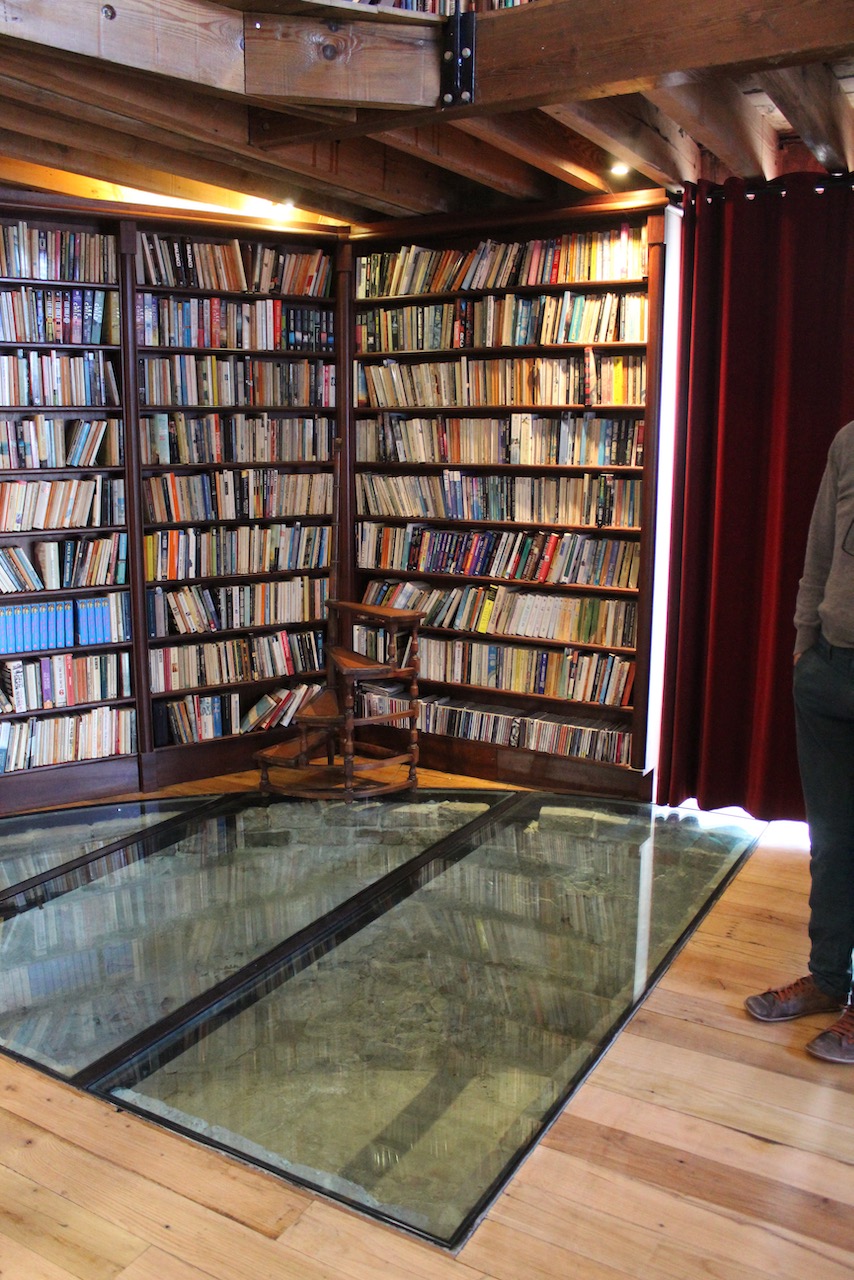
Instead of doors, Terry’s rooms are divided off by heavy red curtains.

On the ground floor an extension built on to one side contains the dining room/sitting room.


Also off the ground floor is the bathroom with a magnificent view from a bath, which has steps leading up to it.


The bedroom is above the bathroom, and has another gorgeous picture window.


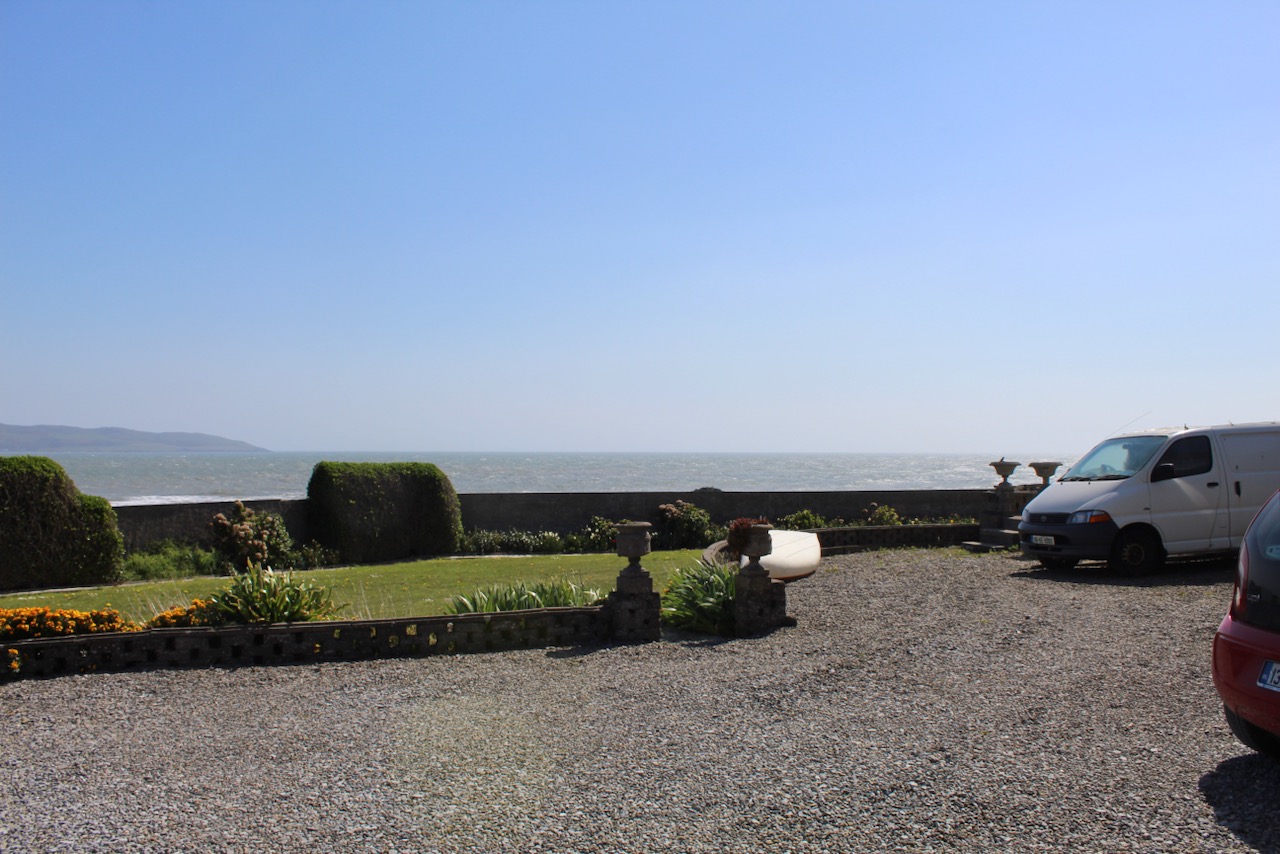
A previous owner, Walter Douglas, had the garden terraced.


Text © Jennifer Winder-Baggot, www.irishhistorichouses.com
 Irish Historic Houses
3 thoughts on “Martello Tower, Portrane, Co. Dublin – section 482”