Ballibay House (or Ballybay), Ballibay, Co Monaghan – demolished
Mark Bence-Jones. A Guide to Irish Country Houses (originally published as Burke’s Guide to Country Houses volume 1 Ireland by Burke’s Peerage Ltd. 1978); Revised edition 1988 Constable and Company Ltd, London.
p. 16. “(Leslie/LGI1912) A fine Classical house of 1830 by John B. Keane, built for C.A. Leslie. Of two storeys, over a high basement; three bay entrance front, the centre bay being recessed, with a Wyatt window above a single-storey Doric portico. Adjoining front of five bays, the centre bay breaking forward under a pediment-gable and having a tripartite window in its lower storey. Apart from this window, all the windows in the lower storey were set in arched recesses, also those in the basement, and the centre window in the upper storey of the side elevation. Eaved roof on bracket cornice. A three storey gable-ended range was added behind the house later in C19. Now demolished
Ballibay, County Monaghan, courtesy Archiseek.Ballibay, County Monaghan, courtesy Archiseek.
Ballybay House, residence of Edward John Henry Leslie C.M.G., M.V.O; (1890-1966), British Ambassador to Rome, which was destroyed by the IRA on 2nd June 1921. It was two storeys over a high basement, with a three-bay entrance front, the centre of which was recessed, with a Wyatt window above a single-storey Doric portico.
Described in Lewis as “About half a mile from the town is Ballibay House, the seat of that gentleman, on whose estate the town is built; it is a handsome and spacious mansion beautifully situated on the border of a lake, and backed by some extensive plantations”.
THE LESLIES OWNED 5,556 ACRES OF LAND IN COUNTY MONAGHAN GEORGE, 4TH EARL OF ROTHES, married thirdly, Agnes, daughter of Sir John Somerville, of Cambusnethan, and had issue,
Andrew, 5th Earl; Peter; JAMES, of whom we treat; Janet; Helen.
His lordship’s third son by his marriage to Agnes Somerville,
THE HON JAMES LESLIE, born in 1530, married Jane, daughter of Sir James Hamilton, of Evandale, and had issue,
George; HENRY, of whom we treat.
The younger son, THE MOST REV DR HENRY LESLIE (1580-1661), Lord Bishop of Meath, settled in Ireland, 1614, where he was ordained in 1617.
His lordship was chaplain to CHARLES I, with whom he shared his great adversities.
He espoused Jane Swinton, and had issue,
Robert(Rt Rev Dr); JAMES, of whose line we treat; William, of Prospect, Co Antrim; Mary; Margaret.
The second son,
JAMES LESLIE (1624-1704), of Leslie Hill, County Antrim, wedded, in 1650, Jane, daughter of John Echlin, of Ardquin, County Down, and was succeeded by his eldest son,
THE VEN DR HENRY LESLIE (1651-1733), Archdeacon of Down, Chaplain to the Duke of Ormonde, Lord Lieutenant of Ireland.
In 1680 he obtained a Prebend in Down Cathedral, which he resigned, 1695, for the Archdeaconry.
Dr Leslie espoused, in 1676, Margaret, daughter and heiress of Peter Beaghan, of Ballibay, and had issue,
PETER, his heir; Edmund, MP for Antrim; Penelope.
The Archdeacon was succeeded by his elder son,
THE REV PETER LESLIE, born in 1686, Rector of Ahoghill, who married Jane, daughter of the Most Rev Dr Anthony Dopping, Lord Bishop of Meath, and had issue,
HENRY, his heir; James, of Leslie Hill, Co Antrim; Samuel; EDMOND (Ven), Archdeacon of Down; Margaret; Jane.
The eldest son,
THE REV HENRY LESLIE (1719-1803), of Ballybay, County Monaghan, Prebendary of Tullycorbet, Clogher, and afterwards prebendary of Tandragee, in Armagh Cathedral.
Dr Leslie married, in 1753, Catherine, daughter of the Very Rev Charles Meredyth, Dean of Ardfert, and had issue,
Peter Henry, b 1755; k/a in America; CHARLES ALBERT, of whom hereafter; Catherine Letitia.
The surviving son,
CHARLES ALBERT LESLIE (1765-1838), of Ballybay, High Sheriff of County Monaghan, 1805, married, in 1799, Ellen, youngest daughter of Richard Magenis MP, of Waringstown, County Down, and left at his decease an only surviving child,
EMILY ELEANOR WILHELMINA LESLIE, of Ballybay, who married firstly, in 1828, her cousin, Arthur French, of Clonsilla, County Dublin, and had issue,
ROBERT CHARLES (now LESLIE), of Ballybay; Charles Albert Leslie Attila FRENCH; Helena Charlotte; Albertine Caroline; Henrietta Victoria Alexandria.
She wedded secondly, in 1844, her cousin, the Rev John Charles William Leslie, son of James Leslie, of Leslie Hill, by whom she had issue,
Ferdinand Seymour; Marion Adelaide.
Mrs Leslie died in 1844, and was succeeded by her eldest son,
ROBERT CHARLES LESLIE JP DL (1828-1904), of Ballybay, and Kilclief, County Down, High Sheriff of County Monaghan, 1854, who married, at Paris, 1867, Charlotte Philippa Mary, daughter of Captain Edward Kelso, of Kelsoland, and Horkesley Park, Essex, and had issue,
Theordore Barrington Norman; EDWARD HENRY JOHN, succeeded his brother; Mabel Edith.
He assumed, in 1885, the surname and arms of LESLIE, in compliance of his maternal grandfather’s will.
Mr Leslie was succeeded by his second son,
EDWARD HENRY JOHN LESLIE CMG MVO JP DL (1880-1966), of Ballybay, High Sheriff of County Monaghan, 1908, who entered the Foreign Office, 1902.
BALLYBAY HOUSE, Ballybay, County Monaghan, was a fine Classical house of 1830 by JB Keane, for Charles Albert Leslie.
It comprised two storeys over a high basement, with a three-bay entrance front, the centre of which was recessed, with a Wyatt window above a single-storey Doric portico.
The adjoining front had five bays.
Practically all of the windows in the lower storey were set in arched recesses.
A three-storey, gable-ended range was added behind the house later in the 19th century.
Ballybay House was burnt and the contents were sold in 1920.
Nothing remains.
Former London residence ~ 10 Douro Place, Kensington.
Mark Bence-Jones. A Guide to Irish Country Houses (originally published as Burke’s Guide to Country Houses volume 1 Ireland by Burke’s Peerage Ltd. 1978); Revised edition 1988 Constable and Company Ltd, London.
“(Brodigan, sub Burges/IFR) A two storey ashlar faced house of ca 1830, consisting of a main block of five bays with a one bay pedimented breakfront prolonged by a three bay wing of similar height set back. Wyatt windows beneath pediment of main block, above single-storey curved bow with simple pilasters. Framing bands on main block and wing; double windows in two outer bays of wing. Domed rotunda with pictoral panels of Classical scenes, trompe-l’oeil balustrades and niches with statues. The seat of the Brodigan family.”
Piltown House, County Meath, courtesy Mark Bence-Jones.
Record of Protected Structures:
Piltown House, townland” Piltown
Neoclassical house 1838, five-bay, two-storey over basement, gate lodge opposite. Outbuildings and walled garden. Ogham stone from Painestown in grounds.
Piltown House is located to the south of Drogheda, near Colpe. Piltown House was erected in 1838 for Thomas Brodigan, Drogheda businessman and first advocate of the building of the Dublin and Drogheda Railway which opened in 1844. John B. Keane was the architect for Pilltown house in 1838 and William Henry Byrne was the architects for alterations and additions in 1888. A two storey over basement house Piltown was described in 1844 by D’Alton as ‘a strikingly beautiful mansion standing in the centre of the townland, within a park of 200 statute acres, that for scenic effect and skillful cultivation, presents, in the view from the Dublin and Drogheda railway, an ornamental and gratifying foreground.”
Pilton or Piltown was in the hands of the Wellesley family after the Battle of the Boyne and then the Duff family and then in the early 1800s in the hands of Edmund Malone, an eminent lawyer. The property then came into the hands of the Brodigan family. Colombo Brodigan married a Cheevers lady and their son was Francis who died in 1831 and was interred in Colpe graveyard. The Brodigan family had grocery shops in Drogheda. The cash books of Francis Brodigan from 1817 and day books relating to sales of tobacco, wines, packs of cards, tea and sugar from 1793-7 are now in the National Library of Ireland.
Thomas Brodigan was the son of Francis Brodigan of Drogheda. Thomas Brodigan, a member of the Board of Trade, was a proponent of the railways and in 1835 he published an essay entitled “On the Establishment of a Northern Railroad.” In 1836 the Dublin and Drogheda. At least eight men were killed and many injured during the construction of the railway. Thomas Brodigan established a fund “The Disabled by Industrial accident Fund” which proved an income to those injured or widowed during the construction of the railway. Thomas Brodigan supported the growing of tobacco in the 1830s. Thomas Brodigan published a book in 1830s on the growing and curing of tobacco in the Ireland.
In 1846 Thomas Brodigan went on pilgrimage to Jerusalem, a long journey in the mid 19th century. While there the Greek and Latin priests nearly came to blows during Good Friday ceremonies, knives were drawn – a dispute which still continues today. Brodigan petitioned the Parliament to intervene so that pilgrims could travel safely to the Holy Land. Brodigan also visited Spain and Italy.
Francis Brodigan was born about 1836 at Parkanaur, Co. Tyrone. Francis served as a colonel in the Crimean War. In 1865 Francis Brodigan was a Liberal candidate for Drogheda in the election but was defeated by Benjamin Whitworth, another Liberal. Francis was High Sheriff of Drogheda in 1862. In 1876 Francis Brodigan of Pilltown House held 726 acres in Meath 4 acres in Drogheda and 6 acres in Louth He married secondly Alice Caroline Burges in 1877. In 1898 Sir Nugent Talbot Everard obtained a special licence to grow tobacco. He was joined in the next few years in the experiment by Sir John Dillon of Lismullin, R.H. Metge of Athlumney and F. Brodigan of Piltown. Francis died on 8 March 1910. His son, Captain Francis John Brodigan, was killed in action in 1915 during the First World War. The private and estate papers of the Brodigan family are now in the National Library. They were donated by the McClintock family who inherited Piltown House.
Pilltown House had an interesting collection of art and curios in the 1940s. The residence of Colonel McClintock there were some very fine paintings of the Dutch and Italian schools reputed to have been conveyed here for safety at the time of the French revolution. A visitor in the 1940s said one piece called for special mention, a remarkable painting on wood representing the head of Our Lord crowned with thorns.
The land surrounding the house was bought by the Franciscans in the 1960’s who sold it to the Christian Brothers, who subsequently sold it piecemeal to separate groups and individuals. The house was empty and became a target for vandals. In October 2006 Piltown House was gutted by fire.
Bence-Jones, Mark. A Guide to Irish Country Houses (originally published as Burke’s Guide to Country Houses volume 1 Ireland by Burke’s Peerage Ltd. 1978); Revised edition 1988 Constable and Company Ltd, London.
p. 55. “(Tredennick/LGI1912) A Tudor-Gothic house of ca 1840, by John B. Keane, rather similar to Keane’s building at Castle Irvine, Co Fermanagh….Now demolished.
Camlin Castle, County Donegal, photograph by Robert French, [between ca. 1865-1914], Lawrence Photograph Collection, National Library of Ireland.
Listed in Vanishing Country Houses of Ireland by The Knight of Glin, David J. Griffin and Nicholas K. Robinson, published by The Irish Architectural Archive and The Irish Georgian Society, 1988.
p. 55. “Tudor revival castle designed by John B. Keane in 1838 for John Tredenick incorporating an earlier house. The Gothic arched entrance gate remains. Demolished.”
David Hicks, Irish County Houses: Chronicle of Change. Collins Press, Cork, 2012. p. 224. “Another of J.B. Keane’s commissions… built for John Tredennick and was an extension to an earlier building… The Tredennick famly were of Cornish origin and established themselves in Donegal in the seventeenth century. …In 1928 the entire contents of the castle were offered for auction in a two day sale…A caretaker lived in the castle until it was sold in 1942 when a lot of the estate land was purchased by the Land Commission. In the 1940s when hydroelectric power stations were being constructed on the River Earne, the engineers calculated that Camlin would be flooded by the scheme and so it was demolished. When the water levels rose, it was found that the demolition of the castle had been totally unnecessary. Only the impressive castellated entrance gates with their large tower now remain. …
Bence-Jones, Mark. A Guide to Irish Country Houses (originally published as Burke’s Guide to Country Houses volume 1 Ireland by Burke’s Peerage Ltd. 1978); Revised edition 1988 Constable and Company Ltd, London.
p. 243. “(Dring/IFR) A three storey house of mid to late-C18 appearance. Five bay front with Venetian window above tripartite fanlighted doorcase with two Doric columns and central baseless pediment. The seat of the Dring family, who sold it early in the present century. Having been in poor repair for many years, it has recently been restored.”
not in national inventory
The Buildings of Ireland. Cork City and County. Frank Keohane. Yale University Press: New Haven and London. 2020.
p. 429. Rock Grove House. Of c. 1780. A big three-storey, five-bay house on a basement. Central bay articulated in a typical mid-Georgian way, with a stone tripartite doorcase approached by a perron, and a first-floor Venetian window. Rendered facades with sill courses and straight stucco quoins. Two-storey curved bows to the sides. Two-storey, two-bay wings, set back. Square entrance hall with a wide arch through to a decent staircase, rising in three flights around a wide well, with turned balusters and carved tread-ends. The archway and ground floor interiors date from alterations in the 1820s-30s. Elegant Lodge, attributed to J.B. Keane, c. 1825, a near-replica of one at Mount Richard, Co Tipperary. Cruciform plan with a hipped roof and lower wings. Central recessed widow framed by panelled piers surmounted by wreaths.”
Stradone House, Stradone, Co Cavan – demolished, but a Grecian gate lodge survives
Bence-Jones, Mark. A Guide to Irish Country Houses (originally published as Burke’s Guide to Country Houses volume 1 Ireland by Burke’s Peerage Ltd. 1978); Revised edition 1988 Constable and Company Ltd, London.
p. 266. “(Burrowes/IFR) a late Georgian mansion by John B. Keane, with a two-storey front, and a large return with an extra mezzanine storey. The entrance front had five bays, the central bay recessed under a massive arch, beneath a pediment. The ground-floor windows on either side of the entrance were set in shallow arched recesses. Demolished, but a Grecian gate lodge survives.”
Listed in Vanishing Country Houses of Ireland by The Knight of Glin, David J. Griffin and Nicholas K. Robinson, published by The Irish Architectural Archive and The Irish Georgian Society, 1988.
“Large classical house designed in 1828 by John B. Keane for Major F. Burrows. Demolished.”
DRUMLAUNAGHT (UPP. LOUGHTEE BY.),STADONE, County Cavan
Detached Greek Revival three-bay single-storey former gate lodge, built c.1845, with projecting entrance porch. Now in use as private house. Hipped slate roof with replacement ridge tiles, oversailing eaves supported on plain timber brackets, cut-stone central chimneystack and replacement rainwater goods. Walls now stripped to reveal red brick with brick cornice, having vertical ashlar strip of quoins raised to form antae, and cut-stone plinth all round. Two-stage windows flanking porch divided by stone lintel, to north bay small window over lintel with blind brick recess below, opposite arrangement to south bay. Replacement casement windows. Advanced flat-roofed porch with pilasters, full salient entablature and blocking course, and replacement timber panelled door with glazed upper sections. Corner antae framing a wide window on each gable with raised cutstone surround and stone sill, brick relieving arch over, and replacement tripartite casement windows. Rear elevation to road with same two-stage window recesses as front elevation having window to one upper section and all others as blind brick.
Appraisal
An important Grecian Style lodge in the style of Sir Richard Morrison, probably designed by J.B. Keane (d.1859) who had been an assistant in the Morrisons’ office. Keane designed Stradone House in 1828 for Major F. Burrows, as well as a contemporary porter’s lodge, both are now demolished. This finely executed gate lodge is an interesting survivor and has a number of striking features including the treatment of windows, the quoins expressed as antae on the elevations and the employment of the gable-facing entrance gates. The lodge retains much of its original form and materials and though small has a strong sense of scale suited to its roadside location.
THE BURROWES’ WERE MAJOR LANDOWNERS IN COUNTY CAVAN, WITH 9,572 ACRES
This family was established in Ireland by
ROBERT BOROWES, who settled at Drumlane, County Cavan, on the settlement of Ulster by JAMES I.
His eldest son and heir,
THOMAS BOROWES, became possessed of Stradone, of which estate he also received a patent of confirmation from CHARLES I, 1638.
THOMAS BURROWES, of Stradone House, High Sheriff of County Cavan, 1743, married Jane, daughter of Thomas Nesbitt, of Lismore House, County Cavan, and had issue,
ROBERT, his heir; Thomas, of Dangan Castle; Arnold (Rev); Cosby; Margery; Anne; Martha; Jane.
The eldest son,
ROBERT BURROWES, of Stradone House, High Sheriff of County Cavan, 1773, married Sophia, daughter of the Ven Joseph Story, Archdeacon of Kilmore, and was father of
MAJOR THOMAS BURROWES (1772-1836), of Stradone House, High Sheriff of County Cavan, 1803, who married, in 1807, Susan, daughter of the Rev Henry Seward, of Badsey, Worcestershire, and had issue,
ROBERT, his heir; James Edward; Henry; Honora Seward.
Mr Borrowes was succeeded by his eldest son,
ROBERT BURROWES JP DL MP (1810-81), of Stradone House, High Sheriff of County Cavan, 1838, MP for Cavan, 1855-57, who wedded, in 1838, Anne Frances, only daughter of John Garden, of Barnane, County Tipperary, and had issue,
Thomas, died in infancy; ROBERT JAMES, his heir; Arnold Henry (1846-48); Frances Susan; Honora; Mary Anne Cecilia.
Mr Borrowes was succeeded by his only surviving son,
ROBERT JAMES BURROWES JP DL (1844-93), of Stradone House, High Sheriff of County Cavan, 1883, Captain, 1st Dragoon Guards, who married, in 1876, Ella (44, Thurloe Square), daughter of Commodore Magruder, US Navy, and niece of Major-General JB Magruder, and had issue,
THOMAS JAMES, his heir; Robert Philip; Helena Mary; Kathleen Fanny.
Mr Borrowes was succeeded by his eldest son,
THOMAS JAMES BURROWES JP DL (1880-1935), of Stradone House, High Sheriff of County Cavan, 1902, who espoused, in 1920, Blanche Wilson, daughter of Joseph Charles Mappin, and had issue,
Robert Philip (1920-91); James Edward; Anne Seward Francis; Susan Honora.
STRADONE HOUSE, near Stradone, County Cavan, was a late Georgian mansion by John Keane, with a two-storey front, and a large return with an extra mezzanine storey.
The entrance front had five bays, the central bay recessed under a massive arch, beneath a pediment.
The ground-floor windows on either side of the entrance were set in shallow arched recesses.
The house had an eaved roof on a bracket cornice.
Stradone House is now demolished.
Former London residence ~ 22 Lowndes Street.
I’m seeking better images and information relating to Stradone House.
Bence-Jones, Mark. A Guide to Irish Country Houses (originally published as Burke’s Guide to Country Houses volume 1 Ireland by Burke’s Peerage Ltd. 1978); Revised edition 1988, Constable and Company Ltd, London.
p. 226. “(Bruen/IFR) A large early C19 classical mansion by William Vitruvius Morrison.
It has two storeys, the entrance front having a five-bay central block with a pedimented portico of four huge Ionic columns, prolonged by wings of the same height, at first set back behind short colonnades of coupled columns and then returning forwards with pedimented Wyatt windows in their ends. Rather dull and amorphous thriteen bay garden front, inadequately relieved by having four separate bays breaking forward wiht Wyatt windows, and bay a pair of somewhat paltry single-storey balustraded curved bows. Rich interior plasterwork in Morrison’s characteristic style. Hall with Ionic columns, free-standing, coupled and engaged; frieze of swags; ceiling of geometrical ribs. Damaged by fire ca1910 and afterwards restored; sold ca 1957; now an agricultural research centre.”
Detached five-bay two-storey Classical style country house, c. 1760, with ashlar façade, tetrastyle pedimented Ionic portico and balustraded parapet. Redesigned (externally and internally), c. 1832, with two-storey lateral wings and pavilion blocks added. Designed by the Morrisons. Tripartite windows added, c. 1876. Now in use as school. Group of detached outbuildings to site including two-storey cut stone stable complex, c. 1760, with blind arcade.
Remains of freestanding granite ashlar Greek Revival temple style mausoleum on a raised base, c. 1841, with Doric pilasters and lugged doorcases. Now in ruins. Designed by J. B. Keane.
Protected Structures of Ireland: The mausoleum dates from circa 1841 and was never completed. It was designed by J.B.Keane, the Morrison’s assistant, and consists of a Greek-revival temple with massive, granite ashlar walls on a raised base. This possibly the largest mausoleum in Ireland. Designs for the mausoleum were exhibited in the Royal Hibernian academy in 1841. The mausoleum has been cleaned recently and is in good order.
Gateway, c. 1835, comprising Classical style triumphal arch with flanking paired giant Ionic columns on pedestals carrying blocked entablature and walled carriage turn to front. Designed by the Morrisons.
Record of Protected Structures:
Oak Park House, Oak Park Demesne, Oak Park.
Townland: Oakpark or Painestown.
An opulent neo-classical composition dating from circa 1832 designed by Sir Richard and William Vitruvius Morrison. Their work completely remodelled a house of circa 1760 and encased it in granite ashlar. The façade is of five bays and two storeys and has a magnificent, ionic portico, cornice and balustrade. The garden front has a pair of single-storey, balustraded bows. Laterally-placed wings, which are connected by colonnades of square-plan piers, were added by McCurdy and Mitchell between 1876 and 1879. Further alterations were carried out after a fire in 1902. The detailing on the house is superb with crisp, granite carving of the Morrison designs maintained by the remodelling in the 1870s when plate-glass sash windows were inserted.
The walled garden has a high, stone wall. One side of the wall is next to the avenue leading to the house. On the North side of the garden is a composition with two, gable-fronted buildings which have square-headed doorcases and sidelights on the ground floor and a pair of pointed windows with chamfered, granite dressings on the first floor. The first-floor windows cut a string course which marks the base of the gable. The walls are built of rubble-stone rendered with lime rendering and the roofs are of natural slate with granite coping to the front. The two buildings are linked by a single-storey section. The buildings probably date from the 1830s. This is a very interesting and unusual design which shows the architect engaged in a playful composition.
The Dairy,
Oak Park Demesne,
Carlow
An estate cottage, probably designed by the Morrisons, in tudor-gothic style. It is built of coursed-rubble granite with gables, bow-windows, stair’s turret and single-storey wing. The windows have granite mullions with chamfered dressings as does the square-headed doorcase. The stairs turret has a pointed, stone roof. The roof is covered with natural slate. The house has been closed up for some years
The Old Stable Block,
Oak Park Demesne,
Oak Park
A U-plan stable block with a seven-bay, two-storey façade having a three-bay, recessed centre, painted, smooth-rendered walls, carriage arches on the ground floor, a string-course at impost level and small windows on the first floor. The roof is hipped and covered with natural slates. The return walls have wide, blank arches with the string course running along at impost level so that the head of the arch is glazed and looks like a Diocletian window. The stables appear to date from circa 1820 and because of their sophisticated design could be by the Morrisons at a time that they were working in Borris.
Iron Bridge,
Oak Park Demesne,
Oak Park
A cast-iron, single-arch bridge with serpentine, entwined ornamentation, banded, granite piers and dating from circa 1835. It was designed by George Papworth. A very important iron bridge of unusual design.
Jimmy O’Toole, The Carlow Gentry: What will the neighbours say! Published by Jimmy O’Toole, Carlow, Ireland, 1993. Printed by Leinster Leader Ltd, Naas, Kildare.
Chapter: Bruen of Oak Park
p. 53 [p. 51-2 ripped out] :As a result of Captain Bruen’s objection to his daughter’s match, local rector Canon Ridgeway refused to marry the couple, who then eloped to England, but when they returned to Carlow some weeks later, still not married, Canon Ridgeway relented, ignored the Captain’s protests, and performed the wedding ceremony in 1939…. Now he was alone in Oak Park (formerly Painstown), a property first purchased in 1775, by Henry Bruen I, grandson of James Bruen of Tarvin, County Chester, who came to Ireland with the army of Oliver Cromwell, and was granted land at Abbeyboyle, County Roscommon. Henry came to Carlow after a career in the Quarter Master General’s office in the U.S. army, where he made his fortune. The story – embellished, no doubt, by political enemies of the family later – was that while responsible for supplying coffins, he had them designed with false bottoms, which facilitated recycling!
Whatever its source, Bruen certainly had a fortune, and during the last decade of the 1790s, he took full advantage of the forced sales of poart of the Bagenal, Whaley and Grogan estates in County Carlow. He bought 3,702 acres from Thomas “Buck” Whaley of Castletown, who had gambled away his fortune. …Land ownership meant political muscle and in 1790, Henry Bruen I was returned to parliament with William Burton of Burton Hall, in an uncontested election. … Sir Richard Butler, living at Garryhundon at the time, [p. 55] withdrew… in favour of Bruen…. Sir Richard had the “family seat” back within five years following the sudden death fo Colonel Bruen at his Dublin home in North Great George’s Street in 1795….
It was Henry Bruen II who was to put the Bruen stamp firmly on Carlow politics. He was at Harrow with George Gordon Byron, later the poet Lord Byron, and Robert Peel, with whom he would later run shoulders as fellow Tory MPs. Sir Robert was Home Secretary when Catholic Emancipation was granted, a Bill supported by Henry Bruen. He opposed the Tithe system, which he described a “badly devised and tending towards the production of much evil…” He was first elected, unopposed in 1812, at the age of 22 – the first of 13 elections in which he was involved over forty years. …Prior to the 1830s, party politics as we know them today did not exist, and when polling took place, the choice was between Tory candidates of varying political views. Where there were agreed candidates for the two county seats MPs were returned without a contest.
But politics were about to change dramatically in County Carlow – albeit for a relatively short period – following Catholic emancipation and the leadership of Daniel O’Connell. However, with the exception of two brief periods, Bruen survived the political trauma and turmoil of the 1930s, and held a seat continuously btween 1840 and his death in 1852… The campaign had been so intense in 1831, that Bruen and his running mate Horace Rochfort, withdrew the night before the poll.
But it was the election of 1841 that was to make Henry Bruen II a hero among Conservative voters throughout the country. He partnered Thomas Bunbury of Moyle, to defeat the high profile Daniel O’Connell (Jr), the son of the Liberator, and John Ashton Yates…Intimidation was an acceptable weapon. At a meeting in Carlow town, Daniel O’Connell Jr suggested the use of cribs or pens in churches where Catholic voters, who refused to come onto the Liberal side, [p. 56] could be corralled during mass, to underline their support for landlords. O’Connell could hardly have been unaware of the fact that such actions would lead to violence, and among Catholics at that. “Cooping” was another practice on both sides, where voters, for their own protection, were locked up dring thedays preceding polling to prevent them being intimidated, or physically attacked. Abduction too was practised to prevent voters getting to the polls.
On June 26th – five days before the election – more than 250 Catholic voters armed to a man, were under the protection of a squadron of cavalry at Borris House. Few of these abductions were reported to the police, suggesting most of them were of theirown free will, but whether it was out of fear of their landlord, and clan loyalty, in this case to the Kavanaghs, would be impossible to determine.
The Liberals kept their captured voters in a disused brewery in Kilkenny where they were looked after by the local liberal organisation, the Kilkenny Citizens Club. Atone stage, there were 120 voters in the brewery, consuming enormous quantities of food, and being entertained by the teetotal bands. A Tory pamphlet entitled “The Reign of Terror in Carlow” reported that on Juen 27th “A boatload of voters was brought along the canal from Leighlibridge to Bagenalstown. The teetotal band at Leighlinbridge played sacred music to drown the groans of the imprisoned electors in the lumberboat. The miserable electors were tied, guarded by armed men, and commanded by two priests, Fr Murphy and Fr Mahon.”
p. 57….Bruen called the Catholics ‘savages’ during a parliamentary debate. The liberal Leinster Reformer attacked the St. Mullins voters – mostly tenants and supporters of Kavanagh’s – proclaiming “thre are some vile traitors for lucre among he wretched serfs of Lady Harriet Kavanagh, or rather the wretched serfs of Doyne (Charles “Silky” Doyne), for hie is lord and master.” Onn the eve of the election , the St. Mullins voters were lodged at Strawhall House, where they were visited by O’Connell in a last ditch effort to persuade them to change sides – he did not succeed.”
“The clergy in most parishes, lad by Bishop James Doyle, threw their considerable weight behind the Liberal cause, and it was because of this support that Daniel O’Connell could advocate the use of cribs in churches as a form of punishment…a crib was erected in Tinryland church for what were termed “the black sheep who voted Tory.”…
On the same Sunday, James Prendergast, whose brother voted Tory, was turned out of Clonegal church…children were turned out of school due to parents votes… Immediately after the election, unprecendented persecution of Bruenite voters commenced, according to P.J. Kavanagh… Andrew Marshall, a Bruen tenant,, was beaten by a mob at the Royal Oak, and in Hacketstown, Brian Kelly, who was rescued from a mob before the election, was stoned afterwards by a mob of thirty. In Leighlinbridge, William Bergin was attacked by 300 people because he voted Tory.
P.J. Kavanagh claims there was no proof of any landlord vengeance having taken place after the election…
p. 59. Henry III (1828-1912) was back in the House of Commons in 1857, and held his seat until 1880, whe, with Arthur McMurrough-Kavanagh, both sitting MPs, they were heavily defeated by Home Rule candidates E.D. Gray and D.H. MacFarlane. That election was a key bench mark… it ended the stranglehold of landlords on the national political system in Ireland.”
Just as the influence of the Bruens had grown both economically and politically over the years from 1775, so too did their mansionhome at Oak Park. The present house is the result of four periods of enlargement and remodelling carried out between 1797 and 1902. 22 years after he arrived, Henry I …decorated the house previously occupied by the Cookes. In 1832, Henry II commissioned William Morrison to remodel the house, and in 1876 builder Samuel Bolton signed a contract for a major extension, which took three years to complete… in 1902, the house was gutted by fire, and when the outbreak was brought under control eight hours later, all that remained intact was the north wing. Head housemaid Lucy Fleming, who raised the alarm, said she was awakened by what appeared to be the noise of intruders – suggesting that the fire may have been deliberate…. The house was rebuilt under the supervision of architect William Mitchell, who was responsible for extensive interior re-design work. The family moved to the dower house at Strawhall during the rebuilding.
p. 60. After WWI, sometimes as many as 6-8 planes would land in thefield, army officers coming to Oak Park from Dubil for a party.
In 1922 Henry Bruen IV leased the deer park to Carlow golf club and an 18 hole course was developed.
Oak Park House in Carlow town is probably the finest 18th/19th Century house in south east Ireland. The house itself is of huge architectural and historical significance. There are 700 acres of woodland and open pasture including a lake.
The history of Oak Park (once known as Painestown) has been known since 1775 when the park was in the possession of the Bruen family, until the death of Arthur Bruen in 1954. In 1960 it was sold to the Irish Land Commission and opened the National Teagasc Tillage Research Centre there. Farmers from the west of Ireland bought small pieces of land to farm, thanks to loans. So every year the farmers had to pay back the Land Commission a sum on the size of their holding.
The Bruen Family purchased Oak Park, formerly known as Painestown around the year 1775. In 1832, Henry Bruen commissioned William Vitruvius Morrison to redesign the house. It is remodelled in the classical style and retains the existing house as its central component. The front façade features a two-storey Ionic portico set on a pedestal. Today Oak Park House and demesne is the property of Teagasc – the agricultural research body. It has recently become the administrative headquarters for Teagasc.
Stable complex, built c1765, comprising two-storey cut stone building with round-headed blind arches and three-bay gable-fronted buildings opposite. Renovated, c1985, with openings remodelled.
The Mausoleum
The Mausoleum is a large structure located in the woods, approximately 500 metres north-west of Oak Park House. It was designed in 1841 by the architect John B. Keane in the style of a Greek Peripteral Temple. Keane was initially a draughtsman with the Morrisons and probably got the commission because of this. The exact purpose for its construction is unknown but it is possible that Henry Bruen II commissioned it as a memento of his victory over Daniel O‟ Connell Jnr. In the Westminster election of 1841. The Temple was never completed and it was later used as a Mausoleum. The last two Henry Bruens and their wives are buried in the Mausoleum.
The Graveyard and Church are located in the Farmyard about 400 metres south of Oak Park House. The origin of the small ruined Church is uncertain. It is most likely that some stage it was used as a private Chapel for early Coke (or Cooke) landlords who were Catholic. An engraved stone slab with the date 1670 was found during a clean-up but according to some experts there are indications that part of the ruins date to an earlier period. Two table-tombs within the ruins contain the remains of some of the Coke who owned Oak Park.
The Arch, Oak Park, designed by William Vitruvius Morrison which is at the entrance to Oak Park House and demesne. It remains to this day a magnificent example of a Triumphal Arch. The arch is flanked by paired Ionic columns on the front elevation with Doric columns on the back flank of the Arch. The columns are raised on pedestals. Both sides of the Arch carry a full entablature. On the approach from the Carlow side, is a carriage turn surrounded by a high granite wall.
Revealing the story of Oak Park House
By Suzanne Render
This item was previously published in the Nationalist 10th March 2000.
ONE NEVER fails but to be impressed by the grandeur and splendour of Oak Park House. Imposing itself on the landscape amid hundreds of the country’s most fertile agricultural acres, its reputation as a centre for agricultural research is unrivalled.
But what of the origins of Oak Park House?
Continuing in its series of fascinating lectures, the Old Carlow Society will host an evening devoted to Oak Park House and lands on March 15 at 8pm.
The lecture will be given by Paddy Comeford, a retired station manager at Oak Park who will discuss the building itself, the families that live there and the house’s progression from the seat of a landlord’s family to a modern research centre run by Teagasc. An interesting aspect of the lecture is that it will be held in
Oak Park House itself, thus adding atmosphere to the occasion.
Having worked in Oak Park House from 1961 to 1998, Paddy’s interest in the building’s rich history quickly developed. Over the years he has extensively researched the families who lived in the house and the development of the estate which originally consisted of approx. 1600 acres.
Paddy will guide those who attend the lecture through the history of Oak Park House, first lived in by the Cooke family and from 1775 onwards five generations of the family of Henry Bruen.
The original Oak Park property purchased by the first Bruen consisted of 6000 acres, by 1843 this had increased to 21,000 acres.
Paddy will reveal that when the last Henry Bruen died in 1954 he left the property to his first cousin Francis Bruen, a move zealously contested legally by his daughter.
A court case ordered everything to be sold and the proceeds divided evenly between both parties, thus leading to the end of Oak Park House at a residence.
At the auction the land was purchased by Brownshill Farms which a number of years later was taken over by the Land Commission. In the division that followed, An Foras Taluntais purchased the building. In subsequent years An Foras Taluntais joined with Acot to form Teagasc.
Today the exterior of Oak Park House remains the same as when it was occupied by the Bruens. The inside, however, has changed substantially, with most of the upstairs converted into offices and laboratories.
Source: The Nationalist 10th March 2000. & Michael Purcell
THE BRUENS WERE THE LARGEST LANDOWNERS IN COUNTY CARLOW, WITH 16,477 ACRES
JAMES BRUEN, said to have been of Tarvin, Cheshire, went to Ireland in Cromwell’s Army and settled at Abbeyboyle, County Roscommon.
He was administrator to his brother, Henry Bruen, of Dublin, in 1700.
His son,
MOSES BRUEN, of Boyle, County Roscommon, purchased land and property in counties Carlow and Wexford from the Beaucamp, Grogan and Whaley families.
Thereafter, the family settled at Oak Park, County Carlow, and Coolbawn, County Wexford.
This Moses, who died in 1757, left issue,
Moses; HENRY, of Oak Park; Bridget; Mary; Elinor Catherine; Margaret; Elizabeth.
The second son,
COLONEL HENRY BRUEN MP (1741-95), of Oak Park, MP for Jamestown, 1783-90, County Carlow, 1790-95, removed, about 1775, to estates which he purchased in County Carlow.
He married, in 1787, Harriette Dorothea, daughter of Francis Knox, of Rappa Castle, County Mayo, and had issue,
HENRY, his heir;
John, of Coolbawn;
Francis, of Coolbawn;
Maria; Margaret; Harriett.
The son and heir,
COLONEL HENRY BRUEN (1789-1852), of Oak Park, and Coolbawn, County Wexford, married, in 1822, Anne Wandesforde, daughter of Thomas Kavanagh MP, of Borris House, County Carlow, by Lady Elizabeth his wife, daughter of John, 17th Earl of Ormonde, and had issue,
HENRY, of Oak Park;
Elizabeth; Harriet; Anne.
Colonel Bruen was succeeded by his only son,
THE RT HON HENRY BRUEN JP DL (1828-1912), of Oak Park and Coolbawn, MP for Carlow, 1857-80, High Sheriff of County Carlow, 1853, Privy Counsellor, who married, in 1854, Mary Margaret, third daughter of Colonel Edward M Conolly MP, of Castletown, County Kildare, and had issue,
HENRY, his heir; Edward Francis, Captain RN; John Richard; Arthur Thomas; Charles; Katherine Anne; Mary Susan; Elizabeth; Eleanor; Helen; Grace.
Mr Bruen was succeeded by his eldest son,
HENRY BRUEN (1856-1927), of Oak Park, and Coolbawn, Lieutenant, Royal Artillery, High Sheriff of County Carlow, 1886, Wexford, 1909, who wedded, in 1886, Agnes Mary, youngest daughter of the Rt Hon Arthur M Kavanagh, of Borris, County Carlow, and had issue,
HENRY ARTHUR BRUEN (1887-1954), of Oak Park, Captain, 15th Hussars, who wedded, in 1913, Jane Catherine Gladys, daughter of Arthur George Florence McClintock, and had issue,
GLADYS PATRICIA BREUN (1914-), of Oak Park, who married, in 1939, Mervyn Anthony Arthur Rudyerd Boyse, son of Major Henry Thomas Arthur Shapland Hunt Boyse. They had four sons.
She lived in 1976 at Maryvale, Church Road, Ballybrack, County Dublin.
OAK PARK, near Carlow town, is a large Victorian classical house by W V Morrison.
It has two storeys, the entrance front having a five-bay central block with a pedimented portico of four huge Ionic columns.
The main block is prolonged by wings of the same height, initially set back though returning forwards with Wyatt windows at their ends.
The garden front of thirteen bays is duller in appearance.
The interior has splendid plasterwork in the style of Morrison; while the Hall boasts giant, free-standing Ionic columns.
Part of the former Oak Park estate, once the home of the Bruen Family, from 1775 to 1957, is now the 127 acre Oak Park Forest Park.
The Oak Park demesne was bought by Colonel Henry Bruen in 1775, after making his fortune in the American Army.
He was the grandson of James Bruen, of Tarvin, Cheshire, who came to Ireland with Oliver Cromwell and received land at Abbeyboyle, County Roscommon.
The Bruens intermarried with the County Mayo families, Knox of Rappa and Ruttledge of Bloomfield.
HMS Drake, the wreck of which lies at Church Bay, Rathlin Island, was torpedoed in 1917. One of her Captains was Edward Bruen, son of the MP. He was Captain when the ship was flagship on the Australian station circa 1912/13.
The Senior Naval Officer in Australia at the time was Admiral King-Hall (Admiral Sir George Fowler King-Hall KCB CVO) who had a very strong Ulster connection. Captain Edward Bruen RN was married to Olga Ker, one of the Montalto and Portavo family.
Captain Bruen later went on to command HMS Bellerophon at the Battle of Jutland.
The Bruen estate was mainly in the counties of Carlow and Wexford where they had houses at Oakpark in Carlow and at Coolbawn, Enniscorthy.
Francis Bruen was married to Catherine Anne Nugent, daughter of the Earl of Westmeath.
Three townlands in the barony of Athenry were offered for sale in the Landed Estates court in 1866.
All this land gave the Bruen family political power and, in 1790, Henry Bruen was returned to Parliament, winning the seat of a neighbouring family, the Butlers.
However, the Butlers reclaimed their seat five years later with the sudden death of the Colonel in December, 1795.
This allowed his son, also called Henry, to assume control of the estate.
The Bruen estate in County Galway amounted to over 700 acres in the 1870s but was part of an estate of almost 25,000 acres in total.
Manuscripts in the Irish Genealogical Office would suggest that the family held lands at Boyle, County Roscommon, in the 18th century.
These lands seem to have been at the centre of a legal case between the Bruen family and Richard St George.
Henry Bruen attended Harrow School alongside the poet Lord Byron and Robert Peel, with whom he would later serve as a Conservative MP.
Peel was Home Secretary at the time of Catholic Emancipation, a Bill which Henry Bruen supported.
Bruen quickly amassed the land surrounding Oak Park.
In 1841, a survey of every Bruen farm revealed that the family’s estates in County Carlow covered 20,089 acres.
In the 1841 election, Henry defeated the Liberal candidate, Daniel O’Connell, Jnr., son of “The Liberator”.
However, the Bruen hold on the seat lapsed with the death of Henry in 1852; but his son, also confusingly called Henry, returned to the House of Commons in 1857 and held his seat until 1880, which marked the end of the family’s 90-year history of political involvement over three generations.
The current mansion house at Oak Park is the result of four periods of expansion and remodelling carried out between 1797 and 1902.
Twenty-two years after he arrived, Henry employed Michael Boylan to redecorate the house.
In 1832, the second Henry Bruen commissioned William Morrison to re-model the house and in 1876 Samuel Bolton, a builder, signed a contract for a major extension, which took three years to complete.
However, on 22nd February, 1902, the house was gutted by fire.
After eight hours of fighting the blaze, all that remained was the north wing. Fortunately, a large number of paintings, furniture and books were saved by the workers.
The house was rebuilt under the supervision of William Mitchell.
The last male Bruen, the fifth Henry, died in 1954.
By then, the estate had reduced in size to a relatively small 1,500 acres.
He left nothing to his estranged daughter Gladys, who had several years earlier marriedPrince Milo of Montenegro.
The remainder of the estate was bequeathed to a cousin in England, minus a weekly income for life of £6 to his daughter, Patricia.
In 1957, the estate was purchased at auction for £50,555 by Brownes Hill Estates, who already owned the nearby estate in which a Norfolk farmer was principal partner.
However, within three years the property was back on the market after fierce protest from smaller farmers in opposition to the purchase by the Norfolk farmer.
The estate was bought by the Irish Land Commission for £68,000, and seven hundred acres were divided up among small holders, while the house and the remaining land were taken over as a research centre for the Irish Agricultural Institute (Teagasc).
The last member of the Bruen family to be buried in the family’s private burial ground at the Mausoleum was Gladys, the estranged wife of Henry (d 1969).
The Beauties of Ireland, Being Original Delineations, Topographical, Historical, and Biographical, of Each County – James Norris Brewer
“…The family of Coke was seated at Paynestown through many generations. Thomas Coke, Esq. dying without legitimate male issue, his estates passed to the late Earl of Kenmare, by whom this place was sold to the father of the present owner.”
“The façade of Oak Park, County Carlow, designed by William Vitruvius Morrison in the early 1830s for Colonel Henry Bruen. The building incorporates an earlier house and was originally a grand villa, of two storeys and five bays, one on either side of the giant tetrastyle portico. The latter, featuring four Ionic columns with wreaths in the frieze above, is almost identical to that at Ballyfin, County Laois and can also be seen at Barons Court, County Tyrone and Mount Stewart, County Down, on all of which buildings the Morrisons, father and son, worked. Oak Park was greatly extended in the 1870s and also extensively restored after a fire in 1902, but some of the original interior decoration survives, notably in the entrance hall and the former library. The last of the Bruen family to live in the house died in 1954; some time earlier his wife had run away with an impoverished Montenegran prince, Milo Petrovic-Njegos. After various legal disputes and changes of ownership had occurred, Oak Park and several hundred acres was acquired by the Irish State; today it serves as the headquarters of Teagasc, the Agriculture and Food Development Authority.“
orange: “whole house rental” i.e. those properties that are only for large group accommodations or weddings, e.g. 10 or more people.
green: gardens to visit
grey: ruins
donation
Help me to pay the entrance fee to one of the houses on this website. This site is created purely out of love for the subject and I receive no payment so any donation is appreciated!
€15.00
Mayo:
1. Belleek Castle and Ballina House, originally Belleek Castle, Ballina, Mayo – hotel and gives tours
Belleek Manor, or Castle, courtesy of National Inventory of Architectural Heritage.
The website tells us:
“Welcome to your authentic Castle Experience in the beautiful West of Ireland in Ballina, County Mayo. An award winning hotel & wedding venue with a gourmet restaurant, cafe and museum on site!
“Explore Belleek Castle, an iconic Irish Country Home a restaurant, wedding venue, boutique hotel and spectacular exhibition of the eclectic Marshall Doran Collection of which one of our academically trained guides will be delighted to take you on a tour.
“Belleek Castle has been a member of the prestigious Ireland’s Blue Book since 2016. Ireland’s Blue Book is a romantic collection of Irish Country House Hotels, Manor Houses, Castles and Restaurants. Located throughout the island of Ireland these charming and stylish hideaways are the perfect choice for your holiday vacation in Ireland. They are also ideal for a midweek or weekend break and those seeking a romantic getaway.
Open dates in 2026: Mar 13-26, Apr 17-25, June 12-26, July 8-24, Aug 15-23, 2pm-6pm
Fee: adult €8, OAP/child/student €3, National Heritage Week free
Brookhill House, photograph from National Inventory of Architectural Heritage. [1]
The National Inventory tells us it is a:
“Detached three-bay two-storey double-pile over part raised basement country house with attic, built 1845, on a T-shaped plan centred on single-bay full-height gabled frontispiece; three- or five-bay two-storey rear (south) elevation centred on single-bay full-height gabled “bas-relief” breakfront… “Restored”, 1990-1…Tudor-headed central door opening approached by flight of thirteen drag edged tooled cut-limestone steps between wrought iron railings, trefoil leaf-embossed timber doorcase having engaged colonette-detailed moulded rebated reveals with hood moulding on polygonal label stops framing timber panelled door. Pointed-arch flanking window openings with creeper- or ivy-covered sills, timber Y-mullions, and carved timber surrounds framing timber casement windows. Square-headed window openings in tripartite arrangement with drag edged dragged cut-limestone sills, timber cruciform mullions, and rendered flush surrounds having chamfered reveals with hood mouldings framing two-over-two timber sash windows without horns. Hipped square-headed central door opening to rear (south) elevation approached by flight of nine drag edged tooled cut-limestone steps between replacement mild steel railings, tooled cut-limestone surround having chamfered reveals with hood moulding framing glazed timber panelled double doors having sidelights below overlight. Square-headed window openings with rendered flush surrounds having chamfered reveals framing timber casement windows. Interior including (ground floor): central hall on a square plan retaining carved timber lugged surrounds to door openings framing timber panelled doors, and moulded plasterwork cornice to ceiling; and carved timber surrounds to door openings to remainder framing timber panelled doors with carved timber surrounds to window openings framing timber panelled shutters on panelled risers. Set in landscaped grounds.
Appraisal
“A country house erected to a design attributed to Frederick Darley Junior (1798-1872) of Dublin representing an important component of the domestic built heritage of the rural environs of Claremorris with the architectural value of the composition, one enveloping a “four square” house annotated as “Brook hill [of] Kirwan Esquire” by Taylor and Skinner (1778 pl. 214), confirmed by such attributes as the deliberate alignment maximising on panoramic vistas overlooking landscaped grounds; the symmetrical frontage centred on a “medieval” doorcase demonstrating good quality workmanship with the corresponding Garden Front centred on a streamlined doorcase; the diminishing in scale of the multipartite openings on each floor producing a graduated tiered visual effect with the principal “apartments” defined by polygonal bay windows; and the robust timber work embellishing the roofline. Having been well maintained, the elementary form and massing survive intact together with substantial quantities of the original fabric, both to the exterior and to the interior where contemporary joinery; Classical-style chimneypieces; and decorative plasterwork enrichments, all highlight the artistic potential of the composition. Furthermore, adjacent outbuildings (extant 1893); a lengthy walled garden (extant 1893); and an abbreviated “Triumphal Column” erected over the burial place of Joseph Lambert JP (1793-1855), all continue to contribute positively to the group and setting values of an estate having historic connections with the Lambert family including Joseph Lambert (1760-1813), one-time High Sheriff of County Mayo (fl. 1796); Alexander Clendenning Lambert JP DL (1803-92), ‘County Treasurer late of Brookhill County Mayo’ (Calendars of Wills and Administrations 1893, 432); Colonel Joseph Alexander Lambert JP DL (1855-1907), ‘late of Brookhill Claremorris County Mayo and of Bouverie Road West Folkestone Kent’ (Calendars of Wills and Administrations 1908, 297); and Brigadier Alexander Fane Lambert DL (1887-1974), later of Auld Licht Manse, Angus, Scotland; and a succession of tenants including Valentine Joseph Blake JP (1842-1912), ‘Land Agent’ (NA 1901); Major General Reginald Henry Mahon (1859-1929; NA 1911); and Katharine Tynan Hinkson (1859-1931; occupant 1916-21), poet and author of the autobiographical “The Years of the Shadow” (1919) and “The Wandering Years” (1922).“
The Landed Estates database tells us:
“Brookhill was situated on church land held by the Gonnes, who leased the house to the Kirwans in the late 1770s. Occupied by the Lambert family from the 1790s to the 1940s when it was sold to Gerald Maguire, a solicitor in Claremorris. Now the home of the Noone family.” [2]
3. Old Coastguard Station, Rosmoney, Westport, Co. Mayo– section 482
Open dates in 2026: June 29-30, July 1-31, Aug 1-30, Sept 1-8, 11am-4pm
Fee: adult €1, child/OAP/student free
Old Coastguard Station, County Mayo, photograph from National Inventory of Architectural Heritage.
The National Inventory tells us it is “A coastguard station erected to a design examined (1876) by Enoch Trevor Owen (c.1833-81), Assistant Architect to the Board of Public Works (appointed 1863), representing an important component of the later nineteenth-century maritime architectural heritage of County Mayo. Having been reasonably well maintained, the elementary form and massing survive intact together with quantities of the original fabric, both to the exterior and to the interior: the introduction of replacement fittings to the openings, however, has not had a beneficial impact on the character or integrity of the composition. Nevertheless, an adjacent boathouse (extant 1897) continues to contribute positively to the group and setting values of a neat self-contained ensemble making a pleasing visual statement in a low hillside overlooking the islet-studded Westport Bay.“
4. Partry House, Mayo – part of Museums of Mayo– sometimes open to the public
“Partry House is a charming historic house in a unique and secluded old estate by the shores of Lough Carra.
“Built in 1667 on the site of an old Castle, it is set in just 250 acres of unspoilt woodland, bog, pasture and parkland.
Farm
“The farm and gardens are run on ecologically friendly and organic principles. Wildlife abounds on this peaceful sanctuary in scenic South County Mayo.
“Now restored in keeping with its age and character, Partry House is open in part to the public during July and August.
“Partry House dates from 1667 when it was built on the remains of Cloonlagheen Castle by Arthur Lynch as a dowager house for his mother Lady Ellis, widow of Sir Roebuck Lynch [2nd Baronet, 1621-1667] of Castle Carra.
“Sir Roebuck’s lands were seized by the Cromwellians and he was compensated by lands at Castle Carra during the first half of the seventeenth century. The Castle was named after Cloonlagheen (‘the meadow of the little lake’) townland on which it stands.
“Evidence of the original castle was discovered during restoration work in 1995 when slit windows opening inwards were found at knee level on the first floor. Old castle walls can be seen incorporated into stable walls.
“Knox’s ‘History of Mayo‘ (1910) clearly states that Cloonlagheen castle was owned in 1574 by Abbé MacEnvile who was over Ballintubber Abbey. This was part of the Elizabethan survey called the ‘Divisons of Connaught’.
“The Lynchs, of the noted Galway family, occupied Partry House from 1667 until 1991; over 330 years in residence. Many of the ancestors of the present Lynch family are buried in a ring-fort graveyard on the estate, where their achievemements are noted on a large stone obelisk. Military, Exploratory and Humanitarian, their dates and names are written in stone.
“The one-time islands Moynish, Creggaun and Leamnahaye are linked to the shore by means of the Famine Walk built between the lake and a bog area. This and the fine limestone shore edging date from famine times when the Lynchs looked after their tenants providing food and work for them. Two old cast iron pots used to cook cornmeal stand in the garden.
“The obelisk commemorates George Quested Lynch MD who returned at once to Partry from Euphrates on hearing of the famine and died here of Typhus in 1848, aged only 34. The Lynchs, along with Browns of Westport House and the Moores of Moore Hall chartered the ship the ‘Martha Washington’ to bring corn meal from America for their tenants.”
5. Turlough Park, County Mayo – National Museum of Ireland Museum of Country Life
“Turlough Park was built in 1865, to replace a much older building near the entrance to the park. The name of the village and estate derives from the Irish turlach, signifying a lake that dries up in the summer period.
“Turlough Park was the home of the Fitzgerald family, to whom the estate was granted under the Cromwellian land settlements of the mid-seventeenth century.
“At its largest, the Turlough estate consisted of almost 8,500 acres requiring many indoor servants and outdoor estate workers to maintain the house and lands. In 1915, the Congested Districts Board – established to initiate economic improvements along the western seaboard – purchased and re-distributed the Fitzgerald estate.“
“A notable family member was George Robert [c. 1712-1782], son of George and later known as the ‘Fighting Fitzgerald’. Famous for his brave and reckless horsemanship, and a renowned duellist, George Robert was involved in a number of disputes and family quarrels. He was found guilty of murder and hanged in Castlebar, Co. Mayo in 1786.“
Mary née Hervey was George “Fighting Fitzgerald”s mother.Johann Zoffany Portrait of George Fitzgerald (1748-1786) with his Sons George and Charles (roughly 1764) courtesy of National Gallery of Ireland and Crawford Gallery.
“His younger brother Charles Lionel would inherit the Turlough Park estate.
“The architect Thomas Newenham Deane designed Turlough Park House. Deane was also the designer of the National Museum of Ireland – Archaeology in Dublin.
“The architectural style of the house has been referred to as ‘Victorian Gothic’. The two-storey house built of limestone rises to a high-pitched roof with dormer windows. It incorporates an open central Gothic porch bearing the house’s 1865 date stone.
“A service area adjoining the house, which once accommodated the kitchen and stable block, now incorporates visitor facilities such as the gift shop and café. In such houses, the kitchen was detached from the main house to avoid cooking smells disturbing the family and their guests and to minimise the risk of fire.“
“An imposing stained glass window above the porch incorporates the Fitzgerald family crest and bears the motto Honor Probataque Virtus (Honour, Probity & Virtue).”
“While the library was used mostly for recreation and study, the room was also where tenant farmers paid their quarterly rents to their landlord, the Fitzgerald family. The agent, seated facing the glass doors where the tenants entered, would note the payment in his rent book and issue the tenant with a receipt. It is said that the landlord sometimes sat behind the concealed door to hear what the tenants had to say without being observed.“
This room is furnished and decorated the way it may have looked around 1900. Most families occupying a house for a long time accumulate a variety of furniture from different eras and in different styles. The furniture here is from the Decorative Arts & History collections of the Museum.“
“Among the items is a Lyrachord Piano, which is the only one of its kind in the world. The left side operates like a piano and the right like a harpsichord.“
“There is also a nest of tables with harp and shamrock inlay typical of the Killarney school of furniture, as well as an embroidered armchair from Adare Manor, Co. Limerick dating from 1850.
“Becoming part of the National Museum of Ireland, Turlough Park House remained in the same family until 1991 when it was purchased by Mayo County Council. The proposal to open the house as a museum was a local initiative which led eventually to a decision made in 1995 to locate part of the National Museum of Ireland here. The Museum’s Folklife collections had been stored for a long time in Daingean, Co. Offaly, awaiting a suitable venue.“
“As the house was not suitable as a major exhibition space, a new building was purpose-built alongside it. Housing the Museum galleries, this award winning design was created by the architectural branch of the Office of Public Works. As part of the project, the Office of Public Works also restored the original ‘Big House’. The grounds and gardens were restored by Mayo County Council.“
The website tells us: “One of the few privately-owned historic houses left in Ireland, Westport House was built by the Browne family whose connections to Mayo date back to the 1500s. Their lineage relates them and the house to the trail-blazing pirate queen and chieftain, Grace O’Malley.“
“In 2017, Westport House was bought by another local and historic family, the Hughes family, who hope to ensure its survival into the future.
“Built in the 18th century, Westport House was designed by the famous architects, Richard Cassels, James Wyatt and Thomas Ivory. Westport House is located west of the Shannon and is considered to be one of Ireland’s most beautiful historic homes open to visitors – and is today often described as being one of Ireland’s National Treasures. It is situated in a superb parkland setting with lake, terraces, gardens and magnificent views overlooking Clew Bay, the Atlantic Ocean, Clare Island and Ireland’s Holy Mountain, Croagh Patrick right in the heart of the Wild Atlantic Way. It was built … by the Browne family, who are direct descendants of the famous 16th century Pirate Queen – Grace O’Malley.
“After Grace O’Malley’s death, a report stated that for forty years she was the stay of all rebellions in the West. She was chief of the O’Malley Clan and ruled the seas around Mayo. Grace O’Malley had several castles in the West of Ireland and it was on the foundations of one of these that Westport House was actually built. There is still an area of her original castle in the basement of the House (now known as The Dungeons), which is on view to visitors.
“The original house which would have been smaller, was built by Colonel John Browne [1631-1712], a Jacobite, who was at the Siege of Limerick and his wife, Maude Burke [or Bourke, (1640-1690)] in 1679-83. Maude Burke was Grace O’Malley’s great-great granddaughter. The house did not have the lake or a dam and the tide rose and fell against the walls.
“The east front of the House, as it is today, was built in 1730 by Colonel John Browne’s grandson, also John- 1st Earl of Altamont [1709-1776]. He hired the famous German architect, Richard Cassels. It is built with the finest limestone taken from the quarry south of the estate farmyard and was executed by local craftsmen. Richard Cassels also designed Carton, Haselwood, Russborough and Leinster Houses.
John Browne (1709-1776), Baron Mount Eagle, 1st Earl of Altamont, of Westport, County Mayo, after Joshua Reynold, Adams auction 18 Oct 2022.
“From the plans made in 1773, the ground floor contained:
The Waiting Room – now The Library
Front Staircase – now the Ante- library
Living Room – now The Front Hall
Back staircase – now part of the present Drawing Room
Dressing Room – now the East end of The Long Gallery.
“It was only one room deep, built round an open courtyard.
“In 1778, Peter, the 2nd Earl Of Altamont built the south wing to the Thomas Ivory plans his father had commissioned but had not carried out. Ivory’s south façade has a delicacy quite unlike Cassel’s bolder work on the East. In the 1780’s Peter’s son John Denis, 3rd Earl of Altamont (who later became the 1st Marquess of Sligo), completed the square of the House. He engaged James Wyatt to decorate his new Long Gallery and Large Dining Room (one of the great English architects who is responsible for other significant buildings in the town of Westport and further afield).“
John Denis Browne (1756-1809) 1st Marquess of Sligo Date 1806 Engraver William Whiston Barney, British, fl. c. 1805 After John Opie, English, 1761-1807, courtesy of National Gallery of Ireland.
“In 1816, Howe Peter (2nd Marquess of Sligo) began his alterations to the House. He built on the north wing for men servants and between 1819-1825, he built on the south wing. The south wing was built as a two-tiered library designed by Benjamin Wyatt. This was warmed by hot air and due to defects in the system, it was destroyed by fire almost immediately in 1826.
“In the 1830s, the central open courtyard where the Marble Staircase now sits, was covered in and Howe Peter made a new library by running a gallery round the now enclosed wall. In 1858 his son George abolished his father’s Library, moving it to where it is today and replaced it with the Marble Staircase.
“On the west side of the house, the highly effective balustraded terraces’above the lake and the landing places were put in by George Ulick (6th Marquess of Sligo). These were designed by the English architect, Romaine Walker, whose main Irish work was the remodelling of Waterford Castle.“
The website continues, telling us about the Browne Family:
“The story of the Browne Family is a microcosm for the wider and, at times, turbulent history of Ireland. Each generation has had to contend with and adapt to the prevailing social, political and religious changes encountered along the way. Despite revolution, invasion, plantation, famine and confiscation, the bond uniting Westport House and its family remained right up until 2017.
“The Browne Family originally arrived into Mayo from Sussex in the 16th century. Through marriage with daughters of native Irish landowners and by purchase, they built up a small estate near The Neale. As a Catholic family, they were fortunate that their lands were situated in Connaught thereby escaping the notorious confiscations of Cromwell. It was with John Browne III (1638-1711) with whom the connection with Westport House commenced. A successful lawyer, he married Maud Burke, daughter of Viscount Mayo and great-great granddaughter of the Pirate Queen Grace O’Malley (Granuaile 1530-1603).
“John Browne greatly increased his estate in Mayo and Galway including Cathair-na-mart (Stone-fort of the Beeves), a ruinous O’Malley fortress on the shores of Clew Bay. John’s good fortune was swept away as Ireland was plunged into chaos in the Williamite Wars. A Catholic, John supported the Jacobite cause and was appointed a Colonel in the Jacobite army. From the iron mines on his lands near Westport, he supplied the army with cannon balls and weapons. The defeat of the Jacobite army at Aughrim and Limerick in 1691 brought financial ruin in the confiscations that followed. At his death in 1711, his estate was reduced to Cathair-na-Mart and a few hundred acres.
“The Penal Laws which followed left his grandson, John IV, with little option but to conform to the prevailing religion in hope of surviving the confiscations and political upheaval. John IV gradually revived the family fortune. Young and ambitious he set about extending his estate and transforming the old O’Malley castle into modern day Westport House. In 1767, he – along with architect, William Leeson – replaced the old village of Cathair-na-Mart with a new town of Westport where he established a thriving linen industry. An excellent farmer he set about improving the fertility of his lands, which for the most part were of poor quality. He became the 1st Earl of Altamont. In 1752, his son and heir, Peter, 2nd Earl Of Altamont, married the heiress Elizabeth Kelly from Co. Galway whose estates in Jamaica further enhanced the family fortune. It is said that – as part of the dowry – her father insisted that he take the Kelly name and he became known as Peter Browne Kelly.
“John, 3rd Earl of Altamont, continued the innovative farming tradition of his grandfather. He created the lake to the West of Westport House and planted trees. He laid out the principal streets of the present town of Westport and many of the streets in Westport today are named after Browne Family members such as Peter Street, James Street, Altamont Street and John’s Row. He also established a theatre at the Octagon and built the town of Louisburgh. In 1787, he married Louisa Catherine, daughter and heiress of the famous English Admiral Earl Howe. During his lifetime, the French inspired 1798 Rebellion occurred. Aided by the arbitrary actions of Denis Browne, his younger brother, against the Irish insurgents (which earned him the reputation of “ black sheep” of the family), the Rebellion was crushed.
“In 1800, there was an Act of Union with England. The 3rd Earl voted for it and became the 1st Marquess of Sligo and an Irish representative peer. The reason the title is Sligo when the family home is in Mayo, is that in 1800 there was already an Earl of Mayo, a Viscount Galway to the south and a Lord Roscommon to the East. West was the Atlantic Ocean, so it had to be North – the land of Yeats and black cattle – Sligo.
“His only son Howe Peter, 2nd Marquess of Sligo, inherited in 1809 at the age of twenty-one. Extravagant and generous, his early life subscribed to the popular image of a “regency buck”. Friend of Byron, de Quincy and the Prince Regent, he traveled extensively throughout Europe on the “grand tour”. He excavated at Mycenae and discovered the 3,000 year old columns of the Treasury of Atreus. To bring them back to Westport, he took some seamen from a British warship and was subsequently sentenced to 4 months in Newgate prison. He married Hester, the Earl of Conricard’s daughter, with whom he had 14 children and settled down to life in Westport. He bred many famous race horses both at Westport and the Curragh. One of his horses, Waxy, won the Derby. He owned the last two of the original breed of Irish Wolfhound. In 1834, he was appointed Governor of Jamaica with the difficult task of overseeing the “apprenticeship system” a period prior to the full emancipation of the slaves. He met with great opposition from plantation owners and other vested interests. He was first to emancipate the slaves on the family’s Jamaican plantations. The first “free village” in the world, Sligoville, was subsequently named in his honour. A liberal, he was one of the few Irish Peers to vote for Catholic Emancipation. He died in 1845 as the clouds of the Great Famine descended over Mayo.
“His son, George, the 3rd Marquess, inherited a terrible legacy. The West of Ireland was worst affected by the famine. Westport House was closed and with no rents forthcoming, George borrowed where he could, spending £50,000 of his own money to alleviate the suffering of the tenants. With the guidance of his mother, Hesther Catherine, he imported cargoes of meal to Westport Quay and sub-vented the local workhouse, then the only shelter available to the destitute. He wrote tirelessly to the British Government demanding that they do more to help the famine victims. He wrote and had published a pamphlet outlining many pioneering reforms of the economic and social conditions that had led to the famine. In 1854, on being offered the Order of St. Patrick, an honour once held by his father and grandfather, disillusioned by England’s Irish policy (a reoccurring sentiment at Westport House!), the 3rd Marquess wrote “ I have no desire for the honour.” An exhibition about the Great Famine is on display in Westport House as told through Hesther Catherine’s letters to the estate’s agent in Westport, Hildebrand.
“John succeeded his brother as 4th Marquess. He had to contend with the huge changes that occurred in the ownership of land in Ireland in the late nineteenth and early twentieth century. Above all he was a “professional” farmer whose main contribution was to transform a reduced and almost bankrupt estate into a profitable one solely from agriculture. This work was continued by the 6th Marquess who added a sawmill, a salmon hatchery and planted extensively. The compulsory acquisition of the main entrance to the House for local public housing occurred in the ownership of the 8th Marquess which altered the historic relationship that had existed between the House and the town of Westport.
“In 1960, in the midst of a great depression and facing rising death duties, the 10th Marquess, Denis Edward, his wife Jose and son Jeremy (11th Marquess) decided to open Westport House and the grounds to the visiting public. It was a pioneering venture in a place and at a time that was remote and depressed. Over the succeeding decades, the 11th Marquess and his family developed the Estate into a Tourist Attraction.
The Grounds & Gardens
“The Brownes of Westport House knew the value of trees in a landscape too, as the stunning woodland in the estate’s grounds attest. Westport Demesne retains 100 acres of historic woods dating back to the 1700s.
“Back in the day, these trees provided a number of resources for the Westport House Estate. They created a shelter belt from the harsh Atlantic weather systems, they provided a fuel and timber source for heating and building materials, and they created a lush green back drop for the ‘naturalised parkland’ design landscape.
“The lords and ladies loved to interact with the landscape by promenading along a deep networks of track and trails. They would bring their visitors along these paths too, impressing them with the grandeur and beauty of the estate’s stately woodlands. Aptly enough, these design pathways and the areas of woodlands they ventured through were known as ‘the pleasure grounds’.
“An elaborate network of serpentine pathways meandered along, softly curving – following the style of landscape design that was popular during the 1800s and remains timeless to this day. The trails led the walker deep into the woodlands and surrounding landscape, where they could discover hidden design elements, such as sculptural pieces of architecture, exotic plant and tree species and new views.
“The pyramidal cone of Croagh Patrick was one of the most emphasised views in the Westport House Demesne, and a number of the historic pathways were specifically designed to yield the most captivating vistas. The woodlands even had purposely made gaps to seduce the stroller with sudden framed glimpses of the famous Reek.
Opened to the Public in 1960
“By the early 1960s, most historic homes of its nature were either burnt, knocked down or abandoned. Not so for Westport House. Jeremy – 11th Marquess of Sligo (1939 – 2014), took the estate in a whole new direction with inspiration from the “Big Houses” in the UK who had opened their doors to the interested public who were keen to see how the “other half” lived. In 1960, when Jeremy and Jennifer opened the attraction, the admission price was 2/6 for adults and 1/- for children. Admission to the grounds was 6d for both adults and children. In 1960, 2,400 visitors visited Westport House.
“Jeremy had a remarkable passion for product development and marketing. He was inspired by other houses that were becoming sustainable and viable by diversifying their offering from not only heritage but including other leisure attractions. He felt strongly that Westport House needed to appeal to a wider audience than those solely interested in antiques and architecture. Over time, he introduced a number of fun attractions. In the 1970s, the Slippery Dip (Cannon Ball run) and the Miniature Railway (Westport House Express) were added discretely on the grounds. A Camping and Caravan Park was developed – as well as Horse Drawn Caravan tours of Connemara – and Gracy’s Restaurant (situated at the Farmyard was created from what was originally a cowshed) and a shop evolved from a similar situation. There were even one armed bandits in the basement at one point in time and the giant pink rabbit called Pinkie was introduced as the estate’s mascot. The Tennis Courts, Pitch and Putt, a Flume Ride (The Pirates Plunge), Jungle World (The Pirates Den), and of course The Giant Swans on the lake were also phased in. In 2008, the Ships Galleon (The Pirate Queen) was introduced.
“It was during this time that Jeremy and Jennifer realised that in order to be able to leave the estate to their daughters, drastic action would need to be taken. Jeremy had signed a family trust aged 21 to leave the estate and title to his son. They went on to have five wonderful daughters (with no sign of a male heir). With the help of Mary Robinson QC (and later, first female president of Ireland) and Michael Egan, solicitor from Castlebar, Jeremy succeeded in bringing the Altamont Act through the senate in 1992 allowing him to leave the estate to his daughters and break the trust. He did not enact the same for the title of Marquess of Sligo and today, the 12th Marquess of Sligo, Sebastian Browne, resides in Sydney, Australia.
“In 2003, Jeremy commissioned Michael Cooper, his brother-in-law, to create a sculpture of Grace O’Malley – the original of alabaster stone is situated in the House and a bronze casting is in the garden. This was the beginning of reinstating her back where she belongs – in her home, with her family, and where the re-branding of the estate in 2009 as Westport House and Pirates Adventure Park emanated from.
“It was around this time that Sheelyn and Karen Browne – the two eldest of Jeremy’s five daughters – took the reins and added an Adventure Activity Centre, a seasonal Events Programme as well as holding the first large music festivals on the estate while Clare and Alannah ran Gracy’s Bar. Fifth sister, Lucinda, was always happy to lend a hand when home from the U.K. In 2017, the Browne family sold the house and estate to the local Hughes family who own neighbouring Hotel Westport and workwear provider, Portwest. A new chapter in the history of Westport House & Estate has begun. The Hughes family immediately started working on the grounds and gardens of the estate. The adventure park has been upgraded with a variety of new attractions and rides and there are plans to further invest in adventure. In 2021, urgent and necessary restorative works to Westport House will begin. And our new CEO’s main focus – along with the Hughes family – has been to produce a master plan for the entire estate that will ensure the sustainability and viability of the house and estate into the future.“
Places to stay, County Mayo:
1. Ashford Castle, Mayo/Galway – hotel
Ashford Castle, photograph Courtesy Aervisions 2016for Tourism Ireland, Ireland’s Content Pool (see [5]).
The website tells us: “Unrivalled service, warm Irish hospitality and five-star luxury await at Ashford Castle, part of The Red Carnation Hotel Collection. Situated in a spectacular 350-acre estate, discover sumptuous rooms and suites, splendid interiors brimming with antique furniture, fine fabrics and unique features at every turn.“
It was built originally by the Norman De Burgo family around 1228.
Ashford Castle, Cong, County Mayo, photograph by Robert French, Lawrence Photographic Collection, National Library of Ireland.Ashford Castle, photograph by Brian Morrison 2015 for Tourism Ireland, Ireland’s Content Pool (see [5]).Ashford Castle, photograph by Brian Morrison 2015 for Tourism Ireland, Ireland’s Content Pool (see [5]).
Mark Bence-Jones writes in A Guide to Irish Country Houses (1988):
p. 12. “(Browne, Oranmore and Browne, B/PB; Guinness, Bt/PB) A vast and imposing Victorian-Baronial castle of rather harsh rough-hewn grey stone in a superb postion and the head of Lough Corrib…built onto an earlier house consisting of a 2 storey 5 bay Georgian shooting-box enlarged and remodelled in French chateau style. The shooting-box and estate originally belonged to the Oranmore and Browne family; they were sold by the Encumbered Estates Court in 1855 and bought by Benjamin Lee Guinness, afterwards 1st Bt., head of Guinness’s brewery, who transformed the shooting-box into the French chateau. From the 1870s onwards, his son, Arthur, 1st and Last Lord Ardilaun, added the castle, which was designed by James Franklin Fuller and George Ashlin. He also built the tremendous castellated 6 arch bridge across the river, with outworks and an embattled gateway surmounted by a gigantic A and a Baron’s coronet, which is the main approach; from the far side of this bridge the castle looks most impressive. Its interior, however, is a disappointment, like the interiors of so many late-Victorian houses. The rooms are not particularly large, and some of them are rather low; everything is light oak, with timbered ceilings and panelling. The main hall was formed out of 2 or more rooms in the earlier house, and has a somewhat makeshift air; it is surrounded by an oak gallery with thin uprights and a staircase rises straight from one side of it. Another room has an immense carved oak mantel with caryatids and the Guinness motto. Magnificent gardens and grounds; large fountain, vista up the hillside with steps; castellated terrace by the lake. Sold ca 1930, now a hotel.” (see [3])
Ashford Castle, Cong, County Mayo, photograph by Robert French, Lawrence Photographic Collection, National Library of Ireland.Ashford Castle, Cong, County Mayo, photograph by Robert French, Lawrence Photographic Collection, National Library of Ireland.Ashford Castle, Cong, County Mayo, photograph by Robert French, Lawrence Photographic Collection, National Library of Ireland.Ashford Castle, Cong, County Mayo, photograph by Robert French, Lawrence Photographic Collection, National Library of Ireland.Ashford Castle, photograph by Brian Morrison 2015 for Tourism Ireland, Ireland’s Content Pool (see [5]).George V Dining Room, Ashford Castle, Co Mayo, Courtesy Jack Hardy 2016for Tourism Ireland, Ireland’s Content Pool (see [5]).Billiards Room, Ashford Castle,Courtesy Jack Hardy 2016for Tourism Ireland, Ireland’s Content Pool (see [5]).Afternoon tea, Ashford Castle, Co Mayo Courtesy Kelvin Gillmor 2014. (see [5])Ashford Castle, photograph by Brian Morrison 2015 for Tourism Ireland, Ireland’s Content Pool (see [5]).Ashford Castle, photograph by unknown, for Tourism Ireland, Ireland’s Content Pool (see [5]).Ashford Castle, photograph by Brian Morrison 2015 for Tourism Ireland, Ireland’s Content Pool (see [5]).
2. Belleek Castle and Ballina House, originally Belleek Castle, Ballina, Mayo –
Belleek Manor, or Castle, courtesy of National Inventory of Architectural Heritage.
The website tells us:
“Welcome to your authentic Castle Experience in the beautiful West of Ireland in Ballina, County Mayo. An award winning hotel & wedding venue with a gourmet restaurant, cafe and museum on site!
“Explore Belleek Castle, an iconic Irish Country Home a restaurant, wedding venue, boutique hotel and spectacular exhibition of the eclectic Marshall Doran Collection of which one of our academically trained guides will be delighted to take you on a tour.
“Belleek Castle has been a member of the prestigious Ireland’s Blue Book since 2016. Ireland’s Blue Book is a romantic collection of Irish Country House Hotels, Manor Houses, Castles and Restaurants. Located throughout the island of Ireland these charming and stylish hideaways are the perfect choice for your holiday vacation in Ireland. They are also ideal for a midweek or weekend break and those seeking a romantic getaway.
“The neo-gothic Country House, dating from 1831, has not lost its flavour by over modernisation…This historic Belleek Castle is informal, hassle-free and friendly, rich in decor and antiquities, with many open log fires to warm your steps back through half a millennium.”
Belleek Manor, or Castle, courtesy of National Inventory of Architectural Heritage.Belleek Manor, or Castle, courtesy of National Inventory of Architectural Heritage.
It continues in the history section:
“Belleek Castle was built between 1825 and finished in 1831 for the cost of £10,000. The building was commissioned by Sir Arthur Francis Knox-Gore for the cost of £10,000 and . The manor house was designed by the prolific architect John Benjamin Keane, and the Neo-Gothic architecture met the taste of the time, when Medieval styles became fashionable again.”
John B. Keane began his career as assistant to Richard Morrison in the early 1820s and set up his own practice by 1823, David Hicks tells us in his Irish Country Houses, A Chronicle of Change. The stone for the house was quarried from nearby quarry in Moyne. Francis Arthur Francis Knox-Gore had inherited the estate in 1818 when he was 15, and the manor was built after his marriage to Sarah Nesbit Knox from Castle Lacken, County Mayo. It is thought to have replaced an earlier structure, as the basement area of the castle today appears to be older than the floors above.
The website continues: “The house is thought to have replaced an earlier structure & is named after the original Belleek Castle, a 13th Tower House Castle situated on the banks of the River Moy. Francis lived at Belleek Castle with his wife Sarah and his 9 children until his death in 1873. According to his wishes he was buried in Belleek Demense. A striking Neo-Gothic Monument, designed by James Franklin Fuller, now marks his grave and is situated in the middle of Belleek Woods. It is said that his wife & favourite horse are both buried beside him. His eldest son Charles Knox-Gore inherited & became the 2nd Baronet. Charles died without issue in 1890 & was also buried in Belleek Demense beside the River Moy, and his dog Phizzie was buried beside him. The house was inherited by his sister Matilda who married Major General William Boyd Saunders of Torquay. Their grandson William Arthur Cecil Saunders-Knox-Gore sold the house in 1942.
“The house was later purchased by the Beckett family who intended on converting the Manor House into a stud farm but later sold the house. Mayo County Council purchased the house in the 1950s and used the Manor House as a hospital & military barracks and was later abandoned it. It was at this time that Mayo County Council considered taking the roof of the building to avoid paying rates. Fortunately Marshall Doran, a merchant navy officer and an avid collector of fossils and medieval armour, acquired the run down property in 1961, restored it and opened it as a hotel in 1970. Some of the rooms are in 19th style, whilst most of the interior design has a medieval and nautical touch. Marshall, being quite a craftsman, did a lot of the work himself, assisted by John Mullen, and supervised the restoration expertly. Today, the Castle is managed by Marshall’s son Paul Doran and Ms. Maya Nikolaeva.“
Belleek Manor, or Castle, courtesy of National Inventory of Architectural Heritage.
And about the tour of the castle:
“The Belleek Castle Tour includes an explanation of the origins of the Castle and the history of its former owners, the Knox-Gore family, the Earls of Arran. Learn about the life of Marshall Doran an adventurer, sailor & smuggler who restored Belleek Castle in the 1960’s. Visitors will see private dining rooms, decorated in opulent romantic style, as well as rooms designed by Marshal such as the Medieval Banquet Hall, the Spanish Armada Bar and the Tween Deck. The highlight of the tour is The Marshall Doran Collection, which is one of the finest collections of Jurassic fossils, Medieval Weapons and Medieval armour in Ireland. Visitors will also see the Grace O’Malley “The Pirate Queen’s” bed, the last wolf shot in Connaught and other curiosities.”
Magherameena Castle, Belleek, County Fermanagh, also designed by John Benjamin Keane, no longer standing. National Library of Ireland NLI Ref L_CAB_04725 National Library of Ireland
3. Breaffy House Resort, Castlebar, Co Mayo (formerly Breaghwy)
The website tells us: “Breaffy House Resort is located in the heart of County Mayo and is the perfect destination if you are looking for a well-deserved and relaxing break! Set on 101 acres, the resort consists of 4* Breaffy House Hotel and Self-Catering Apartments, only a 2 minute stroll between House Hotel & Apartments.”
Mark Bence-Jones writes (1988):
p. 47. “(Browne/IFR) A large Victorian Baronial mansion of rough-hewn grey stone with red sandstone around the windows; unusually long for its height. Entrance front with single-storey battlemented porch. Garden front with stepped gables, polygonal corner turret with battlements and pointed roof, and another battlemented turret set at an obtuse angle to the façade. Sold ca 1960. Now an hotel.” (see [5])
Archiseek describes it: “Dominick Andrew Browne built the present Breaffy House in 1890. The house is a Scottish baronial mansion and is victorian in style and was designed by English architect William M. Fawcett from Cambridge. The house has boldly recessed facades, a polygonal corner turret with battlements and pointed roof, a second turret set at an obtuse angle to the facade and stepped gables. The entrance front has a single story battlement porch. The building has tall slender chimneys and there are dormer windows on the roof.” (see [3])
4. Enniscoe House, Castlehill, Ballina, Co Mayo – section 482accommodation
The website tells us: “Owned and run by Adrian & Geraldine Noonan, Knockranny House Hotel & Spa is one of Ireland’s finest 4 star hotels in Westport.
“Set in secluded grounds on a hillside, this luxury hotel stands proudly overlooking the picturesque town of Westport and enjoys breathtaking views of Croagh Patrick and Clew Bay’s islands to the west and the Nephin Mountains to the north, one of the best Westport hotels locations.
“The welcoming atmosphere at Knockranny House Hotel Westport begins with the open log fires in the reception hall, and is carried throughout the property with its antique furniture, excellent spa facilities, superb cuisine and friendly service, creating a genuine sense of relaxed warmth and hospitality. Previously voted as AA Irish hotel of the year. “
Mount Falcon Estate, Co Mayo_by Mount Falcon 2020 for Tourism Ireland, Ireland’s Content Pool. (see [5])
The website tells us:
“Mount Falcon Estate is a luxury 32 bedroom 4-star deluxe hotel with 45 luxury lodges located on the west bank of the River Moy and is situated perfectly for exploring the 2500km of rugged Irish coastline called The Wild Atlantic Way. Mount Falcon hotel offers 100 acres of magical woodlands, between Foxford and Ballina, in North County Mayo, the most beautiful part of the West of Ireland. Situated in the heart of the Moy Valley (which encompasses Mayo North and Co. Sligo) this Victorian Gothic manor house (est. 1876) exudes understated elegance from a bygone era. Originally constructed as a wedding gift, Mount Falcon Estate has subsequently become known as the most romantic house in Ireland.
“Mount Falcon’s owners, the Maloney Family fell in love with the Estate and transformed it into one of the top Hotels in Ballina and Mayo. The owners have invested heavily in an ongoing restoration programme, and have ensured that the integrity and charm of the Estate have been completely retained. AA Hotel of the Year 2009/2010 & IGTOA Boutique Hotel of the Year 2011. Best Manor House Hotel in Ireland 2015, Hotel of the year 2017 Manor House Hotel, Traditional Luxury Hotel 2018 Luxury Travel Diary, Irelands Favourite Place to Stay Connaught 2018 Gold Medal Awards People Choice Winner, Top 100 Best Wedding Venues 2018 One Fab Day.“
Mark Bence-Jones writes (1988): p. 213. “(Knox/IFR) A Victorian Gothic house of rough-hewn stone, built 1876 for U.A. Knox [Utred Augustus Knox JP DL (1825-1913)], probably to the design of James Franklin Fuller. Of two storeys with a three storey bock to which a tower was added. Plate glass windows. There is a similarity between Mount Falcon and Errew Grange. Mount Falcon is now a hotel.“
The National Inventory adds:
“A country house erected for Utred Augustus Knox JP DL (1825-1913) to a design signed by James Franklin Fuller (1835-1924) of Great Brunswick Street [Pearse Street], Dublin, representing an important component of the later nineteenth-century domestic built heritage of County Mayo with the architectural value of the composition, one evoking strong comparisons with the Fuller-designed Errew House (1872-7), Errew, confirmed by such attributes as the deliberate alignment maximising on scenic vistas overlooking gently rolling grounds; the compact, albeit multi-faceted plan form; the robust rock faced surface finish offset by sheer limestone dressings not only demonstrating good quality workmanship, but also compounding a ponderous two-tone palette; the slight diminishing in scale of the openings on each floor producing a feint graduated visual effect with the principal “apartments” defined by polygonal bay windows; and the spire-topped tower embellishing a multi-gabled roofline. Having been well maintained, the elementary form and massing survive intact together with substantial quantities of the original fabric, both to the exterior and to the interior where encaustic tile work; contemporary joinery; restrained chimneypieces carrying the monogram of the proprietor (“UAK”); and decorative plasterwork enrichments, all highlight the considerable artistic potential of a country house having subsequent connections with the Aldridge family including Major John Beauclerk Aldridge RA (1900-76), previously of Glenmore: meanwhile, a discreet benchmark remains of additional interest for the connections with cartography and the preparation of maps by the Ordnance Survey (established 1824).” [7]
7. Owenmore, Garranard, Ballina, Co. Mayo –section 482 accommodation
Tourist Accommodation Facility: Open in 2026: all year except Jan, Feb, Mar 1-9, July 1-23, Dec 22-31
Since it is listed in Revenue Section 482 under Tourist Accommodation Facility, it does not have to open to the public.
Originally called Millbrook, Mark Bence-Jones tells us (1988):
p. 229. “(Orme/LGI1912; McCausland/IFR) An early C19 house of two storeys over high basement. Entrance front of 5 bays; single-storey Doric portico with a die up broad flight of steps. Entablatures on console brackets over windows of lower storey. Side elevation of one bay with a curved bow; at the other side is a two storey bowed wing of the same height and style as the main block, set back from it and joined to it by a canted bay. Eaved roof on cornice. Two drawing rooms en suite with decoration of ca 1830; ceilings with plasterwork in compartments; pediment over double-doors. Dining room ceiling with delicate plasterwork in centre surrounded by rectangular frame with similar decoration.” [3]
Timothy William Ferres tells us it was built ca 1847, and when the estate was decimated by the Land Acts, about 1926, it was sold to the Knox family. It was sold again in 1950 to Major Marcus McCausland.” [4]
It seems to have been built for William Orme (1810-76), JP. The National Inventory adds:
“the compact plan form centred on a pillared portico demonstrating good quality workmanship in a blue-grey limestone; and the very slight diminishing in scale of the openings on each floor producing a graduated visual impression with those openings showing sleek “stucco” dressings. Having been well maintained, the form and massing survive intact together with substantial quantities of the original fabric, both to the exterior and to the interior, including crown or cylinder glazing panels in hornless sash frames: meanwhile, contemporary joinery; and ‘splendid ceilings [revealing] the superb skill of the Italian masters introduced for this work’ (Irish Tourist Association Report 1942), all highlight the artistic potential of the composition.”
8. Turin Castle, Turin, Kilmaine, Co. Mayo, Ireland – whole castle rental, up to 12 guest
“Turin Castle in County Mayo is a luxury self catering venue near Ballinrobe in County Mayo Ireland. It is a unique medieval castle set against the backdrop of picturesque countryside. This exclusive and intimate venue is the perfect location for a romantic, castle wedding or family gathering. Unfortuntately It is not suitable for stag or hen parties. It is the only privately owned castle in Ireland with en-suite facilities. The castle sleeps a maximum of 12 people and is hired on a self catering basis but catering can be arranged if required. Please ask for details.
“If you are looking for a truly exceptional medieval experience, Turin Castle in County Mayo will not disappoint. The castle is ideal for a family holiday with a difference or a special intimate wedding affording total privacy.
“Turin Castle is situated in the ancient barony of Kilmaine, the castle is surrounded by 16 acres of rich walled pasture land and is an ideal choice for couples searching for an idyllic but small wedding venue. The nearest town is Ballinrobe which is 8 km away offering a good selection of pubs and eateries. The picturesque village of Cong famous for the John Ford film ” The Quiet Man” and Ashford castle are also close by. The castle is conveniently located close to excellent golf courses.“
The website includes a good description of its history:
“1238 was a most auspicious year in the long and turbulent history of County Mayo. For we are told in the annals of the four Masters that the foreigners erected Castles In Conmacnaine Cuile(Kilmaine) and Muinter Murchadha.(Robeen).
“The Foreigners were Anglo-Normans led by Richard de Burgo, son of William de Burgo. One of the most powerful Lords in England. In 1228 Richard had received the Overlordship of the whole of Connacht from the English King, Henry II, making him the “ red Earl “ the most powerful man in Ireland.
“The de Burgo dynasty survived and flourished up until Elizabethan times when the two hereditary titles of upper and lower Mac William (From William de Burgo, known as the conqueror) were finally abolished. During this time the de Burgos had become completely integrated into Gaelic society adopting Gaelic customs, laws and language becoming “ Hiberniores Hibernis ipis”. More Irish than the Irish themselves .However this was the beginning of the end of the old Gaelic order in Ireland and opened the way for the final conquest and plantation of Ireland.
“The origins and history of Turin Castle Ireland and neighbouring castles are sadly mostly lost in the mists of time. According to the chronicler O’Donovan “ In the parish of Kilmaine there are several square Castles said to have been built by the Burkes ( de Burgos) There is one in Kilmaine, one in Cregduff, one in Elistron and one in Killernan”. Turin would appear to derive from the old Irish meaning ‘small bleaching field’. Which may suggest that Turin Castle Ireland was involved in the very lucrative trade of sheep farming. There was a growing market for hides, meat and wool in continental Europe and by the mid 16th Century Kilmaine, politically and economically was the most important barony in the county. In 1574 there were 41 castles in an area of just 10 miles long by eight broad, by far the highest concentration of castles in Connacht, an indication that agriculture was on an industrial scale. The producers were the owners or tenants of the estates who would have enjoyed the protection of the upper and lower Mac William and in turn the Mac Williams would profit from the duty imposed which would probably directly affect the commodity market price in Galway. Keeping the lines of communication open was essential hence the need for a line of Castles protecting the trade route from Lough Corrib to Galway. Apart from this liberal studding of castles in Kilmaine another possible indication of the profitability and importance of this trade was the presence of a large mercenary army loyal to the Mac Williams.
“In the division of Connacht 1570-1574 one Walter Mac Remon is listed as being resident of Turin Castle Ireland.The Mac Remons was a cadet branch of the clann Seonin who were one of the chief de Burgo clans of Ireland.
“Following the death of the Mac William Sir Richard Bourke, in September of 1586. The de Burgo clans and the Mac Donnells along with the O’Malleys and the Joys(Joyces) rose up against the English oppressors in an attempt to reinstate the Mac Williamship and other lordships which the English had abolished. One of the signatories to a document presented to the council of Connaught was Walter Mac Jonyn ( Seonin) of Towrin (Turin). This document attested that the principle reason for the rebellion was the abolition of the Mac Williamship and other titles.
“In 1589 the de Burgo clans along with the O’ Flaherties,Joys and Clandonnel rose up against the English forces and plundered the baronies of Clare,Kilmaine and Clanmorris.
“Sir Murrough O’Flaherty [(1540-1626)I believe he was a son of Grace O’Malley and Donal O’Flaherty] stayed with a few men at Keltyprichnane in Kilmaine and sent the rest under his son Teige to plunder the baronies of Clare and Dunmore where they burned 16 towns and gathered 3000 head of cattle and horses. The” rebel forces” gathered at the Carre in Kilmainham and engaged the English. Edward Bermingham of MilltownCastle and former Sherrif of Mayo joined the battle after being attacked by Teig O’ Flaherty. He described the battle in a letter written from Athlone on the 31st March:-
“The soldiers not neglecting their time went against them; there was a volley of shot on both sides.They came to the push of the pike with great courage, when the said Teig O’ Flaherty was slain with eight of his company. They were then disordered and I with six horsemen of mine and eight footmen, being beside our battle as a wing ready to charge upon the breach, did charge,
When I struck their Guidion (standard bearer) under his morion (helmet) with my staff and ran him through in the face of battle. I followed another and had him down, and so did my horseman Kill 5 more at that charge. We had not six score of ground to deal with them when they recovered a main bog. Three of my horsemen and eight footmen did kill of them in the bog 16.
Her majesties attorney in that province (Mr Comerford)understanding of their disordering, issued forth when he met of them and did slay 16.Divers others in the fight did kill of them, so that I account there is slain of them 80 and upwards. The attorney and I brought the head of Teige O’Flaherty to Sir Richard yester night that was wonderful glad, for this Teige was the stoutest man in the province and could do most.”
“According to a letter written by Comerford at Turin Castle Ireland dated 29th March Comerford rode two miles to the battle field and sallied forth on the fugitives with six shot, seven footmen and four horsemen killing 24.
“Following the subjugation and pacification of the Gaelic lords and subsequent plantation of Mayo. Many of the Castles were abandoned by their new English owners preferring the comfort of Manor houses. In some cases, incorporating the existing building or cannibalising materials from it. From records we know that Turin Castle Ireland had been abandoned for at least two hundred and fifty years up until its restoration in 1997.“
11. Westbrook Country House, Castlebar, County Mayo – boutique country house holiday rental
“A New Boutique Georgian Country House, Westbrook epitomises elegance & splendour. Located between the tourist meccas’ Westport & Castlebar, Westbrook Country House is the ideal base from which to explore the stunning West of Ireland Wild Atlantic Way, cycle the Greenway, sail on Clew Bay, climb Croagh Patrick, visit Knock Shrine or the National Museum of Country Life, or catch a show in the Castlebar Theatre Royal.
“As restful or as adventurous as you prefer your break to be, Westbrook Country House is the perfect place to base yourself; with world-class home cooked breakfasts, and stylish, spacious, immaculate five star hotel-grade guest rooms & suites complimented by a relaxed, friendly family atmosphere.
“Curl up on a leather armchair in front of a roaring fire with a first edition or your favourite novel in our library, climb in under crisp white linen sheets on one of our sumptuous beds or sink into a bubbling Jacuzzi bath with your favourite music & a lovely glass of Sauvingon Blanc, our vibe is opulent and fabulous but down to earth, and homely. We pride ourselves on guest consideration that is second to none.
“Arrive as a Guest, leave as a friend. We look forward to welcoming you to Westbrook.”
[3] Bence-Jones, Mark. A Guide to Irish Country Houses (originally published as Burke’s Guide to Country Houses volume 1 Ireland by Burke’s Peerage Ltd. 1978); Revised edition 1988 Constable and Company Ltd, London.
Help me to pay the entrance fee to one of the houses on this website. This site is created purely out of love for the subject and I receive no payment so any donation is appreciated!
€15.00
Information panel about Barmeath from the Battle of the Boyne museum.
I was excited to see Barmeath Castle as it looks so impressive in photographs. We headed out on another Saturday morning – I contacted Bryan Bellew in advance and he was welcoming. We were lucky to have another beautifully sunny day in October.
We drove up the long driveway.
Barmeath Castle, courtesy of Historic Houses of Ireland website.Photograph taken from National Inventory of Architectural Heritage [1] I myself didn’t manage to take a photograph of the entire building.
The Bellew family have lived in the area since the 12th century, according to Timothy William Ferres. [2] The Bellews were an Anglo-Norman family who came to Ireland with King Henry II. The Castle was built in the 15th century by previous owners, the Moores, as a tower house. The Moores were later Earls of Drogheda, and owned Mellifont Abbey after the Dissolution of the Monasteries, which became the Moore family home until 1725. [3] Edward Moore (c.1530–1602), ancestor of the Earl of Drogheda, served in the English garrison at Berwick on the Scottish border during the 1550s before going to Ireland c.1561, probably having been encouraged to do so by his kinsman Henry Sidney, who had held senior appointments in Ireland in the late 1550s.
We were greeted outside the castle by Lord and Lady Bellew – the present owner is the 8th Lord Bellew of Barmeath. I didn’t get to take a photograph of the house from the front as we immediately introduced ourselves and Lord Bellew told us the story of the acquisition of the land by his ancestor, John Bellew.
Photograph taken from National Inventory of Architectural Heritage [1]. Square tower which was added in 1839, with its Romanesque arch and portcullis.
The name “Barmeath” comes from the Irish language, said to derive from the Gaelic Bearna Mheabh or Maeve’s Pass. Reputedly Queen Maeve established a camp at Barmeath before her legendary cattle raid, which culminated in the capture the Brown Bull of Cooley, as recounted in the famous epic poem, The Tain.
The Historic Houses of Ireland website tells us:
“Barmeath Castle stands proudly on the sheltered slopes of a wooded hillside in County Louth, looking out over the park to the mountains of the Cooley Peninsula and a wide panorama of the Irish sea. The Bellew family was banished to Connacht by Cromwell but acquired the Barmeath estate in settlement of an unpaid bill.” [4]
Photograph taken from National Inventory of Architectural Heritage [1]
John Bellew fought against Cromwell and lost his estate in Lisryan, County Longford, and was banished to Connaught.
Theobald Taaffe (d. 1677) 1st Earl of Carlingford, County Louth, also lost lands due to his opposition to Cromwell and the Parliamentarians and loyalty to King Charles I. The Taaffes had also lived in Ireland since the twelfth or thirteenth century, and owned large tracts of land in Louth and Sligo. Theobald Taaffe, who was already 2nd Viscount, was advanced in 1662 to be 1st Earl of Carlingford. He engaged John Bellew as his lawyer to represent him at the Court of Claims after the Restoration of King Charles II (1660).
Theobald Taaffe’s mother was Anne Dillon, daughter of Theobald Dillon 1st Viscount of Costello-Gallin, County Mayo. John Bellew, while banished to Connaught, married a daughter of Robert Dillon of Clonbrock, County Galway. The Clonbrock Dillons were related to the Viscounts Dillon, so perhaps it was this relationship which led Lord Carlingford to engage John Bellew as his lawyer.
Bellew won the case and as payment, he was given 2000 of the 10,000 acres which Lord Carlingford won in his case, recovered from Cromwellian soldiers and “adventurers” who had taken advantage of land transfers at the time of the upheaval of Civil War. Lord Carlingford may have taken up residence in Smarmore Castle in County Louth, which was occupied by generations of Taaffes until the mid 1980s and is now a private clinic. A more ancient building which would have been occupied by the Taaffe family is Taaffe’s Castle in the town of Carlingford.
The Baronetcy of Barmeath was created in 1688 for Patrick Bellew (d. 1715/16), the lawyer John’s son, for his loyalty to James II. [see 2] John Bellew’s daughter Mary married Gerald Aylmer 2nd Baronet of Balrath, County Meath. His son Christopher gave rise to the Bellews of Mount Bellew in County Galway and established the market town, Mount Bellew.
Patrick, who was High Sheriff of County Louth in 1687, married Elizabeth Barnewall, daughter of Richard, 2nd Baronet Barnewall of Crickstown, County Meath (a little bit of a ruin survives of this castle). His son John (c. 1660-1734) inherited Barmeath and the title, 2nd Baronet of Barmeath.
The castle we see today was built onto the 15th century tower house, in 1770, for Patrick Bellew (c. 1735-1795) 5th Baronet, and enlarged and castellated in 1839 by Sir Patrick Bellew (1798-1866), 7th Bt, afterwards 1st Baron Bellew.
John Bellew 1st Baron (d. 1691) by Garrett Morphy, courtesy of http://www.galleryofthemasters.com . He commanded a regiment of infantry in Ireland and was a Roman Catholic peer who sat in James II’s Parliament of 1689. He died of wounds received in the Battle of Aughrim.
Casey and Rowan speculate: “An explanation for the quality of the interiors at Barmeath may lie in the remarkable propensity which Bellews displayed for marrying heiresses in the eighteenth century. In 1688 Patrick Bellew of Barmeath was created a Baronet of Ireland. His son Sir John Bellew, the second Baronet, married an heiress; so did the third Baronet, Sir Edward, who died in 1741.”
The 2nd Baronet married first, in 1685, Mary, daughter of Edward Taylor, who was eventually heiress of her brother, Nicholas Taylor. He married secondly, Elizabeth, daughter of Edward Curling, storekeeper of Londonderry during the siege of that city.
Edward the 3rd Baronet married Eleanor, eldest daughter and co-heir of Michael Moore of Drogheda.
Patrick Bellew (c. 1735-1795) 5th Baronet inherited Barmeath and also owned considerable land in County Galway, which he sold in August 1786 to his Galway Bellew cousins, with whom he maintained close contact. He married Mary, daughter and co-heiress of Matthew Hore, of Shandon, County Waterford.
Henry Grattan Bellew, 3rd Baronet of Mount Bellew in County Galway, b.1860, married Sophia Forbes, daughter of the Earl of Granard, by Dermod O’Brien, courtesy of Adam’s auction 10 Oct 2017
The Bellews are historically a prominantly Catholic family. Patrick Bellew the 5th Baronet was active in promoting the cause of Catholics in Ireland. The Dictionary of Irish Biography tells us:
“Politically assertive, Sir Patrick was active in catholic politics from the early 1760s, reassuring the government of catholic loyalty and petitioning for catholics to be allowed enter the army in 1762. As the gentry began to supplant the Dublin middle classes in the Catholic Committee in the 1770s, he increasingly became involved in its affairs and was appointed to its select committee in 1778. In 1778 he contributed and raised funds for catholic agitation and spent much of the year in England lobbying for repeal of the penal laws; his efforts were rewarded with the passing of the 1778 relief act.” [5]
Bence-Jones writes in his Life in an Irish Country House that it was Patrick Bellew, the 5th Baronet, who remodelled the house and had the decorative library ceiling made. [6]
The rococo interior details pre-date the exterior Gothicization of Barmeath Castle. The egg-and-dart mouldings around the first floor doors, Corinthian columns and staircase all seem to date, according to Casey and Rowan, to approximately 1750, which would have been the time of the 4th and 5th Baronets; John the 4th Baronet (1728-50) died of smallpox, unmarried, and the title devolved upon his brother, Patrick (c. 1735-95), 5th Baronet. The library might be from a little later. Casey and Rowan describe it:
“The finest room, the library, set on the NE side of the house above the entrance lobby, is possibly a little later. Lined on its N and S walls with tall mahogany break-front bookcases, each framed by Ionic pilasters and surmounted by a broken pediment, it offers a remarkable example of Irish rococo taste. The fretwork borders and angular lattice carving of the bookcases are oriental in inspiration and must reflect the mid-C18 taste for chinoiserie, made popular by pattern books such as Thomas Chippendale’s Gentleman and Cabinet Maker’s Director (1754). The ceiling has a deep plasterwork cove filled with interlaced garland ropes, a free acanthus border, oval motifs and shells set diagonally in the corners. Free scrolls, flowers and birds occupy the flat area with, in the centre, a rather artless arrangement of Masonic symbols, including three set-squares, three pairs of dividers, clouds and the eye of God.” [7]
The Dictionary of Irish Biography continues: “Sir Patrick was succeeded by his eldest son, Sir Edward Bellew (1758?–1827), 6th baronet. Active in the Catholic Committee from the 1780s, Sir Edward was named as a trustee of Maynooth College at its foundation in 1795. He continued to work for emancipation after the union and was one of the delegates who presented the Irish catholic petition to parliament in 1805. Representative of the aristocratic tendency on the Catholic Board, he disapproved of the populist style of agitation of Daniel O’Connell, and in December 1816 he seceded from the board in protest at O’Connell’s uncompromising opposition to a government veto on episcopal appointments.” [see 5]
The 6th Baronet continued the fortuitous tradition of marrying an heiress as he married, in 1786, Mary Anne, daughter and sole heir of Richard Strange, of Rockwell Castle, County Kilkenny. Casey and Rowan write that due to this marriage, “it was no doubt his accumulated wealth and that of his bride…which enabled his son, Patrick, the first Lord Bellew, to recast the house in its elaborate castle style.“
The title Baron Bellew of Barmeath was created in 1848 for Patrick Bellew, previously 7th Baronet, who represented Louth in the House of Commons as a Whig, and also served as High Sheriff and Lord Lieutenant of County Louth. He was Commissioner of National Education in Ireland between 1839 and 1866. He married Anna Fermina de Mendoza, daughter of Admiral Don José Maria de Mendoza y Rios of Spain.
It was probably his elevation from Baronet to Baron which encouraged Patrick Bellew “to turn his sensible mid-Georgian home into a Norman pile of straggling plan and flamboyant silhoutte,” as Christine Casey or Allistair Rowan write in The Buildings of Ireland: North Leinster (1993).
Part of a genuine tower house is still part of the castle, detectable by the unusual thickness of the window openings at the northeastern corner of the building. [see 7] Before the 1839 enlargement, it was a plain rectangular block, two rooms deep and three storeys high, with seven windows across the front, and a central main door.
Mark Bence-Jones suggests in his A Guide to Irish Country Houses that the design for the enlargement may have been by John Benjamin Keane. [8] Lord Bellew recalled Mr. Bence-Jones’s visit to the house! However, Casey and Rowan write that the Hertfordshire engineer Thomas Smith (1798-1875), who had also worked in Dundalk, designed of the Neo-Norman castle.
Casey and Rowan tell us that Smith replaced the eaves cornice of the house with battlements and added round towers at each end of the original front of the house.
“On the north, Smith provided a Norman gateway to the yard, with a pair of dumpy machicolated towers, and he also added, to the northwest corner of the house itself, a new entrance tower, rectangular in plan, with a circular stair turret, which gives an asymmetrical accent to the entire composition.” [see 7]
Photograph taken from National Inventory of Architectural Heritage [1] “On the north, Smith provided a Norman gateway to the yard, with a pair of dumpy machicolated towers.”
At this time, Bence-Jones tells us, the castle kept its Georgian sash-windows, though some of them lost their astragals later in the nineteenth century. The entire building was cased in cement, lined to look like blocks of stone, and hoodmouldings were added above the windows.
The property passed to the 1st Baron’s son, Edward Joseph Bellew (1830-1895), who became 2nd Baron Bellew of Barmeath.
Edward Joseph Bellew (1830-1895) 2nd Baron Bellew by unknown photographer 1860s courtesy of National Portrait Gallery NPG Ax196758.
The Bellews brought us inside, and Lady Bellew had us sign the visitors’ book. I told them I am writing a blog, and mentioned that we visited Rokeby Hall and met Jean Young, who had told us that she is reading the archives of Barmeath. Lord Bellew proceeded with the tour.
Casey and Rowan describe the interior:
” A neo-medieval lobby off the porte cochére, with a heavy flat lierne vault and central octagonal boss, is the only part of the house which attempts to sustain the style of the exterior. The rest of Barmeath is finished in a fine taste, mostly with mid-eighteenth century rococo classical details or, on the drawing room floor, in light Tudor manner. The core of the house is the hall and staircase which occupy the centre of the main range and are linked by an arcaded screen. The room is square in plan, lit by an Ionic Palladian window with a boldly scaled modillion cornice.“
On the staircase, we chatted about history and enjoyed swapping stories. Lord Bellew pointed out the unusually large spiral end of the mahogany staircase handrail, perpendicular to the floor – it must be at least half a metre in diameter. The joinery of the staircase is eighteenth century, with Corinthian balusters.
Mark Bence-Jones describes it:
“Staircase of magnificent C18 joinery, with Corinthian balusters and a handrail curling in a generous spiral at the foot of the stairs, opening with arches into the original entrance hall; pedimented doorcases on 1st floor landing, one of them with a scroll pediment and engaged Corinthian columns.”
Casey and Rowan tell us that the long first-floor drawing room and a second sitting room at the south end of the front were redesigned by Smith. They tell us “they have pretty diaper reeded ceilings of a neo-Elizabethan pattern, with irregular octagonal centres.” Bence-Jones continues his description:
“Long upstairs drawing room with Gothic fretted ceiling. Very handsome C18 library, also on 1st floor; bookcases with Ionic pilasters, broken pediments and curved astragals; ceiling of rococo plasterwork incorporating Masonic emblems. The member of the family who made this room used it for Lodge meetings. When Catholics were no longer allowed to be Freemasons, [in accordance with a Papal dictat, in 1738], he told his former brethren that they could continue holding their meetings here during his lifetime, though he himself would henceforth be unable to attend them.”
When in the library, I told Lord Bellew that I’d read about his generous ancestor who continued to allow the Freemasons to meet in his home despite his leaving the organisation. Lord Bellew pointed out the desk where Jean works when she visits the archives. What a wonderful room in which to spend one’s days!
Next we headed outside, and Lord Bellew took us on a tour of the garden. Barmeath Castle is set on 300 acres of parkland with 10 acres of gardens, including a lake with island. There’s a walled garden and an archery ground. The main design of the garden is by Thomas Wright who came to Ireland in 1745. The Boyne Valley Garden Trail website tells us that the gardens were abandoned between 1920 and 1938, but were brought back to life by Jeanie Bellew, the present incumbent’s grandmother. These improvements continue with Rosemary and Bryan Bellew. [10]
I found a short video of Lord Bellew discussing the castle on youtube, and he tells how his son made the “temple” on the island, in return for the gift of a car! The temple is very romantic in the distance, and extremely well-made, looking truly ancient.
The Irish Historic Houses website tells us about the gardens:
“The lake and pleasure grounds were designed by the garden designer and polymath, Thomas Wright of Durham (1711-1785), who visited Ireland in 1746 at the invitation of Lord Limerick and designed a series of garden buildings on his estate at Tollymore in County Down. Wright explored ‘the wee county’ extensively and his book “Louthiana”, which describes and illustrates many of its archaeological sites, is among the earliest surveys of its type. His preoccupation with Masonic ‘craft’ indicates that Wright is likely to have been a Freemason, which probably helped to cement his friendship with the Bellew of the day [this would have been John the 4th Baronet]. He may well have influenced the design for the Barmeath library and indeed the mid-eighteenth century house.
“Wright’s highly original layout, which is contemporary with the house, is remarkably complete and important, and deserves to be more widely known. It includes a small lake, an archery ground, a maze, a hermitage, a shell house and a rustic bridge, while the four-acre walled garden has recently been restored.” [11]
We walked along the lake to the specially created bridge by Thomas Wright. We walked over it, and I marvelled at how it stands still so solid, after two hundred and fifty years!
Thomas Wright also designed the perhaps more famous “Jealous Wall” and other follies at Belvedere, County Westmeath. He may have designed them especially for Robert Rochfort, Lord Belvedere, or else Lord Belvedere used Wright’s Six Original Designs of Grottos (1758) for his follies. The Jealous Wall was purportedly built to shield Rochfort’s view of his brother George’s house, Rochfort House (later called Tudenham Park).
The gardens are open to the public as part of the Boyne Valley Gardeners Trail. [12] More visitors were scheduled to arrive so Lord Bellew saw us to our car and we headed off.
Later, on a visit to the Battle of the Boyne museum, we saw the Bellew regalia pictured on a soldier.
[6] p. 38. Bence-Jones, Mark. Life in an Irish Country House. Constable and Company Ltd, London, 1996.
[7] p. 152-154. Casey, Christine and Alistair Rowan. The Buildings of Ireland: North Leinster. Penguin Books, London, 1993.
[8] Mark Bence-Jones. A Guide to Irish Country Houses.(originally published as Burke’s Guide to Country Houses volume 1 Ireland by Burke’s Peerage Ltd. 1978); Revised edition 1988 Constable and Company Ltd, London.


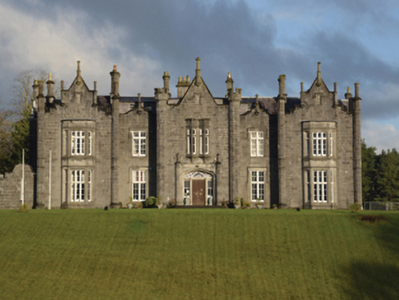
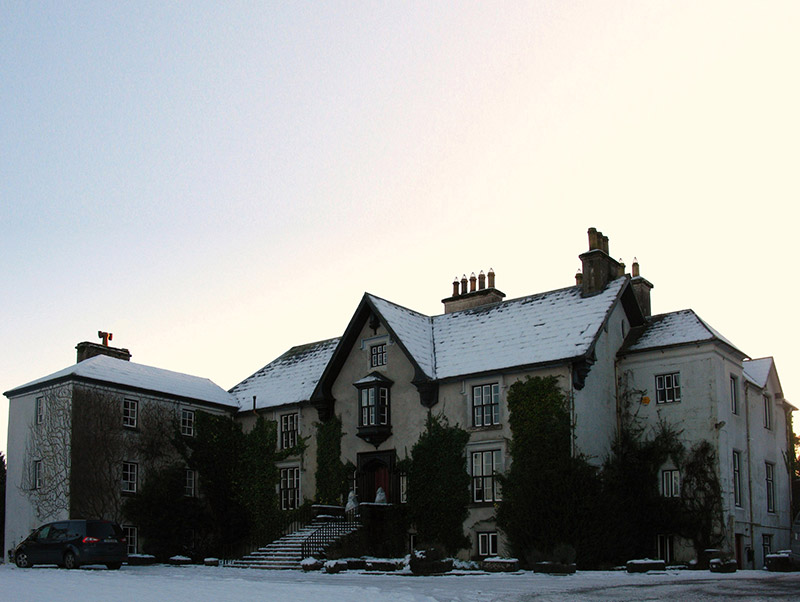
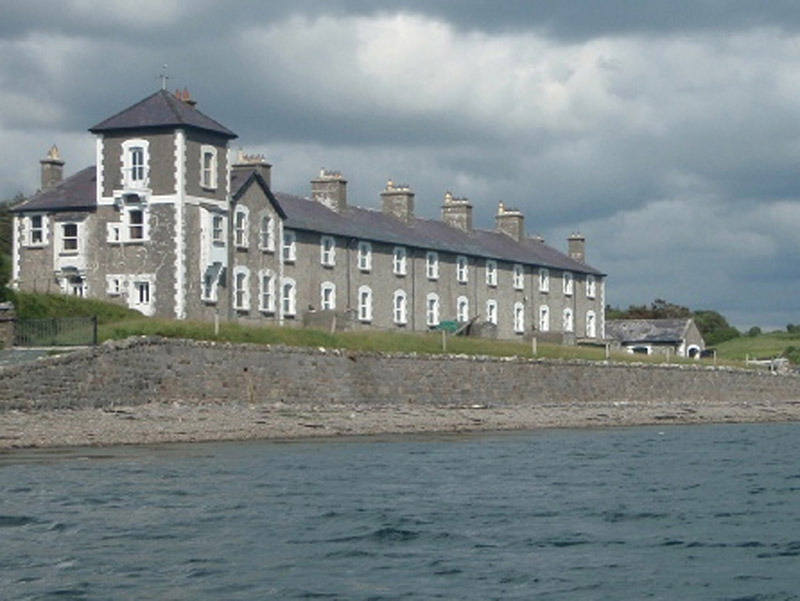
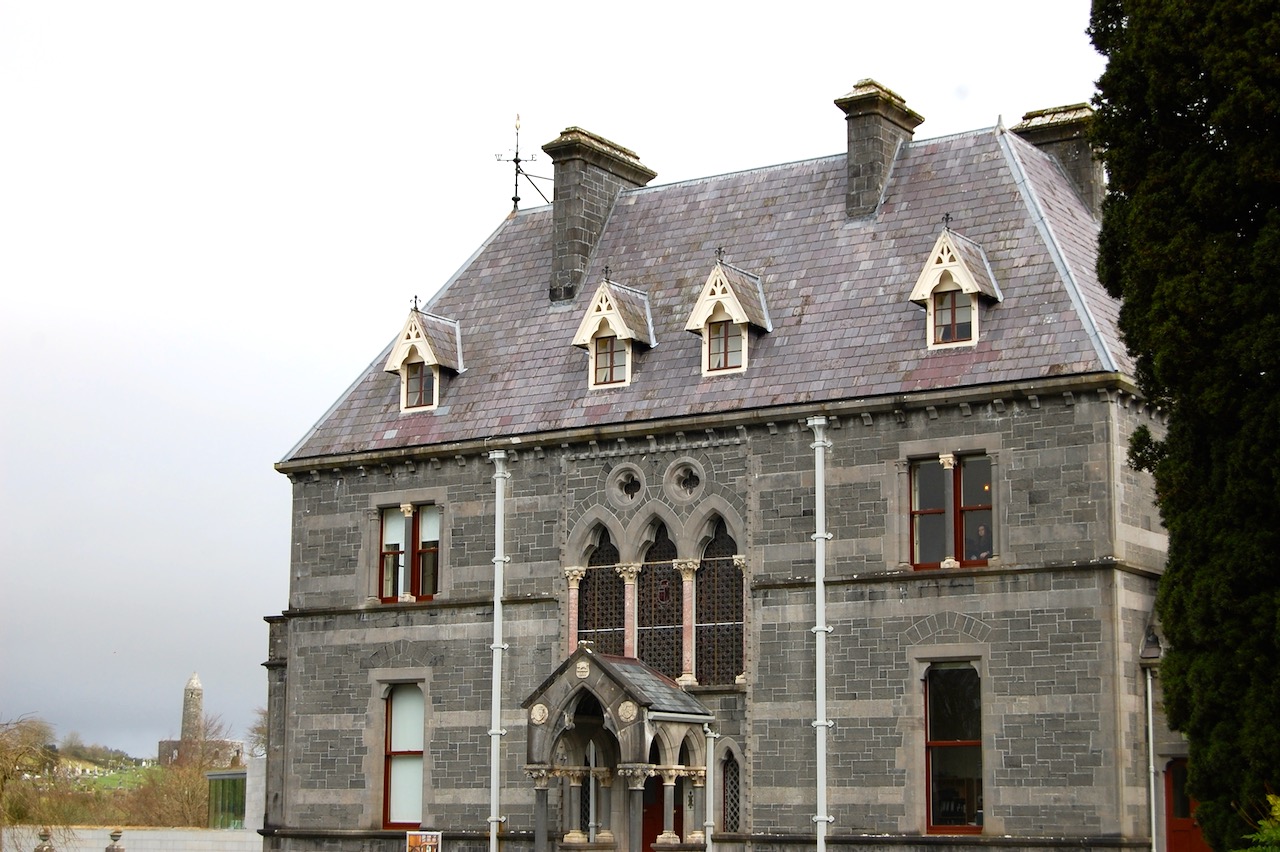

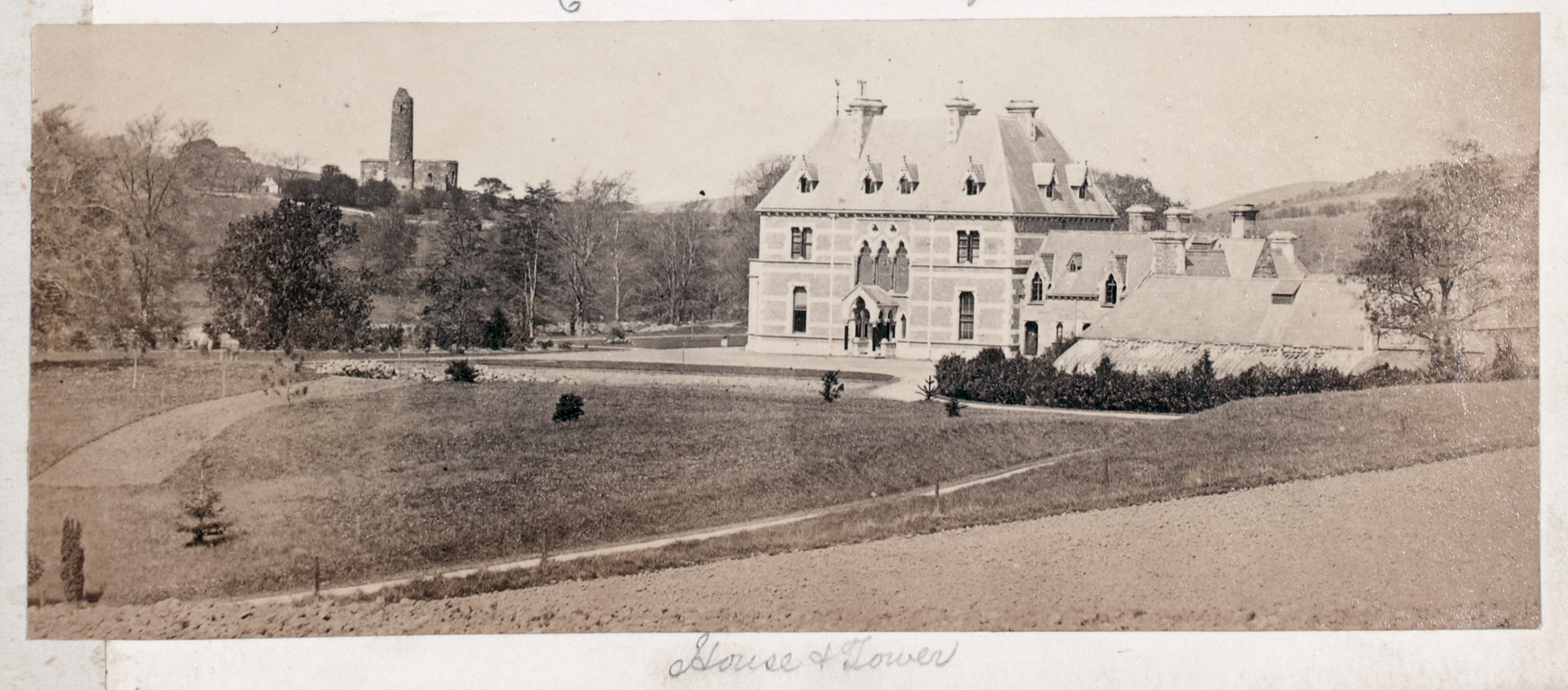
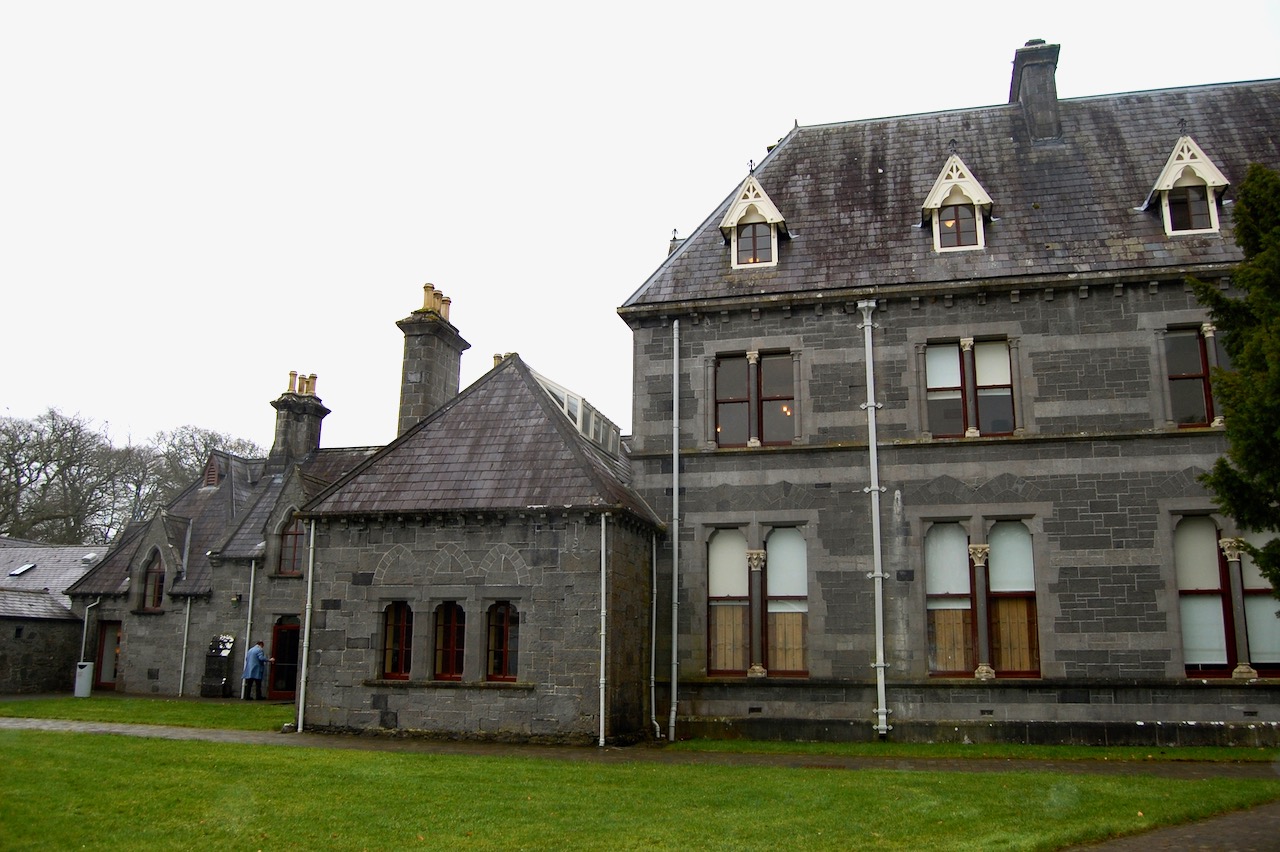
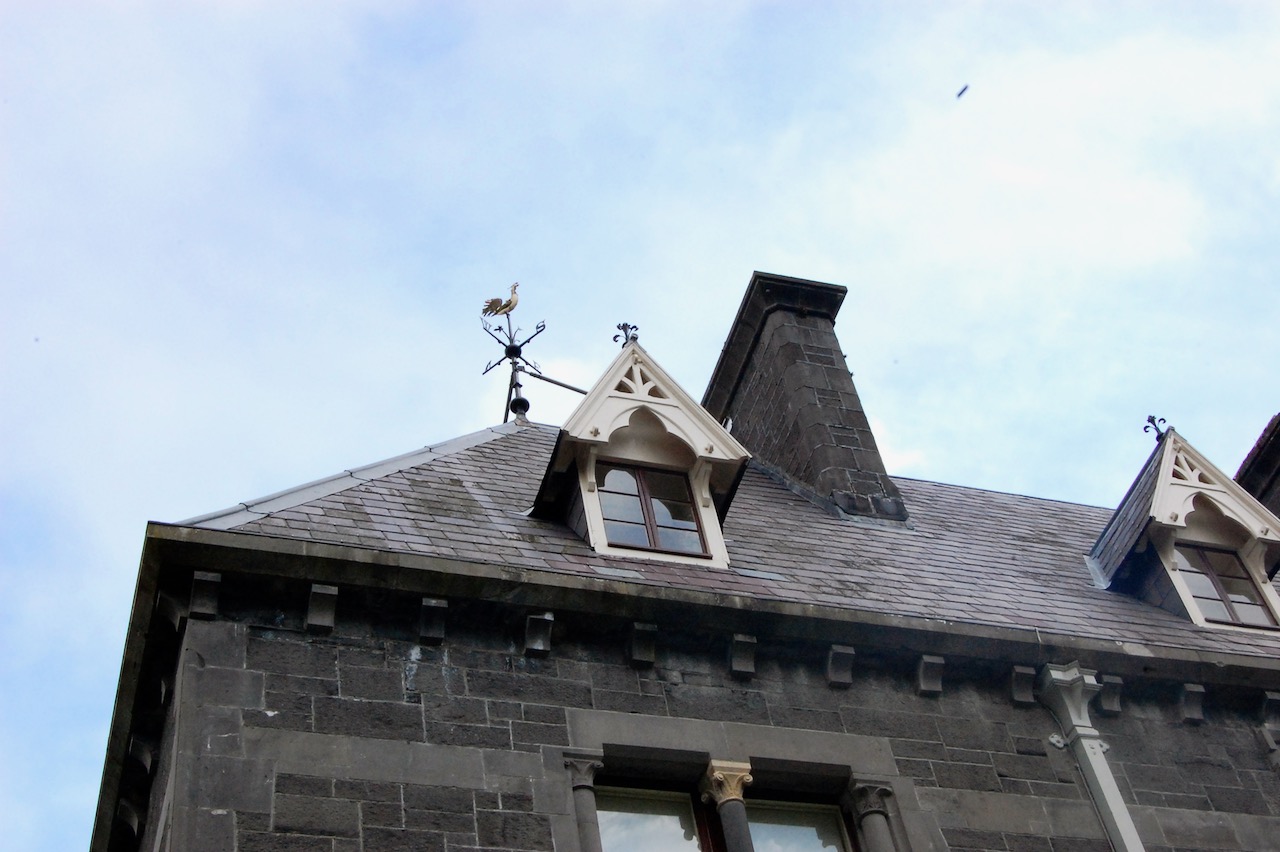

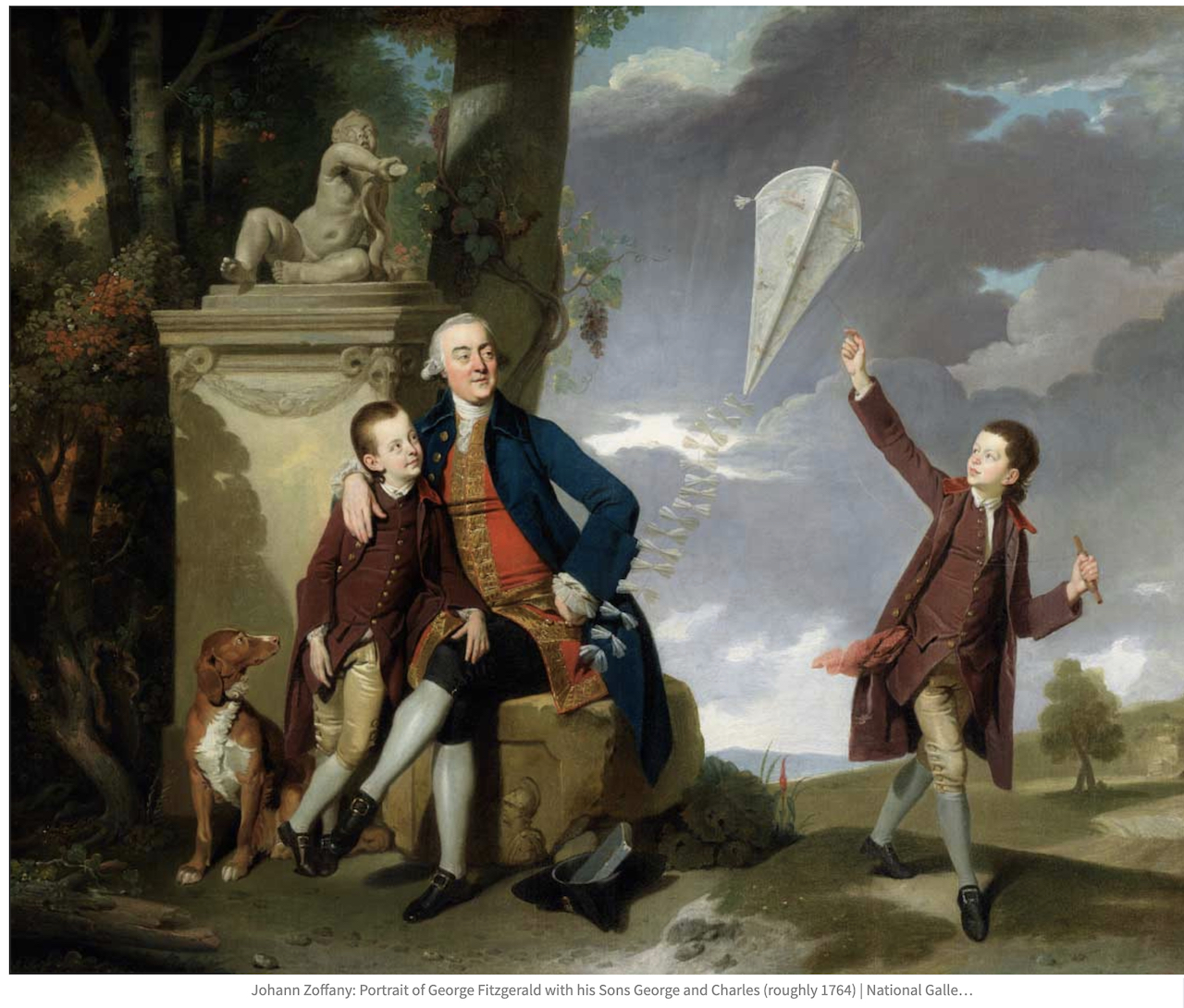
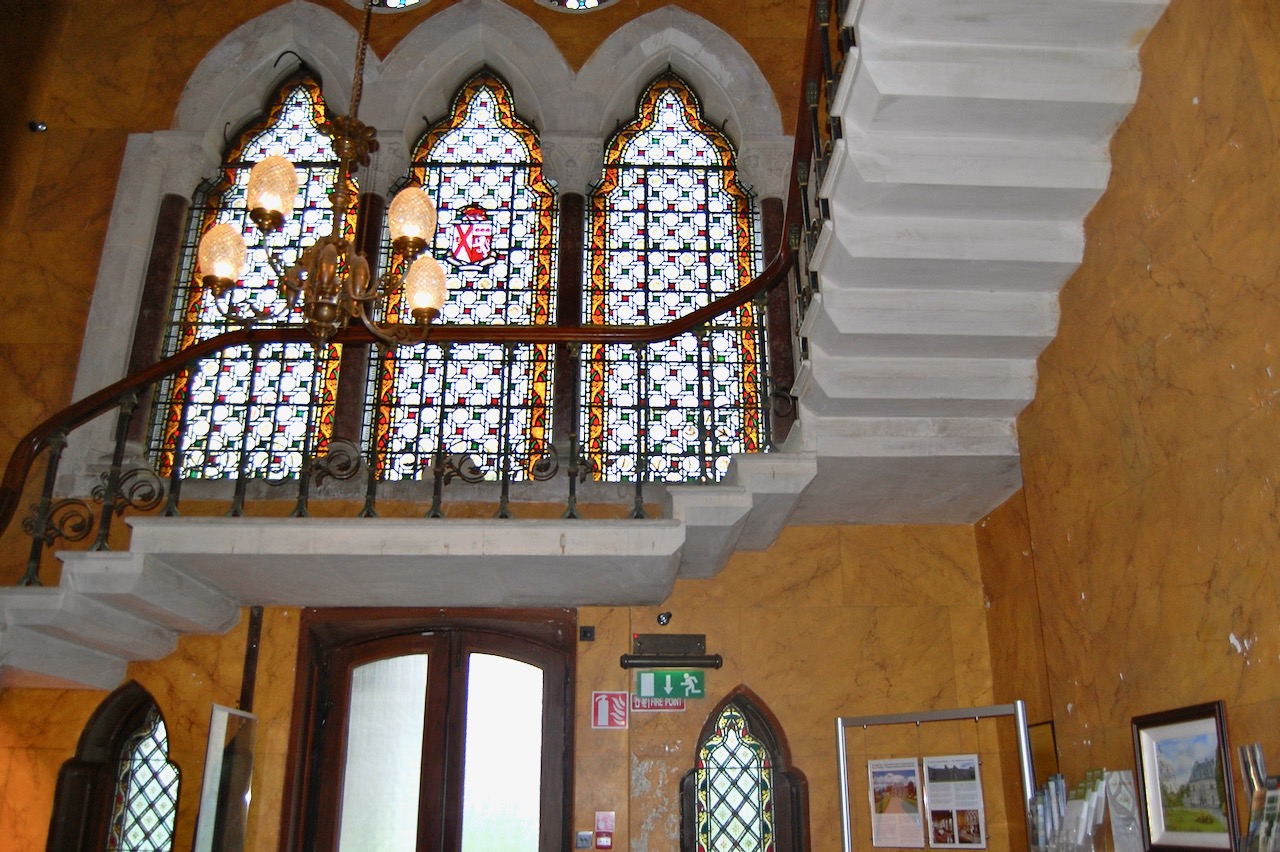
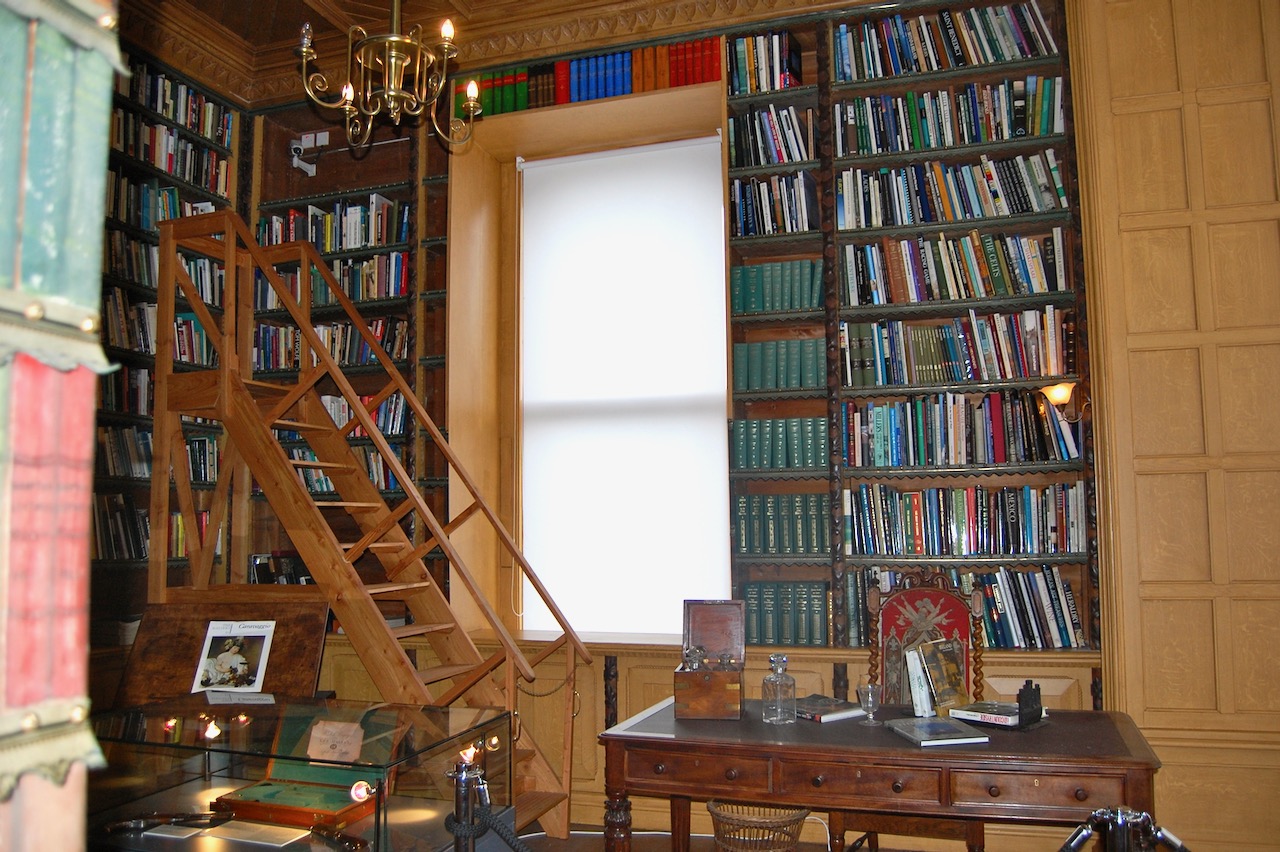
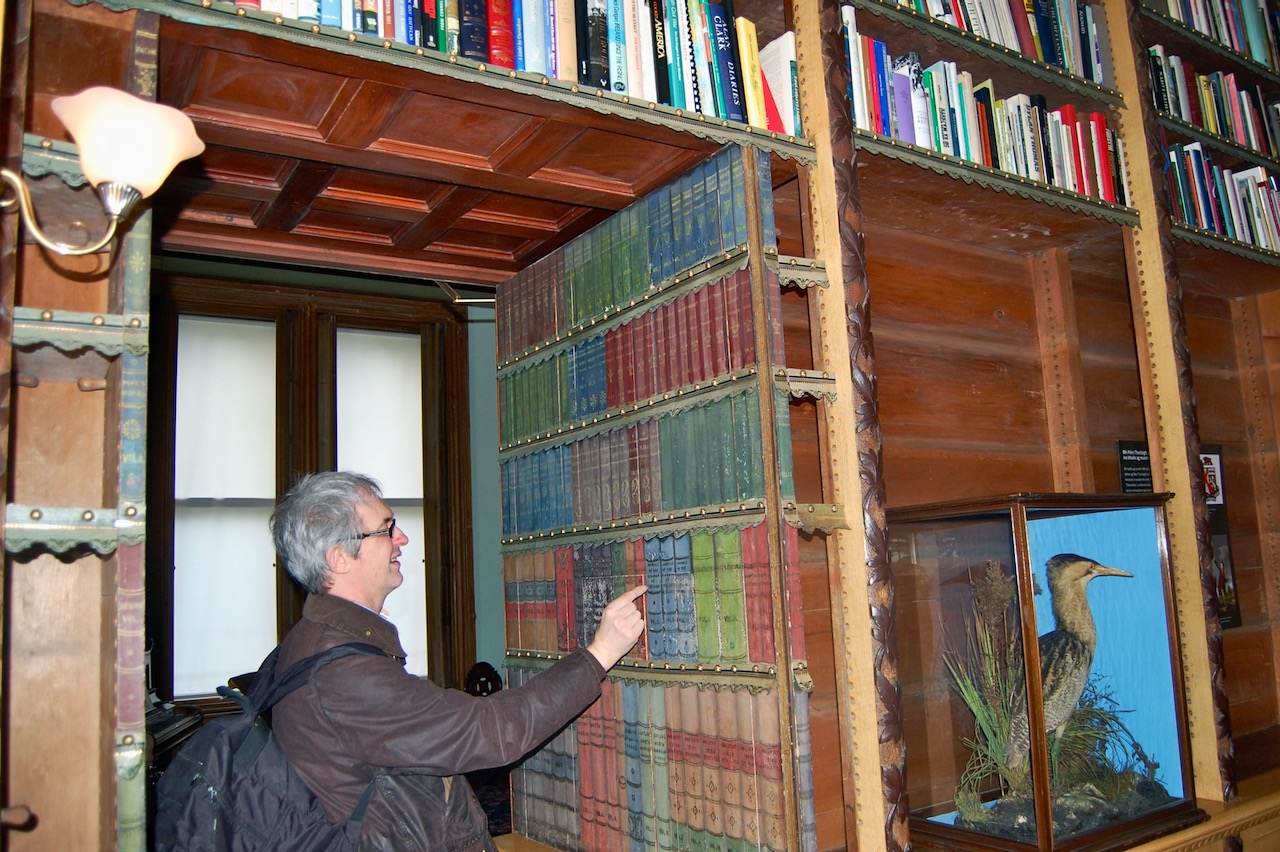
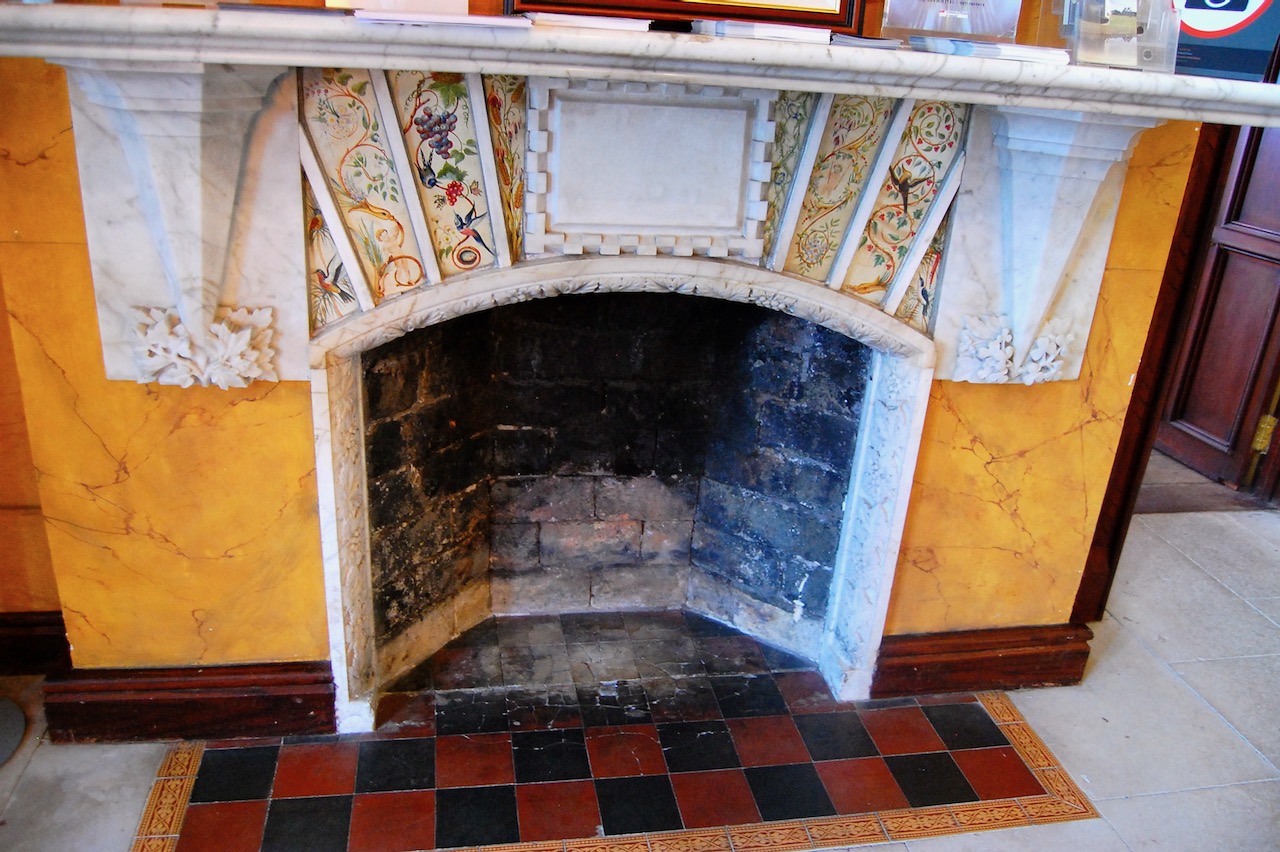
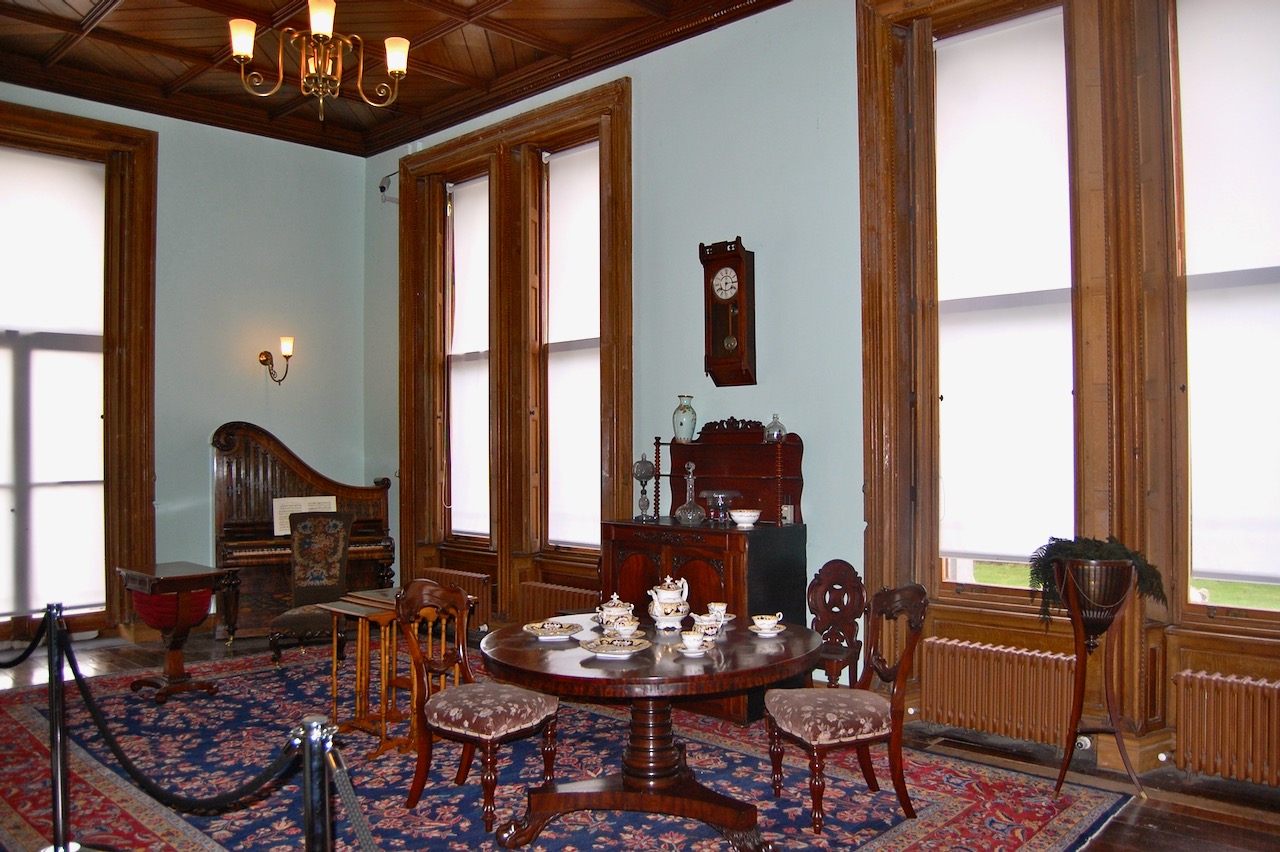
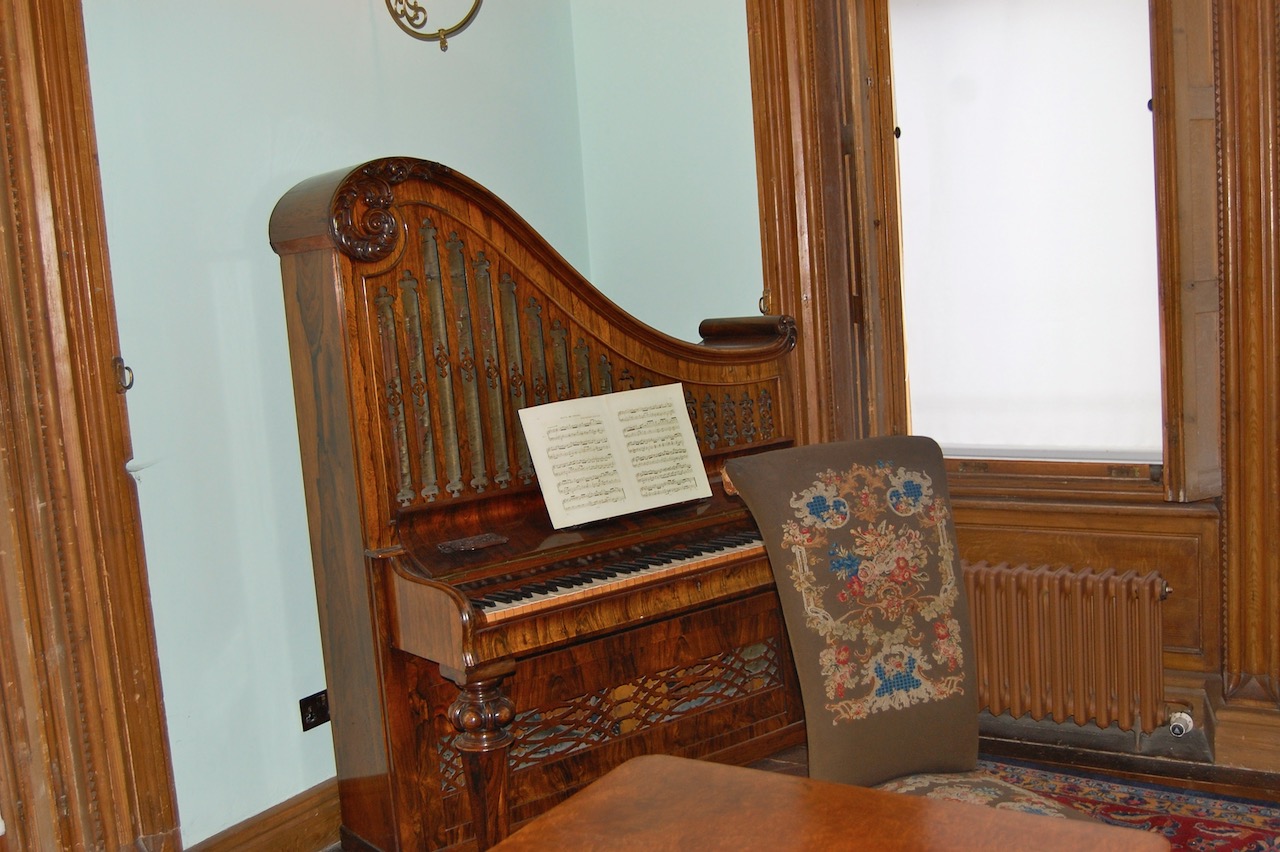


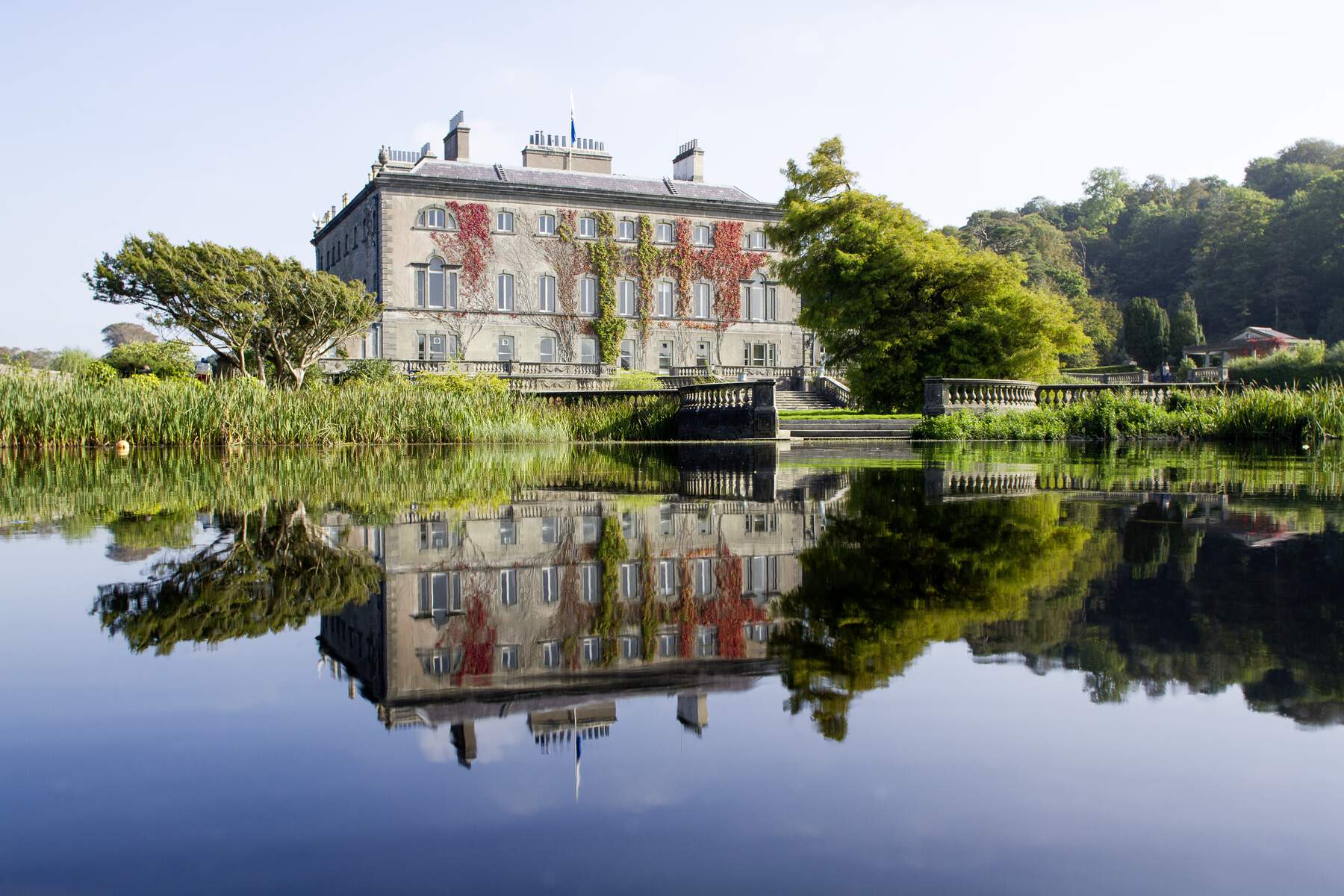
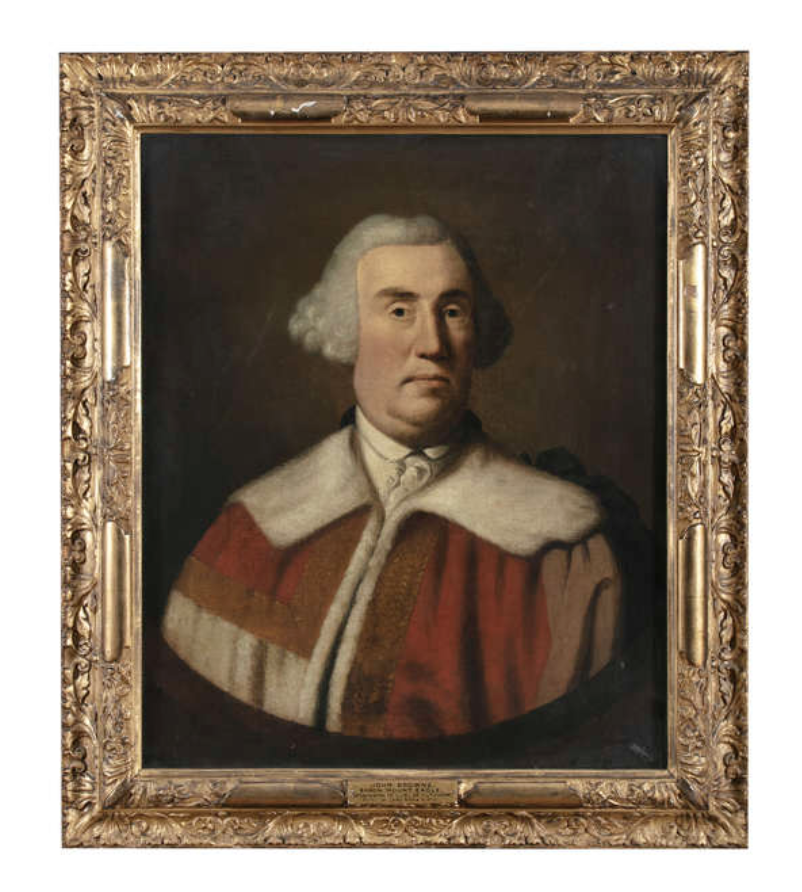
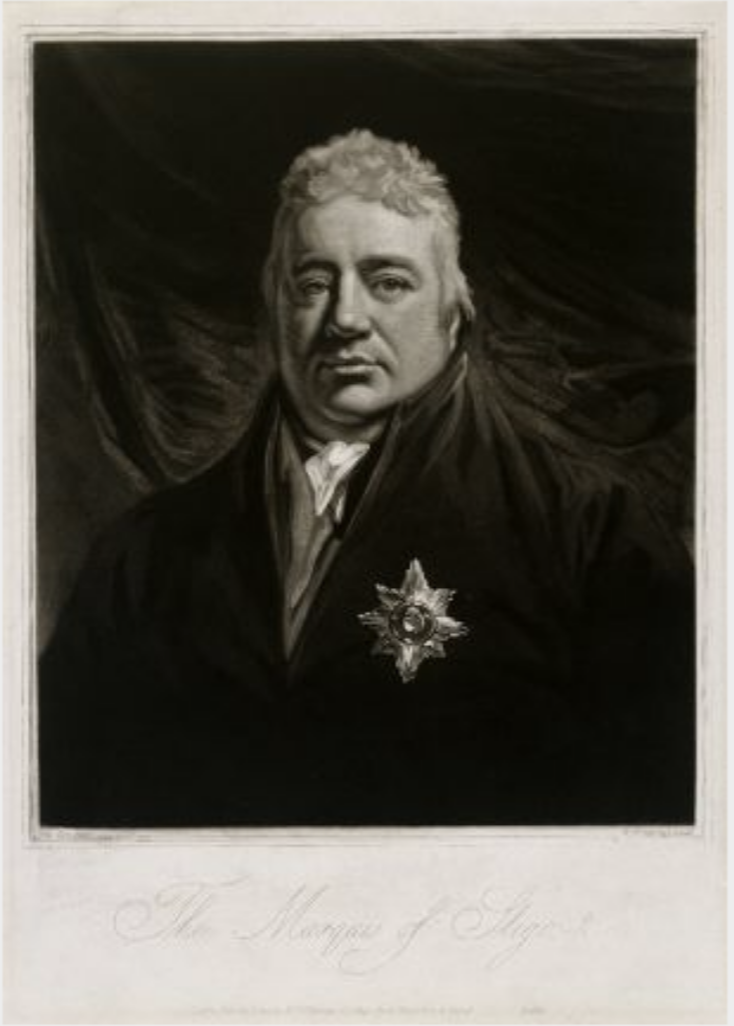
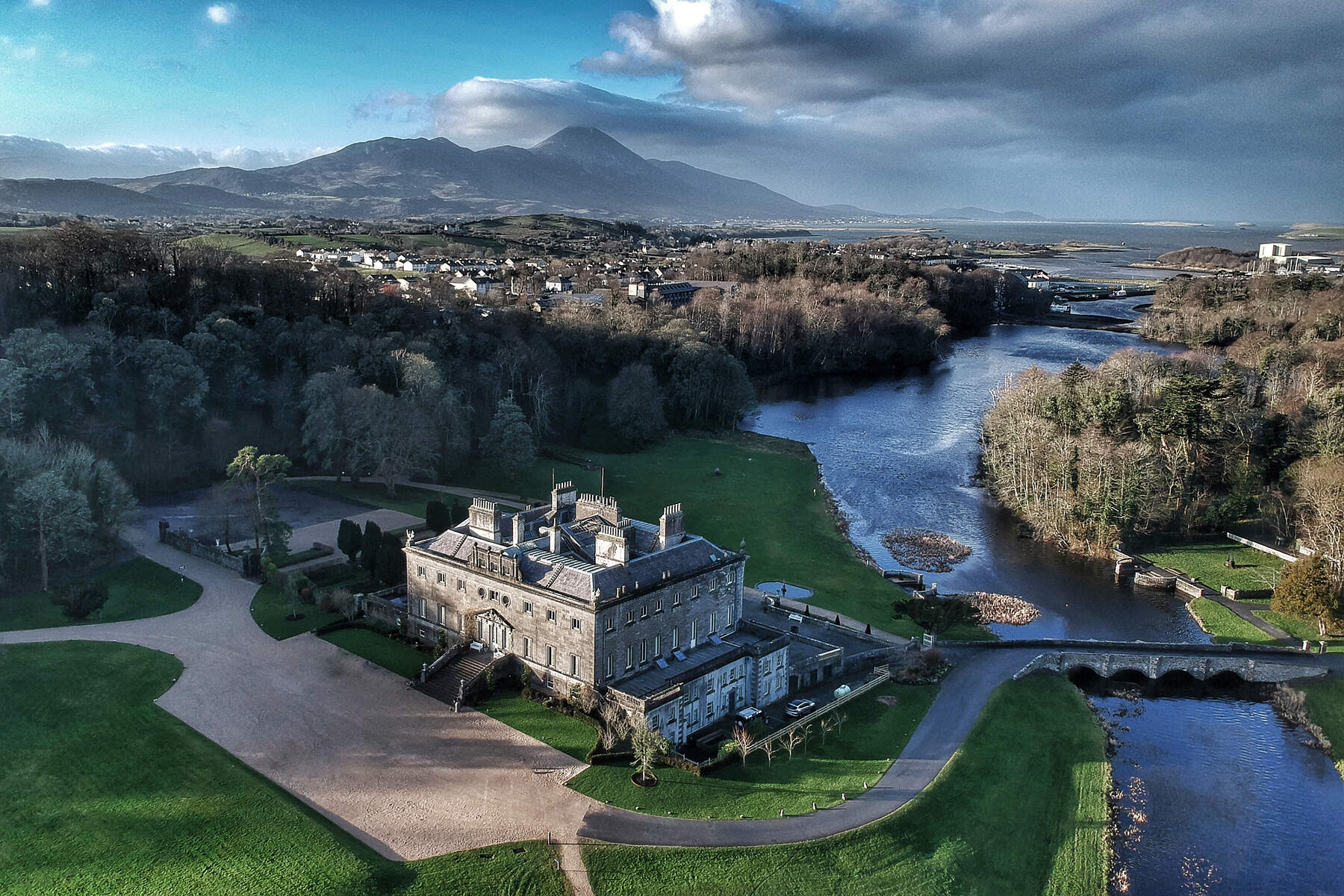

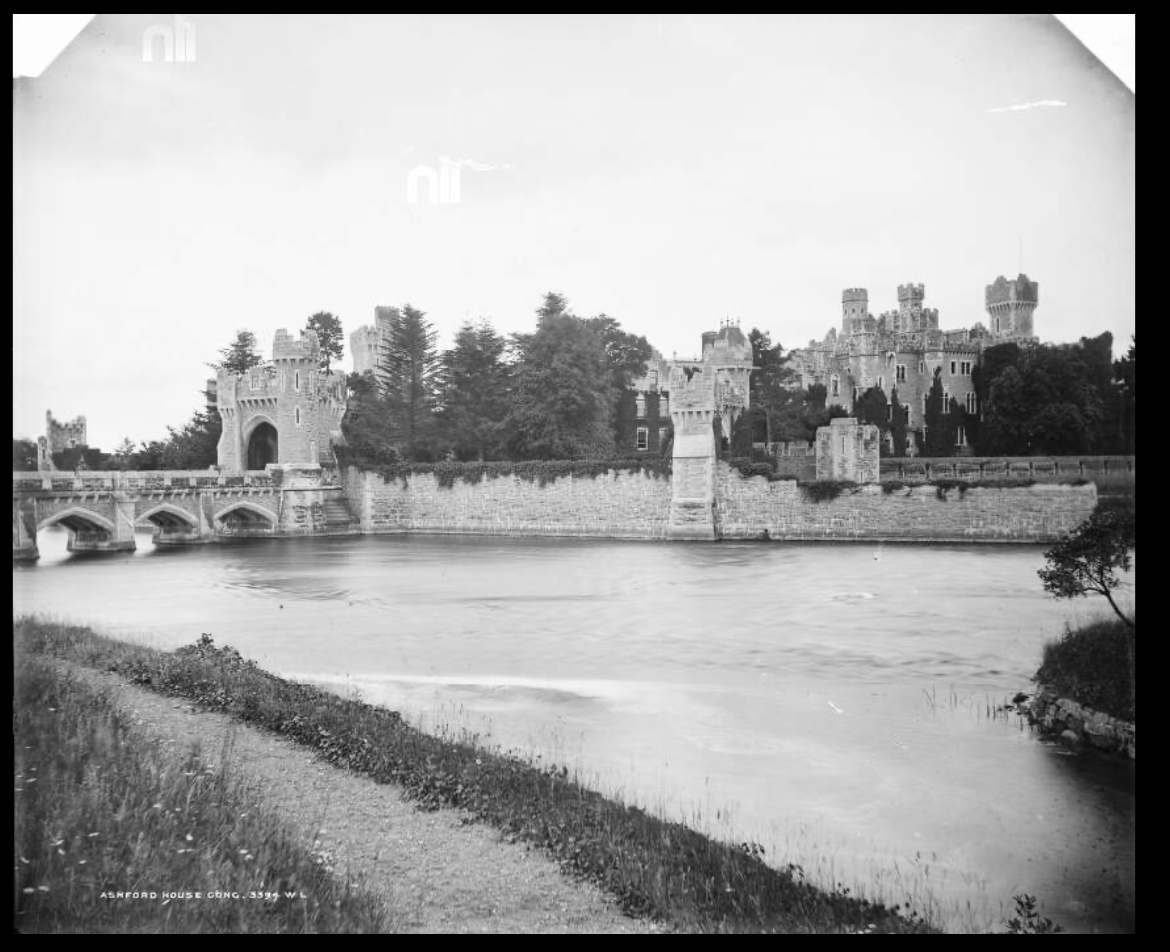
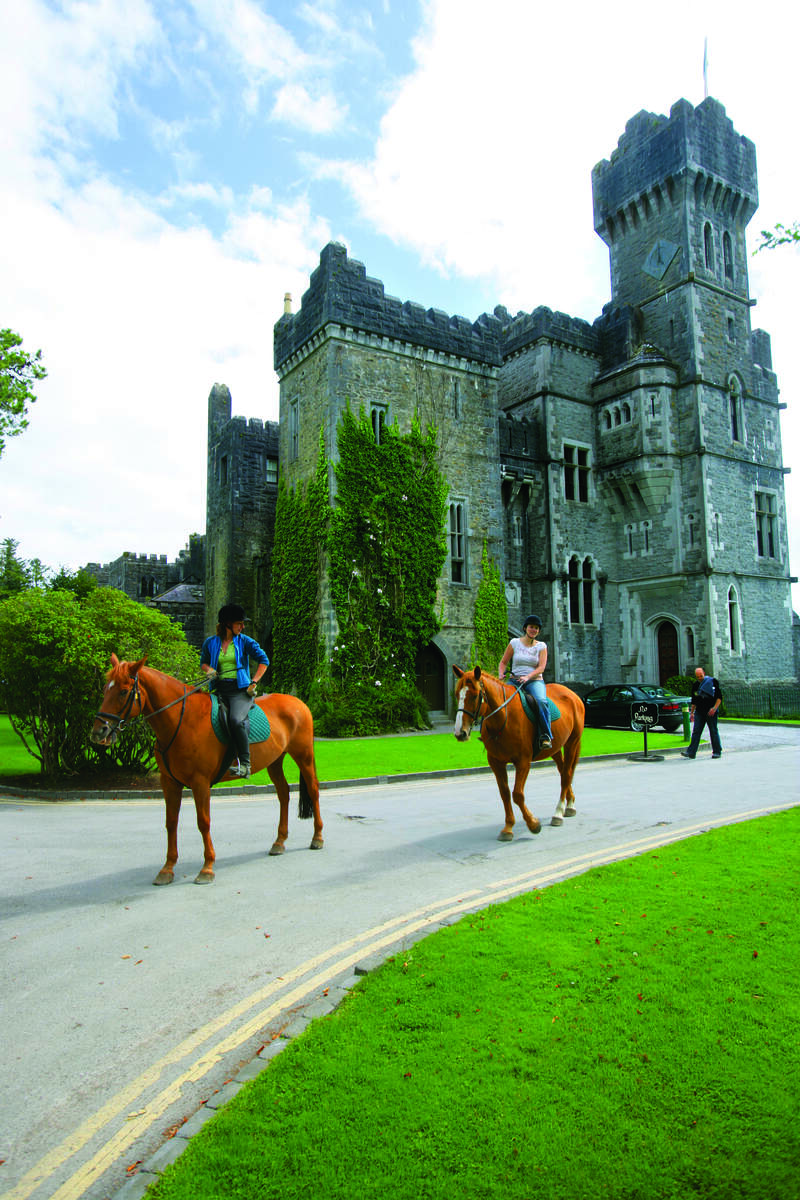
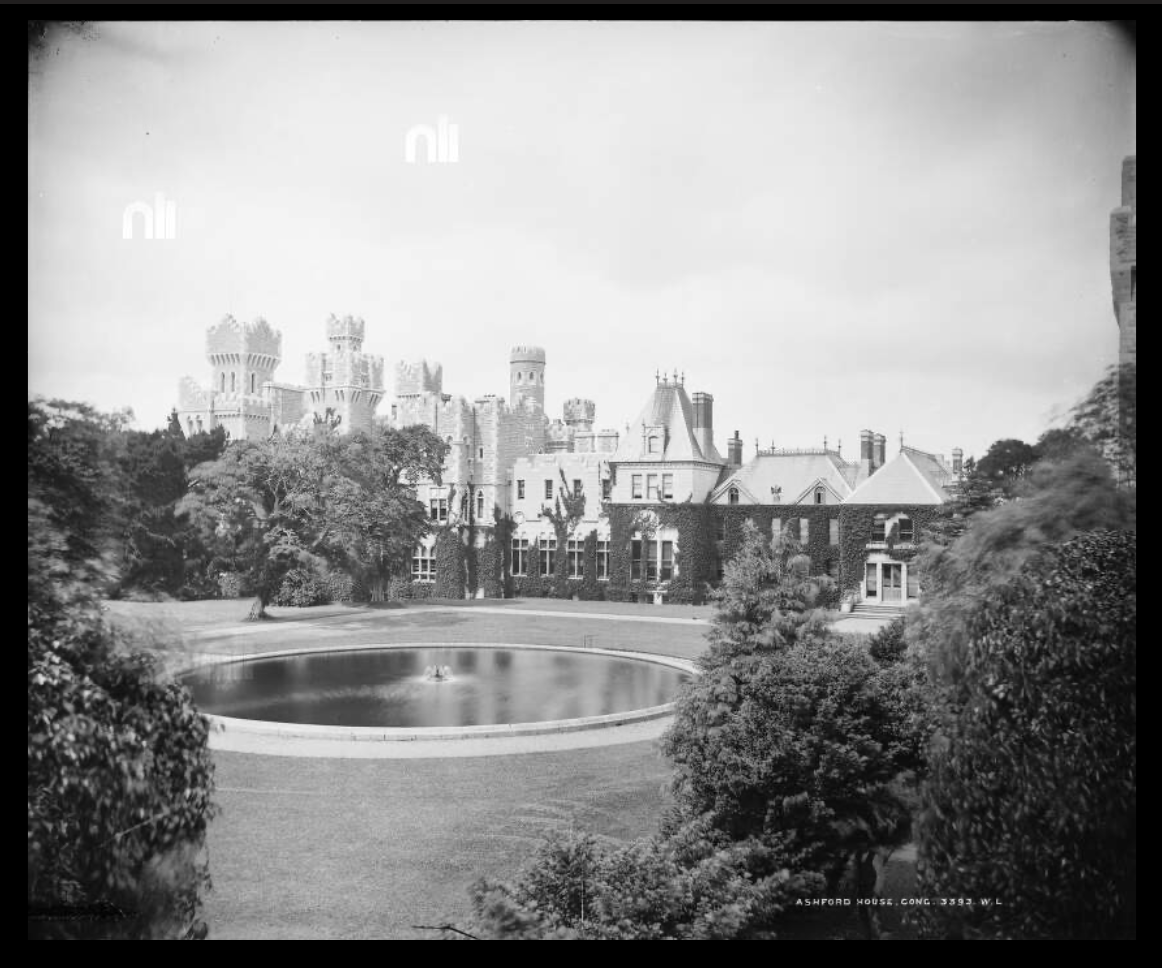
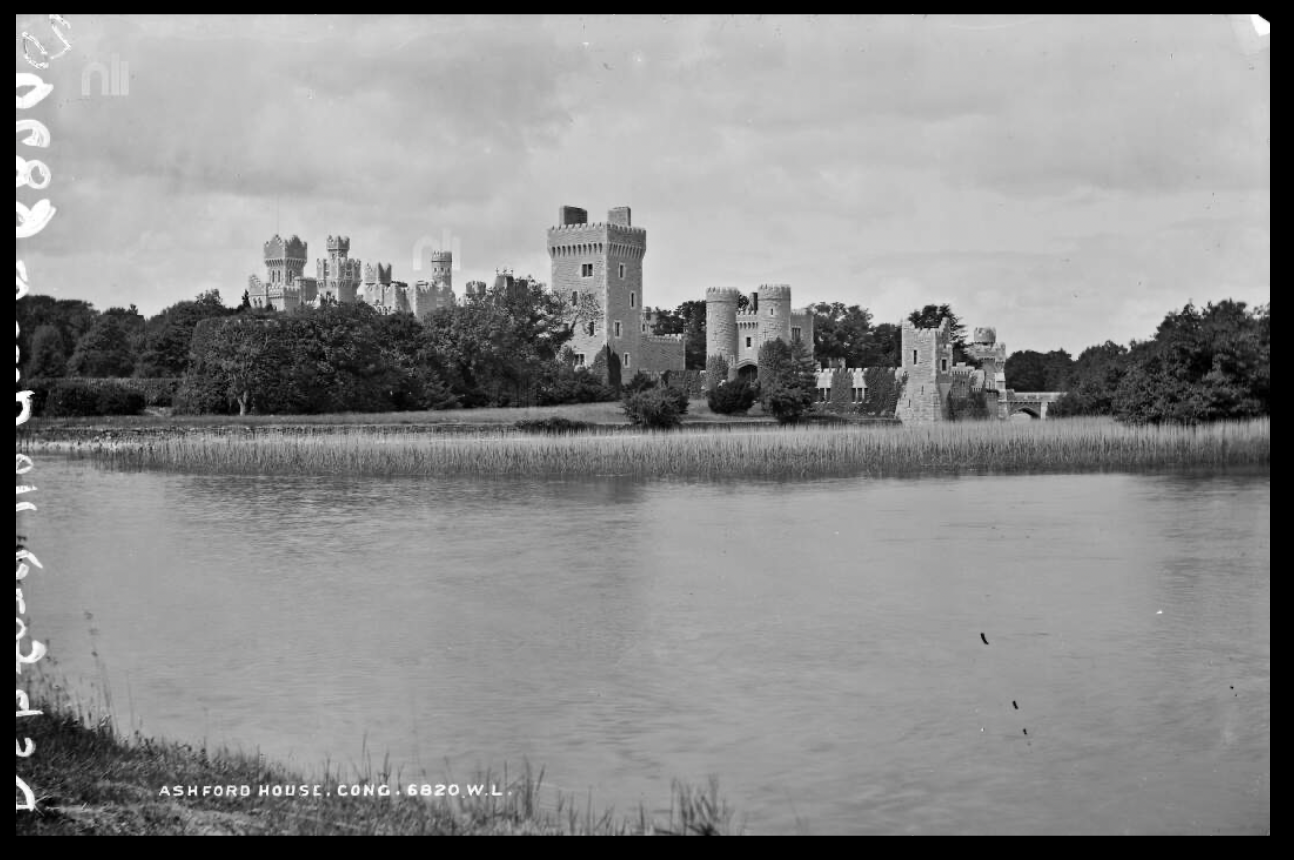
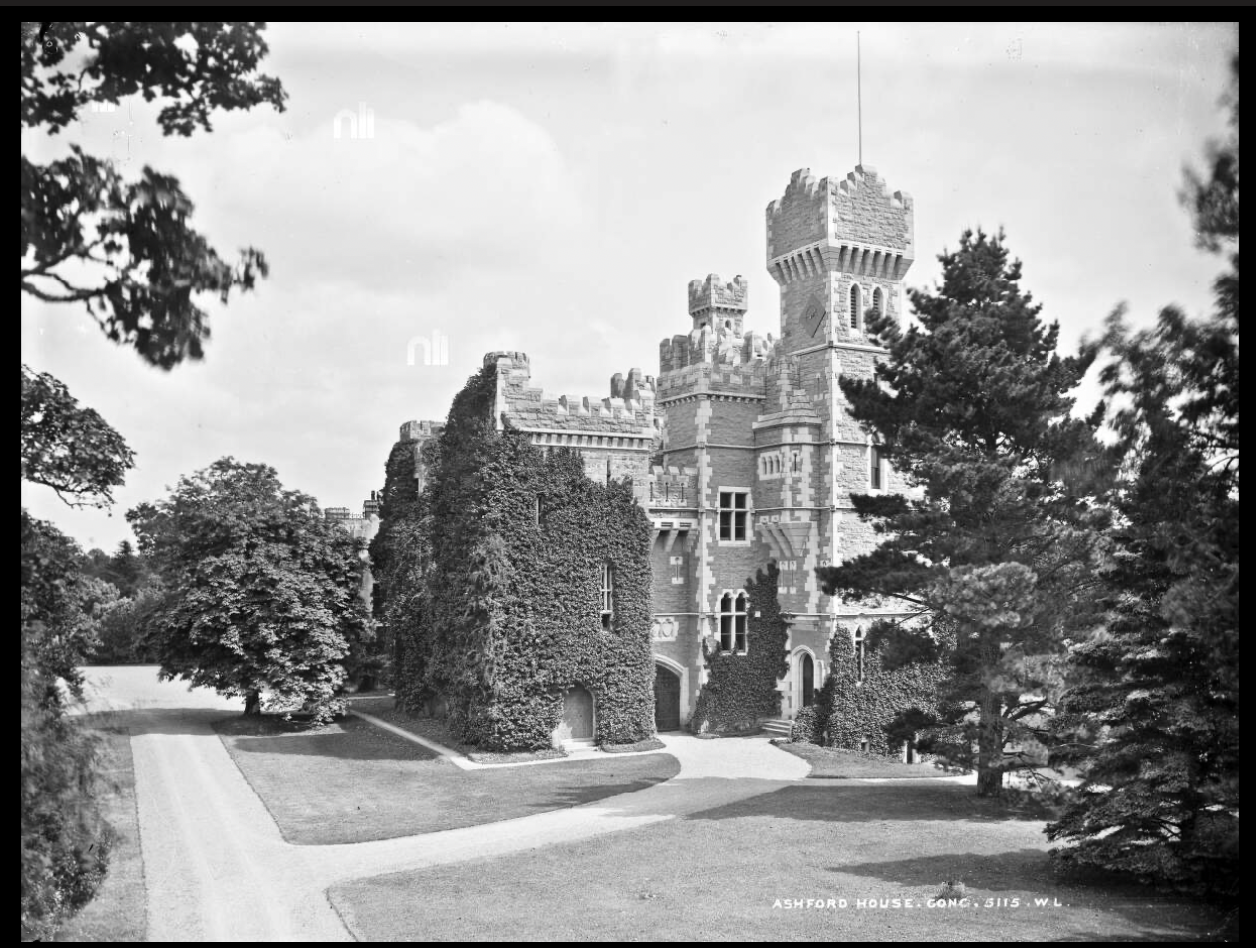
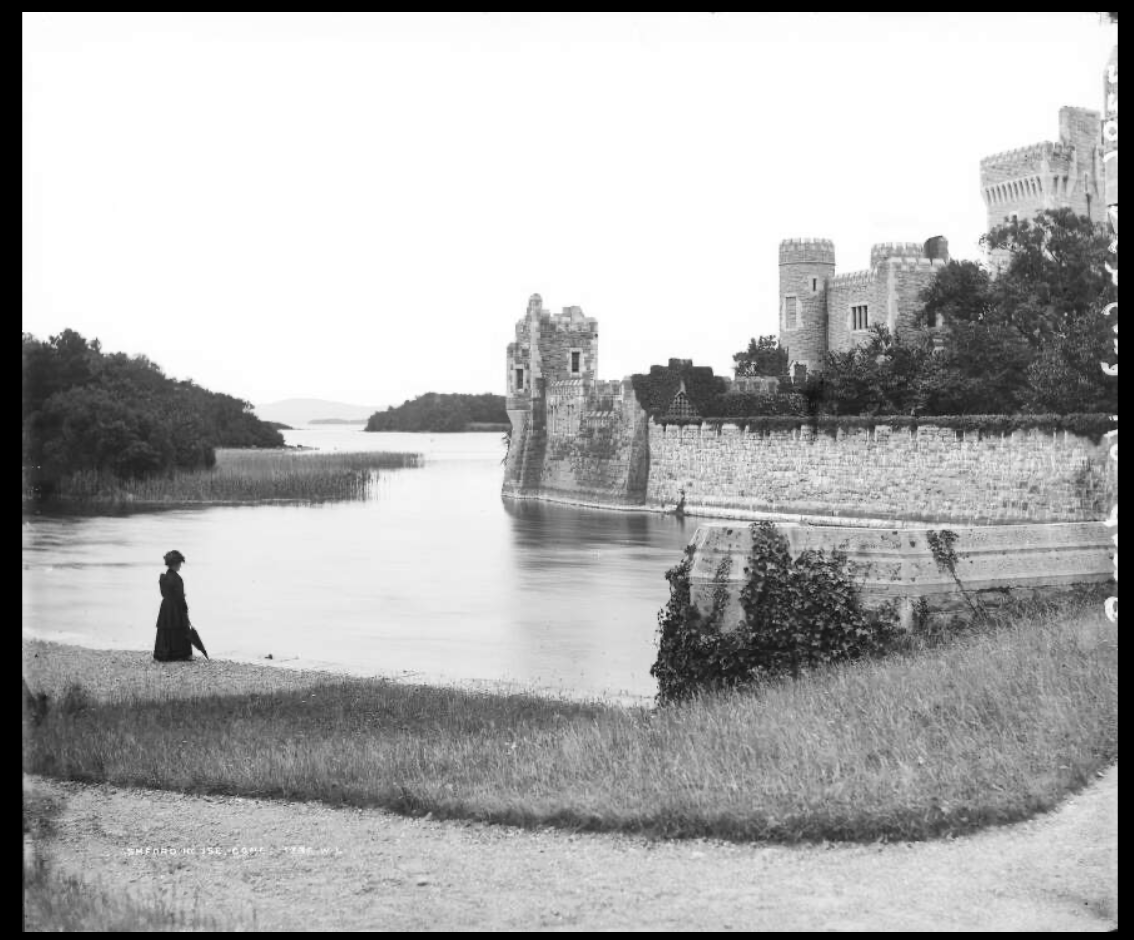

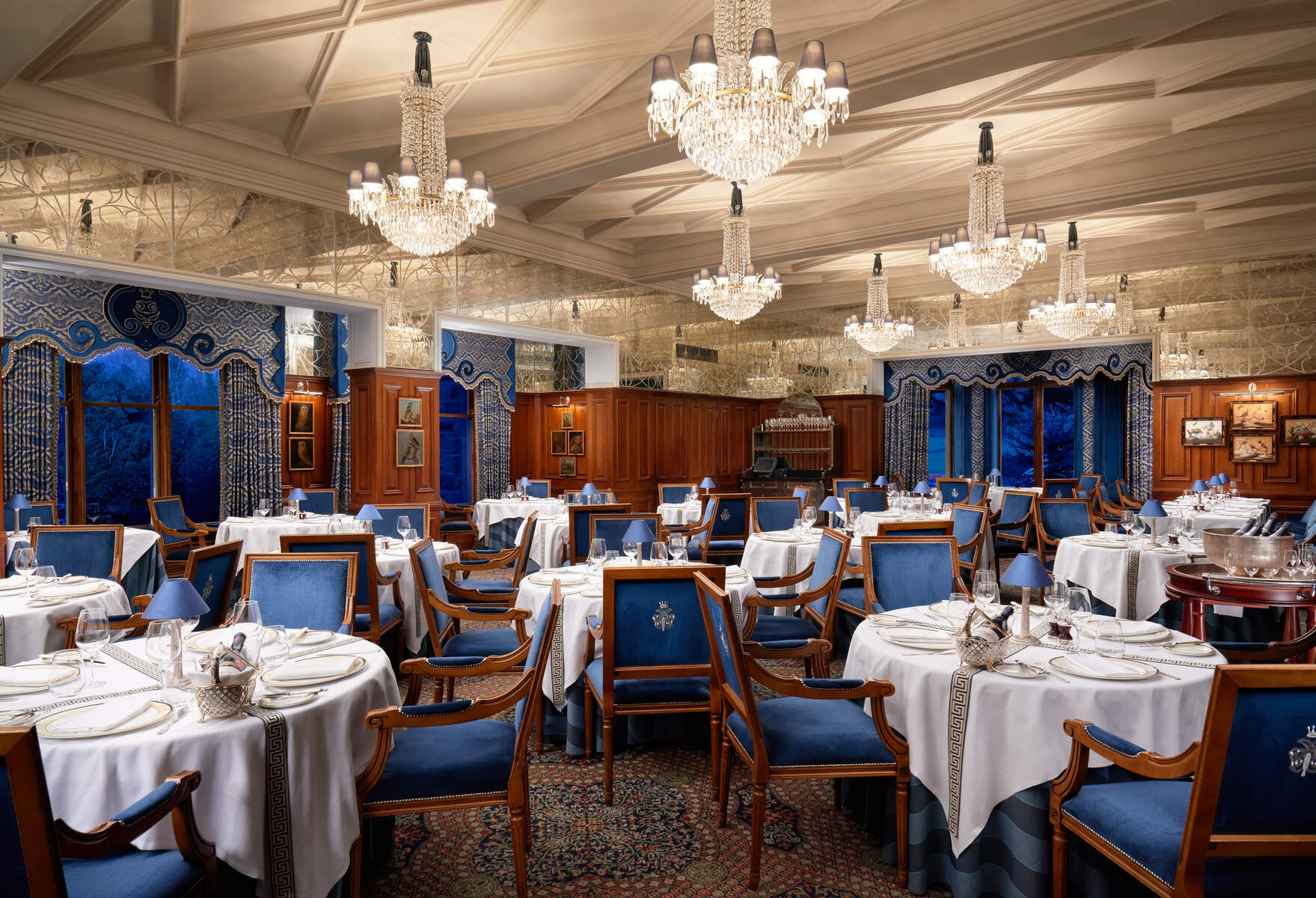

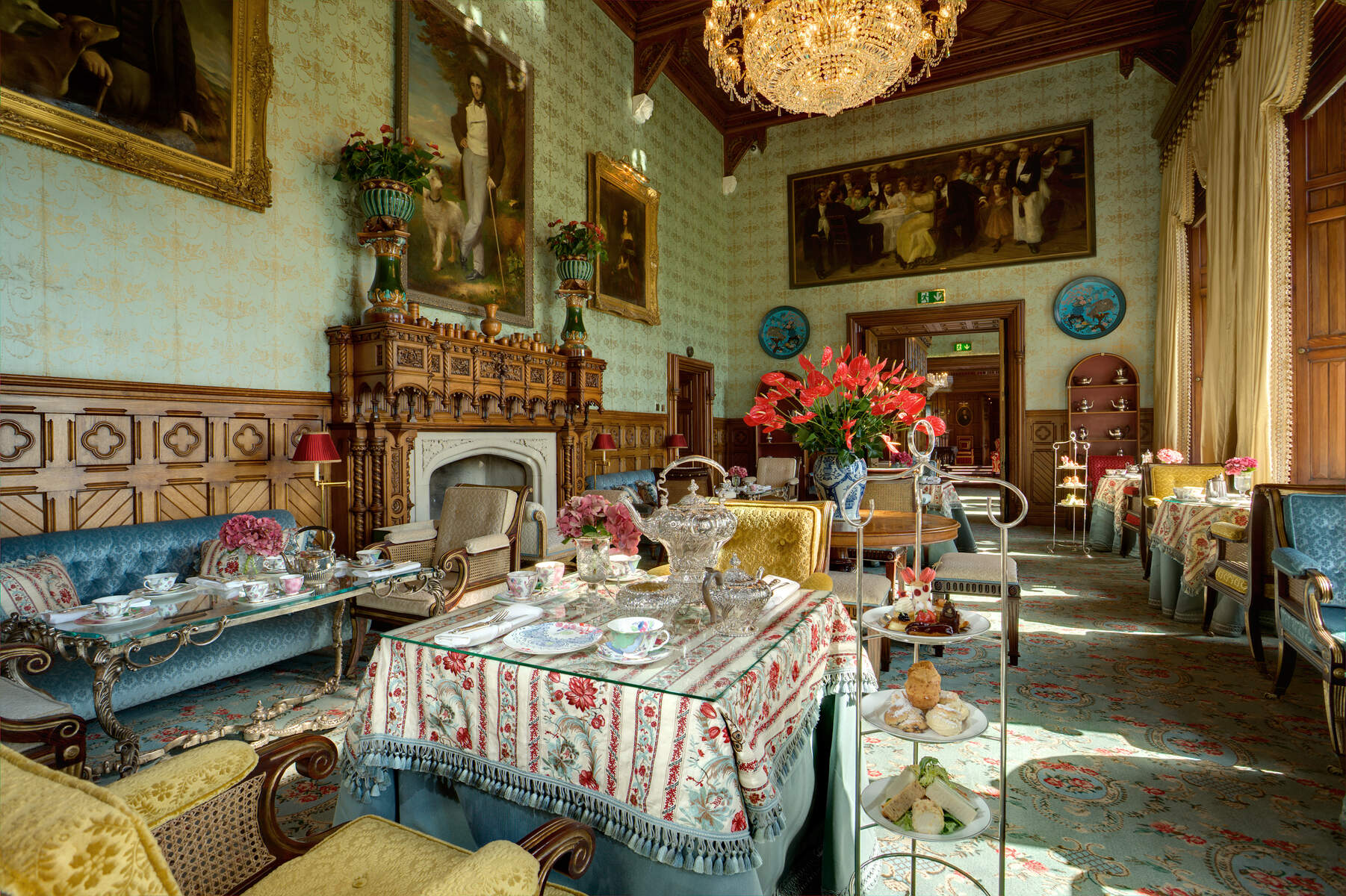


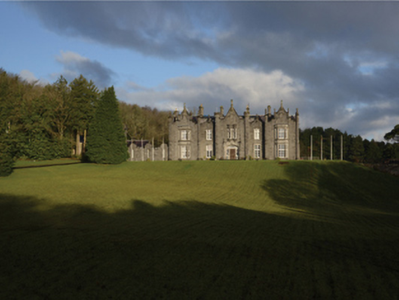


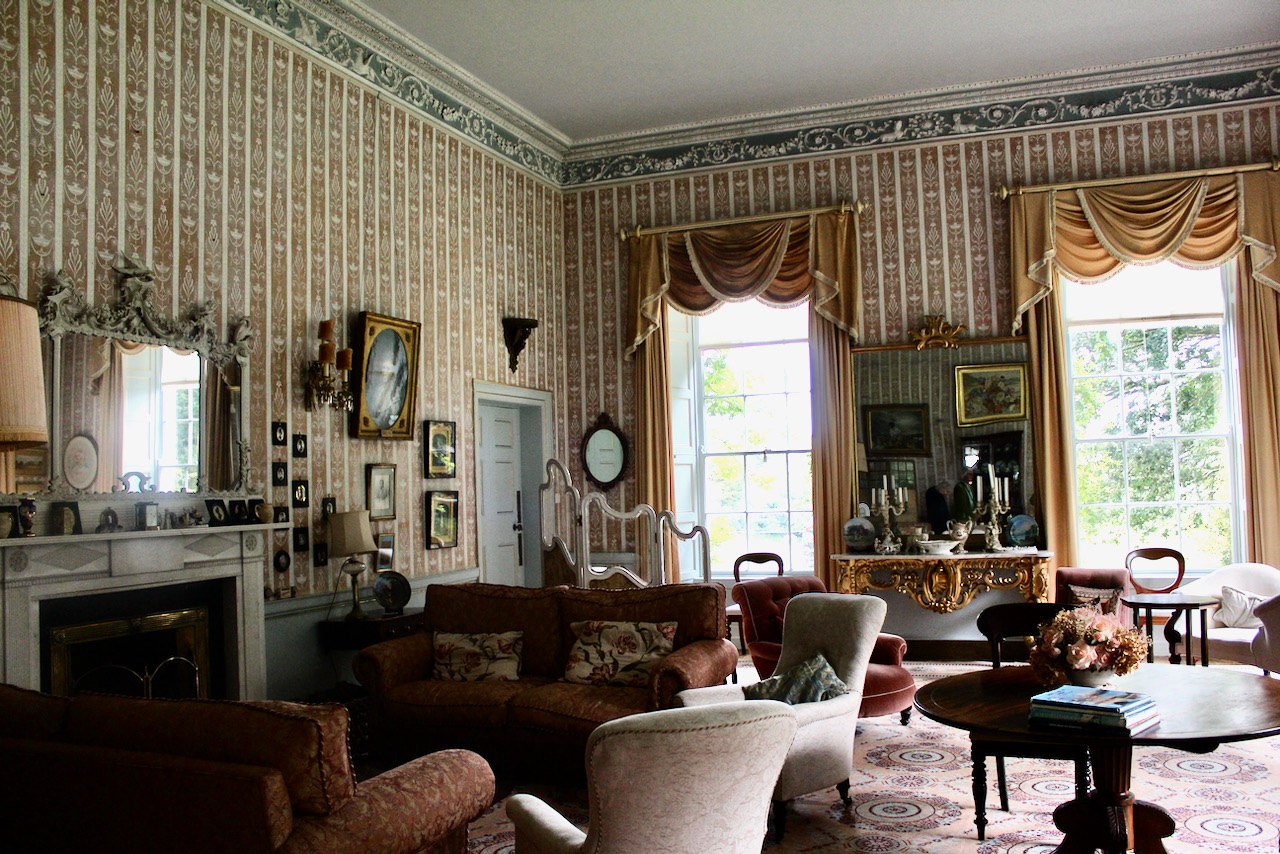
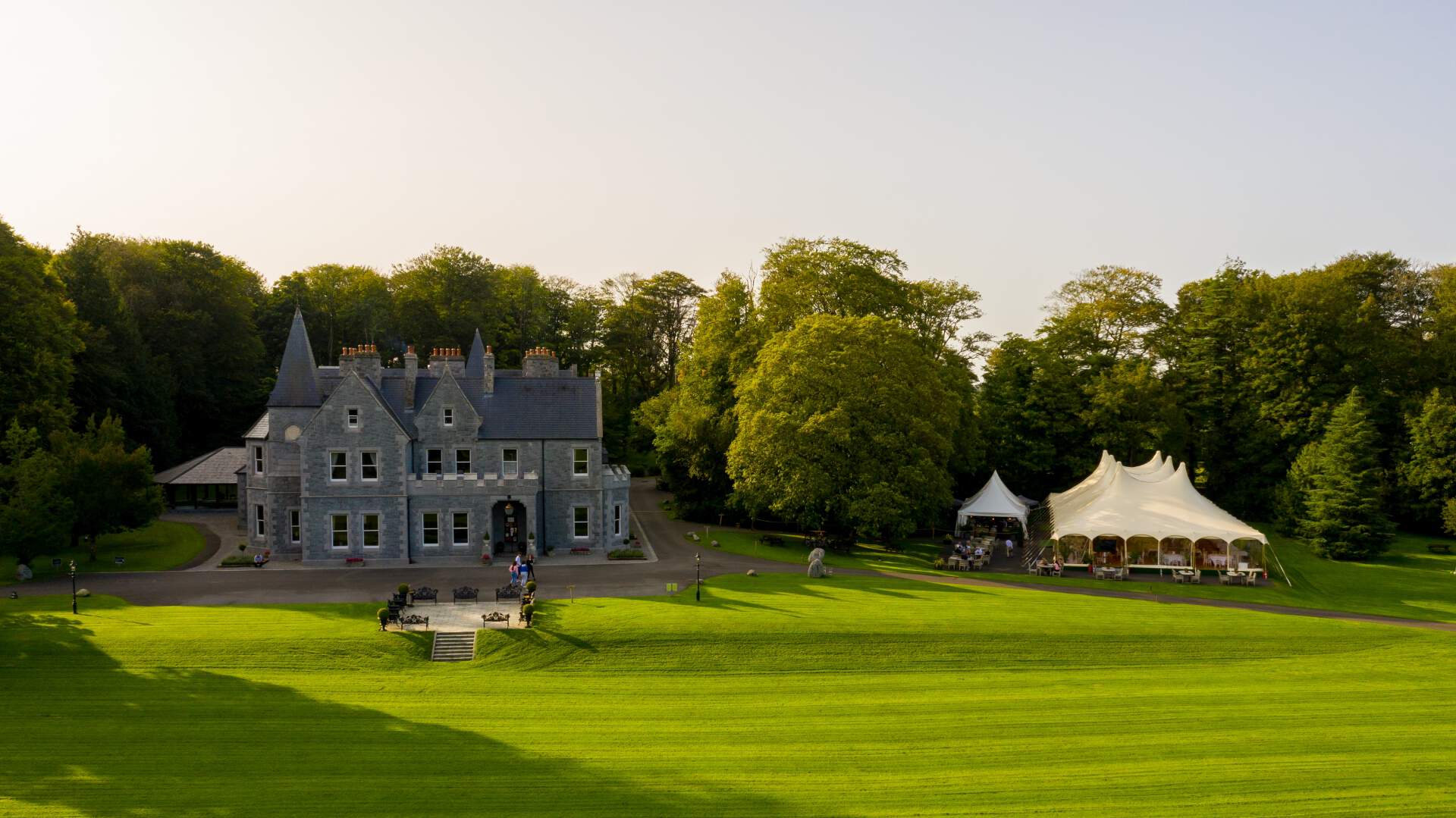
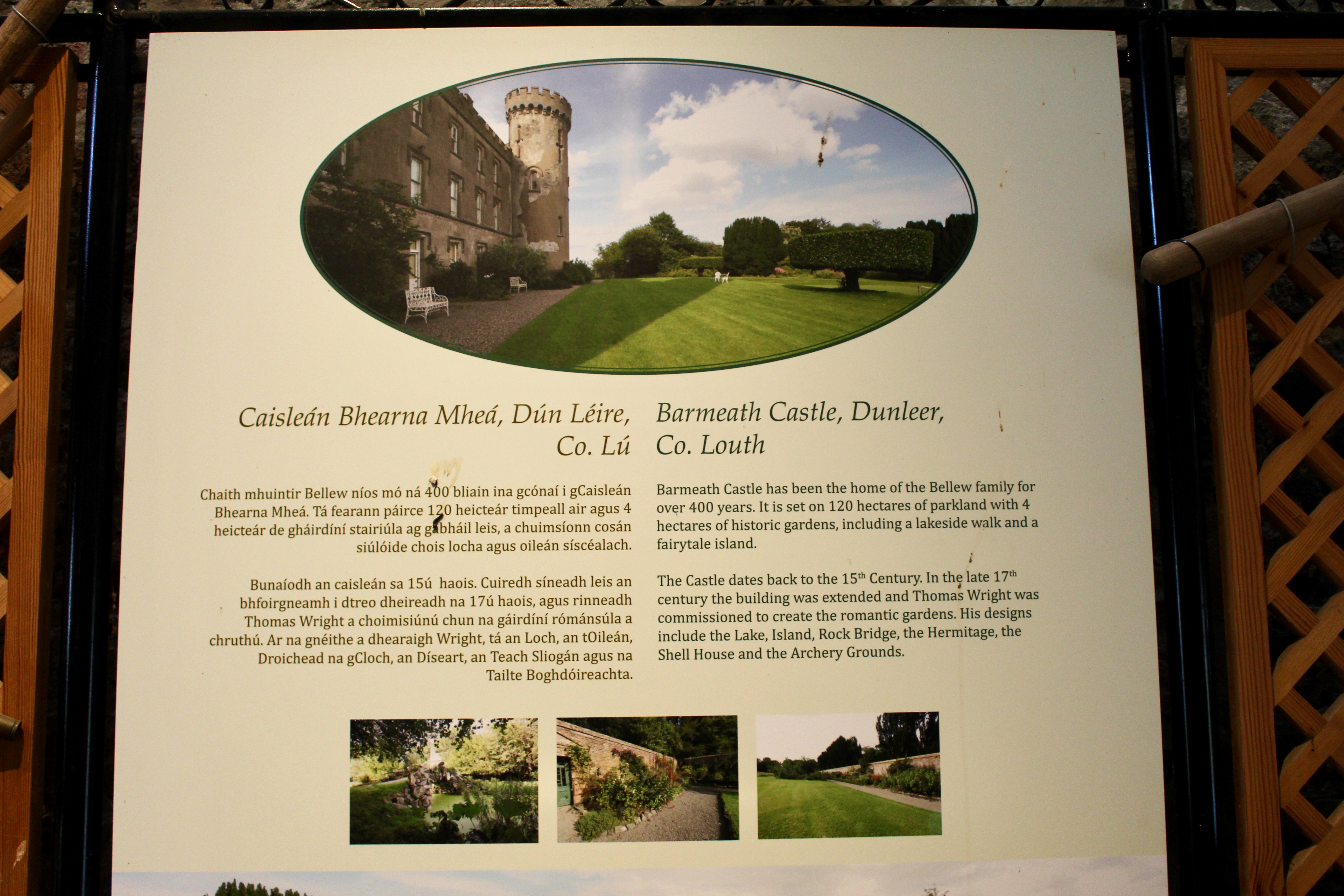
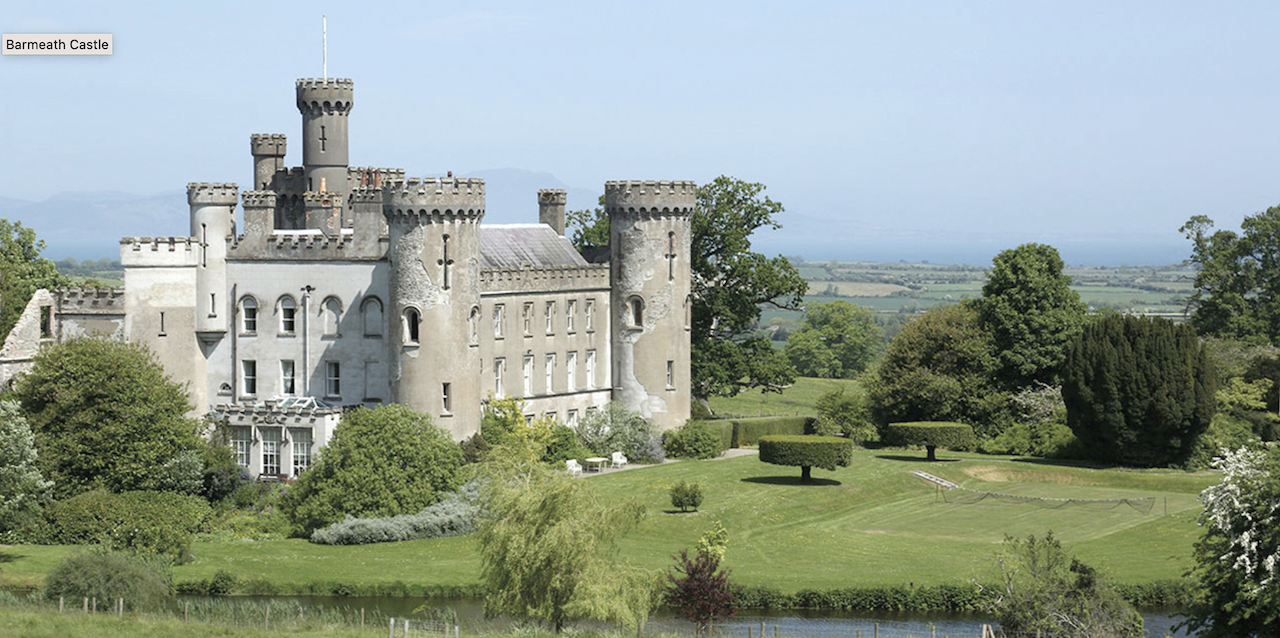
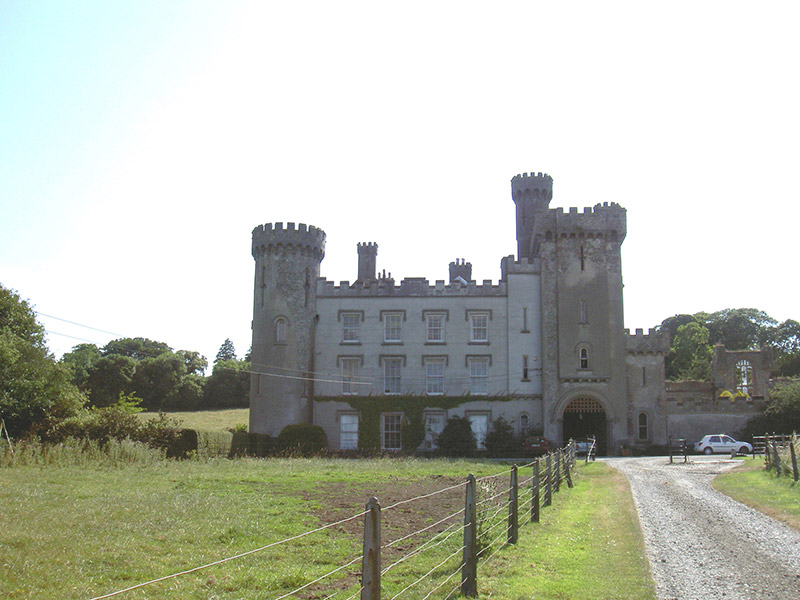
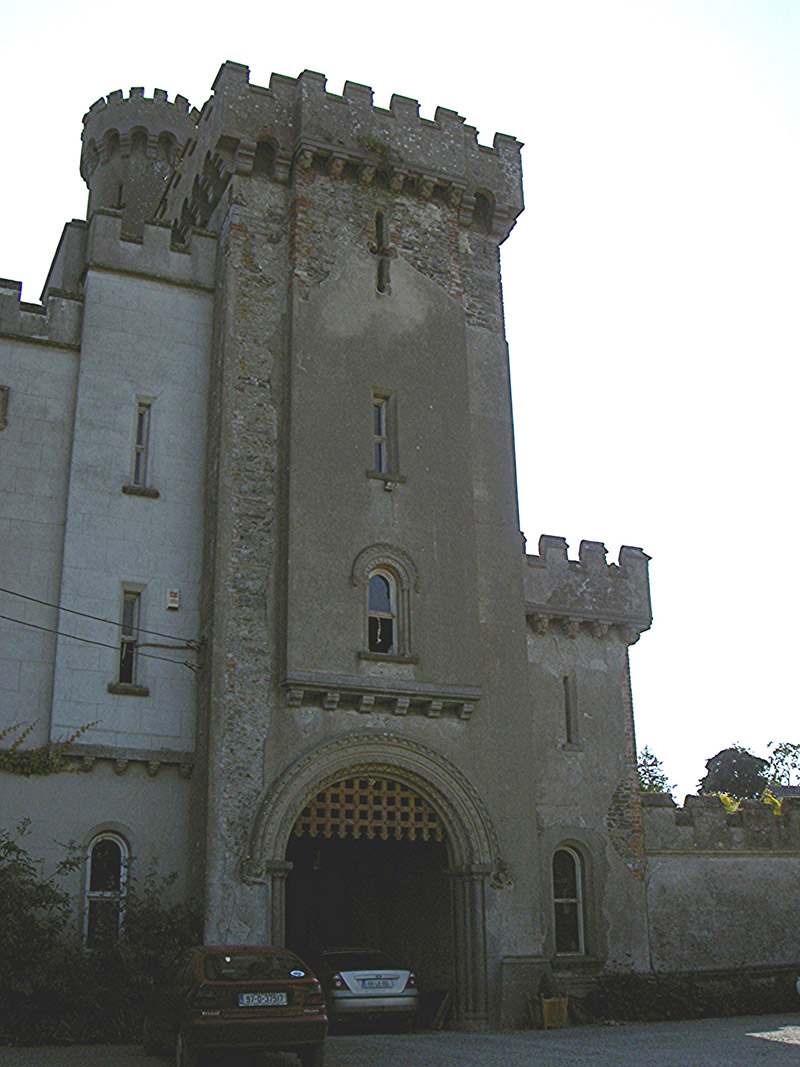
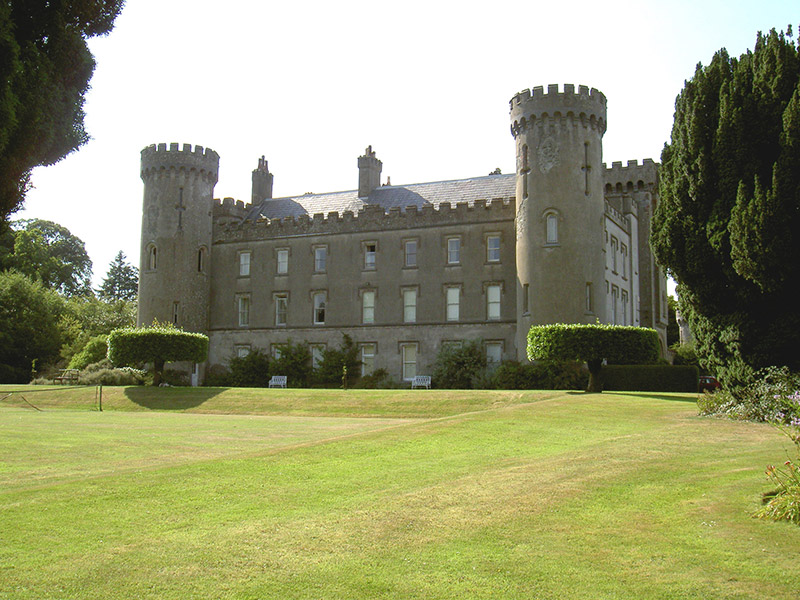
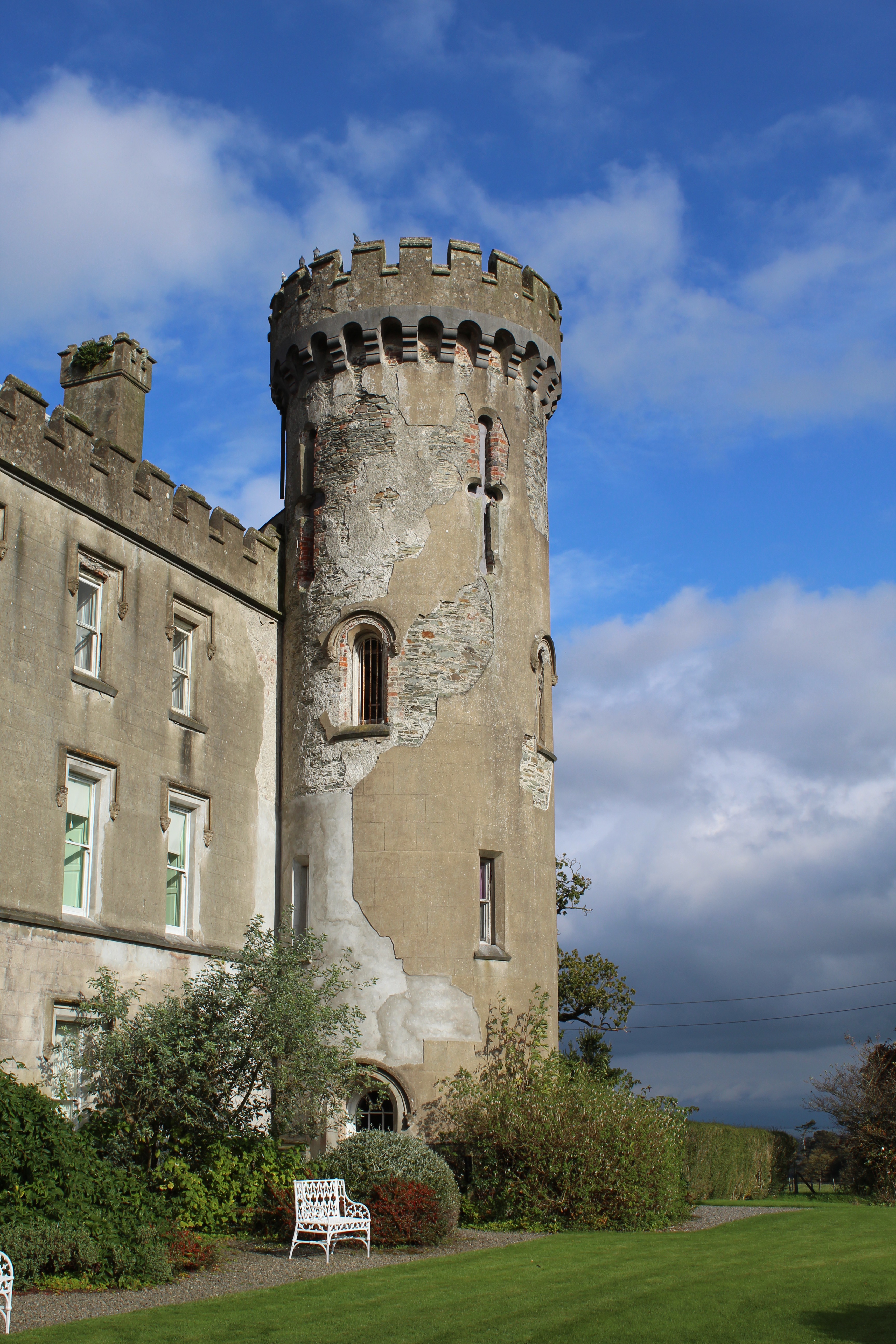


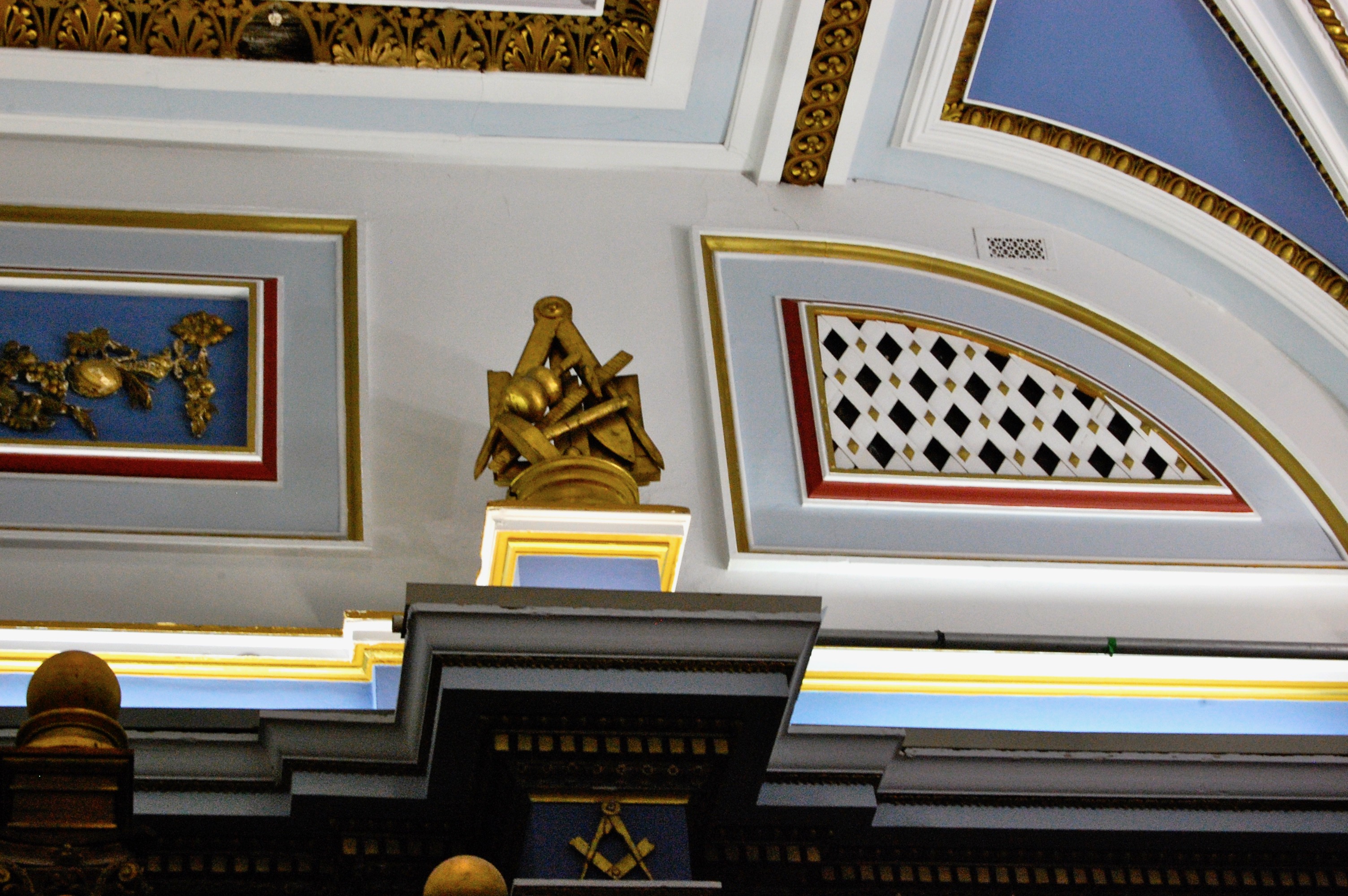
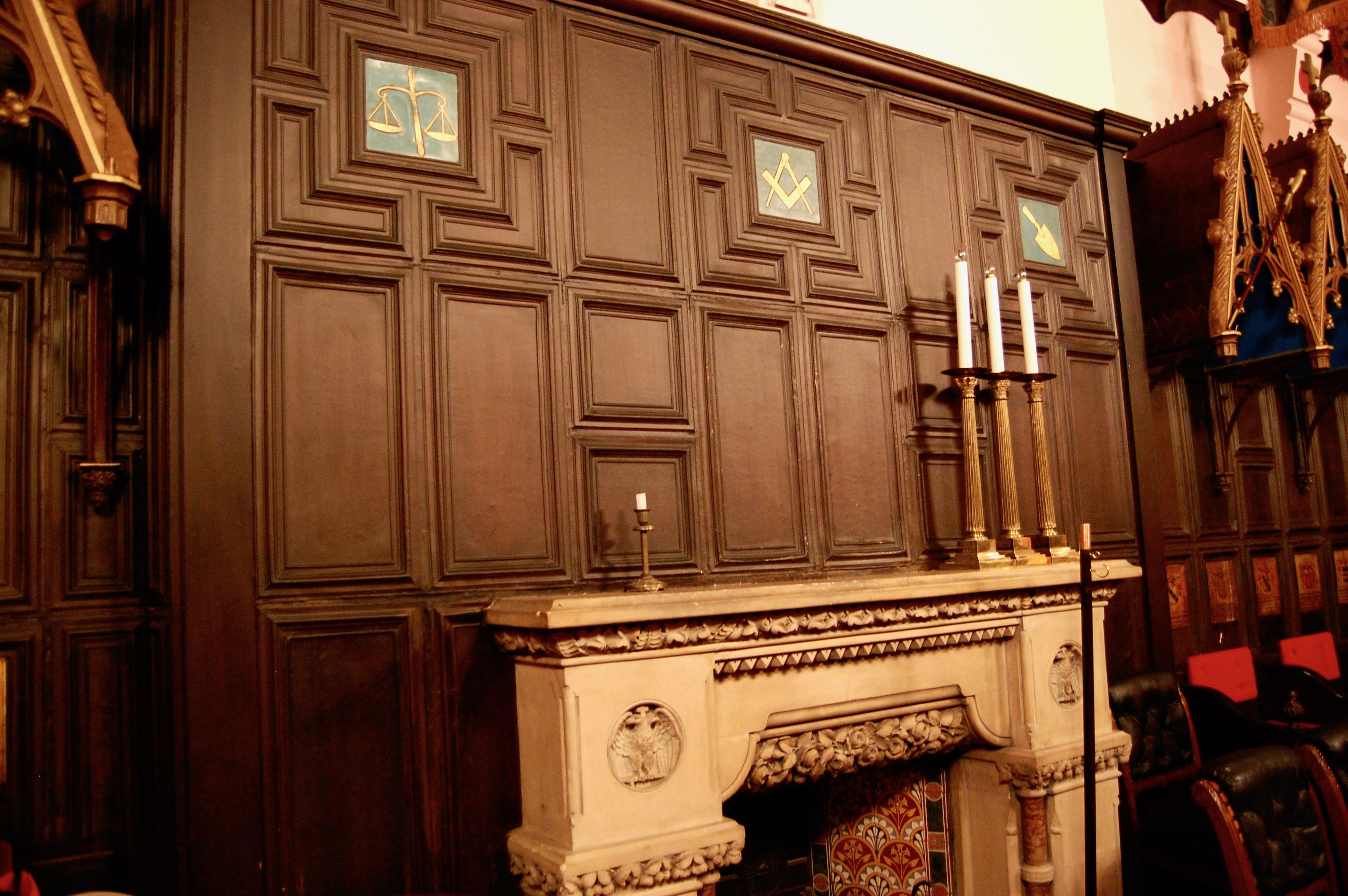
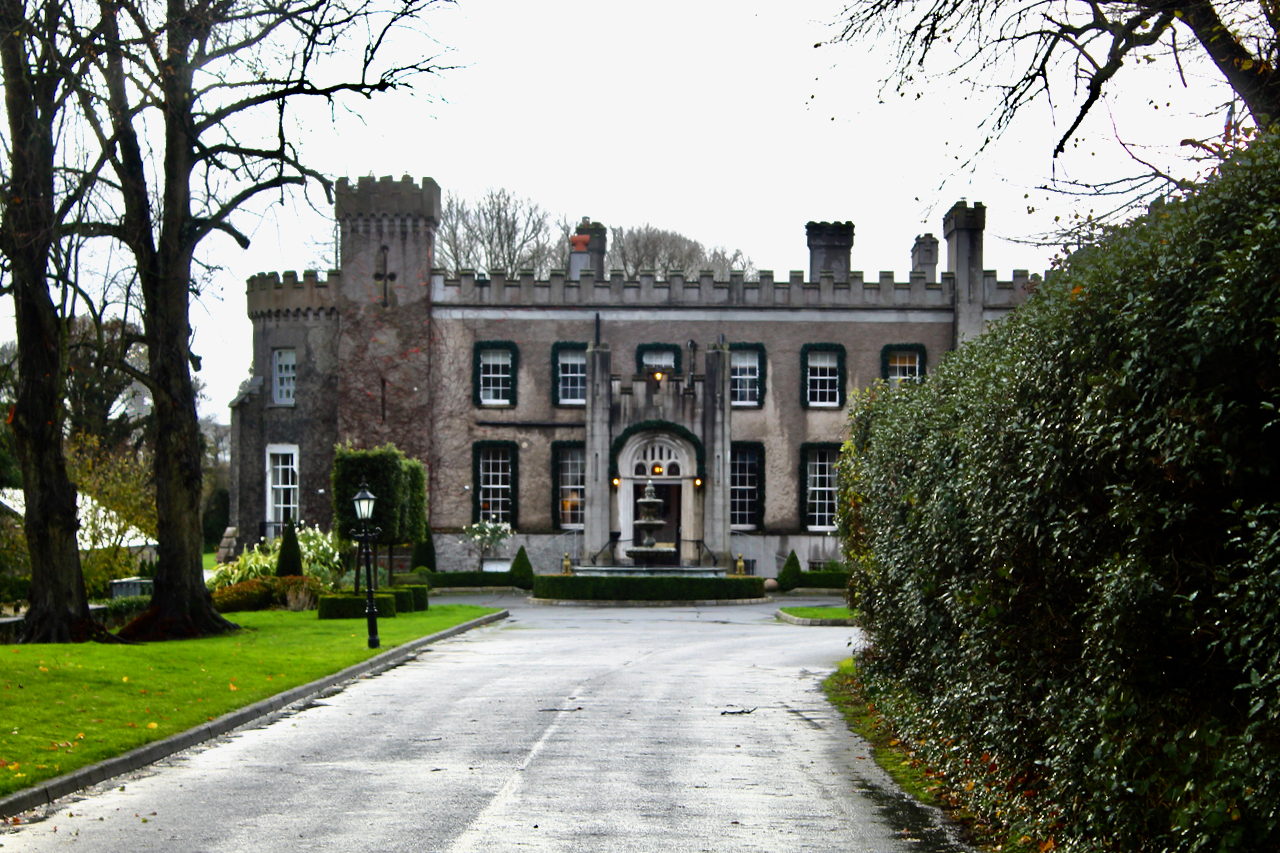
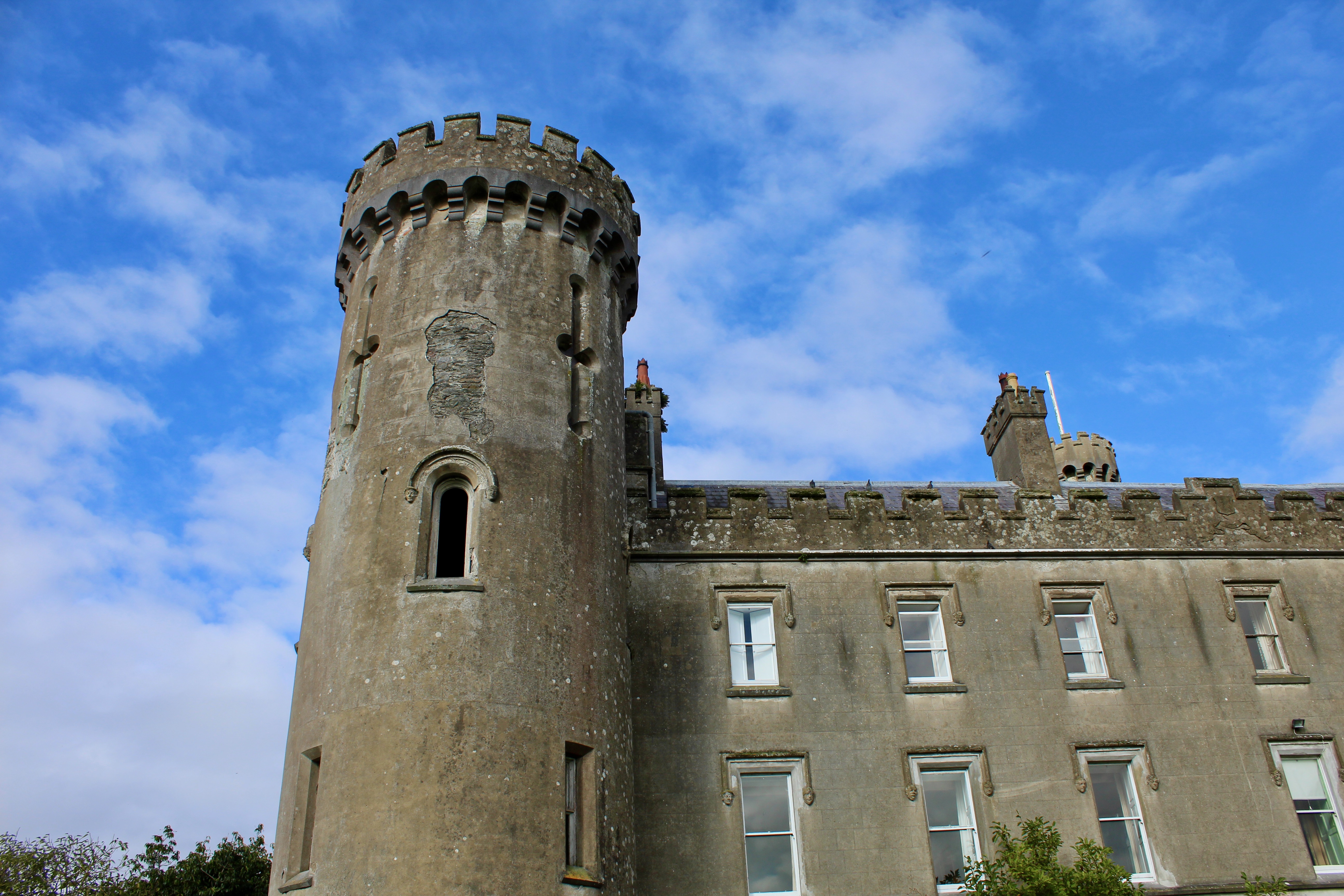
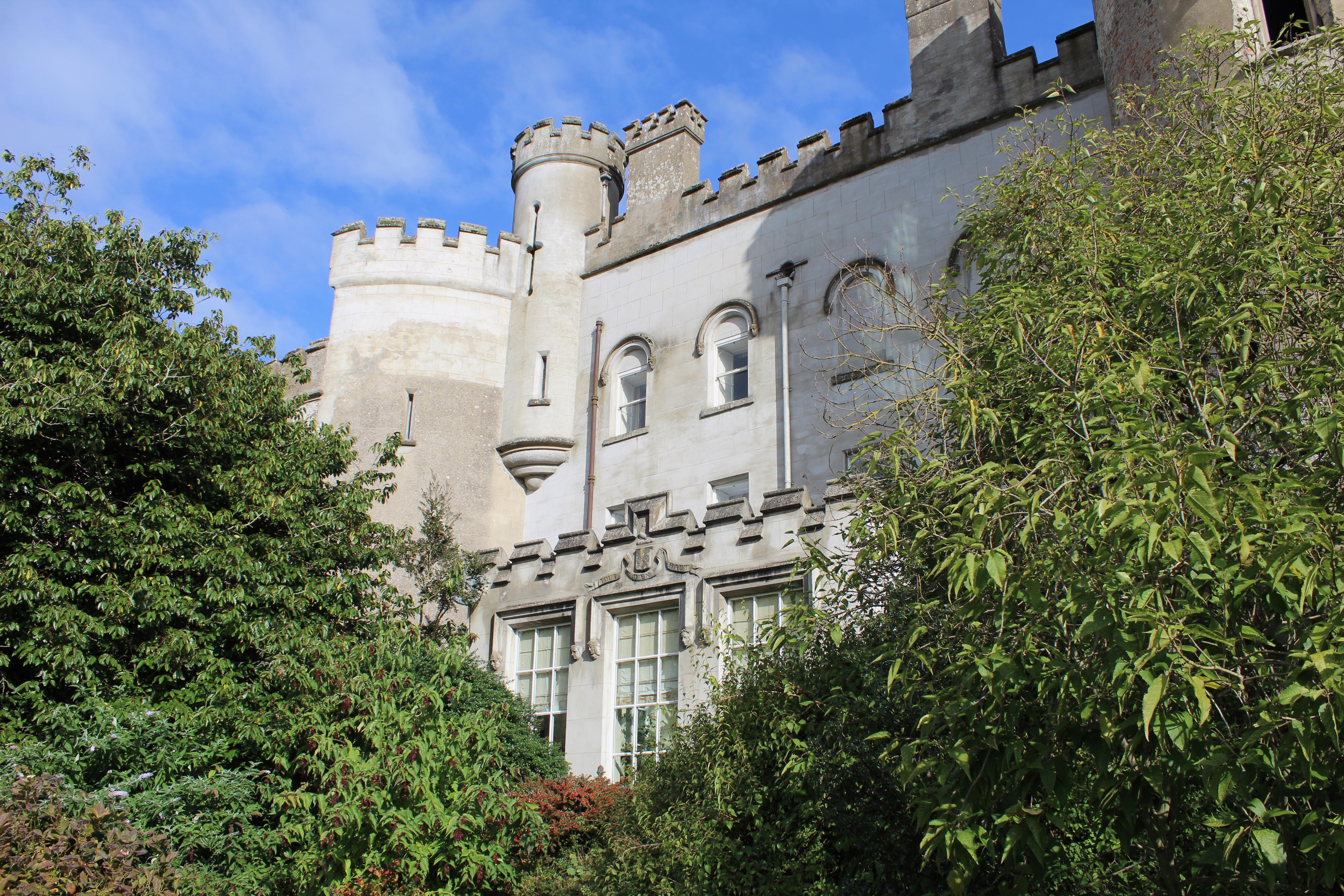
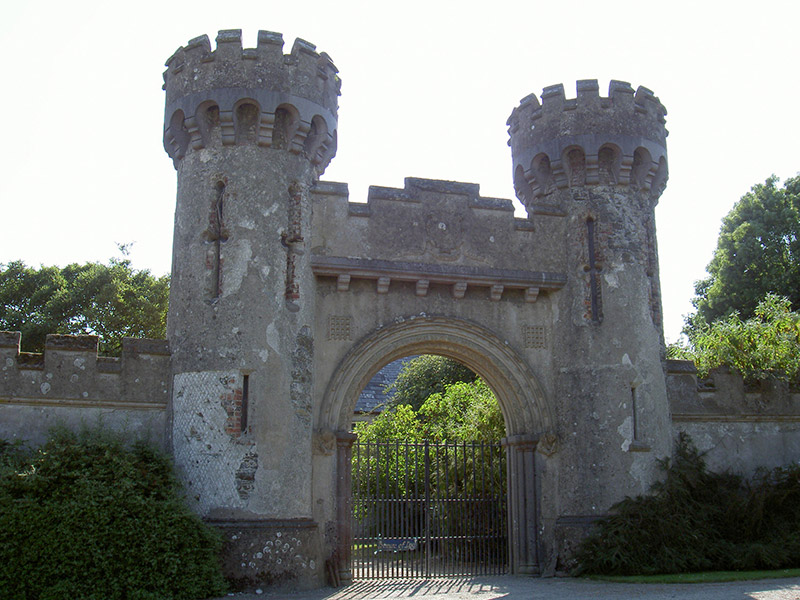
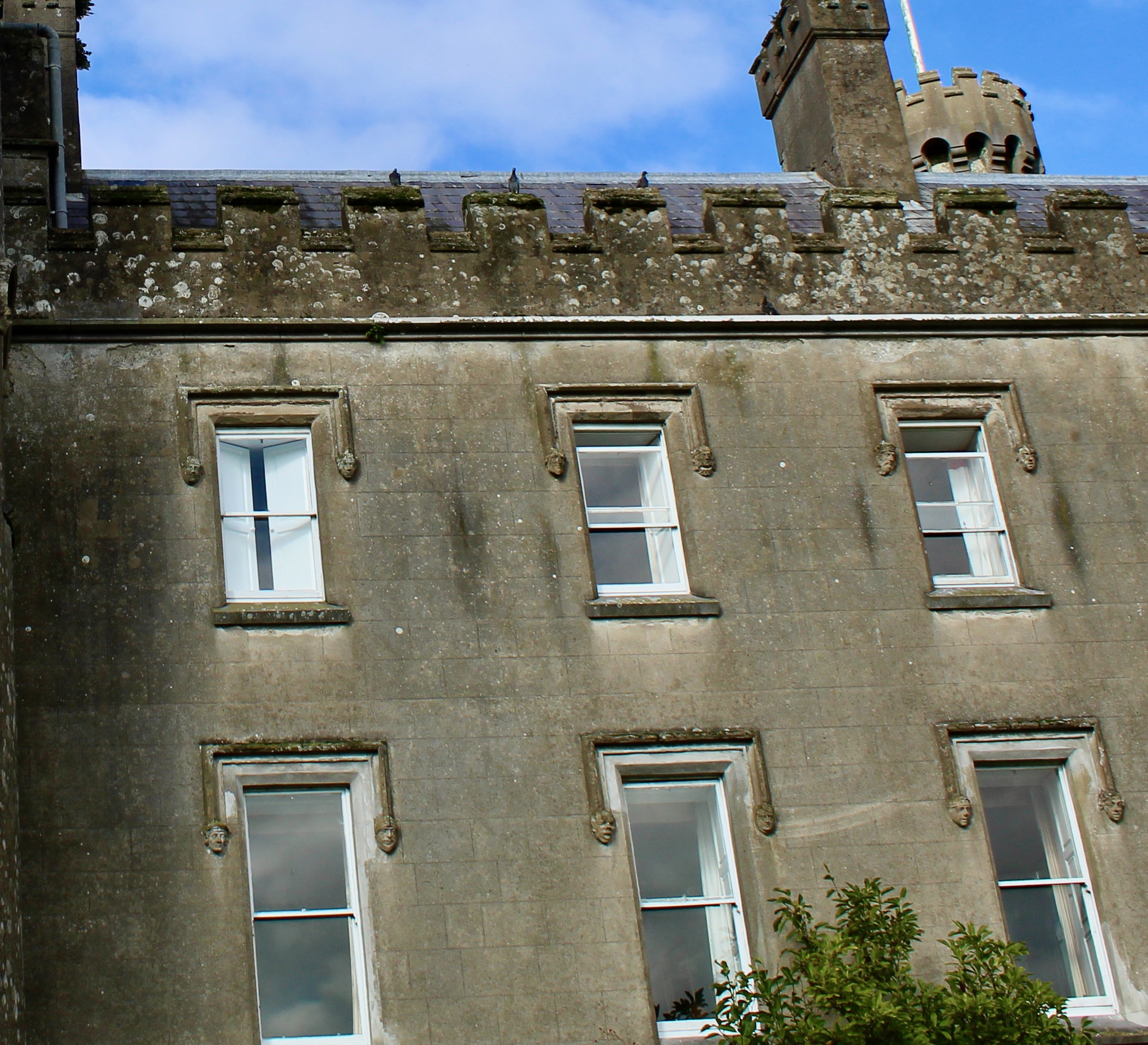
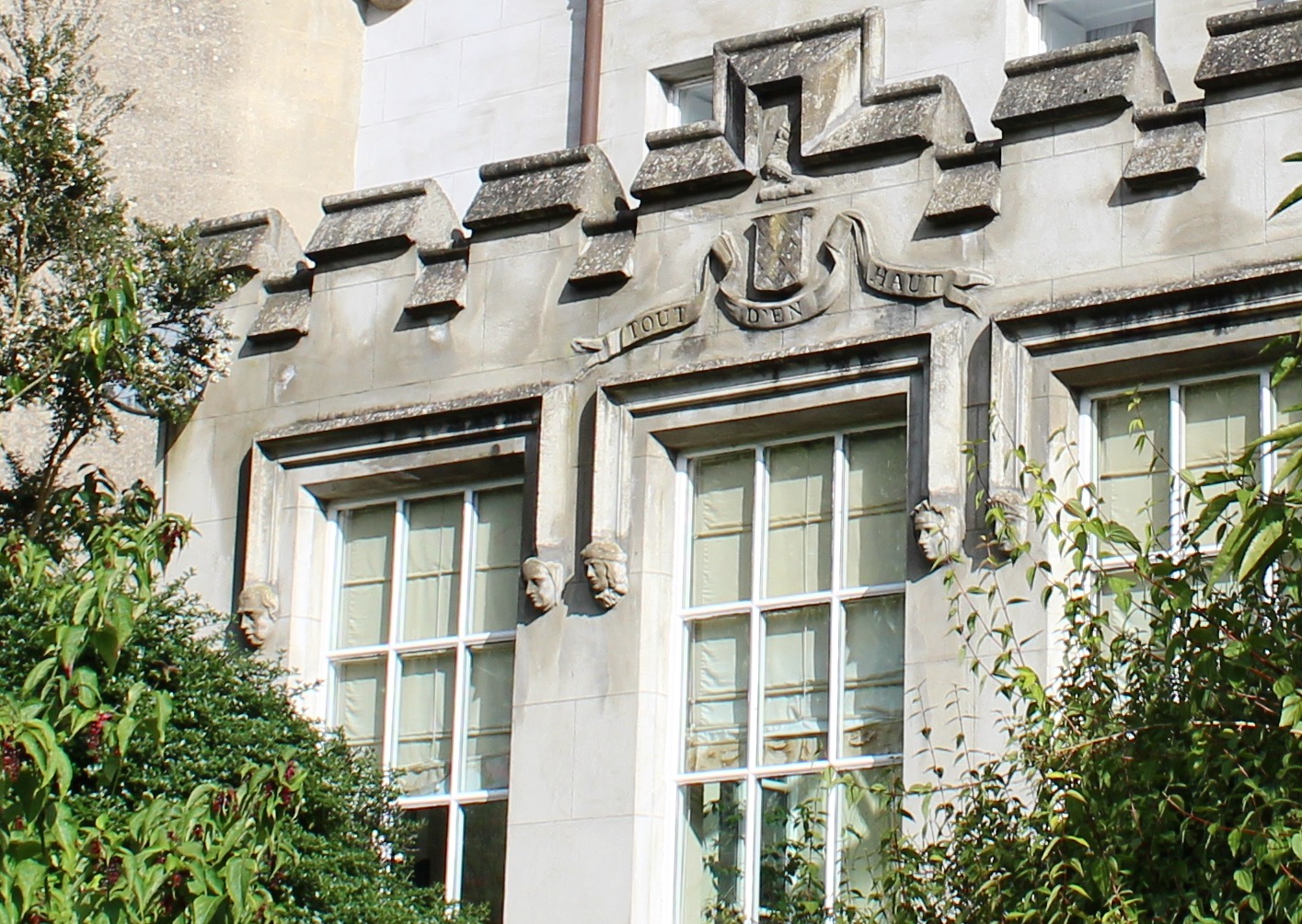
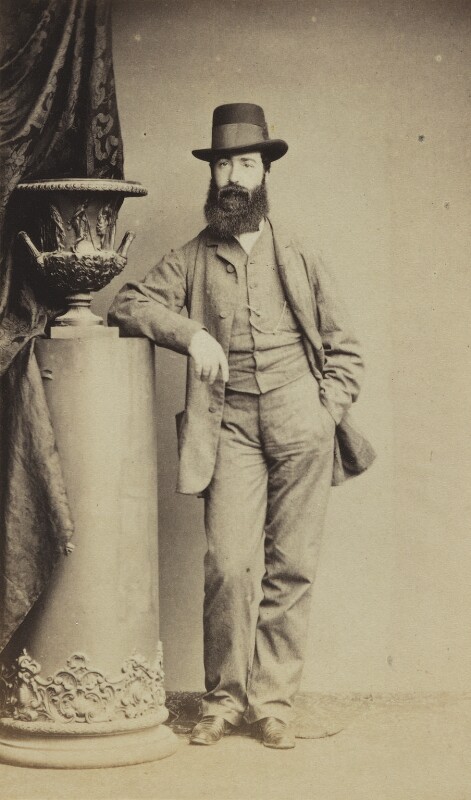
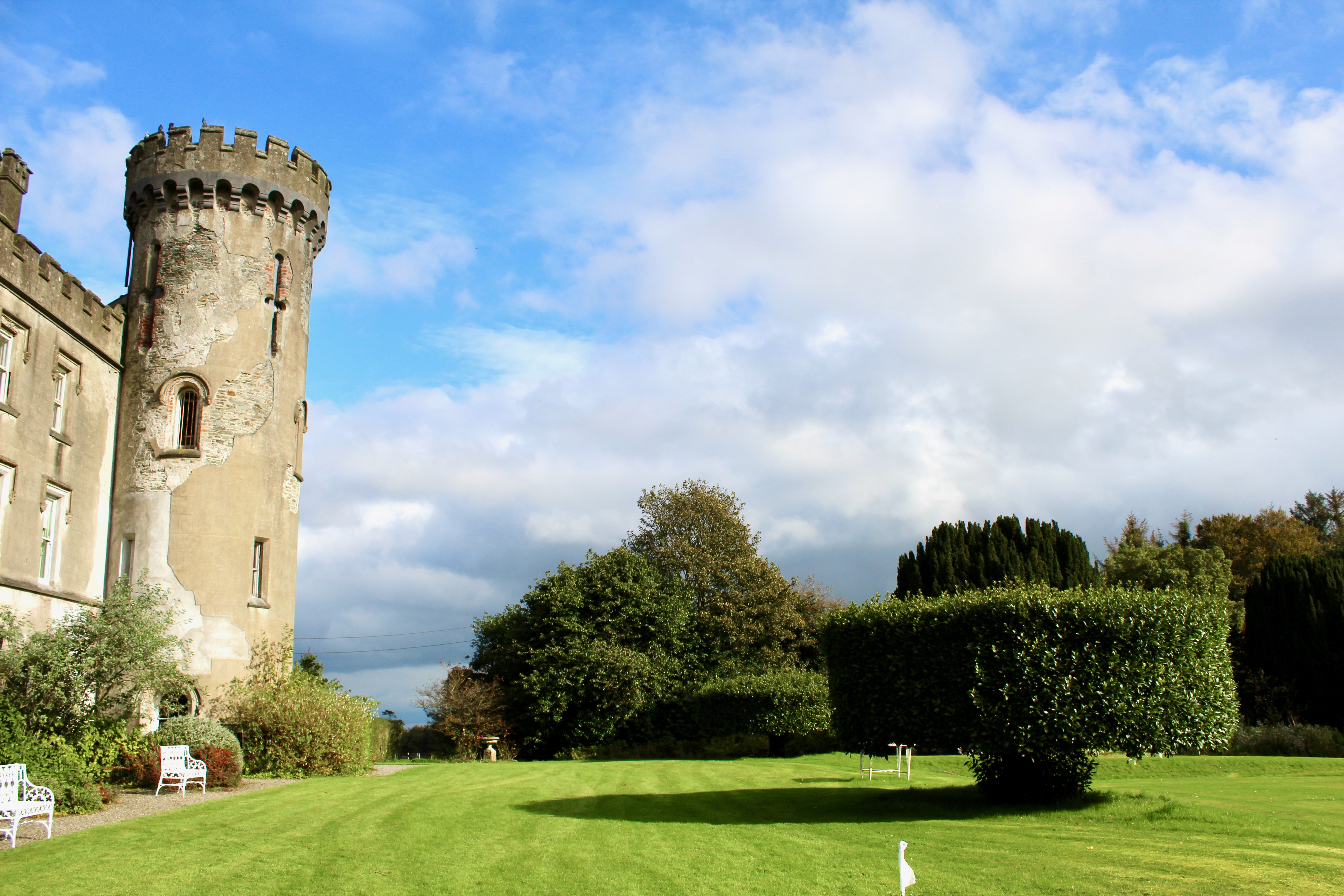
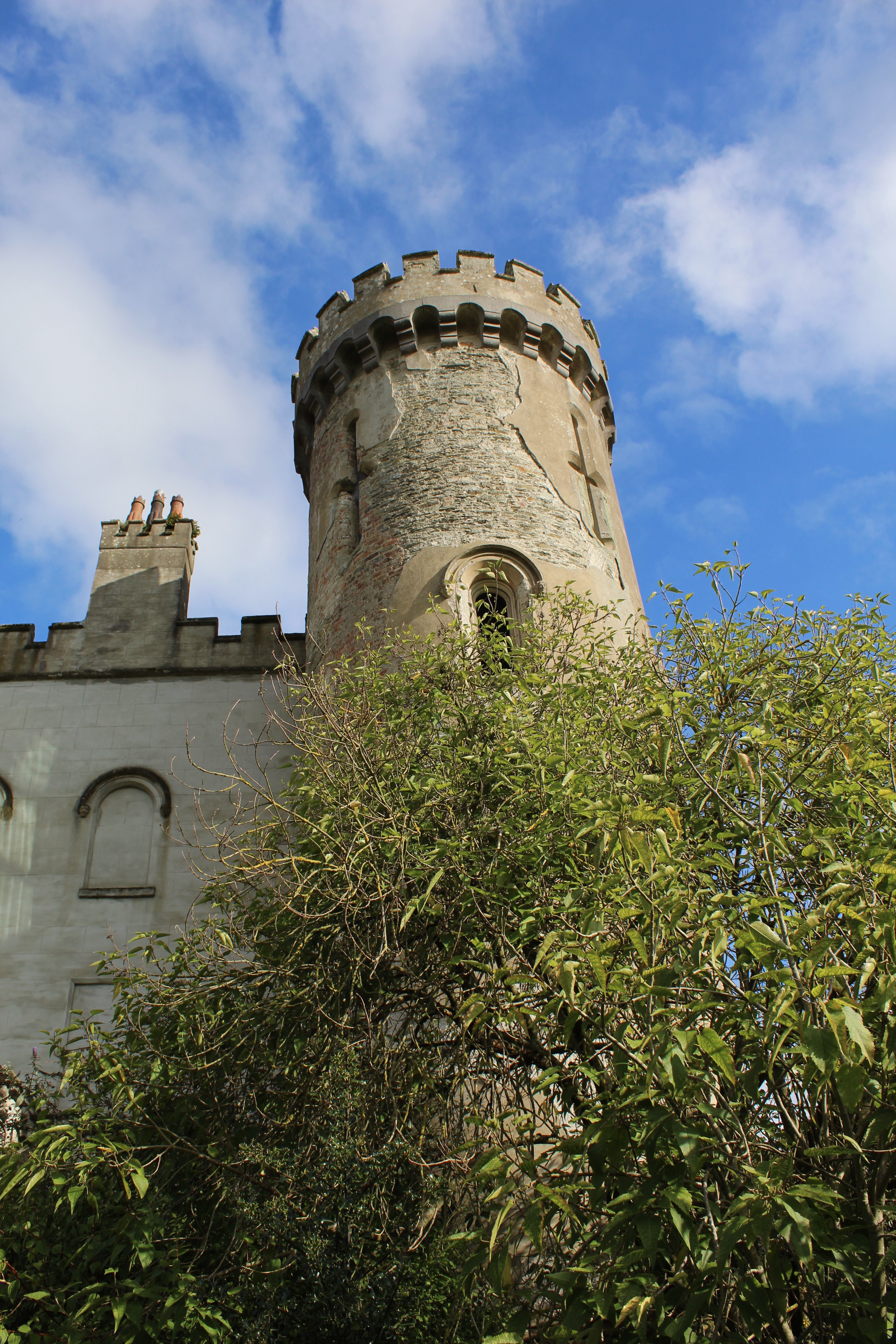

 Irish Historic Houses