Clogher Palace (subsequently known as Clogher Park), Clogher, County Tyrone
Mark Bence-Jones. A Guide to Irish Country Houses (originally published as Burke’s Guide to Country Houses volume 1 Ireland by Burke’s Peerage Ltd. 1978); Revised edition 1988 Constable and Company Ltd, London.
p. 85. “Porter/LGI1912 and sub Baird/IFR) The former Palace of the (C of I) Bishops of Clogher; a restrained cut-stone Classical mansion of 1819-23, begun by Lord John Beresford, afterwards Archbishop of Armagh, while Bishop of Clogher (see Waterford, M/PB); continued by the next Bishop, the ill-fated Hon Percy Jocelyn (see Roden, E/PB), who was unfrocked for sodomy 1822 and ended his days as a domestic servant.; completed by Bishop Jocelyn’s successor, Lord Robert Tottenham (see Ely, M/PB). Centre block of three storeys over a high basement, with lower wings. The entrance front, standing back from the street of the town beside the Cathedral, has an enclosed portico of fluted columns. The garden front, overlooking the large demesne, is of six bays in the centre block, which has a high arcaded basement. After being given up by the See, it became the seat of T.S. Porter and was known as Clogher Park. It is now a convent.”
CLOGHER PARK, County Tyrone (AP MID ULSTER 10) T/011 REGISTERED GRADE A Episcopal walled demesne of 17th-century origin with surviving registered 18th-century parkland (registered area 128.4 aces/52ha) located on the south-east side of the Main-street, Clogher, lying 6.7 miles (10.8km) south-west of Ballygawley and 19 miles (30km) north-east of Enniskillen. The present house (Listed HB 13/02/002A + entrance and lodge), which replaced an earlier 18th century house, ceased being a bishop’s palace in 1850 when the diocese of Clogher was united to that of Armagh. The building is constricted by the road through the village on the north side, the cathedral to the west and a steep slope on the south side. The park and demesne spreads out from the former palace to the east and south, incorporating undulating land that includes a significant hill with a well-known hillfort (SMR7/TYR 050:033). The main entrance is north of the palace off Main Street, while the secondary entrance is south of this. Both have gate lodges— Front Lodge and South Lodge respectively. The demesne, whose landscape park (the present registered area) retains an elegance of proportion with good mature planting, was laid out in the eighteenth century and once covered 560 acres (226ha) extending to the north, east and south, with a deer park (110.5 acres/44/7ha) in the south-east. The demesne with the former palace, the hillfort, the cathedral, the former monastic site and the town, forms once of richest heritage areas in Ulster and is of enormous archaeological importance. St. Macartan’s Cathedral as been an ecclesiastical site since at least the 11th century, with traditions stretching back to the early Christian period. The original palace may have been the work of Bishop Richard Tenison (1642-97, incumbent from 1690/91) who in 1696 wrote that he was ‘now building a hermitage at Clogher, where I will…end my life in religious retirement.’ According to Canon Leslie, Tenison’s successor, Bishop St. George Ashe (1657-1717/18), ‘repaired the See House and improved the See lands’. His successor, John Stearne (1660-1745), an individual who was renowned for his charity and hospitality and features often in Swift’s correspondence, rebuilt the cathedral in 1744 and may also have made alterations to both the house and its grounds, as the 1833 OS Memoirs noted he ‘expended 3,000 pounds in building and improvements’. The present building, which is a relatively plain Classical ashlar faced block of three-storeys over a basement, fully exposed on the east or garden side was built for Bishop Robert Tottenham in 1820-23, to designs of Sligo architect William Warren with David Henry of Dublin, contractor. It incorporates an eastern wing said to date from 1779 and a western wing built around 1817. The seven-bay garden facade a fully- exposed arcaded rusticated basement, which projects beyond the façade to form a terrace. The coach and stables ranges were located south-west side of the palace, and included houses for a steward, a gardener and a gate keeper’s lodge. The unusually large walled kitchen garden however was located nearly 500m south of the palace, adjacent to what used to be a public road on the perimeter of the demesne. It has a trapezoidal shape (4.81 acres/1.95ha); the 1830s OS map show it had at that time a ‘hot house’ against the north wall. The walls survive and the
Register of Parks, Gardens and Demesnes of Special Historic Interest (NI) – November 2020 garden is now under grass. The garden is not shown on James Leonard’s survey of the demesne in 1745 and was probably added by Bishop Robert Clayton (1695-1758), who also walled the demesne. Prior to Bishop Clayton’s improvements to the demesne in the 1745-58 period, the park had been given a formal landscape by John Stearne, who was bishop between 1717-1745. A series of wide formal terraces were created immediately below the garden front of the house, crossed at right angles by a straight path with steps that lead down to a circular formal water basin at the bottom of the hill. Aerial images suggest the hill below these terraces was dissected by a series of parallel paths in the sloping lawn. Mrs Delany, who came here in August 1748, said there were ‘four beautiful swans’ on the basin. She also said that the ‘steep hill’ immediately beyond the pond was ‘covered with fir’, noting that Mrs Clayton was ‘going to make a grotto’ in the side of it. There is no evidence that he di, but an ice house was made in this little wood above the basin (Listed HB13/02/012). The formal layout below the house also included a long rectangular canal which extended 100m north of basin, meeting what appears to have been another long water basin angled north-east south-west, a feature which appears on LiDAR images. Mrs Delany notes that when she was there in 1748 the bishop was ‘very busy’ making the demesne ‘very pretty’, but not with formal but ‘irregular planting’ in the new naturalistic style then becoming fashionable. The Clogher demesne never had any extensive woodland planting; Clayton added the narrow perimeter belts to the on the west and small blocks of woodland and clumps throughout the demesne. It was probably he who naturalised the basin and canals below the house and removed the terraces and formal paths, so that the natural ‘lawn’ swept up to the house windows. His successor Bishop John Garnet (1709-82), completed the planting, notably in the deer park which he added to the south-east of the demesne. The date of the decoy pond in the demesne east of the house has not been established, but it was probably added by Clayton and appears to be a single pipe decoy. The very fine mature lime clumps around a beech encircled fort were probably planted by Clayton and while many parkland trees have been felled over the past century, there are still a number that are now ageing, while a few new trees have been added near the pond. Not many changes took place t the park in the 19th century. A Moss house, shown on the 1830s OS map in a small wood on the eastern perimeter of the demesne was probably erected in the early 19th century when these structures were fashionable. In the early 1820s Robert Tottenham in 1820-23is said to have also spent £300 on the installation of a hydraulic ram ‘invented by Montgolfier’ which threw water ‘to the height of 110 feet, supplying the town, palace and offices. He also built the front gate lodge (Listed HB 13/02/002B) when the palace was being rebuilt; it is a small, but memorable single-storey Classical Style gabled dwelling in render and sandstone with a symmetrical frontage dominated by a large Tuscan portico with pediment. The South Lodge, set back from the road to the south, is late 19th century and is an asymmetric one and a half-storey house with a steeply-pitched overhanging gabled roof. In 1850 the diocese of Clogher was united to that of Armagh, and, now redundant, the palace and demesne were sold by the church to Rev. John Grey Porter (1790-1873) of Belle Isle, Co. Fermanagh, whose father, John Porter (1751-1819) had actually served as Bishop of Clogher from 1797 until his death. Porter renamed the property ‘Clogher Park’ and after their marriage in 1851, leased it to his third daughter, Elizabeth (d.1902), and her husband, John William Ellison (later Ellison McCartney, 1818-1904), MP for Tyrone 1874-85. The property was eventually bequeathed to Thomas Stewart Ellison McCartney (1854-1946), who assumed the name Porter by Royal License in 1875. In 1922 he sold the house and grounds to the R.C. Diocese of Clogher, apparently much to the chagrin of some of the local Orangemen, who seem to have regarded this as something of a security risk, the estate being close to the recently-established border with the Irish Free State. The house and its attendant outbuildings were subsequently converted for use as a convent by the Sisters of St. Louis, who remained there until the late 1960s. After this the house and 19 acres of grounds were acquired by the Sisters of Mercy, Enniskillen, who in conjunction with local health authorities established a residential home (‘St. Macartan’s, Clogher’, opened 1978), with new buildings built on the site of the outbuildings to the south-west. SMR: TYR 58:33
Register of Parks, Gardens and Demesnes of Special Historic Interest (NI) – November 2020 hill fort rath, 59:55, 59:80, 59:90 all enclosures, 65:12 souterrain, 65:13 enclosure, 65:14 large enclosure and 65:20 church site? Private.
Clogher Palace, County Tyrone, photograph by Robert O’Byrne.
Clogher Palace, County Tyrone, photograph by Robert O’Byrne.
To the immediate east of St Macartan’s Cathedral in Clogher, County Tyrone stands the former bishop’s palace which was likewise rebuilt in the early 18th century by the Rev Dr John Stearne. Mrs Delany visited the place in August 1748 when it was occupied by Stearne’s successor, Robert Clayton and his wife, and while she thought the garden ‘pretty with a fine large sloping green walk from the steps to a large basin on water, on which sail most gracefully fair beautiful swans,’ she was less satisfied with the house, describing it as ‘large, and makes a good showish figure; but great loss of room by ill-contrivance within doors. It is situated on the side of so steep a hill that part of the front next the street is under ground and from that to the garden you descend fifty stone steps which is intolerable.’ In consequence, while the seven-bay entrance front is of three storeys, the six-bay garden front is of four storeys. As seen today, the old palace is the result of work undertaken here by Lord John George Beresford, bishop in 1819-20 and then Lord Robert Tottenham. Following the union of the diocese of Clogher with the archdiocese of Armagh in 1850, the property was sold and became a private residence. The interiors are rather plain, the most striking feature being the staircase, the ceiling of which is painted with six cherubs: these represented the children of Thomas Stewart Porter who inherited what was then called Clogher Park in 1903. The house subsequently became a convent for the Sisters of St Louis, but is now a residential care home.
Clogher Palace, County Tyrone, photograph by Robert O’Byrne.
Clogher Palace, County Tyrone, photograph by Robert O’Byrne.
THE parliamentary gazetteer of Ireland, dated 1844, remarks
“The diocese of Clogher affects to have been founded by St Patrick, rather earlier than that of Armagh; but the authorities respecting its pretended early origin are even more suspicious than those respecting the city’s antiquities.”
“The diocese of Clogher very long remained complete, uniform, and separate, before the passing of the Church Temporalities Act; but it is now united to the diocese of Armagh.”
“The dignitaries of the cathedral … are the Dean, benefice of Clogher; the Archdeacon, benefice of Clontibret; the Precentor, benefice of Enniskillen; the Chancellor, benefice of Galloon; and the prebendaries of Kilskeery, Donacavey, Tyholland, Devenish, and Tullycorbet.”
The see stretches 78 miles from north-west to south-east by a breadth of 25 miles.
The diocese comprises some portion of five counties, viz. Fermanagh, Tyrone, Monaghan, Donegal, and Louth.
THE BISHOP’S PALACE, Clogher, County Tyrone, is a large and handsome edifice adjacent to the Cathedral, on the south side of the village, and consists of a central block with two wings.
The entrance, on the north front, has an enclosed portico supported by lofty fluted columns.
It is built throughout of hewn freestone, and standing on elevated ground commands extensive views over a richly planted undulating country.
Attached to the palace was a large and well-planted demesne of 566 acres, encircled by a stone wall; and within it are the remains of the royal dwelling-place of the princes of Ergallia, a lofty earthwork or fortress, protected on the west and south by a deep fosse; beyond this, to the south, is a camp surrounded by a single fosse, and still further southward is a tumulus or cairn, encircled by a raised earthwork.
Mark Bence-Jones describes the house as a restrained, cut-stone classical mansion of 1819-23, begun by Lord John Beresford (Lord Bishop of Clogher 1819-20; Lord Archbishop of Dublin, 1820-22; Lord Archbishop of Armagh, 1822-62; Bishop of Clogher again in 1850).Building work continued under the next prelate, the Rt Rev and Hon Percy Jocelyn; and was finally completed by Lord Robert Tottenham between 1822-50. The former episcopal palace has a centre block of three storeys over a high basement, with lower wings. The entrance front, which stands off the main street, has an enclosed portico of fluted columns.
The garden front, which overlooks the demesne, consists of six bays in the central block, which has a lofty, arcaded basement.
The walled demesne was set out for the 18th century bishop’s palace.
The present house, entrance and lodge replaced an earlier 18th century house and is a very fine one, though constricted by the road through the village of Clogher on the north side, the cathedral to the west and a steep slope on the south side.
It was designed by Warren and built between 1819 and 1820, possibly retaining earlier wings.
Although the house is no longer a bishop’s palace, the landscape park retains an elegance of proportion and planting that compliments the house.
There are very fine mature lime clumps around a beech encircled fort.
Parkland trees have been felled and many are now ageing but a few new trees have been added near the pond.
Mrs Delany visited the previous house in 1748 and commented on the steep slope, a basin of water with swans and expressed delight at a proposed grotto.
In a later era of garden history, there is a mention in Robinson’s Garden Annual & Almanac of 1936.
436 acres were sold by the Church of Ireland in 1853 for a private residence and during the 1970s the site was a convent.
There is a deer park, now farmland, and a walled garden that is used for agricultural purposes.
An Ice House remains, as does the man-made pond and indications of earlier water features.
There are two gate lodges: a classical one by Warren ca 1820 and a later lodge of ca 1890.
In 1850, a very curious coincidence occurred.
In that year the bishopric of Clogher was merged with the archbishopric of Armagh (which it remained until 1886).
In 1874, Clogher Palace was bought by the Rev Canon John Grey Porter, who sold it to his kinsman, Thomas S Porter, in 1922.
Thus Mr Porter had seized the opportunity to buy the now abandoned palace and demesne, and re-named it Clogher Park.
Paradoxically, Bishop Porter himself had had nothing to do with the building of Clogher Park House: it had been built, in the period 1819-1823, by the three bishops who succeeded him.
It was presumably his son, the Rev John Grey Porter, who made the alterations to the building of 1819-23 which were noted by Evelyn Barrett.
She describes Clogher Park as having,
‘… a pillared portico above a flight of steps and two wings added in Victorian times [presumably by the Rev. John Grey Porter]. Classic restraint was relieved by a balcony running the length of the south front …, in summer smothered in purple clematis and red and yellow climbing roses …, like the warmth of a smile on the formal façade.’
By his will, made in 1869 and subsequently much embellished with codicils, Porter left BELLE ISLE, Clogher Park and effectively all his landed property to his son and heir, John Grey Vesey Porter, with the proviso that his widow should enjoy Clogher Park for her life, together with the very large jointure of £3,000 a year.
The Rev John Grey Porter presumably lived at Clogher Park, when not at Kilskeery, until his death in 1873, when he was succeeded there by his widow until her death in 1881.
The demesne comprised 3,468 acres of land in 1871.
By 1890, it was the seat of John William Ellison-Macartney, MP for County Tyrone, 1874-85, who had married Porter’s third daughter, Elizabeth, in 1851.
Eventually, Clogher Park was to pass to the Ellison-Macartneys’ second son, and their occupation of the house must have been a grace-and-favour or leasehold arrangement anticipating this outcome.
This supposition is made the more probable by the fact that their second son, Thomas Stewart Ellison-Macartney, had assumed the name Porter as early as 1875.
The Roman Catholic Church purchased Clogher Park in 1922. According tothis article:
I helped to prevail on Bishop McKenna, of Monaghan, to buy Clogher Palace and grounds for £20,000 [£886,000 in 2010], as it was the ancient seat of St. Macartan, patron of the diocese.
This enraged the Orangemen, and as it is within the Tyrone border, the day after the Bishop took possession, it was commandeered by the Belfast Specials without notice!
To bring an injunction the Bishop would have to sue in Belfast, and they have got a military authorization, ex post facto. The malice of this is deplorable.
Clogher Park House is now a residential care home.
I’m seeking old images of Clogher Palace for the blog.
Castlecaulfeild or Castle Caulfeild, County Tyrone – ruin
Castlecaulfield, County Tyrone, photograph by Robert French, (between ca. 1865-1914), Lawrence Photograph Collection, National Library of Ireland.
Mark Bence-Jones. A Guide to Irish Country Houses (originally published as Burke’s Guide to Country Houses volume 1 Ireland by Burke’s Peerage Ltd. 1978); Revised edition 1988 Constable and Company Ltd, London.
p. 64. “(Caulfeild, Charlemont, V/PB) A “u” shaped Plantation castle originally of three storeys, with mullioned windows and massive chimney stacks; built 1612 by Sir Toby Caulfeild, burnt during the Rising of 1641, subsequently rebuilt but abandoned by 1700 and now a ruin. Also in the village of Castlecaulfeild is Castlecaulfeild House, formerly the dower house of the Caulfeild (Charlemont) family; two storey, seven bay, low-built and plain; of late C18 or early C19 appearance, though it may be basically C17.”
‘Castle-Caulfield owes its erection to Sir Toby Caulfield, afterwards Lord Charlemont – a distinguished English soldier who had fought in Spain and the Low Countries in the reign of Queen Elizabeth, and commanded a company of one hundred and fifty men in Ireland in the war with O’Neill, Earl of Tyrone, at the close of her reign. For these services he was rewarded by the Queen with a grant of part of Tyrone’s estate, and other lands in the province of Ulster; and on King James’s accession to the British crown, was honoured with knighthood and made governor of the fort of Charlemont, and of the counties of Tyrone and Armagh. At the plantation of Ulster he received further grants of lands, and among them a thousand acres called Ballydonnelly, or O’Donnelly’s town, in the barony of Dungannon, on which, in 1614, he commenced the erection of the mansion subsequently called Castle-Caulfield. This mansion is described by Pynnar in his Survey of Ulster in 1618-19, in the following words…’ [see post]
HE VISCOUNTS CHARLEMONT WERE THE GREATEST LANDOWNERS IN COUNTY ARMAGH, WITH 20,695 ACRES
The settlement of this noble family in Ireland took place in the reign of ELIZABETH I, when THE RT HON SIR TOBY CAULFEILD (1565-1627), a distinguished and gallant soldier, was employed in that part of Her Majesty’s dominions against the formidable Hugh O’Neill, Earl of Tyrone.
This gentleman was the son of Alexander Caulfeild, Recorder of Oxford, who was descended from ancestors of great antiquity and worth settled in that county, and at Great Missenden, Buckinghamshire.
In 1615, Sir Toby was appointed one of the council for the province of Munster. The next year, 1616, he joined in commission with the Lord Deputy of Ireland (Oliver St John, 1st Viscount Grandison), and others, for parcelling out the escheated lands in Ulster to such British undertakers as were named in the several tables of assignation.
In these employments, the King (JAMES I) found him so faithful, diligent, and prudent, that His Majesty deemed him highly deserving the peerage, and accordingly created him, in 1620, Lord Caulfeild, Baron Charlemont, with limitation of the honour to his nephew, Sir William Caulfeild, Knight. His lordship died unmarried, in 1627, and was succeeded by the said
SIR WILLIAM CAULFEILD, 2nd Baron (1587-1640), who took his seat in parliament, 1634, after the Lord Chancellor of Ireland had moved to know the pleasure of the House, whether he should be admitted to this place, having brought neither writ of summons nor patent; whereupon it was resolved that his lordship should be admitted, inasmuch as they were all satisfied that he was a Lord of Parliament.
His lordship, High Sheriff of County Tyrone, 1620, wedded Mary, daughter of Sir John King, Knight (ancestor of the Earls of Kingston), and had issue,
TOBY, his successor; ROBERT, successor to his brother; WILLIAM, created Viscount Charlemont; George; Thomas; John; Anne; Mary; Margaret.
His lordship, Master-General of the Ordnance, 1627-34, was succeeded by his eldest son,
TOBY, 3rd Baron (1621-42), who also succeeded his late father as Governor of Charlemont Fort, 1640, and there resided with his company of the 97th Regiment of Foot, in garrison.
This fort was a place of considerable strength and importance during the rebellion of 1641; but his lordship suffered himself to be surprised, in that year; and being made prisoner, with his whole family, was subsequently murdered, by the orders, it is said, of Sir Phelim O’Neill.
This unfortunate nobleman, dying unmarried, was succeeded by his brother,
ROBERT, 4th Baron (1622-42), who died a few months afterwards from an overdose of a prescription of opium, and was succeeded by his next brother,
WILLIAM, 5th Baron (1624-71), who apprehended Sir Phelim O’Neill and had him executed for the murder of his brother, the 3rd Baron.
His lordship having filled, after the Restoration, several high and confidential situations, was advanced to a viscountcy, 1655, as Viscount Charlemont, of County Armagh.
He wedded Sarah, second daughter of Charles, 2nd Viscount Drogheda, and had issue,
WILLIAM, his successor; Toby; John; Mary; Alice; Elizabeth.
His lordship was succeeded by his eldest surviving son,
WILLIAM, 2nd Viscount (c1655-1726); who opposed with zeal the cause of WILLIAM III against JAMES II.
His lordship espoused Anne, daughter of the Most Rev James Margetson, Lord Archbishop of Armagh, by whom he had, with five daughters, five sons to survive infancy, namely,
JAMES, his successor; Thomas, Governor of Annapolis; Charles (Rev), Rector of Donaghenry; John, MP; Henry Charles.
He died after enjoying the peerage more than half a century, in 1726, and was succeeded by his eldest surviving son,
JAMES, 3rd Viscount (1682-1734), MP for Charlemont, 1703-4 and 1713-26, who married Elizabeth, only daughter of the Rt Hon Francis Bernard, of Castle Mahon, County Cork, one of the Judges of the Court of Common Pleas in Ireland, and had issue,
Francis; JAMES, of whom hereafter; Alice.
The elder son, Francis, wedded Mary, only daughter of John, Lord Eyre; though was lost, with his lady, infant child, and servant, in a hurricane, during his passage to Ireland from London, in 1775, to fulfil his parliamentary duties as MP for Charlemont.
The Hon Francis Caulfeild left issue, Colonel James Eyre Caulfeild, born in 1765, and Eleanor, who married William, 3rd Earl of Wicklow.
The 3rd Viscount was succeeded by his only surviving son,
JAMES, 4th Viscount (1728-99), KP, who was advanced to an earldom, in 1763, in the dignity of EARL OF CHARLEMONT.
1st Earl of Charlemont KP. Photo Credit: National Portrait Gallery
His lordship wedded, in 1768, Mary, daughter of Thomas Hickman, of Brickhill, County Clare (descended from the noble family of Windsor, Viscounts Windsor, which title became extinct in 1728), and had issue,
FRANCIS WILLIAM, his successor; James Thomas; Henry, MP, of Hockley Lodge, Co Armagh; Elizabeth.
He was a distinguished patriot, and had the honour of commanding-in-chief the celebrated Volunteer Army of Ireland in 1779.
The 1st Earl was a Founder Knight of the Order of St Patrick.
His lordship was succeeded by his eldest son,
FRANCIS WILLIAM, 2nd Earl (1775-1863), KP, who espoused, in 1802, Anne, daughter of William Bermingham, and had issue,
James William, styled Viscount Caulfeild (1803-23); William Francis (1805-7); Maria Melosina; Emily Charlotte.
His lordship died without surviving male issue, when the family honours reverted to his cousin,
JAMES MOLYNEUX, 3rd Earl (1820-92), KP (son of the Hon Henry Caulfeild, second son of 1st Earl), Lord-Lieutenant of County Tyrone, MP for Armagh, 1847-67.
His lordship married twice, though both marriages were without issue, when the earldom and barony expired, and the remaining peerages devolved upon his kinsman,
JAMES ALFRED, 7th Viscount (1830-1913), CB JP DL, of Loy House, Cookstown, and Drumcairne, County Tyrone,
Captain, Coldstream Guards; fought in the Crimean War; Vice Lord-Lieutenant of County Tyrone, 1868; High Sheriff of County Tyrone, 1868; Comptroller of the Household of the Lord Lieutenant of Ireland, 1868-95; Honorary Colonel, 3rd Battalion, Royal Inniskilling Fusiliers; Usher of the Black Rod of the Order of St Patrick, 1879-1913.
JAMES EDWARD, 8th Viscount (1880-1949), PC DL, was elected to the Northern Ireland Parliament as a Senator, where he sat from 1925-37, and was sometime Minister for Education.
James Alfred Caulfeild, 7th Viscount (1830–1913); James Edward Caulfeild, 8th Viscount; (1880–1949); Charles Edward St George Caulfeild, 9th Viscount (1887–1962); Robert Toby St George Caulfeild, 10th Viscount (1881–1967); Charles St George Caulfeild, 11th Viscount (1884–1971); Richard St George Caulfeild, 12th Viscount (1887–1979); Charles Wilberforce Caulfeild, 13th Viscount (1899–1985); John Day Caulfeild, 14th Viscount Charlemont (1934–2001); John Dodd Caulfeild, 15th Viscount (b 1966).
The heir apparent is the present holder’s son, the Hon Shane Andrew Caulfeild (b 1996).
*****
The Charlemonts were a Patrick family, three members of whom were Knights of St Patrick.
Castle Caulfeild, County Tyrone
Lord Charlemont was the greatest landowner in County Armagh, owning 20,695 acres a century ago.
He also owned almost 6,000 acres in County Tyrone.
During more recent times, the 8th Viscount, PC (NI), DL (1880-1949) was elected to the House of Lords as a Representative Peer; and to the Northern Ireland Parliament as a senator.
He sat in the NI Senate from 1925-37 and was Minister for Education for all but the first of his years.
Lord Charlemont’s main country seat, near the village of Moy, County Tyrone, was Roxborough Castle.
The exquisite gates are all that remain.
The Castle was burnt by Irish republicans in 1922.
Charlemont Fort, on the County Armagh side of the river, was burnt in 1920.
Charlemont Fort, with Roxborough Castle in the Background
Subsequently Lord Charlemont lived at another residence, Drumcairne, near Stewartstown in County Tyrone.
It is thought that he eventually moved to the sea-side resort of Newcastle in County Down.
He inherited the titles from his uncle in 1913.
Having no children, the titles passed, on his death, to a cousin.
The 14th Viscount lived in Ontario, Canada and the viscountcy is still extant with the present 15th Viscount Charlemont.
Parkanour House and garden, County Tyrone, photograph by Robert French, (between ca. 1865-1914), Lawrence Photograph Collection, National Library of Ireland.
Mark Bence-Jones. A Guide to Irish Country Houses (originally published as Burke’s Guide to Country Houses volume 1 Ireland by Burke’s Peerage Ltd. 1978); Revised edition 1988 Constable and Company Ltd, London.
p. 230. “(Burges/IFR) A large and romance Tudor-Revival house, dating from various periods in first half of C19. A small, three gabled two storey house, known as the “farm at Edenfield” was built here 1802-04 by J. H. Burges, who leased the estate from his cousin, Lady Poulett, daughter of Ynry Burges who bought it 1771. Then a “cottage wing” extesnsion of rubble with a hipped roof, identified as the present south wing, was added 1820-21. Finally in 1839, J.H. Burges’s son, J.Y. Burges, having inherited money from Lady Poulett, who died in the previous year, enabling him to buy the freehold of the estate, embarked on the building of a higher and much larger wing, to the design of Thomas Duff, of Newry, which was completed 1848. Its cost was specified as not to exceed £5,000. The three gabled house of 1802-04, which now has an arched porch, can be seen to the left of the 1839-48 wing with its pinnacle and gabled projection and two further gables. The latter wing, and that of 1820-21, have mullioned windows with leaded lights; whereas the windows of the 1802-04 house have mullions and Georgian astragals. Impressive courtyard at back of house, with coachhouse and tower intended for hanging meat. Rich Elizabethan or Jacobean interiors: long gallery with imported English carved wooden mantel dated 1641 and arched screen at one end; antoher C17 carved wooden chimneypiece with overmantel in inner hall; lofty Jacobean ceilings in sitting room, octagonal room and drawing room. The latter, which has a strapwork mantel, was not completed until 1854. Sold by Major Y.A. Burges ca 1958, now the Thomas Doran Training Centre for handicapped children.”
Parkanaur House, County Tyrone, photograph by Robert French, (between ca. 1865-1914), Lawrence Photograph Collection, National Library of Ireland.Parkanaur House, County Tyrone, photograph by Robert French, (between ca. 1865-1914), Lawrence Photograph Collection, National Library of Ireland.Parkanaur House and garden, County Tyrone, photograph by Robert French, (between ca. 1865-1914), Lawrence Photograph Collection, National Library of Ireland.
THE BURGESES OWNED 2,485 ACRES OF LAND IN COUNTY TYRONE
The surname of this family, as appears from ancient documents, was formerly De Burges, afterwards Burches, and subsequently, in 1747, the present one was adopted.
Richard De Burges was High Sheriff of Herefordshire, 1351-2.
SAMUEL BURCHES, born in Dublin, ca 1645, married, in 1684, Margaret Williams, of Llanelian, North Wales, and had issue,
David (Rev), Rector of St Mark’s, Dublin; Wilham; JOSEPH, of whom we treat; Katherine; Deborah.
Both brothers eventually moved northwards to the city of Armagh during the primacy of Archbishop Lindsay, with whom they were connected.
The youngest son,
JOSEPH BURCHES (1689-1747), baptized at St Michan’s Church, Dublin, wedded, in 1716, Elizabeth, daughter of Ynyr Lloyd, of East Ham, Essex (Deputy Secretary of the East India Company), and had issue,
Joseph (Rev), 1717-46; JOHN, of whom hereafter; YNYR, of East Ham; Molly; Margaret; Alice.
Mr Burches’ second son,
JOHN BURGES (1722-90), espoused, in 1763, Martha, daughter of Robert Ford, and had issue,
JOHN HENRY, his heir; Mary, m 1784, G Perry, of Mullaghmore, Co Tyrone; Martha, m 1787, J Johnston, of Knappagh, Co Armagh; Alice, died in infancy.
His only son and heir,
JOHN HENRY BURGES JP (c1768-1822), of Woodpark, Tynan, and Parkanaur, both in County Armagh, married, in 1795, Marianne, eldest daughter and eventually co-heir of Sir Richard Johnston Bt, of Gilford, and had issue,
JOHN YNYR, his heir; Richard, deceased; Margaret Anne; Matilda, d 1805.
The only surviving son,
JOHN YNYR BURGES JP DL (1798-1889) of Parkanaur, County Tyrone, Thorpe Hall, Essex, and East Ham, Essex, High Sheriff of County Tyrone, 1829, wedded, in 1833, the Lady Caroline Clements, youngest daughter of Nathaniel, 2nd Earl of Leitrim KP, and had issue,
YNYR HENRY, his heir; Charles Skeffington, 1835-45; Clements Keppel, d 1840; John Richard Alexander Wamphray, 1843-50; Mary Anne Margaret; Alice Caroline.
The eldest son,
YNYR HENRY BURGES JP DL (1834-1908), of Parkanaur, High Sheriff of County Tyrone, 1869, espoused, in 1859, Edith, third daughter of the Hon Richard Bootle-Wilbraham, and sister of the 1st Earl of Latham, and had issue,
YNYR RICHARD PATRICK (1866-1905), father of YNYR ALFRED; John Ynyr Wilbraham (1871-95); Edith Alice; Ethel Margaret; Lilian Adela; Myrtle Constance; Beatrice Annette; Irene Caroline.
Colonel Burges, officer commanding 6th Brigade, Northern Ireland Division, Royal Artillery, married secondly, in 1896, Mary, daughter of George Pearce, of Bishops Lydeard, Somerset.
He was succeeded by his grandson,
YNYR ALFRED BURGES JP DL (1900-83), of Parkanaur, High Sheriff of County Armagh, 1951, who wedded, in 1930, Christine, daughter Colonel George Iver Patrick O’Shee (by his wife, the Lady Edith King-Tenison), and had issue,
MICHAEL YNYR, b 1931; Susan Elizabeth, b 1934; Patricia Anne, b 1936.
Major Burges, who lived, in 1976, at Catsfield Manor, Battle, Sussex, was succeeded by his son,
MICHAEL YNYR BURGES, Lieutenant, Royal Inniskilling Fusiliers; in the Belfast Linen trade, 1950-74, at Belfast; who lived, in 1976, at Skinners, Edenbridge, Kent.
*****
The BURGES estate, East Ham, Essex, was established by Ynyr Burges, Paymaster, East India Company, between 1762 and his death in 1792, at a total cost of £20,700.
He was succeeded by his daughter Margaret, wife of Sir John Smith-Burges Bt, a director of the East India Company.
In 1799, the estate comprised 422 acres.
Sir John died in 1803.
In 1816, his widow married John, Earl Poulett.
Lady Poulett, who was childless, was succeeded by John Ynyr Burges, grandson of her father’s elder brother.
In 1838, the estate produced an income of £1,549, but by 1840 this had been increased to £2,471. An estate map drawn in 1881, which includes details of recent and later changes, shows that most of the property lay near the present town centre.
John Ynyr Burges, who died in 1889, was succeeded by his son, Colonel Ynyr Henry Burges, who was largely responsible for developing the estate for building.
He had started to do so, on his father’s behalf, about 1887, and continued until his own death in 1908.
Colonel Burges was succeeded by his grandson, Major Ynyr Alfred Burges, who completed the development of the estate during the 1920s.
Ynyr Burges (d 1792) lived at East Ham for most of his life.
As a boy he was adopted by his uncle, Ynyr Lloyd, deputy secretary of the East India Company.
PARKANAUR MANOR, near Castlecaulfield, County Tyrone, is a large, rambling, romantic, Tudor-Revival house which has evolved over many years.
Originally the land was held by the O’Donnellys until granted by JAMES I to Sir Toby Caulfeild in the early 1600s.
The growing importance of the house from retreat to home to seat is reflected in the graduated scale of the different parts.
When Ynyr Henry Burges settled on the estate in the 1820s, the cottage was enlarged.
His son, John Ynyr, added further to the building from 1839-54, encasing the original building and adding a west wing.
This new house was then named Parkanaur and was built from block rubble on a larger scale.
Parkanaur has a grand, terraced front with octagonal shafts (or pinnacles) and gables at each projection of the façade; a big bay window and an upper oriel; and is comparable to Narrow Water Castle in County Down, again by the Newry Architect, Thomas Duff.
The original two-storey dwelling is still visible with the new building adjoined to it.
The large plate windows of the 1820 and 1839 additions have mullioned windows with leaded lights and transformed frames.
They are shielded by block drip-stones.
The present, higher west wing, lying along the terrace, was laid in 1843.
It doubles back to form an upper yard which has a coach house and a tower intended for hanging meat.
A free-standing office block was added in 1870.
A plaque above the doorway leading to the court is inscribed “This house and offices were built by John Ynyr and Lady Caroline Burges without placing any debt upon the property (A.D. 1870)”.
The cost of the works was specified not to exceed £5,000.
The house remained within the ownership of the Burgeses until 1955, when Major Ynyr Burges and his family moved to Catsfield Manor in East Sussex.
The house lay vacant until 1958 when it was bought by the millionaire Thomas Doran for £13,000 as a gift for his friend, the Rev Gerry Eakins.
Mr Doran had originally come from near Castlecaulfield but had emigrated to the USA as a teenager, where he made his fortune as the founder of The Cheerful Greetings Card Company.
The reason for purchasing the house was to facilitate his friend Gerry Eakins in developing a new centre for the education of handicapped young adults.
The house reopened in 1960 as The Thomas Doran Training Centre (Parkanaur College) and much of the house continues today in this role.
It has a great hall lit by its three perpendicular windows, with a Tudor-style, arched screen and minstrel’s gallery at its south end.
Older work includes the 17th Century Jacobean carved, wooden mantel with male and female figures, and an imported dining-room chimney-piece dated 1641 with Ionic columns, decorated with bunches of grapes and interspersed with spiralling vines and cherub heads below the shelf.
In the Duff Wing, Mrs Burges’s sitting room, the drawing room (which has a strap work mantel) and a further octagonal room have lofty Jacobean ceilings.
There is a pretty, mid-17th century Baroque organ-case in the gallery.
Parkanaur is set in beautiful grounds. It boasts a rare herd of white fallow deer.
Much of the original estate remains in the ownership of the NI Forest Service.
As previously stated, the present Tudor-Revival house was begun in 1839 by John Ynyr Burges after he succeeded to the property in 1838, though this building may incorporate elements of the 18th century house on the site.
A wing was added by Duff in 1858 and the whole complex of house and yards completed by 1870 as detailed above, including stable-yard, terrace, retaining wall, gates and urn.
The mansion is enhanced by lawns and parkland, with a small, modern ornamental garden.
Formal gardens on the west side of the house are not planted, but yews and a terrace survive.
The demesne dates from the late 18th century and is on undulating ground; is well planted, with a mixture of mature trees in woodland and parkland, including some unusual trees, exotics and forest planting.
The NI Forestry Service is developing the site as an oak forest and for native conifers.
It is referred to now as‘a lowland broad-leaved estate’.
This continues a tradition noted by Deane, who describes the demesne thus:
… immaculately tended grounds, wooded by the planting of 40,000 trees by John Henry (Burges) are two avenues leading from two gate lodges added in the mid 1840s.
There is a walled garden, no longer planted up, which has a castellated potting shed in the eastern corner and a large, fine lean-to glasshouse used for peaches, with an extending centre piece.
This was erected in 1873 by J Boyd & sons for £250.
There are remnants of an ornamental area east of the house, between the house and the walled garden, which is oval in shape; retained paths, yews and an urn.
A pond and riverside walks in woodland have been maintained by the Forest Service.
The gate lodge, gates and screen, also by Duff ca 1845, are fine and are listed.
The local and main road have been realigned.
In 1976 the NI Department of Agriculture bought 161 hectares and subsequently more land was acquired, including the stable yard, to allow the provision of facilities for the Forest Park.
Five white fallow deer arrived from Mallow Castle, County Cork, in 1978 and they are the basis of the present herd.
The grounds were opened to the public as Parkanaur Forest Park in 1983.
PARKANAUR, County Tyrone (AP MID ULSTER 10) T/030 REGISTERED GRADE A Victorian landscape park with Regency origins (420 acres/170ha) enclosing an Elizabethian-style house of 1839-43 (Listed HB 13/13/002), 3.4 miles (5.4km) west of Dungannon and 1.1 miles (1.8km) south-west of Castlecaulfield. The demesne lies on undulating ground which is well planted with a mixture of mature trees in both woodland and parkland, including some unusual trees, exotics and forest planting. From the 1990 DAERA (Forest Service) have been developing the site as an oak woodland and for native conifers; it is sometimes referred to now as ‘a lowland broad-leaved estate’. Historically the land here belonged to the O’Donnelly’s, one of the ‘household families’ of the O’Neill’s of Tyrone. In 1610 this land became part of the grant – ‘the Manor of Aghloske’ (alas Castlecaulfield) – given by King James I to Sir Toby Caulfield (1565-1627), 1st Baron Caulfield. It remained with the Caulfields until 1771 when the townland of Edenacrannon and adjacent townlands of Stakernagh, Terrenew, Tullyallen and Killymoyle were sold for £13,500 by James Caulfield, (1728-99), 1st Earl of Charlemont, to Ynyr Burges, alas John Burches (1723-92), the Dublin-born Secretary of the East India Company, who lived at East Ham in Essex. In 1774 an estate map by Oliver Beckett was produced of what was to became the demesne, then divided to three tenant holdings. In the event Burges never built a house here and Instead, it passed on his death in 1792 to a nephew, John Henry Burges (1766-1822), of Woodpark, Co. Armagh, who subsequently in the 1790s planted 21,115 trees and 91,000 quicks here at a cost of £197-8-10d followed in 1802-04 by building a modest two-storey house ‘Edenfield’ which forms the core of the present mansion. This house was set 115m north from what was then the Castlecaulfield-Ballygalley public road. It is depicted on a map of 1807 by John Graham as a two-storey plain house with Wyatt-windows. Edenfield (the name derives from he
Register of Parks, Gardens and Demesnes of Special Historic Interest (NI) – November 2020 townland name) served as an occasional residence until 1820 when John Henry moved there permanently from England, though in their absence tree planting had continued with Stakernagh top belt planted in 1811; oak and beech about the waterfall and river walks in 1818, and in 1820, when they take up residence plant variegated sycamore and weeping ashes in front of the house and commenced the ‘Rose Garden’. This lay to the east of the house where the oval path of the present pleasure gardens seem to define what was the old boundary (wall or hedge) of this garden, later pinetum. In 1821 the house is enlarged by building what at the time was called ‘The Cottage’ part – namely the library, ante-room and small drawing room, so house became on plan a long rectangular block with south-east-south axis. Following his death in 1822, his son and heir John Ynyr Burges (1798-1889) inherited the Irish estates. In 1824 he engaged John Kinley Tenor to produce a survey of the demesne and every year added to the plantings in the demesne. In 1833 he married Lady Caroline Clements (1802-69), daughter of 2nd Earl of Leitrim; this no doubt encouraged him to modify and extend his Irish seat, while the choice of style may also have been influenced by the Tudor-revival of Lough Rynn, the Earl of Leitrim’s house, begun in 1833. However, the finances for upgrading the house did not become available until 1838 until he inherited the English family seats of East Ham and Thorpe Hall, Ilford, Essex, following the death of his relative, Margaret, Dowager Countess Poulett. Until this he undertook piecemeal improvements to the demesne; in 1833 built the school house and planted rhododendrons for the first time along the river. The following year 1839 Burges commissioned Newry architect Thomas Duff (1792-1848) to extend and remodel the house in a Tudor-Elizabethian style, which by now he had renamed ‘Parkanaur’. Work proceeded in three main stages until 1848, externally, while work on interior was not finished until the early 1850s. The end product was a large and complex house, basically C-shaped in plan, with walls of cut-stone and squared rubble, a relatively steeply- pitched slated roof with a wealth of gables, and an abundance of Tudoresque detailing including mullioned and transomed windows, label moulding, octagonal shafts between bays, parapets, finials and kneelers to the gables, and tall cut-stone chimneystacks. The earlier two-storey house is in the centre, this being relatively low embellished in 1839-40 with a large cut-stone porch and tall chimneys. Also remodelled in 1839-40 was the taller 2½-storey L-shaped section on the west end with its. projecting full-height gabled bay. Duff started work on the east end from 1841, this being a long single-storey screen wall with buttresses and Tudor-arched windows, which hide a long row gable-fronted coach houses and terminates to the east end in a barbican. The three- storey double-pile west wing and the two-storey T-shaped service wing to the north are all part of Duff’s 1843 commission and are of more uniform appearance, the former having detailing similar the western end of the front elevation. The service wing is much plainer, but has a later octagonal gothic style turret to the eastern gable. Also built by Duff is the service yard with continuous ranges to the north, east and west, octagonal cupola and a high south wall with octagonal tower (apparently for hanging meat) to its western end. While work on the house was being undertaken the ‘new line’ of Ballygawley Road was being built – this road had been diverted away to the south to its present position from 1839 a plan that was first put in place as early as 1807. To achieve this land had to be acquired from Lord Charlemont and indeed it was not until 1849 that the townland of Cullenfad was finally bought from Charlemont. The old road subsequently became an internal demesne driveway which to the west of the walled garden and south of the park lawn is lined with fine beech trees (‘The beech avenue’). New entrances had to be made into the park, notable the main entrance which lies in the south-east section of the park, off the Parkanaur-road and opposite the Torrent River. Both gate lodge and gates (Listed HB 13/13/003) are also probably by Thomas Duff in 1849-50, which Dean has shown is derived from a design by P.F. Robinson. The lodge, known today as the ‘Gothic Lodge’ is a 1½-storey asymmetrical Tudor-style house in ashlar with tall chimney, a gabled porch and a square bay, with a half-dormer over the latter. The adjacent gate screen has sturdy octagonal stone piers with concave caps with original-looking decorative iron carriage and pedestrian gates, and railings. The new walled garden (Listed HB 13/13/004) was built alongside the south side of the old public
Register of Parks, Gardens and Demesnes of Special Historic Interest (NI) – November 2020 road, in 1852. As we might expect for a Victorian walled garden, it has a rigid rectangular plan (1.8 acres/0.73ha) with a slip garden to the north-west (1.05 acres/0.43ha), the latter is not enclosed by walls, probably originally with clipped hedges. It had ceased to grow produce by the 1950s but there were then still some cold frames in the upper portion; the river ran through the lower section supplying the garden with a convenient water supply. There is a centrally placed gate in the north-west wall of the walled garden giving access to the slip garden, while there is a pedestrian entrance in the north-east wall with a handsome iron gate made in 1870 by John Patterson, blacksmith in Castlecaulfield. The walls around the garden, 15ft (4.5m) high, are of stone with brick-lining on all four wall inside; as normal in walled gardens, the brick coursing follows the slope of the ground inside the garden (north-west to south-east). In the south-east corner is a three-stage square brick tower whose gabled roof has corbie-steps with ashlar coping. The top floor has narrow windows with ashlar surrounds and access to upper floors internally was by ladder. The building served as a potting shed with the upper floors used to shore bulbs, roots and seed, where they were safe from mice. The main feature of the garden, demolished in recent years (though also listed) was a fine glasshouse, comprising two lean-to ranges or ‘wings’ and a projecting central canted conservatory against the north-east facing wall. This was built in 1873 by the Scottish firm of James (or John) Boyd & Sons (Paisley) for £250. It contained peaches, nectarines and vines with the central section presumably devoted to more ornamental plants. Entry into the garden for the gentry was via steps directly down the hillside (now overgrown) and through a door into the conservatory and so into the garden. Over this door on the north side is still a large consul supporting a ashlar block, which may have once supported has a coat of arms. Until the 1950s a tall clipped hedge each side of the path leading into this door hid from the sight of visitors the cold frames lined up on the west side and the lean-to potting sheds on their left (east side) – all have now gone and this part of the garden very overgrown. While the wooden glasshouse frame has been removed, its base brick wall remains, compete with enclosed 6-inch heating pipes. The walled garden was in full cultivation until the 1960s with a flower border down the centre on axis with the conservatory and backed by tall clipped hedges (yew or box). After the Dept. of Agriculture took over most of the demesne in 1978 the Forest Service also assumed ownership of the walled garden, but the school retained use of it and vegetables continued to be cultivated here until 1983, while the glasshouse continued to be used to supply house plants for the school into the 1990s; it was dismantled about 2006. In 2010 the Castlecaulfield Horticultural Society with voluntary support rejuvenated the gardens over a period of ten years, restored the paths, put down lawns and have grown vegetables and flowers. Part of the west ed is now under allotments, while the Parkanaur residential school have a polytunnel at the east end which they use for plant sales. Usually the head gardener’s house lie adjacent to the walled garden, but here the house, known as Pleasantview or Cullion House, lies on the south side of the public road overlooking the garden; it was built around 1870. East of the house, just above the walled garden, is the pleasure ground, sometimes called the Upper Garden. This has been a garden from at least the 1820s a rose garden with sundial, developed as an oval area crossed down the long axis by a straight path with pairs of yews at intervals. Until the 1950s the area within the oval was well kept lawns with elaborate bedding out schemes and isolated ornamental shrubs. Outside the ovals were (and still are) exotic trees and shrubs. The house itself formally had formal bedding out schemes on the raised terrace flanking the west side of the house. This now has lawn plats, fountain and sundial at the north end and a swimming pool built here in the 1970s. The idea of the terrace was to permit expansive views of the parkland, but sadly tree now block many of these views. The parkland or west lawn and the area to its south and south-east have been retained as parkland by the Forest Service, though sadly all the many other areas of open parkscape that contributed to the beauty of Parkanaur have been infilled with commercial trees. The west lawn has lost a number of fine parkland cedars here over the past few decades, but still retains good cedars, oaks, Scots Pine and beech. To the south inside the ha-ha is a good Fagus sylvatica var. tortuosa (Dwarf beech). The house terrace gives access down onto the river where
Register of Parks, Gardens and Demesnes of Special Historic Interest (NI) – November 2020 planting has been north and east of the house since the 1820s. In 1842 walks were laid down each side of the river with associated planting, which is recorded as including ‘Pinus, Ilex, Portugal laurel, Holly, Double Hawthorn and Rhododendron’. Planting extended west of the house in the 1850s and near a stone arch over the walk, 250m west of the house and beyond the ha-ha there is some notable planting with impressive Sequoiadenendron giganteum, Thuja plicata, Liriodendron tulipifera and others. A notable feature north-west of the house is a large pond or lake with island, sometimes called the duck pond, created just north of the river and still maintained by the Forest Service wit its water lilies; the lake it seems provided water to the big house via a pump. Every year John Ynyr Burges added to the plantations; once the Cullenfad townland to the south was acquired in 1849, he was able to plant this up with a mixture of open parkland meadows (alongside the road) with trees on the heights above. Much of the planting was completed by 1867 and in 1872 he decided to build an ornamental wooden summer house in the popular ‘Swiss Cottage’ style atop the hill at the very south end of Cullenfad. While Regency cottage ornés where sometimes wrongly called ‘Swiss’ cottages there was a Victorian fashion for more genuine alpine style buildings following the example of Prince Albert’s Swiss Cottage in Osborne in 1854-55. The summer house or chalet at Parkanaur had trees around it and was approached by a carriage drive from the house. It survived until the 1940s and has since been demolished, though its floor can be discerned in the woodland. In 1889 John Ynyr Burges died and Ynyr Henry Burges (1843-1908) inherited Parkanaur and from him it passed to his daughter, Edith Alice Burges (1860-1942), who married Arthur Howard Frere (1860-1931). The property remained in Burges ownership to 1955, before being sold in 1958 to Thomas Doran, a locally-born man who had migrated to the USA as a teenager where he founded a greetings card business and made a fortune. Mr. Doran purchased the house in order to facilitate his friend, Rev Gerry Eakins, in developing a new centre for the education of handicapped young adults. The house reopened in 1960 as ‘The Thomas Doran Training Centre’ (Parkanaur College), and much of the building continues in this role today. In 1976 the Dept. of Agriculture (Forest Service) bought 161 hectares and subsequently more land was acquired, including the stableyard, to allow the provision of facilities for the Forest park. Five white fallow deer arrived from Mallow Castle, Co. Cork in 1978 and they are the basis of the present herd. The grounds were opened to the public as Parkanaur Forest Park in 1983 (administered by DAERA (Forest Service). SMR: TYR 54:39 crannog?. House private.
Parkanaur, County Tyrone, photograph by Robert O’Byrne.
“Like so many others, the Burges (originally Burches) family appear to have arrived in this country in the mid-17th century, having for several previous generations been clergymen in England. And again, as was frequently the case, judicious connections through marriage aided their rise to wealth. Two brothers, David and Joseph, the elder of which was Rector of St Mark’s church in Dublin, moved to Armagh and in 1716 the younger married Elizabeth Lloyd whose father Ynyr was Deputy Secretary of the East India Company and owned land in East Ham, now a suburb of London. One of their sons, another Ynyr, also held an important post in the East India Company as Secretary & Paymaster of Seamen’s Wages, further improving their fortune. The family history in the 18th and early 19th century is complex as various lines failed to produce a male heir and therefore property was inherited by nephews or cousins who sometimes had to change their surnames as a condition of succeeding to estates. However, by the mid-19th century John Ynyr Burges, married to Lady Caroline Clements, a daughter of the second Earl of Leitrim, is listed in gentry directories as being of East Ham and Thorpe Hall, both in Essex, and of Parkanaur, County Tyrone. The land on which the last of these stands was originally held by the O’Donnelly family until they were displaced in the early 1600s and the property granted by James I to Sir Toby Caulfeild. His family remained in possession, until the Parkanaur estate was sold in 1771 by James Caulfeild, first Earl of Charlemont by Ynyr Burges. He appears to have rarely visited the place but some time after his death in 1793 a two-storey gabled cottage called Edenfield was built on the land for use as an occasional residence for the family.“
Parkanaur, County Tyrone, photograph by Robert O’Byrne.
Parkanaur, County Tyrone, photograph by Robert O’Byrne.
Parkanaur, County Tyrone, photograph by Robert O’Byrne.
Parkanaur, County Tyrone, photograph by Robert O’Byrne.
“The architect Thomas Duff has been discussed here before with regard to Narrow Water Castle, County Down (Narrow Water Castle « The Irish Aesthete). Born in Newry in 1792, we know little of his background and education but 21 years later he is mentioned as executant architect of St Mary’s church in his hometown. In 1822 he advertised in the Belfast press to advise ‘such gentlemen as intend building, that he purposes to furnish plans of every description, in the Grecian, Roman and Gothic styles of architecture, with estimates and such written instructions as are requisite for the execution of each design.’ He also reassured readers that he would superintend the work. Soon enough commissions followed, beginning with Belfast’s Fisherwick Presbyterian church, a large classical building dominated by its Ionic portico. Duff was soon in demand among other denominations, and in 1825 he designed the Roman Catholic cathedral in Newry, described in 1841 by Thackeray (otherwise highly dismissive of the ‘Papist’ faith) as a fine building which did the architect credit: the cathedral, incidentally, is in the Perpendicular Gothic manner, reflecting Duff’s versatility and his ability to adapt to the wishes of clients. This was demonstrated in 1830 when, together with his then-partner Thomas Jackson, he designed the first museum built in Ireland by voluntary subscription for the Belfast Natural History and Philosophical Society in the Greek Revival style, with a portico exactly copied from the octagon tower of Adronicus in Athens. A few years later, he was responsible for designing the Tudoresque Narrow Water Castle. And so it went on with a huge amount of work for religious, domestic and commercial properties right up to the time of his death in 1848 at the relatively young age of 56. However, during the previous decade he had been employed by John Ynyr Burges to transform Edenfield, the cottage at Parkanaur, into a substantial mansion.“
Parkanaur, County Tyrone, photograph by Robert O’Byrne.
Parkanaur, County Tyrone, photograph by Robert O’Byrne.
Parkanaur, County Tyrone, photograph by Robert O’Byrne.
Parkanaur, County Tyrone, photograph by Robert O’Byrne.
“Around 1820 Edenfield cottage was enlarged thanks to the addition of a new wing. However, it was only in the following decade that the house assumed its present appearance and proportions, following the employment of Thomas Duff: the original three-bay, two-storey building can still be detected behind the entrance porch. But the entire structure was refronted by Duff, also responsible for designing a very substantial west wing which holds many of the main reception rooms, as well as two neighbouring yards behind the main block. The architect was given a strict budget of £5,000 and a plaque located above the archway leading to the stableyard declared ‘This house and offices were built by John Ynyr and Lady Caroline Burges without placing any debt upon the property A.D. 1870.’ Renamed Parkanaur, the building’s make-over made it look to be an Elizabethan manor house, one that would not be out of place in the Cotswolds. There are further gabled bays, their corners delineated by slender polygonal towers, an abundance of stone finials, tall chimneys, hood mouldings over the windows, as well as the obligatory Oriel window. Inside the decorative flourishes continue, not least in the Great Hall which is lit by three large Perpendicular windows and has a minstrel’s gallery above an arched screen. Elsewhere, other than in the ceiling decoration, the Tudor borrowings are less explicit, and both the gallery and inner hall contain exceedingly fine Jacobean carved chimneypieces, presumably brought here from some house in England; that in the gallery is dated 1641. Parkanaur remained in the possession of the same family until 1955 when sold by Major Ynyr Alfred Burges, after which the house stood empty for three years until bought by Thomas Doran. Originally from this part of Ireland, as a young man he had emigrated to the United States and there worked as a truck driver until unable to do so owing to ill-health. He subsequently started a business, the Cheerful Greetings Card Company, which involved people throughout America selling its products door to door: this was so successful that it made Doran a multi-millionaire (he eventually sold the company in 1966 for in the region of UD$10 million). Doran was a friend of a Presbyterian minister, the Rev Gerry Eakins who wished to establish a residential centre for disabled young adults, and so he bought Parkanaur and presented it to be used for this purpose. Opened in 1960 as the Thomas Doran Training Centre and now called Parkanaur College, the buildings continue to be used for this purpose.”
Parkanaur, County Tyrone, photograph by Robert O’Byrne.
Forest parks on Irish demesnes often have a vital missing component: the country house. All too many were mindlessly demolished in the mid 20th century. Pomeroy House and Seskinore House both in County Tyrone are sadly typical examples. In those two cases all that remain are the stables and a footprint of the house just about legible from an aerial view. Parkanaur is a remarkable exception: the entire house with its rambling wings and outbuildings is intact and in use. Just to add to the country estate feel, white fallow deer descended from a pair gifted by Queen Elizabeth I in 1597 to her niece at Mallow Castle in County Cork roam an enclosure overlooked by the house.
In 1771, an Anglo Irish gentleman Ynyr Burges bought the Parkanaur Estate from the Caulfield family. John Henry Burges, a cousin of John Henry’s daughter Lady Poulet, leased the estate and built a triple gabled hunting lodge about 1804. The entrance door was to the left of the present one. A south wing was added in 1821 when the house became the family seat. John Henry’s son John Yner received an inheritance from Lady Poulet in 1838 enabling him to buy the freehold of the estate the following year.
John Yner commissioned the architect Thomas Duff to design a large extension which was completed at a cost of £3,000 in 1848. The original house has windows with mullions and Georgian astragals; the later addition has mullioned windows with leaded lights. The two principal fronts, at a perpendicular angle to one another, back onto courtyards surrounded by substantial outbuildings included a coach house and tower. The rear elevation of the largest courtyard building with its Georgian sash windows is three storeyed due to the sloping land.
The completed Parkanaur is a handsome Tudor Revival house. Thomas Duff was a serious architect. His oeuvre includes the Catholic Cathedrals of St Patrick’s Armagh, St Patrick’s Dundalk and St Patrick and St Colman’s Newry. Narrow Water Castle outside Newry, equally belonging to the revivification of the Tudor Style, is also by his hand. He partnered for a short time with the equally talented Belfast architect Thomas Jackson. The Newry based architect is credited with designing the first Presbyterian portico in Ulster at Fisherwick Place Church in Belfast.
As a Catholic, Thomas Duff was an unusual choice for Protestant commissions and clients. John Yner and his wife Lady Caroline also made improvements to the demesne, planting thousands of trees each year. The Burges enjoyed a sociable lifestyle revolving around entertaining and visiting other Anglo Irish families. Castle Leslie in County Monaghan, Glenarm Castle in County Antrim and Killymoon Castle in County Tyrone – neighbours in aristocratic terms – were all on their social circuit.
The 1830s were halcyon years for the Burges family. But the following decade, three of their four sons died leaving just two daughters. Lady Caroline sold the carriage horses to fund charitable efforts after the Great Famine struck in 1845. Her husband recorded, “My lady instituted a kitchen with every apparatus and convenience for feeding the labourers, all of whom were fed daily … they got the best beef, potatoes and pudding which sustained them while many were starving … with all this I could not keep my people and no less than 300 went off to America having disposed of their land to try their fortune in a strange country.”
The Burges were benevolent landlords. Lady Caroline’s brother, William Clements 3rd Earl of Leitrim, was not: he was murdered for his callousness in 1878. During World War II, Parkanaur was used as a base for the Western Command, housing 50 military personnel. In 1955, the Burges family sold the house and 25 hectares for £12,000 to Reverend Gerry and Mary Eakin. Their son Stanley had difficulty walking and would later use a wheelchair. The Eakins decided to set up an occupational training college in the house to support disabled students. Parkanaur now celebrates seven decades of educational use and residential care supporting a wide range of needs. It is currently occupied by the Thomas Doran Parkanaur Trust. The demesne continues to be a much loved forest park.
St Michael’s Church of Ireland Church Castlcaulfield is two kilometres from Parkanaur as the falcon files. At the summit of the sloping cemetery stands a Tuscan temple with a gloriously oversized pediment all faced in buff pink (long greyed) Dungannon sandstone. It is the Burges burial vault. There are two tombstones unmissably close to the church entrance porch. One marks the burial place of Frederica Florence Elizabeth (1873 to 1957) Burges of Quintin Castle, Portaferry, County Down (it’s now a nursing home). She was the widow of Ynyr Richard Patrick Burges who was buried in Lawrenny, Pembrokeshire, in 1905. Her tombstone is also over the grave of their daughter Margaret Elizabeth (1908 to 1958). Next to Frederica’s tombstone is the resting place of Major Ynyr Alfred Burges’ (1900 to 1983). The last of the Burges family to own Parkanaur, he was High Sheriff of Counties Armagh and Tyrone. His wife Christine (1908 to 1982) shares the same burial plot.
The website tells us that Larchfield extends to 600 acres and includes peaceful forest and woodland alongside picturesque river banks. Steeped in history, Larchfield’s heritage dates back to the 1600’s with many remarkable ups and downs throughout its 350-year history.
“The current owners (Gavin and Sarah Mackie) were married themselves at Larchfield in 2007, and moved back to take on the estate from Gavin’s parents. The estate was opened up for weddings and events around this time and in 2010, as part of its renovation, the Stables was re-built and re-roofed for hire for ceremonies and smaller functions downstairs.
In 2012, Rose Cottage was the first of the onsite accommodation to be restored, leading to the development of accommodation for up to 37 guests. Late 2019 saw the completion of the redevelopment of an 1800s railway style building facing the Larchfield Estate cottages. Harkening back to its history as a piggery, The Old Piggery was officially launched in 2020 as a new offering for experiences, dining, special celebrations and corporate retreats. This project was kindly supported by the Rural Development Programme.“
“The stunning Magheramorne Estate, conveniently located just 23 miles from Belfast, is one of the most exclusive venues available for private hire in Northern Ireland. From weddings, family parties, corporate meetings and events to occasion meals, this coastal estate offers a variety of unique indoor and outdoor spaces to fulfil your dreams.
Built as a grand family home around 1880, the house has recently enjoyed sympathetic and elegant restoration in keeping with its Grade B1 listed status.
The Allen family have made significant investments to ensure the house meets modern expectations while carefully retaining the welcoming warmth of genuine domestic comfort.
Designed circa 1878 by Samuel P Close, it was built by James Henry for Sir James Hogg to mark his rise to the peerage of Baron Magheramorne in 1880. It replaced Ballylig House, an earlier and more modest residence originally constructed in 1817.
“Elmfield Estate has been a family home for generations and of the Shaw family for the last 60 years. It has evolved through the years, from a modest dwelling house and stable yard in the 18c to an impressive Victorian Scottish baronial style house with turrets and ziggurat balustrades, built by the wealthy linen barons in the mid-1800s. The estate ran into disrepair after the second world war but was saved by the Shaws who have lovingly restored the house, farm, and gardens room by room lawn by lawn. Elmfield has certainly been a place of transformation and vision over the last 60 years. When Derek and Ann’s three children were little, they enjoyed the freedom and wildness that only a semi-derelict estate can offer. To turn that into what you see today is down to Derek’s vision.
“Killeavy Castle is a Grade A listed historical building originally designed in 1836 by architect George Papworth of Dublin. Formally known as Killeavy Lodge, the Foxall family had their home rebuilt in the style of the pre-Victorian Gosford Castle with towers, Tudor windows and a medieval-style door transforming the modest farmhouse into a home fit for a king.
Situated on the eastern base of Slieve Gullion, the original castle and surrounding grounds brought a new element to the beautiful landscape. The building contained a basement level with a kitchen, store rooms, servant’s quarters and an underground tunnel to allow servants to enter and exit the building unseen. Above was a parlour and wine cellar, with an adjoining drawing room, library and conservatory. On the top level were six bedrooms, four dressing rooms and bathrooms. There was a beautiful walled garden and an ornamental water wheel.
The Bell family took ownership of the property in 1881, but in recent years the building fell into disrepair. Fortunately, the facade remained intact and, surrounded by fir plantations and lush farmland, it has been returned to its former glory.
The Architect
George Papworth (1781-1855) was the younger brother of English architect John Buonarotti Papworth. He established himself in Ireland and designed many notable buildings including Sir Patrick Dun’s Hospital and the King’s Bridge in Dublin. His drawings of Killeavy were exhibited in the Royal Hibernian Academy in 1836.“
County Carlow venues:
1. Huntington Castle, County Carlow €
Huntington Castle and Gardens, by Daniel O’Connor 2021 for Tourism Ireland.
Lisnavagh, County Carlow, photograph taken October 2019.
Lisnavagh is a wedding venue, and there are buildings with accommodation, including the farm house, converted courtyard stables, the groom’s cottage, schoolhouse, farm and blacksmiths cottages and the bothy.
The National Inventory tells us that it was designed around 1847 by Daniel Robertson. It was built for William McClintock-Bunbury (1800-1866). Around 1953, it was truncated and reordered, to make it more liveable, and this was designed by Alan Hope.
The website tells us that Sandbrook is a handsome period country house, originally built in the early 1700s in Queen Anne style [the National Inventory says 1750], and sits in 25 acres of mature parkland on the Wicklow/Carlow border in the heart of the Irish Countryside with views toward Mount Leinster and the Wicklow Mountains. The National Inventory further describes it:
“five-bay two-storey over basement house with dormer attic, c. 1750, with pedimented central breakfront having granite lugged doorcase, granite dressings, two-bay lateral wings, Palladian style quadrant walls and pavilion blocks. Interior retains original features including timber panelled hall and timber staircase.“
The website tells us: “Barnabrow Country House: in idyllic East Cork is discreet – it is like a secret garden that beckons. Visitors may happen upon it nestled in the rolling hills of East Cork with distant but tantalising glimpses of Ballycotton Bay. At first glance it appears contained – its banqueting hall, high on the hill, is not obvious, the twenty-two bedrooms are tucked away in various courtyards and the cottages are not apparent.“
“A medieval Castle for rent in Ireland, the spectacular home of the former Viscount of Fermoy and Lords of the Barony of Fermoy, is a truly unique heritage site of international significance. Blackwater Castle, with a history extending back some 10,000 years to the Mesolithic period, is available to hire as a private Castle experience for exclusive Castle weddings, private parties, and family gatherings.
The Castle was first erected in the twelfth century on the site of the Bronze Age fortress of Dún Cruadha, an inland promontory fort which was established some 2,500 years ago or more on a rocky outcrop on the banks of the River Awbeg. Beautifully appointed suites, welcoming reception rooms, historical tours, and extensive activities from zip-lining to fly fishing are all on offer at one of Ireland’s more interesting and best preserved castles set on a 50 acre estate of mature native Irish trees with a private stretch of the River Awbeg.“
Nestled in beautiful parkland where you will find our grand Georgian Mansion House which is perfect for weddings, family get togethers, corporate events and much more.
“Steeped in history, the house was originally built in 1789 by Dr Knox of Lifford. The house and grounds have now been beautifully restored by the present owner and offer luxury accommodation as well as a unique, private location for a variety of functions including weddings and corporate events.
Drumhalla House offers superior 5 star accommodation and is a much sought after and unique wedding venue.
Panoramic views over Lough Swilly and the renowned Kinnegar beach provide the perfect backdrop for your wedding day. The beautifully maintained grounds and lawns at Drumhalla House make it perfect for your guests to enjoy and explore.
Allow our Country Manor House, complete with 5 star accommodation at Drumhalla to transform your wedding ideas into the fairytale you always dreamed of.
All of our bedrooms are individual and unique and everything one would expect in a much loved Manor House. The rooms are very comfortable and traditional in style and filled with carefully chosen furnishings. They are located on the 1st floor of the house and provide varied views over the gardens and beach.“
2. Dunmore, Carrigans, Co Donegal – accommodation and weddings
Narrow Water, photograph by Chris Hill 2005 for Tourism Ireland, Ireland’s Content Pool.
The website tells us:
“Narrow Water Castle is the private home of the Hall family who have lived at Narrow Water since 1670, originally in the Old Narrow Water Keep situated on the shoreline of Carlingford Lough which is now a national monument.
As a private home the castle is not open for public admission. It does however occasionally open its doors for weddings and exclusive events.
In 1816 construction began on the new Castle by Thomas Duff, a well-known Newry architect who also designed the Cathedrals in Newry, Armagh and Dundalk. The Elizabethan revival style castle is made from local granite and built next to the existing house, Mount Hall (1680). It was completed in 1836.
Event Venues Dublin
1. Luttrellstown Castle, (known for a period as Woodlands), Clonsilla, Co Dublin
Luttrellstown Castle Resort, photograph by Colm Kerr 2018, Ireland’s Content Pool. The National Inventory describes it: “Detached seven-bay two-storey castle, incorporating fabric of earlier castle. Extended and remodelled c.1810, with battlements and turrets. Two wings to rear, with several later additions. Farmyard quadrangle mostly dating to c.1840. Demesne with lake, cascades, ice-house, gate lodges, obelisk, tower, bridges, rustic pavilion, and Doric temple. Now in use as hotel.”
The castle dates from around 1420, according to Timothy William Ferrars.
Luttrellstown Castle, courtesy of Luttrellstown Castle Resort for Failte Ireland 2019, Ireland’s Content Pool.Luttrellstown Castle, courtesy of Luttrellstown Castle Resort for Failte Ireland 2019, Ireland’s Content Pool.Luttrellstown Castle, courtesy of Luttrellstown Castle Resort for Failte Ireland 2018, Ireland’s Content Pool.Gothic Hall, Luttrellstown Castle, courtesy of Luttrellstown Castle Resort for Failte Ireland 2018, Ireland’s Content Pool.The National inventory describes the interior: “Octagonal entrance hall; Gothic vaulting; ballroom with Adamesque plasterwork.”Inner Hall: the staircase hall with a painted ceiling by Thornhill,Luttrellstown Castle, courtesy of Luttrellstown Castle Resort for Failte Ireland 2018, Ireland’s Content Pool.Luttrellstown Castle Resort, Van Stry Ballroom, photograph by Colm Kerr 2018.Luttrellstown Castle Resort, The Kentian Room: “birds and swags and foliage of stucco in high relief on the walls, and a painted ceiling by de Wit. The room was designed by Mr Felix Harbord, who also designed an Adamesque drawing room decorated with grisaille paintings by Peter de Gree fro Oirel Temple, and transformed the staircase hall with a painted ceiling by Thornhill”, photograph by Colm Kerr, 2019, Ireland’s Content Pool.
“A Georgian mansion built by Dublin snuff merchant Lundy Foot back in 1790. Frequent visitors to the house included the Great Emancipator Daniel O’Connell, Eoin Mac Neill, Padraig Pearse and William Smith O’Brian, among many other famous figures from Anglo-Irish history.
A truly unique house set on 45 acres in the foothills of the Dublin Mountains, with spectacular views over Dublin City and stretching out as far as the Irish Sea. We are only 25 minutes from Dublin Airport and from Dublin city centre. The house has been lovingly and tastefully restored in recent years, with large drawing and reception rooms and open fires. Our beautiful dining room sits 20 people at our regency table. There is a large games room in the basement of the house with table tennis, pool table, and a full-sized snooker table.
There is lots to do in the immediate area including numerous hiking trails both on the estate and in proximity including the Dublin Way and the Wicklow Way. We have an equestrian centre next door with reduced rates for guests and some of Dublin’s most infamous pubs are within 10 minutes of the house, with great local food, traditional music, and Irish dancing.
The house really is one-of-a-kind.
WEDDINGS
Orlagh house is the perfect location for couples who want something different from the norm, a unique and truly personal day to remember. Exclusively yours for your wedding day with a second day optional, we also have 14 bedrooms to offer your guests.
We have an in-house catering team who can create your perfect menu, from sit down formal dining to a more laid-back BBQ’. Choose from our indoor ballroom or numerous outside garden areas. Our wedding team are there to help you with everything you may need.“
Whole House Accommodation and Weddings, County Galway:
1. Cloghan Castle, near Loughrea, County Galway – whole castle accommodation and weddings, €€€ for two.
“An air of historic grandeur and authenticity is the initial impression upon arrival at Cloughan Castle. Follow the long sweeping driveway surrounded with breath-taking countryside views, to the beautifully restored castle with its ornamental stonework & imposing four storey tower. Sitting within several acres of matured woodlands with striking panoramic countryside views, this lovingly restored 13th-century castle holds its historic past with a character that blends effortlessly with elegance and comfort.
Find yourself immersed in unrivalled castle comfort with the ultimate mix of homeliness & grandeur, the most appealing destination for those seeking exclusivity & privacy. A combination of seven magnificently appointed bedrooms, two versatile reception rooms, complete with an idyllic backdrop, ensures a truly memorable occasion to be long remembered. Cloughan Castle offers complete exclusivity for all occasions, from an intimate family getaway to a private party celebration, to a truly magical wedding location.“
Glenlo Abbey Hotel & Estate, Co Galway Kelvin Gillmor Photography 2020,for Tourism Ireland, Ireland’s Content Pool.Glenlo Abbey Hotel & Estate, Co Galway Courtesy Glenlo Abbey Hotel and Estate, Galway 2017, for Tourism Ireland, Ireland’s Content Pool.Glenlo Abbey Hotel 2020 Courtesy Glenlo Abbey Hotel and Estate, Galway, for Tourism Ireland, Ireland’s Content Pool.Palmer Bar, Glenlo Abbey Hotel & Estate, Courtesy Glenlo Abbey Hotel and Estate, Galway 2020, for Tourism Ireland, Ireland’s Content Pool.
“Nestled into the Northern corner of the courtyard, this beautifully appointed self catering cottage can sleep up to six guests – with private entrance and parking. Built during 1846 as part of a programme to provide famine relief during the Great Potato Famine of the time, it originally housed stabling for some of the many horses that were needed to run a large country estate such as Lough Cutra. In the 1920’s the Gough family, who were the then owners of the Estate, closed up the Castle and converted several areas of the courtyard including Cormorant into a large residence for themselves. They brought with them many original features from the Castle, such as wooden panelling and oak floorboards from the main Castle dining room and marble fireplaces from the bedrooms.
We have furnished and decorated the home to provide a luxuriously comfortable and private stay to our guests. Each unique courtyard home combines the history and heritage of the estate and buildings with modern conveniences.“
The website tells us: “Resting on the quiet shores of Ballinakill Bay, and beautifully secluded within 30 acres of its own private woodland, Rosleague Manor in Connemara is one of Ireland’s finest regency hotels.“
The National Inventory tells us: “Attached L-plan three-bay two-storey house, built c.1830, facing north-east and having gabled two-storey block to rear and multiple recent additions to rear built 1950-2000, now in use as hotel…This house is notable for its margined timber sash windows and timber porch. The various additions have been built in a sympathetic fashion with many features echoing the historic models present in the original house.”
“Beautifully situated on a private estate on the edge of Killarney National Park, our luxury four-star hotel is located just twenty minutes’ walk from Killarney town centre. The entrance to the hotel is framed by a tunnel of greenery which unfurls to reveal the beauty of this imposing manor house, constructed in 1877 and formerly home to the Herbert Family.
Cahernane House Hotel exudes a sense of relaxation and peacefulness where you can retreat from the hectic pace of life into a cocoon of calmness and serenity. The only sounds you may hear are the lambs bleating or the birds singing.
Cahernane House was built as the family residence of Henry Herbert in 1877 at a cost of £5,992. The work was carried out by Collen Brothers Contractors. The original plans by architect James Franklin Fuller, whose portfolio included Ballyseedy Castle, Dromquinna Manor and the Parknasilla Hotel, was for a mansion three times the present size.“
The website tells us: “If you are looking for the perfect hideaway which offers peace, tranquility, plus a wonderful restaurant on the lake, Carrig House on the Ring of Kerry and Wild Atlantic Way is the place for you. The beautifully appointed bedrooms, drawing rooms and The Lakeside Restaurant, overlooking Caragh Lake and surrounded by Kerry’s Reeks District mountains, rivers and lakes create the perfect getaway.
Carrig House was built originally circa 1850 as a hunting lodge, it was part of the Blennerhassett Estate. It has been mainly owned and used by British Aristocracy who came here to hunt and fish during the different seasons.
The house was purchased by Senator Arthur Rose Vincentin the early 20th. Century. Vincent moved here after he and his wealthy Californian father in law Mr. Bowers Bourne gave Muckross House & Estate in Killarney to the Irish Government for a wonderful National Park.
Bourne had originally purchased Muckross House from the Guinness family and gave it to his daughter Maud as a present on her marriage to Arthur Rose Vincent. However, Maud died at a young age prompting Bourne and Vincent to donate the estate to the Irish State.
Vincent remarried a French lady and lived at Carrig for about 6 years, they then moved to the France. The country house history doesn’t end there, Carrig has had many other illustrious owners, such as Lady Cuffe , Sir Aubrey Metcalfe, who retired as the British Viceroy in India and Lord Brocket Snr, whose main residence was Brocket Hall in England.
Frank & Mary Slattery, the current owners purchased the house in 1996. They are the first Irish owners of Carrig since it was originally built and have renovated and meticulously restored the Victorian residence to its former glory.
For over two decades Frank & Mary have operated a very successful Country House & Restaurant and have won many rewards for their hospitality and their Lakeside Restaurant. They are members of Ireland’s prestigious Blue Book.
Carrig House has 17 bedrooms, each individually decorated in period style with antique furniture. Each room enjoys spectacular views of Caragh Lake and the surrounding mountains. All rooms are en suite with bath and shower. Those who like to indulge can enjoy the sumptuous comfort of the Presidential Suite with its own separate panoramic sitting room, male and female dressing rooms and bathroom with Jacuzzi bath.
The restaurant is wonderfully situated overlooking the lake. The atmosphere is friendly, warm and one of total relaxation. The menu covers a wide range of the freshest Irish cuisine.
Irish trout and salmon from the lake and succulent Kerry lamb feature alongside organic vegetables. Interesting selections of old and new world wines are offered to compliment dinner whilst aperitifs and after-dinner drinks are served in the airy drawing room beside open peat fires.
Within the house, chess, cards and board games are available in the games room.“
It was constructed for Sir John Columb around 1889-90. The website tells us:
“There are many elements to Dromquinna Manor. Firstly it is a stunning waterside estate unlike anything else. Set on 40 acres of parkland planted in the 1800s, the Estate offers an abundance of activities and facilities.
The Manor, dating from the 1890s, is dedicated to catering for Weddings and events. The Oak Room is the heart of the Manor and is classical in every sense. Stylish beyond words with views of Kenmare Bay celebrations here are truly memorable. The Drawing Rooms and Terrace all make for a very special and memorable occasion for all. It is a real family and friends party as opposed to a hotel ballroom function.
The garden front of Carton House. The house was built in 1739 to designs by Richard Castle and remodelled in 1815 by Richard Morrison. Not Used Country Life archives, 18/02/2009. Photographer Paul Barker.Carton House 2014, for Failte Ireland.
Carton, Image for Country Life, byPaul Barker.The Gold Saloon at Carton House, which was originally known as the Eating Parlour. The organ case was designed by Lord Gerald FitzGerald in 1857. Not Used Country Life archives 18/02/2009, Photographer Paul Barker.
“The Village at Lyons, County Kildare is often described as a restoration but to be frank it is more a recreation. By the time the late Tony Ryan bought the estate in 1996, the buildings beside the Grand Canal, which had once included a forge, mill and dwelling houses, were in a state of almost total ruin. Therefore the work undertaken here in the years prior to his death in 2007 involved a great deal of architectural salvage, much of it brought from France, although some Irish elements were incorporated such as a mid-19th century conservatory designed by Richard Turner, originally constructed for Ballynegall, County Westmeath. Today the place primarily operates as a wedding venue, providing an alluring stage set for photographs but bearing little resemblance to what originally stood here.” [9]
The entrance front of Lyons House, designed by Oliver Grave for Nicholas Lawless, 1st baron Cloncurry circa 1786 and remodelled by his son Richard Morrison in 1802-05. Pub Orig Country Life 16/01/2003, vol. CXCVII by Photographer Paul Barker.
“Firmount House is a unique and stunning venue just outside Clane in County Kildare, only 40minutes from Dublin city centre. Lovingly restored by the owners, the house is known for flexibility and creativity and is now open for weddings, private parties, film shoots, yoga retreats and corporate events. Enjoy visiting the Firmount website and see for yourself the lifelong journey these restoration warriors have taken to provide you with the perfect location in a wonderful, natural setting.
This fabulous house consists of a sitting room, breakfast room and dining room downstairs reached from a large hallway, alongside a commercial kitchen and butlers pantry. The first floor consists of seven large and sumptuous bedrooms – five doubles and two twin rooms with plenty of room for two travel cots which are also provided. There are also six bathrooms. Heated by oil fired radiators, there are also two stoves in the main entertaining space.
The house that stood before the current Manor House was taller and was tenanted by the Earl of Lanesborough. Then in 1792, it was occupied by David La Touche, of the Huguenot banking family. It shortly thereafter burned to the ground and in around 1798 a new house, also called St Catherine’s Park, was built in the same townland to the design of Francis Johnston; it is now Leixlip Manor Hotel & Gardens.
8. Moyvalley (formerly Balyna), Co Kildare – weddings, accommodation
“Balyna House lies to the south of Moyvalley Bridge over the Grand Canal, about half way between Enfield and Kinnegad on the old Dublin — Galway road. The house lies in the centre of the estates 500 acres. Balyna Estate was granted in 1574 by Queen Elizabeth I to the O’Moore family because they had lost their land in Laois and were reinstated in Balyna.“
Balyna House consists of 10 luxurious ensuite bedrooms, 3 reception rooms to cater for up to 100 guests, Balyna Bar and Cellar Bar. The house is available exclusively for private events and weddings.“
“Ballyduff House is a classic Georgian country house with a 14th century castle, steeped in Irish history and full of the warmest of welcomes.
The River Nore sparkles as it runs along Ballyduff’s riverbank while sheep and cattle graze the pasture either side.
Open fires, the book lined library and the comfortable bedrooms furnished with Irish antiques capture an early 18th century experience tempered by discreet 21st century comfort.
This is real Ireland – calm, green and beautiful, set alongside the picturesque village of Inistioge with Dublin only an hour away.“
2. Butler House, Kilkenny, co Kilkenny– accommodation
Ballintubbert is a five-bay two-storey over basement rectory, c. 1835. It was previously owned by actor John Hurt, and poet Cecil Day-Lewis.
The Manor House has five double bedrooms and the Garden Wing has four additional double bedrooms. A beautiful country style kitchen, two stunning living rooms and a dining room that sits twenty. The house has six bathrooms.
4. Preston House, Abbeyleix, County Laois– whole house rental
“We are delighted that you have found our beautifully restored 18th Century Georgian House, with a private courtyard and wooded garden, located on the Main Street of the picturesque Heritage Town of Abbeyleix.“
Newcastle House (now a hotel), County Longford, photograph from the National Inventory of Architectural Heritage.
Newcastle House is a 300-year-old manor house, set on the banks of the River Inny near Ballymahon, in Co. Longford.
The website tells us; “Standing on 44 acres of mature parkland and surrounded by 900 acres of forest, Newcastle House is only one and half hour’s drive from Dublin, making it an excellent base to see, explore and enjoy the natural wonders of Ireland. So whether you are looking for a peaceful place to stay (to get away from it all) or perhaps need a location to hold an event, or that most important wedding, give us a call.”
Newcastle House (now a hotel), County Longford, photograph from the National Inventory of Architectural Heritage.
Ballymascanlon House, County Louth, photograph from National Inventory of Architectural Heritage.
The website tells us: “The Ballymascanlon House is set on 130 acres of beautiful parkland, this impressive Victorian House forms the heart of this Hotel. It is one of the most remarkable historical estates in Ireland dating back to 833 A.D. Steeped in history, Ballymascanlon estate is located in Ireland’s North East on the Cooley Peninsula in close proximity to the Irish Sea and Mourne Mountains. Less than 1 hour from Dublin and Belfast, and 20 minutes from the medieval town of Carlingford. We are delighted to welcome you to our beautiful luxurious venue, ideal for both Business and Leisure.”
“At Bellingham Castle, the welcome is warm, the facilities luxurious and the memories, eternal. Nestled in the medieval village of Castlebellingham in County Louth along Ireland’s Ancient East, Bellingham Castle is an elegant and spacious 17th Century authentic Irish Castle available for exclusive hire, to allow you become King or Queen of your very own castle for a truly memorable experience. The Castle opens for overnight stays on select dates throughout the year, but is predominantly a venue for spectacular Weddings, conferences or events.“
Castle Bellingham, County Louth, November 2022.Castle Bellingham, County Louth, November 2022.
The website tells us: “Unrivalled service, warm Irish hospitality and five-star luxury await at Ashford Castle, part of The Red Carnation Hotel Collection. Situated in a spectacular 350-acre estate, discover sumptuous rooms and suites, splendid interiors brimming with antique furniture, fine fabrics and unique features at every turn.“
It was built originally by the Norman De Burgo family around 1228.
Ashford Castle, photograph by Brian Morrison 2015 for Tourism Ireland, Ireland’s Content Pool.Afternoon tea, Ashford Castle, Co Mayo Courtesy Kelvin Gillmor 2014.Ashford Castle, photograph by Brian Morrison 2015 for Tourism Ireland, Ireland’s Content Pool.
2. Belleek Castle and Ballina House, originally Belleek Castle, Ballina, Mayo –€€
The website tells us: “Owned and run by Adrian & Geraldine Noonan, Knockranny House Hotel & Spa is one of Ireland’s finest 4 star hotels in Westport.
Set in secluded grounds on a hillside, this luxury hotel stands proudly overlooking the picturesque town of Westport and enjoys breathtaking views of Croagh Patrick and Clew Bay’s islands to the west and the Nephin Mountains to the north, one of the best Westport hotels locations.
The welcoming atmosphere at Knockranny House Hotel Westport begins with the open log fires in the reception hall, and is carried throughout the property with its antique furniture, excellent spa facilities, superb cuisine and friendly service, creating a genuine sense of relaxed warmth and hospitality. Previously voted as AA Irish hotel of the year. “
Mount Falcon Estate, Co Mayo_by Mount Falcon 2020 for Tourism Ireland, Ireland’s Content Pool.
The website tells us:
“Mount Falcon Estate is a luxury 32 bedroom 4-star deluxe hotel with 45 luxury lodges located on the west bank of the River Moy and is situated perfectly for exploring the 2500km of rugged Irish coastline called The Wild Atlantic Way. Mount Falcon hotel offers 100 acres of magical woodlands, between Foxford and Ballina, in North County Mayo, the most beautiful part of the West of Ireland. Situated in the heart of the Moy Valley (which encompasses Mayo North and Co. Sligo) this Victorian Gothic manor house (est. 1876) exudes understated elegance from a bygone era. Originally constructed as a wedding gift, Mount Falcon Estate has subsequently become known as the most romantic house in Ireland.“
Bellinter House, photograph for Tourism Ireland, Ireland’s Content Pool.
The website tells us:
“A magnificent 18th century Georgian house, located in the heart of the Boyne Valley, less than 5 minutes of the M3 and under 30 minutes from Dublin City centre and Dublin airport.
A property designed originally by Richard Castles for John Preston [1700-1755], this house was once used as a country retreat for the Preston Family, to abscond from the city for the summer months.
Following over 270 years of beautiful history the purpose of Bellinter House remains the same, a retreat from ones daily life.
On arriving, you will find yourself succumb to the peacefulness and serenity that is Bellinter House.“
“The original manor – or The Johnstown House as it was known – is as storied as many other large country house in Ireland. Luckily, the house itself has stood the test of time and is the beating heart of the hotel and all its facilities which together form The Johnstown Estate.
Built in 1761, The Johnstown House (as it was then known) was the country residence of Colonel Francis Forde [1717-1769], his wife Margaret [Bowerbank] and their five daughters. Colonel Forde was the 7th son of Matthew Forde, MP, of Coolgraney, Seaforde County Down, and the family seat is still in existence in the pretty village of Seaforde, hosting Seaforde Gardens.“
“Set in 38 acres of pretty gardens and parklands and just 35 minutes from Dublin, this stunning country house estate becomes your very own private residence for your special day.“
“Durhamstown Castle is 600 years old inhabited continuously since 1420. Its surrounded by meadows, dotted with mature trees. We take enormous pleasure in offering you our home and hospitality.“
“Built in 1766, The Millhouse and The Old Mill Slane, the weir and the millrace were once considered the largest and finest complex of its kind in Ireland. Originally a corn mill powered by two large water wheels, the harvest was hoisted into the upper floor granaries before being dried, sifted and ground.
Over time, the Old Mill became a specialised manufacturer of textiles turning raw cotton into luxury bed linen. Times have changed but this past remains part of our history, acknowledged and conserved.
In 2006, The Millhouse was creatively rejuvenated, transformed into a hotel and wedding venue of unique character – a nod to the early 1900’s when it briefly served as a hotel-stop for passengers on pleasure steamer boats.”
Kinnitty Castle Hotel, 2014, photographer unknown, for Tourism Ireland, Ireland’s Content Pool.
Mark Bence-Jones writes in his 1988 book of Kinnitty Castle, formerly named Castle Bernard: p. 62. [Castle Bernard]: “[Bernard 1912; De la Poer Beresford, Decies] A Tudor-Revival castle of 1833 by James and George Pain [built for T. Bernard]. Impressive entrance front with gables, oriels and tracery windows and an octagonal corner tower with battlements and crockets; all in smooth ashlar. Subsequently the home of 6th Lord Decies [Arthur George Marcus Douglas De La Poer Beresford (1915-1992)], by whom it was sold ca. 1950. Now a forestry centre.”
Kinnitty Castle Hotel, 2014, photographer unknown, for Tourism Ireland, Ireland’s Content Pool.
Amazingly, when this was photographed for the National Inventory, it was a ruin! It has now been completely renovated. https://www.kilronancastle.ie
The website tells us:
“Kilronan Castle Estate & Spa should be on your list of castles to stay at in Ireland. The luxury 4 star castle hotel is situated in County Roscommon in a secluded corner of the idyllic West of Ireland. Built in the 18th century, the Kilronan Castle resort welcomes its guests through a set of magnificent medieval gates at the top of a meandering driveway through an ancient forest which is surrounded by fifty acres of lush green estate and next to a beautiful lough making the castle look like something straight out of a fairytale.“
The website tells us: “Welcome to Castle Dargan Estate, a magnificent, rambling country estate on 170 rolling acres in W.B. Yeats’ beloved County Sligo. The great poet was inspired to write of its charms in The King of The Great Clock Tower and a hundred years later we invite you to be enchanted by a timeless elegance and unique atmosphere that will stay with you forever.
Accommodation at Castle Dargan Estate offers guests a diverse range of 4-star hotel accommodation including luxury suites in the 18th century Castle Dargan House, one and two bed Walled Garden Suites which are perfect for family breaks, and self-catering lodges available for holiday rentals. With a rich history brought in to 21st century, Castle Dargan Estate offers more to our guests than hospitality and fantastic settings, it offers classic grandeur that remains timeless.“
Ashley Park, County Tipperary, December 2016.Ashley Park, County Tipperary, December 2016.
The Hidden Ireland website tells us:
“Ashley Park House has a magical quality that is particularly appealing. The avenue winds along the shore, through deep woods of oak and beech, until–suddenly–you reach the Georgian house, surrounded by tall trees, with beautiful views over a private lake. Inside, the rooms are large, comfortable and well equipped so offering a truly relaxing break away from the busyness of modern life.
Ashley Park, County Tipperary, December 2016.Ashley Park, County Tipperary, December 2016.
The owners, Margaret & David McKenzie run their home in a relaxed and informal way in the style of the traditional Irish country house, ideal for family and friends taking a break to celebrate a special occasion. Guests like nothing more than losing themselves in the woods and gardens, or rowing around the lake and exploring the ruins of the ancient fort on the island.“
2. Cashel Palace Hotel, Cashel, County Tipperary – €€€
The website tells us it is: “A Palladian manor, in the heart of Ireland, Cashel Palace is a luxury hideaway, meticulously restored and exquisitely reimagined. Spectacularly located by the Rock of Cashel in picturesque Co. Tipperary, the hotel is enveloped in nature and overlooked by ancient history.“
Cashel Palace hotel, County Tipperary, photograph by Brian Morrison 2014 for Tourism Ireland, Ireland’s Content Pool.
The website tells us of the history:
“Built in 1732, as the home of Church of Ireland Archbishop Theophilus Bolton, Cashel Palace was designed by the eminent architect Sir Edward Lovett Pearce. Lovett Pearce was one of the most celebrated architects of the time, and would go on to design Dublin’s impressive Parliament House – now the Bank of Ireland in College Green.“
3. Clonacody House, County Tipperary – whole houseor B&B €
“Clonacody has six spacious bedrooms, all boasting genuine antique interiors. Expect the good-old fashioned hospitality of the bygone days, curious family history, artwork and photographs to pour over. Curl up on our squishy sofas with a good book while enjoying an open fire on our ground floor, or have a bath beside an open window taking in the glorious surrounding views of Co. Tipperary’s mountains for endless relaxation. All include quality bedlinen, towels and toiletries.“
“Lissanisky House is a listed Irish Georgian country house just outside Nenagh in Tipperary, Ireland. Built in approx. 1770 on the site of the 12th century O’Meara castle, it boasts a pedimented breakfront, five bays and three storeys over the basement. It is also renowned for its glorious cobweb fanlight above the front door. It was once a huge estate, but this was carved up by the land commission and now retains 10 acres of the original grounds, including the Victorian walled garden. The trees planted in the walled garden are still producing the tastiest apples, pears, quinces, plums and hazelnuts. If you’re around at the right time, you’ll get to enjoy one of our scrumptious homemade apple and toffee puddings with fresh cream. Delicious!
The house itself is full of history, with some interesting previous owners, like Dr Barry O’Meara, Napoleon’s doctor in St Helena and author of the definitive book on Napoleon, ‘Napoleon in Exile’; The Hon Otway Fortescue Graham-Toler, son of the second Earl of Norbury and relation of John Toler, the infamous ‘hanging judge’ and R Smithwick who is believed to be of the Kilkenny brewing family. We also recently discovered that former owners, the Cleeve family, were related to a member of the Guinness brewing family via the matriarch Heath Otway Waller of Priory Park.
THE FUTURE
We fell in love with Lissanisky House and made it our joint life goal to ensure that it would be restored to its full potential and secure it for future generations. By staying with us in our bed and breakfast or celebrating your wedding here, you are helping to fund all future restoration work to the house and outbuildings, making a huge contribution to the preservation of such an important building.“
7. Raheen House Hotel, Clonmel, County Tipperary €€
“Raheen House Hotel is one of the leading hotels in the vibrant town of Clonmel, County Tipperary. This captivating hotel, with a history dating back to the 17th century, offers visitors the opportunity to relax and luxuriate in exquisite surroundings.
The Hotel offers 15 elegant bedrooms within the tranquillity of its own 3.5 acre gardens. The refinement extends throughout the whole house; have a drink in front of the open fire in the bar, take afternoon tea in the sumptuous Drawing Room or enjoy a delicious formal dinner in our restaurant.”
8.Kilshane, Tipperary, Co Tipperary – whole house rental:
Kilshane, County Tipperary, photograph from the National Inventory of Architectural Heritage.
The National Inventory tells us this impressive country house was built by the architect C.F. Anderson for John Lowe.
Kilshane, County Tipperary: the impressive conservatory – see the website for a better picture, photograph from the National Inventory of Architectural Heritage.
The Faithlegg website tells us that the house was probably built by John Roberts (1714-1796): “a gifted Waterford architect who designed the Waterford’s two Cathedrals, City Hall, Chamber of Commerce and Infirmary. He leased land from Cornelius Bolton at Faithlegg here he built his own house which he called Roberts Mount. He built mansions for local gentry and was probably the builder of Faithlegg House in 1783.”
Waterford Castle Hotel, photo by Shane O’Neill 2010 for Tourism Ireland.
The Archiseek website tells us that Waterford Castle is: “A small Norman keep that was extended and “restored” in the late 19th century. An initial restoration took place in 1849, but it was English architect W.H. Romaine-Walker who extended it and was responsible for its current appearance today. The original keep is central to the composition with two wings added, and the keep redesigned to complete the composition.“
Waterford Castle Hotel and Golf Resort 2021 County Waterford, from Ireland’s Content Pool.Photograph Courtesy of Waterford Castle Hotel and Golf Resort, 2021, Ireland’s Content Pool.Waterford Castle Hotel, photo by Shane O’Neill 2016 for Tourism Ireland.
Middleton Park House featured in The Great House Revival on RTE, with presenter (and architect) Hugh Wallace. The website tells us:
“Carolyn and Michael McDonnell, together with Carolyn’s brother Henry, joined together to purchase this expansive property in Castletown Geoghegan. Built during the famine, the property was last in use as a hotel but it had deteriorated at a surprisingly fast rate over its three unoccupied years.
Designed by renowned architect George Papworth, featuring a Turner-designed conservatory, Middleton Park House stands at a palatial 35,000sq. ft. and is steeped in history. Its sheer scale makes it an ambitious restoration.
The trio’s aim is to create a family home, first and foremost, which can host Henry’s children at the weekends and extended family all year-round. Due to its recent commercial use, the three will need to figure out how to change industrial-style aspects to make it a welcoming home that is economical to run.
Henry will be putting his skills as a contractor and a qualified chippy to use, and Michael will be wearing his qualified engineer’s hat to figure out an effective heating system. Carolyn will be using her love of interiors to work out the aesthetic of the house, and how to furnish a property the size of 35 semi-detached houses in Dublin.“
The trio have now made the house available for accommodation and as a wedding venue.
Monart Spa Wexford Annica Jansson 2016, for Tourism Ireland, Ireland’s Content Pool.
Nestled in over 100 acres of lush countryside in County Wexford, Monart offers two types of accommodation, 68 deluxe bedrooms with lake or woodland views and two luxurious suites located in the 18th century Monart House.
“Horetown House is a private country house wedding venue in County Wexford in the South-East corner of Ireland. Situated among rolling hills in the heart of rural Wexford, Horetown House is the perfect venue for a stylish, laid back wedding. Our charming country house is yours exclusively for the duration of your stay with us.
Family owned and run, we can take care of everything from delicious food, bedrooms and Shepherds huts, to a fully licensed pub in the cellar. Horetown House is perfect for couples looking for something a little bit different, your very own country house to create your dream wedding.“
“Relax and unwind at The Wells Spa, a designated ‘resort spa’. Dine at The Strawberry Tree, Ireland’s first certified Wild and Organic Restaurant, or La Taverna Armento, a Southern Italian style bistro. We also host Actons Country Pub, The Orchard Café, an Organic Bakery, a Smokehouse and a Wild Food Pantry and much more. Macreddin Golf Course designed by European Ryder Cup Captain Paul McGinley is a short stroll from BrookLodge.
Macreddin Village has twice won AA Hotel of the Year, Ireland’s Culinary Hotel of the Year and Ireland’s Luxury Eco-Friendly Hotel. Other recent awards for The Strawberry Tree Restaurant include titles such as Best Restaurant and Best Organic Restaurant.“
2. Druid’s Glen hotel and golf club(formerly Woodstock), Newtownmountkennedy, Co Wicklow
It was built around 1750 as stables and converted in 1798. The range consists of four wings based around a large courtyard with the main wing to the front (west) having two-storey projections to its north and south ends.
The website tells us: “Rathsallagh House has been owned and run by the O’Flynn family for over 30 years, it has a happy and relaxed atmosphere with log and turf fires in the bar and drawing rooms. The food at Rathsallagh is country house cooking at its best, Game in season and fresh fish are specialities. Breakfast in Rathsallagh is an experience in itself and has won the National Breakfast Awards a record four times.
Rathsallagh also has conference and meeting rooms, Spa room, billiard room, and tennis court and is surrounded by the magnificant Rathsallagh Golf Club.“
The website tells us: “Summerhill House Hotel is where glamour and the countryside blend in one of Ireland’s prettiest villages. Our location in the cosy village of Enniskerry is a gloriously refreshing antidote to city living or stressful lives. Reconnect with family and friends and let the kids run free. Lose track of time as you breathe in clean air, stride for miles through nature walks on your doorstep, stargaze under big skies, and, most importantly – relax, with a dose of the finest Wicklow hospitality.“
5. Tinakilly House, Rathnew, Co Wicklow – country house hotel
“Set in 14 acres of mature landscaped gardens overlooking the Irish Sea Tinakilly offers peace and tranquillity yet is only 45 minutes from Dublin. This stunning award winning Country House Hotel in Wicklow is steeped in history and oozes charm and sophistication.“
The website tells us: “Tulfarris Hotel & Golf Resort is a luxury 4 star retreat situated in the garden of Ireland, County Wicklow. Perched on the banks of the Blessington Lakes against the backdrop of the Wicklow mountains, yet only 45 minutes drive from Dublin. Offering delicious food, relaxed bars and deluxe guest accommodation, the views are breathtaking and the golf course is immense. Step back in time as you enter the 18th century Manor House which stands imposingly at the heart of our 200 acre resort. Get married, get your colleagues together or get some rest and relaxation. Tulfarris Hotel in Wicklow is yours to enjoy.“
9. The Lower House Rooms, Donaghmore, Dungannon, Co. Tyrone, BT70 3EZ€
10. Spice Cottages, Dungannon, County Tyrone€€
donation
Help me to pay the entrance fee to one of the houses on this website. This site is created purely out of love for the subject and I receive no payment so any donation is appreciated!
€15.00
Fermanagh:
1. Castle Archdale Countryside Centre & War Museum – demolished in 1970 but the stables remain intact.
Mark Bence-Jones writes in his A Guide to Irish Country Houses (1988):
p. 61. (Archdale/IFR) “A noble house of 1773 on the shores of Lough Erne, built by Colonel Mervyn Archdall in 1773 to replace a “Plantation castle” originally built by John Archdale 1615.
“Three storeys over a basement; a six bay entrance front with a two bay breakfront centre; and a tripartite doorway with Ionic pilasters, entablature and pediment, the latter breaking forwards on two Ionic columns to form a porch, which appears to have been a subsequent alteration.
The side elevation was of three bays, the bottom storey having Venetian windows with Gothic astragals in its outer bays. The quoins were rusticated and bold; with a solid roof parapet. Derelict since 1959 and now ruinous.” [1]
Castle Archdale, County Fermanagh, from Discover Northern Ireland website.
Built in about 1618 by Sir James Balfour, a Scottish planter, the castle was in continuous occupation until the early 19th century. Open all year.
Timothy William Ferres tells us: “CASTLE BALFOUR formed the nucleus of the town [Lisnaskea]. It stands beside the parish church, in the graveyard. The Castle was built with local stone ca 1618 by Sir James Balfour. Sandstone was used for the quoins and dressings. The main block consists of a rectangular block, 78 feet by 24 feet, with a large wing projecting to the east and west, comprising two L-shaped units. The northern block has three storeys with attics. The kitchen is vaulted, with a fireplace and oven. Corbelled turrets and gun-slits are a feature.
“During the Irish Rebellion of 1641, Castle Balfour and the village were burnt but later reoccupied. In 1689, the Castle was again badly damaged by the Jacobite armies but was repaired after the Williamite victory at Limerick. About 1780, Castle Balfour was sold to the 1st Earl of Erne, and the Balfours subsequently left County Fermanagh.
“The last person to inhabit the Castle was James Haire (1737-1833), of Nutfield, who leased the Castle from Lord Erne. James Haire and his family ceased to occupy the castle after it was destroyed by an arson-based fire in 1803 (his mother, Phoebe, was killed in the rubble caused by the fire).
“Thereafter the Castle remained ruinous, until it was placed in state care by the 6th Earl of Erne in 1960.
“Major conservation work was carried out between 1966-68 and again during the late 1990s.” [2]
“Castle Coole is one of the greatest neo-classical country houses in Ireland. Home to the Earls of Belmore, it was commissioned and built to impress by the first Earl of Belmore by Amar Lowry Corry, 1st Earl Belmore (1740-1802) and furnished largely by Somerset Lowry Corry, 2nd Earl (1774-1841).”
The castle is still in private hands but the grounds are open to the public.
Mark Bence-Jones writes in his A Guide to Irish Country Houses (1988):
p. 95. “(Crichton, Erne, E/PB) A large castellated mansion combining Baronial and Tudor-Revival elements, by the side of one of the many inlets of Upper Lough Erne, built 1829 to the design of Edward Blore. The entrance front has a gabled projection with a corbelled oriel at each end, but they are not entirely similar; while the tall, battlemented entrance tower, which incorporates a porte-cochere, is not central but to one side, against the left hand gable. The adjoining garden front is symmetrical, dominated by a very tall central tower with slender octagonal turrets, inspired by various Tudor gatehouse towers in England, but without a doorway. On either side of it is a gable and oriel. In the park are the ruins of the earlier Crom Castle, a Plantation castle of 1611, destroyed by fire in 1764.”
Enniskillen Castle by Gardiner Mitchell 2015 for Tourism Ireland, Ireland’s Content Pool (see [3]).
The website tells us: “Enniskillen Castle, situated beside the River Erne in County Fermanagh, was built almost 600 years ago by Gaelic Maguires.
“Guarding one of the few passes into Ulster, it was strategically important throughout its history. In the 17th century it became an English garrison fort and later served as part of a military barracks. This historic site houses two museums, Fermanagh County Museum and The Inniskillings Museum.“
Mark Bence-Jones writes in his A Guide to Irish Country Houses (1988):
p. 121. (Cole, Enniskillen, E/PB) A large and impressive fortress at one side of the island in the River Erne on which the town of Enniskillen is built; with walls enclosing a ward of courtyard, an inner keep and a tall and frowning water gate with two conical-roofed bartizans. Until C18 the castle stood on a small island of its own, separated from the rest of the island by a ditch of water crossed by a draw-bridge. The castle was originally built C15 by the Maguires; it was granted 1607 to Captain William Cole, who rebuilt the keep as a house for himself, and renovated all the fortifications; the water gate probably dates from his time. The Coles continued to live on and off at the castle until 1739; afterwards, they established themselves permanently at Florence Court. The castle then became barracks, and the keep was rebuilt once again. The buildings remain in good repair.”
Enniskillen Castle by Chris Hill 2018 for Tourism Ireland, Ireland’s Content Pool (see [3]).
6. Florence Court, County Fermanagh
Florence Court, formerly the home of the Cole family, Earls of Enniskillen, is surrounded by a large area of parkland, garden and woodland, with beautiful views to Benaughlin and the Cuilcagh Mountains. photo Courtesy of Tourism Northern Ireland by Brian Morrison 2008 (see [3]).
1. Belle Isle Courtyard cottages and castle accommodation, Lisbellaw, Enniskillen, County Fermanagh Northern Ireland – (self-catering)
Nestling close to the water’s edge and set within a landscape of lakes and islands of gently rolling hills and fragrantwoods, Belle Isle Castle provides self-catering or fully catered accommodation. Situated at the heart of Belle Isle Estate and dating from the early 17th century the castle has been extensively yet sensitively refurbished, ensuring that a full range of modern facilities blends seamlessly with original period grandeur. Photo for Tourism Ireland, 2008. (see [3])
“Belle Isle provides an outstanding mix of natural beauty and authentic heritage on a private 400 acre estate designated a Special Area of Conservation with a range of accommodation options including castle rental, luxury cottages and self-catering apartments. Whether you are looking to host your wedding, enjoy a private event with friends and family or just have a relaxing weekend with your pets, we have something for everyone. Enjoy a Summer Getaway to the Belle Isle Estate with one of our great special offers.
“Belle Isle has a rich history dating back to before the 15th century as the place where the Annals of Ulster were written. Belle Isle Castle was built in the early 17th century as the home to many generations of nobles and has been hosting events since as early as 1760. In 1991, the castle was fully refurbished to open its doors to more visitors. Belle Isle Estate stretches over 470-acres across Lisbellaw, County Fermanagh, Northern Ireland. It is a private estate with access to its estate grounds and trails open solely its visitors. If you are looking for the ultimate experience in luxury, Belle Isle Estate is one of the best hotels Fermanagh can offer.“
Mark Bence-Jones writes in his A Guide to Irish Country Houses (1988):
p. 38. “(Gore, Bt/PB; Porter, sub Baird/IFR) A house beautifully situated on an island in Upper Lough Erne; the seat of a distinguished C18 soldier, Sir Ralph Gore, 6th Bt, 1st and last Earl of Ross and Viscount Bellisle, who was C-in-C in Ireland 1788. Bought early in C19 by Rev. J.G. Porter.“
Ralph Gore (1725–1802), 6th Bt, Later 1st Earl of Rosse, on His Bay Hunt, attriibuted to Thomas Spencer, courtesy of National Trust.
“The present house appears to incorporate a two storey C18 range with a three sided bow at one end, to which a range of 1820-30 was added at right angles, with a staircase hall, top-lit by an octangular lantern, in the re-entrant. The house was re-modelled post 1880 in the plain English Tudor manor house style made popular by Norman Shaw and his disciples; producing a gable entrance front with mullioned windows, a projecting porch and a tall, church-like battlemented tower at the corner of th 1820-30 range. The latter range, which is the garden front facing the lough, remains unaltered apart from having Victorian plate-glass windows; at one end is the end bow of C18 range, with Georgian astragals. Inside the house, arches were opened up between the staircase hall and the rooms at either end of it, to make a much larger hall; the staircase hall was also widened at the expense of the rooms in 1820-30 range, the old wall being replaced by a massive oak beam. An oak staircase with barleysugar balusters replaced the original stairs; the walls were panelled in oak, or decorated with half-timbering. The octangular ceiling lantern, however, was left undisturbed. The drawing room, in 1820-30 range, was redecorated, having been reduced in width, and given a chimneypiece of old oak carving, possibly of more than one period and nationality. The room extending into the bow of C18 range, which is now the drawing room, was given a stone Tudor fireplace; but it still keeps its original doors with shouldered C18 architraves. In 1907 the entrance front was prolonged by a wing in Tudor style containing a long and lofty gallery, with a timbered roof, an elaborate Tudor fireplace and overmantel and a minstrels’ gallery, the balustrade of which has slender turned uprights and would appear to be late C17 or early C18 woodwork brought from elsewhere. At this end of the entrance front stands a pedimented and gable-ended office wing which would appear to date from quite early C18. After the death of N.H.A. Porter 1973, Belle Isle was inherited by his niece, Miss Olivia Baird.”
Belle Isle Estate, photo by Brian Morrison 2008 for Tourism Ireland. (see [3])
2. Castle Irvine, County Fermanagh – courtyard accommodation
“Castle Irvine, also known as Necarne Castle, lies south of the town of Irvinestown, in County Fermanagh, in Northern Ireland.
“The core of Necarne Castle is a castle which was built in the 17th century by Gerard Lowther as part of the plantation of Ulster. In 1629, the lands were leased to Christopher Irvine and the Irvines remained there until 1922.
“In the 1830’s the castle and park were rebuild and a Victorian style wing was built against its south west facade amongst other things.
“In 1925, Captain Richard Outram Hermon, from Sussex, bought the castle. In 1927 an extensive restoration of the castle and its gardens was started while Captain Hermon and his new wife went off on a world cruise. The estate was turned into a haven for shooting parties and Lord Mountbatten and Prince Bernhard of the Netherlands were once guests at Necarne Castle.
“In 1941 Necarne Castle was requisitioned by the United States Navy. It originally had 200 beds but was soon enlarged to a 500 bed institution and released to the American Army. The castle, then the 28th Station Hospital, cared for recuperating American soldiers and RAF personnel. After the war the castle was never inhabited again and fell to ruin.
“Fermanagh District Council bought the Necarne Castle estate in 1981; and in 1988 The NI Department of Agriculture leased the estate on a 25-year basis from them. In the last decades the outbuildings of the castle have been used as a student facility for the Enniskillen Agricultural College as the Necarne Castle Equine College.
“Fermangh & Omagh District Council began the search for a new operator for the estate in 2014 following the Agricultural College relocating their Equine Courses to Enniskillen.
“Gardrum Holdings Ltd agreed a lease of the estate from 2020.
“The park around Necarne Castle can freely be visited during daytime. The ruin of the castle itself is boarded up, so its interior can not be visited.”
2. Colebrooke gate lodge,Colebrooke Park, County Fermanagh– accommodation
“Colebrooke Estate in Co. Fermanagh, N.Ireland offers guests a haven of peace and privacy with over 1000 acres to play in. The 5 star Whitehill Cottage and 5 star Woodcock Corner Cottage are sensitively restored original Estate workers cottages. Rossbeg Cottage is located in a stunning part of Co. Donegal, overlooking the Atlantic Ocean. We are proud of all the properties, which offer high standards of comfort, with all the modern conveniences you would expect to find in quality accommodation.“
Henry Brooke (1770-1834), 1st Bt.of Colebrooke, Co Fermanagh.Painting with inscription verso ‘Sir Henry Brooke Bart Son of Francis Brooke, Major of 18th. of Hannah, Sister of 1st Lord Dunally. He married Harriott Butler, granddaughter of Earl Lainsborough. He rebuilt the House of Colebrooke in 1822. Died at Colebrooke, 24th March 1834, aged 63 years.’ courtesy of Adam’s auction 10 Oct 2017.
3. West Wing, Crom Castle, County Fermanagh – accommodation
Crom Castle, County Fermanagh, photograph by Robert French, (between ca. 1865-1914), Lawrence Photograph Collection, National Library of Ireland.
“A converted farm building with a spacious living area and views of the Lough Erne.
“Erne View is the largest in a row of holiday cottages on the shores of Lough Erne. The cottage boasts stunning views, an open fire and a wet room on the ground floor.
“Enjoy a coffee whilst taking in the view over to the Island of Inishfendra before heading down to the nearby jetty for a stroll along the shoreline.
“Adventurers might want to take advantage of the Lough Erne Canoe Trail which offers guided trips and canoe hire. Further afield, the pretty town of Enniskillen, with its historic castle, is just 20 miles away.“
5. Florence Court, County Fermanagh – Butler’s Apartment accommodation
“Butler’s Apartment served as living quarters for the male servants at Florence Court, the 18th-century mansion next door to the holiday home. This atmospheric first floor apartment overlooks the laundry courtyard and adjoining woodland garden. Inside, you’ll find many historical quirks such as the period fireplaces, large sash windows and wooden floorboards.“
6. Manor House Hotel (formerly Killadeas Manor and before that, Rockfield), County Fermanagh
Mark Bence-Jones writes in his A Guide to Irish Country Houses (1988):
p. 168. “(Irvine/LGI1912) A two storey Victorian Italianate house, in a splendid position on the shores of Lough Erne. Entrance front with pediment and porch in the form of a three arched loggia, flanked by a square tower with glazed belvedere and urns on its parapet. Now a hotel.”
A younger son of the Irvines of Castle Irvine [now dilapidated but you can visit the grounds], John Irvine, acquired the estate in 1660. It was known as Rockfield. The website tells us it remained as Rockfield until it was rebuilt in 1860 by Colonel John Gerard Irvine (1823-1902), who brought workmen from Italy to do the interior decoration which exists to this day.
The name of Rockfield was changed to Killadeas Manor House by Major John Irvine who succeeded to Killadeas in 1835 and died in 1860. It was his son, Colonel John Gerard Irvine, who rebuilt Killadeas, incorporated some parts of the old house into the new mansion.
The website adds that in a directory of Fermanagh, published in 1879, the author states that Rockfield was built in 1710, and greatly altered and added to in 1868 by Colonel Irvine under the direction of that able and artistic architect, Mr Armstrong of Belleek. There are some obvious similarities between the architecture of the Belleek Pottery and The Manor House not least the unusual narrow, arched windows.
During the 1939-45 war it was requisitioned by the Government and was for a time used by the American Forces. The house itself was used as an Officers’ Mess and Headquarters for the Seaplane base of Killadeas. It was a plane from this base which sighted the ‘Bismarck’ and consequently resulted in the destruction of this mighty battleship. The Manor House remained in the Irvine family until 1957 when it was acquired for a Hotel.
Ashbrooke is the Dower House for the Colebrooke Estate it has been in the Brooke family for over 200 years. Formerly the home of Viscount and Viscountess Brookeborough the house has recently been fully restored and renovated to provide luxurious accommodation.
Mark Bence-Jones writes of Colebrook Park in his A Guide to Irish Country Houses (1988):
p. 89. “(Brooke, Brookeborough, V.PB) An austere Classical house of 1825 by William Farrell; built for Sir Henry Brooke [1770-1834], 1st Bt of 2nd creation. Two storey nine bay front, with a pedimented portico of four giant Ionic columns; three storey irregular side; eaved roof. Of cut-stone, with a sprinking of red sandstone ashlars which gives the elevation a pleasant reddish tinge. Large entrance hall; double staircase in back hall. Drawing room with original white and gold damask wallpaper. Sitting room with C19 arabesques. Large dining room, which Lord Craigavon, 1st Prime Minister of Northern Ireland, christened “Golgotha” on account of the numerous deer skulls covering the walls. The home of Sir Basil Brooke, 5th Bt and 1st Viscount Brookeborough, Prime Minister of Northern Ireland 1943-63; he and the late Lady Brookeborough made an attractive sunken garden at one end of the house. The house stood empty for some years after the death of 1st Viscount, 2nd Viscount living in Ashbrooke, a smaller house on the estate. But the present Lord and Lady Brookeborough have moved back into Colebrook.”
2. Belle Isle Courtyard cottages and castle accommodation, Lisbellaw, Enniskillen, County Fermanagh Northern Ireland – see above
3. Colebrook Park, County Fermanagh– group accommodation
“Colebrooke Park in County Fermanagh, Northern Ireland is first and foremost a family home, the seat of Viscount & Viscountess Brookeborough and one of region’s most important and historic stately homes. It is exclusive, discreet and offers a taste of a unique lifestyle which guests may experience whilst staying in an Irish Stately Home. Set in a lush 1,000 acre working estate, Colebrooke Park is only 90 minutes from Belfast, 40 minutes from the West Coast of Ireland and a short distance from the tranquility of beautiful Lough Erne.
“Lady Brookeborough has skilfully recreated the style and grandeur of the past with family portraits, original Victorian wallpaper, 18th Century porcelain and fine furniture used to decorate the grand rooms. Modern additions such as en-suite bathrooms, central heating, a Business Conference Unit and Day Spa makes Colebrooke a discerning choice of venue for business away days and conferences.
“Standing on the banks of the Colebrooke River, fishing, clay pigeon shooting, archery and other outdoor activities are available for guests’ enjoyment. For those who may wish to enjoy a less energetic stay there are long riverside and shrub garden walks and there are purpose built ‘hides’ for watching the abundant wildlife in this remarkable haven. These include deer, otters, mink, buzzards, kingfishers and many others.
“The combination of historic grandeur, modern business facilities, outdoor pursuits and the renowned hospitality of the Brooke family means Colebrooke Park is a truly unique location for special events.
“Colebrooke Park is a brilliant example of how comfortable an historic Irish Stately home can become in the 21st Century; the ultimate in luxury. Above all it is a place where guests can stay in complete privacy. The estate is ideal for weddings, house party breaks, family gatherings and as a corporate venue with a difference, all in the heart of Northern Ireland’s lush countryside.Having approached the house along the sweeping avenue, guests enter through the grand entrance beneath the portico into a large hall overlooked by the impressive main staircase.
“Then guests can make their way to the Library or the Drawing Room and relax in great comfort in magnificent surroundings. In addition to these large reception rooms, there is a large billiard room. The Dining Room seats up to 30 guests at one large table and more in other formats – making it particularly well suited for corporate entertaining, private dinner parties and weddings.
“Within the house, located towards the rear, is the fully equipped Conference Suite. Accommodating up to 70, the suite provides all necessary facilities for business users including overhead projector and screen.Colebrooke Park can accommodate up to 300 guests for receptions with a great deal of flexibility and with that all important personal touch that is so often missing in large hotels. There are 12 comfortable double bedrooms with private bathrooms, all of which have been individually and tastefully decorated by Lady Brookeborough.
“The landscaped gardens, parkland and ancient woodland with 3 miles of the Colebrooke river meandering through it, form this stunning 1000 acre estate which is a haven of tranquility. There is also a dry grassed lawn at the side of the house suitable for a large marquee, demonstrations and exhibits or as a pleasant area to congregate on sunny days.“
The website also tells us of the history, quoting an article in Country Life magazine:
“A sprawling barracks* of a country house, in the heart of terrorist-torn Northern Ireland, encumbered with death duties and overdraft, is an unenviable inheritance. Particularly when, abandoned to patching, the fabric has begun to rot; the extensive stables and outbuildings are in ruins; the Victorian wallpaper is peeling from the walls of rooms empty from a house sale seven years earlier. Income from the beautiful – but agriculturally poor – 1,100 acre estate cannot conceivably support the maintenance, let alone restoration, of the house. [* Someone else’s description – not ours!]This was the situation that confronted Lord Brookeborough and his wife in 1980. The Brookes are a fairly typical Anglo-Irish ‘plantation’ family. They arrived in the 1590’s and were granted a large portion of confiscated lands at Brookeborough as reward for services during the 1641 Rebellion (the name Colebrooke derives from the 17th century marriage of Maj Thomas Brooke to Catharine Cole). Thereafter they displayed a record of competent – often enlightened – land-holding, combined with remarkable honours for military and public service (the family includes both Field Marsh Viscount Alanbrooke and a Prime Minister of Northern Ireland).
“The present house was built in 1820 by Henry Brooke (1770 – 1834), created baronet (2nd creation) in 1822, as the culmination of some three decades of frugal living aimed at restoring the fortunes of the estate after the excesses of his uncle. In common with Irish building tradition, the new house, a severe neo-Classical block, subsumed an earlier building of unknown appearance. In his ‘Specification of works’ of 1820, William Farrell – a Dublin architect who practised mainly in Ulster – wrote ‘All the old house except the present Drawing Room and Dining Parlour (the present south range) to be taken down.’ In its place, Farrell attached two ranges of red sandstone (quarried at Alterbrock on the estate and by 1835 covered with Roman cement) containing a palatial entrance hall, stone staircase, reception rooms and bedrooms. This switched the main front from south to east, leaving an untidy arrangement of windows on the south-east corner where the new two-storey building met, under the same roof, the three storeys of what remained of the old. The only ornament to this austere addition was an ashlar cornice and a free-standing giant Greek-Ionic pedimented portico, on a base of two steps, in front of the central three bays. The cost was £10,381.
“Despite the sandstone in place of Portland stone, the shallow, eaved roof and lack of balustrade, the resemblance of the main front to neighbouring Castlecoole, Wyatt’s neo-Classical masterpiece is striking. This is no accident. A drawing in the Brookeborough papers held by the Public Record Office of Northern Ireland, reveals that Farrell discarded a more modest, and in many ways more appropriate design – the central three bays broken forward with an attached Ionic porch – for a direct quote of the Castlecoole portico. In a note to Henry Brooke of May 23, 1821, he approves an increase in the dimensions of the house, apparently with the sole purpose of eclipsing those of its illustrious neighbour, commenting that these changes would make the new ensemble ‘far superior to any in Castle Cool House’.
“Other notes reveal ideas of increasing grandeur through the summer. First, the dining parlour was extended from the original measurements; then in September, the rooms to the left of the hall were altered ‘by taking down the partition wall and the floor over it to form a Room for a library of 36ft by 18ft …’ (In earlier plans and elevations the library is a modest, two-bay room between the drawing room and the dining parlour in the north range; this now became a breakfast room – currently the billiard room.) In 1823 additional offices were also agreed.
“For the next 50 years, alterations and additions continued in a steady stream – the dower house, Ashbrooke (a plaque in the stableyard is dated 1830); lodges (a plan is dated 1833); a triumphal arch gate. These became most significant with the succession of Sir Victor (1843-91), 3rd Bt, in 1864. ‘Few houses in Britain showed more distinctly their owner’s proclivities,’ wrote Oscar Stephen in Sir Victor Brooke, Sportsman and Naturalist (1894). ‘From floor to ceiling, heads of every variety were to be seen; … bison, wild boar, moufflon, Neilgherry ibex, Pyrenean bouquetin … every known variety of red deer … markor, brahsing, ovis ammon, burrel … a grand series of roe’s heads … over the chimney piece in the hall the huge horns of an Irish elk and two enormous German red deer … two of the tigers he had killed in India … the famous black panther, and, most valued of all, the monster tusk of the great elephant, whose mighty bones … lay in mighty massiveness round the foot of the billiard table.’ It was a taste in interior decoration which prompted Lord Craigavon, first Prime Minister of Northern Ireland, to christen the dining room ‘Golgotha’.
“Given that he occupied Colebrooke permanently for only seven years – thereafter paying visits only in the summer and autumn, after the delicate health of his wife prompted a move to Pau in the south of France – Sir Victor’s legacy was considerable. He introduced sika deer into the park and built the splendid ‘Conservatory with the curved projection’, mentioned in an account of October 1864 from the celebrated William Turner of Dublin. Presumably it was Sir Victor, also, who commissioned the unexecuted colour-washed designs (signed C.W.W.), for panelling the library and dining room, which have Classical and hunting themes and the Classical stained-glass window over the stone stairs.
“By the 1876 return of Landowners in Ireland, the estate was almost 28,000 acres, the third largest in the county – only slightly smaller than Crom or Florence Court. However, there was a sharp change in fortunes when all but 1,300 acres were sold under the Ashbourne and subsequent Land Acts, leaving, as with so many Irish houses, a ‘demesne’ scarcely able to support a large country house. This development, combined with the agricultural depression of the 1880s which left most of the gentry even worse off than they had been in the years following the Famine, suggests that when the 4thBt, Sir Douglas Brooke, had the ‘house and demesne’ valued in 1893 (for £22.035 6s 3d) it was with a view to selling the whole property.
“By 1910 Sir Basil Brooke (1888 – 1973), 5th Bt, (Prime Minister of Northern Ireland 1943 – 63), who from childhood had nursed a powerful affection for the house – as a pupil at Winchester he wrote of it as ‘always tugging at my heart’ – was writing of his desire ‘to get it on its legs’. By the time of his return after the war, high taxation had eaten into the depleted income of the neglected property. Farm profits were low and the long-term trend of food prices was down. However, by reclamation and innovation over the decades the estate became a model of efficient farming. Changes to the house included repainting, removing the cement render, demolishing the conservatory and creating a sunken formal garden on the south front.
“In the early 1930’s a Minister of Agriculture official described the house as ‘comfortable but with many rooms unused’. By December 1939, Sir Basil’s letters reveal the felling of trees as ‘the only way to save Colebrooke’ and clear the overdraft. All might have been well, however, had some tax planning been made before Lord Brookeborough (as he was from 1952) died in 1973. As it was there was no alternative but to sell up, leaving the house in the condition in which the present Lord Brookeborough found it in 1980.
“The question was whether a house in such a state could ever again be made to support itself, let alone remain a home. The London-based architect Paul Hyett was called in to help arrange a feasibility study and devise ways of raising capital. For a time, conversion to a golf club looked the only possibility, although it was realised that the character of the house and its setting would be unlikely to survive such a change.
“Fortunately, by 1985 Lord Brookeborough’s business idea had begun to take off. The Colebrooke estate offers one of the best driven snipe-shooting anywhere, excellent stalking of sika, fallow and red deer over 10,000 acres and pheasant shooting and fishing, all of which had the potential to be developed along the one guiding principal; that all these activities must bring paying guests into the house. As the idea developed, hope returned, especially when the Northern Ireland Tourist Board agreed to provide up to 50% of the necessary capital.
“Problems, however, were not long in surfacing. Government grants, geared to the provision of commercial accommodation, tended to insist on features hardly compatible with the preservation of the fragile character of a historic house; from en suite facilities to numbers on bedroom doors. Planning permission for such a change of use also triggered an avalanche of fire provisions. Although at times the differences between the parties seemed irreconcilable a spirit of compromise won through. Bedrooms were permitted with designated rather than en suite bathrooms with the ample recompense to visitors today of splendid airy proportions and traditional full-length, cast-iron baths with ball plugs. Fire signs were accepted. Numbers on doors were not.
“Having addressed the major structural problems, and prepared four new bedrooms and bathrooms in the south wing, in addition to the principal bedrooms in the main front, Lord Brookeborough, guided by the conviction that just three ingredients are critical to happy apres-hunting: food, comfortable beds and never ending supplies of hot water, put this equation to work. For the rest, the main difficulty was refurbishing – on a shoestring – the vast, bare reception rooms. A friend who had bought one of the original gilt drawing room looking-glasses donated it. Marble busts of Sir Victor Brooke and his wife, by a local artist, Joseph Watkins, were retrieved from a Dublin antique shop.“
Monaghan:
1. Castle Leslie, Glaslough, Co. Monaghan(hotel)–
www.castleleslie.com Tourist Accommodation Facility – since it is listed under Revenue Section 482 as Tourist Accommodation Facility, it does not have to open to the public. It may have events during Heritage Week – see the hotel website.
2. Hilton Park House, Clones, Co. MonaghanH23 C582– section 482accommodation
www.hiltonpark.ie Tourist Accommodation Facility – April 1- Sept 30 2026
since it is listed under Revenue Section 482 as Tourist Accommodation Facility, it does not have to open to the public. However, check the website as it is open to visitors on some dates.
Hilton Park, Monaghan, photograph taken 2018 for Tourism Ireland. (see [3])
Blessingbourne, County Tyrone, photograph courtesy of Tourism Northern Ireland, 2019. (see [3])
The website tells us:
“Blessingbourne Estate came into the Montgomery family by marriage to the Armar family in the early 18th century. The builder of Blessingbourne was a man of taste; Hugh De Fellenberg known as “Colonel Eclipse”, Montgomery, grandfather of Captain Peter Montgomery.
“Blessingbourne originally belonged to the Armars. The Estate came to the Montgomerys in the eighteenth century when Elizabeth Armar married Hugh Montgomery [b. 1692], of Derrygonnelly Castle in Fermanagh.
“The first Montgomery to live at Blessingbourne was another Hugh. Hugh was born in 1779 and known for some reason as “Colonel Eclipse”. His portrait, which he gave to his old school, Eton, shows him to have been very handsome. However, he was unlucky in love.
“He vowed he would never marry and built himself a bachelor retreat at Blessingbourne, a romantic thatched cottage. He also built the charming little Gate Lodge (transformed to the present day 5 star Gate Lodge)
“But his bachelorhood ended after a few years, for he married a Spanish girl and had a son. His son’s godmother was Lady Byron, who remained a close friend and was greatly attached to his sister Mary, a key figure in the development of Blessingbourne.
“It descended in the family to Peter Montgomery, Vice-Lord Lieutenant of Tyrone, who died childless, after which it passed to a cousin. The property was ultimately the inheritance of Captain Robert Lowry, a direct descendant of Colonel Eclipse, and now belongs to Colleen and Nicholas Lowry.
“The Classic Tour encompasses everything well loved about the Estate. Current estate owners Nicholas and Colleen Lowry host all Tours personally. This tour includes a walk through the Victorian gardens, with their majestic setting overlooking the beautiful Lough Fadda. As well as, a private tour of main ground floor rooms of the impressive Manor House. The Manor House was built in 1871-74 and designed by Pepy’s Cockerall a close friend of William Morris. After that, enjoy a guided stroll around the extensive Coach , Carriage and Costume Collections from yesteryear.“
Mark Bence-Jones writes in his A Guide to Irish Country Houses (1988):
p. 44. “(Montgomery/IFR) There was originally no house at Blessingbourne, an estate which came to the Montgomerys through marriage early in C18; the family seat being Derrygonnelly Castle in County Fermanagh, which was burnt later in C18 and not rebuilt. The family lived for some years at Castle Hume, which they rented; then, at the beginning of C19, a romantic thatched cottage was built by the side of the lough at Blessingbourne by Hugh Montgomery (known as Colonel Eclipse) as a bachelor retreat for himself after he had been crossed in love. His bachelorhood ended in 1821, when he married a Spanish girl; but during the next 50 years the family lived mainly abroad, so that his cottage was all they needed for their occasional visits to County Tyrone. The present Victorian Elizabethan house was built by his grandson, Hugh de Fellenberg Montgomery, between 1870 and 1874, to the design of F. Pepys Cockerell. Pepys Cockerell, son of the better-known C.R. Cockerell, as an artist as much as an architect; his patron and his patron’s wife were also people of tate; so that Blessingbourne is an unusually attractive and successful example of it style and period. The grey stone elevations are not overloaded with ornament; such as there is had restraint: caps on the chimneys, small finials on the gables, curved and scrolled pediments over some of the mullioned windows. The interior of the house is comfortable, with great character. The hall has a staircase incorporated in a screen of tapering wooden piers. Through glazed arches one looks across an inner hall to the lough and mountains. The principal rooms have chimneypieces of carved sone in a Tudor design, flanked by niches for logs: some of them being decorated with William de Morgan tiles. The dining room still keeps its original William Morris wallpaper of blue and green grapes and foliage; while there is another original Morris paper in the library. The late owner, Capt P. S. Montgomery, former President of th Northern Ireland Arts Council, stylishly redecorated much of the interior, which houses his collection of modern Irish art. Blessingbourne has passed to his nephew, Captain R.H.Lowry.”
Hill of The O’Neill and Ranfurly House Arts Visitor Centre, Tyrone, by Brian Morrison 2014, for Tourism Northern Ireland (see [3]).
The website tells us:
“The O’Neills were perhaps the greatest of the Irish clans, whose origins date back as far as the 10th century and whose lineage includes two High Kings of Ireland.
“Hugh O’Neill became leader of the clan in 1595 and as such was known as The O’Neill. A charismatic, even romantic figure, he had a long, tempestuous and complicated relationship with the English Crown, a relationship largely of convenience – for both parties. It was characterised by double-crossing by each side, building and abandoning strategic alliances. And ultimately, by all-out war.
“In this story Hugh O’Neill, Earl of Tyrone and the last inaugurated chief of the O’Neills, plays the central role. Dungannon was at the eye of an international political storm from 1594 to 1603, during which time The O’Neill would lead mighty armies, would win and lose battles, and create problems for at least four monarchs.
“And the repercussions were serious. Some might say that the consequences are still being felt today. When Hugh O’Neill was ultimately outmanoeuvred, his defeat paved the way for two connected seismic events that would forever transform his kingdom.
“The O’Neill was a military genius who repeatedly got the better of the Crown’s generals in Ulster. However, after a bitter defeat at the Battle of Kinsale, he was driven to bid farewell to the Hill of the O’Neill and the lands he ruled over.
“O’Neill’s departure for Spain, with the Earl of Tyrconnell and 90 followers, became known as the Flight of the Earls. It was a pivotal event in Irish history, effectively marking the end of the Gaelic way of life.
“With The O’Neill and his followers effectively gone into exile, the way was clear for the organised colonisation of their lands by wealthy settlers, largely from Scotland and England under King James I. This was known as the Plantation, a plan conceived to subdue, control and ‘civilise’ the wayward Irish. Instrumental in managing the process and distributing the lands was the Lord Deputy of Ireland – Arthur Chichester, who had defeated Hugh O’Neill in the Nine Years War. (Chichester would go on to become a major figure in the founding of Belfast.)
“The Plantation is the point that marks the shift in Ulster from an ancient Gaelic tradition to a new Anglo-Scottish ethos. It is in effect, the beginning of another age in the history of Ireland, Ulster, Dungannon and, of course, of the Hill.“
Killymoon Castle, County Tyrone, photograph @ChristopherHeaney for Tourism Ireland 2022, Ireland’s Content Pool. (see [3])
The website tells us:
“Killymoon castle sits in picturesque surroundings overlooking the Ballinderry River on the outskirts of Cookstown just 50 miles from Belfast by car. The castle is a grade A listed building designed by the famous John Nash who also designed the Regent Street area of London and its most famous landmark Buckingham Palace. The castle was originally built in 1600 for James Stewart, six generations of the Stewarts lived in the castle until 1852. It was described in the Irish Penny Journal of 1841 ‘as one of the most aristocratic residences in the province of Ulster’.”
“The original castle, built in 1671 by James Stewart on the substantial demesne had been granted to him under the Plantation Settlement. Stewarts ancestors had come from Scotland during the plantation to settle in Cookstown, and in 1666 James bought the land lease for the castle site from Alan Cooke – the founder of Cookstown. The castle was destroyed by fire in 1801 and in 1802, Colonel William Stewart had a new, more imposing castle built, designed by John Nash, the famous London Architect.“
James Stewart (1741-1821) of Killymoon, County Tyrone, by Pompeo Batoni, Ulster Museum, National Museum of Northern Ireland.
“Killymoon was Nash’s first castle in Ireland, and reputedly cost £80,000 to build (about £7.4 million today). It was described in the Irish Penny Journal of 1841 as “one of the most aristocratic residences in the province of Ulster”, with state apartments consisting of “a breakfast-parlour, dining room, ante-room and drawing-room, all of which are of noble proportions and their woodwork of polished oak”.
“The Killymoon estate remained the property of the Stewart family for six generations; however, their extravagant lifestyle caused the Stewart family to fall on hard times, especially during the years of the Irish famine. The estate was sold in 1852 for £100,000. In 1857, the castle had again been sold to the Cooper family; and, in 1865, Colonel Bolton, an English gentleman, purchased the castle.
“A mere ten years later, Mervyn Stuart Thomas Moutray JP, became the owner of Killymoon Castle until 1916, when Gerald Macura bought the castle and town of Cookstown for almost £100,000. By 1918, Macura was also in financial difficulties and was compelled to sell off his assets. John Coulter bought the castle and grounds in 1922 and it remains the home of the Coulter family to this day.“
Killymoon Castle, County Tyrone, photograph @ChristopherHeaney for Tourism Ireland 2022, Ireland’s Content Pool. (see [3])
“Take a tour of Killymoon Castle and step back in time. Visit Lady Molesworth’s morning room, the oval dining room whose restrained plasterwork and marble fireplace show the dignity of their Georgian origin. Ascend the magnificent cantilever style staircase and admire the fragile plasterwork like sugar spires on an inverted wedding cake .
“Colonel Stewart was only 27 when this castle was built and it must have been a truly wonderful fairy tale to bring his beautiful bride to this romantic spot.
“Fortunes and families rise and fall and this fabulous fairy dwelling which cost £80.000 to build in 1807, was gambled in a game of poker and sold for an unbelieveable sum in the 1920’s
“Group tours can be arranged by clicking the button below and filling out a request form. Private tours also available.“
Killymoon Castle, County Tyrone, photograph @ChristopherHeaney for Tourism Ireland 2022, Ireland’s Content Pool. (see [3])
Mark Bence-Jones writes in his A Guide to Irish Country Houses (1988):
p. 173. “(Stewart/LGI1912; Moutray/LGI1912) One of John Nash’s earliest castles, built ca 1803 for William Stewart, MP, incorporating part of the previous house which was burnt ca 1800. A building with a romantic silhouette in a glorious position above the Ballinderry river with a backdrop of sweeping woods and parkland. The principal front dominated by an almost central battlemented and machicolated round tower and turret; at one end, an octagonal battlemented and machicolated tower; at the other, the profile of the square tower in the adjoining front, the base of which is arched to form a porte-cochere. The latter tower has slender octagonal corner turrets, with cupolas. Pointed windows grouped together under segmental hood-mouldings, which were regarded by Nash and his contemporaries as Saxon. Good interior planning with square, circular and octagonal rooms fitted together. Hall with double staircase, lit by Gothic lantern on plaster fan-vaulted ceiling. Drawing room with plain gilt plasterwork cornice of wreath and honeysuckle design. Library in form of Gothic chapel, with stained glass windows. Sold after William Stewart’s death 1850. Subsequently the seat of the Moutray family.”
Killymoon Castle, County Tyrone, photograph @ChristopherHeaney for Tourism Ireland 2022, Ireland’s Content Pool. (see [3])Killymoon Castle, County Tyrone, photograph @ChristopherHeaney for Tourism Ireland 2022, Ireland’s Content Pool. (see [3])Killymoon Castle, County Tyrone, photograph @ChristopherHeaney for Tourism Ireland 2022, Ireland’s Content Pool. (see [3])
The house is open from Easter to mid September on Saturdays and Sundays, and during July and August it is open Thursday to Sunday. Opening hours are from 12:00 – 17:00. 3 guided tours per day at 12:30, 14:00 and 15:30.
“Lissan House is an enchanting country residence set within a 260 acre demesne of ancient woodland and forestry.
“The estate was created in the 17th century and remained the home of the Staples family for nearly 400 years. Lissan came to prominence in 2003 when its popularity helped it reach the final of the BBC Restoration programme.
“Following extensive redevelopment, the house opened its doors in spring 2012 to reveal modern interactive exhibits and original family furnishings which take you on a unique journey through the history of the estate and the family characters that have shaped it. Children will be kept entertained in the house with the teddy bear treasure hunt. The demesne also features a challenging adventure playground for children, a wooded picnic area, walled garden.“
Lissan House and estate is now run and managed by a charitable board, who help secure the future of the property for the benefit of the community.
Robert Staples (1772-1832) 8th Baronet, courtesy of National Trust Springhill.
Mark Bence-Jones writes in his A Guide to Irish Country Houses (1988):
p. 188. “(Staples, Bt/PB) A plain three storey 9 bay Georgian house with later additions. At one end, a single-storey wing with a three-sided mullioned bow. At the other, a gable-ended office range. And in the middle of the entrance front, a single-storey protuberance of unusual depth, embodying a porch and a bow-fronted porte-cochere with windows. Some time post mid-C18, a garden was laid out here by the architect, Davis Duckart; with an “artificial sheet of water with cascades, and a picturesque bridge.”
Nestled in the heart of the estate’s historic courtyard the collection of 5 award-winning self-catering apartments are ideal for family breaks, romantic breaks and groups. Guests can enjoy a relaxing country estate experience.
Guests can choose from 1 bedroom or 2 bedroom self-catering accommodation, all of which are pet friendly. Experience a home from home environment with the apartment’s warm and inviting décor. All apartments feature open plan Living, Dining and Kitchen areas. On-site laundry facilities are available.
5. Cobblers Cottage Omagh, County Tyrone(sleeps 5)
The lovingly renovated Cobblers Cottage has a cosy living/kitchen/dining area, 2 spacious bedrooms (sleeps 5) & a bathroom.
Enjoy the simplicity of this recently renovated 200 year old traditional Irish cottage in peaceful surroundings of Tyrone at the foot of the Sperrin Mountains between Omagh and Cookstown, in the area of Creggan.
Stay with us in our Castle Lodge, located in the grounds of Killymoon Castle on the banks of the Ballinderry River, offers the most tranquil of breaks. Only a short distance from Cookstown town centre and a one hour drive to the north coast, Donegal or Belfast. With Killymoon golf club and the Ballinderry River on your doorstep what better way to relax.
9. The Lower House Rooms, Donaghmore, Dungannon, Co. Tyrone, BT70 3EZ – accommodation
Located in Donaghmore in the heart of Mid-Ulster, the conversion of The Lower House into 7 rooms of accomodation has been our pride and joy. Renovated with the finest fixtures, fittings and decoration, a stay at The Lower House rooms is an experience full of character and luxury.
10. Spice Cottages, Dungannon, County Tyrone – accommodation
4 Stunning self catering family cottages situated in the Dungannon countryside, Co. Tyrone, Northern Ireland
[1] Bence-Jones, Mark. A Guide to Irish Country Houses (originally published as Burke’s Guide to Country Houses volume 1 Ireland by Burke’s Peerage Ltd. 1978); Revised edition 1988 Constable and Company Ltd, London.


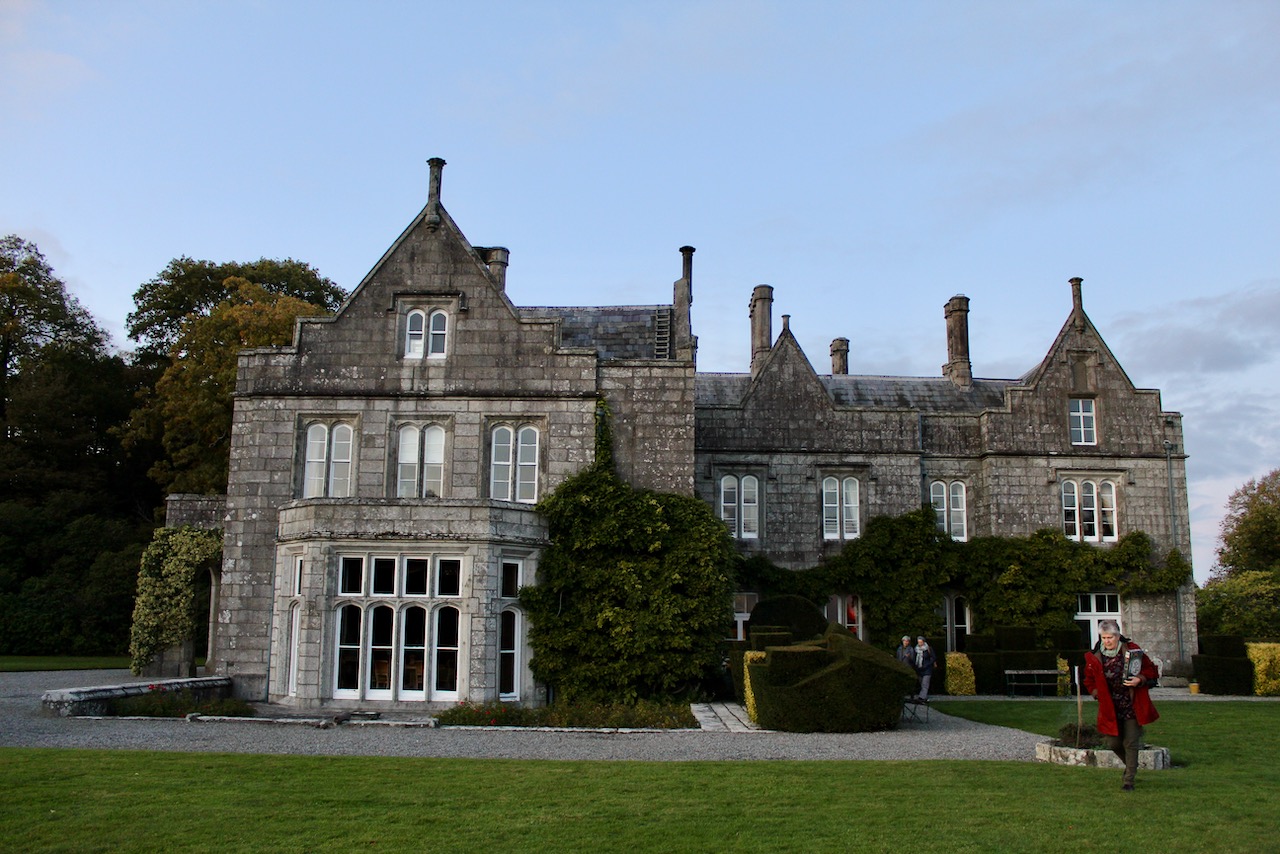
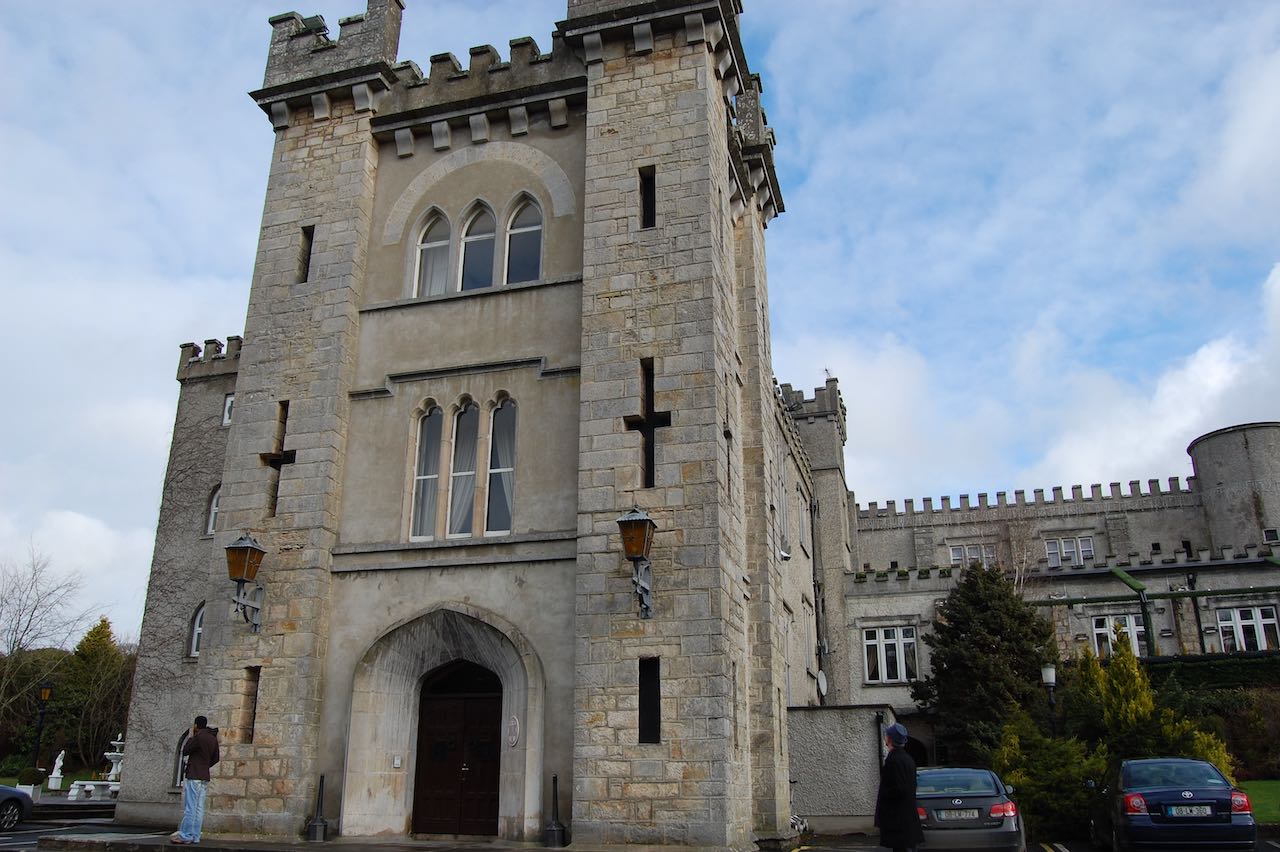


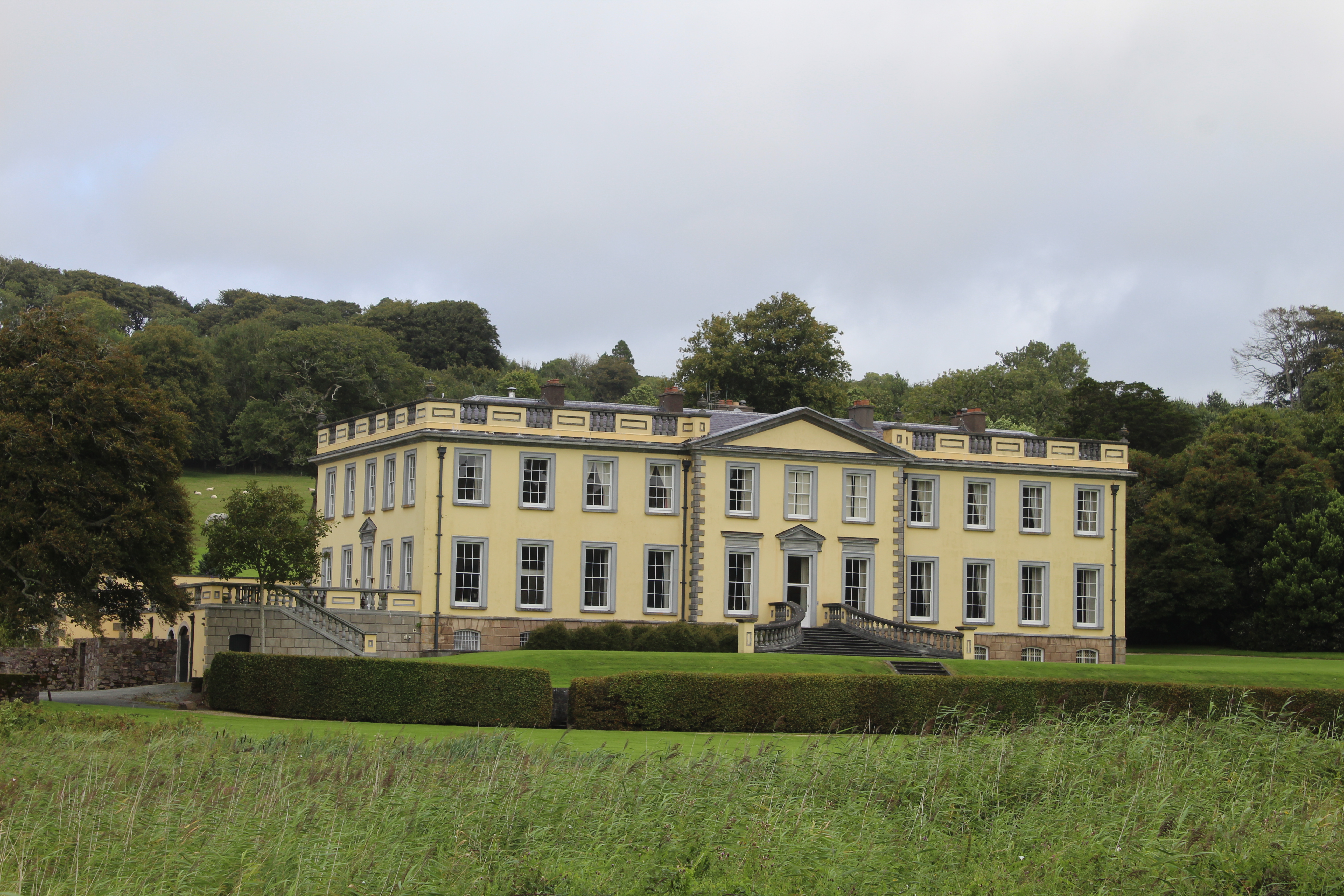
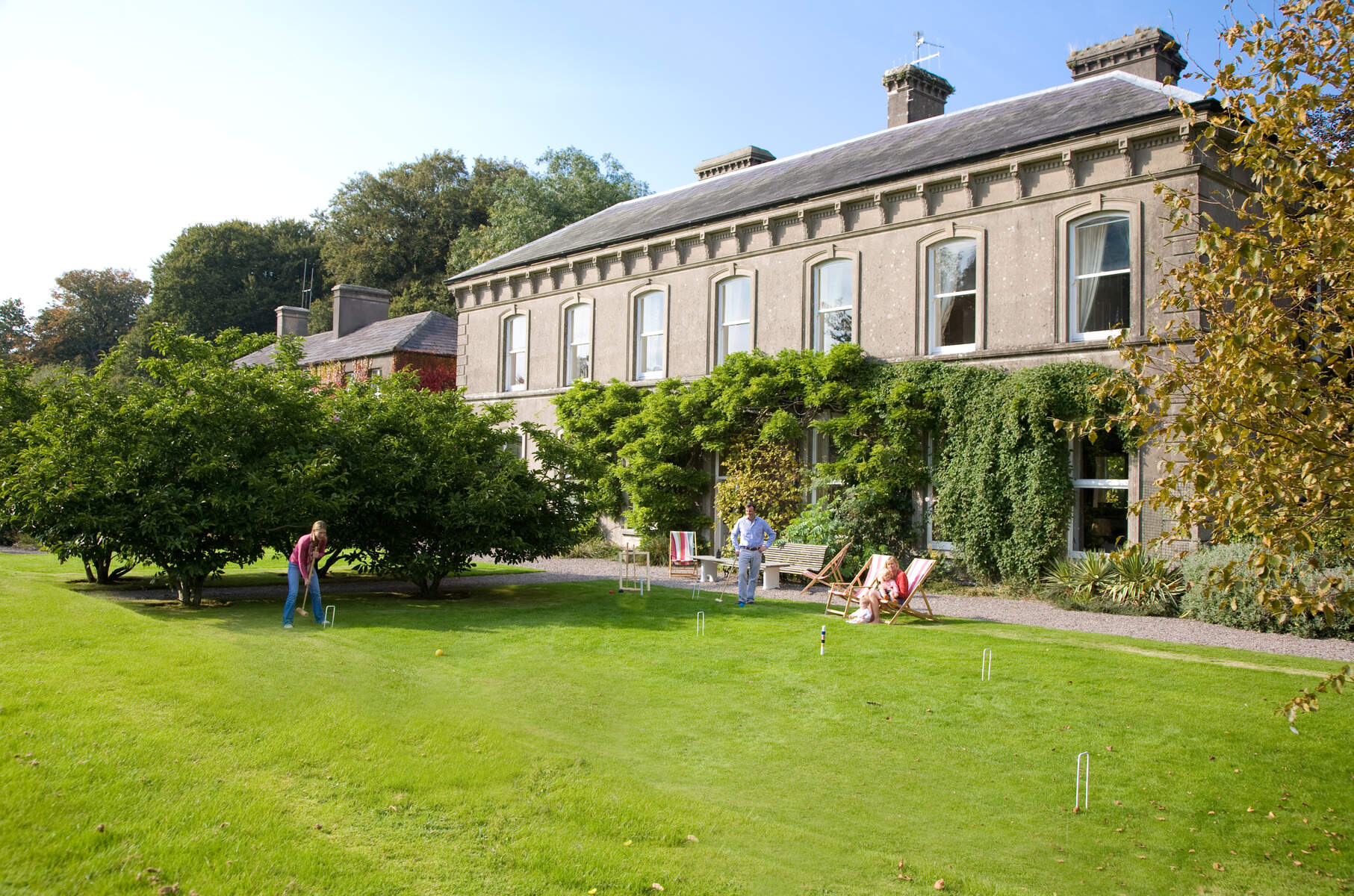
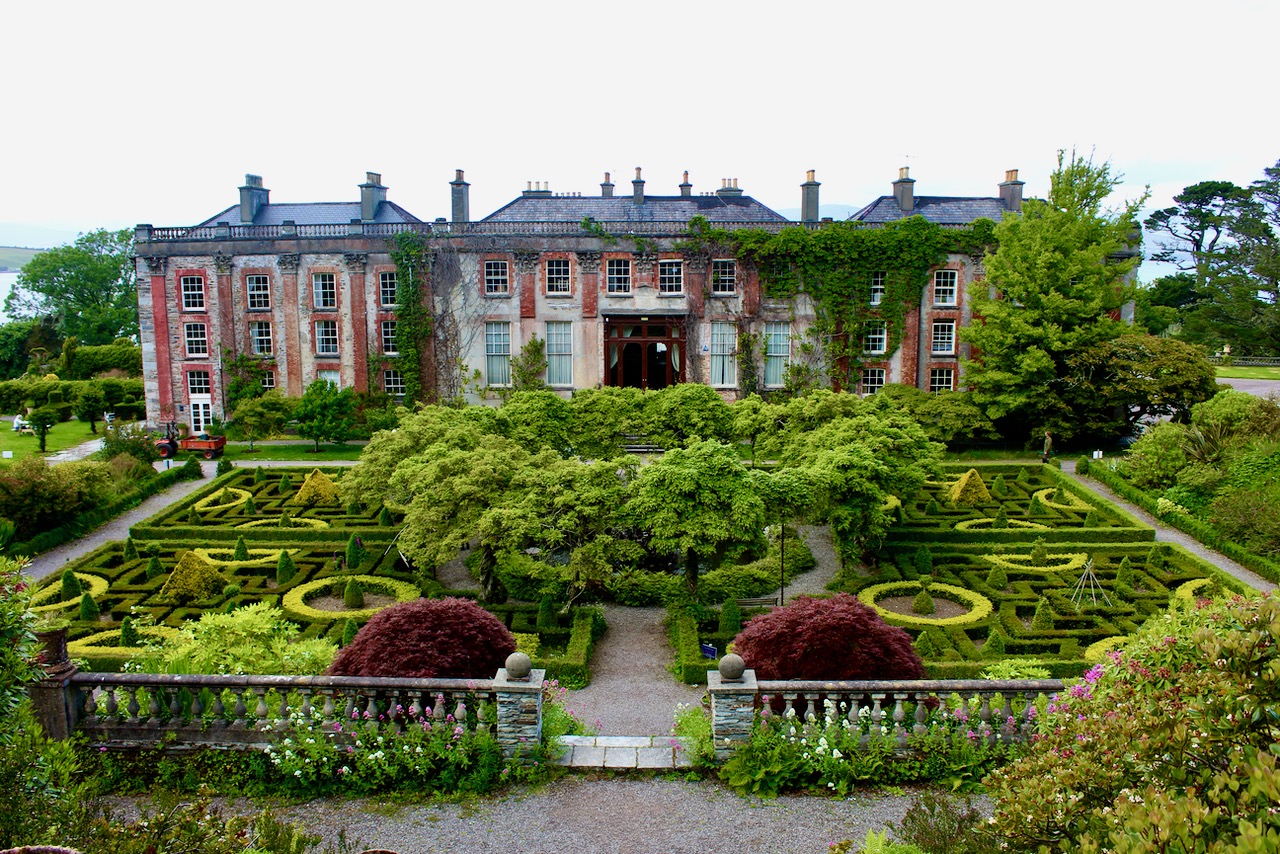


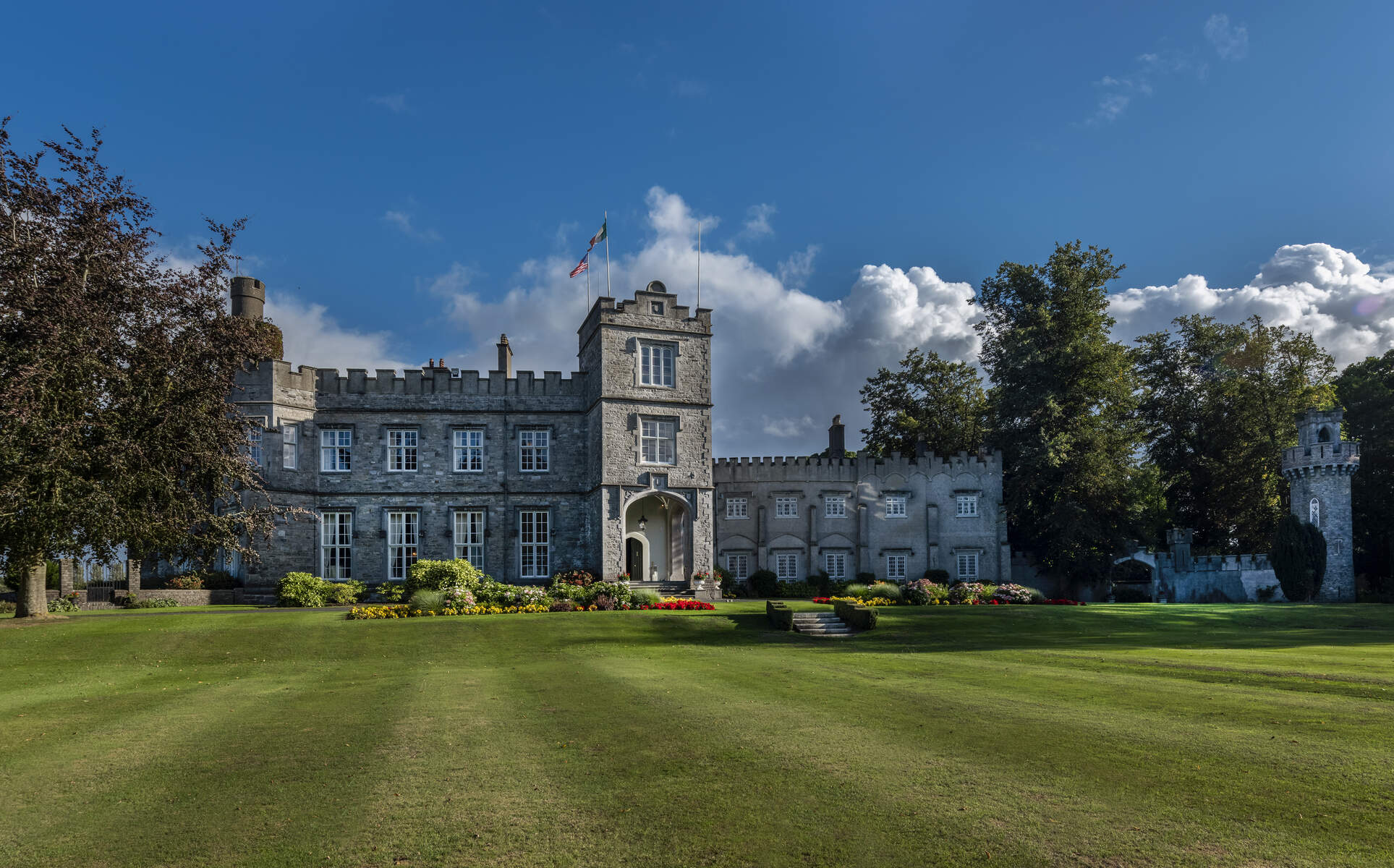


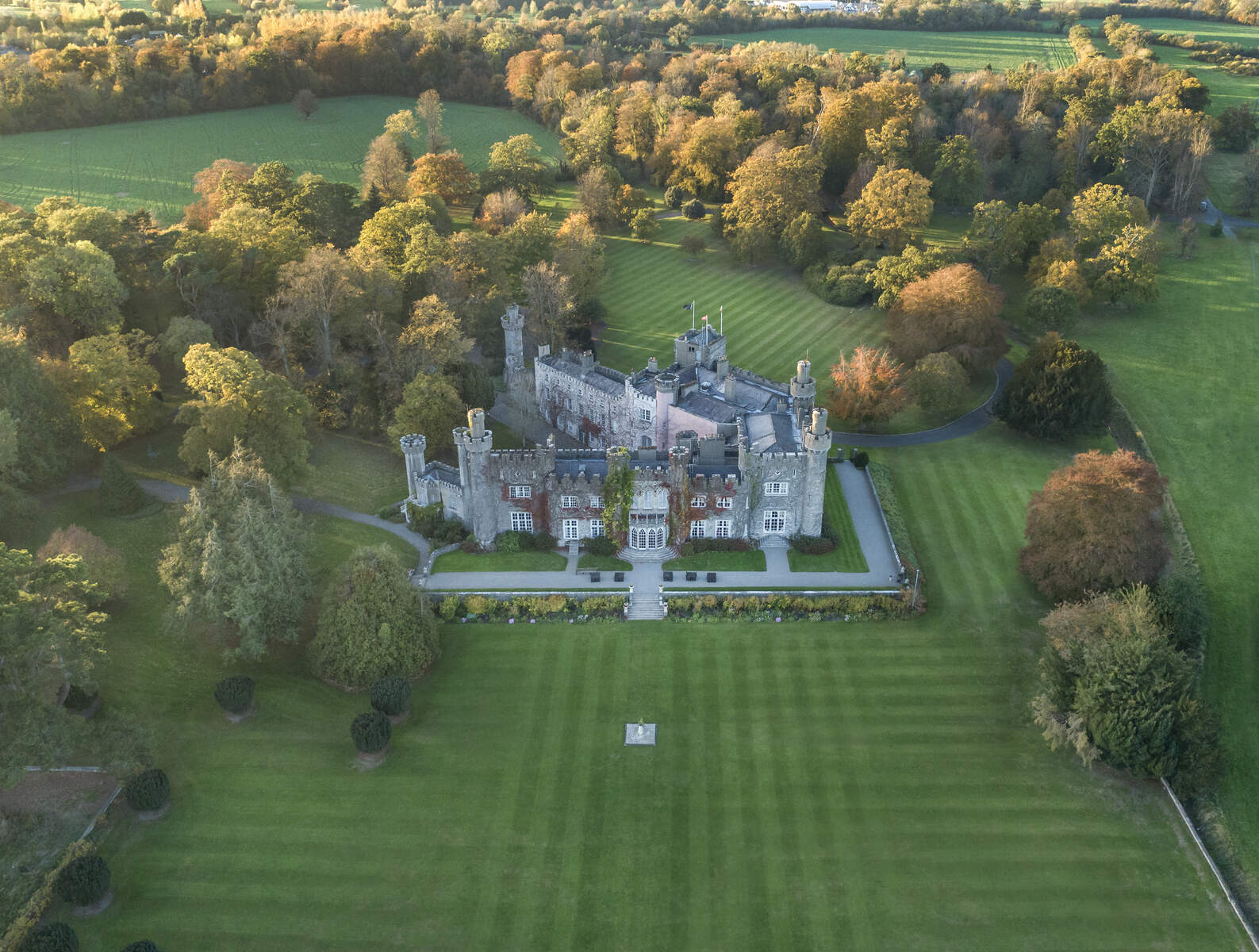
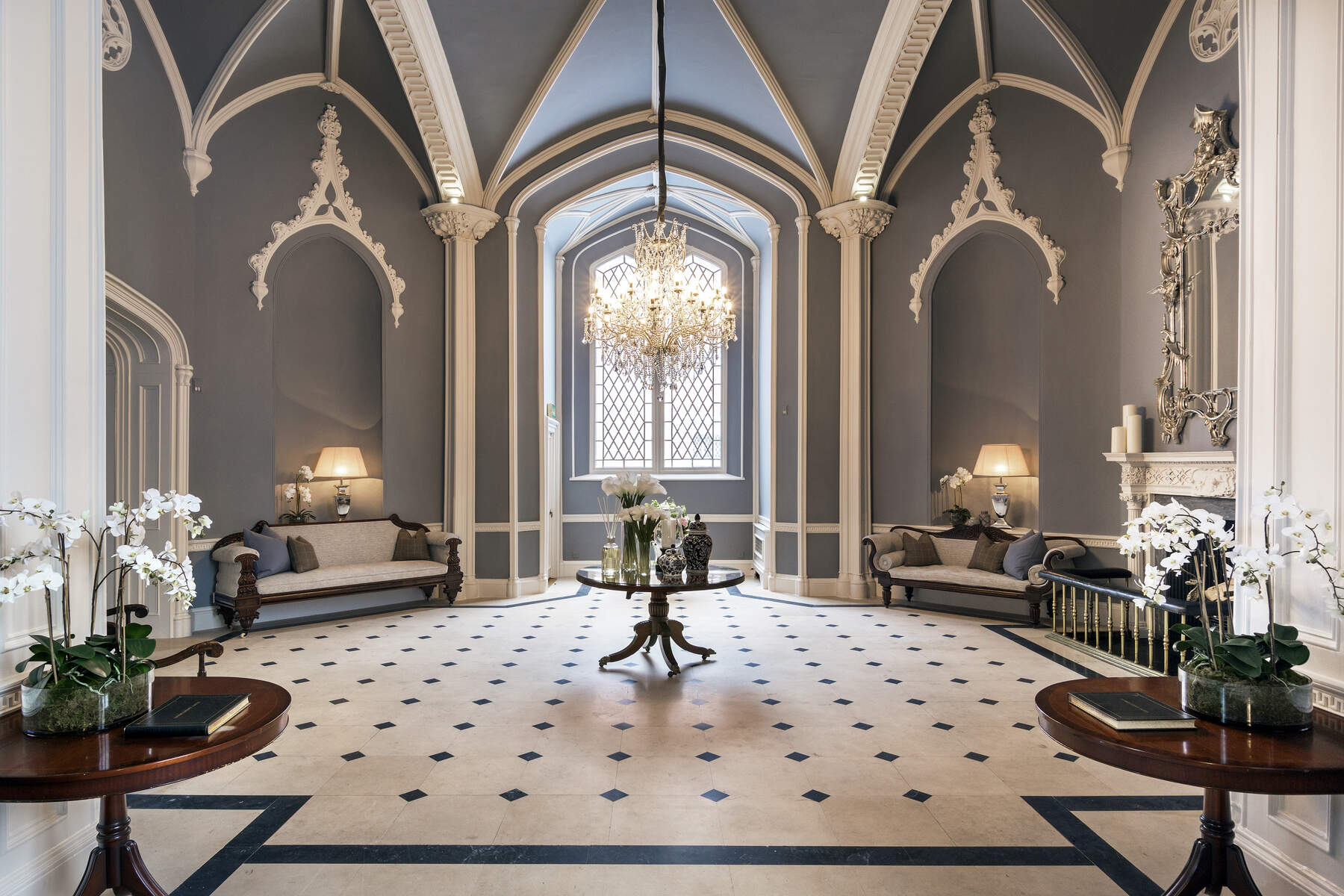


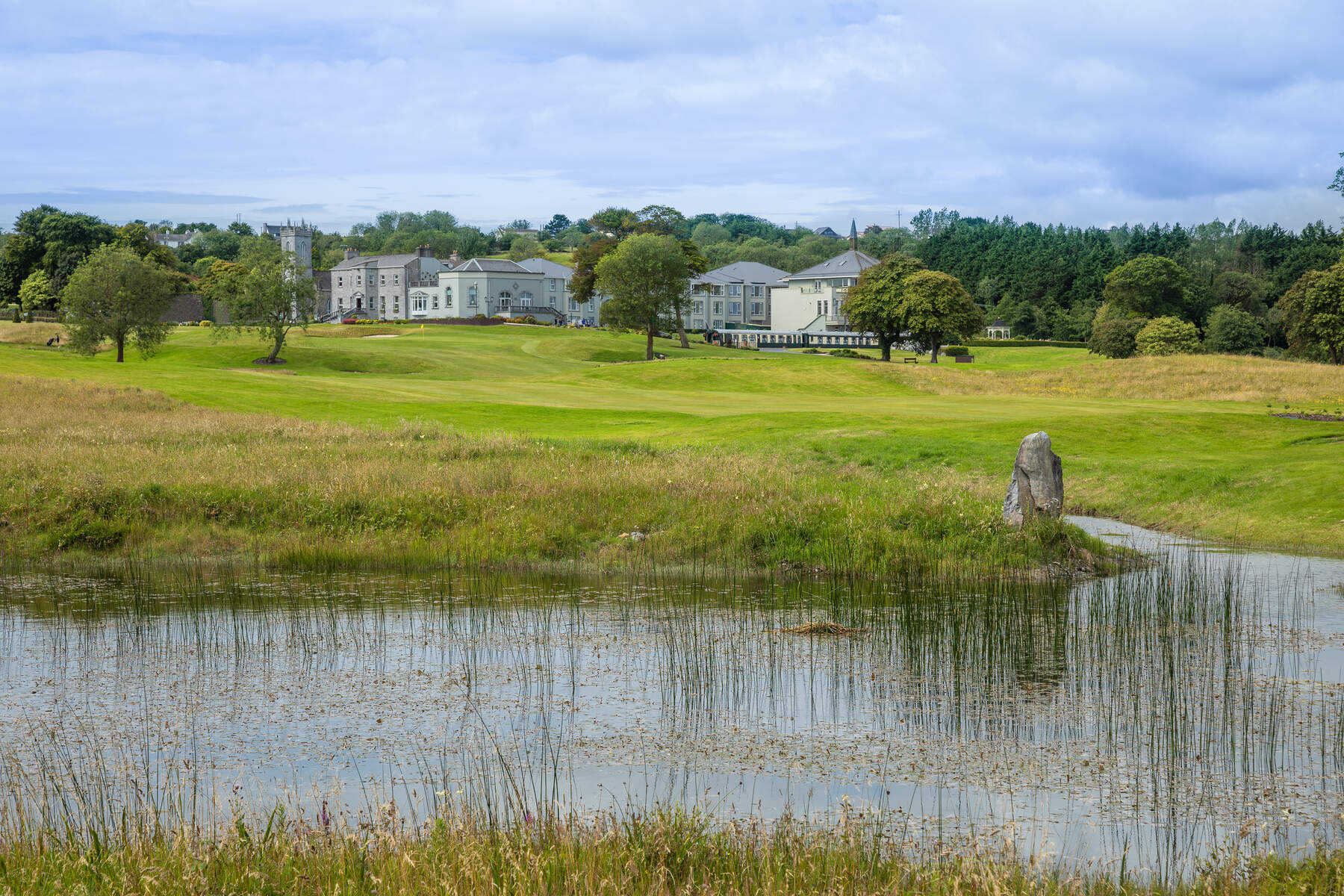


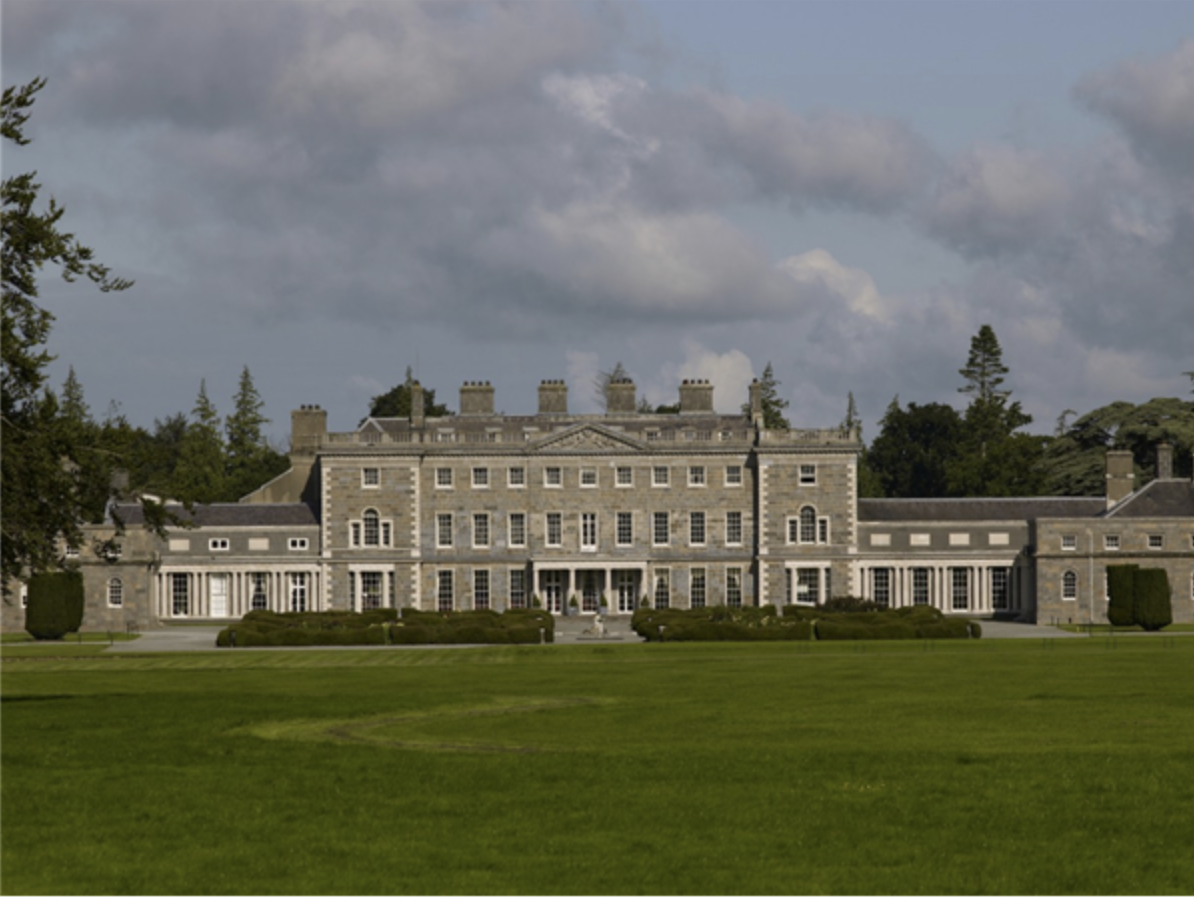
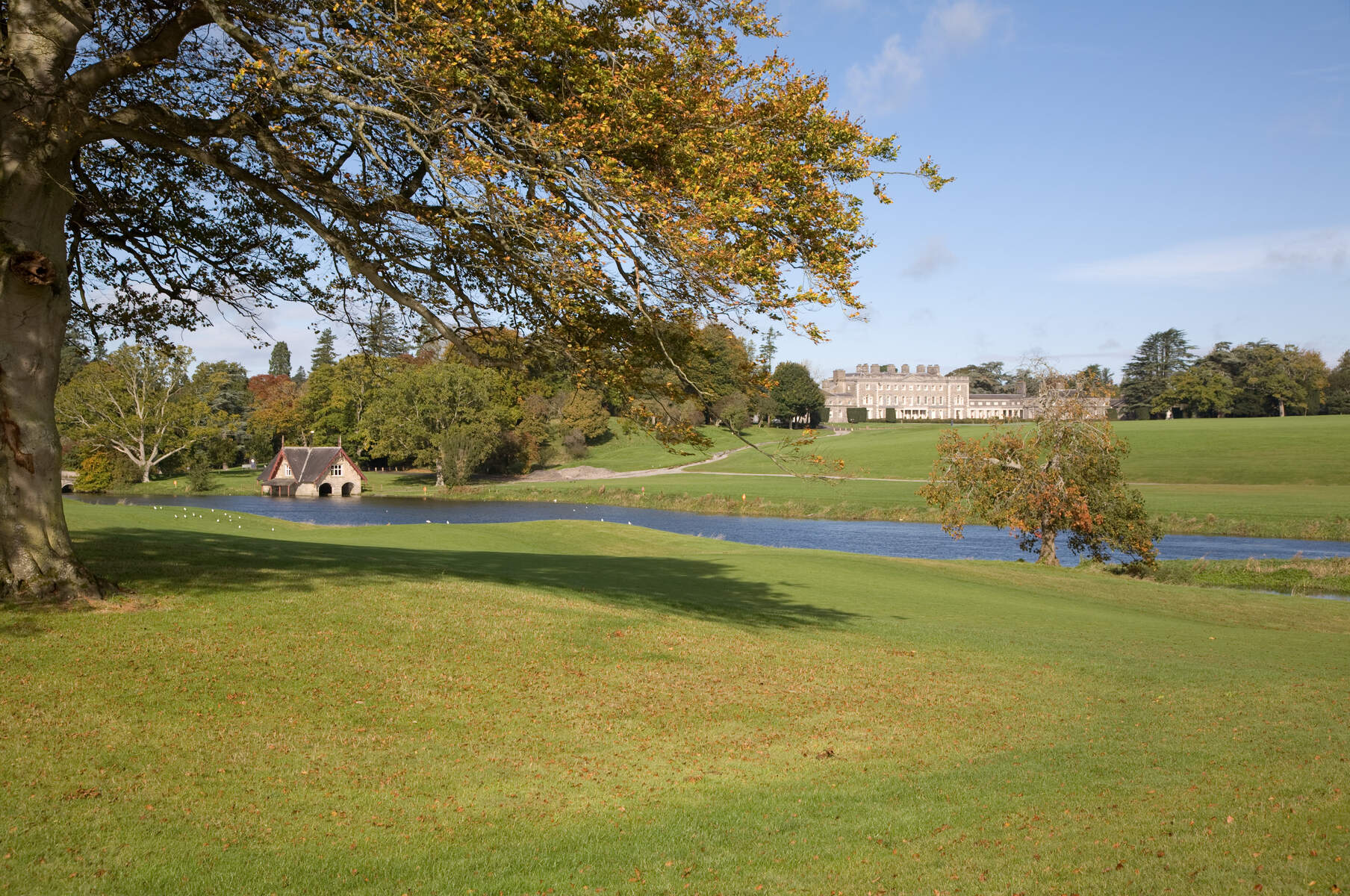

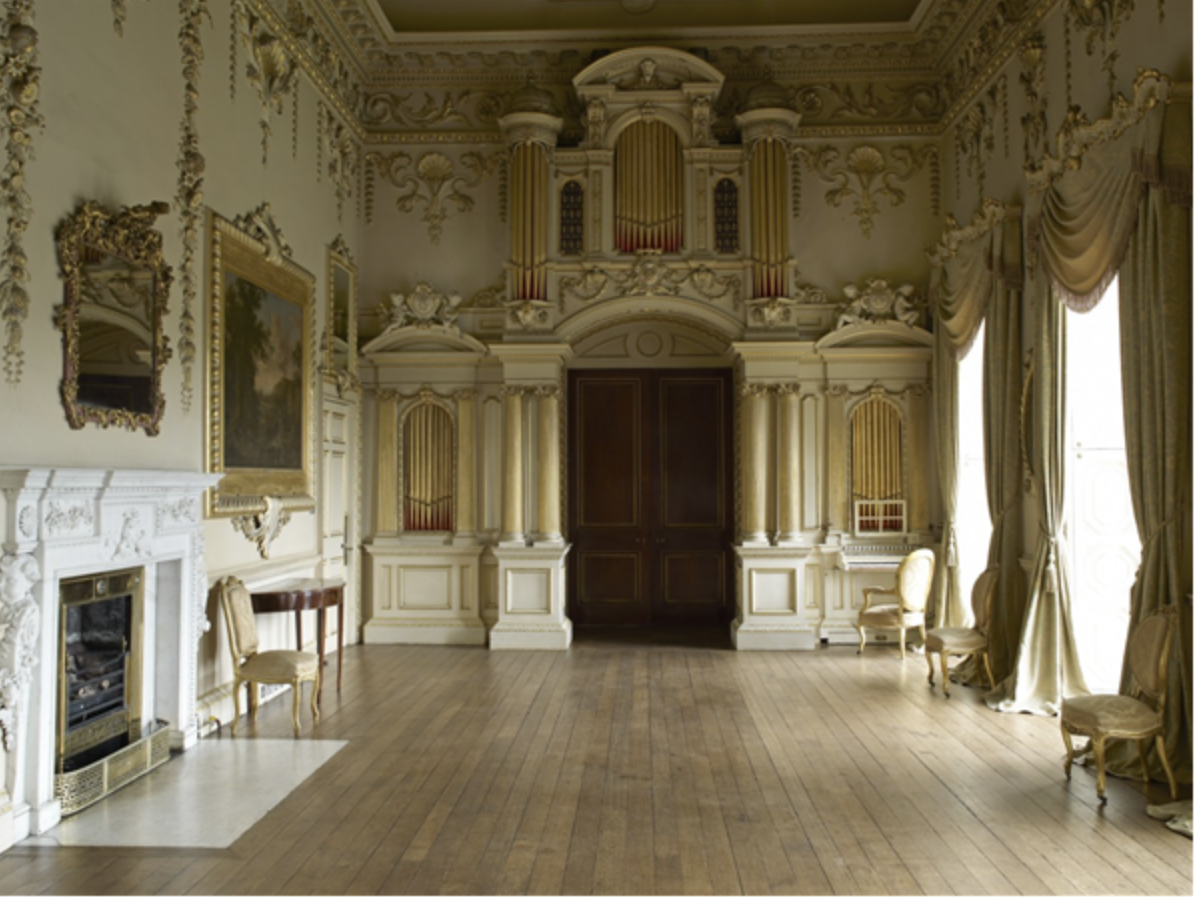
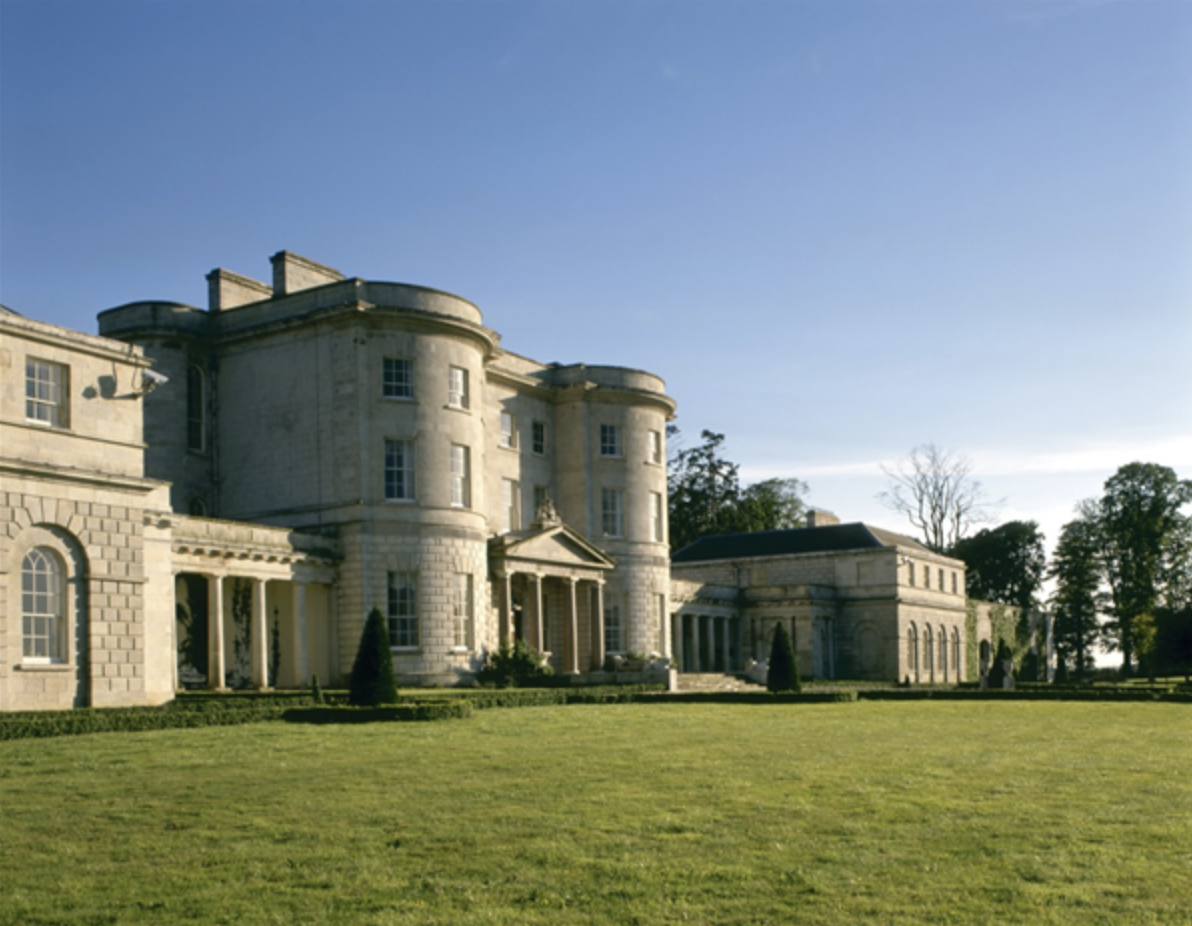

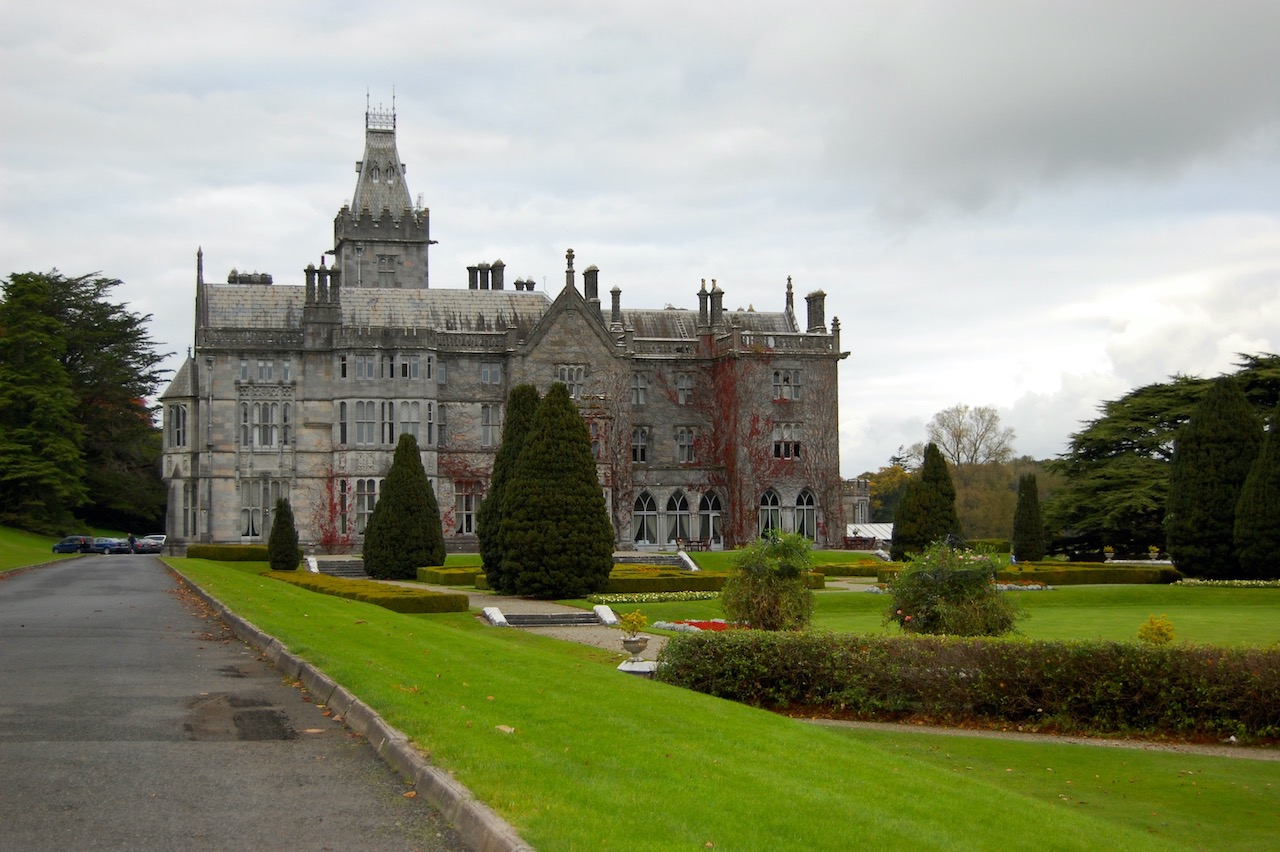


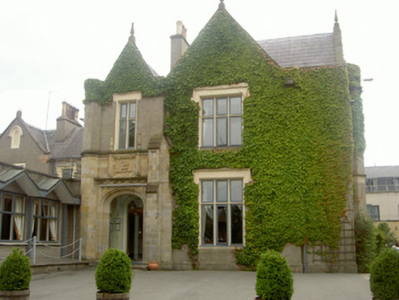

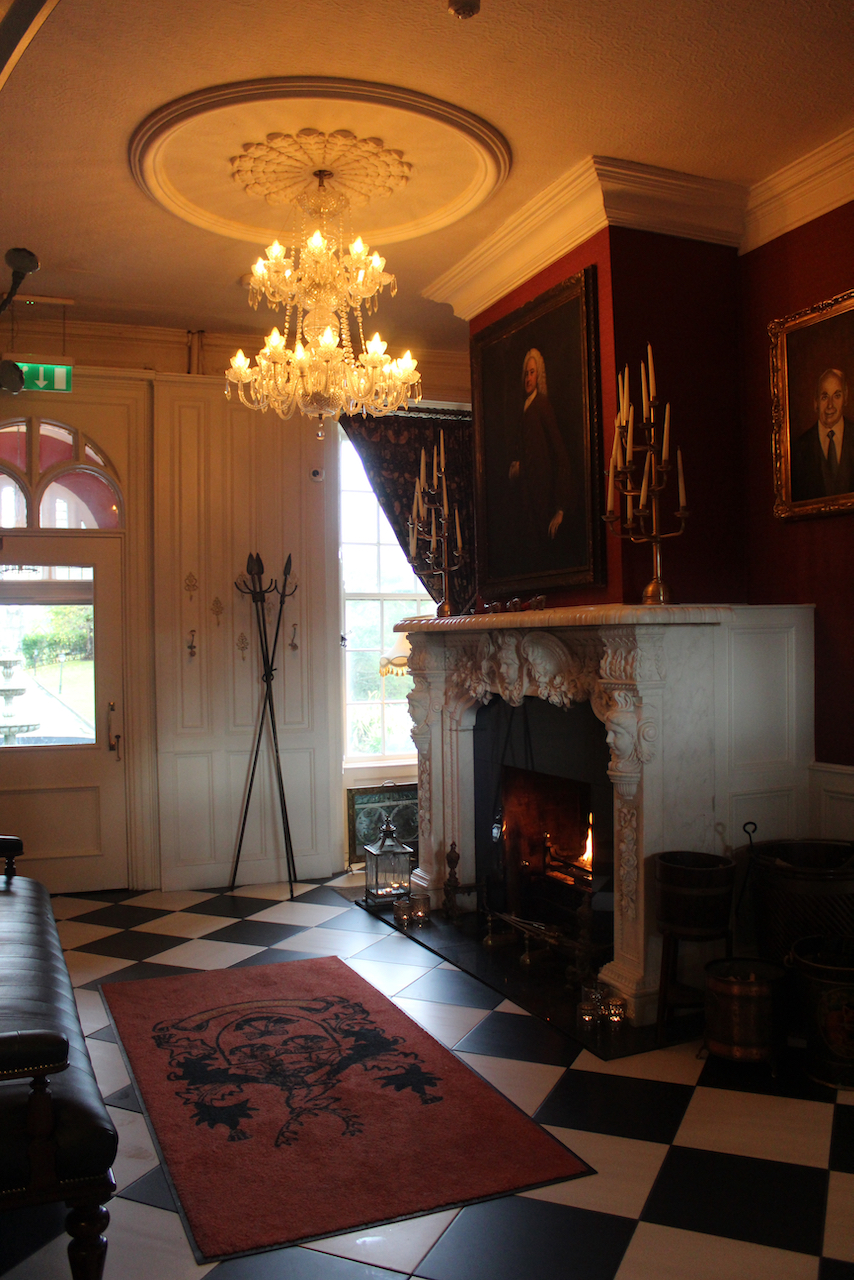


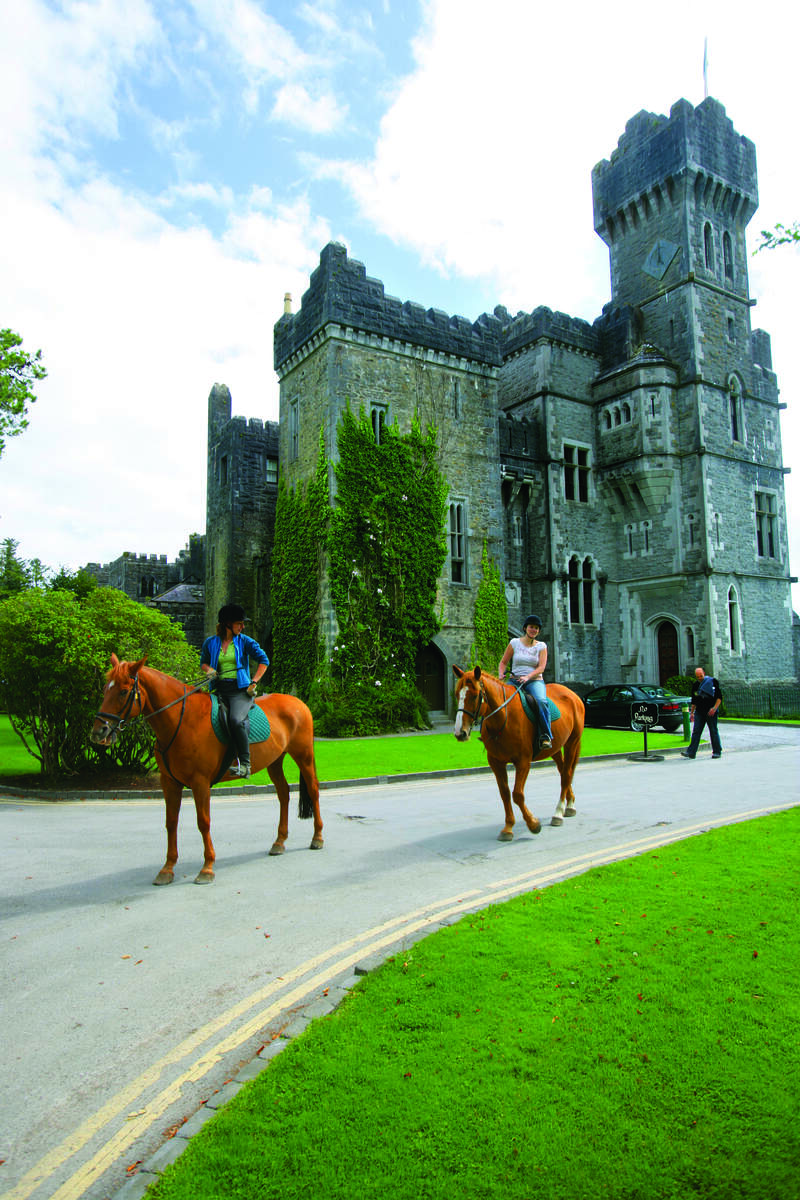
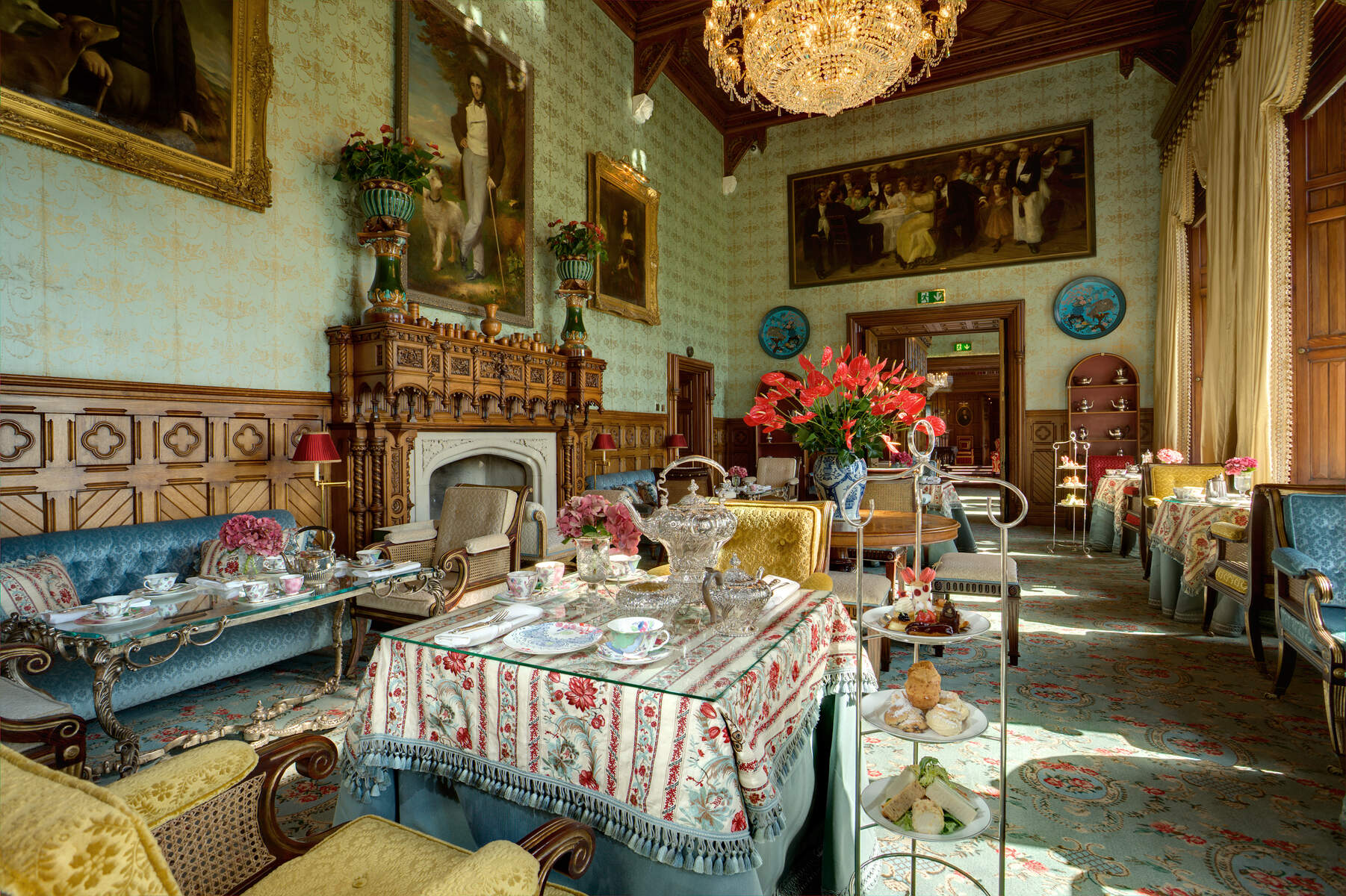

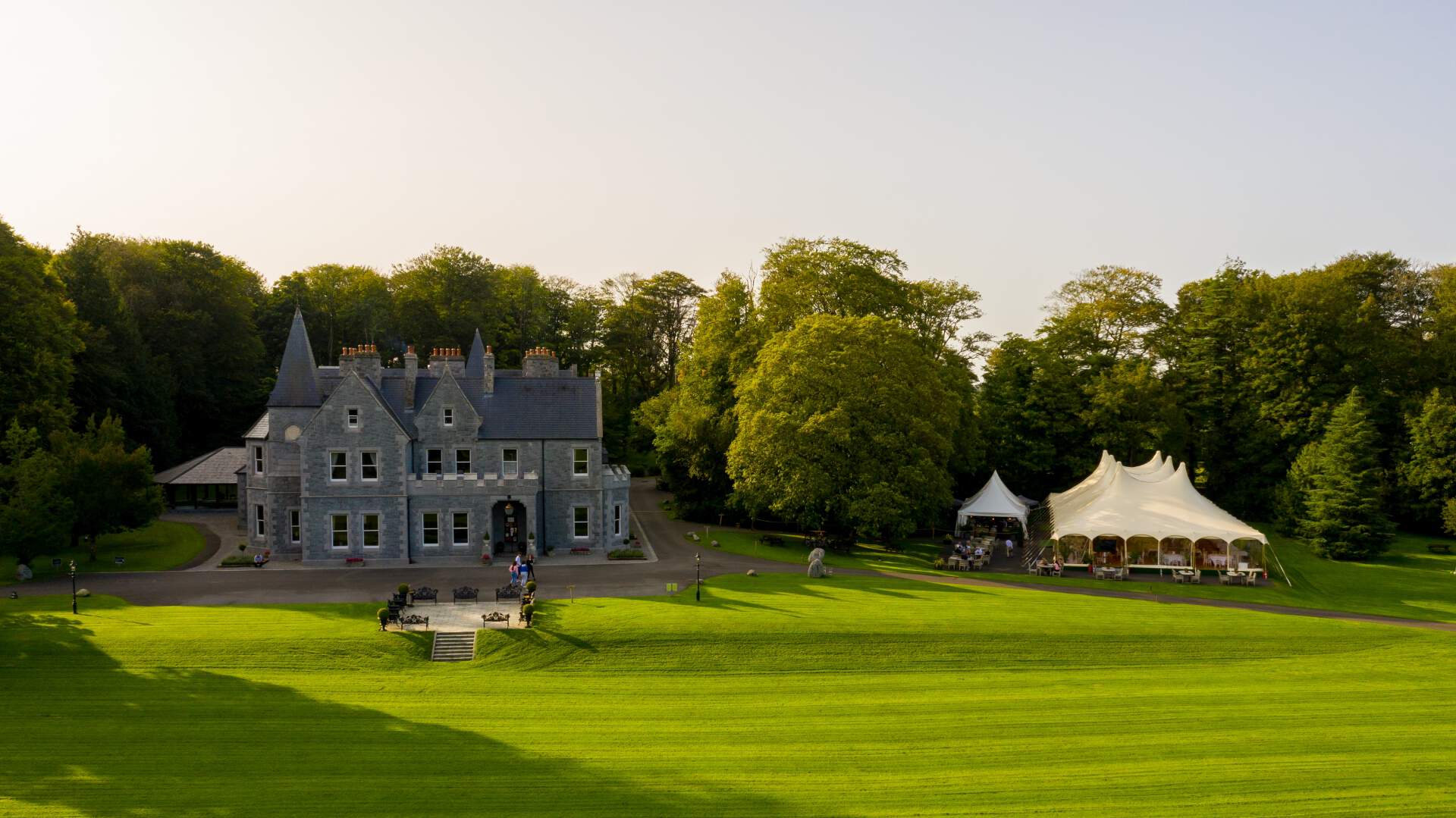
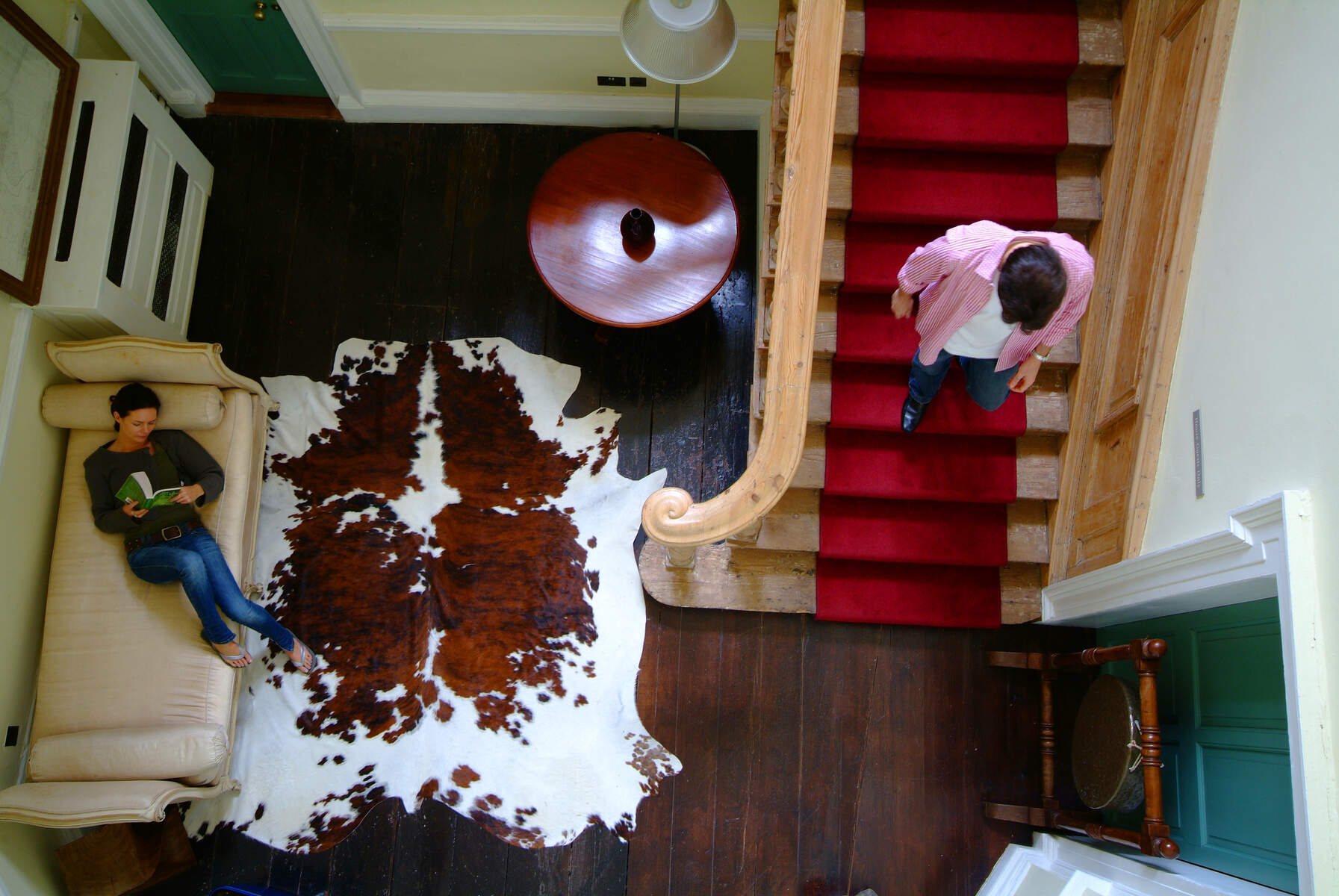
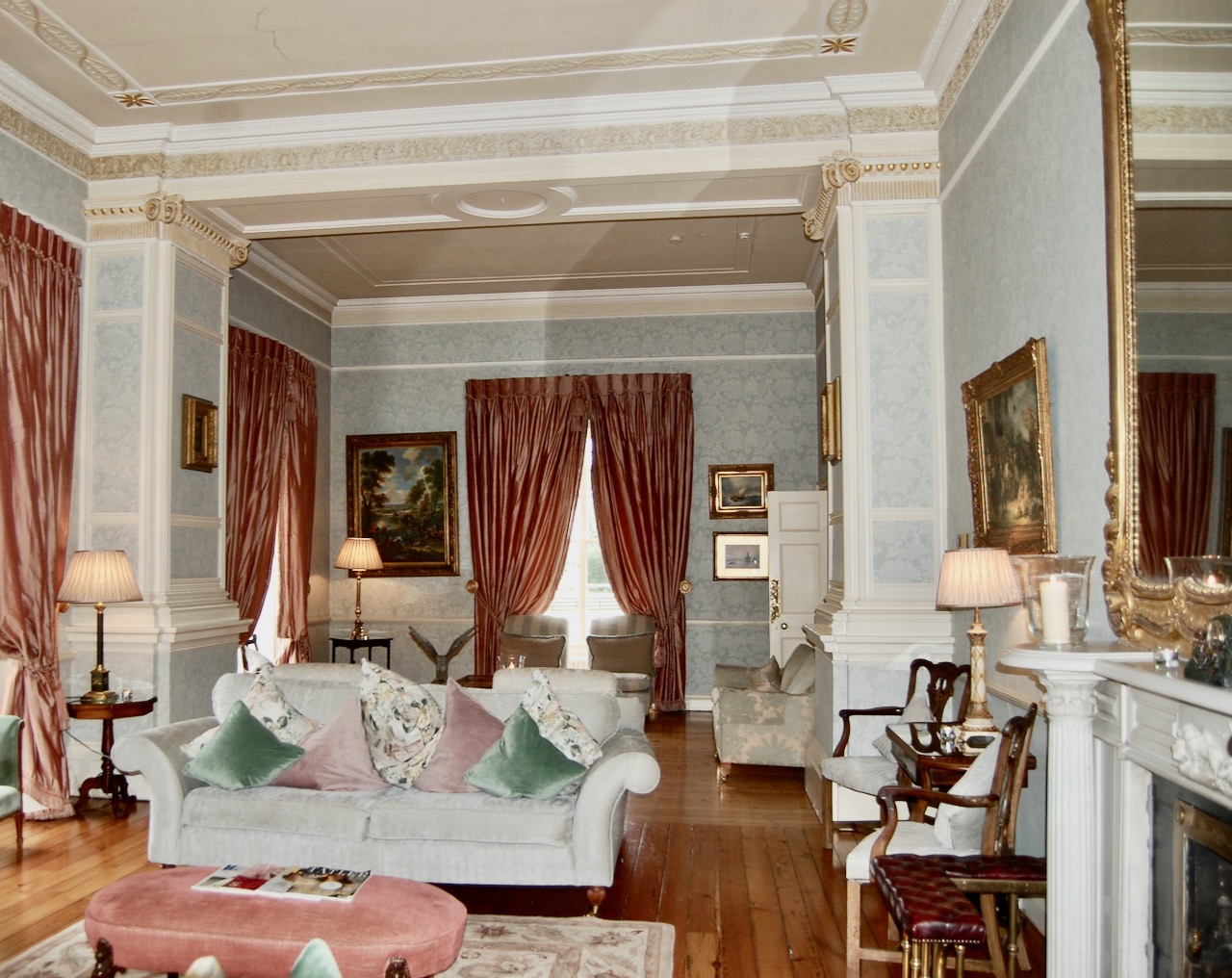
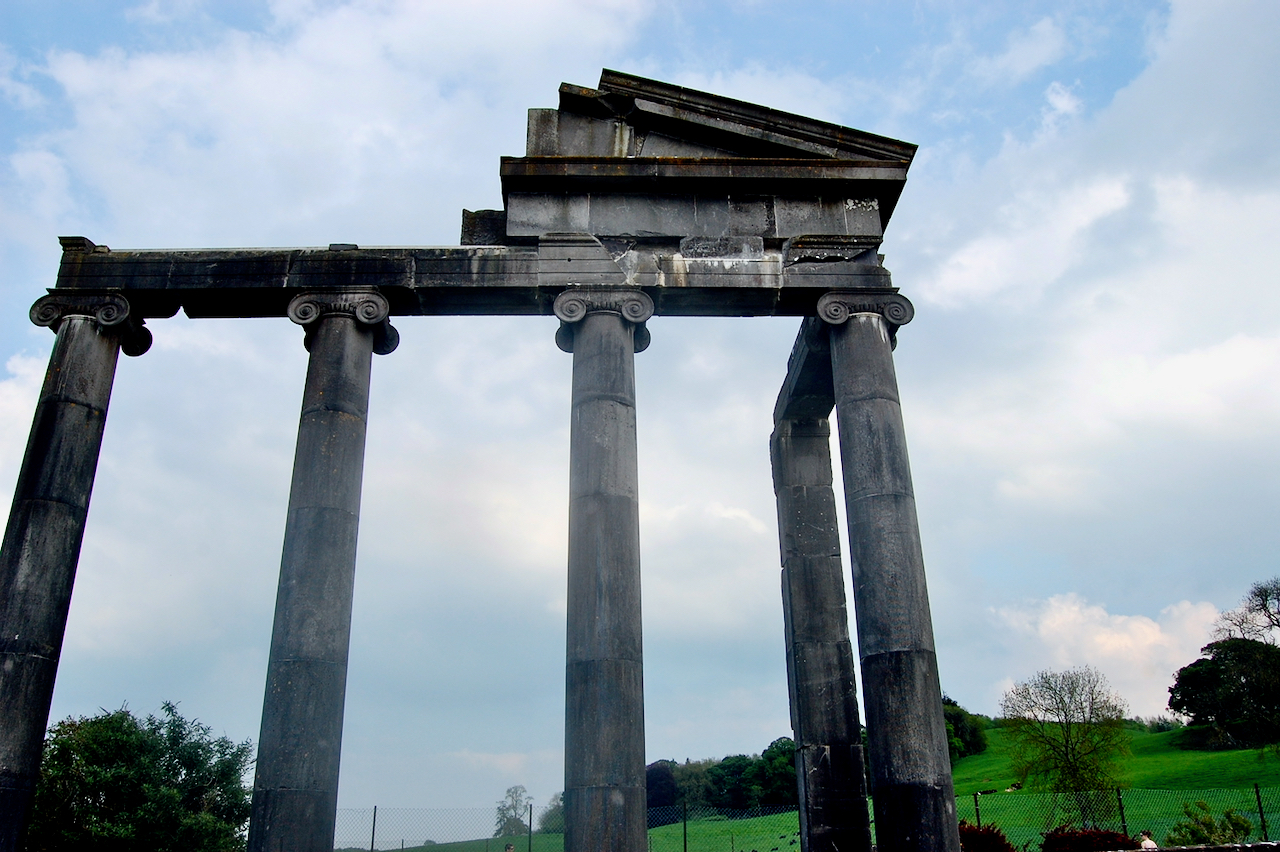


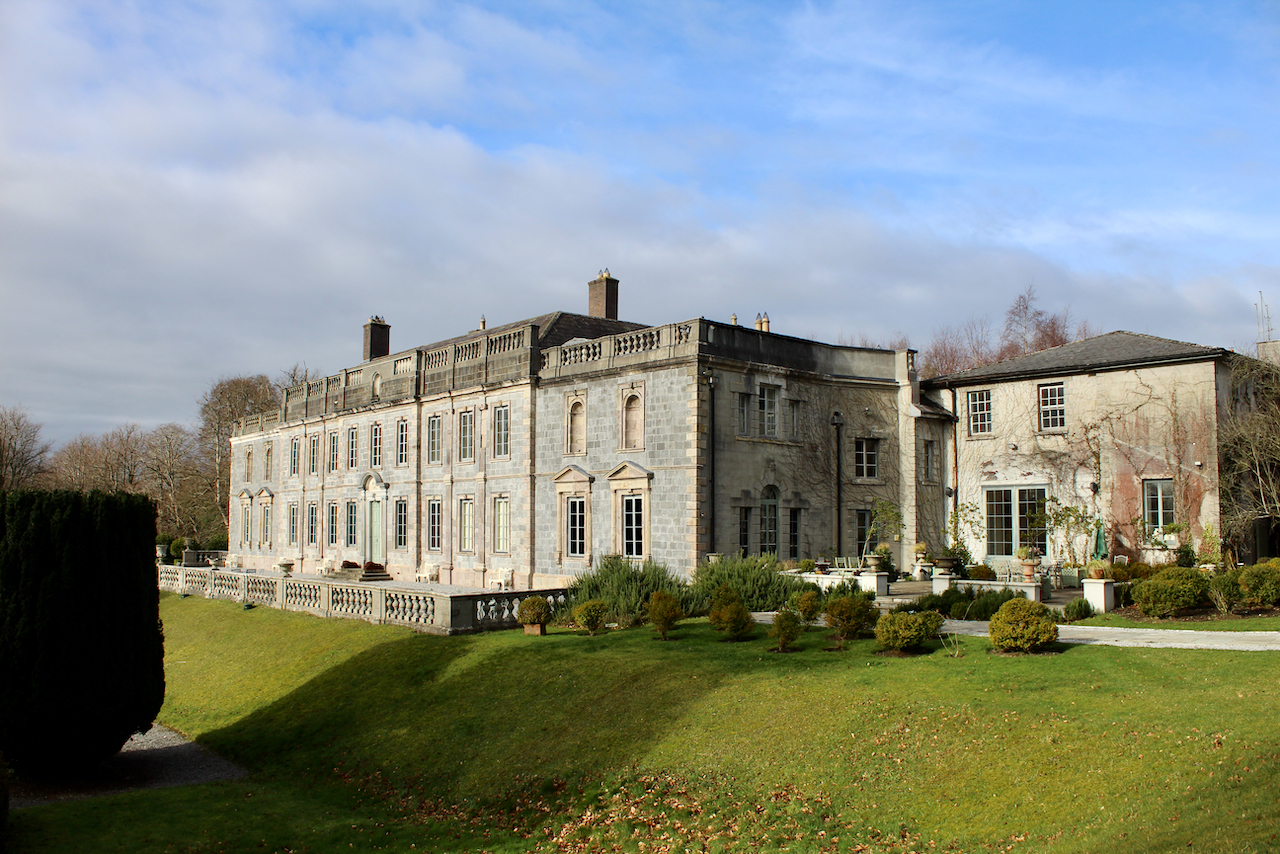


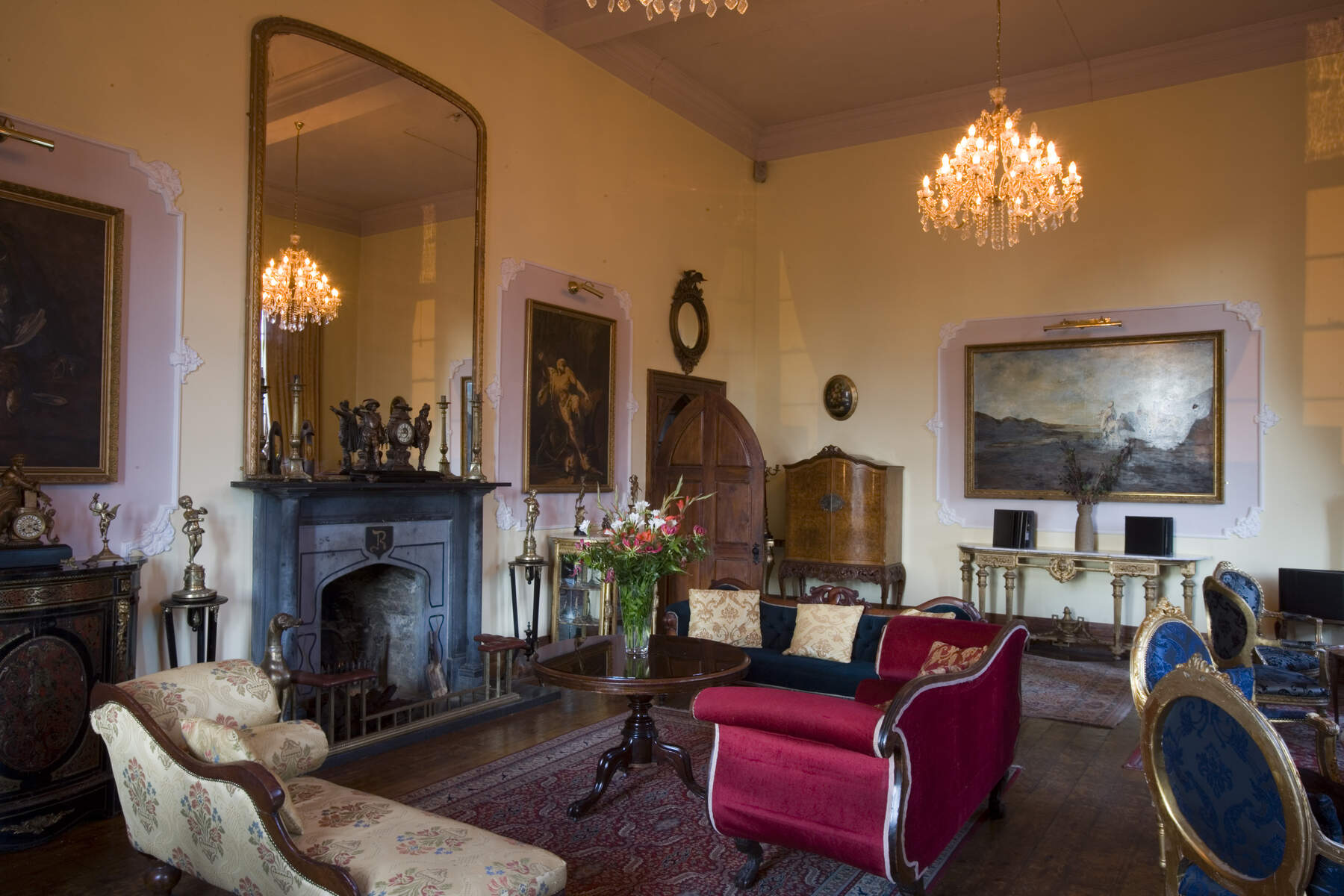
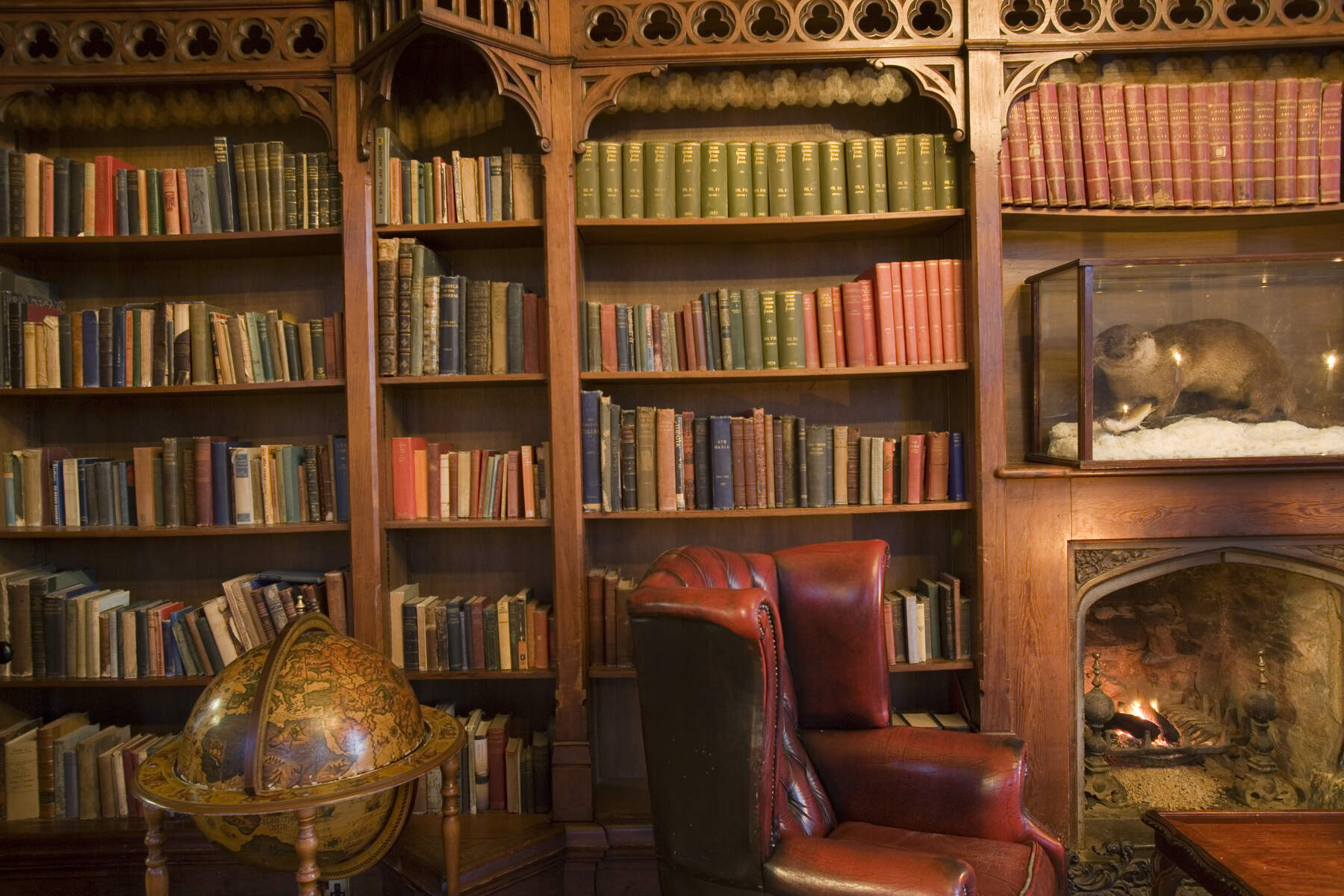
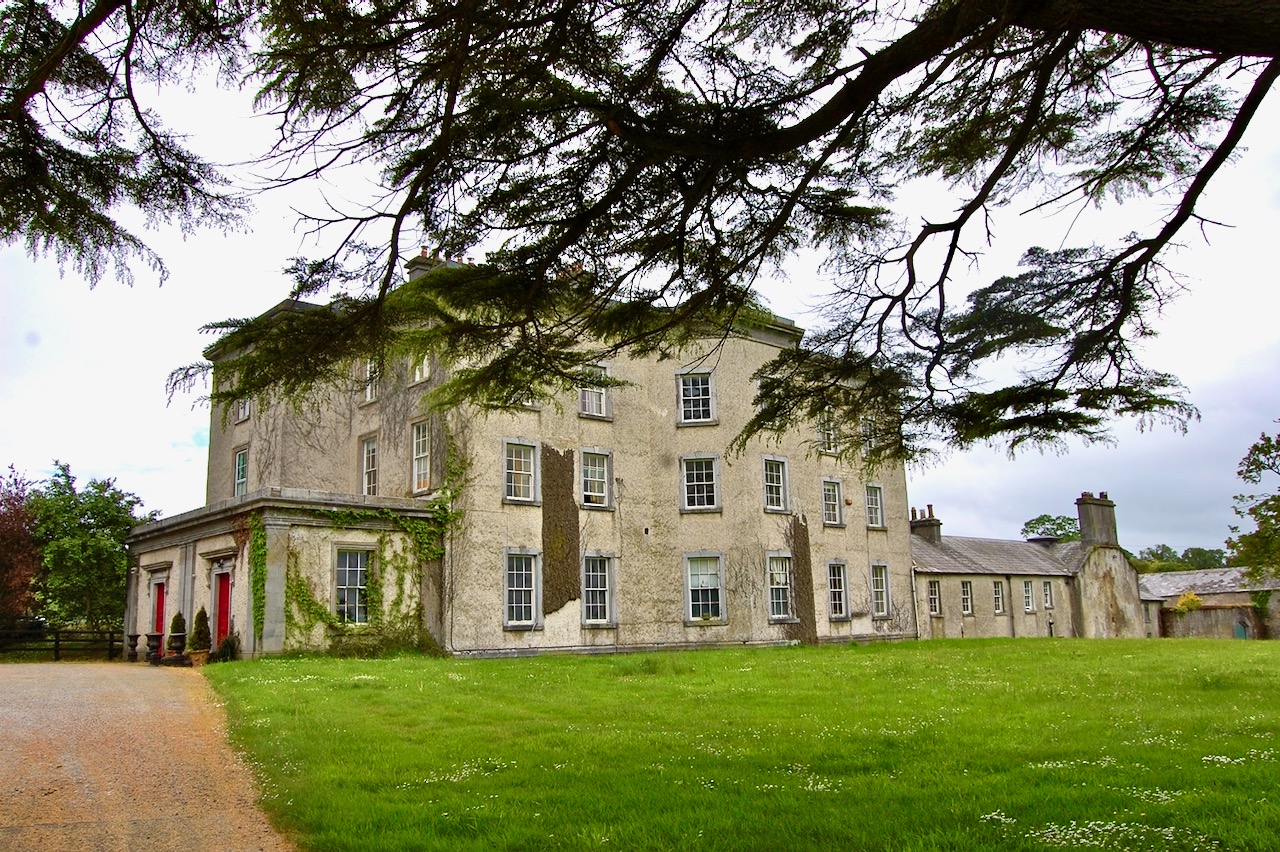
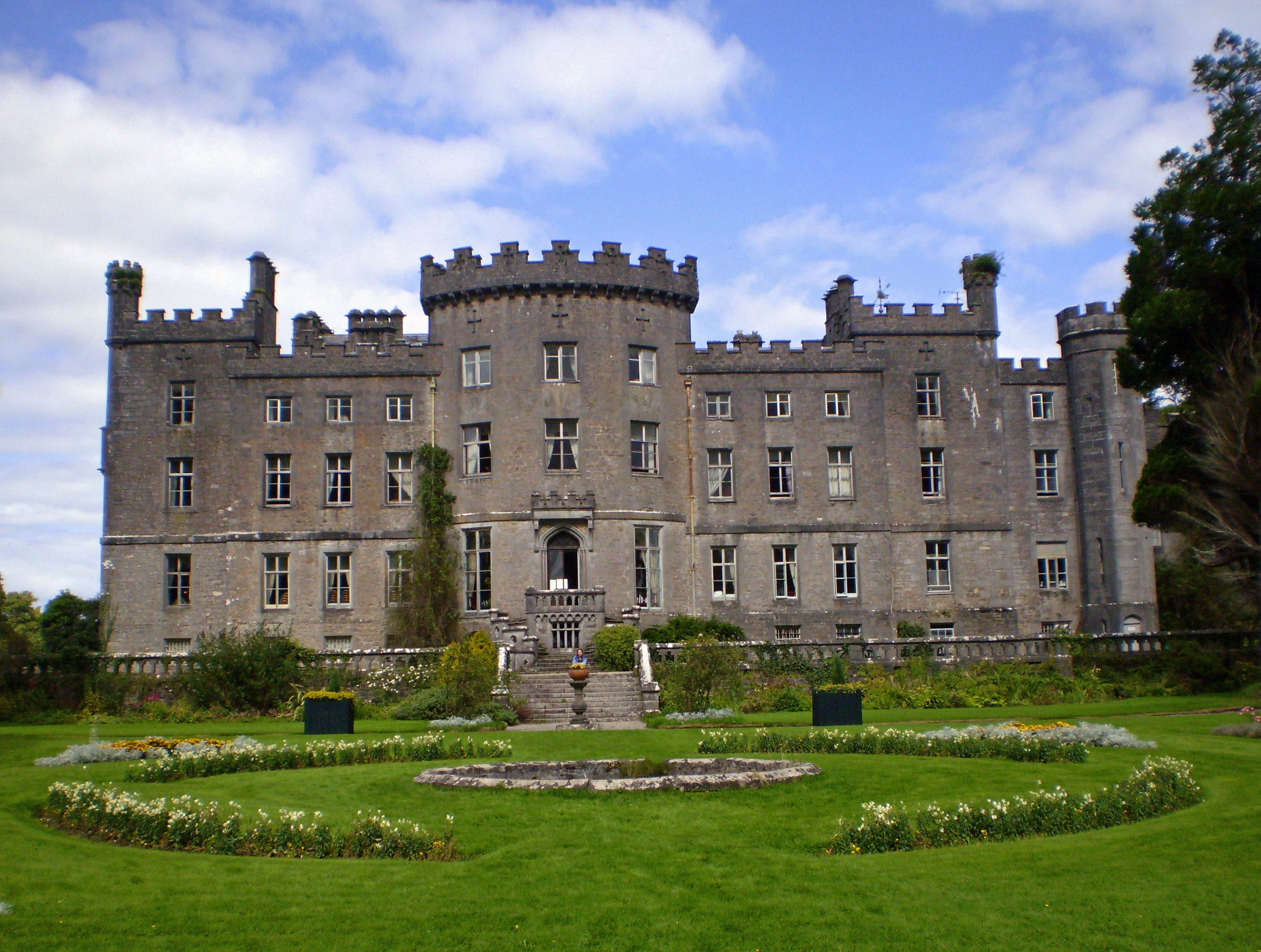


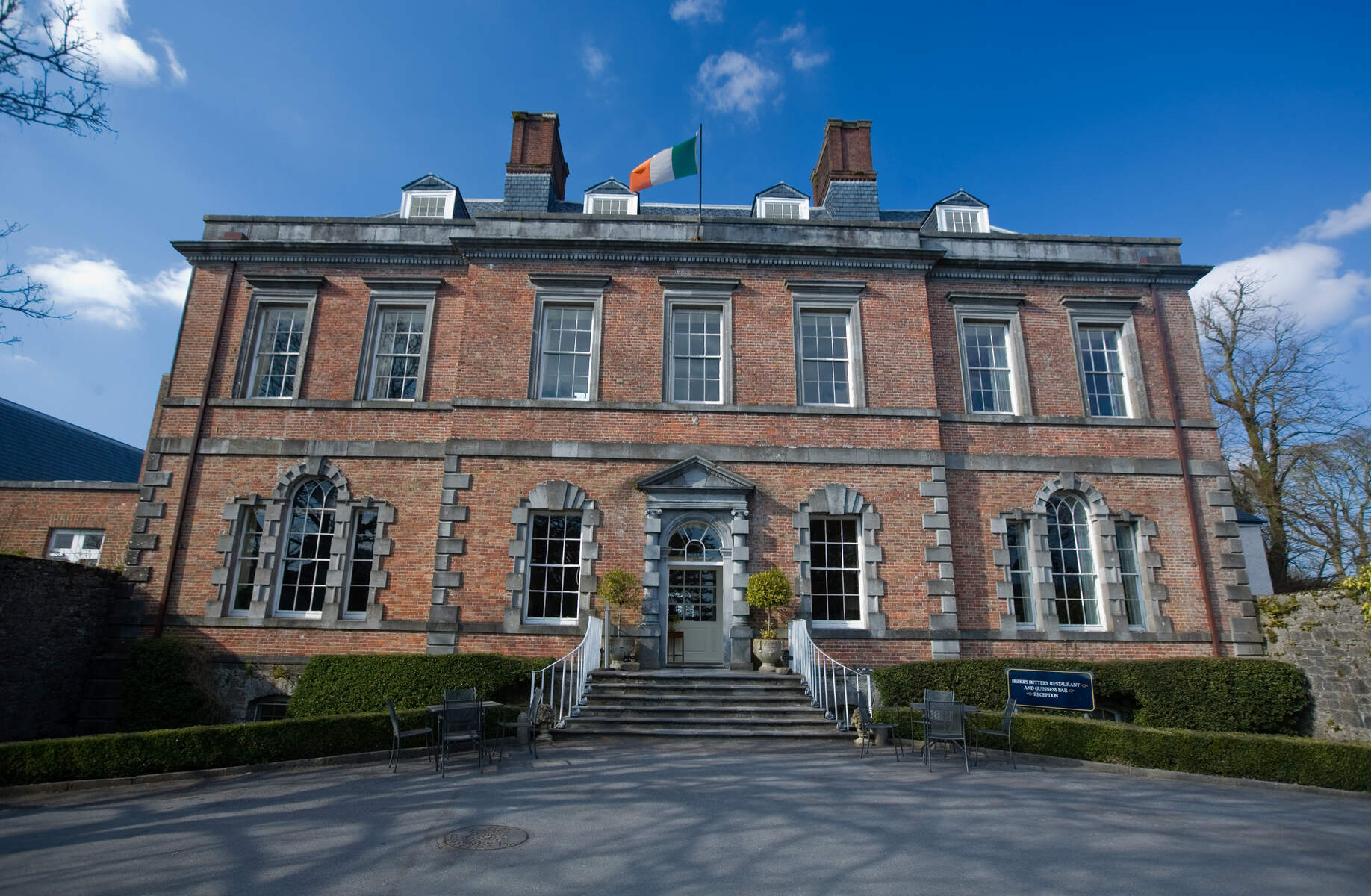
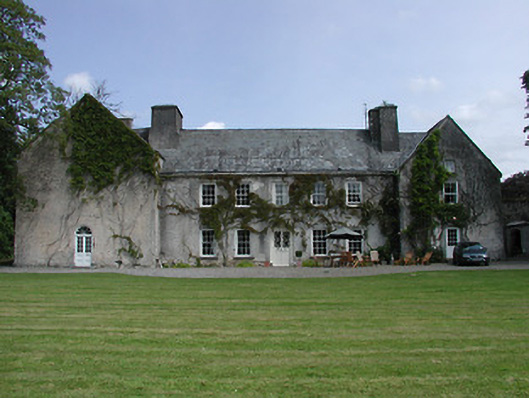
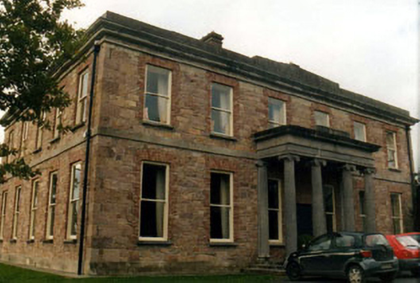

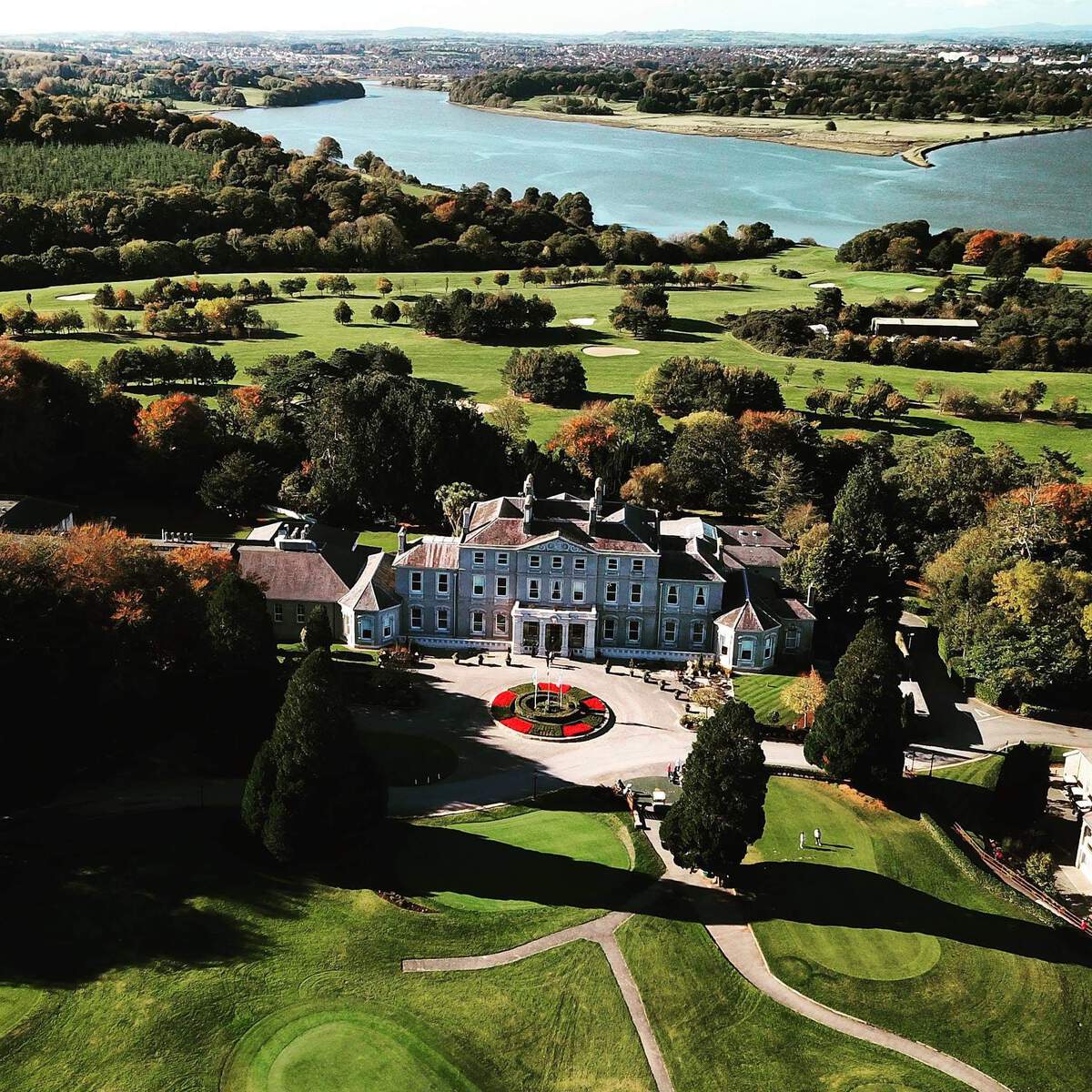

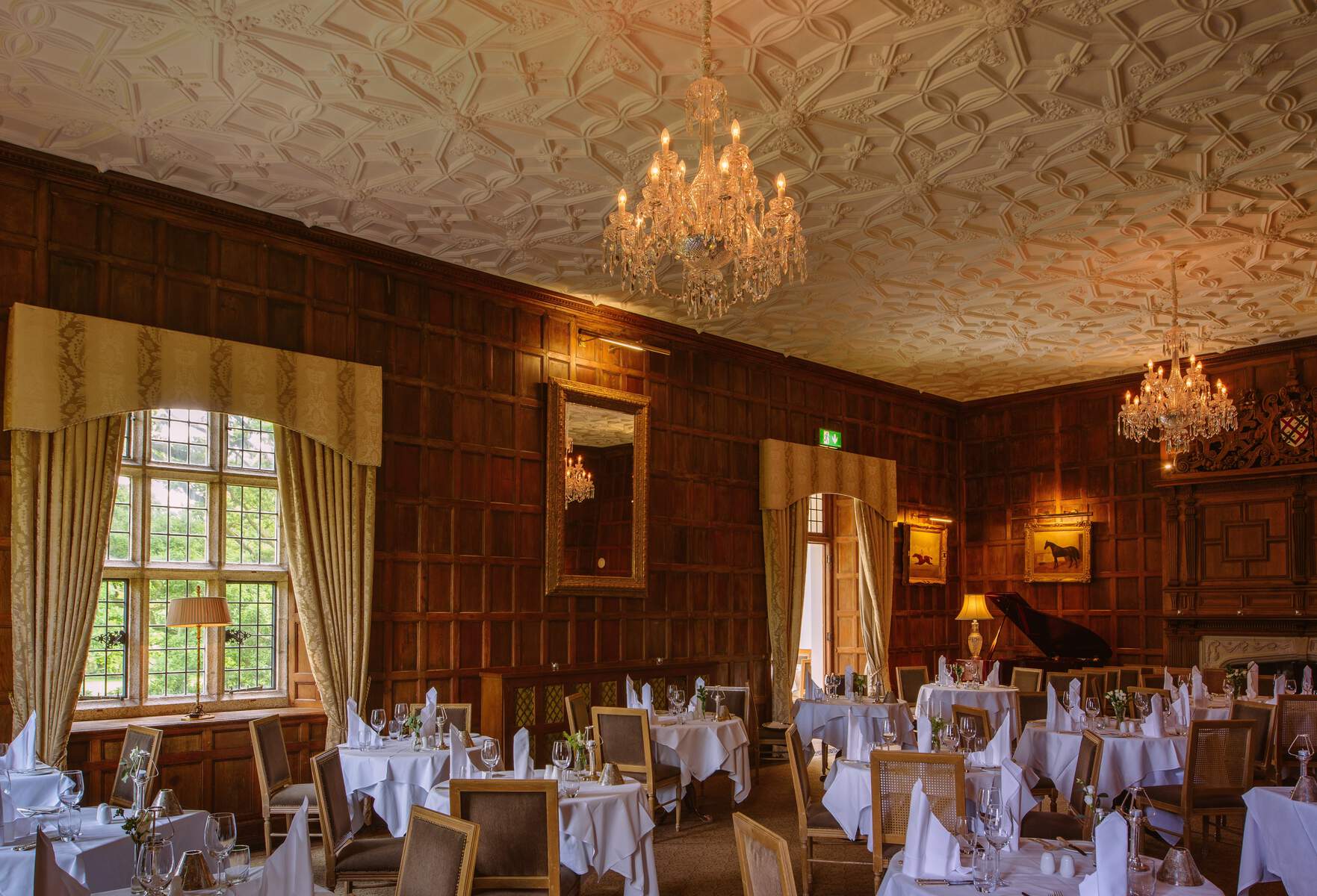

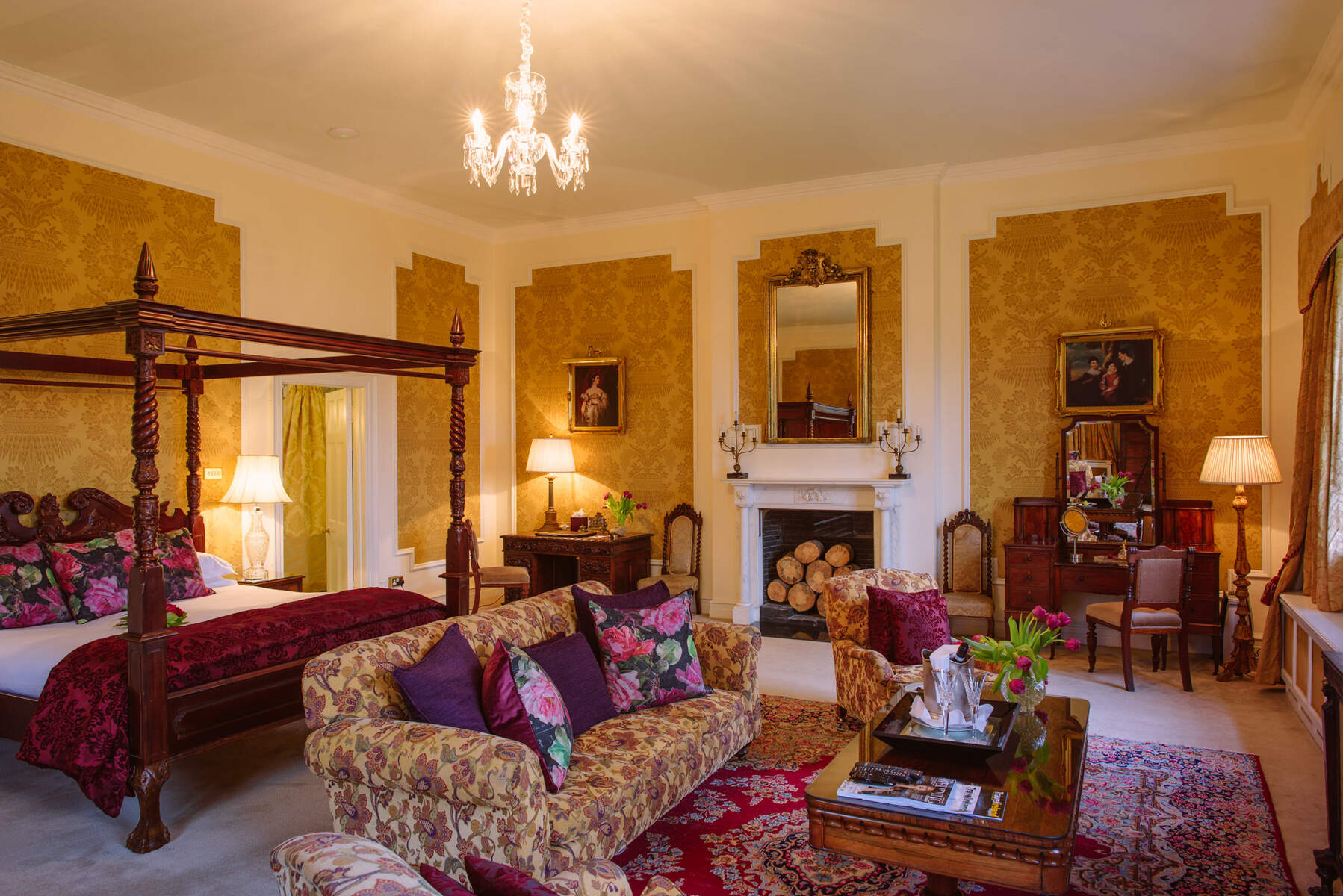
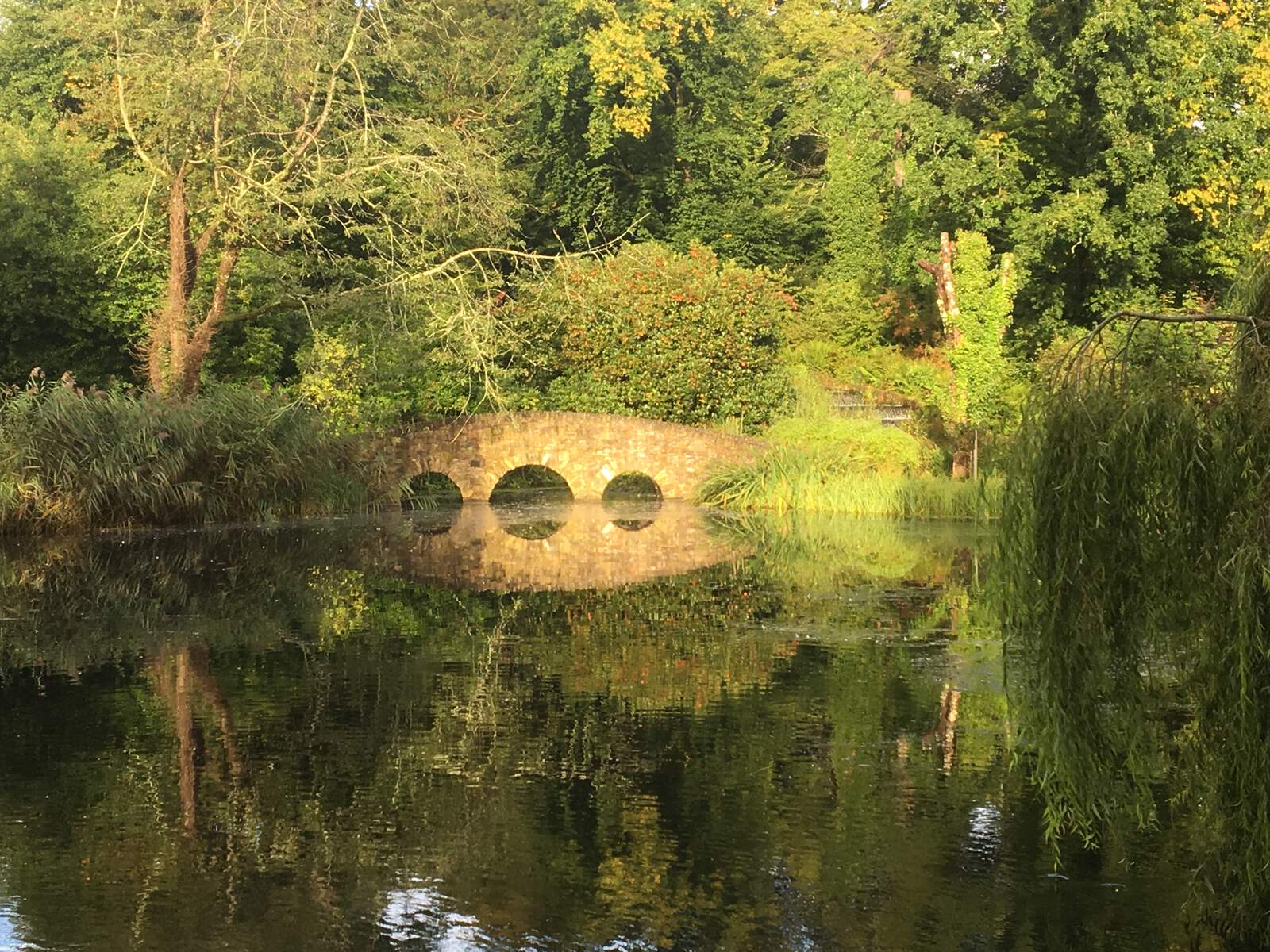

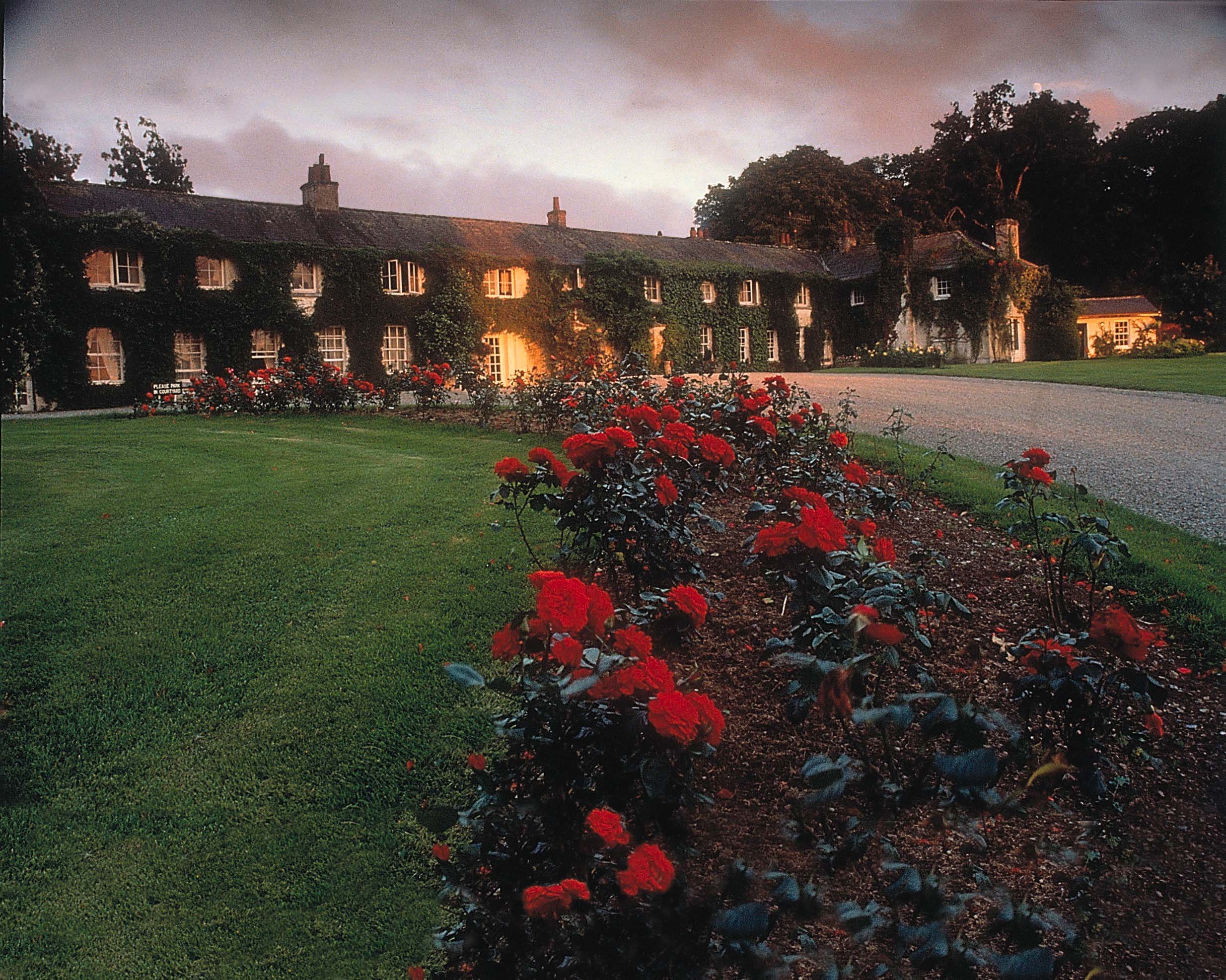


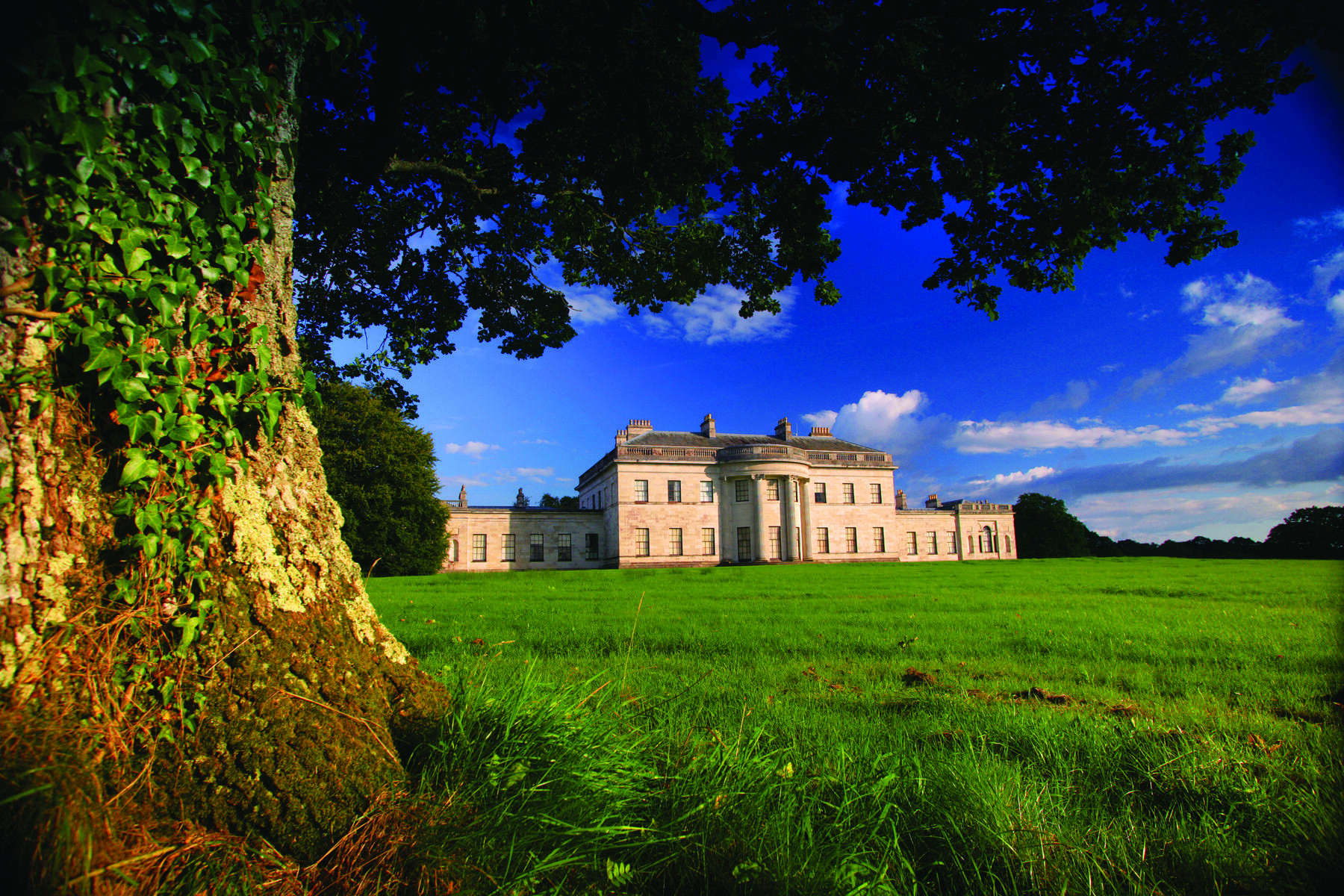

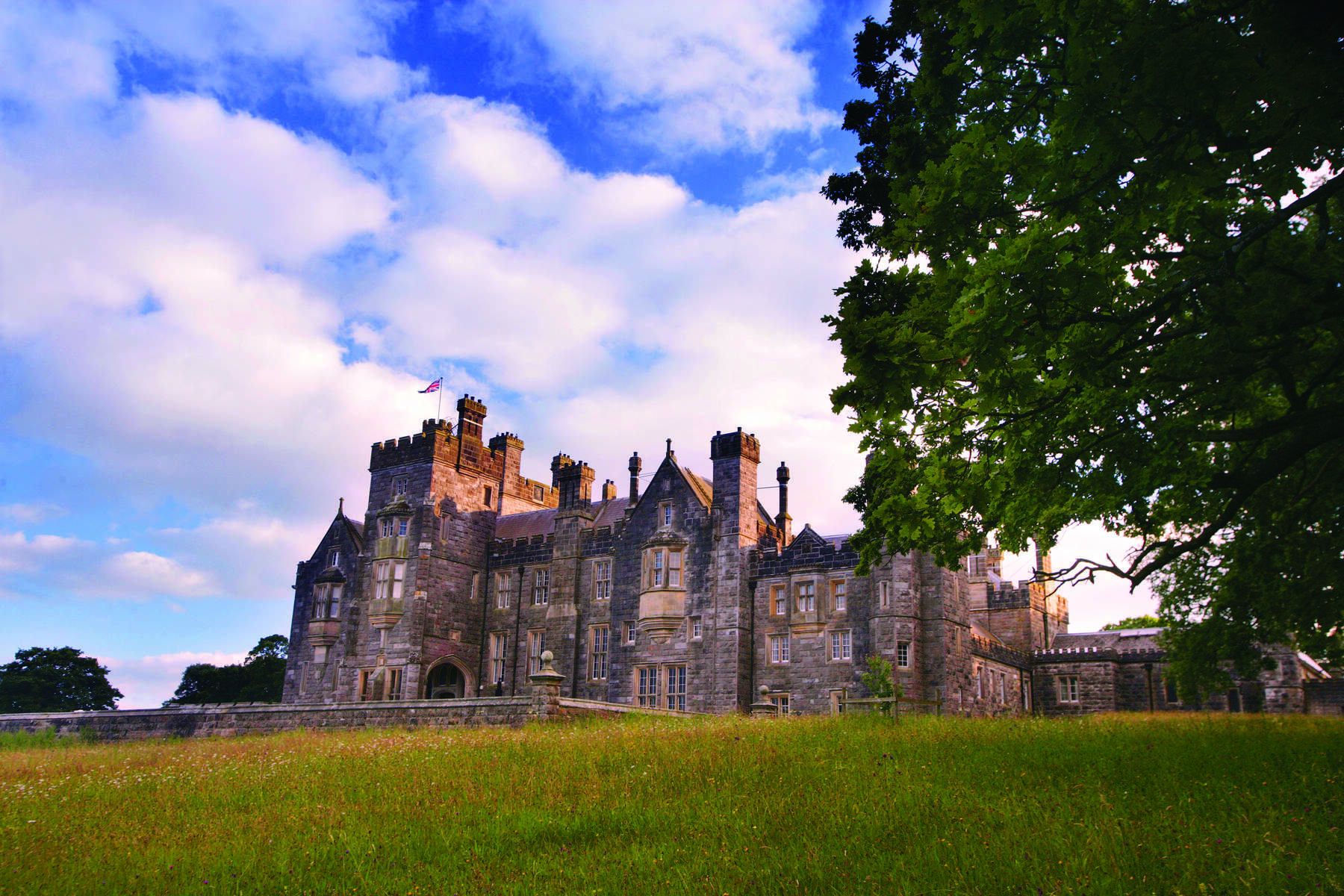
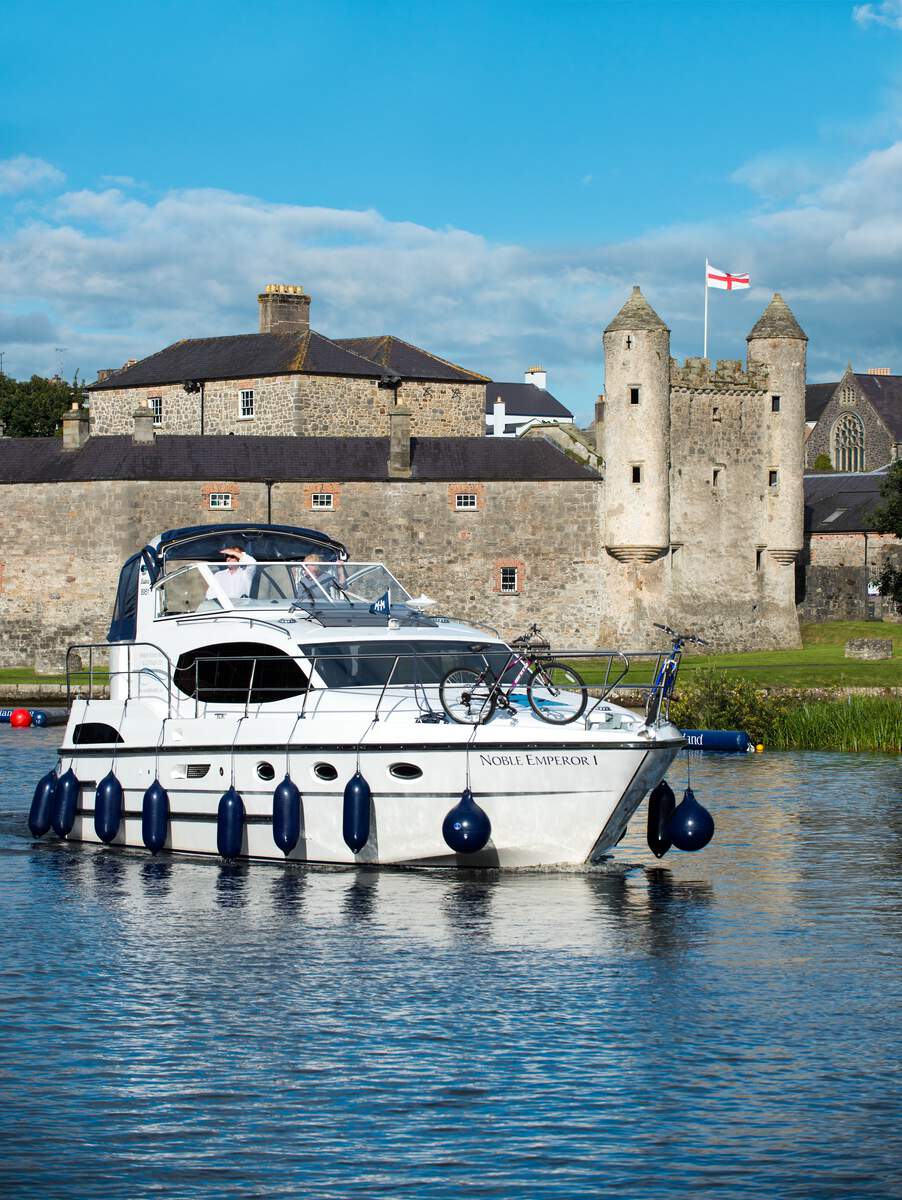


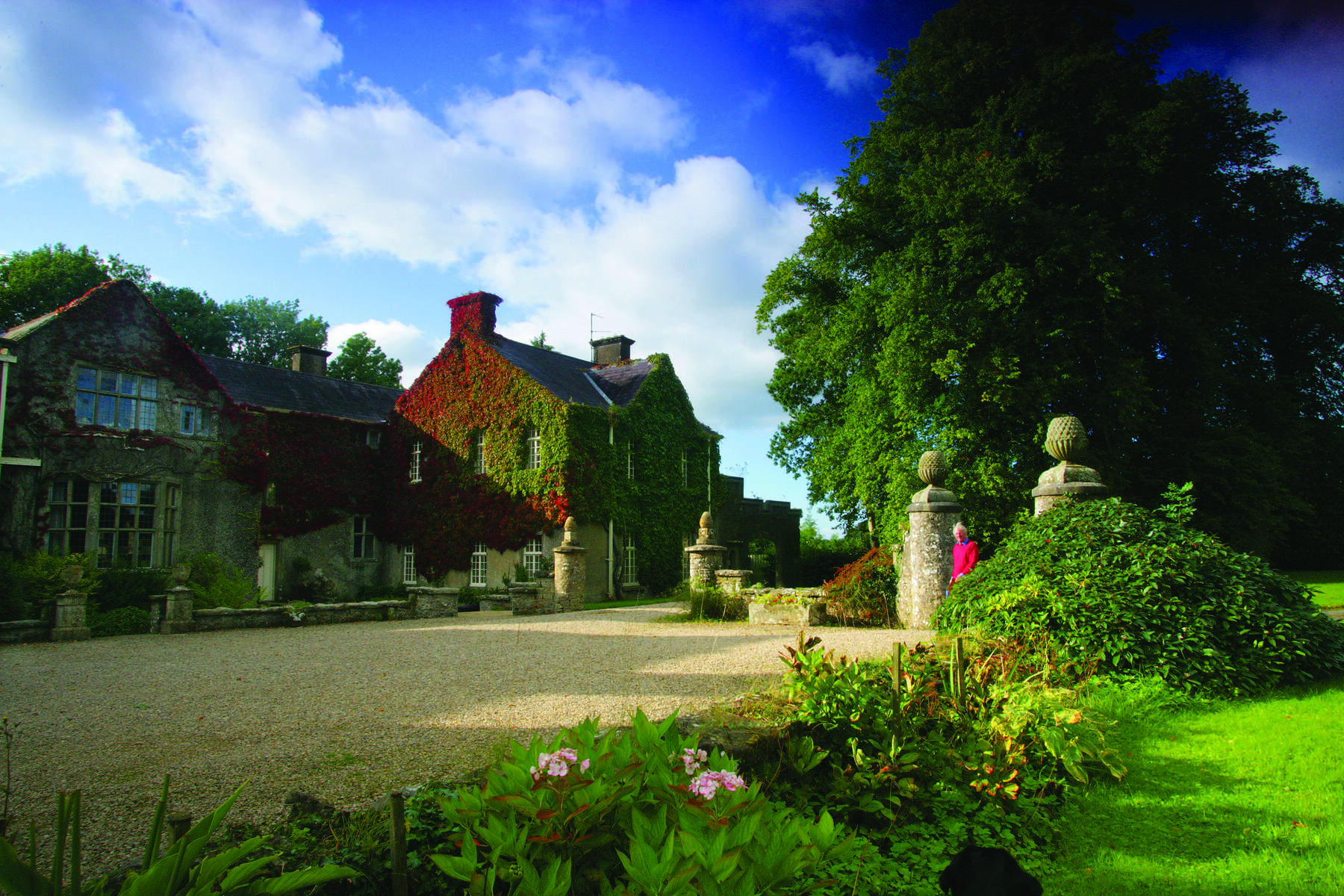
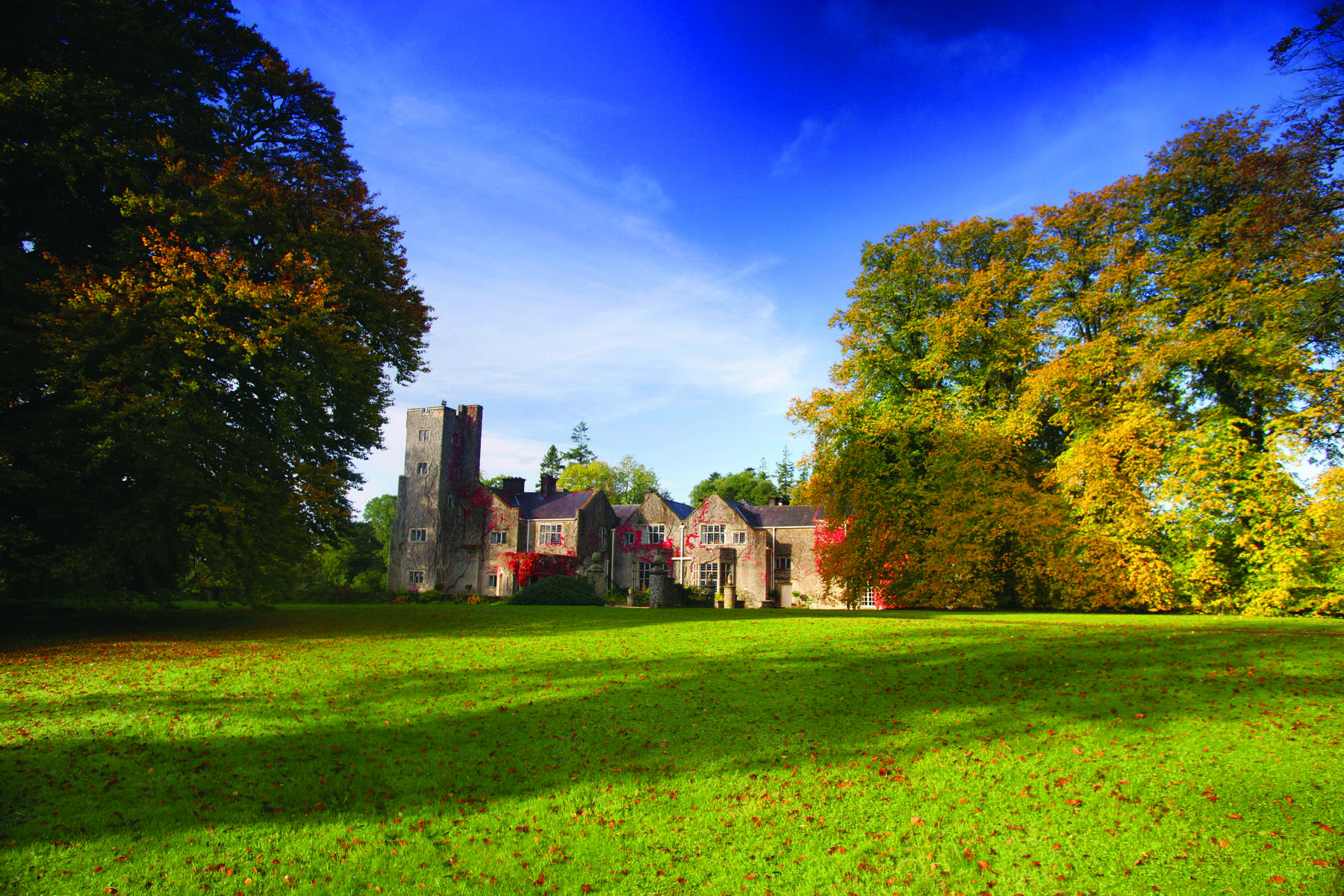
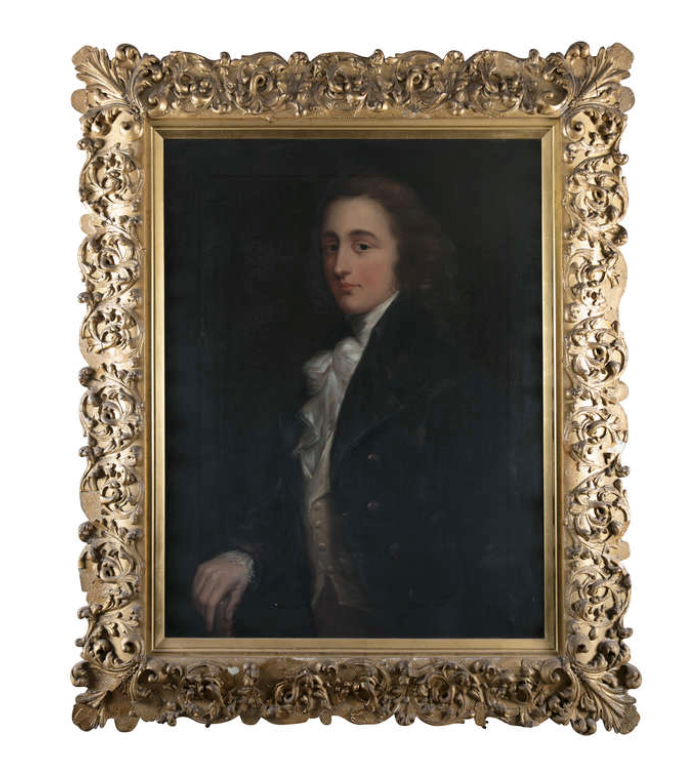

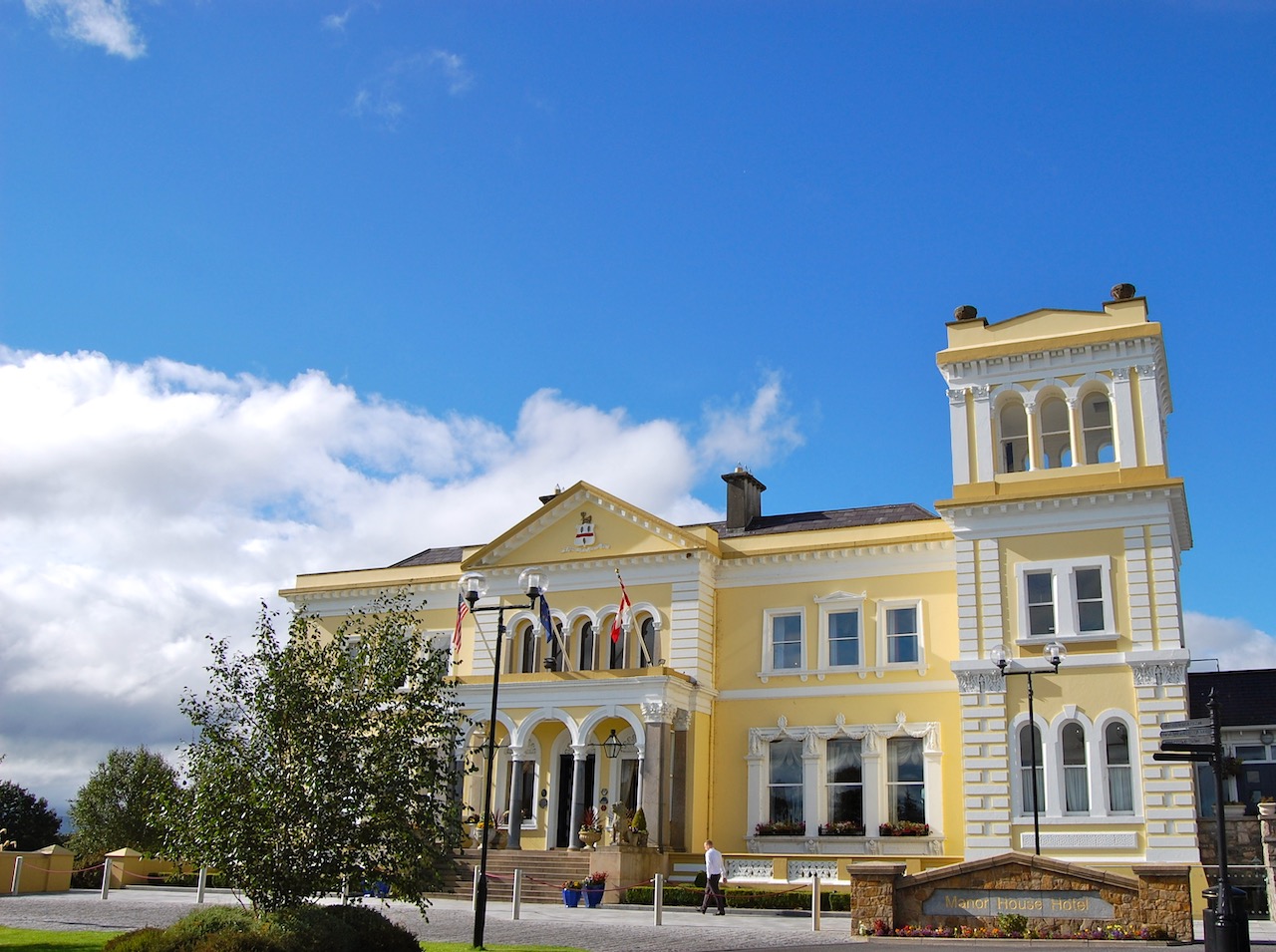

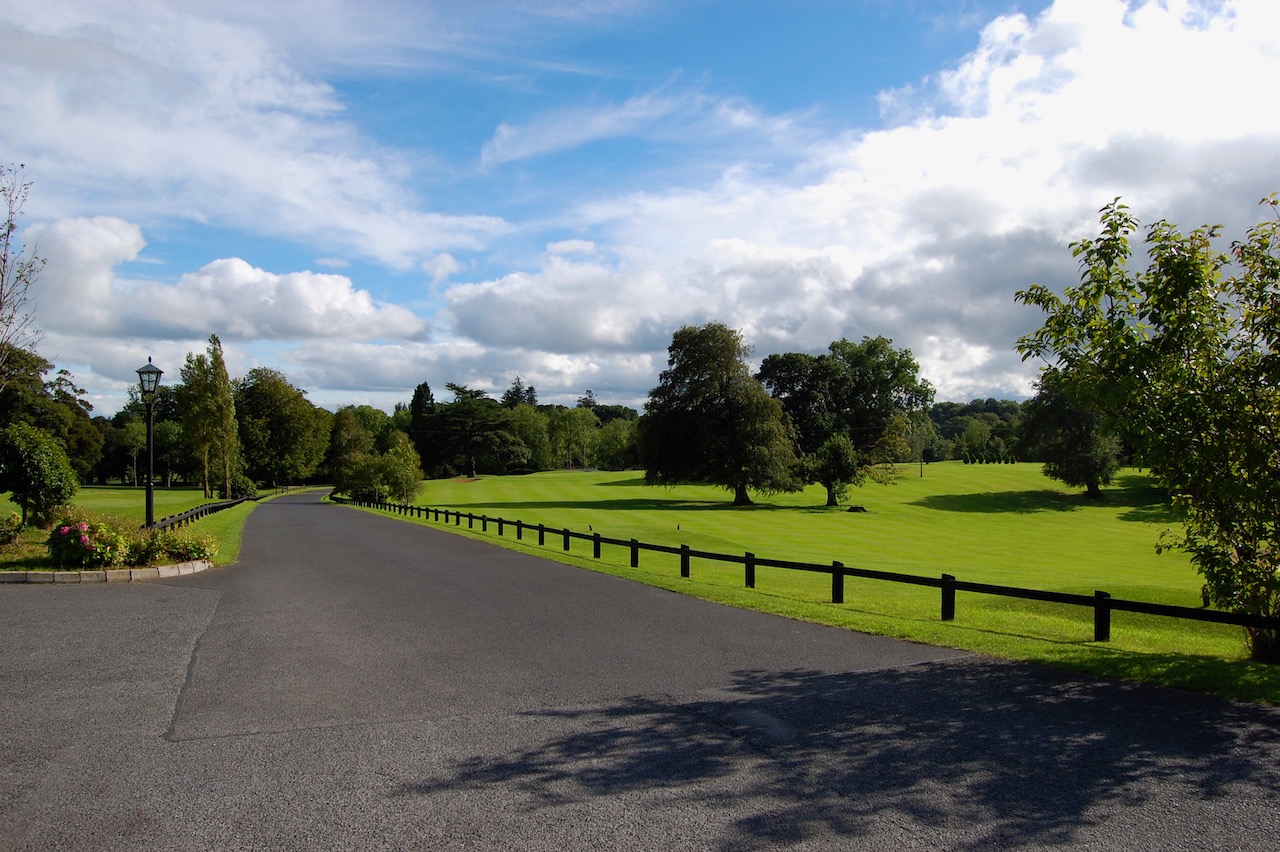
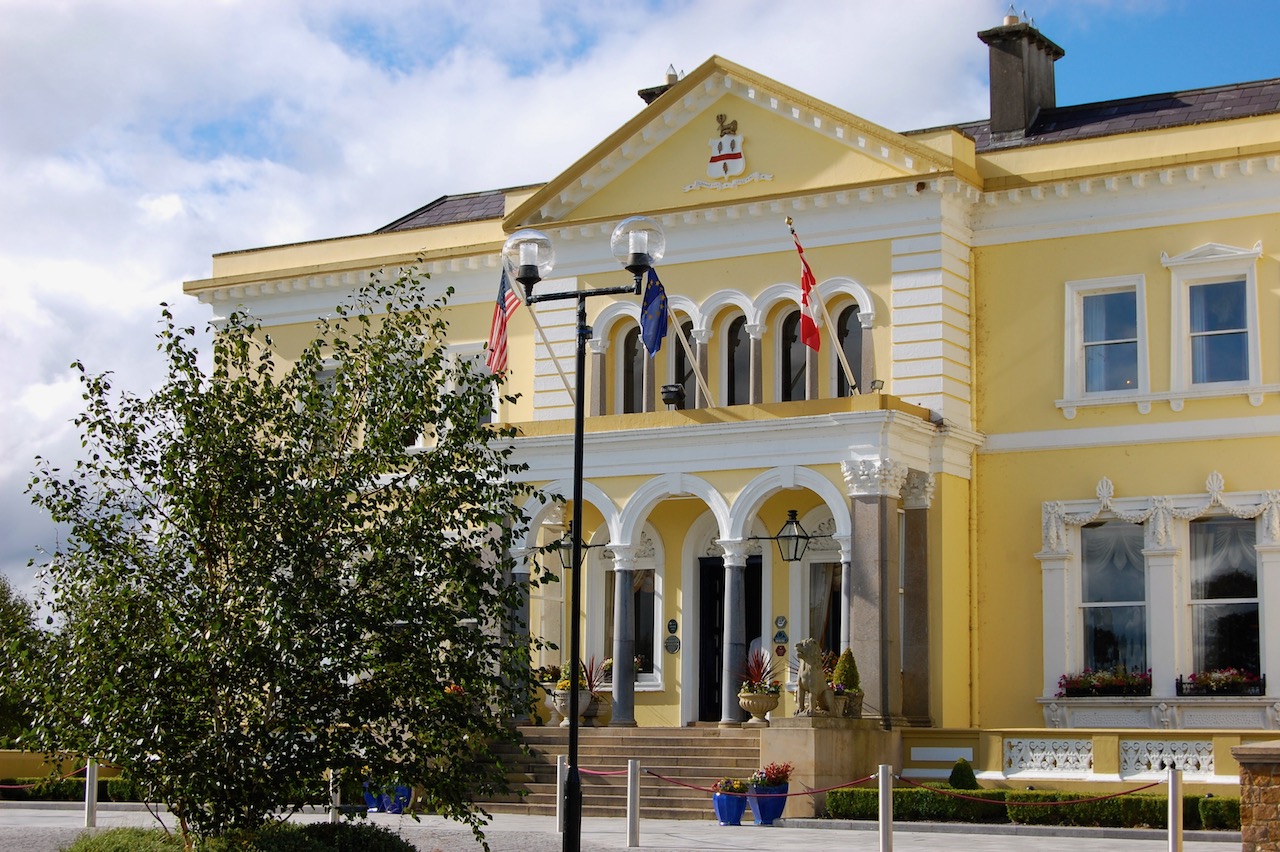


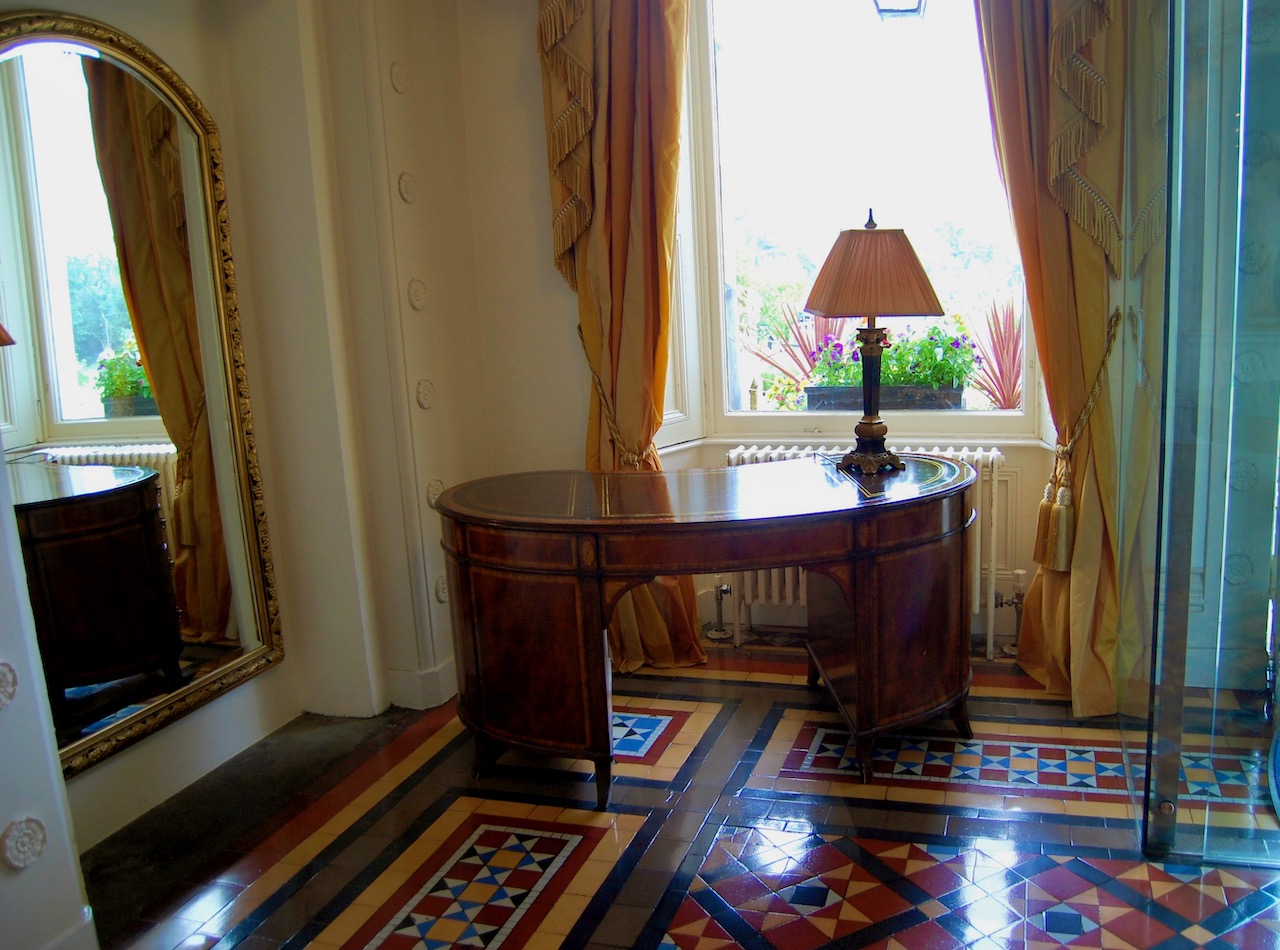
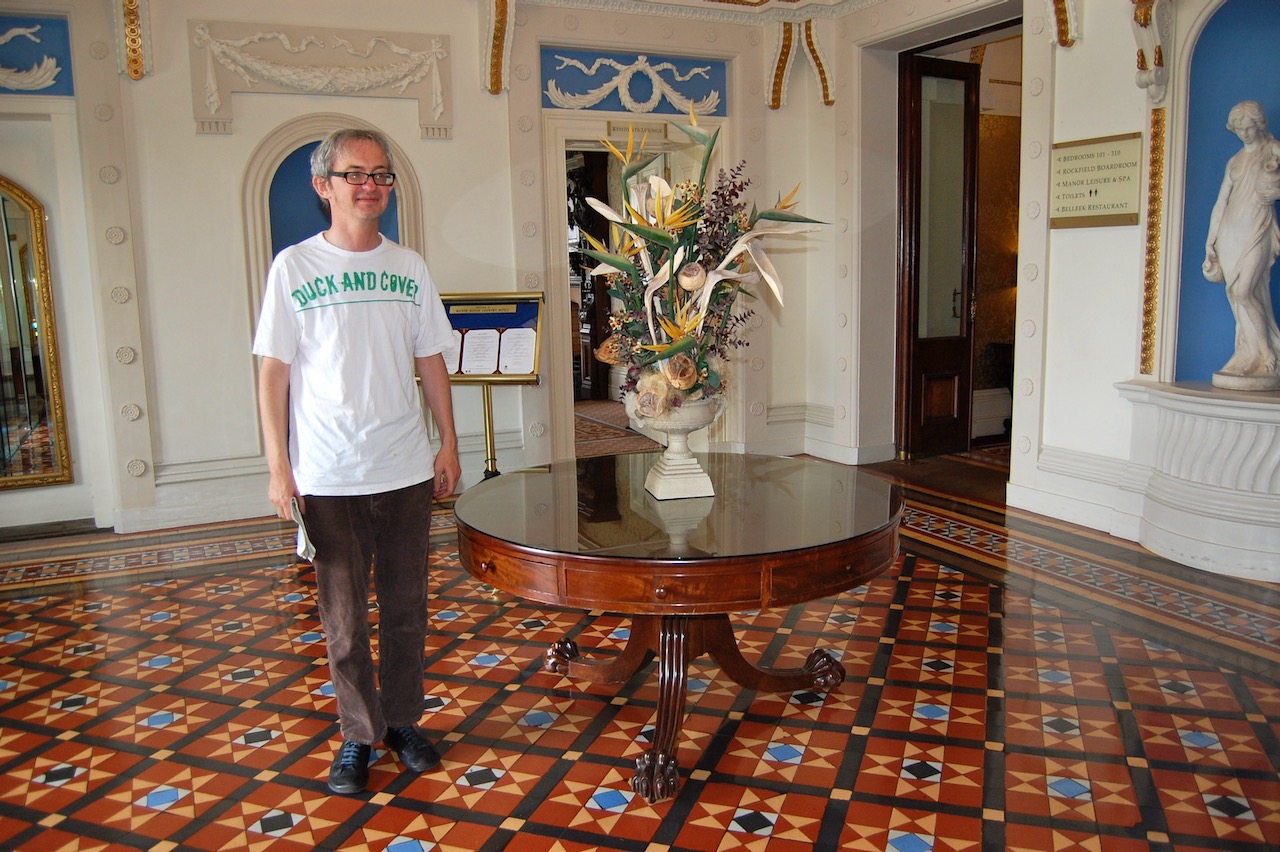
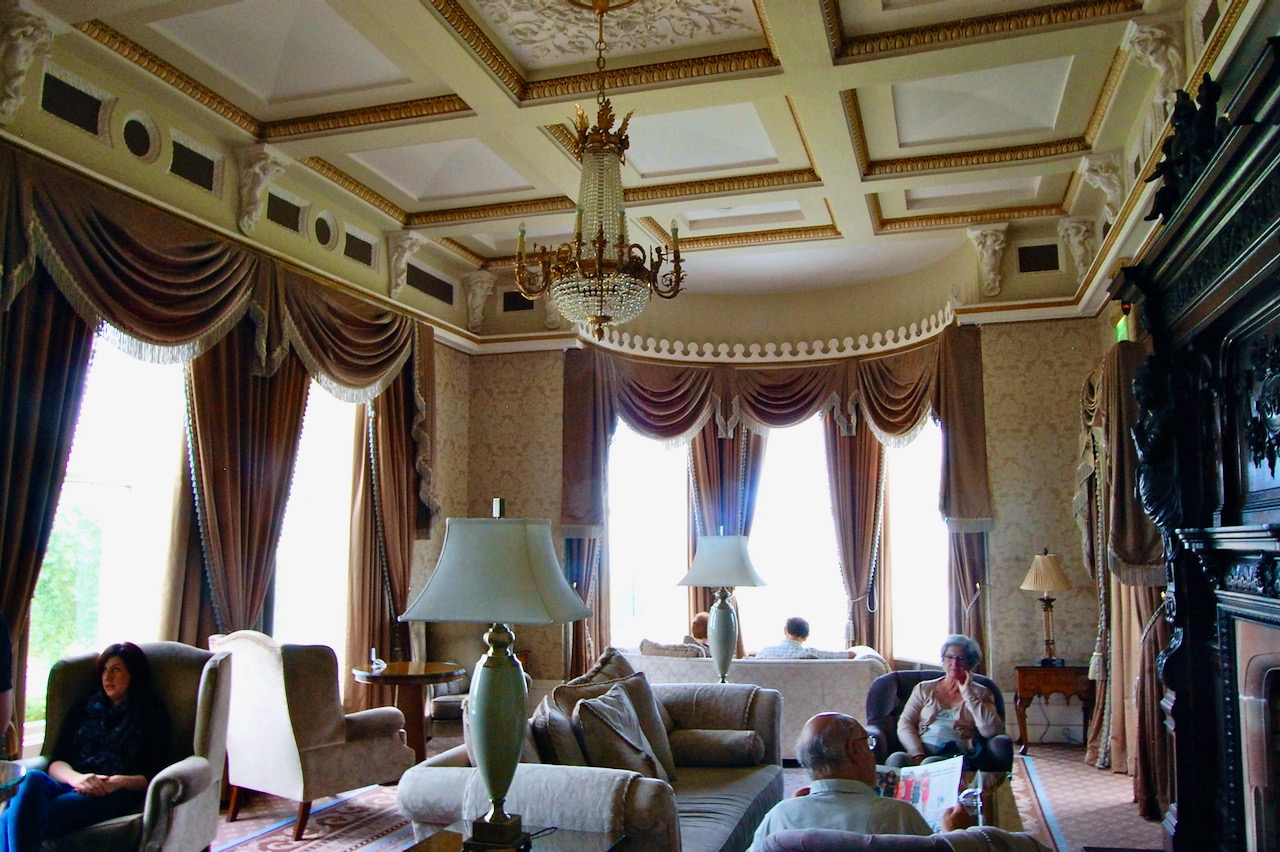
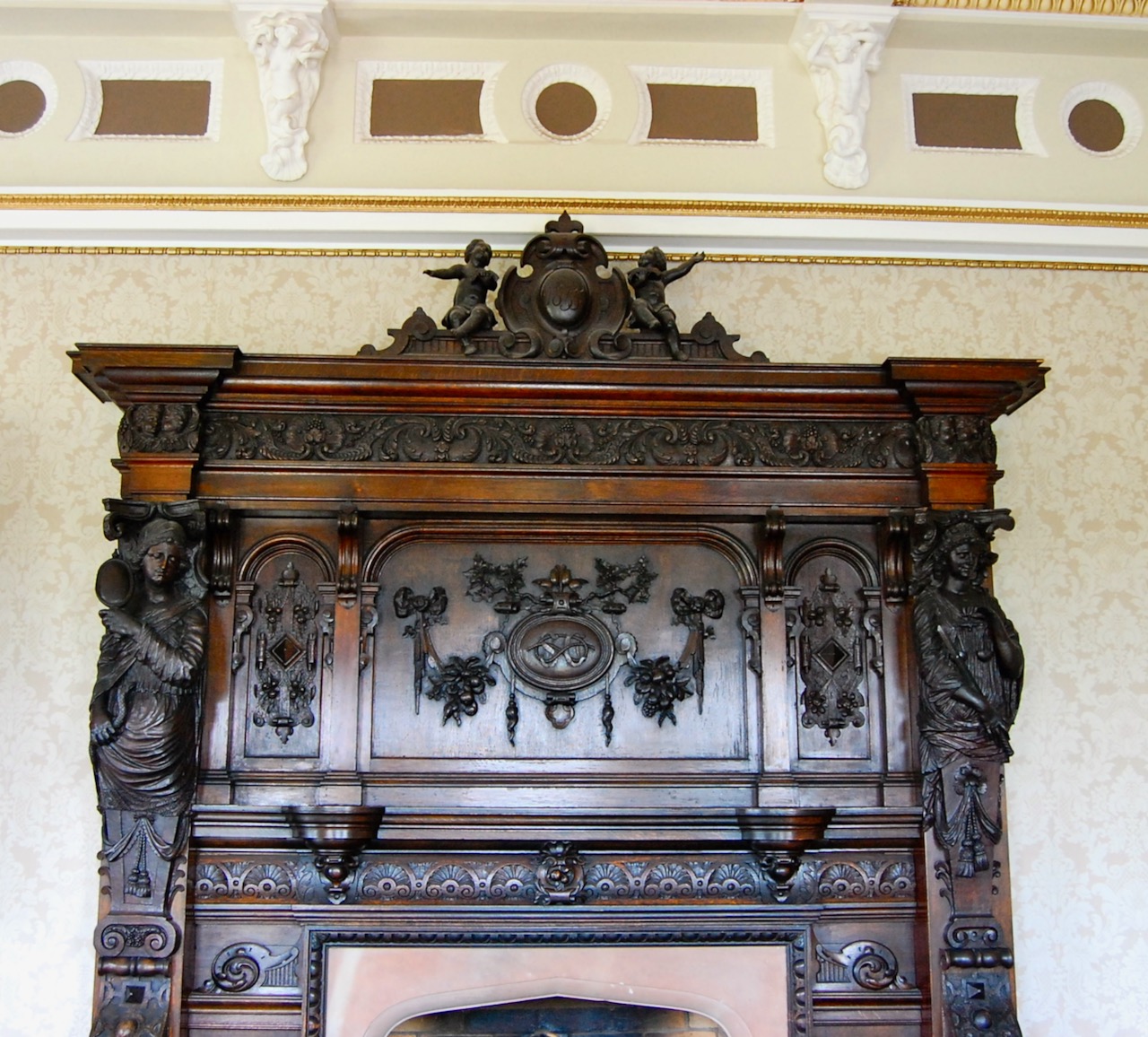
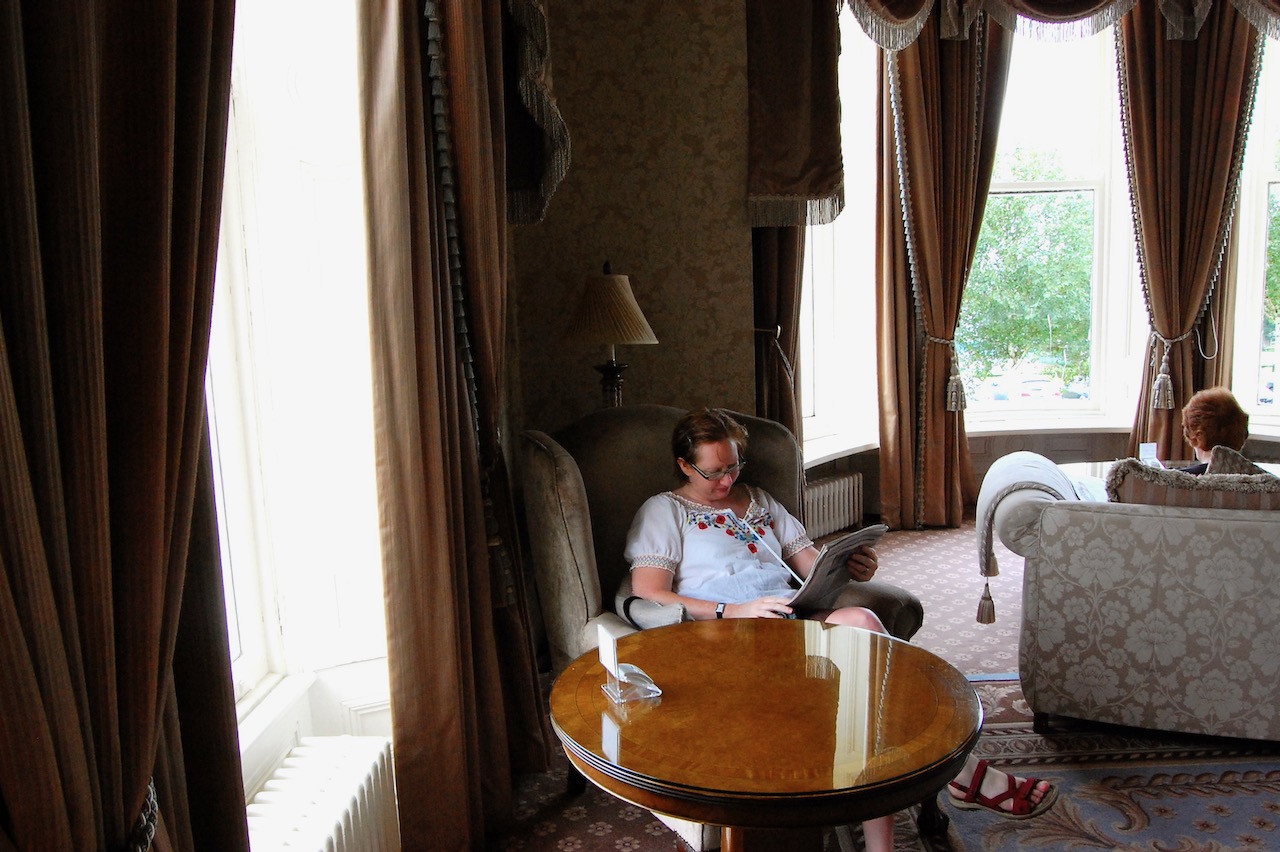



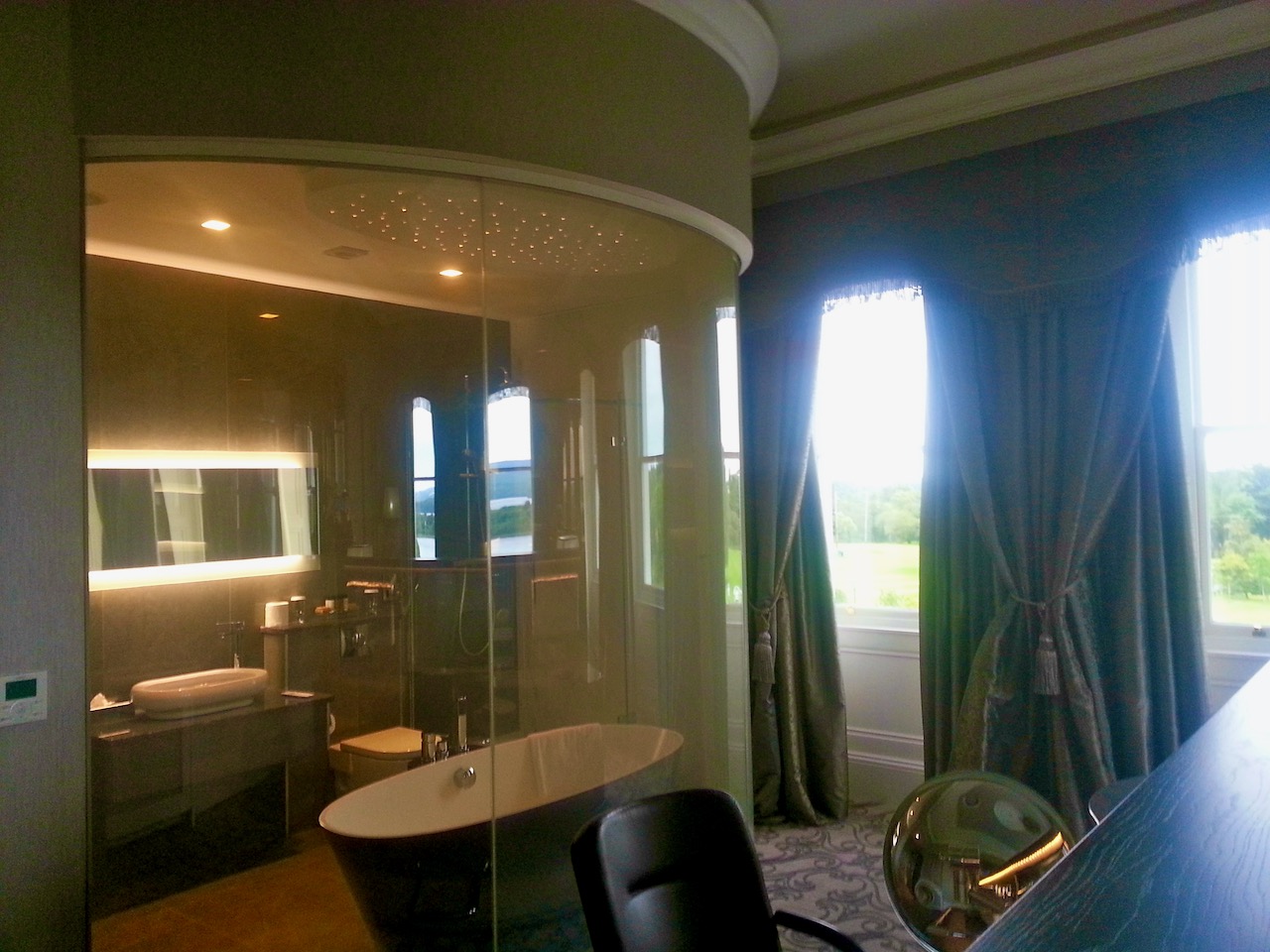


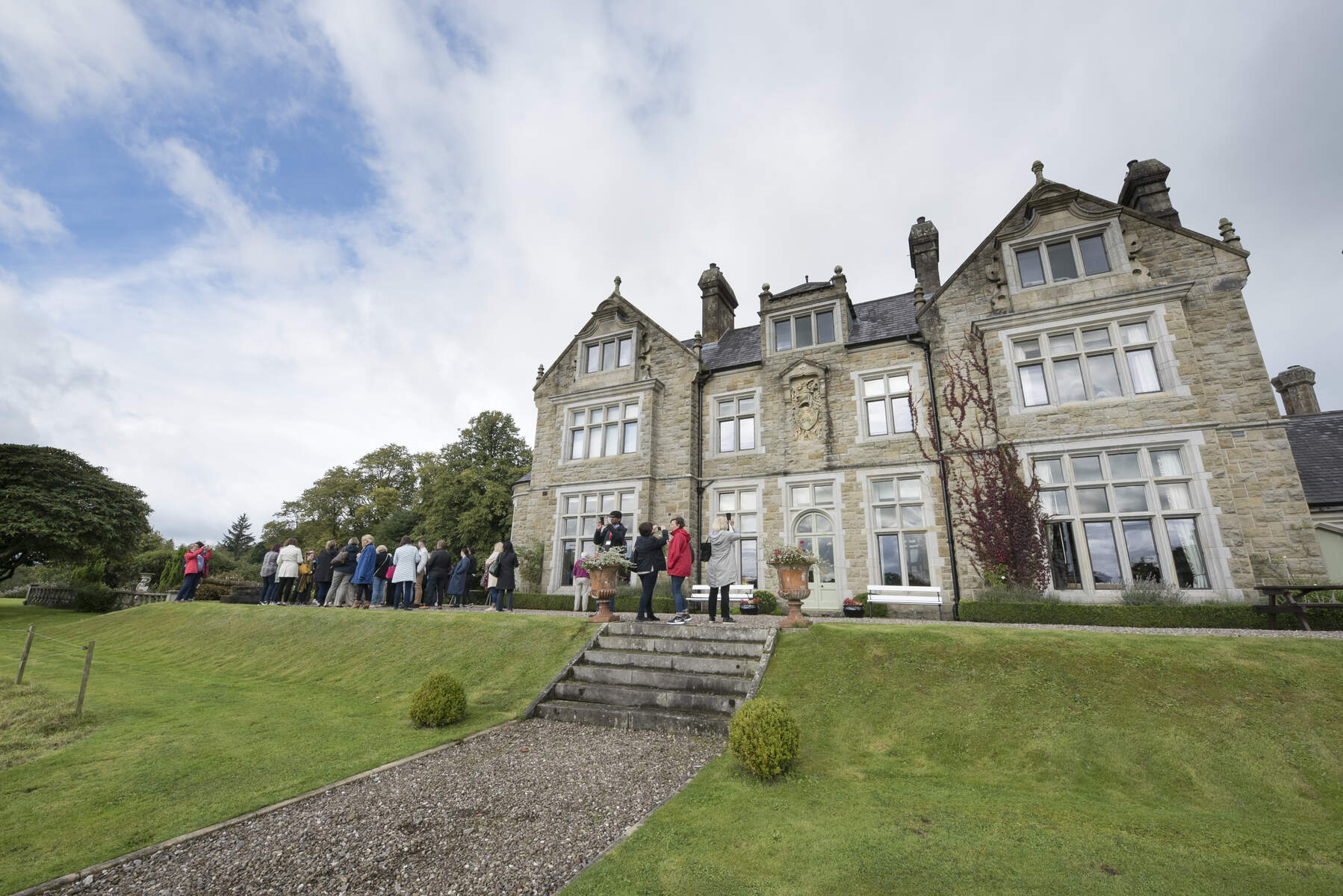

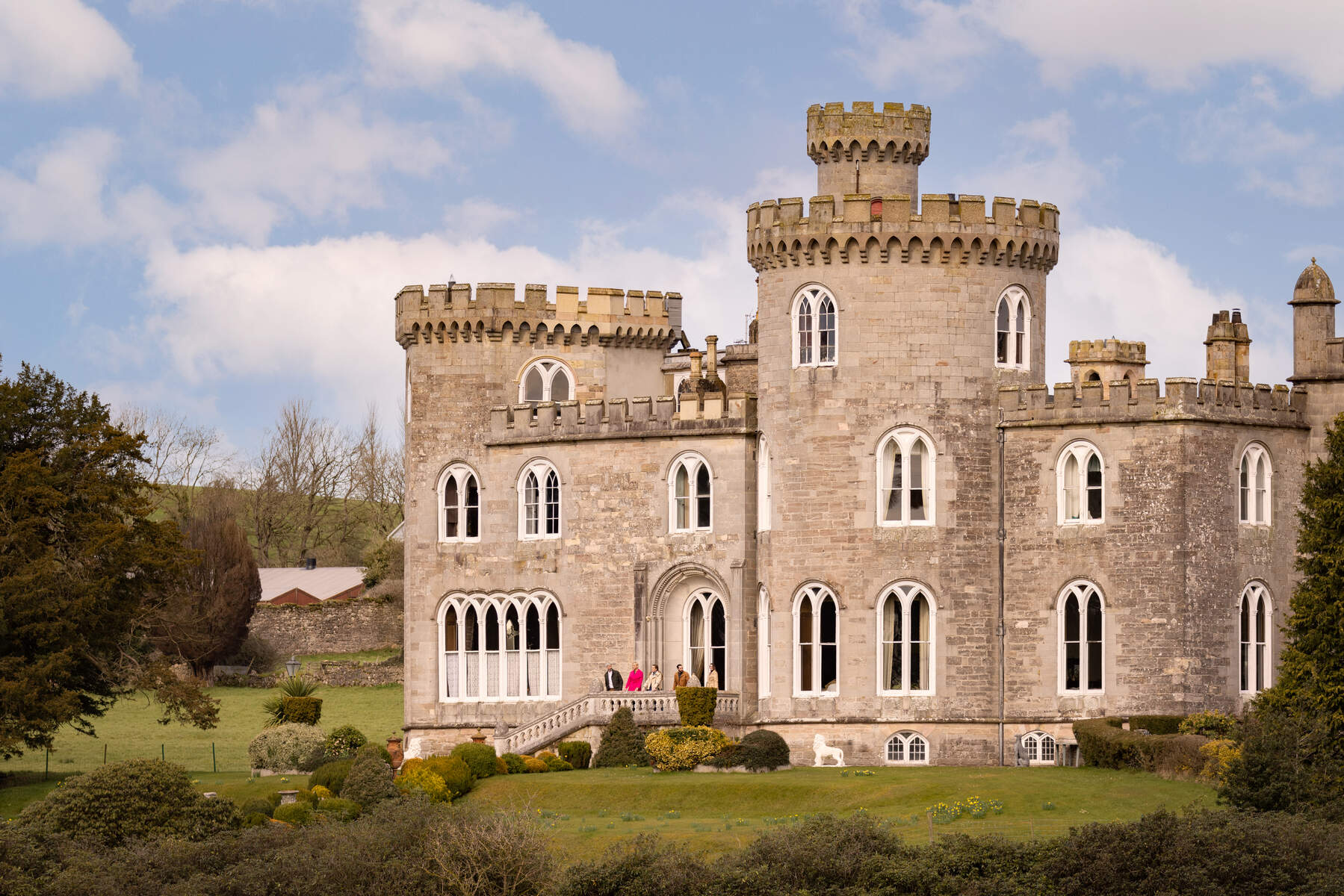
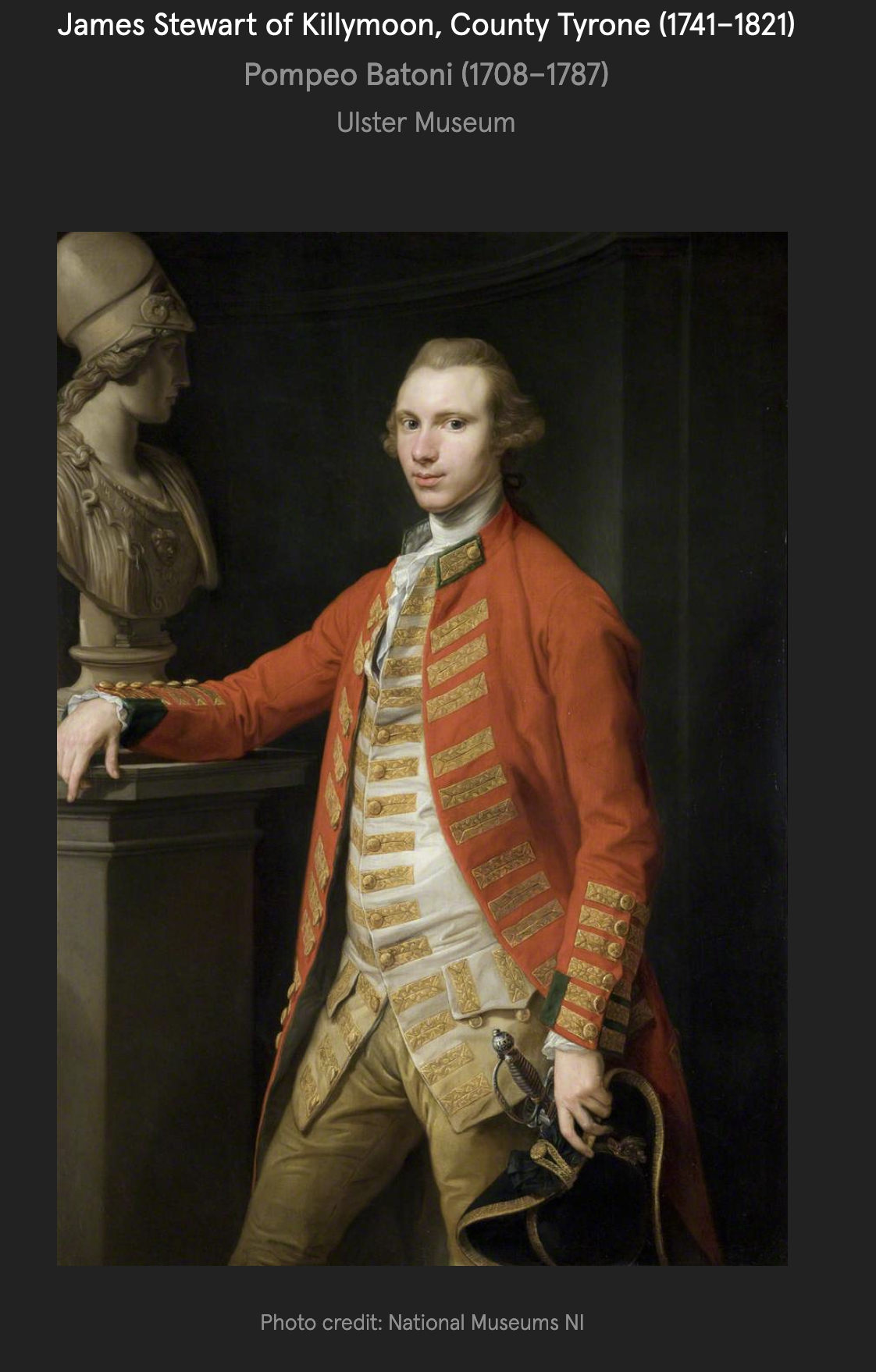

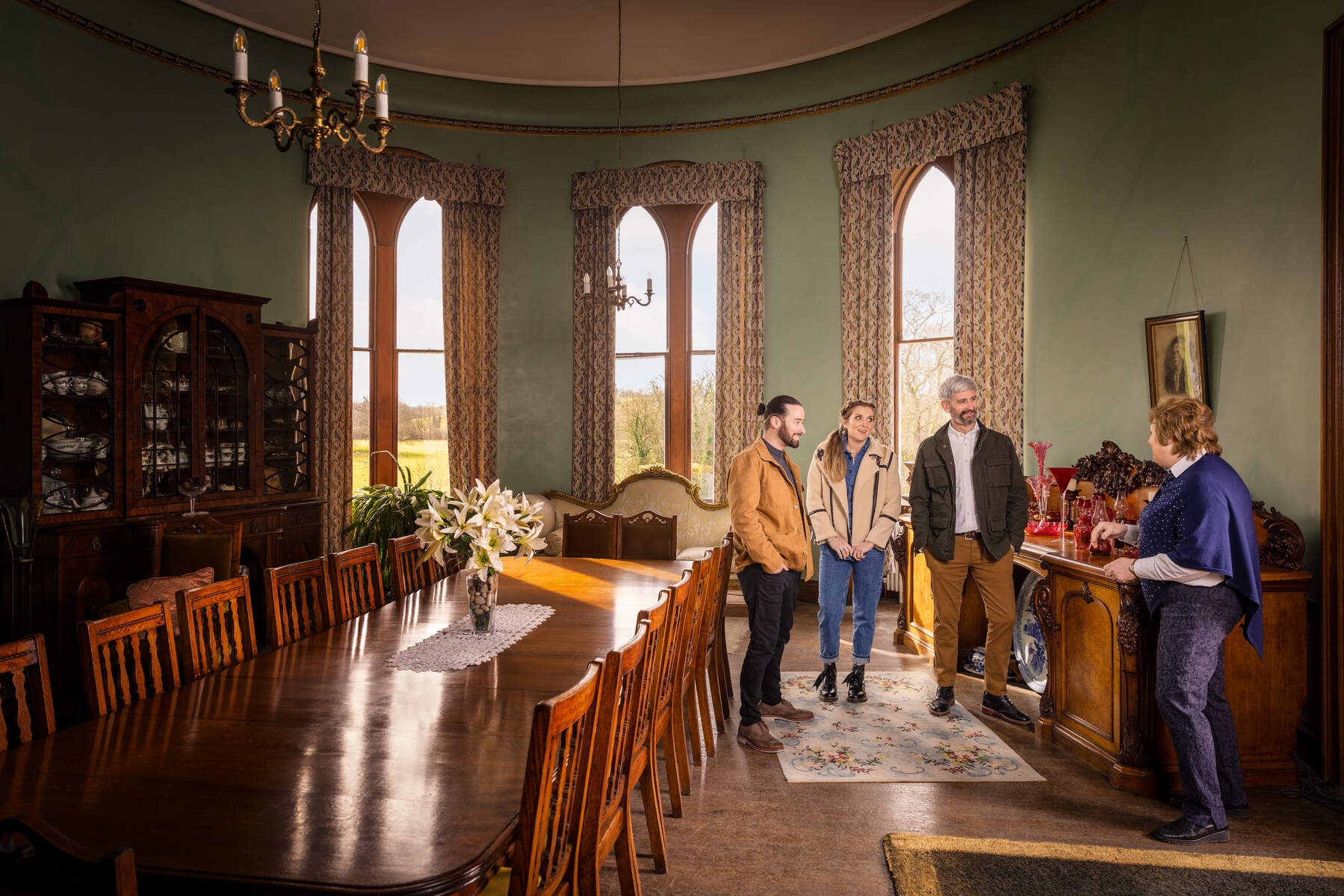

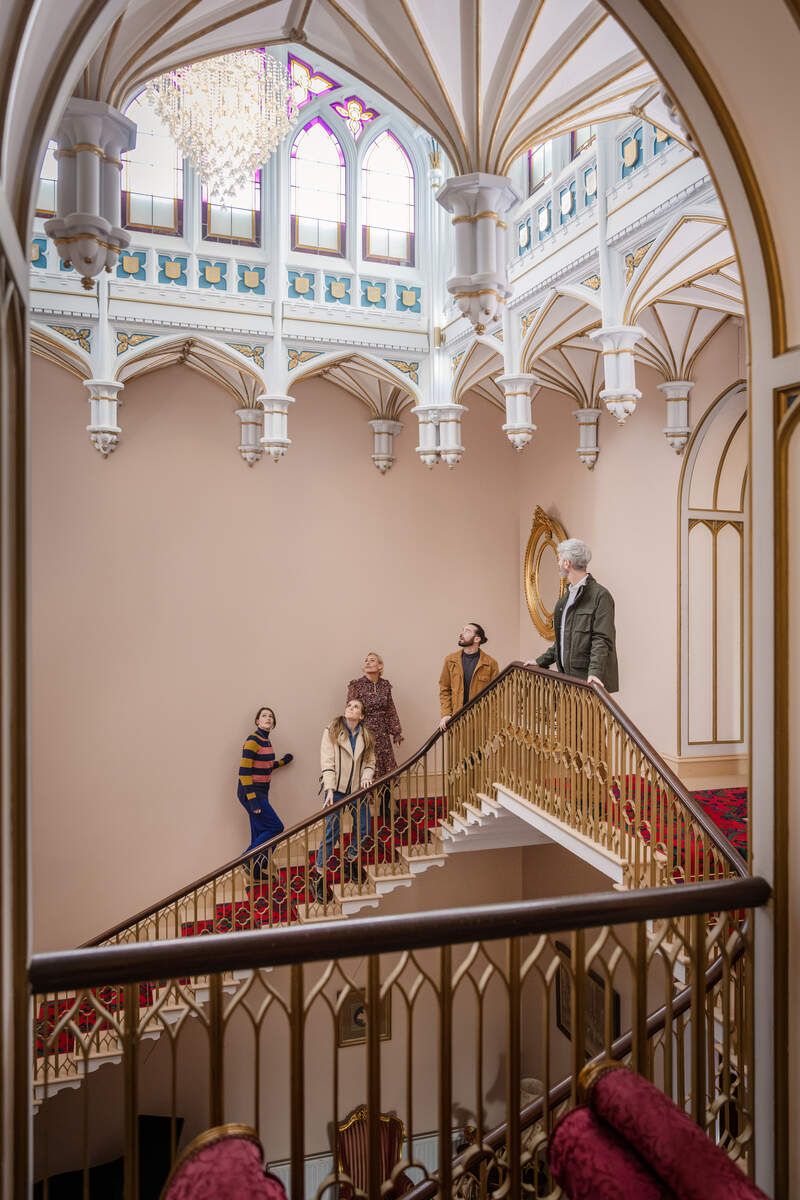


 Irish Historic Houses


