Help me to pay the entrance fee to one of the houses on this website. This site is created purely out of love for the subject and I receive no payment so any donation is appreciated!
When I saw that Roderick Perceval was giving a tour of his home, Temple House in County Sligo, during Heritage Week 2025, I jumped at the chance to see it and booked straight away. I had booked to stay there in the past but had to cancel, and before this tour, the only way to see this section 482 property was to stay, as it was listed as tourist accommodation. And before you get your hopes up, unfortunately it no longer is providing individual bed and breakfast (with dinner optional) accommodation, as Roderick and his family have decided to focus instead on larger group accommodation and weddings. The website now gives the option to book three or more double rooms for your stay. There is also a self-catering cottage available, which has 4 bedrooms: 1 King, 1 Double, 2 Twin.
The Percevals have lived at this location since 1665. Before the current house was built, around 1820 according to Mark Bence-Jones, they lived in another property closer to Templehouse Lake, part of the Owenmore River. [1] The remnants of the earlier house sit adjacent to the ruins of a Knights Templar castle from around 1181, after which the property takes its name. [2]
We came across the medieval order of knights when we visited The Turret in County Limerick during Heritage Week in 2022, a house which was built on the foundations of a construction by the Knights Hospitaller, a different branch of religious warriors. The Knights Templar were a religious order established in the eleventh century to protect Jerusalem for Christianity, and were named after Solomon’s Temple in Jerusalem. Like other religious orders, the members took vows of poverty, chastity and obedience.
A book review by Peter Harbison of Soldiers of Christ: the Knights Templar and the Knights Hospitaller in medieval Ireland edited by Martin Brown OSB and Colmán Ó Clabaigh OSB tells us that Templars came into Ireland under the protection of the English crown and acted on behalf of the king against the native Irish. Templar Knights helped govern Ireland and often gained high office. [3]
When Stephen and I stayed at nearby Annaghmore house with Durcan O’Hara, he told me that he is related to the Percevals of Temple House. An O’Hara, it is believed, may have joined the Knights Templar and donated the land near Temple House. [see 2]
The Templar castle passed to the Knights of St. John the Hospitallers when the Knights Templar were disbanded in the 1300s. In France, Templars were burnt at the stake and their land seized by the crown but in other countries their property was transferred to the Knights Hospitallers, known today as the Knights of Malta.
Robert O’Byrne tells us in his blog that the land formerly owned by the Knights Templar came into the hands of the O’Haras, and that they built a new castle here around 1360. He adds that in the 16th century the same lands, along with much more beside, were acquired by John Crofton, who had come here in 1565 with Sir Henry Sidney following the latter’s appointment as Lord Deputy of Ireland. [4]
Roderick told us that the Croftons acquired the property around 1609, and that Henry Crofton built a thatched Tudor house around 1627. The National Inventory tells us that the remains of the house near the Templar ruins are of a two-bay two-storey stone house, built c.1650. [5]
George’s father Philip (1605-1647) came from England to Ireland to serve as registrar of the Irish court of wards, along with his brother Walter. This position would have given him an insight to property ownership in Ireland. When a son inherited property before he came of age, he was made a Ward of the state, and the someone would be chosen to act on the child’s behalf.
When Walter died in 1624, Philip inherited the family estates in England and Ireland. The land at Burton Park was named after his estate in Somerset, Burton.
Philip’s grandfather Richard Perceval was ‘confidential agent’ to Queen Elizabeth’s Minister Lord Burleigh. He had correctly identified Spanish preparations for the Armada and this vitally important information was rewarded with Irish estates. [6]
Richard Perceval (1550-1620), agent for Queen Elizabeth and Lord Burleigh, he spotted preparations for the Spanish Armada.
Philip settled in Ireland, and by means of his interest at court he gradually obtained a large number of additional offices. In 1625 he was made keeper of the records in the Birmingham Tower at Dublin Castle.
Thomas Wentworth 1st Earl of Strafford (1593-1641) on left, Lord Deputy of Ireland 1632-1640 for King Charles I. This portrait is in Castletown House.
Perceval was close to the Lord Deputy of Ireland, Thomas Wentworth, 1st Earl of Strafford. With the fall and execution of Wentworth in May 1641, Perceval lost his major patron and protector. In September 1641 Perceval narrowly avoided prosecution in England when his part in a shady land transaction was revealed. By that time, Perceval owned over 100,000 acres in Ireland, which he obtained partly through forfeited lands.
Philip Perceval married Catherine Ussher, daughter of Arthur Ussher and Judith Newcomen. She gave birth to their heir, John (1629–1665), who was created 1st Baronet of Kanturk, County Cork in 1661. George (1635-1675) was the younger son. He held the position of Registrar of the Prerogative Court in Dublin.
George Perceval’s wife Mary’s father William Crofton was High Sheriff of County Sligo in 1613 and Member of Parliament for Donegal in 1634, so George and Mary might have met in Dublin. Mary, as heiress, was a good match, and since George was a younger son, marrying into property would have suited him well.
Robert O’Byrne tells us that they lived in the old castle which had been converted by the Croftons into a domestic residence in 1627. [see 4] It is not clear to me whether George and Mary lived in a house next to the Templar castle or in some version of the castle itself. O’Byrne tells us that the castle had been besieged and badly damaged in 1641, but was repaired. [see 4].
George died at the young age of forty when on a ship crossing to Holyhead, when his son and heir Philip (1670-1704) was only five years old. [7] Philip’s mother remarried, this time to Richard Aldworth, who was Chief Secretary of Ireland. Philip also died young, after marrying and having several children, and the property passed to his son John (1700-1754), who was also minor when his father died.
Philip Perceval (1723-87) married Mary Carlton of Rossfad, County Fermanagh. Their son and heir Guy died soon after his father so the property passed in 1792 to Guy’s brother Reverend Philip Perceval.
The house is featured in a chapter of Great Irish Houses by Desmond Fitzgerald the Knight of Glin and Desmond Guinness. They tell us that in 1825 Reverend Philip’s son Colonel Alexander Perceval (1787-1858) built a neo-classical two story house up the hill from the castle on the present site.
What is the now the side of the house was once the front.
The house at this time was of two storeys and had five bays on the front, with the centre bay slightly recessed, with an enclosed single storey Ionic porch, and a Wyatt window over the porch.
Before building the house, Alexander Perceval (1787-1858), in 1808, married Jane Anne, eldest daughter of Colonel Henry Peisley L’Estrange, of Moystown, King’s County.
Alexander Perceval (1787-1858).
After building the house, Alexander served as MP for Sligo between 1831 and 1841, and from 1841-1858 was sergeant-at-arms to the House of Lords in England.
During the Famine, Alexander’s wife Jane sought to alleviate the suffering of the poor and she died of cholera or typhus in 1847.
Jane née L’Estrange, with her children.Fitzgerald and Guinness write about this portrait: “Vogel, the artist, depicts her with three of her children while on holiday in Germany in 1842. A touching letter of the time tells of her reminding those around her “not to neglect the tenant families between my death and my funeral.” [see 2]
When Alexander died in 1858, his son Philip was unable to afford the death duty tax and he had to sell the property. The house was bought by the Hall-Dares of Newtownbarry, County Wexford.
Newtownbarry House, County Wexford, photograph by Robert French, Lawrence Photograph Collection, National Library of Ireland.
The Hall-Dares did not remain owners for long. After they evicted some tenants, these tenants actively sought the return of the Perceval family. Four years after Philip Perceval’s sale of the house, his brother Alexander, who had made a fortune in business in Hong Kong, re-acquired the property. Philip had married and moved to Scotland. Alexander brought back many of the dispossessed families from America and Britain, gave them back their land and re-roofed their homes. [see 2]
In the 1860s Alexander Perceval enlarged and embellished the house, hiring Johnstone and Jeane of London. He added a higher two storey seven bay block of limestone ashlar on the right (north) side of the house, which formed a new entrance front, knocking down a north wing in the process. [see 2]
Fitzgerald and Guinness tell us that Alexander also commissioned the company to design and build the furniture for the entire house.
The newer entrance has a large arched single-storey porte-cochére with coupled engaged Doric columns at its corners and two small arched side windows. Above is another pedimented Wyatt window in a larger pediment over two pairs of Ionic pilasters. The centre windows on either side of the porte-cochére on the ground floor are pedimented and on the upper storey the centre windows have curved arch pediments. The other windows have flat entablatures.
To the right of the newer front is a single storey two bay wing slightly recessed. The house is topped with a balustraded roof parapet.
Looking toward the south facade, we see a three-bay three storey section of the house, as well as more beyond to the west. The windows on the ground floor of the east and south elevations have corbelled pilasters.
We gathered inside the front hall for the tour, with its impressive tiled floor and geometrically patterned ceiling. It has carved decorative doorcases and arched carved and shuttered side lights by the front door, and a large window facing the front door lights the room.
The ceiling has a Doric freize and a rose of acanthus leaves. A collection of stuffed birds and trophies line the wall, and a fine chimneypiece original to the house. [see 2]
Alexander did not get to enjoy his renovated home for long, as he died in 1866 of sunstroke, which occurred while fishing in the lake by the house. His wife lived a further twenty years. His son Alec (1859-1887) married a neighbour, Charlotte Jane O’Hara from Annaghmore.
From the front hall we entered the top-lit double-height vestibule with a grand sweeping staircase and gallery lined with paintings of ancestors.
I’m dying to know who features in the wonderful portraits. The vestibule is so impressive, it is hard to know where to look! The ceiling has intricate detail.
Temple House, Sligo, photograph courtesy of website.Temple House, photograph courtesy of the house facebook page.The detail in the ceiling is incredible, as seen in this close-up. Temple House, photograph courtesy of the house facebook page.
The upper level of the stair hall is lined with arches and Corinthian pilasters.
When Alec died of meningitis in 1887, Charlotte took over the running of the estate for 30 years. Alec’s son Alexander Ascelin was injured in the first world war. He married the doctor’s daughter, Nora MacDowell. In financial difficulty, he had to sell some of the land. His wife predeceased him and toward the end of his life, he lived alone in this house of about ninety seven rooms, living in only three rooms. The rest of the house was closed up, dustsheets over the furniture.
Five years after being closed up, in 1953, Ascelin’s son Alex, who had been a tea planter in what was then known as Burma, returned with his wife Yvonne to run the estate. They renovated the house, patched up the roof and installed a new kitchen. Alex modernised the farm.
It was their son Sandy and his wife who decided to take advantage of the size of the house to run a bed and breakfast, which opened in 1980. In 2004 their son Roderick returned to Temple House with his wife and children and took over running the business and the farm.
Roderick told us about the family as we toured the stair hall vestibule, drawing room and dining room, then brought us across the front hall to the newly renovated part of the house, which includes a former gun room passage. He managed to find craftsmen to do repairs, including the windows, moulding and plasterwork. After the tour, he kindly let us wander around the house, including up to the bedrooms.
Guinness and Fitzgerald tell us about the bedrooms:
“The bedrooms are immense. They all have their own bathrooms and a wonderful collection of matching furniture; in each of them a different wood has been used. The individual character of oak and beech and mahogany and others are evident as you stroll from one bedroom to the next. There are magnificent wardrobes – in one room it is 22 ft long – beds, sideboards, dressing tables, chairs. The largest of the bedrooms is so impressive it is called the “Half Acre.”” [see 2]
There is a walled kitchen garden which unfortunately we did not get to visit, where food is grown, including old varieties of apple, plum, pear and fig, and a stable yard. The Percevals preserve most of the 600 acres of old woods and the bogs in their natural state, and they also farm a further 600 acres.
[1] Bence-Jones, Mark. A Guide to Irish Country Houses (originally published as Burke’s Guide to Country Houses volume 1 Ireland by Burke’s Peerage Ltd. 1978); Revised edition 1988 Constable and Company Ltd, London.
[2] Great Irish Houses. Forewards by Desmond FitzGerald, the Knight of Glin, and Desmond Guinness. Photographs by Trevor Hart. IMAGE Publications, 2008.
[3] Book Review by Peter Harbison, History Ireland issue 5 (Sept Oct 2016), volume 24.
Mark Bence-Jones. A Guide to Irish Country Houses (originally published as Burke’s Guide to Country Houses volume 1 Ireland by Burke’s Peerage Ltd. 1978); Revised edition 1988 Constable and Company Ltd, London.
“Somerville, Bt/PB; Agnew-Somerville, sub Agnew, Bt, of Clendry/PB) A Georgian house altered and greatly embellished in a later period, probably ca 1830. The alterations included moving the entrance to hat had been the back of the house, which became the new entrance front; of three storeys and five bays, with a single-storey Ionic portico. The former entrance became the garden front; though it is the same height as the rest of the house, it only has two storeys, so that the rooms on this side are much higher. It is of five bays with a central pedimented breakfront and a single-storey curved bow which is balustraded, like the main roof parapet. The principal reception rooms, with their high coved ceilings, have a palatial air; the ceiling plasterwork in the saloon and library is in the manner of Michael Stapleton and could be taken for late C18; but is more likely C19,. The drawing room has a domed ceiling rather in the manner of Sir Richard or William Vitruvius Morrison. Impressive stable yard, with battlemented octagon tower above pedimented archway. Someville was inherited by Quentin Agnew, nephew by marriage of Sir James Somerville, 6th Bt and 2nd (and last) Lord Athlumney. He consequently assumed the additional surname of Somerville; but has since sold the Somerville Estate.”
Somerville House (Summerville), County Meath courtesy Mark Bence-Jones.
A coved ceiling at Somerville, County Meath. As has already been mentioned (see Rise Above It All, April 19th), the house dates from c.1730 but underwent considerable alteration about 100 years later when the entrance was moved from south to north front and a new hall created. Although the room containing this ceiling is now classified as the dining room, an examination of its decoration, which certainly looks to be pre-19th century, reveals clusters of musical instruments in each of the four corners. Might it therefore originally have been intended to serve as a ballroom?
Part of the coved ceiling in the drawing room of Somerville, County Meath. The house dates from c.1730 when it was built for Sir James Somerville, Lord Mayor of Dublin in 1736 and also sometime M.P. for the city. Towards the end of the century, further work was carried out by Sir James’ grandson and it appears the neo-classical plasterwork was added at that time into a space then serving as entrance hall (the entire building was subsequently turned back to front, thereby making this the drawing room). The result is an extravagance of floral garlands and arabesques, ostrich plumes and decorative flourishes together with the family coat of arms, all set inside a sequence of panels. The exceptional quality of the workmanship has led to suggestions the ceiling may have been executed by Dublin stuccodore Michael Stapleton (1747-1801).
A coved ceiling at Somerville, County Meath. As has already been mentioned (see Rise Above It All, April 19th), the house dates from c.1730 but underwent considerable alteration about 100 years later when the entrance was moved from south to north front and a new hall created. Although the room containing this ceiling is now classified as the dining room, an examination of its decoration, which certainly looks to be pre-19th century, reveals clusters of musical instruments in each of the four corners. Might it therefore originally have been intended to serve as a ballroom?
THE BARONS ATHLUMNEY WERE MAJOR LANDOWNERS IN COUNTY MEATH, WITH 10,213 ACRES
This is a branch of the very eminent Scottish family of SOMERVILLE.
The first of the family that settled in Ireland was
JAMES SOMERVILLE, of Tullykelter, County Fermanagh, who died in 1642.
His grandson,
THOMAS SOMERVILLE, a merchant of Dublin, married Sarah, sister of Alderman Robert King, of that city; and dying in 1718, left an only son,
SIR JAMES SOMERVILLE (c1698-1748), Knight, Alderman and Lord Mayor of Dublin, who was created a baronet in 1748, designated of Somerville, County Meath.
He wedded Elizabeth, daughter of Alderman William Quayle, of the same city, and was succeeded by his eldest son,
SIR QUAILE SOMERVILLE, 2nd Baronet (1714-72), of Brownstown, County Meath, who espoused firstly, Mary, only daughter and heiress of George Warburton, by whom he had three sons.
He married a second time, and had an only daughter, Martha, who wedded Gustavus, 5th Viscount Boyne.
Sir Quaile was succeeded by his eldest son,
SIR JAMES QUAILE SOMERVILLE, 3rd Baronet (c1742-c1802), of Somerville House, County Meath, who married, in 1771, Catherine, daughter of Sir Marcus Lowther-Crofton Bt, of The Moat, County Roscommon, by whom he had two sons, Marcus and James.
Sir James was succeeded by his eldest son,
SIR MARCUS SOMERVILLE, 4th Baronet (1772-1831), MP for County Meath, 1800, who married Mary Anne, daughter of Sir Richard Gorges-Meredyth Bt, and had issue,
WILLIAM MEREDYTH, his successor;
James Richard, lieutenant, Scots Greys.
Sir Marcus’s elder son,
THE RT HON SIR WILLIAM MEREDYTH SOMERVILLE, 5th Baronet (1802-73, was elevated to the peerage, in 1863, in the dignity of BARON ATHLUMNEY, of Somerville and Dollarstown, County Meath.
He married firstly, in 1832, the Lady Maria Harriet Conyngham, second daughter of Henry, 1st Marquess Conyngham, and had issue,
William Henry Marcus, died in infancy; Elizabeth Jane.
His lordship wedded secondly, in 1860, Maria Georgiana Elizabeth, only daughter of Herbert George Jones, and had further numerous issue, including
JAMES HERBERT GUSTAVUS MEREDYTH, his successor; Marcus Edward Francis Meredyth (1867-71).
His lordship was succeeded by his eldest surviving son,
JAMES HERBERT GUSTAVUS MEREDYTH, 2nd Baron (1865-1929), who married, in 1919, Margery, daughter of Henry Boan, of Australia, though the marriage was without issue, and the titles expired.
Somerville House at Balrath, near Kentstown, was erected for Sir James Somerville in the early eighteenth century. Only the basement from that house survives today as the house was re-modelled at the end of the eighteenth century when the rooms on the south side were re-modelled. The house was re-orientated from back to front about 1831 to the design of Sir Richard Morrison. Rooms on the garden front are much higher than the entrance front as the garden front is two storey while the entrance front is three storey. The ceiling plasterwork in the salon and library is in the manner of Michael Stapleton and could be taken for late 18th century but is more likely to be early 19th century. The dining room has a domed ceiling. The main entrance to the house is through a grand stone archway named, Ivy Lodge. There is an impressive stable yard with a battlemented octagonal tower. There is a walled garden and there was a rose garden, pigeon house, ice house and bathing house. In front of the house the Nanny river was dammed to create a feature but also to provide a bathing place.
The Somervilles originally settled in Fermanagh at the time of the Ulster Plantation. Thomas Somerville purchased 1066 acres in Meath from the Forfeited Estates Court after the Battle of the Boyne.
In 1729 James Somerville became M.P. for Dublin City, a position he held until his death in 1748. In 1736 he was appointed Lord Mayor of Dublin. Shortly before his death James Somerville was made Baron of Somerville, Co. Meath in 1748. Sir James Somerville, 1st Baronet married Elizabeth Quaile in 1713. He died in 1748 and was succeeded by his eldest son, Sir Quaile Somerville, 2nd Baronet. Born in 1714 and dying in 1772 Sir Quaile married Sarah Towers and was succeeded by his eldest son, Sir James Quaile Somerville, 3rd Baronet. Sir James Quaile Somerville, 3rd Bart was born about 1742. He married Catherine Crofton in 1770. Sir James erected the Church Tower and planted the avenue of lime trees. He was succeeded by his son, Sir Marcus Somerville, 4th Baronet. Sir Marcus was born about 1772 and died in 1831. Sir Marcus married Mary Anne Meredyth, daughter and heiress of Sir Richard Gorges Meredyth, Baronet in 1801. He married Elizabeth Geale as his second wife in 1825. Sir Marcus was M.P. for Co. Meath in Irish Parliament in 1800 and in London Parliament 1801-31. From his election of 1826 there is an itemised bill for the entertainment of voters at a Trim inn. Sir Marcus provided room and board for the voters at the Trim inn and provided raw whiskey, punch, a free shave and haircut. He had trouble keeping the piper sober to play for his voters.
His son, William Meredyth Somerville, born about 1802 became 1st Baron Athlumney. In 1832 William married Lady Maria Henrietta Conyngham, daughter of Henry Conyngham, 1st Marquess of Conyngham and his wife Elizabeth, who had been mistress to George IV. William served as Paid Attaché at Berlin, 1829-32. In 1837 Somerville House was described as the seat of Sir William Meredyth Somerville Bart. A fine mansion in an extensive demesne, it had been recently enlarged and improved, and a handsome entrance lodge erected, the grounds were embellished with an expansion of the Nanny water. He married secondly in 1860. Educated at Oxford, Sir William was returned to Parliament for Drogheda in 1837, a seat he held until 1852, and served under the Liberal Prime Minister, Lord John Russell, as Chief Secretary of Ireland from 1847 to 1852, during the worst of the Famine. He became M.P. for Canterbury in 1854 and continued as its M.P. until 1865. In 1863 he was raised to the peerage as Baron Athlumney of Somerville and Dollardstown and in 1866 he was created Baron Meredyth of Dollardstown. The Somerville family held part of the townland of Athlumney which gave them their title. The water spout with the lion’s head was erected by Sir William Somerville. The water supply is said to come from Trinity Well in the nearby woods. He had only one surviving son, James Herbert Gustavus Meredyth Somerville, born March 1865. He died at Dover in 1873 and was buried in Kentstown churchyard. In 1876 Lord Athlumney of Somerville held 10,213 acres in County Meath and 274 acres in County Dublin. James served in the Coldstream Guards and was with Kitchener in Egypt. When James was 53 he married a young Australian, Margery Honor Boan, but died without children ten years later, 1929. He was buried in Kentstown Churchyard and with him died the titles Baron Somerville and Baron Athlumney. Lady Athlumney never re-married and died in a swimming accident in the river Nanny in the grounds of Somerville House in July 1946 aged 45.
Somerville was inherited by Mr. Quentin Agnew, nephew by marriage to Sir James Somerville, 6th baronet and second and final Lord Athlumney. He took the name Somerville in 1950 but later sold the estate. The estate was broken up in the 1950s into six farms.A former Naval officer Sir Quentin pursued a career as an insurance consultant. His daughter Geraldine Somerville, who was born in Co. Meath, is an actress and has starred in the Harry Potter movies as Lily, Harry’s mother.
I was at the auction of the contents of the house and was particularly struck by the number of bells in the servant’s hallway. There was a bell for each room.
Smarmore Castle, County Louth, courtesy National Inventory.
Mark Bence-Jones. A Guide to Irish Country Houses (originally published as Burke’s Guide to Country Houses volume 1 Ireland by Burke’s Peerage Ltd. 1978); Revised edition 1988 Constable and Company Ltd, London.
p. 261. “(Taaffe/IFR) A medieval castle, inhabited by the Taaffes since 1320, which now forms the centre of a long and not quite symmetrical front, having a plain C18 addition on either side of it, both additions being three bays, but whereas that to the left is two storey, that to the right is two storey over a high basement. The left hand addition in in fact the side of a range which extends back at right angles to the old castle. This consists of a three bay centre, with an entrance doorway surrounded by blocking, recessed between two projecting gable-ended wings, both gables being crowned with chimney-stacks. The right hand gable end is two bay; that to the left has a single long central window above two small windows at ground level. Also in C18, the old castle was given a skyline of battlements, as well as pointed sash windows, regularly disposed. Library and drawing room upstairs; dining room and a second drawing room on ground floor.”
Detached multiple-bay house, built c. 1740, now used as guest house. Irregular plan, medieval tower house, c. 1320, to centre of east elevation, three-bay two-storey wing to south and three-bay two-storey wing to north, c. 1770; projecting gable-fronted end bays to either side of three-bay two-storey central block, south elevation; multiple-bay two-storey west wing c. 1740, battlements and moulded pointed arch window surrounds added to tower house c. 1800. Pitched slate an hipped roofs, some replacement artificial slate, smooth rendered and brick chimneystacks, overhanging eaves with timber soffits, uPVC rainwater goods, some surviving cast-iron. Unpainted roughcast rendered walling, limestone base plinth, random rubble stone walling to tower house. Square-headed window openings, smooth rendered reveals, limestone sills, painted timber six-over-six sliding sash windows, pointed arch window openings to tower, smooth rendered block-and-start surround, hood-mouldings terminating in helmet stops, limestone sills, painted timber four-over-four sliding sash windows c. 1800. Square-headed door opening to south elevation, tooled ashlar limestone block-and-start surround, carved keystone detail, painted timber door with two vertical panels, plain-glazed overlight, limestone step. Stableyard to north-west comprising two-storey stone outbuildings c. 1800, ranged around a central square-plan courtyard, now in use as leisure centre; pitched slate roofs, brick chimneystacks, brick cornice to eaves, cast-iron and replacement uPVC rainwater goods, random rubble stone walling; square-headed window and door openings, block-and-start brick and ashlar limestone surrounds, painted timber three-over-three sliding sash windows, multiple pane casement window and diamond pane casement windows; variety of original and replacement painted timber vertically-sheeted doors; segmental-headed carriage openings to west and north ranges. Yard bounded by random rubble stone wall, carriage entrance to north-east with segmental-headed opening. House set back from road in own extensive landscaped grounds, random rubble stone boundary walls throughout, entrance gateway to north-east comprising ashlar limestone gate piers and wrought-iron gates.
Appraisal
Smarmore Castle, formerly the seat of the Taafe family, is a fine surviving example of eighteenth-century architectural values, of which the balanced classical proportions and restrained use of detailing, limited to a finely-crafted ashlar door surround, are characteristic features. The original tower house is of considerable archaeological significance and this is an excellent example of multi-layered development on one site, a typical feature of several large country houses. A handsome, formally-planned, stable yard is an important survival helping to preserve the original context of the site.
Smarmore Castle, County Louth, courtesy National Inventory.Smarmore Castle, County Louth, courtesy National Inventory.Smarmore Castle, County Louth, courtesy National Inventory.
Casey, Christine and Alistair Rowan. The Buildings of Ireland: North Leinster. Penguin Books, London, 1993.
THE TAAFFES OWNED 1,277 ACRES OF LAND IN COUNTY LOUTH
The members of this noble family resided, for a series of years, in the Austrian dominions, and filled the highest and most confidential employments, civil and military, under the imperial government, doubtless from having been, from theretofore, as Roman Catholics, debarred the prouder gratification of serving their own.
The Taaffes were of great antiquity in the counties of Louth and Sligo, and produced, in ancient times, many distinguished and eminent persons; among whom was Sir Richard Taaffe, who flourished during the reign of EDWARD I, and died in 1287.
Contemporary with Sir Richard was the Lord (Nicholas) Taaffe, who died in 1288, leaving two sons: John Taaffe, Archbishop of Armagh, who died in 1306, and
RICHARD FITZ-NICHOLAS TAAFFE, whose eldest son,
RICHARD TAAFFE, was seated at Ballybraggan and Castle Lumpnagh.
This gentleman served the office of sheriff of County Louth in 1315, and to his custody was committed the person of Hugh de Lacy, the younger, Earl of Ulster, after his condemnation for high treason, in inciting the invasion of Ireland, by Edward Bruce, until the execution of that unfortunate nobleman at Drogheda.
From this Richard lineally descended
SIR WILLIAM TAAFFE, Knight, of Harleston, in Norfolk, who distinguished himself by his services to the Crown, during the Earl of Tyrone’s rebellion, in 1597; and subsequently maintained his reputation against the Spanish force, which landed at Kinsale in 1601.
Sir William died in 1630, and was succeeded by his only son,
SIR JOHN TAAFFE, Knight, who was advanced to the Irish peerage, in 1628, by the title of Baron Ballymote and VISCOUNT TAAFFE, of Corren, both in County Sligo.
His lordship married Anne, daughter of Theobald, 1st Viscount Dillon, by whom he had (with other issue),
THEOBALD, his heir;
Lucas, major-general in the army;
Francis, colonel in the army;
Edward;
Peter, in holy orders;
Jasper, slain in battle;
WILLIAM.
His lordship died in 1642, and was succeeded by his eldest son,
THEOBALD, 2nd Viscount (c1603-77), who was advanced to an earldom, as EARL OF CARLINGFORD, in 1662.
This nobleman espoused zealously the royal cause during the civil wars, and had his estate sequestered by the Usurper.
After the Restoration, he obtained, however, a pension of £800 a year; and, upon being advanced in the peerage, received a grant of £4,000 a year, of the rents payable to the Crown, out of the retrenched lands of adventurers and soldiers, during such time as the same remained in the common stock of reprisals, and out of forfeited jointures, mortgages etc.
His lordship was succeeded at his decease by his eldest surviving son,
NICHOLAS, 2nd Earl and 3rd Viscount, who fell at the battle of the Boyne, in the command of a regiment of foot, under the banner of JAMES II; and, leaving no issue, the honours devolved upon his brother,
FRANCIS, 3rd Earl (1639-1704), the celebrated Count Taaffe, of the Germanic Empire.
This nobleman, who was sent in his youth to the city of Olmuts, to prosecute his studies, became, first, one of the pages of honour to the Emperor Ferdinand; and, soon after, obtained a captain’s commission from CHARLES V, Duke of Lorraine, in his own regiment.
He was, subsequently, chamberlain to the emperor, a marshal of the empire, and counsellor of the state and cabinet.
His lordship was so highly esteemed by most of the crowned heads of Europe that, when he succeeded to his hereditary honours, he was exempted from forfeiture, by a special clause in the English act of parliament, during the reign of WILLIAM AND MARY.
His lordship died in 1704, and leaving no issue, the honours devolved upon his nephew,
THEOBALD, 4th Earl, son of Major the Hon John Taaffe, who fell before Londonderry, in the service of JAMES II, by the Lady Rose Lambart, daughter of Charles, 1st Earl of Cavan.
He married Amelia, youngest daughter of Luke, 3rd Earl of Fingal; but dying without issue, in 1738, the earldom expired, while the viscountcy and barony passed to his next heir male,
NICHOLAS, Count Taaffe (c1685-1769), of the Germanic Empire, as 6th Viscount.
This nobleman obtained the golden key, as chamberlain, from the Emperor CHARLES VI, as he did from His Imperial Majesty’s successor, which mark of distinction both his sons enjoyed.
His lordship, as Count Taaffe, obtained great renown during the war with the Turks, in 1738, and achieved the victory of BELGRADE with high honour.
He married Mary Anne, daughter and heiress of Count Spendler, of Lintz, in Upper Austria, a lady of the bedchamber to Her Imperial and Hungarian Majesty, and had issue,
John, predeceased his father; Francis, dsp.
His lordship was succeeded by his grandson,
RUDOLPH, Count Taaffe (1762-1830), 7th Viscount, who espoused, in 1787, the Countess Josephine Haugwitz, and had issue,
FRANCIS, his successor; Louis; Clementina.
His lordship was succeeded by his only son,
FRANCIS JOHN CHARLES JOSEPH RUDOLPH, Count Taaffe (1788-1849), 8th Viscount, who wedded, in 1811, the Countess Antonia Amade de Várkony, and had issue.
Richard Taaffe (1898–1967), entitled to petition for restoration of the viscountcy, but never did so.
Lord Taaffe was seated at Ellischau Castle, Bohemia.
Under the Titles Deprivation Act 1917, his name was removed from the roll of the Peers of Ireland by Order of the King in Council, 1919, for bearing arms against the United Kingdom in the 1st World War.
In 1919, he also lost his title as Count of the Holy Roman Empire, when the newly-established republic of Austria abolished the nobility and outlawed the use of noble titles.
Independent of the legal situation in the UK, the monarchy was abolished in Austria in 1918, and in 1919 the newly established republic of German Austria abolished all noble titles by law.
Heinrich, Count Taaffe, 12th Viscount Taaffe, thus lost both his titles and ended his life as plain Mr Taaffe.
He married, in 1897, in Vienna, Maria Magda Fuchs, and they had a son, Richard (1898–1967).
Upon the death of his first wife in 1918, he married, secondly, Aglaë Isescu,, in 1919, at Ellischau.
He died in Vienna in 1928, aged 56.
EDWARD CHARLES RICHARD TAAFFE (1898–1967) was an Austrian gemmologist who found the first cut and polished taaffeite in November 1945.
Mr Taaffe inherited neither the viscountcy nor the title of Count, as Austria had generally abolished titles of nobility in 1919.
With Richard Taaffe’s death in 1967, no heirs to either title remained and both the Austrian and the UK titles became extinct.
Portions of the Taaffes’ County Sligo estate were offered for sale in the Encumbered Estates Court in 1852.
In 1866-67, John Taaffe offered for sale his estate at Gleneask and lands at Drumraine, in the barony of Corran.
In 1880 John West Pollock offered over 500 acres of the Taaffe estate in the barony of Corran for sale in the Land Judges’ Court.
The Gleneask estate derived from an 1808 lease between Henry King and John Taaffe; while the Drumraine lease dated from the same period from the Parke estate.
The Taaffe family are also recorded as the owners of 833 acres in County Galway in the 1870s.
The family also held extensive properties in counties Louth and Meath.
The Congested Districts Board acquired over 5,000 acres of the Taaffe estate in the early 20th century.
SMARMORE CASTLE, near Ardee, County Louth, is claimed to be one of the longest continuously inhabited castles in Ireland.
Records show that William Taaffe was seated here in 1320, after his family arrived in Ireland from Wales at the turn of the 12th century.
Successive generations of Taaffes continued to make Smarmore Castle their main residence in Ireland until the mid 1980s, when the property was sold.
The castle is divided into three distinct sections comprising an early 14th century castle-keep with extensions on either side built ca 1720 and 1760 respectively.
The castle is built of local stone and its walls are eight feet thick.
The 18th century courtyard behind the castle was formerly the stables for the estate.
Mark Bence-Jones. A Guide to Irish Country Houses (originally published as Burke’s Guide to Country Houses volume 1 Ireland by Burke’s Peerage Ltd. 1978); Revised edition 1988 Constable and Company Ltd, London.
p. 194. “(Plunkett, Louth, B/PB) The familiar Irish castle theme of an old tower-house with a later building attached; but in this case the three storey nine bay 1760 addition is as high as the old tower, and there is a continuous skyline of early C19 battlements; the whole effect being one of vastness and a certain grimness. In the entrance front, which is plain except for a small C18 pedimented and fanlighted doorway, the old tower projects at one end, forming an obtuse angle with the later building; it is differentiated by having pointed Georgian Gothic windows whereas in the rest of the façade there are ordinary rectangular sahse; it also had slightly higher battlements, with Irish crow-stepped battlements at the corners, which are balanced by similar battlements at the opposite end of the front. In the garden front, there is a projection at one end with a shallow curved bow, giving the effect of another tower; the ground floor windows of the bow being Georgian Gothic. There is good plasterwork of ca 1800 in the principal rooms, the largest being a ballroom in the bow of the garden front.”
Louth Hall, County Louth, courtesy National Inventory.
Detached multiple-bay three-storey Georgian house, built c. 1760, now in ruins. Shallow projecting curved bow to the east of south elevation c. 1805, tower house to west c.1350. House destroyed by fire in 2000. Roof not visible, hidden behind crenellated parapet, remains of red brick corbelled chimneystack to angle of fourteenth-century house and eighteenth-century house, south elevation. Roughcast-rendered over squared coursed rubble stone walling, coping to crenellations. Pointed arch square- and round-headed window openings, tooled limestone sills. Round-headed door opening to north elevation flanked by engaged tooled limestone columns, surmounted by broken pediment and fanlight, painted timber door with ten flat-panels, Plunkett family crest above pediment. House situated within field with ranges of random rubble stone outbuildings to west c. 1805, arranged around three yards; remains of walled garden to west, artificial lake to south, dovecot to south-west. Entrance gates to north-east on roadside comprising tooled limestone squared piers, cast-iron gates, flanked by pedestrian gates and curving quadrant plinth surmounted by cast-iron railings.
Appraisal
This house was the home of the Plunkett family, Lords of Louth, from the later medieval until the early-twentieth century. The continuity of occupation is reflected in the architectural changes, the migration from tower house to Georgian mansion. A fire in 2000 destroyed delicate early nineteenth century interior plasterwork. The archaeological, architectural and historical associations of this building are as immense as the structure itself.
Louth Hall, County Louth, courtesy National Inventory.Louth Hall, County Louth, courtesy National Inventory.Louth Hall, County Louth, courtesy National Inventory.Louth Hall, County Louth, courtesy National Inventory.Louth Hall, County Louth, courtesy National Inventory.
In Blake, Tarquin. Abandoned Mansions of Ireland. Collins Press, Cork, 2010.
Louth Hall. (notes from Abandoned Houses of Ireland,by Tarquin Blake), 365 windows. Owners: 1541, Oliver Plunkett, made Baron of Louth, by Henry 8th; 1641, 6th.Baron, Oliver, converted to Irish rebels – imprisoned for High Treason. Cromwell forfeited the huge lands, Charles ii restored, 1669. 11th Baron, Thomas Oliver, House of Lords. 1805- extensions to House – 250 acres with 700 trees, total, 3,068 acres. 1909, most sold off to tenants. 14th Baron died 1941 – all sold, 1953, derelict.
The last Roman Catholic to be executed in England for his faith (although officially it was for high treason), Oliver Plunkett was also the first Irishman to be canonised for some seven centuries when declared a saint in 1975. Born 350 years earlier in Loughcrew, County Meath, Plunkett was member of a family which traced its origins back to Sir Hugh de Plunkett, a Norman knight who had come to Ireland during the reign of Henry II. His descendants established themselves primarily in Meath and Louth and soon acquired large land holdings in both. During the Reformation period, the Plunketts remained loyal to the Catholic religion of their forebears. Oliver Plunkett’s education was accordingly assigned to a cousin Patrick Plunkett, Abbot of St Mary’s, Dublin (and brother of the first Earl of Fingall). He then travelled to Rome where he entered the Irish College and became a priest, remaining in Italy until 1669 when appointed Archbishop of Armagh: the following year he returned to this country where he established a Jesuit College in Drogheda. However, changes in legislation and government attitudes towards Catholicism following the so-called Popish Plot of 1678 obliged him to go into hiding. Finally arrested in Dublin in December 1679 he was initially tried in Ireland but when the authorities here realised it would be impossible to secure a conviction he was taken to London where found guilty of high treason ‘for promoting the Roman faith’ and hanged, drawn and quartered at Tyburn in July 1681: since 1921 his head has been displayed in a reliquary in St Peter’s, Drogheda.
One of the houses associated with Oliver Plunkett is Louth Hall, County Louth. It was here he came to stay on his return to Ireland in 1670, provided with lodgings by his namesake and kinsman Oliver Plunkett, sixth Baron Louth. The original building on the site was a late-mediaeval tower house set on a hill above the river Glyde. This branch of the family had been based at Beaulieu, immediately north of Drogheda but in the early 16th century another Oliver Plunkett moved to the site of Louth Hall and in 1541 was created the first Lord Louth by Henry VIII. He may have improved the property to befit his status but given the travails that befell his successors as they remained Catholic during the upheavals of the next 150 years it is unlikely much more work was done to the building: on a couple of occasions their lands were seized from them or they were outlawed. The ninth Lord Louth, a minor when he succeeded to the estate in 1707, was raised in England in the Anglican faith and so his successors remained until the second half of the 19th century when the 13th Baron Louth was received into the Catholic church. Meanwhile considerable changes were wrought to their house, to which c.1760 a long three-storey, one-room deep extension was added. Further alterations were made in 1805 when Richard Johnston, elder brother of the more famous Francis, created several large spaces including a ballroom with bow window to the rear of the building. He was also responsible for inserting arched gothic windows to the original tower house and providing a crenellated parapet to conceal the pitched roof behind.
The Plunketts remained at Louth Hall until almost the middle of the last century. Most of the surrounding estate, which in the 1870s ran to more than 3,500 acres, was sold following the 1903 Wyndham Land Act but the house stayed in the family’s ownership and was occupied by the 14th Lord Louth who died in 1941. Louth Hall was then disposed of and seems to have stood empty thereafter. When Mark Bence-Jones wrote of the house in 1978 (Burke’s Guide to Country Houses: Ireland), he included a photograph of the dining room being used to store sacks of grain. Fifteen years later Christine Casey and Alistair Rowan (Buildings of Ireland: North Leinster) wrote of ‘delicate rococo plasterwork’ in two niches of the same room, and of crisp neo-classical plasterwork in the stairwell, as well as the first-floor drawing room featuring ‘delicate plasterwork of oak garlands and acorns.’ Almost none of this remains today, as vandals set fire to the already-damaged house in 2000 and left it an almost complete ruin. Somehow traces of the original interior decoration remain here and there, tantalising hints of how it must once have looked, but even the Plunkett coat of arms that until recently rested above the pedimented entrance doorcase has either been stolen or destroyed. As so often in this country, the only remaining occupants are cattle. Oliver Plunkett is a much–venerated saint in Ireland but not even his documented links with Louth Hall has been sufficient to protect it from a sad end.
THE BARONS LOUTH WERE MAJOR LANDOWNERS IN COUNTY LOUTH, WITH 3,578 ACRES
This noble family, the eldest branch of the numerous house of PLUNKETT, claims a common ancestor with the Earls of Fingall and the Barons Dunsany; namely, John Plunkett, who was seated, about the close of the 11th century, at Beaulieu, County Louth.
From this gentleman descended two brothers, John and Richard Plunkett; the younger of whom was the progenitor of the Earls of Fingall and the Barons Dunsany; and the elder, the ancestor of
SIR PATRICK PLUNKETT, Knight, of Kilfarnan, Beaulieu, and Tallanstown, who was appointed, in 1497, Sheriff of Louth during pleasure.
Sir Patrick married Catherine, daughter of Thomas Nangle, 15th Baron of Navan, and dying in 1508, was succeeded by his eldest son,
OLIVER PLUNKETT, of Kilfarnon, who was elevated to the peerage, in 1541, in the dignity of BARON LOUTH (second creation).
His lordship wedded firstly, Catherine, daughter and heir of John Rochfort, of Carrick, County Kildare, by whom he had six sons and four daughters; and secondly, Maud, daughter and co-heir of Walter Bath, of Rathfeigh, by whom he had two sons and two daughters.
He was succeeded at his decease by his eldest son,
THOMAS, 2nd Baron (c1547-71), who married Margaret, daughter and heir of Nicholas Barnewall, and was succeeded at his decease by his eldest son,
PATRICK, 3rd Baron (1548-75), who wedded Maud, daughter of Lord Killeen; but dying without issue (having been slain by McMahon, in the recovery of a prey of cattle, at Essexford, County Monaghan), the title devolved upon his brother,
OLIVER, 4th Baron; who having, with the Plunketts of Ardee, brought six archers on horseback to the general hosting, at the hill of Tara, 1593, was appointed to have the leading of County Louth.
He married firstly, Frances, daughter of Sir Nicholas Bagenall, Knight Marshal of Ireland, by whom he had five sons and three daughters; and secondly, Genet Dowdall, by whom he had no issue.
His lordship died in 1607, and was succeeded by his eldest son,
MATTHEW, 5th Baron, who wedded Mary, daughter of Sir Richard Fitzwilliam, of Meryon, and had four sons.
His lordship died in 1629, and was succeeded by his eldest son,
OLIVER, 6th Baron (1608-79); who, joining the Royalists in 1639, was at the siege of Drogheda, and at a general meeting of the principal Roman Catholic gentry of County Louth, held at the hill of Tallaghosker.
His lordship was appointed Colonel-General of all the forces to be raised in that county; and in the event of his lordship’s declining the same, then Sir Christopher Bellew; and upon his refusal, then Sir Christopher Barnewall, of Rathasker.
This latter gentleman accepted the said post of Colonel-General, for which he was imprisoned, in 1642, at Dublin Castle, and persecuted by the usurper Cromwell’s parliament.
His lordship married Mary, Dowager Viscountess Dillon, second daughter of Randal, 1st Earl of Antrim, and was succeeded at his demise by his only son,
MATTHEW, 7th Baron; who, like his father, suffered by his adhesion to royalty, having attached himself to the fortunes of JAMES II.
His lordship died in 1639, and was succeeded by his eldest son,
OLIVER, 8th Baron (de jure) (1668-1707); who, upon taking his seat in parliament, was informed by the Chancellor that his grandfather, Oliver, 6th Baron, had been outlawed in 1641; and not being able to establish the reversal of the same, the dignity remained, for the two subsequent generations, unacknowledged in law.
His lordship was succeeded by his only son, by Mabella, daughter of Lord Kingsland,
MATTHEW, 9th Baron (de jure) (1698-1754), who was succeeded by his eldest son,
OLIVER, 10th Baron (de jure) (1727-63), who wedded Margaret, daughter of Luke Netterville, and had issue,
THOMAS, his successor; Matthew; Susannah; Anne.
His lordship was succeeded by his elder son,
THOMAS OLIVER, 11th Baron (1757-1823), who had the outlawry of his great-grandfather annulled, and was restored to his rank in the peerage in 1798.
He married, in 1808, Margaret, eldest daughter of Randal, 13th Lord Dunsany, and had issue,
THOMAS, his successor; Randall Matthew; Charles Dawson; Henry Luke; Edward Sidney.
His lordship was succeeded by his eldest son,
THOMAS OLIVER, 12th Baron (1809-49), who espoused, in 1830, Anna Maria, daughter of Philip Roche, of Donore, County Kildare, by Anna Maria, his wife, youngest daughter of Randall, Lord Dunsany, and had issue,
RANDAL PERCY OTWAY, his successor; Thomas Oliver Westenra; Algernon Richard Hartland; Augusta Anna Margaret; another daughter.
His lordship was succeeded by his eldest son,
RANDAL PERCY OTWAY, 13th Baron (1832-83) an officer in the 79th Highlanders.
14th Baron Louth
RANDAL PILGRIM RALPH, 14th Baron (1868-1941), JP DL, was an officer in the Westminster Dragoons and the Wiltshire Regiment, and served in the First and Second World Wars.
The 14th Baron, though not prominent in politics, did take part in public life: He was a member of the Irish Reform Association, and took part in the campaign for a Catholic University. In politics he was a Unionist. His papers show that he was an active sportsman and also travelled widely.
He sold most of the estate soon after the 1903 Wyndham Land Act. He died in 1941, and was succeeded by his only surviving son Otway, briefly 15th Baron, before his death in 1950.
Louth Hall and demesne at Tallanstown were sold and the family settled at Jersey, Channel Islands.
The 16th Baron died at Jersey, Channel Islands, on the 6th January, 2013, aged 83.
The title now devolves upon his lordship’s eldest son, the Hon Jonathan Oliver Plunkett, born in 1952.
LOUTH HALL, the ancestral demesne of the Barons Louth, is in the parish of Tallanstown, 2½ miles south of the village of Louth, County Louth.
The mansion is a three-storey Georgian house, built ca 1760, now in ruins.
There is a shallow, projecting, curved bow to the east of south elevation of ca 1805; and a tower-house to west of ca 1350.
The roof is not visible, hidden behind a crenellated parapet.
The Plunkett family crest is above the pediment.
Louth Hall is situated within what is now a field, with ranges of random rubble stone outbuildings of ca 1805, arranged around three yards; remains of walled garden to west; artificial lake to south, dovecote to south-west.
Entrance gates to north-east on roadside comprising tooled limestone squared piers, cast-iron gates, flanked by pedestrian gates and curving quadrant plinth surmounted by cast-iron railings.
This house was the home of the Plunkett family from the later medieval until the early-20th century.
The 14th Baron sold most of the estate soon after the 1903 Wyndham Land Act.
He died in 1941, and his only surviving son, Otway, was briefly 15th Baron Louth, before his death in 1950.
The house and demesne were also sold, some years after the estate, and the family settled in Jersey, Channel Islands.
The continuity of occupation is reflected in the architectural changes, the migration from tower house to Georgian mansion.
A fire in 2000 destroyed delicate early 19th century interior plasterwork.
The archaeological, architectural and historical associations of this building are as immense as the structure itself.
First published in March, 2013. Louth arms courtesy of European Heraldry.
Mark Bence-Jones. A Guide to Irish Country Houses (originally published as Burke’s Guide to Country Houses volume 1 Ireland by Burke’s Peerage Ltd. 1978); Revised edition 1988 Constable and Company Ltd, London.
p. 189. (Redmond/LG1863; Loftus, Ely, M/PB) A gaunt, three-storey mansion of 1871, with rows of plate-glass windows and a balustraded parapet, incorporating parts of a previous house here, which was late 17th century or early C18, gable-ended and of two storeys and nine bays, with a dormered roof and a steep pedimented gable; it was fronted by a forecourt with tall piers surmounded by ball finials and had a haunted tapestry room. .
The house stands near the tip of Hook Head, and must have been one of the most wing-swept noblemen’s seats in the British Isles; “No tree will grow above the shelter of the walls,” Bishop Pococke observed of Loftus Hall in C18, and the same is true of the place today. The site was originally occupied by an old castle of the Redmonds, which was known in their day as The Hall; and of which a square turret remained near the old house, but was demolished when the present house was built. The present house, which was built soon after his coming-of-age by the 4th Marquess of Ely – who also planned to rebuild his other seat, Ely Lodge – contains an impressive staircase hall, with an oak stair in Jacobean style, richly decorated with carving and marquetry; the gallery being carried on fluted Corinthian columns of wood. The house is now a convent.”
Loftus Hall, County Wexford
Loftus Hall: Formerly named Redmond Hall, it is a three-storey mansion built in 1871, incorporating parts of a previous house here, which was late 17th century or early C18.
Henry Loftus of Dunguelph Castle moved to Redmond Hall. He was the father of Nicholas Loftus (d. 1763) who was created 1st Viscount of Ely.
Lord Belmont tells us:
NICHOLAS LOFTUS, MP for County Wexford, who was elevated to the peerage as Baron Loftus, of Loftus Hall, in 1751.
Nicholas Loftus, 1st Viscount Ely (1687-1763)
His lordship was sworn of the privy council in 1753; nominated Governor of County Wexford, and advanced to a viscountcy, as Viscount Loftus, of Ely, in 1756.
He married firstly Anne Ponsonby, 2nd daughter of William, Viscount Duncannon, by whom he had issue,
NICHOLAS (d. 1766), his successor;
HENRY (1709-1783), succeeded as 4th Viscount Loftus;
Mary; Anne; Elizabeth.
His lordship wedded secondly, Letitia, daughter of Sir John Rowley, knight, by whom he had no issue.
He died in 1763, and was succeeded by his elder son,
NICHOLAS, 2nd Viscount, who was advanced to the dignity of Earl of Ely in 1766.
Nicholas Hume Loftus, 1st Earl of Ely (1708-1766) by Jacob Ennis. These two portraits depict Nicholas, the so-called “Wicked Earl” at various stages of his life. Nicholas is much older in the Ennis portrait on the left. Lord Loftus allegedly mistrated his son (also Nicholas) leading to a protracted court case. That son would later bequeath Rathfarnham Castle and the estate to his uncle, Henry Loftus (1709-1783) who became the 1st Earl of Ely (of the second creation). Jacob Ennis was an Irish historical and portrait painter who spent some time studying in Italy. He was later a Master in the Dublin Society’s Drawing Schools.
He married Mary, eldest daughter and heir of Sir Gustavus Hume Bt, of Castle Hume, County Fermanagh; and dying in 1766, was succeeded by his only son,
NICHOLAS, 2nd Earl, who died unmarried, in 1769, when the earldom expired, and the viscountcy and barony reverted to his uncle,
THE HON HENRY LOFTUS, as 4th Viscount, born in 1709.
His lordship was advanced to an earldom, in 1771, as Earl of Ely; and installed a Knight Founder of the Most Illustrious of St Patrick, 1783.
Henry Loftus, 1st Earl of Ely of the 2nd Creation (1709-1783) by Angelica Kauffman.Henry Loftus (1709-1783) 1st Earl of Ely and wife Frances Monroe courtesy of National Trust.
Lord Loftus married twice, though died without issue, in 1783, when the titles became extinct; while the estates devolved upon his nephew,
THE RT HON CHARLES TOTTENHAM, who then assumed the surname and arms of LOFTUS, and was created, in two years afterwards, Baron Loftus, of Loftus Hall.
His lordship was advanced to a viscountcy, in 1789, as Viscount Loftus; and Earl of Ely in 1794.
He was further advanced, to the dignity of a marquessate, in 1800, as MARQUESS OF ELY.
His lordship was postmaster-general of Ireland in 1789; privy counsellor; Knight of St Patrick; governor of Wexford; governor of Fermanagh; colonel, the Wexford Militia.
Loftus Hall, County Wexford, for sale April 2025 photograph courtesy Colliers.Loftus Hall, County Wexford, for sale April 2025 photograph courtesy Colliers.Loftus Hall, County Wexford, for sale April 2025 photograph courtesy Colliers.Loftus Hall, County Wexford, for sale April 2025 photograph courtesy Colliers.Loftus Hall, County Wexford, for sale April 2025 photograph courtesy Colliers.
Adam’s son Dudley (1561-1616) sat in the Irish parliament for Newborough in County Wexford. He married Anne Bagenal of Newry Castle, County Down, daughter of Nicholas Henry Bagenal, Marshal of Ireland. The castle passed to their son, Adam Loftus (1590-1666), who married Jane Vaughan of Golden Grove, County Offaly.
Another son of Dudley and Anne Bagenal was Nicholas Loftus (1592-1666), the ancestor of Henry Loftus, the Earl of Ely. Nicholas’s second son Henry (1636-1716) lived in Loftus Hall in County Wexford.
Loftus Hall, County Wexford, for sale April 2025 courtesy Colliers.Formerly named Redmond Hall, it is a three-storey mansion built in 1871, incorporating parts of a previous house here, which was late 17th century or early C18. [3]
Let us backtrack now to look at the descendants of the first Adam Loftus. Adam’s grandson Nicholas lived in Fethard, County Wexford, in the precursor to Loftus Hall. His son Henry (1636-1716) of Loftus Hall was the father of Nicholas Loftus (1687-1763) who was created 1st Viscount Loftus of Ely.
Nicholas Loftus, 1st Viscount Ely (1687-1763). Painter unknown. This painting was completed in 1758 to mark the 70th birthday of Nicholas, father of both Nicholas (the 1st Earl of Ely) and Henry Loftus. He sits next to a book entitled The Present State of Ireland. This anonymous work was originally published in 1730 and contained criticism of the amount of money flowing out of Ireland to absentee landlords, no doubt reflecting Nicholas’s concern with the financial state of the kingdom. He is sometimes known as “the Extinguisher” because of his threat to extinguish the Hook lighthouse in Wexford unless the rent he received from it was increased.
Nicholas served as MP for Wexford, and married Anne Ponsonby, daughter of William Ponsonby, 1st Viscount Duncannon. He was first created Baron Loftus of Loftus Hall in 1751, and then assumed a seat in the House of Lords, and became Privy Counsellor of Ireland in 1753. He was created Viscount Loftus of Ely in County Wicklow in 1756.
After Anne died, around 1724, Nicholas Viscount Ely married Letitia Rowley (d. 1765) of Summerhill in County Meath. To make matters more confusing, she had been previously married to Arthur Loftus (1644-1725) 3rd Viscount of Ely!
Summerhill, County Meath, etnrance front, photograph: Maurice Craig, Vanishing Country Houses of Ireland by The Knight of Glin, David J. Griffin and Nicholas K. Robinson, published by The Irish Architectural Archive and The Irish Georgian Society, 1988.
Viscount Loftus is a title that has been created three times in the Peerage of Ireland for members of the Anglo-Irish Loftus family. The first creation was for Adam Loftus (1568-1643) on 10 May 1622, who served as Lord Chancellor of Ireland in 1619. He is not to be confused the our Adam Loftus (1533-1605) of Rathfarnham Castle. This title became extinct in 1725 upon the death of the third viscount, who had no male heir, despite having married three times.
Nicholas and Anne’s son Nicholas Loftus (1708-1766) became the 1st Earl of Ely, and added Hume to his surname after marrying Mary Hume, daughter of Gustavus Hume, 3rd Baronet of Castle Hume, County Fermanagh. As well as Loftus Hall in Wexford, they owned 13 Henrietta Street in Dublin. He became known as the “wicked earl” due to a court hearing about the supposed mental incapacity of his son, also named Nicholas. Young Nicholas’s uncle, George Rochfort (1713-1734), brother of the 1st Earl of Belvedere, sought to have young Nicholas declared incapable of succeeding to the title. George Rochfort was married to another daughter, Alice, of Gustavus Hume, 3rd Baronet of Castle Hume. Family members testified that young Nicholas was of normal intelligence, and that any eccentric behaviour should be blamed on his father’s ill-treatment. The trial lasted for nine years and was even brought to the House of Lords. Poor young Nicholas died before the trial was finished and Rochfort’s case was declared invalid.
Nicholas Hume Loftus, 1st Earl of Ely (1708-1766), unknown artist. It was after Nicholas Loftus (son of the Extinguisher) had married into the wealthy Hume family that the Ely earldom was created for the first time. This depicts Nicholas, the so-called “Wicked Earl” in the doctoral robes of Trinity College Dublin.Nicholas Hume Loftus, 1st Earl of Ely (1708-1766) by Jacob Ennis. These two portraits depict Nicholas, the so-called “Wicked Earl” at various stages of his life. Nicholas is much older in the Ennis portrait. Jacob Ennis was an Irish historical and portrait painter who spent some time studying in Italy. He was later a Master in the Dublin Society’s Drawing Schools.
Nicholas Loftus Hume officially succeeded as 2nd Earl of Ely (1738-1769). It was through him that Rathfarnham Castle returned to Loftus ownership. Nicholas bequeathed Rathfarnham Castle and the estate to his uncle, Henry Loftus (1709-1783) who became the 1st Earl of Ely of the second creation. Henry was the younger son of Nicholas Loftus (d. 1763) 1st Viscount Loftus and Anne née Ponsonby, brother to the earlier Nicholas Hume Loftus (d. 1766) 1st Earl of Ely, the Wicked Earl.
Henry Loftus, 1st Earl of Ely of the 2nd Creation (1709-1783) by Angelica Kauffman. Henry inherited Rathfarnham Castle and its demesne in 1769 upon the death of Nicholas, his nephew. Nicholas had been the subject of a long running legal case concerning the state of his mind and Henry had supported him throughout. The Swiss artist Angelica Kauffman is known to have spent several months in Dublin in 1771. As well as this portrait which was probably completed to mark Henry’s elevation to the earldom of Ely, this renowned painter also completed a group portrait of Henry and his family (now in the National Gallery) as well as a series of ceiling paintings for the long gallery on the first floor depicting scenes from Greek mythology.
Loftus Hall, Fethard-On-Sea, Co. Wexford, Y34YC93 courtesy Colliers, April 2025
€3,000,000
22 Bed
22 Bath
2460 m²
Loftus Hall is a large, partly re-furbished country house which was built on the site of the original Redmond Hall. The property boasts one of the most scenic locations in the southeast with views over Hook Peninsula and the world famous Hook Lighthouse, providing the most stunning landscape which is steeped in history and reputed by locals to have been haunted the property. The property was purchased by the Quigley family in 2011 and run as a tourist attraction with guided tours of the property and seasonal events. In 2021 the property was bought by its current owners who had a masterplan to refurbish the original building over two phases. The estate has already undergone extensive renovations, with Phase 1 nearing completion, set to transform the property into an exclusive 22-bedroom luxury hotel with high-end amenities, extensive food and beverage facilities, and beautifully landscaped gardens. The vision for Phase 2, included an additional 56 bedroom hotel block, a gym and spa, dedicated wedding facilities, 33 standalone garden cottages and 10 eco pods strategically placed along the perimeter of the property. Location Loftus Hall is located on the southern tip of Hook Peninsula, close to the famous Hook Lighthouse, one of the oldest operational lighthouses in the world. Loftus Hall offers an unparalleled location for exploring the beauty and history of County Wexford. Just 4km from the iconic Hook Lighthouse, 33km from the vibrant town of New Ross, 45km from Wexford and 51km from Waterford. The property is also in close proximity to several popular tourist destinations, including Passage East (17km) and Dunmore East (30km) and the charming nearby villages such as Hookless Village, Slade, and Fethard-On-Sea, all within easy access. The location is quite picturesque, making it a popular spot for visitors interested in history, architecture, and the paranormal. Main House Built originally between 1870 and 1871 on the site of Redmond Hall, which traces its history to 1350, Loftus Hall comprises a detached nine-bay, three storey house. The estate is situated on approximately 27.68 hectares (68 acres) with the house extending to a total gross internal area (GIA) of 2,460 sq.m (26,480 sq. ft). Loftus Hall is a protected structure under RPS Ref WCC0692 and under the NIAH Ref 15705401. The estate has already undergone extensive renovations, with Phase 1 nearing completion. The ground floor of the original building has been transformed to contain a large dining room, a cigar room and a number of guest lounge areas. When completed the restaurant will seat over 100 covers which will feature visibility of the chefs working with an open pass, an outside BBQ area and fire pit adjacent to the new restaurant area with the existing bar fully refurbished. The hotel bedrooms are finished to second fix over the first and second floors and are appointed with large ensuite bathrooms and with commanding and sweeping views out to sea. The vision for Phase 2 consists of the development of a permanent marquee erected on the grounds which will cater for up to 300 seated wedding guests, a gym & spa, a new hotel bedroom block which will contain up to 56 additional bedrooms, 33 standalone garden cottages, 10 eco pods wrapped around the perimeter of the property, a children’s playground, a herb and vegetable garden, over two hundred car park spaces in total between the front and rear of the development and a walkway that will allow guests to access the beach directly from the development. The Grounds The grounds are a feature of Loftus Hall and have been maintained to the highest standards throughout the refurbishment. The gardens at Loftus Hall, particularly the walled garden, were designed to thrive in the unique climate of the Hook Peninsula. The garden’s high walls provided a sheltered environment, allowing a variety of plants to flourish. Fruit trees were a significant feature, with mulberry trees being particularly successful. The sheltered environment also supported other fruit trees like apple and pear. Additionally, the garden likely included a variety of herbs and vegetables, which were essential for the estate’s kitchen. The garden’s design and plant selection reflect the practical needs and aesthetic preferences of the time, creating a space that was both beautiful and functional. Services • ESB – full upgrade of supply to the property with 80kVA allowance • Mains Water – two water supplies to the property • Gas – storage tank for supply to the building • Heating – plumbed for electric central heating system
Loftus Hall, County Wexford, courtesy National Inventory.
Detached nine-bay three-storey country house, built 1870-1, on an L-shaped plan centred on single-bay single-storey flat-roofed projecting porch to ground floor; seven-bay three-storey side (south) elevation centred on three-bay three-storey breakfront on a bowed plan. Occupied, 1901; 1911. In alternative use, 1916-35. In alternative use, 1937-83. In alternative use, 1983-91. For sale, 1991. Vacant, 2007. For sale, 2008. Roof not visible behind parapet with cast-iron rainwater goods retaining cast-iron downpipes. Roughcast walls on lichen-spotted chamfered cushion course on rendered plinth with lichen-spotted vermiculated-panelled quoins to corners supporting dentilated cornice on blind frieze below balustraded parapet. Square-headed central door opening in tripartite arrangement approached by flight of four steps with engaged columns on panelled pedestals supporting dentilated cornice on “triglyph”-detailed frieze on entablature framing glazed timber panelled double doors having sidelights. Square-headed window openings (ground floor) with lichen-spotted chamfered sill course, and rendered surrounds with bull nose-detailed pilasters supporting “Cyma Recta”- or “Cyma Reversa”-detailed hood mouldings on panelled consoles framing boarded-up one-over-one timber sash windows. Square-headed window openings (first floor) with thumbnail beaded sills, and rendered surrounds with bull nose-detailed pilasters on “Cavetto” consoles supporting “Cyma Recta”- or “Cyma Reversa”-detailed open bed pediments on panelled consoles framing boarded-up one-over-one timber sash windows. Square-headed window openings (top floor) with sills on “Cavetto” consoles, and rendered surrounds with bull nose-detailed pilasters supporting “Cyma Recta”- or “Cyma Reversa”-detailed hood mouldings on panelled consoles framing boarded-up one-over-one timber sash windows. Interior including (ground floor): vestibule; square-headed door opening into hall with carved timber surround having roundel-detailed panelled concave reveals framing glazed timber panelled door having overlight; hall retaining encaustic tiled floor carved timber Classical-style surrounds to door openings framing timber panelled doors centred on cut-veined marble Classical-style chimneypiece with carved timber surrounds to opposing window openings framing timber panelled shutters on panelled risers, and decorative plasterwork cornice to ceiling; top-lit double-height staircase hall (west) retaining inlaid timber parquet floor, timber panelled staircase on an Imperial plan with fluted timber balusters supporting carved timber banisters terminating in timber panelled newels, round-headed niche to half-landing with moulded plasterwork frame, carved timber Classical-style surrounds to door openings to landing framing timber panelled doors, and decorative plasterwork cornice to compartmentalised ceiling centred on stained glass lantern with “Acanthus” ceiling rose; reception room retaining carved timber Classical-style surround to door opening framing timber panelled double doors with carved timber surrounds to window openings framing timber panelled shutters on panelled risers, cut-veined black marble Classical-style chimneypiece with lugged frame centred on keystone, and decorative plasterwork cornice to ceiling centred on “Acanthus” ceiling rose; reception room retaining carved timber Classical-style surround to door opening framing timber panelled double doors with carved timber surrounds to window openings framing timber panelled shutters on panelled risers, cut-veined red marble Classical-style chimneypiece, and decorative plasterwork cornice to ceiling; reception room (south-east) retaining carved timber surround to door opening framing timber panelled door with carved timber surrounds to window openings framing timber panelled shutters on panelled risers, roundel-detailed cut-veined red marble Classical-style chimneypieces, and decorative plasterwork cornice to ceiling; bow-ended reception room (south) retaining carved timber Classical-style surround to door opening framing timber panelled double doors with carved timber surrounds to opposing window openings framing timber panelled shutters on panelled risers, and decorative plasterwork cornice to ceiling; chapel (south-west) retaining inlaid timber parquet floor, cut-veined black marble Classical-style chimneypiece with carved timber surrounds to opposing window openings framing timber panelled shutters on panelled risers, and timber boarded ceiling in carved timber frame on carved timber cornice; and (upper floors): carved timber surrounds to door openings framing timber panelled doors with carved timber surrounds to window openings framing timber panelled shutters on panelled risers. Set in unkempt grounds.
Appraisal
A country house erected for John Henry Wellington Graham Loftus (1849-89), fourth Marquess of Ely, representing an important component of the later nineteenth-century domestic built heritage of south County Wexford with the architectural value of the composition, one retaining at least the footings of a house (1680-4) illustrated in Volume IV of Philip Herbert Hore’s (1841-1931) “History of the Town and County of Wexford” (1901), confirmed by such attributes as the deliberate alignment maximising on panoramic vistas overlooking windswept grounds with Saint George’s Channel and Waterford Harbour as backdrops; the symmetrical frontage centred on a pillared porch demonstrating good quality workmanship; the diminishing in scale of the openings on each floor producing a graduated visual impression with those openings showing “stucco” refinements ‘designed to resemble a grand hotel’ (Williams 1994, 186); the definition of the principal “apartments” by Osborne House (1845-51)-like bows; and the balustraded roofline repurposing eagle finials shown in a sketch (1835-6) by Charles Newport Bolton (1816-84) of County Waterford (Hore 1901 IV, 381). A prolonged period of unoccupancy notwithstanding, the elementary form and massing survive intact together with substantial quantities of the original fabric, both to the exterior and to the interior where encaustic tile work; contemporary joinery; robust chimneypieces; plasterwork by James Hogan and Sons of Great Brunswick Street [Pearse Street], Dublin (The Irish Builder 15th May 1874, 148; Freeman’s Journal 6th November 1875); and ‘an impressive oak stair in the Jacobean style…richly decorated with carving and marquetry’ (Bence-Jones 1978, 189-90), all highlight the artistic potential of the composition. Furthermore, an adjacent coach house-cum-stable outbuilding (see 15705402); a walled garden (see 15705403); and a nearby gate lodge (see 15705405), all continue to contribute positively to the group and setting values of an estate having subsequent connections with John Henry Loftus (1851-1925), fifth Marquess of Ely. NOTE: Loftus Hall is the subject of two apocryphal legends with the first being the famous “Legend of Loftus Hall” (1765) and the second being that the country house was erected in anticipation of a royal visit from Queen Victoria (1819-1901; r. 1837-1901) by whom Jane Loftus (née Hope-Vere) (1821-90), Dowager Marchioness of Ely, was appointed to the office of Lady of the Bedchamber (1851).
Loftus Hall, County Wexford, courtesy National Inventory.Loftus Hall, County Wexford, courtesy National Inventory.Loftus Hall, County Wexford, courtesy National Inventory.Loftus Hall, County Wexford, courtesy National Inventory.Loftus Hall, County Wexford, courtesy National Inventory.Loftus Hall, County Wexford, courtesy National Inventory.Loftus Hall, County Wexford, courtesy National Inventory.Loftus Hall, County Wexford, courtesy National Inventory.Loftus Hall, County Wexford, courtesy National Inventory.
At Loftus Hall, County Wexford, courtesy National Inventory.
Farmyard complex, extant 1902, including: Detached three- or five-bay single-storey hipped gable-fronted coach house-cum-stable outbuilding with attic on a rectangular plan. Now in ruins. Hipped gable-fronted roof now missing, paired rendered central chimney stacks having stringcourses below “Cyma Recta”- or “Cyma Reversa”-detailed cornice capping, and no rainwater goods surviving on rendered eaves. Fine roughcast walls. Segmental-headed central carriageway with overgrown threshold, and cut-limestone block-and-start surround having bull nose-detailed reveals centred on keystone with no fittings surviving. Camber-headed window opening (half-attic) with cut-limestone sill, and limestone lugged surround having chamfered reveals with no fittings surviving. Paired square-headed window openings with cut-granite sills, and concealed red brick block-and-start surrounds with no fittings surviving. Interior in ruins. Set in unkempt grounds shared with Loftus Hall.
Appraisal
A farmyard complex contributing positively to the group and setting values of the Loftus Hall estate.
AtLoftus Hall, County Wexford, courtesy National Inventory.
Gateway, extant 1771, on a symmetrical plan comprising pair of tuck pointed limestone ashlar piers on moulded cushion courses on plinths having stringcourses below ball finial-topped “Cyma Recta”- or “Cyma Reversa”-detailed cornice capping. Now disused. Road fronted at entrance to grounds of Loftus Hall.
Appraisal
A gateway not only making a pleasing visual statement in a rural street scene at the entrance on to the grounds of the Loftus Hall estate, but also surviving as a repurposed relic of the seventeenth-century estate as evidenced by a sketch (1835-6) by Charles Newport Bolton (1816-84) of County Waterford (cf. 15705406).
Loftus Hall, County Wexford, courtesy National Inventory.
Loftus Hall is a gaunt, three-storey nine-bay mansion of 1871, with rows of plate-glass windows and a parapet. It incorporates parts of a previous, late 17th century house. The house stands near the tip of Hook Head, an extremely wind-swept spot bereft of trees and shelter, and was built after his coming-of-age by the 4th Marquess of Ely. It largely built on the foundations of the old. Only the circular foundation of one of the towers in the ‘Ringfield’ and an underground passage survive of the original building. The new Loftus Hall was built with no expense spared – the entrance and staircase halls being of particular note. The house was supplied throughout with lighting by gas which was made on the premises and all the rooms heated by hot air pipes.
In 1917 Loftus Hall was bought by the Sisters of Providence and turned into a convent and a school for young girls interested in joining the order. In 1983, it was purchased by Michael Deveraux who reopened it as “Loftus Hall Hotel”, which was subsequently closed again in the late 1990s.
Featured in The Wexford Gentry by Art Kavanagh and Rory Murphy. Published by Irish Family Names, Bunclody, Co Wexford, Ireland, 1994.
p. 194. Redmond of the Hall.
The Redmonds of the Hall (now Loftus Hall on the Hook peninsula) became famous for defending their castle during the Rebellion of 1641. The Catholic Redmonds were Confederates. They were attacked by a force of soldiers from Duncannon fort, under the command of Captain Ashton. The English soldiers did not expect any formidable opposition and they pounded the castle with cannon. However Alexander and his sons and some tenants, pressed into service, stoutly defended the hall. A small army of rebels were camped at a short distance away. Among them were William and Antony Hore of Harperstown. When they heard the shooting and commotion, realising what was happening, they rushed to the help of the bealeaguered defendants. As luck would have it, a sudden mist swept in from the sea and the soldiers were unable to charge their pieces. They were outnumbered two to one by the rebels and the outcome was inevitable. Captain Ashton was killed (by Anthony Hore, it’s said), and seventy of his fellow soldiers also fell.
Alexander Redmond continued to live in the Hall until his death in 1650. When Cromwell’s forces arrived at his gates in 1649, he surrendered the castle but he was allowed to live there because of his advanced years. His sons were dispossessed. The lands were granted to Sir Nicholas Loftus, a Protestant neighbour, the grandson of Adam Loftus the archbishop of Dublin.
p. 195. It is generally thought that the South Wexford Redmonds descended from Raymond le Gros, who was one of the original Norman invaders. He appears to have had a son Alexander who was given a grant of the lands of the Hook Peninsula. In 1232 there is mention of a Sir Robert Redmond…[A Robert Redmond] married Eleanor Esmonde of Johnstown, daughter of Sir William Esmonde. They had four sons, Sir Alexander killed in battle against the Welsh, Richard, also killed in Wales, John who was a soldier in King Edward’s army and his succesor and heir Sir Walter Redmond. Sir Robert also had a daughter who married her first cousin Sir William Esmonde of Johnstown. It was noted that Walter died in 1350. Either Walter or his father is credited with building the castle subsequently konwn as Redmond’s Hall. Over one hundred years later an Andrew FitzRedmond is mentioned… an in 1520 a Sir John Redmond of hte Hall achieve fame as a most hospitable and generous patron of the church…
In 1559 Alexander Redmond of the Hook, was a government appointed collectr of Revenue which was to be used for the protection of the Wexford Pale.
Nearly one hundred years later, in 1642, another Alexander Redmond as the owner of Redmond Hall.
He had at least two sons, Robert and Michael, and at least ond daughter, Ellen, who was married to Henry Laffan (a descendant of James Laffane Prebendary of Whitechurch in 1570). Henry Laffan appears to have died before 1642, because that year Robert, his brother in law, was the guardian of Ellen’s four year old son. Ellen and her son were living in Slade Castle, which was fortified for her protection during the Rebellion.
P 196. Robert was married to Eleanor the daughter of William Esmonde of Johnstown, whose brother Patrick appeared to be living in the Hall at that time. Interestingly, when Robert lost his property in 1653 following the Cromwellian Confiscations, it was noted that Eleanor Redmond occupied property in Fethard village, not far from the Hall. Follwing that dark episode of history the Redmonds seem to disappear for a time.
In Burke’s Irish Family Records, it is surmised that the family of Redmonds of Wexford of whom John Redmond the renowned politician was a famous scion, descended from the Redmonds of the Hall.
p. 197. …John Edward Redmond, the famous politician. Born in 1856 …he was an MP from 1881 to 1918. He was Parnell’s chief supporter on the split in 1890 [p. 198] and leader of the Parnellite group on the death of Parnell in 1891. He succeeded in reuniting the party, which he led until his death in 1918.
He urged all young Irishmen to fight for Britain in the first World War He was a strict parliamentarian and fought for a free Ireland within the British Empire. He was totally opposed to the 1916 Rising and because of his stance, his popularity declined in Wexford.
Loftus Hall is located on Hook Head in co.Wexford. This was originally the site of a castle built by a family called Redmonds in 1350. It later ‘fell into the hands’ of the Loftus family in the 1650’s as result of the Cromwellian confiscations. One of their descendants, the 4th Marquess of Ely, built this house with the finest materials in 1872. Over the following years there were reports of strange happenings. One infamous story happened on a stormy winter’s night as the family relaxed before a roaring log fire. A stranger arrived on horseback who knocked on the door and was invited to stay for the night. After refreshments, he participated in a game of cards and when one fell on the floor, Lady Anne bent down to retrieve it. She was shocked to discover that the stranger had a cloven foot and when she screamed in terror, the stranger vanished through the ceiling in a puff of smoke!! (scared yet?) Lady Anne then fainted but when she awoke, she was apparently mentally ill. This was an embarrassment for the family and so she was locked away in her out of sight until she died. More ghost stories followed including that presumed to be of Anne Tottenham who frequently ‘appeared’ in the in the Tapestry Room. An exorcism was even carried out on the house by Father Broaders who’s own epitaph reads..‘here lies the body of Thomas Broaders, who did good and prayed for all and banished the Devil from Loftus Hall.‘ Loftus Hall was re opened again on Friday 13th of July 2012 and the public can now do ‘The Loftus Hall Tour’…if they dare! A new movie is also being made about the house which will be the first Irish film to be released in 3D.
THE MARQUESSES OF ELY WERE MAJOR LANDOWNERS IN COUNTY WEXFORD, WITH 14,023 ACRES
The family of LOFTUS, or, as it was anciently spelt, Lofthouse, appears, from the archives of York Minster, to have flourished in Yorkshire as early as the reign of ALFRED THE GREAT.
Before the advent of the Normans, this family held the town and lands of Loftus, Yorkshire, by thaneage, and after the Conquest, by military tenure.
The same records show that Christopher Lofthouse was prior of Helagh, Yorkshire, in 1460.
EDWARD LOFTUS, of Swineshead, Yorkshire, whose descendants have been, in different branches, thrice elevated to the Irish peerage, had two sons, namely,
ROBERT;
ADAM.
The elder son, Robert, whose second son,
ADAM LOFTUS, an eminent lawyer, was appointed LORD CHANCELLOR OF IRELAND, 1619; and created, in 1622, Viscount Loftus, of Ely, a dignity which expired with his lordship’ grandson ARTHUR, 3rd Viscount.
The younger son,
THE MOST REV ADAM LOFTUS, accompanied, as private chaplain, the Viceroy, Thomas, Earl of Sussex, into Ireland, and was consecrated Lord Archbishop of Armagh, 1562-3.
In 1567, the Lord Primate was translated to the see of Dublin; and six years afterwards we find him Lord Keeper of the Great Seal.
In 1578, His Grace was constituted LORD CHANCELLOR OF IRELAND, and he continued to hold the seals until his death.
This esteemed divine having a principal share in the foundation of Trinity College, Dublin, was appointed by charter its first Provost, which office he resigned in 1594.
He married Jane, eldest daughter of Alan Purdon, of Lurgan Race, County Louth, and by her had twenty children, of whom seven died young.
The survivors were eight sons and five daughters.
The Archbishop died in 1605, and was succeeded by his eldest son,
SIR DUDLEY LOFTUS, of Rathfarnham, who wedded Anne, daughter of Sir Henry Bagenal, of Newry, and had, with other issue,
NICHOLAS, of Fethard, born in 1592, Joint Clerk of the Pells and of the Treasury in Ireland, wedded and was succeeded by his eldest surviving son,
SIR NICHOLAS LOFTUS, of Fethard, who married twice, and had several children, all of whom died issueless, when the estates descended to his brother,
HENRY LOFTUS, of Loftus Hall, who married twice and was succeeded, in 1716, by his elder son,
NICHOLAS LOFTUS, MP for County Wexford, who was elevated to the peerage as Baron Loftus, of Loftus Hall, in 1751.
His lordship was sworn of the privy council in 1753; nominated Governor of County Wexford, and advanced to a viscountcy, as Viscount Loftus, of Ely, in 1756.
He married firstly Anne, 2nd daughter of William, Viscount Duncannon, by whom he had issue,
NICHOLAS, his successor;
HENRY, succeeded as 4th Viscount Loftus;
Mary; Anne; Elizabeth.
His lordship wedded secondly, Letitia, daughter of Sir John Rowley, knight, by whom he had no issue.
He died in 1763, and was succeeded by his elder son,
NICHOLAS, 2nd Viscount, who was advanced to the dignity of Earl of Ely in 1766.
He married Mary, eldest daughter and heir of Sir Gustavus Hume Bt, of Castle Hume, County Fermanagh; and dying in 1766, was succeeded by his only son,
NICHOLAS, 2nd Earl, who died unmarried, in 1769, when the earldom expired, and the viscountcy and barony reverted to his uncle,
THE HON HENRY LOFTUS, as 4th Viscount, born in 1709.
His lordship was advanced to an earldom, in 1771, as Earl of Ely; and installed a Knight Founder of the Most Illustrious of St Patrick, 1783.
Lord Loftus married twice, though died without issue, in 1783, when the titles became extinct; while the estates devolved upon his nephew,
THE RT HON CHARLES TOTTENHAM, who then assumed the surname and arms of LOFTUS, and was created, in two years afterwards, Baron Loftus, of Loftus Hall.
His lordship was advanced to a viscountcy, in 1789, as Viscount Loftus; and Earl of Ely in 1794.
He was further advanced, to the dignity of a marquessate, in 1800, as MARQUESS OF ELY.
His lordship was postmaster-general of Ireland in 1789; privy counsellor; Knight of St Patrick; governor of Wexford; governor of Fermanagh; colonel, the Wexford Militia.
*****
GEORGE HENRY WELLINGTON, 7th Marquess (1903-69), styled Viscount Loftus between 1925-35, became known by the courtesy title Viscount Loftus when his father succeeded to the marquessate in 1925.
He was educated at Lancing College and served as a major in the North Irish Horse during the 2nd World War. He was also High Sheriff of Fermanagh in 1931. In 1935 he succeeded in the marquessate on the death of his father.
*****
CHARLES JOHN, 8th Marquess, who died in 2006 aged 92, was a Canadian prep school headmaster for some 40 years and a dogged, if silent, attender at the House of Lords for almost 30 years until his exclusion by Tony Blair’s reforms. He was appalled by the “constitutional vandalism” that cost him his seat.
His eldest son, John, who was born in 1943, succeeded to the titles as 9th Marquess.
LOFTUS HALL, near Fethard-on-Sea, County Wexford, is, according to Mark Bence-Jones, a gaunt, three-storey mansion of 1871, with rows of plate-glass windows and a parapet, incorporating parts of a previous, late 17th century house.
The house stands near the tip of Hook Head, an extremely wind-swept spot bereft of trees and shelter.
The present house was built after his coming-of-age by the 4th Marquess of Ely (who also had plans for Ely Lodge in County Fermanagh).
It contains an impressive staircase hall.
In 1917, Loftus Hall was bought by the Sisters of Providence and turned into a convent and a school for young girls interested in joining the order.
In 1983, it was purchased by Michael Deveraux, who re-opened it as “Loftus Hall Hotel”, which was subsequently closed again in the late 1990s.
It was privately owned by Deveraux’s surviving family until late 2008, when it was sold to an unnamed buyer, rumoured to be “Bono” of U2 fame.
While in need of repair at the time of writing, the nine-bay mansion comprises seven reception rooms, twenty-two bedrooms and a function room spread across three floors.
In the drawing rooms of many Irish country houses stories abound of the night the devil paid a visit. His usual route of escape, upon discovery of his true identity, was via the chimney as a puff of smoke leaving damaged chimney pieces in his wake as a reminder. Many stories have abounded about satanic damage to fireplaces that may owe their true origin to faulty foundations rather than supernatural occurrences. However there is one story that has endured regarding Loftus Hall in Co. Wexford, of course like any tale, it should be prefaced with the words ‘Based on a True Story’.
Loftus Hall in the early 1900s, Copyright The National Library of Ireland
A house existed previously on the site of the current incarnation of Loftus Hall on the Hook Head Peninsula. It was known as Redmond Hall and it was in this house that the story of the visit of a mysterious stranger emanates. The Tottenham family were in residence the early 1770’s where, as the result of a storm, a ship deposited a mysterious man on the beach near the house. Redmond Hall being the one of the few houses in this area, the visitor was drawn to the lights from the windows. He made his equiries at the door and was welcomed in by Charles Tottenham. The young man stayed a number of days and a romance seemed to blossom with Charles’s daughter Anne.
One evening the family and their guest sat down to play cards. During the game Anne dropped her playing cards and leant down to pick them up. She was amused to see that the young man had removed his shoes. However when she glanced at his feet, she was disgusted to see her suitor had hooves. The young man seen Anne’s ashen face as she arose from beneath the table, he knew his true identity had been discovered. Anne screamed and the man regained his true form as the devil and then disappeared up through the ceiling in a puff of smoke. Anne never recovered from the shock of her close encounter with Satan and as a result she had a mental breakdown. Her family confined her to the Tapestry Room and the house became a magnet for supernatural activity. Anne remained in the Tapestry Room for the rest of her life, sitting in a hunched position refused to leave the window for fear that she may miss the return of the stranger from the shore. As a result, by the time of her death in 1775, her bones had become fused in this position. A special coffin had to be made and she was buried in the same position in which she had remained in for most of her life. This fact was confirmed when the Tottenham crypt was opened in the 1940’s and Anne’s unusual shaped coffin was seen. Despite an exorcism, the house and its replacement continued to be plagued by unexplained occurrences. In later years another tragedy was to occur at Loftus Hall when the second Marquis of Ormonde died on the the beach near the house in sight of his family. He and his family had traveled from Kilkenny Castle to Loftus Hall which he was renting from the Marquess of Ely on the 25th September 1854.
The house that now stands on the Hook peninsula was built in 1870 on the ruins of Redmond Hall by John Henry Wellington Graham Loftus, fourth Marquess of Ely. Loftus Hall was built to celebrate his coming of age, having inherited the estate and the title at the age of eight. The Marquess had another house in Fermanagh called Ely Lodge which he had blown up, also to celebrate his coming of age. It was his intention to rebuild this house but he spent too much on the new house in Wexford that his project in Fermanagh was never realised. Another reason put forward for blowing up Ely Lodge was to prevent Queen Victoria from making a visit, which seems drastic action to take to avoid an unwanted guest. Loftus Hall in Wexford reputedly stands on the foundations of the earlier seventeenth century house and it is said that both houses had a comparable footprint. The current owners believe that the new house was actually a remodeling of the existing house and incorporates numerous features from Redmond Hall. At the time of the rebuilding the Tapestry Room from the old house now became a billiards-room which continued to plagued by ghostly goings on. In later years the house keeper complained about the ghost of Anne Tottenham, “Oh! Master George, don’t talk about her. Last night she made a horrid noise knocking the billiard balls about’. The design of the new house was influenced by Queen Victoria’s Osbourne House on the Isle of Wight, as John’s mother, Jane Loftus, the Dowager Marchioness of Ely, was a Lady of the Bedchamber to the Queen . The mansion is deliberately aligned on an axis to maximise the vista over looking the Hook Peninsula. The eagle finials on the roof line are said to be relics from the earlier house and the gateway to the house is said to have been designed by Robert Adam for the first Viscount Loftus of Ely.
John Henry Wellington Graham Loftus, 4th Marquess of Ely, who built Loftus Hall when he came of age. He is pictured here with his mother, Jane Loftus (née Hope-Vere), Marchioness of Ely who is said to have influenced the design of the house.Photographed by John & Charles Watkins, published by Mason & Co (Robert Hindry Mason), circa 1860. Copyright the National Portrait Gallery London.
After the death of the fourth Marquess in 1889 and his wife in 1917, Loftus Hall was used as a convent by two different orders of nuns until 1983. After the departure of the holy orders the mansion was successfully run as a country hotel by the Devereux family until 1991. The mansion stood empty for a number of years and was sold in October 2008 to a Galway based businessman for around €1.7 million. However owing to the owner’s personal circumstances, it was put back up for sale in 2011. The local Quigley family purchased the house, mainly for the surrounding agricultural land but soon discovered the true value of the asset at its core, Loftus Hall. While they do not intend to restore the house, they have secured the fabric of the building by sorting out the leaky roof. The current owners have chosen to embrace the house’s troubled past and now use it to its advantage. They now provide ghost tours of the house which have attracted crowds of people. However when some ghostly faces were recently pictured at the windows of Loftus Hall, it has now made the house a popular tourist attraction and gained international attention
The image of the ghostly residents pictured at Loftus Hall, Co. Wexford.
If you wish to visit Loftus Hall and its ghosts, you can find more details by going to the website below:
With properties at a premium and construction at a standstill it’s not a particularly good time to be buying a home. However, if your budget runs to seven figures and you don’t mind living in one of the country’s most haunted houses then your search may be at an end.
For the princely sum of €2,650,000 prospective owners can now purchase the famous Loftus Hall and its surrounding 63 acres.
The mansion on the Hook peninsula was bought by Aidan and Shane Quigley in 2011 and subsequently opened to the public for the first time in 20 years in 2012.
Paddy McKillen Jr has cut the asking price for Loftus Hall in Wexford from €4 million to €3 million as the first phase of an ambitious redevelopment plan to turn the property into a luxury hotel nears competition.
When McKillen Jr first bought Loftus Hall in 2022, his development company Oakmount reportedly paid €1.75 million for the manor-style house and 68 acres of land, subsequently paying millions more on its restoration.
A spokesperson for Colliers said the current price “is reflective of market demand for an asset which requires substantial refurbishment work.”
Loftus Hall, which encompasses 2460 sq m, has been attracting interest from international wellness resort operators. The three-storey sea-view property overlooks the Hook lighthouse and peninsula and comes with walled gardens.
As it nears the end of McKillen’s phase one plans, Loftus Hall – built on the historic site of the original Redmond Hall – now has 22 upstairs bedrooms, a restored roof, replastered façade and a new bar and restaurant.
It also, famously, has reputation among locals for being haunted, according to its listing on Daft.ie.
“The property was purchased by the Quigley family in 2011 and run as a tourist attraction with guided tours of the property and seasonal events. In 2021 the property was bought by its current owners who had a masterplan to refurbish the original building over two phases,” the listing reads.
“The estate has already undergone extensive renovations, with Phase 1 nearing completion, set to transform the property into an exclusive 22-bedroom luxury hotel with high-end amenities, extensive food and beverage facilities, and beautifully landscaped gardens.”
Phase two of the redevelopment included an additional 56 bedroom hotel block, a gym and spa, dedicated wedding facilities for up to 300 seated guests, 33 standalone garden cottages, 10 eco pods along its perimeter, a children’s playground and more than two hundred car park spaces.
One of Ireland’s most storied properties, Loftus Hall at Fethard-on-Sea in Co Wexford, officially came to market this week and is being sold through Colliers for a reported ask of €4 million.
Developer Paddy McKillen Jr spent millions on preparatory works to convert the period pile into a high-end 22-bedroom boutique hotel after purchasing it in 2022 for €1.75 million.
The 68 acre estate which has a remarkable past, overlooks Hook Peninsula and Hook Lighthouse, and offers a blend of heritage and development potential.
[captions: The house was built in 1870, as the private residence of John Henry Wellington Graham Loftus, 4th Marquess of Ely, on the site of the original 14th-century Redmond Hall estate. Paddy McKillen’s company Oakmount had begun extensive renovations on the house, a protected structure, as part of an initial phase of development. Its original owner fell into financial difficulty and was forced to sell the property. The house later served as a convent and a hotel]
The property was built in about 1870 on the site of the original Redmond Hall estate (which dated back to 1350) and boasts a total gross internal area (GIA) of 2,460.7 square metres across three floors.
The 19th-century residence was initially the private residence of John Henry Wellington Graham Loftus, 4th Marquess of Ely, who fell into financial difficulty and was forced to sell it. It was later operated as a convent by the Sisters of Providence (1917) and then as a hotel before closing in the late 1990s.
In a case of history eerily repeating, McKillen Jnr is now divesting from his property business, Oakmount.Before that process began last autumn, Oakmount had begun extensive renovations on Loftus Hall, a protected structure, as part of an initial phase of development.
A second phase was proposed which would have added an additional 56-bedroom hotel block, a gym and spa, dedicated wedding facilities, 33 standalone garden cottages, and 10 eco pods strategically placed along the perimeter of the property.
Loftus Hall could serve as a luxury hotel, a private estate, or a heritage attraction. With its striking location, rich history, and potential for further development, it could become a premier hospitality destination.
For further inquiries or to arrange a private viewing, contact Marcus Magnier or Gillian Earley of Colliers at 01-6333785 or 01-6333708 respectively.
Mark Bence-Jones. A Guide to Irish Country Houses (originally published as Burke’s Guide to Country Houses volume 1 Ireland by Burke’s Peerage Ltd. 1978); Revised edition 1988 Constable and Company Ltd, London.
p. 208. (Crofton, Bt, of Mohill/PB; Kane/LGI1958) A simple early house with tall gable ends, close to the village street of Mohill. Occupied for a period in C19 by the Kane family.”
Castle Gate, Mohill Castle County Leitrim, photograph from National Library of Ireland.
THE CROFTON BARONETS, OF MOHILL, WERE MAJOR LANDOWNERS IN COUNTY LEITRIM, WITH 9,590 ACRES
JOHN CROFTON, of Mote, County Roscommon, auditor-general in the reign of ELIZABETH I (descended from the Croftons, of Crofton, Lancashire), married, ca 1565, Jane, sister of Sir Henry Duke, Knight, and had issue,
Edward, ancestor of the Barons Crofton; John; William; HENRY.
The youngest son,
HENRY CROFTON, succeeded to his father’s estate, 1607, from whom descended
THOMAS CROFTON, of Mohill, who wedded Bridget, daughter of Major Hugh Morgan, of Dublin, and was father of
HUGH CROFTON, who wedded Anne, daughter of George Crofton, of Lisburne, County Roscommon.
Mr Crofton died in 1767 and was succeeded by his son,
MORGAN CROFTON (1733-1802), of Mohill, who was created a baronet in 1801, designated of Mohill, County Leitrim.
He married Jane, youngest daughter of Lieutenant-Colonel Henri D’Abzac, of the family of Count of Périgord, and had issue,
HUGH, of whom presently; Henry, in holy orders; Morgan, grandfather of Lt-Col James Crofton; Anne Magdalene; Jane.
Sir Morgan was succeeded by his eldest son,
SIR HUGH CROFTON, 2nd Baronet (1763-1834), of Mohill Castle, who married, in 1787, Frances, youngest daughter of Ralph Smyth, of Barbarvilla, County Westmeath, and had issue,
MORGAN GEORGE, his heir; Hugh; Ralph; Henry William; Augustus; Charles; Richard Maximilian; Parsons; Frances; Jane; Barbara; Anne Digby.
Sir Hugh was succeeded by his eldest son,
SIR MORGAN GEORGE CROFTON (1850-1900), 3rd Baronet, who wedded Emily, daughter of the Rt Hon Denis Daly, of Dunsandle, County Galway, and had issue,
Mark Bence-Jones. A Guide to Irish Country Houses (originally published as Burke’s Guide to Country Houses volume 1 Ireland by Burke’s Peerage Ltd. 1978); Revised edition 1988 Constable and Company Ltd, London.
p. 182. “[Lawder/ LGI 1912] A plain 2 storey 3 bay early 19C house.”
Lawderdale House, County Leitrim, courtesy National Inventory.
Detached L-plan three-bay two-storey country house, built c.1850, with gabled projecting entrance bay. Hipped corrugated-iron roof with brick and ashlar chimneystacks, bargeboards and a tower, built in 1983. Roughcast and cement rendered walls. Timber sash windows with stone and concrete sills. Timber panelled door to entrance bay. Two-storey stone outbuildings to rear yard. Range to east built in 1875, abutted by lean-to outbuilding, built c.1980. Walled garden to east of house. Ruinous private chapel to adjacent field.
Appraisal
Formerly the seat of the Lawder family, Protestant landowners, this country house is all that remains of an estate of over five thousand acres. Although modified in recent years, the substantial residence still retains its character, which is contributed to by well-designed outbuildings with sandstone dressings, a ruinous chapel and walled garden.
Lawderdale House, County Leitrim, courtesy National Inventory.
The National Inventory of Architectural Heritage survey states that Lawderdale was built in the early 1850s and has a tower which was added in the 1870s. At the time of Griffith’s Valuation it was the property of William Lawder and was valued at £18. In 1906 it was the property of James Ormsby Lawder and was valued at £30. It is still extant.
THE LAWDERS OWNED 3,748 ACRES OF LAND IN COUNTY LEITRIM
WILLIAM LAWDER, of West Barns, Dunbar, Haddingtonshire, younger son of Sir Robert Lauder of the Bass, and Isabella, his wife, daughter of John, 1st Lord Hay of Yester, married Jonet Liddell, and had issue,
MAURICE, his heir; Robert; Hugh; William; John.
Mr Lawder died in 1556, and was succeeded by his eldest son,
MAURICE LAWDER, of Balhaven and West Barns, Bailie of Dunbar, 1561, MP for Dunbar, 1585, who wedded firstly, Nichola Home, and had issue,
WILLIAM, his heir; John; Robert; Jonet; Helen; Margaret; Nichola.
He espoused secondly, Margaret Hamilton, who dsp 1580; and thirdly, Alison Cass, by whom he had issue,
Jonet; Isobel.
Mr Lawder died in 1602, and was succeeded by his eldest son,
WILLIAM LAWDER, of Belhaven and West Barns, Bailie of Dunbar, 1602, who married firstly, Elizabeth Hepburn, and had issue,
ALEXANDER, his heir; William.
He wedded secondly, Margaret, daughter of James Hume, of Friarlands, Dunbar, and had issue,
James.
Mr Lawder died in 1618, at Clonyen, Killeshandra, County Cavan, and was succeeded by his eldest son,
ALEXANDER LAWDER, of Balhaven, West Barns and Clonyen, who espoused Katherine Pringle, and had issue,
GEORGE, his heir; Violet.
Mr Lawder died in 1631, and was succeeded by his only son,
GEORGE LAWDER, of Balhaven, West Barns, Haddingtonshire, and Mount Lawder, County Cavan, who married firstly, Elspeth Lawder, and had issue,
Robert; Jane.
He wedded secondly, Agnes Bothwell, and had issue,
James, of West Barns; Catherine.
Mr Lawder espoused thirdly, Isobel ________, and had issue,
WILLIAM, of whom hereafter; Launcelot; Andrew; John; George.
Mr Lawder died in 1649.
His third son,
WILLIAM LAWDER, of Bawnboy and Drumalee, County Cavan, High Sheriff of County Cavan, 1681, was, with his nephew Launcelot, attainted by the parliament assembled by JAMES II at Dublin in 1689.
He married Dorothy Trench, and had issue,
William; FREDERICK, of whom hereafter; James.
Mr Lawder’s second son,
FREDERICK LAWDER, of Cor, County Cavan, High Sheriff of County Leitrim, 1705, wedded Rebecca, daughter of David Rynd, of Derryvolan, County Fermanagh, and had issue,
William; Thomas; FREDERICK, of whom we treat; Christopher; James.
The third son,
FREDERICK LAWDER, of Mough (or Lawderdale) House, County Leitrim, espoused, in 1744, Rebecca, daughter of Christopher Rynd, of Fenagh, County Leitrim, and had issue,
RYND, his heir; Henry; Frederick; James; Deborah; Phœbe; Rebecca.
The eldest son,
RYND LAWDER (1746-1811), of Mough House, married Mary, daughter of John Beatty, and had issue,
JOHN, his heir; Frederick, settled in the USA; Rynd, surgeon, 7th Hussars; James, surgeon, East India Company; William Henry; Rebecca; Maria; Marcella; Margaret.
The eldest son,
JOHN LAWDER (1776-1853), of Mough, wedded, in 1816, Ellen, daughter of Matthew Nesbitt, of Derrycarne, County Leitrim, and had issue,
Rynd, dsp; MATTHEW NESBITT (Rev), succeeded his brother William; John, dsp; James, dsp; WILLIAM, of whom next; Francis; Henry; Edward; Ellen; Margaret.
The fifth son,
WILLIAM LAWDER JP DL (1824-76), of Mough, succeeded his father and changed the name of his residence to Lawderdale.
Mr Lawder died unmarried, and was succeeded by his brother,
THE REV MATTHRE NESBITT LAWDER (1820-81), of Lawderdale, who espoused, in 1848, Anne, daughter of John Gumley, though the marriage was without issue, and he was succeeded by his cousin,
JAMES ORMSBY LAWDER JP DL (1847-), of Lawderdale, High Sheriff of County Leitrim, 1909, who married, in 1872, Jane Eliza, daughter of the Rev Edwin Thomas, Vicar of Carlingford, County Louth, and had issue,
CECIL EDWARD; Violet; Pearl Edith.
The only son and heir,
CECIL EDWARD LAWDER, born in 1877, Lieutenant, Royal Fleet Auxiliary, wedded, in 1909, Violet Wood, second daughter of J Basden Orr, of Kelvinside, Glasgow.
LAWDERDALE HOUSE, Ballinamore, County Leitrim, is a plain two-storey, three-bay house, built ca 1850, with a gabled projecting entrance bay.
A hipped, corrugated-iron roof with brick and ashlar chimneystacks, bargeboards and a tower, were built in 1983.
The walls are roughcast and cement rendered.
There are two-storey stone outbuildings to the rear yard.
A range to the east was built in 1875, abutted by a lean-to outbuilding built about 1980.
Mark Bence-Jones. A Guide to Irish Country Houses (originally published as Burke’s Guide to Country Houses volume 1 Ireland by Burke’s Peerage Ltd. 1978); Revised edition 1988 Constable and Company Ltd, London.
p. 256. “(Kemmis, sub Walsh-Kemmis) A house of late Georgian appearance, of two storeys over a basement. Entrance front with two three sided bows and pedimented one bay projection in centre; Grecian Ionic porch with acroteria. Castellated gateway at entrance to demesne. Now a home for the elderly.”
THE KEMMIS FAMILY WERE MAJOR LANDOWNERS IN QUEEN’S COUNTY, WITH 5,800 ACRES
Of the early period of the Kemeys family the accounts are somewhat confused, but it is generally agreed that their origin was Norman.
They rose to prominence at the period of the conquest of Gwent and Glamorgan.
The original form of the name is uncertain, though it is said to be Camois or Camys, identical with Camois in the Roll of Battle Abbey.
They were known as “Kemeys of Began” as early as the 13th century.
The Irish branch claims descent from the ancient family of Kemeys of Newport, Monmouthshire, which family bore as their arms vert on a chevron argent, three pheons sable.
THOMAS KEMMIS (1710-74), of Shaen Castle, Killeen, Straboe, Rossnaclough, and Clonin, Queen’s County, wedded Susan, daughter of John Long, of Derrynaseera, and had issue,
JOHN, of Shaen;
James, major-general;
THOMAS, of whom we treat;
Joshua;
William Edward;
Elizabeth.
The third son,
THOMAS KEMMIS JP (1753-1823), of Shaen Castle, crown and treasury solicitor for Ireland, patron of Rosenallis, married, in 1773, Anne, daughter of Henry White, of Dublin, and had issue,
THOMAS, his heir;
Henry;
William;
James;
Richard;
Anne; Mary; Elizabeth.
The eldest son,
THE REV THOMAS KEMMIS (1774-1827), of Shaen Castle, and Brockley Park, Queen’s County, Patron of Rosenallis, married Mary, daughter and heir of Arthur Riley, of Airfield, County Dublin, and had issue,
THOMAS, his heir;
Arthur;
Henry;
Mary.
The eldest son,
THOMAS KEMMIS JP, (1798-1844), of Shaen Castle and Straboe, Patron of Rosenallis, High Sheriff, 1832, married, in 1834, Mary Henrietta, eldest daughter of the Rev Robert Blackwood Jelly, of Portarlington, and had issue,
THOMAS, his heir;
Robert;
William;
Arthur;
Jane.
Mr Kemmis was succeeded by his eldest son,
THOMAS KEMMIS JP DL (1837-1906), of Shaen, High Sheriff, 1860, who married, in 1858, Victoria Alexandrina, eldest daughter of Hans H Hamilton QC, of 26 Fitzwilliam Place, Dublin, and had issue,
THOMAS HENRY, his heir;
Augusta Mary; Helen.
His only son,
THOMAS HENRY KEMMIS JP DL, of Shaen, captain, Royal Fusiliers, born in 1860, wedded, in 1904, Mary Caroline, eldest daughter of Charles Stewart Trench, of Clay Hill, Virginia, USA, and had issue,
WILLIAM FREDERICK, b 1905;
Victoria Mary, b 1908;
Elizabeth Gertrude, b 1911.
SHAEN HOUSE, near Port Laoise, formerly Maryborough, County Laois, is a house of late Georgian appearance.
It comprises two storeys over a basement.
The entrance front has two three-sided bows; pedimented one-bay projection in the centre; Greek Ionic porch with acroterion.
There is a notable castellated gateway at the demesne’s main entrance.
Mark Bence-Jones. A Guide to Irish Country Houses (originally published as Burke’s Guide to Country Houses volume 1 Ireland by Burke’s Peerage Ltd. 1978); Revised edition 1988 Constable and Company Ltd, London.
p. 33. “(Borrowes, Bt/PB1939) An old tower-house with a two-storey, slightly Ruskinian Gothic-Victorian addition. The latter has rectangular, pointed and segmental-pointed plate glass windows, some of those in the upper storey rising into stepped dormer-gables. One side of the front has a four-storey tower with a stepped gable. Owned in recent years by Miss Elizabeth Arden, the parfumiere; afterwards by MR. W.G. Weston, who has presented it to the Irish nation.”
THE BORROWES BARONETS WERE MAJOR LANDOWNERS IN COUNTY KILDARE, WITH 6,089 ACRES
This family derives (as proved by the patent from Sir William Roberts, Ulster King-of-Arms, granting an augmentation to the arms of Sir Erasmus, 1st Baronet) from a scion of the ancient house of DE BURGH, for centuries so eminent, both in England and Ireland, under the names of Burgh, Bourke, Burke, and Borough.
HENRY BORROWES, who settled in Ireland during the reign of ELIZABETH I, married firstly, Jane, daughter of the Rt Hon Sir Arthur Savage MP, of Rheban, County Kildare; and secondly, in 1585, Catherine Eustace, of Gilltown.
He was succeeded by his son,
ERASMUS BORROWES, of Gilltown, MP.
This gentleman, High Sheriff of County Kildare at the breaking out of the rebellion in 1641, testified, upon oath, that he was unable to resist the Irish by the Posse Comitatus; and that he had lost in goods, corn, and cattle, at his several houses of Grangemellon, Gilltown, and Carbally, £9,396; in debts, £11,932; besides a yearly income of £1,200, or thereabouts; in consideration whereof, and of his goods and rightful services, CHARLES I, in 1646, created him a baronet, designated of Grange Mellon, County Kildare.
Sir Erasmus married Sarah, daughter of Walter Weldon MP, of Woodstock Castle, and granddaughter maternally of the Rt Rev John Ryder, Lord Bishop of Killaloe, by whom he had, with a daughter, two sons, by the survivor of whom he was succeeded, viz.
SIR WALTER BORROWES, 2nd Baronet (c1620-85), who wedded firstly, in 1656 (the ceremony being performed with great pomp, before the Rt Hon Ridgeway Hatfield, Lord Mayor of Dublin), the Lady Eleanor FitzGerald, third daughter of George, 16th Earl of Kildare.
He married secondly, Margaret, fifth daughter of the Rt Hon Sir Adam Loftus MP, of Rathfarnham.
By the former he had, with a daughter, an only son, his successor,
SIR KILDARE BORROWES, 3rd Baronet (c1660-1709), MP for Kildare County, 1703-9, who espoused Elizabeth, daughter of Sir Richard Dixon, and sister of Robert Dixon, by whom he had two sons and three daughters.
Sir Kildare was succeeded by his elder son,
SIR WALTER DIXON BORROWES, 4th Baronet (1691-1741), MP for Harristown, 1721-7, Athy, 1741, who inherited the estates of his maternal uncle, Robert Dixon, already mentioned, in 1725.
He married, in 1720, Mary, daughter and co-heir of Captain Edward Pottinger, by whom he had three sons; the second and third died unmarried, and the eldest succeeded to the baronetcy, and became,
SIR KILDARE DIXON BORROWES, 5th Baronet (1722-90), High Sheriff of County Kildare, 1751, for which county he had been some years before (1745) returned to parliament.
He married firstly, in 1759, Elizabeth, only daughter and heiress of John Short, of Grange, Queen’s County, by whom he had three sons and one daughter; and secondly, in 1769, Jane, daughter of Joseph Higginson, of Mount Ophaley, County Kildare, by whom he had four sons and two daughters.
Sir Kildare was succeeded by his eldest son,
SIR ERASMUS DIXON BORROWES, 6th Baronet (1759-1814), who wedded, in 1783, Harriet, youngest daughter of the Very Rev Arthur Champagné, Dean of Clonmacnoise, and great-granddaughter (maternally) of Arthur, 2nd Earl of Granard, and had issue,
WALTER DIXON, his successor; Arthur; Kildare; ERASMUS, 8th Baronet; Marianne; Harriet; Elizabeth.
Sir Erasmus was succeeded by his eldest son,
SIR WALTER DIXON BORROWES, 7th Baronet (1789-1834), who died unmarried, and was succeeded by his only surviving brother,
THE REV SIR ERASMUS DIXON BORROWES, 8th Baronet (1799-1866), Rector of Ballyroan, Queen’s County, who married, in 1825, Harriet, daughter of Henry Hamilton, and niece of Hans Hamilton, MP for County Dublin, and had issue,
Kildare (1828-37); ERASMUS; Walter Joseph; Henrietta Mary; Adelaide Charlotte Marianne; Eleanor Caroline.
Sir Erasmus was succeeded by his eldest surviving son,
SIR ERASMUS DIXON BORROWES, 9th Baronet (1831-98), of Barretstown Castle, High Sheriff of County Kildare, 1873, Queen’s County, 1880, who espoused firstly, in 1851, Frederica Eaten, daughter of Brigadier-General George Hutcheson, and had issue, a son,
KILDARE, his successor.
He married secondly, in 1887, Florence Elizabeth, daughter of William Ruxton, and had further issue,
Walter (1892-1915); Mary Adelaide Vernon.
Sir Erasmus was succeeded by his son,
SIR KILDARE BORROWES, 10th Baronet (1852-1924), who married, in 1886, Julia, daughter of William Holden, by whom he had no issue.
Sir Kildare was Captain in the 11th Hussars and aide-de-camp to the Lord Lieutenant of Ireland. He retired from the army with the rank of lieutenant-colonel.
The baronetcy expired on the death of Sir Eustace Dixon Borrowes, 11th baronet, in 1939.
BARRETSTOWN CASTLE, Ballymore Eustace, Naas, County Kildare, is an old tower-house with a two-storey, Gothic-Victorian addition.
The latter has rectangular, pointed and segmental-pointed plate glass windows.
One side of the front has a four-storey tower with a stepped gable.
The first historical mention of the place is in a 1547 inquisition held after the dissolution of the monasteries, when Barretstown Castle was listed as the property of the Lord Archbishop of Dublin, from whom it was promptly confiscated by the Crown.
Thereafter the Castle was held by the Eustace family on a series of “permanent leases.”
In the 17th century, Sir Walter Borrowes married a daughter of the Earl of Kildare and acquired the estate, and the family retained possession for over two centuries.
Members of the family, such as Sir Kildare Borrowes, 5th Baronet, represented Kildare County and Harristown in the former Irish Parliament.
Unlike the Eustace Baronets of the 16th and 17th centuries, the five Borrowes Baronets, who spanned the 19th century, played no part in public life.
Sir Kildare, 10th Baronet (1852–1924), whose father, the Rev Sir Erasmus, 8th Baronet, had significantly modified the residence in a medieval, romantic, asymmetrical style, was the last of the family to live at Barretstown.
In 1918, the Borrowes family left Ireland and Barretstown was purchased by Sir George Sheppard Murray, a Scotsman who converted the estate into a fine stud farm, and planted many of the exotic trees that dominate the landscape.
In 1962, Elizabeth Arden acquired the castle from the Murray family. Over five years, Arden extensively reconstructed, redecorated, and refurnished the castle.
Her influence dominates the look of the house to this day.
The door of the castle is reputed to have been painted red after her famous brand of perfume Red Door, and remains so to this day.
After Arden’s death in 1967, the billionaire Garfield Weston took up residence.
Under his ownership the grounds were significantly improved, particularly through the addition of a magnificent lake in front of the castle.
The Weston family, which owns Dublin’s famous Brown Thomas department store, presented the estate to the Irish government in 1977, during which time it was used for national and international conferences and seminars, as well as being used as a part of the Irish National Stud.
The Irish government has leased the castle and its grounds to the Barretstown Gang Camp Fund for the next 90 years.
Mark Bence-Jones. A Guide to Irish Country Houses (originally published as Burke’s Guide to Country Houses volume 1 Ireland by Burke’s Peerage Ltd. 1978); Revised edition 1988 Constable and Company Ltd, London.
Ballynastragh House, County Wexford, photograph by Robert French, Lawrence Photograph Collection, National Library of Ireland.
p. 26. [Esmonde, Bt/PB] Originally a seventeenth century house, built by James Esmonde; enlarged and modernized by Sir Thomas Esmonde, 8th Baronet, probably soon after he succeeded in 1767; so that it became a house of mid-C18 appearance, of three storeys over basement. Handsome seven bay front with three bay breakfront; niche with statue in centre, above entrance door; parapeted roof; good quoins; statues at ends of area parapet. Various alterations were carried out by Sir Thomas Esmonde, 9th Bt, between 1803-1825, including, probably, the addition of the single-storey Doric portico on the entrance front. Later in 19C, the house was embellished and slightly castellated; probably in two phases; the architect, in any case, being George Ashlin. A slender five storey battlemented tower was added on one side, and a projection with round-headed windows on the other. The parapet of the roof, as well as that of the portico, was battlemented. The garden front was given two Victorian three sided bows, of a style very characteristic of Ashlin, with three tiers of pilasters. The house was burnt 1923 and replaced 1937 by a new house in the Georgian style to the design of Mr. Dermot Gogarty, (son of Oliver St John Gogarty, of Renvyle), who worked under Lutyens; and a connection of the Esmonde family. It is of brick, two storeys and five bays; with a high-pitched sprocketed roof and a verandah recessed under the upper storey.”
Ballynastragh House, County Wexford, photograph by Robert French, Lawrence Photograph Collection, National Library of Ireland.
Listed in Vanishing Country Houses of Ireland by The Knight of Glin, David J. Griffin and Nicholas K. Robinson, published by The Irish Architectural Archive and The Irish Georgian Society, 1988.
p. 149. (18th C house) “A three storey mid 18C house built by Sir Thomas Esmonde incorporating some 17C work. The single storey Doric portico may date from the early 19C. Battlements were added to the house later in the 19C and further alterations were carried out to the design of George Ashlin. Burnt in 1923. A very attractive modern house designed by Dermot Gogarty was built in 1937.”
Ballynastragh House, County Wexford, photograph by Robert French, Lawrence Photograph Collection, National Library of Ireland.
THE ESMONDE BARONETS OWNED 3,533 ACRES OF LAND IN COUNTY WEXFORD
This family is of very ancient establishment in County Wexford, where we find John Esmonde was consecrated Bishop of Ferns in 1349.
The immediate founder of the present house,
JAMES ESMONDE, of Johnstown, County Wexford, with whom the Visitation of Wexford by Daniel Molyneux, Ulster King of Arms, begins, married Isabel, daughter of Thomas Rosseter, of Rathmacknee Castle, and was father of
LAURENCE ESMONDE, of Johnstown, who wedded Eleanor, daughter of Walter Walsh, of the Mountains, by whom he had two sons, and was succeeded by the elder,
WILLIAM ESMONDE, who espoused Margaret, daughter of Michael Furlong, of Horetown, and had, with seven daughters, four sons,
Robert; LAURENCE, of whom presently; James; Patrick.
The second son,
SIR LAURENCE ESMONDE (1565-1645), Knight, abandoning the ancient creed of his ancestors, declared himself a partisan of ELIZABETH I, and a convert to protestantism.
Sir Laurence was elevated to the peerage in 1622, in the dignity of BARON ESMONDE, of Lymbrick, County Wexford.
During one of his campaigns in Connaught, having fallen in love with Margaret, the beautiful daughter of Murrough O’Flaherty, of Connemara, he reputedly married her, and had a son, THOMAS.
It happened, however, that Lady Esmonde, a devout Roman Catholic, fearing that her child might be brought up a Protestant, carried off the infant by stealth and returned to her family in Connaught.
This act of maternal devotion seems to have been not at all disagreeable to Sir Laurence, as affording him a pretext for casting suspicion on the legality of his union, that of a Protestant with a Catholic; yet, without resorting to legal measures to annul the marriage in due form, he some time later married Elizabeth, second daughter of the Hon Walter Butler, fourth son of James, 9th Earl of Ormonde, but by her had no issue.
His lordship died in 1645, bequeathing all his extensive estates to his only son, SIR THOMAS ESMONDE.
The severity and singularity of his case created considerable interest; and there is scarcely a doubt that, but for the melancholy state of civil war, usurpation, and destruction of property, at that period, the conduct of Lord Esmonde towards his lady, and the legality of his second marriage, his first un-divorced wife still living, upon legal investigation into the matter, and the accompanying circumstances, Sir Thomas Esmonde’s right of succession to his father’s peerage could not fail to have been acknowledged.
Before, however, that could have taken place, Sir Thomas died; and his successor had to occupy himself with entering into possession of his grandfather’s property.
Sir Thomas Esmonde, as already noticed, was reared and educated with his maternal relations; and upon his uncle being raised to the peerage, to the dignity of Viscount Mayo, in 1627, Sir Thomas, who had already been knighted for his eminent services in the cause of royalty, as General of Horse in the armies of CHARLES I, was, through the Lord Mayor’s influence, created a baronet in 1629, designated of Ballynastragh, County Wexford.
Sir Thomas married firstly, Ellice, widow of Thomas, 4th Baron Cahir, and daughter of Sir John Fitzgerald, of Dromana, County Waterford, and had issue,
LAURENCE, his successor; James, of Ballynastagh, ancestor of the 7th Baronet.
Sir Thomas was succeeded by his elder son,
SIR LAURENCE ESMONDE, 2nd Baronet (1634-88), who wedded Lucia Butler, niece of the 1st Duke of Ormonde, and had issue,
LAURENCE, his successor; Frances; Lucy; two other daughters.
Sir Laurence’s seat, Huntington Castle, County Carlow, was built by Lord Esmonde in 1625, and named after the ancient seat of his ancestors in England.
He was succeeded by his eldest son,
THE RT HON SIR LAURENCE ESMONDE, 3rd Baronet, who espoused, in 1703, Jane Lucy, daughter of Matthew Forde, and had issue,
Sir Laurence died ca 1720, and was succeeded by his eldest son,
SIR LAURENCE ESMONDE, 4th Baronet, who died unmarriedca 1738, and was succeeded by his next brother,
SIR JOHN ESMONDE, 5th Baronet, who married and died without male issue, 1758, and was succeeded by his brother,
SIR WALTER ESMONDE, 6th Baronet, who wedded Joan, daughter of Theobald, 5th Baron Caher, and had three daughters.
Sir Walter died without male issue, 1766, when the title passed to his cousin,
SIR JAMES ESMONDE, 7th Baronet (1701-66), a descendant of James Esmond, younger son of the 1st Baronet, who survived Sir Walter not more than a few days, and wedded Ellice, only daughter and heir of James Whyte, of Pembrokestown, County Waterford, and had issue,
THOMAS, his successor; John, ancestor of the 10th Baronet; James; Elizabeth; Katherine; Frances; Mary.
Sir James was succeeded by his eldest son,
SIR THOMAS ESMONDE, 8th Baronet; but had no issue by either of his two wives, and died in 1803, when the title reverted to his nephew and heir,
THE RT HON SIR THOMAS ESMONDE, 9th Baronet (1786-1868), MP for Wexford Borough, 1841-7, who espoused firstly, in 1812, Mary, daughter of E Payne; and secondly, in 1856, Sophia Maria, daughter of Ebenezer Radford Rowe, though both marriages were without issue, when the baronetcy passed to his cousin,
SIR JOHN ESMONDE, 10th Baronet (1826-76), JP DL, son of Commander James Esmonde RN, MP for Waterford, 1852-76, who married, in 1861, Louisa, daughter of Henry Grattan, and had issue,
THOMAS HENRY GRATTAN, his successor; LAURENCE GRATTAN, 13th Baronet; John Geoffrey Grattan; Walter George Grattan; Henrietta Pia; Louisa Ellice Benedicta Grattan; Annetta Frances Grattan.
Sir John was succeeded by his eldest son,
SIR THOMAS HENRY GRATTAN ESMONDE, 11th Baronet (1862-1935), DL MP, who wedded firstly, in 1891, Alice Barbara, daughter of Patrick Donovan, and had issue,
OSMOND THOMAS GRATTAN, his successor; John Henry Grattan; Alngelda Barbara Mary Grattan; Eithne Moira Grattan; Patricia Alison Louisa Grattan.
Sir Thomas was succeeded by his eldest son,
SIR OSMOND THOMAS GRATTAN ESMONDE, 12th Baronet (1896-1936), who died unmarried, when the title passed to his cousin,
SIR LAURENCE GRATTAN ESMONDE, 13th Baronet (1863-1943), Lieutenant-Colonel, Waterford Royal Field Artillery, who married twice, though both marriages were without issue, when the title reverted to his cousin,
SIR JOHN LYMBRICK ESMONDE, as 14th Baronet (1893-1958), who wedded, in 1922, Eleanor, daughter of Laurence Fitzharris, though the marriage was without issue, when the title passed to his younger brother,
SIR ANTHONY CHARLES ESMONDE, 15th Baronet (1899-1981), who wedded, in 1927, Eithne Moira Grattan, daughter of Sir Thomas Esmonde, 11th Baronet, and had issue,
JOHN HENRY GRATTAN, his successor; Bartholomew Thomas Grattan; Anthony James Grattan; Alice Mary Grattan; Eithne Marion Grattan; Anne Caroline Grattan.
Sir Anthony was succeeded by his eldest son,
SIR JOHN HENRY GRATTAN ESMONDE, 16th Baronet (1928-87), Barrister, Irish politician, who married, in 1957, Pamela Mary, daughter of Dr Francis Stephen Bourke, and had issue,
THOMAS FRANCIS GRATTAN, his successor; Harold William Grattan; Richard Anthony Grattan; Karen Maria Grattan; Lisa Marion Grattan.
Sir John was succeeded by his eldest son,
(SIR) THOMAS (Tom) FRANCIS GRATTAN ESMONDE, 17th Baronet (1960-2021), Consultant Neurologist, Royal Victoria Hospital, Belfast, 1992-, who married, in 1986, Pauline Loretto, daughter of James Vincent Kearns, and had issue,
SEAN VINCENT GRATTAN, his successor; Aisling Margaret Pamela Grattan; Niamhe Pauline Grattan.
The 17th Baronet, better known as Dr Tom Esmonde, was succeeded by his son,
DR SEAN VINCENT GRATTAN ESMONDE, MBchB, MRCP, born in 1989, who would be 18th Baronet, though has yet to establish his succession to the baronetcy.
BALLYNASTRAGH HOUSE, near Gorey, County Wexford, was originally a 17th century house, built by James Esmonde.
It was enlarged and modernized by Sir Thomas Esmonde, 8th Baronet, shortly after he succeeded in 1767.
Ballynastragh comprised three storeys over a basement, with a fine seven-bay front and three-bay breakfront.
Alterations were undertaken to the mansion by the 9th Baronet between 1803-25; and later that decade the house was embellished and slightly castellated.
The mansion was burnt by the IRA in 1923 and replaced in 1937 by a Neo-Georgian dwelling.
First published in August, 2018.
for new building replacing old, Buildings of Ireland:
Largely remodeled by G.C. Ashlin in the late 1860s for local MP Sir John Esmonde, and destroyed in an arson attack in March 1923 when it belonged to his son Sir Thomas Esmonde, a Senator of the new Irish Free State. The original house was a large Georgian house to which Ashlin added unconvincing battlements and a tower to one end. After the fire, in which it was almost completely destroyed, Fuller & Jermyn drew up designs for a rebuild, it was eventually rebuilt after much dispute over compensation by Dermot St.John Gogarty in 1937 in a Neo-Georgian style.
The Irish Times, 12th March 1923, reported: “Ballynastragh, the beautiful residence of Senator Sir Thomas Henry Grattan Esmonde, Bart., about three miles from Gorey, County Wexford, was set on fire on Friday night, and burned to the ground… The only occupants of the house at the time of the outrage were Colonel Laurence Esmonde, his brother, together with five servants. The raiders, of whom there were about 50 in all, forced an entrance through one of the lower windows at about 9.30 pm, and gave the occupants ten minutes to get ready. They were kept under armed guard in an out-building till the house was well alight, the rooms and furniture having been sprayed with petrol. With the permission of the man in charge, Colonel Esmonde removed the golden chalice and sets of vestments from the beautiful little chapel in the upper portion of the building before the raiders had commenced their work of destruction. These articles are all that was saved. With the aid of a fairly strong wind, gas bombs being also used, the flames made great headway, huge tongues of fire rising towards the sky. They were seen at least ten miles away. The garrison of National troops at Gorey, attracted by the fire, arrived shortly after 11 o’clock, about half an hour after the raiders had left, but they were too late to save the building. Only the bare walls of it remain”.
“Some interesting particulars concerning the burning of his house were given yesterday afternoon to a representative of the Press Association by Sir Thomas Grattan Esmonde, who for the past few days has been in residence in London, but returns to Dublin today. “I received a wire yesterday,” he said, “that my house had been burned down, and I must say that it came as a surprise to me. The only reason for such an act, so far as I know, is that I am a Senator of the Irish Free State, and, of course, I am in no worse a position than anybody else”.
Featured in The Wexford Gentry by Art Kavanagh and Rory Murphy. Published by Irish Family Names, Bunclody, Co Wexford, Ireland, 1994.
p. 97. Esmonde of Ballynastragh
The very distinguished family of Esmonde, a surviving branch of which still lives at Ballynastragh, near Gorey, began their connection with Wexford in the 12th century. It is believed that Geoffrey de Estmont was one of the thirty knights who accompanied Robert FitzStephen to Ireland in 1169 when the latter lead the advance force that landed at Bannow that year. According to Philip Hore, Geoffrey de Estmont came from [p. 98] Huntingdon, in Lincolnshire, where a family of Esmondes survived and were ancestors of Lord Worhouse of Norfolk.
[Hore Mss in St. Peter’s College]
In her article Anna Kinsella stated that “it is not by accident that an Esmonde was among the first to come to Wexford, because Evan, the daughter of Sir John Esmonde who was the wife of Robert FitzHarding, Portrieve of Bristol, who was so friendly with Diarmuid McMurrough that the latter called his daughter Aoife, after Eva Esmonde.”
According to Donovan, the original castle of Johnstown, near Wexford, now an Agricultural Research Centre, was built by this Geoffrey de Estomont. However, Herbert Hore stated that the property was acquired frmo and held under the see of Ferns from the time that John Esmonde was Bishop of Ferns, in the 14C, and the fortified mansion or hall of Johnstown was erected by the Esmondes in the reign of Henry VII, in the latter part of 15C. Anna Kinsella states that Sir Geoffrey built a motte and baily at Lymbrick in the Barony of Forth, and his son Sir Maurice built a castle on the same site. After Maurice’s death in 1225 the castle was abandoned and his son John built a castle on a new site which was called Johnstown Castle. John died in 1261.
John was succeeded by his son Sir William Esmonde who had several sons, including John who became Bishop of Ferns, Walter (of Ballynastragh) a Conon of Ferns and an Attorney for Archbishop Lecky of Dublin, and Thomas. Sir William also had a brother Henry who was Seneschal of Wexford in 1294 and Chancellor in 1310. He was also one of the deputatinsent in 1317 to demand a charter for Wexford town from the Earl of Pembroke. [see Hilary Murphy, The Families of County Wexford].
p. 99. This is the first reference to Ballynastragh and it may well have been Walter who was the first Esmonde to settle here. An interesting thing about Ballynastragh was that it was situated in the parish of Kilcavan (Killinerin) near modern day Gorey and in the middle ages was called Lymbrick, probably a name brought to that part by the Esmondes who settled first at Lymbrick in the Barony of Forth.
p. 101. During the reign of Queen Elizabeth Lawrence Esmonde, the second son of William Esmonde and his wife Margaret, daughter of Michael Furlong of Horetown, thought it prudent to embrace the new religion. By doing so, he secured his future prospects. In the words of Anna Kinsella, “he renounced the faith of his ancestors in return for which he was appointed Major Genearl of all the King’s forces in Ireland.” His services to the crown were rewarded with knighthood. He was very active in the Nine Years War against the Kavanaghs and O’Byrnes. He was in charge of a company [p. 102] beaten at the battle near Enniscorthy where the Kavanagh/Byrne/O’Moore faction were victorious. In 1599 in a famous battle fought between the Deputy, Essex and the Kavanagh/Byrne alliance, near Arklow, Captain Esmonde was shot and wounded but survived to fight another day. Howeverhis father, William, was not so fortunate and was killed in the same encounter. In 1602 Captain Esmonde wrote to Lord Shrewsbury the Lord Deputy to say that he “had broken the Kavanagh faction and had caused Donal Spainnigh Kavanagh etc to submit upon their knees.”
P 102. IN the same year he built a castle and a church at Luimneach near the modern village of Killinerin and near Ballynastragh, which he named Lymbrick after the original Norman motte and bailey in the Barony of Forth. In 1606 he was appointed Governor of Duncannon Fort, which was established in the late 16C to prevent an invasion of teh coast of Wexford/Waterford by the Spanish. He remained Governor of the Fort until his death in 1646.
[in the family tree I may have Lawrence Esmondes confused. It seems confused in the Wexford book. In that book Lawrence the son of Wm and Mgt Furlong marries O’Flaherty and Eliz Butler, but in The Peerage, it is Lawrence son of Patrick, sheriff of Carlow, who marries these two, and becaome Baron of Lymbrick. See Lord Belmont below – also like the Wexford Gentry book]
p. 103. Sir Laurence became a major player in the plantations and acquired vast estates in Wexford, Waterford, Kilkenny and Tipperary. He was MP for Wicklow in the Irish Parliament of 1613. Together with Sir William Parsons and Sir Edward Fisher he was a Commissioner for the Plantations, one of a small group of very influential and powerful men. In 1622 he was created Baron of Lymbrick. In 1625 he built Huntingdon castle in Clonegal which had named after the ancient seat of his ancestors in England. IN this year he also purchased Ballytramont, near Castlebridge, from the Synnotts for £2,600. AFter his death the Huntington estate and castle was occupied as a military station by Dudley Colclough from 1649-1674. When the Ram family acquired their Gorey lands in 1626 Lawrence Esmonde was given 13 acres in the town which almost three hundred years later became the site of the Catholic church and schools in Gorey.
p. 104. The Baronet seemed to have had a human side to him also. When Richard Masterson, the owner of considerable lands in the Ferns area, died in 1627, his next heir was Edward the grandson of his brother Nicholas, a boy of nine. Sir Lawrence took his under his wing to protect his interests from other Mastersons, in particular Lawrence Masterson. Lawrence was Richard’s grandson by his illegitimate son John. Richard was a friend of Esmonde and would have known him from the time of teh wars with the Kavanaghs in the late 1590s. He said of Edward “his dead father left the trust of teh child to me and I have bred him up att scoole in my house this fowre years past relygiouslye, and will the next sommersend him to the college (Trinity) if it so please God.” However it appears that Edward was influenced by Esmonde’s Catholic wife and he became a Catholic later in his life.
When the war broke out in 1641, Wexford was an extremely dangerous place for Protestant landowners as the following account of the Lords Justices of Ireland attest:
“The rebells in ye county of Wexford, increasinge daily have taken the Castells of Arklow, Limbrick, the Lord Esmonde’s house, and Fort Chichester, places of good strength and importance…in both these counties of Wicklow and Wexford, all the castles and House of the English with all their substance are come into ye hands of ye rebells nd the English themselves with their wives and children stript naked and banished thence by their fury and rage…”
Lord Esmonde was in command of Duncannon fort, and loyal to England during the Great Rebellion, and his son, Sir Thomas, was a Confederate General on the opposing side. Sir Thomas had started his military career as an officer in the continental army of Charles I and for his valiant service at the siege of La Rochelle he was made a baronet of Ireland while his father still lived. He did not however come back to Ireland until 1646 after his father’s death. He was a resolute Catholic and his heirs after him remained true to the faith of their original ancestors.
p. 105. The fort was an English stronghold and soldiers from the fort attacked Redmond Hall, near Hook Head, which was defeneded by the Redmonds. One of the attacking forcewas a Lieutenant John Esmonde, a nephew or grand-nephew of Lord Esmonde. He and fourteen soldiers from the fort were hanged by the confederates for their part in the attack. Walter Roche as Provost Marshall of Wexford was responsible for the executions and it is most likely he knew Lieut. Esmonde quite well. Duncannon fort itself was besieged for three months by confederates in 1633 and Lord Esmonde was forced to surrender. The officer to whom he surrendered was Captain Thomas Roche. Lord Esmonde survived for two more years and was still the titular commander of the fort at the time of his death.
After his death in 1646, Sir Lawrence was buried in the vault of his church at Lymbrick. His son, Sir Thomas, continued to fight for the Confederates and in the civil war of 1648, when the Confederates split he declared against the Papal Nuncio and was excommunicated for his troubles. In the following year he was appointed Major General of the Leinster forces to oppose Cromwell. He continued to campaign during 1650 but was eventually forced to submit. During the Cromwellian campaign the castle at Lymbrick was burnt to prevent its being used by the Cromwellian soldiers. Sir Thomas was on the list of Transplantable Catholics in 1653.
After the Cromwellian Confiscations, since the Johnstown Esmondes wre Catholic, their lands were granted to Colonel Overstreet, and later came into the possession of the Grogan family. The Ballynastragh/Lymbrick lands were also confiscated and the Ballytramont property was granted to the Duke of Ablemarle (General Monck).
Interestingly it appears that Sir Laurence Esmonde had taken the lands from General Monck during the Plantation period as asserted in a petition by his son in 1668…
p. 106. It took the Esmondes 60 years and cost an enormous amount of money to get back parts of their North Wexford estates.
p. 106. Sir Thomas was married to Ellice the dau of Sir John FitzGerald, and they had three sons, Lawrence, James and Patrick. Lawrence inherited the title and as Sir Lawrence reoccupied Huntingdon Castle in 1682. His young son [Laurence] went to France and entered the French army at the age of 14. His guardian was the Countess of Devonshire. He came back to Huntington to become the 3rd Baronet. James succeeded to Ballynastragh and the youngest son, Patrick became an officer in the Austrian army and fought in the Turkish wards, spending seven years as a prisoner of war in the infamous Seven Towers prison in Constantinople. He was later made a Chevalier and appointed Governor of Prague.
p. 106. The main line of Esmondes continued on through the descendants of Sir Thomas who in the persons of the 3rd, 4th, 5th and 6th baronets resided at Huntington. The widow of the 6th Baronet was left in “straitened circumstances” and sold the estate of Huntington to Sir James Leslie, the Church of Ireland Bishop of Limerick, in 1751. Huntington remained in his family until 1825 when it was leased to Alexander Durdin and later bought by his descendants. It passed by marriage to the Robertsons who are still in possession of Huntington Castle today. [note that the 5th Bt had a daugther, who married Richard Durdin. The 6th Baronet had only daughters also].
[7th Bt was from the line of James, son of Thomas the 1st baronet – James was the second son, who inherited Ballynastragh. He had a son, Laurence (1670-1760) who had the son James the 7th Bt of Ballynastragh).
p. 107. James the second son of Thomas 1st Bt married Barbara Vincent and they had at least two sons, Lawrence, who succeeded his father as owner of Ballynastragh in 1717 and Marcus who, in 1670, temporarily regained possession of Johnstown (forfeited in 1654). This may have come about when the widow of Colonel Overstreet married a man called Withers, who may have let Johnstown to Marcus. Johnstown was sold to Col John Reynolds and his daughter Mary married John Grogan of Wexford, a yeoman and merchant, who took possession of the estates in the late 1690s.
p. 107. Ballynastragh was confiscated because of the “rebel” taint, and the sons of Dr John Esmonde, who had been hanged for his part in the 1798 rebellion, fled to France. Sir Thomas had no family so when he died, John’s eldest son Thomas succeeded as heir and 9th Bt. He eventually regained possession of Ballynastragh in 1816.
Sir Thomas, 9th Bt, gave the Catholic church the sites and grounds for the present St Michael’s church in Gorey, the Presbytery, the CBS school and Monastery and the Loreto Convent. The Church was designed by Pugin, who visited Wexford at the invitation of Sir Thomas and Mr John Talbot of Castle Talbot. The portion of ground so generously donated was known as “Sparrow’s Plot.” [p. 109] Sparrow was the person who in Penal Times “discovered” the Esmondes as Catholics and following the resultant confiscation was awarded teh portion of ground which became known as “Sparrow’s Plot” which Sir thomas Esmonde bought from Lord Valentia (Annesley).
The 9th Bt died in 1868 ages 82. One of his brothers was very Rev. Bartholomew Esmonde, a Jesuit, who was Superior of Clongowes Wood College and an eminent theologian. Sir Thomas was succeeded by his newphew, Sir Thomas, 10thBt [son of James], who married Louisa the daughter of Henry Grattan MP and grand daughter of the great Henry Grattan (of Parliament fame).
Featured in The Wexford Gentry by Art Kavanagh and Rory Murphy. Published by Irish Family Names, Bunclody, Co Wexford, Ireland, 1994.
p. 97. Esmonde of Ballynastragh
The very distinguished family of Esmonde, a surviving branch of which still lives at Ballynastragh, near Gorey, began their connection with Wexford in the 12th century. It is believed that Geoffrey de Estmont was one of the thirty knights who accompanied Robert FitzStephen to Ireland in 1169 when the latter lead the advance force that landed at Bannow that year. According to Philip Hore, Geoffrey de Estmont came from [p. 98] Huntingdon, in Lincolnshire, where a family of Esmondes survived and were ancestors of Lord Worhouse of Norfolk.
[Hore Mss in St. Peter’s College]
In her article Anna Kinsella stated that “it is not by accident that an Esmonde was among the first to come to Wexford, because Evan, the daughter of Sir John Esmonde who was the wife of Robert FitzHarding, Portrieve of Bristol, who was so friendly with Diarmuid McMurrough that the latter called his daughter Aoife, after Eva Esmonde.”
According to Donovan, the original castle of Johnstown, near Wexford, now an Agricultural Research Centre, was built by this Geoffrey de Estomont. However, Herbert Hore stated that the property was acquired frmo and held under the see of Ferns from the time that John Esmonde was Bishop of Ferns, in the 14C, and the fortified mansion or hall of Johnstown was erected by the Esmondes in the reign of Henry VII, in the latter part of 15C. Anna Kinsella states that Sir Geoffrey built a motte and baily at Lymbrick in the Barony of Forth, and his son Sir Maurice built a castle on the same site. After Maurice’s death in 1225 the castle was abandoned and his son John built a castle on a new site which was called Johnstown Castle. John died in 1261.
John was succeeded by his son Sir William Esmonde who had several sons, including John who became Bishop of Ferns, Walter (of Ballynastragh) a Conon of Ferns and an Attorney for Archbishop Lecky of Dublin, and Thomas. Sir William also had a brother Henry who was Seneschal of Wexford in 1294 and Chancellor in 1310. He was also one of the deputatinsent in 1317 to demand a charter for Wexford town from the Earl of Pembroke. [see Hilary Murphy, The Families of County Wexford].
p. 99. This is the first reference to Ballynastragh and it may well have been Walter who was the first Esmonde to settle here. An interesting thing about Ballynastragh was that it was situated in the parish of Kilcavan (Killinerin) near modern day Gorey and in the middle ages was called Lymbrick, probably a name brought to that part by the Esmondes who settled first at Lymbrick in the Barony of Forth.
p. 101. During the reign of Queen Elizabeth Lawrence Esmonde, the second son of William Esmonde and his wife Margaret, daughter of Michael Furlong of Horetown, thought it prudent to embrace the new religion. By doing so, he secured his future prospects. In the words of Anna Kinsella, “he renounced the faith of his ancestors in return for which he was appointed Major Genearl of all the King’s forces in Ireland.” His services to the crown were rewarded with knighthood. He was very active in the Nine Years War against the Kavanaghs and O’Byrnes. He was in charge of a company [p. 102] beaten at the battle near Enniscorthy where the Kavanagh/Byrne/O’Moore faction were victorious. In 1599 in a famous battle fought between the Deputy, Essex and the Kavanagh/Byrne alliance, near Arklow, Captain Esmonde was shot and wounded but survived to fight another day. Howeverhis father, William, was not so fortunate and was killed in the same encounter. In 1602 Captain Esmonde wrote to Lord Shrewsbury the Lord Deputy to say that he “had broken the Kavanagh faction and had caused Donal Spainnigh Kavanagh etc to submit upon their knees.”
P 102. IN the same year he built a castle and a church at Luimneach near the modern village of Killinerin and near Ballynastragh, which he named Lymbrick after the original Norman motte and bailey in the Barony of Forth. In 1606 he was appointed Governor of Duncannon Fort, which was established in the late 16C to prevent an invasion of teh coast of Wexford/Waterford by the Spanish. He remained Governor of the Fort until his death in 1646.
[in the family tree I may have Lawrence Esmondes confused. It seems confused in the Wexford book. In that book Lawrence the son of Wm and Mgt Furlong marries O’Flaherty and Eliz Butler, but in The Peerage, it is Lawrence son of Patrick, sheriff of Carlow, who marries these two, and becaome Baron of Lymbrick. See Lord Belmont below – also like the Wexford Gentry book]
p. 103. Sir Laurence became a major player in the plantations and acquired vast estates in Wexford, Waterford, Kilkenny and Tipperary. He was MP for Wicklow in the Irish Parliament of 1613. Together with Sir William Parsons and Sir Edward Fisher he was a Commissioner for the Plantations, one of a small group of very influential and powerful men. In 1622 he was created Baron of Lymbrick. In 1625 he built Huntingdon castle in Clonegal which had named after the ancient seat of his ancestors in England. IN this year he also purchased Ballytramont, near Castlebridge, from the Synnotts for £2,600. AFter his death the Huntington estate and castle was occupied as a military station by Dudley Colclough from 1649-1674. When the Ram family acquired their Gorey lands in 1626 Lawrence Esmonde was given 13 acres in the town which almost three hundred years later became the site of the Catholic church and schools in Gorey.
p. 104. The Baronet seemed to have had a human side to him also. When Richard Masterson, the owner of considerable lands in the Ferns area, died in 1627, his next heir was Edward the grandson of his brother Nicholas, a boy of nine. Sir Lawrence took his under his wing to protect his interests from other Mastersons, in particular Lawrence Masterson. Lawrence was Richard’s grandson by his illegitimate son John. Richard was a friend of Esmonde and would have known him from the time of teh wars with the Kavanaghs in the late 1590s. He said of Edward “his dead father left the trust of teh child to me and I have bred him up att scoole in my house this fowre years past relygiouslye, and will the next sommersend him to the college (Trinity) if it so please God.” However it appears that Edward was influenced by Esmonde’s Catholic wife and he became a Catholic later in his life.
When the war broke out in 1641, Wexford was an extremely dangerous place for Protestant landowners as the following account of the Lords Justices of Ireland attest:
“The rebells in ye county of Wexford, increasinge daily have taken the Castells of Arklow, Limbrick, the Lord Esmonde’s house, and Fort Chichester, places of good strength and importance…in both these counties of Wicklow and Wexford, all the castles and House of the English with all their substance are come into ye hands of ye rebells nd the English themselves with their wives and children stript naked and banished thence by their fury and rage…”
Lord Esmonde was in command of Duncannon fort, and loyal to England during the Great Rebellion, and his son, Sir Thomas, was a Confederate General on the opposing side. Sir Thomas had started his military career as an officer in the continental army of Charles I and for his valiant service at the siege of La Rochelle he was made a baronet of Ireland while his father still lived. He did not however come back to Ireland until 1646 after his father’s death. He was a resolute Catholic and his heirs after him remained true to the faith of their original ancestors.
p. 105. The fort was an English stronghold and soldiers from the fort attacked Redmond Hall, near Hook Head, which was defeneded by the Redmonds. One of the attacking forcewas a Lieutenant John Esmonde, a nephew or grand-nephew of Lord Esmonde. He and fourteen soldiers from the fort were hanged by the confederates for their part in the attack. Walter Roche as Provost Marshall of Wexford was responsible for the executions and it is most likely he knew Lieut. Esmonde quite well. Duncannon fort itself was besieged for three months by confederates in 1633 and Lord Esmonde was forced to surrender. The officer to whom he surrendered was Captain Thomas Roche. Lord Esmonde survived for two more years and was still the titular commander of the fort at the time of his death.
After his death in 1646, Sir Lawrence was buried in the vault of his church at Lymbrick. His son, Sir Thomas, continued to fight for the Confederates and in the civil war of 1648, when the Confederates split he declared against the Papal Nuncio and was excommunicated for his troubles. In the following year he was appointed Major General of the Leinster forces to oppose Cromwell. He continued to campaign during 1650 but was eventually forced to submit. During the Cromwellian campaign the castle at Lymbrick was burnt to prevent its being used by the Cromwellian soldiers. Sir Thomas was on the list of Transplantable Catholics in 1653.
After the Cromwellian Confiscations, since the Johnstown Esmondes wre Catholic, their lands were granted to Colonel Overstreet, and lter came into the possession of the Grogan family. The Ballynastragh/Lymbrick lands were also confiscated and the Ballytramont property was granted to the Duke of Ablemarle (General Monck).
Interestingly it appears that Sir Laurence Esmonde had taken the lands from General Monck during the Plantation period as asserted in a petition by his son in 1668…
p. 106. It took the Esmondes 60 years and cost an enormous amount of money to get back parts of their North Wexford estates.
p. 106. Sir Thomas was married to Ellice the dau of Sir John FitzGerald, and they had three sons, Lawrence, James and Patrick. Lawrence inherited the title and as Sir Lawrence reoccupied Huntingdon Castle in 1682. His young son [Laurence] went to France and entered the French army at the age of 14. His guardian was the Countess of Devonshire. He came back to Huntington to become the 3rd Baronet. James succeeded to Ballynastragh and the youngest son, Patrick became an officer in the Austrian army and fought in the Turkish wards, spending seven years as a prisoner of war in the infamous Seven Towers prison in Constantinople. He was later made a Chevalier and appointed Governor of Prague.
p. 106. The main line of Esmondes continued on through the descendants of Sir Thomas who in the persons of the 3rd, 4th, 5th and 6th baronets resided at Huntington. The widow of the 6th Baronet was left in “straitened circumstances” and sold the estate of Huntington to Sir James Leslie, the Church of Ireland Bishop of Limerick, in 1751. Huntington remained in his family until 1825 when it was leased to Alexander Durdin and later bought by his descendants. It passed by marriage to the Robertsons who are still in possession of Huntington Castle today. [note that the 5th Bt had a daugther, who married Richard Durdin. The 6th Baronet had only daughters also].
[7th Bt was from the line of James, son of Thomas the 1st baronet – James was the second son, who inherited Ballynastragh. He had a son, Laurence (1670-1760) who had the son James the 7th Bt of Ballynastragh).
p. 107. James the second son of Thomas 1st Bt married Barbara Vincent and they had at least two sons, Lawrence, who succeeded his father as owner of Ballynastragh in 1717 and Marcus who, in 1670, temporarily regained possession of Johnstown (forfeited in 1654). This may have come about when the widow of Colonel Overstreet married a man called Withers, who may have let Johnstown to Marcus. Johnstown was sold to Col John Reynolds and his daughter Mary married John Grogan of Wexford, a yeoman and merchant, who took possession of the estates in the late 1690s.
p. 107. Ballynastragh was confiscated because of the “rebel” taint, and the sons of Dr John Esmonde, who had been hanged for his part in the 1798 rebellion, fled to France. Sir Thomas had no family so when he died, John’s eldest son Thomas succeeded as heir and 9th Bt. He eventually regained possession of Ballynastragh in 1816.
Sir Thomas, 9th Bt, gave the Catholic church the sites and grounds for the present St Michael’s church in Gorey, the Presbytery, the CBS school and Monastery and the Loreto Convent. The Church was designed by Pugin, who visited Wexford at the invitation of Sir Thomas and Mr John Talbot of Castle Talbot. The portion of ground so generously donated was known as “Sparrow’s Plot.” [p. 109] Sparrow was the person who in Penal Times “discovered” the Esmondes as Catholics and following the resultant confiscation was awarded teh portion of ground which became known as “Sparrow’s Plot” which Sir thomas Esmonde bought from Lord Valentia (Annesley).
The 9th Bt died in 1868 ages 82. One of his brothers was very Rev. Bartholomew Esmonde, a Jesuit, who was Superior of Clongowes Wood College and an eminent theologian. Sir Thomas was succeeded by his newphew, Sir Thomas, 10thBt [son of James], who married Louisa the daughter of Henry Grattan MP and grand daughter of the great Henry Grattan (of Parliament fame).
Detached five-bay two-storey country house with dormer attic, dated 1937, on a square plan; five-bay two-storey side elevations. Refenestrated, —-. Hipped slate roof on a U-shaped plan with clay ridge tiles, yellow brick Flemish bond chimney stacks on yellow brick Flemish bond bases having cornice capping, sproketed eaves, and cast-iron rainwater goods on timber eaves boards on “Cavetto” cornice retaining embossed cast-iron hoppers (“1937”) and square profile downpipes. Tuck pointed yellow brick Flemish bond walls with stained yellow brick flush quoins to corners. Square-headed central door opening approached by two steps with coat of arms-detailed doorcase having bull nose-detailed reveals framing timber panelled double doors having overlight. Square-headed window openings with shallow sills, and yellow brick voussoirs framing replacement eight-over-twelve (ground floor) or eight-over-eight (first floor) sash windows without horns having part exposed sash boxes. Set in landscaped grounds.
A country house erected to a design by Dermot St. John Gogarty (b. 1908) of Merrion Square, Dublin (DIA), representing an important component of the twentieth-century domestic built heritage of north County Wexford with the architectural value of the composition, one rooted firmly in the contemporary Georgian Revival fashion, confirmed by such attributes as the deliberate alignment maximising on scenic vistas overlooking ‘a very fine parkland with a large ornamental lake in front’ (Craig and Garner 1975, 54); the compact near-square plan form centred on a restrained doorcase demonstrating good quality workmanship; the diminishing in scale of the openings on each floor producing a graduated visual impression; and the Sir Edwin Lutyens (1869-1944)-esque high pitched sproketed roofline: meanwhile, a colonnaded “loggia” survives as an interesting relic of ‘the beautiful residence of Senator Sir Thomas Henry Grattan Esmonde [1862-1935] set on fire and burned to the ground’ (The People 14th March 1923, 3). Having been well maintained, the elementary form and massing survive intact together with substantial quantities of the original fabric, both to the exterior and to the interior, thus upholding the character or integrity of the composition. Furthermore, a walled garden (see 15700707); and a ruined gate lodge (see 15700709), all continue to contribute positively to the group and setting values of an estate having historic connections with the Esmonde family including Lieutenant-Colonel Sir Laurence Grattan Esmonde (1863-1943), thirteenth Baronet; Sir John Lymbrick Esmonde (1893-1958), fourteenth Baronet; Sir Anthony Charles Esmonde (1899-1981), fifteenth Baronet; and Sir John Henry Grattan Esmonde (1928-87), sixteenth Baronet.

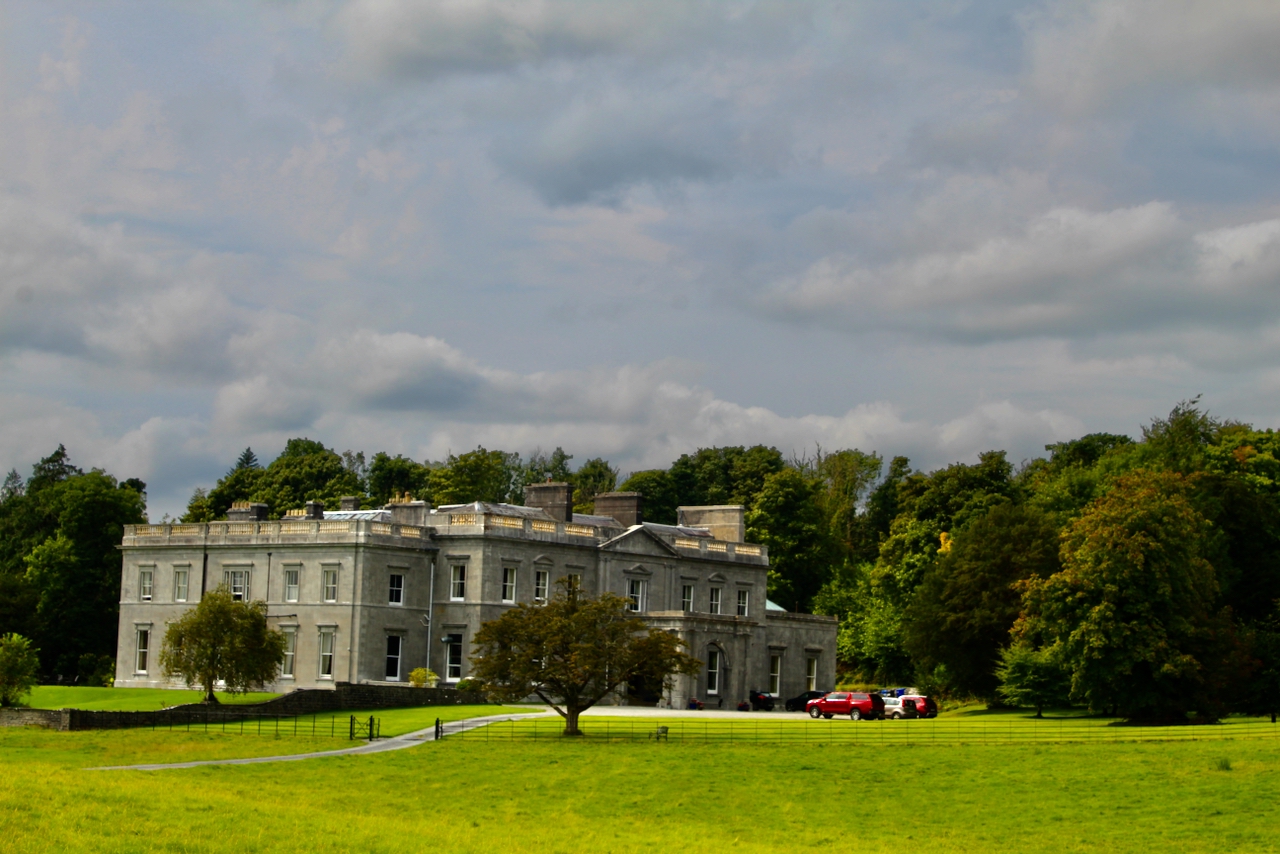
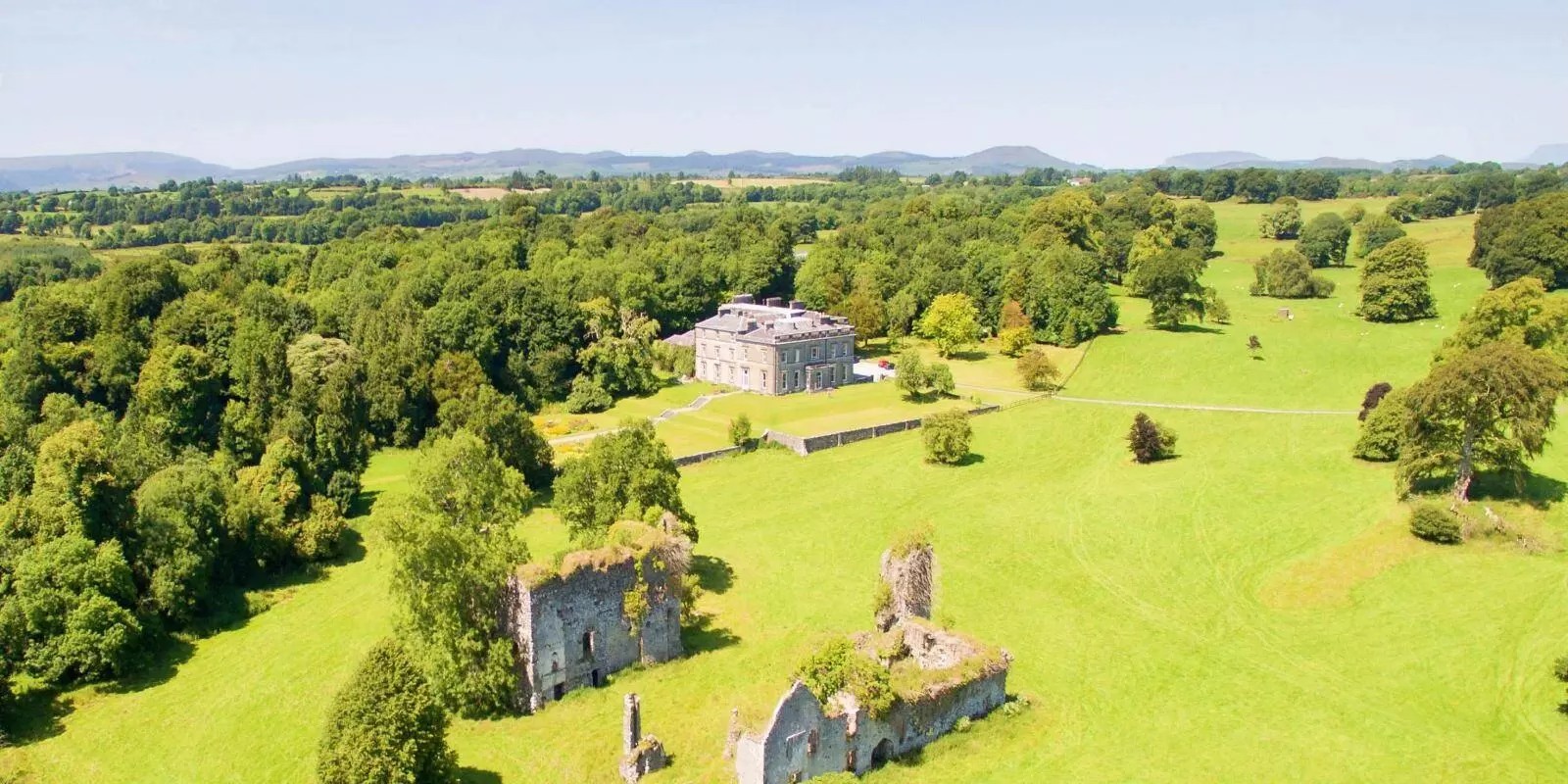
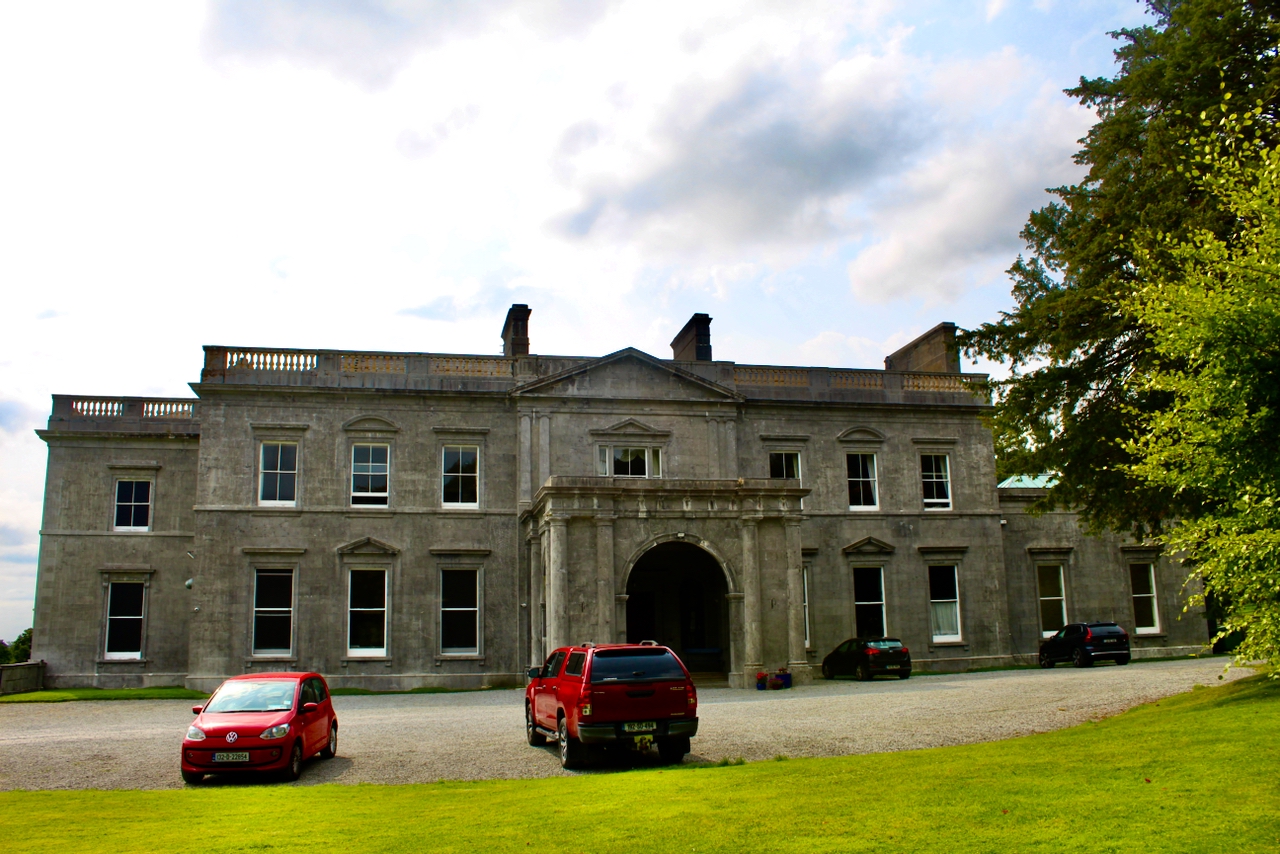
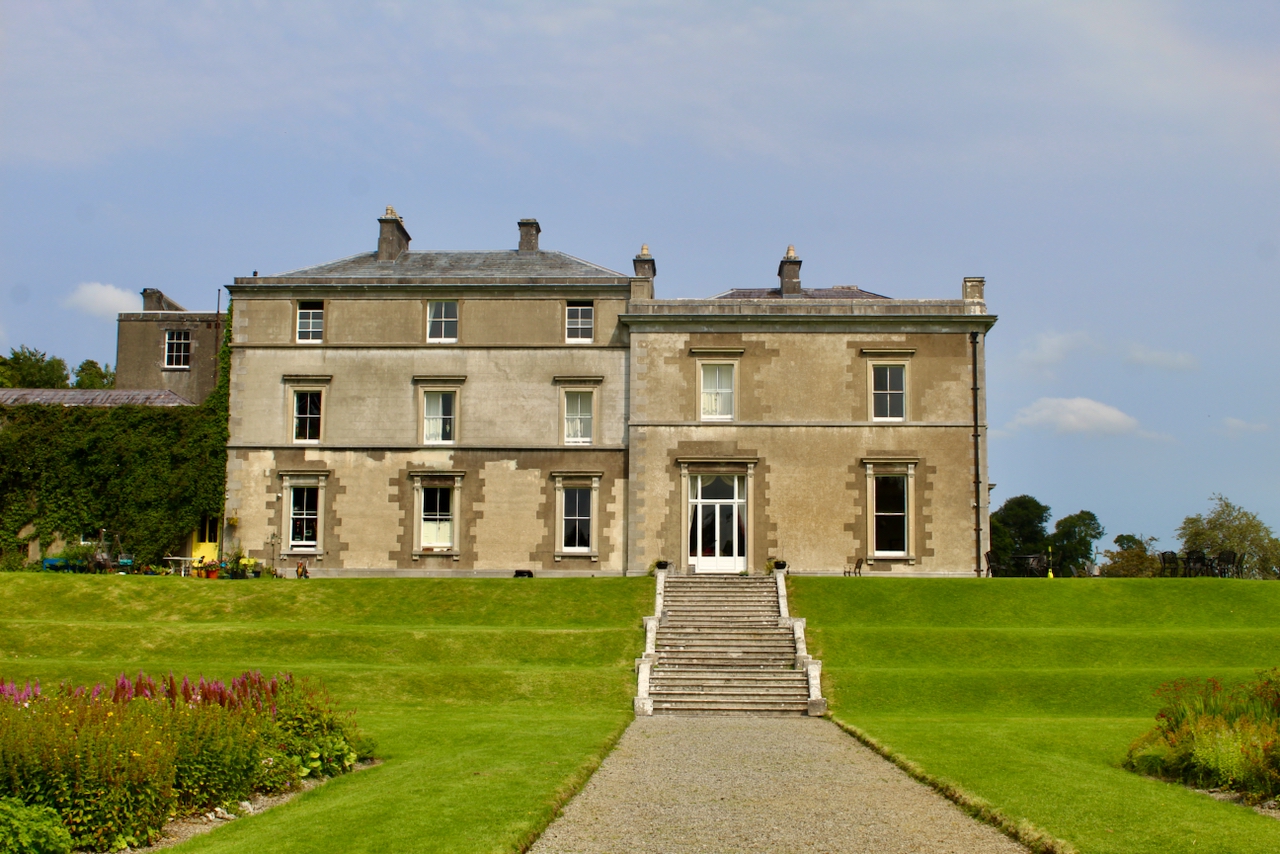
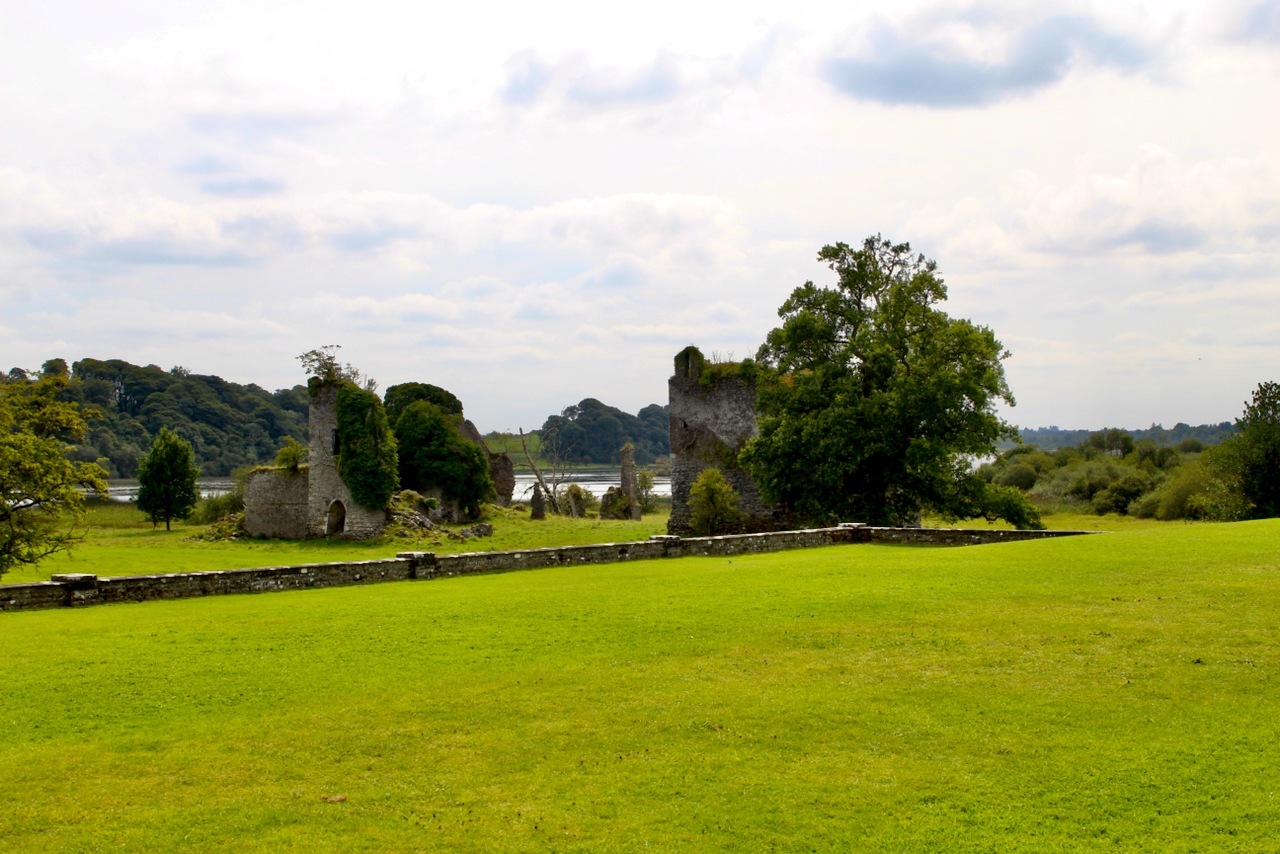
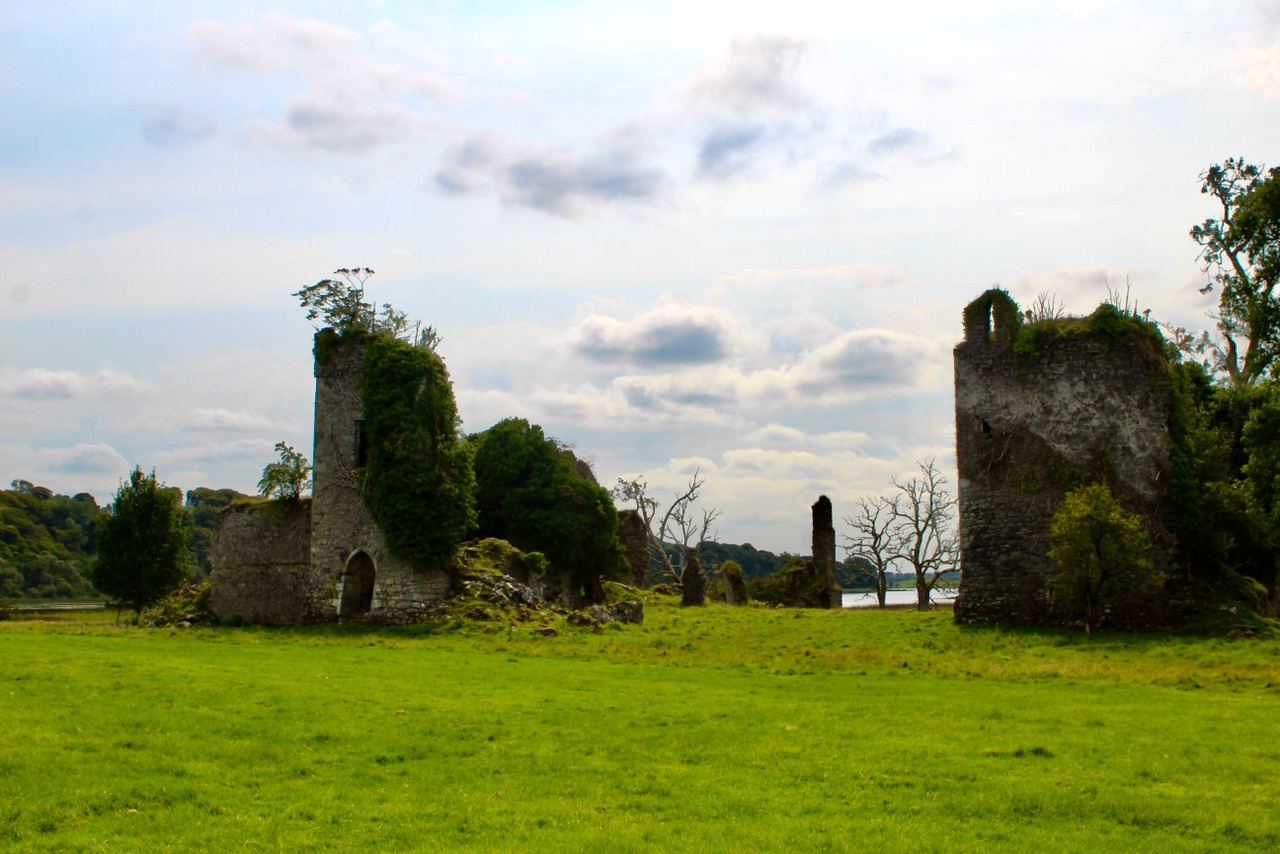
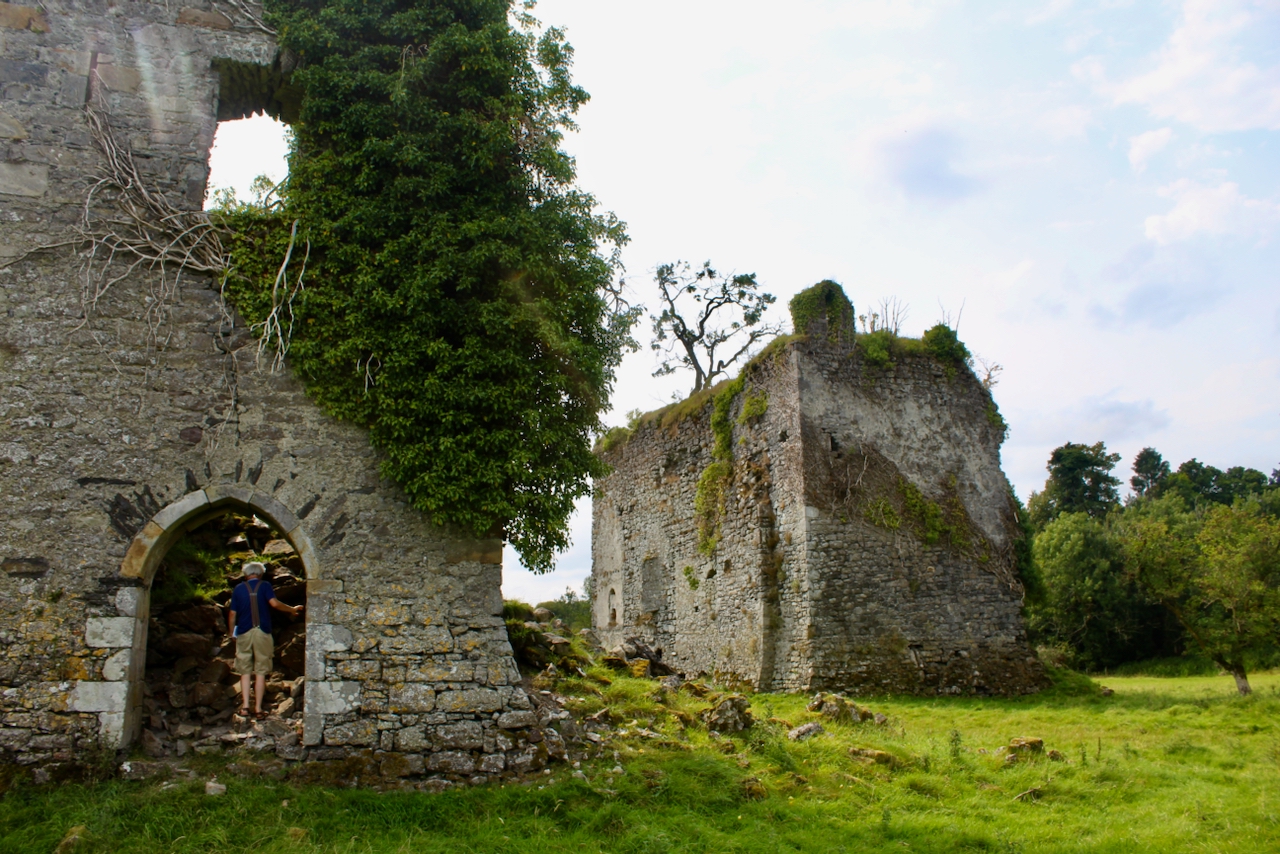
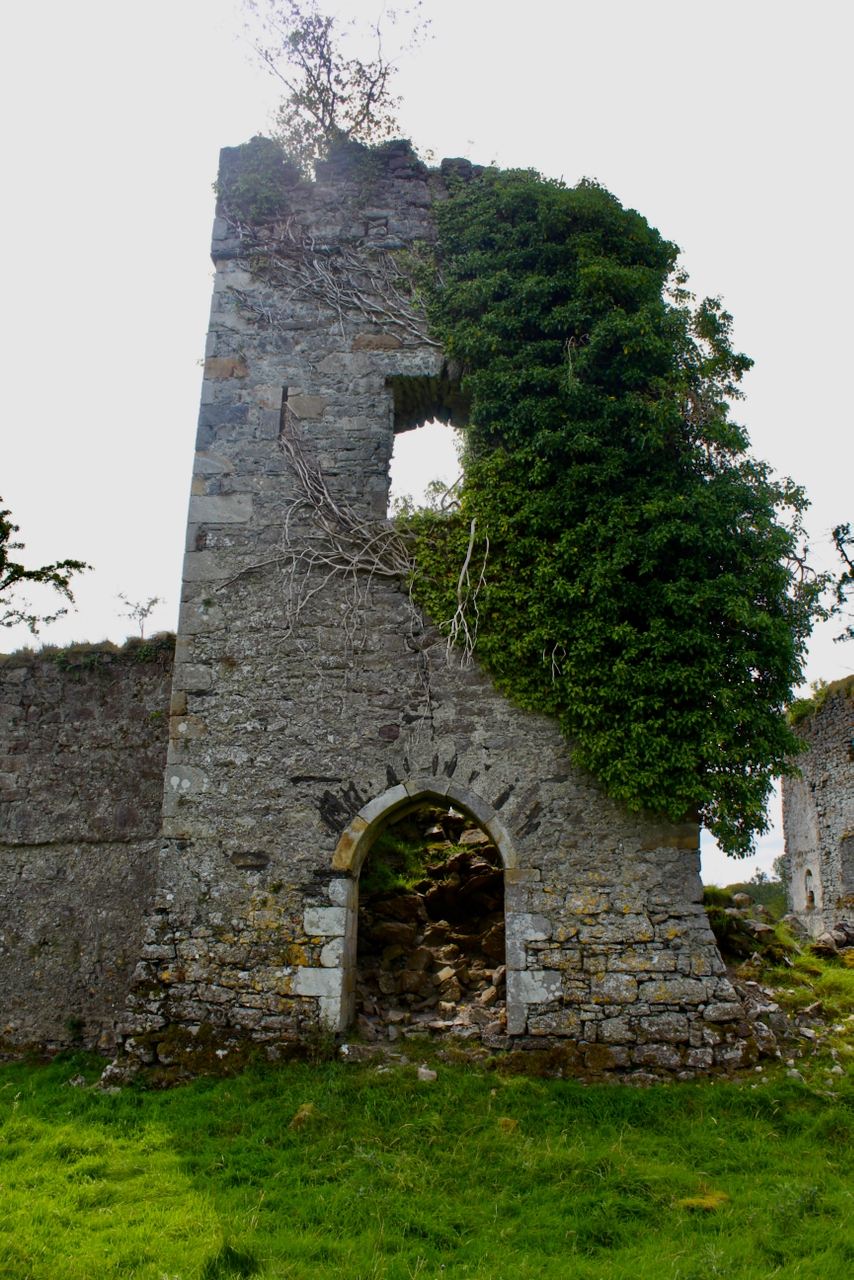
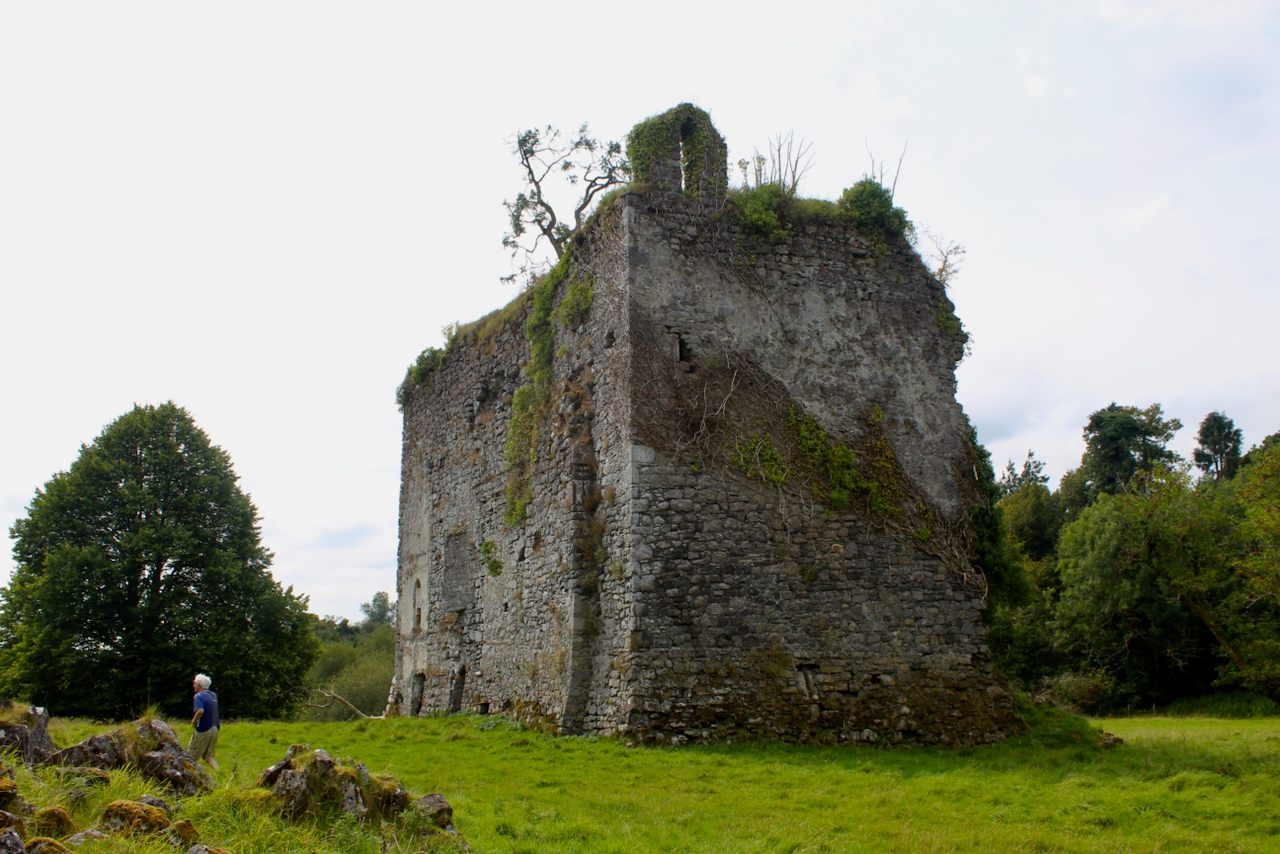
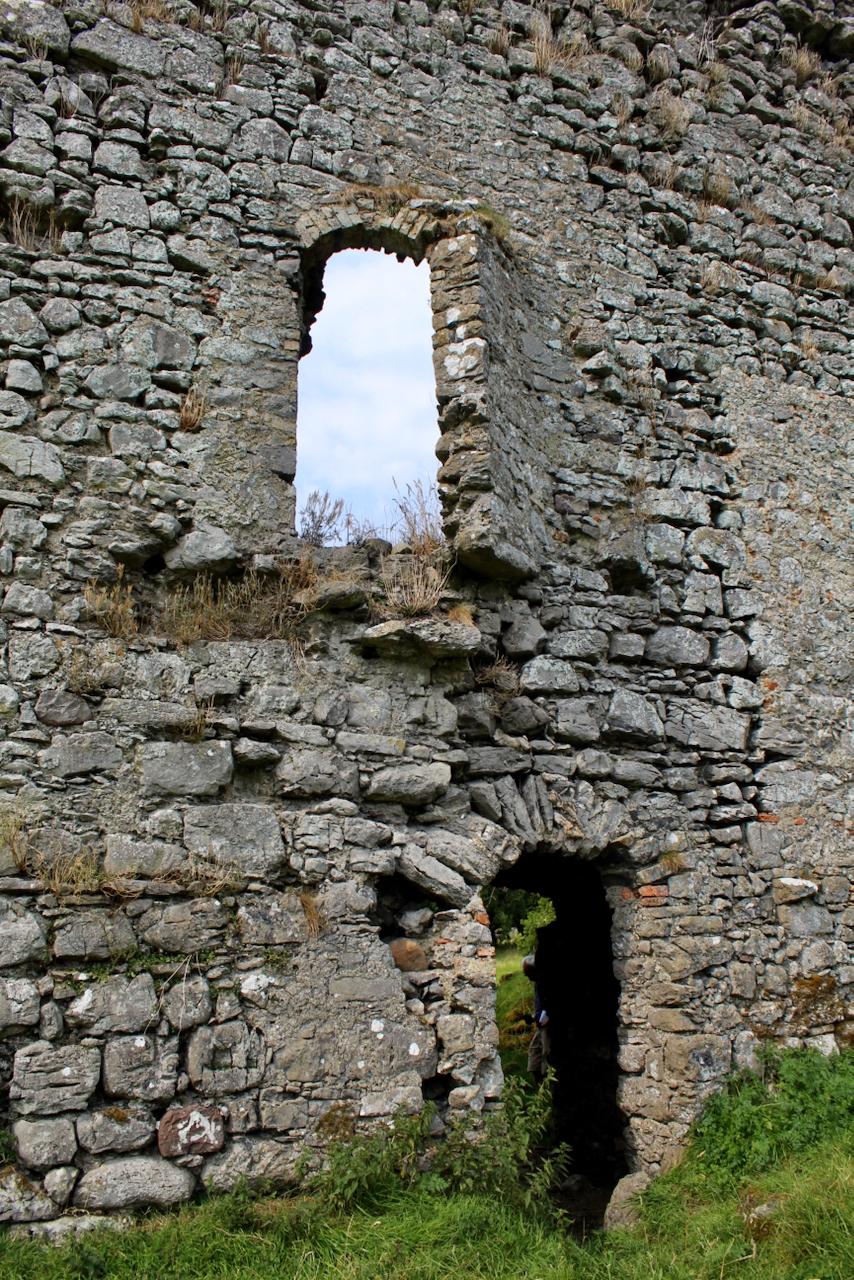
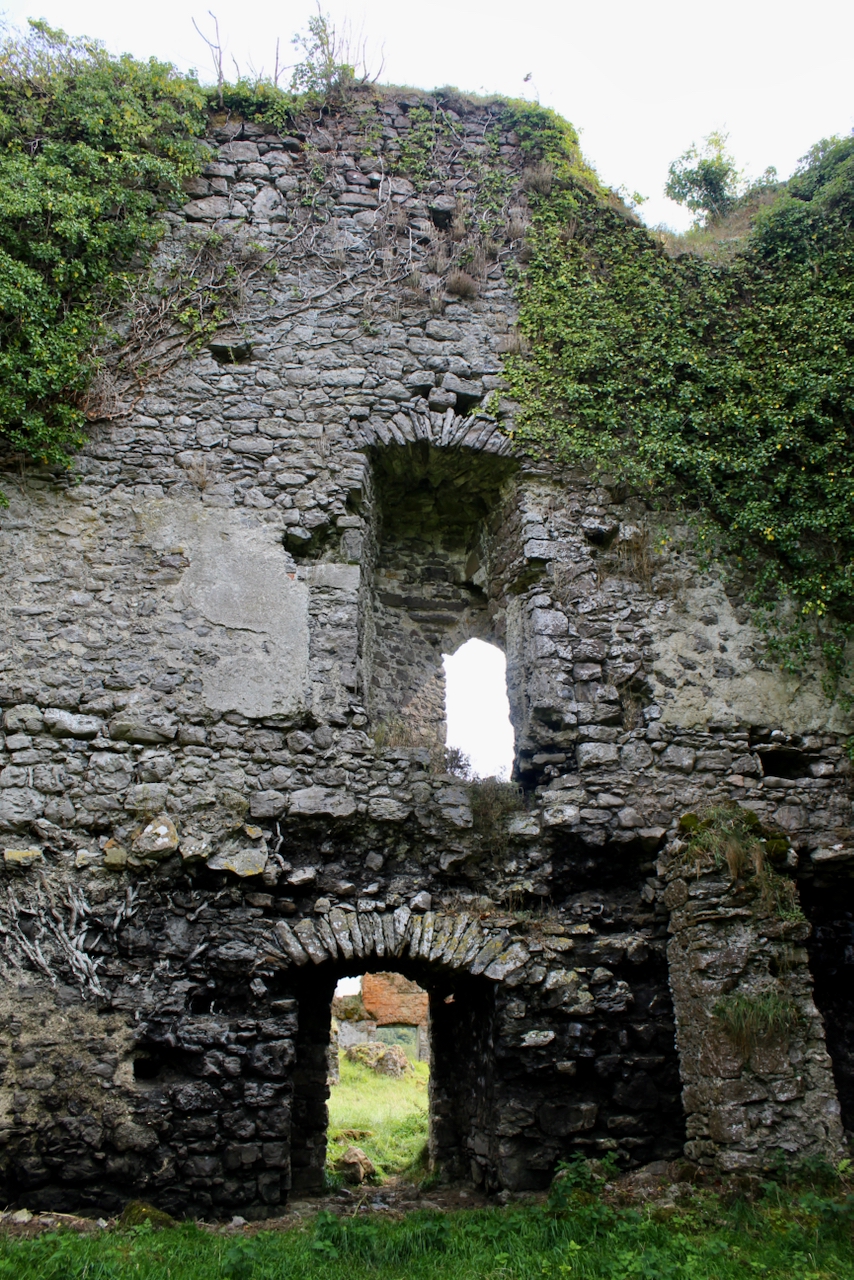
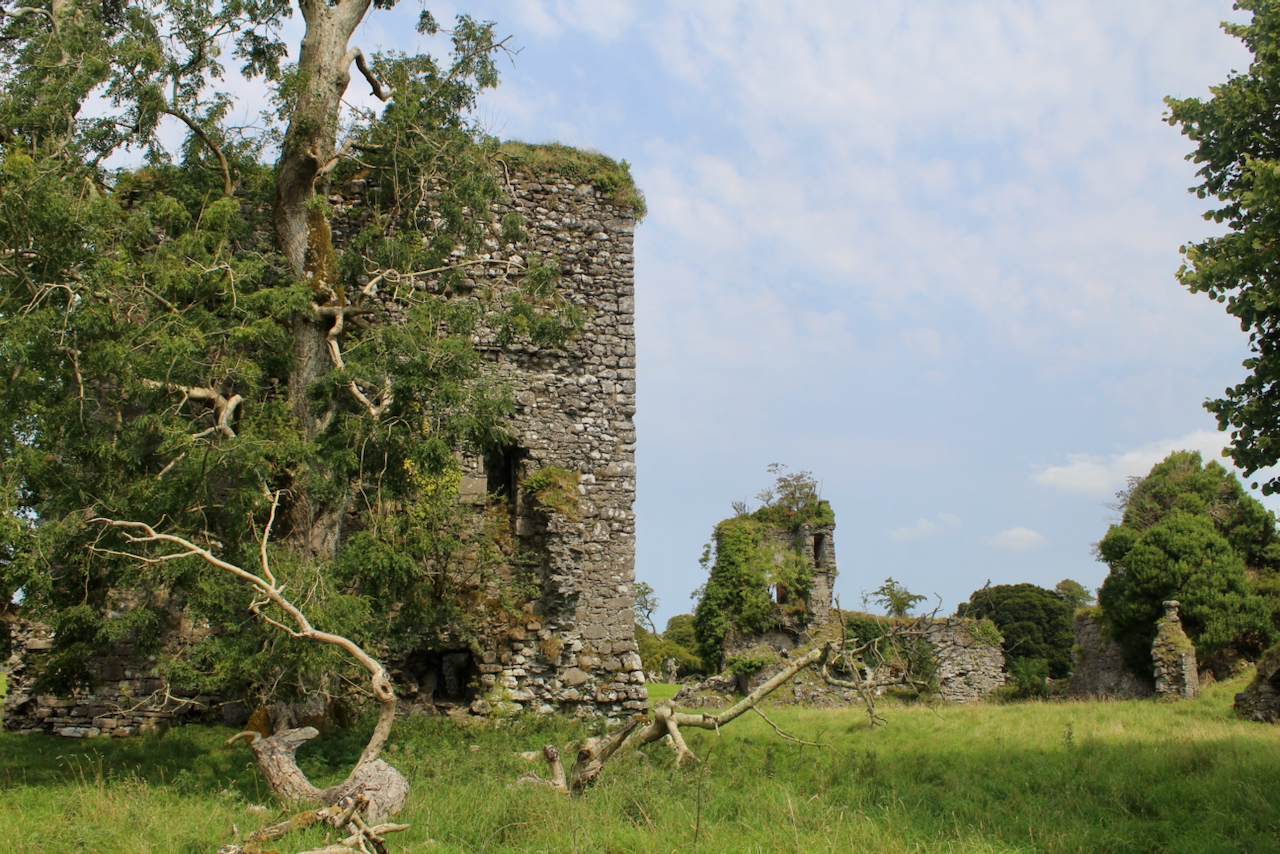
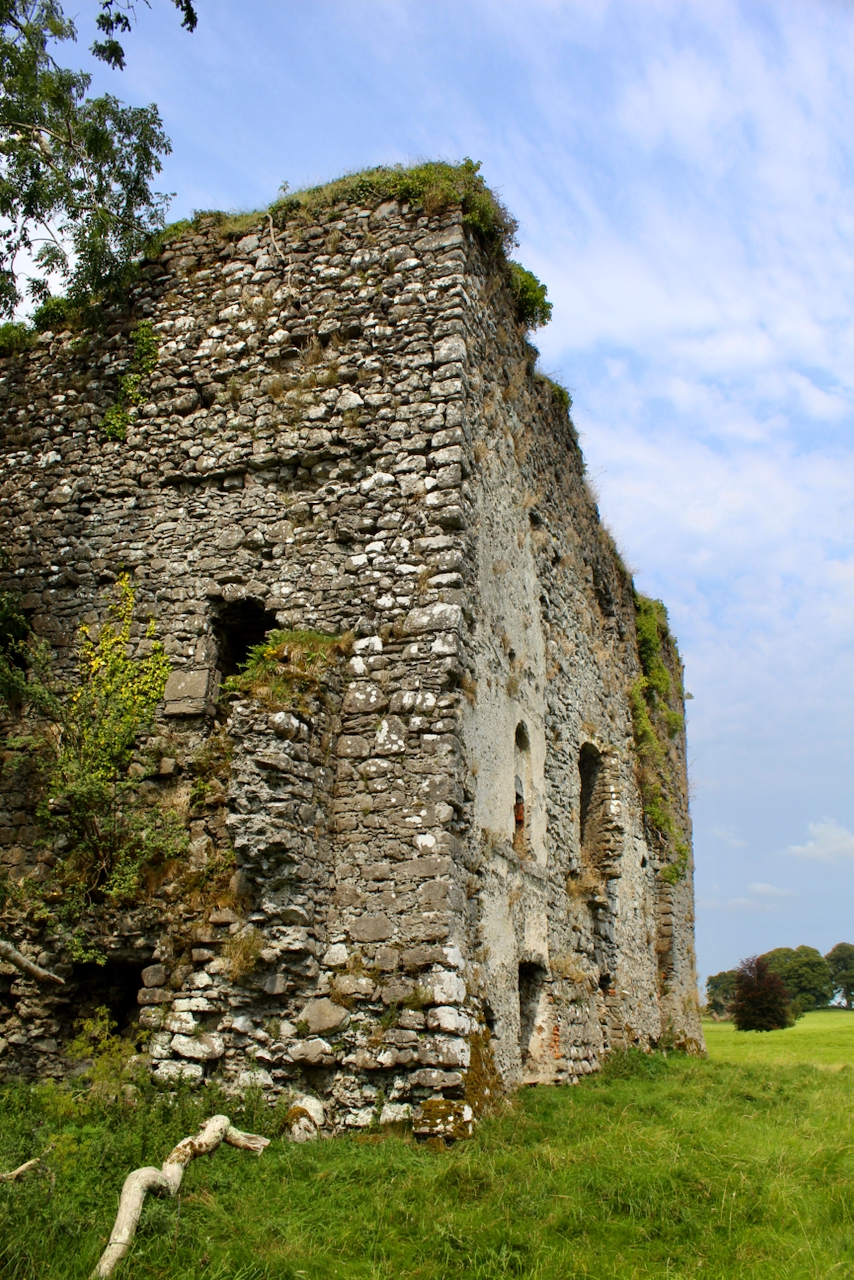
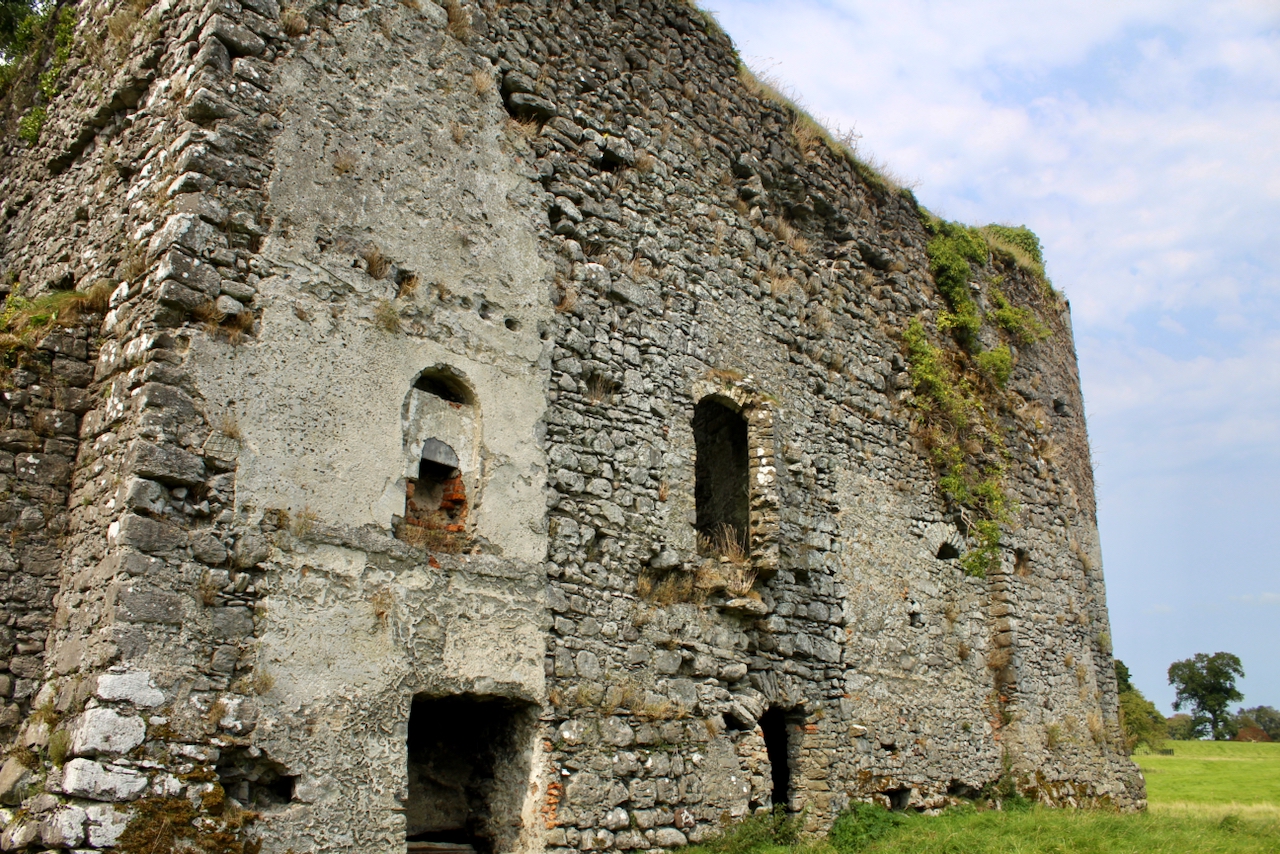
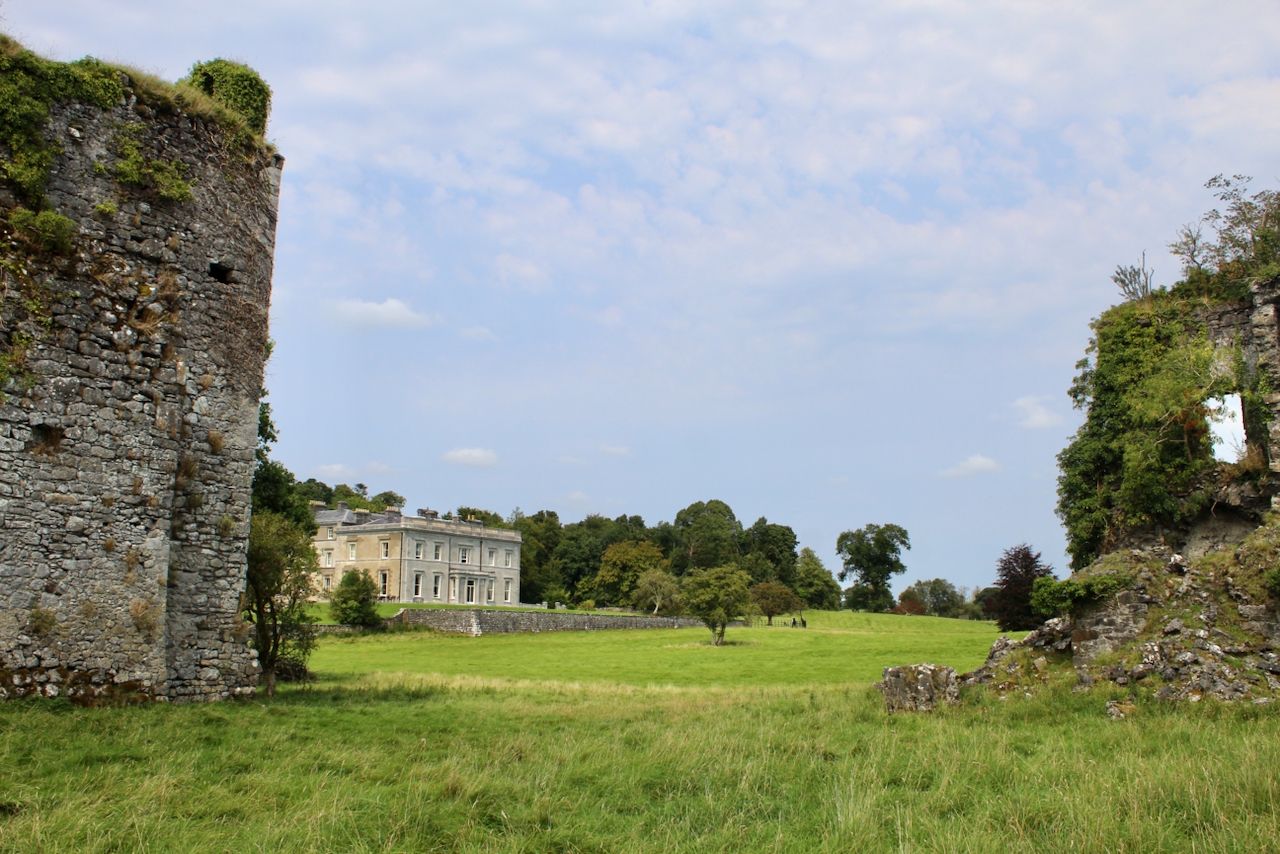
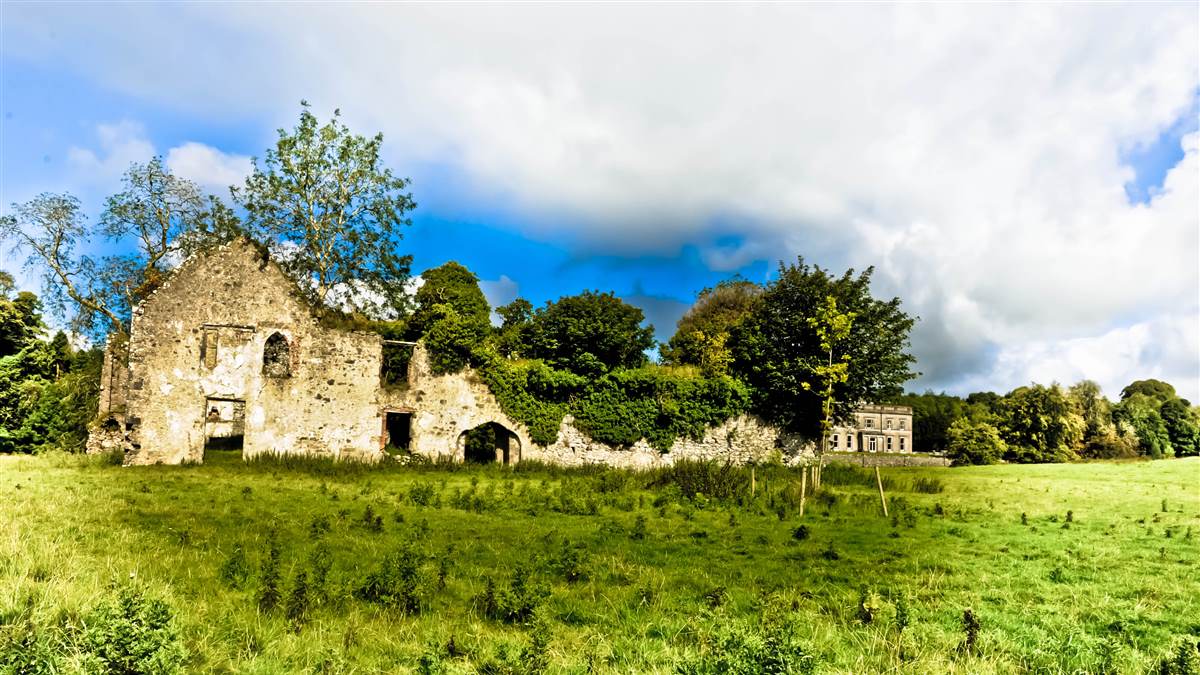
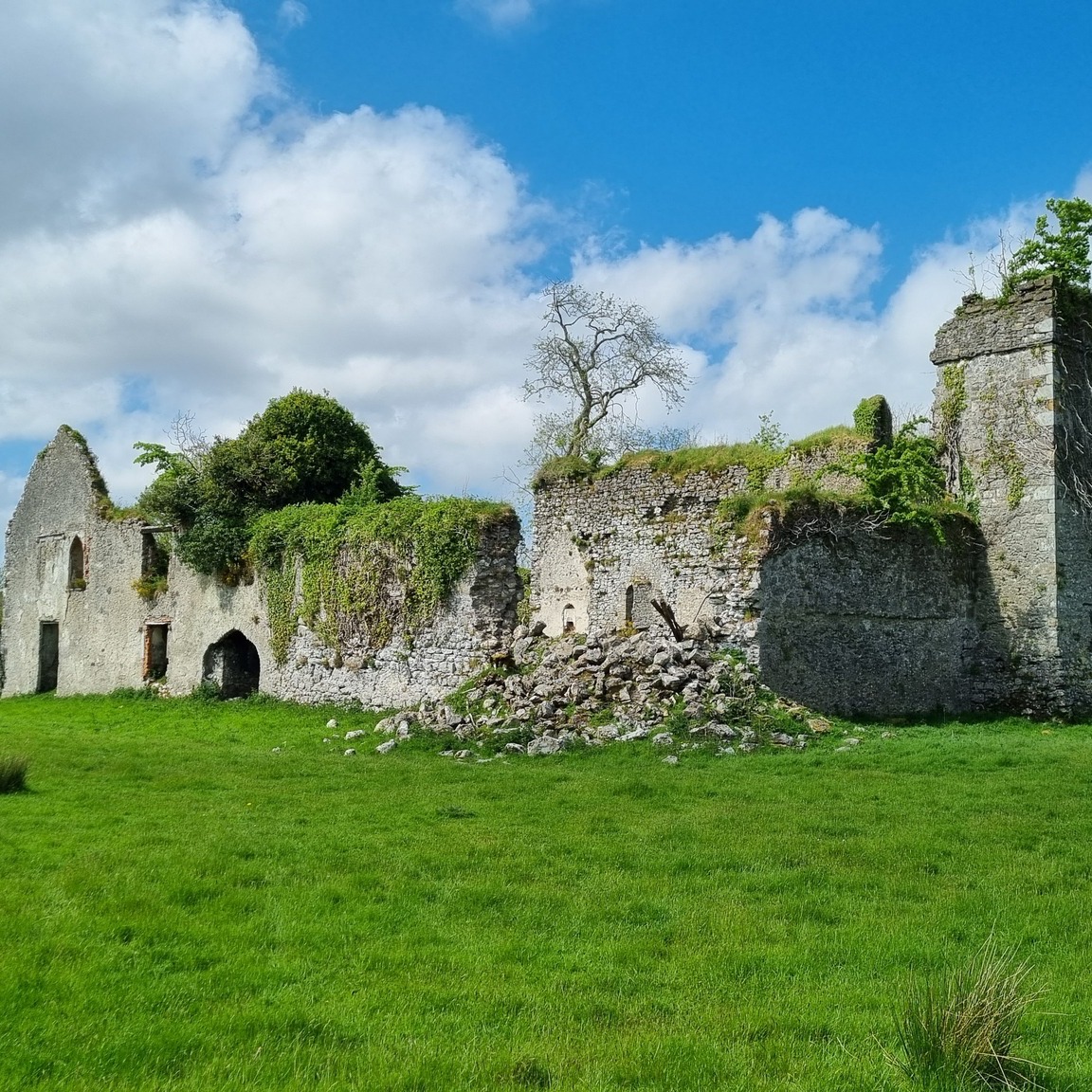
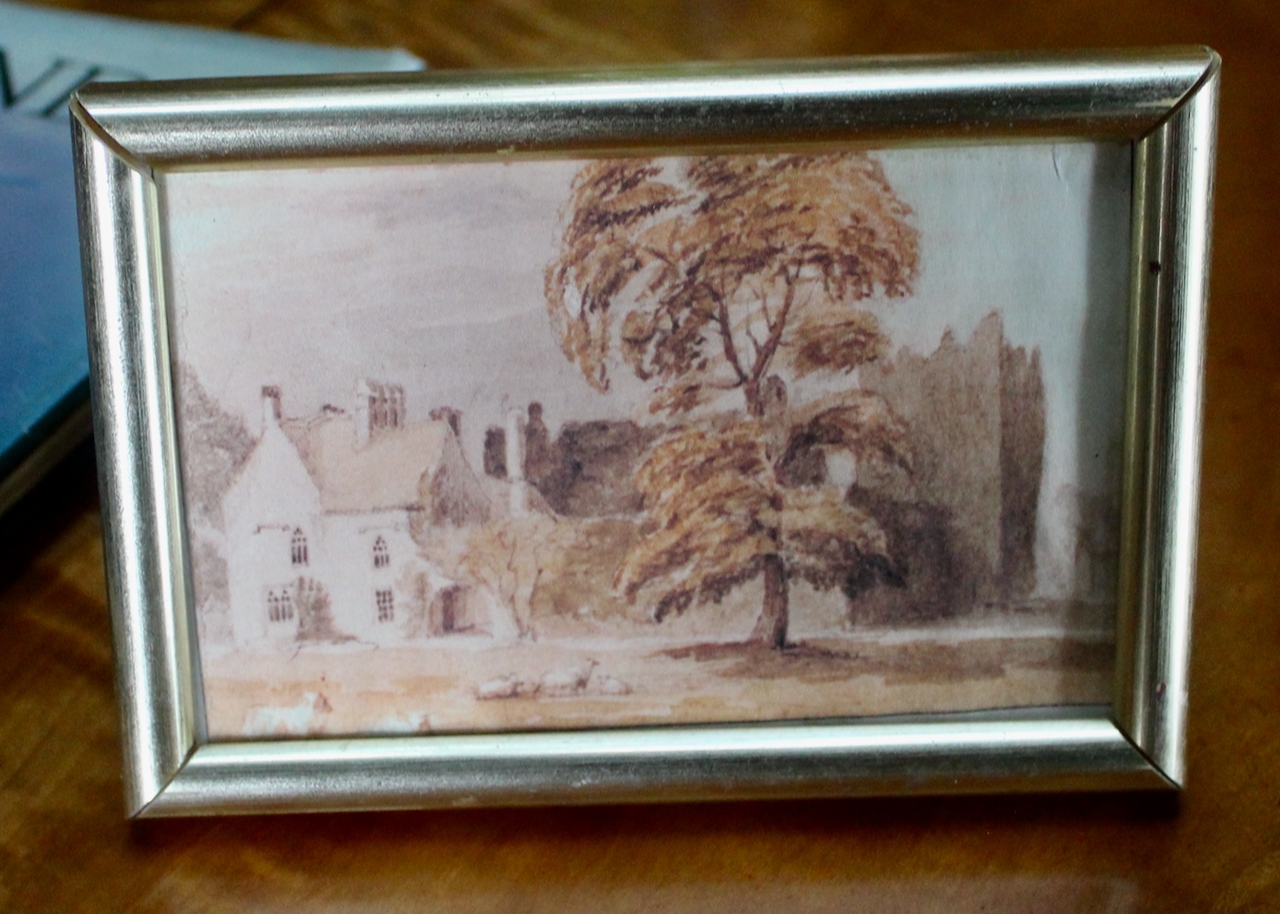
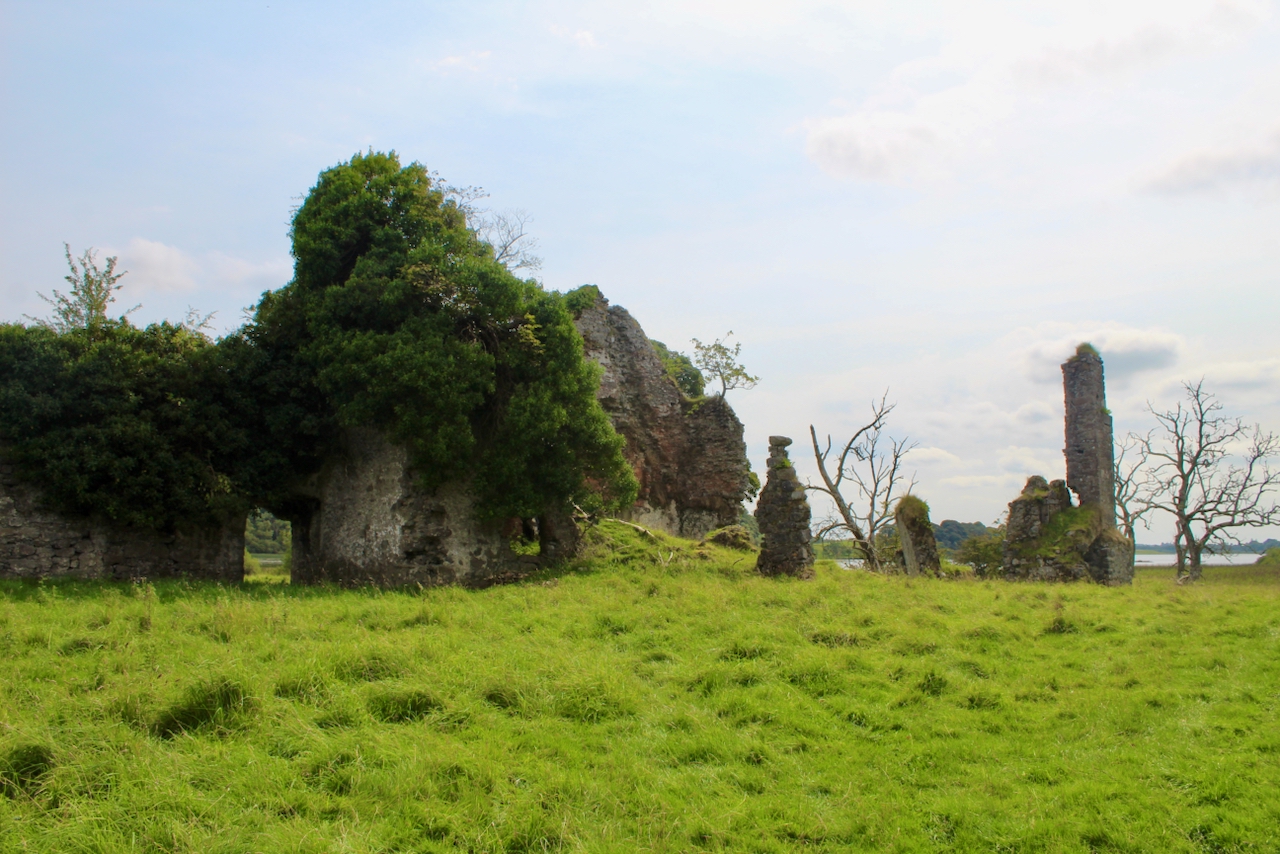
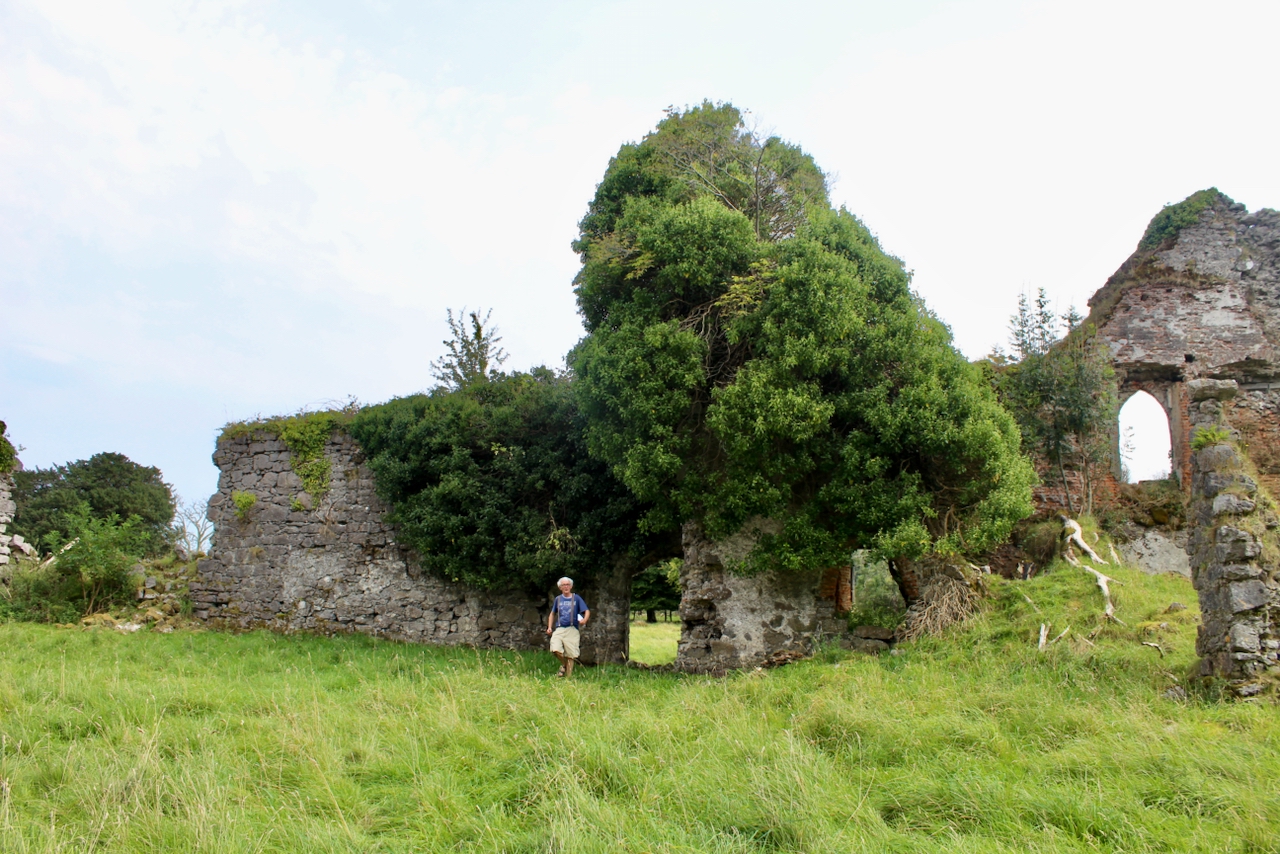
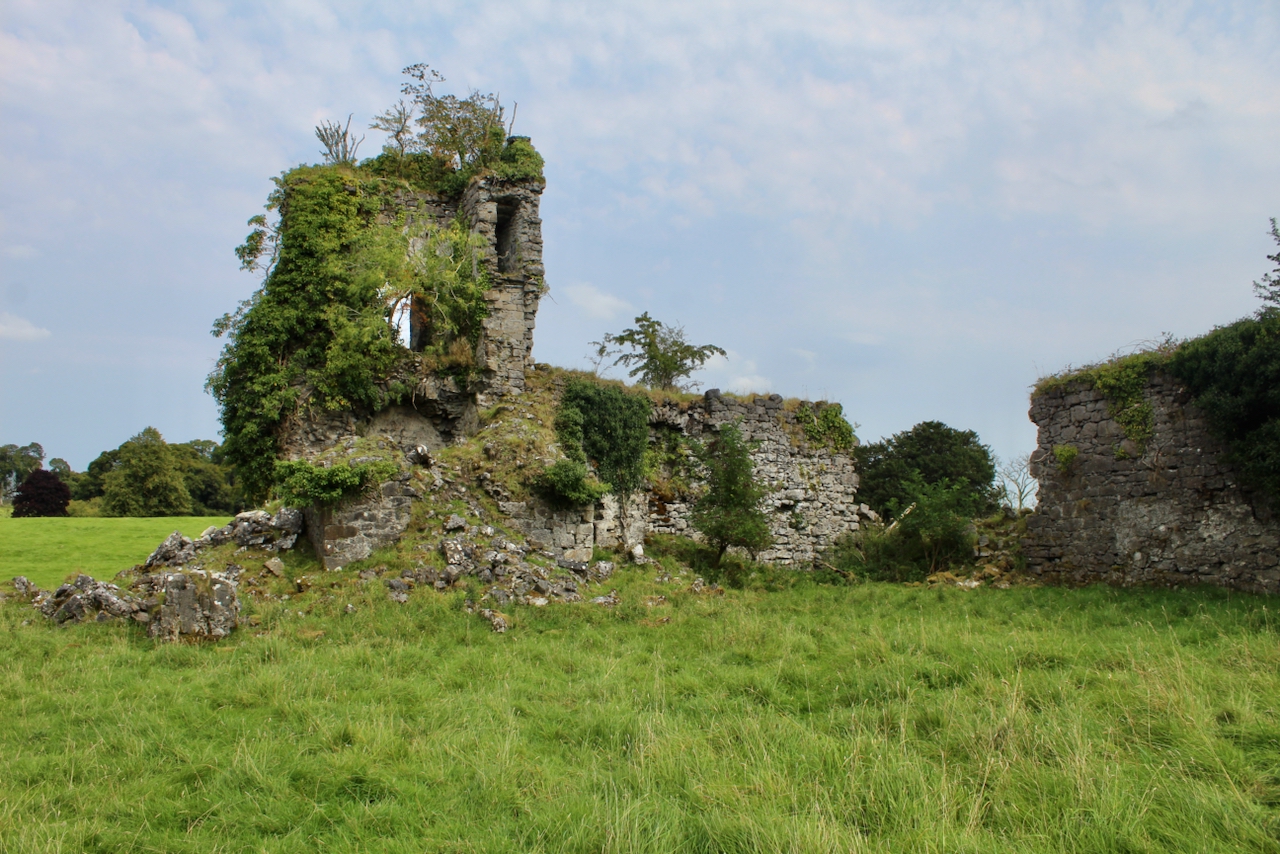
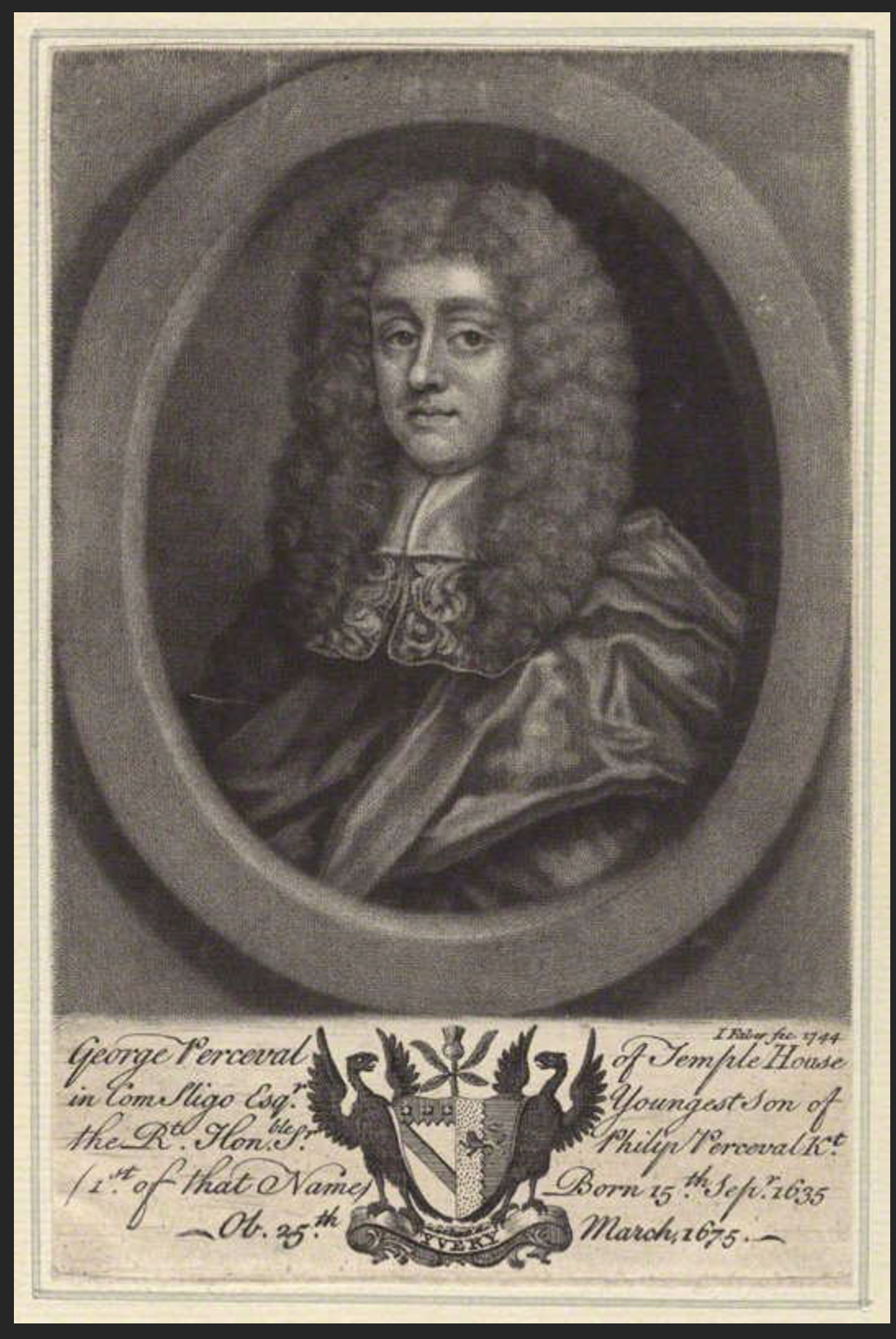
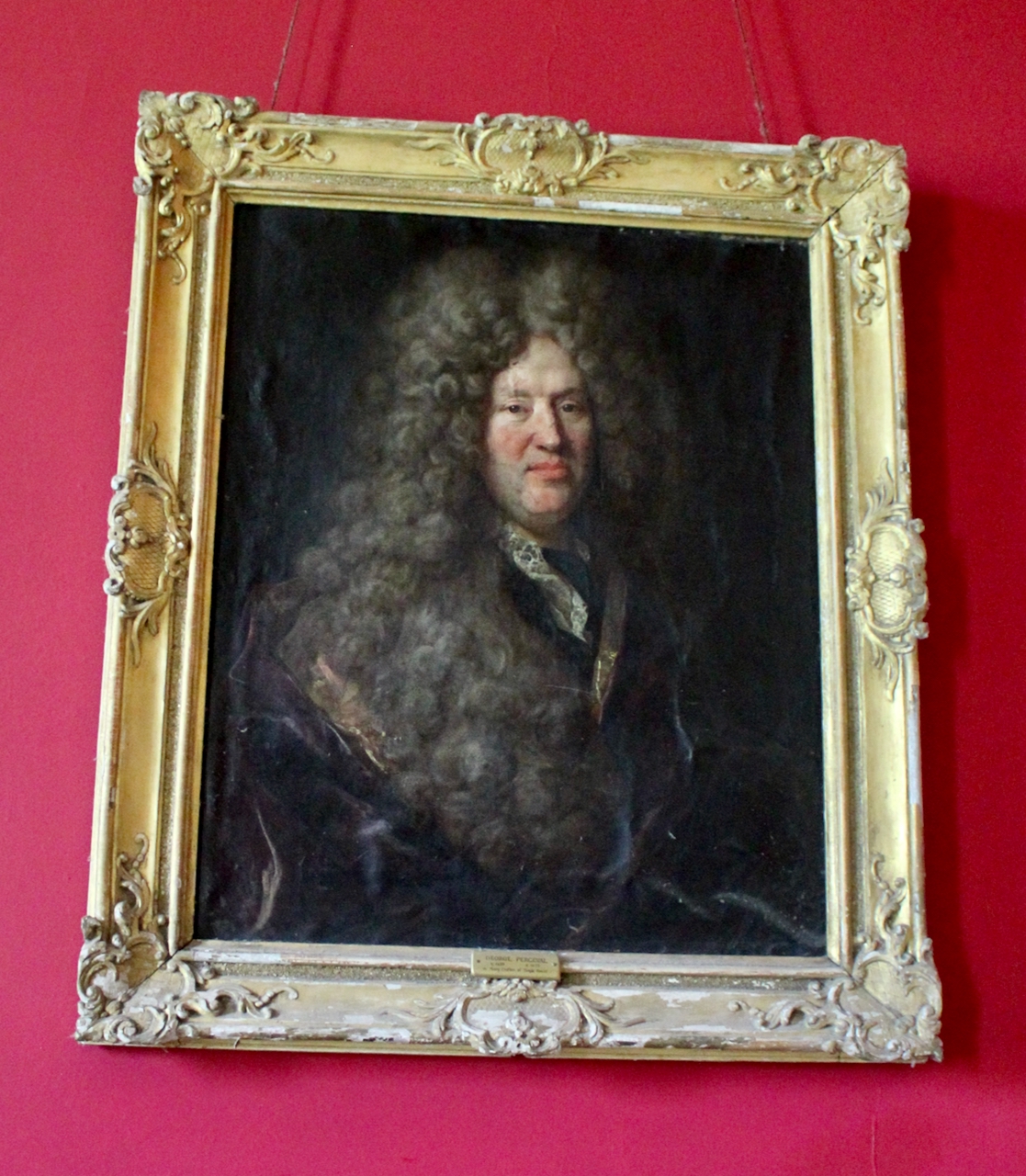
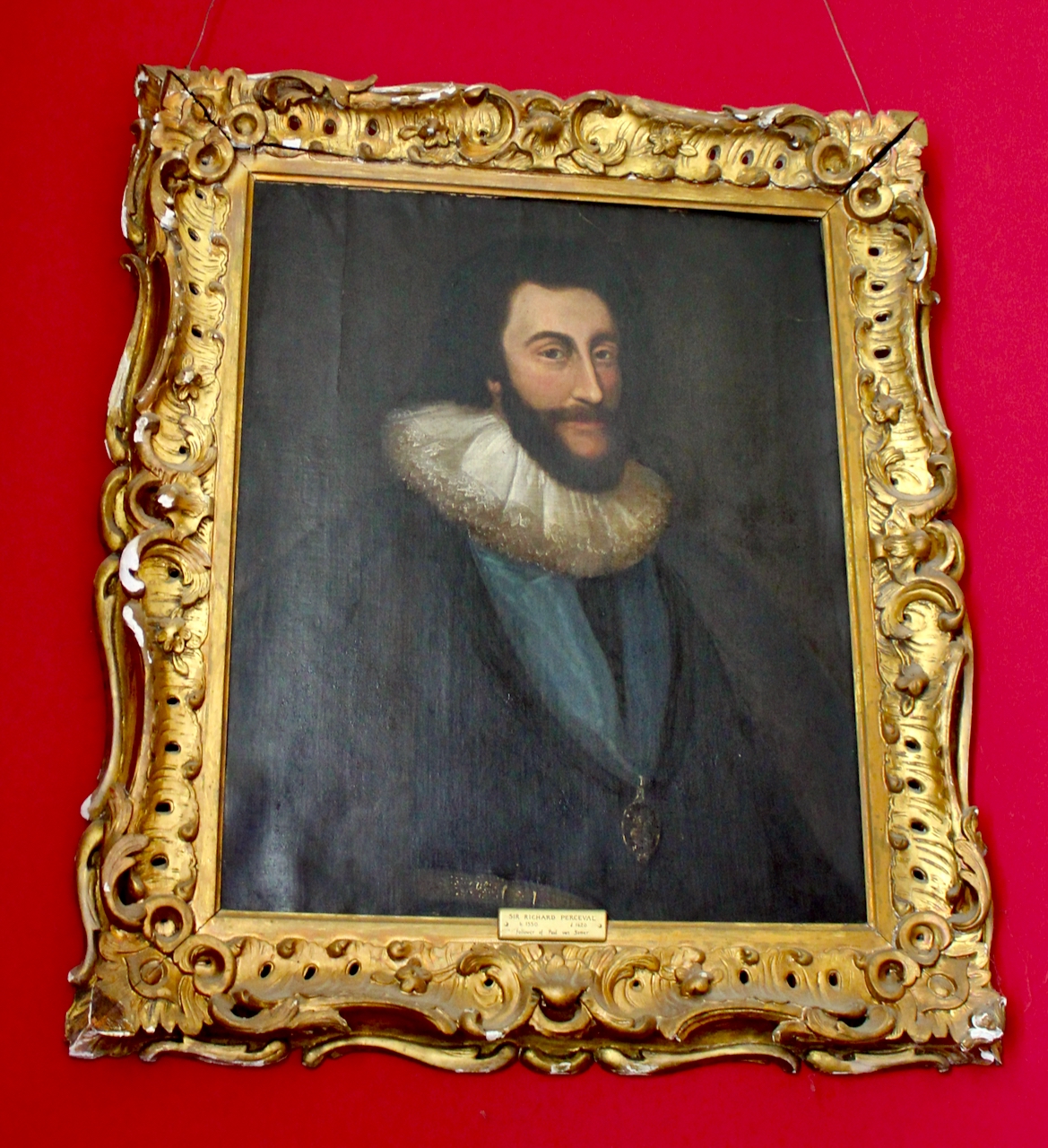
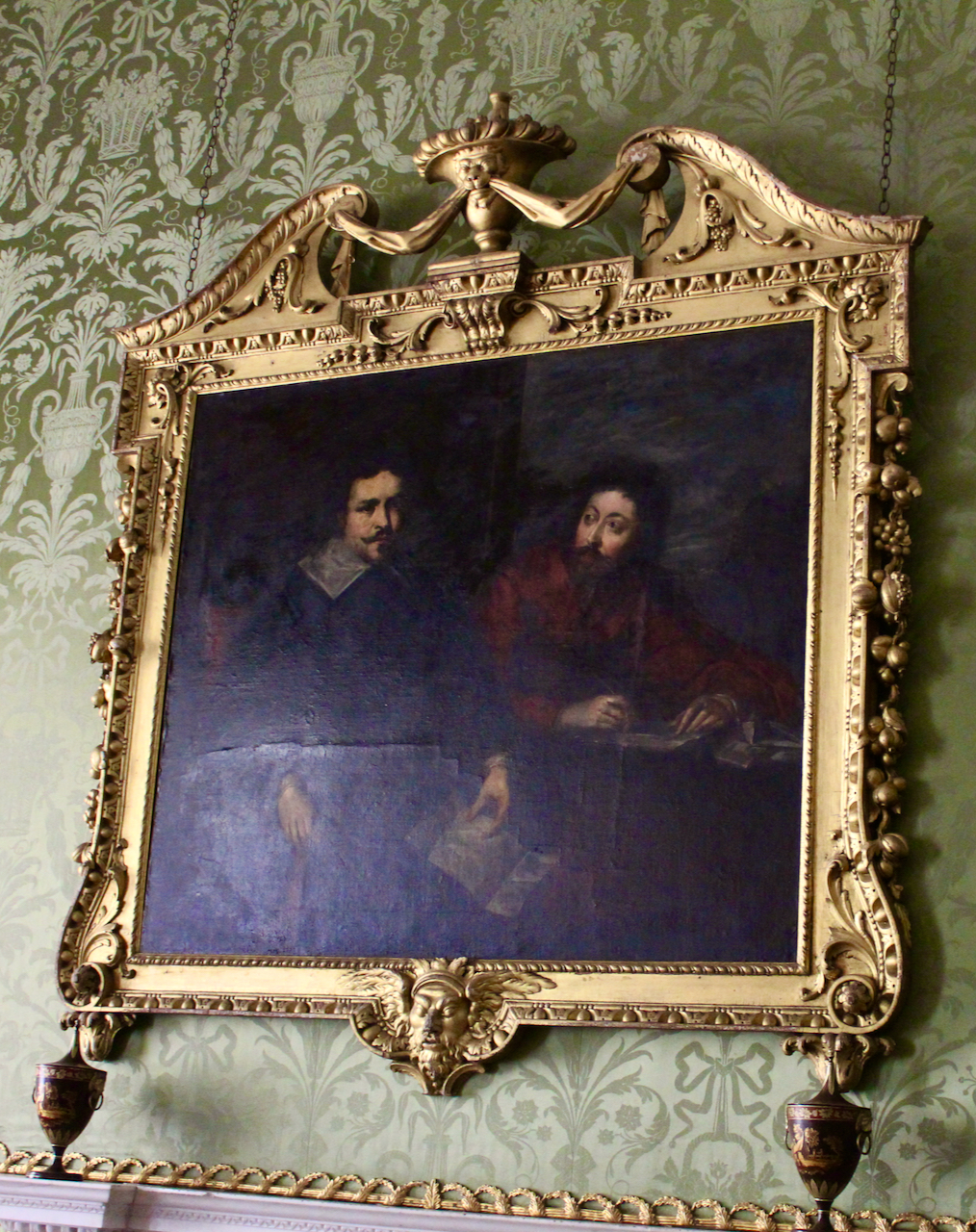
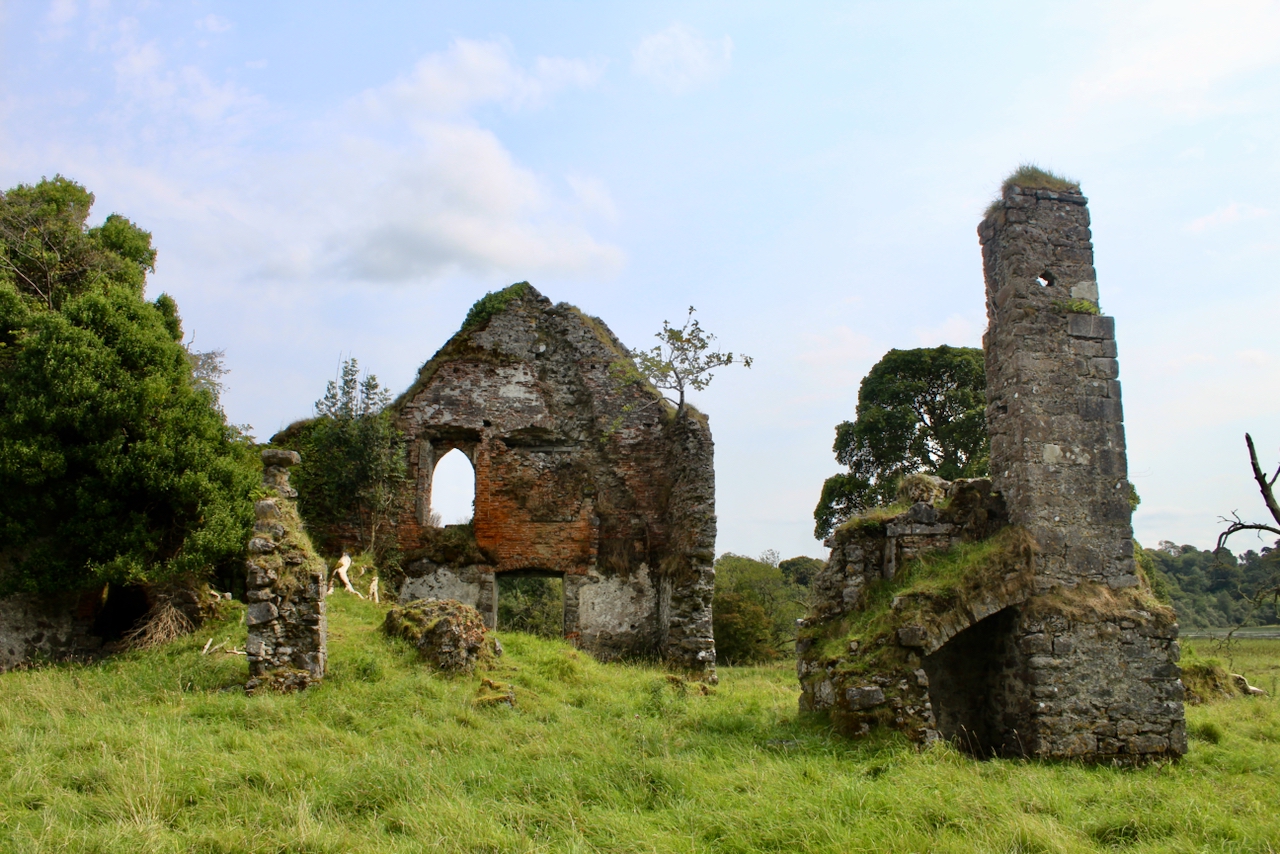
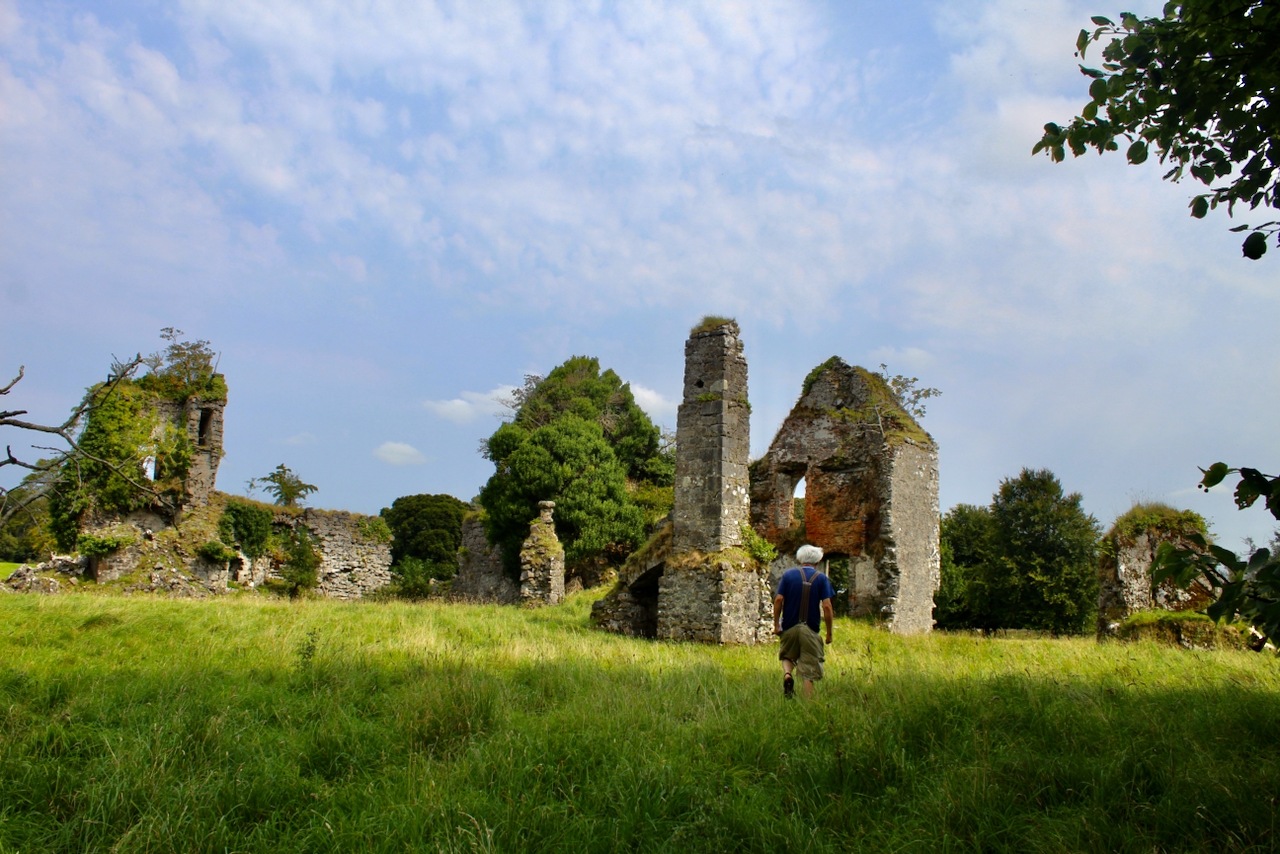
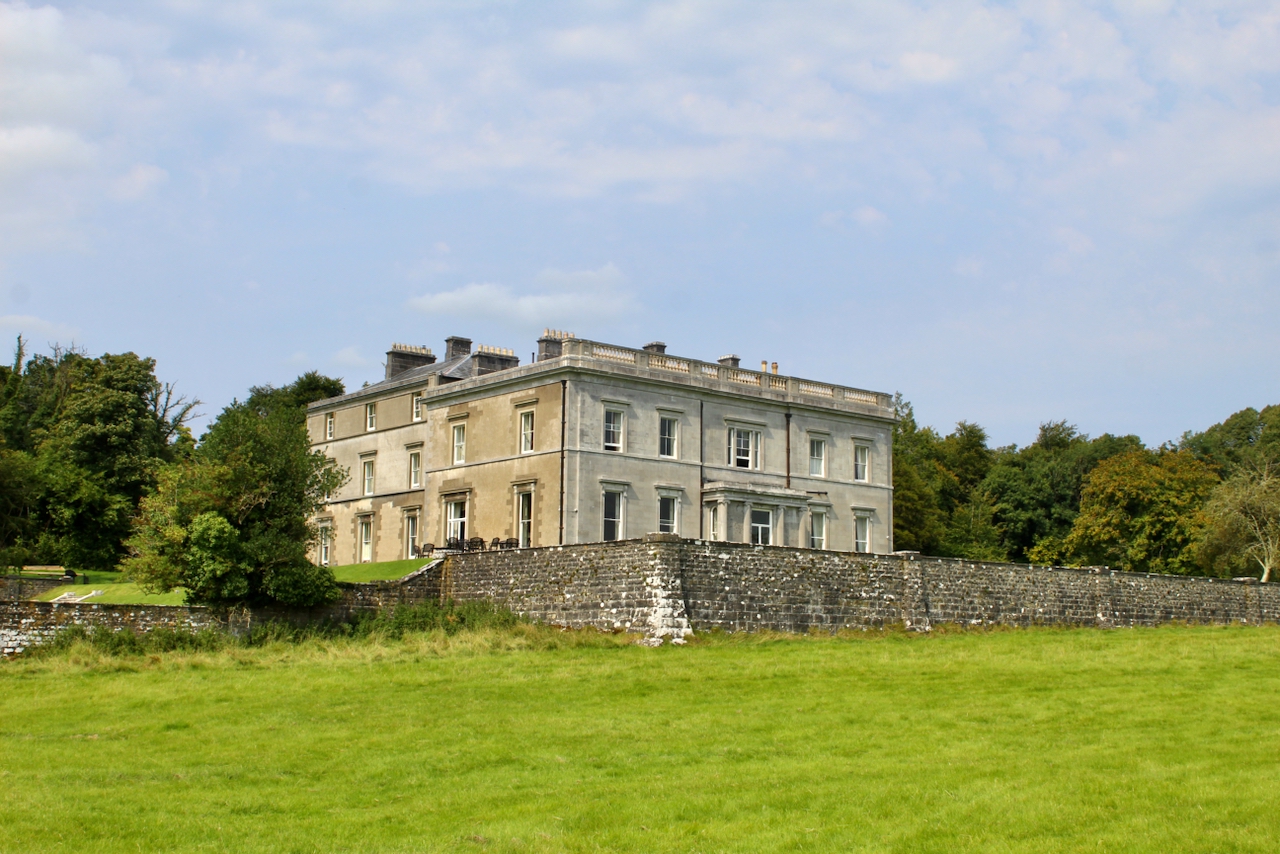
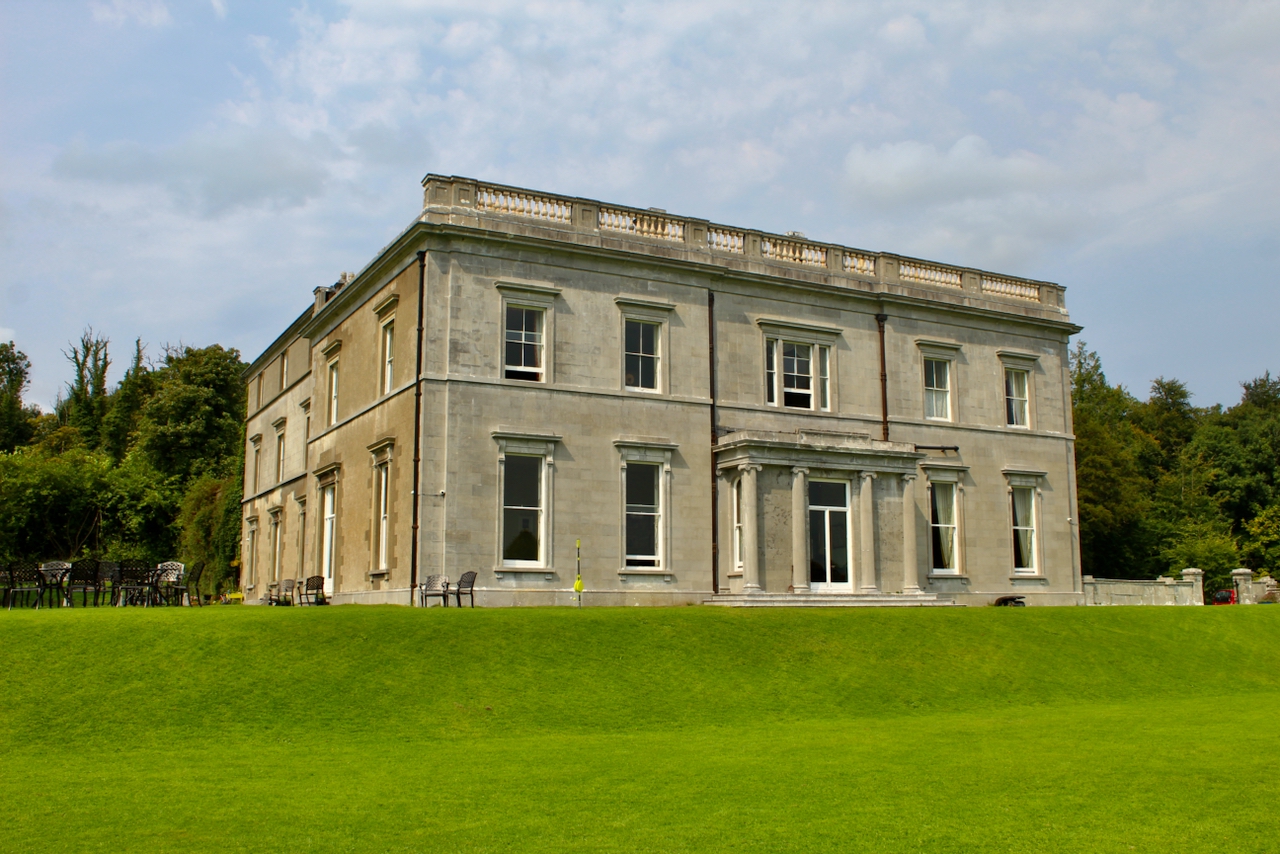
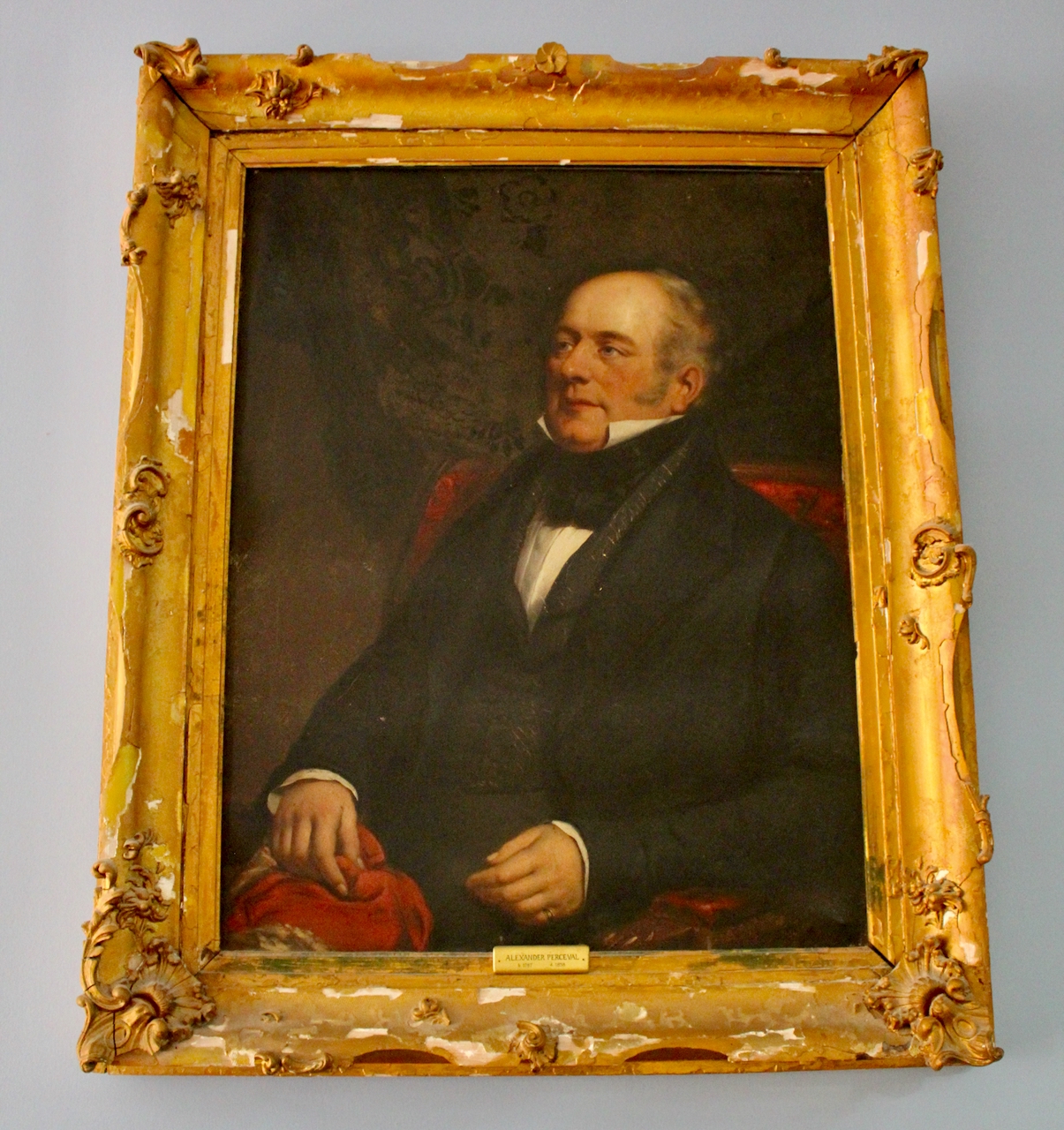
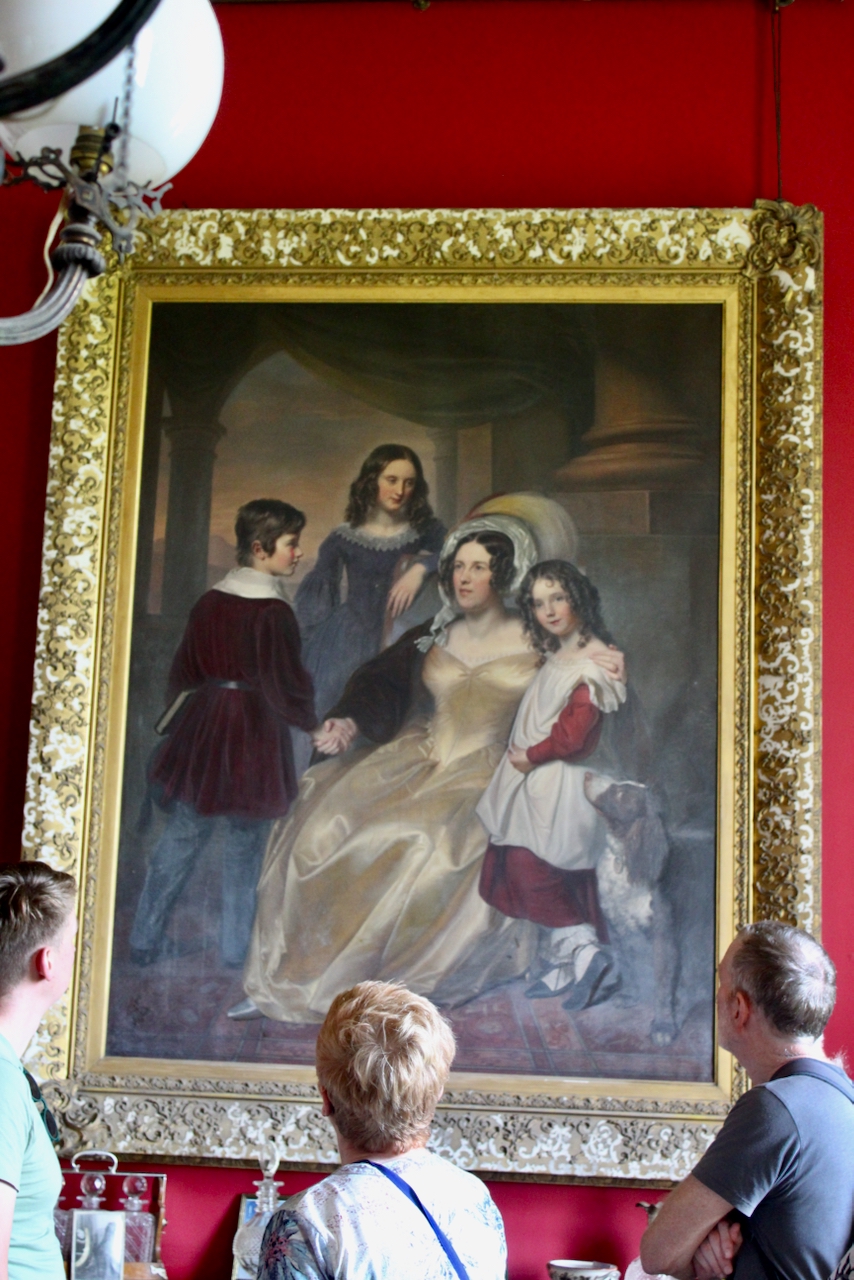
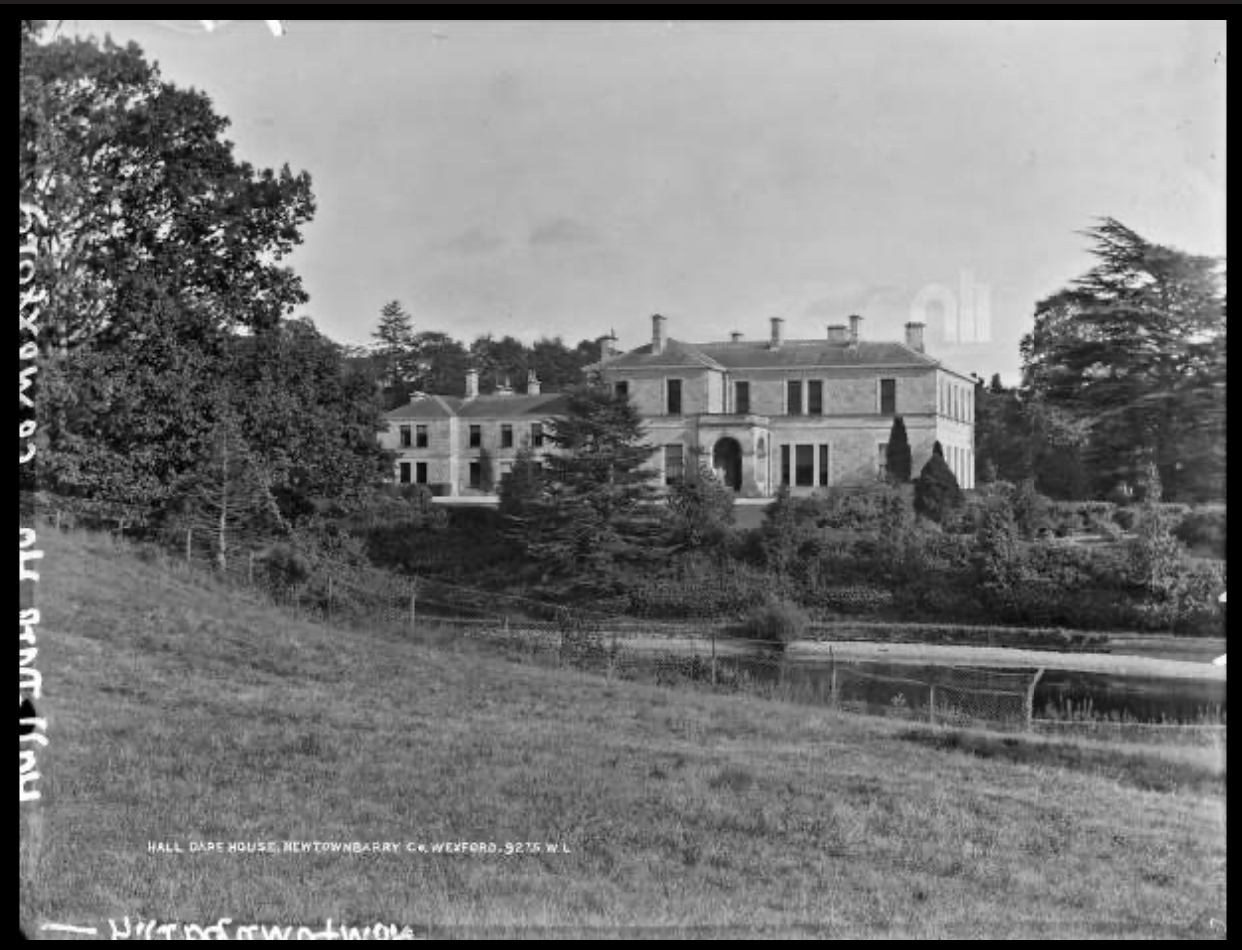
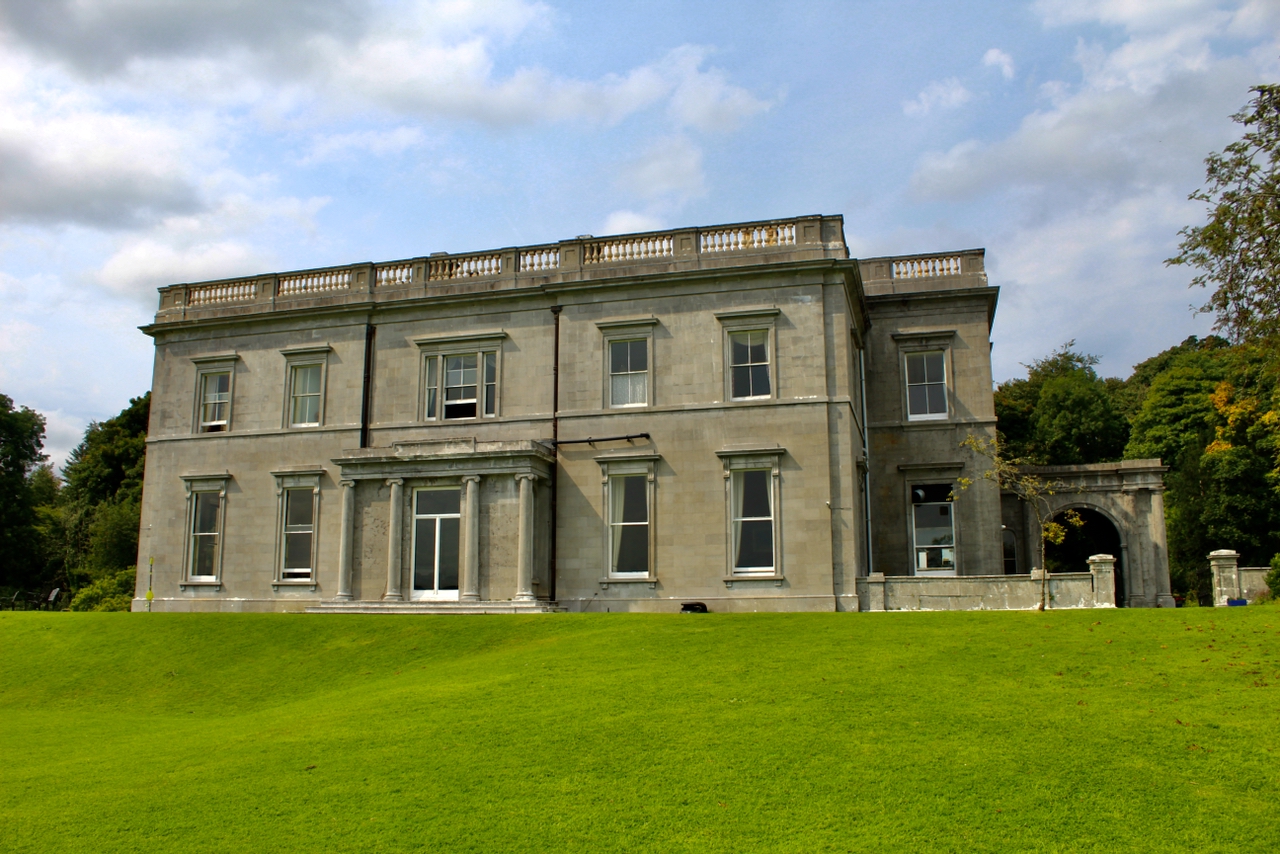
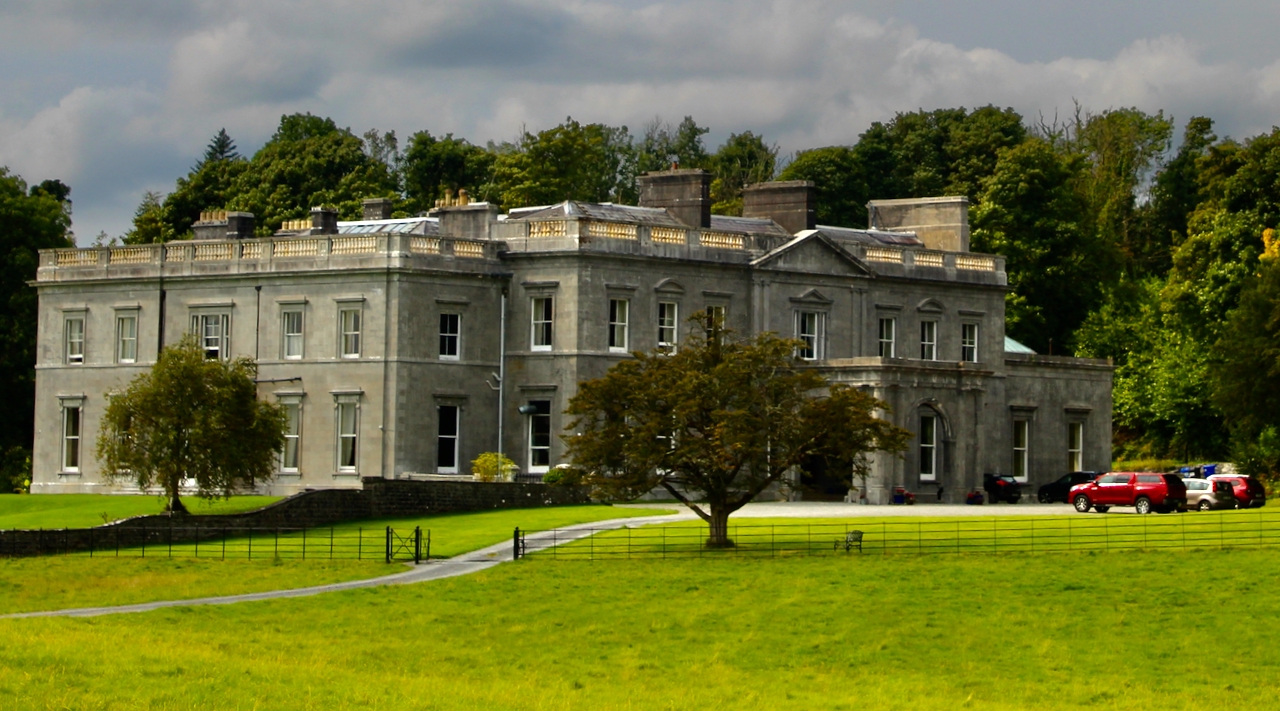
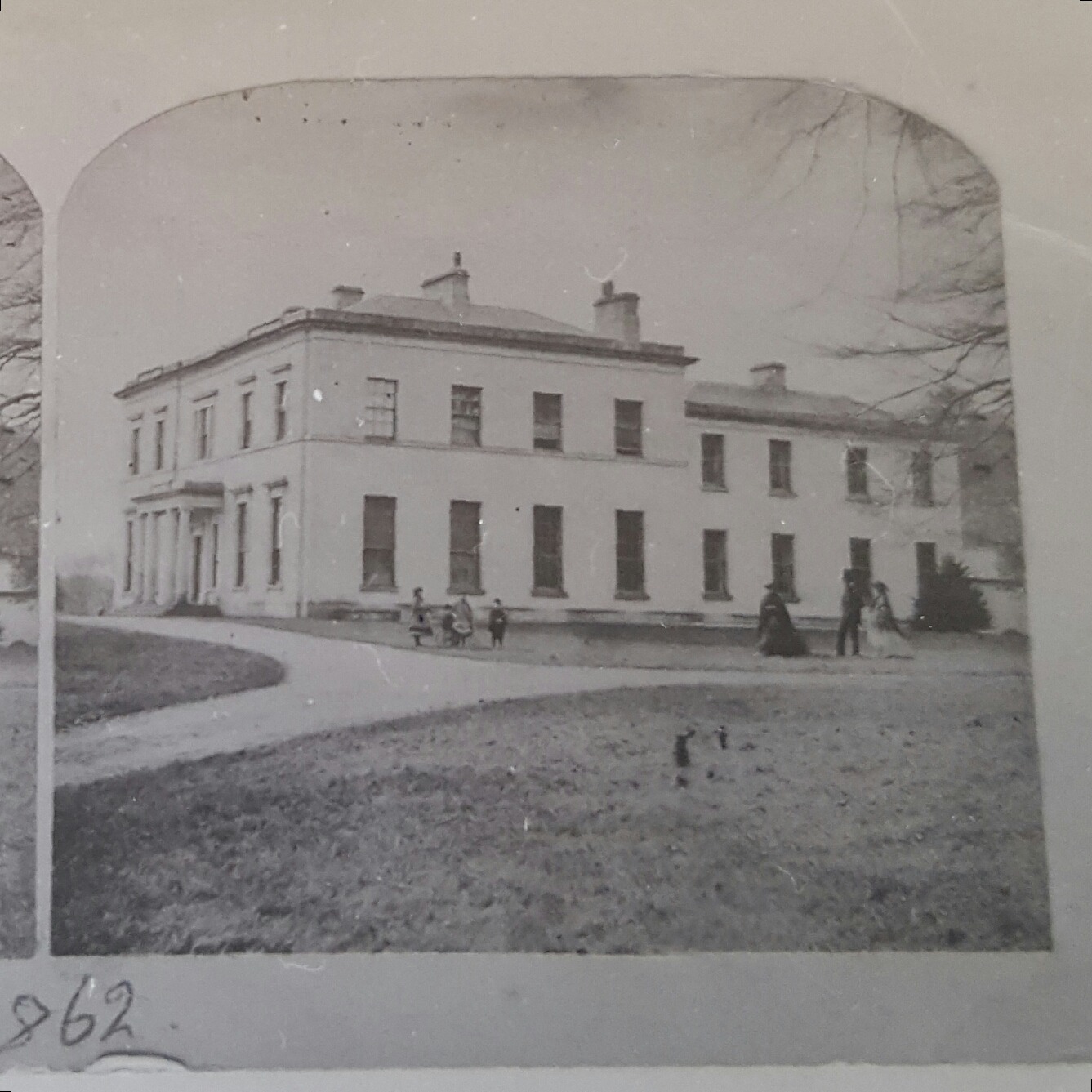
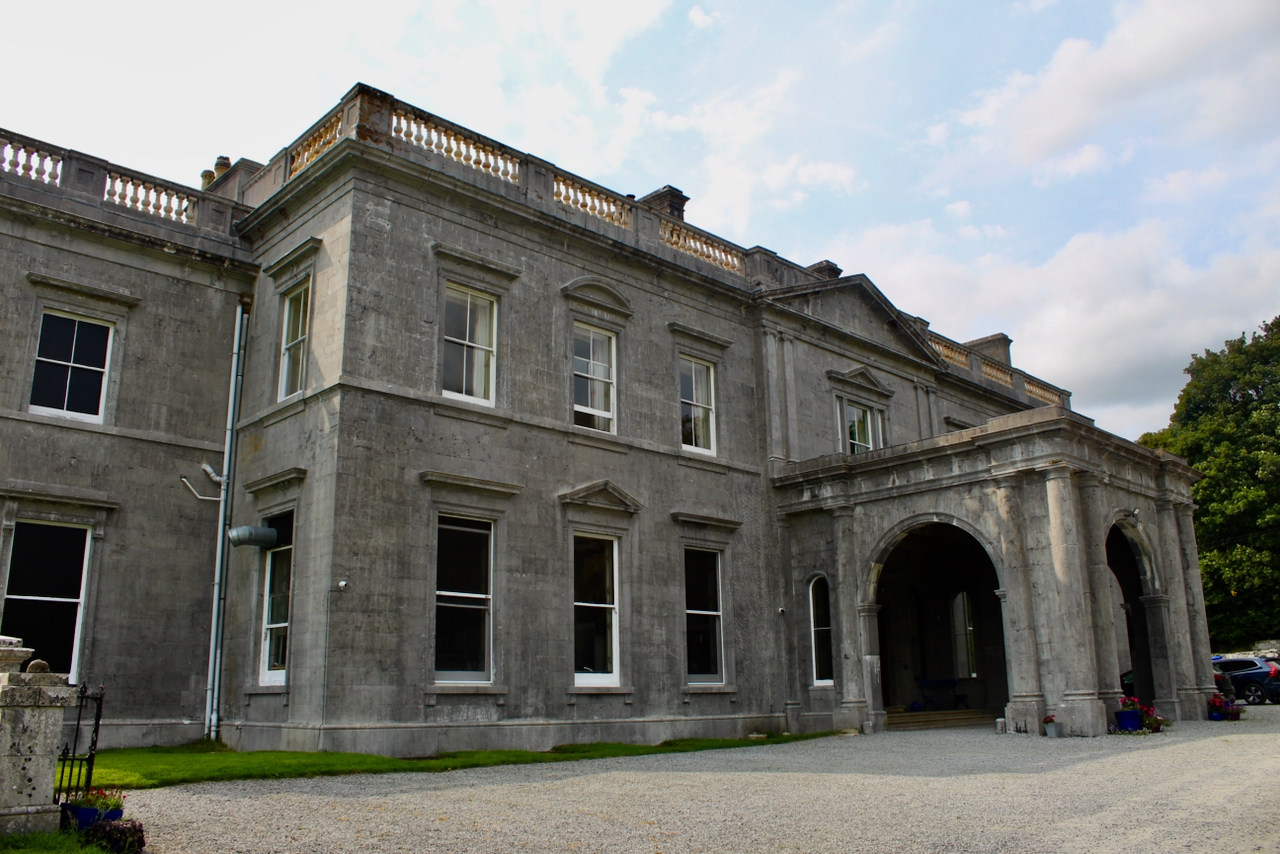
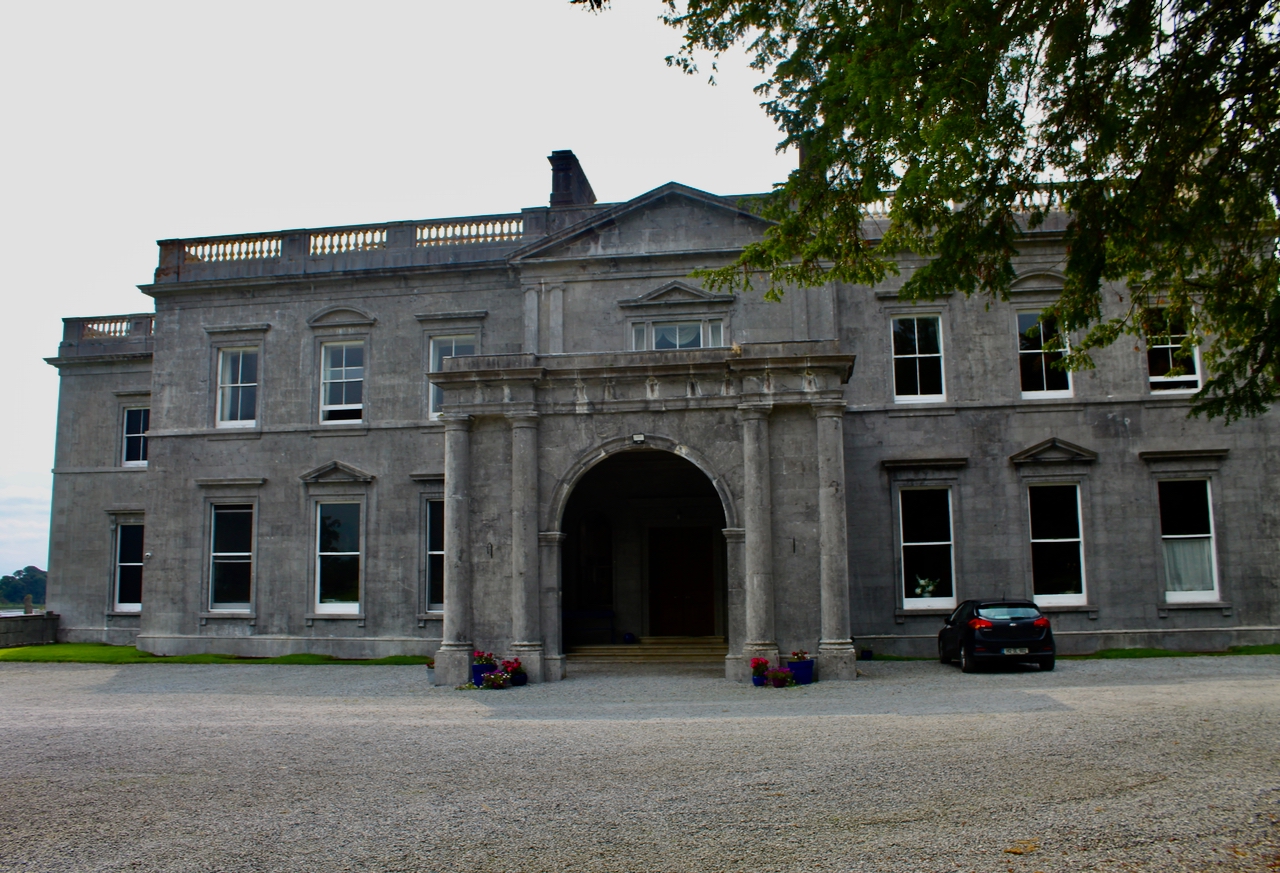
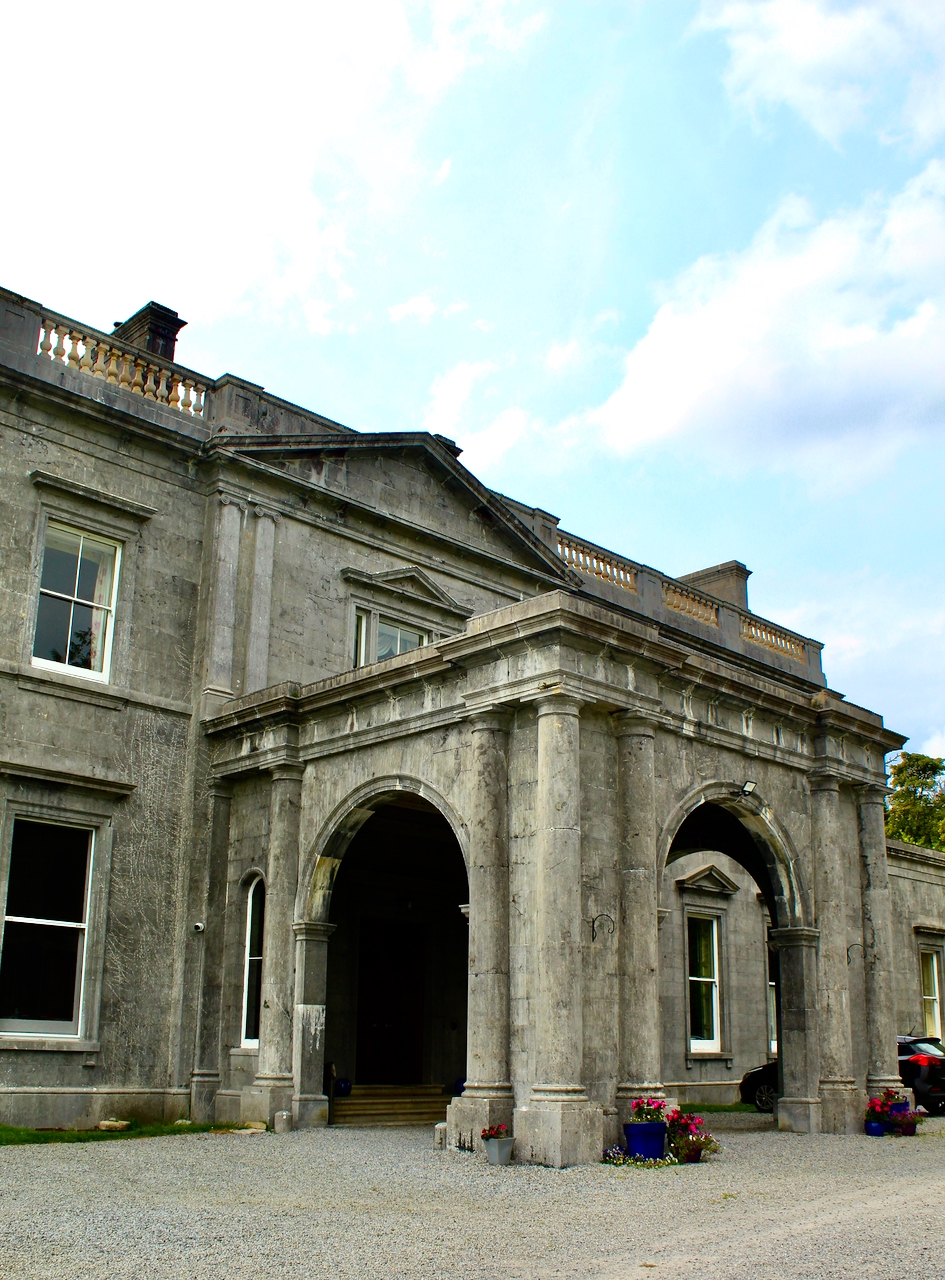
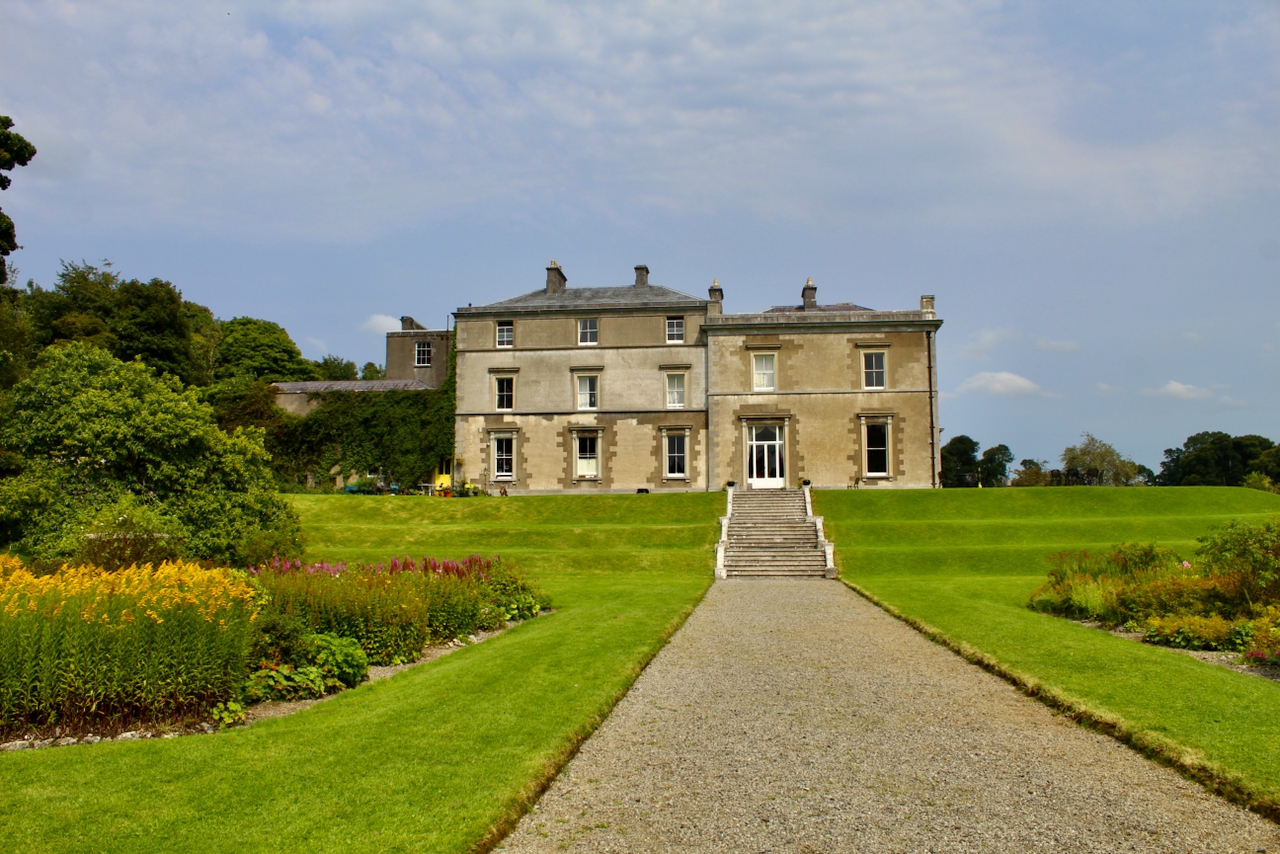
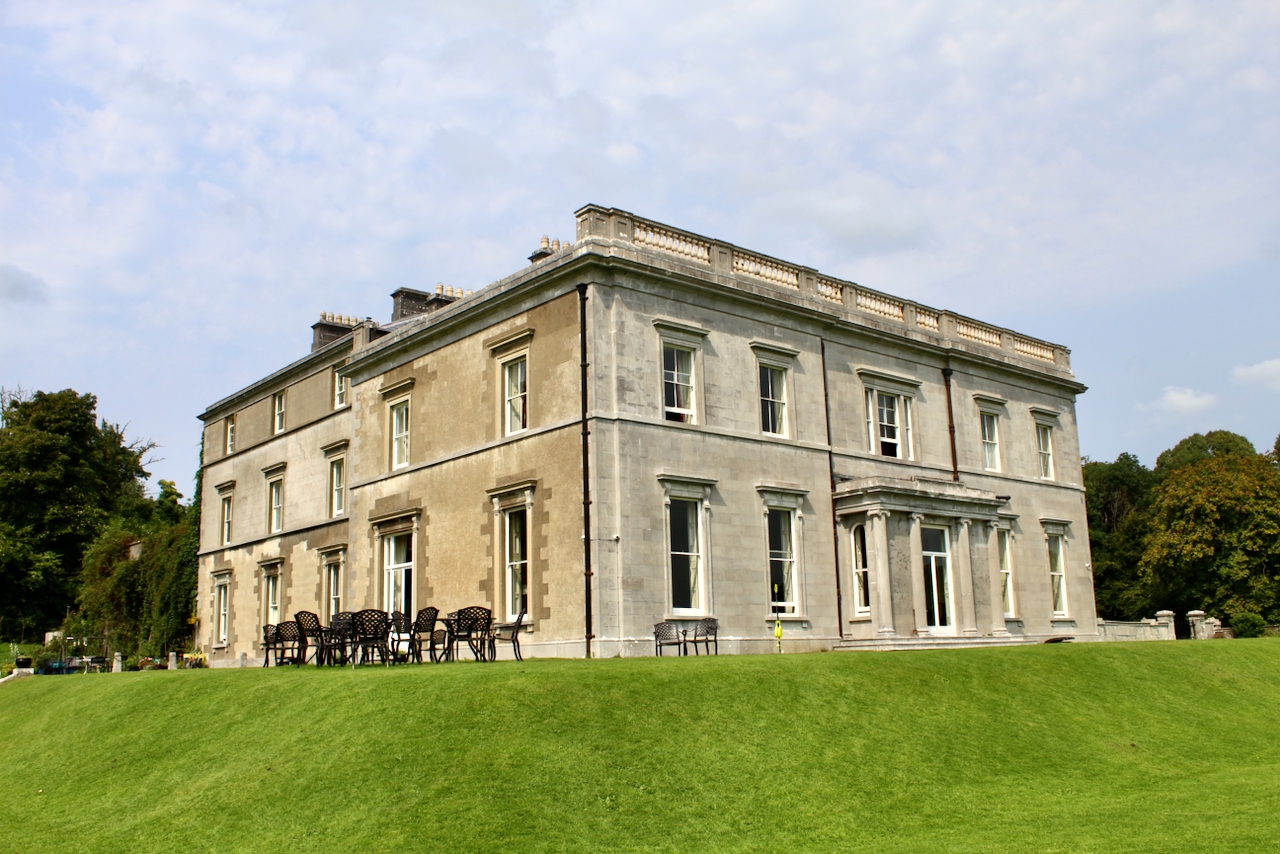
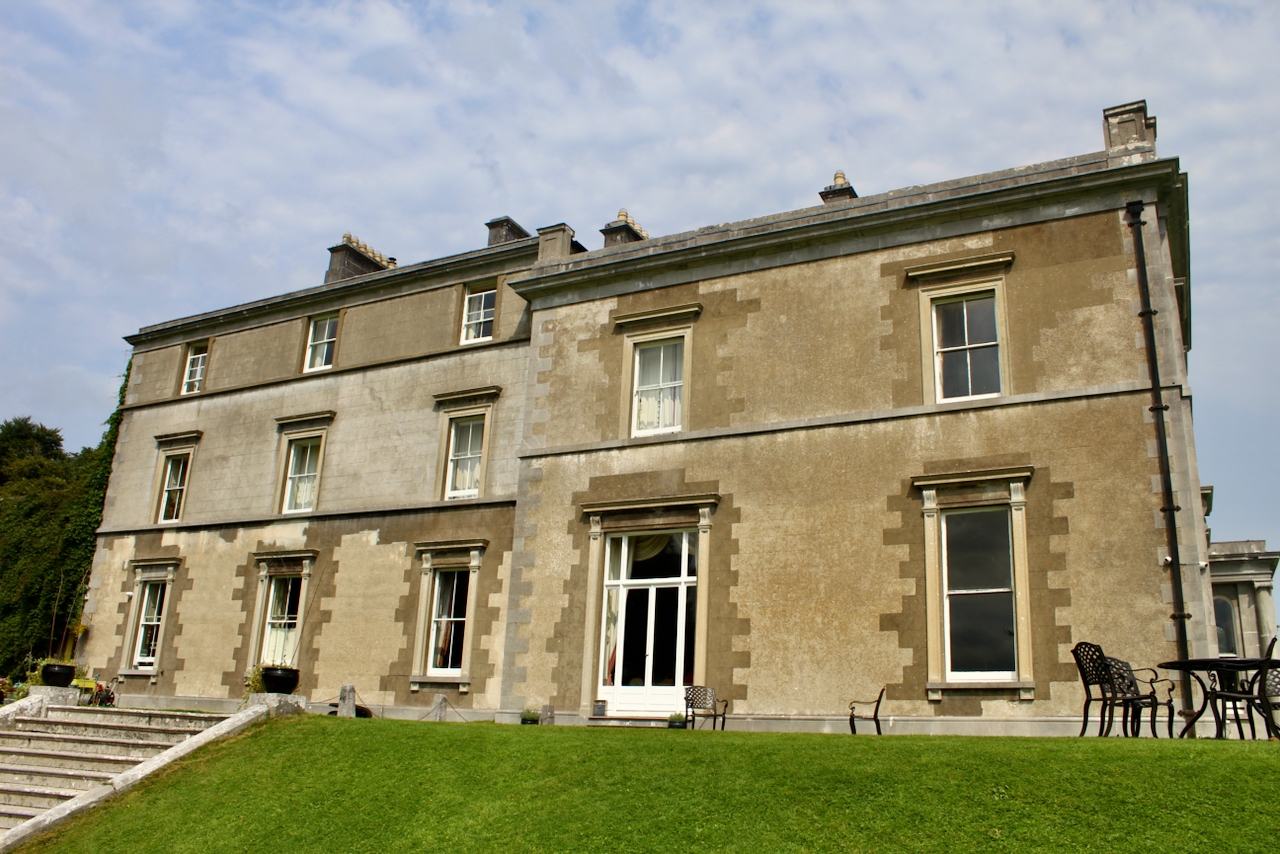
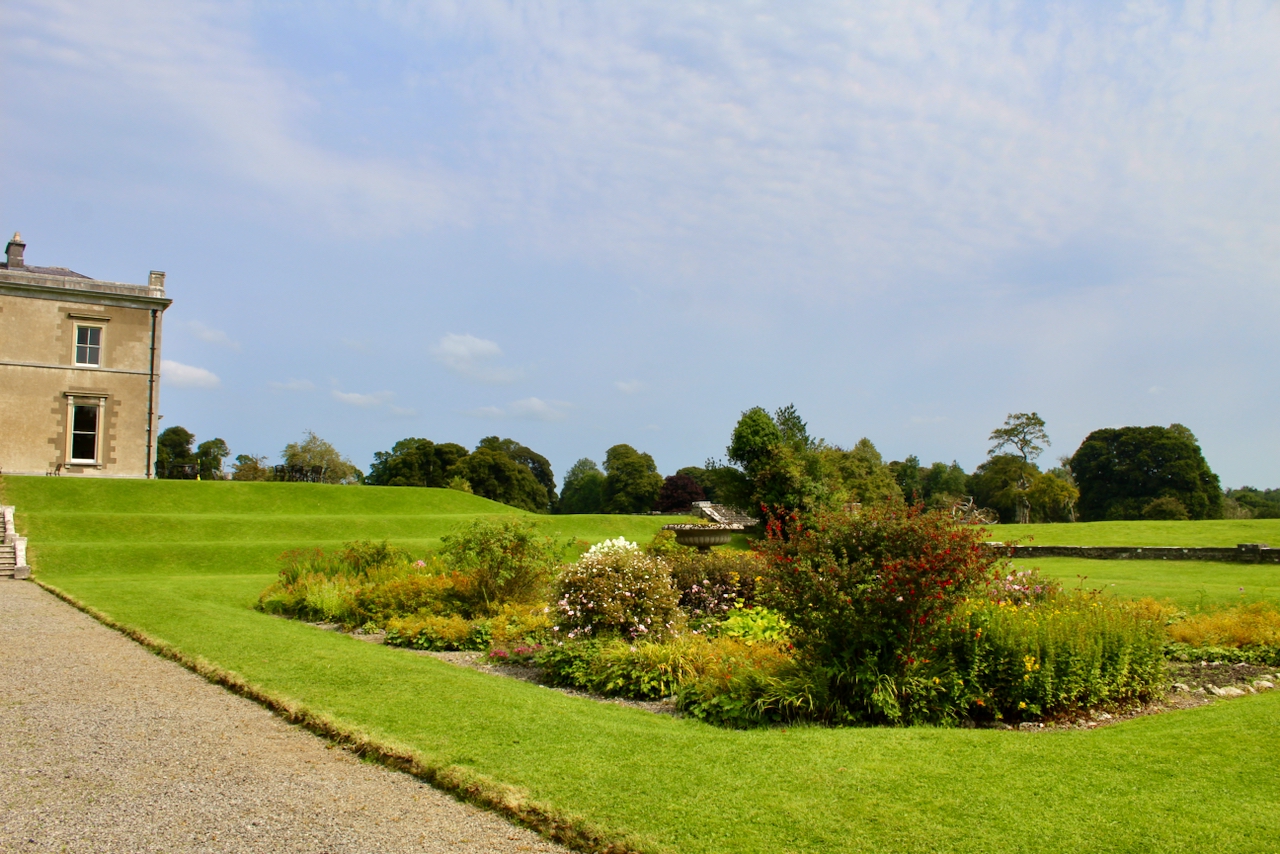
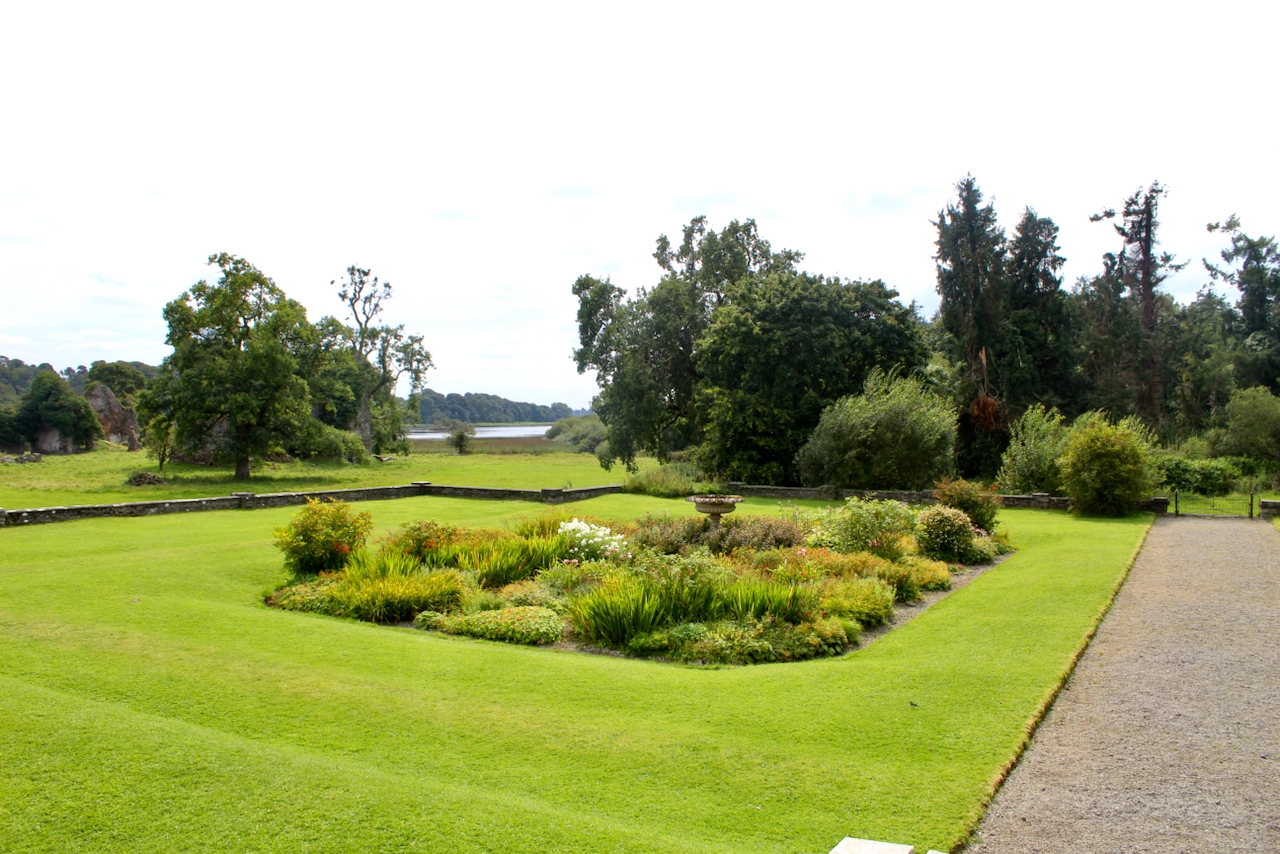
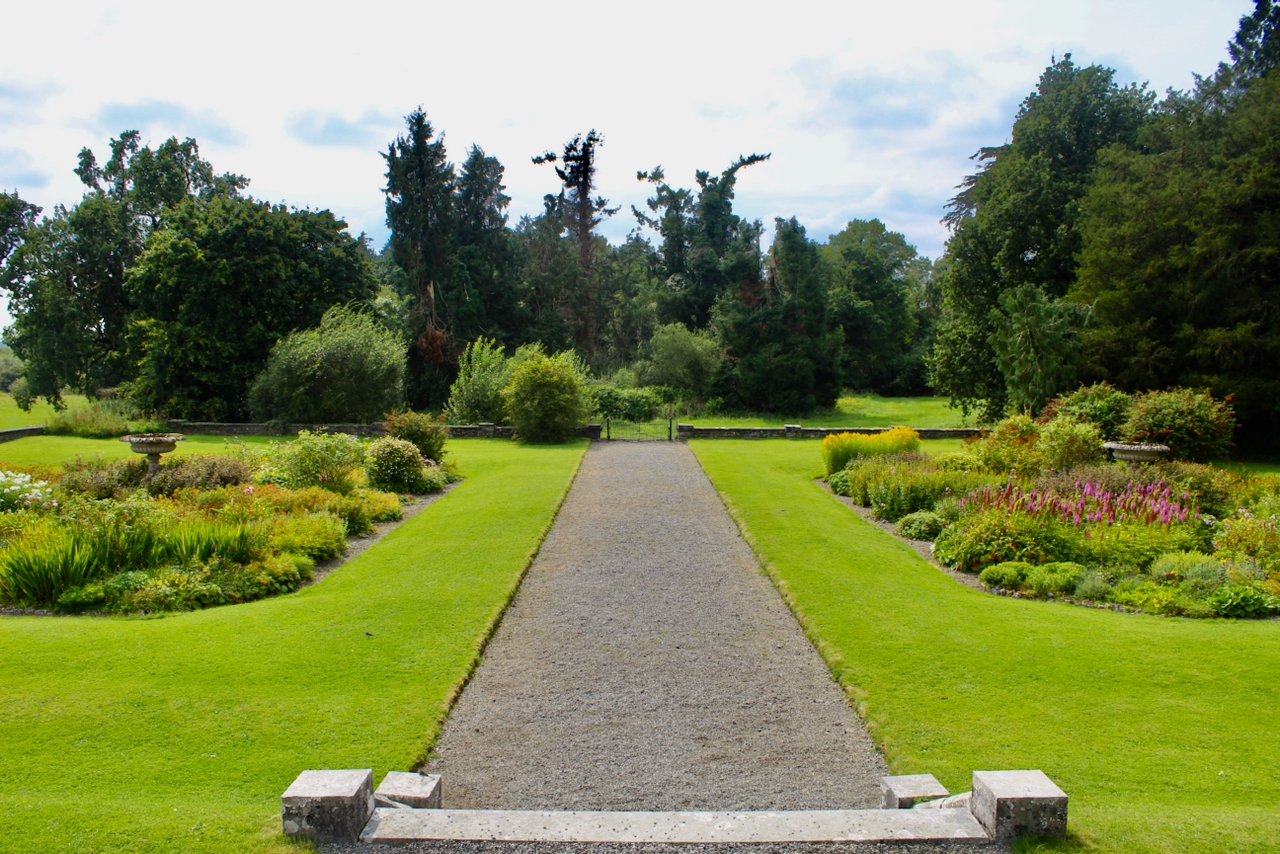
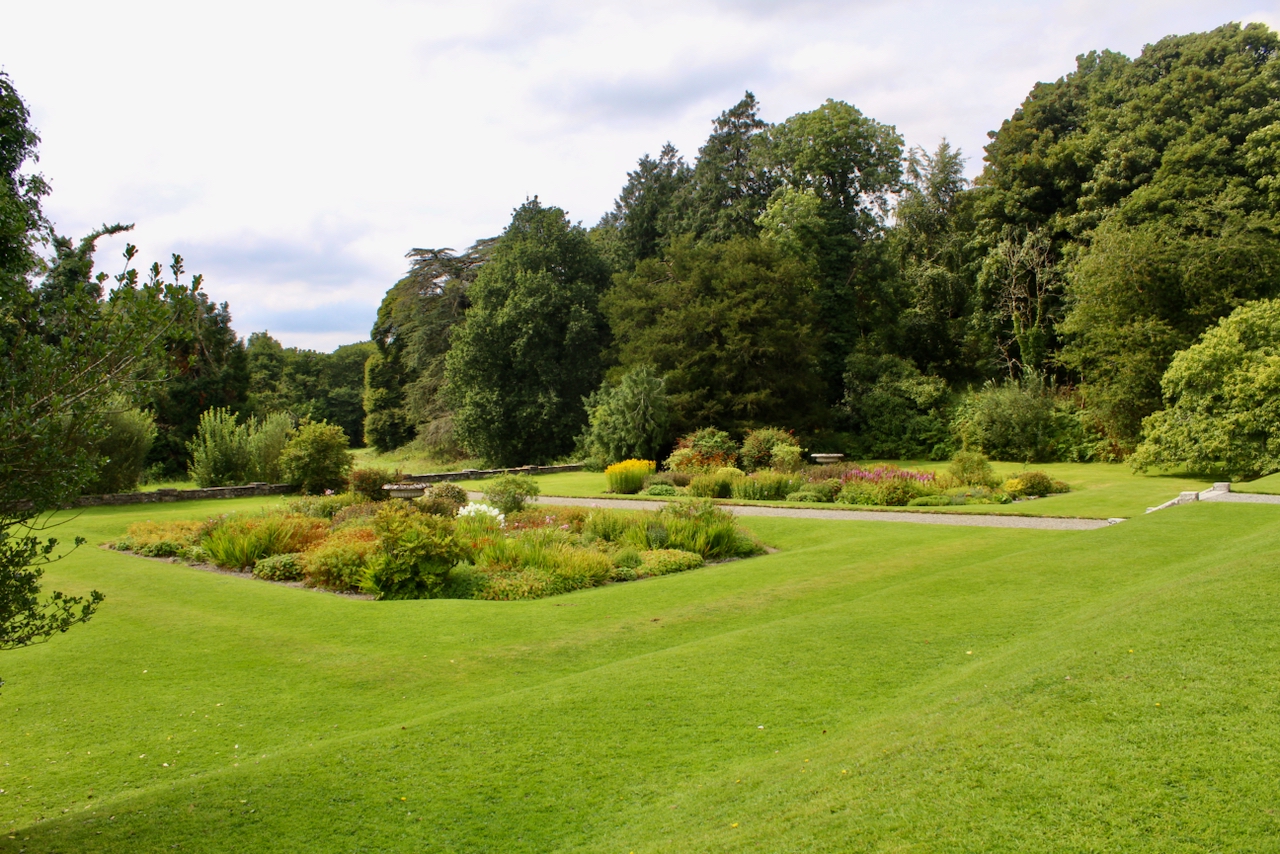
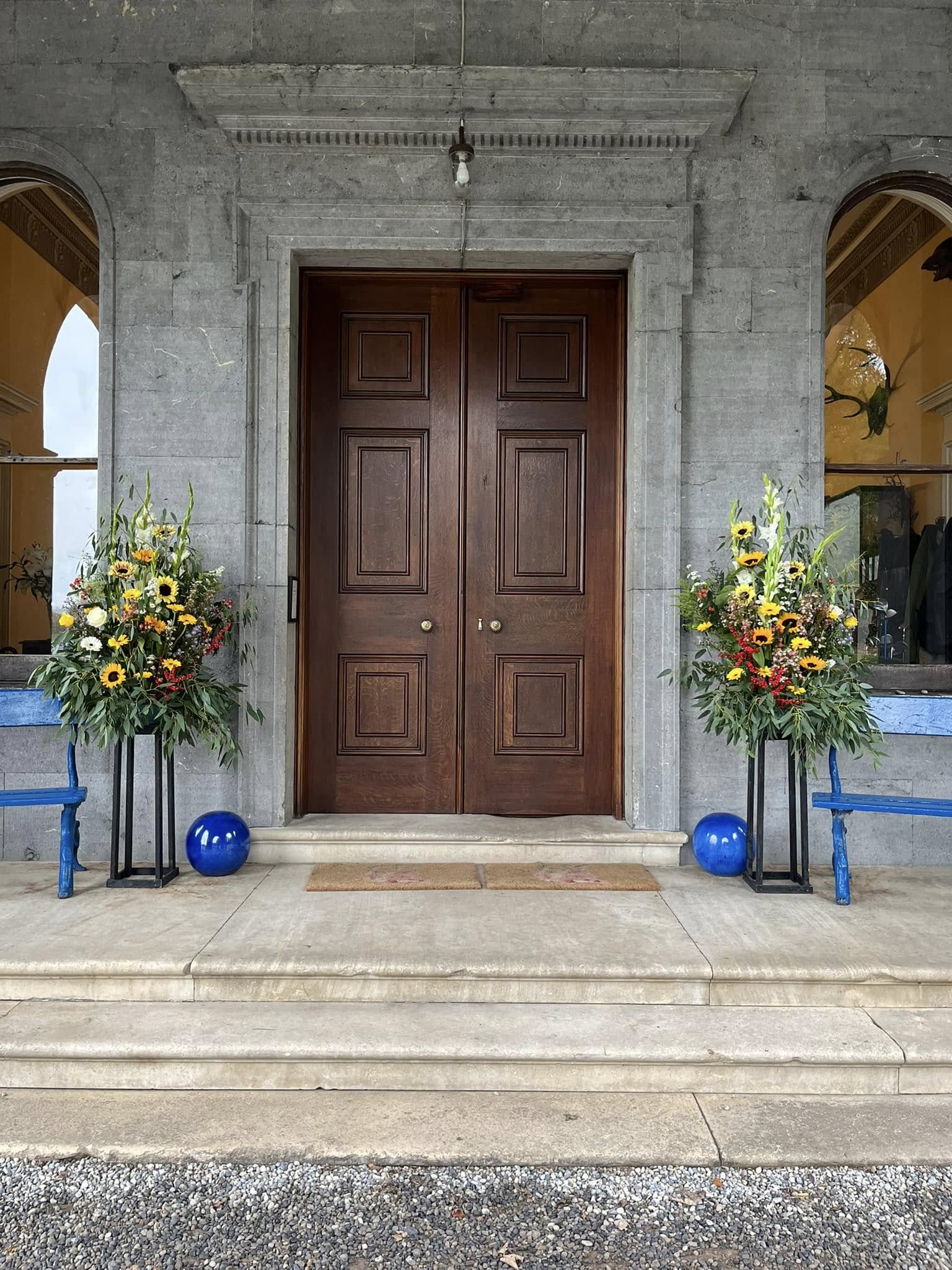
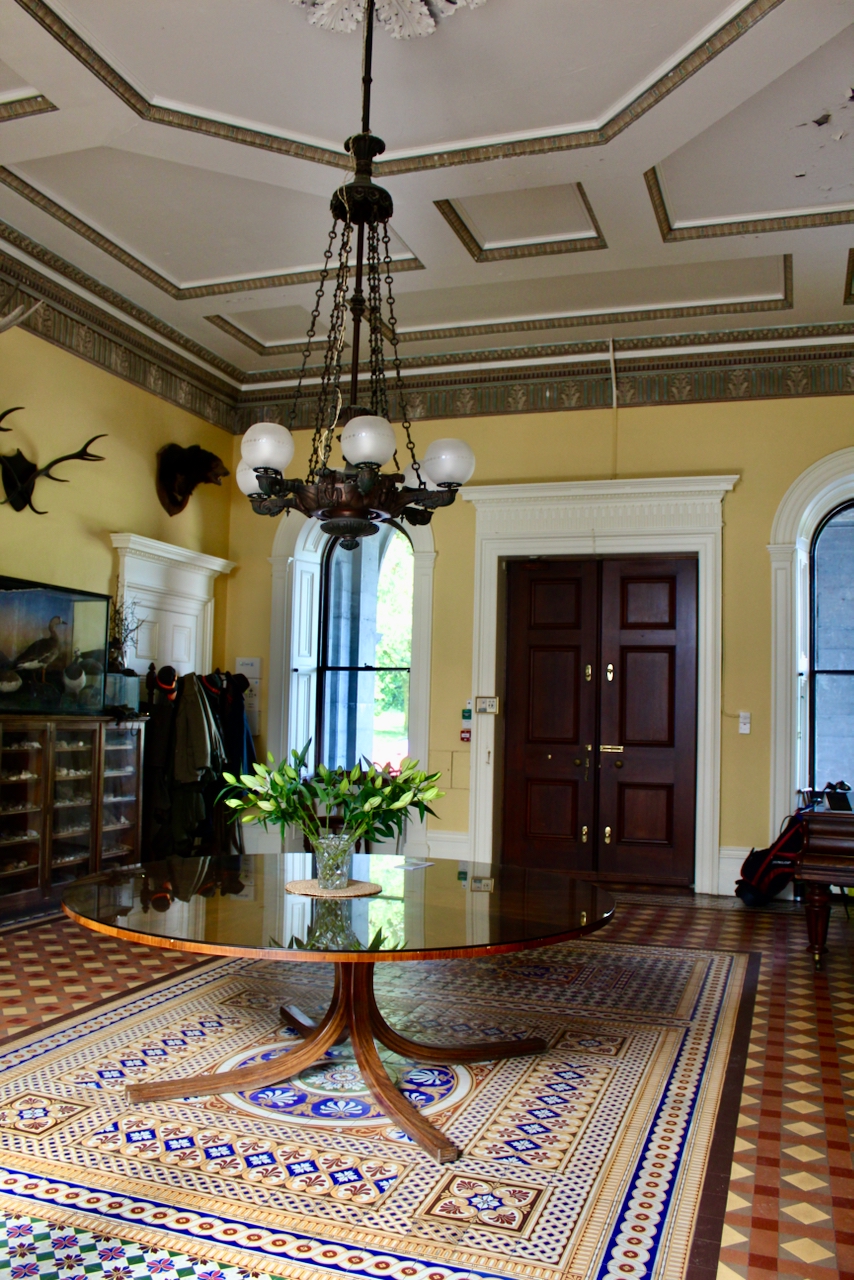
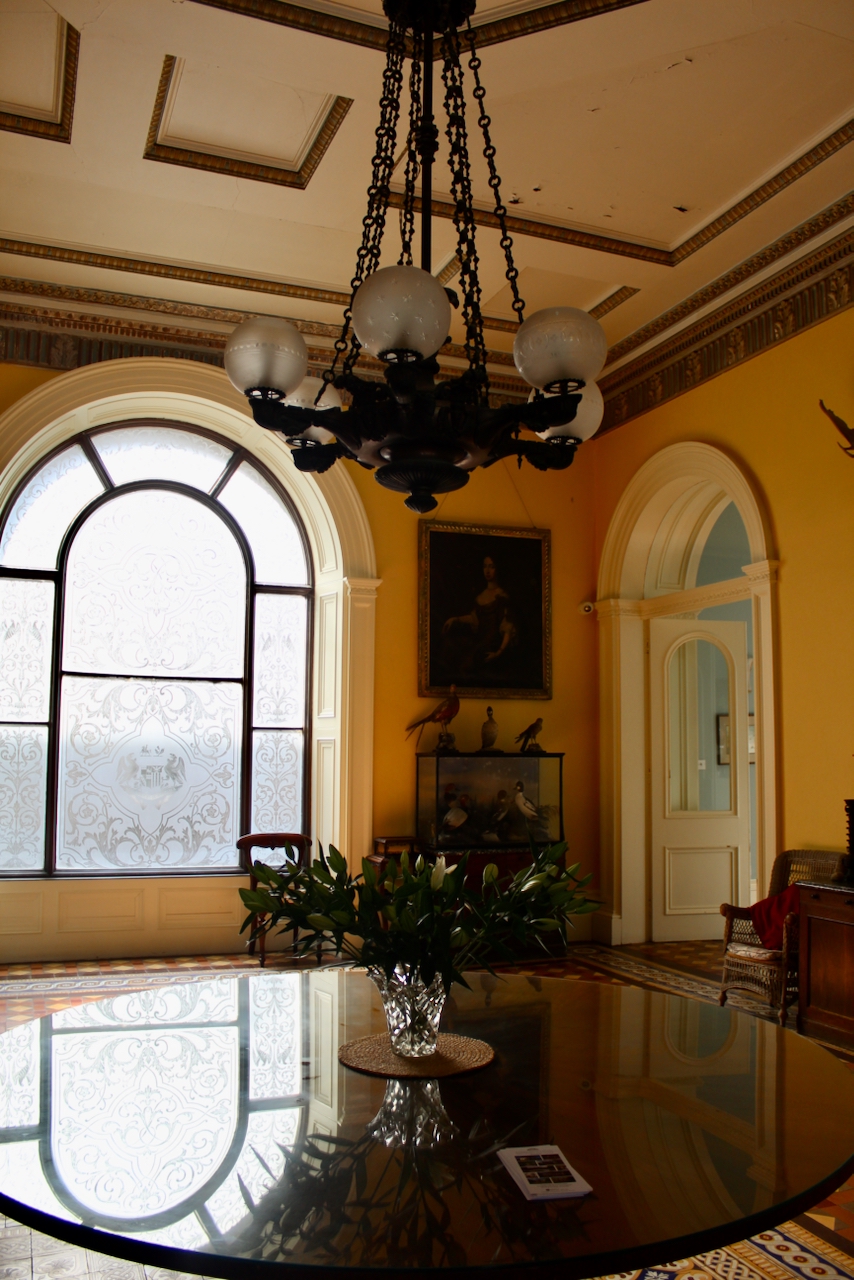
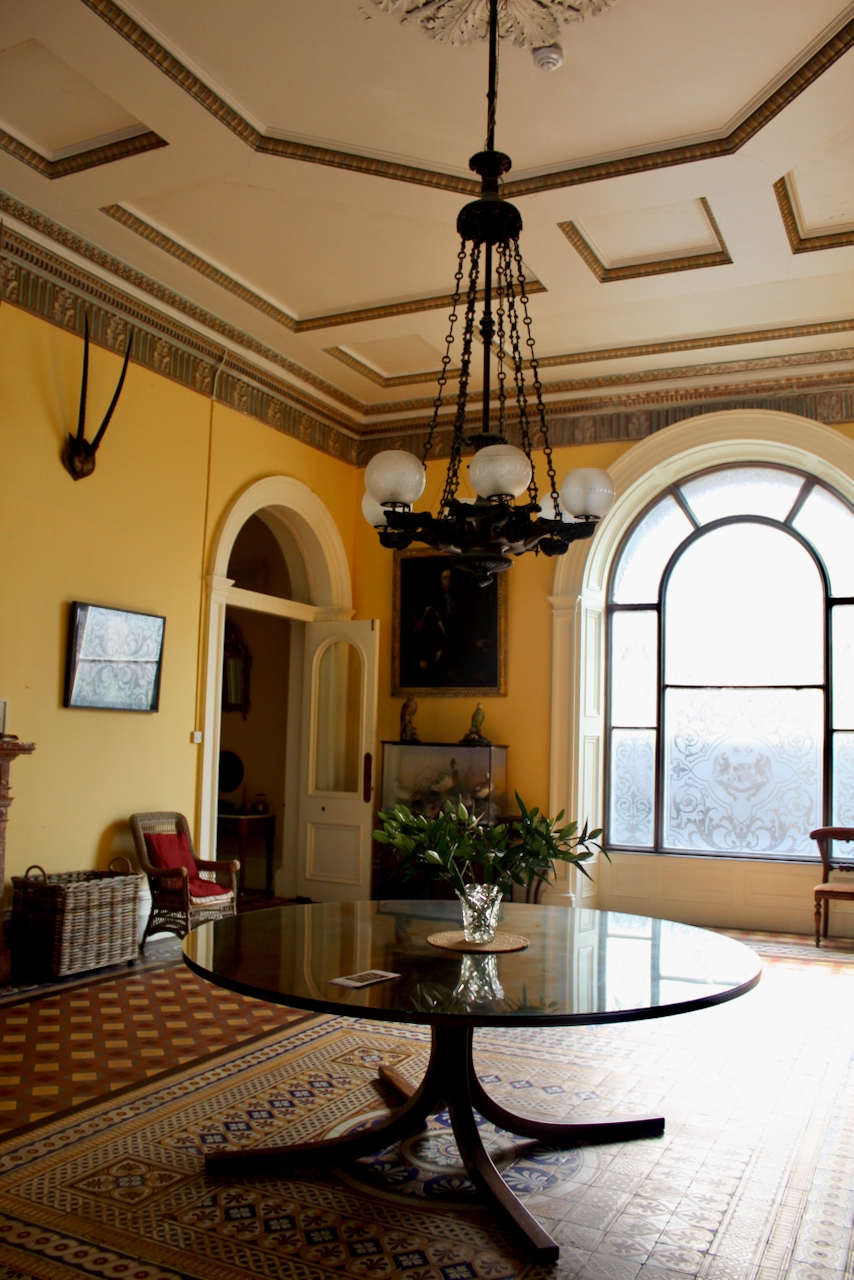
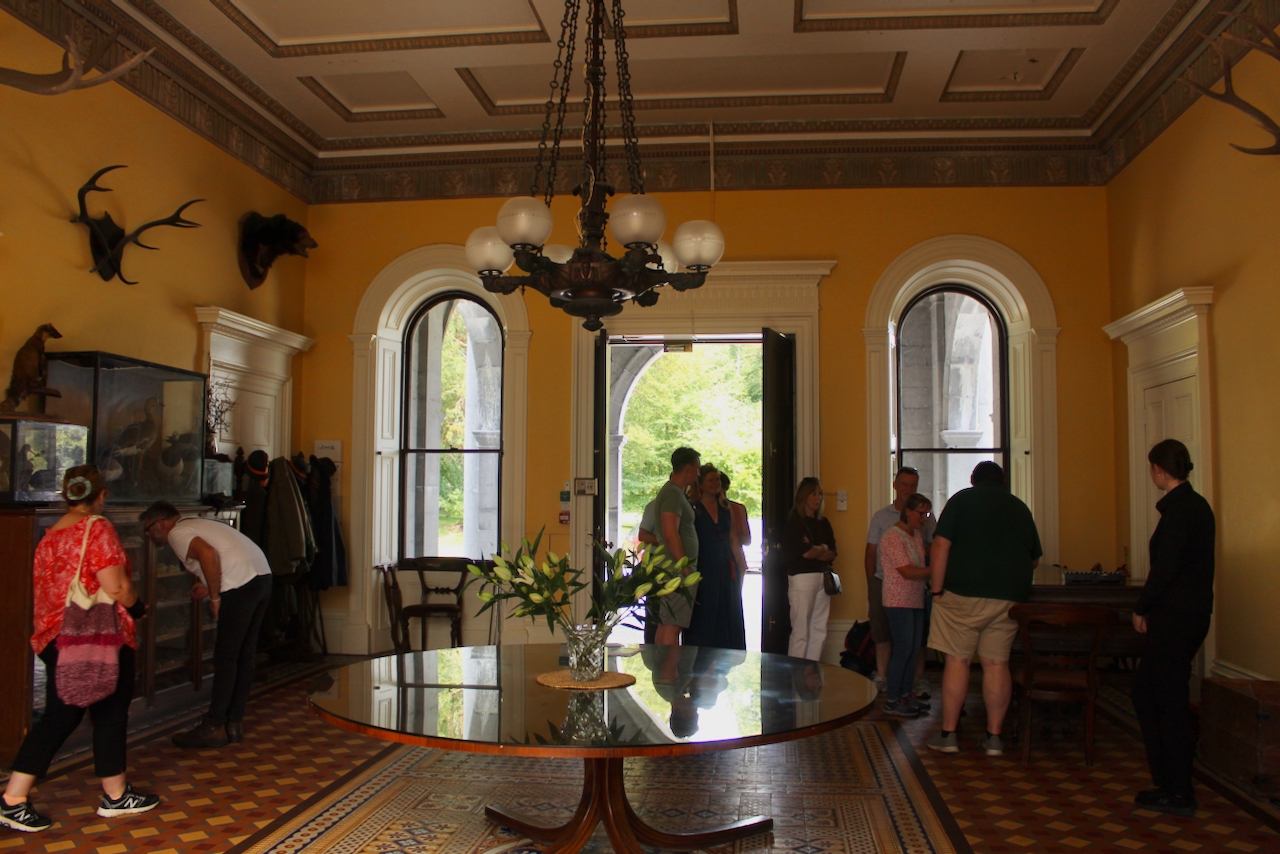
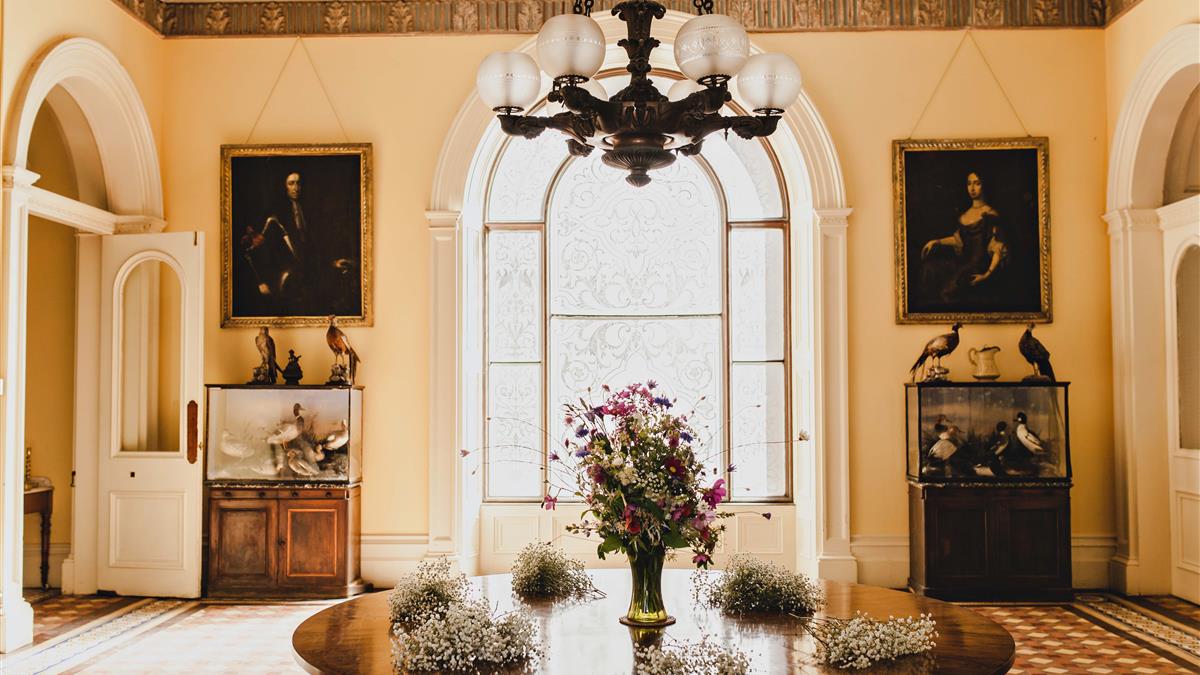
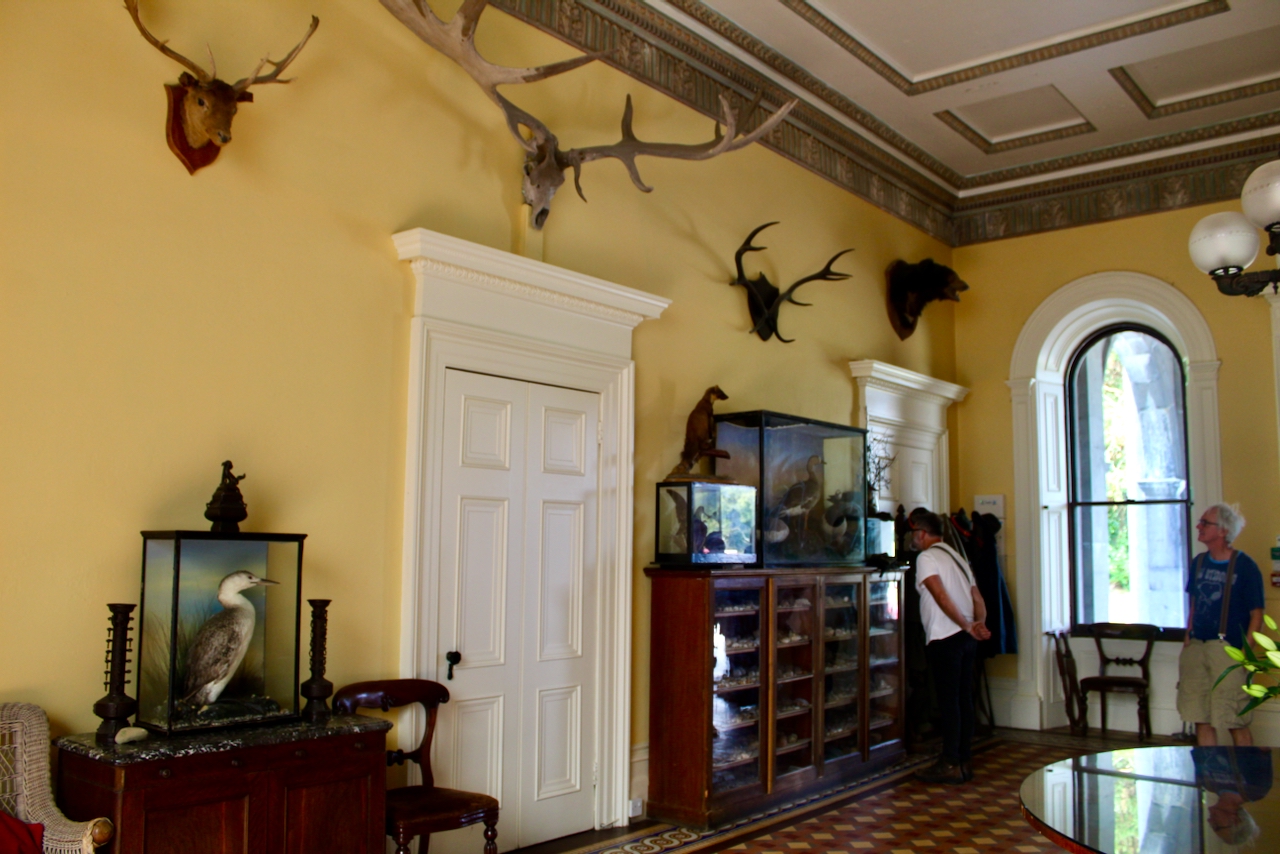
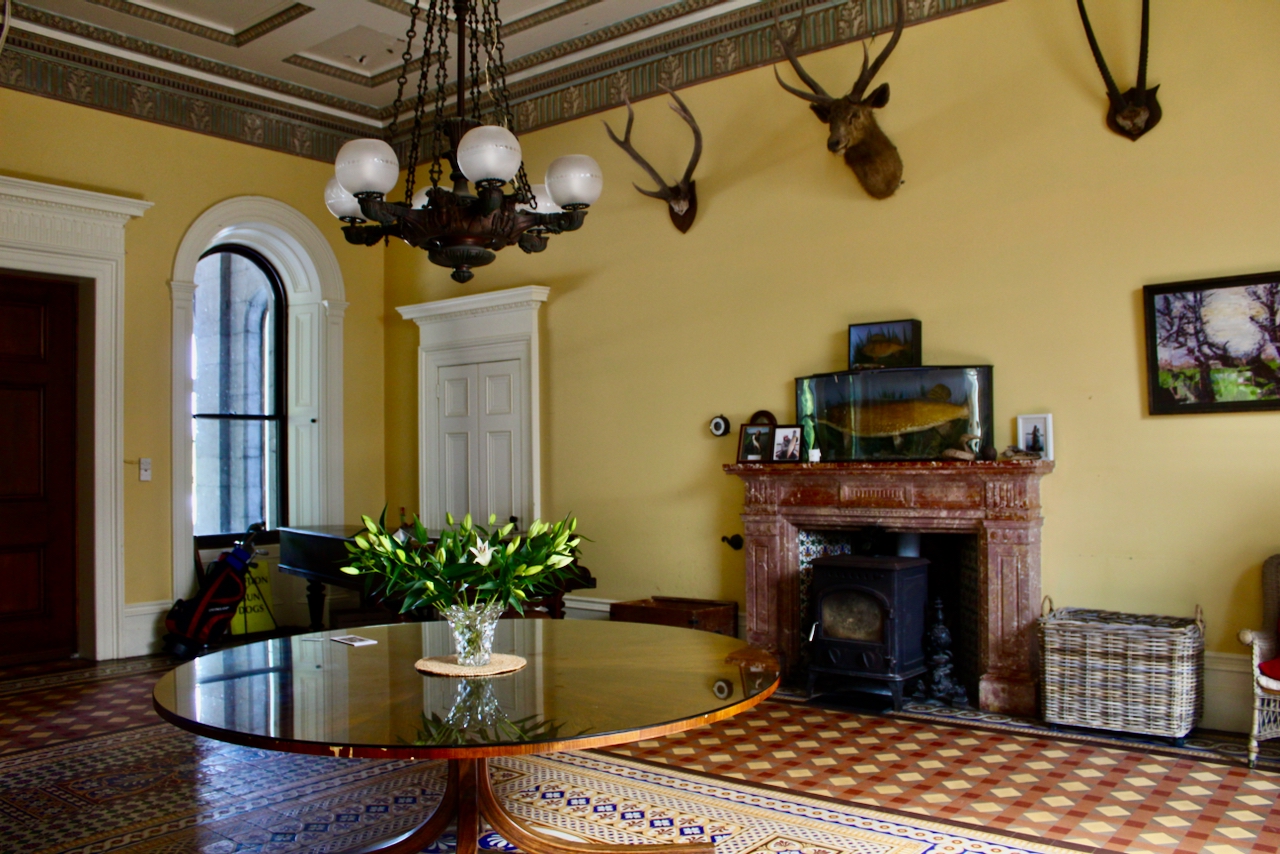
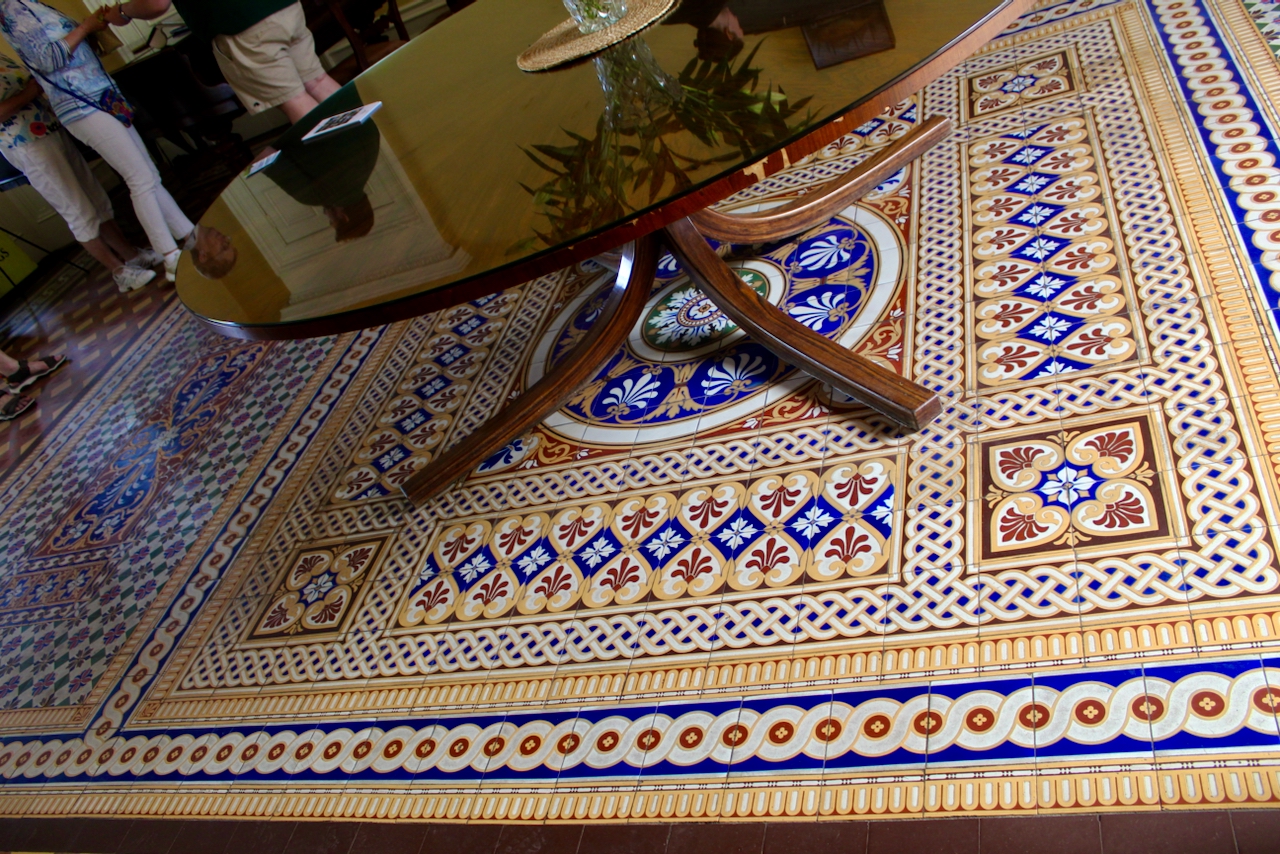
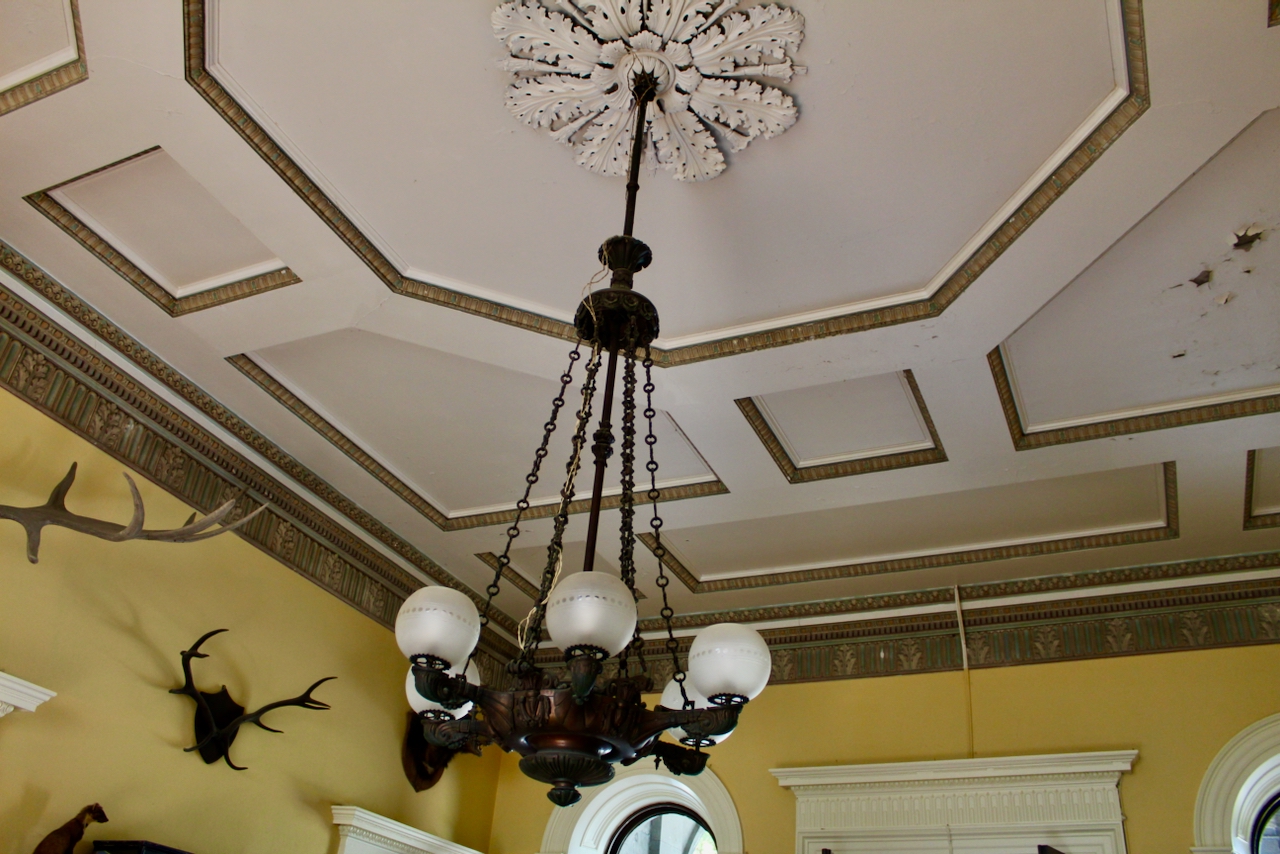
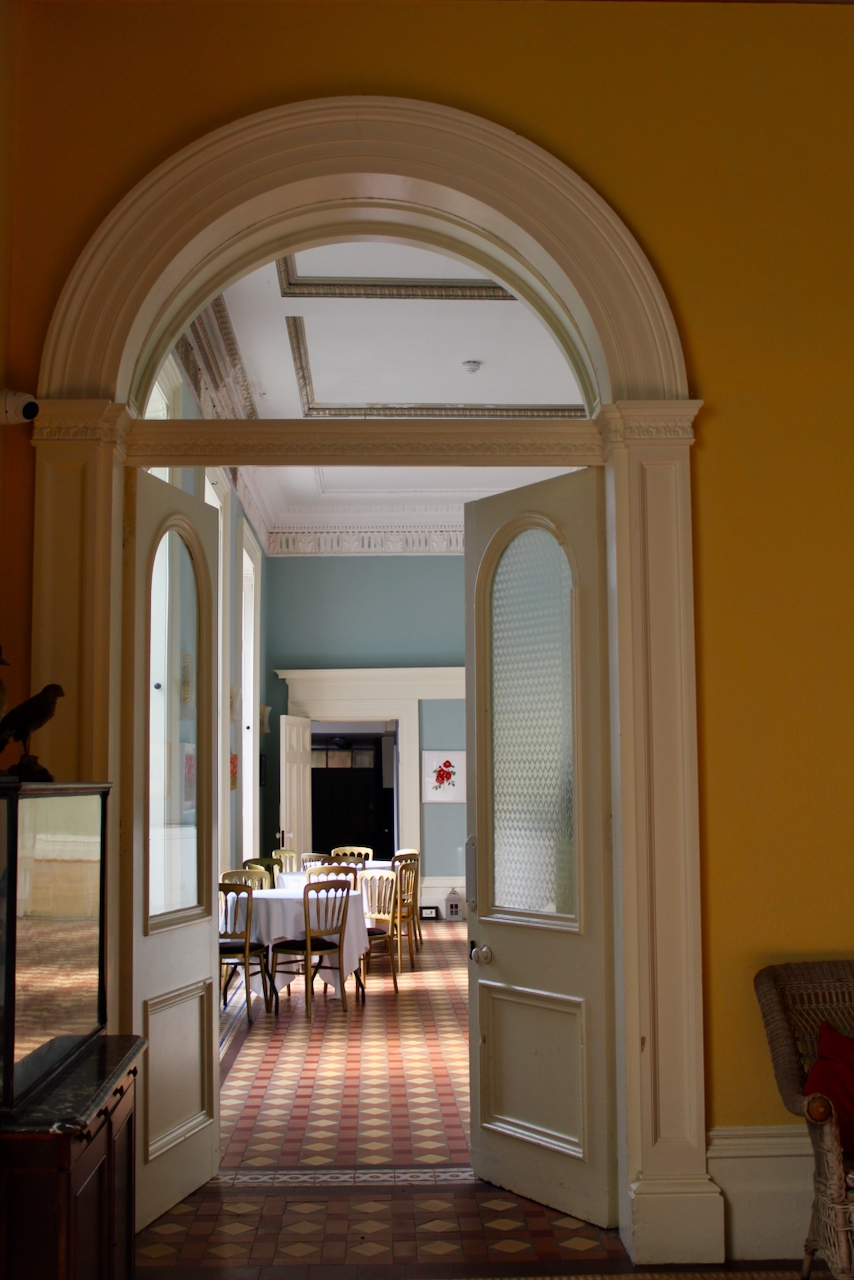
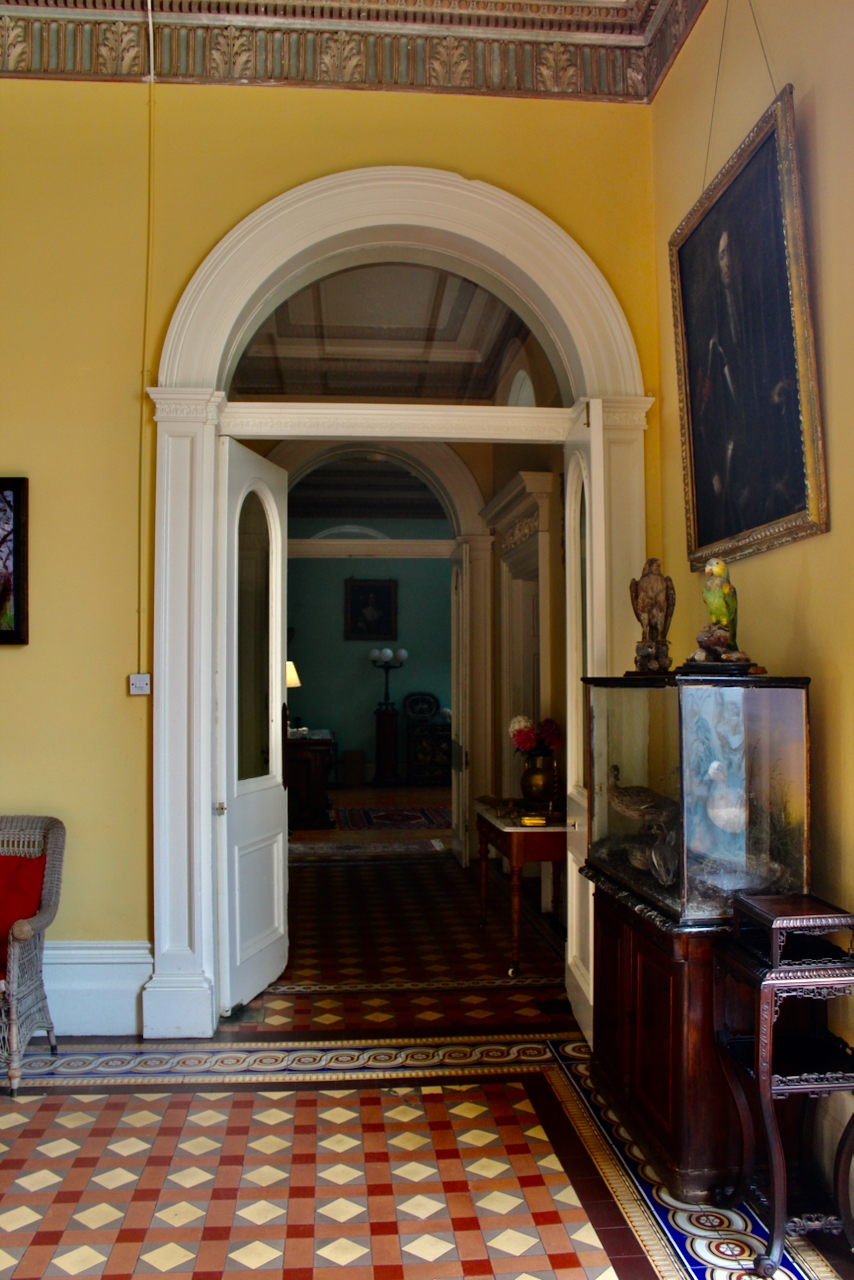
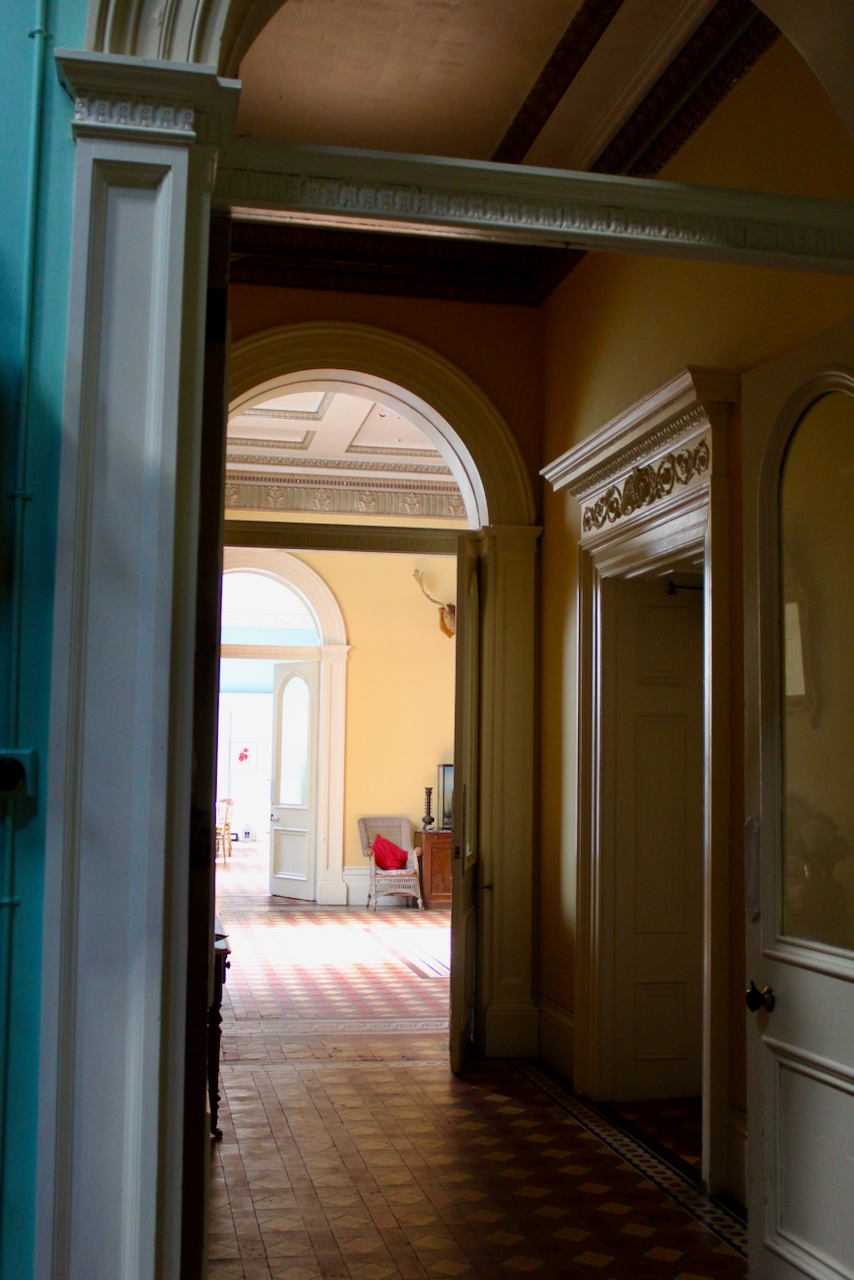
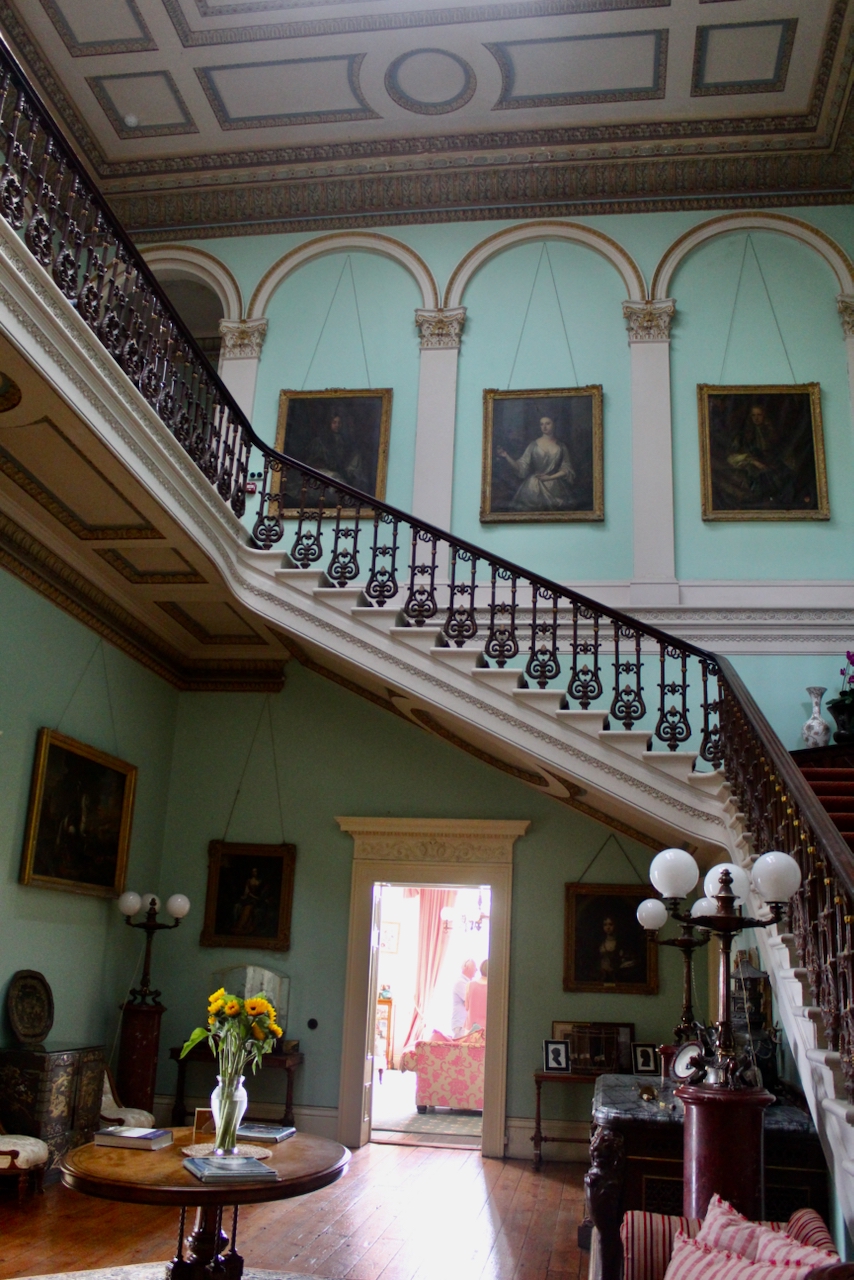
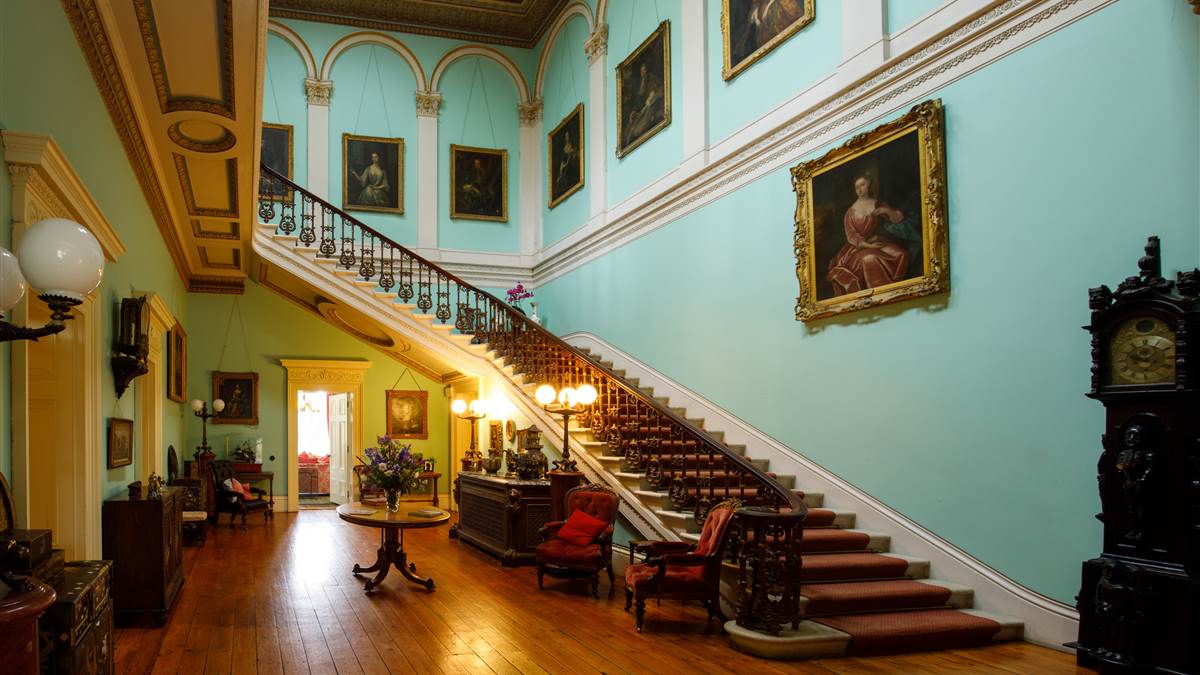
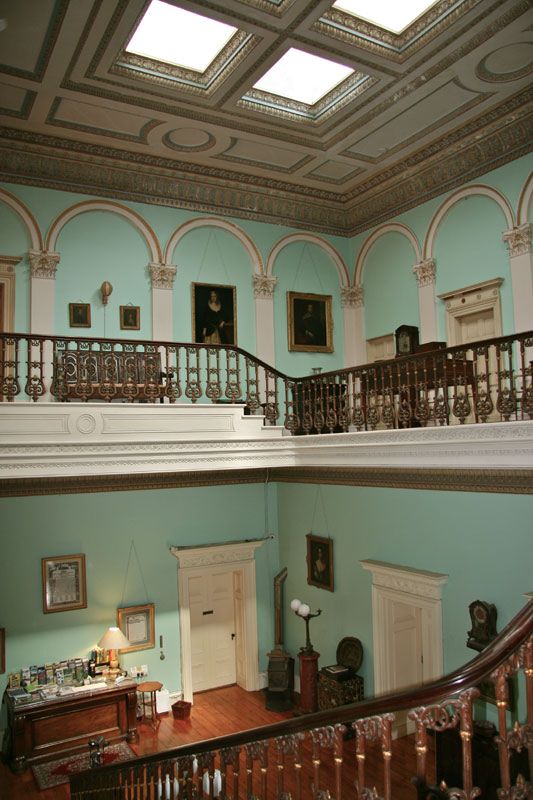
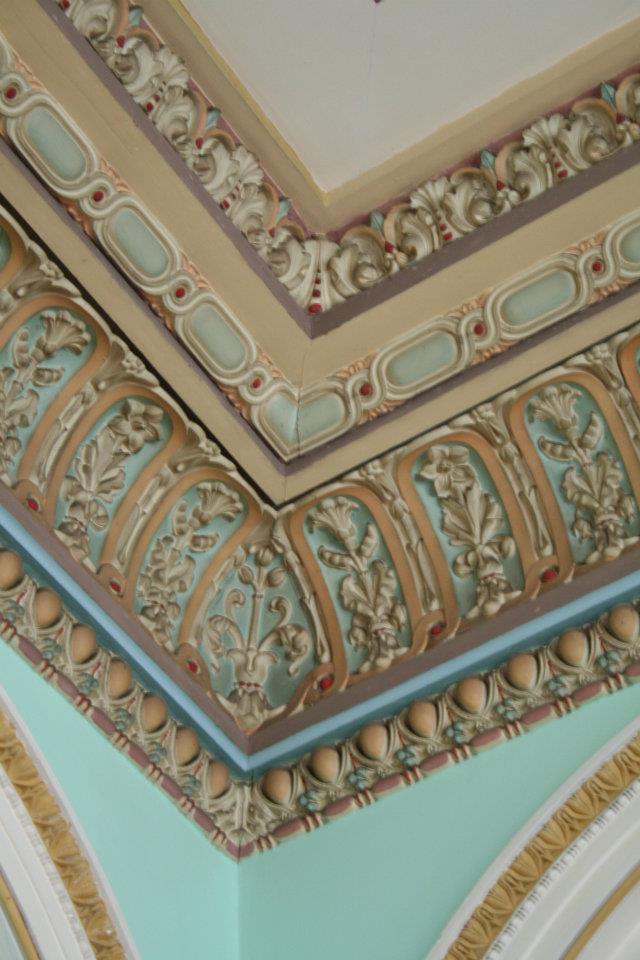
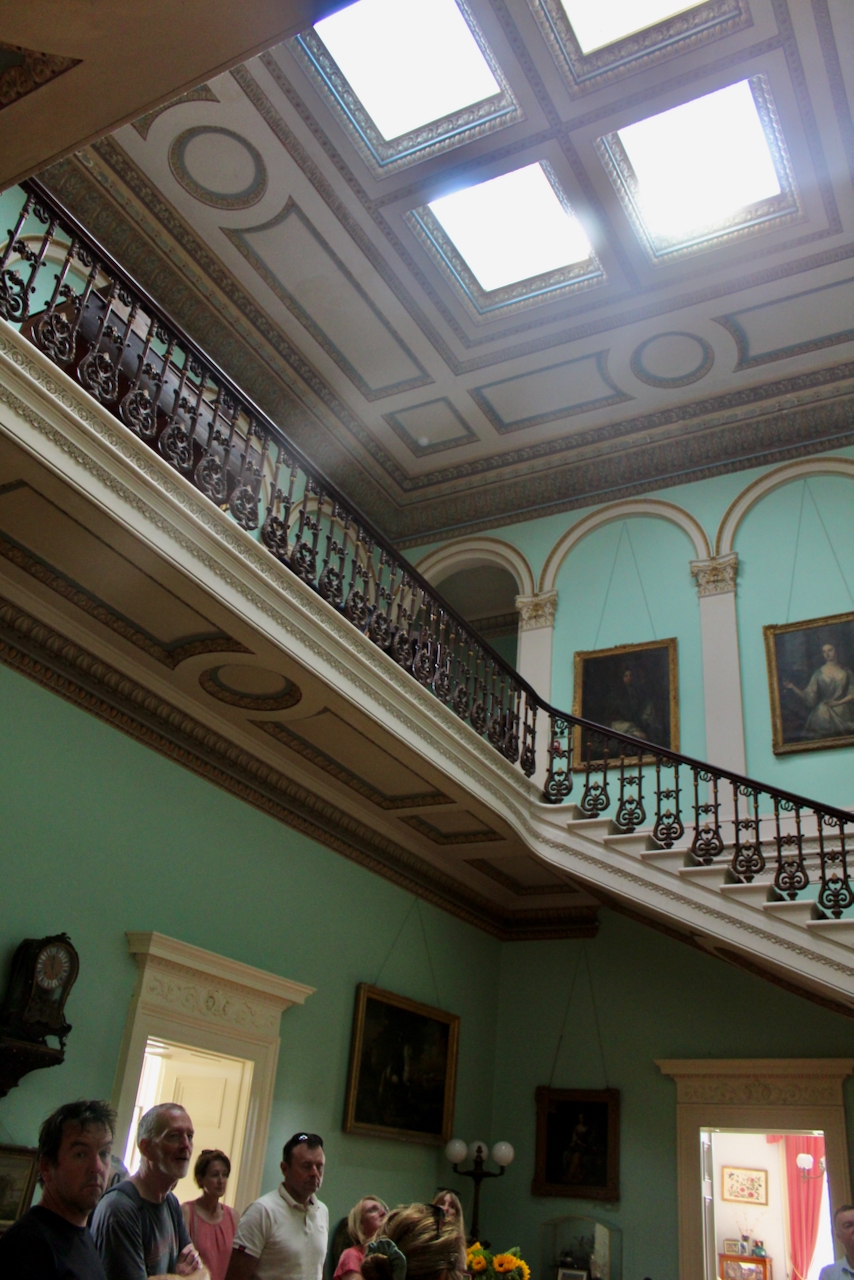
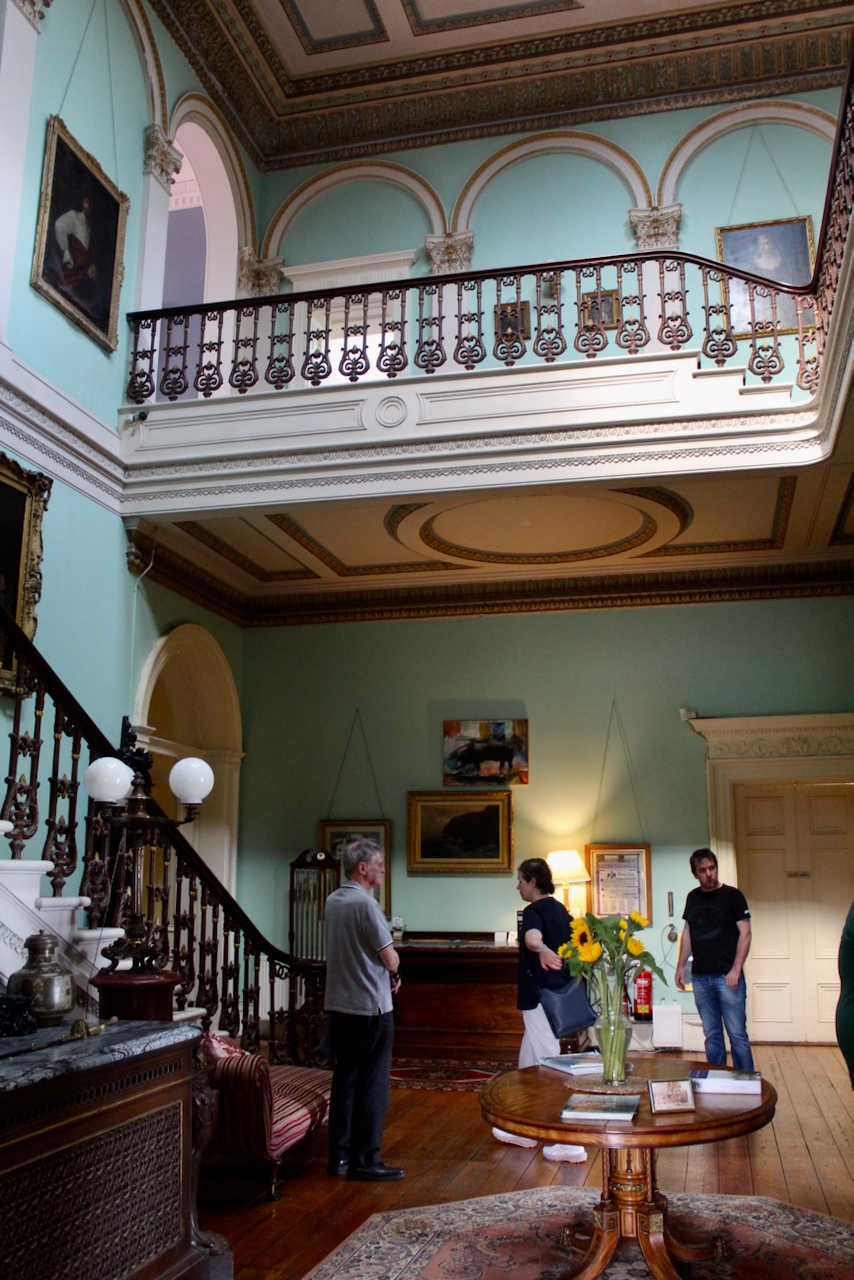
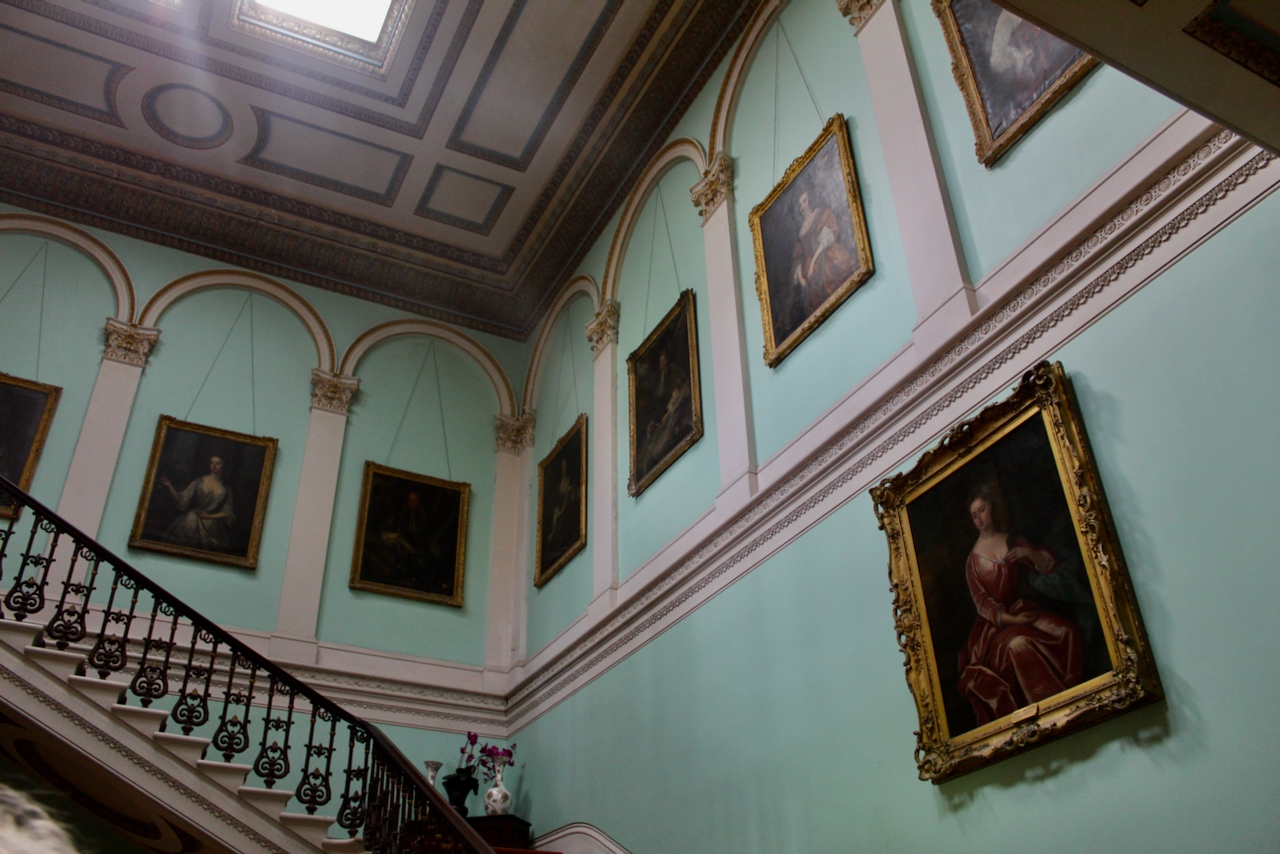
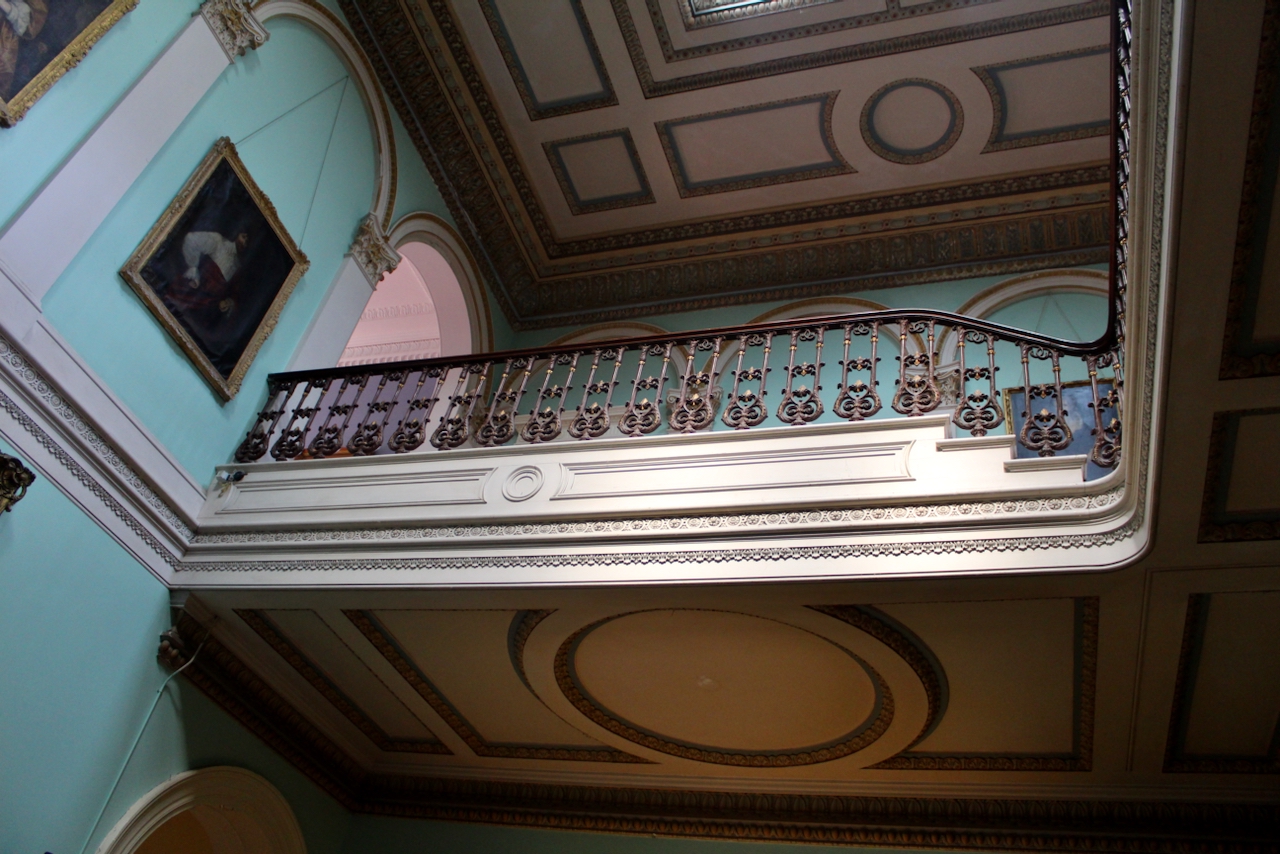
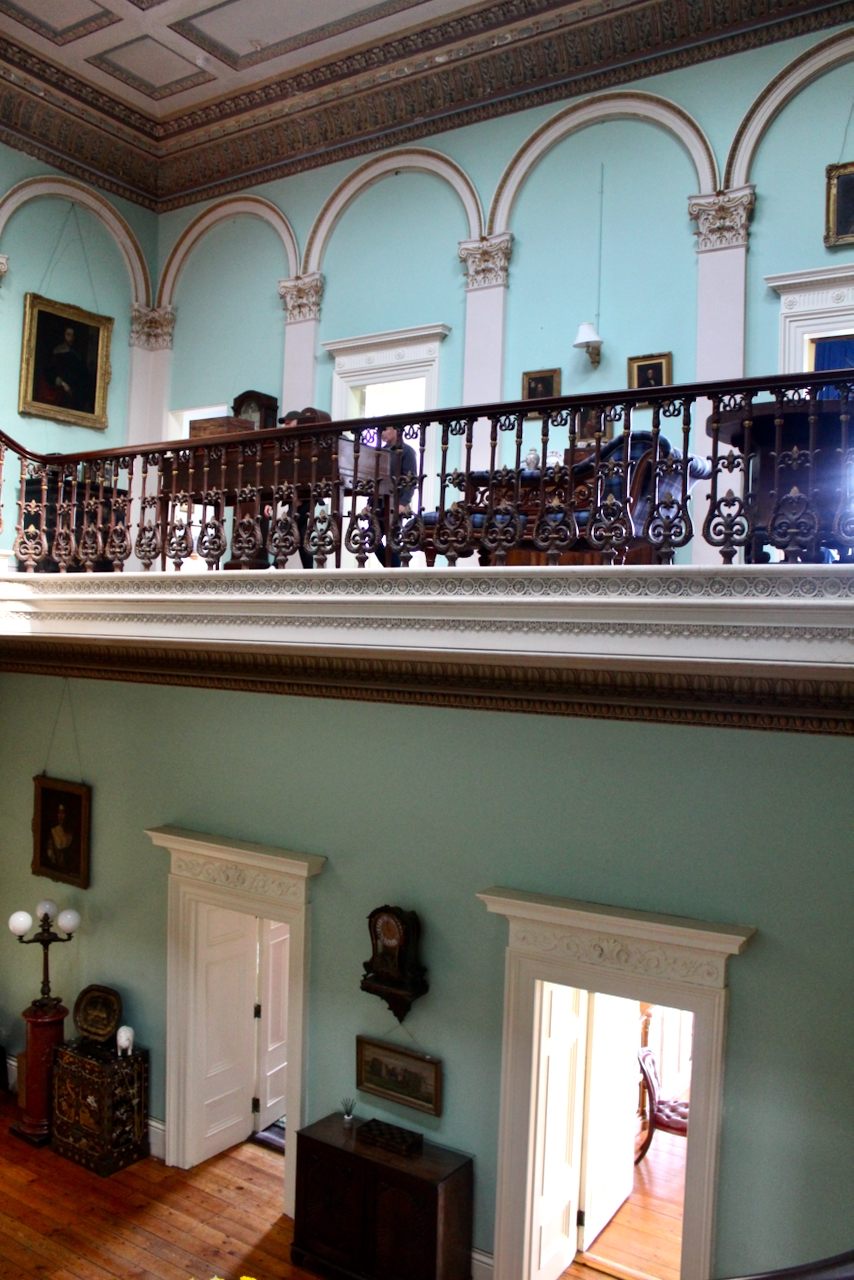
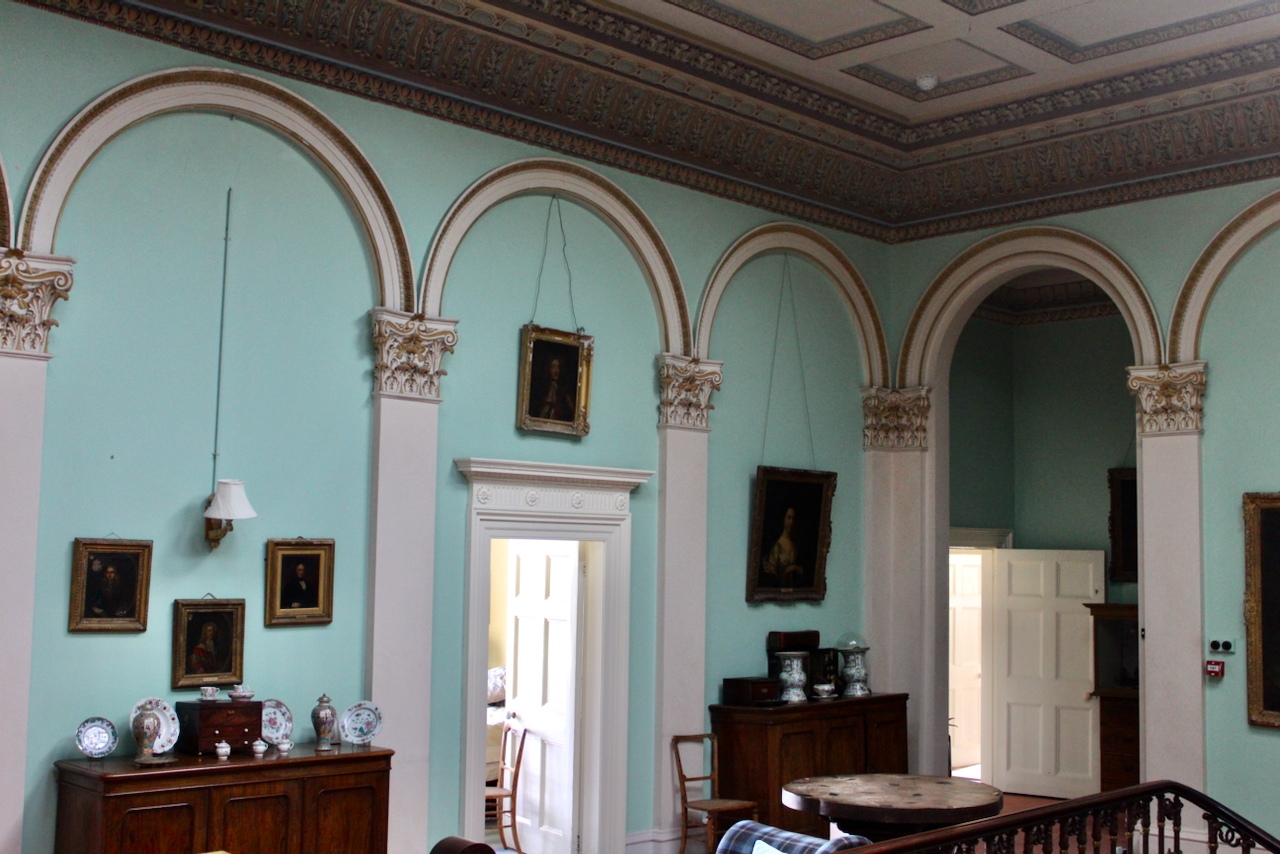

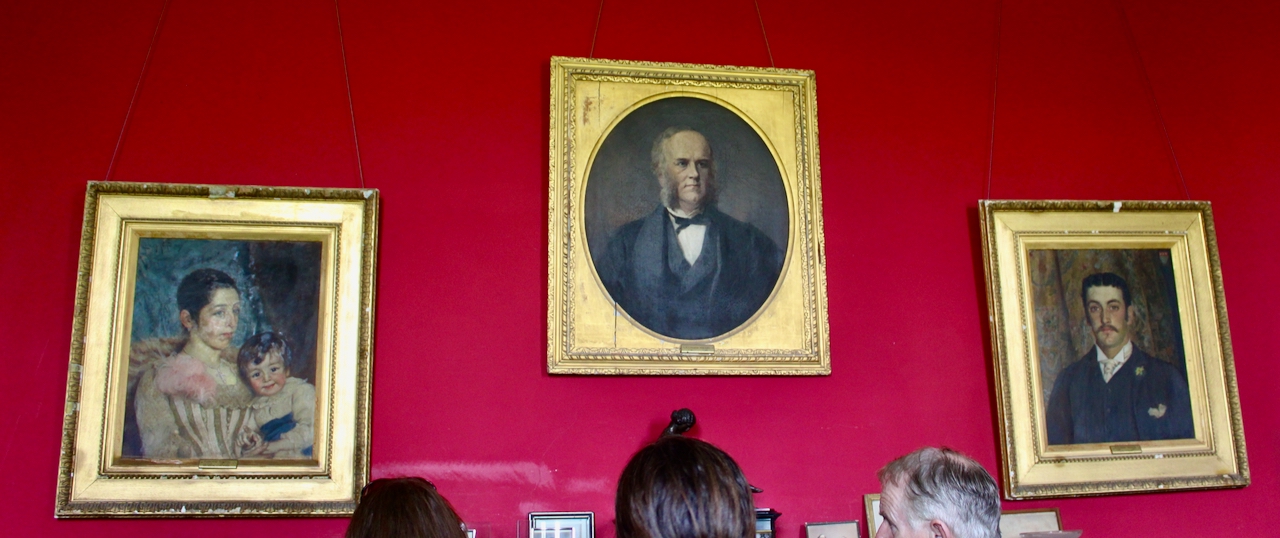
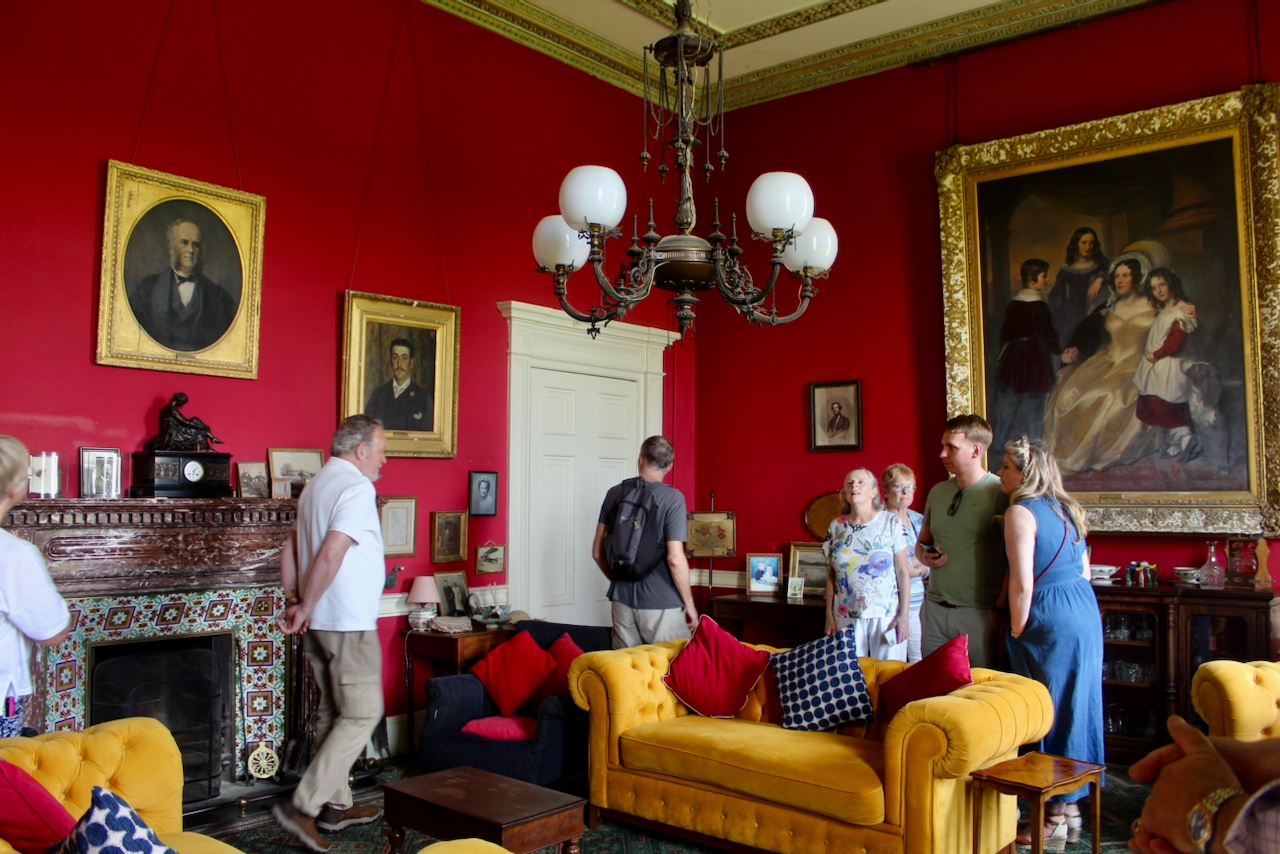
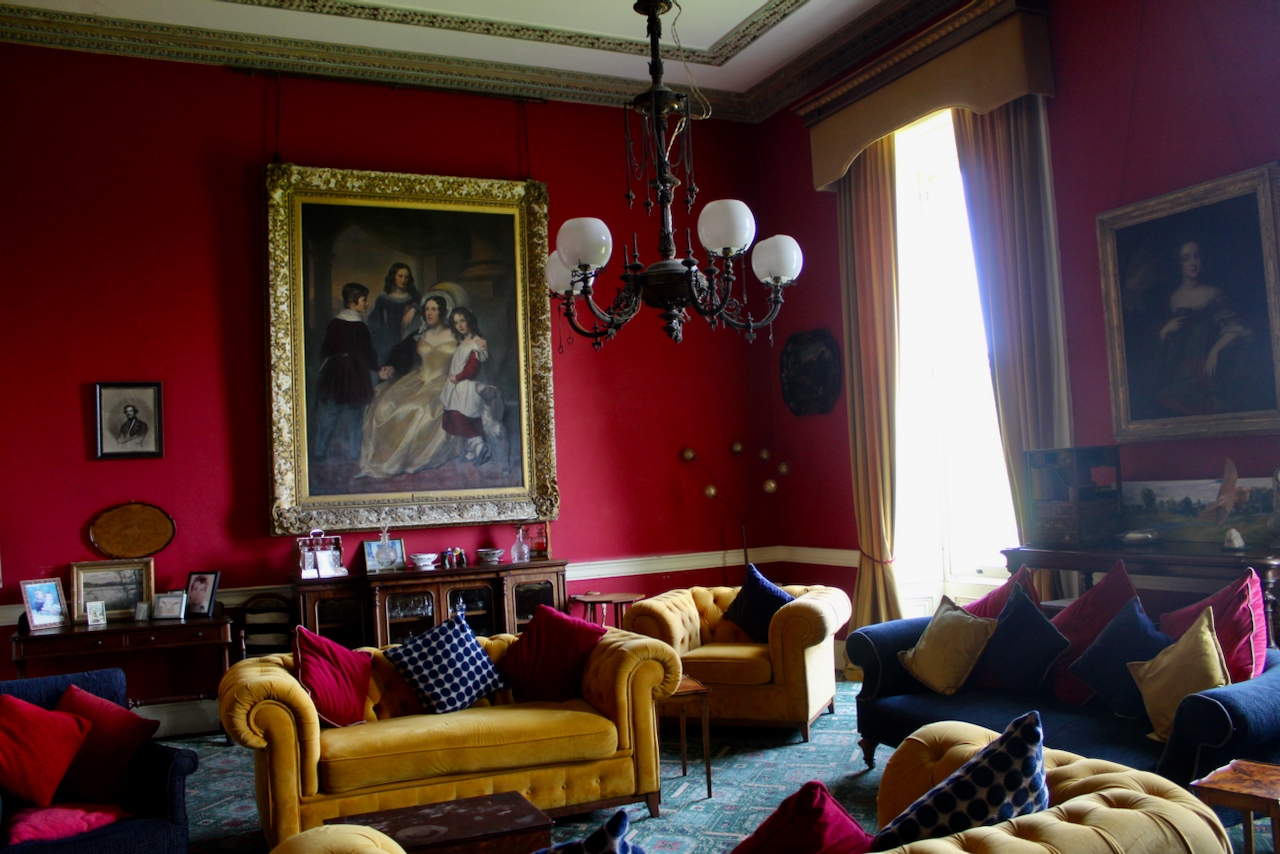

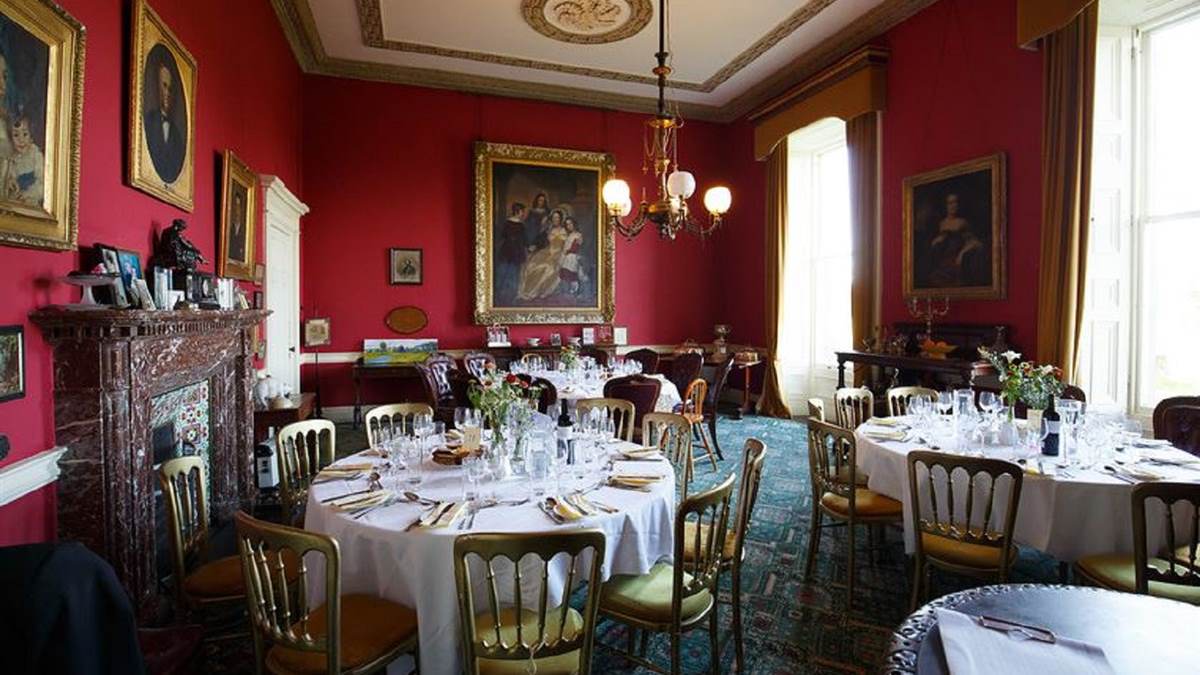
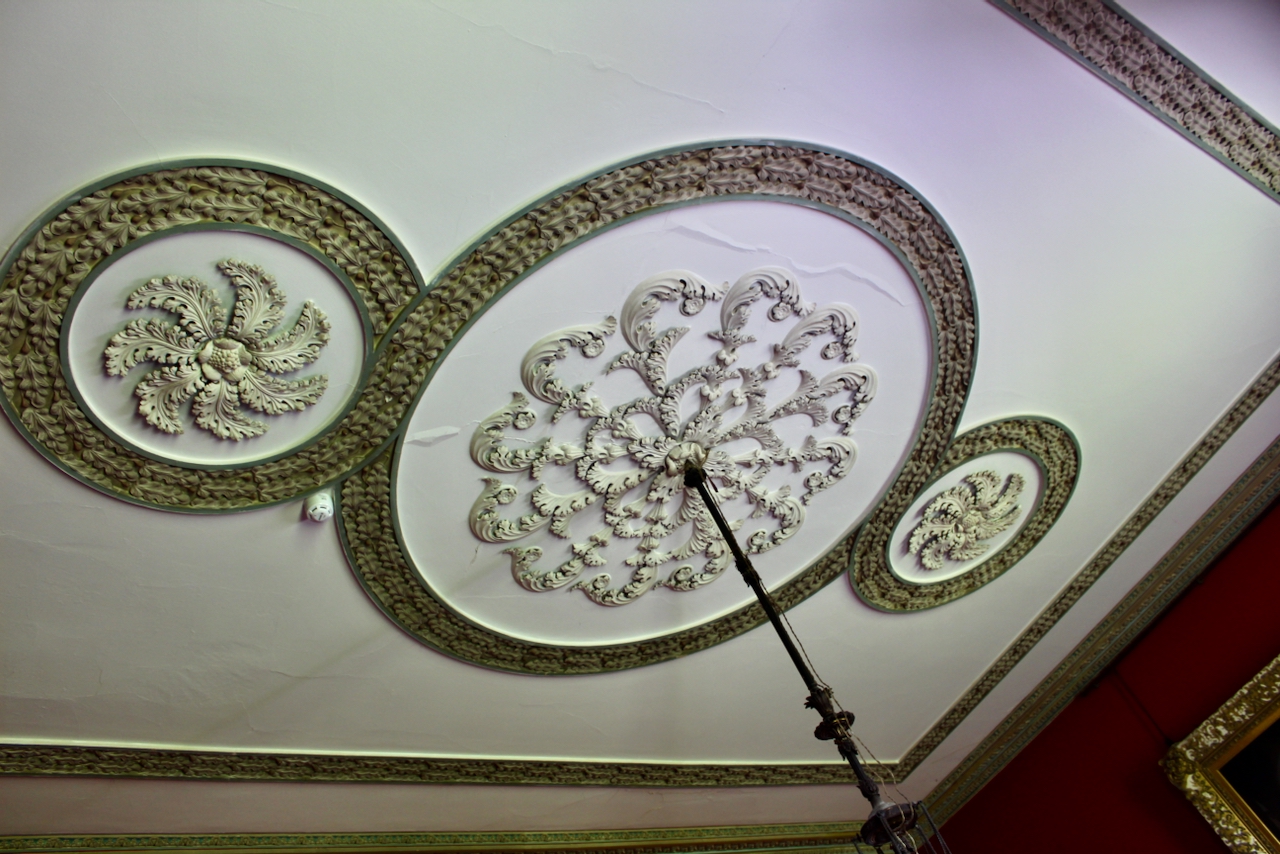
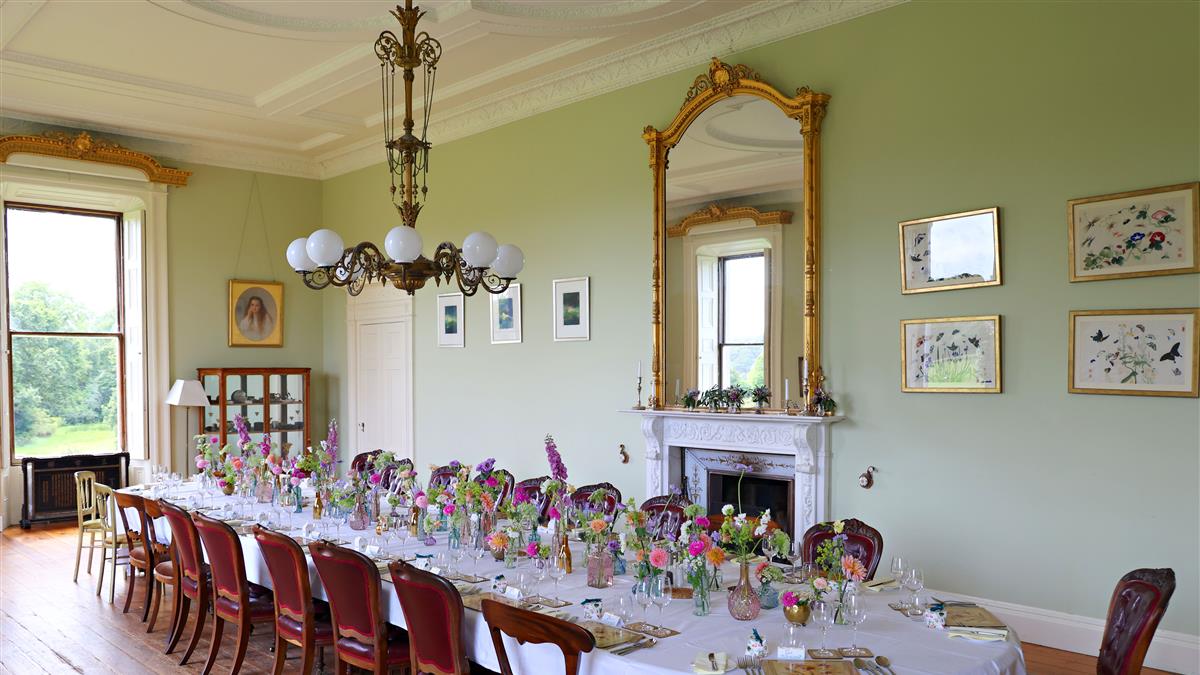
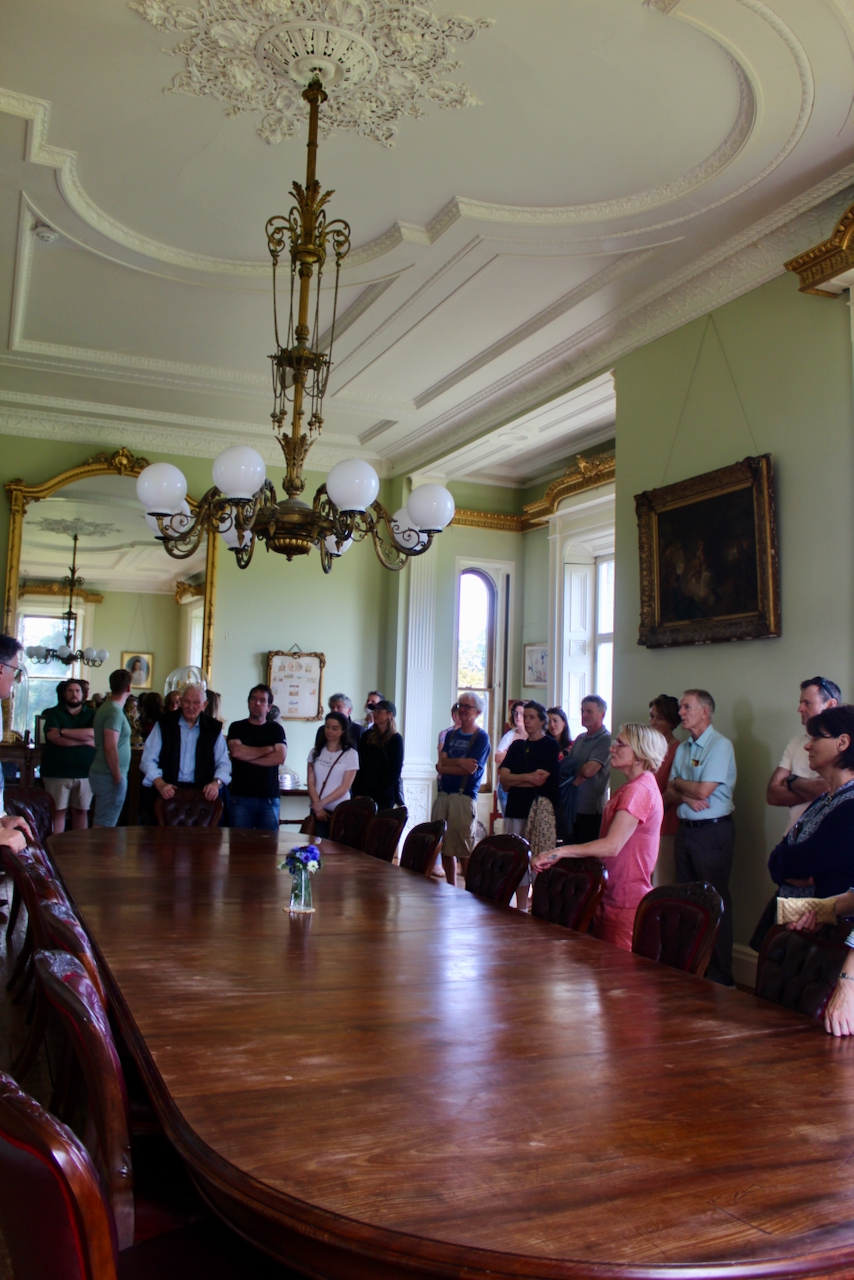
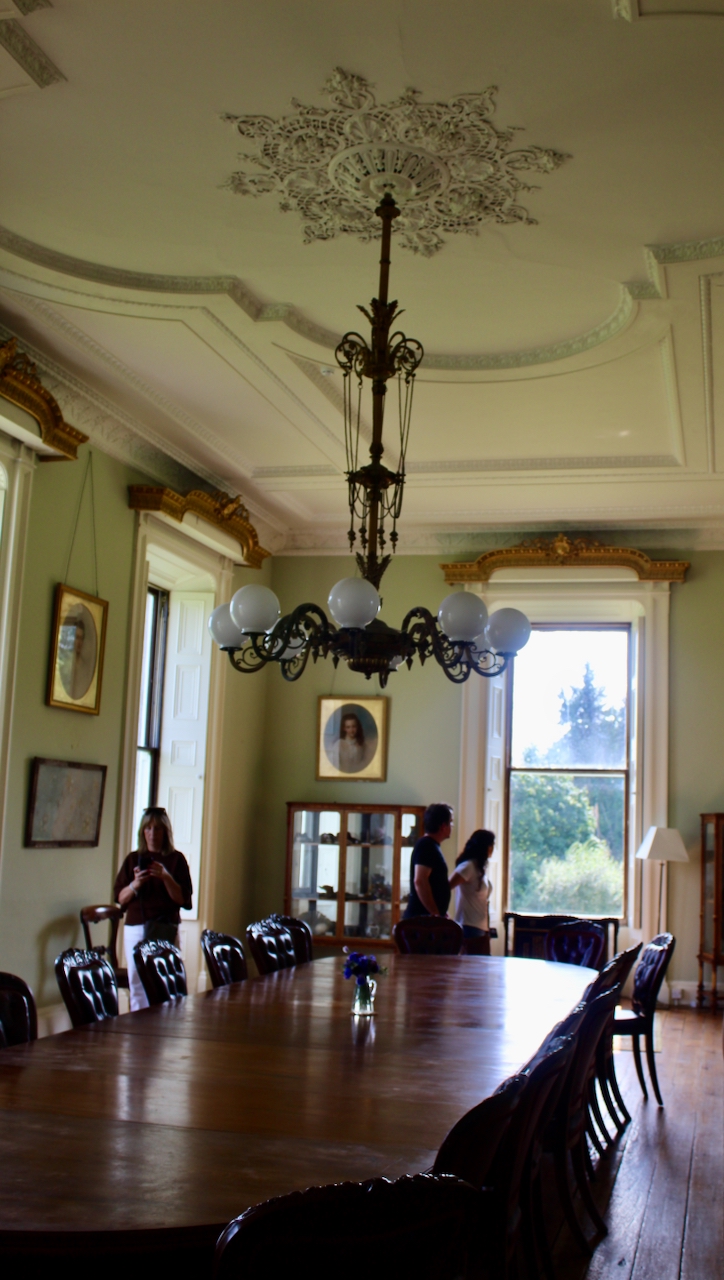
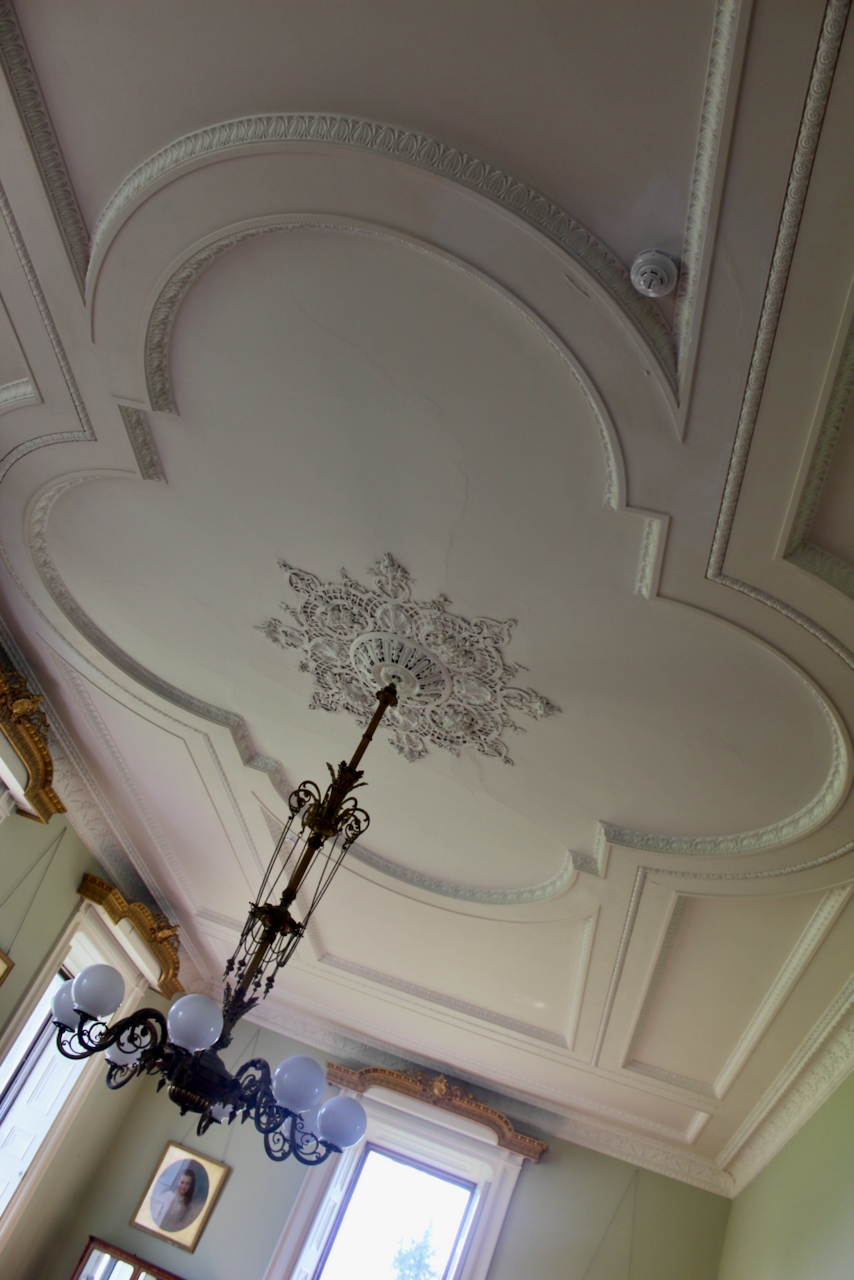
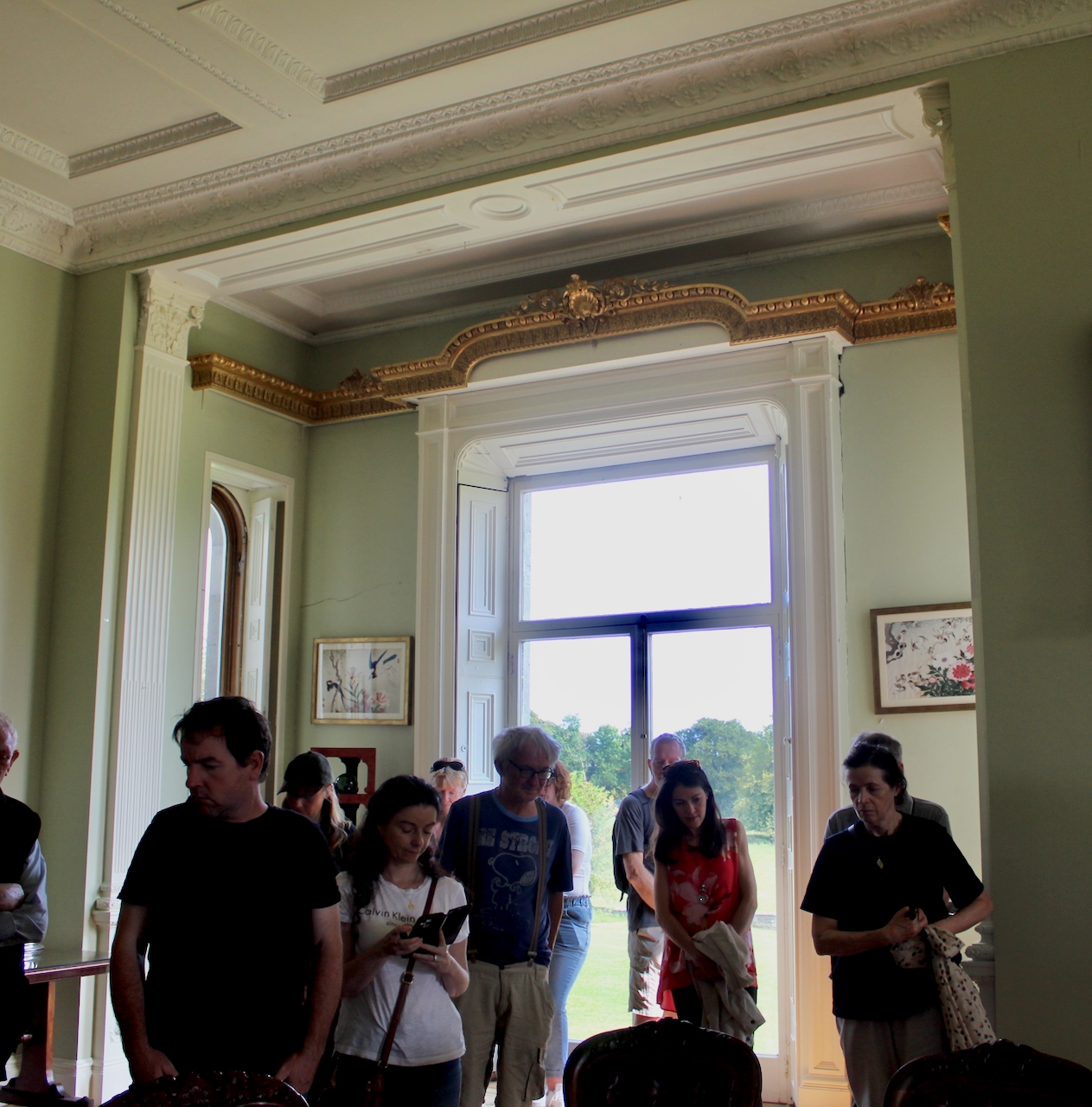
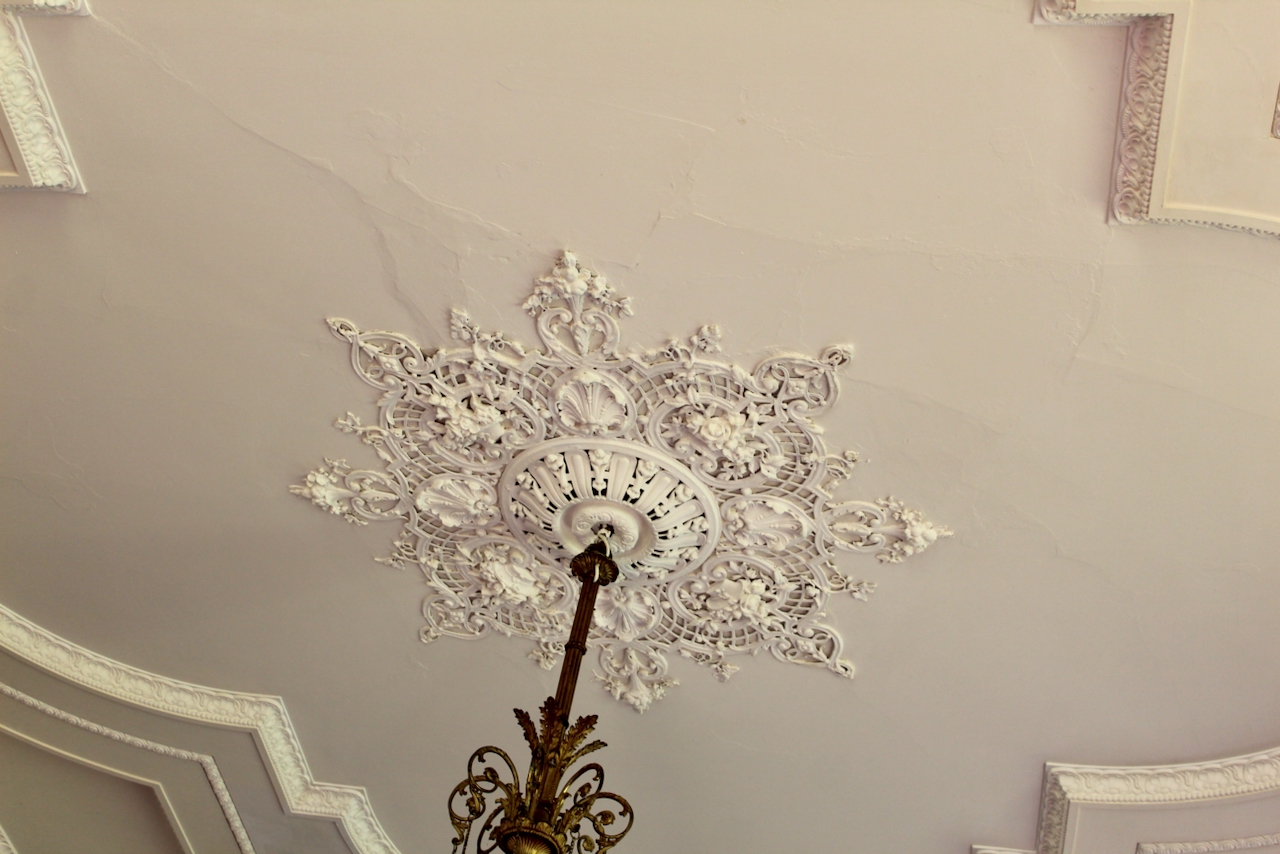
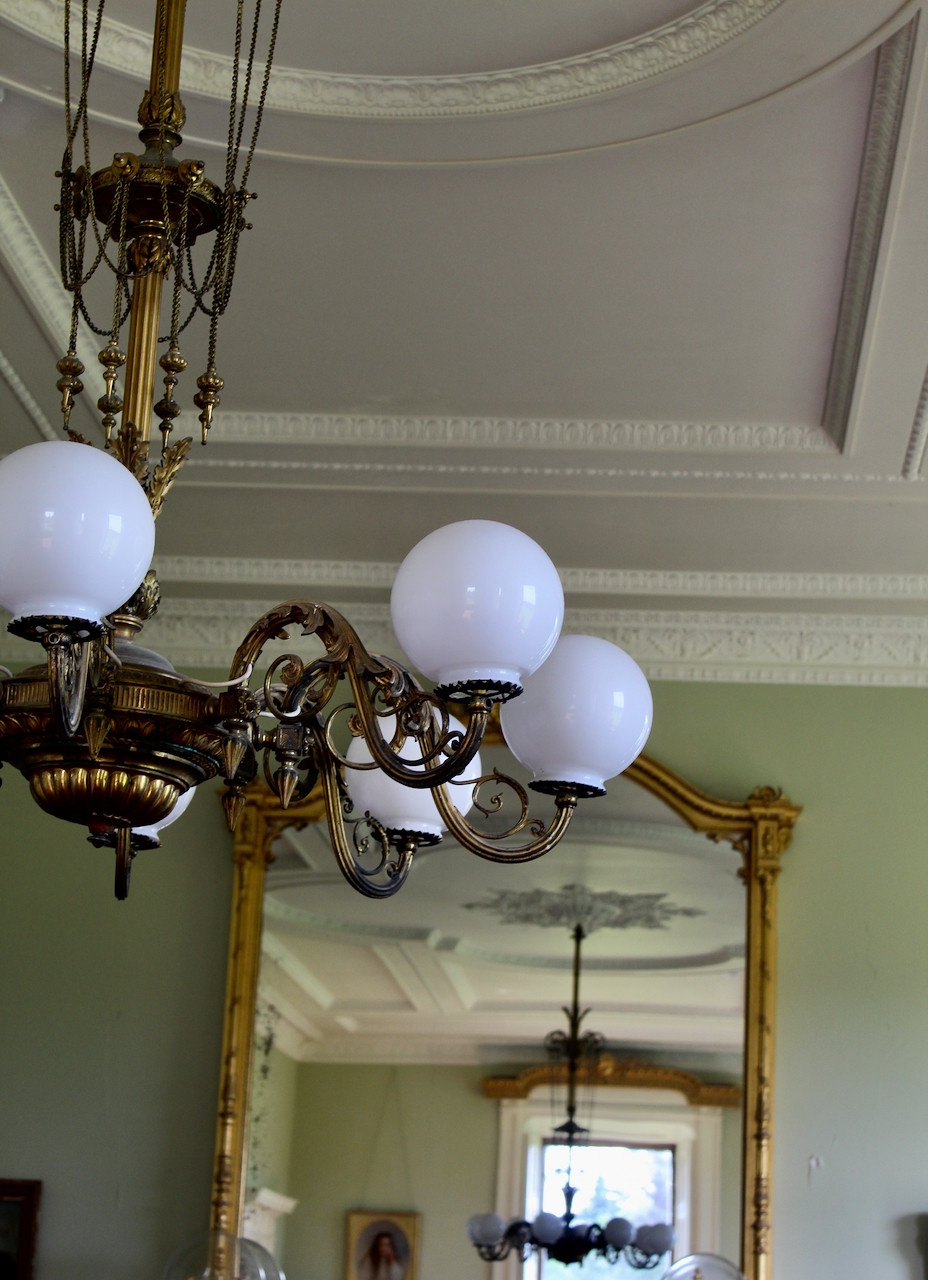
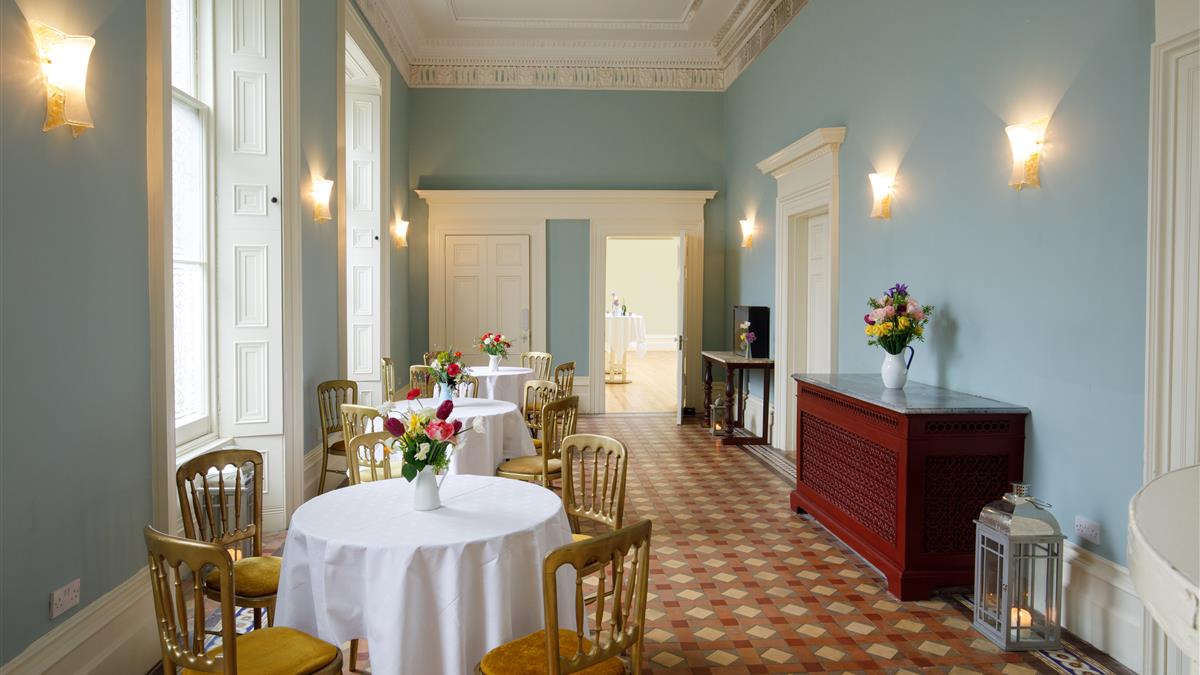
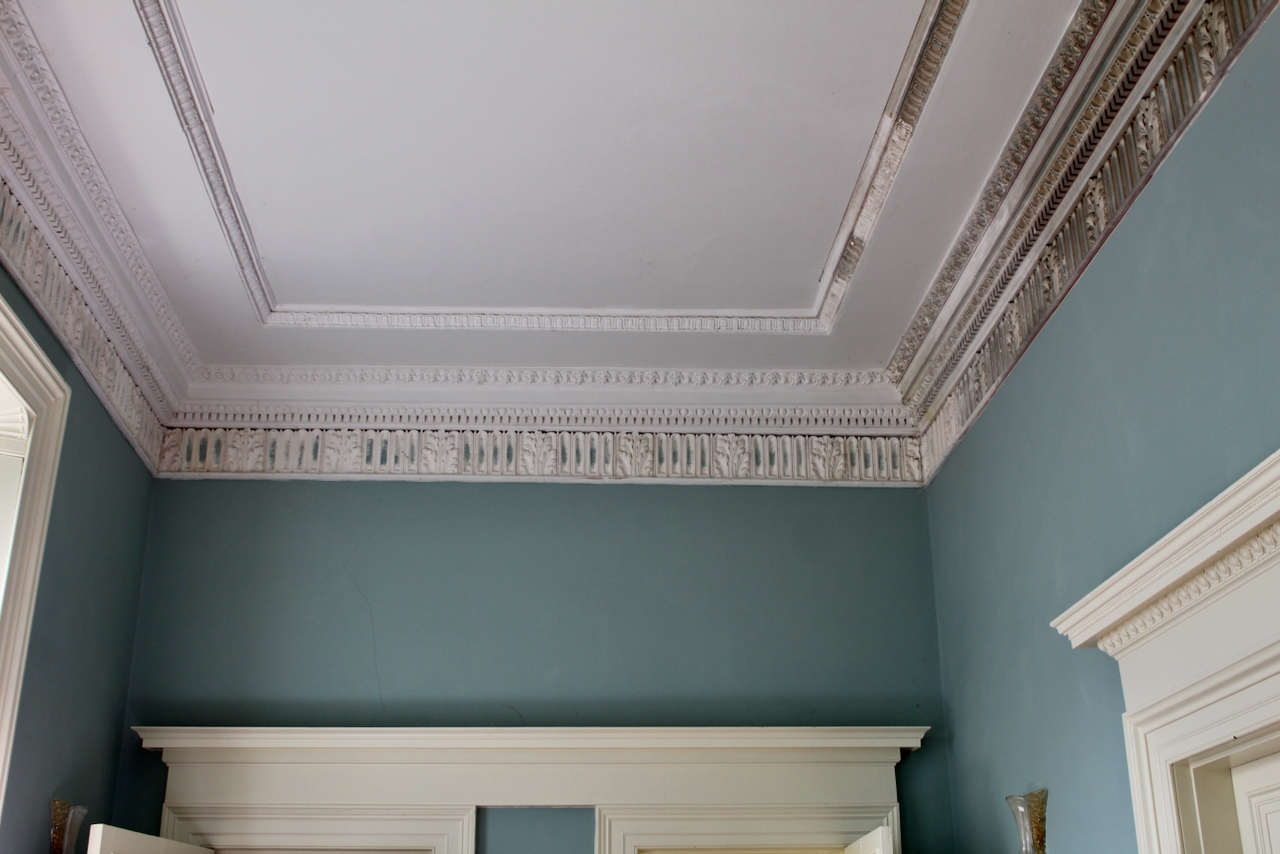
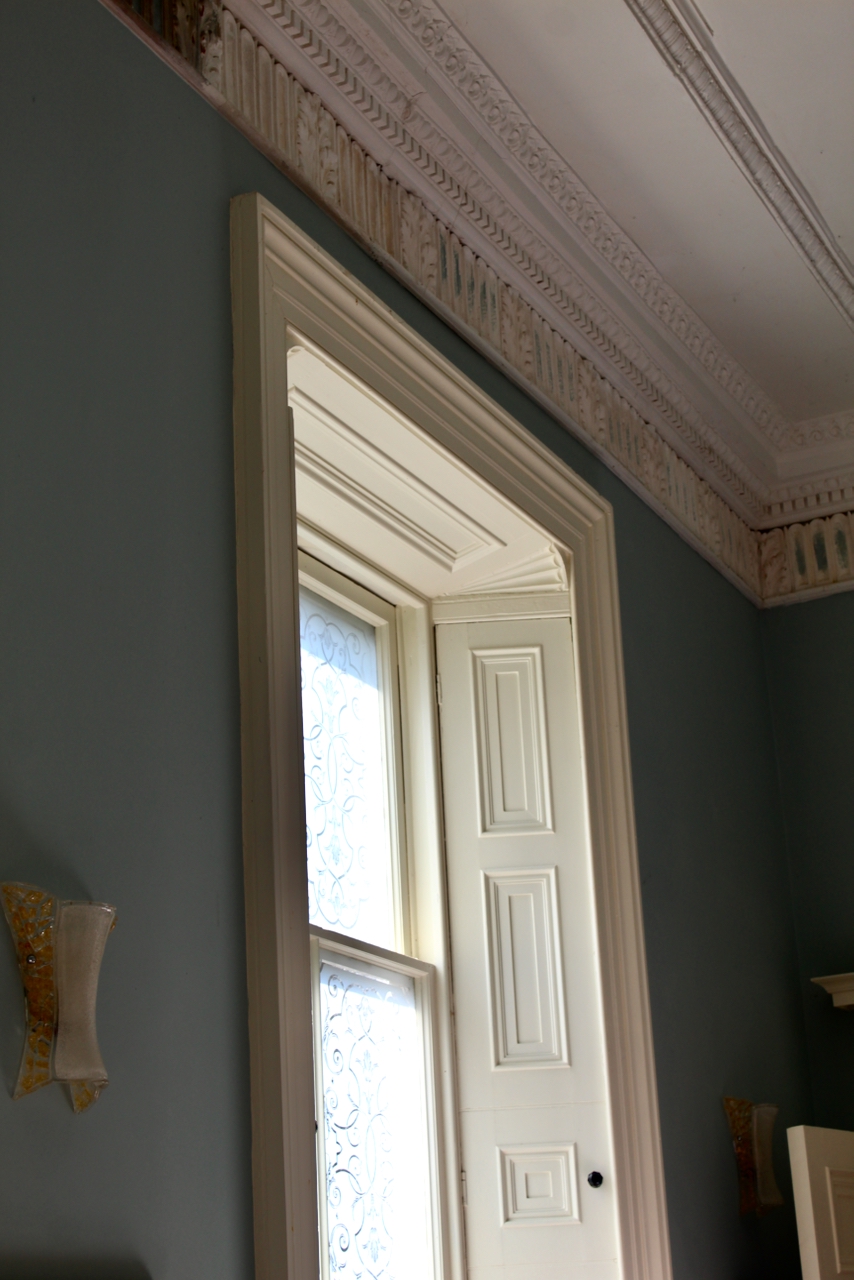
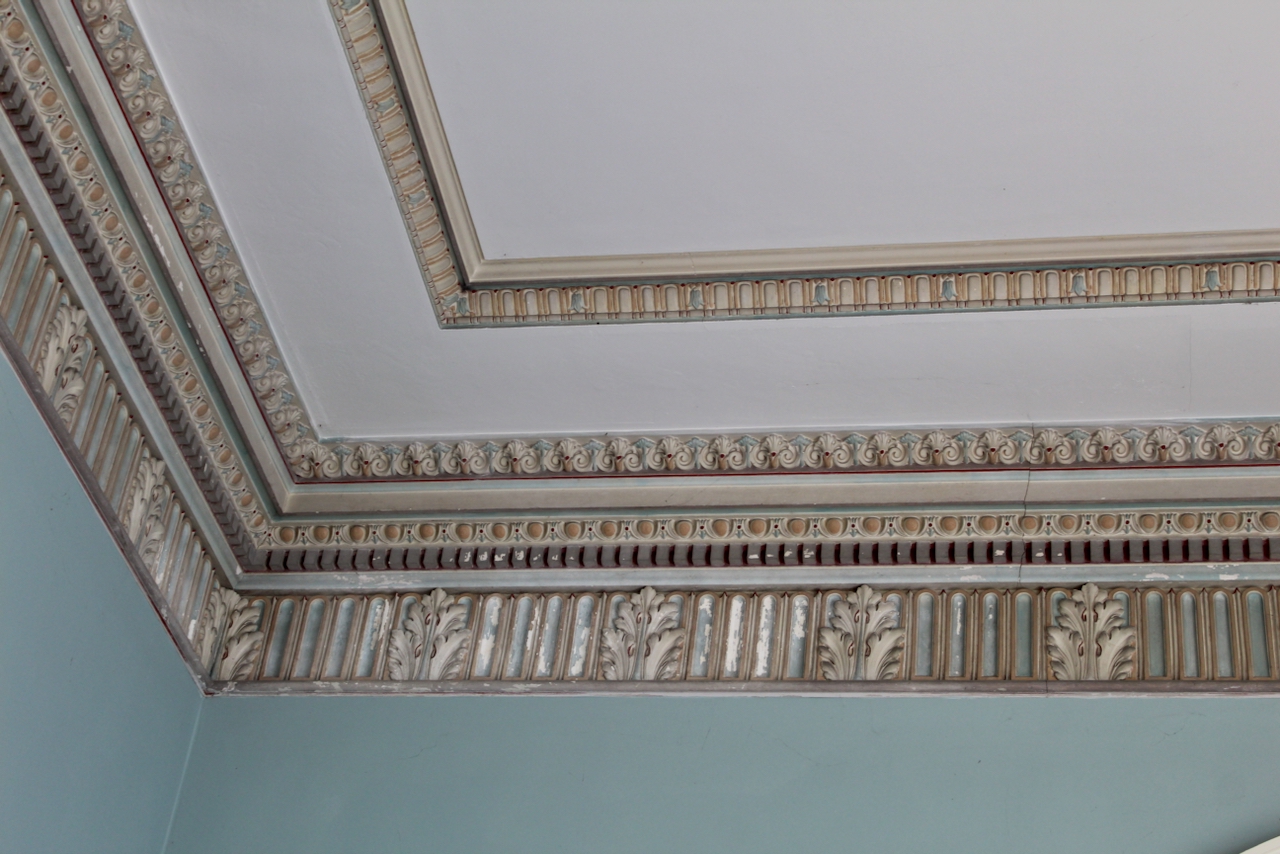
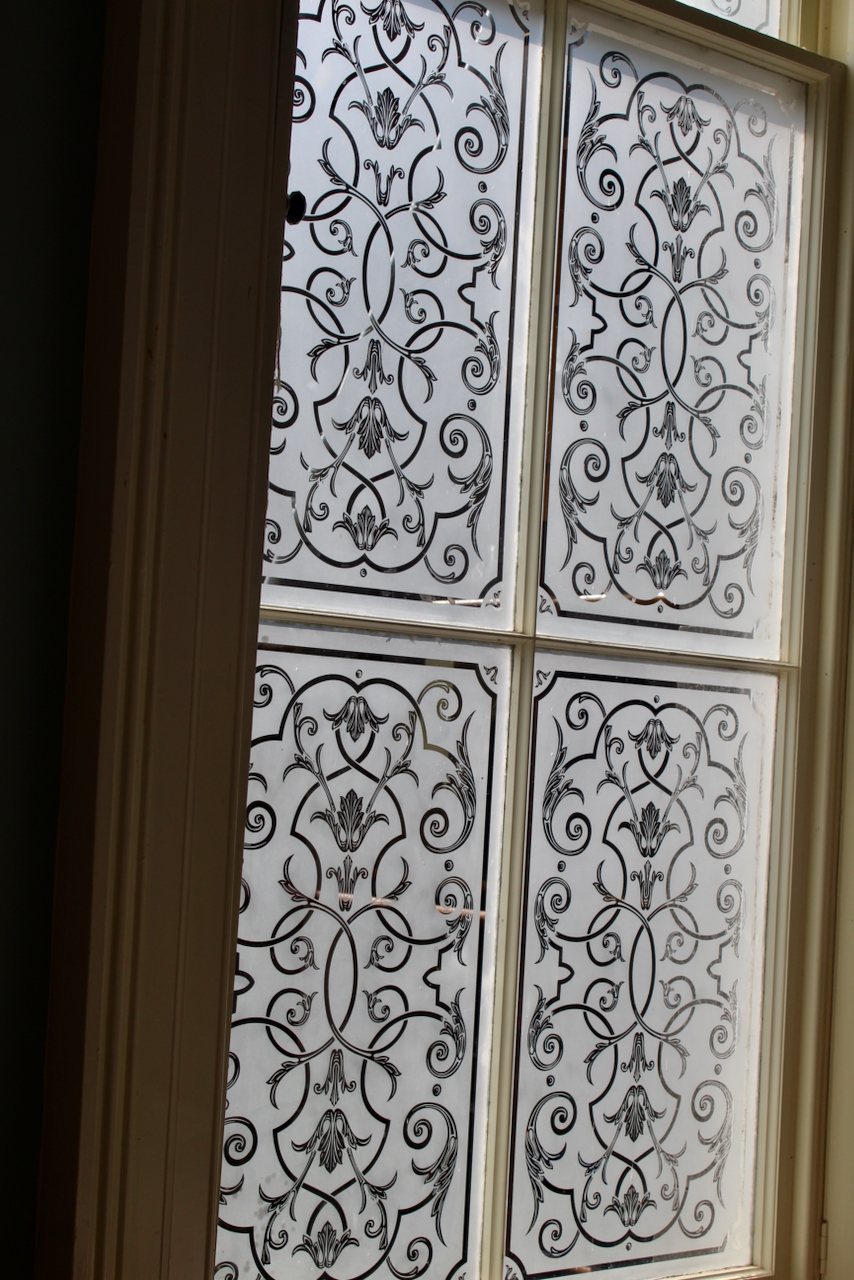
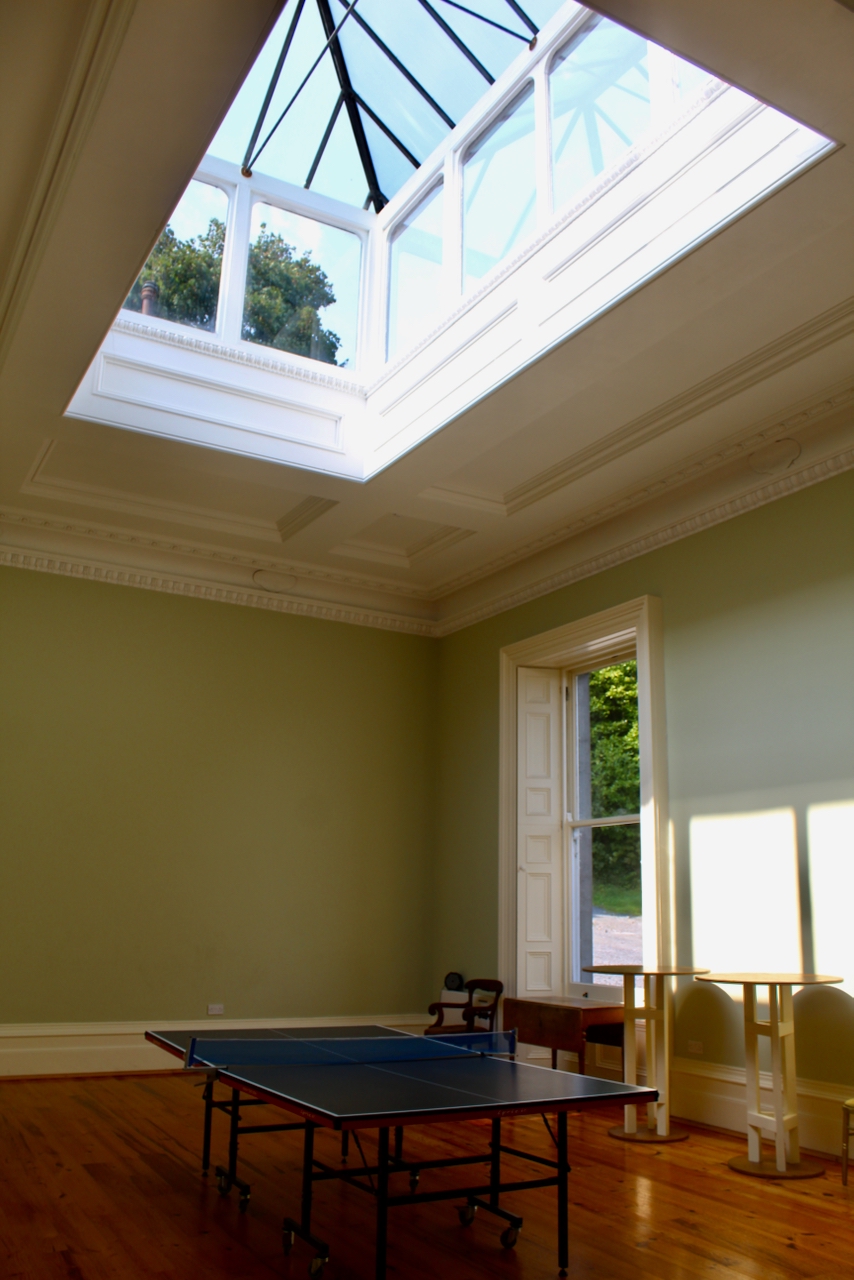
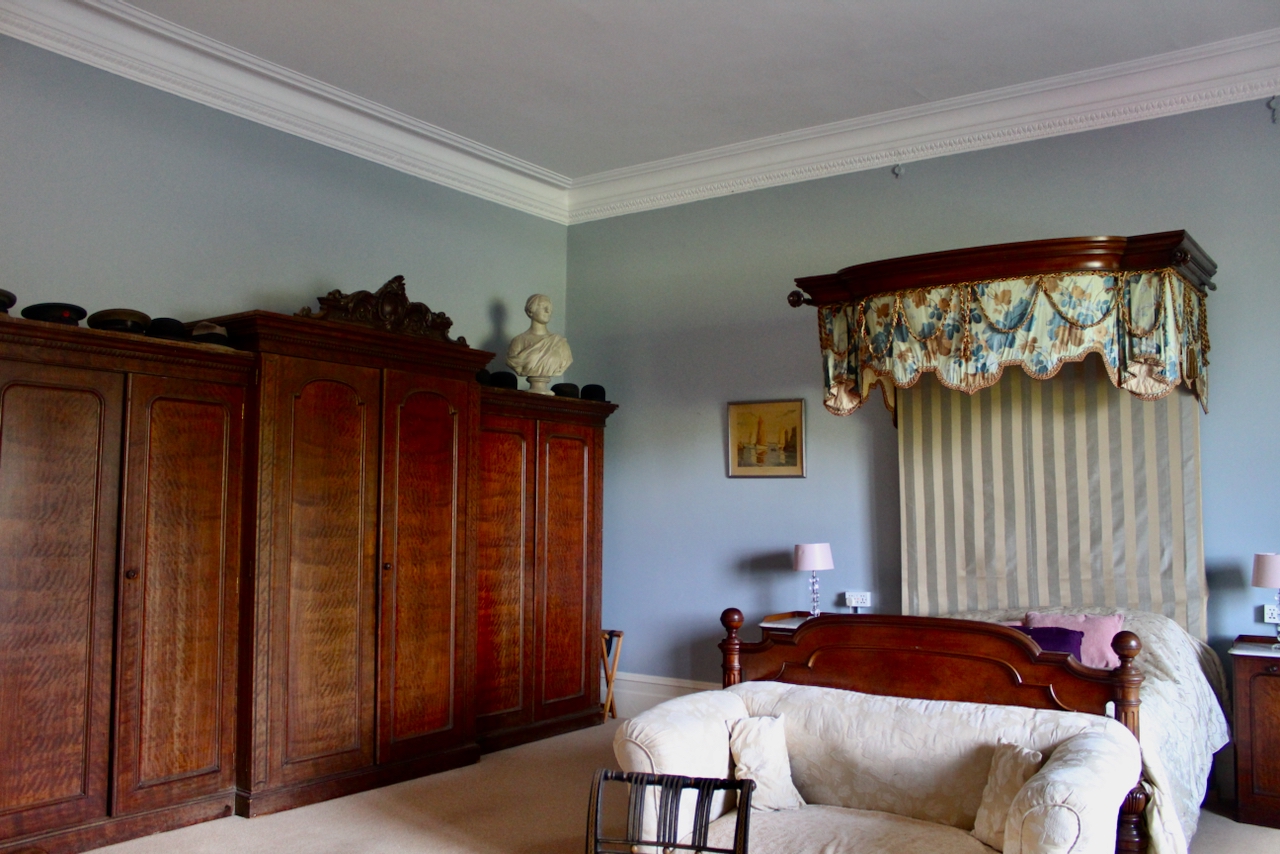
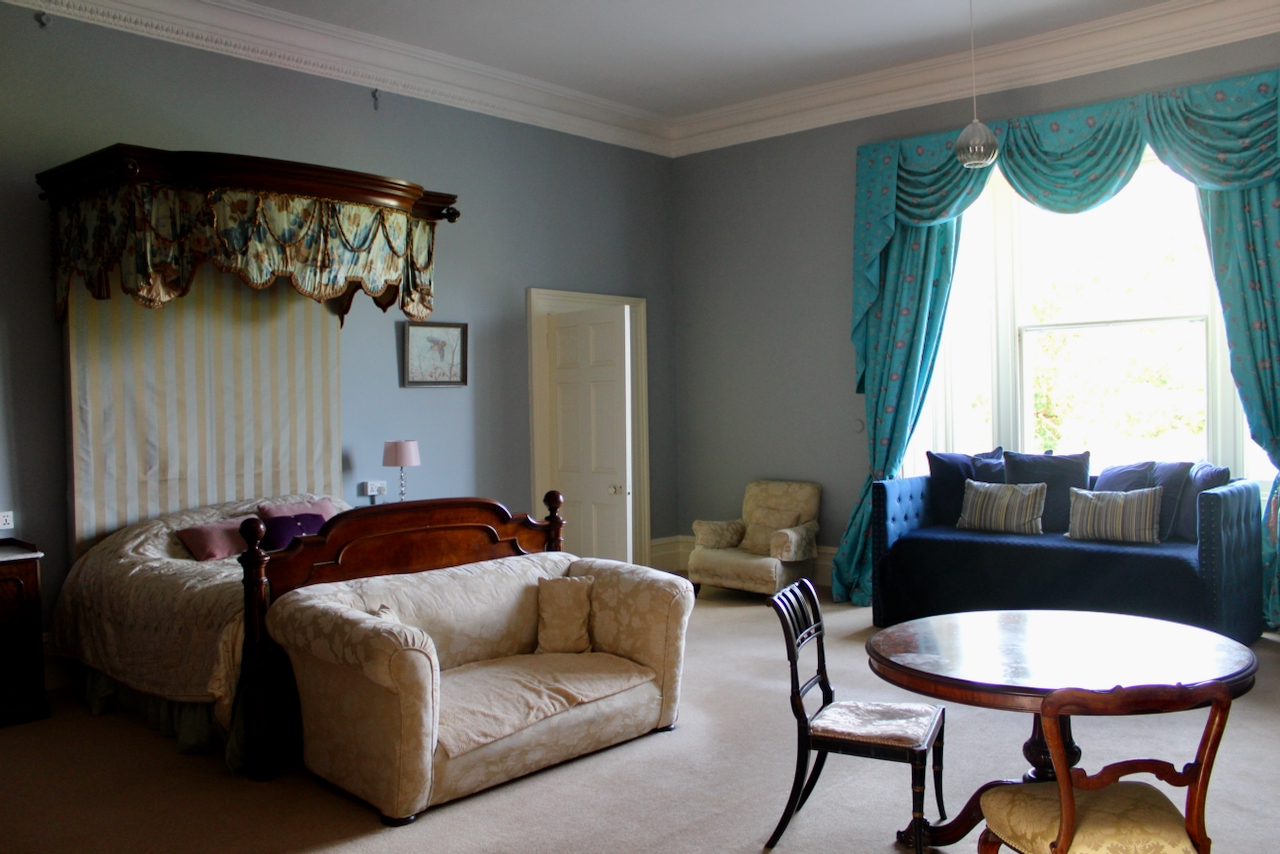
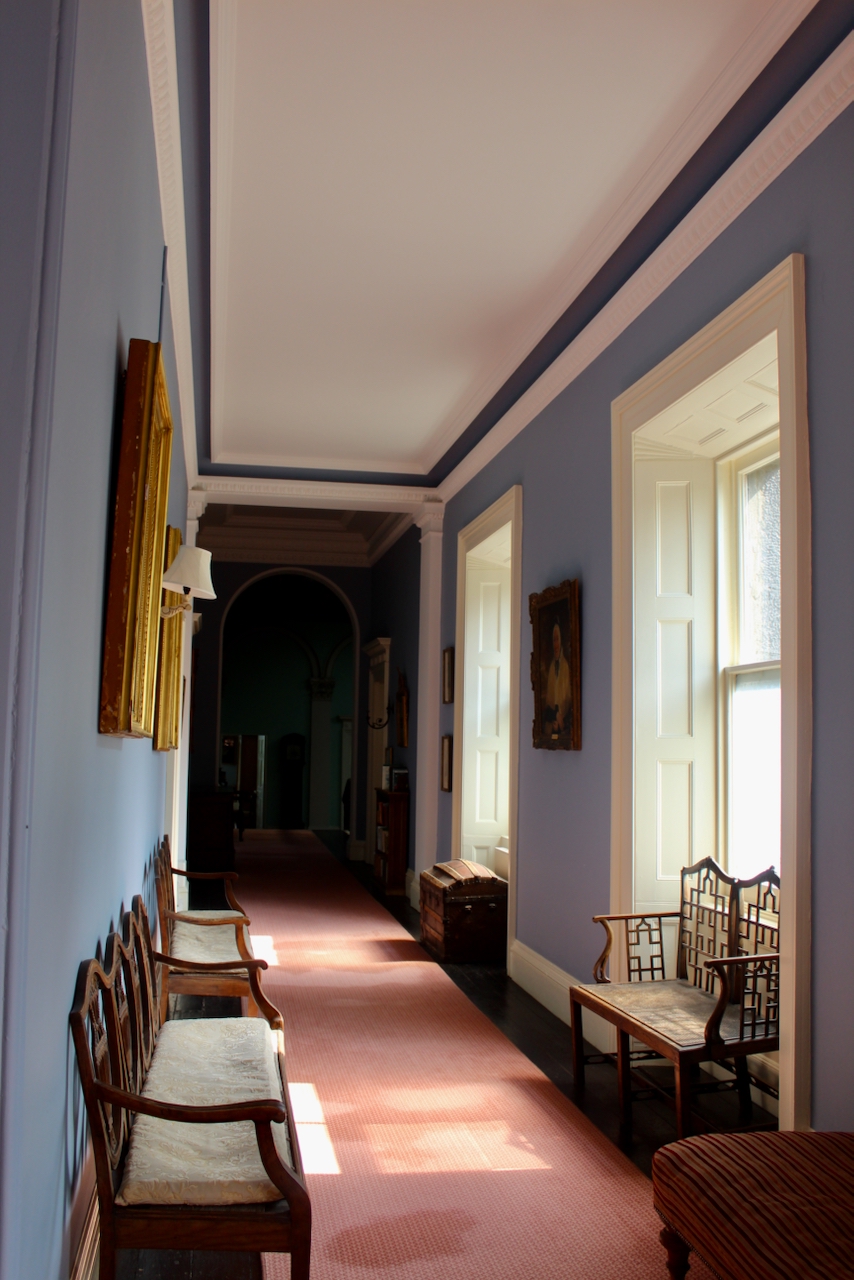
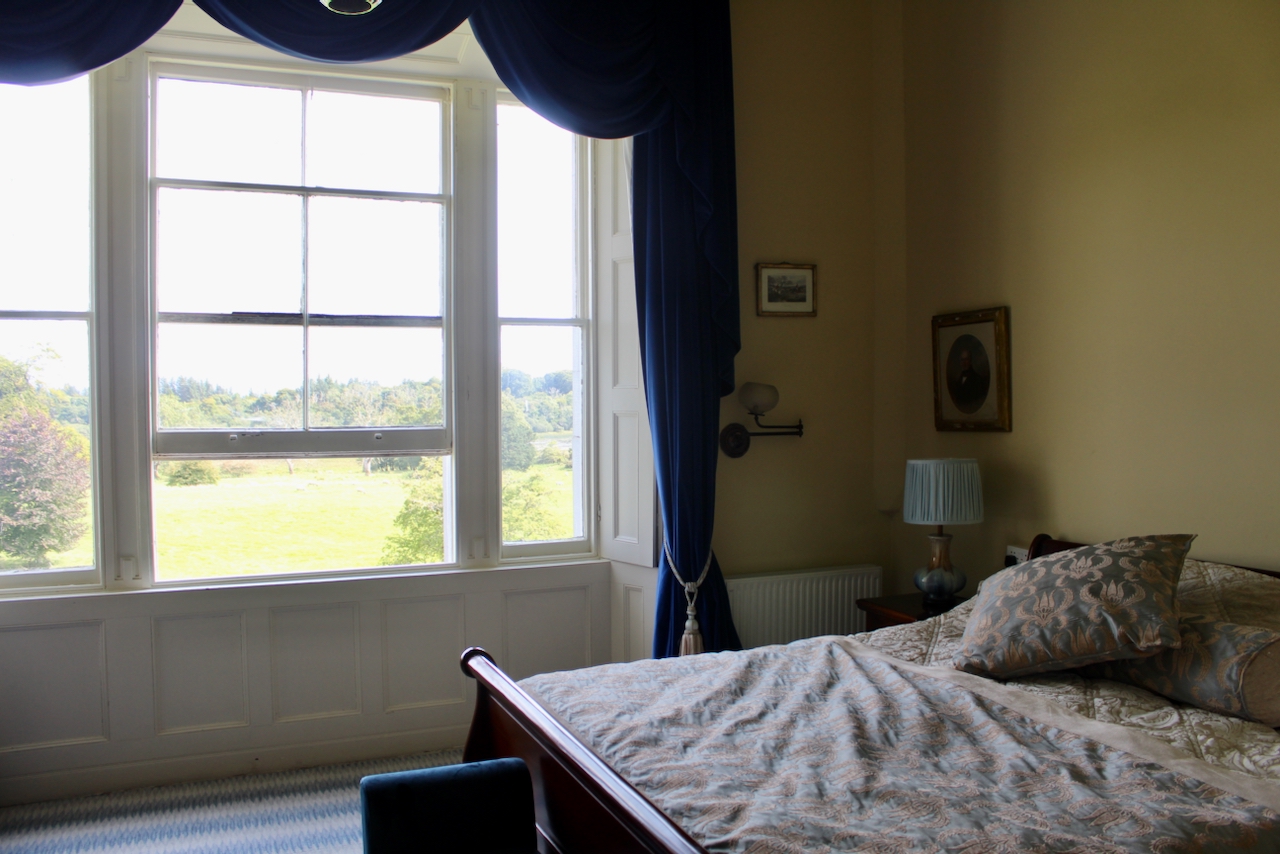
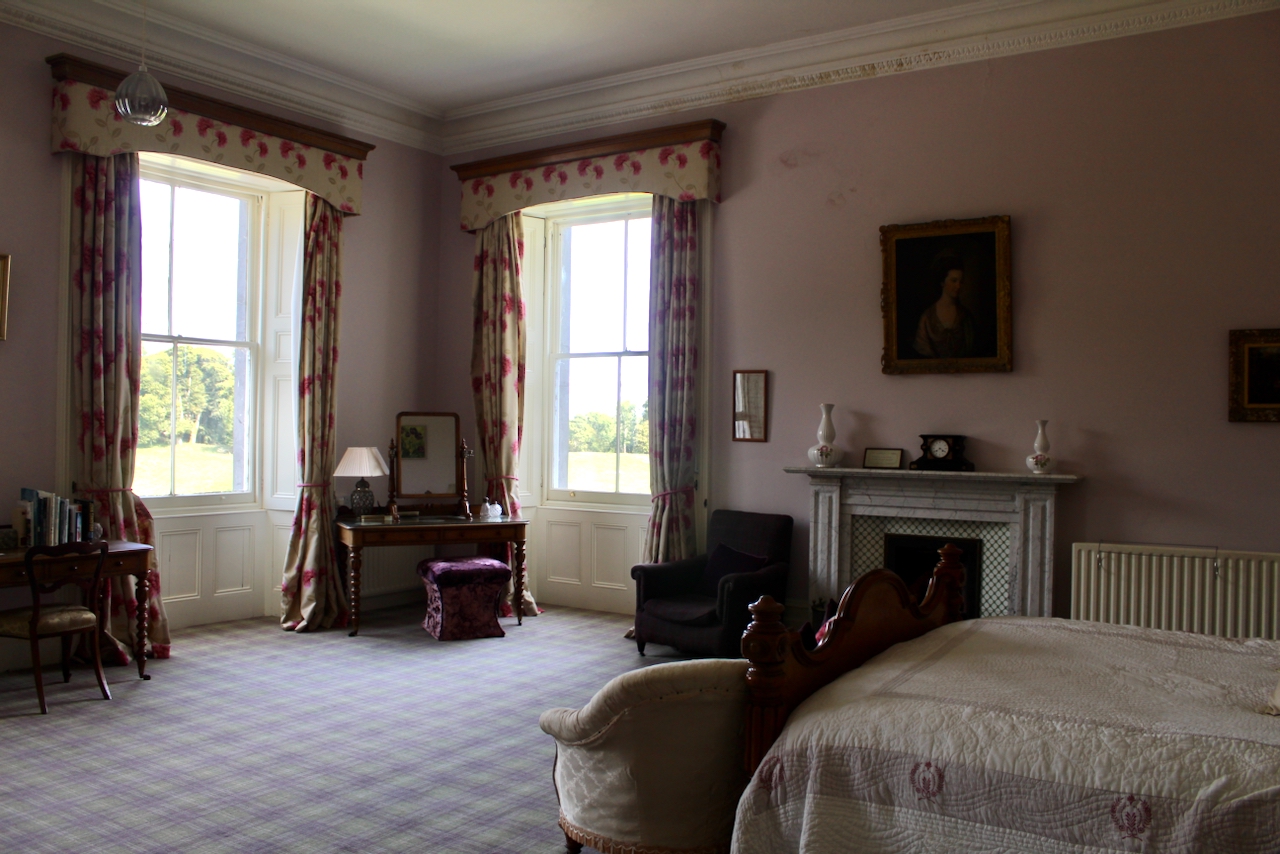
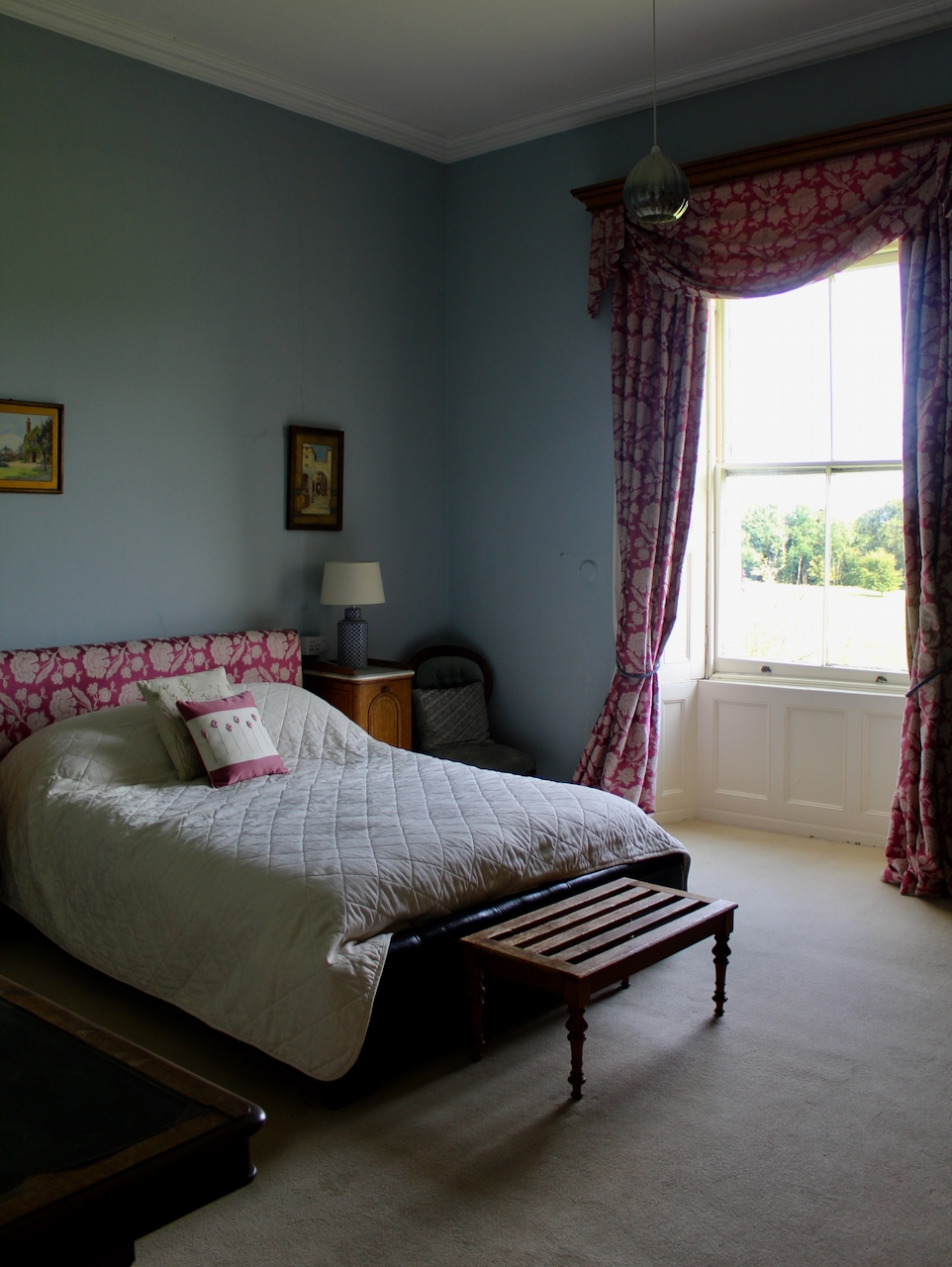
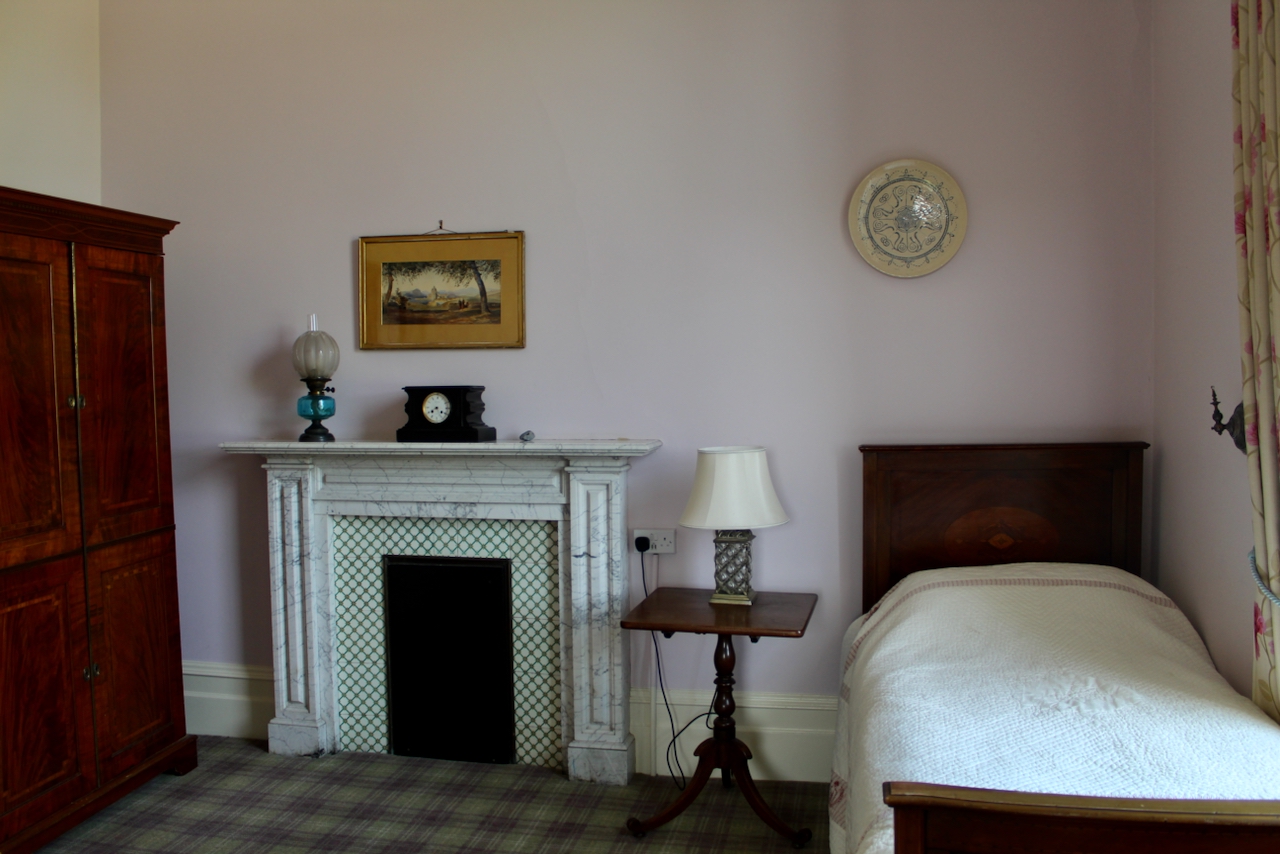
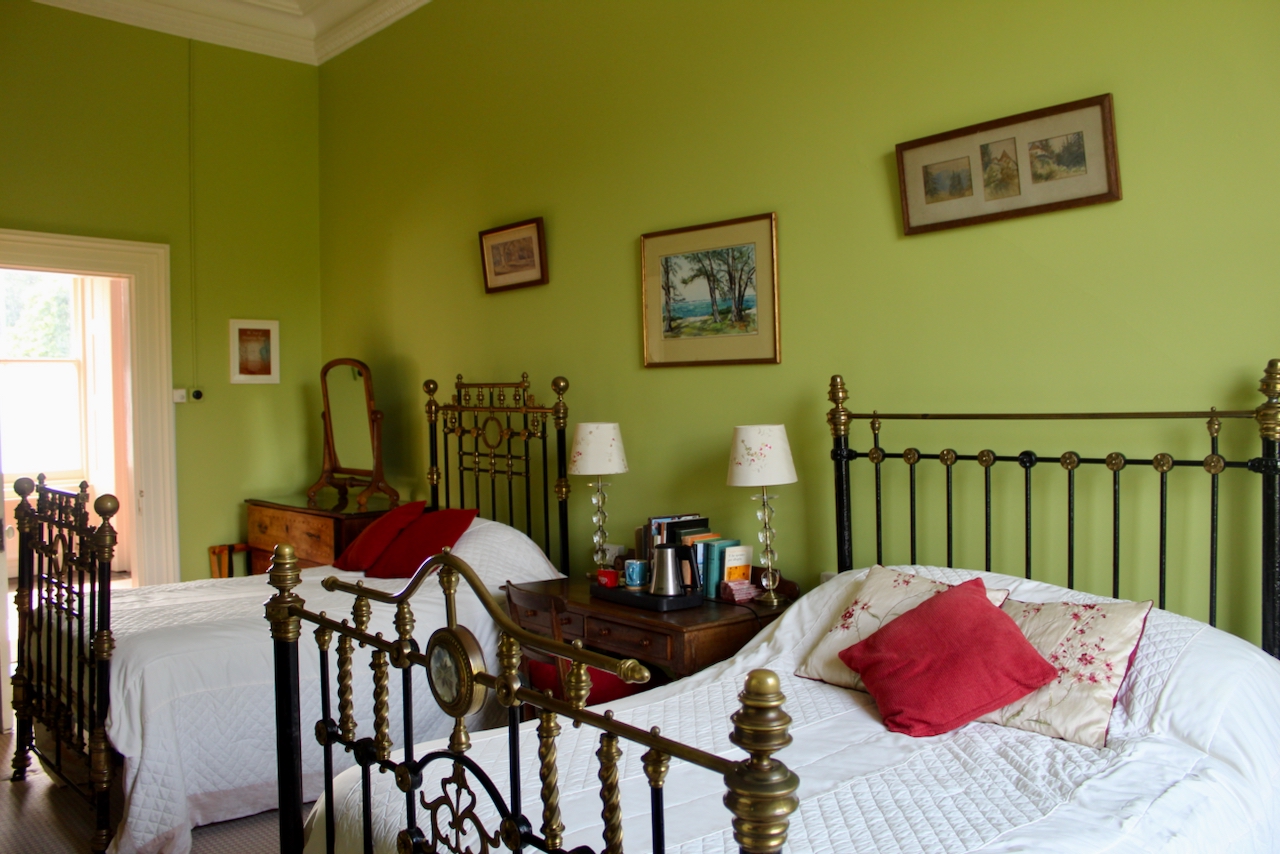
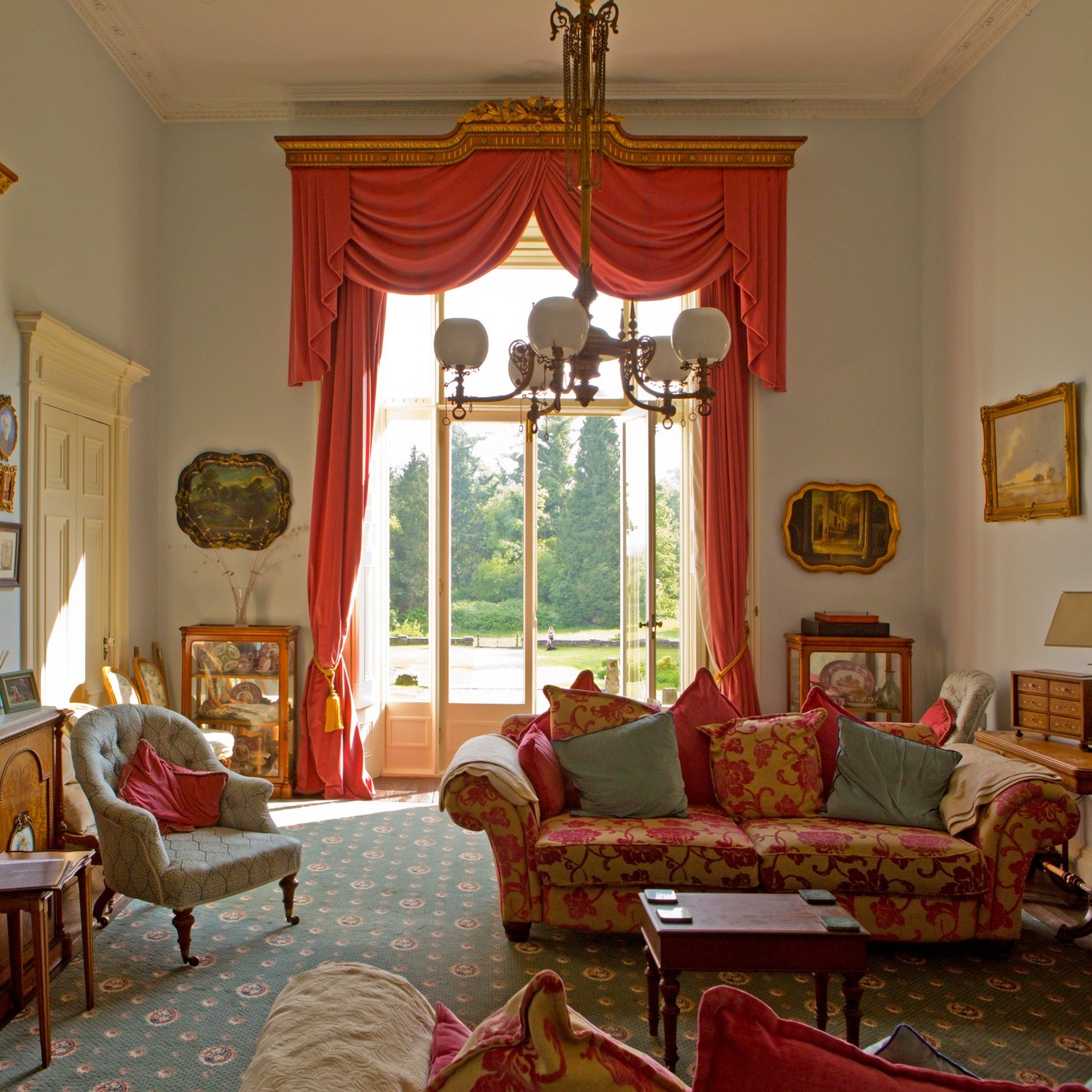
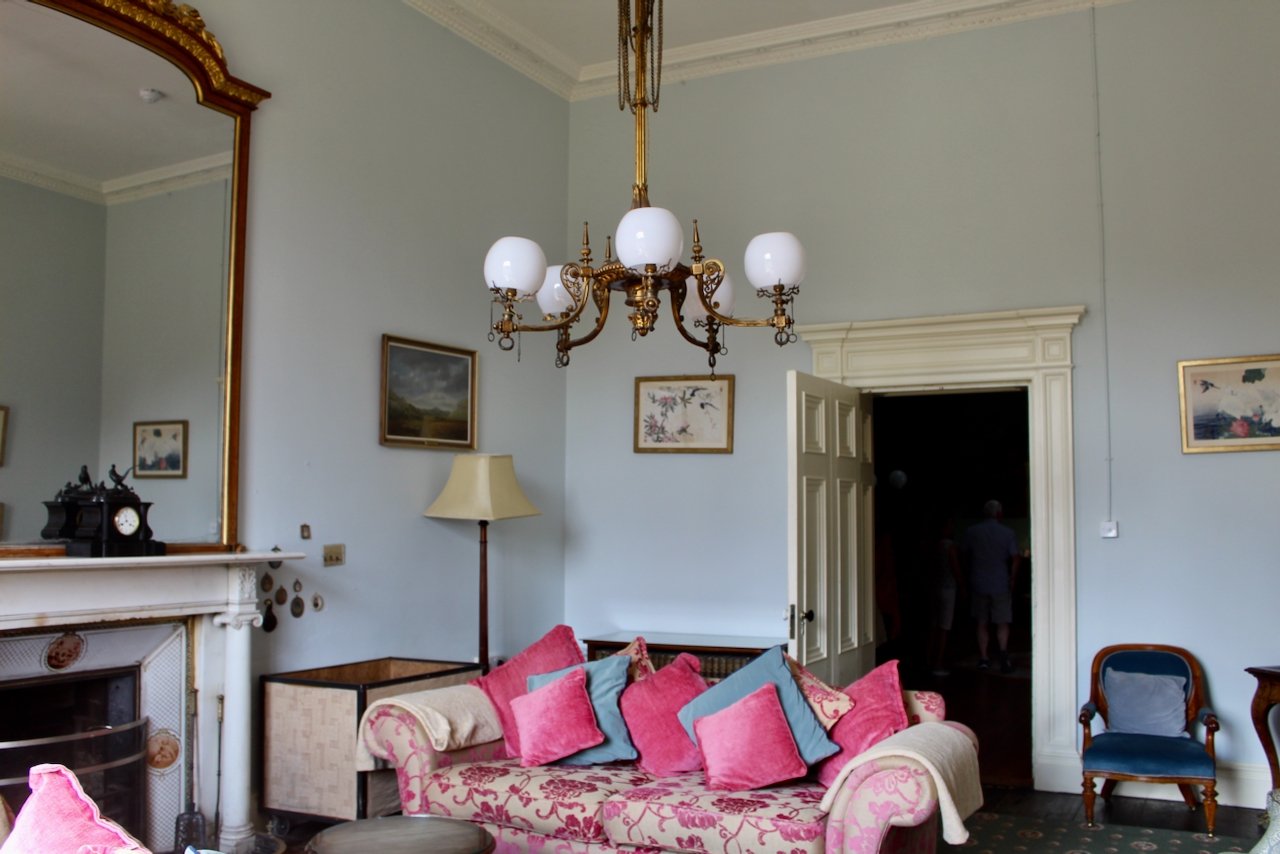
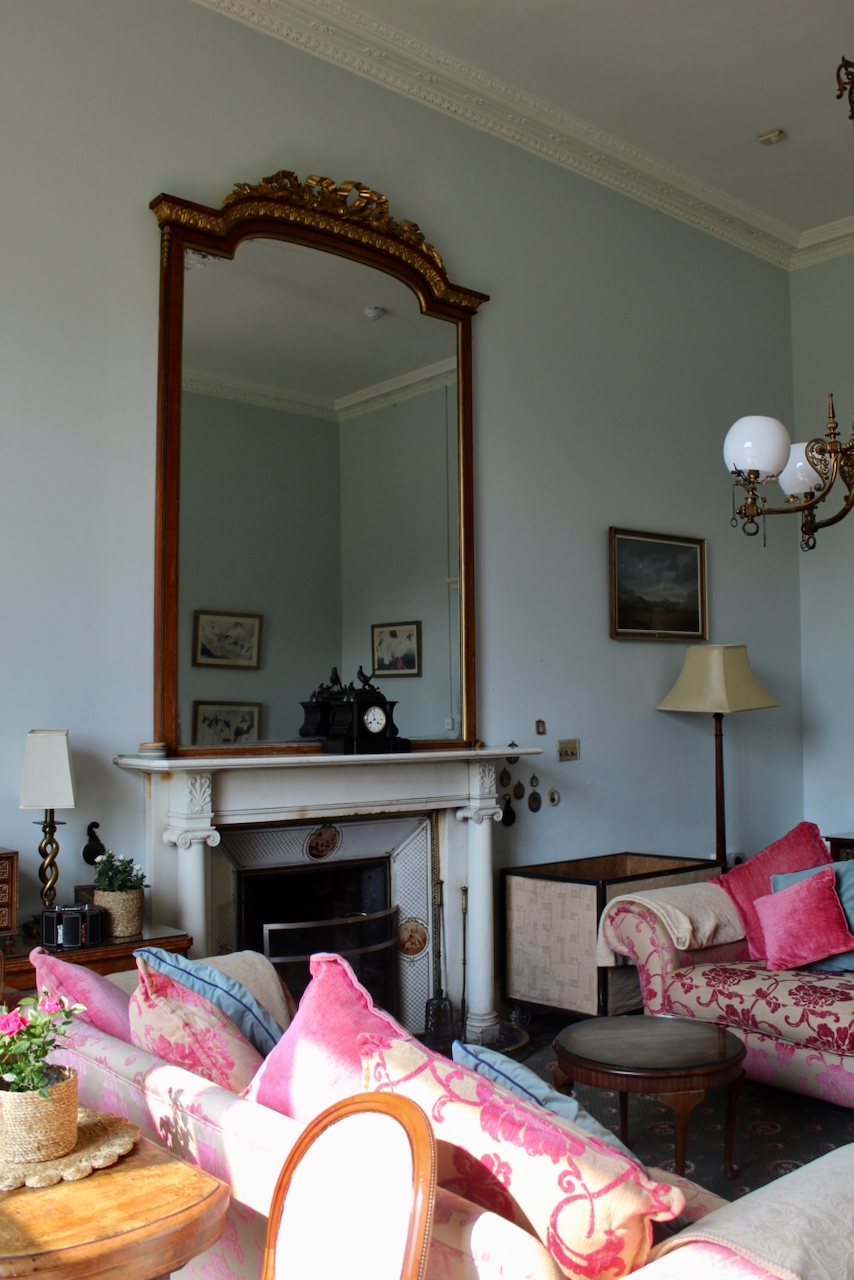
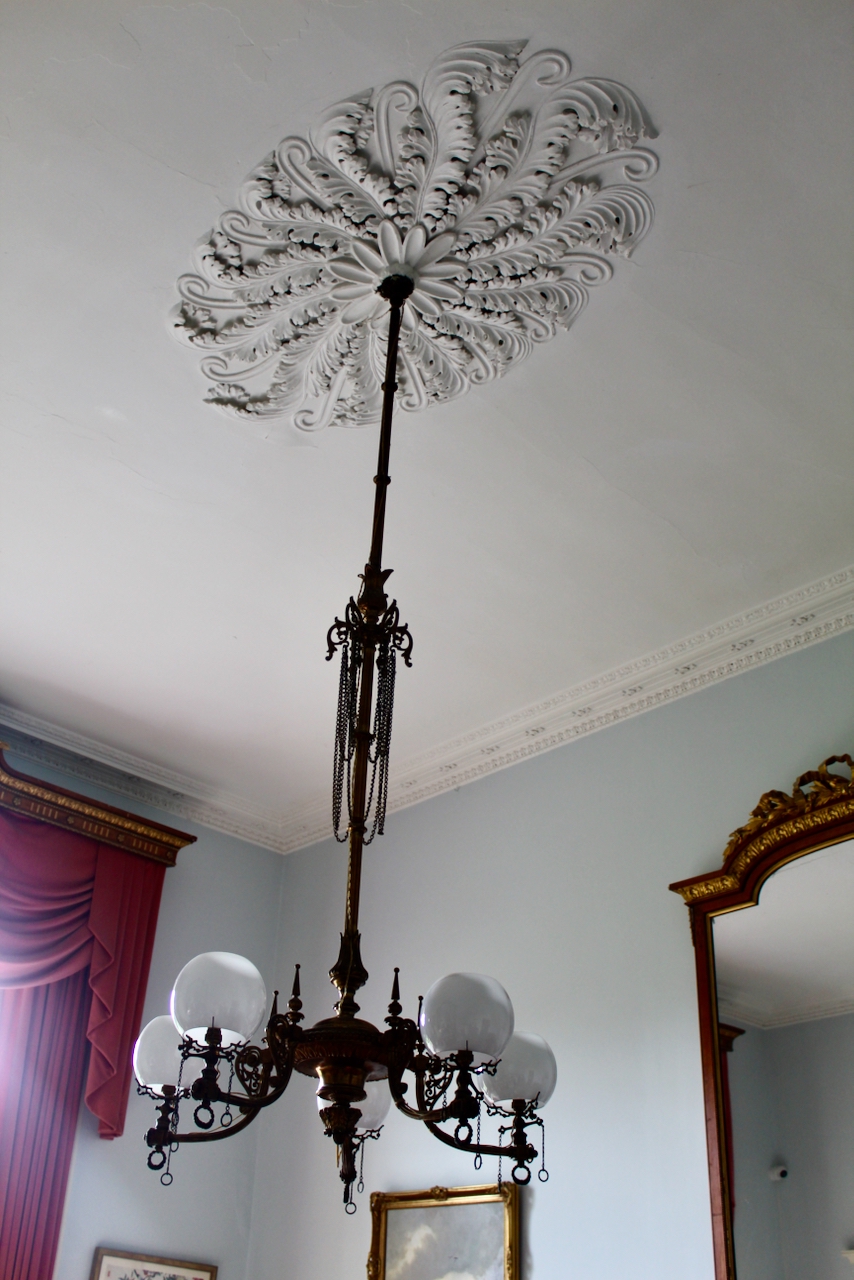
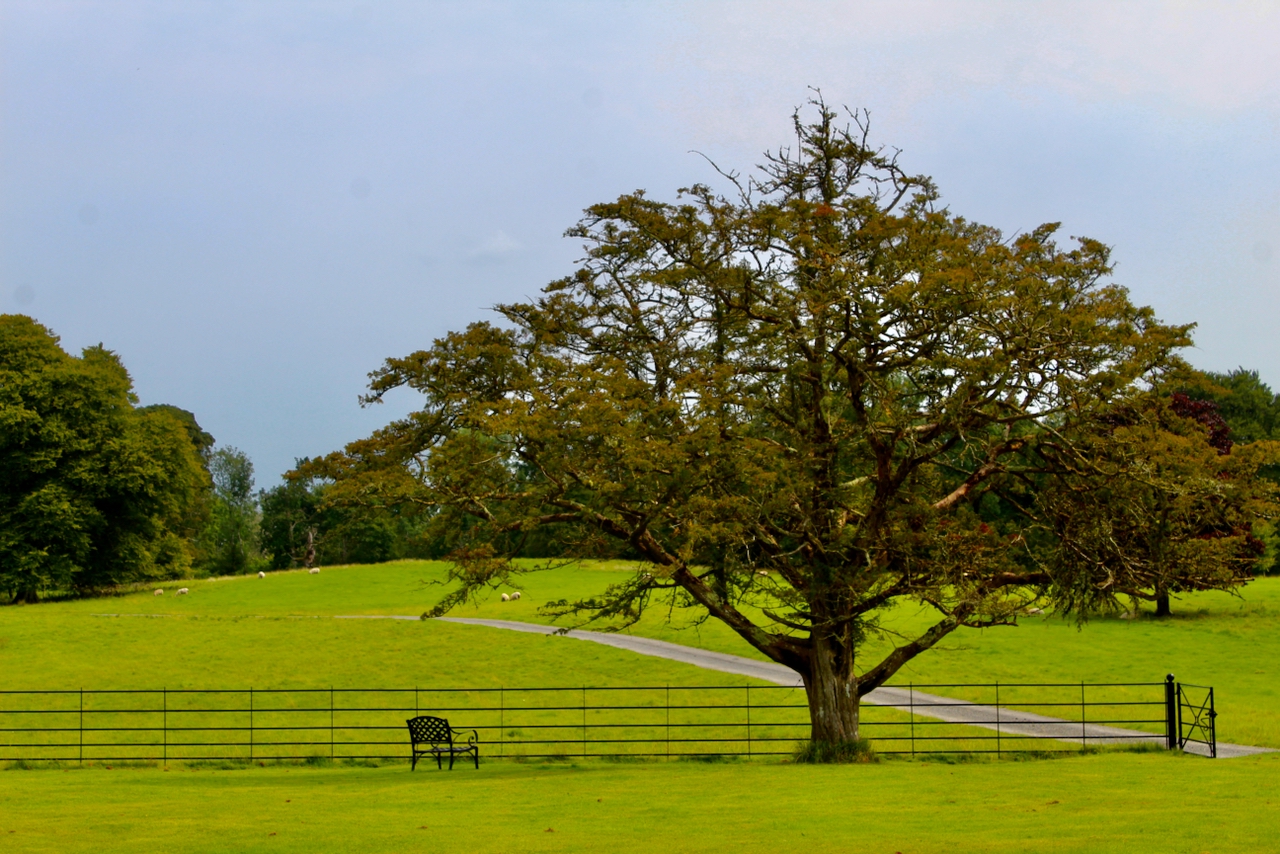
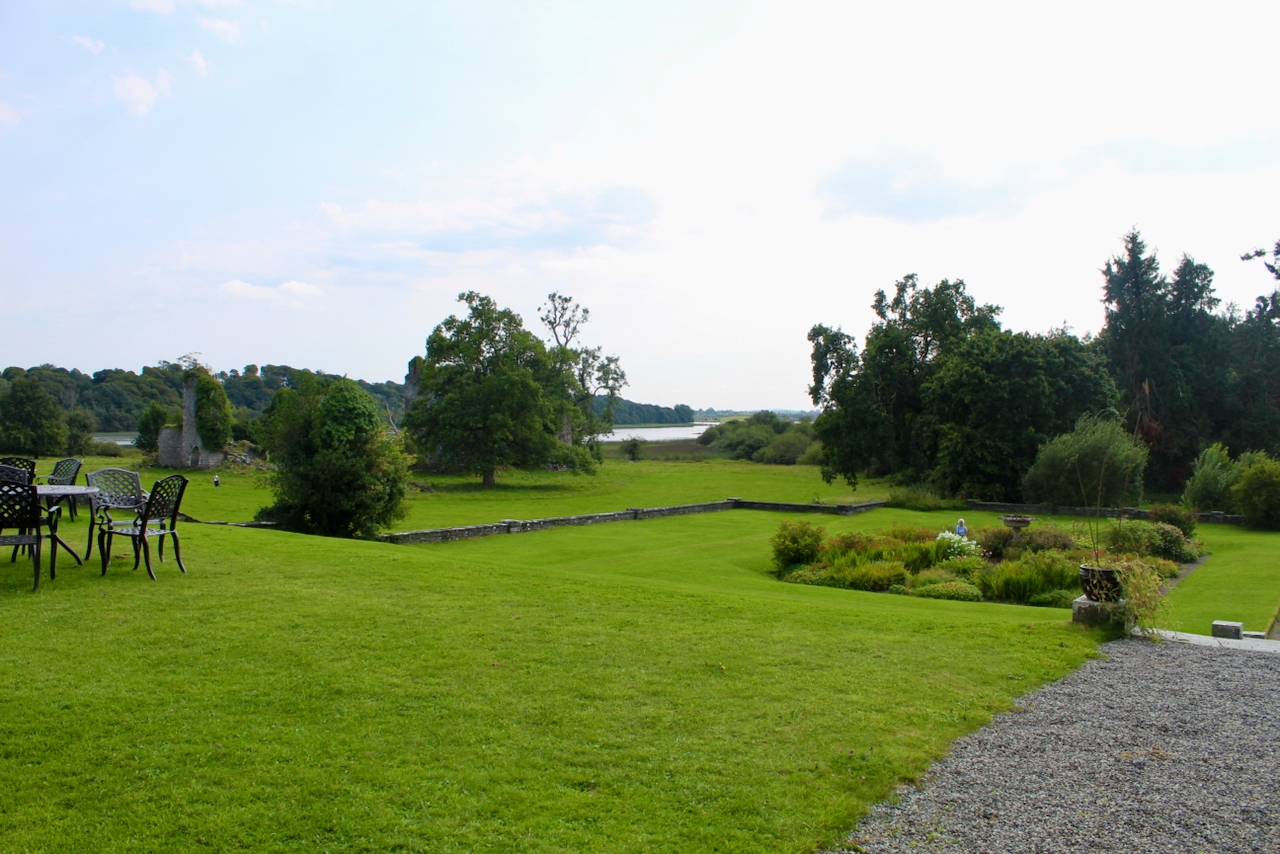


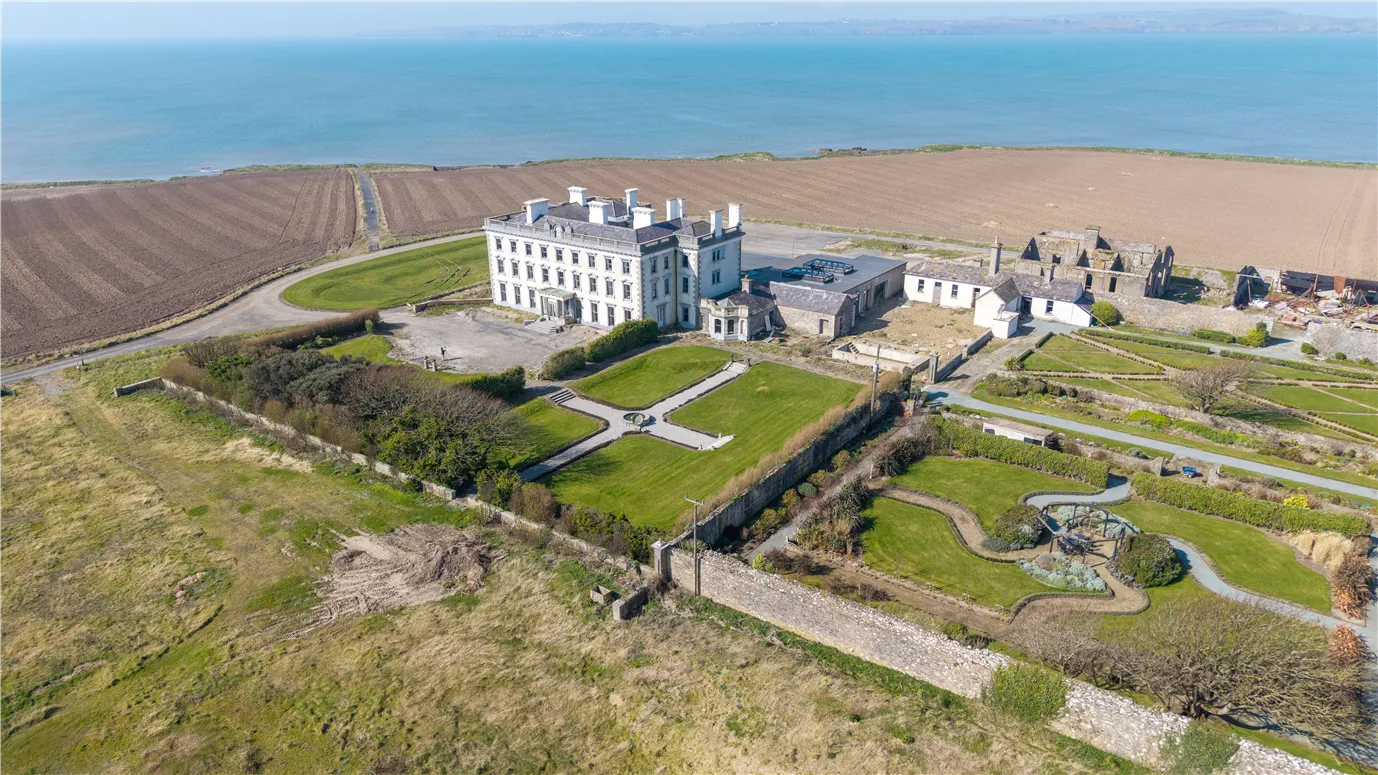
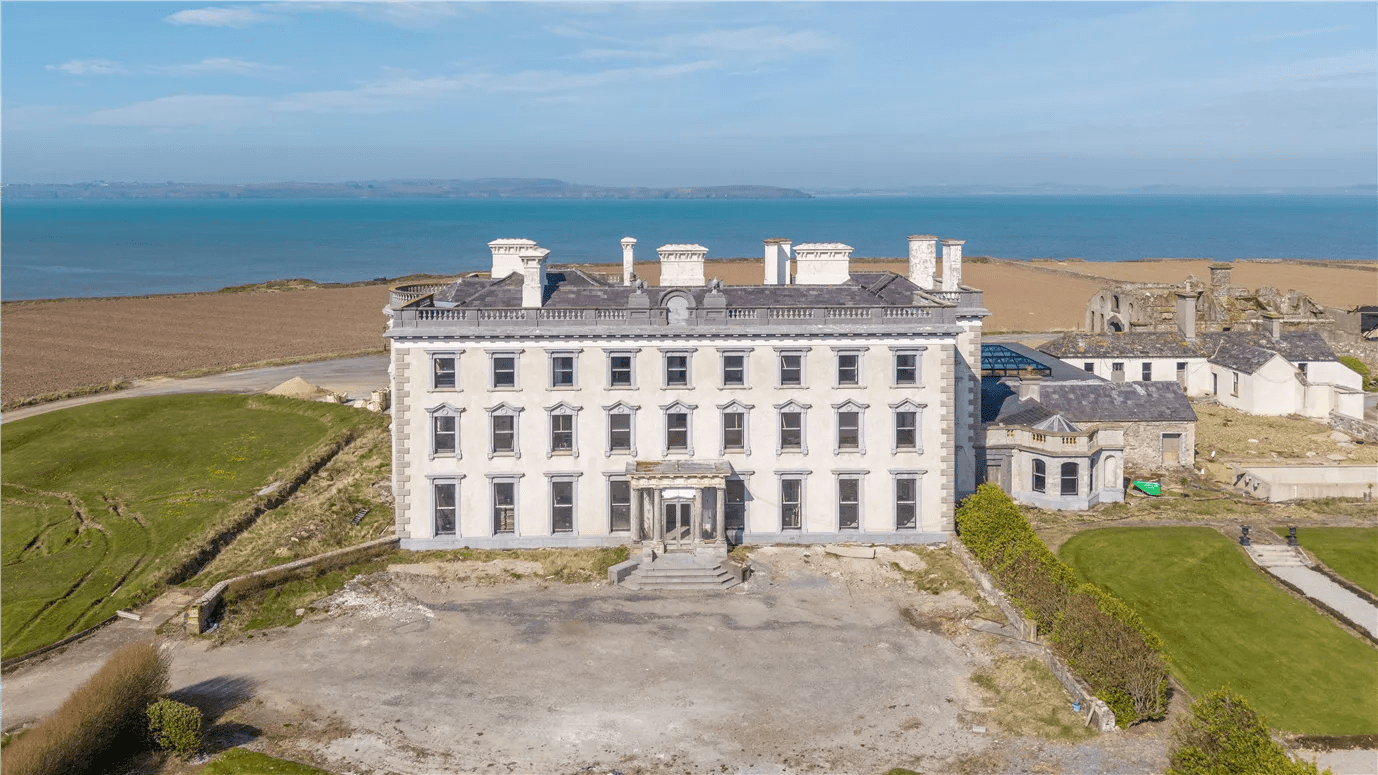
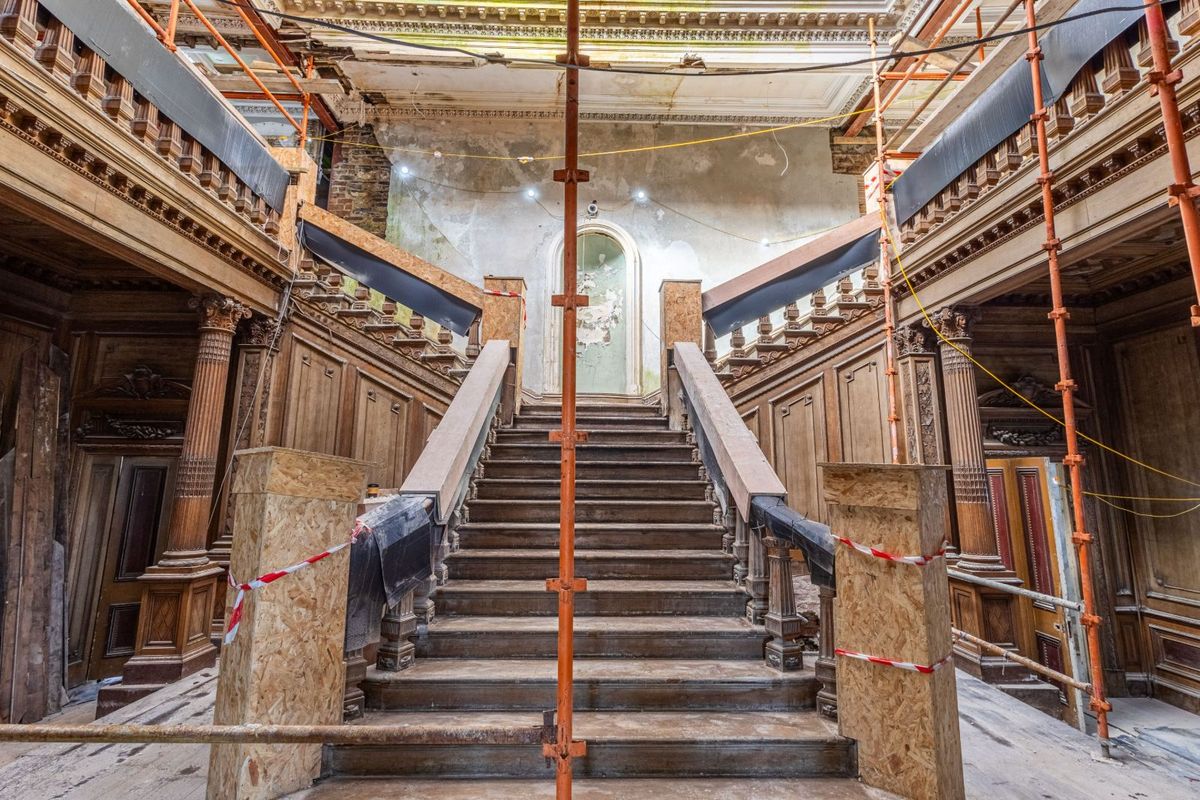
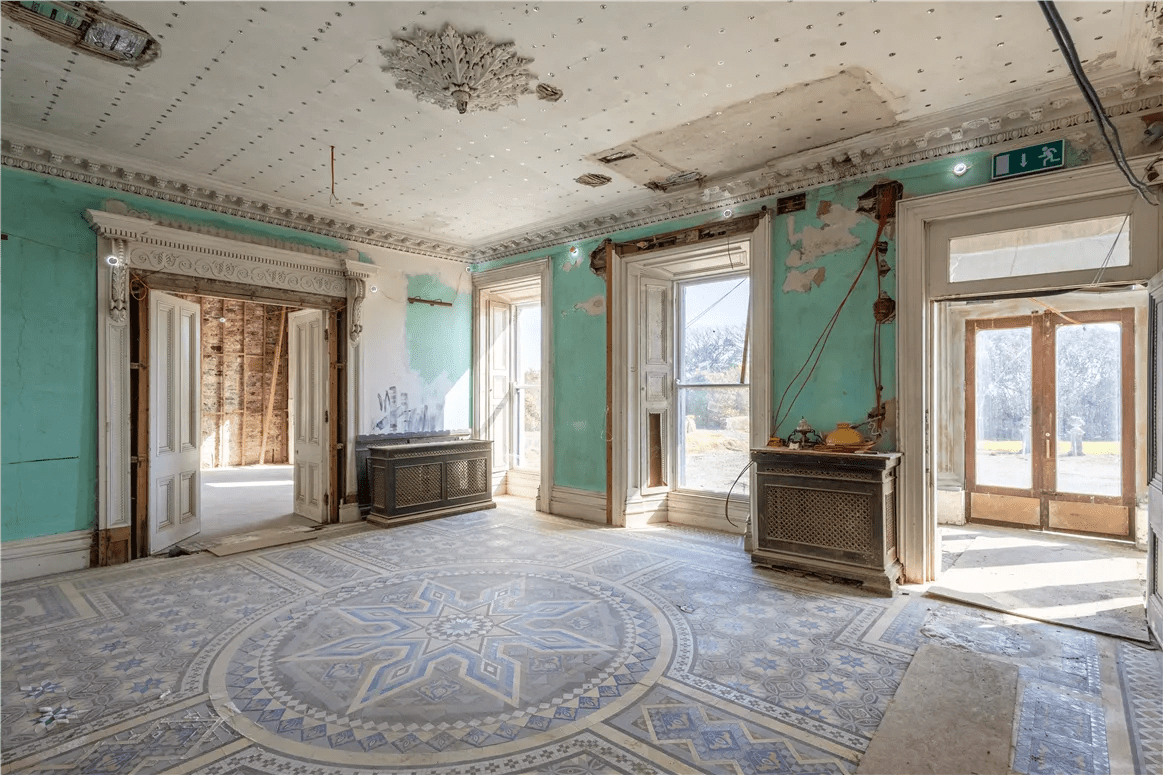
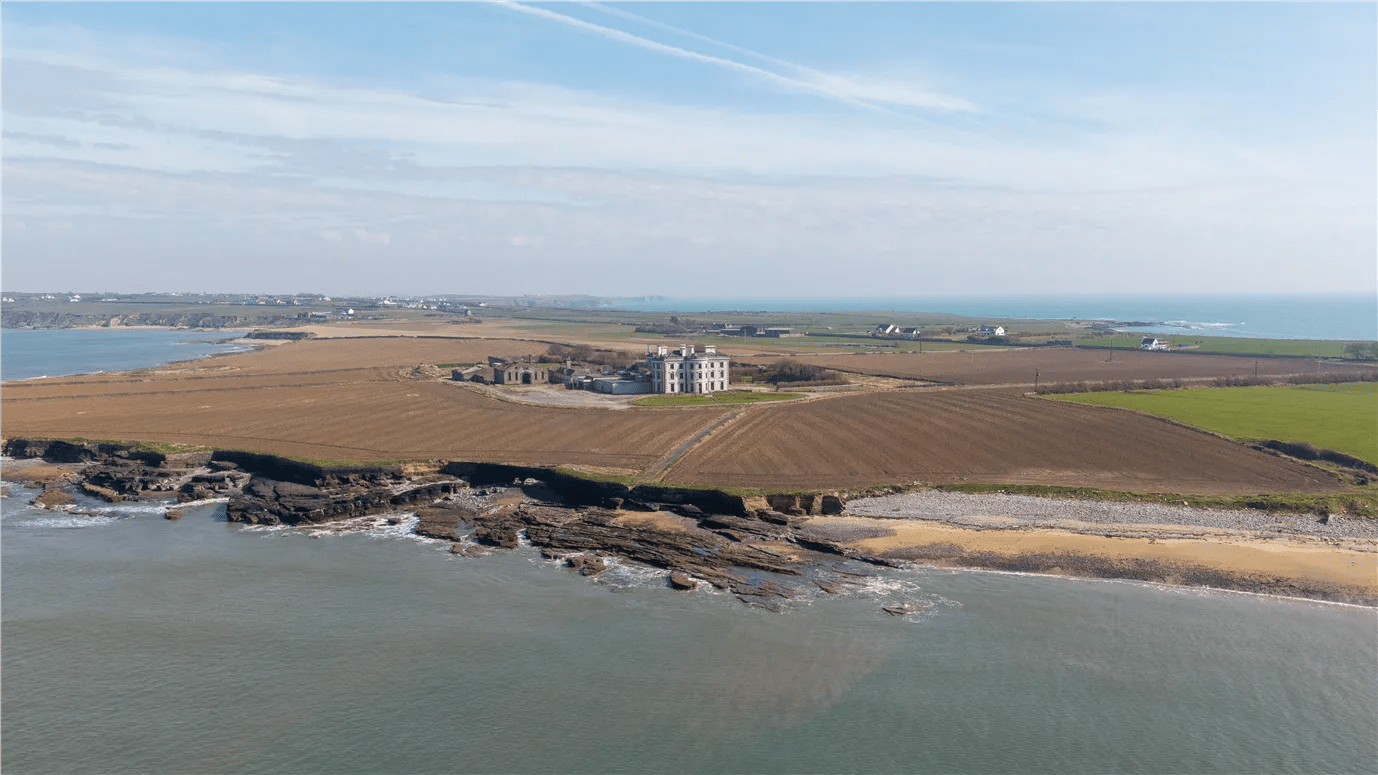
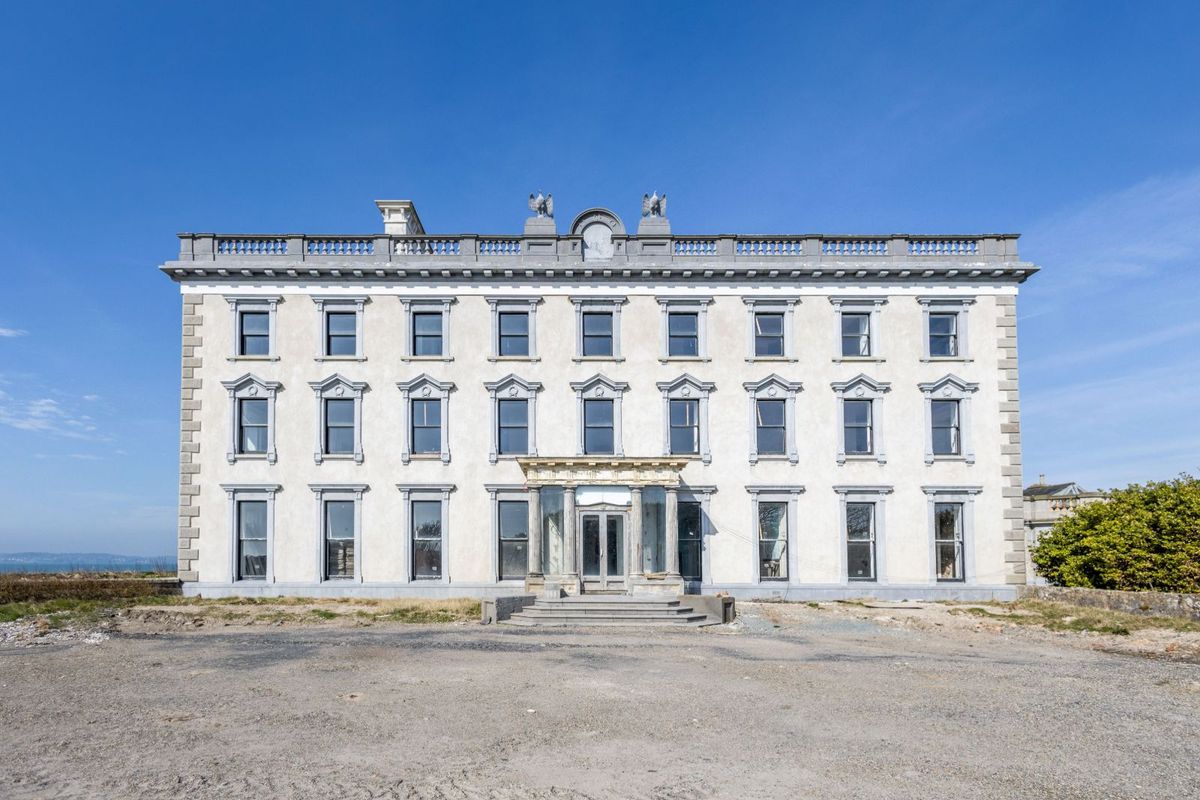
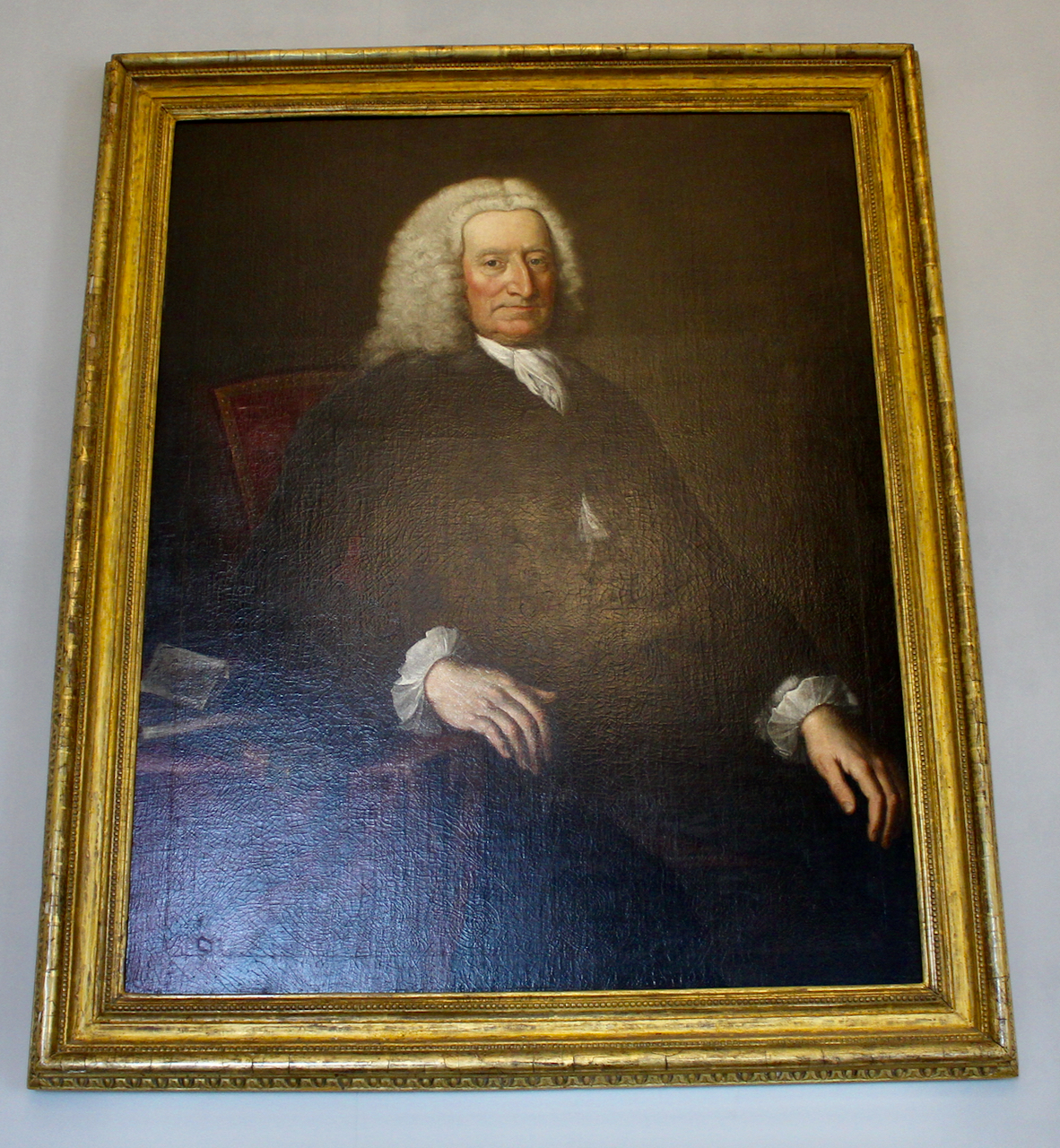

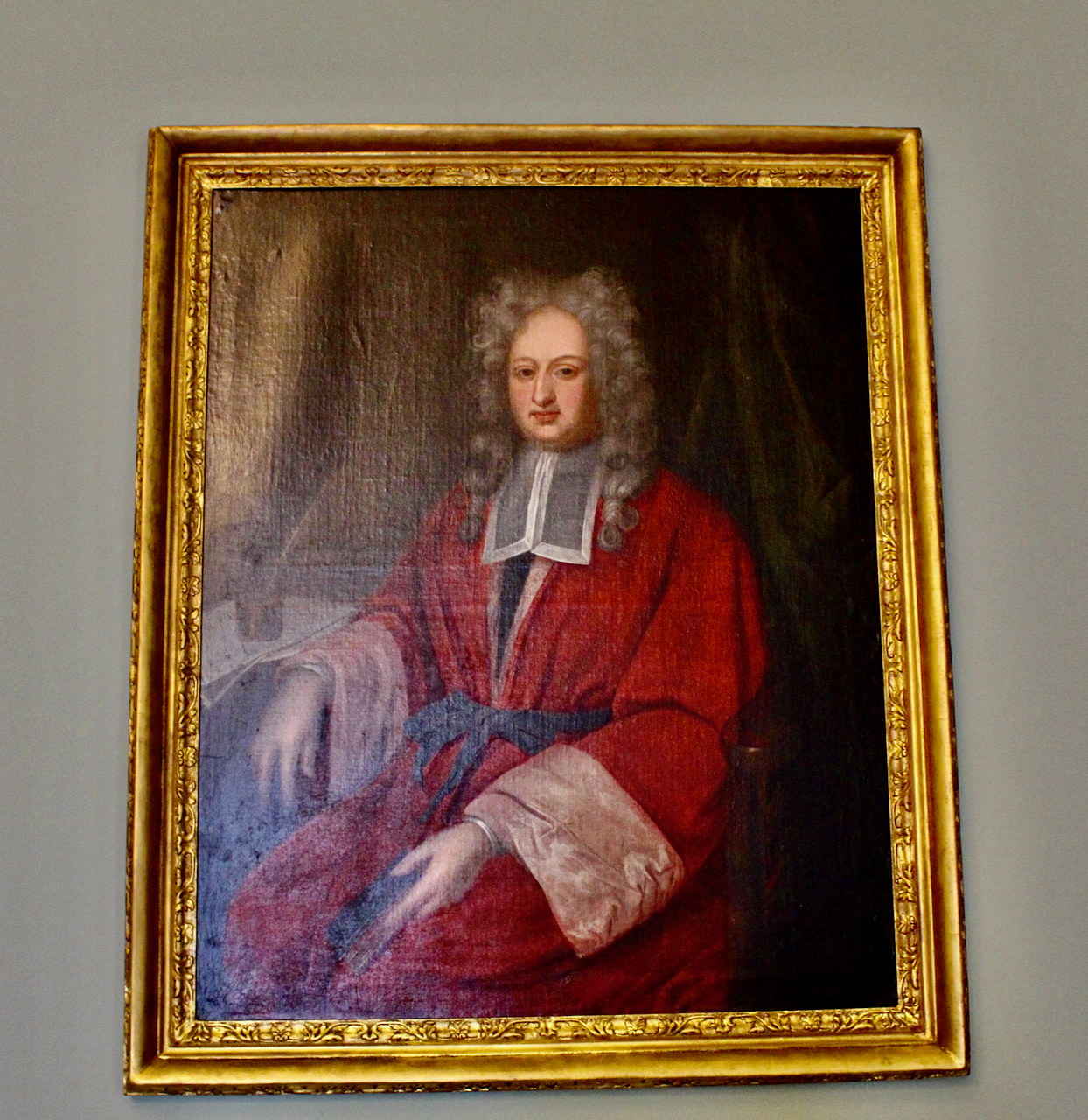
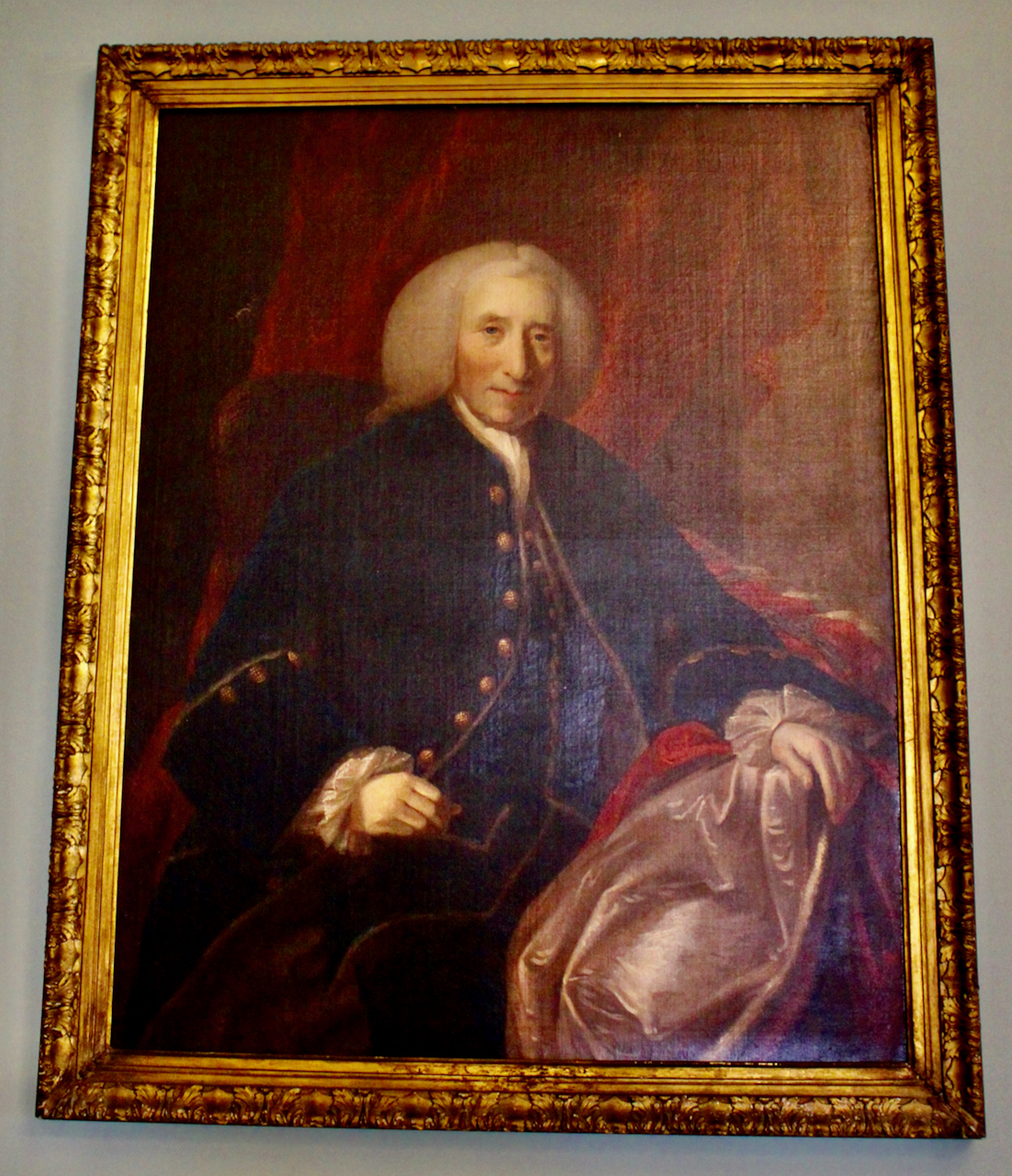
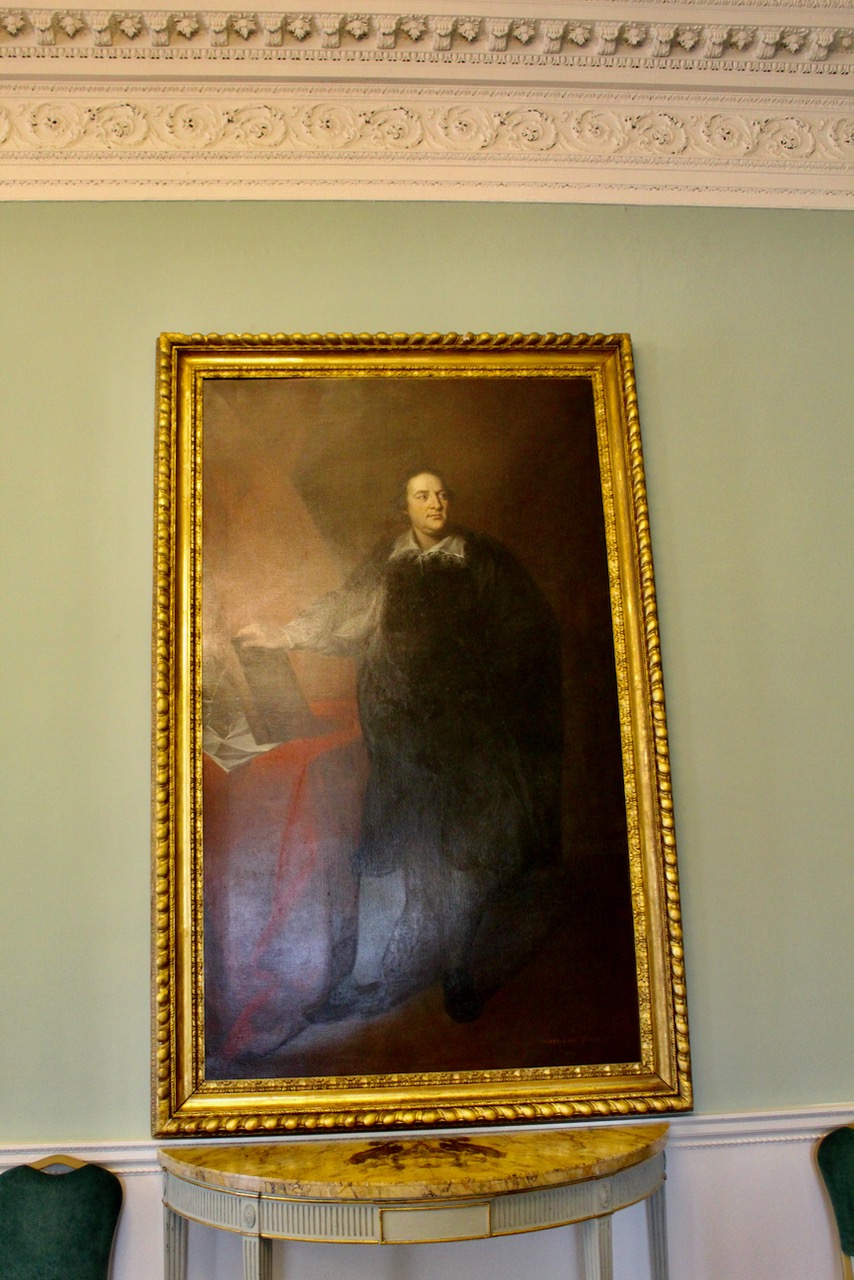


 Irish Historic Houses
