Rockingham, Co Roscommon

Rockingham, Co Roscommon

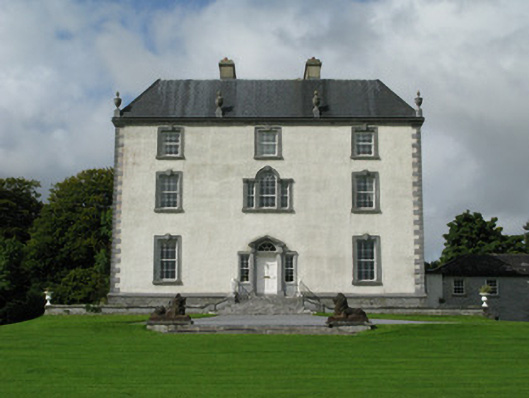
Rockingham House, County Roscommon, photograph by Robert French, (between ca. 1865-1914), Lawrence Photograph Collection, National Library of Ireland.

Mark Bence-Jones. A Guide to Irish Country Houses (originally published as Burke’s Guide to Country Houses volume 1 Ireland by Burke’s Peerage Ltd. 1978); Revised edition 1988 Constable and Company Ltd, London.

p. 244. “(King and King-Harman, sub Kinsgton, E/PB; Stafford-King-Harman, Bt/PB)” A large Classical mansion by John Nash, built 1810 for Gen. Robert King, 1st Viscount Lorton, a younger son of 2nd Earl of Kingston to whom this part of the King estates had passed… Magnificent demese; wooded peninsulas and island in Lough Key, one island, oppostie the house, having an old castle of the MacDermots on it, to which was added an early C19 folly castle…2nd Viscount Lorton succeeded his cousin as 6th Earl of Kingston; but Rockingham passed to his younger brother, Hon Laurence King-Harman, from whom it passed eventually to Stafford-King-Harman family. The house was gutted by a second fire 1957; the then owner, Sir Cecil Stafford-King-Harman, second and present Bt, at first considered rebuilding but it was too expensive, so sold the estate to the Dept of Lands, which has made the demesne into a “forest park” and demolished the ruin of the house.” 

Rockingham House, County Roscommon, photograph by Robert French, (between ca. 1865-1914), Lawrence Photograph Collection, National Library of Ireland.
Rockingham House, County Roscommon, courtesy Mark Bence-Jones.

https://archiseek.com/2012/1810-rockingham-boyle-co-roscommon/

1810 – Rockingham, Boyle, Co. Roscommon 

Architect: John Nash 

Originally built as a two storey house for General Robert King by John Nash. In 1822 an extra floor was added and after a fire in the 1860s it was rebuilt.  

Known for a very fine interior, the house was destroyed by fire in 1957 and demolished. In 1973, a viewing platform, the Moylurg tower was built on the north west corner of the house 

Featured in Mark Bence Jones, Life in an Irish Country House. Constable, London. 1996. 

In Blake, Tarquin. Abandoned Mansions of Ireland. Collins Press, Cork, 2010. 

MacDonnell, Randal. The Lost Houses of Ireland. A chronicle of great houses and the families who lived in them. Weidenfeld and Nicolson. London, 2002 

p. 185. [first pages of entry ripped out] 

The King family were traditional English adventurers, anglicized versions of ‘the Mick on the Make.’ With the exception of a single member, Edward King, they were almost universally objectionable during their time in Ireland. Their blood was somewhat improved whenit started to flow through the female lines of descent, but even this would not be enough to save them. The first of the gang to arrive in Ireland was John King, who obtained a lease on the Abbey of Boyle from Elizabeth I. The family climbed the greasy pole up to a baronetcy and in 1764, the head of the family, Edward King of Rockingham, the second son of Henry King, the 3rd Baronet, became Baron Kingston of Rockingham. Two years later he rose a step in the peerage to Viscount Kingston and in 1768 he was created Earl of Kingston. 

The family lived in their splendid (and recently restored) town house at Boyle, but it was the 1st Earl who decided to build a residence on his demesne at Rockingham. Robert, the 2nd Earl, was tried for the murder of Col Fitzgerald, the illegitimate son of his brother-in-law who ‘with circumstances that were particularly dishonourable’ secuded and then eloped with his daughter. 

The Earl was tried by his peers in Dublin and had the sympathy of their lordships from the start. The full panoply of state was trotted out for this, only the third trial of a peer in Ireland. There was, of course, a full house with all the other peers decked out in their parliamentary robes for the occasion. A member of the public, dressed up to look like a public executioner, stood beside the accused throughout the trial armed with an axe, the blade held raised during the whole of the proceedings. If the verdict were guilty, then the axe would be turned towards his Lordship’s neck, in order to indicate the inescapable sentence – although at this date (f0llowing the splendid example set by the late Earl Ferrers) it would probably have ended in a hanging with a silken rope rather than a beheading. As it turned out, no witnesses appeared for the prosecution and so each of the peers declared that Robert, Earl of Kingston, was ‘not guilty, upon mine honour.’ The Lord Chancellor then broke his wand of office and the peer was declared to be acquitted. 

This Lord Kingston was the public-spirited individual who is cretied with the invention of the ‘pitch cap,’ a diabolical form of torture whereby the victim’s head is liberally covered with pitch which is then set alight. It was much used immediately before and during the 1798 rebellion (cynics have even suggested that its use might have contributed, in some small way, to the outbreak of the unfortunate incident). With an eye to a fortune, he had married the heiress of the Fitzgibbons, the head of which family was known as the White Knight. She had brought as her dowry the vast estates in County Cork that became the seat of the future earls. Rockingham passed to their second son, Robert King, who had been jointly charged with his father for the murder of Col Fitzgerald and, like his father, found innocent of the charge. 

The Act of Union brought Robert King an Irish barony as Lord Erris of Boyle. This was improved on six years later when the Viscountcy of Lorton was bestowed on him, and in 1810 he engaged John Nash to built him a grand neoclassical mansion on the shores of Lough Key. The house was originally of two storeys over a basement, which was undergound, roofs over by lawns. Fuel was brought in boats across Lough Key and taken into the house through one of several tunnels; another tunnel was used for delivering other goods by land, while the servants used a third to reach the stable yard where they slept.  

p. 186. In The Statistical Survey of Roscommon of 1832, Isaac Weld wrote about the landscape: ‘No office of any kind being visible, but the whole being surrounded by smooth, shorn grass interspersed with beds of flowers and ornamental walks… subterranean passages carried from underneath the eminence on which the house stands towards the stables, which stand at a considerable distance screened by trees; the covered passage… does not reach the whole way to the latter, but merely far enough to prevent the appearance of movement near the mansion.’ 

The garden, or lake, front had a curved central bow with a colonnade of Ionic columns….[p. 187] A fire in 1863 led to further alterations… 

p. 187. “Robert, 1st Viscount Lorton, served as Representative Peer for Ireland between 1823 and 1854. By this time it had become obvious that the senior branch of the family was going to die out, and that, in consequence, the Earldom of Kingston would pass to the Lortons. The second Viscount arranged accordingly that Rockingham would pass to his second son, Laurence, who took the additional name of Harman (when he married the heiress of that family from County Longford). Under this settlement Lord Lorton’s heir Robert retained the right to reside in the mansion, and he arrived one day bringing his mother, who was estranged from her husband. Lord Lorton was informed and he attempted to prevent his wife from getting into the house. Nonetheless, she arrived with Robert and her youngest son Henry and pushed her way into the house to take possession. Lorton ordered that his wife nd sons should be ejected by force if necessary and locked the gates.  He tried to starve them out and, although some of the workers did side with her ladyship (as well as the local curate, a Mr Ward), the siege of Rockingham lasted for almost three months before the party decamped from the house.  

The Earldom had been through awkward times since it had been created. The 3rd Earl, Robert’s older brother and known as “big George” was unintentionally the cause of the death of his son and heir. This gentleman, Lord Kingsborough, had stood surety for some of his father’s debts and, since they were unpaid, he was committed to the Sheriff’s prison in Dublin. As a result of drinking the water there, he contracted typhus fever and died in the gaol. His father, jealous of his younger brother Robert’s palatial home at Rockingham, had engaged the Pain brothers (who had come to Ireland to assist John Nash) to built him a new castle at Mitchelstown in order to outdo his brother’s mansion, his only instruction to his architects being that it was to be bigger than any other house in Ireland. He eventually went mad after his tenants rejected his candidate in an election. “They are coming to tear me to pieces!” he is said to have shrieked. After that, it was off to a lunatic asylum in London for the rest of his life.” 

“Affairs did not improve for the family. The 4th Earl, Robert King (described as ‘a very weak minded man, wholly governed by whatever may be his favourite at the moment… he generally selects from the most vulgar of people’) was charged in 1848 with sodomy, but failed to appear at his trial. He had been bankrupted four years earlier; his castle had been under siege from his creditors and the great doors had to be forced. By 1860 he was making a series of court appearances charged with drunkenness, assaulting the police and even failing to pay his cab fares. [p. 188] The family, and the establishment, decided to put him safely out of harm’s way and in 1860 had him declared to be of unsound mind. He was followed as 5th Earl, for a brief two years, by his younger brother, on whose death the peerage passed to his cousin, the 2nd Viscount Lorton, who died a mere six weeks after becoming the 6th Earl. 

Laurence King-Harman (the son of the 6th Earl, who inherited Rockingham), was followed by his son Col. Edward. 

 Of imposing stature, Edward was known as ‘The King.’ A brawler, who nearly died when he was stabbed in a public house in Sligo, he was a member of parliament for the Home Rule Party at a time when popular representation was passing out of the hands of the landed classes. He received about £8000 a year from rents which, but for encumbrances, would have brought him nearer to £40,000. Despite the drastic fall in his rents, he was a kind-hearted man whowould forgo rents if he knew that his tenants were in difficulties. By 1882, however, the Land War had forced a drop in his rent roll of some 20%, which removed, at a stroke, the remaining £8000 per annum that his rents gave him. Despite this setback, which would have finished lesser men, the Colonel determined to keep going. An opinion of his was expressed by the journalist Jasper Tully, who wrote ‘breeding may confer titles, but it cannot confer brains.’ 

In 1883, the King family estates consisted of 24,421 acres in Co Cork, based around Mitchellstown Castle, and 250 acres in Co Limerick – these brought in an annual income of £17,950. In addition,there were 17,726 acres in Co Roscommon, with Rockingham at their heart; 1783 acres in Co Sligo; 1554 acres in Co Leitrim, 196 acres in Dublin and 48 acres in Co Westmeath, which had an accumulated rent roll of some £9064 a year. 

The ‘King’s’ daughter married Dr Thomas Stafford, a Catholic gentleman who nonetheless agreed to their children being brought up as Protestants. He eventually received a baronetcy (although for his medical services rather than for his ecumenism). The house was let to the Viceroy Lord Dudley among others at the turn of the 20th century. It was even suggested as a suitable residence for a member of the royal family, which, in the mood of the early twentieth century was wishful thinking indeed. 

There is a story told about the time that Sir Thomas Stafford’s sons, Edward and Cecil Stafford-King-Harman, went to stay with their neighbours, the Gore-Booth family, at their home, LIssadell. They arrived rather late and then, to make matters worse, Edward mistook Sir Josslyn Gore-Booth for the butler and handed him his hat and coat. There was a ball after dinner and the young men got to bed not so much late as early. They were awakened before dawn by the real butler, Kilgallon, who told them that they had to go. .. 

p. 189. Edward Stafford-King-Harman…married Olive Pakenham-Mason… He was heir to Rockingham and she was the heiress of Strokestown Park … The tenanted farms however had been sold as a result of the Wyndham Act and these large properties were expensive to run. WWI began less than a month later, and in November, Edward was killed in the trenches. His brother Cecil inherited the estate and the title and came to live at Rockingham in 1929. 

p. 190. The house survived the burnings [of the Troubles]. Sir Cecil’s son Thomas came of age in 1942 and 200 people came to his party – he was killed less than two years later. The family stayed on and employed the architect Philip Tilden to make the house more manageable. Tilden closed off the basement and the top floor and brought the kitchen upstairs. .. In 1957 the house was burnt out again, and Sir Cecil sold the estate to the Dept of Lands….The house was demolished…The powers that be did provide a huge ugly concrete viewing tower – the ‘Moylug’ Tower – on the site of what had once been one of the most extraordinarily beautiful houses in Ireland.” 

**********************************************************************************************

http://lordbelmontinnorthernireland.blogspot.com/2013/09/rockingham-house.html

THE KING-HARMANS WERE THE SECOND LARGEST LANDOWNERS IN COUNTY ROSCOMMON, WITH 29,242 ACRES

NICHOLAS HARMAN, of Carlow, settled in Ireland during the reign of JAMES I.

He was one of the first burgesses of Carlow, named in the charter granted to that borough by JAMES I in 1614, and was High Sheriff of County Carlow in 1619.

By Mary his wife he was father of 

HENRY HARMAN, of Dublin, who had by Marie his wife, five sons and as many daughters, viz.

Edward, of Derrymoyle;
Anthony, dsp before 1684;
THOMAS, of whom hereafter;
William;
Henry, ancestor of HARMAN OF PALACE;
Anne; Mary; Jane; Margaret; Mabel.

Mr Harman died before 1649, and was succeeded by his third son, 

SIR THOMAS HARMAN, Knight, of Athy, knighted by the Lord Deputy of Ireland, Thomas, Earl of Ossory, in 1664, Major in the army, 1661, MP for counties Carlow and Kildare.

Sir Thomas obtained a grant of considerable estates in County Longford, under the Act of Settlement, dated 1607.

He married Anne Jones.

Sir Thomas died in 1667, and they were both buried in Christ Church, Dublin, having had issue, with a daughter, Mary, a son,

WENTWORTH HARMAN, of Castle Roe, County Carlow, Captain of the Battleaxe Guards, 1683, who wedded firstly, in 1679, Margaret, daughter of Garrett Wellesley, of Dangan, and had issue, with one daughter, two sons, namely,

Thomas, 1681, dsp;
WENTWORTH, of whom hereafter.

Mr Harman married secondly, in 1691, Frances, sister and heir of Anthony Sheppard, of Newcastle, County Longford, and had further issue,

ROBERT, successor to his nephew;
Francis, died 1714;
Anthony;
William;
CUTTS (Very Rev), successor to his brother;
ANNE, m Sir Anthony Parsons Bt, of Birr Castle.

Mr Harman died in 1714, and was succeeded by his eldest son,

WENTWORTH HARMAN, of Moyne, County Carlow, who espoused, in 1714, Lucy, daughter of Audley Mervyn, of Trillick, County Tyrone (and sister and heir of Henry Mervyn, of same place), and had issue,

WESLEY, his heir;
Thomas.

Mr Harman died in 1757, when was succeeded by his eldest son,

WESLEY HARMAN, of Moyle, who wedded Mary, daughter of the Rev Dr Nicholas Milley, Prebendary of Ullard, Diocese of Leighlin, by whom he had an only son,

Wentworth, who dsp in his father’s lifetime.

Mr Harman died in 1758, and was succeeded by his uncle,

ROBERT HARMAN (1699-1765), of Newcastle, County Longford, and Millicent, County Kildare, MP for County Kildare, 1755, County Longford, 1761, who married Ann, daughter of John Warburton, third son of George Warburton, of Garryhinch, in the King’s County.

Mr Harman dsp, and was succeeded by his only surviving brother,

THE VERY REV CUTTS HARMAN (1706-84), of Newcastle, Dean of Waterford, who wedded , in 1751, Bridget, daughter of George Gore,of Tenelick, County Longford, Justice of the Court of Common Pleas in Ireland, and sister of John, Lord Annaly, by whom he had no issue.

The Dean presented to his cathedral the very fine organ which it possesses.

He died in 1784, and bequeathed his estates to his nephew, the son of his sister ANNE, who espoused, as above, Sir Lawrence Parsons,

LAWRENCE PARSONS-HARMAN (1749-1807), of Newcastle, MP for County Longford, who assumed the additional surname of HARMAN in 1792, on succeeding to his uncle’s estates.

He married, in 1772, the Lady Jane King, daughter of Edward, 1st Earl of Kingston, by which lady he had an only daughter,

FRANCES, of whom hereafter.

Mr Parsons-Harman was elevated to the peerage, in 1792, in the dignity of Baron Oxmantown, County Dublin.

He was advanced to the dignity of an earldom, in 1806, as EARL OF ROSSE, with special remainder, in default of male issue, to his nephew, Sir Lawrence Parsons, 5th Baronet, of Birr Castle.

His lordship died in 1807, when his peerage passed according to the limitation, and his Harman estates devolved upon his only daughter and heir,

THE LADY FRANCES PARSONS-HARMAN, of Newcastle, who married, in 1799, Robert Edward, 1st Viscount Lorton, and had issue,

ROBERT, 2nd Viscount, succeeded as 6th Earl of Kingston;
LAWRENCE HARMAN, succeeded to the Harman estates;
Jane; Caroline; Frances; Louisa.

Her ladyship died in 1841, when was succeeded in her estates by her second son,

THE HON LAWRENCE KING-HARMAN (1816-75), of Newcastle, and of Rockingham, County Roscommon, who assumed the additional surname of HARMAN.

He wedded, in 1837, Mary Cecilia, seventh daughter of James Raymond Johnstone, of Alloa, Clackmannanshire, and had, with other issue, a second son.

On his death, the property passed to his eldest son,
THE RT HON EDWARD ROBERT KING-HARMAN JP MP (1838-88), of Rockingham, County Roscommon,

Lord-Lieutenant of County Sligo, MP for Sligo, 1877-80, and Dublin, 1883-5, and for the Isle of Thanet, 1885-8, Colonel, 5th Battalion, Connaught Rangers, eldest son the the Hon Lawrence Harman King-Harman, of Rockingham.

Mr King-Harman married, in 1861, Emma Frances, daughter of Sir William Worsley, 1st Baronet, and had issue,

Lawrence William (1863-86), died unmarried;
Frances Agnes, mother of EDWARD CHARLES STAFFORD;
Violet Philadelphia.

Mr King-Harman was succeeded by his grandson,

EDWARD CHARLES STAFFORD-KING-HARMAN (1891-1914), who assumed, in 1900, the additional surnames and arms of KING-HARMAN.

He married, in 1914, Olive Pakenham, daughter of Henry Pakenham Mahon, and had issue,

LETTICE MARY STAFFORD-KING-HARMAN, born in 1915.

Captain Stafford-King-Harman was killed in action.

The family was seated at Rockingham, Boyle, County Roscommon, and Taney House, Dundrum, County Dublin.

ROCKINGHAM HOUSE, near Boyle, County Roscommon, the superb demesne of the King-Harmans, Viscounts Lorton, is bounded on the north by beautiful, island-studded waters of Lough Key; and, on the south, by a long line of lofty wall, overhung from within by a bordering estate along the road from Boyle to Dublin.

This was a large, Classical mansion, designed and built in 1810 by John Nash for General Robert King, 1st Viscount Lorton, a younger son of 2nd Earl of Kingston to whom this part of the King estates had passed.

Rockingham was remarkable due to its dome front and 365 windows.

It accidentally burnt down in 1957, as the result of an electrical fault, after which it was taken over by the Irish Land Commission.

The great mansion was declared as unsafe in 1970 and subsequently demolished.

The remnants of the house can be seen in the park to this day, such as its two ‘tunnels’ (which allowed the staff to unload provisions from boats and bring them to the house unseen).

These tunnels are still accessible to this day.

The demesne was magnificent, with a straight beech avenue three-quarters of a mile in length; and 75 miles of drives within the estate.

Sir Cecil William Francis Stafford-King-Harman, 2nd Baronet (1895-1987), considered rebuilding Rockingham after its catastrophic fire of 1957 with its original two storeys and dome; however, it transpired that the expense was prohibitive, so the estate was sold and the Irish forest service demolished the ruin of the once-great mansion.

The Moylurg Tower which provides a spectacular view of the lake, was built on the original foundations of Rockingham House.

First published in June, 2011.

https://theirishaesthete.com/2021/06/09/rockingham-1/

Differing Fates I

by theirishaesthete

Gates of Rockingham, County Roscommon, photograph by Irish Aesthete.


The two-storey gatehouse which formerly provided the main entrance to the Rockingham estate in County Roscommon; this building, like most of the others here, was commissioned by Robert King, first Viscount Lorton from architect John Nash. The gatehouse, however, is not in the classical idiom employed elsewhere at Rockingham but instead is an exercise in Tudorbethan Gothic with a crenellated parapet and pointed-arch windows, sandstone used for the main body of the building and limestone for the dressings. For the past half century this part of the former estate has been in public ownership, jointly managed by the local authority and Coillte. It might therefore have been thought that the historic buildings under their care would be decently maintained, but instead the gatelodge, under which many visitors pass as they arrive at the site, has been allowed to fall into neglect; hardly an impressive introduction to the place. Instead of being left in its present condition, the building ought to be restored, and could repay investment by being offered for holiday lets.

Gates of Rockingham, County Roscommon, photograph by Irish Aesthete.

https://theirishaesthete.com/2021/06/12/different-fates-ii/

Differing Fates II

by theirishaesthete

Gates of Rockingham, County Roscommon, photograph by Irish Aesthete.


The Rathdiveen or ‘Tiara’ gate lodge stands at what was once another of the entrances to Rockingham, County Roscommon. Dating from c.1810 like many other buildings on the estate, this one is believed to have been designed by John Nash, the architect of the main house, but it has also been attributed to Humphrey Repton with whom Nash had earlier worked. However, since the two men had famously fallen out and ended their partnership in 1800, a link with Repton seems highly unlikely. The lodge’s most distinctive feature is a highly-distinctive bowed pediment reminiscent of a tiara which rises above a Doric colonnaded portico: the facade’s frieze echoes that found on the adjacent gate posts. Unfortunately, some years ago the latter were moved during road-widening works and not correctly realigned, thereby disrupting the symmetry of the entrance. Nevertheless, the lodge itself has been well-maintained by private owners, a contrast with the poor condition of the lodge shown here a few days ago which is in public ownership.

Gates of Rockingham, County Roscommon, photograph by Irish Aesthete.

*****************************************************************************************************

John King 1st Baron Kingston lived in Mitchelstown Castle. John gave his younger brother Robert considerable lands in what was to become Rockingham, outside Boyle. John predeceased his brother Robert, dying in 1676, leaving two sons, who became 2nd and 3rd Barons Kingston.

Rockingham House, County Roscommon

Robert King (abt. 1640-1707) of County Roscommon held the office of Member of Parliament (M.P.) for Ballyshannon between 1661 and 1666. He built a sumptuous house at Rockingham in 1673, after he married Frances Gore, daughter of Lt.-Col. Henry Gore, around 1670. She had been previously married to Robert Choppyn of Newcastle, County Longford.

Robert King, (d. 1707) 1st Baronet of Boyle Abbey, County Roscommon from the circle of John Closterman, courtesy of “mutualart.com”

Robert was created 1st Baronet King, of Boyle Abbey, Co. Roscommon [Ireland] on 27 September 1682. He held the office of Member of Parliament (M.P.) for County Roscommon between 1692 and 1699. He was also appointed Privy Counsellor in Ireland, and he held the office of Member of Parliament (M.P.) for Boyle between 1703 and 1707.

Robert’s brothers’ sons, the 2nd and 3rd Barons Kingston, still owned the property in Boyle. Robert King, 2nd Baron Kingston, and his uncle Robert 1st Baronet King of Boyle Abbey both supported William III, whereas most English families in Counties Sligo and Roscommon supported King James II. Both Robert Kings became heavily involved in military operations. Robert 1st Baronet King played a major role in the Battle of Aughrim. Anthony Lawrence King-Harman tells us that it was during this battle that Robert saved the life of the head of the MacDermot family, the original owner of Rockingham.

To add to complications of the time, Robert 1st Baronet of Boyle Abbey’s son John (1673-1720) supported King James II. He sat in King James’s parliament in Dublin. Fortunately he later escaped retribution from William III when William was made King, and his father must have forgiven him also as he was his father’s heir. John became 2nd Baronet King of Boyle Abbey.

The brother of Robert 2nd Baron Kingston, John (abt. 1664-1727/28), or Jack as he was known, eloped with a servant girl from King House named Peggy O’Cahan (or Kane). They moved to France and married, and he joined court of “The Pretender,” son of James II, also known as James III. Jack converted to Catholicism. His brother did not have children so Jack would have been his brother’s heir. However, due to his Catholicism, his family took legal action to disinherit him. Robert 2nd Baron Kingston instead changed his will so that his uncle Robert, 1st Baronet King of Boyle Abbey, would inherit the Mitchelstown estates and the estate in Boyle. Jack, however, disputed this. King-Harmon tells us in The Kings of King House that Jack, with the support of James II and Catholic circles in London, launched a legal action to show that the actions of his family were in contravention of the marriage settlements of his father, and before that of William Fenton, his mother’s father. He was successful and he obtained possession of Mitchelstown in 1699, but not the estate lands. Jack, who had become 3rd Baron Kingston after his brother’s death, also achieved a Royal pardon from William III for his previous support of King James II and his son.

Margaret O’Cahan (c. 1662-1721), standing in a black habit, and holding a string of rosary beads, Attributed to Garret Morphy (c.1655-1715), courtesy Adam’s 6 Oct 2009 she married James King 3rd Baron Kingston.

Jack’s actions threatened the Baronets of Boyle Abbey and their ownership of Rockingham. However, they managed to hold on to their estate and the threat receded somewhat with the accession of William and Mary to the throne. Jack, with an eye to their future, raised his children as Protestants in Mitchelstown.

Robert 1st Baronet of Boyle Abbey’s daughter Mary married Chidley Coote of Cootehall, County Roscommon, son of Richard Coote 1st Lord Coote, Baron of Colloony, County Sligo. His son John, who became 2nd Baronet of Boyle Abbey upon his father’s death, married Elizabeth Sankey, but he had no children. Elizabeth went on to marry secondly, John Moore, 1st Baron Moore of Tullamore and thirdly, Brabazon Ponsonby, 1st Earl of Bessborough. Her mother, Eleanor Morgan, was from Cottlestown, County Sligo, a property added in 2022 to the Section 482 list, which we have yet to visit.

The 2nd Baronet moved from Rockingham back to the house in Boyle, which by this time may have been known as King House. He died in March 1720 and his brother Henry (1681-1739) became 3rd Baronet King of Boyle Abbey.

It was Henry 3rd Baronet who built the King House that we see today. Rockingham burnt down, probably sometime shortly after the death of the 1st Baronet. King House in Boyle was destroyed by fire in 1720, so Henry immediately started to rebuild. King-Harman tells us he hired either Edward Lovett Pearce, or William Halfpenny, an assistant to Edward Lovett Pearce, as architect. The newer house may incorporate walls of the earlier house. A pleasure garden was created across the river, and it is now a public park. It contains a plinth that used to hold a statue of King William III but that statue disappeared!

Henry (1681-1739) 3rd Baronet King of Boyle Abbey, by Robert Hunter. When the portrait was advertised for sale by Adam’s auctioneers, 6 Oct 2009, it was identified as being by Charles Jervas (1675-1739).

Bence-Jones points out that: “As at Ballyhaise, County Cavan and King’s Fort, County Meath, there is vaulting in other storeys than just the basement; in fact, all four storeys are vaulted over. This was, according to Rev Daniel Beaufort, a fire precaution, Sir Henry King having naturally been fire-conscious after the fire in the earlier house.

Sir Henry King, 3rd Baronet of Boyle Abbey, served as MP for either Boyle or County Roscommon for thirty three years. He married Isabella Wingfield, daughter of Edward Wingfield of Powerscourt, County Wicklow (her brother was the 1st Viscount of Powerscourt). Henry died in 1739 and was succeeded by his son Robert (1724-1755), 4th Baronet of Boyle Abbey.

Robert 4th Baronet became MP for Boyle also and was created Baron Kingsborough in 1748. It was he who bought the house in Henrietta Street in Dublin. He became Grand Master of the Freemasons in Ireland. He died unmarried. On his death, the Barony of Kingsborough became extinct.

Robert King (1724-1755), 4th Baronet of Boyle Abbey, by Robert Hunter. He was created 1st Baron Kingsborough, but having no offspring, the title died with him.
Robert King, created Baron Kingsborough, died 1755, painting by Robert Hunter, courtesy Adam’s auction 11th Oct 2016. The sales catalogue tells us what the museum does not: Robert King 1724-1755 M.P. for Boyle succeeding Richard Wingfield, succeeded as 4th baronet in 1740 and was made Baron Kingsborough at the age of 23 in 1747, having fought a notorious duel with Captain Johnston. He borrowed the large sum of £40,000, became Grand Master of the Freemasons, set the family up in Henrietta Street and lived with a mistress, Mrs. Jones. He died unmarried and his will was bitterly contested by his surviving brothers as far as the House of Lords in London, Edward claimed that Kingsborough was subjected to undue influence by Mrs. Jones, “a common prostitute,” and that the will was witnessed by a drunken porter and a Swiss servant, all such being scoundrels.
Robert King, later 1st (and last) Baron Kingsborough courtesy Adam’s 6 Oct 2009, by Robert Hunter (c.1715/20-c.1803).
Frances King, by Robert Hunter. Robert’s sister Frances (1726-1812) who married Hans Widman Wood of Rossmead, County Westmeath.
Eleanor King, daughter of Sir Henry King 3rd Baronet of Boyle Abbey and sister of Edward 1st Earl of Kingston, with her son James Stewart (of Killymoon) holding a dog courtesy of Adam’s 6 Oct 2009 by Robert Hunter (c.1715/20-c.1803).
James Stewart (1741-1821) of Killymoon, County Tyrone, by Pompeo Batoni, Ulster Museum, National Museum of Northern Ireland.
Portrait most likely to be William Stewart of Killymoon married to Isabella King, courtesy of Adam’s 6 Oct 2009 by Robert Hunter (c.1715/20-c.1803).
Henry King, Later Rt. Hon. Colonel courtesy Adam’s 6 Oct 2009 by Robert Hunter (c.1715/20-c.1803). He was probably a younger son of Henry King 3rd Baronet of Boyle Abbey, since several of the siblings were painted by Robert Hunter.
Isabella King, daughter of Sir Henry King and sister of 1st Earl of Kingston, wife of Thomas, 1st Earl of Howth courtesy Adam’s 6 Oct 2009 Robert Hunter (c.1715/20-c.1803).
Portrait almost certainly of Anne King, daughter of Sir Henry King and sister of 1st Earl of Kingston, married John ‘Diamond’ Knox of Castlerea, Co. Mayo courtesy Adam’s 6 Oct 2009 by Robert Hunter (c.1715/20-c.1803).

On his death the entailed parts of the estate went to his younger brother Edward (1726-1797), who became 5th Baronet of Boyle Abbey. Edward was also a Grand Master for the Freemasons and MP for County Roscommon, and Privy Counsellor in Ireland. He inherited King House and large parts of the Sligo and Roscommon estates. However, a later will of his brother was found after his brother’s death, and all the unentailed land was left to their younger brother Henry. Henry did not marry but the dispute over inheritance led to lawsuits and caused family rifts, King-Harmon’s book The Kings of King House tells us.

Edward King (1726-1797), 5th Baronet of Boyle Abbey and eventually, 1st Earl of Kingston.

Edward the 5th Baronet married Jane Caulfeild, daughter of Thomas Caulfeild of Donamon Castle, County Roscommon (still standing, it now belongs to the Divine Word Missionaries). Edward was ambitious and when his cousin James King 4th Baron Kingston died in 1761 with no sons, he applied for a peerage and was granted it, becoming the 1st Baron Kingston of the second creation. He built a second mansion in Rockingham, which he called Kingston Hall.

Edward King, later 1st Earl Kingston courtesy Adam’s 6 Oct 2009 by Robert Hunter (c.1715/20-c.1803).

He arranged with 4th Baron Kingston that his son would marry the heir to Mitchelstown, Caroline Fitzgerald. The 4th Baron Kingston’s son William predeceased him in 1755, dying childless. The 4th Baron’s daughter Margaret married Richard Fitzgerald, son of the 19th Earl of Kildare. Their only child was a daughter, Caroline (1754-1823).

Robert Fitzgerald (1675-1744) 19th Earl of Kildare, after Frederick Graves, courtesy of Adam’s auction 15th Oct 2019.

By marrying into the family of the Barons of Kingston, Mitchelstown came into the family of the Baronets of Boyle Abbey. Caroline and Edward’s son Robert were to marry when just 15 and 16 years old.

King House, 2022.
In King House.

Meanwhile Edward, after intense lobbying, had become Viscount Kingsborough in 1767 and Earl of Kingston in 1768.

King House, 2022.
King House, 2022.
King House, 2022.
King House, 2022.
In King House.

Edward, now Earl of Kingston, and his family moved into Kingston Hall in 1771, and King House was kept as a second residence, but following a fire in 1778, Edward decided to dispose of it. It was bought by the British army in 1795, and became the depot of the Connaught Rangers until taken over by the Irish army in 1922. It was abandoned and in ruins by 1987 when bought by Roscommon County Council, and it was restored and opened to the public in 1995.

King House, 2022.
Information in King House about Boyle in the 1700s.
King House, 2022.
King House, 2022.
In King House.

Edward Earl of Kingston’s daughter Jane married Laurence Harman Parsons (1749-1807), son of Laurence Parsons, 3rd Baronet, who was later created 1st Earl of Rosse, and Anne Harman. Lawrence Harman Parsons changed his surname to Harman.

In King House.

The 1st Earl of Kingston’s daughter Frances married Thomas Tenison, and their son Lt.-Col Edward King-Tenison lived in Kilronan Castle in County Roscommon and his wife, Lady Louisa Mary Anne Anson, was the origin of the use of the word “loo” for toilet! (according to The Peerage website). I’m not sure why! (Kilronan Castle is now also a hotel, https://www.kilronancastle.ie/ )

His daughter Eleanor died unmarried in 1822.

Eleanor King, died 1822, unmarried, painting by Hugh Douglas Hamilton.
King House, 2022.
In King House. Photograph © Jennifer Winder-Baggot, www.irishhistorichouses.com

Edward’s heir, Robert (1754-1799) became the 2nd Earl of Kingston and married his cousin Caroline Fitzgerald of Mitchelstown when he was just 15.

Robert King, 2nd Earl of Kingston by Hugh Douglas Hamilton.
Caroline, née Fitzgerald, Countess of Kingston, wife of Robert King 2nd Earl of Kingston, by Hugh Douglas Hamilton.

They had nine children but later separated. When young, they lived in London, and toured the world, until they took up residence at Mitchelstown Castle. Mary Wollstonecraft, who later died after giving birth to Mary Shelley née Godwin who wrote Frankenstein, was tutor to the 2nd Earl of Kingston’s children. Mary Wollstonecraft later became a writer, intellecutal and radical, spending time in Paris during the French Revolution, and wrote A Vindication of the Rights of Women, as well as several novels. She remained friendly with King’s daughters, who imbibed Mary’s feminism. Caroline, unhappy in her life with Robert, moved to England, and Robert took a lover, Elinor Hallenan, who bore him two more children.

Jeremiah Barrett (d.1770) A conversation portrait of the Children, William, Elizabeth and Margaret King, of James 4th (last) Baron Kingston of Mitchelstown with a pet doe and dog courtesy of Adam’s 6 Oct 2009. The surviving daughter Margaret, daughter of Elizabeth Meade (Clanwilliam), inherited the vast Mitchellstown Estate of the White Knights. She married Richard Fitzgerald of Mount Ophanlis, and their only daughter Caroline married, as arranged, the 2nd Earl of Kingston thus uniting the two branches of the King family. Life at Mitchellstown was recorded by two famous employees of the Kings, Arthur Young the agriculturalist and Mary Wollstonecruft who probably sketched out the basis of Vinchication of the Rights of Women whilst governess to the King children. It was not without excitement, in 1799 Lord Kingston shot dead Colonel Fitzgerald, his wife’s illegitimate half-brother in the hotel in Mitchellstown for abducting his 17 year old daughter Mary Elizabeth and his eldest daughter Margaret having married the 2nd Earl of Mount Cashell left him to befriend Shelley in Italy and is The Lady in ‘The Sensitive Plant’. Provenance: Rockingham House.

On 18 May 1798 Robert 2nd Earl of Kingston was tried by his peers in the Irish House of Lords for the murder of Colonel Henry Gerald Fitzgerald, who had seduced the Earl’s daughter. He was acquitted as no witnesses came forward – a benefit of being in the House of Lords was that one was not tried in a general court, but tried in a court consisting of the other members of the House of Lords.

Colonel Henry Gerald Fitzgerald was the illegitimate son of Caroline’s half-brother. Her father had remarried after her mother died. Caroline raised Henry Gerald along with her own family. Caroline brought her daughter Mary with her when she separated her husband and moved to England. It was Mary who was seduced by her cousin, despite him having a wife. As Mary Wollstonecraft later had lovers, perhaps young Mary King was influenced by her governess’s romantic nature. Colonel Fitzgerald regularly visited Caroline and Mary in their new home in London. One day, Mary disappeared, and was found installed in a lodging house, regularly visited by her lover, Colonel Fitzgerald. King-Harman tells the story in The Kings of King House. Her father shot and killed Colonel Fitzgerald.

Another daughter, Margaret, married Stephen Moore, 2nd Earl Mountcashell. Also influenced by Mary Wollstonecraft’s radicalism, she supported the United Irishmen and Anthony Lawrence King-Harman writes that she may have been with Edward Fitzgerald when he was mortally wounded in Dublin. She left her husband for George Tighe (1776-1837) of Rossana, County Wicklow, an Irishman living in Rome, and became close friends with Wollstonecraft’s daughter Mary Shelley. She wrote children’s books and treatises on pre- and post-natal care.

Margaret King (1773–1835) c. 1800 Public Domain, https://en.wikipedia.org/w/index.php?curid=67983213
Dining room, King House. Photograph © Jennifer Winder-Baggot, www.irishhistorichouses.com

Robert’s son George (1770-1839) became the 3rd Earl of Kingston upon his father’s death in 1797. Robert left the Boyle properties to his second son, Robert Edward (1773-1854), who later became Viscount Lorton, the name chosen from a local place-name.

Brothers George, 3rd Earl of Kingston, Robert, 1st Viscount Lorton, and Admiral James William King, by Hugh Douglas Hamilton.
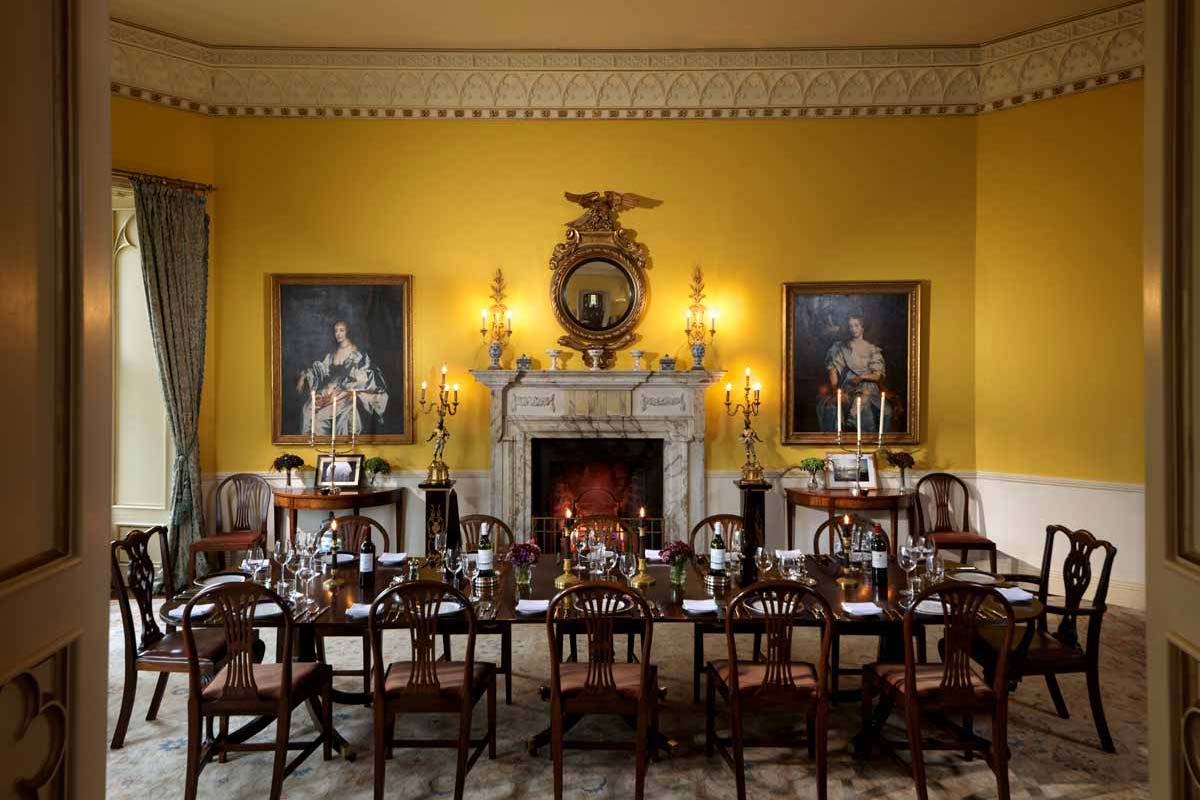
This large portrait in the dining room is General Robert King (1773-1854), 1st Viscount Lorton, who was the son of Robert King, 2nd Earl of Kingston.

Robert Edward King (1773-1854) inherited Kingston Hall at Rockingham. He joined the military and distinguished himself in the Caribbean. When he inherited in 1797, he returned to Ireland and joined the Roscommon Militia and worked his way up to become a General. With Rockingham, however, came debt. In 1799 he married his first cousin, Frances Parsons Harman, daughter of his aunt Jane who had married Lawrence Parsons Harman (1749-1807), who owned the Newcastle Estate in County Longford. Robert worked hard to reduce the debt, and was a tough landlord, evicting many tenants.

In the centre, Frances née Parsons Harman (1775-1841) who married Robert Edward King (1773-1854). She is flanked by their daughter Jane King, who married Anthony Lefroy, and Frances King, who married Right Reverend Charles Leslie of Corravahan.

Robert Edward was created Baron Erris of Boyle, County Roscommon in 1800 and in 1806, Viscount Lorton of Boyle, County Roscommon. His support of the Act of Union in 1800 would have helped in his rise within the Peerage.

Viscount Lorton decided to build a new house on the Rockingham estate, which is a few kilometers from Boyle. Robert O’Byrne tells us that the previous house, Kingston Hall, remained in use and became known as the Steward’s House. [4] The new house was designed by John Nash and was ready by 1810. Lorton also modernised the estate. Landscaper Humphrey Repton helped with the design of the outbuildings, gate houses and demesne. The house no longer exists, and the demesne is now part of Lough Key Park. An impressive gate lodge remains, and a chapel built by Lord Lorton in 1833 on the site of a 17th century church also built by the Kings. An icehouse, gazebo called the Temple and a tunnel which ran from the mansion to the lake and was used by tradesmen is open for visitors.

Rockingham House.
Rockingham.
Rockingham.
Rockingham.
Rockingham.
Rockingham.
Rockingham.
Model of Rockingham House created by Leaving Certificate students of Ballinamore Vocational School Fergal Conefrey, Conor Lee and Declan Sammon with construction teacher Mr. Tommy Flynn.
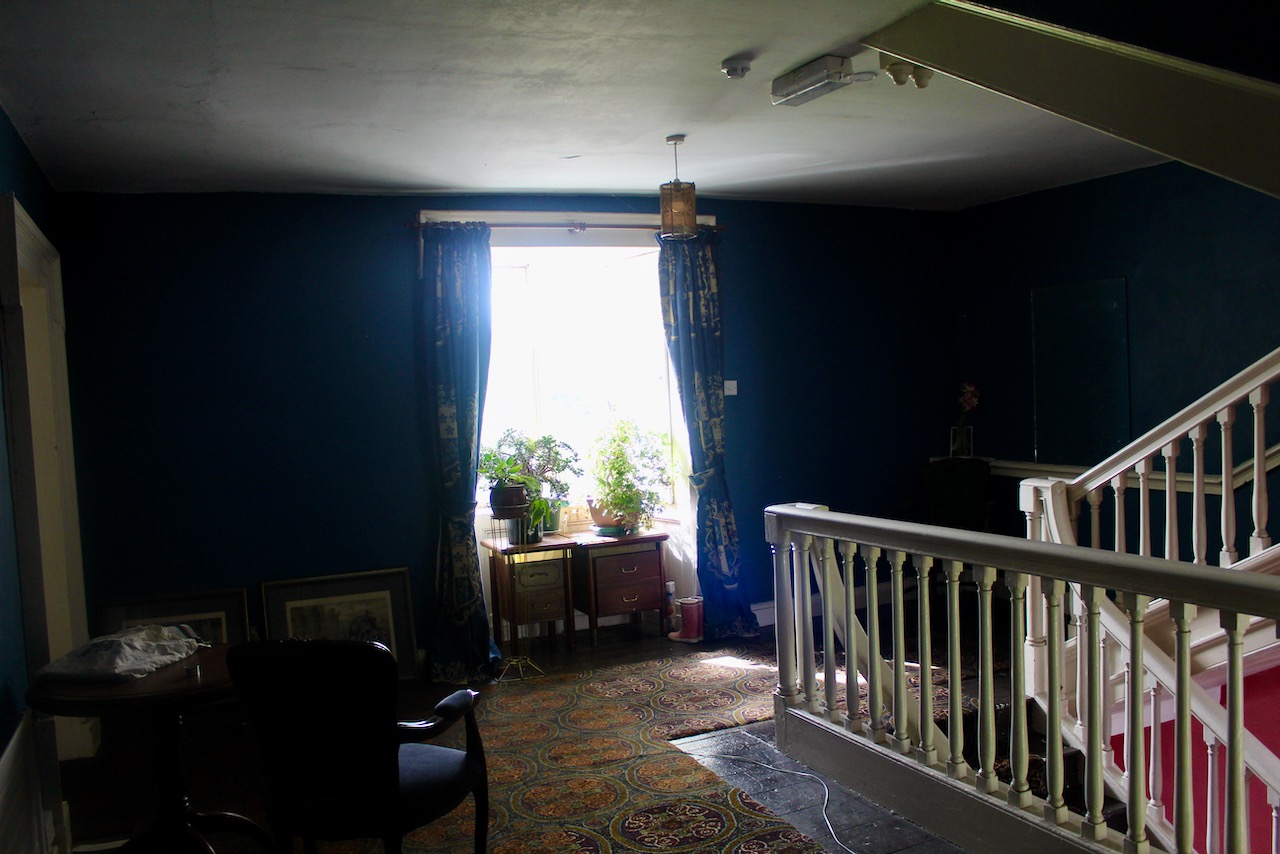
The interior of Rockingham.
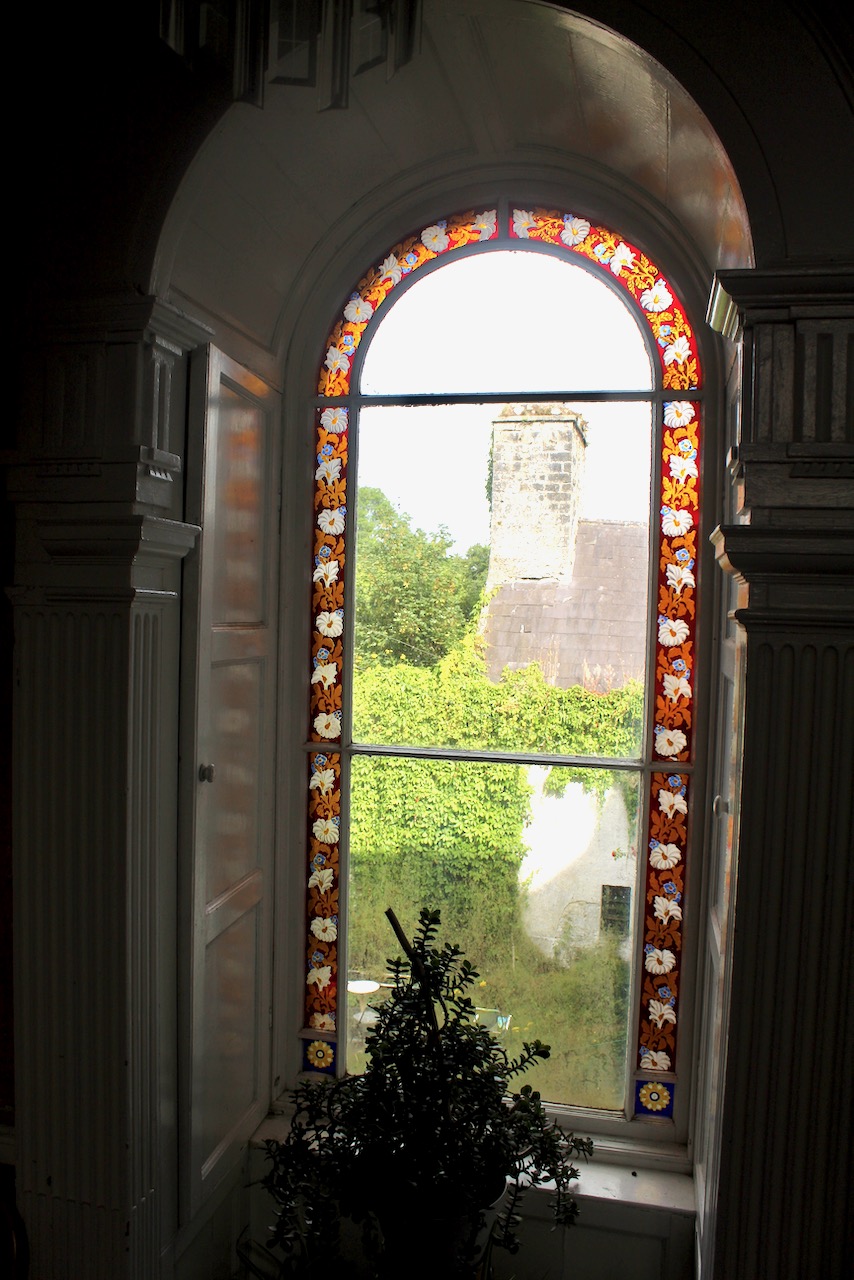
Looking out from Rockingham.

It was a time of trouble with tenants, as outlined in The Kings of King House. Robert evicted Catholic tenants due to uprisings. In famine years, however, he lowered rents and provided work.

King House, 2022.
King House, 2022.
In King House.

Viscount Lorton’s daughters married well. Jane married Anthony Lefroy of Carriglass Manor, County Longford. Jane Austen had been in love with his father, Thomas Lefroy, and Mr. Darcy in Pride and Prejudice may have been based upon him. Caroline married Robert Gore-Booth, 4th Baronet, of Lissadell, County Sligo (another section 482 property). Frances married Right Reverend Charles Leslie, who we came across when we visited Corravahan, another Section 482 property, in County Cavan.

Viscount Lorton’s heir was Robert (1804-1869). He had an unhappy marriage, and his wife, Anne Gore-Booth, daughter of Robert Newcomen Gore-Booth, 3rd Baronet of Lissadell, had an affair which produced a son. Robert and his father sought to make sure that this son would not inherit the King estates.

The Kings of Rockingham were a “cadet branch” of the family of the Kings of Mitchelstown, County Cork. Viscount Lorton’s older brother inherited the Mitchelstown estate and the title of 3rd Earl of Kingston. Let’s make a diversion and look at what was happening at the Mitchelstown estate.

After her husband Robert 2nd Earl of Kingston’s death, Mitchelstown remained in the hands of Caroline (née Fitzgerald), and she returned to run the estate for a further twenty-five years. She kept her son George at arm’s length, King-Harman tells us.

George King (1779-1839), later 3rd Earl of Kingston, painting by Romney.

George did not inherit Mitchelstown until he was 53 years old. He was godson of King George III and was a friend of the Prince Regent who later became King George IV. He had several illegitimate children with a lover when he was in his twenties, with whom he lived in the Bahamas. He went on to marry Helena Moore, daughter of Stephen, 1st Earl of Mountcashell, County Tipperary. Before his father died, he was titled Viscount Kingsborough between 1797 and 1799, and he held the office of Member of Parliament (M.P.) for County Roscommon between 1797 and 1799. He became Colonel of the local Militia, the Mitchelstown Light Dragoons, part of the North Cork Militia.

When his father died, he succeeded as the 3rd Baron Kingston of Rockingham, Co. Roscommon, the 3rd Viscount Kingston of Kingsborough, Co. Sligo, 3rd Earl of Kingston, and 7th Baronet King, of Boyle Abbey, Co. Roscommon.

George 3rd Earl of Kingston’s eldest son, Edward, predeceased him. Edward, who was Viscount Kingsborough, became interested in Mexico while in Oxford and devoted his life and finances to the production of a monumental work, The Antiquities of Mexico. He fell into debt, partly because his father did not allow him enough to run Mitchelstown, and was imprisoned in Ireland, where he developed typhus and died in 1837. In his lifetime he presented a number of antiquities to Trinity College Dublin.

It was therefore George’s second son, Robert Henry (1796-1857) who became 4th Earl of Kingston in 1839. By 1844 the Mitchelstown estate had been taken over by the Encumbered Estaes Court. Outstanding debts went back to James 4th Baron, King-Harman tells us. Despite this, Robert Henry’s life continued at Mitchelstown in rather high style, also despite the famine. Sadly, parts of the estate were sold off bit by bit and eventually Robert Henry had a mental breakdown and ended up in an asylum in England. [for more about the 4th Earl of Kingston see the Irish Aesthete’s blog. [5]

His younger brother James became the 5th Earl of Kingston, but died two years later without issue, and with him the Barony of Kingston of Mitchelstown became extinct. He married Anna Brinkley from Parstonstown (Birr), who was thirty years his junior, and King-Harman tells us that she “was destined to play a major role in the affairs of Castle [of Mitchelstown] right through to the present century.” They had no children, so the estate would have gone to the Viscounts Lorton of Boyle.

James King (1800-1869), 5th Earl of Kingston, who married Anna Brinkley.
Anna née Brinkley, wife of the 5th Earl of Kingston, who lived in Mitchelstown.

Robert, who was to become 2nd Viscount Lorton, and his wife Anne née Gore-Booth, had a son, Robert (1831-1871), and a daughter, Frances. Anne then had a son, Henry Ernest, with her lover, Vicomte Ernest Satgé St Jean. 1st Viscount Lorton tried to take action to ensure that Henry Ernest would not inherit.

In order to avoid Henry Ernest from inheriting Mitchelstown, they had to break the entail on Mitchelstown and James the 5th Earl of Kingston promised money from the Mitchelstown estate to the 3rd Viscount Lorton, for signing away the entail. Instead, Mitchelstown was left to his wife. The money promised to 3rd Viscount Lorton formed a debt, falling to Anna Brinkley, which gave her much difficulty later.

Before continuing, I must mention the youngest son of 1st Viscount Lorton, Laurence Harman King (1816-1875). He married Mary Cecilia Johnstone of Alva, Scotland. His father drew up a settlement which in the event that the 2nd Viscount’s legitimate son did not have an heir, Rockingham would go to his younger son, Laurence Harman, who in 1838 had legally changed his name to Laurence Harman King-Harman.

The Honourable Laurence Harman King-Harman (1816-1875).
Mary Cecilia, 6th daughter of Thomas Reymond Johnstone of Alva, Scotland. Married in May 1837 Laurence Harman King-Harman, 2nd son of Robert Edward 1st Viscount Lorton. She lived at Newcastle until her husband’s death in 1875 and then in London when she died in 1904.
Irish Army Artillery Dress Uniform c.1935: This uniform would have been worn by a Lieutenant Colonel. A military uniform would consist of the following: shako, tunic, slacks, black patent boots and spurs, white doe-skin gloves, cape, sword-belt complete with two scabbard slings and dress sword, sword knot and sword belt.
Dining room of King House. Photograph © Jennifer Winder-Baggot, www.irishhistorichouses.com
Laurence Harman King-Harman (1816-1875). The information tells us that he was the second son of Edward King, 1st Viscount Lorton. He inherited the Newcastle estate in County Longford in 1838 from his grandmother the Countess of Rosse, and lived there until his death. He succeeded to the Rockingham estate after the death of his brother Robert, 6th Earl of Kingston, in 1869.

Laurence Harman King-Harman also inherited the estate of Newcastle in County Longford. He was chosen for the inheritance in preference to his dissipated brother. Lawrence’s mother, recall, was Frances Parsons, daughter of Laurence Harman Parsons and and Jane King (daughter of 1st Earl of Kingston). Laurence Harman Parsons’s father was Laurence Parsons, 3rd Baronet of Birr Castle, County Offaly, and his mother was Anne Harman, whose family owned Newcastle, County Longford.

The property of Newcastle had belonged to the Chappoyne family. A daughter of that family married Anthony Sheppard, and the property passed into the ownership of the Sheppard family. It then passed via a daughter, Frances Sheppard, who married Wentworth Harman (c. 1635-1714). On Frances’s death in 1766 the property passed to her son Reverend Cutts Harman (1706-1784), Dean of Waterford. He had no children, so he left the property to his nephew, Laurence Parsons, who had married Jane King. In return, Laurence Parsons added the name Harman to his surname in 1792 to become Laurence Harman Parsons-Harman.

Laurence Harman Parsons was created 1st Baron Oxmantown, Co. Wexford in 1792, and 1st Earl of Rosse in 1806.

Laurence and Jane had a daughter, Frances, and no son. Frances married Robert Edward King, 1st Viscount Lorton in 1799. Laurence left all of his property to his wife Jane, which included Newcastle and two houses in St. Stephen’s Green in Dublin. Upon the birth of Frances and Robert Edward’s second son, whom they named Laurence Harman King, Lady Rosse decided to leave Newcastle to him. In 1838 when Lady Rosse died, just a year after Laurence Harman King’s marriage, he inherited Newcastle. At that time he also added Harman to his surname to become Laurence Harman King-Harman. [6]

One can now stay in Newcastle House, see https://www.newcastlehousehotel.ie/

Let us go back, however, to his brother Robert, who was upon his father’s death to become 2nd Viscount Lorton. The reason that 1st Viscount Lorton was worried about the second, illegitimate grandson inheriting, is that the first grandson, Robert Edward, had suffered a serious illness and had only one child, a daughter.

The 1st Viscount Lorton died in 1854 and was buried in the family vault in Boyle Abbey.

Obituary for 1st Viscount Lorton.
King House, 2022.
King House, 2022.
In King House.

The 1st Viscount Lorton’s son Robert had been a long time waiting to come into his inheritance and had meanwhile spent his time dissipating the family’s money and by the time of his marriage, according to The Kings of King House, had a reputation for drinking too much alcohol. In the same year that she was proven to have an affair, Robert became semi-paralysed, perhaps after severe attack of delirium tremens from his drinking.

Robert and his wife Anne moved to Frankfurt in 1840 and his health improved somewhat. However it was here that his wife met Vicomte Ernest de Satgé St Jean. He too was married. He and Anne accumulated debts at the gaming tables which Robert had to pay, and when his wife left him, Ernest de Satgé St Jean moved into the home of the Kings in Frankfurt!

When 1st Viscount Lorton heard of the shenanigans, he sent an old friend to bring his son and his son’s wife back to Ireland. He did not succeed, and the story of Robert’s wife’s debts reminds me of “Buck” Whaley’s, with the Vicomte entering in convoluted schemes in order to try to gain money to pay off his debts, as described in The Kings of King House.

When the 1st then 2nd Viscounts Lorton died, the 2nd Viscount’s legitimate son Robert Edward (1731-1771) came into ownership of Rockingham, and became 3rd Viscount Lorton and 7th Earl of Kingston. He died two years later, after felling large quantities of timber at Rockingham to pay off his debts.

In King House.

In the meantime, the younger son, Henry Ernest Newcomen King (named Ernest after his birth father) had not been legally recognised as illegitimate. Therefore when his brother died, he became 8th Earl of Kingston, although he did not inherit as much land as he could have, since the entail on Mitchelstown had been broken, and his uncle Laurence Harman inherited Newcastle and Rockingham. He joined the Connaught Rangers, which were housed in the old King home, and he gained the rank of Lieutenant-Colonel, and was a representative Irish peer in the House of Lords. He married Florence, daughter and co-heir of Colonel Edward King-Tenison of Kilronan Castle in County Roscommon. He changed his name to surname King-Tenison in 1883. He held the office of Lord-Lieutenant of County Roscommon between 1888 and 1896.

The Coronation Robe and Crown in the dining room of King House belong to his son the 9th Earl of Kingston’s wife, Ethel Lisette, made to be worn at the coronation of King Edward VIII in 1936, which did not happen since he abdicated the throne.

King House, 2022. Photograph © Jennifer Winder-Baggot, www.irishhistorichouses.com
In King House.

On the death of the 7th Earl of Kingston, the 1st Viscount Lorton’s youngest son, Harman King-Harman, inherited Rockingham and the Boyle estates as life tenant. He remained living in Newcastle, County Longford. He had six sons and his eldest Edward King-Harman (1838-1888) would inherit Rockingham and Newcastle.

King House, 2022. Photograph © Jennifer Winder-Baggot, www.irishhistorichouses.com
This painting just identifies the sitter as Mrs King-Harman. She is probably Laurence Harman King-Harman’s wife Mary Cecilia née Johnstone, in later life.
Vanity Fair entry and picture, about Edward Robert King-Harman (1838-1888), son of Laurence Harman King-Harman. He inherited Newcastle in County Longford and Rockingham in Roscommon.

To continue with the story of Mitchelstown, in 1873 Anna née Brinkley, wife of James 5th Earl of Kingston, remarried, to William Webber. King-Harman writes that Webber allowed his relationship to the tenants to deteriorate. Meanwhile, the old debts were paid off by selling off tenanted lands under the Wyndham Land Acts. Anna, the Countess of Kingston, expressed a wish that upon her husband’s death, Mitchelstown should revert to the King family, in the person of Lt Colonel Alec King-Harman of Newcastle, great grandson of the 1st Lord Lorton. However, the castle was burnt by the IRA during the Civil War in 1922, and Alec sold off the estate.

The 2nd Earl of Kingston laid out much of the town of Mitchelstown. King Square includes Georgian houses of Kingston College and its Protestant chapel and family vault built by James, 4th Baron Kingston, and the square also includes the building where James founded the first Grand Lodge of Freemasons in Ireland. The 3rd Earl erected a drinking fountain in the square. The inn at Kilworth where Colonel Fitzgerald was shot is now a private residence. [The Kings of King House]

Edward Robert King-Harman (1838-1888), son of Laurence Harman King-Harman, inherited Newcastle in County Longford and Rockingham in Roscommon. He joined the military and fought in the siege of Dehli during the Indian Mutiny, then returned to Ireland in 1859 and became Honorary Colonel of the 5th Battalion of the Connaught Rangers whose depot was now in King House. He developed an interest in politics and the cause of Home Rule and was returned to the House of Commons in Ireland as a Conservative Home Ruler for County Sligo. He moved from Newcastle into Rockingham. He managed to leave Rockingham to his daughter, Fay, although her brothers contested this. She managed to keep Rockingham, however, along with her husband, Dr. Thomas Stafford, who was a Catholic. Fay’s son took the name Edward Stafford King-Harman.

Meanwhile Edward’s younger brother Wentworth (1840-1919) inherited Newcastle from his brother. He joined the military in Britain. When he inherited, he immersed himself in running Newcastle. It was his son Alec who inherited Mitchelstown. Alec also joined the military. He left Newcastle to a cousin Douglas King-Harman, and by that time the estate was reduced to just 50 acres, and he sold it in 1951. Before leaving Newcastle, Douglas set aside most of the family records and took them to England with him and published a book in 1959, Kings Earls of Kingston.

Edward Stafford King-Harman died in WWI. His father was raised to the British peerage as 1st Baronet Stafford in 1914. Edward married Olive Pakenham Mahon from Strokestown in Roscommon – I will be writing about it soon as it is also a Section 482 property.

King House, 2022.
In King House.

It was his second son, Cecil Stafford King-Harman, who inherited Rockingham and became 2nd Baronet Stafford. Having taken a degree in Agriculture in New Zealand, Cecil was able to bring the estate back into good working order. Unfortunately, Rockingham was destroyed by fire in 1957 and although most of the furniture and pictures were saved, Cecil decided to sell. The house was demolished, and half the estate became Lough Key Forest Park. On Cecil’s death the baronetcy became extinct.

King House, 2022.
King House, 2022.
Cecil Stafford King-Harman, King House, 2022.
King House, 2022.
King House, 2022.
King House, 2022.
King House, 2022.
King House, 2022.
King House, 2022.
King House, 2022.
King House, 2022.
Part of a set of china rescued from the fire in 1957. Photograph © Jennifer Winder-Baggot, www.irishhistorichouses.com
King House, 2022. Photograph © Jennifer Winder-Baggot, www.irishhistorichouses.com
King House, 2022.
King House, 2022.
King House, 2022.
King House, 2022.
This room in King House describes the fire at Rockingham. Over the fireplace is a picture of Lady Eleanor King, and one of her nephews, brothers George, 3rd Earl of Kingston, Robert, 1st Viscount Lorton, and Admiral James William King. Photograph © Jennifer Winder-Baggot, www.irishhistorichouses.com

Swiss Cottage, Ardfinnan Road, Cahir, County Tipperary – Office of Public Works

Swiss Cottage, Ardfinnan Road, Cahir, County Tipperary:

General Information: 052 744 1144, swisscottage@opw.ie

Swiss Cottage, June 2022. Photograph © Jennifer Winder-Baggot, www.irishhistorichouses.com

From the OPW website https://heritageireland.ie/visit/places-to-visit/swiss-cottage/:

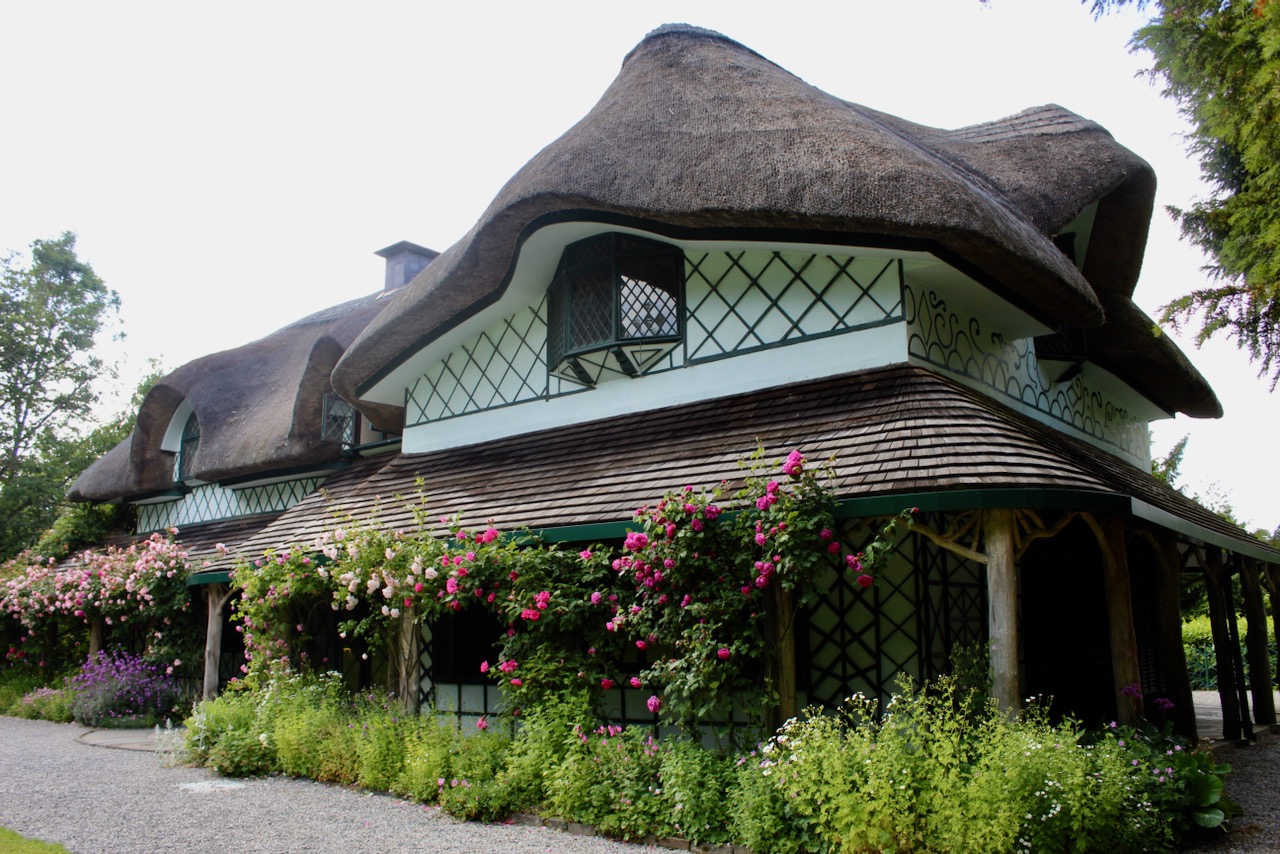
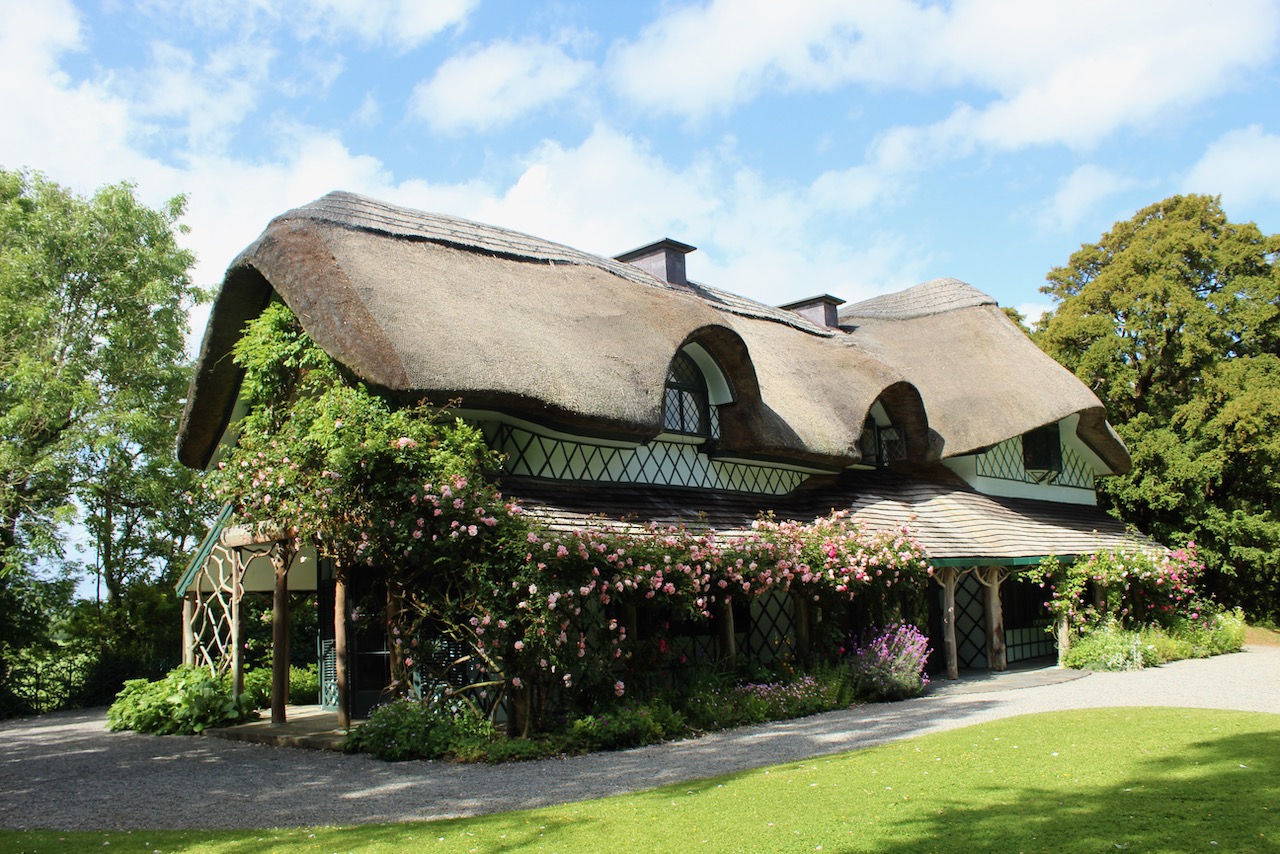
The Swiss Cottage, just outside the heritage town of Cahir, is a cottage orné – a fanciful realisation of an idealised countryside cottage used for picnics, small soirees and fishing and hunting parties and was also a peaceful retreat for those who lived in the nearby big house.

Built in the early 1800s [around 1810] by Richard Butler, 1st Earl of Glengall, who, we believe, managed to persuade world-famous Regency architect John Nash to design it [he also designed Buckingham Palace for the Crown]. Originally, simply known as “The Cottage” it appears to have acquired its present name because it was thought to resemble an Alpine cottage.

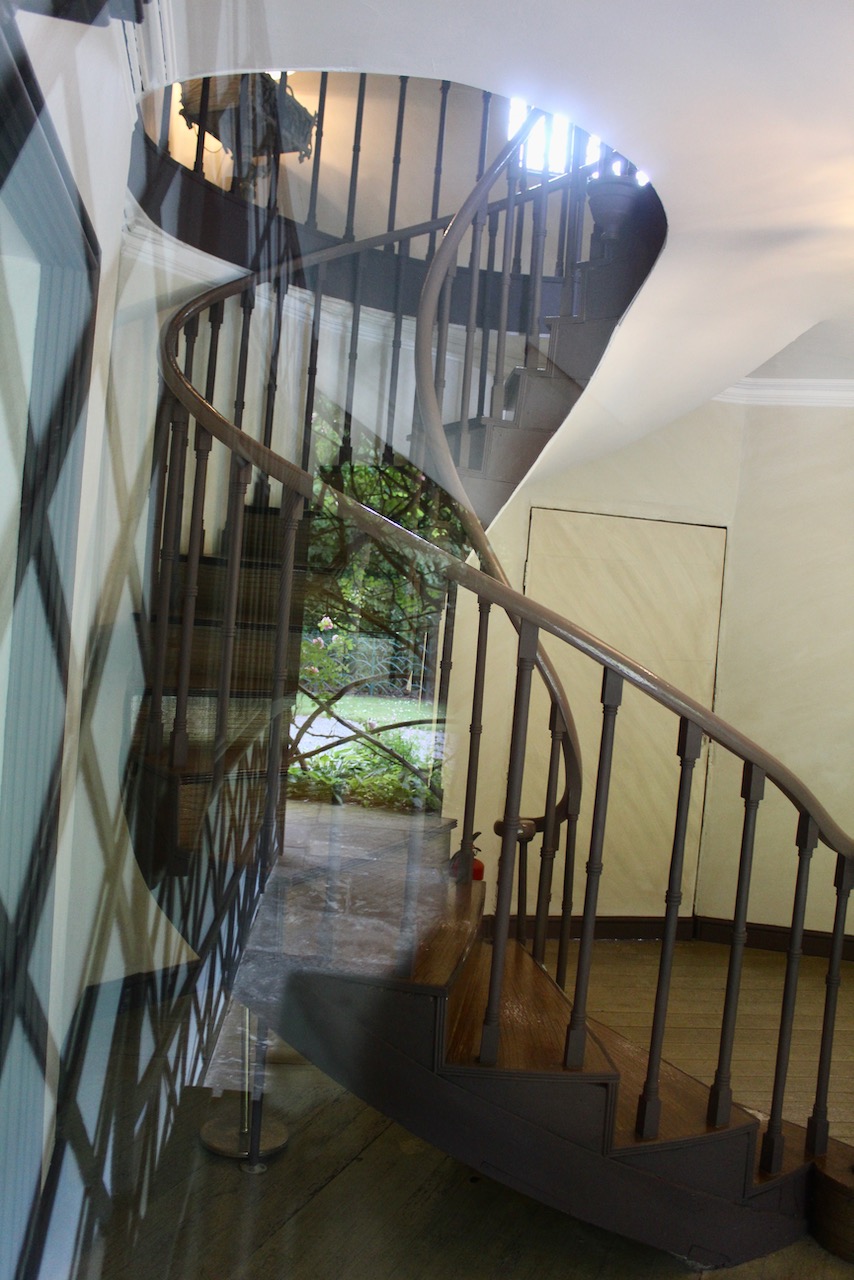
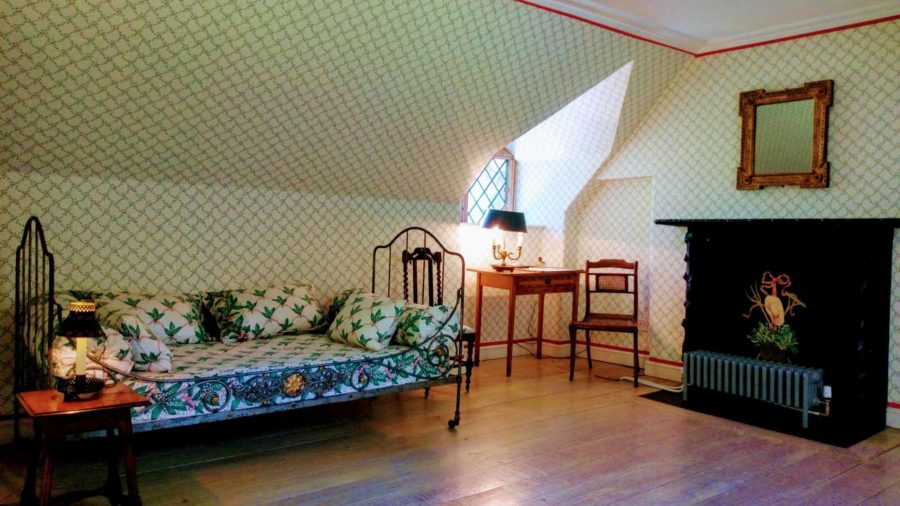
Inside, there is a graceful spiral staircase and some exquisitely decorated rooms. The wallpaper is partly original and partly the fruit of a 1980s restoration project, in which the renowned fashion designer Sybil Connolly was responsible for the interiors.

Photograph © Jennifer Winder-Baggot, www.irishhistorichouses.com

We visited the Swiss Cottage in June 2022. The guide told us that the Glengalls probably never even spent a night in their cottage! They used it for entertaining. They lived in the town of Cahir, in what is now Cahir House Hotel, a house that was more comfortable than Cahir Castle, which they also owned.

Richard Butler (1775-1819) 1st Earl of Glengall was the 12th Baron Caher. He was the illegitimate son of James Butler, 11th Baron Caher (d. 1788). The Butlers sent him away with his mother to France to prevent his ever learning of his noble lineage and claims to his family’s title.

His father succeeded his distant cousin Piers Butler (1726-1788) as 11th Baron Caher, as Piers had no offspring. However, the 11th Baron died suddenly the following month with no legitimate son, so Richard became the rightful heir to the title. Unaware of his inheritance, he grew up in poverty in a garret in Paris, where his mother was obliged to winnow corn and occasionally beg for subsistence. [1] 

One day Arabella Jefferyes née Fitzgibbon, sister of the Lord Chancellor John Fitzgibbon, wife of James St John Jefferyes of Blarney Castle, Co. Cork, was passing through Cahir and heard about the illegitimate son of the 11th Baron Caher. She determined to go to Paris to find the young man!

She managed to find him and brought him back to Ireland. Probably with the assistance of her brother, she brought the case before the courts and succeeded in having Richard declared the rightful heir of the Caher title and estate. This must have been a large fortune, for she then arranged to have her youngest daughter Emily, who was eight years his senior, marry the newly discovered Lord Caher, despite the fact that Richard Butler was not yet of an age to be married, being just 18 years old. The Lord Chancellor was furious and threatened to put his sister in gaol! However, he did not, and the marriage was allowed.

The Dictionary of Irish Biography tells us that Richard, probably under pressure from his mother-in-law, renounced his Catholicism and converted to the established church. He was accepted readily into society, and became governor of County Tipperary and a trustee of the board of the linen manufacturers. [see 1].

Richard was a representative peer (baron) in the UK parliament from 1801, and was created Viscount Caher and Earl of Glengall on 22 January 1816. He remained till his death a loyal supporter of the government and regularly voted against any pro-Catholic proposals, the Dictionary of Irish Biography tells us.

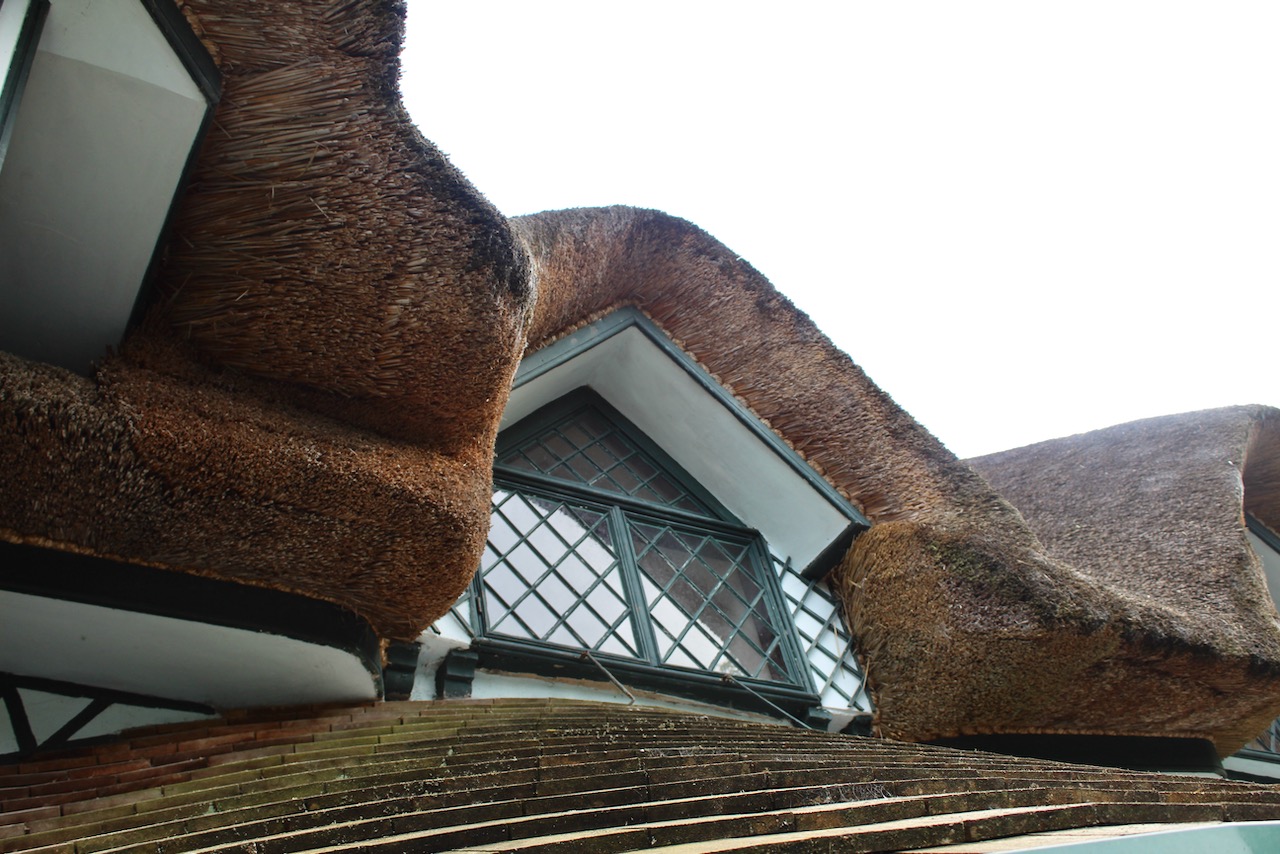
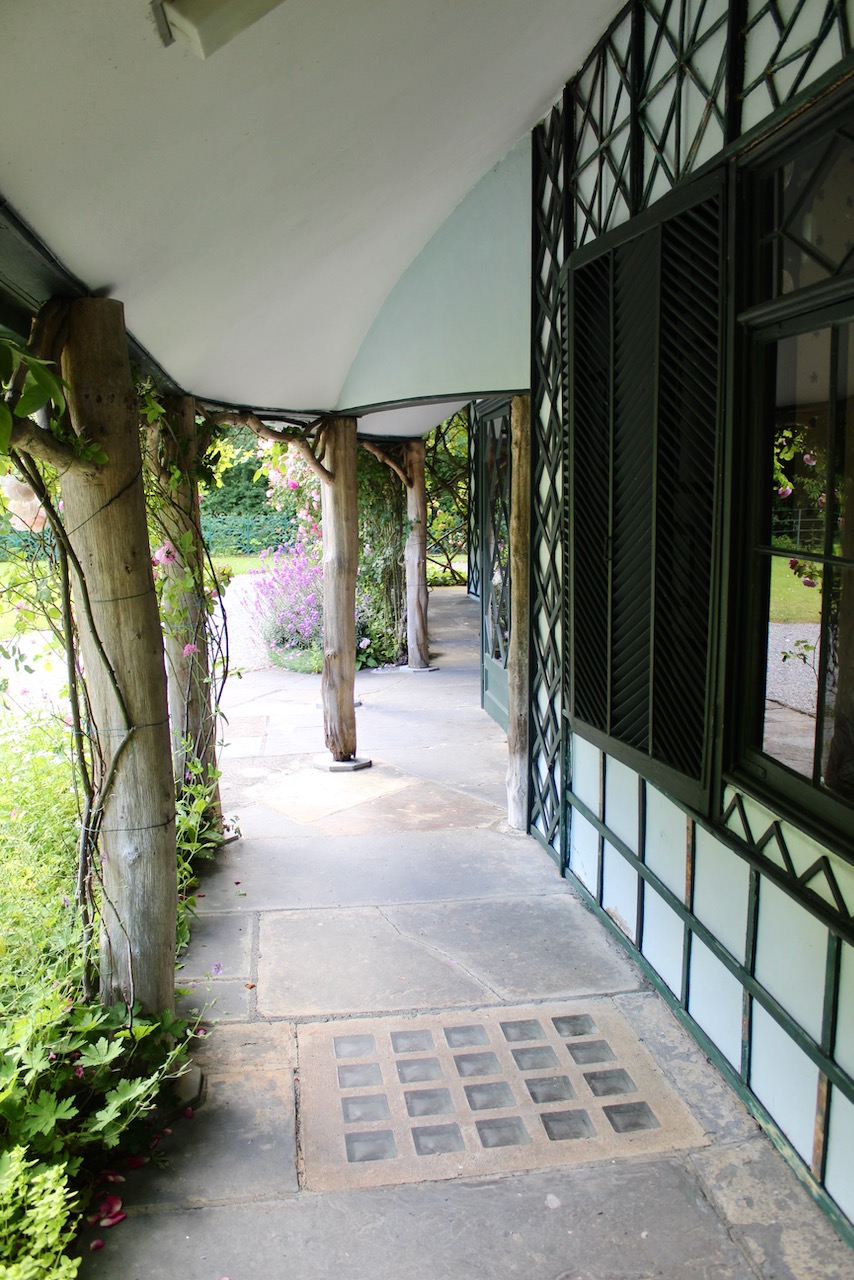
A Swiss Cottage, or cottage ornee, was the ultimate in impressive entertainment. It was meant to look like it had grown from the ground, and it was designed deliberately off-kilter and asymmetrical with different windows, wavy rooves, oddly shaped rooms. Even the expensive floorboards were painted to look like they were made of a cheaper wood!

Photograph © Jennifer Winder-Baggot, www.irishhistorichouses.com

The National Inventory describes it:

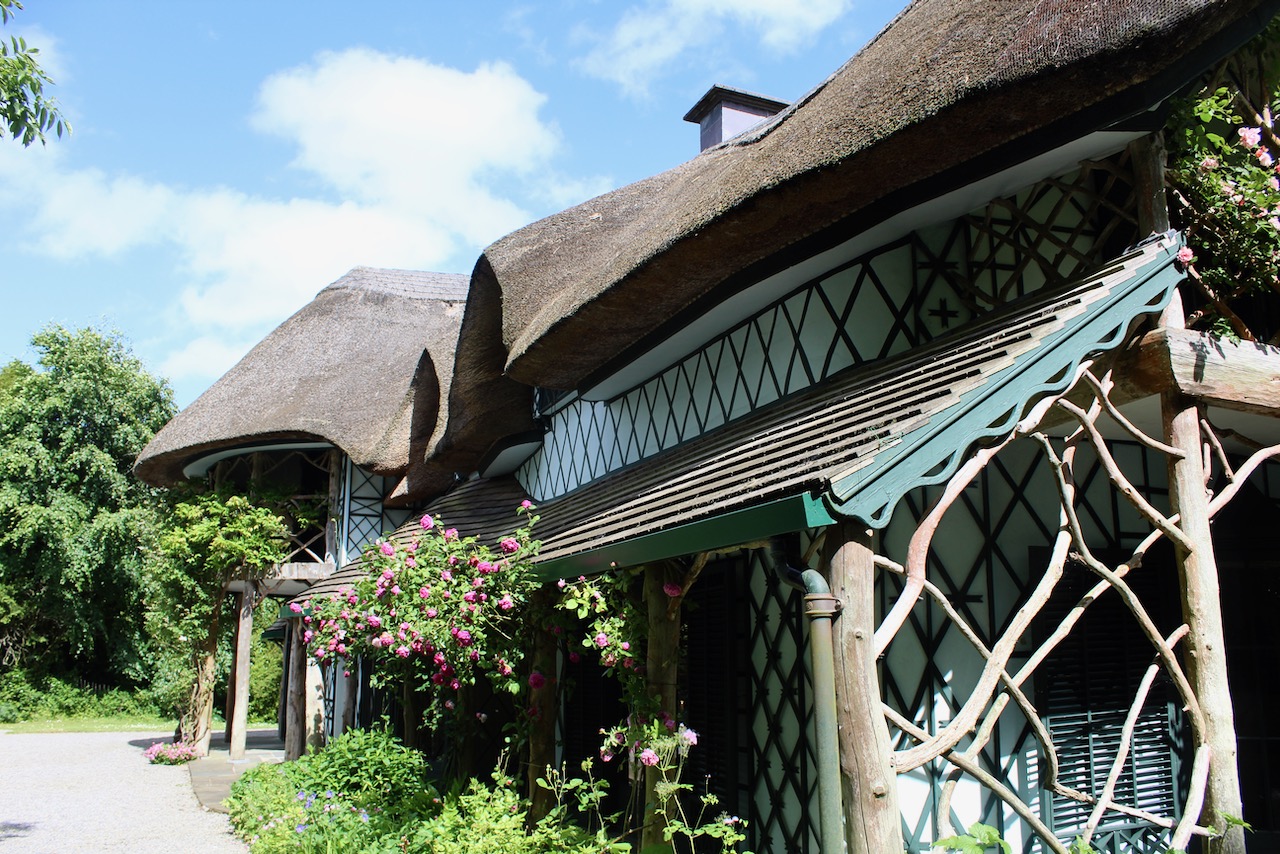
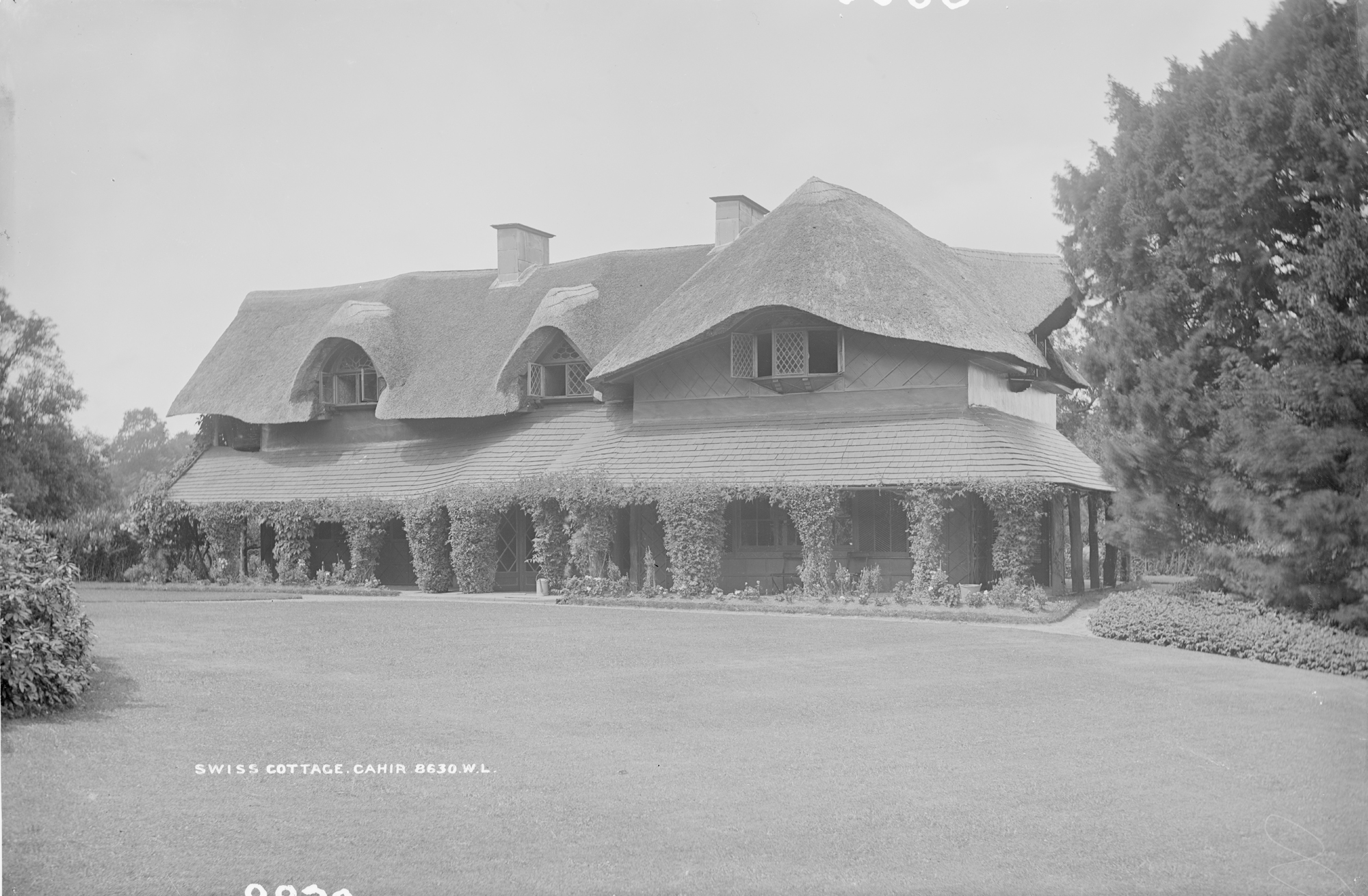
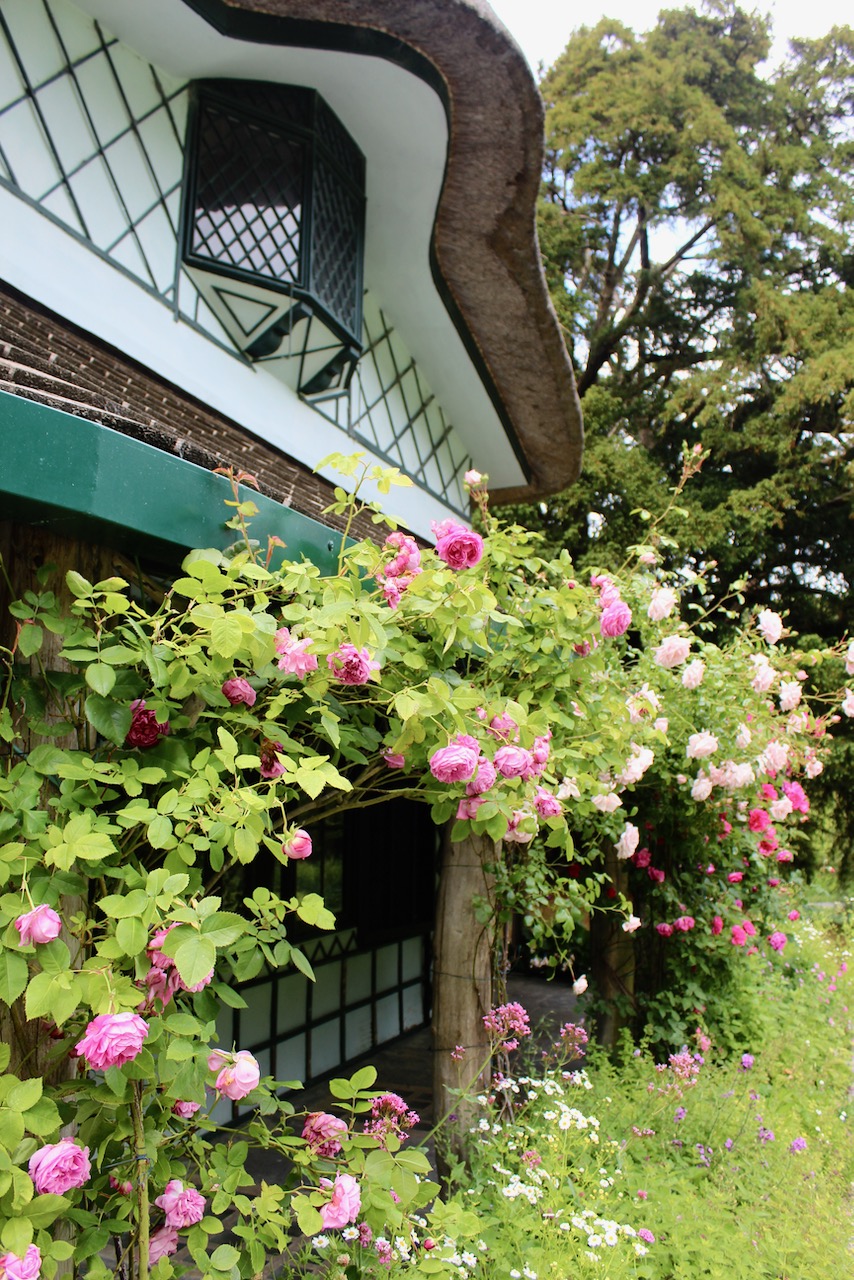
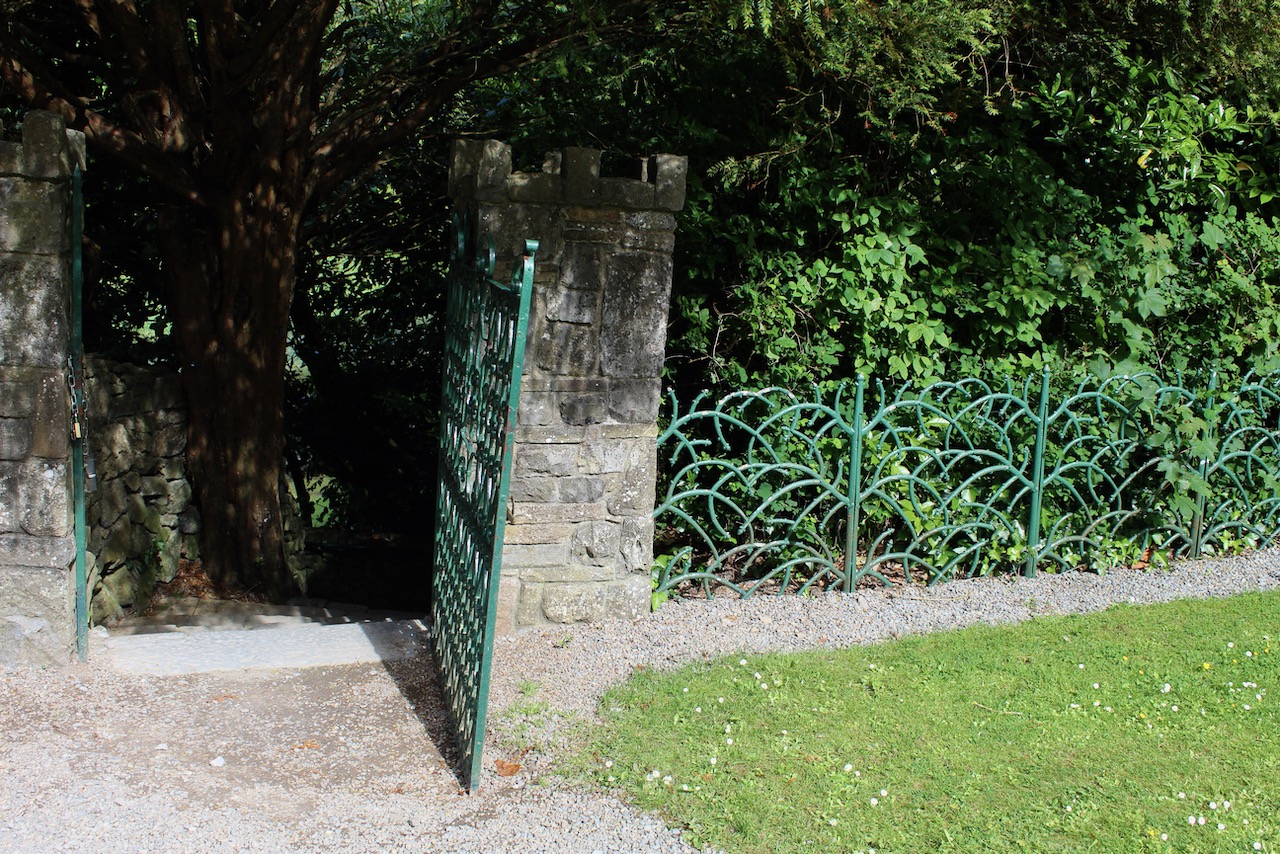
The building, constructed as an architectural toy, was used as a lodge for entertainment purposes and was designed specifically to blend with nature. The roof pitches and tosses and varies in length while differing window sizes and openings punctuate it. The verandah and balconies, although luxury features, have been fashioned to appear humble with exposed rustic tree trunk pillars. The asymmetrical design of the cottage, although immediately apparent of architectural detailing, is deliberately flawed and distorted to appear unsophisticated. Both the building and its setting right down to its cast-iron rustic fencing maintains a sense of blending with nature as it was originally designed.” [2]

Swiss Cottage, photograph from the National Library of Ireland.
Timber rustic oak posts with triangular arch detailing between posts to verandahs and to bowed bay, having latticework rail to balcony. Photograph © Jennifer Winder-Baggot, www.irishhistorichouses.com
Photograph © Jennifer Winder-Baggot, www.irishhistorichouses.com

Unfortunately we were not allowed to take photographs inside. I took a few photographs looking through the windows. There are a few photographs on the OPW website, which I copy here.

The timber spiral staircase in the extremely plain front hall. The plainness is deceptive, however, as it has an expensive cobweb patterned parquet floor. Photograph © Jennifer Winder-Baggot, www.irishhistorichouses.com

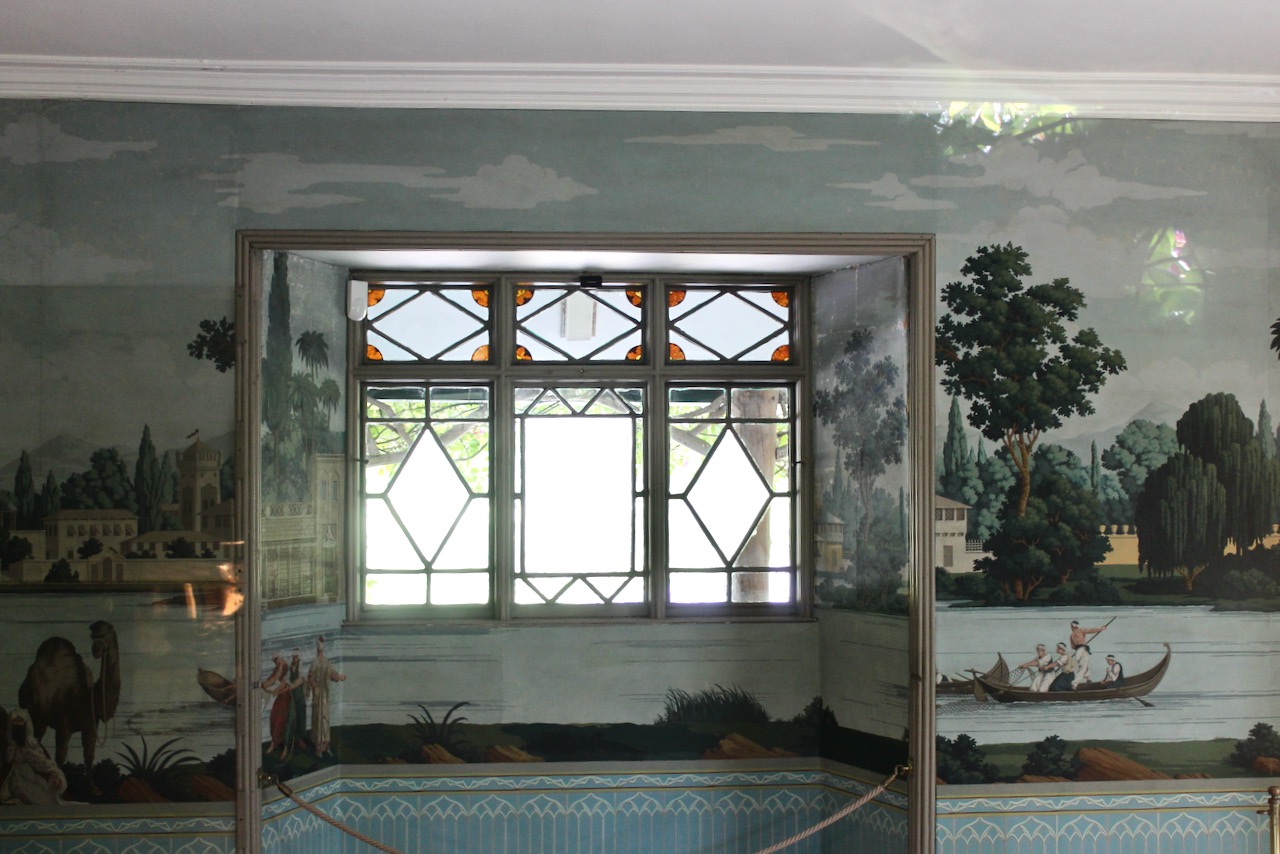
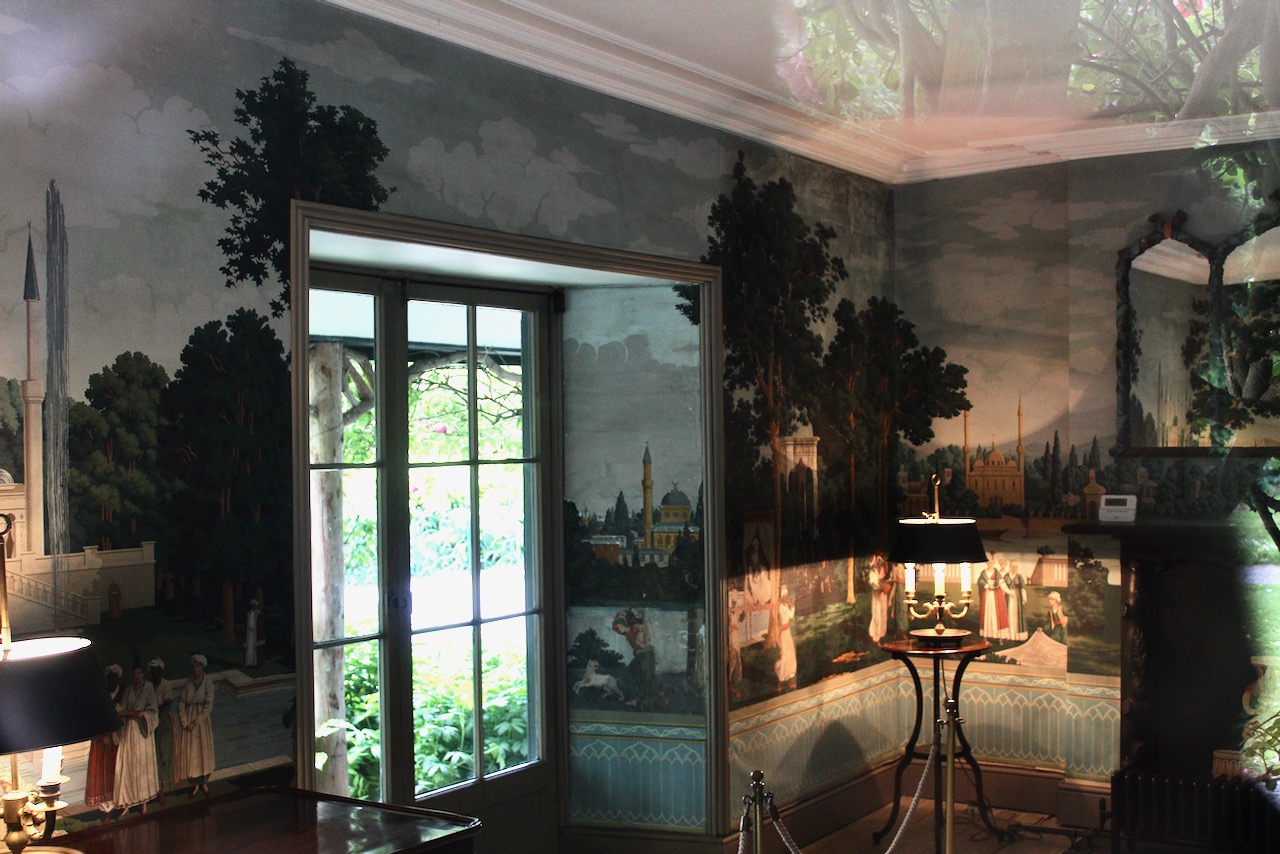
Downstairs has a room off either side of the hallway, the Dufour Room and the Music Room. The Dufour room is so called due to some original Dufour wallpaper, depicting Constantinople, much of which has been reproduced to line the room. Dufour was one of the first Parisian manufacturers creating commercially produced wallpaper. Another door from the central hall leads to a limestone stairway and basement.

Looking through the windows, to the wonderful wallpaper, a reproduction of the original which pictures Oriental scenes. Photograph © Jennifer Winder-Baggot, www.irishhistorichouses.com
The Dufour room is so called due to some original Dufour wallpaper, depicting Constantinople, much of which has been reproduced to line the room. The Swiss Cottage. Photograph © Jennifer Winder-Baggot, www.irishhistorichouses.com
Swiss Cottage. Photograph © Jennifer Winder-Baggot, www.irishhistorichouses.com
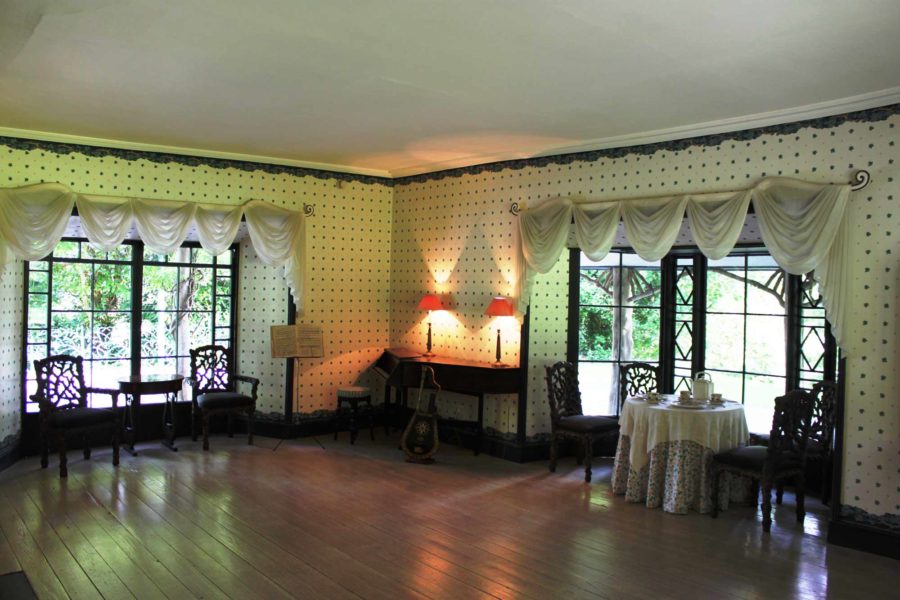
The Music Room, Swiss Cottage, photograph courtesy of Office of Public Works.

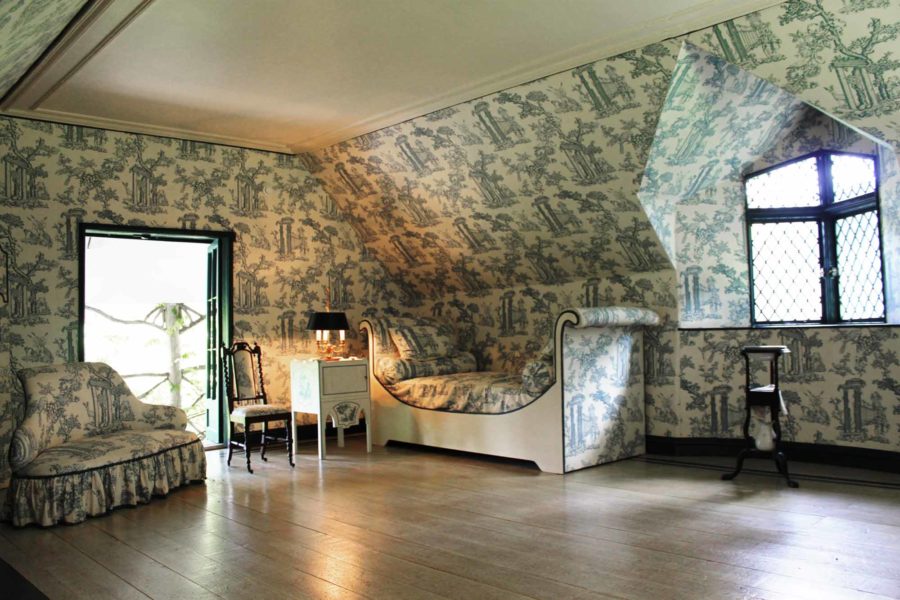
The first floor interior comprises a landing with rooms leading directly to the west (Small bedroom) and east (Master bedroom) through angular-headed timber panelled doors.

Master bedroom, Swiss Cottage, photograph courtesy of Office of Public Works.
Small bedroom, Swiss Cottage, photograph courtesy of Office of Public Works.

Every window has a different shape.

Swiss Cottage. Photograph © Jennifer Winder-Baggot, www.irishhistorichouses.com
Photograph © Jennifer Winder-Baggot, www.irishhistorichouses.com

Walking under the balcony one is embraced with the glorious scent of the roses and other flowers.

Swiss Cottage. Photograph © Jennifer Winder-Baggot, www.irishhistorichouses.com

Richard and Emily had one son and three daughters. His son Richard, Viscount Caher (b. 17 May 1794), was elected MP for Tipperary county in 1818, and succeeded his father as 2nd Earl of Glengall. Emily survived Richard by seventeen years, passing away (2 May 1836) in Grosvenor Square, Middlesex. [see 1]

Richard Butler (1794-1858) 2nd Earl of Glengall, by Richard James Lane, lithograph, 1854, National Portrait Gallery of London D22384.
Margaret Lauretta Butler (née Mellish), Countess of Glengall, wife of the 2nd Earl of Glengall by Richard James Lane courtesy of National Portrait Gallery London NPG D22383.
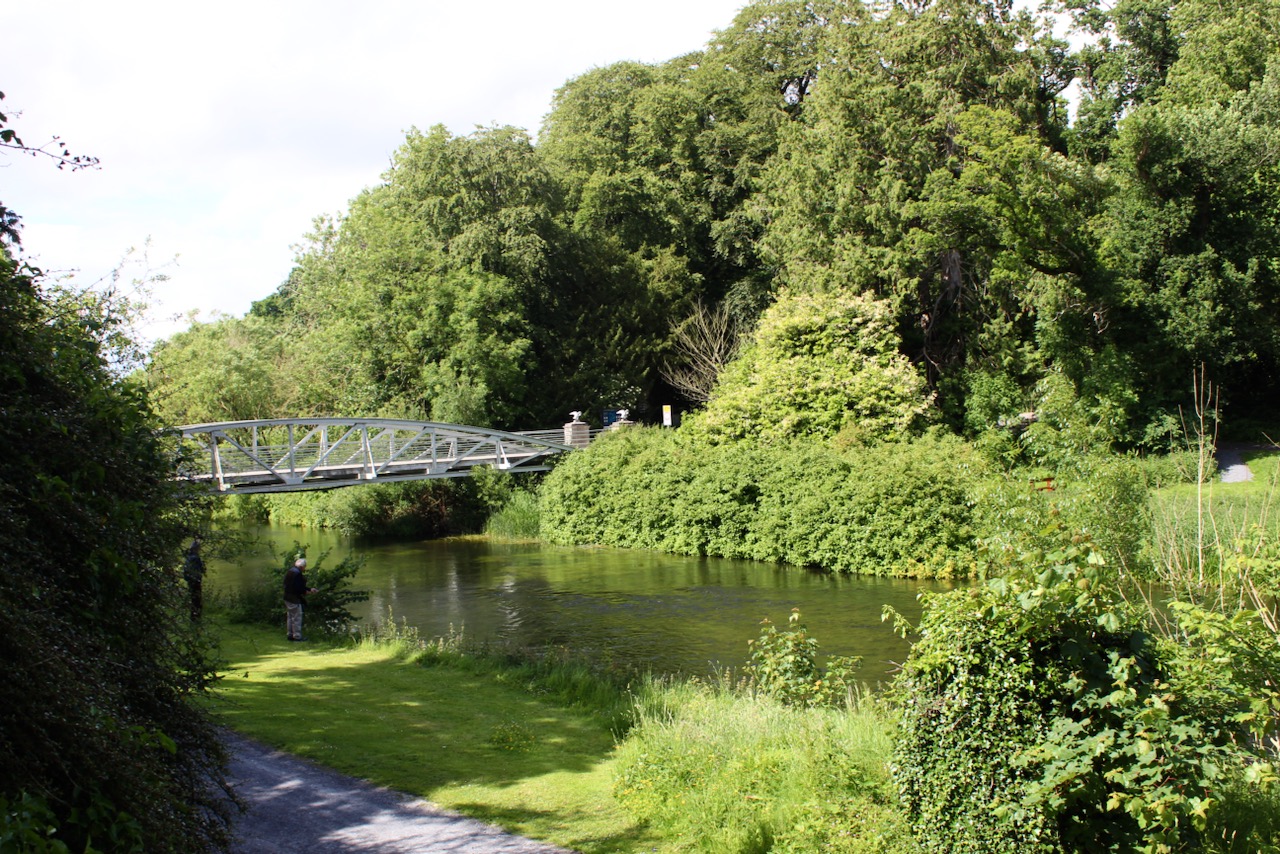
The setting for the cottage is idyllic, over the River Suir. Photograph © Jennifer Winder-Baggot, www.irishhistorichouses.com
Even the wrought iron fencing and gate were made to look natural, like thorny vines. Photograph © Jennifer Winder-Baggot, www.irishhistorichouses.com
Swiss Cottage. Photograph © Jennifer Winder-Baggot, www.irishhistorichouses.com
There is a walkway/cycleway/kayak way along the River Suir, which I’d love to walk.
River by the Swiss Cottage. Photograph © Jennifer Winder-Baggot, www.irishhistorichouses.com
Photograph © Jennifer Winder-Baggot, www.irishhistorichouses.com

[1] https://www.dib.ie/biography/butler-richard-a1286

[2] https://www.buildingsofireland.ie/buildings-search/building/22208107/swiss-cottage-kilcommon-more-north-tipperary-south

https://archiseek.com/2013/swiss-cottage-cahir-co-tipperary

1814 – Swiss Cottage, Cahir, Co. Tipperary 

Architect: John Nash 

A “cottage orné” built in the early 1800s by Richard Butler, 1st Earl of Glengall to a design by the famous Regency architect John Nash. The house was not designed to be lived in, but as somewhere to entertain. Started in 1810, andcompleted around 1814.  

The cottage was in a state of disrepair up to the mid 1980s, but was then taken in charge by the State and fully refurbished to its original specifications. The interior contains a graceful spiral staircase and some elegantly decorated rooms. The wallpaper in the Salon manufactured by the Dufour factory is one of the first commercially produced Parisian wallpapers.  

in Irish Castles and Historic Houses by Brendan O’Neill 

was built in 1810 for the young society couple, Richard Butler, Lord Cahir, and his wife Emily. They succeeded in attracting the well-known English architect John Nash, to come to Ireland to design the building, which he followed two years later with the King’s Cottage in Windsor Park. The music room has original wallpaper depicting scenes on the Bosphorus. 

https://theirishaesthete.com/2022/08/15/pretty-as-a-picture/

The thatched lodge at Derrymore, County Armagh featured here some time ago (see The Most Elegant Summer Lodge « The Irish Aesthete). That building dates from the mid-1770s, making it at least 30 years older than another fanciful cottage orné, this one in County Tipperary. Popularly known as the Swiss Cottage, the later example was constructed c.1810 for Richard Butler, 10th Baron Caher (created Earl of Glengall 1816). Member of a branch of the Butler family which had been dominant in this part of the country for hundreds of years, his own forebears had been settled at Cahir Castle since the 14th century. They remained there until c.1770 when a new residence, Cahir House (now an hotel) was built. Richard Butler was never expected to inherit the title and associated estate. However, following the death in June 1788 of the 8th baron, a distant relative, without heirs – and then the death of Richard Butler’s own father a month later – at the age of just 12 he came into considerable wealth. At the time, he was living in poverty in France, but then returned to Ireland, where he was accommodated by the eccentric widow Arabella Jeffereyes of Blarney Castle. There was method behind Mrs Jeffereyes kindness: within a few years, she had arranged the marriage of her daughter Emilia (then aged just 16) to the wealthy Lord Caher. Soon afterwards the couple returned to live at Cahir House where, according to Dorothea Herbert, they threw ‘a most flaming Fête Champêtre’ during which the young Lady Caher ‘danced an Irish jig in her stockings to the music of an old piper. We had a superb supper in the three largest rooms, all crowded as full as they could hold and we did not get home till eight o’clock next morning and so slept all the next day.’ 

Swiss Cottage, County Tipperary, photograph by Robert O’Byrne.


The tone set by the party they had thrown after their return to Cahir House, the Butlers appear to have led an exceedingly merry life, dividing their time between County Tipperary and London where, following the implementation of the Act of Union, Lord Caher served as an Irish representative peer in the Westminster House of Lords. It may have been there that he made the acquaintance of architect John Nash, who would be responsible for designing a number of buildings in Cahir, including St Paul’s church (Figures of Mystery « The Irish Aesthete) and the adjacent Erasmus Smith School (Well Schooled « The Irish Aesthete) as well as the sadly-demolished Shanbally Castle just a few miles away. Accordingly, the Swiss Cottage is attributed to Nash, not least because of its resemblance to similar picturesque buildings he designed during the same period at Blaise Hamlet on the outskirts of Bristol. The cottage was sketched in 1814, indicating its completion by that date, and two years later was mentioned in an account of local races: ‘the tout ensemble of the Cottage affording a display of rural decoration not easy to be equalled in this country for chasteness of character and richness of fancy.’ Perched above the river Suir and just two kilometres south of Cahir, the cottage was never intended to be a permanent residence, but rather somewhere to visit, perhaps for a meal, perhaps an overnight stay in good weather. Built to a T-plan and of two storeys over basement, the cottage has rustic timber verandas around most of its exterior and a thatched roof. French windows open onto the surrounding grounds and there are a number of balconies on the first floor: much of the exterior is covered in wooden lattice trellising. The overall effect is exceedingly charming. 

Swiss Cottage, County Tipperary, photograph by Robert O’Byrne.


Three years after becoming an earl, Richard Butler died and was succeeded by his only son, also called Richard. Despite marrying an heiress, he would find expenditure exceeded income, particularly after 1839 when he embarked on the restoration of Cahir Castle, and the rebuilding of much of the town of Cahir. In the aftermath of the Great Famine, it transpired that Lord Glengall’s debts amounted to a prodigious £300,000, the situation not helped by a lawsuit over their inheritance between Lady Glengall and her sister. The earl was duly declared bankrupt in 1849 and everything offered for sale, although some of the estate was subsequently recovered by his elder daughter, Lady Margaret Charteris. Somehow, the Swiss Cottage survived, although by the mid-1980s it was in poor condition, sitting empty and a prey to vandals. Before the building became a complete ruin, the local community bought it in 1985 with the aid of a £10,000 grant from the Irish Georgian Society. Work then began on salvaging the Swiss Cottage and the greater part of the funds for this project came, via the IGS, from the American Port Royal Foundation and its President Mrs Christian Aall (the foundation had already donated money towards the cottage’s purchase). Restoration work took three years to complete, overseen by architect Austin Dunphy assisted by John Redmill, with much of the labour provided under a government youth training scheme. New tree trunk posts were put up to support the shingled roof that surrounds the cottage at first floor level, later internal partitions removed and new wiring and plumbing installed. The building was re-thatched, and early 19th century wallpapers, not least a set in the salon by Joseph Dufour of Paris depicting Les Rives du Bosphore, scrupulously restored by David Skinner. Irish couturier Sybil Connolly was given responsibility for overseeing the interior decoration and arranged for a set of grotto chairs to be made for the ground floor rooms. Work on the Swiss Cottage was completed in September 1989 and the building has since been open to the public under the management of the Office of Public Works. 

Swiss Cottage, County Tipperary, photograph by Robert O’Byrne.

Shanbally Castle, Clogheen, County Tipperary

Shanbally Castle, Clogheen, County Tipperary

Shanbally Castle, County Tipperary, garden front during demolition c. 1957. Vanishing Country Houses of Ireland by The Knight of Glin, David J. Griffin and Nicholas K. Robinson, published by The Irish Architectural Archive and The Irish Georgian Society, 1988.

Mark Bence-Jones. A Guide to Irish Country Houses (originally published as Burke’s Guide to Country Houses volume 1 Ireland by Burke’s Peerage Ltd. 1978); Revised edition 1988 Constable and Company Ltd, London.

p. 257. “[O’Callaghan, Lismore, V/PB1898; Butler, sub Ormonde, M/PB; Pole-Carew, sub Pole, Bt/pb] The largest of John Nash’s Irish castles, built ca 1812 for Cornelius O’Callaghan, 1stViscount Lismore. Long and irregular, of smooth silver-grey ashlar; with round and octagon towers, battlements and machicolations. ..2nd and last Viscount Lismore left Shanbally to his cousins, Lady Beatrice Pole-Carew and Lady Constance Butler, daughters of 3rd Marquess of Ormonde; it was sold by Major Patrick Pole-Carew 1954. After a valiant but unsuccessful attempt by Hon Edward Sackville-West (5th Lord Sackville), the author and music critic, to rescue it, the house was demolished 1957 and its ruin dynamited.”

Cornelius O’Callaghan (d. 1797) 1st Baron Lismore by Hugh Douglas Hamilton courtesy Christies British Watercolours.
Shanbally Castle, County Tipperary, photograph by Robert French, (between ca. 1865-1914), Lawrence Photograph Collection, National Library of Ireland.

Listed in Vanishing Country Houses of Ireland by The Knight of Glin, David J. Griffin and Nicholas K. Robinson, published by The Irish Architectural Archive and The Irish Georgian Society, 1988. 

p. 136. “John Nash’s most important and largest Irish castle. Built c. 1806 for Cornelius O’Callaghan 1st Viscount Lismore. The very fine interior included a vaulted entrance hall lit by a series of glass skylights, a splendid oak imperial main staircase and an oval drawing-room.

The castle in good repair was sold in 1954 and despite protests in the press was demolished in 1957. Its destruction was one of Ireland’s great architectural losses this century.”

entry in MacDonnell, Randal. The Lost Houses of Ireland. A chronicle of great houses and the families who lived in them. Weidenfeld and Nicolson. London, 2002

p. 191 “The largest of John Nash’s four Irish castles, Shanbally was in excellent condition when the protectors of Ireland’s heritage in the Irish civil service decided to allow its demolition. Roofed and in good repair at the time it was pulled down, Shanbally’s destruction was one of the most pointless acts of official vandalism in the history of the Irish state.”

p. 192. Nash’s other castles in Ireland were Ravensworth, Caerbays and Aqualate. Shanbally also had the distinction that it was built, not for the descendent o some Cromwellian carpetbagger, but for the scion of an old Irish famiy, Cornelius O’Callaghan.

[pages ripped out]

The Tipperary Gentry. Volume 1. By William Hayes and Art Kavanagh. Published by Irish Family Names, c/o Eneclann, Unit 1, The Trinity Enterprise Centre, Pearse St, Dublin 2, 11 Emerald Cottages, Grand Canal St, Dublin 4 and Market Square, Bunclody, Co Wexford, Ireland. 2003.

O’Callaghan of Shanbally.

p. 163. Cornelius O’Callaghan [1693-1741] was a small county Cork landowner and successful Dublin lawyer. He was Sir Redmond Everard’s solicitor and facilitated him in getting mortgages. Like Redmond he was a convert. In 1713 he and Redmond represented Fethard in Parliament. It is probably that O’Callaghan’s political advancement was paid for by a reduction in Everard’s debts. In 1721 Everard sold his property in Iffa and Offa and centred on Clogheen to O’Callaghan for £11,500. The O’Callaghan family built upon this base and extended their holdings during the next 150 years so that by the mid-19C they were the county’s largest landholders. In 1883 the Lismore estates totalled a staggering 42,000 acres. In Tipperary they owned almost 35,000 acres, while they owned 6000 acres in Cork and over 1000 acres in Limerick. The rent roll was valued at over £16,000 per annum.

…Lord Lismore in his will of 1787 stipulated that his younger son lay out £9,999 in the purchase of lands, and in 1803 his heir bought an estate in Co Laois for £43,620.

p. 164. …the O’Callaghans were noted for their sympathetic approach to the Catholic Relief movement.

The O’Callaghans spent considerable sums over the decades of the 18C improving their estates, building Clogheen village (where Protestant artisans and craftsmen were brought in), drainage schemes, and large scale remodelling of the landscape. These works were facilitated by the appointment of agents. …

p. 160. [Cornelius O’Callaghan 1st Viscount Lismore divorced his wife, Eleanor Butler.] It would seem from the evidence that the marriage ran into trouble shortly after the fourth child was born when Lady Lismore began the habit of chastising her husband, both verbally and physically. According to her brother, the Duke of Ormond, she was a lady who frequently lost her temper. George O’Callaghan gave evidence that he had seen her strike her husband on more than one occasion. In addition she frequently taunted him by stating that Shanbally might be fit for the wife of Lord Lismore but was not fit for Eleanor the sister of the Duke of Ormonde.

p. 161. One of the most startling facts to emerge was that, at the time of the separation, Lord Lismore was in extreme financial difficulty. Although he owned over 40,000 acres of land and despite having received almost £40,000 as a dowry with Eleanor he was reduced to dire straits in the period from 1816-1825. His brother stated that he had only one servant in Shanbally and owned only one carriage and no carriage horse. He also said that in 1817 Lord Lismore was so financially embarressed that he could not travel over to London to see his wife….

The couple was separated in 1819 and Lady Lismore, on the advice of her doctors, decided to travel to a southern country where the climate might be good for her asthma….while in Italy the second time she took a lover, Richard Bingham…[p. 162] It was on the grounds of this adultery that Lord Lismore sought the divorce…. The children were reared by their father.

The seat of the O’Callaghans was at Shanbally Castle, near Clogheen village, where they built a mansion around 1735. There was over 1200 acres of land in the demesne. After the peerage was obtained in 1785 their house was renewed as a castle in 1812. [the castle was unfortunately demolished in 1957]. The new neo-classical house was designed by John Nash….

p. 166. 1st Baron Lismore of Shanbally died in 1797 at a relatively young age. His widow moved to Tunbridge Wells where she remained for the rest of her life until her death in 1827. They had at least two sons, Cornelius and robert William

[the son Cornelius] took his seat in the House of Lords nd voted against the Act of Union in 1800.

[Robert William had an active military career]

In 1806 Cornelius was created Viscount Lismore of Shanbally and in 1838 he was created Baron Lismore of Shanbally Castle. This was one of the Coronation Peerages of Queen Victoria…. Baron Lismore was Lord Lieutenant for Tipperary from 1851 until his death.

p. 167. During the Famine the Lismores worked extremely hard to alleviate the sufferings of the poor. Lord Lismore reduced their rents and provided a soup kitchen at hte gates of his castle. He was describedd as one of Ireland’s benevolent landlords and the town of Clogheen grew and prospered after the Famine.

[His son George outlived both his sons]

http://lordbelmontinnorthernireland.blogspot.com/2013/10/shanbally-castle.html

THE VISCOUNTS LISMORE WERE THE LARGEST LANDOWNERS IN COUNTY TIPPERARY, WITH 34,945 ACRES

This was one of the very few native families which had been dignified by the Peerage of Ireland. The O’Callaghans were formerly princes of the province of Munster, and were seated at Dromaneen Castle. Their Chief, CORNELIUS O’CALLAGHAN, enjoyed very extensive territorial possessions in 1594, according to an inquisition taken by Sir Thomas Norris, Vice-President of Munster, in that year.
From this Cornelius descended 

CORNELIUS O’CALLAGHAN (c1681-c1742), a very eminent lawyer, MP for Fethard, 1713-14, who married Maria, daughter of Robert Jolly, and had three sons, the youngest of whom,

THOMAS O’CALLAGHAN, wedded, in 1740, Sarah, daughter of John Davis, and had, with a daughter (married to Robert Longfield, of Castle Martyr), an only son,

CORNELIUS O’CALLAGHAN (1741-97), MP for Fethard, 1768-85, who was elevated to the peerage, in 1785, in the dignity of Baron Lismore, of Shanbally, County Tipperary.

His lordship married, in 1774, Frances, second daughter of Mr Speaker Ponsonby, of the Irish House of Commons, and niece, paternally, of William, Earl of Bessborough, and niece, maternally, of William, 3rd Duke of Devonshire, and had issue,

CORNELIUS, his heir;
Robert William (Sir), GCB, lieutenant-general;
George;
Louisa; Elizabeth; Mary.

He was succeeded by his eldest son,

CORNELIUS, 2nd Baron (1775-1857), who was created, in 1806, VISCOUNT LISMORE, of Shanbally, County Tipperary.

He married, in 1808, the Lady Eleanor Butler, youngest daughter of John, 17th Earl of Ormonde, and sister of the Marquess of Ormonde, by which lady he had issue,

Cornelius;
William Frederick;
George Ponsonby;
Anne Maria Louisa.

His lordship, Privy Counsellor, 1835, Lord-Lieutenant of County Tipperary, 1851-57, was succeeded by his second son,

GEORGE PONSONBY, 2nd Viscount (1815-98), an officer in the 17th Lancers, High Sheriff of County Tipperary, 1853, Lord-Lieutenant of County Tipperary, 1857-85, who wedded, in 1839, Mary, daughter of George Norbury, and had issue,

George Cornelius Gerald (1846-85);
William Frederick Ormonde (1852-77).

His lordship’s sons both predeceased him, when the titles became extinct.
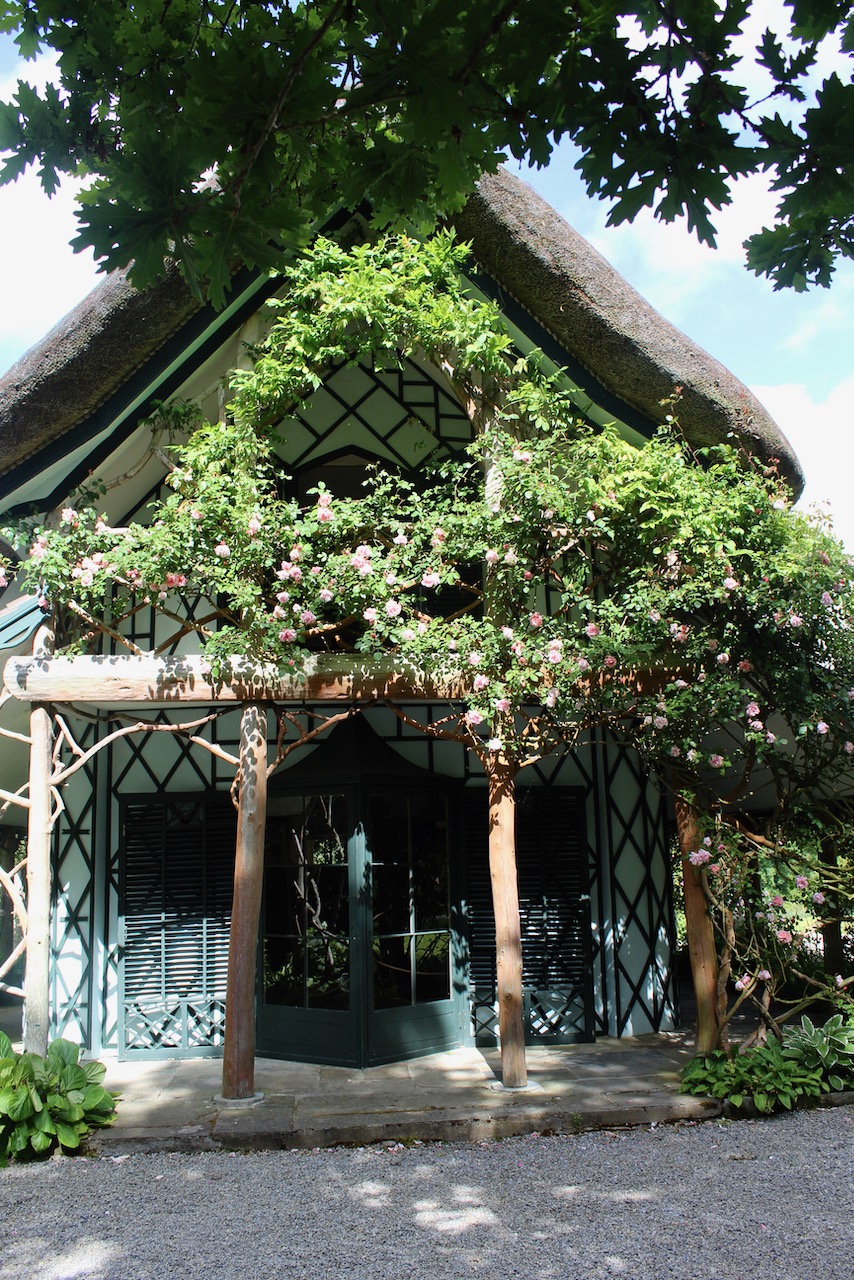
SHANBALLY CASTLE, near Clogheen, County Tipperary, was built about 1812 for Cornelius O’Callaghan, 1st Viscount Lismore.

It was said to have been the largest of John Nash’s Irish castles.
Shanbally was long and irregular, of a silver-grey ashlar.

This great mansion was 281 feet above sea-level, and about 80 feet above the level of the adjacent brook.

Shanbally Castle had numerous machicolations, towers and battlements.

The entrance front was pointed-arched, with a vaulted porte-cochere under a porch-tower.

The garden front had a round tower at one end and an octagonal tower at the other, with a central feature boasting two square turrets.

There was a stylish Gothic veranda.

Shanbally demesne is beautifully situated on low ground, in the centre of the valley, between the Galtee mountains on the north and the Knockmealdown mountains on the south.

It commands the most magnificent views of the slopes, escarpments, summits, and groupings of both of these alpine ranges.


Shanbally Castle was situated in a picturesque landscape, bounded to the north and south by two mountain ranges, the Galtees and the Knockmealdowns.

It is said that Shanbally bore a remarkable resemblance to Nash and Repton’s joint venture, Luscombe Castle in Devon, though Shanbally was considerably larger.

The 2nd and last Viscount left Shanbally to his cousins, the Lady Beatrice Pole-Carew and the Lady Constance Butler, daughters of the 3rd Marquess of Ormonde.

Shanbally was sold in 1954 by Major Patrick Pole-Carew. 

Following attempts by the Hon Edward Sackville-West (5th Lord Sackville) to rescue the Castle, it was demolished in 1957 and its ruin was blown up.

The following is a composition by Bill Power of the Mitchelstown Heritage Society:

Few acts of official vandalism rival the decision by the Irish Government in 1957 to proceed with plans to demolish Shanbally Castle.

Built for Cornelius O’Callaghan, 1st Viscount Lismore, ca 1810, the mansion was the largest house built in Ireland by the famous English architect, John Nash. 


When the Irish Land Commission purchased the Shanbally estate in 1954, one of the immediate questions which it addressed was what should become of the castle.

For a brief period it seemed that a purchaser could be found in the form of the London theatre critic Edward Sackville-West, 5th Lord Sackville, who had a tremendous love of the Clogheen area, which he had known since childhood.

He agreed to buy the castle, together with 163 acres, but pulled out of the transaction when the Irish 
Land Commission refused to stop cutting trees in the land he intended to buy. 

Consequently, by 1957, the fate of the mansion was sealed.

The Irish Land Commissioners, with Irish Government approval, decided to proceed with plans to demolish the castle on the grounds that they had no use for it and that it was in poor condition.

They ignored suggestions that a religious community might be found for the building, and also 
rejected its suitability as a forestry school.

In that year, Professor Denis Gwynn, wrote an article in the Cork Examiner in which he exhorted the authorities to reverse their decision:

“Shanbally Castle has been well known for years as one of the most graceful and original examples in Ireland of late Georgian architecture,” he said. “Its formal gardens, which have run wild, could easily be brought back to order.”

The Professor pointed out that Shanbally Castle was designed by one of the most famous of all modern architects, who also planned all the well known terraces that surround Regent’s Park in London, and so many other celebrated buildings in England, `What conceivable justification can there be for incurring the great expense of demolishing this unique Irish mansion,’ he asked.

“All around the house, with its long avenues, the land has been admirably laid out and planted with fine trees in groups to enhance the views and to produce valuable timber,’ he continued. `More recently there has been wholesale clearance of the timber. Last summer I saw cutting in progress at many places, and big gaps had been made in the boundary walls to assist removal of the felled trees.

Describing the order to demolish the castle as an `act of vandalism,’ Professor Gwynn called for an inquiry into the circumstances of the decision. There is no sense whatever in squandering public money on the destruction of a beautiful house which is well known to students of Nash’s domestic architecture,’ he added.

But Professor Gwynn’s article was already too late: Despite some local opposition and widespread critical comment, the roof was removed and some of its impressive cut stones were being removed by hand and broken into smaller pieces for use in road building.

The house, with its twenty stately bedrooms, extensive drawing rooms, dining room, library, marble fireplaces and mahogany staircase was rapidly reduced to a state of ruin. 

In 1960, The Nationalist newspaper reported the final end of a building which was once the pride of the neighbourhood: “A big bang yesterday ended Shanbally Castle, where large quantities of gelignite and cortex shattered the building”, it said. 

In the weeks prior to the explosion, demolition workers bored 1,400 holes, 18 inches above ground, into the cut stone of the castle.

Each hole was then filled with explosives which were detonated on the 21st March, 1960.

Almost all of this material was used for road building. 

The protests against the demolition of Shanbally Castle came from some local sources, An Taisce and a few academics such as Professor Gwynn.

Politically, the  Fianna Fail Government had no love for houses of the ascendancy.

However, remarkably, it was from within the ranks of Fianna Fail that the only political voices were raised against the demolition plans, albeit privately.

One was Senator Sean Moylan, the Irish Minister for Agriculture until his death in 1957, and the other was his close friend and TD from Mitchelstown, John W Moher.

They were over-ruled by the Cabinet and failed to get wider political support, even from opposition deputies.

When the explosion finally came, the Irish Government saw fit to issue a terse public statement in response to protests favouring the retention of Shanbally Castle for the nation.
“Apart from periods of military occupation the castle remained wholly unoccupied for 40 years,” said the statement.

First published in October, 2011.

https://archiseek.com/2012/1806-shanbally-castle-clogheen-co-tipperary

1806 – Shanbally Castle, Clogheen, Co. Tipperary 

Architect: John Nash 

Shanbally Castle was built for Cornelius O’Callaghan, the first Viscount Lismore and was the largest house built in Ireland by the noted English architect John Nash. Acquired by the Irish Land Commission in 1954. On 21 March 1960 the castle, after much controversy, was demolished.  

It was widely felt that the castle was in habitable condition, having been sold to the government in good repair. The house had ranges of Gothic windows and was flanked by towers at either end. The interiors were reportedly well-detailed with ornate plasterwork. 

For a time it seemed that a purchaser could be found in the form of the London theatre critic Edward Charles Sackville-West, 5th Baron Sackville. He agreed to buy the castle, together with 163 acres, but pulled out of the transaction when the Irish Land Commission refused to stop cutting trees in the land he intended to buy. A statement from the Irish Government released after the demolition of the Castle said in response to protests favouring the retention of ShanballyCastle for the nation: “Apart from periods of military occupation the castle remained wholly unoccupied for 40 years”. 

Places to visit and stay in County Galway

On the map above:

blue: places to visit that are not section 482

purple: section 482 properties

red: accommodation

yellow: less expensive accommodation for two

orange: “whole house rental” i.e. those properties that are only for large group accommodations or weddings, e.g. 10 or more people.

green: gardens to visit

grey: ruins

donation

Help me to pay the entrance fee to one of the houses on this website. This site is created purely out of love for the subject and I receive no payment so any donation is appreciated!

€15.00

Galway

1. Ardamullivan Castle, Galway national monument, to be open to public in future – check status 

2. Athenry Castle, County Galway  – open to public 

3. Aughnanure Castle, County Galway (OPW)

4. Coole Park, County Galway – house gone but stables visitor site open

5. Gleane Aoibheann, Clifden, Galway  – gardens

6. Kylemore Abbey, County Galway – open to visitors

7. The Grammer School, College Road, Galway – section 482

8. Portumna Castle, County Galway (OPW)

9. Ross, Moycullen, Co Galway – gardens open 

10. Signal Tower & Lighthouse, Eochaill, Inis Mór, Aran Islands, Co. Galway – section 482

11. Thoor Ballylee, County Galway – check website

12. Woodville House Dovecote & Walls of Walled Garden, Craughwell, Co. Galway – section 482, garden only

Places to stay, County Galway

1. Abbeyglen Castle, Galway

2. Ardilaun House Hotel (formerly Glenarde), Co Galway – hotel

3. Ashford Castle, Cong, Galway  – hotel 

4. Ballindooly Castle, Co Galway – accommodation 

5. Ballynahinch Castle, Connemara, Co. Galway – hotel 

7. Cashel House, Cashel, Connemara, Co Galway – hotel

8. Castle Hacket west wing, County Galway – accommodation

9. Claregalway Castle, Claregalway, Co. Galway – section 482 accommodation

10. Cregg Castle, Corrandulla, Co Galway – Airbnb 

11. Crocnaraw County House, Moyard, County Galway – accommodation

12. Currarevagh, Oughterard, Co Galway – country house hotel

13. Delphi Lodge, Leenane, Co Galway – accommodation

14. Emlaghmore Cottage, Connemara, County Galway – accommodation

16. Glenlo Abbey, near Galway, Co Galway – accommodation 

17. Kilcolgan Castle, Clarinbridge, Co Galway – accommodation

18. Lisdonagh House, Caherlistrane, Co. Galway – section 482 accommodation

19. Lough Cutra Castle, County Galway, holiday cottages

20. Lough Ina Lodge Hotel, County Galway

22. Oranmore Lodge Hotel (previously Thorn Park), Oranmore, Co Galway

23. The Quay House, Clifden, Co Galway – accommodation

24. Renvyle, Letterfrack, Co Galway – hotel

25. Rosleague Manor, Galway – accommodation

26. Ross, Moycullen, Co Galway – accommodation

27. Ross Lake House Hotel, Oughterard, County Galway 

28. Screebe House, Camus Bay, County Galway – accommodation

Whole House Accommodation and Weddings, County Galway:

1. Carraigin Castle, County Galway – sleeps 10

2. Cloghan Castle, near Loughrea, County Galwaywhole castle accommodation and weddings

Galway

1. Ardamullivan Castle, Galway – national monument, to be open to public in future – check status 

Ardamullivan Castle County Galway photograph courtesy of SA 2.0 Mike Searle cc, Sept 2009, file 1543253

The castle is a is a restored six storey tower house. Part of the original defensive wall remains. Ardamullivan Castle was built in the 16th century by the O’Shaughnessy family. Although there is no history of the exact date of when the castle was built, it is believed it was built in the 16th century as it was first mentioned in 1567 due to the death of Sir Roger O’Shaughnessey who held the castle at the time.  

Sir Roger was succeeded by his brother Dermot, ‘the Swarthy’, known as ‘the Queen’s O’Shaughnessy’ due to his support shown to the Crown. Dermot became very unpopular among the public and even among his own family after he betrayed Dr Creagh, the Roman Catholic Archbishop of Armagh, who had sought refuge in the woods on O’Shaughnessy territory.  

“Tensions came to a boil in 1579, when John, the nephew of Dermot, fought with Dermot outside the south gate of the castle in dispute over possession of the castle. Both men were killed in the fight. After this period the castle fell into ruin until the last century where it was restored to its former glory.” [1]

2. Athenry Castle, County Galway  – open to public 

Athenry Castle, County Galway, photograph courtesy of OPW website.

see my OPW entry: https://irishhistorichouses.com/2022/02/14/office-of-public-works-properties-connacht/

3. Aughnanure Castle, County Galway (OPW)

Aughnanure Castle County Galway, photograph courtesy of OPW website

see my OPW entry: https://irishhistorichouses.com/2022/02/14/office-of-public-works-properties-connacht/

4. Coole Park, County Galway – house gone but stables visitor site open

https://www.coolepark.ie/

The website tells us:

Coole Park, in the early 20th century, was the centre of the Irish Literary Revival. William Butler Yeats, George Bernard Shaw, John Millington Synge and Sean O’ Casey all came to experience its magic. They and many others carved their initials on the Autograph Tree, an old Copper beech still standing in the walled garden today.

At that time it was home to Lady Gregory, dramatist and folklorist. She is perhaps best known as a co-founder of the Abbey Theatre with Edward Martyn of nearby Tullira Castle and Nobel prize-winning poet William Butler Yeats. The seven woods celebrated by W.B. Yeats are part of the many kilometres of nature trails taking in woods, river, turlough, bare limestone and Coole lake.

At Coole, we invite you to investigate for yourself the magic and serenity of this unique landscape. Although the house no longer stands, you can still appreciate the environment that drew so many here. You will experience the natural world that Yeats captured in his poetry. Through this website, you can learn about this special place and its wildlife, as well as Gregory family history and literary connections.

5. Gleane Aoibheann, Clifden, Galway  – gardens

https://www.gardensofireland.org/directory/23/gleann+aoibheann/

The website tells us there are almost two hectares of seaside gardens dating back to the 1820s. One can also have tours of the house.

6. Kylemore Abbey, County Galway

https://www.kylemoreabbey.com/

Kylemore Abbey, Co Galway photograph Courtesy of Finn Richards 2019 for Tourism Ireland, Ireland’s Content Pool. [7]
Kylemore Abbey, photograph by ©Chris Hill Photographic 2011 +44(0) 2890 245038 for Tourism Ireland, 2014. (see [7])

The website tells us: “Nestled in the heart of Connemara, on the Wild Atlantic Way, Kylemore Abbey is a haven of history, beauty and serenity. Home to a Benedictine order of Nuns for the past 100 years, Kylemore Abbey welcomes visitors from all over the world each year to embrace the magic of the magnificent 1,000-acre estate.

Kylemore Castle was built in the late 1800s by Mitchell Henry MP, a wealthy businessman, and liberal politician. Inspired by his love for his wife Margaret, and his hopes for his beloved Ireland, Henry created an estate boasting ‘all the innovations of the modern age’. An enlightened landlord and vocal advocate of the Irish people, Henry poured his life’s energy into creating an estate that would showcase what could be achieved in the remote wilds of Connemara. Today Kylemore Abbey is owned and run by the Benedictine community who have been in residence here since 1920.

Come to Kylemore and enjoy the new visitor experience in the Abbey, From Generation to Generation…..the story of Kylemore Abbey. Experience woodland and lakeshore walks, magnificent buildings and Ireland’s largest Walled Garden. Enjoy wholesome food and delicious home-baking in our Café or Garden Tea House. History talks take place three times a day in the Abbey and tours of the Walled Garden take place throughout the summer. Browse our Craft and Design Shop for unique gifts including Kylemore Abbey Pottery and award-winning chocolates handmade by the Benedictine nuns. Discover the beauty, history, and romance of Ireland’s most intriguing estate in the heart of the Connemara countryside.

Kylemore Abbey, photograph by ©Chris Hill Photographic 2011 +44(0) 2890 245038 for Tourism Ireland, 2014. (see [7])

Although Mitchell Henry was born in Manchester he proudly proclaimed that every drop of blood that ran in his veins was Irish. The son of a wealthy Manchester cotton merchant of Irish origin, Mitchell was a skilled pathologist and eye surgeon. In fact, before he was thirty years of age, he had a successful Harley Street practise and is known to have been one of the youngest ever speakers at the Royal College of Surgeons in London.

On his father’s death, Mitchell inherited a hugely successful family business and became one of the wealthiest young men in Britain at the time. Mitchell lost no time in quitting his medical career and turning instead to liberal politics where he felt he could change the world for the better. His newfound wealth allowed him to buy Kylemore Lodge and construct the castle and enabled him to bring change, employment, and economic growth to the Connemara region which was at the time stricken with hunger, disease, and desperation.

On exiting the castle, turn around and look up, you will notice the beautiful carved angel which guards over it. In the hands of that angel is the coat of arms of Margaret Henry’s birth family, the Vaughan’s of County Down. Margaret’s arms over the front door proudly proclaim this as her castle. Look more closely and you will also see charming carvings of birds which were a favourite motif of the Henry’s. The birds represented the Henry’s hope that Kylemore would become the ‘nesting’ place of their family. Indeed, Kylemore did provide an idyllic retreat from the hustle and bustle of life in London where, even for the very wealthy, life was made difficult by the polluted atmosphere caused by the Industrial Age.

At Kylemore Margaret, Mitchell and their large family revelled in the outdoor life of the ‘Connemara Highlands’. Margaret took on the role of the country lady and became much loved by the local tenants. Her passion for travel and eye for beauty were reflected in the sumptuous interiors where Italian and Irish craftsmen worked side by side to create the ‘family nest’. Sadly the idyllic life did not last long for the Henrys.

In 1874 just a few years after the castle was completed, the Henry family departed Kylemore for a luxurious holiday in Egypt. Margaret was struck ill while travelling and despite all efforts, nothing could be done. After two weeks of suffering Margaret had died. She was 45 years old and her youngest daughter, Violet, was just two years of age. Mitchell was heartbroken. Margaret’s body was beautifully embalmed in Cairo before being returned to Kylemore. According to local lore Margaret lay in a glass coffin which was placed beneath the grand staircase in the front hall, where family and tenants alike could come to pay their respects. In an age when all funerals were held in the home, this is not as unusual as it may first seem. In time Margaret’s remains were placed in a modest red brick mausoleum in the woodlands of her beloved Kylemore.

Although Henry remained on at Kylemore life for him there was never the same again. His older children helped him to manage the estate and care for the younger ones, as he attempted to continue his vision for improvements and hold on to his political career. By now he had become a prominent figure in Irish politics and was a founding member of Isaac Butt’s Home Rule movement. In 1878 work began on the neo-Gothic Church which was built as a beautiful and lasting testament to Henry’s love for his wife. Margaret’s remains were, for some reason, never moved to the vaults beneath the church and to this day she lays alongside Mitchell in the little Mausoleum nestled in the Kylemore woodlands.

The Kylemore Estate, like the rest of Connemara, was made up of mountain, lakes and bog. In keeping with his policy of improvement and advancement, Henry began reclaiming bogland almost immediately and encouraged his tenants to do likewise. Forty years under the guiding hand of Mitchell Henry turned thousands of acres of waste land into the productive Kylemore Estate. He developed the Kylemore Estate as a commercial and political experiment and the result brought material and social benefits to the entire region and left a lasting impression on the landscape and in the memory of the local people. Mitchell Henry introduced many improvements for the locals who were recovering from the Great Irish Famine, providing work, shelter and later a school for his workers children. He represented Galway in the House of Commons for 14 years and put great passion and effort into rallying for a more proactive and compassionate approach to the “Irish problem”. Mitchell Henry gave the tenants at Kylemore a landlord hard to be equalled not just in Connemara but throughout Ireland.

Despite the tragedies that befell the family and Mitchell’s hard work, life at Kylemore was certainly very luxurious. The castle itself was beautifully decorated and provided all that was needed for a family used to a lavish London lifestyle. The Walled Gardens provided a wide range of fruit and vegetables that included luxuries unthinkable to ordinary Irish people such as grapes, nectarines, melons and even bananas. Fruit and vegetable grown at Kylemore were often served at the Henry’s London dinner parties. Salmon caught in Kylemore’s lakes could also be wrapped in cabbage leaves and posted to London where they made a novel addition to the table. As well as a well-equipped kitchen, Kylemore also had several pantries, an ice house, fish and meat larder and a beer and wine cellar. The still room was used for a myriad of ingenious way to preserve and store food stuffs throughout the year.

Guests at Kylemore were presented with a bouquet of violets to be worn at dinner. Violets were a craze in Victorian London as they represented loyalty and friendship. Kylemore castle was well equipped for entertaining and throughout the Salmon season from march to September the Henry’s welcomed many guests from Manchester and London. After dinner, entertainment was provided in the beautiful ballroom with its sprung oak floor for dancing with much of the music and plays being performed by the family themselves.

“The older Henry sons enjoyed such pastimes as photography and keeping exotic pets. Alexander Henry is responsible for many of the black and white photographs displayed at Kylemore today. His darkroom was located where Mitchell’s Café stands today. Lorenzo Henry kept a building called the ‘Powder House’ where he experimented with explosives. Indeed, Lorenzo had a brilliant mind like his father’s and went on to develop a number of successful inventions including the Henrite Cartridge for pigeon shooting. All of the family, including the girls enjoyed the outdoor life of fishing, shooting and horse riding. But the family were to suffer heartbreak again when Mitchell’s daughter Geraldine, was to be killed in a tragic carriage accident on the estate while out for a jaunt with her baby daughter and nurse. Both Geraldine’s daughter Elizabeth, and the baby’s nurse survived the accident but Geraldine’s death deeply affected the Henry Family and their connection to Kylemore.

The Henry family eventually left Kylemore in 1902 when the estate was sold to the ninth Duke of Manchester. Mitchell Henry lived to be 84 years old but heartbreak had taken its toll and Mitchel died an aloof individual with a meagre sum of £700 in the bank.”

Kylemore Abbey, photograph for Tourism Ireland, Ireland’s Content Pool. (see [7])

In 1903, Mitchell Henry sold Kylemore Castle to the Duke of Manchester (William Angus Drogo Montague) and his Duchess of Manchester, Helena Zimmerman. They lived a lavish lifestyle financed by the Duchess’ wealthy father, the American businessman, Eugene Zimmerman. 

On arrival at Kylemore in Connemara the couple set about a major renovation, removing much of the Henry’s Italian inspired interiors and making the castle more suitable for the lavish entertainments that they hoped to stage in their new home, including an anticipated visit from their friend King Edward VII.

The renovation included the removal of the beautiful German stained-glass window in the staircase hall and ripping out large quantities of Italian and Connemara marble. Local people were unhappy with the developments and felt the changes represented a desecration of the memory of the much-loved Margaret Henry and her beloved Kylemore Castle.

Born in March 1877, William Montagu – the Duke was educated at Eton and Trinity College, Cambridge, and succeeded his father when he was still a minor. The Duke inherited a grand estate which included lavish residences such as Tanderagee Castle in Co. Armagh and Kimbolton Castle in Huntington, England. However, his inheritance, which was administered by trustees was heavily indebted and together with his lavish lifestyle meant that by the age of 23 the Duke was bankrupt. When in 1900 the Duke married the Cincinatti born heiress, Helena Zimmerman, it seemed that his money problems could be forgotten. As Helena’s parents frowned on the relationship the couple eloped to Paris where they were married – a suitably glamorous start to the marriage of this sparkling and often talked about pair. It is thought that Helena’s father hoped the life of a country squire at Kylemore would help the Duke to leave behind his days of gambling and partying but this was not to be. The Duke and Duchess left Kylemore in 1914 following the death of Helena’s father. There were many stories in circulation which claimed that the Duke lost Kylemore in a late-night gambling session in the Castle however it seems more likely that following the death of Eugene Zimmerman there were insufficient funds available to the Duke to maintain the Kylemore estate.

Beginning in Brussels in 1598, following the suppression of religious houses in the British Isles when British Catholics left England and opened religious houses abroad, a number of monasteries originated from one Benedictine house in Brussels, founded by Lady Mary Percy. Houses founded from Lady Mary’s house in Brussels were at Cambray in France (now Stanbrook in England) and at Ghent (now Oulton Abbey) in Staffordshire. Ghent in turn founded several Benedictine Houses, one of which was at Ypres. Kylemore Abbey is the oldest of the Irish Benedictine Abbeys. The community of nuns, who have resided here since 1920, have a long history stretching back almost three hundred and forty years. Founded in Ypres, Belgium, in 1665, the house was formally made over to the Irish nation in 1682.The purpose of the abbey at Ypres was to provide an education and religious community for Irish women during times of persecution here in Ireland.

Down through the centuries, Ypres Abbey attracted the daughters of the Irish nobility, both as students and postulants, and enjoyed the patronage of many influential Irish families living in exile.

At the request of King James II the nuns moved to Dublin in 1688. However, they returned to Ypres following James’s defeat at the Battle of the Boyne in 1690. The community finally left Ypres after the Abbey was destroyed in the early days of World War One. The community first took refuge in England, and later in Co Wexford before eventually settling in Kylemore in December 1920.

At Kylemore, the nuns reopened their international boarding school and established a day school for local girls. They also ran a farm and guesthouse; the guesthouse was closed after a devastating fire in 1959. In 2010, the Girl’s Boarding School was closed and the nuns have since been developing new education and retreat activities.

Kylemore Abbey, Connemara by George Munday 2014 for Tourism Ireland, Ireland’s Content Pool. (see [7])

Display board from exhibition in the Irish Georgian Society, July 2022, The National Inventory of Architectural Heritage is compiling a Garden Survey.

From “In Harmony with Nature, The Irish Country House Garden 1600-1900” in the Irish Georgian Society, July 2022, curated by Robert O’Byrne.

Kylemore Abbey’s Victorian Walled Garden is an oasis of ordered splendour in the wild Connemara Countryside. Developed along with the Castle in the late 1800s it once boasted 21 heated glasshouses and a workforce of 40 gardeners. One of the last walled gardens built during the Victorian period in Ireland it was so advanced for the time that it was compared in magnificence with Kew Gardens in London.

Comprised of roughly 6 acres, the Garden is divided in two by a beautiful mountain stream. The eastern half includes the formal flower garden, glasshouses the head gardener’s house and the garden bothy. The western part of the garden includes the vegetable garden, herbaceous border, fruit trees, a rockery and herb garden. Leaving the Garden by the West Gate you can visit the plantation of young oak trees, waiting to be replanted around the estate. The Garden also contains a shaded fernery, an important feature of any Victorian Garden. Follow our self-guiding panels through the garden and learn more about its intriguing history and the extensive restoration work that it took to return the garden to its former glory after falling into disrepair.

“Today Kylemore is a Heritage Garden displaying only plant varieties from the Victorian era. The bedding is changed twice a year, for Spring and Summer and its colours change throughout the year.  Be sure to visit us and fall in love with a garden that is surely the jewel in Connemara’s Crown.

7. The Grammer School, College Road, Galway – section 482

www.yeatscollege.ie

Open dates in 2026: May 2-3, 9-10, 16-17, 23-24, June 6-7, July 1-31, Aug 1-12, 15-23, 9am-5pm

Fee: adult/OAP/student €5, child under 12 free

The Grammer School, Yeats College, County Galway, designed by Richard Morrison. Photograph from the National Inventory of Architectural Heritage [11]

The National Inventory tells us about it under the heading of Yeats College. I am not sure why the Revenue section 482 spells is “Grammer” rather than “Grammar” but as it is listed as that every year, I defer to their spelling!

Freestanding H-plan five-bay three-storey school with basement, built 1815, having slightly advanced gable-fronted end bays to front, and having recent addition to rear… Round-headed recesses to end bays and to ground floor of middle bays. Tripartite Diocletian windows to top floor of end bays, their recesses encompassing blind square-headed openings to first floor…Square-headed door opening to front within segmental-headed recess, having replacement timber panelled door within tooled limestone doorcase comprising moulded limestone surround surmounted by panelled blocks and moulded cornice framing paned overlight and flanked by paned timber sidelights with chamfered limestone surround.

“This large-scale former school retains its original character. Designed by Richard Morrison in 1807, the school was named after Erasmus Smith who founded the original grammar school, located at the courthouse, in 1699. The building displays a host of classical architectural features and a variety of window types. Its impressive scale on the main approach to the city from the east makes it one of the most significant buildings in the city.” [11]

8. Portumna Castle, County Galway (OPW)

See my entry https://irishhistorichouses.com/2024/05/02/portumna-castle-county-galway-an-office-of-public-works-property/

9. Ross, Moycullen, Co Galway – gardens open 

Ross House or Castle, photograph from National Inventory of Architectural Heritage.

www.rosscastle.com 

This was the home of Violet Martin, one half of the Somerville and Ross partnership of writers, with Edith Somerville.

Violet Florence Martin (1862-1915) by Edith Anna Oenone Somerville, oil on panel 1886 National Portrait Gallery of London, npg-4655

The website tells us of the house, which is open to accommodation:

Ross Castle offers refined elegance for your special occasion or memorable holiday. The distinctive ambience of the Castle’s grand rooms and self catering cottages, accented with beautiful antique furnishings, will captivate you and up to 40 guests. This 120 acre estate is nestled in a picturesque setting of mountains, lake, and parkland.

Constructed in 1539 by The “Ferocious” O’Flahertys, one of the most distinguished tribes of Galway, the property was later acquired by the Martin Family who built the present manor house upon the former castle’s foundation. After two fires and much neglect, the McLaughlin family acquired the property in the 1980s and have spent the past several decades restoring the estate to its present splendour.

Upon entering the estate you are immediately awestruck by the grand front lawn; undulating to the lake and Parkland.

From the Castle’s courtyard cottages and through the carriage entrance, a gothic archway entices you to explore the walled in Gardens.

Stroll along the herbaceous bordered pathways while taking in the beauty and tranquility of your surroundings, shadowed by 6 massive yew trees hundreds of years old. Giant box hedges create unexpected surprises around every turn: stone sculptures, a red-brick pond, greenhouse, urns and statuary.

10. Signal Tower & Lighthouse, Eochaill, Inis Mór, Aran Islands, Co. Galway – section 482

www.aranislands.ie

Open in 2026: April 1-October 31, 9am-5pm

Fee: adult €2.50, child €1.50, OAP/student free, family €5, group rates depending on numbers

Inis Oírr ( Inisheer) Lighthouse, Aran Islands, Co Galway, photograph Courtesy of Lukasz Warzecha for Tourism Ireland, 2015, Ireland’s Content Pool. (see [7])

11. Thoor Ballylee, County Galway

Thoor Ballylea 1984 Dublin City Library Archives [12]

website: https://yeatsthoorballylee.org/home/

The website tells us:

Thoor Ballylee is a fine and well-preserved fourteenth-century tower but its major significance is due to its close association with his fellow Nobel laureate for Literature, the poet W.B.Yeats. It was here the poet spent summers with his family and was inspired to write some of his finest poetry, making the tower his permanent symbol. Due to serious flood damage in the winter of 2009/10 the tower was closed for some years. A local group the Yeats Thoor Ballylee Society has come together and are actively seeking funds to ensure its permanent restoration. Because of an ongoing fundraising effort and extensive repair and restoration work, the tower and associated cottages can be viewed year round, and thanks to our volunteers are open for the summer months, complete with a new Yeats Thoor Ballylee exhibition for visitors to enjoy.

12. Woodville House Dovecote & Walls of Walled Garden, Craughwell, Co. Galway – section 482, garden only

http://www.woodvillewalledgarden.com

Open dates in 2026: Jan 30-31, Feb 1-28, June 1, 5-8, 12-15, 19-22, 26-29, July 3-6, 10-13, 17-20, 24-27, 31 Aug 1-3, 7-10, 14-23, 12 noon -4pm,
Fee: adult €10, OAP €8, student, €7, child 4-16 years €5

Woodville House, County Galway, photograph from National Inventory of Architectural Heritage.

The website tells us Woodville is home to a restored walled kitchen garden along with a museum outlining the fascinating connection to Lady Augusta Gregory at Woodville. “Come for a visit to this romantic secret garden in the West of Ireland and enjoy the sights, scents and colours contained within the original stone walls.

Outbuilding at Woodville House, County Galway, photograph from National Inventory of Architectural Heritage.

The D’Arcy family most certainly have been at Woodville in 1750 when Francis D’Arcy left his initials on the keystone in the garden arch. The most famous member of the D’Arcy family to live at Woodville was Robert, who held the position of land agent to the estate of the first Marquis of Clanricarde for over 30 years – including the famine period. He does not seem to have been a popular figure in the local area, carrying out his duties with no small amount of vigour. After Robert’s death the estate passed to Francis Nicholas D’Arcy. He lived quietly at Woodville until his death in 1879.

For the next 25 years little is known about Woodville. From the 1901 census we learn that Catherine Kelly was occupying the house and Lord Clanricarde was the landowner.

On the 1st of May 1904 Henry Persse [1855-1928, brother of Augusta, who married William Henry Gregory of Coole Park] leased Woodville house and farm, which comprised of 460 acres, for a period of 29 years from the Marquise of Clanricarde. Henry Persse was the seventh son of Dudley Persse of Roxborogh, Kilchreest He was born on 14th of October 1855 and educated at Trinity College, Dublin. He went to India and served in the Indian police for some years, stationed at Madras. Coming into a legacy he returned to Ireland and married Eleanor Ada Beadon in 1888. They had two sons, Lovaine and Dermot, both born in Kilchreest.

The grandparents of the present owners, Pat and Maria Donohue, took over the running of Woodville house and farm, and took a lease out on the farm in 1916 and purchased it outright in 1920. It is from the memories of their oldest daughter. Maureen Donohue, known as Sr. Austin of The Mercy Convent, Loughrea, that it was possible to collect information about what was grown in the walled garden at the time her parents came Maureen was just 3 years of age and her first memory as a child is of visiting the garden with her father and being given a lovely ripe peach picked from a tree by Harry Persse. There was an abundance of fruit trees of all different varieties at Wooville: peaches, pears, plums, greengage, damsons, cherries, quince, meddlers and apples, Cox’s Orange Pippins, Summers Eves, Brambly Seedlings, Beauty of Bath.

Leading from the steps to the centre of the garden was an arch covered with climbing roses and in front of this were two bamboo trees on either side of the entrance. The central paths were lined with iron railings and box hedging. The garden was planted with poppies, lily of the valley, daffodils, snowdrops, and bluebells. It took four men to maintain the garden at Woodville and the head gardeners name was Tap Mannion and the cook in the house was Mary Lamb.Soft fruits included red and green gooseberries, Tay berries, loganberries, red and white currants and raspberries. There was also a fig tree in the south – east corner of the garden – demonstrating just what a microclimate the walls create.”

Places to stay, County Galway

1. Abbeyglen Castle, County Galway €€

www.abbeyglen.ie

Abbeyglen Castle, County Galway, photograph courtesy of http://www.abbeyglen.ie

The Visit Galway website tells us “Built in 1832 by John d’Arcy, Abbeyglen Castle was shortly after leased to the then parish priest, and was named ‘Glenowen House’.  

The castle was later purchased for use as a Protestant orphanage by the Irish Church Mission Society. Here girls would have been trained for domestic service. In 1953, the orphanage became a mixed orphanage until 1955, where it closed due to financial difficulties.  

The castle fell derelict and was home to livestock for some time. It was then purchased by Padraig Joyce of Clifden and became a hotel. The castle continued to operate as a hotel after the Hughes family took over in 1969 and still remains a prestigious hotel to this day.” [13]

2. Ardilaun House Hotel (formerly Glenarde), Co Galway – hotel

https://www.theardilaunhotel.ie

Ardilaun House Hotel, 1962, photograph courtesy of http://www.theardilaunhotel.ie

The Landed Estates database tells us it was the town house of the Persse family, built in the mid 19th century, bought by the Bolands of Bolands biscuits in the 1920s and since the early 1960s has functioned as the Ardilaun House Hotel.

Ardilaun House Hotel, photograph courtesy of http://www.theardilaunhotel.ie
Ardilaun House Hotel, aerial view of garden, photograph courtesy of http://www.theardilaunhotel.ie

3. Ashford Castle, Cong, Galway/Mayo  – hotel – see County Mayo. €€€

4. Ballindooly Castle, Co Galway – accommodation 

https://www.visitgalway.ie/explore/heritage-and-history/castles/ballindooley-castle/

Ballindooley Castle, photograph courtesy of www.visitgalway.ie/explore/heritage-and-history/castles/ballindooley-castle/

5. Ballynahinch Castle, Connemara, Co. Galway – hotel €€€

https://www.ballynahinch-castle.com

Ballynahinch Castle Hotel, County Galway, 2014 Tourism Ireland, Ireland’s Content Pool (see [2])
Ballynahinch Castle, photograph courtesy of hotel website.

The website tells us:

Welcome to Ballynahinch Castle Hotel, one of Ireland’s finest luxury castle hotels. Voted #6 Resort Hotel in in the UK & Ireland by Travel & Leisure and #3 in Ireland by the readers of Condé Nast magazine. Set in a private 700 acre estate of woodland, rivers and walks in the heart of Connemara, Co. Galway. This authentic and unpretentious Castle Hotel stands proudly overlooking its famous salmon fishery, with a backdrop of the beautiful 12 Bens Mountain range. 

During your stay relax in your beautifully appointed bedroom or suite with wonderful views, wake up to the sound of the river meandering past your window before enjoying breakfast in the elegant restaurant, which was voted the best in Ireland in April 2017 by Georgina Campbell.”

Ballynahinch Castle, photograph courtesy of hotel website.

Mark Bence-Jones writes:

p. 25. “[Martin/IFR, Berridge/IFR] A long, many-windowed house built in late C18 by Richard Martin [1754-1834], who owned so much of Connemara that he could boast to George IV that he had “an approach from his gatehouse to his hall of thirty miles length” and who earned the nickname “Humanity Dick” for founding the RSPCA.

When Maria Edgeworth came here 1833 the house had a “battlemented front” and “four pepperbox-looking towers stuck on at each corner”; but it seemed to her merely a “whitewashed dilapidated mansion with nothing of a castle about it.” The “pepperbox-looking towers” no longer exist; but both the front entrance and the 8 bay garden front have battlements, stepped gables, curvilinear dormers and hood mouldings; as does the end elevation.

The principal rooms are low for their size. Entrance hall with mid-C19 plasterwork in ceiling. Staircase hall beyond; partly curving stair with balustrade of plain slender uprights. Long drawing room in garden front, oval of C18 plasterowrk foliage in ceiling, rather like the plasterwork at Castle Ffrench. Also reminiscent of Castle Ffrench are the elegant mouldings, with concave corners, in the panelling of the door and window recesses. The principal rooms still have their doors of “magnificently thick well-moulded mahogany” which Maria Edgeworth thought “gave an air at first sight of grandeur” though she complained that “not one of them would shut or keep open a single instant.” The drawing room now has a C19 chimneypiece of Connemara marble. The dining room has an unusually low fireplace, framed by a pair of Ionic half-columns. Humanity Dick was reknowned for his extravagant way of life, and in order to escape his creditors he retired to Bologne, where he died. He left the family estates heavily mortgaged, with  the result that his granddaughter and eventual heiress, Mary Letitia Martin, known as “The Princess of Connemara” was utterly ruined after the Great Famine, when Ballynahinch and the rest of her property was sold by the Emcumbered Estates Court; she and her husband being obliged to emigrate to America, where she died in childbirth soon after her arrival Ballynahinch was bought by Richard Berridge, whose son sold it in 1925; after which it was acquired by the famous cricketer Maharaja Ranhisinhji, Jam Sahib of Nawanagar. It is now a hotel.” 

Ballynahinch Castle, photograph courtesy of hotel website.

https://www.airbnb.ie/rooms/658697?adults=1&category_tag=Tag%3A8524&children=0&enable_m3_private_room=true&infants=0&pets=0&photo_id=6126385&search_mode=flex_destinations_search&check_in=2025-03-01&check_out=2025-03-06&source_impression_id=p3_1720784371_P3Jqu84FQ-XIr-id&previous_page_section_name=1000&federated_search_id=8ce4a84c-02ba-4d47-aebb-ef754c4bdf28

The airbnb entry tells us: “A beautiful, original medieval castle experience can be yours for a weekend, a week, or even longer. You’ll be staying in the master bedroom, the highest room in the castle.

This castle has been restored to its original state by using traditional materials, and also by using cutting edge technology. We used traditional local stone, limestone, as well as oak beams, to make the castle as traditional as possible, but it also has modern conveniences, such as solar water heating. The castle was built sometime in the 1400s but was refurbished in the last decade.

A visit Galway website tells us it has been recorded that in 1574, the castle was held by Myler Henry Burke. The castle was left in ruin for over two hundred years before being purchased by Peter Hayes in 1996. Under the ownership of Mr. Hayes, the castle underwent a large restoration project. The castle still retains some of the original features such as bartizans on all four corners, a spiral staircase and latrines on the second, third, and fourth storey levels. 

7. Cashel House, Cashel, Connemara, Co Galway – hotel €€

https://cashelhouse.ie/cms/

The website tells us: “A perfect start on your venture on the Wild Atlantic Way, Cashel House Hotel overlooks the majestic Cashel Bay on the west coast of Ireland. Here a traditional welcome awaits guests in this classic country house retreat. Built in the 19th century this gracious country home was converted to a family run four star hotel in 1968 by the McEvilly family. Situated in the heart of Connemara and nestling in the peaceful surroundings of 50 acres of gardens and woodland walks this little bit of paradise offers an ideal base from which to enjoy walking, beaches, sea and lake fishing, golf and horse riding.
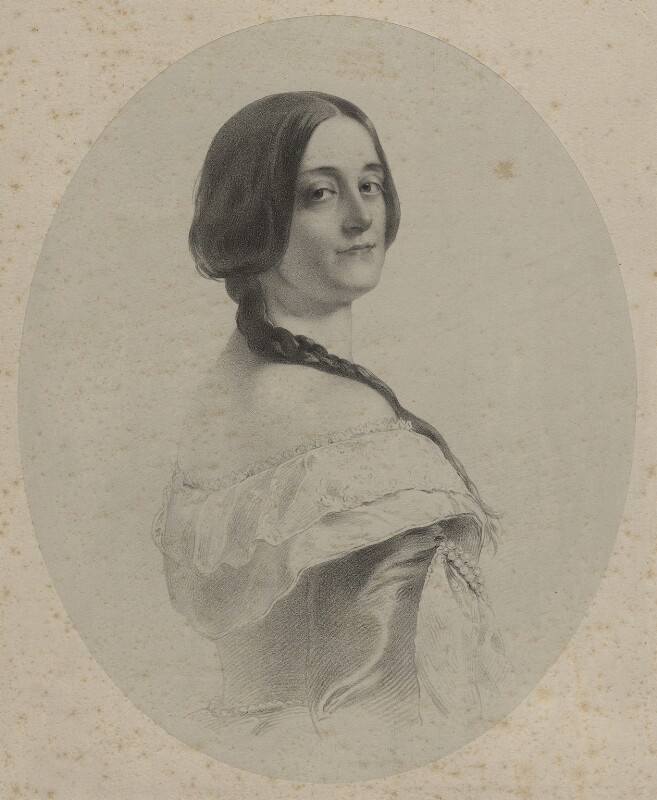
Cashel House Hotel, County Galway, courtesy of hotel website

Mark Bence-Jones writes (1988):

p. 293. “(Browne-Clayton/IFR) A house of ca 1850, asymmetrical gabled elevations, built by Captain [Thomas] Hazel [or Hazell] for his land agent, Geoffrey Emerson, [a great great grandfather of the current owner] who is said to have designed it. From 1921-52 the home of the O’Meara family who remodelled the interior with chimneypieces salvaged from Dublin and laid out most of the garden. In 1952 it became the house of Lt-Col and Mrs William Patrick Browne-Clayton, formerly of Browne’s Hill, who gave the garden its notable collection of fuschias. Cashels is now owned by Mr and Mrs Dermot McEvilly, who run it as a hotel.” 

The website continues the history:

From 1919 to 1951 Cashel House was the home of Jim O`Mara T.D. and his family. Jim O`Mara was the first official representative of Ireland in the United States and he devoted his life and talents to make Ireland a nation. Jim O`Mara was a keen botanist and found happiness in Cashel House. 

Over the years he carried out a lot of work on the Gardens. The three streams, which flow through the Garden, were a delight to him with their banks clothed with bog plants and Spirea & Osmunda ferns. O`Mara turned the orchard field into a walled garden of rare trees, Azaleas, Heather’s and dwarf Rhododendrons, which his children named ‘the Secret Garden’. 

In 1952 Cashel House became the home of Lt Col and Mrs Brown Clayton, formerly of Brownes Hill in Carlow. During their time at Cashel House the Browne Clayton’s had Harold McMillian, the late British Prime Minister, stay as their guest. The Browne Clayton’s also gave the Garden its notable collection of Fuchisas. 

Dermot and Kay McEvilly purchased Cashel House in 1967. Total refurbishment began immediately, with a fine collection of antiques being added and offering all modern facilities. The house reopened in May 1968 and ‘Cashel House Hotel’ was born.

8. Castlehacket west wing, County Galway

https://www.airbnb.ie/rooms/21260269?adults=2&category_tag=Tag%3A8047&children=0&infants=0&search_mode=flex_destinations_search&check_in=2022-08-19&check_out=2022-08-26&federated_search_id=f22d54a7-29f3-47e0-bb8c-4f930cedd2de&source_impression_id=p3_1652359805_Hs62GlGfqNCKPaSf

Castlehacket, photograph courtesy of airbnb Castlehacket entry.

The entry tells us:

CastleHacket House, steeped in Irish History. Built in 1703 by John Kirwan Mayor of Galway, the house is surrounded by nature and is very quiet and peaceful. Join in one of our “quiet “Yoga Classes, hike Connemara, stroll Knockma Woods, explore the lakes – world Famous for brown Trout fishing, or simply relax in the beautiful Park and Gardens.

We are environmentally friendly and support green living, health and wellbeing.

Ground Floor, West wing Guest Apartment in Historic CastleHacket House. Tastefully decorated, your own private door leads to 2 bedrooms, bathroom and kitchen-dining room. Tea and coffee facilities available and breakfast is included.

“Guest access to: Library, Reception/Lounge Room, Dining Room with tea and coffee facilaties, Sun Room, Outdoor Picnic area with bbq/pizza wood fired oven. Extensive gardens and woods. Safe car parking. Undercover area for Motorbikes and bicycles. Yoga classes and therapeutic Baths (extra cost). Wifi. Use of water hose, dry place to hang wet gear.

Castlehacket takes its name from the Hackett family who owned the land prior to the Kirwans.

Mark Bence-Jones tells us (1988):

p. 70. “[Kirwan, sub Paley; Bernard, sub Bandon; Paley 1969] An early C18 centre block of 3 storeys over a basement, with 2 storey wings added later in C18, and a late C19 wing at the back. Burnt 1923; rebuilt 1928-9, without one of C18 wings and the top storey of the centre block. The seat of the Kirwans, inherited by Mrs. P.B. Bernard (nee Kirwan) 1875. Passed from Lt Gen Sir Denis Barnard 1956 to his nephew Percy Paley, who had a notable genealogical library here.” 

The National Inventory describes it: “two-storey country house over basement, built c.1760 and rebuilt 1929 after being burnt in 1923. Eight-bay entrance front faces north onto large courtyard with gateway, has one-bay projections to each side of entrance bay, flat-roofed porch between projections, and two-bay east side elevation, and with slightly lower four-bay two-storey over basement service wing at west side and stables at east. Seven-bay garden front faces south, with pair of full-height canted bows on either side of central two bays, and is continued by slightly lower three-bay two-storey over basement block terminating in further rounded corner bay, to join with four-bay two-storey over basement service wing on west side of courtyard…Garden front has render frieze to parapet, with medallions separated by fluting…Porch has open arch to exterior, supported on columns with Temple of the Winds-style capitals, and approached by flight of steps. West bow of garden front has round-headed doorway with glazed timber door and fanlight and approached by three limestone steps. Garden to south of house bounded by low hedge, with parkland and sheep grazing beyond

This large country house displays mid-eighteenth-century, nineteenth-century and early twentieth-century work. The modestly presented front elevation is enhanced by the projecting bays and arched entrance. The brick bows to the garden elevation contrast nicely with the plain rendered walls elsewhere, and the decorated frieze and other details add interest and incident. The large lower block and service wing greatly enlarged the house and the fine accompanying stable block and demesne gateways provide a setting of considerable quality and interest.

9. Claregalway Castle, Claregalway, Co. Galway H91 E9T3 – section 482 €€

www.claregalwaycastle.com

Open for accommodation in 2026: January 2-December 24

https://www.airbnb.ie/users/85042652/listings

At Claregalway Castle, County Galway. Photograph © Jennifer Winder-Baggot, www.irishhistorichouses.com

See my entry https://irishhistorichouses.com/2023/04/20/claregalway-castle-claregalway-co-galway/

“Stay in one of our five beautiful rooms (Old Mill Rooms, Salmon Pool & Abbey Rooms). The River Room is situated beside the Castle on the banks of the River Clare in the village of Claregalway. Just 10km from Galway City Centre and within walking distance of a bus stop, restaurants/bars and the stunning Abbey. This family room is very comfortable with under-floor heating and luxurious bedding. Includes complimentary wine, tea/coffee & a generous continental breakfast.

At Claregalway Castle, County Galway. Photograph © Jennifer Winder-Baggot, www.irishhistorichouses.com

“The space

Claregalway Castle is a fully restored 15th century Anglo-Norman tower house and together with the castle grounds is a fabulous opportunity to savour the history while enjoying the comfort of your beautifully decorated and comfortable room.

At Claregalway Castle, County Galway. Photograph © Jennifer Winder-Baggot, www.irishhistorichouses.com

Claregalway castle was the chief fortress of the powerful Clanricard de Burgo or Burke family from the early 1400s to the mid-1600s. The Clanricard Burkes were descended from William de Burgh, an English knight of Norman ancestry who led the colonial expansion into Connacht in the early 1200s.   His brother Hubert was Justiciar of England.  William became the progenitor of one of the most illustrious families in Ireland.

The visit Galway website tells us: “Claregalway Castle was believed to have been built in the 1440’s as a stronghold to the De Burgo (Burke) family. The castle was strategically placed on a low crossing point of the Clare River, allowing the De Burgo family to control the water and land trade routes. 

In the past, the castle would have featured a high bawn/defensive wall, an imposing gate-house and a moat. The Battle of Knockdoe in 1504, was one of the largest pitched battles in Medieval Irish history, involving an estimated 10,000 combatants. On the eve of the battle, Ulick Finn Burke stayed at the Castle (which was 5km’s from the battle ground), drinking and playing cards with his troops. The Burke family lost the battle and the castle was later captured by the opponents, the Fitzgerald family. 

In the 1600’s, Ulick Burke, 5th Earl of Clanricarde [1st Marquess Clanricarde], held the castle however it was captured by Oliver Cromwell in 1651 who made the castle his headquarters. English military garrison occupied the castle in the early 1700’s and by the end of the 1700’s, the castle was described as going into decline and disrepair. During the War of Independence in 1919-21, the British once again used the castle as a garrison and a prison for I.R.A soldiers. In the later 1900’s, the famous actor Orson Welles is believed to have stayed at the castle as a 16 year old boy. 

Today, the castle has been fully restored to its former glory.” [6]

10. Cregg Castle, Corrandulla, Co Galway – Airbnb

Tower house of 1648 at centre of Cregg Castle, Corrandulla, County Galway, July 2021. Photograph © Jennifer Winder-Baggot, www.irishhistorichouses.com
Photograph from myhome.ie of Cregg Castle and its demesne.

We were lucky to discover this wonderful castle for accommodation on airbnb. https://www.airbnb.ie/rooms/7479769?source_impression_id=p3_1652358063_y2E%2FxsRMKAae0vkr

The listing tells us that “Cregg Castle is a magical place built in 1648 by the Kirwin Family, one of the 12 tribes of Galway. It is set on 180 acres of pasture and beautiful woodlands. Your host, Artist Alan Murray who currently hosts the Gallery of Angels in the main rooms.

Photograph from myhome.ie of Cregg Castle.
Cregg Castle, Corrandulla, County Galway, July 2021. Photograph © Jennifer Winder-Baggot, www.irishhistorichouses.com

Mark Bence-Jones tells us (1988):

p. 94. “A tower house built 1648 by a member of the Kirwan family [I think it was Patrick Kirwan (c. 1625-1679)]. And said to have been the last fortified dwelling to be built west of the Shannon; given sash-windows and otherwise altered in Georgian times, and enlarged with a wing on either side: that to the right being as high as the original building, and with a gable; that to the left being lower, and battlemented.  In C18 it was the home of the great chemist and natural philosopher Richard Kirwan [1733-1812], whose laboratory, now roofless, still stands in the garden. It was acquired ca 1780 by James Blake [c. 1755-1818].

Richard Kirwan married Anne Blake, daughter of Thomas (1701-1749), 7th Baronet Blake of Galway.

Mark Bence-Jones continues: “The hall, entered through a rusticated round-headed doorway with a perron and double steps, has a black marble chimneypiece with the Blake coat of arms. The dining room has a plasterwork ceiling. Sold 1947 by Mrs Christopher Kerins (nee Blake) to Mr and Mrs Alexander Johnston. Re-sold 1972 to Mr Martin Murray, owner of the Salthill Hotel, near Galway.” 

Alan who now lives in the castle is, I believe, a nephew of Martin Murray of the Salthill Hotel.

Cregg Castle, Corrandulla, County Galway, July 2021.

The National Inventory describes it:

multi-period house, comprising tower house of 1648 at centre, later modified and refenestrated to three-bay two-storey over half-basement, flanked to west by lower two-bay two-storey with attic over half-basement block of c.1780 with two-bay gable elevation, and to east by slightly lower three-bay three-storey over half-basement L-plan block of c. 1870 with gables over eastmost bay of front and rear elevations. Lower four-storey return block at right angles to rear of middle and west blocks, having two-bay elevations. Further two-bay single-storey block to rear of four-storey return, two-bay two-storey block to west of west block and with single-storey block further west again.

Cregg Castle, Corrandulla, County Galway, July 2021. Photograph © Jennifer Winder-Baggot, www.irishhistorichouses.com
“Round-headed doorway to middle of middle block, having double-leaf mid-eighteenth-century door with raised and fielded panelling and original brass knocker, doorknob and heart-shaped cover for keyhole,” Cregg Castle, Corrandulla, County Galway, July 2021. Photograph © Jennifer Winder-Baggot, www.irishhistorichouses.com
Cregg Castle, Corrandulla, County Galway, July 2021. Photograph © Jennifer Winder-Baggot, www.irishhistorichouses.com
Cregg Castle, Corrandulla, County Galway, July 2021: “original brass knocker, doorknob and heart-shaped cover for keyhole.” Photograph © Jennifer Winder-Baggot, www.irishhistorichouses.com
Cregg Castle, Corrandulla, County Galway, July 2021. Photograph © Jennifer Winder-Baggot, www.irishhistorichouses.com
Photograph from myhome.ie of Cregg Castle.
Cregg Castle, with paintings by Alan Murray, County Galway, July 2021. Photograph © Jennifer Winder-Baggot, www.irishhistorichouses.com
The Blake coat of arms on the fireplace, Cregg Castle, Corrandulla, County Galway, July 2021. Photograph © Jennifer Winder-Baggot, www.irishhistorichouses.com
Photograph from myhome.ie of Cregg Castle.
Cregg Castle, with paintings by Alan Murray, County Galway, July 2021. Photograph © Jennifer Winder-Baggot, www.irishhistorichouses.com
Cregg Castle, Corrandulla, County Galway, July 2021. Photograph © Jennifer Winder-Baggot, www.irishhistorichouses.com
Photograph from myhome.ie of Cregg Castle.
Cregg Castle, Corrandulla, County Galway, July 2021. Photograph © Jennifer Winder-Baggot, www.irishhistorichouses.com
The long driveway up to Cregg Castle. Photograph from myhome.ie of Cregg Castle.

11. Crocnaraw County House, Moyard, County Galway

http://www.crocnaraw.ie/

The website tells us:

Crocnaraw Country House is an Irish Georgian Country Guest House (note we’re not a Hotel as such) by Ballinakill Bay,10 kilometres from Clifden, Connemara-on the Galway-Westport road.Set in 8 hectares of gardens and fields with fine views,Crocnaraw Country House has been winner of the National Guest House Gardens Competition for 4 years. This independently run Country Inn is noted for Irish hospitality and informality but without a sense of casualness.The House is tastefully and cheerfully decorated, each of its bedrooms being distinctively furnished to ensure the personal well-being of Guests. Fully licensed Crocnaraw Country House’s excellent cuisine is based on locally sourced fish and meat as well as eggs,fresh vegetables, salads and fruits from kitchen garden and orchard. Moyard is centrally located for Salmon and Trout fishing, deep-sea Angling, Championship Golf-Courses and many more recreational activities in the Clifden and Letterfrack Region of Connemara in County Galway.”

The National Inventory tells us that the house is a L-plan six-bay two-storey two-pile house, built c.1850, having crenellated full-height canted bay to south-east side elevation. Recent flat-roof two-storey extension to north-east…”Originally named Rockfield House, this building has undergone many alterations over time, the crenellated bay being an interesting addition. The area was leased by Thomas Butler as a Protestant orphanage and was known locally as ‘The Forty Boys’. The retention of timber sash windows enhances the building. The road entrance sets the house off plesantly.

12. Currarevagh, Oughterard, Co Galway – country house hotel €€

https://www.currarevagh.com

Currarevagh House, photograph from house website.

The website tells us:

Currarevagh House is a gracious early Victorian Country House, set in 180 acres of private parkland and woodland bordering on Lough Corrib. We offer an oasis of privacy for guests in an idyllic, undisturbed natural environment, providing exceptional personal service with a high standard of accommodation and old fashioned, traditional character. A genuine warm welcome from the owners.

Currarevagh House, photograph from house website.

Currarevagh House was built by the present owner’s great, great, great, great grandfather in 1842, however our history can be traced further back. The seat of the Hodgson Family in the 1600s was in Whitehaven, in the North of England, where they owned many mining interests. Towards the end of the 17th Century, Henry William Hodgson moved to Arklow and commenced mining for lead in Co Wicklow.  A keen angler and shot he travelled much of Ireland to fulfil his sport (not too easy in those days), and during the course of a visit to the West of Ireland decided to prospect for copper. This he found along the Hill of Doon Road. At much the same time he discovered lead on the other side of Oughterard. So encouraged was he that he moved to Galway and bought Merlin Park (then a large house on the Eastern outskirts of Galway, now a Hospital) from the Blake family and commenced mining. As Galway was some distance from the mining activities he wanted a house closer to Oughterard. Currarevagh (not the present house, but an early 18th century house about 100m from the present house) was then owned by the O’Flaherties – the largest clan in Connaught – and, though no proof can be found, we believe that he purchased it from the O’Flaherties. However a more romantic story says he won it and 28,000 acres in a game of cards. The estate spread beyond Maam Cross in the heart of Connemara, and to beyond Maam Bridge in the North of Connemara. As the mining developed so the need for transportation of the ore became increasingly difficult until eventually two steamers (“the Lioness” and “the Tigress”) were bought. These, the first on Corrib, delivered the ore to Galway and returned with goods and passengers stopping at the piers of various villages on the way.  All apparently went very well. The present house was built in 1842, suggesting a renewed wealth and success. No sooner however was present Currarevagh completed, then the 1850’s saw disaster. A combination of British export law changes, and vast seems of copper ore discovered in Spain and South America, heralded the end of mining activity in Ireland.  The family, who were fairly substantial land owners at this stage, got involved in various projects, from fish farming to turf production – inventing the briquette in the process. Certainly Currarevagh was been run as a sporting lodge for paying guests by 1890 by my great grandfather; indeed we have a brochure dated 1900 with instructions from London Euston Railway Station. This we believe makes it the oldest in Ireland; certainly the oldest in continuous ownership. After the Irish Civil War of the 1920s the Free State was formed and many of the larger Estates were broken up for distribution amongst tenants. This included Currarevagh, even though they were not absentee landlords and had bought all their land in the first place. Landlords were assured they would be paid 5 shillings (approx 25c) an acre, however this redemption was never honoured, and effectively 10’s of thousands of acres were confiscated by the new state, leaving Currarevagh with no income, apart from the rare intrepid paying guest. At one stage a non local cell of the Free Staters (an early version of the IRA) tried to blow up Currarevagh, planting explosive under what is currently the dining room. However the plan was discovered before hand, and the explosive made safe. From then on a member of the local IRA cell remained at the gates of Currarevagh to warn off any of the marauding out of towners, saying Currarevagh was not to be touched. Evidently they were well integrated into the community, and indeed during the famine years it seems they did as much as they could to help alleviate local suffering. Indeed there is a famine graveyard on our estate; this was because the local people became too week to bring the dead to Oughterard. It is also one of the few burial grounds to contain a Protestant consecrated section. Having got through the 1920s and 30s, Currarevagh again got in financial trouble during the second world war: although paying guests did come to Ireland (mainly as rationing was not so strict here), the original house was put up for sale. It did not sell, and eventually was pulled down in 1946, leaving just Currarevagh House as it stands today. In 1947 it was the first country house to open as a restaurant to no staying guests; still, of course, the situation today.”

13. Delphi Lodge, Leenane, Co Galway €€€

and Boathouse cottages: https://hiddenireland.com/house-pages/boathouse-cottages/ €€

and Wren’s Cottage: https://hiddenireland.com/house-pages/wrens-cottage/ €€

Delphi Lodge, 2015, for Tourism Ireland, Ireland’s Content Pool (see [7]).

 https://delphilodge.ie

The website tells us: “A delightful 1830s country house, fishing lodge and hotel in one of the most spectacular settings in Connemara Ireland. It offers charming accommodation, glorious scenery, great food and total tranquillity. Located in a wild and unspoilt valley of extraordinary beauty, the 1000-acre Delphi estate is one of Ireland’s hidden treasures…

The Marquis of Sligo (Westport House) builds Delphi Lodge as a hunting/fishing lodge and is reputed to have named it “Delphi” based on the valley’s alleged similarity to the home of the Oracle in Greece.

Delphi Fishing Lodge, abt. 1842, photograph courtesy of National Gallery of Ireland.
Delphi Lodge, 2014, for Tourism Ireland, Ireland’s Content Pool (see [7]).
John Denis Browne, 1st Marquess of Sligo, 1806 by engraver William Whiston Barney after John Opie, courtesy of National Gallery of Ireland.

14. Emlaghmore Cottage, Connemara, County Galway

https://hiddenireland.com/house-pages/emlaghmore-cottage/

Connemara cottage, four hundred yards off the coast road, 10 km from Roundstone and 4 km from Ballyconneely.

Emlaghmore Cottage was built in stone in about 1905, with just three rooms, and was extended in the 1960s to make a holiday home for a family. It stands on about ¾ acre running down to Maumeen lake, and is about 400 yards off the coast road (The Wild Atlantic Way) in a secluded situation with fine views. It has a shed with a supply of turf for the open fire in the living room, and garden furniture. There is a boat for anglers on the lake.

The home of Richard 7th Duke de Stacpoole, now a B&B https://errisbeghouse.ie/

16. Glenlo Abbey, near Galway, Co Galway – accommodation €€

Glenlo Abbey Hotel & Estate, Co Galway Kelvin Gillmor Photography 2020, for Tourism Ireland, Ireland’s Content Pool (see [7]).

 https://www.glenloabbeyhotel.ie

Mark Bence-Jones tells us (1988): p. 138. “(Palmer, sub De Stacpoole/IFR) A long plain two storey house built onto slender tower with pointed openings near the top. The seat of the Palmer family.” 

The estate belonged to the Ffrench family in the 1750s, an Anglo-Norman family. It was originally named Kentfield House, before becoming Glenlow or Glenlo, derived from the Irish Gleann Locha meaning “glen of the lake.” The adjacent abbey was built in the 1790s as a private church for the family but was never consecrated. In 1846 the house was put up for sale. It was purchased by the Blakes.

In 1897 it was purchased by the Palmers. In the 1980s it was sold to the Bourke family, who converted it to a hotel.

In 1990s two carriages from the Orient Express train were purchased and they form a unique restaurant.

Glenlo Abbey Hotel & Estate, Co Galway Kelvin Gillmor Photography 2020, for Tourism Ireland, Ireland’s Content Pool (see [7]).
Glenlo Abbey Hotel & Estate, ©Glenlo Abbey Hotel and Estate, Galway 2015, for Tourism Ireland, Ireland’s Content Pool (see [7]).
Glenlo Abbey Hotel & Estate, Co Galway Courtesy Glenlo Abbey Hotel and Estate, Galway 2017, for Tourism Ireland, Ireland’s Content Pool (see [7]).
Glenlo Abbey Hotel 2020 Courtesy Glenlo Abbey Hotel and Estate, Galway, for Tourism Ireland, Ireland’s Content Pool (see [7]).
Glenlo Abbey Hotel & Estate, Co Galway_©Glenlo Abbey Hotel and Estate, Galway 2014, for Tourism Ireland, Ireland’s Content Pool (see [7]).
Palmer Bar, Glenlo Abbey Hotel & Estate, Courtesy Glenlo Abbey Hotel and Estate, Galway 2020, for Tourism Ireland, Ireland’s Content Pool (see [7]).

17. Kilcolgan Castle, Clarinbridge, Co Galway €€€

https://www.airbnb.ie/rooms/3828868?adults=2&category_tag=Tag%3A8047&children=0&infants=0&search_mode=flex_destinations_search&check_in=2022-08-03&check_out=2022-08-08&federated_search_id=321dc1f8-3115-4a71-9c5b-00aa67ee2c4a&source_impression_id=p3_1652359008_yrD4CHLmFCj0nNf0

Kilcolgan Castle, photograph courtesy of airbnb castle entry.

Mark Bence-Jones tells us (1988):

p. 165. “(St. George, sub French/IFR; Blyth, B/PB; Ffrench, B/PB) A small early C19 castle, built ca 1801 by Christopher St. George, the builder of the nearby Tyrone House, who retired here with a “chere amie” having handed over Tyrone House to his son [Christopher St George was born Christopher French, adding St George to his surname to comply with his Great-Grandfather, George St George (c. 1658-1735) 1st Baron Saint George of Hatley Saint George in Counties Leitrim and Roscommon]. It consists of three storey square tower with battlements and crockets and a single-storey battlemented and buttressed range. The windows appear to have been subsequently altered. The castle served as a dower house for Tyrone, and was occupied by Miss Matilda St George after Tyrone was abandoned by the family 1905; it was sold after her death, 1925. Subsequent owners included Mr Martin Niland, TD; Mr Arthur Penberthy; Lord Blyth; and Mrs T.A.C.Agnew (sister of 7th and present Lord Ffrench); it is now owned by Mr John Maitland.” 

Kilcolgan Castle, photograph courtesy of airbnb castle entry.

18. Lisdonagh House, Caherlistrane, Co. Galway H91 PFW6 – section 482 – whole house rental and self-catering cottages.

www.lisdonagh.com
(Tourist Accommodation Facility)

Open for accommodation: May 1-Oct 31 2026

Email: cooke@lisdonagh.com

Lisdonagh House, photograph from website.

The house is available as whole house rental, and it also has cottages for accommodation. See my entry https://irishhistorichouses.com/2025/02/13/lisdonagh-house-caherlistrane-co-galway/

The website tells us:

When looking for an authentic Irish country house to hire, the beautiful 18th century early Georgian Heritage home is the perfect choice. Lisdonagh House is large enough to accommodate families, friends and groups for private gatherings. This private manor house is available for exclusive hire when planning your next vacation or special event. Enchantingly elegant, Lisdonagh Manor House in Galway has been lovingly restored and boasts original features as well as an extensive antiques collection. Peacefully set in secluded woodland surrounded by green fields and magnificent private lake, this luxury rental in Galway is full of traditional character and charm. The tasteful decor pays homage to the history of Lisdonagh Manor with rich and warm colours in each room. The private estate in Galway is perfect for family holidays, celebrations and Board of Director strategy meetings. Lisdonagh is an excellent base for touring Galway, Mayo and the Wild Atlantic Way.

Lisdonagh House, photograph from website.

It has two cottages, a coach house and gate lodge accommodation also.

Lughnasa Villa at Lisdonagh House, photograph from website.
Coach House at Lisdonagh House, photograph from website.
Gate Lodge at Lisdonagh House, photograph from website.

19. Lough Cutra Castle, County Galway, holiday cottages

https://www.loughcutra.com/cormorant.html

info@loughcutra.com

Nestled into the Northern corner of the courtyard, this beautifully appointed self catering cottage can sleep up to six guests – with private entrance and parking. Built during 1846 as part of a programme to provide famine relief during the Great Potato Famine of the time, it originally housed stabling for some of the many horses that were needed to run a large country estate such as Lough Cutra. In the 1920’s the Gough family, who were the then owners of the Estate, closed up the Castle and converted several areas of the courtyard including Cormorant into a large residence for themselves. They brought with them many original features from the Castle, such as wooden panelling and oak floorboards from the main Castle dining room and marble fireplaces from the bedrooms.

We have furnished and decorated the home to provide a luxuriously comfortable and private stay to our guests. Each unique courtyard home combines the history and heritage of the estate and buildings with modern conveniences.

https://www.loughcutra.com/

Lough Cutra castle, photograph from Lough Cutra website.

The website gives us a detailed history of the castle:

Lough Cutra Castle and Estate has a long and varied history, from famine relief to the billeting of soldiers, to a period as a convent and eventually life as a private home. It was designed by John Nash who worked on Buckingham Palace, and has been host to exclusive guests such as Irish President Michael D Higgins, His Royal Highness Prince Charles and Duchess of Cornwall Camilla, Bob Geldof, Lady Augusta Gregory and WB Yeats. The countryside surrounding Lough Cutra holds many a story, dating back centuries.

Lough Cutra castle, photograph from Lough Cutra website.

The extensive history of the Lough Cutra Castle and Estate can be traced back as far as 866 AD. It is quite likely that Ireland’s patron saint, Saint Patrick, passed Lough Cutra on his travels and also Saint Colman MacDuagh as he was a relative of nearby Gort’s King Guaire. The round tower Kilmacduagh built in his honour is an amazing site to visit near Lough Cutra. The countryside surrounding Lough Cutra holds stories for the centuries, all the way back to the Tuatha De Danann.

The immediate grounds of the 600 acre estate are rich in remnants of churches, cells and monasteries due to the introduction of Christianity. A number of the islands on the lake contain the remnants of stone altars.

The hillsides surrounding Lough Cutra contain evidence of the tribal struggle between the Firbolgs and the Tuatha De Danann (the Firbolgs and the Tuatha De Danann were tribes said to have existed in Ireland). These are from around the times of the Danish invasion. The ruined church of nearby Beagh on the North West shore was sacked by the Danes in 866 AD and war raged through the district for nearly 1000 years. In 1601 John O’Shaughnessy and Redmond Burke camped on the shores of the lake while they plundered the district.
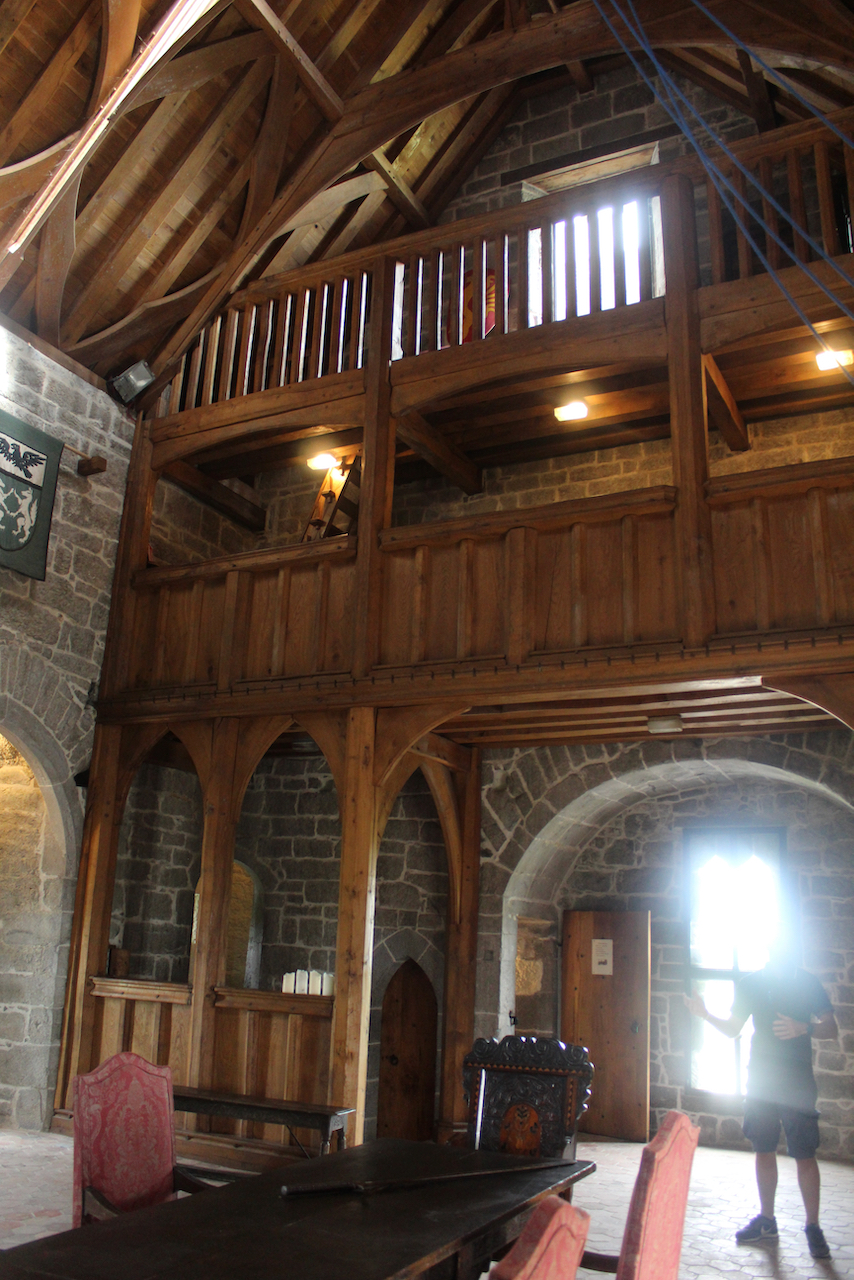
Lough Cutra castle, photograph from Lough Cutra website.

In 1678, Sir Roger O’Shaughnessy inherited from Sir Dermot all the O’Shaughnessy’s Irish land – nearly 13,000 acres – and this included Gort and 2,000 acres around Lough Cutra and the lake itself. Following the revolution during which Sir Roger died of ill health, the Gort lands were seized and presented to Thomas Prendergast. This was one of the oldest families in Ireland. Sir Thomas came to Ireland on King William’s death in 1701 and lived in County Monaghan. The title to the lands was confused, but was in the process of being resolved when Sir Thomas was killed during the Spanish Wars in 1709. His widow, Lady Penelope decided to let the lands around the lake and the islands. On these islands, large numbers of apple, pear and cherry trees were planted, and some still survive today. The land struggle continued as the O’Shaughnessy’s tried to lay claim to the lands that had been taken from them by King William. In 1742 the government confirmed the Prendergast title, but it was not until 1753 that Roebuck O’Shaughnessy accepted a sum of money in return for giving up the claim.
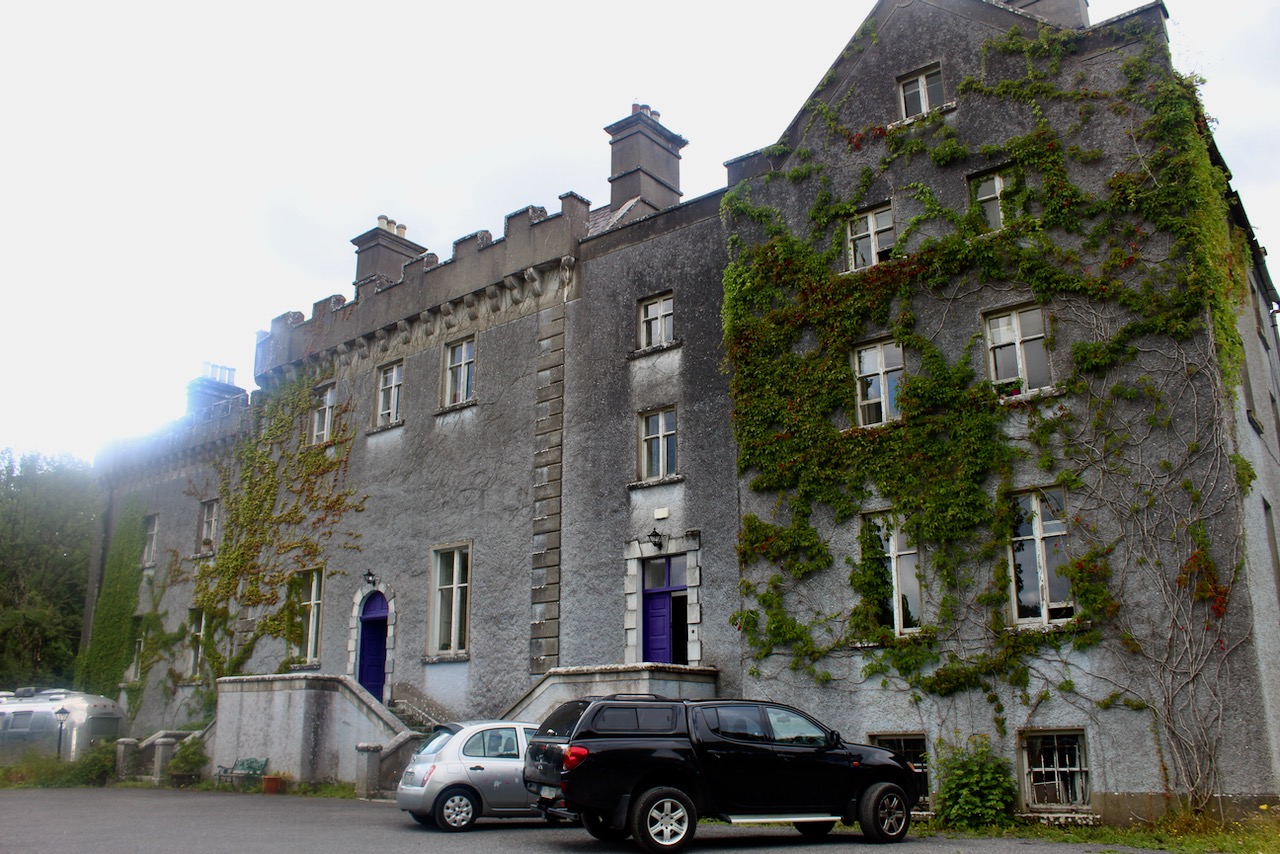
Following Sir Thomas’s death, John Prendergast Smyth inherited the Gort Estate. It was John who created the roads and planted trees, particularly around the Punchbowl where the Gort River disappears on its way to Gort and Coole. John lived next to the river bridge in Gort when in the area. This area is now known as the Convent, Bank of Ireland and the old Glynn’s Hotel which is now a local restaurant. When John died in 1797 he was succeeded by his nephew, Colonel Charles Vereker who in 1816 became Viscount Gort. The estate at this time was around 12,000 acres.

Lough Cutra castle, photograph from Lough Cutra website.

When the estate was inherited by Colonel Vereker in 1797 he decided to employ the world renowned architect John Nash to design the Gothic Style building now known as Lough Cutra Castle. Colonel Vereker had visited Nash’s East Cowes Castle on the Isle of Wight and was so taken with it that he commissioned the construction of a similar building on his lands on the shore of Lough Cutra. Nash also designed Mitchelstown Castle, Regents Park Crescent, his own East Cowes Castle, as well as being involved in the construction of Buckingham Palace.

The Castle itself was built during the Gothic revival period and is idyllically situated overlooking the Estate’s 1000 acre lake. The building of the castle was overseen by the Pain brothers, who later designed and built the Gate House at Dromoland. The original building included 25 basement rooms and the cost of the building was estimated at 80,000 pounds. While the exact dates of construction are not known the building commenced around 1809 and went on for a number of years. We know that it had nearly been finished by 1817 due to a reference in a contemporary local paper.

Colonel Charles Vereker, M.P., (1768-1842), Constable of Limerick Castle, later 2nd Viscount Gort Engraver James Heath, English, 1757-1834 After John Comerford, Irish, 1770-1832, photograph courtesy of National Gallery of Ireland.

The Viscount Gort was forced to sell the Castle and Estate in the Late 1840s having bankrupted himself as a result of creating famine relief. The Estate was purchased by General Sir William Gough, an eminent British General. The Gough’s set about refurbishing the Castle to their own taste and undertook further construction work adding large extensions to the original building, including a clock tower and servant quarters. Great attention was paid to the planting of trees, location of the deer park, and creation of new avenues. An American garden was created to the south west of the Castle. The entire building operations were completed in 1858 and 1859.

A further extension, known as the Museum Wing, was built at the end of the nineteenth century to house the war spoils of General Sir William Gough by his Grandson. This was subsequently demolished in the 1950s and the cut stone taken to rebuild Bunratty Castle in County Clare.

In the 1920s the family moved out of the Castle as they could not afford the running costs. Some of the stables in the Courtyards were converted into a residence for them. The Castle was effectively closed up for the next forty years, although during WWII the Irish army was billeted within the Castle and on the Estate.

Lough Cutra castle, photograph from Lough Cutra website.

The Estate changed hands several times between the 1930s and the 1960s when it was purchased by descendants of the First Viscount Gort. They took on the task of refurbishing the Castle during the late 1960s. Having completed the project, it was then bought by the present owner’s family.

In more recent years there has begun another refurbishment programme to the Castle and the Estate generally. In 2003 a new roof was completed on the main body of the Castle, with some of the tower roofs also being refurbished. There has been much done also to the internal dressings of the Castle bringing the building up to a modern standard. Around the Estate there has been reconstruction and rebuilding works in the gate lodges and courtyards. There has also begun extensive works to some of the woodlands in order to try and retain the earlier character of the Estate.

It is envisaged that more works will be undertaken over the coming years as the history and legend of Lough Cutra continues to build.

20. Lough Inagh Lodge Hotel, County Galway €

https://www.loughinaghlodgehotel.ie/en/

Lough Inagh Lodge was built on the shores of Lough Inagh in the 1880. It was part of the Martin Estate (Richard “Humanity Dick” Martin of Ballynahinch Castle) as one of its fishing lodges. It was later purchased by Richard Berridge, a London brewer who used the building as a fishing lodge in the 1880’s. It passed through the hands of the Tennent family, and then to Carroll Industries until 1989 it was redeveloped by the O’Connor family back to its former glory into a modern bespoke boutique lodge.”

21. Oranmore Castle, County Galway, H91TFT6 – section 482 accommodation

www.oranmorecastle.com

(Tourist Accommodation Facility)

Open for accommodation: May 1-October 31 2026

See my entry https://irishhistorichouses.com/2023/04/13/oranmore-castle-oranmore-co-galway/

21. Oranmore Lodge Hotel (previously Thorn Park), Oranmore, Co Galway  https://www.oranmorelodge.ie

The Oranmore Lodge Hotel is a four-star family-run hotel that has earned the reputation of being a “home away from home”, situated in Oranmore, a popular village bursting with life and character. From the moment you arrive, take in the beautiful surroundings and unique character of the building that will encourage you to relax and leave it all behind. Guests have enjoyed our Irish hospitality for over 150 years.

The National Inventory tells us:

The Oranmore Lodge Hotel was formerly the residence of the Blake Butler family. The house was altered in the late nineteenth century and its name changed from Mount Vernon to Thornpark, and the steep gables, bay windows and crenellations are typical of that era. An interesting symmetrical elevation, enhanced by the family shield with motto. It retains much original fabric notwithstanding its extension on both sides.

22. The Quay House, Clifden, Co Galway €€

https://thequayhouse.com  

The website tells us:

Built for the Harbour Master nearly 200 years ago, The Quay House has been sensitively restored and now offers guest accommodation in fourteen bedrooms (all different) with full bathrooms – all but three overlook the Harbour. Family portraits, period furniture, cosy fires and a warm Irish welcome make for a unique atmosphere of comfort and fun.

The owners, Paddy and Julia Foyle, are always on hand for advice on fishing, golfing, riding, walking, swimming, sailing, dining, etc – all close by.

The Quay House is Clifden’s oldest building, dating from C1820. It was originally the Harbour Master’s house but later became a Franciscan monastery, then a convent and finally a hotel owned by the Pye family. Now providing Town House Accommodation in Clifen, it is run by the Foyle family, whose forebears have been entertaining guests in Connemara for nearly a century.

The Quay House stands right on the harbour, just 7 minutes walk from Clifden town centre. All rooms are individually furnished with some good antiques and original paintings; several have working fireplaces. All have large bathrooms with tubs and showers and there is also one ground floor room for wheelchair users.

The Quay House hotel, Clifden, County Galway, photograph by James Fennell 2014 for Tourism Ireland, Ireland’s Content Pool (see [7]).

23. Renvyle, Letterfrack, Co Galway – hotel

https://www.renvyle.com

The website tells us: “First opened as a hotel in 1883, it is spectacularly located on a 150 acre estate on the shores of the Wild Atlantic Way in Connemara, Co. Galway. The grounds include a private freshwater lake for fishing and boating, a beach, woodlands, gardens and numerous activities on site including tennis, croquet, outdoor heated swimming pool, canoeing and shore angling. For a unique location, an award winning Restaurant, comfortable bedrooms and a truly uplifting break, here, the only stress is on relaxation.

“Its often-turbulent history has mirrored the change of circumstances and troubled history of Ireland, but it has been resilient and survived. Renvyle House was once home of the Chieftain and one of the oldest and most powerful Gaelic clans in Connacht; that of Donal O’Flaherty, who had a house on the site since the 12th Century where the hotel stands today.

The Blakes (one of the 14 Tribes of Galway) bought 2,000 acres of confiscated O’Flaherty land in 1689. They leased it to the senior O’Flaherty family until the Blakes took up residence in 1822. Before then the ‘Big House’ was a thatched cabin 20ft by 60ft and one storey high.  Henry Blake implemented  major improvements to make it more compatible to a man of his means. The timber used in the building of the house extension was said to have been from a shipwreck in the bay.  The thatch was replaced with slate roof and he added another storey.  In 1825 the Blake family published the ‘Letters from the Irish Highlands’ describing the life and conditions in Connemara at that time.  His widow, Caroline Johanna opened it first as a hotel in 1883. ‘Through Connemara in a Governess Cart’ published in 1893, written by Edith Somerville and Violet Martin. In this beautifully illustrated book, they visit Ballynahinch Castle, Kylemore Abbey and Renvyle House.

I imagine that Edith Somerville, when she illustrated their book, Through Connemara in a Governess Cart (published 1893), had herself and her cousin in mind when she drew this picture. Photograph care of the British Library.

The house was sold before the War of Independence In 1917 to surgeon, statesman and poet Oliver St.John Gogarty played host to countless distinguished friends including Augustus John, W.B. Yeats (who came on his honeymoon to Renvyle House and Yeat’s first Noh play was first performed in the Long Lounge).  Indeed in 1928 Gogarty had a flying visit from aviator Lady Mary Heath and her husband which was well documented.  The House was burned to the ground during the Irish Civil War in 1923 by the IRA, as were many other home of government supporters; along with Gogarty’s priceless library.   The house was rebuilt by Gogarty as a hotel in the late 1920’s in the Arts & Crafts design of that era.
“My house..stands on a lake, but it stands also on the sea – waterlilies meet the golden seaweed…at this, the world’s end” Oliver St. John Gogarty.

The war years were difficult times although the hotel stayed open all year round.  Dr. Donny Coyle visited Renvyle house in July 1944 with friends and as fate would have it, he bought it with friends Mr. John Allen and Mr. Michael O’Malley in 1952 from the Gogarty estate and they reopened it on the 4th July that year.

The 1958 brochure announced new facilities in the hotel bedrooms. “Shoe cleaning. Shoe polishing and shining materials are in each room, just lift the lid of the wooden shoe rest.”  Guests were also informed that dinner was served from 7.30pm to 9pm, and that they were not to go hungry through politeness. “Don’t be shy, if you’d like a little more, please ask.” – and that ethos of hospitality remains to this day.

It remains in the Coyle family to this day, owned by Donny’s son John Coyle and his wife Sally.Their eldest daughter Zoë Fitzgerald is also involved with the hotel, is the Marketing Director and Chairman of the Board.

24. Rosleague Manor, Galway – accommodation €€

 https://www.rosleague.com

The website tells us: “Resting on the quiet shores of Ballinakill Bay, and beautifully secluded within 30 acres of its own private woodland, Rosleague Manor in Connemara is one of Ireland’s finest regency hotels.

The National Inventory tells us: “Attached L-plan three-bay two-storey house, built c.1830, facing north-east and having gabled two-storey block to rear and multiple recent additions to rear built 1950-2000, now in use as hotel…This house is notable for its margined timber sash windows and timber porch. The various additions have been built in a sympathetic fashion with many features echoing the historic models present in the original house.”

25. Ross, Moycullen, Co Galway – see above

www.rosscastle.com 

26. Ross Lake House Hotel, Oughterard, County Galway

http://rosslakehotel.com/

Ross Lake House Hotel in Galway is a splendid 19th Century Georgian House. Built in 1850, this charming Galway hotel is formerly an estate house of the landed gentry, who prized it for its serenity. Set amidst rambling woods and rolling lawns, it is truly a haven of peace and tranquillity. Echoes of gracious living are carried throughout the house from the elegant drawing room to the cosy library bar and intimate dining room.

27. Screebe House, Camus Bay, County Galway €€€

https://www.screebe.com/

Tucked away in the idyllic surrounds of Camus Bay, experience the best of Connemara at one of Ireland’s finest Victorian country homes, Screebe House. 

Built in 1872 as a fishing lodge and lovingly restored by the Burkart family in 2010, Screebe House offers guests an experience of luxury comfort, and effortless charm. With open fireplaces, high ceilings and heritage décor, Screebe’s elegant spaces evoke a sense of grandeur and provide the perfect setting to read a good book or savour a delicious glass of wine while taking in the breathtaking Connemara scenery. 

Screebe, originating from the Irish word ‘scribe’ meaning destination, is ideally located for those who want to explore the stunning scenery of Connemara or partake in a wealth of activities available, from renting bikes to fishing, deer spotting, swimming, hiking, and more. Screebe’s privately owned estate extends 45,000 acres, one of the largest estates in the country.

Whole House Accommodation and Weddings, County Galway:

1. Carraigin Castle, County Galway – sleeps 10

https://www.carraigin.net

The website tells us:

Surrounded by seven acres of lawns, park and woodland, Carraigin Castle is an idyllic holiday home in a beautiful setting on the shores of Lough Corrib, one of Ireland’s biggest lakes, famous for its brown trout and its multitude of picturesque islands. From the Castle one can enjoy boating and fishing on the lake, walking, riding and sightseeing all over Galway and Mayo, or just relax by the open hearth and contemplate the charm and simple grandeur of this ancient dwelling, a rare and beautiful example of a fortified, medieval “hall house”.

Family groups or close friends will love the relaxed atmosphere of this authentic 13th-century manor house, which has been restored by the present owner after languishing for more than two centuries as a crumbling, roofless ruin.  Carraigin’s church-like structure sits on a rise reached by an avenue across the tree-lined Pleasure Ground.

The History:

Despite its massive, castellated walls, Carraigin was never a mere fortress, but rather, an elegant home where a land-owning family could live securely in turbulent times. For some ten generations, the castle housed the descendants of its founder, Adam Gaynard III, grandson of a Norman adventurer who had taken part in the colonisation of the neighbourhood by the great de Burgo conquerors in 1238. 

Towards 1650, another military adventurer, George Staunton, acquired “the castle and lands of Cargin”, which his descendants continued to own until 1946. By, then, the castle had long been
abandoned. Stripped of its roof in the early 18th century, Carraigin’s relatively recent upper storeys and finer stonework were demolished and burned to make lime for the construction of the nearby Georgian mansion which replaced it.

However, the solid masonry core of the original 13th Century building had been constructed with such skill that it weathered centuries of neglect, surviving as a romantic, ivy-covered ruin until, in 1970, the castle was restored to its original form and purpose.

The Interior: “The ancient-looking, nail-studded front door on the ground floor, often mistaken for an authentic antiquity, was actually made by the owner during the building’s restoration in the 1970s.  Round the corner, an imposing stone staircase leads to another grand entrance, into the lofty, oak-beamed Great Hall featuring a wide, stone-arched fireplace that provides a comforting aroma of turf and wood-smoke.

The Great Hall is the central living and dining area of the castle. It features a mix of old oak and comfortable modern furniture surrounding the welcoming hearth. Its white walls are extensively decorated with art including tapestries, brass rubbing portraits of ancient kings and knights and a magnificent triptych featuring a Galway galleon (as on that city’s coat of arms). There is a tiny but well-equipped kitchen next door with a view over the tall trees of the Pleasure Ground.

On the same level as the Hall is an oak-beamed double bedroom with a king-size bed and bathroom.  A stone staircase winds upwards over this master bedroom to a family loft room overlooking the Great Hall. Another winding stairs leads up to a little single bedroom in the corner tower.  From both of these second-floor rooms you can stroll out onto the castle parapets with fabulous views of Lough Corrib and the hills of Connemara and Mayo, and even those of Clare, on the other side of Galway Bay. 

The rest of you sleep in the four cosy ‘Vaults’ on the ground floor below, their walls also lined with tapestries and other artworks. The Vaults have much picturesque charm with their oak-timbered partitions, arches and vaulted ceilings, and they work if you know each other well as the rooms lead one into the other. Vault I, the largest of the four, sleeps two in bunk-beds and features a fair-sized work table and chairs for busy teenagers and a mini-sofa for one or two in the window embrasure. Vault II (off No. 1) has a double bed and a similar window seat. Vault III (also off No.1) has one double and one single bed and a window seat. Vault III in turn gives access to Vault IV, a small single room with a three-light gothic window looking out at the standing stone sundial on the lawn.

2. Cloghan Castle, near Loughrea, County Galway – whole castle accommodation and weddings, €€€ for two.

https://www.cloughancastle.ie/

The website describes it:

An air of historic grandeur and authenticity is the initial impression upon arrival at Cloughan Castle. Follow the long sweeping driveway surrounded with breath-taking countryside views, to the beautifully restored castle with its ornamental stonework & imposing four storey tower. Sitting within several acres of matured woodlands with striking panoramic countryside views, this lovingly restored 13th-century castle holds its historic past with a character that blends effortlessly with elegance and comfort.

Find yourself immersed in unrivalled castle comfort with the ultimate mix of homeliness & grandeur, the most appealing destination for those seeking exclusivity & privacy. A combination of seven magnificently appointed bedrooms, two versatile reception rooms, complete with an idyllic backdrop, ensures a truly memorable occasion to be long remembered. Cloughan Castle offers complete exclusivity for all occasions, from an intimate family getaway to a private party celebration, to a truly magical wedding location.

The Visit Galway website tells us:

Cloghan Castle near Loughrea in Galway, was originally built as an out-post fortification in the 12th century by an Anglo-Norman family. The castle was last inhabited by Hugh de Burgo, a son of Walter de Burgo, Earl of Ulster, in the 15th century. 

In 1973, Cloghan Castle was a derelict ruin and all that remained of the fortified Norman keep, built in 1239, were the walls of the tower house. Its current owner, Michael Burke, always had an interest in history and seeing the ruined castle on a neighbour’s land he thought it would be a nice idea to restore it. 

The aim of the restoration work was to recreate what it was like to live in a medieval castle, but without having to suffer the deprivation of 13th century living. The meticulous and historically accurate restoration programme was completed in the December of 1996 and the castle now plays host and venue to numerous weddings each year.

[1] https://visitgalway.ie/ardamullivan-castle/ 

[3] Bence-Jones, Mark. A Guide to Irish Country Houses (originally published as Burke’s Guide to Country Houses volume 1 Ireland by Burke’s Peerage Ltd. 1978); Revised edition 1988 Constable and Company Ltd, London.

[6] https://visitgalway.ie/claregalway-castle/

[7] https://www.irelandscontentpool.com/en

[8] https://www.buildingsofireland.ie/buildings-search/building/30404211/lisdonagh-house-lisdonagh-co-galway

[9] https://visitgalway.ie/lisdonagh-house/

[10] http://landedestates.nuigalway.ie/LandedEstates/jsp/property-list.jsp?letter=L

[11] https://www.buildingsofireland.ie/buildings-search/building/30315003/yeats-college-college-road-townparksst-nicholas-parish-galway-co-galway

[12] Dublin City Library and Archives. https://repository.dri.ie

[13] https://visitgalway.ie/abbeyglen-castle/

Text © Jennifer Winder-Baggot, www.irishhistorichouses.com

Office of Public Works properties in County Tipperary

I had initially published the County Tipperary OPW sites along with Munster counties of Clare and Limerick but the entry is too long so I am dividing it.

OPW sites in County Tipperary:

1. Cahir Castle, County Tipperary

2. Damer House and Roscrea Castle, County Tipperary

3. Famine Warhouse 1848, County Tipperary

4. Holycross Abbey, County Tipperary – must prebook for tour

5. The Main Guard, County Tipperary – closed at present

6. Nenagh Castle, County Tipperary

7. Ormond Castle, Carrick-on-Suir, County Tipperary

8. Rock of Cashel, County Tipperary

see 2. Roscrea Castle and Damer House, County Tipperary

9. Swiss Cottage, County Tipperary

donation

Help me to pay the entrance fee to one of the houses on this website. This site is created purely out of love for the subject and I receive no payment so any donation is appreciated!

€15.00

Photograph © Jennifer Winder-Baggot, www.irishhistorichouses.com

1. Cahir Castle, County Tipperary:

Cahir Castle, photograph from Ireland’s Content pool, by Brian Morrison 2014 for Failte Ireland. [see 1]
Cahir Castle, June 2022. The geese are particularly picturesque! The outer walls are called the Barbican. When breached, the attacking force gains entry to this area and are vulnerable to missiles fired by defenders and it would be difficult to retreat, due to the enclosed nature of the barbican. Photograph © Jennifer Winder-Baggot, www.irishhistorichouses.com

General information: 052 744 1011, cahircastle@opw.ie

Stephen and I visited Cahir Castle in June 2022, and I was very impressed. I had no idea that we have such an old castle in Ireland with so much intact. See my entry https://irishhistorichouses.com/2024/03/29/cahir-castle-county-tipperary-an-office-of-public-works-property/

From the OPW website https://heritageireland.ie/visit/places-to-visit/cahir-castle/:

Cahir Castle is one of Ireland’s largest and best-preserved castles. It stands proudly on a rocky island on the River Suir.

The castle was was built in the thirteenth century and served as the stronghold of the powerful Butler family. [The Archiseek website tells us it was built in 1142 by Conor O’Brien, Prince of Thomond] So effective was its design that it was believed to be impregnable, but it finally fell to the earl of Essex in 1599 when heavy artillery was used against it for the first time. During the Irish Confederate Wars it was besieged twice more.

At the time of building, Cahir Castle was at the cutting edge of defensive castle design and much of the original structure remains.

Our tour guide took us through the outside of the castle, showing us its defenses. Our tour ended inside the Great Hall, or dining hall.

The Great Hall, with giant Irish elk antlers. The fireplace is not genuine – it is made of papier mache and was installed for the filming of a movie. Photograph © Jennifer Winder-Baggot, www.irishhistorichouses.com

2. Damer House and Roscrea Castle, County Tipperary

https://heritageireland.ie/places-to-visit/roscrea-castle-gardens-damer-house-black-mills/

In the heart of Roscrea in County Tipperary, one of the oldest towns in Ireland, you will find a magnificent stone motte castle dating from the 1280s. It was used as a barracks from 1798, housing 350 soldiers, and later served as a school, a library and even a sanatorium.

Sharing the castle grounds is Damer House, named for local merchant John Damer, who came into possession of the castle in the eighteenth century. The house is a handsome example of pre-Palladian architecture. It has nine beautiful bay windows. One of the rooms has been furnished in period style.

The grounds also include an impressive garden with a fountain, which makes Roscrea Castle a very pleasant destination for a day out. There is also a restored mill displaying St Crónán’s high cross and pillar stone.” See my entry https://irishhistorichouses.com/2024/10/03/damer-house-and-roscrea-castle-county-tipperary-office-of-public-works-properties/

3. Famine Warhouse 1848, Ballingarry, County Tipperary:

General information: 087 908 9972, info@heritageireland.ie

From the OPW website https://heritageireland.ie/visit/places-to-visit/famine-warhouse-1848/:

How did an ordinary farmhouse near Ballingarry, County Tipperary, become the site of a bloody siege and a monument of the Young Irelander Rebellion of 1848?

It was here that rebels, under the leadership of Protestant aristocrat William Smith O’Brien, besieged 47 police officers who had barricaded themselves into the McCormack homestead, taking 5 children hostage. After two of their number were killed, the rebels finally gave in. They were later transported to penal colonies abroad.

The Warhouse, as it became known, is now a museum. Its contents illuminate the history of the Young Irelander Rebellion, the trials of its leaders, their exile in Australia and escape to the USA. The exhibition places the rebellion in the context of the Great Famine and the upheaval that rocked Europe during that turbulent year.

Traditionally it was known as Ballingarry Warhouse or The Widow McCormack’s House.

4. Holycross Abbey, County Tipperary:

Holycross Abbey, photograph from Ireland’s Content pool, by Liam Murphy 2016 for Failte Ireland [see 1]

From the OPW website https://heritageireland.ie/visit/places-to-visit/holycross-abbey/:

As destination for pilgrims, Holy Cross Abbey, near Thurles, County Tipperary, has a rich history. Pilgrims travelled here for eight centuries to venerate the relic after which the abbey and surrounding villages are named – a piece of the True Cross of Christ’s crucifixion.

Today this working parish church is a peaceful landmark and a place for quiet contemplation and historical discovery. As well as inspecting the relic of the cross, you can marvel at the building’s ornate stonework. The chancel is possibly the finest piece of fifteenth-century architecture in the country. The abbey also houses one of the only surviving medieval wall paintings in Ireland.

5. The Main Guard, Sarsfield Street, Clonmel, County Tipperary:

The Main Guard, or Clonmel Courthouse, County Tipperary. Photograph from National Inventory of Architectural Heritage: five-bay two-storey courthouse and market house, built 1673, with arcaded ground floor to front and north gable, and pediment and cupola to roof. Until restored c.2000, building had been five-bay three-storey with triple public house front to ground floor, and timber sliding sash windows. Now in use as museum. The columns of the arcaded facades were recycled from the ruins of the Cistercian abbey of Inislounaght, to the west of the town and retain some decorative elements that testify to this fact. 

General Information: 052 612 7484, mainguard@opw.ie

From the OPW website https://heritageireland.ie/visit/places-to-visit/the-main-guard/:

In the seventeenth century County Tipperary was a palatinate, ruled by James Butler, duke of Ormond. When the duke decided he needed a new courthouse, he built one in the heart of Clonmel [built in 1673]. Later, when it was used as a barracks, it became known as the Main Guard.

A fine two-storey symmetrical building, some elements of its design were based on works by the famous Sir Christopher Wren.

In the eighteenth century it was the venue for the Clonmel Assizes. The most notable trial it witnessed was that of Father Nicholas Sheehy, the anti-Penal Laws agitator. Sheehy was hanged, drawn and quartered.

In about 1810, the ground floor was converted into shops, but the building has recently undergone an award-winning restoration. The open arcade of sandstone columns is once again an attractive feature of the streetscape, while inside you will find a fantastic exhibition and event space.

Main Guard, 1948, photograph from Dublin City Library and Archives. [2]

6. Nenagh Castle, County Tipperary

Nenagh Castle, photograph by Brian Morrison, 2017, for Tourism Ireland, Ireland’s Content Pool. [see 1]

General information: 067 33850, castlenenagh@gmail.com

The OPW doesn’t seem to have a site for this currently, but there is information at a site about Nenagh:

Nenagh Castle was built by Theobald Walter (the first of the Butlers of Ormond) around 1200. To this day the cylindrical keep adorns the town and like most keeps it formed part of the perimeter of the fortress. The walls have now almost disappeared, but fragments remain. 

Built from limestone Nenagh Castle measures fifty-five feet in external diameter at the base and rises to a height of one hundred feet. The Castle features four storeys and thanks to a recent renovation this wonderful landmark now represents the town’s premier tourist attraction.

The building and has stone spiral stairs to the top. There are 101 steps in all to the top.  Access to the tower is through a passageway within the base of the wall.  This has low head room and visitors will need to stoop to avoid hitting the stone above. All children under the age of 18 must be accompanied by an adult. [3]

Nenagh Castle, photograph by Brian Morrison, 2017, for Tourism Ireland, Ireland’s Content Pool. [see 1]

7. Ormond Castle, Carrick-on-Suir, County Tipperary:

Ormond Castle, Carrick-on-Suir, County Tipperary, May 2018. Maurice Craig tells us in The Architecture of Ireland from the earliest times to 1880 that in style Carrick-on-Suir is like hundreds of buildings in Northamptonshire or the Cotswolds, but like no other in Ireland. Photograph © Jennifer Winder-Baggot, www.irishhistorichouses.com

See my entry https://irishhistorichouses.com/2024/09/05/ormond-castle-carrick-on-suir-county-tipperary-an-opw-property/

General Information: 051 640787, ormondcastle@opw.ie

From the OPW website https://heritageireland.ie/visit/places-to-visit/ormond-castle/:

Joined on to an earlier medieval riverside castle, Ormond Castle Carrick-on-Suir is the finest example of an Elizabethan manor house in Ireland. Thomas, 10th Earl of Ormond [“Black Tom” (1531-1614)], built it in 1565 in honour of his distant cousin Queen Elizabeth. 

The magnificent great hall, which stretches almost the whole length of the building is decorated with some of the finest stucco plasterwork in the country. The plasterwork features portraits of Queen Elizabeth and her brother Edward VI and many motifs and emblems associated with the Tudor monarchy.

Ormond Castle, Carrick-on-Suir 1949, photograph from Dublin City Library and Archive. [see 2]

James Butler the 12th Earl of Ormond and 1st Duke of Ormond (1610-1688) spent much of his time here and was the last of the family to reside at the castle. On his death in 1688 the family abandoned the property and it was only handed over to the government in 1947, who then became responsible for its restoration. 

7. Rock of Cashel, County Tipperary:

Rock of Cashel, Co Tipperary photograph from Ireland’s Content pool, by Brian Morrison 2018 for Failte Ireland. [see 1]

General Information: 062 61437, rockofcashel@opw.ie

From the OPW website https://heritageireland.ie/visit/places-to-visit/rock-of-cashel/:

Set on a dramatic outcrop of limestone in the Golden Vale, the Rock of Cashel, iconic in its historic significance, possesses the most impressive cluster of medieval buildings in Ireland. Among the monuments to be found there is a round tower, a high cross, a Romanesque chapel, a Gothic cathedral, an abbey, the Hall of the Vicars Choral and a fifteenth-century Tower House.

Originally the seat of the kings of Munster, according to legend St. Patrick himself came here to convert King Aenghus to Christianity. Brian Boru was crowned High King at Cashel in 978 and made it his capital.

In 1101 the site was granted to the church and Cashel swiftly rose to prominence as one of the most significant centres of ecclesiastical power in the country.

The surviving buildings are remarkable. Cormac’s Chapel, for example, contains the only surviving Romanesque frescoes in Ireland.

Rock of Cashel, 1955, from Dublin City Library and Archives [see 2].
Rock of Cashel ca. 1901, photograph from National Library of Ireland Flickr constant commons.

8. Roscrea Castle and Damer House, County Tipperary:

Roscrea Castle, photograph from Ireland’s Content pool, by Chris Hill 2014 for Failte Ireland. [see 1]

General information: 0505 21850, roscreaheritage@opw.ie

From the OPW website https://heritageireland.ie/visit/places-to-visit/roscrea-heritage-centre-roscrea-castle-and-damer-house/:

In the heart of Roscrea in County Tipperary, one of the oldest towns in Ireland, you will find a magnificent stone motte castle dating from the 1280s. It was used as a barracks from 1798, housing 350 soldiers, and later served as a school, a library and even a sanatorium. 

Sharing the castle grounds is Damer House, named for local merchant John Damer, who came into possession of the castle in the eighteenth century. The house is a handsome example of pre-Palladian architecture. It has nine beautiful bay windows. One of the rooms has been furnished in period style.

The grounds also include an impressive garden with a fountain, which makes Roscrea Castle a very pleasant destination for a day out. There is also a restored mill displaying St Crónán’s high cross and pillar stone.

See my entry https://irishhistorichouses.com/2024/10/03/damer-house-and-roscrea-castle-county-tipperary-office-of-public-works-properties/

This was originally the site of a motte and bailey fortification known as King John’s Castle. The original wooden castle was destroyed in the late 13th century and was replaced with a stone structure built in 1274-1295 by John de Lydyard. The castle was originally surrounded by a river to the east and a moat on the other sides. [4] It was granted to the Butlers of Ormond in 1315 who held it until the early 18th Century. The castle as we see it today was built from 1332.

The castle was used as a barracks from 1798, housing 350 soldiers. It was used later as a school, a library, and a tuberculosis sanatorium. Roscrea Castle fell into disrepair in the 19th century, and when the roof collapsed extensive repairs were needed in the 1850s. It was named a national monument in 1892, and is now under the care of the OPW. 

Damer House is of three storeys and nine bays and has a scroll pediment doorway and inside, a magnificent carved staircase. The Irish Georgian Society was involved in saving it from demolition in the 1960s.

9. Swiss Cottage, Ardfinnan Road, Cahir, County Tipperary:

General Information: 052 744 1144, swisscottage@opw.ie

Swiss Cottage, June 2022. Photograph © Jennifer Winder-Baggot, www.irishhistorichouses.com

From the OPW website https://heritageireland.ie/visit/places-to-visit/swiss-cottage/:

The Swiss Cottage, just outside the heritage town of Cahir, is a cottage orné – a fanciful realisation of an idealised countryside cottage used for picnics, small soirees and fishing and hunting parties and was also a peaceful retreat for those who lived in the nearby big house.

Built in the early 1800s [around 1810] by Richard Butler, 1st Earl of Glengall, who, we believe, managed to persuade world-famous Regency architect John Nash to design it [he also designed Buckingham Palace for the Crown]. Originally, simply known as “The Cottage” it appears to have acquired its present name because it was thought to resemble an Alpine cottage.”

See my write-up https://irishhistorichouses.com/2025/03/20/swiss-cottage-ardfinnan-road-cahir-county-tipperary-office-of-public-works/

Timber rustic oak posts with triangular arch detailing between posts to verandahs and to bowed bay, having latticework rail to balcony. Photograph © Jennifer Winder-Baggot, www.irishhistorichouses.com
Photograph © Jennifer Winder-Baggot, www.irishhistorichouses.com

[1] https://www.irelandscontentpool.com/en

[2] https://repository.dri.ie/

[3] https://www.nenagh.ie/places-of-interest/details/nenagh-castle

[4] See the blog of Patrick Comerford, http://www.patrickcomerford.com/search/label/castles?updated-max=2019-03-03T14:30:00Z&max-results=20&start=27&by-date=false

[5] https://www.buildingsofireland.ie/buildings-search/building/22208107/swiss-cottage-kilcommon-more-north-tipperary-south