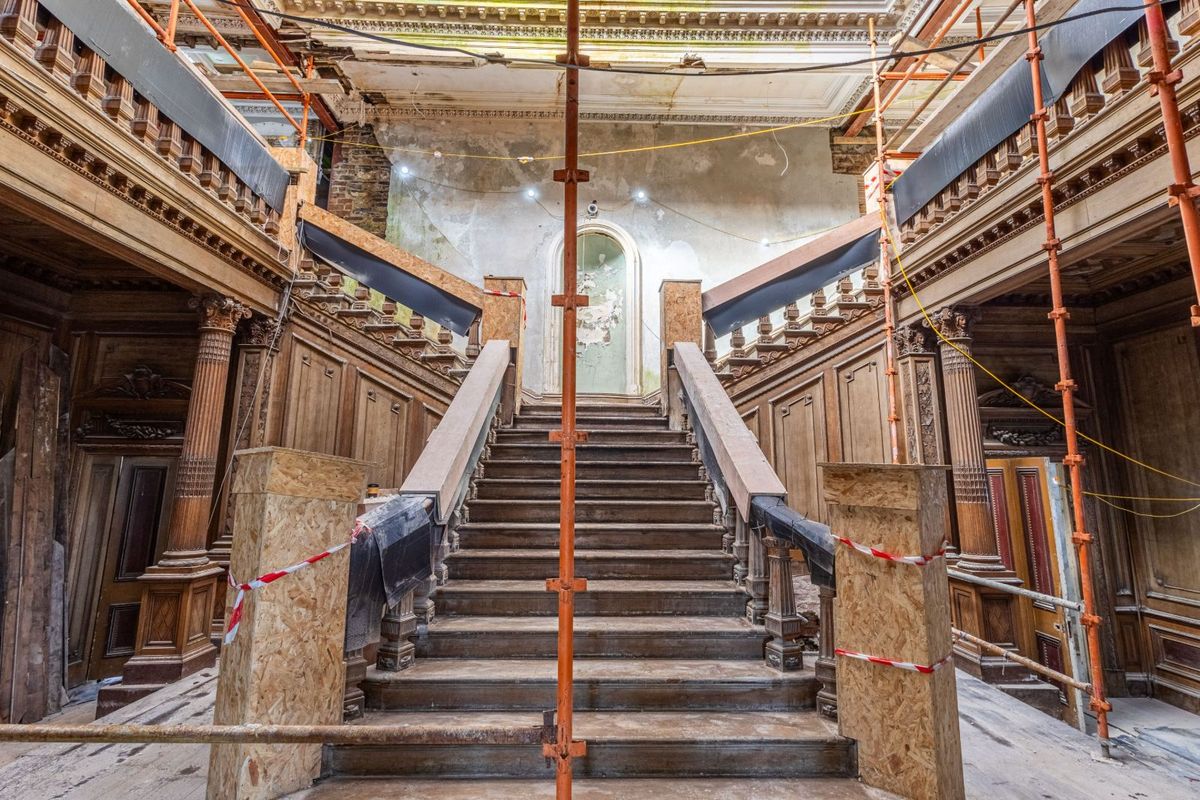
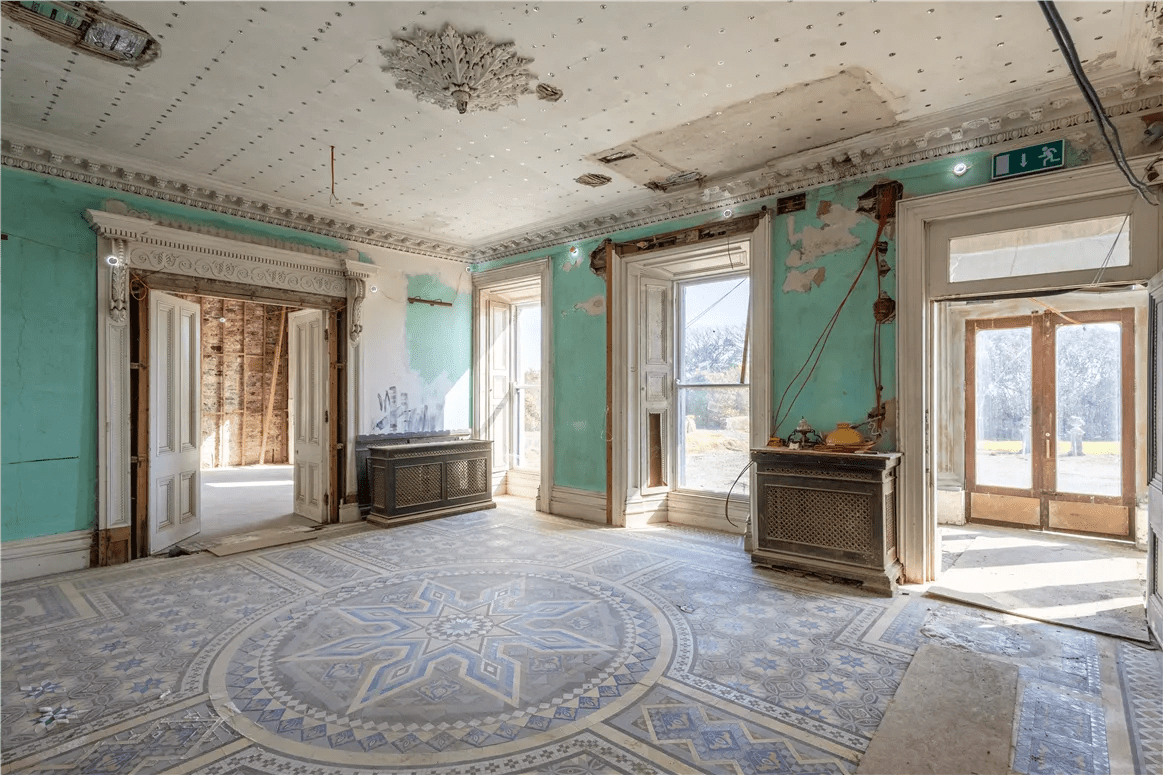
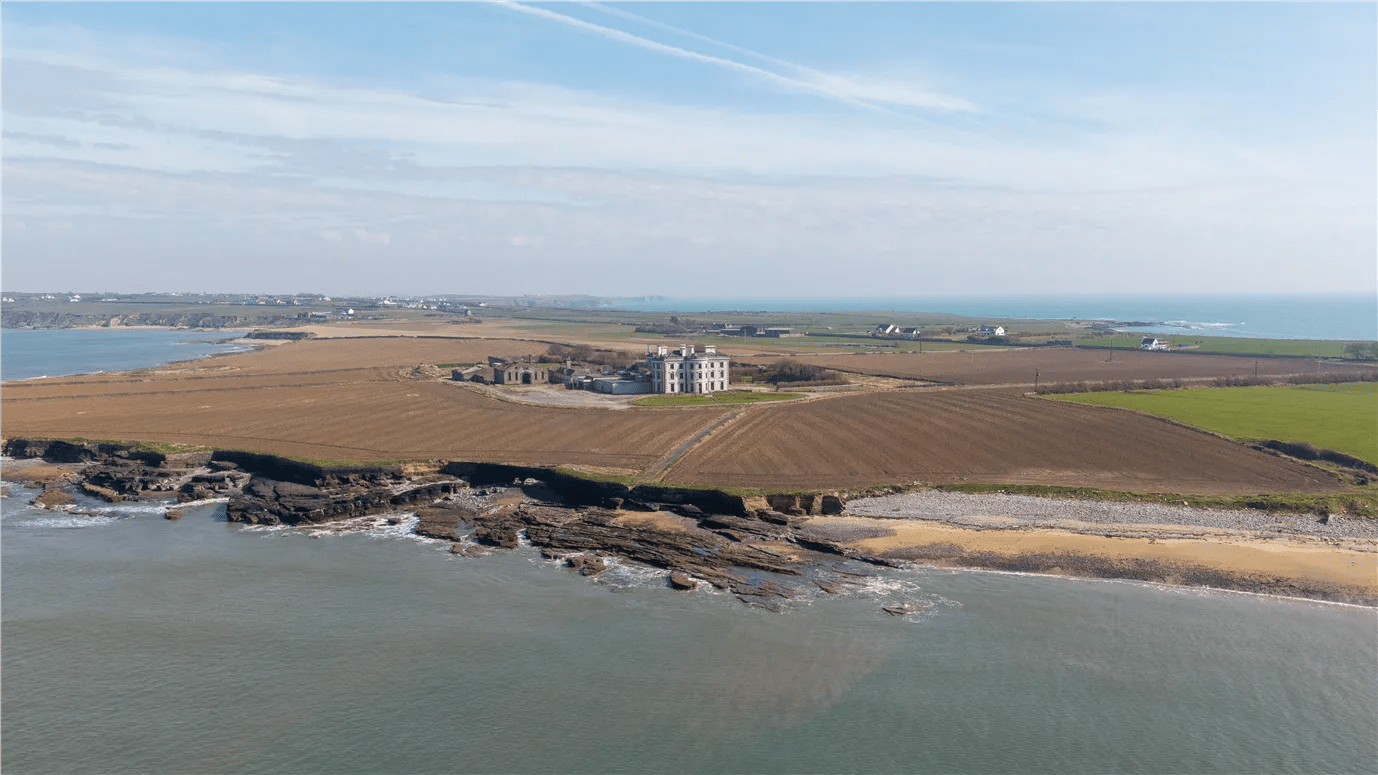
Rathfarnham Castle, County Dublin – OPW

Rathfarnham Castle, Dublin

https://heritageireland.ie/places-to-visit/rathfarnham-castle/
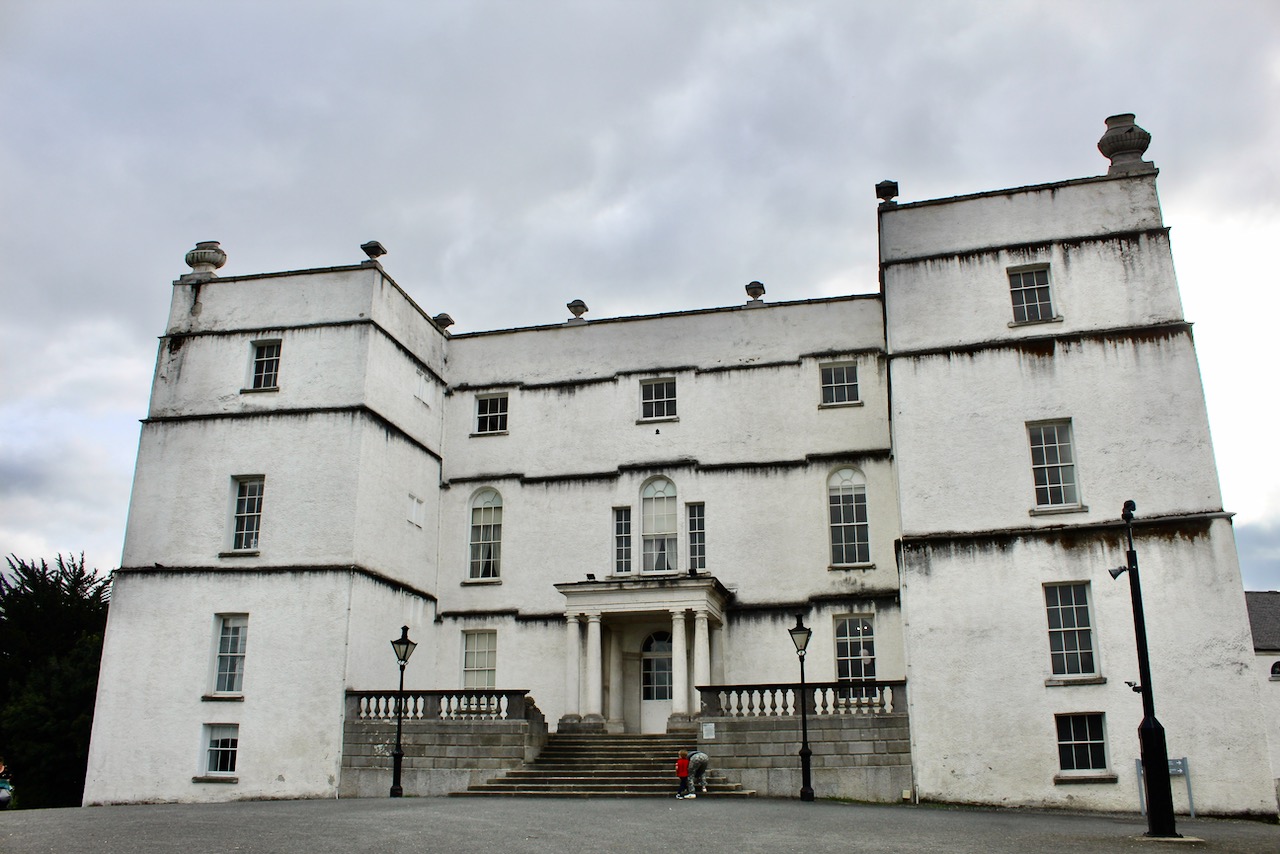
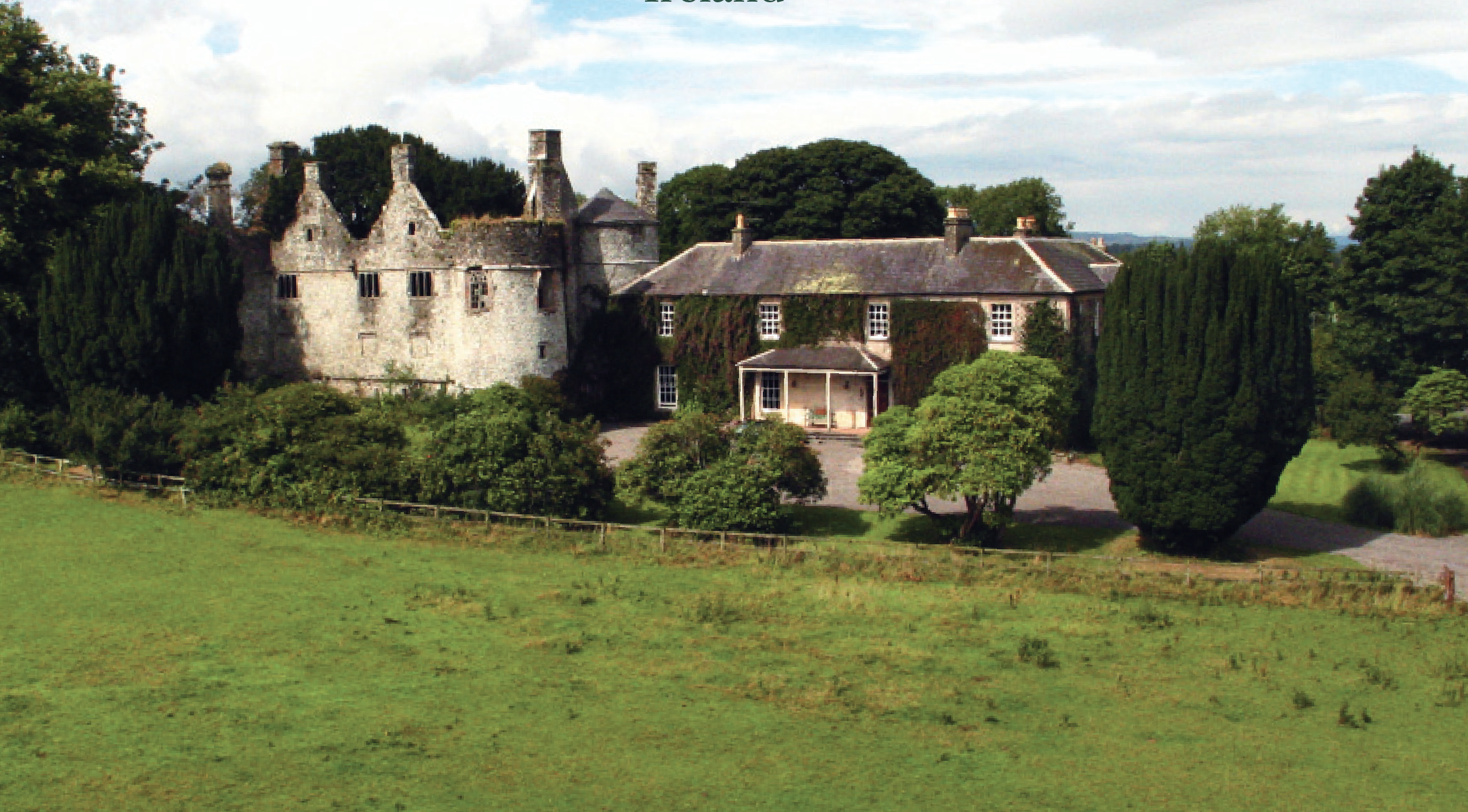
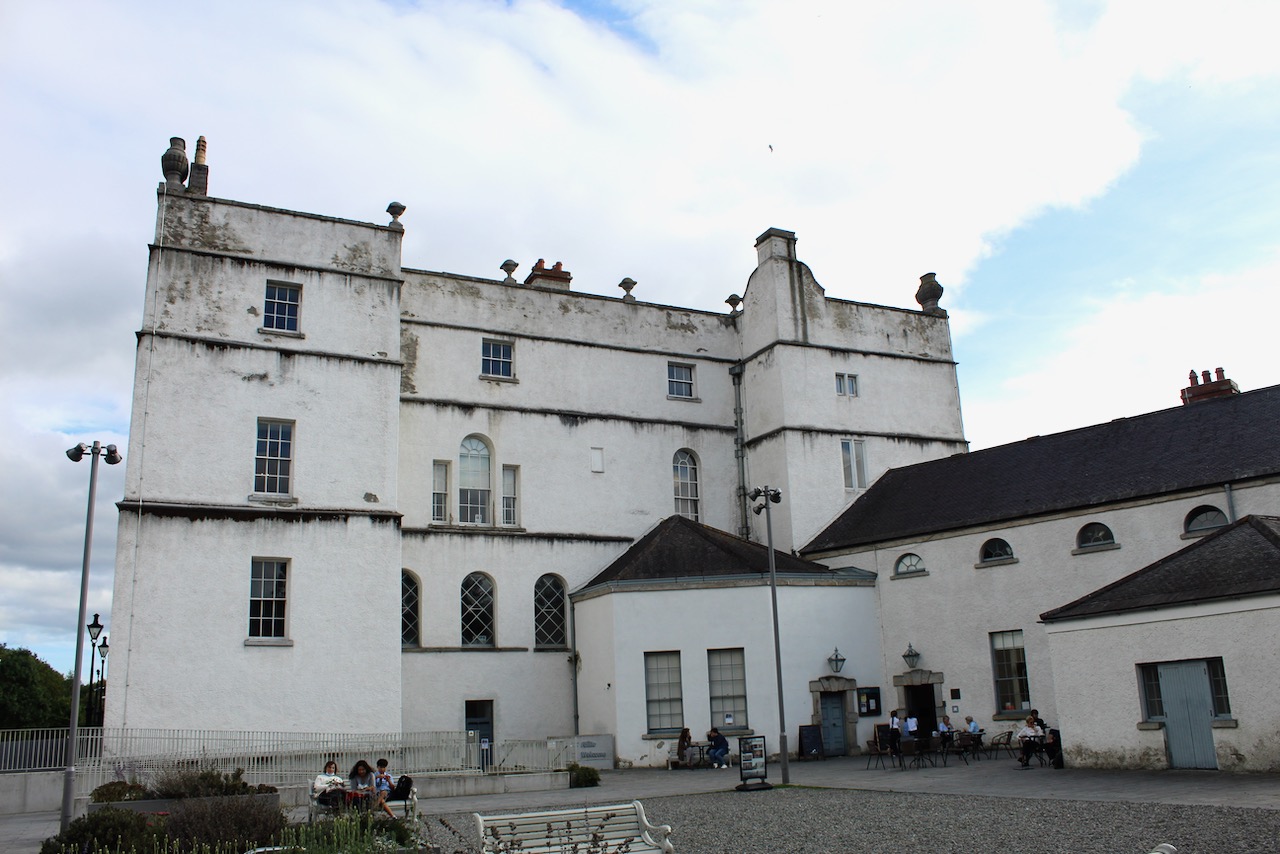
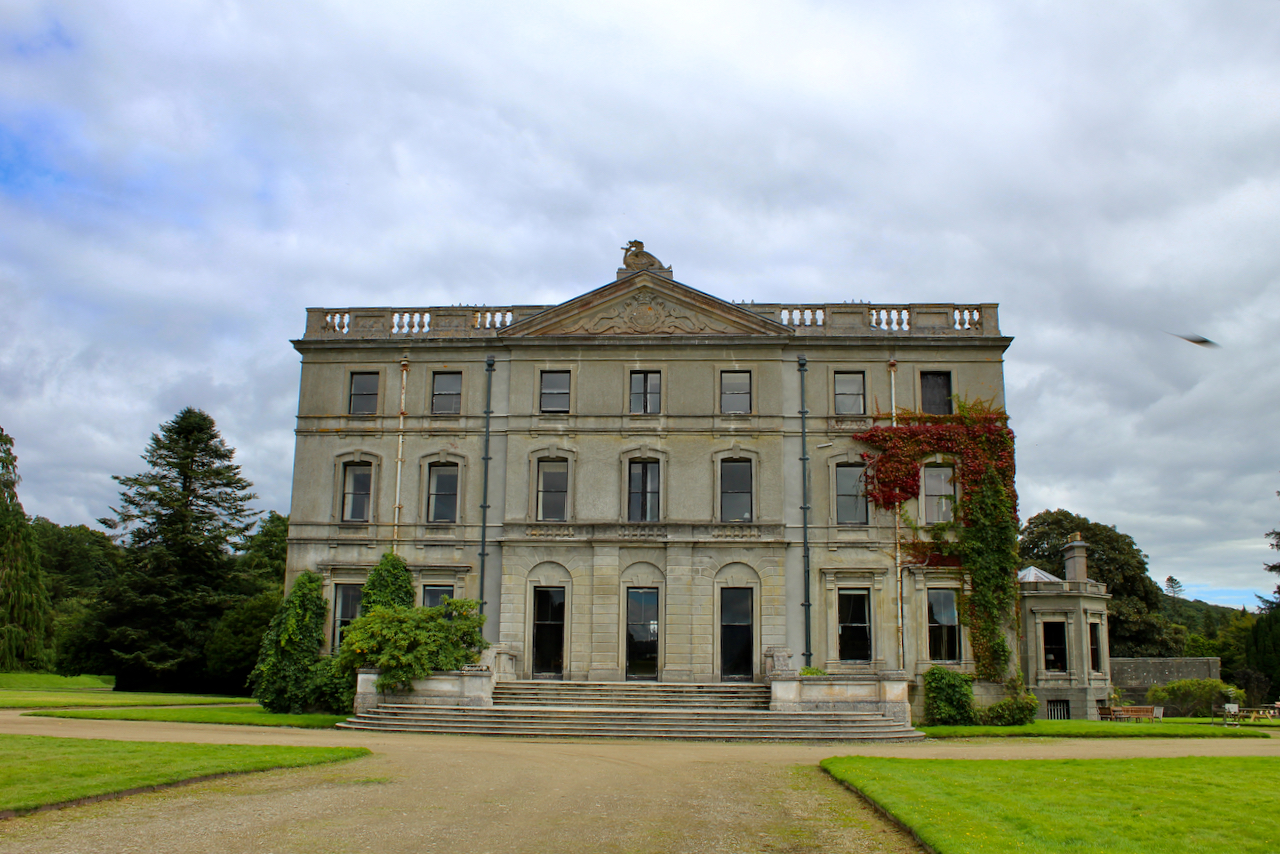
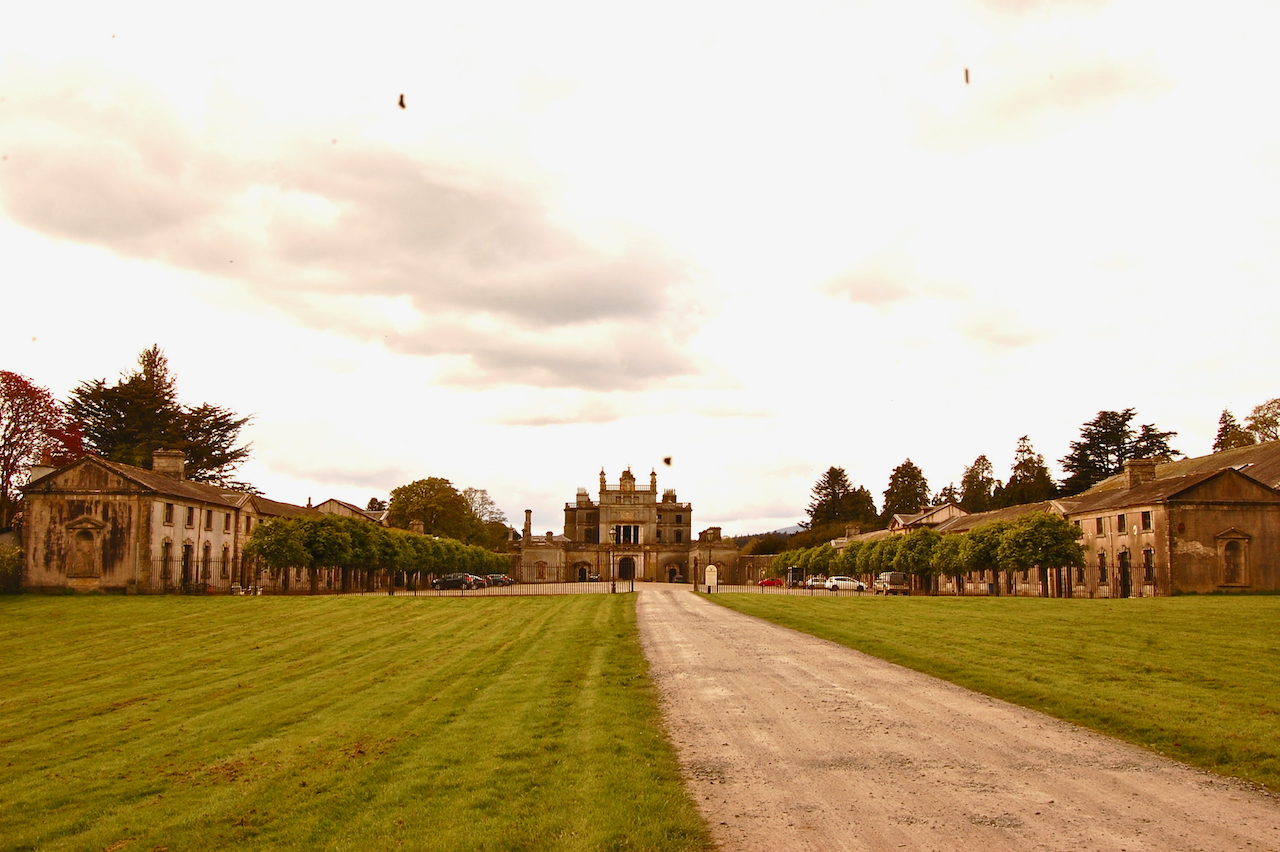
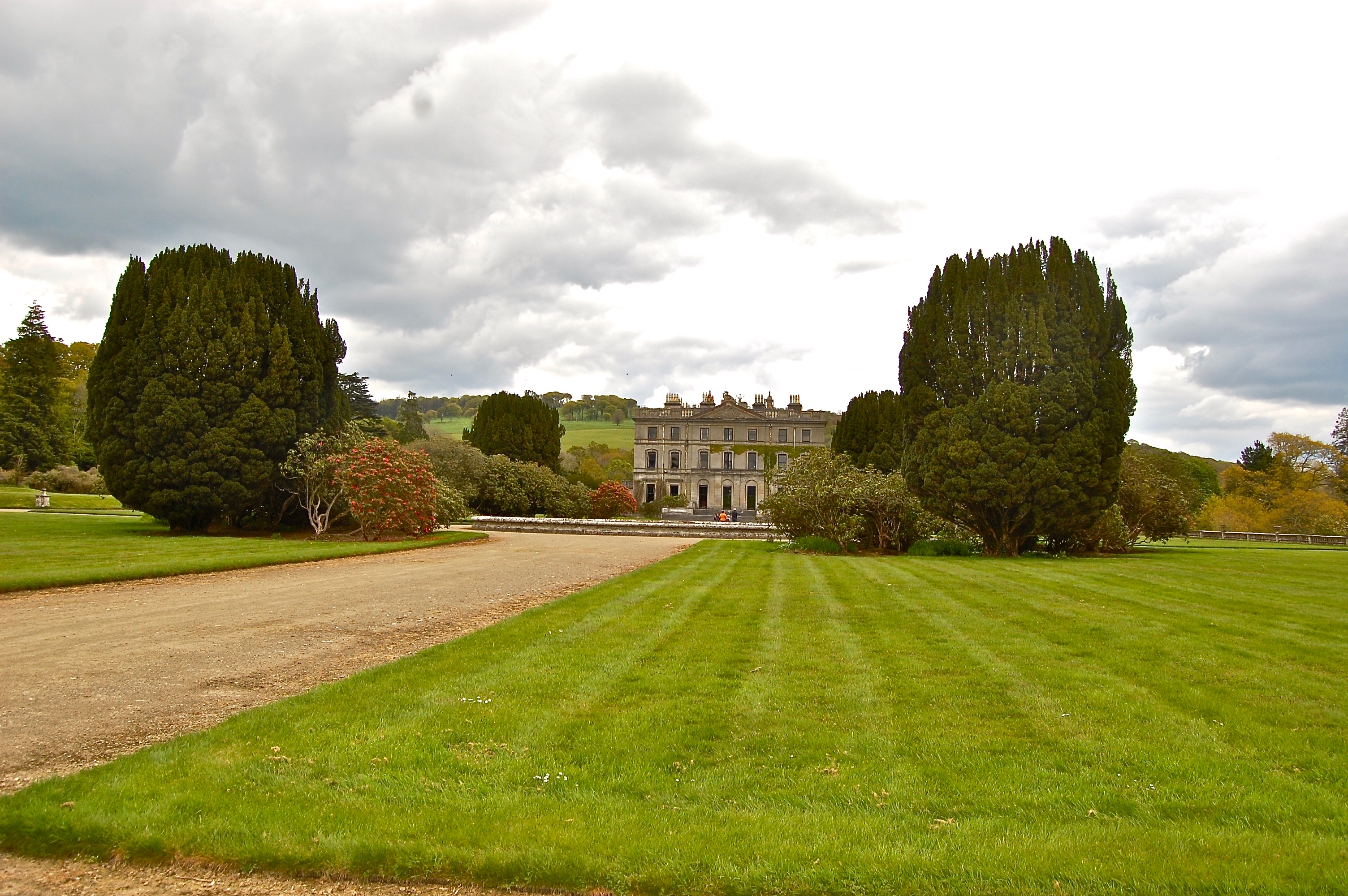
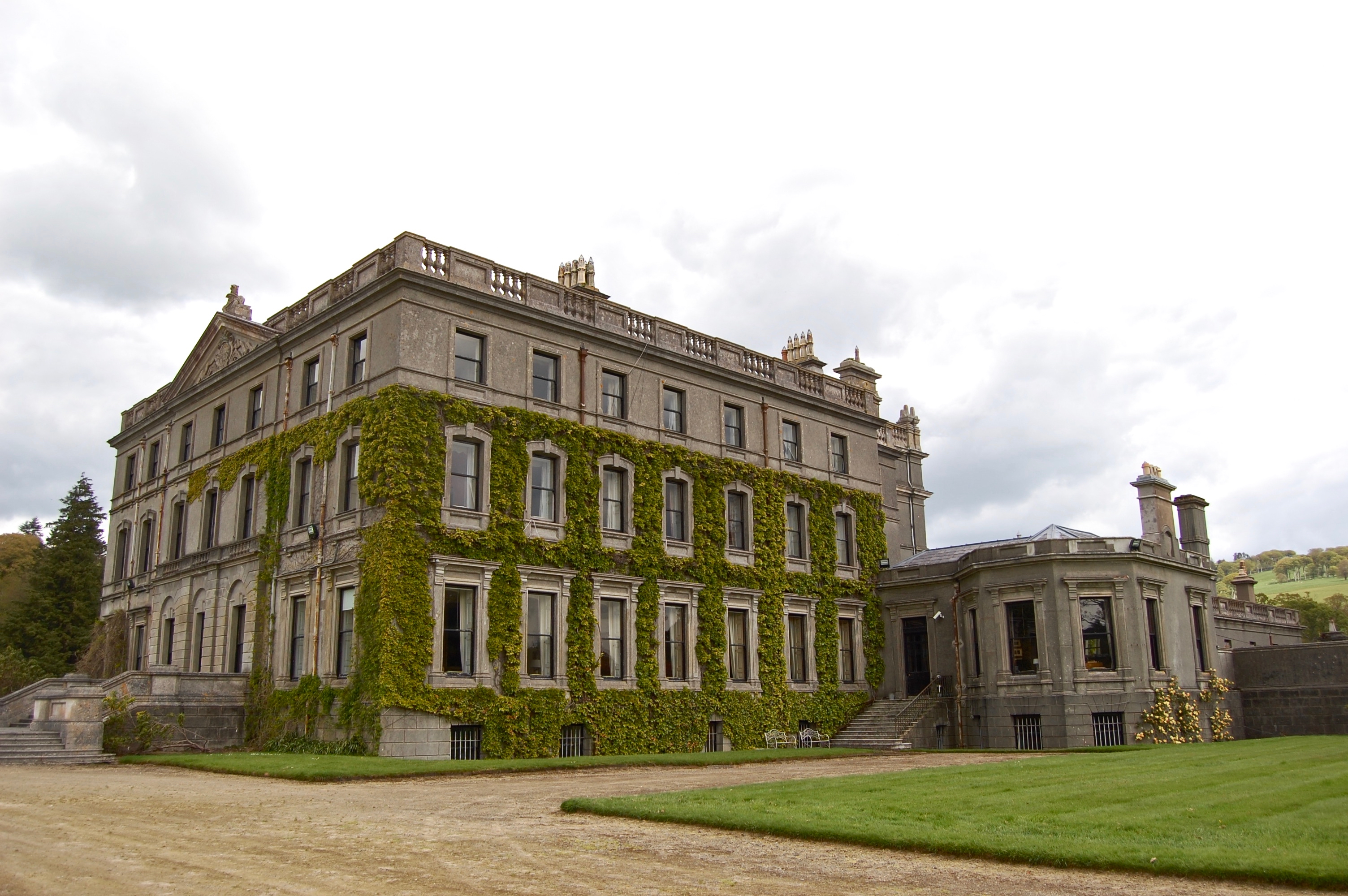
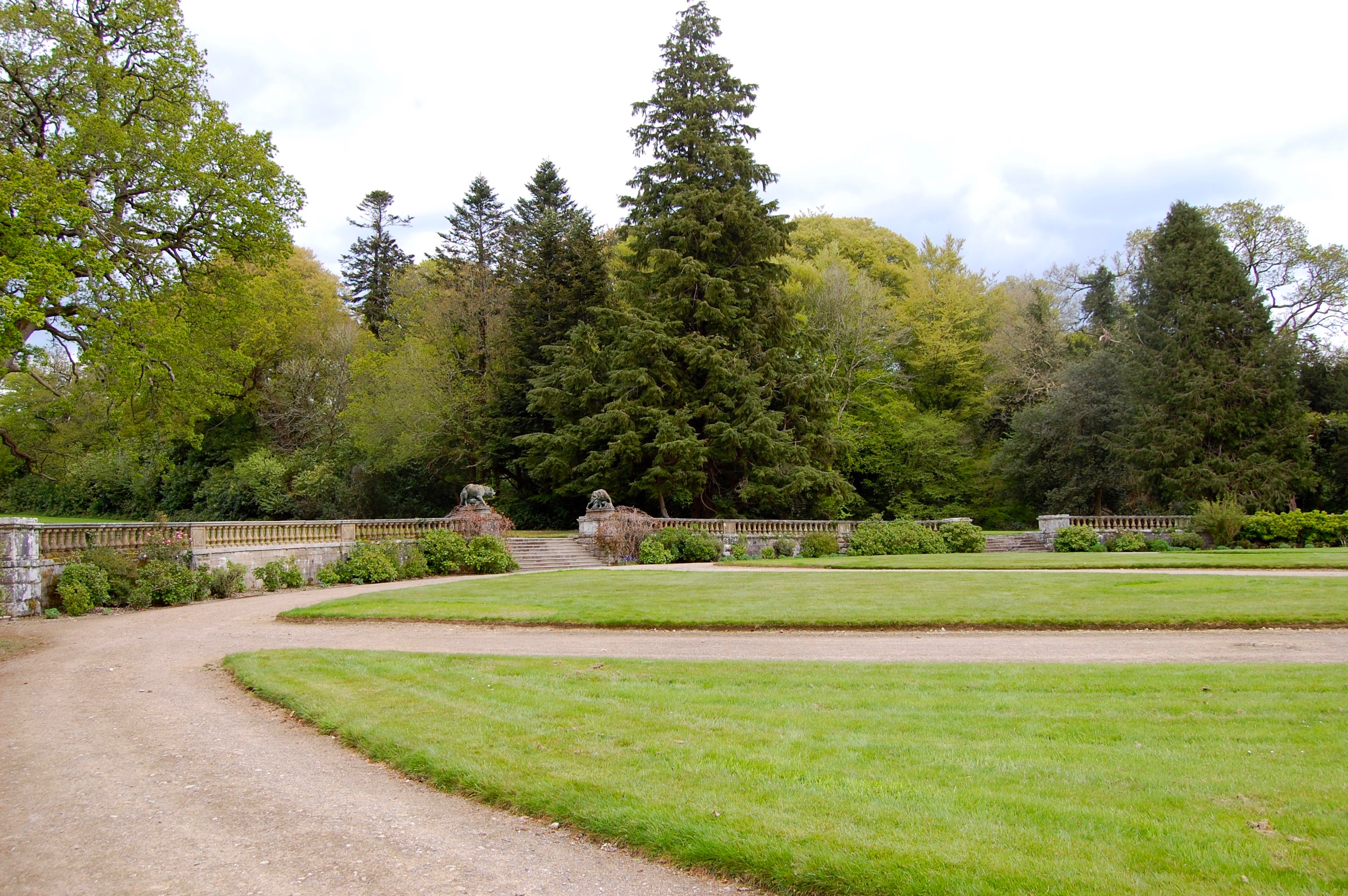
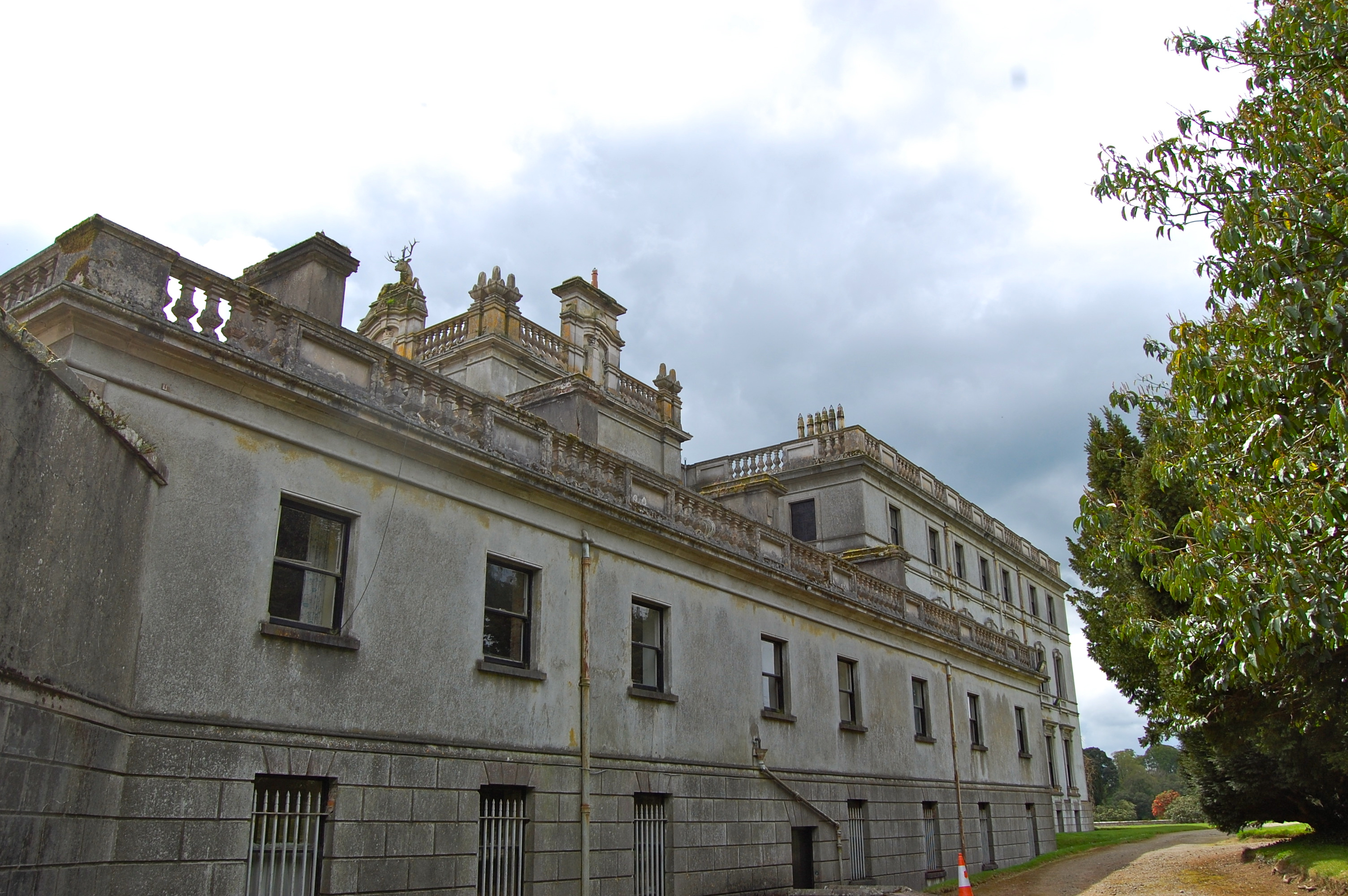
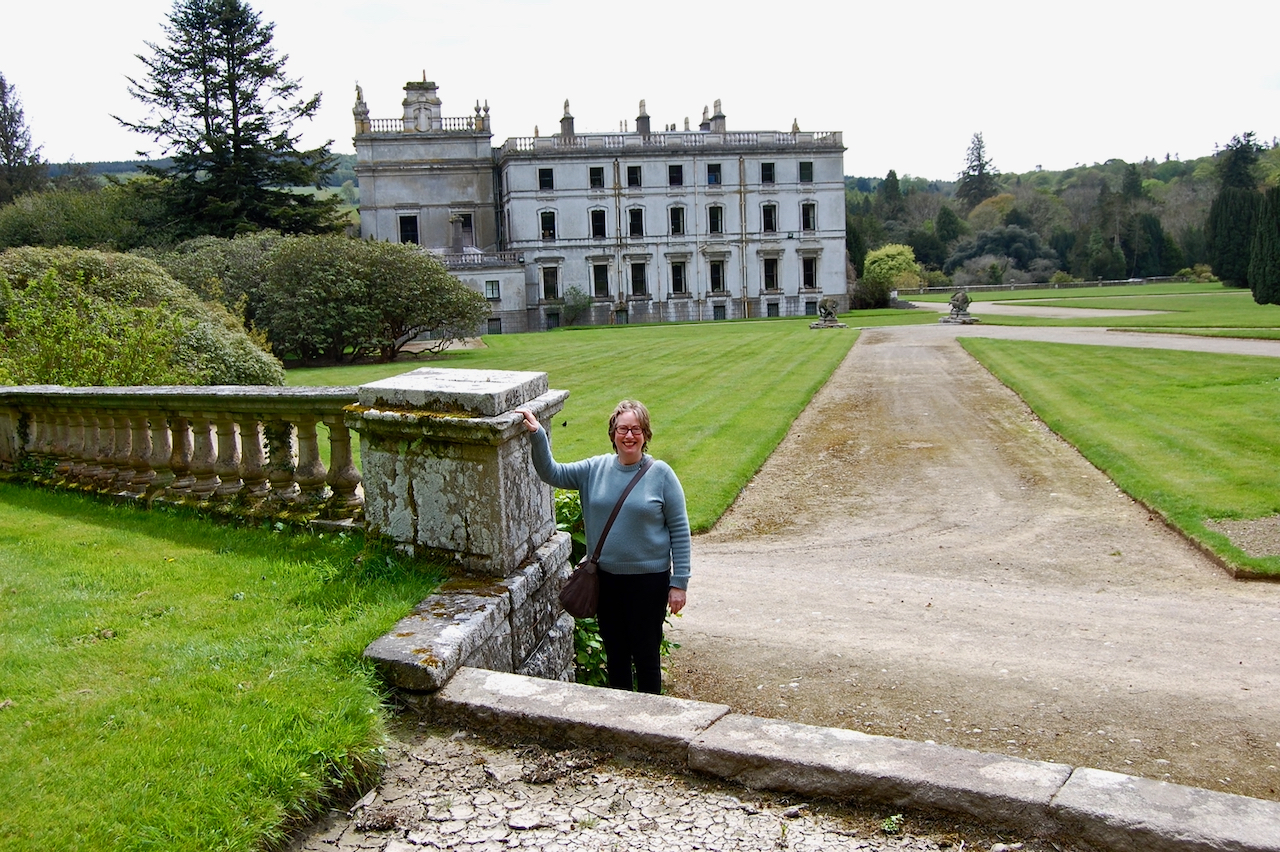
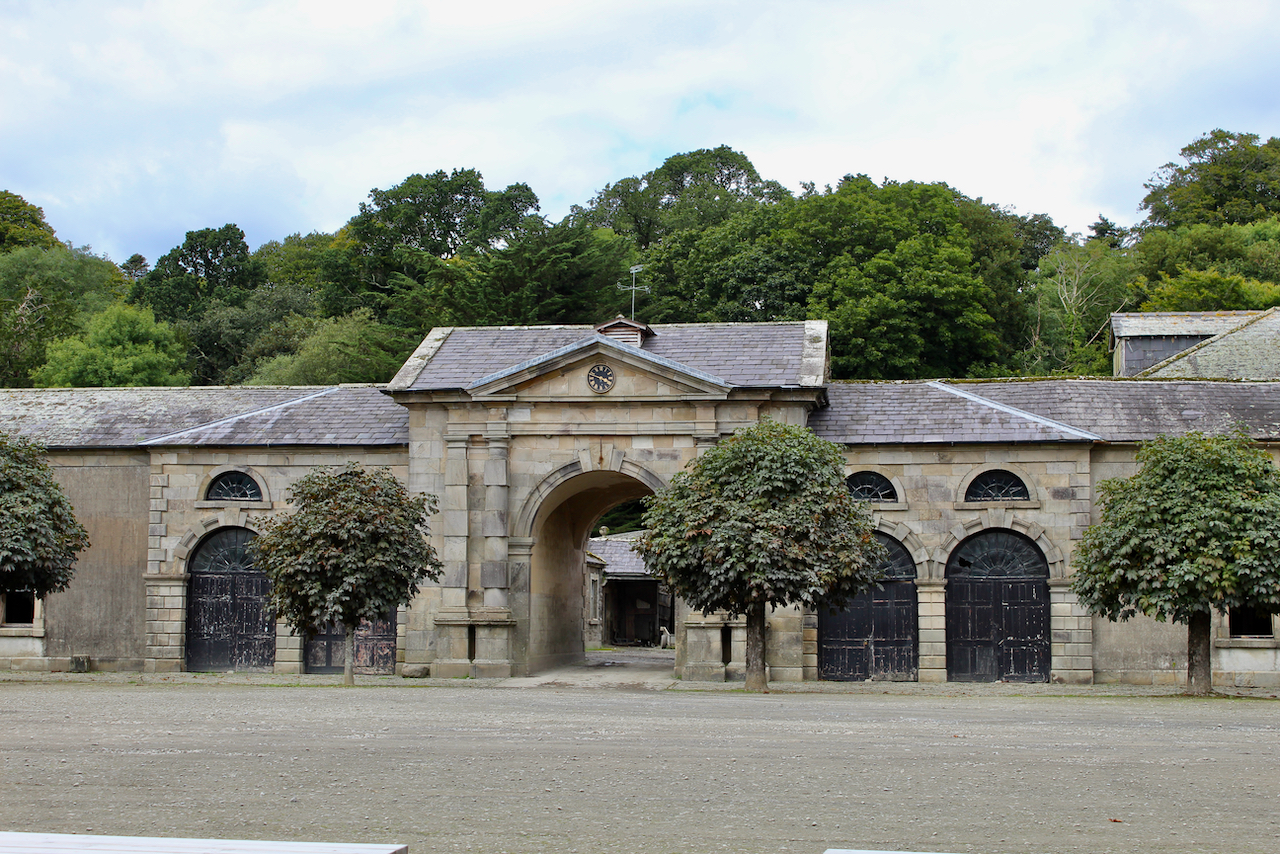
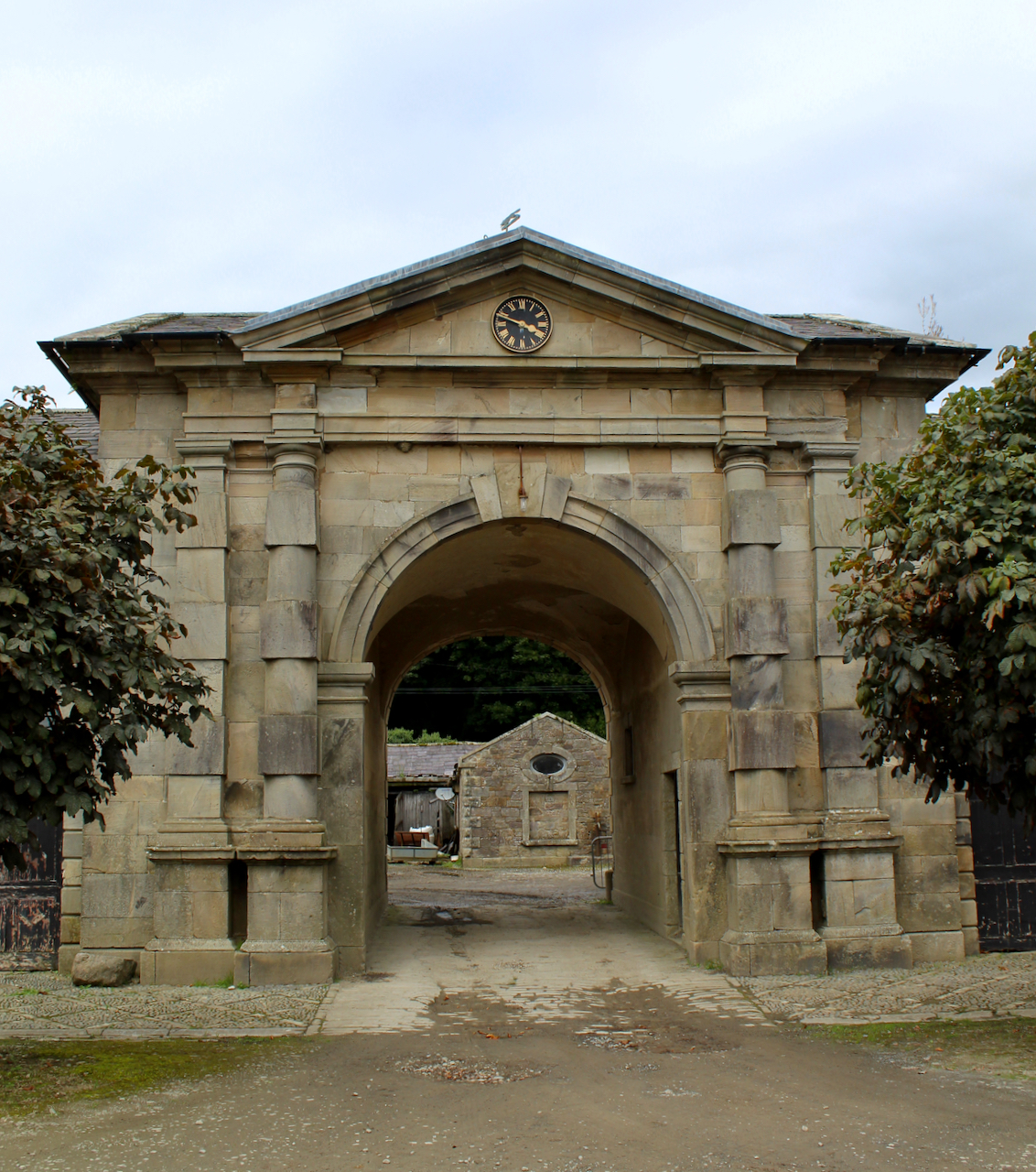
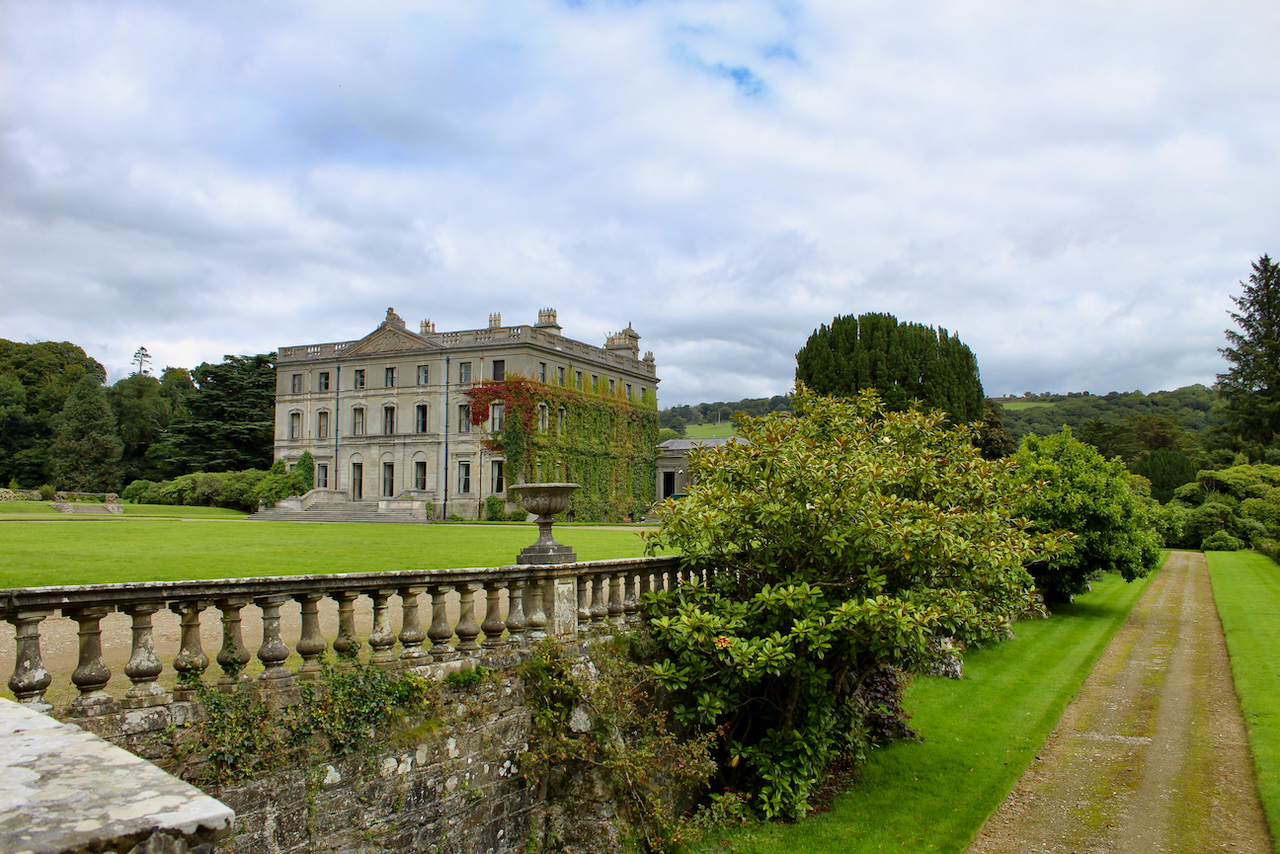
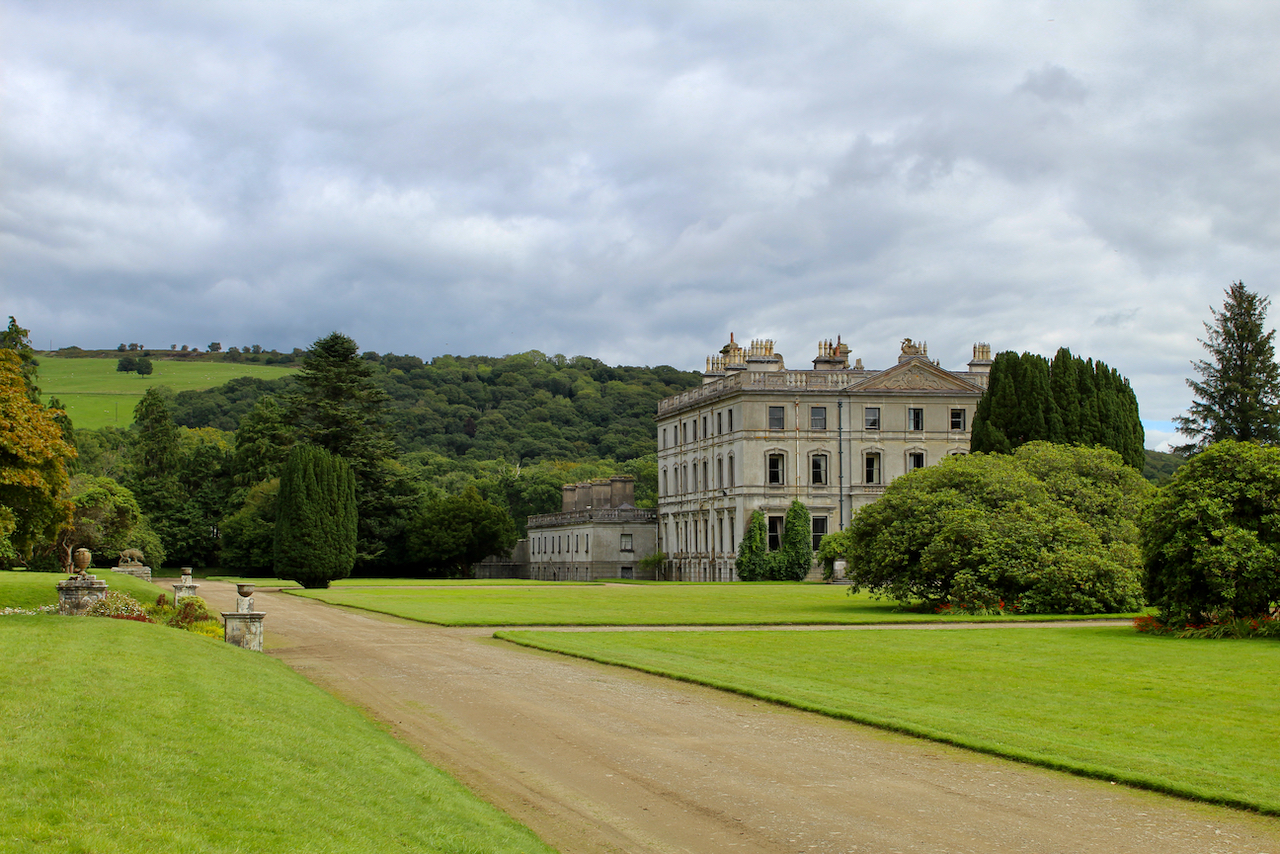
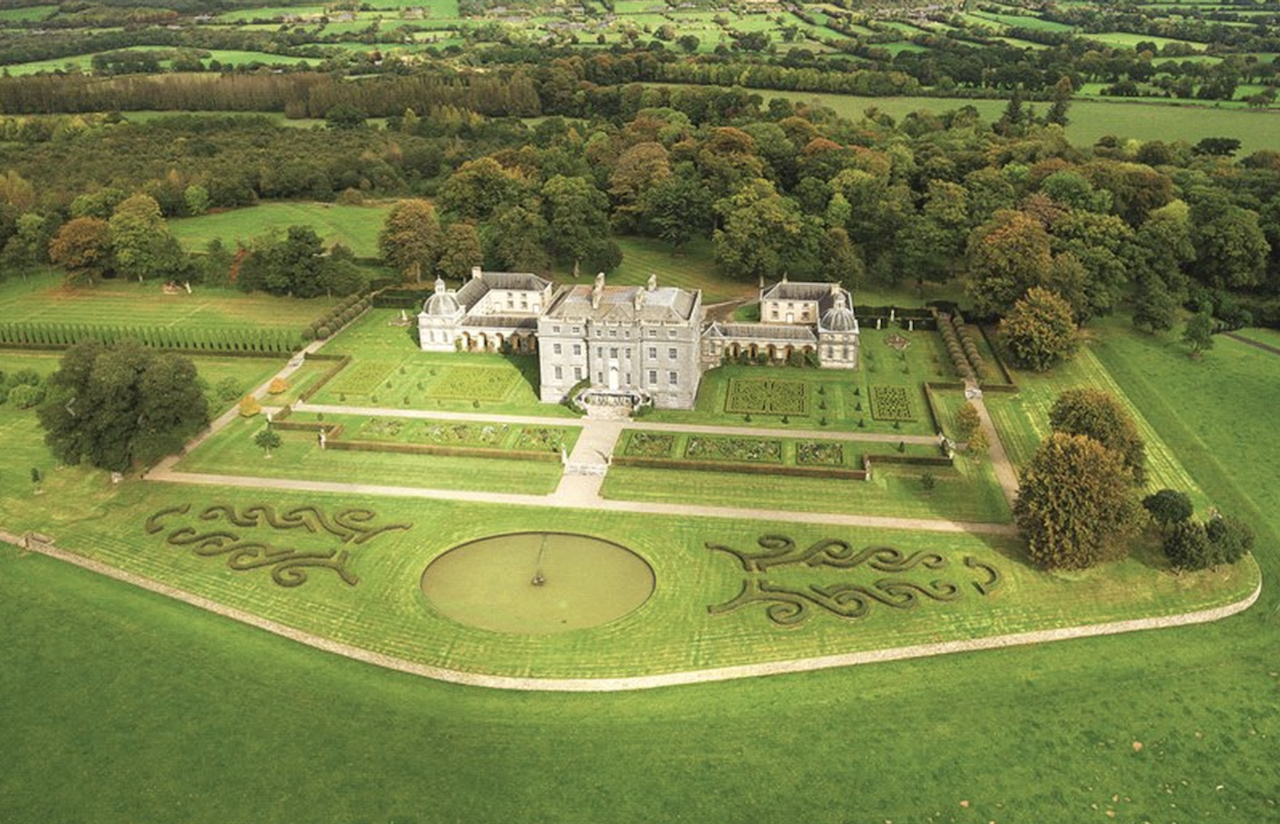
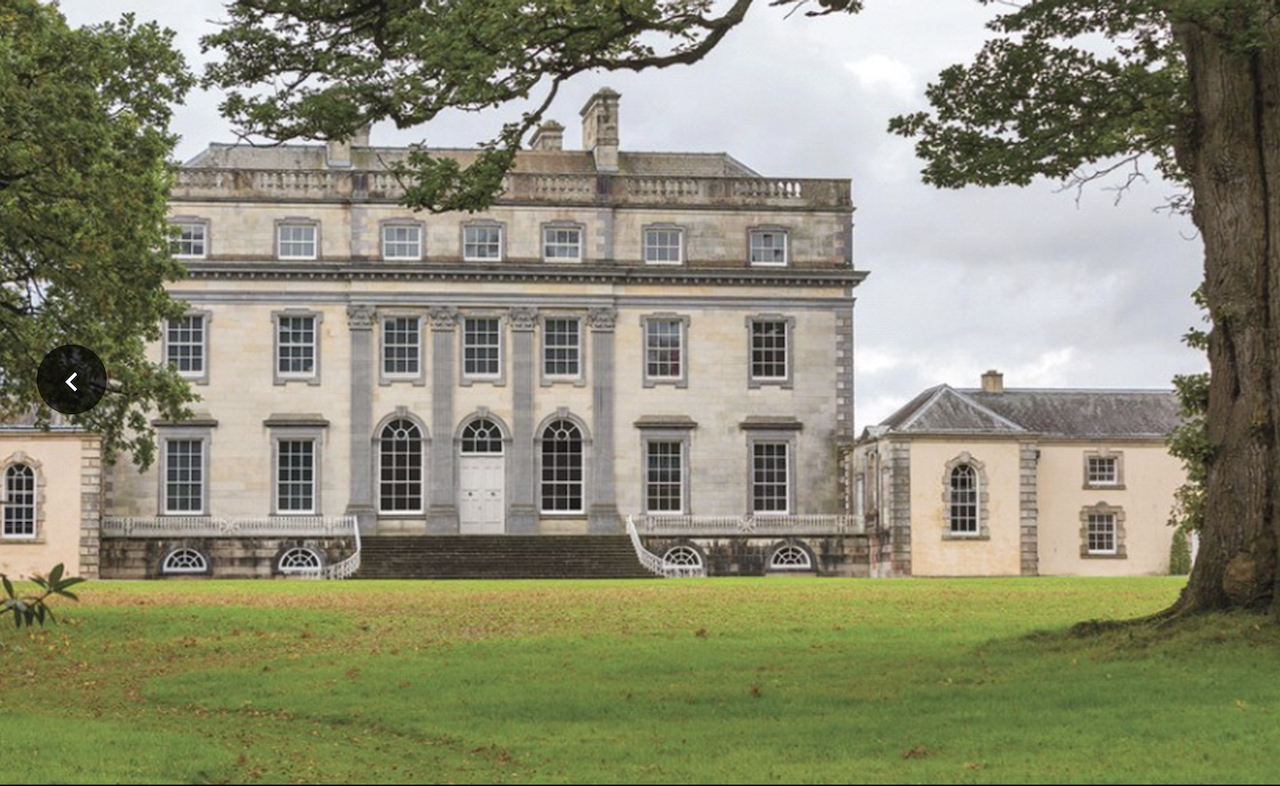
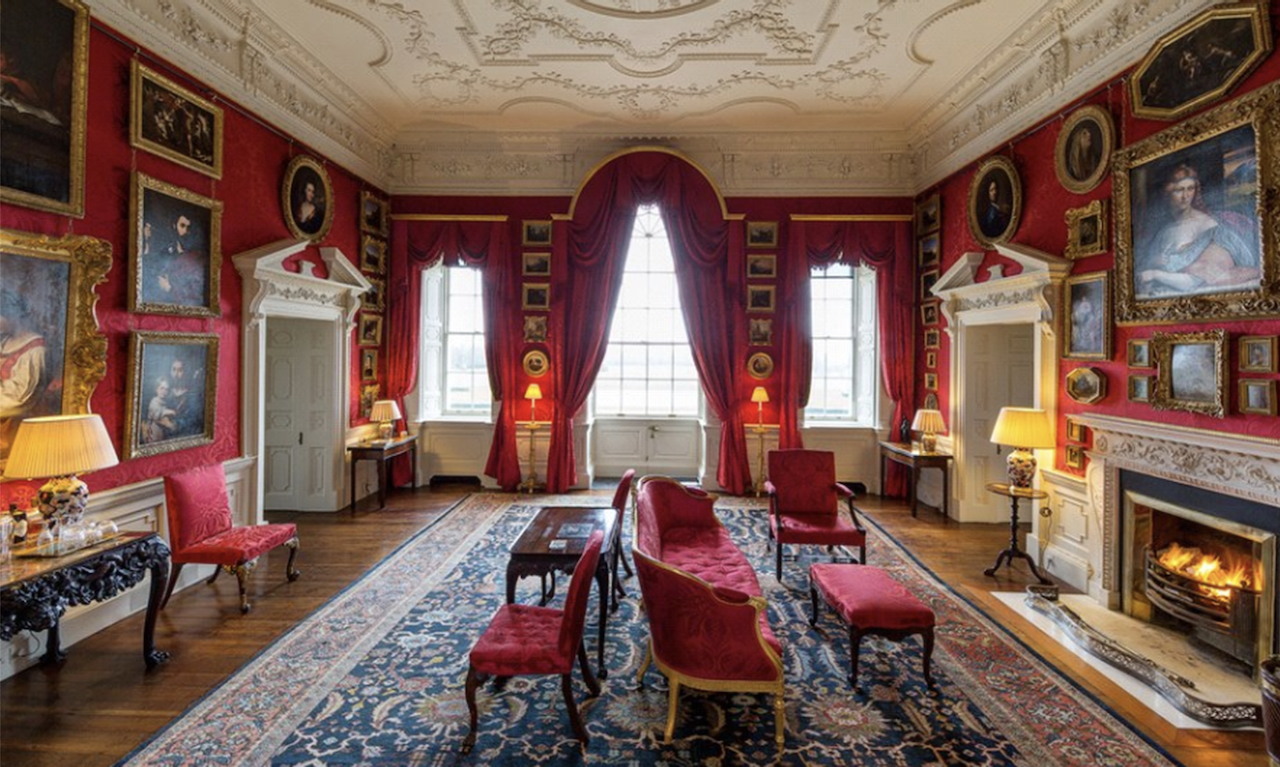
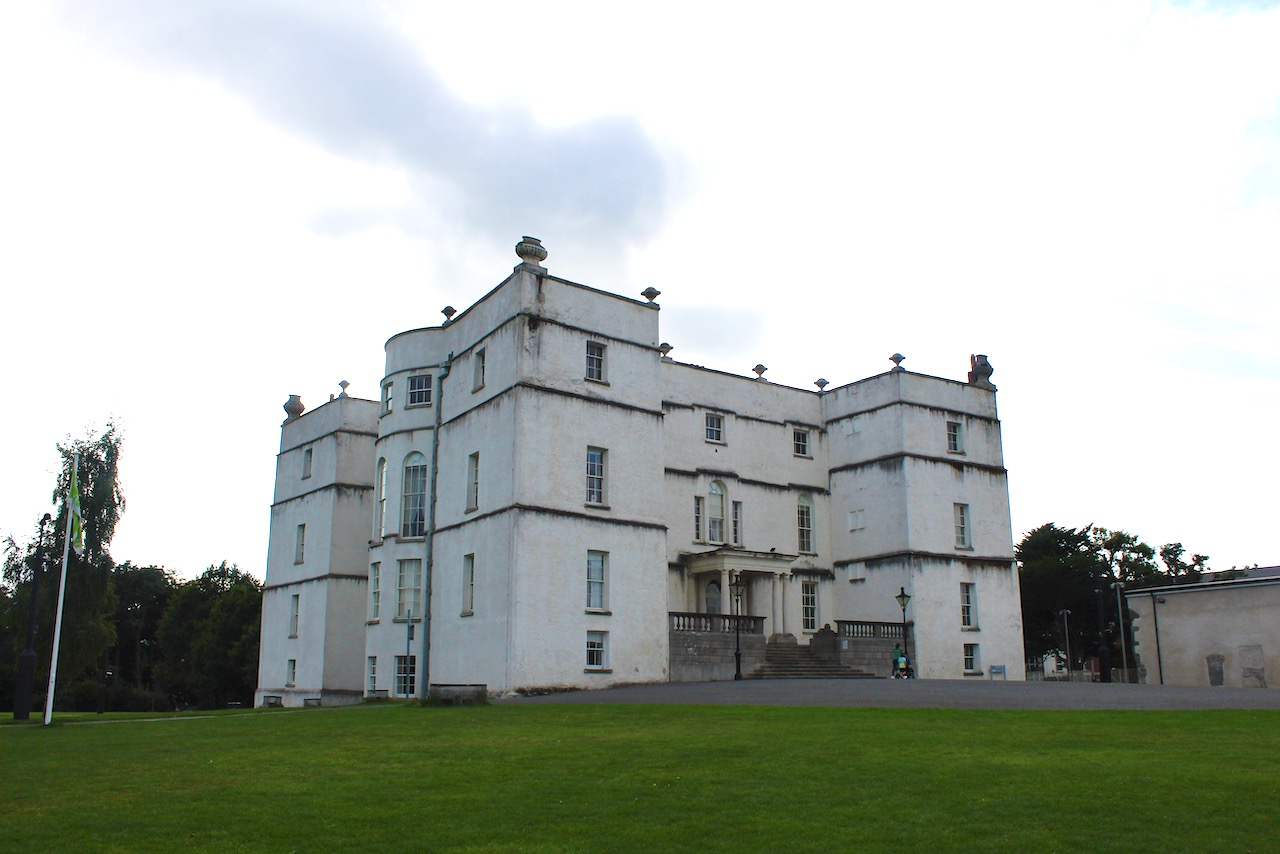
Rathfarnham Castle, Dublin, September 2021. Photograph © Jennifer Winder-Baggot, www.irishhistorichouses.com
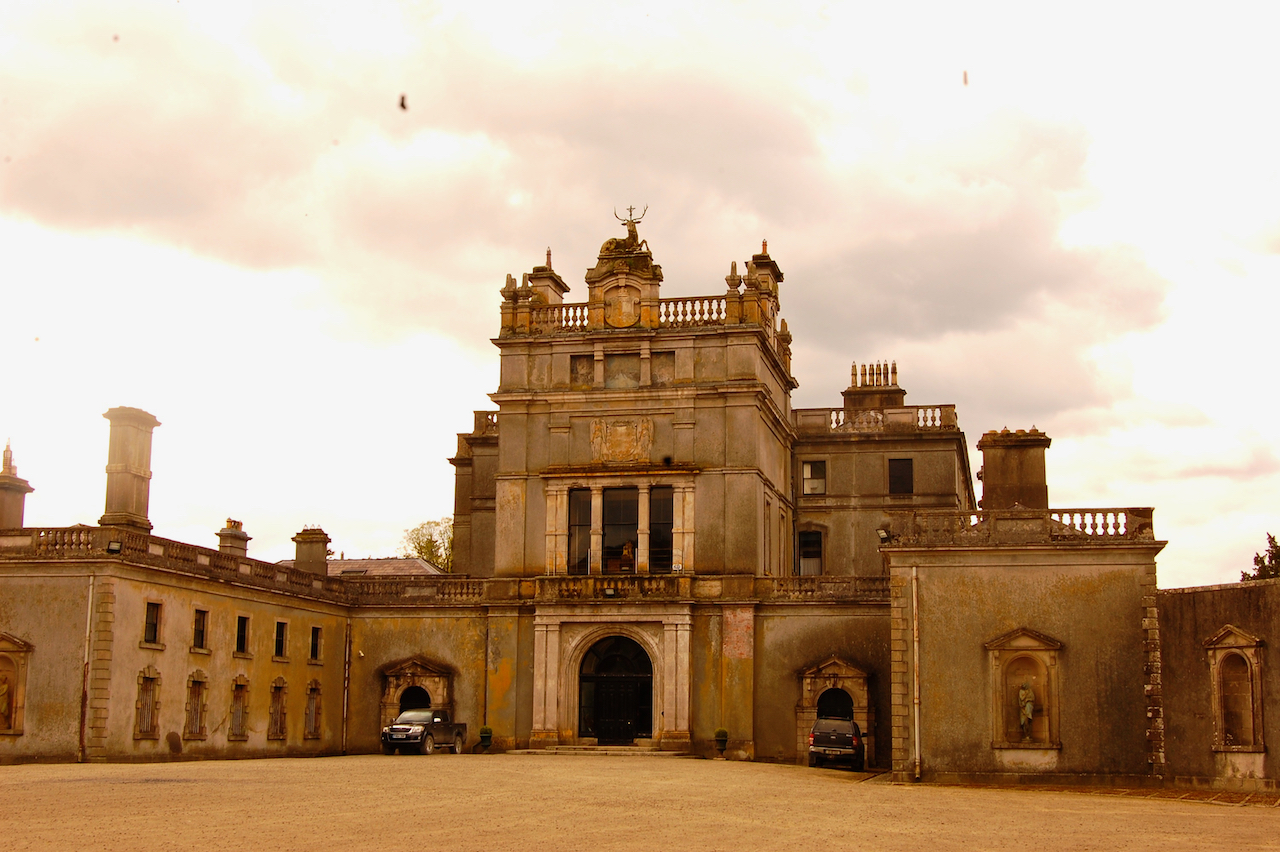
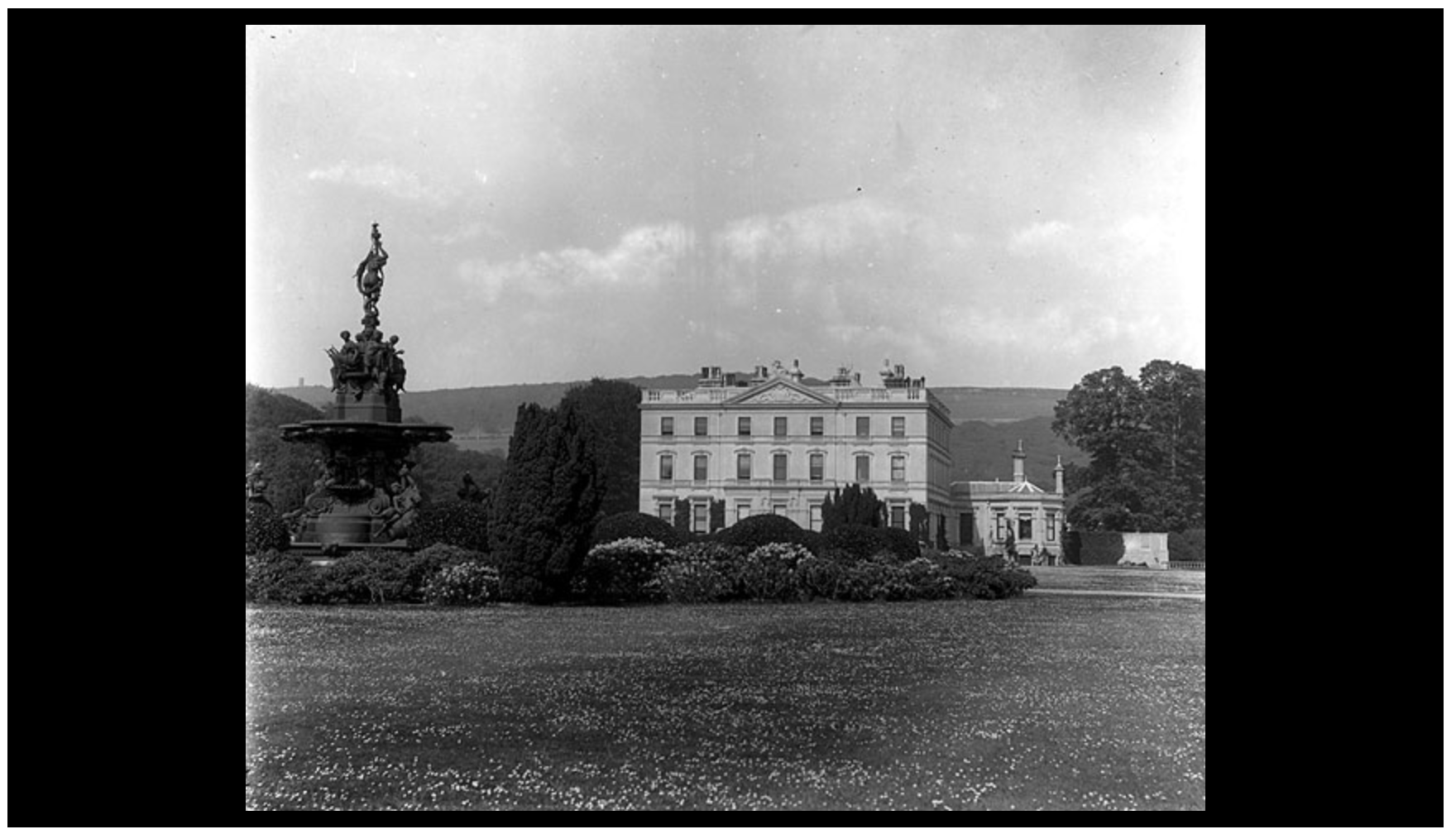
Rathfarnham Castle, County Dublin, photograph by Robert French, (between ca. 1865-1914), Lawrence Photograph Collection, National Library of Ireland.

General Enquiries: 01 493 9462, rathfarnhamcastle@opw.ie

Rathfarnham Castle is a wonderful property to visit and I suspect, much underappreciated! It is one of the oldest surviving residences in Ireland, and has a variety of impressive ceilings. It is also another property which was inhabited by the Jesuits at one time, as was Emo Court in County Laois. Although they no longer own either of these properties, they still run schools in the former Castle Browne in County Kildare (now Clongowes Wood College) and Belvedere House in Dublin. They certainly knew how to pick impressive properties! [1]

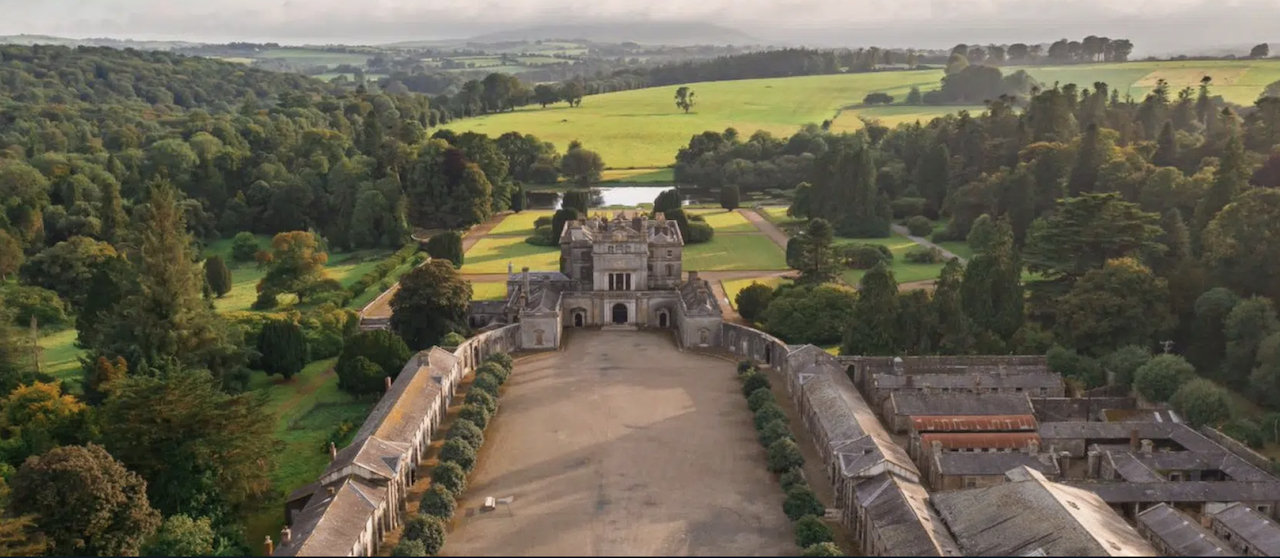
Rathfarnham Castle was built around 1583 for Adam Loftus (1533-1605), a clergyman originally from Yorkshire, who rose to the position of Archbishop of Dublin and Lord Chancellor of Ireland. Its position outside the city of Dublin made it vulnerable to attack, so it was built as a fortified house, with four flanker towers shaped to give maximum visibility of the surrounding landscape. The OPW website tells us:

Loftus wanted the Castle to be a grand and impressive home which would reflect his high status in Irish society. He also needed it to be easily defended against attack from hostile Irish families such as the O’Byrnes based in the mountains to the south. The design was radically modern for the time and based on recent continental thinking about defensive architecture. The angled bastion towers located at each corner of the building were equipped with musket loops which allowed a garrison of soldiers to defend all approaches to the castle.”
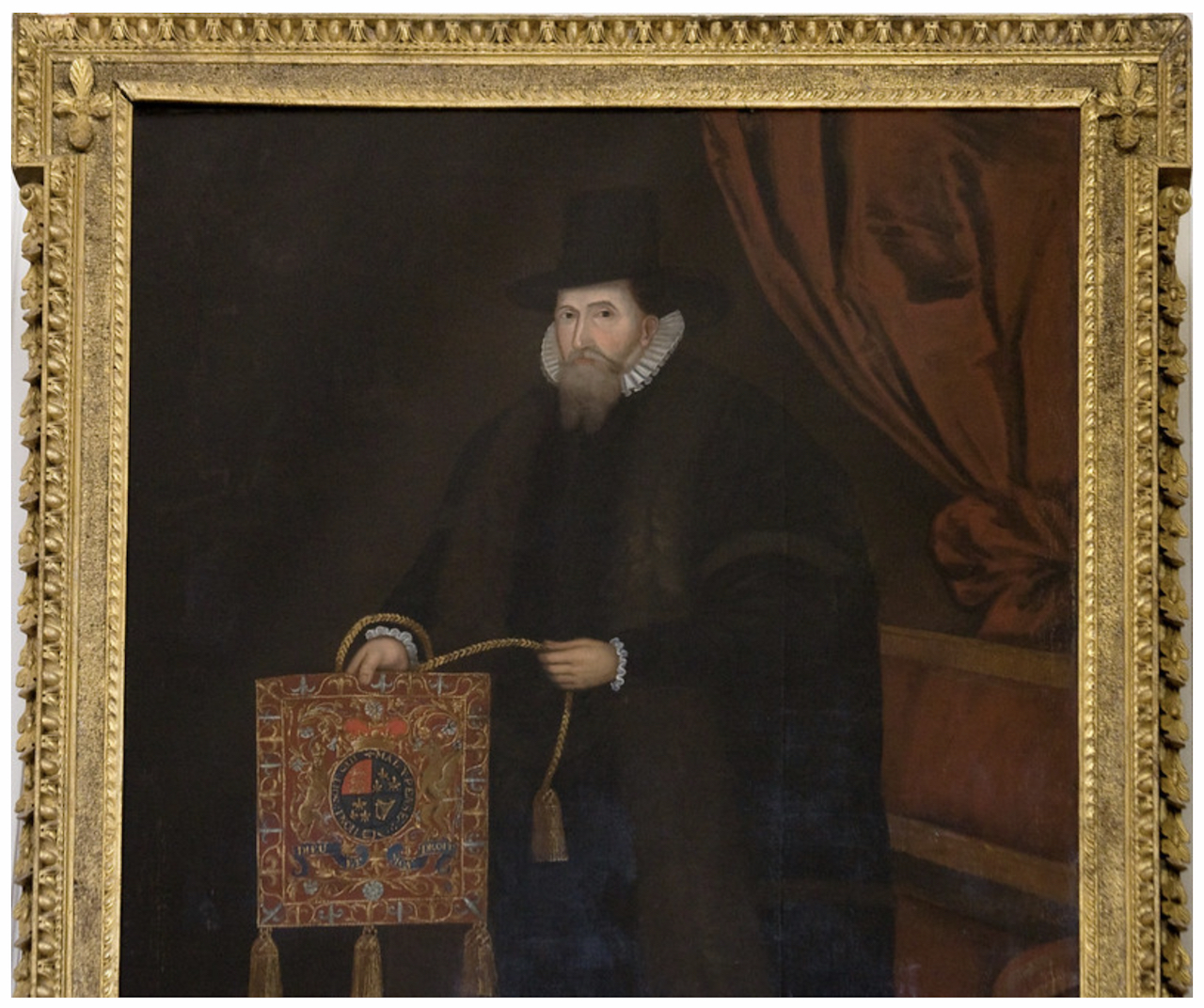
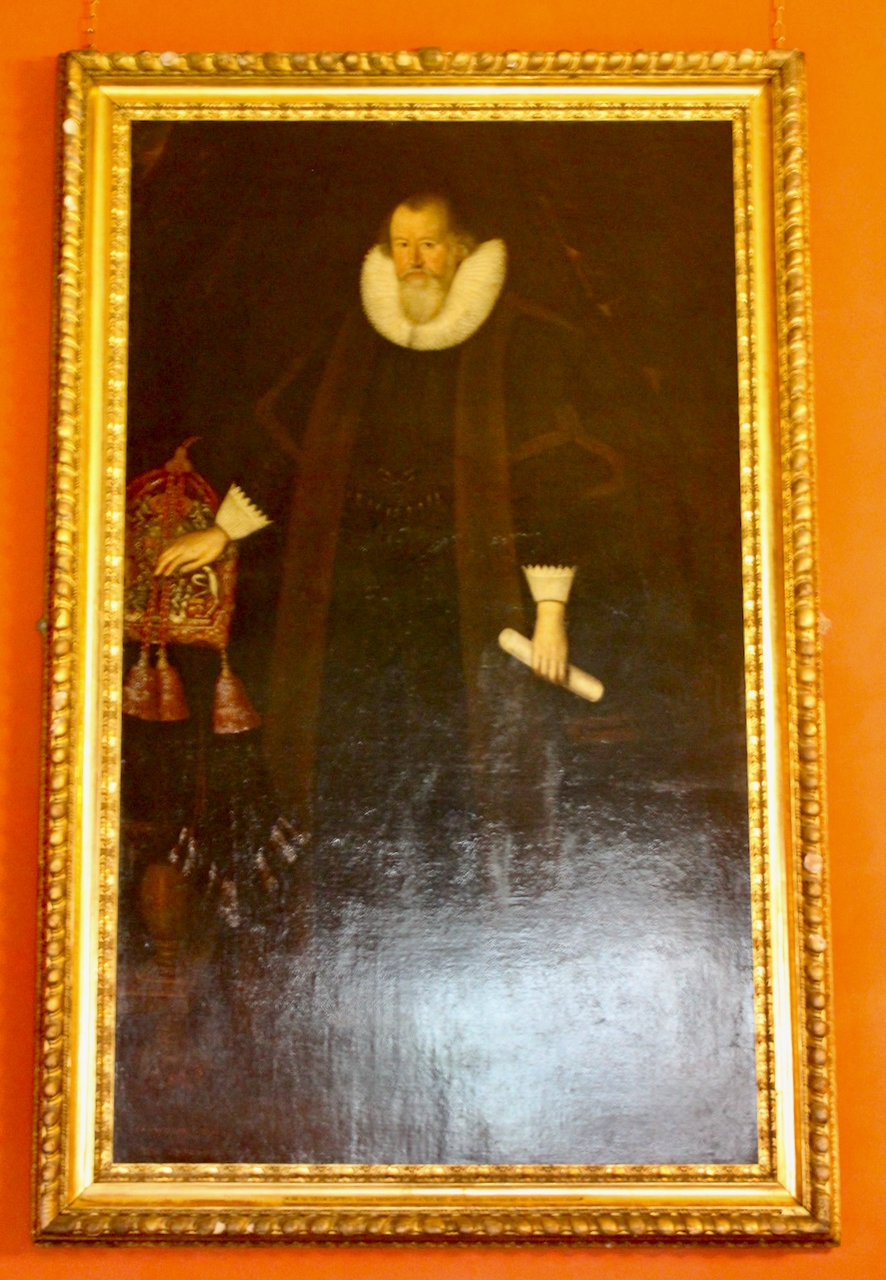
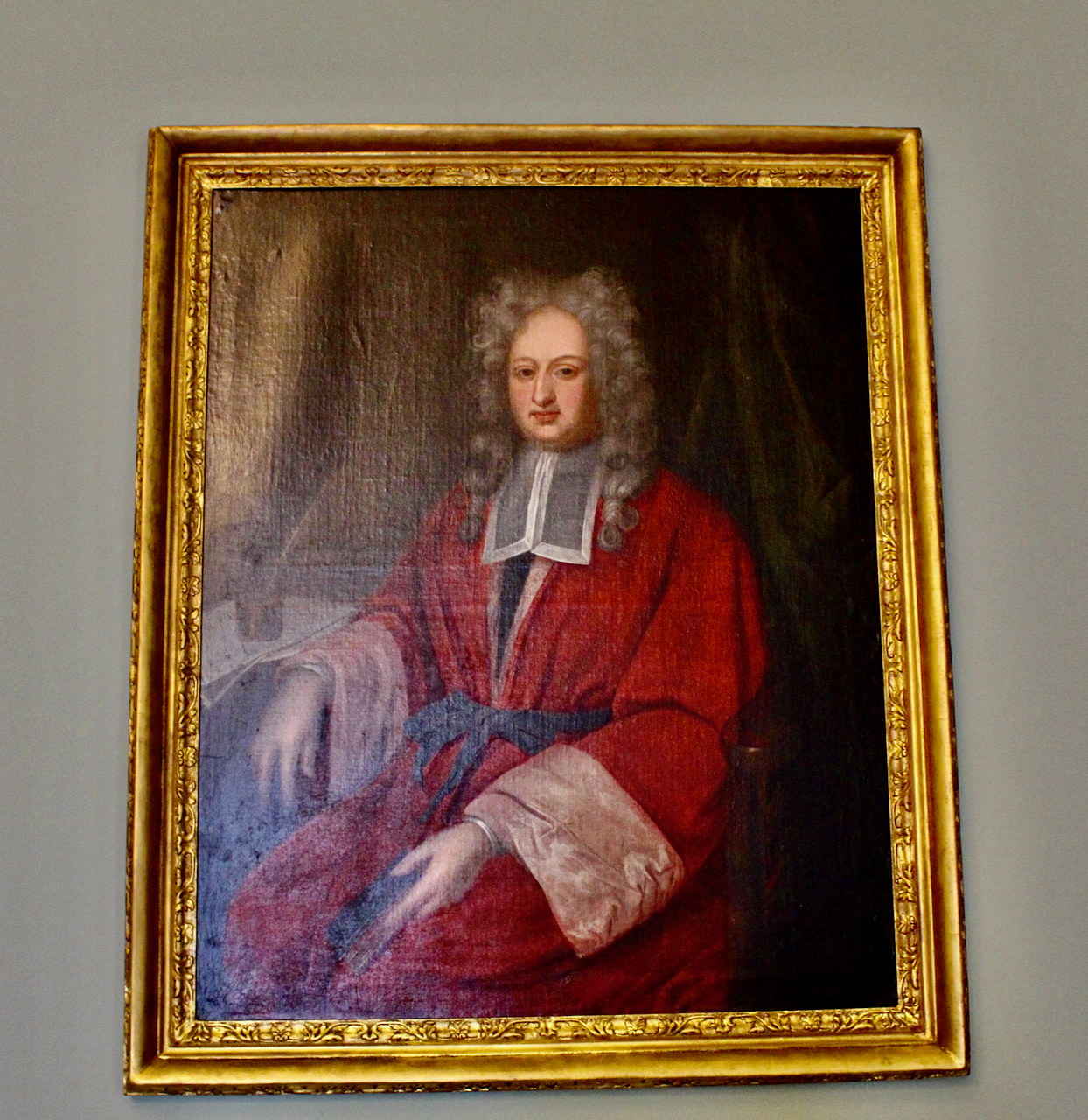
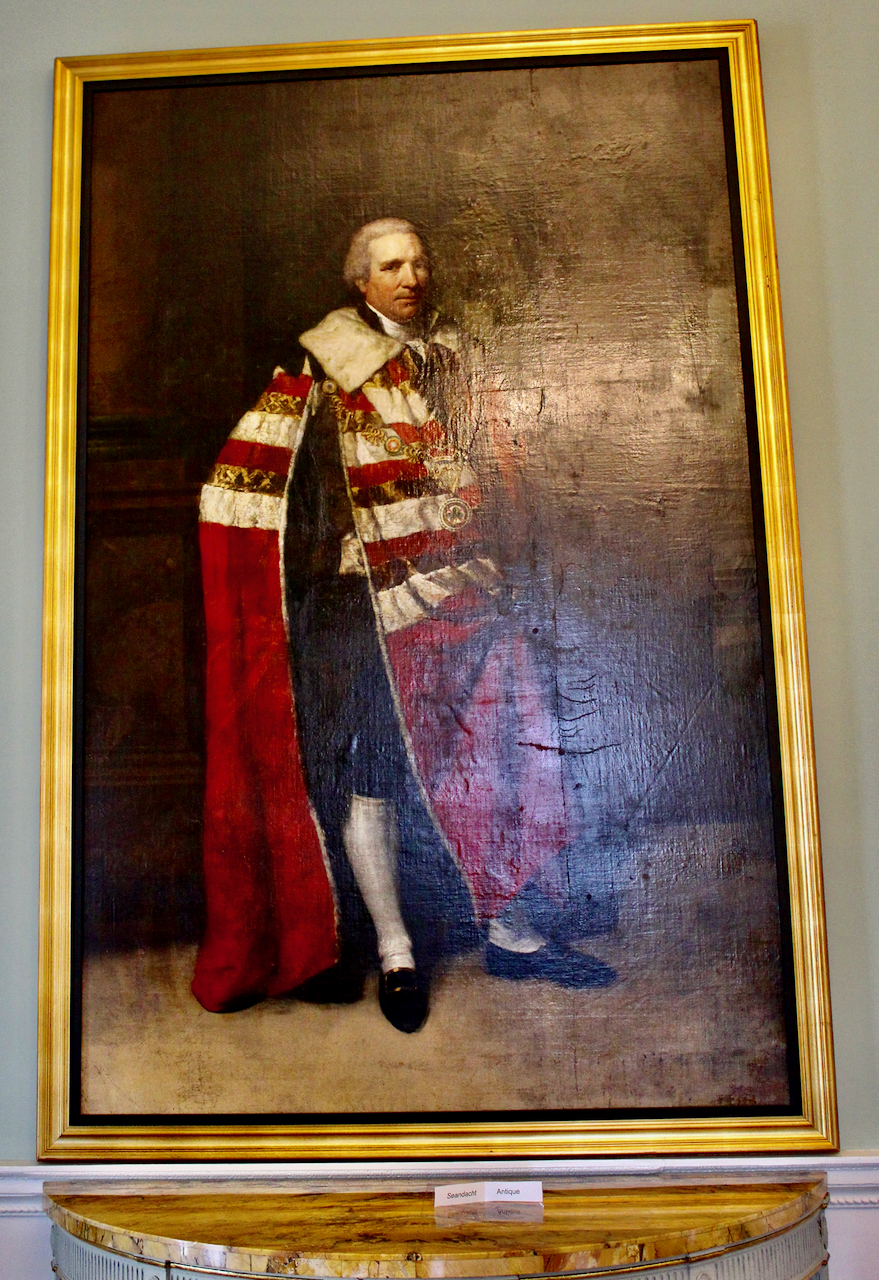
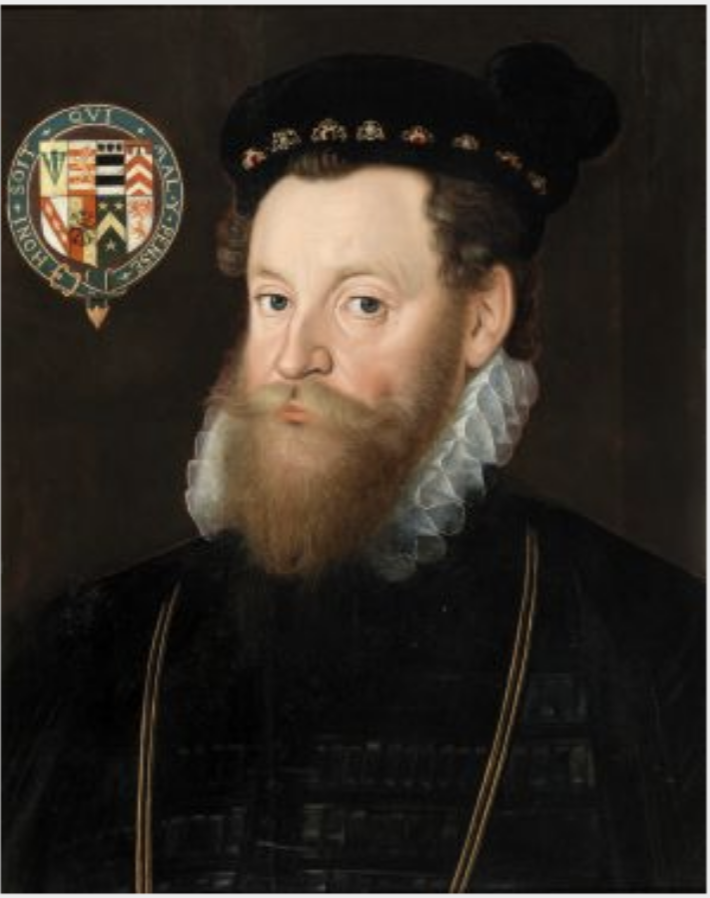
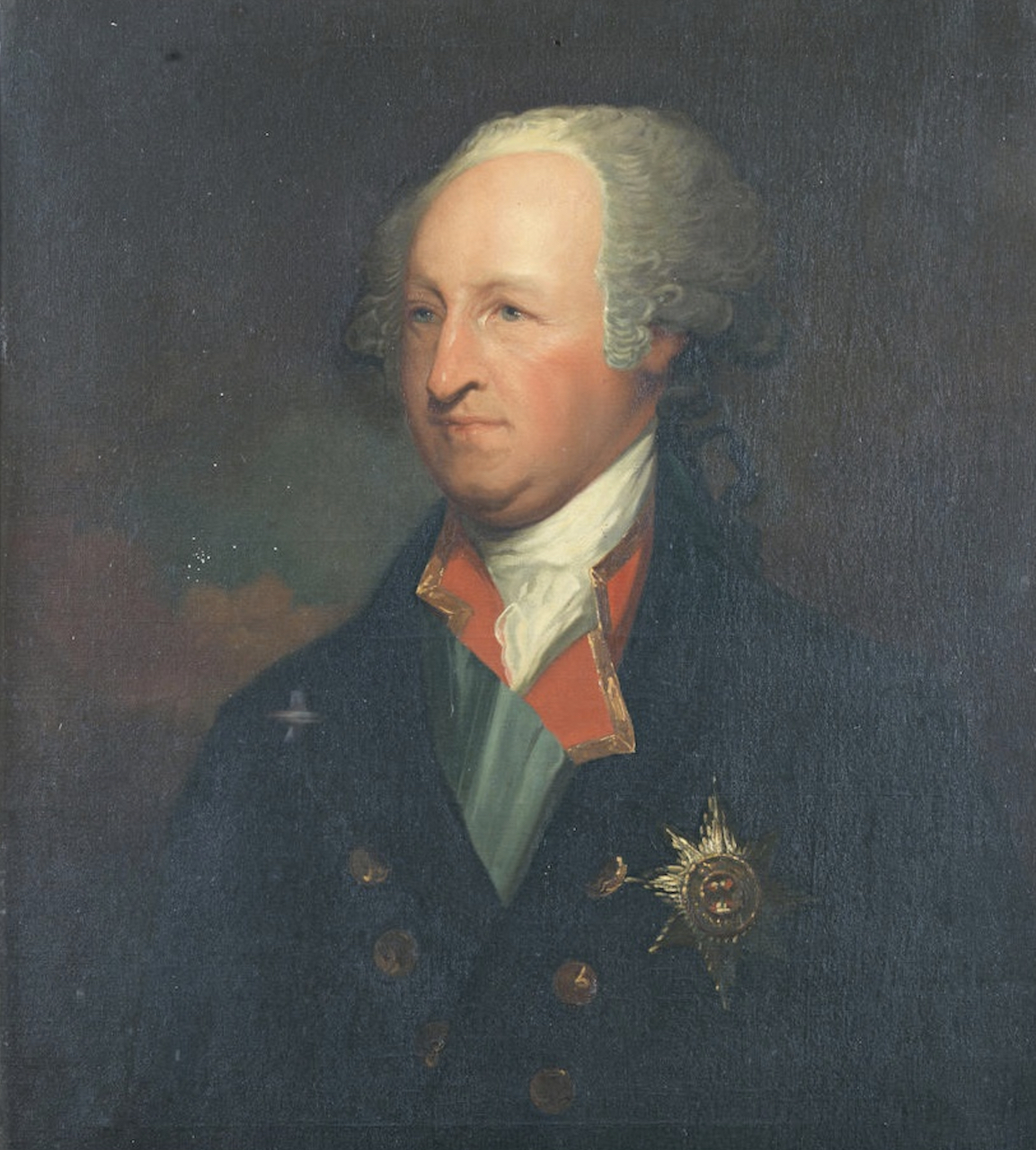
Archbishop-Chancellor Adam Loftus (1533-1605). The portrait is in Trinity College Dublin, as he was the first Provost. He was also Keeper of the Great Seal of Ireland, and he is here holding the embroidered purse which held the seal.
Adam Loftus (1533-1605), Lord Chancellor, 1619. Painting hangs in Malahide Castle, courtesy of National Museum of Ireland.
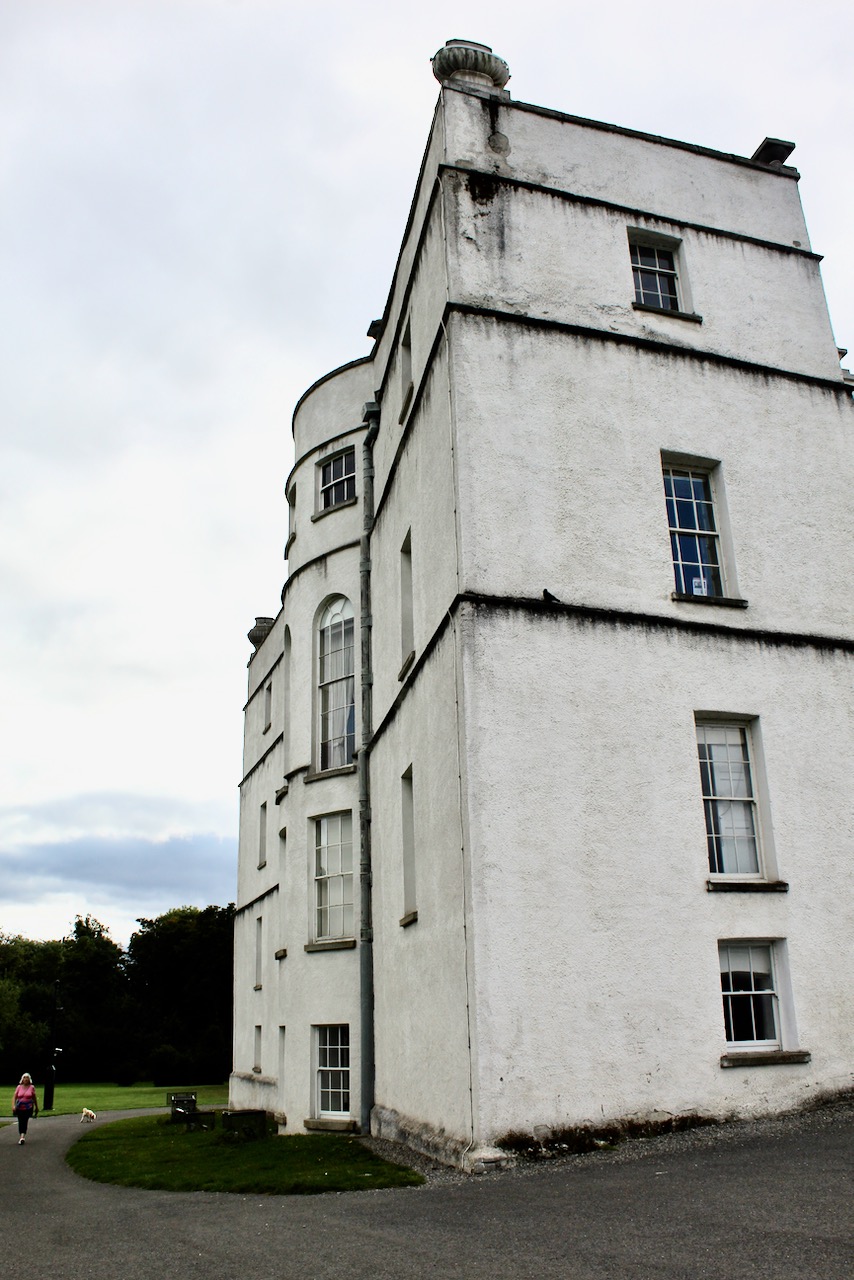
This shows the special shape of Rathfarnham Castle’s flanker towers.

Loftus had previously lived in an archiepiscopal palace in Tallaght, and it had been sacked by the O’Byrnes and O’Tooles from the Wicklow mountains, which is why he ensured that his new house in Rathfarnham had strong defenses. The Bishop’s Palace in Raphoe, now a ruin, is similarly shaped.

Ruin of Bishop’s Palace in Raphoe, County Donegal, built for Bishop John Leslie in 1636. Photograph © Jennifer Winder-Baggot, www.irishhistorichouses.com

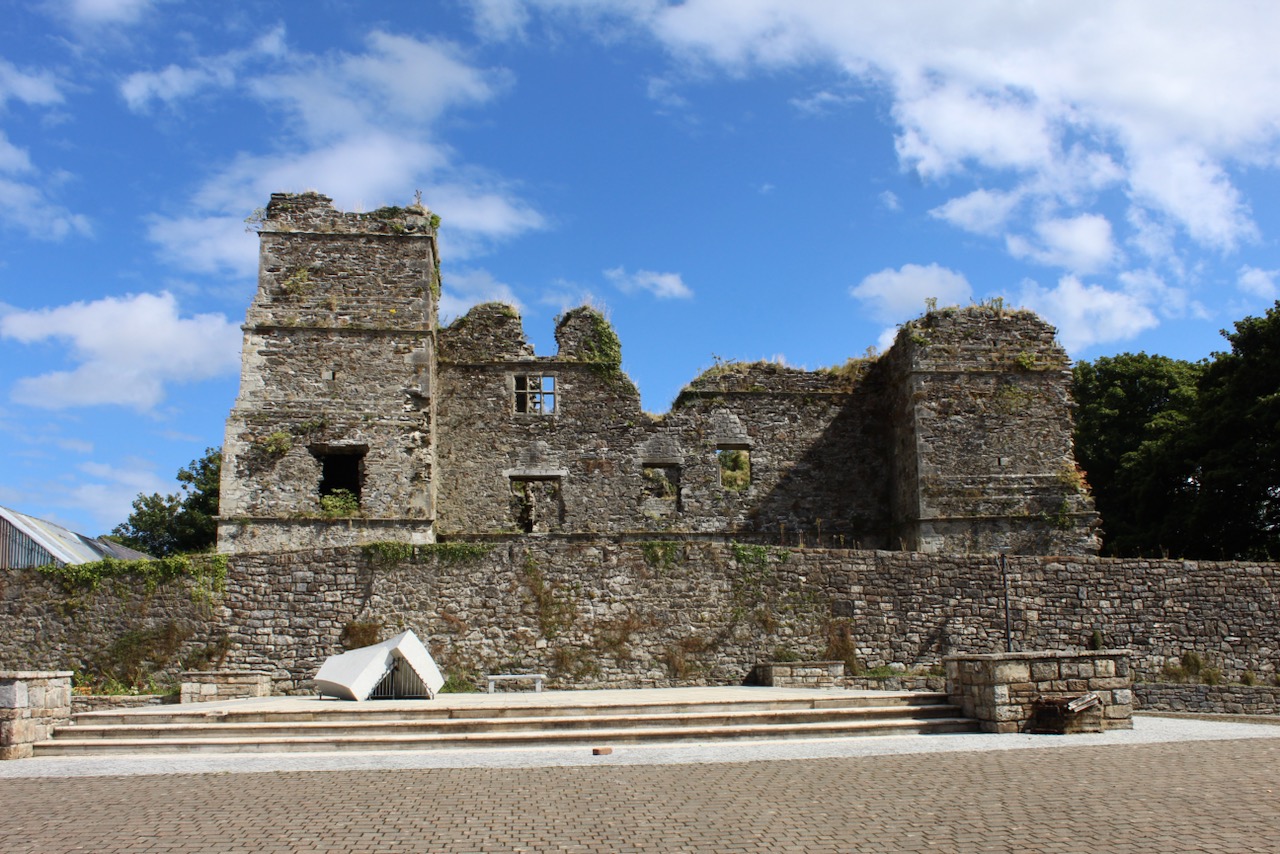
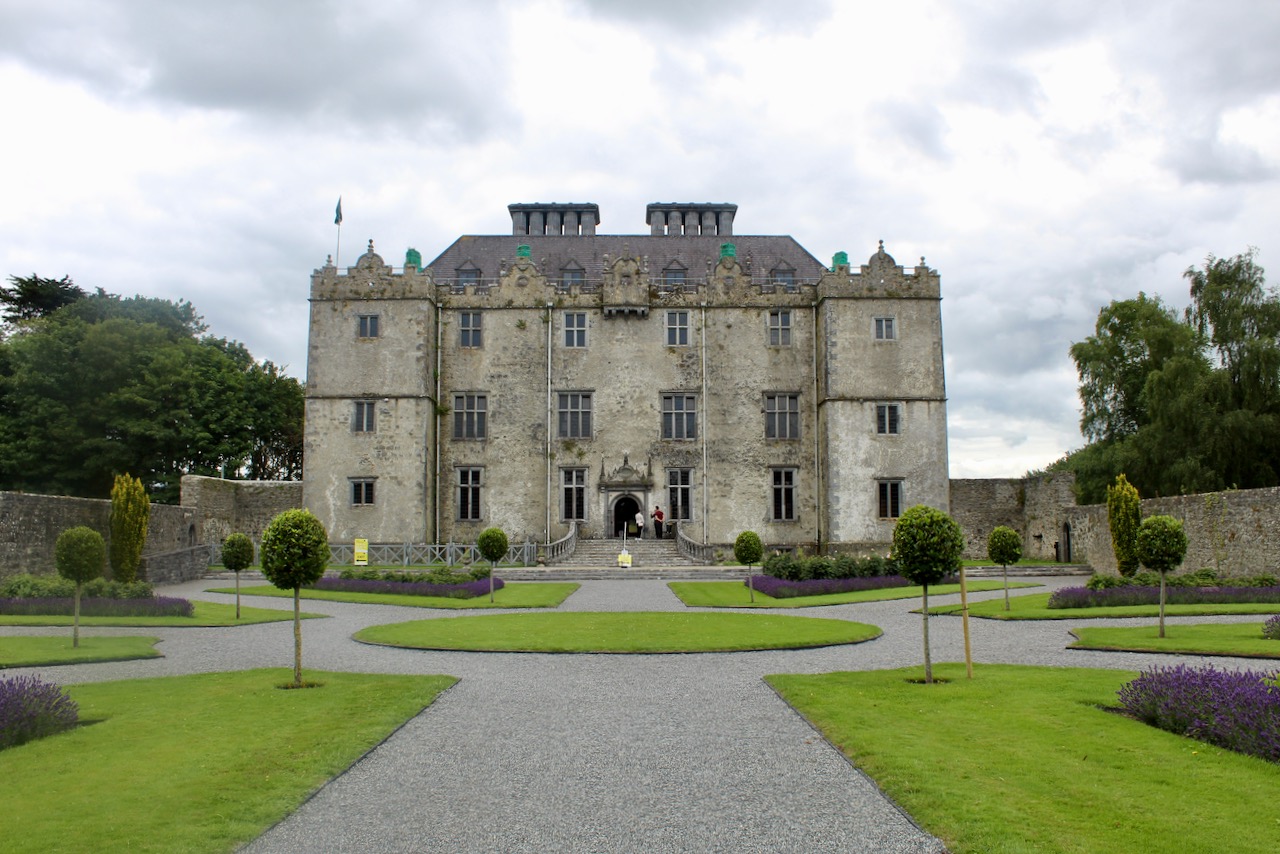
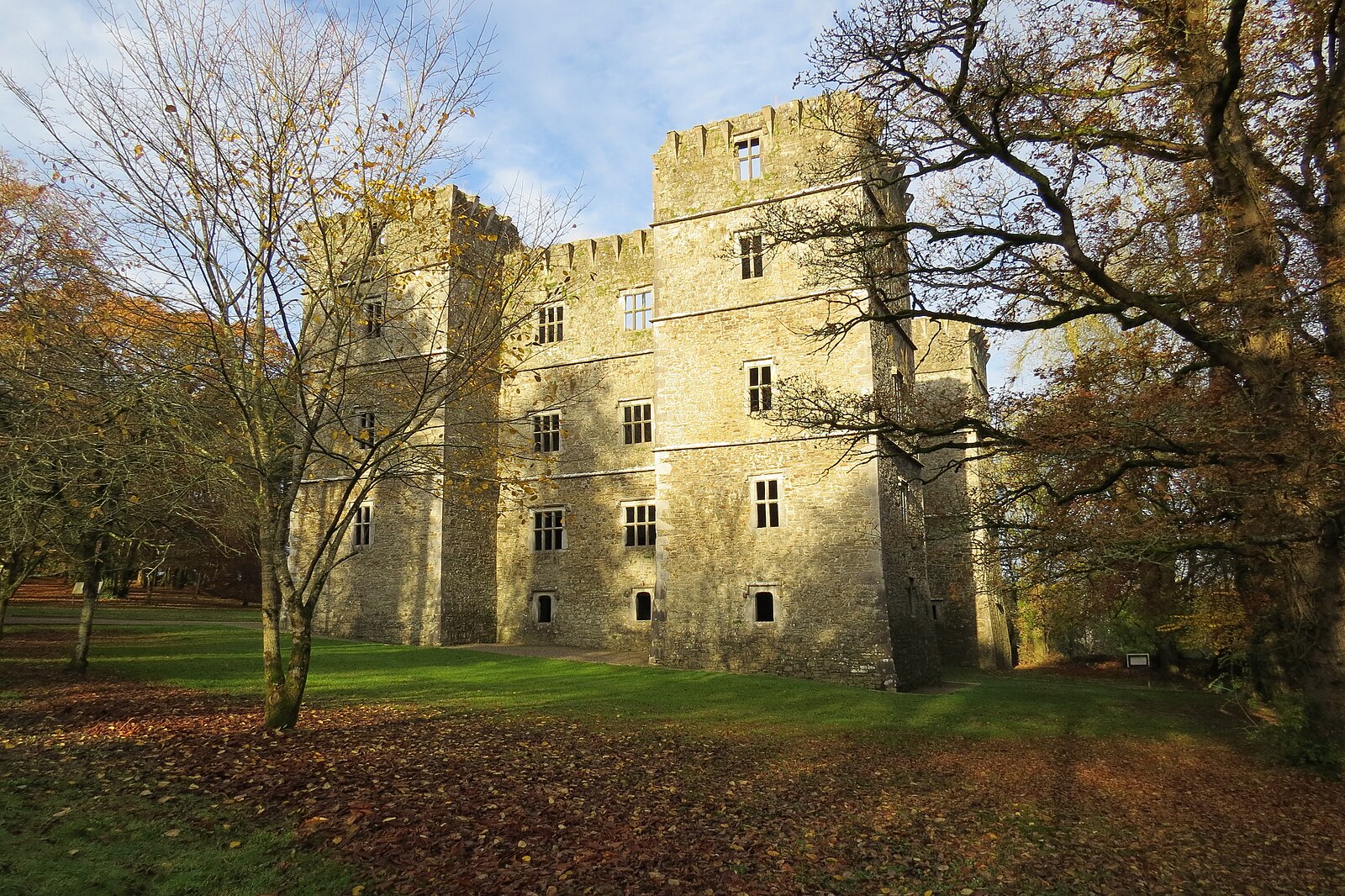
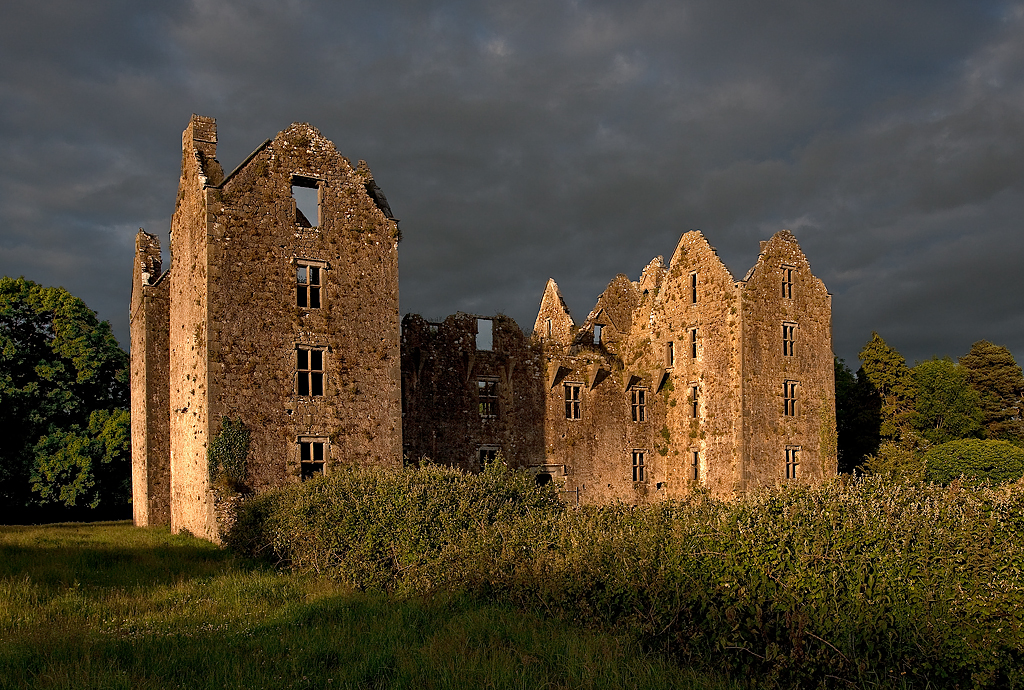
Maurice Craig points out in his The Architecture of Ireland from the earliest times to 1880 that there are a group of similar buildings, built over a period of fifty years or more: Rathfarnham; Kanturk for MacDonagh MacCarthy, built before 1609; Portumna for the Earl of Clanrickarde, before 1618; Manorhamilton for Sir Frederick Hamilton, probably around 1634; Raphoe, for Bishop John Leslie (the “Fighting Bishop” – see my entry on Castle Leslie https://irishhistorichouses.com/2020/08/07/castle-leslie-glaslough-county-monaghan/) in 1636, and Burncourt for Sir Richard Everard before 1650. Manorhamilton is a section 482 ruin (see my entry https://irishhistorichouses.com/2025/02/20/manorhamilton-castle-castle-st-manorhamilton-co-leitrim/) and we visited Portumna in County Galway – see my entry https://irishhistorichouses.com/2022/02/14/office-of-public-works-properties-connacht/. The buildings resemble a fort, such as Mountjoy Fort in County Tyrone built 1600-1605. Killenure, County Tipperary, is similar but has cylindrical flankers, Craig tells us. This last was unroofed by 1793, and it is now (2025) a Section 482 property which I must visit!

Manorhamilton, County Leitrim, August 2022, built for Sir Frederick Hamilton, probably around 1634. Photograph © Jennifer Winder-Baggot, www.irishhistorichouses.com
Portumna Castle, County Galway, July 2021, built for the Earl of Clanrickarde, before 1618. Photograph © Jennifer Winder-Baggot, www.irishhistorichouses.com
Kanturk Castle, built for MacDonagh MacCarthy, built before 1609. Photograph courtesy Breda O’Mullane, photograph licensed under the Creative Commons Attribution-Share Alike 4.0 International license.
Burncourt, County Tipperary, for Sir Richard Everard before 1650. Photograph courtesy Mike Searle, Creative Commons geograph.org.uk -1393348
Killenure Castle, similar but with cylindrical flankers, courtesy of Michael Daniels estate agent. A section 482 property in 2025.

Loftus attended Cambridge, where he took holy orders as a Catholic priest. Upon Queen Elizabeth’s accession to the throne in 1558, he declared himself Anglican. The Dictionary of Irish Biography tells us that a major turning point in Loftus’s life and career occurred in 1560, when he emigrated to Ireland as a chaplain to Thomas Radcliffe, 3rd Earl of Sussex, who had been granted a commission to serve as Lord Lieutenant of Ireland by Queen Elizabeth. On the recommendation of Sussex, Loftus was appointed Archbishop of Armagh, his consecration taking place on 2 March 1563. In January 1565, on account of the poverty of the archbishopric of Armagh, Queen Elizabeth granted Loftus the deanery of St Patrick’s cathedral in Dublin. In 1567 he was made Archbishop of Dublin.

It was Adam Loftus who had Reverend Dermot O’Hurley executed, whom I wrote about a couple of weeks ago in my entry about Doheny & Nesbitt.

The Dictionary of Irish Biography tells us:

He was “a strongly delineated establishment figure whose primary concerns were to serve the crown in Ireland, in whatever capacity the queen and her advisers thought fit; and to build up his own personal affinity, so that he would be in a position to execute the offices that came his way with a measure of genuine political and social authority. Thus, during the periods when the archbishop served as lord chancellor of Ireland (1581–1605), or as acting governor of the country during the periodic absences from Ireland of a serving viceroy (August 1582–June 1584, November 1597–April 1599, September 1599–February 1600), he was also careful to establish a network of connections throughout the country, particularly through the marriage of his children to leading families among the new English protestant elite. Among the families with which Loftus made these connections were the Bagenals of Co. Down, the Dukes of Castlejordan, the Hartpoles of Shrule, the Usshers of Dublin, the Colleys of Castle Carbury, the Berkeleys of Askeaton, and the Warrens of Warrenstown. The social ascent of Loftus and his family was also evident in the archbishop’s decision to proceed with the purchase of the estate of Rathfarnham, Co. Dublin (c.1589–90), on which he built a stately castle.” [2]

Adam Loftus married Jane Purdon. They had twenty children, not all of whom survived to adulthood, and those who did married very well.

  1. Anne Loftus married, first, Henry Colley of Castle Carbury in County Kildare, and second, Edward Blayney, 1st Lord Blayney, Baron of Monaghan.
  2. Martha Loftus (d. 1609) married Thomas Colclough (1564-1624) of Tintern Abbey in Wexford.
  3. Isabelle Loftus (d. 1597) married William Ussher (1561-1659)
  4. Thomas Loftus (d. 1635) married Helen Hartpole of Shrule.
  5. Alice Loftus (d. 1608) married Henry Warren of Warrenstown, County Offaly.
  6. Katherine Loftus married Francis Berkeley of Askeaton, County Limerick.
  7. son Adam died unmarried in 1599.
  8. Margaret Loftus married George Colley of Castle Carbury.
  9. Edward Loftus (d. 1601) married Anne Duke of Castle Jordan, County Meath.
  10. Dudley Loftus (1561-1616) married Anne Bagenal of Newry Castle, County Down, daughter of Nicholas Henry Bagenal, Marshal of Ireland.
  11. Dorothy Loftus (d. 1633) married John Moore (d. 1633)

Adam Loftus was the first Provost of Trinity College Dublin.

The Dictionary of Irish Biography continues:

Although by the early 1590s Loftus had largely reconciled himself to the reality that the task of converting the indigenous community to protestantism, and securing its allegiance to the state church, was beyond him, the queen and her advisers still expected him to discharge his religious duties and press ahead with reforming initiatives on behalf of the state church. To this end, and in the midst of a period of mounting political crisis that culminated in the outbreak of the Nine Years War, Loftus was the prime mover behind the foundation of TCD, which received its royal charter on 3 March 1592. The archbishop also served as the college’s first provost till June 1594.

Adam Loftus died in the old Palace of St. Sepulchre beside St. Patrick’s Cathedral, which until recently was the Garda barracks on Kevin Street, now housed in a new building. I hope they will make something of the historic old archbishop’s palace now, which could be a great museum!

Adam’s son Dudley (1561-1616) sat in the Irish parliament for Newborough in County Wexford. He married Anne Bagenal of Newry Castle, County Down, daughter of Nicholas Henry Bagenal, Marshal of Ireland. The castle passed to their son, Adam Loftus (1590-1666), who married Jane Vaughan of Golden Grove, County Offaly.

Another son of Dudley and Anne Bagenal was Nicholas Loftus (1592-1666), the ancestor of Henry Loftus, the Earl of Ely. Nicholas’s second son Henry (1636-1716) lived in Loftus Hall in County Wexford.

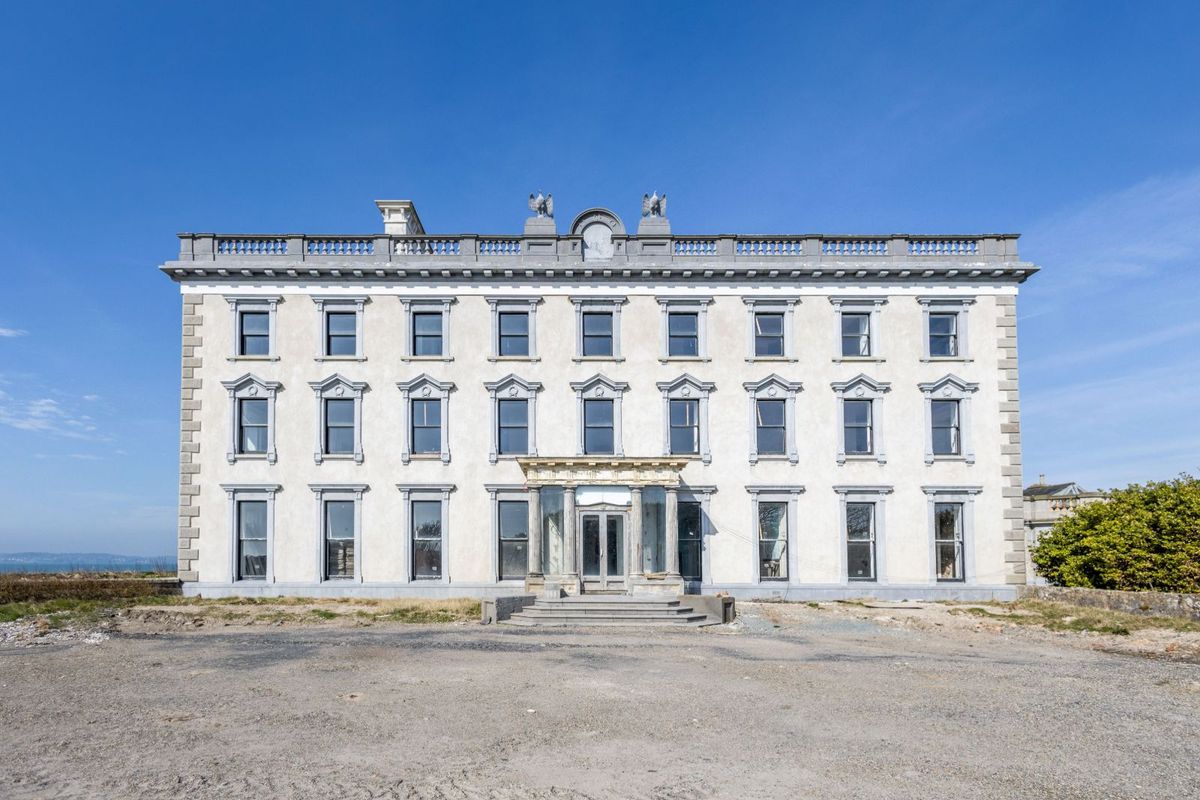
Loftus Hall, County Wexford, for sale April 2025 courtesy Colliers. Formerly named Redmond Hall, it is a three-storey mansion built in 1871, incorporating parts of a previous house here, which was late 17th century or early C18. [3]

Adam Loftus (1590-1666) and Jane née Vaughan’s children also made good marriages. Their son Arthur Loftus (1616-1659) married Dorothy Boyle (1616-1668), daughter of Richard Boyle the 1st Earl of Cork. Arthur also served as MP for County Wexford, as well as Provost Marshall of Ulster.

The castle came under seige in 1641 and in 1642 the house was occupied by Cromwell’s Parliamentary troops. [4] In 1649 it was stormed and taken by Royalist troops under the Marquess of Ormond and all occupants were taken as prisoners. Ormond writes that nobody was killed. [5] Rathfarnham Castle was restored to Adam Loftus (1590-1666) when Charles II was crowned king.

Adam’s son Arthur predeceased him, so the castle passed to Arthur’s wife Dorothy née Boyle. In 1665 she obtained six firelock muskets from the Master of Ordinance to protect the castle.

Arthur Loftus and Dorothy née Boyle had a son Adam Loftus (1632-1691). Adam Loftus was Ranger of the Phoenix Park in Dublin and from 1685, a member of the Irish Privy Council. King James II created him Baron of Rathfarnham and Viscount Lisburne in the Peerage of Ireland. Adam married Lucy Brydges, daughter of George Brydges, 6th Baron Chandos of Sudeley, England.

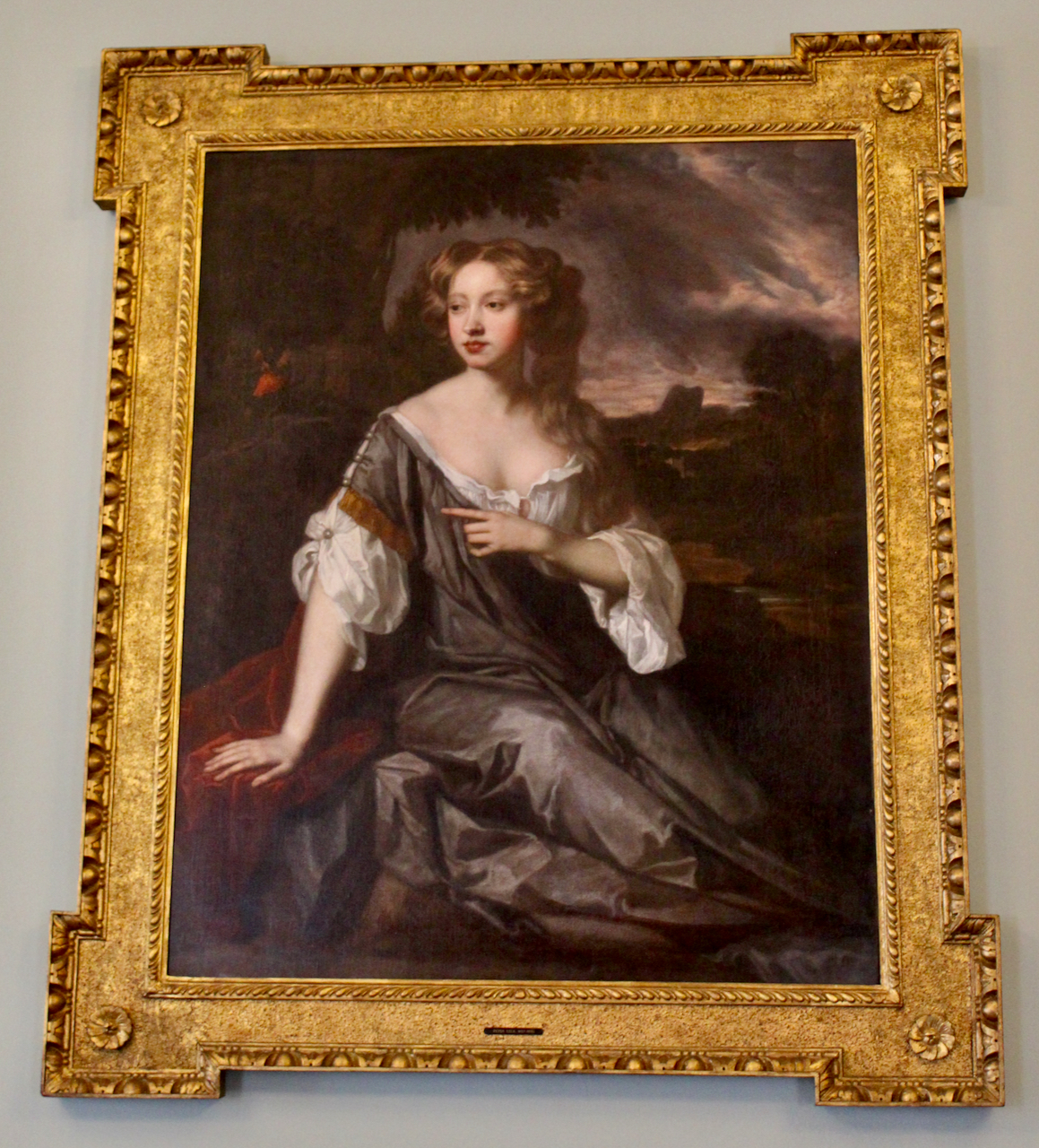
Lucy Loftus née Brydges (1654-1681), by Peter Lely. She was a renowned Restoration beauty and the first wife of Viscount Adam Loftus. He died at the Siege of Limerick in 1691 and the cannon ball which reputedly killed him hangs in St Patrick’s Cathedral. Lucy is dressed in pseudo-antique clothing against an Arcadian landscape. The parrot in the background is an ambiguous symbol and can refer to a number of characteristics including eloquence, marital obedience or exoticism. Peter Lely was of Dutch origin but spent most of his career in England and became the most influential portrait painter at court following the death of Anthony van Dyck. He successfully navigated the turbulence of the 17th century to paint at the court of Charles I, the Cromwellian Commonwealth and Charles II following the Restoration. Lely was prolific, often only painting the sitter’s head while students and assistants at his studio completed the portraits.

After his wife Lucy died, Adam Loftus married Dorothy, the daughter of Patrick Allen or Alen, of St. Wolstan’s of Celbridge in County Kildare. Adam was a gallant at the court of King Charles II.

Despite earning his peerage from King James II, Adam Viscount Lisburn supported the cause of William III. He died at the Siege of Limerick in 1691 and the cannon ball which reputedly killed him hangs in St Patrick’s Cathedral.

The castle passed to Adam’s daughter Lucy, who married Thomas Wharton, 1st Marquess of Wharton in 1692, who in 1715 was created 1st Earl of Rathfarnham, 1st Marquess of Carlow and 1st Baron of Trim.

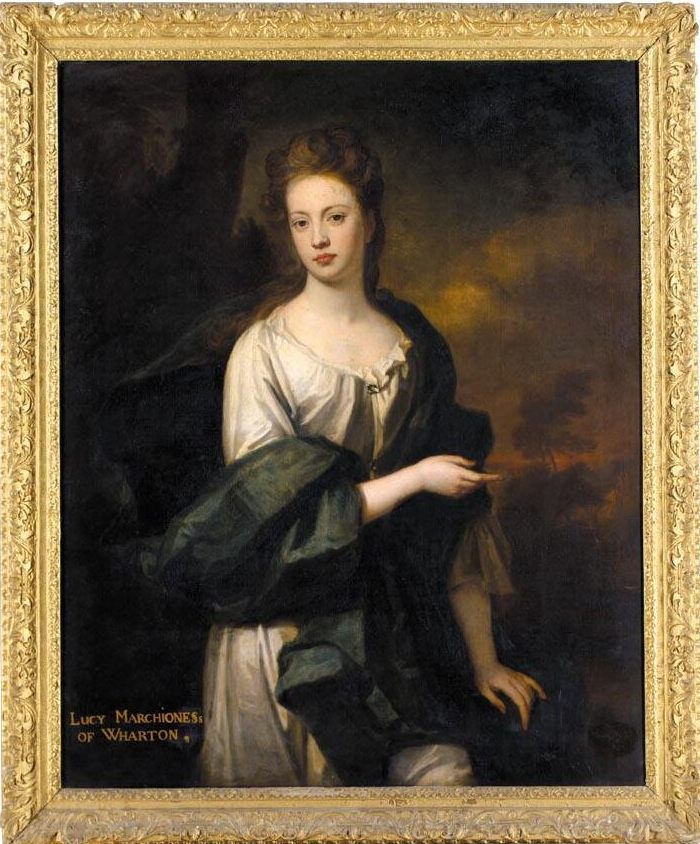
Lucy Loftus, Marchioness of Wharton (1670-1717) by Godfrey Kneller.

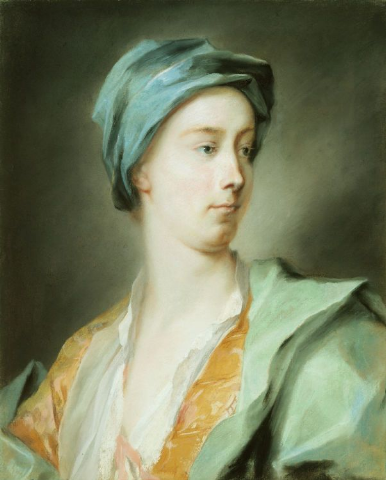
Lucy and the Marquess of Wharton had a son Philip, who became the Duke of Wharton. He was a Jacobite and supporter of the titular James III, and was subsequently granted many titles. The Peerage website lists the titles. As well as those he inherited from his father, he was created 1st Viscount Winchendon, Co. Buckingham [England] and 1st Marquess of Woodburn, Co. Buckingham [England], 1st Earl of Malmesbury, Co. Wilts [England] on 22 December 1716, Jacobite. 

He was appointed Privy Counsellor (P.C.) in Ireland between 1717 and 1726. He was created 1st Duke of Wharton, Co. Westmorland [Great Britain] on 28 January 1717/18, in an attempt by the authorities to wean him from his Jacobitism and make him a good Whig like his father. Darryl Lundy of The Peerage website tells us that his Dukedom did at least make him for a while speak and vote with the Tories in the House of Lords, for instance in debates on the South Sea Bubble. He lost a fortune from participation in the South Sea Bubble. In June 1725 he left the country. He was Envoy to Vienna in August 1725, for the Jacobite King James III, and then Envoy to Madrid in March 1725/26. 

Philip Wharton Duke of Wharton by Rosalba Carriera – Royal Collection, Public Domain.

Out of money, he took a position in the Jacobite forces and commanded a Spanish detachment at the Siege of Gibraltar in 1727, fighting against the English. On 3 April 1729 he was outlawed and his titles and such estates as he still held in Britain forfeited. 

He had no surviving male issue when he died on 31 May 1731. On his death, all his titles, most forfeited by his treason, expired, except the Barony of Wharton, which was deemed by the House of Lords in 1915 to be descendible to his heirs.

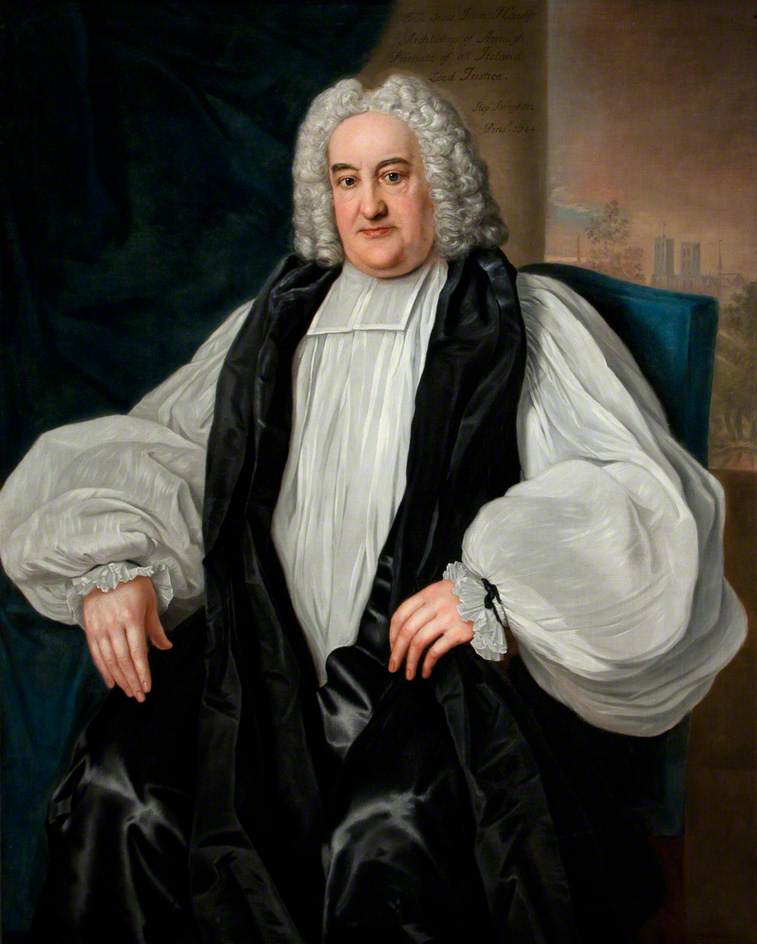
He sold Rathfarnham Castle in 1724. It was purchased by Speaker William Conolly for £62,000. Speaker Conolly never lived in the Castle since he had built Castletown in County Kildare, and he leased Rathfarnham in 1742 to Dr. Hoadley, Archbishop of Armagh.

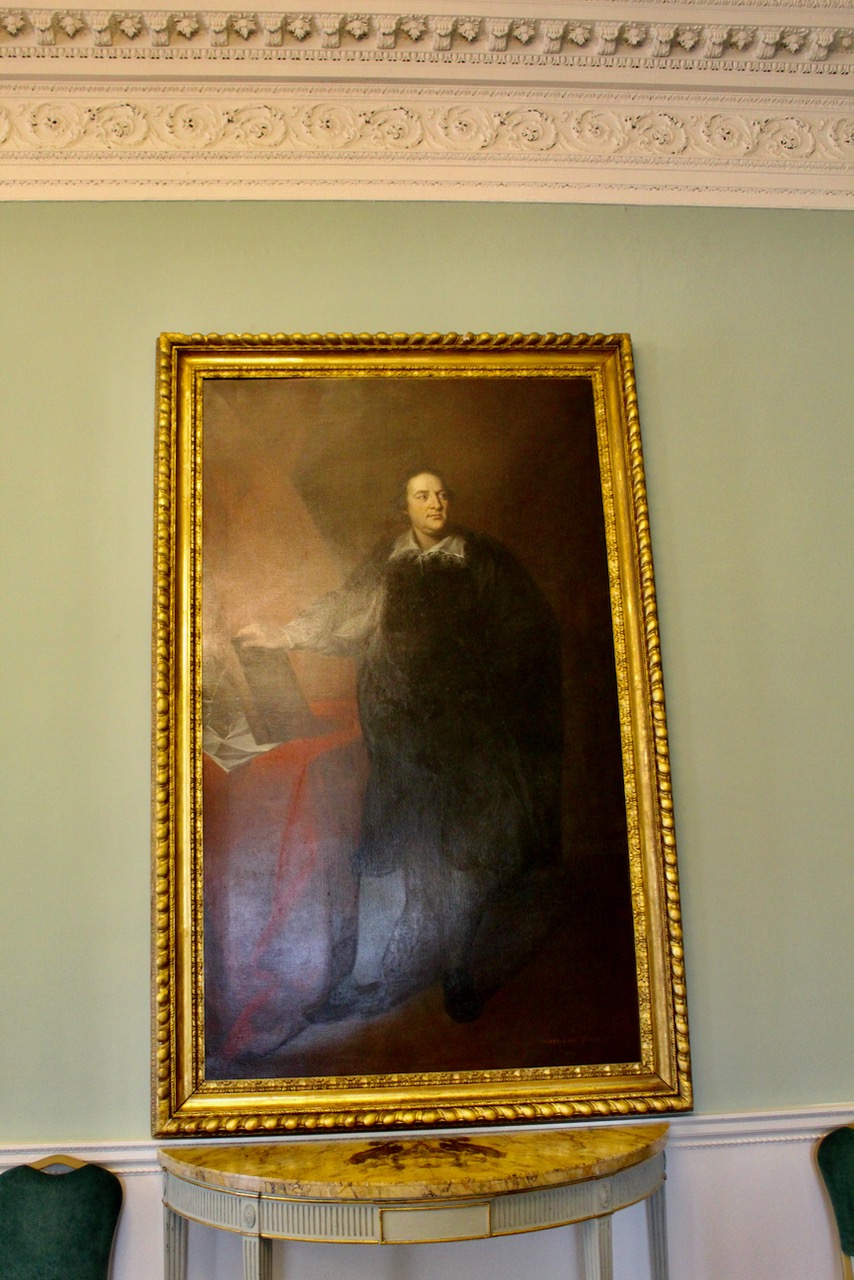
John Hoadly (1678-1746), Archbishop of Armagh and Primate of All Ireland by Stephen Slaughter; Armagh City, Banbridge & Craigavon Borough Council; http://www.artuk.org/artworks/john-hoadly-16781746-archbishop-of-armagh-and-primate-of-all-ireland-122812

Dr. Hoadley was interested in building, and he had built an Episcopal mansion in Tallaght to replace a medieval castle. He then restored Rathfarnham Castle. It was famed for its excellent agriculture and fruit gardens. [see 5].

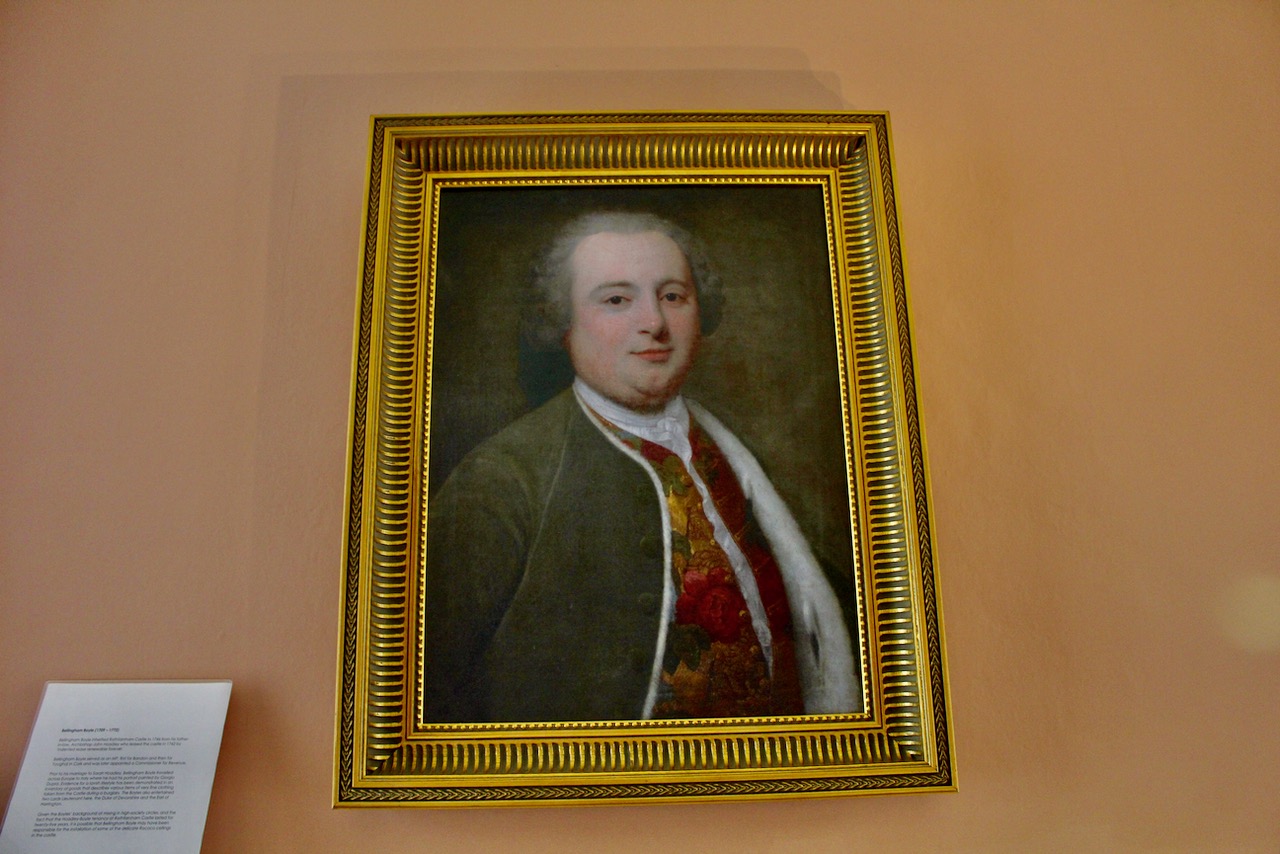
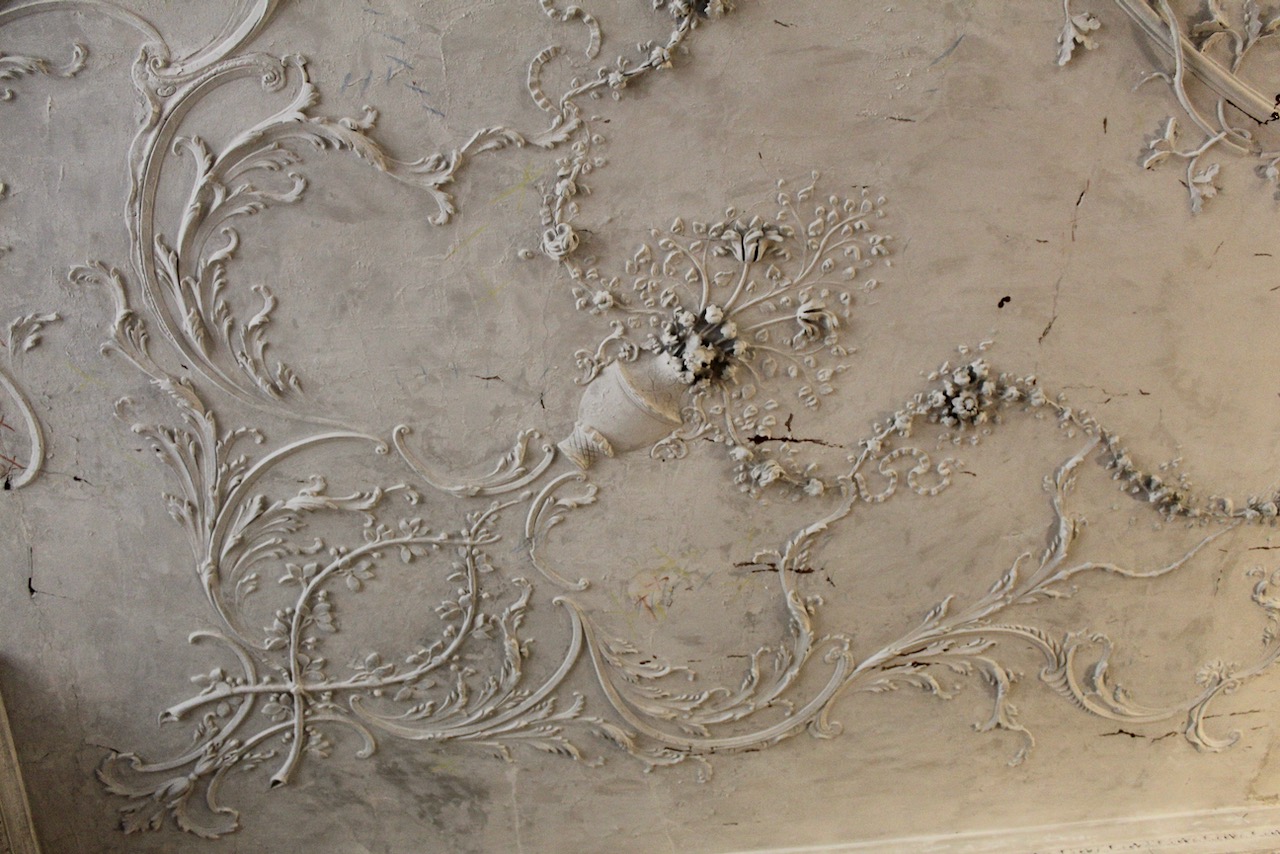
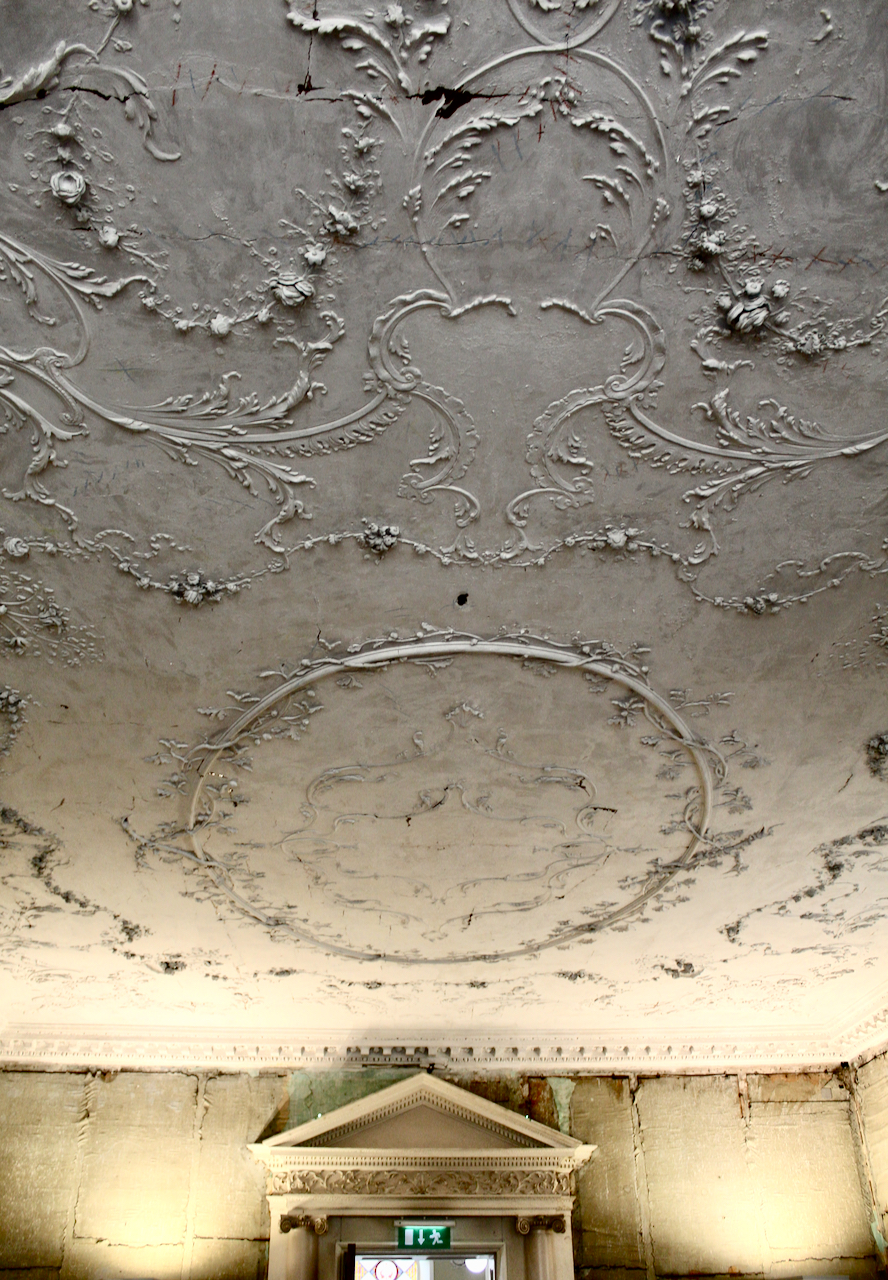
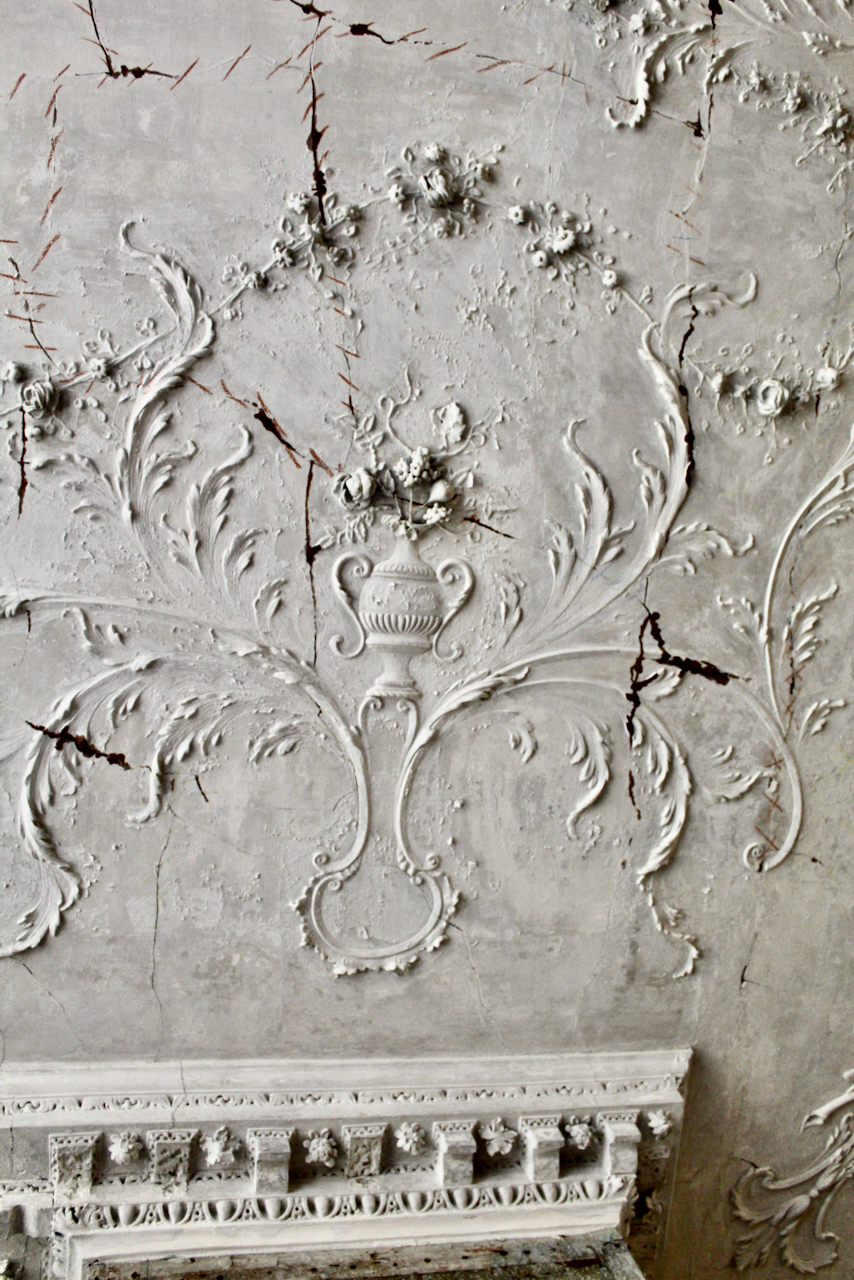
Dr. Hoadley’s daughter Sarah married Bellingham Boyle (1709-1772), and they inherited Rathfarnham Castle. Boyle also took an interest in farming and grew the first oats in Ireland. [see 5]. The Hoadley-Boyle tenancy lasted for twenty-five years, and Bellingham Boyle and his wife mixed in high society, entertaining two Lords Lieutenant in the castle: the Duke of Devonshire and the Earl of Harrington. Boyle may be be responsible for installing some of the delicate rococo ceilings in the castle.

“Bellingham Boyle (1709-1772). He inherited Rathfarnham Castle in 1746 from his father-in-law, Archbishop John Hoadley who leased the castle in 1742 by “indented lease renewable forever.” Bellingham Boyle served as an MP, first for Bandon then for Youghal in Cork and was later appointed a Commissioner for the Revenue. Prior to his marriage, Belingham travelled across Europe to Italy where he had his portrait painted by Giorgio Dupra.”

Interestingly, in Aug 1742, Bellingham Boyle was appointed to a commission to investigate the soundness of mind of Jonathan Swift, Dean of St. Patrick’s Cathedral in Dublin. The Writ “De Lunatico Inquirendo,” in the case of Jonathan Swift, D.D. was issued to investigate and ascertain whether the ailing Dean Swift was of unsound mind and memory to safely conduct his own business. Belllingham Boyle was one of 12 commissioned to perform the investigation. Dean Swift was found to be of unsound mind and memory and was placed under the protection of the Court of Chancery. [6]

Boyle’s daughter Anne married Robert Langrishe 2nd Baronet Langrishe, of Knocktopher, Co. Kilkenny.

Knocktopher Abbey, Knocktopher, Co. Kilkenny, for sale November 2024, photograph courtesy DNG Country Homes & Estates.

The castle returned to the ownership of the Loftus family in 1767, to Nicholas Hume Loftus, 2nd Earl of Ely, a descendant of the original owner Adam Loftus. Nicholas never married and on his death in 1769 the Castle passed to his uncle, Henry Loftus (created Earl of Ely in 1771). Henry continued the remodelling of the castle and the works were completed by the time of his death in 1783. 

Let us backtrack now to look at the descendants of the first Adam Loftus. Adam’s grandson Nicholas lived in Fethard, County Wexford, in the precursor to Loftus Hall. His son Henry (1636-1716) of Loftus Hall was the father of Nicholas Loftus (1687-1763) who was created 1st Viscount Loftus of Ely.

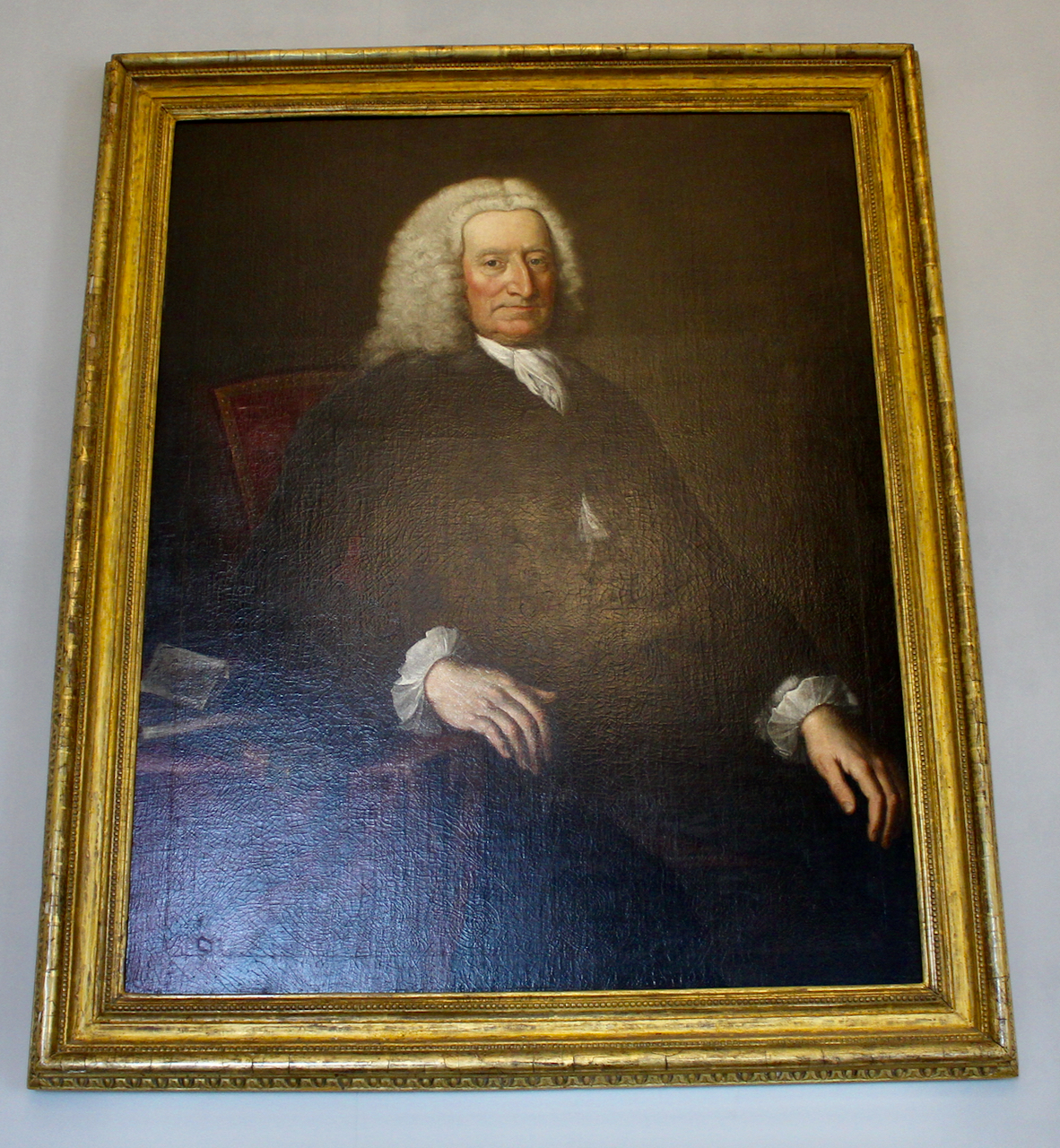
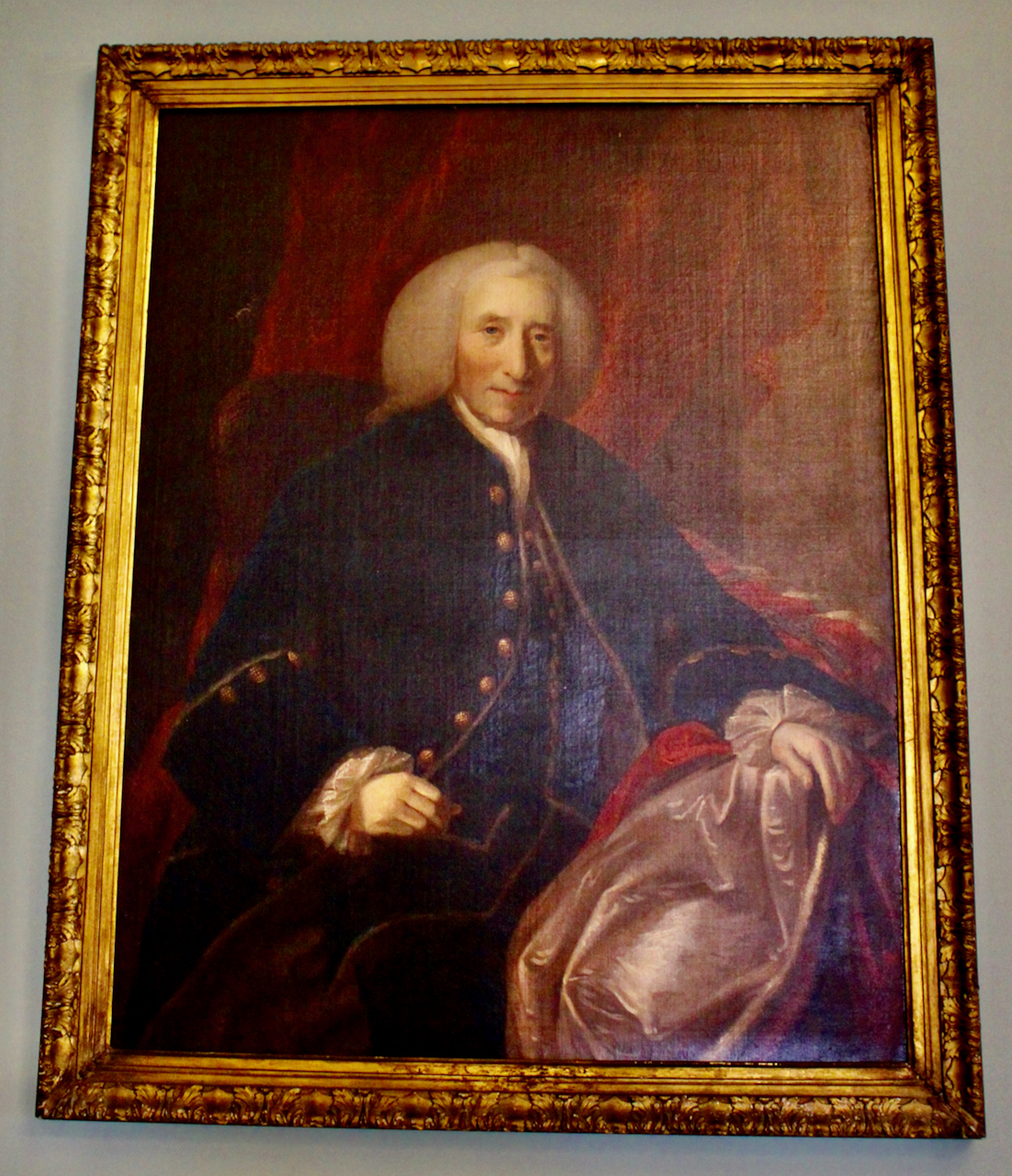
Nicholas Loftus, 1st Viscount Ely (1687-1763). Painter unknown. This painting was completed in 1758 to mark the 70th birthday of Nicholas, father of both Nicholas (the 1st Earl of Ely) and Henry Loftus. He sits next to a book entitled The Present State of Ireland. This anonymous work was originally published in 1730 and contained criticism of the amount of money flowing out of Ireland to absentee landlords, no doubt reflecting Nicholas’s concern with the financial state of the kingdom. He is sometimes known as “the Extinguisher” because of his threat to extinguish the Hook lighthouse in Wexford unless the rent he received from it was increased.

Nicholas served as MP for Wexford, and married Anne Ponsonby, daughter of William Ponsonby, 1st Viscount Duncannon. He was first created Baron Loftus of Loftus Hall in 1751, and then assumed a seat in the House of Lords, and became Privy Counsellor of Ireland in 1753. He was created Viscount Loftus of Ely in County Wicklow in 1756.

After Anne died, around 1724, Nicholas Viscount Ely married Letitia Rowley (d. 1765) of Summerhill in County Meath. To make matters more confusing, she had been previously married to Arthur Loftus (1644-1725) 3rd Viscount of Ely!

Summerhill, County Meath, etnrance front, photograph: Maurice Craig, Vanishing Country Houses of Ireland by The Knight of Glin, David J. Griffin and Nicholas K. Robinson, published by The Irish Architectural Archive and The Irish Georgian Society, 1988.

Viscount Loftus is a title that has been created three times in the Peerage of Ireland for members of the Anglo-Irish Loftus family. The first creation was for Adam Loftus (1568-1643) on 10 May 1622, who served as Lord Chancellor of Ireland in 1619. He is not to be confused the our Adam Loftus (1533-1605) of Rathfarnham Castle. This title became extinct in 1725 upon the death of the third viscount, who had no male heir, despite having married three times. 

Nicholas Viscount Loftus and Anne née Ponsonby had a daughter Elizabeth Loftus (d. June 1747) who married John Tottenham 1st Baronet, MP for New Ross. Another daughter, Mary (1710-1779), married William Alcock (1702-1779) of Wilton Castle in Wexford (see my entry https://irishhistorichouses.com/2022/02/04/wilton-castle-bree-enniscorthy-co-wexford-and-a-trip-to-johnstown-castle/ )

Nicholas and Anne’s son Nicholas Loftus (1708-1766) became the 1st Earl of Ely, and added Hume to his surname after marrying Mary Hume, daughter of Gustavus Hume, 3rd Baronet of Castle Hume, County Fermanagh. As well as Loftus Hall in Wexford, they owned 13 Henrietta Street in Dublin. He became known as the “wicked earl” due to a court hearing about the supposed mental incapacity of his son, also named Nicholas. Young Nicholas’s uncle, George Rochfort (1713-1734), brother of the 1st Earl of Belvedere, sought to have young Nicholas declared incapable of succeeding to the title. George Rochfort was married to another daughter, Alice, of Gustavus Hume, 3rd Baronet of Castle Hume. Family members testified that young Nicholas was of normal intelligence, and that any eccentric behaviour should be blamed on his father’s ill-treatment. The trial lasted for nine years and was even brought to the House of Lords. Poor young Nicholas died before the trial was finished and Rochfort’s case was declared invalid.

Nicholas Hume Loftus, 1st Earl of Ely (1708-1766), unknown artist. It was after Nicholas Loftus (son of the Extinguisher) had married into the wealthy Hume family that the Ely earldom was created for the first time. This depicts Nicholas, the so-called “Wicked Earl” in the doctoral robes of Trinity College Dublin.
Nicholas Hume Loftus, 1st Earl of Ely (1708-1766) by Jacob Ennis. These two portraits depict Nicholas, the so-called “Wicked Earl” at various stages of his life. Nicholas is much older in the Ennis portrait. Jacob Ennis was an Irish historical and portrait painter who spent some time studying in Italy. He was later a Master in the Dublin Society’s Drawing Schools.

Nicholas Loftus Hume officially succeeded as 2nd Earl of Ely (1738-1769). It was through him that Rathfarnham Castle returned to Loftus ownership. Nicholas bequeathed Rathfarnham Castle and the estate to his uncle, Henry Loftus (1709-1783) who became the 1st Earl of Ely of the second creation. Henry was the younger son of Nicholas Loftus (d. 1763) 1st Viscount Loftus and Anne née Ponsonby, brother to the earlier Nicholas Hume Loftus (d. 1766) 1st Earl of Ely, the Wicked Earl.

Henry Loftus, 1st Earl of Ely of the 2nd Creation (1709-1783) by Angelica Kauffman. Henry inherited Rathfarnham Castle and its demesne in 1769 upon the death of Nicholas, his nephew. Nicholas had been the subject of a long running legal case concerning the state of his mind and Henry had supported him throughout. The Swiss artist Angelica Kauffman is known to have spent several months in Dublin in 1771. As well as this portrait which was probably completed to mark Henry’s elevation to the earldom of Ely, this renowned painter also completed a group portrait of Henry and his family (now in the National Gallery) as well as a series of ceiling paintings for the long gallery on the first floor depicting scenes from Greek mythology.

Between 1769 and his death in 1783 Henry funded some of the most substantial 18th century changes to Rathfarnham Castle and the demesne.

He contracted Sir William Chambers to remodel several of the rooms including the Ballroom and Anteroom. Externally, the window openings were enlarged, and a new stone Tuscan entrance portico added, probably to the designs of William Chambers. The original battlements were removed and the new parapet was embellished with ball finials and urns some of which also serve as chimneys. On the south front new garden steps were added, while on the east front a three bay bow had been added by 1774.

Rathfarnham Castle, Dublin, September 2021. Photograph © Jennifer Winder-Baggot, www.irishhistorichouses.com
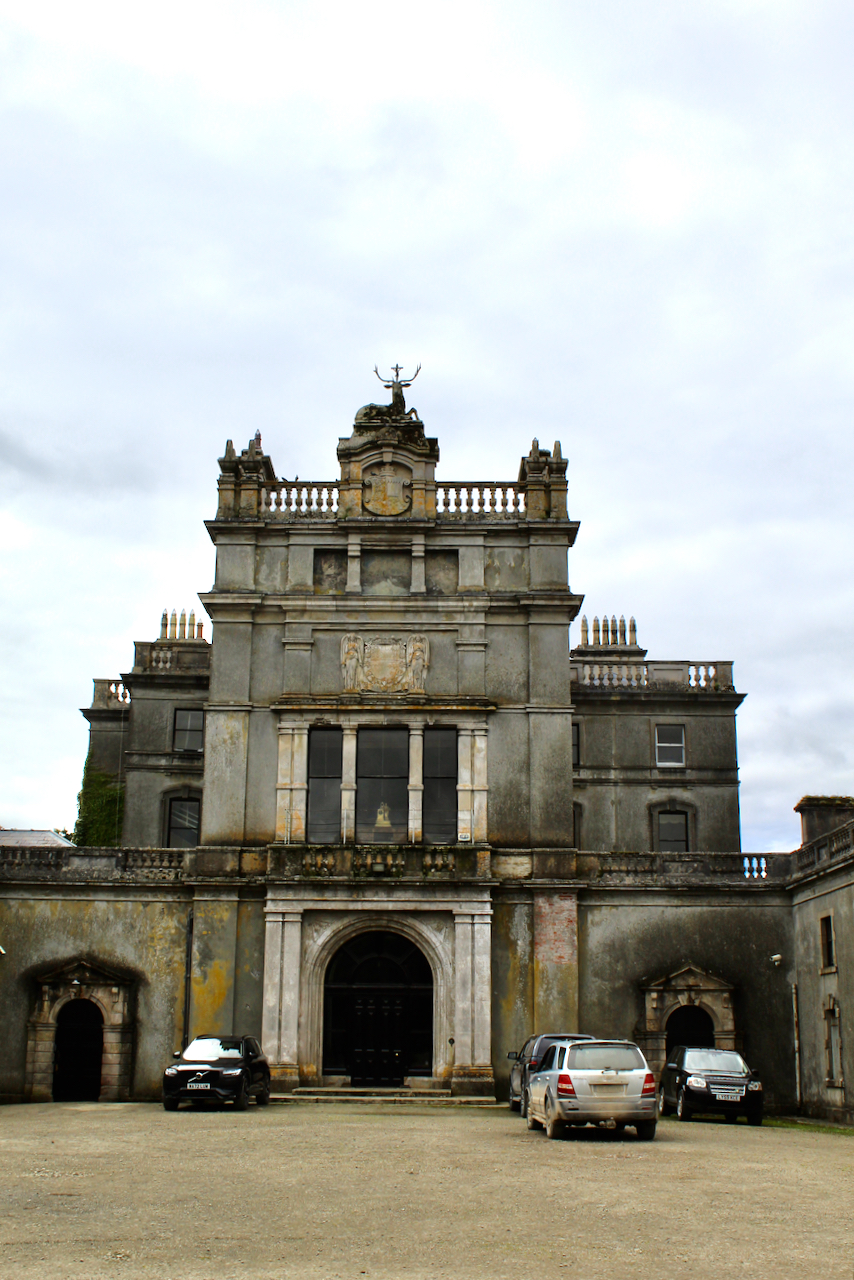
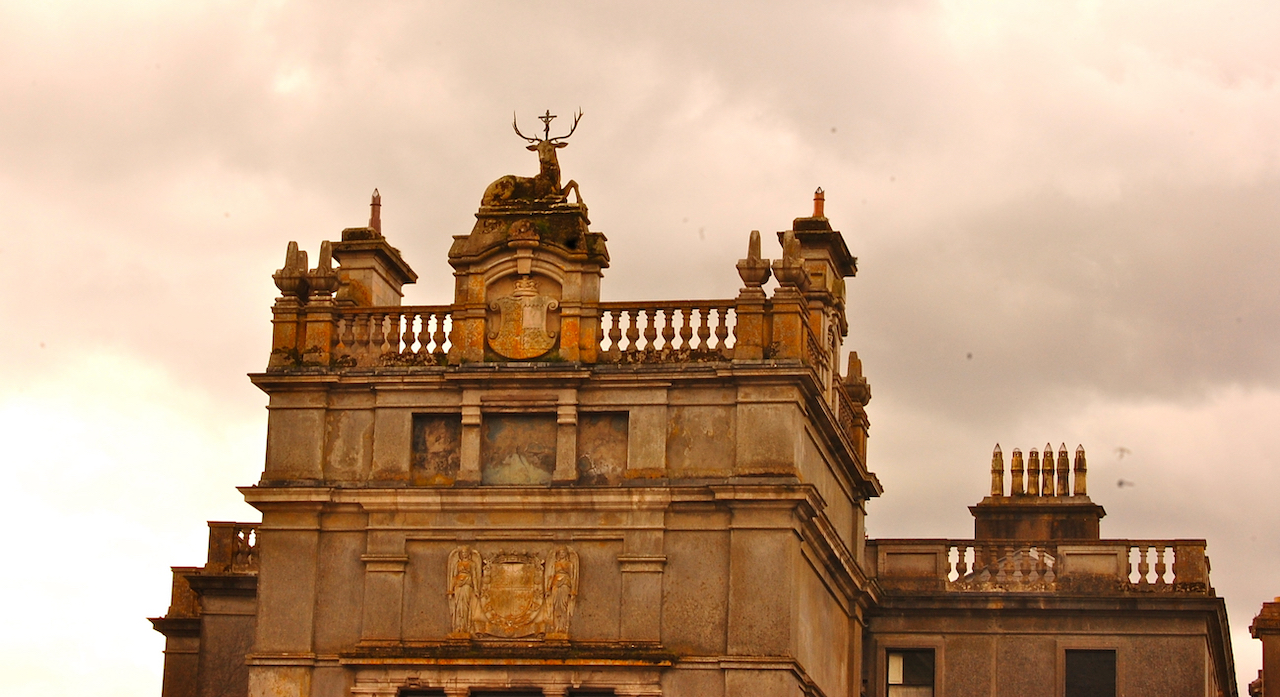
Rathfarnham Castle. Photograph © Jennifer Winder-Baggot, www.irishhistorichouses.com

From the OPW website:

Loftus’s castle, with its four flanker towers, is an excellent example of the Elizabethan fortified house in Ireland. In the late eighteenth century, the house was remodelled on a splendid scale employing some of the finest architects of the day including Sir William Chambers and James ‘Athenian’ Stuart. The collection includes family portraits by Angelica Kauffman, Sir Peter Lely, and Hugh Douglas Hamilton.

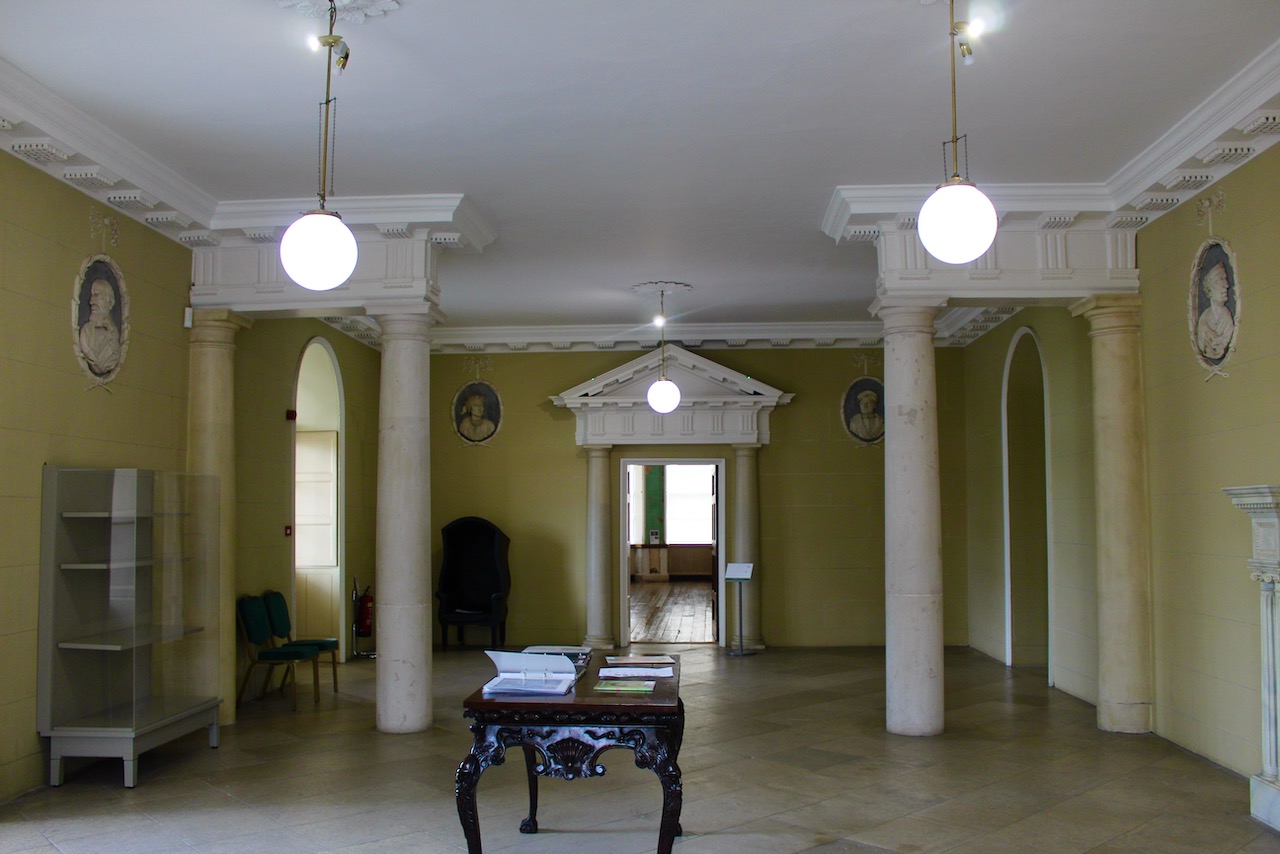
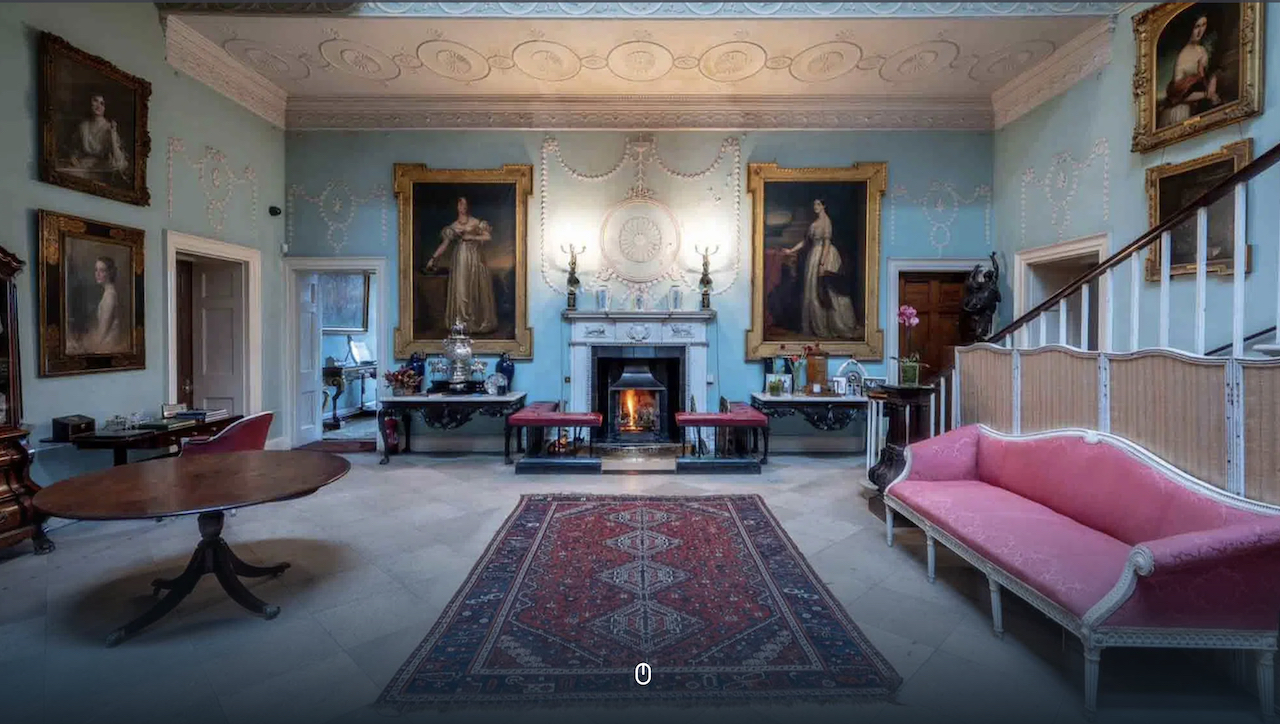
The entrance hall, Rathfarnham Castle. Photograph © Jennifer Winder-Baggot, www.irishhistorichouses.com

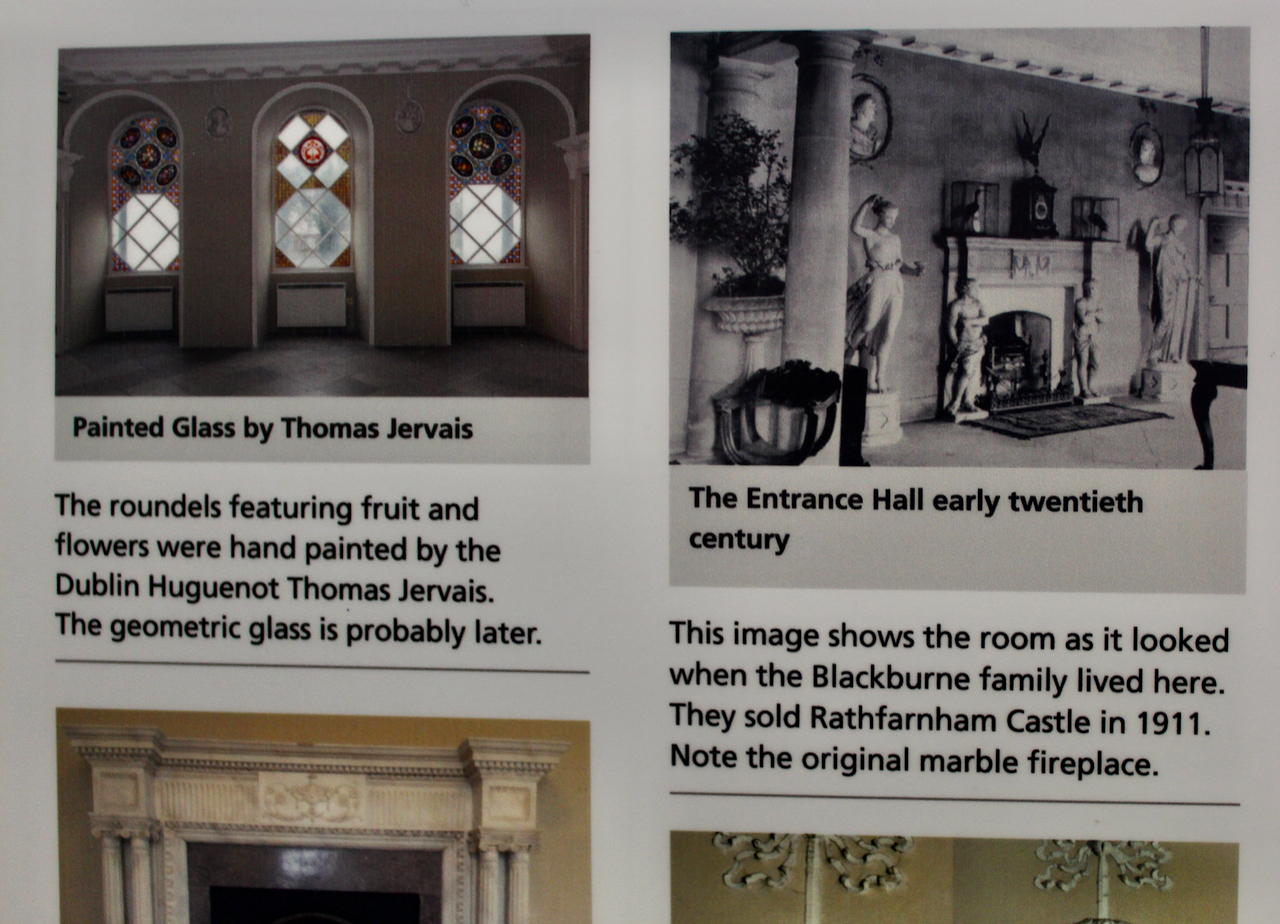
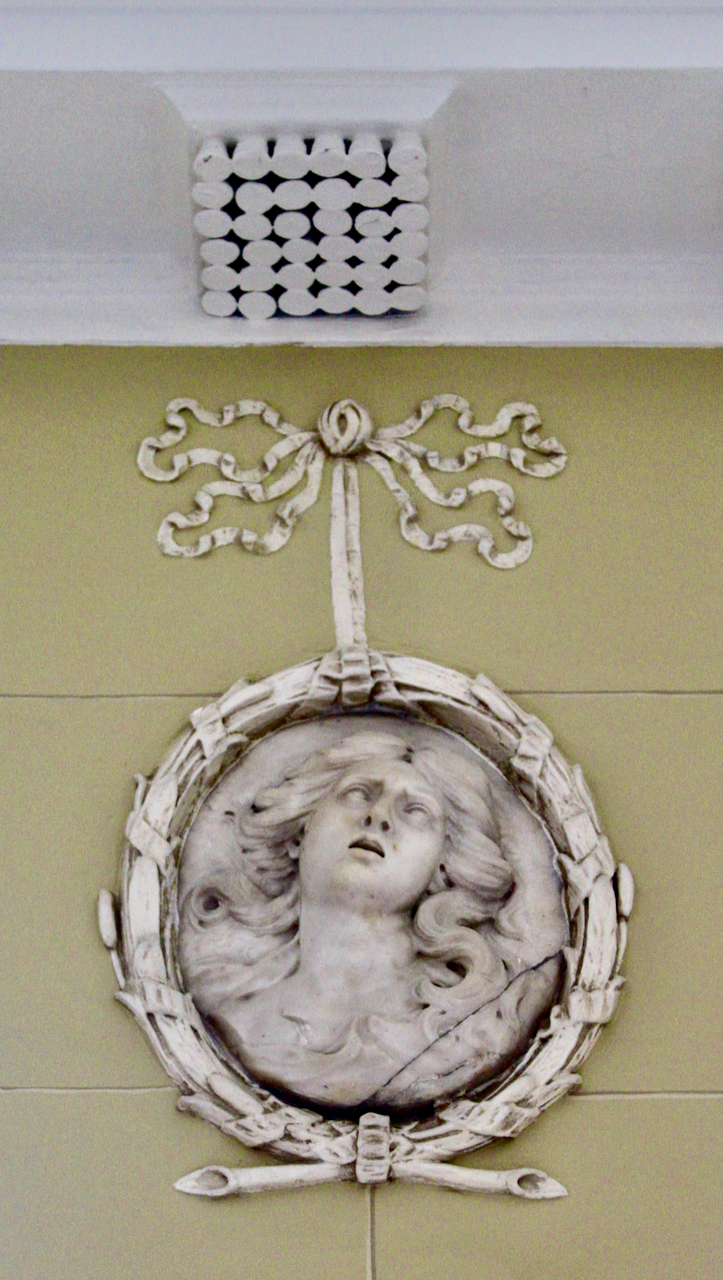
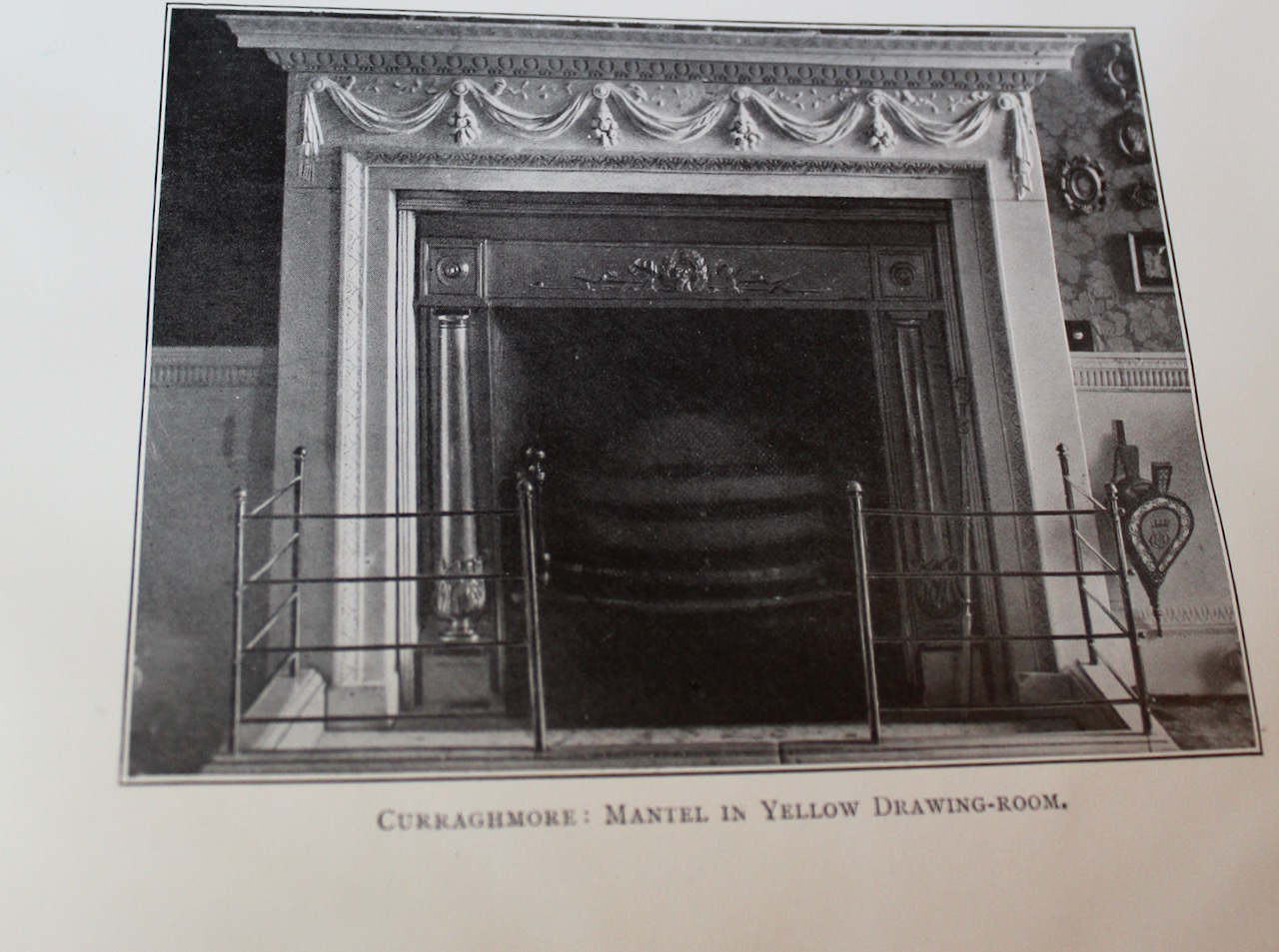
From an information panel in the entrance hall: “This room is believed to have been built to a design by the influential architect Sir William Chambers (1723-1796). Despite never visiting Ireland, Chambers left a significant mark on Dublin where he also designed the Casino at Marino, Charlemont House on Parnell Square, and much of Front Square in Trinity College. The floor and free standing Doric columns are in Portland stone. The painted glass panels featuring fruit and flowers are believed to be by the Dublin Huguenot artist Thomas Jervais (d. 1799). The marble relief busts on the walls depict well known figures from the Classical and Renaissance past, including the Egyptian queen Cleopatra and Italian poet Dante. These sculptures seem to have been acquired in Italy and would have been incorporated into the design of the Entrance Hall to signal the taste and refinement and learning of the Loftus family. The original eighteenth century marble fireplace was replaced with a painted timber one in around 1913. It was one of several of the original fireplaces which were removed and sold when the Blackburne family left the castle in 1911.

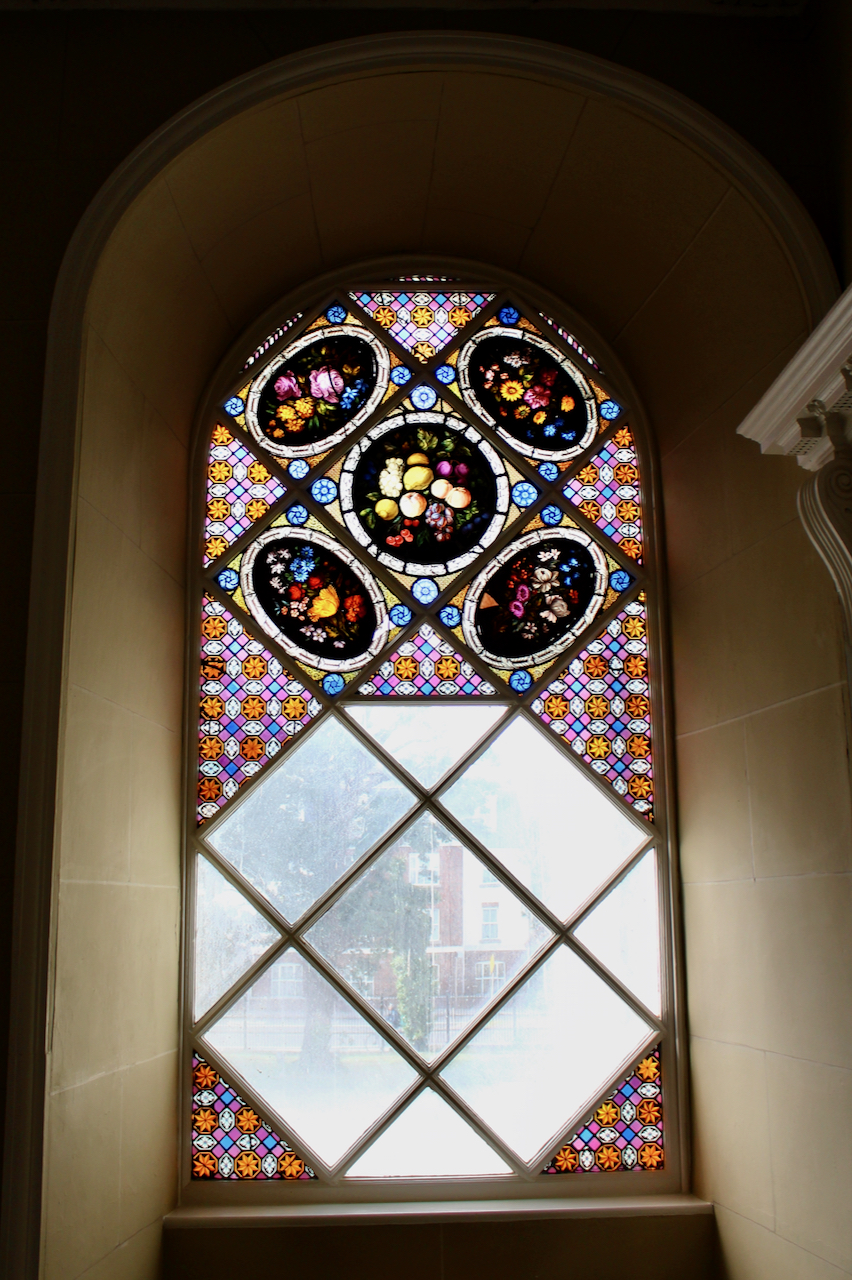
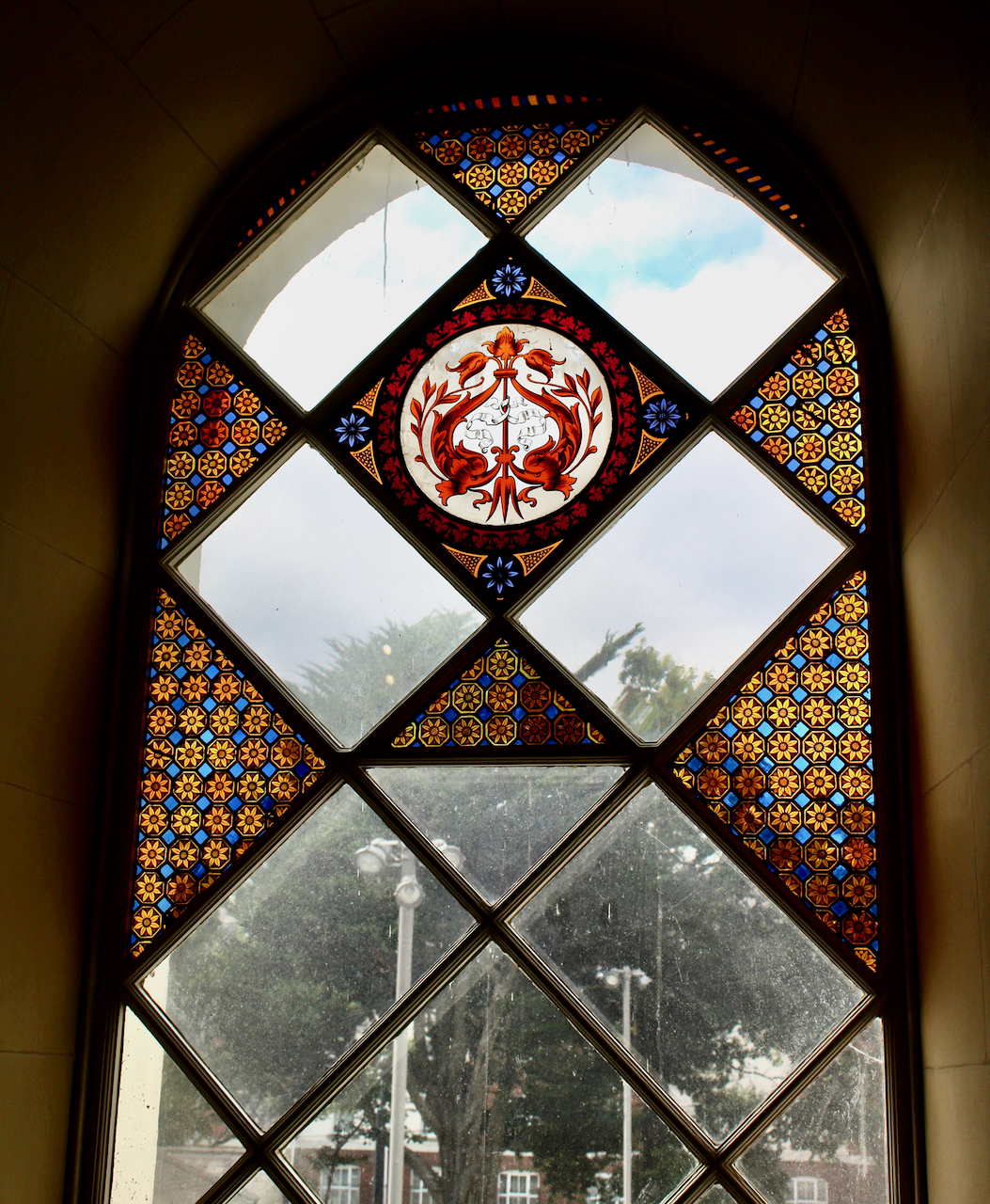
The painted glass panels featuring fruit and flowers are believed to be by the Dublin Huguenot artist Thomas Jervais (d. 1799). Designs for windows for the castle were by Joshua Reynolds. [see 5] Photograph © Jennifer Winder-Baggot, www.irishhistorichouses.com
The entrance hall, Rathfarnham Castle. Photograph © Jennifer Winder-Baggot, www.irishhistorichouses.com
Information board, Rathfarnham Castle.
Cleopatra. The asp that killed her can be seen on her shoulder. Rathfarnham Castle. Photograph © Jennifer Winder-Baggot, www.irishhistorichouses.com
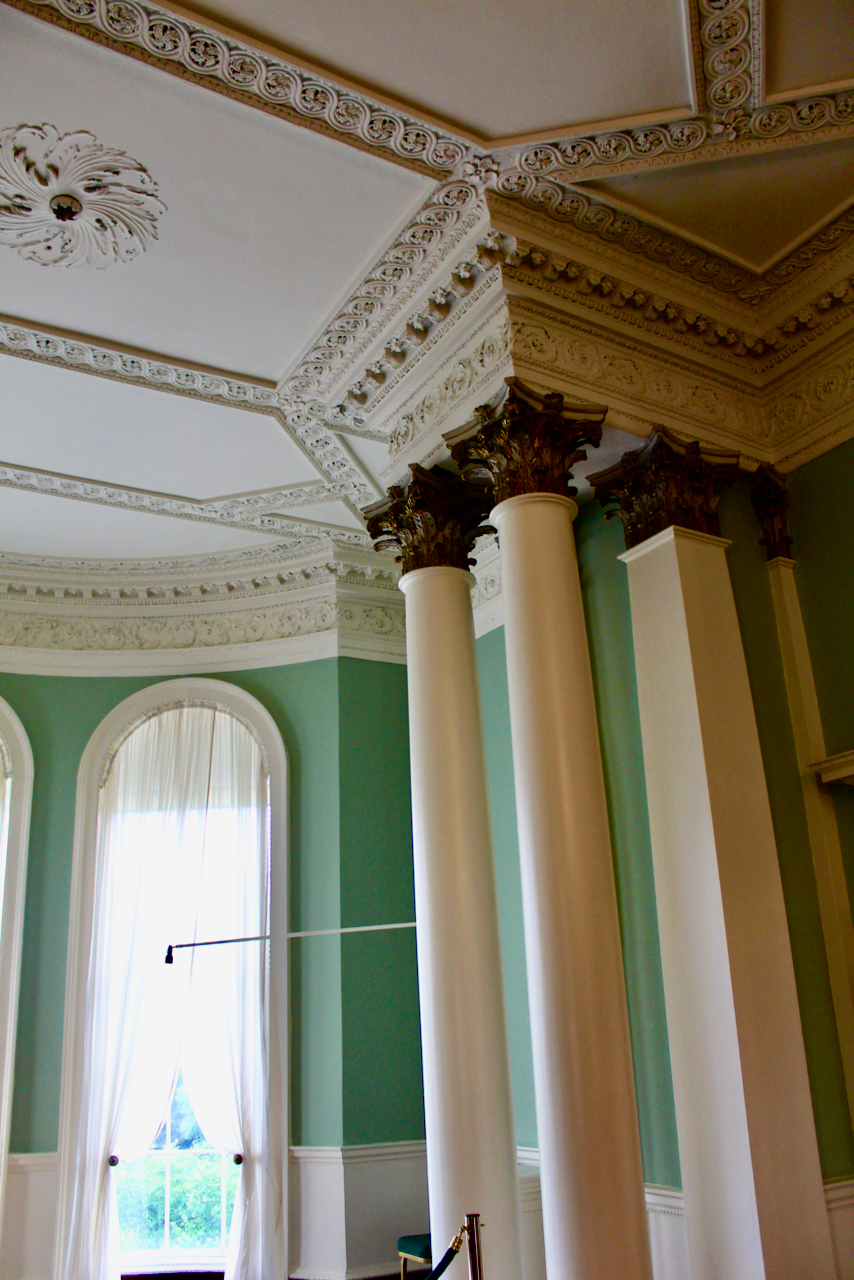
The Ante-Room. This served as a reception or waiting room for guests attending the Ball. The Ionic columned Venetian style window is the highlight of this room. The columns are wooden and hollow, and feature intricately carved foliage. The whole window may be referencing the form of a Roman triumphal arch. The wall separating this room from the ballroom was reinstated in the 1990s by the OPW. It had been removed in the 19th century by the then owner, Lord Chancellor Francis Blackburne (1782-1867), to accommodate a large pipe organ. Photograph © Jennifer Winder-Baggot, www.irishhistorichouses.com
The Ante-Room, Rathfarnham Castle. Photograph © Jennifer Winder-Baggot, www.irishhistorichouses.com
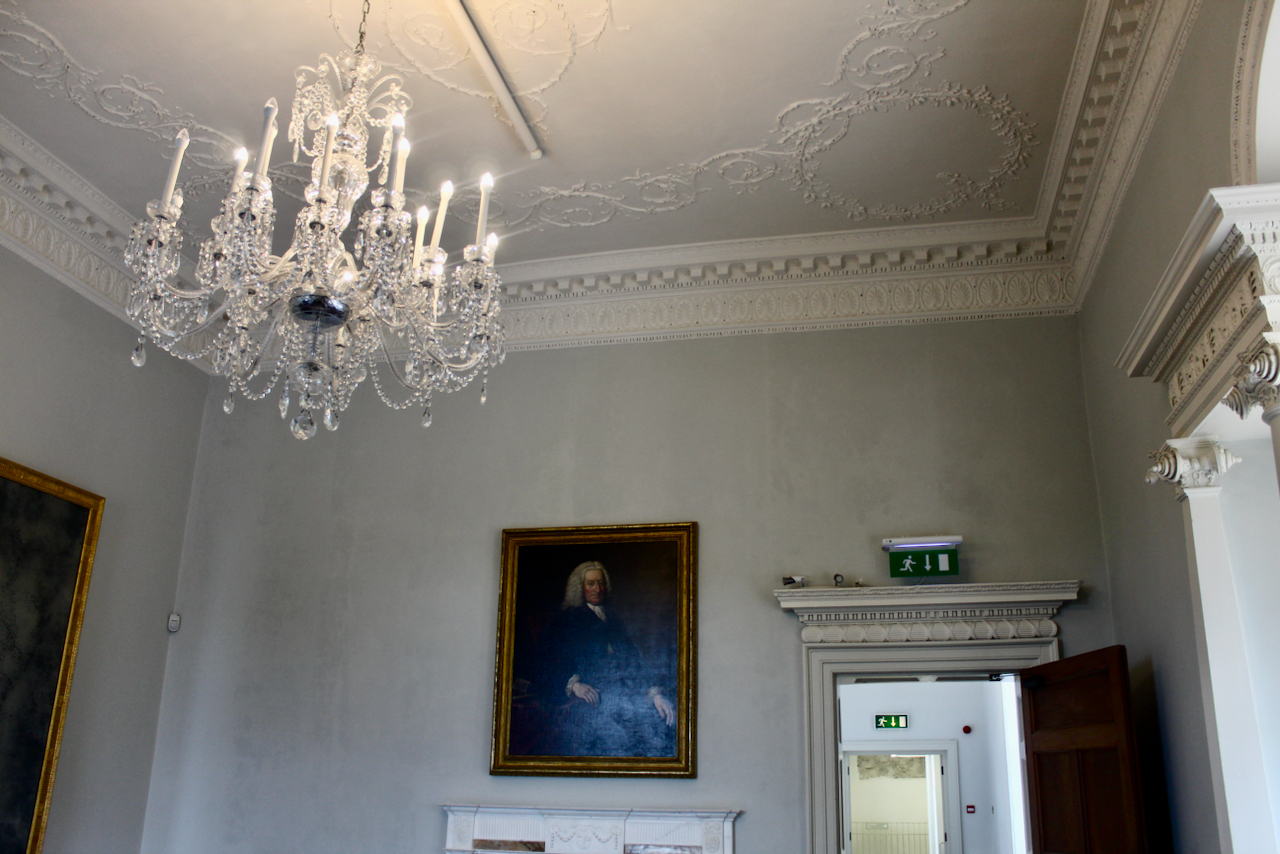
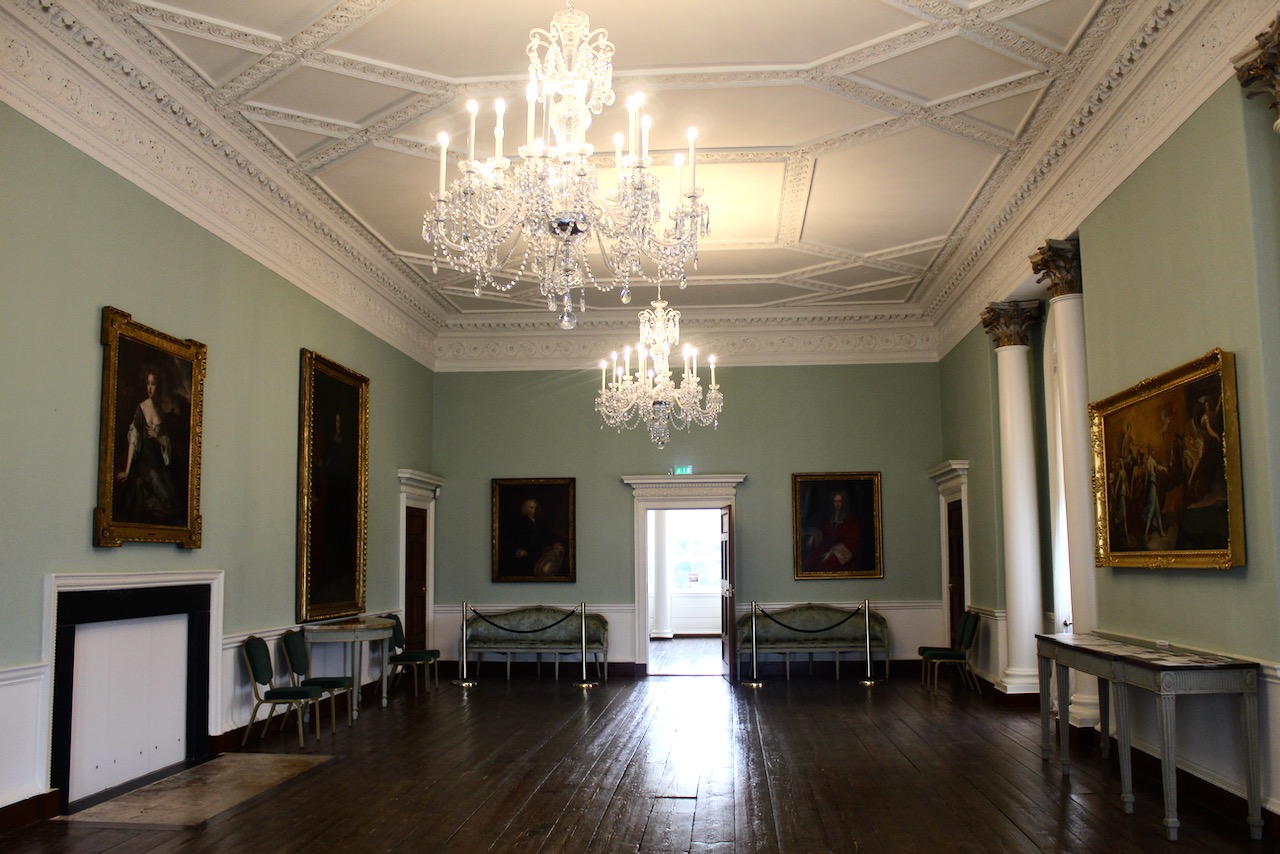
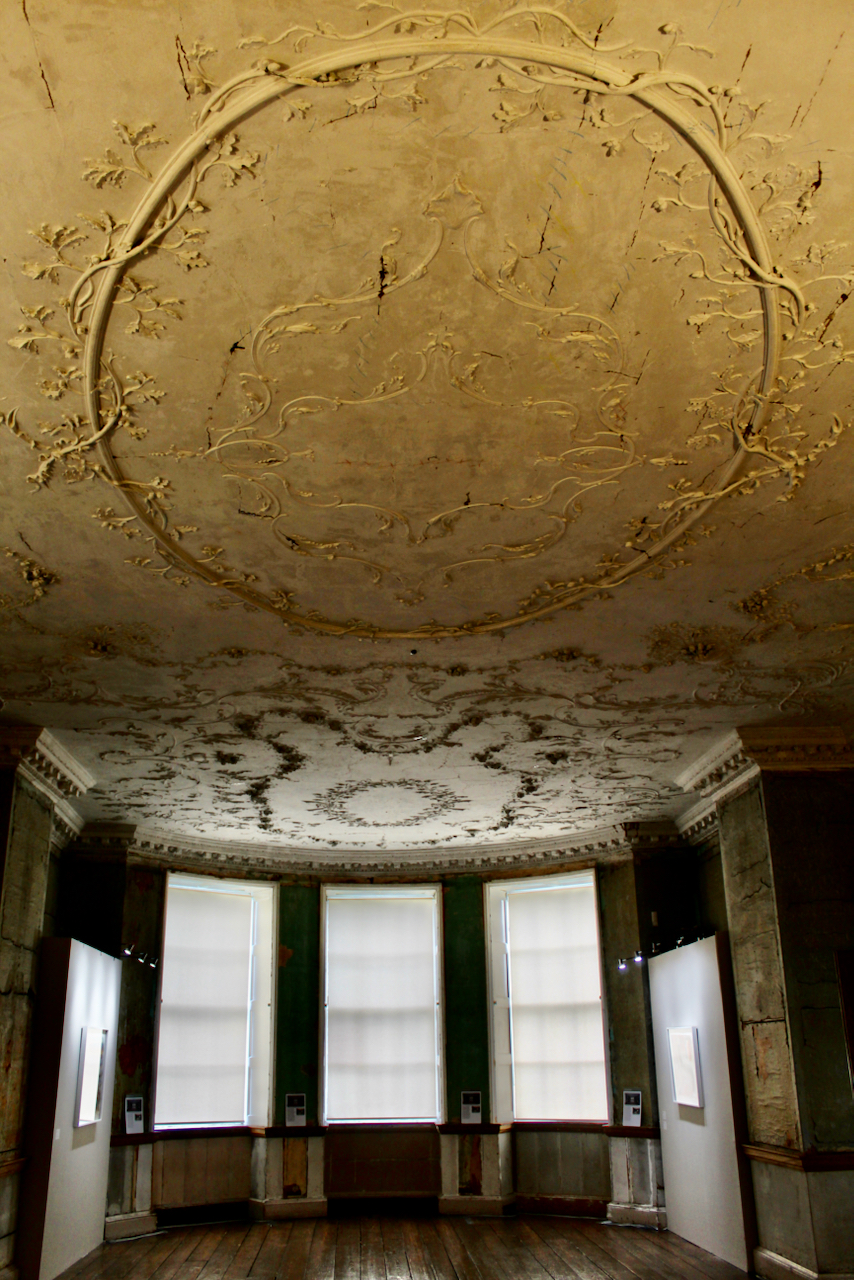
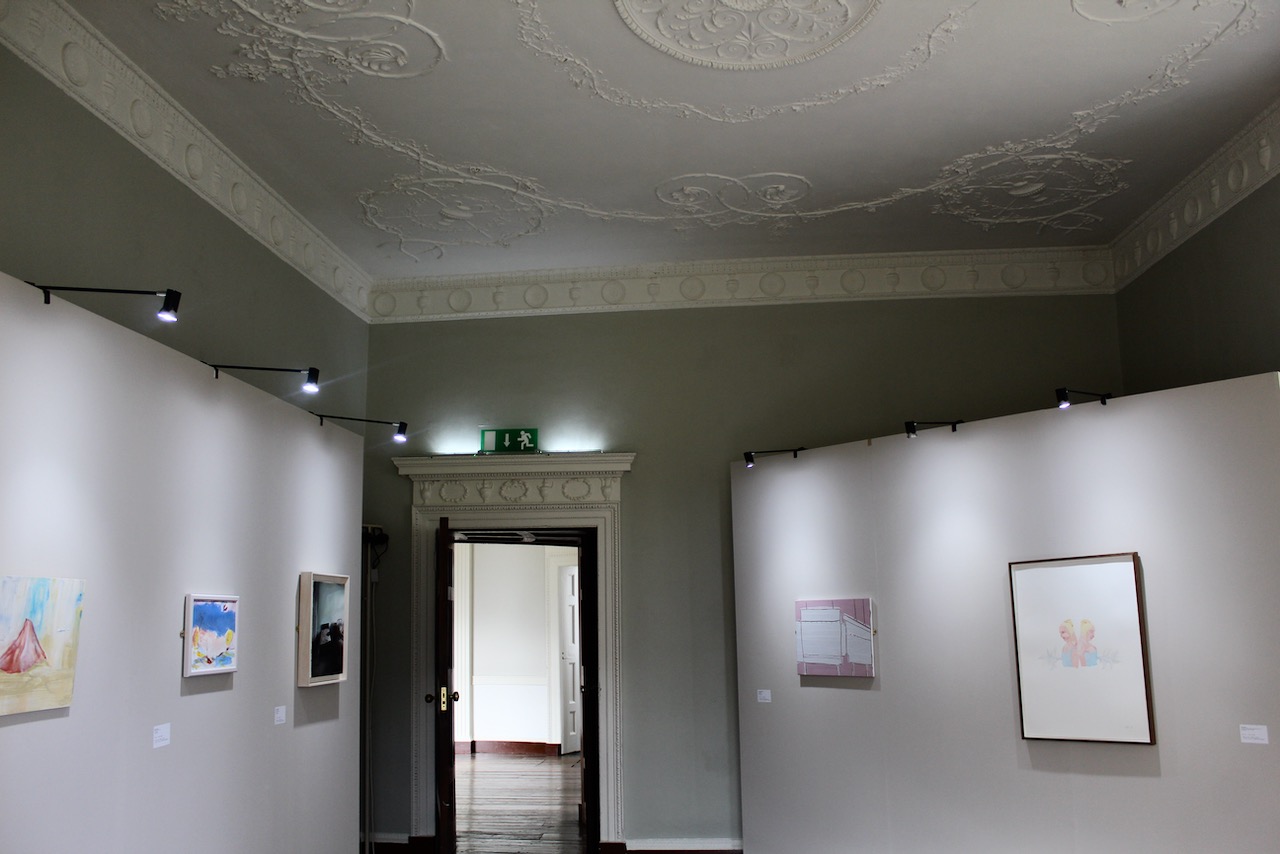
The Ballroom. The Ballroom was the principal room for entertainment and dancing and it is believed that the room was designed by Sir William Chambers. The door to the left on entering the room is false. It opens to reveal the wall behind. It was installed to maintain the balance and symmetry of the room. Musicians may have played in the eastern bow at the top of the Ballroom when dancing took place. Later, the Jesuits transformed the room into a chapel placing an altar in the bow with pews arranged down the centre of the room. Photograph © Jennifer Winder-Baggot, www.irishhistorichouses.com
The Ballroom, Rathfarnham Castle. Photograph © Jennifer Winder-Baggot, www.irishhistorichouses.com
The Ballroom, Rathfarnham Castle, Dublin. Photograph © Jennifer Winder-Baggot, www.irishhistorichouses.com
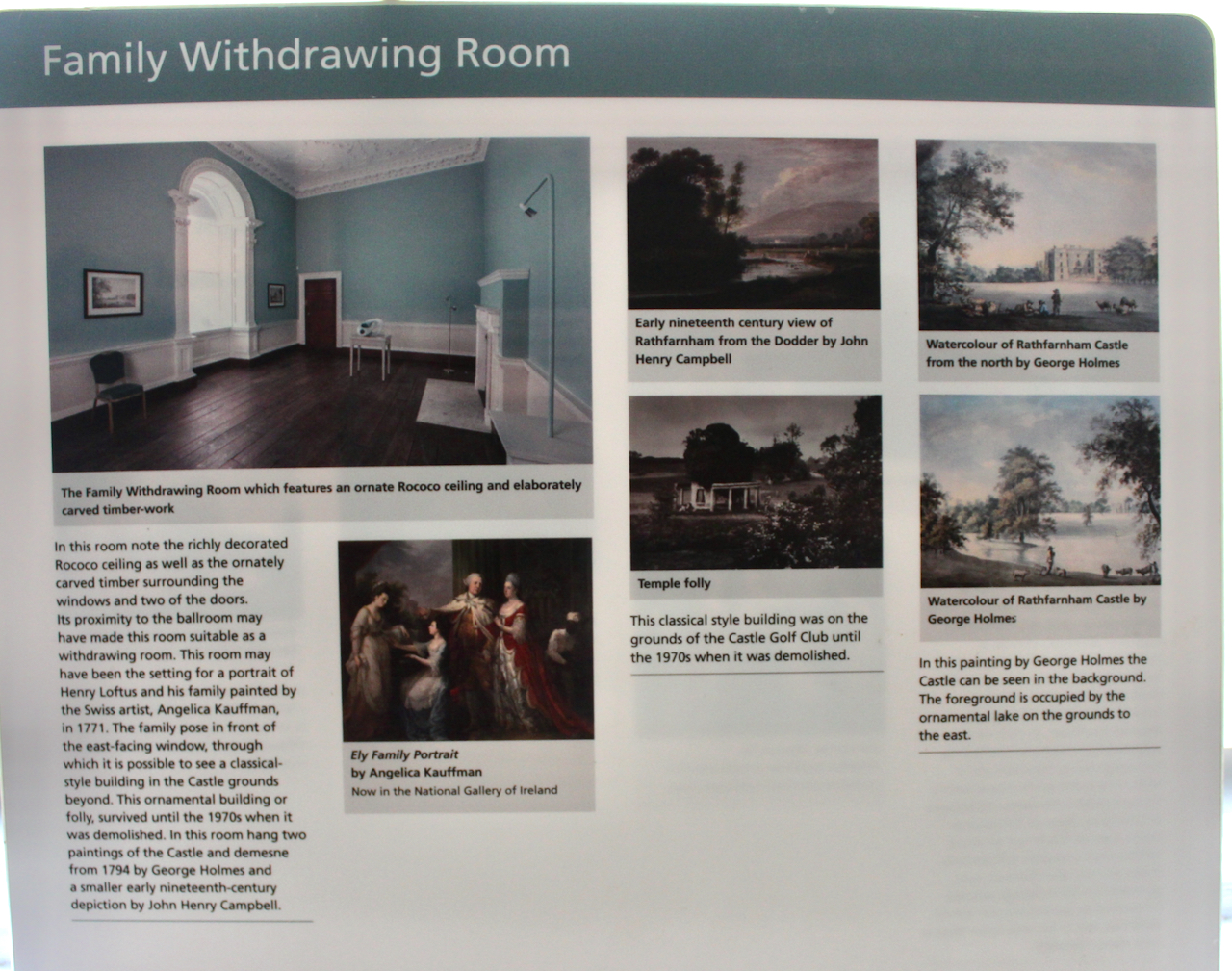
Information board about the Farmily Withdrawing Room in Rathfarnham Castle.
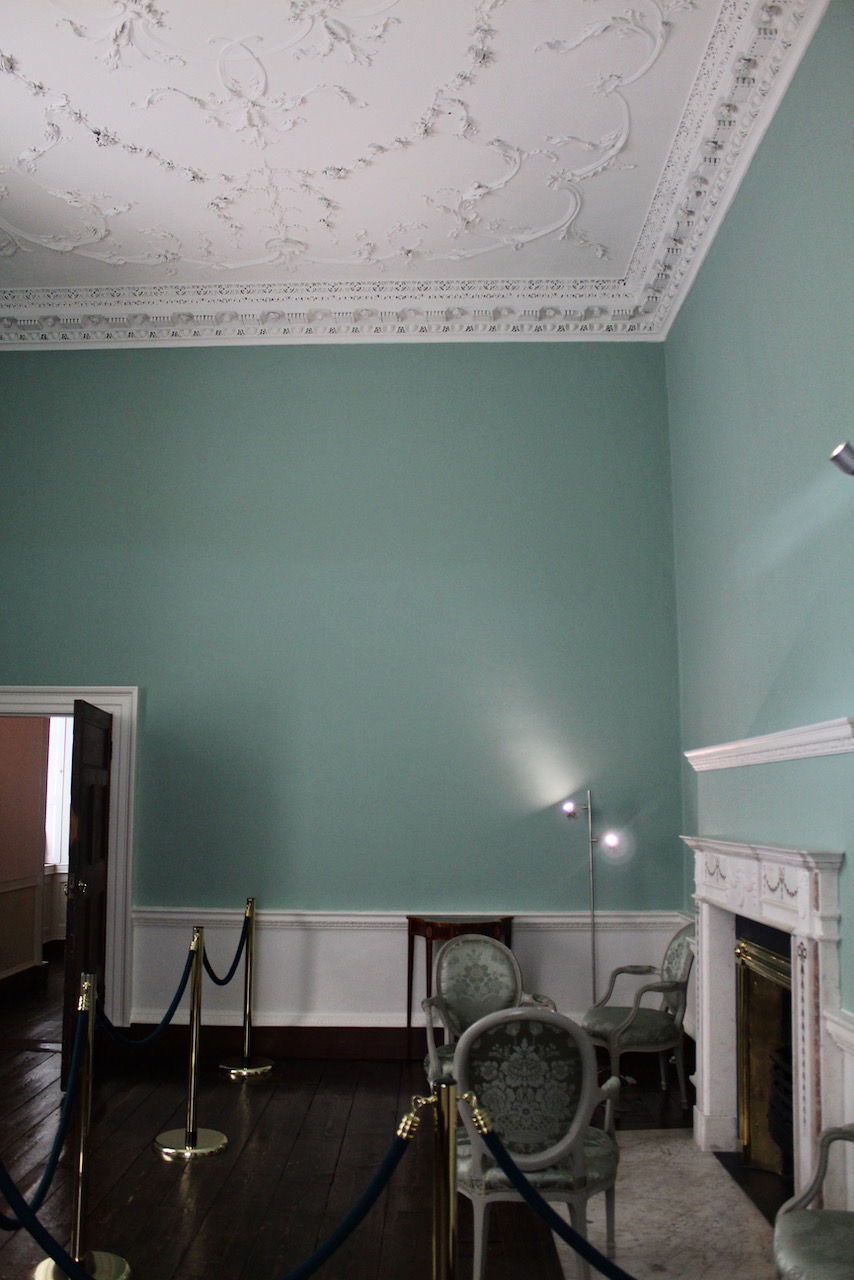
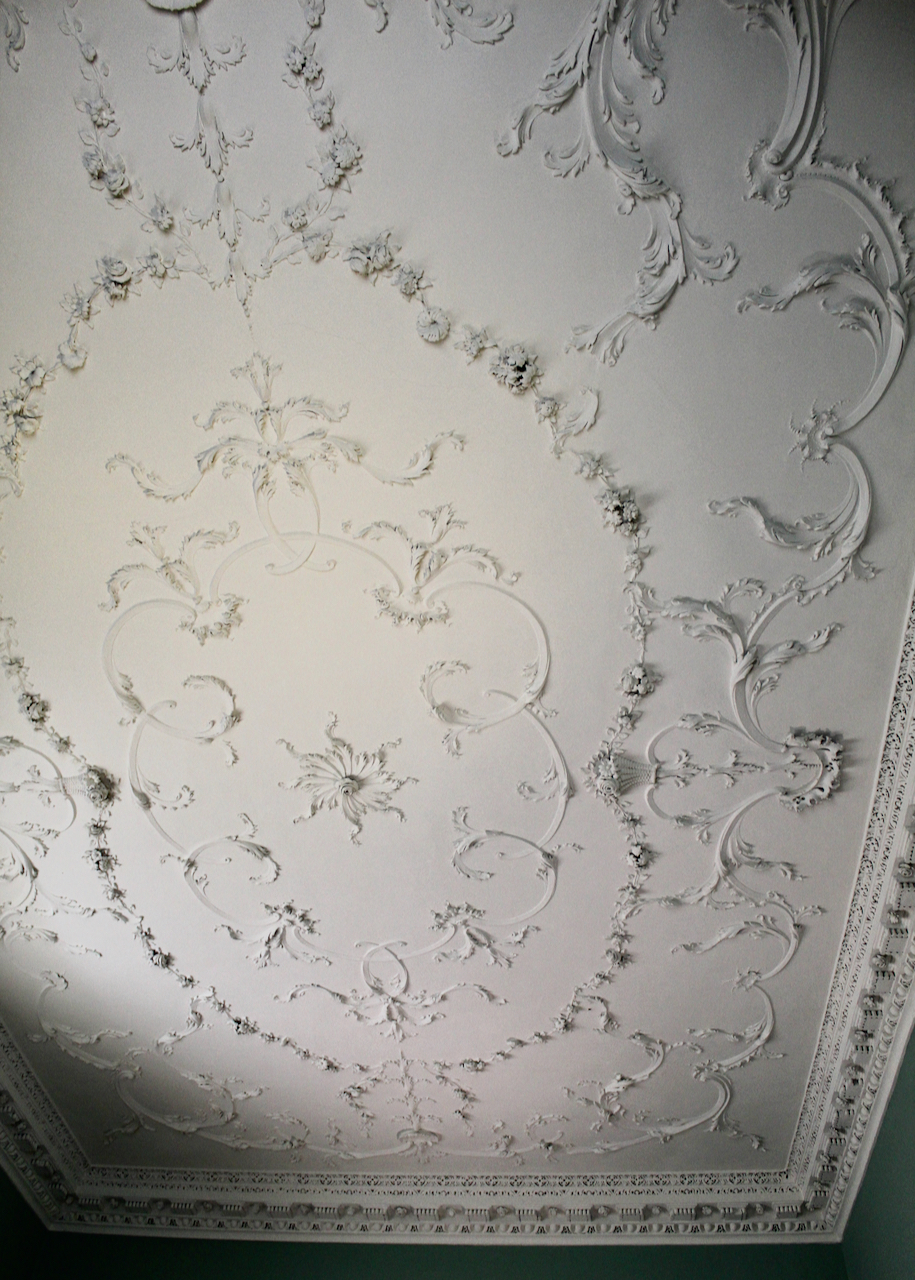
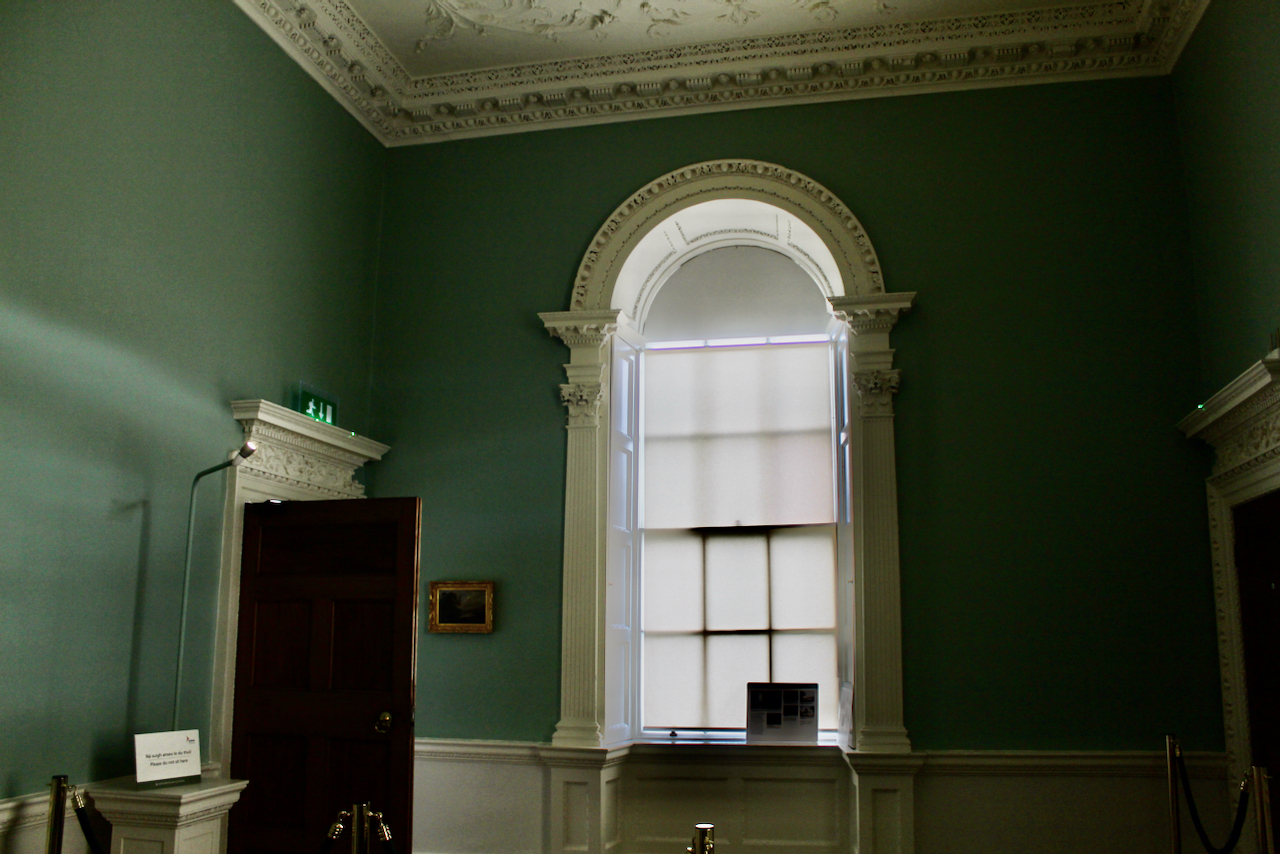
The Farmily Withdrawing Room in Rathfarnham Castle. Photograph © Jennifer Winder-Baggot, www.irishhistorichouses.com

Henry Loftus (1709-1783) is pictured below. He married first, Frances Monroe of Roe’s Hall, County Down, (pictured below), who died in 1774, then married secondly Anne Bonfoy. He purchased Ely House in Dublin (built 1770) from Sir Gustavus Hume, 3rd Baronet (now owned by the Knights of Columbanus).

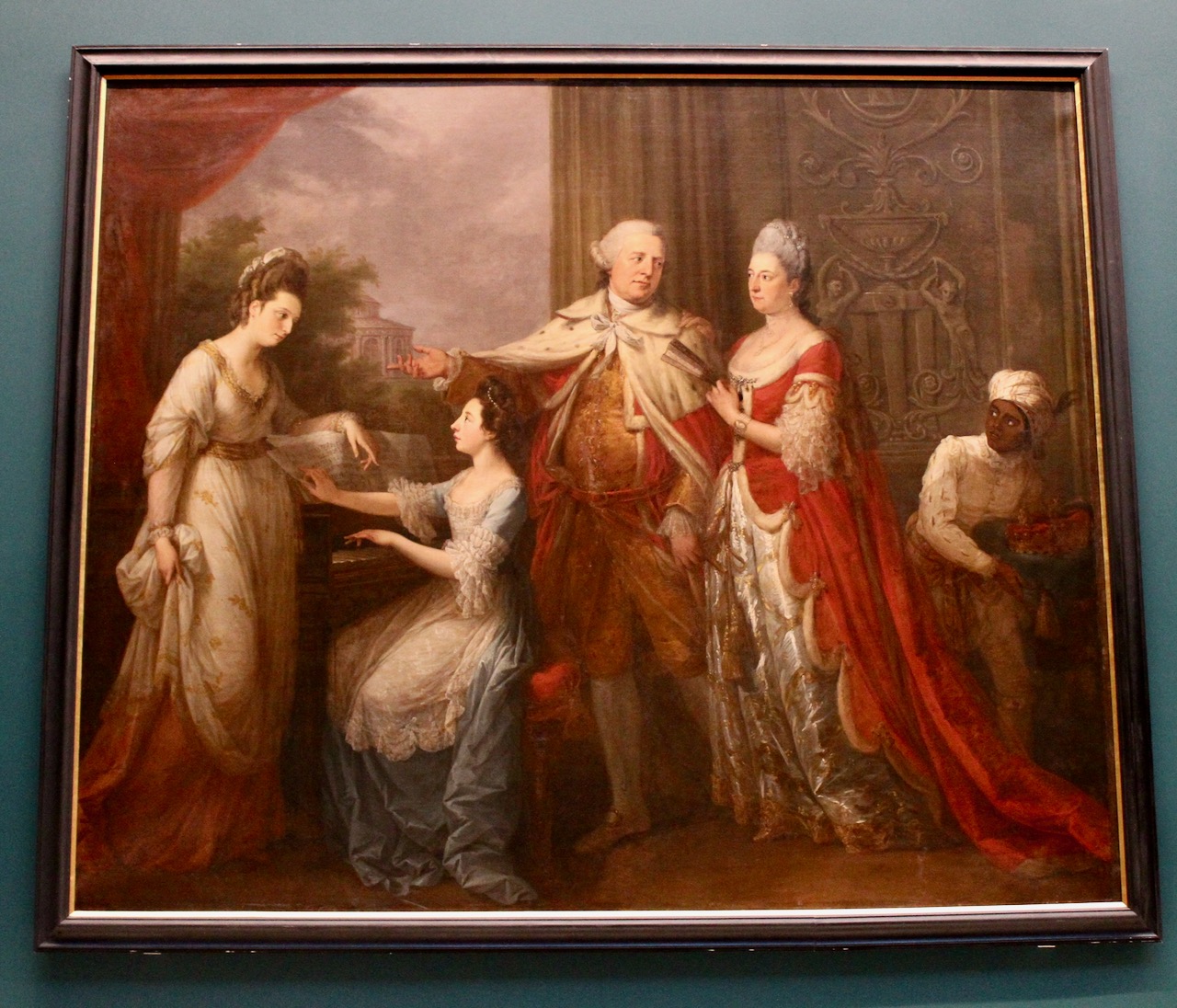
Painting by Angelica Kauffman, who spent several months in Dublin in 1771. It shows Henry Loftus 1st Earl of Ely of the 2nd Creation (1709-1783) with his wife Frances, her nieces and an exotic trophy servant, a young Indian page in Oriental dress carrying a cushion with two coronets, symbolising the title the Earl had just received. The older niece, Dolly Monroe, was Classical costume. Her younger sister Frances plays a fashionable aria on the harpsichord.

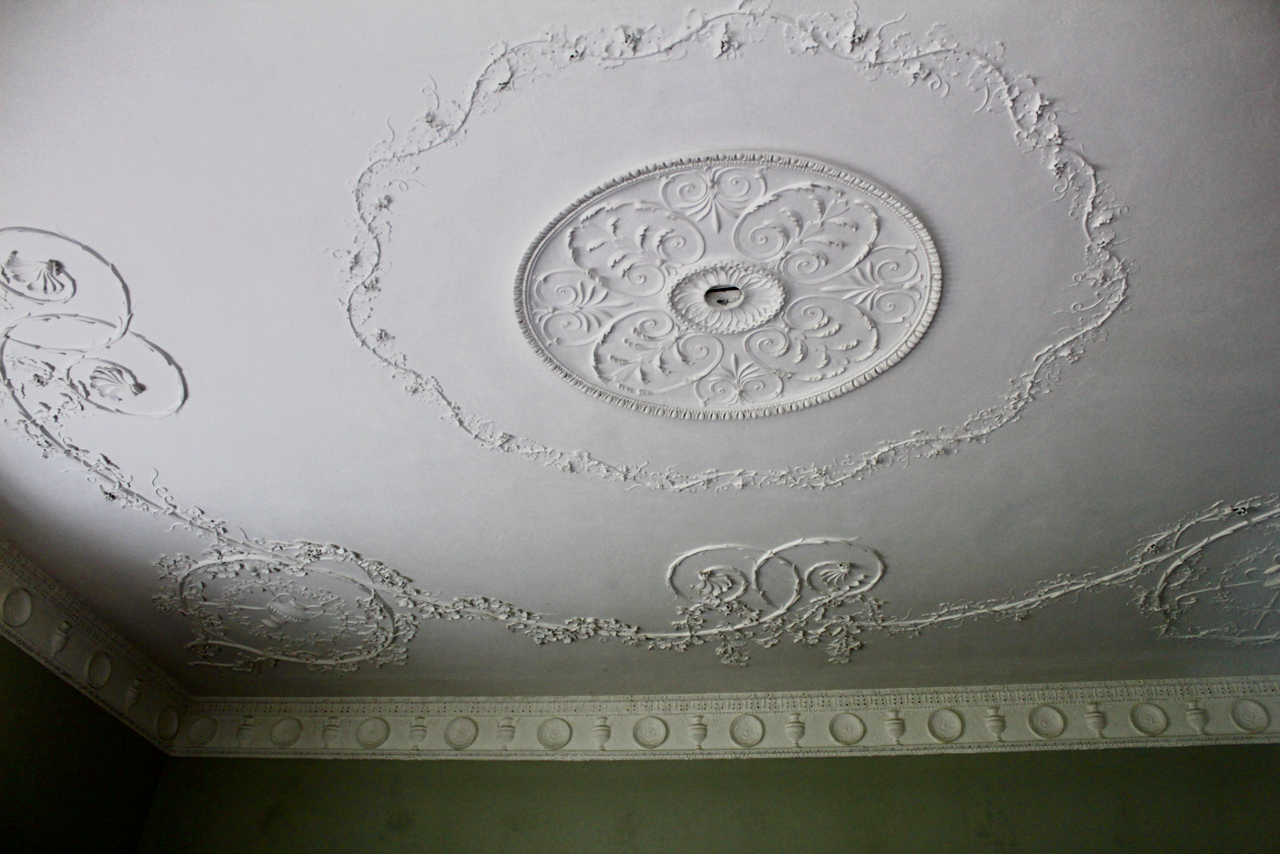
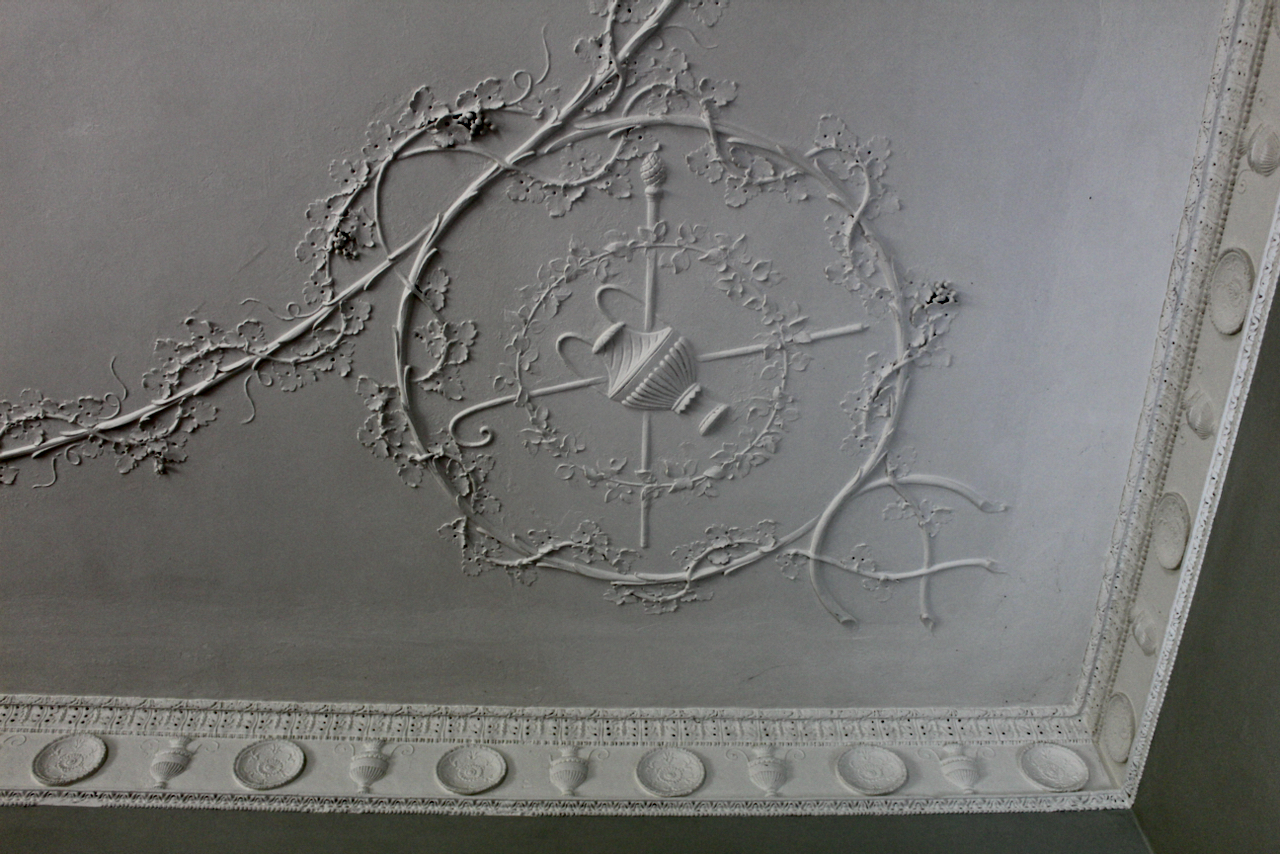
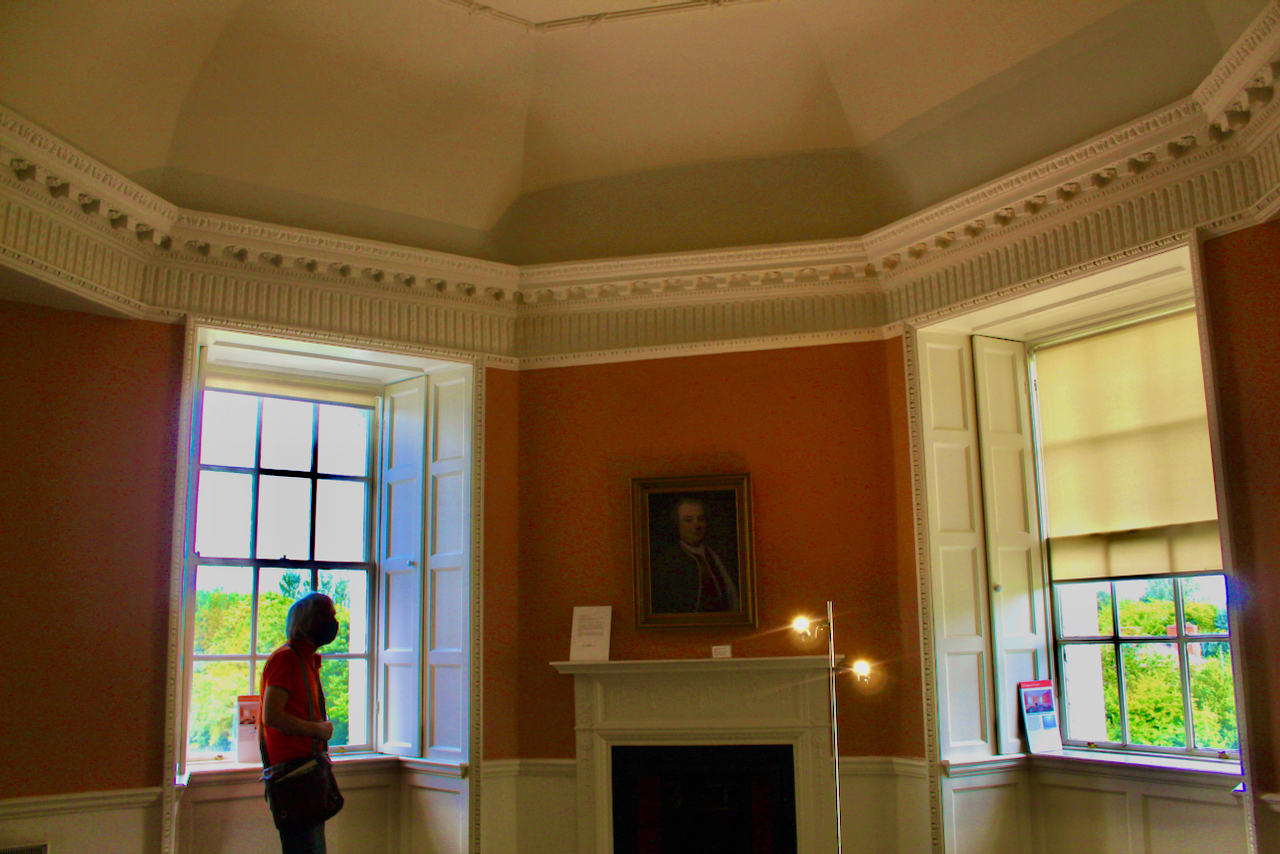
As well as the ante room and ballroom and the entrance hall on the first floor, Chambers was responsible for the small drawing room ceiling, back staircase lobby, and the octagonal room in one of the towers.

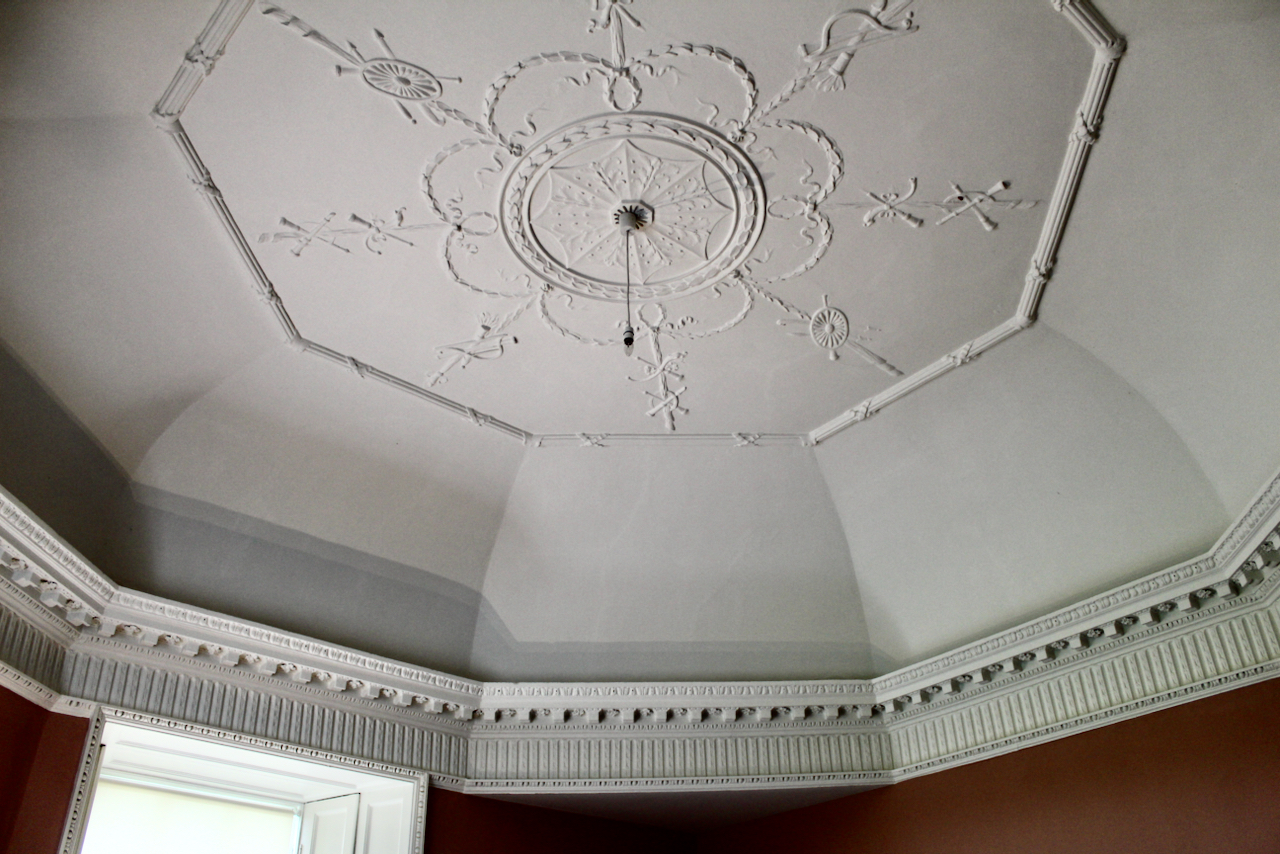
The Octagonal Room. In the 18th century it may have been a withdrawing room where guests could step out of the Ballroom for private conversation or relaxation. It was later used as a sacristy by the Jesuits. Photograph © Jennifer Winder-Baggot, www.irishhistorichouses.com
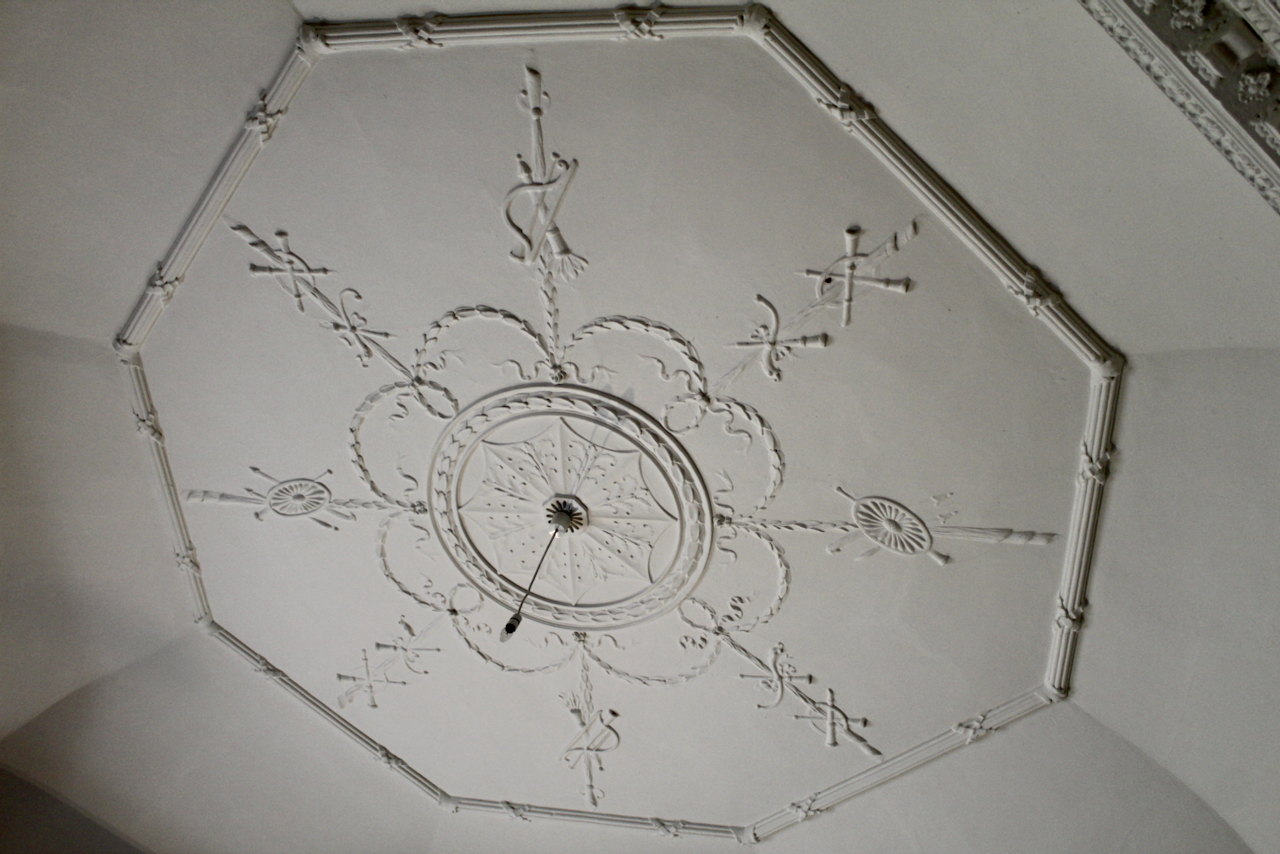
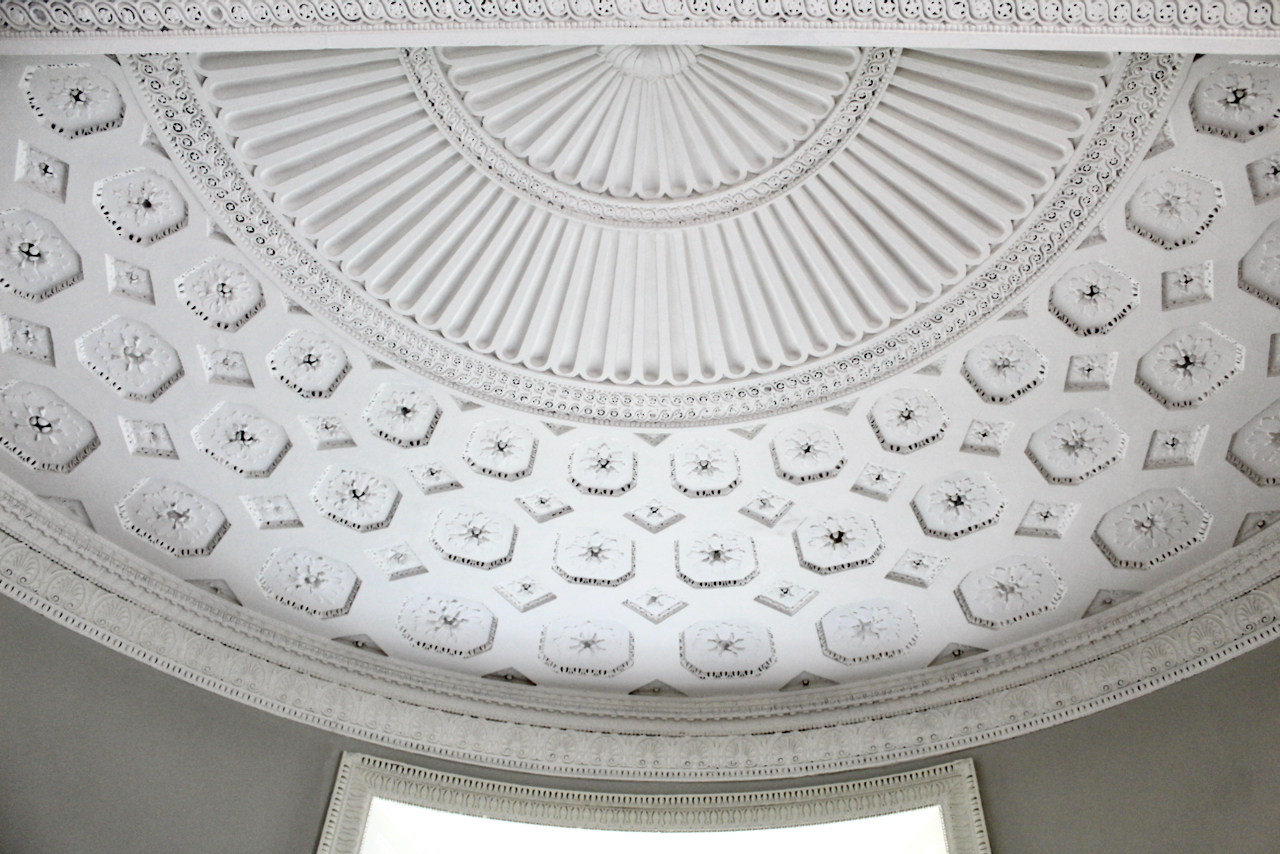
The Octagonal Room. This room features an eight sided ceiling and is decorated with ancient Roman symbols of war. The border is made up of bound groups of timber rods (fasces), a symbol of authority and power in the Roman period. Rathfarnham Castle. Photograph © Jennifer Winder-Baggot, www.irishhistorichouses.com
The Octagonal Room. Rathfarnham Castle. Photograph © Jennifer Winder-Baggot, www.irishhistorichouses.com
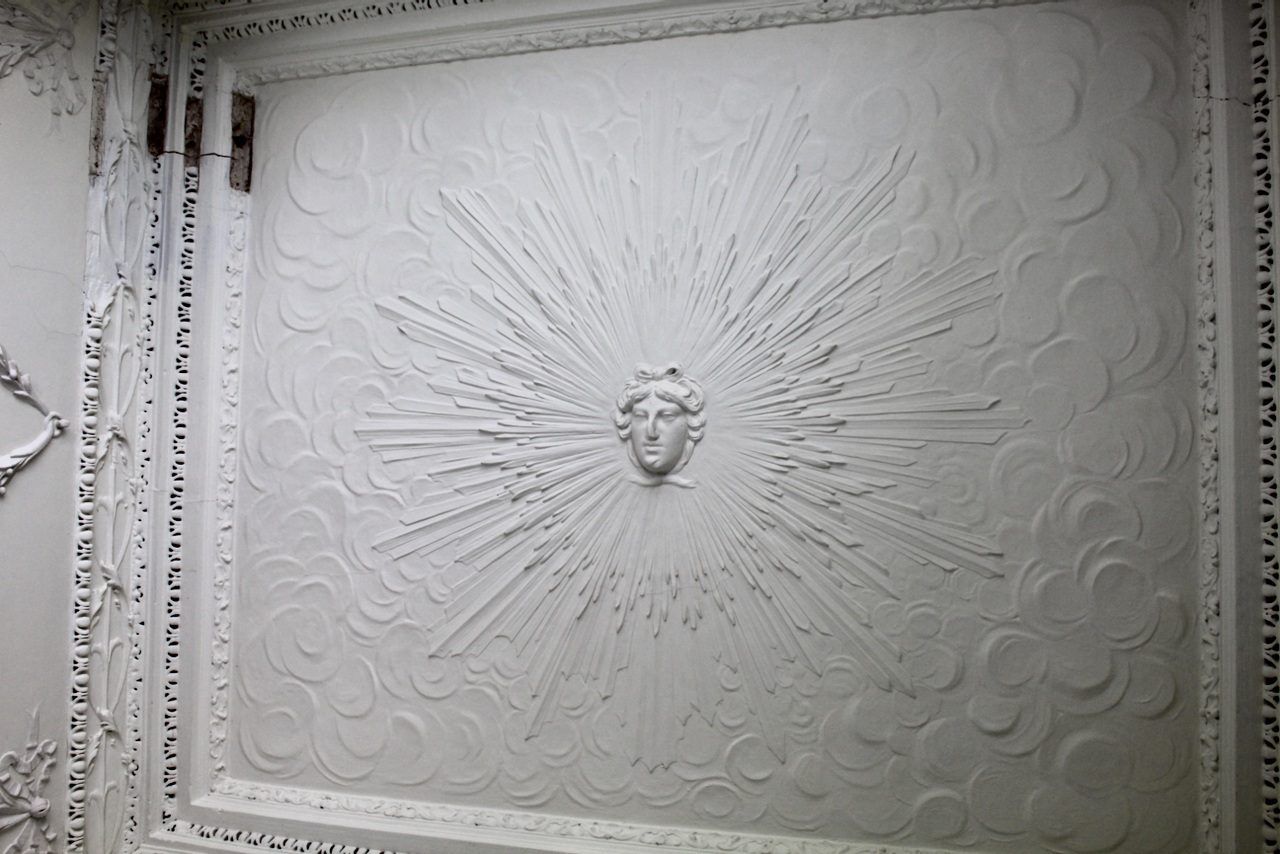
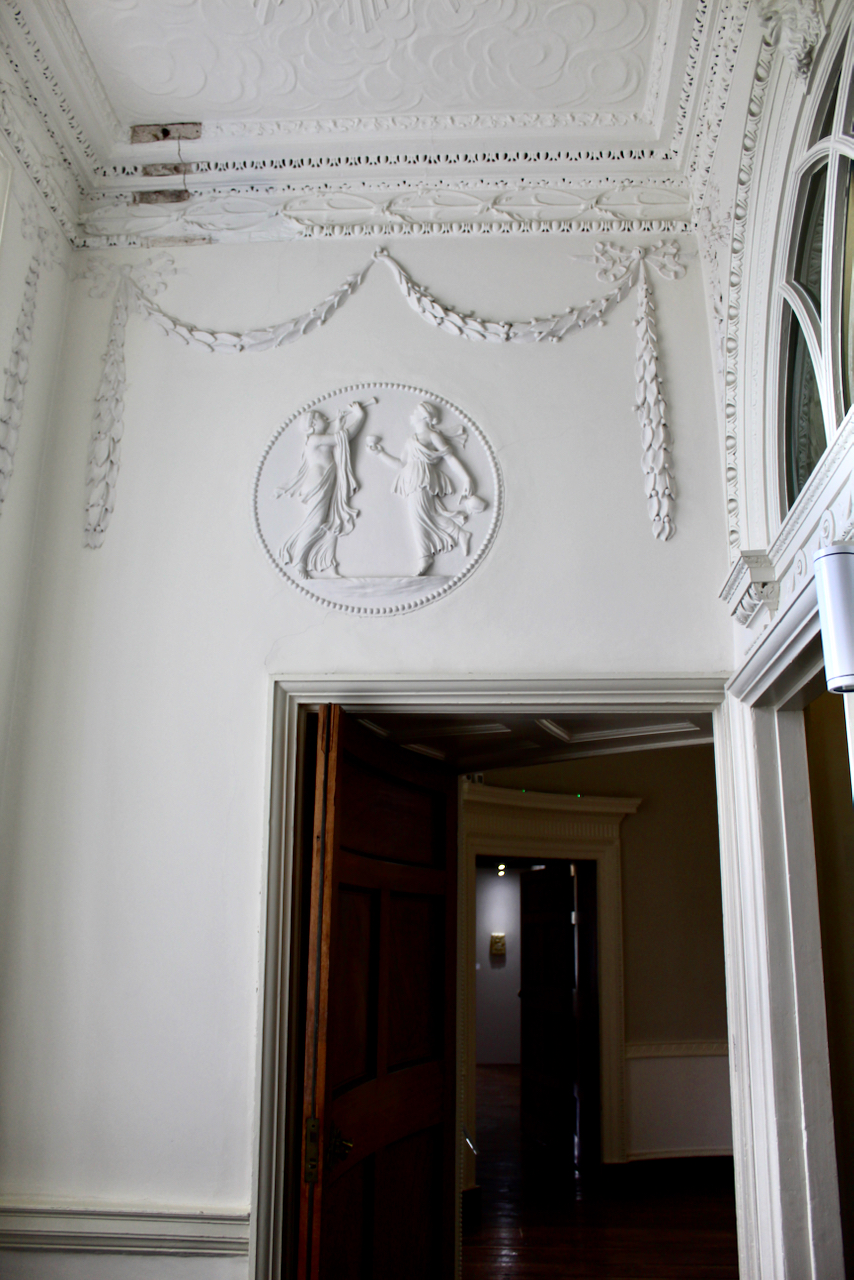
This tiny little passageway between the Dining Room and Long Gallery/Saloon was clearly a space of some importance. The passageway looks out onto the garden, and is decorated with very fine plasterwork. A head of Apollo adorns the ceiling, most likely to the design of Sir William Chambers, and on either side of the doorway there are ornamental plaster plaques with classical figures, celebrating wine, music and dance, a feature favoured and used repeatedly by James ‘Athenian’ Stuart. On one side of the passage there is a narrow wooden stairs, with a fanlight and satyr mask. The stairway has decorative niches, and leads all the way from the garden level to the third floor. Photograph © Jennifer Winder-Baggot, www.irishhistorichouses.com
On either side of the doorway there are ornamental plaster plaques with classical figures, celebrating wine, music and dance, a feature favoured and used repeatedly by James ‘Athenian’ Stuart. On one side of the passage there is a narrow wooden stairs, with a fanlight and satyr mask. The stairway has decorative niches, and leads all the way from the garden level to the third floor. Photograph © Jennifer Winder-Baggot, www.irishhistorichouses.com

There are also several rooms which are attributed to architect and designer James “Athenian” Stuart, whose best work in Ireland is the Temple of the Winds at Mount Stewart, County Down. Stuart was employed at Rathfarnham from at least 1769 and was responsible for the design of the ground floor gallery and two rooms above it. He was also involved in the decoration of some interiors at the family townhouse, Ely House, Dublin.

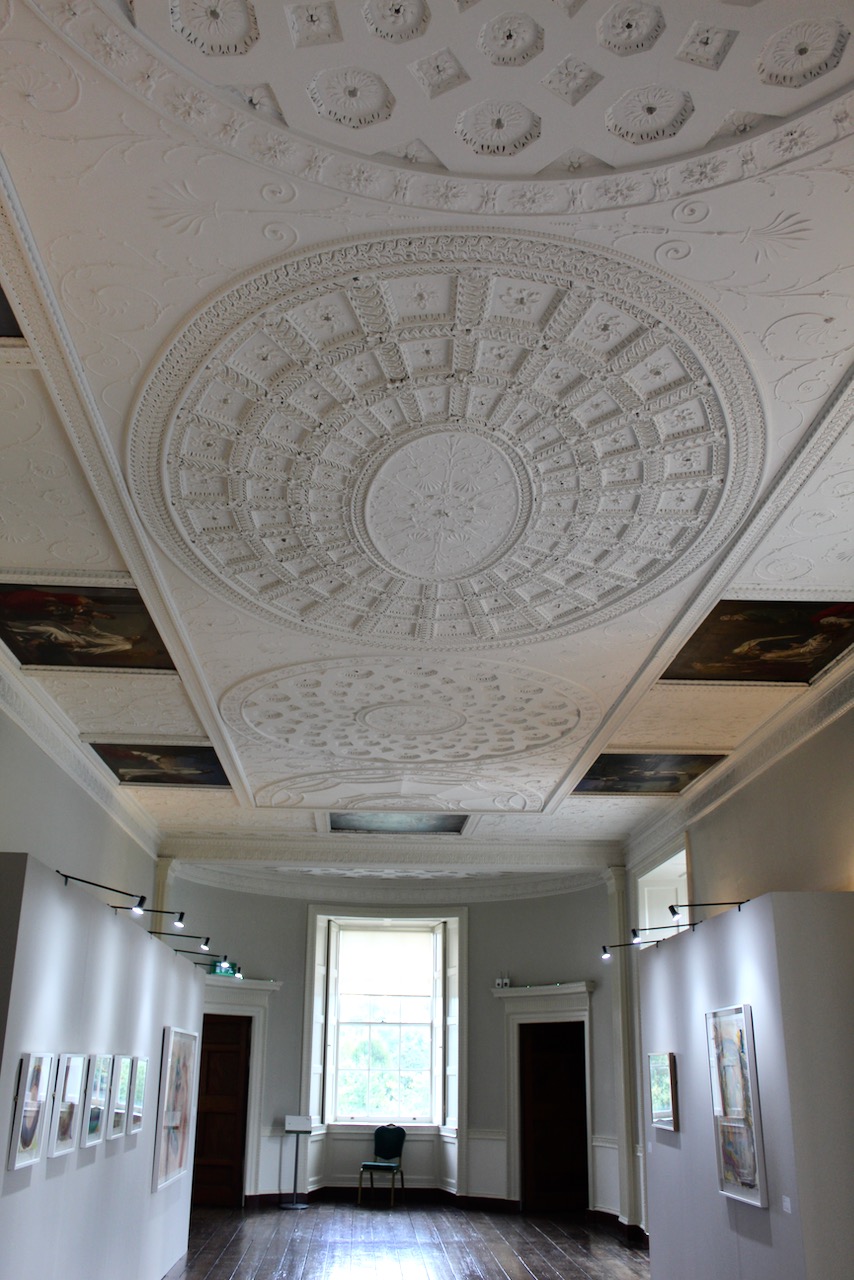
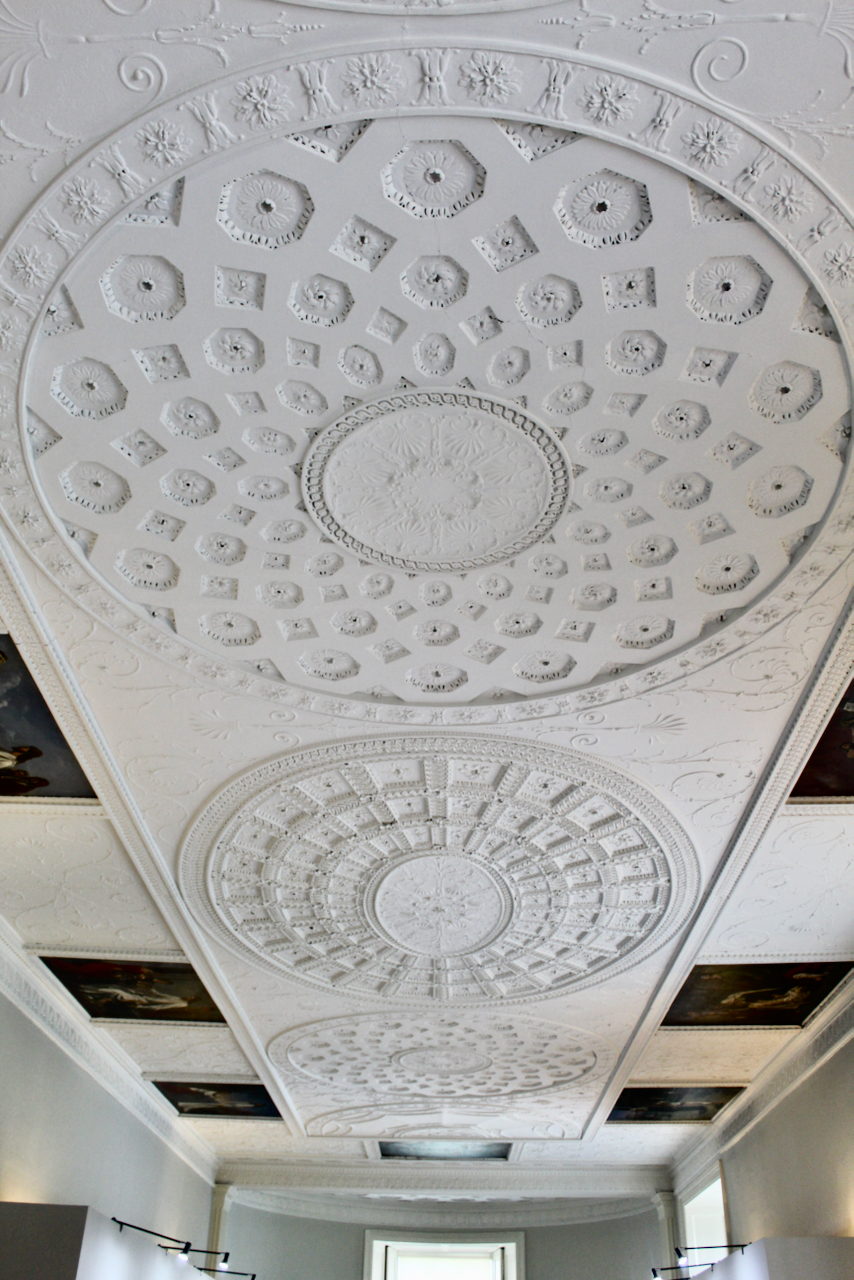
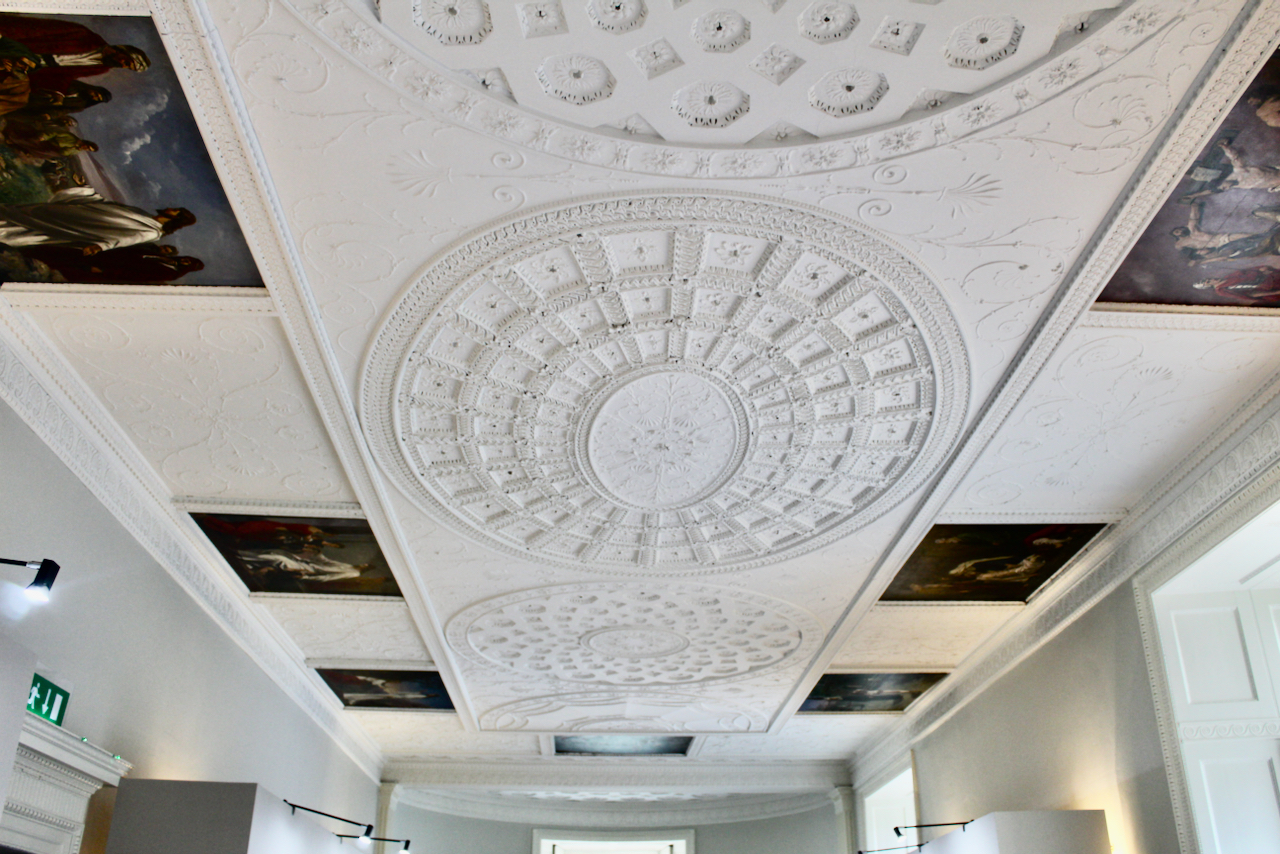
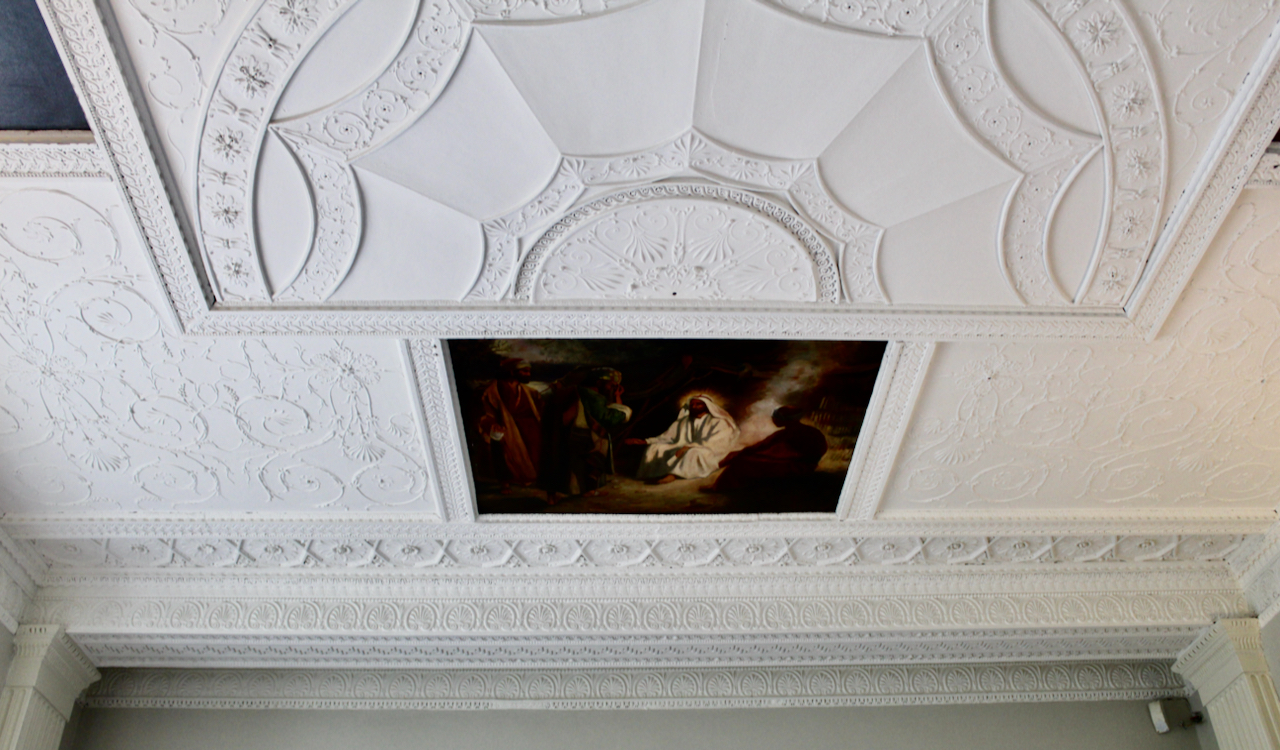
This long room would have been used as a saloon or drawing room to entertain guests and perhaps also as a space to display a collection of art works. It is believed the room was designed by James “Athenian” Stuart (1713-1788). The original ceiling paintings were a series of Greek mythological scenes by Angelica Kauffman (1741-1807). These were sold at auction in the early 20th century and are now believed to be in a private collection in the United States. The Jesuits commissioned a new series of ceiling paintings featuring scenes from the life of Christ by Dublin artist Patrick Tuohy (1894-1930). The residents of the Castle had direct access from this room to the lawn, woods and ornamental lake beyond via a double-cantilevered exterior staircase in Portland stone.” Photograph © Jennifer Winder-Baggot, www.irishhistorichouses.com
The Long Room, Rathfarnham Castle, Photograph © Jennifer Winder-Baggot, www.irishhistorichouses.com
The Jesuits commissioned a new series of ceiling paintings featuring scenes from the life of Christ by Dublin artist Patrick Tuohy (1894-1930).
The Long Room, Rathfarnham Castle, Photograph © Jennifer Winder-Baggot, www.irishhistorichouses.com
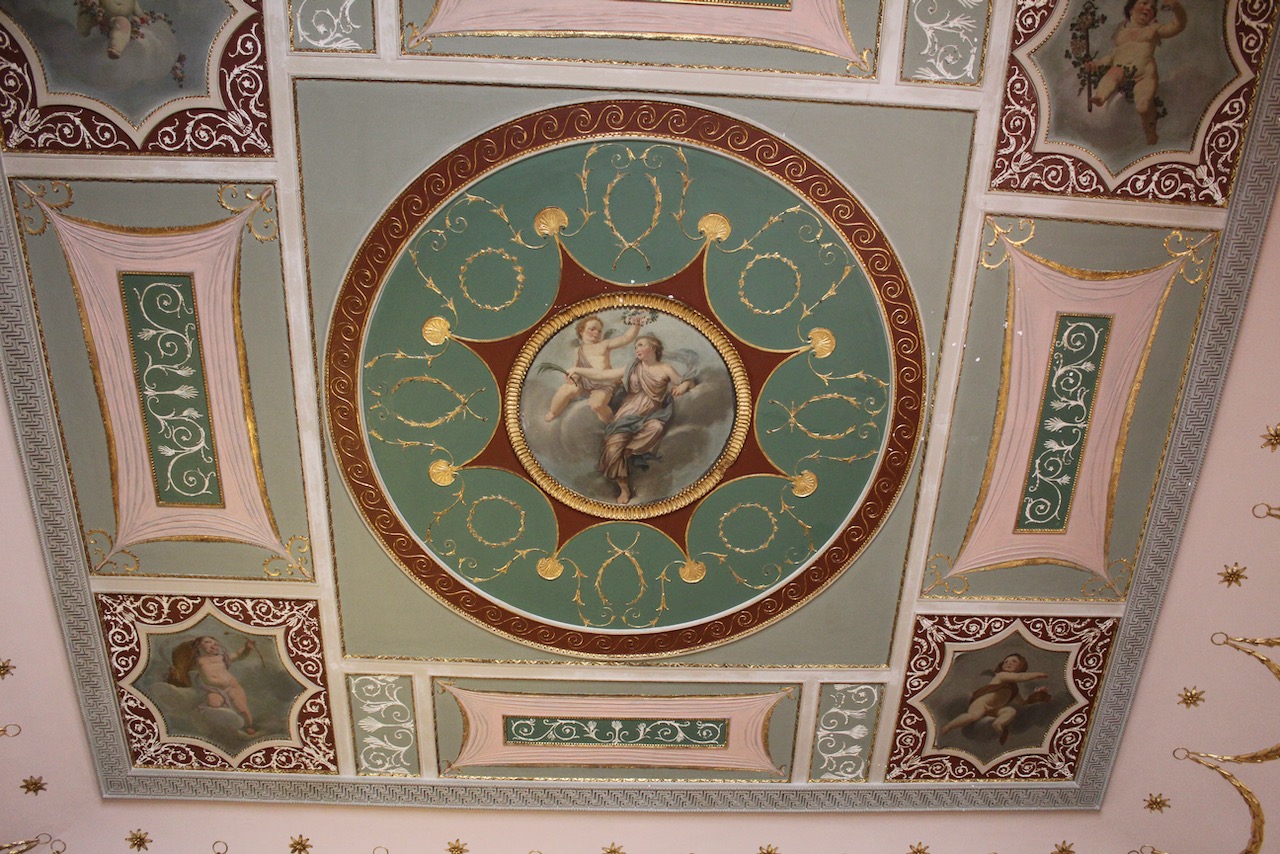
The Four Seasons Room, Rathfarnham Castle, believed to have been designed by James “Athenian” Stuart. In each corner of the ceiling a cherub represents one of the four seasons while the central painting is that of the goddess of agriculture and the harvest (Demeter in Greek or Ceres in Roman mythology). Photograph © Jennifer Winder-Baggot, www.irishhistorichouses.com
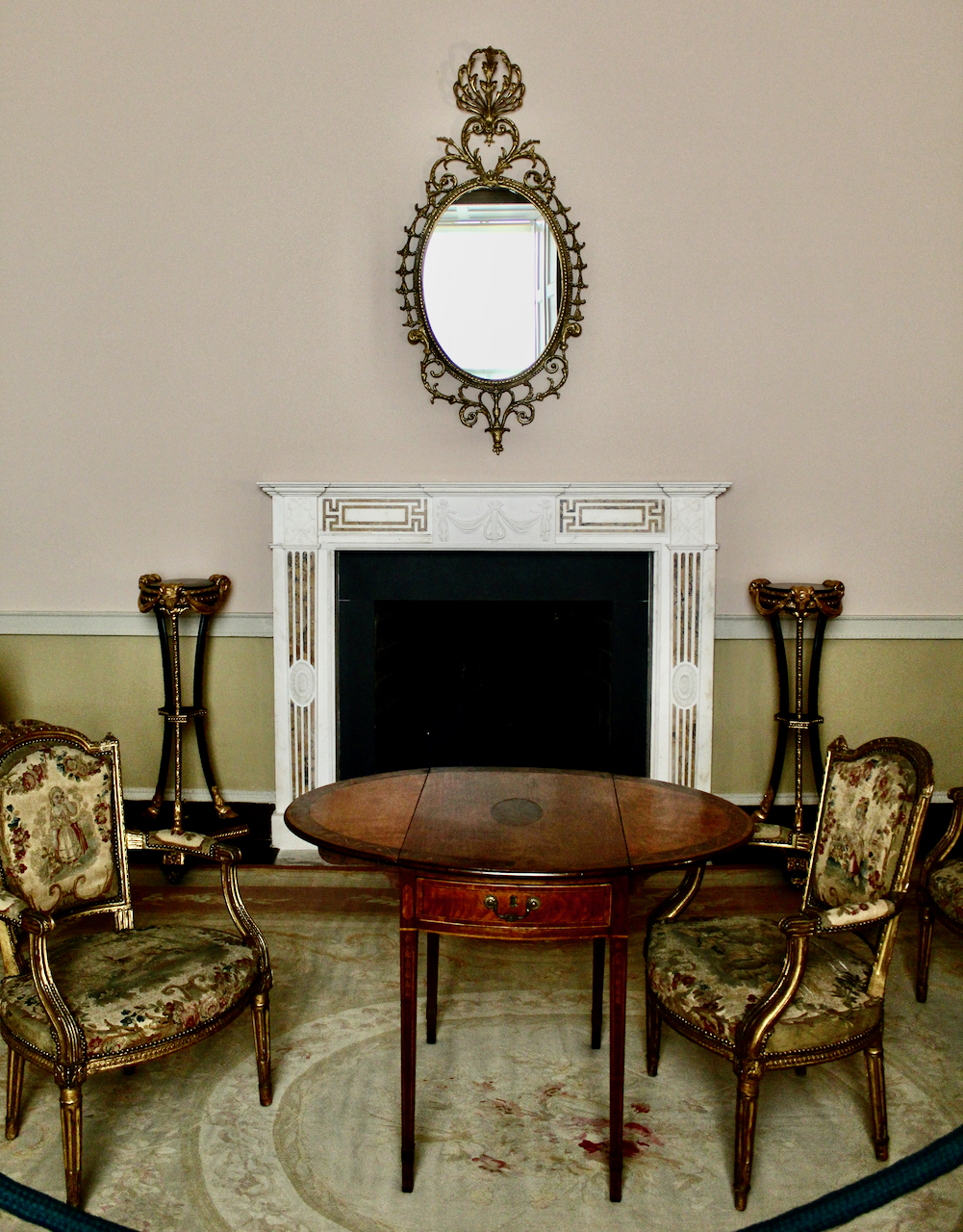
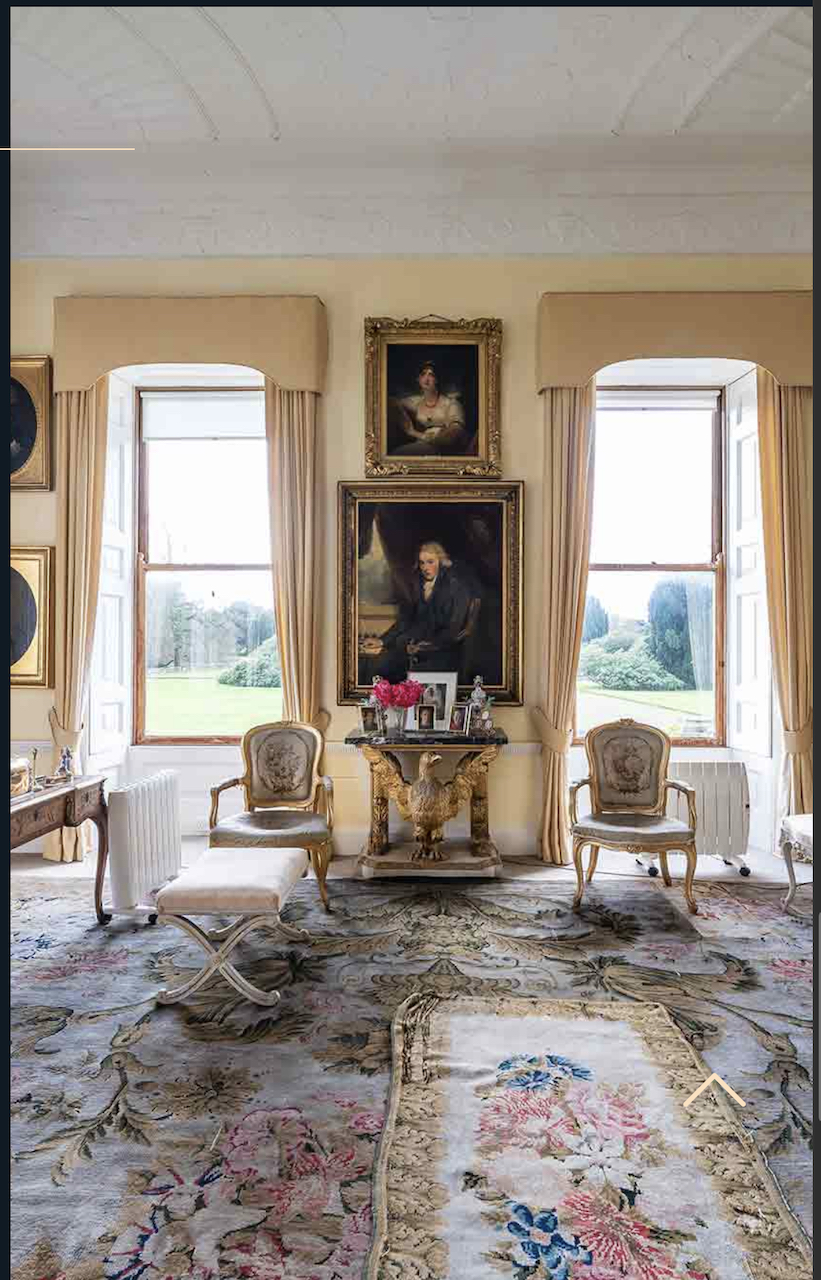
The Four Seasons Room, Rathfarnham Castle. The mirror is from the late 18th century and constructed from a type of papier-mache treated to give the appearance of gilded wood or metal. The Louis XVI giltwood and tapestry chairs feature scenes from La Fontaine’s fables which were adapted from the classics and published in the late 17th century. They are accompanied by an inlaid George III Pembroke Table. Photograph © Jennifer Winder-Baggot, www.irishhistorichouses.com
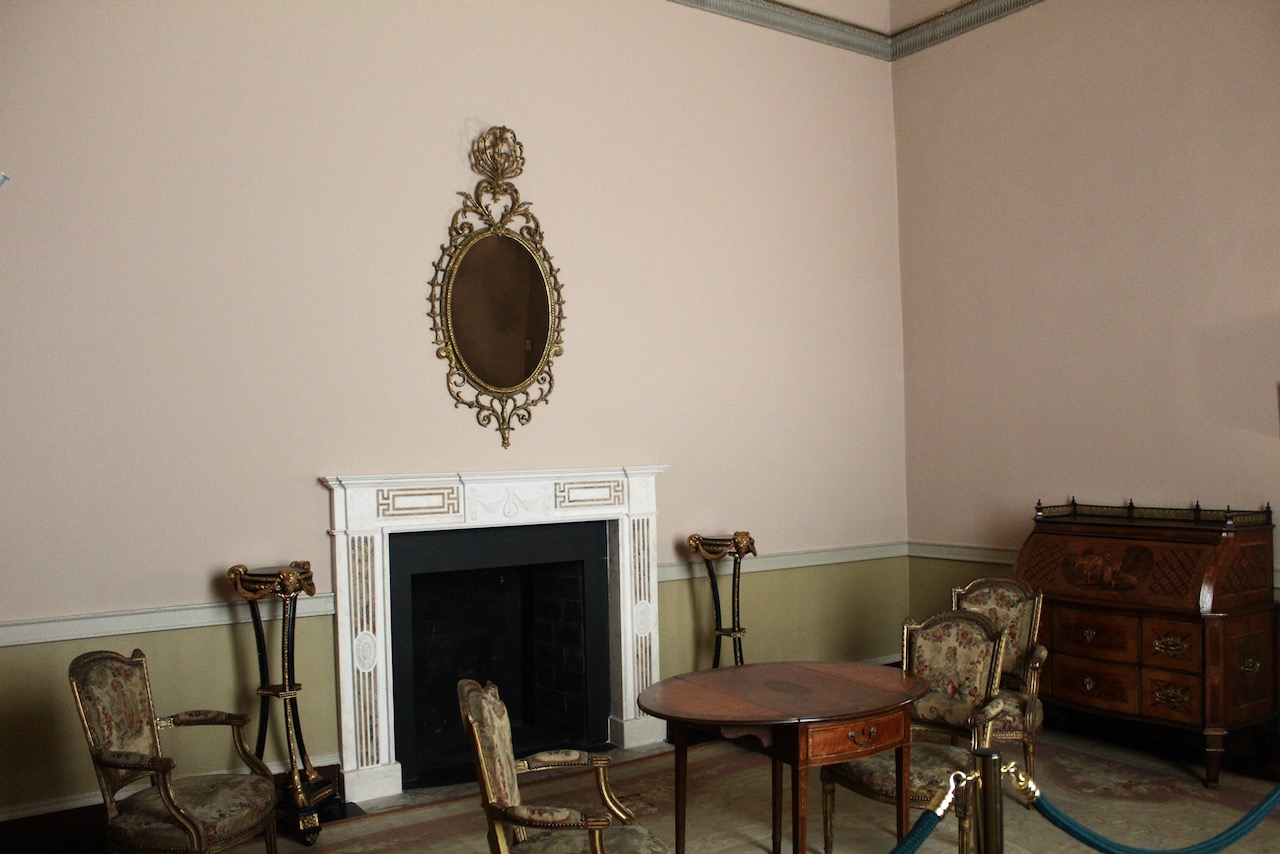
The Four Seasons Room, Rathfarnham Castle. The bureau belonged to Henry Loftus and is of German manufacture (c. 1775). The carpet is a late 19th century Aubusson. Photograph © Jennifer Winder-Baggot, www.irishhistorichouses.com
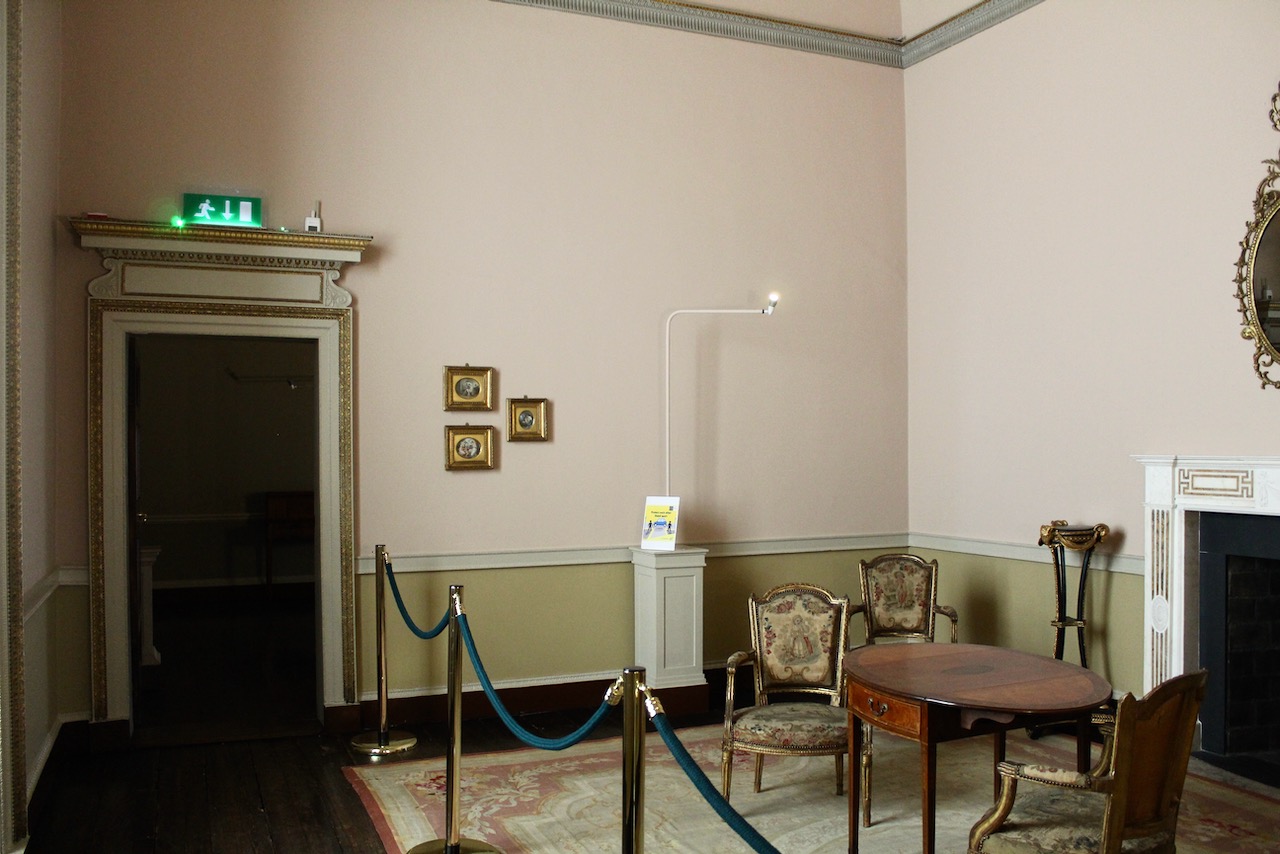
The Four Seasons Room, Rathfarnham Castle. Photograph © Jennifer Winder-Baggot, www.irishhistorichouses.com
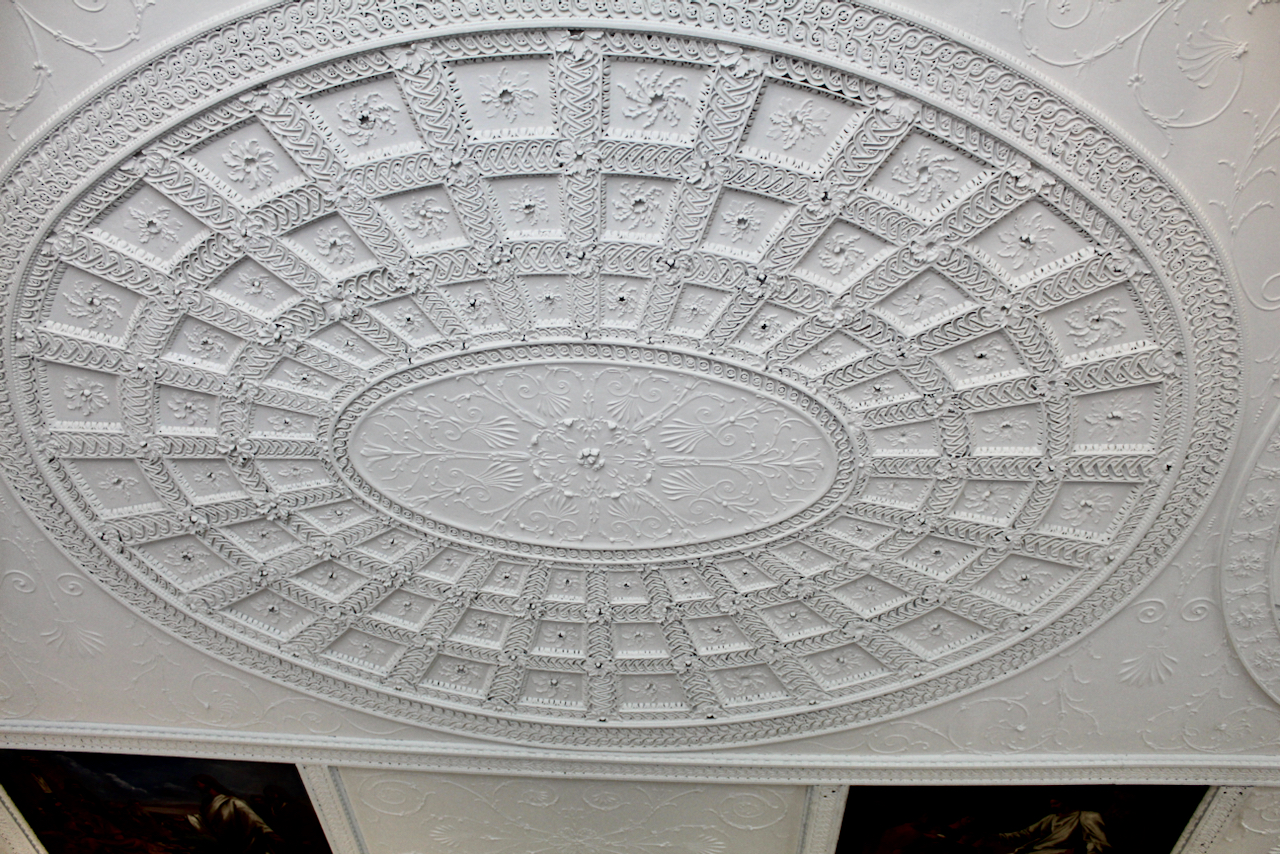
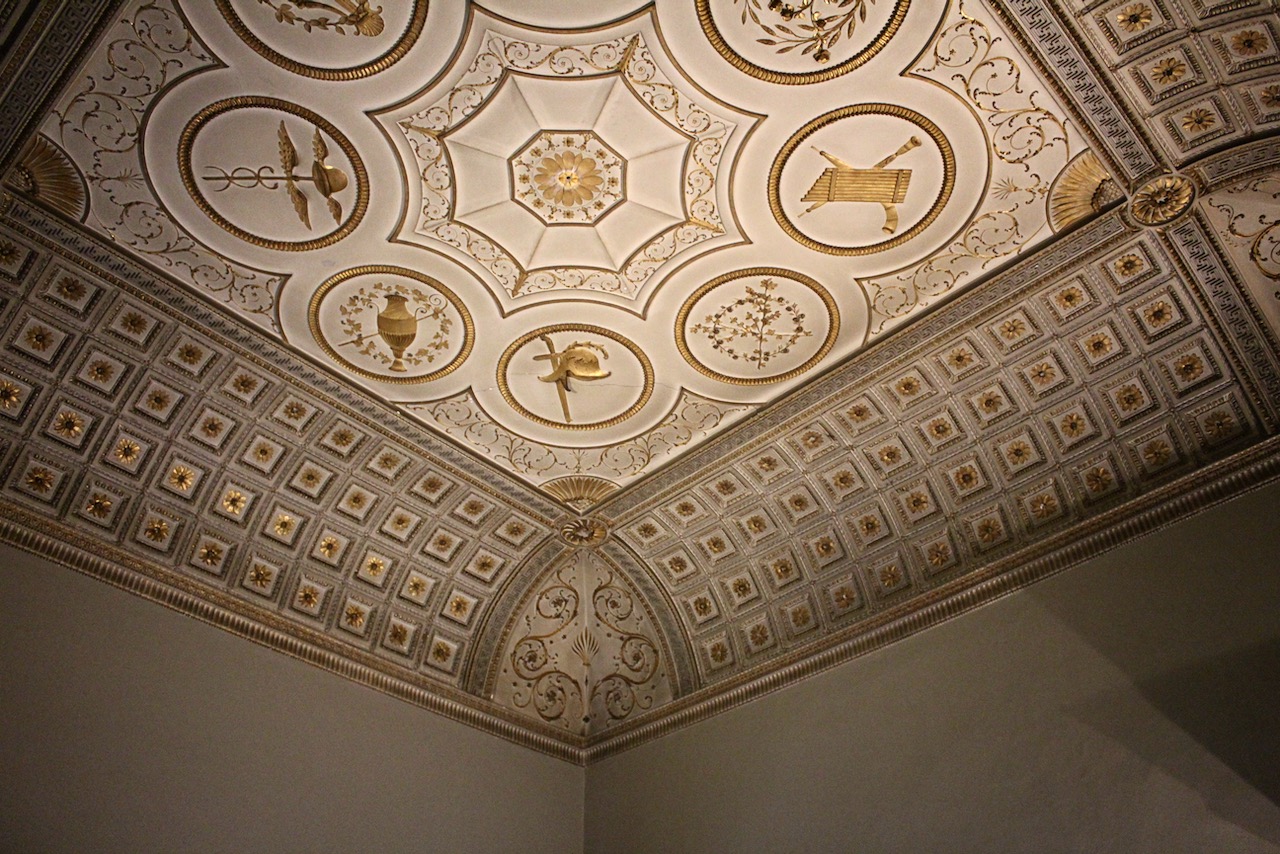
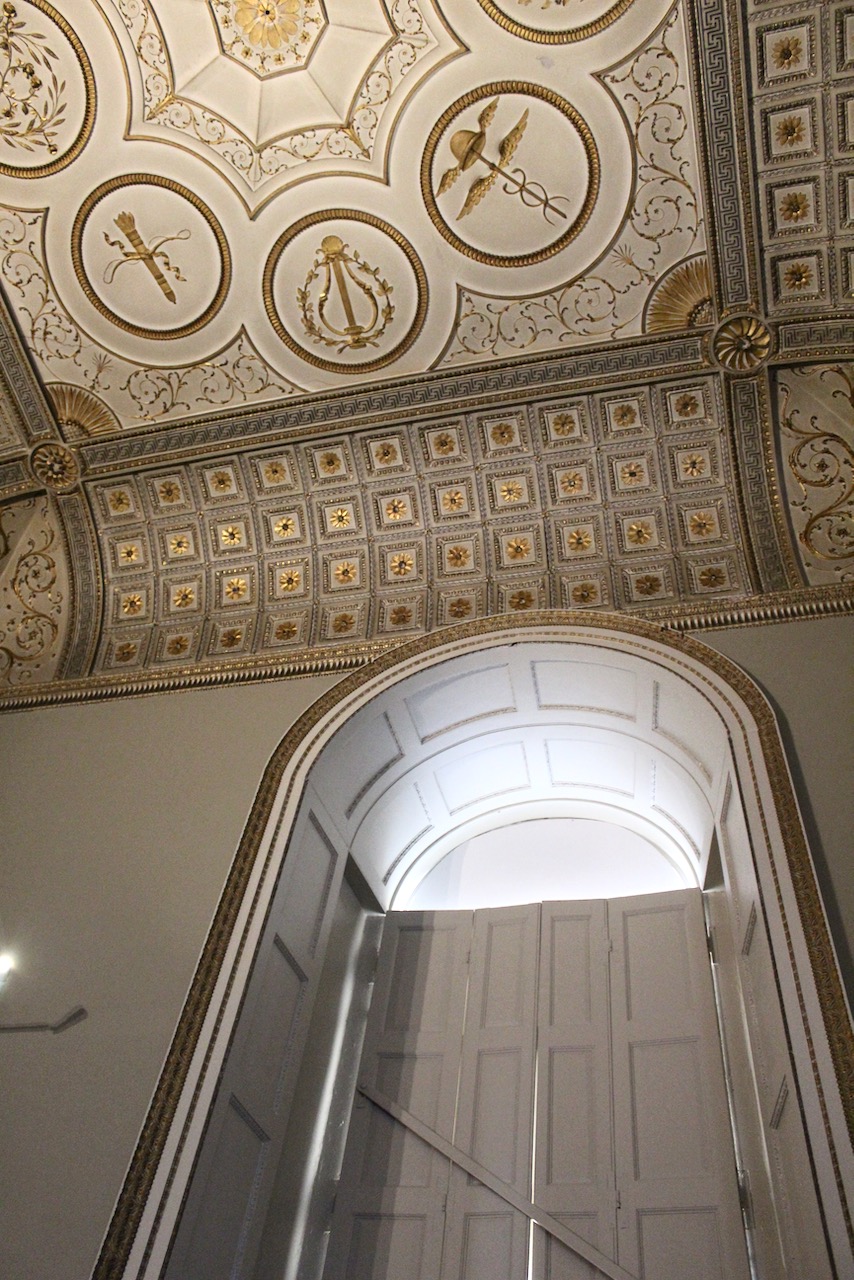
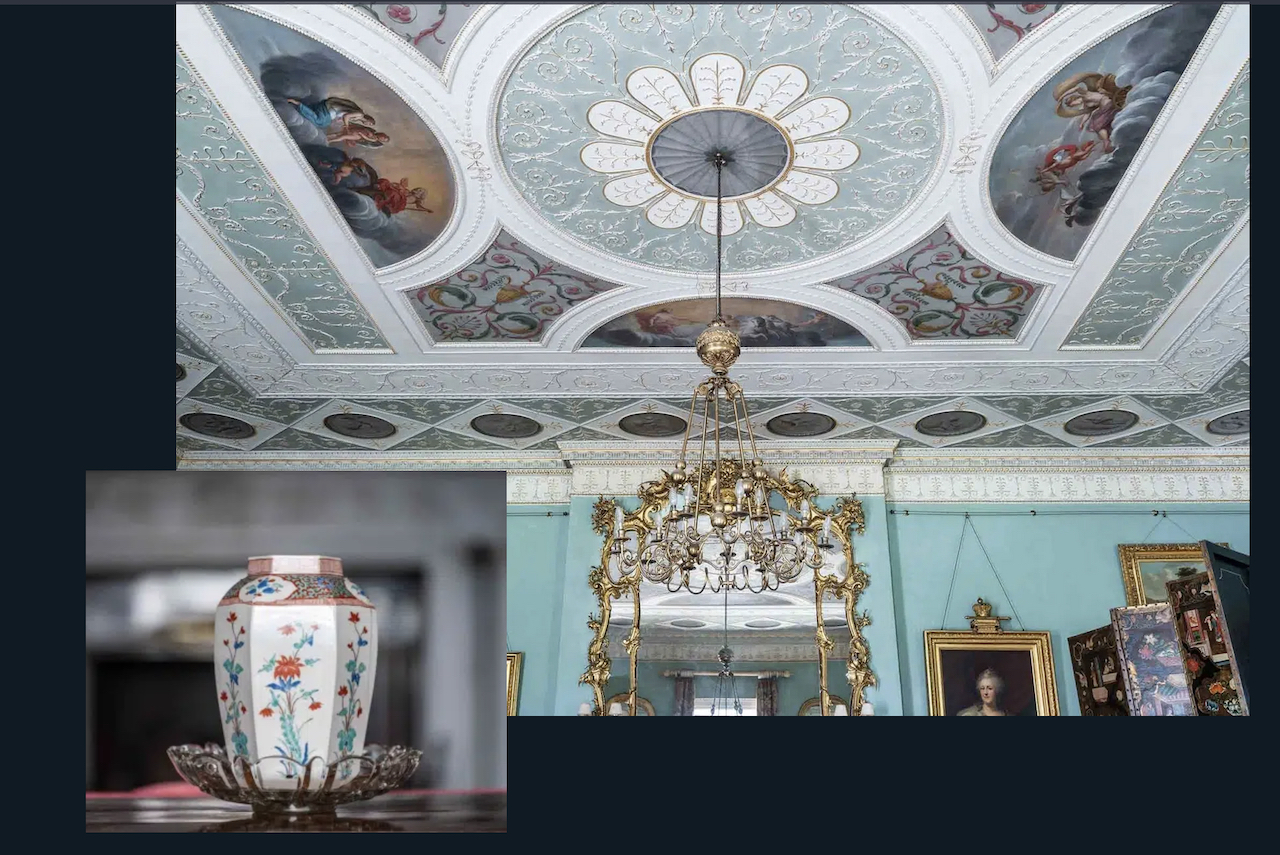
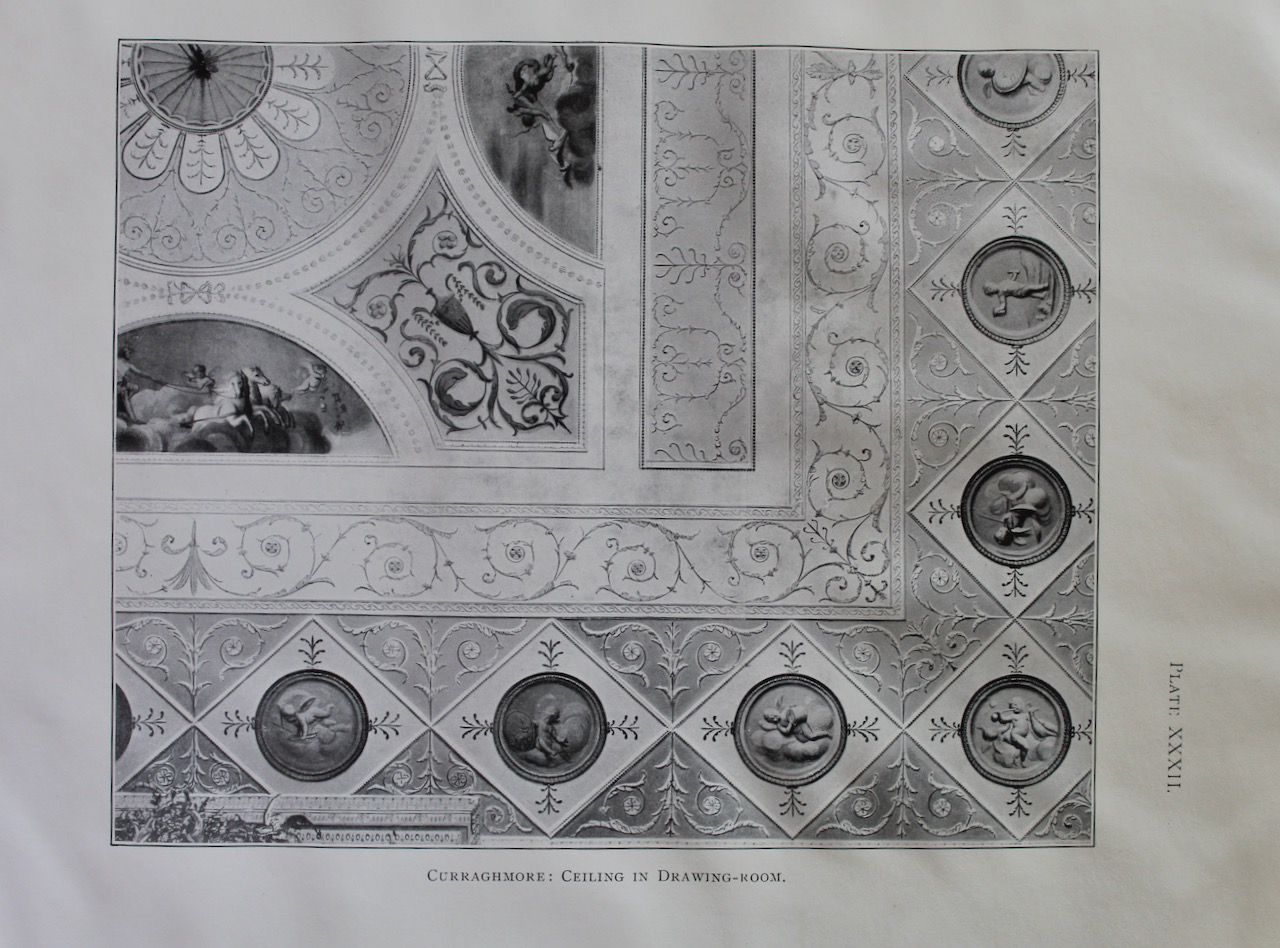
The Gilt Room ceiling, Rathfarnham Castle. A design by James “Athenian” Stuart, features eight rondels containing objects symbolising different Greek gods and goddesses. Facing toward the window and moving clockwise, these symbols are thought to represent Apollo, Hermes, Dionysus, Ares, Aphrodite, Pen, Demeter and Artemis. Photograph © Jennifer Winder-Baggot, www.irishhistorichouses.com
The Gilt Room ceiling, Rathfarnham Castle. Photograph © Jennifer Winder-Baggot, www.irishhistorichouses.com
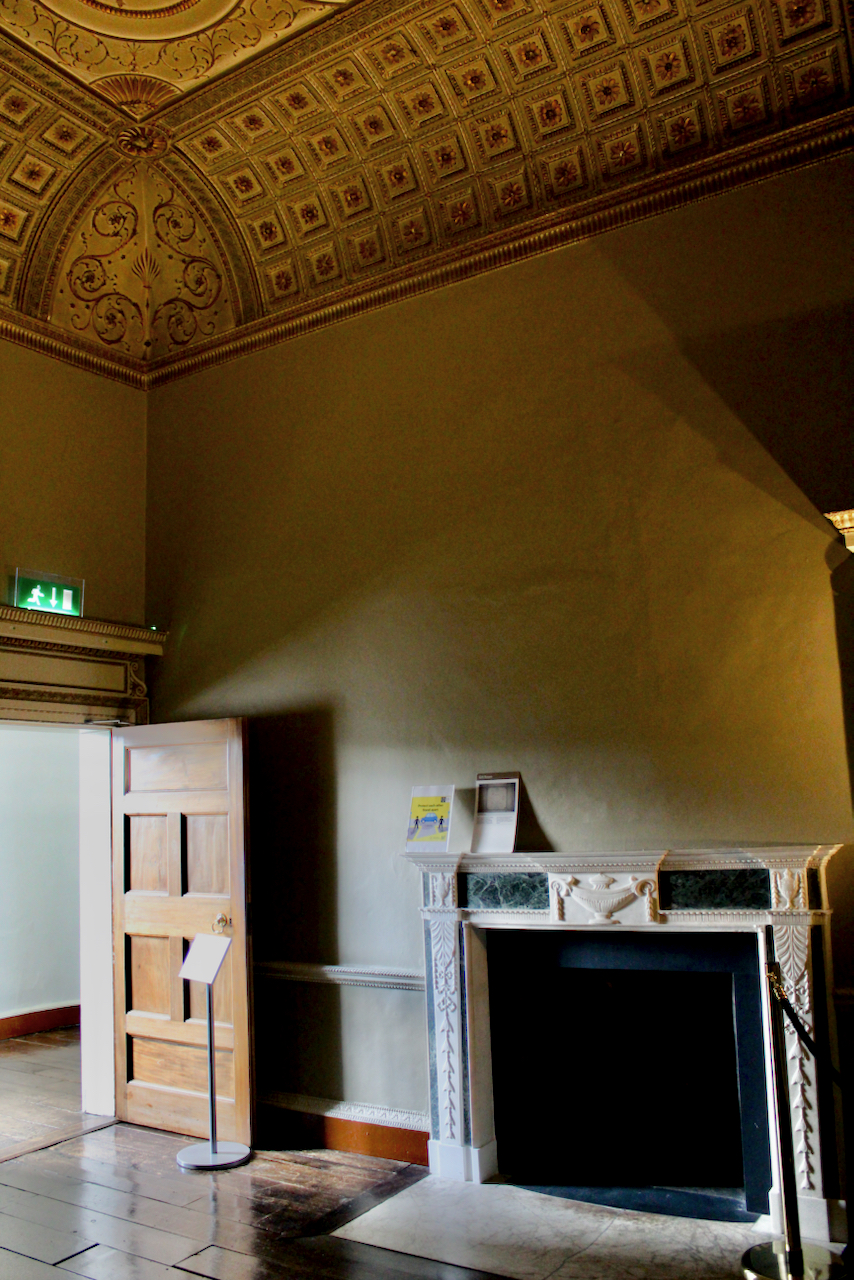
The Gilt Room, Rathfarnham Castle. Photograph © Jennifer Winder-Baggot, www.irishhistorichouses.com

Henry Loftus was succeeded by his nephew Charles Tottenham (1738-1806), son of Henry’s sister Elizabeth (1720-1747) and her husband John Tottenham (1714-1786) 1st Baronet of Tottenham Green, County Wexford. Charles Tottenham’s name was changed to Charles Loftus in 1783 after the death of Henry Loftus 1st Earl of Ely of the 2nd Creation.

Charles held the office of Member of Parliament (M.P.) for New Ross between 1761 and 1768, M.P. for Bannow between 1768 and 1776, M.P. for New Fethard between 1776 and 1783. and M.P. for County Wexford between 1783 and 1785. He was created 1st Baron Loftus of Loftus Hall, Co. Wexford [Ireland] on 28 June 1785. He succeeded as the 2nd Baronet Tottenham [I., 1780] on 29 December 1786. He was created 1st Viscount Loftus of Ely [Ireland] on 28 December 1789 and 1st Earl of Ely [Ireland] on 2 March 1794. He was created 1st Marquess of Ely [Ireland] on 1 January 1801 and 1st Baron Loftus of Long Loftus, Co. York [U.K.] on 19 January 1801. He was also Privy Counsellor. 

Charles Tottenham Loftus, Marquis of Ely by Hugh Douglas Hamilton. Charles was the nephew of Henry Loftus Earl of Ely and inherited Rathfarnham Castle and the demesne on his death in 1783. The painting shows Charles in the robes of the Irish House of Lords. He is also wearing a chain indicating his membership of the prestigious Order of St Patrick. He was elevated to a Marquis, given a baronetcy in England as well as £45,000 in return for his votes in favour of the Act of Union. Hugh Douglas Hamilton (1740-1808) was born and grew up in Dublin and attended the Dublin Society’s Drawing Schools. He had a long and successful career as an artist and worked in London and Rome as well as Dublin. He is perhaps best known for his work in pastels and left an extensive series of portraits of leading figures in Irish society.

At Rathfarnham, Charles did little beyond the erection in 1790 of the Gothic or Back Gate, now almost competely demolished to make way for a road.

He married Jane Myhill of Killarney, County Kerry. Her sister Hannah married Hercules Langrishe, 1st Baronet of Knocktopher, County Kilkenny.

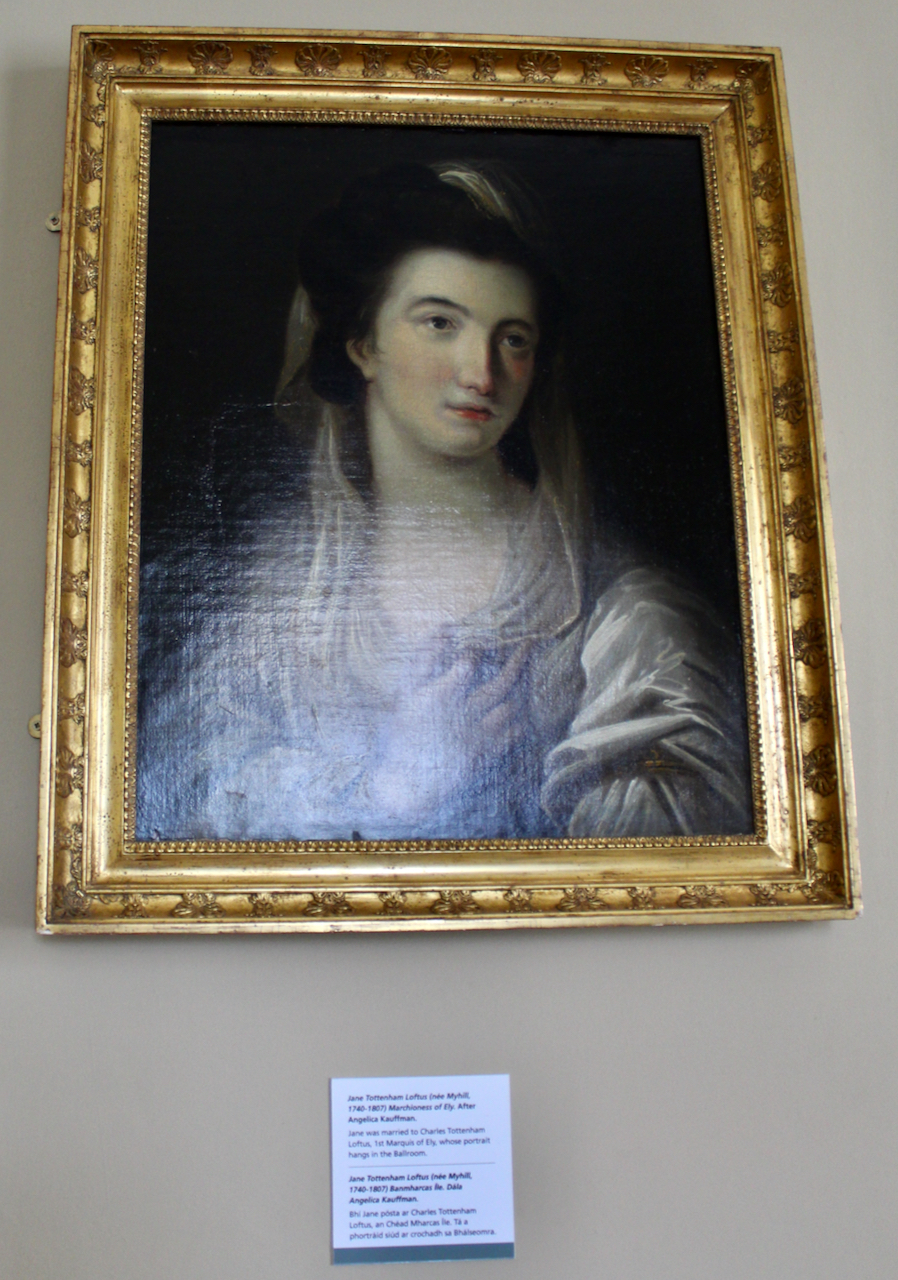
Jane Tottenham-Loftus (nee Myhill), 1740-1807, Marchioness of Ely, painting after Angelica Kauffman. She was married to Charles Tottenham Loftus, 1st Marquess of Ely, whose portrait hangs in the Ballroom. He was the son of John Tottenham, 1st Baron Tottenham of Ireland, and of Elizabeth Loftus, daughter of Nicholas Loftus, 1st Viscount Loftus of Ely.
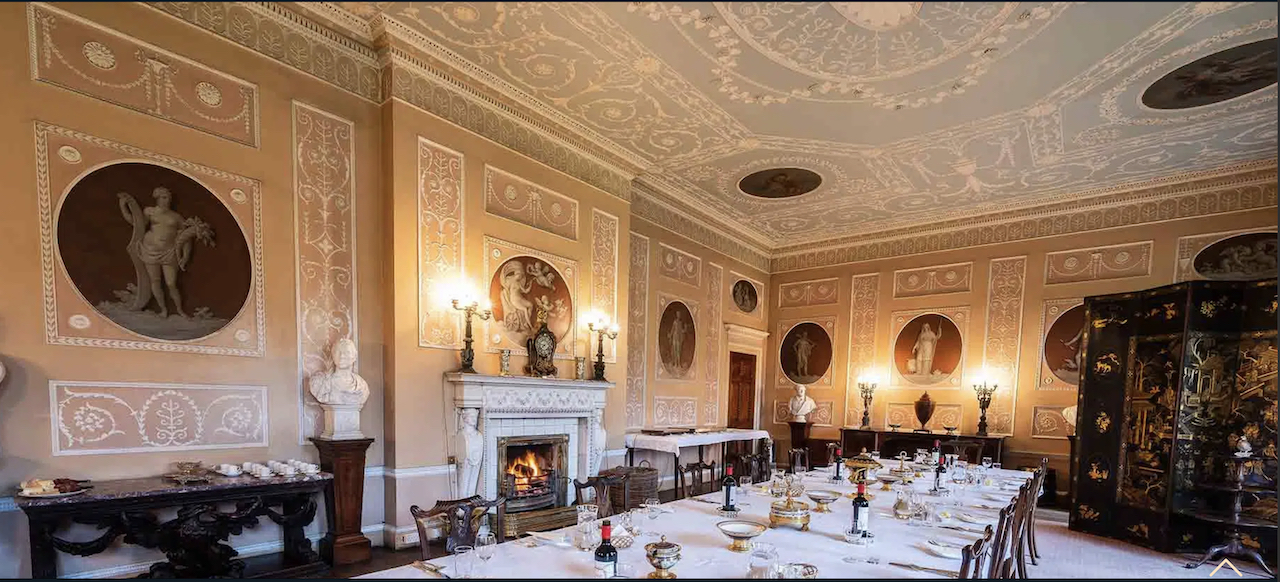
The Dining Room, Rathfarnham Castle, Dublin. Photograph © Jennifer Winder-Baggot, www.irishhistorichouses.com

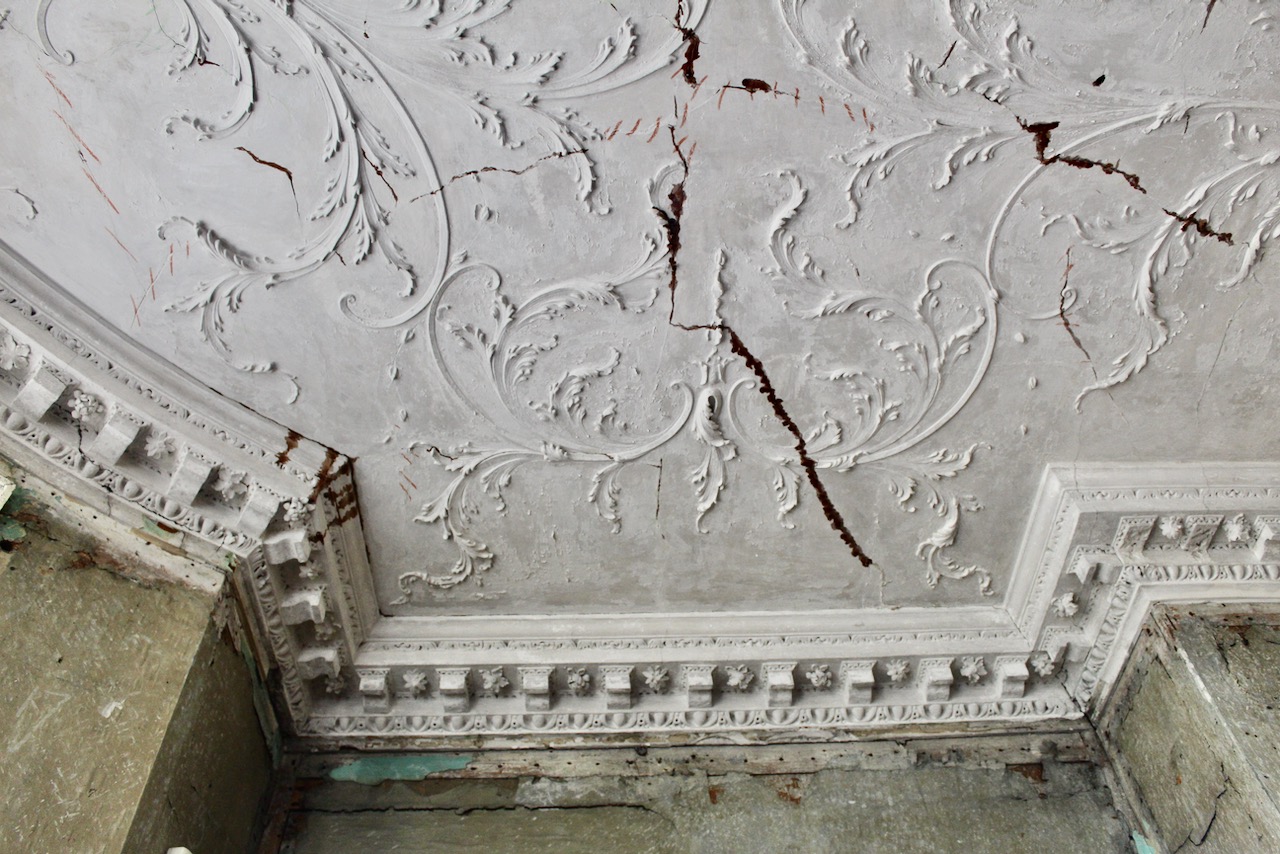
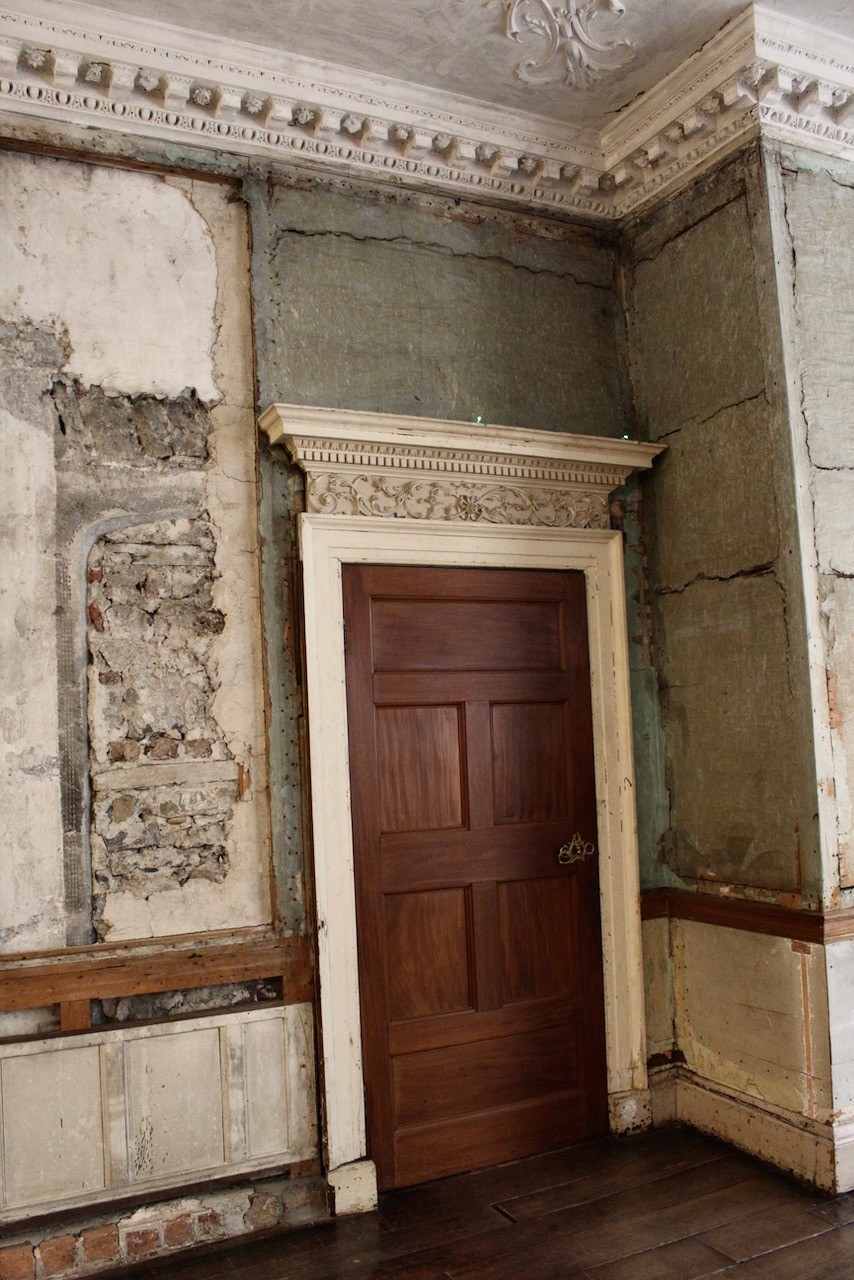
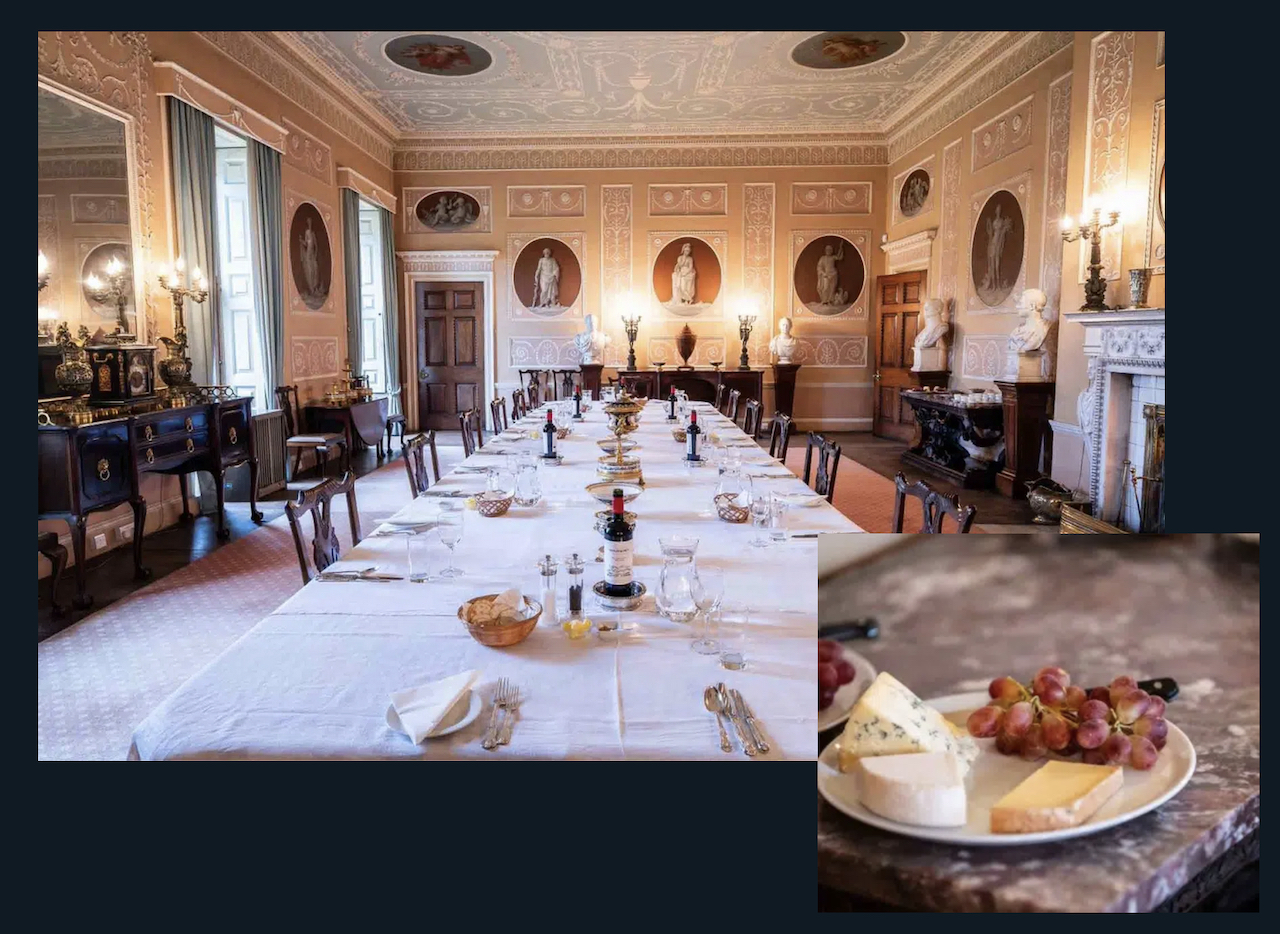
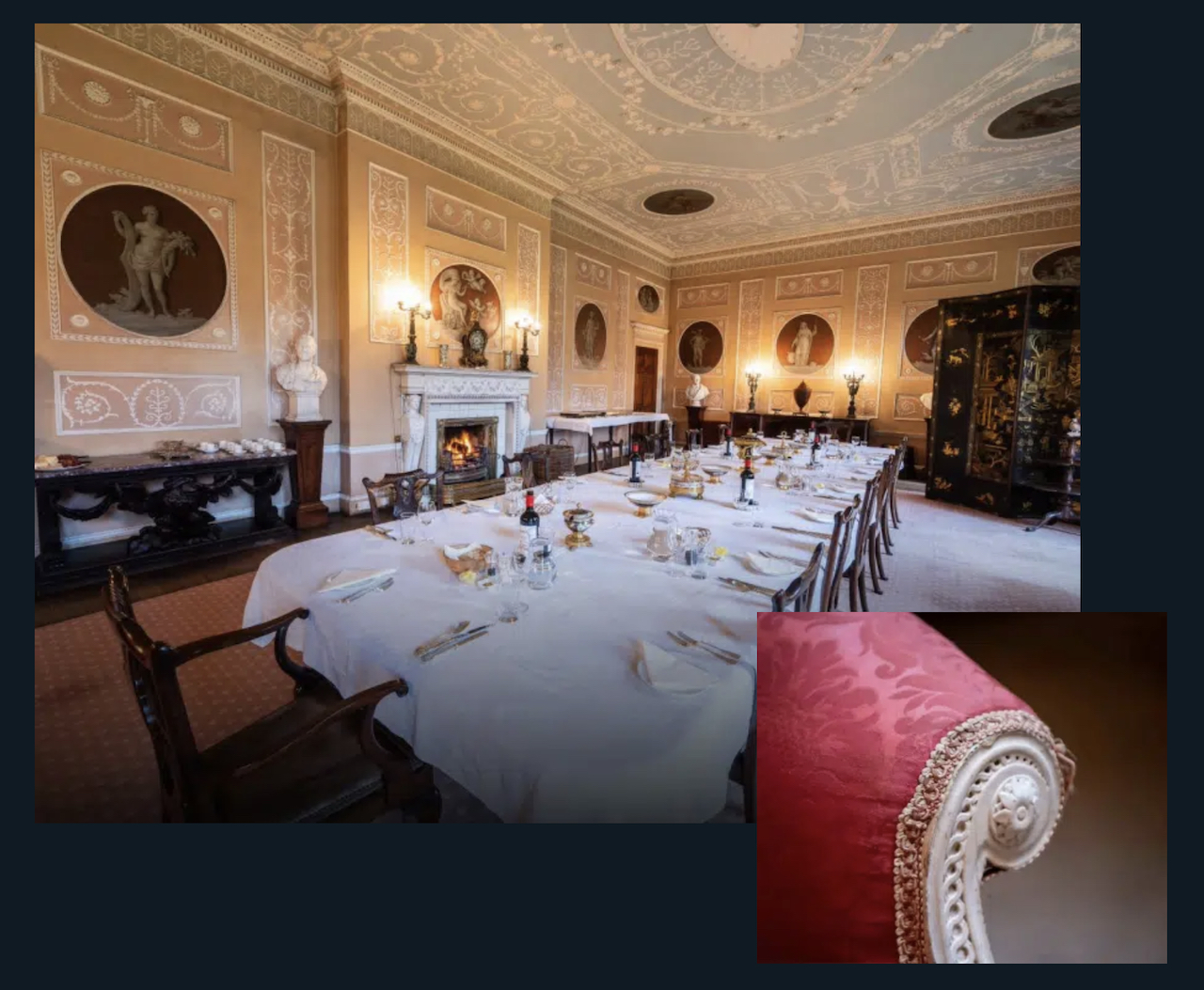
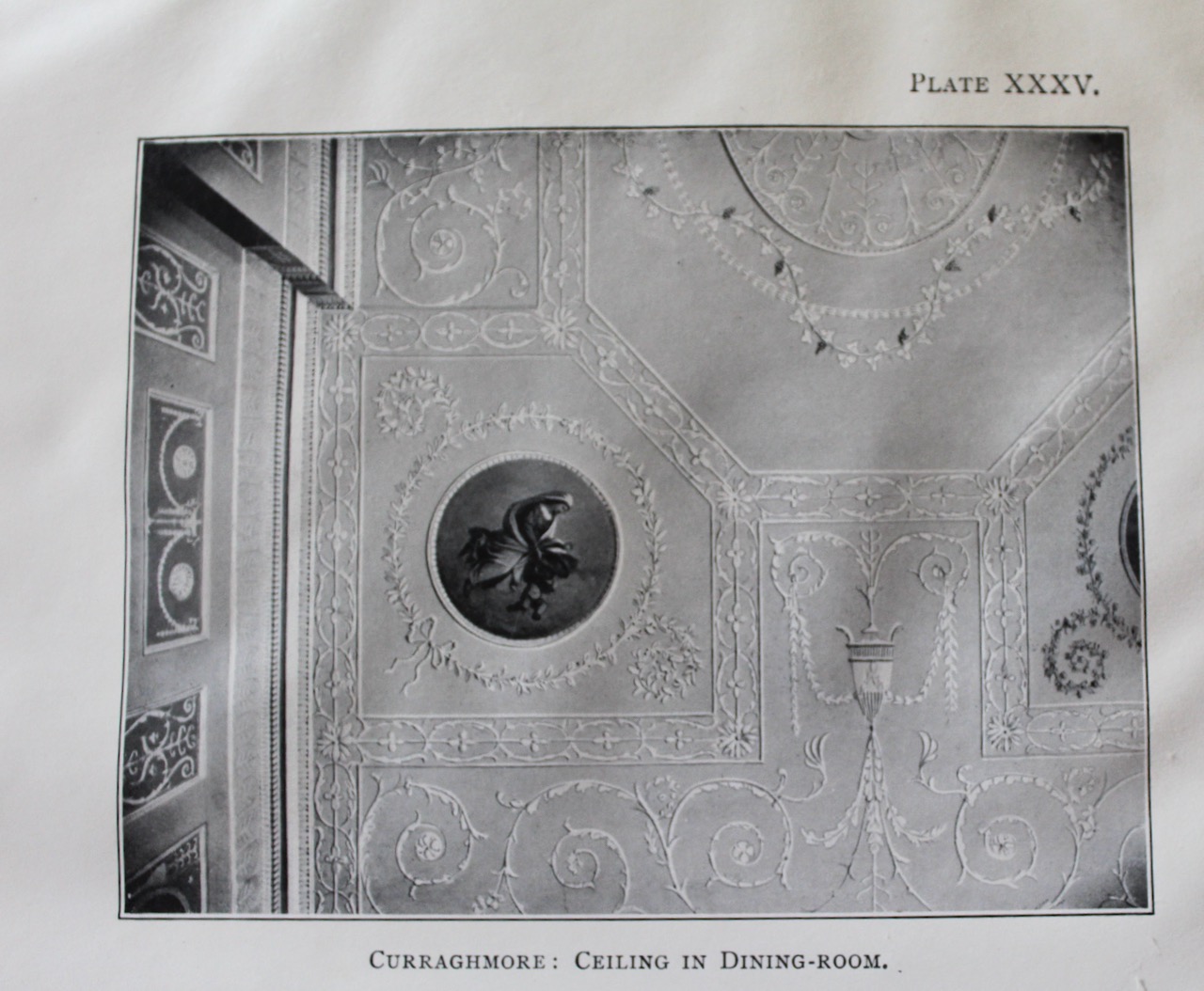
The Dining Room. “This room remains unrestored which allows us to see the changes and alternations which were made to the building over the years. The door on the left-hand (northern) wall is typically eighteenth century in style and decoration. However to the left of it a trace of the original Elizabethan doorway is visible. It was blocked up during the 18th century refurbishments. The bow extension to the eastern side of the building is another change dating to that period which added space and brought more light into these rooms. The 18th century timber wall panelling and lining paper survives in this room. It is likely that the walls were covered with silk. Although designed as a dining room, in the 20th century the Jesuits used this room as a library.

The dining room, Rathfarnham Castle. Photograph © Jennifer Winder-Baggot, www.irishhistorichouses.com
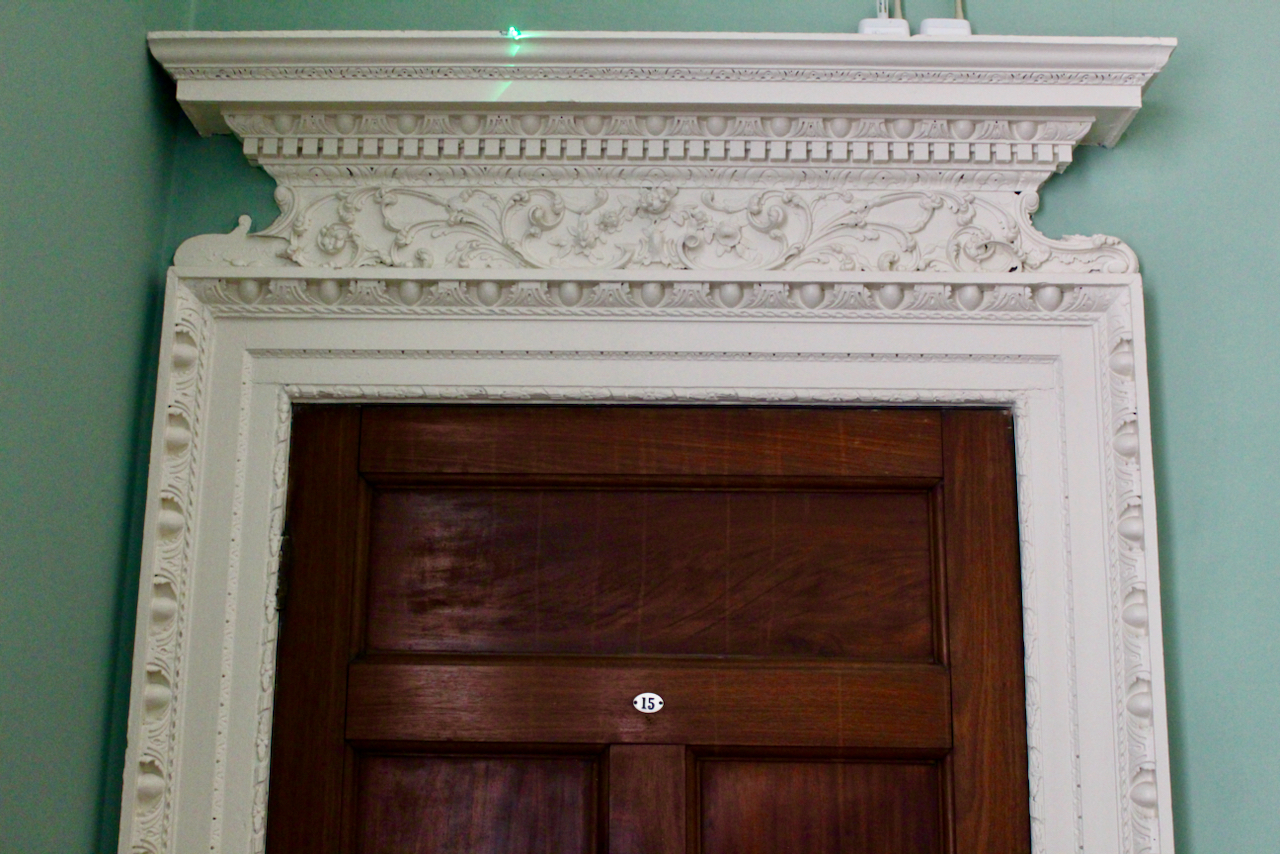
The door on the left-hand (northern) wall is typically eighteenth century in style and decoration. However to the left of it a trace of the original Elizabethan doorway is visible. It was blocked up during the 18th century refurbishments.  Photograph © Jennifer Winder-Baggot, www.irishhistorichouses.com

The Castle fell into disrepair. From the Parliamentary Gazetteer of Ireland 1846 (vol. iii):
Rathfarnham Castle, situated in a once noble demesne, at the south-east extremity of the village, was not long ago esteemed a magnificent building, and boasted a gorgeous picture-gallery, and superb series of garden and pleasure grounds, but it was allowed to fall into decay in consequence of the prolonged non-residence of its proprietor, the Marquis of Ely, and it now prosaically, though usefully, figures as a diary‘.

At this time, John Loftus (1770-1845) was 2nd Marquess of Ely, who inherited the Castle and lands from his father, Charles Tottenham Loftus. John Loftus rented out the house and surrounding lands, and between 1812 and 1852 the estate was leased to the Roper family. [from the castle’s Instagram page]

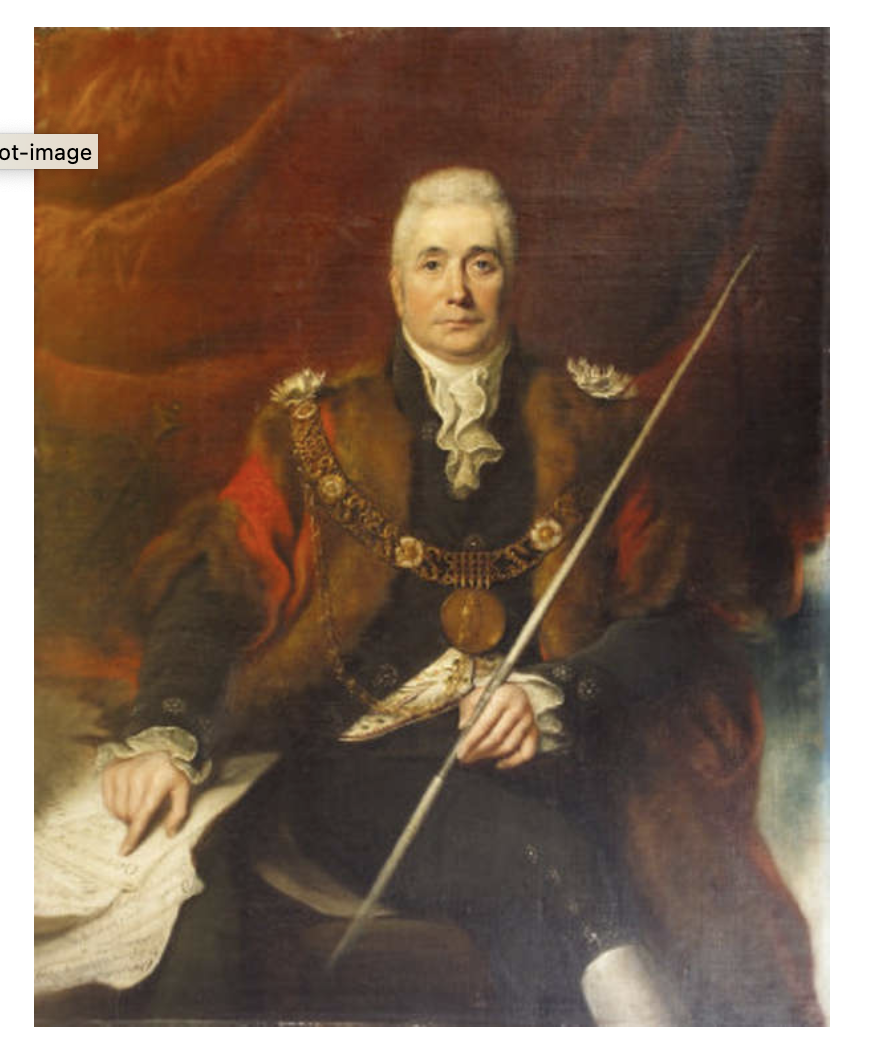
Oil painting on canvas, John Loftus, 2nd Marquess of Ely (1770-1845), attributed to Sir Thomas Lawrence (1769-1830). A three-quarter-length portrait, in a brown coat and blue sash. Peer’s robes to the right, red curtain to the background. A picture of the sitter’s wife by Lawrence is in the Art Institute of Chicago. By Studio of Thomas Lawrence – Sothebys, Public Domain, https://commons.wikimedia.org/w/index.php?curid=15266849

Rathfarnham Castle was sold in 1852 to Francis Blackburne (1782-1867), Lord Chancellor of Ireland.

Francis Blackburne (1782-1867), Lord Chancellor of Ireland, 1852 by engraver George Sanders, after Stephen Catterson Smith, courtesy of National Gallery of Ireland.

His family lived there until 1911. Coincidentally almost in the footsteps of Adam Loftus who built Rathfarnham Castle, Francis Blackburne became Vice-Chancellor of Trinity College.

The Society of Jesus then acquired the building and for much of the remainder of the 20th century it was used as a Retreat House for lay visitors as well as accommodation for seminarians attending college in the city. Following the departure of the Jesuits in 1985, the Castle came into the care of the state and a great deal of restoration work has been carried out. Most of the rooms have been restored to their 18th century state and several are furnished with a collection of fine eighteen and nineteenth century pieces from continental Europe, Britain and Ireland.

The Pistol Loop Room: “This room in the south-eastern corner of the Castle reminds us of the orignal defensive function of the building. A blocked-up gun loop is still visible in the corner of the room. These gun loops allowed those defending the Castle to fire their weapons at any approaching attackers. Note also the odd shape of the room which tapers off to the left. This reflects the shape of the angled bastion towers which were designed to allow defending soldiers to protect all approaches to the castle. The plates and wine decanters depicted in the plaster frieze just below the ceiling would suggest that in the eighteenth century this room may have been used as a private or smaller dining room.” Photograph © Jennifer Winder-Baggot, www.irishhistorichouses.com
The Pistol Loop Room, Rathfarnham Castle. Photograph © Jennifer Winder-Baggot, www.irishhistorichouses.com
Rathfarnham Castle. Photograph © Jennifer Winder-Baggot, www.irishhistorichouses.com
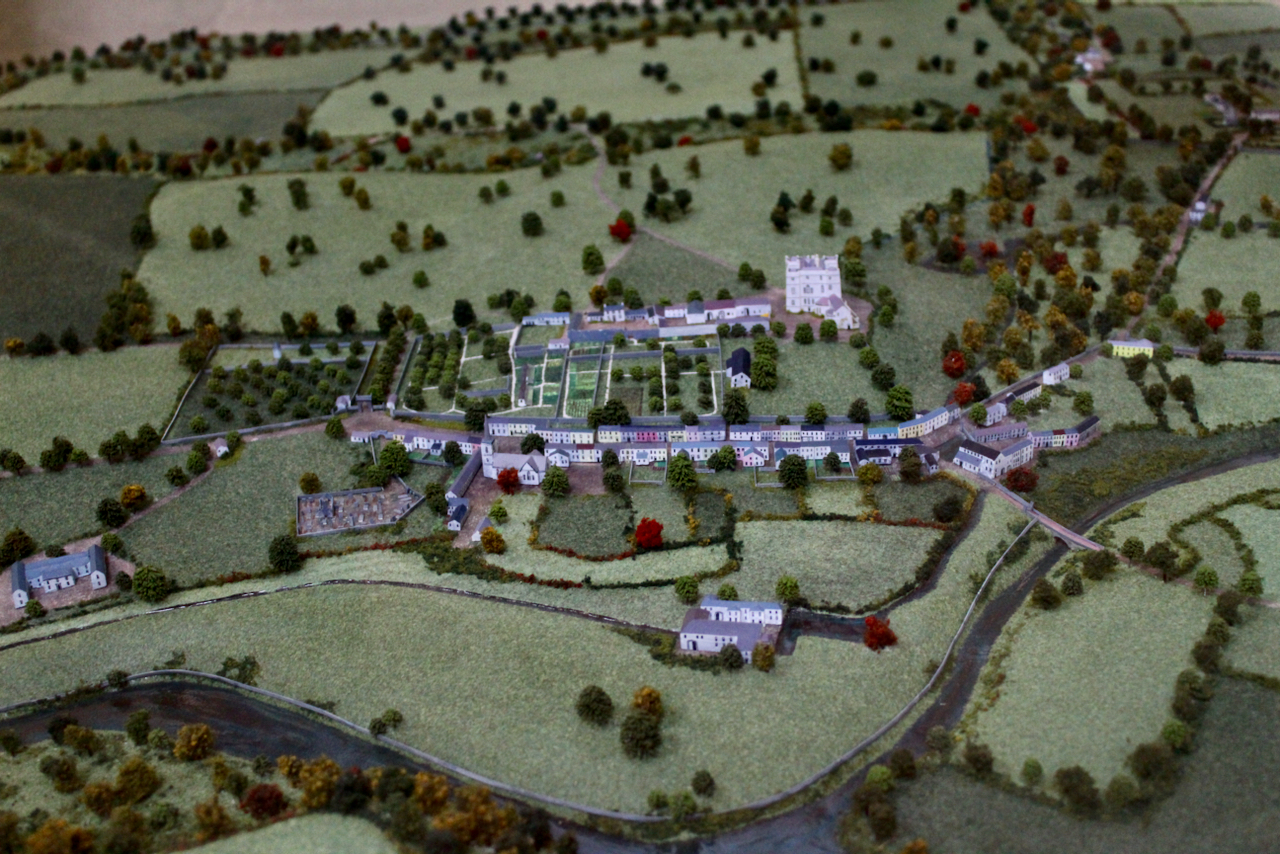
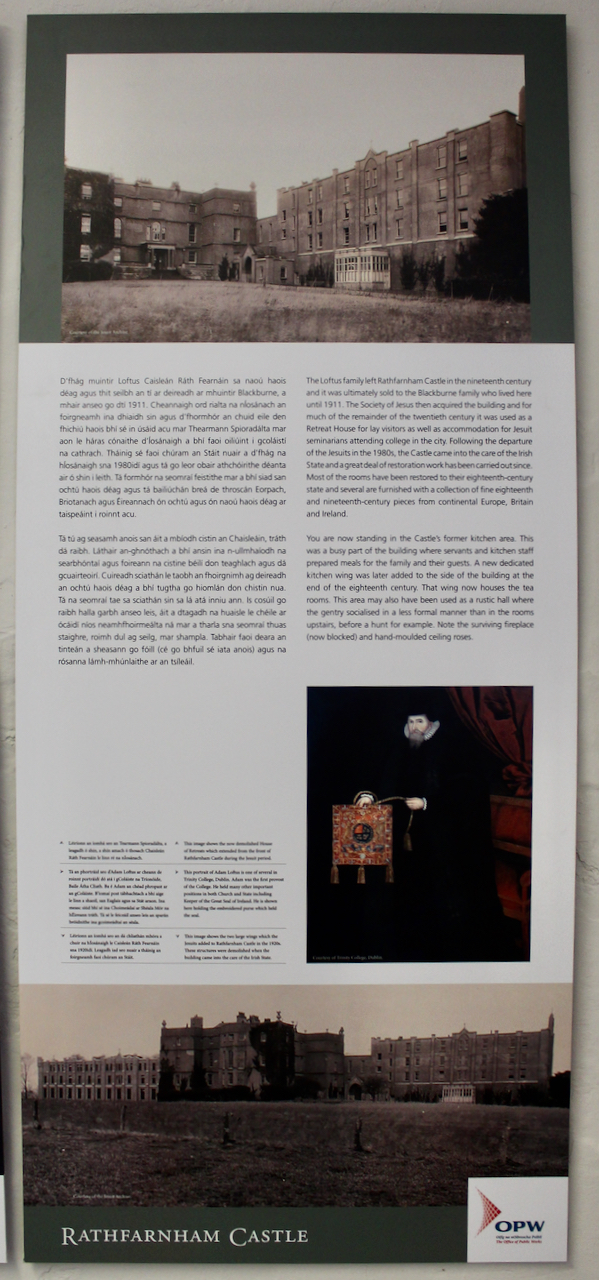
A model based on 19th century maps, showing Rathfarnham demesne before it was broken up in the following century.
The information board shows surrounding buildings which must have been demolished.

[1] Other Jesuit properties include Emo Court, see my entry, https://irishhistorichouses.com/2024/10/22/emo-court-county-laois-office-of-public-works/

Belvedere House in Dublin, Castle Browne, now Clongowes Wood College, and Manresa House in Clontarf, formerly called Granby Hall and Baymount Castle.

[2] https://www.dib.ie/biography/loftus-adam-a4867

[3] Loftus Hall: Formerly named Redmond Hall, it is a three-storey mansion built in 1871, incorporating parts of a previous house here, which was late 17th century or early C18.

Loftus Hall, County Wexford, for sale April 2025 photograph courtesy Colliers.

[4] https://www.archiseek.com/1583-rathfarnham-castle-co-dublin/

[5] “Rathfarnham Castle” by C. Scantlebury, Dublin Historical Record, Vol. 12, No. 1 (Feb., 1951), pp. 20-30. https://www.jstor.org/stable/30080721

[6] https://bellinghamswanhistory.club/descendant-tree-for-bellingham-boyle-mp1690-1771-and-sarah-hoadly-b1720/

Rathfarnham Castle, Dublin – OPW

Rathfarnham Castle, Dublin, September 2021. Photograph © Jennifer Winder-Baggot, www.irishhistorichouses.com

General Enquiries: 01 493 9462, rathfarnhamcastle@opw.ie

From the OPW website:

The castle at Rathfarnham dates back to the Elizabethan period. It was built [around 1583] for Adam Loftus, a Yorkshire clergyman and politician [1533-1605]. Loftus was ambitious and eventually rose to become Archbishop of Dublin and Lord Chancellor of Ireland.

Loftus’s castle, with its four flanker towers, is an excellent example of the Elizabethan fortified house in Ireland. In the late eighteenth century, the house was remodelled on a splendid scale employing some of the finest architects of the day including Sir William Chambers and James ‘Athenian’ Stuart. The collection includes family portraits by Angelica Kauffman, Sir Peter Lely, and Hugh Douglas Hamilton.

Archbishop-Chancellor Adam Loftus (1533-1605). The portrait is in Trinity College Dublin, as he was the first Provost. He was also Keeper of the Great Seal of Ireland, and he is here holding the embroidered purse which held the seal.

Loftus wanted the Castle to be a grand and impressive home which would reflect his high status in Irish society. He also needed it to be easily defended against attack from hostile Irish families such as the O’Byrnes based in the mountains to the south. The design was radically modern for the time and based on recent continental thinking about defensive architecture. The angled bastion towers located at each corner of the building were equipped with musket loops which allowed a garrison of soldiers to defend all approaches to the castle.” He married Jane Purdon. He was also the Provost of Trinity College Dublin, and Lord Chancellor of Ireland. They had many children, who married very well. [He died while he was Archbishop of Dublin, in the old Palace of St. Sepulchre beside St. Patrick’s Cathedral, which until recently was the Garda barracks on Kevin Street, now housed in a new building. I hope they will make something of the historic old archbishop’s palace now, which could be a great museum!]
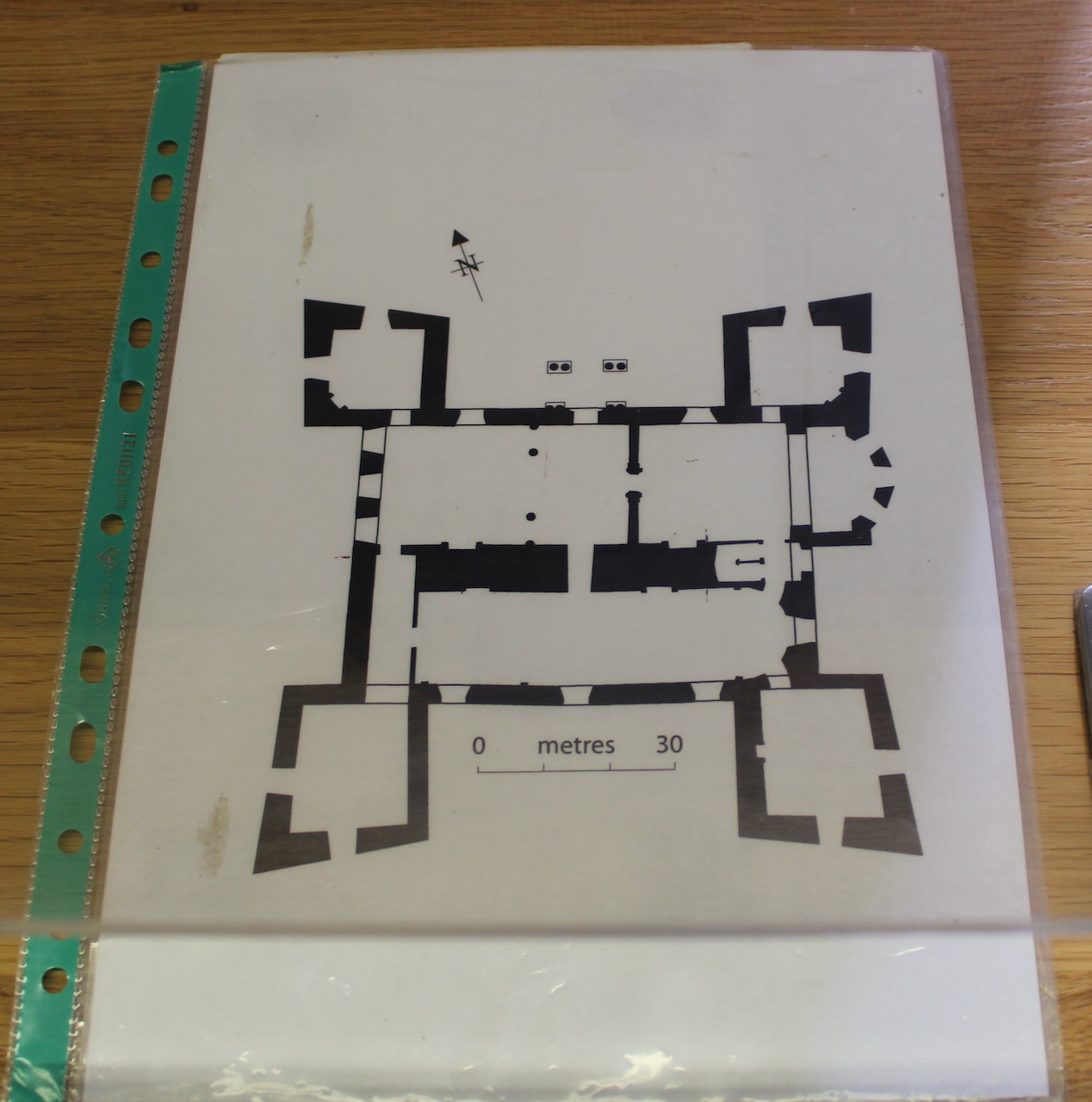
Loftus had previously lived in an archiepiscopal palace in Tallaght, and it had been sacked by the O’Byrnes and O’Tooles from the Wicklow mountains, which is why he ensured that his new house in Rathfarnham had strong defenses. The Bishop’s Palace in Raphoe, now a ruin, is similarly shaped.
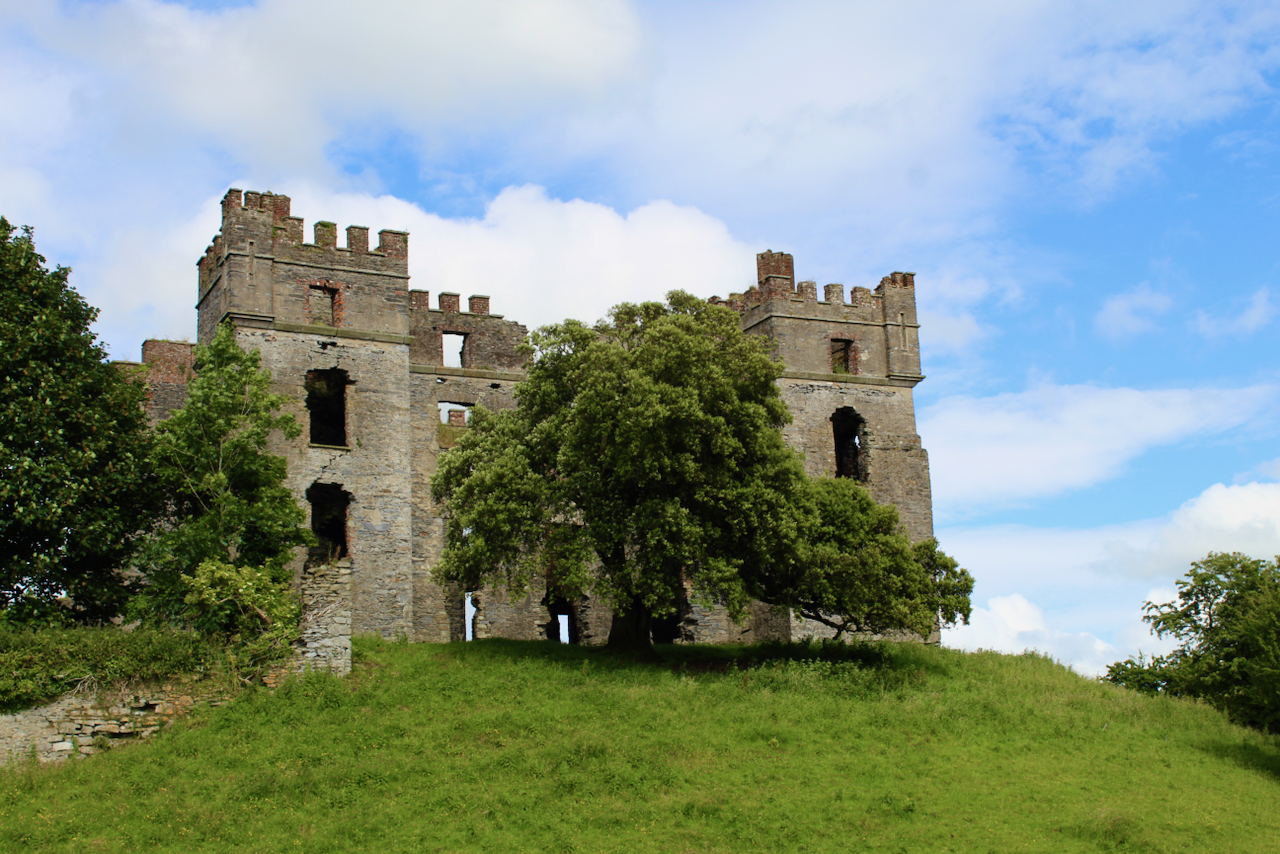
Ruin of Bishop’s Palace in Raphoe, County Donegal, built for Bishop John Leslie in 1636. Photograph © Jennifer Winder-Baggot, www.irishhistorichouses.com

Maurice Craig points out in his The Architecture of Ireland from the earliest times to 1880 that there are a group of similar buildings, built over a period of fifty years or more: Rathfarnham; Kanturk for MacDonagh MacCarthy, before 1609; Portumna for the Earl of Clanrickarde, before 1618; Manorhamilton for Sir Frederick Hamilton, probably around 1634; Raphoe, for Bishop John Leslie (the “Fighting Bishop” – see my entry on Castle Leslie https://irishhistorichouses.com/2020/08/07/castle-leslie-glaslough-county-monaghan/) in 1636, and Burntcourt for Sir Richard Everard before 1650. Manorhamilton is a section 482 ruin which I will be writing about, and we visited Portumna in County Galway – see my entry https://irishhistorichouses.com/2022/02/14/office-of-public-works-properties-connacht/. The buildings resemble a fort, such as Mountjoy Fort in County Tyrone built 1600-1605. Killenure, County Tipperary, is similar but has cylindrical flankers, Craig tells us. This last was unroofed by 1793.

Manorhamilton, County Leitrim, August 2022, built for Sir Frederick Hamilton, probably around 1634. Photograph © Jennifer Winder-Baggot, www.irishhistorichouses.com
Portumna Castle, County Galway, July 2021, built for the Earl of Clanrickarde, before 1618. Photograph © Jennifer Winder-Baggot, www.irishhistorichouses.com

The Rathfarnham website continues: “[Adam Loftus’s] son Dudley (1561-1616) married Anne Bagenal, daughter of Nicholas Henry Bagenal, Marshal of Ireland. The castle passed to his son, Adam Loftus (1590-1666), who married Jane Vaughan of Golden Grove, County Offaly. Their son Arthur Loftus (1616-1659) married Dorothy Boyle, daughter of Richard Boyle the 1st Earl of Cork. They had a son, Adam Loftus (1632-1691) who became the 1st and last Viscount Lisburne. His only son died in infancy. Viscount Loftus was killed at the Seige of Limerick.

Lucy Loftus nee Brydges (1654-1681), by Peter Lely. She was a renowned Restoration beauty and the first wife of Viscount Adam Loftus. He died at the Siege of Limerick in 1691 and the cannon ball which reputedly killed him hangs in St Patrick’s Cathedral. Lucy is dressed in pseudo-antique clothing against an Arcadian landscape. The parrot in the background is an ambiguous symbol and can refer to a number of characteristics including eloquence, marital obedience or exoticism. Peter Lely was of Dutch origin but spent most of his career in England and became the most influential portrait painter at court following the death of Anthony van Dyck. He successfully navigated the turbulence of the 17th century to paint at the court of Charles I, the Cromwellian Commonwealth and Charles II following the Restoration. Lely was prolific, often only painting the sitter’s head while students and assistants at his studio completed the portraits.

Another son of Dudley and Anne Bagenal was Nicholas Loftus (1592-1666), the ancestor of Henry Loftus, the Earl of Ely. Nicholas’s second son Henry (1636-1716) lived in Loftus Hall in County Wexford, and was the father of Nicholas Loftus, 1st Viscount Loftus of Ely. He married Anne Ponsonby, daughter of William Ponsonby, 1st Viscount Duncannon, and they had, first, the son Nicholas Loftus (1708-1766), who became the 1st Earl of Ely, and who added Hume to his surname after marrying Mary Hume, daughter of Gustavus Hume, 3rd Baronet of Castle Hume, County Fermanagh.

Nicholas Loftus, 1st Viscount Ely (1687-1763). Painter unknown. This painting was completed in 1758 to mark the 70th birthday of Nicholas, father of both Nicholas (the 1st Earl of Ely) and Henry Loftus. He sits next to a book entitled 
The Present State of Ireland. This anonymous work was originally published in 1730 and contained criticism of the amount of money flowing out of Ireland to absentee landlords, no doubt reflecting Nicholas’s concern with the financial state of the kingdom. He is sometimes known as “the Extinguisher” because of his threat to extinguish the Hook lighthouse in Wexford unless the rent he received from it was increased.

Nicholas Loftus 1st Earl of Ely and his wife Mary Hume gave birth to Nicholas Loftus Hume, 2nd Earl of Ely (1738-1769). 

Nicholas Hume Loftus, 1st Earl of Ely (1708-1766), unknown artist. It was after Nicholas Loftus (son of the Extinguisher) had married into the wealthy Hume family that the Ely earldom was created for the first time. This depicts Nicholas, the so-called “Wicked Earl” in the doctoral robes of Trinity College Dublin. 
Nicholas Hume Loftus, 1st Earl of Ely (1708-1766) by Jacob Ennis. These two portraits depict Nicholas, the so-called “Wicked Earl” at various stages of his life. Nicholas is much older in the Ennis portrait on the left. Lord Loftus allegedly mistrated his son (also Nicholas) leading to a protracted court case. That son would later bequeath Rathfarnham Castle and the estate to his uncle, Henry Loftus (1709-1783) who became the 1st Earl of Ely (of the second creation). Jacob Ennis was an Irish historical and portrait painter who spent some time studying in Italy. He was later a Master in the Dublin Society’s Drawing Schools.
Henry Loftus, 1st Earl of Ely of the 2nd Creation (1709-1783) by Angelica Kauffman. Henry inherited Rathfarnham Castle and its demesne in 1769 upon the death of Nicholas, his nephew. Nicholas had been the subject of a long running legal case concerning the state of his mind and Henry had suppported him throughout. Between 1769 and his death in 1783 Henry funded some of the most substantial 18th century changes to Rathfarnham Castle and the demesne. He contracted Sir William Chambers to remodel several of the rooms including the Ballroom and Anteroom. The Swiss artist Angelica Kauffman is known to have spent several months in Dublin in 1771. As well as this portrait which was probably completed to mark Henry’s elevation to the earldom of Ely, this renowned painter also completed a group portrait of Henry and his family (now in the National Gallery) as well as a series of ceiling paintings for the long gallery on the first floor depicting scenes from Greek mythology.

Henry Loftus (1709-1783) pictured below. He married first, Frances Monroe of Roe’s Hall, County Down, (pictured below), who died in 1774, then married secondly Anne Bonfoy. He purchased Ely House in Dublin (built 1770) from Sir Gustavus Hume, 3rd Baronet.

Painting by Angelica Kauffman, who spent several months in Dublin in 1771. It shows Henry Loftus with his wife Frances, her nieces and an exotic trophy servant, a young Indian page in Oriental dress carrying a cushion with two coronets, symbolising the title the Earl had just received. The older niece, Dolly Monroe, was Classical costume. Her younger sister Frances plays a fashionable aria on the harpsichord.

Rathfarnham Castle remained in the hands of the Loftus family and their heirs until it was purchased in 1723 by Speaker William Conolly of Castletown, Co Kildare, for £62,000. It returned to ownership of the Loftus family in 1767 when it was purchased by Nicholas Hume-Loftus.

Speaker Conolly never resided at Rathfarnham, leasing it instead to Joan Hoady, Archbishop of Dublin, from 1730-1742, who began the series of alterations that were to transform the castle into a modern country residence. He gave it to his son-in-law Bellingham Boyle.

“Bellingham Boyle (1709-1772). He inherited Rathfarnham Castle in 1746 from his father-in-law, Archbishop John Hoadley who leased the castle in 1742 by “indented lease renewable forever.” Bellingham Boyle served as an MP, first for Bandon then for Youghal in Cork and was later appointed a Commissioner for the Revenue. Prior to his marriage, Belingham travelled across Europe to Italy where he had his portrait painted by Giorgio Dupra.”

The castle returned to the ownership of the Loftus family in 1767 when it was purchased by Nicholas Hume-Loftus. Nicholas never married and on his death in 1769 the Castle passed to his uncle, Henry Loftus (created Earl of Ely in 1771). Henry continued the remodelling of the castle and the works were completed by the time of his death in 1783. 

Henry Loftus (1709-1783) commissioned Sir William Chambers to remodel and redecorate Rathfarnham Castle. There are also several rooms which are attributed to architect and designer James “Athenian” Stuart. Much of the neo-classical design of the Castle today can be attributed to these two architects.
Externally, the window openings were enlarged, and a new stone Tuscan entrance portico added, probably to the designs of William Chambers. The original battlements were removed and the new parapet was embellished with ball finials and urns some of which also serve as chimneys. On the south front new garden steps were added, while on the east front a three bay bow had been added by 1774.
Most of the main interiors can now be attributed with certainty to James Stuart, whose best work in Ireland is the Temple of the Winds at Mount Stewart, County Down, and Sir William Chambers. Stuart was employed at Rathfarnham from at least 1769 and was responsible for the design of the ground floor gallery and two rooms above it. He was also involved in the decoration of some interiors at the family townhouse, Ely House, Dublin. Chambers was responsible for the small drawing room ceiling, back staircase lobby, the ante room and ballroom above, the entrance hall on the first floor, and the octagonal room in one of the towers.
Henry Loftus was succeeded by his nephew Charles Tottenham who did little beyond the erection in 1790 of the Gothic or Back Gate, now almost competely demolished to make way for a road.

Charles Tottenham Loftus, 1st Marquess of Ely by Hugh Douglas Hamilton. Charles was the nephew of Henry Loftus Earl of Ely and inherited Rathfarnham CAstle and the demesne on his death in 1783. The painting shows Charles in the robes of the Irish House of Lords. He is also wearing a chain indicating his membership of the prestigious Order of St Patrick. He was elevated to a Marquis, given a baronetcy in England as well as £45,000 in return for his votes in favour of the Act of Union. Hugh Douglas Hamilton (1740-1808) was born and grew up in Dublin and attended the Dublin Society’s Drawing Schools. He had a long and successful career as an artist and worked in London and Rome as well as Dublin. He is perhaps best known for his work in pastels and left an extensive series of portraits of leading figures in Irish society.
Jane Tottenham-Loftus (nee Myhill), 1740-1807, Marchioness of Ely. After Angelica Kauffman. She was married to Charles Tottenham Loftus, 1st Marquis of Ely, whose portrait hangs in the Ballroom. He was the son of John Tottenham, 1st Baron Tottenham of Ireland, and of Elizabeth Loftus, daughter of Nicholas Loftus, 1st Viscount Loftus of Ely.

“The Loftus family left Rathfarnham Castle in the 19th century and it was ultimately sold to the Blackburne family in 1852 (Francis Blackburne 1782-1867) who lived there until 1911. Coincidentally almost in the footsteps of Adam Loftus who built Rathfarnham Castle, Francis Blackburne became Vice-Chancellor of Trinity College. The Society of Jesus then acquired the building and for much of the remainder of the 20th century it was used as a Retreat House for lay visitors as well as accommodation for seminarians attending college in the city. Following the departure of the Jesuits in 1985, the Castle came into the care of the state and a great deal of restoration work has been carried out. Most of the rooms have been restored to their 18th century state and several are furnished with a collection of fine eighteen and nineteenth century pieces from continental Europe, Britain and Ireland.”

The entrance hall, Rathfarnham Castle. Photograph © Jennifer Winder-Baggot, www.irishhistorichouses.com

This room is believed to have been built to a design by the influential architect Sir William Chambers (1723-1796). Despite never visiting Ireland, Chambers left a significant mark on Dublin where he also designed the Casino at Marino, Charlemont House on Parnell Square, and much of Front Square in Trinity College. The floor and free standing Doric columns are in Portland stone. The painted glass panels featuring fruit and flowers are believed to be by the Dublin Huguenot artist Thomas Jervais (d. 1799). The marble relief busts on the walls depict well known figures from the Classical and Renaissance past, including the Egyptian queen Cleopatra and Italian poet Dante. These sculptures seem to have been acquired in Italy and would have been incorporated into the design of the Entrance Hall to signal the taste and refinement and learning of the Loftus family. The original eighteenth century marble fireplace was replaced with a painted timber one in around 1913. It was one of several of the original fireplaces which were removed and sold when the Blackburne family left the castle in 1911.

The painted glass panels featuring fruit and flowers are believed to be by the Dublin Huguenot artist Thomas Jervais (d. 1799). Photograph © Jennifer Winder-Baggot, www.irishhistorichouses.com
Rathfarnham Castle. Photograph © Jennifer Winder-Baggot, www.irishhistorichouses.com
This long room would have been used as a saloon or drawing room to entertain guests and perhaps also as a space to display a collection of art works. It is believed the room was designed by James “Athenian” Stuart (1713-1788). The original ceiling paintings were a series of Greek mythological scenes by Angelica Kauffman (1741-1807). These were sold at auction in the early 20th century and are now believed to be in a private collection in the United States. The Jesuits commissioned a new series of ceiling paintings featuring scenes from the life of Christ by Dublin artist Patrick Tuohy (1894-1930). The residents of the Castle had direct access from this room to the lawn, woods and ornamental lake beyond via a double-cantilevered exterior staircase in Portland stone.” Photograph © Jennifer Winder-Baggot, www.irishhistorichouses.com
Rathfarnham Castle. Photograph © Jennifer Winder-Baggot, www.irishhistorichouses.com

The Dining Room. “This room remains unrestored which allows us to see the changes and alternations which were made to the building over the years. The door on the left-hand (northern) wall is typically eighteenth century in style and decoration. However to the left of it a trace of the original Elizabethan doorway is visible. It was blocked up during the 18th century refurbishments. The bow extension to the eastern side of the building is another change dating to that period which added space and brought more light into these rooms. The 18th century timber wall panelling and lining paper survives in this room. It is likely that the walls were covered with silk. Although designed as a dining room, in the 20th century the Jesuits used this room as a library.

Rathfarnham Castle. Photograph © Jennifer Winder-Baggot, www.irishhistorichouses.com
Rathfarnham Castle, Dublin. Photograph © Jennifer Winder-Baggot, www.irishhistorichouses.com
The door on the left-hand (northern) wall is typically eighteenth century in style and decoration. However to the left of it a trace of the original Elizabethan doorway is visible. It was blocked up during the 18th century refurbishments.  Photograph © Jennifer Winder-Baggot, www.irishhistorichouses.com
The Pistol Loop Room: “This room in the south-eastern corner of the Castle reminds us of the orignal defensive function of the building. A blocked-up gun loop is still visible in the corner of the room. These gun loops allowed those defending the Castle to fire their weapons at any approaching attackers. Note also the odd shape of the room which tapers off to the left. This reflects the shape of the angled bastion towers which were designed to allow defending soldiers to protect all approaches to the castle. The plates and wine decanters depicted in the plaster frieze just below the ceiling would suggest that in the eighteenth century this room may have been used as a private or smaller dining room.” Photograph © Jennifer Winder-Baggot, www.irishhistorichouses.com
Rathfarnham Castle. Photograph © Jennifer Winder-Baggot, www.irishhistorichouses.com
The Ante-Room. This served as a reception or waiting rom for guests attending the Ball. The Ionic columned Venetian style window is perhaps the highlight of this room. The columns are wooden and hollow and feature intricately carved foliage. The whole window may be referencing the form of a Roman triumphal arch. The wall separating this room from the ballroom was reinstated in the 1990s by the OPW. It had been removed in the 19th century by the then owner, Lord Chancellor Francis Blackburne (1782-1867), to accommodate a large pipe organ. Photograph © Jennifer Winder-Baggot, www.irishhistorichouses.com
The Ballroom. The Ballroom was the principal room for entertainment and dancing and it is believed that the room was designed by Sir William Chambers. The door to the left on entering the room is false. It opens to reveal the wall behind. It was installed to maintain the balance and symmetry of the room. Musicians may have played in the eastern bow at the top of the Ballroom when dancing took place. Later, the Jesuits transformed the room into a chapel placing an altar in the bow with pews arranged down the centre of the room. Photograph © Jennifer Winder-Baggot, www.irishhistorichouses.com
Rathfarnham Castle, Dublin. Photograph © Jennifer Winder-Baggot, www.irishhistorichouses.com
Rathfarnham Castle. Photograph © Jennifer Winder-Baggot, www.irishhistorichouses.com
The Octagonal Room. This room features an eight sided ceiling and is decorated with ancient Roman symbols of war. The border is made up of bound groups of timber rods (fasces), a symbol of authority and power in the Roman period. In the 18th century it may have been a withdrawing room where guests could step out of the Ballroom for private conversation or relaxation. It was later used as a sacristy by the Jesuits. Photograph © Jennifer Winder-Baggot, www.irishhistorichouses.com
Rathfarnham Castle. Photograph © Jennifer Winder-Baggot, www.irishhistorichouses.com
The Four Seasons Room, believed to have been designed by James “Athenian” Stuart. In each corner of the ceilign a cherub represents one of the four seasons while the central painting is that of teh goddess of agriculture and the harvest (Demeter in Greek or Ceres in Roman mythology). The mirror is from the late18tth century and constructed from a type of papier-mache treated to give the appearance of gilded wood or metal. The Louis XVI giltwood and tapestry chairs feature scense from La Fontaine’s fables which were adapted from the classics and published in the late 17th century. They are accompanied by an inlaid George III Pembroke Table. The bureau belonged to Henry Loftus and is of German manufacture (c. 1775). The carpet is a late 19th century Aubusson. Photograph © Jennifer Winder-Baggot, www.irishhistorichouses.com
Rathfarnham Castle. Photograph © Jennifer Winder-Baggot, http://www.irishhistorichouses.com
The Gilt Room ceiling. A design by James “Athenian” Stuart, features eight rondels containing objects symbolising different Greek gods and goddesses. Facing toward the window and moving clockwise, these symbols are thought to represent Apollo, Hermes, Dionysus, Ares, Aphrodite, Pen, Demeter and Artemis. Photograph © Jennifer Winder-Baggot, www.irishhistorichouses.com
Rathfarnham Castle. Photograph © Jennifer Winder-Baggot, http://www.irishhistorichouses.com
Rathfarnham Castle. Photograph © Jennifer Winder-Baggot, www.irishhistorichouses.com

Bence-Jones, Mark. A Guide to Irish Country Houses (originally published as Burke’s Guide to Country Houses volume 1 Ireland by Burke’s Peerage Ltd. 1978); Revised edition 1988 Constable and Company Ltd, London. 

p. 239. “(Loftus, Ely, M/PB; Blackburne/LGI1958) A C16 castle with square corner towers, refaced C18 and given regular elevations, of three storeys over a basement, with Georgian sash windows; also given a straight roof parapet with urns. Entrance front of three bays between the towers, which are of one bay each; the three centre windows in the middle storey being round-headed and that over the doorway, which is now obscured by a later pillared porch, Venetian. Adjoining elevation with central bowed projection; garden front with curving perron ascending to door in centre. Interior of 1770-1, designed by James Stewart for Henry Loftus, 1st (and last) Earl of Ely of 2nd creation. Low-ceilinged hall with Doric columns and entablature, cornice of mutules and pedimented Doric doorcases; formerly adorned with busts on marble pedestals. Principal reception rooms on floor above, which is treated as a piano nobile. The gallery or drawing room has a ceiling with a central compartment of circles and semi-circles, surrounded by a border of plaster reliefs which formerly incorporated painted panels, possibly by Cipriani. Another room has a ceiling of painted medallions and delicate plasterwork in square, rectangular and circular compartments. Roman triumphal arch at one entrance to demesne, Gothic gateway at another. By 1837, the castle had been emptied of its furniture and pictures; and then its owner, 2nd Marquess of Ely, was planning to demolish it “and to divide the demesne into a number of small plots for the erection of villas.” It was, however, spared, and became the seat of Bt Hon Francis Blackburne, Lord Chancellor of Ireland. Subsequently owned by the Society of Jesus.” 
Portraits J-K

J

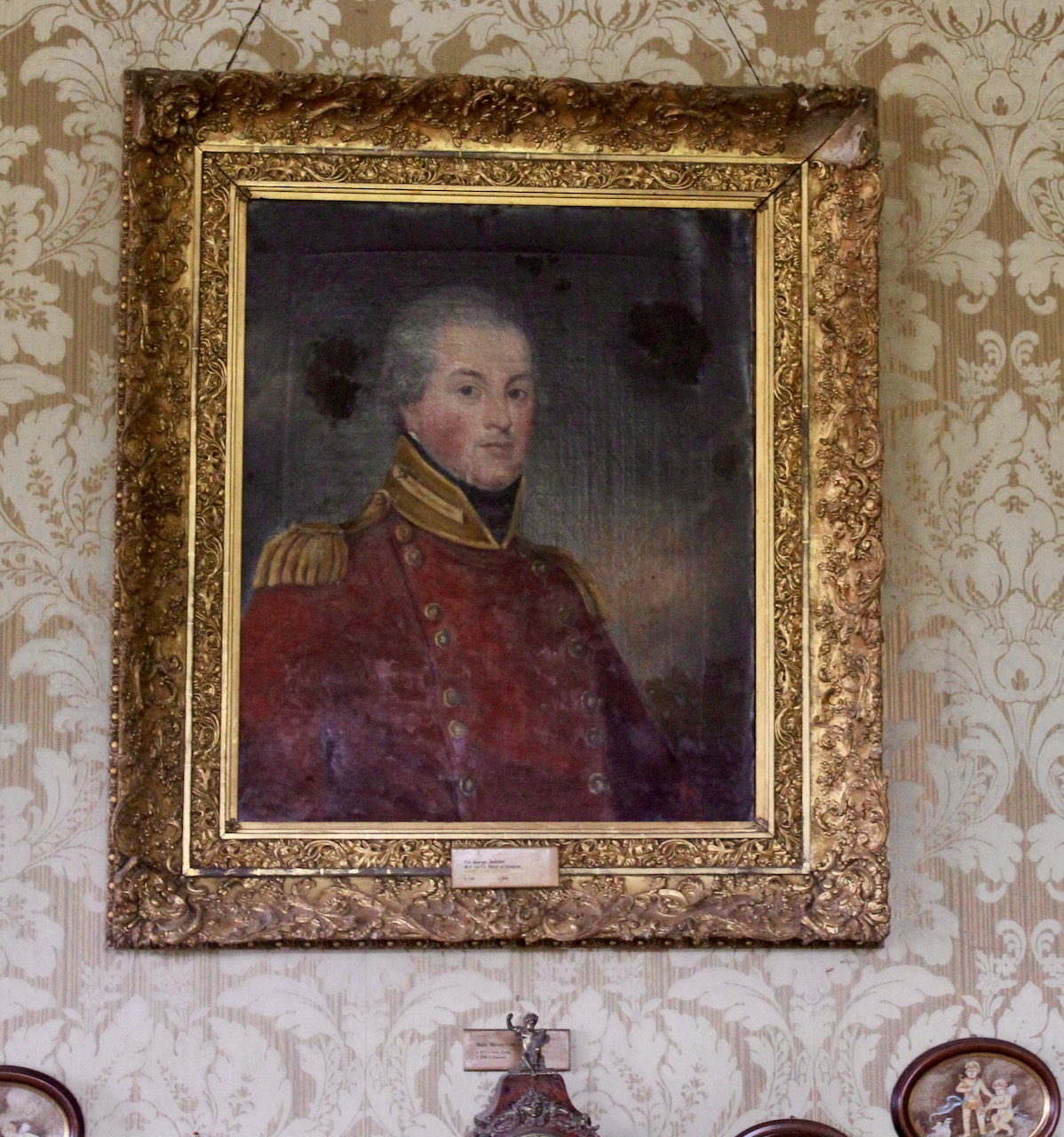
Colonel George Jackson (1761-1805), MP for County Mayo. Photograph © Jennifer Winder-Baggot, www.irishhistorichouses.com
A portrait of Jane Cuffe, daughter of James Cuffe of Ballinrobe, County Mayo, wife of George Jackson (1717-1789). Photograph © Jennifer Winder-Baggot, www.irishhistorichouses.com
Madeline Jackson (abt 1816-1899) of Enniscoe. Photograph © Jennifer Winder-Baggot, www.irishhistorichouses.com
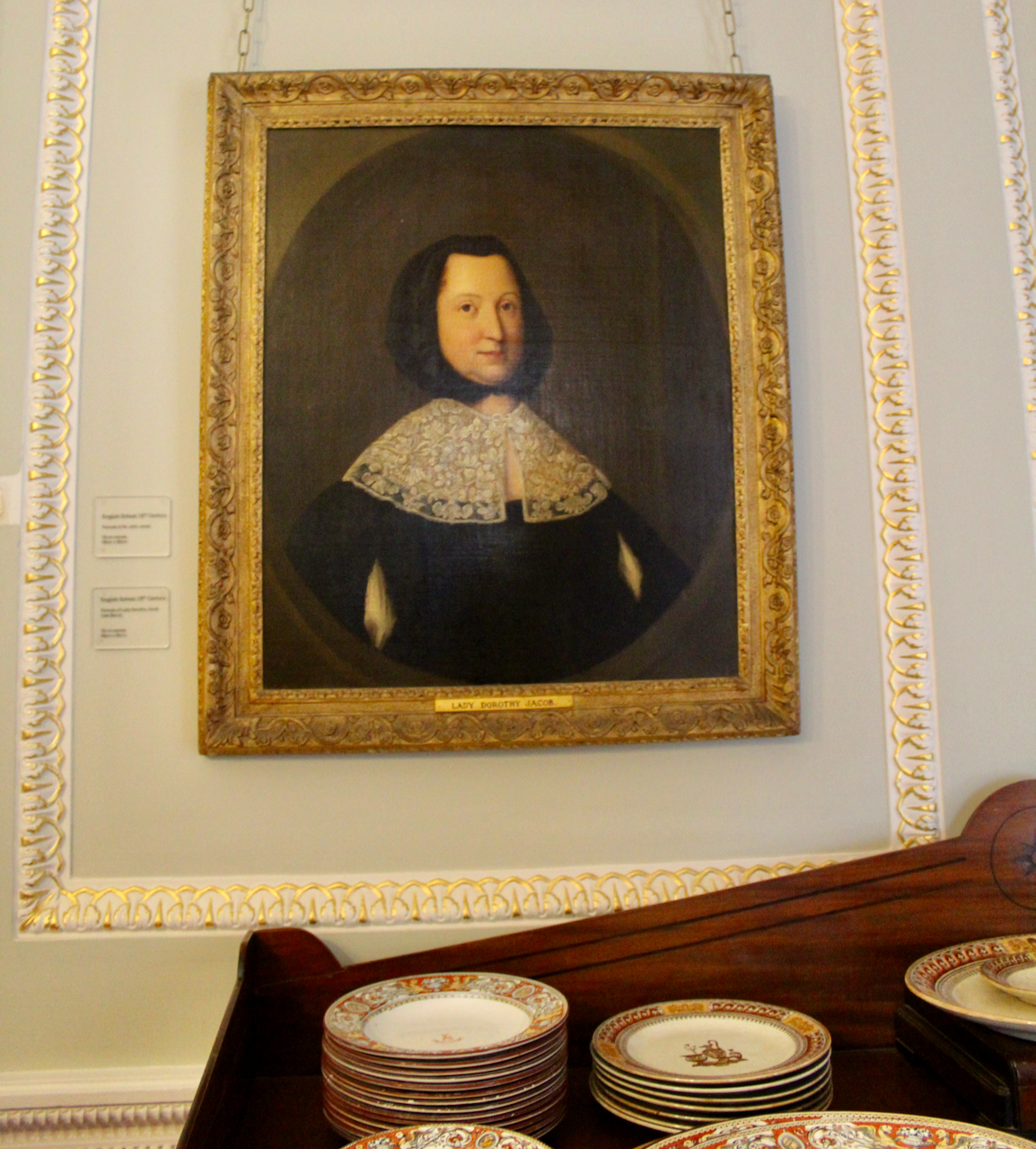
Dorothy née Barry (1670-1748), married John Jacob 3rd Bt of Bromley. She was the daughter of Richard Barry 2nd Earl of Barrymore. Photograph © Jennifer Winder-Baggot, www.irishhistorichouses.com
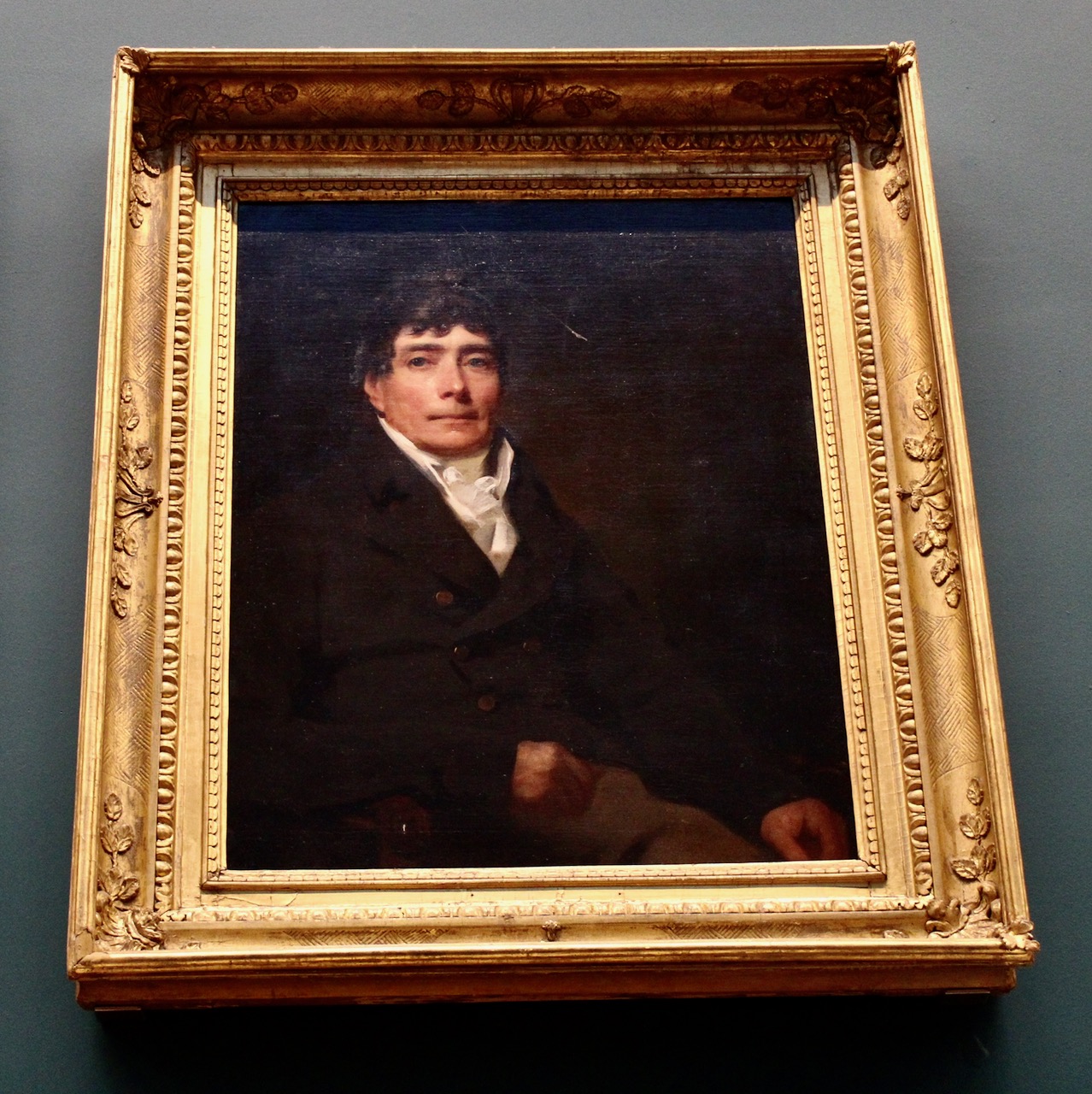
John Jacob 3rd Bt of Bromley, Essex. Photograph © Jennifer Winder-Baggot, www.irishhistorichouses.com
John Jameson (1740-1823), Whiskey Distiller, c. 1820 by Henry Raeburn, National Gallery of Ireland. Photograph © Jennifer Winder-Baggot, www.irishhistorichouses.com
John Jameson by Stephen Catterson Smith courtesy Christies 2006
Mary Ann Cavendish Bradshaw also known as the Countess of Westmeath. Portrait painted by Sir Thomas Lawrence in 1806. She was born Marianne Jeffreys, and married George Frederick Nugent, the 7th Earl of Westmeath and she became the Countess of Westmeath. In 1796 in a sensational court case she divorced Nugent and soon after married Augustus Cavendish Bradshaw.
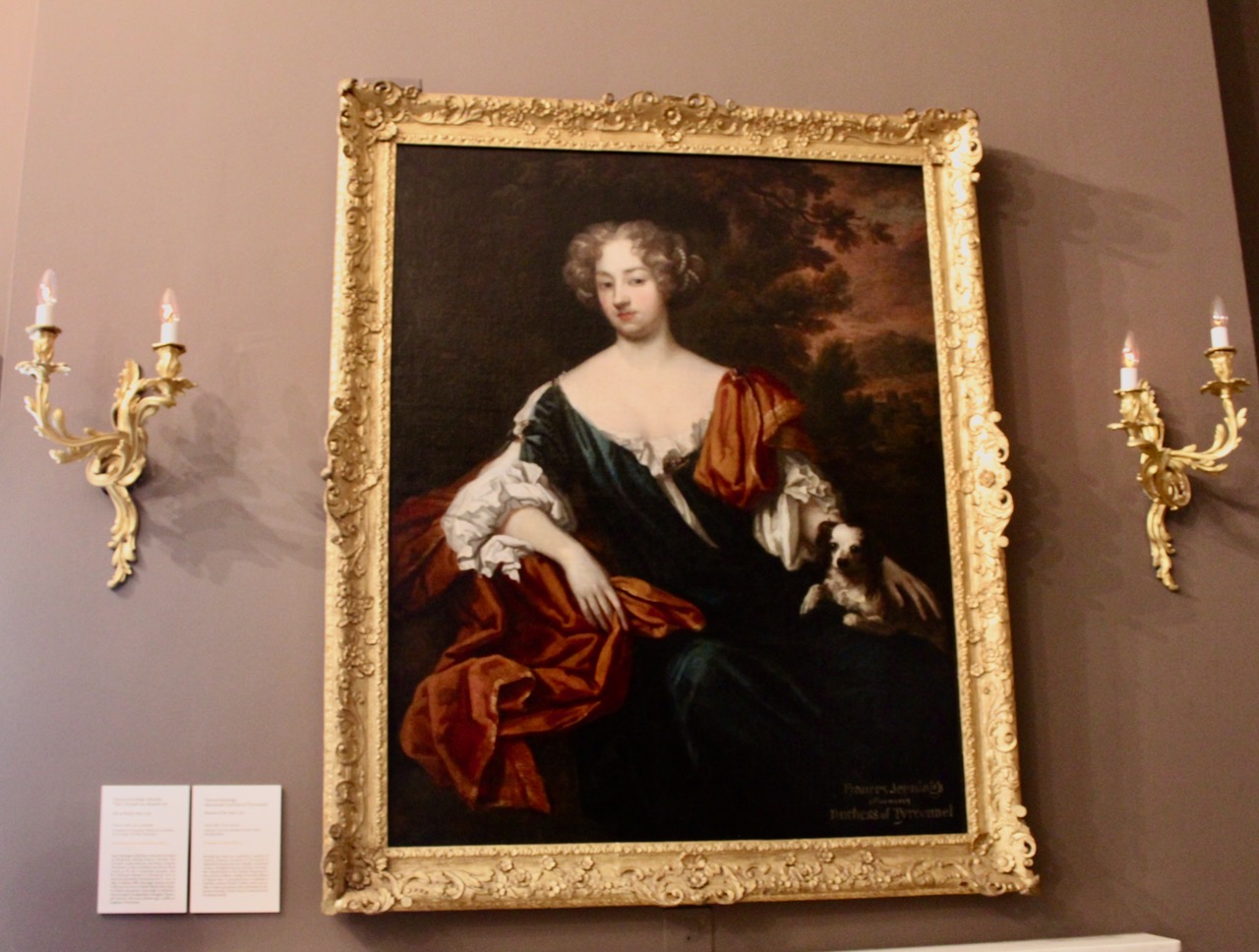
Frances Jennings (1647-1730), Vicereine of Ireland 1687-89, Duchess of Tyrconnell. She was married to Richard Talbot, 1st Duke of Tyrconnell (1630-1691). Photograph © Jennifer Winder-Baggot, www.irishhistorichouses.com
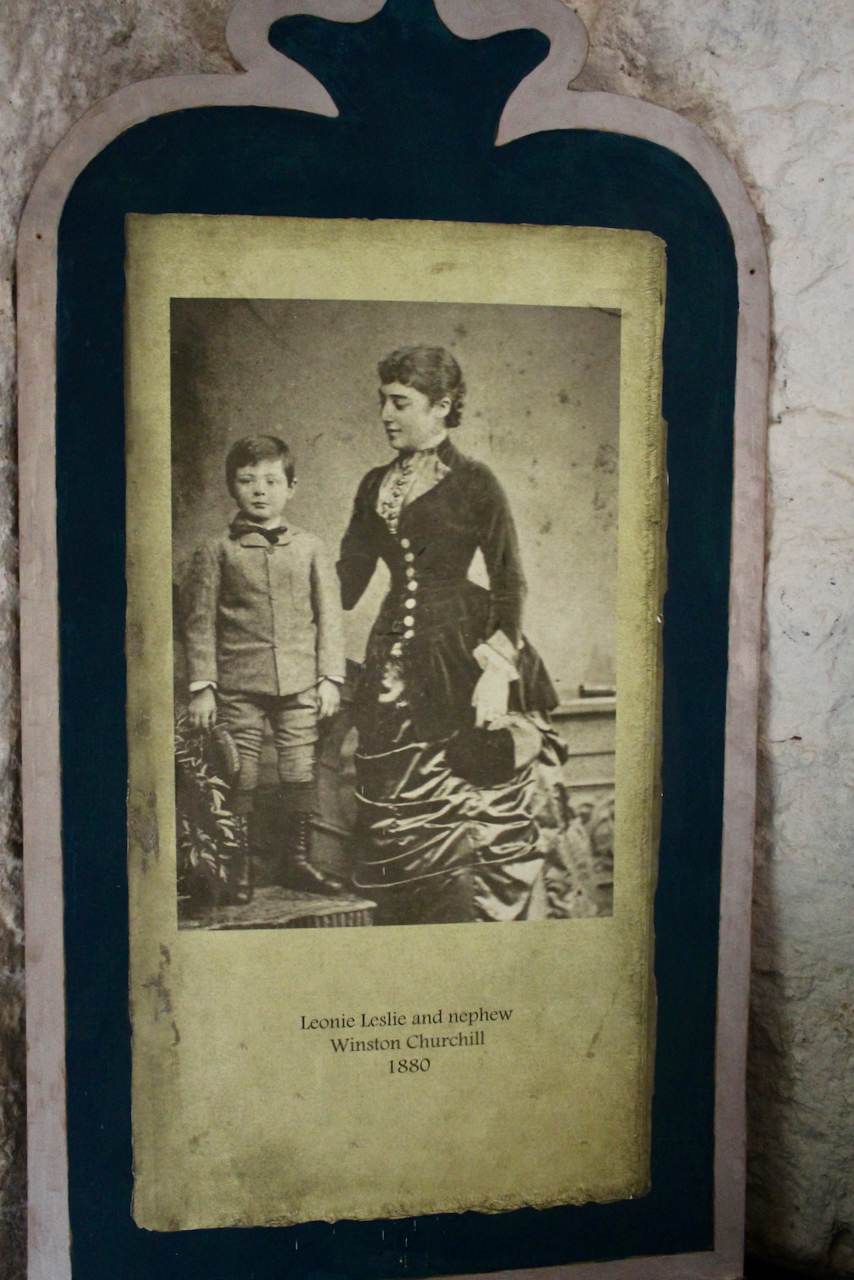
Leonie Leslie (1859-1943), Shane Leslie’s mother. Originally Leonie Jerome, her sister Jennie was Winston Churchill’s mother. Photograph © Jennifer Winder-Baggot, www.irishhistorichouses.com
Charles Jervas (1675-1739) by Thomas Priscott after Gerard Vandergucht, courtesy of National Portrait Gallery NPG D8359.
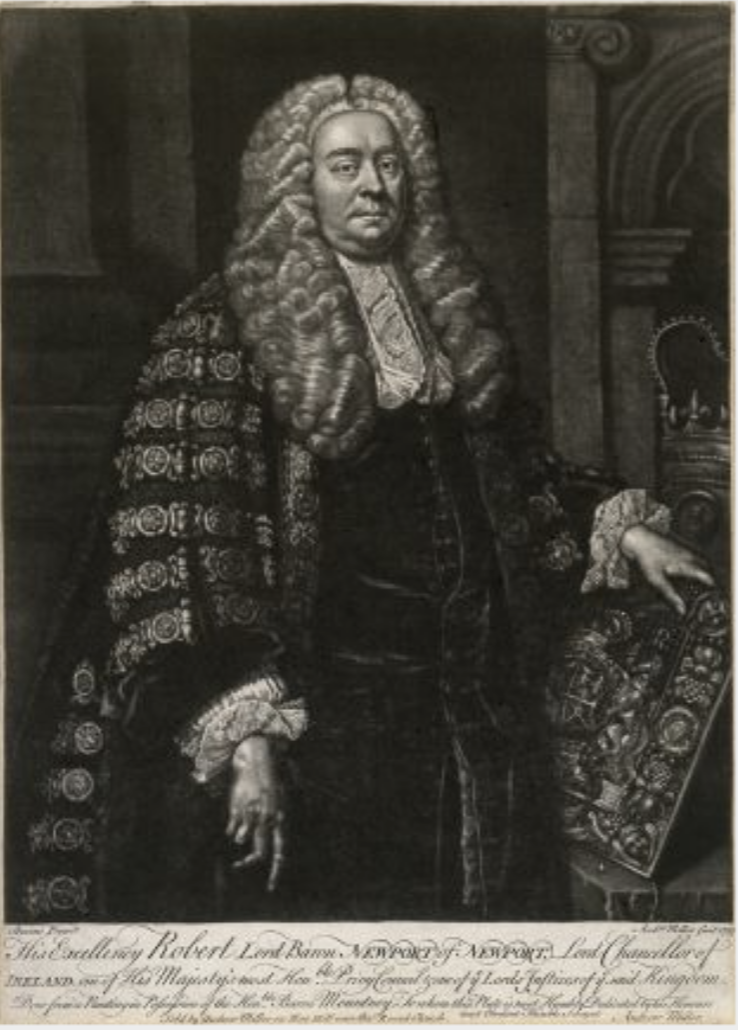
Robert Jocelyn, Baron Newport (c.1688-1756), Lord Chancellor of Ireland, later 1st Viscount Jocelyn Date 1747 Engraver Andrew Miller, English, fl.1737-1763 After Justin Pope-Stevens, Irish, fl.1743, d.1771, courtesy of National Gallery of Ireland.
Robert Jocelyn (1688? – 1756) Viscount Jocelyn, Lord Chancellor of Ireland,by STEPHEN SLAUGHTER (1697-1765), Adams auction 26th April 2022.
Robert Jocelyn (1688? – 1756) Baron Newport and 1st Viscount, as Lord High Chancellor of Ireland Irish school courtesy of National Trust Castle Ward.
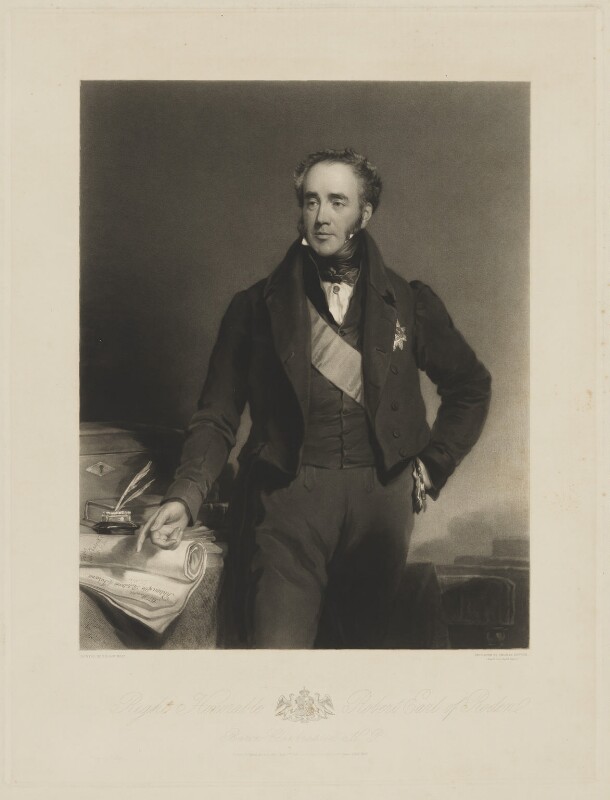
Robert Jocelyn (1788-1870) 3rd Earl of Roden, by Thomas Goff Lupton, printed by R. Lloyd, published 28 April 1839 by Hodgson & Graves, after Frederick Richard Say, courtesy of National Portrait Gallery NPG D39829.
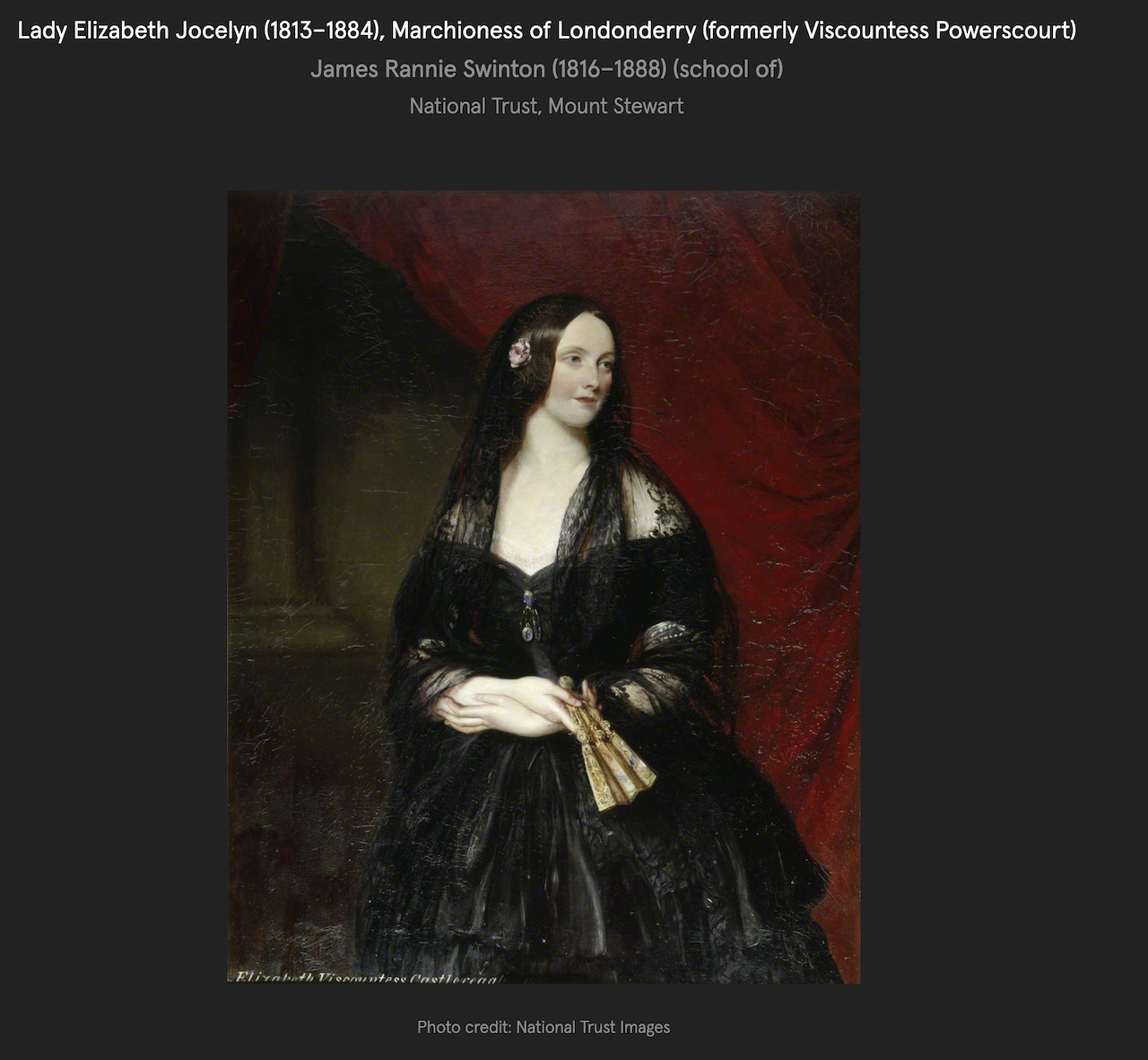
Elizabeth Jocelyn (1813-1884), Marchioness of Londonderry, formerly Viscountess Powerscourt, by James Rannie Swinton, courtesy of Mount Stewart National Trust. She was married to the 6th Viscount Powerscourt. She was the daughter of Robert Jocelyn 3rd Earl of Roden. After her husband’s death she married Frederick William Robert Stewart, 4th Marquess of Londonderry, of Mount Stewart, County Down
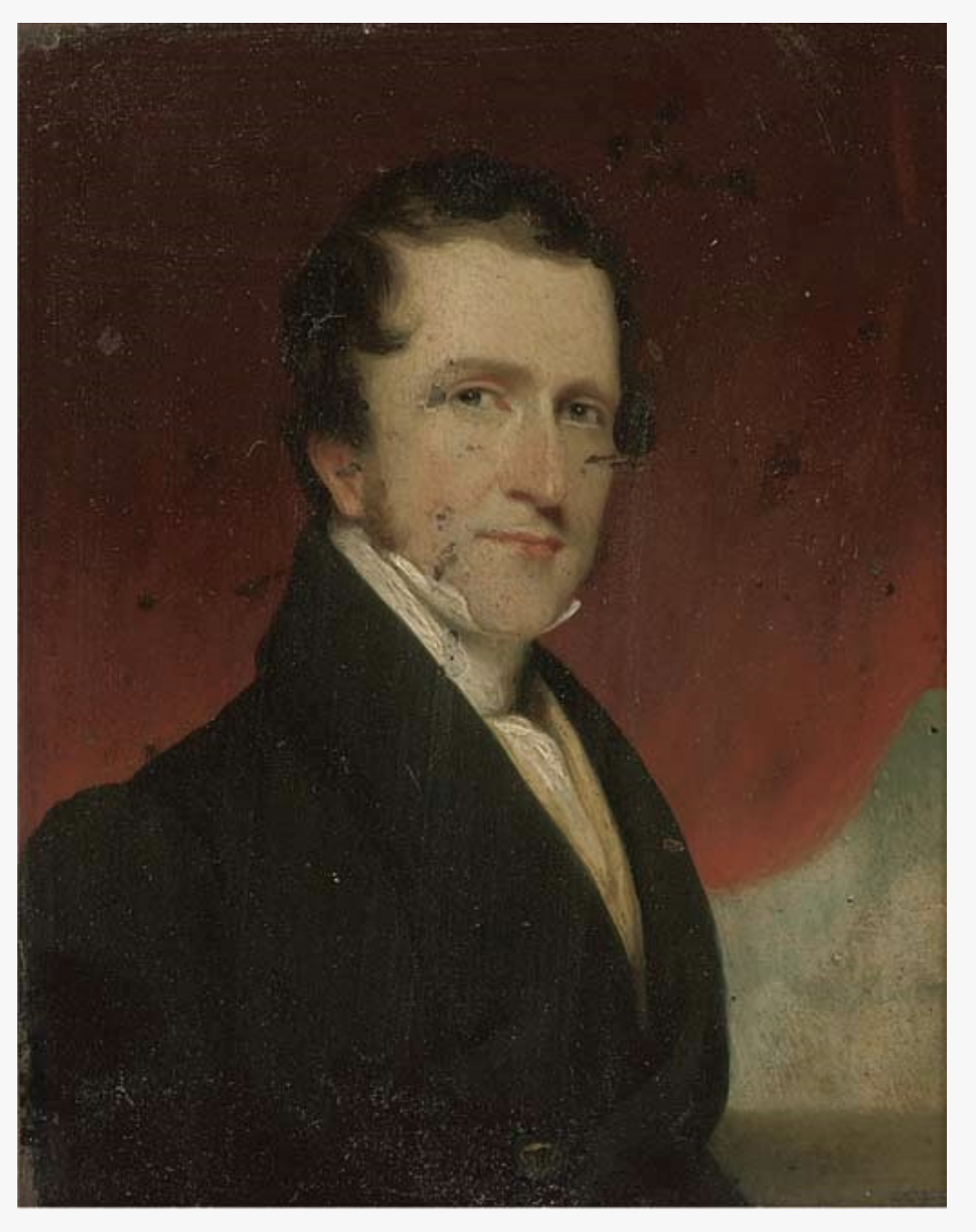
Attributed to Adam Black, Portrait of a Gentleman, believed to be Mr. J.J. Johnston, Warrenstown, Co. Meath courtesy Adam’s auction 9 Oct 2012.

In 1847, the Johnson family of Warrenstown changed their surname from MacShane to Anglicized Johnson. Christopher Johnson married Anne, daughter of Michael Warren of Warrenstown, County Meath. Their son John married Catherine Nangle. [1]

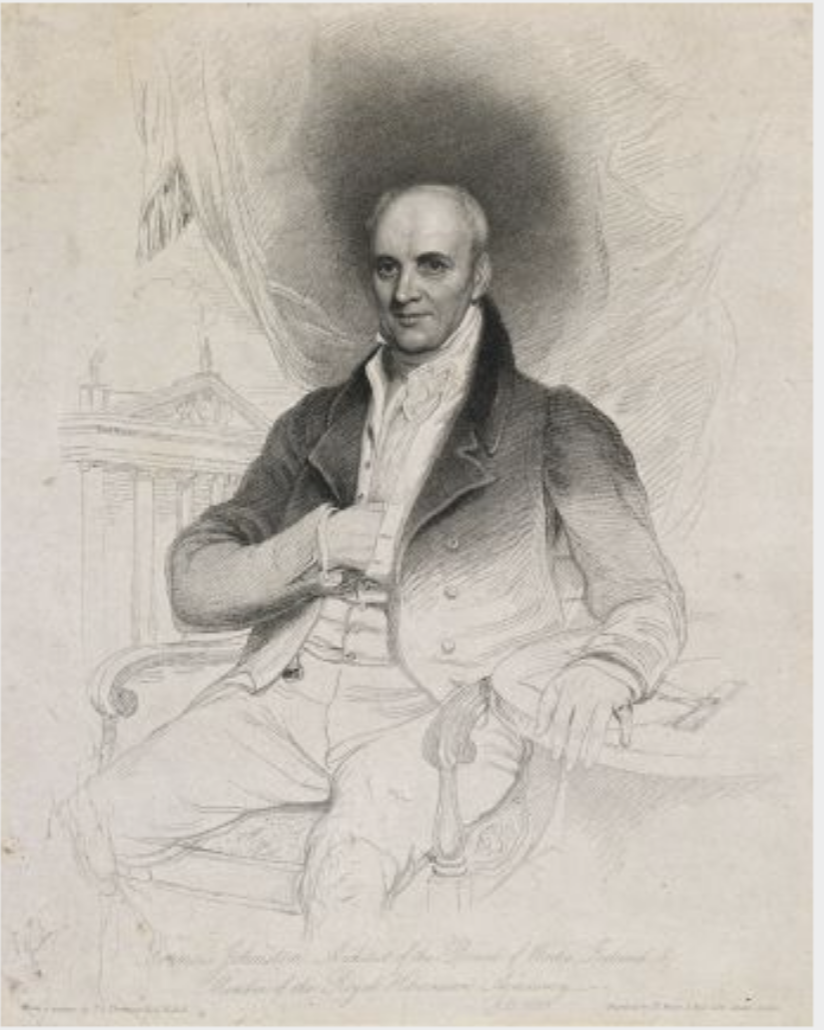
Francis Johnston (1761-1829), 1823 by engraver Henry Hoppner Meyer after Thomas Clement Thompson, courtesy of National Gallery of Ireland.
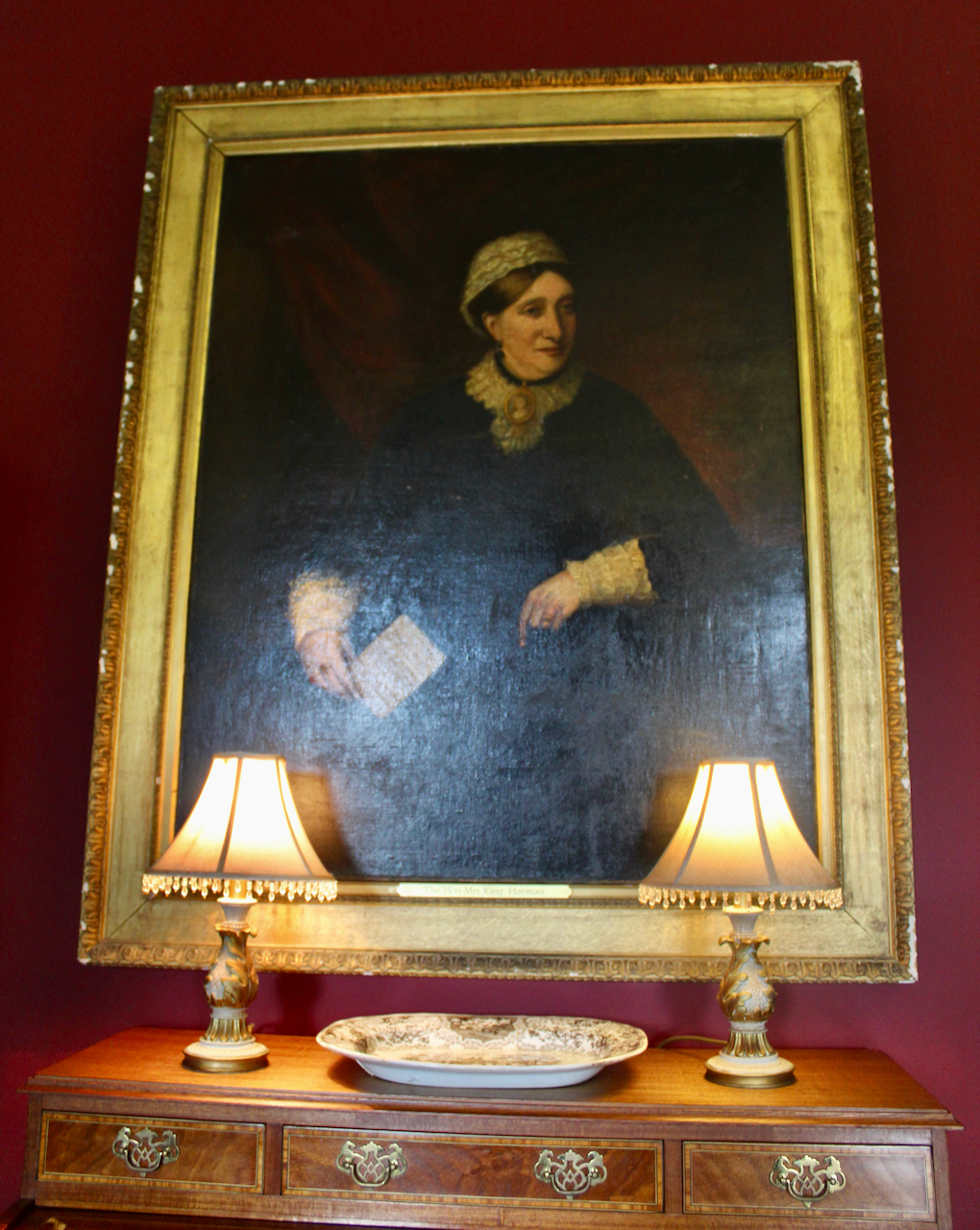
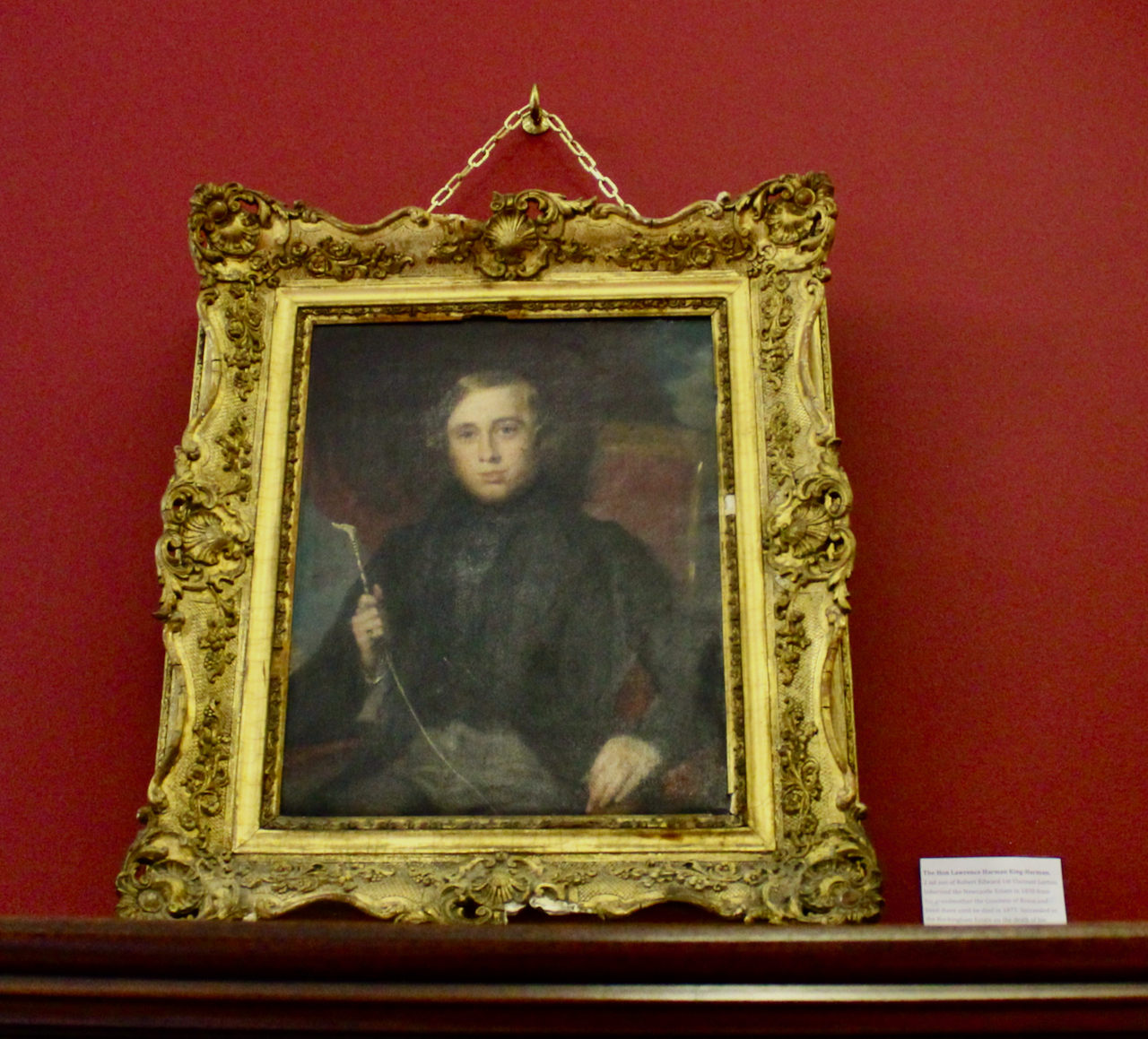
Mary Cecilia, 6th daughter of Thomas Reymond Johnstone of Alva. Married May 1837 Laurence Harman King-Harman, 2nd son of Robert Edward 1st Viscount Lorton. She lived at Newcastle until her husband’s death in 1875 and then in London when she died in 1904. Photograph © Jennifer Winder-Baggot, www.irishhistorichouses.com
This painting just identifies the sitter as Mrs King-Harman. She is probably Laurence Harman King-Harman’s wife Mary Cecilia née Johnstone, in later life. Photograph © Jennifer Winder-Baggot, www.irishhistorichouses.com
Richard Jones (1636 – 1712) 3rd Viscount and 1st Earl of Ranelagh, style of Sir Godfrey Kneller (Lubeck 1646/9 – London 1723), circa 1700. A three-quarter-length portrait, turned to right, head facing, left hand on hip. Wearing armour, jabot, blue cloak and full bottomed wig. A grisaille painting in background. He was the son of Arthur Jones, 1st Viscount Ranelagh in the Irish peerage and succeeded as 3rd Viscount in 1669 and became Chancellor of the Irish Exchequer in 1668; farmed Irish revenues, 1674-81; Paymaster-General of the Forces, 1691-1702; Richard Hill of Hawkstone (1654-1727) was his Deputy Paymaster in Flanders for six years. Jones was dismissed for embezzlement, was convicted of defalacation, but escaped prosecution; he spent all his ill-gotten money on fine houses and gardens. The Ranelagh pleasure-grounds were laid out on his former estate in Chelsea. He sat in the English parliament between 1685 and 1703. He married firstly The Hon. Elizabeth Willoughby and secondly Lady Margaret Cecil. Courtesy of National Trust Attingham Park.
Margaret Jones née Cecil (1673-1727) Countess of Ranelagh, 2nd wife of Richard Jones 1st Earl of Ranelagh Engraver: John Smith, English, 1652-1743 After Godfrey Kneller, German, 1646-1723, courtesy of National Gallery of Ireland.
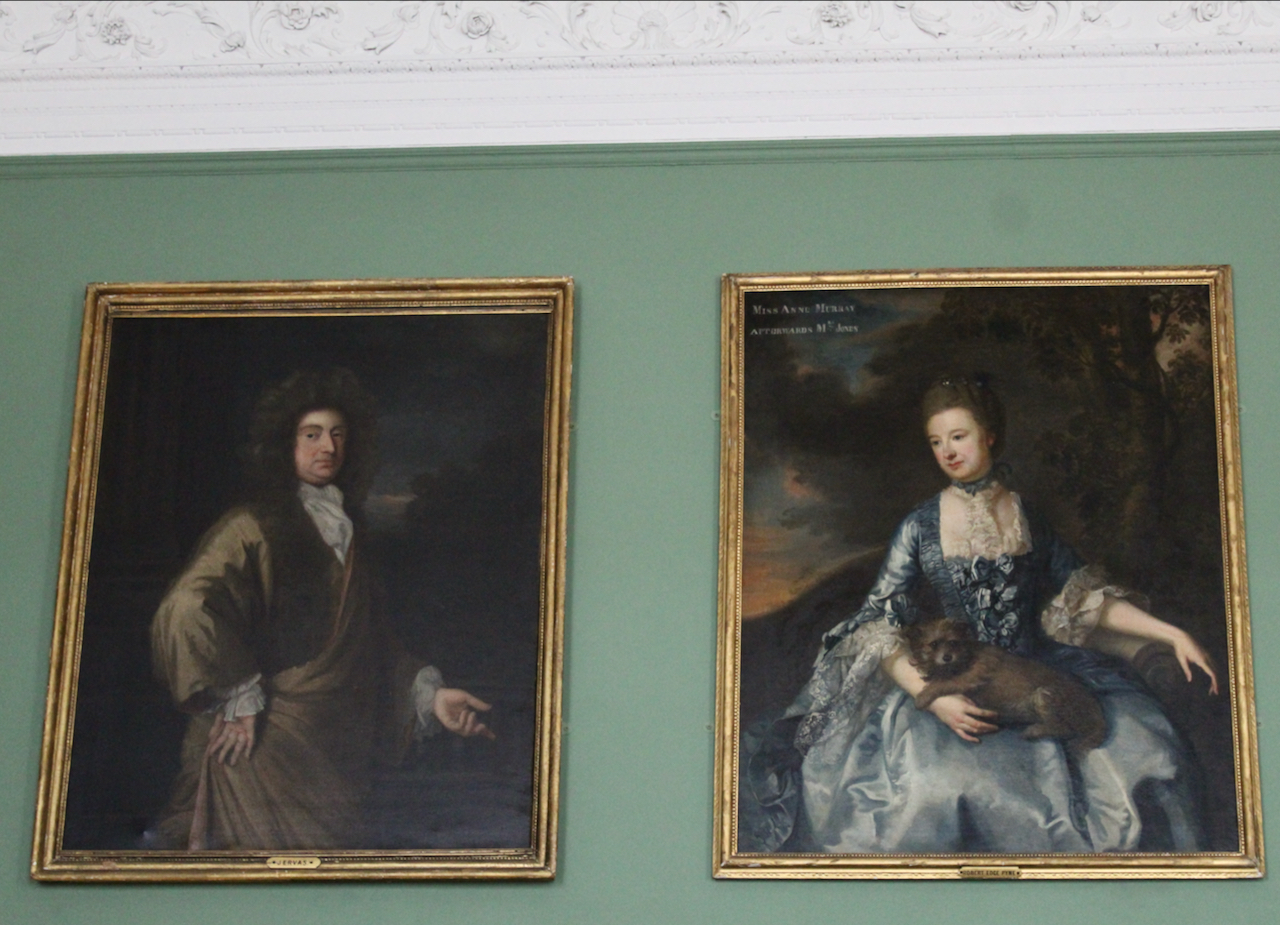
Anne Murray (1734-1827) who married Theophilus Jones (1725-1811). Photograph © Jennifer Winder-Baggot, www.irishhistorichouses.com

K

Angelica Kauffmann (1741-1807) by Angelica Kauffmann, oil on canvas, circa 1770-1775, courtesy of National Portrait Gallery NPG 430.
Arthur MacMorrough Kavanagh, M.P., (1831-1839), Politician and Sportsman Date after 1889 Engraver Morris & Co., courtesy of National Gallery of Ireland.
General John Keane (1781-1844), 1st Baron Keane of Ghuznee in Afghanistan and Cappoquin, Co. Waterford, by Martin Arthur Shea. Photograph © Jennifer Winder-Baggot, www.irishhistorichouses.com
Dorothy Scott (1765-1837) second wife of John Keane, 1st Baronet, by George Romney courtesy of Philadelphia Museum of Art.
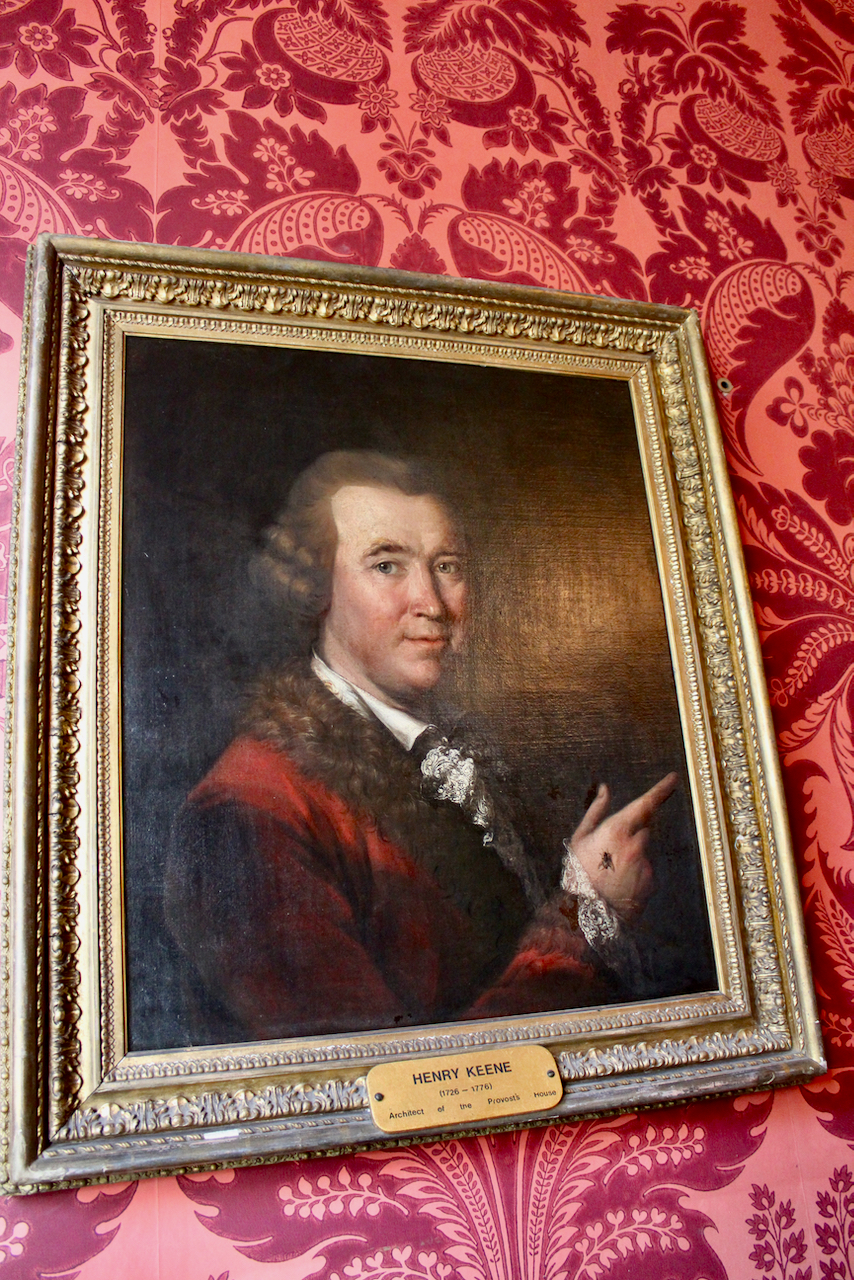
Henry Keene (1726-1776), architect of the Provost’s House, Trinity College Dublin. Photograph © Jennifer Winder-Baggot, www.irishhistorichouses.com
Anne Keene, wife of Henry, architect of the Provost’s house. She looks rather worried. Photograph © Jennifer Winder-Baggot, www.irishhistorichouses.com
Rev. Thomas Kelly of Kellyville Athy, seated in his study, holding a book, by Maria Spilsbury Taylor. Courtesy of Adams auction 16 Oct 2018. Born in 1769 Thomas Kelly was the only son of Judge Thomas Kelly of Kellyville. Having initially intended to follow his father into the law he changed his mind taking holy orders in 1792. Ordained into the Church of England he returned to Ireland where he proved a popular evangelical preacher but soon fell out with Archbishop Fowler of Dublin who forbade him to preach in any church in the Dublin archdiocese. Kelly, in turn, established the Kellyites a fringe Anglican group much like the Plymouth Brethern or the Walkerites. Already a man of independent means, Kelly made an advantageous marriage to Ms Tighe of Rosanna which enabled him to establish meeting houses in Dublin, Athy, Portarlington, Wexford and Waterford. It is presumably through his wife that Rev. Kelly would have encountered Maria Spilsbury Taylor. She executed numerous commissions for the Tighes including portraits of various family members both at their home, Rosanna, in Co. Wicklow and their townhouse overlooking St Stephens Green in Dublin.
King Charles I, and below, a mistress of King Charles II, Louise Renée de Penancoët de Kérouaille, Duchess of Portsmouth, who was the mother of Charles Lennox, 1st Duke of Richmond. Photograph © Jennifer Winder-Baggot, www.irishhistorichouses.com
Robert King (1657–1693), 2nd Baron Kingston by John Michael Wright courtesy of Ulster Museum.

Robert King (d. 1657) lived in Boyle Abbey, County Roscommon. He married first, Frances, daughter of Henry Folliott, 1st Lord Folliott, Baron of Ballyshannon. Frances gave birth to a son, John King (1638-1676) who became 1st Baron Kingston; a second son, Robert (d. 1707) became 1st Baronet King, of Boyle Abbey, Co. Roscommon.

Robert King, (d. 1707) 1st Baronet of Boyle Abbey, County Roscommon from the circle of John Closterman, courtesy of “mutualart.com”

John King (1638-1676) 1st Baron Kingston married Catherine Fenton who gave birth to their heir, the 2nd Baron Kingston (1657–1693), who died unmarried, so the title passed to John (d. 1727/8) 3rd Baron Kingston.

John (d. 1727/8) 3rd Baron Kingston married Margaret O’Cahan.

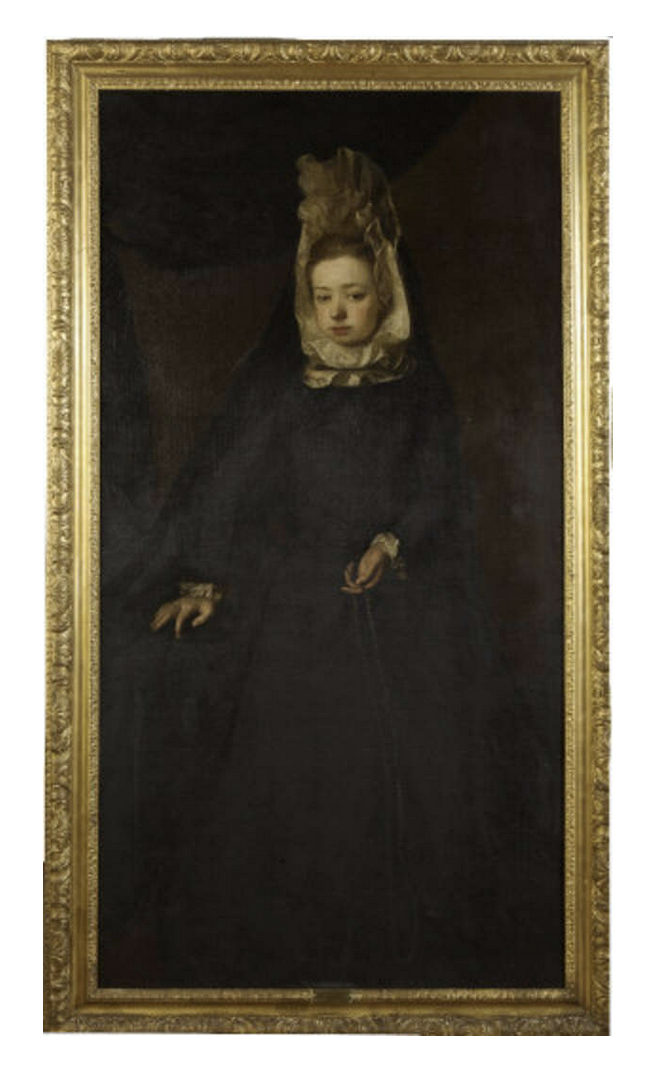
Margaret O’Cahan (c. 1662-1721), standing in a black habit, and holding a string of rosary beads, Attributed to Garret Morphy (c.1655-1715), courtesy Adam’s 6 Oct 2009 she married James King 3rd Baron Kingston.

The 3rd Baron’s daughter Catherine married George Butler, grandson of Edmund Roe Butler, 4th Viscount Mountgarret. His son James King (1693-1761) became 4th Baron Kingston. He married Elizabeth, daughter of John Meade, 1st Bt of Ballintubber, County Cork. She was the widow of Ralph Freke, 1st Bt.

Their daughter Margaret (d. 1763) married Richard Fitzgerald, son of Robert Fitzgerald, 19th Earl of Kildare. A son predeceased him, so on the 4th Baron’s death, the Barony of Kingston became extinct.

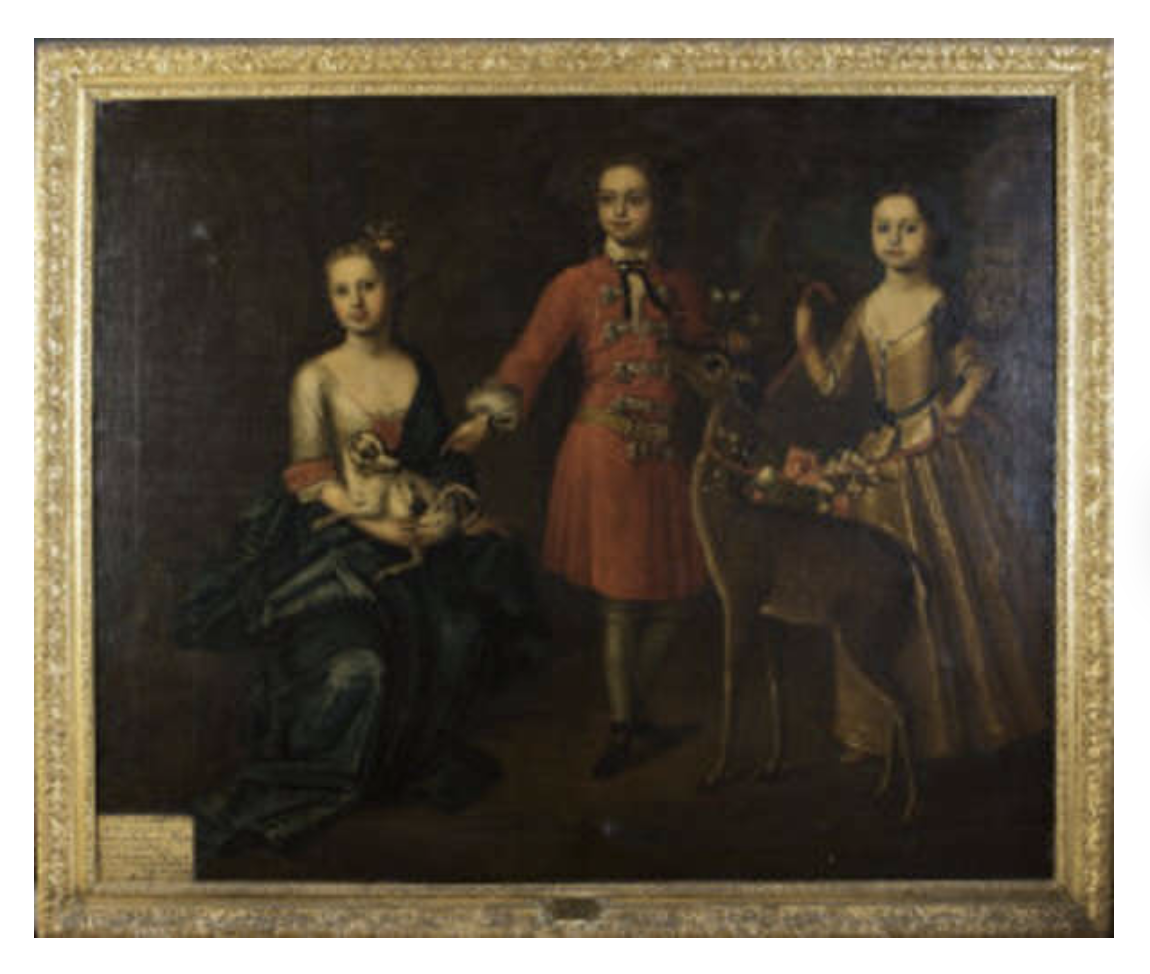
Jeremiah Barrett (d.1770) A conversation portrait of the Children, William, Elizabeth and Margaret King, of James 4th (last) Baron Kingston of Mitchelstown with a pet doe and dog courtesy of Adam’s 6 Oct 2009. The surviving daughter Margaret, daughter of Elizabeth Meade (Clanwilliam), inherited the vast Mitchellstown Estate of the White Knights. She married Richard Fitzgerald of Mount Ophally, and their only daughter Caroline married, as arranged, the 2nd Earl of Kingston thus uniting the two branches of the King family. Life at Mitchellstown was recorded by two famous employees of the Kings, Arthur Young the agriculturalist and Mary Wollstonecraft who probably sketched out the basis of Vindication of the Rights of Women whilst governess to the King children. It was not without excitement, in 1799 Lord Kingston shot dead Colonel Fitzgerald, his wife’s illegitimate half-brother in the hotel in Mitchellstown for abducting his 17 year old daughter Mary Elizabeth and his eldest daughter Margaret having married the 2nd Earl of Mount Cashell left him to befriend Shelley in Italy and is The Lady in ‘The Sensitive Plant’. Provenance: Rockingham House.

Robert King (d. 1707) 1st Baronet King, of Boyle Abbey, Co. Roscommon married Frances Gore, granddaughter of Paul Gore, 1st Baronet Gore, of Magherabegg, Co. Donegal. Their daughter Mary married Chidley, son of Richard Coote, 1st Lord Coote, Baron of Coloony. A son John became 2nd Baronet but died childless and the title passed to his brother Henry (d. 1739/40) who became 3rd Baronet of Boyle Abbey, Co. Roscommon.

Henry King (1681-1739) 3rd Baronet King of Boyle Abbey, by Robert Hunter.

Henry King (d. 1739/40) 3rd Baronet of Boyle Abbey, Co. Roscommon married Isabella, daughter of Edward Wingfield of Powerscourt, County Wicklow.

Isabella Wingfield (d. 1761) by John Verelst, 1722, daughter of Edward Wingfield (d. 1728) of Powerscourt, sister of 1st Viscount Powerscourt, wife of Henry King 3rd Baronet.

Henry King (d. 1739/40) 3rd Baronet and Isabella’s daughter Elinor married William Stewart of Killymoon. Another daughter, Isabella (1729-1794) married Thomas St. Lawrence 1st Earl of Howth, and Anne (d. 1803) married John ‘Diamond’ Knox of Castlerea, Co. Mayo, and Frances (1726-1812) married Hans Widman Wood of Rossmead, County Westmeath. It’s funny looking at their portraits by Robert Hunter – he seems to have used the same picture for each sister except for Frances, with tiny adjustments to the dress and pose!

Frances King, by Robert Hunter. The portrait is in King House. Thus could be a portrait of Robert’s sister Frances (1726-1812) who married Hans Widman Wood of Rossmead, County Westmeath. Photograph © Jennifer Winder-Baggot, www.irishhistorichouses.com
Portrait almost certainly of Anne King, daughter of Sir Henry King and sister of 1st Earl of Kingston, married John ‘Diamond’ Knox of Castlerea, Co. Mayo courtesy Adam’s 6 Oct 2009 by Robert Hunter (c.1715/20-c.1803).
Isabella King, daughter of Sir Henry King and sister of 1st Earl of Kingston, wife of Thomas, 1st Earl of Howth courtesy Adam’s 6 Oct 2009 Robert Hunter (c.1715/20-c.1803).
Eleanor King (1722-1810), daughter of Sir Henry King 3rd Baronet of Boyle Abbey and sister of Edward 1st Earl of Kingston, with her son James Stewart (18749-1840), by Robert Hunter. Eleanor married William Stewart of Killymoon, County Tyrone. This picture was also in the auction at Adam’s 6 Oct 2009.
Portrait most likely to be William Stewart of Killymoon married to Isabella King, courtesy of Adam’s 6 Oct 2009 by Robert Hunter (c.1715/20-c.1803).

Henry King (d. 1739/40) 3rd Baronet and Isabella’s son Robert (1724-1755) succeeded as 4th Baronet King, of Boyle Abbey, Co. Roscommon and was created 1st (and last) Baron Kingsborough. Another son, Edward (1726-1797) succeeded as 5th Baronet King, of Boyle Abbey, Co. Roscommon was created 1st Earl of Kingston, and they had another son, Henry.

Robert King (1724-1755), later 1st (and last) Baron Kingsborough courtesy Adam’s 6 Oct 2009, by Robert Hunter (c.1715/20-c.1803).
Robert King, created Baron Kingsborough, died 1755, painting by Robert Hunter, courtesy Adam’s auction 11th Oct 2016. The sales catalogue tells us what the museum does not: Robert King 1724-1755 M.P. for Boyle succeeding Richard Wingfield, succeeded as 4th baronet in 1740 and was made Baron Kingsborough at the age of 23 in 1747, having fought a notorious duel with Captain Johnston. He borrowed the large sum of £40,000, became Grand Master of the Freemasons, set the family up in Henrietta Street and lived with a mistress, Mrs. Jones. He died unmarried and his will was bitterly contested by his surviving brothers as far as the House of Lords in London, Edward claimed that Kingsborough was subjected to undue influence by Mrs. Jones, “a common prostitute,” and that the will was witnessed by a drunken porter and a Swiss servant, all such being scoundrels.
Robert King (1724-1755), 4th Baronet of Boyle Abbey, created Baron Kingsborough, by Robert Hunter.
Edward King (1726-1797), 5th Baronet of Boyle Abbey and eventually, 1st Earl of Kingston. The portrait is the same as above, so is misidentified in one of them.
Edward King, later 1st Earl Kingston courtesy Adam’s 6 Oct 2009 by Robert Hunter (c.1715/20-c.1803).
In King House in Boyle, County Roscommon, the same portrait is identified as Henry King b. 1733 by Hunter. He was a son of Henry King who built King House. Photograph © Jennifer Winder-Baggot, www.irishhistorichouses.com
Henry King, Later Rt. Hon. Colonel courtesy Adam’s 6 Oct 2009 by Robert Hunter (c.1715/20-c.1803). He was probably a younger son of Henry King 3rd Baronet of Boyle Abbey, since several of the siblings were painted by Robert Hunter.

Edward (1726-1797) 5th Baronet King, of Boyle Abbey, Co. Roscommon, 1st Earl of Kingston married Jane Caulfeild (d. 1784), daughter of Thomas Caulfeild of Castle Donamon, County Roscommon. Their daughter Jane (d. 1838) married Laurence Harman, 1st Earl of Rosse. A daughter Frances married Thomas Tenison (d. 1812). Another daughter, Eleanor, died unmarried, as did her sister Isabella. The heir was Robert (1754-1799) who became 2nd Earl of Kingston.

Eleanor King, died 1822, unmarried, painting by Hugh Douglas Hamilton. Photograph © Jennifer Winder-Baggot, www.irishhistorichouses.com
Robert King (1754-1799) 2nd Earl of Kingston by Hugh Douglas Hamilton.

Robert King (1754-1799) 2nd Earl of Kingston married Caroline Fitzgerald (d. 1823), daughter of Richard Fitzgerald and Margaret King. The latter was daughter of James King, 4th Baron Kingston. Richard Fitzgerald was son of Robert 19th Earl of Kildare.

Caroline, née Fitzgerald, Countess of Kingston, wife of Robert King 2nd Earl of Kingston, by Hugh Douglas Hamilton. She was the daughter of Richard Fitzgerald and Margaret King. The latter was daughter of James King, 4th Baron Kingston. Richard Fitzgerald was son of Robert 19th Earl of Kildare.
Caroline King née Fitzgerald (c. 1754-1823), daughter of Richard and Margaret Fitzgerald, who married Robert King (1754-1799), 2nd Earl of Kingston. Photograph © Jennifer Winder-Baggot, www.irishhistorichouses.com

Caroline née Fitzgerald and Robert King 2nd Earl of Kingston had a daughter Margaret (1773-1835) who married first, Stephen Moore 2nd Earl of Mountcashell and second, George William Tighe. Caroline and Robert 2nd Earl’s son George (1771-1839) succeeded as 3rd Earl of Kingston.

Margaret King (1773–1835) c. 1800 Public Domain, https://en.wikipedia.org/w/index.php?curid=67983213
George King (1771-1839), later 3rd Earl of Kingston, painting by Romney. Photograph © Jennifer Winder-Baggot, www.irishhistorichouses.com

Caroline and Robert 2nd Earl’s son Henry (d. 1839) married first Mary Hewitt and then Catherine Philips. Another son, James William King (d. 1848) married Caroline Cleaver. Another son, Robert Edward (1773-1854) was created 1st Viscount Lorton of Boyle, County Roscommon. Another son, Richard Fitzgerald King (1779-1856) married Williamina Ross.

This large portrait in the dining room is General Robert King (1773-1854), 1st Viscount Lorton, who was the son of Robert King, 2nd Earl of Kingston. Photograph © Jennifer Winder-Baggot, www.irishhistorichouses.com
In the centre, Frances née Parsons Harman (1775-1841) who married Robert Edward King (1773-1854) 1st Viscount Lorton. She is flanked by their daughter Jane King, who married Anthony Lefroy, and Frances King, who married Right Reverend Charles Leslie of Corravahan. Photograph © Jennifer Winder-Baggot, www.irishhistorichouses.com
Frances née Parsons Harman (1775-1841) who married Robert Edward King (1773-1854), 1st Viscount Lorton. She was the daughter of Lawrence Harman Parsons (1749-1807) 1st Earl of Rosse who assumed the surname Parsons-Harman.
Jane King (d. 1868), daughter of Robert Edward King General, 1st Viscount Lorton of Boyle, who married Anthony Lefroy (1800-1890) of Carriglas Manor, County Longford.
Frances King (d. 1835), daughter of Robert Edward King 1st Viscount Lorton, who married Right Reverend Charles Leslie (1810-1870) of Corravahan, County Cavan, Bishop of Kilmore.

George King (1771-1839) 3rd Earl of Kingston had several illegitimate children with Caroline Amelia Morison, daughter of William Morison, Chief Justice of the Bahamas. The 3rd Earl married Helena Moore (1773-1847), daughter of Stephen Moore, 1st Earl Mountcashell. His son (1795-1837) Edward King, known as Viscount Kingsborough, was imprisoned for his father’s debts and died of typhus in prison. His son Robert Henry King (1796-1867) succeeded 4th Earl of Kingston. He was declared of unsound mind, and had no children. His brother James King (1800-1869) succeeded as 5th Earl of Kingston.

James King (1800-1869), 5th Earl of Kingston, who married Anna Brinkley.
Anna King née Brinkley, wife of James King (1800-1869) 5th Earl of Kingston, who lived in Mitchelstown.
William King (1650-1729), Protestant Archbishop of Dublin, engraver Richard Purcell, Irish, c.1736-c.1766 After Charles Jervas, Irish, c.1675-1739, courtesy of National Gallery of Ireland.
William King (1650-1729) Archbishop of Dublin, portrait in Trinity College Dublin exam hall. Photograph © Jennifer Winder-Baggot, www.irishhistorichouses.com
Dr. William King, Archbishop of Dublin Attributed to Ralph Holland (early 18th Century) courtesy Christies Irish Sale.
Bill King, of Oranmore Castle, County Galway
Leonie King, of Oranmore Castle, County Galway. Photograph © Jennifer Winder-Baggot, www.irishhistorichouses.com
Cecil Stafford King-Harman
Vanity Fair entry and picture, about Edward Robert King-Harman (1838-1888), son of Laurence Harman King-Harman. He inherited Newcastle in County Longford and Rockingham in Roscommon.
The Honourable Laurence Harman King-Harman (1816-1875). Photograph © Jennifer Winder-Baggot, www.irishhistorichouses.com
Mary Cecilia (1816-1904), 6th daughter of Thomas Reymond Johnstone of Alva. Married May 1837 Laurence Harman King-Harman, 2nd son of Robert Edward 1st Viscount Lorton. She lived at Newcastle until her husband’s death in 1875 and then in London when she died in 1904. Photograph © Jennifer Winder-Baggot, www.irishhistorichouses.com
Laurence Harman King-Harman (1816-1875). The information tells us that he was the second son of Edward King, 1st Viscount Lorton. He inherited the Newcastle estate in County Longford in 1838 from his grandmother the Countess of Rosse, and lived there until his death. He succeeded to the Rockingham estate after the death of his brother Robert, 6th Earl of Kingston, in 1869. Photograph © Jennifer Winder-Baggot, www.irishhistorichouses.com
Thomas Edward Stafford King-Harman d. 1944.

[1] http://www.limerickcity.ie/media/NMAJ%20vol%2017%2009%20Johnsons%20-%20lineal%20descendents%20of%20Ui%20N%82ill,%20by%20Eileen%20MacCarvill.pdf

Curraghmore, Portlaw, County Waterford – section 482

www.curraghmorehouse.ie

Open dates in 2026: May 1-4, 8-10, 15-17, 22-24, 29-31, June 1, 5-7, 12-14, 19-21, 26-28, July 3-5, 10-12, 17-19, 24-26, 31, Aug 1-3, 7-9, 14-23, 28-30, 10am-4pm

Fee: adult/OAP/student, full tour €22, garden tour €8, child under12 years free

DSC_0564
Curraghmore, 5th May 2019. Photograph © Jennifer Winder-Baggot, www.irishhistorichouses.com

According to the Curraghmore website:

Curraghmore House in Waterford is the historic home of the 9th Marquis of Waterford. His ancestors (the de la Poers) came to Ireland from Normandy after a 100-year stopover in Wales around 1170, or about 320 years before Columbus ‘discovered’ the New World.

Some 2,500 acres of formal gardens, woodland and grazing fields make this the largest private demesne in Ireland and one of the finest places to visit in Ireland….

This tour takes in some of the finest neo-classical rooms in Ireland which feature the magnificent plaster work of James Wyatt and grisaille panels by Peter de Gree.” 

Curraghmore, the garden facing side of the house, designed by James Wyatt (1746-1813), 14th August 2023. Photograph © Jennifer Winder-Baggot, www.irishhistorichouses.com

The website continues: “Curraghmore, meaning great bog, is the last of four castles built by the de la Poer family after their arrival in Ireland in 1167. The Castle walls are about 12 feet thick and within one, a tight spiral stairway connects the lower ground floor with the roof above. Of the many curious and interesting features of Curraghmore, the most  striking is the courtyard front of the house, where the original Castle is encased in a spectacular Victorian mansion with flanking Georgian ranges.

We came across a link to the De La Poer family, also called Le Poer or Power, in Salterbridge, and will meet them again in Powerscourt in Wicklow and Dublin.

Curraghmore, the courtyard facing side of the house, 14th Aug 2023. Photograph © Jennifer Winder-Baggot, www.irishhistorichouses.com

The core of the house is the medieval tower, visible from the courtyard facing side of the house, built by the original owners, the La Poers, and the house is still owned by the same family today. The tower may stretch back all the way to the original La Poer occupants from 1167. When we went inside, we stood in what was the original tower, and we could see the 12 foot thick walls.

It was difficult to find Curraghmore House. We drove two kilometres up a stony track; without the reassuring directions, we would not have believed we were on the right road. The road winds along by the River Clodagh. As our guide told us later, the distance from anything else in all directions is one reason the house remains intact. There are three entrances, and all have drives of about 1.5km to the house.

The River Clodagh on the drive to Curraghmore. Photograph © Jennifer Winder-Baggot, www.irishhistorichouses.com
DSC_0563
Entering Curraghmore, via servants’ quarters either side of courtyard, 5th May 2019. Photograph © Jennifer Winder-Baggot, www.irishhistorichouses.com
Photograph courtesy of Curraghmore website.
This is the gate one drives through into the courtyard of Curraghmore. Photograph © Jennifer Winder-Baggot, www.irishhistorichouses.com

Mark Bence-Jones describes Curraghmore in A Guide to Irish Country Houses as a medieval tower with a large three storey house behind it. He writes that the “original Castle is encased in a spectacular Victorian mansion” with flanking Georgian ranges housing servants, stables, etc. [1] The house is seven bays wide (see garden front) and seven bays deep.

DSC_0612
Garden front, 5th May 2019. It has full height windows where there was the original door, I think. Photograph © Jennifer Winder-Baggot, www.irishhistorichouses.com

The guide told us that when James Wyatt added to the house, he specifically created windows and no door in the room that faces the garden, to avail of the view. However, the windows are deceptive and are actually “doors,” as they fully open to let in visitors.

Photograph courtesy of Curraghmore website.
DSC_0616
Curraghmore, 5th May 2019. Photograph © Jennifer Winder-Baggot, www.irishhistorichouses.com
The view takes in a sweeping lawns, a circular pond that once held a big fountain and a lake beyond, created by Wyatt, and the mountains in the distance. Photograph © Jennifer Winder-Baggot, www.irishhistorichouses.com
Curraghmore House and Fountain, Portlaw, Co. Waterford. Unfortunately the huge fountain has gone. Poole Collection National Library of Ireland, call no. pooleimp141.

Mark Bence-Jones writes that:

The tower survives from the old castle of the Le Poers or Powers; the house was in existence in 1654, but was rebuilt 1700 and subsequently enlarged and remodelled; it extends round three sides of a small inner court, which is closed on fourth side by the tower. The 1700 rebuilding was carried out by James Power, 3rd and last Earl of Tyrone of first creation, whose daughter and heiress, Lady Catherine Power, married Sir Marcus Beresford…The 1st Beresford Earl of Tyrone remodelled the interior of the old tower and probably had work done on the house as well.

The tower has three tiers of pilasters framing the main entrance doorway and triple windows in the two storeys above it, and is surmounted by St. Hubert’s Stag, the family crest of the Le Poers. Photograph © Jennifer Winder-Baggot, www.irishhistorichouses.com
DSC_0565
St. Hubert’s Stag on top of Curraghmore. The crown below the stag, on top of the coat of arms, is the coronet of a Marquess, 5th May 2019. Photograph © Jennifer Winder-Baggot, www.irishhistorichouses.com
Rt. Hon. Marcus Beresford, 1st Earl of Tyrone, photograph courtesy of the Beresford family and creative commons and wikipedia.

Mark Bence-Jones continues his description of the house: “The tower and the house were both refaced mid-C19. The house has a pediment in the garden front; and, like the tower, a balustraded roof parapet. The tower has three tiers of pilasters framing the main entrance doorway and triple windows in the two storeys above it, and is surmounted by St. Hubert’s Stag, the family crest of the Le Poers.” (see [1])

DSC_0613
The house is very large as it is not only seven bays wide but seven bays deep, 5th May 2019. Photograph © Jennifer Winder-Baggot, www.irishhistorichouses.com
Photograph © Jennifer Winder-Baggot, www.irishhistorichouses.com

We explored the buildings flanking the courtyard while waiting for the guided tour, and found the entrance to the gardens, through an arch, with an honesty box, in which we duly deposited our fee. We had missed the earlier house tour so had a couple of hours to wait for the next tour. We wandered out into the gardens. The gardens are amazing, in their formal arrangement.

DSC_0619
Photograph © Jennifer Winder-Baggot, www.irishhistorichouses.com

I’ll write more about the gardens later, as we learned more about them on the tour.

We gathered with others for a tour. The tour guide was excellent. She told us that the gardens only opened to the public a few years ago, when the more private father of the current (ninth) Marquess died.

As usual, we were not permitted to take photographs inside, unfortunately. You can see some on the website. There is also a new book out, July 2019, it looks terrific! [2] More on the interior later – first I will tell you of the history of the house.

POWER AND MONEY AND MARRIAGE: Don’t be put off by the complications of Titles!

The estate was owned by the la Poer (or de la Poer or Le Poer – I have seen it written several ways) family for over 500 years, during which time the family gained the titles Baron la Poer (1535), Viscount Decies and Earl of Tyrone (1673, “second creation”, which means the line of the first Earls of Tyrone died out or the title was taken from them – in this case the previous Earl of Tyrone, Hugh O’Neill, rose up against the British throne during the Nine Years War and fled from Ireland when arrest was imminent, so lost his title).

The La Poer family was Norman originally, and the name has been sometimes Anglicised to “Power.”
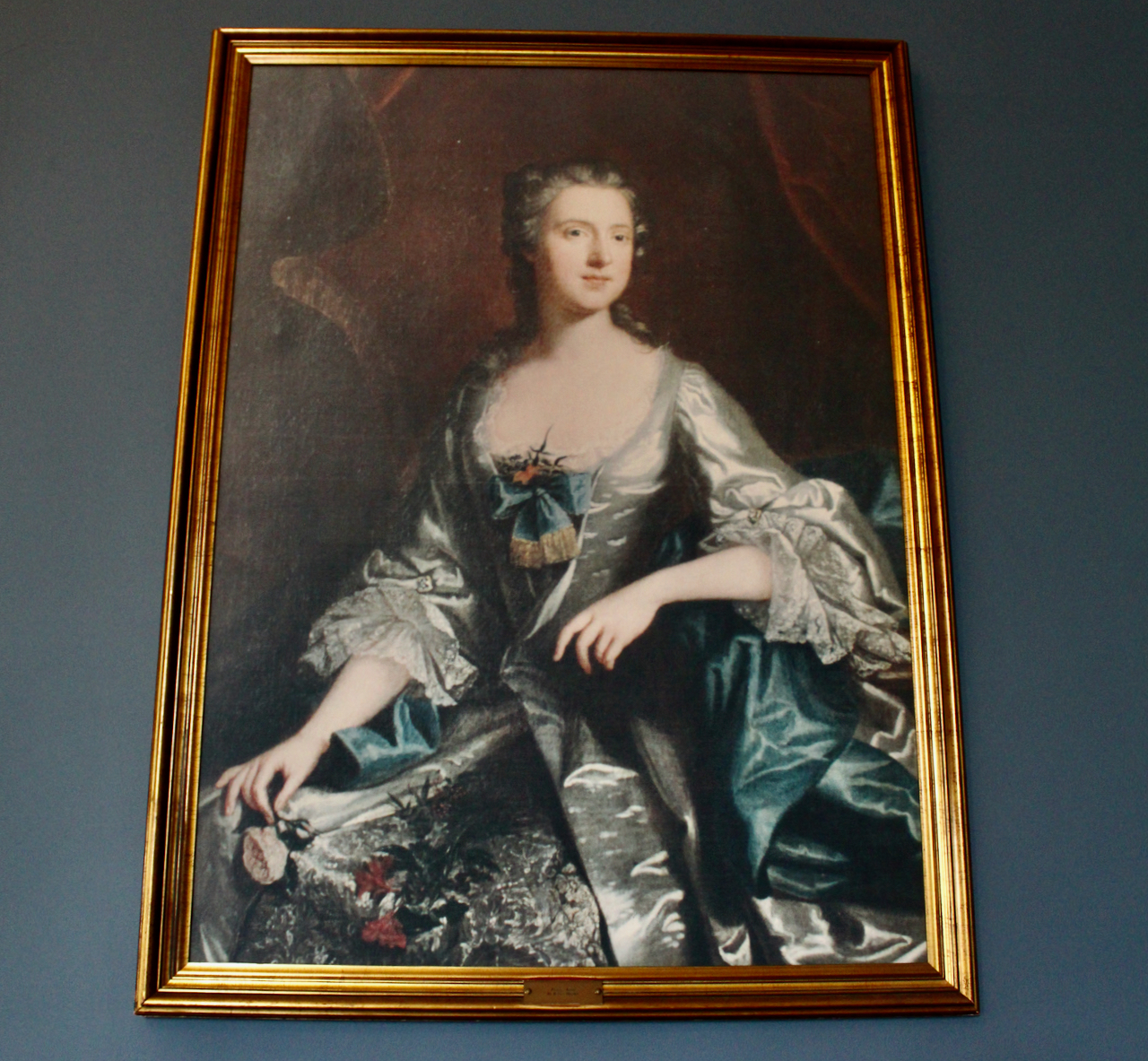
Piers Power (or Le Poer) of Curraghmore, who held the office of Sheriff of County Waterford in 1482, cemented the family’s influence with a strategic marriage to the House of Fitzgerald. His wife, Katherine, was a daughter of Sir Gerald Fitzgerald, Lord of the Decies.

Piers’s son and heir, Richard, further strengthened the power of the family by marrying a daughter of the 8th Earl of Ormond (Piers Butler, d. 1539), Katherine. The rival families of Butler and Fitzgerald, into both of which the Le Poers had married, effectively ran the country at this time when English influence in Ireland had been in decline for several decades. [4]

Richard was created 1st Baron le Power and Coroghmore, Co. Waterford on 13 September 1535. [5]

Richard 1st Baron le Power and Coroghmore died on 10 November 1538, killed by Conor O’Callaghan while intervening (on the Crown’s behalf) in the issue of the succession of the Earldom of Desmond.

After Richard died, his wife married James John Fitzgerald, 13th Earl of Desmond, in 1549/50, who held the office of Lord High Treasurer of Ireland.

I shall intervene here to give a summary of the rank of titles, as I’m learning them through my research on houses. They rank as follows, from lowest to highest:

Baron –  female version: Baroness

Viscount – Viscountess

Earl – Countess

Marquess – Marchioness

Duke – Duchess

In 1538 Richard was succeeded by his eldest son, Piers (1526-1545). Piers was a soldier and fought in Boulogne in France for King Henry VIII. After Piers’s premature death in 1545, he was succeeded by his younger brother, John “Mor” Power (d. 1592), 3rd Baron. In 1576, Henry Sidney, the Lord Deputy of Ireland and father of the poet Philip Sidney, stayed with John Mor at Curraghmore. He wrote:

“The day I departed from Waterford I lodged that night at Curraghmore, the house that the Lord Power is baron of. The Poerne country is one of the best ordered countries in the English Pale, through the suppression of coyne and livery. The people are both willing and able to bear any reasonable subsidy towards the finding and entertaining of soldiers and civil ministers of the laws; and the lord of the country, though possessing far less territory than his neighbour (ie: Sir James Fitzgerald of the Decies, John Mor’s cousin) lives in show far more honourably and plentifully than he or any other in that province.” [6]

Sir Henry Sidney (1529-1586), Lord Deputy of Ireland, after painter Arnold Van Brounkhorst, courtesy of National Gallery of Ireland.

“Coign and livery” was the practice of getting a ruler’s subjects to host the ruler. I think Sidney must have meant that Lord Power’s subjects were willing to participate in entertainment because they were well treated by Lord Power.

Turtle Bunbury writes of the Le Poer family history in his blog (see [4]). I wonder if I can turn my blog into a way of learning Irish history, through Irish houses? I will continue to quote Mr. Bunbury’s blog here, so I can try to see connections between various house owners as I continue my travels around the country.

DSC_0607
When one enters the garden through the arch, one walks along the side of the house to the garden front, which originally held the front door of the house. Originally visitors would drive up to the house through the courtyard and then the horse and carriage would go through the arch to the garden front, to enter through the front door facing the gardens. Photograph © Jennifer Winder-Baggot, www.irishhistorichouses.com
DSC_0623
Curraghmore, 5th May 2019. Photograph © Jennifer Winder-Baggot, www.irishhistorichouses.com

It was a common practice at the time for the aristocracy to send their sons to the English Court. It was a way to for the artistocracy to secure favour and contacts, and for the King to secure the loyalty of the aristocracy and their Protestant faith. 

John Mor the 3rd Baron married Eleanor, daughter of James FitzGerald the 13th Earl of Desmond, who bore his heir. After she died, he married Ellen MacCartie, widow of the 3rd Viscount Barry. He died in 1592 and was succeeded by his son Richard (d. 1607), 4th Baron Le Poer. The 4th Baron married his step-sister, Katherine Barry, daughter of his step-mother Ellen MacCartie and her first husband the 3rd Viscount Barry.

The oldest son of the 4th Baron, John “Og”, died young, in 1600, predeceasing his father, but not before he married Helen Barry, daughter of the 5th Viscount Barry, Viscount Buttevant, and produced an heir. John “Og” was killed by Edmond FitzGibbon (The White Knight).

The 4th Baron’s other children married well. His daughter Elizabeth married David Barry and gave birth to David, 1st Earl of Barrymore.

David Barry (1605-1642) 6th Viscount Buttevant and 1st Earl of Barrymore. Photograph © Jennifer Winder-Baggot, www.irishhistorichouses.com

His daughter Gille married Thomas Fitzmaurice, 16th Baron of Kerry and Lixnaw. His son Piers married Katherine, daughter of Walter Butler the 11th Earl of Ormond.

After the 4th Baron died, his widow Helen remarried, espousing Thomas Butler the 10th Earl of Ormond, “Black Tom” (you can read more about him in my entry about the Ormond Castle in Carrick-on-Suir, an OPW property www.irishhistorichouses.com/2022/06/26/opw-sites-in-munster-clare-limerick-and-tipperary/). She married a third time, after he died, in 1631, to 1st (and last) Viscount Thomas Somerset, of Cashell, County Tipperary.

The family were very powerful and influential, and Catholic. Despite dying young, John “Og” and Helen had daughters, Ellen, who married Maurice Roche, 8th Viscount Roche of Fermoy (the Peerage website tells us that “She died in 1652, hanged by the Commonwealth regime on a trumped up charges of murder“) and Elinor who married Thomas Butler, 3rd Baron Caher.

King James I ordered Richard the 4th Baron to send his grandson and heir, John, the 5th Baron (born circa 1584), to England for his education, in order to convert John to Protestantism. John lived with a Protestant Archbishop in Lambeth. However, John didn’t maintain his Protestant faith. Furthermore, he later suffered from mental illness.

Julian Walton, in a talk I attended in Dromana House in Waterford (another section 482 house), told us about a powerful woman, Kinbrough Pyphoe (nee Valentine). [7] She is named after a Saxon saint, Kinbrough. Her unfortunate daughter Ruth was married to John Power of the “disordered wits” (the 5th Baron). In 1642, Kinbrough Pyphoe wrote for to the Lord Justices of Ireland for protection, explaining that Lord Le Poer had “these past twelve years been visited with impediments” which had “disabled him from intermeddling with his own estate.” As a result, when Oliver Cromwell arrived in Ireland, he issued a writ on 20th September 1649 decreeing that Lord Power and his family be “taken into his special protection.” In this way, Kinbrough Pyphoe saved the family and estates from being confiscated by the Cromwellian parliament or overtaken by Cromwellian soldiers.

Despite his mental illness, John and Ruth had a son Richard (1630-1690) (along with many other children), who succeeded as the 6th Baron. One of their daughters, Catherine (1641-1660), married John Fitzgerald (1642-1664), Lord of the Decies, of Dromana, County Waterford. We will come back to her later.

Richard (1630-1690) married Dorothy Annesley, daughter of Arthur, 1st Earl of Anglesey in 1654. Richard was Governor of Waterford City and County Waterford in 1661, and MP for County Waterford from 1661-1666.

Richard (1630-1690) married Dorothy Annesley, daughter of Arthur, 1st Earl of Anglesey: portrait of Arthur Annesley (1614-1686) 1st Earl of Anglesey, after John Michael Wright based on a work of 1676, NPG 3805.

In 1672 King Charles II made Richard the 1st Earl of Tyrone, and elevated Richard’s son John to the peerage as Viscount Decies.

Turtle Bunbury writes that Richard the 1st Earl of Tyrone sat on Charles II’s Privy Council from 1667-1679. However, Richard was forced to resign when somebody implicated him in the “Popish Plot.” The “Popish Plot” was caused by fear and panic. There never was a plot, but many people assumed to be sympathetic to Catholicism were accused of treason. In 1681, Richard Power was brought before the House of Commons and charged with high treason. He was imprisoned. He was released in 1684.

DSC_0652
Photograph © Jennifer Winder-Baggot, www.irishhistorichouses.com

WHO TO SUPPORT? CATHOLIC OR PROTESTANT? JAMES II OR WILLIAM III?

James II came to the throne after the death of his brother Charles II, and he installed Richard in the Irish Privy Council in 1686.

When William of Orange and Mary came to the throne, taking it from Mary’s father James II, Richard was again charged with high treason, this time for supporting James II, and he was imprisoned in the Tower of London and died there, in 1690. He was succeeded by his son 25-year-old son John, who became 2nd Earl of Tyrone.

John married his first cousin, the orphaned heiress Catherine Fitzgerald, daughter of above-mentioned Catherine (1641-1660) who married John Fitzgerald (1642-1664), Lord of the Decies, of Dromana, County Waterford. They were married as children in 1673, in order for John to marry Catherine’s wealth. However, Catherine managed to have the marriage declared null and void, so that she could marry in March 1676 her true love, Edward Villiers, son and heir of George, 4th Viscount Grandison [I write more on this in my entry on Dromana www.irishhistorichouses.com/2021/02/06/dromana-house-cappoquin-co-waterford/].

John died aged just 28 in 1693 and was succeeded by his brother James. Before he died, it is said that John made a prediction:

One night in 1693 when Nichola, Lady Beresford [nee Hamilton, wife of 3rd Baronet Beresford of Coleraine, daughter of Hugh Hamilton, 1st Viscount of Glenawly, Co Fermanagh], was staying in Gill Hall, her schoolday friend, John Power, [2nd] Earl of Tyrone, with whom she had made a pact that whoever died first should appear to the other to prove that there was an afterlife, appeared by her bedside and told her that he was dead, and that there was indeed an after-life. To convince her that he was a genuine apparition and not just a figment of her dreams, he made various prophecies, all of which came true: noteably that she would have a son who would marry his niece, the heiress of Curraghmore and that she would die on her 47th birthday. He also touched her wrist, which made the flesh and sinews shrink, so that for the rest of her life she wore a black ribbon to hide the place.” [8]

At the time of his death, his neice was not yet born! It makes a good story. She was born eight years later in 1701 to John’s brother James.

James, the 3rd Earl of Tyrone, married Anne Rickard, eldest daughter and co-heir of Andrew Rickard of Dangan Spidoge, County Kilkenny. He had fought with the Jacobites (supporters of James II), but when William III came to the throne, the 3rd Earl of Tyrone claimed that he had only supported James II because his father had forced him to (this is the father who died in the Tower of London for supporting James II). In 1697 James Le Poer received a Pardon under the Great Seal and he served as Governor of Waterford from 1697 until his death in 1704.

DEVELOPING THE CASTLE
In 1700 the 3rd Earl, James, commissioned the construction of the present house at Curraghmore on the site of the original castle. Mark Bence-Jones writes: “the house was in existence in 1654, but was rebuilt 1700 and subsequently enlarged and remodelled; it extends round three sides of a small inner court, which is closed on fourth side by the tower.“(see [1])

nli curraghmore house waterford
Photograph from flickr commons, National Library of Ireland, by Robert French, The Lawrence Photographic Collection, between ca. 1865-1914, ref. L_CAB_04065.

In 1704 the male line of the la Poers became extinct as James had no sons.

The predictions of John the 2nd Baron of Curraghmore came true. Lady Nichola did indeed die on her 47th birthday, and her son Marcus married John’s niece, Catherine Power, or de la Poer.

Catherine de la Poer (1701-1769), the sole child of her parents, could not officially inherit the property at the time. Her Catholic mother made a deal with a Bishop that Catherine would marry a Protestant of his choosing, in order to keep her land. Fortunately, the property was kept for her and she was married to Marcus Beresford (1694-1763), in 1717. This ensured that the house stayed in her family, as Marcus joined her to live in Curraghmore.

Sir Marcus Beresford of Coleraine (born 1694) was already a Baronet by descent in his family. After he married Catherine, he became Viscount Tyrone and 1st Baron Beresford, of Beresford, County Cavan. In 1746 he was created 1st Earl of Tyrone. Proud of her De La Poer background, when her husband died in 1763, Catherine, now titled the Dowager Countess of Tyrone, requested the title of Baroness La Poer.

The block on the right contained servants’ quarters. Photograph © Jennifer Winder-Baggot, www.irishhistorichouses.com
St. Hubert’s Stag on top of Curraghmore, photograph courtesy of Curraghmore website.

The Guide told us a wonderful story of the stag on top of the house. It has a cross on its head, and is called a St. Hubert’s Stag. This was the crest of the family of Catherine de la Poer. To marry Marcus Beresford, she had to convert to Protestantism, but she kept the cross of her crest. The Beresford crest is in a sculpture on the front entrance, or back, of the house: a dragon with an arrow through the neck. The broken off part of the spear is in the dragon’s mouth.

DSC_0648
Dragon from the Beresford crest, atop the garden front of the house, 5th May 2019. Photograph © Jennifer Winder-Baggot, www.irishhistorichouses.com

The IRA came to set fire to the house at one point. They came through the courtyard at night. The moon was full, and the stag and cross cast a shadow. Seeing the cross, the rebels believed the occupants were Catholic and decided not to set fire to the house. The story illustrates that the rebels must not have been from the local area, as locals would have known that the family had converted to Protestantism centuries ago. It is lucky the invaders did not approach from the other side of the house!

When I was researching Blackhall Castle in County Kildare, I came across more information about St. Hubert’s Stag. The stag with the crucifix between its antlers that tops Curraghmore is in fact related to Saint Eustachius, a Roman centurion of the first century who converted to Christianity when he saw a miraculous stag with a crucifix between its antlers. This saint, Eustace, was probably the Patron Saint of the Le Poers since their family crest is the St. Eustace (otherwise called St. Hubert’s) stag. I did not realise that St. Eustace is also the patron saint of Newbridge College in Kildare, where my father attended school and where for some time in the 1980s and 90s my family attended mass!

IMG_0992
See the St. Eustace stag in the Newbridge College crest. Photograph © Jennifer Winder-Baggot, www.irishhistorichouses.com

I read in Irish Houses and Gardens, from the archives of Country Life by Sean O’Reilly, [Aurum Press, London: 1998, paperback edition 2008] that the St. Hubert Stag at Curraghmore was executed by Queen Victoria’s favourite sculptor, Sir Joseph Edgar Boehm. He was also responsible for the beautiful representation in the family chapel at Clonegam of the first wife of the 5th Marquess, who died in childbirth. [9]

THE INTERIOR OF THE HOUSE

The entrance hall, which is in the old tower, has a barrel vaulted ceiling covered with plasterwork rosettes in circular compartments which dates from 1750; it was one of the rooms redecorated by Marcus Beresford and his wife Catherine (see [1]). Sadleir and Dickinson tell us of the house and the Hall:

p. 49. “Careful remodelling has given to the back of the structure the lines of a complete architectural whole, but there can be no doubt from internal evidence that at least three important additions are in fact embodied; it is also probable that a portion of the centre, which differs in character from the surroundings, was rebuilt in consequence of a fire.

The entrance hall is part of the original tower house, and you can see the thickness of the walls. The hall now has a Georgian ceiling of bold, regular design. On the wall in the front hall is a huge portrait of Catherine, Marcus Beresford, and their children. Three stuffed lions stand guard, which were brought back from India by a descendant of Catherine and Marcus (more on the lions later).

Sadleir and Dickinson continue: “A flight of stone steps leads up to a corridor giving access to the spacious staircase hall, a late eighteenth century addition, with Adam ornament on the ceiling and walls. The grand staircase, which has a plain metal balustrade, is gracefully carried up along the wall to a gallery, giving access to the billiard room and bedrooms.” (see [6])

Photograph courtesy of Curraghmore website: the corridor from the front hall to the staircase hall.

The staircase hall wasn’t added until the next generation. Above the front hall in the tower house, Marcus Beresford had a magnificent room created, now the Billiard room. Unfortunately we didn’t see it on the tour, but there are photographs on the website.

It has a tremendously impressive coved ceiling probably by Paul and Philip Francini, according to Mark Bence-Jones. The ceiling is decorated with rococo foliage, flowers, busts and ribbons in rectangular and curvilinear compartments. The chimneypiece, which has a white decorative  overmantel with a “broken” pediment (i.e. split into two with the top of the triangular pediment lopped off to make room for a decoration in between) and putti cherubs, is probably by John Houghton, German architect Richard Castle’s carver. Bence-Jones describes that the inner end of the room is a recess in the thickness of the old castle wall with a screen of fluted Corinthian columns. There is a similar recess in the hall below, in which a straight flight of stairs leads up to the level of the principal rooms of the house.

The Great Room in the old tower was transformed into a billiard room and has an exquisite 18th century plasterwork ceiling, Photograph courtesy of Curraghmore website.
Photograph of Curraghmore mantel in billiard room from Georgian Mansions In Ireland by Thomas U. Sadleir and Page L. Dickinson, printed for the authors at the Dublin University Press, by Ponsonby & Gibbs, 1915. (see [6])
Photograph from Georgian Mansions In Ireland by Thomas U. Sadleir and Page L. Dickinson, printed for the authors at the Dublin University Press, by Ponsonby & Gibbs, 1915. Mark Bence-Jones writes that the ceiling in the billiards room was probably decorated by the Francini brothers. (see [6])

The entry via the servants’ quarters, which I thought odd, has indeed always been the approach to the house. Catherine had the houses in the forecourt built for her servants in 1740s or 50s. She cared for the well-being of her tenants and workers, and by having their houses built flanking the entrance courtyard, perhaps hoped to influence other landlords and employers.

The wing that contained servants’ quarters. The flanking wall has niches, and an archway leading to the garden. Photograph © Jennifer Winder-Baggot, www.irishhistorichouses.com
Stephen by the carriage entry to garden, 2023. Photograph © Jennifer Winder-Baggot, www.irishhistorichouses.com
The sculptures were purchased at the Great Exhibition in Paris in 1889. Photograph © Jennifer Winder-Baggot, www.irishhistorichouses.com

Someone asked about the sculptures in the niches in the courtyard. Why are there only some in niches – are the others destroyed or stolen? That in itself was quite a story! A visitor said they could have the sculptures cleaned up, by sending them to England for restoration. The Marquess at the time agreed, but said only take every second one, to leave some in place, and when those are back, we’ll send the remaining ones. Just as well he did this, since the helper scuppered and statues were never returned.

DSC_0584
Curraghmore, 5th May 2019. Photograph © Jennifer Winder-Baggot, www.irishhistorichouses.com

Bence-Jones writes of the forecourt approach to the house:

“[The house] stands at the head of a vast forecourt, a feature which seems to belong more to France, or elsewhere on the Continent… having no counterpart in Ireland, and only one or two in Britain… It is by the Waterford architect John Roberts, and is a magnificent piece of architecture; the long stable ranges on either side being dominated by tremendous pedimented archways with blocked columns and pilasters. There are rusticated arches and window surrounds, pedimented niches with statues, doorways with entablatures; all in beautifully crisp stonework. The ends of the two ranges facing the front are pedimented and joined by a long railing with a gate in the centre.

The courtyard, designed by John Roberts: the long stable ranges on either side are dominated by tremendous pedimented archways with blocked columns and pilasters. Photograph © Jennifer Winder-Baggot, www.irishhistorichouses.com
Pedimented archways with blocked columns and pilasters, which leads to more stables. Photograph © Jennifer Winder-Baggot, www.irishhistorichouses.com
The archway leads through to the stableyard and ancilliary buildings. Photograph © Jennifer Winder-Baggot, www.irishhistorichouses.com
The doors have arched fanlights with semicircular windows above. Photograph © Jennifer Winder-Baggot, www.irishhistorichouses.com
Inside, the ceilings are vaulted. Photograph © Jennifer Winder-Baggot, www.irishhistorichouses.com
Part of the Café. Photograph © Jennifer Winder-Baggot, www.irishhistorichouses.com
The terrace contains servants’ quarters. Photograph © Jennifer Winder-Baggot, www.irishhistorichouses.com
Number 6, closest to the house, was the Butler’s Quarters. The Butler lived in the main house until he married, when he then was given the house in the courtyard. There was a Butler in the house until just five years ago, and he lived here until he retired. Photograph © Jennifer Winder-Baggot, www.irishhistorichouses.com
The terrace of buidings on the right hand side of the house. Photograph © Jennifer Winder-Baggot, www.irishhistorichouses.com
There are niches at the ends of each terrace. Photograph © Jennifer Winder-Baggot, www.irishhistorichouses.com
DSC_0587
Barrels in the forecourt picture the St. Hubert’s Stag, 5th May 2019. Photograph © Jennifer Winder-Baggot, www.irishhistorichouses.com

Since bad weather threatened on our visit in 2019 (and in 2023!), the tour guide took us out to the Shell House in the garden first. This was created by Catherine. A friend of Jonathan Swift, Mrs. Mary Delany, started a trend for shell grottoes, which progressed to shell houses.

Mary Delany (née Granville) (1700-1788) Paper collage artist; memoir and letter writer, by John Opie, 1792, courtesy of National Portrait Gallery NPG 1030.

Catherine had the house specially built, and she went to the docks nearby to ask the sailors to collect shells for her from all over the world, who obliged since their wages were paid by the Marquess. She then spent two hundred and sixty one days (it says this in a scroll that the marble sculpture holds in her hand) lining the structure with the shells (and some coral). The statue in the house is of Catherine herself, made of marble, by the younger John van Nost (he did many other sculptures and statues in Dublin, following in his father’s footsteps). Robert O’Byrne has a lovely video about shell grottoes and tells us more about this shell house on his website. [10]

DSC_0626
The Shell Grotto, 5th May 2019. Photograph © Jennifer Winder-Baggot, www.irishhistorichouses.com
Inside the shell grotto, statue by John van Nost of Catherine Le Poer Beresford, Countess of Tyrone. Photograph © Jennifer Winder-Baggot, www.irishhistorichouses.com
DSC_0627
Inside the shell grotto, statue by John van Nost of Catherine Le Poer Beresford, Countess of Tyrone. Photograph © Jennifer Winder-Baggot, www.irishhistorichouses.com
DSC_0630
Curraghmore. Photograph © Jennifer Winder-Baggot, www.irishhistorichouses.com
The scroll in the sculpture’s hand tells us that the shells were put up in 261 days by the Countess of Tyrone. Photograph © Jennifer Winder-Baggot, www.irishhistorichouses.com
DSC_0631
All the the shells were collected before Catherine started to put them up. Photograph © Jennifer Winder-Baggot, www.irishhistorichouses.com
Catherine also designed the pattern on the floor. Photograph © Jennifer Winder-Baggot, www.irishhistorichouses.com
Photograph © Jennifer Winder-Baggot, www.irishhistorichouses.com

Catherine also adorned the interior of Curraghmore with frescoes by the Dutch painter van der Hagen, and laid out the garden with canals, cascades, terraces and statues, which were swept away in the next century in the reaction against formality in the garden. In the nineteenth century, the formal layout was reinstated. [11]

Marcus and Catherine has many children. John de la Poer Beresford (1738-1805) served as first Commissioner of the Revenue.

John Beresford (1738-1805), first commissioner of the Revenue in Ireland, engraver Charles Howard Hodges, after Gilbe, courtesy of National Gallery of Ireland.
John Beresford (1738-1805), MP by Gilbert Stuart c. 1790, courtesy of National Gallery of Ireland NGI 1133
Barbara Montgomery (?1757-1788), second wife of John Beresford (1738-1805) by Hugh Douglas Hamilton, courtesy of National Gallery of Ireland P5547. His first wife was Anne Constantia Ligondes.
John Claudius Beresford, Lord Mayor of Dublin courtesy Adam’s 8 March 2006 in style of William Cuming PRHA. He was the son of John Beresford (1738-1805).
Elizabeth Cobbe née de la Poer Beresford (1736-1806), wife of Thomas Cobbe (1733-1814) of Newbridge House, Dublin, in a costume evocative of Mary Queen of Scots, miniature, Cobbe Collection. She is the daughter of Marcus Beresford 1st Earl of Tyrone.

Marcus Beresford was succeeded by his fourth but eldest surviving son, the second Earl, George Beresford (1734-1800), who also inherited the title Baron La Poer from his mother in 1769.

The Honourable George de la Poer Beresford (1735–1800), 2nd Earl of Tyrone, Later 1st Marquess of Waterford by Johann Zoffany, courtesy of National Trust Images.

He married Elizabeth Monck, only daughter and heiress of Henry Monck (1725-1787) of Charleville, another house on the Section 482 list which we visited www.irishhistorichouses.com/2020/09/18/charleville-county-wicklow/.]  

In 1786 he was created Baron Tyrone. Three years later he was made Marquess of Waterford in the Peerage of Ireland. He was therefore the 1st Marquess of Waterford. The titles descended in the direct line until the death of his grandson, the third Marquess, in 1859.

George de la Poer Beresford (1735-1800) First Marquess of Waterford by Gilbert Stuart, courtesy of Bonhams and commons.

Note on spelling of Marquis/Marquess: on the Curraghmore website “Marquis” is used, but in other references, I find “Marquess.” According to google:

A marquess is “a member of the British peerage ranking below a duke and above an earl. … A marquis is the French name for a nobleman whose rank was equivalent to a German margrave. They both referred to a ruler of border or frontier territories; in fact, the oldest sense of the English word mark is ‘a boundary land’.”
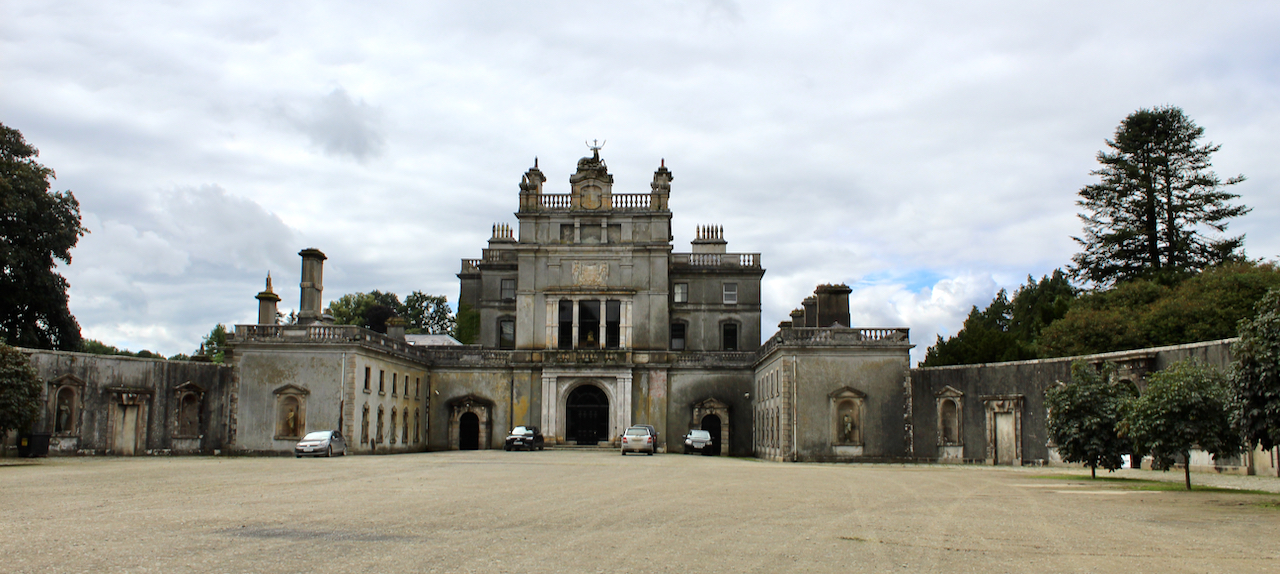
I shall therefore use the spelling “marquess.” If quoting – I’ll use the spelling used by the source. I prefer “marquis”,  as “marquess” sounds female to me, although it refers to a male!

George the 1st Marquess had the principal rooms of the house redecorated to the design of James Wyatt in the 1780s. Perhaps this was when the van der Hagen paintings were lost! We can see more of Van der Hagen’s work in a house sometimes open to the public, Beaulieu in County Louth. At the same time, George the 1st Marquess probably built the present staircase hall, which had been an open inner court, and carried out other structural alterations.

The Staircase Hall with its impressive sweeping staircase was created by James Wyatt in the 1780s, Curraghmore, County Waterford, Copyright Christopher Simon Sykes/The Interior Archive Ltd, PhotoShelter ID/ I0000CSsOaT_f.Fk, CS_GI14_39.
Photograph from Georgian Mansions In Ireland by Thomas U. Sadleir and Page L. Dickinson, printed for the authors at the Dublin University Press, by Ponsonby & Gibbs, 1915.

As Bence-Jones describes it, the principal rooms of the house lie on three sides of the great staircase hall, which has Wyatt decoration and a stair with a light and simple balustrade rising in a sweeping curve. Our tour paused here for the guide to point out the various portraits of the generations of Marquesses, and to tell stories about each.

Photograph courtesy of Curraghmore website. The large portraits of the women at the bottom of the stairs are the Stuart sisters. Louisa Stuart was wife of Henry, 3rd Marquess of Waterford. She was the daughter of Charles Stuart 1st and last Baron Stuart de Rothesay. Her sister Charlotte married Charles John Canning, 1st Viceroy to India. On the right had side of the photograph is Christiana née Leslie, wife of the 4th Marquess, who previously lived in Castle Leslie in County Monaghan.
Elizabeth Stuart née Yorke (1789-1867). Lady Stuart de Rothesay, with her daughters Charlotte (1817-1861) and Louisa (1818-1891) by George Hayter, photograph courtesy of UK Government Art Collection.
Photograph courtesy of Curraghmore website.

Bence-Jones writes that the finest of the Wyatt interiors are the dining room and the Blue drawing room, two of the most beautiful late eighteenth rooms in Ireland, he claims.

The dining room is decorated with grisaille panels by Peter de Gree and an ornamented ceiling. Photograph courtesy of Curraghmore website.

The walls have grissaille panels by Peter de Gree, which are imitations of bas-reliefs, so are painted to look as if they are sculpture. De Gree was born in Antwerp, Holland [12]. In Antwerp he met David de la Touche of Marlay, Rathfarnham, Dublin, who was on a grand tour. The first works of de Gree in Ireland were for David de la Touche for his house in St. Stephen’s Green in Dublin. [13]

Photograph courtesy of Curraghmore website.

The dining room has delicate plasterwork on the ceiling,  incorporating rondels attributed to Antonio Zucchi (1726-1795, an Italian painter and printmaker of the Neoclassic period) or his wife Angelica Kauffman (a Swiss Neoclassical painter who had a successful career in London and Rome).

Angelica Kauffmann (1741-1807) by Angelica Kauffmann, oil on canvas, circa 1770-1775, courtesy of National Portrait Gallery NPG 430.
Photograph from Georgian Mansions In Ireland by Thomas U. Sadleir and Page L. Dickinson, printed for the authors at the Dublin University Press, by Ponsonby & Gibbs, 1915.

The Blue Drawing Room has a ceiling incorporating roundels by de Gree and semi-circular panels attributed to Zucchi.

Sadlier and Dickinson tell us: “The principal drawing room is a large apartment, somewhat low, with three windows, four doors, and Adam overdoors; there is a pretty Adam ceiling in pale green and white, the work in relief being slightly gilt.

Photograph courtesy of Curraghmore website.
Photograph from Georgian Mansions In Ireland by Thomas U. Sadleir and Page L. Dickinson, printed for the authors at the Dublin University Press, by Ponsonby & Gibbs, 1915. The circular plaques are decorated in monochrome by De Gree, while four semi-circular compartments are believed to have been painted by Zucci, the husband of Angelica Kauffman.

Sadleir and Dickinson continue: “The circular plaques are decorated in monochrome by De Gree, while four semi-circular compartments are believed to have been painted by Zucci, the husband of Angelica Kauffman. The heavy white marble mantel, of classic design, is possibly contemporary with the decoration…A door communicates with the yellow drawing room, smaller but better proportioned, which has an uncoloured Adam ceiling, and a pretty linen-fold mantel in white marble [plate XXXI]. It is lighted by three windows … 

Photograph courtesy of Curraghmore website.
“A pretty linen-fold mantel in white marble” [plate XXXI] Photograph from Georgian Mansions In Ireland by Thomas U. Sadleir and Page L. Dickinson, printed for the authors at the Dublin University Press, by Ponsonby & Gibbs, 1915.

Sadleir and Dickinson continue the tour: “A door to the right gives access from the Hall to the library, which has an Adam ceiling with circular medallion heads, and an Adam mantel with added overshelf, the design of the frieze being repeated in the mantel and bookcases. Most of the books belonged to Lord John George Beresford, Archbishop of Armagh, whose portrait hangs over the fireplace.

John George Beresford was a son of George, the 1st Marquess.

John George Beresford was a son of George, the 1st Marquess.
Photograph courtesy of Curraghmore website.
The library, Photograph courtesy of Curraghmore website.
Photograph from Georgian Mansions In Ireland by Thomas U. Sadleir and Page L. Dickinson, printed for the authors at the Dublin University Press, by Ponsonby & Gibbs, 1915.

MARQUESSES OF WATERFORD

I am aided here by the wonderfully informative website of Timothy Ferres. [14]

George, 1st Marquess of Waterford had several children including some illegitimate. His illegitimate son Admiral Sir John de la Poer Beresford was raised to the British peerage as 1st Baronet Beresford, of Bagnall, Co. Waterford. His other illegitimate son was Lt.-Gen. William Carr Beresford, created 1st and last Viscount Beresford of Beresford. His first legitimate son died in a riding accident.

Harriet Elizabeth Peirse (1790-1825) Lady Beresford, wife of Admiral Sir John de la Poer Beresford (1766-1844) 1st Bt Beresford, of Bagnall, Co. Waterford, by Thomas Lawrence, courtesy of National Trust Hatchlands. Her husband was a son of the 1st Marquess.
The first legitimate son of the 1st Marquess, Marcus Gervais de la Poer Beresford (1771-1783), killed in a riding accident. Photograph from Georgian Mansions In Ireland by Thomas U. Sadleir and Page L. Dickinson, printed for the authors at the Dublin University Press, by Ponsonby & Gibbs, 1915.
Photograph courtesy of National Portrait Gallery, London, https://artuk.org/discover/artworks/search/keyword:de-la-poer–referrer:global-search

He was succeeded by his second legitimate son, Henry, 2nd Marquess (1772-1826), who wedded, in 1805, Susanna, only daughter and heiress of George Carpenter, 2nd Earl of Tyrconnell. Henry, who was a Knight of St Patrick, a Privy Counsellor in Ireland, Governor of County Waterford, and Colonel of the Waterford Militia, was succeeded by his eldest son, Henry, 3rd Marquess.

Henry de la Poer Beresford (1772-1826) 2nd Marquess of Waterford by William Beechy courtesy of Eton College.
Thought to be Elizabeth Louisa Reynell (1783-1856) née De La Poer and formerly wife of Sir Denis Pack, courtesy of Whyte’s Nov 2011. She was the daughter of the 1st Marquess of Waterford, and she married Denis Pack of County Kilkenny and later, Thomas Reynell, 6th Baronet.
James Beresford (1816-1841), 4th son of Henry De la Poer Beresford 2nd Marquess, by Joseph Clover, courtesy of Ingestrue Hall Residential Arts Centre.

In an interview with Patrick Freyne, the current Marquess, whom the townspeople call “Tyrone,” explained that it was the third Marquess, Henry who originated the phrase “painting the town red” while on a wild night in Miltown Mowbray in 1837: he literally painted the town red! [15]

I wonder was this the Marquess who, as a boy in Eton, was expelled, and took with him the “whipping bench,” which looks like a pew, from the school. It remains in the house, in the staircase hall! We can only hope that it meant than no more boys in Eton were whipped.

In 1842, Henry the third Marquess of Waterford married Louisa Stuart, daughter of the 1st Baron Stuart de Rothesay, and settled in Curraghmore House. Sadly, when she came to Curraghmore with her husband she had an accident which prevented her from having children.

Louisa Anne Beresford née Stuart (1818-1891) by Sir Francis Grant 1859-1860, NPG 3176. The National Portrait Gallery tells us: “Louisa Stuart was brought up mostly in Paris, where her father was British Ambassador to the French court. She was taught to draw from an early age and art, along with religion and philanthropy, was one of her main interests throughout her life. A gifted amateur watercolourist, she did not exhibit at professional galleries until the 1870s. With a strong interest in the welfare of the tenants on her Northumberland estate, she rebuilt the village of Ford. She provided a school and started a temperance society in the village. Her greatest artistic achievement was the decoration of the new school with life sized scenes from the Old and New testaments that used children and adults from the village as models.”

Louisa laid out the garden. She had been raised in France and modelled the gardens on those at Versailles.

According to the website:

After Wyatt’s Georgian developments, work at Curraghmore in the  nineteenth century concentrated on the gardens and the Victorian refacing to the front of the house.

Formal parterre, tiered lawns, lake, arboretum and kitchen gardens  were all developed during this time and survive to today. At this time some of Ireland’s most remarkable surviving trees were planted in the estate’s arboretum. Today these trees frame miles of beautiful river walks  (A Sitka Spruce overlooking King John’s Bridge is one of the tallest trees in Ireland).

DSC_0635
Curraghmore, 5th May 2019. Photograph © Jennifer Winder-Baggot, www.irishhistorichouses.com
Curraghmore, 14th August 2023. Photograph © Jennifer Winder-Baggot, www.irishhistorichouses.com
DSC_0615
Curraghmore, 5th May 2019. Photograph © Jennifer Winder-Baggot, www.irishhistorichouses.com
DSC_0625 (1)
Curraghmore, 5th May 2019. Photograph © Jennifer Winder-Baggot, www.irishhistorichouses.com
Curraghmore, 14th August 2023. Photograph © Jennifer Winder-Baggot, www.irishhistorichouses.com
Photograph © Jennifer Winder-Baggot, www.irishhistorichouses.com
The Lake was designed by James Wyatt, photograph 14th August 2023. Photograph © Jennifer Winder-Baggot, www.irishhistorichouses.com
DSC_0618
Curraghmore, 5th May 2019. Photograph © Jennifer Winder-Baggot, www.irishhistorichouses.com

Tragically, The 3rd Marquess broke his neck in a fall while hunting, in 1859, and died.

He was succeed by his younger brother, John (1814-1866), who became the 4th Marquess. It was this Marquess who bought the scarey statues in the garden. The tour guide told us that perhaps the choice of statue reflected the Marquis’s personality.

DSC_0609
There were horrible scary statues flanking a path – we learned later that they were bought by the fourth Marquis of Waterford in the World Fair in Paris. Photograph © Jennifer Winder-Baggot, www.irishhistorichouses.com
DSC_0608
Curraghmore, 5th May 2019. Photograph © Jennifer Winder-Baggot, www.irishhistorichouses.com
DSC_0621
Curraghmore, 5th May 2019. Photograph © Jennifer Winder-Baggot, www.irishhistorichouses.com
Curraghmore, 14th August 2023. Photograph © Jennifer Winder-Baggot, www.irishhistorichouses.com

The 4th Marquess had studied to join the clergy. He did not want to be the heir to the estate, with all of the responsibilites that came with it. He became more religious and more forboding as he aged.

John married Christiana Leslie in 1843, daughter of Charles Powell Leslie II of Castle Leslie (we will learn more about the Leslies in my write ups for Castle Leslie www.irishhistorichouses.com/2020/08/07/castle-leslie-glaslough-county-monaghan/ and Corravahan House in County Cavan www.irishhistorichouses.com/2020/08/28/corravahan-house-and-gardens-drung-county-cavan/).

John entered the ministry and served as Prebendary of St Patrick’s Cathedral, under his uncle, Lord John (John George de la Poer Beresford, Lord Archbishop of Armagh, the brother of his father the second Marquess).

Our guide told us that John forbade his wife from horseriding, which she adored. When he died in 1866, the sons were notified. Before they went to visit the body, when they arrived home they went straight to the stables. They took their father’s best horse and brought it inside the house, and up the grand staircase, right into their mother’s bedroom, where she was still in bed. It was her favourite horse! They “gave her her freedom.” She got onto the horse and rode it back down the staircase – one can still see a crack in the granite steps where the horse kicked one on the way down – and out the door and off into the countryside!

The oldest of these sons, John Henry de La Poer Beresford (1844-1895), became 5th Marquess, and also a Member of Parliament and Lord Lieutenant of Waterford. Wikipedia tells us that W. S. Gilbert of Gilbert and Sullivan fame refers to John Henry in his opera “Patience” as “reckless and rollicky” in Colonel Calverley’s song “If You Want A Receipt For That Popular Mystery”!

The second son, Admiral Charles William de la Poer Beresford, was created the 1st and last Baron Beresford of Metemmeh and Curraghmore, County Waterford in the British peerage. His daughter Kathleen Mary married Maj.-Gen. Edmund Raoul Blacque and in 1926 she purchased Castletown Cox, a Georgian classical mansion in County Kilkenny.

Kathleen Mary married Maj.-Gen. Edmund Raoul Blacque and in 1926 she purchased Castletown Cox, County Kilkenny, photograph courtesy of Knight Frank. It was designed by Davis Duckart, built 17567-71 for Michael Cox, Archbishop of Cashel, whose father, Sir Richard Cox, Lord Chancellor of Ireland, had obtained a lease of the estate from the Duke of Ormonde.
Castletown Cox, photograph courtesy of Knight Frank.
Castletown Cox, photograph courtesy of Knight Frank. It has fancy      
Castletown Cox, photograph courtesy of Knight Frank.

The 5th Marquess eloped with Florence Grosvenor Rowley, wife of John Vivian, an English Liberal politician, and married her on 9 August 1872. She died in 1873, and he married secondly, Lady Blanche Somerset, daughter of Henry Somerset, 8th Duke of Beaufort, on 21 July 1874. The second Lady Waterford suffered from a severe illness which left her an invalid. She had a special carriage designed to carry her around the estate at Curraghmore.

Lady Waterford in her specially designed invalid carriage 1896
Lady Blanche Waterford, daughter of the 8th Duke of Beaufort, wife of the 5th Marquess, John Henry, in her specially designed invalid carriage 1896, photograph courtesy of National Library of Ireland, from Flickr constant commons.

Sadly, John Henry killed himself when he was 51, leaving his son Henry to be 6th Marquess (1875-1911).

Henry the 6th Marquess served in the military. He married Beatrix Frances Petty-Fitzmaurice. He died tragically in a drowning  accident on the estate aged only 36. His daughter Blanche Maud de la Poer Beresford married Major Richard Desiré Girouard and had a son Mark Girouard, architectural historian, who worked for Country Life magazine.

curraghmore castle guests
January 10, 1902, Group shot of guests at a Fancy Dress Ball held at Curraghmore House, Portlaw, Co. Waterford, courtesy of National Library of Ireland.

His son John Charles became the 7th Marquess (1901-34). He too  died young. He served as a Second Lieutenant in the Royal Regiment of Horse Guards but died at age 33 in a shooting accident in the gun room at Curraghmore. He married Juliet Mary Lindsay. Their son John Hubert (1933-2015) thus became 8th Marquess at the age of just one year old.

A story is told that a woman’s son was hung, and she cursed the magistrate, the Marquess, by walking nine times around the courtyard of Curraghmore and cursing the family, wishing that the Marquess would have a painful death. It seems that her curse had some effect, as tragedy haunted the family. It was the fourth son who inherited the property and titles of Marcus Beresford, all other sons having died.

Provenance Originally housed at Castletown Cox, Co. Tipperary. Reputedly the sitter was the lady who put the curse on the Beresford Family of Curraghmore. Courtesy Fonsie Mealy Oct 2018.

The obituary of the 8th Marquis of Waterford gives more details on the curse, which was described to us by our guide, with the help of the portraits:

The 8th Marquis of Waterford, who has died aged 81, was an Irish peer and a noted player in the Duke of Edinburgh’s polo team.

That Lord Waterford reached the age he did might have surprised the superstitious, for some believed his family to be the object of a particularly malevolent curse. He himself inherited the title at only a year old, when his father, the 7th Marquis, died aged 33 in a shooting accident in the gun room at the family seat, Curraghmore, in Co Waterford.

The 3rd Marquis broke his neck in a fall in the hunting field in 1859; the 5th shot himself in 1895, worn down by years of suffering from injuries caused by a hunting accident which had left him crippled; and the 6th Marquis, having narrowly escaped being killed by a lion while big game hunting in Africa, drowned in a river on his estate in 1911 when he was 36.” [16]

The lion, along with some pals, stand in the front hallway in a museum style diorama!

the Hunt, Curraghmore House
The Hunt, January 11, 1902, courtesy of National Library of Ireland.
Otter Hunt, Curraghmore
According to the National Library, this is an Otter Hunt! At Curraghmore, May 14, 1901.

It is not all fun and games at the house, as in the pictures above! The guide told us a bit about the lives of the servants. In the 1901 census, she told us, not one servant was Irish. This would be because the maidservants were brought by their mistresses, who mostly came from England. The house still doesn’t have central heating, and tradition has it that the fireplace in the front hall can only be lit by the Marquis, and until it is lit, no other fires can be lit. The maids had to work in the cold if he decided to have a lie-in!

household staff of Curraghmore House, Portlaw, Co. Waterford, ca.1905, National Library of Ireland
Household staff of Curraghmore, around 1905, courtesy of National Library of Ireland.

John Hubert served as a lieutenant in the Royal Horse Guards’ Supplementary Reserve and was a skilled horseman. From 1960 to 1985, he was captain of the All-Ireland Polo Club, and he was a member of the Duke of Edinburgh’s Windsor Park team. After retiring from the Army, John Hubert, Lord Waterford, returned to Curraghmore and became director of a number of enterprises to provide local employment, among them the Munster Chipboard company, Waterford Properties (a hotel group) and, later, Kenmare Resources, an Irish oil and gas exploration company. He was a founder patron of the Waterford International Festival of Light Opera.

In 1957 he married Lady Caroline Olein Geraldine Wyndham-Quin, daughter of the 6th Earl of Dunraven and Mount-Earl, of Adare Manor in County Limerick. The 8th Marquess and his wife Caroline carried out restoration of the Library and Yellow Drawing Room. Lord Waterford devoted much of his time to maintaining and improving the Curraghmore estate, with its 2,500 acres of farmland and 1,000 acres of woodland.

He was succeeded by his son, Henry de La Pore Beresford (b. 1958), the current Marquess. He and his wife now live in the House and have opened it up for visitors. His son is also a polo professional, and is known as Richard Le Poer.

The website tells us, as did the Guide, of the current family:

The present day de la Poer Beresfords are country people by tradition. Farming, hunting, breeding  horses and an active social calendar continues as it did centuries ago. Weekly game-shooting parties are held every season (Nov. through Feb.) and in spring, calves, foals and lambs can be seen in abundance on Curraghmore’s verdant fields. Polo is still played on the estate in summer. Throughout Ireland’s turbulent history, this family have never been ‘absentee landlords’ and they still provide diverse employment for a number of local people. Change comes slowly to Curraghmore – table linen, cutlery and dishes from the early nineteenth century are still in use.

DSC_0645
Built in 1205, this stone-arched structure, spanning the Clodagh River, is the oldest bridge in Ireland, called King John’s Bridge, a 13th-century bridge built in anticipation of a visit from King John (he never came). Photograph © Jennifer Winder-Baggot, www.irishhistorichouses.com
DSC_0646
Curraghmore, 5th May 2019. Photograph © Jennifer Winder-Baggot, www.irishhistorichouses.com

THE OUTBUILDINGS

Behind the houses and stables on one side were more buildings, probably more accommodation for the workers, as well as more stables, riding areas and workplaces such as a forge. I guessed that one building had been a school but we later learned that the school for the workers’ children was in a different location, behind a the gate lodge by the entrance gate (nearly 2 km away, I think).

DSC_0594
Photograph © Jennifer Winder-Baggot, www.irishhistorichouses.com

We were lucky to be able to wander around the outbuildings.

DSC_0606
There were some interesting looking machines in sheds. Perhaps some of this machinery is for grain, or some could be for the wool trade. Turtle Bunbury writes of the wool trade in the 18th century and of the involvement by the de la Poer family in Curraghmore. [17] Photograph © Jennifer Winder-Baggot, www.irishhistorichouses.com

Other buildings were stables, or had been occupied as accommodation in the past, and some were used for storage.

DSC_0592
Amazing vaulted ceilings for stables! 5th May 2019. Photograph © Jennifer Winder-Baggot, www.irishhistorichouses.com
DSC_0597
The buildings above are behind the stables of the courtyard. 5th May 2019. Photograph © Jennifer Winder-Baggot, www.irishhistorichouses.com
DSC_0596
Curraghmore., 5th May 2019. Photograph © Jennifer Winder-Baggot, www.irishhistorichouses.com
DSC_0602
The Forge – see the bellows in the corner of the room, 5th May 2019. Photograph © Jennifer Winder-Baggot, www.irishhistorichouses.com

Last but not least, Curraghmore is now the venue for the latest music festival, Alltogethernow. There’s a stag’s head made by a pair of Native American artists, of wooden boughs that were gathered on the estate. It was constructed for the festival last year but still stands, ready for this year (2019)! Some of my friends will be at the festival. The house will be railed off for the event.

DSC_0636
Curraghmore, 5th May 2019. Photograph © Jennifer Winder-Baggot, www.irishhistorichouses.com
DSC_0638
Curraghmore, 5th May 2019. Photograph © Jennifer Winder-Baggot, www.irishhistorichouses.com
Remnants of Alltogethernow festival August 2023. Photograph © Jennifer Winder-Baggot, www.irishhistorichouses.com

Donation

Help me to fund my creation and update of this website. It is created purely out of love for the subject and I receive no payment so any donation is appreciated!

€10.00

[1] Mark Bence-Jones, A Guide to Irish Country Houses. (originally published as Burke’s Guide to Country Houses volume 1 Ireland by Burke’s Peerage Ltd. 1978); Revised edition 1988 Constable and Company Ltd, London.

[2] https://theirishaesthete.com/2019/07/03/now-available/

[3] Thomas U. Sadleir and Page L. Dickinson. Georgian Mansions in Ireland with some account of the evolution of Georgian Architecture and Decoration. Printed for the Authors at the Dublin University Press, by Ponsonby & Gibbs, 1915. 

[4] http://www.turtlebunbury.com/history/history_family/hist_family_delapoer.html

Turtle Bunbury on his website writes of the history of the family:

“On his death on 2nd August 1521, Sir Piers was succeeded as head of the family by his eldest son, Sir Richard Power, later 1st Baron le Poer and Coroghmore…. In 1526, five years after his father’s death, Sir Richard married Lady Katherine Butler, a daughter of Piers, 8th Earl of Ormonde, and aunt of ‘Black Tom’ Butler, Queen Elizabeth’s childhood sweetheart. The marriage occurred at a fortuitous time for Power family fortunes. English influence in Ireland had been in decline for several decades and the rival Houses of Butler and Fitzgerald effectively ran the country. The Powers of Curraghmore were intimately connected, by marriage, with both.”

[5] www.thepeerage.com

As a description of the times, and the issue of the succession of the Earls of Desmond, I shall include here some history panels I came across in the Desmond Banqueting Hall in Newcastle West in Limerick (see my entry on Office of Public Works properties in County Limerick):

Information panel on the Earls of Desmond, the Desmond Banqueting Hall in Newcastle West in Limerick.

[6] Quoted p. 51, Thomas U. Sadleir and Page L. Dickinson. Georgian Mansions in Ireland with some account of the evolution af Georgian Architecture and Decoration. Printed for the Authors at the Dublin University Press, by Ponsonby & Gibbs, 1915. 

[7] https://dromanahouse.com/2019/03/20/the-drawbacks-and-dangers-of-heiress-hunting/

[8] Mark Bence-Jones describes it in his book, A Guide to Irish Country Houses (originally published as Burke’s Guide to Country Houses volume 1 Ireland by Burke’s Peerage Ltd. 1978); Revised edition 1988 Constable and Company Ltd, London.

[9] see https://theirishaesthete.com/2019/07/01/curraghmore-church/

[10] https://theirishaesthete.com/2018/03/19/in-a-shell/

[11] Hugh Montgomery Massingberd and Christopher Simon Sykes. Great Houses of Ireland. Laurence King Publishing, London, 1999.

[12] https://theirishaesthete.com/2019/11/23/to-a-de-gree/

[13] https://www.libraryireland.com/irishartists/peter-de-gree.php

[14] from http://lordbelmontinnorthernireland.blogspot.com/search/label/County%20Waterford%20Landowners

[15] https://www.irishtimes.com/life-and-style/people/oh-lord-next-generation-takes-the-keys-to-waterford-county-1.2191959

[16] https://www.independent.ie/irish-news/news/obituary-the-irish-peer-who-outlived-curse-30998942.html

[17] http://www.turtlebunbury.com/history/history_family/hist_family_delapoer.html

[5] https://www.buildingsofireland.ie/buildings-search/building/22900816/curraghmore-house-curraghmore-co-waterford

Text © Jennifer Winder-Baggot, www.irishhistorichouses.com