Mark Bence-Jones. A Guide to Irish Country Houses (originally published as Burke’s Guide to Country Houses volume 1 Ireland by Burke’s Peerage Ltd. 1978); Revised edition 1988 Constable and Company Ltd, London.
p. 285. “A two storey five bay gable-ended mid-C18 house. A seat of the Percy family.”
Alexander Percy was occupying the house at Aghatawny, known as Willowfield, at the time of Griffith’s Valuation when it was valued at £10.Lewis records it as a seat of the Percy family in 1837. In 1814 it was the residence of William Shanley. Both Taylor and Skinner and Wilson also record it as a seat of the Shanley family in the 1780s. The building is still extant.
Mark Bence-Jones. A Guide to Irish Country Houses (originally published as Burke’s Guide to Country Houses volume 1 Ireland by Burke’s Peerage Ltd. 1978); Revised edition 1988 Constable and Company Ltd, London.
p. 279. “Tynte, sub Tynte-Irvine/IFR) A two storey double bow-fronted Georgian house, with a single-storey bow in the centre, which was probably the original entrance. Two folly towers.”
Tynte Lodge, BARRACKPARK, Tullaghan, County Leitrim
Tynte Lodge, County Leitrim, courtesy National Inventory.
Detached five-bay two-storey country house, built c.1750, with D-plan porch, bowed end bays to façade and six-bay two-storey extension to rear. Walls of demolished return now form a courtyard. Pitched slate and tiled roofs with rendered chimneystacks with terracotta pots. Ruled-and-lined render to walls. Replacement uPVC windows. Timber panelled door to side elevation, approached by stone steps. Some openings have been blocked up. Derelict two-storey stone outbuilding with cut stone voussoirs to openings and a pitched roof. Single-storey derelict byres to south-west. Series of walled gardens and enclosures with castellated random stone folly tower with gun loops on cliff-top to north. Freestanding castellated folly tower to south-west with roughly coursed random stone and fossilised stone to walls.
Appraisal
This imposing Georgian house, set within its own grounds, occupies a prominent site overlooking the Atlantic Ocean. Its symmetrical design is enlivened by bowed end bays and a D-plan porch. The derelict stone outbuildings with cut stone voussoirs enhance the setting, along with enclosure walls, which are constructed of sea-rolled boulders and squared random stone blocks. The folly towers are defensive in character and add a decorative dimension to the site. The entire property makes an imposing impact on the landscape and contributes to the built heritage of Leitrim’s northern coast.
Tynte Lodge, County Leitrim, courtesy National Inventory.Tynte Lodge, County Leitrim, courtesy National Inventory.Tynte Lodge, County Leitrim, courtesy National Inventory.Tynte Lodge, County Leitrim, courtesy National Inventory.Tynte Lodge, County Leitrim, courtesy National Inventory.
Joseph Tynte was leasing lands from the White estate and later purchased 30 acres of land from Lord Massy (who had inherited that estate) for the building of Tynte Lodge. The Inventory of Architectual Heritage, however, contends that Tynte Lodge was built in the eighteenth century so perhaps Tynte was reconstructing an earlier building. At the time of Griffith’s Valuation the property at Tullaghan was valued at £18 and was leased by Tynte to Hugh Montgomery. In 1906 Mervyn Tynte was the owner of the mansion house at Tullaghan valued at £51.
Tullaghan House, Co Leitrim courtesy National Inventory.
Mark Bence-Jones. A Guide to Irish Country Houses (originally published as Burke’s Guide to Country Houses volume 1 Ireland by Burke’s Peerage Ltd. 1978); Revised edition 1988 Constable and Company Ltd, London.
p. 205. “A late-Georgian house of two storeys, three sided central projection with later single-storey porch; three sided bow at side; eaved roof.”
Tullaghan House, Co Leitrim courtesy National Inventory.
Detached four-bay two-storey house, built c.1830, with full-height canted bays to façade and western elevation. Porch added to façade. Hipped slate roof with rendered chimneystacks. Ruled-and-lined render to walls. Timber sash windows. Timber panelled door in flat-headed opening with stucco surround. Two-storey random stone outbuilding with slate roof and brick chimneystack to east. Circular-plan random stone gate piers and cast-iron gate. House set in own grounds with rear elevation backing onto the street, bounded by random sandstone wall with cut stone piers and cast-iron gates and railings.
Appraisal
The late Georgian design of this detached house is complimented by features including six-over-six timber sash windows with convex horns, full-height canted bays, cast-iron gates and outbuildings. The attractive and architecturally-appealing house is set within its own grounds, yet unusually it backs directly onto the road to the north.
Tullaghan House, Co Leitrim courtesy National Inventory.
At the time of Griffith’s Valuation Tullaghan House was in the possession of Joseph P. Tynte who was leasing it from Col.White’s estate. Subsequently it became a residence of the Dickson family. It is still extant.
Mark Bence-Jones. A Guide to Irish Country Houses (originally published as Burke’s Guide to Country Houses volume 1 Ireland by Burke’s Peerage Ltd. 1978); Revised edition 1988 Constable and Company Ltd, London.
p. 208. (Crofton, Bt, of Mohill/PB; Kane/LGI1958) A simple early house with tall gable ends, close to the village street of Mohill. Occupied for a period in C19 by the Kane family.”
Castle Gate, Mohill Castle County Leitrim, photograph from National Library of Ireland.
THE CROFTON BARONETS, OF MOHILL, WERE MAJOR LANDOWNERS IN COUNTY LEITRIM, WITH 9,590 ACRES
JOHN CROFTON, of Mote, County Roscommon, auditor-general in the reign of ELIZABETH I (descended from the Croftons, of Crofton, Lancashire), married, ca 1565, Jane, sister of Sir Henry Duke, Knight, and had issue,
Edward, ancestor of the Barons Crofton; John; William; HENRY.
The youngest son,
HENRY CROFTON, succeeded to his father’s estate, 1607, from whom descended
THOMAS CROFTON, of Mohill, who wedded Bridget, daughter of Major Hugh Morgan, of Dublin, and was father of
HUGH CROFTON, who wedded Anne, daughter of George Crofton, of Lisburne, County Roscommon.
Mr Crofton died in 1767 and was succeeded by his son,
MORGAN CROFTON (1733-1802), of Mohill, who was created a baronet in 1801, designated of Mohill, County Leitrim.
He married Jane, youngest daughter of Lieutenant-Colonel Henri D’Abzac, of the family of Count of Périgord, and had issue,
HUGH, of whom presently; Henry, in holy orders; Morgan, grandfather of Lt-Col James Crofton; Anne Magdalene; Jane.
Sir Morgan was succeeded by his eldest son,
SIR HUGH CROFTON, 2nd Baronet (1763-1834), of Mohill Castle, who married, in 1787, Frances, youngest daughter of Ralph Smyth, of Barbarvilla, County Westmeath, and had issue,
MORGAN GEORGE, his heir; Hugh; Ralph; Henry William; Augustus; Charles; Richard Maximilian; Parsons; Frances; Jane; Barbara; Anne Digby.
Sir Hugh was succeeded by his eldest son,
SIR MORGAN GEORGE CROFTON (1850-1900), 3rd Baronet, who wedded Emily, daughter of the Rt Hon Denis Daly, of Dunsandle, County Galway, and had issue,
Mark Bence-Jones. A Guide to Irish Country Houses (originally published as Burke’s Guide to Country Houses volume 1 Ireland by Burke’s Peerage Ltd. 1978); Revised edition 1988 Constable and Company Ltd, London.
p. 182. “[Lawder/ LGI 1912] A plain 2 storey 3 bay early 19C house.”
Lawderdale House, County Leitrim, courtesy National Inventory.
Detached L-plan three-bay two-storey country house, built c.1850, with gabled projecting entrance bay. Hipped corrugated-iron roof with brick and ashlar chimneystacks, bargeboards and a tower, built in 1983. Roughcast and cement rendered walls. Timber sash windows with stone and concrete sills. Timber panelled door to entrance bay. Two-storey stone outbuildings to rear yard. Range to east built in 1875, abutted by lean-to outbuilding, built c.1980. Walled garden to east of house. Ruinous private chapel to adjacent field.
Appraisal
Formerly the seat of the Lawder family, Protestant landowners, this country house is all that remains of an estate of over five thousand acres. Although modified in recent years, the substantial residence still retains its character, which is contributed to by well-designed outbuildings with sandstone dressings, a ruinous chapel and walled garden.
Lawderdale House, County Leitrim, courtesy National Inventory.
The National Inventory of Architectural Heritage survey states that Lawderdale was built in the early 1850s and has a tower which was added in the 1870s. At the time of Griffith’s Valuation it was the property of William Lawder and was valued at £18. In 1906 it was the property of James Ormsby Lawder and was valued at £30. It is still extant.
THE LAWDERS OWNED 3,748 ACRES OF LAND IN COUNTY LEITRIM
WILLIAM LAWDER, of West Barns, Dunbar, Haddingtonshire, younger son of Sir Robert Lauder of the Bass, and Isabella, his wife, daughter of John, 1st Lord Hay of Yester, married Jonet Liddell, and had issue,
MAURICE, his heir; Robert; Hugh; William; John.
Mr Lawder died in 1556, and was succeeded by his eldest son,
MAURICE LAWDER, of Balhaven and West Barns, Bailie of Dunbar, 1561, MP for Dunbar, 1585, who wedded firstly, Nichola Home, and had issue,
WILLIAM, his heir; John; Robert; Jonet; Helen; Margaret; Nichola.
He espoused secondly, Margaret Hamilton, who dsp 1580; and thirdly, Alison Cass, by whom he had issue,
Jonet; Isobel.
Mr Lawder died in 1602, and was succeeded by his eldest son,
WILLIAM LAWDER, of Belhaven and West Barns, Bailie of Dunbar, 1602, who married firstly, Elizabeth Hepburn, and had issue,
ALEXANDER, his heir; William.
He wedded secondly, Margaret, daughter of James Hume, of Friarlands, Dunbar, and had issue,
James.
Mr Lawder died in 1618, at Clonyen, Killeshandra, County Cavan, and was succeeded by his eldest son,
ALEXANDER LAWDER, of Balhaven, West Barns and Clonyen, who espoused Katherine Pringle, and had issue,
GEORGE, his heir; Violet.
Mr Lawder died in 1631, and was succeeded by his only son,
GEORGE LAWDER, of Balhaven, West Barns, Haddingtonshire, and Mount Lawder, County Cavan, who married firstly, Elspeth Lawder, and had issue,
Robert; Jane.
He wedded secondly, Agnes Bothwell, and had issue,
James, of West Barns; Catherine.
Mr Lawder espoused thirdly, Isobel ________, and had issue,
WILLIAM, of whom hereafter; Launcelot; Andrew; John; George.
Mr Lawder died in 1649.
His third son,
WILLIAM LAWDER, of Bawnboy and Drumalee, County Cavan, High Sheriff of County Cavan, 1681, was, with his nephew Launcelot, attainted by the parliament assembled by JAMES II at Dublin in 1689.
He married Dorothy Trench, and had issue,
William; FREDERICK, of whom hereafter; James.
Mr Lawder’s second son,
FREDERICK LAWDER, of Cor, County Cavan, High Sheriff of County Leitrim, 1705, wedded Rebecca, daughter of David Rynd, of Derryvolan, County Fermanagh, and had issue,
William; Thomas; FREDERICK, of whom we treat; Christopher; James.
The third son,
FREDERICK LAWDER, of Mough (or Lawderdale) House, County Leitrim, espoused, in 1744, Rebecca, daughter of Christopher Rynd, of Fenagh, County Leitrim, and had issue,
RYND, his heir; Henry; Frederick; James; Deborah; Phœbe; Rebecca.
The eldest son,
RYND LAWDER (1746-1811), of Mough House, married Mary, daughter of John Beatty, and had issue,
JOHN, his heir; Frederick, settled in the USA; Rynd, surgeon, 7th Hussars; James, surgeon, East India Company; William Henry; Rebecca; Maria; Marcella; Margaret.
The eldest son,
JOHN LAWDER (1776-1853), of Mough, wedded, in 1816, Ellen, daughter of Matthew Nesbitt, of Derrycarne, County Leitrim, and had issue,
Rynd, dsp; MATTHEW NESBITT (Rev), succeeded his brother William; John, dsp; James, dsp; WILLIAM, of whom next; Francis; Henry; Edward; Ellen; Margaret.
The fifth son,
WILLIAM LAWDER JP DL (1824-76), of Mough, succeeded his father and changed the name of his residence to Lawderdale.
Mr Lawder died unmarried, and was succeeded by his brother,
THE REV MATTHRE NESBITT LAWDER (1820-81), of Lawderdale, who espoused, in 1848, Anne, daughter of John Gumley, though the marriage was without issue, and he was succeeded by his cousin,
JAMES ORMSBY LAWDER JP DL (1847-), of Lawderdale, High Sheriff of County Leitrim, 1909, who married, in 1872, Jane Eliza, daughter of the Rev Edwin Thomas, Vicar of Carlingford, County Louth, and had issue,
CECIL EDWARD; Violet; Pearl Edith.
The only son and heir,
CECIL EDWARD LAWDER, born in 1877, Lieutenant, Royal Fleet Auxiliary, wedded, in 1909, Violet Wood, second daughter of J Basden Orr, of Kelvinside, Glasgow.
LAWDERDALE HOUSE, Ballinamore, County Leitrim, is a plain two-storey, three-bay house, built ca 1850, with a gabled projecting entrance bay.
A hipped, corrugated-iron roof with brick and ashlar chimneystacks, bargeboards and a tower, were built in 1983.
The walls are roughcast and cement rendered.
There are two-storey stone outbuildings to the rear yard.
A range to the east was built in 1875, abutted by a lean-to outbuilding built about 1980.
Mark Bence-Jones. A Guide to Irish Country Houses (originally published as Burke’s Guide to Country Houses volume 1 Ireland by Burke’s Peerage Ltd. 1978); Revised edition 1988 Constable and Company Ltd, London.
p. 170. “(Godley, Kilbracken/, B/PB) A two storey late-Georgian house, with a principal front of eight bays. Pedimented breakfront, with three windows in lower storey, emphasised by plain pilasters, which are also used to emphasise the slightly projecting end bays. End windows of facade, in lower storey, set in shallow arched recesses. Projecting porch in adjoining front; courtyard at back. Largely gutted by a fire a few years ago; afterwards rebuilt, the architect of the rebuilding being Mr Austin Dunphy.”
Killegar, County Leitrim, courtesy National Inventory.
Detached eight-bay two-storey country house, built in 1813, with basement level to rear elevation. Pitched slate roof with terracotta ridge tiles and ashlar chimneystacks. Two-bay pedimented breakfront to principal south-east-facing elevation with projecting end bays. Rendered walls with tooled stone string course to breakfront and end bays. Square-headed window openings with tooled limestone sills and timber sash windows, round-headed in blind arched openings in end bays. Derelict brick and cut stone entrance porch to north-east-facing side elevation with timber sash windows and timber panelled double door in flat-headed opening with decorative doorcase flanked by side lights. Round-headed door opening with timber and glazed door to garden elevation flanked by engaged Tuscan columns flanked by windows. Wrought-iron railings to basement. Plan altered c.1940 with the removal of two rooms. Fire in 1970 destroyed many of the principal rooms in the house. Pedimented multiple-bay two-storey outbuilding to cobbled yard. Limestone ashlar gate piers give access to rear yard.
Appraisal
Constructed to a Classical design, Killegar House is a fine country house. The building expresses noteworthy architectural motifs, including a pedimented breakfront, symmetrical fenestration and a Tuscan doorcase. Its split-levelled plan gives the house an unusual character, with its principal elevation now being accessed from the garden. Though damaged by fire and altered during recent decades, the house remains exemplary of early nineteenth-century demesne architecture. Located at the end of a long driveway, which winds through lakeland, Killegar House and its finely-executed, though ruinous, outbuildings are a significant part of County Leitrim’s architectural heritage.
Killegar, County Leitrim, courtesy National Inventory.Killegar, County Leitrim, courtesy National Inventory.Killegar, County Leitrim, courtesy National Inventory.Killegar, County Leitrim, courtesy National Inventory.
From a distance Killegar, County Leitrim looks quite splendid. The house is approached via a long and densely wooded drive, with occasional glimpses through trees and meadow of a slender lake, Lough Kilnemar. Finally the approach enters more open ground dropping down to the left and offering views across the parkland to Killegar itself, a building of two storeys and eight bays, the centre pair forming a pedimented breakfront with handsome engaged Tuscan doorcase flanked by windows. The house faces south-east, a sequence of terraces descending to the lake’s glistening surface. One understands how John Kilbracken (who died almost eight years ago) could write in 1955, ‘It’s easy to love Killegar, as I realised more than ever when I came here for the first time after my father’s death. I can imagine selling it when I’m in Portofino, or Manhattan, or Paris (and imagine the villa, penthouse or atelier I’ll buy instead)…’ But he never did so, his love for the place overwhelming any urge to make money from it (thus proving him a most unlikely Irishman). But the consequences of passion combined with penury grow all too apparent the closer one draws to the house.
As seen today, the greater part of Killegar dates from c.1813, the same year the estate’s then-owner John Godley married Catherine Daly, a daughter of Denis Daly of Dunsandle, County Galway and his wife Lady Henrietta Maxwell (for more on Dunsandle and its lost interiors, see Dun and Dusted, December 9th 2013). But there was an older property on at least part of the site built around 1750 and incorporated into the new house. This takes advantage of the sloping site to have two storeys at the front but effectively only one at the rear where a courtyard was created. As so often, the architect is unknown and indeed one may not have been employed since Killegar’s design was always relatively simple. One curiosity is that the principal entrance, having initially been placed at the centre of the garden elevation, was subsequently moved to one side where a large pedimented porch was added. Thus visitors to the house stepped not into the main hall but into a rather narrow passage from whence they moved to the small drawing room. This was the first of an enfilade of rooms running the length of the main block. Above them were the bedrooms with a wonderful prospect of Lough Kilnemar (otherwise known as House Lake) although the view from the passage to the rear was of the service yard.
The Godleys were the latest in a succession of owners of the land on which Killegar stands. For centuries this part of the country was under the control of the O’Rourke clan, but as part of the plantation policy in the 17th century they were dispossessed and in 1640 Charles I granted a large parcel of some 2,784 Irish acres to the Scottish settler Sir James Craig: this territory subsequently became known as Craigstown. However further generations of Craigs did not manage their Irish estates well. They appear to have been prone to bickering, fell into debt and in 1734 were declared bankrupt. Craigstown was accordingly put up for sale and bought for £5626, eight shillings and four pence by a Dublin merchant Richard Morgan who had made his money in textiles. Richard Morgan’s only daughter, Mary married the Rev Dr William Godley, a landless clergyman who was rector of Mullabrack, Co Armagh and whose father had also been a Dublin merchant and alderman. The Godleys had arrived in Ireland at some date in the 17th century, probably from Yorkshire. Killegar came into their ownership because although the estate was left by Richard Morgan to his son (also called Richard), the latter despite two marriages only had a single daughter who died while in her teens. And his only brother, William, a pupil and disciple of John Wesley (and an early Methodist) died in Dublin at the age of 20. So on the death of Richard Morgan the younger in 1784 there were no direct male heirs. The estate ought then to have passed to Mary Morgan’s eldest son, John Godley, a lawyer. However, despite his background the will was disputed and was only settled after twenty-six years of litigation in 1810. By then John Godley had died and so it was his son, another John Godley, who took possession of Killegar. It was he, hitherto a city merchant, who married Catherine Daly and decided to build the present house.
In addition to the main house, John Godley built a church, school and school-teacher’s house at Killegar, together with the two gate-lodges and eight other cottages on the estate before dying in 1863 at the age of eighty-eight. By this date his eldest son, John Robert Godley, had already died. The latter is generally deemed the founder of the Canterbury region of New Zealand, settled in the mid-19th century as a colony following the beliefs of the Church of England. He served as leader of the settlement that became the city of Christchurch but then returned to England where he died two years before his father. Therefore in 1863 Killegar passed to the next generation, John Arthur Godley, then in his teens and at school. A few years after leaving Oxford, he served as Assistant Private Secretary to the Prime Minister William Gladstone and in 1880 was appointed Commissioner for Inland Revenue, a position he held for the next two years. In 1883 he became Under-Secretary of State at the India Office, remaining there until his retirement in 1909 when he was raised to the peerage as Baron Kilbracken of Killegar. But of course, a career as a senior civil servant in London meant he had little time to spend on his estate in Ireland. Killegar was instead given on a long lease first to his uncle Archibald Godley and then in turn on his death in 1907 responsibility for running the place passed to Archibald Godley’s only child Anna who lived until 1955. As a result, Arthur Godley’s son Hugh, second Lord Kilbracken, never spent much time at Killegar, only bringing his own family to Ireland for the first time in 1927.
The first Lord Kilbracken had been a Liberal and, perhaps as a result of having worked for Gladstone, was fully supportive of tenants’ rights to buy the land they farmed. Unlike the great majority of Irish landlords, he encouraged the sale of his estate with the result that even before the passing of the Wyndham Act of 1903, all but Killegar’s home farms had passed out of family ownership.
While certainly admirable, an obvious consequence of Lord Kilbracken’s action was that it left subsequent generations of Godleys with limited income from land: thus the second Lord Kilbracken qualified as a barrister and, like his father before him, spent the greater part of his professional life in London, with only holidays at Killegar. Although he moved into the main house on his retirement in 1943, it was already apparent there were insufficient resources to sustain the place and so at the time of his death in 1950 Killegar and the remaining 420 acres, was on the market with two identical offers made of £8,000.
At the time of his father’s death, John Godley, third Lord Kilbracken was travelling overland to New Zealand to take part in celebrations marking the centenary of the foundation of Christchurch. Initially he was prepared to go ahead with the sale of Killegar but by the time he reached Sydney, Australia he had come to the conclusion that the estate ought to remain in the family, and the following year he came back to Ireland determined to take over responsibility for the place. Clearly although he never regretted this decision, it had consequences he could not have foretold.
John Kilbracken, journalist and bon viveur, was throughout the course of his long and hectic life the very embodiment of the impoverished Irish peer possessed of big house and small income. A man of exceptional intelligence and charm, his various books are to be recommended, not least for their ability to make sundry travails sound highly entertaining. For example, in Living like a Lord (1955) he devotes a chapter to recounting the story of how he almost came to play the part of Ishmael in John Huston’s Moby Dick, parts of which were filmed in the County Cork port town of Youghal. Typically, as a result of having amused Huston one night over dinner, he found himself caught up in a six-month maelstrom of screen tests and costume fittings before eventually being relegated to the part of an extra carrying a live pig onto a vessel. However, owing to technical issues the scene had to be re-shot with someone else as pig carrier. Thus he never made the final cut, although he did work as a supplementary script writer, for which – naturally in his narrative – he received no screen credit.
But in relation to Killegar perhaps the greatest challenge he had to face occurred in 1970 when the house was gutted by fire. A rebuilding programme followed, testament to his devotion, but sadly many of the contents were forever lost. he struggled on and since his death in 2006 Killegar has been occupied by his second wife Sue and their son Seán. As the pictures above indicate, it remains as much a battle as ever to keep the house from falling into desolation. With little land (and proportionately little income) Killegar is now at a turning point in its fortunes, the last big house in County Leitrim to remain in the hands of the original family – but for how much longer? There comes a moment when the struggle becomes overwhelming with an outcome insufficient to justify the effort. One feels Killegar is nearing that moment. It is on the brink, from which there can be no return.
‘So there she is for you: beautiful Killegar, happy Killegar, funny tumbling-down Killegar, waiting to open her seductive arms to me.’ John Kilbracken, 1920-2006.
Jamestown, County Leitrim, photographer Edward King Tenison, Kilronan album, c. 1858, NLI ref TEN87
Mark Bence-Jones. A Guide to Irish Country Houses (originally published as Burke’s Guide to Country Houses volume 1 Ireland by Burke’s Peerage Ltd. 1978); Revised edition 1988 Constable and Company Ltd, London.
p. 160. “(O’Beirne/LGI1912) A hybrid house with a mixture of Georgian and Victorian features; probably a C18 house re-roofed and remodelled C19. Gables with elaborate bargeboards; lunette windows above mullioned windows; two storey three bay end with pillared porch.”
Jamestown House, JAMESTOWN, Jamestown, County Leitrim
Jamestown, County Leitrim, courtesy National Inventory.
Detached four-bay two-storey house, built c.1780 and extensively remodelled c.1930. Hipped slate roof with ridge tiles, cast-iron rainwater goods and rendered chimneystack. Roughcast render to walls. Entrance porch with glazed timber door attached to east end of facade. Single and double timber sash and replacement uPVC windows with stone sills. Cast-iron pump to west wall. Site bounded by random stone wall, rendered piers and cast-iron gates. Piers with cast-iron gates to coach house, erected c.1860.
Appraisal
Although this house has been extensively remodelled, it continues to be significant due to its historical association with the O’Beirne family. It is part of a group of former demesne structures, which were built by Hugh O’Beirne, a campaigner for Catholic Relief leading up to the Rebellion of 1798. The adjacent former coach house, outbuildings, lodge, walls and gates add a further dimension to the site and highlight its former importance within the townscape of Jamestown. The cast-iron gates leading to the coach house are of artistic and technical merit. Decorated with anthemion heads, they appear to be unique n the locality.
Jamestown, County Leitrim, courtesy National Inventory.
Detached six-bay two-storey former coach house, built c.1820, with two-bay pedimented breakfront and half-octagonal rear return. Hipped slate roof with ridge tiles and ashlar chimneystack. Limestone and sandstone roughly dressed random coursed walls with quoins and tooled stone eaves course. Partly blocked-up segmental-arched integral carriage arch openings with cut limestone jambs and brick arches to breakfront and returns. Replacement timber casement windows with brick and cut limestone surrounds and stone sills. Windows inserted into door openings. Cut stone oculus to tympanum. Replacement timber and glazed door to return. Ruinous roughcast rendered outbuildings to north surrounding central yard. Single ashlar gate pier to north.
Appraisal
Classically designed, this former coach house is a fine example of nineteenth-century architecture. The well-proportioned building is enhanced by a subtle breakfront, tooled stone dressings and hipped-roofed return to the rear. The derelict outbuildings contribute to the setting and form an interesting group of structures with Jamestown House, which was home to the O’Beirne family.
Jamestown, County Leitrim, courtesy National Inventory.Jamestown, County Leitrim, courtesy National Inventory.
At the time of Griffith’s Valuation Hugh O’Beirne was occupying a house at Jamestown, barony of Leitrm, valued at £40. Jamestown House was held by the O’Beirne family until the twentieth century though in 1894 Slater refers to it as the seat of Gilbert King, junior. In 1906 it was also valued at £40. It is still extant and occupied.
Mark Bence-Jones. A Guide to Irish Country Houses (originally published as Burke’s Guide to Country Houses volume 1 Ireland by Burke’s Peerage Ltd. 1978); Revised edition 1988 Constable and Company Ltd, London.
p. 38. “A two storey three bay early C19 house with simple fanlighted doorway.”
Open dates in 2026: Mar 16-29, Apr 13-26, May 4-31, June 2-12, Aug 15-23, 9am-1pm
Fee: adult €5, child/OAP/student free
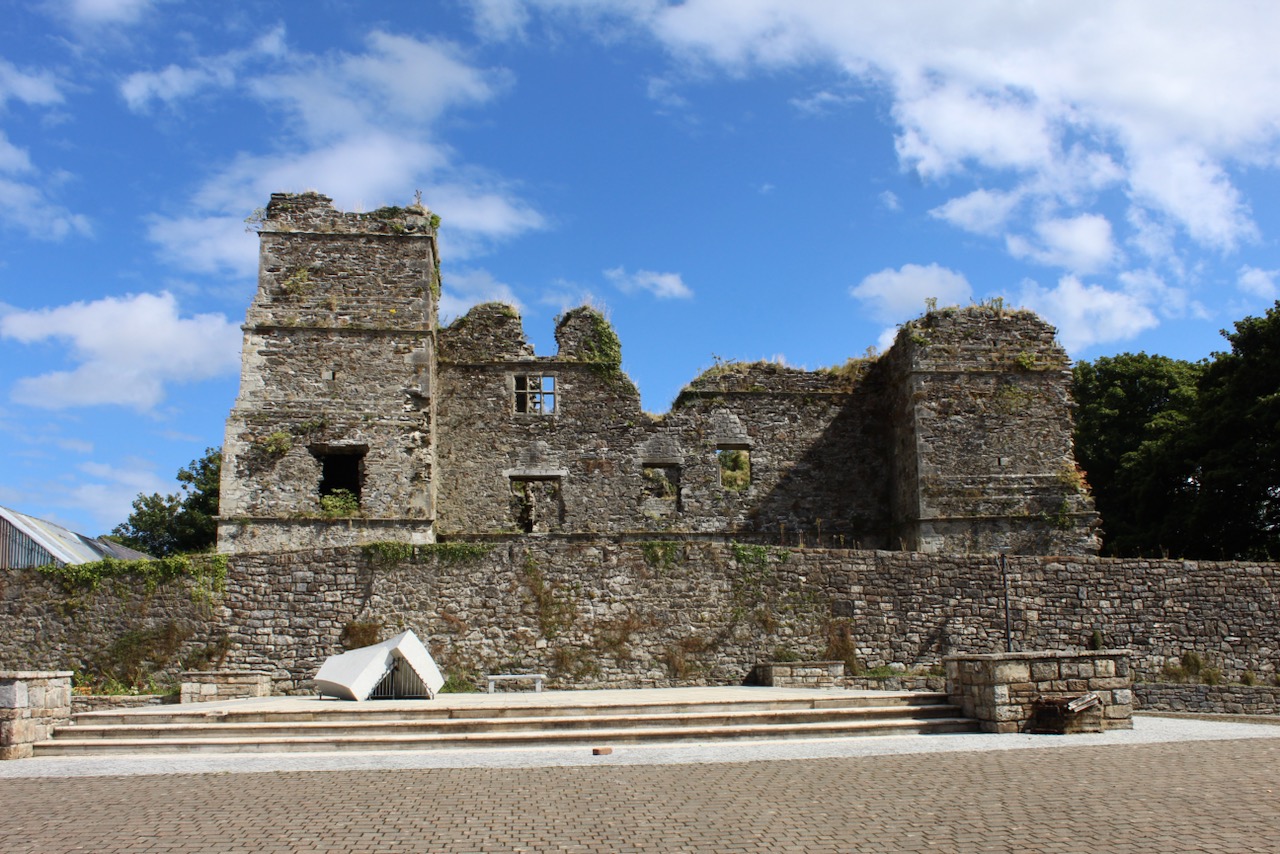
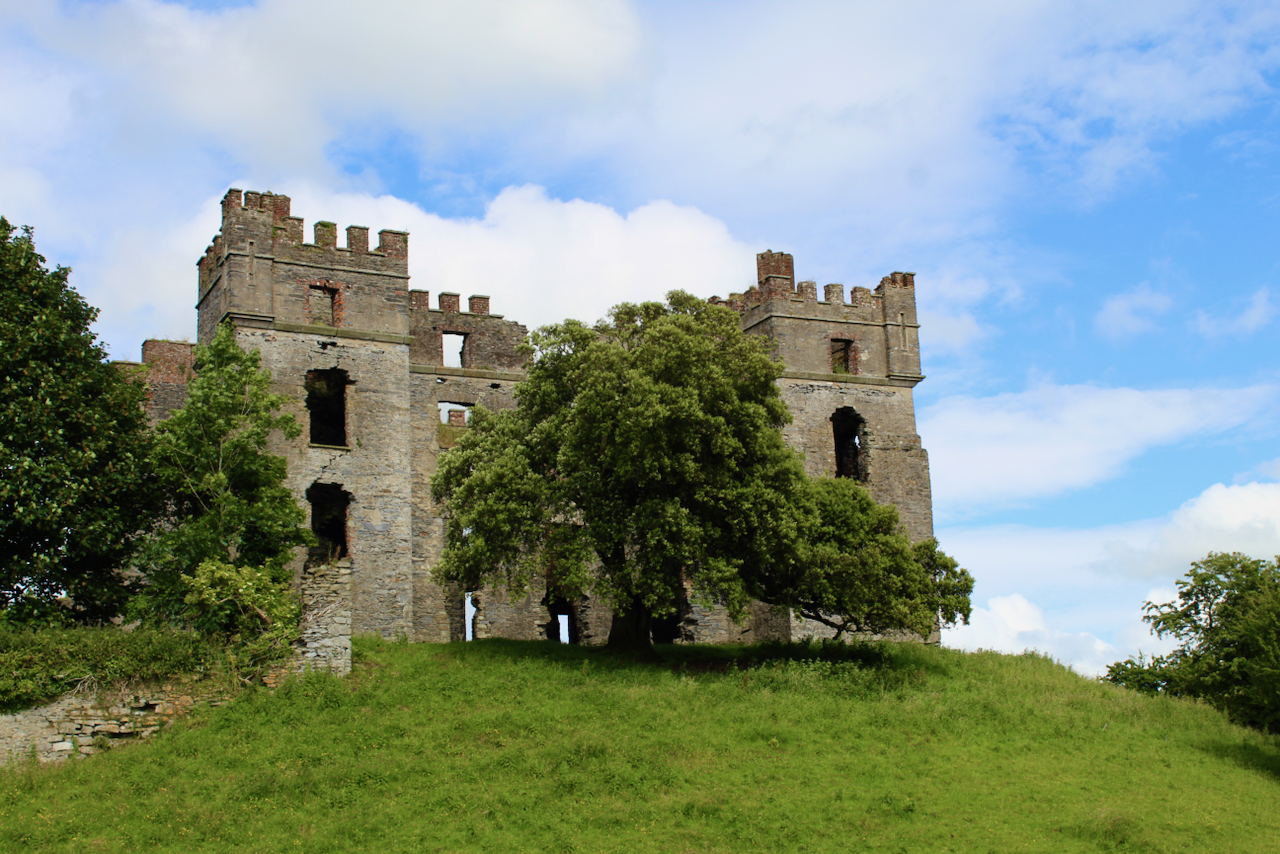
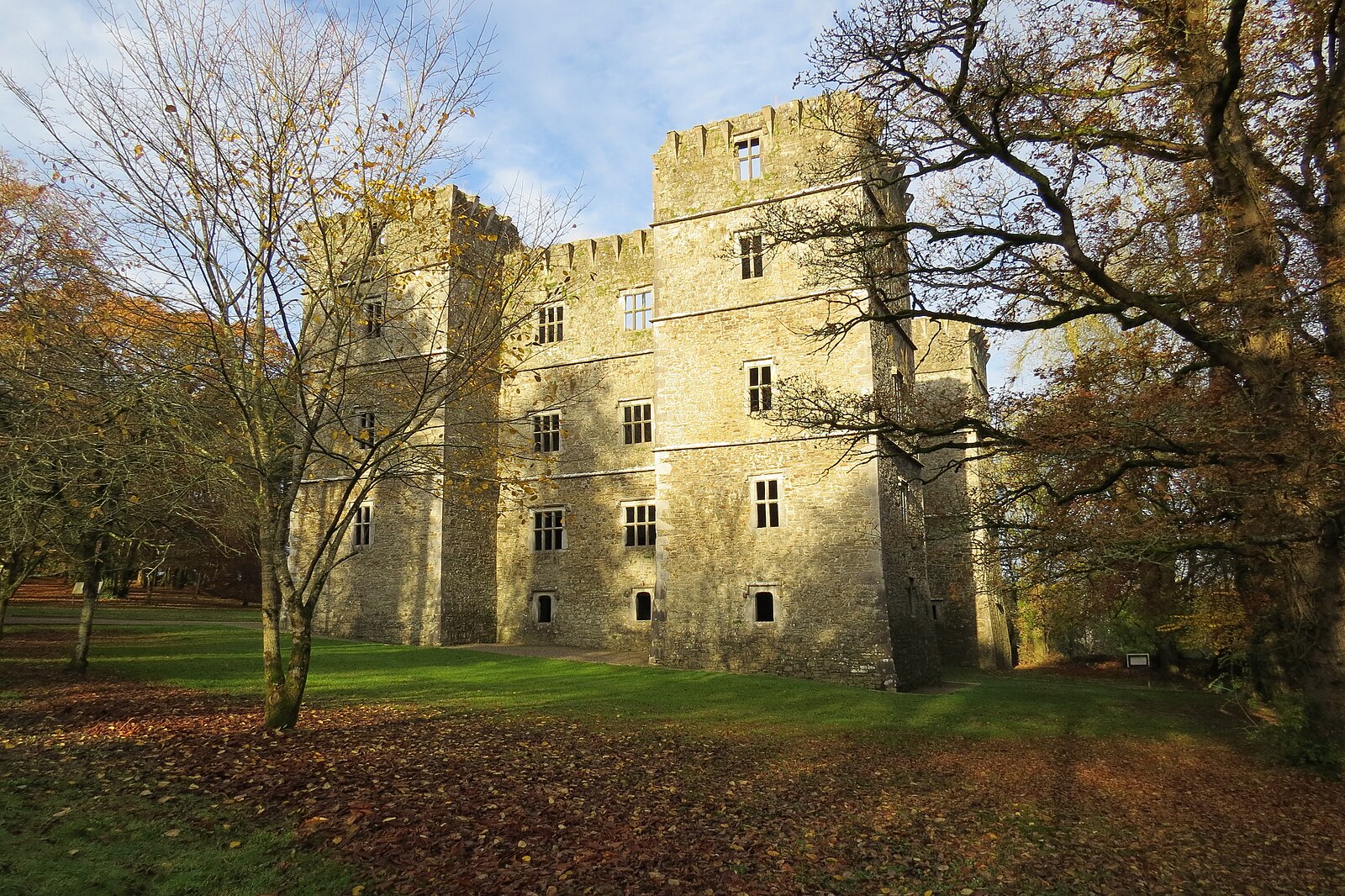
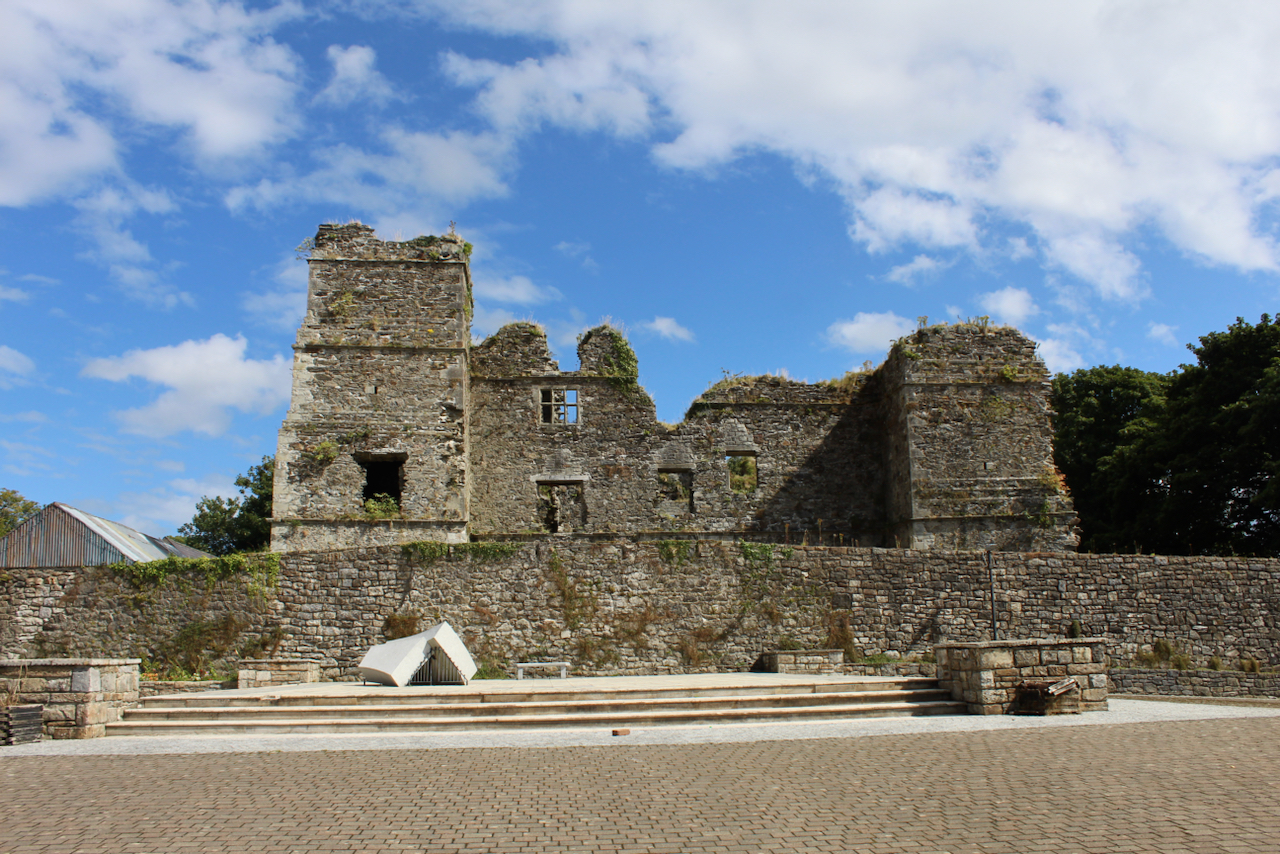
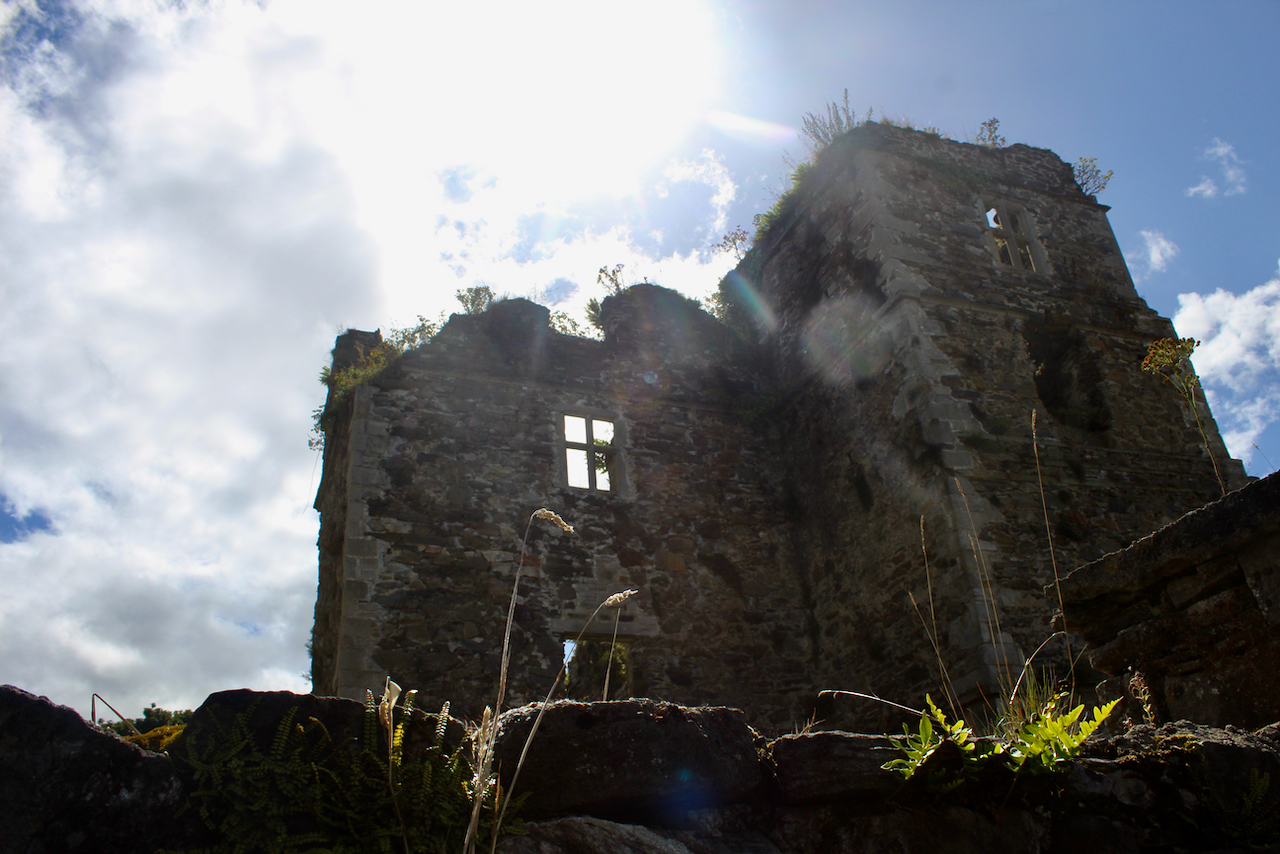
The Revenue section 482 list still hasn’t been published for 2025, so today I am publishing about Manorhamilton Castle in County Leitrim.
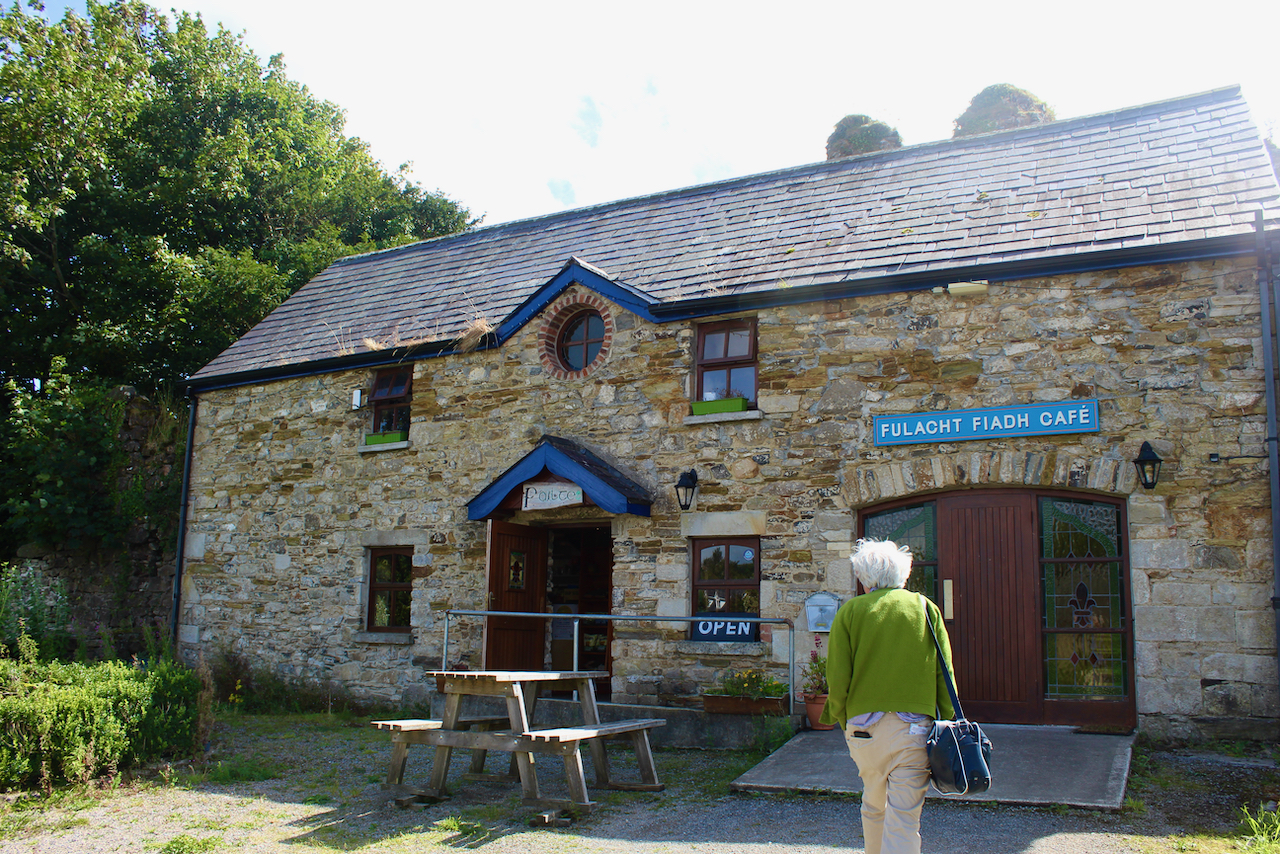
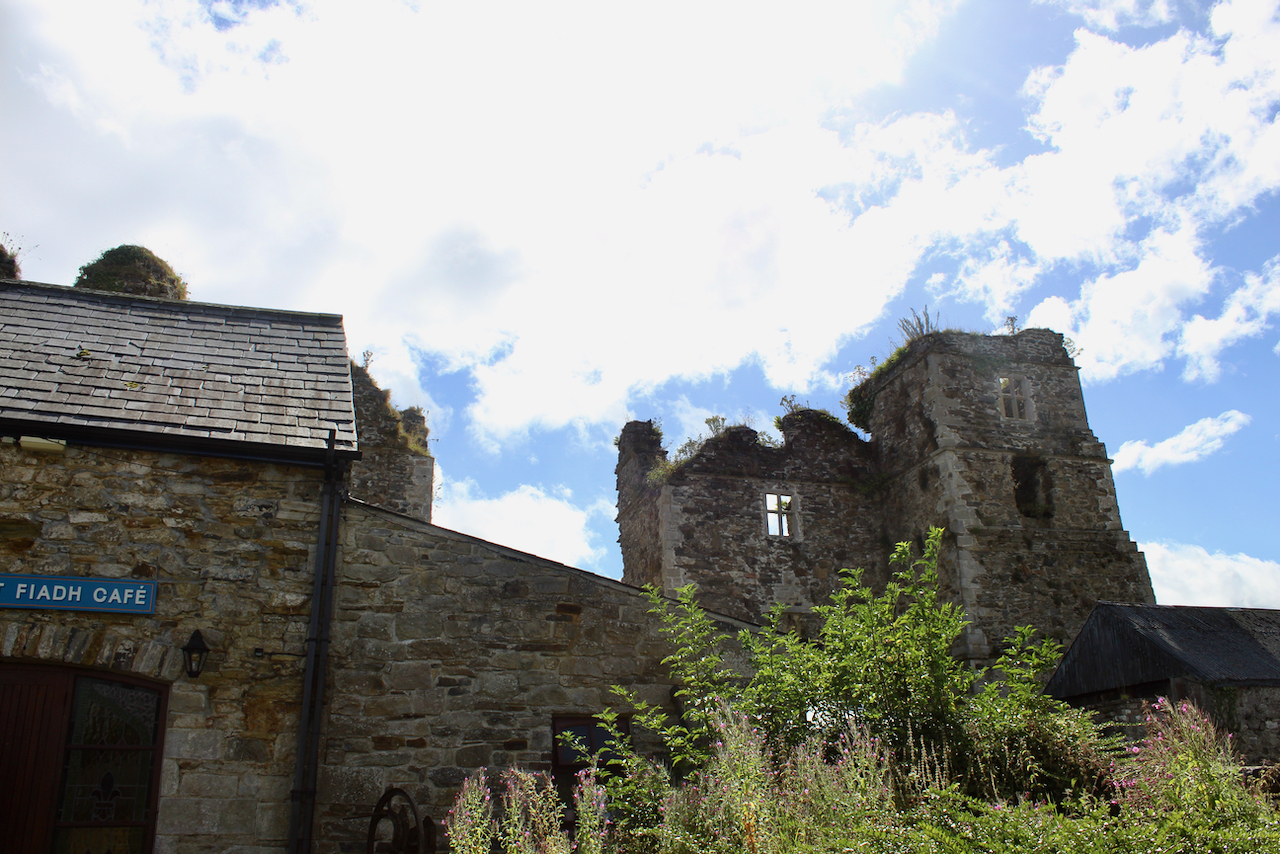
We attempted a visit during Heritage Week in 2022 but were informed in the café next door that it was not accessible as they were preparing for an event. I was unimpressed, having driven there specially! We were driving from Sligo to Monaghan that day, so we continued on our way.
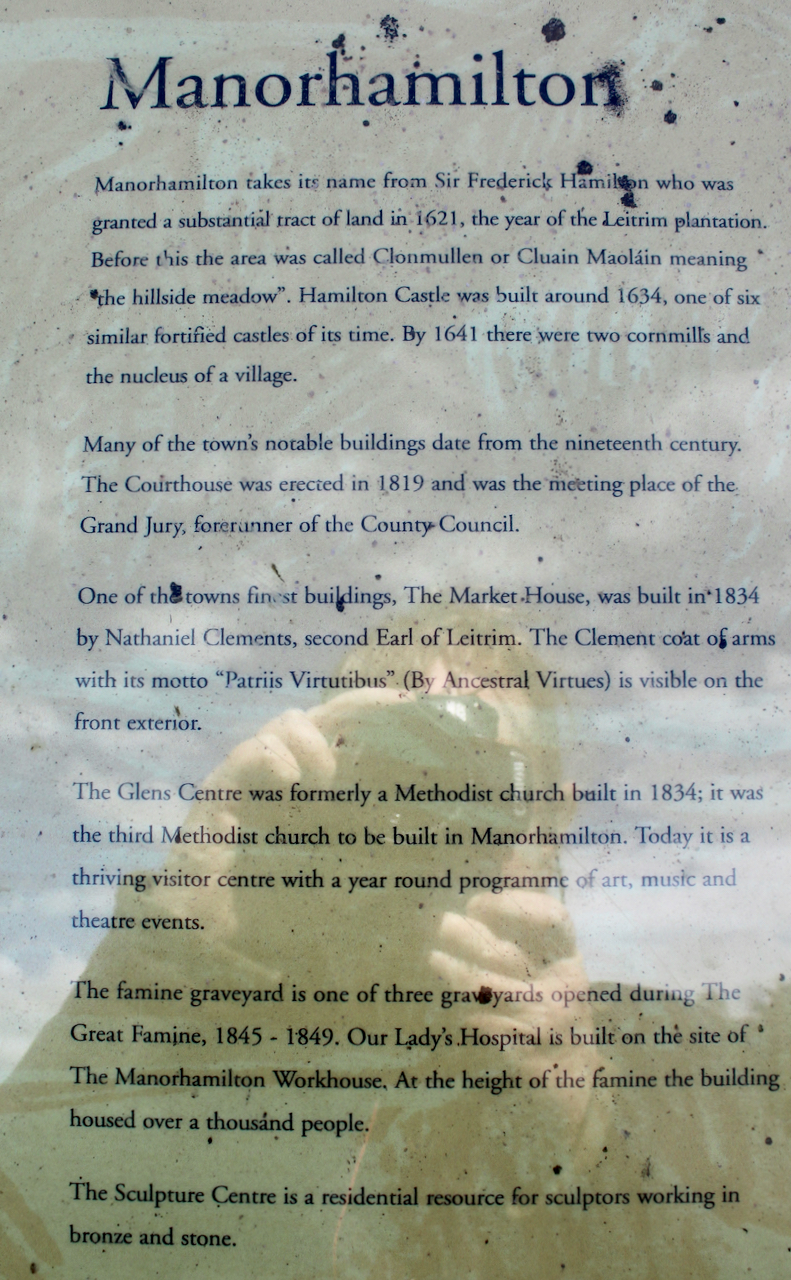
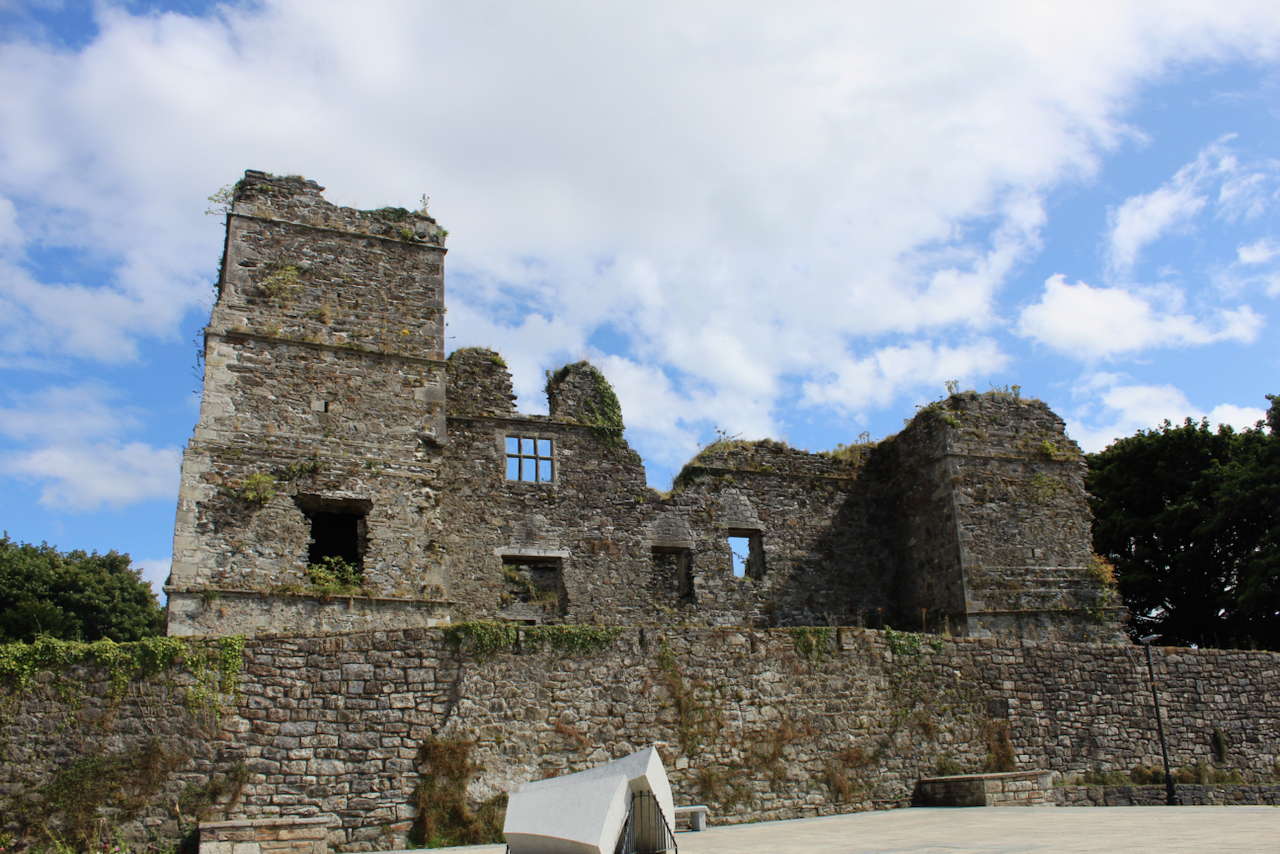
The castle was built between 1634 and 1636 for Frederick Hamilton (d. 1646), who was originally from Paisley in Scotland. He was the son of Claud Hamilton, 1st Lord Paisley, County Renfew, Scotland. Frederick was the younger brother of James 1st Earl of Abercorn in Scotland, who was Gentleman of the Bedchamber to King James VI of Scotland who became King James I of England.
In 1620 Frederick married Sidney Vaughan, daughter of John Vaughan who was a member of the Privy Council for Ireland and Governor of Londonderry, responsible for commanding the garrison and fortifications of Derry, and of nearby Culmore Fort. [1]
In 1621, Frederick was given a grant of land in Dromahair in County Leitrim, seized from the O’Rourke family. [2] There he commanded a troop of horse, and constantly battled with his neighbours. Three of his brothers, including the Earl of Abercorn, received large land grants in Co. Tyrone in 1610–11. These land holdings were part of the Plantation of Ulster.
From a Catholic family, Frederick converted to Protestantism. In 1631 he was granted a commission to raise 1,200 Scottish and Irish men for the service of Gustavus Adolphus, King of Sweden, in order to defeat the Habsburg-Catholic coalition. He spent about two years in the Swedish king’s German campaigns in the Thirty Years’ War.
He returned to Leitrim and built his castle in Manorhamilton.
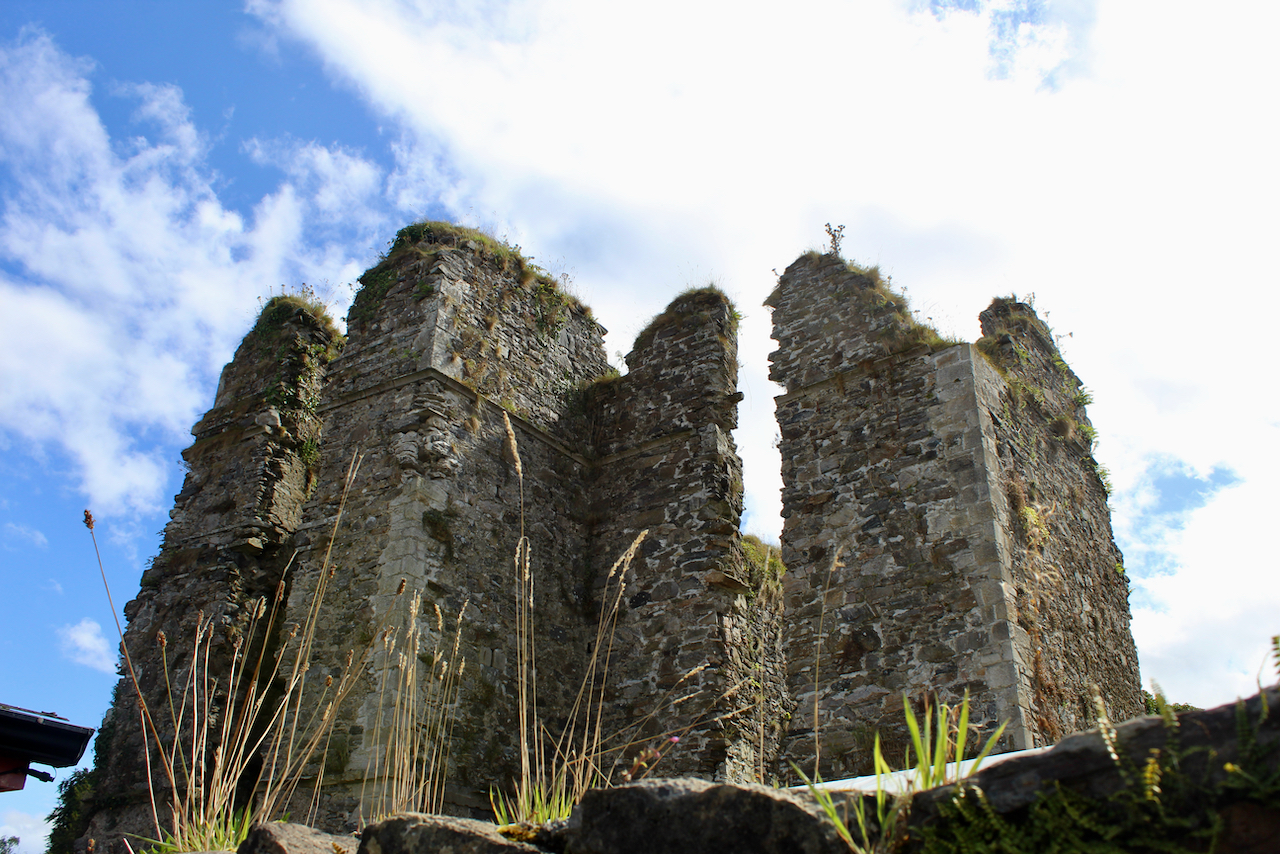
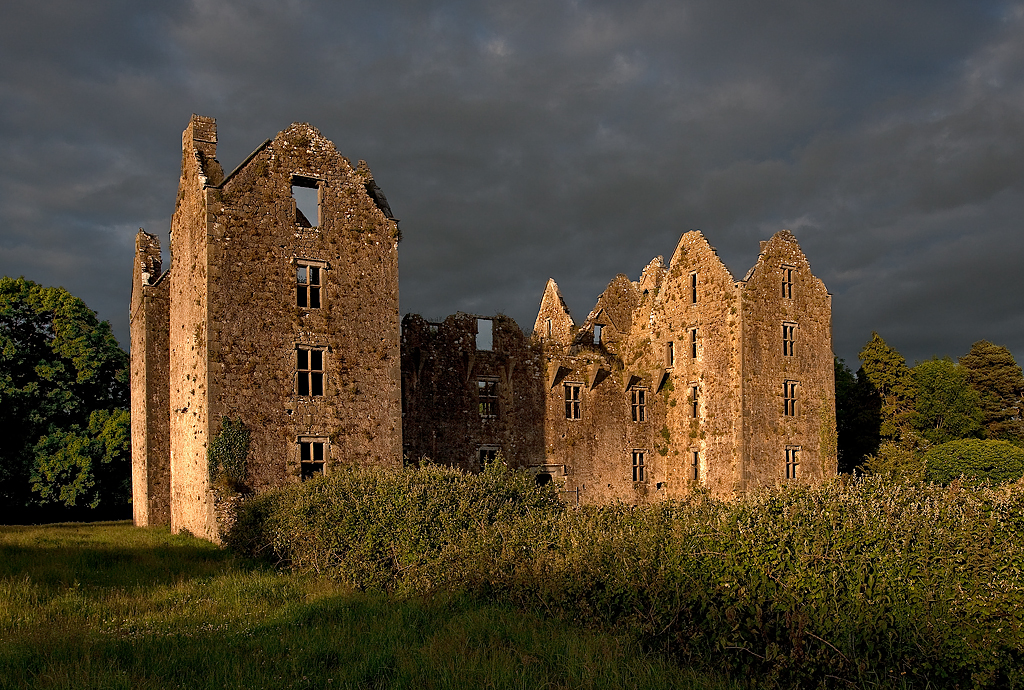
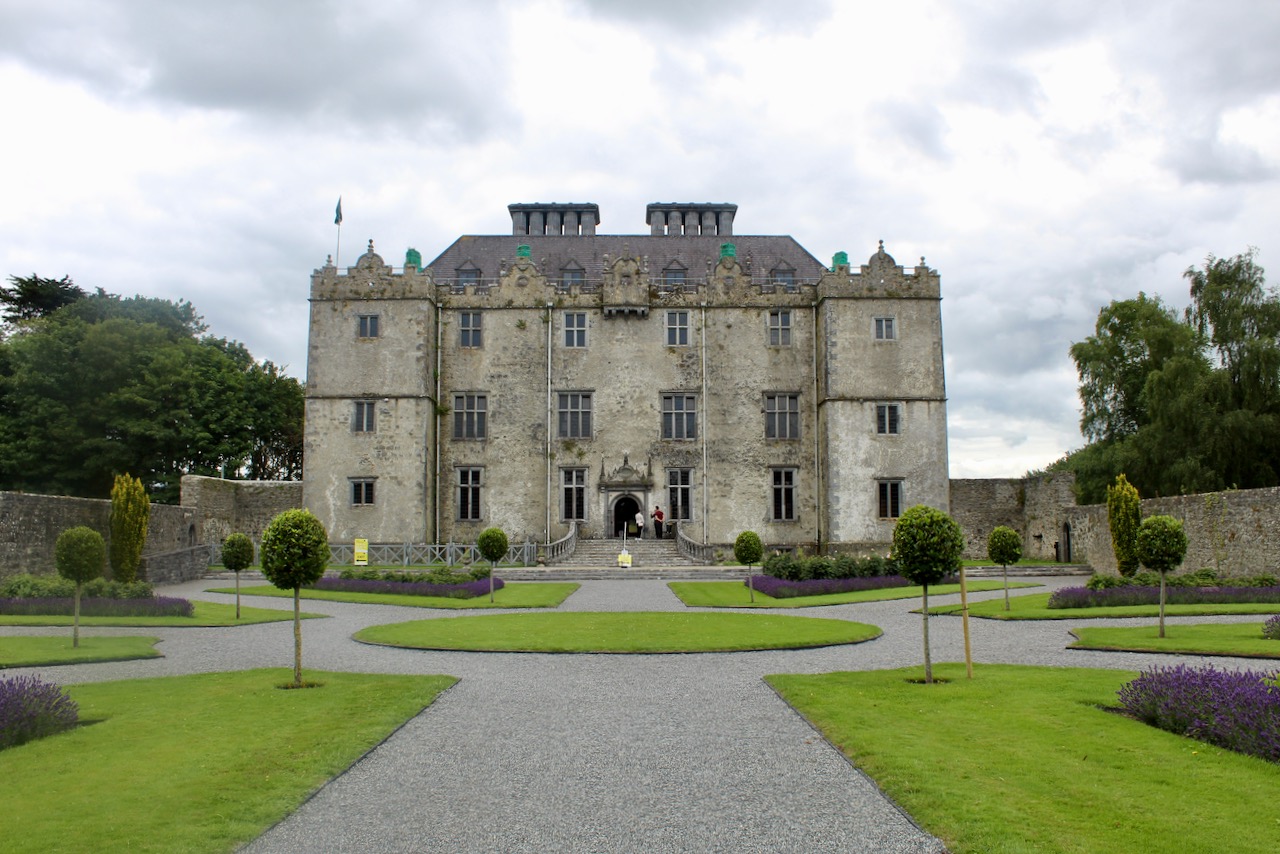
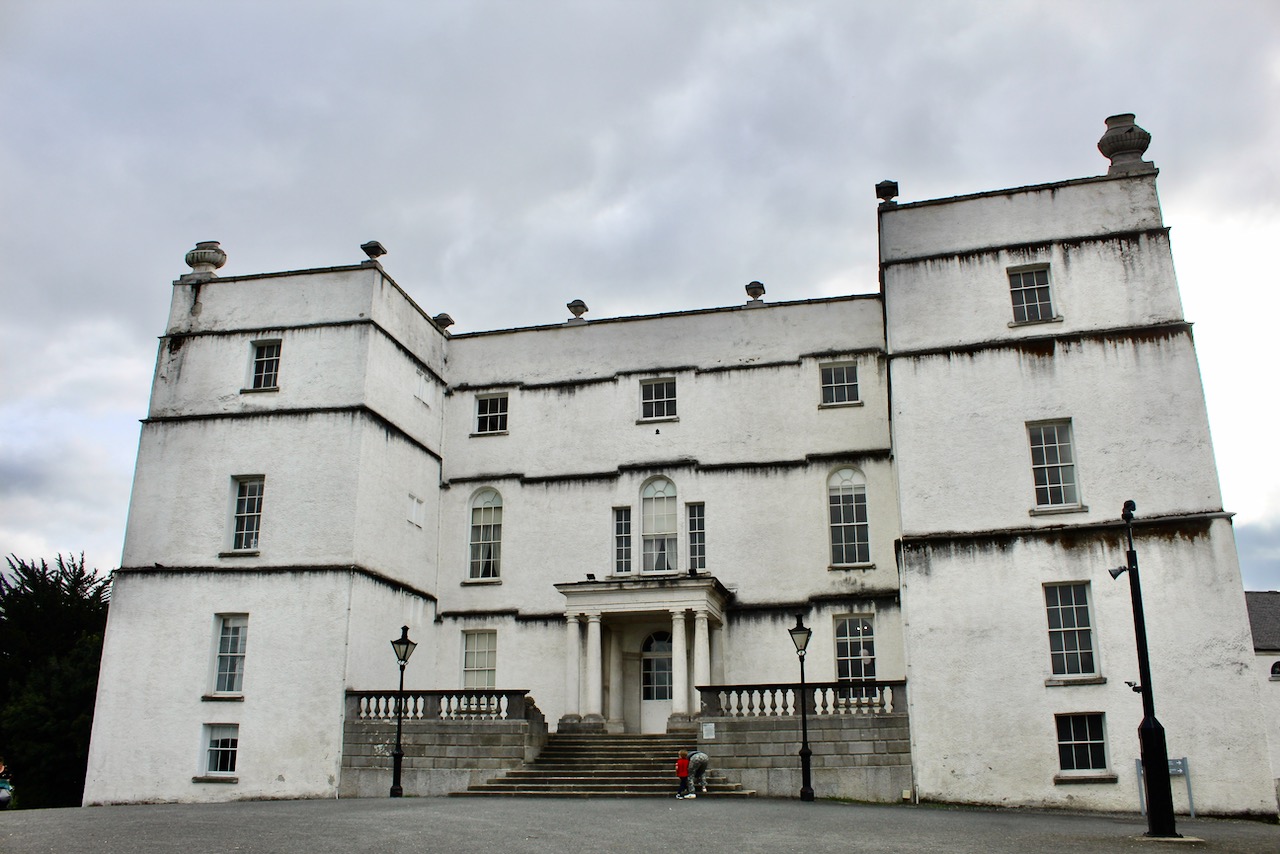
Maurice Craig points out in his The Architecture of Ireland from the earliest times to 1880 that there are a group of similar buildings, built over a period of fifty years or more: Rathfarnham Castle in Dublin; Kanturk for MacDonagh MacCarthy, before 1609; Portumna for the Earl of Clanrickarde, before 1618; Manorhamilton for Sir Frederick Hamilton, probably around 1634; Raphoe, for Bishop John Leslie (the “Fighting Bishop” – see my entry on Castle Leslie https://irishhistorichouses.com/2020/08/07/castle-leslie-glaslough-county-monaghan/) in 1636, and Burntcourt for Sir Richard Everard before 1650. We visited Portumna in County Galway – see my entry https://irishhistorichouses.com/2022/02/14/office-of-public-works-properties-connacht/. The buildings resemble a fort, such as Mountjoy Fort in County Tyrone built 1600-1605. Killenure, County Tipperary, now also a Section 482 property, is similar but has cylindrical flankers, Craig tells us. This last was unroofed by 1793.
Manorhamilton Castle was attacked in the 1641 Rebellion. The fighting only ended in 1643, when James Butler, later 1st Duke of Ormond, negotiated a cessation of hostilities with the Catholic Confederation.
Robert O’Byrne tells us on his wonderful site, The Irish Aesthete, that Frederick Hamilton attacked the Catholics in Sligo in retribution for their 1641 uprising:
“In July 1642, in retaliation for their latest assault, he sacked Sligo and burnt much of the town, including the abbey. In 1643, after Manorhamilton was unsuccessfully attacked again, he hanged 58 of his opponents from a scaffold erected outside the castle.” [3]
O’Byrne shares with us an extract from a short story written by W. B. Yeats, called The Curse of the Fires and of the Shadows (1897), about the sack of the abbey in Sligo:
‘One summer night, when there was peace, a score of Puritan troopers, under the pious Sir Frederick Hamilton, broke through the door of the Abbey of White Friars at Sligo. As the door fell with a crash they saw a little knot of friars gathered about the altar, their white habits glimmering in the steady light of the holy candles. All the monks were kneeling except the abbot, who stood upon the altar steps with a great brass crucifix in his hand. “Shoot them!” cried Sir Frederick Hamilton, but nobody stirred, for all were new converts, and feared the candles and the crucifix. For a little while all were silent, and then five troopers, who were the bodyguard of Sir Frederick Hamilton, lifted their muskets, and shot down five of the friars.’
In the story, the five soldiers who shoot the monks are cursed by the abbot. Hamilton orders the soldiers to intercept two messengers who have been sent by the people of Sligo to call for help. Due to the curse, the soldiers lose their way in the forest, and a vengeful “sidhe” (fairy) leads them to their death falling from a cliff. [4]
In 1645 Frederick Hamilton was back on the road, commanding a regiment in the Scottish covenanters’ army against the royal forces. After he left Manorhamilton, his castle was burned in 1652. [5] It was burnt by the army of Ulick Burke, 5th Earl of Clanricarde, Catholic leader of the Royalist army in Ireland. [see 1]
Frederick and his wife Sidney had a daughter, Christina, and three sons, all of whom became soldiers. James and Frederick both fought in their father’s regiment in 1645–6, and Frederick died in 1647 in the Irish wars, in Connacht. The youngest son, Gustavus Hamilton (1642-1723), later 1st Viscount Boyne, fought in the Irish campaigns of King William. [see 2] He took part in the Battle of the Boyne (during which his horse was shot under him and he was almost killed), the Siege of Athlone, the Battle of Aughrim and the Siege of Limerick.
After his first wife’s death, Frederick married again, this time he married Agnes, or Alice, daughter of Sir Robert Hepburn of Alderstown, in Scotland. They had no children. The castle was not rebuilt after it was burned.
Gustavus Hamilton 1st Viscount Boyne sat in the Irish House of Commons for County Donegal from 1692 to 1713. Subsequently he was returned for Strabane until 1715. He was granted 3,500 acres of confiscated land at Stackallan in Co. Meath where he built an imposing residence. In 1715 he was elevated to the peerage and two years later created Viscount Boyne. He married Elizabeth Brooke of Brookeborough in Co. Fermanagh and they had three sons and a daughter. Gustavus died in 1723 at the age of eighty.
Gustavus Hamilton (1642-1723) 1st Viscount Boyne, c. 1680 unknown artist.Stackallan house, County Meath, built for Gustavus Hamilton 1st Viscount Boyne, photograph courtesy of Timothy William Ferres. [6]
The Manorhamilton website tells us that the marriage of Hannah, Frederick’s grand-daughter, to Sir William Gore 3rd Baronet Gore, of Magherabegg, Co. Donegal, carried the Manorhamilton portion of the estate into the Gore family. Hannah was the daughter of Frederick’s son James (d. 1652). James married Catherine Hamilton (1623-1670/71) who was the daughter of Claud Hamilton (d. 1638) 2nd Baron of Strabane, who was the son of James Hamilton 1st Earl of Abercorn.
In February 1759 a descendant, Ralph Gore, sold the 5393 acre Manorhamilton estate to his cousin by marriage, Nathaniel Clements (d. 1777). It was Nathaniel Clements who built the Ranger’s Lodge in Dublin’s Phoenix Park for himself which, much enlarged and altered, became the Vice-Regal Lodge and is now the residence of the President of Ireland, Áras an Uachtaráin.
Kinlough House, County Leitrim entrance front 1974, photograph: William Garner, Vanishing Country Houses of Ireland by The Knight of Glin, David J. Griffin and Nicholas K. Robinson, published by The Irish Architectural Archive and The Irish Georgian Society, 1988.
Mark Bence-Jones. A Guide to Irish Country Houses (originally published as Burke’s Guide to Country Houses volume 1 Ireland by Burke’s Peerage Ltd. 1978); Revised edition 1988 Constable and Company Ltd, London.
p. 177. (Johnston/LGI1912) A two storey five bay early C19 house. Pedimented central bay wiht Wyatt window; ground floor windows set in shallow arched recess; Doric portico with wreathes on frieze. Now a ruin.
Listed in Vanishing Country Houses of Ireland by The Knight of Glin, David J. Griffin and Nicholas K. Robinson, published by The Irish Architectural Archive and The Irish Georgian Society, 1988.
Detached T-plan five-bay two-storey over basement country house, built c.1800 by Robert Johnston. Now in ruins. Roof has been removed. Two ashlar chimneystacks with string courses. Sandstone walls with ruled-and-lined render and tooled limestone quoins and string course. Window openings with tooled limestone surrounds and sills. Those to ground floor are set within round-headed recesses. Scar of removed Doric portico to facade with tripartite window and pediment above. Segmental-arched openings to basement with cast-iron railings. Kinlough House was formerly the home of the Johnston family.
Appraisal
Although this impressive former country house now lies in ruins, the grandeur and elegance of the building still survives. Detailing such as the flower motif to the tripartite window contributes to the artistic quality of the house. Set back from the town, the house’s outstanding architectural quality enhances the surrounding countryside.
THE JOHNSTONS WERE MAJOR LANDOWNERS IN COUNTY LEITRIM, WITH 14,395 ACRES
ROBERT JOHNSTON (1768-1843), of Kinlough House, County Leitrim, and 23 Mountjoy Square, Dublin, married Florence, daughter of Henry Rathborne, of Dunsinea, County Dublin, and had, with other issue,
WILLIAM, of whom presently; Henry (Ven.), Archdeacon of Elphin; St George Robert.
The eldest son,
WILLIAM JOHNSTON JP (1814-88), of Kinlough House, and Mountjoy Square, Dublin, High Sheriff of County Leitrim, 1850, wedded, in 1856, Sarah Jane, daughter of the Rev William Percy, Rector of Carrick-on-Shannon, and had issue,
JAMES, his heir; Florence Elizabeth; Sophia Mary; Emma Caroline; Lucy Katherine.
Mr Johnston was succeeded by his son,
JAMES JOHNSTON JP DL (1858-), of Kinlough House, High Sheriff of County Leitrim, 1884, who married, in 1890, Rebecca Ceely, daughter of Maurice Ceely Maude, of Lenaghan Park, County Fermanagh, and had issue,
William James, 1891-3; ROBERT CHRISTOPHER, b 1896.
I have been unable to find much information relating to the Johnstons of Kinlough.
KINLOUGH HOUSE, originally known as Oakfield House, was the seat of the Johnston family in the early 18th century.
It was remodelled in the 1820s by Robert Johnston, who renamed it Kinlough House.
In 1943 the Irish Tourist Association Survey recorded that the house had been destroyed by fire twenty years earlier, but that the gardens were still open to the public.
Housing development is occurring on the site, adjacent to the walled garden.
It was a five-bay, two-storey over basement house, built ca1800 by Robert Johnston; now ruinous.
Its roof has been removed.
There were two ashlar chimney-stacks with string courses; sandstone walls with ruled-and-lined render; and tooled limestone quoins and string course.
It had a Doric portico to the façade, with tripartite window and pediment above.
Segmental-arched openings to basement with cast-iron railings.
Although this impressive former country house now lies in ruins, the grandeur and elegance of the building still survives.
Detailing such as the flower motif to the tripartite window contributes to the artistic quality of the house.
First published in March, 2012. Sir James (Jim) Kilfedder MP (1928-1995) was born at Kinlough, County Leitrim.
From Chapter 8 of A Man May Fish by T C Kingsmill Moore, first edition published 1960, copyright Estate of T C Kingsmill Moore 1979.
“… My son tells me that you are an ardent fisherman. We have a house on the shore of Lough Melvin which fishes well in April, and there will be some salmon in the Bundrowse. If you could spare a week or a fortnight of your Easter vacation to stay with us my wife and I would be very pleased”.
This letter, the first of many phrased with the same careful courtesy, introduced me to the big lakes of the west and to a feature of Irish country life then rapidly passing away.
At Bundoran a wizened coachman met me with an outside car which soon covered the hilly miles to where the Big House stood, surrounded on three sides by woodland and open on the fourth, where lawns and fields sloped to the water’s edge.
In spring, the daffodils spread themselves in golden drifts down to the lake, in autumn the scarlet lobelia blazed a flare of colour between house and shrubberies.
The house itself, built when the Georgian style was yielding to the Victorian, was large but architecturally undistinguished.
Originally the walls of all the main rooms had been covered with French cartoons in grisaille, illustrating scenes from classical mythology.
The many life-sized nudes were a little too explicit for Victorian taste, and pictures and furniture had been arranged to hide the more compromising details.
When a later generation, bracing itself to acknowledge the facts of anatomy, removed the obstructions, it was too late.
The discolouration was permanent.
Already the house was an anachronism, a manor house without an estate.
For nearly a century, when Irish country life had been built on a structure of landlord and tenant, it had been the centre of interest for a barony, its stables full of carriages and horses, its garden a model, its owners men of learning and public spirit.
Politics and literature have dealt harshly with the Irish landlord.
Sad and mad they may have been; too often they were absentees.
But many of them were men of culture, bravery, and a high sense of public duty.
Their libraries were good and sometimes remarkable.
They planted world-famous gardens.
They organised and endowed innumerable Irish charities, relieved distress, and helped and advised such tenants as were willing to accept their advice.
Much of their time was spent in hunting and field sports, but these provided employment of the type that the Irish countryman likes, and made the big house a centre of interest and society.
Above all, they supplied a personal relationship which made up for many abuses.
A good landlord was united to his tenantry by bonds part patriarchal, part feudal, and entirely human, which formed a not unsatisfactory pattern of life.
Now all of this has been changed, shattered irretrievably by a great reform which had enabled the tenants to become freeholders.
The landlords lived on, financially not much worse off, still doing their duty on bench and synod, and spending much of their leisure in sport; but the ties which bound them and their families to the countryside were snapped.
Old retainers still remained.
The coachman who had met me was serving his fourth generation, the parlour maid had been nurse to my host, the gardener had been trained by his grandfather.
But the dust was settling; the Big House was dying at its roots.
My host, who had for some years been living a life of use and wont in which sport had ceased to play a part, his guns licensed but unfired, his rods idle in their cases, now roused himself to put his son and myself on the road to true orthodoxy.
He was orthodox to a fault, his fishing methods not so much dated as out-dated, but I owe him a grounding in caution, in boat-craft, and in etiquette which was to help me in difficult times and places…
For four years my fishing centred around the Big House, ten days in spring and the same in August.
The old retainers were dropping away. “I’ve seen what I’ve seen and I’ll not see much more,” said the coachman, now nearly ninety on the last occasion that he drove me to the station.
On my next visit he was gone.
Kate, the parlour maid, found her rheumatism too crippling, and the gardener retired on a pension to a cottage.
The squire had ceased to come to the lake with us, and he was intellectually less alert.
Over the port he had been eager to cross-question me on all the vexed problems of the day, with his unvaried courtesy treating my undergraduate opinions as if they were worth listening to.
Now he avoided discussion.
When things puzzled him he no longer sought an answer.
He lived more and more in the past.
A weary, slightly despairing look often came over his kindly face.
I was too young to recognise the significance of these changes, signs that the organism could no longer adapt itself to its environment, the first, faint, far-borne notes of the trumpet of Azrael.
Then at one stride came disaster.
Father and mother were dead; the son, always delicate, became incurably ill.
The Big House had fallen.
Another old Irish family had come to an end.
Of the Big House itself only a few ruins now remain.’
T.C. Kingsmill Moore was born in Dublin in March 1893 and he died there in February, 1979, at the age of 85. He went to school in Marlborough, England, and returned to Dublin to take a degree at Trinity College.
During the First World War, from 1917-18, he was in the Royal Flying Corps in France and Flanders. He became a barrister on his return to Dublin and during the Civil War from 1922-23 was also the War Correspondent for the Irish Times.
In 1947 he was appointed a judge of the High Court and in 1961 a judge of the Supreme Court, retiring in 1965. His visits to the Big House at Kinlough took place between 1914 and 1917 when he was an undergraduate in Trinity.
From Chapter 8 of A Man May Fish by T C Kingsmill Moore, first edition published 1960, copyright Estate of T C Kingsmill Moore 1979.
“… My son tells me that you are an ardent fisherman. We have a house on the shore of Lough Melvin which fishes well in April, and there will be some salmon in the Bundrowse. If you could spare a week or a fortnight of your Easter vacation to stay with us my wife and I would be very pleased”.
This letter, the first of many phrased with the same careful courtesy, introduced me to the big lakes of the west and to a feature of Irish country life then rapidly passing away.
At Bundoran a wizened coachman met me with an outside car which soon covered the hilly miles to where the Big House stood, surrounded on three sides by woodland and open on the fourth, where lawns and fields sloped to the water’s edge.
In spring, the daffodils spread themselves in golden drifts down to the lake, in autumn the scarlet lobelia blazed a flare of colour between house and shrubberies.
The house itself, built when the Georgian style was yielding to the Victorian, was large but architecturally undistinguished.
Originally the walls of all the main rooms had been covered with French cartoons in grisaille, illustrating scenes from classical mythology.
The many life-sized nudes were a little too explicit for Victorian taste, and pictures and furniture had been arranged to hide the more compromising details.
When a later generation, bracing itself to acknowledge the facts of anatomy, removed the obstructions, it was too late.
The discolouration was permanent.
Already the house was an anachronism, a manor house without an estate.
For nearly a century, when Irish country life had been built on a structure of landlord and tenant, it had been the centre of interest for a barony, its stables full of carriages and horses, its garden a model, its owners men of learning and public spirit.
Politics and literature have dealt harshly with the Irish landlord.
Sad and mad they may have been; too often they were absentees.
But many of them were men of culture, bravery, and a high sense of public duty.
Their libraries were good and sometimes remarkable.
They planted world-famous gardens.
They organised and endowed innumerable Irish charities, relieved distress, and helped and advised such tenants as were willing to accept their advice.
Much of their time was spent in hunting and field sports, but these provided employment of the type that the Irish countryman likes, and made the big house a centre of interest and society.
Above all, they supplied a personal relationship which made up for many abuses.
A good landlord was united to his tenantry by bonds part patriarchal, part feudal, and entirely human, which formed a not unsatisfactory pattern of life.
Now all of this has been changed, shattered irretrievably by a great reform which had enabled the tenants to become freeholders.
The landlords lived on, financially not much worse off, still doing their duty on bench and synod, and spending much of their leisure in sport; but the ties which bound them and their families to the countryside were snapped.
Old retainers still remained.
The coachman who had met me was serving his fourth generation, the parlour maid had been nurse to my host, the gardener had been trained by his grandfather.
But the dust was settling; the Big House was dying at its roots.
My host, who had for some years been living a life of use and wont in which sport had ceased to play a part, his guns licensed but unfired, his rods idle in their cases, now roused himself to put his son and myself on the road to true orthodoxy.
He was orthodox to a fault, his fishing methods not so much dated as out-dated, but I owe him a grounding in caution, in boat-craft, and in etiquette which was to help me in difficult times and places…
For four years my fishing centred around the Big House, ten days in spring and the same in August.
The old retainers were dropping away. “I’ve seen what I’ve seen and I’ll not see much more,” said the coachman, now nearly ninety on the last occasion that he drove me to the station.
On my next visit he was gone.
Kate, the parlour maid, found her rheumatism too crippling, and the gardener retired on a pension to a cottage.
The squire had ceased to come to the lake with us, and he was intellectually less alert.
Over the port he had been eager to cross-question me on all the vexed problems of the day, with his unvaried courtesy treating my undergraduate opinions as if they were worth listening to.
Now he avoided discussion.
When things puzzled him he no longer sought an answer.
He lived more and more in the past.
A weary, slightly despairing look often came over his kindly face.
I was too young to recognise the significance of these changes, signs that the organism could no longer adapt itself to its environment, the first, faint, far-borne notes of the trumpet of Azrael.
Then at one stride came disaster.
Father and mother were dead; the son, always delicate, became incurably ill.
The Big House had fallen.
Another old Irish family had come to an end.
Of the Big House itself only a few ruins now remain.’
T.C. Kingsmill Moore was born in Dublin in March 1893 and he died there in February, 1979, at the age of 85. He went to school in Marlborough, England, and returned to Dublin to take a degree at Trinity College.
During the First World War, from 1917-18, he was in the Royal Flying Corps in France and Flanders. He became a barrister on his return to Dublin and during the Civil War from 1922-23 was also the War Correspondent for the Irish Times.
In 1947 he was appointed a judge of the High Court and in 1961 a judge of the Supreme Court, retiring in 1965. His visits to the Big House at Kinlough took place between 1914 and 1917 when he was an undergraduate in Trinity.





 Irish Historic Houses