

donation
Help me to pay the entrance fee to one of the houses on this website. This site is created purely out of love for the subject and I receive no payment so any donation is appreciated!
€15.00
(Tourist Accommodation Facility)
Open for accommodation: Mar 1-Oct 31 2026
e: info@lismacue.com
Lismacue in County Tipperary was listed in the 2024 Revenue Section 482 list as tourist accommodation. The 2025 Revenue Section 482 list has not yet been published. Under the Revenue rules, a historic property can have an income tax reduction for a percentage of repair and renovation costs if they offer tourist accommodation six months of the year, at least four of those months being between 1st May and 30th September.
There are loopholes in the section 482 scheme, in that it does not specify what sort of accommodation must be provided, nor how much the accommodation costs. Lismacue, for example, can only be rented as an entire house with five bedrooms.
However, you can take a tour of Lismacue with the company Historic Family Home Tours, which brings visitors to three historic houses: twelfth century Castlegarde in County Limerick with its 1820s extension by the Pain brothers, Lismacue and Grenane House (see my entry https://irishhistorichouses.com/2024/04/04/grenane-house-tipperary-co-tipperary-e34-ep22/ )
Their website is https://www.hfhtours.ie/
The tours are quite expensive, however, and require a group, so I don’t think I will be able to visit Lismacue house, so I am going to write about the history of the house today.
Mark Bence-Jones tells us in his A Guide to Irish Country Houses that Lismacue is:
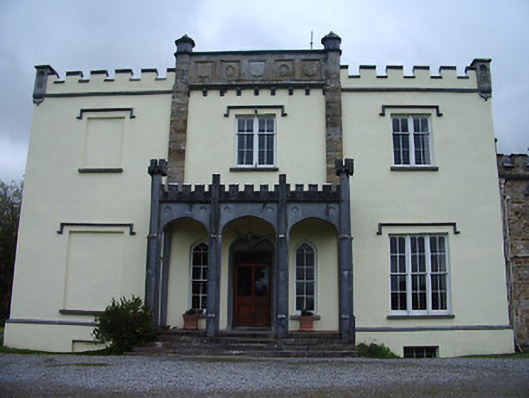
“[Baker/IFR] A late-Georgian house with battlements and other mild Gothic touches. Two storeys; entrance front of three bays with Gothic porch, prolonged by lower wing ending in a gable with tracery window. Side of five bays has a battlemented pediment with pinnacles. Another pediment on the rear facade.” [1]
The Archiseek website tells us that the house was designed by architect William Robertson (1770-1850) and building completed in 1813. [2] William Robertson was born in Kilkenny, where he later ran a busy architectural practice. After some years in London, he returned to Kilkenny, where he designed the Gaol, St. Canice’s Church and the Psychiatric Hospital (“Lunatic Asylum”). Among other private residences, he designed Jenkinstown House in County Kilkenny.
The National Inventory claims that Lismacue was built around 1760. [3] The work by William Robertson was added to the earlier house.
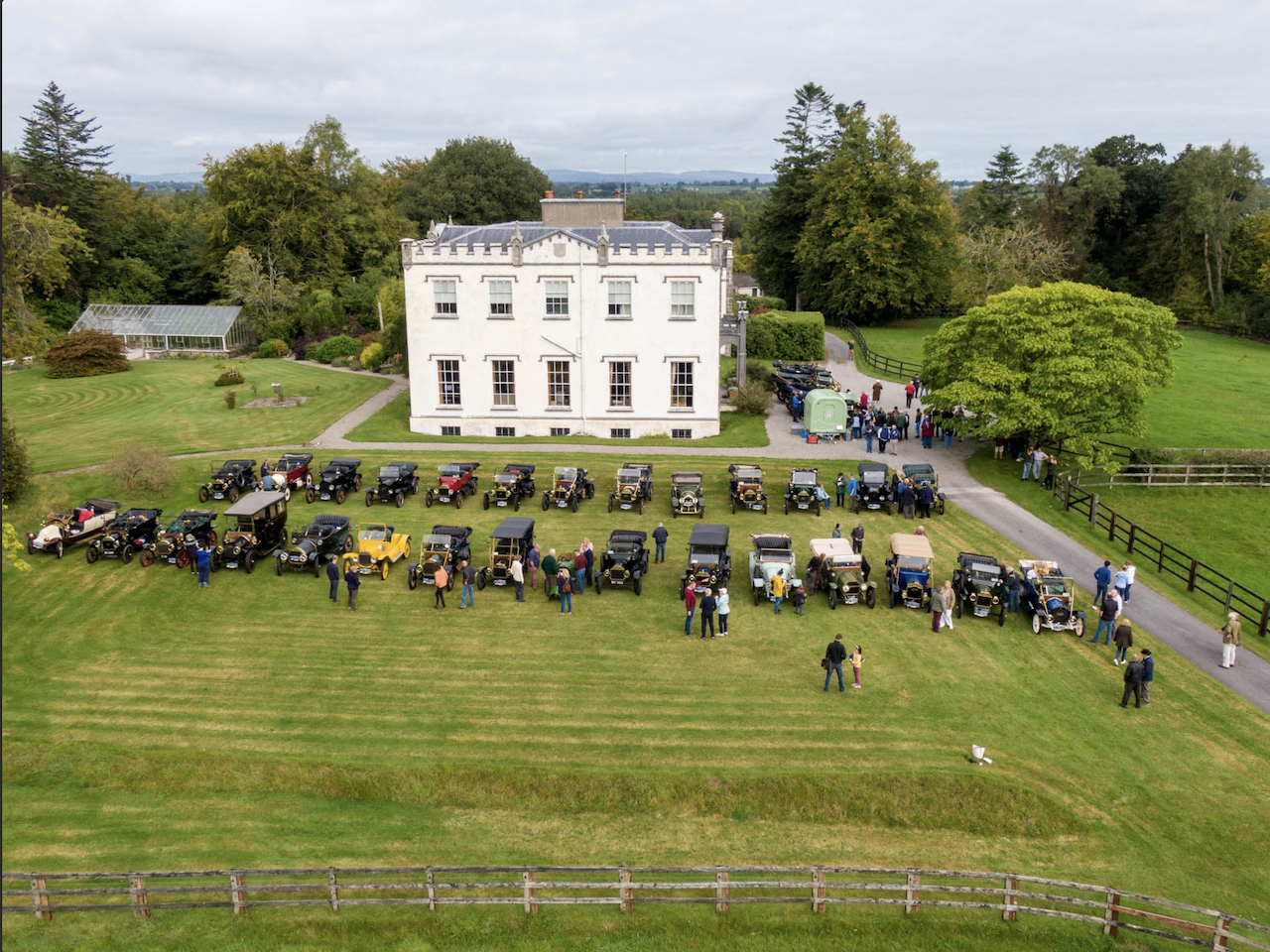
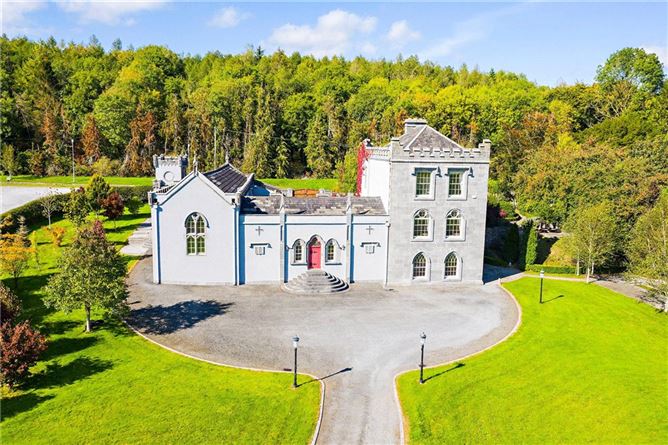
Lismacue has elements of Tudor-Revival with its hood mouldings over the windows and wonderful pinnacles either side of the central breakfront. The house is two storeys over basement. The sides of the house are of five bays, and there is a lower wing to the north with an ecclesiastical-looking Gothic window.
William Baker (d. 1733) purchased Lismacue from Charles Blount in 1705, and the estate remains in the ownership of the same family. The present owners are Kate née Baker and her husband Jim Nicholson. Kate inherited Lismacue from her father, William Baker. The Bakers’ ancestor Thomas Baker (1577-1642) probably came to Ireland in the retinue of Robert Devereux, 2nd Earl of Essex. [4]
William Baker served as High Sheriff for County Tipperary. His father lived at Lattinmore, County Tipperary. In 1700 William married Margaret, daughter of Captain Hugh Massy of Duntrileague, County Limerick.
William and Margaret had several children. The house passed to their oldest son, Hugh (d. 1772). In 1730 Hugh married Catherine, daughter of Robert Ryves, of Ryves Castle, Ballyskiddane, County Limerick. It may be been Hugh who built the first iteration of the house, in time for his new bride.
Reflecting the exterior, the interior features Gothic details. The front hall is divided by a pointed arch with two fluted columns and further fluted pilasters, and quatrefoil circular decorations on the wall over the arch. A large window lights the staircase with its wooden banisters and carved veloute. The staircase leads from the entrance hall to the guest bedrooms.

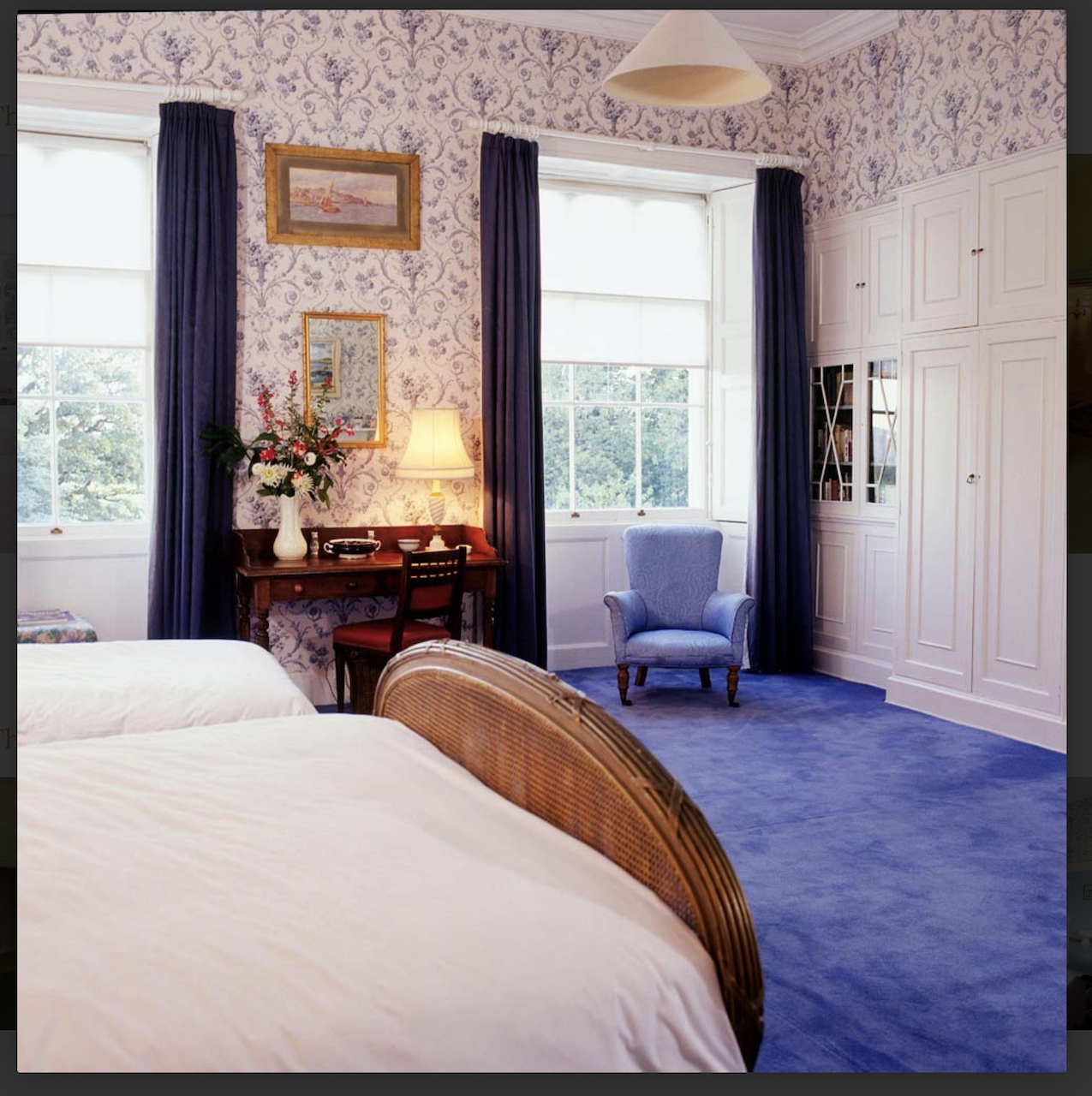
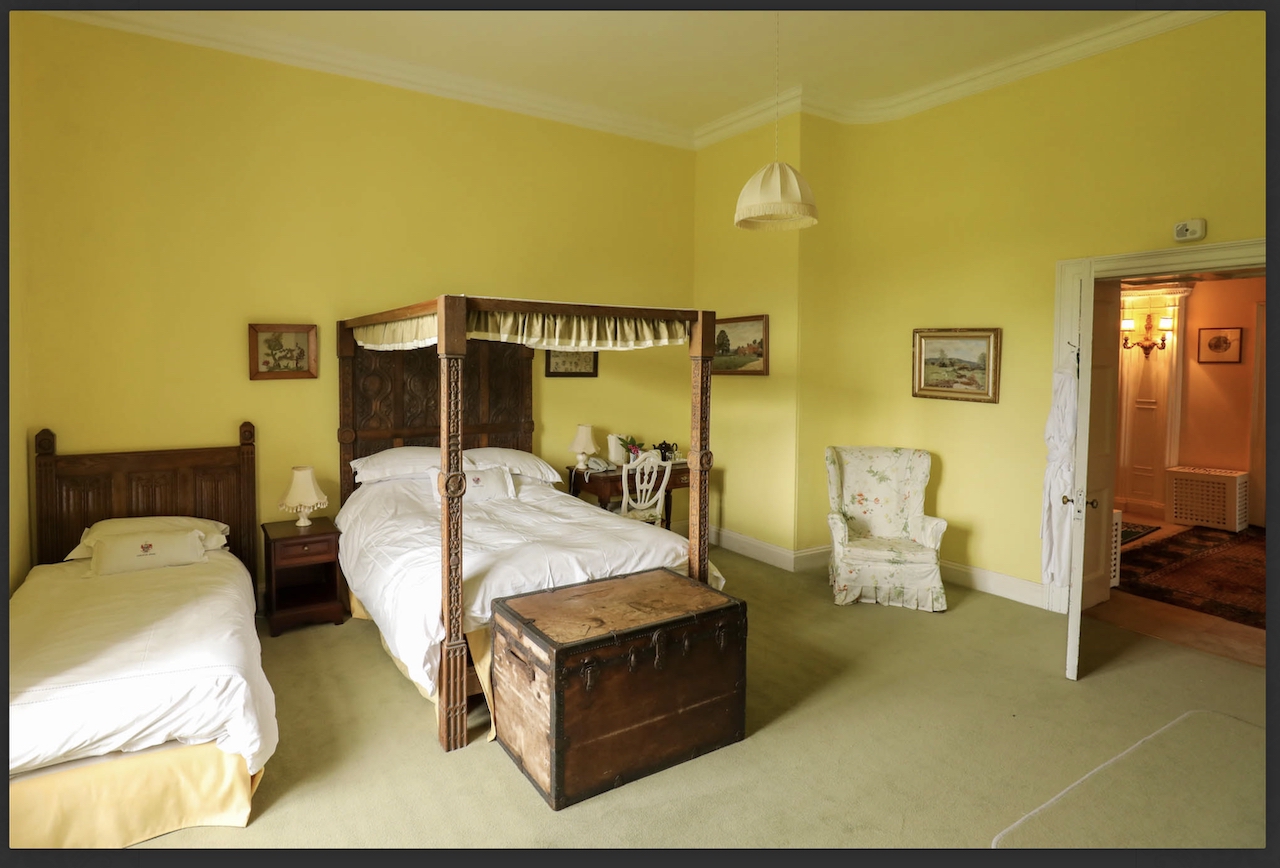
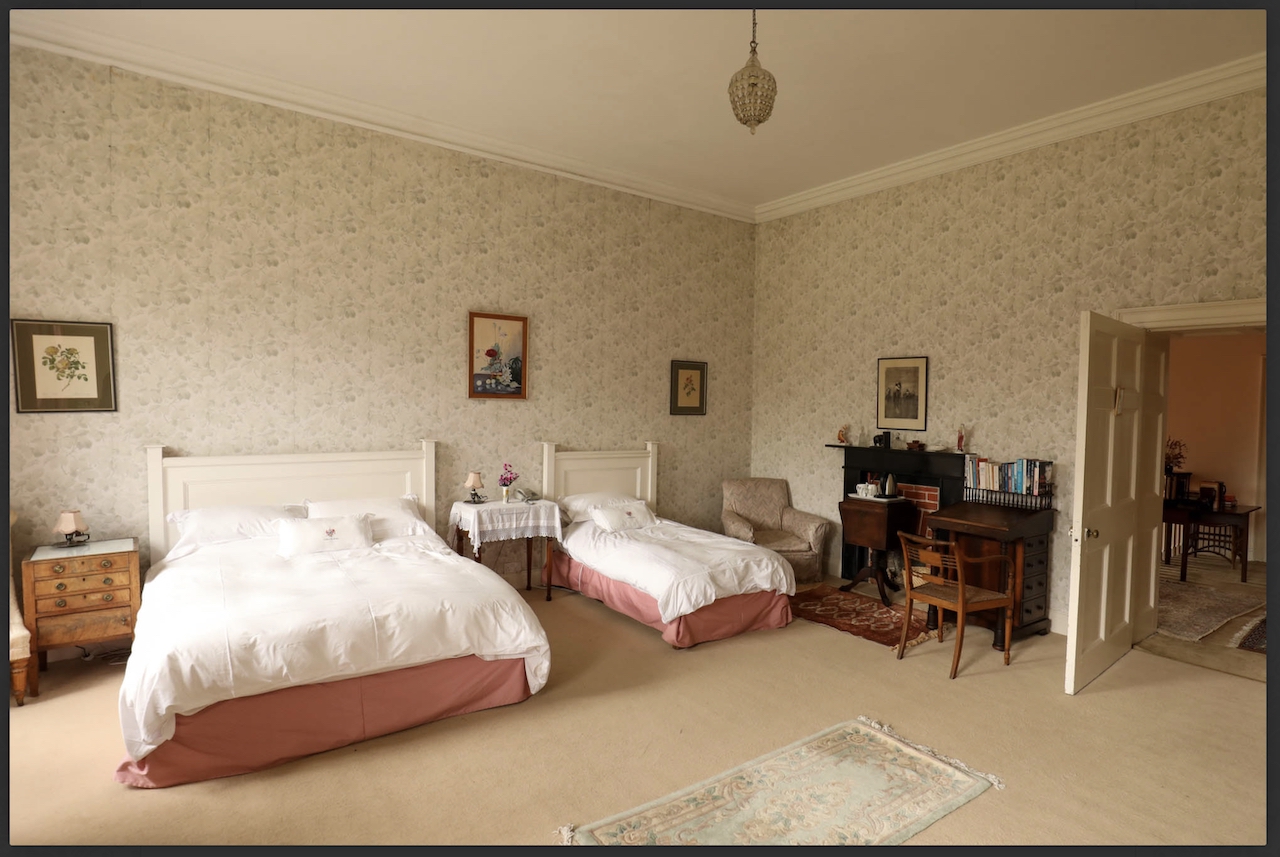
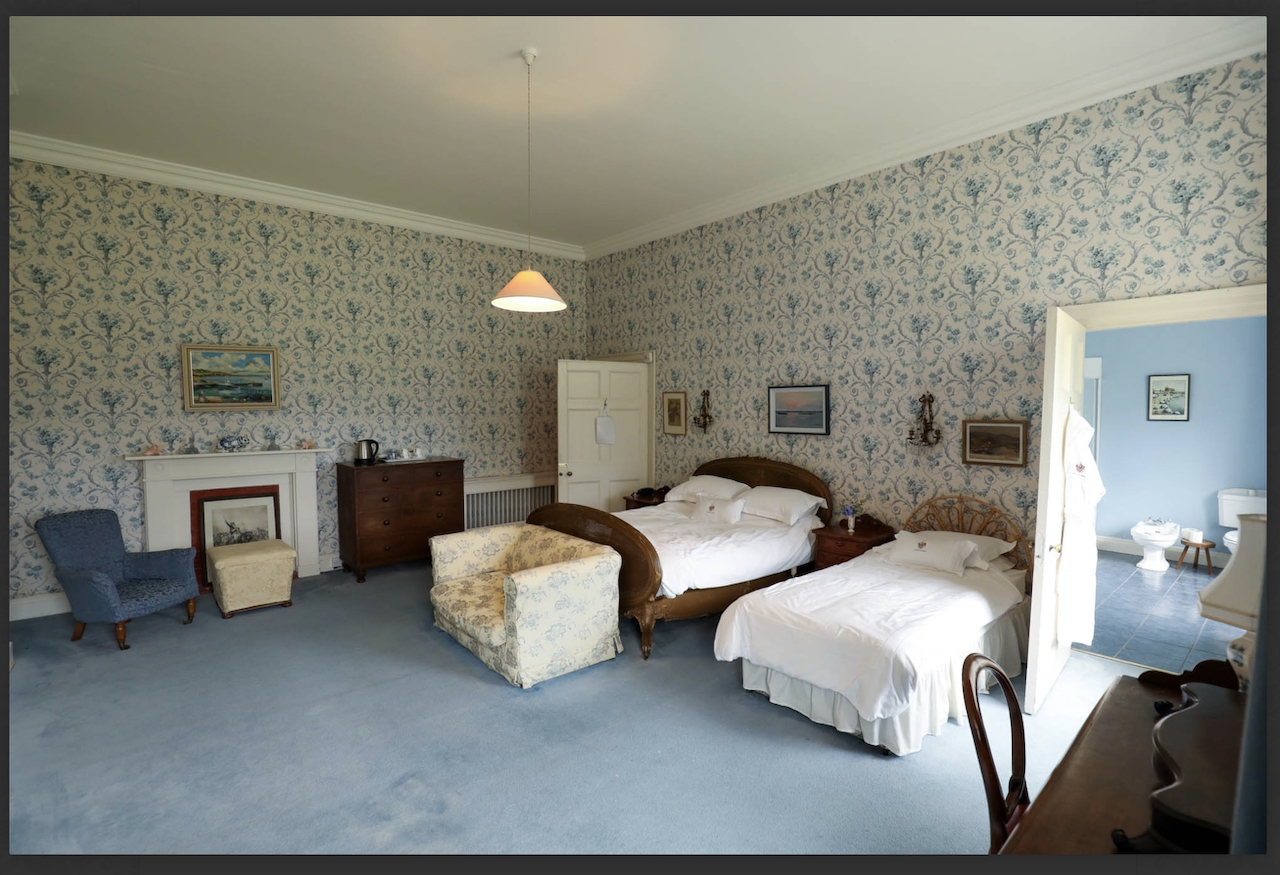
The Lismacue website tells us that the accommodation includes a classically proportioned drawing room, dining room, breakfast room and library. The house is centrally heated throughout, and the owners provide warm and welcoming log fires in the reception rooms. All windows have the original pine shutters.

Many of the large rooms have decorative plasterwork, and the ground floor rooms have mahogany doors. Several rooms retain wallpaper dating from the 1830s. The dining room features decorative pelmets and a sideboard niche.


Hugh and Catherine’s son William (1719-1808) served as a Colonel for the Irish Volunteers, the local militia formed in 1778 to protect against invasion, such as the French threat in Bantry Bay.
William married Elizabeth, second daughter of the Very Reverend Charles Massy, Dean of Limerick, and sister of Hugh Dillon Massy 1st Baronet of Doonass, County Limerick. Their son William Baker (1767-1815) inherited, and married Elizabeth daughter of Thomas Roberts, 1st Baronet of Britfieldstown, County Cork.
William hired William Robertson and built the current version of the house in 1813, but he was murdered a few years later in 1815. [5] He was a Justice of the Peace and was murdered on the way home from a meeting in Cashel of the Quarter Sessions held under the Insurrection Act. [see 4] Two men were eventually arrested and one of them was executed, on the testimony of the other. William Blake’s grave in Bansha features quatrefoils similar to those on his house. [6]
After his death William’s wife Elizabeth moved to Cheltenham, taking all the family furniture with her, so none of the original furniture remains in Lismacue. William was succeeded by a son of his brother Hugh, who had died in 1801, also named Hugh (1798-1868). He married Marion, only child of Charles Conyers, of Castletown Conyers, County Limerick.
The Landed Families website tells us:
“Hugh Baker seems to have been a considerate and generous landlord, but that did not stop him receiving unwelcome attention from violent elements in the local population in the 1830s on account of the fact that he employed a Protestant steward. At one point he was obliged to leave the estate for the greater safety of Dublin, although he soon returned and was resident throughout the famine years of the 1840s. He had a large family of four sons and five daughters.“
Hugh’s son Hugh (1845-1887) inherited but he died young, leaving a widow and two small children. The Landed Families website explains:
“The estate passed to his young son, but it was heavily indebted and in an era of falling agricultural prices one of the creditors called in his loan, leading to the estate being vested in trustees for sale. Hugh Baker’s widow, Frances, had meanwhile married again, to Maj. Ralph Hall Bunbury (d. 1898), who bought the house (but not the estate) so that the family could continue to live there. However when he died, rather than leaving the house as might have been expected to his step-son, Hugh Baker (1880-1952), it passed to his unmarried sisters. Hugh, who became a naval officer and a leading figure in the world of fly-fishing, later moved to County Antrim, and died there without issue. The Misses Bunbury sold their unexpected legacy at a generously low valuation to Charles Conyers Massy Baker (1847-1905), the second son of Hugh Baker (1798-1868), who was perhaps looking to retire from his practice as a barrister.”
Charles Conyers Massy’s son Allen inherited the house and was the grandfather of the current owner Kate. Interestingly, Allen Baker (1881-1959) was the first person to qualify (in 1900) as a veterinary surgeon at the Royal Veterinary College of Ireland! It’s a pity my father is not still alive as he too graduated from the veterinary college and would have found that interesting.
Allan Baker made his home at Lismacue, where he established a stud farm and acted as the local vet. His son and heir William Baker (1913-77) followed in his father’s footsteps and maintained both the stud and the veterinary practice. Unfortunately William died suddenly and there were large death duties to pay. From around 2000, Kate and her husband found the funds to embark on a systematic restoration of the house. They continue to operate the family stud farm, now with the assistance of a manager
Outside is fine open parkland with views of the Galtee Mountains and the Glen of Aherlow, and a long avenue of lime trees said to date from 1760.
[1] Mark Bence-Jones. A Guide to Irish Country Houses (originally published as Burke’s Guide to Country Houses volume 1 Ireland by Burke’s Peerage Ltd. 1978) Revised edition 1988 Constable and Company Ltd, London.
[2] https://www.archiseek.com/2012/lismacue-co-limerick/
[4] https://landedfamilies.blogspot.com/2018/06/334-baker-of-lismacue.html
[5] https://lordbelmontinnorthernireland.blogspot.com/2017/11/lismacue-house.html
[6] https://www.findagrave.com/memorial/167428499/william-baker
 Irish Historic Houses
Hot off the press, well done Darling. I’ll read it over lunch.
Love Your S
LikeLike