Open dates in 2025: all year, except Christmas Day, Mon-Wed, 9am-12 midnight, Thurs-Sat, 9am-1.30am, Sun, 9am-12 midnight
Fee: Free

Doheny & Nesbitt, a popular bar on Lower Baggot Street, occupies what was once a residence, built around 1790. Now it holds one of the finest Victorian pubs in Dublin.
Not long before, until 1773, the road had been called Gallows Road, as it led to the Gallow Mount, where criminals were hung. It was not just criminals, however, but also Catholics: Dermot O’Hurley, Archbishop of Cashel, was hung on 20 June 1584, and officially recognised as a Catholic martyr by Pope John Paul II in 1992. I first heard of the painful fate of Dermot O’Hurley when exploring the park of St. Kevins church, where the Archbishop is buried. His feast day, coincidentally, is this week, the 20th June.

Dermot O’Hurley was born in County Tipperary and studied in Louvain in Belgium. Catholics from Ireland had to go abroad to study. He knew that when he was ordained, his life would be that of a fugitive, ministering when possible. When he travelled to Ireland after his appointment, he never reached Cashel . Officials believed that O’Hurley was plotting to overthrow the English in Ireland. He was captured and tortured, including putting his feet into boots filled with boiling pitch and oil.
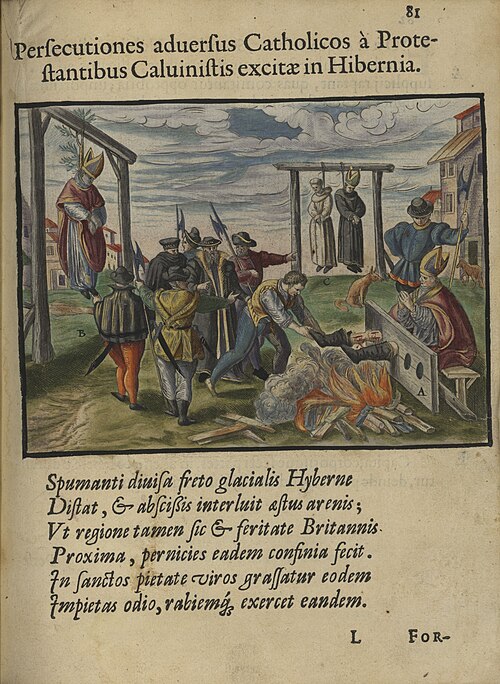
Another person executed in the same spot was “Darkey” Dorcas Kelly, a “Madam” who operated the Maiden Tower brothel on Copper Alley, off Fishamble Street in Dublin. She was burnt at the stake in 1761 – not all that long before the Georgian houses were built on Gallows Road.
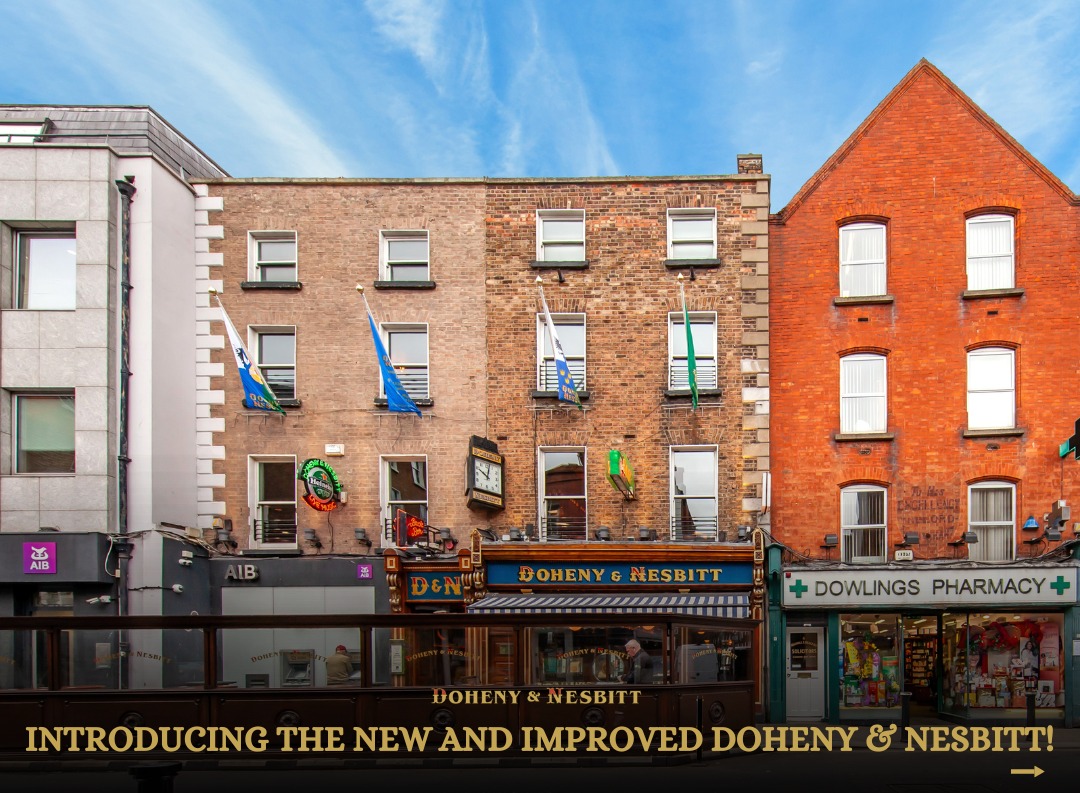
The pub occupies both numbers 4 and 5, two Georgian houses of two bays and four storeys, fronted in brown brick, with corner quoins. The windows diminish in size from ground to top storey. The Georgian period spans over a century, referring to the four successive reigns of King Georges of the House of Hanover, from the accession of George I to the throne in 1714 to the death of George IV in 1830.
Dublin Georgian town houses are typically terraced. Dublin Civic Trust’s website tells us that the house facade, including the spacing and shape of windows, is designed in accordance with classical rules of proportion. Servants quarters and kitchens were housed in the basement, while the principal living space was at first floor level, called a ‘piano nobile’ (Italian for main floor). Large windows at this level let in lots of light. Bedrooms, with smaller windows, were on upper storeys.
The National Inventory tells us that the timber pub front is from around 1890. The Inventory describes panelled pilasters over a painted masonry plinth.

A decorative brass sheet reads ‘Tea & Wine Merchant’.

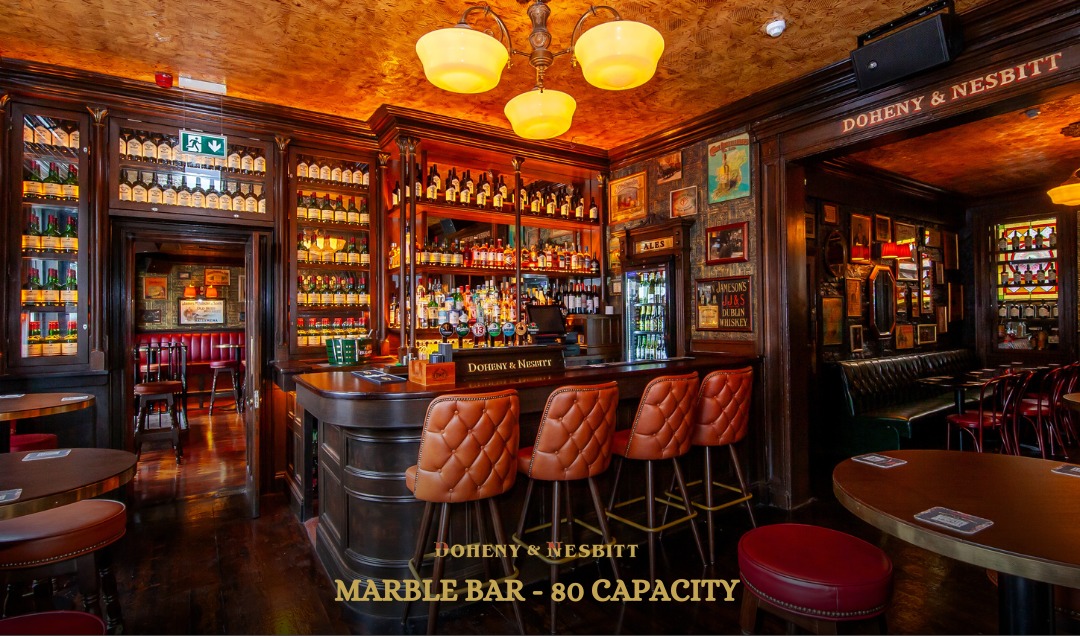
Wooden oversize scrolled foliate consoles frame the signage. Inside the pub retains its Victorian decor, with its original joinery in the bar, snugs and carved timberwork ceilings (according to the National Inventory). The website tells us that the ceiling is of papier maché, and that it has been restored. There’s a replica Victorian bar in the rear.

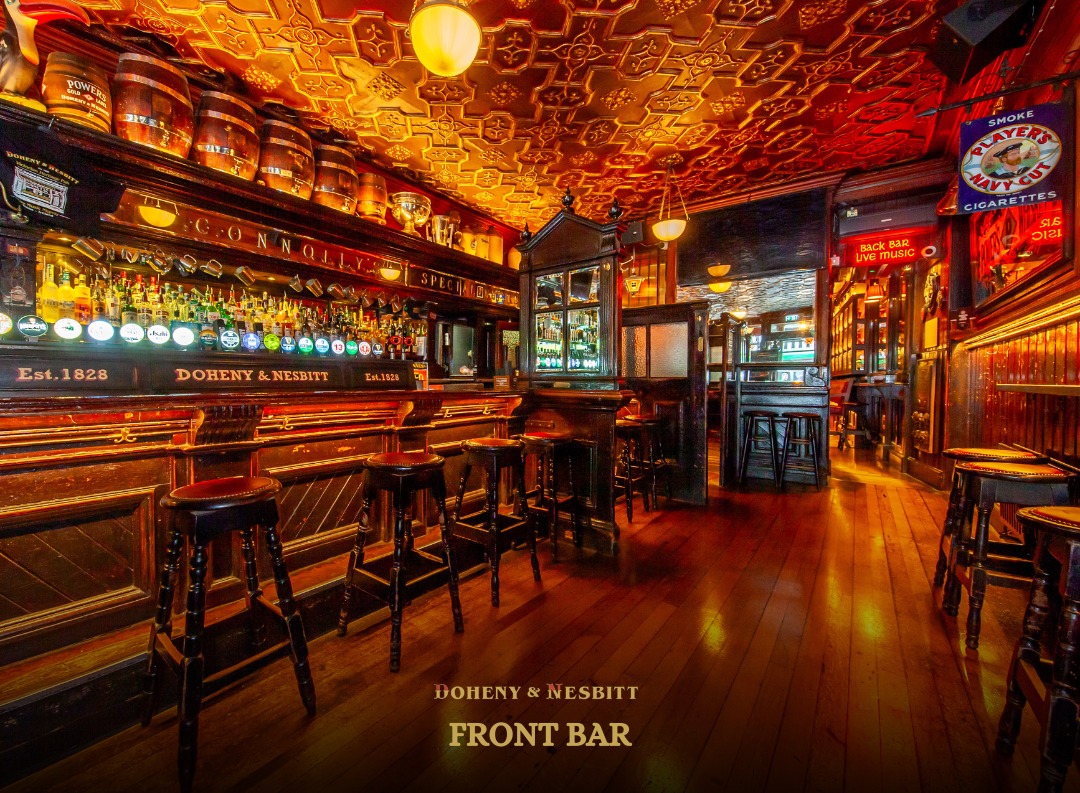
The main bar retains the original counter, and almost all of the original fittings date from the 19th century. I think it’s unfortunate the bar has big tvs so that customers can follow sports, as they ruin the old world atmosphere.

The National Inventory tells us that the liquor licence has been held by several owners. It was a grocers as well as a pub. Shaw’s Directory of 1850 records William Burke as the occupant of the premises. The website tells us that it became a pub in the 1840s. Burke ran the pub as ‘Delahuntys’ for almost fifty years.
In 1924, Philip Lynch and James O’Connor took it over for around thirty years, before passing it onto a Felix Connolly. A sign over the bar retains the Connolly name. Ned Doheny and Tom Nesbitt, two Co. Tipperary men, then took over and gave it the current name. It now has newer owners, who retained the name.

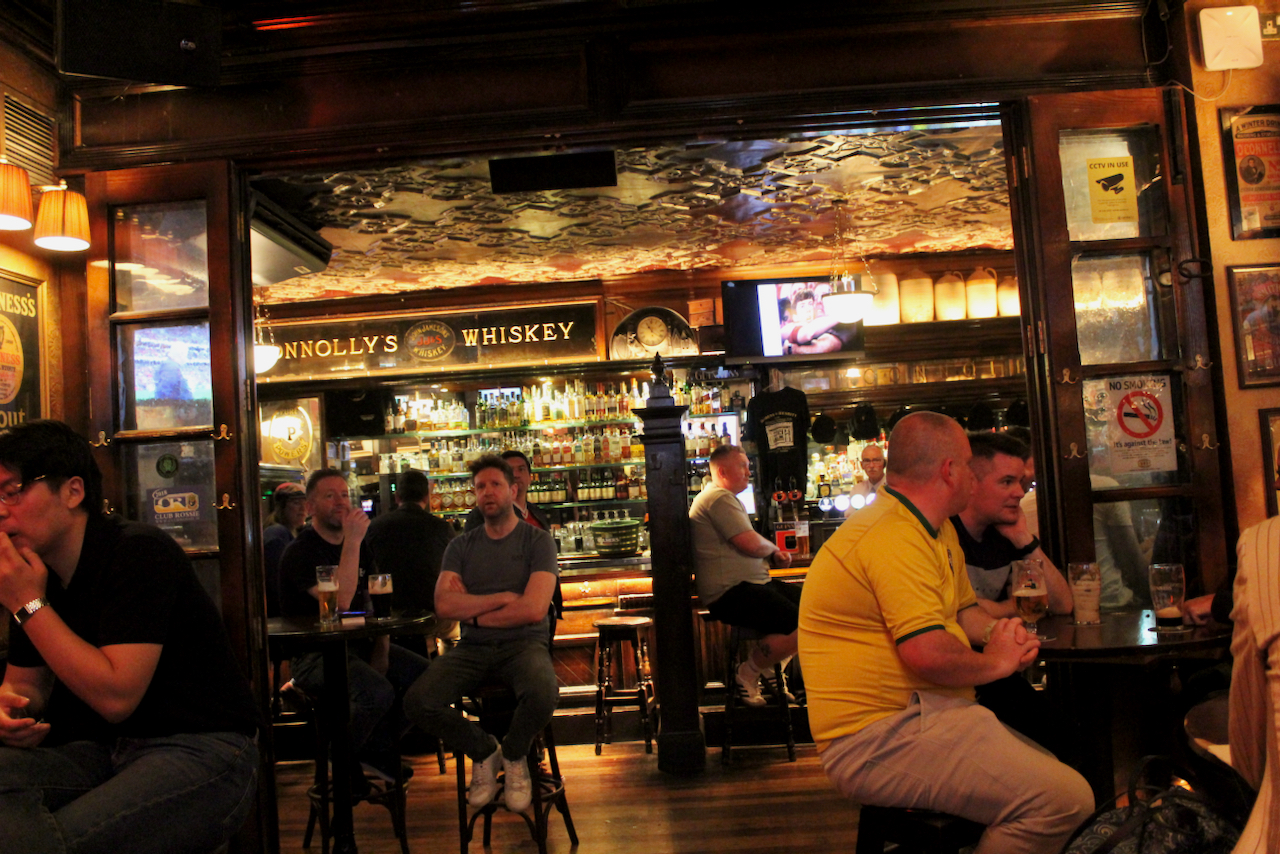

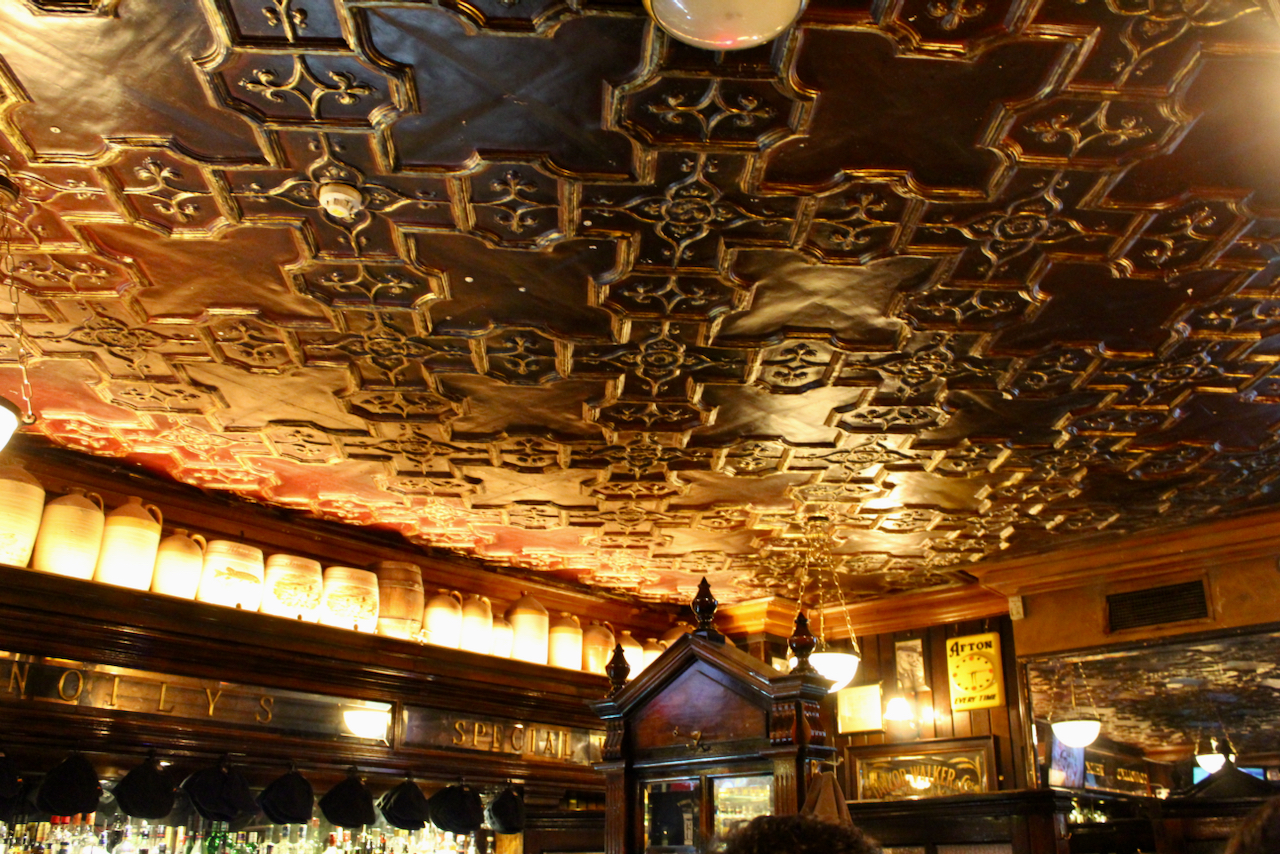
The pub sells food and tables can be reserved in advance if one wants a meal.
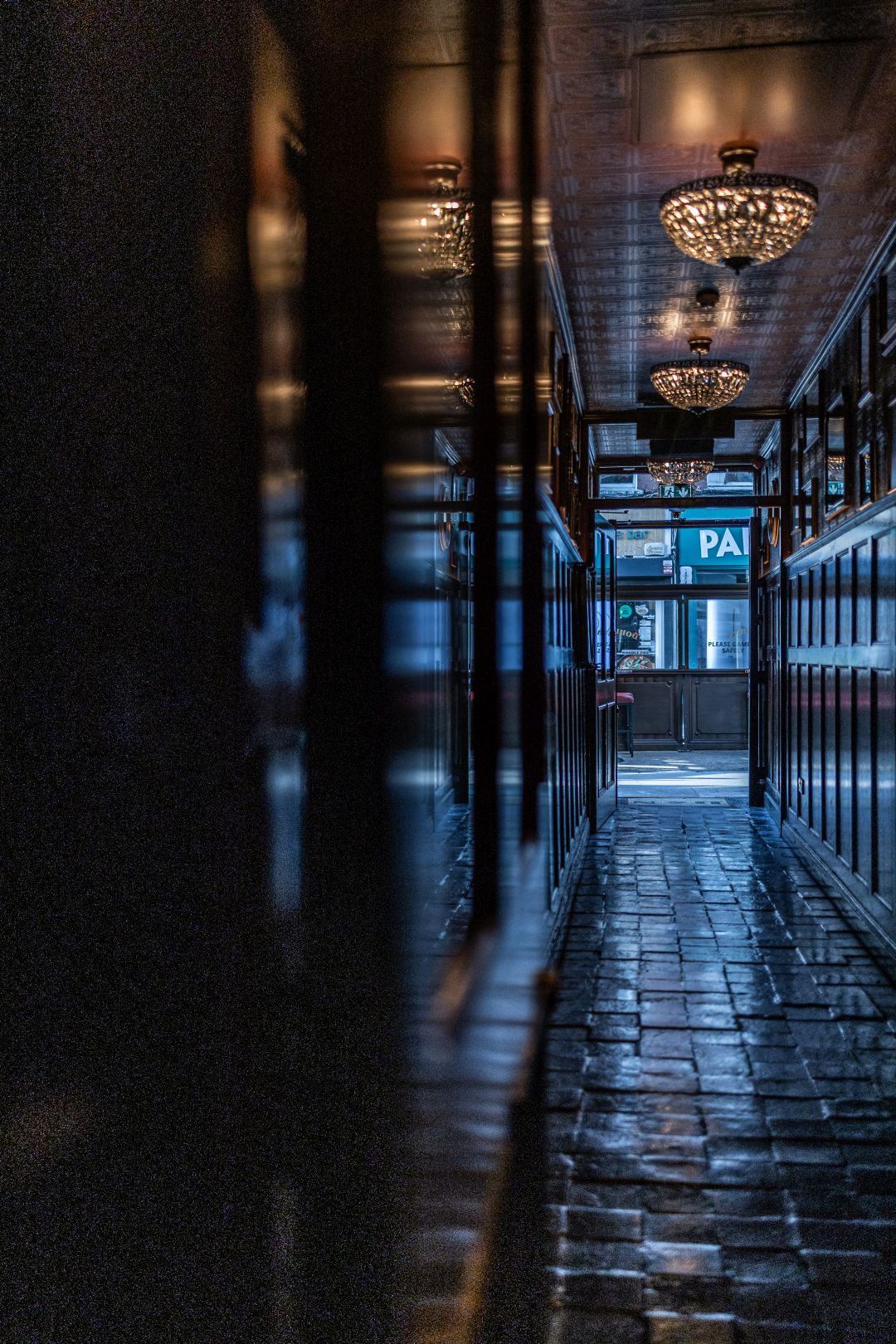
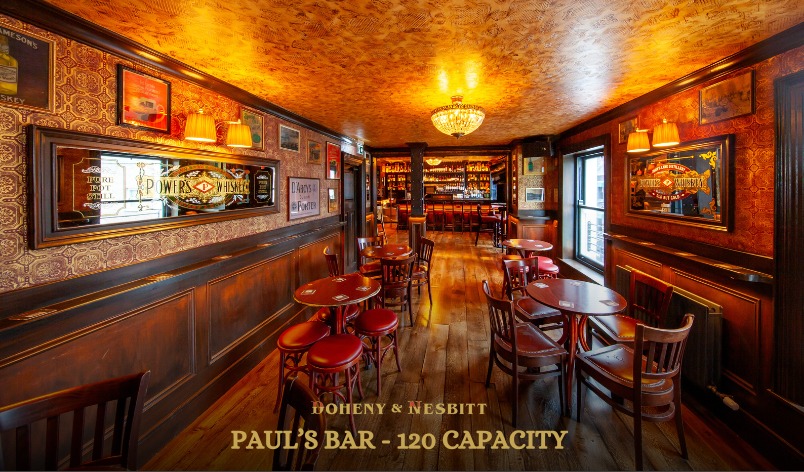
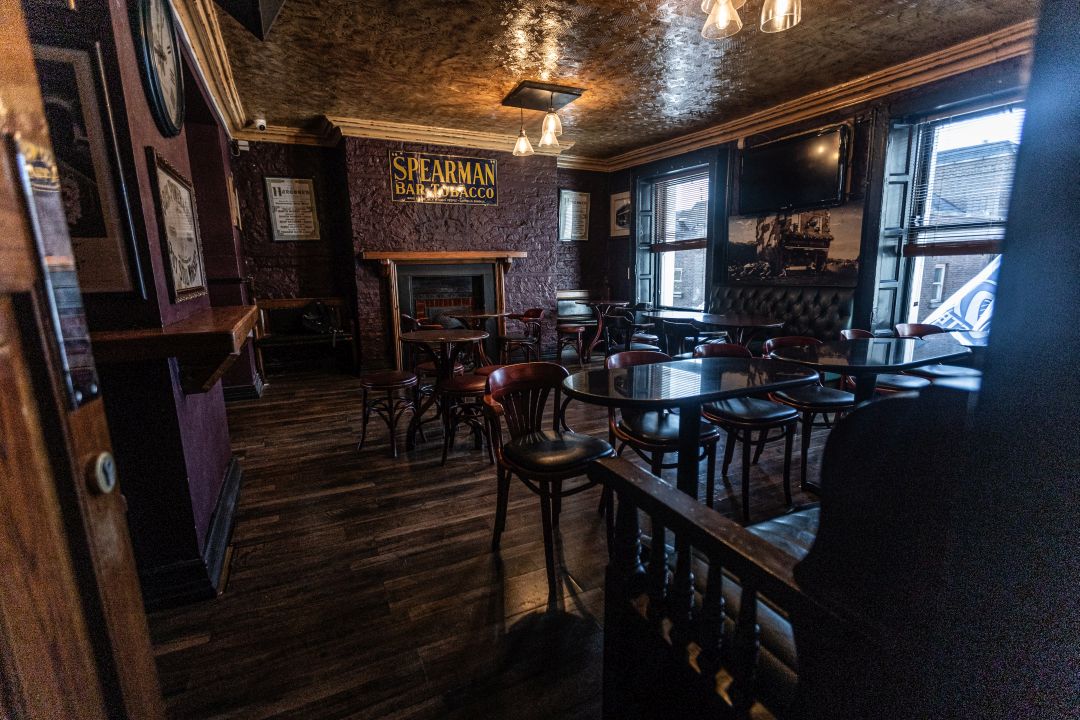
The bar has several rooms, and function rooms upstairs and in the basement, catering for different capacities.


Old advertisments and memorabilia line the walls, and the back bar has an unusual panelled barrel ceiling.

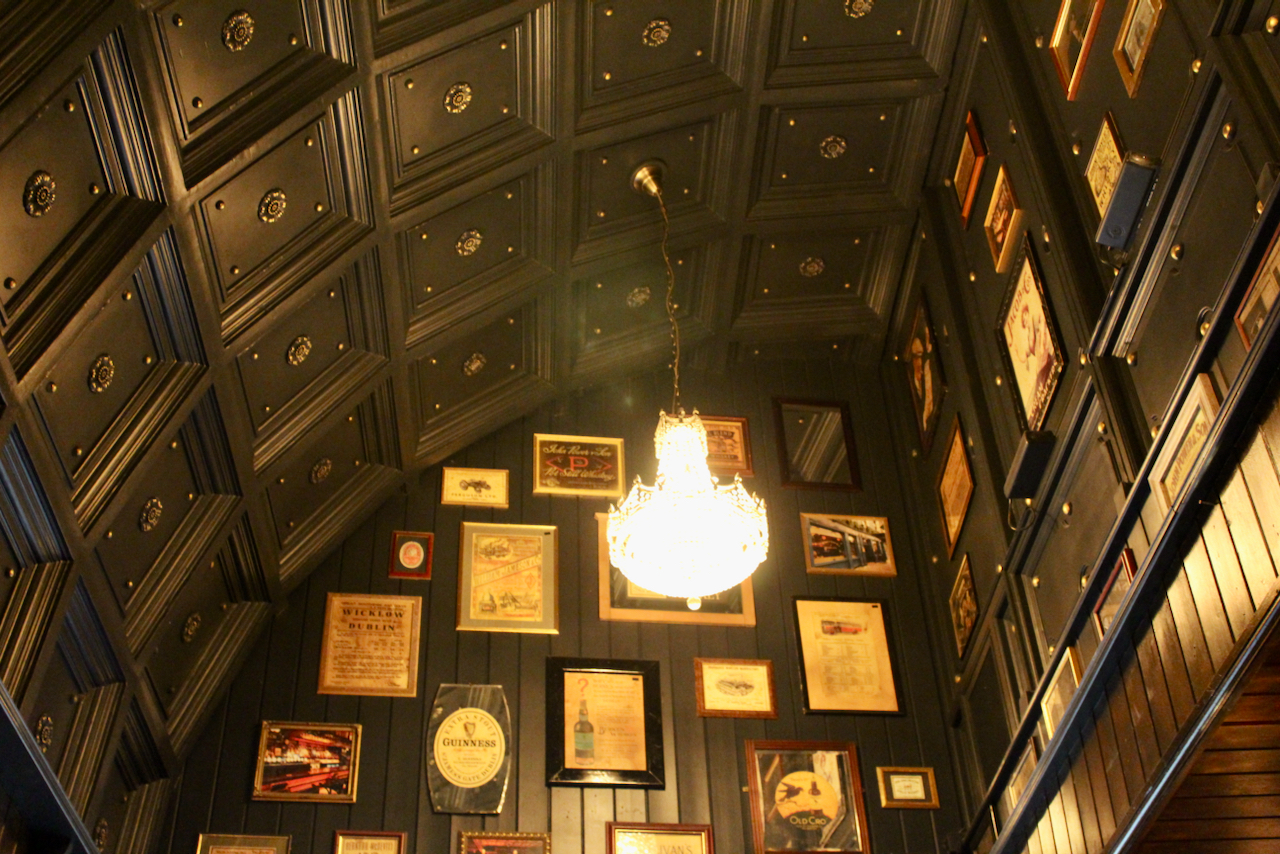

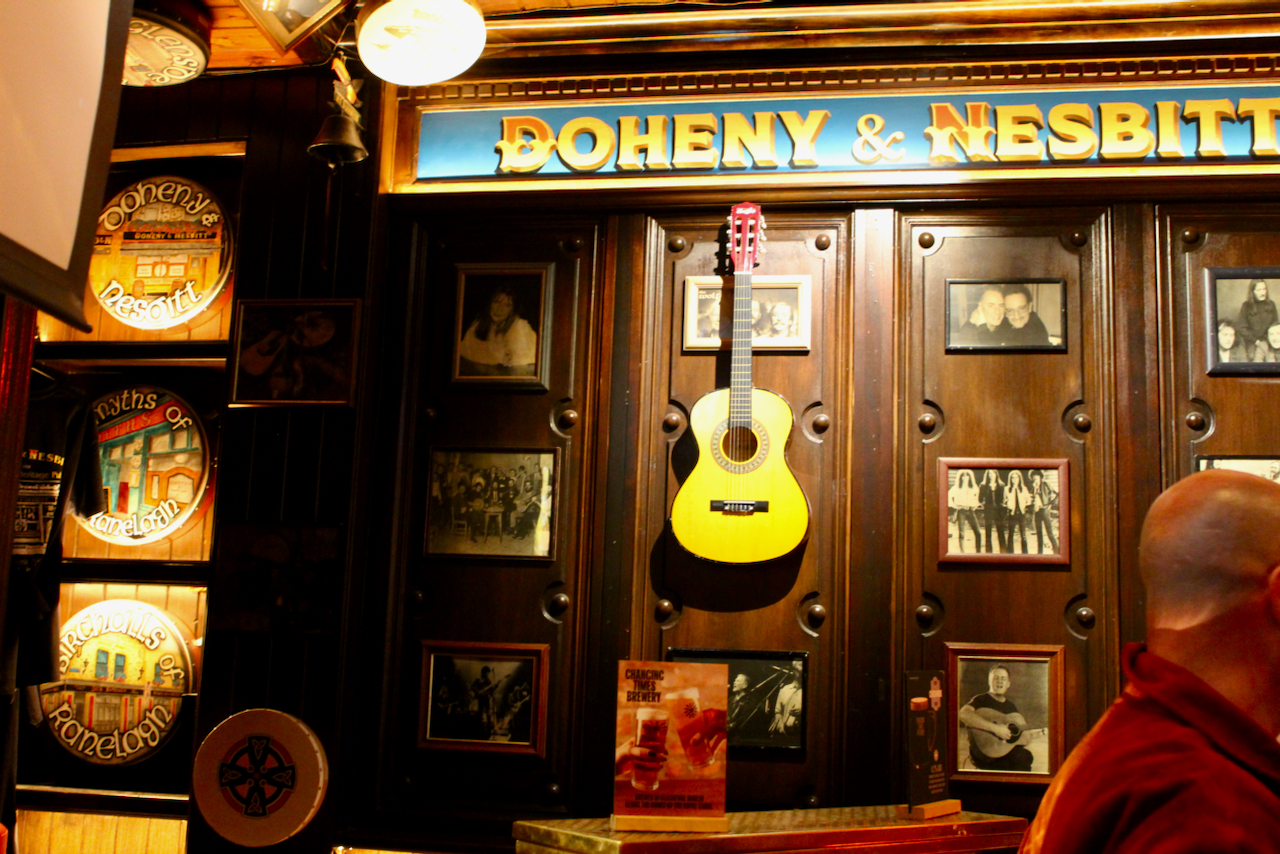

There are three rooms available to book for functions: Tom’s Bar, Paul’s Bar and the Marble Bar. There is also a cellar bar.




https://www.buildingsofireland.ie/buildings-search/building/50100456/doheny-nesbitt-4-baggot-street-lower-dublin-2-co-dublin
https://www.buildingsofireland.ie/buildings-search/building/50100457/doheny-nesbitt-5-baggot-street-lower-dublin-2-co-dublin
contact: Niall Courtney
Tel: 086-0647083, 01-4925395
Open: all year except Christmas Day, Mon-Thurs, 9am-11.30pm, Fri-Sat, 9am-
12.30am, Sun, 10am-12 midnight
Fee: Free
This is a popular pub, and one of the oldest family owned pubs in Dublin.
“Located on one of Dublin’s most famous streets – Baggot Street, Doheny and Nesbitt public house is surrounded by renowned landmarks – The Dail (House of Parliament), Grafton Street, Trinity College, Stephen’s Green and Lansdowne Road.
Otherwise known in literary and debating circles as the ‘The Doheny & Nesbitt School of Economics’ is situated a few hundred meters from the old Huguenot cemetery on Merion Row (1693). Probably the most photographed pub in Dublin, Doheny & Nesbitt is considered an institution for convivial gatherings a sanctuary in which to escape the ravages of modern life, and a shrine to everything that is admirable in a public house.
As a Protected Structure and unique example of Victorian pub architecture, the Doheny & Nesbitt public house demonstrates that skilful conversation can rest easily alongside modern commercial demands.
Most of the pub’s original features, both inside and outside remain intact. Its distinct Brass sign ‘Tea and Wine Merchant’, as well as the frieze boasting ‘Doheny & Nesbitt’ have spawned countless posters, postcards and guide books paying homage to this asset of Ireland’s capital city
If Ireland invented the pub, then Dublin’s finest showpiece is that of Doheny & Nesbitt. The main bar retains the original counter, and almost all of the original fittings date from the 19th century.
The pub’s carved timber, aged wooden floors and ornate papier-mâché ceiling, recently restored, are universally admired.
Its snugs and mirrored partitions are perfect for scheduled conversation, and one can easily muse on Ireland’s past Writers (Yeats, Behan, and Shaw) and Politicians debating and plotting in these hallowed surroundings.
Writers and Politicians from the nearby Dail or House of Parliament still frequent this pub, as do journalists, lawyers, architects and actors, along with a myriad of visitors from around the globe.
What attractions contribute to this pub’s character are debated by many; its perfect pint of stout, its array of Irish whiskeys, it’s comforting dark mahogany and glass furnishings, its reverence for the barman – customer relationship. What is in no doubt is that it is hot on the hit – list of tourists’ and locals’ itineraries – a ‘must-visit’ whilst in Dublin.
The building itself dates back hundreds of years, but was born as a public house in the 1840’s under the lease of a William Burke, who ran it as ‘Delahuntys’ for almost 50 years. In 1924, Messrs Philip Lynch and James O’Connor took it over for around 30 years, before passing it onto a Mr Felix Connolly. Ned Doheny & Tom Nesbitt, two Co. Tipperary men took over the reins of the public house at a later date up until its present owners, brothers Tom and Paul Mangan.
Interestingly the embossed lettering on the mirror to the rear of the main bar, originally bore the name O’Connor, but was later altered to Connolly and remains so to this day. Although the owners of this public house have come and gone, good sense has always prevailed that the landmark of Doheny & Nesbitt should remain just so.
Doheny & Nesbitts public house may reflect the characteristics of a bygone age, but this is no museum piece. An increased patronage has secured a Victorian replica bar to the rear, which is complemented by modern conveniences such as large plasma screen TV’s to cater for the pub’s many sports enthusiasts, and lunches to refresh tourists, workers and shoppers alike.”
 Irish Historic Houses