Kilcooley Abbey, Thurles, Co Tipperary

Mark Bence-Jones. A Guide to Irish Country Houses (originally published as Burke’s Guide to Country Houses volume 1 Ireland by Burke’s Peerage Ltd. 1978); Revised edition 1988 Constable and Company Ltd, London.
p. 165. “(Ponsonby,FIR and sub Beesborough, E/PB) A large winged house buit ca 1790 by Sir William Barker, 4th and last Bt, whose family had previously lived in the old abbey here, which was made into a house in C17. Centre block with seven bay entrance front; broad flight of steps guarded by heraldic beasts up to hall door; flanking wings continued by screen walls. In the garden front, which faces the old abbey, the centre block is of five bays, with a breakfront centre of four giant Ionic pilasters supporting a plain entablature; the wings on this side are pedimented, and of two bays, joined to the centre block by lower links.Impressive balustraded perron with double flights of steps up to central door. [Wikipedia: In architecture, a perron generally refers to an external stairway to a building. Curl notes three more-specific usages: the platform-landing reached by symmetrical flights of steps leading to the piano nobile of a building; the steps themselves; or the platform base of edifices like a market cross.] Roof parapet with urns. The house was partly destroyed by fire ca 1840, during the rebuilding, the family once again occupied the old abbey. Either then, or later in C19, two three sided bows were added on the entrance front, and smaller bows on the garden front, where balustraded loggias were built between the centre block and the wings. A glass porch was also at some date added on this side. The interior largely dates from after the fire. Vast two storey galleried hall, partly top-lit by a glazed dome; with low panelling. Stone staircase with wrought iron balustrade, probably contemporary with the building of the house, in staircase hall to one side. Panelled dining room. Library with Victorian bookcases of carved oak. After the death of William Barker, the building of the house, Kilcooley passed to his nephew, Chambre Brabazon Ponsonby, the half-brother of Sarah Ponsonby, one of the two “Ladies of Llangollen”.”


https://archiseek.com/2010/co-tipperary-kilcooly-abbey
1445 – Kilcooly Abbey, Co. Tipperary
Originally built around 1200, complete destruction of the abbey in 1445 led it its rebuilding. The main part of the abbey consists of the Entrance Chamber, the Church, the Tower and the Sacristy. The Entrance Chamber has a well carved baptismal font on its south wall. The nave of the church is still roofed but the rest of it is out in the open. The church has two large carved windows on its east and west side. The chancel contains two stone tombs and a stone altar. One of these tombs is that of the knight Piers Fitz Oge Butler. His tomb records his death as taking place in 1526 and has some beautiful carvings of 10 apostles on the side. The ruins of the monks living quarters are quite comprehensive, except for the cloisters which are long removed, with the dining hall, monks sleeping areas, and chapter house all still extant. Today Kilcooley Abbey is a national monument.
https://archiseek.com/2012/kilcooly-house
1840s – Kilcooley Abbey, Co. Tipperary
In Burkes Guide to Country Houses, Kilcooley Abbey is described as a large winged house, build circa 1790 by Sir William Barker, 4th and last Baronet whose family had previously lived in the old abbey which was converted to a house in circa 1700. A broad flight of steps guarded by heraldic beasts rise to the hall door and in the garden front which faces the old abbey, the centre block is a five bays with a break front centre of four giant, ionic pilasters.
The house was partly destroyed by a fire, circa 1840 and during the rebuilding the family once again occupied the old abbey.The interior largely dates from after the fire – its finest space being the large double height entrance hallway. It has a gallery on all sides, hastimber panelled walls and a carved wood chimney
piece. The ceiling features ornate cornice work and a central domed cupola.
Detached country house, built 1842 on ruins of earlier building of 1764, partially burnt down 1839. Comprising square two-storey main block raised over basement, seven bay front façade with slight three-bay breakfront with single-storey over basement canted-bays to ends, and five-bay garden elevation having giant order Ionic pilasters to three-bay breakfront, glazed porch accessed by perron and canted oriel windows to ground floor of end bays supported on octagonal limestone columns. Front façade joined by three-bay two-storey recessed wings arcaded to ground floors, and garden front has balustraded loggias supporting later gable-fronted two-bay additions. These are joined by two-bay two-storey pedimented gable-fronted pavilions, in turn joined by quadrant-screened internal courtyards to terminating outbuildings, that to south being octagonal in plan, in turn joined to outbuildings and walls of courtyards. Inner part of southern wing has been raised to three storeys with flat roof, northern has had doorway and external staircase added and both wings have been raised to two storeys with flat roof. Hipped slate roofs, pitched to pavilions and to garden side of wings, rendered chimneystacks, rendered parapets with render eagles to breakfronts and urns to other corners, carved limestone eaves courses to house and pavilions, cast-iron rainwater goods. Lined-and-ruled rendered walls with cut limestone quoins, plinth course and sides to bow and oriel windows. Ashlar limestone to garden breakfront, with carved limestone Ionic pilasters and entablature and having recessed panels above ground floor windows and panel to parapet with swag detail. Square-headed window openings throughout with two-over-two pane timber sliding sash windows with tooled limestone sills to main block, mainly timber casement windows to linking wings set in cut limestone arcades to ground floor, and six-over-six pane timber sliding sash windows to pavilions and south-east gable of main block. Round-headed door opening with coloured glass fanlight and replacement timber panelled double-leaf door, set in carved limestone Doric order door surround, comprising engaged columns with dosserets supporting pediment with Greek key detailing to soffit. T-plan cut granite steps with carved granite piers and balustrades. Garden front has glazed timber porch with glazed timber double doors and inner doors. Courtyards to northwest and southeast of house with two-storey hip-roofed outbuildings entered through segmental archways. Hexagonal outbuilding to south-eastern has spired artificial slate roof, coursed rubble limestone walls and pointed-arch window openings with traceried timber casement windows. Cut limestone piers and cast-iron double-leaf gates and pedestrian gate and railings to site entrance. Recent concrete stile to pedestrian entrance. Rubble limestone demesne walls. Three-bay single-storey gate lodge with pitched slate roof, rendered chimneystack, cast-iron rainwater goods, roughcast rendered walls, two-over-two pane timber sliding sash windows and replacement timber door. Entrance gateway consists of dressed stone piers to vehicular and pedestrian openings with carved caps and cast-iron railings and gates.
An elaborate and complex building even by the standards of country house design, the symmetry and unambiguous massing create a pleasing architectural scheme. Originally built in the eighteenth century by William Barker, it was substantially rebuilt following a fire and the sculptural quality of the capitals of the giant Ionic order to the garden front is testament to the skill of nineteenth-century stonemasons. The classical proportions of this order and of the fenestration to the front provide a coherent framework to both façades of the central block of what is a complex composition. The status of the front entrance is reasserted by the elaborate yet finely wrought Doric doorcase. Still retaining much of its demesne, Kilcooly Abbey is the focal point in a remarkably intact and diverse group of demesne buildings including the outbuildings and smaller dwellings, the Church of Ireland church, the old walled graveyard, the boathouse, and the ice-house and Wellington monument in the former deer-park. Within the demesne also stand a ruined medieval Cistercian Abbey (National Monument) and a rare example of a medieval dovecote,
http://landedestates.nuigalway.ie/LandedEstates/jsp/property-list.jsp?letter=K
In 1786 Wilson refers to Kilcooley as the residence of Sir William Barker. This was the seat of the Barker and later Ponsonby Barker family in the 18th and 19th centuries. It remained in the possession of the family now known as Ponsonby until the early 21st century. The present house dates from the late 18th century, the family having previously lived in the old abbey. The house was partially destroyed by a fire in 1839 and rebuilt. In the mid 19th century the house was valued at £67.10 shillings. It was sold in 2004 and offered for sale again in 2015.
The Tipperary Gentry. Volume 1. By William Hayes and Art Kavanagh. Published by Irish Family Names, c/o Eneclann, Unit 1, The Trinity Enterprise Centre, Pearse St, Dublin 2, 11 Emerald Cottages, Grand Canal St, Dublin 4 and Market Square, Bunclody, Co Wexford, Ireland. 2003.
Ponsonby-Barker of Kilcooley
P. 182. Kilcooley in the foothills of the Slieveardagh Hills, in the Tipperary-Kilkenny bornder, was first granted to the Cistercians in 1182 AD by Donough Mor O’Brien, who gave them what land he could encircle in a day’s ride. There they built an Abbey and the monks lived and worked there until the Reformation in the time of Henry VIII. After that it came into the possession of the Earls of Ormonde.
p. 183. The abbey and lands at Kilcooley were purchased in 1636 by an Englishman, Sir Jerome Alexander, for £4,200, from the then Duke of Ormonde. Known as the “Hanging Judge,” Jerome was much feared in post-Cromwellilan Ireland. At the time a phrase was coined, “to be alexandered.” It meant to be executed without mercy. Jerome is best remembered for the fact that he gave a very substantial bequest of £600, and his own large collection of books to Trinity College with a brief taht a library be founded there.
…He left the great bulk of his property to Elizabeth [his daughter] including Kilcooley and his other lands, but she was to forfeit it all if she “at any tiem after my decease marry and take as husband and Lord of Ireland by what name or title soever he bears or the son of any such Lord, nobleman or Nobleman Baronet, Knight, Esquire, gentleman, Archbishop, Prelate or any Irishman that comes of an Irish extraction and descent or that hath been born and bred in the Kingdom of Ireland.” She was likewise forbidden to marry any Papist….
p. 184 [after trying to lift being debarred after “sharp practices” in England, he returned to Ireland] in 1634 [and] he was elected as a member for the Borough of Lifford in Donegal where he was expected to forward the Ulster Plantation. It was at this period that he met the Duke of Ormonde and persuaded him to sell Kilcooley. Jerome never saw Kilcooley until the 1660s and he never lived there.
He was an enemy of Strafford, the Lord Deputy, and a ruthless judge who had received a spell of imprisonment from the Lord Deputy. In 1641 he fled from Ireland with his wife and children – “escaping in their night clothes.” After the rebellion of 1641 he made claims against the government for [p. 185] losses as Kilcooley had been restored to the Cistercians. He did not recover Kilcooley until after the Restoration. It would appear that Jerome Alexander had risked his life for King Charles II by taking part in the secret negotiations that brought about his restoration. [Carte papers vol. 34].
[he and his wife are buried in St Patrick’s cathedral in Dublin]
p. 185. Elizabeth Alexander married Sir William Barker of Essex in 1676 and thus began the unbroken succession of Barkers and Ponsonbys who have held on to Kilcooley until the present day.
Neither Sir William nor Elizabeth ever lived in Kilcooley and regarded the estate just as a source of revenue managed by various agents. In the 1670s the estate netted about £250 per annum.
When Elizabeth died in 1702 William married a girl of 20, Letitia Motham, but they do not appear to have had any children.
The second William did not spend much time in Ireland either but his son the third Sir William was educated and brought up in Irelad. The second Sir William inherited the esates in Ireland in 1719 upon the death of his father. Sir William III was educated at Kilkenny College and in 1720 was sent to Trinity College in Dublin. While his father lived mainly in England Sir William III was sent to Kilcooley to manage affairs there. He had to live in the old Abbey, which would have been considered a miserable residence by any gentleman at that time.
Not only did his spendthrift father keep William III short of money but he also sent his two brothers to Kilcooley to live with him. They did not get on very well adn when William complained to his father he wrote seying to tell his brother “he would come to Ireland, make him his boot black and teach him with a whip to have manners.”
In 1733 Sir William III married Mary Quin from Adare, Co Limerick, and in 1737 a son was born, also christened William. He was to be the last Barker baronet. His father died in 1746 and Sir William III became heir to all the Irish estates, which were valued at the time at £5,000.
p. 186. He had a town house in Rutladn Square in Dubiln and spent his winters there. His careful way of life laid the foundation of the considerable prosperity of his son.
The fine Palladian residence, in which the subsequent Barker descendants lived, was built around 1762 by the last Sir William though his father was alive at the time. Sir William IV had a sister, Mary, who married Chambre Brabazon Ponsonby. Chambre’s father was the Hon Henry Ponsoby, the younger son of teh Earl of Bessborough.
p. 186. In the later 18C Sir William Barker IV incurred the displeasure of his tenants and of the country people in general when he began enclosing his lands. An article in the Irish Historical Journal cited Sir William as an example of the type of landlord who helped produce the Whiteboy movement of agrarian crime by enclosing land that had formerly been commonage.
p. 187. The Whiteboys were so called because they chose to wear a white smock (something akin to the Ku Klux Klan). They began their activities in Co Tipperary at Clogheen. It was a protest movement against the imposing of tithes on potatoes and corn. The tithe on potatoes was what his the poorest hardest. The outrages, such as houghing of cattle, began about 1761 and were aimed at the tithe proctors and those who took over the lands of tenants evicted for non-payment of the tithes.
…p. 187. In 1772 Sir William granted leases to Palatine families that he brought to Kilcooley from Adare, on condition that they never employed anyone professiong the popish religion.
Sir William who married Catherine Lane, an heiress, had no faily, so when Chambre Ponsonby died in 1762, Sir William invited Mary Ponsonby, his sister, to stay in Kilcooley with her children Chambre and Mary.
p. 188. Chambre Ponsonby the heir apparent… married Lady Harriet Taylor, the daughter of lord Bective. Chambre had been a lieutenant in the army but resigned his commission after his marriage. He went to live in Belmont Lodge, near Durrow. He had a small estate of his own in Galmoy, but seems to have been somewhat impecunious until he inherited Kilcooley in 1818. He and Harriet had three sons and one daughter, Catherine. [Catherine married Thomas Connolly of Castletown – the Peerage says it was Col Edward Michael Conolly].
p. 189. Chambre [1762-1834] seems to have been a spendthrift and in 1791 the Earl of Bective and Sir William discharged a debt of £4000 owed by Chambre. Later in 1814 he owed over £3000 to the Bishop of Waterford and this too had to be discharged.
…When the 1798 rebellion broke out Sir William fled with his famly to England, where they had a large property in Bath. ..
Sir William died in 1818 and Chambre Ponsonby inherited the estate. In accordance with the wishes of his uncle he changed his name to Ponsonby-Barker.
p. 190. Chambre Ponsonby-Barker died in 1834 and was succeeded by his son William, who dropped the Ponsonby and was simply known as William Barker. He inherited estates of over 8000 acres in a very troubled time with grave unrest in every area due mainly to the “Tithe War.”
p. 190. William Barker was reputed to be a good landlord and he was also one of the main shareholders in the local Coalmining Company. He tried to expand the coalmines during the 1840s and it is to his credit that during the worst of the famine years none of the coalminers was made redundant., despte the fact that the demand for coal dwindled almost to nothing.
The mansion at Kilcooley was seriously damaged by fire in 1839 [said to be by a disgruntled servant]
p. 191. The house was rebuilt but was not finished until 1843 and the expense made serious inroads into the family finances, which became depleted thereafter.
When the scourge of teh famine hit the area Wm Barker did much to help the poor by undertaking the building of a demesne wall of about five miles, He was compelled to sell the family jewels to pay for it.
p. 191. When he died in 1877 he was succeeded by his huntin’, shootin’ and fishin’ brother Thomas, a sprightly septuagenarian who rejoiced in the nickname “Damnation Tom” as every sentence he uttered was prefaced by the word “damn.” It fell to the lot of “Damnation Tom” to sell of a considerable portion of Barker lands in such far flung places as Ashgrove in Co Waterford and Callan in Co Kilkenney to reduce the burden of debt. [p. 192] HOwever, he managed to hold on to the very valuable Clarina estate in Limerick, which at the time brought in more rent than the Kilcooley estate.
p. 192. “Damnation” Tom’s son was Chambre Ponsonby [1839-1884]…His brother-in-law Horace Plunkett, who was in ill health, had gone to Wyoming…Chambre went out to visit Horace and decided to sell his estates and move to America. ON his way home, in 1884, he took ill and died suddenly on the voyage. As his eldest son and heir Thomas was only six years old at the tiem and his mother had to take the responsibility for running the estate. She was helped by her brother Horace, who from the distant Rocky Mountains and the occasional visit to Kilcolley fought a kind of rearguard action in the land wars of the last decades of the 19th century.
Mary Ponsonby had further troubles when her brother, Lord Dunsany, died and she undertook the task of rearing his two sons, the eldest of whom was the lord Dunsany of literary fame. As soon as the children were old enough to be sent to boarding school Mrs Ponsonby retired to England and remained there until her death in 1921.
In the 1920s Tom Ponsonby [1878-1946] was owner of the estate, which he had inherited in 1884. He had been educated at Eton and Oxford and had entered the army with a commission in the 10th Hussards. He fought in the Boer War and then spent three years in America managing his uncle Horace Plunkett’s ranch.
p. 193. His wife, Mary Paynter, whom he married in 1909, spent considerable money in renovating and refurbishign the house. They had four children, Chambre, George, Henry and Noreen.
During the 1916 Rebellion, Tom was in Dublin with Sir Horace Plunkett when he was shot and seriously wounded by “friendly fire.” It would seem that hte car they were travelling in was mistaken for a car carrying rebels and was shot at by British soldiers. Tom eventually recovered. [ see Bence-Jones Twilight of the Ascendancy].
p. 193. Kilcooley was raided during the Civil War [but kept safe by Tom]
Tom was an astute manager and farmed what was left of his estaet in a most profitable way until the advent of the Economic war with Britain, which ruined Irish farming. Tom was wealthy enough to survive but he was obliged to lease most of his lands to the Forestry Dept.
He was married to Frances Paynter the daughter of a wealthy member of the English gentry. They had three sons. The two eldest found careers in the Services and Chambre was Military Attache in Norway while George, a Major, serve in the Army in North Africa and Italy in WWII.
p. 194. George was wounded four times but was fortunate in that he was able to recover and return to Kilcooley. The third son, Henry Jeffrey, inherited the house and lands of Grove from his Barton cousin, Charles robert, in 1955. ..
Lt Col Chambre, the eldest son, felt unable to accept the responsibility of Kilcolley and when Thomas Ponsonby died in 1943 the estate was left in the capable hands to George his second son….His son Peter Douglas is the last of the Ponsonbys to occupy Kilcooley House.
https://theirishaesthete.com/2015/11/16/kilcooley/
The Consequences of Being in Service

‘Therefore his servants said to him, “Let a young woman be sought for my lord the king, and let her wait on the king and be in his service. Let her lie in your arms, that my lord the king may be warm”.’ (1 Kings 1:2).
William Ponsonby-Barker of Kilcooley, County Tipperary was an ardent evangelical Christian and in the years prior to his death in 1877 he would habitually emulate the example of King David in the Old Testament, and take a young woman to bed with him – strictly for the purposes of keeping his elderly body warm. The human hot water bottle would, it is said, be chosen from among the housemaids lined up after evening prayers. In his book Twilight of the Ascendency (1987) Mark Bence-Jones tells that on one occasion, the maid selected by Ponsonby-Barker ‘offended his olfactory sensibilities, so he sprinkled her liberally from a bottle which he took in the dark to contain eau de cologne but which in fact contained ink!’ Of course it may be that the owner of Kilcooley was following the strictures of his late mother. According to the American Quaker Asenath Nicholson who recorded a visit to the estate in her 1847 book Ireland’s Welcome to the Stranger, ‘the pleasure of walking over these delightful fields is enhanced by the knowledge that his tenants are made so happy by his kindness. To every widow he gives a pension of £12 a year; and to every person injuring himself in his employment, the same sum yearly, as long as the injury lasts. His mother was all kindness, and her dying injunction to him was, “To be good to the poor”…His mother, whom he ardently loved, was buried in a vault on the premises; and his grief at her death was such that he left the domain for twelve months. He supports a dispensary for the poor, who resort to it twice a week, and receive medicine from a physician who is paid some sixty pounds a year for his attendance.’


From the 12th century onwards Kilcooley belonged to the Cistercian order which built a fine abbey there. Following the dissolution of the monasteries in the 1540s, the land passed into the possession of the Butlers, Earls of Ormonde. In 1636 the twelfth earl (and future first Duke of Ormonde) in turn sold Kilcooley to the Norfolk-born judge Sir Jerome Alexander for £4,200. Following his death in 1670, the estate was bequeathed to a daughter Elizabeth Alexander, on the condition that she did not marry an Irishman. In the event her husband was another lawyer, William Barker who had been born in Essex: he had already been granted 3,300 acres in Limerick in 1667 and received a further 1,300 acres in Tipperary in 1678; three months prior to his marriage in June 1676 he was made a baronet, the first of four all confusingly bearing the same first name. Successive Sir William Barkers lived in the mediaeval Kilcooley Abbey, adapted as a private residence. However, each of them also seems to have considered the notion of building a new residence, only the last of the line doing so. On succeeding his father at some date on or before 1719, the second baronet thought to construct both an alternative house and an adjacent market town but in the event did neither. Following the marriage of his heir in July 1736 to Mary Quin of Adare Sir William wrote of plans to build ‘as fine and elegant a private gentleman’s seat as any in Europe and inland market as ye country could afford, instead of botching it now about old Abbey walls not proper adapted to be anything called polite’. But nothing happened either then or until around the time the last Sir William inherited Kilcooley on the death of his father in 1770. Ten years earlier he had married Catherine Lane and around this time was handed responsibility for the estate. A stone in the stable yard bearing the date 1762 certainly suggests work was done on the property then, so perhaps the core of the present house dates from the same period.


As built by the fourth Barker baronet, Kilcooley conformed to the Palladian style then beginning to go out of fashion; this certainly suggests an earlier date than c.1790 which was traditionally given. Owing to alterations made in the 19th century after a fire, it is difficult to see the original form of the house. Looking towards a lake created in 1789 at the cost of just over £442 the entrance front is of seven bays and two storeys over elevated basement. Arched links on either side lead to pedimented pavilions and these in turn link to quadrants giving access to service yards: rubble-filled niches and oculi visible beneath later render hint at the building’s earlier form. The garden front looks across parkland towards the romantic ruins of the old abbey. On this side, the house has a central breakfront of three bays broken up by four giant Ionic limestone pilasters and ending in a parapet supporting eagles and urns. Access on this side, as on the entrance front, is via a double flight of balustraded stone steps. Single bays on either side lead, again as on the other side of the house, to pedimented pavilions and thence to a further run of buildings, including a pretty hexagonal model dairy. The aforementioned fire – of which more below – gutted the central block of the house (Asenath Nicholson specifically mentions the loss of a fine library) but appears to have spared the wings. Thus it is possible to gain a sense of the interior of Kilcooley in these sections of the building. On one side, for example, there is a fine cantilevered stone staircase which looks to be 18th century (and although intended for use by servants is actually handsomer than that used by the owners). At the other end of the house are a couple of rooms with tall lugged doorcases and coved ceilings. One of these still retains its arabesque rococo stuccowork, as well as a tall, slender marble chimneypiece.


The strict Christian beliefs of William Ponsonby-Baker may have led to the fire that destroyed the central block of Kilcooley. One day in 1839 a woman arrived at the house with a small child who, she said, had been fathered by the butler, a Mr Ashby. So shocked was Ponsonby-Barker by his employee’s behaviour that he immediately fired Ashby: as the house maids had already discovered, there were consequence to being in service at Kilcooley. In revenge, Ashby packed the chimney in the library with paper and set it alight. As a result, the building was gutted and as Asenath Nicholson commented ‘An elegant library was lost’ along with many of the other contents. Kilcooley’s owner set about rebuilding the house, where work was completed in 1843. Certain alterations were made at this time to both exterior and interior. Regarding the latter, canted bay windows were inserted on the ground floor of both the entrance and garden fronts (originally those on the main facade were bows), and a second storey with balustrade loggias added to the links between main block and wings, as a result of which the building gained space but lost some of its lightness. Internally, a new main cantilevered stone staircase was created to one side, lit by an arched window on the return. An enfilade of reception rooms overlooks the mediaeval abbey on the garden side; these appear to be following the original house’s ground plan, although a portion of the central room was shaved off to create an antechamber. Meanwhile to the front one finds the dining room and library: both of these are half-paneled in oak, as is the entrance hall between them. This last is unquestionably Kilcooley’s most striking feature, an enormous double-height space with first floor gallery, the whole lit by a glazed dome: interestingly hot water pipes run around the base of the dome, evidently in an effort to ensure the gallery wasn’t too cold. Below runs a vast basement, with a central passage providing access to a wealth of storage and staff rooms, including in one of the wings a lofty kitchen, again probably part of the original building as it still has a central octagon through which smoke would once have escaped.

More on Kilcooley next Monday…
http://www.turtlebunbury.com/history/history_family/hist_family_ponsonby.html
The Ponsonbys of Kilcooley Abbey
For more on this family, see Smyth of Ballynatray, Holroyd-Smyth of Ballynatray and the Earls Mouncashell..
THE BACKGROUND
On 21st April 1902, six months after his fathers’ death, Captain Rowland Holroyd-Smyth married Alice Ponsonby, a direct descendent of Sir John Ponsonby of Bessborough. They subsequently had four sons – John, Horace, Bryan and Oliver – and a daughter, Mary. Alice’s lineage is this. Sir John had two grandsons – the 1st Earl of Bessborough and Major General Henry Ponsonby. General Ponsonby lived at Ashgrove in Co. Kilkenny and was married to Lady Frances Brabazon, daughter of Chambre, 5th Earl of Meath. The General was killed in action at the catastrophic battle of Fontenoy on 11 May 1745. He left a daughter Juliana and a son, Chambre Brabazon Ponsonby, MP.[1] Chambre succeeded to Ashgrove. Just over a year after his father’s death, Chambre was married. It was the first of three marriages. The first and second produced a daughter each, the latter being Sarah Ponsonby who, with Lady Eleanor Butler, was to become one of the celebrated ‘Ladies of Llangollen’.[2] His third wife Mary, daughter of Sir William Barker, 3rd Bart, of Kilcooley, Co. Tipperary, was the forbear of Alice Holroyd-Smyth. It was also through this marriage that the Ponsonbys came into Kilcooley Abbey. Chambre and Mary Ponsonby had two children, who they rather confusingly called Chambre and Mary Ponsonby. The elder Chambre died suddenly shortly before Christmas in 1762, less than six months after the birth of his only son. Mary’s brother, Sir William Barker, 4th Bart, who had since succeeded to Kilcooley, invited her and her two children to live with him in the Palladian mansion. Sir William was something of a Protestant extremist and commanded two companies of Volunteers. He married an heiress by name of Catherine Lane but they had no children of their own. The widowed Mary Ponsoby later married Sir Robert Staples, 7th Bt, while her daughter Mary married Thomas Barton of Grove.
The Ponsonby-Barkers
Chambre Brabazon Ponsonby-Barker of Kilcooley was born on 12th June 1762, six months before his fathers’ death. On 4th June 1791, he married Lady Henrietta Taylour, daughter of Thomas, 1st Earl of Bective. They were the great-grandparents of Alice Holroyd-Smyth. Chambre was a classic Georgian spendthrift, racking up debts of £4000 by the time of his marriage which were paid off by his kindly uncle, Sir William Barker, and new father-in-law, the Earl of Bective. For the first decades of their married life they lived at Belmont Lodge near Durrow. In 1818, Chambre succeeded his uncle at Kilcooley. He subsequently became High Sheriff of the county and was a leading opponent of Catholic Emancipation.
The Taylours of Headfort, Earls of Bective Abbey
The Taylours were a Sussex family who prospered through a college friendship between Thomas Taylour and Sir William Petty. When Petty became Surveyor-General of Ireland under Cromwell, he recruited Taylour to assist him with The Down Survey. Ultimately Taylour was uncredited for his contribution. Taylour sold his lands in England and took possession of a large estate in Ireland centred on Kells, Co. Meath. He occupied a number of important posts such as Deputy Receiver General, Vice Treasurer and, prior to his premature death aged 51 in 1682, officiated as Treasurer-at-War. His son Thomas was created a Baronet of Ireland in 1704 and sworn onto the Privy Council in 1726. The 1st Bart’s grandson, another Thomas, was created Earl of Bective Castle in 1760. His wife Jane was the eldest daughter of Rt Hon Hercules Langford Rowley by Elizabeth, Viscountess Langford. They had a large number of children, including Lady Henrietta Ponsonby and her eldest brother Thomas (1757 – 1829) who was created Marquess of Headfort in December 1800.[3]
Thomas Ponsonby of Kilcooley
Chambre died on 13th December 1834 and his widow, Lady Henrietta, followed on 12th January 1838. They left at least three sons but Alice’s grandfather Thomas (Henry) Ponsonby was the only one to leave children.[4] He was a huntin’, shootin’, fishin’ sort, known as ‘Damnation Tom’ for his penchant of peppering every sentence with the word ‘damn’. He was born on 21st February 1807, an auspicious day for some, and served as a Captain in the 6th Dragoon Guards. On his 31st birthday, he married Fanny Mary, daughter of Major RL Dickson. He briefly succeeded to Kilcooley Abbey on the death of his 82-year-old brother William Barker in January 1877. William had racked up serious debts on the property and Damnation Tom duly sold lands in Waterford and Kilkenny to clear them off. He died aged 73 on 10th February 1880 and was succeeded by his son, Chambre, who was Alice Holroyd-Smyth’s father.
Chambre and Mary Ponsonby
Alice’s father was Captain Chambre Brabazon Ponsonby (1839 – 1884) of Kilcooley. On 22nd October 1873, Chambre married the Hon. Mary (Eliza Sophia) Plunkett, eldest daughter of the 16th Lord Dunsany. When the newlyweds returned to Kilcooley, they were greeted by ‘illuminations and a triumphal arch … and a bonfire at the entrance to the demesne. Cheering tenants pulled their carriage and there was music and dancing all night’. Whiskey and beer were provided for all guests by Chambre’s evangelical uncle, Sir William Ponsonby-Barker. Alice was one of seven children born over the ensuing years, four sons and a daughter. As agrarian unrest spread across Ireland, Chambre became increasingly disenchanted by the country. His brother-in-law Horace Plunkett had purchased a ranch in Wyoming where he spent the springs and summers. Chambre went to visit him and decided to sell his Irish estates and move. However, while returning home from this visit, he suddenly took ill and died aged 45 on 9th October 1873. He and Mary were less than two weeks away from celebrating ten years of marriage. Mary raised the children with assistance from Horace Plunkett. When Mary’s brother Lord Dunsany died in 1889, she then took on his children too. The eldest of these children was Lord Dunsany of literary fame. As soon as the children were old enough to be sent to boarding school, Mary abandoned Kilcooley and lived in England until her death in 1921.
The Plunkett Family
Mary’s family, the Plunketts descend from Sir Christopher Plunkett, a Deputy Governor of Ireland during the early years of the War of the Roses. His son Christopher was created 1st Baron Dunsany in 1438. Despite strong catholic allegiances the Plunketts managed to hold onto their estates during the upheaval of the 17th and 18th centuries.[5] Alice’s grandfather, Edward Plunkett, 16th Baron Dunsany (1808 – 1889), was a Representative Peer for Ireland.[6] In September 1846 he married the Hon. Anne Constance Dutton, daughter of Lord Sherborne. They were only married twelve years before Anne’s death on 27th June 1858. She left Lord Dunsany with four sons and three daughters. Mary was the eldest.
The Uncles of Alice Holroyd-Smyth’s
Alice never knew her two of her uncles. The youngest Edward died aged eight in December 1864.The firstborn, Randall Plunkett, was elected MP for West Gloucester but died on Christmas Day 1883 aged 35. Her uncle John succeeded as 17th Baron in 1889 and was father to the eccentric author and playwright, the 18th Baron. Her most famous uncle was the politician, the Rt. Hon Horace Plunkett (1854 – 1932). He was MP for South Dublin 1892 – 1900, first VP of Dept of Agriculture 1899 – 1907 and Commissioner of the Irish Convention in 1917.
Thomas Ponsonby of Kilcooley
Alice Holroyd-Smyth’s brother Tom Ponsonby was grandfather to Henry Ponsonby who inherited Ballynatray in the 1960s. Born on 29th December 1878, Tom was just six years old when the death of his father left him master of Kilcooley. He was educated at Eton and Oxford and served with the 10th Hussars in the Boer War. He then spent three years managing his uncle Horace’s ranch in Wyoming. In later life he was a Deputy Lieutenant for County Tipperary. On 25th November 1909, he married (Frances) May Paynter, younger daughter of Major George Paynter of Eaton Grange, Grantham, Lincolnshire. They had three sons, Chambre, George and Henry, and a daughter, Noreen. George was the father of Henry Ponsonby who subsequently succeeded to Ballynatray. During the Easter Rising of 1916, Tom was seriously injured when British soldiers fired on his car in the mistaken belief that he was a rebel. He recovered sufficiently to personally diffuse an attempt to burn Kilcooley down in the Civil War. Under May’s guidance, the interior of Kilcooley was significantly renovated and refurbished. Tom Ponsonby died aged 68 on 17th November 1946, having leased much of his land to the Forestry Department.
Henry Chambre Ponsonby
Alice Holroyd-Smyth’s second brother, Brigadier Henry Chambre Ponsonby, was born on 8th April 1883 and enjoyed a distinguished military career. He served in the First World War, was mentioned in despatches and brevet. In 1918 he won a DSO. He also won an MC and a Greek Military Cross but when is unknown. He was a 1st grade GSO and promoted to the rank of Colonel in the KRRC. He served with the 4th Division from 1932 to 1935. From 1935 to 1939, he commanded the 6th Infantry Brigade. On 5th July 1923, he married Beatrice Maud Cecil, second daughter of Sir William Henry Levinge, 9th Bt. After the war they settled at Ansty Water Farm near Salisbury in Wiltshire. He died on 2nd January 1953, leaving a daughter, Eileen Dorothy.[7]
Dorothy Ponsonby & the Chetwynd-Staplytons
Alice Holroyd-Smyth’s eldest sister Dorothy Ponsonby was married on 5th December 1905 to Colonel Bryan Henry Chetwynd-Staplyton, CBE, of Cheshire. The Chetwynds were an ancient family from Shropshire. William Chetwynd was serving as Gentleman-Usher to Henry VII when murdered at Tixall Heath by assassins hired by his arch-nemesis Sir Humphrey Stafford. His great-grandson was created Viscount Chetwynd in 1717 in return for his support of the Hanoverian succession. Bryan descended from the 5th Viscount. He was the second son of Lt Gen Granville George Chetwynd-Staplyton (1823 –1915), sometime commander of the Duke of Cornwall’s Light Infantry. Bryan’s mother was Lady Barbara Emily Maria Leeson (d. 1919), daughter of the 4th Earl of Milltown. Bryan’s elder brother Granville Chetwynd-Staplyton, RFA, was born in 1871 and served in the Boer War (2 medals, 7 clasp). He was married just over two months after Bryan and Dorothy to Elizabeth Lethbridge. Granville was killed in action on 25th August 1914.[8]
Bryan was born on 10th June 1873 and educated at Charterhouse in Surrey. He went on to the RMC and served in South Africa from 1899 – 1902 where, like his brother Granville, he was awarded two medals and seven clasps. He was Staff Captain and Deputy Assistant Adjutant General at the War Office from 1910 to 1914. He served at the Front but was captured at the battle of Mons in 1914. In 1919 he was given command of the 1st Battalion Cheshire Regt (which he retained until 1923). He was Assistant Adjutant General from 1919 – 1920. He was awarded the CBE in 1922 and retired from the army in 1930. Dorothy died on 23rd August 1942. Bryan survived her until 29th May 1958. They left a son, Major Edward Henry Chetwynd-Staplyton, and daughter, Mary Turton.
The Turton-Bridgeman Connection
Bryan and Dorothy Chetwynd-Staplyton left two children. The eldest child, Mary (Blanche) Turton was born on 16th Sept 1910 and, living in London today, was good enough to record some of her childhood memories of life at Ballynatray. These have been incorporated into this tale. She was an enthusiastic hunter. She was married on 22nd February 1936 to Ralph Meredyth Turton of Low Middleton Hall, Darlington. He was the third son of Major Robert Bell Turton of Kildale Hall, Whitby, Yorkshire.[9]
The Turton’s daughter Harriet is the present Viscountess Bridgeman. In 1972 she began the wonderful Bridgeman Art Library with just one box of photographs in her attic. Today the Bridgeman Art Library is the world’s leading source of fine art with images from over eight thousand collections and twenty nine thousand artists. The Viscountess was selected as a finalist in the prestigious 2006 NatWest Everywoman Awards. In 1966 she married Robin Bridgeman who succeeded as 3rd Viscount in 1982. The Bridgemans have three sons and presently live in London.
Major Chetwynd-Staplyton
Mary Turton’s only brother, Major Edward Henry Chetwynd-Staplyton, was born two weeks after the Titanic sank in April 1912. He served with the Cheshire Regiment during the Second World War. In June 1957 he married Priscilla, daughter of Maj. Robert Gerald Wright of Tunstall Grange, Richmond, Yorkshire. They settled down at Low Middleton Hall Farm, Middleton St. George, Darlington. Their son Miles Edward was born June 1958.
FOOTNOTES
[1] Juliana was married in 1743 to William Southwell.
[2] On 28th Sept 1746, Chambre Ponsonby married Elizabeth Clarke, daughter and heiress of Edward Clarke. Their daughter Frances was married on 28th July 1767to George Lowther of Kilrue, Co. Meath. Chambre was married secondly, on 23 Oct 1752, to Louisa, daughter of John Lyons of Belmont, Co. Westmeath, Deputy Clark of the Council and Deputy Muster Master General. Their daughter was Sarah Ponsonby of Plasnewydd, Llangollen, who died unmarried in 1831.
[3] See: The Landed Gentry & Aristocracy of Co. Meath, Art Kavanagh (Irish Family Names, 2005). As to Lady Henrietta’s other brothers, the second one, Major Hercules Langford Taylour (1759–1790) served with the 5th Dragoon Guards, was MP for Kells (1781-83 and 1785-90) and died unmarried aged 31. The third brother General Robert Taylour commanded the 6th Dragoon Guards and succeeded his brother as MP for Kells in 1790 until 1800, and also died unmarried, on 23 April 1839. The fourth brother Clotworthy (1763–1825) did marry – his cousin Graces Rowley – and was created Baron Langford of Somerhill on 21 July 1800; he was MP for Trim (1791-95) and Meath (1795-1800). The fifth brother, the Rev. Henry Edward Taylor (1768–1852) was also married, in 1807, to Marianne St. Leger, eldest daughter of the Hon. Richard St. Leger. Henry and Marianne were forbears of the Taylor family who owned Ardgillan Castle in Balbriggan, Co. Dublin; Balbriggan was to become a famous centre for hosiery between 1780 and 1980, producing the celebrated Balbriggan Stocking as favoured by Queen Victoria and other Royals.
[4] The elder brother, William Ponsonby-Barker, was born in 1795 and married in 1816 to Elizabeth Selina, daughter of the Hon. Rev William Knox, Bishop of Derry. They later separated and there were no children. An evangelical Protestant, Sir William was famed for taking maid-servants to bed with him as hot-water bottles, just as his hero King David had done thousands of years earlier. He inherited Kilcooley from his father when he was 40 years old and seems to have run the place until his own death in 1877. By 1840, Selina Ponsonby was living at Hampton, Middlesex, with her companion Frances Bayly. A curious aside is that in 1840, Selina’s maid, Sarah Glendening, gave birth to a young boy that year, who grew up to be the British landscape painter Alfred Augustus Glendening. There is room to suppose that the artist’s father was not Sarah’s husband, James Glendening, but the master of the house, William Ponsonby-Barker.
The second son, another Chambre Brabazon Ponsonby, served as a Captain in the 8th Hussars. In 1834, at the age of 35, he married Mary, daughter of Colonel David La Touche of Marlay. She died just six years later, without offspring. Captain Ponsonby did not remarry and died without issue on 1st May 1863.
[5] During the 16th century, the Plunkett family forged close marital alliances with those of Cusack, Eustace, Hussey, D’Arcy, Sarsfield and Barnewall. The 9th Baron was granted a sizeable estate by James I but suffered much for his support of Charles I. The 11th Baron was outlawed for supporting James II and the Jacobites but was restored to his estates (though not his privileges) after the Treaty of Limerick, 1691. The 12th baron conformed to the Protestant Church.
[6] When he died he was succeeded as Representative Peer by Thomas Kane McClintock Bunbury, 2nd Baron Rathdonnell.
[7] Eileen was subsequently killed in an accident involving a pony trap.
[8] Granville Chetwynd-Staplyton left two sons, Col. Granville Richard and Col Christopher George C-S, and a daughter Barbara Mary Elizabeth who married Ronald Edward Birch, son of Lt Col Julius Guthlac Birch, DSO, OBE, of Bude, Cornwall. All three children have issue.
Bryan’s only sister Barbara Margaret died unmarried on 4th January 1955.
[9] Major Bell was author of ‘The History of the North York Militia, now known as The Fourth Battalion Alexandra Princess of Wales’s Own (Yorkshire Regiment)’.
This painting of Sir William Barker, the fourth Baronet depicts all the elements in the eighteenth century that led to the creation of the house we see today in Tipperary called Kilcooley Abbey. We have the man who built the house, Sir William, the drawings of the house in his hand, illustrating his ambition and in the background of the portrait is the ancient abbey that gave the house its name. This painting was completed by Gilbert Stewart who went on to paint George Washington, the first president of the United States. This painting of Sir William which used to hang at Kilcooley also had a companion piece; a painting of his wife Lady Catherine Barker (nee Lane) which also featured the boat house which is still identifiable in the grounds of the estate. Kilcooley has been at times a place of scandal with one early resident using a member of staff as a human hot water bottle while a butler who shirked his duties as a father was responsible for a fire in the house in the 1830’s. Kilcooley passed down through the generations mainly unaffected until 2003 when it was placed on the market. Since the house was sold in 2008 it has again appeared on the market for sale, a victim of the recession and property downturn. Kilcooley has now become someone’s broken dream and today signs of its decline are evident both in and around the house. Today the estate is protected by a number of security cameras, while these protect against intruders they don’t deter the age old problem of any country house, neglect, but it has recently been revealed that the house has been sold.
Kilcooley is situated on the Kilkenny-Tipperary border, four miles from the village of Urlingford. The nearby ancient abbey of Kilcooley which gave the later Barker mansion its name is situated 500 yards away from the house. It was founded in 1182 for the Cistercians when lands were granted to them by Donal Mor O’Brien. It was burnt down in 1445, rebuilt and was often lived in as an occasional residence by the Barker family when it entered their ownership. During the mid-sixteenth century was the property of the Earl of Ormonde from whom in 1636, Sir Jerome Alexander purchased Kilcooley Abbey for £4,200. After his death the Cistercian Abbey became a dwelling for his daughter Elizabeth and her husband Sir William Barker until the end of the century. William Barker was granted 3,300 acres in Limerick in 1667 and 1,300 acres in Tipperary in 1678. He was made a Baronet in 1676 with the title of Baronet Barker of Bocking Hall in Essex which his son mortgaged when he came to Ireland in 1725. His son also named William was born in 1677 became the second Baronet on the death of his father in either 1717 or 1719. He married Catherine Keck and their son William was born in 1704 and became the third baronet after the death of his father in 1746.
It had always been the intention of the Barker family to improve the Kilcooley estate and rather then living in the ancient abbey they hoped to replace it with a proper mansion. In the 1720’s the second baronet intended to develop a market town with build a suitable gentleman’s residence nearby. He was a sensible man did not want to commit himself financially to such a large undertaking as building a new house at Kilcooley. He made little progress with the project but handed over a financially sound estate upon his death. In July 1736, as a result of the marriage of William, the future third baronet, to Mary Quin from Adare, his father Sir William wrote that he came to Kilcooley to build ‘as fine and elegant a private gentleman’s seat as any in Europe and inland market as ye country could afford, instead of botching it now about old Abbey walls not proper adapted to be anything called polite’.
However while William considered his plans and his finances he sent his son to Tipperary to live in the half ruined abbey. So it was the fourth baronet, also confusingly named Sir William, who is said to have been responsible for the construction of the Palladian house but it may have begun while his father was still alive. A stone was uncovered beneath plaster in the stable yard which displayed the date 1762 which would indicate that the house was built in the 1760’s rather than the 1790’s as suggested by some. The ancient abbey can still be viewed through the trees from the garden front of the house and the Cisteran abbey can still be accessed from the gardens of the Barker mansion though a gate and Gothic arch.
The fourth Sir William Barker was sent to Kilkenny College at the age of ten and then to Trinity before completing his education at the Middle Temple in London in 1757. Sir William, the fourth Baronet, married Catherine Lane in January 1760, who was the only child and sole heir of William Lane of Dublin. William’s father, the third baronet handed his responsibilities for Kilcooley over to him and in 1764 he became High Sheriff of Tipperary. In March 1770, Sir William, the third Baronet, died followed by his wife Mary, who died in 1776. When he succeeded to the estate in 1770, their son briefly contemplated living elsewhere as he advertised the Manor of Kilcooley, in Finns Leinster Journal, for sale. William retained Kilcooley and began to develop the estate and advertised for tenants. It is said that William and his wife were devoted to the continual improvement of the estate and wanted to increase the protestant population of the parish and reclaim undeveloped lands. Evidence at this time would indicate that the mansion house at Kilcooley was built between the time of Sir Williams marriage and his succession to the estate, which would again point to the house being built in the 1760’s.
The house is a large and imposing two storeys over basement mansion with large wings that extend out from either side of the seven bay entrance front. The garden front which faces the abbey is five bays wide with a breakfront centre of four giant Ionic pilasters, the wings on either have pediments. Kilcooley is a substantial house and has a floor area of 25,000 sq.ft. Kilcooley was a happy place in his time and Sir William delighted in entertaining friends, tenants and most of all young people. Another reason for the construction of the house was because of Sir William’s growing extended family. He invited his widowed sister Mary and her two children to live at Kilcooley after the death of her husband Chambre Brabazon Ponsonby in 1762. Within a few years she had remarried becoming the second wife of Robert Staples, the seventh Baronet of Lissan, County Tyrone and moved to Dunmore Kilkenny. She left her two children from her first marriage behind her at Kilcooley. After her death in 1772, in Sir William and Lady Catherine raised the children as their own. One of the children, a son also called Chambre Brabazon Ponsonby born in 1762, would inherit Kilcooley from his uncle. Sir William took considerable trouble to improve the estate and 1789 he constructed the lake at a cost of £442 -7-6 to give Kilcooley the water view that he felt it so greatly needed. The lake was stocked with fish and wild fowl supposedly shipped from Canada and Greenland. In 1776, he had bought a large quantity of English Elms at Tullamore to improve the woods. In 1793, he constructed a new drive way and entrance gates to the north side of the house. In the grounds of the house are a number of outbuildings that form a courtyard which were built in 1845. Located near the house is the church built in 1829 where members of the Ponsonby family have been buried in its grounds together with members of the Barker family in their pyramid shaped crypt.
In 1783, Sir William brought the Irish portrait painter John Trotter to paint a pair of portraits, one to depict himself and his wife Lady Catherine and the other to show his sister Mary and Sir Robert Staples. Both paintings had the landscape of Kilcooley in the background. William’s niece Mary was disappointed with the paintings so the artist Gilbert Stuart was commissioned to repaint the faces. It is thought that Stuart may have been introduced to Sir William by the Earl of Bective. Pleased with his efforts, in 1791 William asked Gilbert Stewart to return to Kilcooley to paint new portraits of Lady Catherine and himself. The two resulting portraits are thought to be the artist’s best work from his time spent in Ireland. Lady Catherine is depicted working at her embroidery and the other shows Sir William studying the plan of his house. Gilbert Charles Stewart was born in America in 1755 of Scottish extraction; as a result of the Revolution he left America in 1775 for England. He developed a successful career there but was neglectful of his finances and as a result he fled to Ireland in 1787 to escape prison. He was successful in Ireland and became a very sought after portrait painter but he continued the tradition of accumulating debt and returned to the United States in 1794. He left behind him a number of unfinished paintings but was unconcerned by this and was recorded as saying that ‘The artists of Dublin will get employment in finishing them’. After his return to America, he painted the famous portrait of George Washington. Despite selling numerous copies of this famous work it still remained unfinished by the time of his death in 1828. The Barkers had wanted to have a picture gallery at Kilcooley in which their own portraits by Gilbert would form the centre pieces of a collection that would be added to by each generation. In the painting of Sir William, Gilbert has filled it with a number of symbols, the old abbey represents the past and the long association that the family had with the land around Kilcooley. While the drawing in Sir William’s hand represented the long future he hoped his family would have in Tipperary with the drawing of the house he had created. Gilbert took some artistic licence with the architectural elements of the centuries old monastic building and made it more romantic than what existed in reality.
Gilbert also created a link between the painting of Sir William with that of his wife, in the portrait of Sir William, he points to the room on the architectural plans where the portrait of his wife was painted, the dining room which over looked the Gothic boat house to be found on the entrance front of Kilcooley. Sir William wished to fill the house with the best that money could buy and, purchased, on a visit to Bath, a dinner service from the Worcester factory afterwards a special set of china was made with his family crest, a bear, on it. Silver was procured for the house from the fashionable Dublin silver smiths Wests. Sir William lived mainly at Bath but did visit Kilcooley every year to see that all was being kept in good order. In 1807 it was recorded that a decorator came from Waterford to do up the whole house prior to Sir Williams return. In October 1818, Sir William died and his will was probated the following month. On his death his baronetcy became extinct and the estate passed to the son of his sister Mary whom he had raised as his own child. Chambre Brabazon Ponsonby inherited Kilcooley on the condition that he adopted the name of Barker. He married Lady Henrietta Taylour, daughter of Thomas Taylour, First Earl of Bective in 1791 but Chambre had problems with his finances similar to his grandfather the third Baronet. Before his marriage could take place, his grandfather Sir William and his future father-in-law had to pay off his excessive debts. Chambre died in 1834 and Kilcooley was inherited his eldest son William Ponsonby-Barker.
In the 1830s, William Ponsonby-Barker took a human hot water bottle to bed each night chosen from among the female servants after the family said their prayers in the evening. One night, a lady he took to bed who produced a powerful stench that it was necessary that William got up in the dark to fetch eau de cologne. He splashed the liquid liberally over his sleeping companion. It was only in the morning when he discovered that his sleeping companion now had a blue face that he had actually doused her in ink. This louche attitude towards morals was something that peculated down to the male members of staff which would have dire consequences for the Kilcooley. In 1839, a woman appeared at the front door of Kilcooley carrying a child and demanded to see the butler Mr Ashby. It was insinuated by this woman that the butler had fathered her child but now ignored its existence and contributed nothing towards their upkeep. William Ponsonby Barker was shocked by the behaviour of someone who worked under his roof and dismissed the butler on the spot. Ashby packed his bags but disgruntled by this treatment by his former employer packed a defective chimney in the library with all the paper he could find and set it on fire. Being the butler of the household he was well aware that the chimney was prone to fires. While it may have been his intention only to start a chimney fire to inconvenience the household the plan back fired when the whole house burnt down. The eventual fire from the chimney spread to the roof and soon the whole house was ablaze. By the following Sunday morning all but one of the side wings was a gutted smoking ruin. William Ponsonby-Barker had intended to build another house with ambitious plans being prepared around 1840 but found that he could not afford to build such a grand house.Newspaper reports at the time of the fire reported that the ‘splendid old Gothic mansion’ had been burnt to the round and was the residence of Mr Ponsonby Barker who was at the time a Conservative candidate for the County of Tipperary. The furniture and everything but the family silver and portraits had been consumed in the blaze. William and his wife who had been sleeping in the house at the time the fire broke out and had a very narrow escape. They made their escape by the bedroom window and descended 40 feet by a ladder to the ground below, a few moments later the floor of their bedroom collasped. The house was insured for the sum of £13,200 and during the rebuilding the family again occupied the old abbey.
The interior of the mansion at Kilcooley today largely dates from after the fire, the finest space being the large double height entrance hallway and has a gallery on all sides which provided an ideal area to display the surviving family portraits. The house was rebuilt by 1843 and it was during the rebuilding that the bay windows were added on the entrance front which breaks the natural line of the original house. The renovated house drained the family finances despite trying to use the ruins of the previous house. The renovations from the 1840s resulted in the interiors that survive today, the entrance hall which has a gallery also has timber panelling, parquet flooring and ornate cornicing. Surprisingly the main block of the house has only four, albeit large, bedrooms as a lot of space on the first floor being sacrificed to accommodate the double height entrance hall. A basement runs under the entire length of the main block which may have survived the fire of 1839. Here was housed the kitchen, staff bedrooms and the wine cellar. One of the wings of Kilcooley housed the nursery wing where the children’s bedroom and the nanny’s quarters were accomodated.
William died in 1877 and Kilcooley was inherited by his brother named Captain Thomas Henry Ponsonby. At this time the estate extended to over 8,000 acres in Tipperary, 3,426 acres in Limerick, 3,260 acres in Kilkenny and 329 acres in Kildare. Together with the house and estate, Thomas had also inherited his brother’s debt some of which came from the rebuilding of the house and his first act was to reduce the burden of debt on the estate. Thomas and his heir, his son Chambre, received permission to break the entail contained in William’s will in 1878. This would have previously prevented the sale of estate lands of which 2,210 were eventually disposed of under the Encumbered Estates Act. In 1873, the heir to the Kilcooley Estate, Captain Chambre Ponsonby had returned to Kilcooley with his new bride, Hon. Mary Eliza Sophia Plunkett the daughter of the sixteenth Lord Dunsany. They were greeted by illuminations, a triumphal arch and a large bonfire at the entrance to the demesne. Their carriage was pulled by the tenants of the estate which was a popular custom. This being prior to the death of the bridegroom’s uncle William Ponsonby-Barker who provided whiskey and beer so that the celebrations continued all night. When Thomas died in February 1880, his son Chambre Brabazon Ponsonby succeeded to the estate Kilcooley.
In 1880 when Captain Chambre Ponsonby inherited the Kilcooley Estate, seeing no future in Ireland, he departed for the United States to join his brother-in-law Horace Plunkett to become a rancher. Horace would become known in Ireland in later years for agricultural reform but was now in Wyoming which helped alleviate his health problems. After making some investigations to the possibility of making a life for himself and his family in the United States Chambre returned to make arrangements to leave Ireland. He died on the voyage returning from America on the steam ship Oregon and the estate now passed to his six year old son Thomas. His widowed mother Mary remained at Kilcooley where she was encouraged and advised on the running of the estate by her brother Horace. The estate was put in to the hands of trustees until the young Thomas Ponsonby would come of age. The chief members of the trust were Thomas’s uncle Horace Plunkett and Lord Longford. It was on his sister’s estate that Horace Plunkett had tried to establish his first creamery with a site being chosen outside the park gates. A meeting of local farmers was held to establish a co-operative but much ill will was stirred that Mrs Ponsonby withdrew her support and Horace had to go elsewhere. Mary Ponsonby never liked Kilcooley and after her children had grown up, she left and moved to England. She died in July 1921 and had been living in London with her estate being valued at £22,434. In 1900 Thomas came of age which was celebrated when his tenants from his Kilkenny and Tipperary estates were entertained at Kilcooley. During the celebrations Thomas was presented with a silver cup and riding whip by his tenants. In July 1908, Thomas was appointed as a Deputy Lieutenant for Tipperary.
In 1909 Thomas Ponsonby, after his marriage to Frances May Paynter, had a dance for the gentry of Kilkenny and Tipperary in the entrance hall of Kilcooley Abbey. Kilcooley over the previous years had become dilapidated and the new Mrs Ponsonby set about brightening up the house. New carpets and furniture were introduced and for years to come Frances was seen frequently at auctions purchasing antiques. There was considerable need for modernisation in Kilcooley as at this time there was only one toilet in the house. During social events it was reserved for the use of ladies only. Visiting gentlemen were directed by the servants towards the shrubbery. As well as introducing modern plumbing, which was installed by Bairds of Abbey Street in Dublin ,who advertised this in the national press , other conveniences were installed which included electricity and central heating. At the time of the 1911 census Thomas Brabazon Ponsonby aged 32 and his wife Frances aged 26 are living in the thirty-five roomed Kilcooley Abbey. They have eight servants which include a butler, cook, ladies maid, a number of house maids and a chauffeur. There are a number of people listed as boarders in the house at this time however they range from plasters to plumbers and carpenters so one assumes that they were involved in the renovations that were being carried out on the house. In 1915, Thomas was looking for ways to make the estate more financially viable and under instruction from his Uncle Horace he began to look at better ways of farming. From 1913 he had visited a number of farms to see if the techniques and practises being used were suitable for use at Kilcooley. Other enterprises started by Thomas at Kilcooley included a saw mill which was in operation until 1933. Thomas was with his uncle Horace when their car was attached in Merrion Square during the 1916 Rising. The unsettled times that continued in Ireland culminated in the 1920’s and nearly resulted in the loss of Kilcooley only for the quick thinking of its owner. One night in 1922, at 11pm the front doorbell rang and the raiders tried to persuade the family to open the door. The raiders unsuccessful in their attempt to enter by the front door now used a battering ram to enter via the basement. Thomas pulled the main fuse of the house and plunged it in to darkness thus impeding the task of the raiders. He being familiar with the layout of the house returned to his bedroom and put on a pair of rubber soled shoes and proceeded to make his way through the house opening doors as he went. As the raiders only had one flash light between them they soon abandoned their task. Thomas had saved Kilcooley from being burnt down but this fate would befall his uncle’s, Horace Plunkett’s house, Kilteragh in Foxrock in the following months. While Thomas had success with agricultural enterprises at Kilcooley it was decided in 1935 to lease 1,200 acres the government for forestry land. It was in the 1930s that a lot of the land that surrounded the walls of the estate was divided up among the tenants by the Land Commission.
Thomas Brabazon Ponsonby died in November 1946 and left an estate valued at £ 64,837 to his eldest son, who because of ill health decided that he could not accept the burden of running the estate. The task was taken up by the second son Major George Thomas Ponsonby who trained race horses at Kilcooley up to his death in 1984. Afterwards Kilcooley was still used for equestrian events and in 2002 the owners of the house were George’s son Peter Ponsonby and wife Faith. When the house appeared on the market in 2003 it had been in the same family since 1770. Locals had hoped that the estate would be purchased by the State but they were to be disappointed. The house was purchased in 2008 but was back on the market again in 2011 with an asking price of €2.75 million which included the eighteenth century mansion, five staff houses, outbuildings 313 acres together with 950 acres on lease to Coilte. Over the years a number of items from Kilcooley have appeared at auction in England and Ireland. In September 2013 a number of portraits from the collection that Sir William, the fourth Baronet had started at Kilcooley Abbey appeared for auction in Christies in London. Today the house and its grounds have become neglected and down at heel with mobile towers of security cameras providing protection. It was recently revealed that Kilcooley has been sold, so one hopes that this great house will now be restored and saved. However as of October 2015, Kilcooley is back on the market once more with the estate lands inflated to 1,200 acres through purchases of the current owner. Despite the expense incurred on the estate lands, the house and stable yard remain in a perilous state of decay. The Kilcooley estate now has a price tag of €8 million.
Kilcooley Abbey, Co. Tipperary
Kilcooley Abbey in Co. Tipperary was founded by the King of Thomond, Donal Mor O’Brien, in c.1182 and within two years the abbey became a daughter house of the Cistercian Jerpoint Abbey in Co. Kilkenny. The abbey buildings were burnt in 1418 and almost completely destroyed by a second fire in 1445, after which they were rebuilt under the leadership of the abbot, Philip O’Molwanayn. The abbey was dissolved in 1540, one of the early casualties of Henry VIII’s long campaign to eliminate the monastic tradition in Ireland, and the Crown retained the site until 1557, when the abbey and the lands were granted to the Thomas Butler, Earl of Ormond and Ossory. The Butlers quietly allowed the monks to return to Kilcooley and Thomas O’Leamy was appointed abbot in 1622. They were dispossessed again in 1636 when Kilcooley was bought from the Butlers by Sir Jerome Alexander (d. 1670), but they returned yet again during the turbulent years following the Catholic Confederation rebellion in 1641 and were only finally expelled by Cromwell’s army in 1650. Kilcooley was no doubt one of ‘ruins that Cromwell knocked about a bit’, and it probably stood empty and decaying until the property passed by marriage to the Barkers, who seem to have made a home from the abbey ruins which was adequate for the occasional residence of the family for the next century or more.
The Barkers had property in England and near Kells (Co. Meath), and also had a town house in Dublin, so Kilcooley was very much a part-time residence until about 1770, when Sir William Barker (c.1737-1818), 4th bt, inherited the estate. Following his marriage in 1760, Sir William had built himself a small but distinctive house (which he called Wilford but which later reverted to the original name of Shangarry) a few miles from Kilcooley. No illustration of this seems to be known, but maps show a building perhaps only one room and a corridor deep with a round tower at either end, and the ruins of this still stand in the landscape. After he inherited Kilcooley, Wilford was let in 1771, and the advertisement describes it as ‘built within these ten years’.
Having taken possession of Kilcooley, Sir William seems fairly quickly to have set about the building of a new house, which consisted of a two-storey Palladian block connected to single-storey wings on either side with pedimental gables. The central block had seven bays on the entrance front and five bays on the garden side, where the central three bays are articulated by giant pilasters but have no pediment. The seven bay front is shown in its original form in the background of a painting from the family’s collection. After building the house, Sir William turned his attention to the grounds, which were landscaped and in 1789 given a lake with a surviving Gothick boathouse. He undertook further improvements to the estate in the 1790s, when Sir Richard Morrison designed and built a new stable block in 1792-96 and Richard Coffey designed a grand new gateway to the estate (1791-93), which was perhaps never built. In 1817, a folly in the true sense of the word was built on the estate, reputedly to commemorate the Duke of Wellington’s victories but perhaps more prosaically to mark the owner’s 80th birthday. It appears to be a four-square Gothic tower with blind windows, but only the two sides facing Kilcooley were constructed; a modern spiral staircase now provides access to a viewing platform at the top.
Despite his investment in the estate, Sir William had no children, and the baronetcy died with him. His property passed to his nephew, Chambré Brabazon Ponsonby-Barker (1762-1834), who was required to add the ‘Barker’ as a condition of his inheritance; he was succeded by his son, William Ponsonby-Barker (1795-1877), early in whose tenure, in February 1839, Kilcooley was burned down, with the loss of all the contents. Happily, the house was adequately insured, and the family once again retreated to the old abbey ruins, while the house was restored and remodelled. With the rebuilding of the house, the opportunity was taken to modernise the layout and decoration. A number of distracting excrescences were added to the exterior of the house, and a large double-height entrance hall with a first-floor gallery, top-lit by a glazed dome, was created inside. The principal reception rooms run along the garden side of the house, with views down to the abbey ruins. Later changes seem to have been relatively few, although at some point some aggressively ugly wooden chimneypieces were introduced to the main rooms. The house was photographed by Country Life in 2004, and a series of views of the interior, when it was still furnished, can be seen here. Curiously, the abbey ruins (which form a picturesque object in the landscape of the house) bear few signs of their repeated domestic occupation, which must say something about the extent and character of their conservation and presentation in the last century and a half.
In 1877 the estate passed to William Ponsonby-Barker’s brother, Capt. T.H. Ponsonby (1807-80), known as ‘Damnation Tom’ from his habit of using that expletive in every other sentence. It remained the property of his descendants until 2008, when the contents were dispersed at auction and the house, which was by this time in poor repair, was sold. The new owner was a casualty of the recession and the house changed hands again in 2013 and has recently been on the market again. Recent owners have enlarged the estate by repurchasing the surrounding woodlands, but seem to have done nothing to halt the accelerating decay of the house, which is now rapidly sliding into ruin, with the recent collapse of one of the bay windows on the garden front.
Descent: James Butler, 12th Earl (and later 1st Duke) of Ormonde sold 1636 to Sir Jerome Alexander (d. 1670); to daughter Elizabeth, wife of Sir William Barker (1648-1719), 1st bt.; to son, Sir William Barker (c.1677-1746), 2nd bt.; to son, Sir William Barker (1704-70), 3rd bt.; to son, Sir William Barker (c.1737-1818), 4th bt.; to nephew, Charles Brabazon Ponsonby (later Ponsonby-Barker) (1762-1834); to son, William Ponsonby-Barker (1795-1877); to brother, Thomas Henry Ponsonby (1807-80); to son, Chambre Brabazon Ponsonby (1839-84); to son, Thomas Brabazon Ponsonby (1878-1946); to son, Maj. George Thomas Ponsonby (1915-84); to son, Peter Douglas Ponsonby (b. 1955), who sold 2008… sold 2013 to Thomas O’Gorman; said to have been sold 2018…
Barker family of Bocking Hall and Kilcooley Abbey
Barker, William. Third son of Sir Robert Barker (c.1560-1618), kt. and his second wife, Susanna, daughter of Sir John Crofts, kt., of Saxham (Suffk). A leading Baltic merchant and Navy contractor in London. Master of the Mercers Company, 1656 and 1672. Sometimes referred to as Alderman Barker, although he paid a fine to avoid the office on the day of his election in 1651. It was apparently he rather than his son who brought a petition before the King in 1667 against his ill usage by the Council of Ireland in the matter of certain lands there, which mayperhaps have related to his property at Kilmainham. He married 1st, 16 July 1639 at Islington (Middx), Martha, daughter of William Turnor of Highworth (Wilts) and of London, merchant, and widow of Daniel Williams of London, merchant, and 2nd, 21 November 1655 at St Mary Bothaw, London, Grace, daughter of Henry Fetherston, and had issue, with others who were stillborn:
(1.1) Susanna Barker (1640-69), baptised at St Andrew Undershaft, London, 4 January 1640/1; died unmarried and was buried 30 September 1669;
(1.2) William Barker (d. 1643); died young and was buried at St. Helen, Bishopsgate, London, 1 March 1642/3;
(1.3) Martha Barker (b. 1642), baptised at St Helen Bishopsgate, London, 16 December 1642;
(1.4) William Barker (b. & d. 1645), baptised at St Helen, Bishopsgate, London, 18 January 1645; died in infancy and was buried at the same church, 23 January 1645;
(1.5) Mary Barker (b. & d. 1646), baptised 7 January 1645/6; died in infancy and was buried at St Helen, Bishopsgate, London, 17 July 1646;
(1.6) Thomas Barker (b. 1647), baptised at St Helen, Bishopsgate, London, 11 November 1647; probably died young;
(1.7) Sir William Barker (1648-1719), 1st bt. (q.v.);
(1.8) Lucy Barker (d. 1651); buried 18 January 1650/1;
(2.1) Grace Barker (b. & d. 1656), baptised 6 September 1656; died in infancy and was buried 22 December 1656;
(2.2) Robert Barker (b. 1657), born 3 December 1657 and baptised at St Helen, Bishopsgate, 5 January 1658; educated at University College, Oxford (matriculated 1676) and Grays Inn (admitted 1678/9);
(2.3) Henry Barker (b. 1659), baptised 11 April 1659.
He inherited Ringshall Hall from his father in 1618. In 1649 he bought the manor of Everleigh (Wilts), which passed to his grandson Robert, whose descendants sold it in 1765. In 1660 he took a 999-year lease of a property at Kilmainham (Co. Meath).
His date of death is unknown. His first wife was buried at St Helen, Bishopsgate, 24 May 1653. His second wife’s date of death is unknown.
Barker, Sir William (1648-1719), 1st bt. Only known son of William Barker and his wife Martha, daughter of William Turnor of Highworth (Wilts) and London, merchant, and widow of Daniel Williams of London, merchant, baptised at St Helen, Bishopsgate, London, 18 December 1648. Educated at Queens’ College, Cambridge (matriculated 1667; created MA 1669) and Grays Inn (admitted 1670). He moved to Ireland and mortgaged his estate at Bocking. He was created a baronet by King Charles II, 29 March 1676. He married 1st, 1676 (settlement 23 June), Elizabeth, principal heiress of Sir Joseph Alexander, kt., Justice of the Common Pleas in Ireland, 1660-70, and 2nd, 1702 (licence 11 November), Letitia Motham (b. c.1672), and had issue:
(1.1) Sir William Barker (c.1677-1746), 2nd bt. (q.v.);
(1.2) Jerome Barker; died unmarried before December 1722;
(1.3) Robert Barker (d. 1722), of Everleigh Manor (Wilts); married [forename unknown], daughter and co-heir of Samuel Keck esq. of the Middle Temple, Master in Chancery; died without issue, December 1722;
(1.4) Martha Barker (fl. 1725); living in 1725, and probably died unmarried.
He inherited Ringshall Hall and the Kilmainham estate from his father and purchased Bocking Hall (Essex), which he mortgaged to Prisca Cobourne, who gained possession of it after his death and is said to have used it to endow a charity for the widows and children of poor clergymen. Through his marriage he acquired Sir Jerome Alexander’s Kilcooley Abbey estate in Co. Tipperary, which was worth £1,500 a year, and a leasehold estate at Kilmainham; it is not clear whether this was the same property which his father had leased (perhaps as a sub-tenant) or an adjoining one.
He died in Ireland in 1719 and his will was proved 13 November 1719; a later will was subsequently found and was proved 10 December 1742. His first wife died in 1702; her will was proved Dublin, 18 December 1702. His widow was living in 1724.
Barker, Sir William (c.1677-1746), 2nd bt. Eldest son of Sir William Barker (1648-1719), 1st bt., and his wife Elizabeth, sixteenth child but principal heiress of Sir Jerome Alexander, kt., one of the Justices of Common Pleas in Ireland, born about 1677. Educated at …
Barker, Sir William (c.1737-1818), 4th bt. Only son of Sir William Barker (1704-70), 3rd bt., and his wife Mary, daughter of Valentine Quin esq. of Adare (Co. Limerick), born about 1737. Educated at Kilkenny College and Middle Temple (admitted 1757). High Sheriff of Co. Tipperary, 1764. He succeeded his father as 4th baronet, 20 March 1770. He was noted for an experiment in settling Protestant farmers from the Palatinate in south-west Germany on smallholdings of 32 acres on his estate, with a view to establishing a numerous and prosperous Protestant peasantry on his estate; the resulting settlement is still known as Palatinate Street. He had an aversion to politics, but his desire to take a lead in local affairs led him to establish two companies of Kilcooley Infantry (the Kilcooley True Blues and Slievedarragh Light Dragoons) as part of the Tipperary Volunteers; Sir William himself acting as colonel of the former troop. He married, 1760 (licence 23 January), Catherine (c.1740-1830), only daughter and heiress of William Lane esq. of Dublin, attorney, but had no issue.
He seems to have built a small house with a circular tower at either end called Wilford (formerly and later known as Shangarry) four miles from Callan (Co. Kilkenny) and lived there until he inherited Bocking Hall and Kilcooley Abbey from his father in 1770. He apparently attempted to let Kilcooley in 1770 but evidently decided to rebuild it and to let Wilford instead; it is now a ruin. On his death his estates passed to his nephew, Charles Brabazon Ponsonby (later Ponsonby-Barker) (1762-1834). He had a town house in Alfred St., Dublin. His widow lived latterly at Bath (Somerset).
He died 22 October 1818, when the baronetcy became extinct. His widow died at Bath in April 1830 and was buried at Kilcooley; her will was proved in the PCC, 21 June 1830.
Barker, Mary (c.1740-75). Eldest daughter of Sir William Barker (1704-70), 3rd bt., and his wife Mary, daughter of Valentine Quin esq. of Adare (Co. Limerick), probably born about 1740. After the death of her first husband, she and her children lived at Kilcooley until she married again; after her remarriage, her children by her first husband remained with her brother at Kilcooley and were brought up as his own*. She married 1st, 1758 in Ireland (licence) as his third wife, Chambré Brabazon Ponsonby (1729-62), MP for Newtownards, 1750-60 and High Sheriff of Co. Kilkenny, 1756, son of Maj-Gen. the Hon. Henry Ponsonby of Ashfield (Kilkenny), and 2nd, 1766 (licence), as his second wife, Sir Robert Staples (1740-1816), 7th bt. of Dunmore (Co. Leix), and had issue:
(1.1) Mary Ponsonby (b. c.1760; fl. 1816), born about 1760; established a school at Fethard (Co. Tipperary); married, 1786, Thomas Barton (1757-1820) of Grove, Fethard, MP for Fethard, 1783-97 and son of William Barton, and had issue five sons and four daughters; living in 1816;
(1.2) Chambré Brabazon Ponsonby (later Ponsonby-Barker) (1762-1834), born 12 June 1762; an officer in the 2nd Horse (Lt.) and in Shivardugh & Comsey Union Cavalry (Lt., 1796); freeman of Fethard (Co. Tipperary), 1786; MP for Dungarvan in Irish House of Commons, 1790-97; Trustee of the Linen Board for Ulster, 1795; inherited Belmont Lodge, Durrow (Co. Leix) from his father and the Bocking Hall and Kilcooley Abbey estates from his uncle, Sir William Barker, in 1818, when he took the additional name Barker; married, 4 June 1791, Lady Henrietta (d. 1838), eldest daughter of Thomas Taylour, 1st Earl of Bective and had issue three sons [from whom descend the Ponsonbys of Kilcooley Abbey who will be the subject of a separate post] and one daughter; died 13 December 1834;
(2.1) Anne Maria Staples (c.1769-1849), born about 1769; married, 1799, as his second wife, Ralph Smyth (1755-1817) of Gaybrook, son of Ralph Smyth of Fieldstown (Westmeath), and had issue two sons and three daughters; died 16 February 1849.
(2.2) Sir Robert Staples (1772-1832), 8th bt., born 13 February 1772; died unmarried, 24 June 1832, but had an illegitimate son (Edmond) who inherited Dunmore House. [The Staples baronets of Dunmore and Lissan House will be the subject of a future post].
Her first husband was seated at Ashfield (Co. Kilkenny); her second husband at Dunmore House (Co. Leix).
She died in Dublin, ‘after a tedious illness, borne with pious resignation’, early in February 1775 and was buried at Castle Durrow (Co. Leix). Her first husband died 20 December 1762. Her second husband died in 1816.
*The family circle is said also to have included Sarah Ponsonby (1755-1831), the daughter of Mary’s first husband by a previous marriage, who later achieved celebrity as one of the Ladies of Llangollen.
Sources
Burke’s Landed Gentry, 1850, p. 54; Burke’s Extinct and Dormant Baronetcies, 2nd edn., 1841, pp. 35-37; W.G. Neely, Kilcooley: land and people in Tipperary, 1983; E.M. Johnston-Liik, History of the Irish Parliament, 1692-1800, 2002, vol. 6, pp. 81-82; W. Hayes & A. Kavanagh, The Tipperary gentry, 2003, pp. 182-94; J. Bettley & Sir N. Pevsner, The buildings of England: Suffolk – East, 2015, p. 377;
http://trimleystmartin.onesuffolk.net/assets/Uploads/BLOG-19-Grimston-Hall.pdf;
https://heritage.suffolk.gov.uk/hbsmr-web/record.aspx?UID=MSF8093-Grimston-Hall-Trimley-Park;
https://historicengland.org.uk/listing/the-list/list-entry/1000271;
http://davidhicksbook.blogspot.com/2014/09/kilcooley-abbey-thurles-co.html;
https://theirishaesthete.com/tag/kilcooley/;
http://www.limerickcity.ie/media/limerick%20families%2052.pdf.
Location of archives
Barker family of Bocking Hall and Kilcooley Abbey: deeds, estate and family papers, 17th-20th cents. [Trinity College Library, Dublin, Ponsonby papers].
No substantial group of papers relating to the Barker family of Grimston Hall and The Chantry is known to survive.


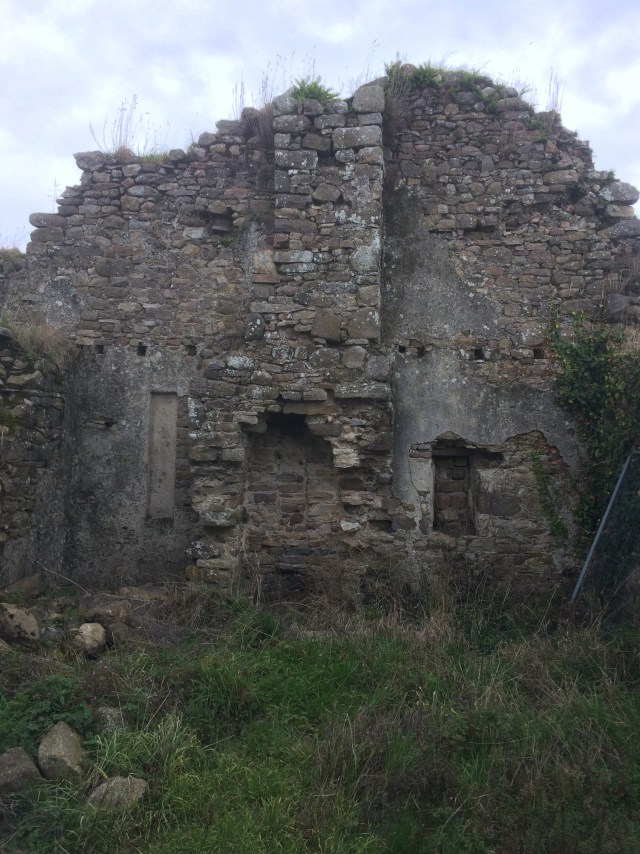


 Irish Historic Houses