We visited Leinster House, the seat of Irish Government, during Open House Dublin 2025. We were lucky to get tickets! Open House Dublin events book out almost immediately.
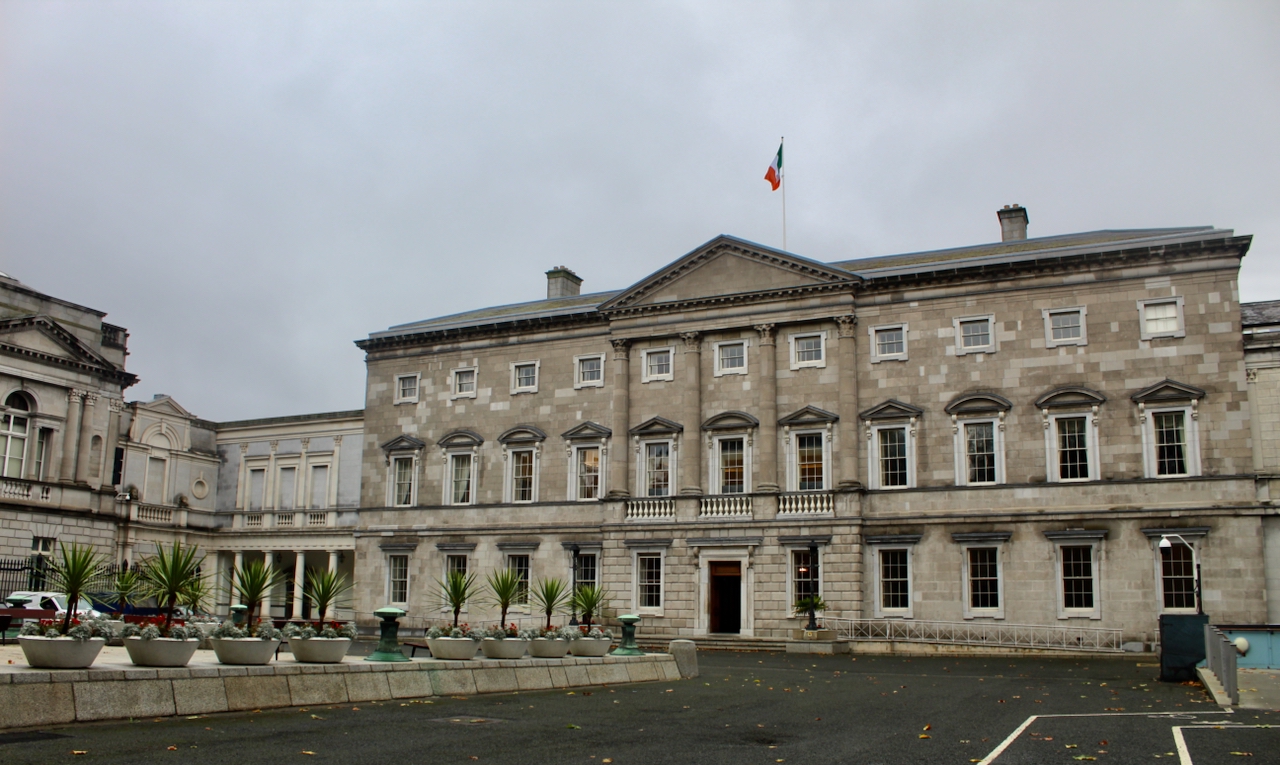
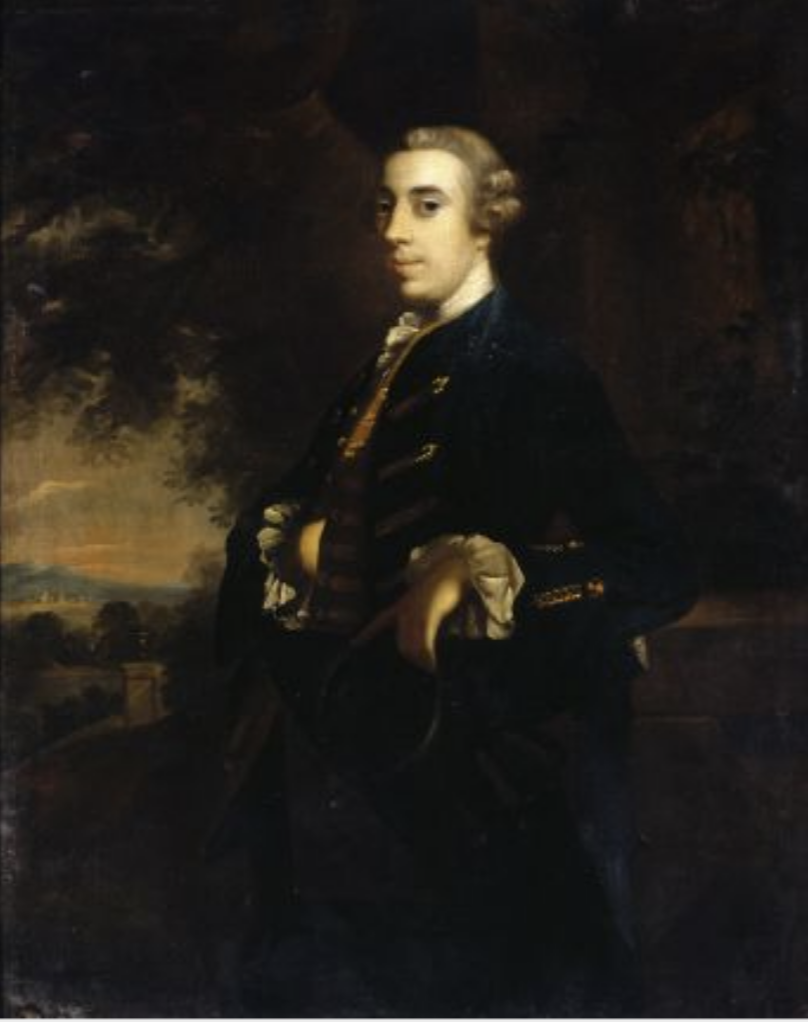
Leinster House was built from 1745-1752 for James Fitzgerald (1722-1773) 20th Earl of Kildare and first Duke of Leinster.
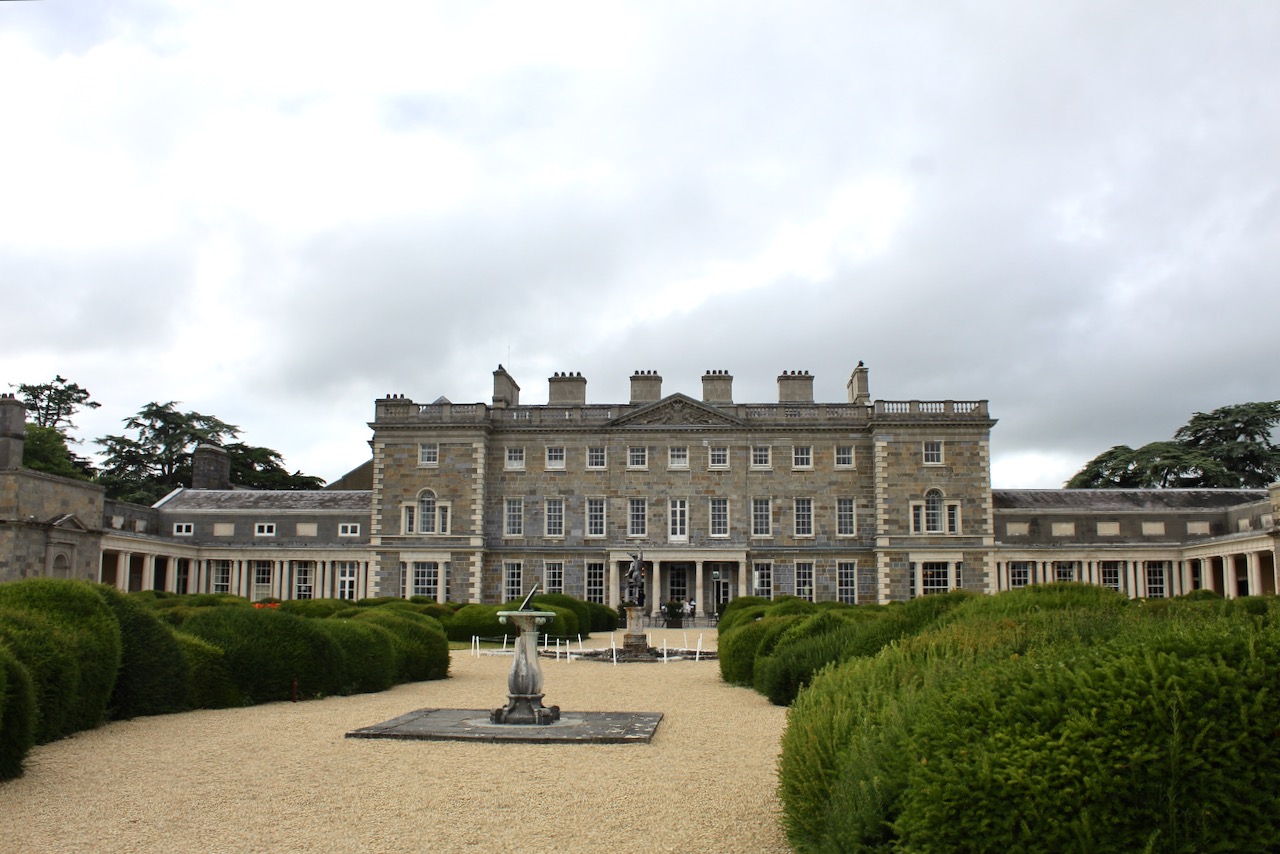
James’s father, Robert FitzGerald (1675-1744) 19th Earl of Kildare, made Carton in County Kildare his principal seat and employed Richard Castle (1690-1751) from 1739 to enlarge and improve the house (see my entry https://irishhistorichouses.com/2024/06/04/carton-house-county-kildare-a-hotel/ ). Before that, the Earl of Kildare had lived in Kilkea Castle in County Kildare.
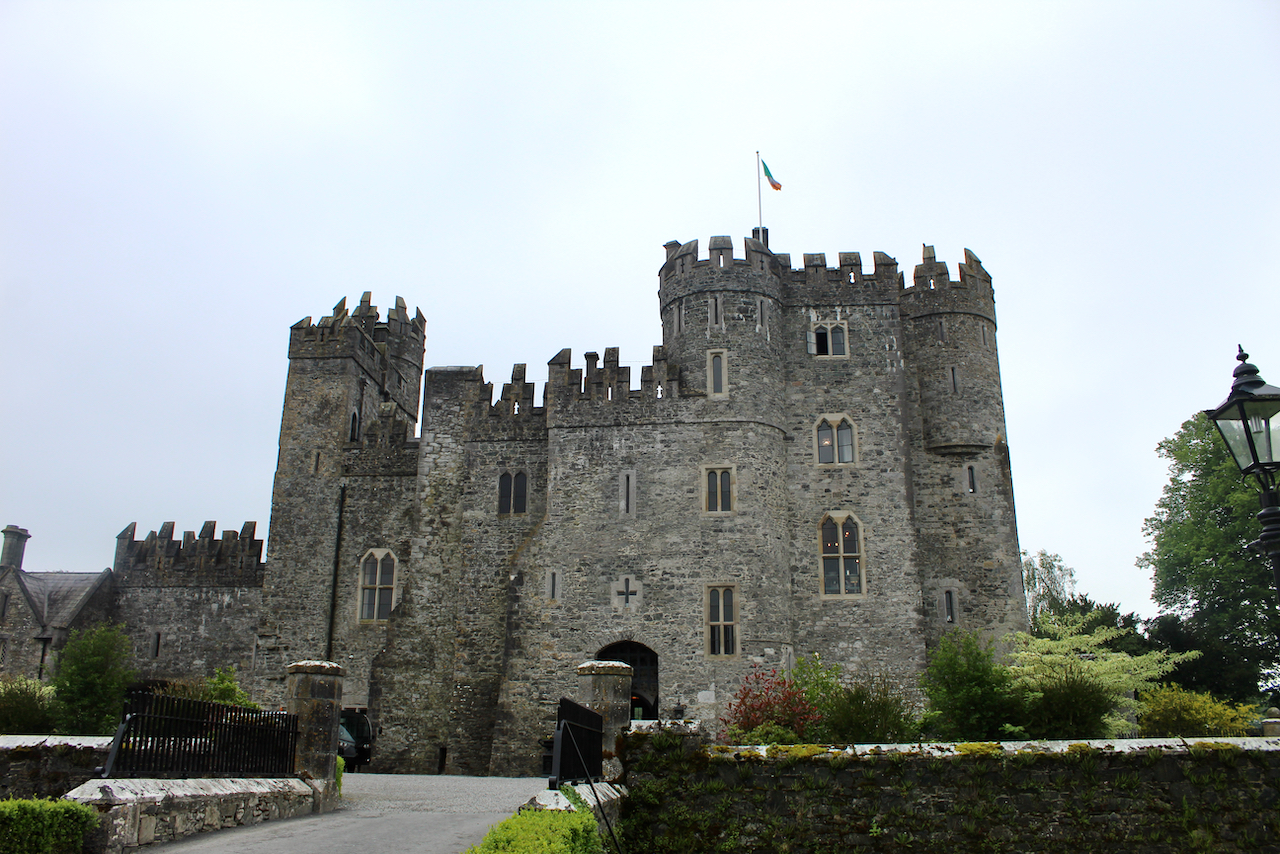
After the destruction of Maynooth Castle, occupied by Earls of Kildare, in 1641, George, 14th Earl of Kildare, resided at Kilkea Castle from 1647-1660, and it continued as the family’s principal seat until Robert, the 19th Earl, built Carton House. [1]

The 20th Earl, James, employed Richard Castle from 1745 to build him a new house in the city, which is now called Leinster House, and began to be so called around 1766 when James Fitzgerald was created Duke of Leinster. He was told that this was not a fashionable area to build, as at that time most of the upper classes lived on the north side of the Liffey around Mountjoy Square and Henrietta Street. He was confident that where he led, fashion would follow, and indeed he was correct.

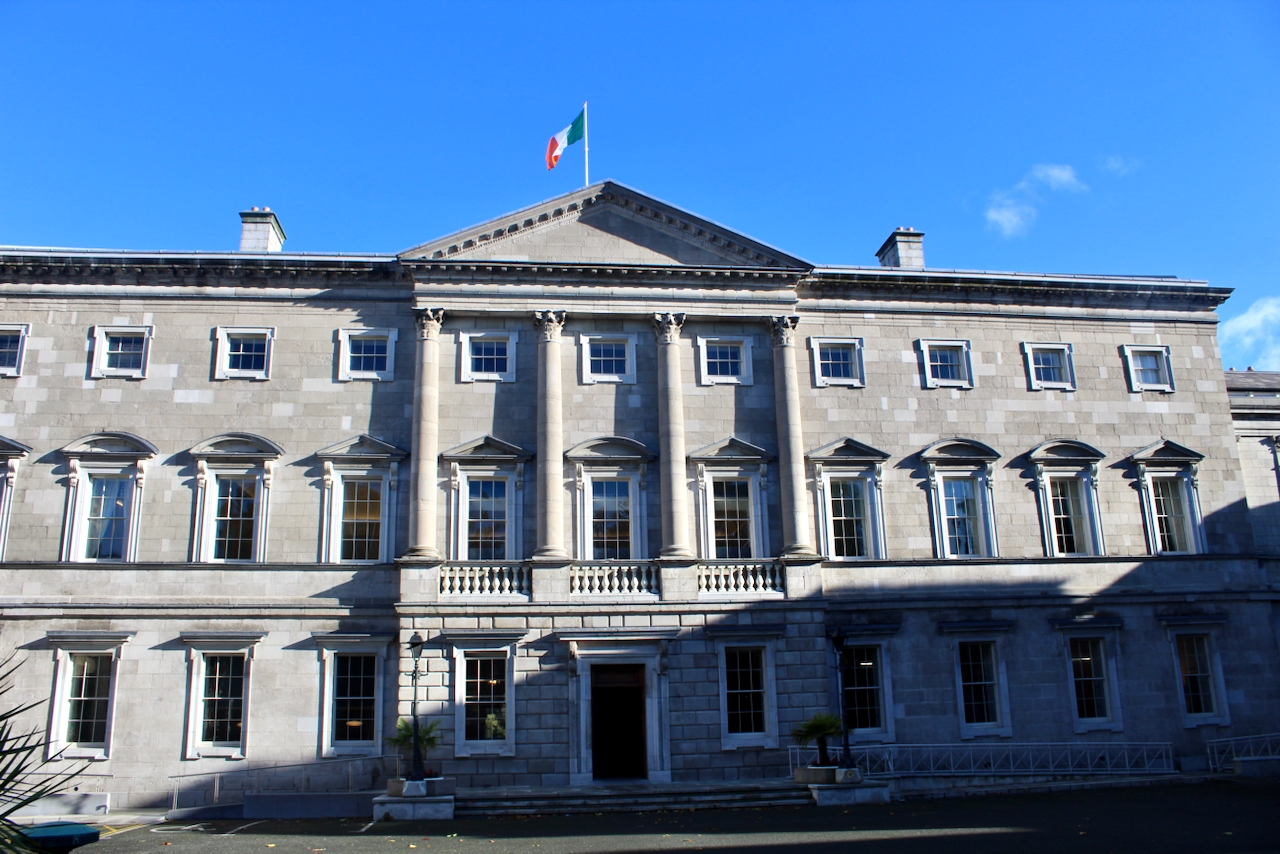
The building as it was originally constructed is a double cube of granite on the east and north fronts and Ardbraccan limestone on the west entrance front. It has a forecourt on the Kildare Street side, which Christine Casey tells us in her Dublin volume of the Pevsner series The Buildings of Ireland is in the French seventeenth century manner, which probably derived via Burlington House in London, a house which would have influenced Richard Castle. The form is Palladian, an eleven bay block of three storeys over basement with a “tetrastyle” (i.e. supported by four columns) Corinthian portico over advanced and rusticated central bays. “Rustication” in masonry is a decorative feature achieved by cutting back the edges of stones to a plane surface while leaving the central portion of the face either rough or projecting markedly, emphasising the blocks. [2]
Casey points to the unusual arrangement of pediments on the windows of the first floor, as an alternating pattern would be the norm, rather than the pairs of segmental (i.e. rounded) pediments flanked by single triangular pediments in the bays to either side of the central three windows. [see 2]
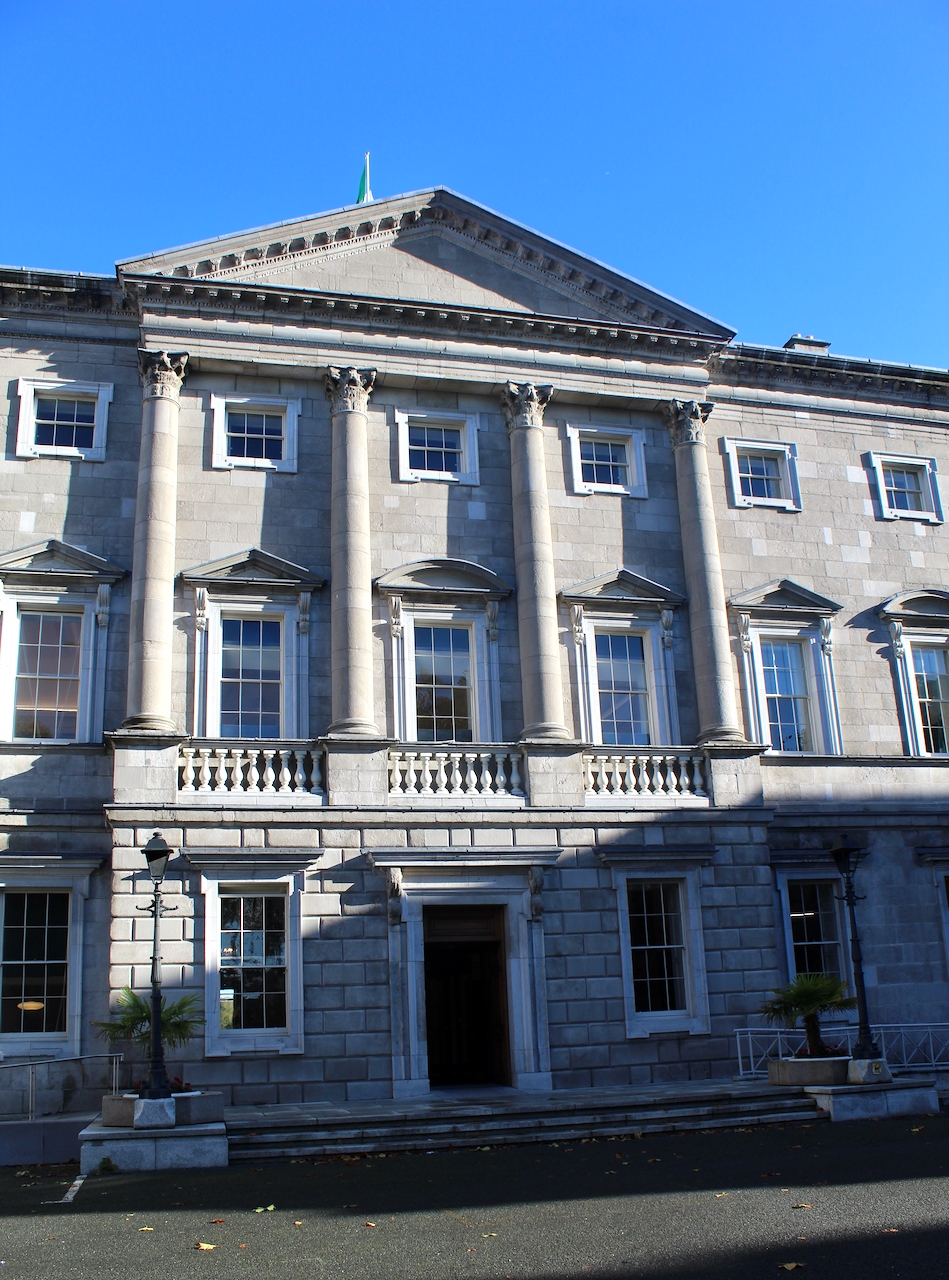
The centre block has a balustraded balcony, and the attic and ground floor windows have lugged architraves: the architrave is the classical moulding around the window and “lug” means ear, so the windows have “ears,” otherwise called shoulders. The term “Lugs” was made famous as a nickname for a policeman in the Dublin Liberties, “Lugs” Branigan, a man known for his sticking-out ears. A heavyweight boxing champion, he had a reputation as the country’s toughest and bravest garda. The ground floor windows have are topped with a further cornice – a horizontal decorative moulding.
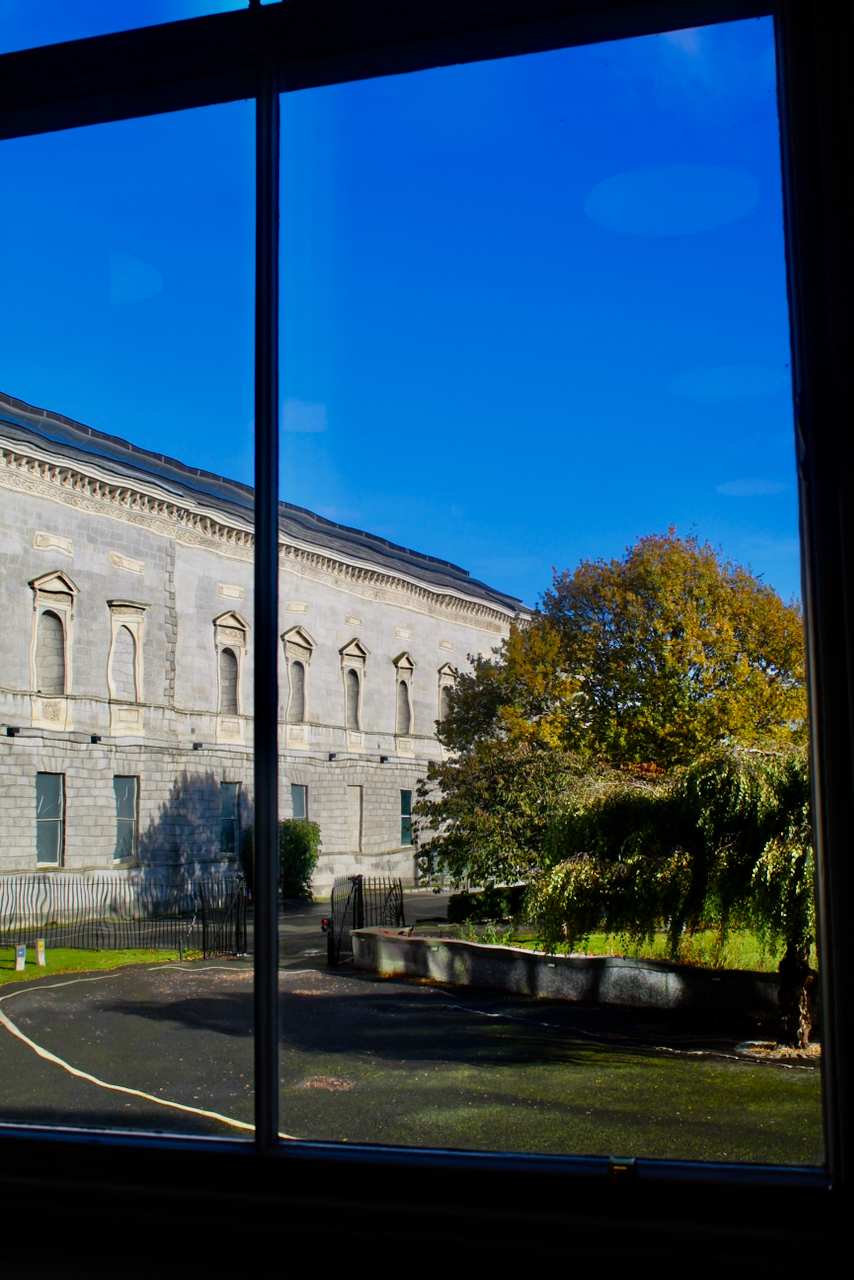
Originally, Casey writes, the house was linked to the side walls of the forecourt by low five-bay screen walls with Doric colonneads and central doorcases flanked by paired niches. The colonnade was given a pilastered upper storey in the nineteenth century, and was rebuilt in the 1950s when the colonnade was filled in, Casey explains. The lower storey on the left side when facing the building (north side) still has the colonnade: you can compare the stages of building the colonnades in the pictures below. In fact this colonnade was reinstated after being filled in. It was recently (when written before 2005) reinstated, Casey tells us, by Paul Arnold Architects, and topped with the nineteenthy century screen wall above which we see today.

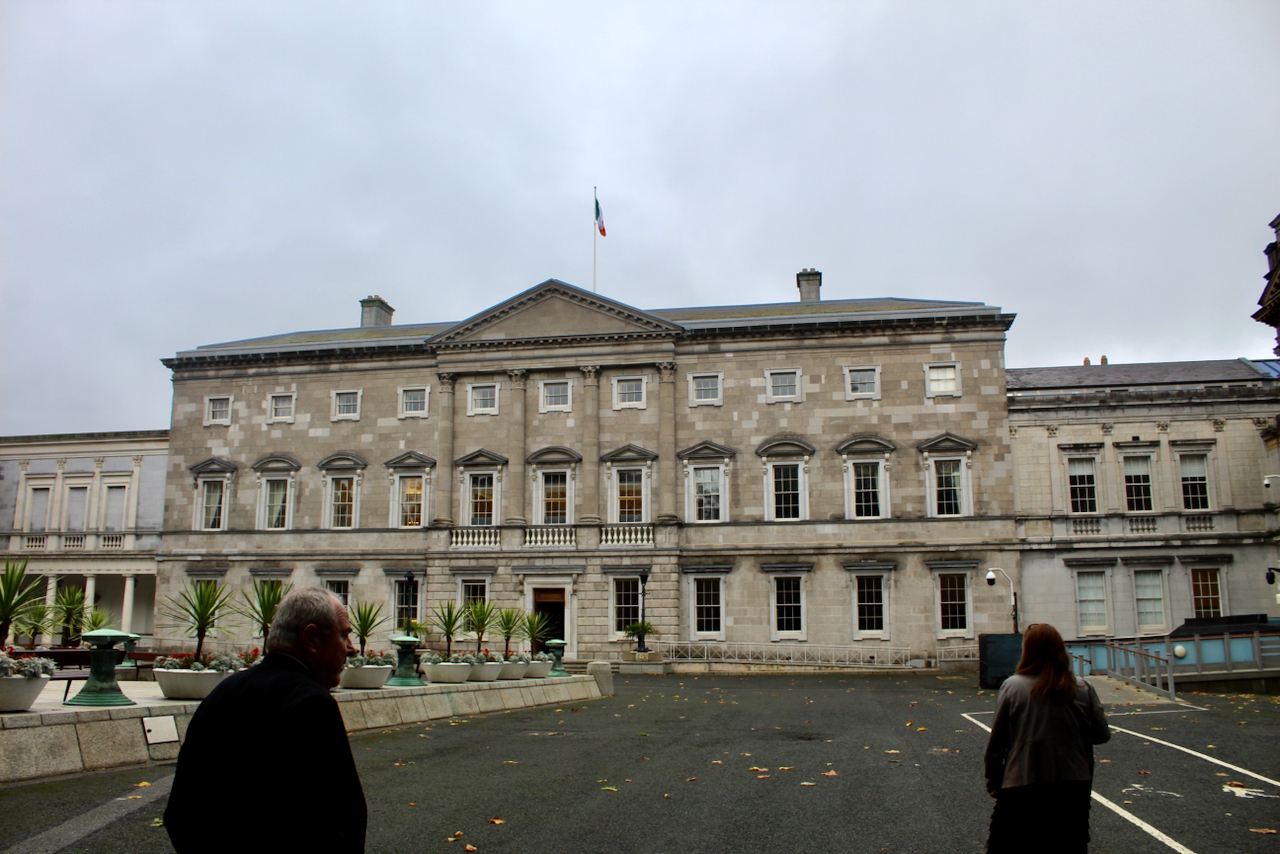
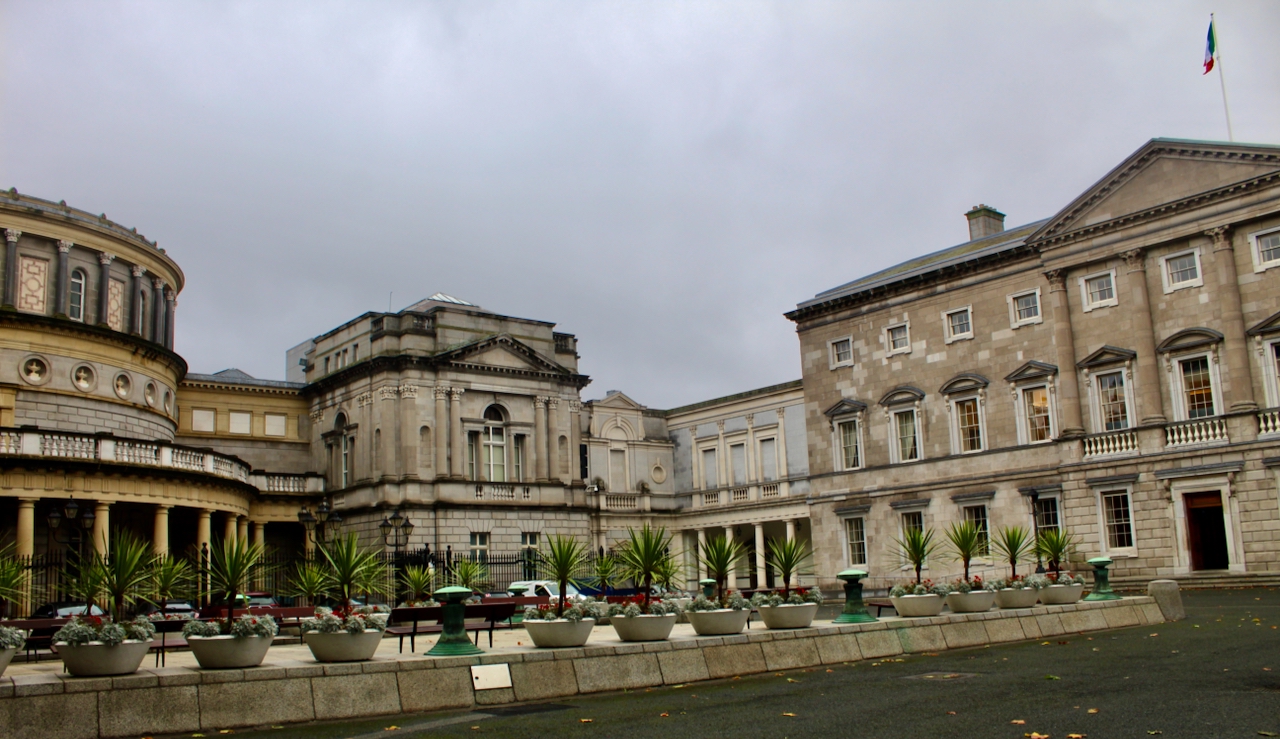
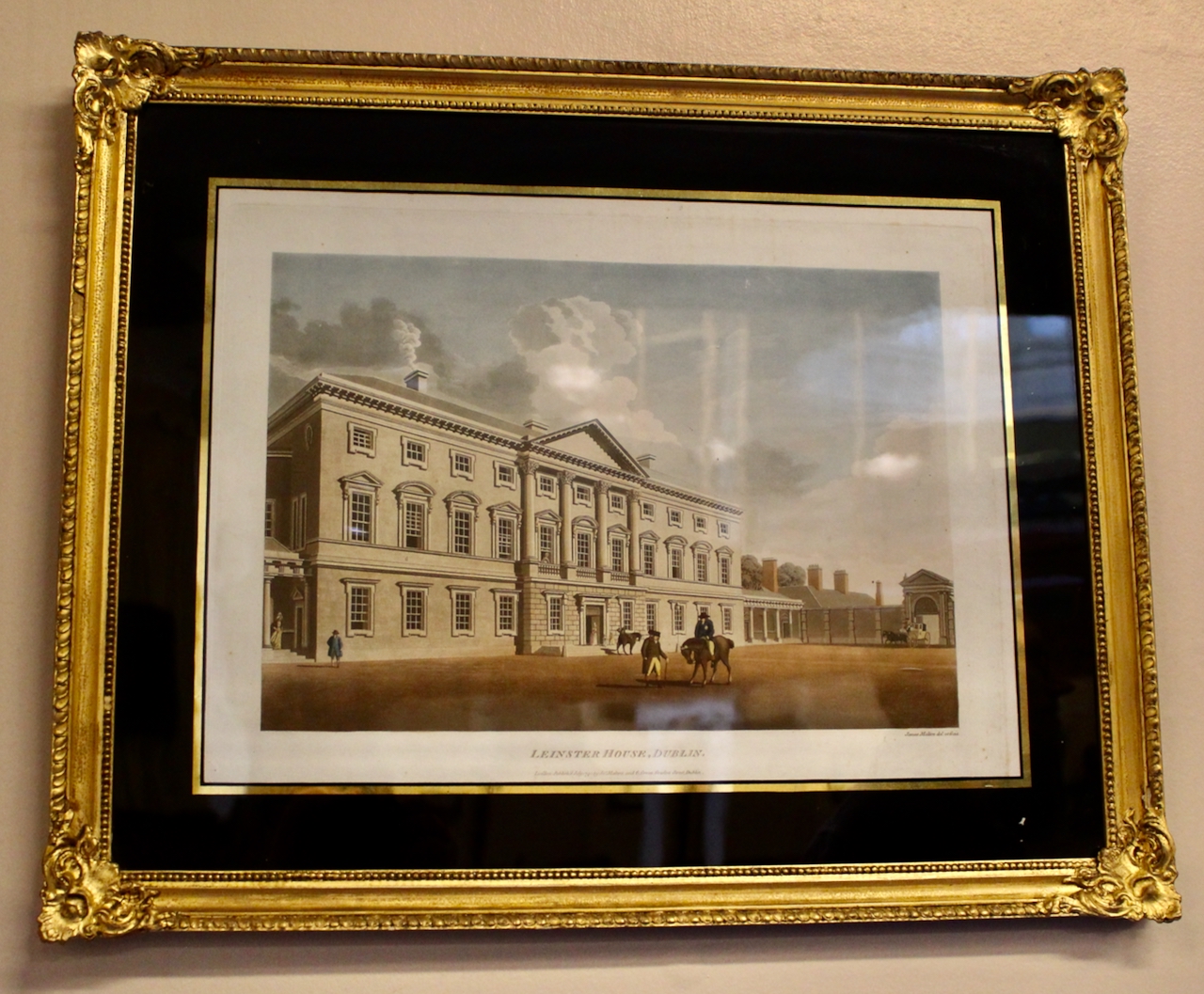

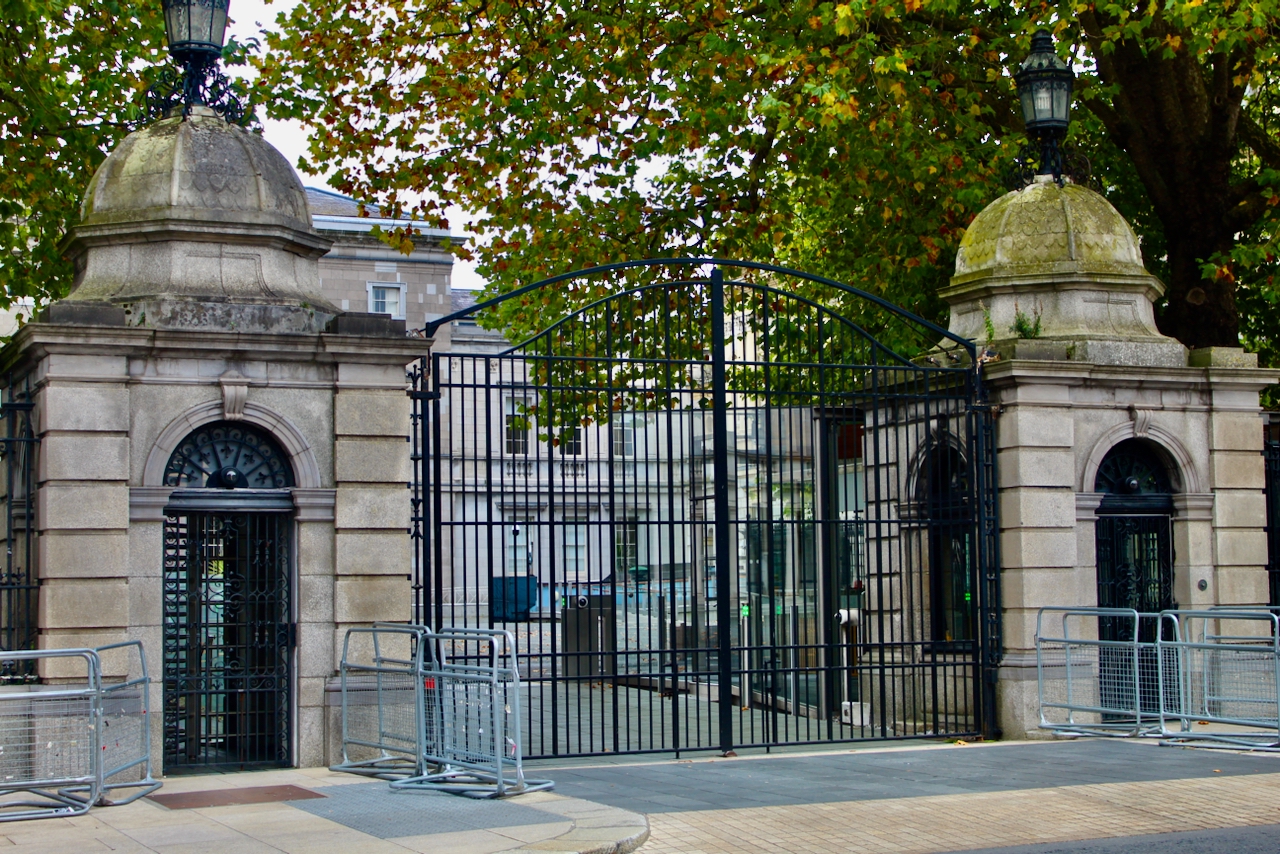
In the Malton drawing of Leinster house we can see that the side walls of the forecourt had pedimented arches. The present piers, wrought iron gates and railings were added in the 1880s, built by T.N. & T.M. Deane.

To the south of the forecourt lay a stable court, with a stable and coach house block and a kitchen block which was linked to the house by a small yard, which must have been very inconvenient when dinner was served!
The garden front is fully rusticated on the ground floor, with advanced two-bay ends.


The central first floor window has a triangular pediment. The door porch was added in the nineteenth century. The lawn lay on property leased from Viscount Fitzwilliam.

James’s father died in 1744 before his house at Carton was complete, so it was finished for James the 20th Earl. James was the second son of his parents the 19th Earl and his wife Mary (d. 1780), eldest daughter of William O’Brien, 3rd Earl of Inchiquin. His elder brother died in 1740.
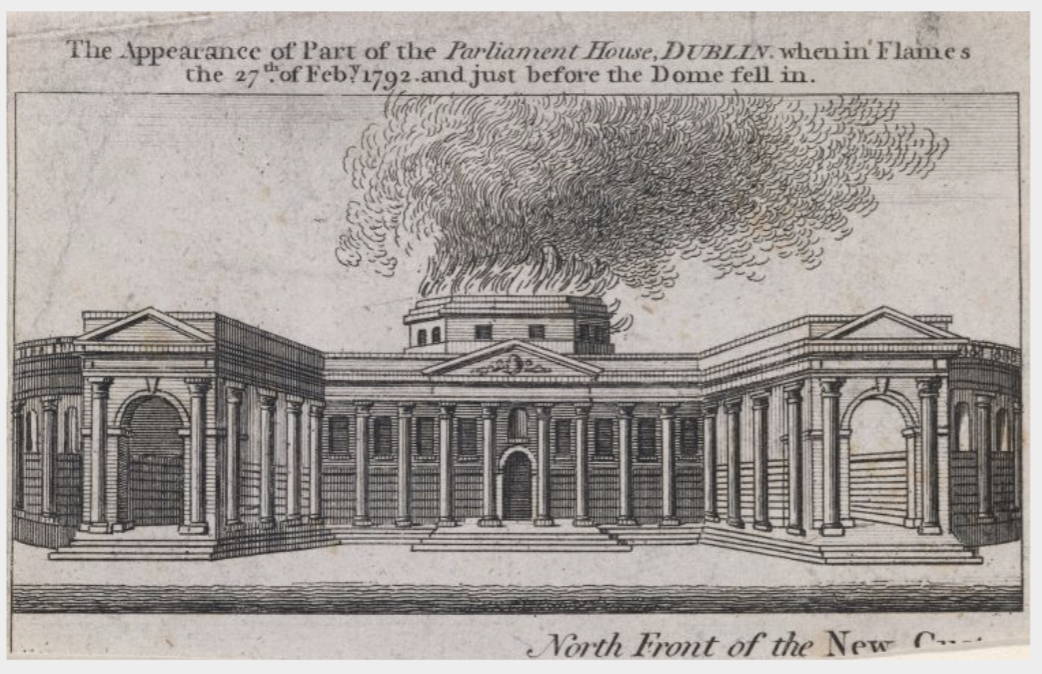
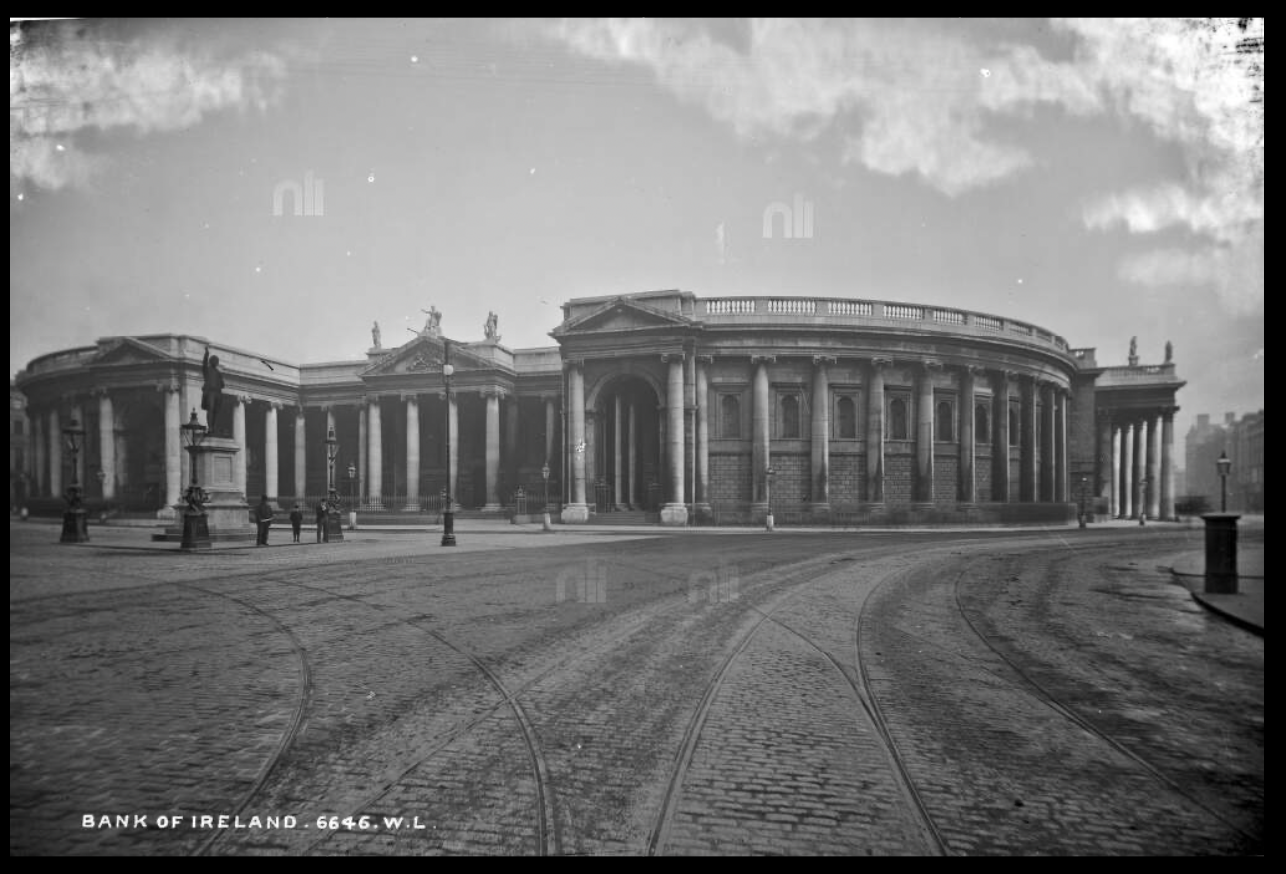
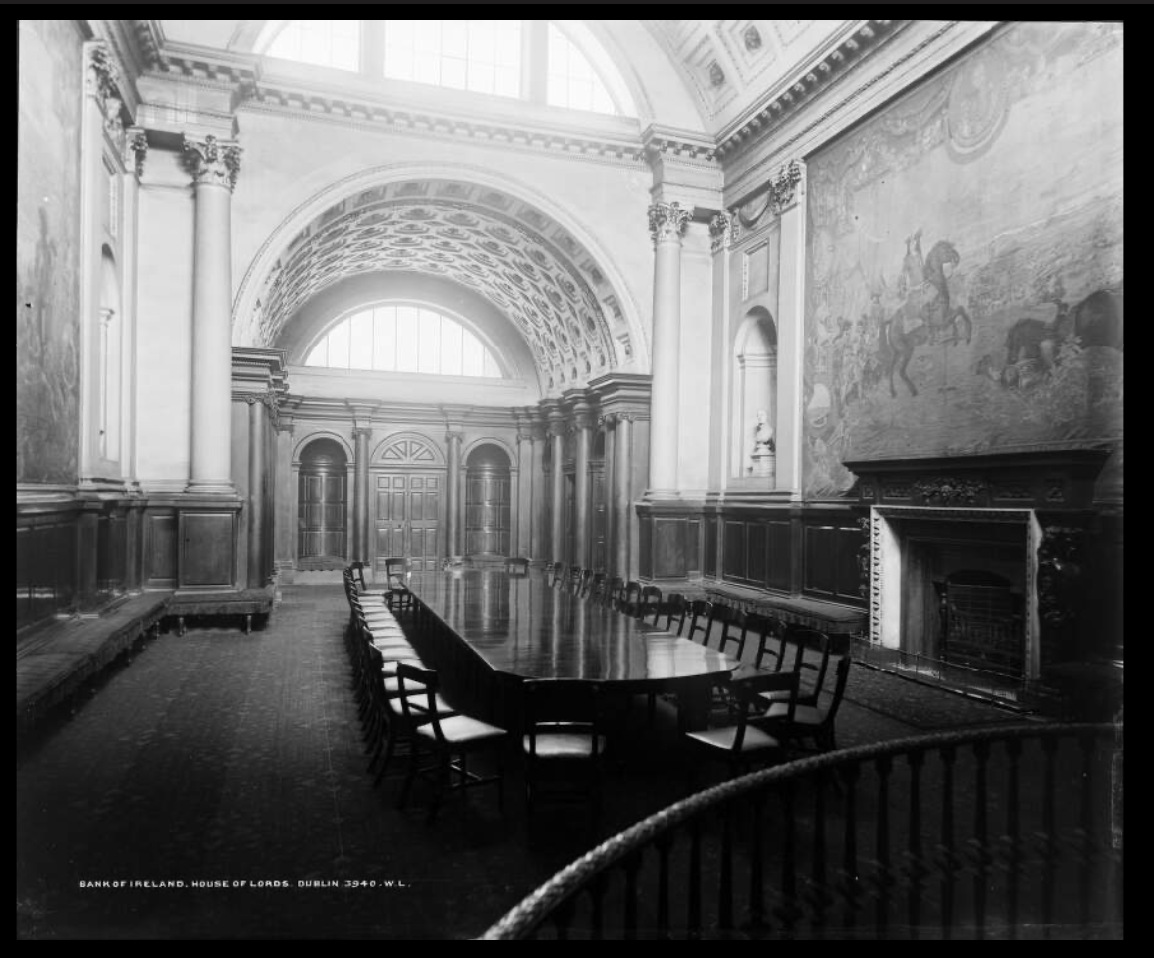
The Dictionary of Irish Biography tells us that James’s political career began on 17 October 1741, when (then known as Lord Offaly) he entered the Irish house of commons as member for Athy. In 1744 he moved to the House of Lords after he inherited the earldom. [3] It was then that he embarked on his town house in Dublin. Now the houses of parliament are located next to Leinster house, but at the time, they were located in what is now the Bank of Ireland on College Green in Dublin.
The Dictionary of Irish Biography continues:
“His seniority in the peerage, popularity, and electoral interests ensured his appointment to the privy council (12 May 1746). He was made an English peer, Viscount Leinster of Taplow, Bucks. (1 February 1747), and appointed lord justice (11 May 1756). Master general of the ordnance (1758–66), he became major-general (11 November 1761) and lieutenant-general (30 March 1770). He was also promoted through the Irish peerage, becoming marquis of Kildare (19 March 1761) and duke of Leinster (26 November 1766).” [see 3]
James married Emilia Mary Lennox (1731-1814) in 1747, two years after Richard Castle began work on James’s townhouse. She was the daughter of General Charles Lennox, 2nd Duke of Richmond. Her grandfather the 1st Duke of Richmond was an illegitimate son of King Charles II of England. Emilia’s sister Louisa (1743-1821) married Thomas Conolly (d. 1803) and lived next to her sister in Carton, at Castletown in County Kildare (see my entry https://irishhistorichouses.com/2024/03/15/castletown-house-and-parklands-celbridge-county-kildare-an-office-of-public-works-property/

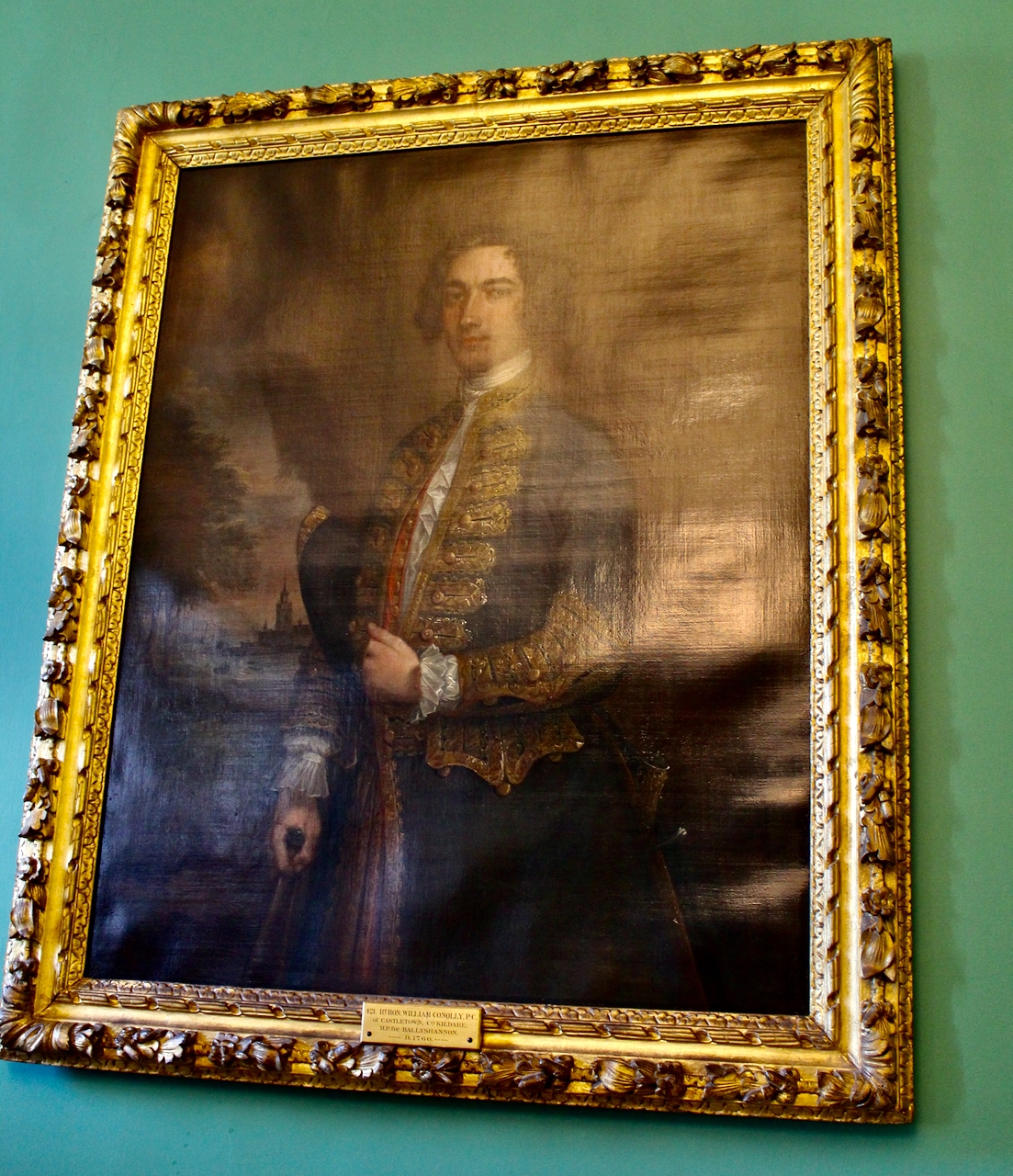
Richard Castle died in 1751 before the town house was complete. He died at Carton, the Earl of Kildare’s country seat, while writing a letter with instructions to a carpenter at Leinster house. Isaac Ware stepped in to finish the house. An exhibition about Leinster House in the Irish Archictural Archive explains that following the death of Richard Castle in 1751, little further about the building is recorded until 1759. By this time, English architect Isaac Ware, famous for his A Complete Body of Architecture published in 1756, had become involved with the project. The Fitzgeralds began to use the house in 1753 while work on the interior continued.
Inside, the house has a double height entrance hall with an arcaded screen of Doric pillars toward the back which opens onto a transverse corridor that divides the front and rear ranges. I found the hall hard to capture in a photograph, especially as we were part of a tour group. The hall reminded me of the double height entrance hall of Castletown, and indeed Christine Casey notes in her Buildings of Ireland: Dublin that the plan and dimensions of Leinster House relate directly to those of Castletown house in County Kildare, which was built in 1720s for William Conolly, and which was probably, she writes, built under the direction of Edward Lovett Pearce, possibly with the assistance of Richard Castle. [2]
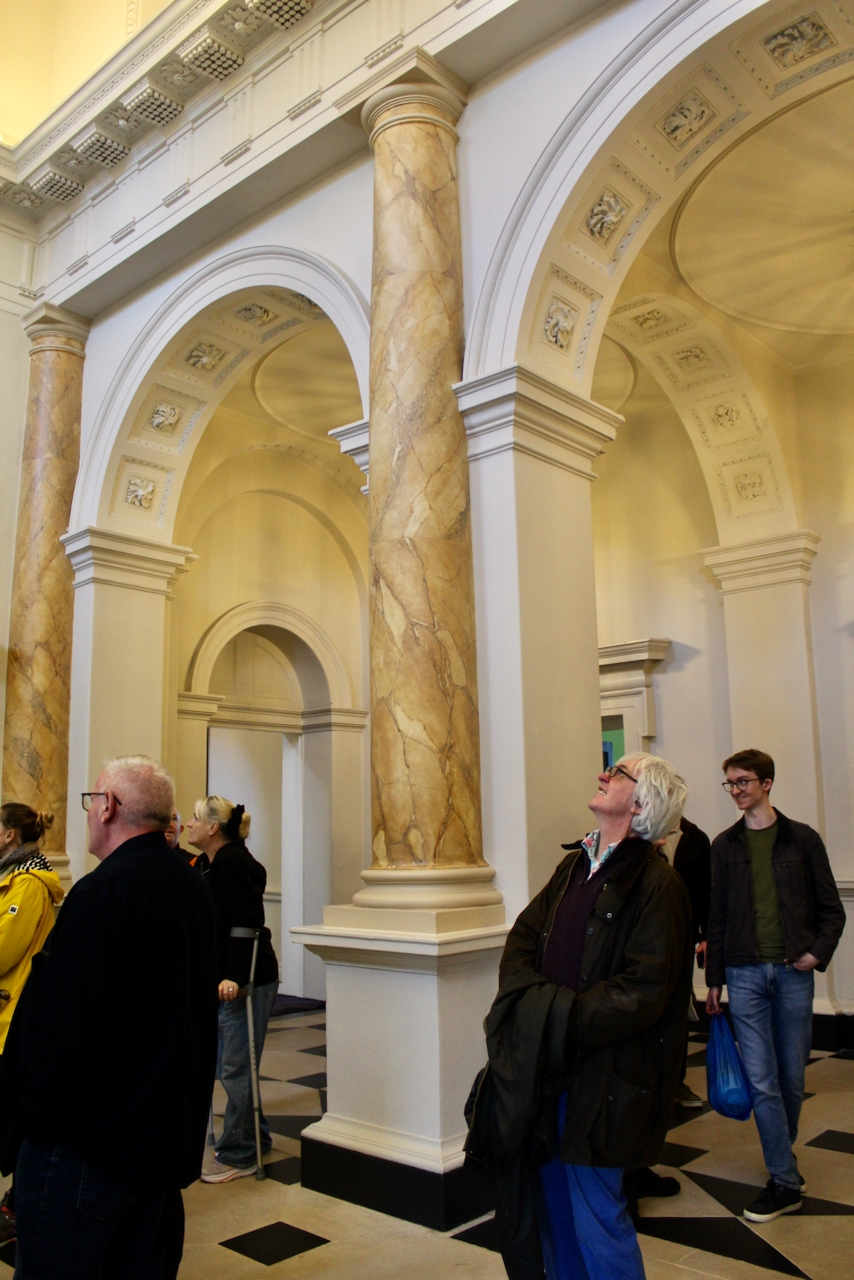
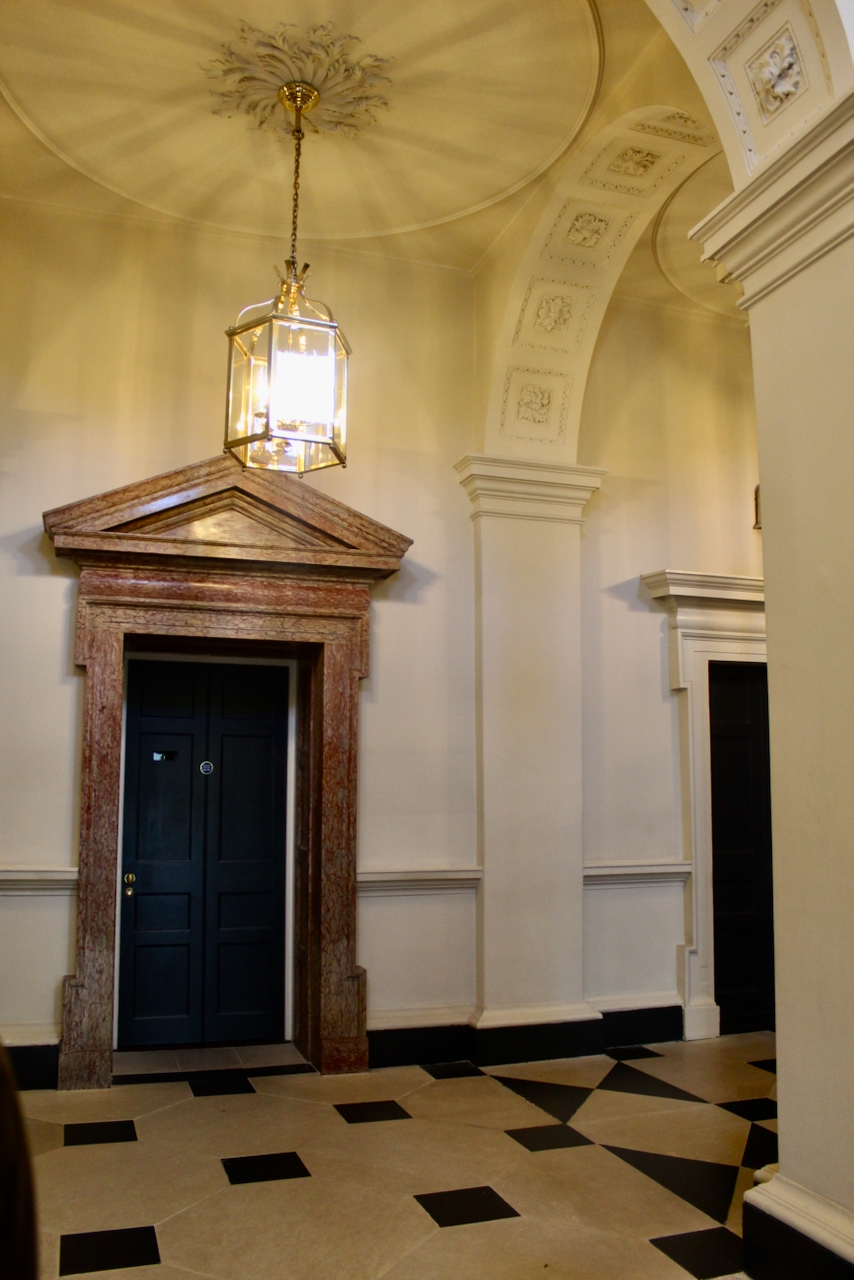
It is the double height that reminds me of the great hall in Castletown, although Castletown has a gallery and Leinster house does not. The niches remind me of the similar front hall in Gloster house in County Offaly, which although a private family home, in 2025 is a Section 482 property which you can visit on particular days.
The black and white flooring is original to the house. [see 2] The red marble doorframe was added later.
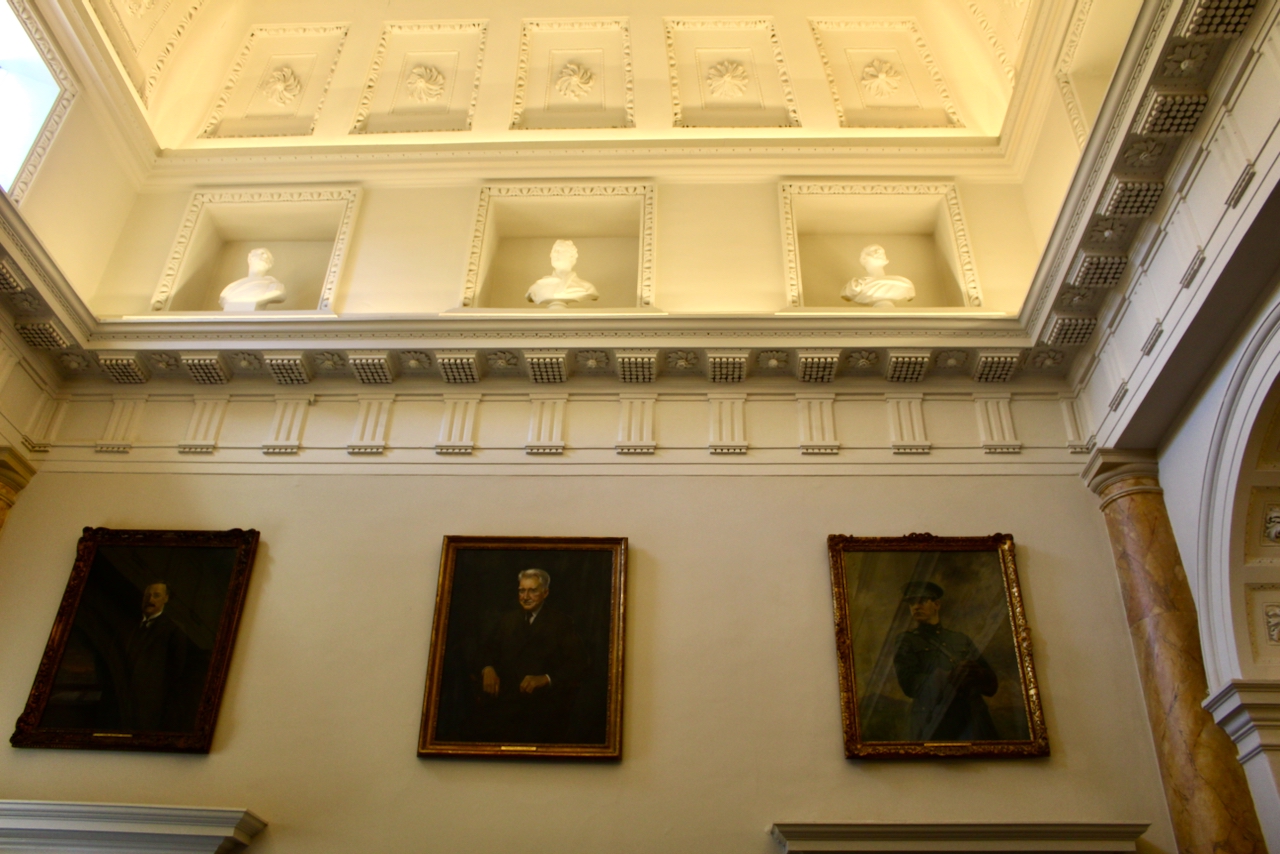
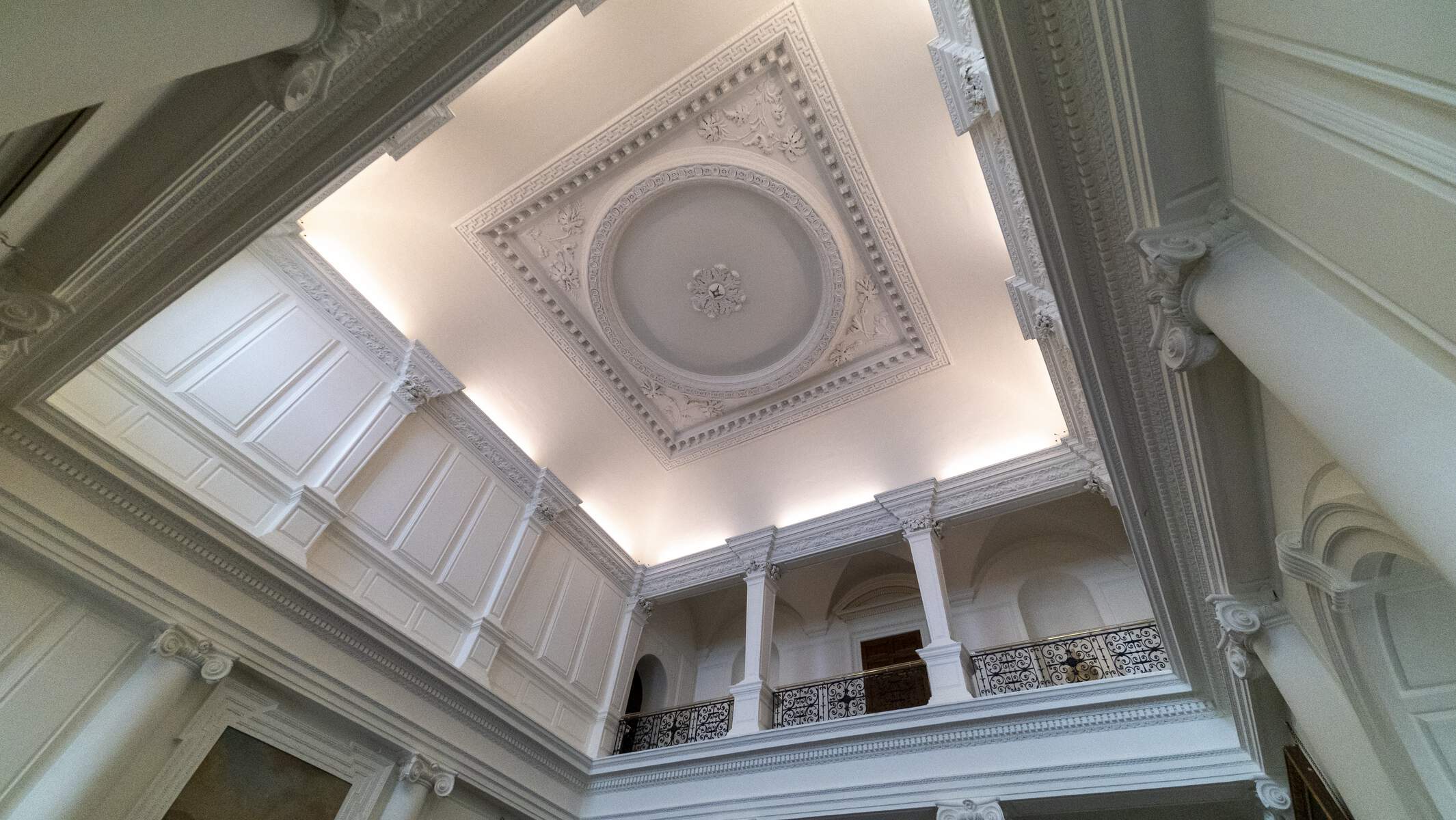
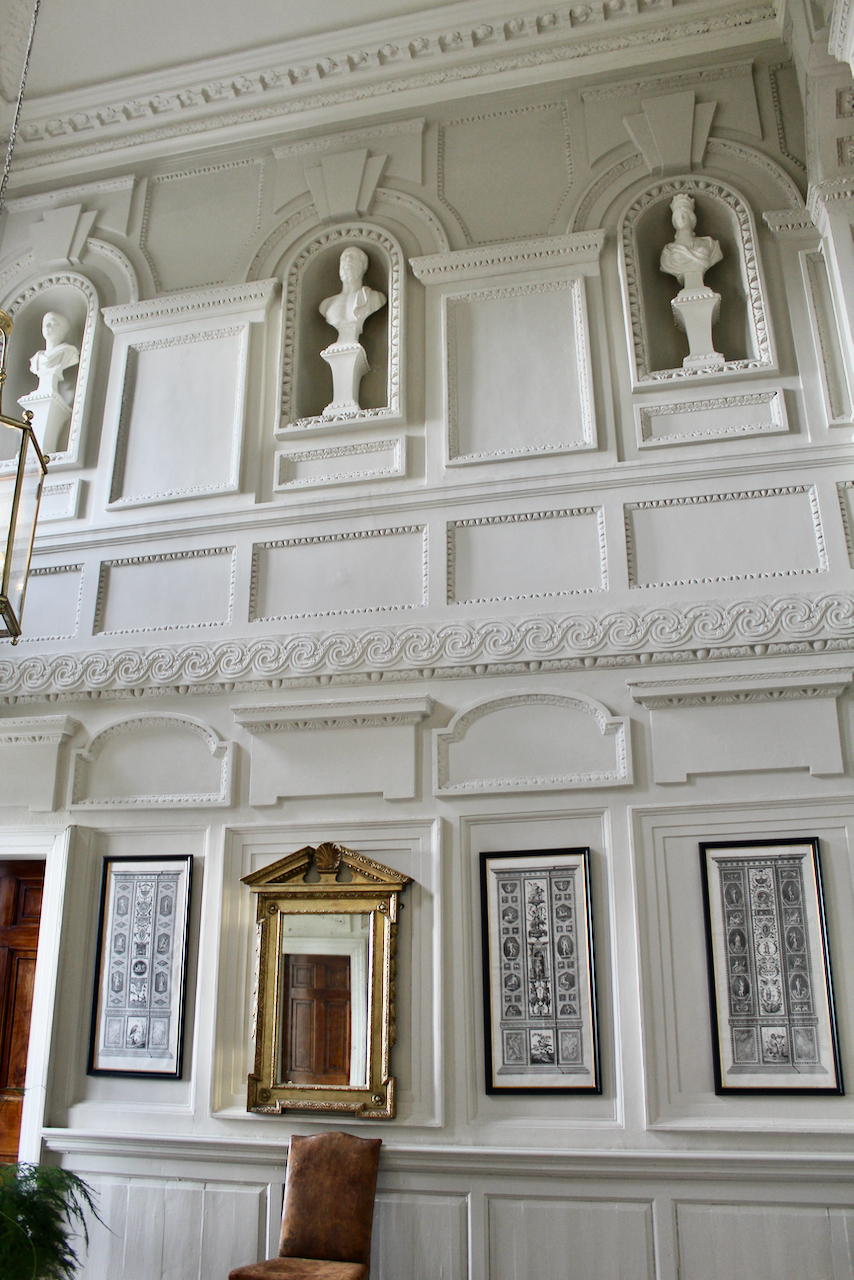
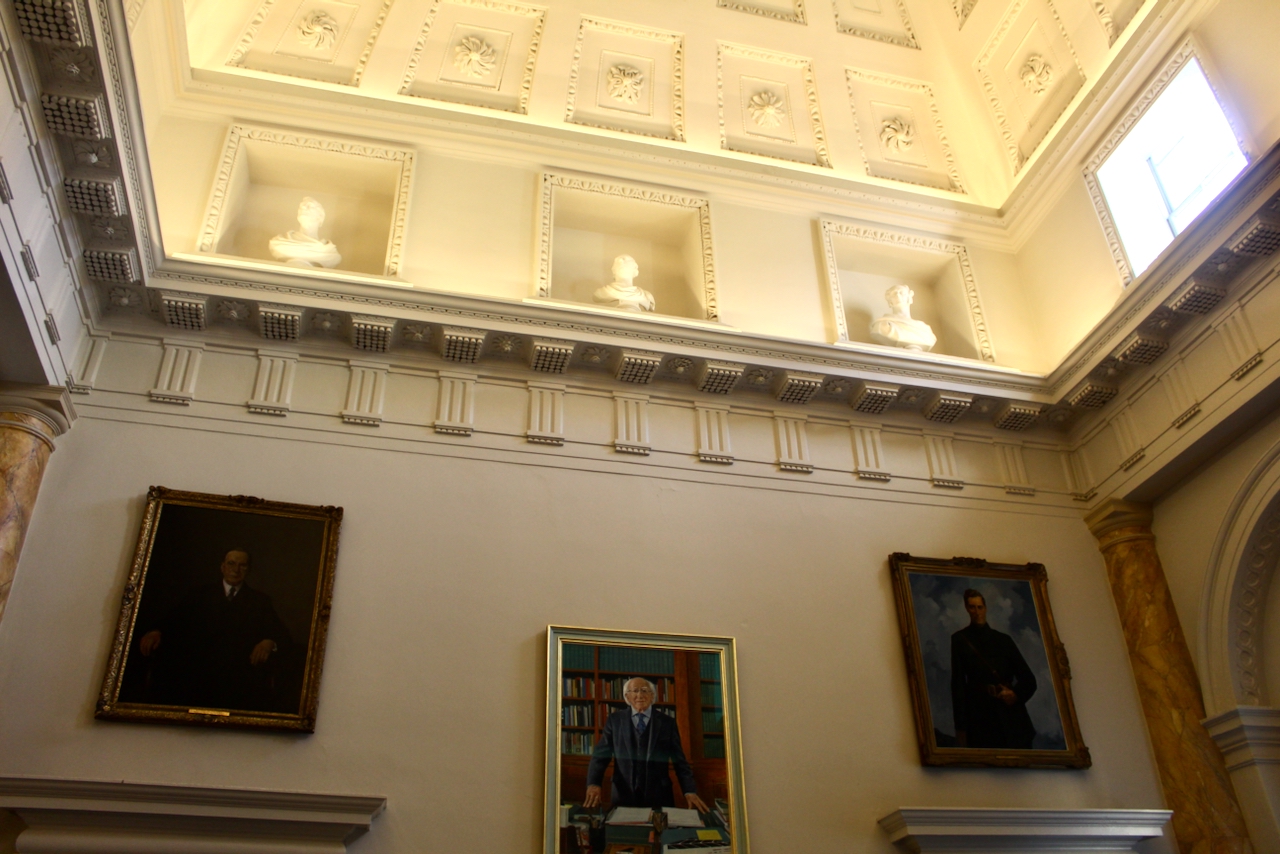
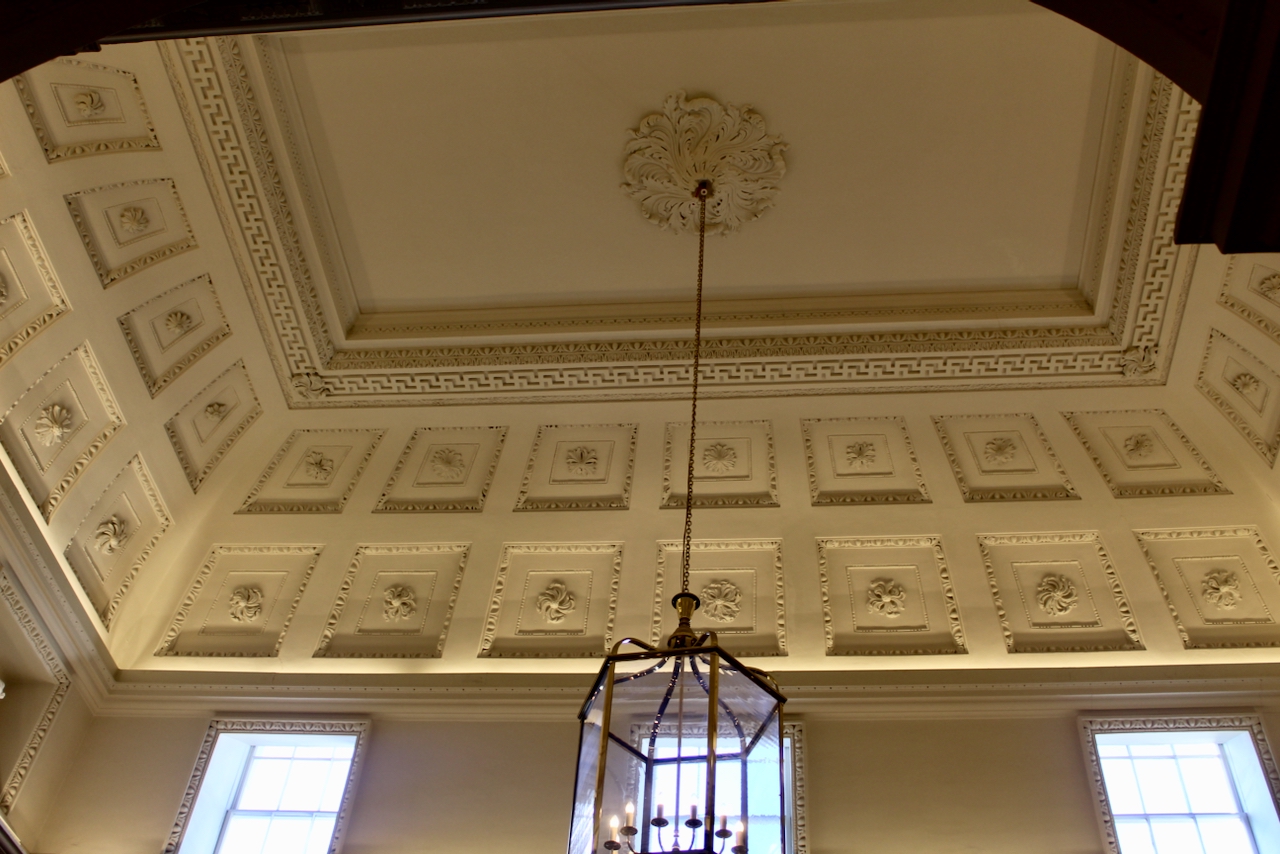
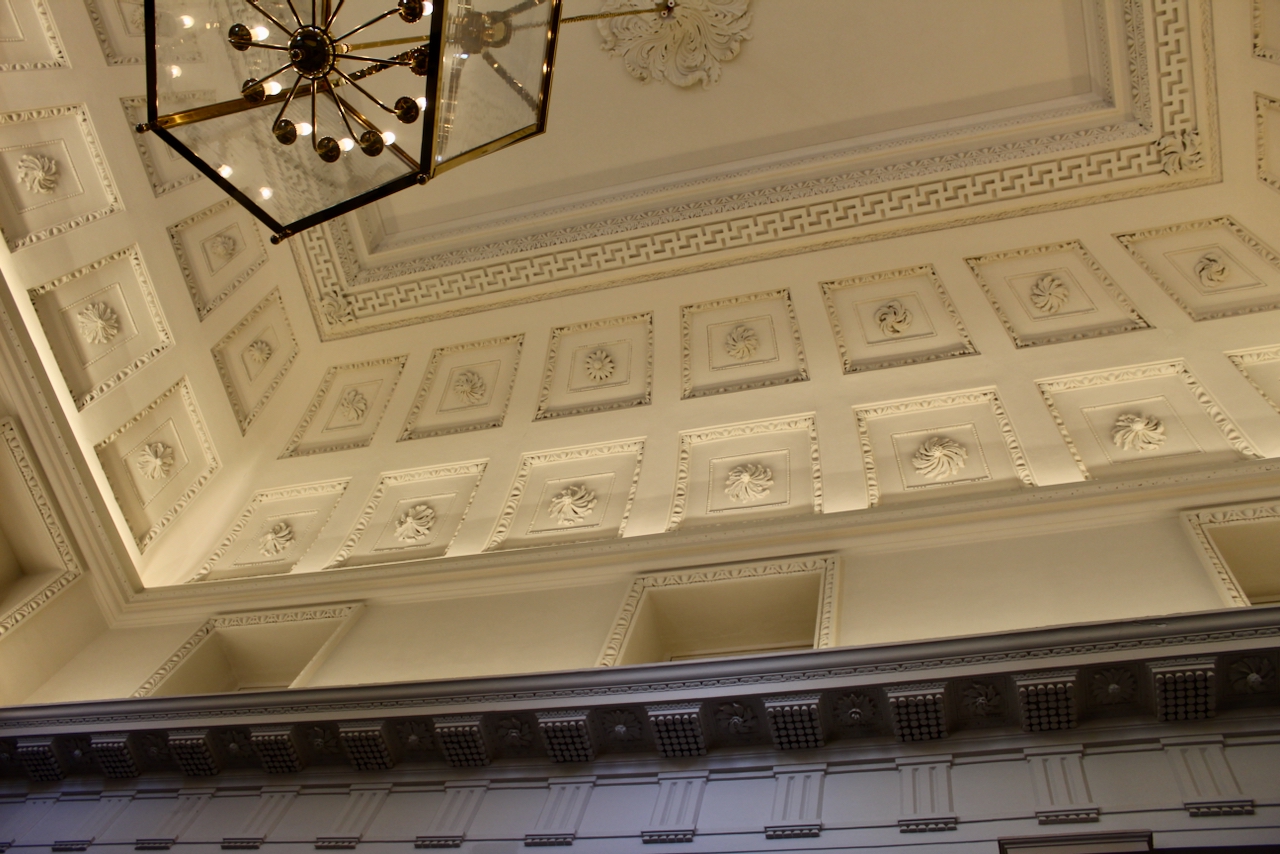
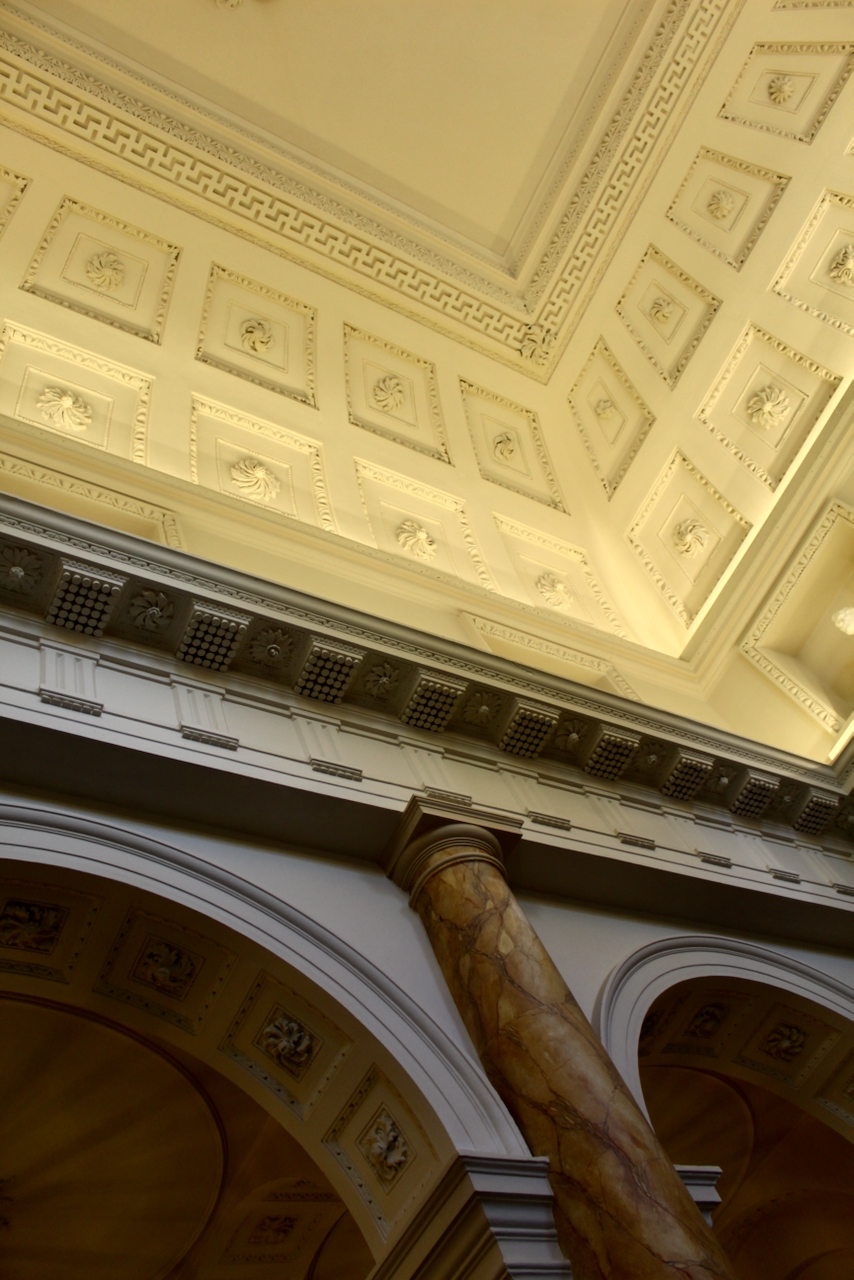
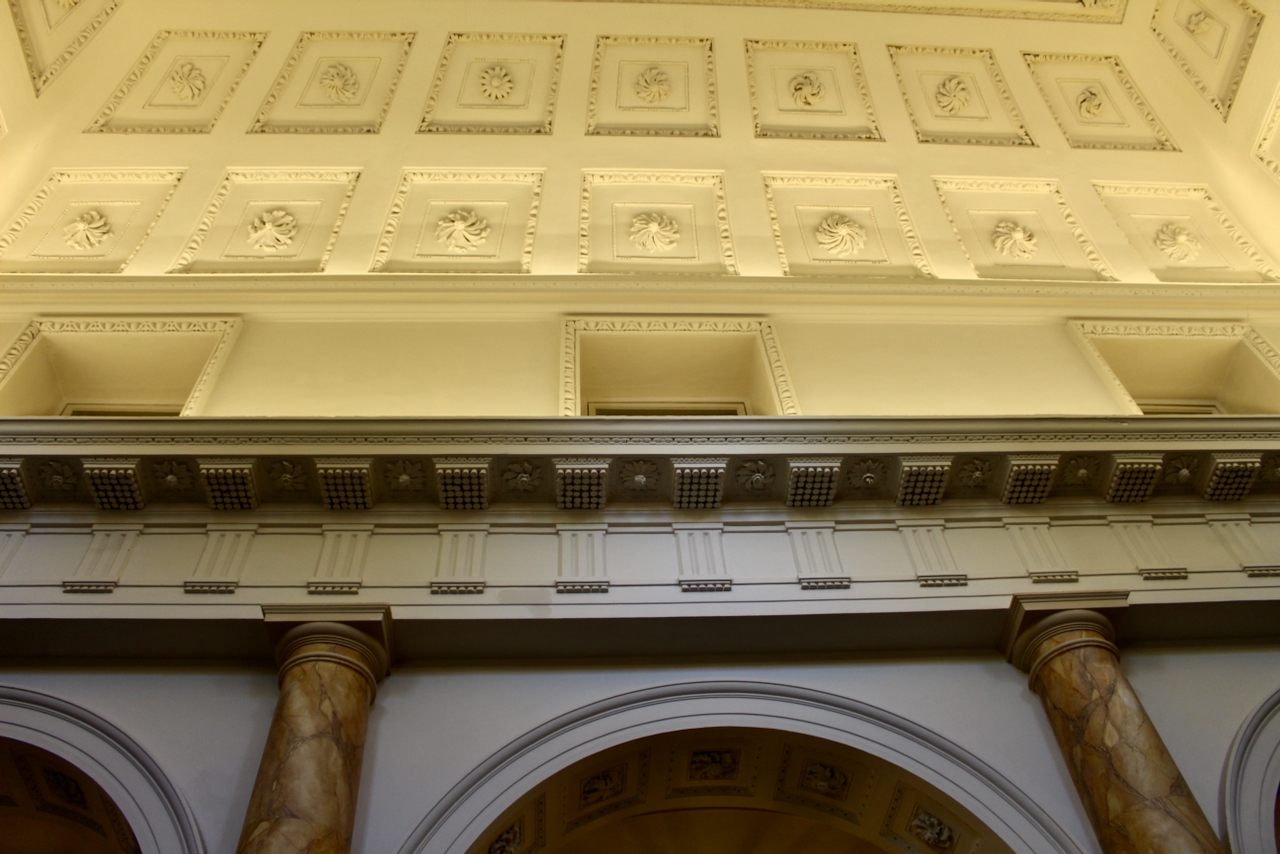
The coffered ceiling in the Hall in Leinster house is different from the ceilings in the front hall in Castletown or Gloster. The deep coffered cove rises to a plain framed flat panel with central foliated boss. There is an entablature above the Doric columns around the four sides of the hall. The square ovolo framed niches above have statues and above the main door the niches have windows.
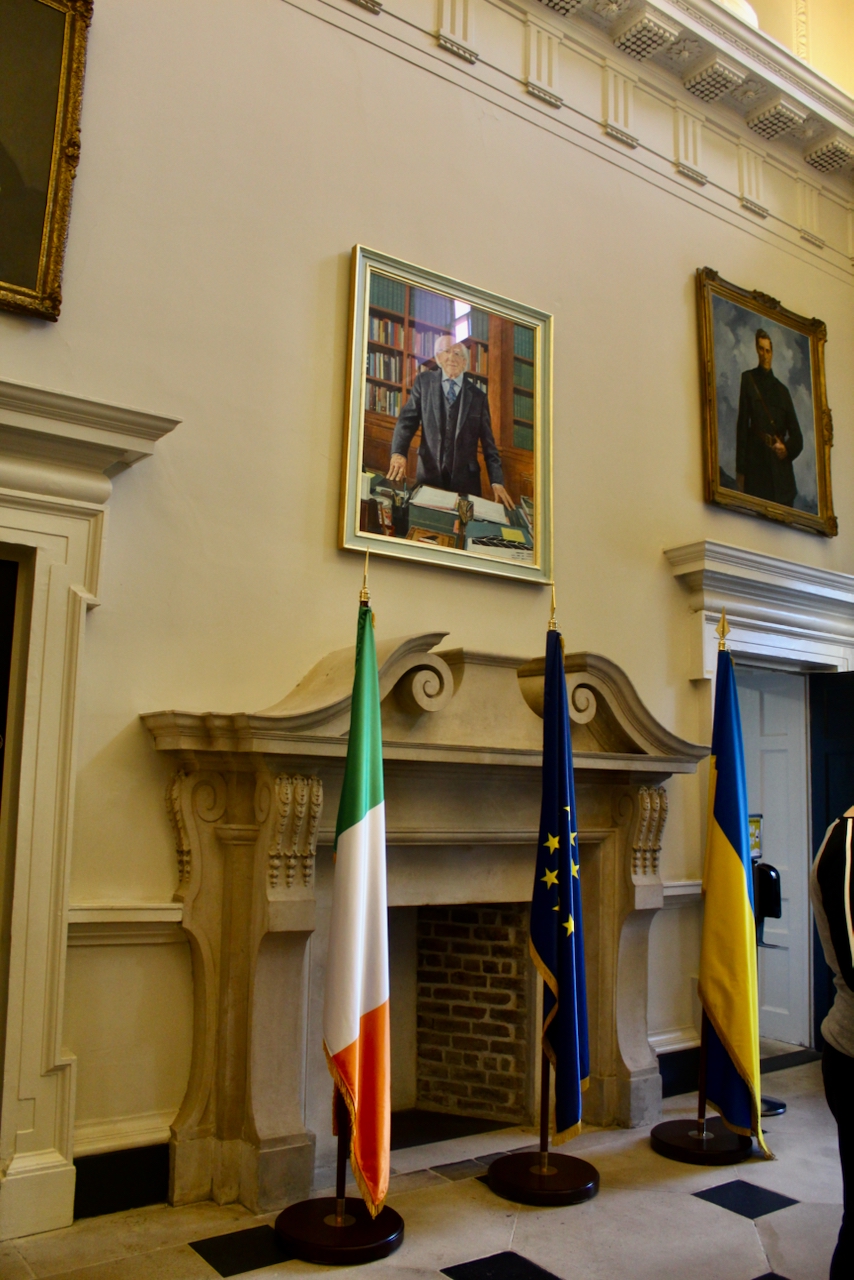
The chimneypiece in the front hall, Casey tells us, was originally faced with a pedimented niche on the north wall opposite, flanked by the doorcases. The chimneypiece is of Portland stone, she describes, with ornamental consoles and above the lintel, enormous scrolls flanking a bust pedestal.
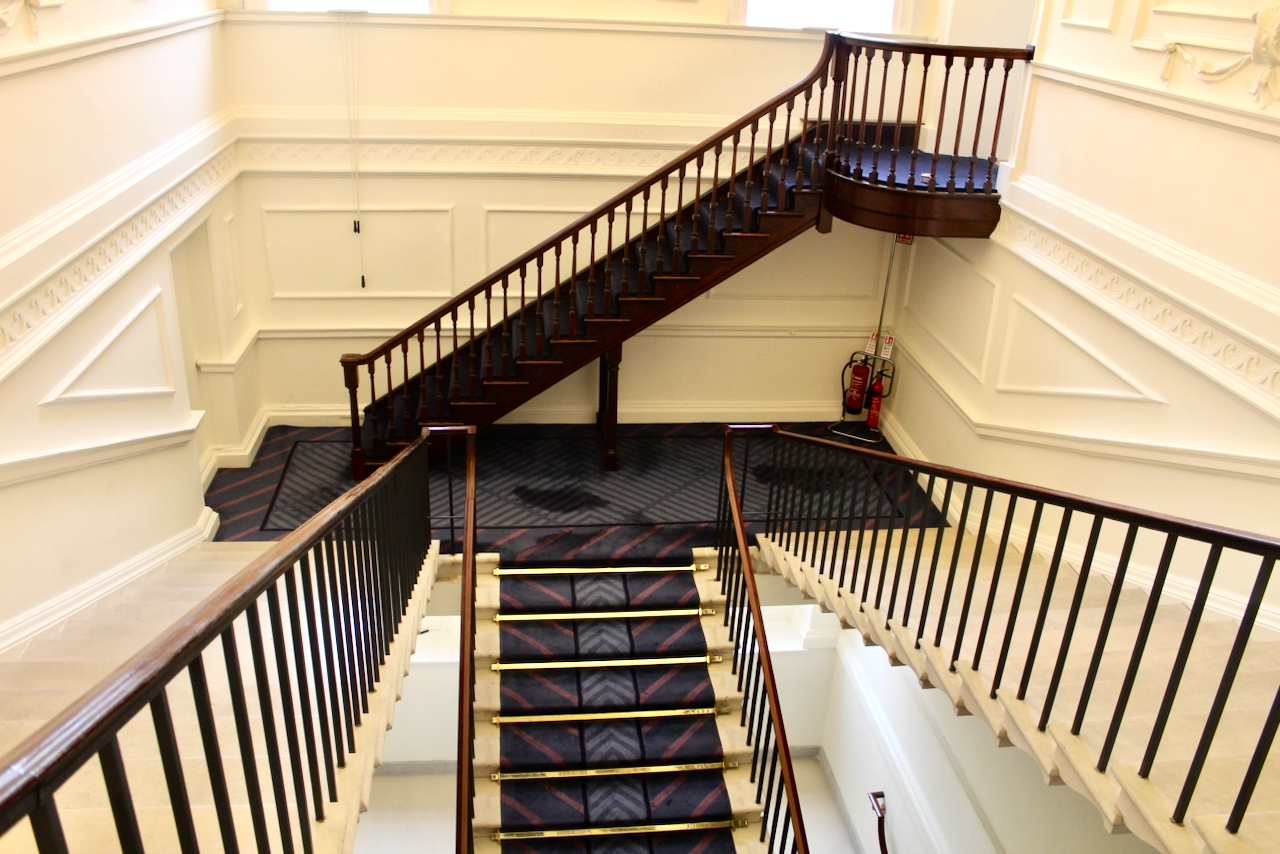
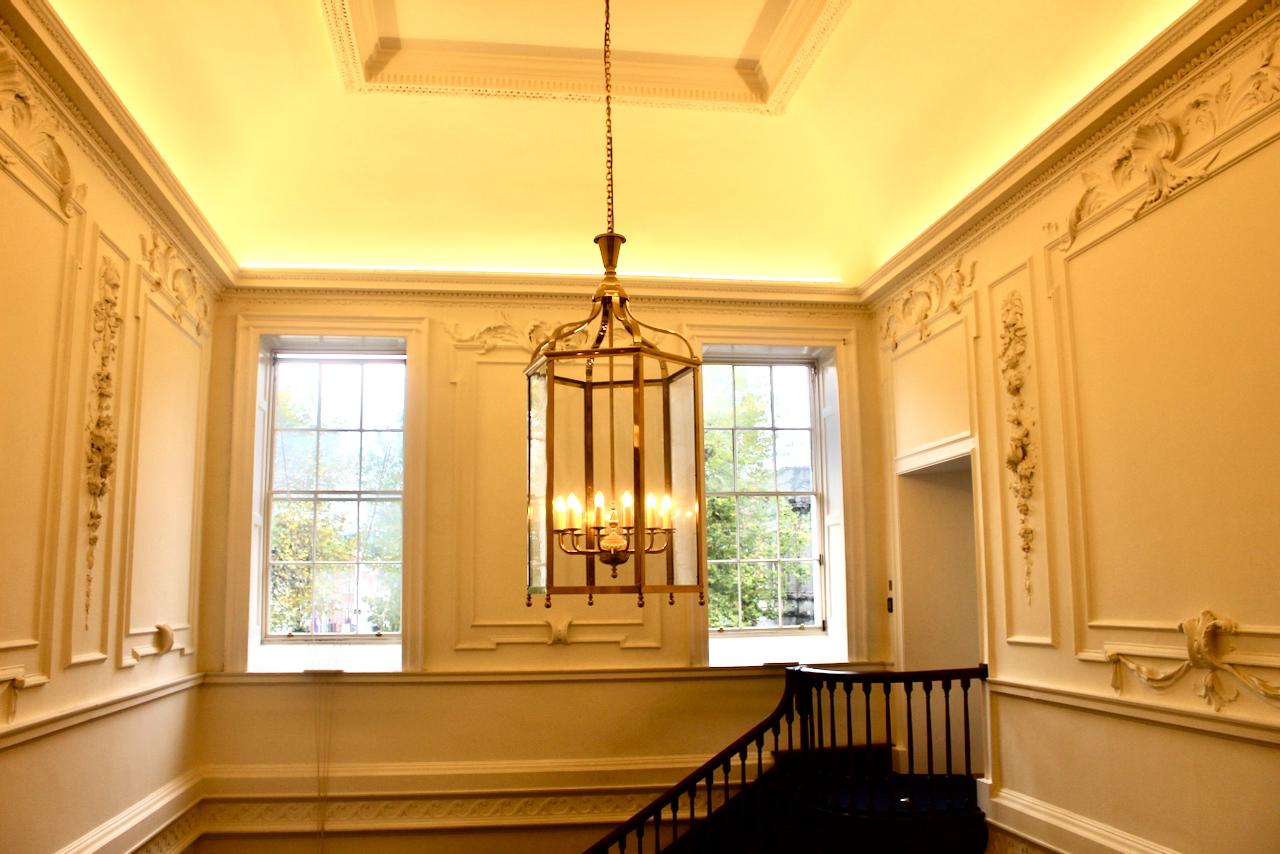
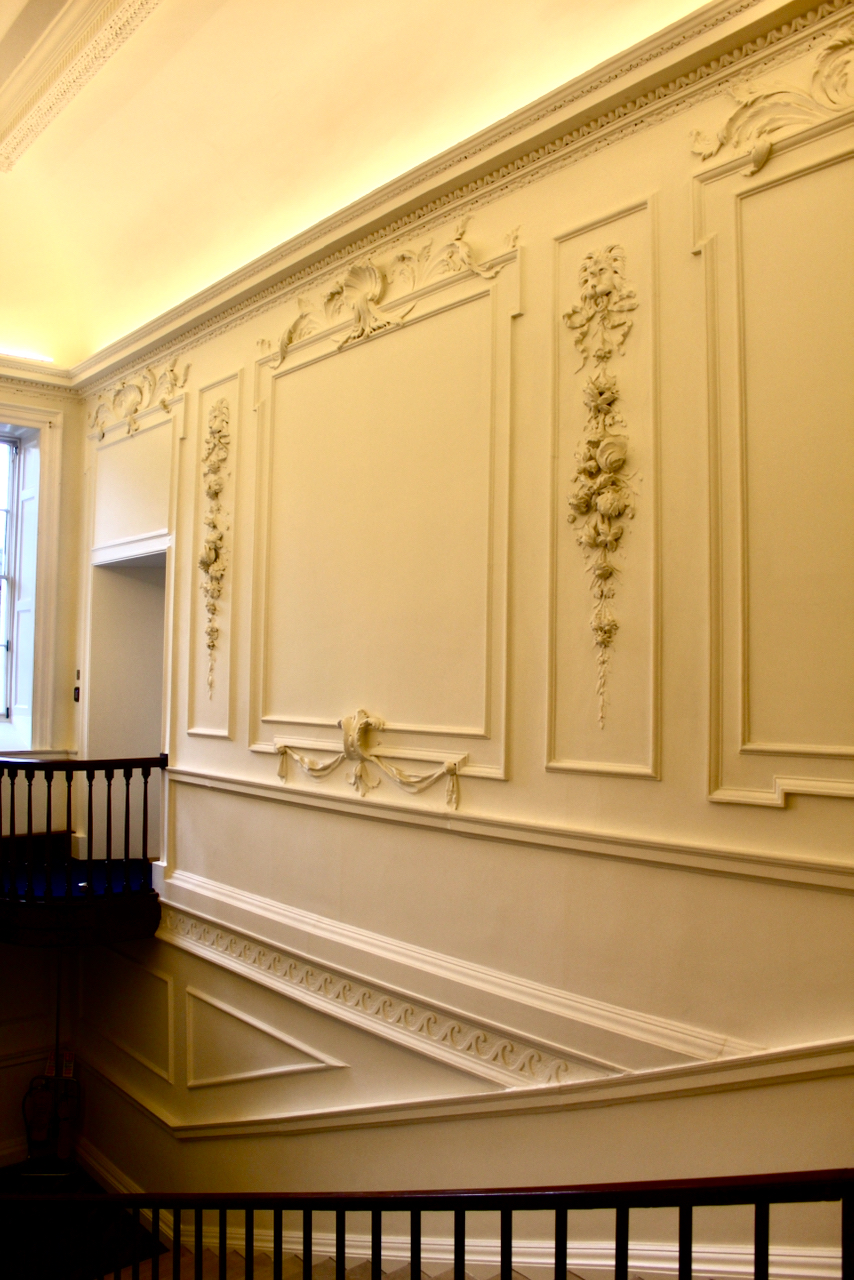
The principal stair hall is a two bay compartment north of the front hall. Casey tells us that Isaac Ware inserted an imperial staircase – one in which a central staircase rises to a landing then splits into two symmetrical flights up to the next floor – into a hall compartment which was meant for a three flight open well staircase. The staircase is further marred, Casey tells us, by a later utilitarian metal balustrade. Casey does not mention the plasterwork here, which is very pretty. The wooden staircase is a later addition.
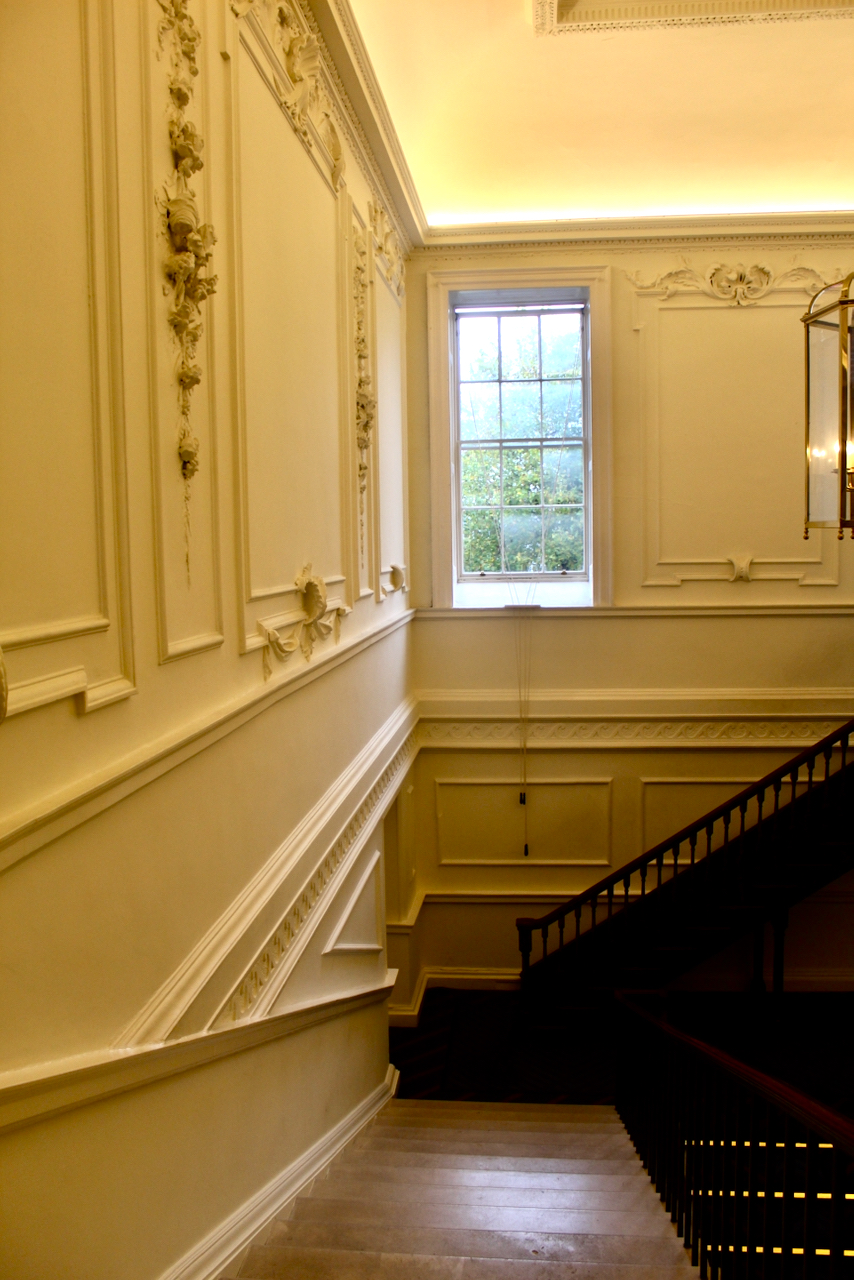
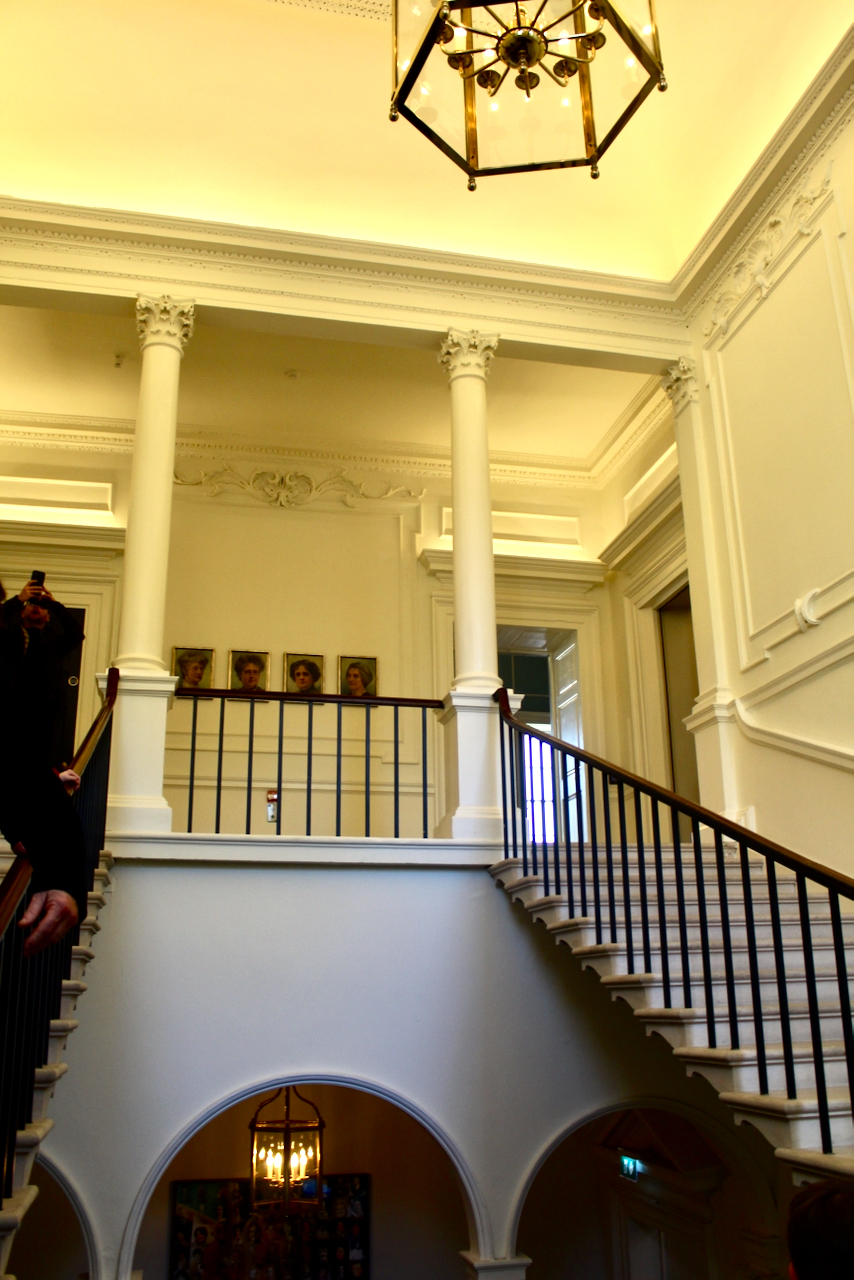
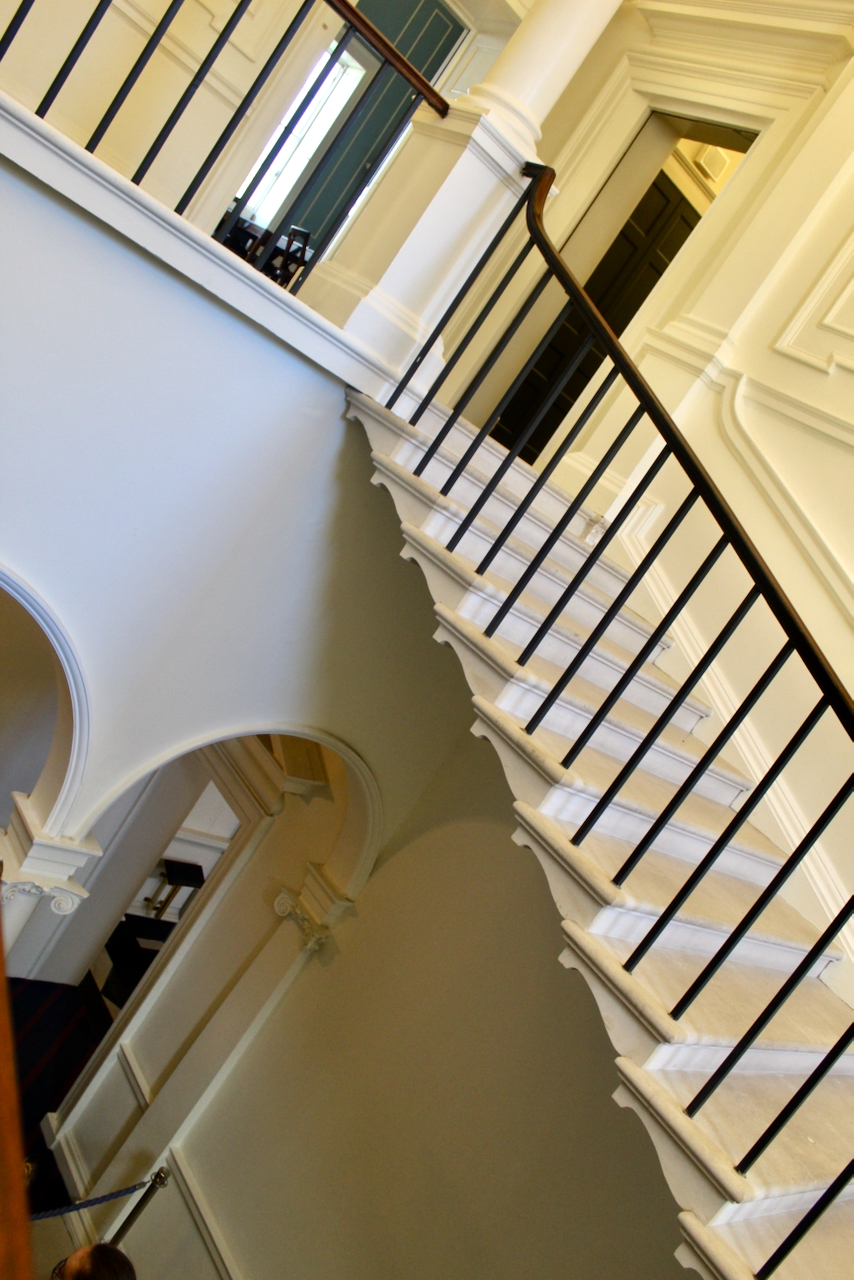
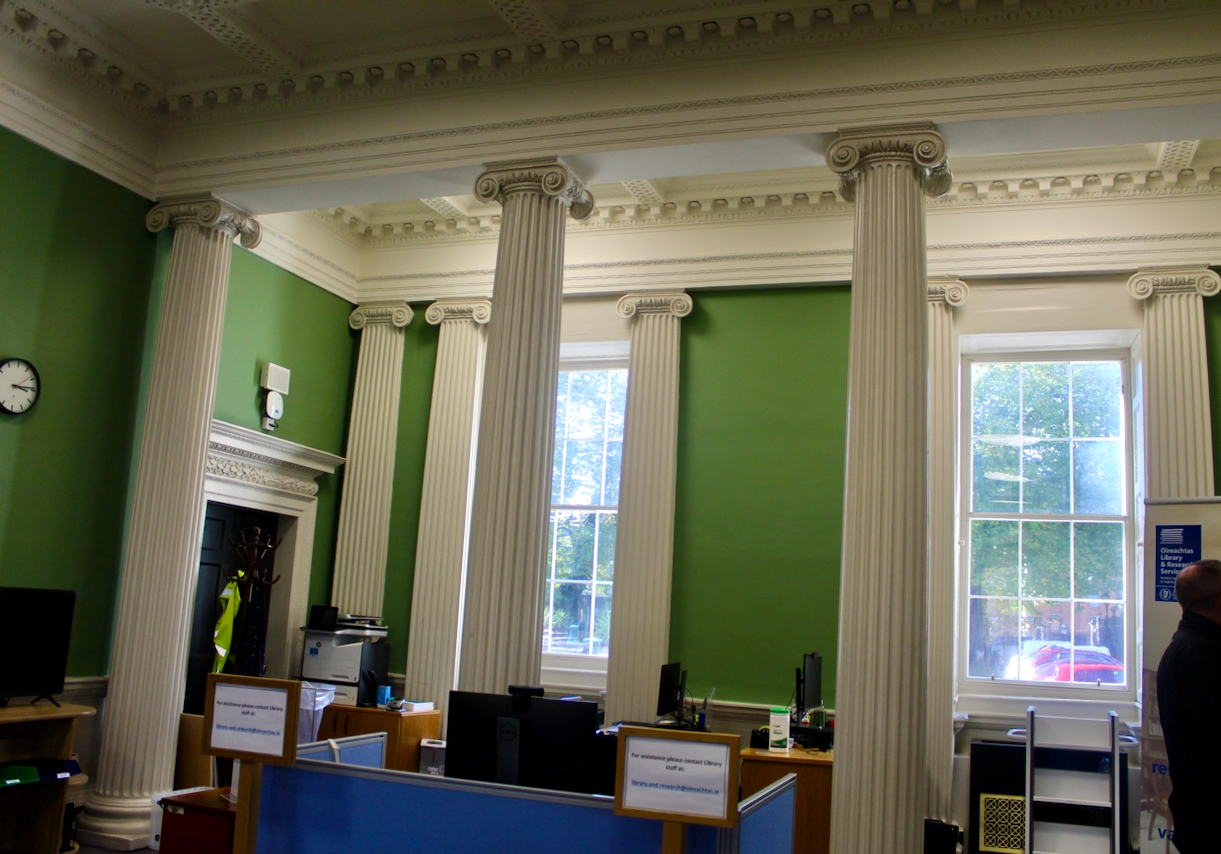
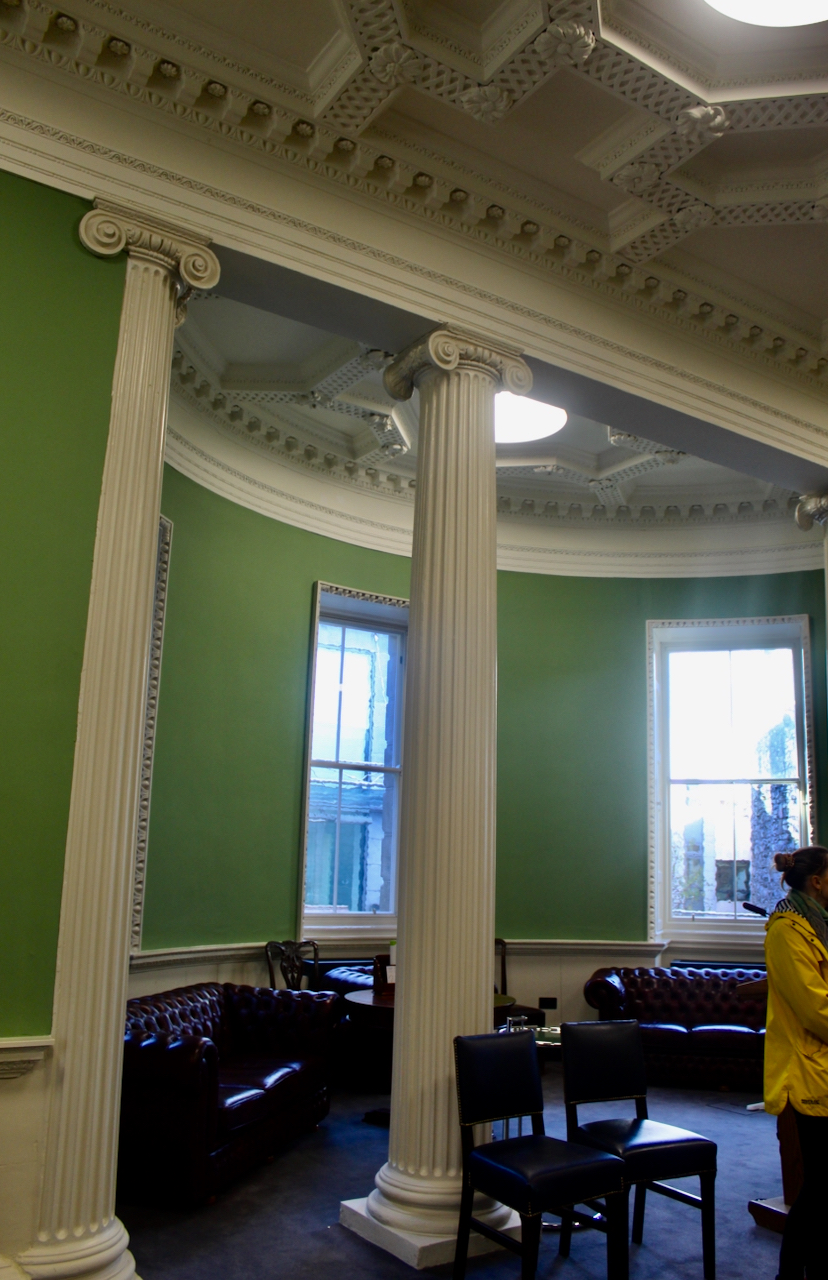
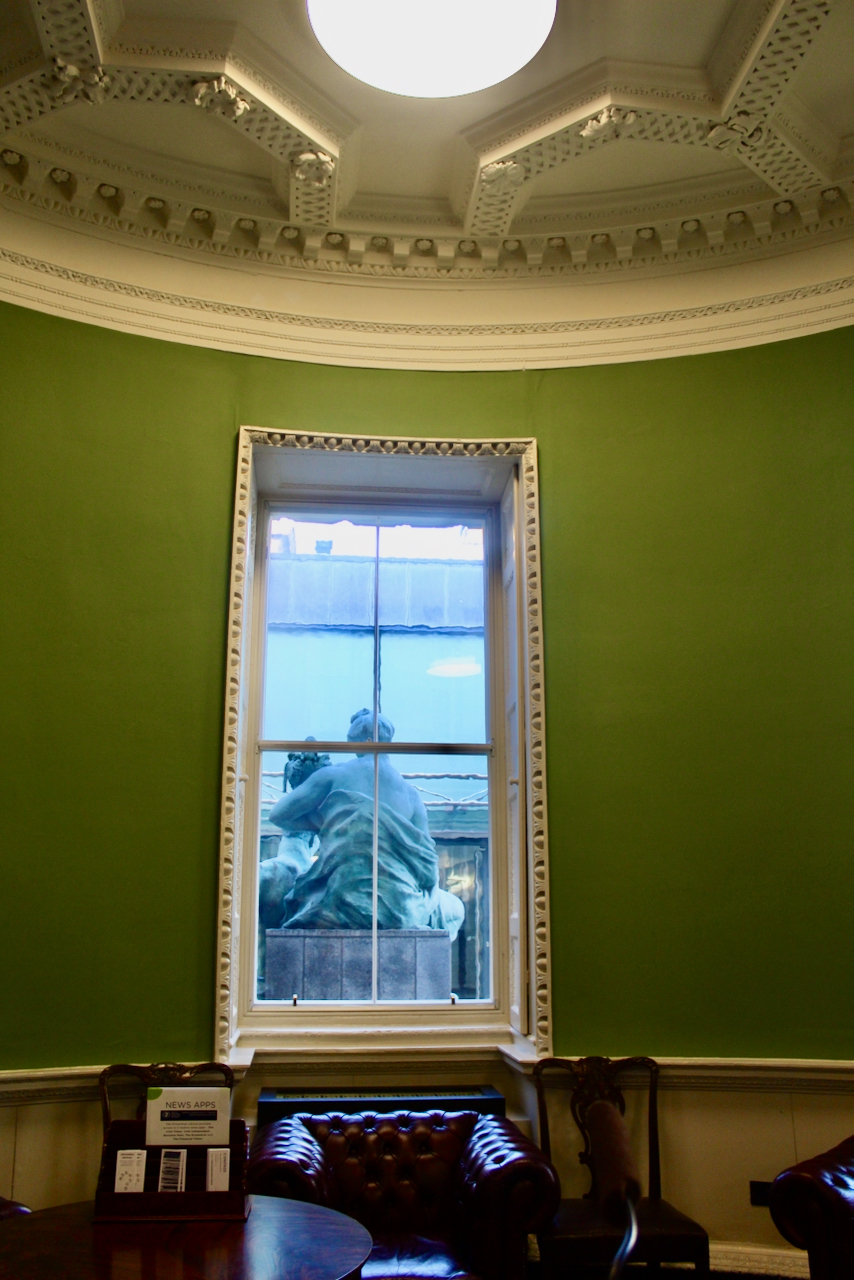
Beyond the stair hall is the former Supper Room, which is now the Library of the Oireachtais, which fills the entire depth of the house. I found the lights rather offputting and think they ruin the intended effect of the room and the ceiling, which Casey tells us derives from Sebastiano Serlio (1475-1554), an Italian architect who was part of an Italian team who built the Palace of Fontainbleau, and Tutte l’opere d’architettura et prospetiva (All the Works of Architecture and Perspective) is Serlio’s practical treatise on architecture.
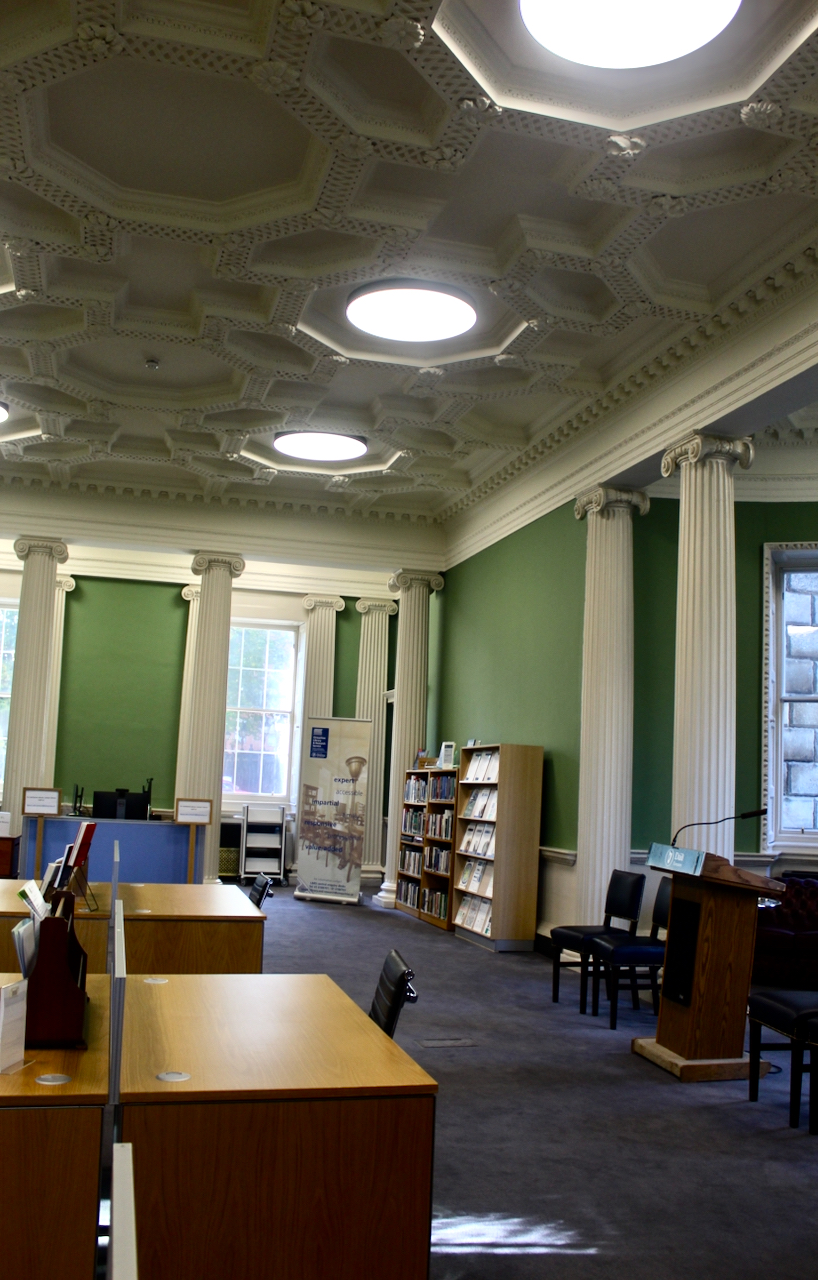
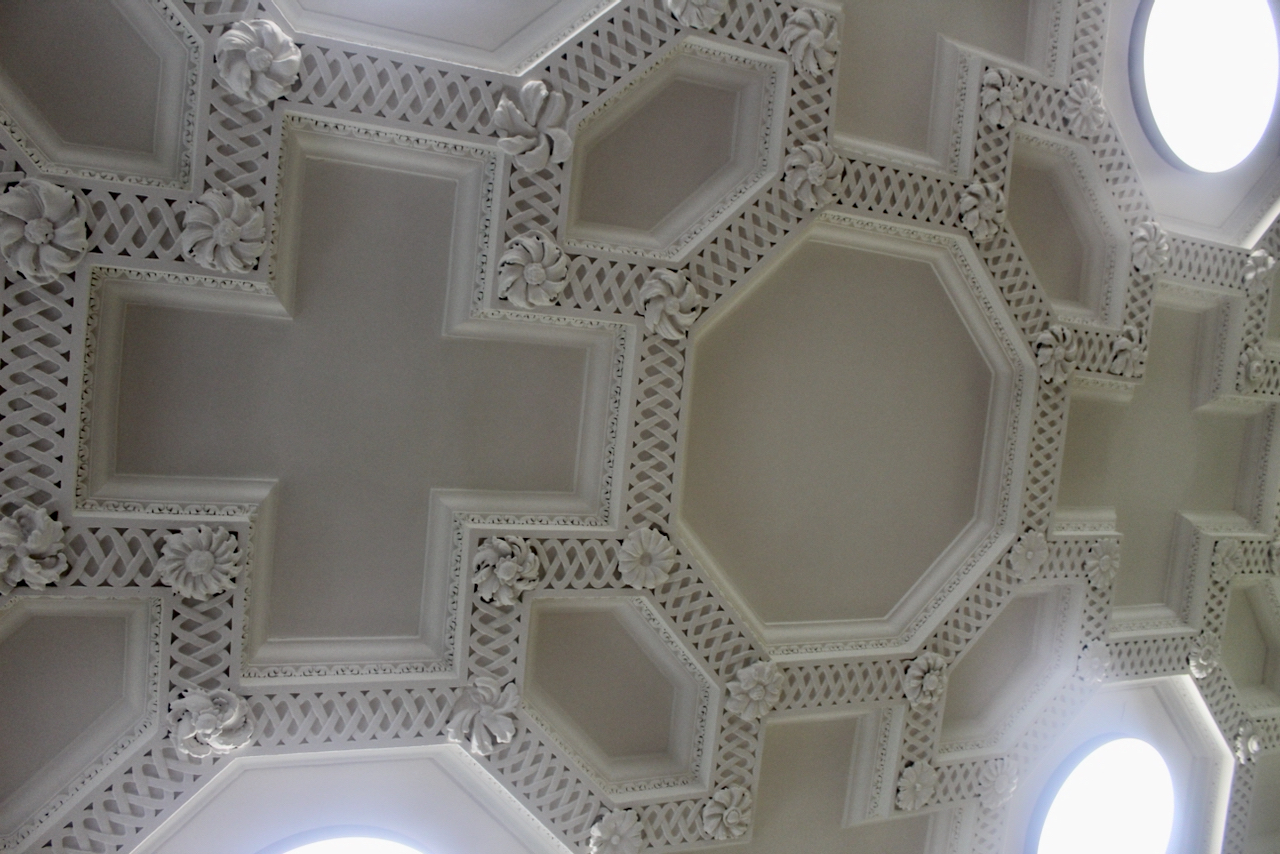

The room has three screens of fluted Ionic columns – one at either end and one in front of the bow at one side of the room. Originally, Casey informs us, there were six fluted columns to each screen, paired at the ends of the room and in the centre of the north bow, but in the 19th century one column was removed from each pair. On the walls the corresponding pilasters would have matched the six columns.
The bow is considered to be the first bow in Dublin, and the design of the house is said to have inspired the design of the White House in Washington DC, designed by a man from Kilkenny, James Hoban.

A pedimented doorcase is flanked by ornate chimneypieces based on a design by William Kent. These are surmounted by Corinthian overmantels after a design by Inigo Jones, possibly made to frame portraits, Casey suggests, of the Earl and Countess of Kildare painted by Reynolds in 1753-54. [see 2]
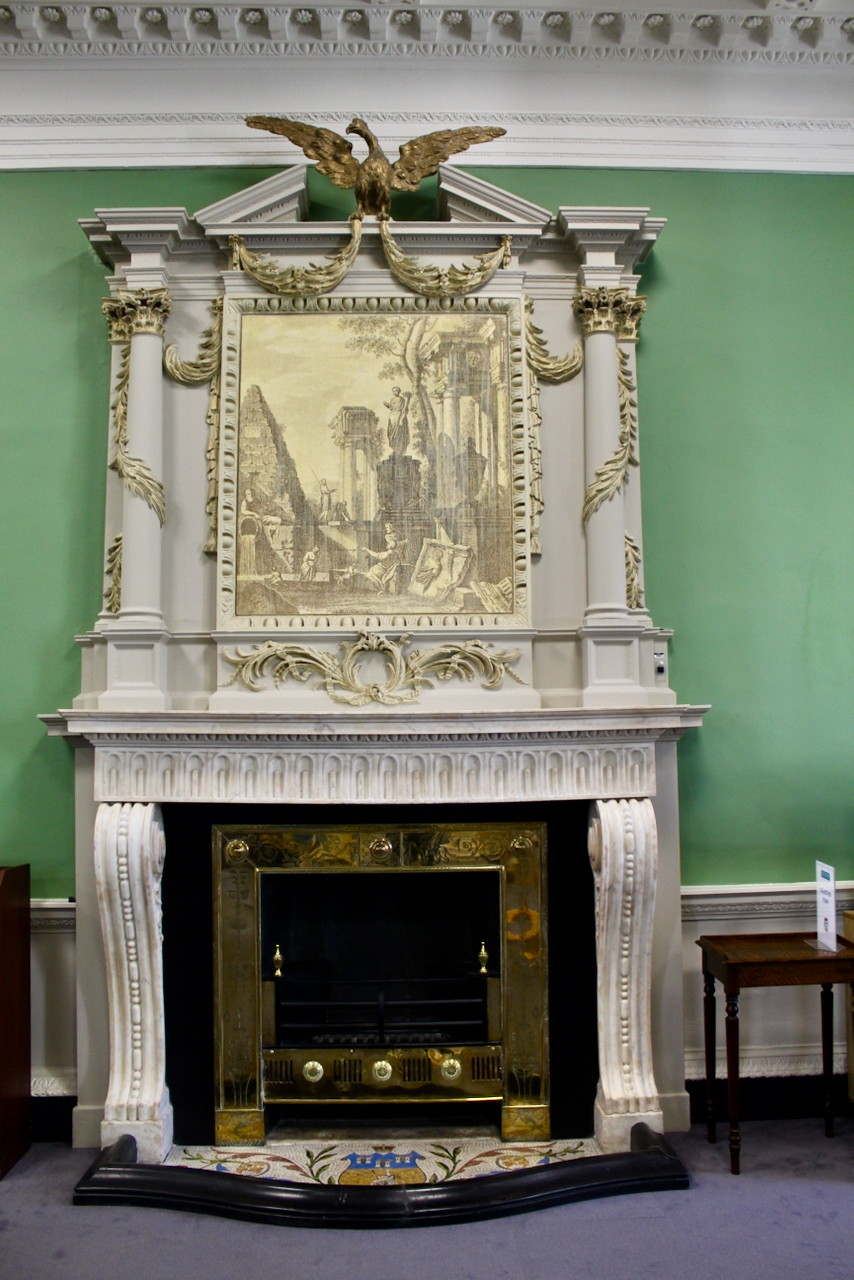
Next to the Supper Room on the garden front is the large dining room, also designed by Isaac Ware. It is of three bays, and has decorative doorcases and a beautiful ceiling attributed to Filippo Lafranchini.
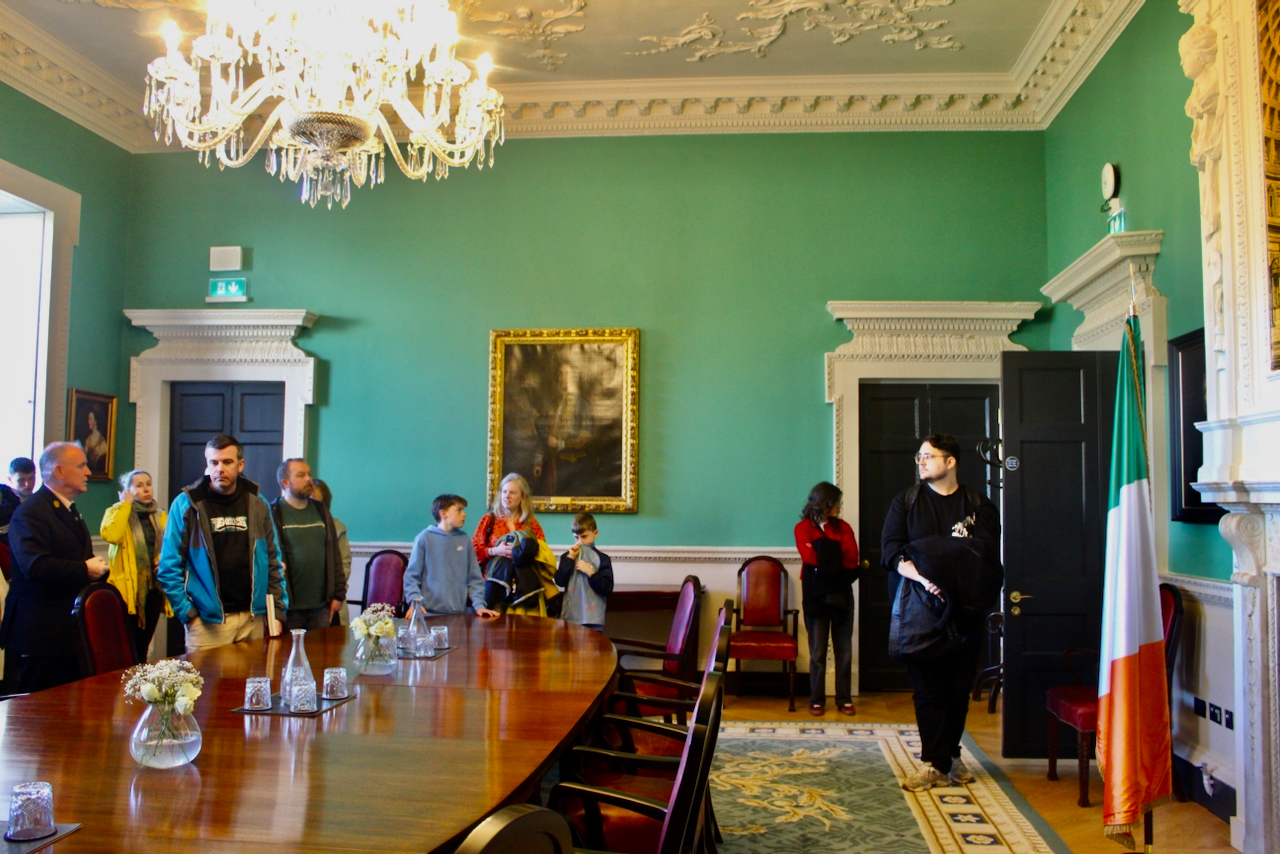


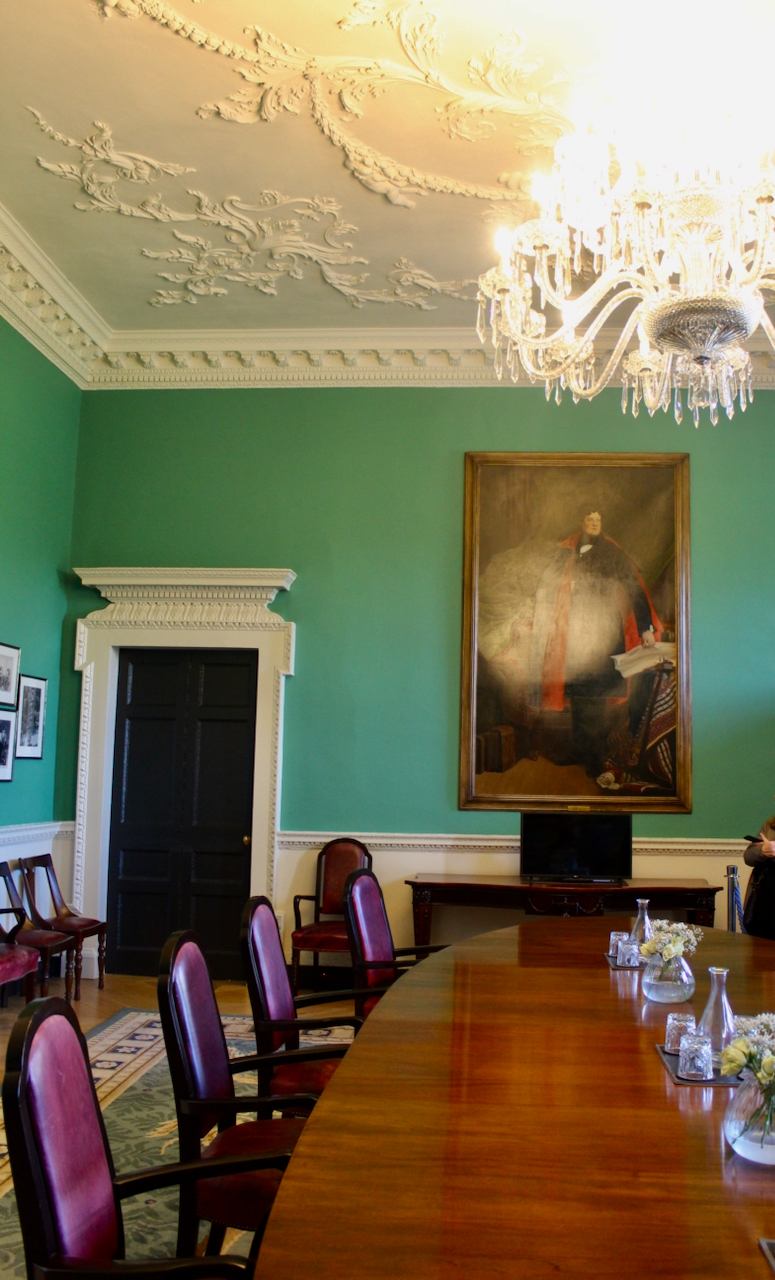
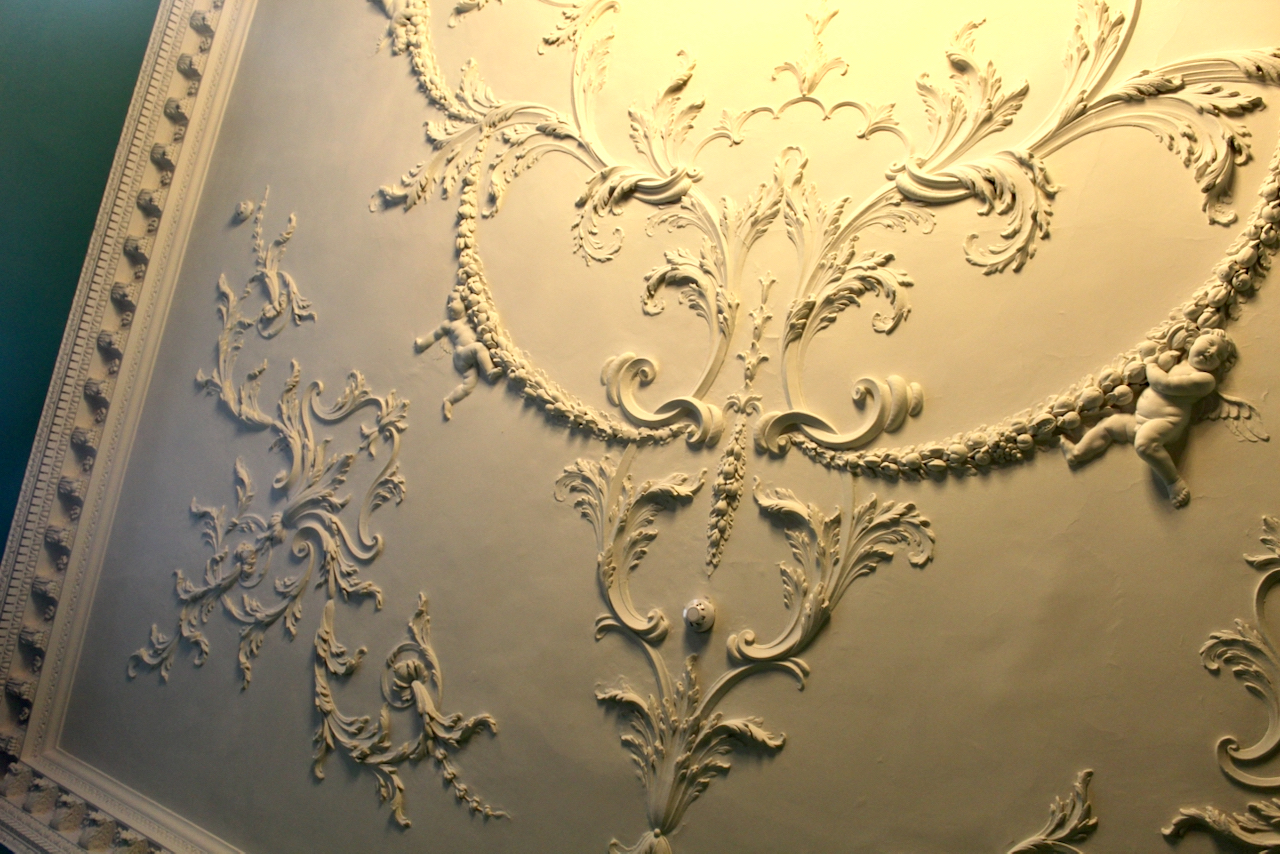
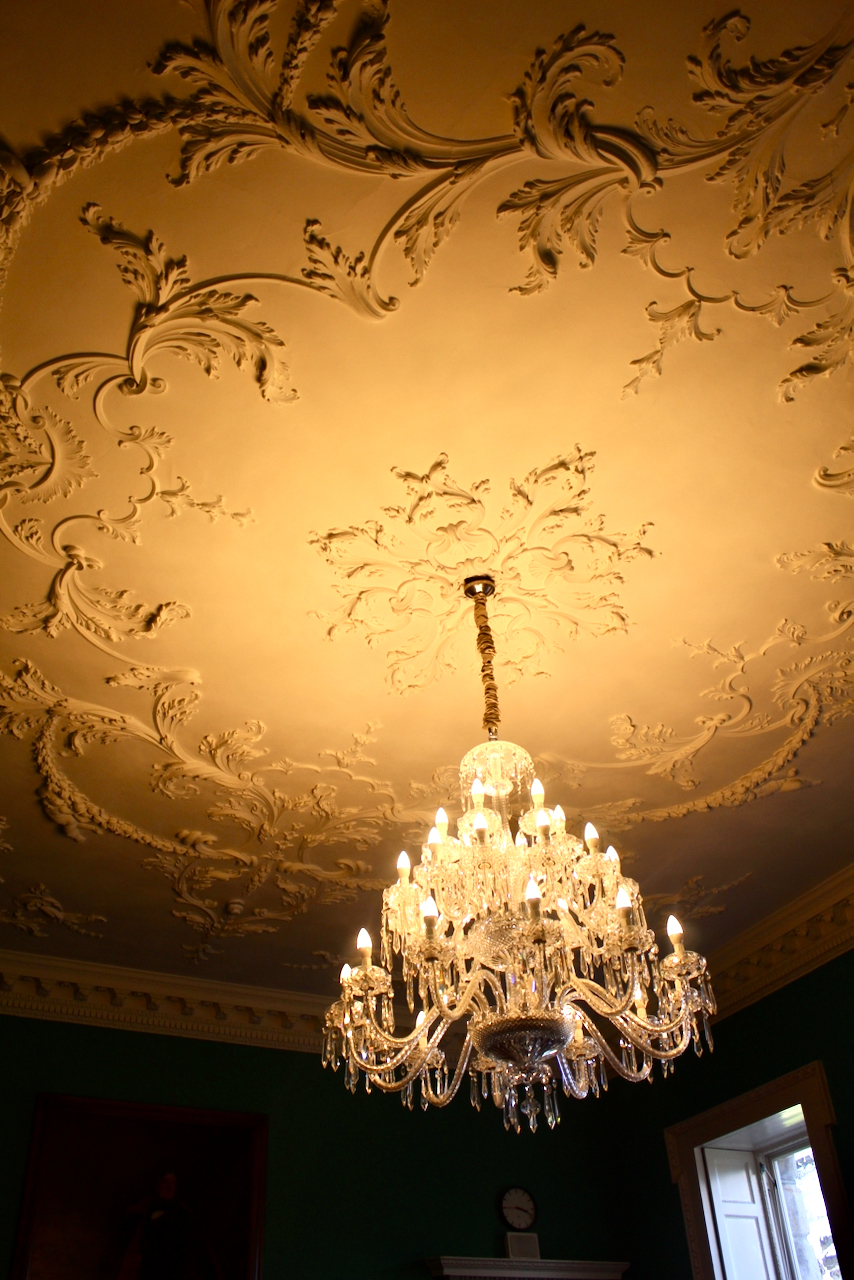
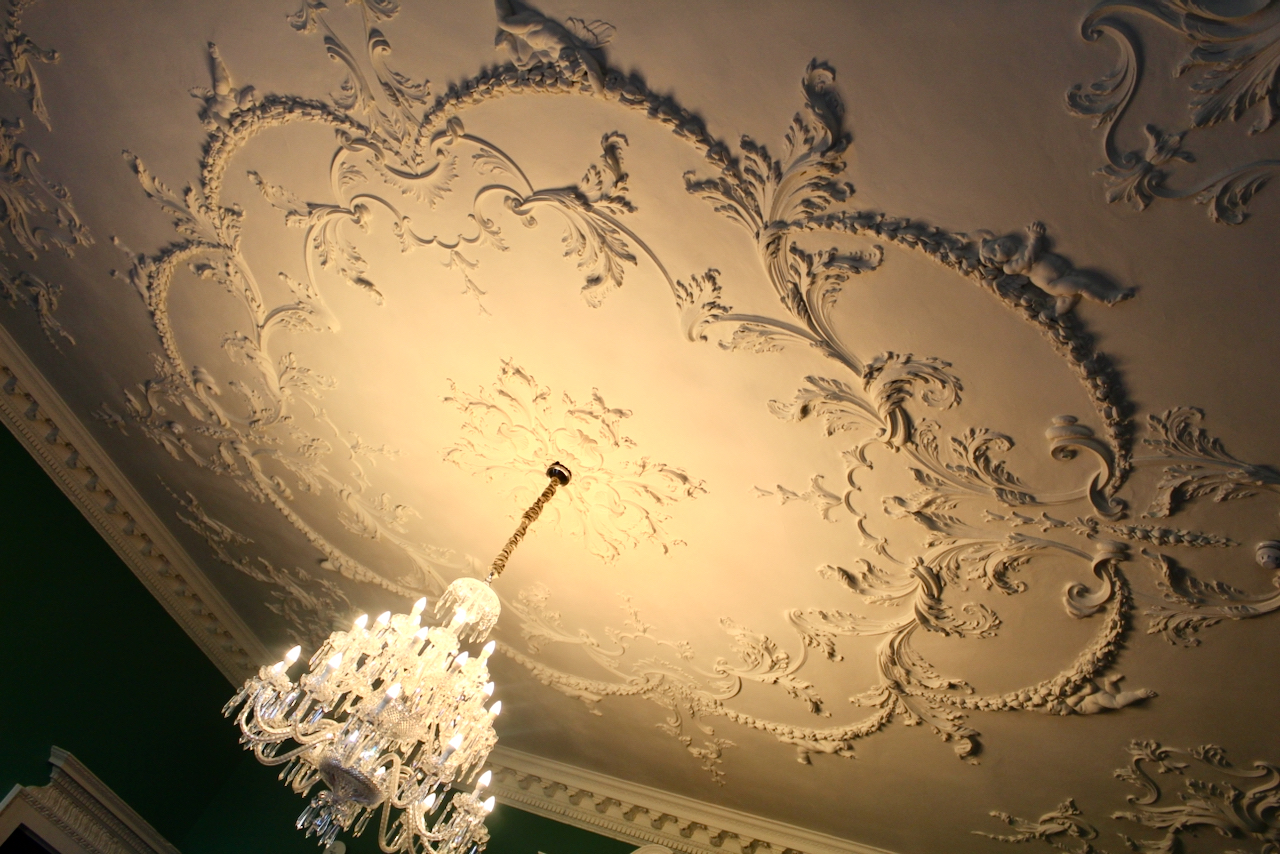
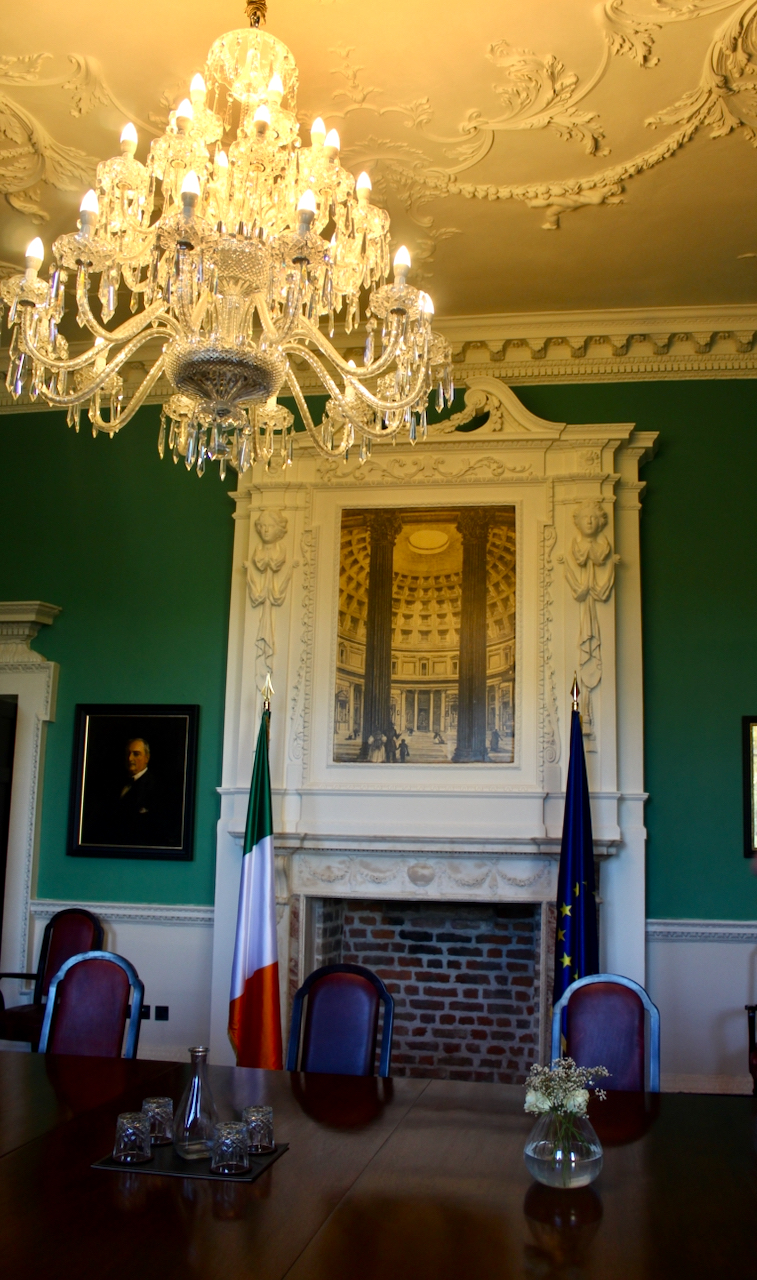
Christine Casey next describes the Garden Hall, with a more modest shell and acanthus ceiling and a chimneypiece with claw feet. Next is the former Private Dining Room, she tells us, a room from 1760, which has a ceiling with acanthus, rocaille shells and floral festoon forming a deep border to a plain chamfered central panel.
Casey tells us that the Earl of Kildare’s Library is at the southeast corner of the house, and that it has pedimented bookcases. It too was designed by Isaac Ware.

Before we go into the separate building that holds the current Dáil chamber, let us go up to the first floor. The former gallery now holds the Senate Chamber, and it fills the north end of the eighteenth century house. Both Richard Castle and Isaac Ware prepared plans for this room, but the room was unfinished when the Duke of Leinster died in 1773.
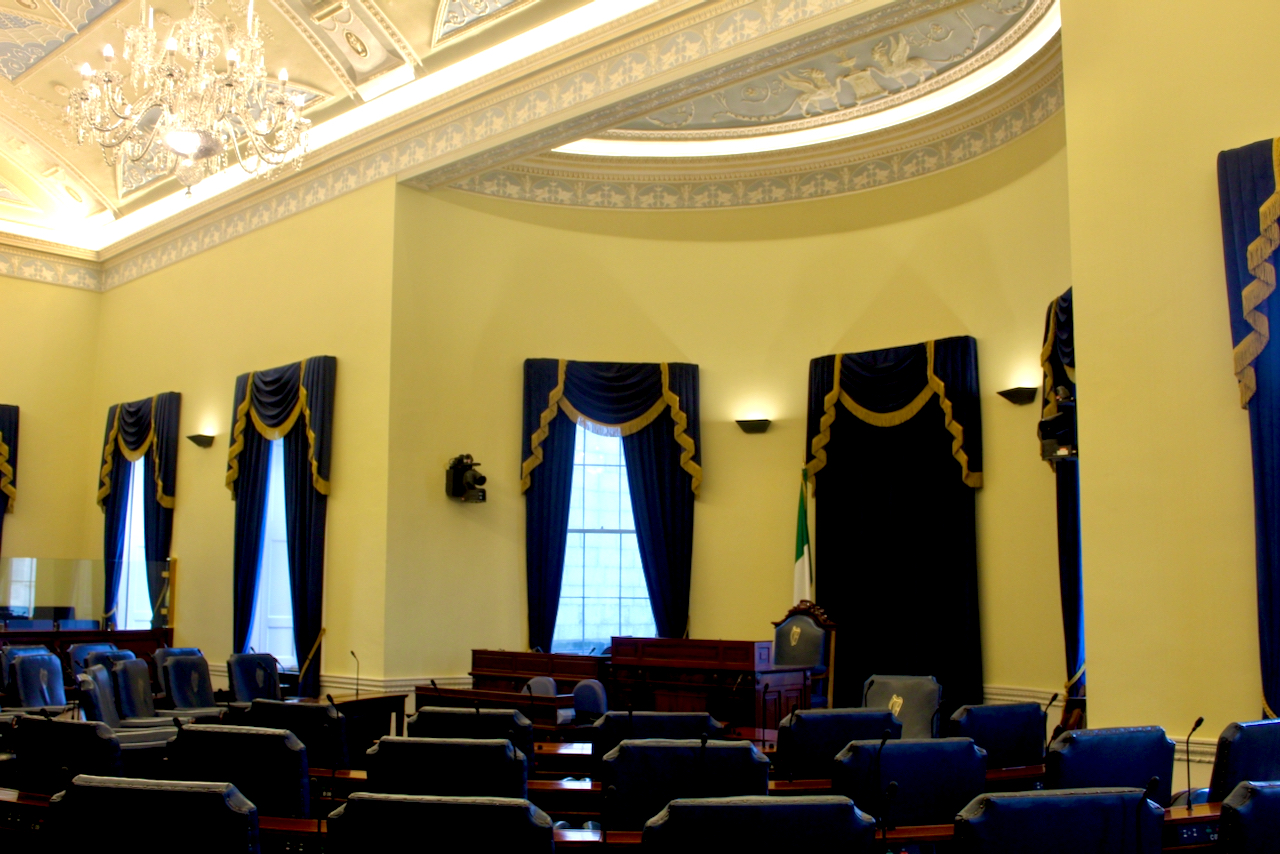
James died on 19 November 1773 at Leinster House and was buried in Christ Church cathedral four days later. His eldest son George predeceased him, so the Dukedom passed to his second son, William Robert Fitzgerald (1748/49-1804). The 2nd Duke completed the picture gallery in 1775 to designs by James Wyatt (1746-1813).
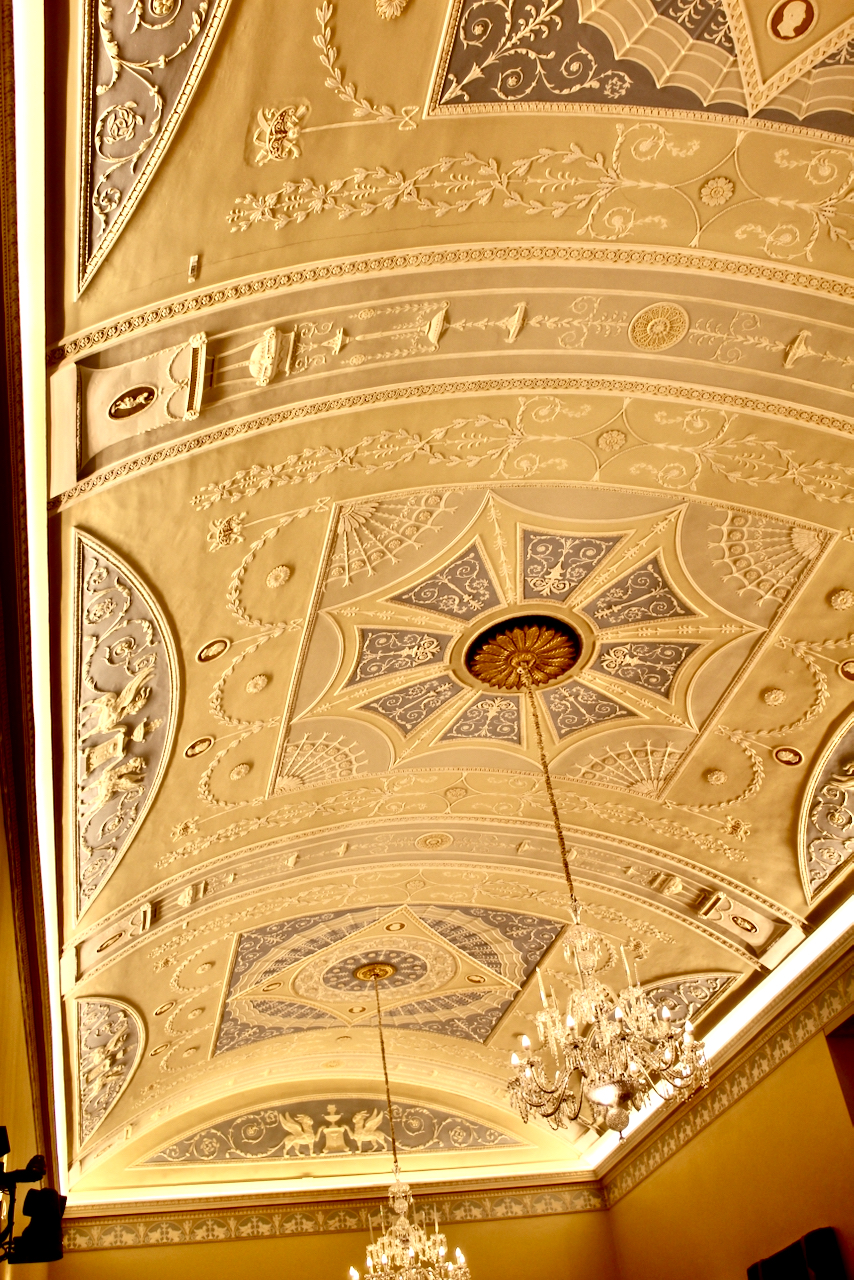
The ceiling as designed by James Wyatt is tripartite. I defer to Christine Casey for a description:
“at its centre a chamfered octagon within a square and at each end a diaper within a square, each flanked by broad figurative lunette panels at the base of the coving and bracketed by attenuated tripods, urns and arabesque finials… It remains among the finest examples of Neoclassical stuccowork in Dublin.“

Wyatt created an elliptical vault over the principal volume of the room and a half-dome above the bow.
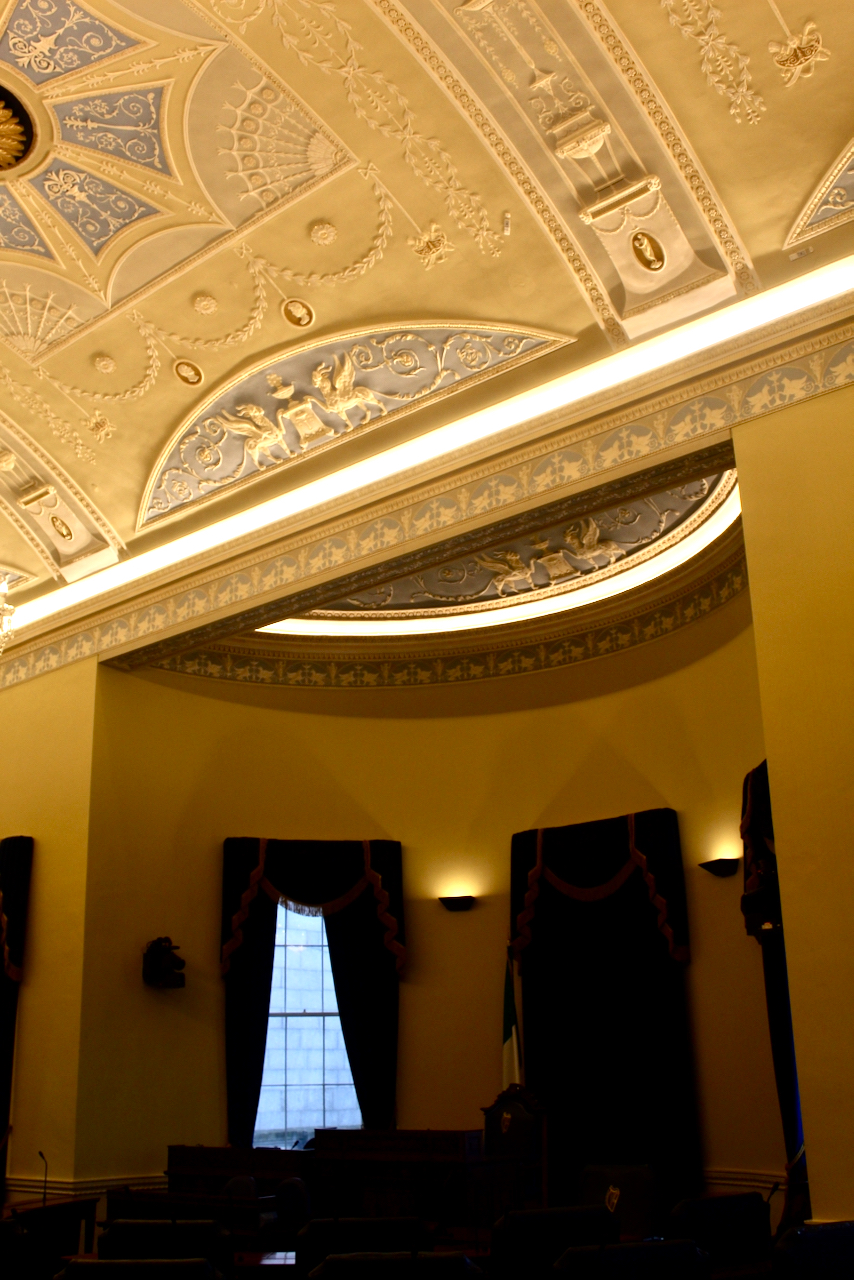

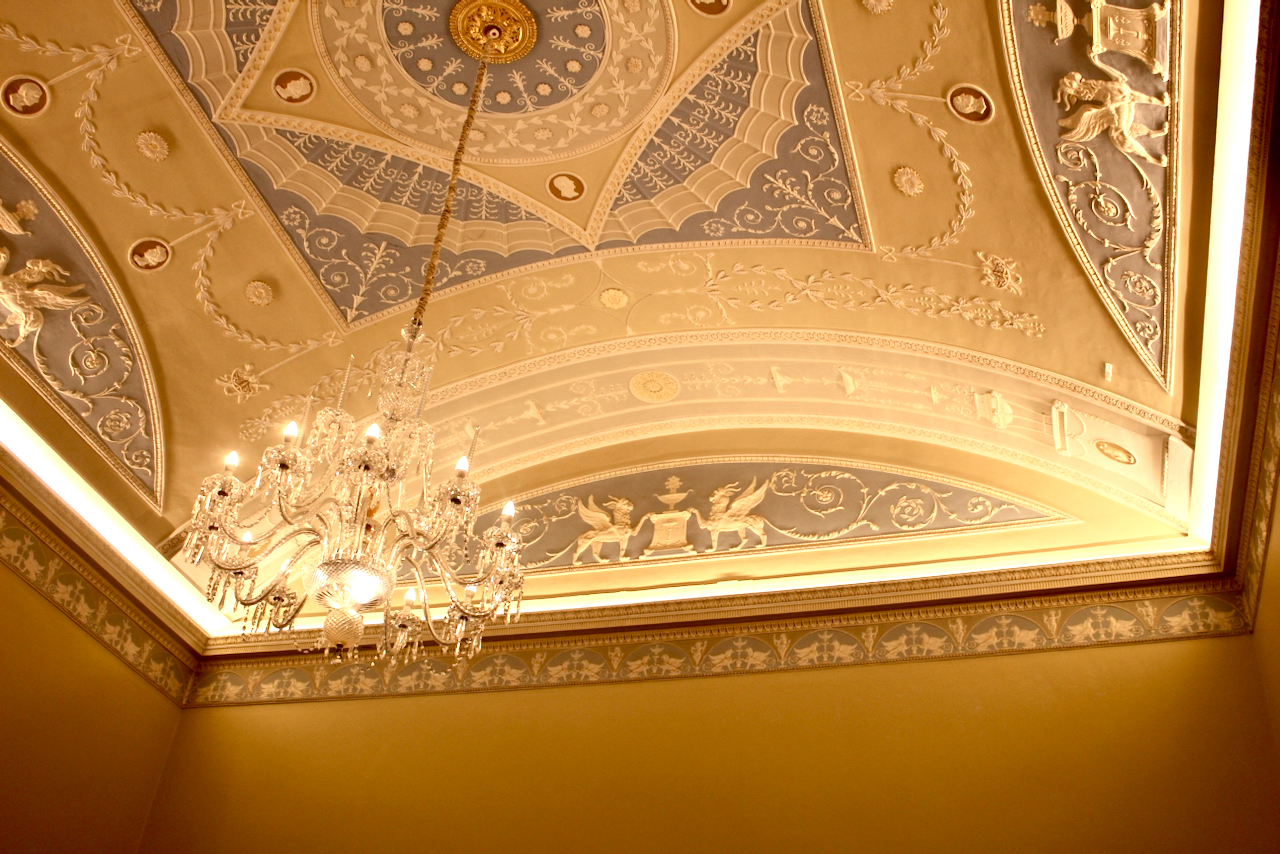
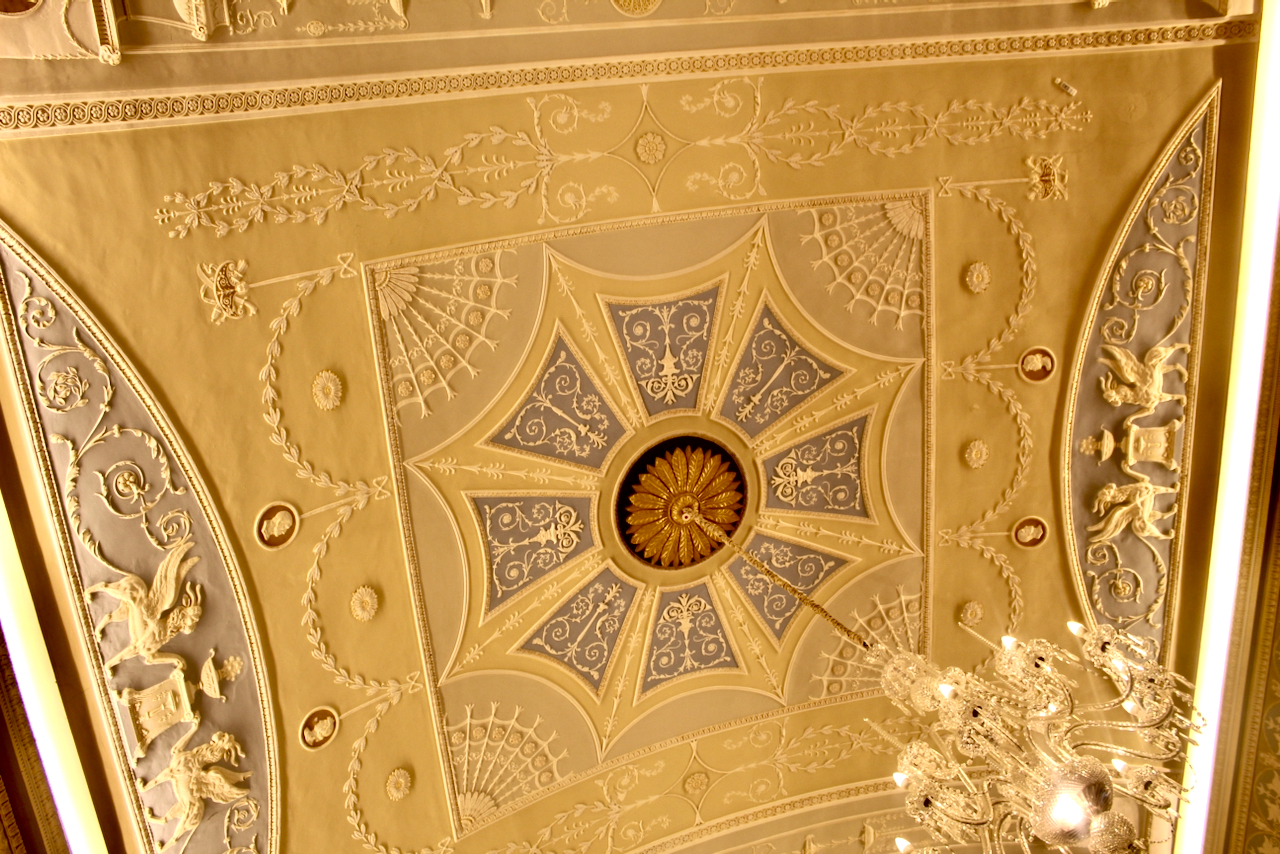
On the inner wall of the room Wyatt places three ornate double-leaf doorcases and between them two large white marble chimneypieces. The chimneypieces have high-relief female figures to the uprights and on the lintel, putti sit “between headed spandrels enclosing urns and confronted griffins.”
Unfortunately with the tour group I was unable to get good photographs of the room, the chimneypieces or the carved doorframes.
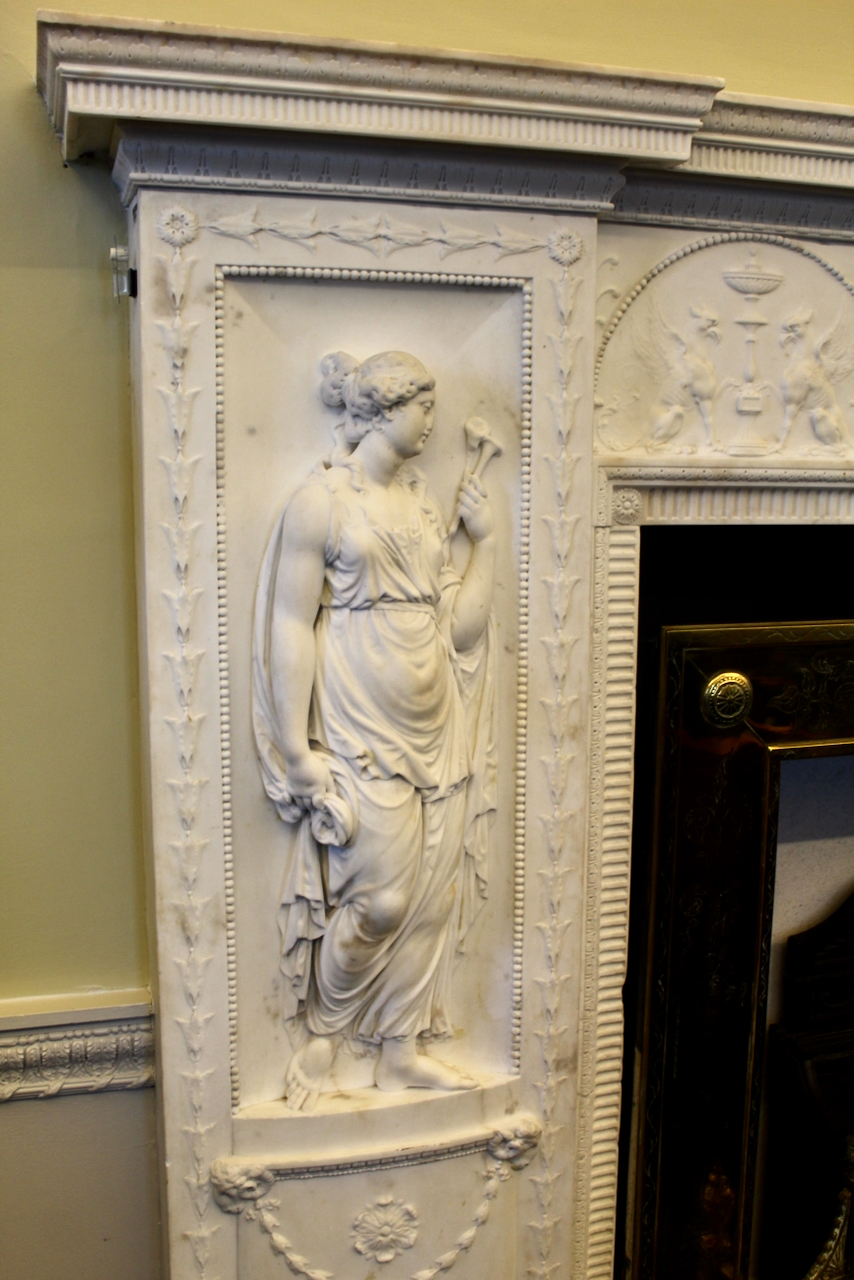
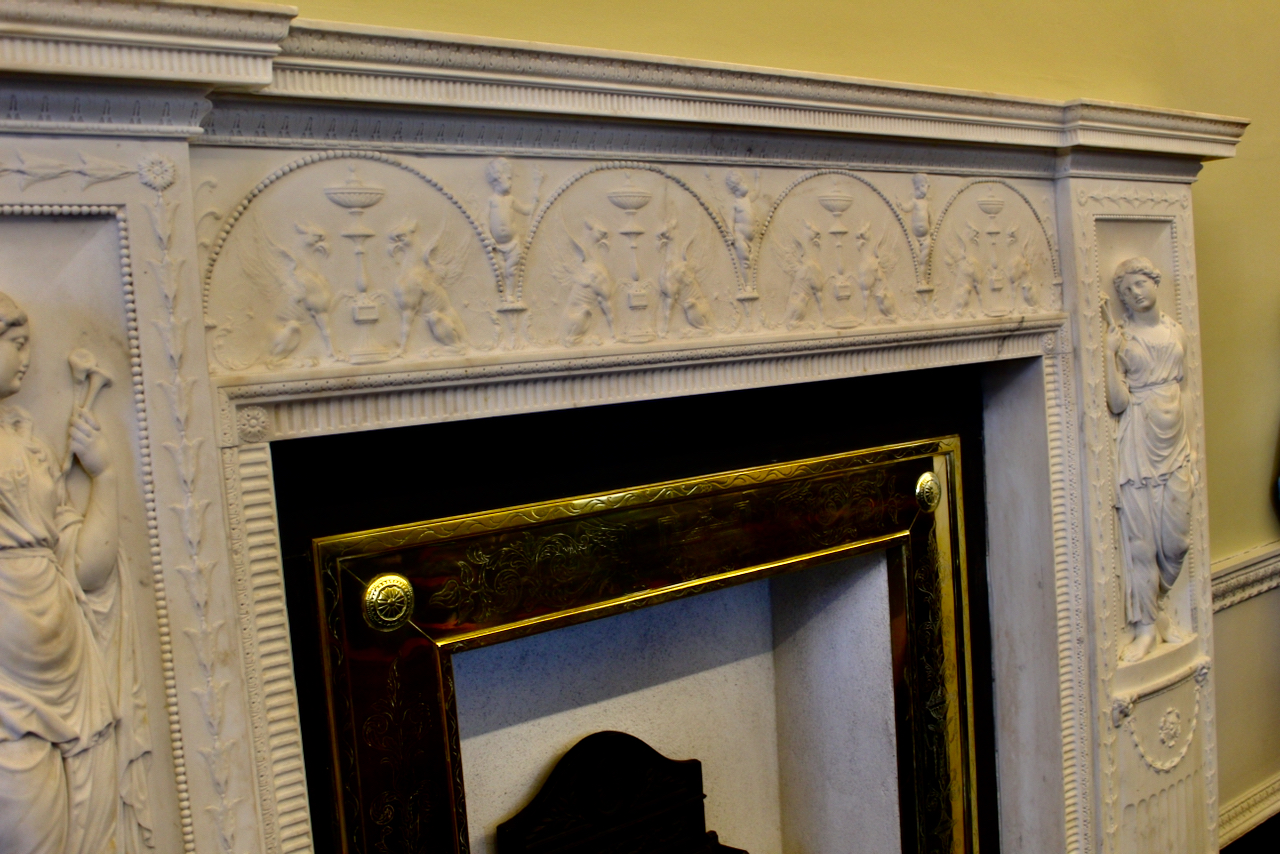
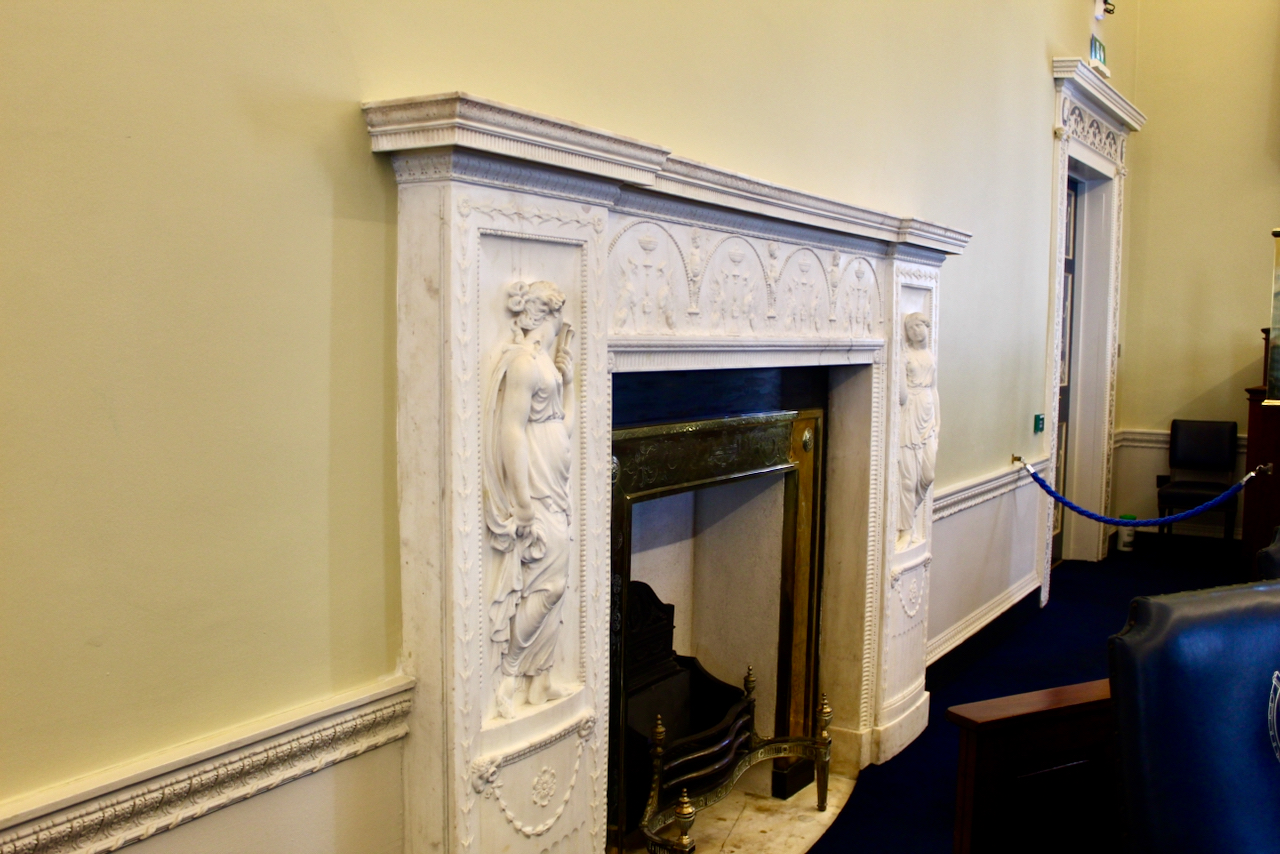
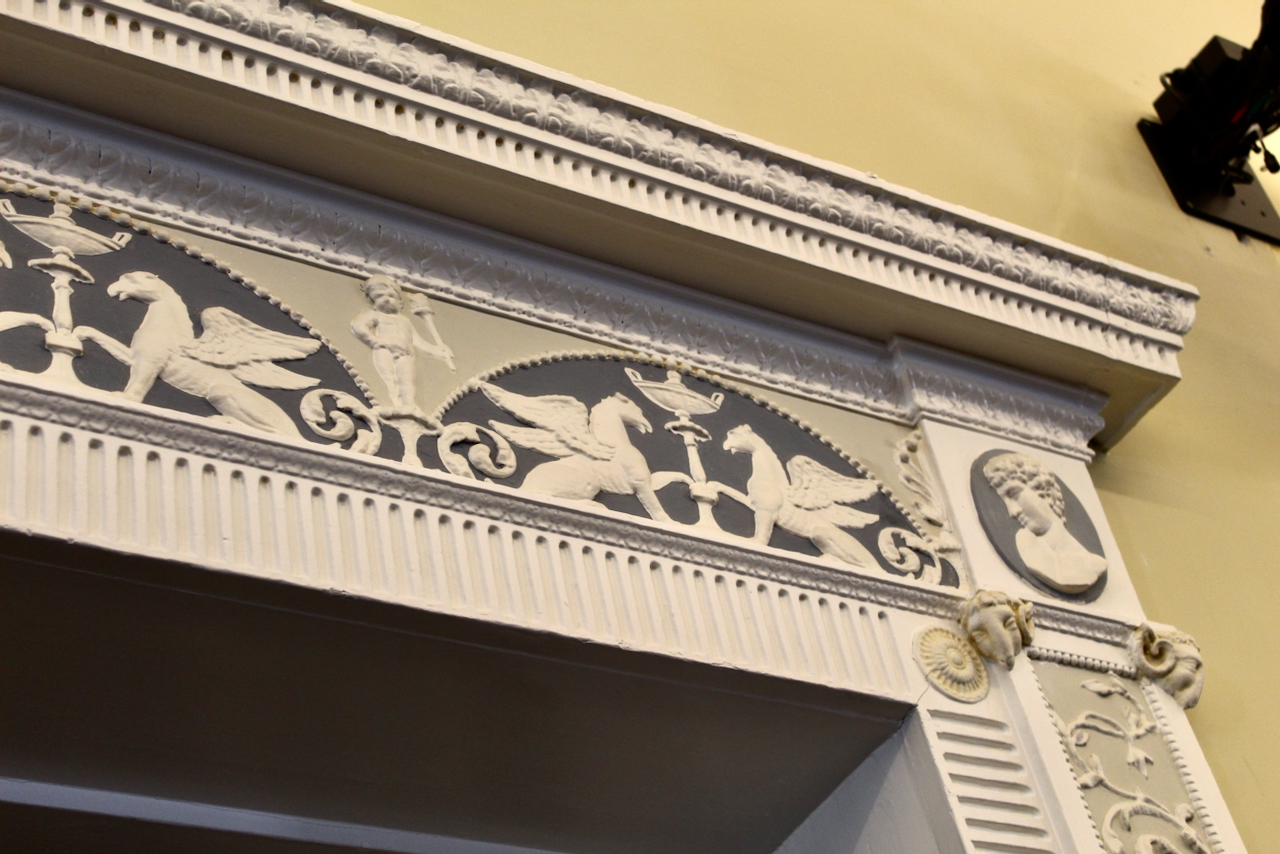
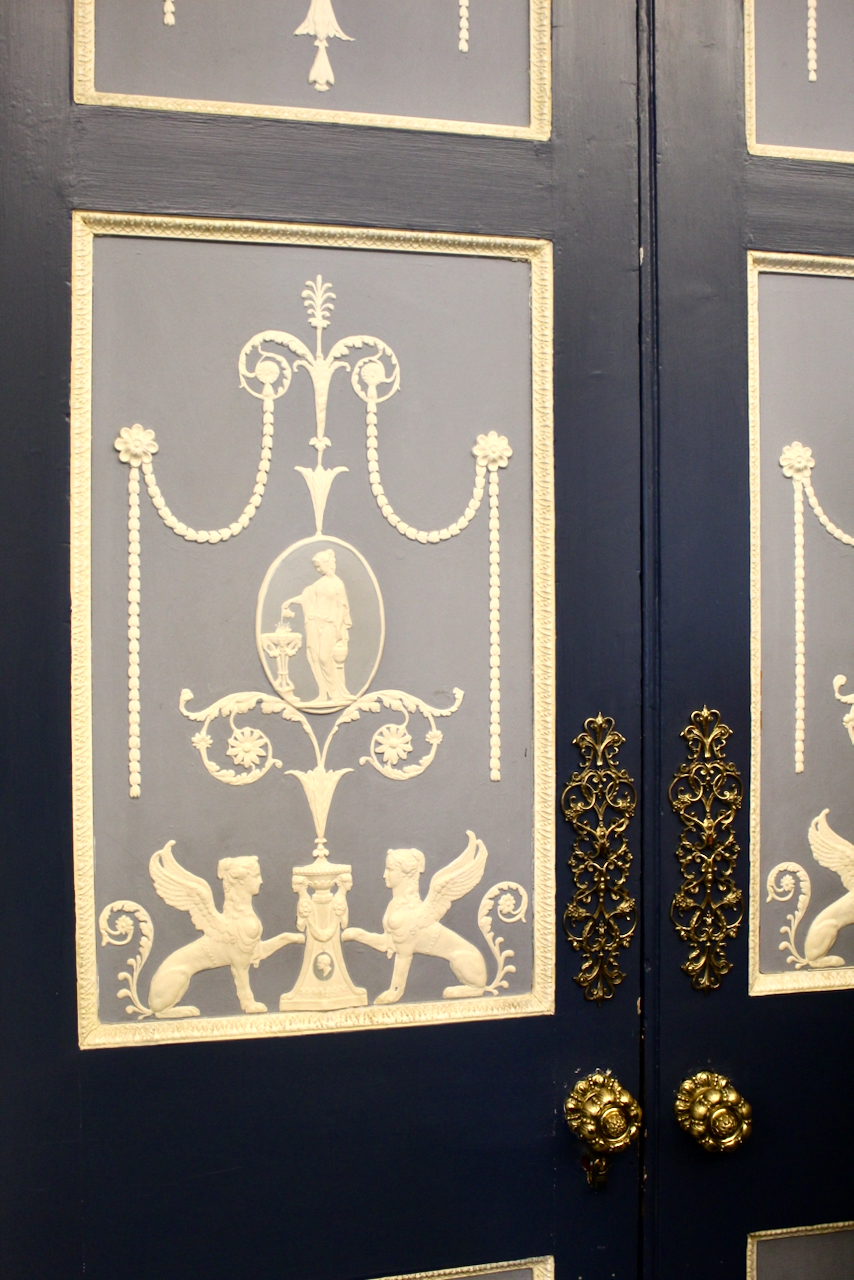
Next to the Seanad Chamber is the Seanad Anteroom. It was originally the upstairs dining room.
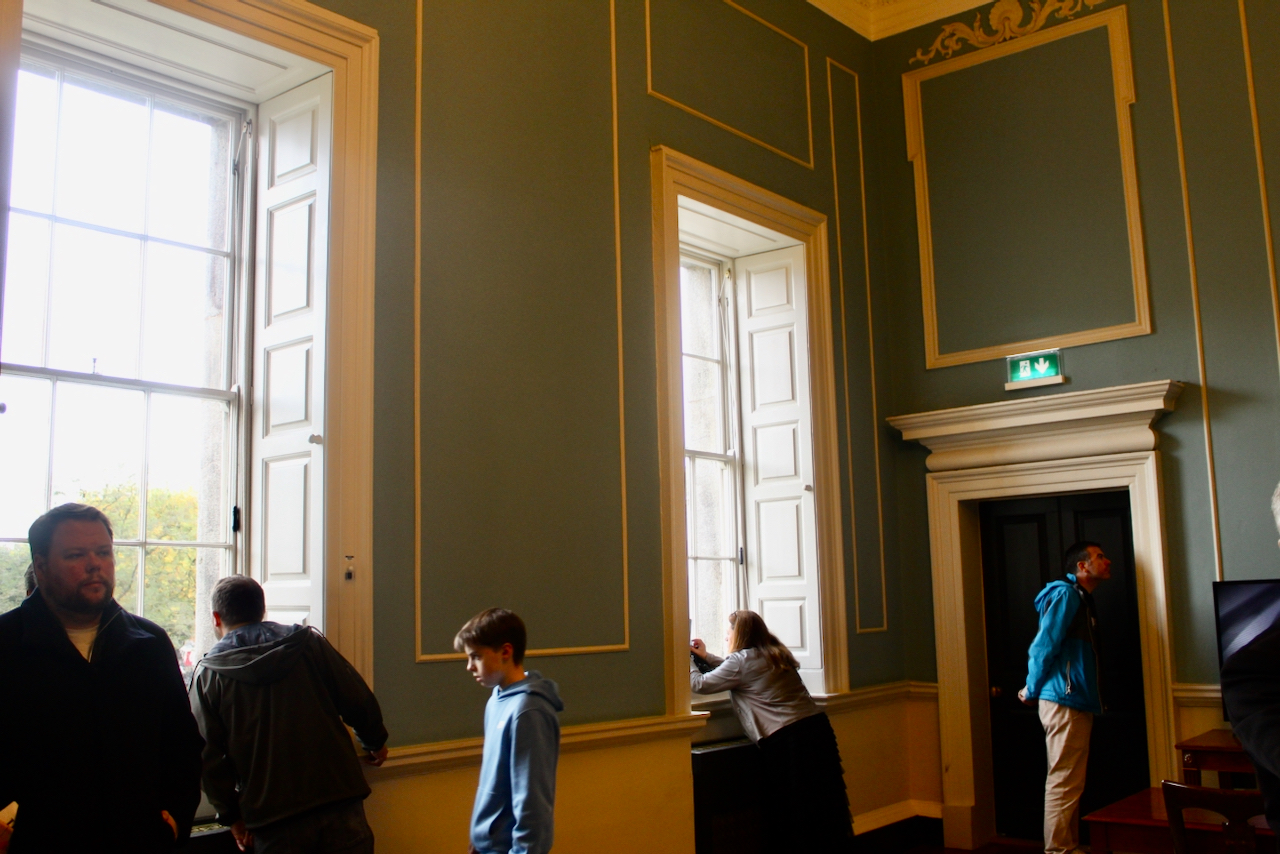
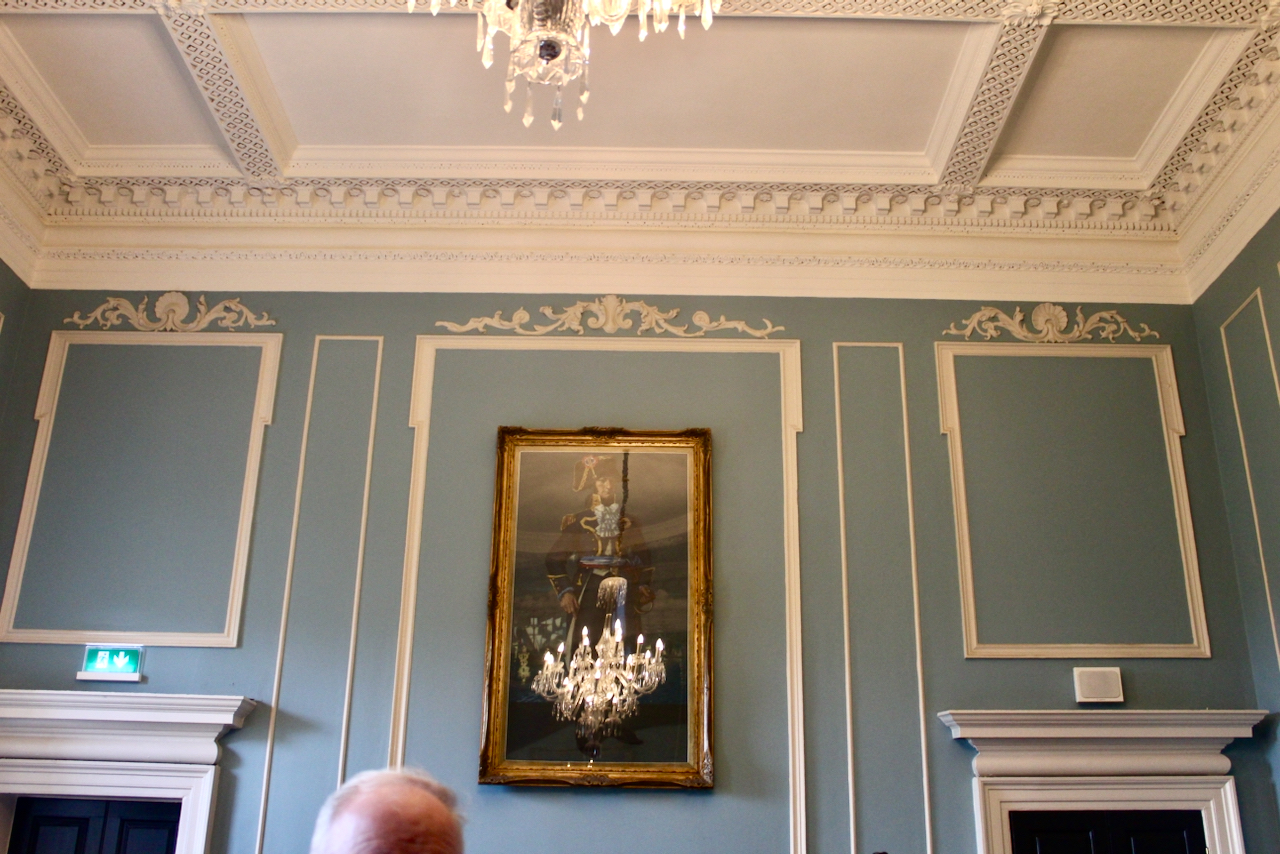
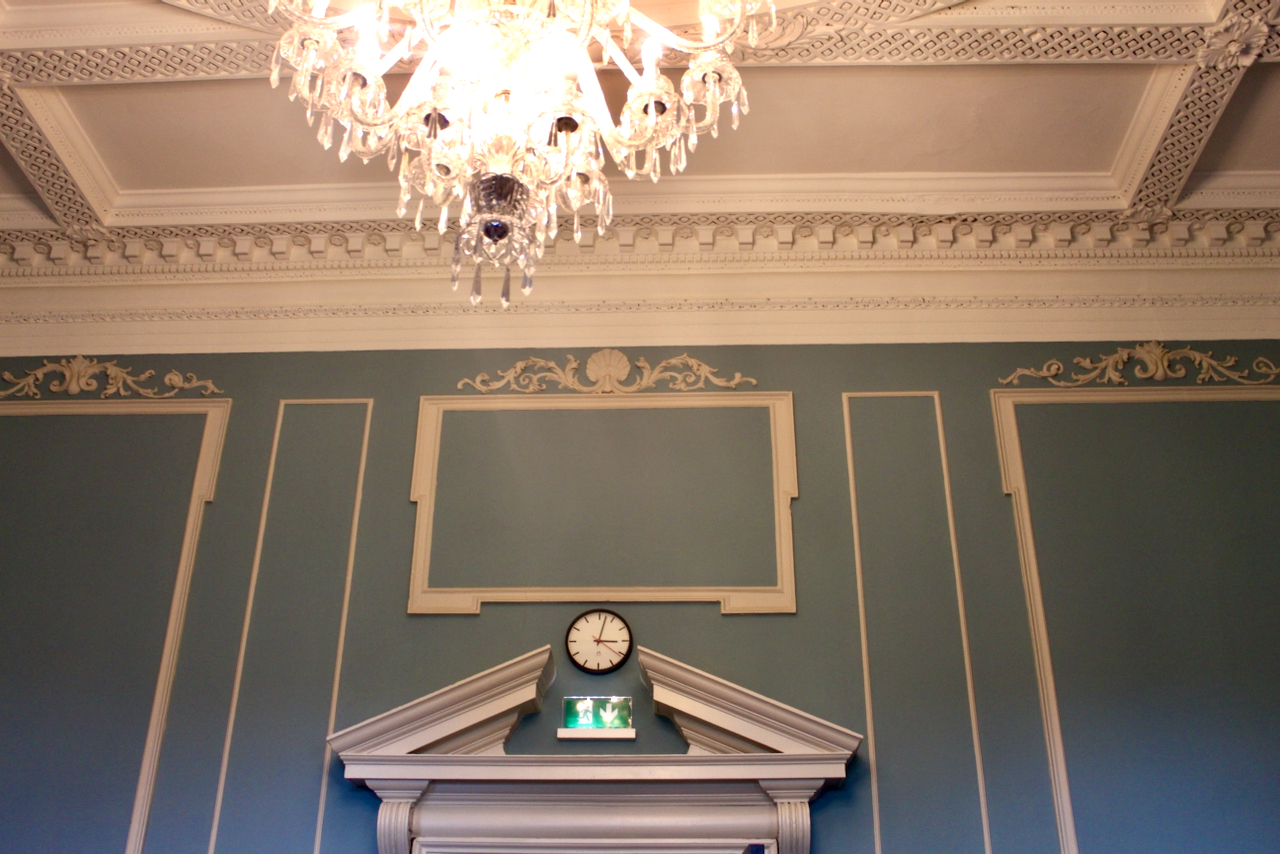
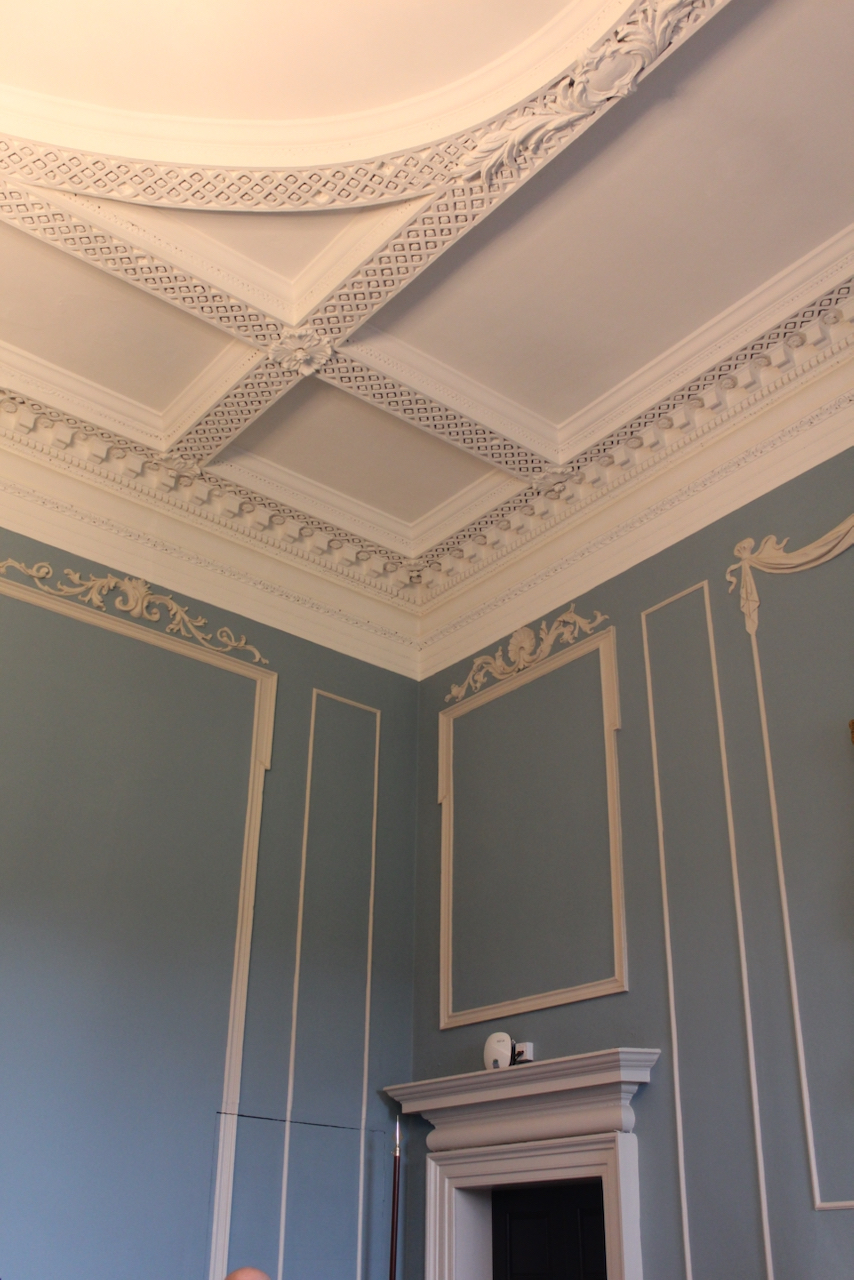
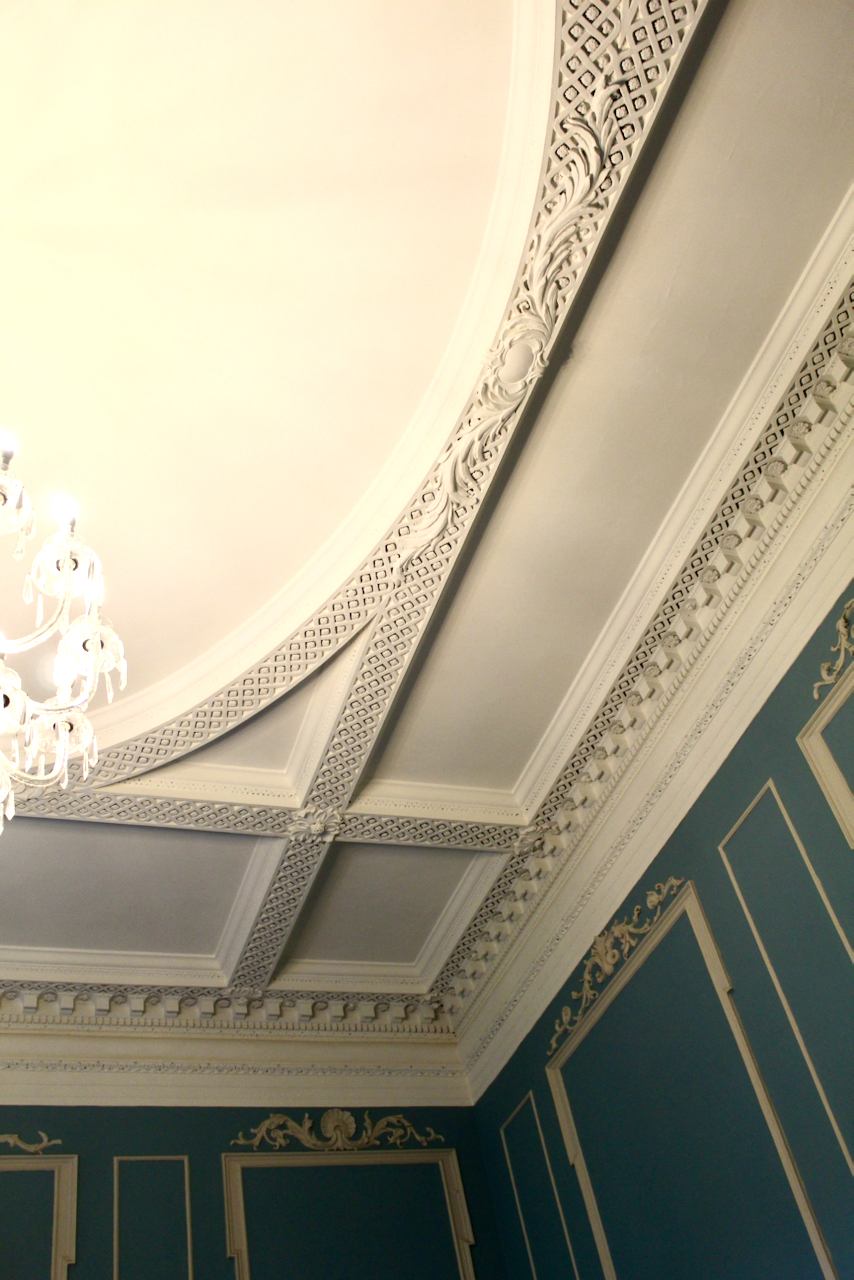
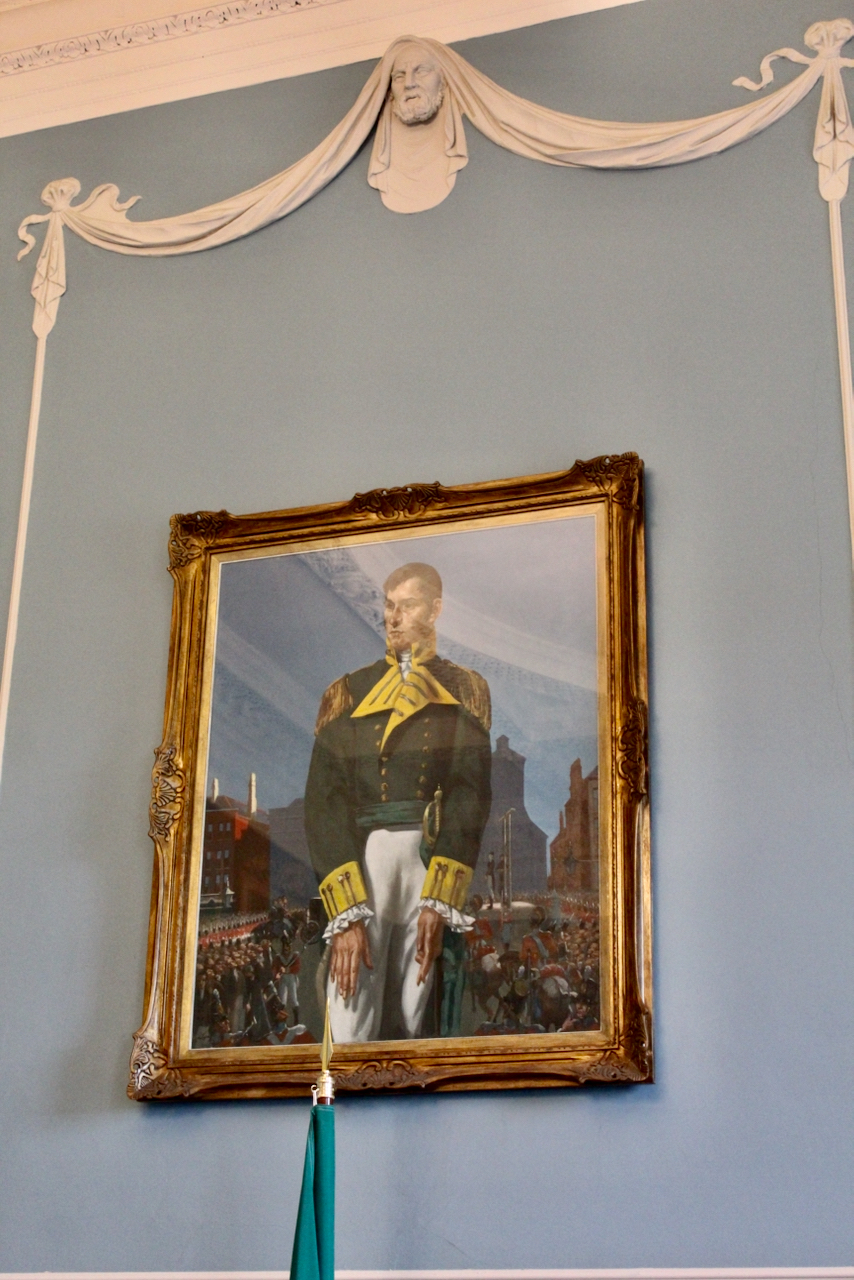
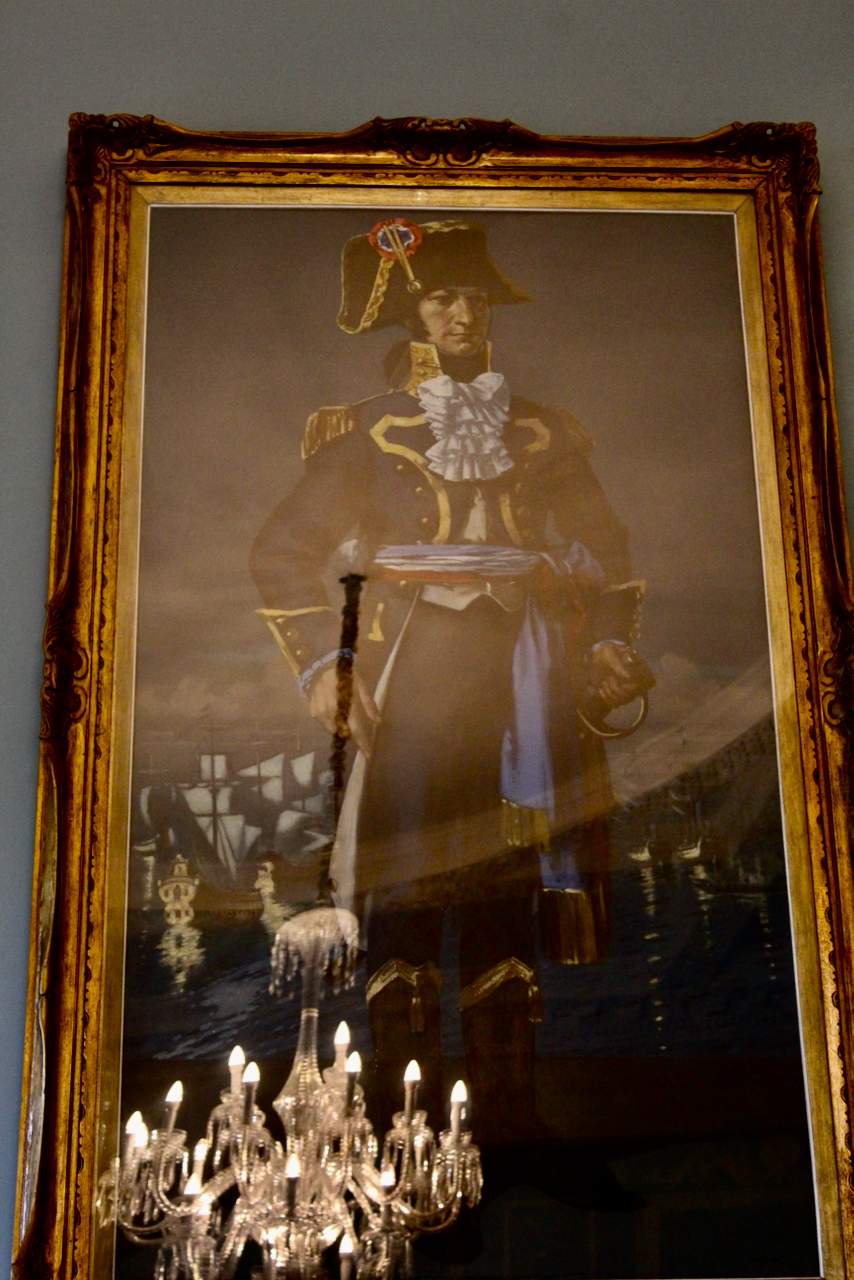
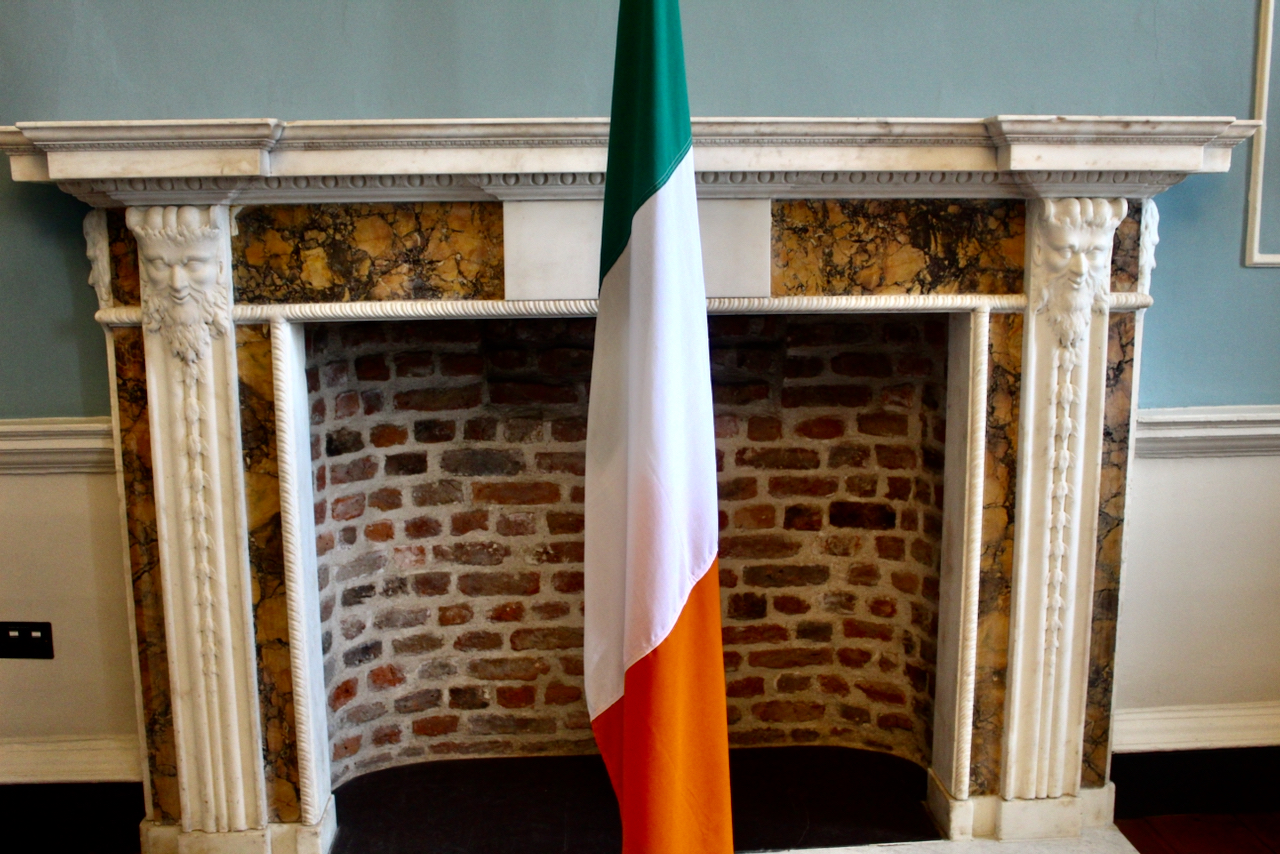
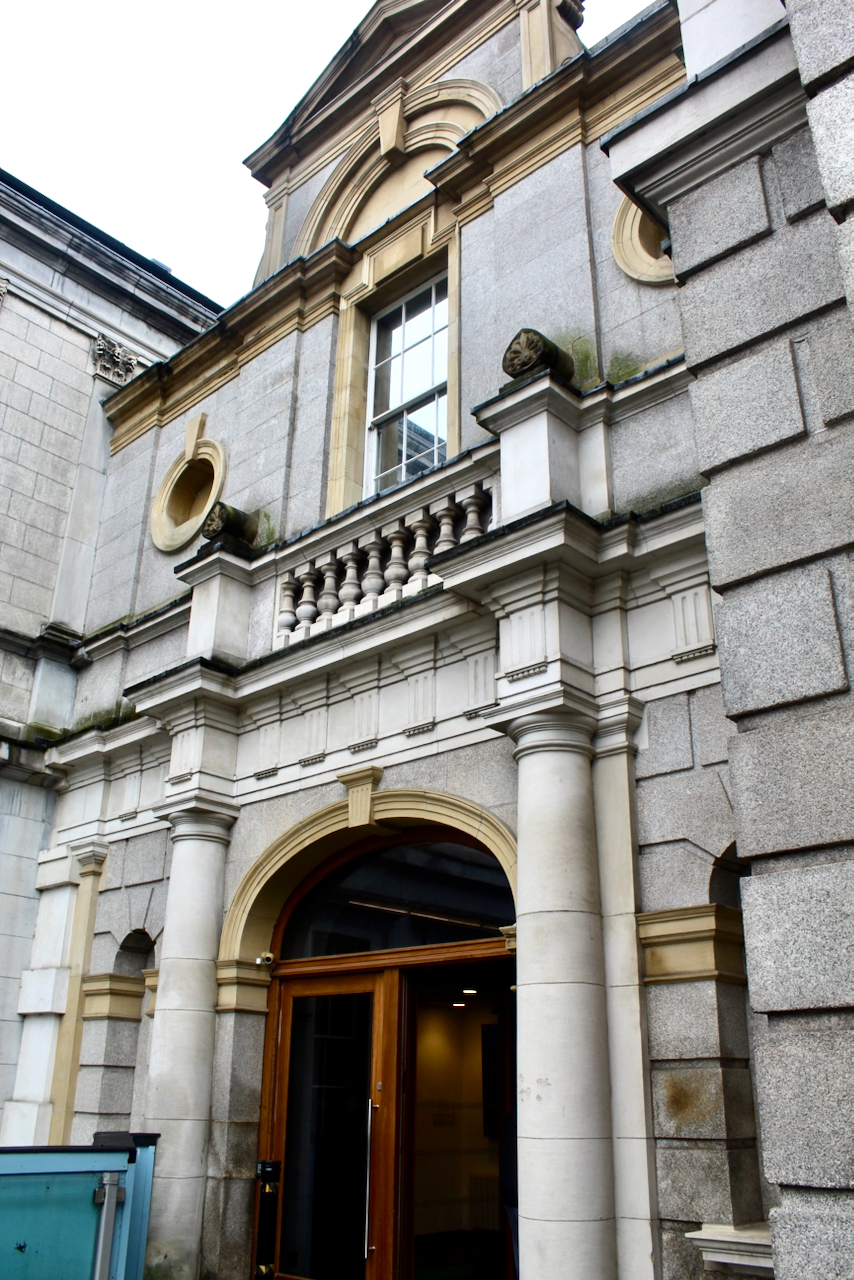
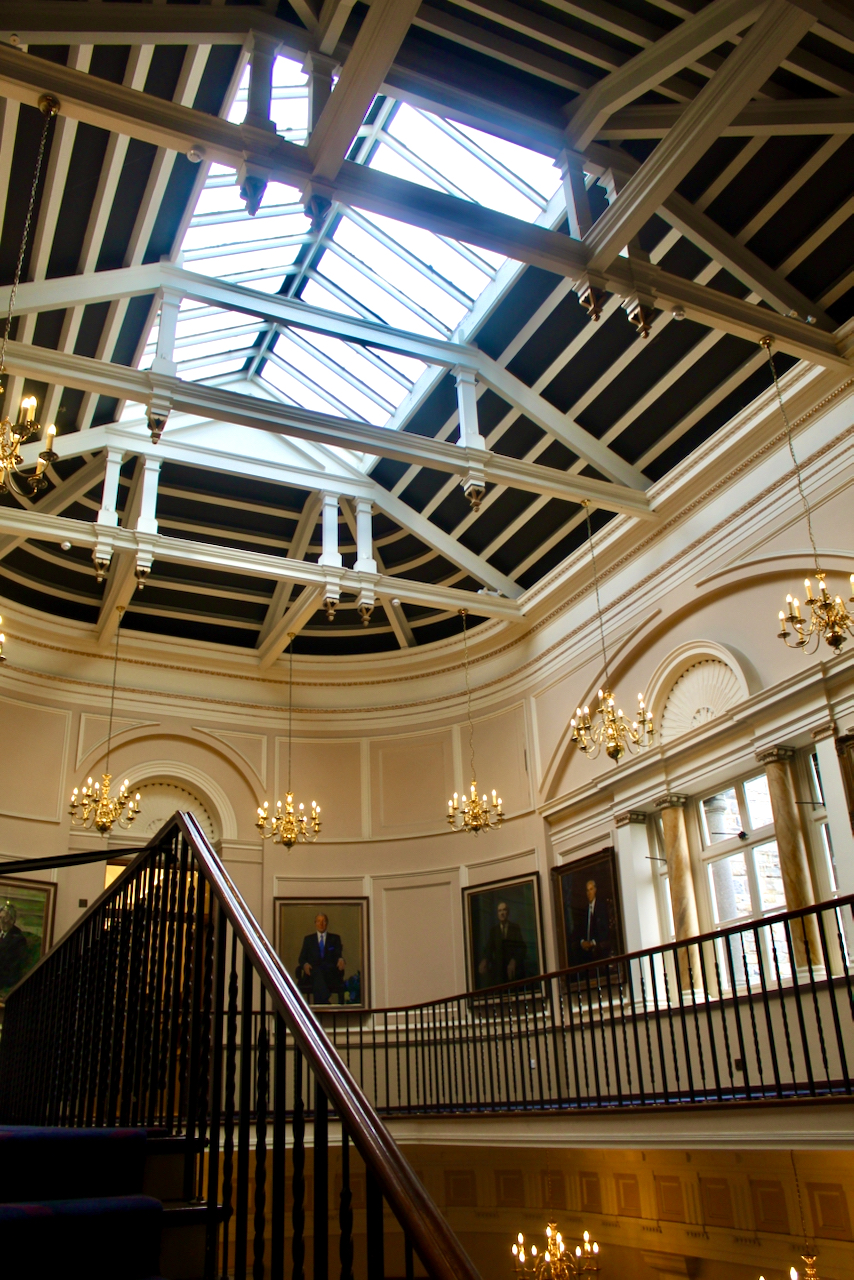
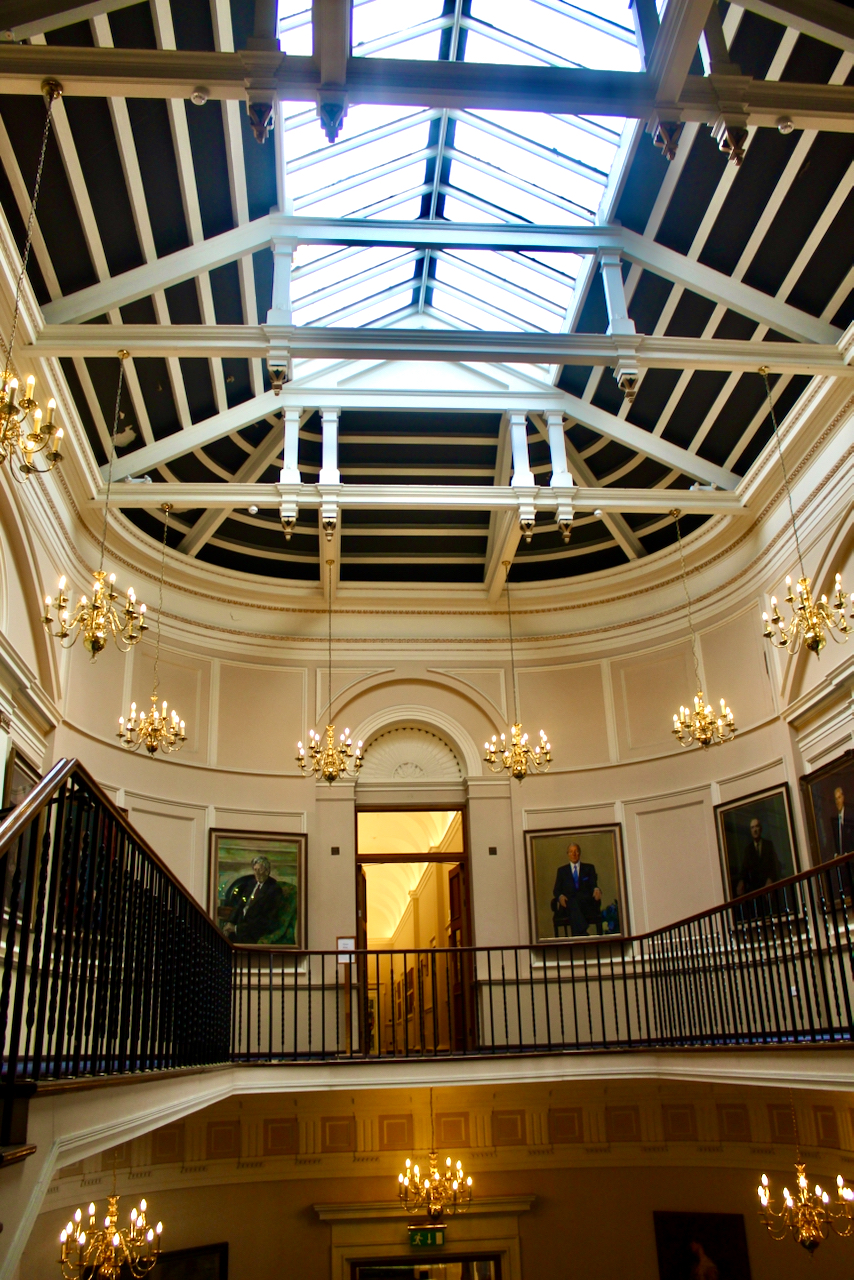
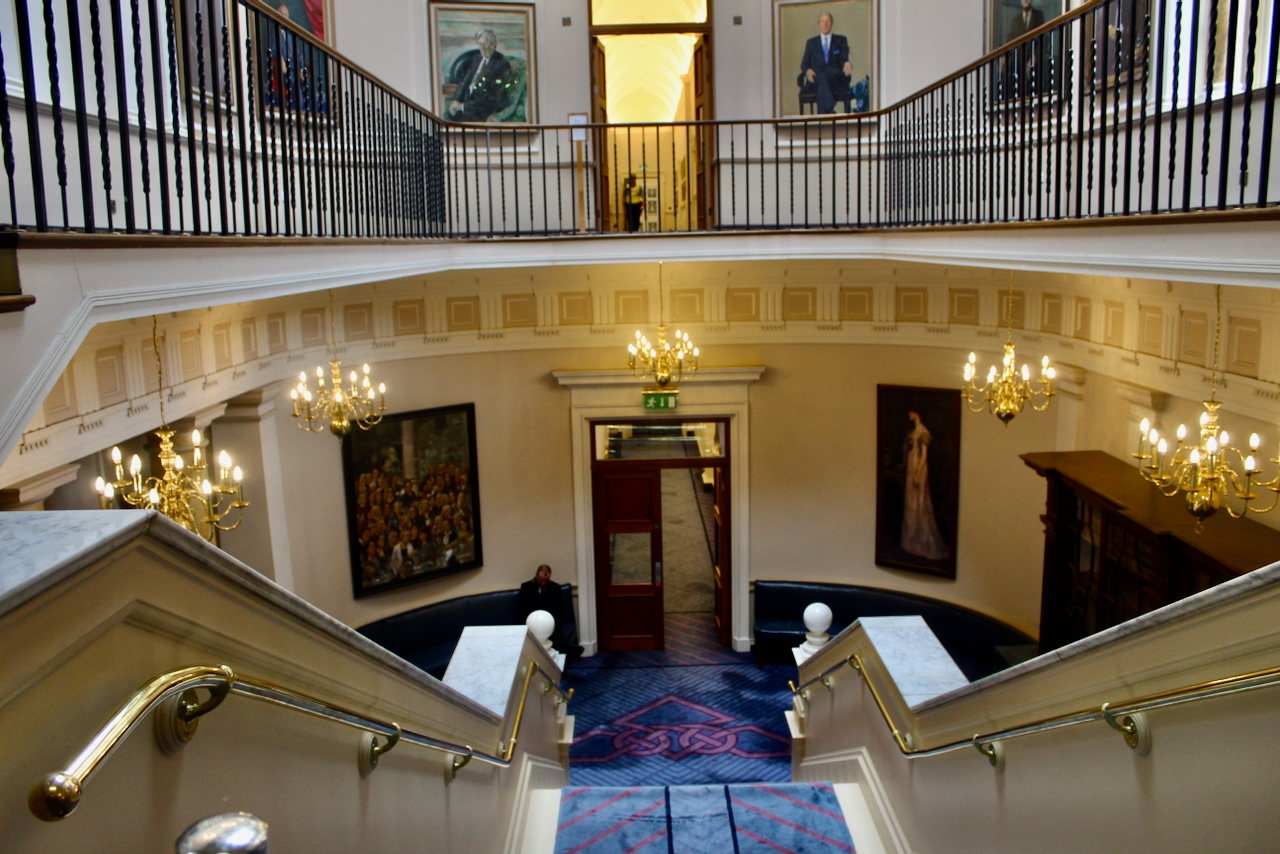
At the south end of the ground floor corridor is a top-lit stair hall which leads to the Dáil chamber. This separate building originally housed a lecture theatre, built in 1893 by Thomas Newenham and Thomas Manly Deane. Before this was built, let us look at the rest of the history briefly of the Dukes of Leinster who continued to use the house as their Dublin residence.
You can take a virtual tour of Leinster house, https://www.oireachtas.ie/en/visit-and-learn/visit-the-oireachtas/virtual-tour/
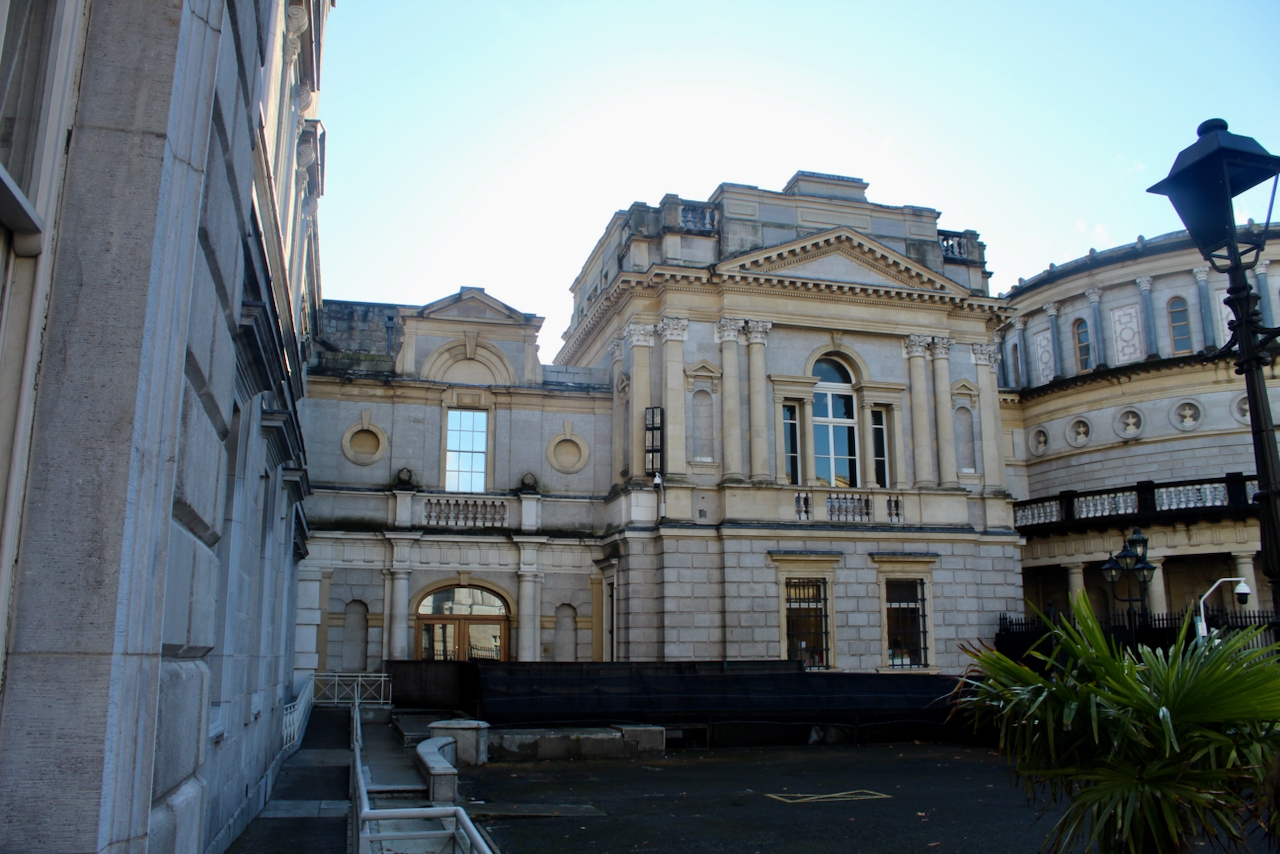
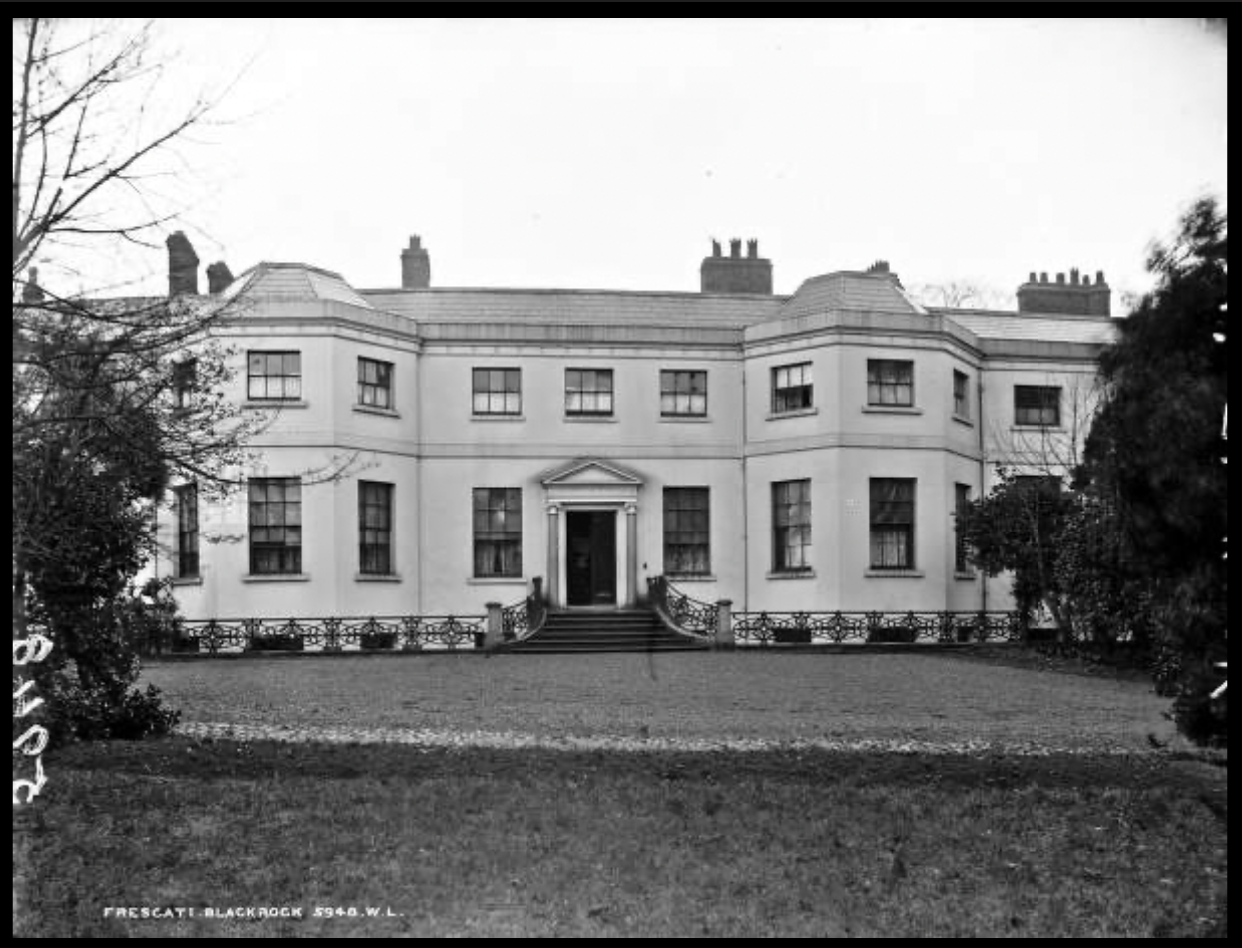
The first duke’s wife Emilia went on to marry her children’s tutor, William Ogilvie. This would have caused quite a scandal, and she and her husband lived quietly in Blackrock in Dublin at their house called Frascati (or Frescati), which no longer exists. She and the Duke of Leinster had had nineteen children! She had happy times when the children were young and their tutor would take them bathing in the sea near Frescati house. She and her second husband went on to have two daughters.
A younger son of Emilia and the Duke of Leinster, Edward (1763-1798) became involved in an uprising in Dublin, inspired by the French Revolution, and he was put in prison as a traitor and where he died of wounds he’d received while resisting arrest.
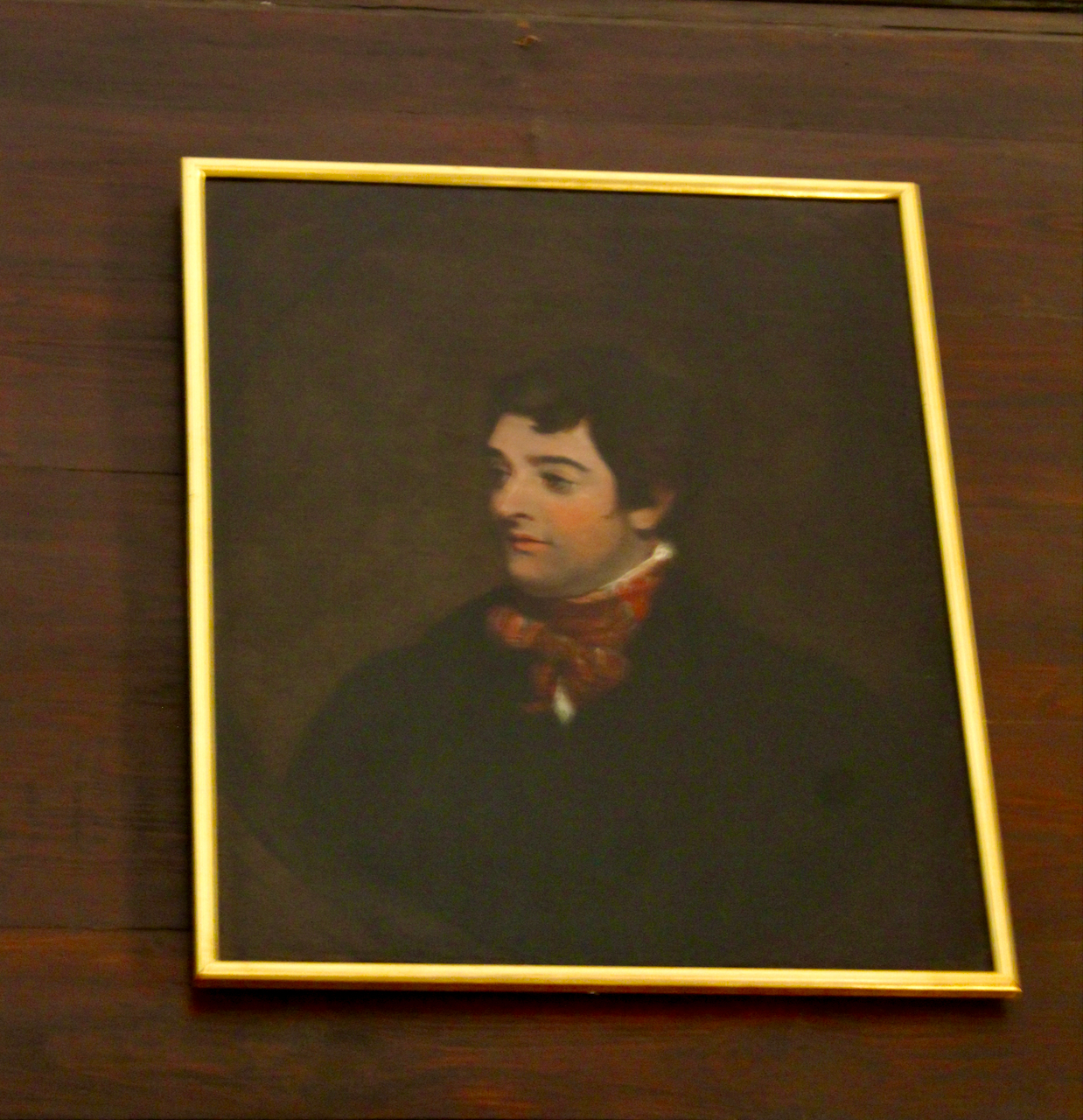
Another son, Charles James (1756-1810) served in the Royal Navy. He also acted as M.P. for County Kildare between 1776 and 1790, Commissioner of Customs between 1789 and 1792 and M.P. for County Cavan between 1790 and 1797. He held the office of Muster Master-General of Ireland between 1792 and 1806 and Sheriff of County Down in 1798. He was M.P. for Ardfert between 1798 and 1800 and was created 1st Baron Lecale of Ardglass, Co. Down [Ireland] in 1800. He held the office of Member of Parliament (M.P.) for Arundel in England between January 1807 and April 1807.
A sister of Edward Fitzgerald (1763-1798), Emily Maria Margaret (1751-1818) married Charles Coote 1st Earl of Bellomont, County Cavan.
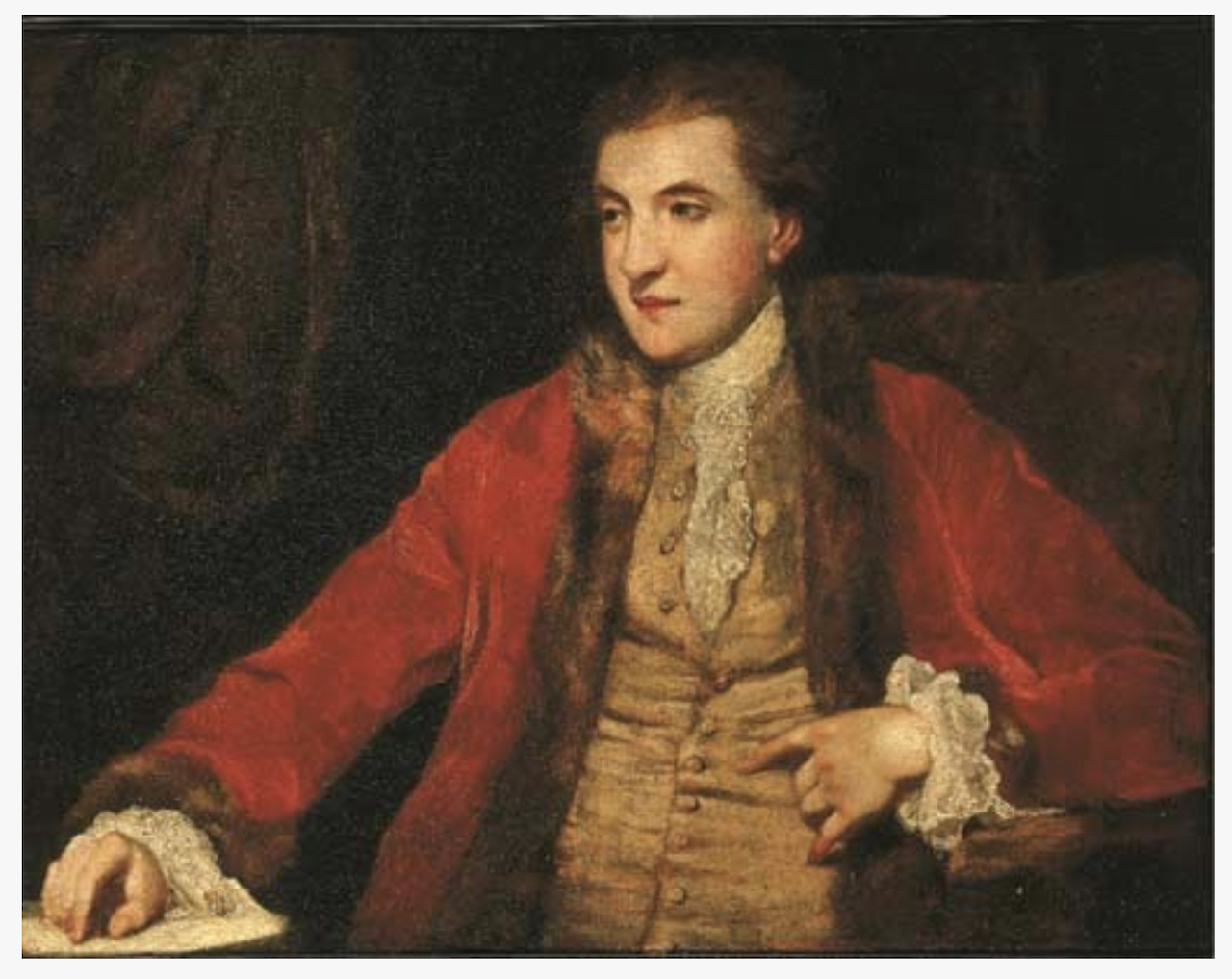
The Dictionary of Irish Biography tells us about the second duke:
“He was returned as MP for Dublin city in 1767, though he was too young to take his seat, and it was only in October 1769 that he returned to Ireland to sit in parliament. He represented the constituency until 1773, supporting the government for most of this period. On learning that he was a freemason, the grand lodge of Irish freemasons rushed to make him their grand master and he served two terms (1770–72 and 1777–8). On 19 November 1773 he succeeded his father as 2nd duke of Leinster. The family home of Carton in Co. Kildare had been left to his mother but he, somewhat vainly, was determined to own it and purchased her life interest, a transaction that was the major source of his future indebtedness. His aunt, Lady Louisa Conolly, believed that he was ‘mighty queer about money’ and that his ‘distress’ about it was ‘the foundation of all that he does’ (HIP, iv, 160). In November 1775 he married Emilia Olivia Usher, only daughter and heir of St George Usher, Lord St George, a union that helped to ease some of his financial problems.“
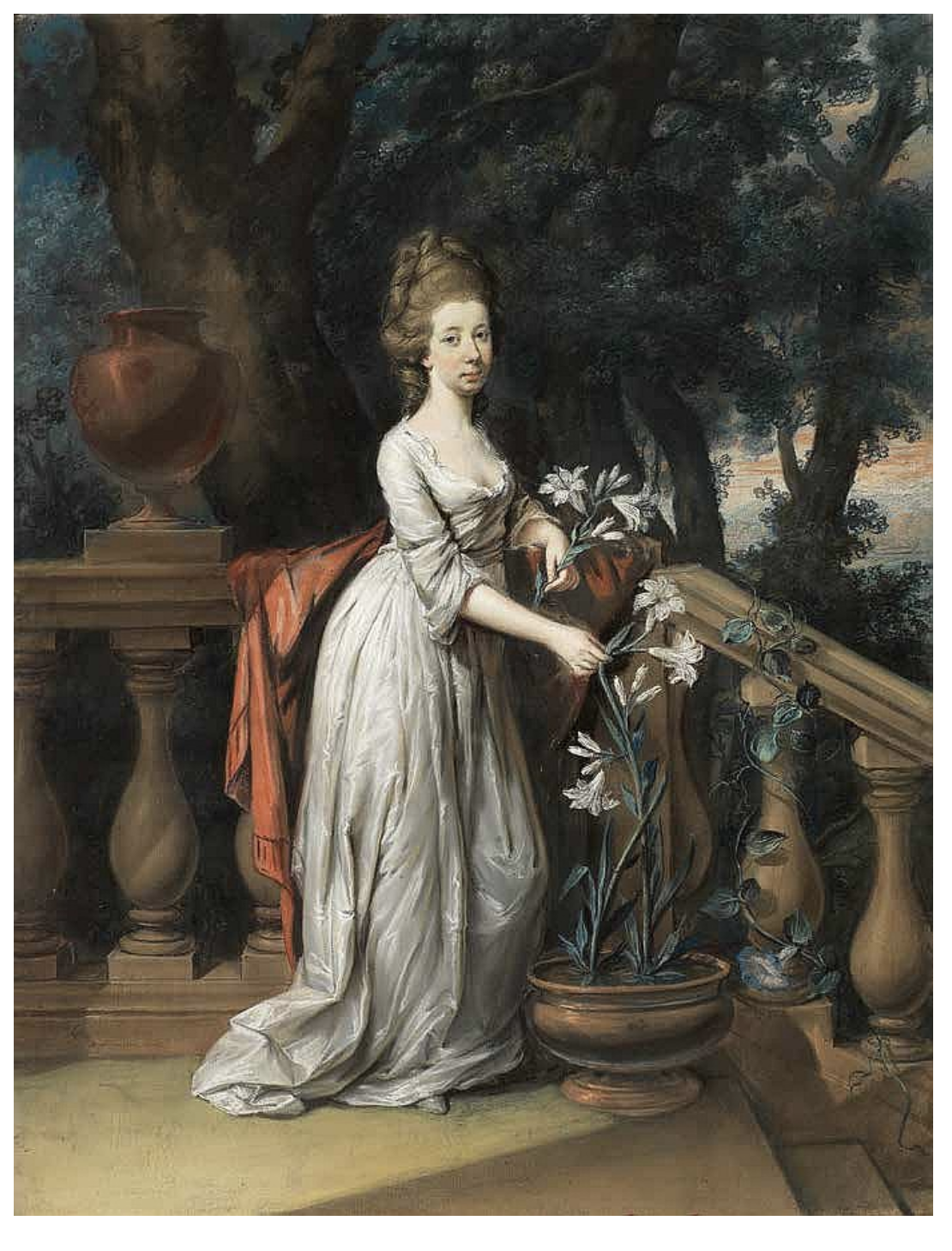
The 2nd Duke was active in politics. He died in 1804 and is buried in Kildare Abbey.
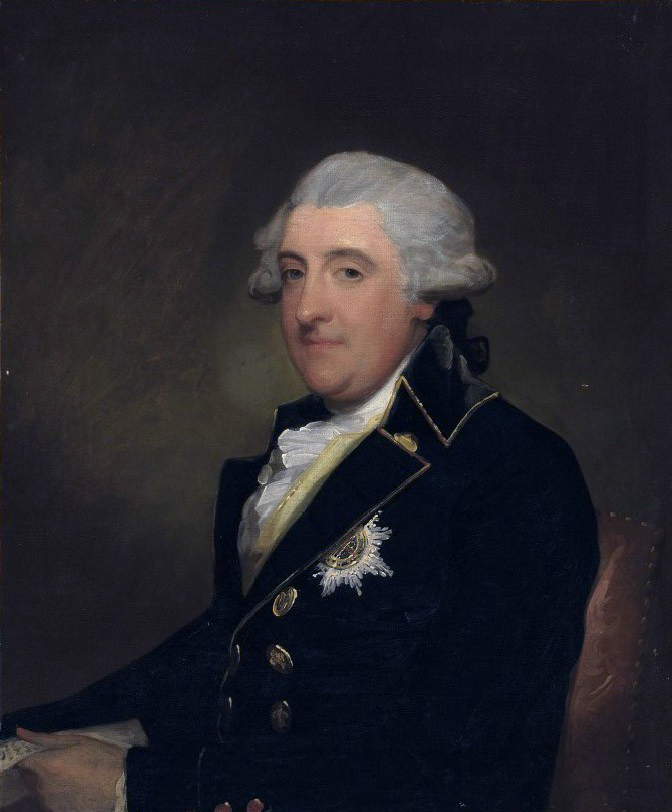
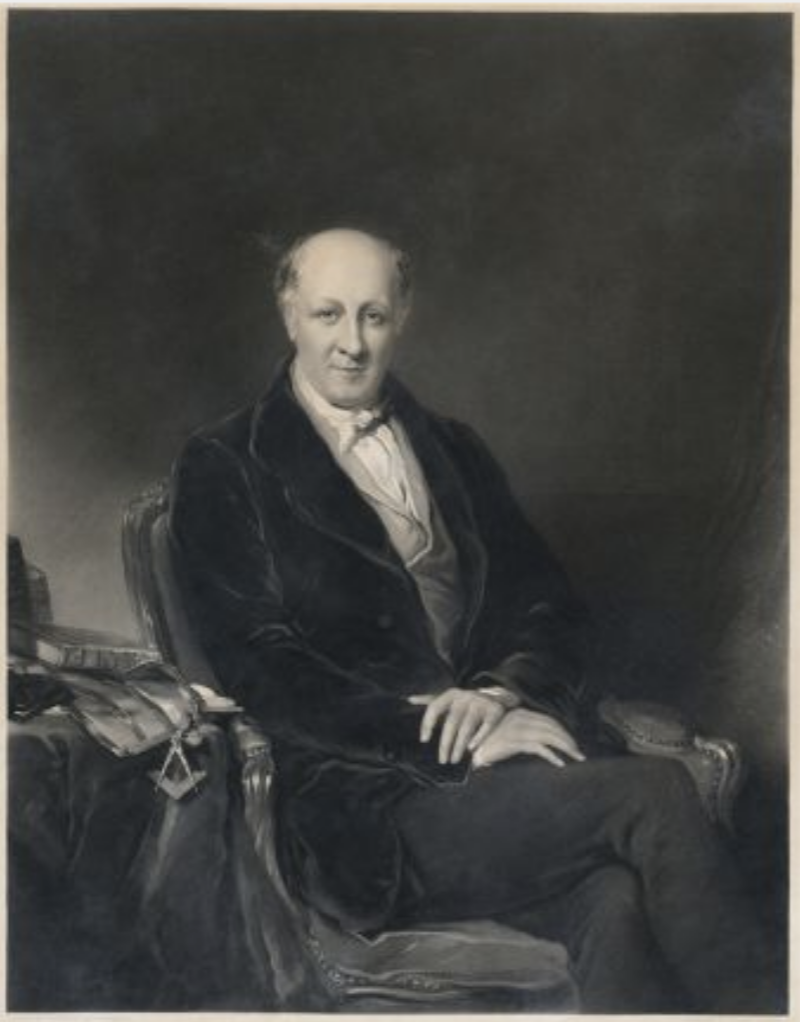
One of William Robert Fitzgerald’s daughters, Emily Elizabeth (1778-1856) married John Joseph Henry of Straffan house in County Kildare, now the K Club. A son, Augustus Frederick (1791-1874) became the 3rd Duke of Leinster. He sold the town house in 1814. Since the Union in 1801 when there was no longer an Irish Parliament, a townhouse in Dublin was no longer essential. It was purchased by the Dublin Society, a group founded for “improving Husbandry, Manufactures and other useful arts and sciences.”
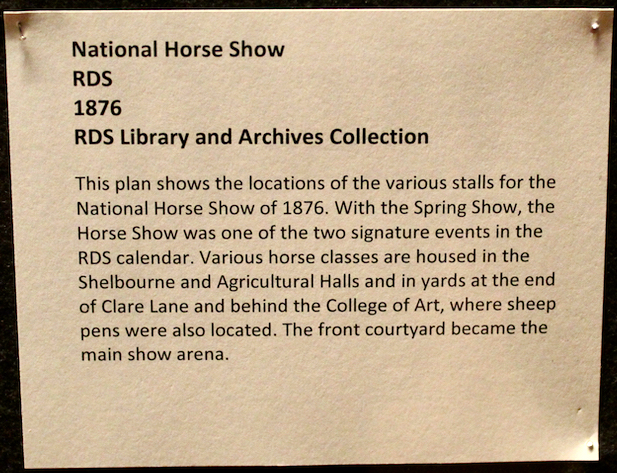
From 1815-1922 Leinster House was the Headquarters of the Royal Dublin Society – the “Royal” was added to the Society’s name in 1820. Rooms in the house were used to accommodate the Society’s library and museum as well as offices and meeting spaces. The original kitchen wing of the house was converted to laboratories and a lecture theatre. Gradually more buildings were added around the house, including sheds and halls for the Society’s events, namely the Spring Show and the Horse Show.


Leinster Lawn was the site of industrial and agricultural exhibitions. In 1853, the Great Industrial Exhibition ran on the RDS grounds at Leinster House, just two years after Prince Albert’s Exhibition in the Crystal Palace in London. Constructed of iron, wood and glass, the Irish Industrial Exhibition building was paid for by William Dargan and installed by Richard Turner on Leinster Lawn in a matter of months. Its architect was John Benson, who was knighted for his efforts.
Spring Shows and Industries Fairs (1831-1880) and early Horse Shows (1864-1881) were also held on Leinster Lawn.

The National Museum and National Library were built in 1890, and were designed by Thomas Newenham Deane and his son Thomas Manly Deane.

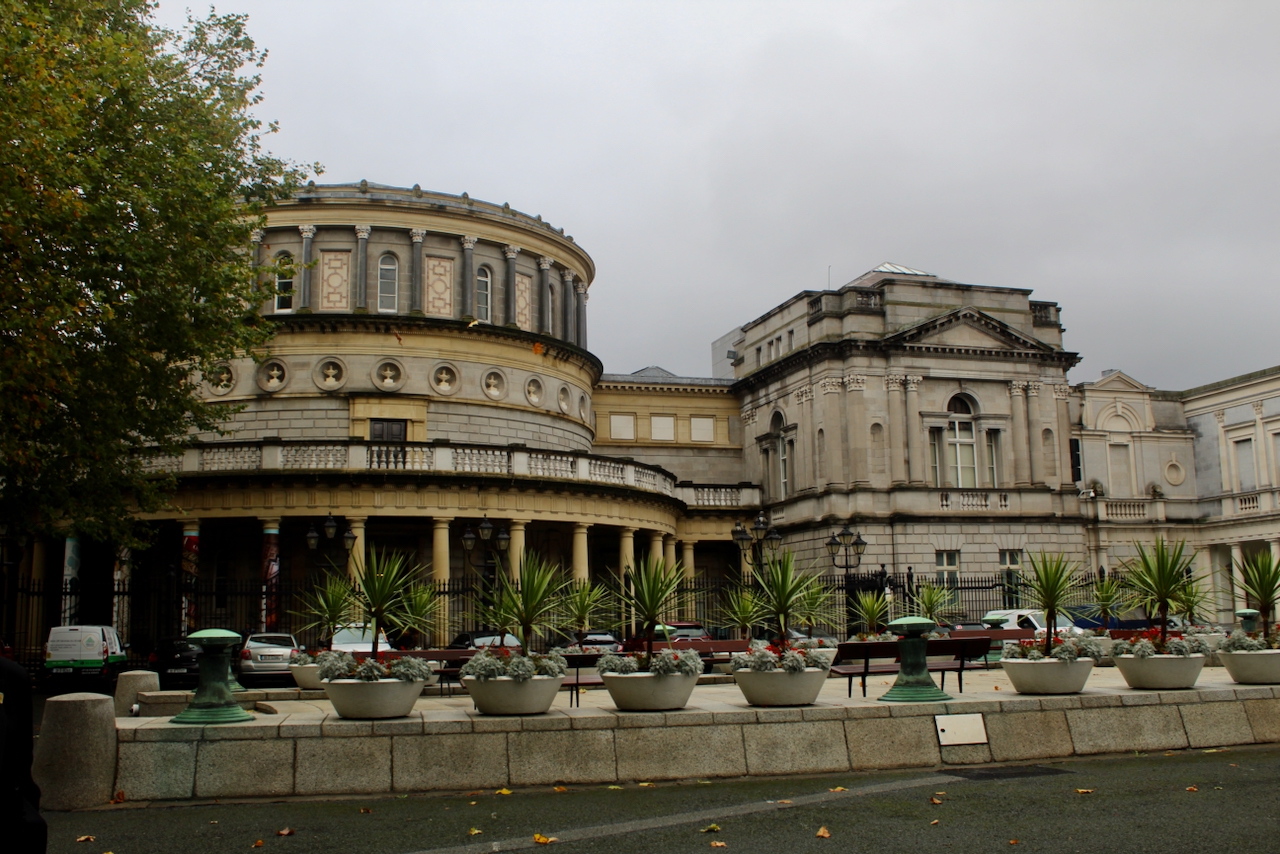
The museum and library were designed as a pair of Early Renaissance rotundas facing each other. The rotundas have a single storey yellow sandstone Roman Doric colonnade surrounding them. Above is a row of circular niches. Above that are columns framing round headed windows and panels of red and white marble. The pavillions next to the rotundas have a rusticated ground floor, with Venetian windows on first floor level and Corinthian pilasters.
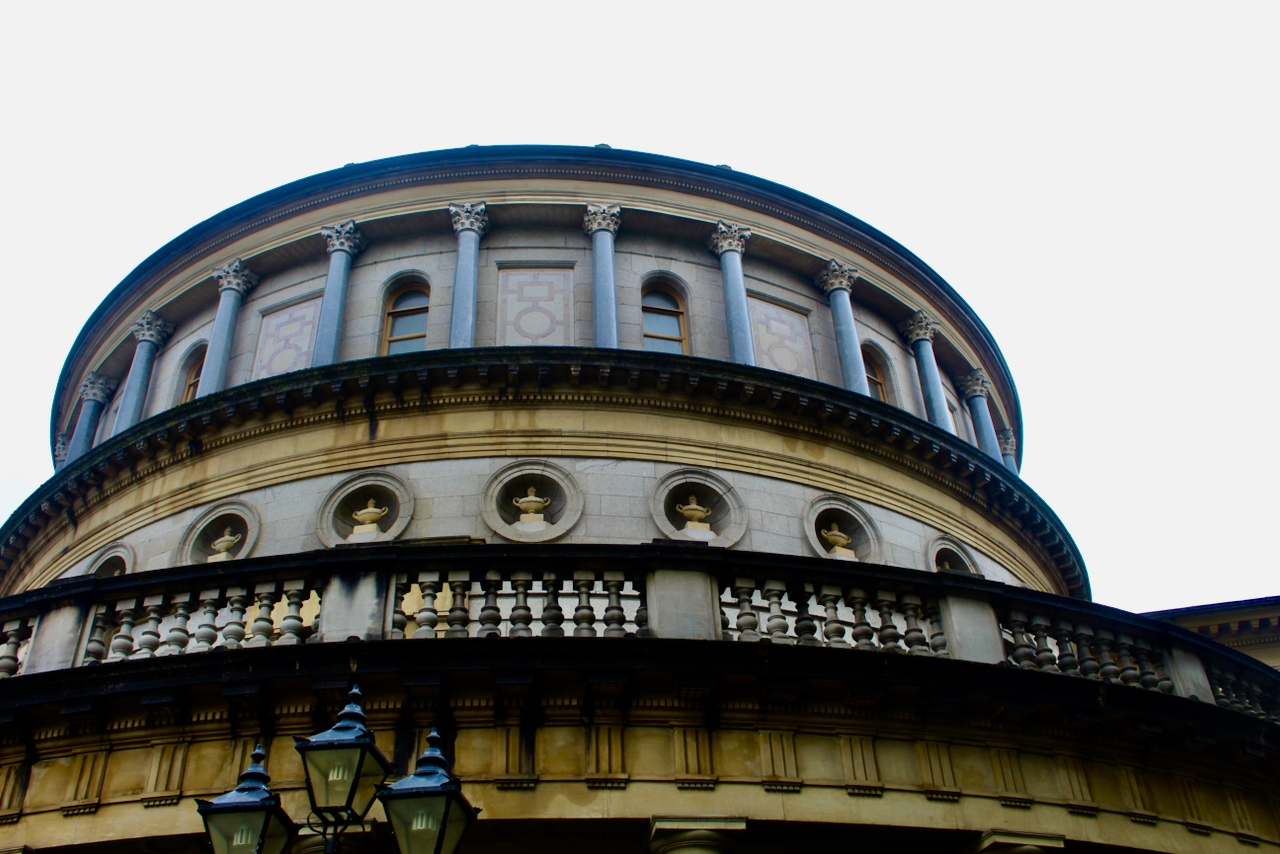
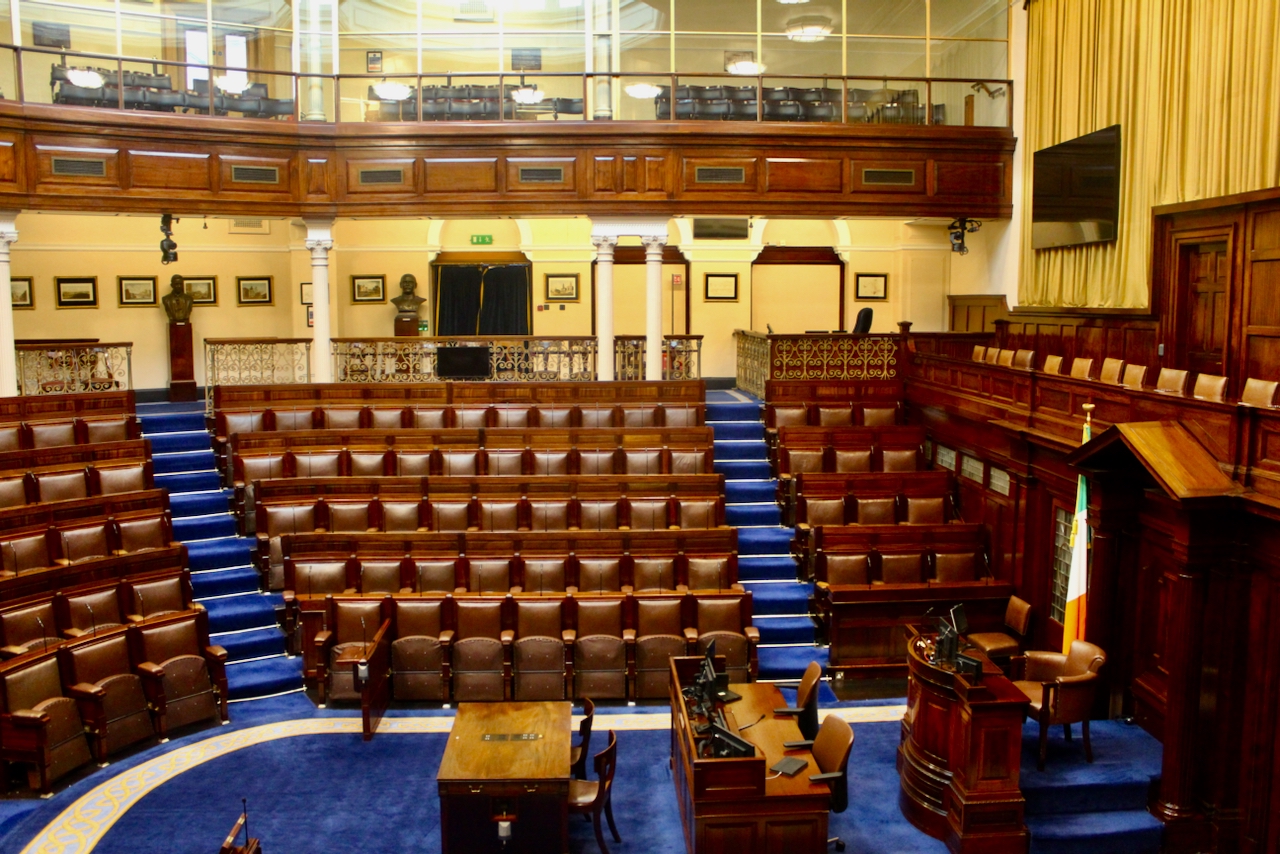
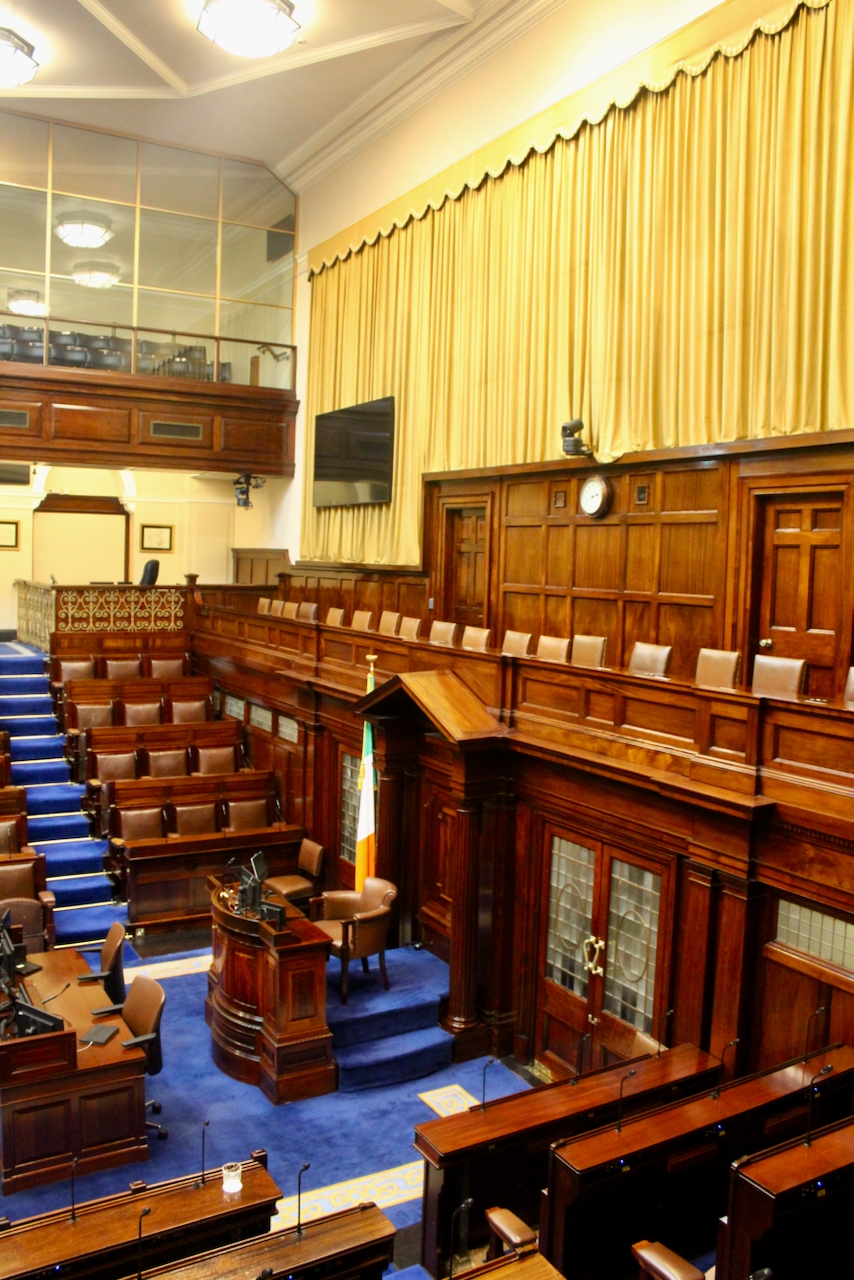
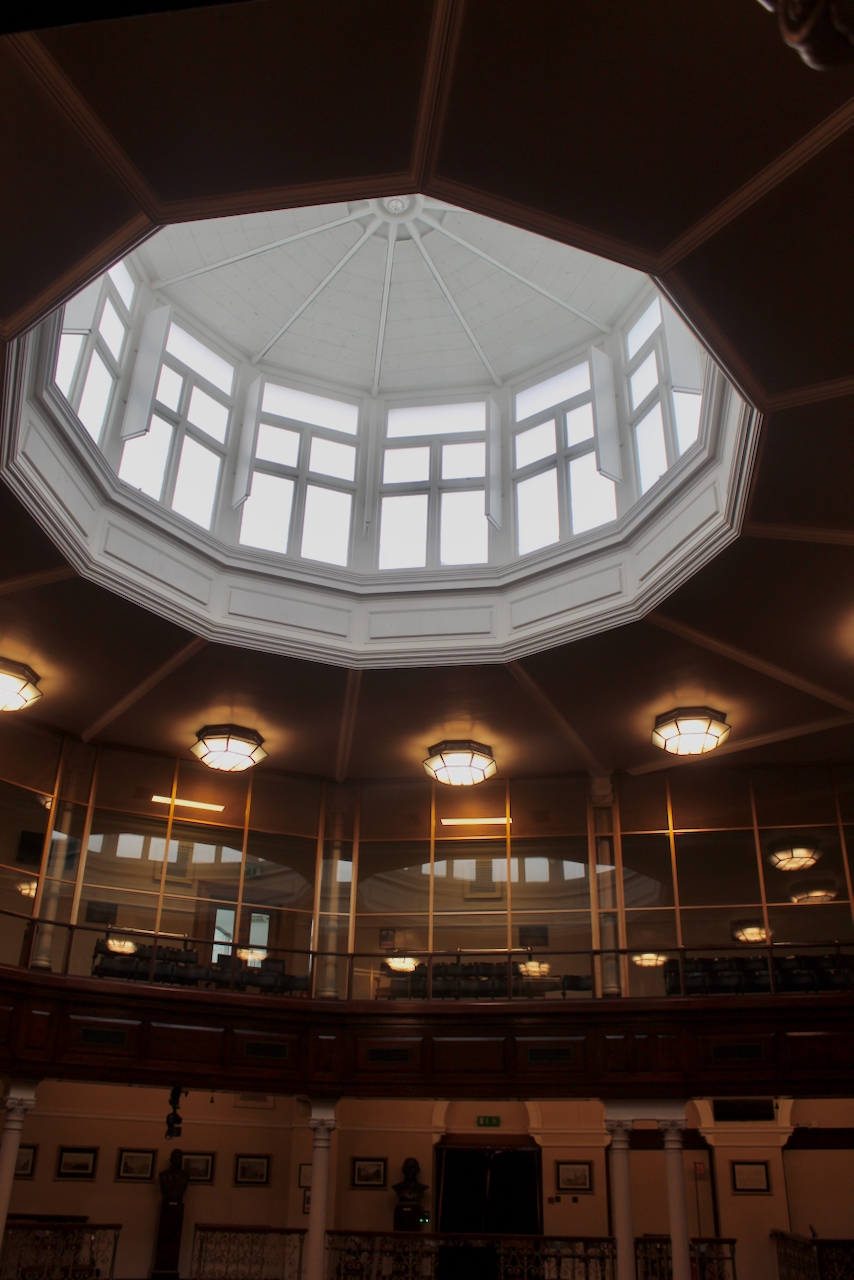
The Lecture Theatre was built in 1893, and was also designed by Thomas Newenham Deane. The lecture theatre is a horseshoe shaped top-lit galleried auditorium with a flat west end that originally accommodated a stage and lecture preparation rooms.

Single and paired cast iron Corinthian columns support the gallery in the former theatre. The building was appropriated as a temporary Dáil chamber in 1922 on Michael Collins’s recommendation, and in 1924 the government acquired Leinster House to be the seat of the Oireachtais. The theatre was remodelled: a new floor was inserted over the central block of seats to make a platform for the Ceann Comhairle, the clerk of the Dail, and the official reporters. The lower tier of seating was replaced with rows of mahogany and leather covered seats designed either by Hugh O’Flynn of the OPW, as the exhibition in the Irish Architectural Archive tells us, or by James Hicks & Sons according to Christine Casey, and the upper tiers became the press and public galleries. The stage was closed in and replaced by a press gallery and adjoining press rooms. The gallery was remodelled around 1930.


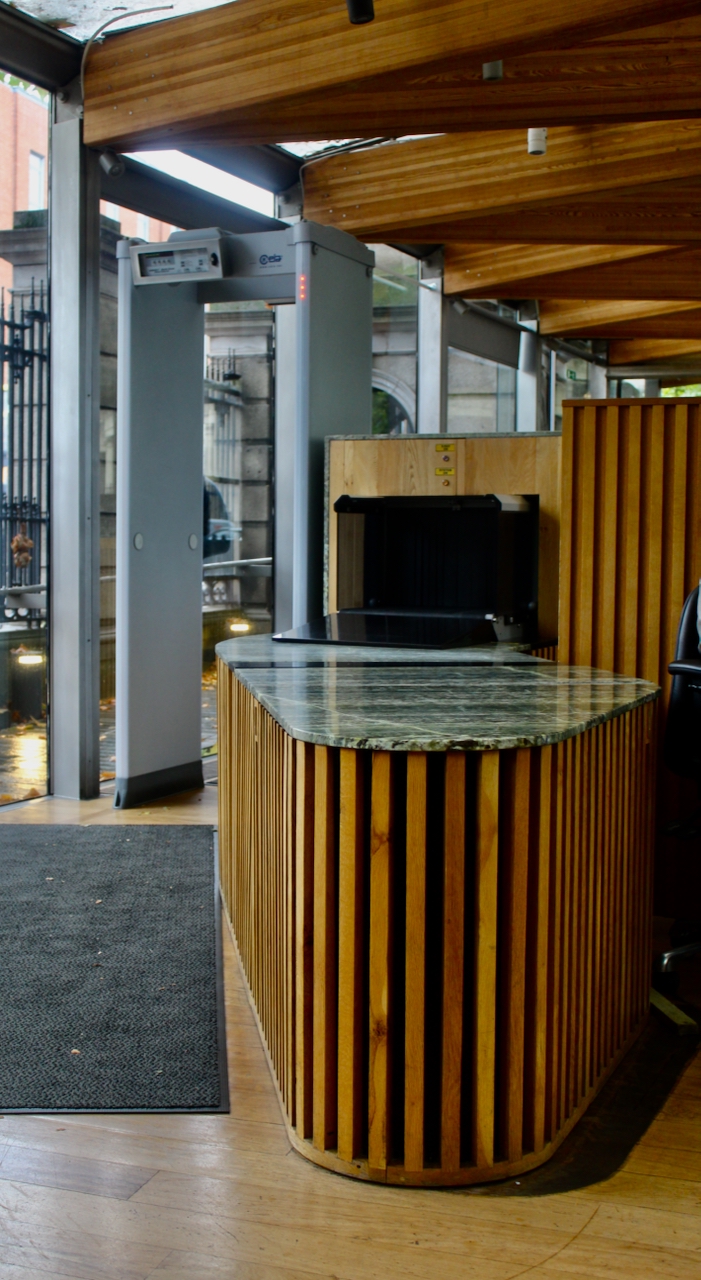
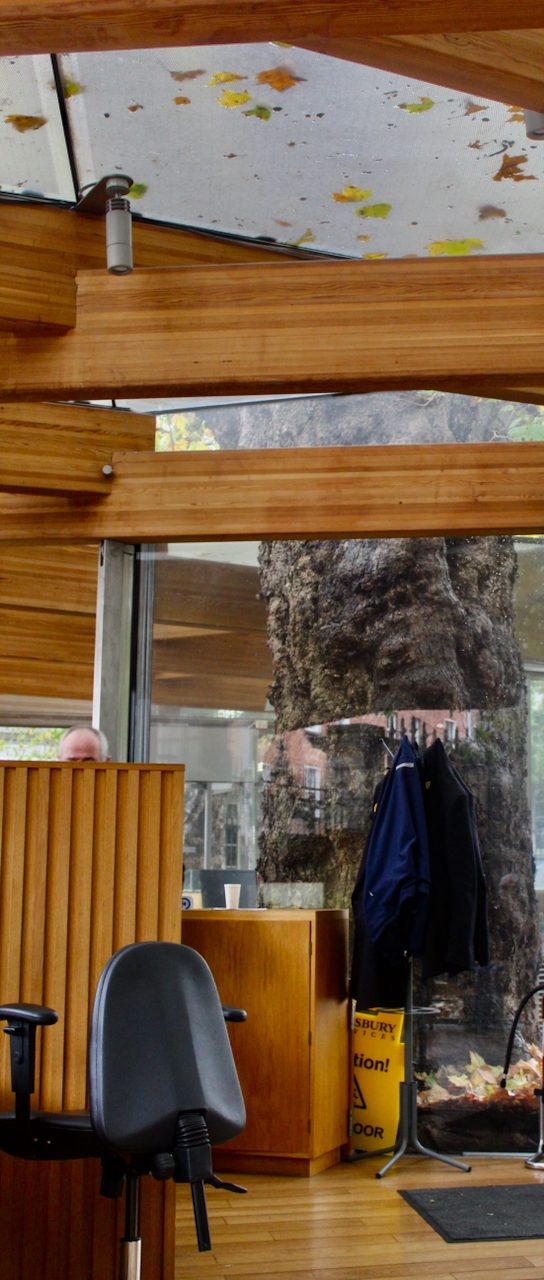
To enter Leinster house, you go through a security hut upon which a controversial sum was spent by the Office of Public Works. I love the way the hut goes around a large tree. I assume a large part of the cost of the hut was the beautiful marble countertops!
[1] MacDonnell, Randal. The Lost Houses of Ireland. A chronicle of great houses and the families who lived in them. Weidenfeld and Nicolson. London, 2002.
[2] Casey, Christine. The Buildings of Ireland: Dublin. The City within the Grand and Royal Canals and the Circular Road with the Phoenix Park. Yale University Press, New Haven and London, 2005.
[3] Dictionary of Irish Biography, https://www.dib.ie/biography/fitzgerald-james-a3157
 Irish Historic Houses