Mark Bence-Jones. A Guide to Irish Country Houses (originally published as Burke’s Guide to Country Houses volume 1 Ireland by Burke’s Peerage Ltd. 1978); Revised edition 1988 Constable and Company Ltd, London.
p. 198. “(sub Solly-Flood/LGI1912; Butler sub Dunboyne/B/PB) A house of ca 1745, remodelled 1830 with a veranda along its front in the Regency style. Originally owned by the Flood family; owned later in C18 by Richard Griffith, who, like his wife, was a talented novelist and letter-writer; owned later again by Rev Ambrose Smith; bought in C19 by John Butler [1815-1884], of the Dunboyne family. A wing was added 1910.”
Maiden Hall, County Kilkenny, courtesy National Inventory.
Detached three-bay three-storey over part-raised basement country house, built 1740, with two-bay single-storey advanced end block to right, two-bay three-storey side elevations, and two-bay two-storey return to west having canted bay window to left ground floor. Renovated, pre-1902, with entrance reoriented to side (south) elevation having three-bay single-storey flat-roofed projecting entrance bay added. Part reroofed, 2000. Pitched slate roofs (replacement slate, 2000, to return) with clay ridge tiles, rendered chimney stacks, rooflights, and cast-iron rainwater goods on overhanging eaves (having consoles to return). Flat roof to entrance bay not visible behind parapet. Ivy-clad roughcast walls with painted rendered walls to entrance bay having frieze, moulded cornice, and blocking course to parapet. Square-headed window openings (including to canted bay window; in tripartite arrangement over) with cut-limestone sills, six-over-six and three-over-three (top floor) timber sash windows (two-over-two sidelights to tripartite opening with one-over-one timber sash windows to ground floor to return). Square-headed openings to entrance bay forming pedimented Tuscan portico in antis with paired columns having engaged outer columns, moulded entablature, frieze, and triangular pediment on paired consoles. Segmental-headed door opening with cut-limestone step, and timber panelled door having fanlight. Interior with timber panelled shutters to window openings. Set back from road in own grounds.
Appraisal
An elegantly-appointed substantial country house incorporating Classically-derived proportions with the diminishing in scale of the openings on each level forming a tiered visual effect enhancing the formal architectural design value of the composition. Subsequently reoriented the house is identified by the somewhat awkward off-centre appearance of the reconfigured entrance front incorporating a pleasant portico. Having historically been well maintained the house presents an early aspect with the original fabric surviving largely intact both to the exterior and to the interior. The house remains of additional importance in the locality for the connections with the Smith, the Hunt, and the Kingstown (Kingston) families as well as the Butler family including Hubert Butler (1900-91), essayist and historian.
Maiden Hall, County Kilkenny, courtesy National Inventory.Maiden Hall, County Kilkenny, courtesy National Inventory.Maiden Hall, County Kilkenny, courtesy National Inventory.Maiden Hall, County Kilkenny, courtesy National Inventory.Maiden Hall, County Kilkenny, courtesy National Inventory.Maiden Hall, County Kilkenny, courtesy National Inventory.
Maiden Hall, County Kilkenny, courtesy National Inventory.
Farmyard complex, established 1740, including: (i) Detached five-bay two-storey stable outbuilding. Pitched slate roof with clay ridge tiles, and cast-iron rainwater goods. Random rubble limestone walls. Camber-headed window openings with cut-limestone sills, yellow brick block-and-start surrounds, and timber casement windows. Square-headed door openings to ground floor with camber-headed door openings to first floor having timber lintels, yellow brick block-and-start surrounds, tongue-and-groove timber panelled half-doors to ground floor having overlights, and tongue-and-groove timber panelled doors to first floor. Set back from road in grounds shared with Maiden Hall (House) about a stone cobbled courtyard with random rubble limestone boundary wall to courtyard having rendered coping, and rubble limestone piers having rendered capping. (ii) Freestanding cast-iron waterpump, c.1900, comprising banded cylindrical shaft with spout, moulded necking supporting fluted cylindrical head having curvilinear ‘cow tail’ handle, and fluted ogee-domed capping on stringcourse having finial.
Appraisal
A middle-size outbuilding range together with a collection of related artefacts forming a modest-scale farmyard complex contributing positively to the group and setting values of the Maiden Hall (House) estate.
The Landed Gentry & Aristocracy: Kilkenny. Volume 1. Art Kavanagh, 2004.
Butler of Maidenhall
p. 50. The family took up residence in the mid 1800s. Before that it was built and occupied by a Henry and Frances Griffith in the mid 18C. Henry was an intellectual and entrepreneur and his wife was a writer. [Henry got a grant from parliament for starting linen manufacturing on the Nore. He built a factory and his house, Maidenhall, c. 1745. An expected second grant did not materialise and as Henry was heavily mortgaged his business was ruined. The couple turned their hands to writing. She was the first English translator of Voltaire. ] Hubert Butler found them a most extraordinary couple and in his book Escape from the Anthill he devoted the first chapter to them under the title Henry and Frances.
p. 54. The Butlers of Maidenhall descended from the Butlers of Dunboyne, who resided at Kiltynan Castle in County Tipperary until the time of Cromwell when the castle was battered by cannon and was later granted with part of the Dunboyne estate to Edward Cooke, an adventurer.
The first Baron of Dunboyne was Edmund Butler… the Barony of Dunboyne was conferred on Edmund by Henry VIII in 1541. .. Edmund was given a further grant on lands in Tipperary in 1543.
p. 55. Sir Edmund died in prison in 1567 and was succeeded by his son James 2nd Baron of Dunboyne. [fn. 1st Baron had taken part in a rebellion at that time which was led by the sons of the Earl of Ormonde. The Earl’s sons escaped the scaffold because of the Earl’s influence.] He married twice and the seventh son of the second marriage was the ancestor of the Butlers of Maidenhall.
It is not clear when the main branch of the Butlers became Protestant but towards the close of the 17C the catholic Bishop of Cork, the Right Rev and Hon. John Butler succeeded to the Dunboyne title and estates at the age of 67. He promptly turned Protestant, in order that no obstacle could be put in the way of succession and took his cousin as a wife, hoping to produce a successor, but in this her failed. After his death the title went to his cousin james Butler who became 13th Baron. The Bishop left a valuable endowment to Maynooth College still known today as Dunboyne House.
Woodbrook House, photograph courtesy of Historic Houses of Ireland website.
Today I am going to write about Woodbrook as it is provides holiday accommodation. In 2026, it is no longer on the Revenue Section 482 list.
donation
Help me to pay the entrance fee to one of the houses on this website. This site is created purely out of love for the subject and I receive no payment so any donation is appreciated!
€15.00
Then, below my entry, I have listed Section 482 properties that are open for a visit in March 2025!
Woodbrook looks like a lovely place to stay and the hosts Giles and Alexandra Fitzherbert, who have lived there since 1998, serve dinner also if requested. Giles is a former Ambassador in South America and his wife Alexandra is of Anglo-Italian-Irish-Chilean extraction, the Hidden Ireland website tells us.
Woodbrook, County Wexford, courtesy Hidden Ireland. [1]
Woodbrook house was built in the 1770s. It was built by Reverend Arthur Jacob (1717-1786), Archdeacon of Armagh, for his daughter Susan and her husband Captain William Blacker, a younger son of the family at Carrigblacker near Portadown. Arthur Jacob was Rector of Killanne in County Wexford while he was also Archdeacon of Armagh. [2]
The Historic Houses of Ireland website tells us:
“Nestling beneath the Backstairs Mountains near Enniscorthy in County Wexford, Woodbrook, which was first built in the 1770s, was occupied by a group of local rebels during the 1798 rebellion. Allegedly the leader was John Kelly, the ‘giant with the gold curling hair’ in the well known song ‘The Boy from Killanne’. It is said that Kelly made a will leaving Woodbrook to his sons but he was hanged on Wexford bridge, along with many others after the rebels defeat at Vinegar Hill. He was later given an imposing monument in nearby Killanne cemetery.” [3]
Another rebel who occupied the house in 1798 was John Henry Colclough (c.1769-98) who was also executed for his participation in the 1798 Insurrection.
The Historic Houses of Ireland site continues:
“… The house was badly knocked about by the rebels and substantially rebuilt in about 1820 as a regular three storey Regency pile with overhanging eaves, a correct Ionic porch surmounted by a balcony and three bays of unusually large Wyatt windows on each floor of the facade.” [3]
Woodbrook House, photograph courtesy of Woodbrook website.Woodbrook House, photograph courtesy of Woodbrook website.
The house has tripartite entrance doorcase with large cobweb fanlight under the portico. Mark Bence-Jones writes that the hall has a “rather Soanian vaulted ceiling.” I’m not sure what he means by this – if you can enlighten me, please do let me know! He also comments on the “very spectacular spiral flying staircase of wood, with wrought iron balustrades; a remarkable and brilliant piece of design and construction.” [4] It is called “flying” because it does not touch the walls. The steps look like stone but are timber, and each was carefully made to fit perfectly together. Robert O’Byrne tells us that the stairs bounce slightly as one walks up or down, which sounds disconcerting!
Woodbrook House, photograph courtesy of Woodbrook website.Woodbrook, County Wexford, courtesy Hidden Ireland. [1]
Woodbrook passed to the son, William Blacker (1790-1831). He married Elizabeth Anne Carew, from Castleboro House in County Wexford, now a splendid ruin.
Castleboro, County Wexford, photograph: Robert French, Lawrence Collection, NLI, Vanishing Country Houses of Ireland by The Knight of Glin, David J. Griffin and Nicholas K. Robinson, published by The Irish Architectural Archive and The Irish Georgian Society, 1988.William Blacker married Elizabeth Anne Carew, from Castleboro House in County Wexford, now a splendid ruin. The ruins of Castleboro House, County Wexford (geograph_3716684) By Mike Searle, https://commons.wikimedia.org
William and Elizabeth Anne’s son Robert Shapland Carew Blacker (1826-1913) inherited the impressive Carrickblacker house in County Armagh from his relatives, as well as inheriting Woodbrook, from an elder brother, William Jacob, who predeceased him and had no children. William Jacob Blacker served as High Sheriff of County Wexford.
Robert Shapland married, in 1858, Theodosia Charlotte Sophia, daughter of George Meara, of May Park, County Waterford. Carrickblacker house remained in the family until the estate was purchased in 1937 by Portadown Golf Club, which demolished Carrickblacker House in 1958 to make way for a new clubhouse. [5]
Woodbrook House, photograph courtesy of Woodbrook website.Woodbrook House, photograph courtesy of Woodbrook website.
The eldest son, William Robert George Blacker, died at just twenty years old. The next eldest, Edward Carew Blacker, died unmarried in 1932. He also served as High Sheriff of County Wexford. After his death, Woodbrook lay empty for some years, inherited by Edward’s brother Stewart Ward William Blacker, who also owned Carrickblacker. The Irish Historic Houses website tells us that the house was occupied by the Irish army during the Second World War.
The house has a large drawing room with a chimneypiece that is from the original house.
Woodbrook, County Wexford, courtesy Hidden Ireland. [1]Woodbrook House, photograph courtesy of Woodbrook website.
Stewart’s son Robert Stewart Blacker moved to the house in the 1950s after Carrickblacker was sold, and Woodbrook was then extensively modernised.
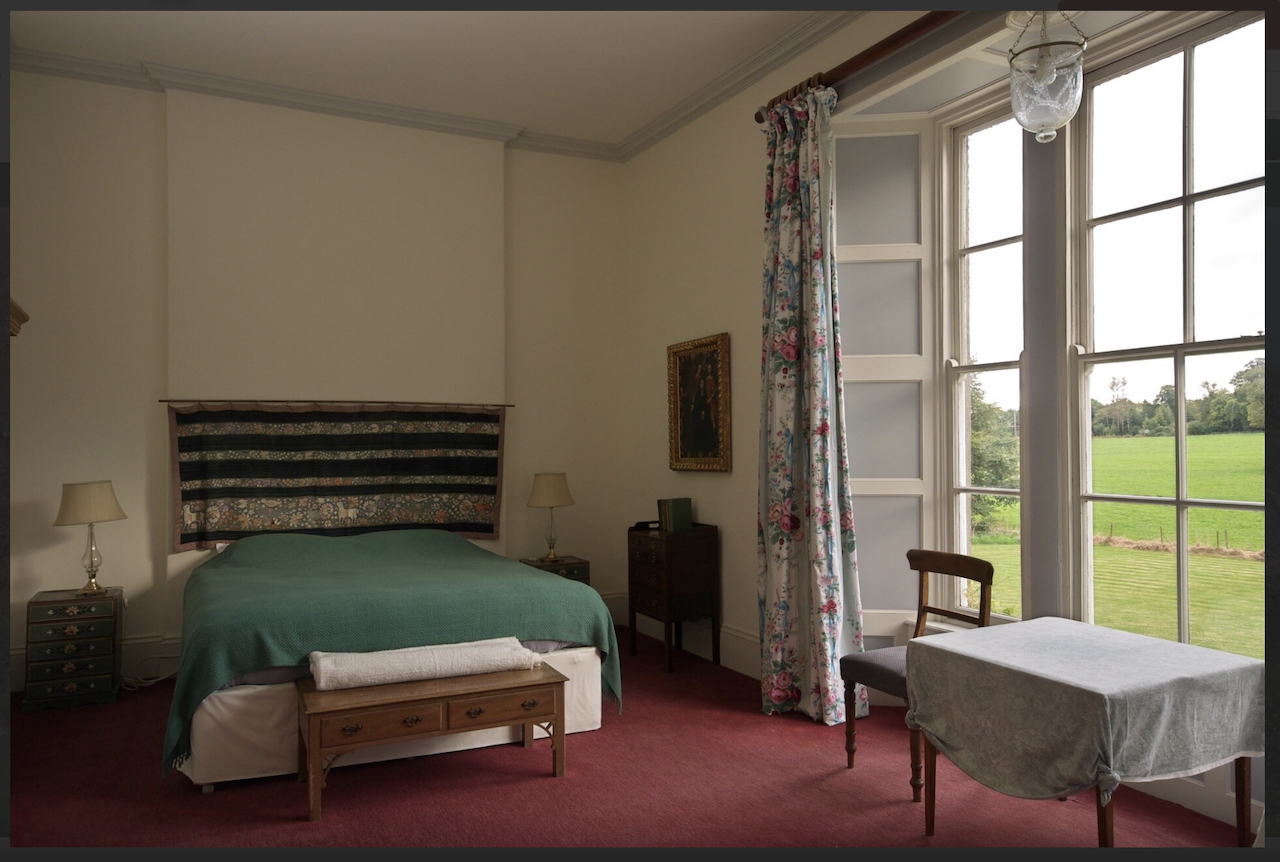
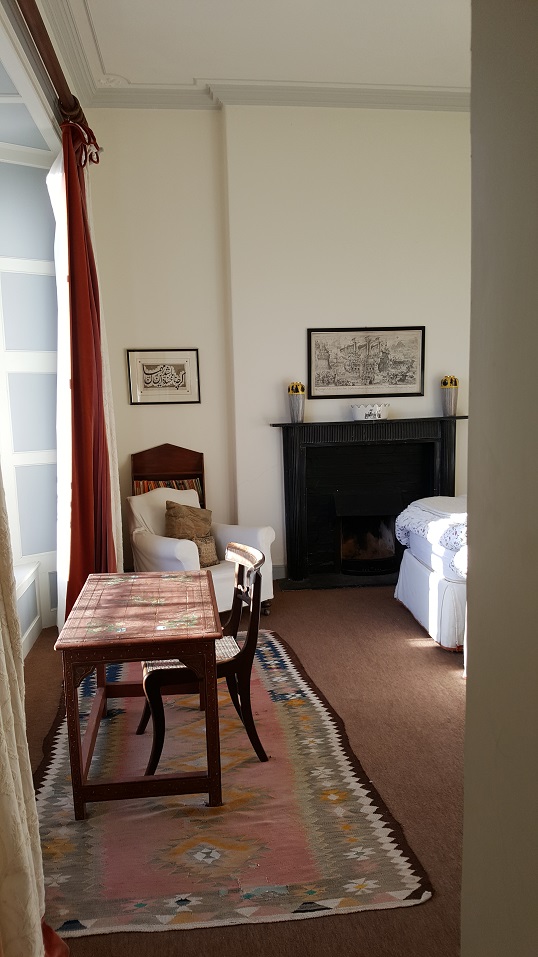
Woodbrook House, photograph courtesy of Woodbrook website.Woodbrook House, photograph courtesy of Woodbrook website.Woodbrook House, photograph courtesy of Woodbrook website.Woodbrook, County Wexford, courtesy Hidden Ireland. [1]Woodbrook House, photograph courtesy of Woodbrook website.There are three large guest bedrooms, all en suite.Woodbrook, County Wexford, courtesy Hidden Ireland. [1]Woodbrook House, photograph courtesy of Woodbrook website.
Also featured in The Wexford Gentry by Art Kavanagh and Rory Murphy. Published by Irish Family Names, Bunclody, Co Wexford, Ireland, 1994.
and The Irish Aesthete: Buildings of Ireland, Lost and Found. Robert O’Byrne. The Lilliput Press, Dublin, 2024.
Donation towards accommodation
I receive no funding nor aid to create and maintain this website, it is a labour of love. I travel all over Ireland to visit Section 482 properties and sometimes this entails an overnight stay. A donation would help to fund my accommodation.
[4] Mark Bence-Jones. A Guide to Irish Country Houses (originally published as Burke’s Guide to Country Houses volume 1 Ireland by Burke’s Peerage Ltd. 1978); Revised edition 1988 Constable and Company Ltd, London.
These Section 482 listings are open on certain dates in March 2025, so you might still have time for a visit! I have separated below the places that are listed as Accommodation.
Huntington Castle, Clonegal, Co. Carlow, Y21 K237
Postal address: Huntington Castle, Enniscorthy, Co. Wexford
Open: Feb 1-2, 8-9, 15-16, 22-23, Mar 1-2, 8-9, 15-16, 22-23, 29-30, Apr 5-6, 12-30, May 1-31, June 1-30, July 1-31, Aug 1-31, Sept 1-30, Oct 4-5, 11-12, 18-19, 25-31, Nov 1-2, 8-9, 15-16, 22-23, 29-30, Dec 6-7, 13-14, 20-21, 11am-5pm
Fee: house/garden, adult €13.95, garden €6.95, OAP/student, house/garden €12.50, garden €6, child, house/garden €6.50, garden €3.50, group and family discounts available
Open: Jan 3-4, 10-11, 17-18, 24-25, 31, Feb 7-8, 14-15, 21-22, 28, Mar 1, 7-8, 14, May 8-11, 15-18, 22-25, June 12-15, 19-22, 26-29, Aug 8-10, 15-24, 29-31, 2pm-6pm
Open: Feb 1-3, 7-10, 14-17, 21-24, 28, Mar 1-3, 7-10, 14-17, Apr 18-21, May 16-19, June 1-2, 6-9, 13-16, 20-23, 27-30, Aug 1-4, 8-11, 15-25, Feb-May, 12 noon-4pm, June and August, 11am-5pm, last entry 4.30pm
Fee: adult €10, OAP €9, student, €6, child €4 must be accompanied by adult, family €25 (2 adults and 2 children)
Open: Castle, May 1-3, 8-10, 15-17, 22-24, 29-31, June 5-7, 12-14, 19-21, 26-28, July 3-5, 10-12, 17-19, Aug 1-2, 7-9, 14-24, 28-30, Sept 4-6, 11-13, 18-20, 11am-3pm
Garden, Mar 27-Sept 28, Thurs-Sundays, and Bank Holidays, National Heritage Week, Aug 16-24,11am-5pm
Fee: castle adult €16.50, child entry allowed for over 8 years €8.50, garden, adult €8.50, child €4, family ticket (2 adults + 2 children) €23, adult season ticket €56, family season ticket €70, special needs visitor with support carer €4, child 5 years or under is free
Kilcarbry Mill Engine House, Sweetfarm, Enniscorthy, Co Wexford
Open: Jan 1-4, 29-31, Feb 3-5, Mar 5-7, 10-11, Apr 3-4, 11-13, May 10-12, 19-23, July 5-7, Aug 2-31, Dec 19-23, 27-30, 12 noon-4pm
Open: Jan 1-Dec 24, 27-31, house and garden, 9.30am-5.30pm, ballroom and garden rooms, 9.30am-1.30pm
Fee: Jan-Oct, adult €14, OAP, €12, student €10.50, child €5.50, family €20, Nov- Dec, adult €10.50, OAP €9.50, student €9, child €5.50, Jan- Oct, concessions-family ticket 2 adults and 3 children under 18 years €33, concession-Nov-Dec family 2 adults and 3 children under 18 €25
Russborough, The Albert Beit Foundation, Blessington, Co. Wicklow, W91 W284
Mark Bence-Jones. A Guide to Irish Country Houses (originally published as Burke’s Guide to Country Houses volume 1 Ireland by Burke’s Peerage Ltd. 1978); Revised edition 1988 Constable and Company Ltd, London.
p. 175. “(Bushe/LGI1912; butler, sub Mountgarrett, V/PB; Archer Houblon/IFR) A house of many periods, part of it believed to date from C17 or earlier; but now predominantly C18 and early C19. The back of the main block is three storey, but it has a two storey front of mid-C18 appearance; five bay, the roof parapet beign adorned with urnds. This front is now flanked by single-storey one bay early C19 Classical wings, with Wyatt windows and dies surmounted by sphinxes; the left-hand one extending along the whole side of the house to form a single-storey entrance front, with centrepiece of Doric pilasters and half-columns. The wings were added between 1814 and 1830 by the great advocate and orator, Charles Kendal Bushe, Chief Justice of Ireland, known as “the Incorruptible,” whose house this was. In 1788, when he came of age, he unwittingly signed a paper making himself responsible for the debts of his father, a squarson of extravagant habits; with the result that Kilmurry, which he loved, had to be sold. In 1814, when he was at the height of his career, he and his wife came to stay with the other branchof the Bushes at a neighbouring house, Kilfane; riding over to Kilmurry, he found the place for sale again and the trees marked for felling; but to his great sorrow, he did not feel that he could afford to buy it back. However, when he told his wife, she sprung the pleasant surprise that she had saved up all the money which he had given her…and which amounted to a sum large enough to enable him to buy back his old home. The wings added by Charles Kendal Bushe contain a hall with recessed screen of fluted Ionic columns, a library with bookcases recessed under arches and a dining room which was adorned, later in C19, with elaborate wood-carving. A fine long drawing room occupies the whole of C18 front, it was formed out of the previous entrance hall and the rooms on either side of it; beyond this drawing room was another drawing room in one of the wings, which has been made into a loggia by the removal of the back wall. Al the rooms have early C19 doorcases with rosettes and reeded mouldings. The children of Charles Kendal Bushe sold Kilmurry after his death to Major Henry Butler, of the Mountgarret family’ whose daughter, Miss Mildred Butler, the eminent water colour painter, bequeathed it to her cousin, Mrs Archer Houblon, the Equestrian.”
Kilmurry, County Kilkenny, courtesy myhome.ieKilmurry, County Kilkenny, courtesy myhome.ieKilmurry, County Kilkenny, courtesy myhome.ieKilmurry, County Kilkenny, courtesy myhome.ieKilmurry, County Kilkenny, courtesy myhome.ieKilmurry, County Kilkenny, courtesy myhome.ieKilmurry, County Kilkenny, courtesy myhome.ieKilmurry, County Kilkenny, courtesy myhome.ieKilmurry, County Kilkenny, courtesy myhome.ieKilmurry, County Kilkenny, courtesy myhome.ieKilmurry, County Kilkenny, courtesy myhome.ieKilmurry, County Kilkenny, courtesy myhome.ieKilmurry, County Kilkenny, courtesy myhome.ieKilmurry, County Kilkenny, courtesy myhome.ieKilmurry, County Kilkenny, courtesy myhome.ieKilmurry, County Kilkenny, courtesy myhome.ie
The reception rooms are grandly proportioned and embellished with original details, such as ornately carved fireplace mantles and crown mouldings. Carefully sourced limestone and reclaimed American pine replicate the original floors, and bespoke furnishings echo the period character of each room. Kilmurry House is a luxurious family home for the 21st-century, with ample spaces for relaxation, recreation, and entertaining. The heart of the house is the vast chef’s kitchen, which flows into a den and out to a courtyard.
Kilmurry, County Kilkenny, courtesy myhome.ieKilmurry, County Kilkenny, courtesy myhome.ieKilmurry, County Kilkenny, courtesy myhome.ieKilmurry, County Kilkenny, courtesy myhome.ie
The flowerroom, now a games room, opens onto a terrace. The orangery (once Butler’s studio) is another favourite place of the owners, restored to its original 18th century dimensions. The grand ballroom offers views to the lake and the Capability Brown landscape beyond. The indoor pool is a contemporary addition with walls of glass that open to a sun terrace in summer and provide insulation in the winter.
Kilmurry, County Kilkenny, courtesy myhome.ieKilmurry, County Kilkenny, courtesy myhome.ieKilmurry, County Kilkenny, courtesy myhome.ieKilmurry, County Kilkenny, courtesy myhome.ieKilmurry, County Kilkenny, courtesy myhome.ieKilmurry, County Kilkenny, courtesy myhome.ieKilmurry, County Kilkenny, courtesy myhome.ieKilmurry, County Kilkenny, courtesy myhome.ieKilmurry, County Kilkenny, courtesy myhome.ieKilmurry, County Kilkenny, courtesy myhome.ieKilmurry, County Kilkenny, courtesy myhome.ieKilmurry, County Kilkenny, courtesy myhome.ieKilmurry, County Kilkenny, courtesy myhome.ieKilmurry, County Kilkenny, courtesy myhome.ie
A gated entry introduces Kilmurry House, opening to a long tree-line drive through the historic grounds and ending at an elegant forecourt. A light-filled reception hall with a fireplace welcomes guests and flows into the formal living and dining rooms. An open staircase rises to the bedrooms on the top two levels. The primary suite is appointed with a fireplace, a dressing room, and a lavish bathroom, and overlooks the two-acre walled garden which inspired much of Butler’s work. Her best-known painting, The Lilac Phlox, depicts the plant that has flourished on the property for over a century. A Remarkable Setting Kilmurry’s grounds are a nature lover’s sanctuary offering ultimately peace and privacy in an idyllic rural setting. The owners have applied the same high standards in the interior restoration to the exterior, extending the estate’s parkland to more than 90 acres. Lawned gardens, with space for a helipad, grace the front and rear of the house. The resplendent two-acre walled garden is quintessentially Georgian in its scale and symmetry. The courtyard cottage with its own kitchen and sitting room could be used as staff quarters as could the original two-bedroom gate lodge with its modern kitchen and bathroom. Beyond the gardens is a serene lake surrounded by mature woodlands—a habitat for red squirrels, hares, hedgehogs, foxes, pheasants, otters, and a pair of nesting eagles. Other delights are the children’s adventure trail and zip line through the woods. The remaining acreage is composed of paddocks and wooded pastures for horses and livestock.
Kilmurry, County Kilkenny, courtesy myhome.ieKilmurry, County Kilkenny, courtesy myhome.ieKilmurry, County Kilkenny, courtesy myhome.ieKilmurry, County Kilkenny, courtesy myhome.ieKilmurry, County Kilkenny, courtesy myhome.ieKilmurry, County Kilkenny, courtesy myhome.ieKilmurry, County Kilkenny, courtesy myhome.ieKilmurry, County Kilkenny, courtesy myhome.ieKilmurry, County Kilkenny, courtesy myhome.ieKilmurry, County Kilkenny, courtesy myhome.ieKilmurry, County Kilkenny, courtesy myhome.ie
18th-century manor on over 90 acres in Co. Kilkenny, Ireland – Palladian manor house faithfully restored and luxuriously appointed for the 21st century – Complete peace, privacy, and security within an idyllic rural landscape – Lifelong home of renowned Irish artist Mildred Anne Butler – 11 bedrooms, 8 bathrooms, art gallery, ballroom, library, orangery, and indoor pool – Double garage – Two bedroom gate lodge with its own seperate access – Georgian walled garden, paddocks, pastures, woodland, and a trout lake – Estate’s grounds are a habitat for eagles, otters, red squirrels, and other wildlife – Thomastown: 5 minutes; Mount Juliet Golf Course: 15 minutes; Kilkenny City: 20 minutes; Dublin City Centre and Dublin International Airport: 1.5 hours Kilmurry House, the birthplace of Irish watercolourist Mildred Anne Butler, is quite simply one of the finest country manors in all of Ireland. The Georgian house, executed in timeless Palladian style, was Butler’s lifelong home: Its former orangery was her studio; its walled gardens, lake, and woodland were the setting for many of her finest en plein air pastoral and wildlife paintings. Named to the Royal Academy in 1893, Butler painted to international acclaim for more than 30 years. The National Gallery of Ireland purchased seven of her watercolours for its permanent collection. A watercolour of a pair of rooks was commissioned for the Library in Queen Mary’s Dolls’ House. Her legacy abides in Kilmurry House, where some of her Kilmurry landscapes hang in the home’s art gallery, painted from a nearby window facing the picturesque grounds. The great house itself, set within a private demesne in excess of 90 acres in Thomastown, County Kilkenny, dates from 1690. Butler’s father, Captain Henry Butler, grandson of the 11th Viscount Mountgarret, purchased Kilmurry House in the late 1800s, and it remained in the Butler family until 1981. The latest restoration by the current owners extended the home to approx. 17,861 square feet with 11 bedrooms and eight bathrooms while retaining the order and symmetry of the original Georgian design. The Manor House Kilmurry House is an elegant five-bay, three-story limestone structure above a garden-level villa. What is most notable about the house is the amount of natural light, rare in historic homes. Here, glass doors and double-height windows bring in the light and the views.
Kilmurry, County Kilkenny, courtesy myhome.ieKilmurry, County Kilkenny, courtesy myhome.ieKilmurry, County Kilkenny, courtesy myhome.ieKilmurry, County Kilkenny, courtesy myhome.ieKilmurry, County Kilkenny, courtesy myhome.ieKilmurry, County Kilkenny, courtesy myhome.ie
The reception rooms are grandly proportioned and embellished with original details, such as ornately carved fireplace mantles and crown mouldings. Carefully sourced limestone and reclaimed American pine replicate the original floors, and bespoke furnishings echo the period character of each room. Kilmurry House is a luxurious family home for the 21st-century, with ample spaces for relaxation, recreation, and entertaining. The heart of the house is the vast chef’s kitchen, which flows into a den and out to a courtyard. The flowerroom, now a games room, opens onto a terrace. The orangery (once Butler’s studio) is another favourite place of the owners, restored to its original 18th century dimensions. The grand ballroom offers views to the lake and the Capability Brown landscape beyond. The indoor pool is a contemporary addition with walls of glass that open to a sun terrace in summer and provide insulation in the winter. A gated entry introduces Kilmurry House, opening to a long tree-line drive through the historic grounds and ending at an elegant forecourt. A light-filled reception hall with a fireplace welcomes guests and flows into the formal living and dining rooms. An open staircase rises to the bedrooms on the top two levels. The primary suite is appointed with a fireplace, a dressing room, and a lavish bathroom, and overlooks the two-acre walled garden which inspired much of Butler’s work. Her best-known painting, The Lilac Phlox, depicts the plant that has flourished on the property for over a century. A Remarkable Setting Kilmurry’s grounds are a nature lover’s sanctuary offering ultimately peace and privacy in an idyllic rural setting. The owners have applied the same high standards in the interior restoration to the exterior, extending the estate’s parkland to more than 90 acres. Lawned gardens, with space for a helipad, grace the front and rear of the house. The resplendent two-acre walled garden is quintessentially Georgian in its scale and symmetry. The courtyard cottage with its own kitchen and sitting room could be used as staff quarters as could the original two-bedroom gate lodge with its modern kitchen and bathroom. Beyond the gardens is a serene lake surrounded by mature woodlands—a habitat for red squirrels, hares, hedgehogs, foxes, pheasants, otters, and a pair of nesting eagles. Other delights are the children’s adventure trail and zip line through the woods. The remaining acreage is composed of paddocks and wooded pastures for horses and livestock.
The estate is within a 20-minute drive of Kilkenny City, once the medieval capital of Ireland, and 1.5 hours from both Dublin City Centre and Dublin International Airport. Thomastown, just five minutes away, is a beautiful market town along the River Nore, known for its salmon and trout fisheries. Notable landmarks in the vicinity include Jerpoint Abbey, Kilfane Glen Gardens, and the world-renowned Mount Juliet Golf Course. Additional features State of the art monitored security system. Fully rewired with KNX system Source pump/air exchange assisted heating system Underfloor heating throughout the ground floor Sub zero and wolf appliances Source pump heated swimming pool Double garage
In October 1981 Christie’s held an auction on its premises in London, offering the studio contents of an Irish artist who had died 40 years earlier and, until this sale, had been largely forgotten. The artist in question was Mildred Anne Butler, born into a gentry family in County Kilkenny in 1858. Following her father’s death in 1881, she trained in London and then travelled elsewhere in Europe to improve her technique, specialising in watercolour. By 1892 she was exhibiting with the Watercolour Society of Ireland and she also showed work at both the Royal Academy in London and the Royal Hibernian Academy in Dublin. Throughout her life, the same subjects recurred: primarily birds, animals such as cattle and garden scenes, usually recorded from the immediate surroundings of Kilmurry, her family home in County Kilkenny. Here she lived until her death in October 1941 at the age of 83: although one of six children, she survived all her siblings, none of whom had offspring, and so she inherited the property. She bequeathed Kilmurry and its contents to a distant cousin, Doreen Archer Houblon and it was only a few years after the latter’s death that the contents of Butler’s studio were offered for sale. It was an opportune moment, since this style of work had begun to come back into fashion: Edith Holden’s Country Diary of an Edwardian Lady, which came out in 1977, had been a publishing sensation, selling over one million copies in its first year. And the work of another Irish watercolourist and contemporary of Mildred Anne Butler, Rose Barton, was also experiencing a revival in popularity. Ever since then, Kilmurry has been associated with Butler but the story of an earlier owner is just as interesting, if not more so.
Kilmurry is a house that has been enlarged and altered on many occasions but the core of it, perhaps the section that forms the inner hall, is thought to date back to the 17th century, perhaps around the time that the lands here were granted to Colonel John Bushe. Originally an entrance hall with flanking reception rooms, what is today the main drawing room appears to have been added around the mid-18th century by the colonel’s grandson, Reverend Thomas Bushe, Rector of Gowran, Prebendary of Inniscarra, and Chaplain of King’s College, Mitchelstown, Co. Cork. According to Richard Lalor Sheil, the Rev. Bushe ‘was in the enjoyment of a lucrative living, and being of an ancient family, which had established itself in Ireland in the reign of Charles the Second, he thought it incumbent upon him to live upon a scale of expenditure more consistent with Irish notions of dignity than English maxims of economy and good sense.’ In other words, he was inclined to allow expenditure to exceed income and in consequence fell badly into debt. In 1767 the Rev. Bushe and his wife Catherine had a son, Charles Kendal Bushe, whose middle name arose from the following circumstances. One night an elderly man called Kendal, who lived not far away on what is now the Mount Juliet estate, sought refuge at Kilmurry, having been attacked and robbed by highwaymen. So grateful was Mr Kendal for the assistance provided by the Bushes that, when he died, he left all his property to the family, on condition that the eldest son should bear his name. It will not come as a surprise that the Rev Bushe, owing to his impecunious state, subsequently sold this unexpected inheritance. Meanwhile his son Charles Kendal, became an extremely successful lawyer: in due course he would act as Solicitor-General for Ireland (1805-1822) and then Lord Chief Justice of the King’s Bench for Ireland (1822-1841). Unfortunately, as a young man he had signed some papers presented to him by his father without knowing what they contained: at the age of 21, he discovered that he was saddled with some £30,000 worth of parental debts. Kilmurry, which he adored, had to be sold and he left Ireland to avoid creditors. Meanwhile, the feckless Rev Bushe retired to his living in Mitchelstown.
In December 1793 Charles Kendal Bushe married Anne Crampton and thanks to her dowry – and a loan from a friend – he was able to pay off his most pressing creditors and return to Ireland where his career flourished. Nevertheless, he was never rich and so, in 1814 when Kilmurry was once more offered for sale, he lacked the necessary funds to repurchase his old family home. That is, until his wife told him that she had saved all the money he had given her over the years to buy jewellery and other items: the sum was sufficient to cover the purchase price, and the Bushes now moved back to Kilmurry. It is likely that soon after this further alterations were made to the property. The west-facing, five-bay building, its limestone parapet lined with urns, which had been added by the Rev Bushe was now flanked by single-storey wings with tripartite windows and dies surmounted by sphinxes. A new, severely neo-classical entrance was created on the north front with Doric pilasters and half-columns. Immediately inside is the hall, with the library to the right and the dining room to the right. Continuing through the house, the next space is a substantial inner hall (as mentioned, likely to be the oldest part of the building) with the drawing room to the right and staircase hall to the left, the latter leading to what were formerly service quarters. To the rear lies an orangery (once Mildred Anne Butler’s studio) which looks over the two-acre walled garden. Despite his passion for the place, after Charles Kendal Bushe died in 1843 his children sold Kilmurry, the new owner being Captain Henry Butler, father of Mildred Anne Butler and himself a talented artist. Creativity ran in the family, because the dining room in Kilmurry contains an extraordinary chimneypiece, elaborately carved by another of the captain’s daughters, Isabel Butler, together with a local carpenter. Unfortunately, following the death of Doreen Archer Houblon, all the contents of the house were sold, not just Mildred Anne Butler’s studio, but the furniture and some 5,000 books in the library. Kilmurry then went into a period of serious decline before being bought and wonderfully restored by the present owners. More recently they have placed the property on the market: perhaps the house awaits another Anne Kendal Bushe with her secret stash of funds…
The Landed Gentry & Aristocracy: Kilkenny. Volume 1. Art Kavanagh, 2004.
Butler (Earls of Ormonde)
entry in MacDonnell, Randal. The Lost Houses of Ireland. A chronicle of great houses and the families who lived in them. Weidenfeld and Nicolson. London, 2002
“A mid-18th century house incorporating parts of a 17th century building, Kilmurry was remodelled after 1814 by Sir Richard Morrison for Charles Kendall Bushe, later Chief Justice of the Queen’s Bench in Ireland….p. 144: …came into the ownership of the Bushe family as a result of the redistribution of Irish properties by Cromwell’s commissioners. The demesne of Kilmurry had originally been seized by the Normans in the late 12th century and in 1222 a Gilbert de Kentewell possessed the lands at Kilfane, which he held from the Bishop of Ossory. His descendent, John Cantwell, was transplanted to Connacht in the Cromwellian settlement of Ireland and his land was given away to supporters of the victorious regime. In this instance, they went to Col. John “Fire-away-Flanagan” Bushe.”
“In 1690, he took the side of William of Orange and, during one of the skirmishes of the so-called ‘Glorious Revolution’ he was sent to demand the surrender of Kilkenny Castle. A Jacobite officer, named O’Flanagan, ordered him to leave at once or he would be fired upon. The Col’s reply provided his nickname and he went on to capture the castle for the Stadtholder. The fate of O’Flanagan is not recorded.
The Col had two sons. The elder, Amyas Bushe of Kilfane, married Eleanor, the daughter of Christopher Wandesford, in 1706. The younger son, Arthur Bushe of Kilmurry, was born in 1691 and graduated from Trinity College Dublin in 1711. Arthur’s son, Thomas Bushe, was variously Prebendary if Inniscarra in County Cork, and chaplain to Kingston College in the same county. His wife Catherine was the granddaughter of Sir John Boyle, solicitor general of Ireland.
“Thomas Bushe was a gambler and spendthrift… who had allegedly inherited the property now called Mount Juliet in the following romantic circumstances. It appears that some years previously an elderly gentleman had arrived at Kilmurry in a post chaise and announced that he had been robbed by highwaymen and all his papers had been taken. Mr Bushe gathered his workmen and, within a few hours, returned with the stolen goods. The next part of th tale is extraordinary: the elderly gentleman then announced that he wished to spend his remaining days at Kilmurry and, even more amazingly, the Bushes agreed. When the old man died, it transpired that he had left his estate to the Rev Mr. Bushe on the sole condition that his family should give the surname of their benefactor – Kendal – as a Christian name to each of their heirs.
“Whatever the real truth, the Mount Juliet estate had to be sold eventually in order to pay the Rev’s debts. …His problem was that his sole remaining asset, Kilmurry, was entailed to his son and heir, young Charles Kendal Bushe… On the morning of Charles’s 21st birthday, his father entered his bedroom and asked him to sign some papers, telling him that he need not concern himself too much with their content. Charles did as he was bid and only then discovered that he, now legally of age, had agreed to shoulder his father’s mountain of debts. Forced to sell his family home, he had to support himself by his chosen profession, the law. To make matters worse, he had a wife and a growing family to support at that time.
“Kilmurry was sold in 1788 to a Dr Hoskyn… and the Bushe family moved to Dublin. The doctor sold it to a Major Alcock, who was in charge of the Kilkenny militia at the Battle of Castlebar in 1798. The rebels were aided by French troops under General Humbert at this battle and it has gone down in history as “the Races of Castlebar” because of the speed with which the Government forces (including Major Alcock) fled the field. [p. 145]
p. 146: “The British government, at war with revolutionary France, annoyed by the independent stance that had been taken by the Irish Parliament and concerned after the rebellion of 1798, decided to pass an Act of Union which would close down the Dublin legislature and move the Government of Ireland to the Westminster Parliament. The Prime Minister William Pitt the younger, did not intend to let either chance or unfettered democracy stand in his way with regard to this measure. Accordingly, his agents were sent out with bribes of money, titles and offices to the prospective electors, who were the members of both houses of the Irish Parliament. Charles Bushe had been elected to this body and, despite the fact that he was quite poor… he refused to vote for the Union of Great Britain with Ireland. The government in London tried every means within their power to persuade him to change his mind. He was offered the position of Master of the Rolls, a peerage and later a very large sum of money. In consequence of his behaviour there is, in the list of members of the Irish House of Commons compiled by Sir Johan Barrington, a single word placed against his name: “incorruptible.”
“Charles was Solicitor General for Ireland for 17 years, from 1805-1822. His wife Ann (whom he called Nancy) was the daughter of John Crampton from Merrion Square in Dublin. Charles was devoted to her and they were an unusally close couple. He took no decision without her advice and noce he became a successful lawyer, he was in the habit of giving her handfuls of banknotes and saying “There you are, buy jewels!” He returned to Kilkenny in 1814 to stay with his cousin, Gervase Parker Bushe and his wife Eliza, who lived at Kilfane, the neighbouring estate to Kilmurry. On hearing that his childhood home was up for sale, Charles rode over and found the property in a sorry state, with the trees marked for felling. He decided to buy back the estate but could raise only two-thirds of the sum required. When she heard this, Nancy took him aside and showed him her bankbook. What he saw astonished him. It transpired that every time he gave her money to buy something pretty for herself, she had banked it, providing a sum which, together with his own resources, not only enabled him to buy back Kilmurry House but also to restore and enlarge it.”…[he] added the two single-storey wings when he moved back into the house. The plasterwork and the design of the new wings suggest the hand of Sir Richard Morrison and his son, William Vitruvius…Charles knew of the Morrison’s work. They had designed two houses, Lough Bray Cottage and St Valery, both in County Wicklow, for his brother-in-law Sir Philip Crampton, a distinguished physician, and in 1813 they had built Glencairn Abbey (Castle Richard) [County Waterford] for his cousin, Amyas Bushe.
“In the entrance hall of Kilmurry House, beyond which lies the blue music room, ivory-coloured Ionic columns are flanked by pilasters. The staircase hall is two storeys high and the ballroom (formed from the original entrance hall and the rooms on either side of it) [p. 147] overlooks the lake. In the ceiling of the new entrance hall, placed in one of the new wings, is a central glazed lantern. Each of the wings is surmounted by a sphinx and the roof parapet is lined iht carved stone urns; both wings have Wyatt windows. Off the hall are the drawing room, the dining room and library, which has bookcases recessed under curved arches. There is a lake behind the house and a three-acre walled garden.”
“There is a biography of [Charles Bushe] by his granddaughter Edith Somerville… His son, John Bushe, married Lady Louisa Hare, the daughter of the Earl of Listowel, but it was his daughter Katherine and her husband Michael Fox, who sold the estate to Major Henry Butler, a grandson of the 11th Viscount Mountgarrett.
…One of his daugthers was Mildred Anne Butler. She had two sisters, one of whom was an accomplished woodcarver – the diningroom has an oak chimneypiece, 20 feet high, which was carved by her in 1896 in the Arts and Crafts style – and three brothers, who followed their father into the army. Eventually Mildred outlived them all and inherited Kilmurry.
…The recurring inspiration for her work seems to have been Kilmurry itself – she removed a wall between a drawing room and the garden in order to create her studio.
p. 148. “Mildred Anne Butler died in 1941 and left Kilmurry to her cousin Doreen Archer-Houblon who, together with her sister, Kitty Brocklebank, preserved and cared for Miss Butler’s legacy with the greatest care until it was sold in 1981 and the contents were dispersed. Kilmurry House was placed on the market again in 2001.”
Kilmurry, County Kilkenny, courtesy National Inventory.
Detached five-bay two-storey double-pile over basement country house, c.1750, possibly incorporating fabric of earlier house, 1691, on site with two-bay two-storey lower return to east. Extended, 1814-30, comprising single-bay single-storey recessed flanking end bays returning along side (north) elevation as five-bay single-storey entrance range. Hipped double-pile (M-profile) slate roofs behind parapets (hipped to return; hipped to end bays/entrance range) with clay ridge tiles having sections of rolled lead ridges, limestone ashlar chimney stacks having some rendered chimney stacks throughout, and concealed cast-iron rainwater goods. Ivy-clad unpainted rendered walls (possibly ruled and lined; painted rendered walls to entrance range) with cut-limestone dressings including quoins to corners, band to eaves supporting carved cornice, and blocking course to parapets having urns (rising to centre to end bays incorporating rectangular recessed panels). Square-headed window openings (in tripartite arrangement to end bays having rectangular recesses over) with cut-limestone sills, moulded rendered surrounds (with friezes to entrance range having moulded entablatures supporting blocking course), and six-over-six timber sash windows (four-over-four timber sash windows to ground floor) having six-over-nine timber sash windows to tripartite openings with timber panelled pilaster mullions leading to two-over-three sidelights. Square-headed door opening with cut-limestone step, moulded rendered surround, and glazed timber panelled double French doors having overlight. Square-headed door opening to entrance range in Classical-style tetrastyle frontispiece (comprising engaged columns with flanking pilasters supporting frieze, modillion cornice, and blocking course to parapet rising to centre incorporating rectangular recessed panel) with cut-stone step, moulded rendered surround, timber panelled double doors having overlight, and shield plaque over. Interior with timber panelled shutters to window openings. Set back from road in own grounds with landscaped grounds to site. (ii) Attached four-bay single-storey service wing/servants’ wing with dormer attic, c.1750, parallel to east. Pitched slate roof (gabled to dormer attic windows) with clay ridge tiles, rendered chimney stacks, rendered coping, rooflights, decorative timber bargeboards to dormer attic windows, and cast-iron rainwater goods on red brick eaves having sections of saw-tooth detailing. Painted rendered walls. Square-headed window openings with cut-limestone sills, red brick dressings to dormer attic, and two-over-two timber sash windows.
Appraisal
Forming an important element of the domestic architectural heritage of County Kilkenny an elegantly-composed mid eighteenth-century substantial country house represents the continuation of a long-standing occupation of a site having origins dating back to at least the late seventeenth century. Classically-derived proportions, refined detailing, and so on all serve to enhance the architectural design value of the composition while additional ranges established under the direction of Charles Kendal Bushe (1767-1843), Chief Justice of Ireland, further enhance the formal quality of the house. Having been carefully maintained the house presents an early aspect with substantial quantities of the historic fabric surviving intact both to the exterior and to the interior where an Arts-and-Crafts-style fireplace (1896) executed by E. Hollahan (fl. 1890s) features together with delicate Adamesque plasterwork. Forming the centrepiece of a large-scale landholding (including 12402846 – 9/KK-28-46 – 9) the house remains of additional importance in the locality for the connections with the Bushe, the Alcock, the Ponsonby, the Butler (including Mildred Anne Butler (1858-1941), artist), and the Archer-Houblon families.
Kilmurry, County Kilkenny, courtesy National Inventory.Kilmurry, County Kilkenny, courtesy National Inventory.Kilmurry, County Kilkenny, courtesy National Inventory.
Farmyard complex, c.1750, including: Detached nine-bay single-storey outbuilding with half-dormer attic on an L-shaped plan with single-bay single-storey gabled projecting porch to ground floor, and two-bay single-storey projecting end bay to left having pair of elliptical-headed carriageways. Pitched slate roof on an L-shaped plan (gabled to porch) with clay ridge tiles, rendered chimney stacks, rooflights, decorative timber bargeboards to gables, and cast-iron rainwater goods on moulded eaves (possibly carved cut-limestone eaves). Painted roughcast walls with red brick walls to porch. Square-headed window openings (some in bipartite arrangement) with cut-limestone sills, and timber casement windows with some having two-over-two timber sash windows with overlights. Square-headed door openings with timber panelled doors (some having overlights). Pair of elliptical-headed carriageways to end bay with fittings not discernible. Set back from road in grounds shared with Kilmurry House.
Appraisal
A middle-size range contributing significantly to the group and setting values of the Kilmurry House estate while attesting to the various services put in place to facilitate the operation of a substantial landholding in the mid eighteenth century. Notwithstanding the utilitarian purpose of the complex a number of distinctive attributes elevate the architectural design value beyond the merely functional including the elegant bipartite arrangement to some openings, the introduction of red brick in the construction, some fine detailing, and so on. Having been well maintained to present an early aspect the outbuilding makes a positive contribution to the character of the grounds.
Kilmurry, County Kilkenny, courtesy National Inventory.
Kilmurry, County Kilkenny, courtesy National Inventory.
Gateway, c.1825, comprising pair of dressed rubble stone piers with cut-limestone capping, gates now missing, and random rubble stone boundary wall having rubble stone vertical coping. Road fronted at entrance to grounds of Kilmurry House.
Appraisal
Notwithstanding the modifications carried out in the course of the construction of a later counterpart set back from the road the elementary attributes of an elegantly-appointed gateway prevail, thereby making a pleasing visual impression at the entrance to the grounds of the Kilmurry House estate.
Kilmurry, County Kilkenny, courtesy National Inventory.
Pair of gate lodges, c.1825, comprising: (i: east) Detached single-bay single-storey gate lodge on a corner site with single-bay single-storey recessed lower flanking end bays. Now in private residential use. Hipped slate roof on a T-shaped plan with clay ridge tiles, rendered chimney stack, and cast-iron rainwater goods on cut-stone eaves. Coursed rubble stone walls (part painted). Square-headed window openings with painted sills, and two-over-two timber sash windows. Camber-headed door opening in square-headed recess (forming diastyle Doric portico in antis with cut-limestone columns) with painted cut-stone voussoirs having keystone, and glazed timber panelled door having sidelights. Set back from line road in own grounds on a corner site with random rubble stone boundary wall having cut-stone piers with cut-limestone capping, cut-limestone coping supporting iron railings incorporating decorative panels, and decorative iron gate. (ii: west) Detached single-bay single-storey gate lodge on a corner site with single-bay single-storey recessed lower flanking end bay to left. Refenestrated, c.1975. Now in private residential use. Hipped slate roofs with terracotta ridge tiles, and no rainwater goods on cut-stone eaves. Coursed rubble stone walls (part painted) with red brick Running bond walls to end bay. Square-headed window openings with painted sills, and replacement timber casement windows, c.1975. Camber-headed door opening in square-headed recess (forming diastyle Doric portico in antis with cut-limestone columns) with cut-stone voussoirs having keystone, and timber panelled door having sidelights. Set back from line road in own grounds on a corner site with random rubble stone boundary wall having cut-stone piers with cut-limestone capping, cut-limestone coping supporting iron railings incorporating decorative panels, and decorative iron gate.
Appraisal
Representing an integral component of a larger self-contained gateway ensemble (with 12402847/KK-28-47) a pair of gate lodges forms an appealing landmark at the entrance to the grounds of the Kilmurry House estate. Distinctive attributes including the porticoes identify the elegant architectural design value of the composition while the traditional construction in barely-refined locally-sourced stone produces an appealing textured visual effect. Having been well maintained each range presents an early aspect with most of the essential qualities surviving intact, thereby making a positive contribution to the character of the locality.
Kilmurry, County Kilkenny, courtesy National Inventory.
Detached three-bay single-storey gate lodge, c.1825, with single-bay single-storey concave entrance bay to centre having prostyle diastyle Doric portico on a bowed plan. Now disused. Hipped slate roof (continuing into conical section to portico) with rolled lead ridges, red brick Running bond chimney stack, and iron rainwater goods on overhanging rendered eaves. Painted rendered, ruled and lined walls. Square-headed window openings with cut-limestone sills, moulded rendered surrounds, and timber casement windows having lattice glazing. Pair of square-headed door openings behind prostyle diastyle Doric portico (with pair of cut-granite columns) with moulded rendered surrounds, and glazed timber panelled doors. Set back from line of road in grounds shared with Kilmurry House. (ii) Remains of gateway, c.1825, to south comprising pedestrian gateway with pair of cut-granite piers having wrought iron gate with cast-iron finials, entablature, and carved cut-granite cornice supporting blocking course rising to centre.
Appraisal
A picturesque small-scale gate lodge exhibiting distinctive attributes redolent of the period of construction including the balanced configuration centred on a Classical portico, the overhanging roof, and so on all of which identify the architectural design value of the composition: the juxtaposition of a concave entrance bay with a bowed portico, the pretty glazing pattern to the openings, and so on further enhance the aesthetic value of the lodge. Forming a neat self-contained group with the remains of an attendant gateway the resulting ensemble makes a positive visual impression at the entrance to the grounds of the Kilmurry House estate.
Kilmurry, County Kilkenny, courtesy National Inventory.Kilmurry, County Kilkenny, courtesy National Inventory.
Kilmurry House near Thomastown – Associated families – Bushe, Butler, subMountgarret, Archer Houblon. Parts believed to have been from the 17th century or earlier, but now predominantly 18th or early 19th century. Kilmurry House had been built by Colonel Bushe in the 1690s, when he built a seat on lands granted to him under the Cromwellian settlement. Charles Kendal Bushe, orator and advocate known as “The Incorruptible” added wings to the house between 1814 and 1830. His father the Reverend Thomas Bushe and his wife Katherine Doyle owned the house but he was forced to sell it to pay his debts. Charles was able to repurchase it in 1814 with money he had given his wife, Anne Campton to buy jewellery and which she had not spent. (Reference page 175 Burke’s Guide to Country Houses, Volume 1 – Ireland). Charles Kendal Bushe’s children sold the house after he died in 1843 to Major Henry Butler of the renowned Anglo-Irish Butlers of Ormonde dynasty of Kilkenny Castle. His daughter, Mildred Anne Butler (1858-1941), the water colour painter, bequeathed it to her cousin, [Doreen Archer Houblon, CVODoreen Archer Houblon, the equestrian. It remained in the Butler family until it was sold in 1981. The Irish businessman who bought the house for a reported €1.5m in 2009 attempted to modernise part of the listed building in 2011
A HONG Kong-based businessman has been ordered to stop demolition works at the 17th century listed Georgian house that inspired the paintings of a leading artist.
Local residents in Thomastown, Co Kilkenny, were dumbfounded when they noticed that part of the back of the stunning Kilmurry House had been knocked down. It is the home where celebrated Irish artist Mildred Anne Butler, who was born in 1858 and died in 1941, lived for most of her life.
The property dates to 1690 when a Colonel Bushe built a seat on lands granted to him under the Cromwellian settlement. In the late 1800s the estate was bought by Ms Butler’s father, Major Henry Butler of the renowned Anglo-Irish Butlers of Ormonde dynasty of Kilkenny Castle.
Modernise
Upon Ms Butler’s death in 1941, Kilmurry House was left to a cousin and it remained in the Butler family until it was sold in 1981. It would appear that the Irish businessman who bought the house for a reported €1.5m last year is attempting to modernise part of the listed building.
Part of the back of the house has already been levelled. However, no planning permission was granted for the works.
It was billed as one of the finest country houses in the south-east when it went on the market in 2007. Set on 20 acres and complete with its own trout lake, the nine-bedroom property had failed to sell at an original asking price of €4m, but was finally snapped up last year for a reported €1.5m by James Hennessy — an Irishman living abroad who was planning to relocate home.
Kilkenny County Council has now erected a notice at the site ordering Mr Hennessy, with an address in Repulse Bay, Hong Kong, to immediately bring the work to a halt.
The house had already been sympathetically renovated and restored, however, it appears Mr Hennessy had planned to put his own stamp on it.
The county council confirmed that the demolition works had now been stopped. However, substantial damage has been done.
Director of services with responsibility for planning, John McCormack, said that as soon as the matter was brought to the council’s attention it served a notice on Mr Hennessy.
Mr McCormack said the local authority took a “very dim view” of moves to alter protected structures without permission.
It remains to be seen what sanctions will be taken against Mr Hennessy but the council has not ruled out prosecuting the owner and forcing him to reinstate the house.
Attempts to contact Mr Hennessy were unsuccessful.
Mr McCormack said it was “unusual” for a period property owner to take such actions as they have a high regard for protected structures.
An enforcement notice on the property stated that Mr Hennessy must, within 24 hours, “cease all unauthorised works of demolition/restoration to Kilmurry House, a protected structure”.
The council warned that if these steps were not taken, it could enter the land and recover any “reasonable expenses incurred” for the operation.
Mr Hennessy has also been ordered to pay the county council €517.72 for investigating the planning issue and issuing the enforcement notice.
This 18th-Century nine-bedroom, 13,400 sq ft country mansion is surrounded by 20 acres of lawns and parkland and features a ballroom — ideal for soirees and parties for your friends.
Elsewhere on the property, there are three apartments, a walled garden, and lawns with mature trees.
The new owners can also catch their own dinner in the two-acre trout lake.
Mark Bence-Jones. A Guide to Irish Country Houses (originally published as Burke’s Guide to Country Houses volume 1 Ireland by Burke’s Peerage Ltd. 1978); Revised edition 1988 Constable and Company Ltd, London.
p. 285. “A two storey C18 house flanked by wings and yards in the Palladian manner; related by the Knight of Glin to Colganstown and other houses attributed to the amateur architect Nathaniel Clements. Three bay front, Venetian window above tripartite doorway; wall carried up to form parapet, urns at corners. The seat of the Williams family.”
Mark Bence-Jones. A Guide to Irish Country Houses (originally published as Burke’s Guide to Country Houses volume 1 Ireland by Burke’s Peerage Ltd. 1978); Revised edition 1988 Constable and Company Ltd, London.
p. 288. “(Mansfield/IFR; Ussher/IFR) A Georgian farmhouse with a fanlighted doorway, enlarged early in C19 by the addition of a higher block at the back of it’ so that it now has a four bay garden front, containing a spacious drawing room and dining room en suite, with cornices of simple plasterwork. The staircase, in its own hall to the left of the entrance hall, has elaborate but unsophisticated plasterwork in its soffits. Formerly owned by the Mansfield family, of Morristown Lattin and Yeomanstown. Now the home of Mr and Mrs Patrick Ussher.”
Mark Bence-Jones. A Guide to Irish Country Houses (originally published as Burke’s Guide to Country Houses volume 1 Ireland by Burke’s Peerage Ltd. 1978); Revised edition 1988 Constable and Company Ltd, London.
p. 288. “(Mansfield/IFR; Moore, sub McCalmont/IFR) An early C18 double gable-ended house of exceptional quality, originally belonging to a branch of the Eustace family. Of two storeys, with an attic in the high-pitched roof lit by windows in the gable-ends. Five bay entrance fron with large floating pediment containing an oculus; the windows being grouped closely together leaving wide solid corners. Heads of windows in upper storey have undulating arrises. Round-headed dorrway with blocking; deep wooden bracket cornice under roof; partly curvilinear endgables. Plain and asymmetrical garden front. the house is built of brick, but has been rendered. Both the entrance and garden fronts face along straight avenues of trees. Inherited by John Mansfield later C18. Subsequently sold to the Gill family, now the home of Mr A.L. Moore and Mrs Moore (nee Gill).
Eliza (1765-1795), daughter and heiress of Walter Woulfe of Rathgormack, Co. Waterford, married John Mansfield (1753-1817) Esq., of Yeomanstown in Co. Kildare, and of Ballinamuntina in Co. Waterford, by John Comerford. Courtesy Fonsie Mealy July 2018Walter Woulfe of Rathgormac in the County Waterford, the father of Eliza Woulfe, who married John Mansfield of Yeomanstown, Kildare, subsequently housed at Morristown Lattin, by John Comerford, courtesy Fonsie Mealy Aug 2023.
Mark Bence-Jones. A Guide to Irish Country Houses (originally published as Burke’s Guide to Country Houses volume 1 Ireland by Burke’s Peerage Ltd. 1978); Revised edition 1988 Constable and Company Ltd, London.
p. 266. “(Guinness/IFR) A Georgian house of two storeys over a basement and five bays, described (1837) as “the neat residence of Mrs Whitelaw.” Later single-storey wing with mullioned bow. Dining room decorated in Tudor style with oak panelling late C19 or early C20. Recently the home of Mr and Mrs Robert Guinness, who built a garden temple flanking the house. Bought 1989 by Hon Marcus Beresford (Decies, B/PB).”
Mark Bence-Jones. A Guide to Irish Country Houses (originally published as Burke’s Guide to Country Houses volume 1 Ireland by Burke’s Peerage Ltd. 1978); Revised edition 1988 Constable and Company Ltd, London.
p. 264. “(Bradstreet, Bt/PB1924; Nugent, sub Westmeath, E/PB) A plain three storey Georgian house to which a wing in the Classical style, containing a ballroom, was added ca 1910. The wing has since been demolished. Originally the seat of the Bradstreet family; bought ca 1890 by Hon R.A. Nugent; sold ca 1963 by his daughter Mrs Michael Popoff. Now the home of Mr and Mrs Vincent Poklewski-Koziell.”
Detached two-bay single-storey former gate lodge, c.1820, on a T-shaped plan with single-bay single-storey gabled advanced bay to left having single-bay single-storey canted bay window, gablet over entrance bay to right and single-bay single-storey polygonal bay to east. Refenestrated, c.1990. Now in private residential use. Gable-fronted and gable-ended roofs with slate (gablets to entrance bay and to west; half-octagonal roofs to canted bay window and to polygonal bay). Clay ridge tiles with finials. Blue brick corbelled chimney stack. Timber eaves and bargeboards. Cast-iron rainwater goods. Roughcast walls. Unpainted. Blue brick to bay window with dentilated cornice and quoined faces to polygonal projecting bay. Square-headed window openings. Cut-stone continuous sill course. Blue brick block-and-start surrounds to some openings. Replacement uPVC casement windows, c.1990. Original timber casement windows to west. Round-headed door opening. Cut-stone Baroque-style doorcase with scrolled pediment. Timber panelled door. Set within own landscaped grounds with iron railings to boundary.
Appraisal
This gate lodge is an unusual model in that the compact plan is treated with a highly ornate elevation of considerable artistry. The juxtaposition of roughcast walls with unusually blue-hued brick is a fine example of polychromy, while the ornate cut-stone doorcase is of artistic importance. Most of the original features and materials are still in situ, while the re-instatement of timber fenestration, using the original example to west as a guide, would restore an impression of the original aspect. The gate lodge is an integral component of the Stacumny House estate and is of social and historic significance, representing an element of the extent of an early nineteenth-century planned estate. The iron boundary railings are of a simple, unfussy nature that ought to be maintained in favour over an alternative wall.
Gate lodge at Stacumny, County Kildare, courtesy National Inventory.
Mark Bence-Jones. A Guide to Irish Country Houses (originally published as Burke’s Guide to Country Houses volume 1 Ireland by Burke’s Peerage Ltd. 1978); Revised edition 1988 Constable and Company Ltd, London.
p. 259. “(Smith, sub Granard, E/PB) A long, irregular slightly castellated house. Towerlike centre, with a battlemented gable, flanked by square projecting turrets joined by a battlemented cloister of two segmental pointed arches; above which is a tall, round-headed window. Wings of the same height as the centre, and more or less equal in length; but one of three storeys and the other of two storeys; both irregularly fenestrated. At each end of the façade, a rather thin corbelled bartizan. the seat of the Sherlock family. Subsequently owned by Mr and Mrs A. Edward Smith; now by Mrs S. O’Flaherty.”
Mark Bence-Jones. A Guide to Irish Country Houses (originally published as Burke’s Guide to Country Houses volume 1 Ireland by Burke’s Peerage Ltd. 1978); Revised edition 1988 Constable and Company Ltd, London.
p. 182. “(Digby, B.PB) A two storey mid-C18 house with a front of nine bays and an open bed pedminet-gable, the two end bays on either side being advanced; rather similar to the front of Ballykilcavan, Co Laois. The house is linked by canted arches to large barn wings, in a wide-spreading and particularly attractive Palladian composition.”








 Irish Historic Houses