Stephen and I visited Lucan House during Open House Dublin in 2025. I am delighted that the house and thirty acres of parkland and woodland on the River Liffey have been purchased by South Dublin City Council in 2024, and they are being prepared for use as a public amenity.


Volunteer guide Colin took us around the outside of the house first, and to the stables, then back to the house where we were allowed to wander around on the ground floor, marvelling at the plasterwork by Michael Stapleton and the joinery detail.
The house we see today replaced an earlier medieval house. A painting by Thomas Roberts produced shortly before its demolition shows what appears to be a late-medieval tower house with a manor house with castellated roofline to one side. [1] It was demolished by Agmondisham Vesey (1708–85) to make way for the current house.

We passed the ruin of a medieval period church, the Church of the Blessed Virgin Mary, on the way along the driveway to the house – I am not sure if the original house was attached to this ruin.
Robert O’Byrne tells us that Vesey’s wife Elizabeth lamented the destruction of the older building, ‘with its niches and thousand other Gothic beauties,’ but her husband was determined to build the new house.
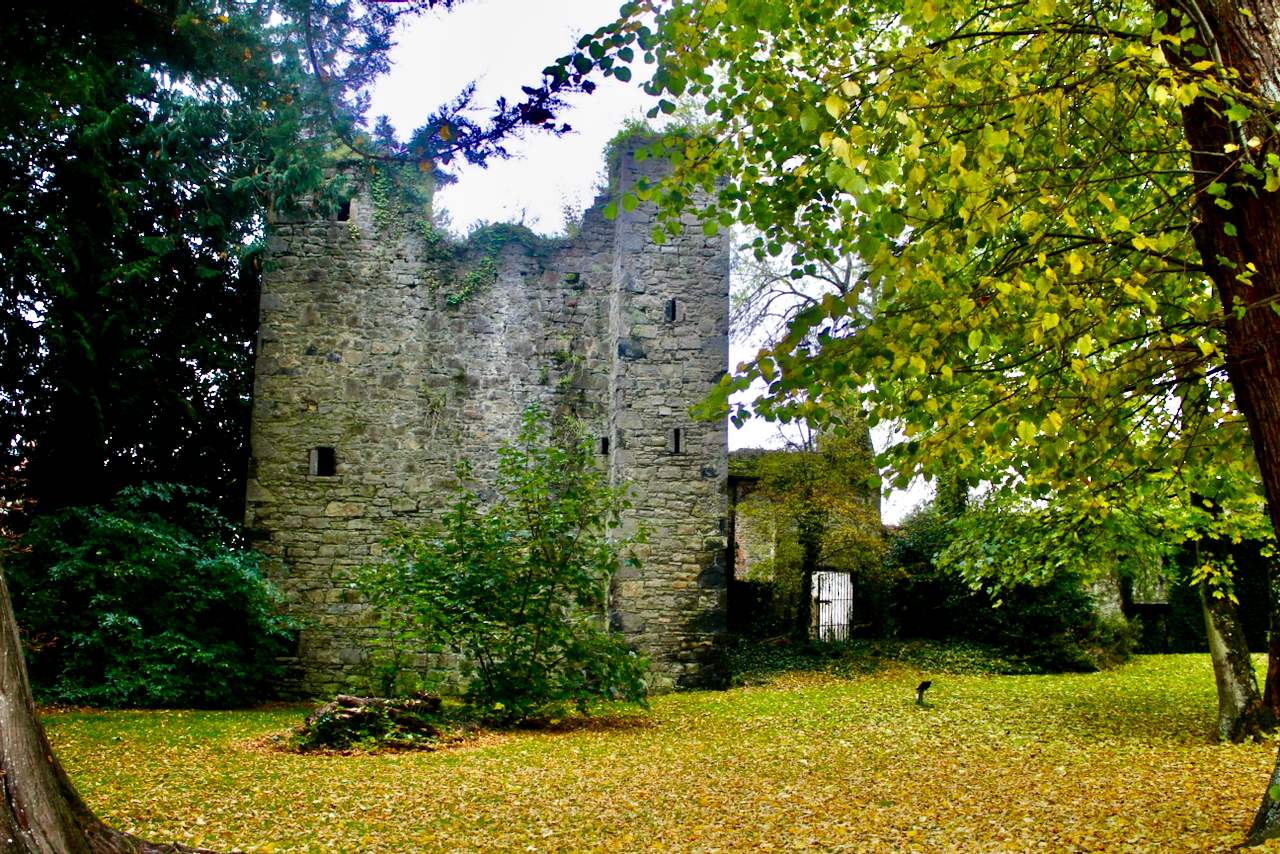

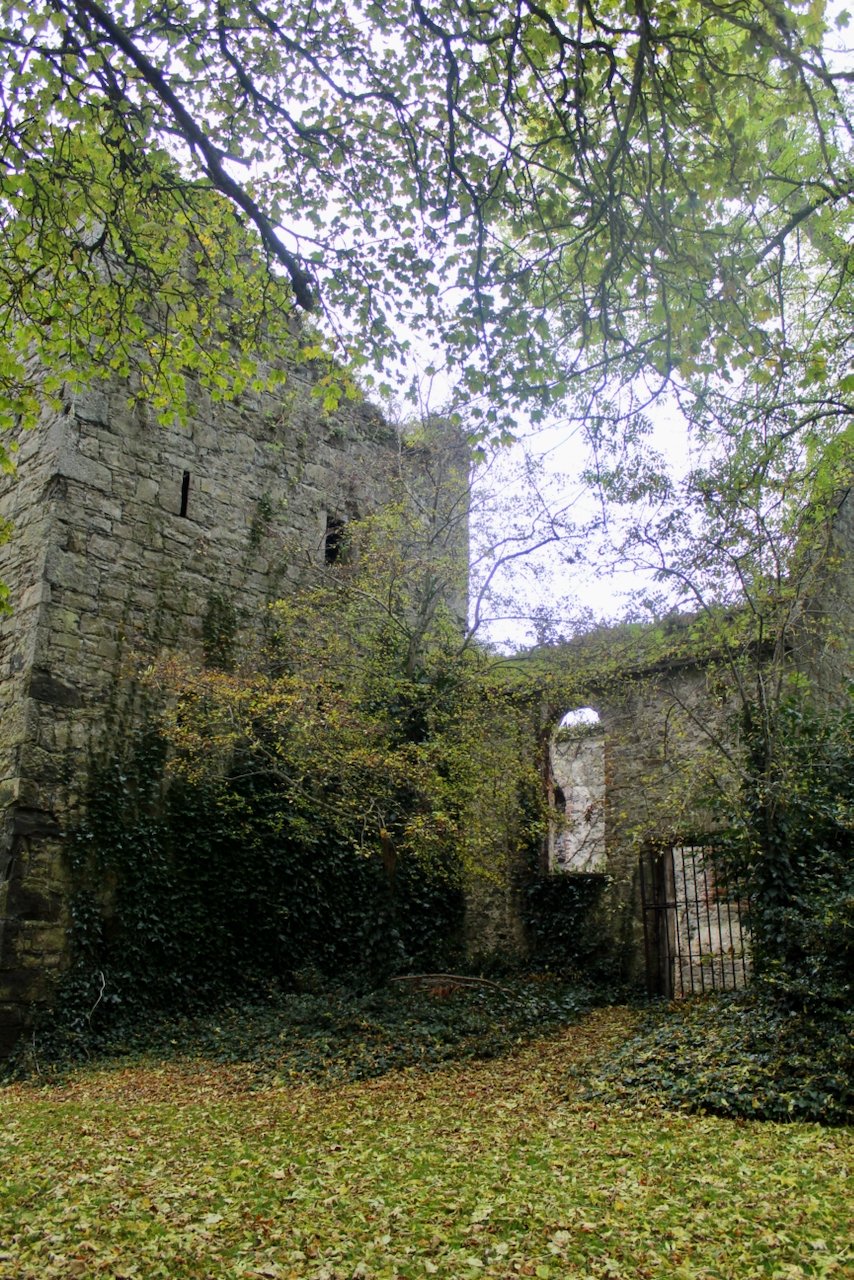


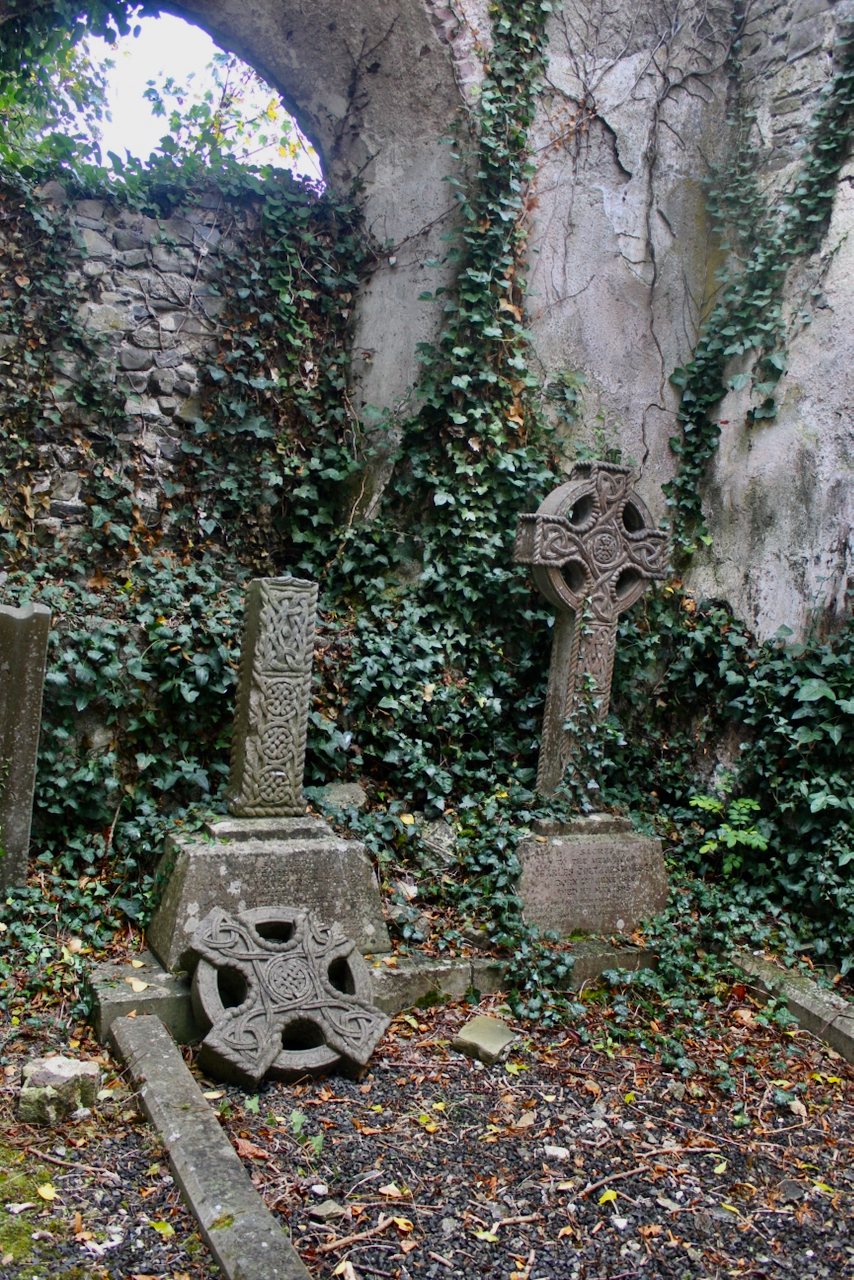
Our guide told us that William Sarsfield acquired the site in 1566. A later William Sarsfield (d. 1675) who lived at the Lucan House property married a woman said to be an illegitimate daughter of King Charles II, Mary Crofts (c. 1651-1693) (also called Mary Walters). Mary Crofts’ mother Lucy née Walter (d. 1658) was also mother of James Scott (1649-1685) Duke of Monmouth, who was recognised by Charles II as his offspring. Both Mary and James took the name Crofts as she and her brother were placed with with William Crofts, 1st Baron Crofts, a close friend of the King, to be raised. James changed his name to Scott, taking his wife’s name when he married. Lucy Walters was also a lover of Theobald Taaffe, 1st Earl of Carlingford (c. 1603 – 1677), who may have been Mary Crofts’s father.
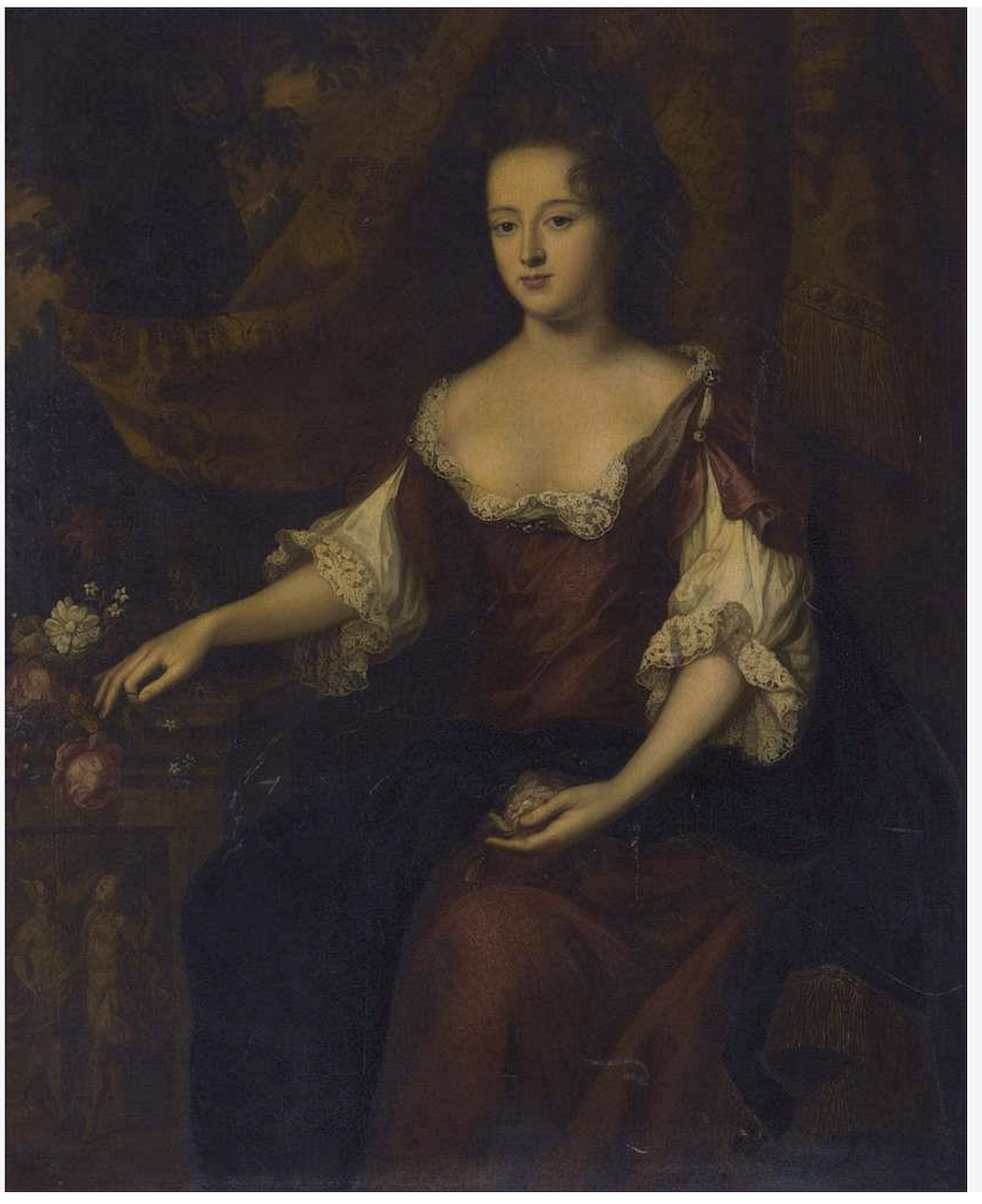
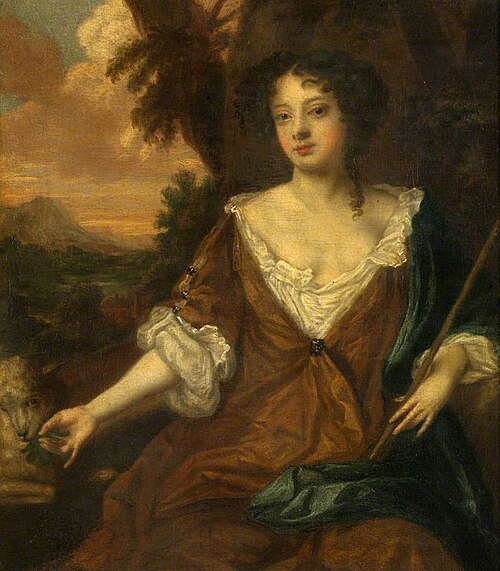
William Sarsfield (d. 1675) and Mary Crofts had a daughter, Charlotte (d. 1699), who married Agmondisham Vesey (d. 1738). It was his son, Agmondisham Vesey (1708–85), who built the current Lucan House, with the help of William Chambers.
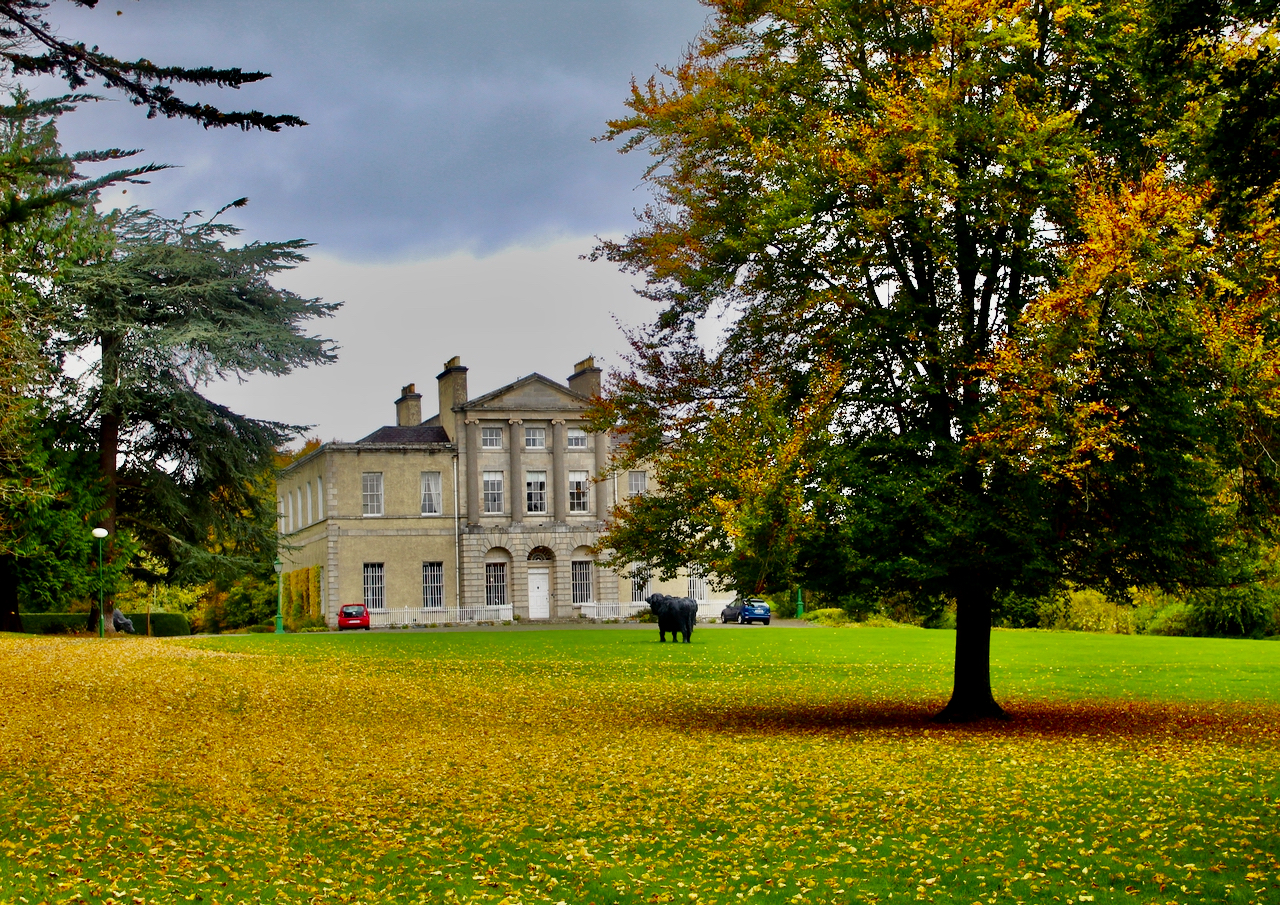

William’s brother was Patrick Sarsfield (d. 1693) 1st Earl of Lucan. They grew up at another property, Tully in County Kildare, but they moved to Lucan when their father inherited the property in the early 1650s. Their mother Anne was the daughter of Rory O’More, a leader of the 1641 rebellion.
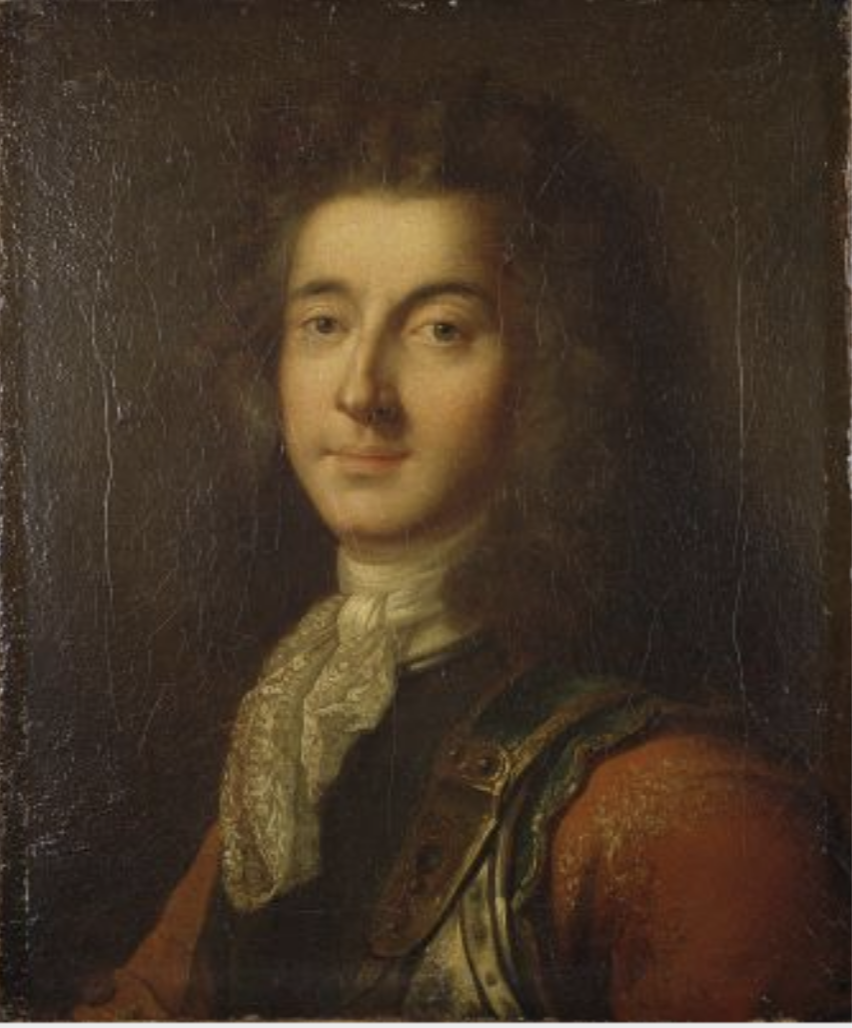
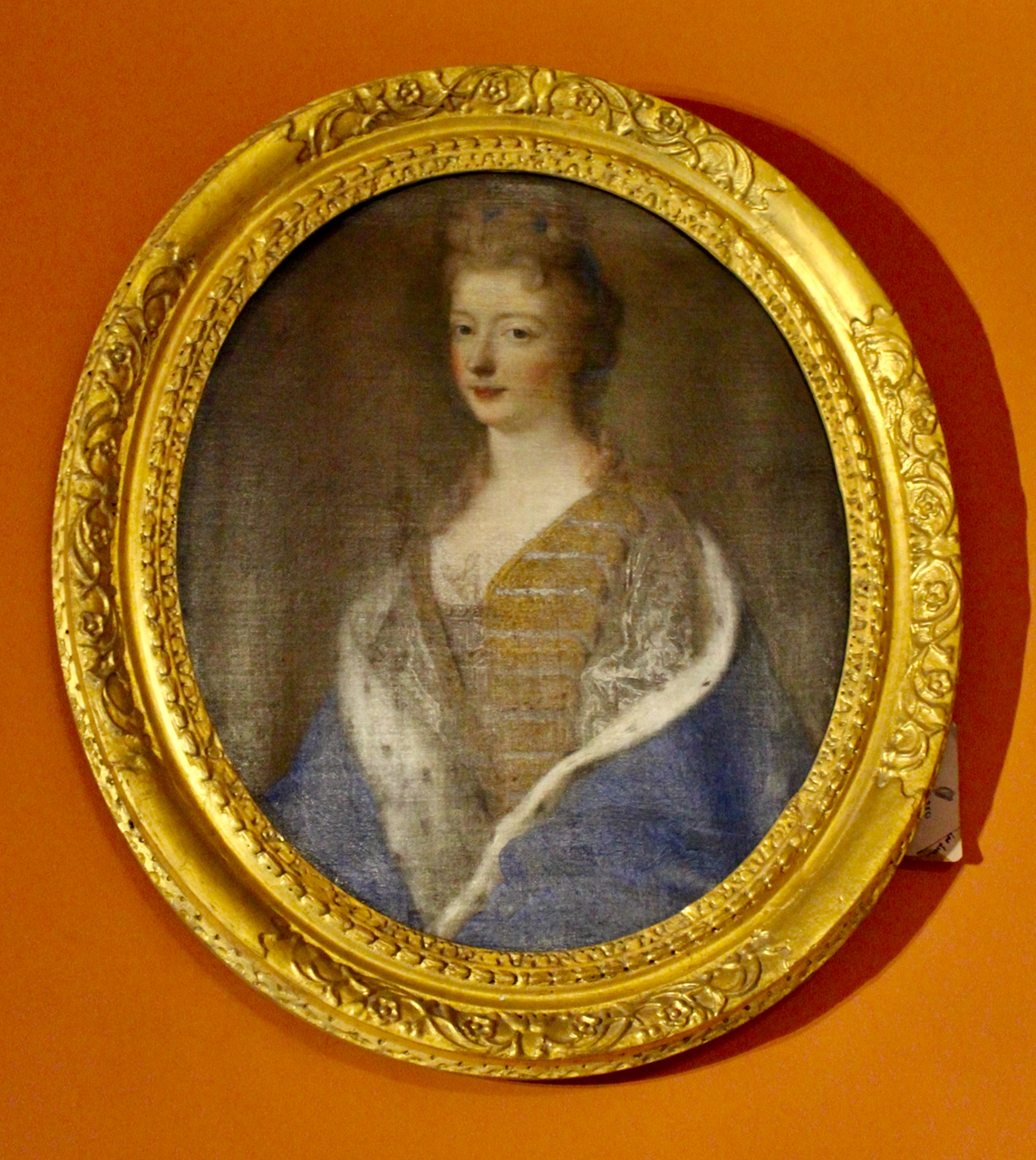
Both Sarsfield estates were confiscated by the Cromwellian regime and the family was transplanted to Connacht in 1657. Their father was restored to the Tully lands in 1661 by order of Charles II. In 1654 Lucan house was given to Cromwellian soldier Theophilus Jones (d. 1685) who later turned against the Cromwellians and helped to restore King Charles II to the throne.
The Sarsfields were Catholic. Patrick Sarsfield joined the military – the Dictionary of Irish Biography tells us that he served in one of the English regiments in the French army. These had been formed as a result of the secret treaty of Dover and allowed Catholics to avoid the test act and serve as officers. However, Sarsfield was implicated in the Popish Plot, and was dismissed from the army.
During a brief visit to Ireland he tried unsuccessfully to regain the family estate at Lucan to which he was then the heir presumptive. [2]
His military reputation soared as a consequence of his significant role in the defeat of Monmouth’s rebellion (1685) – who was his brother-in-law! James II promoted Patrick Sarsfield to the rank of lieutenant-colonel. He fought in Ireland with the Jacobites against William III, and James created him earl of Lucan in January 1691. He was involved in negotiations for the Treaty of Limerick. He went on to fight in the French army and died of battle wounds in 1693. The Dictionary of Irish Biography continues:
“He married Lady Honora Burke, the 15-year-old youngest daughter of the 7th earl of Clanricarde, sometime during the winter of 1689–90. Their only child was born (April 1693) at the court in exile of James II in Saint-Germain-en-Laye and was named (in honour of the prince of Wales) James Francis Edward. He served in both the French and Spanish armies and died without issue in St Omer in 1719.“
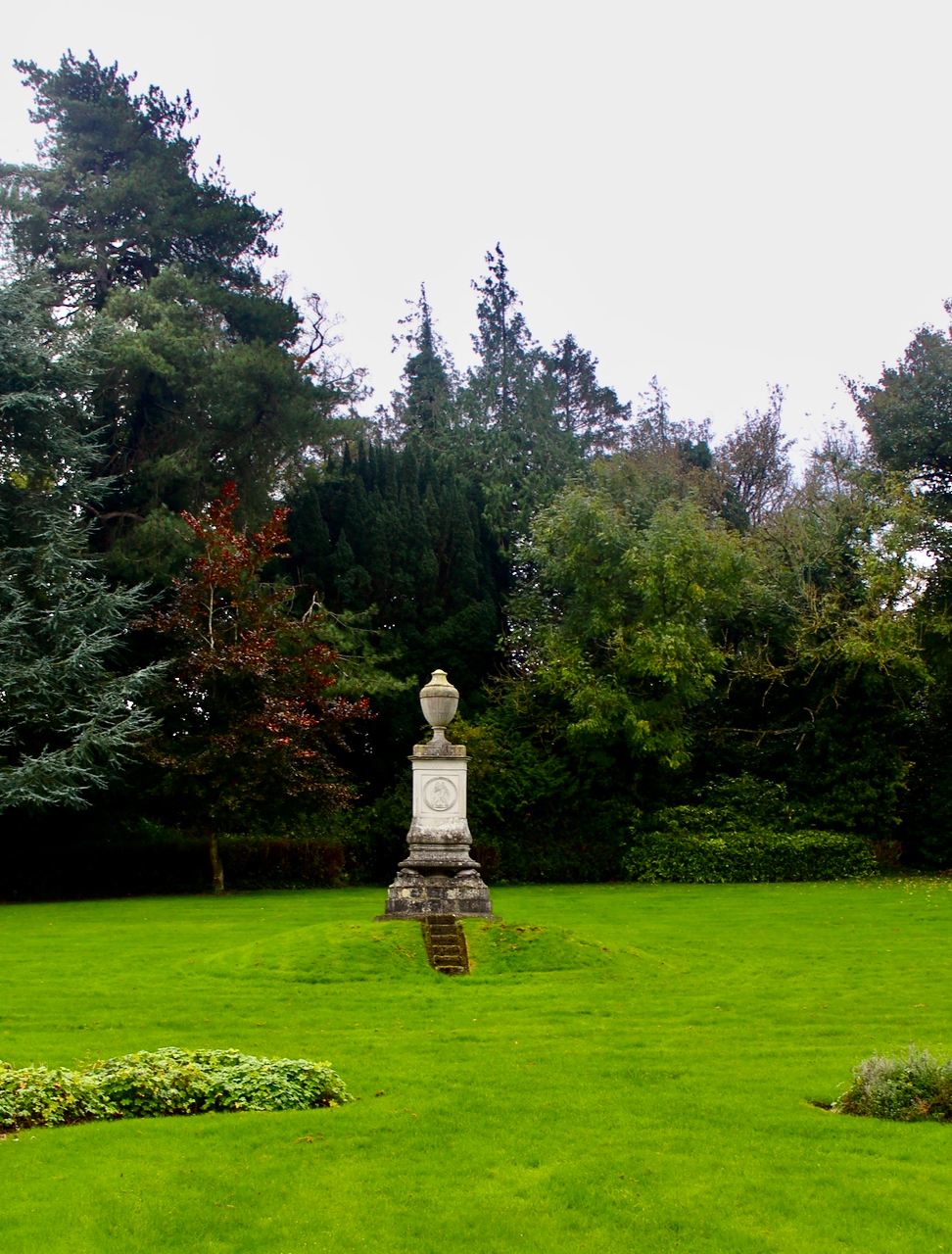
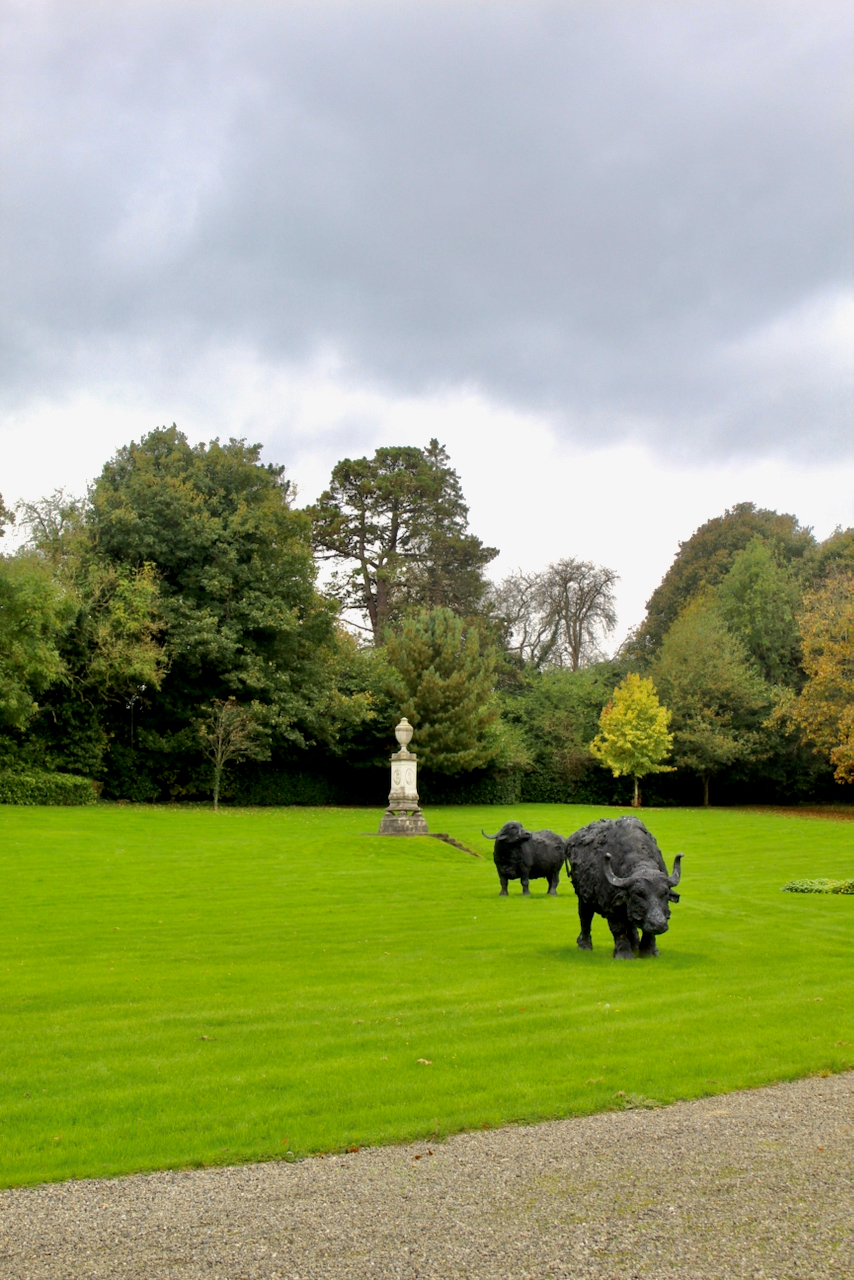
Patrick Sarsfield is memorialised by a memorial in the garden designed by James Wyatt.
Agmondisham Vesey was the son of John Vesey (1638-1716) Archbishop of Tuam, who also served as Lord Justice of Ireland and Privy Counsellor. He claimed the Lucan estate on behalf of his wife and by 1674 and was able to purchase the estate at a low price. [3] Theophilus Jones was compensated by lands elsewhere.
Charlotte Sarsfield died only three years after her marriage to Agmondisham Vesey. They had two daughters: Henrietta, who married Caesar Colclough (1696-1766) of Tintern Abbey in County Wexford; and Anne Vesey, who married John Bingham (d. 1749), 5th Baronet of Castlebar, County Mayo. Their son Charles Bingham (1735-1799) 7th Baronet was created 1st Earl of Lucan in 1795, but these Earls of Lucan did not inherit Lucan House.
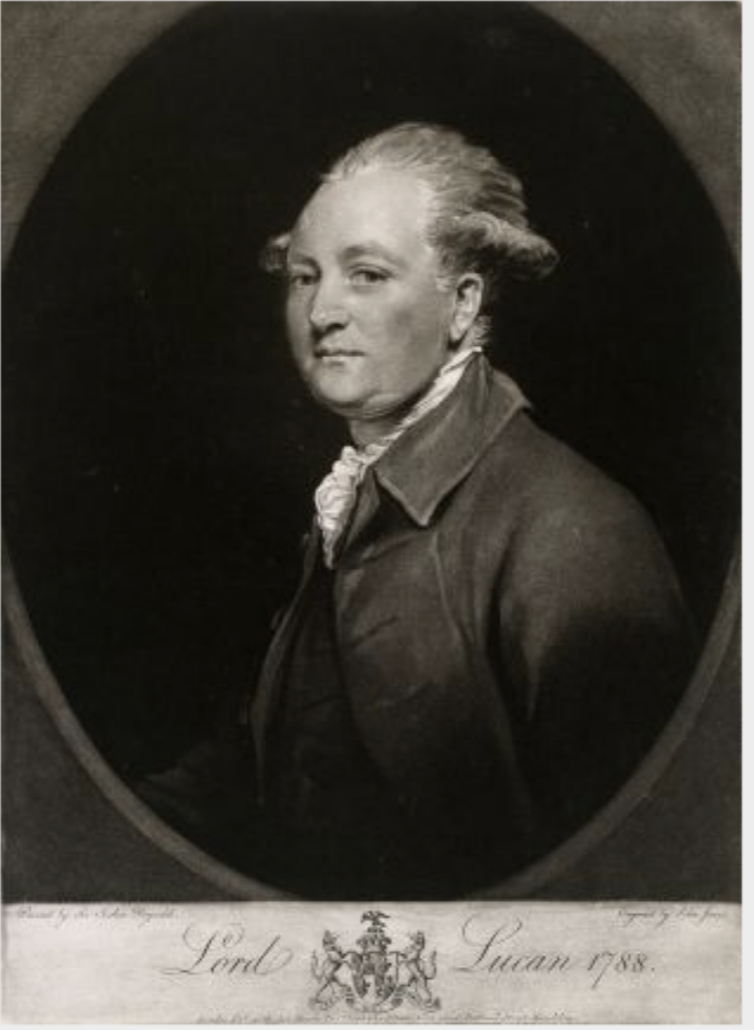
Instead, Lucan House passed down to a son of Agmondisham Vesey’s second wife, Jane Pottinger. She was the widow of Thomas Butler (d. 1703) 3rd Baronet of Cloughgrenan, County Carlow, with whom she had no children. She and Agmondisham went on to have several children, the eldest of whom was Agmondisham Vesey (1708–85).
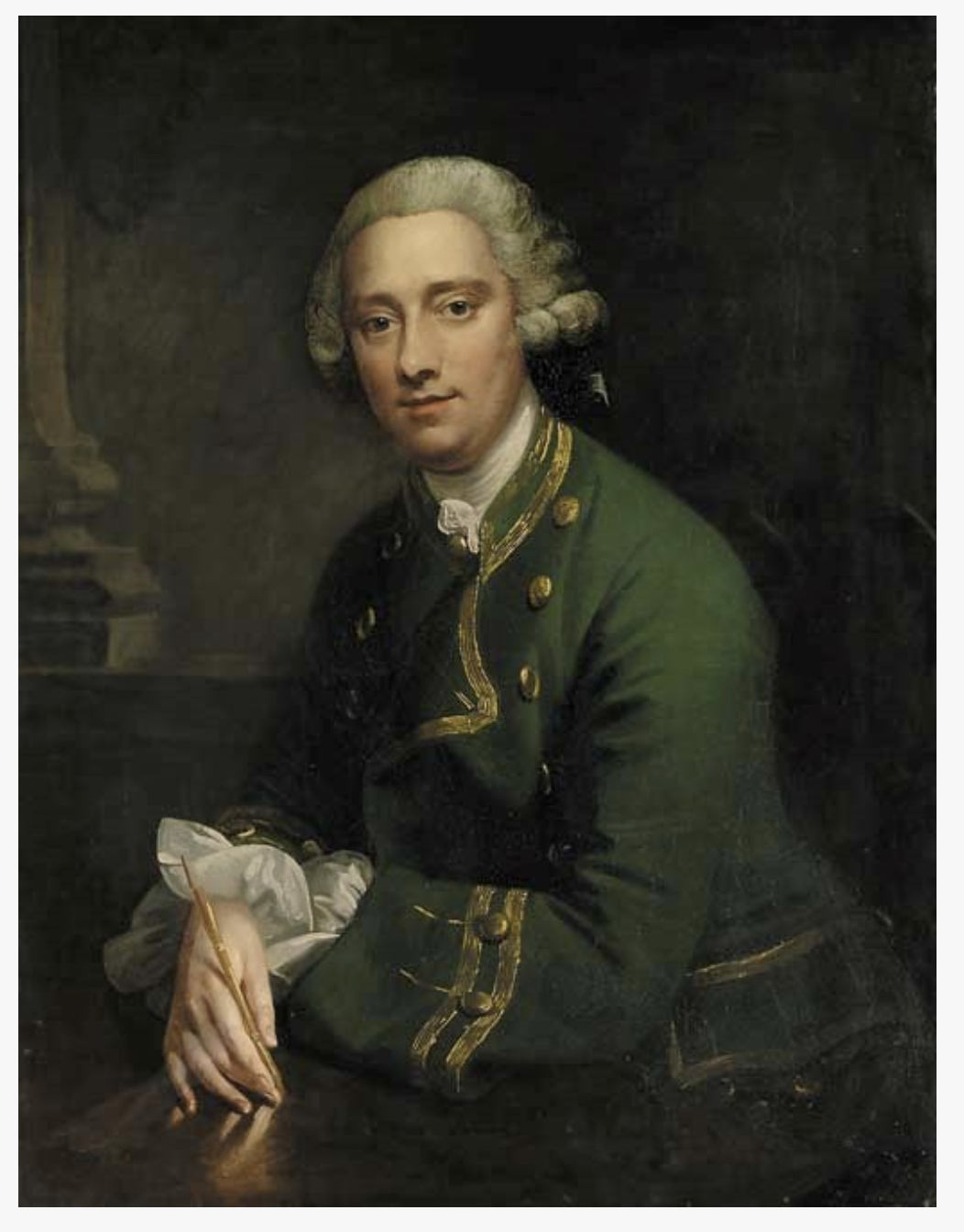
Agmondisham Vesey (1708–85) was a politician: a member of the house of commons for Harristown, Co. Kildare, 1740–60, and Kinsale, 1765–83. He was accountant and controller general from 1734 to his death, and a member of the privy council from 1776 to his death. He was also an amateur architect, and he designed his residence, Lucan House, built in 1772, with the help of William Chambers, who also designed the Casino in Marino in Dublin, built over the years 1758-76 (see my entry https://irishhistorichouses.com/2023/11/09/office-of-public-works-dublin-the-casino-at-marino/ ).
The fine stable block was designed earlier, in 1750s. Chambers may have been involved in the design of the stable block.

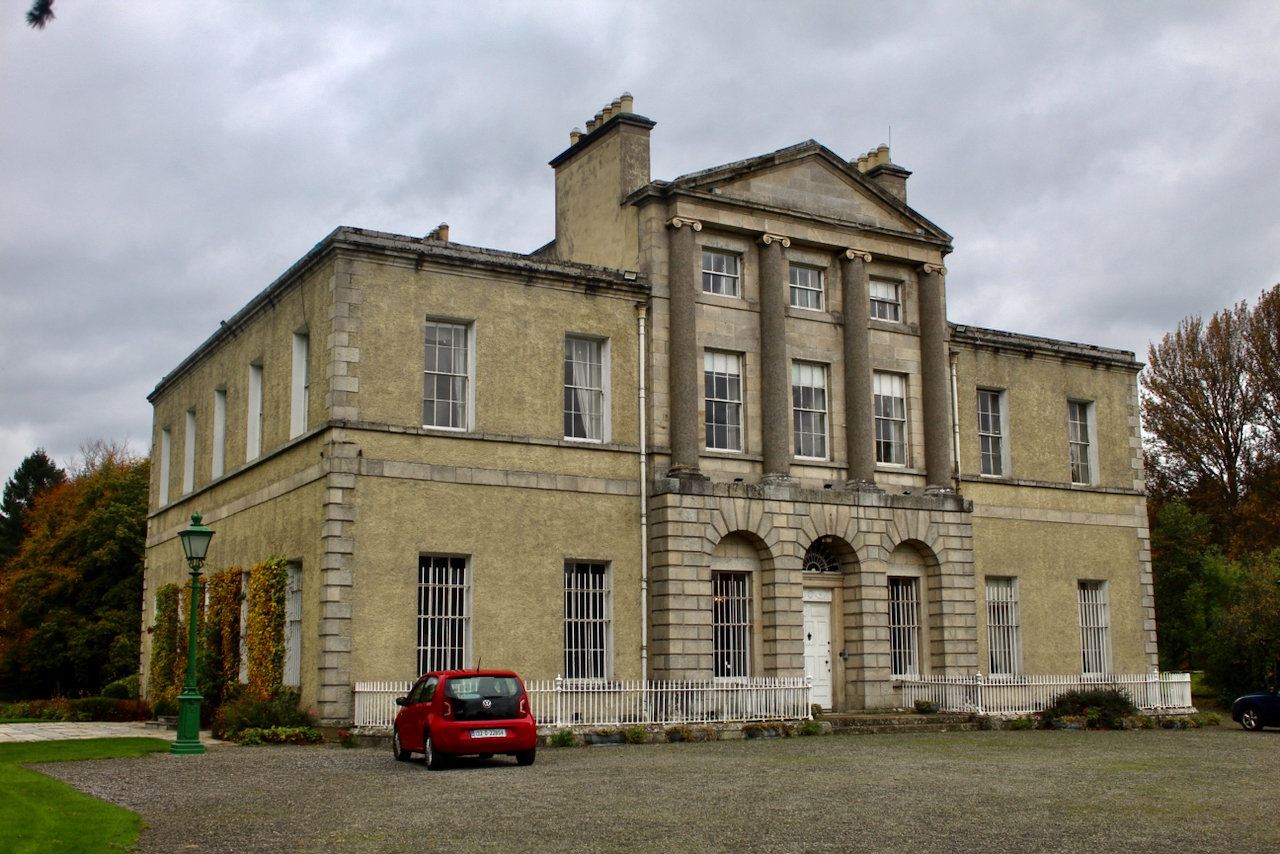
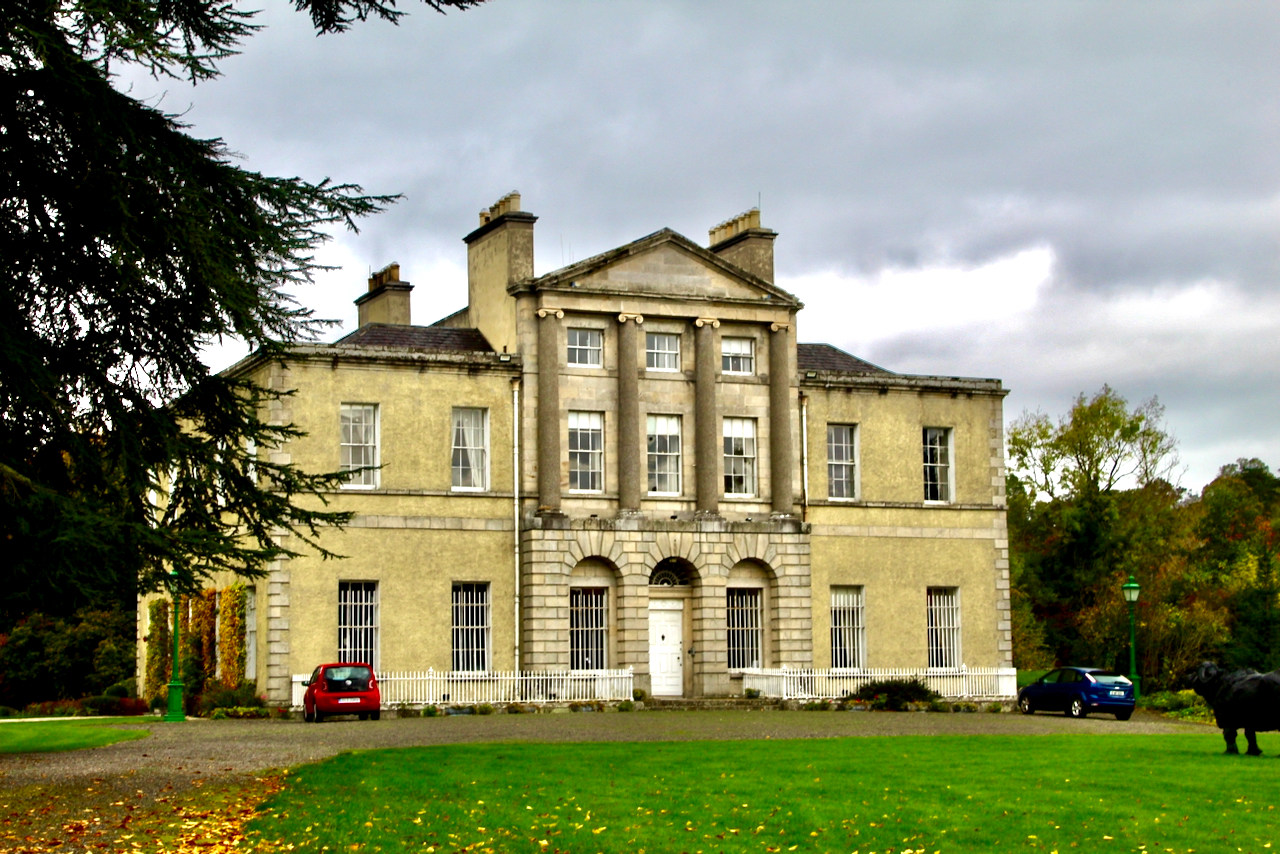
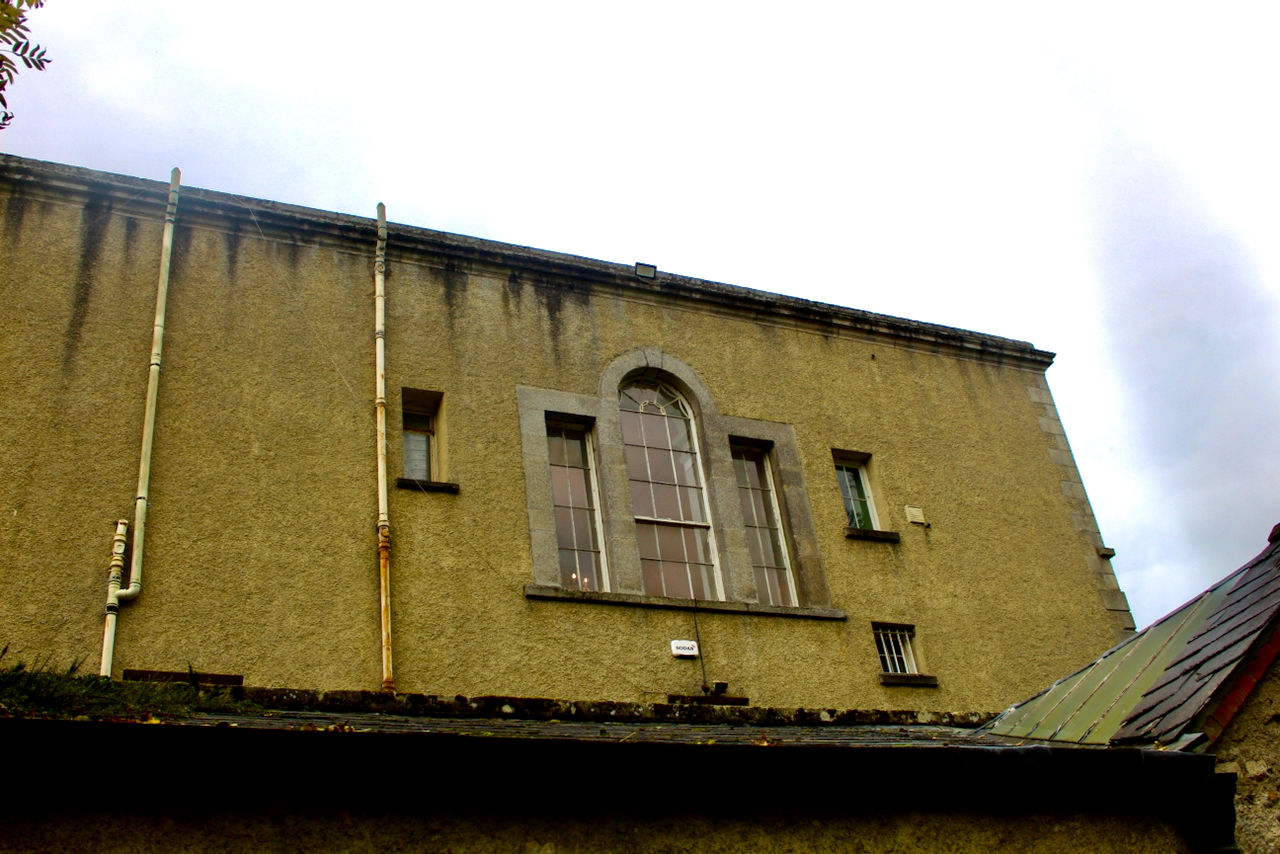
Bence-Jones describes the house as two storey over basement with a central feature of a pediment raised on a three bay attic, carried on four engaged Ionic columns. The ground floor is rusticated on the projecting three bays. The outer bays on the ground floor were also rusticated but the rustication was removed.

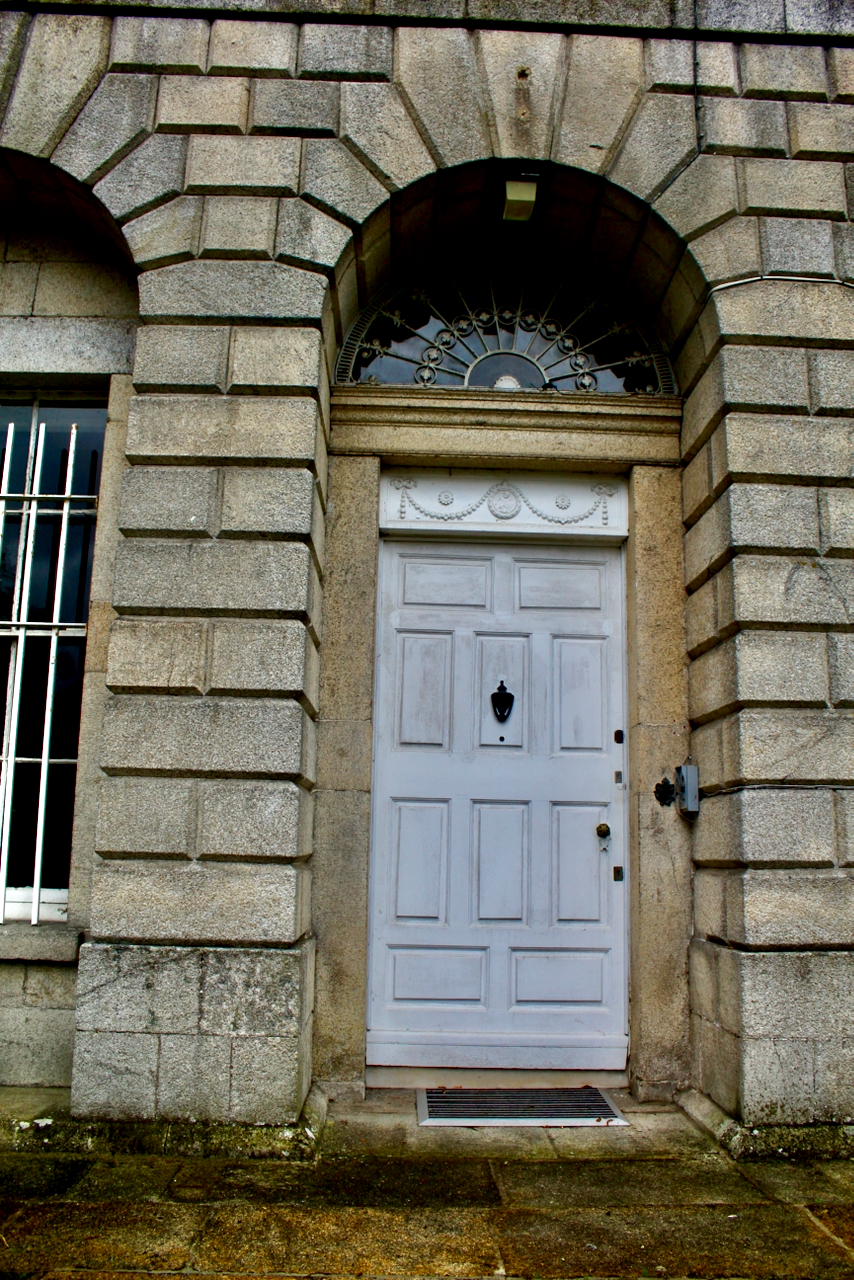
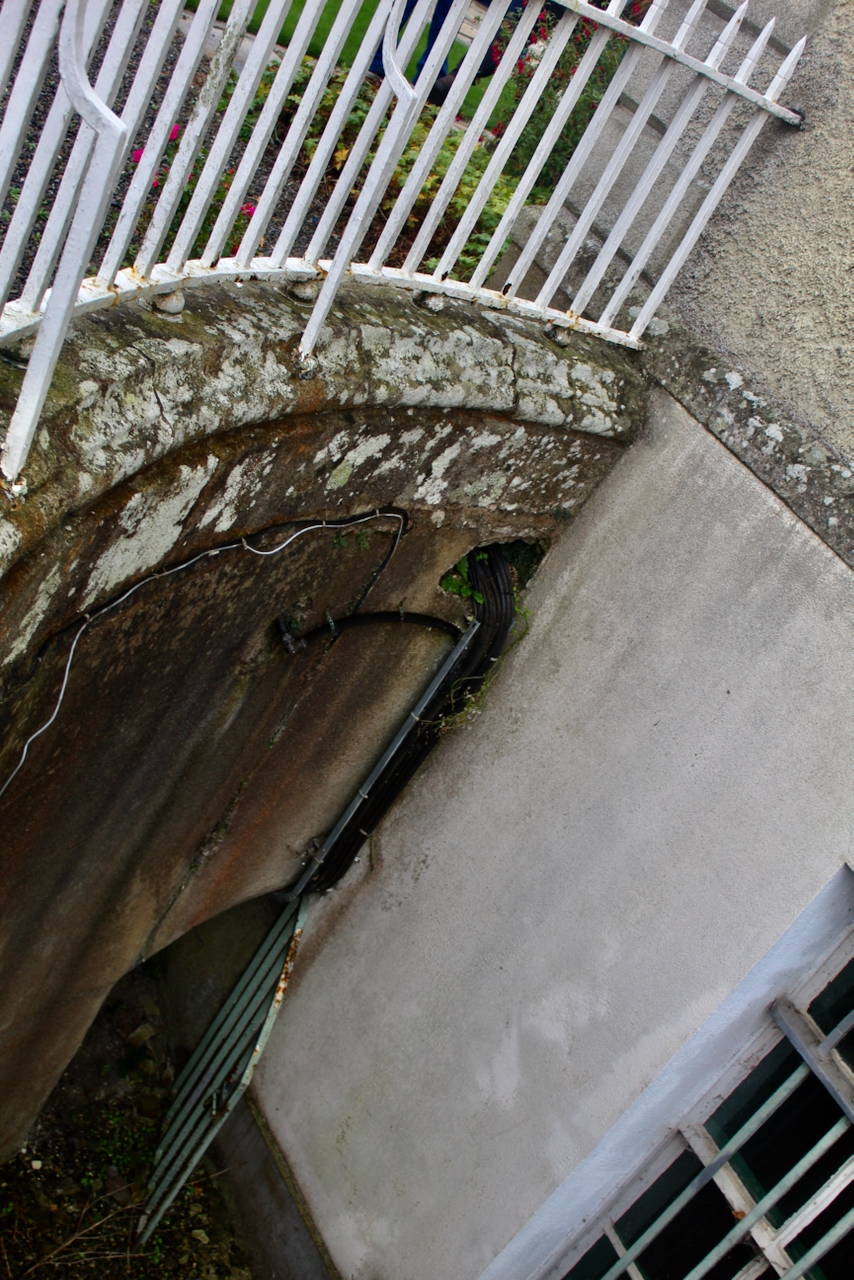
The house has five bay side elevation and a garden front with central curved bow containing an oval room which may have influenced James Hoban, designer of the White House in Washington DC (also said to be inspired by Leinster House).

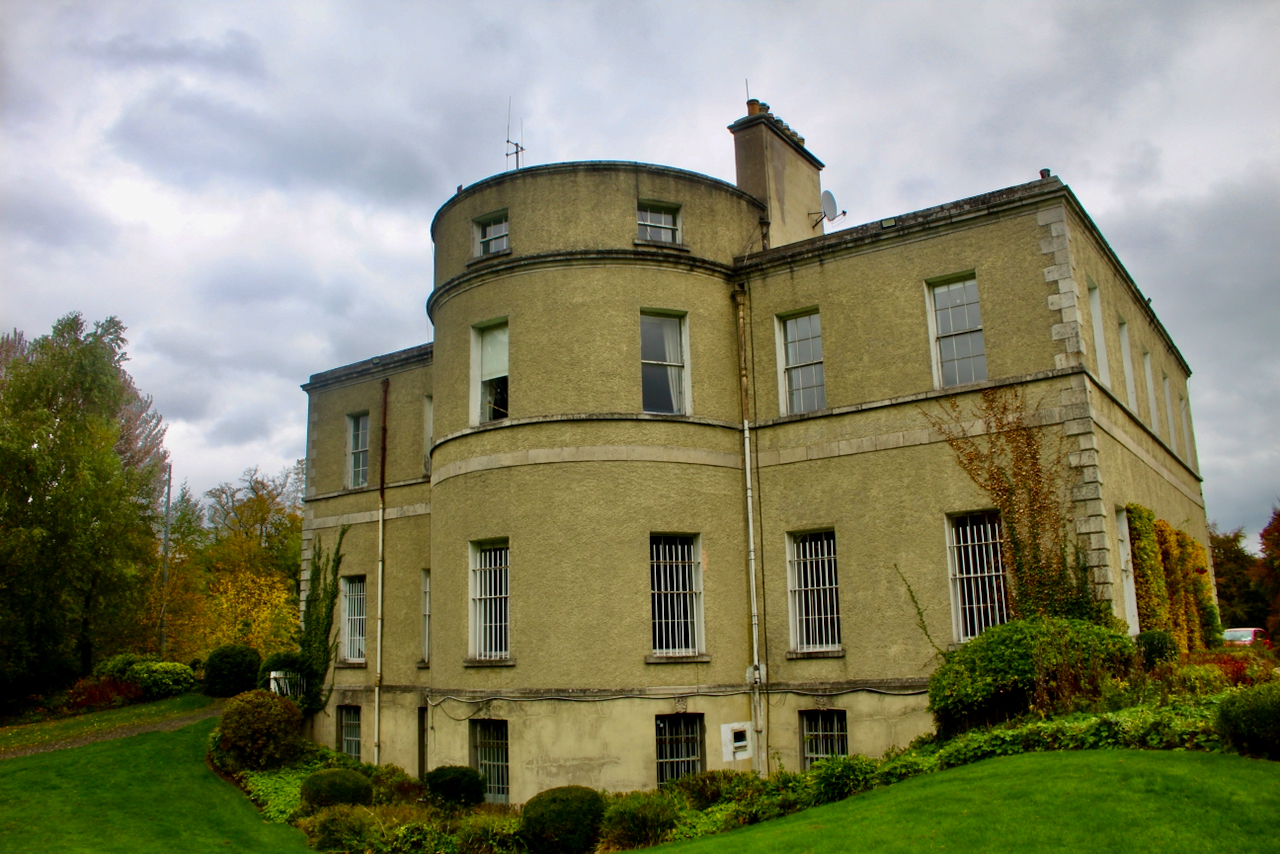
Mark Bence-Jones tells us that Agmondisham Vesey consulted with James Wyatt (1746-1813) of London and Michael Stapleton for the interiors of the house. Robert O’Byrne adds he was aided by Wyatt’s Irish representative Thomas Penrose. James Wyatt had a flourishing country house practice in Ireland from the early 1770s until his appointment as Surveyor General of the King’s Works in England in 1796. [4]
The front hall has a screen of columns marbled to resemble yellow Siena, with squared pilasters to match on the back wall of the hall.


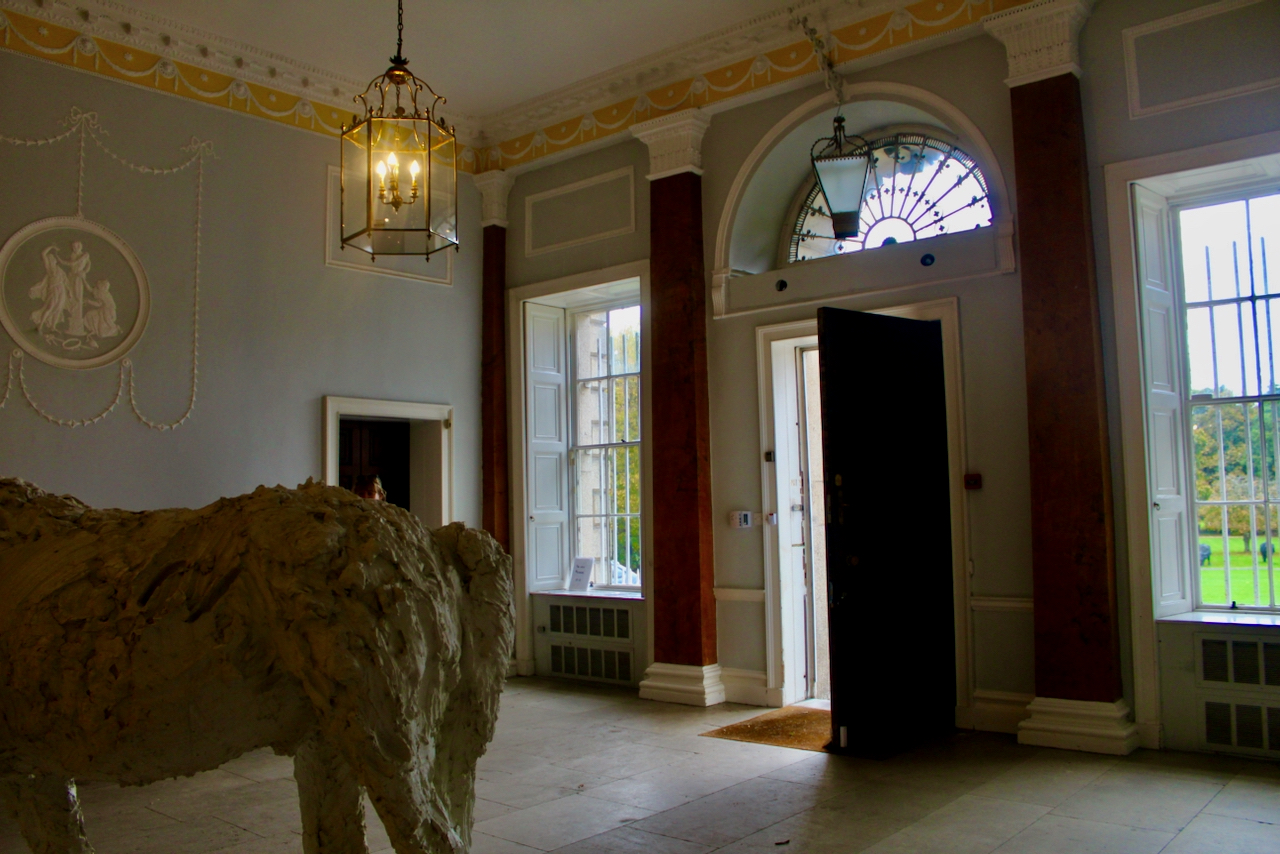
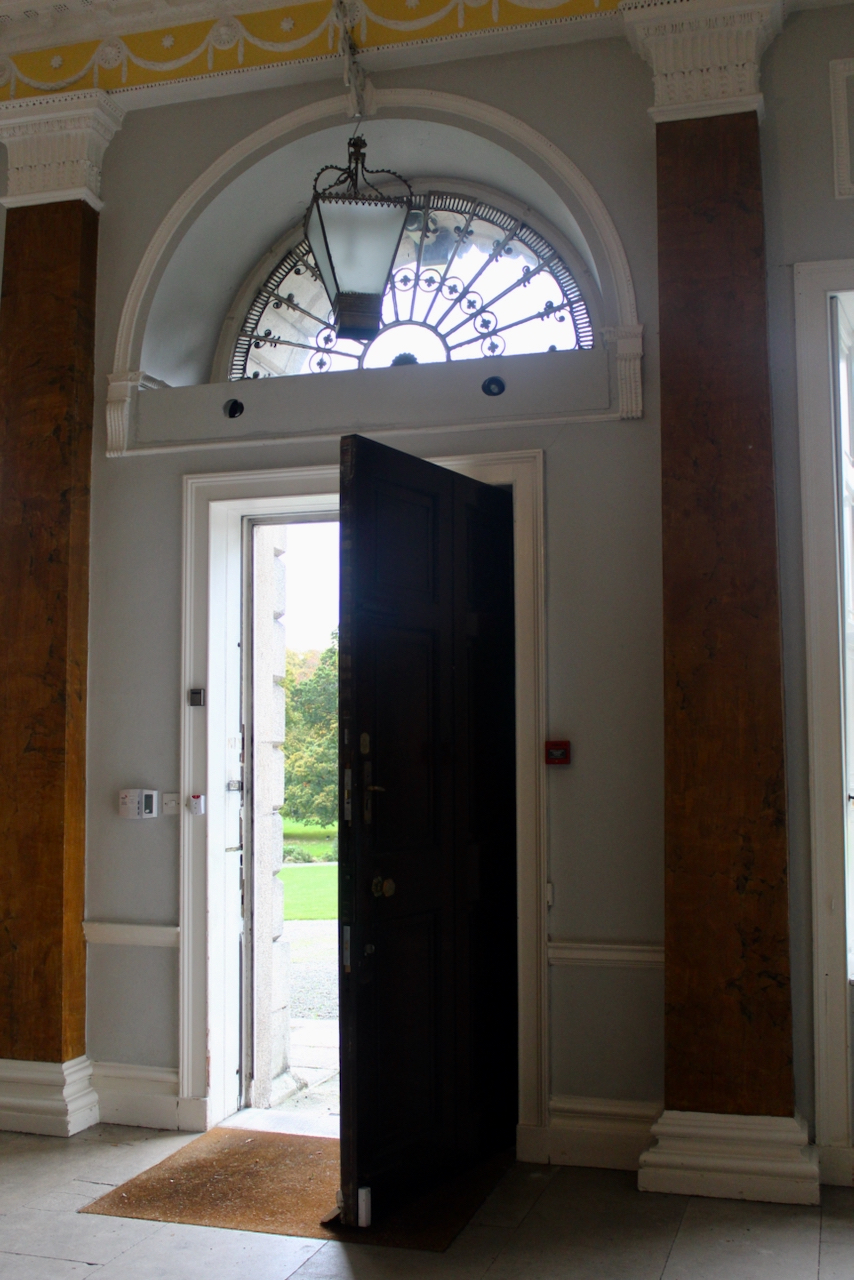
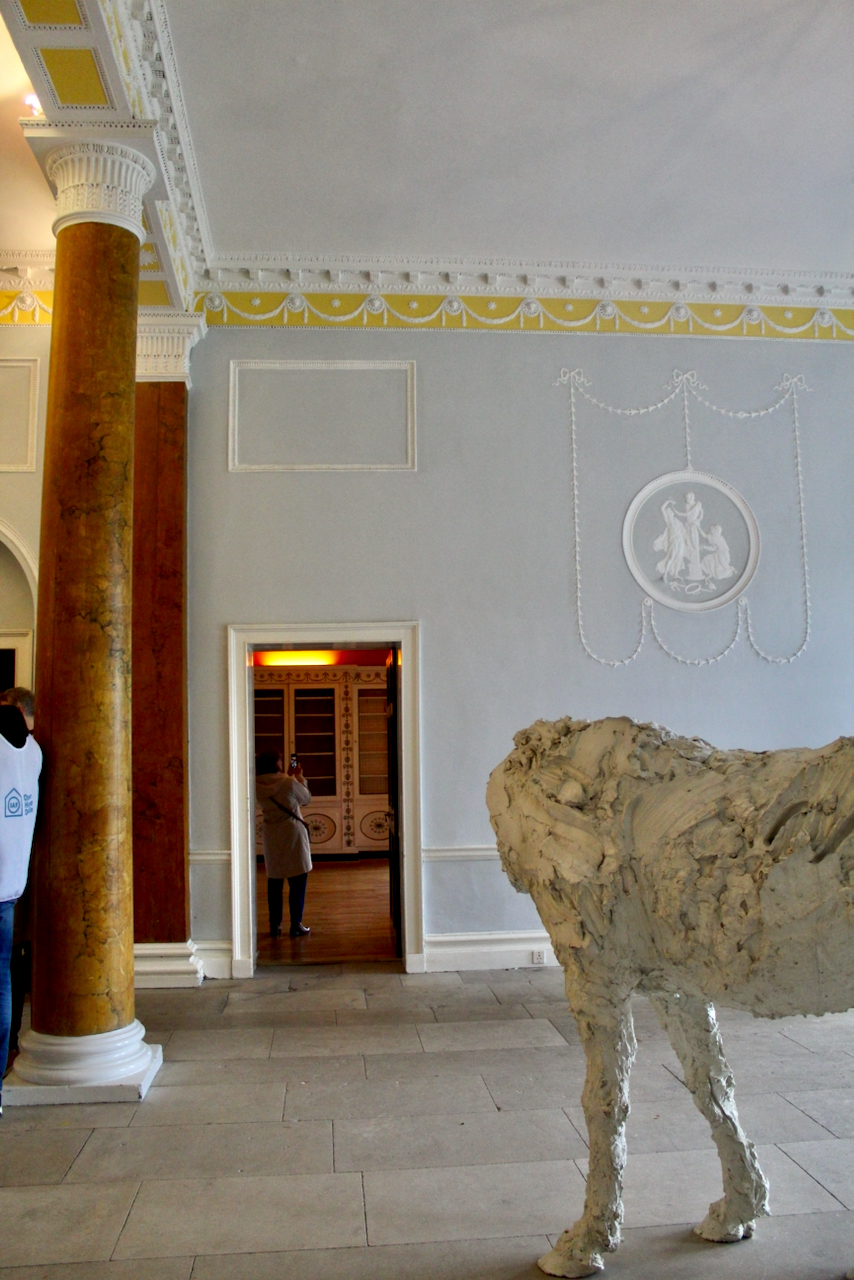
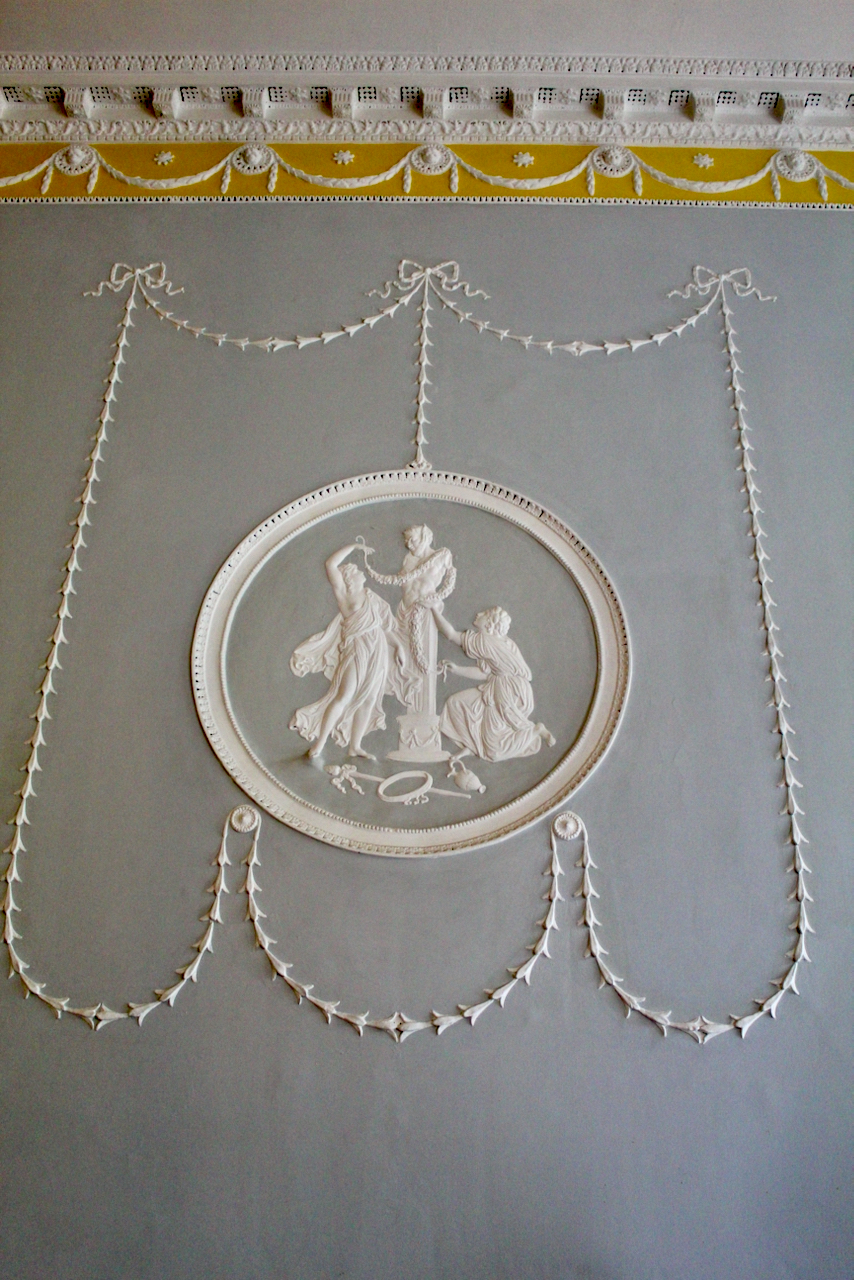

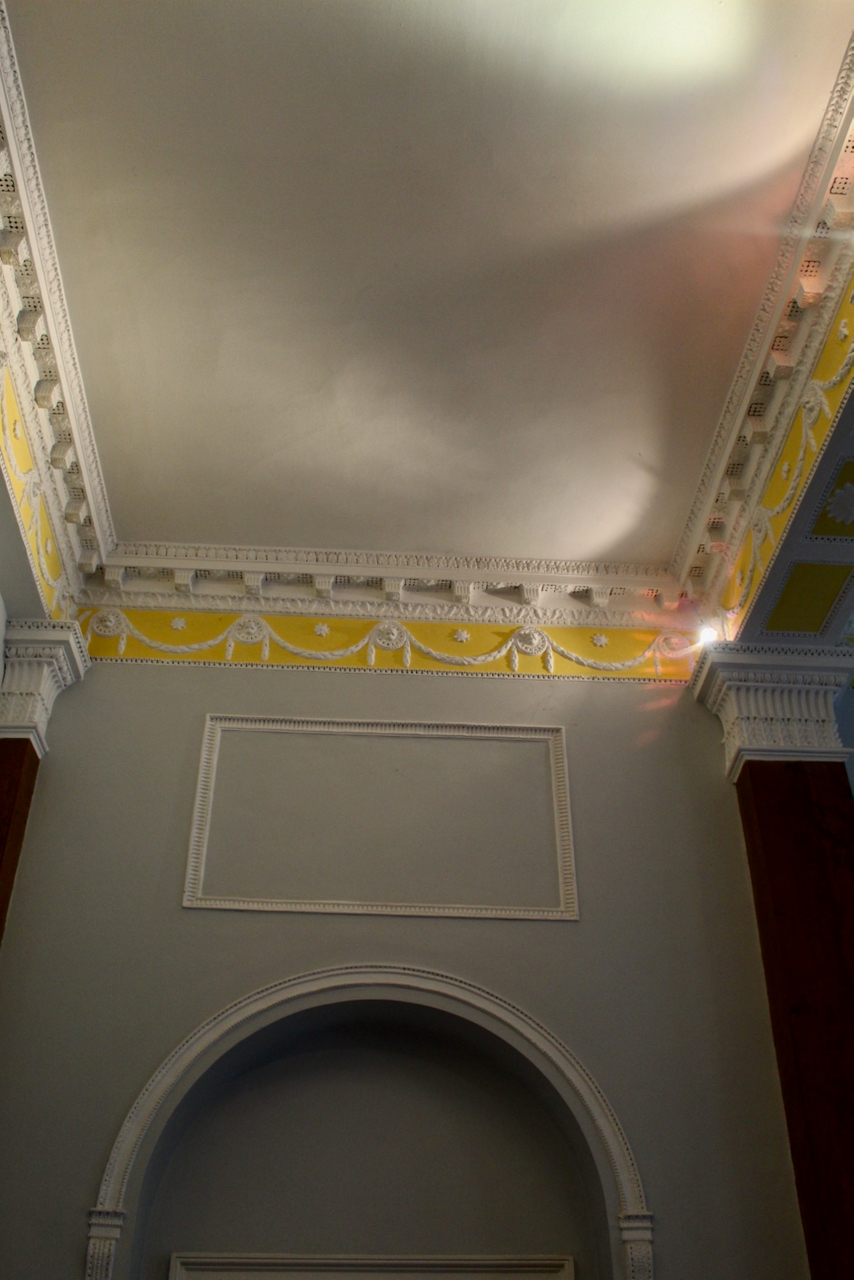
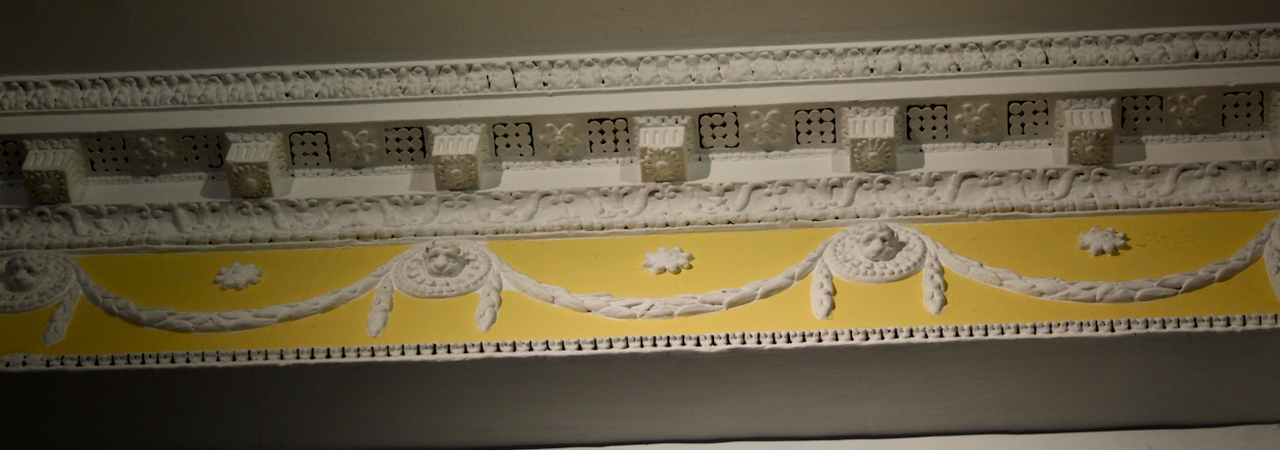
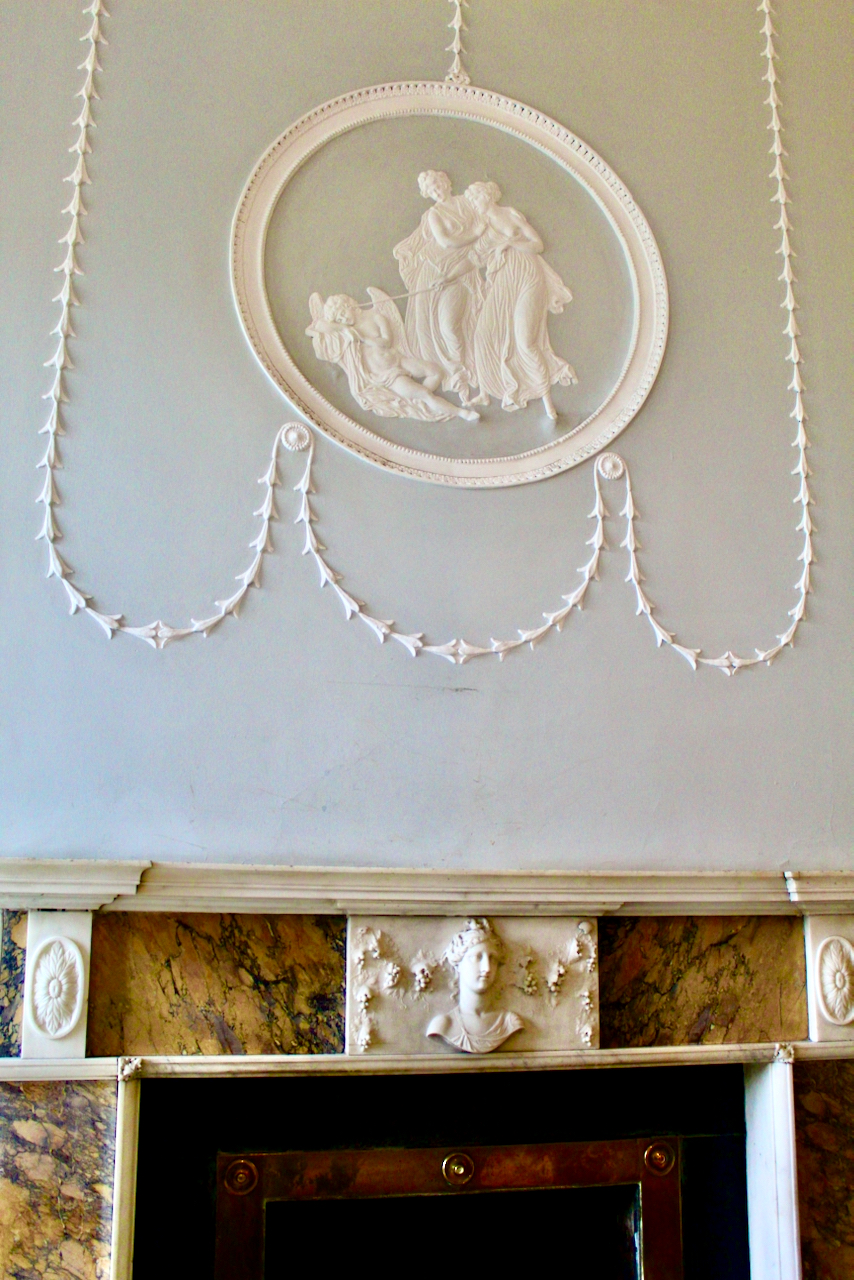
All the rooms on the ground floor at Lucan House are as they were when the house was completed in 1780, with the exception of a new floor in the library and bathrooms, which the Italian embassy added in the 1950s. [5] There is a large kitchen in the basement which we did not see.
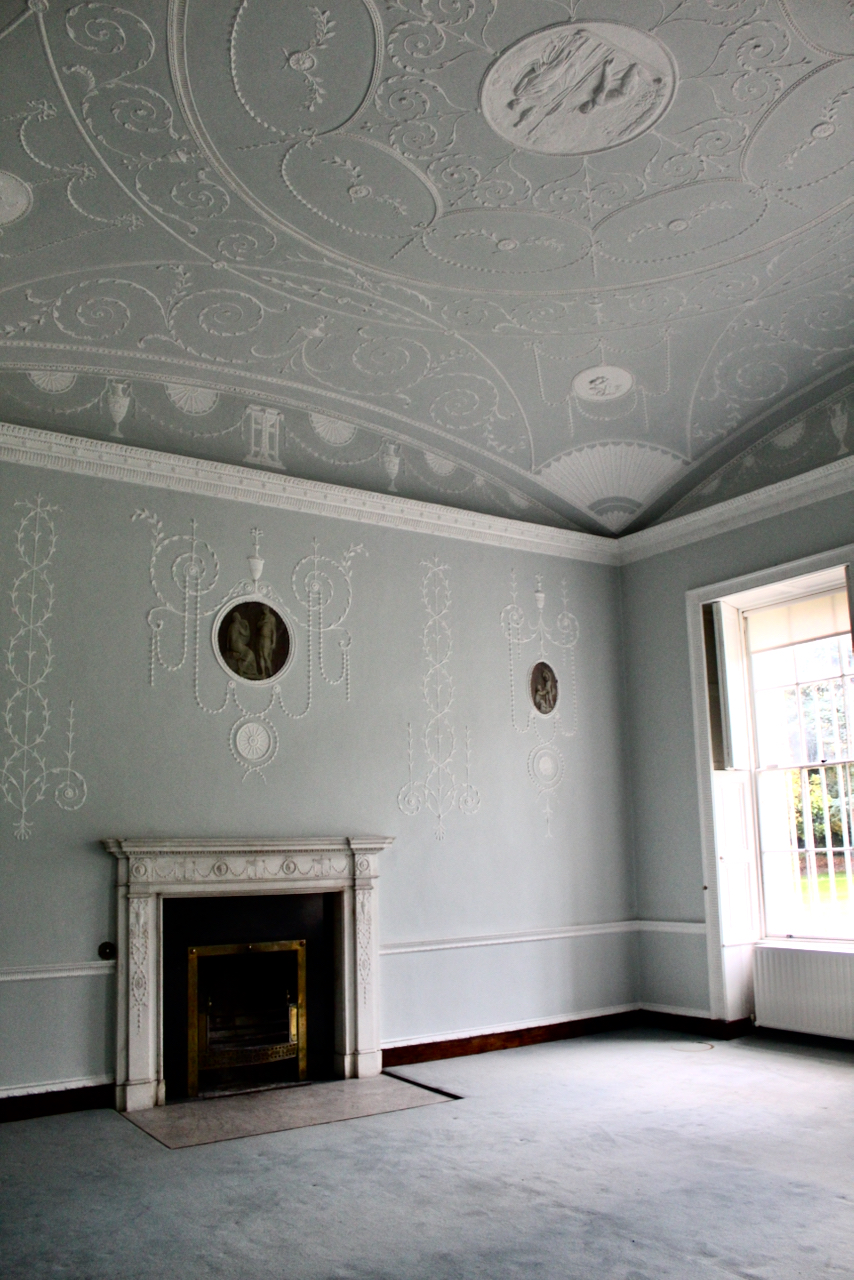
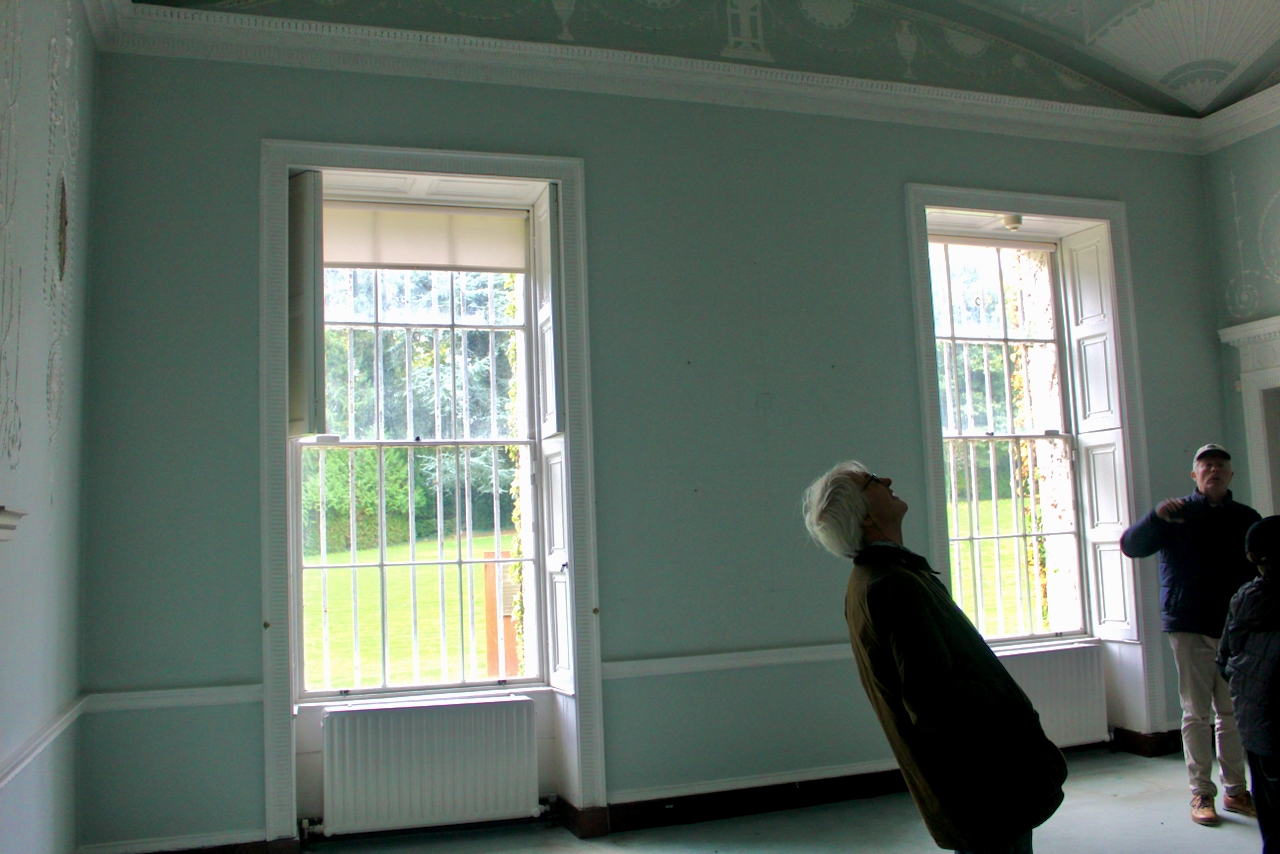
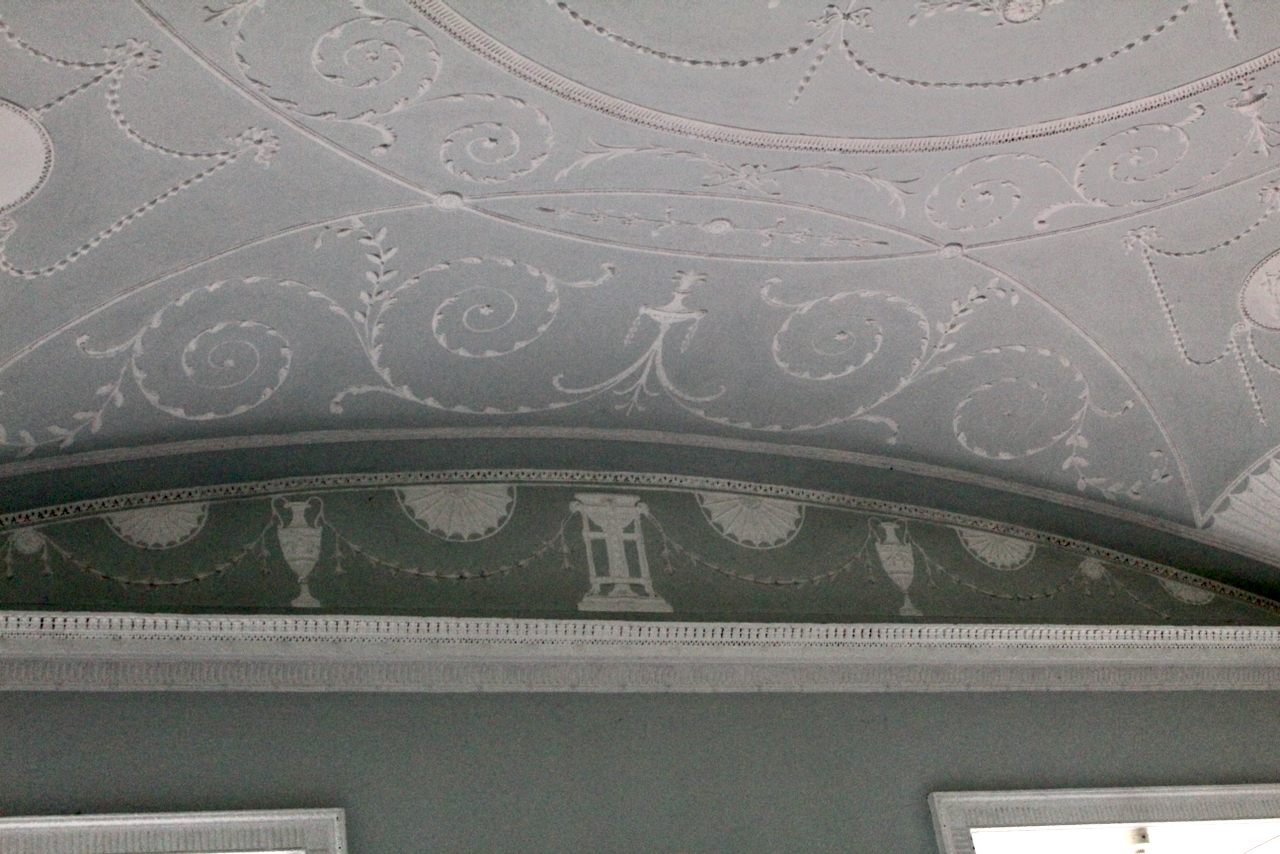
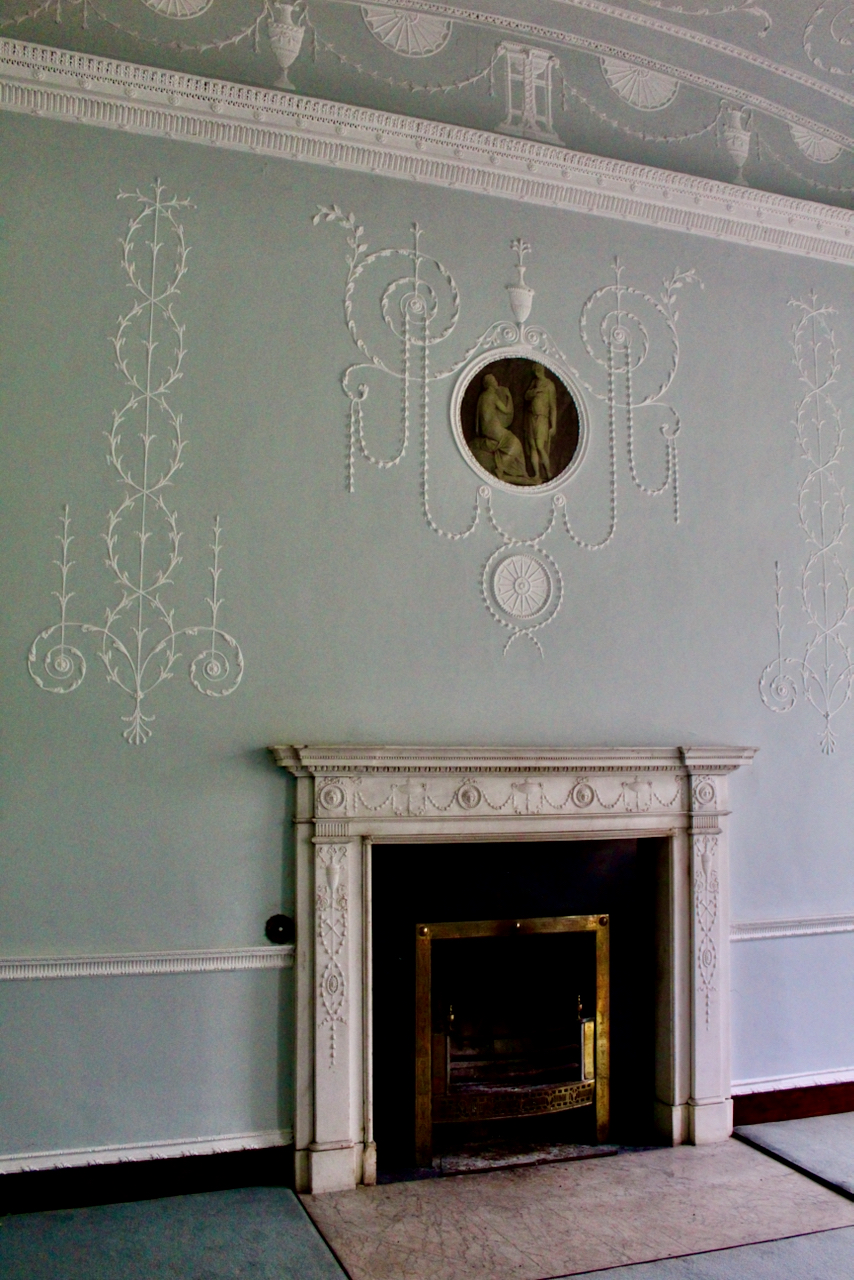
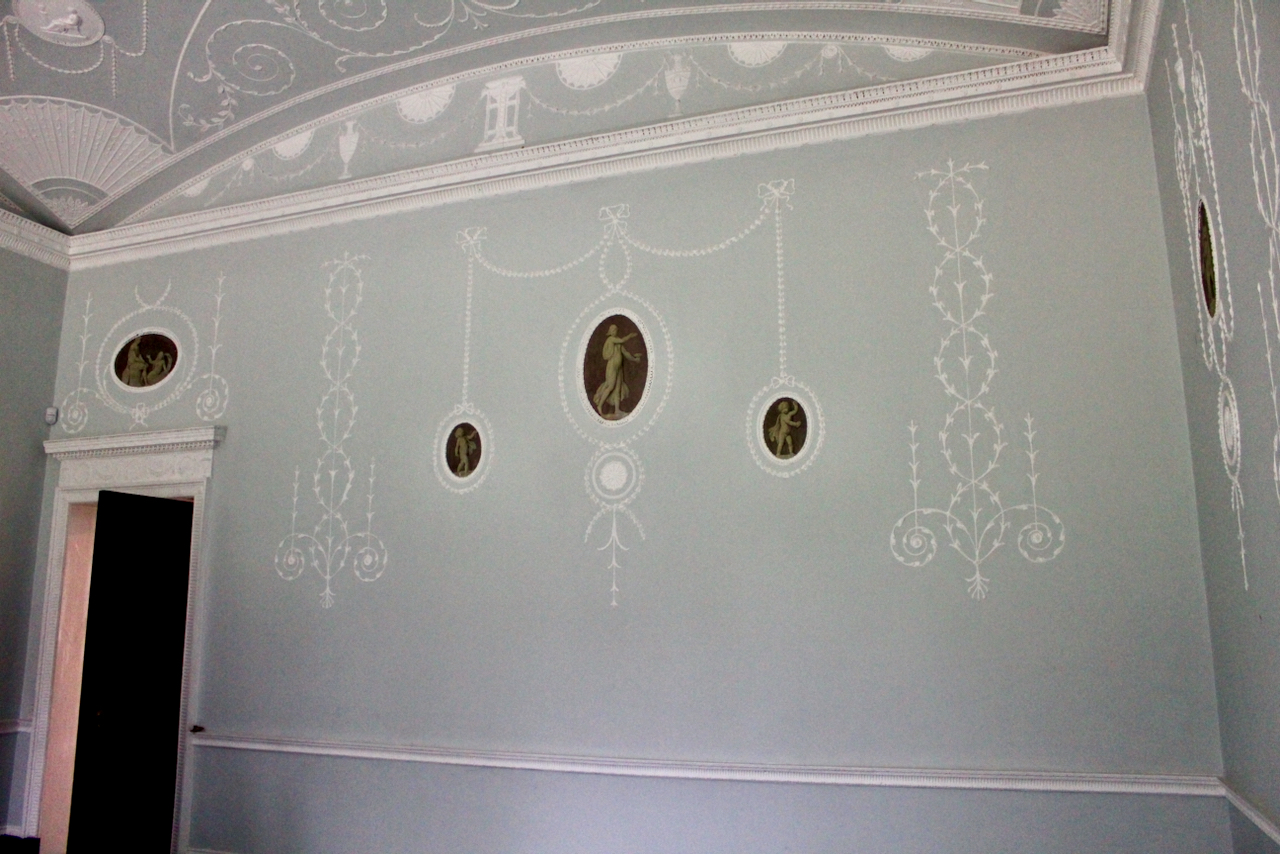
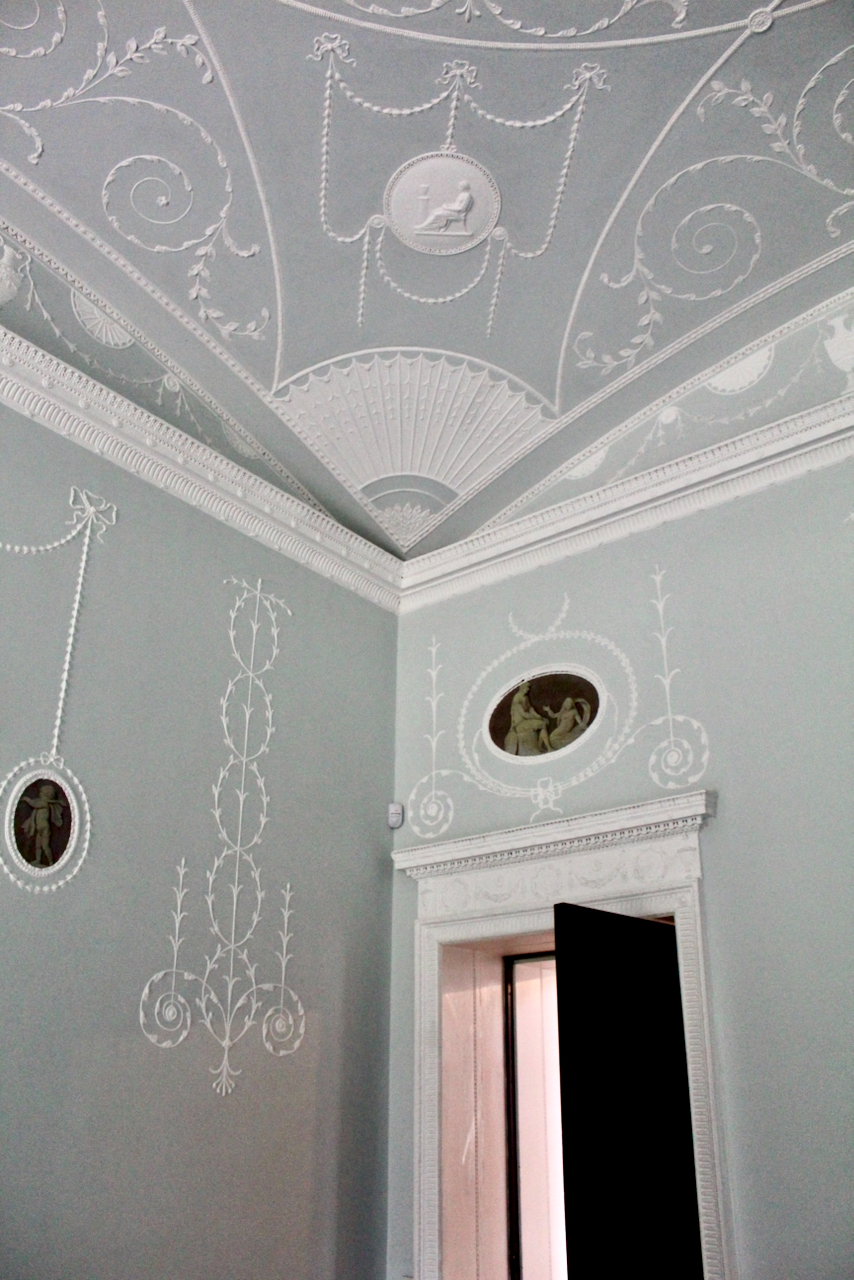
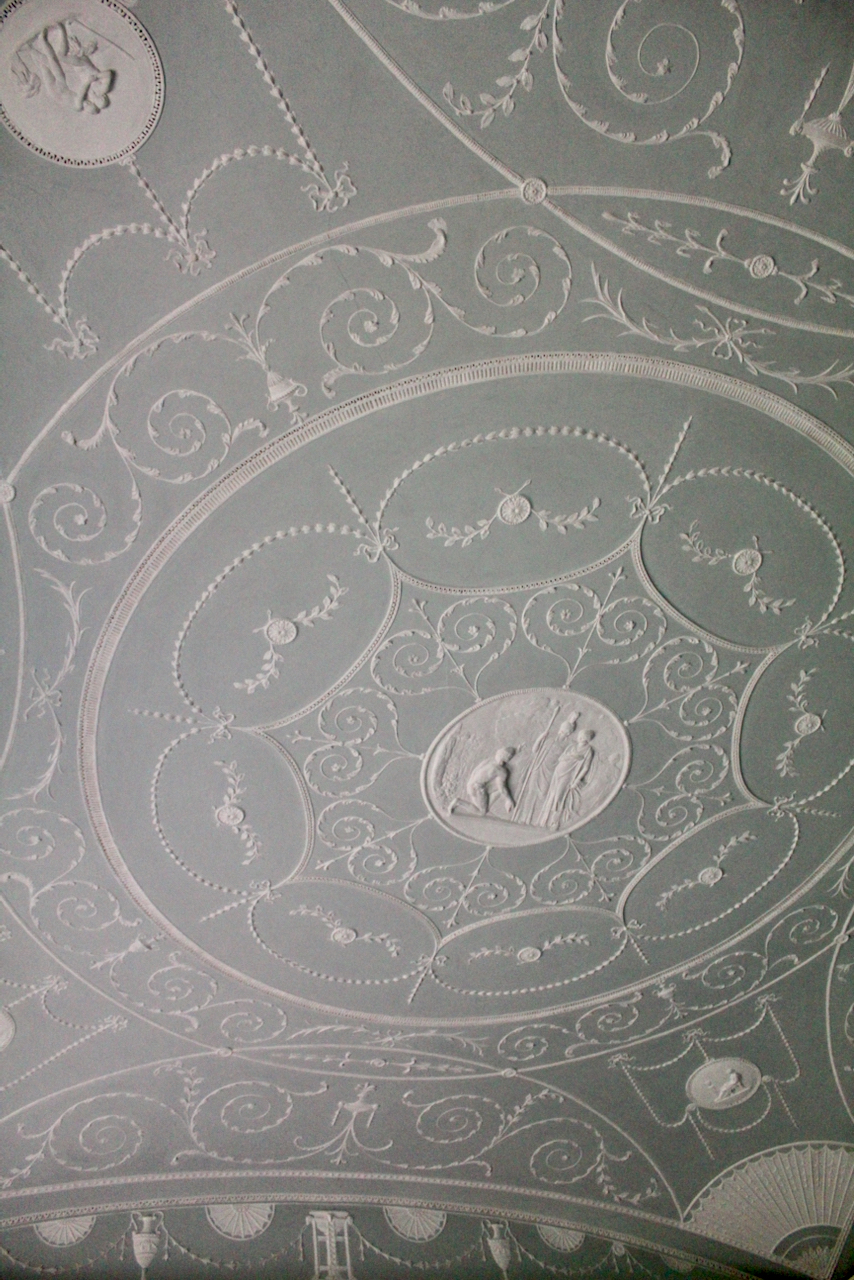
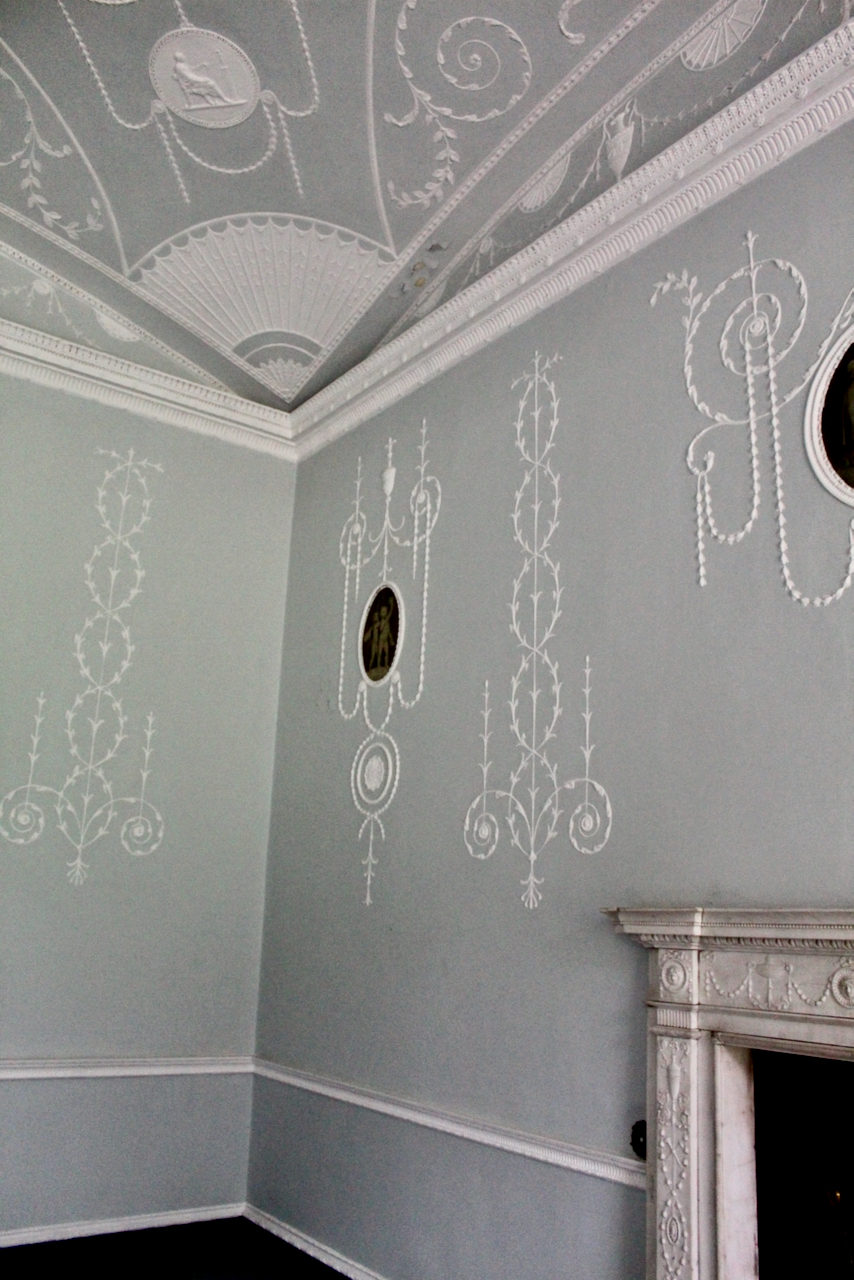
In the Wedgwood Room, to the left of the hall, has a splendid ceiling. After much research an exact match for the original paint in the Wedgwood Room was found when the house was restored. The powder blue emphasises the marvellous stucco work by Michael Stapleton, and trompe l’oeil rondels said to be by Peter de Gree. However, Robert O’Byrne tells us that these are in fact prints that have been painted over. The ceiling curves downwards at the corners giving the effect of a shallow dome. At the centre of the gently domed ceiling is a medallion depicting a warrior kneeling before Minerva and by her maidens.






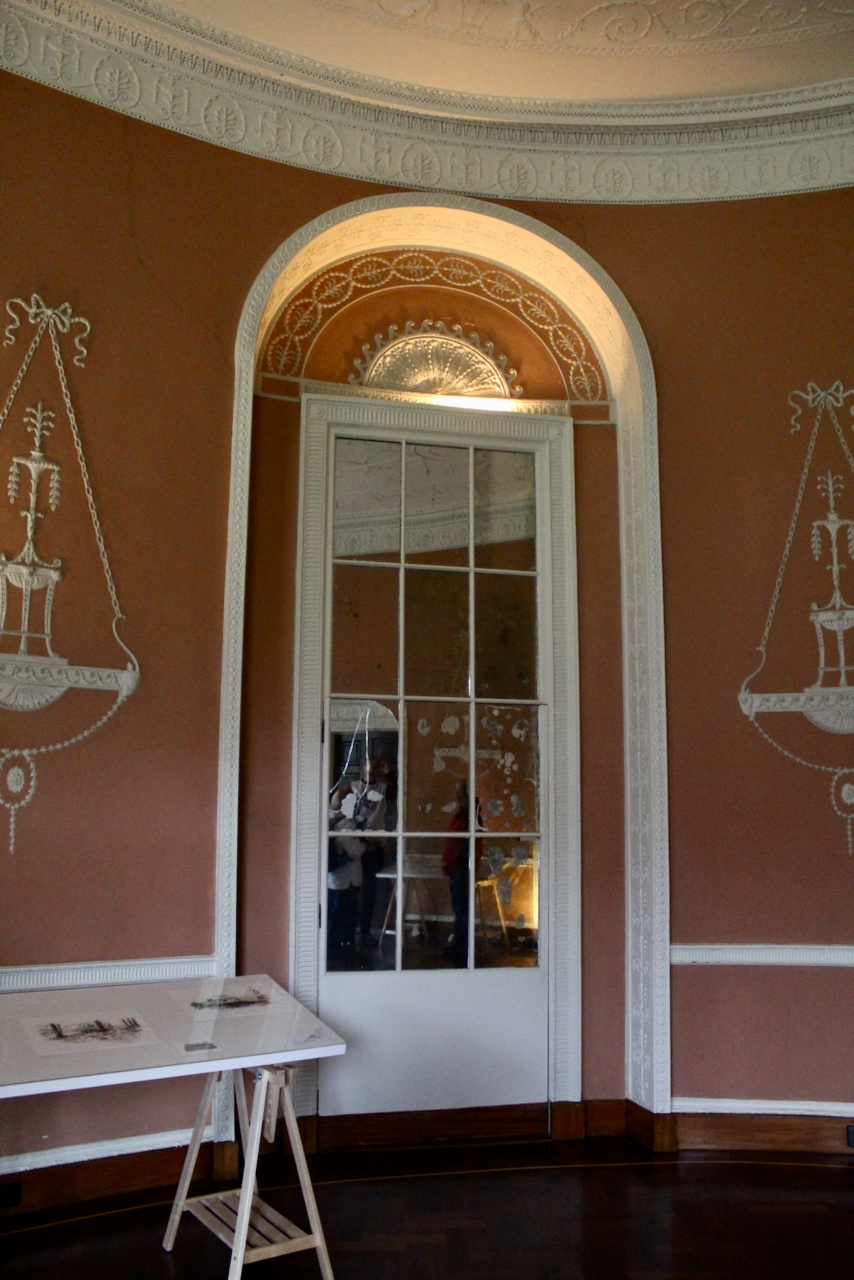
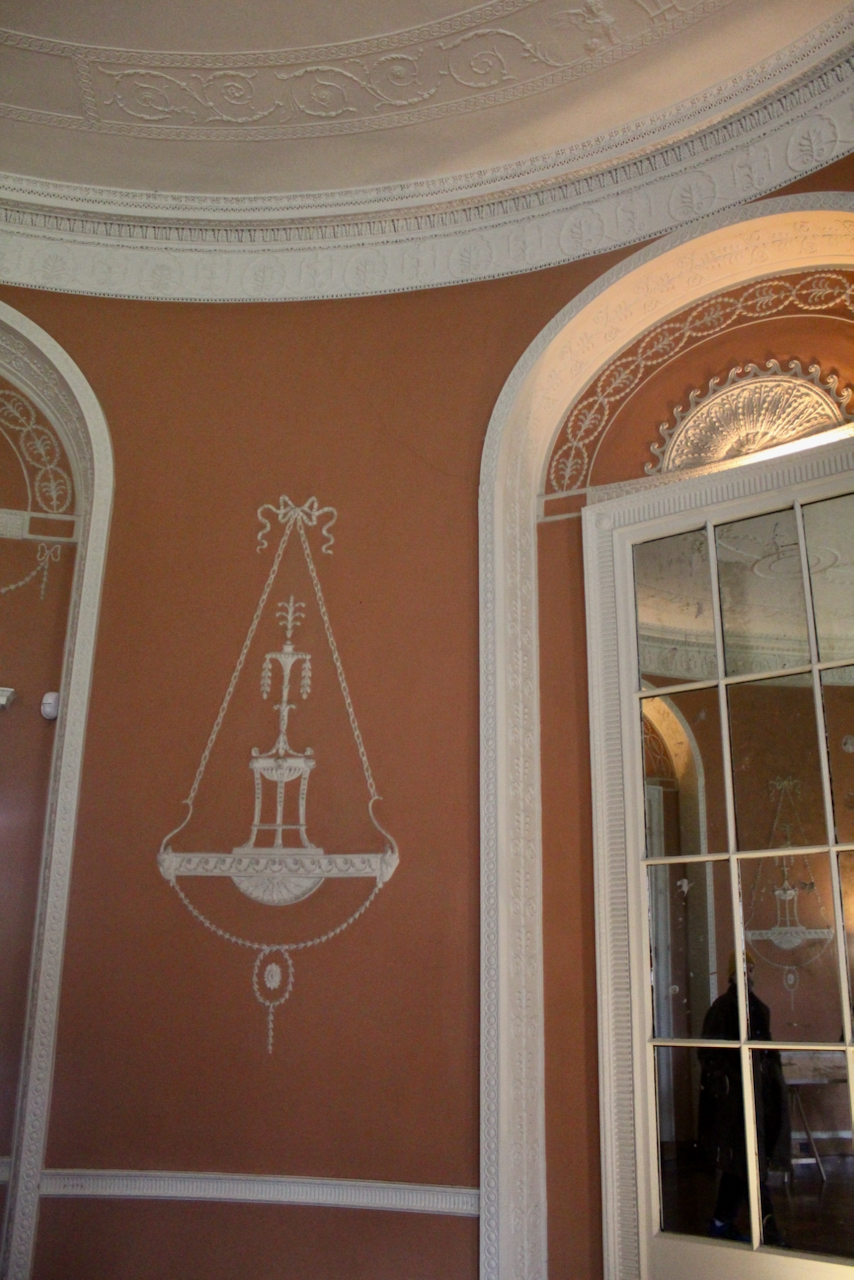
The room off the front hall to the back of the house is the Oval Room. The curve of the bow window is reflected in a facing curved wall, creating the oval shape. The bow has three windows placed in arches with decorative semicircles over the windows, which reflect the round decoration in the centre of the ceilng.

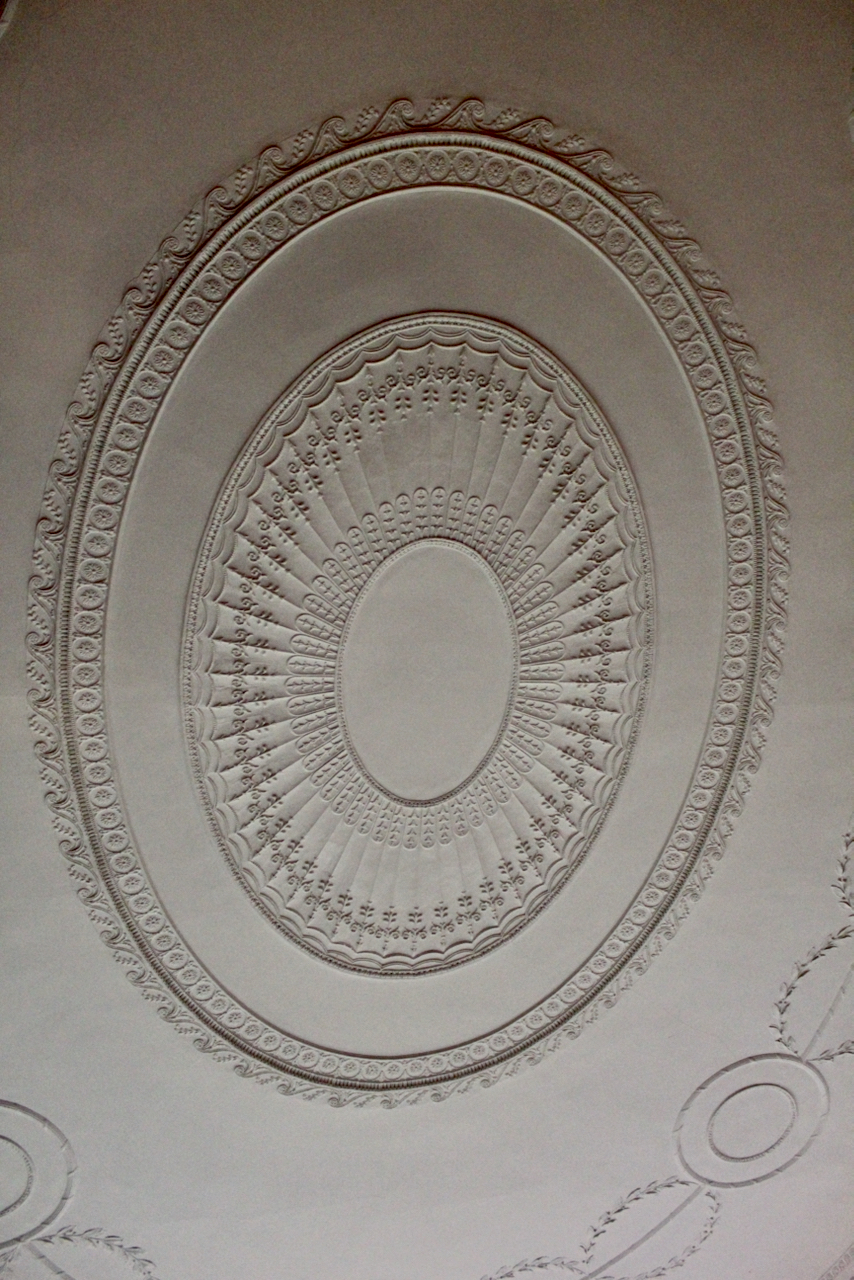
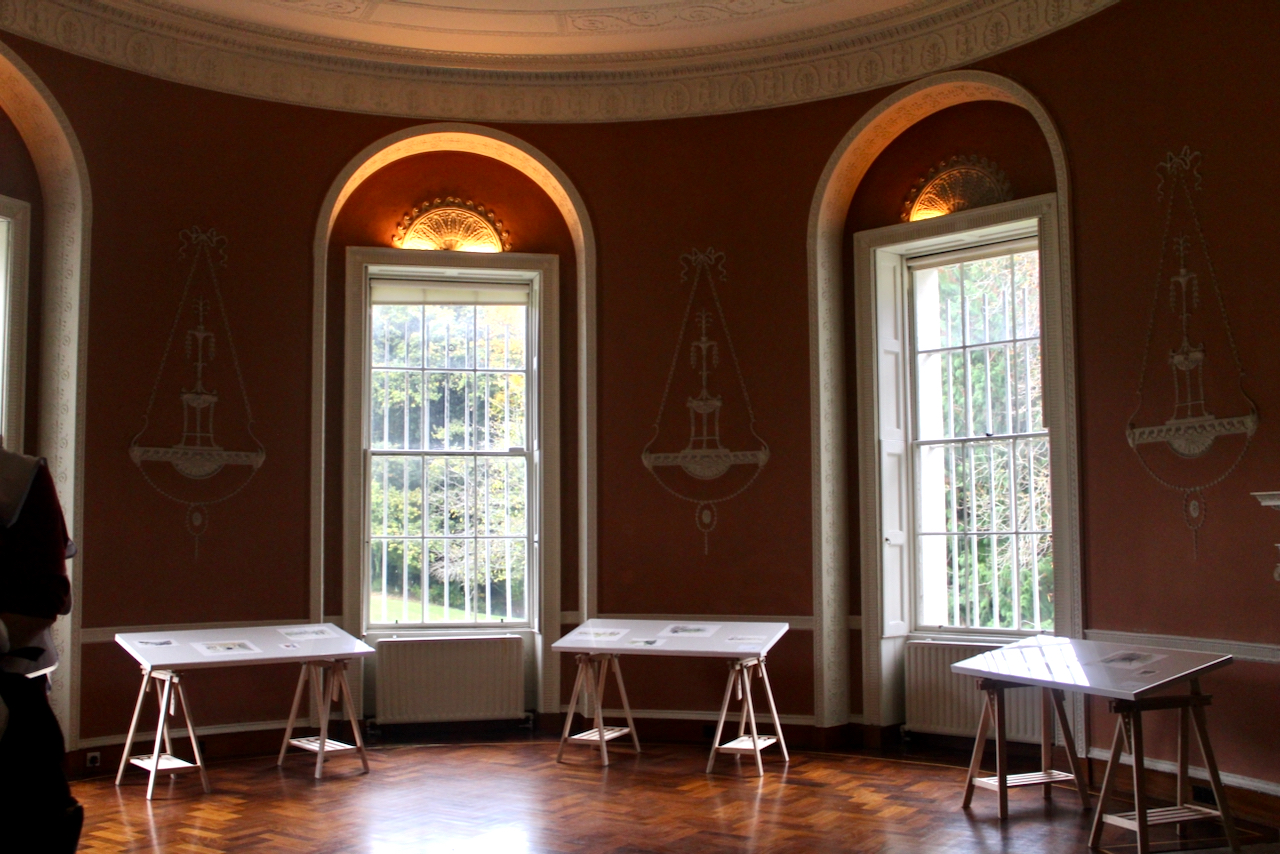

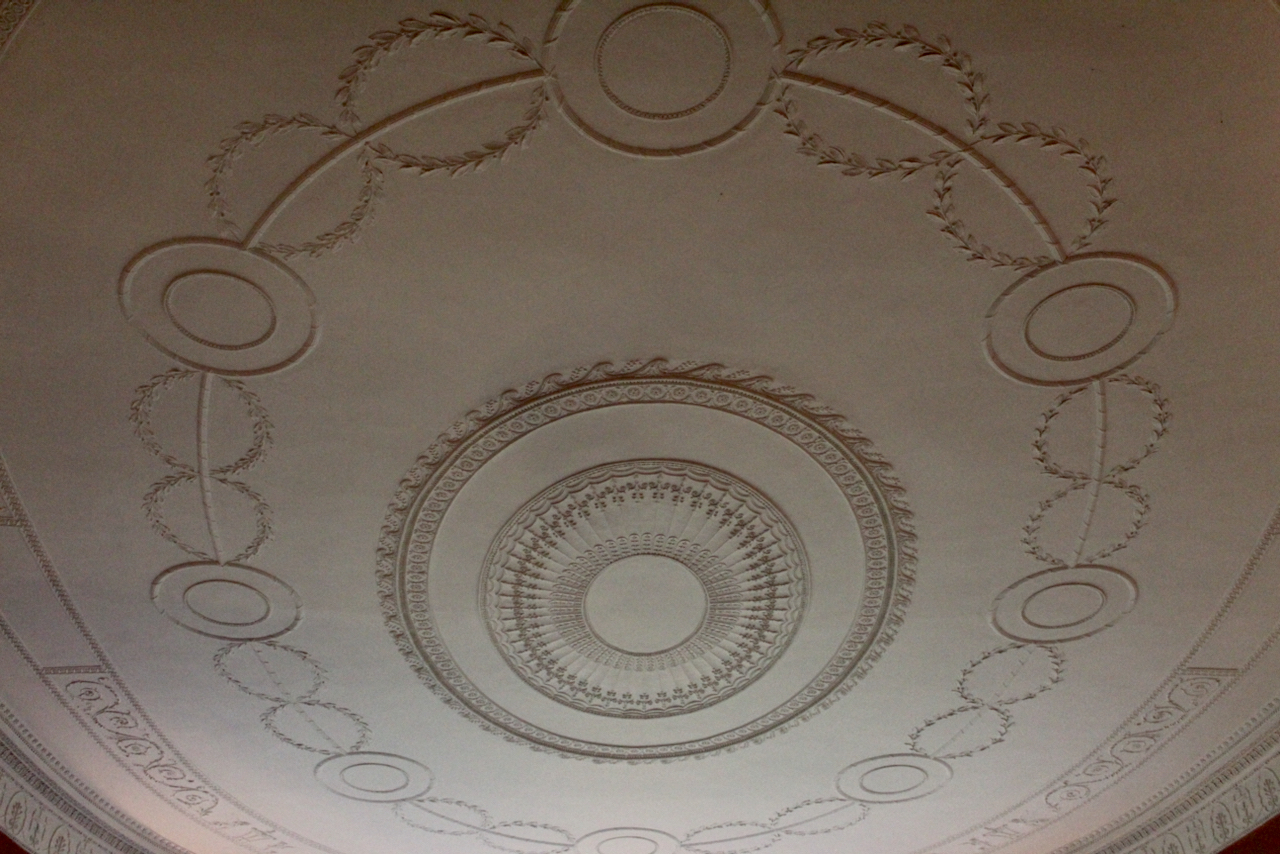
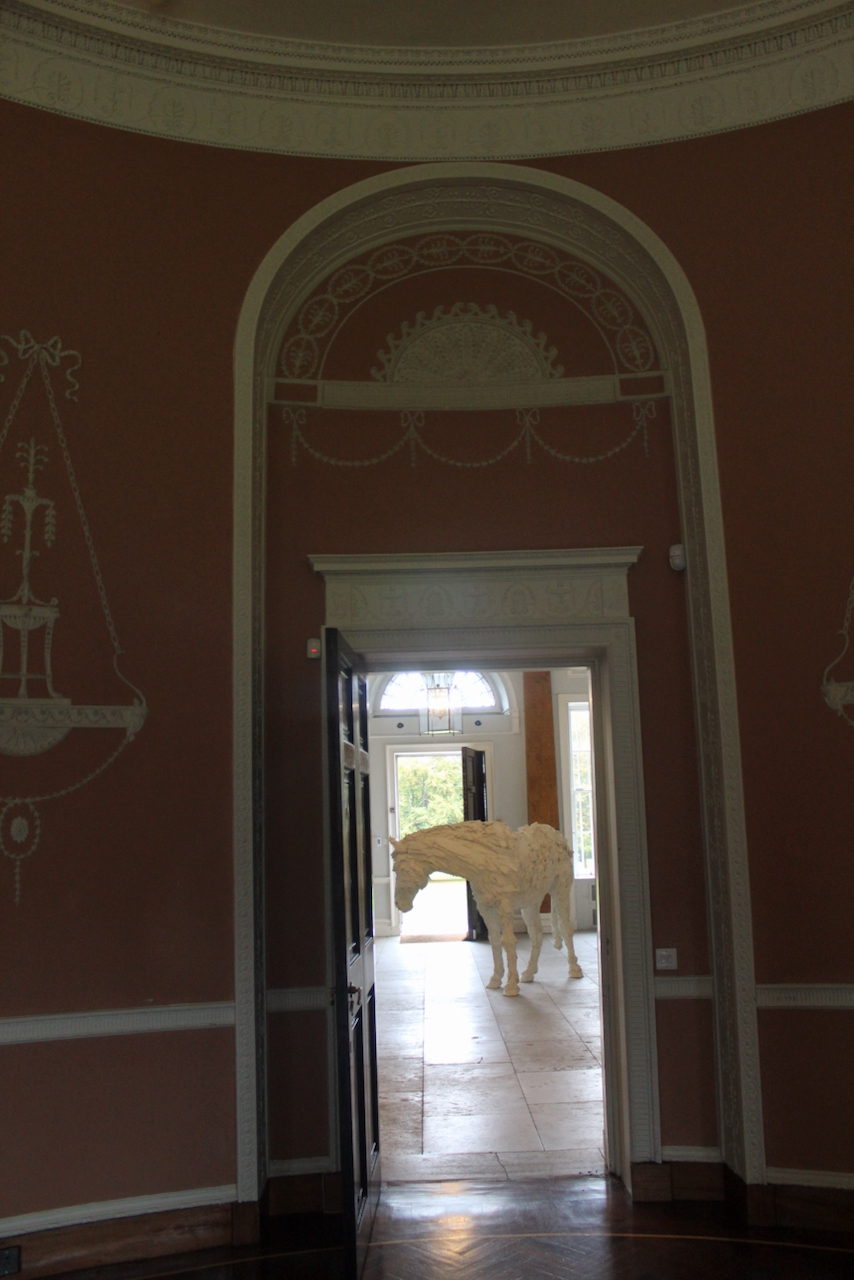
Robert O’Byrne points out that the arrangement of the front hall with the screen of columns to the rear with a central door opening into an oval room is also found in Castle Coole, County Fermanagh, which was designed in the early 1790s by James Wyatt – which is probably than the arrangement laid out in Lucan House (see my entry about Castle Coole https://irishhistorichouses.com/2024/03/21/castle-coole-county-fermanagh-a-national-trust-property/ ).
The large arch over the door entering from the front hall is repeated in the walls, which hold mirrors that look like doors. This room, Robert O’Byrne tells us, was designed as the Drawing Room but in later years served as a dining room. On the walls plaster “girandoles”, ornamental candle holders that are normally mounted on walls. O’Byrne tells us that Michael Stapleton created the design of these plaster girandoles. [see 1].
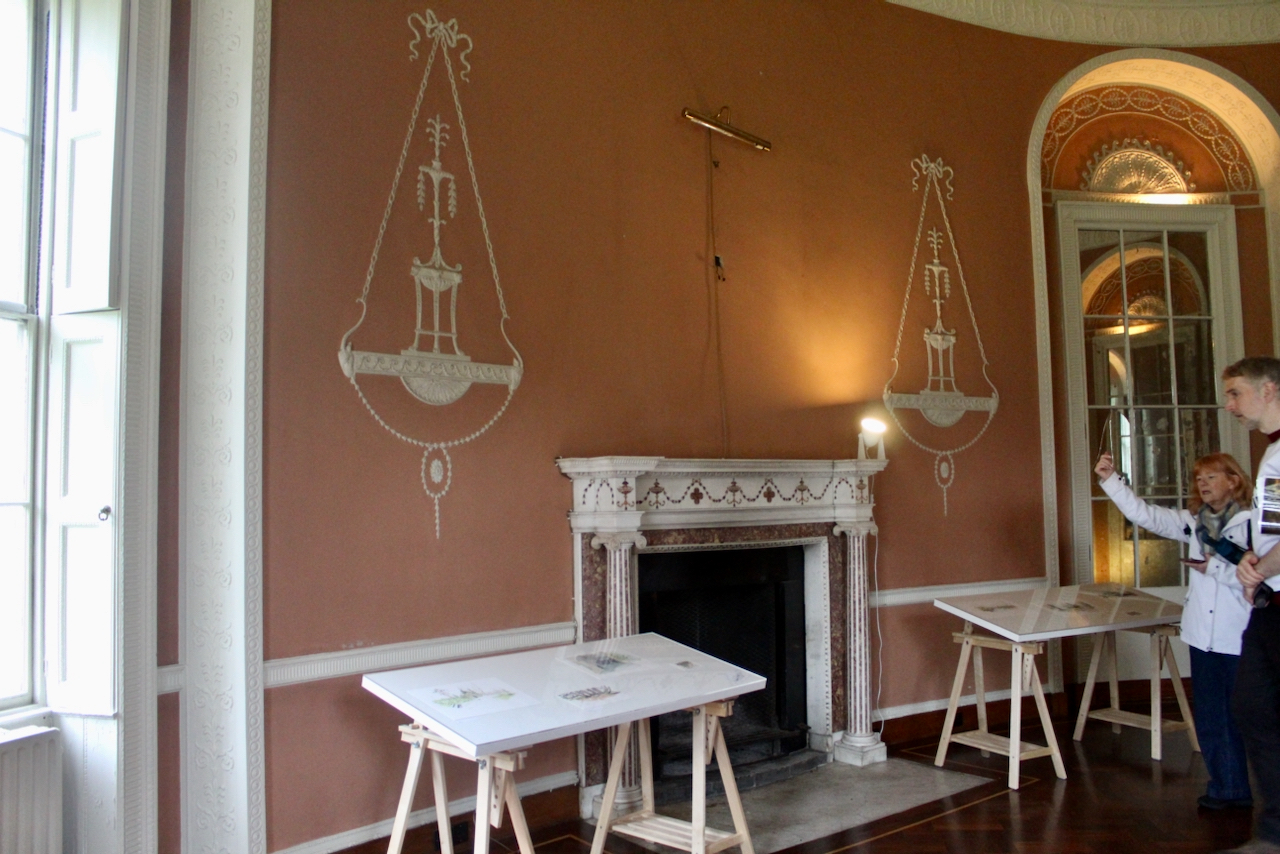

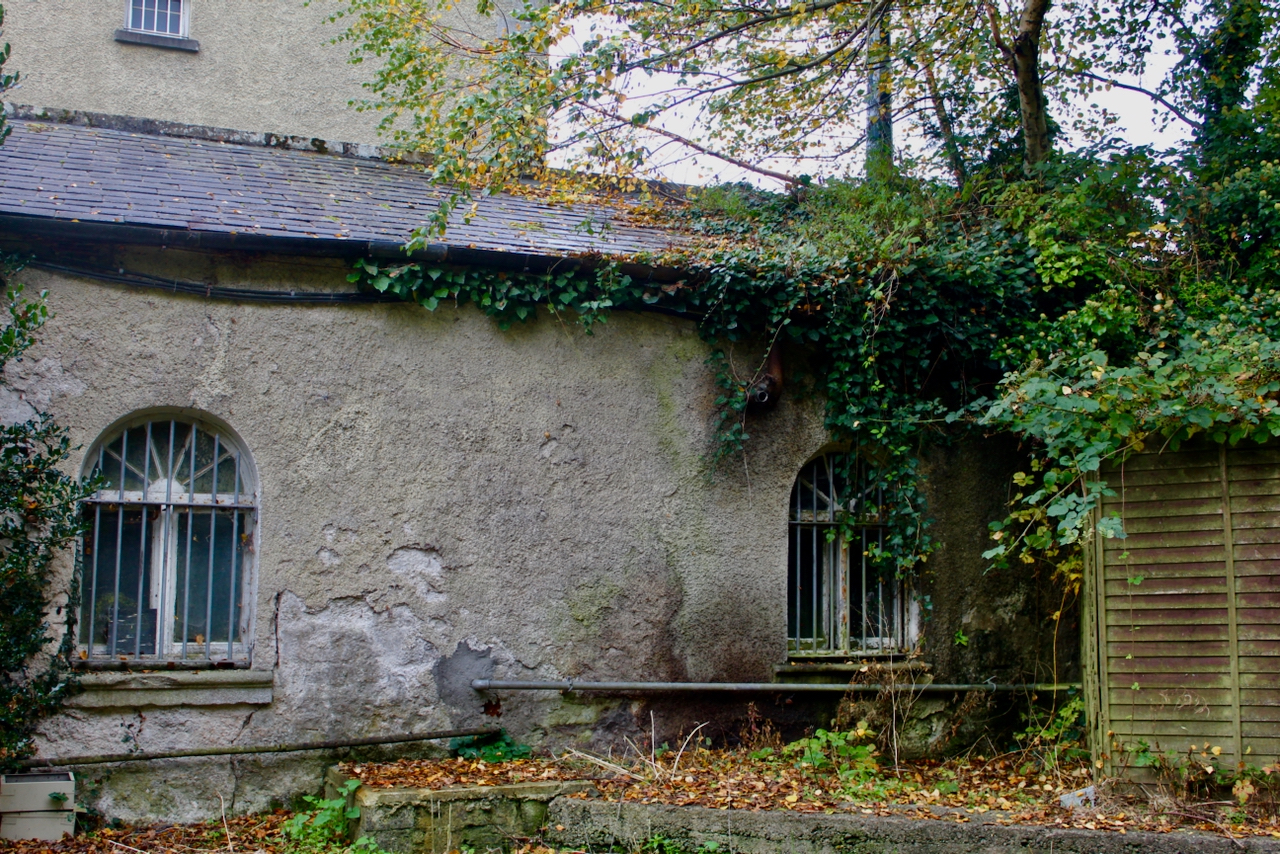
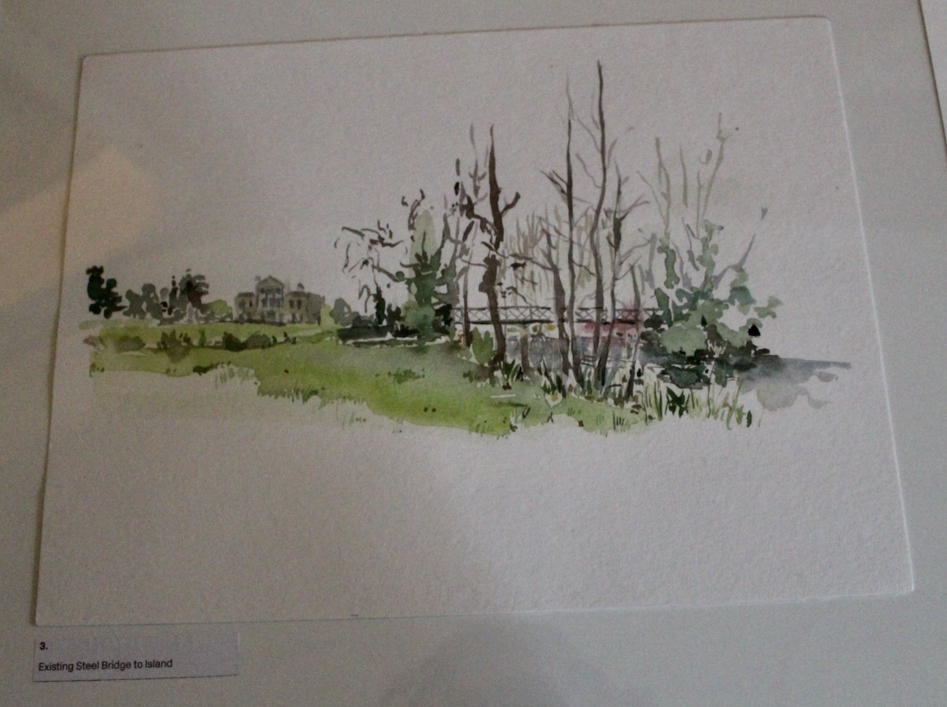
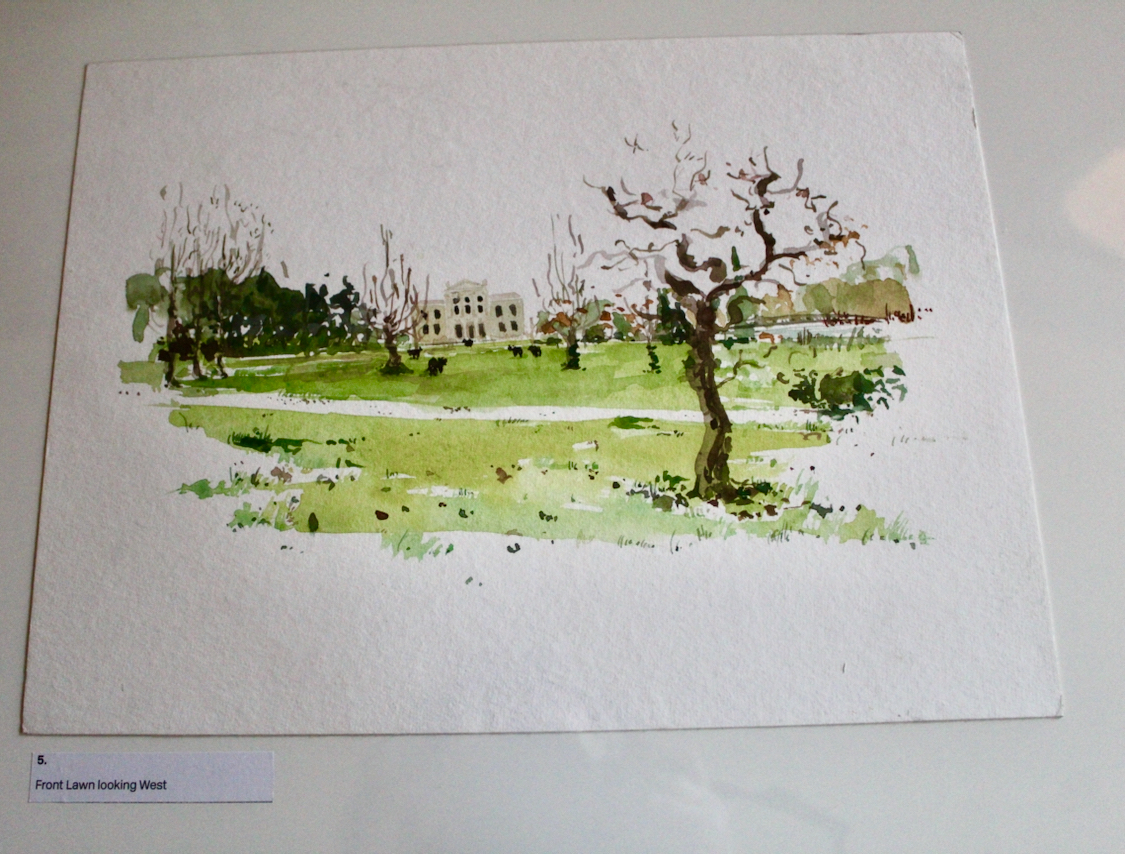
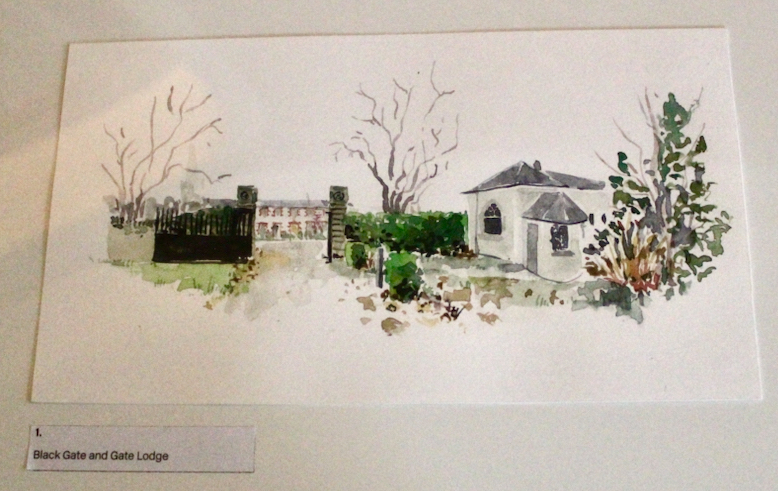
The room held an exhibition by Foley Architects, who prepared plans for South Dublin City Council for their transformation of Lucan House and its demesne for public use, including delicate watercolour paintings by Jérémy Cheval (his name is apt due to the prominent presence of the horse in the front hall!). Foley architects examine the entire site, with its Church Tower House ruin, main residence, boathouse, bathhouse (which we did not see as it is further from the house) and stables, its watercourse and vegetation.


The other room on the ground floor is a library with shelving units. I don’t know whether these units were in the house originally, or whether they are a later addition.
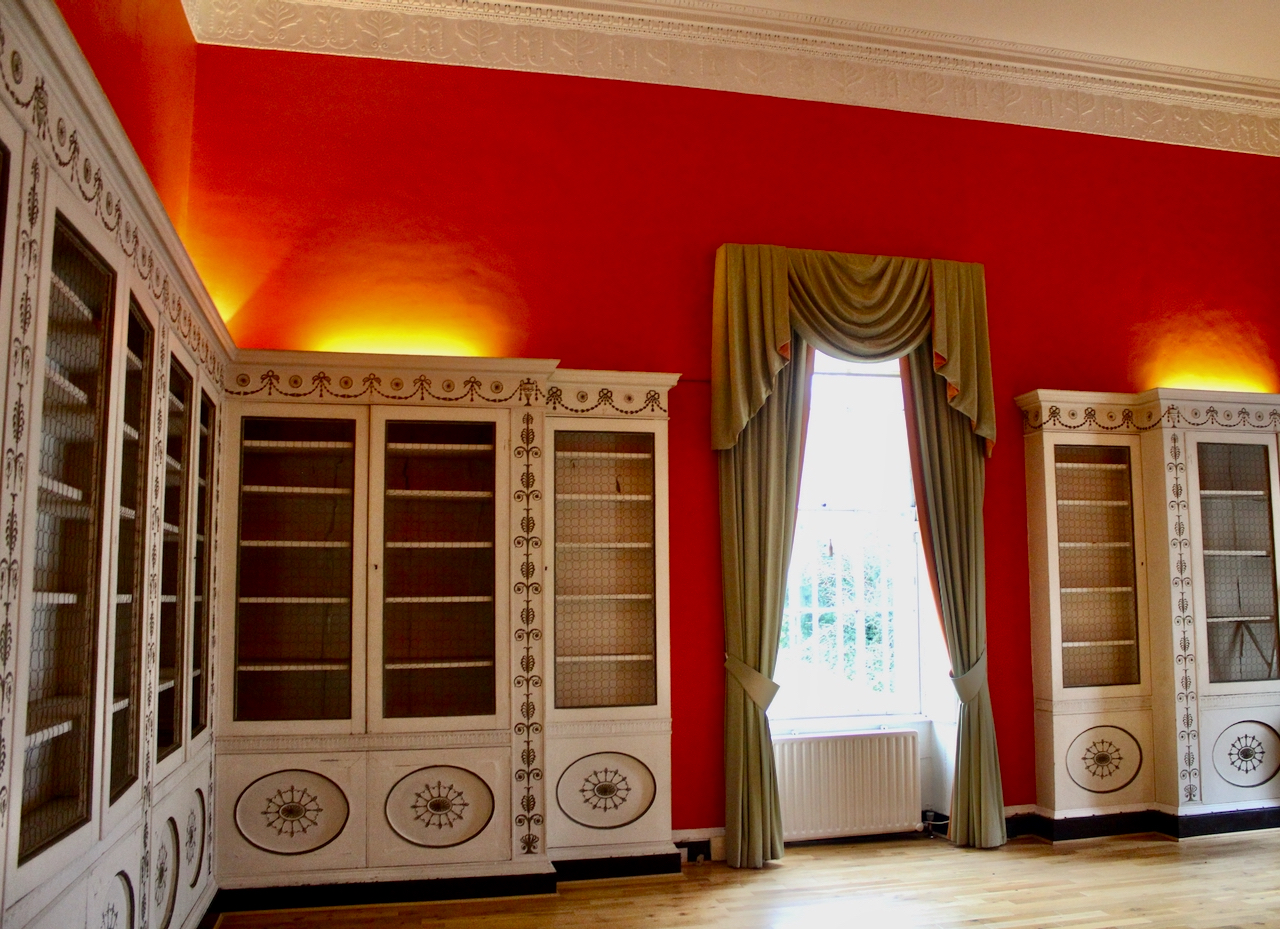
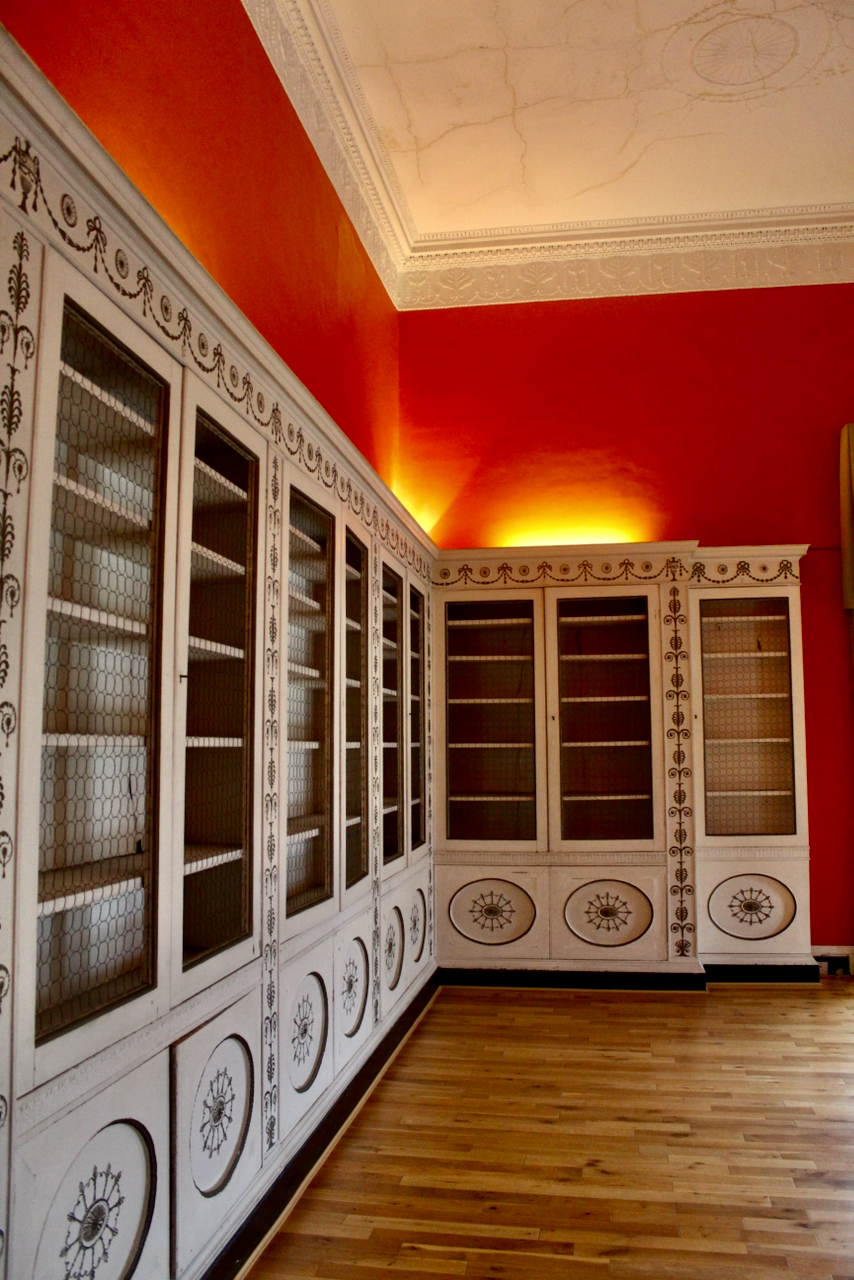
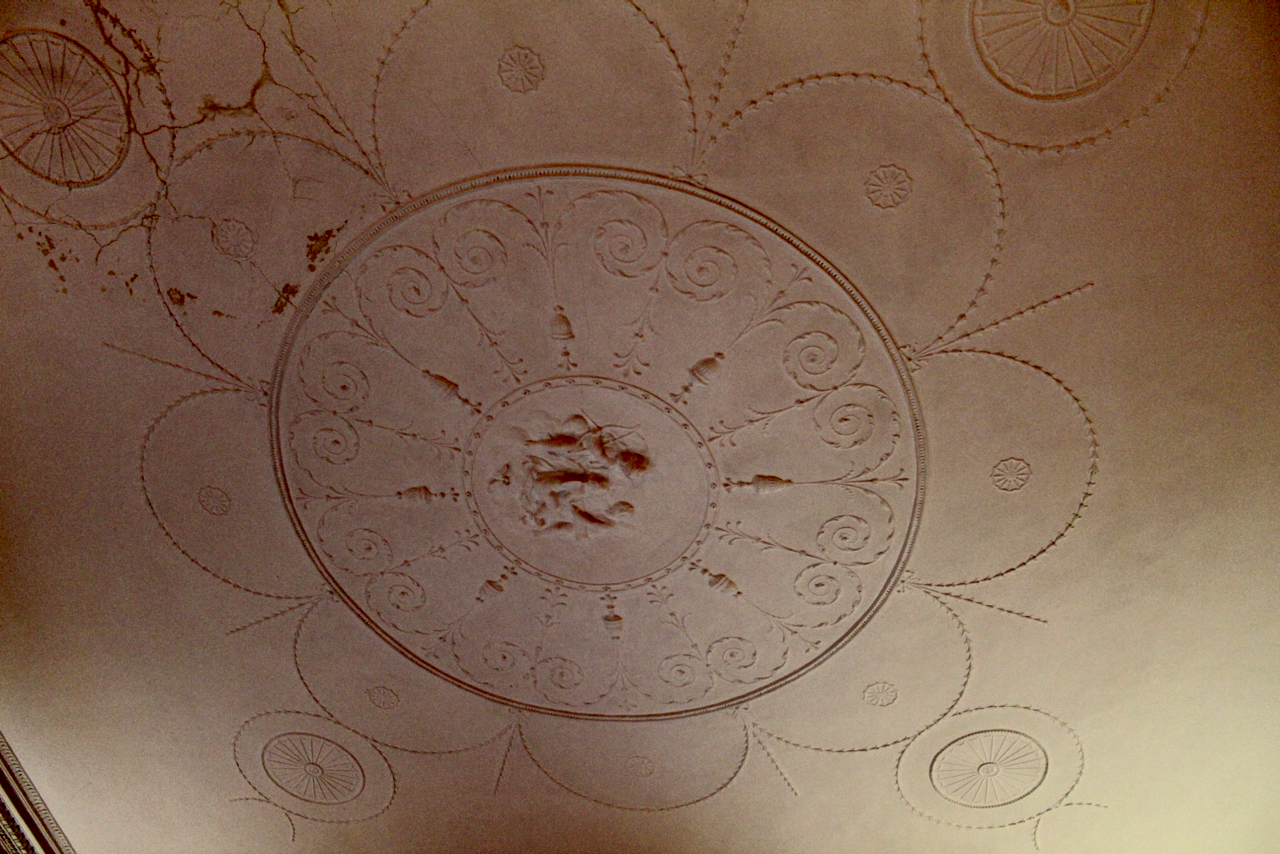
Robert O’Byrne tells us that the ceiling has been covered in plasterwork centred on another medallion, featuring, unusually, he points out, the Christ child and infant John the Baptist together with a lamb.

The original stone staircase has been removed and replaced by one of timber.


Vesey married his cousin Elizabeth, daughter of Right Reverend Sir Thomas Vesey, 1st Baronet, Bishop of Killaloe and of Ossory. Elizabeth Vesey was one of the founders of the Blue Stockings Society! This was an informal women’s social and educational movement in England in the mid-18th century that emphasised education and mutual cooperation. They liked to discuss literature, and invited men also to their gatherings. Elizabeth and Agmondesham did not have children, and they lived much of their time in London, where Elizabeth held her intellectual literary salons.
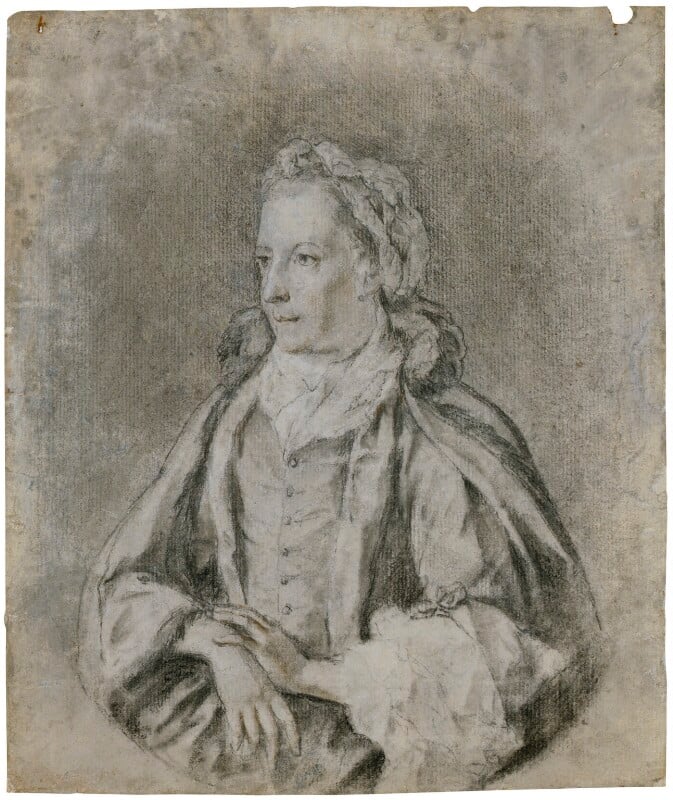
Robert O’Byrne tells us that like his wife Elizabeth, Vesey also took part in a conversational club. In 1773, during the period that work was underway on the new house, he was elected to the ‘Club’, the informal dining and conversational group established ten years earlier by Samuel Johnson and Joshua Reynolds. Johnson and James Boswell granted him the notional title of ‘Professor of Architecture,’ and the latter wrote that Vesey had ‘left a good specimen of his knowledge and taste in that art by an elegant house built on a plan of his own at Lucan.’ [see 1]
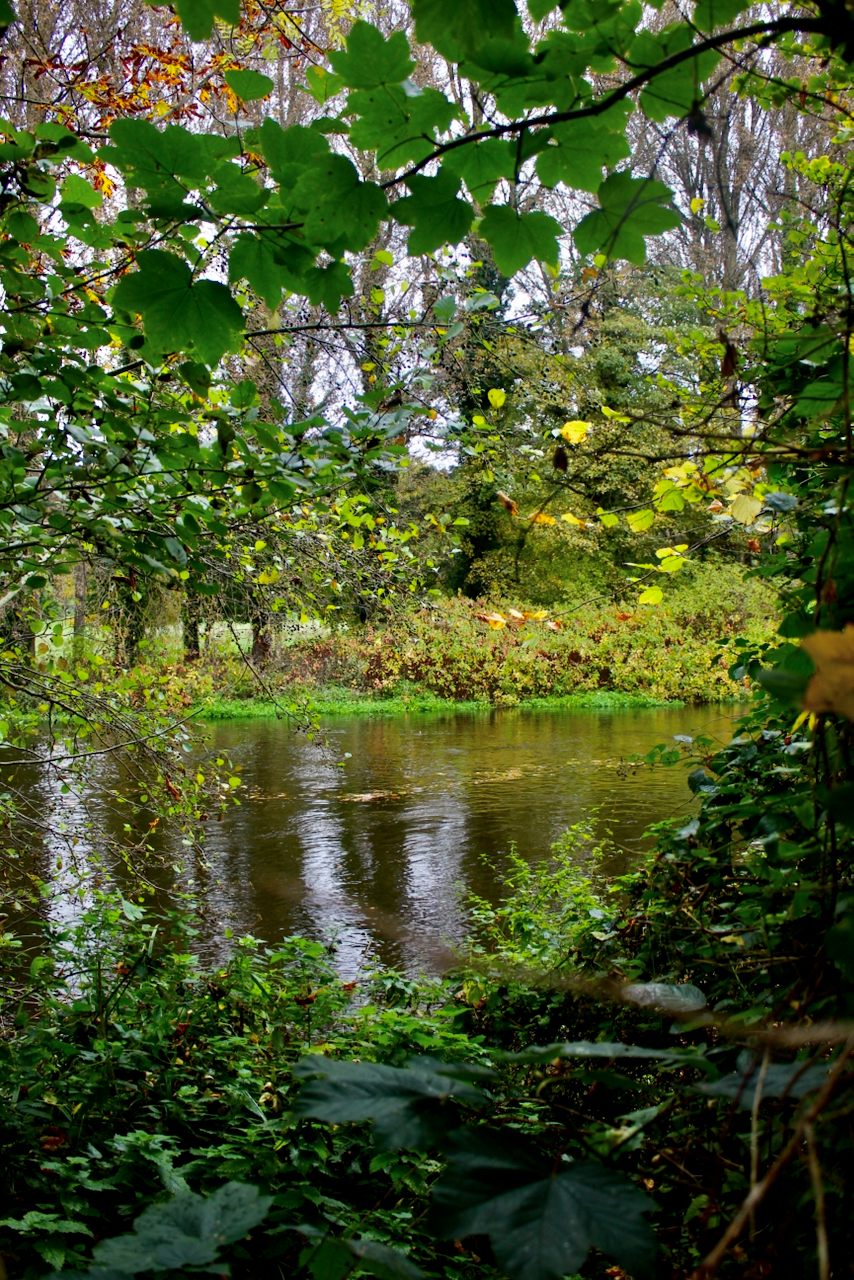
Behind the house is a boat house, on the River Liffey.
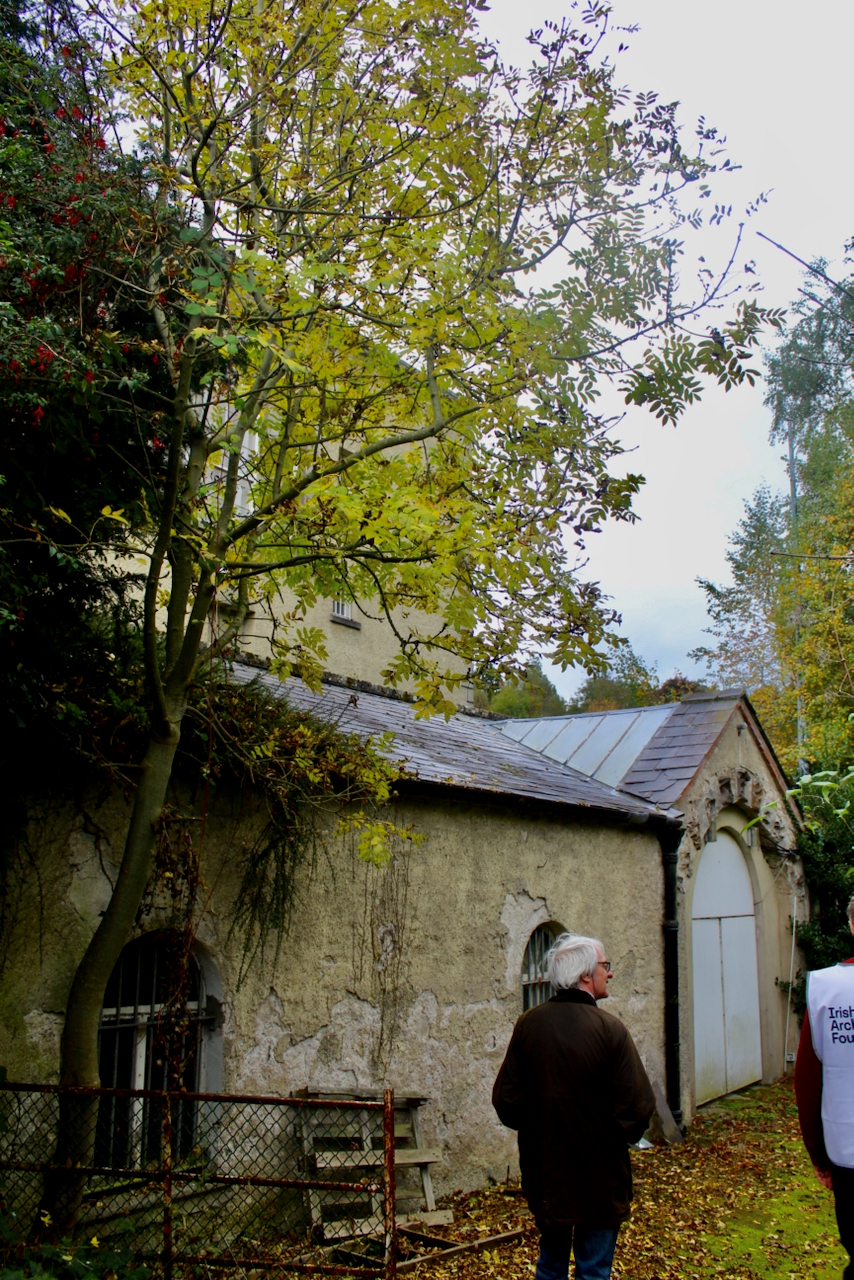



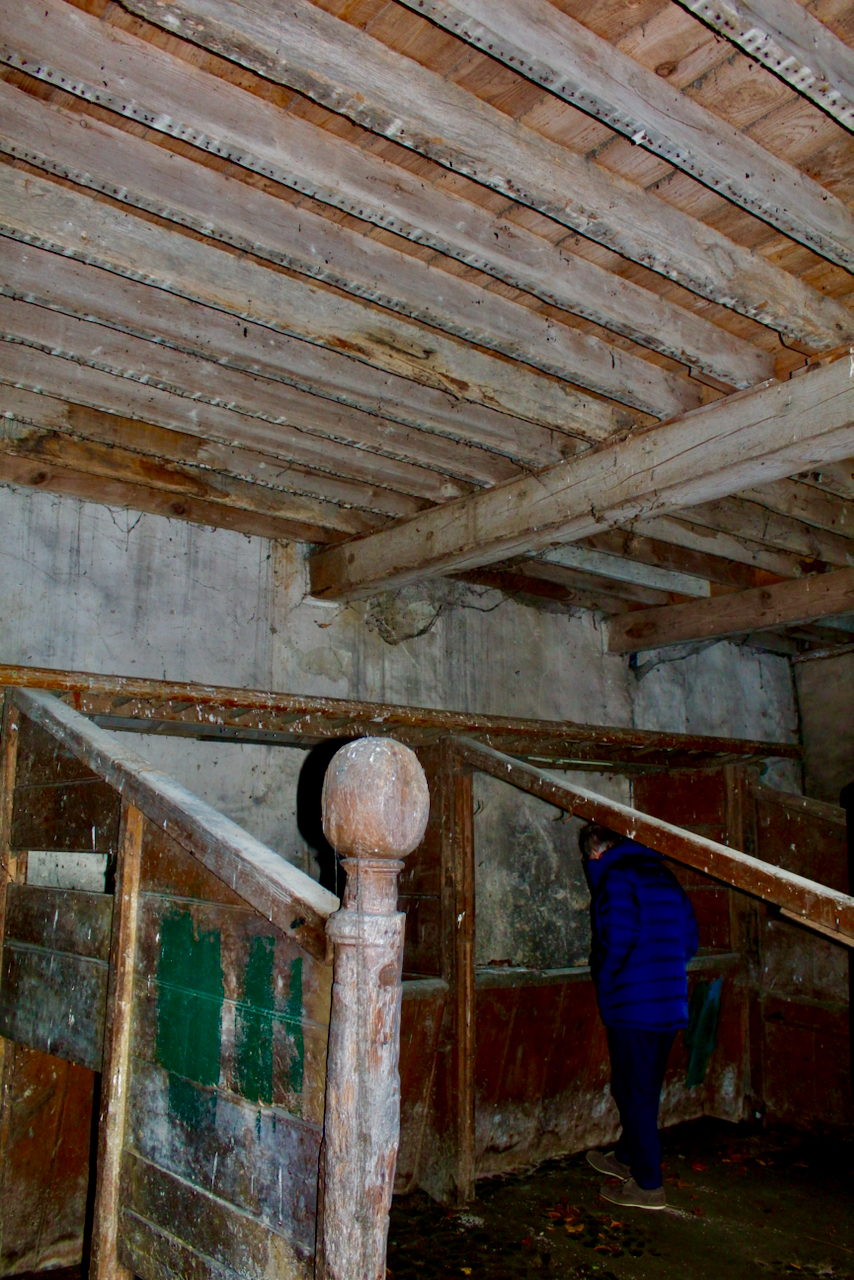


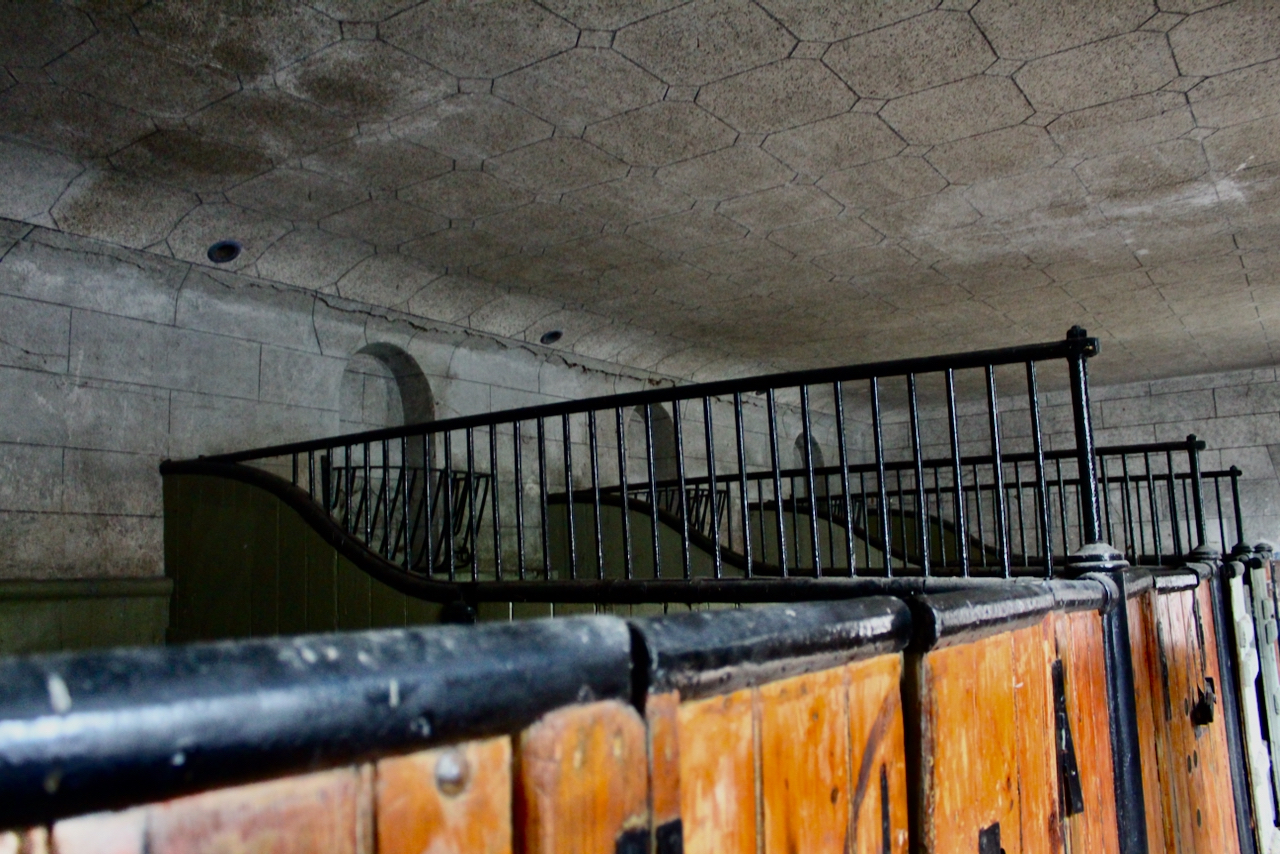
The tack room is beautiful with its original wooden fixtures.


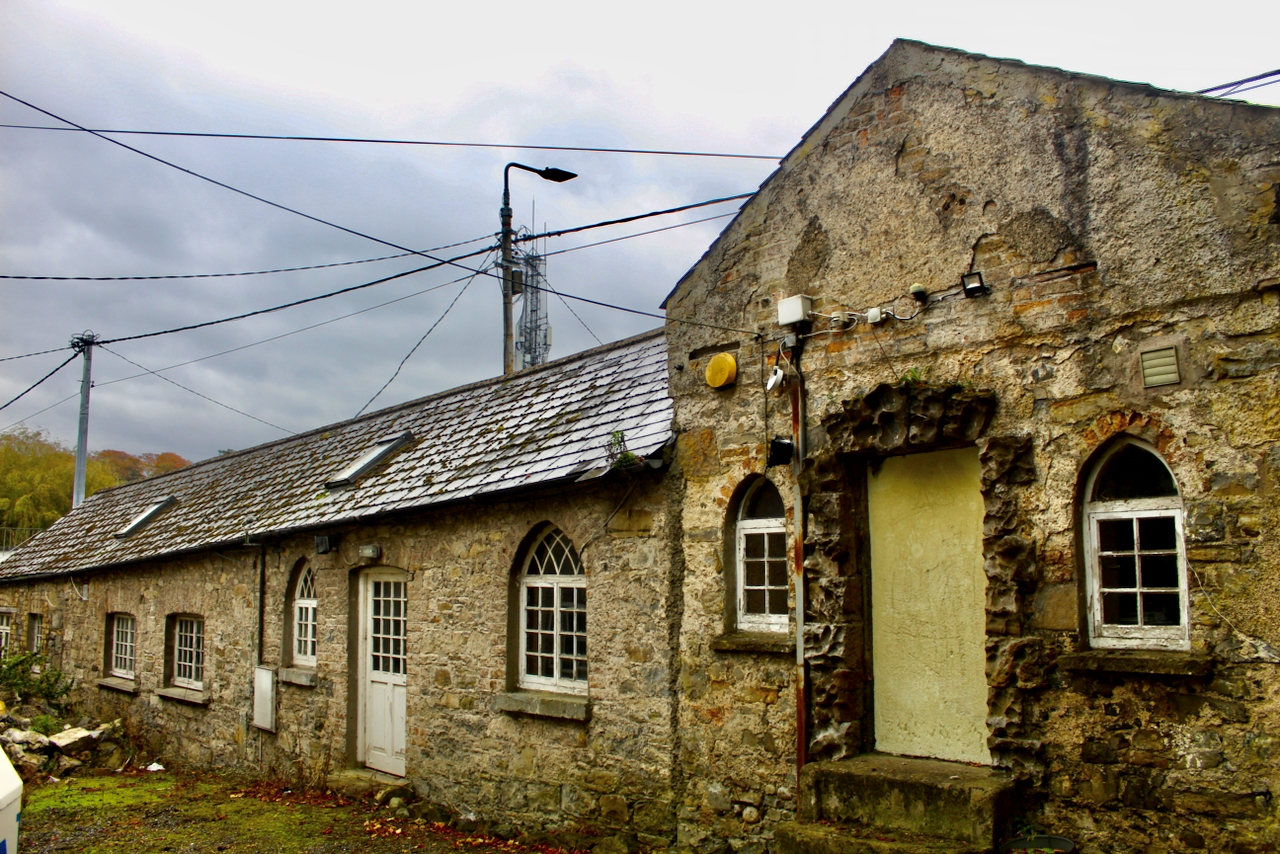
Behind the stables is a little row of houses, lived in until recently. These too are part of redevelopment plans.
A sulphur spring was discovered in 1758, and a health spa opened that year in the area.

The house passed to the son of a younger brother of Agmondisham. The younger brother, George, married a second cousin, Letitia Vesey. Their son George (1761-1836) inherited Lucan House. He married Emily La Touche (1767-1854), daughter of David La Touche (1729-1817) of Marley House in Dublin.
George and Emily’s daughter Elizabeth married Nicholas Conway Colthurst (1789-1829) 4th Baronet of Ardrum, County Cork. We came across the Colthurst family when we visited Blarney Castle in Cork. Their second son, Charles Vesey Colthurst, changed his name to Charles Vesey Colthurst-Vesey in 1860. He served as Justice of the Peace for Kildare and for Dublin, and High Sheriff of Dublin, and he lived at Lucan House. The house passed through their family until 1921, when it was sold.
Capt Richard Colthurst (afterwards 8th Bt) sold it 1932 to Charles Hugh O’Conor, President of Irish Association of the Order of Malta and brother of the O’Conor Don of Clonalis House in County Roscommon. Charles Hugh O’Conor and his wife Ellen Letitia More O’Ferrall were parents of the next O’Conor Don, Father Charles O’Conor (see my entry about Clonalis https://irishhistorichouses.com/2020/10/16/clonalis-castlerea-county-roscommon/ ).
A daughter, Mary Ellen O’Conor, married Luke William Teeling, Conservative MP for Brighton in the UK, who sold Lucan House after WWII to the Italian government, for use as their embassy. First it was leased by the Italian ambassador as a residence in 1942, and then bought by the the Italian government in 1954.

I look forward to seeing how progress develops by the City Council and to when the estate is open to the public!



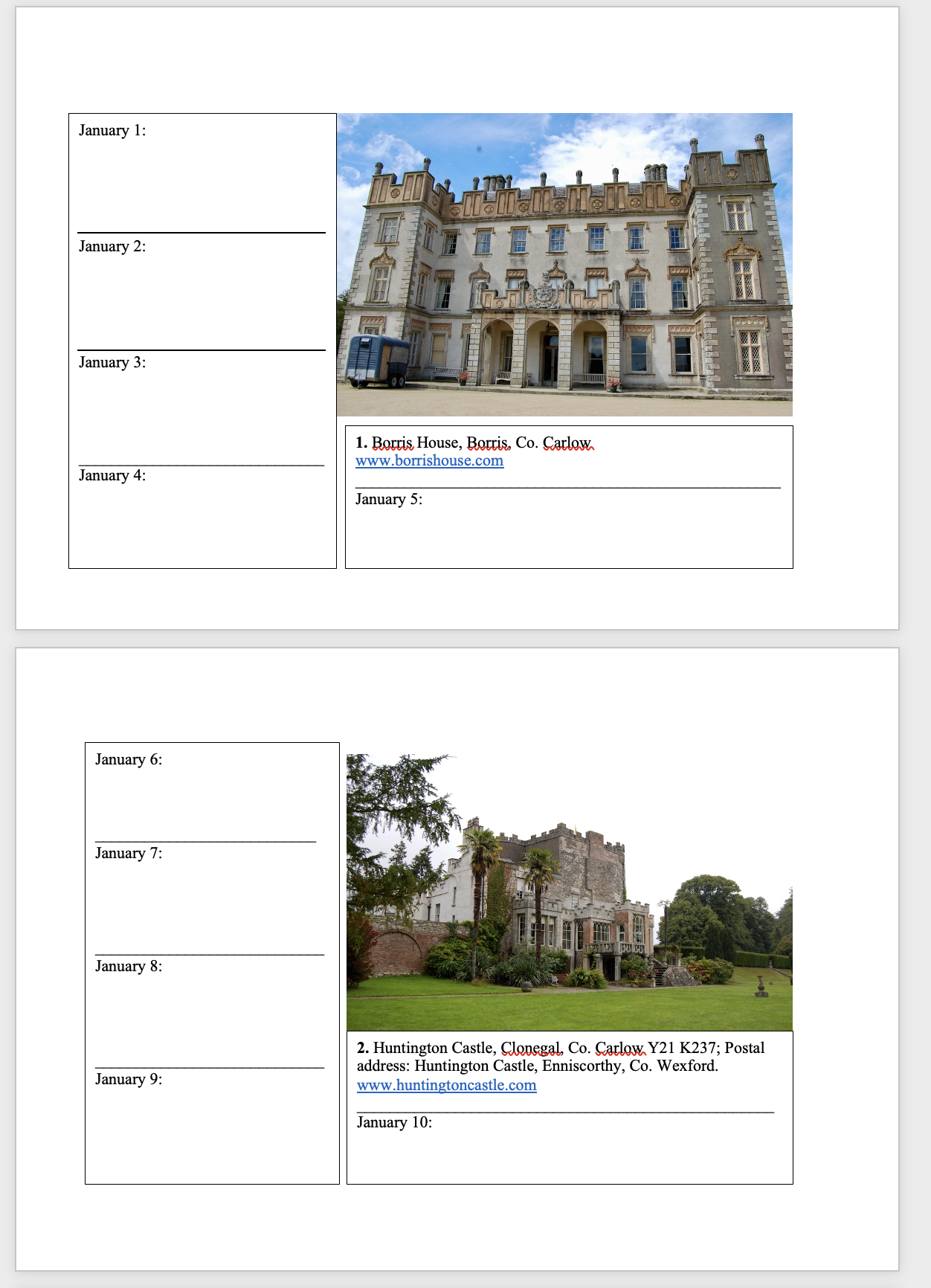
2026 Diary of Irish Historic Houses (section 482 properties)
To purchase an A5 size 2026 Diary of Historic Houses (opening times and days are not listed so the calendar is for use for recording appointments and not as a reference for opening times) send your postal address to jennifer.baggot@gmail.com along with €20 via this payment button. The calendar of 84 pages includes space for writing your appointments as well as photographs of the historic houses. The price includes postage within Ireland. Postage to U.S. is a further €10 for the A5 size calendar, so I would appreciate a donation toward the postage – you can click on the donation link.
€20.00

donation
Help me to pay the entrance fee to one of the houses on this website. This site is created purely out of love for the subject and I receive no payment so any donation is appreciated!
€15.00
Donation towards website.
I receive no funding nor aid to create and maintain this website, it is a labour of love. The website costs €300 annually on wordpress. Help to fund the website.
€150.00
[1] http://lordbelmontinnorthernireland.blogspot.com/2012/05/marlay-grange.html
[1] https://theirishaesthete.com/2024/05/27/lucan-house/
[2] https://www.dib.ie/biography/sarsfield-patrick-a7924
[3] https://www.dib.ie/biography/vesey-john-a8812#co-subject-B
[4] Dictionary of Irish Architects, https://www.dia.ie/architects/view/5104/WYATT%2C+JAMES+%23
[5] Elizabeth Birthistle, “Palladio preserved in Lucan House and demesne,” Irish Times, 27 February 2016.
 Irish Historic Houses