On the map above:
blue: places to visit that are not section 482
purple: section 482 properties
red: accommodation
yellow: less expensive accommodation for two
orange: “whole house rental” i.e. those properties that are only for large group accommodations or weddings, e.g. 10 or more people.
green: gardens to visit
grey: ruins

donation
Help me to pay the entrance fee to one of the houses on this website. This site is created purely out of love for the subject and I receive no payment so any donation is appreciated!
€15.00
Places to Stay, County Donegal
1. Bruckless House Gate Lodge, Bruckless, County Donegal
2. Castle Grove, County Donegal – hotel and wedding venue
3. Cavangarden, Ballyshannon, Co Donegal – B&B
4. Dunmore, Carrigans, Co Donegal – weddings and accommodation
5. Lough Eske Castle, near Donegal, Co Donegal – hotel
6. Rathmullan House, Co Donegal – hotel
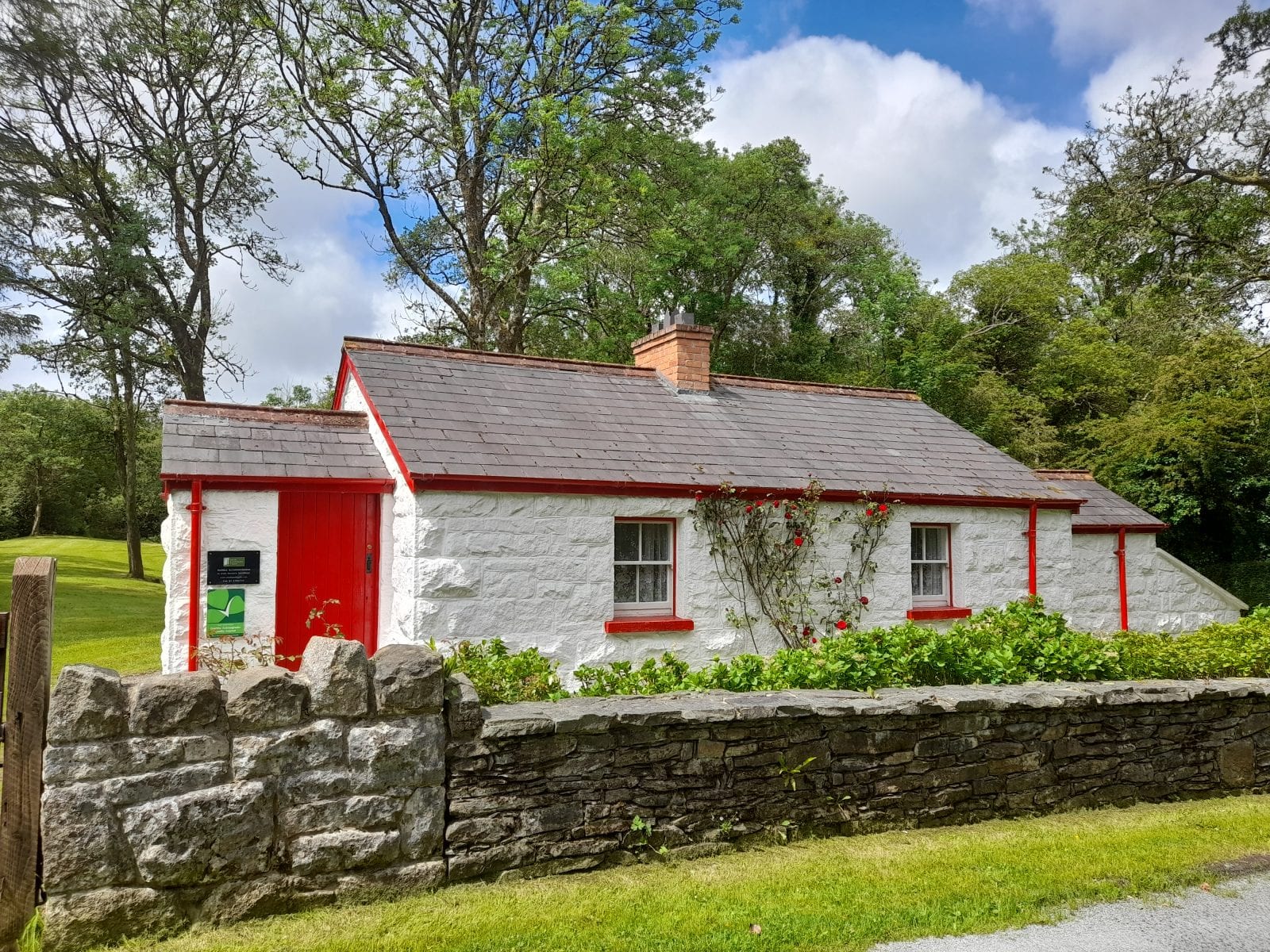
7. Railway Crossing Cottage near Donegal town: Irish Landmark property
8. Rock Hill, Letterkenny, Co Donegal – hotel
9. St. Columb’s, St Mary’s Road, Buncrana, Co Donegal
10. St John’s Point Lighthouse cottage, Dunkineely, County Donegal – Irish Landmark property
11. Termon House, Dungloe, County Donegal, whole house rental
12. Woodhill House, Ardara, County Donegal
Whole House Rental, County Donegal:
1. Drumhalla House, Rathmullen, County Donegal – whole house rental and wedding venue
Places to Stay, County Donegal
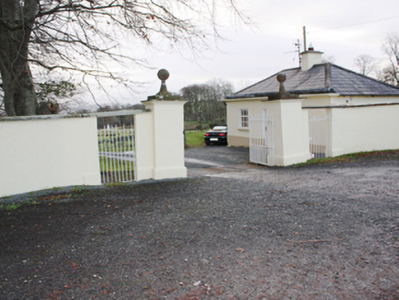
1. Bruckless House Gate Lodge, Bruckless, County Donegal – self catering holiday rental, airbnb
No longer listed on Hidden Ireland accommodation, it is listed on airbnb.
The website tells us:
“Open all year round, Bruckless House Gate Lodge is available to rent for self-catering holidays. Situated on 18 acres of parkland, the Gate Lodge is surrounded by its own garden just off the private driveway leading to Bruckless House. Guests can stroll down the avenue to reach the rocky shoreline of Bruckless Bay. They are always welcome to call at Bruckless House with its informal gardens and cobbled yard, where poultry wander between the Connemara Ponies.
“The Gate Lodge is comprised of four rooms in total. Bruckless Gate Lodge has an open plan living room and kitchen with an open fireplace, a full-sized bathroom and two bedrooms. There is a television set provided and all rooms have electric storage heating. Free wireless Internet connection is also available to guests at Bruckless Gate Lodge.
“Bruckless House was built in mid-18th century by a Plantation family, Nesbitt, but quickly passed into the hands of an Irish family, the Cassidys. It remained with them right into the 20th century. Legend has it that a Gate Lodge was built along with the House and that it was located at the then main entrance, near the River Stank off the present-day main road. Today there are no signs of this building – it was probably demolished to make way for the tracks of the County Donegal Railway. By 1894 the main entrance had been removed to the present location, using a bridge to cross the railway, but no Gate Lodge was built until the new century.“
2. Castle Grove, County Donegal – hotel
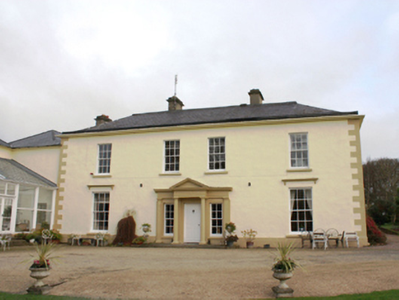
The website tells us:
“Castle Grove Country House is steeped in charm and elegance, tastefully upholding the traditions of centuries past.
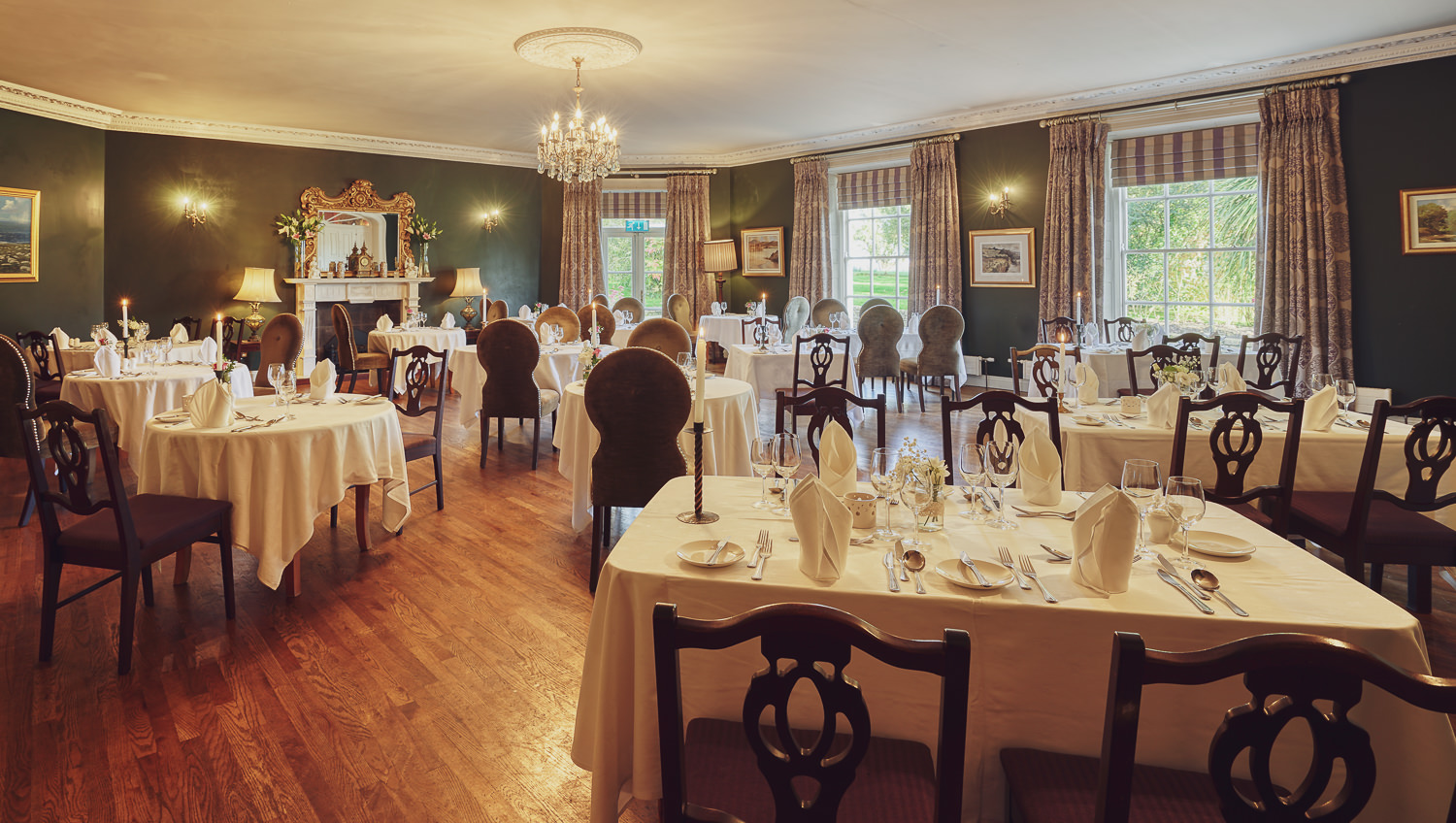
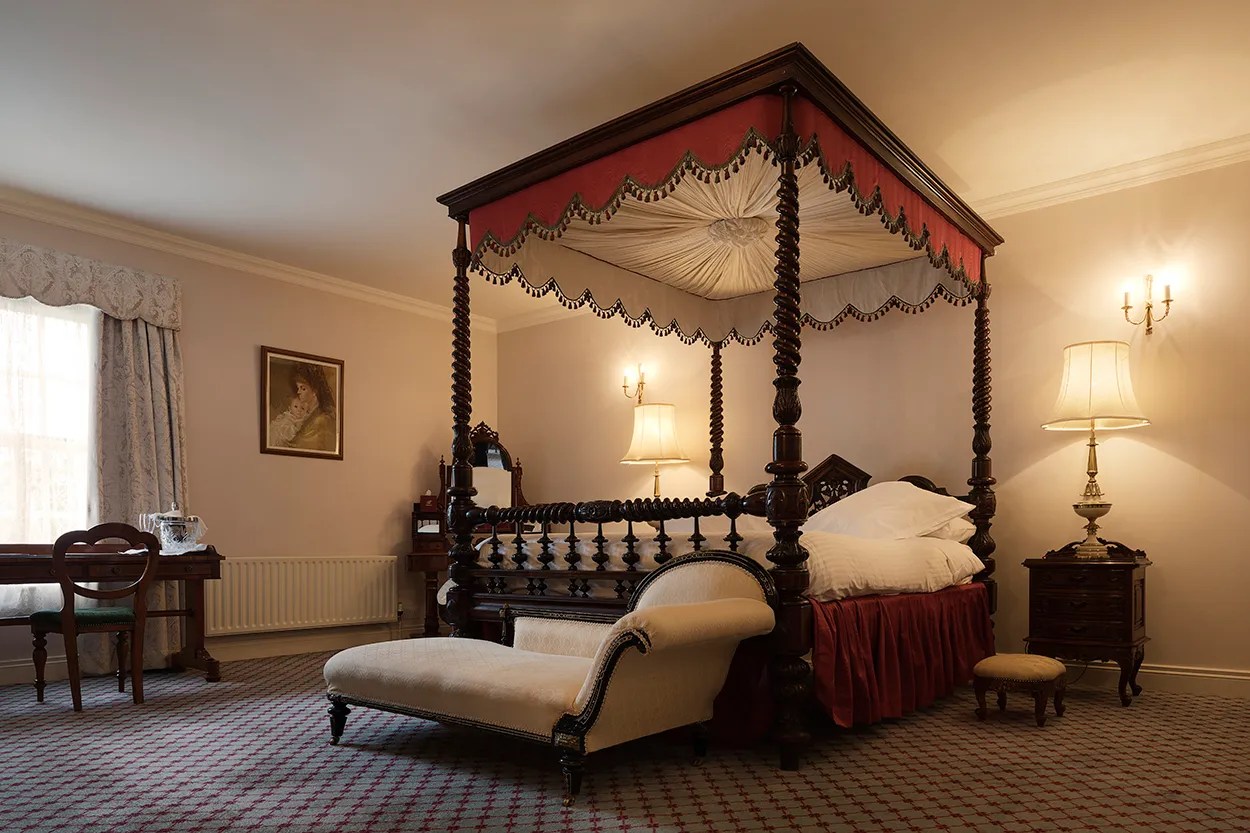
“We have 15 en suite guest bedrooms, all of which are carefully furnished with rare antiques, luxury fabrics, televisions, Egyptian cotton sheets, soft towels and indulgent toiletries.” They also do weddings and have a restaurant.
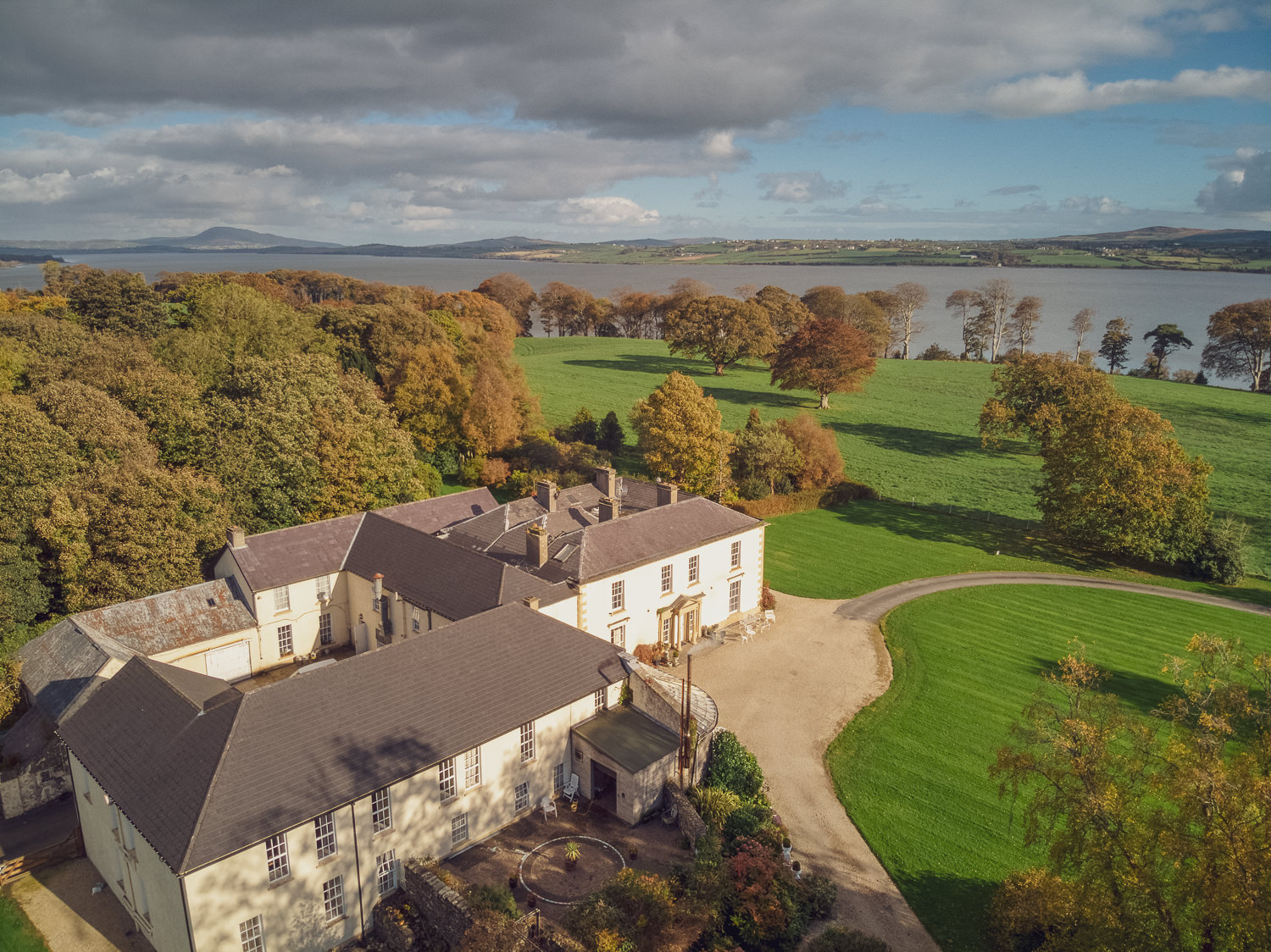
Mark Bence-Jones writes in his A Guide to Irish Country Houses (1988):
p. 70. “(Campbell-Grove/IFR) A two storey Georgian house, repaired and modernized by Thomas Brooke (nee Grove) ca. 1825. Tripartite pedimented doorcase, with Doric columns and pilasters. Attractive early C19 conservatory of glass and wood flanking entrance front.”
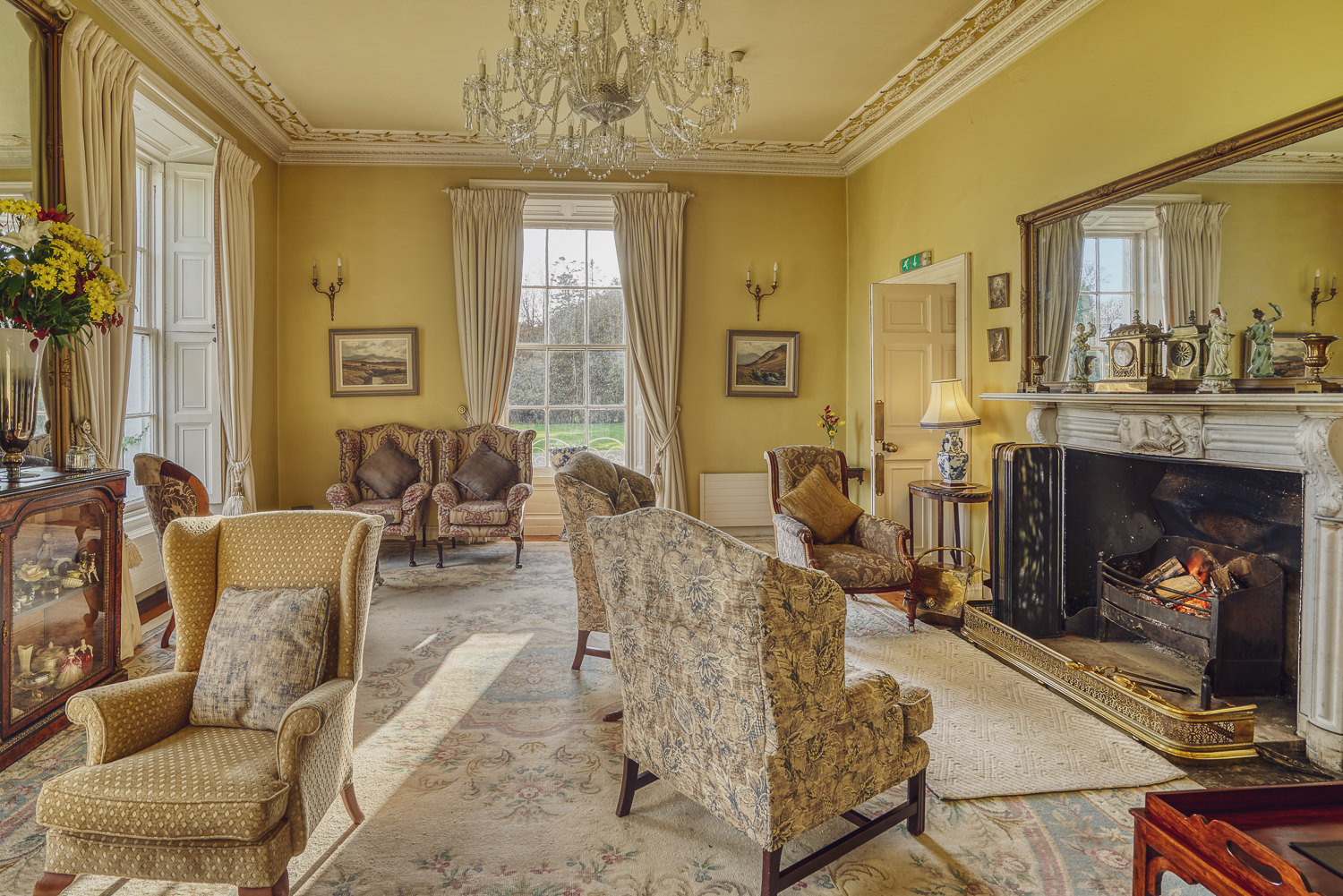
The website tells us:
“Castle Grove Country House Hotel is one of the few remaining family run private estates in the North West of Ireland. Located six miles north of Letterkenny, it provides the perfect base to explore the beautiful scenery of Donegal and the Wild Atlantic way.
“This near-original Georgian house was built in 1695 and is situated at the end of a mile-long avenue on the shores of Lough Swilly. The 250 acre grounds are made up of farmland and extensive gardens that were designed by Capability Brown.
“The Grove family estate dates to 1656 when William Grove resided at Castle Shanaghan, approximately 1 mile from the current location. During the ‘Siege of Derry’ James II lauded William Grove for his military knowledge, which led to the family house being burnt down after the siege.“
“After the ‘Siege of Derry’ in 1690, Castle Grove House was built in 1695 nearer Lough Swilly and was later added to between 1750 and 1780.“
“The ownership of Castle Grove throughout the years is as significant as the history of the house. It remained in the Grove family until 1970 when the last of the family died.
“The Grove/Boyton family played a pivotal role in the election of Daniel O’Connell to Parliament in 1828. Another famous son who left Castle Grove to achieve greatness was General Richard Montgomery who left the British Army in 1772 and emigrated to America where he later led the cavalry in the Battle of Quebec where he was slain in 1775. His bravery was later honoured by having his remains interred at St. Pauls cathedral in New York City.
“In 1970 Castle Grove passed to a relative who used it as a private home until 1989 when it was sold to the current owners, The Sweeney’s.“
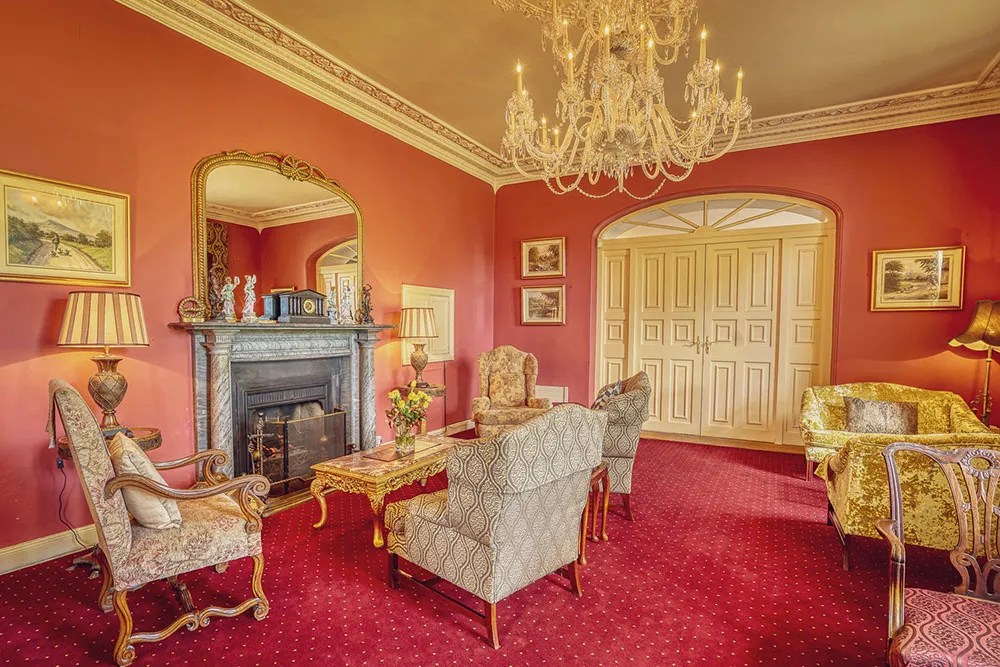
Timothy William Ferres tells us that the house was built in 1730 by William Grove. He was High Sheriff of County Donegal in 1727. (see http://lordbelmontinnorthernireland.blogspot.com/2016/03/castle-grove.html )
See also https://lvbmag.wpcomstaging.com/2025/07/22/the-sweeneys-castle-grove-letterkenny-donegal/
3. Cavangarden, Ballyshannon, Co Donegal – B&B
http://www.cavangardenhouse.com
The website tells us:
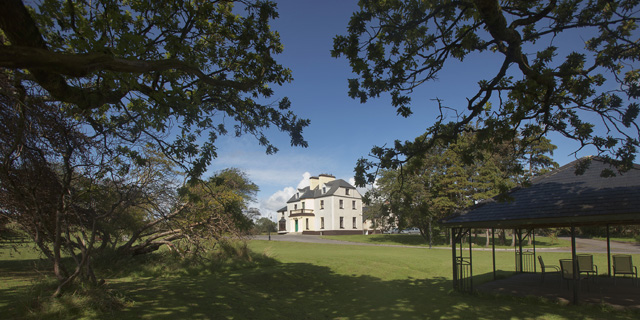
“Cavangarden House, a spacious Georgian period residence offering B&B accommodation dates back to 1750 when it was built by the Atkinson family and it still retains the character of that by-gone age, with antique furniture, majestic gardens and a private tree-lined entrance.
“Located in the tranquil Donegal countryside the house is now owned by the Mc Caffrey family and is surrounded by a working farm of 380 acres.“
Mark Bence-Jones writes in his A Guide to Irish Country Houses (1988):
p. 81. “Atkinson/LFI1958) A two storey gable ended house built 1781 by John Atkinson. Entrance front of one bay on either side of a central bow, to which an enclosed pillared porch was later added. Attic lit by windows in gable-ends; gable-ends truncated, making the roof partly hipped.”
The Atkinsons owned an estate in Co. Donegal from 1613, when William Atkinson (c.1580-c.1660) was granted several townlands to the north-east of Ballyshannon. They made their main residence at Creevy, but their house there was burned down in 1690 by supporters of King James II when Thomas Atkinson (c.1624-1702) and his son Thomas (1655-1738) were attainted by the Irish parliament for their support of William of Orange. The majority of their property was restored to the family in 1698, with the notable exception of Creevy, and they built a new house at Cavangarden, which remained the family’s seat until the 20th century.
The property passed from Thomas Atkinson (d. 1738) to his elder son, John Atkinson (1682-1748), and then to John’s son, Thomas Atkinson (1713-83). Thomas’s son, John Atkinson (1754-1833) seems to have been the first of the family to be a Justice of the Peace, and was probably responsible for building the present house at Cavangarden, even though the date traditionally given for it is a couple of years earlier than the date of his inheritance. (see https://landedfamilies.blogspot.com/2016/10/236-atkinson-of-cavangarden.html )
Self-catering in Cavangarden Court http://www.cavangardencourt.com/
4. Dunmore, Carrigans, Co Donegal – accommodation
https://www.dunmoregardens.ie/our-history/
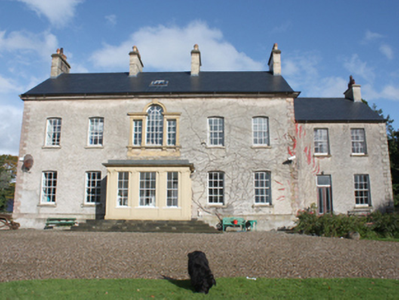
The website tells us that Agatha Christie (1890-1976) apparently visited Dunmore and enjoyed its gardens on a few occasions as a guest of the McClintocks of Dunmore, to whom she was related through marriage! The website informs us that the siege of Derry is a key event in the history of the area and that the army of King James II may have burnt the original house as it retreated.
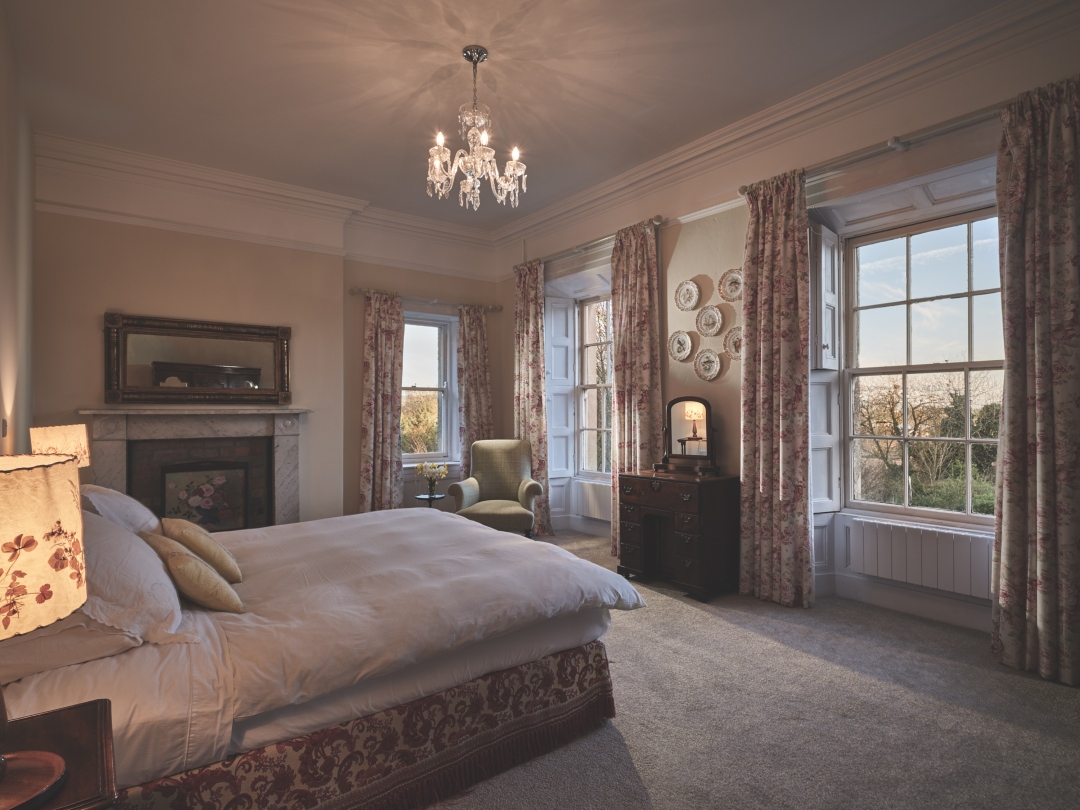
In 1709 the McClintocks demolished the ruins of Dunmore although the cellars remained and thus predate the existing house. The house as we know it was built in 1742.
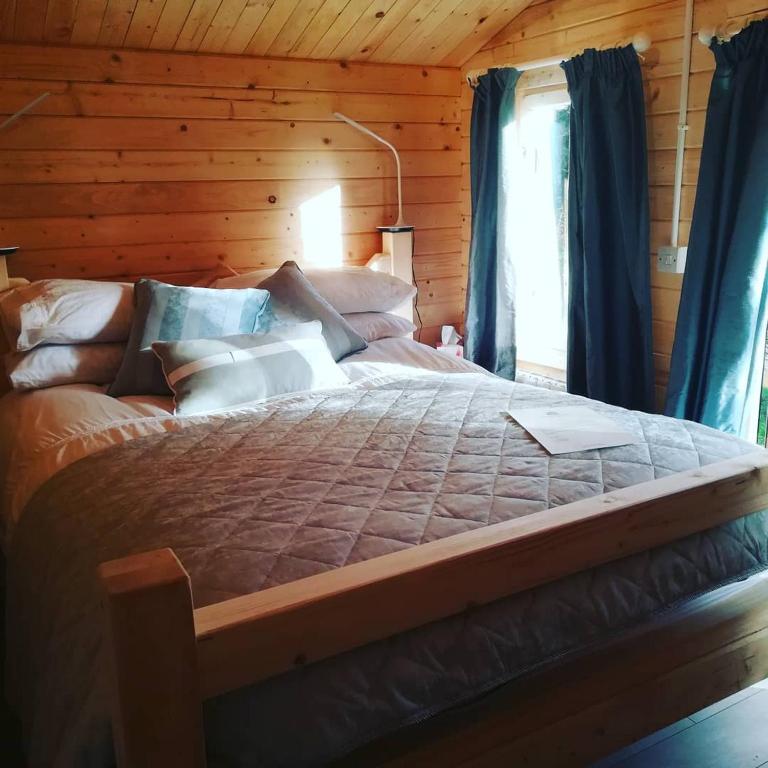
The house was purchased by the current owner’s grandfather, and was turned into a guest house and wedding venue in 2017. There is also a log cabin for accommodation.
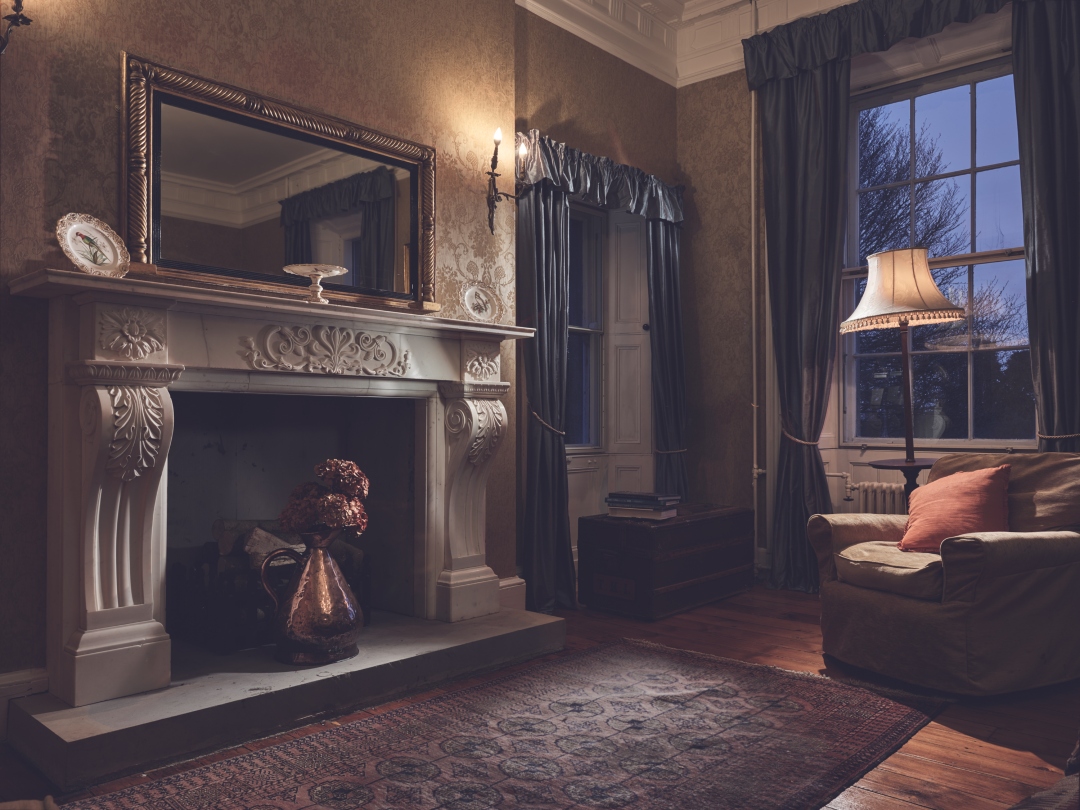
The website tells us: “The history of Dunmore starts with the Ulster plantations. Dunmore is situated just outside Carrigans, near Derry. It overlooks the Foyle and is just down the road from the castle of Mongavlin, where Red Hugh O’Donnell was born. After the flight of the Earls in 1607, when the O’Neills and the O’Donnells fled, the estates of these great Gaelic lords were confiscated and distributed among planters. Carrigans was a planter town. And it was the Scottish Stewarts and Cunninghams who settled in the area.
“The Harveys of Malin Head, who had been merchants in Bristol, originally owned Dunmore. Their daughter, Elizabeth, married William McClintock [1657-1724], apparently in 1685.“
A gatepost shows four key dates associated with Dunmore:
- 1620
- 1678 dh (David Harvey)
- 1709 wm (William McClintock)
- 1742 jm (John McClintock).
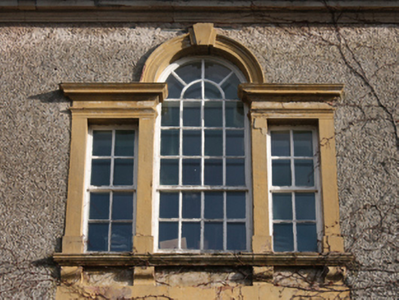
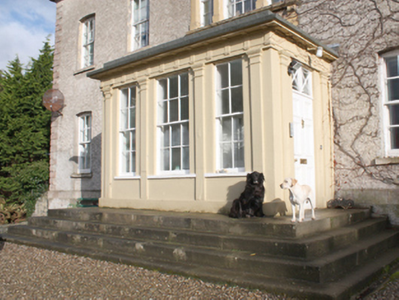
- Mark Bence-Jones describes Dunmore House in Burke’s Guide to Country Houses 1978 as “A gable ended mid C18 house which Dr Craig considers may be by Michael Priestly. 2 storey with an attic lit by windows in the gable ends, 5 bay front with central venetian window above tripartite doorway later obscured by a porch. Lower 2 storey wing added later. Staircase extending into central projection at the back of house.”
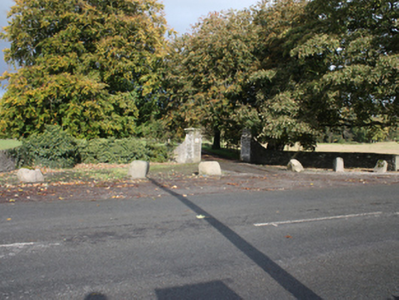
“Robert McClintock, 1804 -1859 [grandson of William], built the walls of the walled garden in the early 19th century. Certainly there was work on the walls as famine relief. There is a plague on the wall of the garden with the date of 1845.
“The oldest known picture of Carrigans village shows a mill. The mill was apparently built on the ruins of Carrigans castle.
“In the 20th century Robert McClintock lived at Dunmore. He was a keen and talented engineer. He built a series of interconnected ponds and a collection of sundials, scattered through the walled gardens. He also invented the Bangalore torpedo while in the British Indian Army unit, the Madras Sappers and Miners, at Bangalore, India, in 1912. They were a means of exploding booby traps and barricades left over from the Boer and Russo-Japanese Wars and were used at the Battle of the Somme.“
5. Lough Eske Castle, near Donegal, Co Donegal – 5 * hotel
https://www.lougheskecastlehotel.com
The Castle was largely gutted by fire in 1939, but has been rebuilt and renovated and is now an upscale hotel.
Mark Bence-Jones writes in his A Guide to Irish Country Houses (1988):
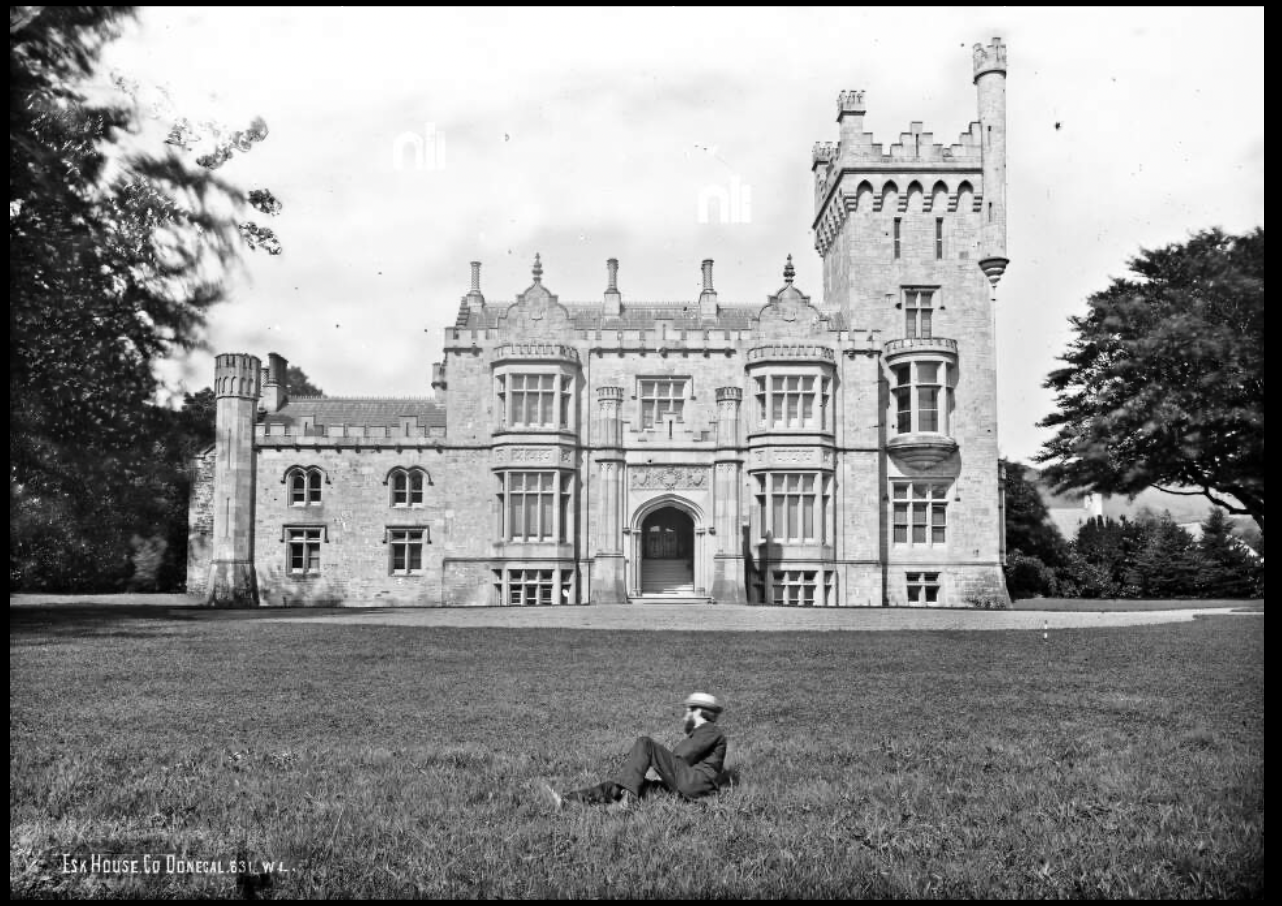
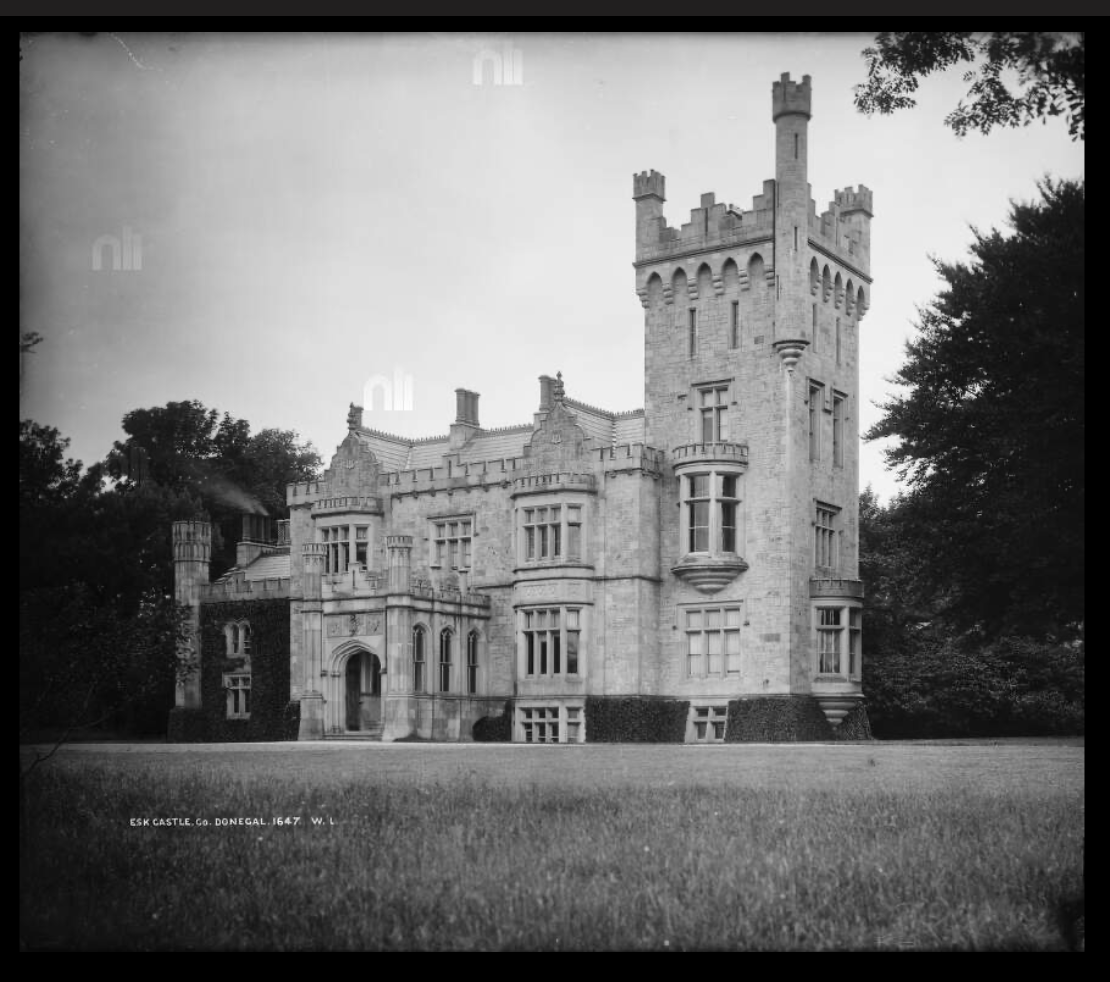
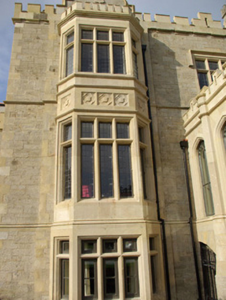
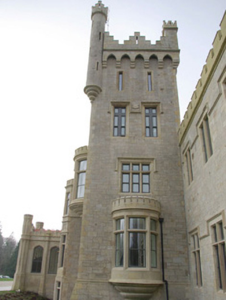
p. 192. “(Brooke, sub Brookeborough, V/PB; White/LGI1912) A Tudor-Baronial castle of 1866 by FitzGibbon Louch, built for the Donegal branch of the Brookes whose progenitor built Donegal Castle. Of ashlar; two storeys built over high basement, with four storey square tower at one end. Imposing Gothic porch betwen two oriels; battlemented parapet with two curvilinear blind gables. Tower with machicolations, crow-step battlements and curved corbelled oriels. Lower two storey battlemented range with corner turret at other end of front. Sold 1894, after the death of Thomas Brooke, to Major-Gen H.G. White. Largely gutted by fire 1939; but one wing remains intact and is still occupied.” As we can see, it has been rebuilt since Mark Bence-Jones wrote.
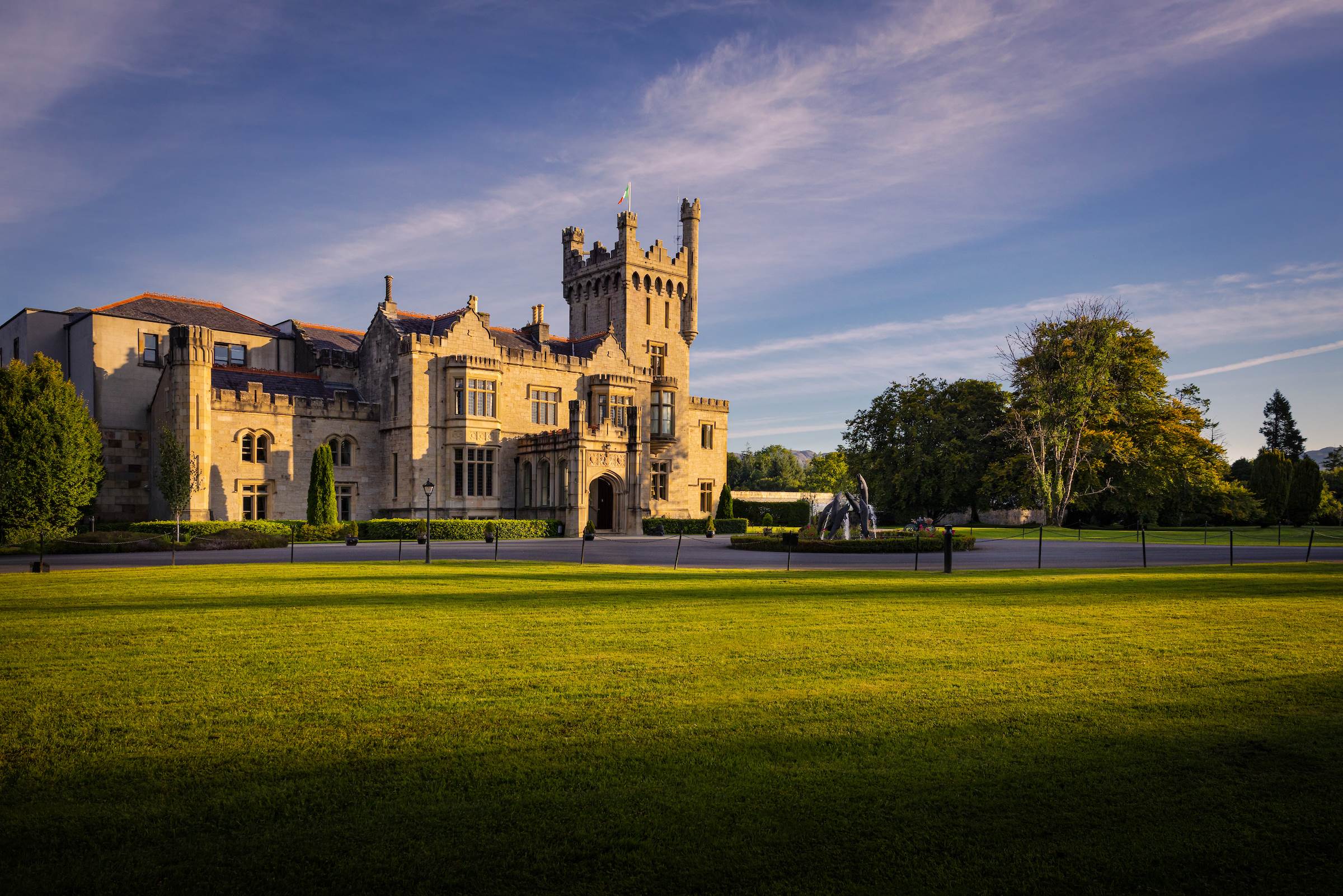
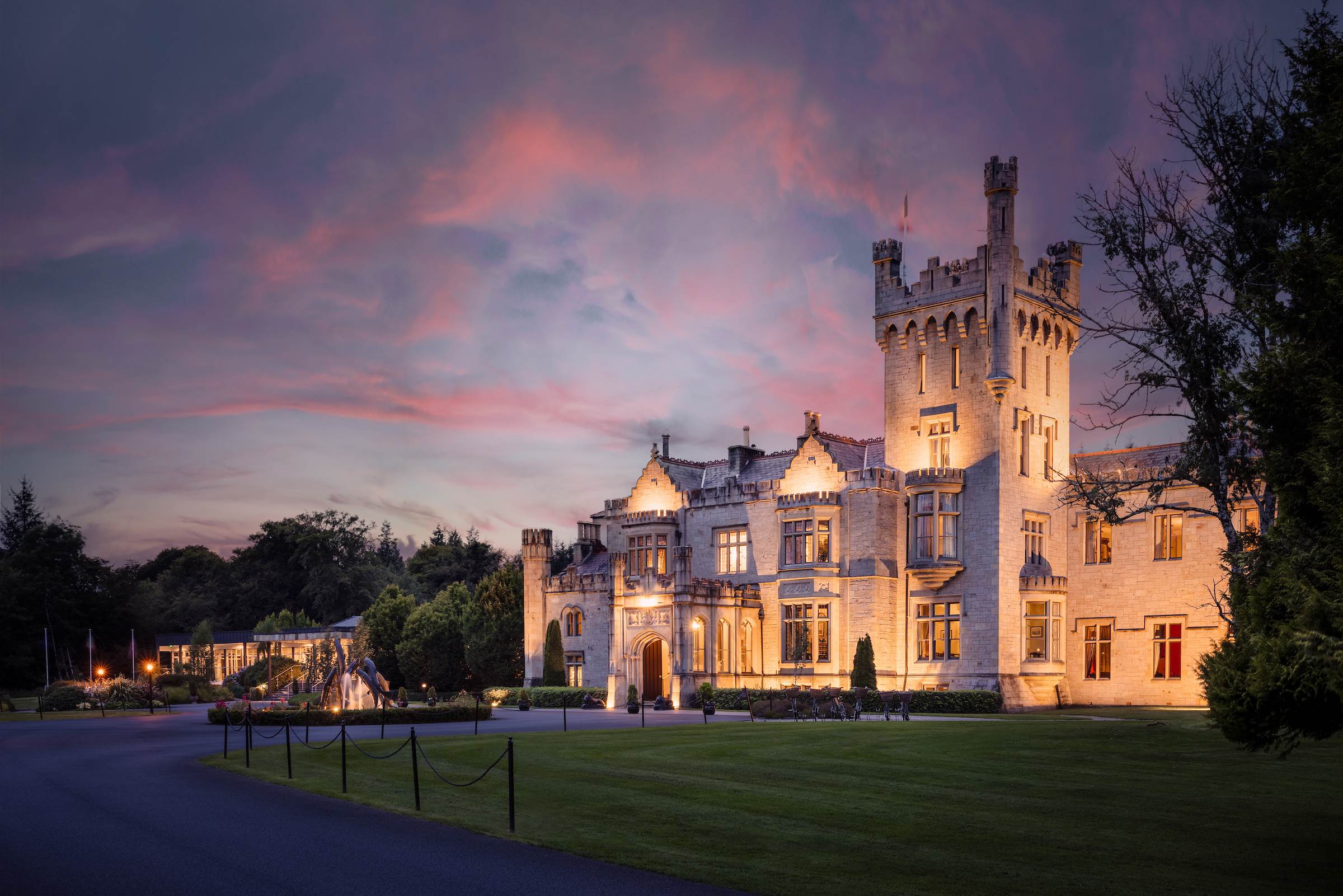
The National Inventory tells us that after the fire in 1939 Lough Eske was unoccupied and derelict until c. 2007. It was rebuilt and multiple modern extensions were added to the rear (north-west) and to the south-west elevation.
David Hicks has a chapter about Lough Eske Castle in his book Irish County Houses: Chronicle of Change (Collins Press, Cork, 2012). He tells us that it was built for Thomas Young, who inherited the property from his mother’s brother, Thomas Grove, who had taken the name Brooke when he inherited the Lough Eske property from his uncle Henry Vaughan Brooke (1743-1807). As a condition of inheriting the property, Thomas Young also had to adopt the Brooke name and coat of arms, so he became Thomas Young Brooke.
The family are descended from Basil Brooke (1567-1633) who lived in Brooke Manor in County Donegal. He was granted Donegal Castle and large amounts of land in Donegal, including the land on which Lough Eske was built.
His son Henry (d. 1671) lived in Brookeborough, County Fermanagh. He was granted land in Fermanagh after he fought to suppress the 1641 uprising. He married three times and had several children. Henry’s son Basil Brooke (1638-1692) married and had a son, Henry Brooke (1692-abt. 1725). He married Elizabeth Vaughan, daughter of Colonel George Vaughan of Buncrana, County Donegal. They had a son, Basil Brooke (abt. 1705-1768), who married Jane Wray from Castle Wray, County Donegal. Their children were Henry Vaughan Brooke and Rose Vaughan Brook.
Henry Vaughan Brooke (1743-1807) inherited Lough Eske. His sister was Rose Vaughan Brooke. She married James Grove (1725-1793) of Castle Grove, County Donegal. It was their son Thomas Grove who took the name Brooke. He, however, died childless in 1830, so the property passed to Thomas Young, son of Jane Grove (Thomas Grove Brooke’s sister) and Thomas Young.
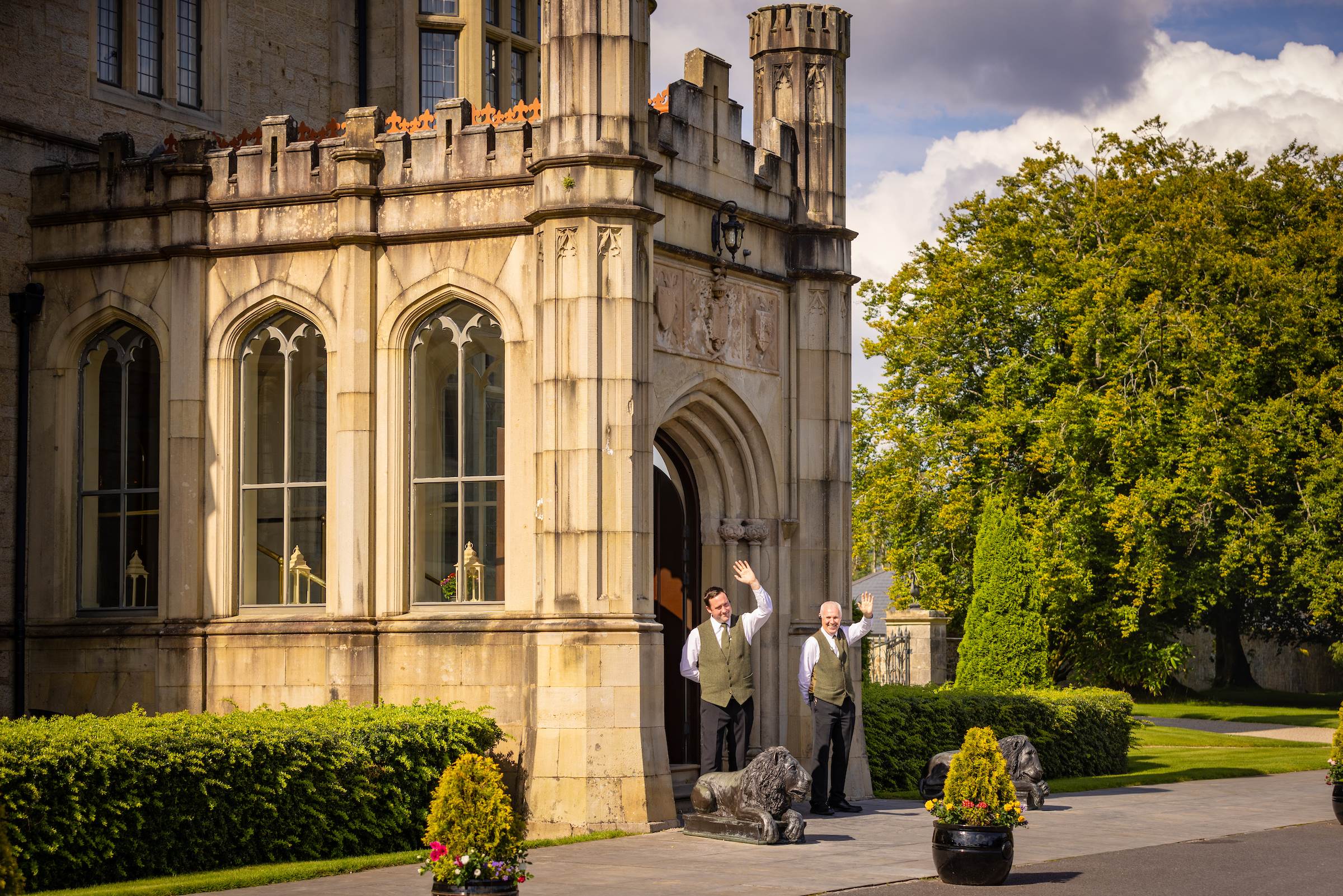
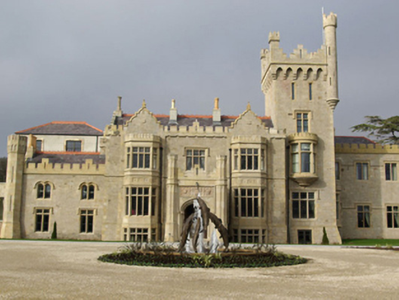
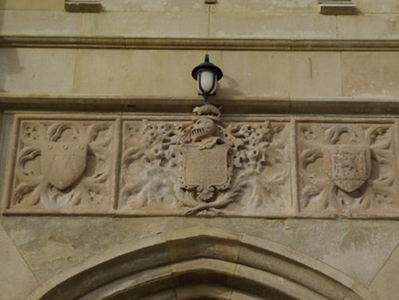
Thomas Young Brooke (1804-1884) placed the Brooke coat of arms over the front door of the castle which he had built. It was built on the site of an old Jacobean house. His architect, Fitzgibbon Louch was from Derry. The National Inventory tells us that the present edifice replaced earlier houses on the same site, which where built in 1621 and 1751. It is possible that the building retains fabric from the earlier 1751 house as the south-east part of the house occupies much the same footprint as the earlier building. The 1621 house, the Inventory tells us, “was probably built for the Knox family, who owned the Lough Eske Castle until 1717 when it passed, through marriage, into the ownership of the Brooke family.”
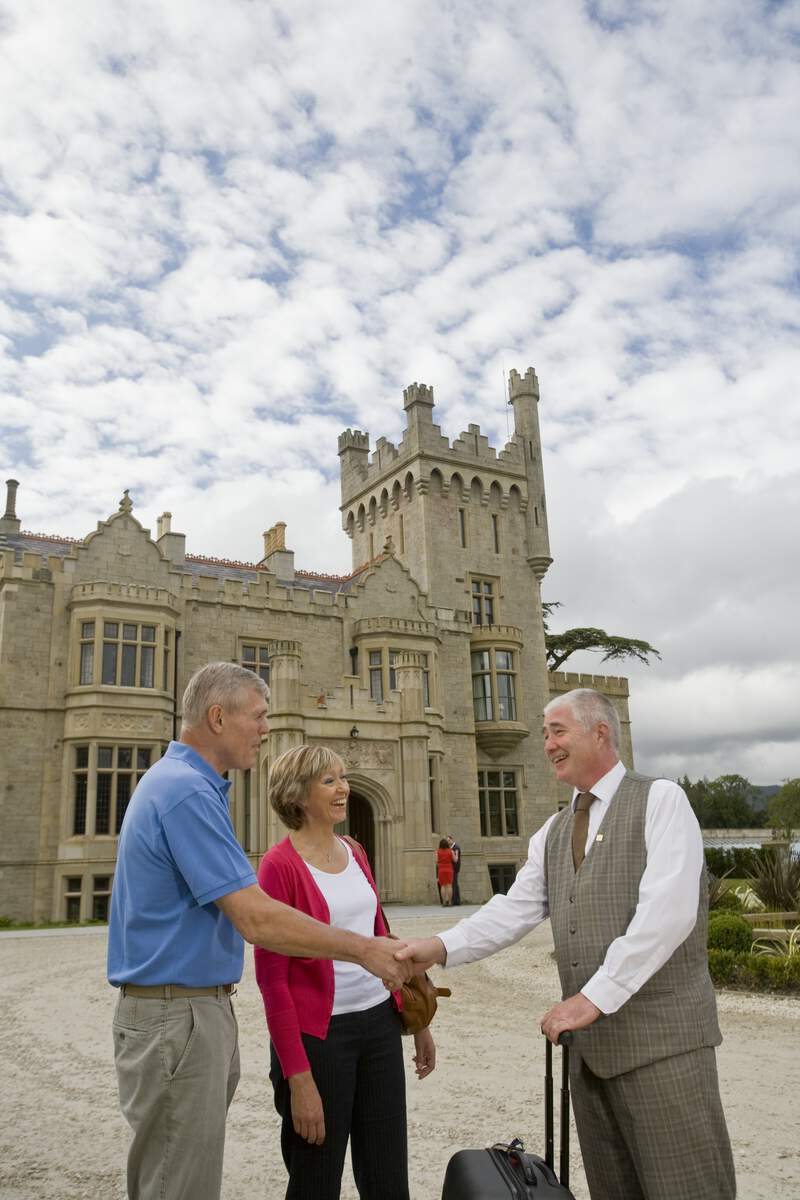
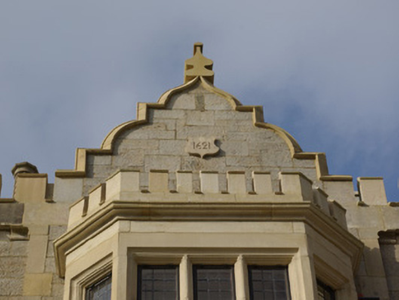
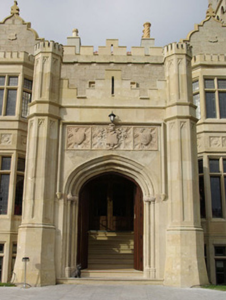
The entrance front of the castle is 130 feet long, and the front door is under a carved stone porch.
The hotel website tells us a bit of the history:
“The O’Donnells, a powerful 14th-century Donegal clan, had their seat at the original Lough Eske Castle, with wealthy landowners ruling from the castle and Edwardian glamour played out. In the 1860s, the last resident of the castle, Thomas Brooke, inspired by Victorian Gothic style, set about creating a comfortable and refined residence, with dramatic turrets, exquisite stained-glass windows and intricate stone carvings, to create Lough Eske Castle as we know it today. So grand was the transformation that the great and the good, including novelist and playwright Oscar Wilde, enjoyed the hospitality of the Brooke family.
“Over time, the property fell into disrepair, with its decline hastened by fire. By the early Noughties, nobody wanted the crumbling ruins, or could see its future clearly. That is with the exception of Donegal man, Pat Doherty, who saw clearly a unique opportunity – and a bright future. His vision to restore the castle to its original splendour and to provide hospitality on a grand scale in the scenic county of his birth was realised in 2007, when Lough Eske Castle received its first hotel guests.
“To discover more about the history of the castle and grounds, guests can take a guided Castle history tour or explore the estate’s lakeside woodland trails by foot or on the hotel’s complimentary bicycles.”
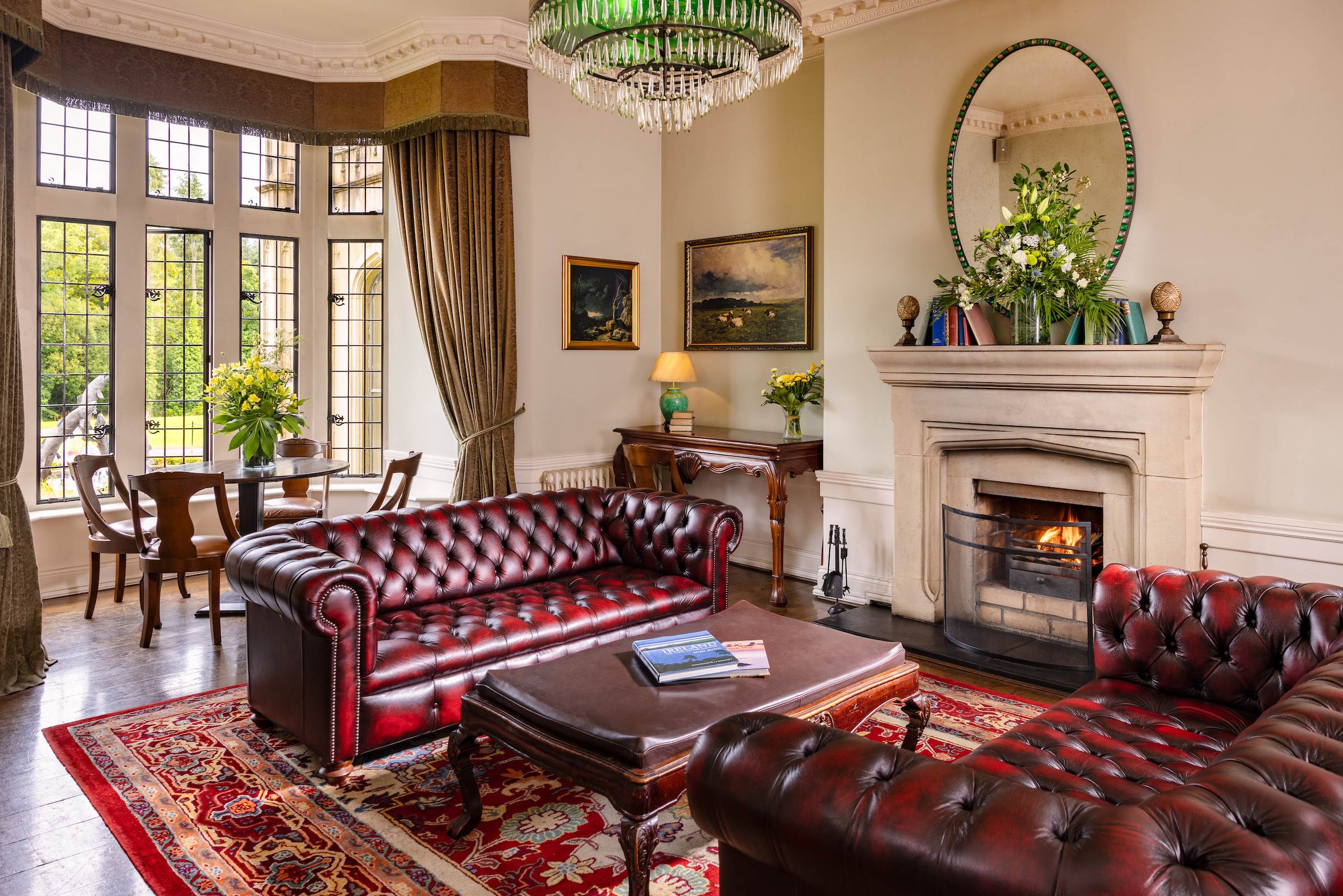
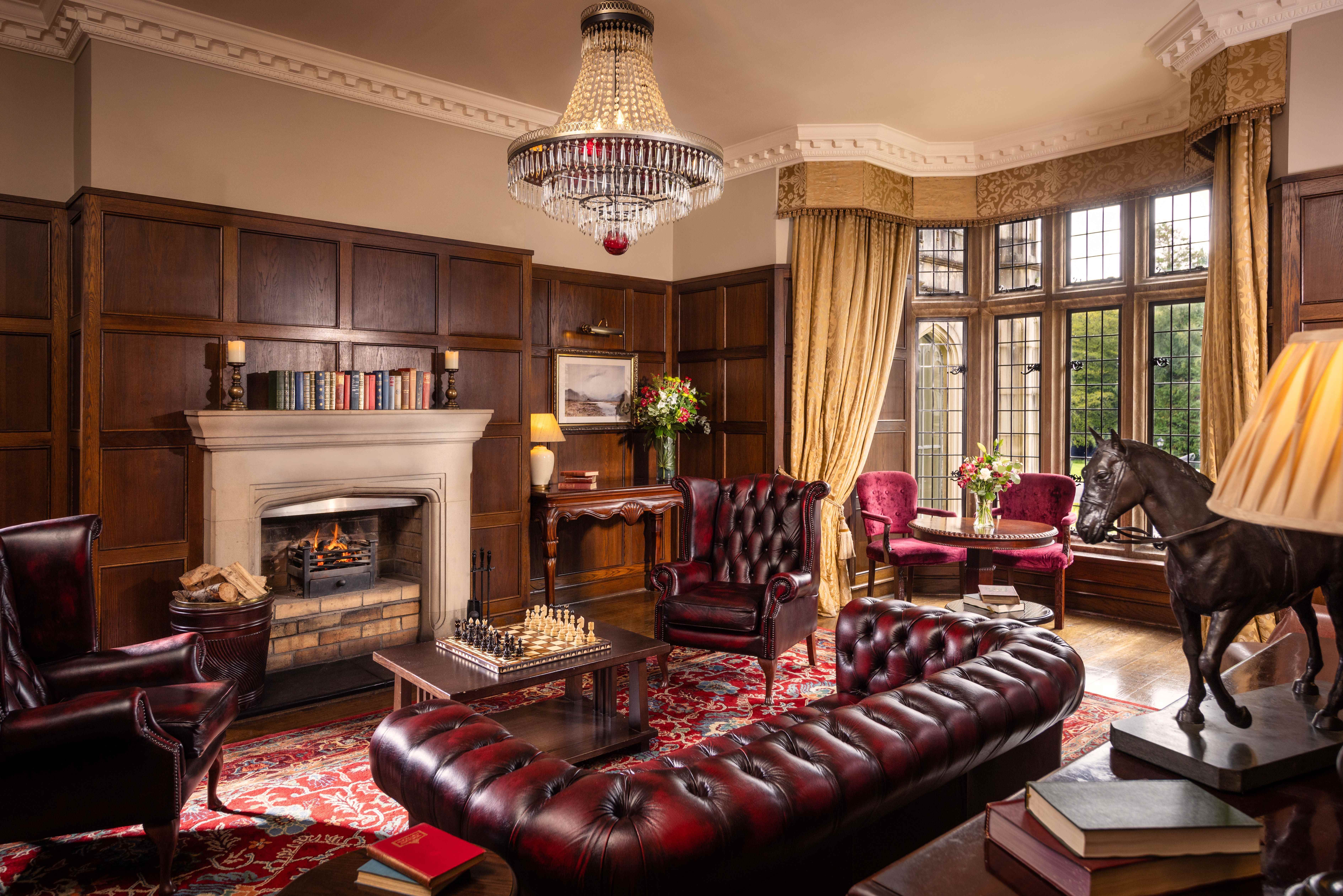
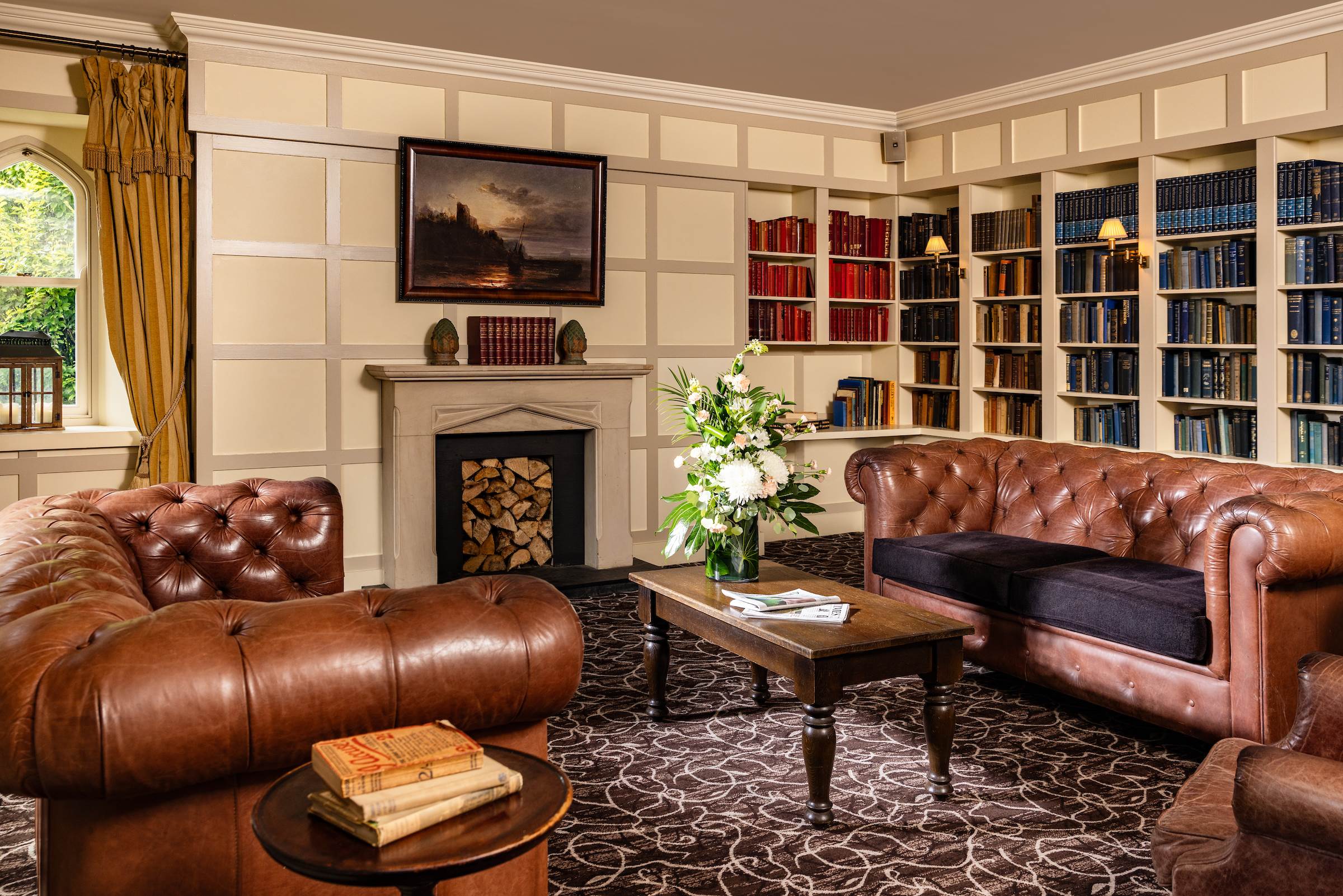
The National Inventory description continues:
“Set back from road in extensive mature wooded and landscaped grounds to the south-west corner of Lough Eske, and to the north-east of Donegal Town. Mature parkland to the south and wooded grounds to the west and the south-west. Modern gravel forecourt to the south-east. Associated outbuildings to the rear, walled garden to the north-east, gate lodges to the east and to the south/south-west , memorial cross to the east, and two-storey building to the north. Rubble stone boundary wall to estate, now largely ruinous. Remains of earlier castle in grounds to the east. [this is an O’Donnell castle]
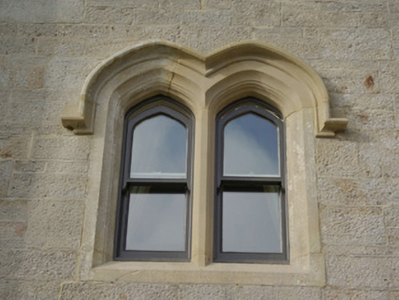
“This rambling Elizabethan-style or Tudor Revival house, with its dramatic roofline of Tudoresque chimneystacks, turrets, curvilinear gables, machicolations and crenellated parapets, is one of the more important elements of the built heritage of County Donegal. It is well-built using local ashlar sandstone masonry and it is extensively detailed with carved and cut sandstone of the highest quality (the sandstone is apparently from Monaghan’s Quarry near Frosses, and was transported to the site along a road specifically constructed for the task). The central three-storey block with the entrance porch flanked by canted-bay windows is symmetrical, but the other elevations of the main block, the tower, and the ancillary wings are irregular, which creates an interesting and complex plan with contrasting elevations and perspectives.“ “
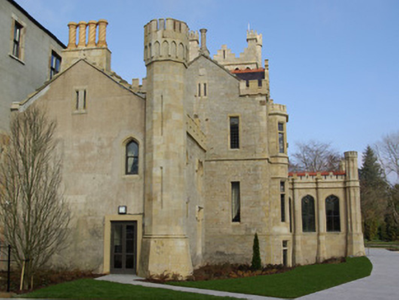
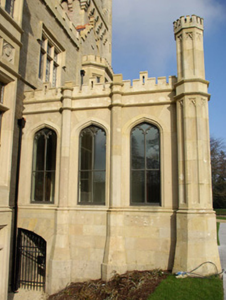
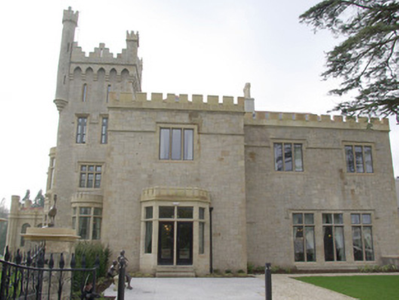
The National Inventory continues: “Lough Eske Castle is a notable example of the nineteenth century penchant for dramatic architecture, and is built in a highly effective revivalist fifteenth/sixteenth/early seventeenth-century architectural idiom that compliments the spectacular site and perhaps references the history of the surrounding area (the history of the Brooke family who arrived as part of the Plantation at the start of the seventeenth century and of Donegal Castle in particular). Lough Eske Castle was originally built to designs by Fitzgibbon Louch (1826 – 1911) for Thomas Brooke. The main contractor involved was Albert Williams, and the clerk of works was a Michael Stedman. The finely carved coat-of-arms/family crest over the main doorway is of the Brooke family.”
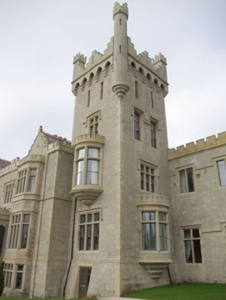
When Thomas Young Brooke died in 1884 the castle was advertised for sale. It was purchased by Major General Henry George White in 1894, who moved his family here from Wales. His son Major Henry White (d. 1936) inherited the castle in 1906. A Celtic high cross marks his father’s grave on the property.
Henry extended the castle in 1911, adding a ballroom wing, and he modernised it with electricity and new plumbing.
The family left the castle during the Irish Civil War, since many big houses were being burned down. The contents were sold and the house placed on the market.
The National Inventory continues: “The estate later passed into the ownership of the Knee family who ran a hotel here from 1930 until 1939. The castle was largely burnt-out during a disastrous fire in 1939, and remained derelict until c. 2007 when it was renovated and extended to form a hotel. The façade was re-created in these works using the original designs. This fine edifice forms the centrepiece of an extensive collection of related structures along with the outbuildings to the rear, the walled garden to the north-east, gate lodges to the east and to the south/south-west , memorial cross to the east, and a two-storey building to the north, and represents an important element of the built heritage and history of the local area.”
The castle was sold after the fire to Scott Swan, David Hicks tells us, who renovated and lived in one of the wings. It was sold again and lay empty for years until Donegal man Pat Doherty, CEO, chairman and founder of Harcourt Developments, who renovated it to be a five star hotel.
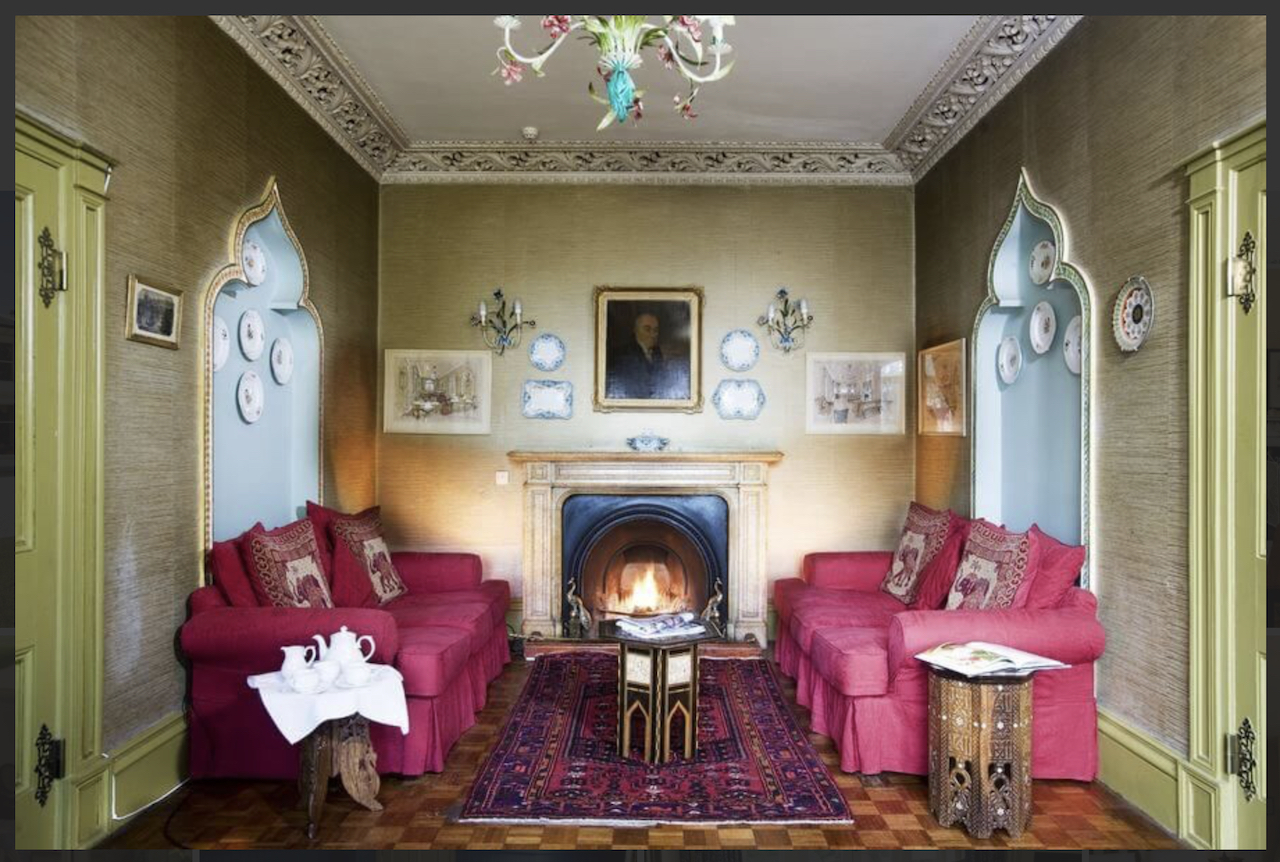
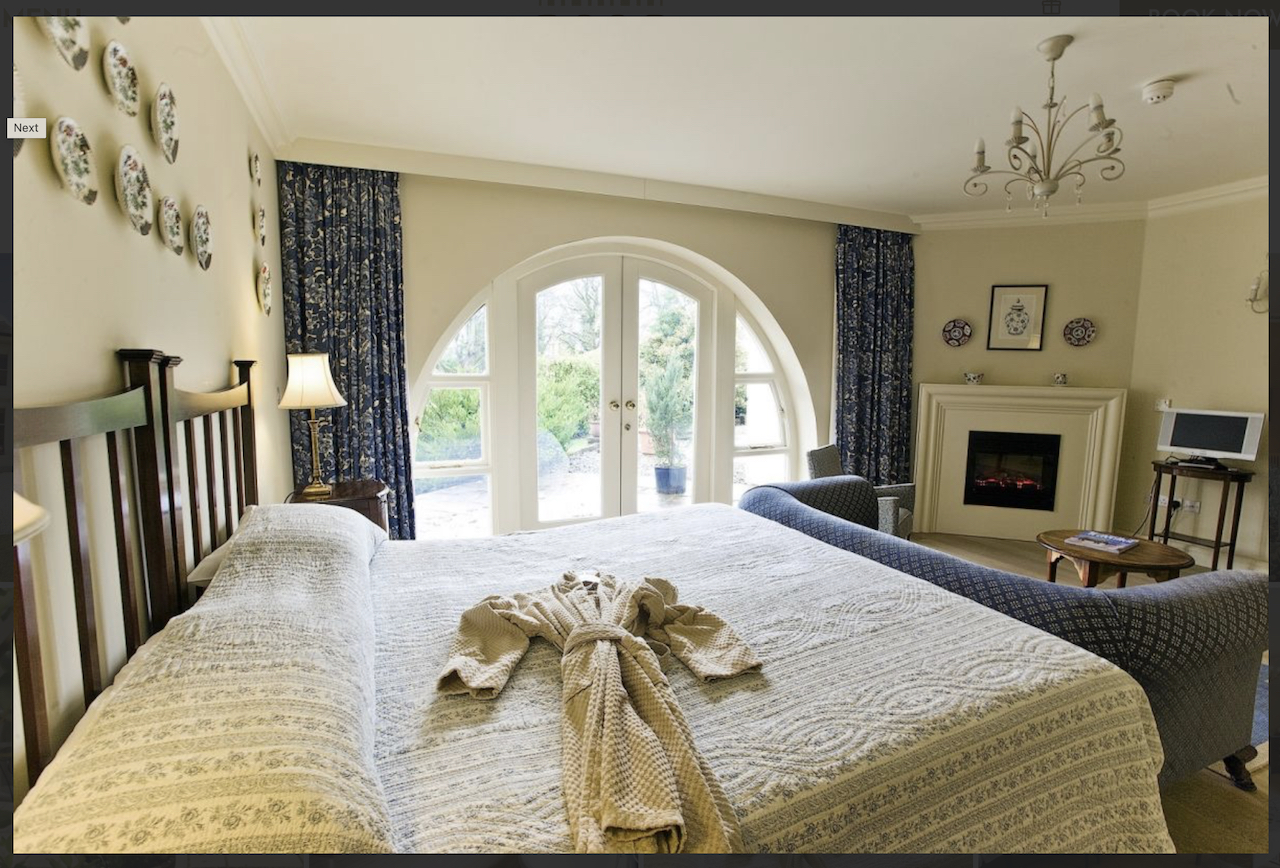
6. Rathmullan House, Co Donegal – hotel
My friends love to visit this hotel when they visit from Pennsylvania! I haven’t been there yet. The website introduces it:
“At Rathmullan House we are proud to say that we have welcomed generations of guests and friends for almost 60 years. Set in 7 acres of tranquil wooded grounds overlooking Lough Swilly and at the beginning of Ireland’s Wild Atlantic Way coastline, our location is idyllic, but it is our genuine hospitality that sets us apart.
“With the second generation of the Wheeler family now looking after the 4 star hotel, they have retained many classic features and traditional elements but with the modern touches that you expect. Good food with a relaxed personal service are the corner stones which Rathmullan House has been built on.
“Our award winning restaurant, The Cook & Gardener restaurant is renowned for its locally sourced and expertly cooked food, with many ingredients source from our own Walled Garden.”
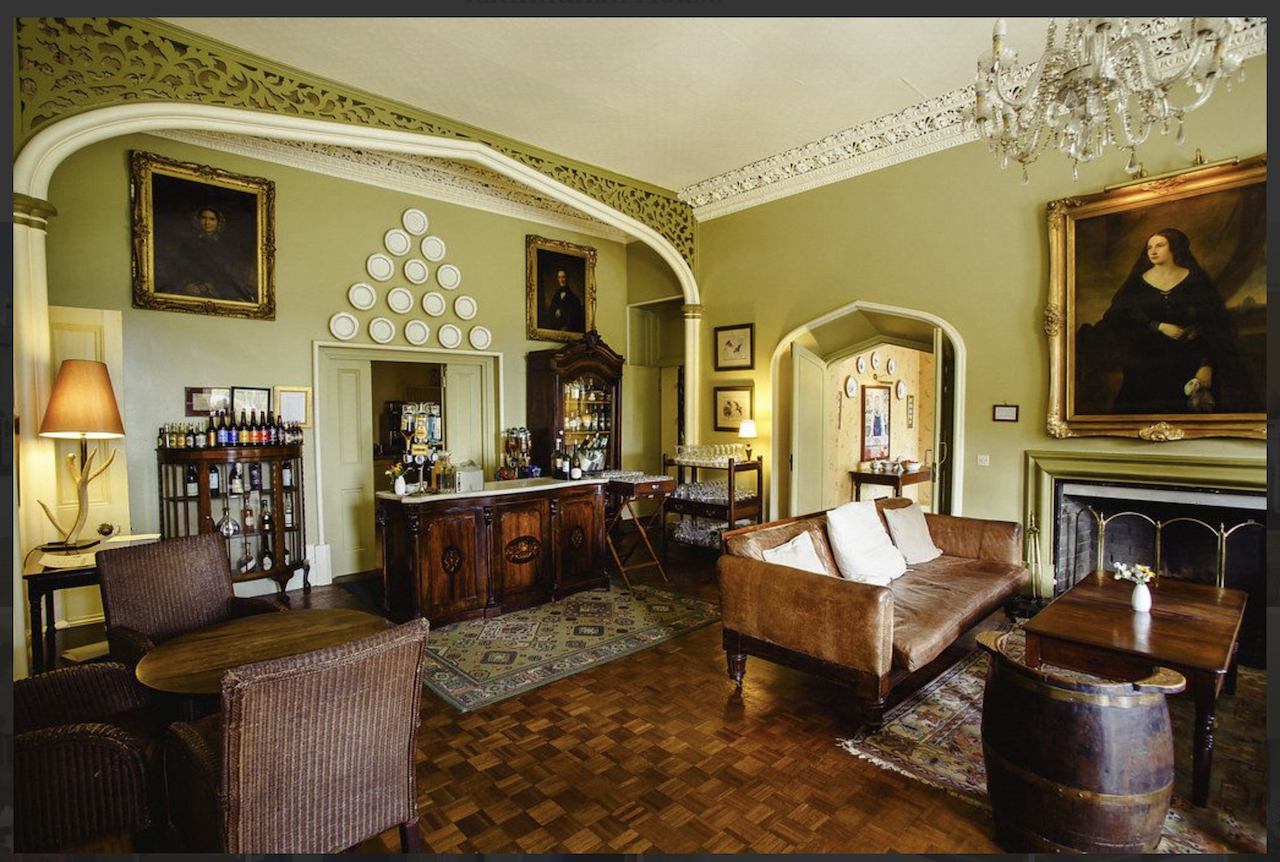
The website tells us:
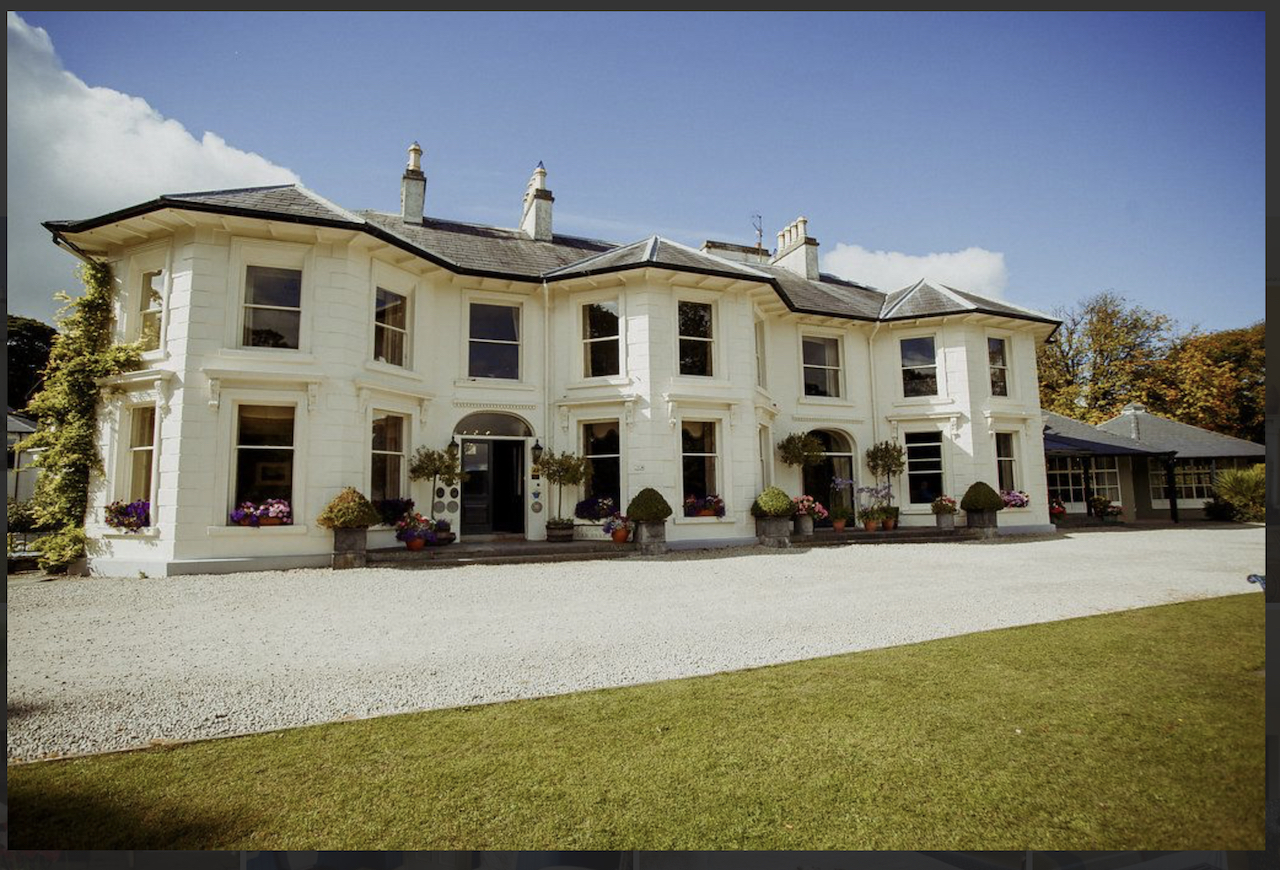
“The original house was built in typical Georgian style around 1760s and was part of the Knox family estates. Bishop Knox of Derry and Raphoe [William Knox (1762-1831)] built the house as a bathing place when he left the priory in Rathmullan to move to Prehen in Derry.“
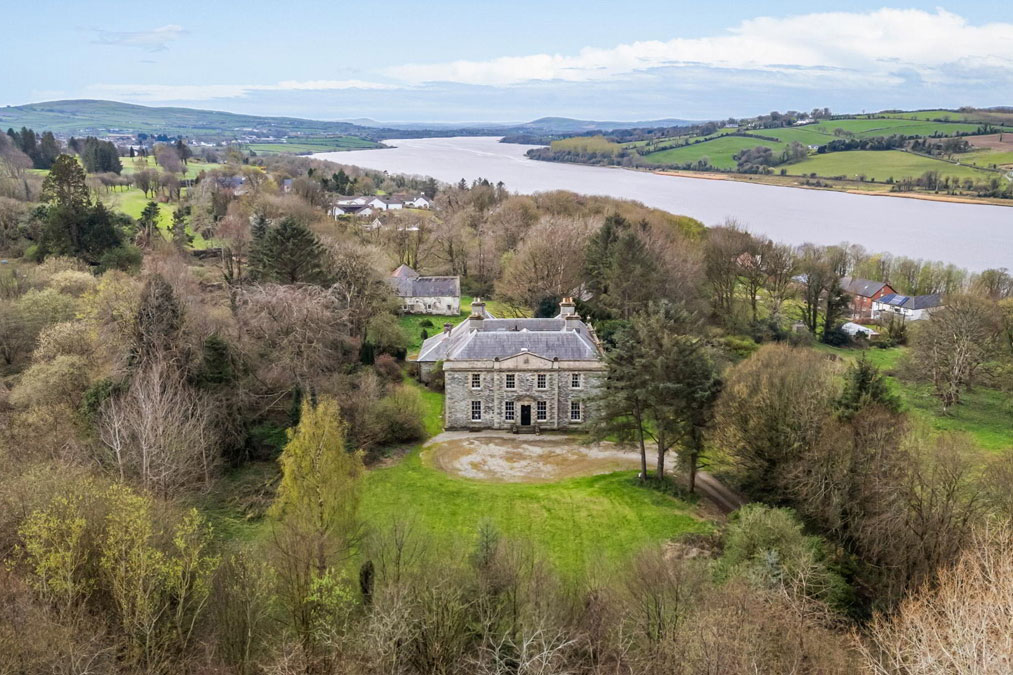
Bishop Knox’s father was Thomas Knox, 1st Viscount Northland of Dungannon in County Tyrone and his mother Anne Vesey came from Abbeyleix House in County Laois. His brother Thomas was 1st Earl of Ranfurly of Renfew in Scotland.
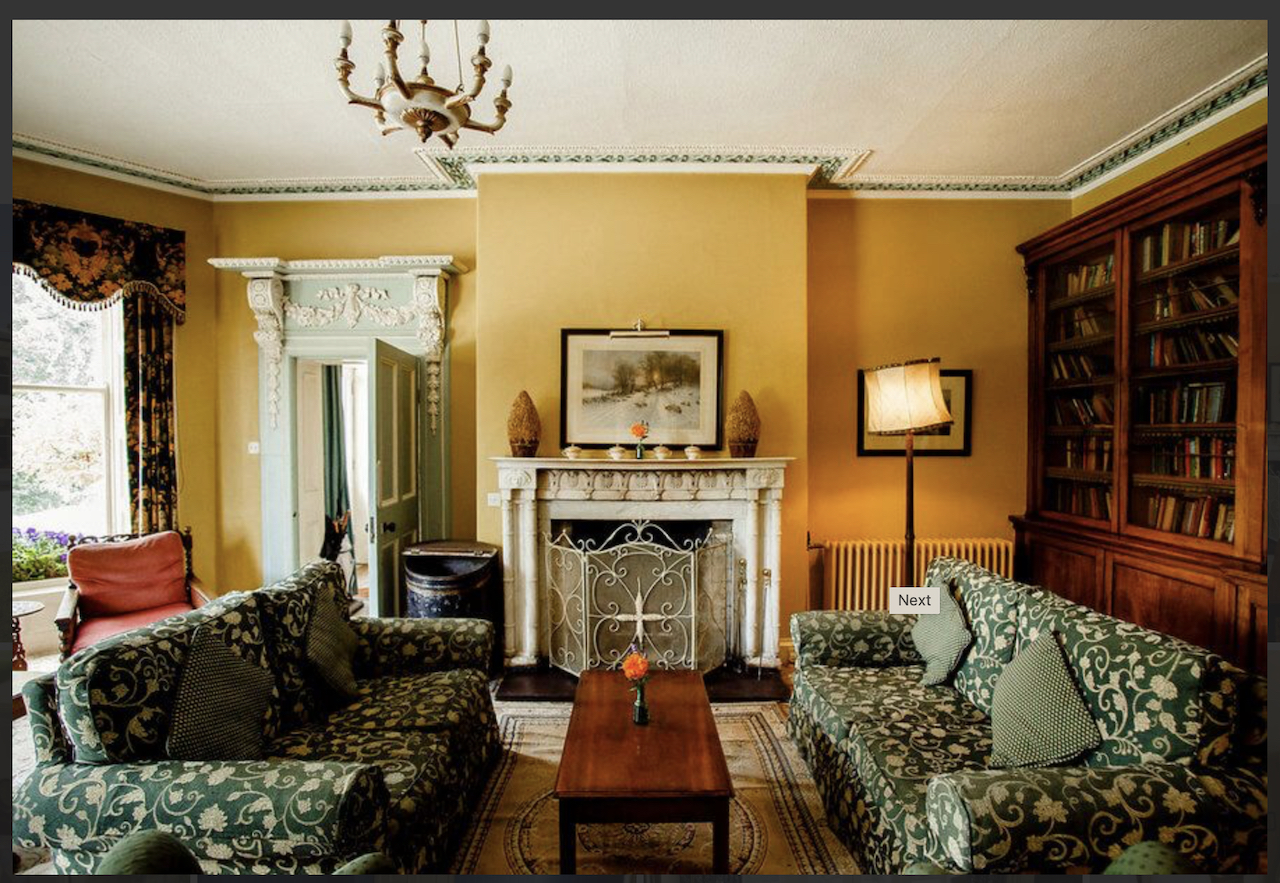
The website continues: “Later in the 1800s it became the country residence of the Batt family who were linen brokers and founders of the Belfast bank, now the Northern and Northern Irish Bank. The Batt family townhouse in Belfast is now Purdysburn Hospital.
“Thomas Batt’s substantial renovations in 1870 doubled the house in size. The three bay windows were added and the grounds extensively planted. The Batt family resided here until the 1940’s. After the war the Holiday Fellowship used the house as a centre for walking holidays until the train service to Buncrana ceased.
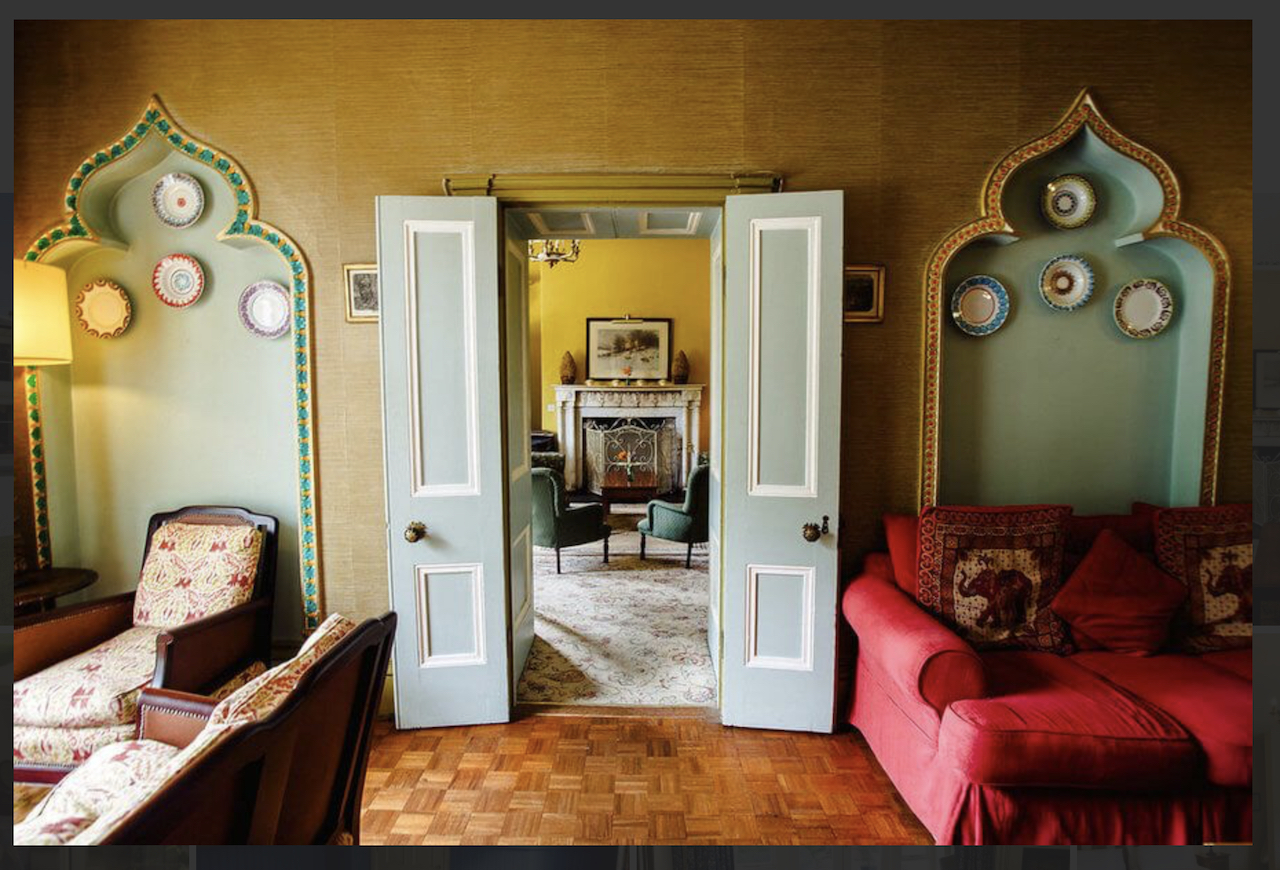
“Bob and Robin Wheeler bought the house in 1961. After lovingly transforming the dormitories back into the original bedrooms, they opened the house in 1962 as a 22 bedroom hotel. The original pavilion dining room designed by the late Dr Liam Mc Cormick was built in 1969 with a swimming pool and a new bedroom wing added in the 1990’s. In 2004, the new regency bedroom wing opened along with The Gallery Room and the Cook & Gardener restaurant was renovated and redesigned.
“Mark and Mary are now the second generation to run the house and take pride in keeping as many original features whilst adding in modern comforts for their guests.“
It looks gorgeous – I hope I can stay there someday!
7. Railway Crossing Cottage near Donegal town – Irish Landmark property
Sleeps two.
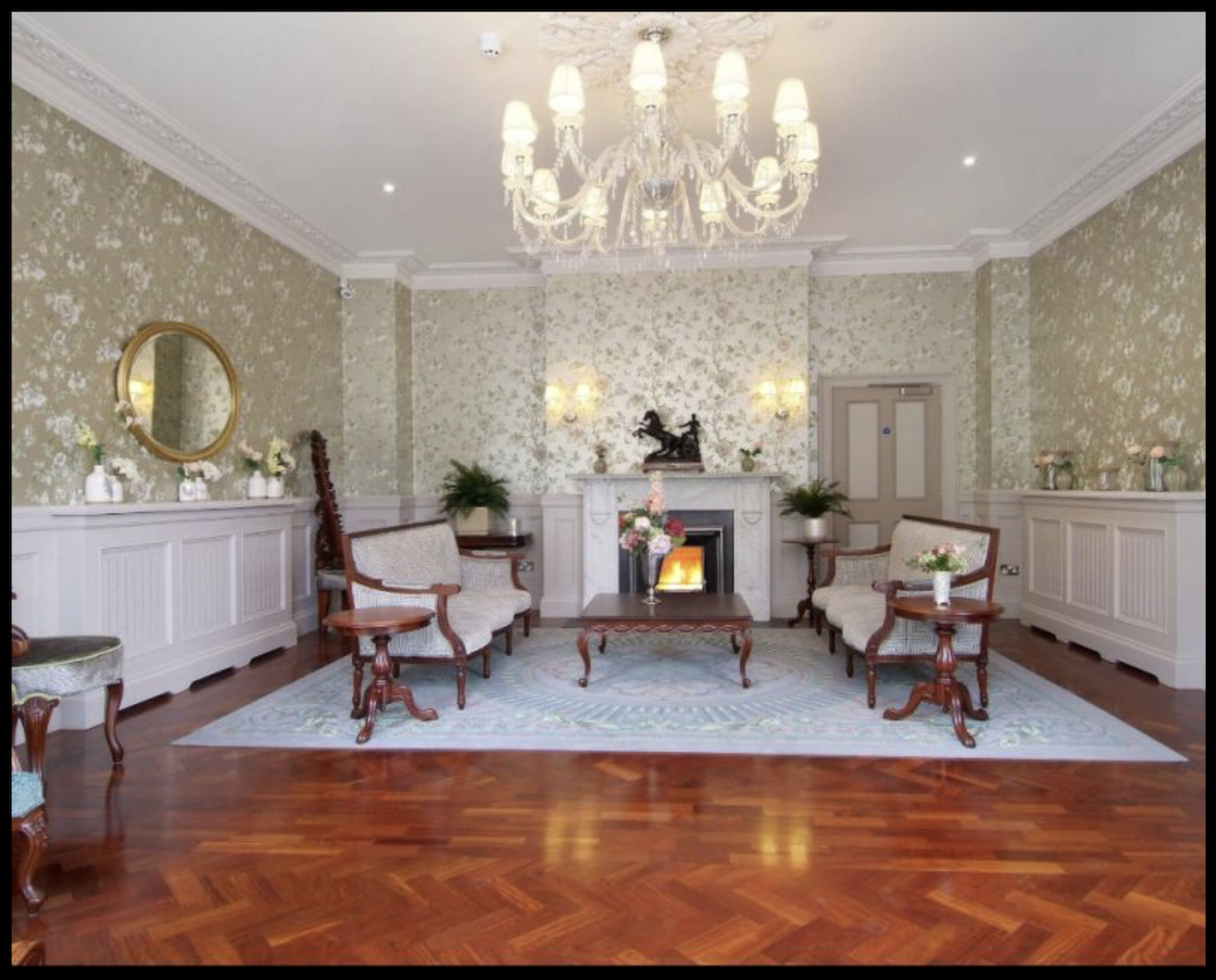
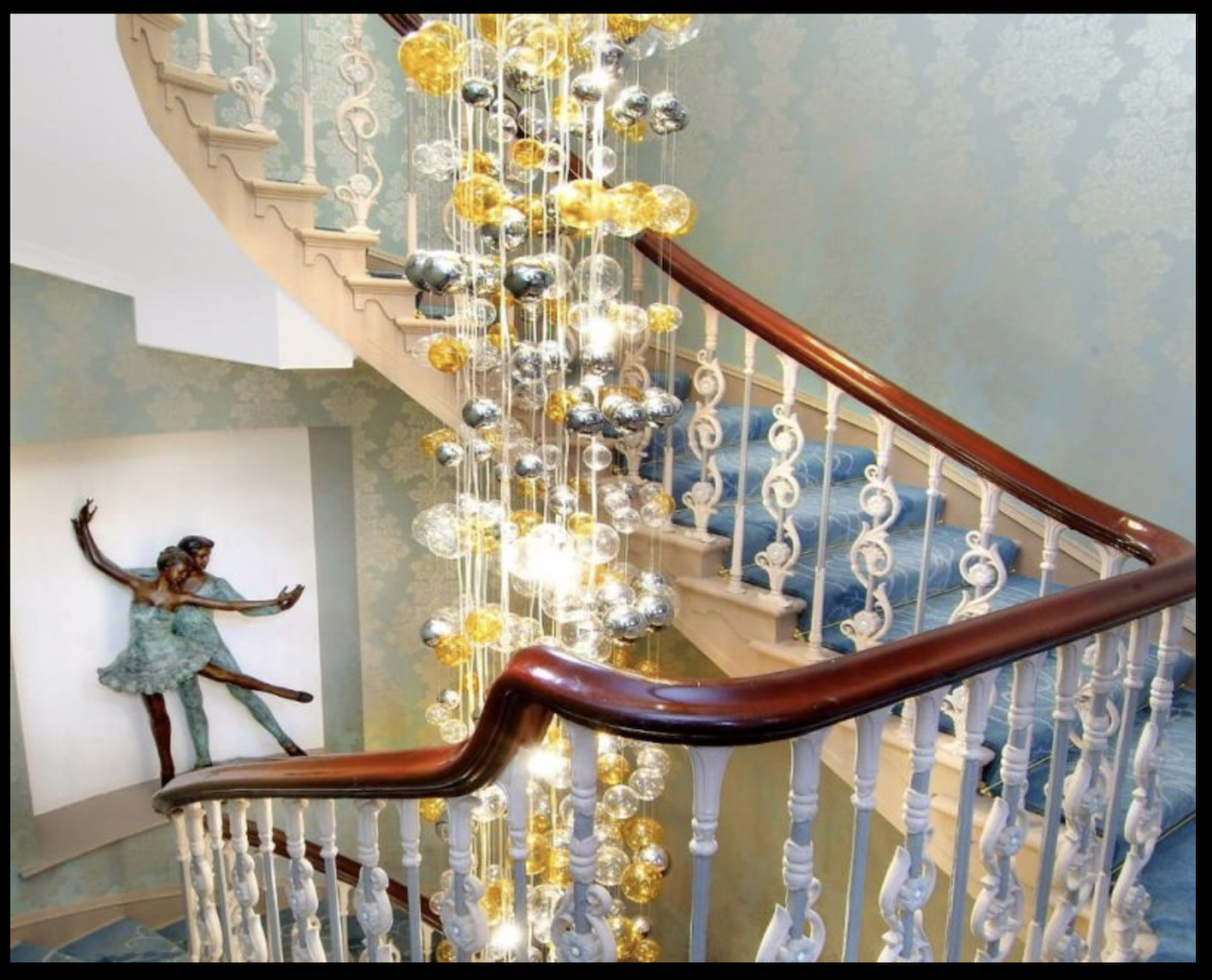
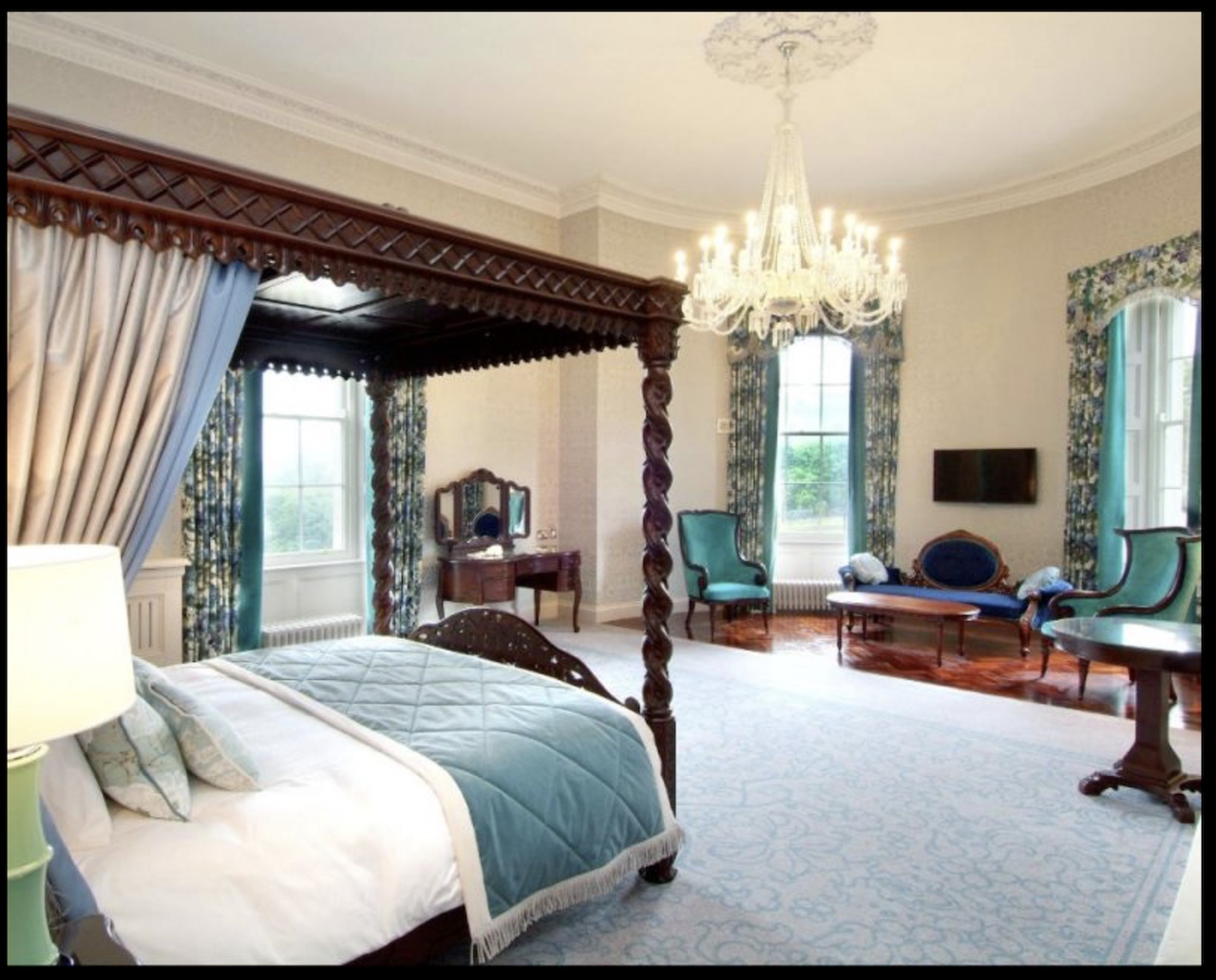
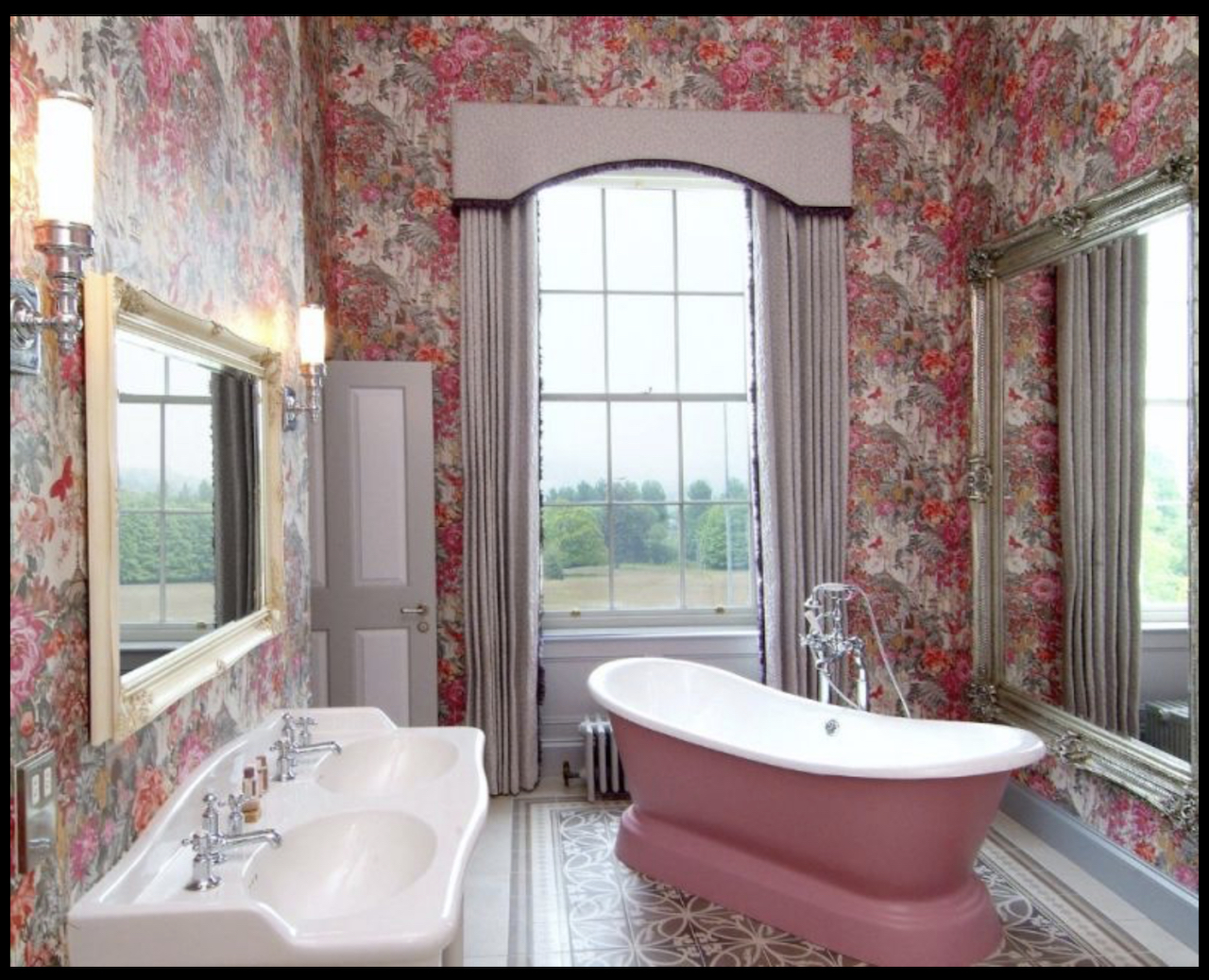
8. Rockhill House, Letterkenny, Co Donegal – hotel
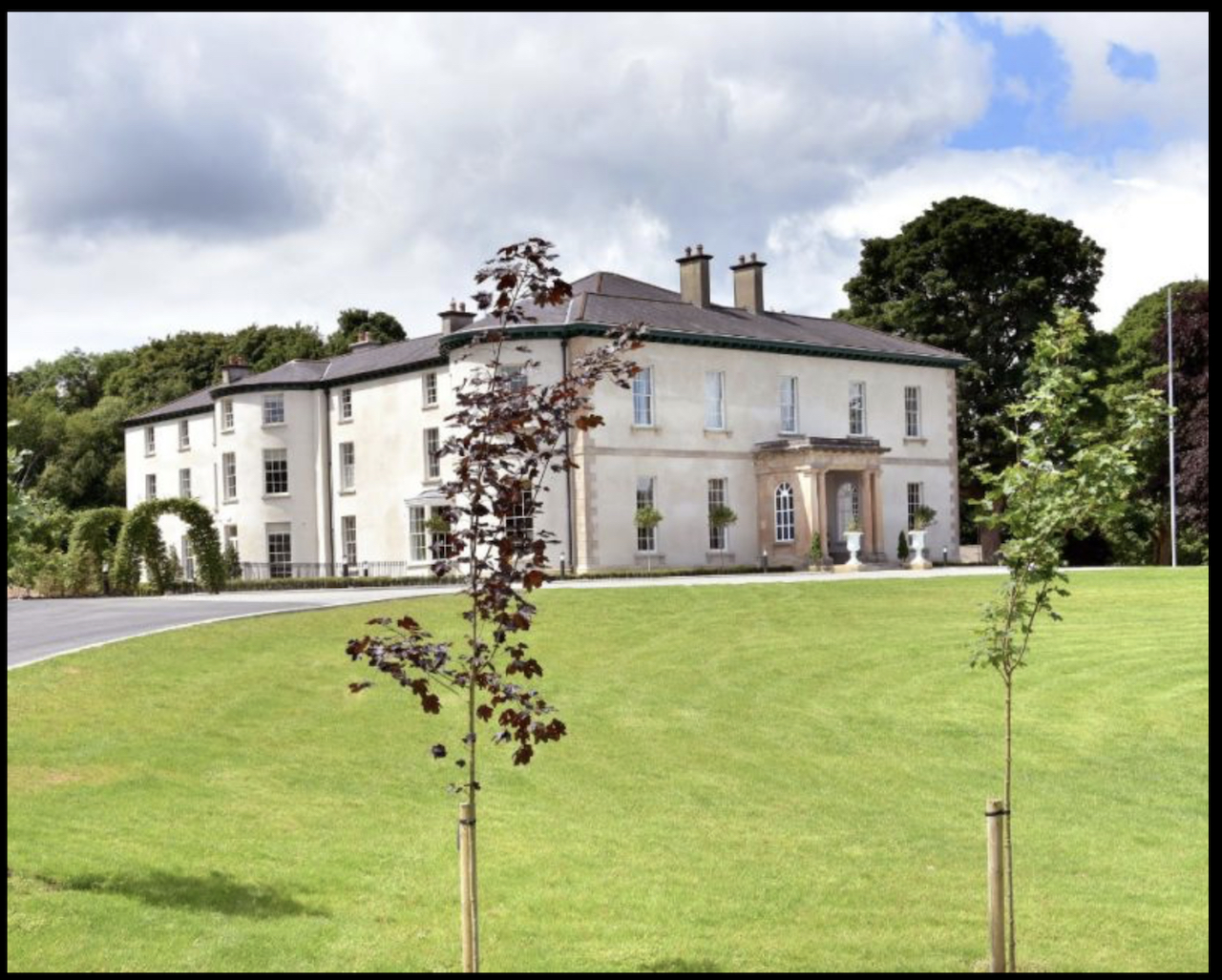
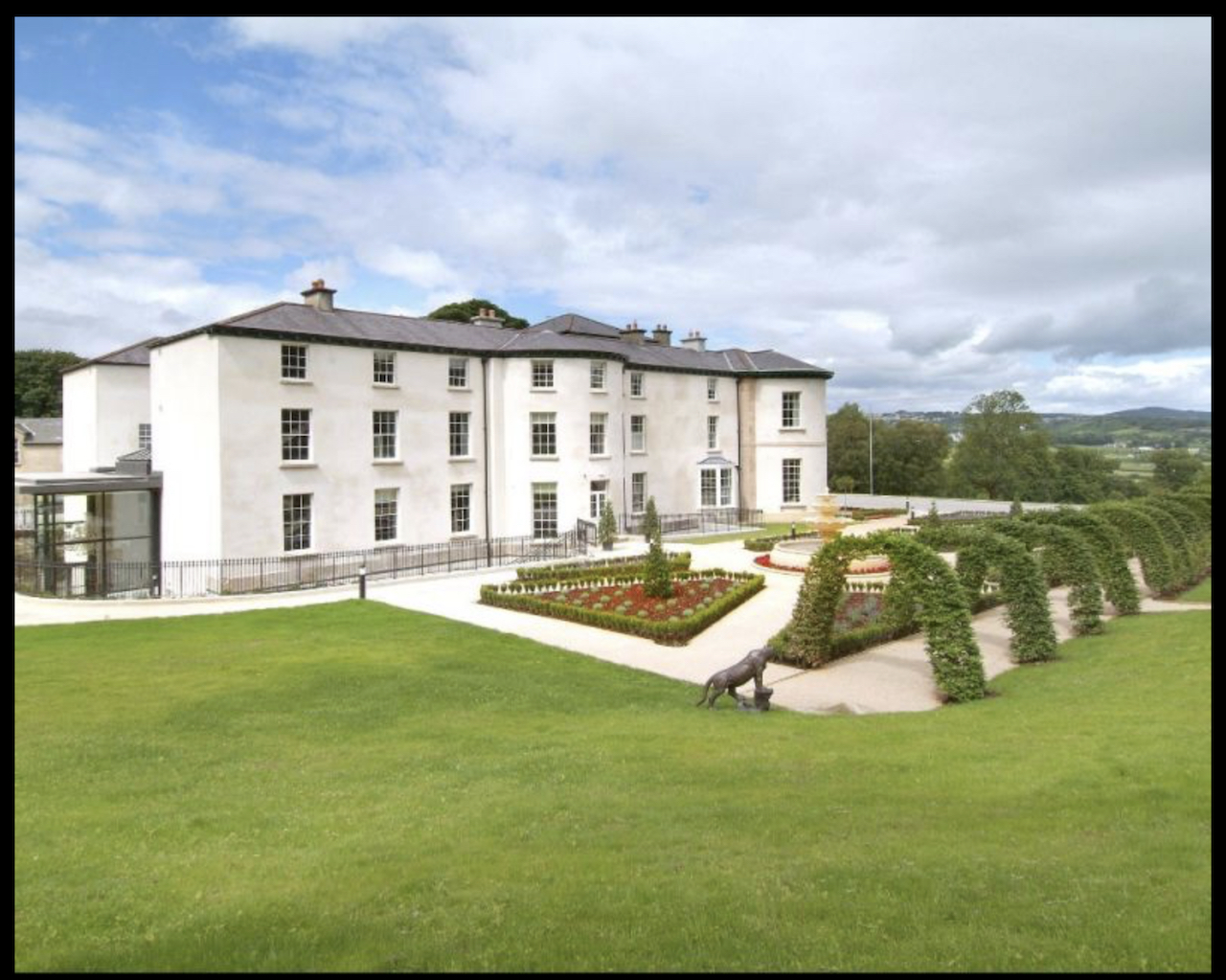
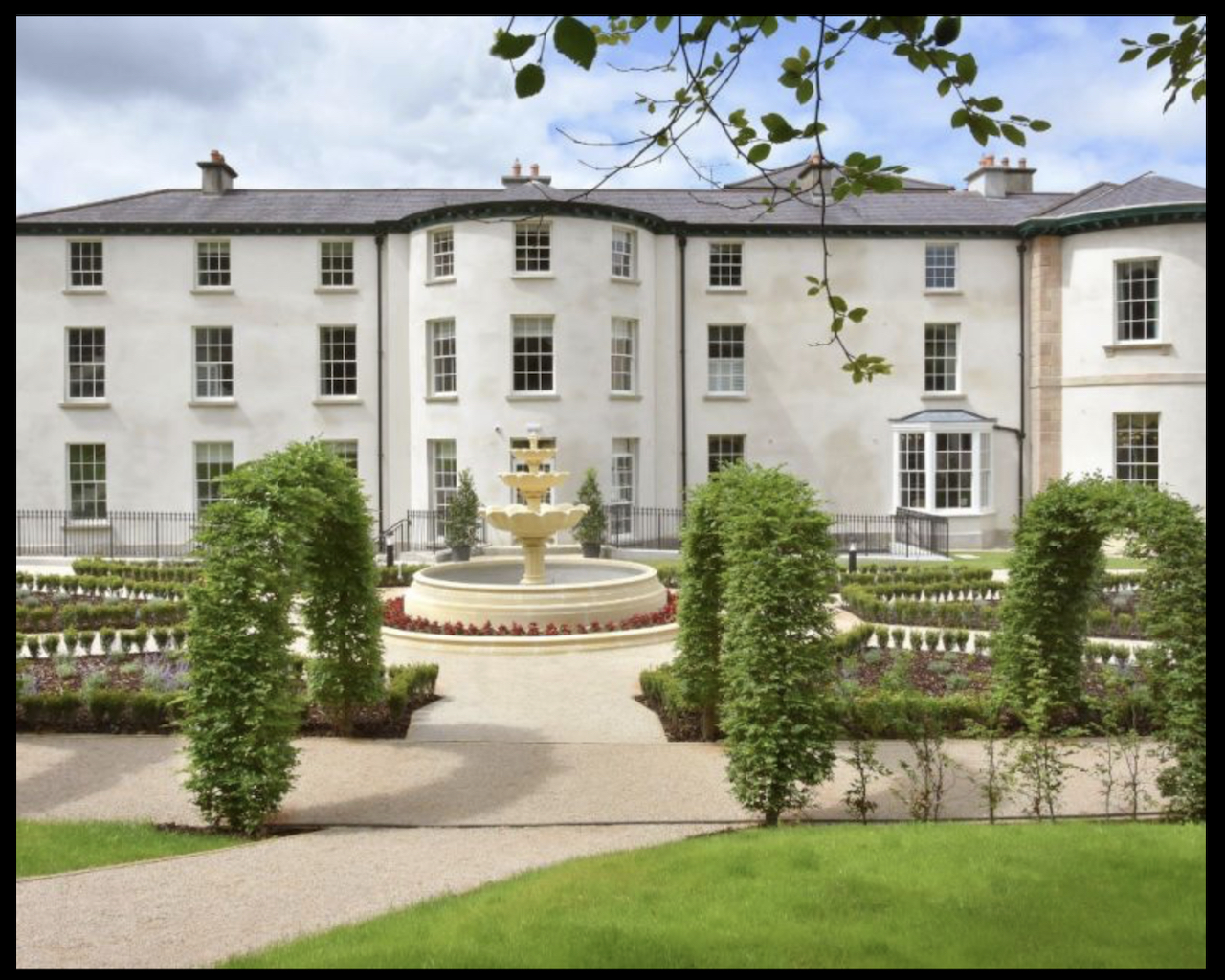
The website tells us of the history of Rockhill House:
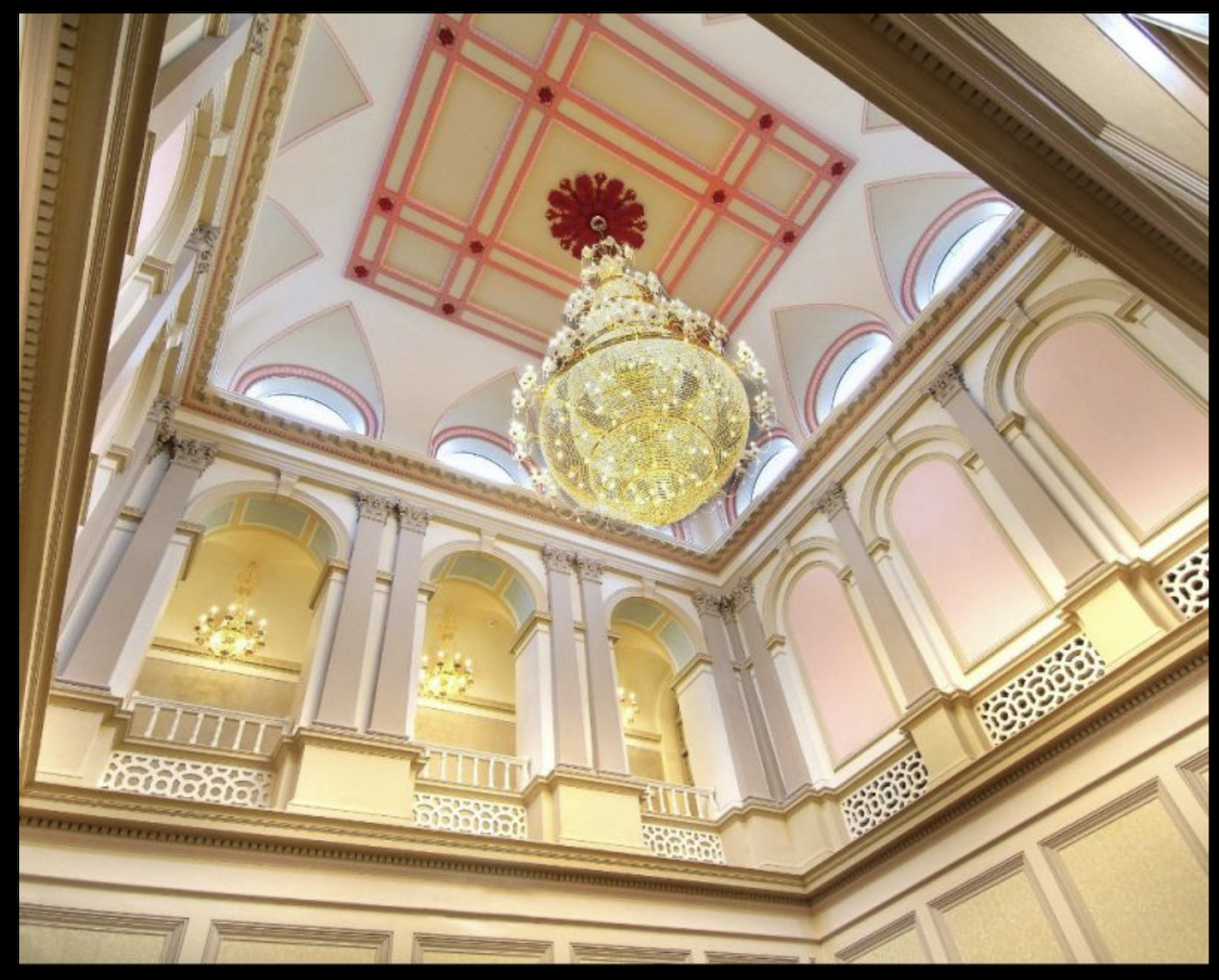
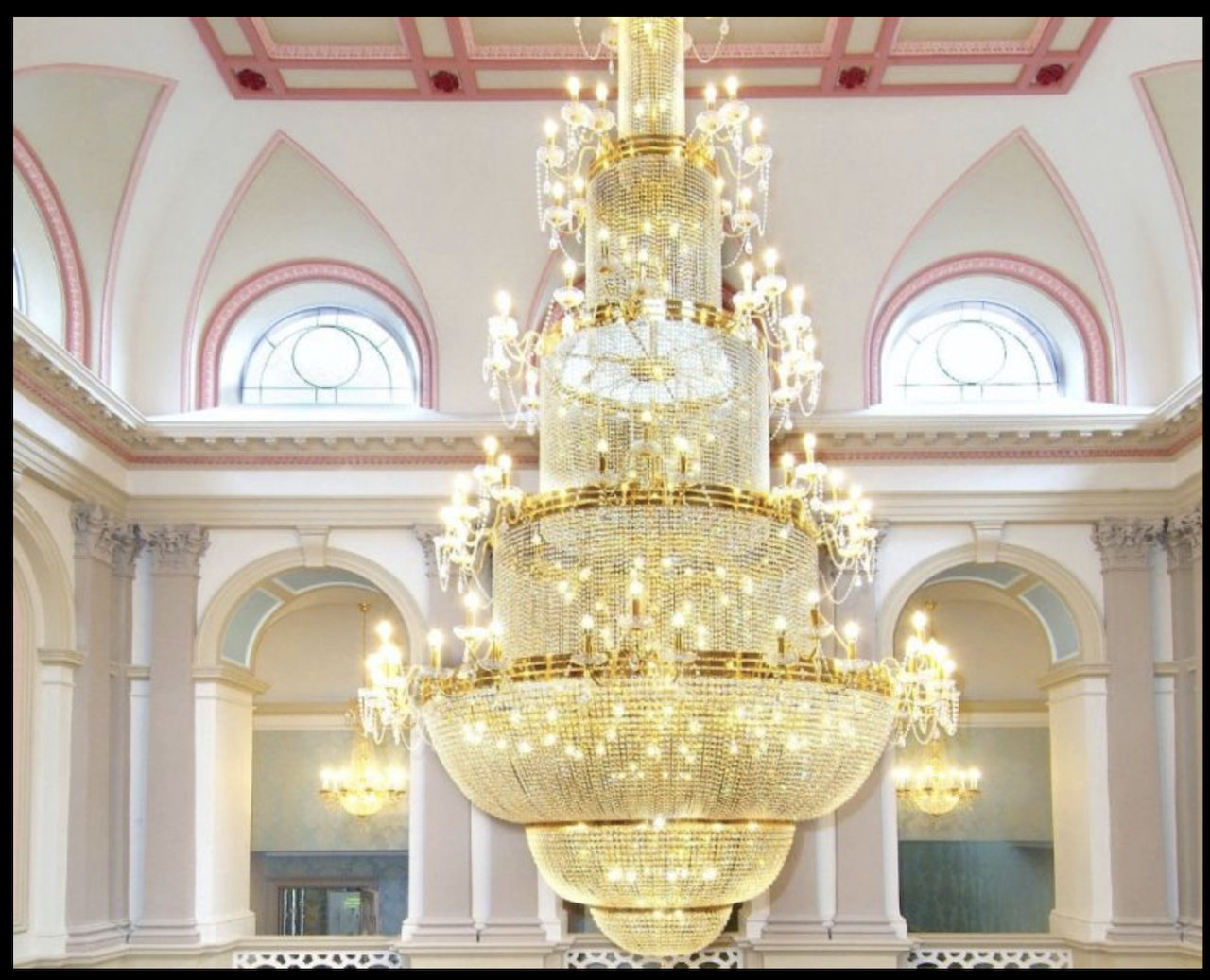
“Rockhill House can trace its roots to the 17th Century plantation of Ulster. Seat of the Chambers family for 172 years, the property was acquired in 1832 by the aristocratic ornithologist, John Vandeleur Stewart. Stewart engaged famed Dublin architect, John Hargrave [c. 1788-1833], to design a radical extension and remodelling of the house, and the new owner carried out comprehensive draining, planting and cultivation of the lands to create the lush, Georgian idyll that remained in his family until the 1936 break-up of the Estate and sale of the property and 100 acres to the Commissioner of Public Works.“
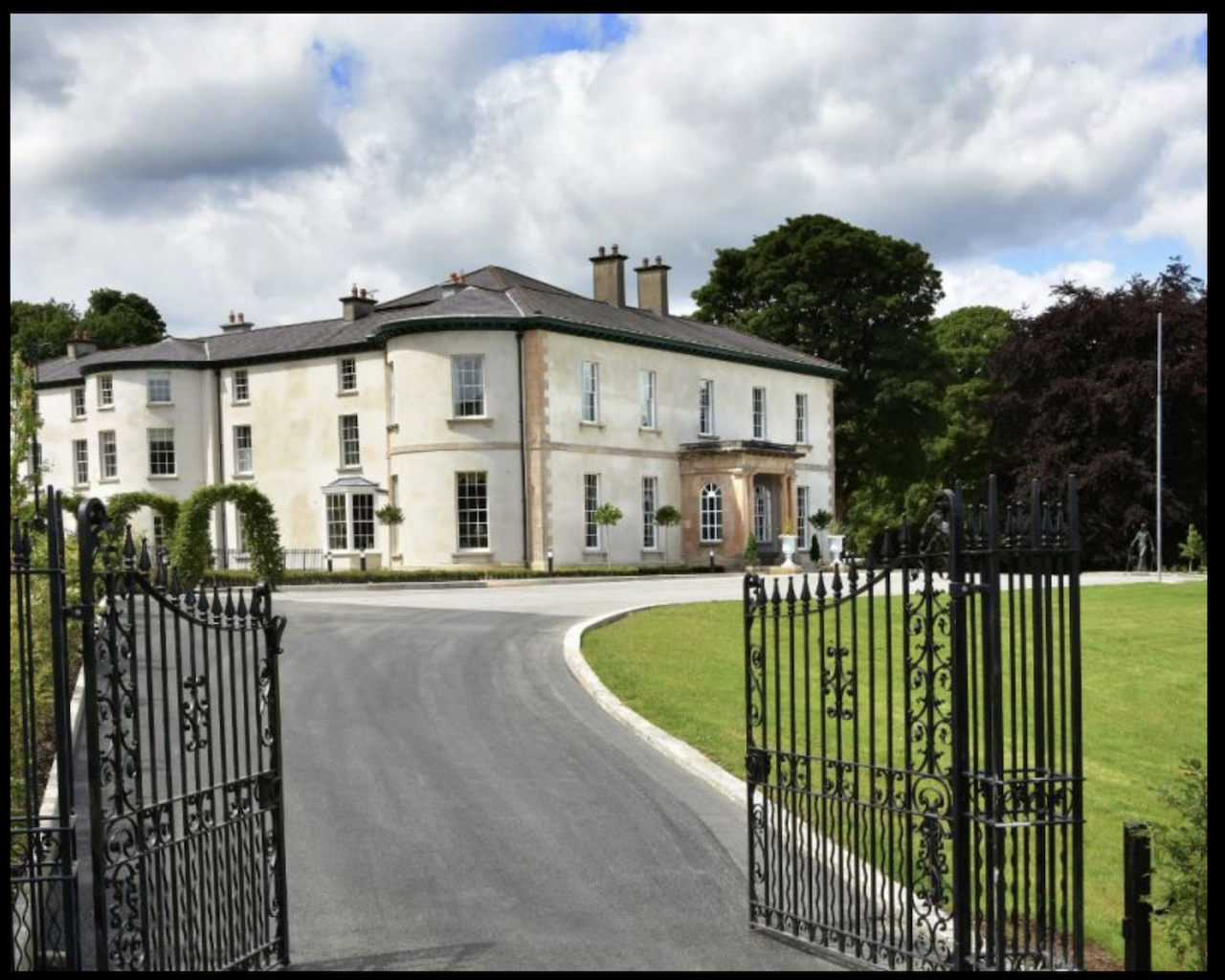
“A headquarters of the Irish Defence Forces through to early 2009, the Army’s exit began a period of vacancy that allowed Rockhill House to slip into disrepair and decay. The Estate, too, was a shadow of what it was during its days of care and plenty under the Stewarts.
“When today’s owners, the Molloy family, got the keys in 2014, a vast task met them. When they first stepped into the house, it was possible to stand in the basement and see the roof, three storeys above!
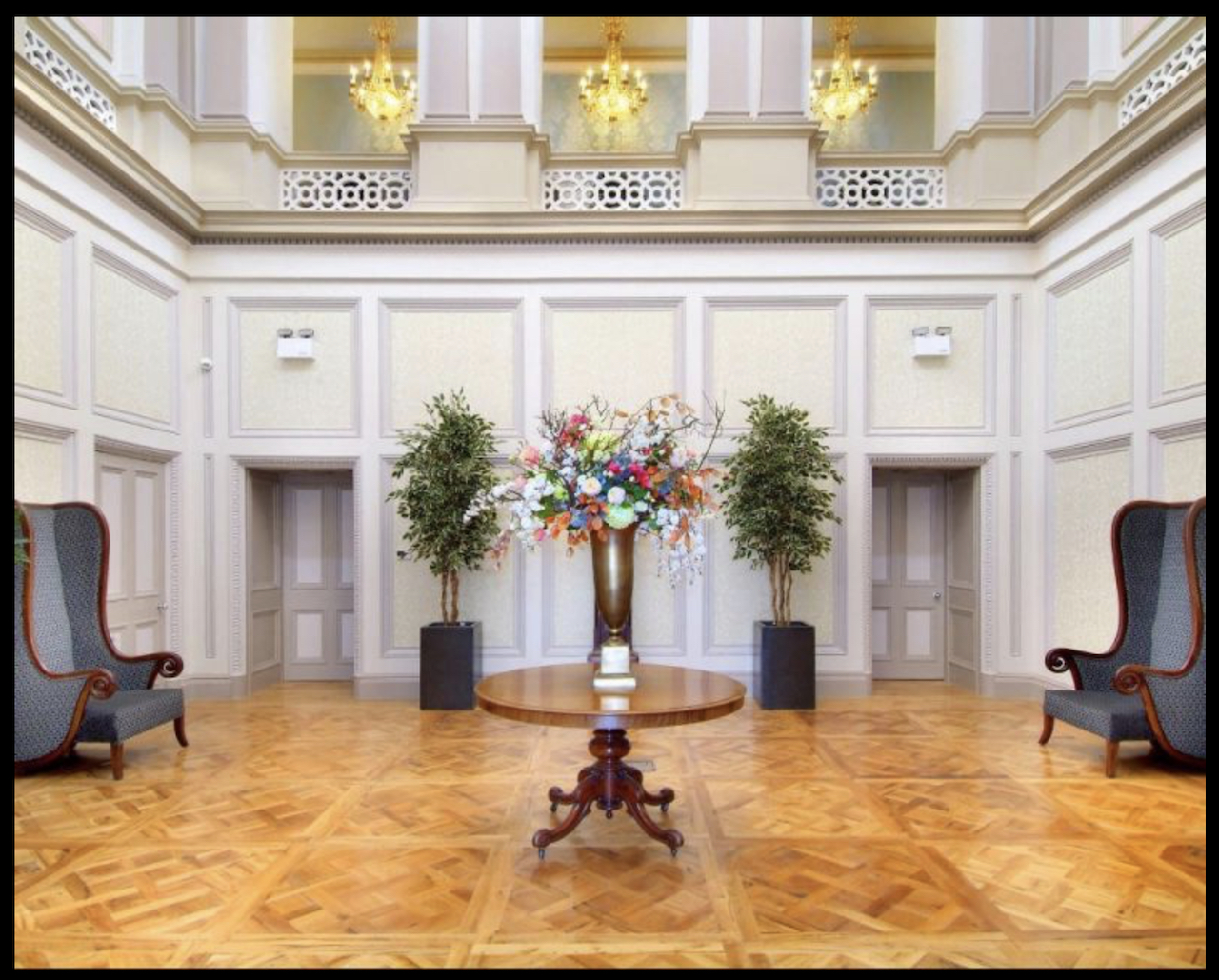
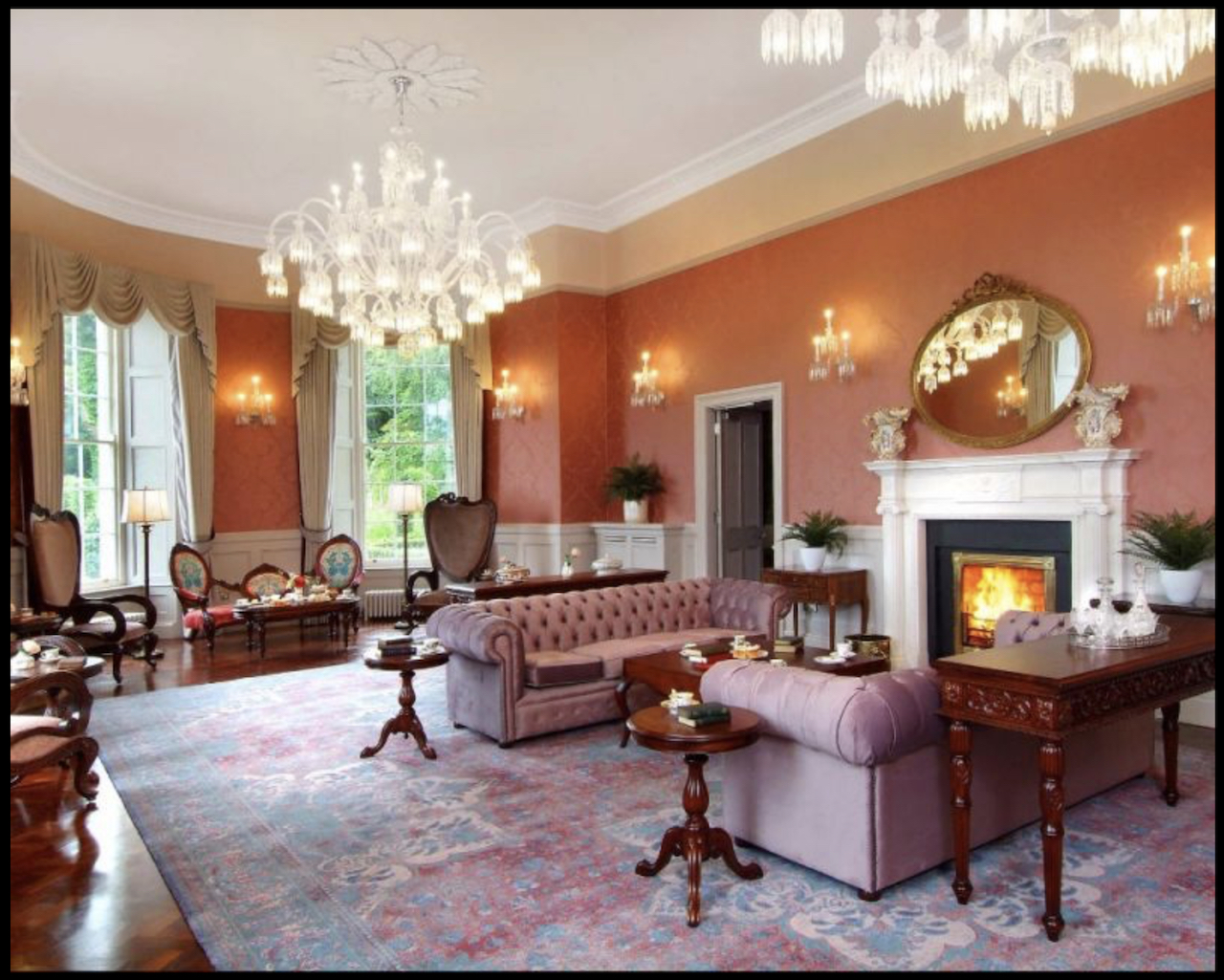
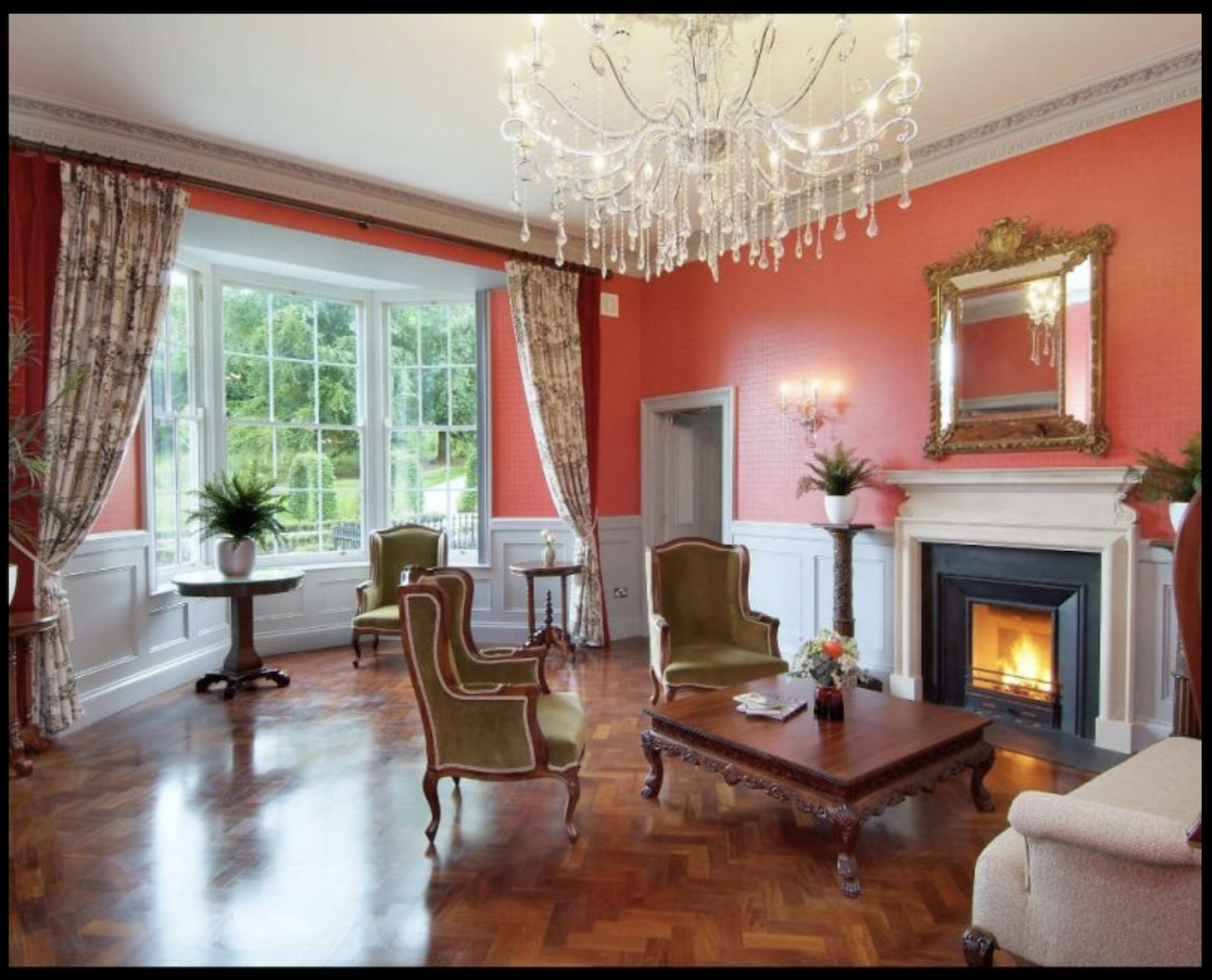
“This began a three-year labour of love for the Molloys, whose sensitive restoration, while being true to Rockhill’s rich past, now takes it into a great new heyday. Once again, the great halls and galleries of the Big House are filled with light and the colours and textures of its Georgian tastemakers.
“Original features – from cornices, ceiling roses, and spiral staircases to picture rails, ironwork and fireplaces – have been salvaged where possible, and historically replicated wherever the original has been lost to time. The Estate is springing back to life, with verdant gardens adorned with Temple and fountain; and lost woodland walks uncovered for new exploration.”
The Letterkenny Historical Society website gives a more detailed history of the house and its occupants:
( https://www.letterkennyhistory.com/rockhill-house/ )
“In the Plantation of Ulster, an English Knight Sir Thomas Coach was granted 1,500 acres on the south side of the River Swilly called ‘Lismongan’. While we might associate that solely with the small area of Lismonaghan today, the land in fact stretched out much further than that to take in the areas of Rockhill and Scarrifhollis also.
“Coach’s son, Captain Thomas Coach, also held lands in Cabra, Co. Cavan and from the 1660s onwards, he confined his family business primarily to there. After bequeathing the estate to his son, Colonel Thomas Coach, the overall 1,500 acres then came into the possession of the Pratt family through marriage. Joseph Pratt was originally married to Frances Coach, sister to the Colonel but in 1686 was re-married to Elizabeth Coach, daughter to the Colonel. Upon Colonel Coach’s death in 1699, the lands of Lismonaghan passed to the Pratts who remained in the area right up until the nineteenth century.
“Rockhill, or Corr as it was known then, being approximately 240 acres in size, was just a small part of this overall 1,500 acres of the Coach family estate. In a grant of 26 July 1693, John Chambers was granted the lands of Rockhill from Thomas Coach, grandson to the original patentee.
“Thus the Chambers family came to occupy Rockhill at the end of the seventeenth century and they built a manor house on their lands, on the site of the current Rockhill House. These Chambers were descended from William Chambers who had been the Curate of Leck in 1633.“
The website continues: “Daniel Chambers sold the estate at Rockhill to John Vandeleur Stewart of Ards on 21 February 1832 for £900 and retired to Loughveagh House on his other estate at Gartan (where Gartan Outdoor Pursuits centre now stands) but sold that in 1845 and moved to Dublin where he died in 1850.
“John Vandeluer Stewart was appointed High Sheriff of Donegal in 1838 and made extensive renovations to the former Chambers house, so closely modeled on the Stewart family home of Ards House that they came to be almost ‘sister houses’. The Stewart estate stretched from Oldtown to Bomany and up to Letterleague where the ruins of the former gatehouse can still be seen. Flax, beet, corn and potatoes were cultivated on the estate with a large orchard near to the house while coursing and hunting on the estate was offered for £10 annually. The Rockhill Coursing Club was set up in 1890 with Sir Thomas Lecky as President. The Rockhill Stakes, The Letterkenny Stakes and The Swilly Stakes were competed for annually at Crieve Meadows, with competitors arriving with their greyhounds from all over the northwest.
“John Vandeluer Stewart died in 1872 and the estate passed to his eldest son, Major General Alexander Charles Hector Stewart, who was High Sheriff of Donegal in 1881. Upon his death in 1917, the Rockhill estate was left in trust to his daughter Kathleen Stewart, but his brother Sir Charles John Stewart effectively became the administrator of the estate as she lived in Sussex with her husband Philip Arthur McGregor.
“Sir Charles John Stewart and his wife, Lady Mary Stewart had two sons, John and Gerald, who were both killed within six weeks of one another in World War I. Upon their sons’ deaths in 1915, they were so heartbroken that they seemed to lose interest in returning to the estate of Rockhill. The land steward Robert R. Robinson tended to the management of the estate in Sir Charles John’s seasonal absences.
“With nobody occupying the estate, Rockhill House was taken over by Anti Treaty IRA troops upon the outbreak of Civil War in Ireland in 1922. Across the river, Ballymacool House was also taken over with the Boyds being forcibly removed from their home. The Pro Treaty forces launched an attack on both houses on 22 June 1922 and removed the insurgents.
“Owing to this political unrest in Ireland, the loss of his sons and an overall lack of interest from the family in the estate, Sir Charles John Stewart finally left Rockhill in 1927 and moved to Scotland. The family home then served as a Preparatory Irish College for student teachers until 1930 but the estate soon fell into decline and was sold in various lots on 19 January 1937 to the Commissioners of Public Works. The Department of Defence then came to occupy the main estate of 29 acres from the 1940s and housed the Army on a permanent basis from 1969 until 2009 when it closed due to government cutbacks on military expenditure. The house has recently been extensively refurbished and reopened as an elegant Country House and Estate.
“For more on the history of Rockhill House, Lt. Col. Declan O’Carroll’s book, “Rockhill House: A History” is highly recommended.“
9. St. Columb’s, St Mary’s Road, Buncrana, Co Donegal B&B
~ Tel: 087 4526696 ~ Email: info@stcolumbshouse.com
“St Columbs House B&B is a beautifully restored 6 bedroom period house located on the Wild Atlantic Way in the historic seaside town of Buncrana on the Inishowen peninsula. It has a Catholic Church across the road and on its doorstep is a variety of bustling restaurants, bars and a variety of shopping, all just a short walk away.“
10. St John’s Point Lighthouse cottage, Dunkineely, County Donegal – Irish Landmark property
SJ Schooner: “Schooner is located on St. John’s Point Lighthouse station in Co. Donegal. It’s quite a thrill driving down to St. John’s Point Lighthouse, to see it looming at the end of one of the longest peninsulas in Ireland. Stay at Schooner and enjoy all that St. John’s Point, Donegal and surrounds have to offer.” Sleeps 4. From €442 for 2 nights.
and SJ Clipper: “Clipper is located on St. John’s Point Lighthouse station in Co. Donegal. It’s quite a thrill driving down to St. John’s Point Lighthouse, to see it looming at the end of one of the longest peninsulas in Ireland. Stay at Clipper and enjoy all that St. John’s Point, Donegal and surrounds have to offer.” Sleeps 4. From €442 for 2 nights.
https://www.irishlandmark.com/properties/
12. Termon House, Dungloe, County Donegal – whole house holiday rental, Irish Landmark property
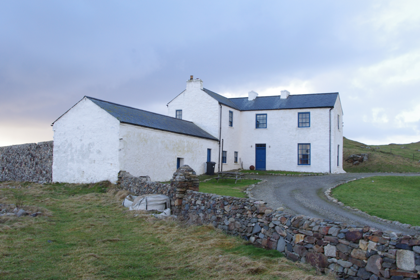
https://www.irishlandmark.com/properties/
Termon House, a former 18th century land agent’s house in Maghery, near Dungloe, is located in the heart of the Gaeltacht area. Sleeps 6. From €487 for 2 nights.
13. Woodhill House, Ardara, County Donegal
The website tells us:
“Woodhill House is an historic coastal manor house dating back in parts to the 17th century. The 6th century religious relic, St. Conal’s Bell, was mysteriously stolen from Woodhill House in 1845.
“The house which overlooks the beautiful Donegal Highlands is set in its own grounds with an old walled garden. It is half a mile from the sea and a quarter of a mile from the coastal town of Ardara on the ‘Wild Atlantic Way’. The house offers unusual and interesting accommodation with private bathrooms, 3 star rated. There is a fully licensed lounge bar, which has occasional music sessions for tourists and locals alike. Woodhill House is well known for its high quality and reasonably priced restaurant which accommodates house guests and the general public. The menu is French/Contemporary Irish based using fresh Irish produce, especially seafood from nearby Killybegs.”
Whole House Rental, County Donegal
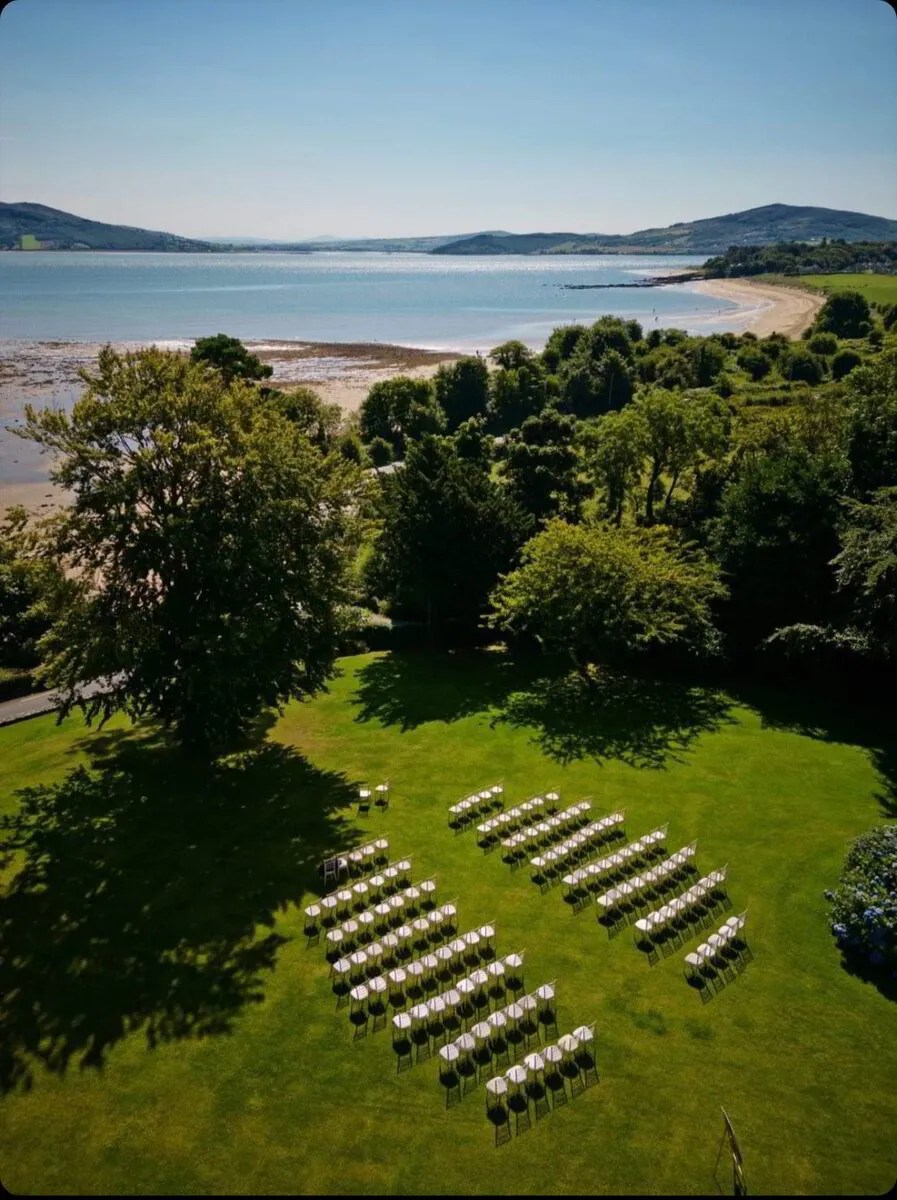
1. Drumhalla House, Rathmullen, County Donegal – whole house rental and wedding venue
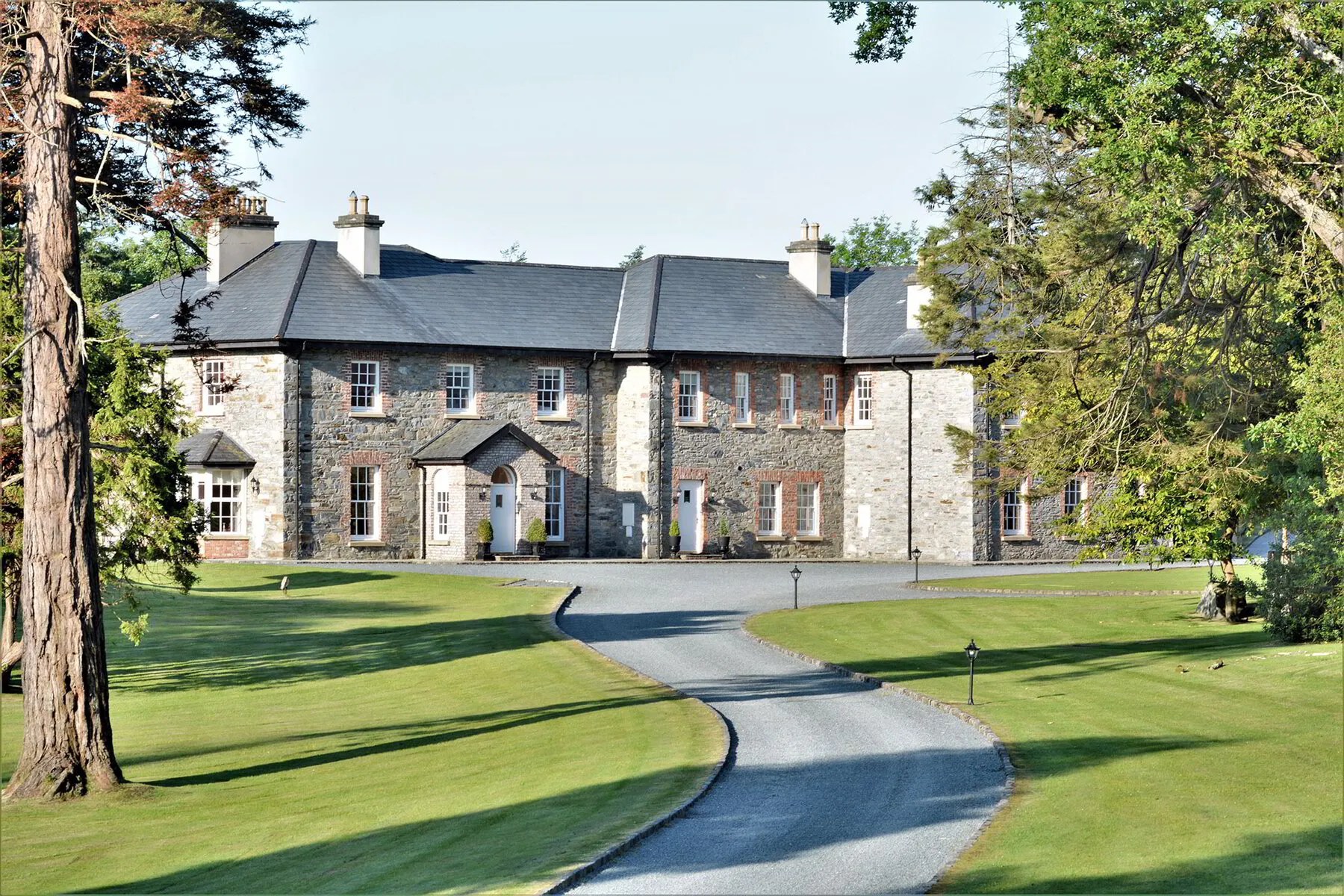
“Steeped in history, the house was originally built in 1789 by Dr Knox of Lifford. The house and grounds have now been beautifully restored by the present owner and offer luxury accommodation as well as a unique, private location for a variety of functions including weddings and corporate events. Drumhalla House offers superior 5 star accommodation and is a much sought after and unique wedding venue.
“Panoramic views over Lough Swilly and the renowned Kinnegar beach provide the perfect backdrop for your wedding day. The beautifully maintained grounds and lawns at Drumhalla House make it perfect for your guests to enjoy and explore.
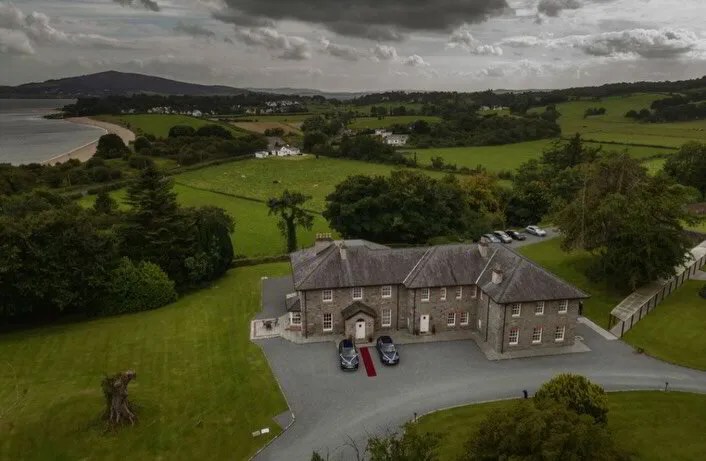
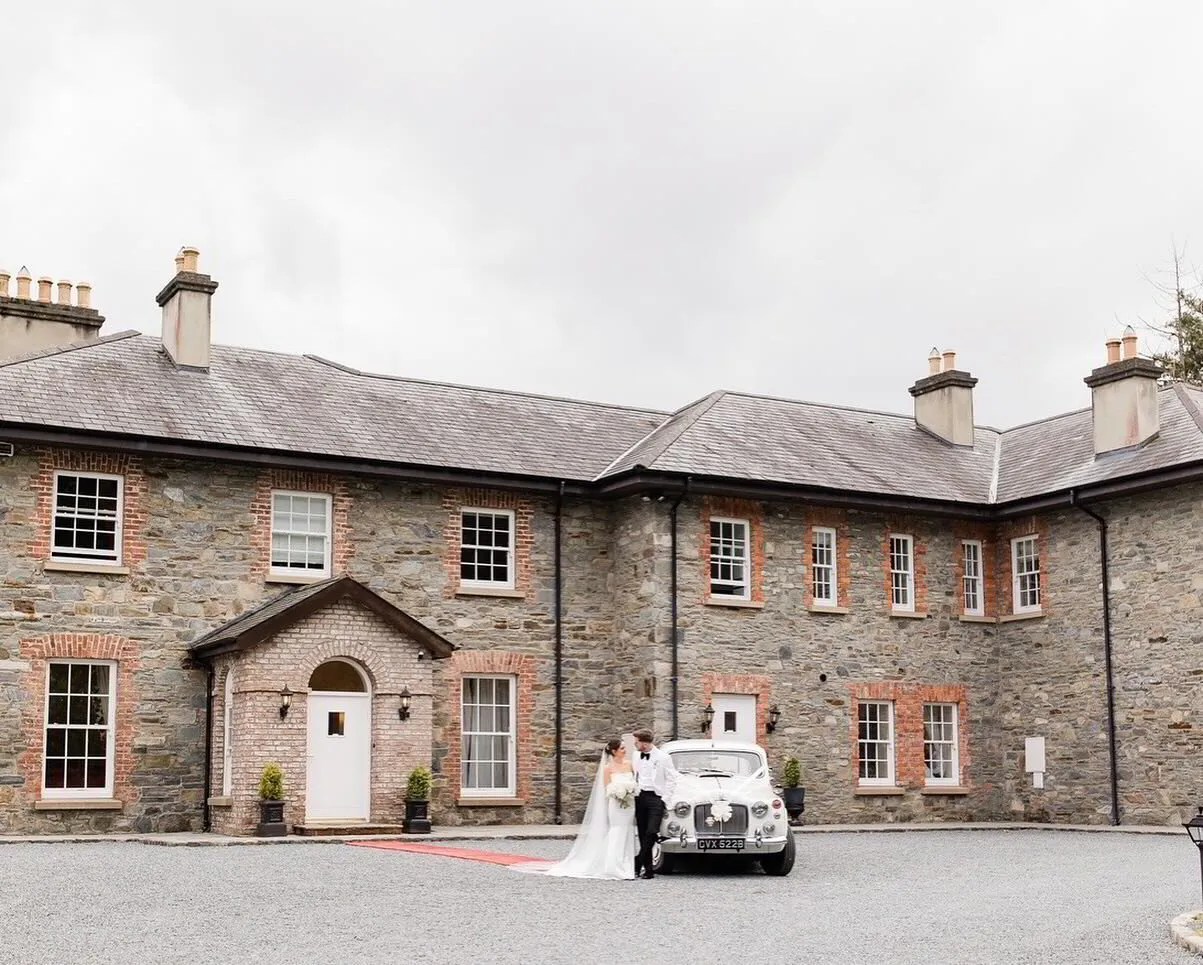
“Allow our Country Manor House, complete with 5 star accommodation at Drumhalla to transform your wedding ideas into the fairytale you always dreamed of.
“All of our bedrooms are individual and unique and everything one would expect in a much loved Manor House. The rooms are very comfortable and traditional in style and filled with carefully chosen furnishings. They are located on the 1st floor of the house and provide varied views over the gardens and beach.“
 Irish Historic Houses