
donation
Help me to pay the entrance fee to one of the houses on this website. This site is created purely out of love for the subject and I receive no payment so any donation is appreciated!
€15.00
Very Top of Primrose Lane, Lucan, Co. Dublin, eircode K78C1W9
Open dates in 2026: Feb 1-28, June 1-30, July 1-7, Aug 15-23, 2pm-6pm
Fee: adult/OAP/student €6, child free
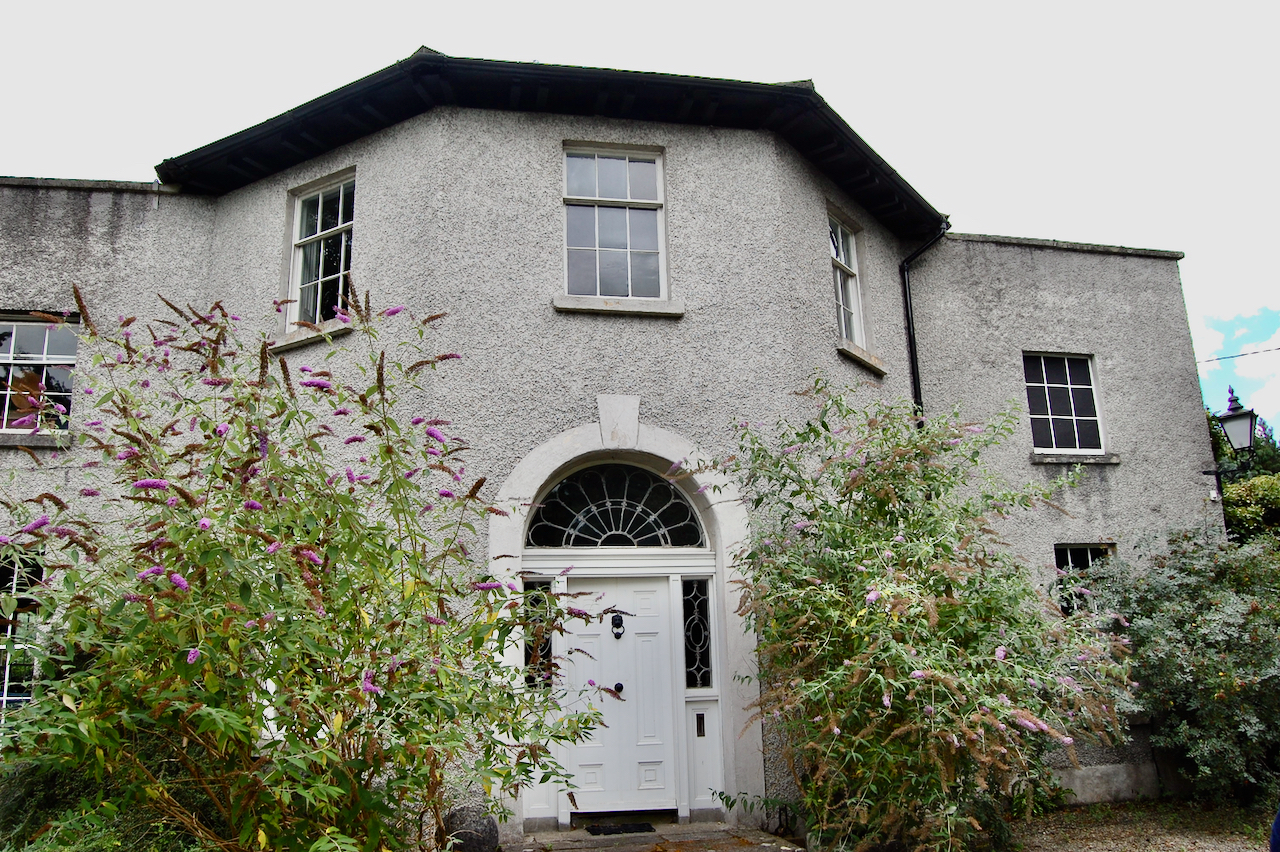
The Revenue Section 482 list is still not published for 2025! However, Primrose Hill in Dublin, one of the properties that has been on the list in previous years is open to the public this month, February 2025, as I saw it mentioned in the Irish Times. Robin Hall, the owner, opens his gardens in February to share his snowdrop collection. Plants are also available for sale.
Stephen and I planned to visit yesterday, and Stephen took the day off work, but it was too cold and windy! We didn’t feel like braving the elements. But we visited this property during Heritage Week in 2013. I went with my husband Stephen and my late father Desmond.
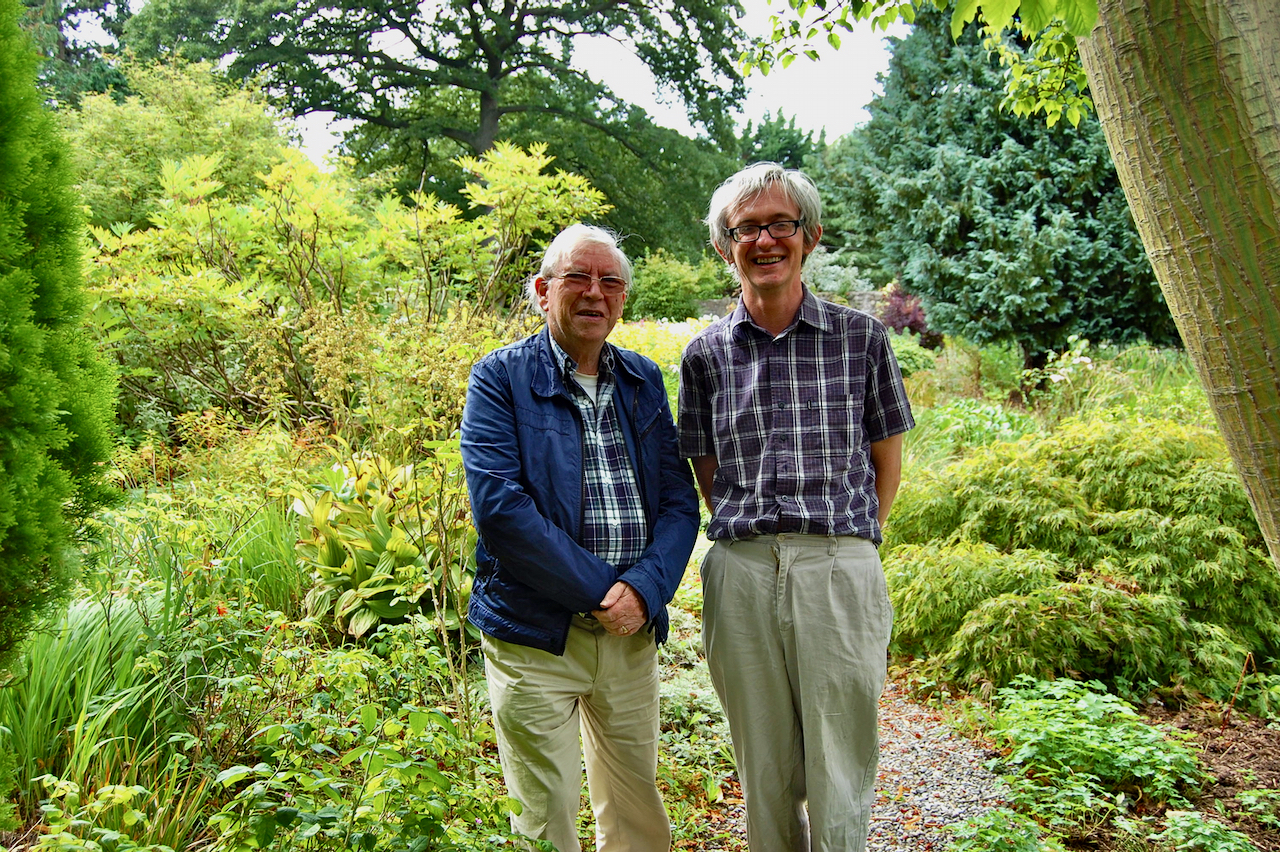
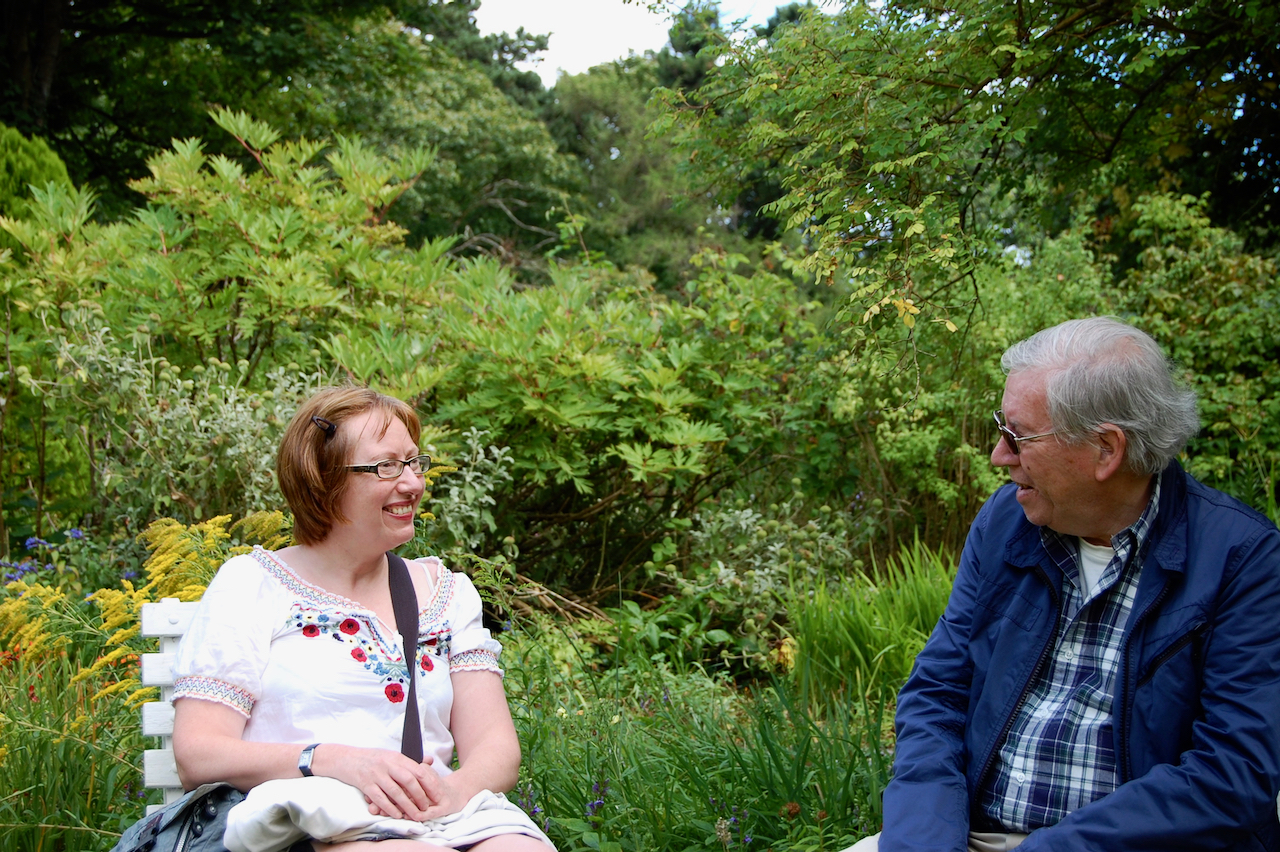
We were not allowed in to the house, but just the gardens. In recent years, the house should have been open to visitors as it was on the Section 482 list. Perhaps it will be on again this year, so we can visit later in the year.
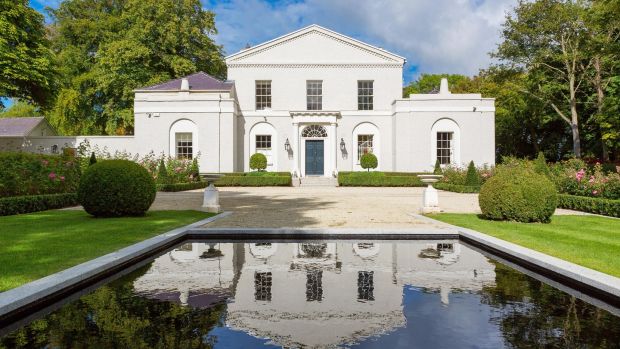
The house was built some time around 1790. It is a five bay two-storey villa with a full-height three-sided bow front that contains the central three bays. It has two-storey bowed projections on north-east and south-east elevations. [1]
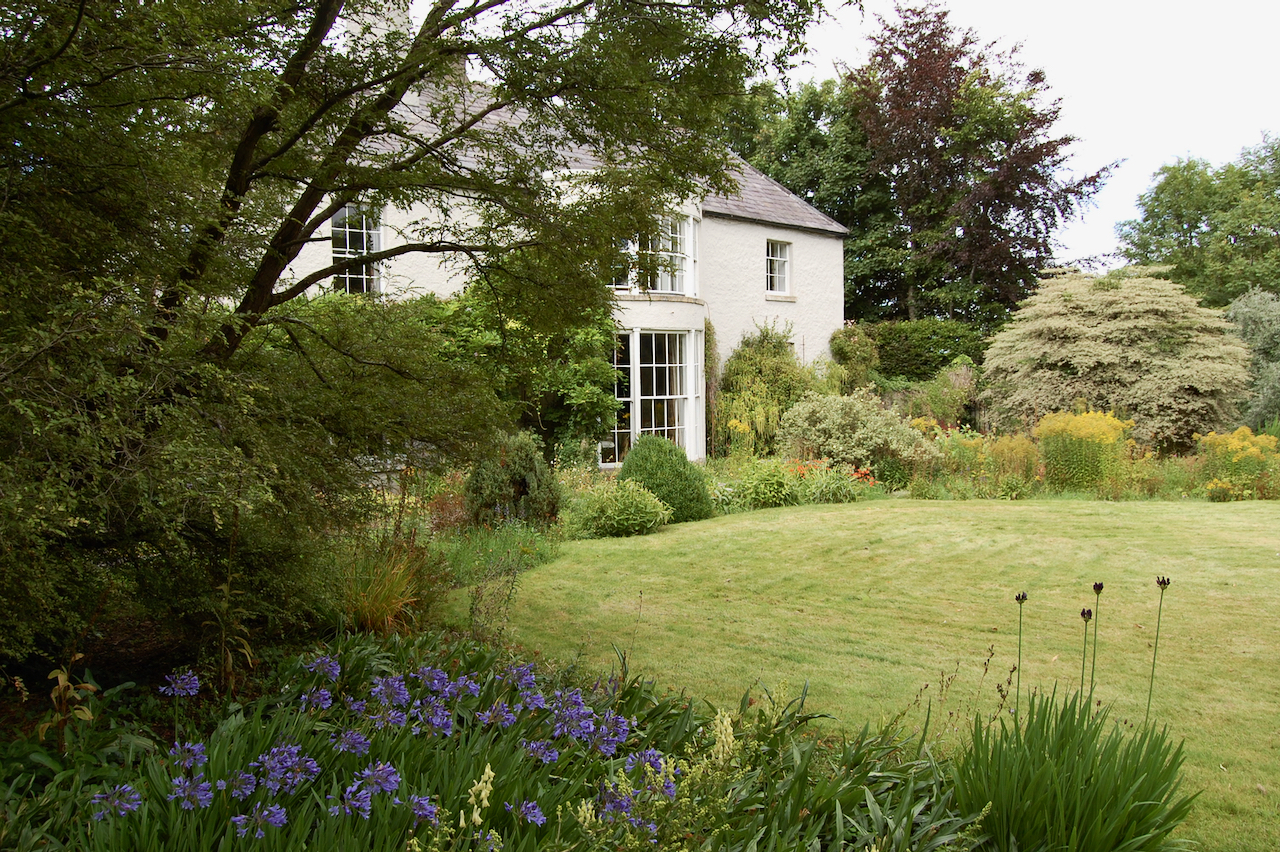
The windows are timber sash windows with stone sills. The panelled door has a pretty leaded fanlight and side lights, set into a simple round-headed stone archway with prominet keystone.
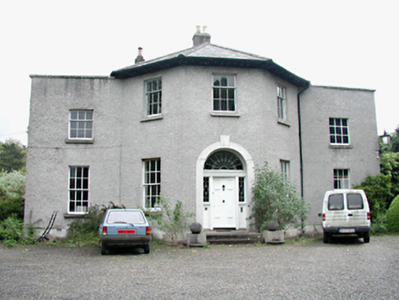
To my surprise, the National Inventory tells us that several of the architectural features present have been attributed to James Gandon! The features include the front bay addition to the north-west with an original staircase. It may indeed be the case, as Gandon lived in Lucan after he moved to Dublin to build the new Custom House.

James Gandon (1742-1823) was an English architect who had been apprenticed to William Chambers (who designed the Casino in Marino, Dublin). Gandon travelled to Ireland at the request of John Beresford and John Dawson, 2nd Viscount Carlow (afterwards Earl of Portarlington) to design a new Custom House (see my entry https://irishhistorichouses.com/2022/01/21/office-of-public-works-properties-dublin/ ).
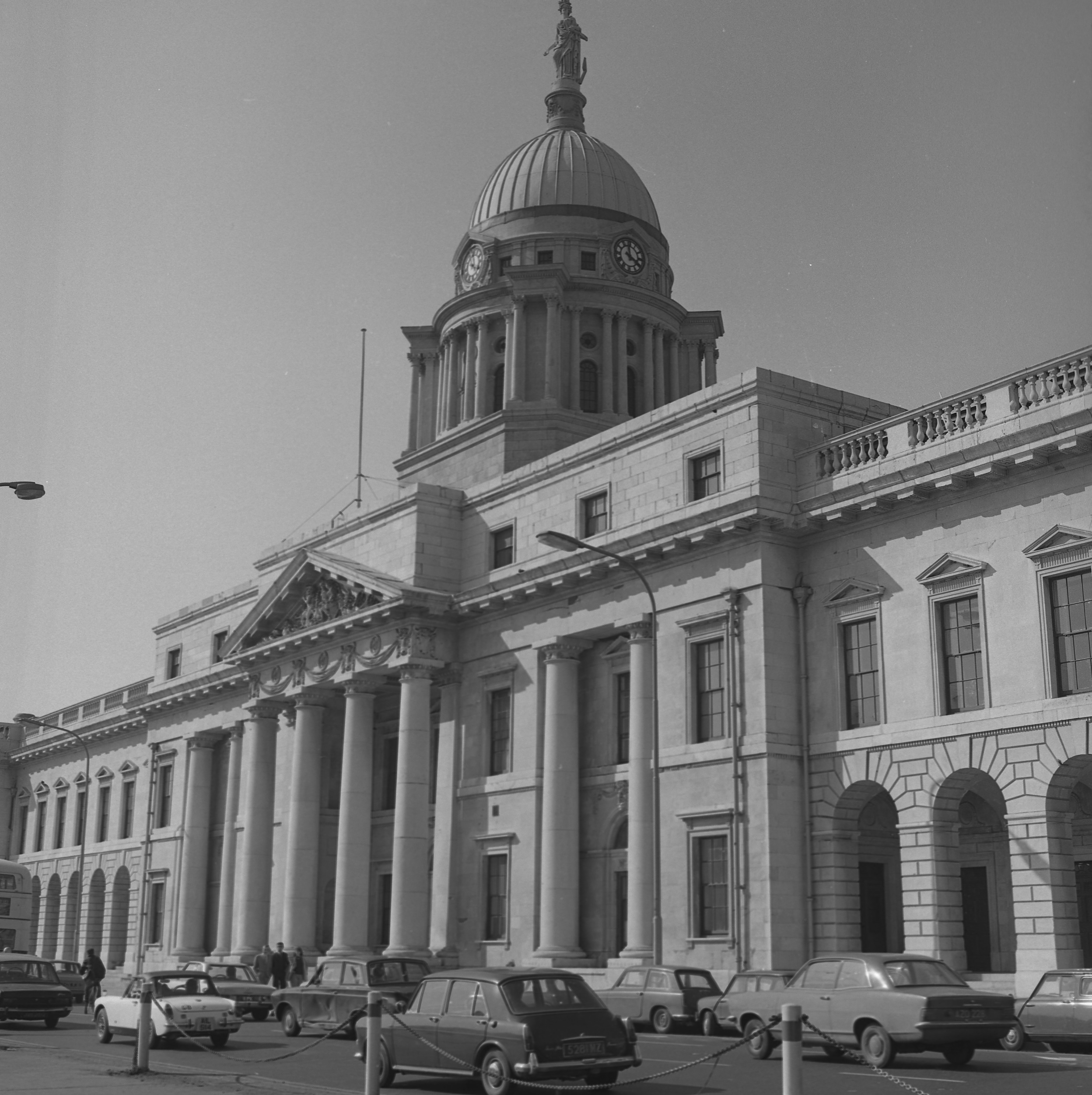
Gandon brought his family and he remained in Ireland for the rest of his life apart from a brief absence during the troubled times of 1798-99, when he thought it safer to remove his household to London. The family first lived in a house on Mecklenburgh Street in Dublin, and later, he moved to Canonbrook in Lucan, outside the city of Dublin. [2]
Gandon also designed the Four Courts in Dublin. Like Edward Lovett Pearce, he favoured Palladian and neoclassical design. One of his most prestigious commissions, which came in 1785, was to extend Pearce’s Houses of Parliament. He built the curved screen wall which links his new Corinthian portico for the House of Lords facing College Street to Pearce’s original building.
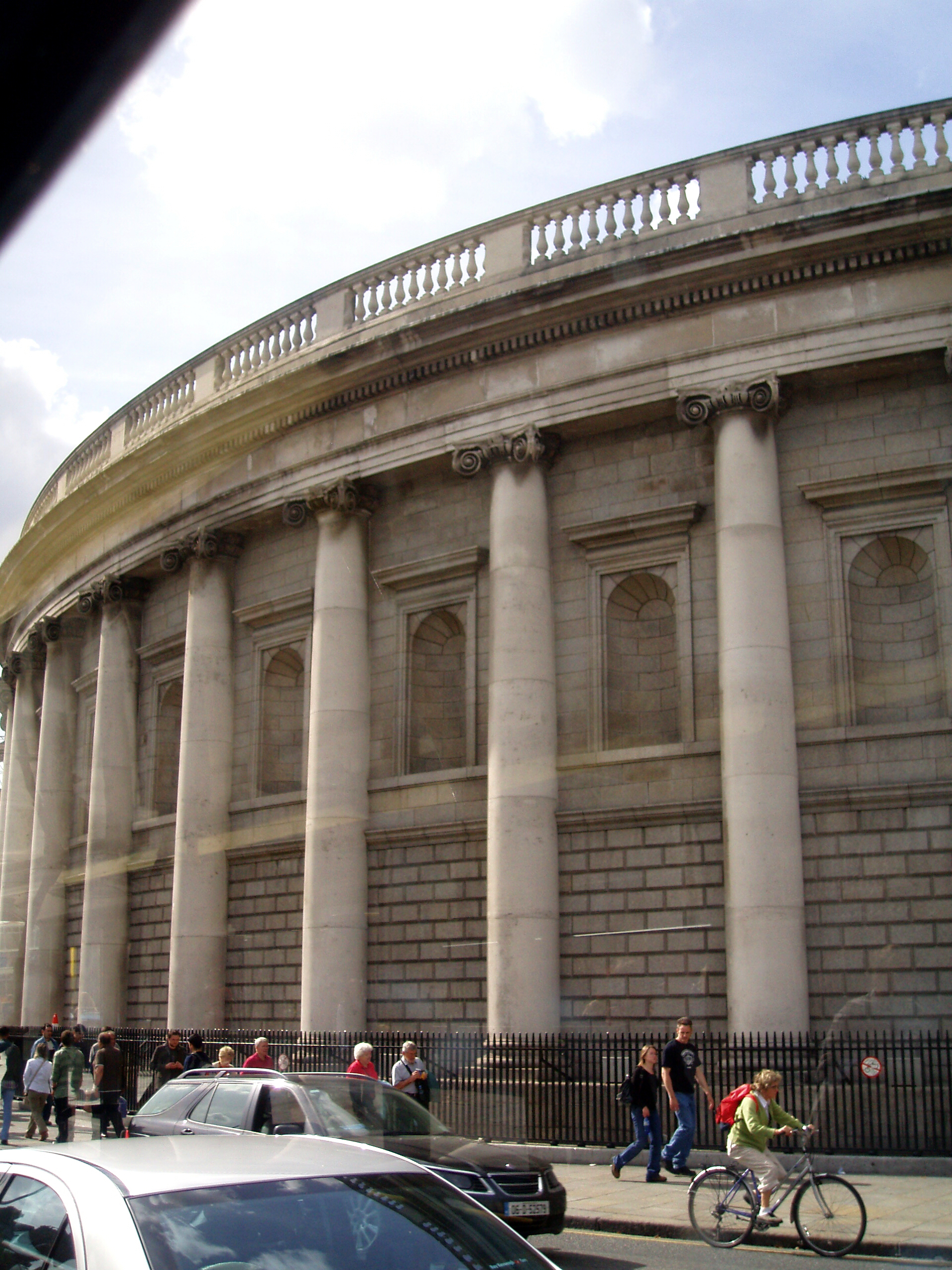
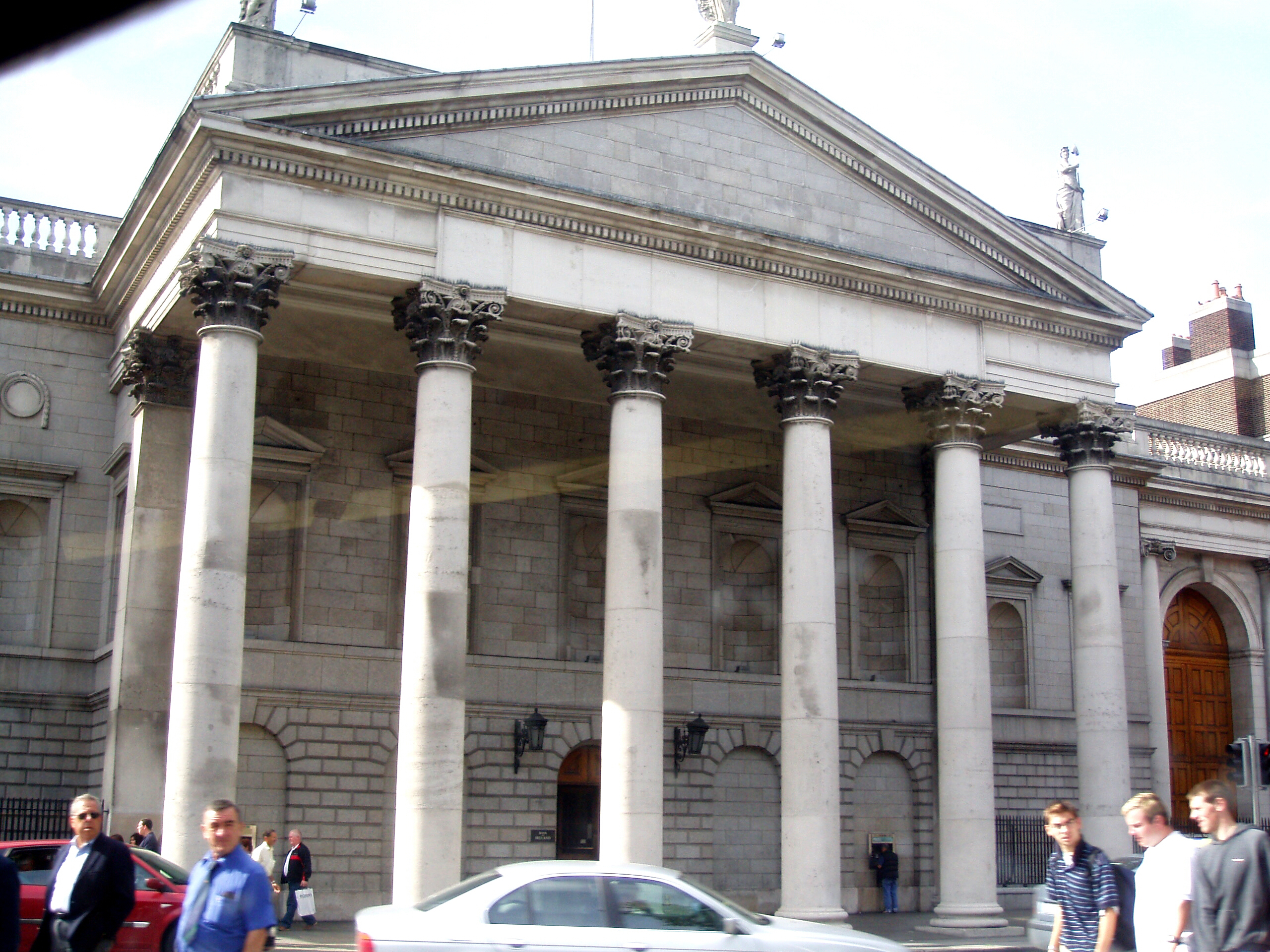
Gandon worked for the Wide Street Commissioners and designed the facades for the shops at ground floor of D’Olier Street, Burgh Quay and some surrounding streets.
Gandon designed several private houses in Ireland, including Abbeville in County Dublin (later home to politician Charles Haughey), for John Beresford. In Dublin he designed Emsworth in Malahide in 1794 for James Woodmason, a London stationer who became involved in banking in Dublin, and Roslyn Park for the painter William Ashford.

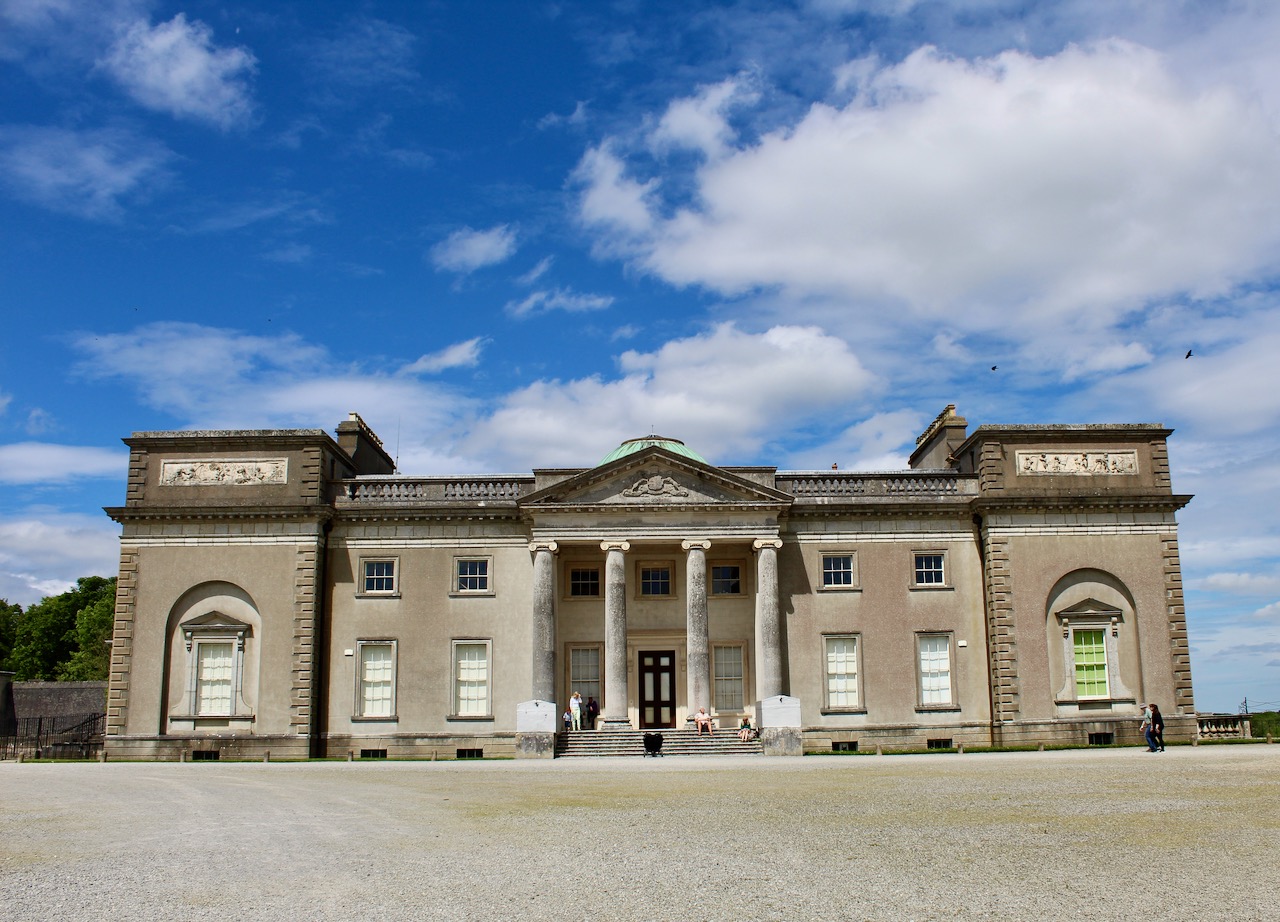
In County Laois, he designed Heywood in 1771 for Michael Frederick Trench (since destroyed by fire although one can visit the Lutyens designed gardens) and Emo Court in 1790–96 for the Earl of Portarlington (see my entry https://irishhistorichouses.com/2024/10/22/emo-court-county-laois-office-of-public-works/ )
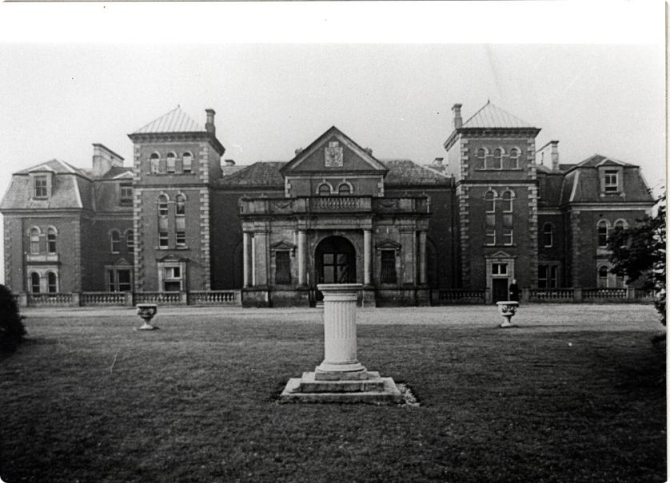

Primrose Hill was part of the Lucan House demesne. South Dublin City Council recently purchased Lucan House, which was formerly the residence of the Italian ambassador.
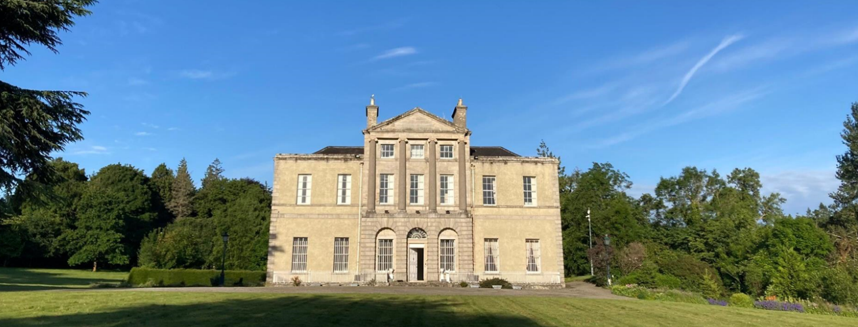
In the early part of the last century, the house was known as The Manse, and was home to the local Presbyterian Minister, one notable tenant being Dr. James Irwin – a friend of DeValera’s, who had a considerable input in the Irish Constitution. [3]
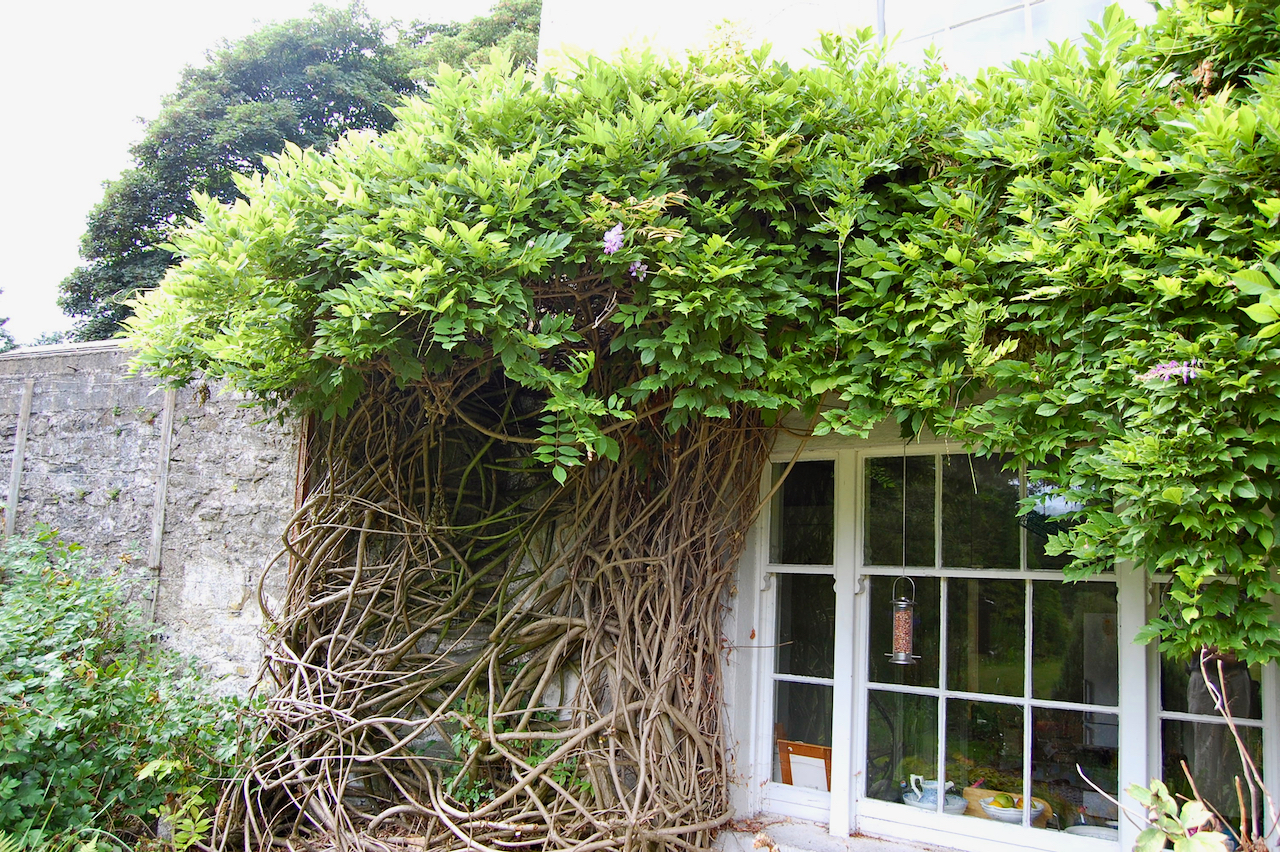
Kenneth and Cicely Hall purchased Primrose Hill in 1958, and it is now owned by their son Robin Hall. The Gardens of Ireland website tells us about Primrose Hill:
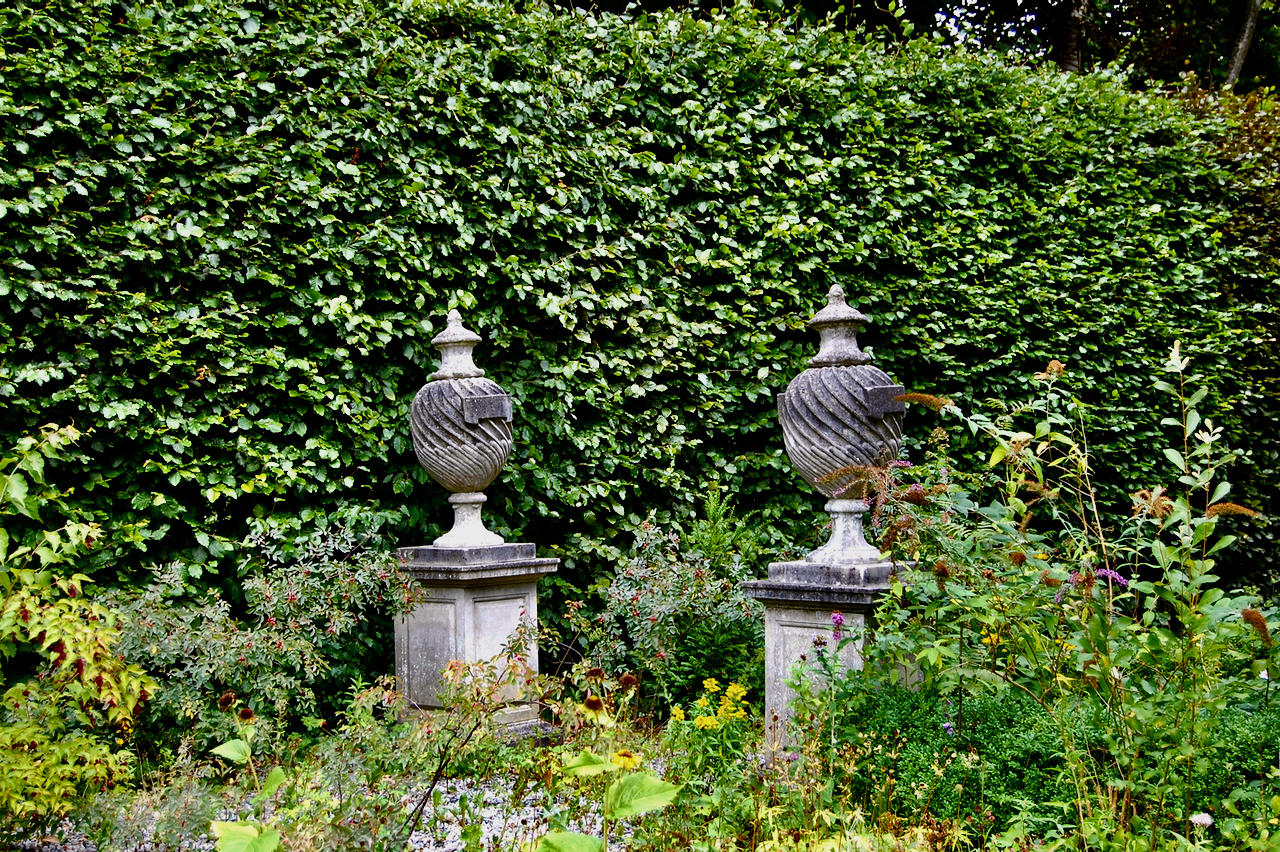
“The 2.5 ha garden has been created by Robin Hall and the late Cicely Hall, and is more of a botanical garden with a strong sense of design and subtle colour schemes. The plant collection has been created from gardens past and present with an eye to growing plants with a challenge. There is also a spring garden with one of the finest collections of plants in Ireland, excluding trees and shrubs and is particularly recommended to see in the three months we are open which are February, June and July.
“The gardens are flanked with fields with a developing arboretum and there is a very pretty driveway with mature trees leading to the house.
“There have been four generations of keen gardeners in the family and some of the plants at Primrose Hill have been in the family for over 100 years.” [4]
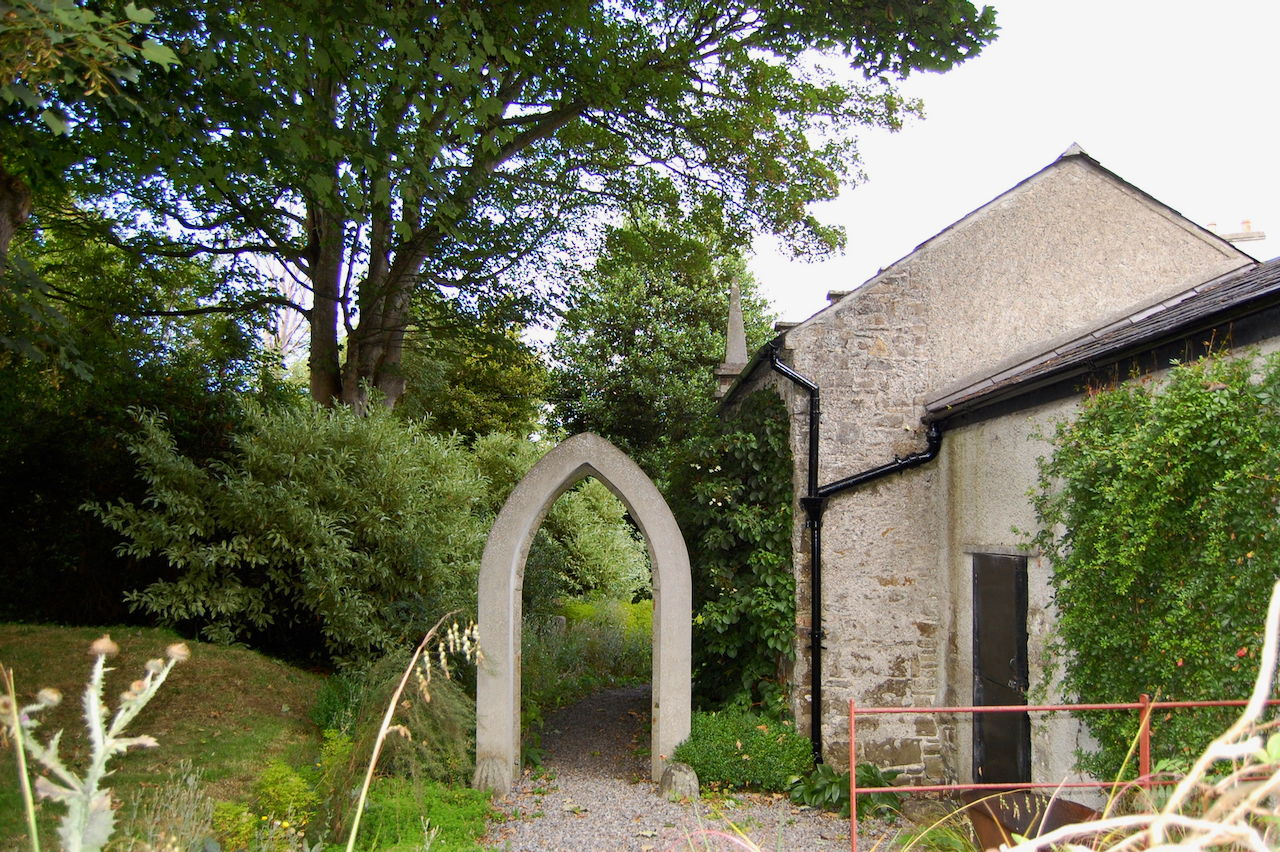
We had a lovely afternoon wandering in the gardens. An article in the Irish Times from 1997 by Jane Powers tells us more about the garden:
“Robin’s interest in snowdrops was kindled by visits to Beech Park – the garden of the great plantsman, David Shackleton – when he was a boy. “It was during its heyday then and I became very excited when I saw the bulbs.” Later, in his early teens, a bout of middle ear trouble kept him out of school. “We sent him outside to recover,” remembers his mother. “Fresh air was the cure for everything in those days.”
“And so in the fresh air, the young Robin began to amass his little flotillas of trembling white bells. The first of these, came, naturally, from David Shackleton. And from Straffan House on the banks of the Liffey in Kildare came the Irish hybrid “Straffan”, a remarkable plant which produces two flower stalks instead of the customary one.” [5]
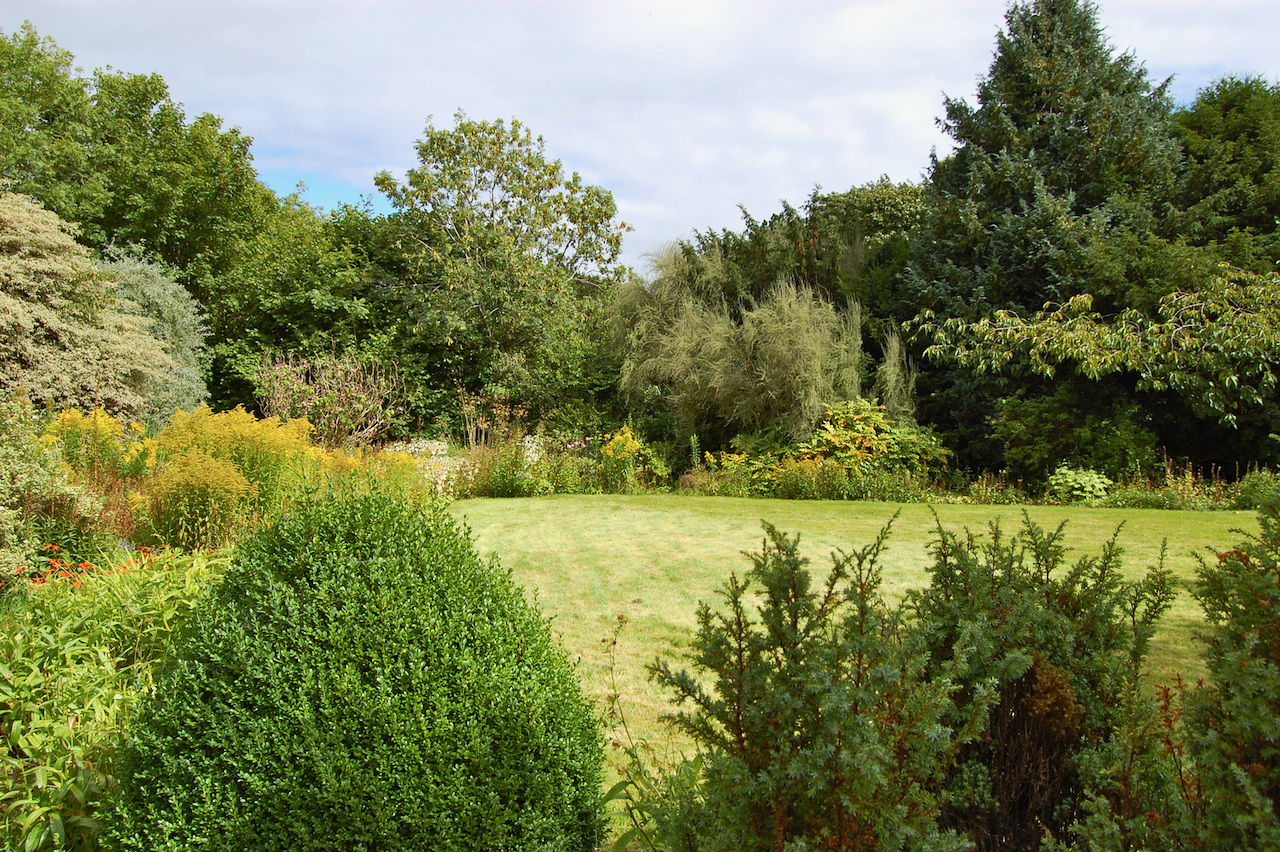
Jane Powers’s article concludes: “there is no more dramatic place to view [the snowdrops] than along the drive to the house where hundreds of the common snowdrop are naturalised in the grass under a canopy of beech trees.“
[2] https://www.dia.ie/architects/view/2086/GANDON-JAMES#tab_biography
[3] http://www.lucannewsletter.ie/localinterest/primrosehillgarden.html
[4] https://www.gardensofireland.org/directory/18/
[5] Irish Times Feb 22, 1997, Jane Powers: https://www.irishtimes.com/news/amid-the-petticoats-of-spring-1.45774
 Irish Historic Houses
One thought on “Primrose Hill, Primrose Lane, Lucan, County Dublin – section 482”