Ormond Castle, Carrick-on-Suir, County Tipperary:

We haven’t been back to Ormond Castle recently but we visited it in May 2018, and I am republishing this entry, previously posted under “Office of Public Works Properties in County Tipperary.” I’m still catching up with write-ups so don’t have anything new to publish today.
From the OPW website https://heritageireland.ie/visit/places-to-visit/ormond-castle/:
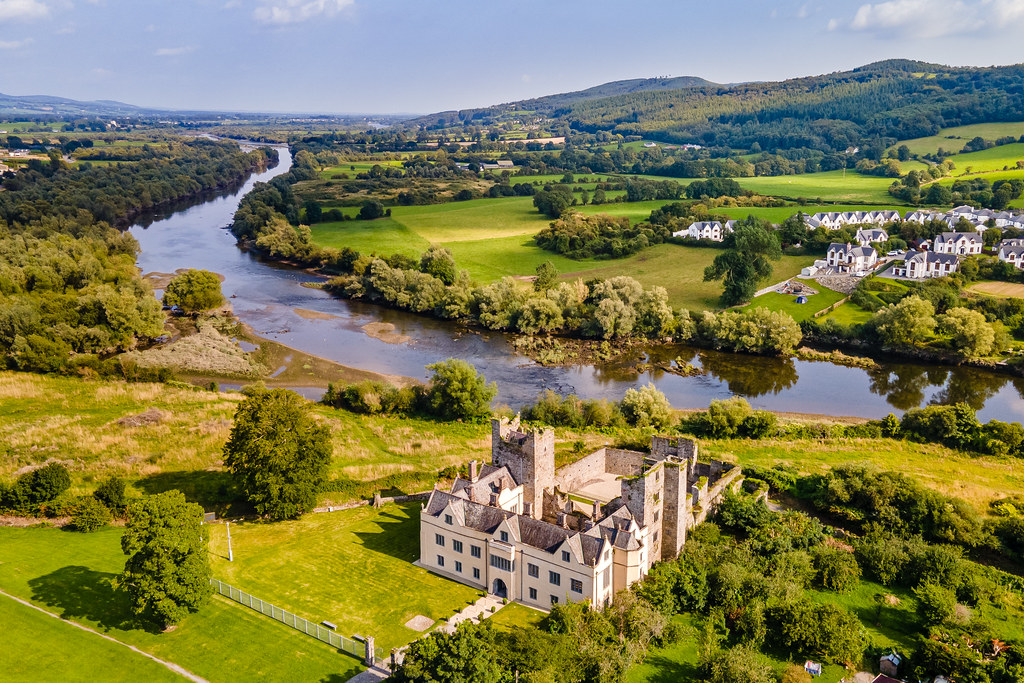
“Joined on to an earlier medieval riverside castle, Ormond Castle Carrick-on-Suir is the finest example of an Elizabethan manor house in Ireland. Thomas, 10th Earl of Ormond [“Black Tom” (1531-1614)], built it in 1565 in honour of his distant cousin Queen Elizabeth.
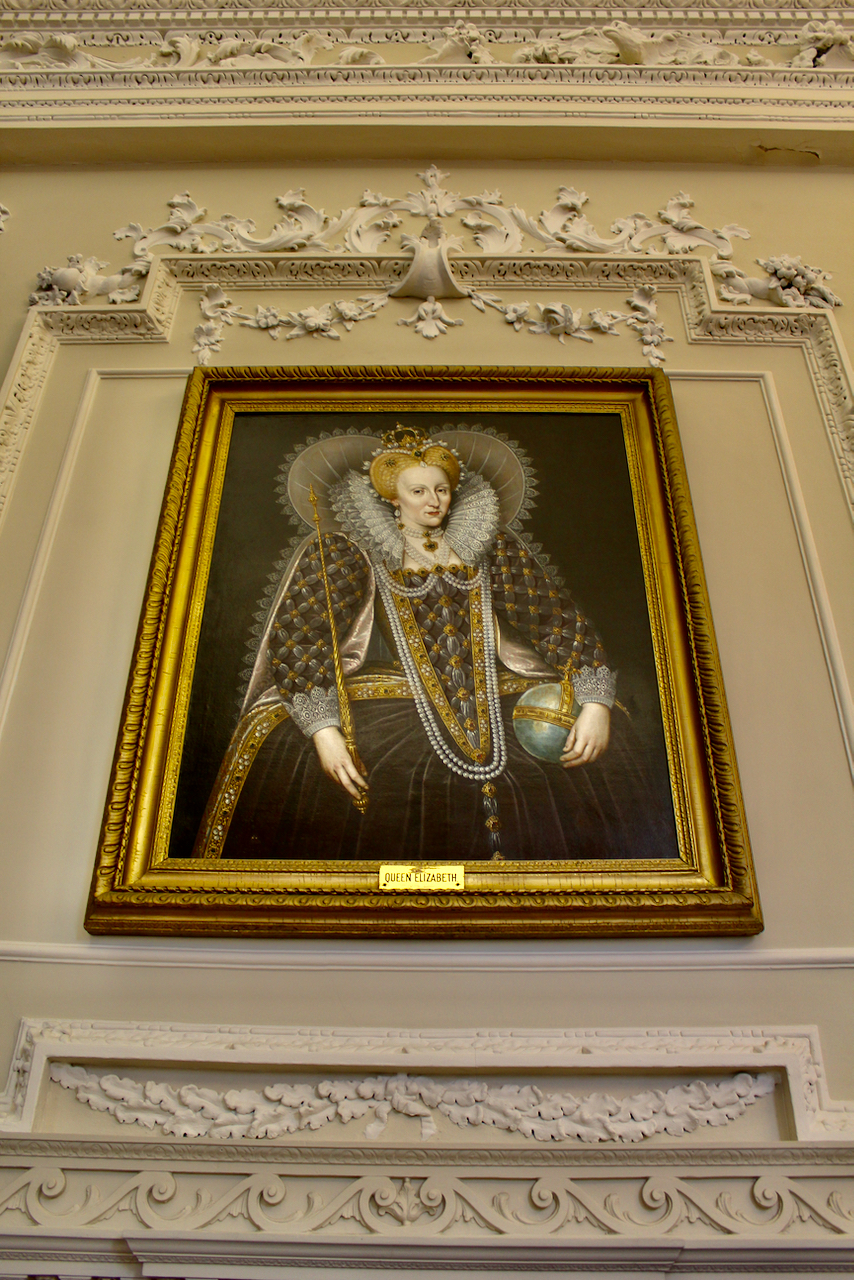
“The magnificent great hall, which stretches almost the whole length of the building is decorated with some of the finest stucco plasterwork in the country. The plasterwork features portraits of Queen Elizabeth and her brother Edward VI and many motifs and emblems associated with the Tudor monarchy.“

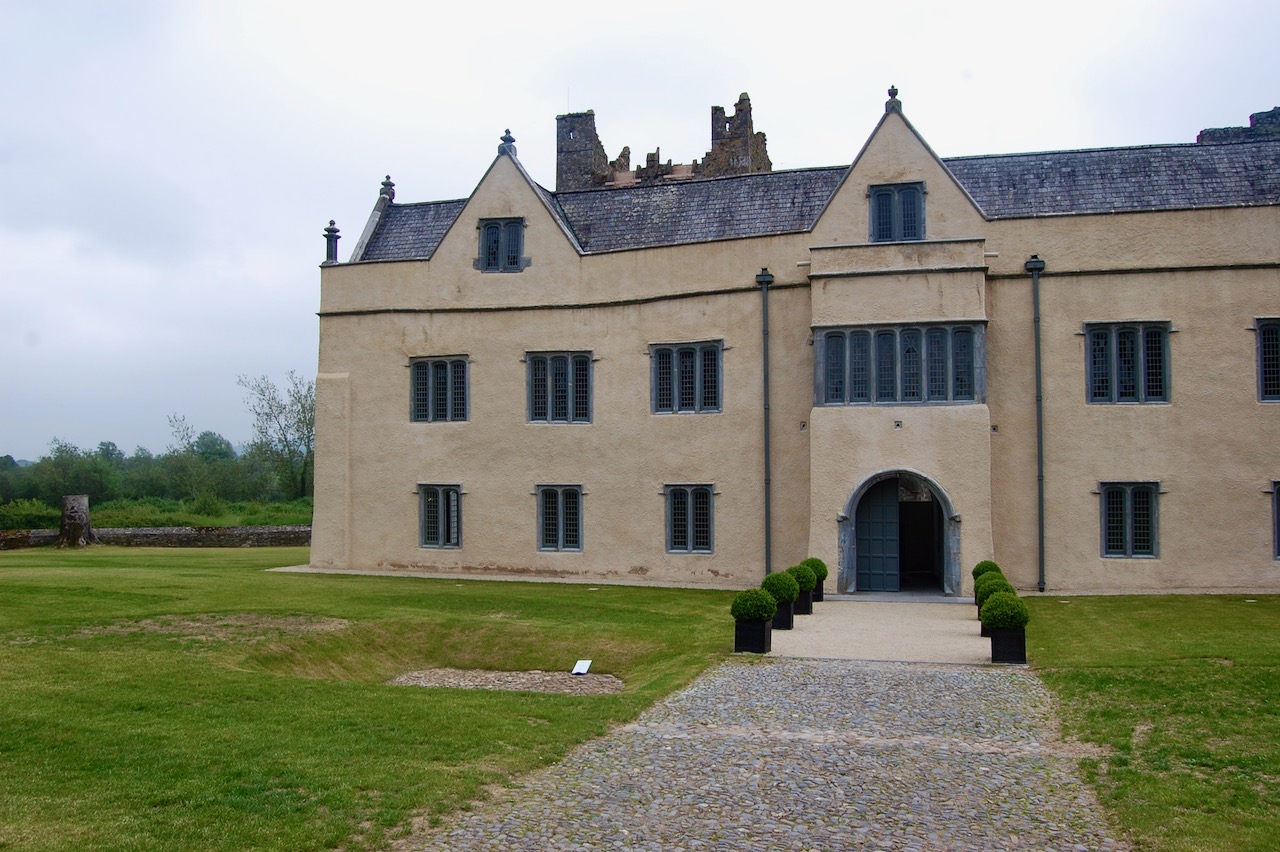
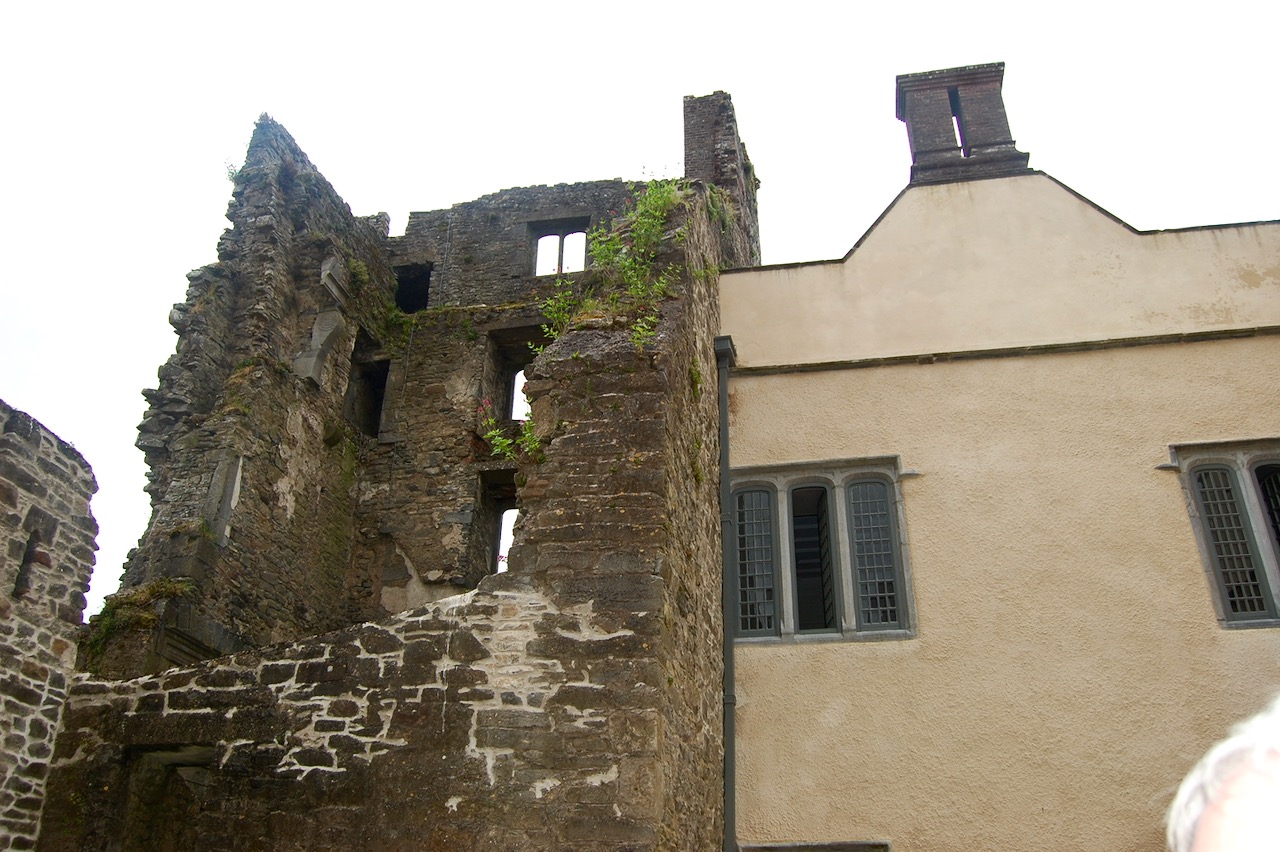
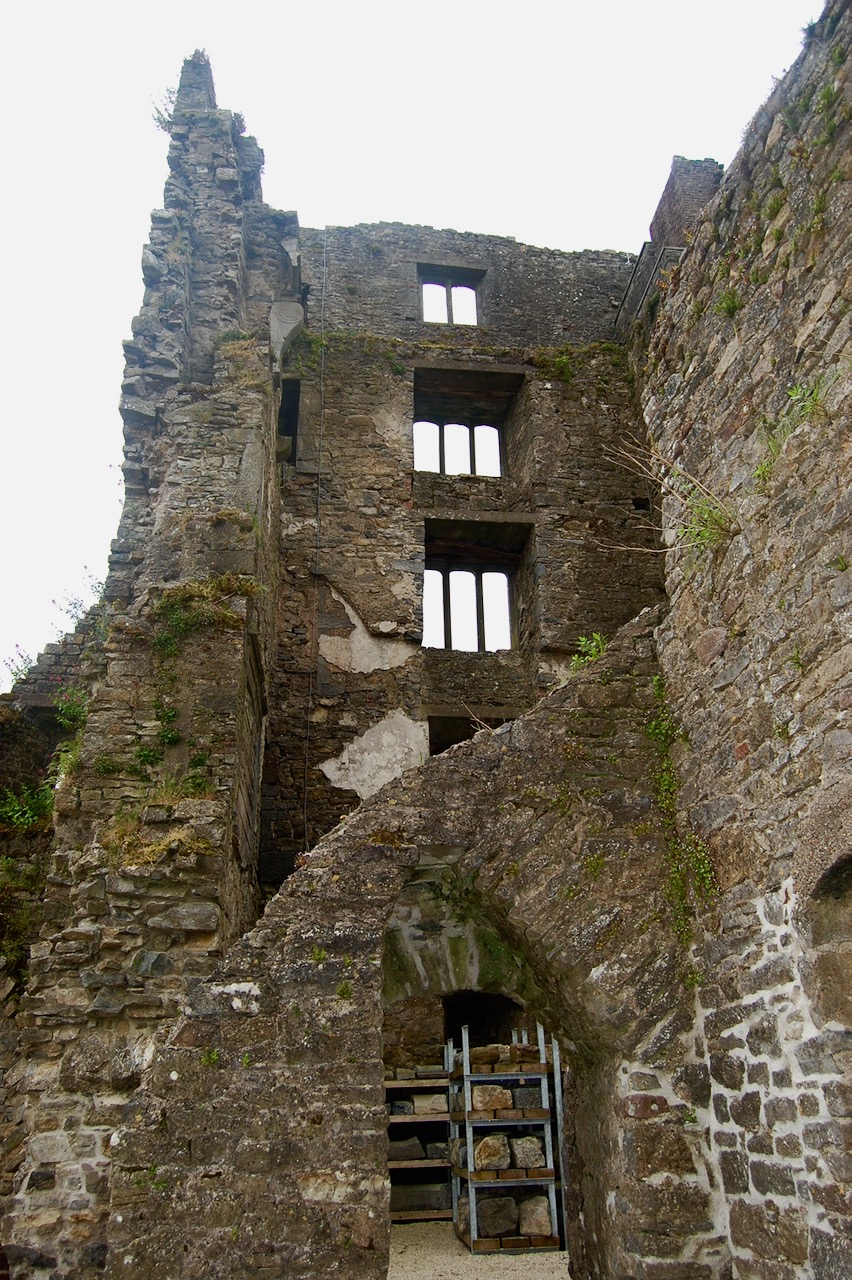
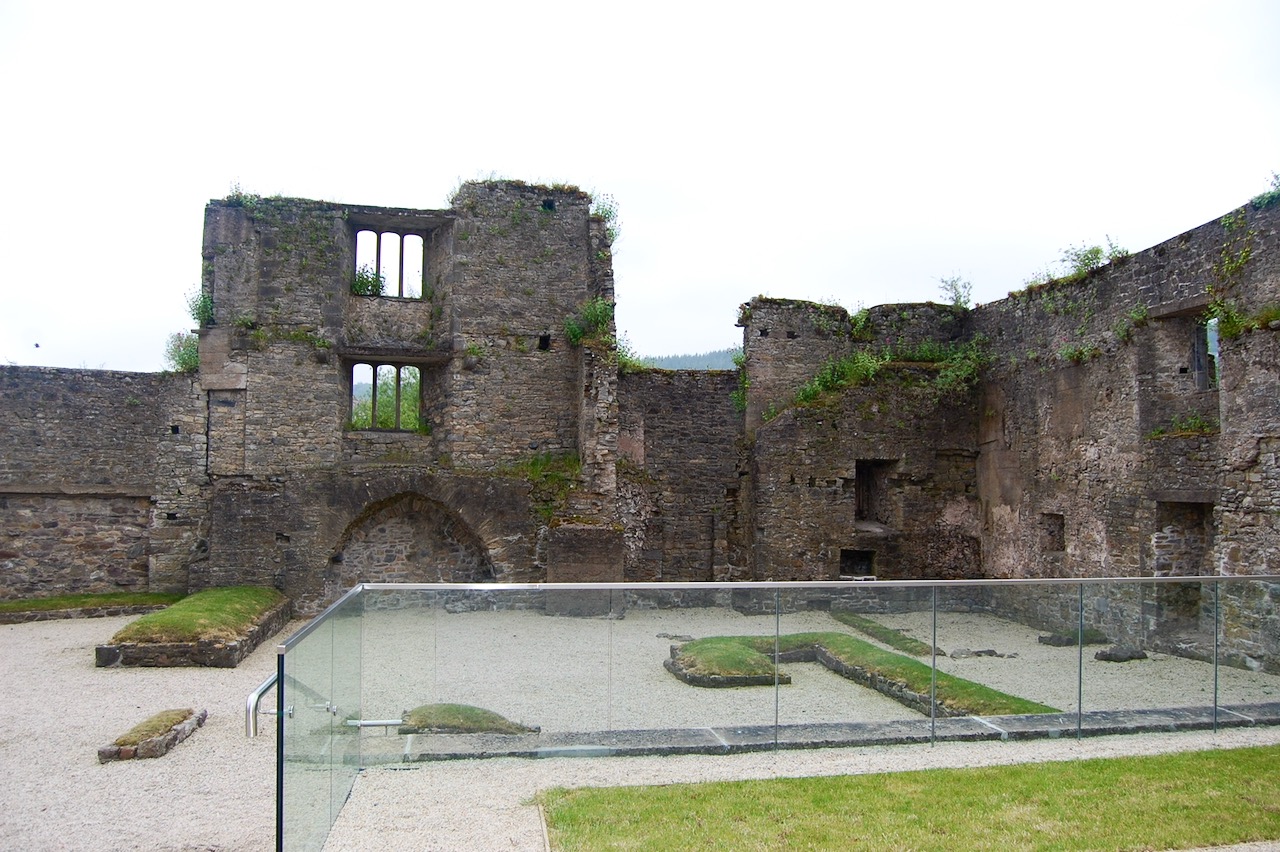
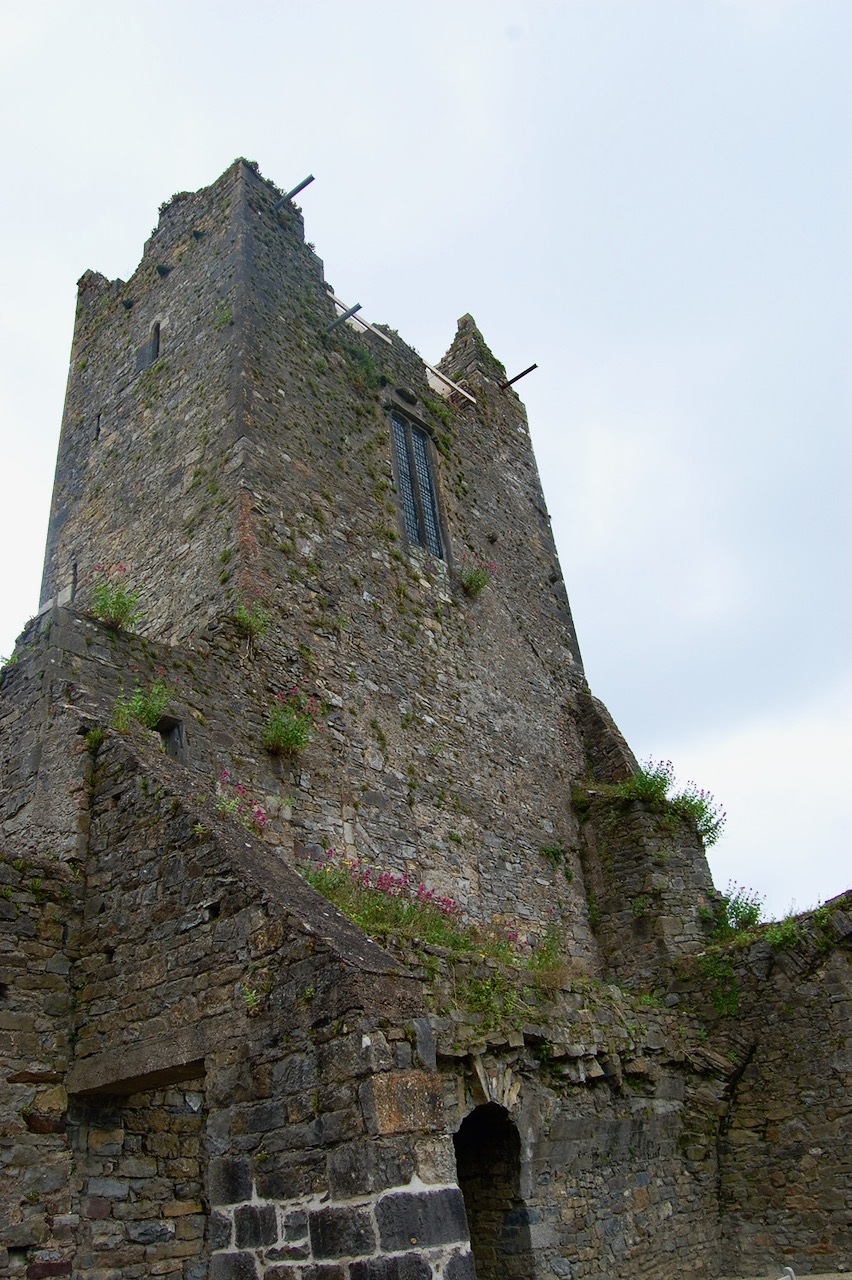
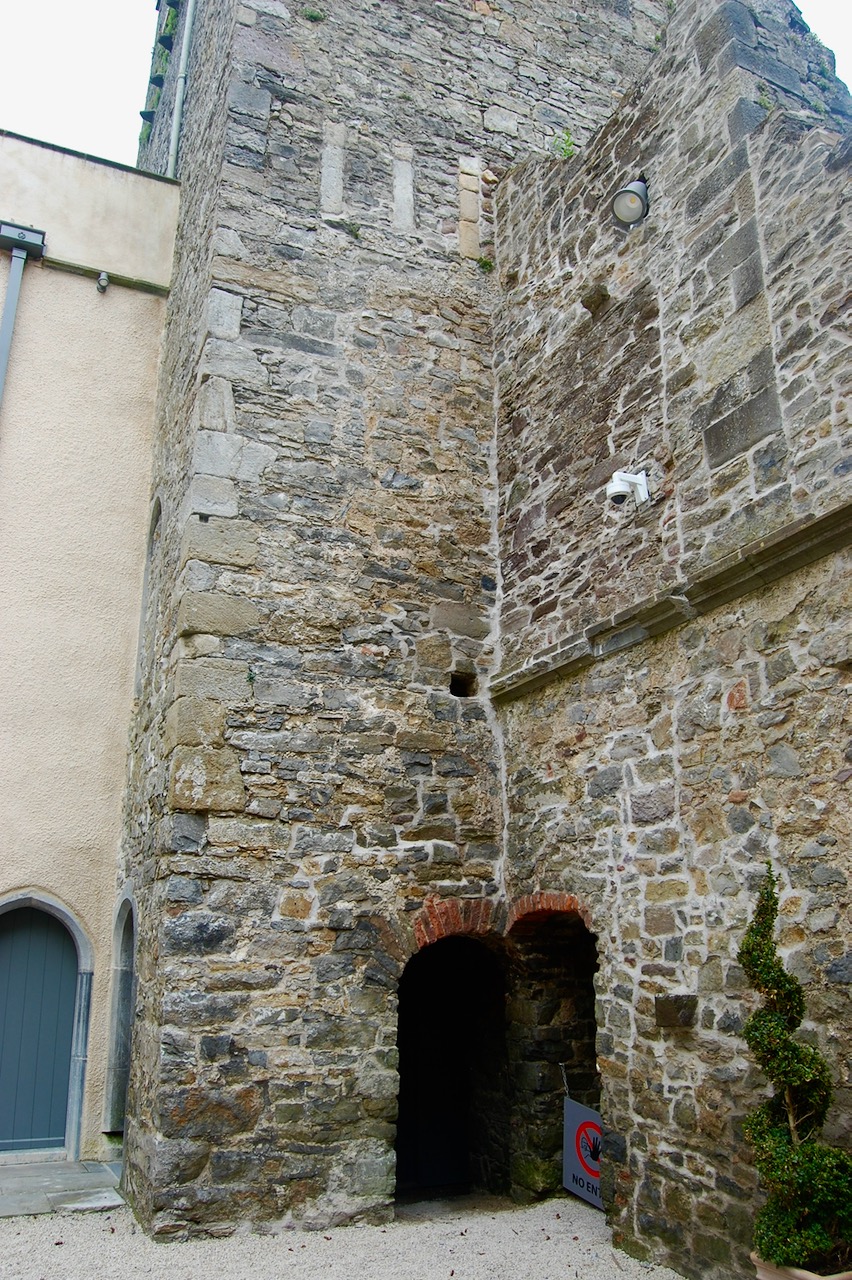
The castle has a low and wide-spreading addition to an older castle, which consisted of two massive towers set rather close together. The castle is joined to these towers by a return at each side, making an enclosed courtyard.
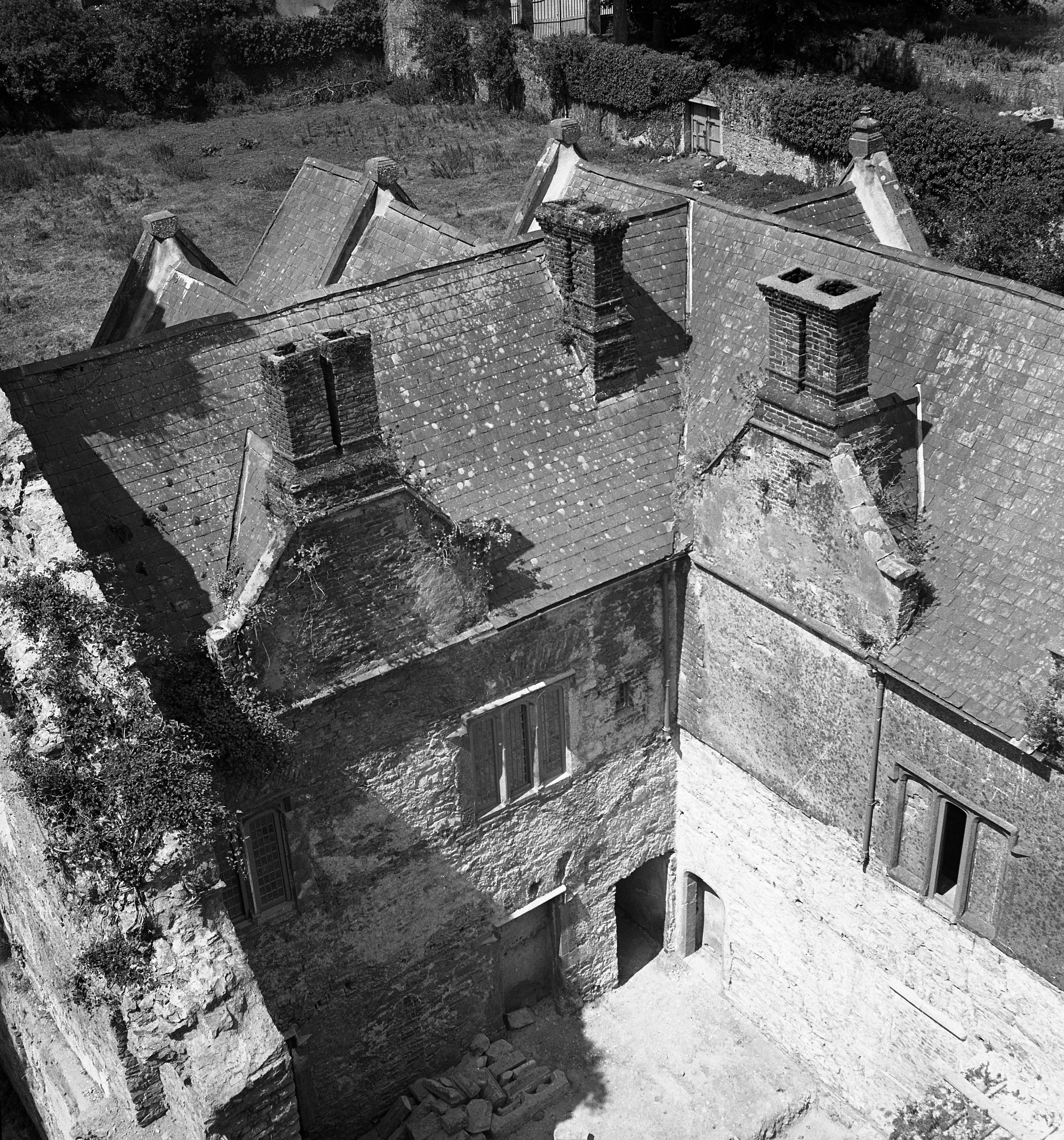
The facade is of two storeys with three gables and a central porch and oriel. It is only one room thick. It is virtually unfortified, having no basement, and windows only three feet from the ground, and a few shot-holes for defence by hand-guns, Craig points out. The windows on the ground floor may have been widened at some point.
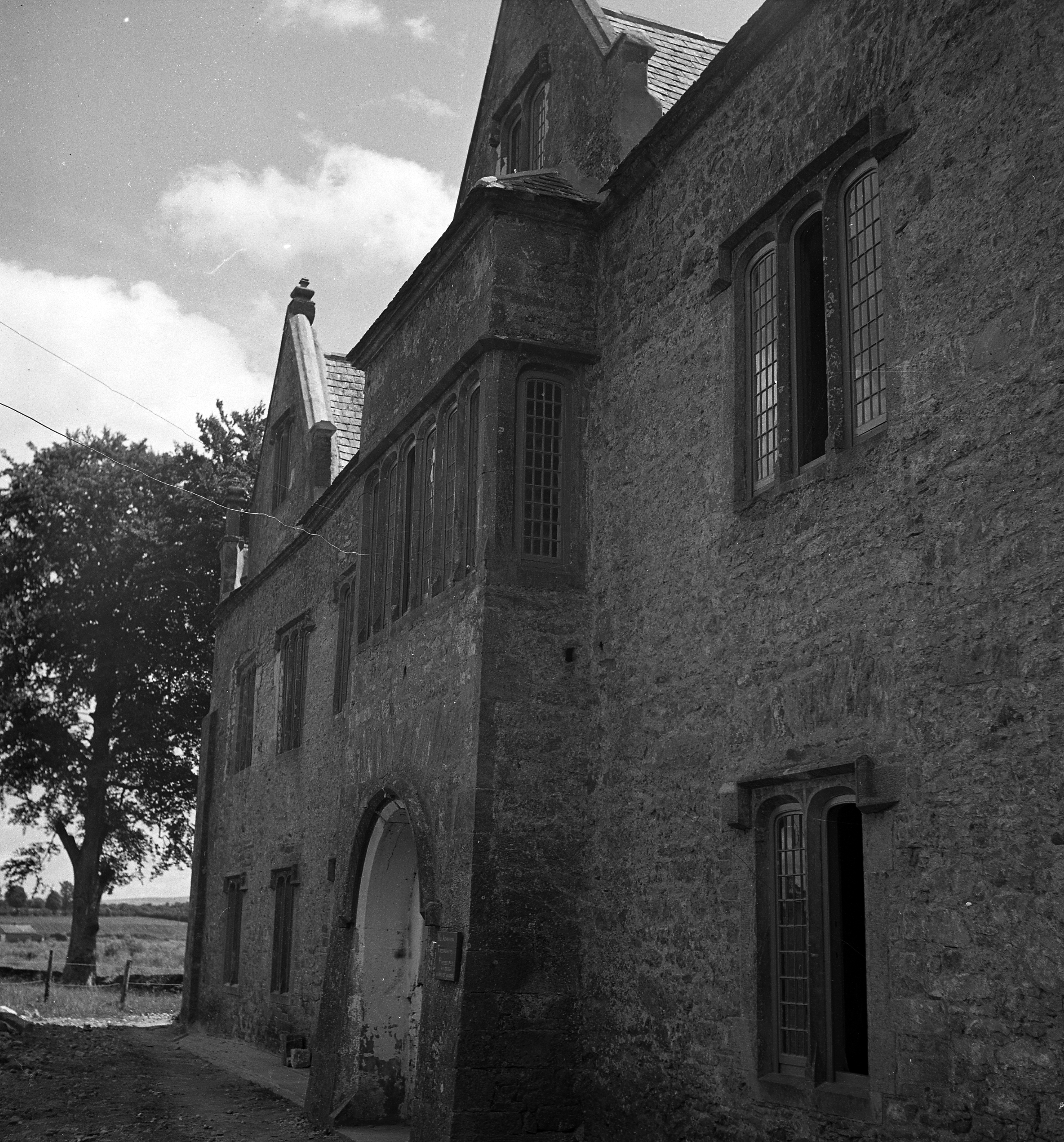
Mark Bence-Jones writes:
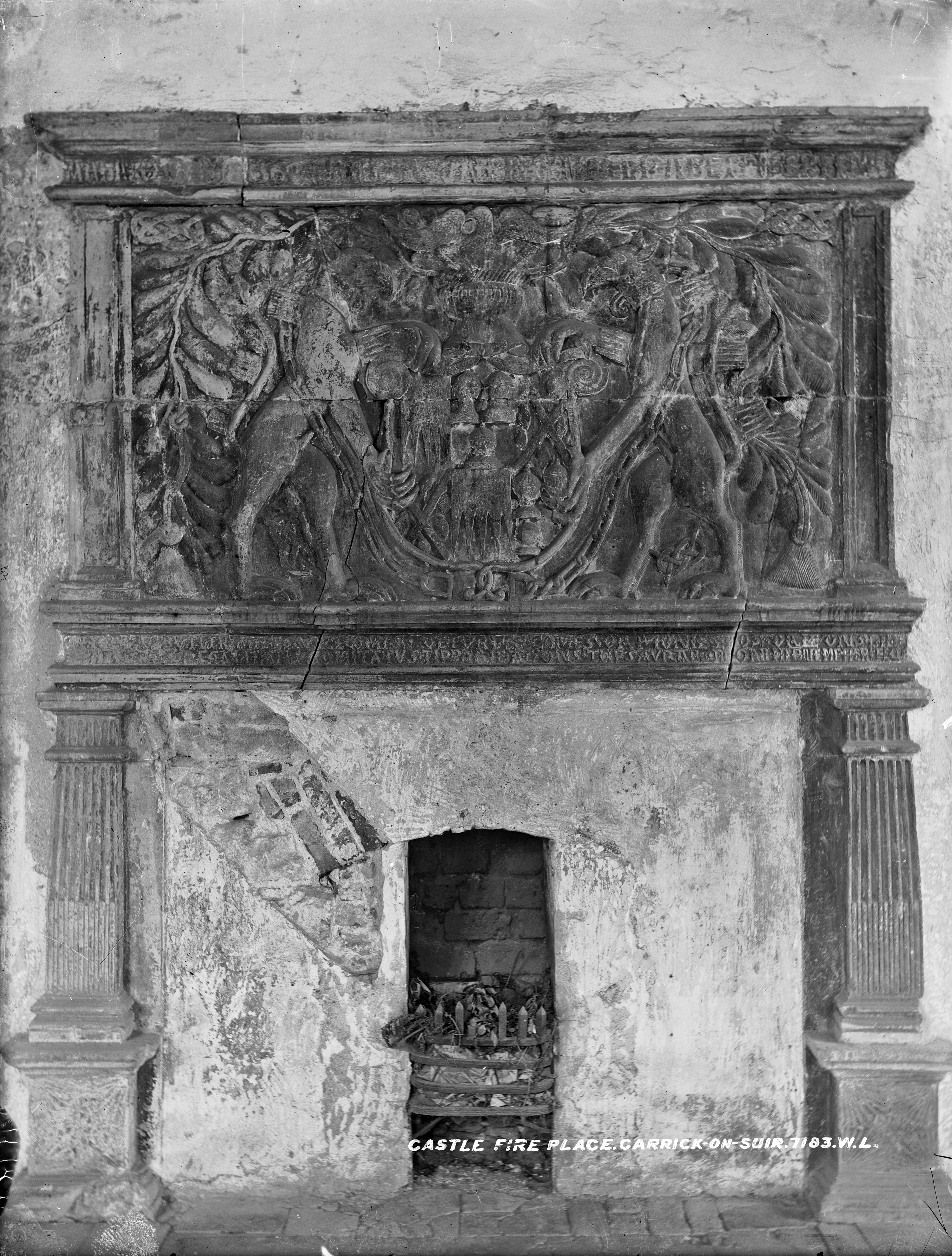
“The house, which is horseshoe shaped, forming three sides of a small inner court, and the castle the fourth. The house is of 2 storeys with a gabled attic; the towers of the castle rise behind it. The gables are steep, and have finials; there are more finials on little piers of the corners of the building. There are full-sized mullioned windows on the ground floor as well as on the floor above, the lights having the slightly curved heads which were fashionable in late C16. There is a rectangular porch-oriel in the centre of the front, and an oriel of similar form at one end of the left-hand side elevation. The finest room in the house is a long gallery on the first floor, which had two elaborately carved stone chimneypieces – one of which was removed to Kilkenny Castle 1909, but has since been returned – and a ceiling and frieze of Elizabethan plasterwork. The decoration includes busts of Elizabeth I, who was a cousin of “Black Thomas,” Ormonde through her mother, Anne Boleyn, and used to call him her “Black Husband”: she is said to have promised to honour Carrick with a visit. The old castle served as part of the house and not merely as a defensive adjunct to it: containing, among other rooms, a chapel with carved stone angels.” [3]
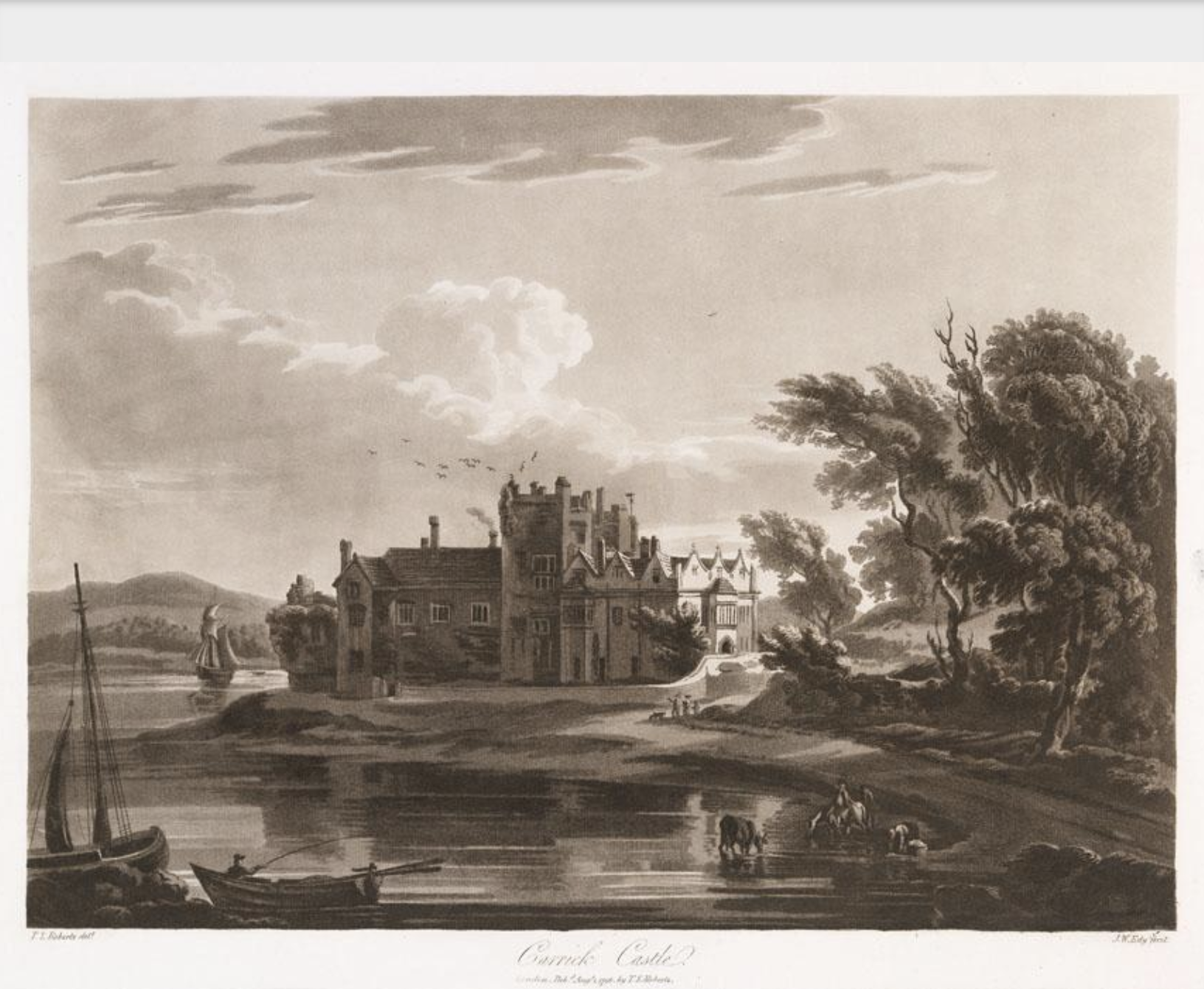
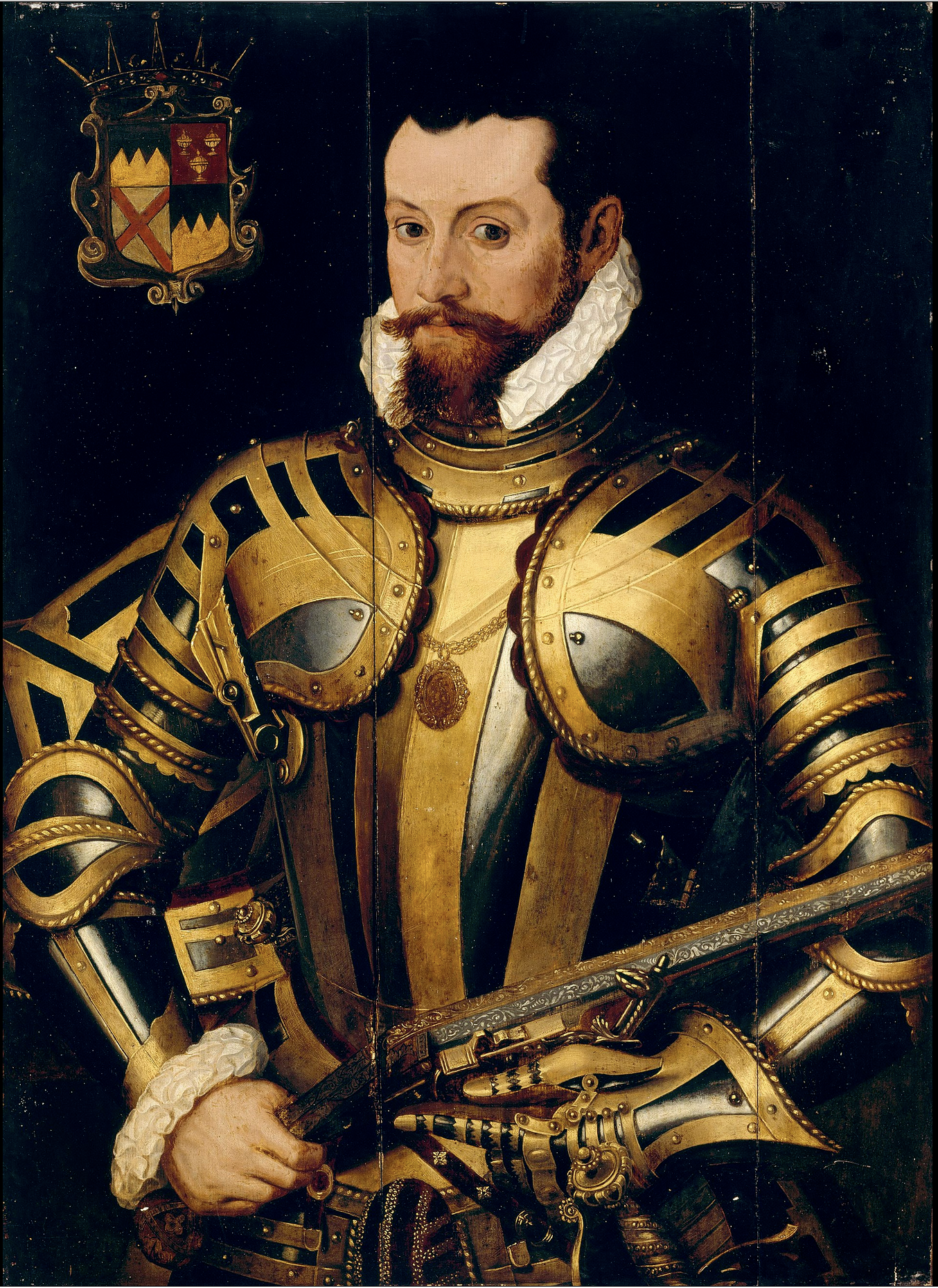
Thomas Butler (1582-1614) the 10th Earl of Ormond is a fascinating character. He was the eldest son of James Butler, 9th Earl of Ormond, and his wife Joan Fitzgerald, daughter of the 10th Earl of Desmond. Because he was dark-haired, he was known to his contemporaries as “Black Tom”or “Tomas Dubh”. As a young boy, Thomas was fostered with Rory O’More, son of the lord of Laois (his mother was granddaughter of Piers Rua Butler, 8th Earl of Ormond) before being sent to London to be educated with the future Edward VI. He was the first member of the Butler family to be brought up in the protestant faith. In 1546, he inherited the Ormond earldom following the sudden death of his father. He fought against the Fitzgerald Earls of Desmond in the Desmond Rebellions, as he was loyal to the British monarchy. He was made Lord Treasurer of Ireland and a Knight of the Garter.
He was highly regarded by Queen Elizabeth to whom he was related through her mother Anne Boleyn. Anne Boleyn was the granddaughter of the 7th Earl of Ormond making Elizabeth and Thomas cousins. Thomas married three times but left no heir and was succeeded by his nephew Walter Butler 11th Earl of Ormond. He died in 1614 and was buried in St Canice’s cathedral, Kilkenny.
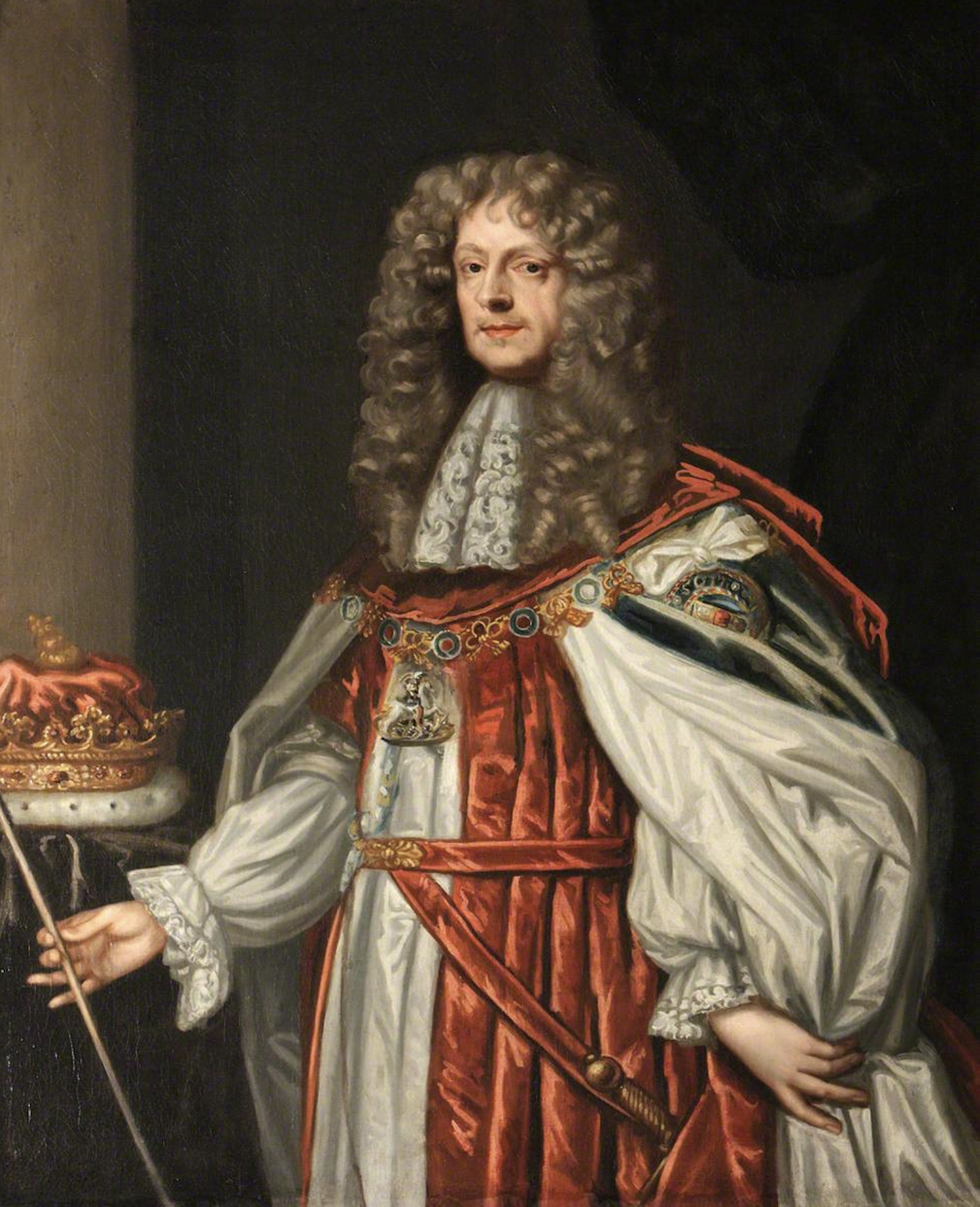
James Butler the 12th Earl of Ormond and 1st Duke of Ormond (1610-1688) spent much of his time here and was the last of the family to reside at the castle. On his death in 1688 the family abandoned the property and it was only handed over to the government in 1947, who then became responsible for its restoration.

[1] https://www.irelandscontentpool.com/en
[2] https://repository.dri.ie/
[3] Mark Bence-Jones. A Guide to Irish Country Houses (originally published as Burke’s Guide to Country Houses volume 1 Ireland by Burke’s Peerage Ltd. 1978); Revised edition 1988 Constable and Company Ltd, London.
 Irish Historic Houses
3 thoughts on “Ormond Castle, Carrick-on-Suir, County Tipperary, an OPW property”