If you are a regular reader of this blog, you will know that along with visiting Section 482 properties and other “big houses” and castles that are open to the public, I am compiling a virtual Portrait Gallery of Ireland. I watch out online for portraits of Irish people who may become the subject of my website entries. Recently browsing portraits which were for auction with Christies Irish Auction in 2005, I came across a portrait of George Grierson of Rathfarnham House.
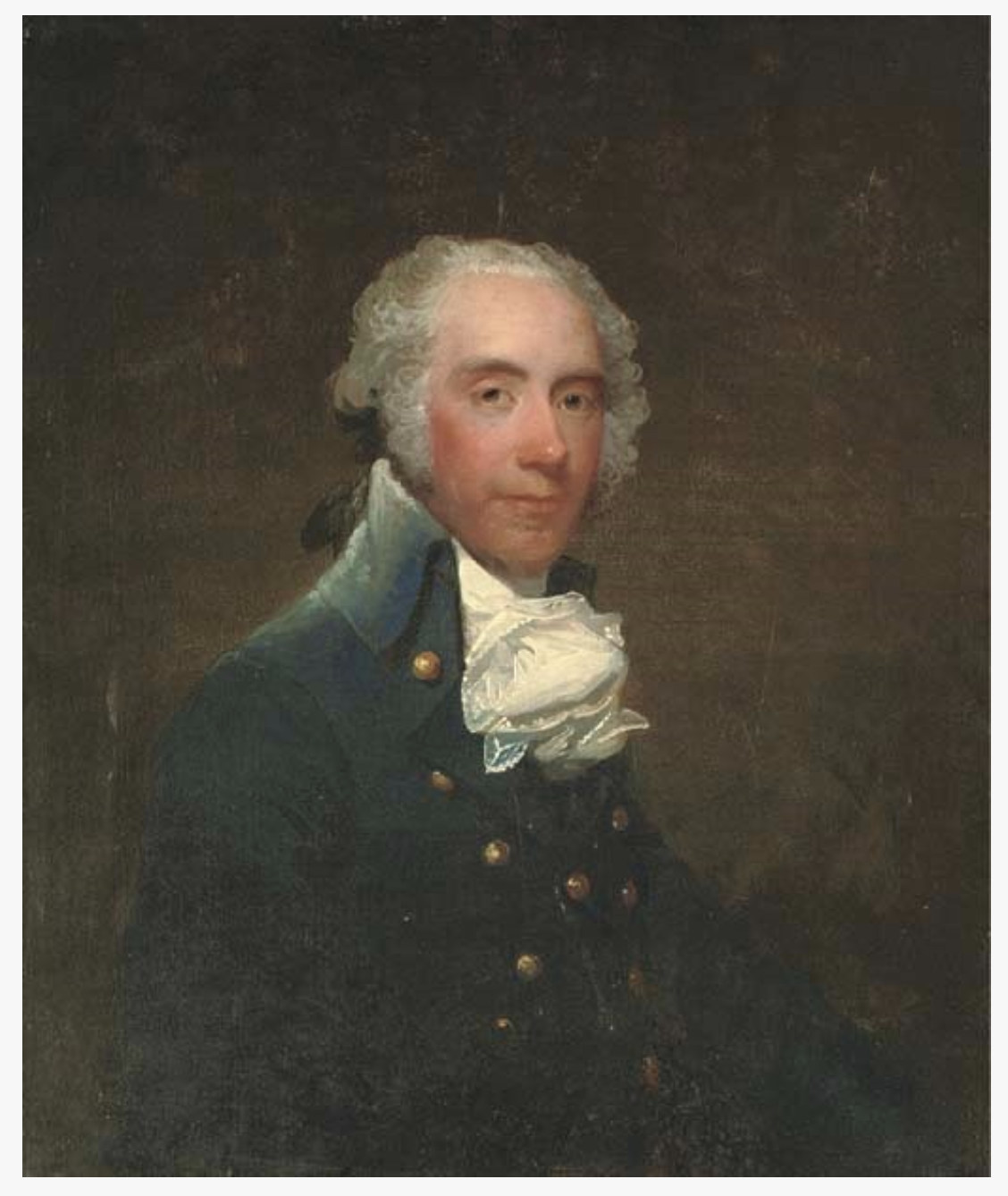
I was not familiar with Rathfarnham House so I looked it up online and found that it is an impressive former residence built in 1725, and later became part of Loreto Abbey. It was built for William Palliser (1695-1768), son of William Palliser (1646–1727) who was Church of Ireland Archbishop of Cashel. [1]
This ties in neatly with another portrait I came across, of William King (1650-1729) Archbishop of Dublin.
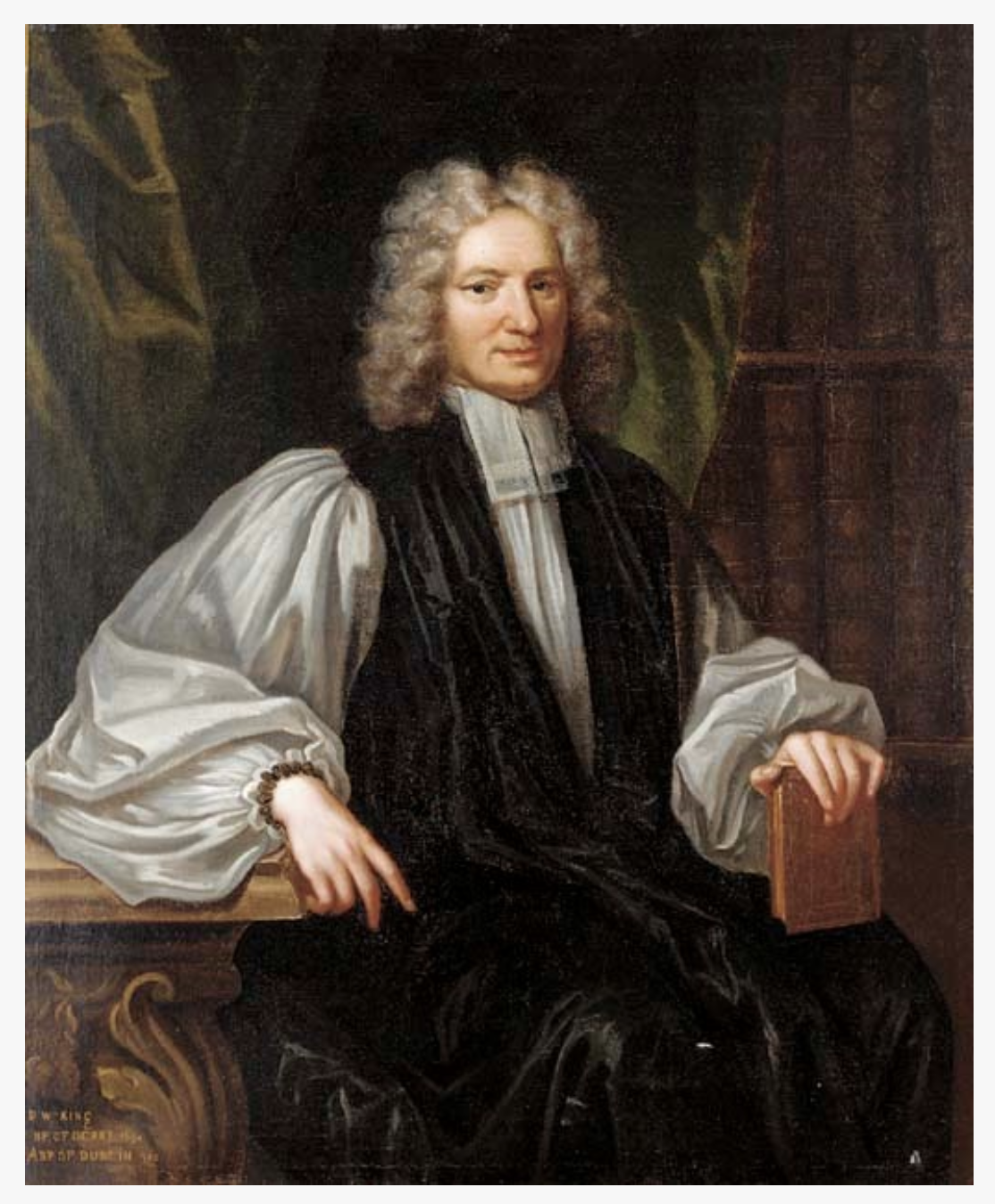
I had a previous photograph of a portrait of Archbishop William King from a visit to Trinity exam hall for a Trinity Book Sale.
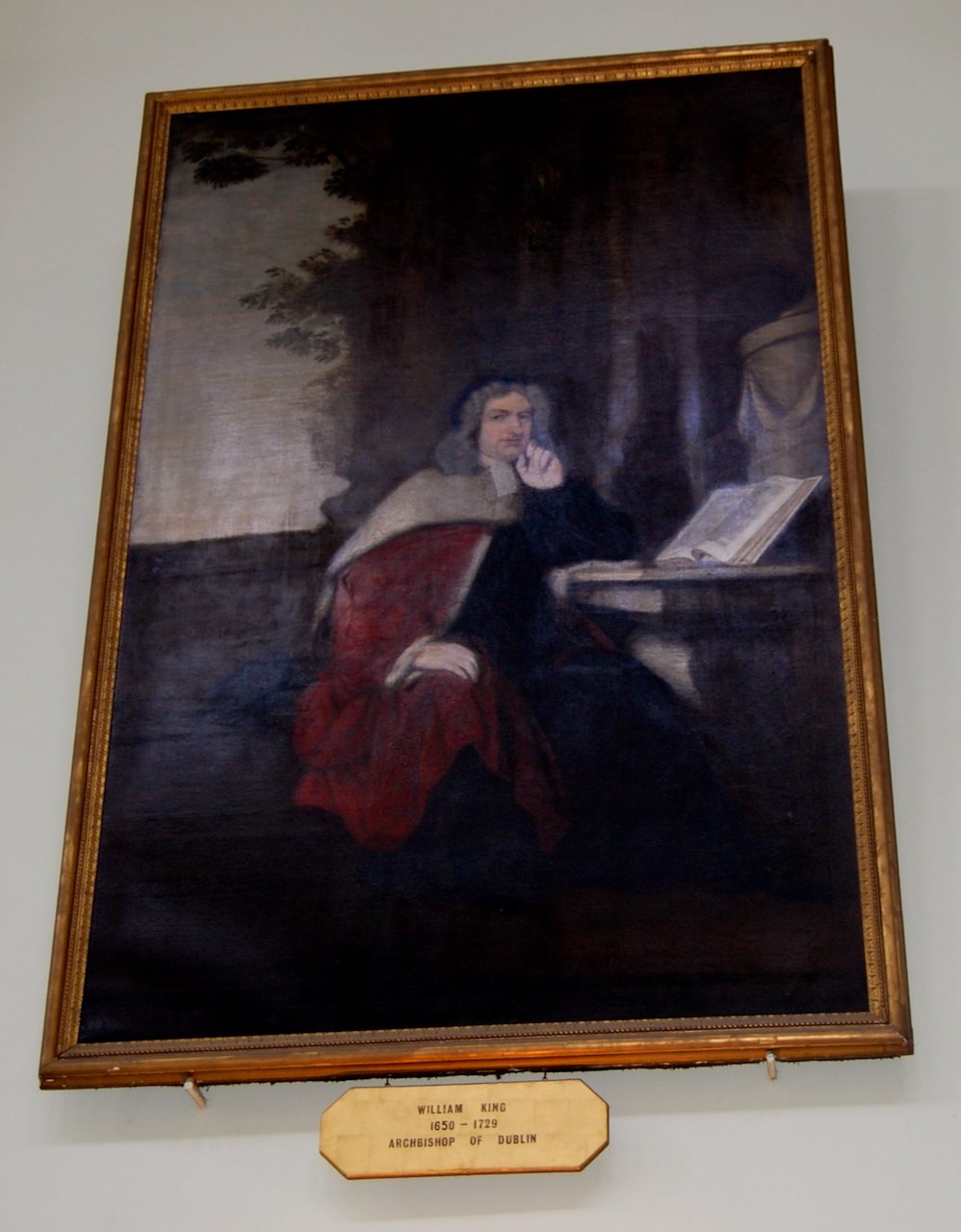

I have an interest in Archbishop William King as he vouched for a Mark Baggot (d. 1718, buried in St. Audoen’s, Dublin) when Mark was losing his residence in Mount Arran, County Carlow. I don’t know if I am a descendant of Mark Baggot but I hope I am, as he is fascinating. Mark was one of the first members of the Dublin Philosophical Society. [2] I have gathered much information about Mark, but in short, when Mark, as a Catholic, was set to lose Mount Arran, he sought intercession from his friend William King. King vouched for Mark Baggot’s character. [3] The letters are in Trinity College Dublin. Mark and William King shared an interest in mathematics. Two of Mark Baggot’s books somehow made their way into Marsh’s Library – I have yet to see these books as when I requested them, they were being re-bound. I discovered today that William King’s library was bought by Archbishop Theophilus Bolton (d. 1744) and is held today in the University of Limerick in the Bolton Library. Mark was also a member of St. Anne’s Guild in Dublin, which was based in St. Audoen’s church.
We came across some of Mark’s descendants when we visited The Old Glebe in Newcastle Lyons, County Dublin (see my entry https://irishhistorichouses.com/2019/12/31/the-old-glebe-newcastle-lyons-county-dublin/), as James John Bagot (1784-1860) and his wife are buried in the graveyard of the adjoining church.
[1] https://source.southdublinlibraries.ie/handle/10599/7447?locale=en
“Loreto Abbey has as its core, Rathfarnham House, a mansion built in 1725 by William Palliser who expended considerable resources on its interior with polished mahogany and, in one room, embossed leather wallpaper. On his death in 1768 without children of his own, his cousin Reverend John Palliser inherited it. When he died in 1795, George Grierson, the King’s Printer purchased the house, from which he later moved to Woodtown House. The Most Reverend Dr Murray purchased it in 1821, after it lay vacant for some years, for the Loreto Order, then just founded. The first Superior of the Order, the Reverend Mother Francis Mary Teresa Ball made additions to the house, including supposedly an extra storey on to the house. A church was added in 1840, the novitiate in 1863, St Joseph’s wing in 1869 comprising concert hall and refectory, St Anthony’s wing St. Anthony’s wing in 1896, St Francis Xavier’s wing in 1903 and Liseux in 1932. Mother Theresa of Calcutta entered religion in Loreto Abbey in 1928. At its height it houses some 200 pupils. It cease to take boarders in 1996 and the building closed in 1999. A building company Riversmith Ltd acquired a site to the rear where it constructed apartments. The Loreto Order is now headquartered in Beaufort House, part of the Loreto High School.” Text by Kieran Swords.
[2] Hoppen, K. Theodore, “The Dublin Philosophical Society and the New Learning in Ireland” Irish Historical Studies, Vol. 14, No. 54 (Sep., 1964), pp. 99-118 (20 pages). The Society was founded in 1683. The article tells us that the Dublin College of Physicians secured a royal charter in 1667. The Royal Society of London was founded in 1660, and George Tollett, a Dublin mathematics teacher, Narcissus Marsh, who was Bishop of Ferns and Leighlin at the time, and Allen Mullen, a Dublin physician, were in correspondence with it. In 1682 William Molyneux undertook to write a Natural History of Ireland, and in working, he met several other Irishmen interested in geography. He then set out to form the Dublin Society. He acquired the aid of Dr St George Ashe, then Rev Dr Huntington who was then provost of Trinity College. Within four months it had a membership of 14, and acquired permanent residence on Crow’s Nest off Dame Street in Dublin, where they established a laboratory, museum and herb garden. Other members were John Baynard, Archdeacon of Connor, Samuel Foley, a fellow of Trinity and later bishop, a physician John Willoughby who had studied in Padua, and Mark Baggot, Catholic. By 1685 a further 20 members had joined, including William King. William Petty became President and Edward Smyth, Treasurer.


Between 1687 and 1693 the weekly meetings were suspended due to political turmoil in Ireland. During the Williamite revolution many members fled to England. Dudley Loftus was temporarily a member but left as he didn’t like its progressive nature. The revival lasted only 18 months, but it was then revived again in 1707 by William Molyneux’s son Samuel. At this time members included Peter Browne the Provost of Trinity College Dublin, Samuel Dopping, and Thomas Burgh, the architect of Trinity College library, and philosopher George Berkeley. The Society ceased to meet in 1709.
Other members are listed in a Memoir, including: William Lord Viscount Mountjoy; John Worth, Dean of St. Patrick’s; Robert Redding, Bt; Cyril Wyche, Knight; Richard Bulkely, Knt. and Bt; Patrick Dun MD; Henry Fenerly; J. Finglass; Daniel Houlaghan; John Keogh; George Patterson, Surgeon; John Maden MD (his descendant Samuel Madden set up the Royal Dublin Society in 1731); Richard Acton; John Bulkeley; Paul Chamberlain; Robert Clements; Francis Cuff; Christopher Dominick; William Palliser later Archbishop of Cashel; Edward Smith, Professor of Mathematics and later Archbishop of Down and Connor; John Stanley; Jacobus Silvius; Jacobus Walkington; Paul Ricaut.
Subjects studied were Mathematics and Physics; Polite Literature; History and Antiquities; Medical Science including Anatomy, Zoology, Physiology, Chemistry.
[3] Mark Baggot, a major landowner in County Carlow, was the son of John Baggot who had forfeited as a Jacobite. Mark became friendly wiht George Tollet, later a powerful official in London, who was close to Archbishop King. See J.G. Simms, “Dublin in 1685” IHS xiv, 1965, p. 222-3. Baggot was also friendly with King due to their common interest in mathematics. When Baggot’s claim for restoration for his estate was before the trustees, Mark asked King to intercede on his behalf (see Baggot to King, 30 Jan 1701, TCD Lyons Collection MSS 1995-2008/754). King wrote to one of the trustees, Sir Henry Sheres, on Baggot’s behalf, citing Baggot’s links with Tollet who was a friend of Sheres. Baggot’s claim was allowed. The Chancellor of the Exchequer, Philip Savage, was acting as Counsel on Mark’s behalf. This was in spite of the fact that Mark’s estate had been granted to the Savages and later to the Wolseleys, and the fact that local Protestants had petitioned Ormond strongly to use his influence against Baggot’s restoration (see petition dated 16 April 1701, NLI Ormond MSS, MS 2457, f. 75). The petition accuses Baggot of “insufferable pride, rigour and insolence towards the Protestants here.”
 Irish Historic Houses