Cahercon House (or Cahiracon or Cahircon), County Clare, Killadysert, Co. Clare
Bence-Jones, Mark. A Guide to Irish Country Houses (originally published as Burke’s Guide to Country Houses volume 1 Ireland by Burke’s Peerage Ltd. 1978); Revised edition 1988 Constable and Company Ltd, London.
p. 53. “(Kelly, sub Roche-Kelly/IFR; Vandeleur/IFR) …The seat of the Scott family; afterwards of the Kelly and Vandeleur families. Now owned by a religious order.”
http://lordbelmontinnorthernireland.blogspot.com/2014/08/cahercon-house.html
THE HON CHARLES WILLIAM WHITE WAS THE SECOND LARGEST LANDOWNER IN COUNTY TIPPERARY, WITH 23,957 ACRES
LUKE WHITE (c1740-1824) was born at Bell’s Lane (now Garfield Street), Belfast.
This bookseller, lottery operator and Whig politician was once known as “the Smithfield Millionaire.”
He started as an impecunious book dealer, first in the streets of Belfast; then, from 1778, at an auction house in Dublin, buying and reselling around the country.
By 1798, during the Rebellion, he helped the Irish government with a loan of £1 million (at £65 per £100 share at 5%).
He then purchased Luttrellstown Castle from Henry Luttrell, 2nd Earl of Carhampton, in 1800, and changed its name to Woodlands in order to eradicate the memory of its previous owner.
Mr White, High Sheriff of County Dublin, 1804, Longford, 1806, MP for Leitrim, 1818-24, married firstly, in 1781, Elizabeth, daughter of Peter de la Mazière, and had, with other issue,
Thomas, Colonel in the army, of Woodlands;
Samuel;
Luke;
HENRY, of whom hereafter;
Matilda, m 4th Baron Massy.
He espoused secondly, in 1800, Arabella, daughter of William Fortescue, and had further issue, one son.
Mr White died at his London residence in Park Street, Mayfair.
He left properties worth £175,000 per annum which subsequently devolved upon his fourth son,
HENRY WHITE (1791-1873), of Woodlands, County Dublin, and afterwards of Rathcline, County Longford, who wedded, in 1828, Ellen, daughter of William Soper Dempster, of Skibo Castle, Sutherland, and had issue,
LUKE, his heir;
Henry;
George Frederick;
Francis Samuel;
Charles William, of Cahercon;
Robert;
Eleanor; Emily.
Mr White was elevated to the peerage, in 1863, in the dignity of BARON ANNALY, of Annaly and Rathcline, County Longford.
He was succeeded by his eldest son,
LUKE, 2nd Baron (1829-88), KP, MP for Clare, 1859-60, Longford, 1861-2, Kidderminster, 1862-5, who espoused, in 1853, Emily, daughter of James Stuart, and had issue.
- Luke White, 2nd Baron (1829–88);
- Luke White, 3rd Baron (1857–1922);
- Luke Henry White, 4th Baron (1885–1970);
- Luke Robert White, 5th Baron (1927–90);
- Luke Richard White, 6th Baron (b 1954).
The Heir apparent is the present holder’s only son, the Hon Luke Henry White.
*****
The 1st Baron’s fifth son, the Hon Charles William White (1838-90), of Cahercon, inherited the County Clare estates comprising 18,226 acres, and 5,731 acres in County Tipperary.
CAHERCON HOUSE, near Kildysart, County Clare, is situated on the banks of the River Shannon, the seat of the Scott family until at least the 1850s.
The sale rental of 1854 gives a detailed description of the house which included 16 bedrooms.
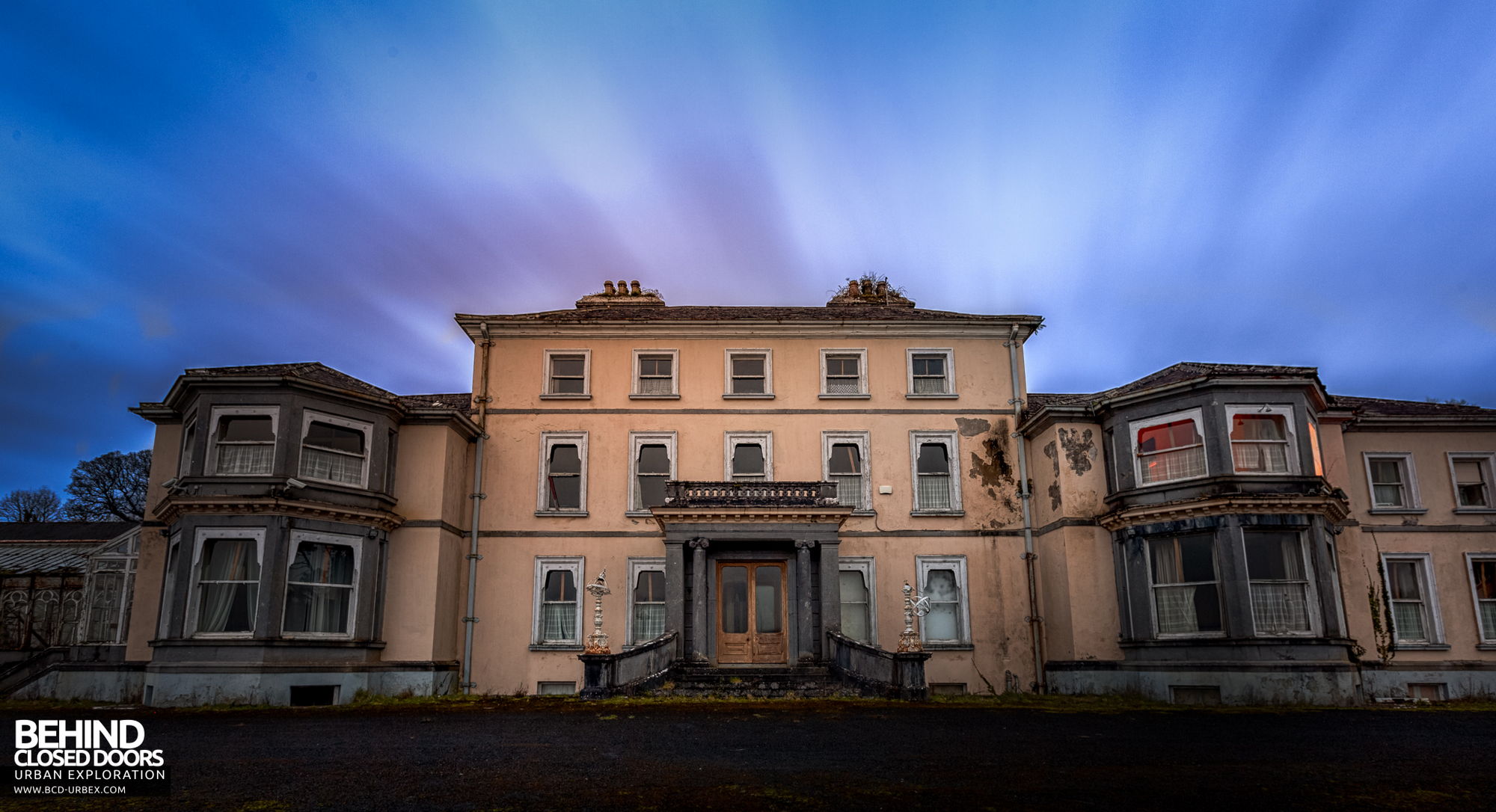
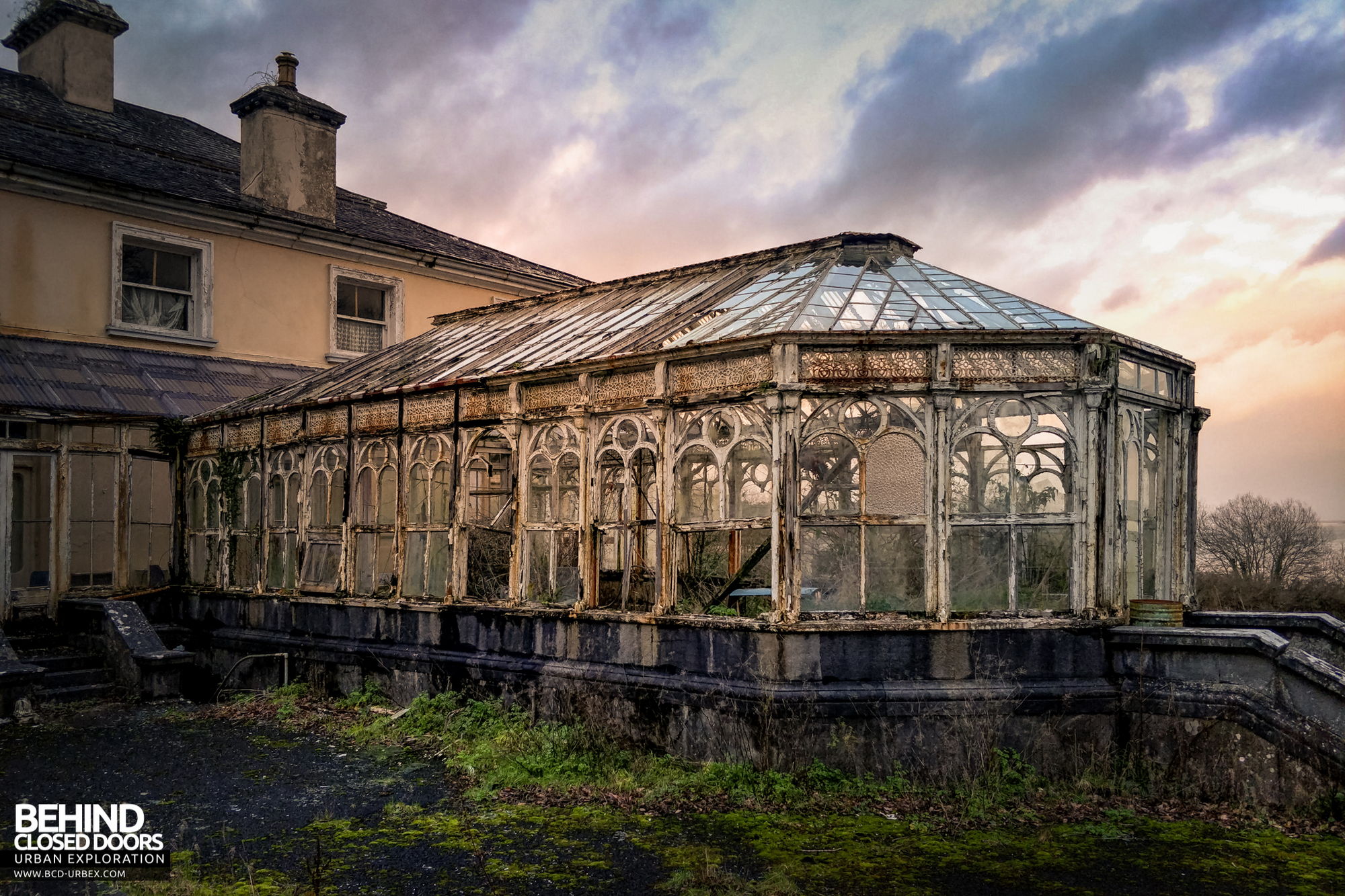
Cahercon, variously known as Cahircon, Caheracon and Cahiracon, is a late-Georgian block of three storeys over a basement, with two-storey, mid-19th century wings and other additions.
The house faces across the Shannon estuary.
The main block is of five bays, with an Ionic porch; the wings have three-sided bows. The roof is prominent.
Cahercon was the seat of the Scott family until at least the 1850s and was constructed around 1790.
In 1873, the wings, conservatory and single storey bay were added.
By the 19th century James Kelly held the house in fee.
The Hon James William White, son of Lord Annally’s son, lived in Cahiracon in the mid 1870s and it was still a seat of the family in 1894.
The Vandeleurs lived in Cahercon at the beginning of the 20th century.
In 1920, it was purchased by the Maynooth Mission to China, and they in turn sold it to the Salesians Sisters of St John Bosco in 1962.
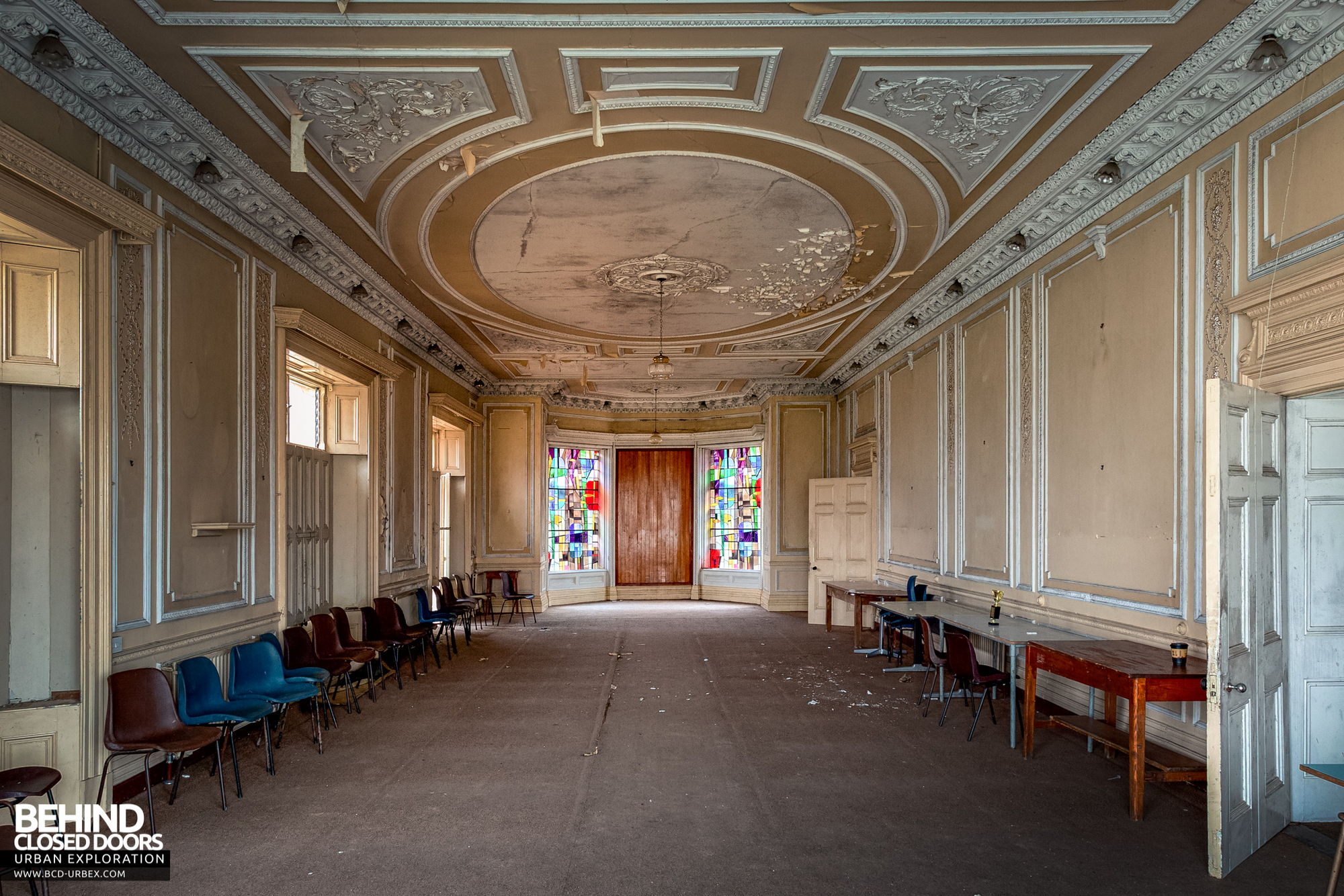
Until 2002, Cahercon House operated as a secondary school, boarding school and convent.
First published in July, 2012.
https://www.bcd-urbex.com/cahercon-house-kildysart/
It seems everywhere in Ireland has a rich history behind it, and Cahercon House in Kildysart is no exception. The 60-bedroom Georgian mansion was built around 1790, on 220 acres of land overlooking the Shannon Estuary. Through that time it has been an ascendancy family seat, a seminary for missionaries, a boarding school and, most recently, a pet project for the head of a quarrying conglomerate.
The house was built by the Scott family, but soon becoming the home of the White family in 1800s. The Whites were regarded as “new money” by high society after rapidly making their fortune operating a lottery, however this proved to be the start of an aristocracy and the house stayed in the family for the next 90 years.
Cahercon House was sold to the Vandeleurs in 1897, after their previous residence in Kilrish was destroyed by fire, and they remained there for the next two decades. The Vandeleurs, however, were not popular landlords amongst the community, and were responsible for over 1,000 evictions following the potato famine.
The estate was sold to the Maynooth Mission to China, later called the Missionary Society of St Columban and better known as “the Columbans” in 1920 for £14,000. Cahercon became St Senan’s College, a philosophical institute and seminary. A few years later, it would become a convent for the Sisters of Saint Columban, who ran a high school there until 1948. The Columbans sold the place, in October 1962, to the Salesian sisters who turned it into a boarding school for girls, which closed in 2002.
The house then fell into the hands of Clareman Paddy Whelan, a businessman who owned an extensive quarrying business and was looking to set up an explosives factory. Planning permission was granted for construction of the factory in the grounds, but faced furious local opposition, including from the nuns of Cahercon House themselves. The Whelan Group purchased the house from the nuns for something over €1 million, and the objections were silenced.
The planning permission still became overturned in 2003, but following a 10-year legal battle, was reinstated with various conditions. In a strange twist of fate, in 2010 the Whelan group, including the explosives venture, were liquidated in the High Court.
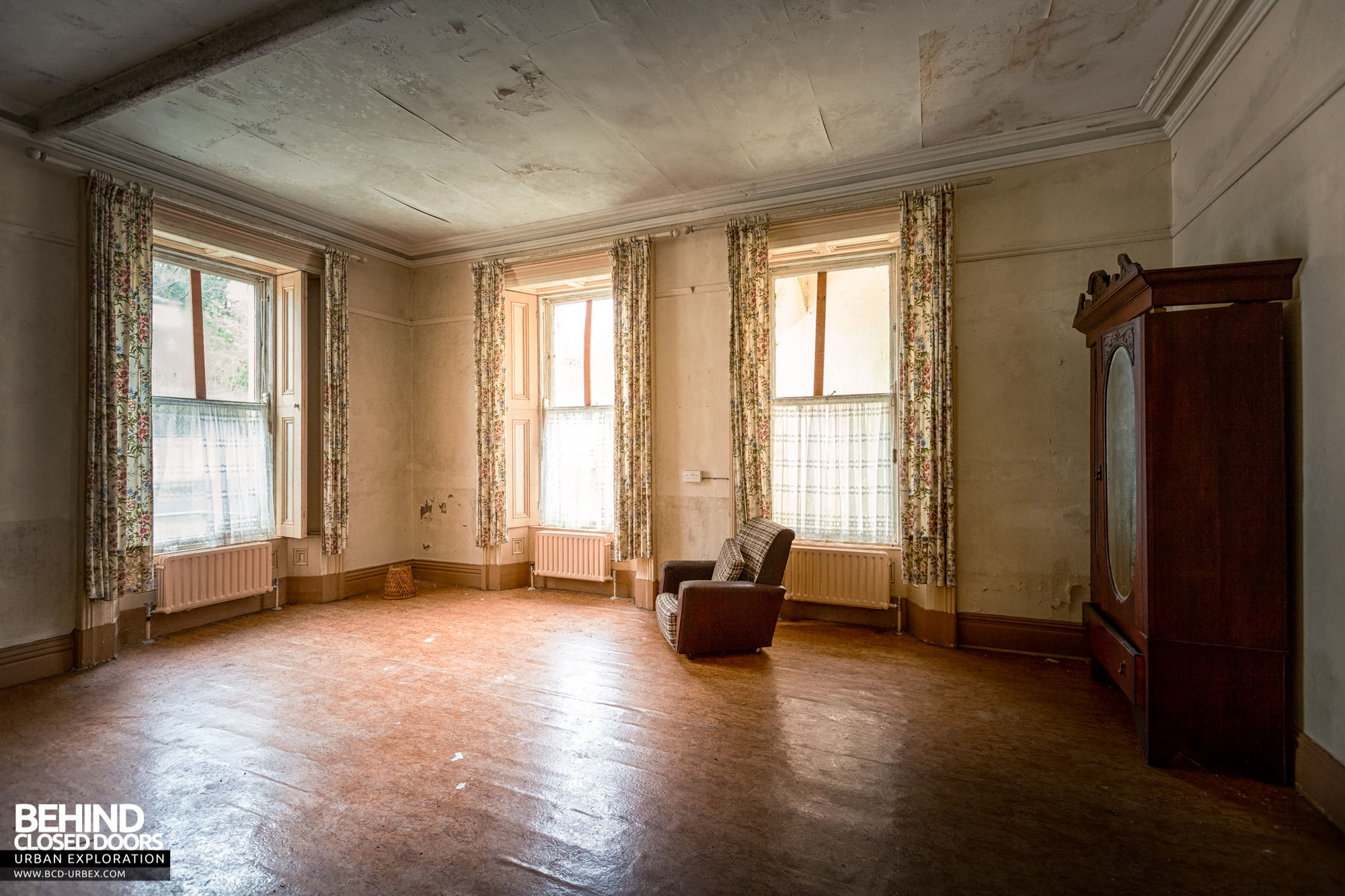
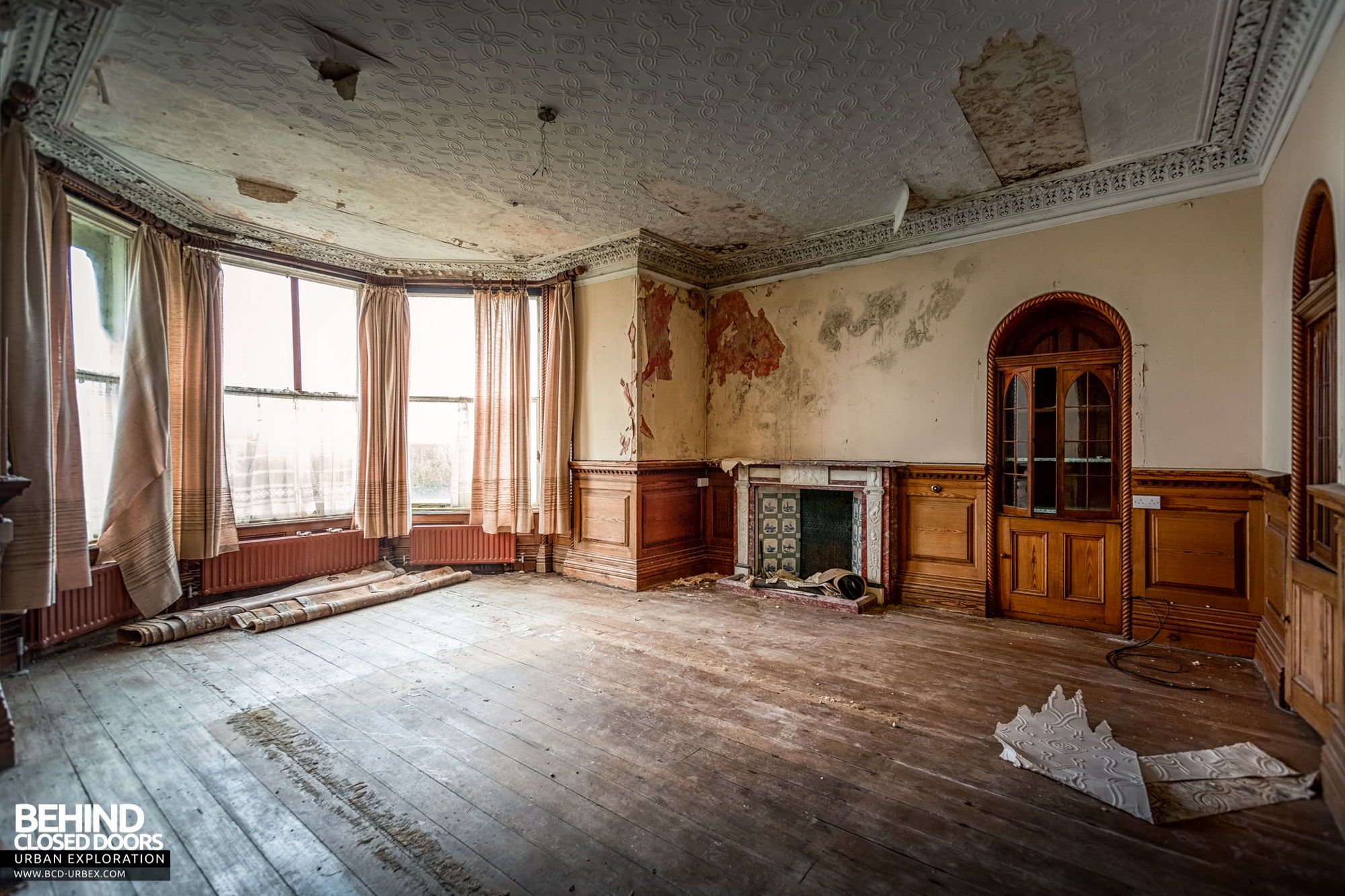
The property is now empty and for sale again, including planning permission to build an explosives factory.
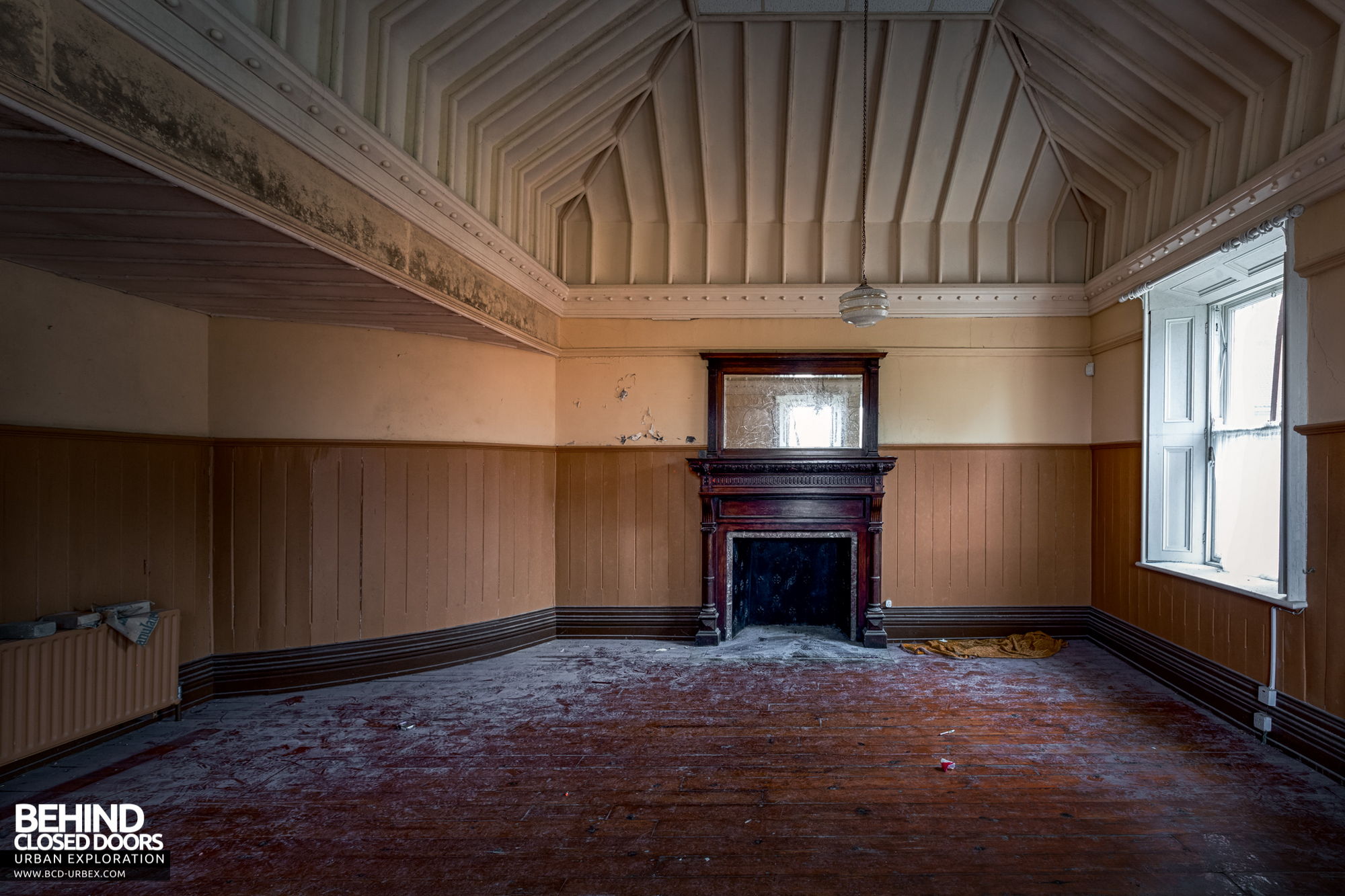
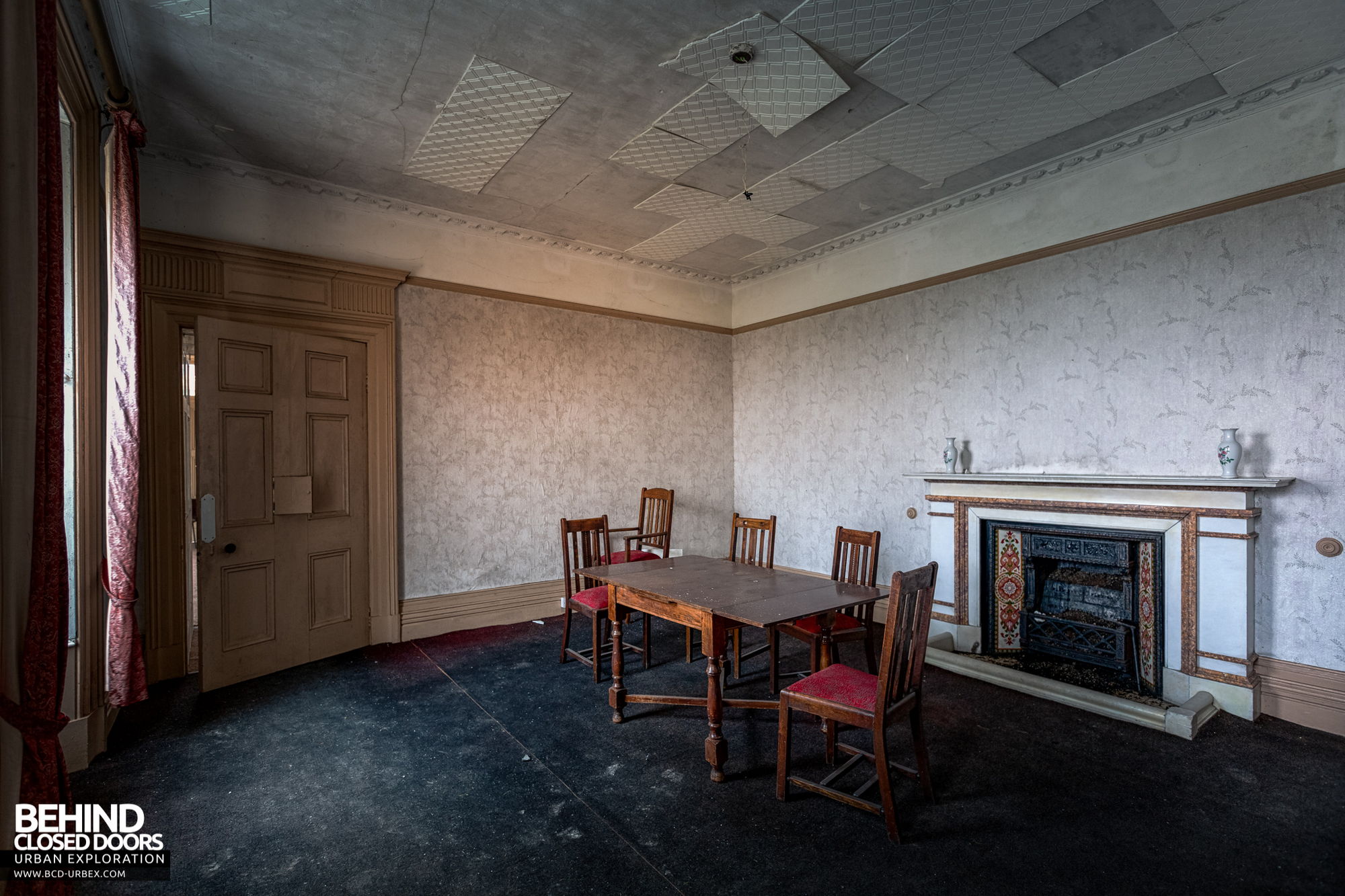
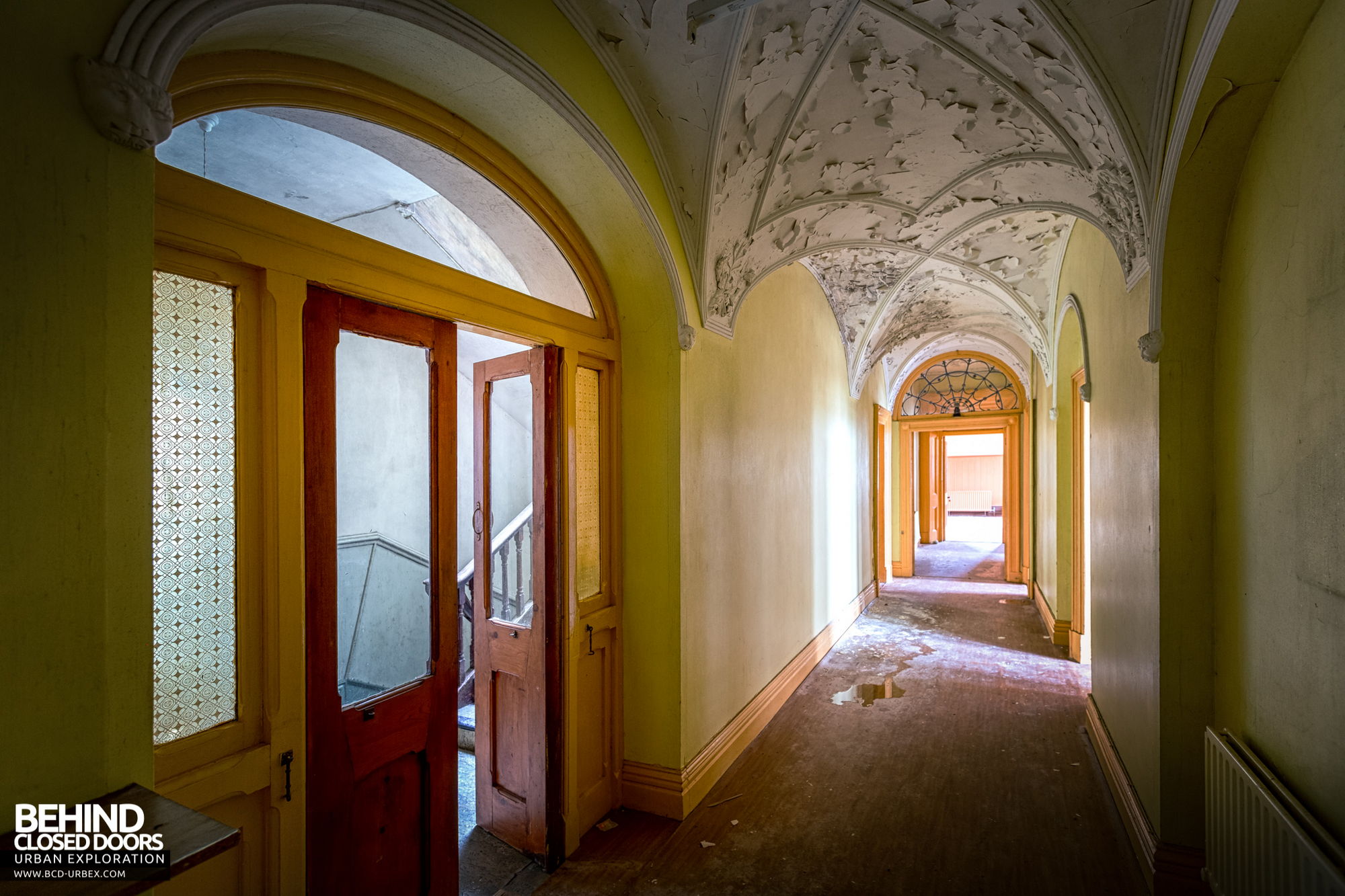
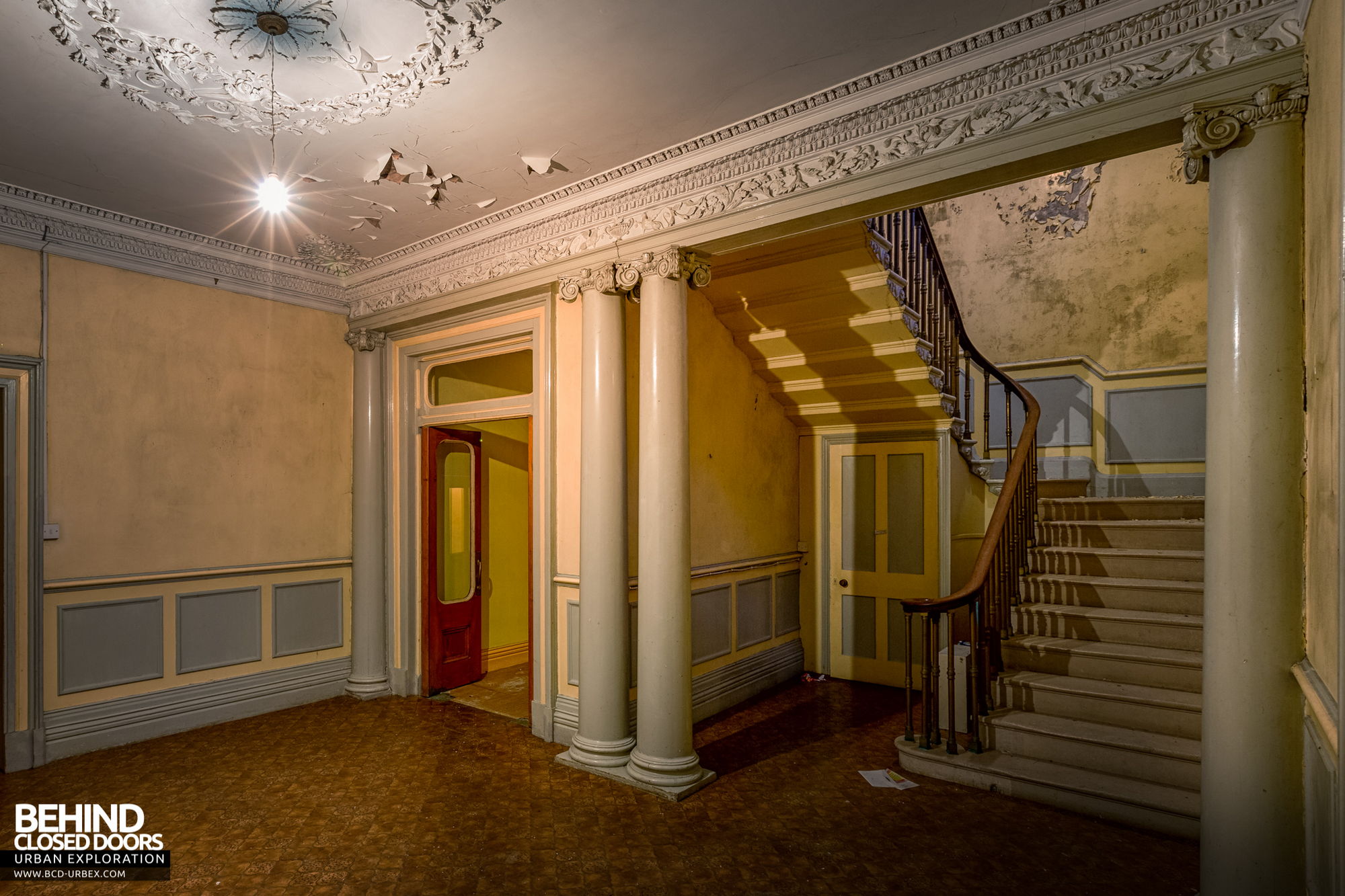
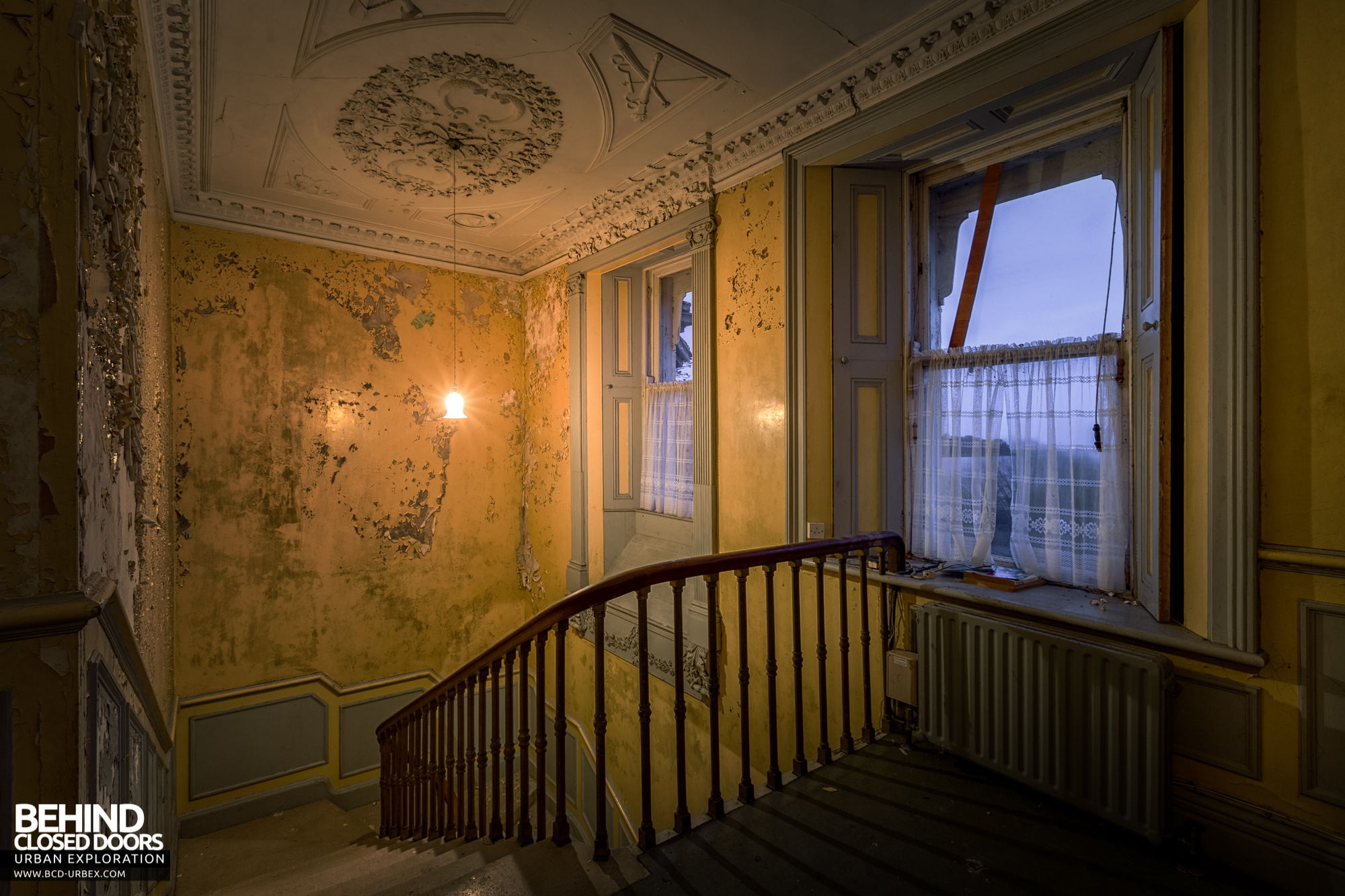
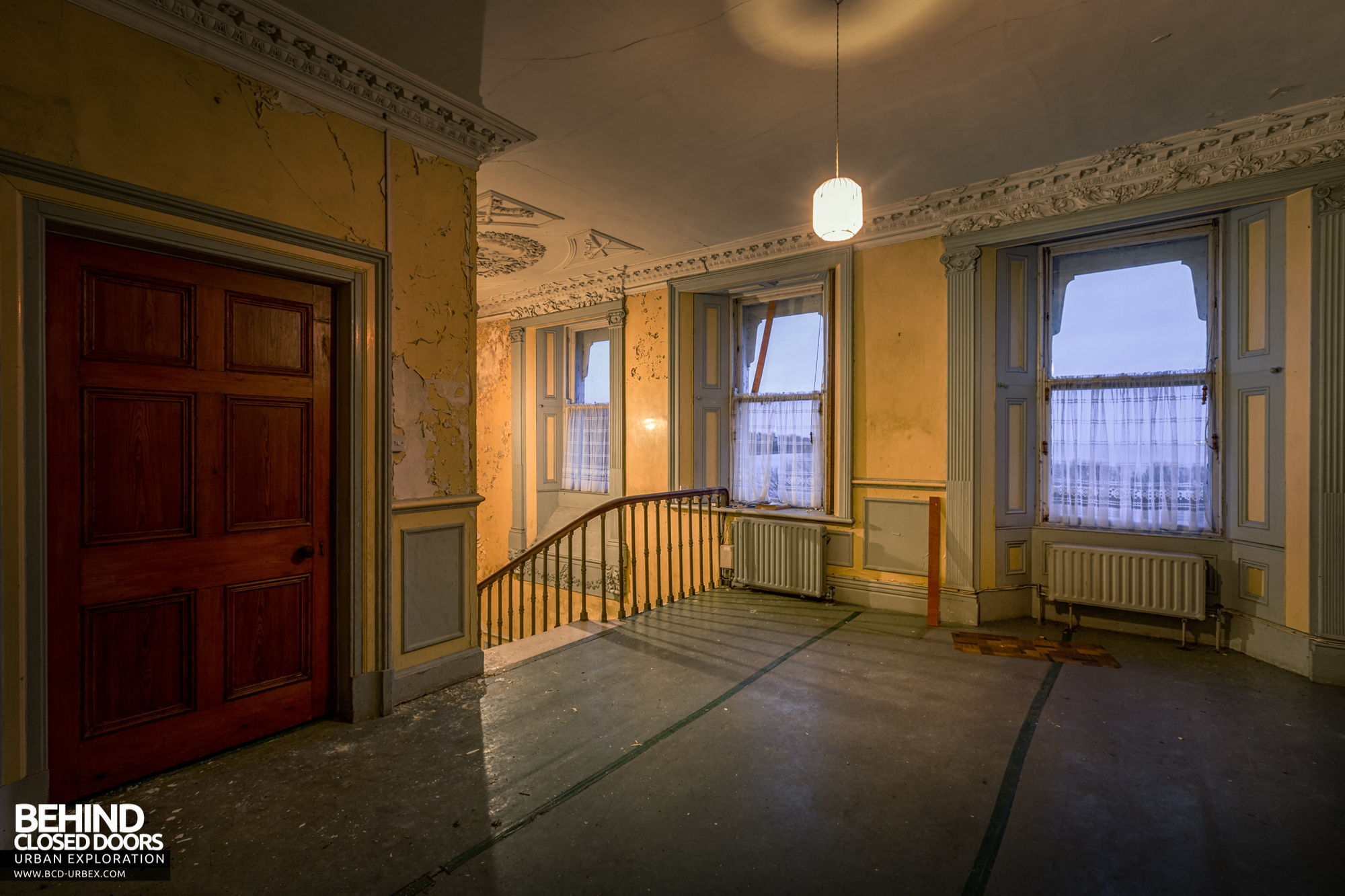
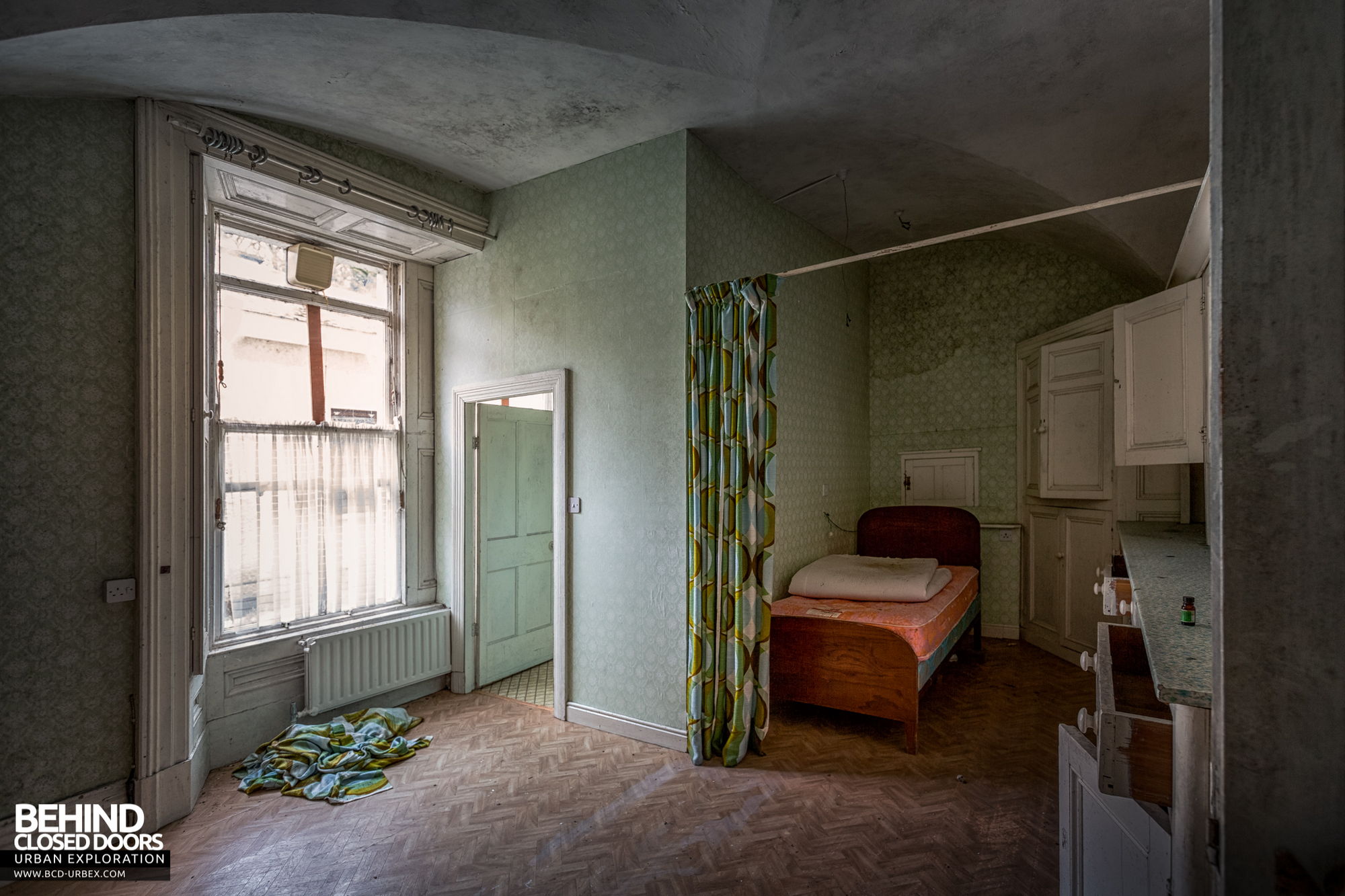
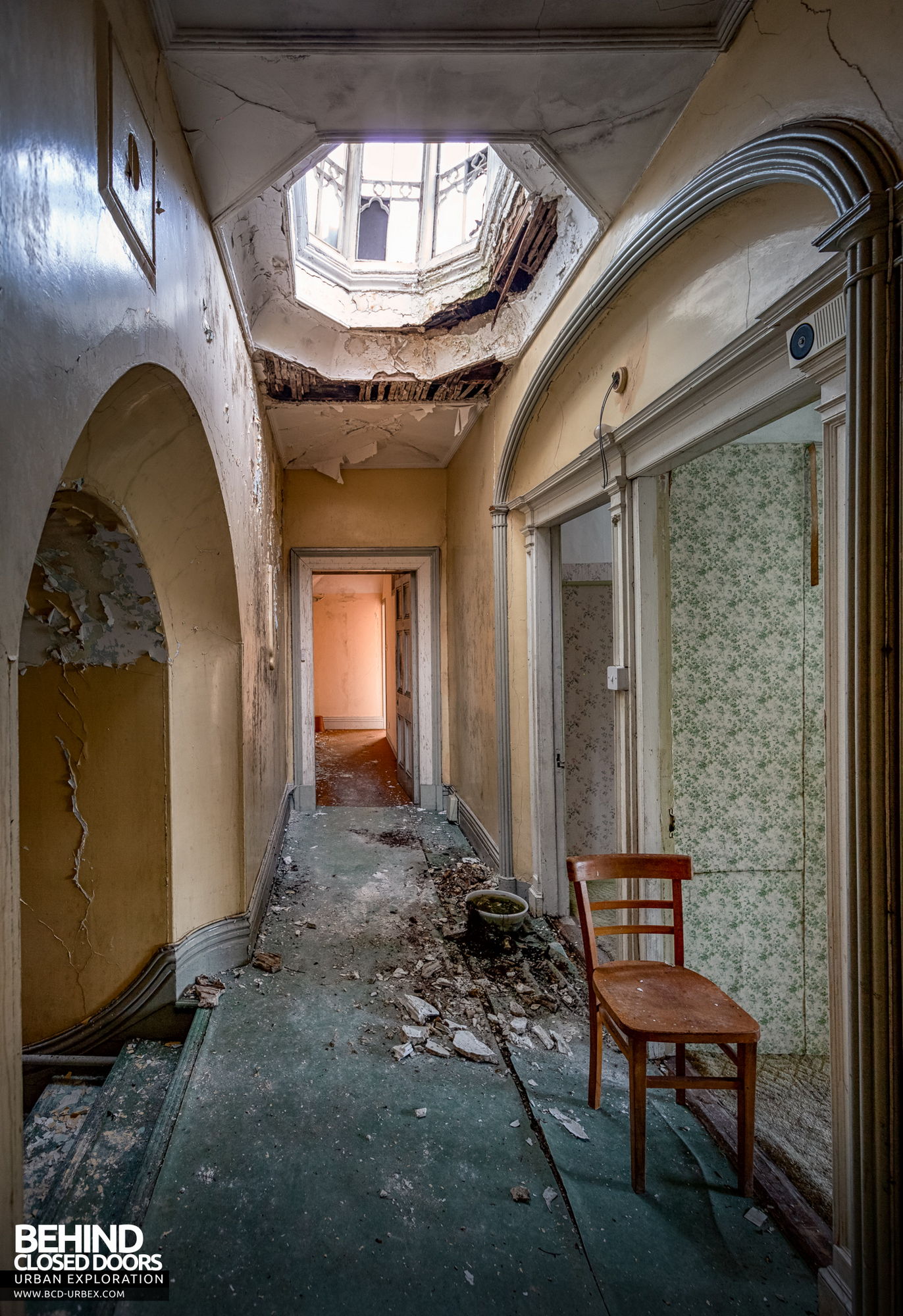
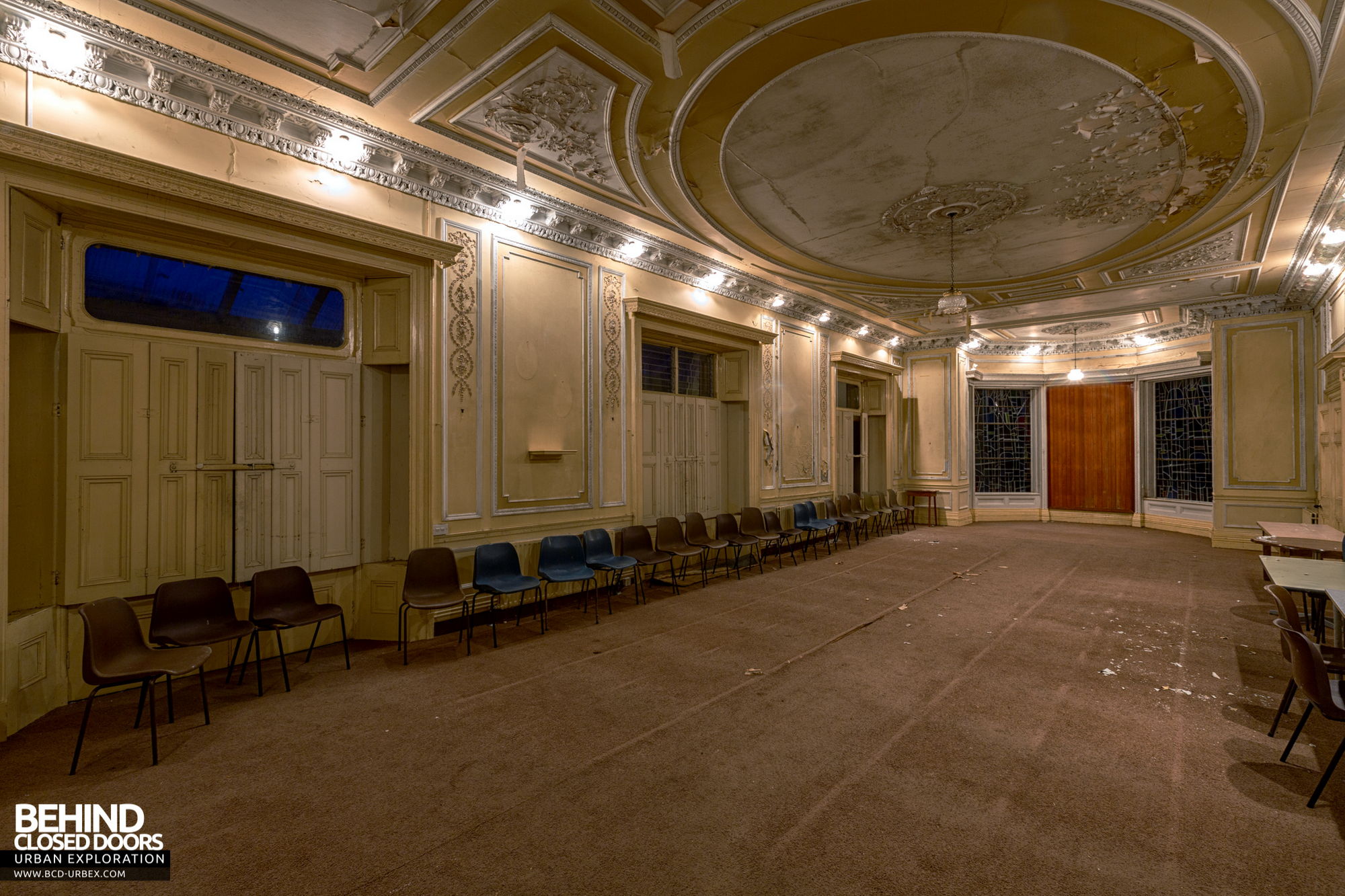
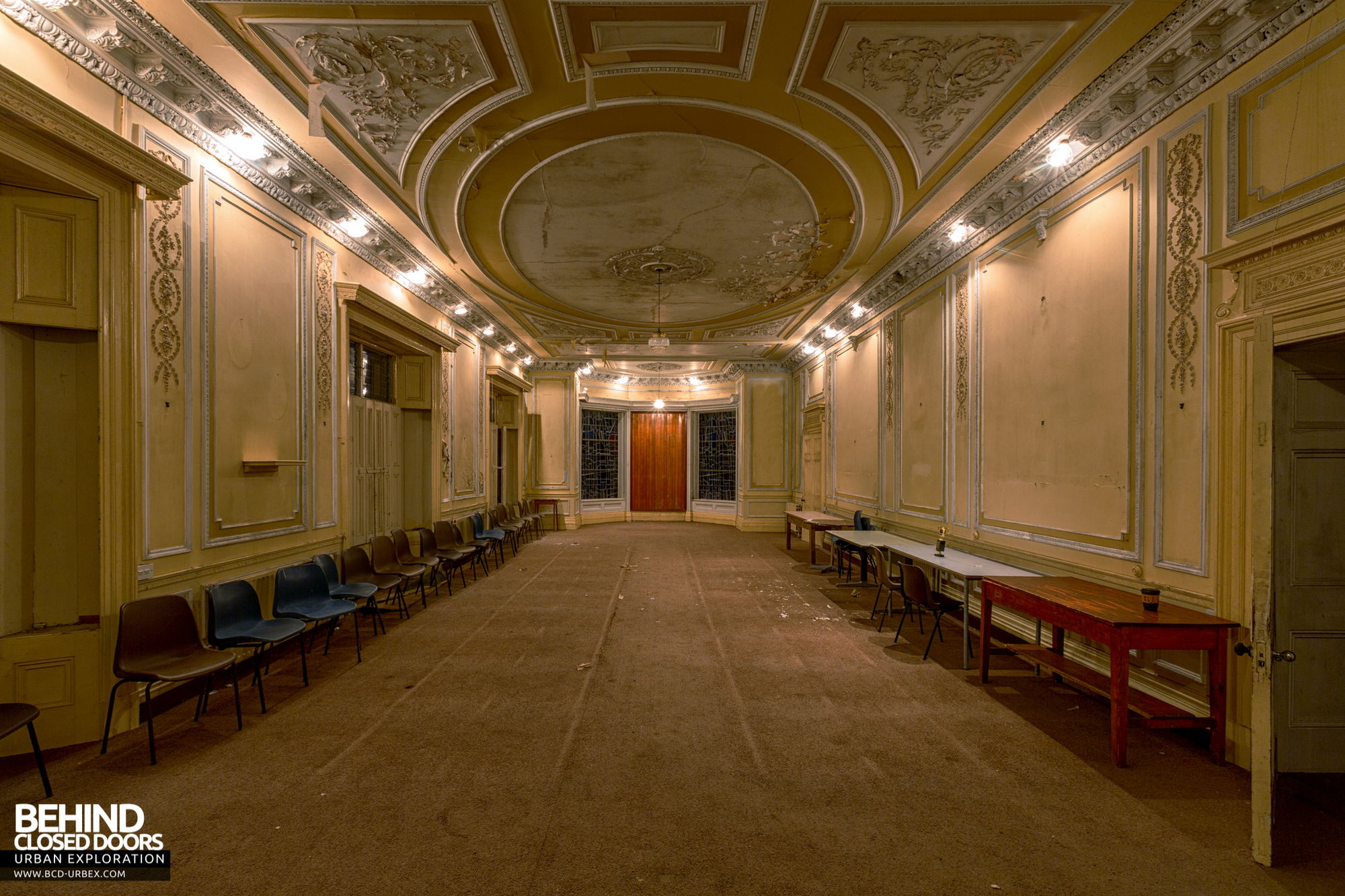
Our visit was late in the day and the daylight was fading, but some of the lights inside were working.
Cahercon House was sold to the Vandeleurs in 1897, after their previous residence in Kilrish was destroyed by fire, and they remained there for the next two decades. The Vandeleurs, however, were not popular landlords amongst the community, and were responsible for over 1,000 evictions following the potato famine.
The estate was sold to the Maynooth Mission to China, later called the Missionary Society of St Columban and better known as “the Columbans” in 1920 for £14,000. Cahercon became St Senan’s College, a philosophical institute and seminary. A few years later, it would become a convent for the Sisters of Saint Columban, who ran a high school there until 1948. The Columbans sold the place, in October 1962, to the Salesian sisters who turned it into a boarding school for girls, which closed in 2002.
The house then fell into the hands of Clareman Paddy Whelan, a businessman who owned an extensive quarrying business and was looking to set up an explosives factory. Planning permission was granted for construction of the factory in the grounds, but faced furious local opposition, including from the nuns of Cahercon House themselves. The Whelan Group purchased the house from the nuns for something over €1 million, and the objections were silenced.
The planning permission still became overturned in 2003, but following a 10-year legal battle, was reinstated with various conditions. In a strange twist of fate, in 2010 the Whelan group, including the explosives venture, were liquidated in the High Court.
The property is now empty and for sale again, including planning permission to build an explosives factory.
Our visit was late in the day and the daylight was fading, but some of the lights inside were working.




 Irish Historic Houses