Open dates in 2026: all year, except Christmas Day, Jan 8am-5pm, Feb – Nov, 8am-6pm, Dec 8am-7pm
Fee: Free

In 1840 Samuel Bewley and his son Charles began to import tea directly from China. Charles’s brother Joshua established the China Tea Company, the precursor to Bewleys. Fiona Murdoch tells us that Joshua Bewley started off with a premises consisting of three houses on Sycamore Street in Dublin, just off Dame Street beside the Olympia Theatre. He dealt mostly in tea and sugar and a small amount of coffee. He also sold vases and ornaments. [1]
The Georges Street café, which is no longer a Bewleys café, opened in 1894. Joshua changed supplier for his coffee and had to purchase in larger quantities. Worried he would not sell it all, he started to hold coffee-making demonstrations at the back of the shop, hoping people would purchase the coffee on their way out. His wife Bertha made rolls and scones which Joshua carried on his bicycle into town to serve with the coffee.
In 1896, he opened another café at 10 Westmoreland Street. Joshua’s son Ernest joined the business. In 1916 he bought 12 Westmoreland Street.
The Grafton Street branch opened in 1927 in what were originally two Georgian townhouses.
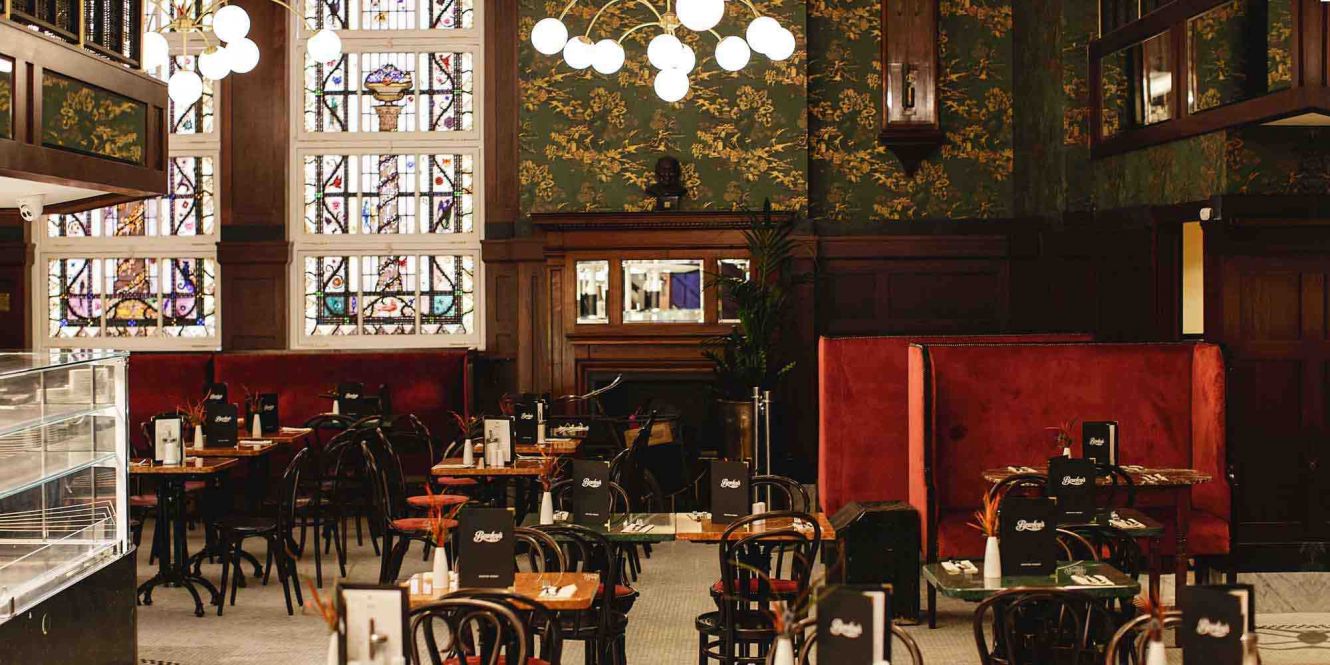

The higgeldy piggeldy rooms upstairs remind us that it was a private residence. One of the rooms upstairs now houses a lunchtime theatre, which opened in 1999. They have lately introduced a new Soirée performance, which takes place on the second Thursday of each run at 7pm.

The buildings on Grafton Street previously housed Whyte’s Academy, a school attended by Arthur Wellesley, Duke of Wellington, and Robert Emmet.
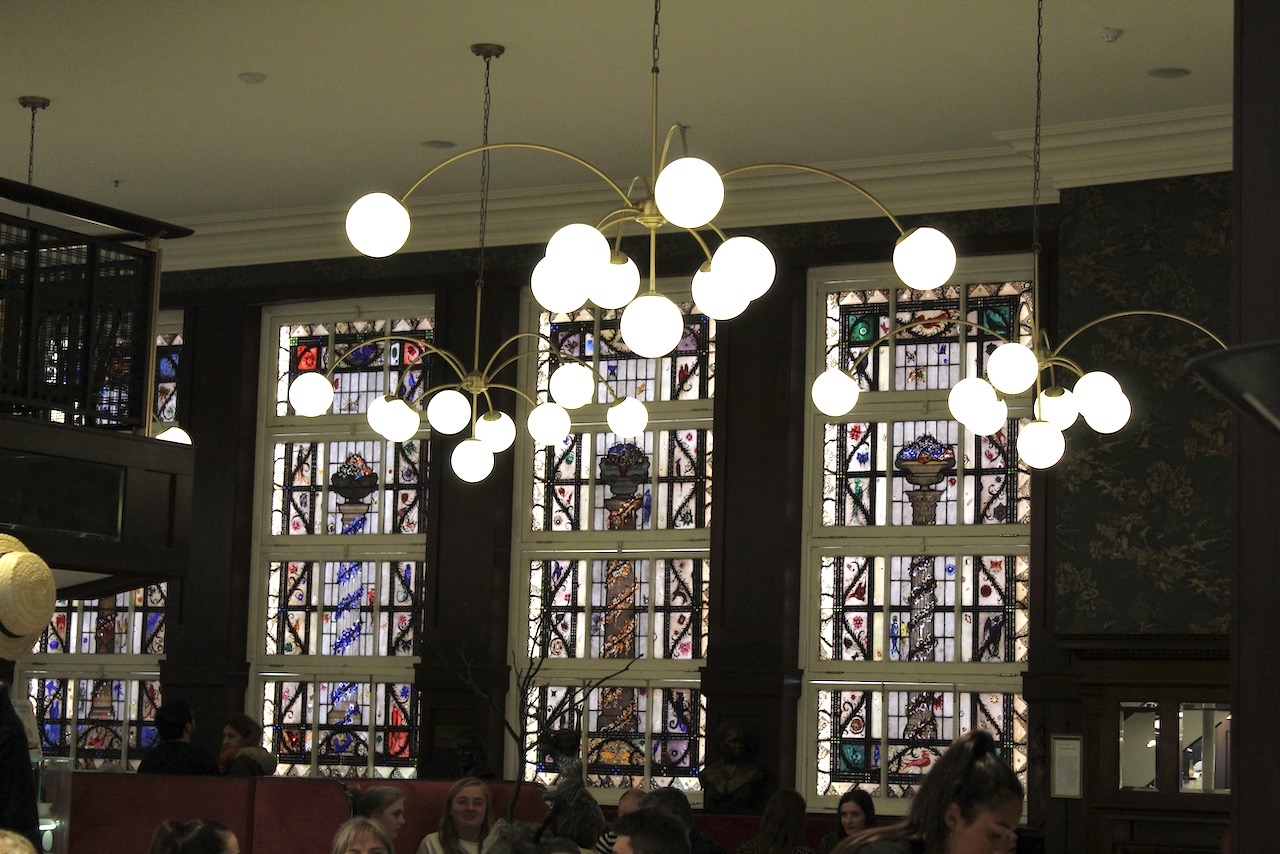
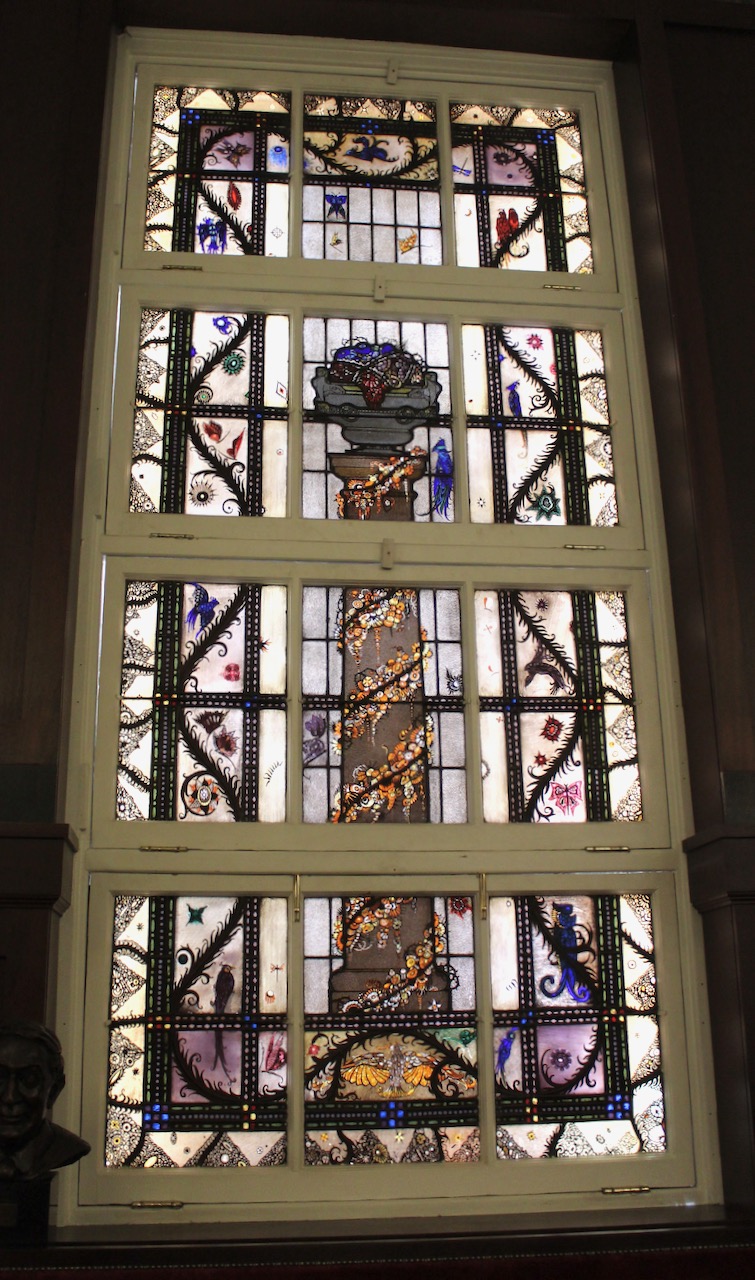
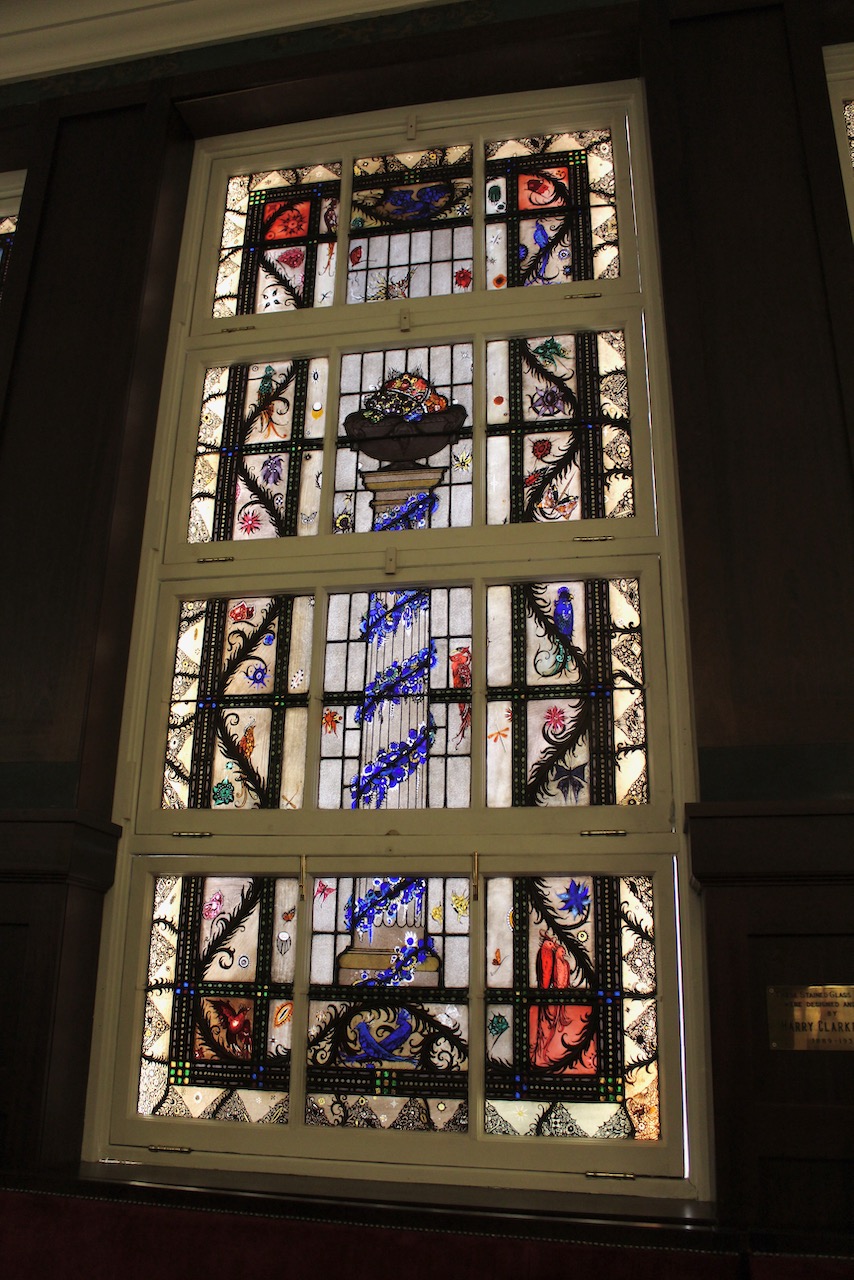
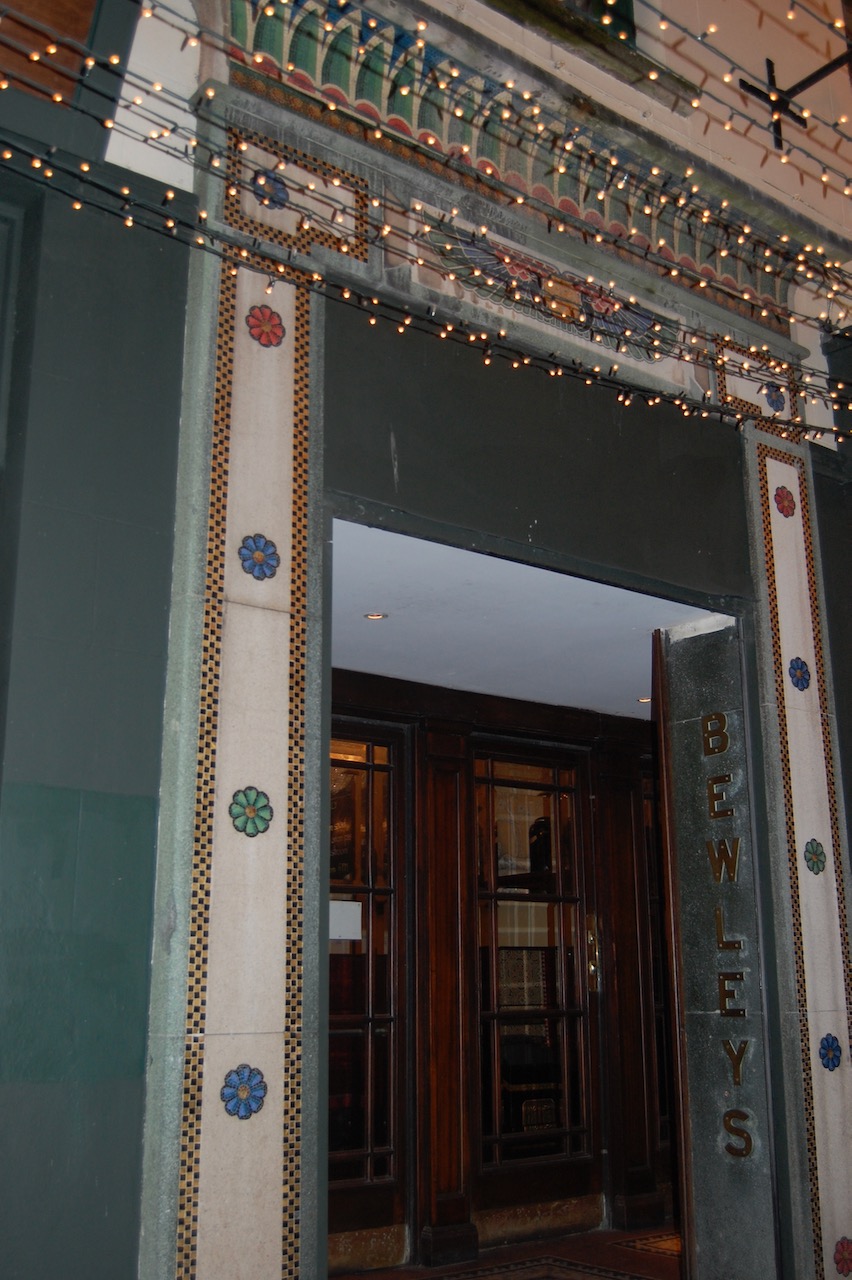
The Buildings of Ireland publication on Dublin South City tells us: “Rebuilt in 1926 to designs by Miller and Symes, the playful mosaics framing the ground and mezzanine floors are indebted to the Egyptian style then in vogue following the discovery of Tutankhamun’s tomb. The interior, originally modelled on the grand cafés of Europe and Oriental tearooms, was restructured in 1995 but retains a suite of six stained glass windows designed (1927) by the celebrated Harry Clarke (1889-1931). Four windows lighting the back wall of the tearoom are particularly fine and represent the four orders of architecture.” [2]
The 1995 renovation was designed by Paul Brazil.


The four orders of architecture represented are the Doric, Corinthian, Ionic and Composite.


Ernest Bewley’s three sons Victor, Alfred and Joe took over: Victor ran the business, Alfred cooked and Joe ran Knocksedan farm with its prize-winning Jersey cows. Ernest imported the first Jersey cows to Ireland. I remember looking forward to the jersey cow milk when we’d visit when I was young. I used to think the waitresses’ smart black and white uniform the height of glamour.
My great-aunt Harriet, famed for her severity, who used to say one should always leave the table hungry, would buy the famed cherry buns in the vestibule, which was a shop, and bring them inside to eat, as they were cheaper in the shop than in the café!

In the 1980s and 90s Dubliners loved the coffee with hot milk that Bewleys served, a precursor to today’s flat white. A group of friends met weekly for a conversation group downstairs in the Grafton Street branch. It was a rare venue open in the evening that was not a pub. One evening we were locked in when the staff didn’t notice we were still deep in discussion!
The Westmoreland Street venue was my haunt in the late 1990s, where I loved the animal skin themed snug downstairs and where we could chat philosophy for hours.

Recently Paddy Bewley died, the last of the family directly involved with the running of the cafe and coffee business of Bewleys. Paddy was responsible for starting the coffee supplying end of the Bewley business.
Paddy, like those in his family before him, was a Quaker, and he lived by their ethos. Mungo Bewley left Cumberland for Ireland in 1700 and settled in Edenderry, County Offaly. Ireland offered religious tolerance under the Toleration Act. Many Quakers entered trade rather than professions because the former did not require an oath, and Quakers did not believe in taking oaths, believing that their word was enough.
Victor Bewley writes in his memoir that Maud Gonne frequented Bewleys. He adds:
“Bewley’s was obviously a place conducive to writers because there was a lot of life milling around, so to speak. Mary Lavin was donkey’s years coming in and I believe she wrote some of her early stories in the cafés. Maeve Binchy became a regular customer when she worked on The Irish Times.” [4]


In 1986 Patrick Campbell acquired the company of Bewleys, forming the Campbell Bewley Group, and Paddy Bewley continued to work for the company.
In 1996, Paddy Bewley signed up the company to purchase Fair Trade coffee only, guaranteeing that producers of coffee and their communities would be paid a good price for their beans, irrespective of market fluctuations. In 2008 the company’s roasteries and headquarters in Dublin became 100% carbon neutral. (notes from Paddy Bewley’s obituary in the Irish Times, Saturday January 8th 2022).
There has been much discussion lately about the beautiful Harry Clarke windows in the Grafton Street Bewleys – are they part of the building, or removeable art? I believe they are not actually the windows but can be removed. It is being discussed because it’s not clear who owns them.

The Bewleys business branched into hotels. Stephen and I held our wedding reception in the Bewleys hotel in Ballsbridge, a former school run by the Freemasons. The hotels too have been sold on to another business.

[1] Victor Bewley’s Memoirs, as recorded by his granddaughter Fiona Murdoch. Updated edition. Veritas Publications, Dublin, 2002, updated in 2021.
[2] https://www.buildingsofireland.ie/app/uploads/2019/10/Dublin-South-City.pdf
[3] https://liamblakephotographer.com/real-ireland/
[4] p. 61, Victor Bewley’s Memoirs.
 Irish Historic Houses
Joshua Bewley was married to Margaret Hanks Fisher from Youghal
LikeLike
Thank you for that information!
LikeLike