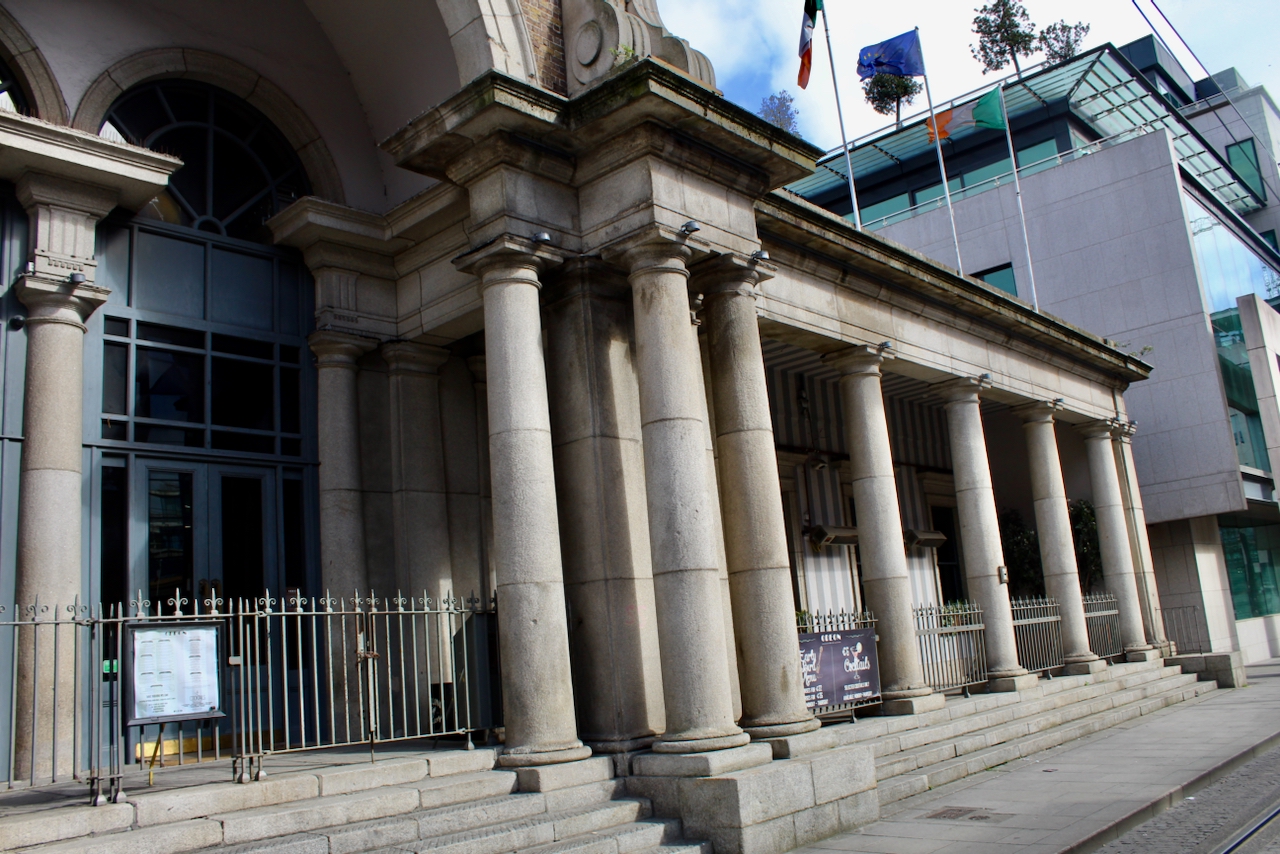
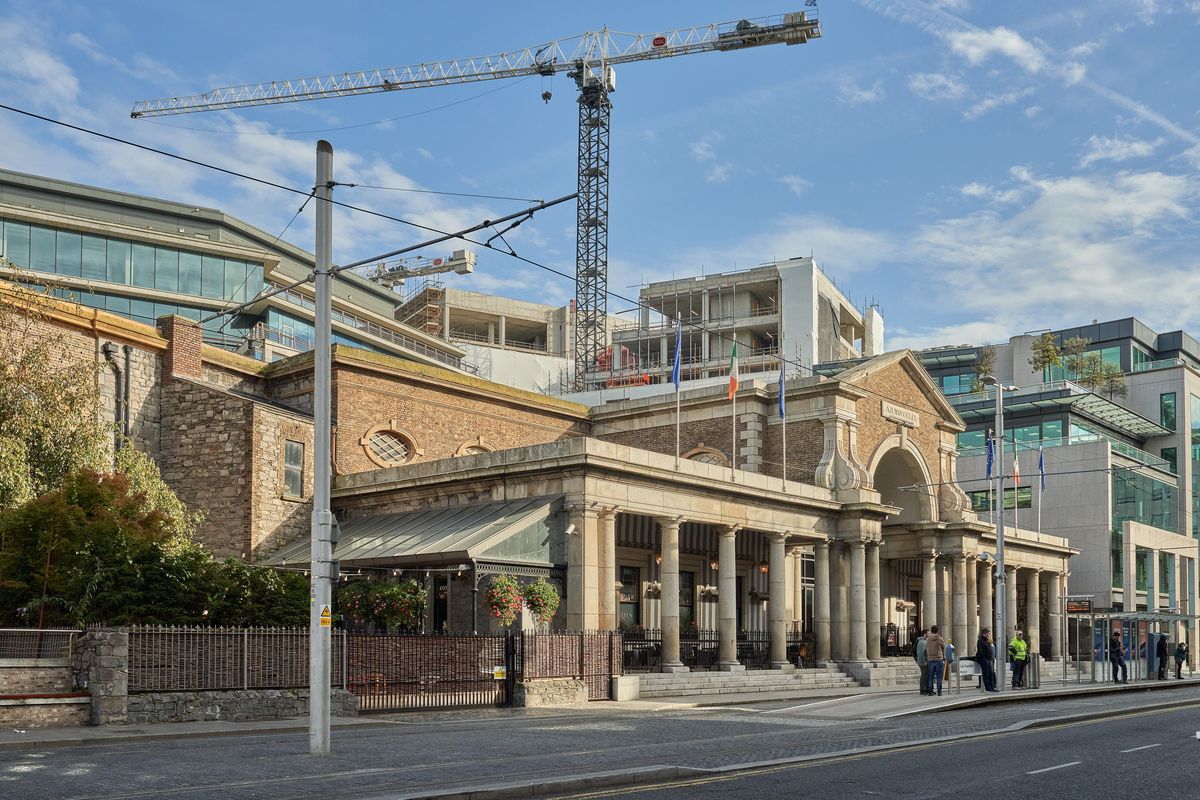
The Odeon, formerly Harcourt Street Railway Station.

Donation
Help me to fund my creation and update of this website. It is my “full time job” and created purely out of love for the subject and I receive no payment so any donation is appreciated! My costs include travelling to our destinations from Dublin, accommodation if we need to stay somewhere nearby, and entrance fees. Your donation could also help with the cost of the occasional book I buy for research (though I mostly use the library – thank you Kevin Street library!). Your donation could also help with my Irish Georgian Society membership or attendance for talks and lectures, or the Historic Houses of Ireland annual conference in Maynooth.
€15.00
I have created my 2026 Diary Calendar, which is available to order now. Please note that if you are purchasing from outside Ireland, I would appreciate a donation toward postage, by clicking on the donation button.
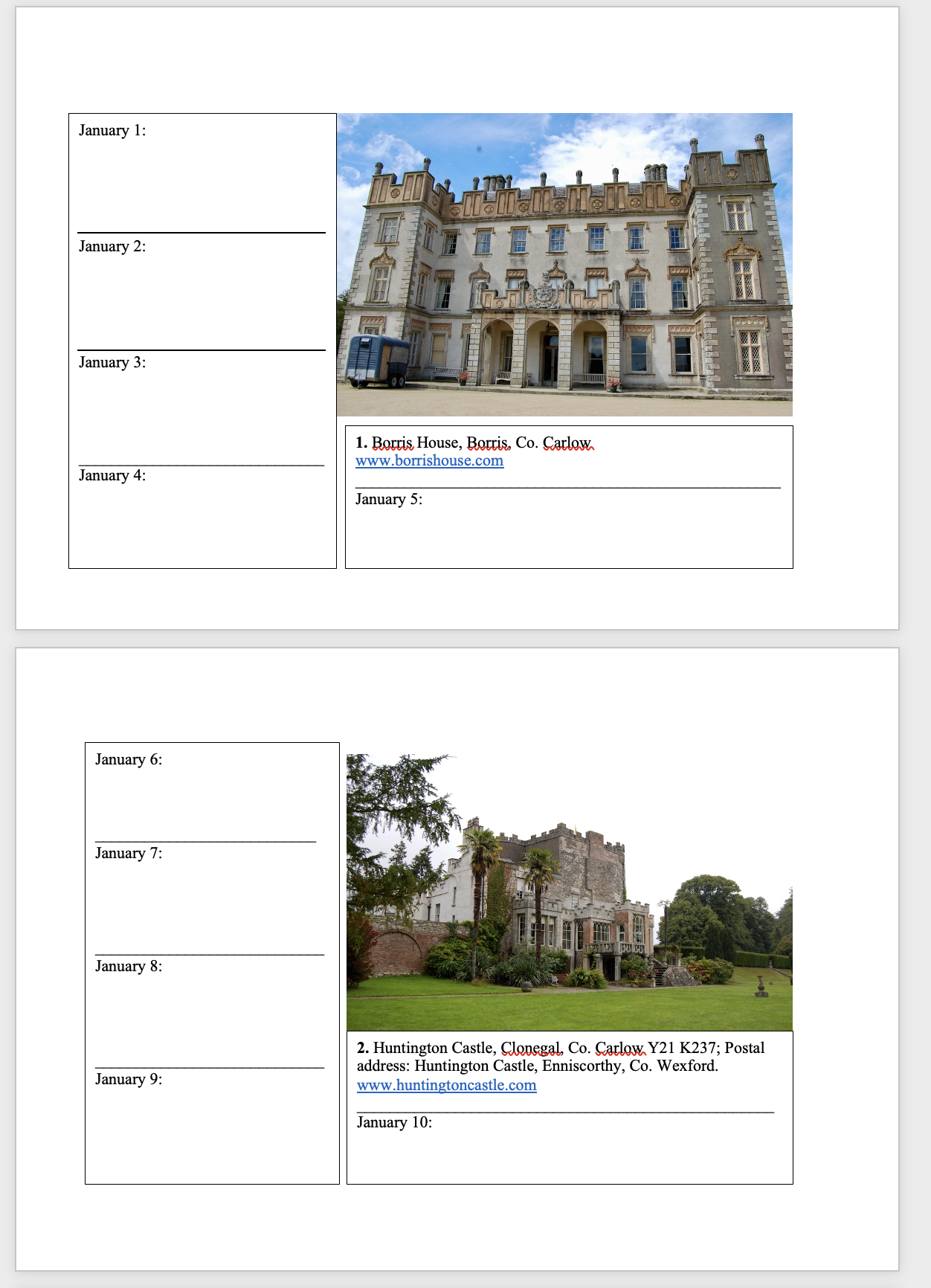
2026 Diary of Irish Historic Houses (section 482 properties)
To purchase an A5 size 2026 Diary of Historic Houses send your postal address to jennifer.baggot@gmail.com along with €20 via this payment button. The calendar of 84 pages includes space for writing your appointments as well as photographs of the historic houses. The price includes postage within Ireland. Postage to U.S. is a further €11 for the A5 size, so I would appreciate a donation toward the postage – you can click on the donation link.
€20.00
Donation towards accommodation
I receive no funding nor aid to create and maintain this website, it is a labour of love. I travel all over Ireland to visit Section 482 properties and sometimes this entails an overnight stay. A donation would help to fund my accommodation.
€150.00
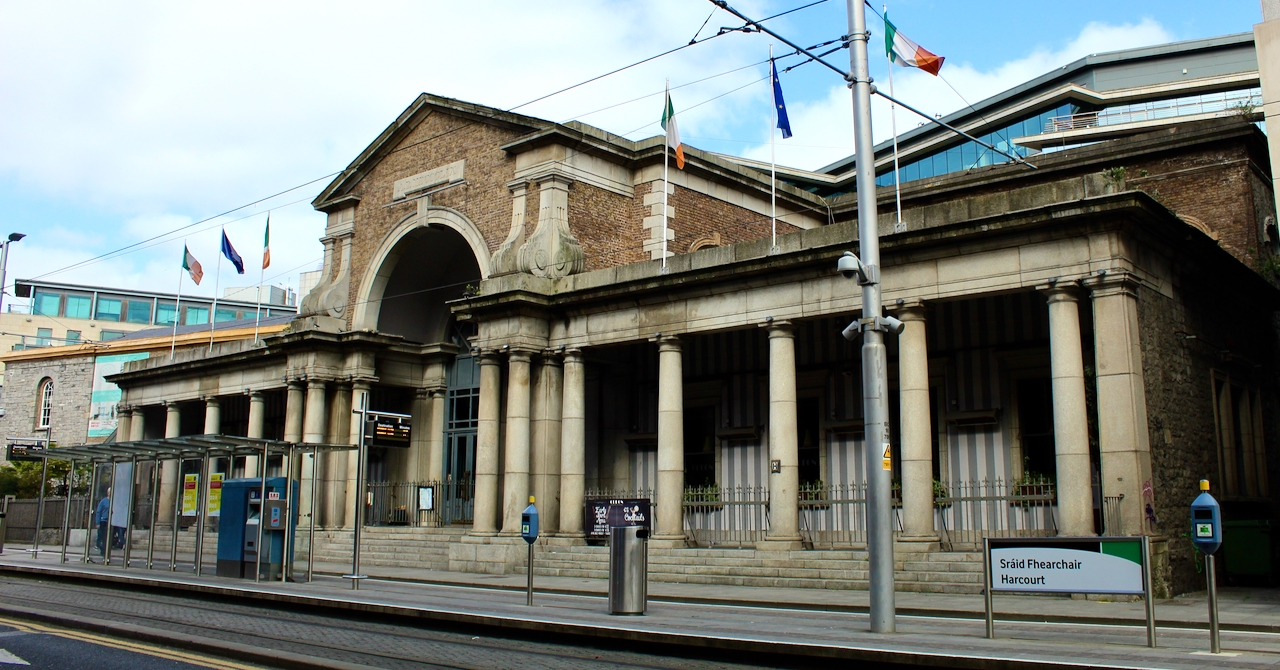
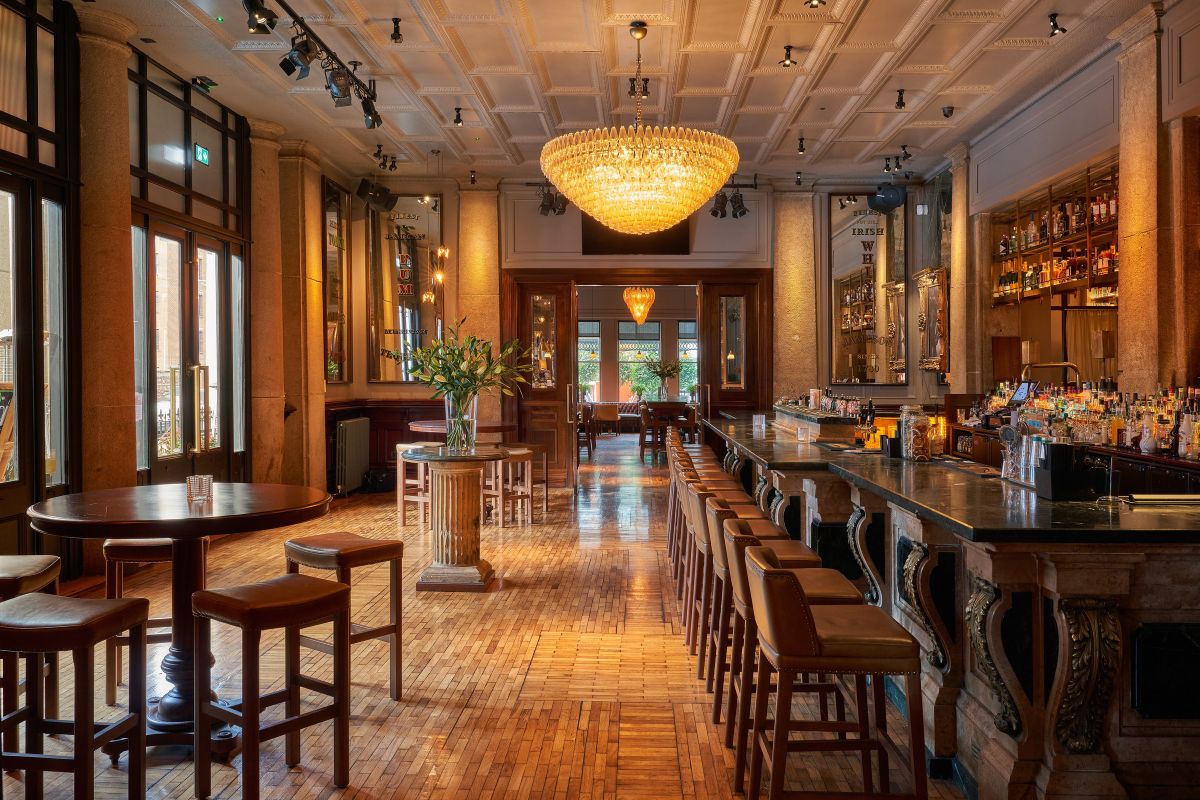
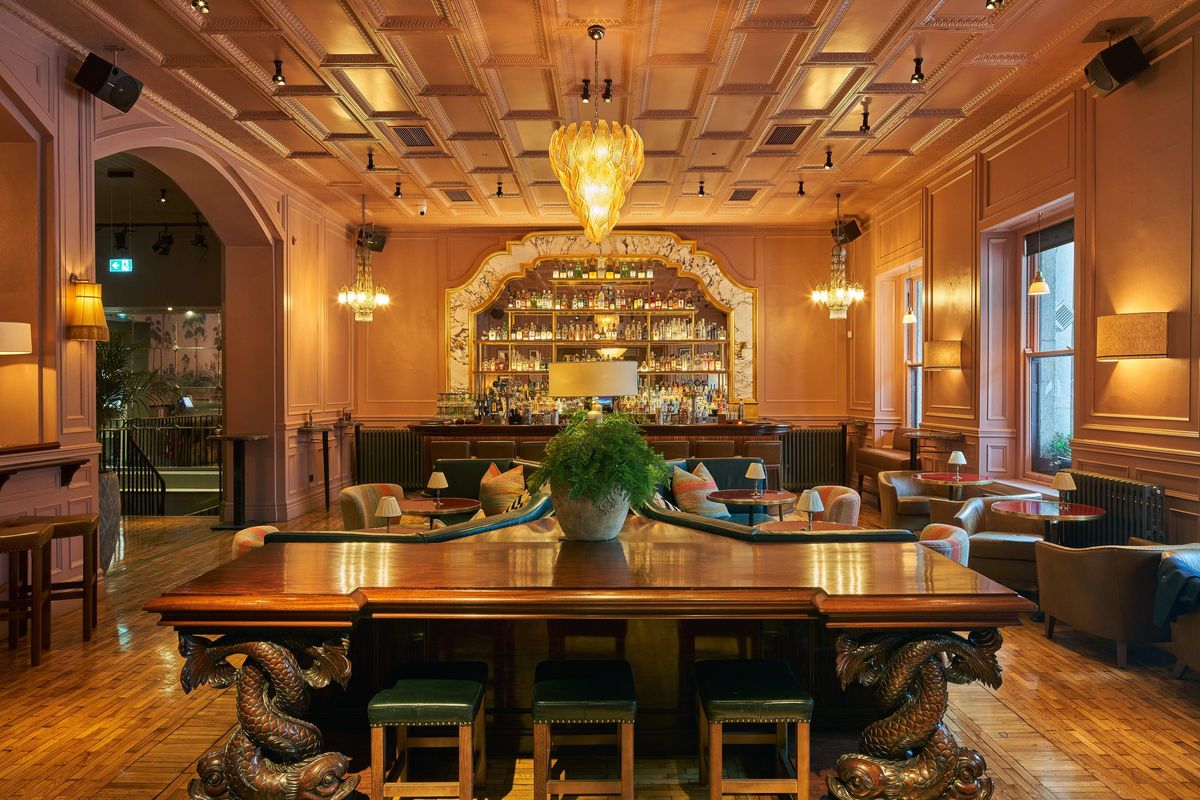
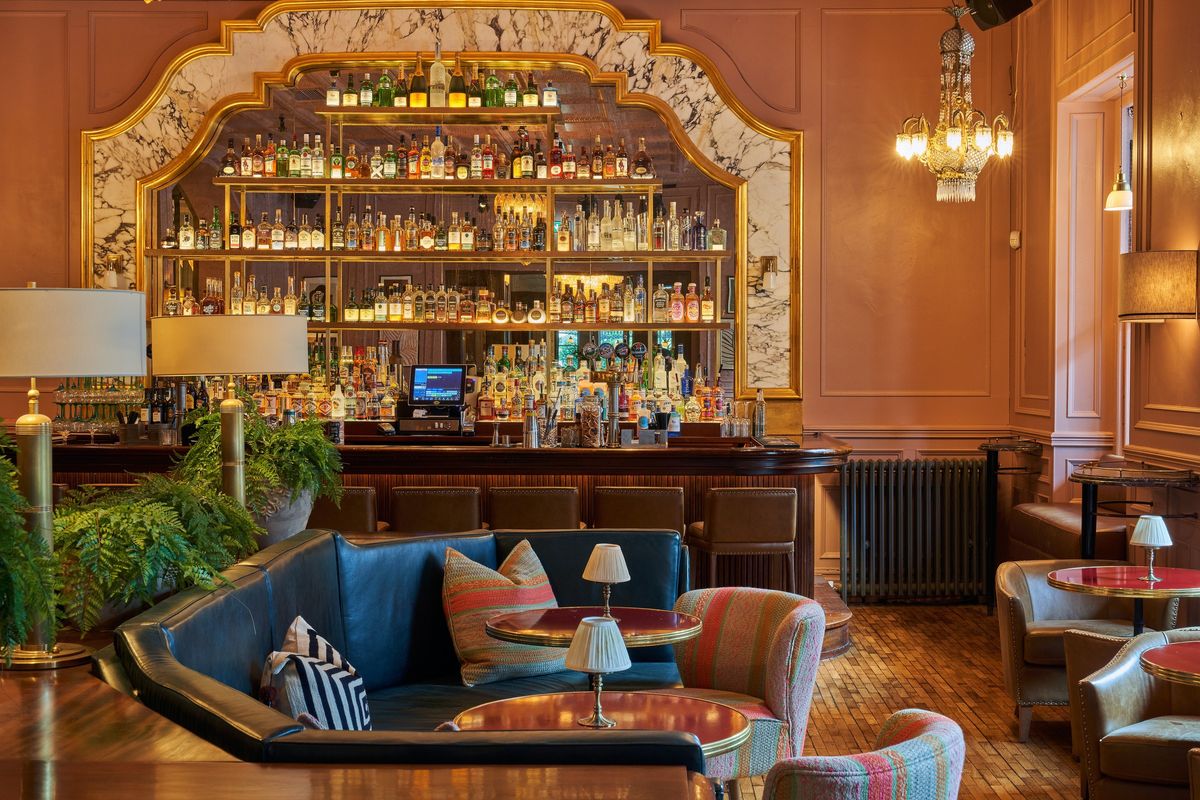
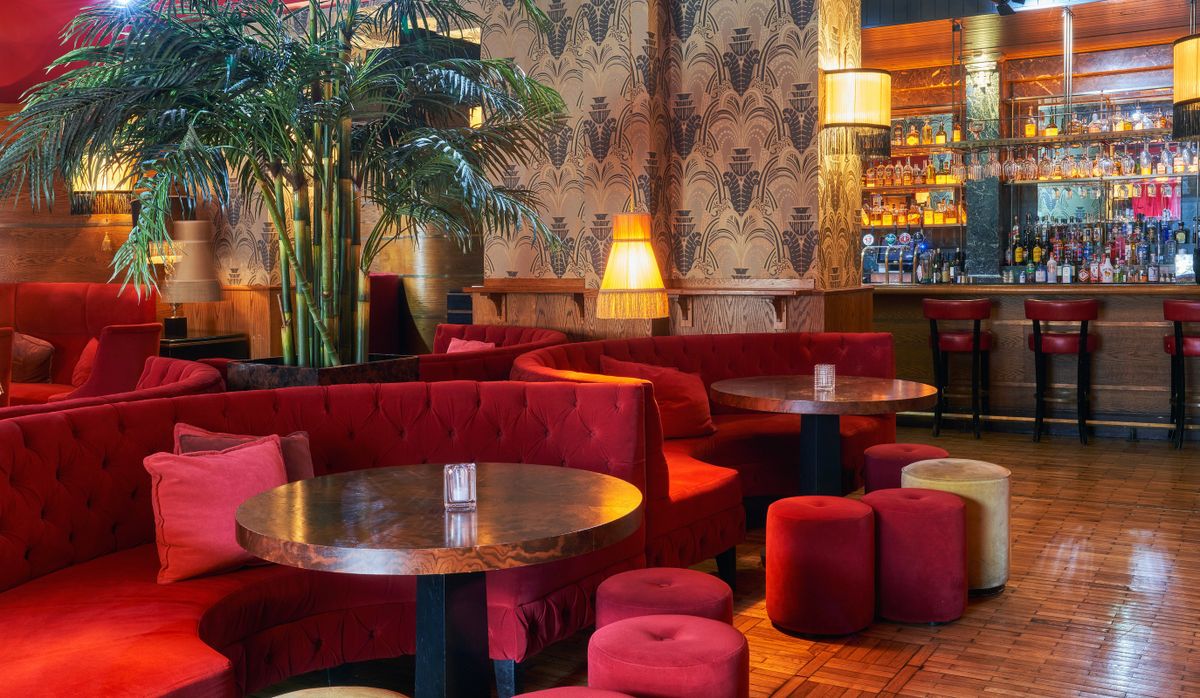
The Odeon, 57 Harcourt Street, Dublin 2, D02VE22, formerly the Old Harcourt Street Railway Station, is now a bar and currently a Section 482 property:
Open in 2026: all year Tue-Sat, National Heritage Week, Aug 15-23, 12 noon-12 midnight
Fee: Free
Last week Lisney Real Estate advertised the building for sale for €6,500,000. It’s a beautiful venue for a party.

Railways began in the 1550s as wooden rails used in mines to transport tubs carrying ore. That reminds me of the way Bord na Mona used trains to carry their turf on the bog, and the Guinness brewery also had its own train lines for transporting barrels of stout within the site.
The first public commuter railway system in Ireland launched in 1834 and ran between Dublin and Dún Laoghaire, formerly named Kingstown. [1] The Dublin and Kingstown Railway (D&KR) travelled from Westland Row in Dublin.
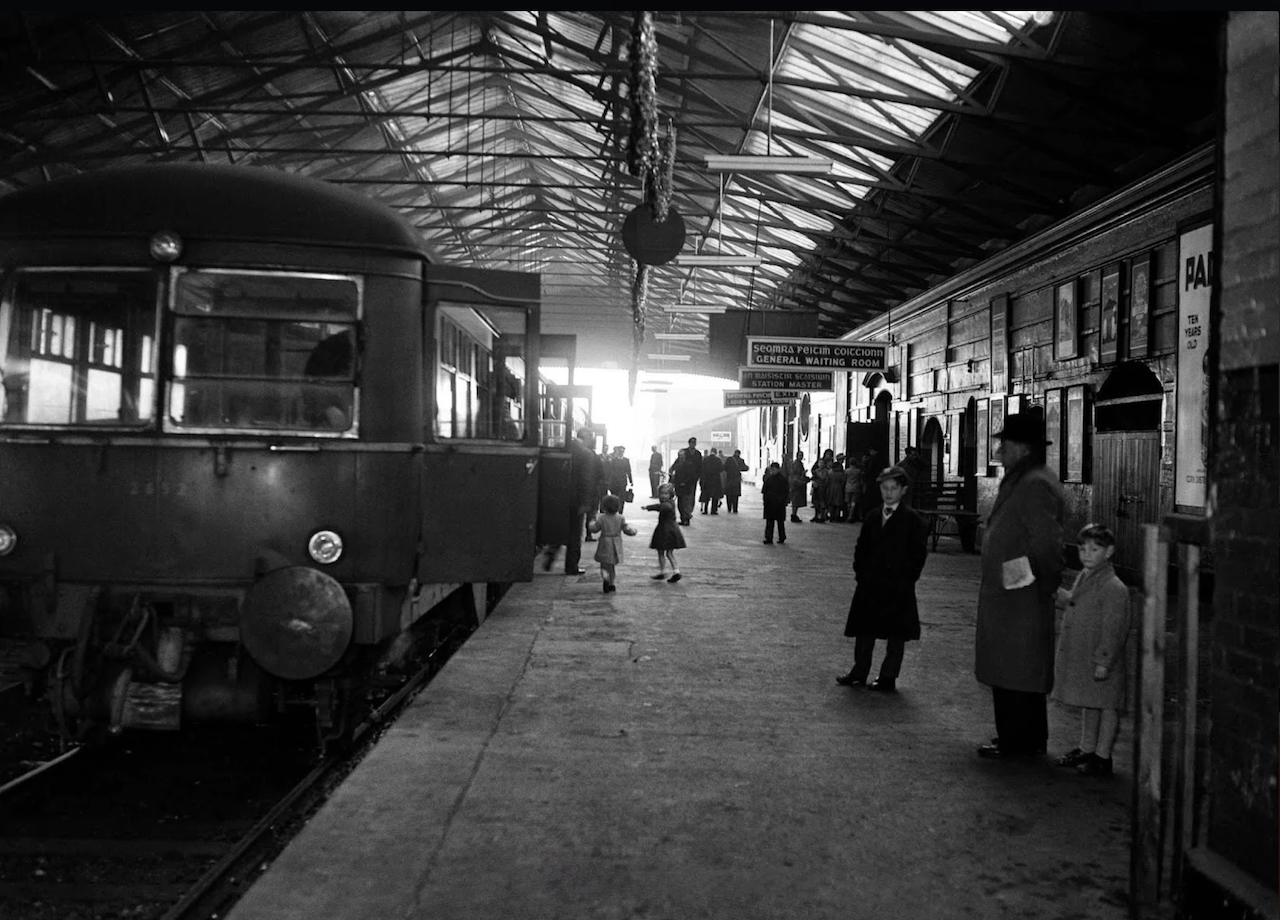
The Harcourt Street Station, built in 1859, was the terminus for the Dublin to Bray, County Wicklow train. Passengers could travel to the villages of Dundrum, Stillorgan and Milltown, and the train line helped to develop Bray into a seaside resort. An article in the Irish Independent, “Fascinating story of Harcourt Street line retold,” published 29th February 2012, tells us that two companies vied for the contract to run the train line. One company started building from Harcourt Street, the other from Bray. It was decided that the first to reach Dundrum would win the contract to run the Railway line. William Dargan was the successful contractor. [2]
Before trains, public transportation comprised of stagecoaches travelling specified routes between coaching inns and horse-drawn boats carried paying passengers along canals.
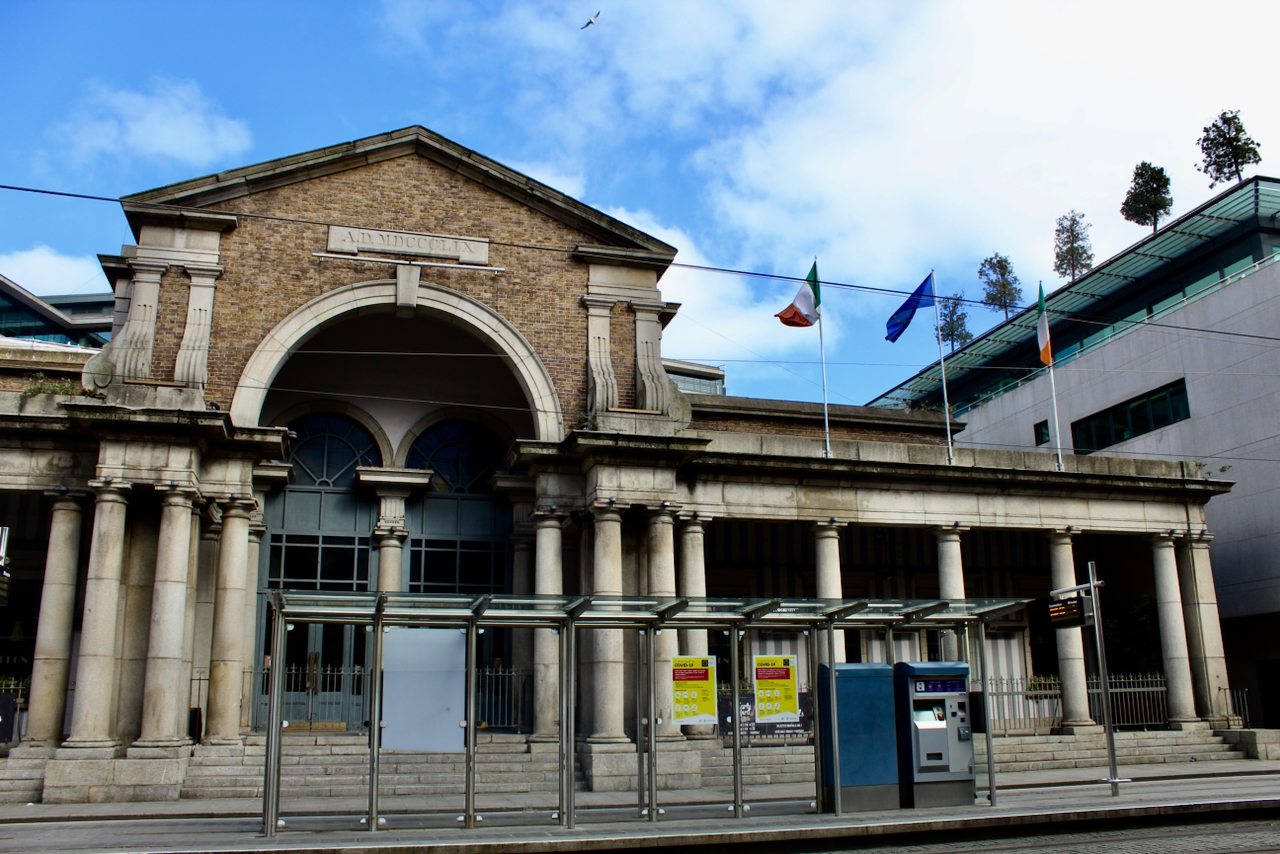
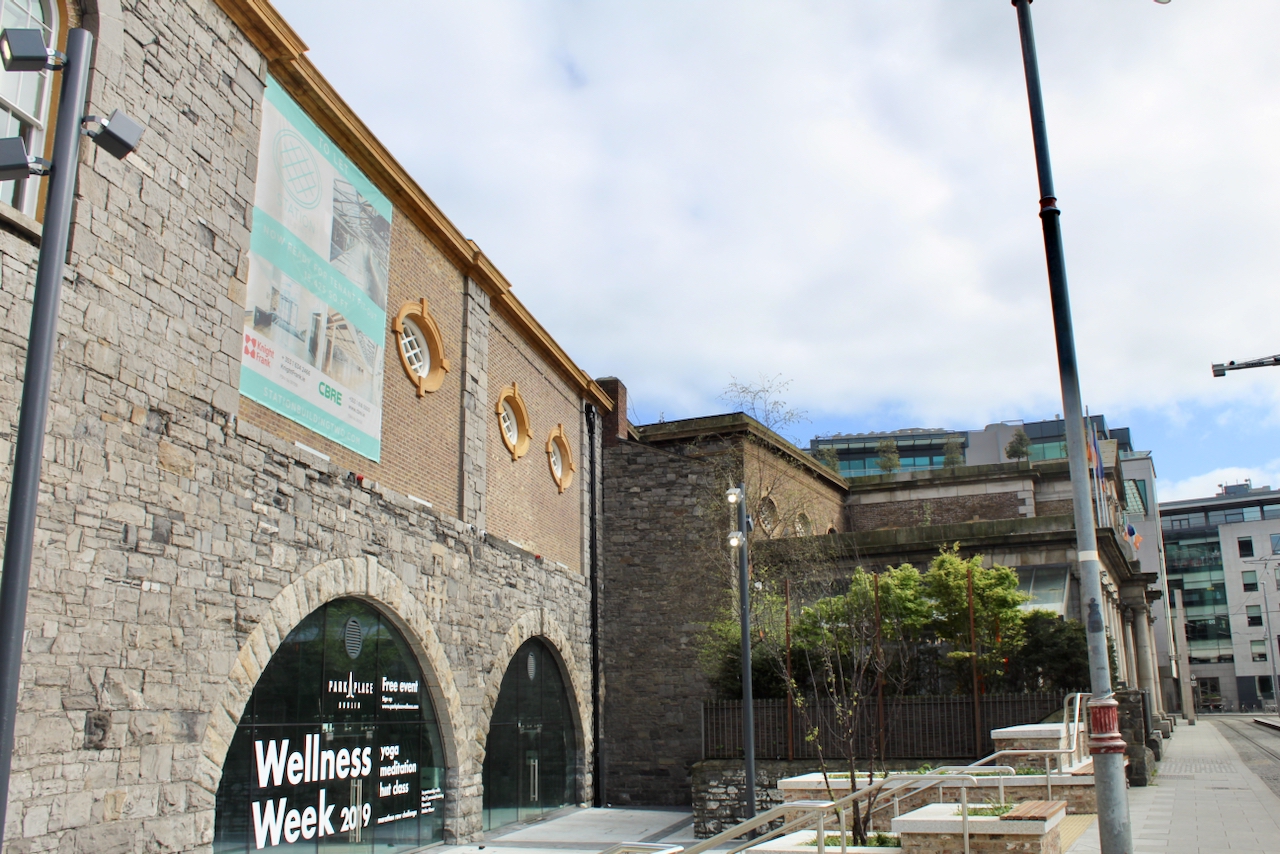
The Harcourt-Bray train travelled for a century, ceasing in 1959. Much of the former trackbed remained intact and now carries the Luas, the Dublin light rail, the modern version of the tram. The Luas station ‘furniture’ impedes photography of the building and my attempts to highlight its architectural features!
An entry about Dublin tram history on the Dublin City Public Participation Network tells us that the idea of transporting people along a fixed route within a city began in Nantes, France, around 1823, when Stanislas Baudry opened a bath house outside the city and started a shuttle service that left the town centre on a regular schedule. [3] I’m glad that the first fixed route city public transport system was for bathing and not for work, as I would have expected!
After Baudry realised some passengers used the shuttle to travel to destinations along the route, he created the first urban transit service in 1826 in Nantes, calling his coaches the “Omnibus” (Latin for “for all”). He quickly expanded to Bordeaux, Lyon, and eventually Paris. [see 3]
Architect George Wilkinson (1840-1890) designed the Harcourt Street station. [4] After he built twenty-four workhouses in England, in 1839 the Poor Law Commission in Ireland invited Wilkinson to design 130 workhouses. After eleven years, the Commissioners of the Poor Law decided that they could no longer afford their own full-time architect, and in September 1855 Wilkinson was retired on a pension of £300 per annum. [5]
Next, Wilkinson designed railway stations, mostly for the Midland Great Western Railway Company. As he acknowledged, a workhouse had to be “uniform and cheap, durable and unattractive” so that people would be discouraged from applying to them for aid and accommodation. He took pride in his work, however. To underline the painstaking attention he had given to the materials used in the construction of the workhouses, Wilkinson published in 1845 his Practical Geology and Ancient Architecture of Ireland, which included a detailed account of the building materials available in the different counties with tables of the experiments he had conducted on the principal Irish building stones. [see 5] He managed to insert an Italianate tower in the Carlow workhouse.
The Dictionary of Irish Architects tells us that in August 1860 Wilkinson was appointed architect to the Commissioners of Asylums for the Lunatic Poor at a salary of £300 per annum. He designed two identical asylums at Castlebar, Co. Mayo, and Letterkenny, Co. Donegal. He remained in the post until 1886. He appears to have done relatively little private work. A few houses are recorded in Bray and Dalkey and a marble staircase for the Marquess of Sligo at Westport House (1858) but he does not seem to have designed any commercial premises or churches. His last important recorded commission was the new agricultural hall for the Royal Dublin Society at Ballsbridge, built in 1879-80. [see 5]
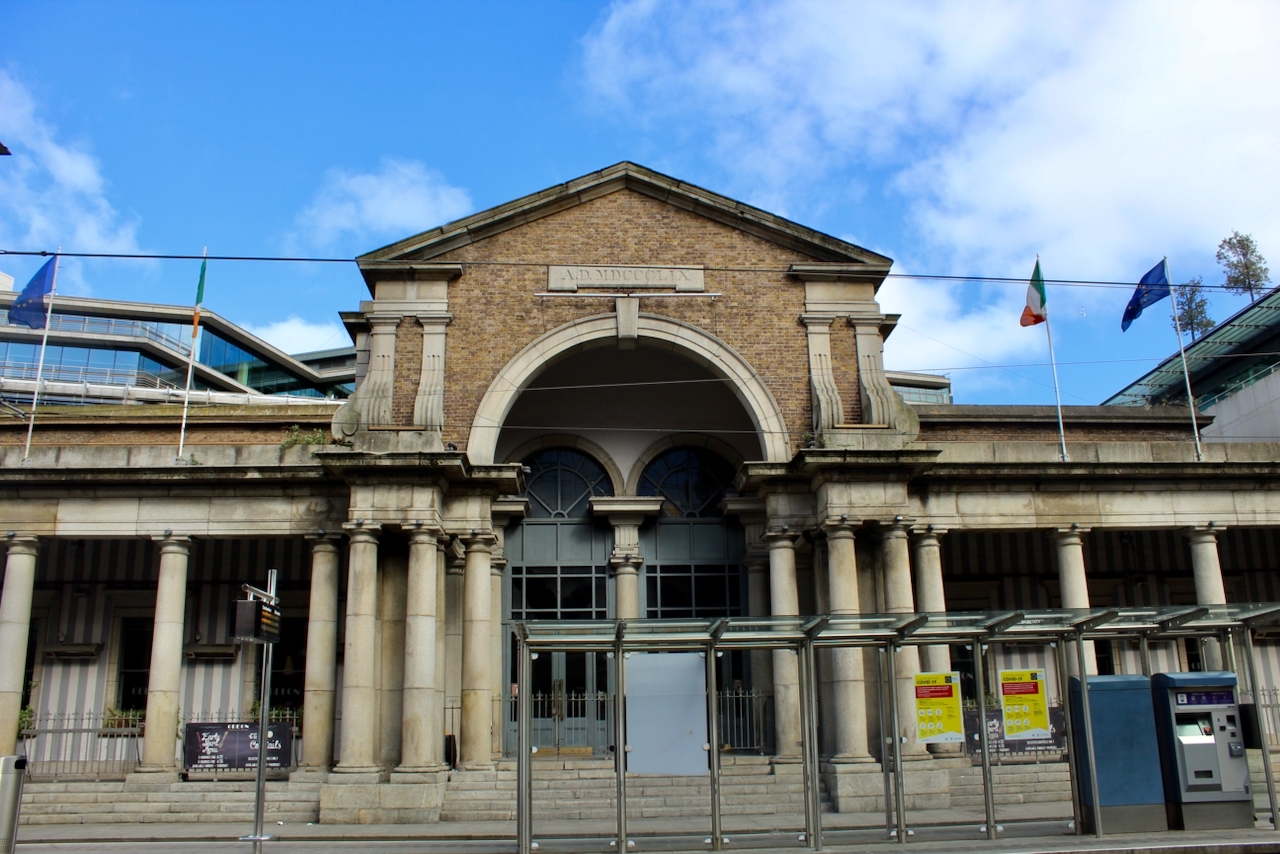
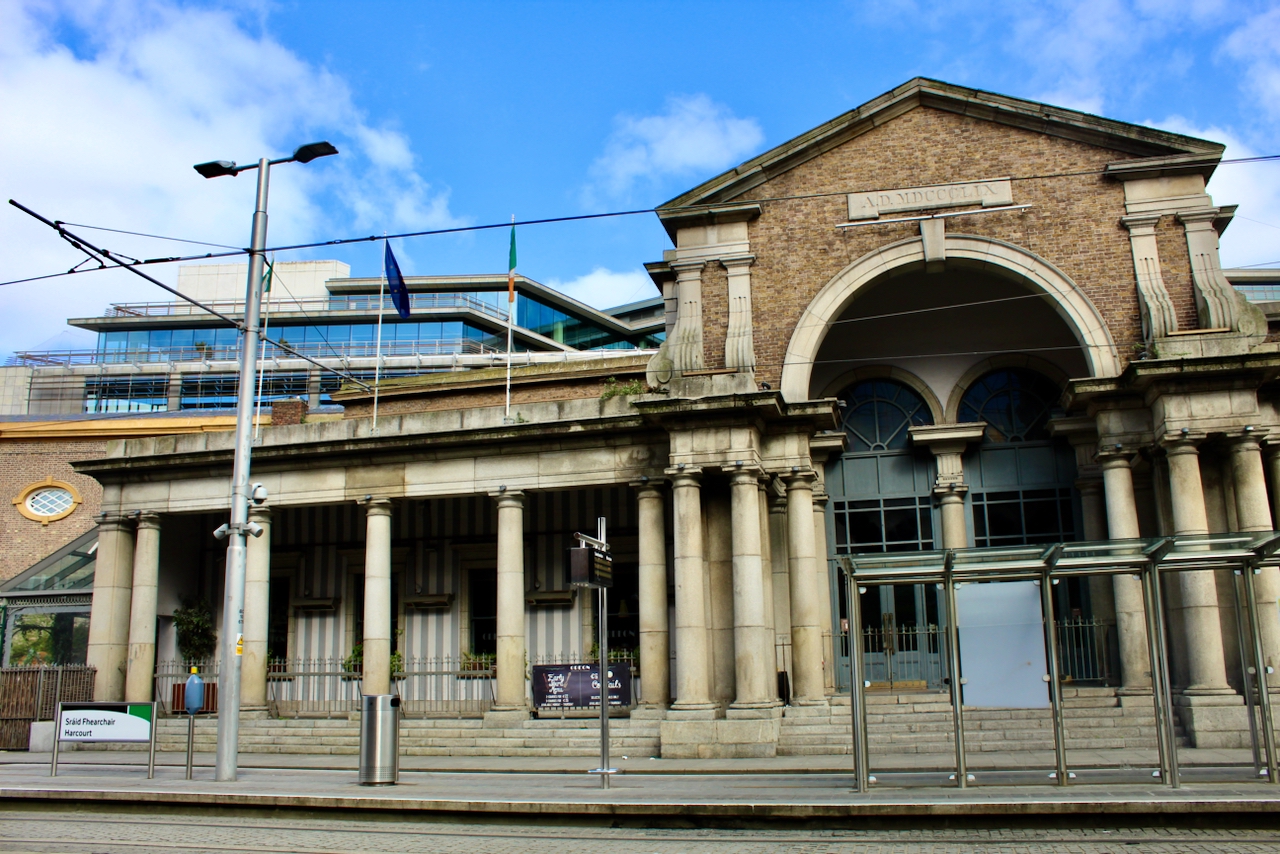
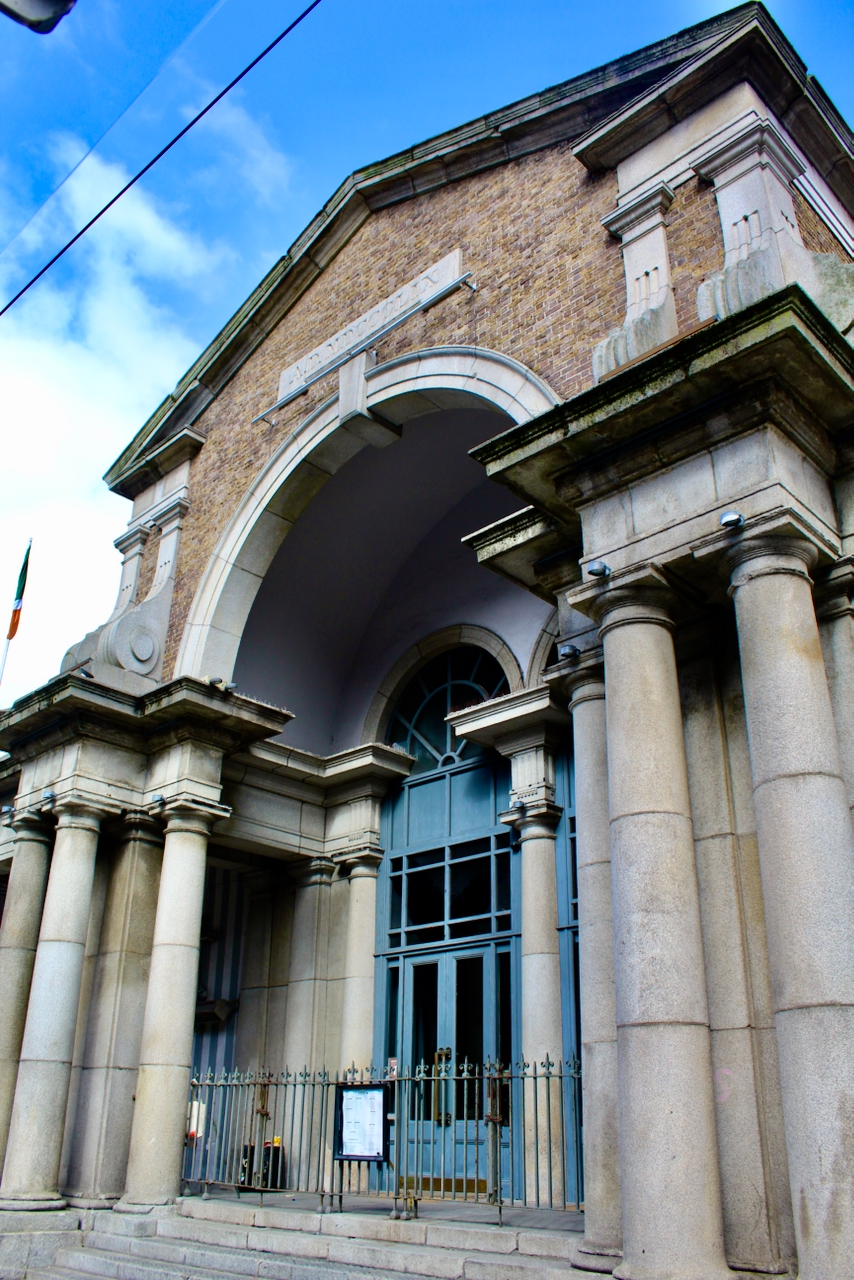
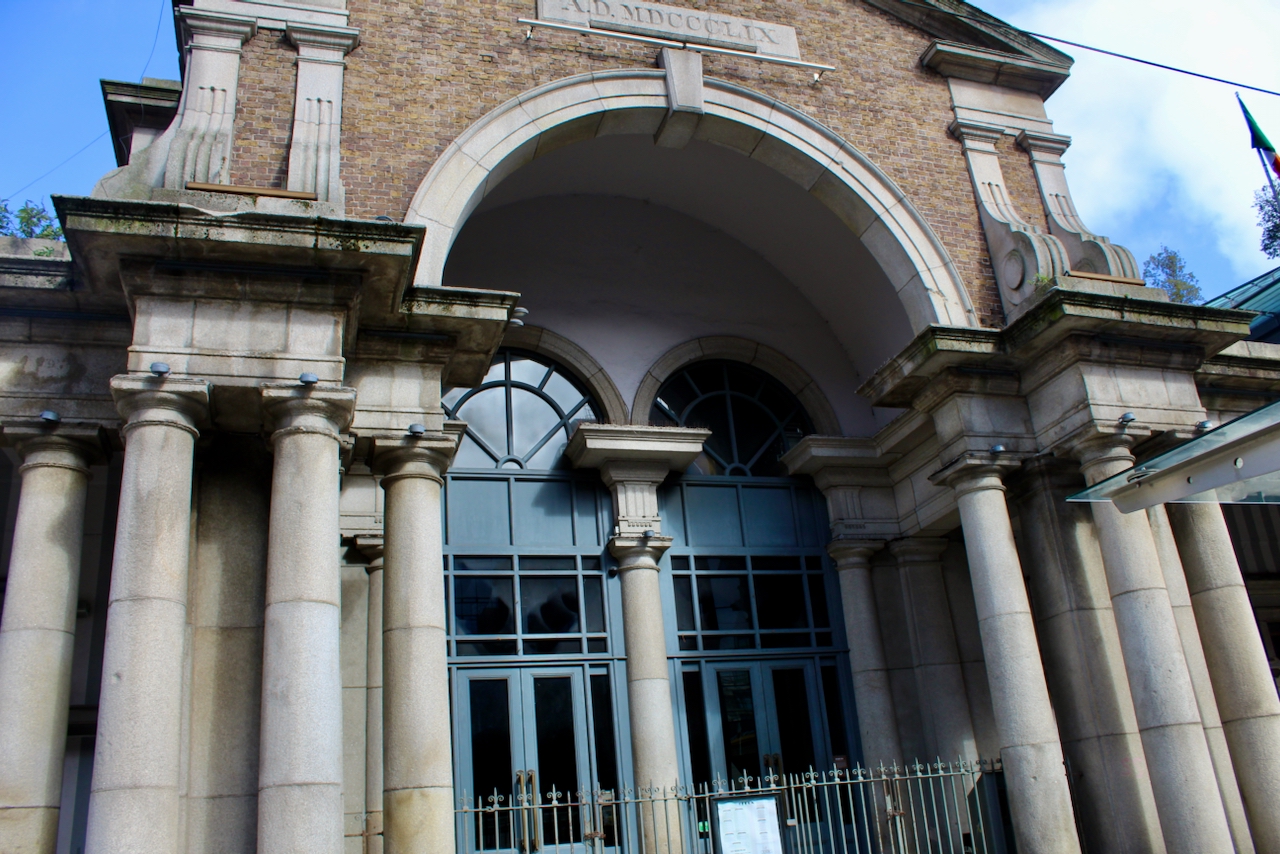
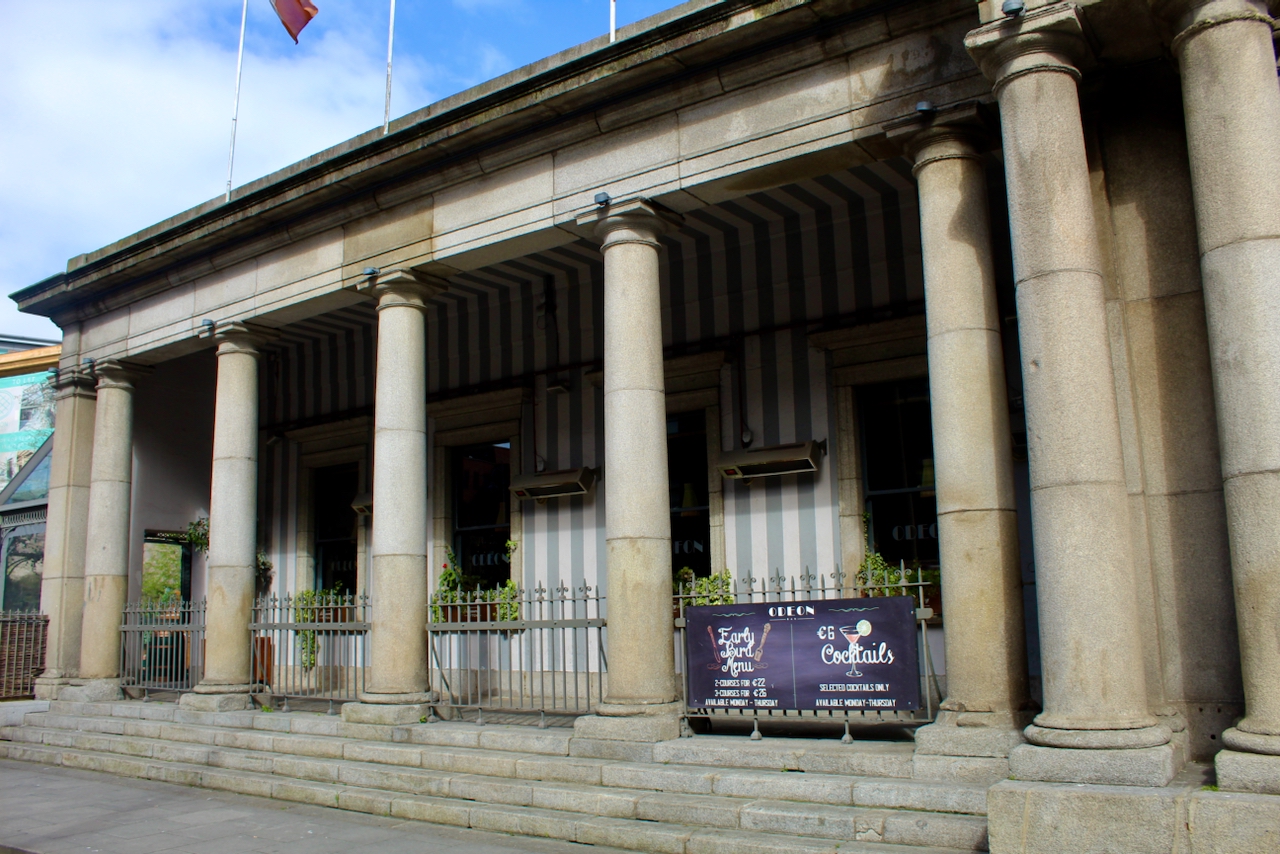
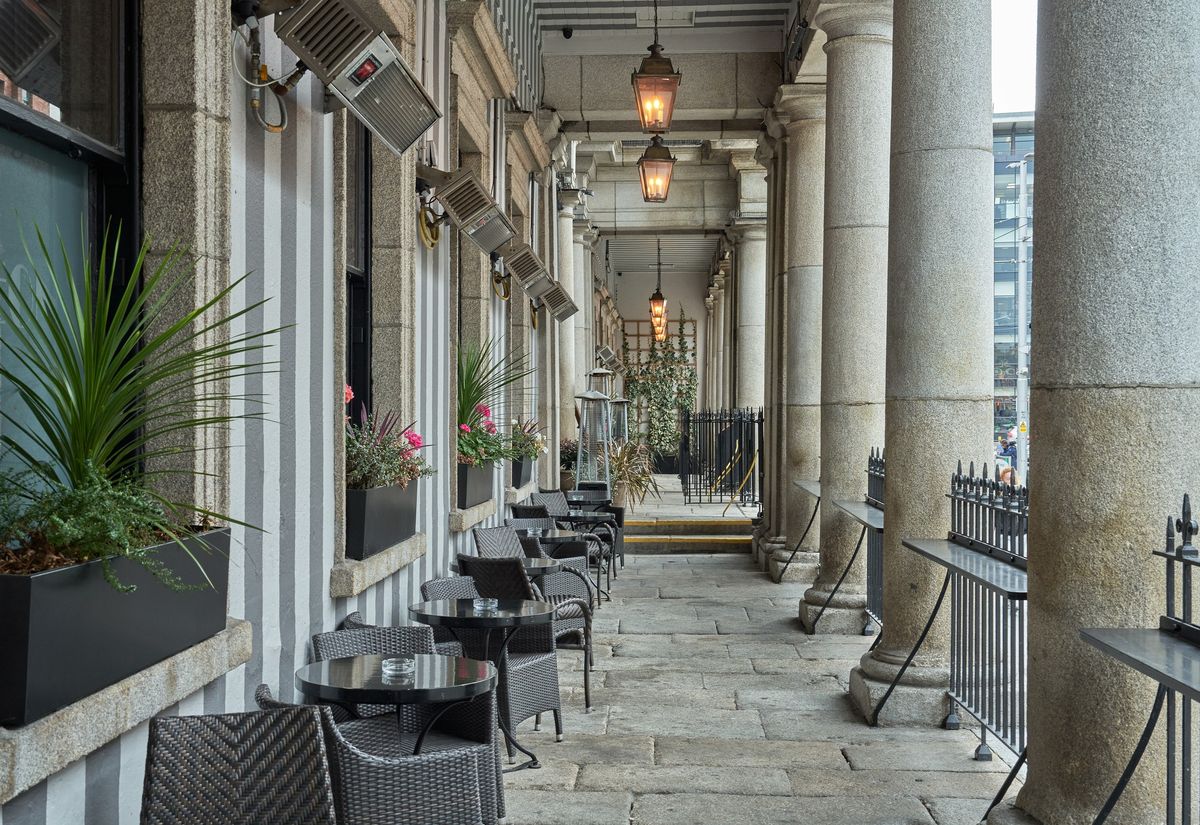
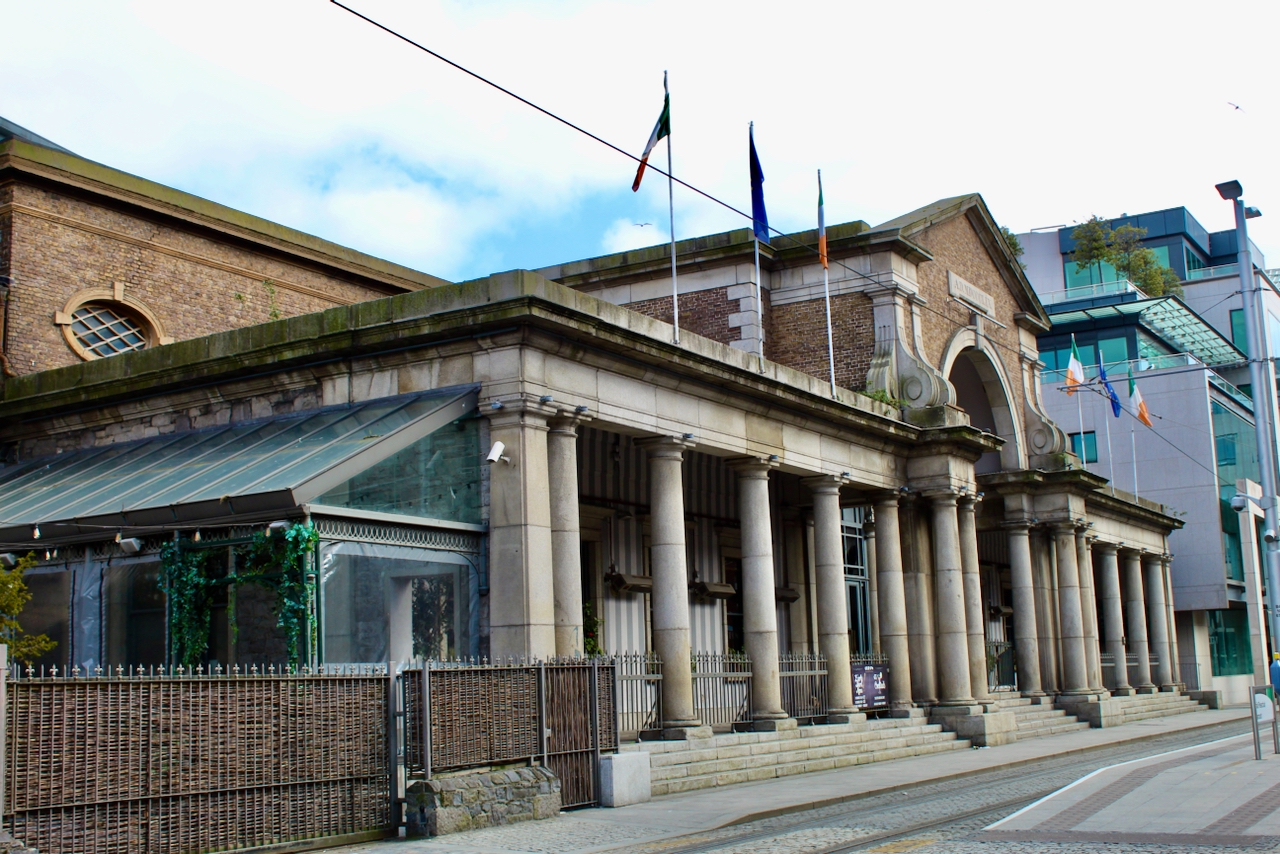
The building is brown brick with granite stone dressing. Two colonnades of Tuscan columns flank the central monumental arch porch which has the entrance doors inside under a further two stone arches. The building is fronted by stone steps as it was built on an embankment.
The central block is double height, topped by an open pediment portico which has ends sitting on a frieze on top of pairs of oversized granite scrolled “corbels.” The large entrance arch is supported on a structure of paired columns.
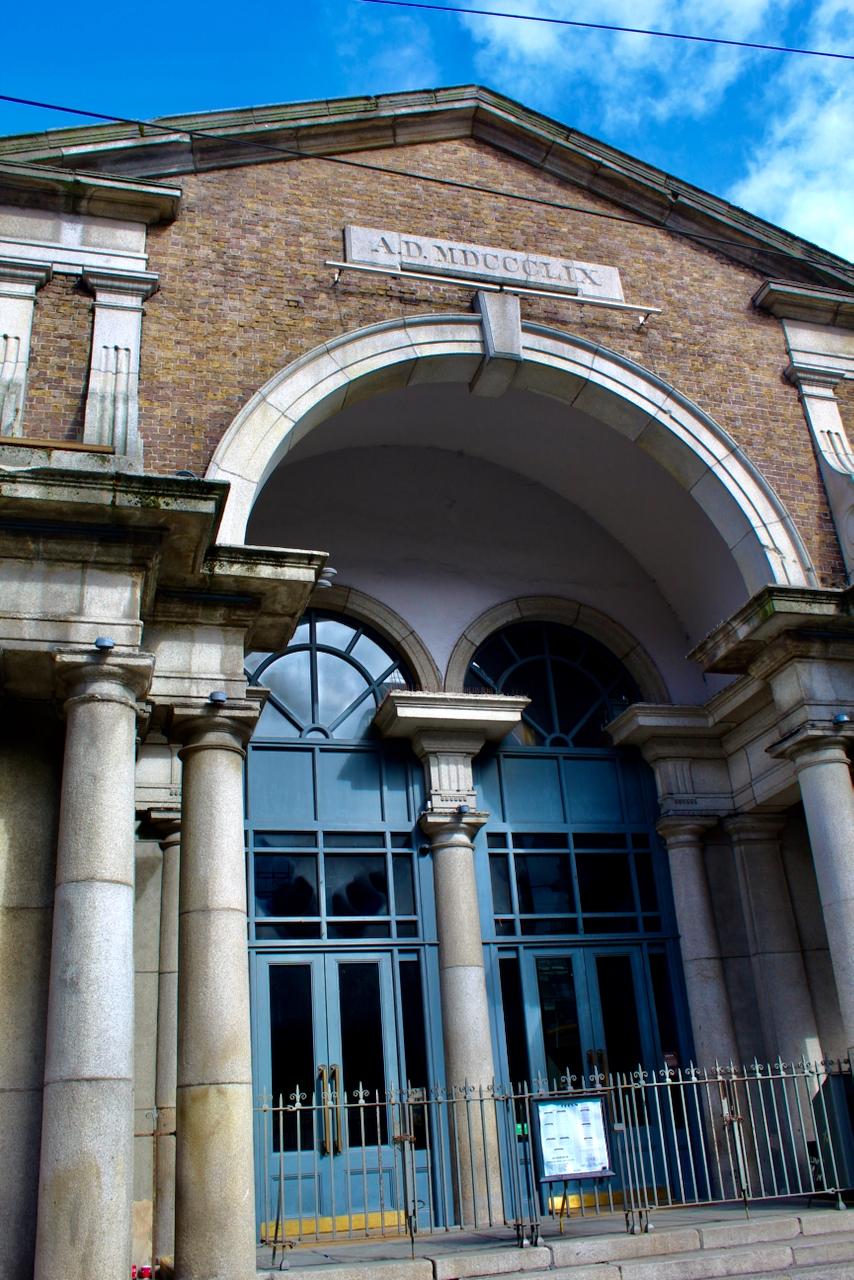
A keystone in the cut granite arch sits under a granite plaque inscribed ‘MDCCCLIX’ (1859).
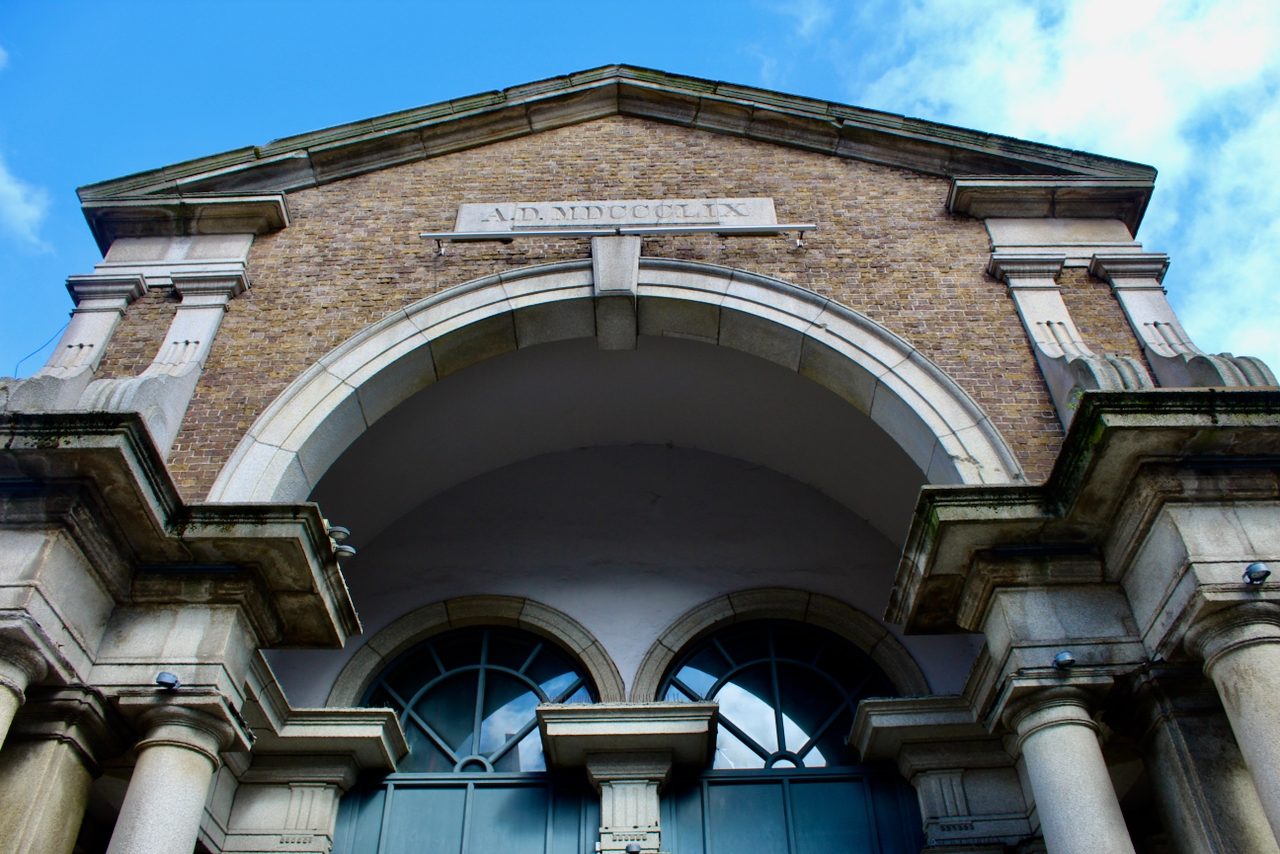
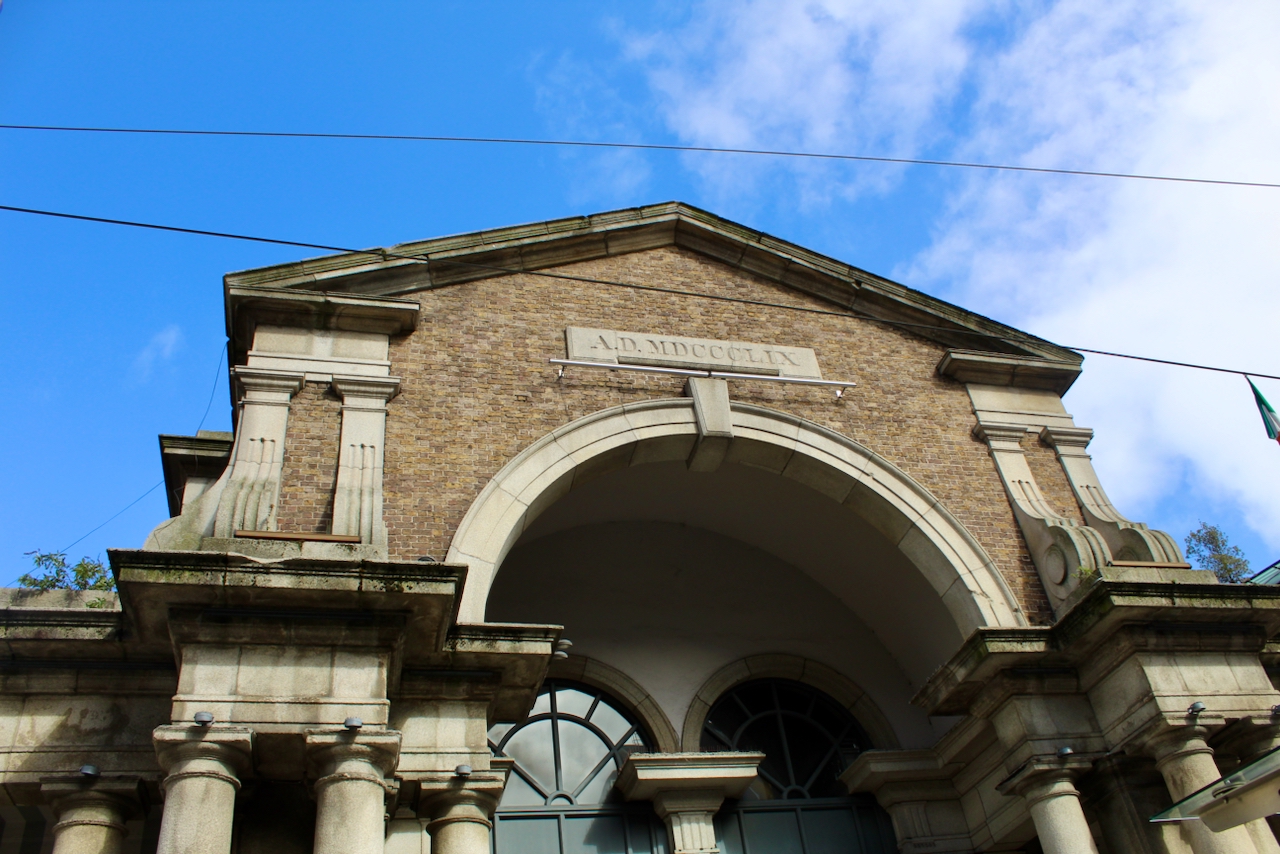
The windows have granite architraves (decorative moulding around a window or door).
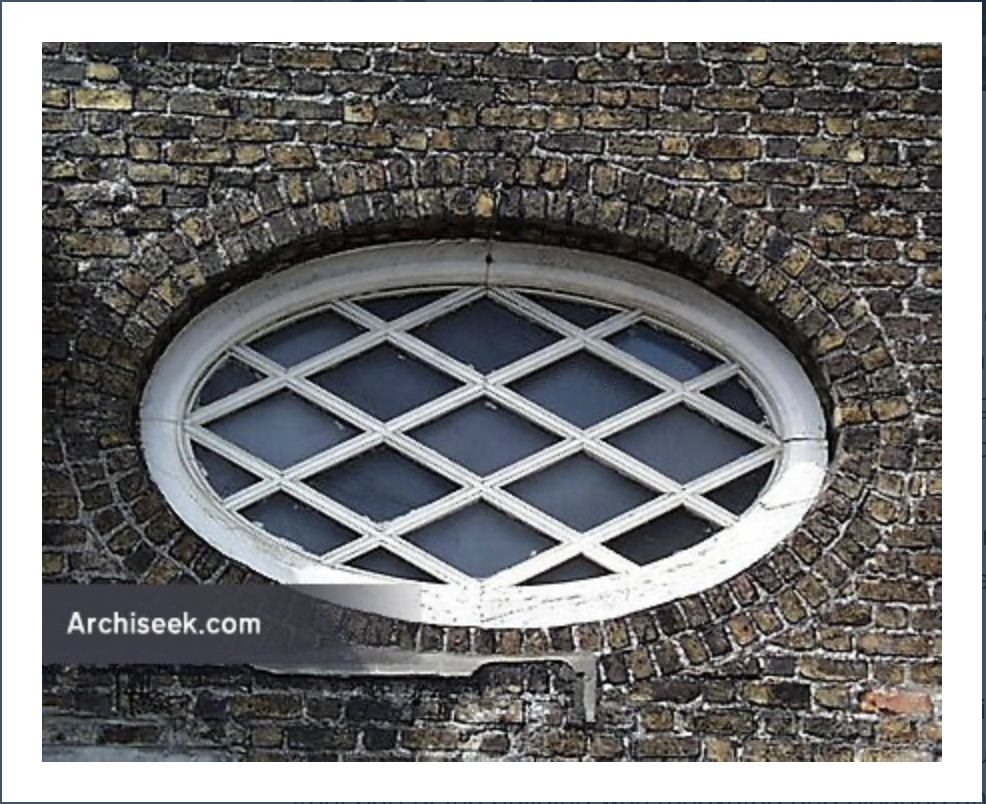
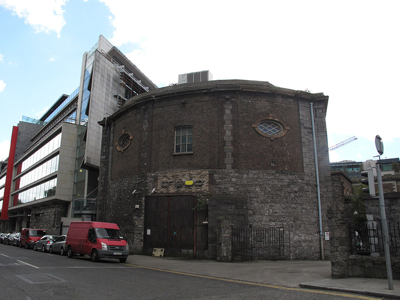
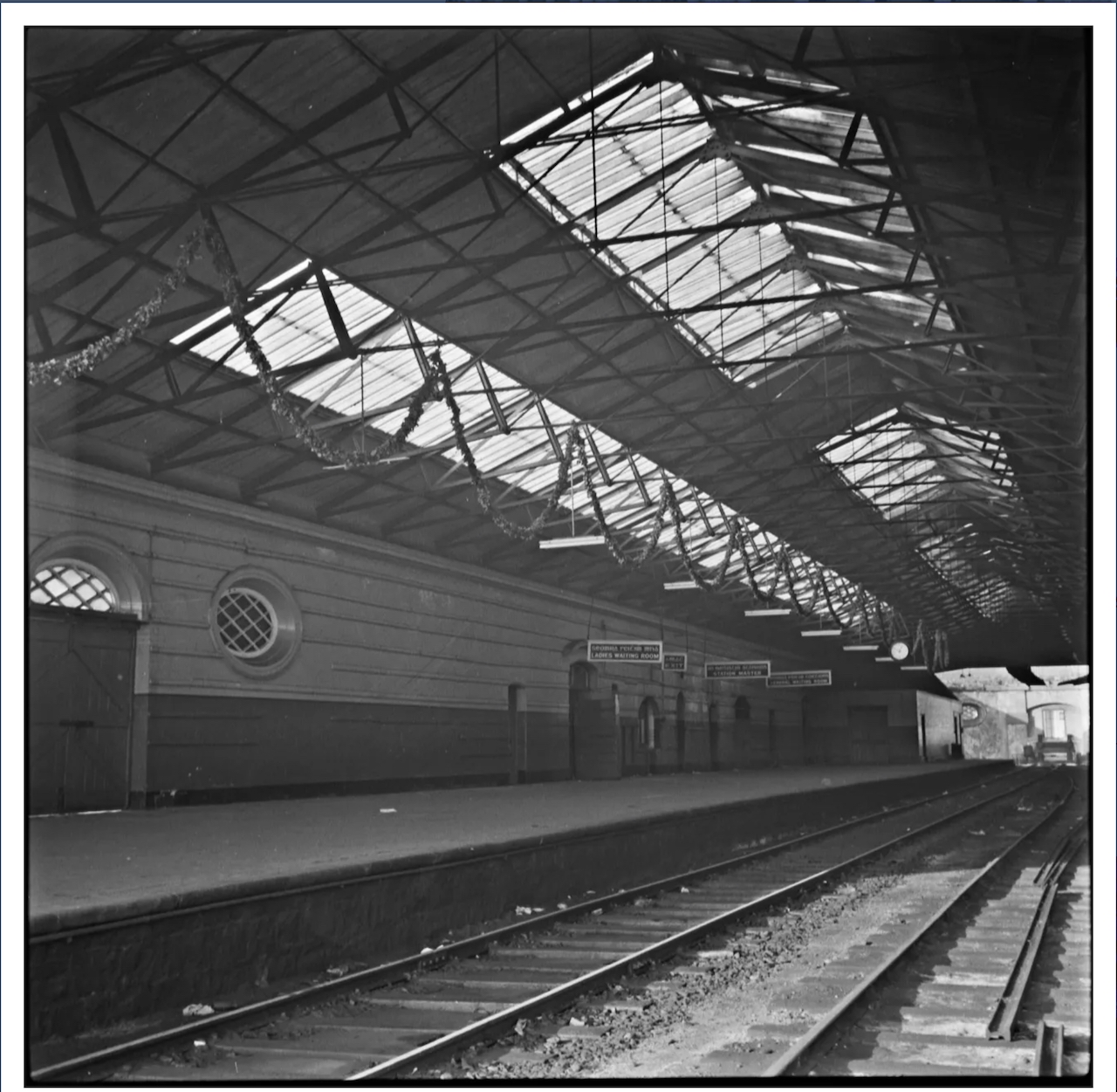
At the rear of Harcourt Street Station at Hatch Street is the curved end wall of the former trainshed. The curved is due to the placement of the former turntable upon which steam locomotives turned to travel in the opposite direction. [6] This engine shed was used at another time as a bonded warehouse.
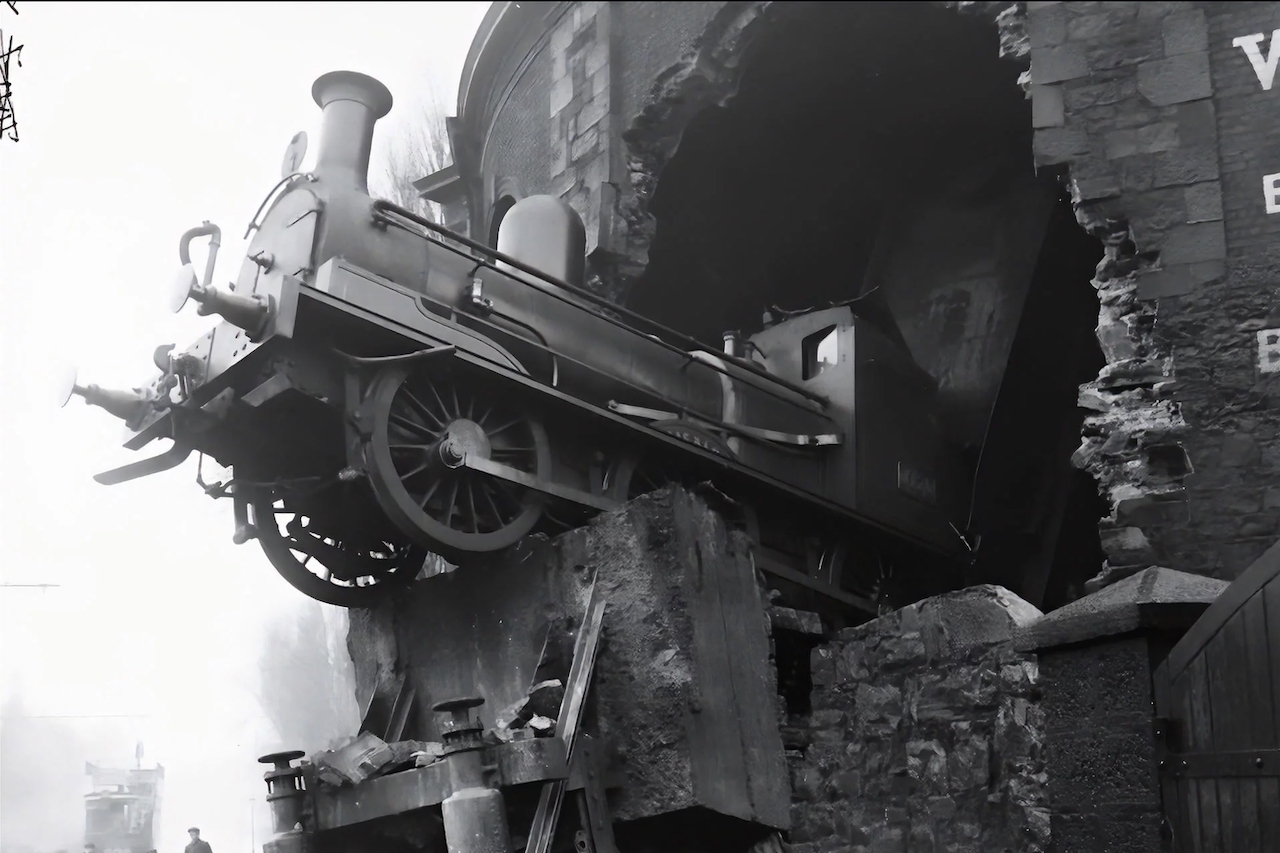
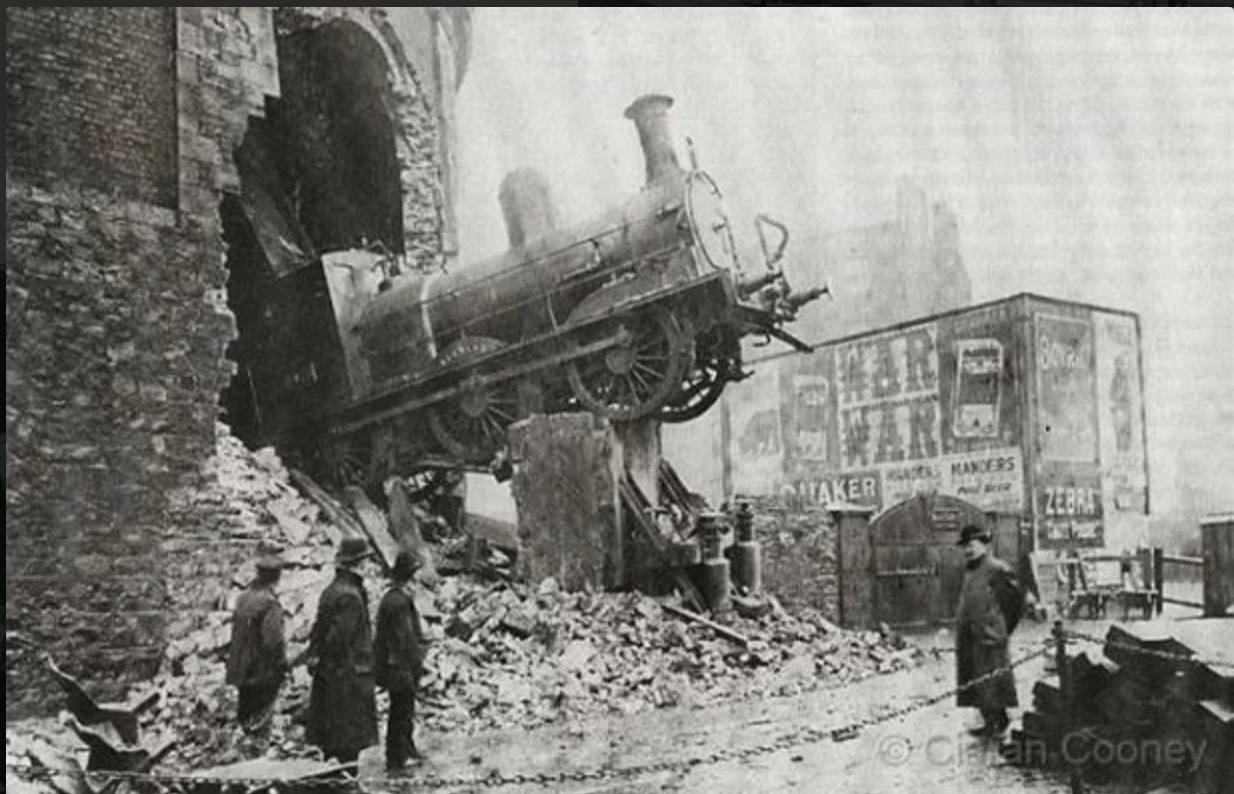
In 1900 an accident occurred, when a train failed to stop at the station due to the weight of 30 wagonloads of cattle.
Archiseek describes:
“Beneath the station shed are excellent arched vaults originally designed as a bonded spirit store and now housing a wine merchants and one of Dublin’s trendiest nightspots. The main front part of the building has recently been renovated and cleaned and is now an enormous bar which looks and feels bigger that the external dimensions of the station would suggest. The bar design manages to be sympathetic to the original design suggesting a large ‘Gentleman’s Club’ of the Victorian era without descending to pastiche.
“The rear of the station has various store buildings which were accessible from a raised ramp off Harcourt Road. Due for redevelopment, these stores are quite large containing many brick archways from area to area and were used by Dunlop for many years.” [4]
This entry makes me want to visit the Steam Museum in County Kildare, another Section 482 property! More next week on a different pub, Doheny and Nesbitt.
[1] https://modelrailwaymuseum.ie/history-of-irish-rail/
[3] https://dublincityppn.ie/stories/the-rise-and-fall-of-the-first-dublin-tram-network-part-1-beginnings-to-one-network/
[4] https://www.archiseek.com/2010/1859-former-harcourt-street-station-dublin/
[5] https://www.dia.ie/architects/view/4918/Wilkinson-George
[6] http://eiretrains.com/Photo_Gallery/Railway%20Stations%20H/Harcourt%20Street/IrishRailwayStations.html#
 Irish Historic Houses
This is a very interesting blog Jen!Good pix and good reading. How did you manage to take photos of the Ode
LikeLike