[1] Bence-Jones, Mark. A Guide to Irish Country Houses (originally published as Burke’s Guide to Country Houses volume 1 Ireland by Burke’s Peerage Ltd. 1978); Revised edition 1988 Constable and Company Ltd, London.
Factory Hill, Glanmire, Co Cork
p. 123. “(Hoare, Bt, of Annabella/PB; Dring/IFR) A small Georgian house in the Palladian manner, consisting of a centre block joined to tiny pavilions by curved sweeps; and with the farmyard at the back. A seat of the Hoare family; bought ca 1954 by Mr John Dring, who sold it some years later.” [1]
Fahagh Court, Beaufort, Co Kerry – Killarney Country Club
p. 122. (Morrogh-Bernard/IFR) An irregular two storey house with a shallow battlemented bow and a rusticated doorcase of sandstone on its front, and a gable at the back. Now an hotel.” [1]
Fairfield House, Co Galway (see Carrowmore)
Fairy Hill, Mallow, Co Cork
p. 123. “(Sarsfield/LGI1958) A later Georgian house of one story over a basement. Irregular façade with bow and Wyatt window.”
Fairy Hill, Borrisokane, Co Tipperary

p. 123. “A two storey three bay C18 house with a pediment and a fanlighted doorway with sidelights and blocking. In 1837 the seat of W.H. Cox.” [1]
Faithlegg House, Waterford, Co Waterford – a hotel

See my entry https://irishhistorichouses.com/2022/05/26/places-to-visit-and-stay-in-munster-county-waterford/
p. 123. (Power/IFR; Gallwey/IFR) A three storey seven bay block with a three bay pedimented breakfront, built 1783 by Cornelius Bolton, MP, whose arms, elaborately displayed, appear in the pediment. Bought 1819 by the Powers who ca 1870 added two storey two bay wings with a single-storey bow-fronted wings beyond them. At the same time the house was entirely refaced, with segmental hoods over the ground floor windows; a portico or porch with slightly rusticated square piers was added, as well as an orangery prolonging one of the single-storey wings. Good C19 neo-Classical ceilings in the principal rooms of the main block, and some C18 friezes upstairs. Sold 1936 by Mrs H.W.D. Gallwey (nee Power); now a college for boys run by the De La Salle Brothers.” [1]
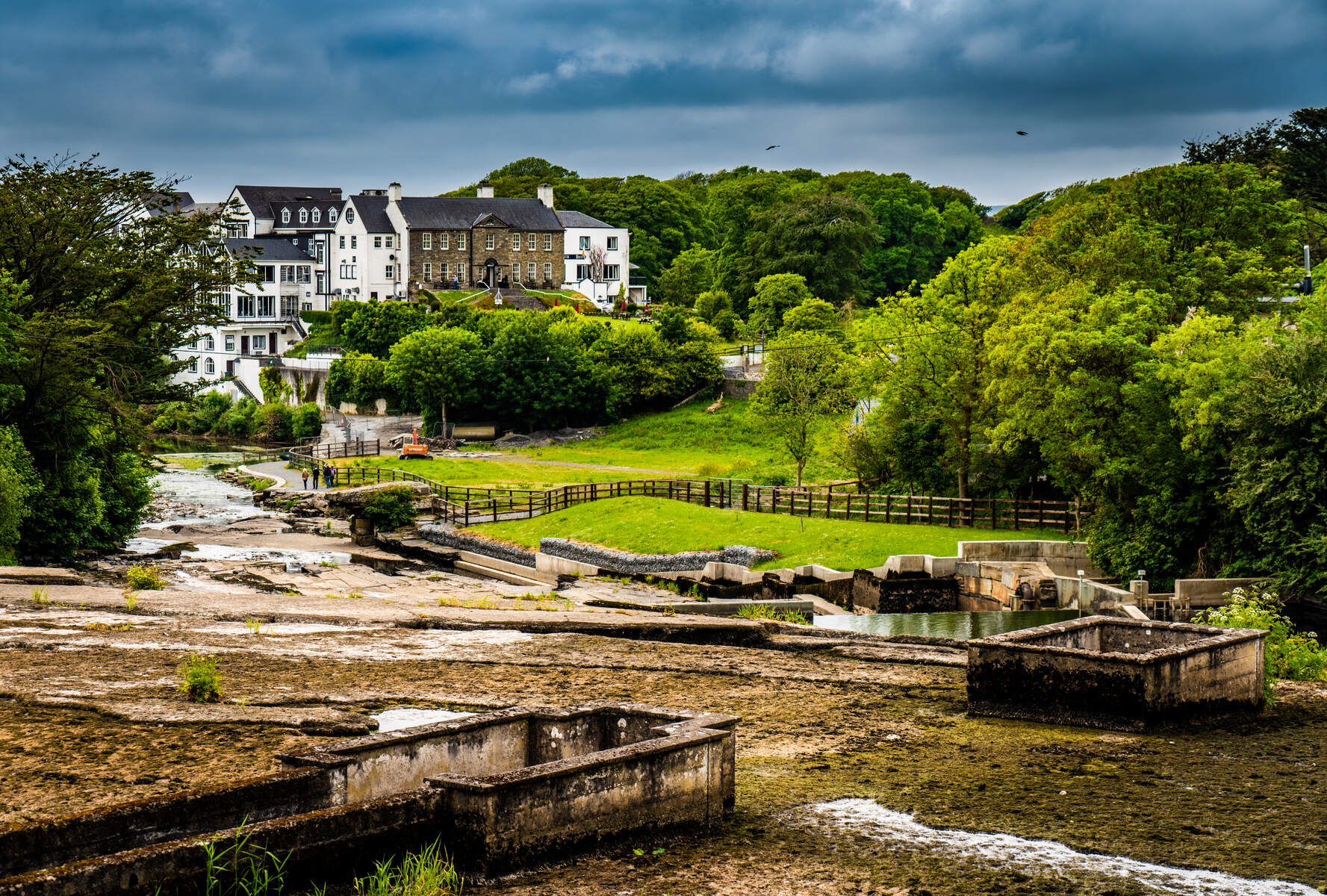
Falls Hotel (formerly Ennistymon House), County Clare
See my entry https://irishhistorichouses.com/2023/01/20/places-to-visit-and-stay-in-county-clare/
Falmore Hall, Dundalk, Co Louth

p. 123. “(Bigger, sub Hamilton/IFR; Windham-Dawson, sub Dartrey, E/PB1933) A two storey Georgian house of five bays, with an eaved roof and a bow on one front...” [1]

Fanningtown Castle, Croom, Co Limerick – whole house accommodation
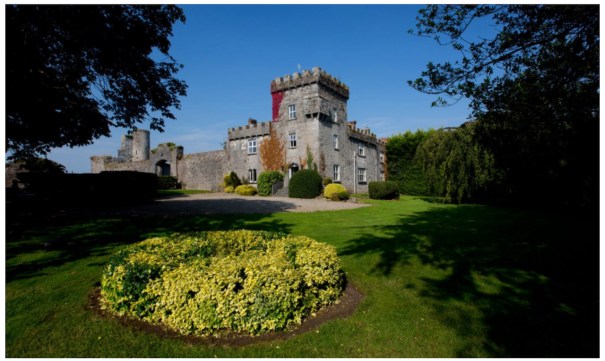
See my entry https://irishhistorichouses.com/2023/07/21/places-to-visit-and-stay-in-county-limerick/
Farmleigh, Castleknock, Co Dublin – open to the public

See my entry https://irishhistorichouses.com/2025/08/03/farmleigh-house-and-iveagh-house-phoenix-park-dublin/
Farney Castle, Thurles, Co Tipperary

See my entry https://irishhistorichouses.com/2022/10/19/places-to-visit-and-stay-in-county-tipperary-munster/
Farnham House, Farnham Estate, County Cavan – hotel

See my entry https://irishhistorichouses.com/2020/07/03/county-cavan-historic-houses-to-see-and-stay/
Farragh House (also known as Farraghroe), Longford, Co Longford – demolished

p. 124. “(Bond/LGI1958) A somewhat composite house, originally a shooting box but greatly enlarged by Willoughby Bond between 1811 and 1833, his architect being John Hargrave, of Cork. Subsequent additions were made in the Victorian period. Entrance front of three storeys and five baysm with Wyatt windows in centre above pillared porch. Side elevation of two storeys and three bays framed by giant plain pilasters; round-headed windows in arched recesses in upper storey of outer bays; two windows in middle above a single-storey Victorian bowed and balustraded projection. Other elevation of three storeys and four bays with a pediment extending over its whole length. Large two storey central hall with gallery and bifurcating staircase, too-lit through skylight with stained glass incorporating family motto, “Deus providebit,” which may have been set by mistake the wrong way round, so that from below the letters read back to front; people said that this had been done intentionally, so that the Almighty, looking down from above, would be able to read the motto and thus be reminded of his obligations. Farragh was sold ca 1960 by Mr B.W.Bond, it was subsequently demolished.” [1]
Farran, Coachford, Co Cork – Hidden Ireland whole house rental

See my entry https://irishhistorichouses.com/2022/05/17/places-to-visit-and-stay-munster-county-cork/
Faughart, Dundalk, Co Louth
p. 124. “(MacNeale.LGI1912; and sub McNeile/LG1972) A two storey gable-ended house of ca 1770. Five bay front, pedimented Doric doorcase.” [1]
Favour Royal, Aughnacloy, County Tyrone
p. 124. “(Moutray/LGI1912) A somewhat austere Tudor-Gothic house of 1825, said to be by an architect named William Warren; built for John Corry Moutray to replace a house of 1670 destroyed by fire 1823. Two storey with attic of rather low-pitched gables in front; three storey at the back. The front of the house has large rectangular windows with elaborate Gothic tracery and hood mouldings over them. Now owned by the Forestry Commisson.” [1]
Fellsfort, Co Cork (see Mitchellsfort)
Fellows Hall, Killylea, County Armagh
p. 124. “(Maxwell, sub Farnham, B/PB; Armstrong, IFR; Stronge, Bt/PB; McClintock/IFR) A Victorian Italianate rebuilding of a house of 1762, itself a rebuilding of a C17 house burnt 1752. Two storeys over basement; five bay front, round-headed windows with keystones in upper storey, rectangular windows with entablatures on console brackets above them in lower storey. Tripartite doorway with triple window above it. Roof on bracket cornice. Passed through marriage from the Maxwell family to the Armstrong and Stronge families, and then to the McClintock family.”
Fenagh House, Bagenalstown, County Carlow

p. 124. “(Pack-Beresford/IFR) A plain and austere C19 house of stone. Irregular in plan, and extensive; but with a symmetrical entrance front of three bays, the centre bay being recessed with a pillared porch.” [1]
Fenaghy House, Galgorm, County Antrim
p. 124. “A two storey, five bay gable-ended C18 house, refaced as a stucco Italianate villa in mid-C19. Entablatures on console brackets over ground floor windows; two storey projecting porch with a Corinthian column on either side of the entrance doorway; pierced roof balustrade. Conservatory at end of house, of pretty ironwork. Good interior plasterwork.” [1]
Fennypark, Co Kilkenny
p. 124. “A Georgian house consisting of a two storey three bay centre with Wyatt windows and a pedimented pillared porch, joined to one storey one bay pedimented wings by links with iron verandahs.” [1]
Fermoy House, Fermoy, Co Cork – ‘lost’

p. 125. “(Anderson, Bt of Fermoy/PB1861; Cooke-Collis/IFR) A house of ca 1790, consisting of a centre block and wings. The seat of John Anderson, the enterprising army contractor who laid out the town of Fermoy. Later a seat of the Cooke-Collis family. Now demolished.” [1]
Ferns Castle, Wexford – OPW

Ferrans, Co Meath
p. 125. “(Bomford/IFR) A two storey five bay late-Georgian house with an eaved roof. Sold ca 1970; burnt 1972, subsequently rebuilt for institutional use.” [1]
Ferry Quarter, Strangford, County Down
p. 125. (Cooke/IFR) “A large stucco early-Victorian house, overlooking the entrance to Strangford Lough.” [1]
ffrankfort Castle, Dunkerrin, Co Offaly – a ruin

p. 125. “Rolleston/IFR) A Georgian castellated house, with a battlemented parapet, pointed windows and a turret, incorporating part of a medieval castle and surrounded by the original fosse and a fortified wall of predominantly late C18 or early C19 appearance, with twin Gothic gateways opening into a forecourt in front of the house. Originally the seat of the ffranks; passed to the Rollestons through the marriage of the adopted daughter of Capt James ffrank to Francis Rolleston 1740. Now demolished except for some walls and moat.” [1]
Fields of Odin, Co Dublin (see St. Enda’s)
Finnebrogue House, Downpatrick, County Down

p. 125. “(Perceval-Maxwell/IFR) A fine late C17 house, built on an H plan: a central range with wings projecting at the front and back.
The house is of two storeys over a basement, with an attic storey in the side and rear elevations.
The entrance front is of five bays, with two additional bays at the end of each wing.
The upper storey of the central range is treated as a piano nobile, with higher windows than those below. The house was altered and brought up to date at end of C18 by Dorothea, Mrs Waring-Maxwell, sister and heiress of Edward Maxwell, of Finnebrogue, having stood empty for some 25 years.
The original high-pitched roof was replaced by a roof that was lower, though still high by late 18th century standards; late-Georgian sash windows were inserted, and some of the 1st floor rooms were given high coffered ceilings similar to those of the Down Hunt Rooms in Downpatrick, which date from the same period. Some of the internal partition walls are of peat or turf, as in certain other Irish houses.” [1]
Finnstown, Lucan, Co Dublin – hotel

See my entry https://irishhistorichouses.com/2023/05/26/places-to-visit-and-stay-in-dublin-city-and-county/
Finvoy Lodge, Ballymoney, County Antrim
p. 125. Two storey gable-ended Georgian house; three bay front; later projecting porch, three bay return.” [1]
Fisherwick Lodge, Ballyclare, County Antrim
p. 125. (Chichester, Donegall, M/PB) A hunting lodge of the Marquesses of Donegall; rebuilt ca 1805 as a hollow square with two single-storey fronts of nine bays each. Tall windows, reaching almost to the ground; pedimented wooden doorcase, with fluted columns.” [1]
Fishmoyne, near Templemore, Co Tipperary
p. 125. “(Carden/IFR) The seat of the junior branch of the Cardens; a three storey C19 block built to replace an earlier house destroyed by fire. Pedimented entrance door in three sided bow in middle of front, two bays on either side. Entablatures over ground floor and first floor windows; eaved roof. Octagonal hall.” [1]
Flesk Castle, Co Kerry (see Glenflesk Castle)
Flood Hall, Thomastown, Co Kilkenny – demolished
p. 125. (Solly-Flood/LGI1912; Hanford-Flood/LGI1912) A two storey Georgian house with C19 Gothic embellishments. Front with pediment flanked by small crockets; single-storey three sided bow below. Hood mouldings. Irregular C19 end. The home of Henry Flood, the great C18 statesman and Irish patriot. Demolished 1950.” [1]
Florence Court House, County Fermanagh – open to the public

See my entry https://irishhistorichouses.com/2024/05/16/florence-court-county-fermanagh-a-national-trust-property/
Forenaghts (used to be townland of Little Forenaghts), Naas, Co Kildare
p. 128. “Wolfe/IFR) A three storey early or mid- C18 house, probably originally of five bays but subsequently extended to form a three storey front of seven bays, with an addition of ca 1831 which is of two storeys on the entrance front and a single high storey on the garden front. Also in the C19 the house was given an eaved roof on a bracket cornice and a single storey Doric portico; and it was refaced in stucco. The garden front is of six bays, with a two bay projection at one end; C19 wing on this side has a curved bow. Low ceilinged rooms in the main block. Hall with slightly curving staircase at back, enlarged early C20 aby taking in the adjoining room to the left, which in turn has been opened, with arches on either side of its fireplace, into the library beyond, which has bookcases incorporated in its panelling. Beautiful early C19 drawing room in the garden fron ton the wing, with a curved bow and a high coved ceiling decorated with elaborate C19 plasterwork. This room was probably made – and the wing added – by Rev Richard Wolfe, for his fashionable wife, who was Lady Charlotte Hely-Hutchinson, sister of 2nd Earl of Donoughmore.” [1]
Fort Etna, Patrickswell, Co Limerick
p. 126. “(Peacocke/LGI1912; Reilly, sub Simonds-Gooding and Peart/LGI1958) A two storey five bay C18 house with a Venetian window and a pedimented and shouldered doorcase. Five bay side. Gable-ended farm buildings treated as wings. The seat of the Peacocke family; afterwards of the Reilly family.” [1]
Fort Frederic, Virginia, Co Cavan – a ruin
p. 126. “(Sankey/LGI1912) A two storey mid-C18 house with a central three sided bow and two bays on either side of it. Georgian Gothic doorcase. Single-storey wings, one of them with two bows in its end wall.” [1]
Fort Robert, Ballineen, Co Cork – ‘lost’

p. 126. “(Conner;IFR) A late C18 weather-slated house of two storeys over high basement, built by R.L.Conner 1788. Eight bay front, with wide fanlighted doorway. Three bay side. Empty and decayed by 1854; ruinous by end of C19.” [1]
Fort Stewart, Ramelton, Co Donegal
p. 126. “(Stewart, Bt, of Ramelton/PB) A three storey gable-ended C18 house. Seven bay entrance front, with single-storey, two bay wings. C19 pilastered porch with door at side. Entrance hall with four engaged Tuscan columns and shallow rib-vaulting rising from them. Early C19 decoration in reception rooms.” [1]
Fort William, Tivoli, Co Cork
p. 126. “Baker/IFR) A late-Georgian house consisting of a two storey five bay centre block with single-storey bow-ended wings. Now part of the Silver Springs Hotel.” [1]
Fort William, Doneraile, Co Cork (see Kilmacoom)
Fort William, Glencairn, Lismore, Waterford

See my entry https://irishhistorichouses.com/2022/05/26/places-to-visit-and-stay-in-munster-county-waterford/
Fortfergus (also known as Mountfergus), Killadysert, County Clare
p. 126. “(Ross-Lewin/LGI1912; Stacpoole/IFR) A long, irregular house of vaguely Georgian appearance, incorporating, or on the site of, a house built by Captain George Ross 1688. Passed by descent to Ross-Lewins; transferred by W.G. Ross-Lewin to his uncle, John Stacpoole, 1800. Sold under Encumbered Estates Act 1855 to Major William Hawkins Ball. Burnt 1922.” [1]
Fortfield, Terenure, Co Dublin
p. 126. “Yelverton, Avonmore, V/PB1910) A three storey house built ca 1785 for Chief Baron Yelverton, afterwards 1stViscount Avonmore. Seven bay front; central Venetian window above single-storey portico and with three oculi in the centre of top storey. Very wide staircase.” [1]
Fortgranite, Baltinglass, Co Wicklow

p. 126. “(Dennis.IFR) A house of ca 1730 built by George Pendred, of Saunders Grove – whose son assumed the name of Saunders – which came to T.S. Dennis through his marriage to Katherine Saunders 1810; he remodelled it 1810-15, so that it is now predominantly late-Georgian in character. Two storey; entrance front with recessed centre and single storey Doric portico. Adjoining front is five bay with two single-storey three sided bows. Parapeted roof. The house was modernized 1870-1 by M.C. Dennis. The grounds contain a notable arboretum, planted ca 1820.” [1]
Fortland, Easkey, Co Sligo
p. 126. “(Brinkley/LGI1912) A Georgian house. Tripartite doorway with rusticated piers and pediment extending over door and sidelights.” [1]
Fortwilliam, Milford, Co Cork

p. 297. “(Sheehy/IFR) A house of mid-C19 appearance in the cottage style, with gables and ornamented bargeboards.”
Fortwilliam, Ballinasloe, Co Galway
p. 126. “(D’Arcy/IFR) A small Georgian house with Victorian additions.” [1]
Fosterstown House, Trim, Co Meath

p. 127. “(Chambers. LGI1937 supp) A two storey three bay gable-ended late C18 house. The residence of the great Duke of Wellington (as Hon. Arthur Wellesley) when he was Member for Trim in the Irish Parliament.” [1]
Fota House, Arboretum and Garden, Carrigtwohill, County Cork – open to public

Fountainstown House, Crosshaven, Co Cork

p. 128. “(Hodder/IFR) A three storey double gable-ended early C18 house built by Samuel Hodder.” [1]
Fox Hall, Letterkenny, Co Donegal

p. 128. “(Chambers/LG1863) A stucco-faced house of mid-C19 appearance, but in a straightforward late-Georgian manner, with large rectangular windows and astragals. Of two storeys over basement. Projecting porch, with two ball fiials, not centrally placed; roof on plain cornice.” [1]

Foyle Park House, Eglington, County Derry
p. 128. “(Davidson/IFR) A plain two storey irregular late-Georgian house, built ca 1820 and opened 1827 as the North West of Ireland Society’s Literary and Agricultural Seminary and School of Classics. Come to the Davidson family by marriage later in C19. Sold 1920 by James Davidson to Mr H. Whiteside, who sold it back to Lt-Col K.B. L Davidson, of The Manor House, Eglington, 1968.” [1]
Frankville House, Athboy, Co Meath

p. 128. “A two storey house of late-Georgian appearance. Three bay front, with Wyatt windows and an enclosed porch with a die. Four bay side, with two Wyatt windows in the lower storey not related to the windows above.” [1]
Frascati (or Frescati), Blackrock, Co Dublin – ‘lost’

p. 128. “Fitzgerald, Leinster, D/PB) The seaside house of the Leinsters in C18, where Emily, Duchess of Leinster, lived during her widowhood and where her son, the United Irish leader, Lord Edward Fitzgerald, spent much of his youth. A long, plain two storey eighteenth century house, wiht a pedimented doorway between two three sided bows. Drawing room with ceiling by Thomas Riley, who decorated the gallery at Castletown, County Kildare for Emily Duchess’s sister Lady Louisa Conolly. Demolished 1981-3.” [1]
French Park, County Roscommon – lost

p. 128. “(De Freyne, B.PB) An early Palladian winged house of red brick; probably built ca 1729 by John French to the design of Richard Castle. Three storey seven bay centre block, three bay pedimented breakfront with lunette window in pediment; late-Georgian pillared porch, two storey wings five bays long and four deep joined to main block by curved sweeps as high as they are themselves; the curved sweeps having three windows in their upper storey and a door flanked by two windows below. Two storey panelled hall; stairs with slender turned banisters ascending round it to gallery; panelling with bolection mouldings; walnut graining. Dining room originally hung with embossed leather which was later replaced by wallpaper; nineteenth century plasterwork cornice and rosette and circle in centre of ceiling. Drawing room on 1st floor above dining room, with Bossi chimneypiece at one end and a late eighteenth century Ionic chimneypiece at the other; good compartmented plasterwork ceiling executed for Arthur French, 4th Lord De Freyne, late nineteenth century. Fine eighteenth century wrought iron entrance gates. Now a roofless ruin having been sold by 7th and present Lord de Freyne 1953 and afterwards demolished.”
supplement: “This house incorporated a mid-C17 house, built by Patrick French, a burgess of Galway who acquired the estate and other lands, and who died 1669.” [1]
Frybrook House, Boyle, Co. Roscommon

See my entry https://irishhistorichouses.com/2025/11/02/frybrook-house-county-roscommon/
Furness (townland of Great Forenaghts, or Phornauts), Naas, County Kildare

p. 129. “Nevill, sub Neville/IFR; Dering, Bt/PB; Beauman/LG1886; Synnott/IFR) A house built originally ca 1740 for Richard Nevill, and attributed by the Knight of Glin to Francis Bindon; consisting of a three storey centre block joined by single-storey links to a storey projecting wings of the same height as the links; the elevation being further prolonged by quadrants joining the wings to office ranges; so that it extends to a total length of 400 feet. The centre block has a three bay ashlar faced entrance front, with a lunette window above a window framed by an aedicule on console brackets consisting of two engaged Ionic columns and a pediment; above a frontispiece of coupled Doric columns and a Doric entablature framing the entrance doorway. There is an almost identical elevation in Clermont, Co Wicklow. The garden front of the centre block is five bays, with blocking round the ground floor windows. From ca 1780 onwards, Richard Nevill, MP, great-nephew of the builder of the house, carried out various additions and alterations; chief of which was the raising of the left-hand link, so that it became a two storey wing with a curved bow on the garden front. The whole of the centre block, on the entrance front, is taken up with a hall, consisting of two sections opening into each other with an arch; they were originally separate, but the Doric frieze is probably contemporary with the building of the house, as is the handsome staircase of Spanish chestnut, which rises on one side of the arch; though there are indications that it has been remodelled. On the frieze of the staircase and gallery is a Vitruvian scroll decoration. The drawing room has a ceiling, probably by Michael Stapleton, of delicate late C28 plasterwork with a medallion of Minerva attended by a kneeling hero. The dining room, in the wing, is. Large simple room with a curved bow. Richard Nevill, MP, also landscaped the grounds. At his deat 1822, Furness passed to his daughter and heiress, the wife of Edward Dering. Later it was sold to the Beauman family. In 1897, by which time it had become very dilapidated, it was bought by N.J. Synnott, who carried out a thorough – and for those days, remarkably sympathetic – restoration. The vista from the entrance front of the house is now terminated by a column formerly at Dangan, Co Meath, the boyhood home of the great Duke of Wellington. It was brought here and erected 1962, as a 21st birthday present to Mr David Synnott from his father. The house features in the film of the Somerville and Ross Irish RM stories. Mr David Synnott sold Furness 1987.” [1]
[1] Bence-Jones, Mark. A Guide to Irish Country Houses (originally published as Burke’s Guide to Country Houses volume 1 Ireland by Burke’s Peerage Ltd. 1978); Revised edition 1988 Constable and Company Ltd, London.
 Irish Historic Houses
The Richard Windham referred to in your entry on Falmore Hall, Dundalk, was not a son of Lady Edith Windham-Dawson of Dartrey. Can this be error be corrected promptly?
LikeLike
I am sorry about that! I thought that’s what it said in Mark Bence-Jones but I don’t have my copy to hand. Maybe he was incorrect. I have removed it on the website! Once again, I am very sorry to have posted incorrect information. Jennifer.
LikeLike