On the map above:
blue: places to visit that are not section 482
purple: section 482 properties
red: accommodation
yellow: less expensive accommodation for two
orange: “whole house rental” i.e. those properties that are only for large group accommodations or weddings, e.g. 10 or more people.
green: gardens to visit
grey: ruins
County Cavan
1. Cabra Castle, Kingscourt, Co. Cavan (Hotel) – section 482
2. Castle Saunderson, Co. Cavan – a ruin
3. Clough Oughter, County Cavan
4. Corravahan House & Gardens, Drung, Ballyhaise, Co. Cavan – section 482

donation
Help me to pay the entrance fee to one of the houses on this website. This site is created purely out of love for the subject and I receive no payment so any donation is appreciated!
€15.00
1. Cabra Castle, Kingscourt, Co. Cavan – section 482
This is a hotel but unlike some heritage house or castle hotels, they do allow visitors to view the building: the website states that they are open between 11am to 4pm for visitors for viewing all year round, except at Christmastime.
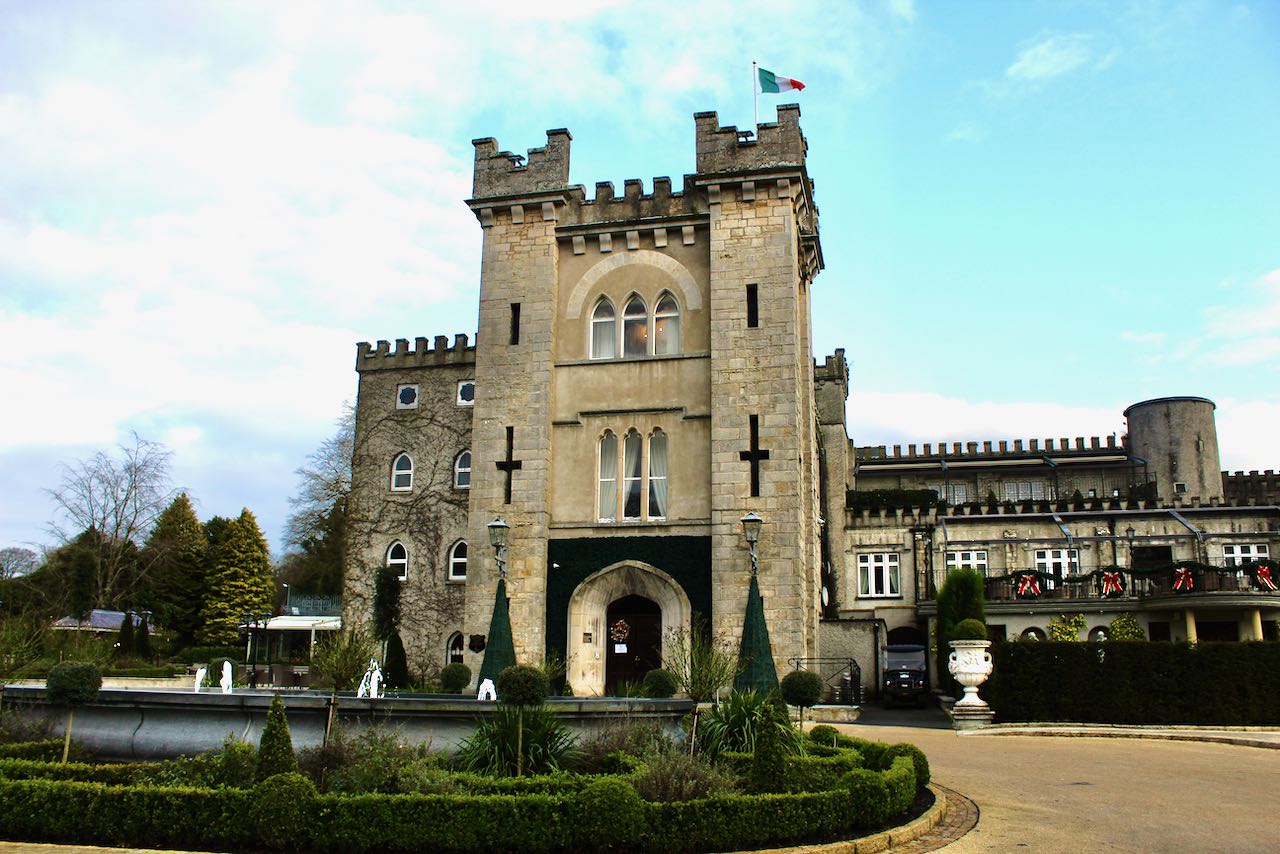
see my write-up:
https://irishhistorichouses.com/2021/03/28/cabra-castle-kingscourt-county-cavan/
www.cabracastle.com
Open in 2026: all year, except Dec 24, 25, 26, 11am-4pm
Fee: Free to visit
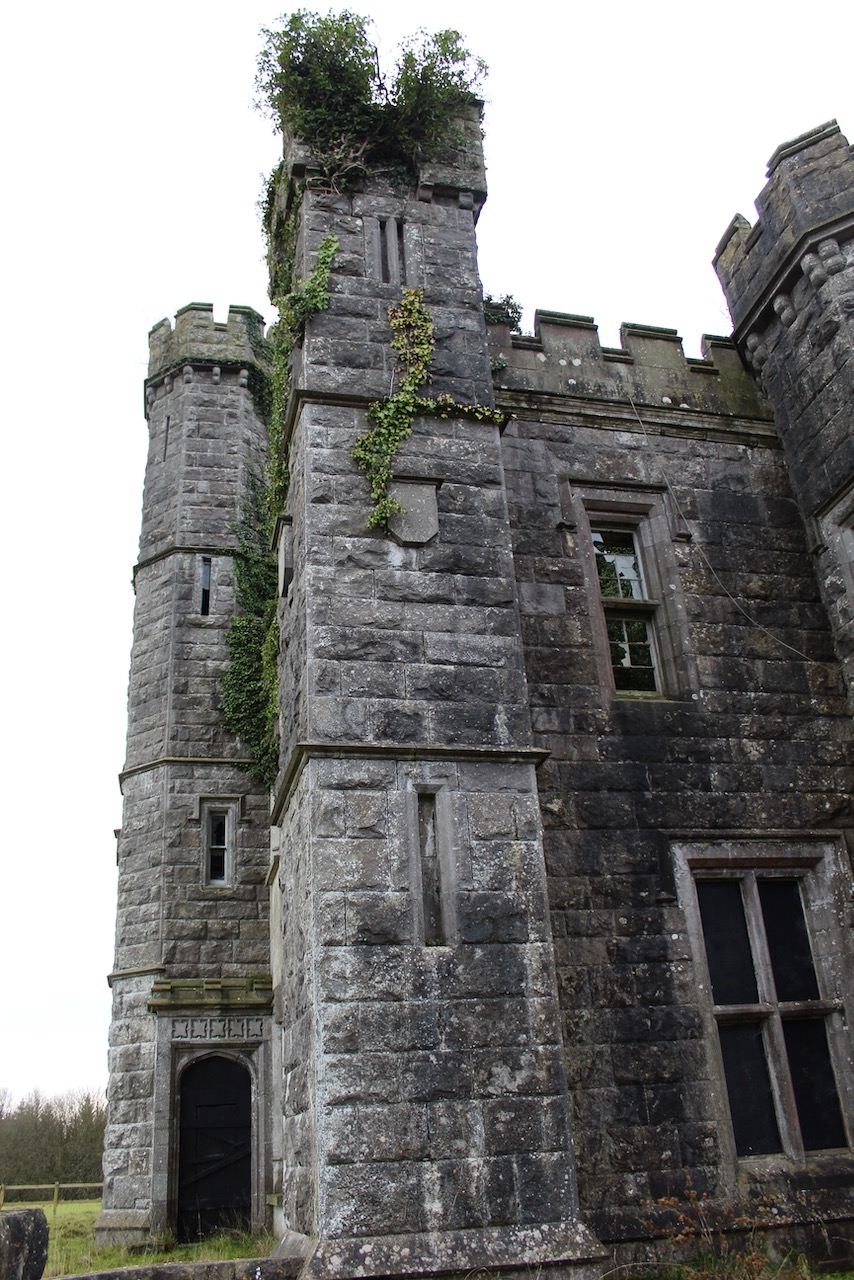
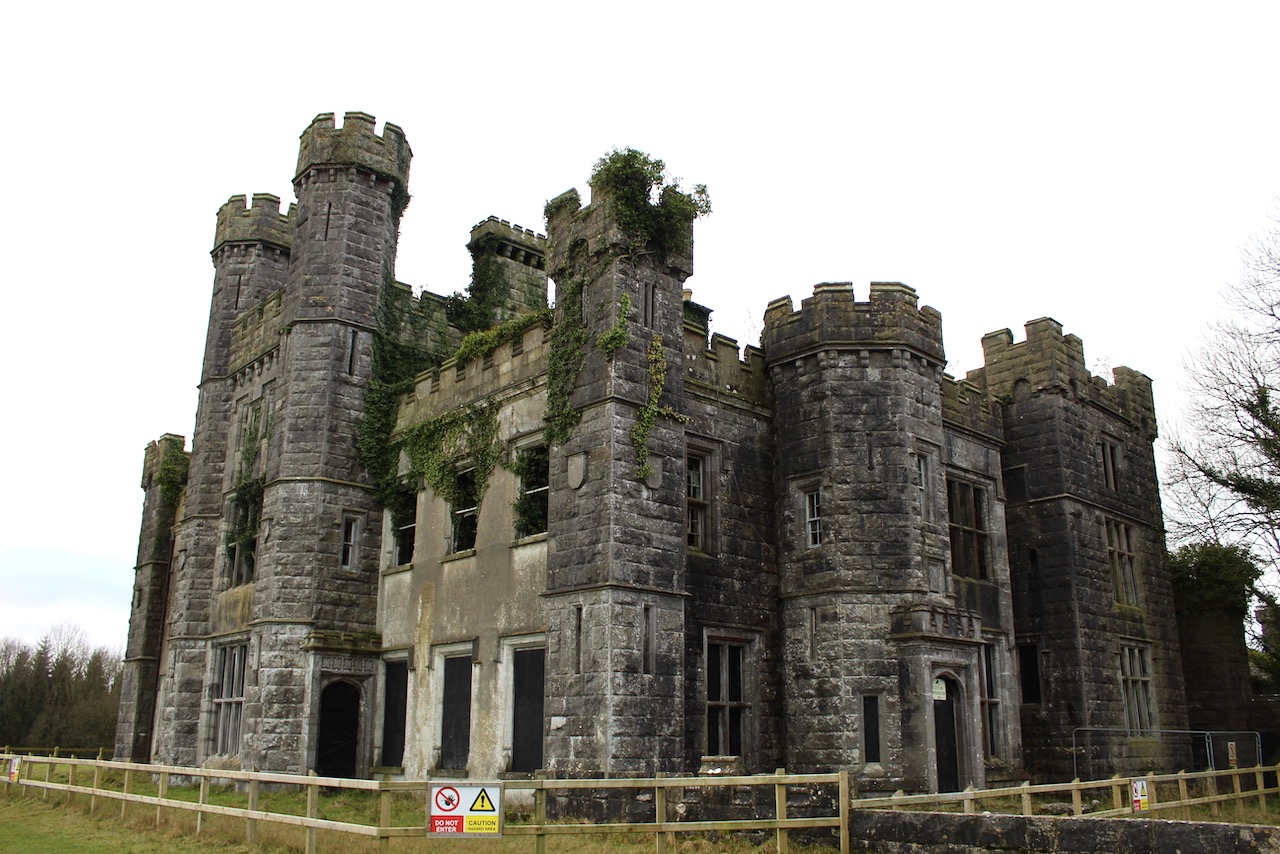
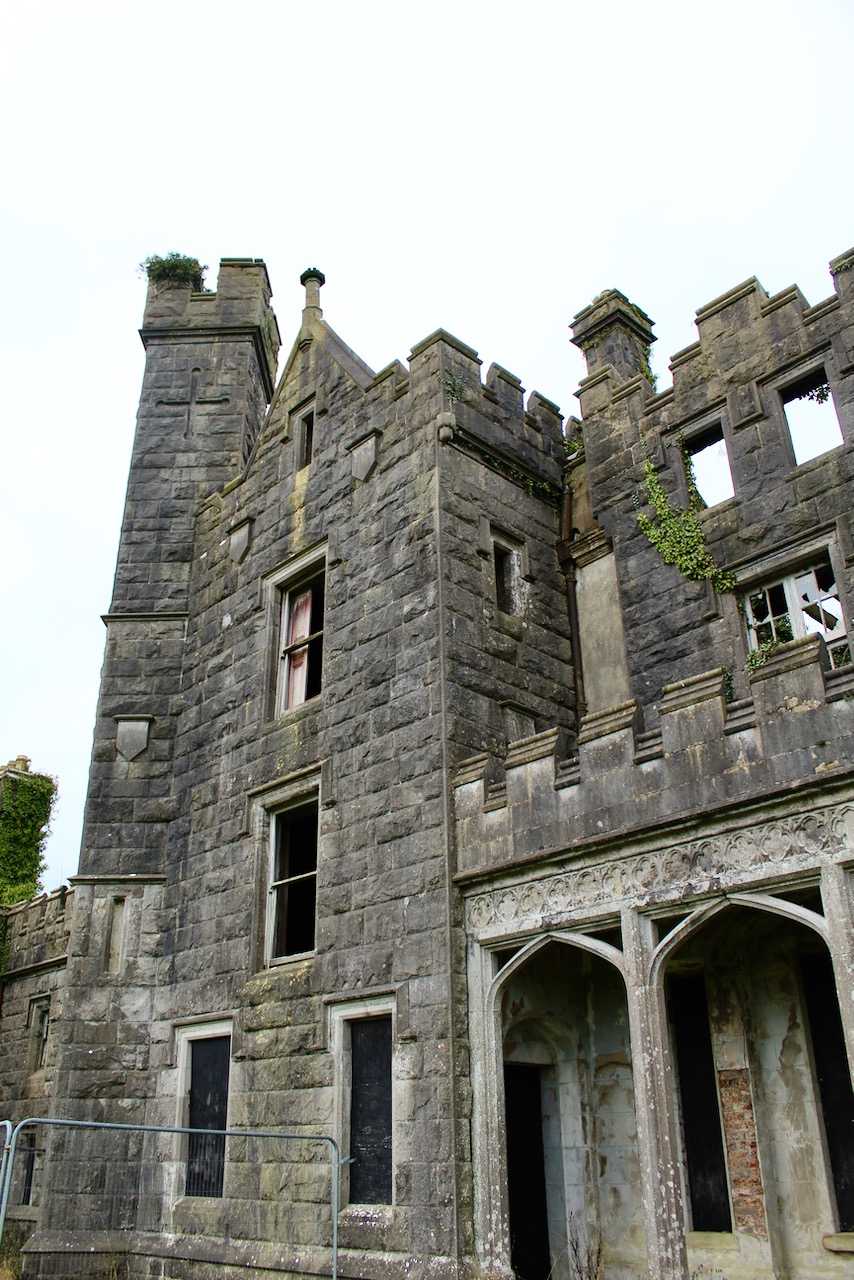
2. Castle Saunderson, Co. Cavan – a ruin
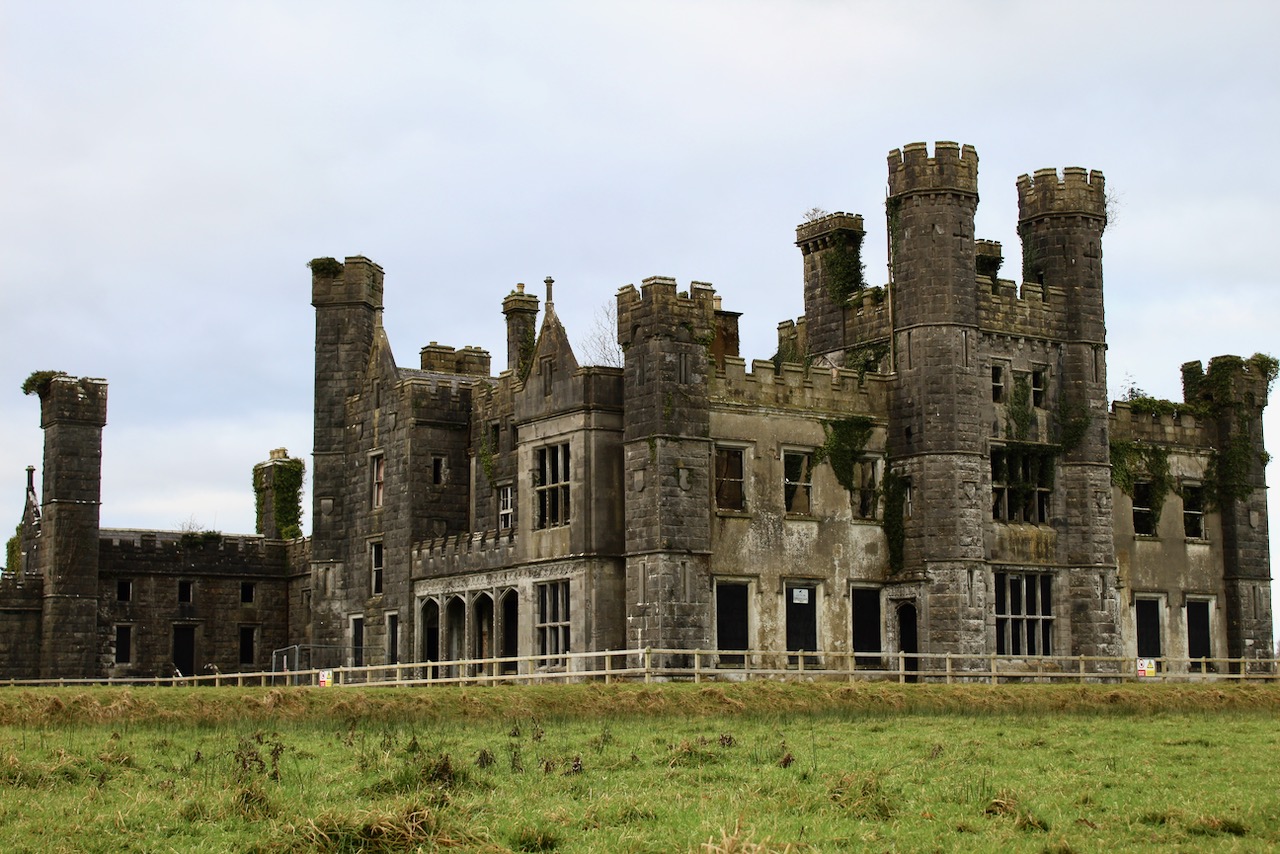
See my entry https://irishhistorichouses.com/2026/02/12/castle-saunderson-co-cavan-a-ruin/
https://www.thisiscavan.ie/fun/article/luanch-of-new-heritage-trail-at-castle-saunderson
Mark Bence-Jones writes in his A Guide to Irish Country Houses (1988):
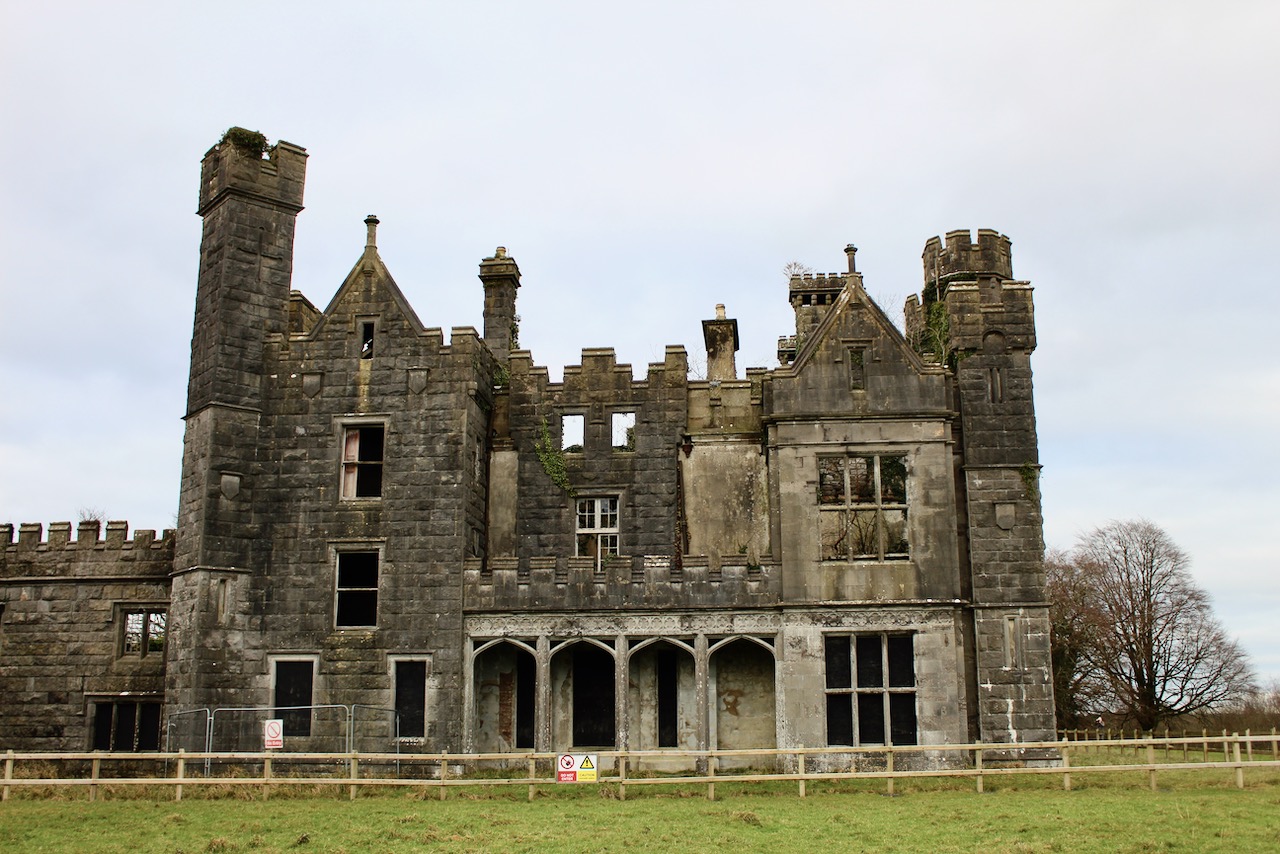
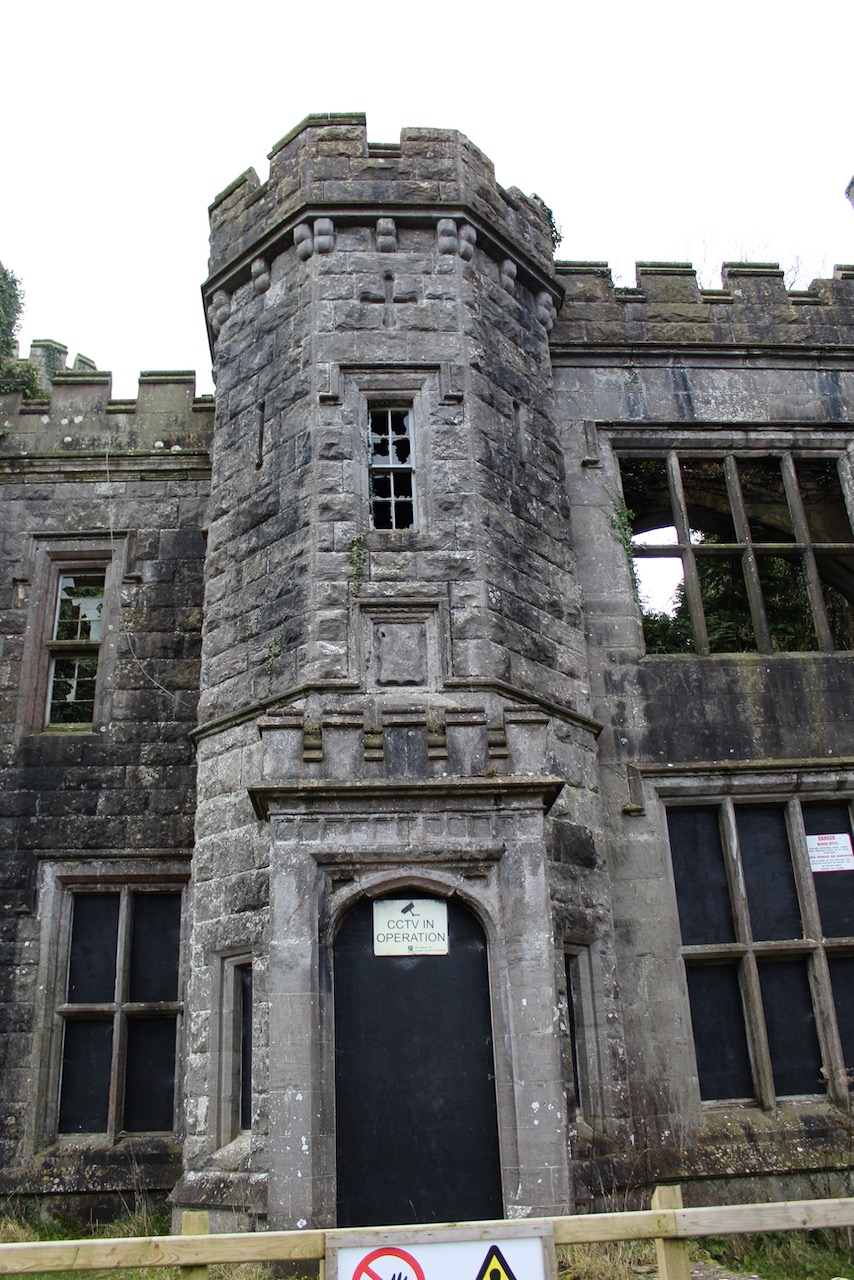
p. 75. “(Saunderson/IFR) A large castellated mansion combining both baronial and Tudor-Revival elements, built ca 1840; from its close stylistic resemlance to Crom Casle, about five miles away in County Fermanagh, it can be attributed to Edward Blore. Entrance front symmetrical, with a battlemented parapet, square end turrets and a tall central gatehouse tower which is unusual in having the entrance door in its side rather than in its front. The adjoining garden front is more irregular, with a recessed centre between two projecting wings of unequal size and fenestration, each having a Tudor gable; the two wings being joined at ground floor level by a rather fragile Gothic arcade. To the left of this front, a lower “L”-shaped wing with a battlemented parapet and various turrets, ending in a long Gothic conservatory. Castle Saunderson has stood empty for years and is now semi-derelict.” [1]

3. Clough Oughter, County Cavan
https://www.discoverireland.ie/Activities-Adventure/clough-oughter-castle/48729
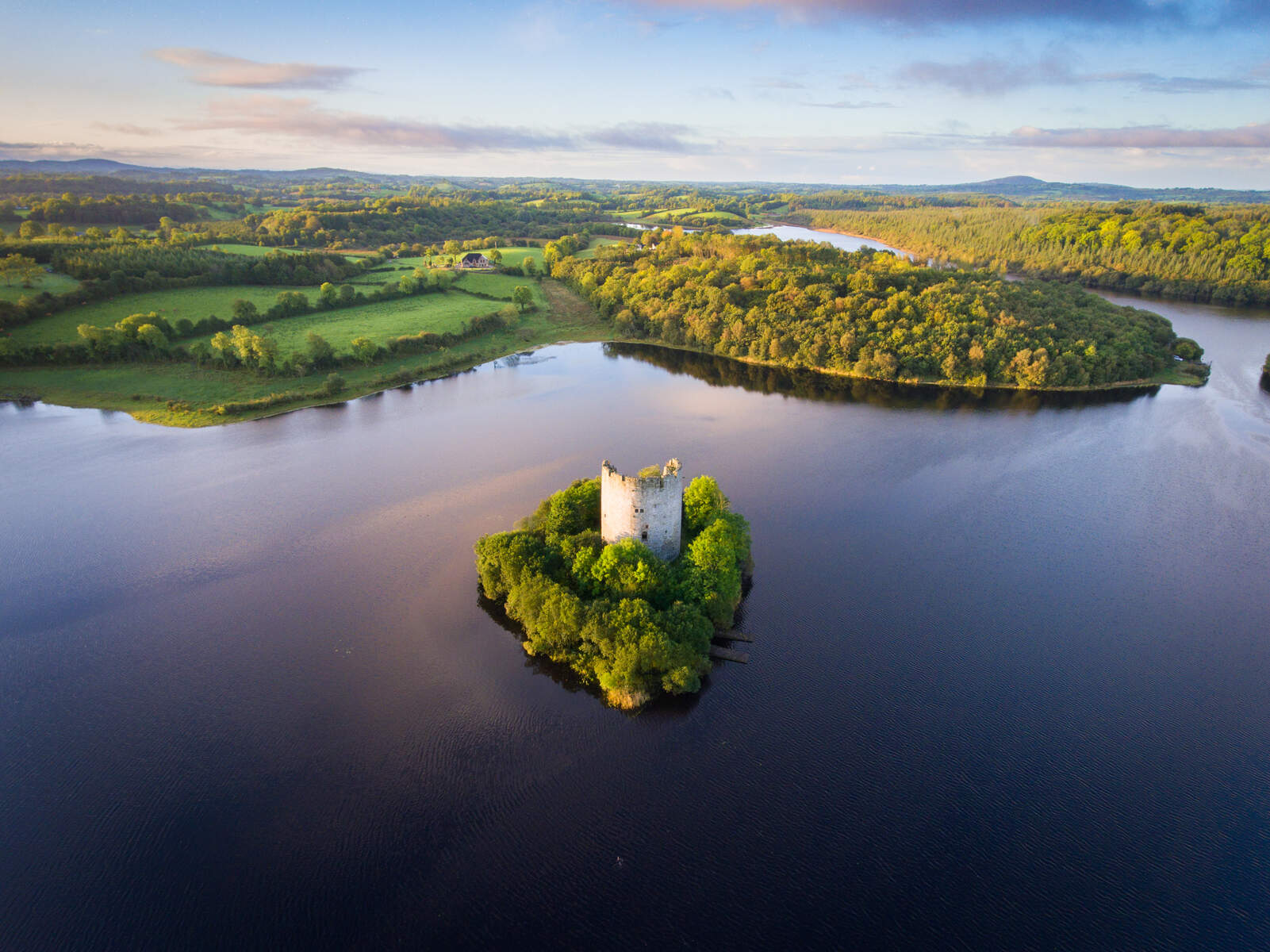
“Clough Oughter Castle is a ruined circular castle, situated on a small island in Lough Oughter, four kilometres east of the town of Killeshandra in County Cavan.
“The castle is located in what was once the historic Kingdom of Breifne. In the latter part of the 12th century, it was under the control of the O’Rourkes, but it seems to have come into the hands of the Anglo-Norman William Gorm de Lacy. While the exact date construction began is unknown, it is estimated to have started in the first quarter of the 13th century.
“In 1233, the O’Reilly clan took possession of the area and completed the castle. They retained it for centuries in the midst of their ongoing conflicts with the O’Rourkes and with members of their own clan. It was there that Philip O’Reilly was imprisoned in the 1360s.
“Lough Oughter is regarded as the best inland example of a flooded drumlin landscape in Ireland and has rich and varied wildlife. The number of whooper swans which winter in the area represents about 3% of the total European population, while the lake also houses the largest concentration of breeding great crested grebes in the Republic of Ireland.
“Lough Oughter is a popular angling lake and is also popular with canoeists and boating enthusiasts. The Lough Oughter complex, along with Killykeen Forest Park, is a designated Natura 2000 habitat, Special Area for Conservation (SAC), and Special Protection Area (SPA) under EU legislation.
“Canoes and kayaks are available for hire from Cavan Canoe Centre, which also offers guided boat trips around the lake and out to the castle.” [3]
On the Discover Belturbet website, we are told the history of Clough Oughter:
“Clough is the Gaelic word for stone, so literally this is Castle of Stone. The island was made by man, and the castle which sits upon it was also made by man and one can only speculate as to what a marvellous feat of engineering it took to accomplish such a build.
“The castle would have been part of the historical kingdom of Breifne, and specifically a part of East Breifne, (Roughly speaking the same borders as modern day Cavan). It is likely that the Crannog itself came sometime before the castle, and in the latter part of the 12th century, it was under the control of the O’Rourke clan, but with the invasion of the Anglo Normans, the crannog came to be controlled by the Anglo-Norman William Gorm De Lacy. No concrete dates exist for the construction of the castle, but architectural elements from the lower two storeys suggest it was begun during the early 13th century.
“In 1233, the O’Reilly clan gained possession of the castle. They seem to have retained the castle for centuries throughout ongoing conflicts with the O’Rourkes, and indeed with members of their own clan. Philip O’Reilly was imprisoned here in the 1360’s with “no allowance save a sheaf of oats for day and night and a cup of water, so that he was compelled to drink his own urine”.
“After the Ulster Plantation, the castle was given to servitor Hugh Culme. Philip O’Reilly who was a Cavan MP and leader of the rebel forces during the Rebellion of 1641 seized control of the castle and kept it as an island fortress for the next decade. During this period it was mainly used as a prison. Its most notable prisoner would have been the Anglican Bishop of Kilmore, William Bedell, who was held here and is said to have died because of the harsh winter conditions in the prison.
“Clough Oughter castle became the last remaining stronghold for the rebels during the Cromwell era, but sometime in March of 1653 the castle fell to Cromwells canons. The castle walls were breached by the canon and the castle was never rebuilt after this point.
“Visitors will be astounded to note the thickness of the walls which can now be seen because of the canon bombardment. The island and the castle have received considerable refurbishments since 1987, making it safe to visit, and well worth the visit.” [4]
4. Corravahan House & Gardens, Drung, Ballyhaise, Co. Cavan H12 D860 – section 482

see my write-up:
https://irishhistorichouses.com/2020/08/28/corravahan-house-and-gardens-drung-county-cavan/
www.corravahan.com
Open dates in 2026: Jan 8-9, 15-16, 22-23, 29-30, Feb 5-6, 12-13, 19-20, 26-27, Mar 5-6, 12-13, May 7-10, 14-17, 21-24, Aug 6-9, 13-23, 27-30, Sept 3-6, 10-13, 17
2pm-4pm
Fee: adult €10, OAP/student/child €5
Tours on the hour, or by appointment. Last admission 1 hour before closing time. CCTV in operation
*************************
[1] Bence-Jones, Mark. A Guide to Irish Country Houses (originally published as Burke’s Guide to Country Houses volume 1 Ireland by Burke’s Peerage Ltd. 1978); Revised edition 1988 Constable and Company Ltd, London.
[2] Ireland’s Content Pool, https://www.irelandscontentpool.com/en
[3] https://www.discoverireland.ie/Activities-Adventure/clough-oughter-castle/48729
[4] http://www.discoverbelturbet.ie/unesco-geopark/clough-oughter/
Text © Jennifer Winder-Baggot, www.irishhistorichouses.com
 Irish Historic Houses