Altamont House and Gardens, Bunclody Road, Altamont, Ballon, County Carlow

donation
Help me to pay the entrance fee to one of the houses on this website. This site is created purely out of love for the subject and I receive no payment so any donation is appreciated!
€15.00
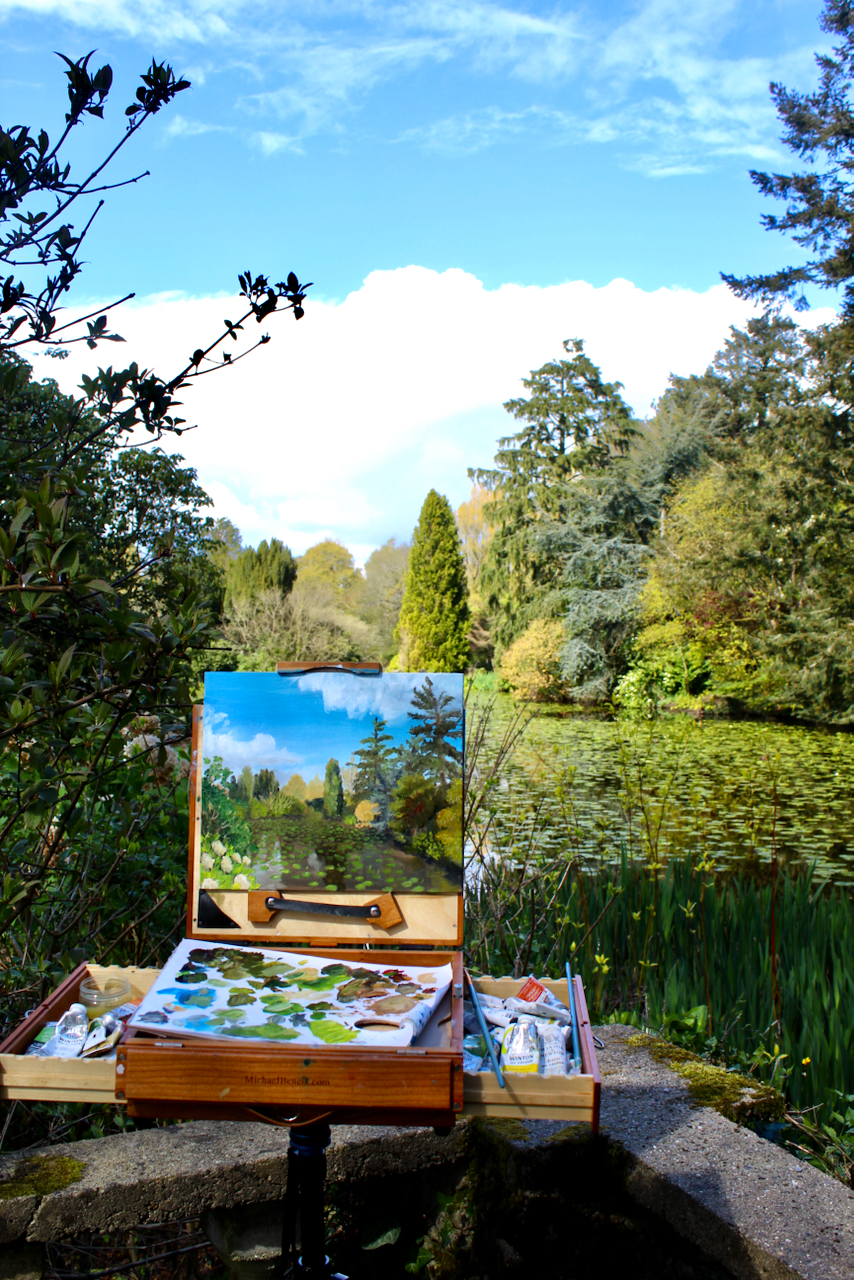
Last weekend Stephen and I finally visited the wonderful Altamont garden. I have been wanting to visit for a long time, especially because my ancestors farmed nearby.
The walk through the walled garden, arboretum and woods to the Slaney river surprised and delighted me in its variation. Previous owner Corona North gifted the property to the state when she died in 1999. She was named after her father’s favourite variety of Rhododendron, and she continued his development and care of the garden. Her last words to her oldest friend, Rosemary Skrine were, “Well, I’ve achieved what I wanted to achieve. It’s safe now”.
The OPW website tells us of Altamont:
“A large and beautiful estate covering 16 hectares in total, Altamont Gardens is laid out in the style of William Robinson, which strives for ‘honest simplicity’. The design situates an excellent plant collection perfectly within the natural landscape.“
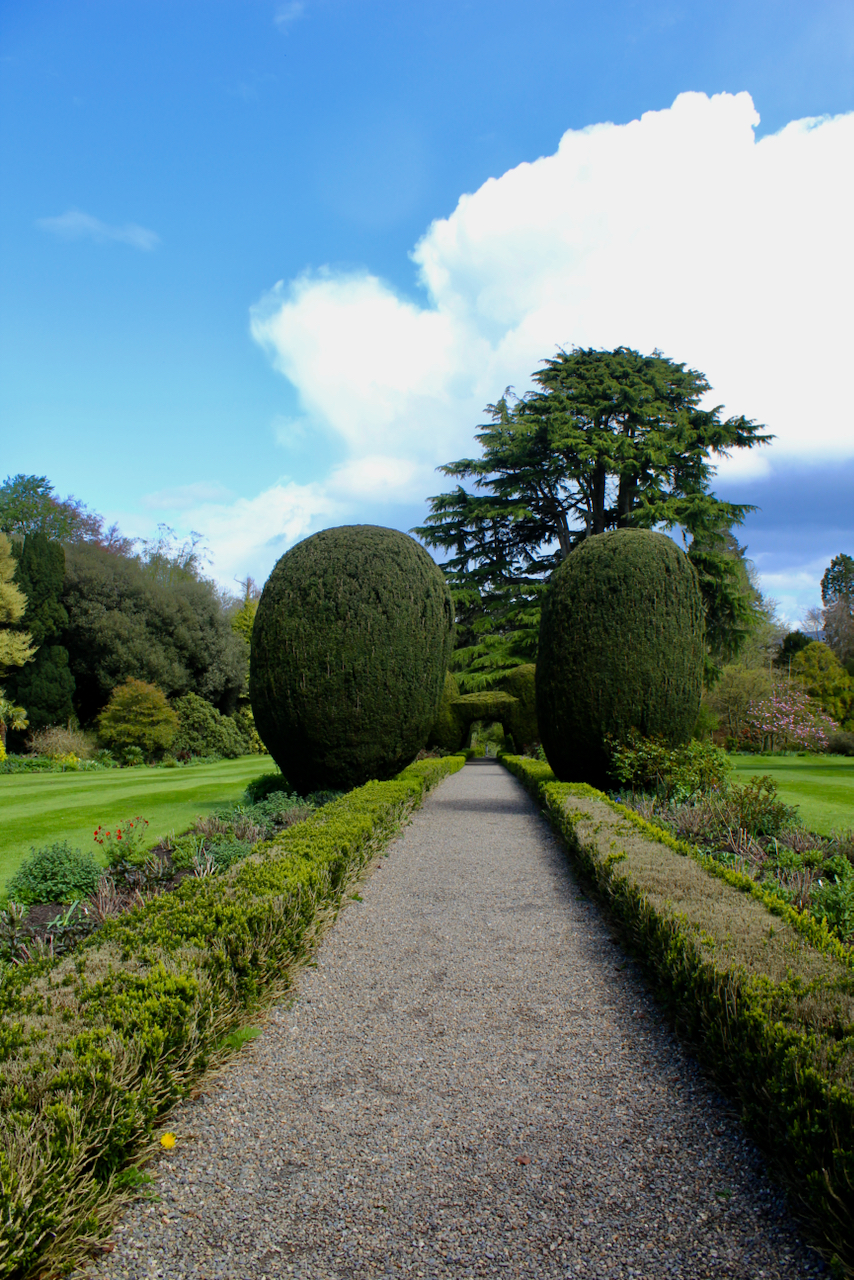
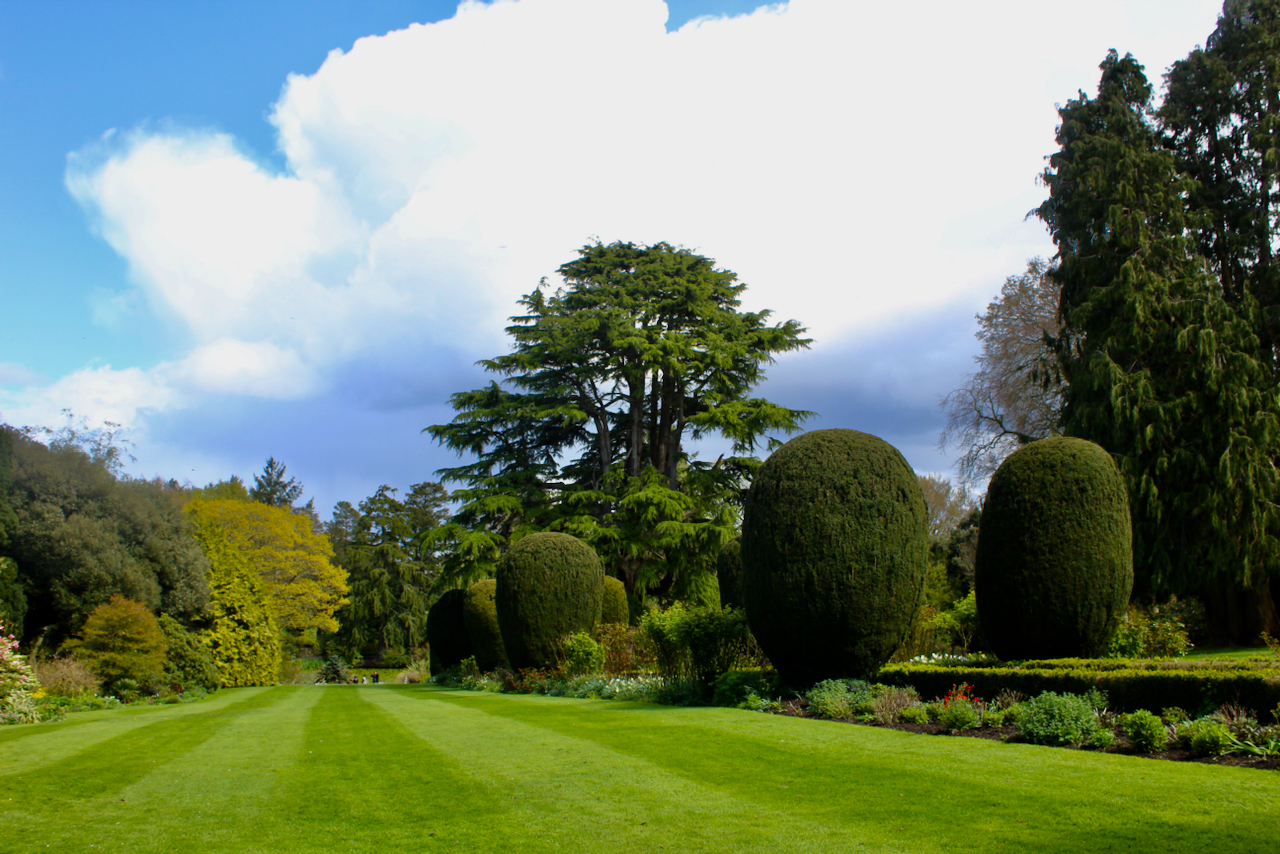
We came across William Robinson before, when we visited equally beautiful Mount Usher garden in County Wicklow (see my entry https://irishhistorichouses.com/2021/06/30/mount-usher-gardens-ashford-co-wicklow/ ). The grassy vista ending in tall trees at Altamont reminded me of Mount Usher.
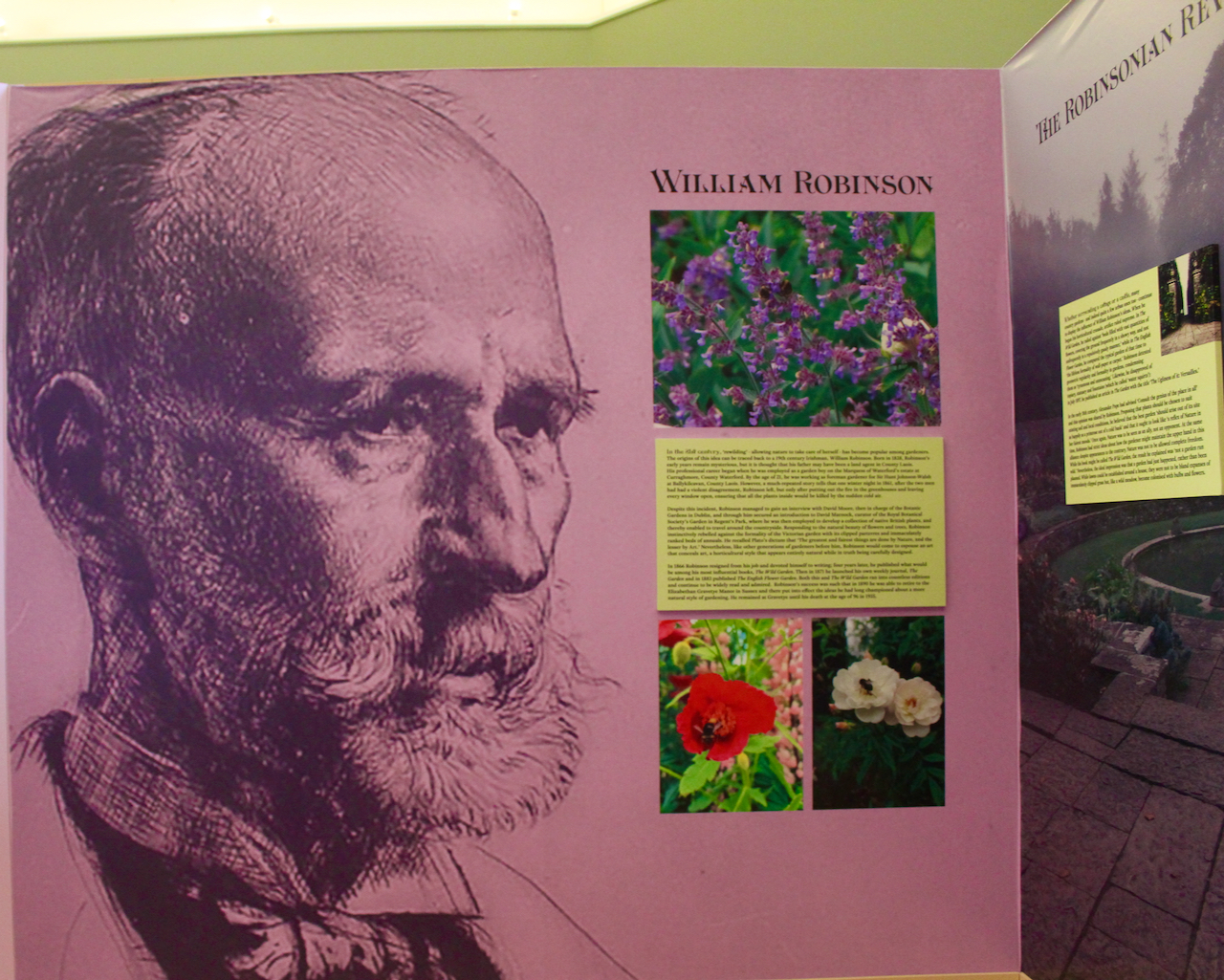
The Robinsonian style of gardening is to work with nature, as opposed to imposing order. Born in Ireland in 1838, William Robinson first worked as a gardener in Curraghmore, County Waterford, now another Section 482 property open to the public on certain dates in the year (see my entry https://irishhistorichouses.com/2020/08/01/curraghmore-portlaw-county-waterford/ ).
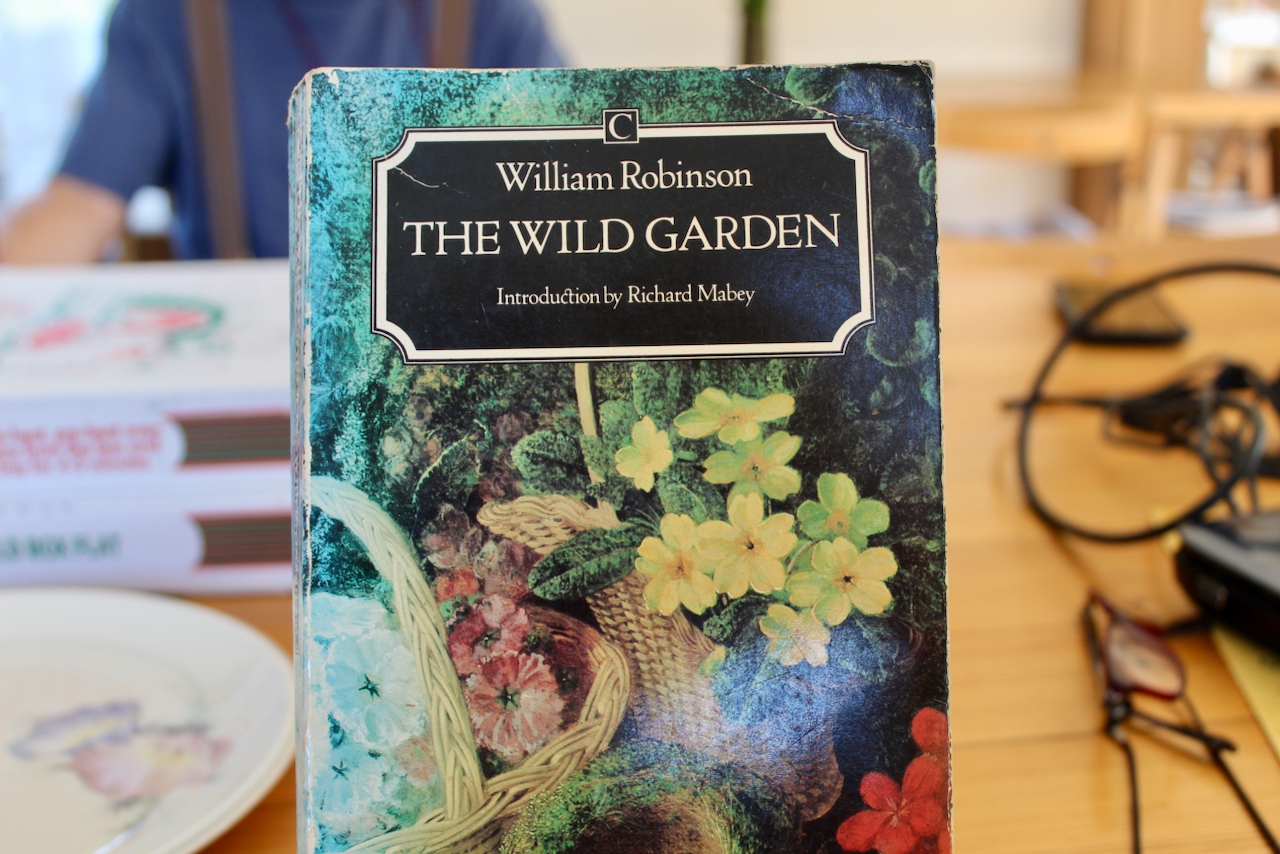
Robinson progressed to become the foreman gardener in Ballykilcavan, County Laois, employed by Sir Hunt Johnson-Walsh. In 1862 Robinson found employment at the Royal Botanic Society’s garden at Regent’s Park in England. He resigned four years later in order to further his knowledge of gardening, and to write. He travelled in France and later more widely in Europe and the United States, and published books on horticulture. His most important work is The Wild Garden (1870).
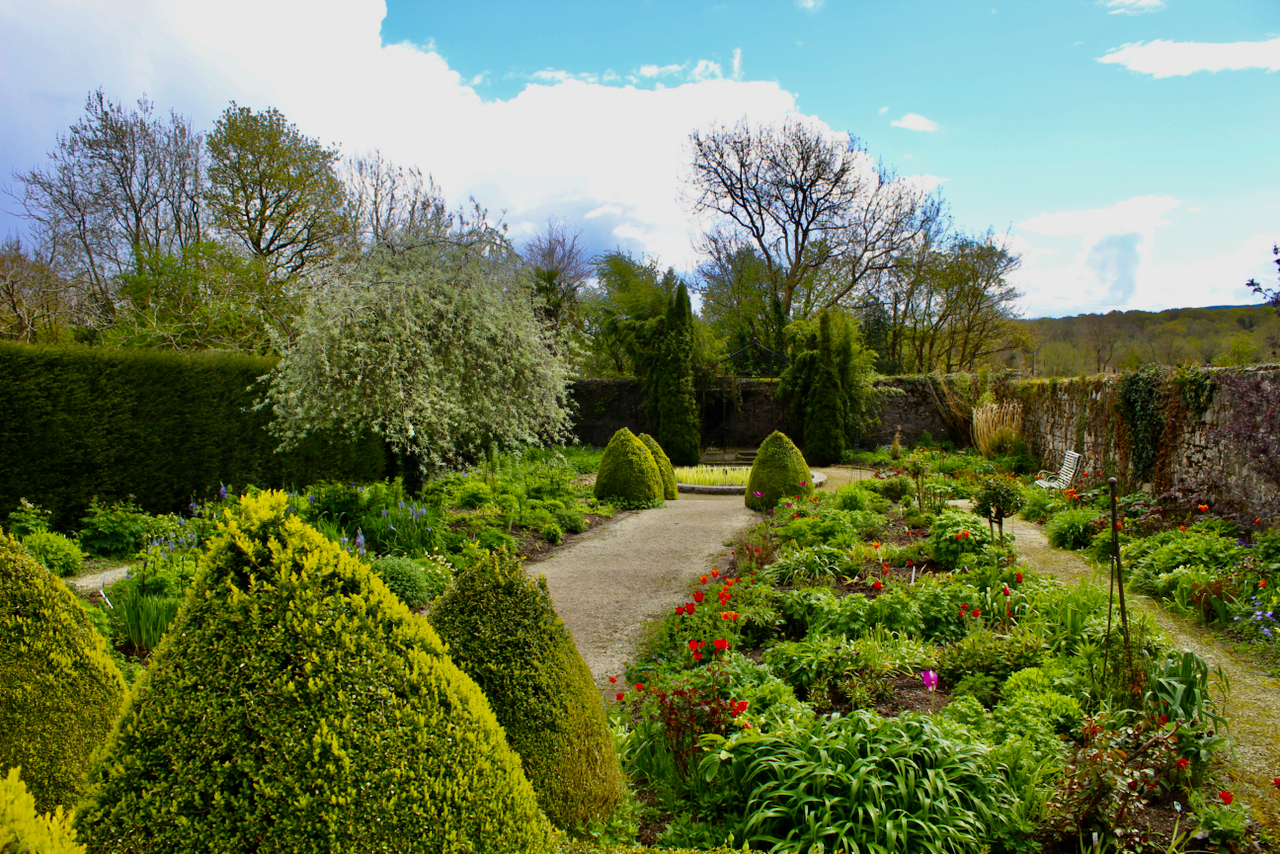
The OPW description continues: “For example, there are lawns and sculpted yews that slope down to a lake ringed by rare trees and rhododendrons. A fascinating walk through the Arboretum, Bog Garden and Ice Age Glen, sheltered by ancient oaks and flanked by huge stone outcrops, leads to the banks of the River Slaney. Visit in summer to experience the glorious perfume of roses and herbaceous plants in the air.
“With their sensitive balance of formal and informal, nature and artistry, Altamont Gardens have a unique – and wholly enchanting – character.” [1]
https://heritageireland.ie/visit/places-to-visit/altamont-gardens/
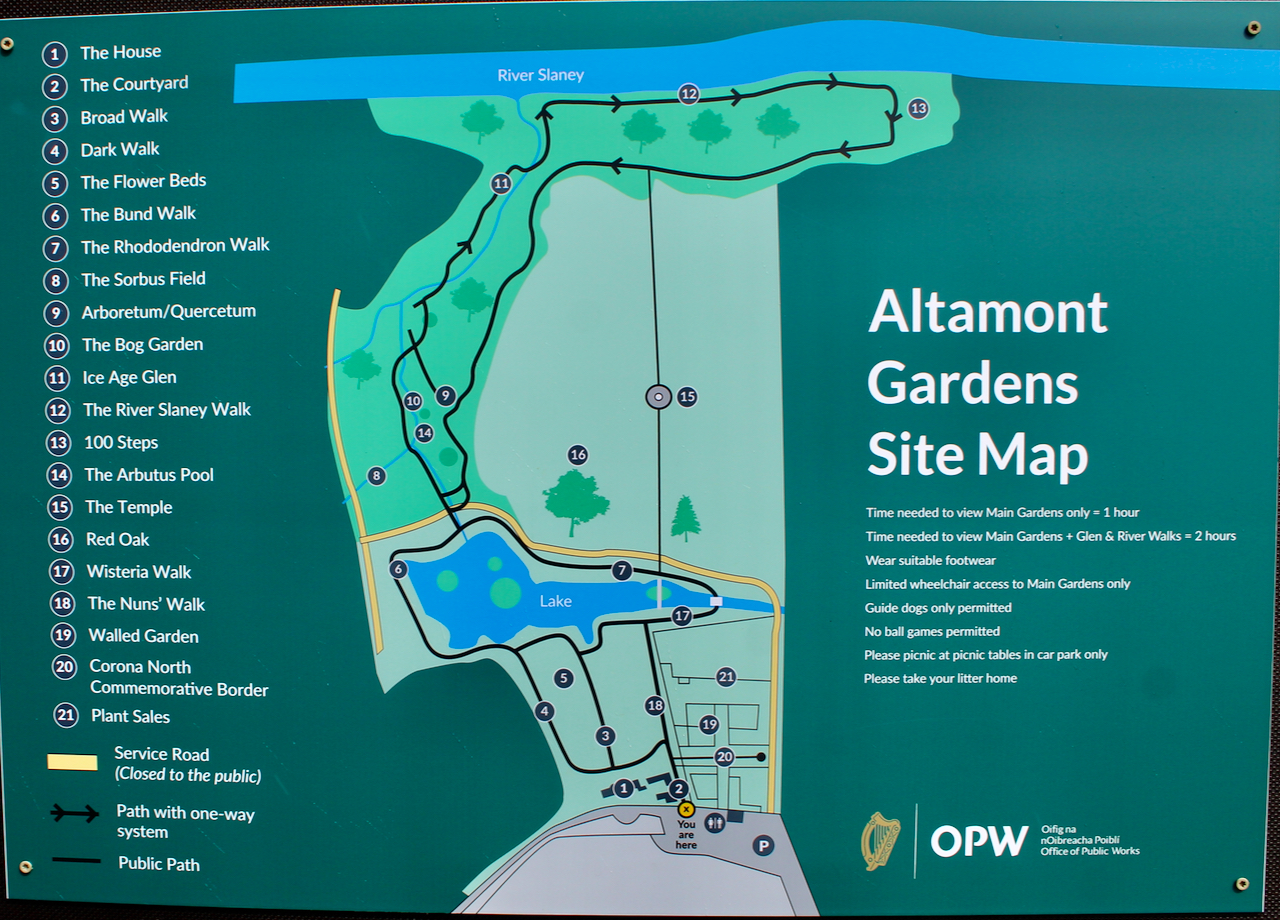
The Ireland Genealogical Project website, a great source for County Carlow genealogy, tells us that Altamont may have been the site of a medieval convent, a “sister house” to a monastery nearby. [2] In The Carlow Gentry, Jimmy O’Toole writes that it might date back to the sixteenth century. [3]
The Ireland Genealogical Project website tells us that a wall containing a window on “the Dark Walk” are remains of a chapel, although the stained glass in the window is believed to date from Victorian times. Other fragments of the chapel have been incorporated into the house (beneath the library and above the front bedroom window of the south wing, the website tells us).
Unfortunately the house is not open to the public but as it is owned by the state we can only hope that the Office of Public Works will eventually allow us inside. The National Inventory tells us the interior retains joinery from around 1760, and decorative plasterwork from around 1880.
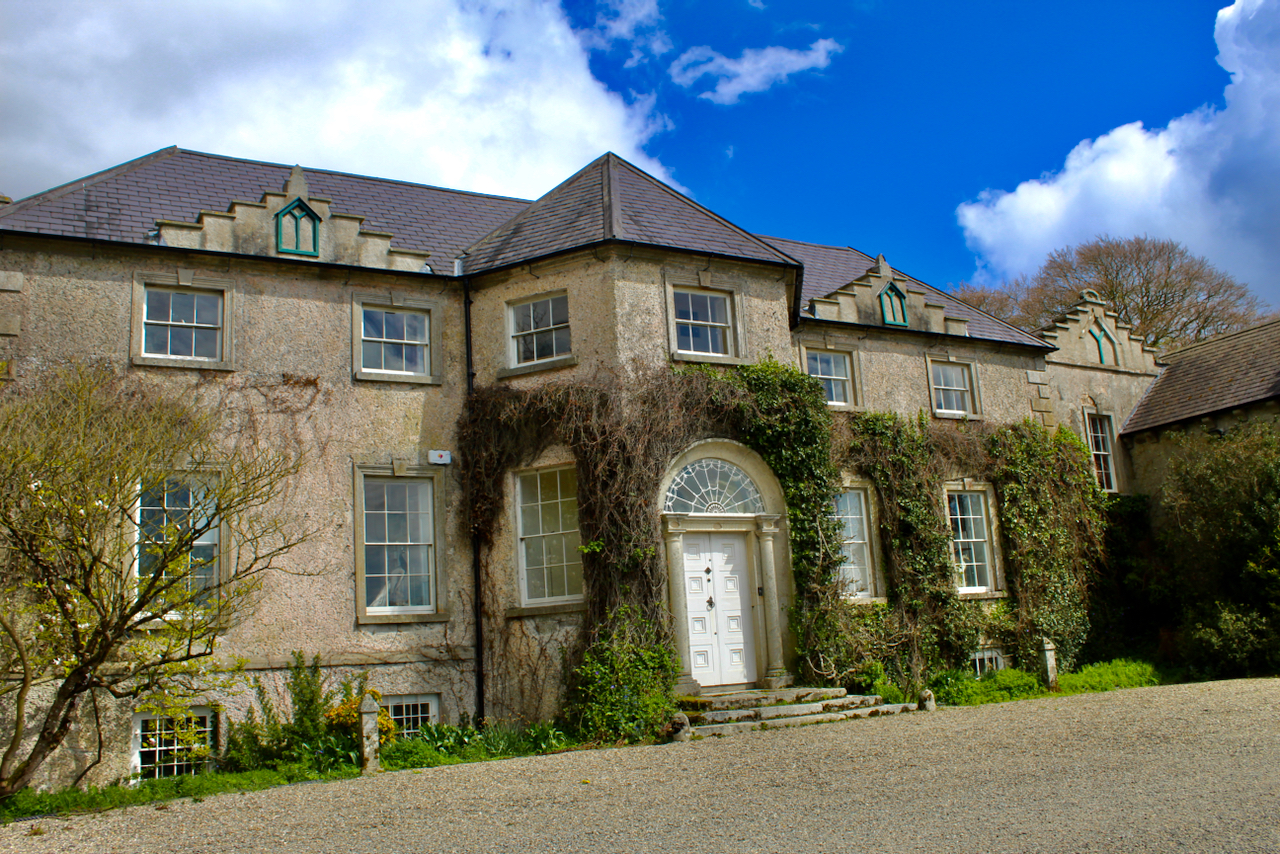
I haven’t discovered why it is called Altamont. Originally the estate was named Rose Hill, but in the 1777 Taylor & Skinner map it is identified as “Soho.” In the late eighteenth century the estate was renamed Altamont. The Irish Genealogical website tells us this was due to some connection with the Brownes, Earls of Altamont of Westport House, County Mayo, later Marquesses of Sligo. John Browne (c. 1709-1776) was created Earl of Altamont, County Mayo in 1771. His grandson John Denis Browne (1756-1809) was created Marquess of Sligo. However, I’m not sure if there is a connection between the Brownes and Altamont in County Carlow.
Robert O’Byrne tells us that in the later part of the 18th century Altamont was occupied by the Doyles. O’Byrne writes that “curiously Sir Arthur Conan Doyle’s father, a mid-19th century illustrator and watercolourist, was called Charles Altamont Doyle.” I wonder if the Doyles who owned what is now called Altamont were related to the author of the Sherlock Holmes novels? Did the name “Altamont” run in the family, and is this why the name of the property changed to Altamont? [4]
Before that, the property was owned by the St. George family. The website The Peerage by Darryl Lundy tells us that Benjamin Burton Doyne, a Justice of the Peace and High Sheriff of County Carlow in 1775 lived at Altamont. He was the son of Robert Doyne (1705-1754) of Wells House in County Wexford, another lovely property open to the public (see my entry https://irishhistorichouses.com/2025/05/29/wells-house-and-gardens-county-wexford-open-for-tours/ )
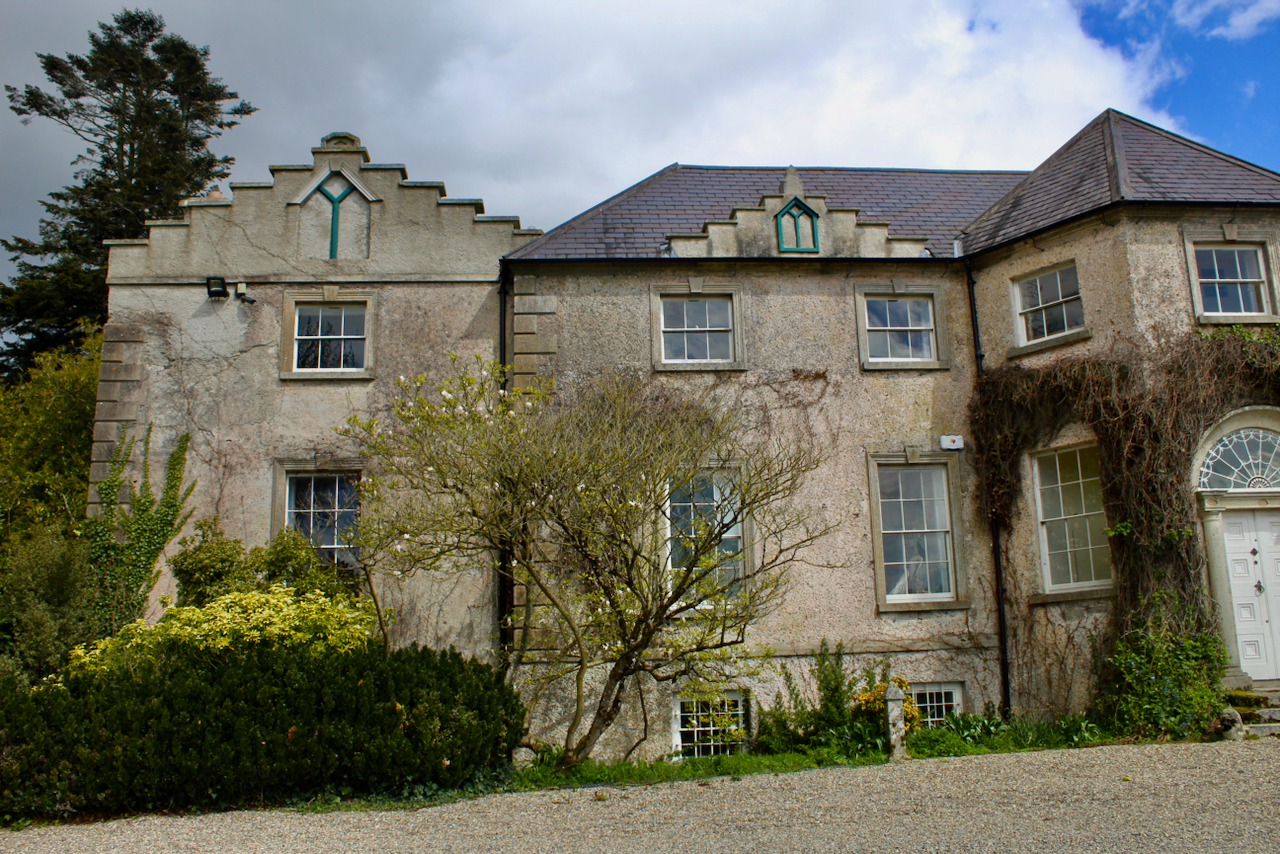
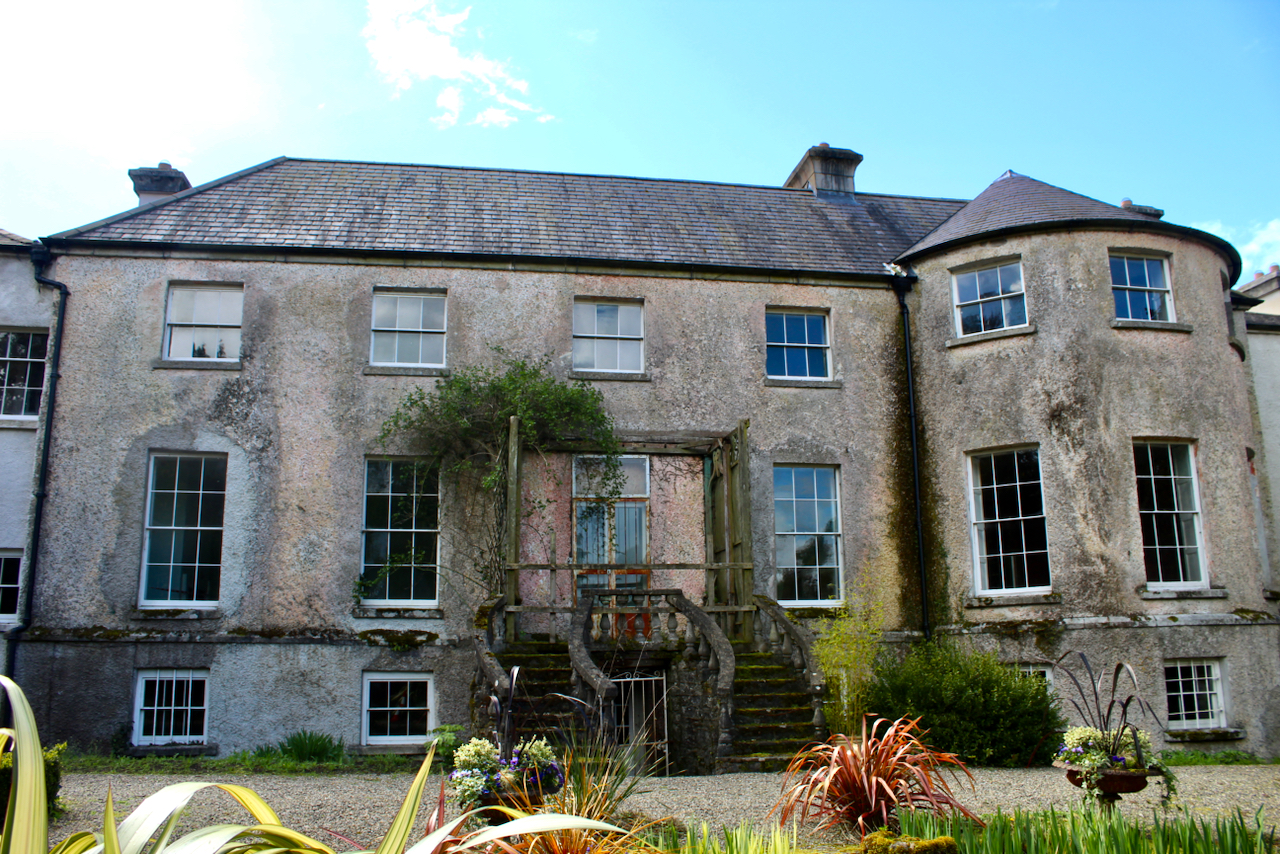
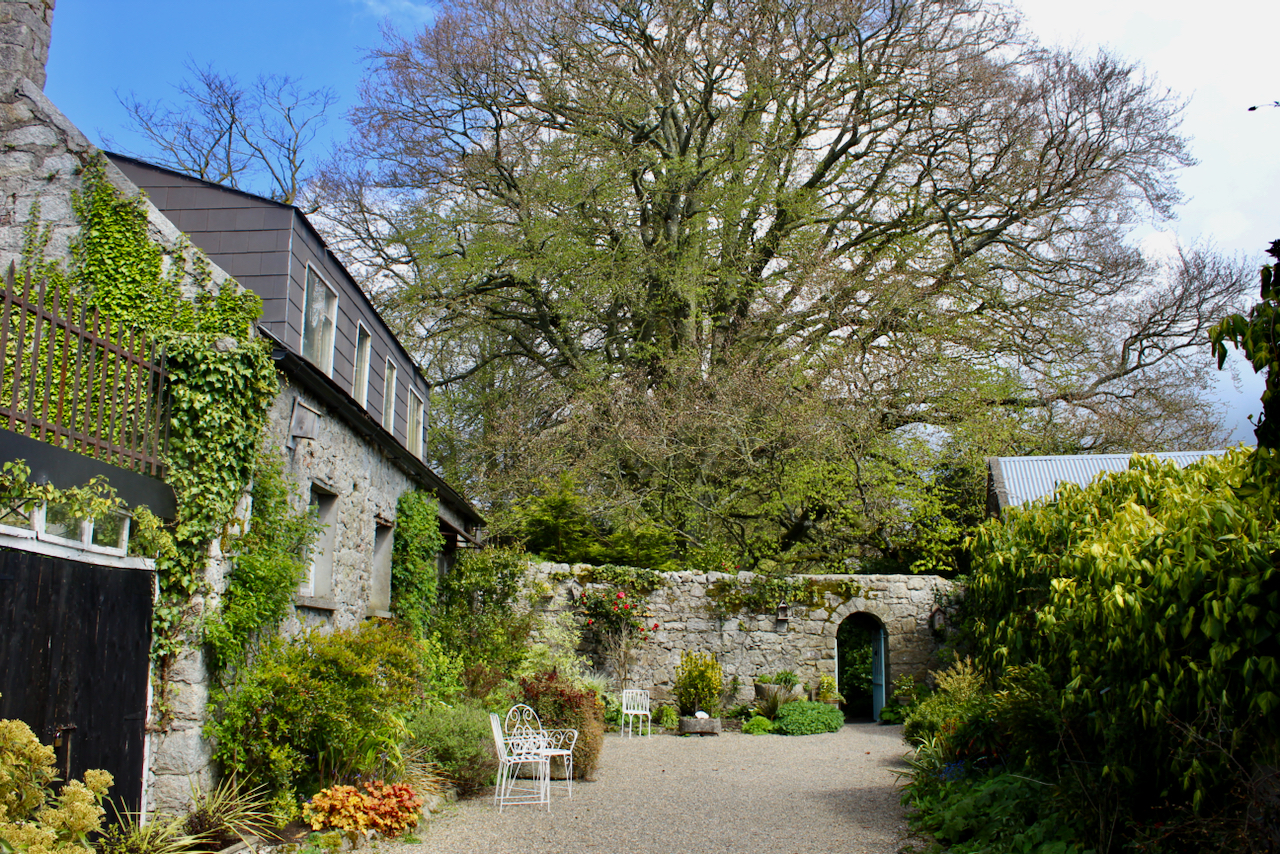
The National Inventory tells us that the house was built around 1760, incorporating fabric of an earlier house. The house has a central part of seven bays with a three bay bow in the centre of the entrance facade. The side extensions were added around 1871. [5] Robert O’Byrne tells us that by the later part of the 18th century the property was owned by Dawson Borror whose father had been a landscape architect. Borror initiated changes to the demesne and gardens, including the creation of the lake, to provide local employment in the aftermath of the Great Famine. Borror also extended the house, adding a wing on the north side for a library and other rooms, and then making further alterations in the early 1870s.
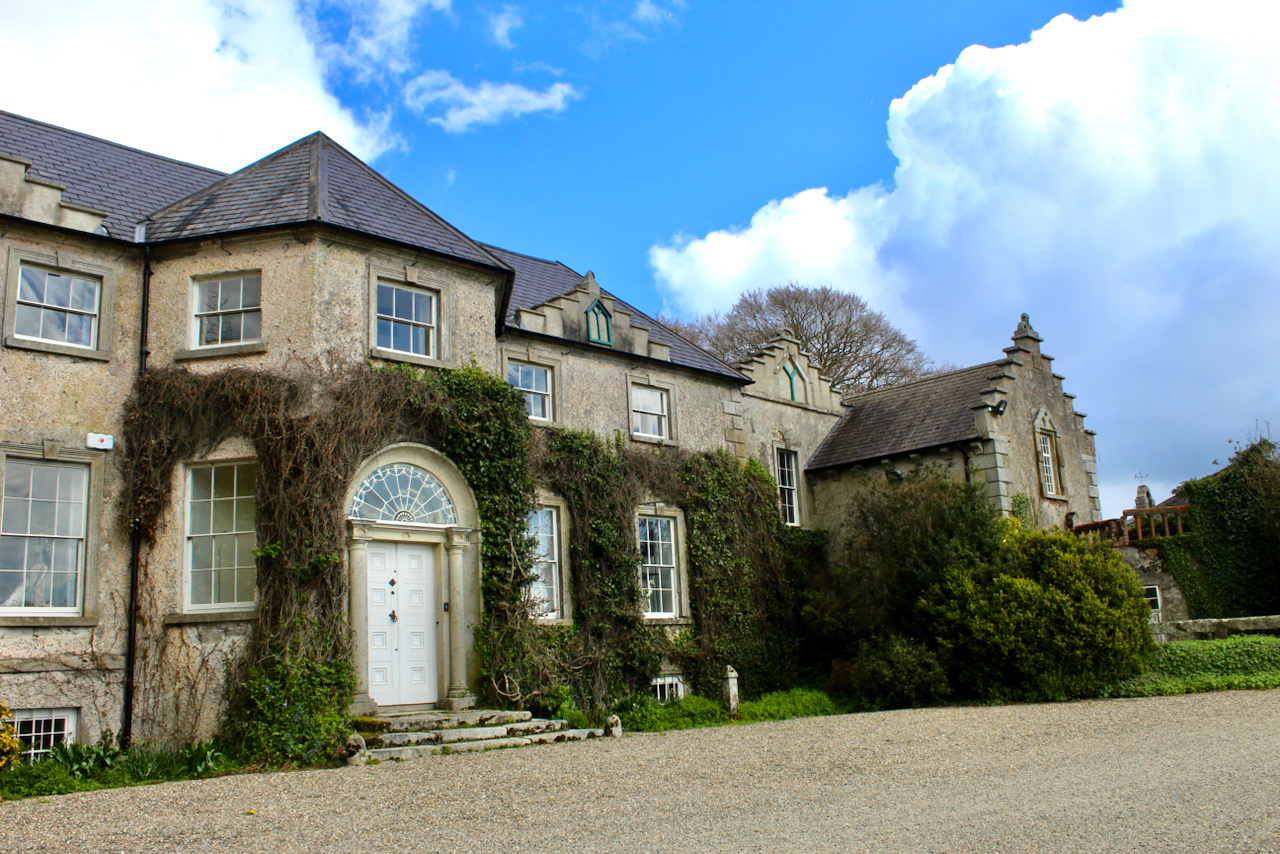

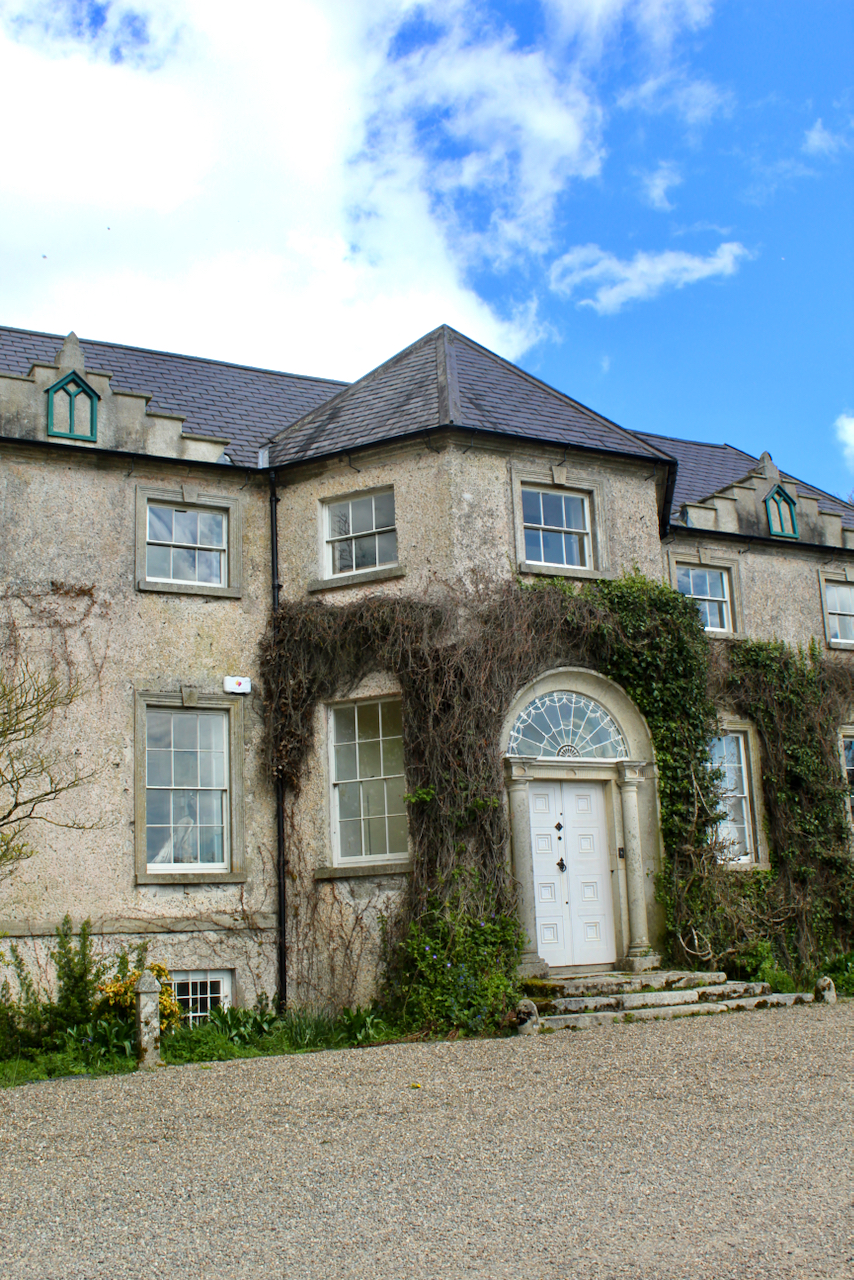
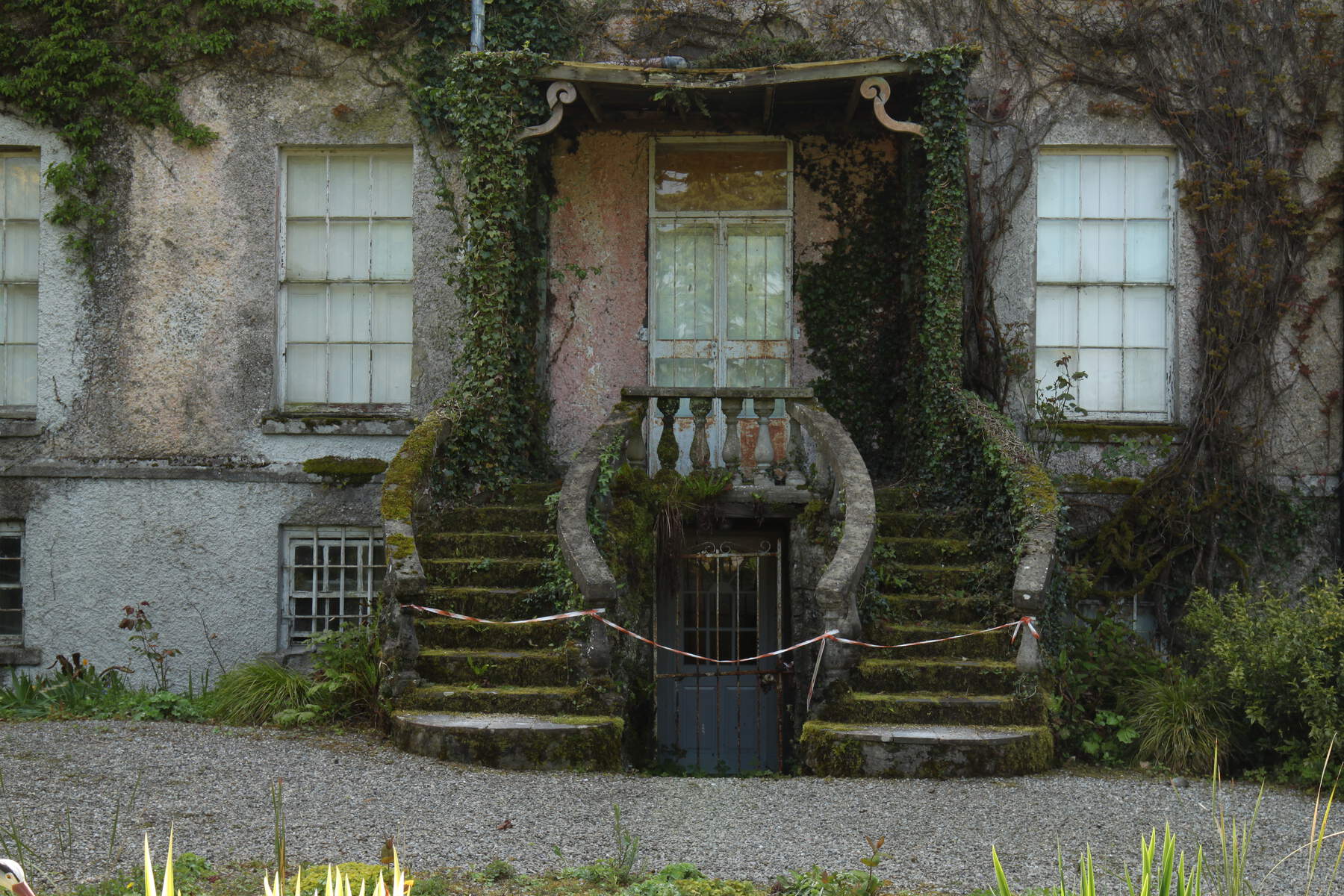
The Record of Protected Structures tells us the Doric doorcase and radial fanlight were added when the house was redecorated in the early 19th century. The front door also dates from this period.
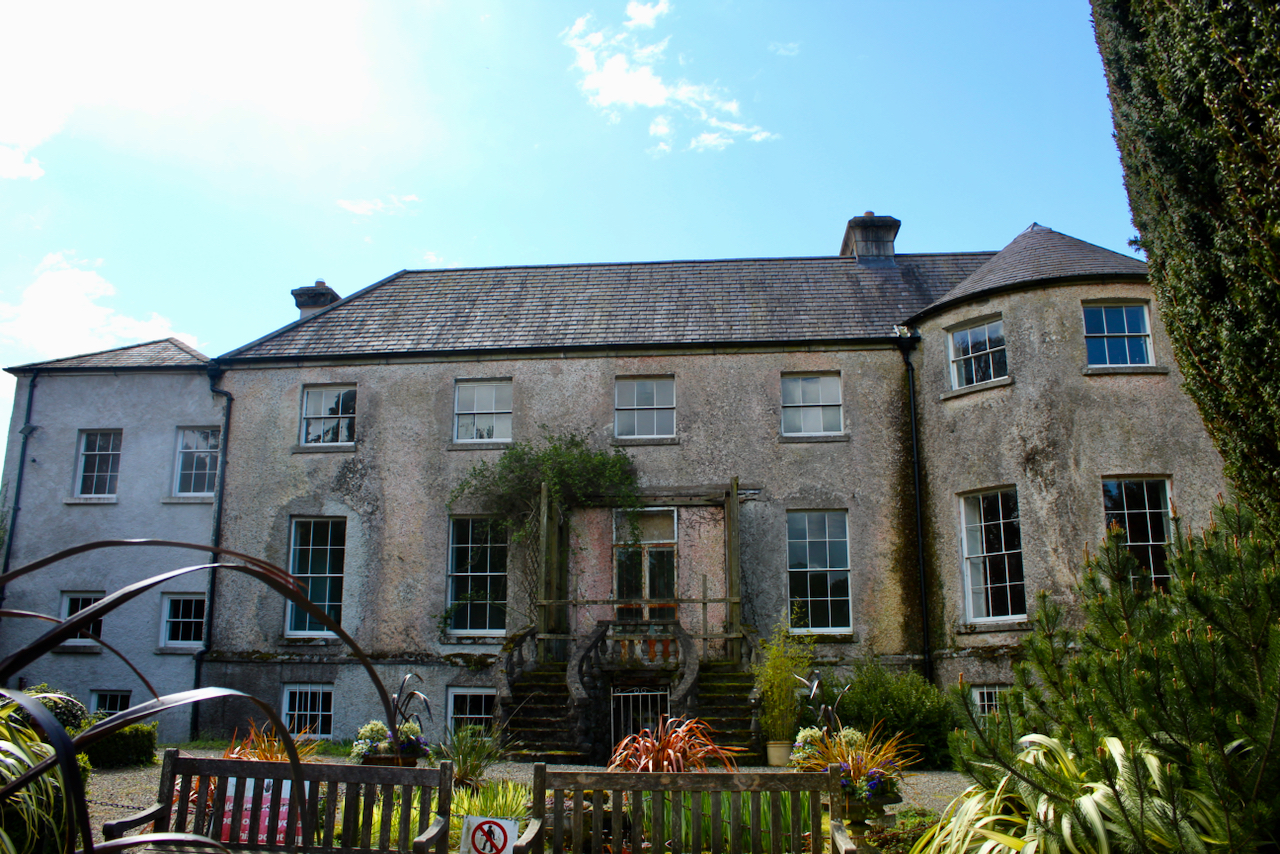
The rear of the house has a three bay full height semicircular bow, which is not centrally placed. The centre has a lovely double curved staircase to what may have once been the entrance door of the house, as the house originally faced north, but after the building of a new road to the east it was reversed and new avenues laid down with handsome gates and surrounding beech plantations. [7]
Feilding Lecky-Watson, from a local Quaker family, acquired Altamont in 1924. John Watson, born in 1649, became a member of the Society of Friends, and built the first meeting house at Kilconnor in County Carlow. He was imprisoned because Quakers objected on principle to the payment of tithes to the Established Church, and along with Catholics, some of them were jailed in Carlow during the tithe war. The Leckys of Ballykealy were another Quaker Carlow family who intermarried with the Watsons. [8]
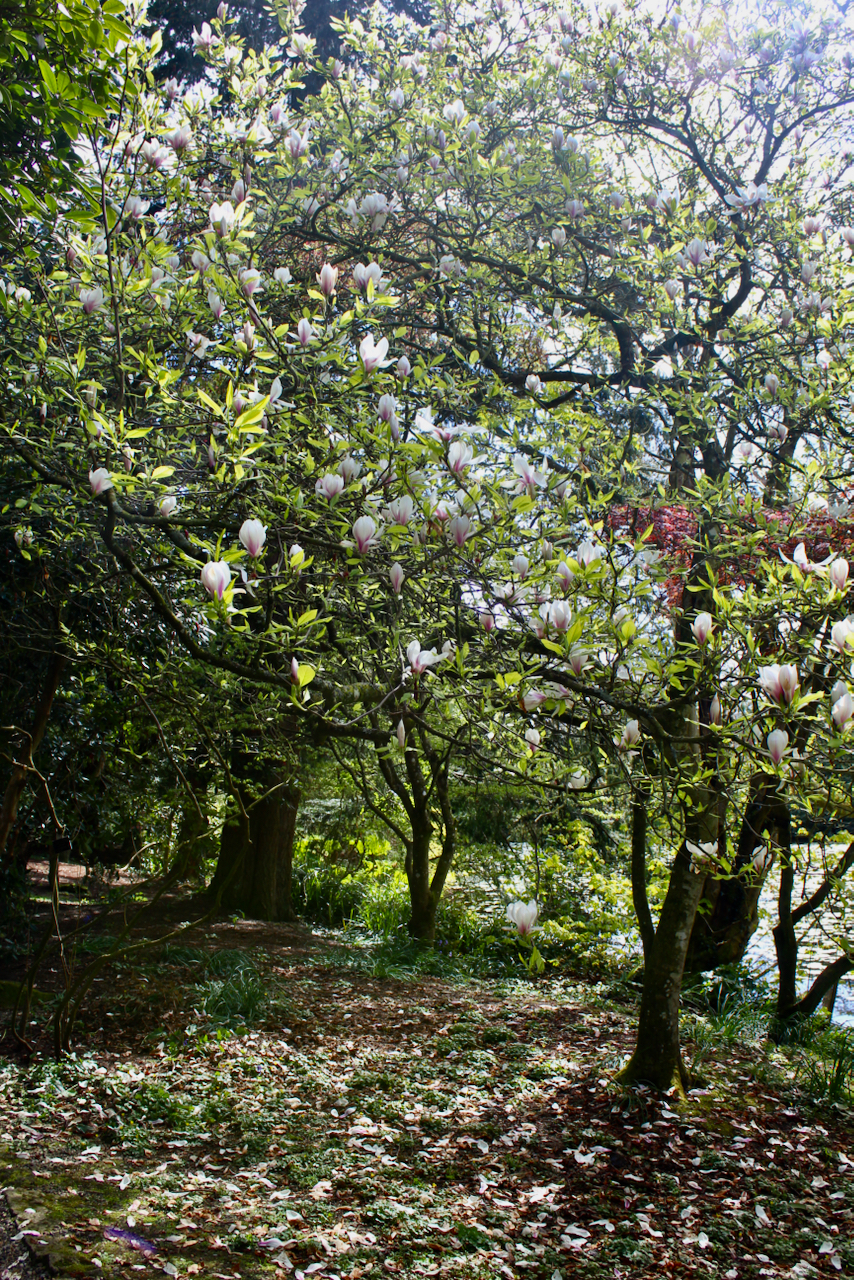
Feilding Lecky-Watson was from a house in Carlow called Lumclone. He worked as a tea planter in what was then called Ceylon (now Sri Lanka). There, he grew to love rhododendrons. Back in Ireland, he became an expert in the species, cultivating plants for the botanical gardens at Glasnevin, Kew and Edinburgh. [9] His daughter Corona inherited the house in 1943 and continued his work in the garden, planting rhododendrons, magnolia and Japanese maples. Before her death, Corona handed Altamont over to the Irish state to ensure its preservation.

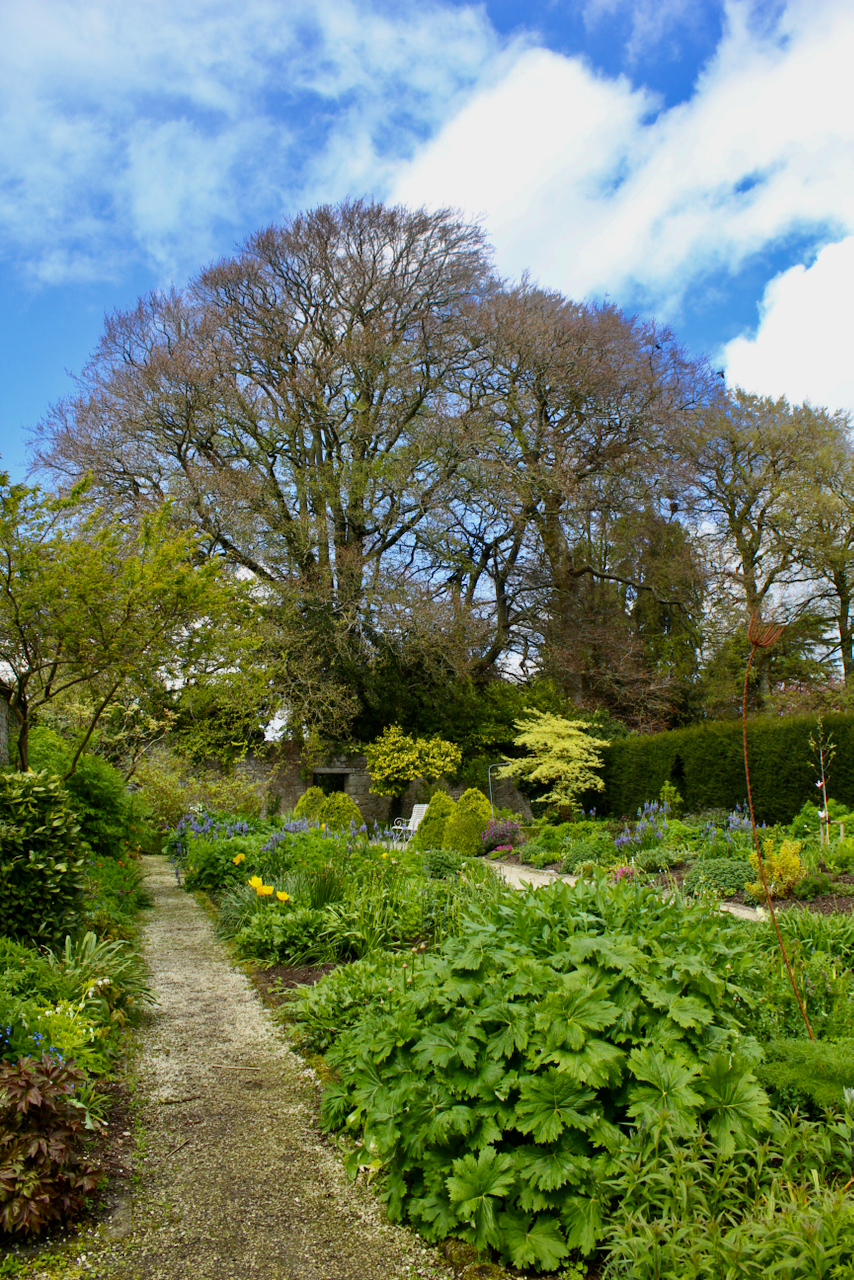
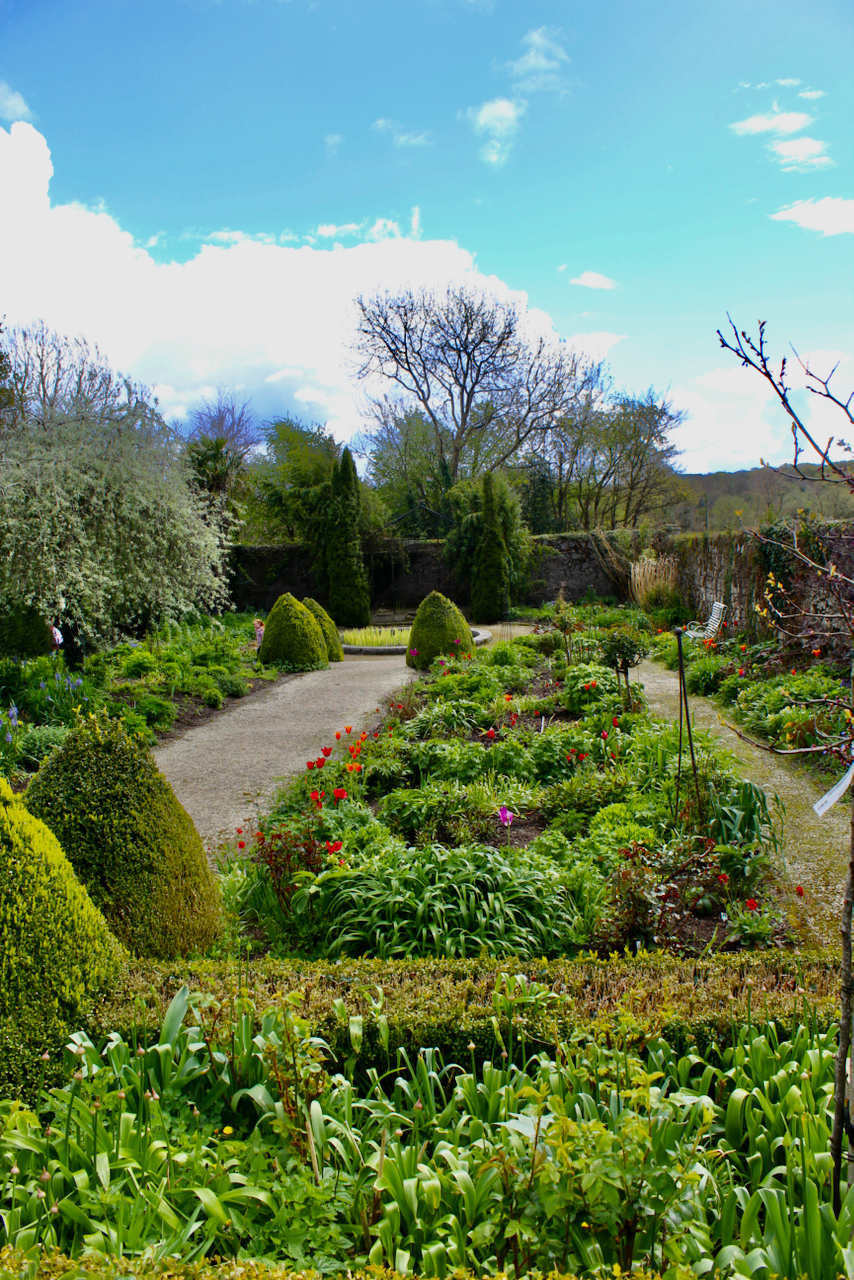
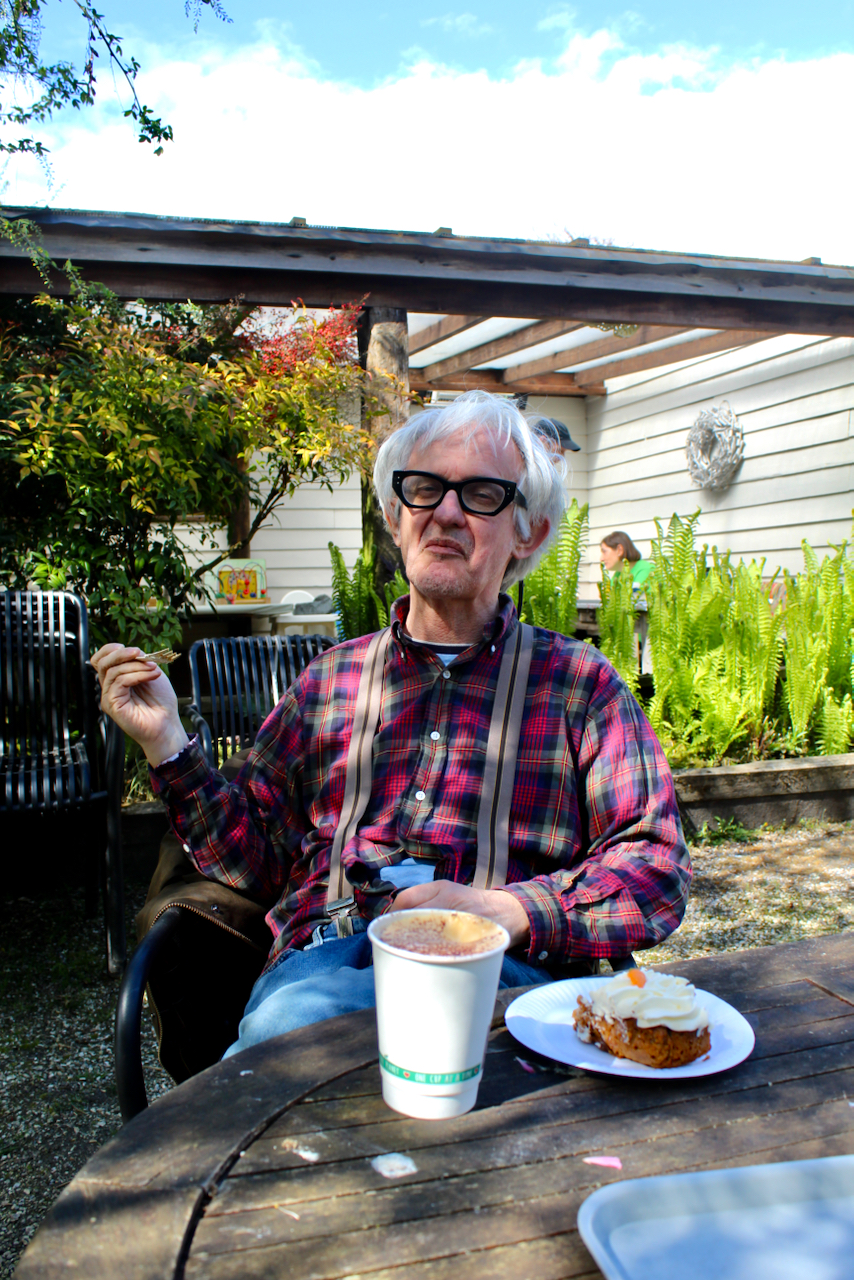
The double herbacious border is near the entrance to the gardens. There’s also a shop selling plants, and a café. We went for a walk first, then treated ourselves to slices of coffee and carrot cake in the café.
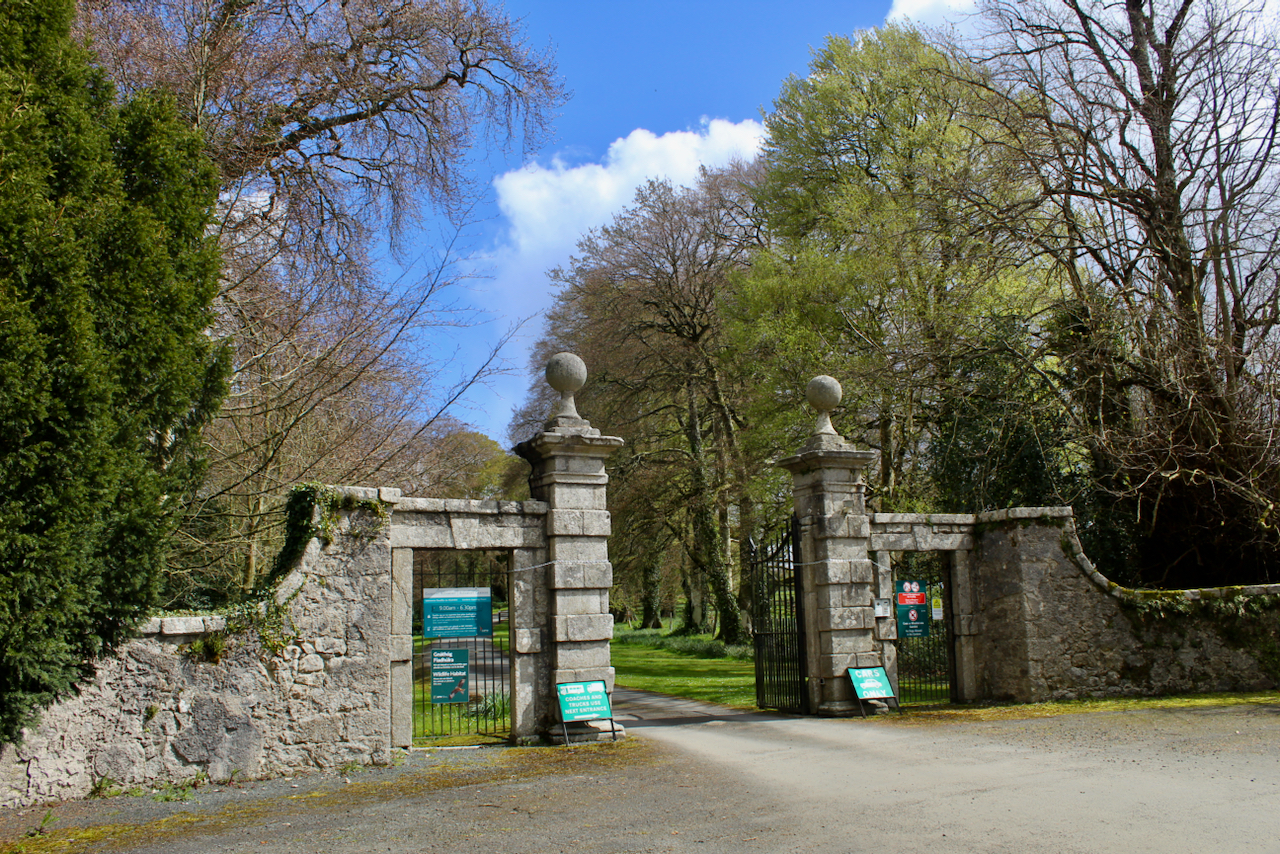
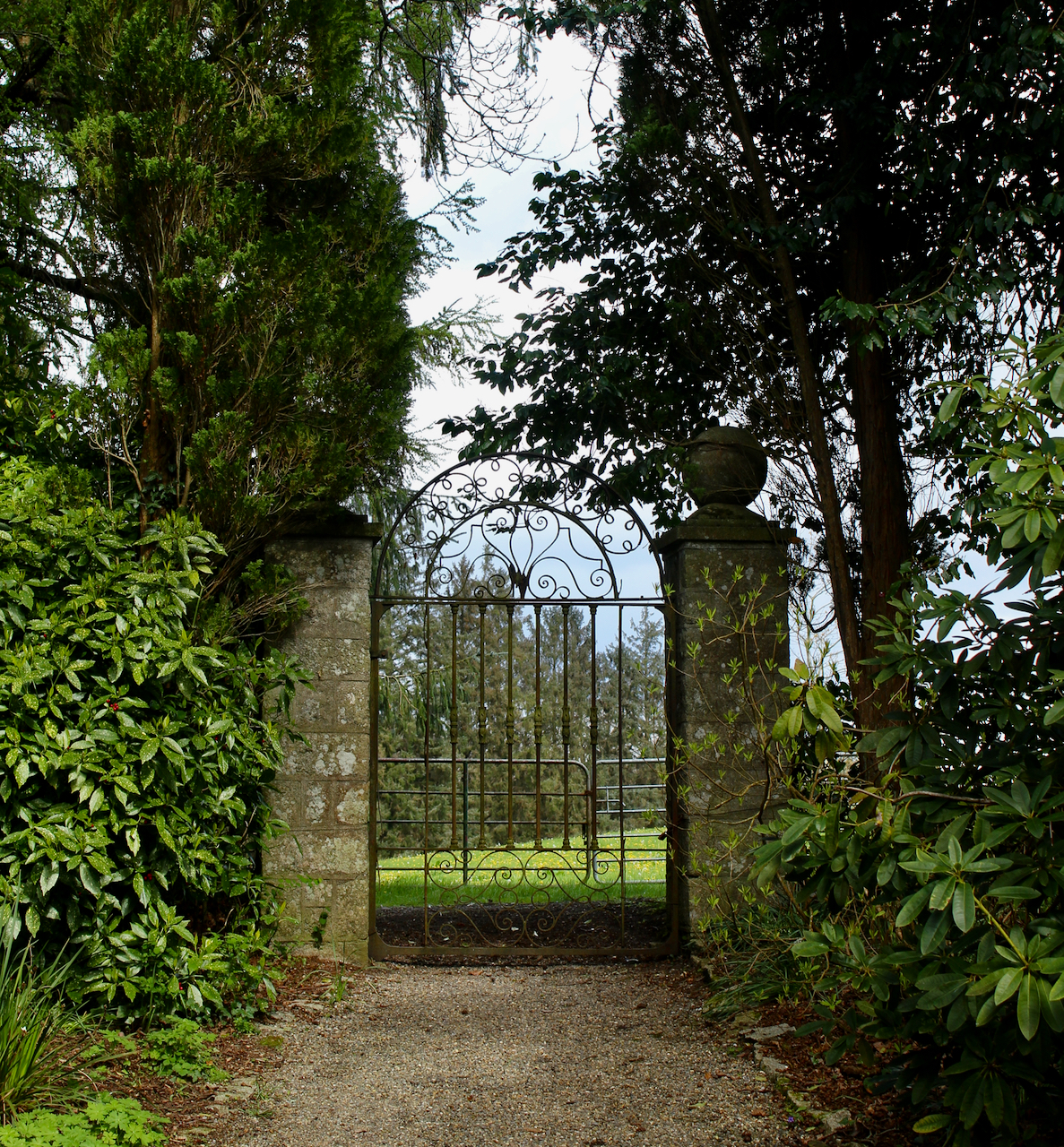
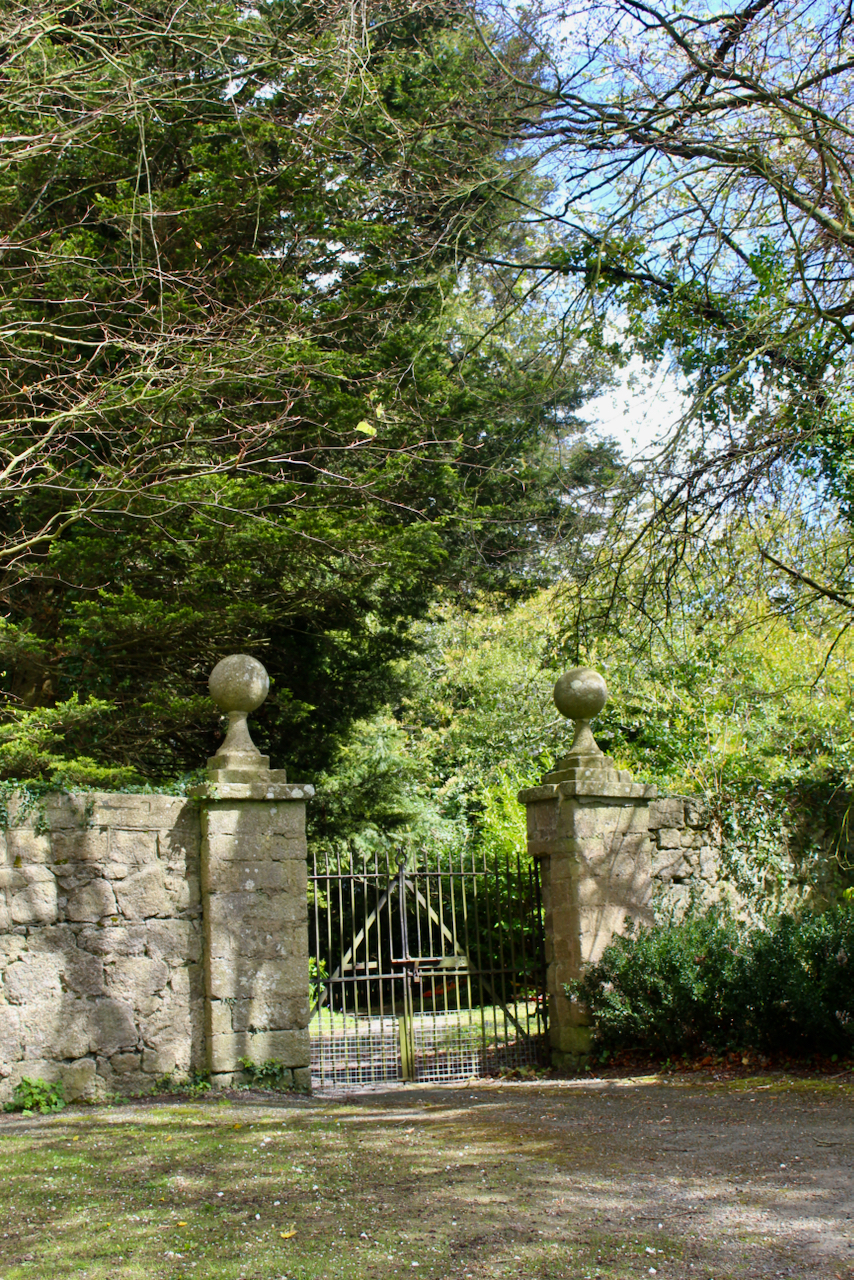
Feilding Lecky-Watson erected the Myshall Gate at the far side of the lake. The gates were salvaged from Myshall House, one time home of the Cornwall Bradys, cousins of Lecky-Watson. My great great grandparents married in Myshall church in 1843! A newer church in Myshall has replaced the one in which they married. Myshall House was burnt down in 1922. The two granite balls placed on top of the stone piers were moved from what was the Archery Lawn, now the lawn by the Azalea Walk.
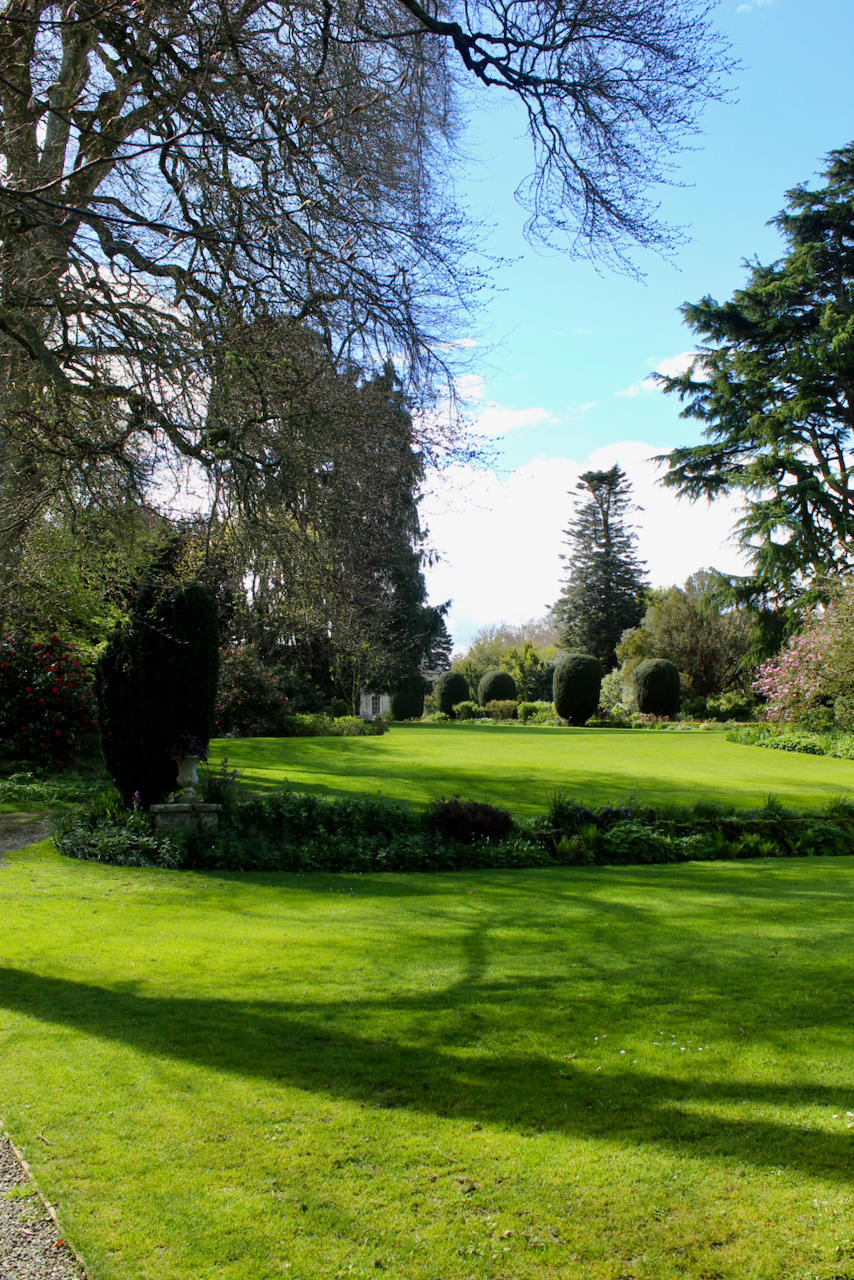
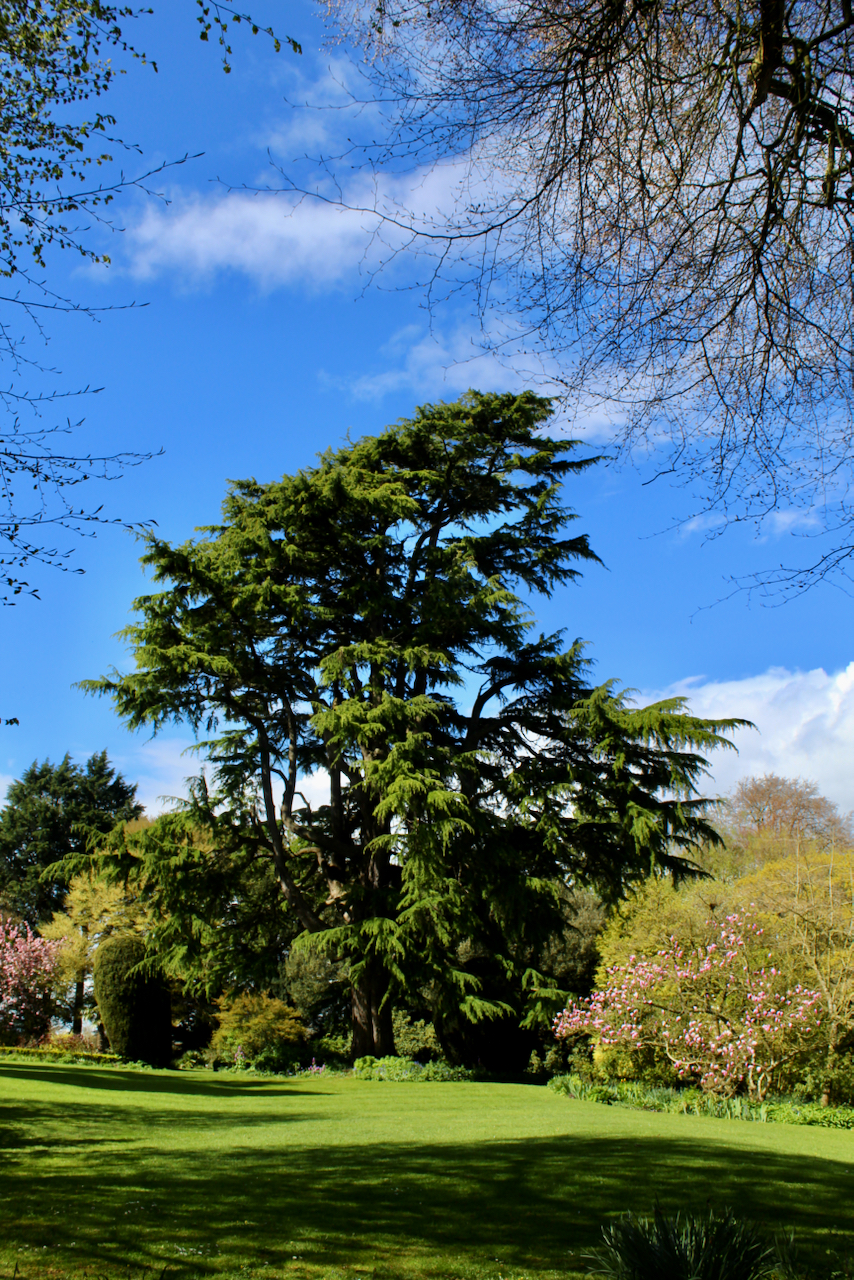
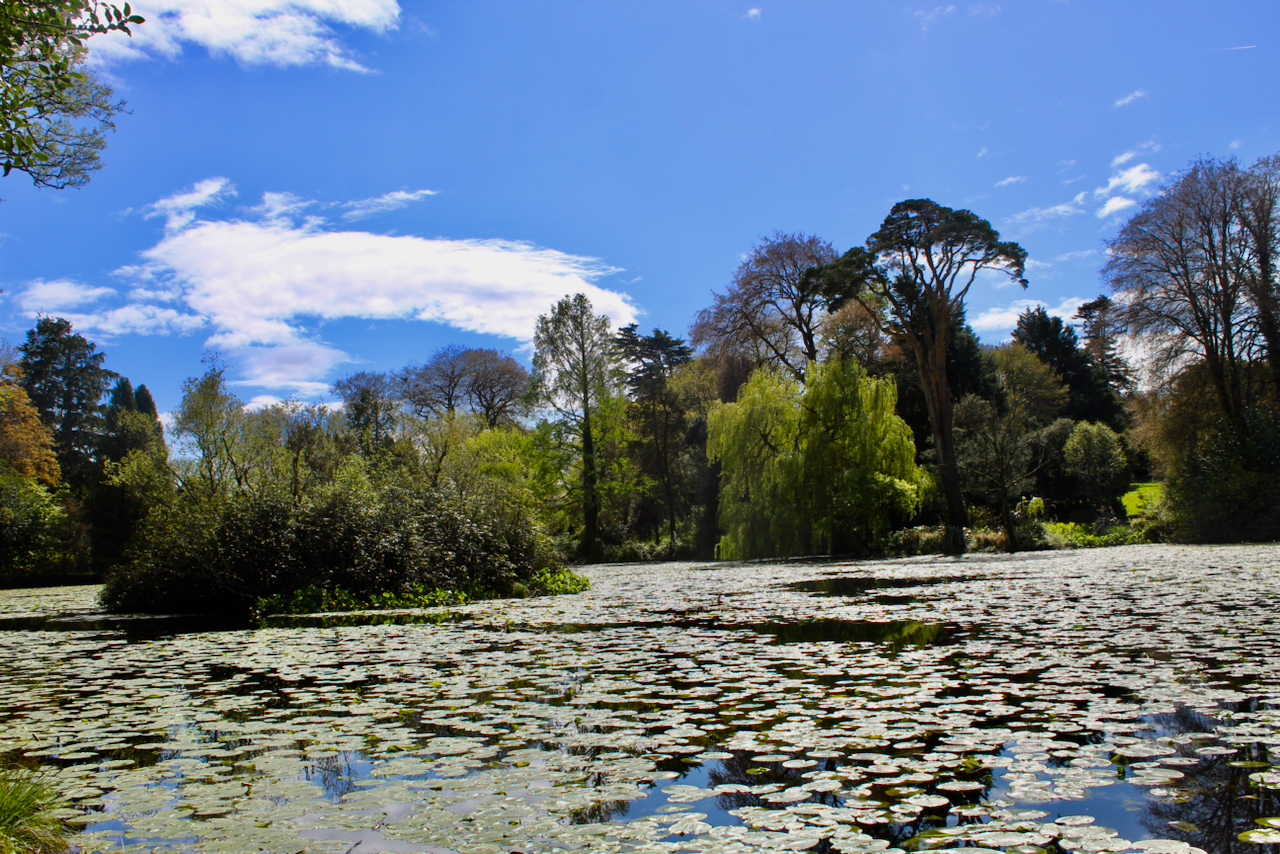
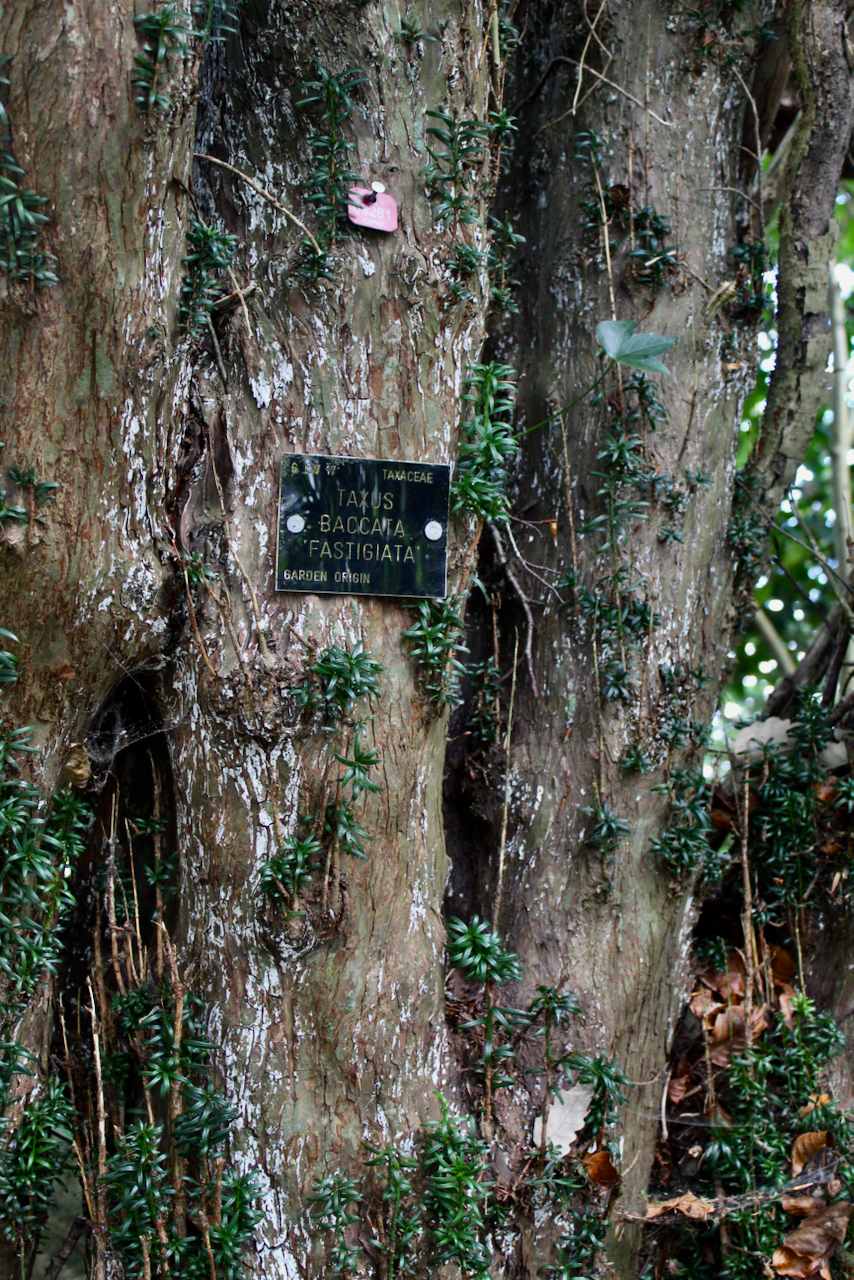
Around the lake are mature conifers that were planted in the 1800s, including a giant Wellingtonia which commemorates the Battle of Waterloo. [9] Stephen and I enjoyed learning from the identifying tags on the trees. The garden is a haven for wildlife, including red squirrels, otters and peacocks – though the only peacock we saw was inside a window of the house!
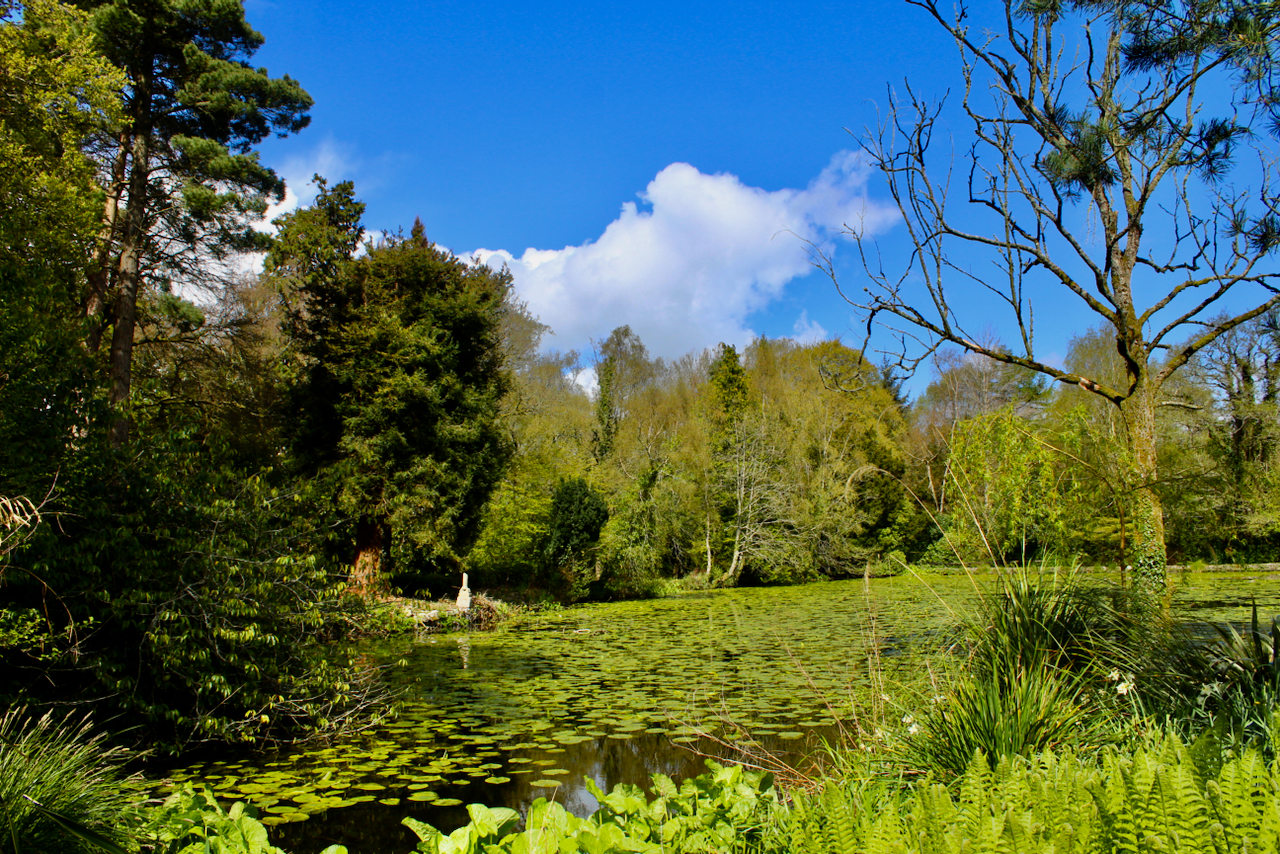
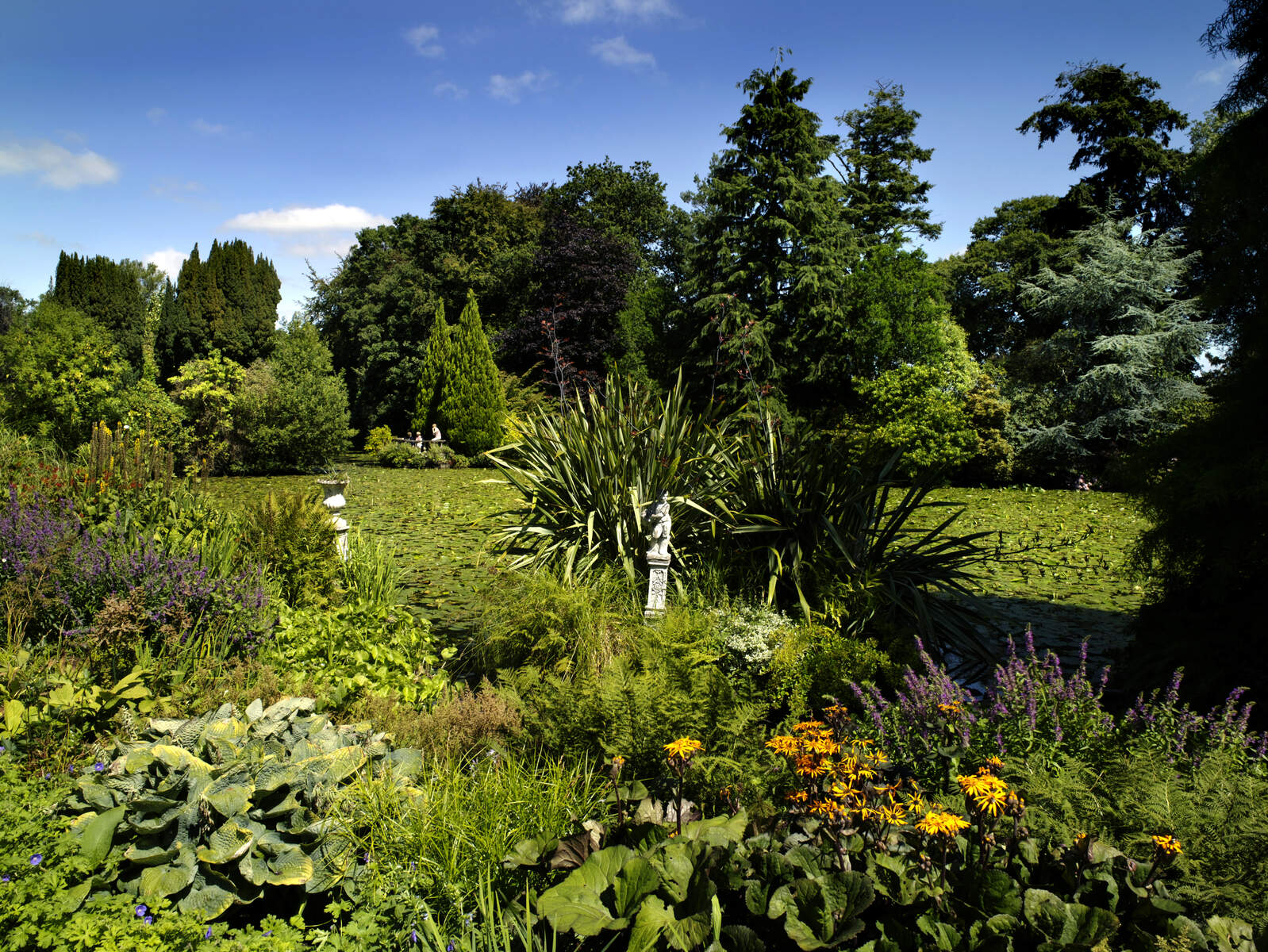
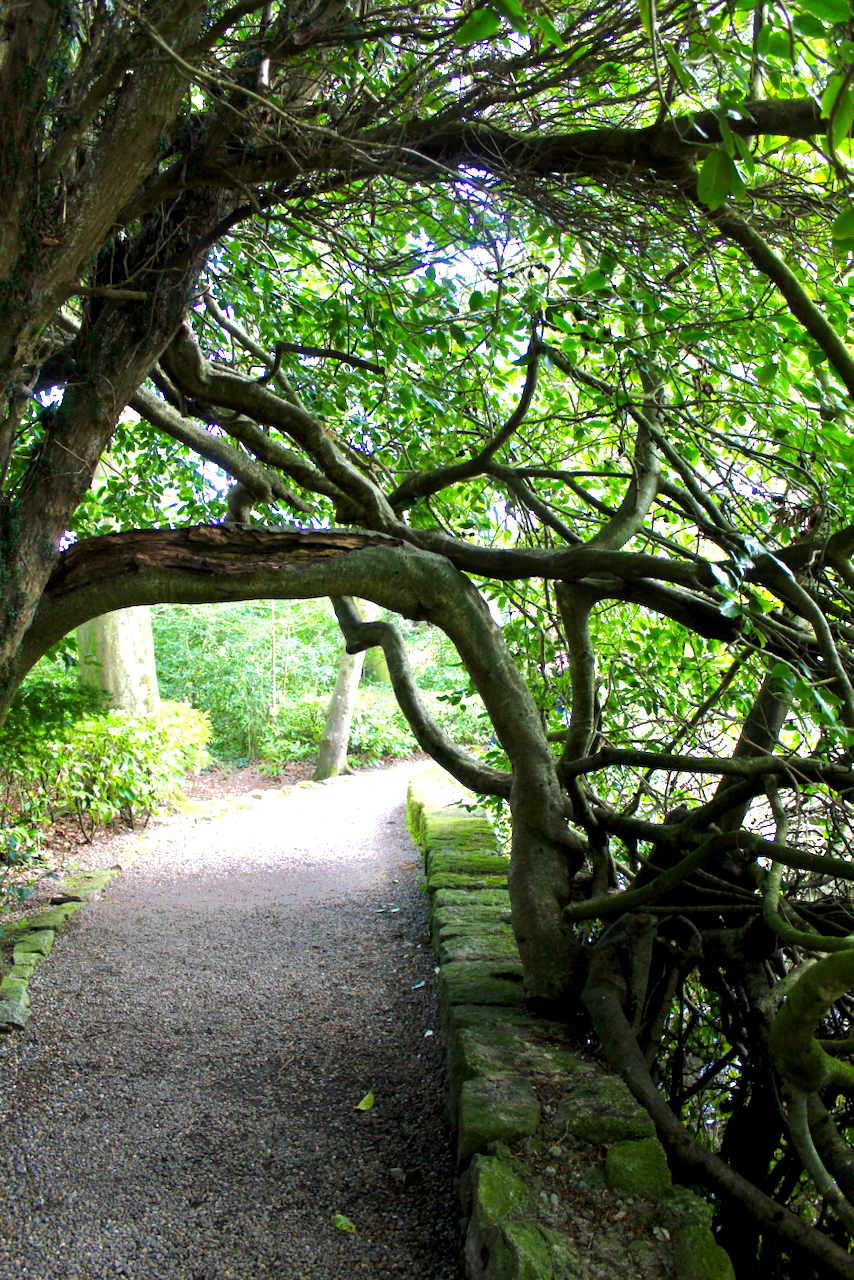
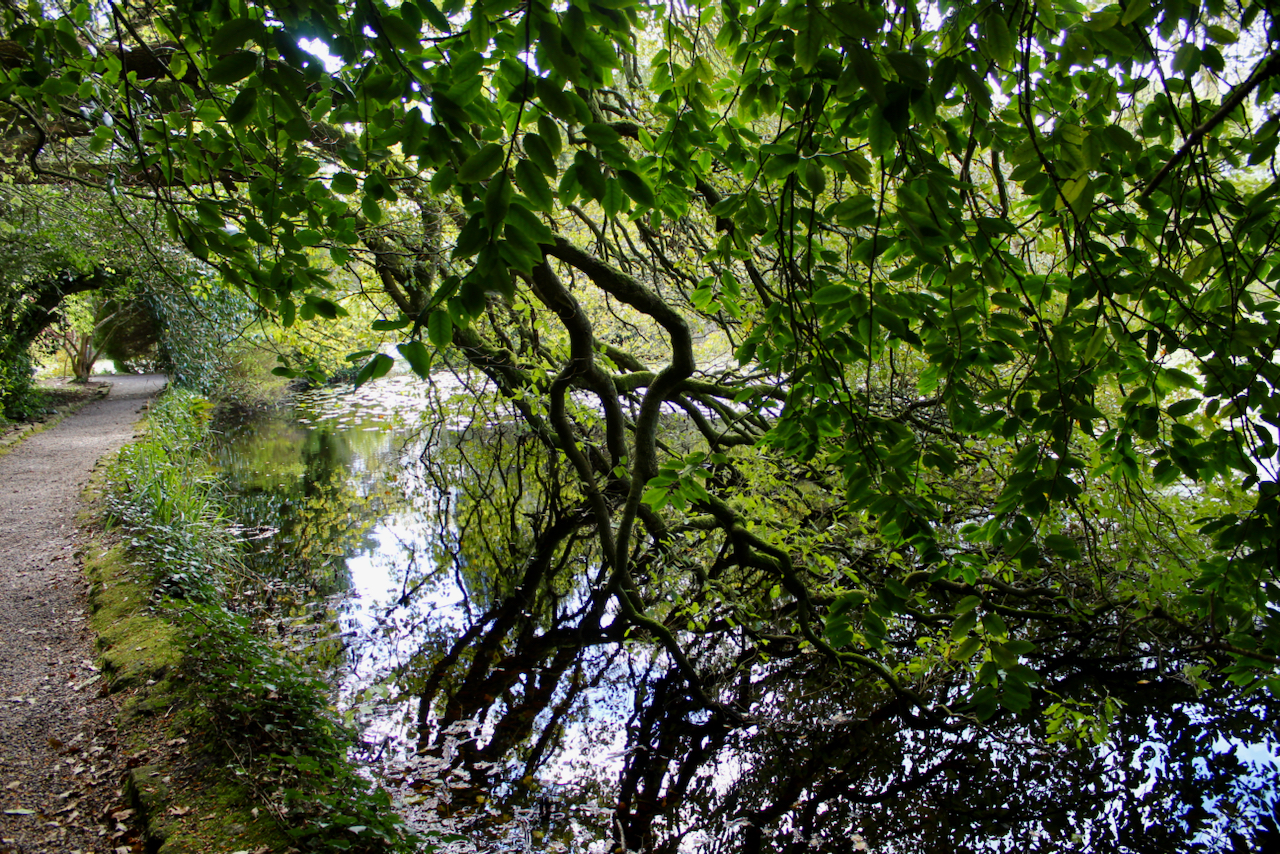
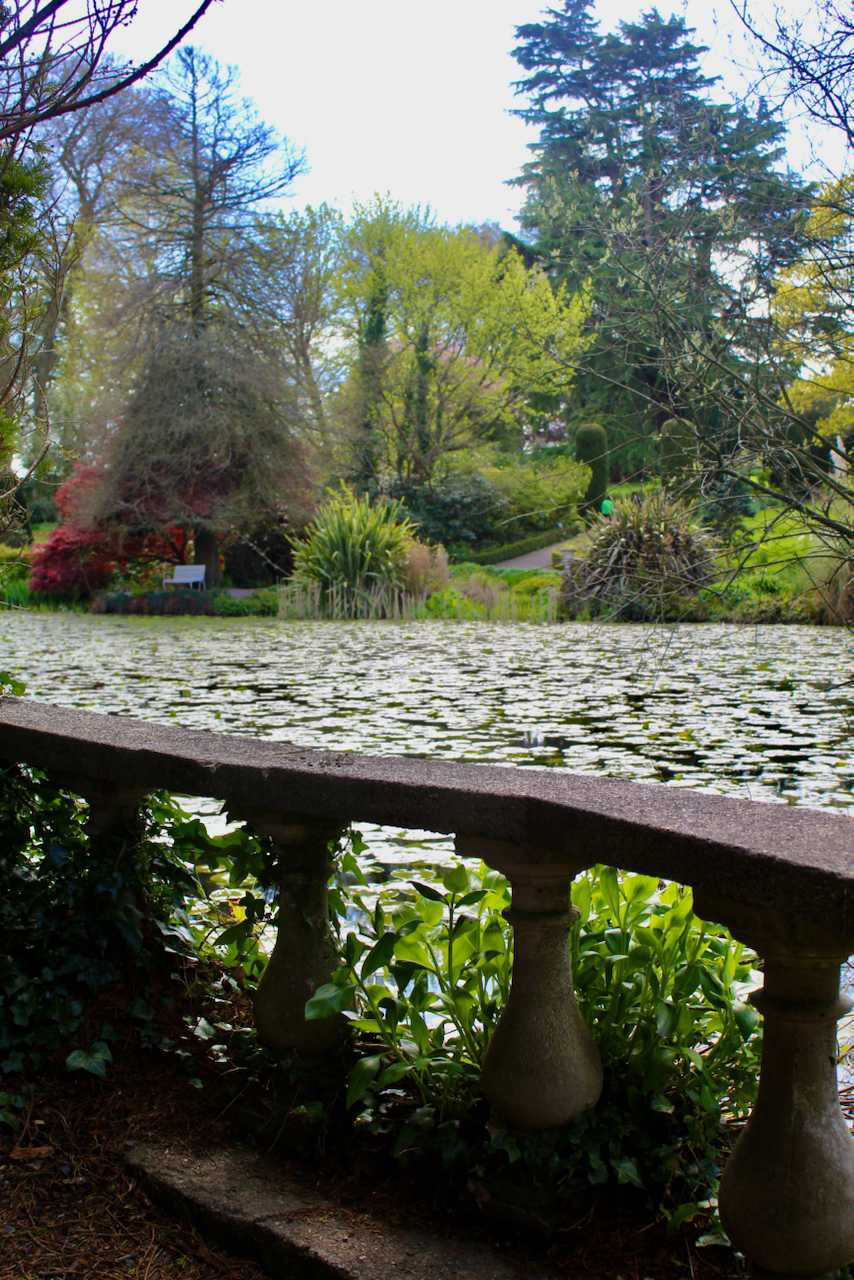
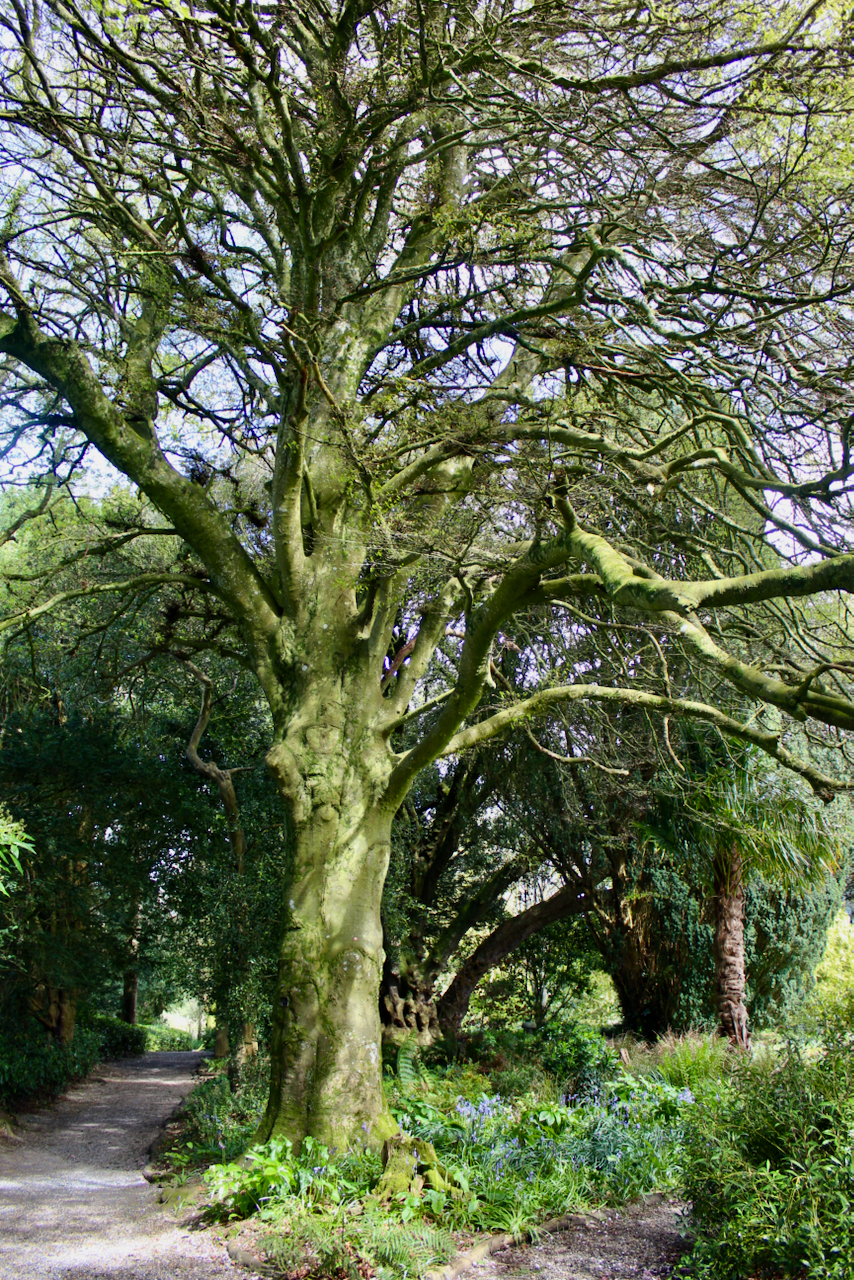
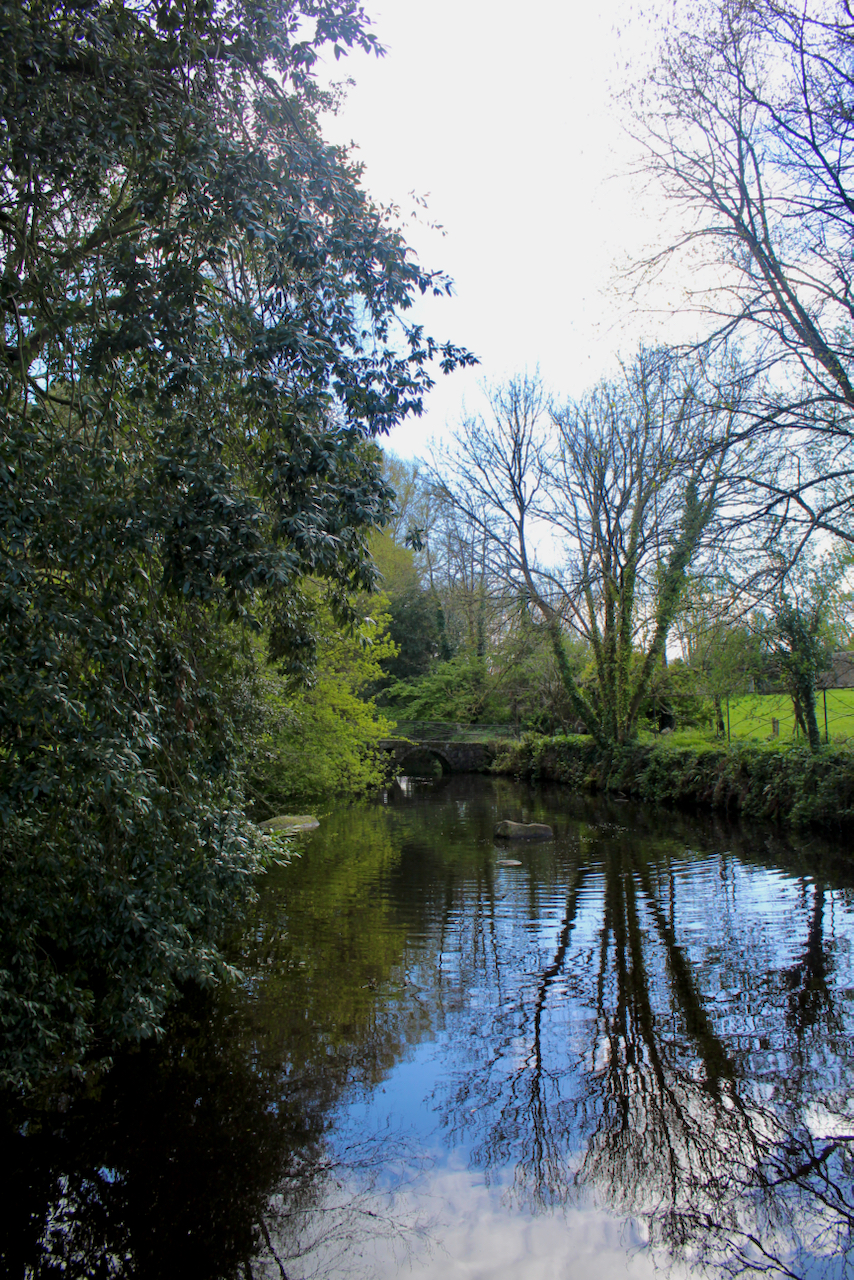
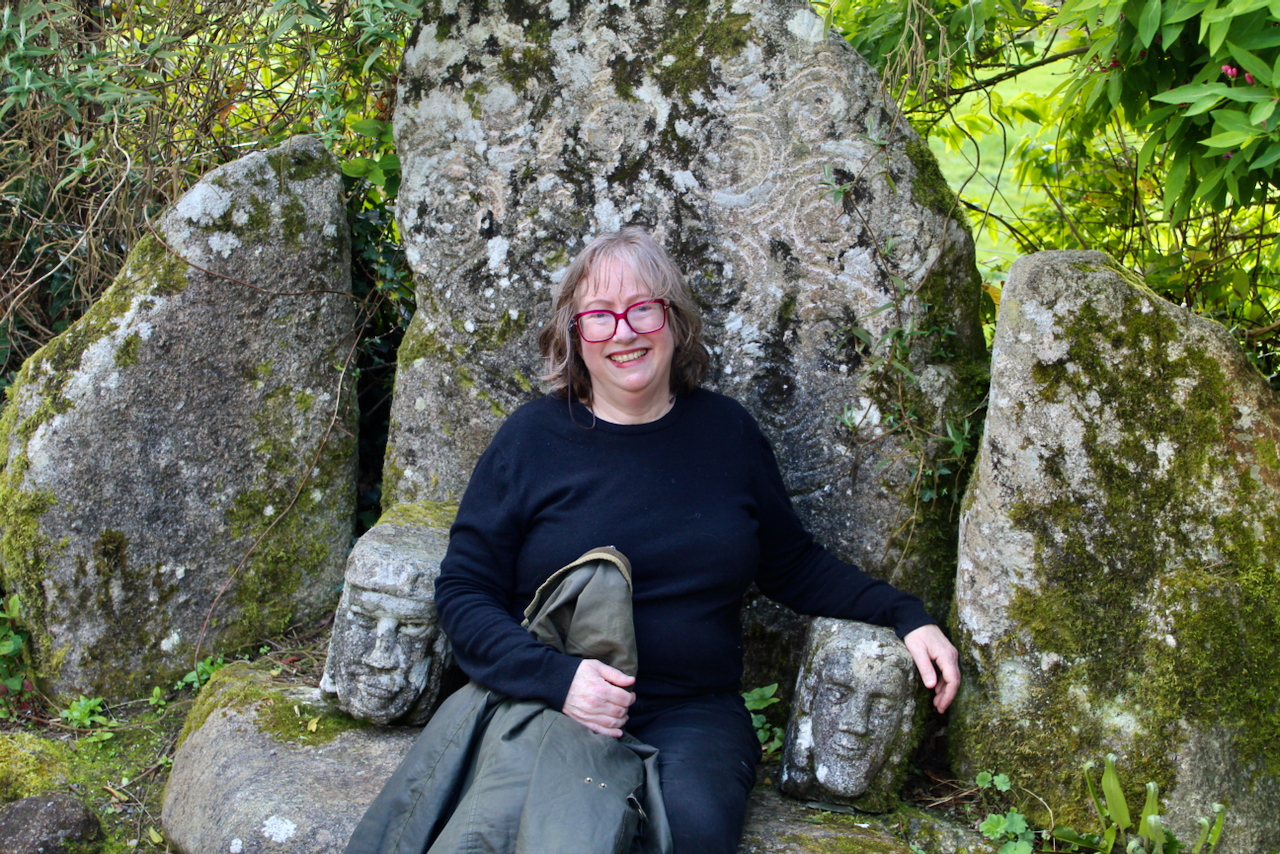
The landscape completely changed when we found ourselves in the Ice Age Glen – it really did feel like we had stepped into another world. Suddenly we were on the side of a hill surrounded by boulders. Then we reached a clearing and were on a grassy towpath by the River Slaney.
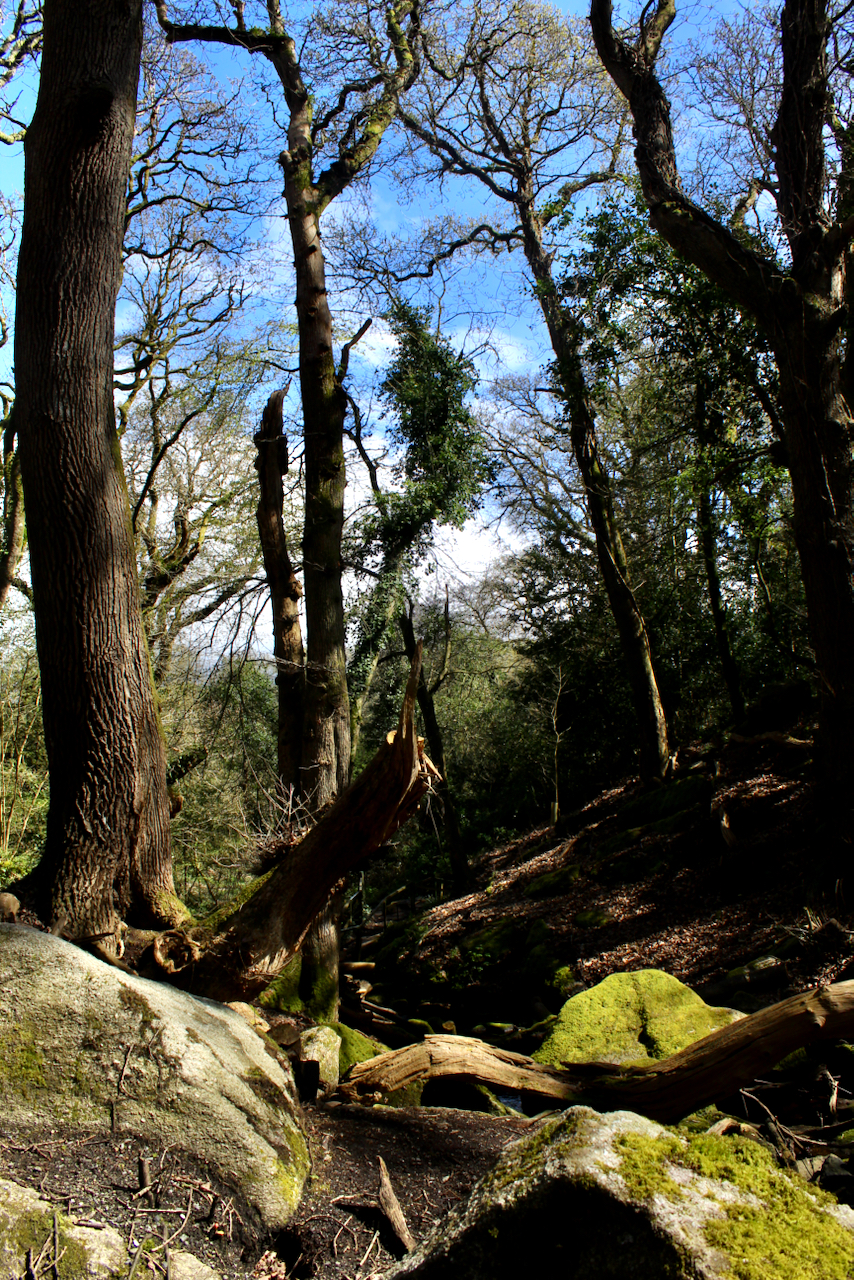
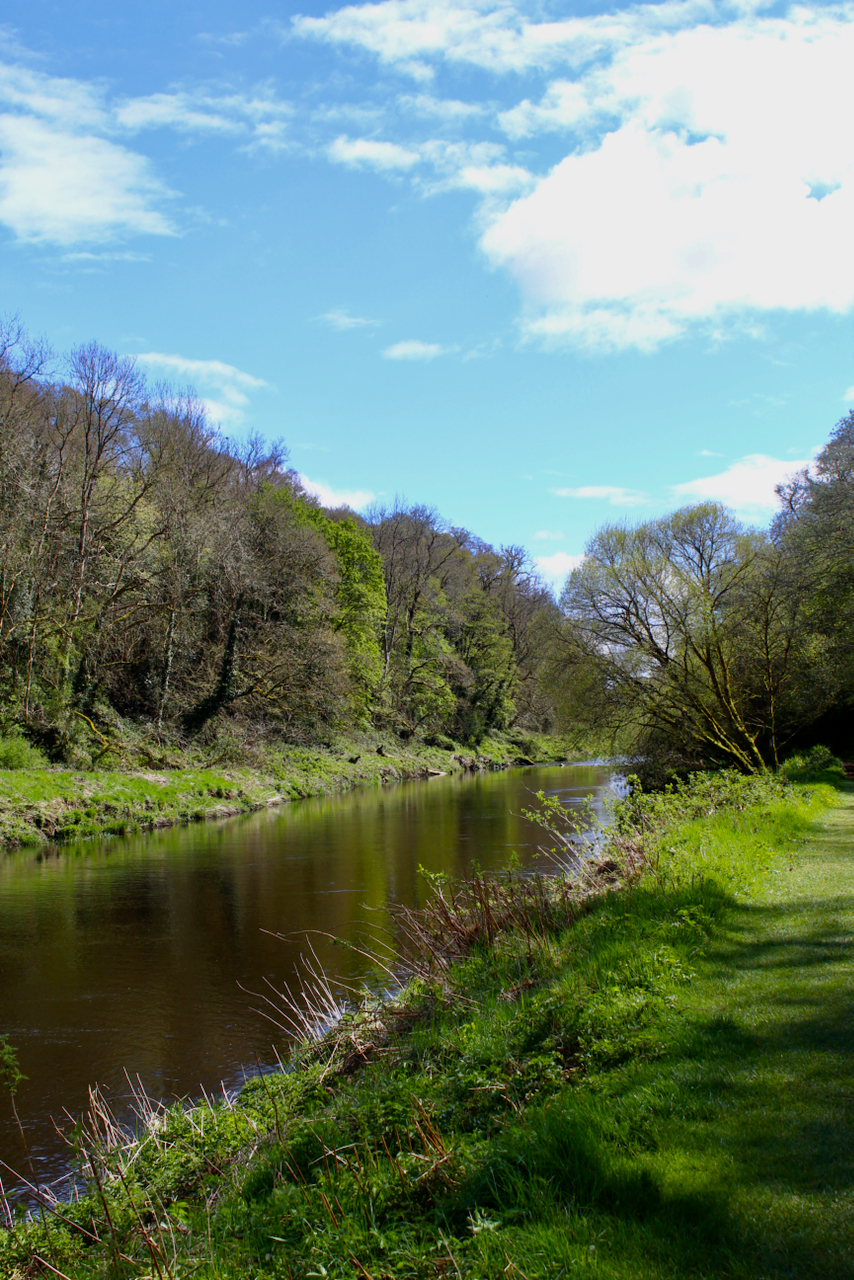
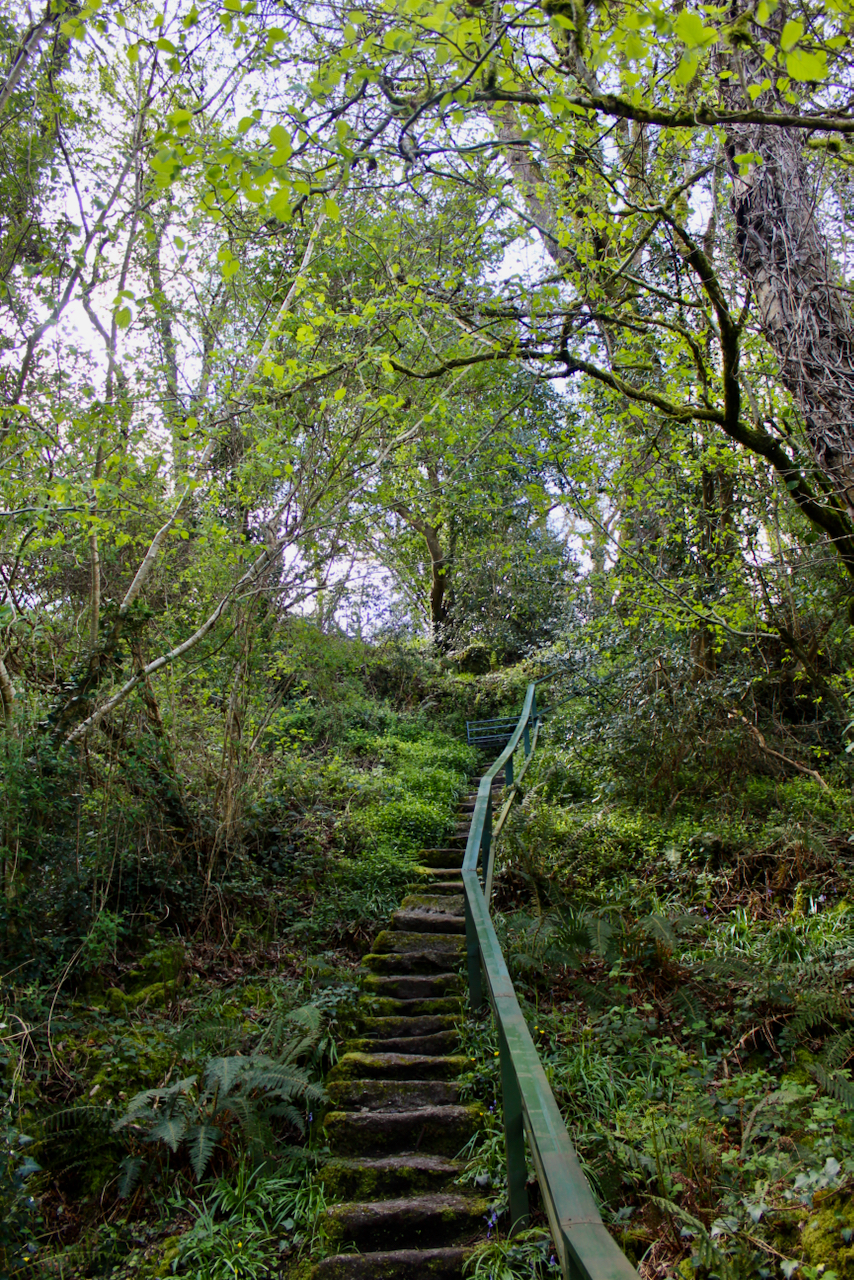
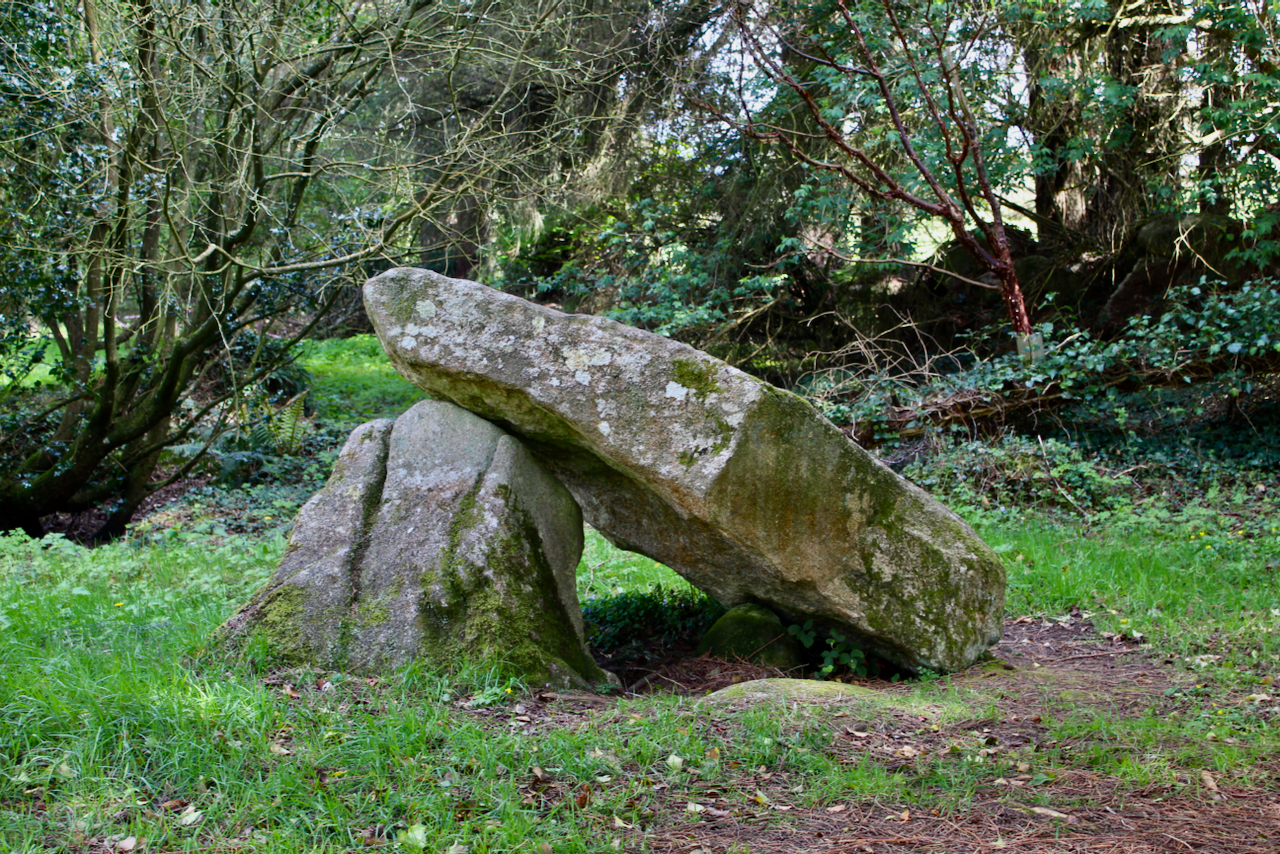
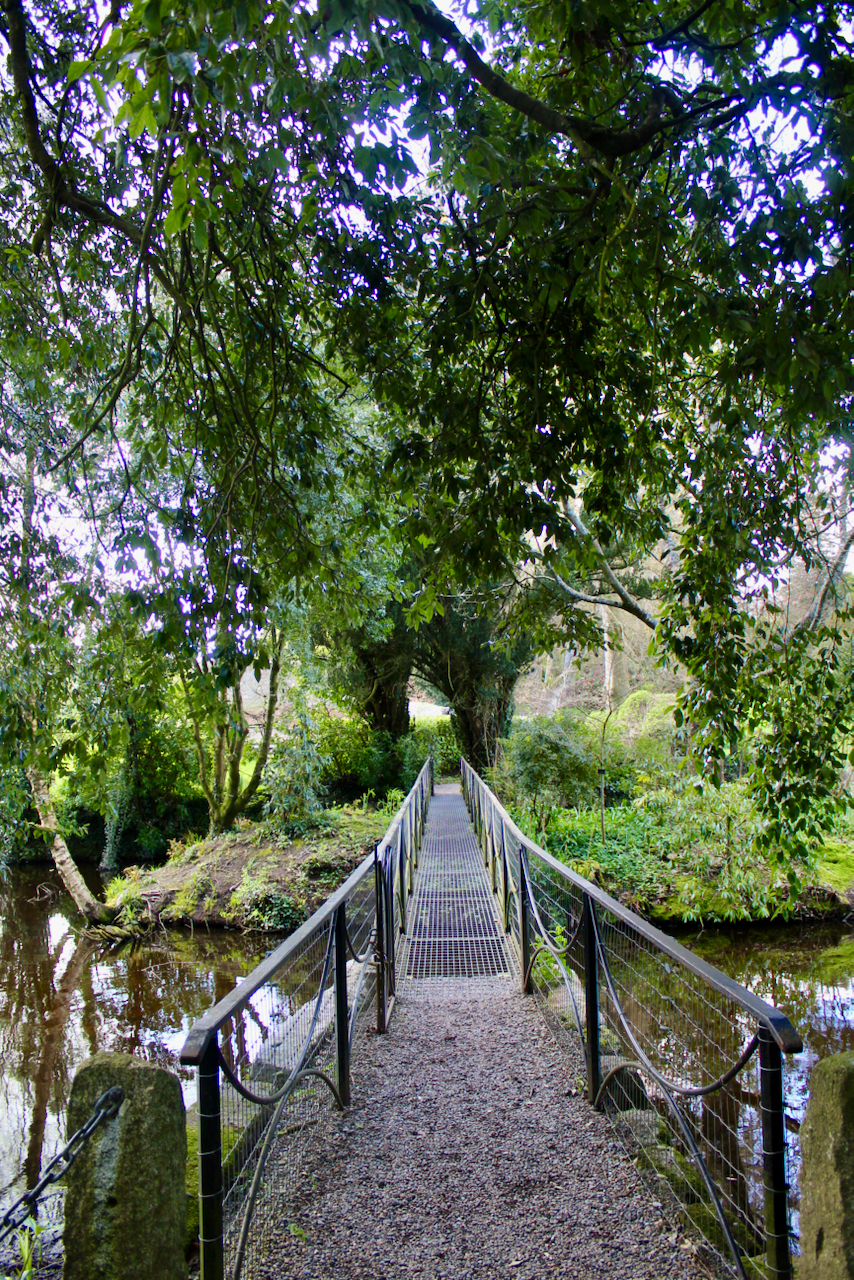
We could have walked further along the Slaney but chose to head back as our stomachs were growling and I looked forward to sampling the café. We tackled the granite hand-cut 100 steps back toward the gardens. We crossed some delightful bridges along the way and stopped to admire a dolmen.
We didn’t walk the route that passes the Temple. Robert O’Byrne tells us that the building was erected by Corona North in 1998, shortly before she died, and is constructed of local granite with six Doric columns supporting a domed roof. The temple is situated at the topmost point of a field to the rear of the house offering eastward views towards the distant Wicklow Mountains.

[1] https://heritageireland.ie/visit/places-to-visit/altamont-gardens/
[2] http://www.igp-web.com/Carlow/Altamount_House.htm
[3] O’Toole, Jimmy. The Carlow Gentry: What will the neighbours say! Published by Jimmy O’Toole, Carlow, Ireland, 1993. Printed by Leinster Leader Ltd, Naas, Kildare.
[4] https://theirishaesthete.com/2018/07/16/altamont-2/
[6] https://www.irelandscontentpool.com
[7] Reeves-Smith, Terence. Irish Gardens. Apple Tree Press.
[8] p. 199, O’Toole, Jimmy. The Carlow Gentry: What will the neighbours say! Published by Jimmy O’Toole, Carlow, Ireland, 1993. Printed by Leinster Leader Ltd, Naas, Kildare.
[9] p. 8, Living Legacies: Ireland’s National Historic Properties in the Care of the OPW. Government Publications, Dublin 2, 2018.
 Irish Historic Houses
