2. Clover Hill Gate Lodge, Cloverhill, Belturbet, Cavan
3. Farnham Estate, Farnham Estate, Cavan – hotel
4. Killinagh House, McNean Court, Blacklion, County Cavan – whole house rental and lodge
5. Lismore House, Co Cavan – was a ruin. Place to stay: Peacock House on the demesne
6. Olde Post Inn, Cloverhill, County Cavan
Whole house rental County Cavan:
1. Killinagh House, McNean Court, Blacklion, County Cavan – whole house rental
3. Virginia Park Lodge, Co Cavan – weddings
1. Cabra Castle, Kingscourt, Co. Cavan – section 482, hotel
This is a hotel but unlike some heritage house or castle hotels, they do allow visitors to view the building: the website states that they are open between 11am to 4pm for visitors for viewing all year round, except at Christmastime.
“This old stone cottage built between 1830 -1850 is tucked away at the archway entrance to the Cloverhill Estate. This cottage is surrounded by gardens and woodland. The magic of this cottage is undeniable. Originally built for the Gate Keeper this cottage reflects heritage with rustic simplicity. Though some features and fittings have been replaced, the survival of historic features, including the label mouldings and timber bargeboards add to its character and charm.“
Cloverhill House is now a ruin. Mark Bence-Jones tells us the house was built 1799-1804 for James Saunderson (1763-1842) to the design of Francis Johnston. [1] Robert O’Byrne adds that it was in fact extended in 1799, but built originally in 1758 (thus was built for James’s father Alexander, who married Lucy Madden of the Hilton Park House Madden family, another Section 482 property. A date stone gives us the date of 1758.) [2] Mark Bence-Jones tells us that the house passed by inheritance to the Purdons, and was sold by Major J.N. Purdon ca 1958. The National Inventory of Architectural Heritage tells us that the Sanderson family were instrumental in the development of Cloverhill village with the building of the Church of Ireland church and estate workers’ houses.
Cloverhill Gate Lodge, County Cavan, photograph courtesy airbnb website.
The house is featured in Tarquin Blake’s Abandoned Mansions of Ireland, Collins Press, Cork, 2010.
From James Sanderson (1763-1842) the property passed down through the female line since the son, also named James, had no heirs. It passed first to Mary Anne, who was unmarried, and then to her sister’s son, Samuel Sanderson Winter (1834-1912), whose parents were Lucy Sanderson and Samuel Winter (1796-1867) of Agher, County Meath. Samuel Sanderson Winter married Ann, daughter of John Armytage Nicholson of Balrath Bury, County Meath (we came across this family before as Enniscoe in County Mayo was inherited by Jack Nicholson, of the Balrath Bury family). Samuel Sanderson Winter’s son died young so Cloverhill passed to the son of his sister, Elizabeth Ann Winter, who married George Nugent Purdon (1819-1910). This is how the house passed to the Purdon family.
The house passed to their son, John James Purdon, who died childless so it passed to his nephew, John Nugent Purdon, son of Charles Sanderson Purdon. John Nugent Purdon sold Cloverhill demesne ca 1958 to Mr Thomas Mee. [3]
Farnham Estate, County Cavan, photograph courtesy of hotel Instagram page.Farnham House, photograph from National Library of Ireland, flickr constant commons.
David Hicks tells us in his Irish Country Houses, A Chronicle of Change that the wing of Farnham House that survives today is the truncated section of a much larger mansion. Dry rot led to demolition of a substantial section of the Maxwell ancestral home. The family’s connection was severed in 2001.
Farnham Estate, County Cavan, photograph courtesy of hotel Instagram page.
The estate was granted by King James I to the Waldron family in 1613. Henry Waldron named the estate after his wife’s family. The Waldrons built a castle here in 1620.
The website gives us a history of the estate:
“1664- The Waldrons of Dromellan Castle (early name of Farnham House) were forced to sell the estate to settle gambling debts. Bought by Bishop Robert Maxwell, thus beginning the Maxwell family connection that was to continue for more than 330 years (family motto is Je suis prêt – I am ready’).”
Farnham Estate drawing room, County Cavan, photograph courtesy of hotel Instagram page.
Mark Bence-Jones adds in his A Guide to Irish Country Houses (1988, p. 123):
“…A few years later the estate was sold to Robert Maxwell [1598-1672], Bishop of Kilmore, whose cathedral was nearby. The Bishop’s son, John Maxwell, built a new house here ca 1700, which was improved ca 1780 by Barry Maxwell, 3rd Lord Farnham and first Earl of Farnham of 2nd creation, who added a library designed by James Wyatt.“
Timothy William Ferres tells us of the Maxwell lineage:
John Maxwell of Farnham, High Sheriff of County Cavan, 1674, who dsp 1713, was succeeded by his nephew, The Reverend Doctor Robert Maxwell; who dsp 1737 and was succeeded by his cousin, John Maxwell (1687-1759), High Sheriff of County Cavan, 1757, MP for County Cavan 1727-56, who was elevated to the peerage, in 1756, in the dignity of Baron Farnham, of Farnham, County Cavan.
In 1719 he married Judith, heiress of James Barry (1660-1725) of Newtownbarry, County Wexford. Their son Robert succeeded as 2nd Baron Maxwell, and he was created Viscount in 1760 and 1st Earl of Farnham in 1763. Robert married Henrietta Cantillon, the widow of William Matthias Stafford-Howard, 3rd Earl of Stafford.
Henrietta Diana née Cantillon (1728–1761), Dowager Countess of Stafford by Allan Ramsay courtesy of Kelvingrove Art Gallery and Museum;http://www.artuk.org/artworks/henrietta-diana-17281761-dowager-countess-of-stafford-85788She married, first, William Matthias Stafford-Howard, 3rd Earl of Stafford, and after his death, Robert Maxwell, 2nd Baron and 1st Earl of Farnham.
See also the wonderful book by Melanie Hayes, The Best Address in Town: Henrietta Street, Dublin and its First Residents 1720-80, published by Four Courts Press, Dublin 8, 2020. She has a chapter on John Maxwell, (1687-1759) 1st Baron Farnham.
The Farnham Estate website tells us that Robert was a keen agriculturalist and agent of improvement who put the most technologically and scientifically advanced agricultural methods into action. The website tells us:
“In1777, noted agricultural scientist and topographer Arthur Young said of Farnham; “…upon the whole Farnham is one of the finest places that I have ever seen in Ireland; the water wood and hill are all in great stile and abound in a variety of capabilities. The woodland plantations of Derrygid coupled with the lakes of Farnham and Derrygid were noted by Young who described them as being ‘uncommonly beautiful; extensive and have a shore extremely varied.” In the 1770’s, approximately 100 labourers were employed in maintaining the landscape at Farnham.“
Robert 1st Earl and Henrietta’s daughter Henrietta married Denis Daly (1747-1791) of Dunsandle, County Galway.
Denis Daly (1747-1791) of Dunsandle, County Galway, attributed to Joshua Reynolds, courtesy of Christies 2012 Mount Congreve the London Sale.
The first Earl’s son John predeceased him and didn’t marry, so the 1st Earl’s brother Barry succeeded him. Barry Maxwell was a barrister and MP for County Cavan and later for Armagh city. When his mother Judith née Barry died in 1771 he must have inherited as he changed his name to Barry Barry. Then when his elder brother Robert Maxwell, 1st and last Earl of Farnham, died in 1779, he inherited and his name was changed back to Barry Maxwell, and he succeeded as the 3rd Baron Farnham, of Farnham, Co. Cavan. He was created 1st Earl of Farnham, Co. Cavan (Ireland, of the 2nd creation) on 22 June 1785.
Portrait of Barry Maxwell (1723-1800) 1st Earl Farnham by George Romney courtesy of www.christies.com/en/lot/lot-4507942He was the son of John Maxwell, 1st Baron Farnhamand Judith Barry.
When Robert 1st Earl’s first wife Henrietta died, he married secondly, in 1771, Sarah, only daughter of Pole Cosby, of Stradbally Hall, Queen’s County, and sister of Lord Sydney, but they had no further children. Sarah had been previously married to Arthur Upton (d. 1763) of Castle Upton, County Antrim. After her second marriage she was known as the Countess of Farnham.
The Countess of Farnham, probably Sarah née Cosby, wife of Robert Maxwell, 1st and last Earl of Farnham(of the first creation), painted by Hugh Douglas Hamilton, courtesy of Sothebys 2001.
The first Earl had another brother Most Reverend HenryMaxwell (d. 1798), who became Bishop of Dromore and Bishop of Meath.
Right Reverend Henry Maxwell (d. 1798) Bishop of Meath, Irish school courtesy of National Trust Castle Ward
Reverend HenryMaxwell married Margaret Foster, daughter of Rt. Hon. Anthony Foster Chief Baron of the Irish Exchequer between 1766 and 1777, who lived in Collon in County Meath.
Their sons became respectively John Maxwell Barry Maxwell (1767-1838) 5th Baron Farnham and Reverend Henry Maxwell (d. 1838) 6th Baron Farnham, and the Baronetcy continued to their descendants. The Earldom was recreated for the elder brother Barry, 3rd Baron (1723-1800), who obtained a viscountcy and earldom, in 1780, as Viscount Farnham, and, in 1785, Earl of Farnham (2nd creation).
The dining room at Farnham House. Pub Orig Country Life 02/01/2003, volume CXCVII. Photographer Paul Barker.With portrait ofRight Reverend Henry Maxwell (d. 1798) Bishop of Meath.
The three brothers, Robert 1st Earl, Barry 1st Earl of second creation and Reverend Henry had a sister, Anne, who married Owen Wynn (1723-1789) of Hazelwood, County Sligo.
Barry Maxwell, 1st Earl of Farnham served as MP and Privy Counsellor. He married first Margaret King of Drewstown, County Meath, who gave birth to their son and heir John James Maxwell (1759-1823) later 2nd Earl of Farnham. Barry married secondly Grace, daughter of Arthur Burdett. His son did not have children and the Earldom and Viscountcy became extinct on his death.
Photograph of Farnham House from Country Life, A Chinese Chippendale chair in the hall at Farnham House. Pub Orig CL 02/01/2003, volume CXCVII. Photographer Paul Barker.
The website tells us of the building of Farham:
“In 1795, Earl of Farnham Barry [Barry Maxwell (1723-1800)] asked James Wyatt, one of the most fashionable architects of that time, to draw designs for three ceilings. Although there is no evidence of them being installed at Farnham, these plans are now housed in the Metropolitan Museum of Art in New York. Some work was undertaken by Wyatt though around the 1795 timeframe and to this day, a library case where his design has been noted stands inserted in an alcove on the staircase landing.
“In the early 1800s, a coat of arms was incorporated onto the façade of the house. Comprised of the arms of the Maxwell and Barry family, they are supported by two bucks, with a buck’s head on top of the Baron’s coronet as the crest.
Barry’s son James John Barry 2nd Earl engaged Francis Johnston to build. The website tells us:
“In 1802 Francis Johnston, architect for Dublin’s famous GPO building, was engaged to complete an extension of the existing house to provide an edifice to the southwest garden front.This is the latter day surviving Farnham House, which is now incorporated as the centrepiece of the hotel complex design.“
Mark Bence-Jones describes the house as built by Francis Johnston:
“Johnston produced a house consisting of two somewhat conservative three storey ranges at right angles to one another; one of them, which incorporated part of the earlier house, including Wyatt’s library, having a front of eight bays, with a die over a two bay breakfront, and a single-storey Doric portico; the other having a front of nine bays with a three bay pedimented breakfront; prolonged by one bay in the end of the adjoining range. The interior was spacious but restrained, the principal rooms having simple ovolo or dentil cornices. Elliptical staircase hall, with simple geometrical design in the ceiling; stone stair with elegant metal balustrade.“
The staircase at Farnham House designed by Francis Johnston.Pub Orig Country Life 02/01/2003, volume CXCVII. Photographer Paul Barker.Farnham Estate, County Cavan, photograph courtesy hotel.
The website continues: “In the depths of the earth beneath Farnham lies a myriad of passages. These passages were constructed to allow food, supplies and heating fuels to be brought into the mansion house by the servants. Such underground passages kept the servants out of sight from Lords and Ladies Farnham and their guests and no doubt were used by the servants to enjoy some activities of their own, which they would not have wanted Lord and Lady Farnham to witness!“
When James John died childless in 1823, a cousin, John Maxwell Barry Maxwell (1767-1838), son of Rt. Rev. Henry Maxwell, became 5th Baron Farnham.
The website tells us: “In 1823, a new system of management for the Farnham estate was introduced, employing persons as inspectors of districts, buildings, bog and land and a moral agent! The main duties of the moral agent were to encourage the tenantry to adhere to the main principles contained in Lord Farnham’s address to them. These included: keeping of the Sabbath, responsibility towards the education of their children, imbuing within their children a strict moral sense and to ensure that they abstained from all evil habits, including cursing and the distillation or consumption of alcohol.“
The 5th Baron Farnham died childless in 1838, so his brother Reverend Henry Maxwell became the 6th Baron Farnham. He married Anne Butler, daughter of the 3nd Earl of Carrick. Their son Henry became the 7th Baron Farnham (1799-1868). Their daughter Sarah Juliana married Alexander Saunderson of Castle Saunderson. The other sons Somerset and James became 8th and 9th Baron and then the son of their brother Richard Thomas Maxwell, Somerset Henry Maxwell, became the 10th Baron.
Mark Bence-Jones tells us: “In 1839, 7th Lord Farnham (a distinguished scholar and genealogist who, with his wife, was burnt to death 1868 when the Irish mail train caught fire at Abergele, North Wales), enlarged the house by building new offices in the re-entrant between the two ranges. Also probably at this time the main rooms were changed around; the library becoming the dining room, and losing any Wyatt decoration it might have had; Wyatt’s bookcases being moved to the former drawing room.“
The drawing room at Farnham House. The portrait to the right is of thr Rt Hon John, 5th Baron Farnham by Sir Thomas Lawrence.Pub Orig Country Life 02/01/2003, volume CXCVII. Photographer Paul Barker.Photograph of Farnham House from Country Life, Pub Orig Country Life 02/01/2003, volume CXCVII. Photographer Paul Barker.Farnham Estate, County Cavan, photograph courtesy Bennett Contruction website.
Somerset Henry Maxwell, 10th Baron, married Florence Jane Taylour, daughter of Thomas Taylour, 3rd Marquess of Headfort. Their son, Arthur Kenlis Maxwell (1879-1957), became 11th Baron in 1900.
The website continues the timeline:
“1911- Records mention a staff of 11: butler, cook, governess, nursery maid, nurse, footman, ladies’ maid and several house and kitchen maids. Some 3,000 of Farnham’s then 24,000 statute acres were sold off.
“1914-1918- Lord Farnham rejoined the military; he was captured, imprisoned and released after the Armistice. His political efforts failed to prevent the exclusion of three counties from the jurisdiction of Northern Ireland.
“1921-1931- Lord and Lady Farnham left for England. They emptied the house of its furniture, due to widespread burning and looting of country houses. The 1923 Land Act would ultimately end landlordism in Ireland: by 1931, Lord Farnham retained only his demesne lands at Farnham, which he operated in a more intensive fashion in order to increase much-needed revenue.“
Arthur Kenlis Maxwell managed to escape from a prisoner of war camp during the first world war. He and his family returned to Farnham estate in 1926 and began to renovate the house. His son and heir died in the second world war aged just 37, and the title passed to his grandson, Barry Owen Somerset Maxwell. Barry Owen’s mother died in a plane crash when he was just 21.
“1950- Economic decline had by now affected the demesne. A Farnham Tintorreto ’Christ Washing the Feet of His Disciples’ was sold in 1955; the Canadian National Art Gallery in Ontario paid some $100,000. 1956- Barry Owen Somerset Maxwell, 12th Baron Farnham became the last member of the Maxwell family to reside at Farnham House.
“In 1961, dry rot was discovered within the Farnham house and in an attempt to alleviate it, the oldest part of the house looking across the parkland, and the additions made to the house in 1839, were demolished.”
Mark Bence-Jones describes the changes: “Ca 1960, the present Lord Farnham, finding the house to be badly infested with dryrot, demolished the range where the entrance had formerly been situated, as well as the additions of 1839; and remodelled the surviving Johnston range to form a house in itself; being assisted in the work by Mr Philip Cullivan. The pedimented front is still the garden front, as it was formerly; the back of the range being now the entrance front, with the portico re-erected at one end of it; so that the entrance is directly into the staircase hall. The surviving range contains Johnston’s dining room, which has been the drawing room since 19C rearrangement; as well as the boudoir and the former study, now the dining room. One of Wyatt’s bookcases is now in the alcove of the former staircase window. The demesne of Farnham has long been famous for its beauty; a landscape of woods, distant mountain views and lakes, which are part of the great network of loughs and islands stretching southwards from Upper Lough Erne.“
The entrance front of Farnham House, as remodelled in 1961. In an attempt to alleviate dry rot, the oldest part of the house was demolished. Pub Orig Country Life 02/01/2003, volume CXCVII. Photographer Paul Barker.The portico that was on the original entrance front was moved to the rear of the garden front to form a new entrance when part of the house was demolished in 1942. It is now incorporated into the interior of Farnham Estate hotel.Photograph courtesy hotel.Photograph of Farnham House from Country Life, Pub Orig Country Life 02/01/2003, volume CXCVII. Photographer Paul Barker.
The website continues:
“1995 – 2001 – Lord Farnham abandoned farming and leased the agricultural lands to local farmers. One of his last acts on the Farnham demesne was the planting of a group of trees to mark the New Millennium. Lord Farnham died in March 2001 and his wife, Diana, Baroness Farnham now resides in England where she is a current Lady in Waiting to Queen Elizabeth II. Farnham House estate was sold to a local entrepreneur who developed it into a hotel resort.
“Present Day – The resort is owned by Mr. Thomas Röggla and along with his team at the resort, every effort is made to provide genuine hospitality in this new phase in the evolution of this magnificent location. Thus, the indelible-mark made by the Maxwell family, as far back as 1664 on the landscape of Farnham Estate will continue to be appreciated by future generations.”
The multimillion refurbishment and extension was headed by architect Des Mahon of Gilroy McMahon, who had previously worked on the National Museum at Collins Barracks and the Hugh Lane Gallery extension.
4. Killinagh House, McNean Court, Blacklion, County Cavan – whole house rental and a lodge
Killinagh House, County Cavan, built 1827, a former Glebe House, three-bay two-storey over basement.Photograph courtesy of Killinagh House facebook page.
“Killinagh Lodge is situated within 1 mile from the village of Blacklion in the picturesque grounds of Killinagh House, a former Church of Ireland manse dating back to Georgian times.
“Set in the courtyard, Killinagh Lodge offers luxurious, purpose built, self catering accommodation on the shores of Lough MacNean. Boasting its own private access to the Lough, Killinagh Lodge is set in one of the most beautiful and tranquil locations where you can enjoy the grounds of the wider Estate.“
The house website tells us:
“Killinagh House is a unique, Georgian Country House, situated in the heart of the Marble Arch Global Geo Park, in west County Cavan. The perfect getaway for peace and relaxation. We cater for customer comforts, special requests and reasonable prices.
“The perfect retreat to unwind and recharge the batteries. Peaceful and quiet with relaxed garden views. Killinagh House is at the heart of Marble Arch Global Geo Park, ideally located for outdoor pursuits, including golf, fishing and nature walks.”
Killinagh House, County Cavan,Photograph from National Inventory of Architectural Heritage.
The National Inventory further describes it: “Roughcast rendered lime-washed walls with string course above basement. Three-over-six timber sash windows to first floor and six-over-six to ground floor all with stone sills and timber internal window shutters. Front door set in smooth-rendered segmental-arched recess, having four-panelled door in classical surround of slender Doric pilasters, metope frieze and cobweb fanlight above. Basement well to east, north and west side. Stone steps leading to entrance with recent metal railings.“
5. Lismore House, Co Cavan – was a ruin. Place to stay: Peacock House on the demesne
Lismore House, Co Cavan – restored house (believed to have been the agent’s house) and a place to stay, Peacock House, available on airbnb. Of the original Lismore House, attributed to Edward Lovett Pearce (1699-1733), only the two wings and tower survive.
The Peacock House, workers cottage on Lismore Desmese, County Cavan. Photograph courtesy airbnb website.
The airbnb entry tells us of The Peacock House: “The Peacock House is located within the Lismore Demesne. It was once the dairy and workers cottage. From the 1980s onwards it was used to house peacocks, giving the cottage its name. After being left dormant for 80 years it was lovingly restored.” It has two bedrooms.
Lismore House, County Cavan, Photograph from National Inventory of Architectural Heritage.The Inventory tells us it is: “Symmetrical pair of detached six-bay two-storey flanking wings to former Lismore House, built c.1730, having advanced outermost end bays to each block, single-bay two-stage flanking tower formerly attached to south corner of house having single-bay extension to north…Rubble stone walls having red brick quoins, eaves course, and string course. Red brick surrounds to oculi at first floor over round-headed ground-floor windows and central segmental-headed door.“
It was probably built for Thomas Nesbitt, (c. 1672-1750), of Grangemore, County Westmeath, High Sheriff of County Cavan, 1720, MP for Cavan Borough, 1715-50 [4].
The house was restored by Richard and Sonya Beer. [5]
Mark Bence-Jones writes about Lismore House in A Guide to Irish Country Houses (1988), p. 186:
“Originally the seat of the Nesbitts, passed to the Burrowes through the marriage of Mary [Mary Anne, born 1826, daughter of John Nesbitt and Elizabeth Tatam] Nesbitt to James Burrowes [1820-1860, of Stradone House, County Cavan] in 1854; Lismore passed to the Lucas-Clements family through the marriage of Miss Rosamund Burrowes to the late Major Shuckburgh Lucas-Clements in 1922.“
Lismore House, County Cavan, Photograph from National Inventory of Architectural Heritage: “Blind lunette and oculus to gables facing former house.”
Mary Anne and James had a son, Thomas Cosby Burrowes (1856-1925). He married in 1885 Anna Frances, daughter of Richard Thomas Maxwell, and grand-daughter of the sixth Baron Farnham (of Farnham Estate), by whom he has issue two daughters. One daughter, Rosamund Charlotte Cosby Burrowes, of Lismore, married, in 1922, Major Shuckburgh Upton Lucas-Clements in 1922. [6] The main house was vacated c.1870 when the family relocated to Lismore Lodge, formerly the agent’s house.
Mark Bence-Jones continues: “Having stood empty for many years, the house fell into ruin and was demolished ca 1952, with the exception of the “tower” wings. The office wings are now used as farm buildings, and the family now live in the former agent’s house, an early house with a Victorian wing and other additions.”
Lismore House, County Cavan, Photograph from National Inventory of Architectural Heritage: “Tower having mansard slate roof, rubble stone walls with cut-stone platbands, cut-stone surrounds to window openings, round-headed openings with raised keystone and impost blocks to former ground floor, and segmental-headed openings to former basement level.”
6. Olde Post Inn, Cloverhill, County Cavan– accommodation, restaurant and wedding venue
The website tells us: “The Olde Post inn was built in the 1800s. It opened as a post office in 1884, grocery & residence. It had a number of owners and was for some time derelict before it was renovated into a restaurant with accommodation in early 1990s. It has been run as a restaurant since and was taken over by Gearoid & Tara Lynch in November 2002. Since then it has gone under further refurbishment and been extended to include two Hampton Conservatories.“
The Old Post Inn, County Cavan, photograph courtesy of website.
Virginia Park Lodge, County Cavan, photograph courtesy website.
This was formerly the hunting lodge of the Taylours, Marquess Headfort, who also owned Headfort House in County Meath. It was built for the First Earl of Bective, Thomas Taylour (1724-1795), son of Thomas Taylor 2nd Baronet Taylor, of Kells, County Meath, who served as MP for Kells and as a Privy Counsellor in Ireland. His mother was Sarah Graham from Platten, County Meath. Thomas the 1st Earl of Bective also served as Privy Counsellor. He married Jane Rowley, from Summerhill, County Meath.
Thomas Taylour (1724-1795) 1st Earl of Bective wearing the star and sash of the Order of St. Patrick by Gilbert Stuart and studio, courtesy of Sotheby’s. He built Virginia Park Lodge.Headfort, County Meath, photograph courtesy of Irish Georgian Society.
It was their one of their younger sons, Reverend Henry Edward Taylour (1768-1852), who lived at Ardgillan Castle in Dublin. Their son Thomas the second earl became the 1st Marquess of Headfort, and added to Virginia Park Lodge and imported plants to create the parkland surrounding the Lodge.
The Marquess of Headfort married Mary Quin, from Quinsborough, County Clare. The Lodge passed through the family to the 4th Marquess, Geoffrey Thomas Taylour, son of the second wife of the 3rd Marquess. He married a music hall star, Rosie Boote, which scandalised society, but they moved to the Lodge and lived happily and had many children.
The Lodge was bought by chef Richard Corrigan in 2014, and he has undertaken much work to restore it to its former glory.
*************************
[1] Bence-Jones, Mark. A Guide to Irish Country Houses (originally published as Burke’s Guide to Country Houses volume 1 Ireland by Burke’s Peerage Ltd. 1978); Revised edition 1988 Constable and Company Ltd, London.
Help me to pay the entrance fee to one of the houses on this website. This site is created purely out of love for the subject and I receive no payment so any donation is appreciated!
€15.00
1. Cabra Castle, Kingscourt, Co. Cavan – section 482
This is a hotel but unlike some heritage house or castle hotels, they do allow visitors to view the building: the website states that they are open between 11am to 4pm for visitors for viewing all year round, except at Christmastime.
Mark Bence-Jones writes in his A Guide to Irish Country Houses (1988):
p. 75. “(Saunderson/IFR) A large castellated mansion combining both baronial and Tudor-Revival elements, built ca 1840; from its close stylistic resemlance to Crom Casle, about five miles away in County Fermanagh, it can be attributed to Edward Blore. Entrance front symmetrical, with a battlemented parapet, square end turrets and a tall central gatehouse tower which is unusual in having the entrance door in its side rather than in its front. The adjoining garden front is more irregular, with a recessed centre between two projecting wings of unequal size and fenestration, each having a Tudor gable; the two wings being joined at ground floor level by a rather fragile Gothic arcade. To the left of this front, a lower “L”-shaped wing with a battlemented parapet and various turrets, ending in a long Gothic conservatory. Castle Saunderson has stood empty for years and is now semi-derelict.” [1]
Clough Oughter Castle, County Cavan, photograph by Chris Hill 2018 for Tourism Ireland, from Ireland’s Content Pool. [2]
“Clough Oughter Castle is a ruined circular castle, situated on a small island in Lough Oughter, four kilometres east of the town of Killeshandra in County Cavan.
“The castle is located in what was once the historic Kingdom of Breifne. In the latter part of the 12th century, it was under the control of the O’Rourkes, but it seems to have come into the hands of the Anglo-Norman William Gorm de Lacy. While the exact date construction began is unknown, it is estimated to have started in the first quarter of the 13th century.
“In 1233, the O’Reilly clan took possession of the area and completed the castle. They retained it for centuries in the midst of their ongoing conflicts with the O’Rourkes and with members of their own clan. It was there that Philip O’Reilly was imprisoned in the 1360s.
“Lough Oughter is regarded as the best inland example of a flooded drumlin landscape in Ireland and has rich and varied wildlife. The number of whooper swans which winter in the area represents about 3% of the total European population, while the lake also houses the largest concentration of breeding great crested grebes in the Republic of Ireland.
“Lough Oughter is a popular angling lake and is also popular with canoeists and boating enthusiasts. The Lough Oughter complex, along with Killykeen Forest Park, is a designated Natura 2000 habitat, Special Area for Conservation (SAC), and Special Protection Area (SPA) under EU legislation.
“Canoes and kayaks are available for hire from Cavan Canoe Centre, which also offers guided boat trips around the lake and out to the castle.” [3]
On the Discover Belturbet website, we are told the history of Clough Oughter:
“Clough is the Gaelic word for stone, so literally this is Castle of Stone. The island was made by man, and the castle which sits upon it was also made by man and one can only speculate as to what a marvellous feat of engineering it took to accomplish such a build.
“The castle would have been part of the historical kingdom of Breifne, and specifically a part of East Breifne, (Roughly speaking the same borders as modern day Cavan). It is likely that the Crannog itself came sometime before the castle, and in the latter part of the 12th century, it was under the control of the O’Rourke clan, but with the invasion of the Anglo Normans, the crannog came to be controlled by the Anglo-Norman William Gorm De Lacy. No concrete dates exist for the construction of the castle, but architectural elements from the lower two storeys suggest it was begun during the early 13th century.
“In 1233, the O’Reilly clan gained possession of the castle. They seem to have retained the castle for centuries throughout ongoing conflicts with the O’Rourkes, and indeed with members of their own clan. Philip O’Reilly was imprisoned here in the 1360’s with “no allowance save a sheaf of oats for day and night and a cup of water, so that he was compelled to drink his own urine”.
“After the Ulster Plantation, the castle was given to servitor Hugh Culme. Philip O’Reilly who was a Cavan MP and leader of the rebel forces during the Rebellion of 1641 seized control of the castle and kept it as an island fortress for the next decade. During this period it was mainly used as a prison. Its most notable prisoner would have been the Anglican Bishop of Kilmore, William Bedell, who was held here and is said to have died because of the harsh winter conditions in the prison.
“Clough Oughter castle became the last remaining stronghold for the rebels during the Cromwell era, but sometime in March of 1653 the castle fell to Cromwells canons. The castle walls were breached by the canon and the castle was never rebuilt after this point.
“Visitors will be astounded to note the thickness of the walls which can now be seen because of the canon bombardment. The island and the castle have received considerable refurbishments since 1987, making it safe to visit, and well worth the visit.” [4]
www.corravahan.com Open dates in 2026: Jan 8-9, 15-16, 22-23, 29-30, Feb 5-6, 12-13, 19-20, 26-27, Mar 5-6, 12-13, May 7-10, 14-17, 21-24, Aug 6-9, 13-23, 27-30, Sept 3-6, 10-13, 17
2pm-4pm
Fee: adult €10, OAP/student/child €5
Tours on the hour, or by appointment. Last admission 1 hour before closing time. CCTV in operation
*************************
[1] Bence-Jones, Mark. A Guide to Irish Country Houses (originally published as Burke’s Guide to Country Houses volume 1 Ireland by Burke’s Peerage Ltd. 1978); Revised edition 1988 Constable and Company Ltd, London.
Help me to pay the entrance fee to one of the houses on this website. This site is created purely out of love for the subject and I receive no payment so any donation is appreciated!
Crannagael House, photograph by Brian Morrison, 2018, for Tourism Ireland, Ireland’s Content Pool (see [3]).
The website tells us:
“Crannagael House, owned and occupied by Jane and John Nicholson, is nestled in the heart of the County Armagh countryside and is approximately 3 miles from M1 junction 13 and 5 miles from Portadown on the B28, Moy – Portadown Road.
“It is a grade 2 listed Georgian house and is still owned by the same family that built it in the mid 18th century. It is surrounded by gardens, parkland and mature woodland, and the accommodation overlooks an apple orchard – a delight when the blossom is out in May!
“Nicholsons have lived at Crannagael House since 1760. Subsequent generations were involved in the linen industry and then in 1884 one Henry Joseph Nicholson, the current owner’s great grandfather, imported the first 60 Bramley Seedling trees to Armagh from Southwell in Nottinghamshire, and the rest as they say is history!
“The self contained apartment on the East wing comprises several bedrooms, bathroom and downstairs shower with wc (both with wonderful views of the orchard!)and a fully fitted kitchen, dining area and lounge.”
“Killeavy Castle Estate is the perfect antidote to the modern fast paced world. As the centrepiece of 350 acres of mixed farm and woodland in County Armagh’s stunning Slieve Gullion, it’s the ideal place to escape, retreat, relax and unwind. Easily accessible only 10 minutes outside Newry City and one hour from both Belfast and Dublin Airports makes it Northern Irelands premier Hotel and Spa destination.
“At Killeavy Castle Estate we are all about living life more slowly and in the present; cherishing those ahhh moments for when the distractions of the modern world finally ebb away and you get closer to the things that matter most. Whether that’s nature, history, loved ones or even yourself, this secluded country Estate will provide everything you need to emerge fully rejuvenated.
“Perfect for a unique getaway, wedding or special celebration, take a closer look at everything the Estate has to offer from a beautifully restored Castle, boutique Hotel accommodation, superb cuisine with ingredients sourced from our local farm, Spa and endless opportunities for walking in a stunning location.”
“Killeavy Castle is a Grade A listed historical building originally designed in 1836 by architect George Papworth of Dublin. Formally known as Killeavy Lodge, the Foxall family had their home rebuilt in the style of the pre-Victorian Gosford Castle with towers, Tudor windows and a medieval-style door transforming the modest farmhouse into a home fit for a king.
“Situated on the eastern base of Slieve Gullion, the original castle and surrounding grounds brought a new element to the beautiful landscape. The building contained a basement level with a kitchen, store rooms, servant’s quarters and an underground tunnel to allow servants to enter and exit the building unseen. Above was a parlour and wine cellar, with an adjoining drawing room, library and conservatory. On the top level were six bedrooms, four dressing rooms and bathrooms. There was a beautiful walled garden and an ornamental water wheel.
“The Bell family took ownership of the property in 1881, but in recent years the building fell into disrepair. Fortunately, the facade remained intact and, surrounded by fir plantations and lush farmland, it has been returned to its former glory.
The Architect
“George Papworth (1781-1855) was the younger brother of English architect John Buonarotti Papworth. He established himself in Ireland and designed many notable buildings including Sir Patrick Dun’s Hospital and the King’s Bridge in Dublin. His drawings of Killeavy were exhibited in the Royal Hibernian Academy in 1836.
Killeavy’s Journey From Family Home to Historic Hotel
“We are proud to have brought a stunning piece of architectural heritage and Northern Ireland history back from the brink of ruin. When we took ownership of Killeavy Castle Estate, we saw its incredible potential and decided to restore it to its former glory.
“Our mission was to fully restore Killeavy Castle Estate so that locals and visitors alike could enjoy it for generations to come. In 2019, we opened the Killeavy Castle to the public as a historic hotel, wedding venue, spa and visitor attraction.
“Since then, we have welcomed countless visitors from around the world. Guests flock to our Estate to appreciate our meticulously restored 19th century Castle, manicured gardens, unspoiled woodlands, and authentic working farm.
Killeavy Castle Estate Today
“Today, the Killeavy Castle Estate comprises our 19th-century Castle, a four-star boutique-style Hotel with 45 guestrooms in our restored Mill and Coach House, and a three-guestroom luxury self catering Gatelodge.
“Our guests can also enjoy our fine dining restaurant, casual bistro bar and luxury spa facilities. Comfort and class are our guiding principles, bringing the opulence of days gone by to everyone who visits our Estate.“
From the website: “Welcome to Newforge House, a historic family-run country house offering warm hospitality, luxurious rooms and delicious local seasonal food in tranquil surroundings. Set on the edge of the small village of Magheralin, Newforge is an oasis of calm and the perfect location for your romantic break or a special occasion with friends and family. Our central location, only 30-minute drive from Belfast, makes Newforge an ideal base for touring Northern Ireland.”
Newforge House, County Armagh, photograph by Brian Morrison 2016, for Northern Ireland Tourism, Ireland’s Content Pool (see [3]).
[1] Mulligan, Kevin V. The Buildings of Ireland: South Ulster, Armagh, Cavan and Monaghan. Yale University Press, New Haven and London, 2013.
[2] p. 11. Bence-Jones, Mark. A Guide to Irish Country Houses (originally published as Burke’s Guide to Country Houses volume 1 Ireland by Burke’s Peerage Ltd. 1978); Revised edition 1988 Constable and Company Ltd, London.
[4] p. 12, Bence-Jones, Mark. A Guide to Irish Country Houses (originally published as Burke’s Guide to Country Houses volume 1 Ireland by Burke’s Peerage Ltd. 1978); Revised edition 1988 Constable and Company Ltd, London.
Today I’m continuing to split county entries into two pages: “Places to visit” and “Accommodation.”
On the map above:
blue: places to visit that are not section 482
purple: section 482 properties
red: accommodation
yellow: less expensive accommodation for two
orange: “whole house rental” i.e. those properties that are only for large group accommodations or weddings, e.g. 10 or more people.
green: gardens to visit
grey: ruins
donation
Help me to pay the entrance fee to one of the houses on this website. This site is created purely out of love for the subject and I receive no payment so any donation is appreciated!
€15.00
Armagh:
1. Ardress House, County Armagh
2. The Argory, County Armagh
3. Brownlow House, County Armagh
4. Derrymore House, Bessbrook, County Armagh – National Trust
5. Milford House, Armagh
Places to Visit in County Armagh
1. Ardress House, County Armagh
Ardress House, County Armagh, photograph courtesy of Ardress house website.
Kevin V. Mulligan writes in The Buildings of Ireland: South Ulster that Ardress is the best preserved example of a gentleman’s farmhouse in South Ulster, due to its ownership by the National Trust. [1] The house began with five bays, later enlarged to seven bays and eventually the nine bays we see today. It was probably built for Thomas Clarke.
Mark Bence-Jones writes in his A Guide to Irish Country Houses (1988) that Ardress is a two storey five bay gable-ended house of ca. 1664 with two slight projections at the back; enlarged and modernized ca. 1770 by the Dublin architect, George Ensor – brother of better-known architect, John Ensor – for his own use. [2]
George Ensor (1769-1843), he wrote several books and pamphlets on radical topics including ‘Defence of the Irish and Anti-Union’. He died at the family seat Ardress House Co. Armagh in 1843.
Bence-Jones continues: “Ensor added a wing at one end of the front, and to balance it he built a screen wall with dummy windows at the other end. These additions were designed to give the effect of a centre block two bays longer than what the front was originally, with two storey one bay wings having Wyatt windows in both storeys. To complete the effect, he raised the façade to conceal the old high-pitched roof; decorating the parapet with curved upstands and a central urn; the parapet of the wings curving downwards on either side to frame other urns. Ensor also added a pedimented Tuscan porch and he altered the garden front, flanking it with curved sweeps. Much of the interior of the house was allowed to keep its simple, intimate scale; the oak staircase dates from before Ensor’s time. But he enlarged the drawing room, and decorated the walls and ceiling with Adamesque plasterwork and plaques of such elegance and quality that the work is generally assumed to have been carried out by the leading Irish artist in this style of work, Michael Stapleton. Ardress now belongs to the Northern Ireland National Trust and is open to the public.” [2]
The National Trust website tells us: “Clarke and Ensor families who lived at Ardress from the late 1600s to the mid 20th-century. See how the originally modest farmhouse was enlarged and re-modelled over the years. Some of the furnishings are original while others have made their way back here. Highlights include the drawing room, dining room and a fine collection of paintings on loan from Stuart Hall in County Tyrone.“
The discovernorthernireland website tells us that the house has an attractive garden with scenic woodland and riverside walks. The house includes an important collection of farm machinery and tools, and the 1799 table made for the speaker of the Irish Parliament, upon which King George V signed the Constitution of Northern Ireland on 22nd June 1921.
“Past our brand new visitor reception area you’ll find the traditional, cobbled farmyard. Pop into the different outbuildings such as the smithy, byre and threshing barn to get a flavour of old-time rural life. The whole family will love meeting the friendly chickens, goats and donkey, and there’s also a children’s play area.
“Bring your walking boots and set off on the Lady’s Mile (really three-quarters-of-a-mile, if you’re counting). This circular, woodland path is a real highlight of any visit, especially in spring when it’s full of wildflowers. There are some great views back to the house and look out for Frizzel’s Cottage, an 18th-century mud-walled house which is now fully refurbished.
“Ardress sits in the heart of Armagh’s rich apple-growing country. Visit in May to see the orchards burst into vibrant whites and pinks, truly a memorable sight. During Apple Blossom Sundays (12 and 19 May), there will be orchard tours, local cider, local honey, music, country crafts and family fun. Be sure to come back in October for the Apple Press Days, when you can pick your own apples. Kids can also press their own apple juice.”
2. The Argory, County Armagh
The Argory was built in the 1820s on a hill and has wonderful views over the gardens and 320 acre wooded riverside estate. This former home of the MacGeough – Bond family has a splendid stable yard with horse carriages, harness room, acetylene gas plant and laundry. Take a stroll around the delightful gardens or for the more energetic along the woodland and riverside way-marked trails. Photo by Brian Morrison 2009 for Tourism Ireland. [3]
“The Argory was built in the 1820s and its hillside location has wonderful views over the gardens and 320 acre wooded estate bordering the River Blackwater. This former home of the MacGeough–Bond family has a splendid stable yard with horse carriages, harness room, acetylene gas plant and laundry. Take a stroll around the delightful gardens or for the more energetic along the woodland and riverside way-marked trails.
Fascinating courtyard displays Garden, woodland and riverside walks with wonderful sweeping views Snowdrop walks and superb spring bulbs Adventure playground and environmental sculpture trail Enjoy afternoon tea and award winning scones in Lady Ada’s tea room
Joshua MacGeough (1747-1817), by Joseph Wilson, he was father of Walter MacGeough-Bond (1790-1866).Courtesy of National Trust, The Argory.
The National Trust website tells us: “The Argory is the home of Mr Bond, the last of four generations of the MacGeough Bond family. Designed by brothers Arthur and John Williamson of Dublin (who also did work for Emo Court in County Laois), the house was built by Mr Bond’s great-grandfather, Walter. The Argory was gifted to the National Trust in 1979. Designed in approximately 1819, started in 1820 and finished about 1824, The Argory came into existence due to a quirky stipulation in a will. Created with Caledon stone in coursed ashlar blocks with Navan limestone window sills, quoins and foundations, the interior of this understated and intimate house remains unchanged since 1900.
“The house was largely closed up at the end of the Second World War, with Mr Bond, the last owner, moving into the North Wing. What you see today is a result of four generations of collecting, treasured by Mr Bond, displayed as he remembers it from his childhood.”
Walter MacGeogh-Bond (1790-1866) by Francis Grant courtesy of National Trust The Argory.
Walter MacGeough-Bond added Bond to his surname in 1824, so he must have inherited from his great-grandfather Walter Bond. He married twice, first to Mary Isabella Joy, with whom he had a daughter, and then to Anne Smyth, daughter of Ralph Smyth of Gaybrook, County Westmeath, and his wife Anna Maria Staples, daughter of Robert 7th Baronet Staples, of Lissan, Co. Tyrone. Walter and Anne had several more children.
Of The Argory, Mark Bence-Jones writes (1988):
p. 12. “(MacGeough Bond/IFR) Built ca. 1820 by Walter MacGeough (who subsequently assumed the surname of Bond), to the design of two architects, named A. and J. Williamson, one or both of whom worked in the office of Francis Johnston. A house with imposing and restrained Classical elevations, very much in the Johnston manner, of two storeys, and faced with ashlar. Main block has seven bay front, the centre bay breaking forward under a shallow pediment with acroteria; Wyatt window in centre above porch with Doric columns at corners. Unusual fenestration: the middle window in both storeys either side of the centre being taller than those to the left and right of it. Front prolonged by wing of same height as main block, but set back from it; of three bays, ending with a wide three-sided bow which has a chimneystack in its centre. Three bay end to main block; other front of main block also of seven bays, with a porch; prolonged by service wing flush with main block. Dining room has plain cornice with mutules; unusual elliptical overdoors with shells and fruit in plasterwork. Very extensive office ranges and courtyards at one corner of house; building with a pediment on each side and a clock tower with cupola; range with polygonal end pavilions; imposing archway. The interior is noted for a remarkable organ and for the modern art collection of the late owner. Now maintained by the National Trust.” [4]
The property passed through the family, to Joshua Walter MacGeough-Bond, to his son Walter William Adrian MacGeough Bond (1857-1945) and finally to his son, Walter Albert Nevill MacGeough Bond.
“Brownlow House or Lurgan Castle, so named presumably after the Rt. Hon. Charles Brownlow [1795-1847], who built it in 1833, was created Baron Lurgan in 1839, was owned by the Brownlow family until the turn of the century. Changing fortunes resulted in property being sold to the Lurgan Real Property Company Ltd. and subsequently the House and surrounding grounds were purchased on behalf of Lurgan Loyal Orange District Lodge. The legal document of conveyance is dated 11 July 1904. In appreciation of the effort of the late Sir William Allen, KBE, DSO, DL, MP in obtaining the House, an illuminated address was presented to him by District Lodge and now hangs in the Dining Room beside the portrait of Sir William painted by Frank McKelvey. He together with Messrs. Hugh Hayes, John Mehaffey, George Lunn Jun. and James Malcolm Jun. were the first Trustees.
“Brownlow House, built in an age of grandeur and cultured tastes, is an imposing building. It has retained much of the atmosphere of bygone days and one can readily pause and still imagine what life was like when it was occupied as a dwelling.”
William Brownlow (1726-1794) (after Gilbert Stuart) by Charles Howard Hodges courtesy of Armagh County Museum.
Mark Bence-Jones writes of Brownlow House (1988):
p. 49. (Brownlow, Lurgan, B/PB) A large Elizabethan-revival house by William Playfair, of Edinburgh, built from 1836 onwards for Charles Brownlow, 1st Lord Lurgan, whose son, 2nd Baron, owned the famous greyhound Master McGrath, and whose brother-in-law, Maxwell Close, built Drumbanagher, also to the design of Playfair. Of honey coloured stone, with a romantic silhouette; many gables with tall finials; many tall chimneypots; oriels crowned with strapwork and a tower with a lantern and dome. The walls of three principal reception rooms are decorated with panels painted to resemble verd-antique; while the ceilings are grained to represent various woods. The grand staircase has brushwork decoration in the ceiling panesl, and the windows are filled with heraldic stained glass. Sold 1903 to the Orange Order, its present owners, by whom it is used for seasonal functions. Its grounds have become a public park.”
4. Derrymore House, Bessbrook, County Armagh – National Trust, open to public.
The National Trust website tells us that Derrymore House is a late 18th-century thatched house in gentrified vernacular style.
“The name Derrymore is derived from ‘doire’, the Irish for an oak grove and ‘mór’, meaning large. Derrymore was the home of Isaac Corry (1753-1813), MP for Newry from 1776. He commissioned John Sutherland (1745-1826), the leading landscape gardener of the day, to carry out improvements to the land. Sutherland enhanced the existing woodland by planting thousands more trees. Oak, chestnut, pine and beech trees now dominate the woodlands, which contain some very fine mature specimens. The picturesque thatched house was built for Corry, in the style of a ‘cottage orné’, which gives it a rather romantic feel. It is surprisingly large inside with reception and bedrooms on the ground floor, and service rooms in the basement.
“Isaac Corry was Chancellor of the Irish Exchequer in 1800, when the Act of Union with Britain was passed. It followed a time of extreme political unrest. The Act removed parliamentary control from Dublin to London, a highly contentious move. Many who supported the union were seen as betraying Ireland in the interests of economics and trade, while others saw it as an economic and political necessity. As MP for Newry and supporter of the linen industry, Corry was keen to ensure solid trade links. The Act was also meant to deliver Catholic Emancipation, but to the dismay of many, including Corry, this part of the Act was not ratified.
“Corry sold Derrymore in 1810 and retired to his Dublin house, where he died in 1813. After passing through several hands, Derrymore was bought by John Grubb Richardson (1815-1890), owner of the Bessbrook linen works and village and a member of the Society of Friends.
“By the mid-19th century the linen industry had become a major part of the Ulster economy. Industrialisation brought in ever more sophisticated engineering. The Craigmore Viaduct, visible from Derrymore demesne, opened in 1852, creating a major transport link between Dublin and Belfast. The linen business at Bessbrook grew from a small mill, with weaving carried out on looms in people’s own cottages (piece work), into an impressive series of flax, spinning and weaving mills, spear-heading new developments in damask weaving, and established a world-wide reputation for Richardson Linens.
“John G. Richardson invested heavily in Bessbrook, creating a model village around the large mill, run on Quaker principles of mutual respect between managers and workers. Good housing, religious tolerance, playing fields and schools helped create a thriving and settled community. No public house ensured that there was no need for a police station, nor for a pawnshop.
“John G. Richardson let Derrymore house to tenants and built The Woodhouse for his own family in the northern part of the demesne. He created informal gardens through the rocky woodland, making use of the granite rock from local quarries, enhanced the walled garden and built entrance lodges.
“In 1940, soldiers of the Fife and Forfar Yeomanry arrived in Bessbrook as a defence against German invasion of Northern Ireland from across the Irish border. In 1943, the troops were replaced by the US Army Quartermaster Depot Q111-D until August 1944.
“After the war, John S.W. Richardson, a descendant of John G Richardson, offered Derrymore House to the National Trust. In the 1970s the “Troubles” impacted Bessbrook and Derrymore. The mill was turned into a major base for the British Army and was known as the busiest military heliport in Europe. Corry’s association with the Act of Union led to bombs being planted at Derrymore house on several occasions between 1972 and 1979; one firebomb damaged the house. The caretaker, Mr Edmund Baillie and his two sisters lived in the house and luckily were unhurt, but their safety and the survival of the house were largely due to Mr Baillie’s personal courage in moving some of the bombs away from the building. The Trust was forced to close the house and remove the contents for safe keeping; it opened again in the late 1980s. In 1985 John Richardson generously bequeathed the rest of Derrymore demesne to the National Trust, including The Woodhouse, walled garden and various lodges.
“The National Trust has worked with a number of partners to enhance access to Derrymore Demesne with a focus on local visitors, providing better footpaths, parking, toilet facilities and a children’s play area to ensure that everyone can enjoy the beauty of Derrymore in harmony with nature and wildlife and its historic past.“
Mark Bence-Jones writes:
p. 102. “(Corry/LG1886) A single-storey thatched cottage ornee of Palladian form, consisting of a bow-fronted centre block and two flanking wings, joined to the main block by diminutive canted links. The central blow of the main block is three sided, and glazed down to the ground, with mullions and astragals; it is flanked by two quatrefoil windows, under hood mouldings. There is also a mullioned window in each wing. Built ante 1787 by Isaac Corry, MP for Newry and last Chancellor of the Irish Exchequer. The Act of Union is said to have been drafted in the fine drawing room here. Now owned by the Northern Ireland National Trust and open to the public.“
“Milford House was the one of its age. The most technologically advanced house in 19th century Ireland – the first in Ireland to be lit with hydro electricity. The creation of Robert Garmany McCrum, self made industrialist, benefactor and inventor who revolutionized the linen industry. His son William invented the penalty kick rule in football (which makes Milford world famous!) and his daughter Harriette was a founding member of the women’s suffragette movement in Ireland. By 1880 Milford House had six bathrooms each with a Jacuzzi and Turkish bath and a waterfall in the dining room. From 1936 to 1965 it was home to the Manor House School.
“Today Milford House is one of the top ten listed buildings at most serious risk in Northern Ireland.”
p. 206. “A two storey vaguely Italianate C19 house. Camber-headed windows; three sided bow; pedimented three bay projection. Elaborate range of glasshouses running out at right angles from the middle of the front. The seat of the McCrums, of the firm of McCrum, Watson & Mercer, damask manufacturers, of Belfast.”
[1] p. 83. Mulligan, Kevin V. The Buildings of Ireland: South Ulster, Armagh, Cavan and Monaghan. Yale University Press, New Haven and London, 2013.
[2] p. 11. Bence-Jones, Mark. A Guide to Irish Country Houses (originally published as Burke’s Guide to Country Houses volume 1 Ireland by Burke’s Peerage Ltd. 1978); Revised edition 1988 Constable and Company Ltd, London.
[4] p. 12, Bence-Jones, Mark. A Guide to Irish Country Houses (originally published as Burke’s Guide to Country Houses volume 1 Ireland by Burke’s Peerage Ltd. 1978); Revised edition 1988 Constable and Company Ltd, London.
11. Londonderry Arms Hotel, Carnlough, County Antrim
12. Magherintemple Gate Lodge, Ballycastle, County Antrim– Irish Landmark accommodation
13. Merchant Hotel, Belfast
14. Old Bushmills Barn, 15 Priestlands Road, Antrim– accommodation
15. Portbradden Cottage, Bushmills, County Antrim– National Trust accommodation
16. Strand House, Ballymena, County Antrim – National Trust accommodation
17. Tullymurry House, Banbridge, County Antrim – whole house rental up to 8 guests
Weddings/whole house rental:
1. Belfast Castle estate , County Antrim– wedding venue
2. Kilmore House, County Antrim– holiday rental and weddings
3. Lissanoure Castle, County Antrim– private, wedding venue
4. Magheramorne, County Antrim– holiday rental
5. Malone House, Belfast, County Antrim – wedding and conference venue
donation
Help me to pay the entrance fee to one of the houses on this website. This site is created purely out of love for the subject and I receive no payment so any donation is appreciated!
€15.00
Places to stay. Count Antrim:
1. Ballygally Castle, Larne, County Antrim – hotel
Ballygally Castle, County Antrim, photograph by Brian Morrison 2017 for Tourism Ireland [see 3]Inside the hotel was a photograph of how the castle looked before the hotel addition.
The website tells us:
“Ballygally Castle, affectionately dubbed “the jewel in the Hastings Crown”, was purchased by the Hastings Hotels Group in 1966 and over the years various extensions and renovations have transformed it to the charming hotel it is today. It received official four star status from the Northern Ireland Tourist Board in 2007 and in 2014 the hotel underwent a further major refurbishment and extension project, with the addition of ten new Coastal Deluxe bedrooms, a new larger Reception area and the stunning new Kintyre Ballroom. All developments at the Castle have been very carefully undertaken so as not to distract from the history of the original building, as the hotel’s distinctive character comes from the fact that it dates back to 1625. The Ballygally Castle is unique in that it is the only 17th Century building in Northern Ireland still being used as a residence today!“
“Built in 1625 by James Shaw and his wife Isabella Brisbane. Shaw, a native of Greenock, Scotland, came to Ireland in 1606 to seek his fortune. In 1613, he received a sub-grant of land from the Earl of Antrim. It was on this land that the castle was built. [James Shaw, a Scot, built the castle in Scottish style with a steep roof, high walls, corner turrets and dormer windows. Its walls are five feet thick and studded with ‘loopholes’, narrow vertical slits through which muskets could be fired.]
“The castle came under attack during the 1641 rising, when the Gaelic Irish rose against the English and Scots settlers. Although a nearby Irish garrison controlled the countryside around and tried to force their way in, the inhabitants held out.
“They did not all survive. John Jamieson sent his two sons and daughter out to fetch corn. One son was hung by rebels and his daughter taken prisoner.“
“In 1680 the castle was actually captured by the ‘Tories’ of Londonderry – dispossessed Irish chieftains who had lost everything following the 1641 rising. However, with a bounty on their heads, they did not stay long and soon returned to the then plentiful woods.“
“The original castle served as a place of refuge for the Protestants during the Civil Wars. During that time, it was handed down from fathers to sons and in 1799 it was passed to William Shaw, the last squire of Ballygally. In the early 1800s the Shaw family lost their wealth and the estate was sold to the Agnew family for £15,400.
“For several years it was used as a coastguard station, before the Reverend Classon Porter and his family took residence. It was then taken over by the Moore family. They then sold it to textile millionaire Mr. Cyril Lord in the early 1950s, who refurbished it as a hotel.
“After centuries of private ownership, Ballygally Castle was turned into the elegant Candlelight Inn in the 1950s by ‘Carpet King’ Cyril Lord, who became famous from the TV ads for his carpet company. Its candelabra brand was designed around distinctive light fittings, some of which can still be seen in the 1625 Room.
“Sir Billy Hastings bought Ballygally Castle in 1966. Beautifully refurbished, the hotel has preserved the castle’s unique character and many of its features.“
I was happy to see that the tower house still has its winding staircase and there are rooms which one cay stay in. We climbed the stairs to the top to a room left for visitors to view decorated as it may have looked in the past.
Mark Bence-Jones writes in his A Guide to Irish Country Houses (1988):
p. 22. “A unique example of a C17 Plantation Castle surviving intact, inhabited and unchanged, except from the insertion of sash windows. Built 1625 by James Shaw. With its high roof, its two pepperpot bartizans, and its two curvilinear dormer-gables, which do not quite match, it looks for all the world like a little C16 or early C17 tower-house in Scotland. In 1814, the residence of Rev. Thomas Alexander. Now an hotel.”
Mark Bence-Jones writes in A Guide to Irish Country Houses (1988):
p. 24. “(Traill/IFR) A C18 house originally belonging to Archibald Stewart of Ballintoy; bought by the Traill family 1789, two storey over basement; three bay front. The front was subsequently given Wyatt windows; battlemented segmental flanking walls with niches were built 1815; and a wing was added, also in early C19. At some other date, the Tuscan doorcase was moved from the centre to the front to the righ-hand bay, thereby spoiling the symmetry. Plasterwork in hall which may be contemporary with the original building of the house; plasterwork festoons, flowers and foliage elsewhere, probably later.”
See also the blog of Timothy William Ferres. [see 2]
Drum Gate Lodge, Ballylough House, Bushmills, County Antrim photograph courtesy of Landmark Trust.
The blog of Timothy William Ferres tells us that there are two gate lodges to Ballylough House: the unusual circular West Lodge of ca 1800, now known as The Drum; and the East Lodge of ca 1840, which is still occupied and has its own charming cottage garden. The West Lodge, now known as The Drum, was built at the end of a long avenue of beech trees at the western edge of the Ballylough Estate in 1800 by Archdeacon Traill, two years after he bought the estate. [see 2]
Bedroom of Drum Gate Lodge, Ballylough House, Bushmills, County Antrim photograph courtesy of Landmark Trust.
“Blackhead Lightkeepers’ Houses are ideally situated on the North Shore of Belfast Lough. This is one of three houses on the Lightkeepers’ station at Blackhead. The panoramic views from this property are stunning and fill visitors with pure delight and admiration.
“The House is a proud example of Ireland’s rich maritime heritage. If you are lucky enough to stay during a storm you will have an opportunity to experience the elements at their wildest. The House oozes character and charm and makes for an ideal location for a really special break.“
Blackhead Lightkeepers’ House 1, County Antrim, photograph courtesy of Landmark Trust.Blackhead Lightkeepers’ House 1, County Antrim, photograph courtesy of Landmark Trust.Blackhead Lightkeepers’ House 1, County Antrim, photograph courtesy of Landmark Trust.Blackhead Lightkeepers’ House 1, County Antrim, photograph courtesy of Landmark Trust.Blackhead Lightkeepers’ House 1, County Antrim, photograph courtesy of Landmark Trust.Blackhead Lightkeepers’ House 1, County Antrim, photograph courtesy of Landmark Trust.Blackhead Lightkeepers’ House 1, County Antrim, photograph courtesy of Landmark Trust.Blackhead Lightkeepers’ House, County Antrim, photograph courtesy of Landmark Trust.
5. Culloden Estate and Spa, Bangor Road, Holywood, Belfast, BT18 0EX– hotel
Culloden Estate and Spa, courtesy of Hastings Hotels, 2017, Ireland’s Content Pool (see [3]).
The website tells us Colloden was originally built as an official palace for the Bishops of Down. The Culloden Estate and Spa stands in twelve acres of secluded gardens and woodland.
Culloden estate dining courtesy of website.Culloden estate dining courtesy of website.
“Located at the heart of County Antrim, our location is easily accessed from anywhere in Northern Ireland, and further afield with Belfast International Airport only a short 10-minute drive away.
“If the walls within our iconic venue could speak, they will tell many stories of times gone by, dating back to the 1600’s when it housed the High Kings of Ireland, to its days as a Paper Mill and a Linen Mill before it took form as a hotel.
“It’s time for you to experience the history that flows through this iconic venue, rich with traditional features still on show, complimented now by its modern and contemporary décor.“
Dunadry hotel County Antrim courtesy of website.
7. Barbican, Glenarm Castle, County Antrim – Irish Landmark accommodation
Timothy William Ferres tells us: “The Barbican gate lodge is built into the estate wall at the end of an old stone bridge spanning the river Glenarm. It was commissioned in 1823 by Edmund Phelps, the second husband of Anne Catherine, Countess of Antrim suo jure, who inherited the estate when her father, the 6th Earl, died without male issue.
“The architect William Vitruvius Morrison built it using local, coursed, rubble basalt and red ashlar sandstone dressings. This gate lodge has a narrow turret staircase which leads onto a roof terrace overlooking the surrounding countryside.” [see 2]
Barbican Gatelodge, Co. Antrim photograph courtesy of Landmark Trust.
8. Kiln Wing, Old Corn Mill, Bushmills, County Antrim – Irish Landmark accommodation
The Kiln Wing, Co. Antrim, photograph courtesy of Landmark Trust.
“The Kiln Wing is a wonderfully restored 19th Century corn mill, full of character and charm and located right in the town of Bushmills.
“It has great views of the River Bush and is a stone’s throw from wonderful attractions like the Giants Causeway, Toor Head and Dunseverick Castle. Best of all, you get the chance to sleep with your head over a flowing river, allowing it to take your stress with it as it rushes out to sea.“
The Kiln Wing, Co. Antrim, photograph courtesy of Landmark Trust.The Kiln Wing, Co. Antrim, photograph courtesy of Landmark Trust.Dunluce Castle, Co. Antrim, photograph courtesy of Landmark Trust.
House Tour with a guided Nature walk. Fly Fishing course also available. Accomodation and Clamping also on site. Larchfield Estate walk, Lisburn, @ChristopherHeaney Courtesy of Tourism Northern Ireland 2022
The website tells us that Larchfield extends to 600 acres and includes peaceful forest and woodland alongside picturesque river banks. Steeped in history, Larchfield’s heritage dates back to the 1600’s with many remarkable ups and downs throughout its 350-year history.
“Larchfield’s story starts back in 1660 when the land (at that time, about 1500 acres) was bought from the O’Neills. It wasn’t until 1750 that the original part of the current house was built on the site of an old farm house. It was built by the Mussendens, who were merchants bankers in Belfast. We have an interesting connection with Mussenden Temple in County Londonderry which was built by the Earl Bishop (a cousin) in memory of Mrs. Mussenden from Larchfield who died at the age of 22, sadly before Mussenden Temple was finished.
“In 1845, the house was redesigned by Charles Lanyon, one of Belfast’s most prominent and influential architects of the Victoria Era and famous for designing Queens University and the Custom House in Belfast among many others. We know that Lanyon changed the front of the house to face south, with new driveways.
“Then in 1868/9, William Mussenden sold the house to Ogilvie B Graham, 1st of a family of hereditary directors of the York Street Flax Spinning Company. The valuation of the house was about £100 at the time and as well as adding an extra storey to the main house, Graham added the gate lodge.
“In 1873 the Victorian wing of the house was added, followed by the Fish Pond Lake in 1896. Our Fish Pond Lake, accessed exclusively by only the bride and groom when we host a wedding, is referenced both in maps from 1896 and also in Gerard Brennan’s book, A Life of One’s Own. In this book he also refers to Larchfield as the pink house. Gerard Brennan was the grandson of the Ogilvie Grahams.
“Moving to more recent times, in 1968, Mr. Leslie Mackie, father of current owner Gavin Mackie, bought the estate at auction from Col Ogilvy Graham (approx. 300 acres). Some of the best parkland trees had to be bought back from a timber merchant as they had been sold prior to auction!
“The current owners (Gavin and Sarah Mackie) were married themselves at Larchfield in 2007, and moved back to take on the estate from Gavin’s parents. The estate was opened up for weddings and events around this time and in 2010, as part of its renovation, the Stables was re-built and re-roofed for hire for ceremonies and smaller functions downstairs.
“In 2012, Rose Cottage was the first of the onsite accommodation to be restored, leading to the development of accommodation for up to 37 guests. Late 2019 saw the completion of the redevelopment of an 1800s railway style building facing the Larchfield Estate cottages. Harkening back to its history as a piggery, The Old Piggery was officially launched in 2020 as a new offering for experiences, dining, special celebrations and corporate retreats. This project was kindly supported by the Rural Development Programme.“
“The Londonderry Arms Hotel is a historic hotel situated in the picturesque Glens of Antrim in the small coastal village of Carnlough on the award winning Antrim Coast Road which forms a core part of the Causeway Coastal Route.
“Built in 1847 and once owned by Sir Winston Churchill, the hotel has been in the O’Neill family ownership for more than 70 years.
“The Londonderry Arms Hotel is a haven for local friends and guests and visitors from afar. Featuring in several films and books, it has a sense of old world charm which appeals to all.“
It was built in 1848 by Frances Anne Vane Tempest, Lady Londonderry, who had married Charles William Stewart 3rd Marquess of Londonderry. She had it built as a coaching house for visitors travelling to her house Garron Tower (now St. Killian’s College). The fine Georgian architecture has been retained and the hotel has been in the ownership of the O’Neill family for over 76 years. It is a warm welcoming place and filled with nostalgia for all the events and families and visitors it has hosted throughout the years.
Frances Anne’s daughter, also named Frances Anne (1822-1899) married John Winston Spencer Churchill, 7th Duke of Marlborough. They had a son, Randolph Henry Spencer-Churchill (1849-1895), who married Jenny Jerome from the United States. Her sister Leonie married John Leslie, 2nd Baronet, of Castle Leslie in County Monaghan. Winston Churchill was Jenny’s son.
12. Magherintemple Gate Lodge, Ballycastle, County Antrim– Irish Landmark accommodation
Magherintemple Lodge, Co. Antrim photograph courtesy of Landmark Trust.
Mark Bence-Jones writes in his A Guide to Irish Country Houses:
“(Casement/IFR) A house of ca. 1875, in Scottish baronial style. The seat of the Casement family, of which Sir Roger Casement was a cadet.” [7]
Timothy William Ferres adds that an earlier quite modest house called Churchfield was described in 1835 as being a plain two storey dwelling, the property of the Casement family from 1790.
It was considerably enlarged in 1874-75 for John Casement, adding an austere Scottish-baronial block in Ballyvoy stone with gate lodge in matching style.
Magherintemple Lodge, Co. Antrim photograph courtesy of Landmark Trust.Magherintemple Lodge, Co. Antrim photograph courtesy of Landmark Trust.
The Merchant Hotel – Front Entrance, Courtesy of Merchant Hotel, Belfast 2017, Ireland’s Content Pool (see [3]).Ulster Bank, now the Merchant Hotel, Belfast, NLI Lawrence Photographic Collection photo by Robert French.
The website tells us:
“The Merchant Hotel has long been admired for its distinctive architectural style, both in its former life as the headquarters of the Ulster Bank and now, in its current incarnation as a five-star luxury hotel.
“This formidable sandstone structure was purpose built as the headquarters of the Ulster Bank. The site was originally acquired in 1836. However, the decision to build was not taken until 1857. Bank Directors Robert Grimshaw and James Heron visited Glasgow and Edinburgh to glean as much information as possible on the best banking buildings. It was their wish that the building should appear elegant, substantial and prosperous.
“The location was deemed suitable as it was in the heart of Belfast’s mercantile and commercial centre. In fact, Waring Street derives its name from a successful local merchant William Waring.
“For the creation of the Ulster Bank headquarters, the directors felt the work should be undertaken by an innovative architect. Over sixty proposals were submitted to the bank’s committee and £100 was offered for the best design. In the end the design of a talented Glaswegian by the name of James Hamilton was selected. The building work was undertaken by Messer’s D and J Fulton, while the spectacularly ornate plasterwork in the main banking hall was carried out by Belfast man George Crowe.
“The exterior of the building is Italianate in style. Sculptures depicting Commerce, Justice and Britannia, look down benignly from the apex of the magnificent façade. Under the grand central dome of the main banking hall (now The Great Room Restaurant), fruit and foliage designs surround the walls in a magnificent frieze. Four Corinthian columns frame the room and feature plump putti (cherub-like figures) depicting science, painting, scripture and music.
“Generosity of proportions and an ornate but not ostentatious style throughout the building has ensured that it is one of the most renowned and best loved buildings in Belfast. When the designs were first shown at the 1858 London Architectural Exhibition, the literary magazine Athenaeum described them as “very commendable, earnest, massive, rich and suitable”. Writing more than a century later, founding member of the Ulster Architectural Heritage Society C.E.B. Brett said the building offered “every inducement to linger and ponder on wealth and its advantages”.
“The Ulster Bank headquarters were transformed into the five-star Merchant Hotel in 2006. The original Grade A listed building was then greatly enhanced in the summer of 2010 by the addition of a £16.5 million extension featuring a wealth of new facilities for guests.
“Thanks to local historian Raymond O’Regan for some of the historical information referenced in this section.“
Merchant Hotel, 2014, photograph by James Fennell, for Tourism Northern Ireland, Ireland’s Content Pool (see [3])Inside the Merchant Hotel, 2014, photograph by James Fennell, for Tourism Northern Ireland, Ireland’s Content Pool (see [3])Inside the Merchant Hotel, photograph by James Fennell, 2014, for Tourism Northern Ireland, Ireland’s Content Pool (see [3])Inside the Merchant Hotel, photograph by James Fennell, 2014, for Tourism Northern Ireland, Ireland’s Content Pool (see [3])
14. Old Bushmills Barn, 15 Priestlands Road, Antrim– accommodation
The history of the barn fascinates everyone. Tradition and innovation melts into these stunning grounds. Bushmills is a town with a rich history boasting the oldest distillery in the world, originating in 1608.
1700’s
Bushmills grows and The Old Rectory & its Barns are built.
The 1821 listing’s text changed to: In 1821 for a cost of £1200 (£960,000 in today’s money) the still existing church, Dunluce Parish was built. Four years later in 1825 the Rectory and the Barns were extended, a big step in the history of Bushmills, serving as a home to the church’s ministers for the next 150 years.
1821
In 1821 for a cost of £1200 (£960,000 in today’s money) the still existing church, Dunluce Parish was built. Four years later in 1825 the Rectory and the Barns was erected, starting its journey in the history of Bushmills, serving as a home to the church’s ministers for the next 150 years.
The Reverent James Morewood was the first occupant.
During these periods of ownership, the Barns are used for servants quarters and stables for horses.
1960
In 1960 flooding happened and the house and barns were abandoned and a new modern house was built for the minister at that time and future ministers to come.
1990
Young business owners Robert Mckeag and Louise Mckeag purchase the house from the church and the original restoration of this Georgian Manor begins.
1993
The original restoration of the now Old Rectory is completed. With the Barns now having a tin roof.
2018
The Old Rectory hosts the VIP guests and commentators of the American news channel NBC news for the 148th British Open, Royal Portrush.
2019
After studying International Hospitality and Tourism Management and working at The Gleneagles Hotel, Robert and Louise’s son Jasper dreams up the perfect accommodation for exploring the booming tourism spot – The North Coast of Northern Ireland.”
15. Portbradden Cottage, Bushmills, County Antrim – National Trust accommodation
“Step through the bold red stable door of this cottage to discover the quirky internal layout. Take in the sea views from the bedroom or head outside to feel the sand between your toes on the wide sandy beach. Families, history enthusiasts and walkers will love the secluded location.
“Sitting in the heart of the Antrim coast and Glens Area of Outstanding Natural Beauty, you may recognise the dramatic landscape surrounding the cottage from the Game of Thrones series. Inside, the layout downstairs is definitely unusual, but you’ll find a living room with woodburner, separate dining room, bathroom and hallway (not necessarily in that order, but that’s part of the fun). Upstairs there’s three bedrooms; a double, a twin and a single. Make the most of sunny seaside days and nights in the enclosed grassy gardens front and back, where the picnic table provides a great spot for an al-fresco family meal.
“With its secluded setting just north of the village of Cushendun, Strand House is ideal for escaping the hustle and bustle of everyday life. The village (which is now cared for by the National Trust) was built in the Cornish style in 1912 by Baron Cushendun in attempt to please his Cornish-born wife. The sheltered bay is also where you’ll find amenities like the pub, tearoom and shops. Or stay closer to home and relax on the beautiful sandy beach that curves right past the cottage. If you’re a nature lover, there are red squirrels to seek out in the forest at nearby Glenmona House.“
17. Tullymurry House, Banbridge, County Antrim – whole house rental for up to 8 guests, Irish Landmark accommodation
The website tells us: “This fabulous period home is a historic Irish country farm house. Set on wonderful gardens including an orchard, Tullymurry House is an ideal base for golf, fishing, hiking, walking, beach, and other outdoor pursuits.“
Tullymurray House, County Antrim, photograph courtesy of Landmark Trust.
Weddings/whole house rental:
1. Belfast Castle estate , County Antrim– wedding venue
“Belfast Castle estate is situated on the lower slopes of Cave Hill Country Park in north Belfast. It contains both parkland and mature mixed woodland and offers superb views of the city from a variety of vantage points. The estate is home to many different species of wildlife, including long-eared owls, sparrowhawks and Belfast’s rarest plant, the town hall clock.
“More information about the estate is available from Cave Hill Visitor Centre, located in Belfast Castle. You can call the centre directly on 028 9077 6925. Park features include Cave Hill Adventurous Playground, Cave Hill Visitor Centre, landscaped gardens, a Millennium herb garden, ecotrails and orienteering routes. We also offer refreshments (in Belfast Castle), scenic views, full car parking facilities and a wide variety of wildlife.“
Belfast Castle ca. 1900-1939, Eason photographic collection National Library of Ireland, flickr constant commons.Belfast Castle and Gardens, photograph by Aidan Monaghan 2015 for Tourism Ireland [3]
Mark Bence-Jones writes in his A Guide to Irish Country Houses:
“(Chichester, Donegall, M/PB; Ashley-Cooper, Shaftsbury, E/PB) The original Belfast Castle was a tall, square semi-fortified house with many gables, built at the beginning of C17 by the Lord Deputy Sir Arthur Chichester, uncle of the 1st Earl of Donegall. It stood surrounded by formal gardens and orchards going down to a branch of the River Lagan, and was the seat of the Donegalls until 1708 when it was destroyed by a fire “caused through the carelessness of a female servant,” three of six daughters of 3rd Earl perishing in the blaze. The castle was not rebuilt and the ruin was subsequently demolished; its site and that of its gardens is now occupied by Castle Place and the adjoining streets, in what is now the centre of the city. For much of C18, the Donegalls lived in England; later, they lived at Ormeau, just outside Belfast to the south-east. 3rd Marquess of Donegall [George Hamilton Chichester (1797-1883)] found Ormeau inconvenient; and so, towards the end of 1860s, he and his son-in-law and daughter, afterwards 8th Earl and Countess of Shaftesbury, built a large Scottish-Baronial castle at the opposite side of the city, in a fine position on the lower slopes of Cave Hill, overlooking the Lough; it was named Belfast Castle, after Sir Arthur Chichester’s vanished house. The architects of the new Belfast Castle were Sir Charles Lanyon and William Henry Lynn; stylistically, it would seem to be very much Lynn’s work; but it may also perhaps have been influenced by a design by William Burn, having a plan almost exactly similar to those of several of Burns’s Scottish-Baronial castles. Tall square tower, of six storeys, in the manner of Balmoral. Projecting pillared porch in “Jacobethan” style, with strapwork on columns. On the garden front, a fantastic snaking Elizabethan staircase of stone leading down to the terrace from the piano nobile was added 1894. Entrance hall in base of tower; larger hall opening at one end into staircase well with massive oak stair; arcaded first floor gallery. Now well maintained by the City of Belfast as a setting for functions.” [4]
Arthur Chichester (1739-1799) 1st Marquess of Donegall by Thomas Gainsborough, courtesy of Ulster Museum.
The Castle passed from the 3rd Marquess of Donegall to his daughter Harriet Chichester and her husband Anthony Ashley-Cooper (1831-1886), who became the 8th Earl of Shaftsbury. Their son the 9th Earl of Shaftsbury served as Lord Mayor in 1907 and Chancellor of Queen’s University the following year. The family presented the castle and estate to the City of Belfast in 1934.
Charles Lanyon (1813-1889) courtesy of Queen’s University Belfast.
Timothy William Ferres tells us that from the end of the 2nd World War until the 1970s the castle became a popular venue for wedding receptions, dances and afternoon teas. In 1978, Belfast City Council instituted a major refurbishment programme that was to continue over a period of ten years at a cost of over two million pounds.
Harriet Anne née Butler (1799-1860) Countess of Belfast, wife of George Hamilton Chichester 3rd Marquess of Donegal and daughter of Richard Butler, 1st Earl of Glengall.
The architect this time was the Hewitt and Haslam Partnership. The building was officially re-opened to the public on 11 November 1988. [see 2]
1. Kilmore House, County Antrim– holiday rental and weddings
Kilmore Country House County Antrim courtesy of website.
Timothy William Ferres tells us:
“KILMORE HOUSE, Glenariff, County Antrim, comprises a large two-and-a-half-storey Edwardian block with earlier Georgian wings to its southern elevation.The house was constructed in stages, and parts of the building may date from as early as the 18th century. The current façade of the house, however, was built in 1907-8.
“The first recorded occupant of the site was Coll McDonnell, a gentleman who leased 10 acres of land in Kilmore from his kinsman, Lord Antrim, and established a dwelling there in 1706. The site passed to Coll’s son Alexander in 1742; and then to his grandson, John, in 1803 before being occupied by his great-grandson Randal in 1815.
“The McDonnells initially resided in an early-Georgian house which had been constructed in the townland ca 1706.
“The two-storey, four-bay farmhouse (at the south side of the two-and-a-half-storey Edwardian block) had been constructed by 1832.
“A thatched building (which predated the rest of the farmhouse) was presumably the McDonnell family’s previous dwelling on the site, however it cannot be confirmed with certainty whether any trace of this structure survives at the site.
“The farmhouse at Kilmore was originally known as Ballinlig.
“By the mid-19th century Ballinlig had passed to Randal McDonnell’s eldest son Alexander; following whose decease, in 1862, Ballinlig was occupied by his younger brother, Colonel John McDonnell, who remained at the site until his own death in 1905.
“McDonnell’s residence became known as “Kilmore House” by at least the turn of the 20th century. Following the death of Colonel McDonnell in 1905, Kilmore House passed to his nephew, Captain William Alexander Silvertop.
“The Silvertop family extended the house in 1907-8. The Edwardian extension was designed by Nicholas Fitzsimmons (1869-c1940), a Belfast-based architect who entered into partnership with Robert Graeme Watt and Frederick Tulloch in 1909. Fitzsimons’s original plans show that the extension consisted of the two-and-a-half-storey Edwardian block to the north side of the Georgian farmhouse.
“The plans of Kilmore House record that the interior floor-plan of the original farmhouse was altered to incorporate the kitchen, dining-room, a study and private chapel; whilst the new block consisted of a drawing-room and billiards-room (at ground floor), bedrooms and bathrooms (at first floor) and servants quarters (in the attic storey).
“Captain Silvertop served in France during the 1st World War, but following his death, in 1917, the house was sold and passed out of the McDonnell family. Kilmore House had lain vacant from 1910 until 1919, when it was purchased by Joseph Maguire, a senator in the Northern Ireland Parliament at Stormont.
“The De La Salle Order purchased Kilmore in 1958, when it was occupied by the Most Rev Dr D Mageean, RC Bishop of Down and Connor (1882-1962).The Bishop resided at Kilmore House until ca 1960, when the building was converted into a holiday home for visitors to the North Coast, administered by the Trustees of Kilmore Holiday House.“
Kilmore Country House County Antrim courtesy of website.
“Kilmore House was listed in 1980 and is now a country house hotel. Today the house is set in thirteen acres. It has fourteen bedrooms. A stained-glass window at the landing still has the McDonnell and Silvertop armorial bearings.” (see [2])
Kilmore Country House County Antrim courtesy of website.
3. Lissanoure Castle, County Antrim– private, wedding venue
George MacCartney, 1st and last Earl Macartney, lived at Lissanoure Castle, and is an ancestor of my husband, Stephen! His mother was a Winder.
George Macartney of Lissanoure.
The website tells us: “Lissanoure Castle is an award-winning venue situated on a privately owned estate. The beautiful natural landscape provides the perfect backdrop for those all important photos and memories that last a lifetime. The 18th century Coach House and the Castle Barn have been converted into spectacular venues, with a fully licensed bar.“
“Lissanoure Castle is on an island site in the heart of a privately owned estate of Peter and Emily Mackie. It was the original seat of Lord Macartney, the first British Ambassador to China.” Earl Macartney brought his cousin (1st cousin, once removed) Edward Winder with him to China, and Edward kept a diary, which is in the National Library of Ireland’s manuscript room.
Edward Winder (1775-1829) who went with his cousin George Macartney to Chinaand wrote diaries on the trip, which are in the National Library of Ireland.
The website for Lissanoure tells us: “There has been a settlement at Lissanoure since Celtic times because of its naturally defensive position. In the middle of the lake there is a crannóg (an artificial island normally dating from the Iron Age and used for defence).
“The earliest record of a castle situated at Lissanoure dates from 1300. There is some confusion about who built it, some records naming Sir Philip Savage and other records showing Richard Óg de Burgh, second Earl of Ulster (also known as The Red Earl).
“The estate passed to the O’Hara family of Crebilly in the early part of the fourteenth century. There are maps dated 1610 and published by John Speede, showing the castle (called Castle Balan) sited on the north shore of the lake.
“The estate was sold in 1733 to George Macartney, a member of the Irish Parliament, for over fifty-four years.
“It passed in due course to his only grandson, George (born 1737) later Envoy Extraordinary to Catherine the Great, Chief Secretary for Ireland, President of Fort St. George, Madras, Ambassador to China, Govenor of the Cape of Good Hope, Earl in the Irish Peerage and Baron in the British Peerage.
“The estate remained with the Macartney family until the beginning of the last century when it was acquired by the Mackie family.
“Today, it is still a traditional family estate with farming and forestry and it is owned and managed by Peter and Emily Mackie. They have continued the restoration work, started by his parents, of the castle and the gardens.“
Earl Macartney did not have children. The website tells us that The Lissanoure and Dervock estates were left to Macartney’s wife who had a life-interest. The heir was his sister’s daughter, Elizabeth Belaguier, who married the Rev. Dr Travers Hume, a Church of Ireland clergyman. However she never inherited the estates as she died before the Countess of Macartney, so Elizabeth’s eldest son, George Hume, inherited the Lissanoure and Dervock estates, with one of the conditions being that he assumed the surname Macartney.
George Hume Macartney had expressed dissatisfaction with the existing castle as it was often in need of repair, for it suffered from damp, and the family had to move out for periods. He decided to rebuild much of it whilst, at the same time rebuilding an “elegant cottage in the later English style” near the edge of the lake. He changed the Gothic mansion to a Georgian styled mansion extending the living quarters for the house into where the stables and coach houses were in the court yard. He then built on a semi-circular yard of grand dimensions for the stables and coach houses with an impressive Tudor revival archway and clock tower entrance.
Mark Bence-Jones writes in his A Guide to Irish Country Houses (1988):
“Following Lord Macartney’s death in 1806, Lissanoure was inherited by his great-nephew, George Hume, who assumed the surname of Macartney; and who began rebuilding the house from 1829 onwards, pulling down the old castle, which stood at one corner of it; putting up a Tudor archway leading into the courtyard, surmounted by an octagonal battlemented belfry and spire, very much in the manner of William Vitruvius Morrison.
“Not until 1847 did he tackle the front of the house, having in the meantime built himself ”an elegant cottage in the later English style, richly embellished” by the side of the lake. In that same year, after the front wall has been taken down, with a view to rebuilding it, there was an explosion which killed Mrs Macartney and presumably also damaged the structure of the house; for all work on it ceased and it was allowed to fall into ruin. The “elegant cottage” continued to serve as the family residence and it was later rebuilt in a more rustic style, with dormer gables and elaborate bargeboards; and an office wing a the back almost twice as large as the house itself.” [6]
The website tells us that George Hume Macartney died and the Lissanoure and Dervock estates were inherited in 1869 by his eldest son, George Travers Macartney, a former Captain in the 15th King’s Hussars. “He was well regarded by all his tenants and workers, so it came as a tremendous shock when he died of a sudden heart attack on the 29th August 1874 attack aged 44 leaving a wife and four small children. The people of Dervock erected a fountain to him beside the bridge in the centre of the village in his memory and many tributes were paid to him.
“Carthanach George Macartney, aged 5 years, inherited the estates. He was officially landlord of Lissanoure and Dervock for a total of 62 years, a record among Irish gentry.
His mother and cousins took charge in the early years but when Carthanach came to power he proved himself kind and generous.
“He saw the break-up of the estate under the Land Acts,which started in 1881, under which his tenantry eventually became owner-occupiers and he was left only with the lands immediately around his home, which he farmed. In 1936 his son George Travers Lucy Macartney aged 40 years became his successor... In 1943 The Mackie family of James Mackie & Sons of Belfast, once the world’s largest producers of textile machinery and major contributors to the war effort with the production of Bofors gun shells and the fuselage for Stirling bombers, buy the estate from the Macartney family.”
4. Magheramorne, County Antrim– holiday rental and weddings
“The stunning Magheramorne Estate, conveniently located just 23 miles from Belfast, is one of the most exclusive venues available for private hire in Northern Ireland. From weddings, family parties, corporate meetings and events to occasion meals, this coastal estate offers a variety of unique indoor and outdoor spaces to fulfil your dreams.
“Built as a grand family home around 1880, the house has recently enjoyed sympathetic and elegant restoration in keeping with its Grade B1 listed status.
“The Allen family have made significant investments to ensure the house meets modern expectations while carefully retaining the welcoming warmth of genuine domestic comfort.
“Designed circa 1878 by Samuel P Close, it was built by James Henry for Sir James Hogg [1823-1890; On 8 February 1877 his name was legally changed to James MacNaghten McGarel-Hogg by Royal Licence] to mark his rise to the peerage of Baron Magheramorne in 1880. It replaced Ballylig House, an earlier and more modest residence originally constructed in 1817.
“Magheramorne House was then occupied by the Baron’s family until 1904 when Colonel James McCalmont took up residence.
“The estate changed hands again in 1932 as Major Harold Robinson, (of Robinson and Cleaver’s department store fame), transformed the house and grounds.
“He further extended and developed the impressive gardens by planting many of the 150 different species of woodland trees present at the estate to this day.
“These grounds are today maintained in their impressively manicured state by a skilled full-time gardener.
“Magheramorne House’s architectural and historical significance is reflected in its Grade B1 listed status. While the accommodation has been modernised since its original construction, many notable period features, both internally and externally, have been retained.
“The magnificent gardens extend over 40 acres and are a particular feature of the estate.
“They include formal landscaped gardens and an exceptional array of specimen trees that impressively enhance the naturalistic planting.
“Also tucked away in the private estate are two dramatic glens, a waterfall, ornamental walks, streams, ponds, feature bridges and a wide array of flora, fauna and indigenous wildlife to discover.
“A new chapter in the history of Magheramorne Estate was opened in 2020 following its purchase by the Allen family who are very well respected in the food and hospitality sector.
“They are currently investing all their time and energy into giving Magheramorne Estate a whole new lease of life with a sympathetic restoration and innovative plans for staging future events.“
5. Malone House, Belfast, County Antrim– wedding and conference venue
“Malone House, located in Barnett Demesne in south Belfast, is an late Georgian mansion which dates from the 1820s.
T”oday, it is a popular venue for conferences, functions and weddings and is licensed to hold marriage and civil partnership ceremonies, subject to the availability of a Registrar.“
It offers a wide range of facilities, including: • Function rooms • Conference rooms • Malone Room for coffee, lunches and afternoon teas • Higgin Gallery
Malone House 2014, unknown photographer for Tourism Ireland [see 3]
The website tells us:
“Located on the site of a 17th century fort, Malone House was built in the 1820s for William Wallace Legge, a rich Belfast merchant who had inherited the surrounding land. A keen landscaper, he designed and planted most of the estate’s grounds, which remain relatively unchanged today.
“When Legge died, ownership of Malone House passed to the Harberton family, who lived on the premises from 1868 to 1920. The building’s last owner was William Barnett, who presented Malone House to the city of Belfast in 1946.
“Following its presentation to the city, Malone House was leased to the National Trust in the early 1970s. After it was nearly destroyed by a fire in 1976, the building was repaired by the council and reopened in June 1983.
“Since then, it has become a major venue for weddings, conferences, social functions and other events, while the surrounding grounds are popular with walkers and cyclists.”
[4] p. 36, Bence-Jones, Mark. A Guide to Irish Country Houses (originally published as Burke’s Guide to Country Houses volume 1 Ireland by Burke’s Peerage Ltd. 1978); Revised edition 1988, Constable and Company Ltd, London.
[5] p. 116. Bence-Jones, Mark. A Guide to Irish Country Houses (originally published as Burke’s Guide to Country Houses volume 1 Ireland by Burke’s Peerage Ltd. 1978); Revised edition 1988 Constable and Company Ltd, London.
[6] p. 188, Bence-Jones, Mark. A Guide to Irish Country Houses (originally published as Burke’s Guide to Country Houses volume 1 Ireland by Burke’s Peerage Ltd. 1978); Revised edition 1988 Constable and Company Ltd, London.
[7] p. 198. Bence-Jones, Mark. A Guide to Irish Country Houses (originally published as Burke’s Guide to Country Houses volume 1 Ireland by Burke’s Peerage Ltd. 1978); Revised edition 1988 Constable and Company Ltd, London.
orange: “whole house rental” i.e. those properties that are only for large group accommodations or weddings, e.g. 10 or more people.
green: gardens to visit
grey: ruins
Today I will continue dividing my webpages per county of places to visit and places to stay.
Places to visit in County Antrim, Northern Ireland
1.Antrim Castle and Clotworthy House, County Antrim
2. Belfast Castle estate , County Antrim
3. Carrickfergus Castle, County Antrim
4. Dunluce Castle (ruin), County Antrim
5. Galgorm Castle, County Antrim – now part of a golf club.
6. Glenarm Castle, County Antrim – private, can book a tour
7. Malone House, Belfast, County Antrim– wedding and conference venue
8. Wilmont House (park only), Sir Thomas and Lady Dixon Rose Gardens.
donation
Help me to pay the entrance fee to one of the houses on this website. This site is created purely out of love for the subject and I receive no payment so any donation is appreciated!
€15.00
Places to visit. Count Antrim:
1. Antrim Castle gardens and Clotworthy House, County Antrim – estate and gardens open to the public, the Castle was destroyed by fire. The stable block, built in the 1840s and now known as Clotworthy House, is used as an arts centre.
Antrim Castle (between ca. 1865-1914), County Antrim, photograph by Robert French, Lawrence Photographic Collection, National Library of Ireland.Unfortunately the castle no longer exists.
The castle was built originally in 1613 by the English settler Hugh Clotworthy, and enlarged 1662 by his son John Clotworthy (1614-1665) 1st Viscount Massereene. The castle was rebuilt 1813 as a solid three storey Georgian-Gothic castellated mansion, designed by John Bowden, of Dublin.
John Clotworthy (d. 1665) 1st Viscount of Massereene, courtesy of Clotworthy House.
“Antrim Castle Gardens are an absolute historical gem. You will find nothing like these 400 year old gardens anywhere else in Northern Ireland. A £6m restoration project, which received generous support from Heritage Lottery Fund, has now preserved this historic site for generations to come.“
Antrim Castle, County Antrim courtesy of Discover Northern Ireland.
“Walk into the past as you stroll around this magnificent setting, visiting beautiful features such as the Large Parterre, Her Ladyship’s Pleasure Garden and Yew Tree Pond.
“Within the heart of the Gardens is a unique visitor experience, the refurbished Clotworthy House. Visit the Garden Heritage Exhibition where you can read about the history of the Gardens and the story of the Massereene family. It provides a fantastic opportunity to come and learn about garden history how the lives of the key family members intertwine with the development of Antrim town and the surrounding areas.
“The light filled Oriel Gallery plays host to a range of stunning exhibitions throughout the year.
“Be sure to visit and sample the many culinary delights in the Garden Coffee Shop with its delicious treat menu which has something to suit everyone. Your visit won’t be complete without a visit to the Visitor Shop where there is a unique range of goods with a distinct garden focus. With Christmas just around the corner, the shop offers some interesting and quaint gift ideas so why not drop in and pick something up for a friend, a loved one or even to spoil yourself.
“With a year round programme of events and activities including talks, walks, interactive workshops, performances and exhibitions, the Gardens are just waiting to be explored.“
Antrim Castle gardens, County Antrim courtesy of Discover Northern Ireland.
“Antrim Castle Gardens is a 17th century Anglo Dutch water garden, one of only three in the British Isles. In a beautiful riverside location close to Antrim town centre they are perfect for a stroll, a coffee or the opportunity to experience a variety of exhibitions, courses and classes.
“Developed around Antrim Castle, built by Sir Hugh Clotworthy and his son, Sir John Clotworthy, between 1610 and 1662, they are a complex living museum containing over four centuries of culture and heritage that tell the stories of the people who created, lived and worked here.“
Antrim Castle entrance (between ca. 1865-1914), County Antrim, photograph by Robert French, Lawrence Photographic Collection, National Library of Ireland.
The 1st Viscount Massereene married Margaret Jones, daughter of Roger Jones, 1st Viscount Ranelagh. Their daughter Margaret married and her husband gained the title through her, to become John Skeffington, 2nd Viscount Massereene. The 4th Viscount, whose first name was Clotworthy, which became a family name, married Lady Catherine Chichester, eldest daughter of Arthur, 4th Earl of Donegall. Their son Clotworthy became 1st Earl of Massereene.
The 4th Earl died in 1816, and the earldom expired; but the viscountcy of Massereene and barony of Loughneagh devolved upon his only daughter and sole heiress, Harriet Skeffington, 9th Viscountess of Massereene (1789-1843) [2]. She married, in 1810, Thomas Henry Foster, 2nd Viscount Ferrard. It was for Harriet and Thomas that the castle was rebuilt in 1813. Algernon William John Clotworthy Whyte-Melville Skeffington, 12th Viscount Massereene and Ferrard, DSO, was the last of the Skeffingtons to live at Antrim Castle. Lord and Lady Massereene and their family were hosting a grand ball in Antrim Castle when it was burnt by an IRA gang on the 28th October, 1922. Following the fire, Lord Massereene went to live in the nearby dower house, Skeffington Lodge (which subsequently became the Deer Park Hotel, but is no longer a hotel). Further losses of family treasures – this time by sale, not by fire – now followed.
After the Second World War, Skeffington Lodge was abandoned; the Antrim Castle stable block was converted for use as a family residence, and was re-named Clotworthy House. Clotworthy was acquired by Antrim Borough Council, and was converted for use as an Arts Centre in 1992.
Timothy William Ferrers tells us that a fine stone bridge, the Deer Park Bridge, spans the river at a shallow point and formed a link between the demesne and the rest of the estate. He continues:
“The Anglo-Norman motte adjacent to the house was made into a garden feature, with a yew-lined spiral walk leading to the top, from which views of the grounds, the town of Antrim and the river could (and can still) be enjoyed.
“The castle and the motte were enclosed within a bawn and protected by artillery bastions, which were utilized for gardens from the 18th century.
“The formal canals, linked by a small cascade and lined with clipped lime and hornbeam hedges, are the main attraction. The main gate lodge from the town, the Barbican Gate, was possibly built in 1818 to the designs of John Bowden and has been separated from the site by the intrusion of the road. An underpass now connects the lodge entrance to the grounds.” (see [2])
Also Featured in Irish Country Houses, Portraits and Painters. David Hicks. The Collins Press, Cork, 2014.
2. Belfast Castle estate , County Antrim
Belfast Castle and Gardens, photograph by Aidan Monaghan 2015 for Tourism Ireland [3]
“Belfast Castle estate is situated on the lower slopes of Cave Hill Country Park in north Belfast. It contains both parkland and mature mixed woodland and offers superb views of the city from a variety of vantage points. The estate is home to many different species of wildlife, including long-eared owls, sparrowhawks and Belfast’s rarest plant, the town hall clock.
“More information about the estate is available from Cave Hill Visitor Centre, located in Belfast Castle. You can call the centre directly on 028 9077 6925. Park features include Cave Hill Adventurous Playground, Cave Hill Visitor Centre, landscaped gardens, a Millennium herb garden, ecotrails and orienteering routes. We also offer refreshments (in Belfast Castle), scenic views, full car parking facilities and a wide variety of wildlife.“
Belfast Castle ca. 1900-1939, Eason photographic collection National Library of Ireland, flickr constant commons.
The Belfast Castle that we see today was not the original Belfast Castle.
Mark Bence-Jones writes in his A Guide to Irish Country Houses that the original Belfast Castle was a tall, square semi-fortified house with many gables, built at the beginning of C17 by the Lord Deputy Sir Arthur Chichester, uncle of the 1st Earl of Donegall. It stood surrounded by formal gardens and orchards going down to a branch of the River Lagan, and was the seat of the Donegalls until 1708 when it was destroyed by a fire “caused through the carelessness of a female servant,” three of six daughters of 3rd Earl perishing in the blaze. The castle was not rebuilt and the ruin was subsequently demolished.
Arthur Chichester (1739-1799) 1st Marquess of Donegall by Thomas Gainsborough, courtesy of Ulster Museum.
The Belfast Castle that we see today was built in the 1860s for George Hamilton Chichester (1797-1883) 3rd Marquess of Donegall. The architects of the new Belfast Castle were Sir Charles Lanyon and William Henry Lynn.
Harriet Anne née Butler (1799-1860) Countess of Belfast, wife of George Hamilton Chichester 3rd Marquess of Donegal and daughter of Richard Butler, 1st Earl of Glengall.Charles Lanyon (1813-1889) courtesy of Queen’s University Belfast.
Mark Bence-Jones writes:
“…stylistically, it would seem to be very much Lynn’s work; but it may also perhaps have been influenced by a design by William Burn, having a plan almost exactly similar to those of several of Burns’s Scottish-Baronial castles. Tall square tower, of six storeys, in the manner of Balmoral. Projecting pillared porch in “Jacobethan” style, with strapwork on columns. On the garden front, a fantastic snaking Elizabethan staircase of stone leading down to the terrace from the piano nobile was added 1894. Entrance hall in base of tower; larger hall opening at one end into staircase well with massive oak stair; arcaded first floor gallery. Now well maintained by the City of Belfast as a setting for functions.” [4]
The Castle passed from the 3rd Marquess of Donegall to his daughter Harriet Chichester and her husband Anthony Ashley-Cooper (1831-1886), who became the 8th Earl of Shaftsbury. Their son the 9th Earl of Shaftsbury served as Lord Mayor in 1907 and Chancellor of Queen’s University the following year. The family presented the castle and estate to the City of Belfast in 1934.
Timothy William Ferres tells us that from the end of the 2nd World War until the 1970s the castle became a popular venue for wedding receptions, dances and afternoon teas. In 1978, Belfast City Council instituted a major refurbishment programme that was to continue over a period of ten years at a cost of over two million pounds.
The architect this time was the Hewitt and Haslam Partnership. The building was officially re-opened to the public on 11 November 1988. [see 2]
Carrickfergus Castle, County Antrim, 2014 photography by Arthur Ward for Tourism Ireland, Ireland’s Content Pool. [3]
The website tells us
“Carrickfergus Castle is a Norman castle in Northern Ireland, situated in the town of Carrickfergus in County Antrim, on the northern shore of Belfast Lough.
“Besieged in turn by the Scots, Irish, English and French, the castle played an important military role until 1928 and remains one of the best preserved medieval structures in Ireland.
“For more than 800 years, Carrickfergus Castle has been an imposing monument on the Northern Ireland landscape whether approached by land, sea or air. The castle now houses historical displays as well as cannons from the 17th to the 19th centuries.
“A visit will give you the opportunity to see how the Great Hall at the top of the Great Tower has been transformed by the new roof which has greatly improved the visitor’s experience.“
Carrickfergus Castle, County Antrim, 2014 photography by Arthur Ward for Tourism Ireland, Ireland’s Content Pool. [3]
The Department for Communities website has more information about Carrickfergus Castle. It tells us:
“Begun by John de Courcy soon after his 1177 invasion of Ulster. Besieged in turn by the Scots, Irish, English and French, the castle played an important military role until 1928 and remains one of the best preserved medieval structures in Ireland.
“Its long history includes sieges by King John in 1210 and Edward Bruce in 1315, its capture by Schomberg for William III in 1689, and capture by the French under Thurot in 1760. The castle was used by the army until 1928, and in the 1939 to 1945 war it housed air-raid shelters.“
John de Courcy (1177-1204) came to Ireland in the time of King Henry II, and Henry gave him land in Ulster. De Courcy fought the inhabitants of Downpatrick for his land and set up a castle there for himself. King Henry II was so pleased with him he created him Earl of Ulster and Lord of Connacht and in 1185 appointed him Lord Lieutenant of Ireland. [see Patrick Weston Joyce, The Wonders of Ireland, 1911, on https://www.libraryireland.com/Wonders/Sir-John-De-Courcy-1.php ]
Carrickfergus Castle, County Antrim, photograph by Robert French, (between ca. 1865-1914), Lawrence Photograph Collection, National Library of Ireland.
Dunluce Castle by Matthew Woodhouse 2015 for Tourism Ireland [see 3]
The website tells us:
“With evidence of settlement from the first millennium, the present castle ruins date mainly from the 16th and 17th centuries. It was inhabited by both the feuding MacQuillan and MacDonnell clans. Historical and archaeological exhibits are on display for public viewing.
Opening Hours: Please check before visiting as public access may be restricted.“
The website tells us: “Galgorm Castle is an historic estate dating back to Jacobean times but has evolved into one of Northern Ireland’s most vibrant destinations with diverse business, golf and recreational activities housed there. The focal point is the 17th century Jacobean castle dating back to 1607, which has been restored and along with the immaculate walled gardens is part of the Ivory Pavilion wedding and events company. The castle is also a historical reminder of the important role the Galgorm Estate played as part of Northern Ireland’s history. Away from the championship golf course there is plenty of opportunity to try the game for the first time at the Fun Golf Area with a six-hole short course and Himalayas Putting Green. The Galgorm Fairy Trail is another family option which runs out of Arthur’s Cottage at the Fun Golf Area.And if looking for great food and drink, a meal at the Castle Kitchen + Bar at the Galgorm Castle clubhouse is a must. Members and non-members are welcome.”
“Visitors can enjoy enchanted walks through the Walled Garden and Castle Trail, indulge in an amazing lunch in the Tea Room, purchase some local produce or official merchandise, or browse through a wide range of ladies & gents fashions and accessories and a selection of beautiful gifts, souvenirs and crafts in the Byre Shop and Shambles Workshop – with many ranges exclusive to Glenarm Castle.“
“Glenarm Castle is the ancestral home of the McDonnell family, Earls of Antrim. The castle is first and foremost the private family home of Viscount and Viscountess Dunluce and their family but they are delighted to welcome visitors to Glenarm Castle for guided tours on selected dates throughout the year.
“Delve deep into the history of Glenarm Castle brought to life by the family butler and house staff within the walls of the drawing room, the dining room, the ‘Blue Room’ and the Castle’s striking hall.
“Finish the day with the glorious sight of the historic Walled Garden, which dates back to the 17th century.“
Dates are limited and booking in advance is required.
The castle was built around 1603 by Randal MacDonnell [1610-1682], afterwards 1st Earl of Antrim, as a hunting lodge or secondary residence to Dunluce Castle, and became the principal seat of the family after Dunluce Castle was abandoned. The mansion house was rebuilt ca. 1750 as a 3-storey double gable-ended block, joined by curving colonnades to two storey pavilions with high roofs and cupolas. This would have been during the life of the 5th Earl of Antrim, Alexander MacDonnell (1713-1775).
“Malone House, located in Barnett Demesne in south Belfast, is an late Georgian mansion which dates from the 1820s.
Today, it is a popular venue for conferences, functions and weddings and is licensed to hold marriage and civil partnership ceremonies, subject to the availability of a Registrar.“
It offers a wide range of facilities, including: • Function rooms • Conference rooms • Malone Room for coffee, lunches and afternoon teas • Higgin Gallery
Malone House 2014, unknown photographer for Tourism Ireland [see 3]
The website tells us:
“Located on the site of a 17th century fort, Malone House was built in the 1820s for William Wallace Legge, a rich Belfast merchant who had inherited the surrounding land. A keen landscaper, he designed and planted most of the estate’s grounds, which remain relatively unchanged today.
“When Legge died, ownership of Malone House passed to the Harberton family, who lived on the premises from 1868 to 1920. The building’s last owner was William Barnett, who presented Malone House to the city of Belfast in 1946.
“Following its presentation to the city, Malone House was leased to the National Trust in the early 1970s. After it was nearly destroyed by a fire in 1976, the building was repaired by the council and reopened in June 1983.
“Since then, it has become a major venue for weddings, conferences, social functions and other events, while the surrounding grounds are popular with walkers and cyclists.”
8. Wilmont House (park only), Sir Thomas and Lady Dixon Rose Gardens.
Wilmont House, Sir Thomas and Lady Dixon Park, 2015, by Brian Morrison for Tourism Ireland, see [3]
“The beautiful Sir Thomas and Lady Dixon Park comprises rolling meadows, woodland, riverside fields and formal gardens. The City of Belfast International Rose Garden has made the park world famous, and contains over 20,000 blooms in the summer, divided into trial and display beds, an historical section, and a heritage garden that displays the best of the roses from local breeders. Each season thousands of visitors enjoy the rose gardens and associated events during Rose Week.
“Sir Thomas and Lady Dixon Park also contains International Camellia Trials, a walled garden, a Japanese-style garden with water features for quiet contemplation, a very popular childrens’ playground, an orienteering course and many walks.”
Anna Stewart (née Garner), of Lisburn Co. Down, Second Wife of William Stewart of Wilmont, by Nathaniel Hone, courtesy of Shepphards auctions.
Mark Bence-Jones describes Wilmont House: p. 285. “(Reade/LGI1958) A plain two storey Victorian house, built 1859. Three bay front, with balustraded porch; lower wing, ending with wing as high as main block. Adjoining front with central curved bown and one bay on either side. Camber-headed windows in upper storey of main block. Eaved roof on bracket cornice.”
Timothy William Ferres tells us:
“The original house, which stood on the site of the present-day barbecue area, dated back to 1740 and was replaced by the present red-bricked house in 1859.
“This house was designed by Thomas Jackson (1807-90), one of Belfast`s most notable Victorian architects.
“Sir Thomas and Lady Dixon purchased Wilmont demesne in 1919.
“Sir Thomas died at Harrowgate in 1950. Lady Dixon, who was appointed DBE after the 1st World War in recognition of her service to HM Forces, died in 1964. A year before her death, in 1963, Wilmont demesne was officially handed over to Belfast Corporation. The house, according to her wishes, was shortly afterwards opened as a home for the elderly; while the grounds, at her behest, were opened to the public.
“The present park, named after its benefactors, consists of 134 acres and has been the venue for the City of Belfast International Rose Trials since 1964.” [5]
[1] p. 6. Bence-Jones, Mark. A Guide to Irish Country Houses (originally published as Burke’s Guide to Country Houses volume 1 Ireland by Burke’s Peerage Ltd. 1978); Revised edition 1988 Constable and Company Ltd, London.
Mark Bence-Jones writes of Antrim Castle in his A Guide to Irish Country Houses
“(Skeffington, Massereene and Ferrard, V/PB) A castle by the side of the Sixmilewater, just above where it flows into Lough Neagh, built originally 1613 by the important English settler, Sir Hugh Clotworthy, and enlarged 1662 by his son, 1st Viscount Massereene [John Clotworthy (1614-1665)]. The castle was rebuilt 1813 as a solid three storey Georgian-Gothic castellated mansion, designed by John Bowden, of Dublin, faced in Roman cement of a pleasant orange colour; the original Carolean doorway of the castle, a tremendous affair of Ionic pilasters, heraldry, festoons and a head of Charles I, being re-erected as the central feature of the entrance front, below a battlemented pediment. Apart from this, and tower-like projections at the corners, with slender round angle turrets and shallow pyramidal roofs, the elevations were plain; the entrance front being of four bays between the projections, and the long adjoining front of 11 bays. Mullioned oriels and a tall octagonal turret of ashlar were added to the long front in 1887, when the castle was further enlarged. Remarkable C17 formal garden, unique in Ulster, its only surviving counterpart being at Killruddery, Co Wicklow. Long canal, bordered with tall hedges, and other canal at right angles to it, making a “T” shape; old trees, dark masses of yew and walls of rose-coloured brick. Mount, with spiral path, originally the motte of a Norman castle. Imposing Jacobean revival outbuildings of course rubble basalt with sandstone dressings; built ca. 1840. Entrance gateway to the demesne with octagonal turrets. Antrim Castle was burnt 1922.”
[4] p. 36, Bence-Jones, Mark. A Guide to Irish Country Houses (originally published as Burke’s Guide to Country Houses volume 1 Ireland by Burke’s Peerage Ltd. 1978); Revised edition 1988, Constable and Company Ltd, London.
orange: “whole house rental” i.e. those properties that are only for large group accommodations or weddings, e.g. 10 or more people.
green: gardens to visit
grey: ruins
donation
Help me to pay the entrance fee to one of the houses on this website. This site is created purely out of love for the subject and I receive no payment so any donation is appreciated!
€15.00
Kerry:
Places to Stay, County Kerry:
1. Ard na Sidhe Country House, Killarney, County Kerry– luxury 4* hotel
2. Ballyseede Castle/ Ballyseedy (Tralee Castle), Tralee, County Kerry –hotel
“Ard na Sidhe Country House is a place of enchantment and wondrous luxury, an intimate hideaway set on 32 acres of natural woodland on the shores of Caragh Lake.
“Inviting lounges with an open log fire, intimate dining and 18 luxurious guest rooms, it really is possible to feel a world away in this magical gem. Come and share the dream.
“When you arrive at Ard na Sidhe Country House Hotel you are instantly transported to a stunning world away. Translated as ‘the Hill of the Fairie,’ the majestic panorama of this four star lake hotel on Caragh Lake, Killorglin in County Kerry envelops you completely. A luxurious country manor house built by Lady Gordon in 1913, Ard na Sidhe is highly regarded as one of the best four star hotels in Ireland.
“The ethereal architecture and surrounds of this leading country manor house hotel provide an exquisite ambience that make it a landmark destination for secluded Irish accommodation. Victorian styling offers an enthralling sense of history and heritage set against the Ring of Kerry’s breathtaking scenery. Ard na Sidhe’s sumptuous décor and award winning gardens make it a blissful destination for adventure, relaxation and romance in The Reeks District and near the Lakes of Killarney. From the hotel’s doorstop, you’ll feel the heartbeat of this famed region where inspiring tranquility awakens you and modern comforts shroud you at every turn.“
2. Ballyseede Castle, Tralee, Co. Kerry – section 482, also a hotel for accommodation
The website https://www.barrowhouse.ie/ tells us the House and Gardens are available for bed & breakfast guests or as an exclusive venue for corporate functions, private group rentals and intimate, small scale weddings. They are members of the Historic Houses of Ireland association, which tells us of the history of the house:
“Nestling on the shore of stunning Barrow Harbour with views of the glorious Slieve Mish Mountains, Barrow House in Co. Kerry has a rich history of ownership from knights to noblemen and smugglers.
“Built in around 1715, it possibly incorporates the fabric of an earlier house from during or after the Cromwellian period (1649-57). The sublime Georgian front elevation of Barrow House was added as part of the structural rebuild and enlargement work carried out at some point before 1760, while a second sympathetic addition was made at the rear towards the end of the 1800s. The house has changed little over the years. In fact, its still-visible four-feet thick internal walls, two gable end chimney stacks, original interior features, handcrafted ceiling mouldings and sash windows with antique glass exude the restrained, rational elegance typical of a noble dwelling.
“Alongside is a detached seven-bay single- and two-storey former boathouse, c. 1800, on a U-shaped plan. Barrow’s lands were originally part of the 6,000 acres granted by Elizabeth 1 in 1587 to Sir Edward Denny for his loyalty following the Desmond Rebellion. Nearby are the ruins of an ancient church referred to in Papal documents 1302-07 as “Ecclesia of Barun” or the Church of Barun (Barrow).
“Over the centuries, the house and the estate were passed on through marriage or by sale to different owners, including the notorious smuggler, John Collis. The smuggling of wines and tobacco was prevalent in Kerry during the 17th and 18th centuries in particular and Barrow Harbour was a natural rendezvous with its caves and narrow inlets. In the first half of the 20th century, the Knights of Kerry, the Fitzgerald family, affectionately referred to Barrow House as their summerhouse. In more recent years, it was purchased by an American, Maureen Erde, who published a popular account of running it as a golfers’ guesthouse entitled “Help me, I’m an Irish Inn Keeper”. After she sold it in 1999, the house was restored as a resort estate, flourishing for some years before enduring a period of neglect and abandonment. Barrow House’s current owner, Daragh McDonagh, purchased it in 2016 and has lovingly restored it to welcome guests.“
4. Cahernane (or Cahirnane) House, Killarney, Co Kerry – hotel
Cahernane House, County Kerry, photograph from National Inventory of Architectural Heritage, which tells us it is a seven-bay two-storey over part-raised basement Ruskinesque Gothic Revival style country house with dormer attic, dated 1877, possibly incorporating fabric of earlier house. Designed by James Franklin Fuller.
The website tells us:
“Beautifully situated on a private estate on the edge of Killarney National Park, our luxury four-star hotel is located just twenty minutes’ walk from Killarney town centre. The entrance to the hotel is framed by a tunnel of greenery which unfurls to reveal the beauty of this imposing manor house, constructed in 1877 and formerly home to the Herbert Family.
“Cahernane House Hotel exudes a sense of relaxation and peacefulness where you can retreat from the hectic pace of life into a cocoon of calmness and serenity. The only sounds you may hear are the lambs bleating or the birds singing.
“Cahernane House was built as the family residence of Henry Herbert in 1877 at a cost of £5,992. The work was carried out by Collen Brothers Contractors. The original plans by architect James Franklin Fuller, whose portfolio included Ballyseedy Castle, Dromquinna Manor and the Parknasilla Hotel, was for a mansion three times the present size.“
The website tells us: “If you are looking for the perfect hideaway which offers peace, tranquility, plus a wonderful restaurant on the lake, Carrig House on the Ring of Kerry and Wild Atlantic Way is the place for you. The beautifully appointed bedrooms, drawing rooms and The Lakeside Restaurant, overlooking Caragh Lake and surrounded by Kerry’s Reeks District mountains, rivers and lakes create the perfect getaway.
“Carrig House was built originally circa 1850 as a hunting lodge, it was part of the Blennerhassett Estate. It has been mainly owned and used by British Aristocracy who came here to hunt and fish during the different seasons.
“The house was purchased by Senator Arthur Rose Vincentin the early 20th. Century. Vincent moved here after he and his wealthy Californian father in law Mr. Bowers Bourne gave Muckross House & Estate in Killarney to the Irish Government for a wonderful National Park.
“Bourne had originally purchased Muckross House from the Guinness family and gave it to his daughter Maud as a present on her marriage to Arthur Rose Vincent. However, Maud died at a young age prompting Bourne and Vincent to donate the estate to the Irish State.
“Vincent remarried a French lady and lived at Carrig for about 6 years, they then moved to the France. The country house history doesn’t end there, Carrig has had many other illustrious owners, such as Lady Cuffe , Sir Aubrey Metcalfe, who retired as the British Viceroy in India and Lord Brocket Snr, whose main residence was Brocket Hall in England.
“Frank & Mary Slattery, the current owners purchased the house in 1996. They are the first Irish owners of Carrig since it was originally built and have renovated and meticulously restored the Victorian residence to its former glory.
“For over two decades Frank & Mary have operated a very successful Country House & Restaurant and have won many rewards for their hospitality and their Lakeside Restaurant. They are members of Ireland’s prestigious Blue Book.
“Carrig House has 17 bedrooms, each individually decorated in period style with antique furniture. Each room enjoys spectacular views of Caragh Lake and the surrounding mountains. All rooms are en suite with bath and shower. Those who like to indulge can enjoy the sumptuous comfort of the Presidential Suite with its own separate panoramic sitting room, male and female dressing rooms and bathroom with Jacuzzi bath.
“The restaurant is wonderfully situated overlooking the lake. The atmosphere is friendly, warm and one of total relaxation. The menu covers a wide range of the freshest Irish cuisine.
“Irish trout and salmon from the lake and succulent Kerry lamb feature alongside organic vegetables. Interesting selections of old and new world wines are offered to compliment dinner whilst aperitifs and after-dinner drinks are served in the airy drawing room beside open peat fires.
“Within the house, chess, cards and board games are available in the games room.“
6. Dromquinna Estate, Co Kerry– self catering in adjunct buildings, weddings
Drumquinna Manor, photograph from the National Inventory of Architectural Heritage, which tells us that the house is an eleven-bay two-storey Jacobean Revival style country house with dormer attic, built c. 1890, designed by James Franklin Fuller.
It was constructed for Sir John Columb around 1889-90. The website tells us:
“There are many elements to Dromquinna Manor. Firstly it is a stunning waterside estate unlike anything else. Set on 40 acres of parkland planted in the 1800s, the Estate offers an abundance of activities and facilities.
“The Manor, dating from the 1890s, is dedicated to catering for Weddings and events. The Oak Room is the heart of the Manor and is classical in every sense. Stylish beyond words with views of Kenmare Bay celebrations here are truly memorable. The Drawing Rooms and Terrace all make for a very special and memorable occassion for all. It is a real family and friends party as opposed to a hotel ballroom function.”
7. Glanleam, Valentia Island, Co Kerry– accommodation
Glanleam, County Kerry, photograph from National Inventory.
The website tells us:
“Glanleam was built as a linen mill in 1775 and later converted into a house by the Knight of Kerry, who planted the magnificent sub-tropical gardens. In 1975 Meta Kreissig bought the estate which had declined for 50 years. She rescued the house, restored and enlarged the garden and, with her daughter Jessica, made it a delightful place to stay, with a mixture of antique and contemporary furniture and an extensive library. The setting looking out over the harbour is magical. There are green fields, a beach and a lighthouse, and Valentia Island is connected to the Kerry mainland by a car ferry and a bridge.
“Glanleam was converted into a country house by the 19th Knight of Kerry (1808-1889). His father had developed the famous Valentia slate quarry (the slates were especially in demand for billiard tables, then very much in vogue). The Knight, an enthusiastic botanist, recognised the unique potential of the island’s microclimate for sub-tropical plants and laid out a fifty acre garden, using species just introduced from South America. His efforts won him great acclaim at the time and today his gardens have matured into dense woodlands.
“Together Meta Kreissig and her daughter Jessica have refurbished the house, furnishing it with an amalgam of antique and modern pieces, and opened it to guests. There is an extensive library, several of the rooms have their original Valentia slate chimneypieces, and the bedrooms have luxurious Bonasck designer bathrooms. The gardens have also benefited from their attention. One recent visitor described the ‘radial planting of vegetables’ in the centre of the walled kitchen garden as ‘a jewel’.“
8. Keel House, Keel, Castlemaine, Co. KerryV93 A6 Y3– section 482 accommodation
(Tourist Accommodation Facility)
Open for accommodation in 2026: April 1- Oct 15 2026
The website tells us: “Kells Bay Gardens is one of Europe’s premier horticultural experiences, containing a renowned collection of Tree-ferns and other exotic plants growing in its unique microclimate created by the Gulf Stream. It is the home of ‘The SkyWalk’ Ireland’s longest rope-bridge.“
The website tells us that Muxnaw Lodge in Kenmare is an attractive Victorian house, with spectacular views of the Kenmare River and Suspension Bridge.
Muxnaw Lodge features in Jane O’Hea O’Keeffe’s Voices from the Great Houses: Cork and Kerry. Mercier Press, Cork, 2013:
p. 242. “John Desmond Calverley Oulton (konwn as Desmond), who was born at Clontarf Castle in 1921, is the son of John George Oulton and Sybil Mona Calverley. He has long and loving memories of his childhood home at Clontarf Castle, where he played with his siblings in truly magical surroundings…”
p. 245. “During his childhood days, Desmond and his family would travel to Kerry each summer to stay at Muxnaw Lodge at Kenmare, which had been owned for generations by his mother’s people, the Calverleys. A lovely gabled building, the Lodge was built in 1801 as a hunting and fishing lodge by the Calverley family. It is situated on a spectacular site overlooking the Kenmare River and is now run as an up-market guesthouse.
The name Muxnaw comes from the Irish Mucsnamh (the swimming place of the pigs). Joyce’s Irish Place Names gives this explanation:
“The natural explanation seems to be that wild pigs were formerly in the habit of crossing… at this narrow point. The Kenmare River narrowed at this point by a spit of land projecting from the northern shore, and here in past ages, wild pigs used to swim across so frequently, and in such numbers, that the place was called Muscnamh or Mucksna.”
p. 245. “Desmond explains the complexities of hisfamily history: “Colonel Vernon, owner of Clontarf Castle, had several daughters and a son. One daughter, Edith Vernon, married Walter Calverley who owned Muxnaw Lodge. They had two children, my mother, Sybil Mona Calverley, and Walter Calverley. Walter was killed during the first world war, and following the death of Walter Calverley Sr, Muxnaw Lodge went to his brother, Charles, who left it to his niece, my mother.” “
11. Parknasilla Resort and Spa, Kenmare, Co Kerry – hotel
“Parknasilla Hotel, nestled in the shadows of the Kerry mountains amidst islands, inlets and hidden beaches.
“Come stay with us and feel the restorative power of nature and marvel in the splendour of the seascape and landscape that surrounds you here.
“The word Parknasilla ,(means the field of Sallys) [perhaps “salix” meaning Willow], for so many is evocative of so many things, tucked away in the corner of a subtropical paradise on the Kenmare river , it’s a place of beauty, of rare plants, islands linked by timber bridges and coral inlets.
“Where the sea, the light and clouds put on a continual show to delight the senses. A place where people come as guests and leave as friends, with its tradition of hospitality stretching back over 125 years. It has hosted royalty, dignitaries, family gatherings and romantic get aways.
“It has provided people with that peaceful haven for them to recalibrate and recharge their batteries but it has also been that place of quite inspiration for writers and artist from George Bernard Shaw to Ceclia Ahern .
“With its winding walks, this 200 acre estate walled gardens, golf course, island dotted bay and spa coupled with a world class resort with a 4 star hotel houses and apartments it provides one with that perfect retreat to suit all tastes.
“It is a place of many layers constantly evolving, seen through the prism of history it’s a place where people create their own be it in the friends formed or memories laid down to last a life time, a place to return to again.”
The website tells us about the history of Parknasilla:
“The origins of the rise of the Great Southern Hotels and Parknasilla arised from the middle of the 19th century. Despite the ravages of the famine, Ireland was seen as an exotic tourism destination and this was particularly true after Queen Victoria’s trip to Ireland and Kerry in 1861, that saw an explosion of tourism from overseas. Railway lines were developed in the mid 1850’s from Dubin to remote towns of Killarney, Dingle, Galway and Sligo and later new lines were developed from Killarney for instance to Kenmare.
“In the South of Ireland, the most import railway was the Great Southern and Western Dublin-Cork Link that opened in 1849. Excursions were promoted and resort hotels that were built were to supplied with customers by new railway line. New doors opened for Parknasilla around the start of the 1890’s, when in 1893 Kenmare became the terminuis of the branch line. Subsequently two years earlier, the Derryquin Estate was in 1891 by the Bland family in various lots. Bishop Graves of Limerick who had leased the part of the property for a long period off the Blands, purchased in one lot, and only a short time after sold the property to the Great Southern Hotel Group.
“On the 1st of May 1895, The Southern Hotel Parknasilla opened, the name Parknasilla which means “The field of the willows” began to appear on the maps. It was also refered to as the “Bishops House Hotel, Parknasilla”. The story of the construction of architecture is also an interesting one. Eminent architect James Franklin Fuller was chosen by the Great South and Western Railway, prior 1895. Fuller himself left an incredible legacy behind, he was responsible for the designs of some of Ireland’s most iconic buildings such as Kylemore Abbey, Ashford Castle, Kenmare Park (formely the Great Southern Kenmare) and Farmleigh House.
“Born in 1835 in Kerry, he was the only son of Thomas Harnett Fuller of Glashnacree by his first wife, Frances Diana, a daugther of the Francis Christopher Bland of Parknasilla dn Derryquin Castle. The Blands were indeed synomous with Parknasilla for over two centuries, and new chapter for Parknasilla future now had an incredible link with its past.
“The hotel originally started out in what was known as “The Bishops House”, however a better position was chosen in 1897 for a new purpose buillt hotel. The new Parknasilla Hotel faced down the Kenmare Bay an offered its guests uparelled views of the Atantic Ocean. The facilties of the new hotel included Turkish Hot and Cold Seawater Baths, reading and games rooms and bathrooms on every floor. This decision came after unprecedented demand that well exceed supply.“
The website also tells us about the early owners of the property:
“The Blands of Derryquin Castle Demense were a Yorkshire family, the first of whom Rev. James Bland came to Ireland in 1692 and from 1693 was vicar of Killarney. His son Nathaniel, a judge and vicar general of Ardfert and Aghadoe obtained a grant of land in 1732 which would later become the Derryquin Estate. Derryquin Castle was the third house of the Blands on this land but it is not known when it was first constructed, its earliest written mention being in 1837, however it was indicated some decades earlier by Nimmo in his 1812 map.
Nathaniel Bland (1695-1760), Vicar General of Diocese of Ardfert and Aghadoe, Picture from The Story of Dorothy Jordan by Clare Jerrold, 1914, courtesy of Teresa Stokes, flickr
“The estate is said to have reached its zenith under the guidance of James Franklin Bland (1799-1863). His nephew the well known architect James Franklin Fuller described the castle estate in his autobiography as a largely self-supporting community busy with sawmill, carpenter’s shop, forge as well as farming and gardening. A fish pond existed on the water’s edge just below the castle, alternatively described as being self-replenishing with the tide or restocked from a trawler.
“The castle itself consisted of a three-storey main block with a four-storey octagonal tower rising through the centre and a two storey partly curved wing branching off in a western direction. Major renovations were carried out and a significant additional wing running southwest, overlooking the coastline was added sometime between 1895 and 1904.
“James Franklin Bland’s death in 1863 the estate passed to his son Francis Christopher, the estate slipped into decline during the time that he was absent while travelling and preaching on Christian ministry, this being during the years of land agitation in Ireland. Part of the estate was sold in the landed estates court in 1873 but ultimately the decline continued with the remainder being sold in 1891.
“It was bought in 1891 for £30,000 by Colonel Charles Wallace Warden. He had retired in 1895 as Colonel of the Middlesex Regiment (previously known as the 57th) He had seen action in the Zulu War of 1879 and on his death on 9th March 1953 in his 98th year was its oldest survivor. He also fought with the Imperial Yeomanry in the Boer War. As landlord of Derryquin he was highly unpopular with tenants and neighbours alike, his behaviour regularly mentioned in Parliament. After the burning of Derryquin Castle he retired to Buckland-tout-Saints in Devon and acquired an estate there with his payment from the burning of Derryquin.
“However in 2014 Derryquin castle rose again out of the ashes to feature in a novel by Christopher Bland chairman of the BBC who having discovered a photo of his ancestors decided to write the novel Ashes in the Wind. it interweaves the destinies of two families: the Anglo-Irish Burkes and the Catholic Irish Sullivans, beginning in 1919 with a shocking murder and the burning of the Burkes’ ancestral castle in Kerry. Childhood friends John Burke and Tomas Sullivan will find themselves on opposite sides of an armed struggle that engulfs Ireland. Only 60 years later will the triumphant and redemptive finale of this enthralling story be played out.“
Whole House Rental County Kerry:
1. Ballywilliam House, Kinsale, County Kerry – manor rental, up to 16
p. 83. “(Magill/IFR) A three storey 5 bay C18 house. Doorcase with entablature on console brackets flanked by narrow windows. Fine gate piers with pineapples.” [2]
The Hidden Ireland website tells us:
“Churchtown Estate incorporates both Churchtown House and Beaufort Golf Club. The centre piece is the Georgian Churchtown House built in 1740 by Sir Rowland Blennerhassett. In 1860 James MacGillycuddy Magill bought the estate and turned it into one of the largest dairy farms of its time in the south west region.
“James’s grandson and great grandson’s closed the farm in the early nineties and with the help of golf architect Arthur Spring, developed Beaufort Golf Course which was officially opened in 1995. The golf course went through further development in 2007 when it was re-designed by Tom Mackenzie of Mackenzie Ebert – Leading International Golf Architects.
“Churchtown House mixes traditional elegance with country house charm and modern facilities. 2 large elegant reception rooms, roaring fires and quiet reading rooms add to the atmosphere. There is also a home entertainment room and games room in the basement of the house for guests to enjoy.
“The House comfortably sleeps 12 in 6 spacious bedrooms, with a selection of King or twin rooms, with 2 additional ‘pull out’ beds if needed to accommodate 14 guests. All bedrooms have private bathrooms with modern facilities. The kitchen is fully equipped with an Aga and halogen hob, modern appliances and beautiful breakfast table looking out onto the courtyard and Ireland’s highest mountain Carrauntoohil.
“The ruins of 15th century Castle Corr standing on the 15th green was designed as a square tower house. Castle Corr (Castle of the round hill) was built circa 1480 by the MacGillycuddy’s, a branch of the O’Sullivan Mór Clan. Fearing that it would have been taken by the English forces Donagh MacGillycuddy burnt the castle in 1641 but restored it in 1660. Donagh went on to become High Sheriff of Kerry in 1687.
“The castle was abandoned by Donagh’s son Denis in 1696 when he married into the Blennerhassett family in nearby Killorglin Castle. The stone of Castle Corr was taken to build the Georgian manor Churchtown House.“
3. Coolclogher House, Killarney, County Kerry– luxury vacation rental manor (up to 14 people)
Coolclogher, County Kerry, photograph courtesy of Coolclogher House.
The website tells us: “Coolclogher House built in 1746 is a historic manor house set on a 68 acre walled estate near Killarney on the Ring of Kerry. The house has been restored to an exceptional standard by Mary and Maurice Harnett and has spacious reception rooms, a large conservatory containing a 170 year-old specimen camellia and seven large luxurious bedrooms, each with their own bathroom and with magnificent views over the gardens and pasture to the dramatic mountains of the Killarney National Park.“
The National Inventory tells us that it was renovated in 1855 according to a design by William Atkins.
Coolclogher, County Kerry, photograph courtesy of Coolclogher House.
“This is an excellent base for exploring this ruggedly beautiful county and Coolclogher House specialises in vacation rental for groups of up to 16 people. It is right on the Ring of Kerry and Ross Castle and Killarney town are within walking distance while the Gap of Dunloe and Muckross House are in easy reach. It is the ideal special holiday destination for extended family groups, golfing groups or celebrating that special occasion.
Yellow sitting room,Coolclogher, County Kerry, photograph courtesy of Coolclogher House.Green sitting room, Coolclogher, County Kerry, photograph courtesy of Coolclogher House.
“The famous Lakes of Killarney, the Killarney National Park, Muckross House and Abbey and Ross Castle are all within easy reach. Killarney is an ideal starting point on the famous Ring of Kerry, going by way of Kenmare, Parknasilla and Waterville, and returning via Cahirciveen, Glenbeigh and Killorglin, but there are also wonderful drives through Beaufort and the Gap of Dunloe, along Caragh Lake to Glencar or, for the more ambitious, a day trip to the Dingle Peninsula or the wonderful Ring of Beara. There are world famous golf courses at Waterville, Tralee and Ballybunion while boat trips on the famous Lakes of Killarney, fishing and horse riding can all be arranged.
“Situated 5 minutes from the historic town of Killarney, which boasts a number of excellent dining options and a wide variety of entertainment, this mansion house is the perfect base for a longer stay and a wonderful location for a family reunion or for celebrating a special occasion.“
Torc bedroom, Coolclogher, County Kerry, photograph courtesy of Coolclogher House.Green bedroom, Coolclogher, County Kerry, photograph courtesy of Coolclogher House.Fuschia room, Coolclogher, County Kerry, photograph courtesy of Coolclogher House.Garden room, Coolclogher, County Kerry, photograph courtesy of Coolclogher House.Chinese Toile room, Coolclogher, County Kerry, photograph courtesy of Coolclogher House.
[2] Bence-Jones, Mark. A Guide to Irish Country Houses (originally published as Burke’s Guide to Country Houses volume 1 Ireland by Burke’s Peerage Ltd. 1978); Revised edition 1988 Constable and Company Ltd, London.
A place providing group accommodation let me know that my “places to visit and stay” pages for each county can cause confusion, since places of accommodation are not necessarily ones you can visit. Therefore I am separating into pages of places to visit, and places to stay. I will be republishing these over the next few weeks.
On the map above:
blue: places to visit that are not section 482
purple: section 482 properties
red: accommodation
yellow: less expensive accommodation for two
orange: “whole house rental” i.e. those properties that are only for large group accommodations or weddings, e.g. 10 or more people.
green: gardens to visit
grey: ruins
donation
Help me to pay the entrance fee to one of the houses on this website. This site is created purely out of love for the subject and I receive no payment so any donation is appreciated!
€15.00
1. Annes Grove (formerly Ballyhemock or Ballyhimmock), Castletownroche, Co Cork – gate lodge accommodation
“Take a step back in time and visit Ireland’s oldest inhabited castle. A cherished heritage of Ireland and home to the Garcin-O’Mahony family. Lovingly restored to charm, impress and enjoy. As you approach the Castle entering through the ornate white gates, passing by the White Horse of Ballea, the legacy comes alive. The peaceful surrounding gardens and farm invites you to meet the resident household animals. A hundred thousand awaits, we hope you enjoy your regal stay.
“The space Ballea Castle has a reputation for having welcomed the most notable of guests throughout its history, and has named its top suites after some of these personalities. The large bedrooms, with independent dressing areas, are accompanied by luxurious marble bathrooms fitted with vanity units and walk-in showers.
“Our Ground Floor Suite is sophisticated and the ultimate home away from home. Furnished with a King Bed with reading lights, 2 chairs to relax in after a long day of business or leisure, along with a kitchenette providing a very personal space and privacy expected by the modern luxury traveller. A flat screen TV with Netflix, Amazon Prime and lots of other channels to choose from. Swags and Tails dress the windows, we hope you enjoy your time here.”
4. Ballinacurra House, County Cork – whole house rental, and cottages
The website tells us: “Ballinacurra House is an elegant Georgian Mansion built c.1770 which has been fully renovated and upgraded over the past 20 years. The Estate consists of the main Manor House, Stone Cottage and Coach House – set behind 10 foot high stone walls with lawns, fields, river jetty and forest – and only 5 minutes’ drive from Ireland’s premier tourist town of Kinsale. Whether it’s for a holiday or some type of event … we’ve got you covered. The Owners’ 30 years of experience in event management is one of the reasons that Ballinacurra House is known as Ireland’s Premier Events House with a guarantee of privacy, discretion and style. And is the ideal venue for corporate retreats, client hosting, birthday parties, team-building events, golf groups, family reunions, private parties, friend gatherings and … weddings with a difference.
“For the first time we are now opening up the property to give groups of various sizes the opportunity to enjoy the uniqueness of the property! So depending on the size of your family or group, we have developed a range of options for self-catering (minimum 3 days) and our fully staffed and catered premium product for Private Groups (price on request). So now you can choose from:
Estate Cottage 1 – The Coach House – up to 7 people – Self Catering – from €1,200 A 3 bedroom/4 bathroom separate 1,200 square foot home with a private outdoor dining terrace. This building has been renovated from the original coach house for the main manor house – and perfect for up to 7 people.
Estate Cottage 2 – The Stone Cottage – up to 10 people – Self Catering – from €2,200 A stand-alone 1,800 square foot home with 4 bedrooms/4.5 bathrooms with its own private garden. This building was the original gardener’s cottage for the main manor house – now fully renovated that will sleep up to 10 people comfortably.
Manor House (Partial) – up to 20 people – Self Catering – from €8,800 You will enjoy private use of Two Wings of the Manor House including 8 ensuite bedrooms and a range of living rooms, dining rooms, country style kitchen and outdoor dining options (can be catered or staffed by request).
Manor House (Whole) – from 28 to 36 people – Full Catered & Staffed Only – on request There are 14 Bedrooms in the Manor House that can accommodate up to 36 adults + 3 children sharing and a whole range of living and entertainment spaces. Due to the numbers, this is only available on a fully catered and staffed basis.
Whole Estate – from 44 to 54 people – Fully Catered & Staffed Only – on request The entire Estate consisting of the Manor House, Stone Cottage and Coach House for your private and exclusive use. A total of 22 ensuite bedrooms which is fully staffed and catered. This can cater for up to 54 adults + 4 children sharing.”
5. Ballinterry House, Rathcormac, Co Cork – accommodation
Ballinterry House, County Cork, photograph from National Inventory of Architectural Heritage.Ballinterry House, County Cork, photograph from National Inventory of Architectural Heritage.
Frank Keohane writes in his Buildings of Ireland: Cork City and County that:
p. 21. “After the Williamite wars, landowners had the confidence to invest in their property and improve their estates, building new houses and offices, and creating enclosed landscaped demesnes. Of the minor gentry, most aspired to nothing more than a house that was solidly built, symmetrical and convenient. At first, middling houses were unsophisticated in their form and planning, often only one room deep but sometimes having a return containing a staircase or service rooms, thus forming an L-plan or T-plan. Steep gable-ended roofs were almost universal, hipped roofs and the use of parapets the exception. This arrangement continued throughout the 18th century for gentry houses, and well into the C19 for larger farmhouses. Early examples include Ballinterry (Rathcormac), Velvetstown (Buttevant), Rosehill at Ballynacorra (Midleton) and Aghadoe at Killeagh.” [9]
Mark Bence-Jones writes of Ballinterry House in A Guide to Irish Country Houses (1988):
p. 290. “(Barry/IFR) An early C18 house built on the site of a castle which in 1699 belonged to Andrew Morrough or Murragh, an attainted Jacobite; the house was until comparatively recently surrounded by old fortifications including four round towers, of which one and the fragments of another survive. Gable ended main block of two storeys with attic lit by windows in gable-ends; five bay front, originally seven bay, the windows on either side of the centre having been blocked up; presumably in the late Georgian period, when the other windows of the front appear to have been reduced in size and the interior walls rearranged. Simple fanlighted doorway. Original grass terrace with flagged pavement along front. Two storey return wing; central projection at rear of main block containing late-Georgian stairs with balustrade of plain sturdy wooden uprights. Stairs now open to hall; formerly separated from it by screen of C18 panelling with Gothic fanlight, now removed to first floor lobby of wing. Bought 1703 by the 4th Earl of Barrymore [James Barry (1667-1747)]; afterwards passed to the Ross family and then by marriage and descent to the Ryders and Henleys successively. From 1821 to 1862 the home of Archdeacon (“Black Billy”) Ryder, remembered for his part in the “Gortroe Massacre” in 1834, a tragic episode of the Tithe War. Ballinterry is now the home of Mr Hurd Maguire Hatfield, the stage and screen actor, who has carried out a sympathetic restoration of the house [who sold it to the current owners, Michael and Anne in 2007].”
James Barry (1667-1747) Lieutenant Colonel and 4th Earl of Barrymore, National Trust, Public domain, via Wikimedia Commons.
The interior extensively damaged by a fire in 1991. Michael and Anne bought the period propety as a restoration project and realised it would be suitable for taking guests. An article in the Irish Times on Oct 3 2013 by Ellen Lynch tells us about the renovation:
“Michael and Ann spent three years taking up rotting floors, dismantling partitions, uncovering windows and other original features, and taking the house “back to the future” by renovating and modernising it in a way which was wholly sympathetic to its origins.
“In December 2007, without power and with no floorboards, the couple had no choice but to decamp with their young children to a cottage in outbuildings on the property. They moved back in during the spring of 2009.
“They managed to complete the work with the help of a conservation architect and the encouragement and blessing of Cork County Council’s conservation officer, Mona Hallinan. The Georgian Society declared it one of the most sympathetic restorations they’ve seen.
“Ann credits Michael’s unerring eye for detail and his capacity for hard work in bringing everything together to make Ballinterry House what it is today – a splendid country house with a truly authentic feel. “
6. Ballymacmoy, Killavullen, Co Cork – coach house airbnb
The website tells us: “Ballymacmoy is the estate of origin of the wild geese family, the Hennessy’s of Cognac and is still owned and inhabited by their descendants. 40 kilometres from Cork International Airport, Ballymacmoy is a 23 acre estate located at the edge of the little village of Killavullen (200 inhabitants). It is made up of grasslands and wooded areas with 3.5 miles of exclusive fishing rights along the Blackwater river, it includes a 1 acre walled garden and a unique prehistoric private cave reserved for guests.”
Mark Bence-Jones writes of Ballymacmoy in A Guide to Irish Country Houses (1988):
p. 24. “[Hennessy/IFR] A two storey late-Georgian house on a rock overhanging the River Blackwater. Entrance front of three bays and curved bow; Wyatt windows, subsequently reglazed with central mullions; fanlighted doorway now obscured by plain porch. Simple battlemented arch at opposite end of house. Hall with elaborate early to mid-C19 plasterwork; reeded cornice with rosettes, central oval of acanthus. Partly curving stair with slender wooden balusters at inner end of hall beyond arch with rope ornament. Fine doorcases with Doric entablatures and rope ornament on architraves. Cornices of oakleaves in drawing room and ante room. Bow-ended ballroom with higher ceiling than the other principal rooms and simpler and presumably earlier C19 plasterwork; oval moulding in centre of ceiling, with flat pan pendentives at corners. Fluted pilasters on walls. Oak chimneypiece in the “Arts and Crafts” style, with overmantel incorporating needlework panel, carved in 1905 by Harriette, widow of J.W. Hennessy. There is a similar oak fireplace in the dining-room, which has been entirely done over in Edwardian Tudor; with a beamed ceiling, timber-studded walls and painted coat-of-arms. Sold 1932 by Mr. C.J. Hennessy to his kinsman, the late Monsieur J.R. Hennessy, of La Billarderie, Cognac. Recently tenanted by Mr. Ian Sherriff, who ran it as a guest house.”
7. Ballymaloe, Cloyne, Co Cork – restaurant, garden and accommodation
Ballymaloe House, 2017, photograph for Failte Ireland, Ireland’s Content Pool. [4]
The website tells us:
“Ballymaloe House is a family run Country House Hotel and restaurant on 300 acres of farmland located in beautiful East Cork countryside. Internationally recognised as the birthplace of Modern Irish Cuisine, Ballymaloe House offers you the very best of Irish hospitality and seasonal locally sourced or homegrown food. A unique Irish Country House experience.”
Ballymaloe House, photograph from National Inventory of Architectural Heritage. [5]
Mark Bence-Jones writes in A Guide to Irish Country Houses (1988):
p. 24. “[Boyle, Cork and Orrery, E/PB; Corker sub. Corcor/LGI1912] A castle built towards the end of C16 by the FitzGeralds of Imokilly, enlarged 1602 by Sir John FitzEdmund FitzGerald [b. 1555]; confiscated by Cromwell; occupied for a period after the Restoration by William Penn [1644-1718], of Pennsylvania, when he was managing his father’s estate at Shanagarry, nearby; subsequently occupied by 1st Earl of Orrery [Roger Boyle (1621-1679)], presumably while he was repairing and improving his nearby seat of Castle Martyr; acquired towards end of C17 by Lt-Col Edward Corker; sold by him ante his death 1734 to Hugh Lumley, who added some new buildings to the castle some time ante 1750. As a result of Lumley’s additions, Ballymaloe is now predominantly early C18 in character; consisting of a plain two storey six bay range with an old tower built into one end of it, and a three storey gable-ended range at right angles to the two storey range, and joined to it by a return; forming a house on a “L”- plan. Some of the windows have thick early C18 glazing-bars. A staircase with thin turned balusters rises from the inner end of the hall, which has a ceiling with simple Adamesque decoration. The large room to the right of the hall has simple Adamesque frieze. Ca 1800, Ballymaloe was the residence of the Penn Gaskell family, who were descended from William Penn. In 1814, it was the residence of William Abbott. In 1837, it was owned by a Mr Forster; in 1908, it was occupied by William Litchfield. Until ca 1947, it was the home of Mr and Mrs J.M. Simpson; since then, it has been the home of Mr and Mrs Ivan Allen.” [6]
Ballymaloe House, photograph from National Inventory of Architectural Heritage. (see [5])
The Ballymaloe website elaborates the history:
“Ballymaloe was a castle of the Imokilly Geraldines. Richard FitzMaurice FitzGerald was a son of the Knight of Kerry, who was appointed as Seneschal, or governor, of the area by the Earl of Desmond in 1440. The original castle was probably built by him shortly after that time. By the time of the Desmond rebellion, the occupant was John FitzEdmund FitzGerald who was known as ‘the Queen’s John FitzEdmond’ to distinguish him from the Seneschal of the same name who was a leader of the Insurrection and owned nearby Castlemartyr.“
“John FitzEdmund of Ballymaloe castle was an illegitimate son of Edmund by Honor Ni Donagh, ‘a woman of Muskerry’ and was well up in the list of efficient contrivers and gatherers of land of his time. John FitzEdmund appointed himself Sheriff of Cork in 1570 and during the Desmond rising he ‘dyd hang his (legitimate) brother James FitzEdmund’ in 1582. John refused to join O’Neill in 1599 and his lands were devastated, but he survived to be knighted by Mountjoy at Cloyne for his faithfulness in 1602.“
“Despite their differences, the close ties to the Geraldines were apparent when John FitzEdmund’s son, Edmund, was married to Honora, widow of his namesake, the late Seneschal. In 1611 this Edmund died and she was a widow again so old Sir John leased her the lands at a nominal rent before he died the following year aged 85.
“A daughter of her rebellious father, she housed the homeless friars at Ballymaloe. Her son John moved to Ballymaloe where he died in 1640.
“By the time of the Confederate War in 1641, the owner was her grandson, another Edmund and he lost the lands for taking the ‘rebel’ side. They passed to Broghill, (Roger Boyle, son of the Earl of Cork; newly-created Earl of Orrery, but living on a narrow edge of survival since he had escaped a charge of treason in London. Broghill lived at Ballymaloe after his enforced retirement as President of the court of Munster in 1672 before making his last home at Castlemartyr.“
Ballymaloe House, photograph from National Inventory of Architectural Heritage. (see [5])
“By the middle of the 18th Century, the occupier was Abraham Forster, and early in the 19th century, his grandson demolished parts of the old castle. It was he who largely build the house into its present form. Sometime later it passed to the Litchfield’s, and in 1924 Simpson, a nephew of the latter family came into possession. Mr. Simpson sold the house and farm to Myrtle and Ivan Allen in 1948 and it remains owned by the Allen family to this day.“
Ballymaloe House, photograph from National Inventory of Architectural Heritage. (see [5])
“Myrtle and Ivan Allen bought Ballymaloe in 1948 from the Simpson family. The Simpsons were known in the area for their parties and Myrtle and Ivan had, in fact, met at Ballycotton Lifeboat fundraising dinner at Ballymaloe a few years previously. Ivan had wide farming interests, growing tomatoes and cucumbers in glasshouses and mushrooms in dark wooden sheds at nearby Kinoith as well as managing the orchards there.
“However, Ivan longed for a mixed farm and when Ballymaloe came up for sale he decided to buy it. Myrtle and Ivan spent the next sixteen years farming and bringing up their children. The farm was a success producing milk, butter, cream, eggs, home raised pork and veal as well as fruit and vegetables. Myrtle became highly knowledgeable about cooking their produce and began writing a cookery column in the Irish Farmers Journal.“
“In 1964, Myrtle, encouraged by Ivan, decided to open Ballymaloe as a restaurant. The children were growing up and she could see a different future ahead of her:
“On a winter’s day I sat by the fire alone and wondered what I would do in this big house when they were all grown up – Then I thought about a restaurant.”
“Her aim was to emulate the best Irish Country House cookery. Myrtle and Ivan then placed an advert in the Cork Examiner: Dine in a Historic Country House. Open Tuesday to Saturday. Booking essential. Phone Cloyne 16.
“So Myrtle scrubbed down the kitchen table, and with the help of two local women she began. They cooked on an Aga at first and she was helped front of house by Ivan and their daughter Wendy. Their shepherd Joe Cronin ran the bar.
“The food was good and the restaurant flourished. They cooked using their own produce- unpasteurised milk and cream, veal, pork, homemade sausages and black puddings, herbs, fruit and vegetables. Ivan went to Ballycotton every day for the fresh catch. Local beef and lamb came from Mr.Cuddigan, the butcher in Cloyne. Myrtle also encouraged local farmers’ wives to bring in their surplus produce and blackberries, elderflowers and watercress were brought in by children for pocket money.
“Although times have changed at Ballymaloe, the essential spirit of the place is rooted in these improvised beginnings and in the relationship of the farm to the table which underlies the elegance of Irish Country House cooking.“
Ballymaloe House, photograph from National Inventory of Architectural Heritage. (see [5])
The National Inventory describes it: “Detached six-bay two-storey country house, built c. 1780, with four stories to rear (north) elevation, three bays to rear forming central projection and having single-storey additions to rear. Tower house, c.1450, incorporated into west elevation and taller L-plan three-storey house c. 1730 to east, five-bay two-storey hipped-roofed block with slightly projecting east bay to north-east corner…The fascinating multiphase construction is evident in the variety of styles and blocks which form the house. Formerly the seat of the FitzGeralds of Imokilly, it was enlarged by Sir John FitzEdmund FitzGerald. It was occupied at one time by William Penn of Pennsylvania and by First Earl of Ornery. Its impressive size is enhanced by fine proportions and by the retention of various timber sliding sash windows. The central doorcase and large petal fanlight form the main artistic focus and enhance the impressive and symmetrical façade. The other blocks add tremendous context. The tower house incorporated into the main house is a very notable archaeological feature. The house retains much early fabric and forms a group with related outbuildings and gate lodge.” (see [5])
Ballymaloe House, photograph from National Inventory of Architectural Heritage. (see [5])Ballymaloe House, photograph from National Inventory of Architectural Heritage. (see [5])Ballymaloe House, photograph from National Inventory of Architectural Heritage. (see [5])Ballymaloe House, photograph from National Inventory of Architectural Heritage. (see [5])Ballymaloe House, photograph from National Inventory of Architectural Heritage. (see [5])
Open dates in 2025: April 1-Sept 30, Jan, Feb Mar, Nov, Dec 3-20 Wed-Sat, Oct Tue-Sat
Fee: adult €7, family €18-2 adults and 3 children Although listed under Accommodation Facility they have a fee on this listing so if you contact them in advance perhaps they will give you a tour.
Ballyvolane, County Cork, photo taken 2014 for Tourism Ireland, Ireland’s Content Pool. (see [4])
The website tells us: “Welcome to Ballyvolane House, a historic Irish country house of extraordinary warmth, style and comfort that provides luxury manor house accommodation, bespoke intimate weddings, glamping and private house parties/exclusive house rentals, located in the beautiful North Cork countryside of southern Ireland. Ballyvolane House is also home to Bertha’s Revenge Gin.“
Ballyvolane, County Cork, photo taken 2014 for Tourism Ireland, Ireland’s Content Pool. (see [4])Ballyvolane, County Cork, photo taken 2014 for Tourism Ireland, Ireland’s Content Pool. (see [4])
The National Inventory describes the house: “Ballyvolane House is a fine example of the Victorian Italianate domestic architecture, in this case being applied to a house which was originally a three-storey early eighteenth-century structure. The top storey was removed when the house was remodelled in 1847. The classically proportioned façade is enlivened by the decorative render dressings including oak-leaf brackets to the eaves, window surrounds and heavy continuous sill course. The porch constitutes the decorative focus of the house and is articulated by pilasters. The doorway is flanked by skillfully carved marble engaged columns with ornate foliate capitals which add further artistic interest to the façade. The block to the west was built to house the servants and is of a simpler design and treatment. This building, together with extensive outbuildings and walled gardens, adds valuable context to the site.“
Ballyvolane, County Cork, photo taken 2014 for Tourism Ireland, Ireland’s Content Pool. (see [4])
The website tells us about the history:
“There is an inescapable air of frivolity at Ballyvolane – the name itself means ‘the place of springing heifers’ and is testament to the fertility, richness and natural diversity of the land on which the estate lies.
“Originally built in 1728 by Sir Richard Pyne, a retired Lord Chief Justice of Ireland, Ballyvolane was designed in the classic Georgian country house style with three storeys… An amorous descendent, Arthur Pyne, acquired sufficient capital from his marriage to three wealthy women to have the house considerably enlarged in the early 19th century.
“The three-storey house was again modified in 1872 by George Pyne. He had the building pulled apart and then, by removing the top storey, recreated a two-storey house rendered in Italianate style, with an extensive west end wing.“
Ballyvolane, County Cork, photo taken 2014 for Tourism Ireland, Ireland’s Content Pool. (see [4])
The website continues: “Recent research carried out Terence Reeves-Smyth unearthed tender documents for the remodelling of Ballyvolane from this time – the architect was Richard Rolt Brash (1817-1876), a Cork architect, whose father and brother were well known builders in the city. RB Brash is better known as a very active antiquarian and friend of John Windele – he was especially interested in round towers.
“The rebuilding/remodelling in the early 1870s followed the re-acquisition of the house and demesne by the Pyne family in 1869. Arthur Pyne (1747-1839) who probably built the present house around c1800 and laid out the present parkland (which looks Regency in date), was succeeded by his eldest son Jasper Pyne. Unfortunately, when Jasper died in 1860-1 he left no male heirs and as a result his wife and daughters did not inherit the property (the estate had been left by his father Arthur entailed for a life and could only be inherited by male issue). Consequently, following a big court case in May 1861 the property passed to Jasper’s younger brother, the Rev. William Masters Pyne, Rector of Oxted in Surrey. In March 1864 the Rev Pyne put the place on the market through the Encumbered Estates Courts. It remained on the market until bought by another member of the Pyne family in January 1869.
“It appears that Ballyvolane was originally purchased by Sir Richard Pyne in 1702-3 for £696; prior to this it had been the property of Sir Richard Nagle and Edmond Barry, but had been granted (forfeited lands) to Viscount Sidney. At the same time Sir Richard Pyne also purchased three other Co Cork properties from the Commissioners for Sale of Forfeited Estates; one was Blarney, the others were the estates of Ballinaneala and Ardra. He also in England bought Great Codham Hall in Essex, where the family continued to live well into the 19th century.“
“The Pynes built the present house and lived here until 1953, when it was bought by the late Cyril Hall Green (known as Squirrel Green) and his wife Joyce (née Blake), on their return from Malaya, where Squirrel had managed rubber plantations since the 1920’s. Ballyvolane was passed on to Squirrel’s son, Jeremy, who ran it as a mixed tillage and dairy farm until the mid 1980’s when it became one the founding members of the Hidden Ireland group, an association of town and country houses offering a unique and exclusive style of accommodation and chosen for their architectural merit and interesting characteristics.
“Ballyvolane was managed as a successful country house bed and breakfast by Jeremy and his wife, Merrie until January 2004, when the reins were handed to his son Justin and his wife, Jenny. Justin and Jenny are experienced hoteliers having gained international management experience in some of the best hotels in the world namely Mandarin Oriental in Hong Kong, The Legian in Bali, Jumeirah Beach Hotel in Dubai and prior to moving home, Justin was GM of Babington House (part of Soho House) in Somerset. Three generations of the Green Family now live at Ballyvolane.“
Ballyvolane, County Cork, photo taken 2014 for Tourism Ireland, Ireland’s Content Pool. (see [4])Ballyvolane, County Cork, photo taken 2014 for Tourism Ireland, Ireland’s Content Pool. (see [4])Ballyvolane, County Cork, photo taken 2014 for Tourism Ireland, Ireland’s Content Pool. (see [4])Ballyvolane, County Cork, photo taken 2014 for Tourism Ireland, Ireland’s Content Pool. (see [4])Ballyvolane, County Cork, photo taken 2014 for Tourism Ireland, Ireland’s Content Pool. (see [4])
9. Bantry House & Garden,Bantry, Co. Cork 975 T293 – section 482 and accommodation
Bantry House, County Cork, photograph 1989 from the National Library, flickr constant commons.Bantry House, County Cork, photograph by Chris Hill, 2016 for Tourism Ireland, Ireland’s Content Pool. (see [4])
“Blairscove House is situated on the picturesque inlet of Dunmanus Bay in West Cork on the Wild Atlantic Way. Not touched by mass tourism, it appeals to visitors who want to get away ‘far from the madding crowd,’ yet desire premium facilities in terms of service and food, with home from home comforts in terms of welcome and accommodation.
“Around the courtyard of a Georgian House, beautifully restored with cobbled paths, shrubs and flowers, are the restaurant and four stylish suites or small apartments which can be rented on a bed and breakfast or self-catering basis. Formerly a piggery, coach house and servants’ quarters, each suite is individually and very lovingly decorated with a quirky mix of contemporary and antique furnishings.
“We also have another holiday cottage on Dunmanus Pier in West Cork, just 12km from Blairscove, in the direction of Mizen Head, again on the Wild Atlantic Way driving route.“
11. Castlemartyr, County Cork – hotel
and Castle Martyr Lodges
Castlemartyr, courtesy of Castlemartyr Resort facebook page.
Mark Bence-Jones writes in 1988 of Castle Martyr in A Guide to Irish Country Houses:
p. 72. “(Boyle, Cork and Orrery, E/PB; Boyle, Shannon, E/PB; Arnott, Bt/PB) Originally an old castle of the FitzGeralds, Seneschals of Imokilly, to which an early C17 domestic range was added by Richard Boyle, the “Great” Earl of Cork, who bought it from Sir Walter Raleigh, to whom it had been granted, along with other confiscated Geraldine estates. Having been damaged during the Civil Wards, it was repaired and made “English like” by Lord Cork’s third son, 1st Earl of Orrery, to whom it had passed; only to suffer worse damage in the Williamiate War, after which it was left a ruin, and a new house built alongside it early in C18 by Henry Boyle, who became Speaker of the Irish House of Commons and eventually 1st Earl of Shannon.”
Richard Boyle, 1st Earl of Cork (1566-1643) Date c.1630, courtesy of National Gallery of Ireland.Castlemartyr, courtesy of Castlemartyr Resort facebook page.
Roger Boyle (1621-1679) 1st Earl of Orrery’s son Roger (1646-1682) succeeded as 2nd Earl of Orrery. Another son, Henry (1646-1693), gave rise to the Earls of Shannon. His son Henry (1682-1764) was created 1st Earl of Shannon. Henry 1st Earl of Shannon married Henrietta, daughter of Charles Boyle, 2nd Earl of Burlington and 3rd Earl of Cork.
Henry Boyle 1st Earl of Shannon by Stephen Slaughter, in Ballyfin Demesne, courtesy of Parliamentary Art Collection.Castlemartyr, courtesy of Castlemartyr Resort facebook page.Richard Boyle, 2nd Earl of Shannon (1727–1807) (Joshua Reynolds, 1759 or later).
Bence-Jones continues: “The house was greatly enlarged by 2nd Earl between 1764/71, and further remodelled in late-Georgian period. While giving it an abnormally long facade, the subsequent additions did not take away from the house’s early C18 character, beign on the same scale and in the same style as the original building. Entrance front of two storeys and 17 bays, consisting of a five bay recessed centre with a giant pedimented portico between projecint wings, the forward-facing one bay ends of which are prolonged by a further five bays on either side. The ends of the projecting wings on either side of the centre are framed by rusticated pilasters, and formerly had Venetian windows in their lower storey, which have now been made into ordinary triple windows; there is also a rusticated pilaster at either end of the facade. The front is unusual in having three entrance doorways, of similar size, one under the portico and one in the centre of the five outer bays on either side; originally these doorways had plain architraves, but they were replaced by rusticated doorcases early this century. High-pitched, slightly sprocketed roofs. Irregular garden front; range of three bays on either side of a curved central bow, then a four bay range set slightly back with a balustraded colonnade of coupled Doric columns along its lower storey, then a range set further back again, of the same height as the rest of the facade but of one storey only, with three tall windows. Long, narrow and low-ceilinged hall with bifurcating wooden staircase at one end; late-Georgian frieze. A wide pilastered corridor runs from the staircase end of the hall, opening into a series of reception rooms along the garden front’ they are of modest size, low-ceilinged and simply decorated. In contrast to them is the magnificent double cube saloon or ballroom at the opposite end of the hall., which rises the full height of the house and is lit by the three tall windows in the single-storey part of the garden front. It has a coved ceiling with splendid rococo plasterwork in the manner of Robert West – birds, swags, flowers, foliage and cornucopiae in high relief – and a doorcase with fluted Ionic columns and a broken pediment. This room was one of 2nd Earl’s additions; it was finished by 1771, when it was seen by Arthur Young, who considered it to be the best room he had seen in Ireland. It certainly rates among the dozen or so finest Irish country house interiors; or anyhow whould have done when it had its chimneypiece and its original pictures and furnishings. The entrance front of the house overlooks a sheet of water which is part of the remarkable artificial river made ante 1750 by 1st Earl; it winds its way between wooded banks through the demesne and round the neighbouring town of Castlemartyr; broad and deep enough to be navigable by what was described in C18 as “an handsome boat.” The entrance gates from the town are flanked by tall battlemented walls shaped to look like Gothic towers; from the side they reveal themselves to be no more than stage scenery. Castle Martyr was sold early in the present century to the Arnott family; it was subsequently re-sold and is now a Carmelite College.”
Castlemartyr, courtesy of Castlemartyr Resort facebook page.
Note that Henry Boyle (1682-1764), 1st Earl of Shannon, who owned Castlemartyr, also owned a townouse at 11 Henrietta Street in Dublin. See Melanie Hayes’s wonderful book The Best Address in Town: Henrietta Street, Dublin and its First Residents, 1720-80 published by Four Courts Press, Dublin 8, in 2020.
Henry Boyle, M.P. (1682-1764), Speaker of the Irish House of Commons, later 1st Earl of Shannon Date: 1742, Engraver John Brooks, Irish, fl.1730-1756 After Unknown Artist, England, 18th century, English, courtesy of National Gallery of Ireland.
We visited the Castle of Castletownshend when on holidays in County Cork in June 2022. The Castle is a hidden gem, full of history. We definitely look forward to a return visit, to stay in the Castle.
“In the picturesque village of Castletownshend, past ‘The Two Trees’ at the bottom of the hill, you’ll find our family-run boutique B&B. Nestled at the edge of a scenic harbour and natural woodlands for you to explore, The Castle is a truly unique place to stay. It has the warm, homely feel of a traditional Irish B&B, but with a few extra special touches.
The airbnb posting tells us you can rent a room in the house:
“A beautiful Georgian house set in wonderful countryside, amongst old and established trees with lawns and a walled vegetable garden with exceptional views overlooking the Nagle Mountains and the Blackwater River running below.
“Situated between Mallow and Fermoy approx 12 miles from either with three local villages Killavullen, Castletownroche and Ballyhooly each a 2.5 miles away. Cork city is 45 minutes drive.
The space
“This is the perfect place to relax, unwind or position yourselves for a weekend of fishing and relaxation. You are welcome to walk around the grounds, relax in the sitting room in front of the fire read or watch TV.
Guest access
“The double bedroom is comfortable and spacious with a king size bed with en suite bathroom which has been recently upgraded.“
The National Inventory of Architectural Heritage tells us: “This solid and handsome country house was built by Richard Martin on a prominent position overlooking the River Blackwater. It developed over the centuries, as evidenced by the various additions. The house is notable for the quantity and quality of historic fabric retained such as the varied small-paned sash windows and slate roof, helping to maintain the integrity of the composition. The cut limestone piers with pineapple caps are a most decorative feature.”
14. Drishane House, Castletownshend, County Cork – section 482 and whole house rental and holiday cottages accommodation
The Hidden Ireland website tells us: “An elegant Italiante style Manor house in mature beech woodland and gardens close to Cork City (15km).
“The house is spacious and bright and beautifully decorated and it is set in 12 acres of mature beech woodland and landscaped gardens. Accommodation is exceptionally generous and gracious with antique furnishings, a grand piano and full-sized billiard table.
“Situated 9 miles from Blarney, 38 miles from Killarney and 10 miles from Cork city and airpor, this is an ideal location for touring both Cork and Kerry and perfect for family reunions / anniversaries. It is available for self catering and catered rental, with accommodation for up to 16 people. Perfect for vacation rentals.Ten 18-hole golf courses are within 25km. Children welcome.“
18. Galley Head Lighthouse Keepers House, County Cork – Irish Landmark accommodation
“A fantastic option for travellers looking for a quiet stay, in a strategic location, to explore Kinsale, West Cork and beyond. We offer Warm hospitality with a romantic and relaxed atmosphere.
“Our facilities are fully equipped with all the comforts you need, as well as beautiful formal gardens with a Lavender walk, Partier and Rose Garden. We have areas for walks, an enclosed garden for our dog guests, and easy access to the main tourist attractions of Blarney, Kinsale and West Cork.
“Under the hospitable ownership of Gill and Caroline, this classically proportioned Georgian Rectory has been providing a restful retreat for guests since 1989, and everybody loves it for its genuine country house feeling and friendliness.
“Spacious reception rooms have the feeling of a large family home, and generous, stylishly decorated bedrooms have good bathrooms, fast Internet connection, and tea/coffee making facilities. The Rose Room, on the ground floor, has French doors to the garden.
“Set in two acres of beautiful, well-tended gardens (including a productive kitchen garden), this charming old rectory near Kinsale has a lovely wisteria over the front door and it is a place full of interest.
“Check in is between 4.00pm and 6.00pm when Complimentary Afternoon Tea is served. Please let us know if you require check in at a different time and we can arrange it.”
The website tells us: “Desmond, Melanie and their son, Gordon, run Glenlohane as an extremely private house with an air of friendly informality so unique to Irish Country House Bed and Breakfasts. Certainly not considered a ‘room for the night’ type of B&B, there are no public signs at the roadside to draw the attention of casual visitors. Guests are welcomed on a pre-arranged basis and know where they are going by the detailed directions in this web site. There are no public and private quarters as in a professional place and guests may use facilities of the entire house as if staying with friends.
“There are family dogs and a cat in the background and animals play a large part of life at Glenlohane. Less than a quarter of a mile away, and still on the farm, is a Self Catering Cottage that can be rented on a weekly basis. Apart from farm animals, there are also horses, ponies, fantail pigeons and bantam hens in the traditional stable yard.
“Whether it be at Glenlohane for B&B or Glenlohane Cottage for self catering, staying is for the discerning visitor who wishes to learn more about Ireland’s history and culture through personal contact with the owners. One is also well positioned for sightseeing throughout the Scenic Southwest of the country.“
“Glenlohane Cottage has been part of the Sharp Bolster family who are celebrating 275 years in Glenlohane House in 2016. It is an exceptional period cottage built in the 1600’s and added onto over the centuries. Centered in the Glenlohane farm estate, this geographic location is one of the very best locations for touring the Scenic Southwest of Ireland. The Wild Atlantic Way, the Burren, Cliffs of Moher, Dingle, Rock of Cashel, Cork City, Blarney, Ring of Kerry, Killarney, Kinsale, Bantry & the Beara, and even Schull are all easy day trips.“
Glenlohane, County Cork, photograph from National Inventory of Architectural Heritage.
The Glenlohane website gives us a history of the house:
“Glenlohane Country House was built by Desmond’s antecedents in 1741. Your hosts, Desmond, Melanie and their son Gordon represent the 9th and 10th generations of the same family living at Glenlohane since its inception. Surrounded by terraced lawns overlooking a park like setting, the house was built by John Sharp, of Mount Conway, near Cork City in 1741. Mount Conway still stands.
“Early records show the Sharp family in the parish of St. Katherine, Dublin in 1535. As a prominent Quaker family that became eminently successful in the woolen industry in the mid 1600’s, they also built Roundwood House in Co Laois at the same time that Glenlohane was being built in Co Cork. Anthony Sharp was reputed to employ 500 people at the time, which would have made him one of Ireland’s largest employers. For Dublin, that is a sizeable concern even by today’s standards! As sizeable land owners, the Bolsters have been within 5-6 miles of Glenlohane since Elizabethan times and John Hawkes Bolster of Egmont House, Churchtown, Co Cork married Sarah Sharp of Glenlohane in the early 1800’s. The house was extended to its present size shortly thereafter. We now have the opportunity to share our family’s heritage by offering guests Irish Country House Accommodation in the heart of the Co Cork countryside.“
Glenlohane, County Cork, photograph from National Inventory of Architectural Heritage.
21. Glenville Park, Glenville, County Cork (previously known as The Manor and as Mount Pleasant) – private house with self-catering accommodation
This is the home of the late Mark Bence-Jones, whom I refer to so much on this website! Stephen and I were very excited to discover that his daughter rents rooms in the house for visitor accommodation.
Mark Bence-Jones tells us:
p. 139. (Hudson-Kinahan, sub Kinahan/IFR; Bence-Jones/IFR) Originally a two storey five bay C18 house, of rendered rubble with block window surrounds of cut stone; it was fronted by a semi-circular forecourt or enclosure, with a gate at either end. The seat of a branch of the Coppinger or Copinger family, the estate having originally belonged to the O’Keefes. Bought between 1776-1788 by Dr Edward Hudson, who built a new house a short distance from the old one, and at right angles to it; consisting of three storey three bay gable-ended centre, with a fanlighted doorway, and two storey one bay gable-ended wings. This house was the home of Dr Edward Hudson’s son, William Elliot Hudson [1796-1853], composer, collector of ancient Irish music and Irish patriot [his Dublin home was St. Enda’s in Rathfarnham, previously called The Hermitage and Fields of Odin]. The estate eventually passed to Wm Elliot Hudson’s nephew, Sir Edward Hudson-Kinahan, 1st Bt [the son of William Elliot’s sister Charlotte, who married Robert Henry Kinahan], who enlarged and remodelled the house to the design of Sandham Symes 1887. A new two storey front was built onto the house, making it twice as deep, other additions were built at the back, and the original part of the house was reconstructed with two storeys instead of the original three, so as to make the rooms as high as those in the new additions. The new front is in the Victorian-Georgian style, faced in grey cement and of considerable length; it has a small pedimented breakfront with a pair of round-headed windows above a balustraded and fanlighted porch. On either side of the centre is a three sided bow between two bays; the façade being prolonged at one end by an additional bay, beyond which is a three storey one bay wing set back.“
Mark Bence-Jones continues: “Entablatures on console brackets above ground floor windows, shouldered window surrounds in upper storey, parapeted roof. At the back of the house is a bow fronted pavilion like wing, containing a single large room, joined to the main building by a corridor. Long hall running the full depth of the house, with staircase at its inner end, behind an arch with plasterwork mouldings; modillion cornice. Doorcases with segmental pediments in the hall and principal receptions rooms, which have Victorian plasterwork cornices of flowers and foliage; the drawing room has an original C19 wallpaper in faded lemon and grey. Spacious landing or upper hall at head of stairs.”
The Historic Houses of Ireland website tells us: “The Hudson-Kinahan family died out with the third baronet, Sir Robert, and the house became the home of Colonel Philip Bence-Jones and his wife, who purchased Glenville from the trustees in 1949. The Bence-Jones family, who originally came from Lisselane, near Clonakilty in West Cork, were looking for a new home after their house, Annemount on Cork Harbour, had been destroyed by fire.” [12]
Mark Bence-Jones continues his description: “Walled garden with old beech hedges and walls of faded pink brick; the back of the Coppinger house being at one side of it. Glen garden containing a noteable collection of rhododendrons and other shrubs and trees; long flight of steps down hillside to formal pool. Bought 1949 from the trustees of Sir Robert Hudson-Kinahan, 3rd Bt, by Col Philip Bence-Jones, who carried out various alterations to the house and threw three small rooms together to make a chapel, which has stained glass windows by Mr Stanley Tomlin and Mr Patckick Pollen, and a stone altar by the late Seamus Murphy, above which is a statue of the Madonna which survived the fire at Annemount.”
Inish Beg estate, Baltimore, County Cork, photograph by George Karbus 2016 for Tourism Ireland, Ireland’s Content Pool (see [4])
The website tells us:
“Inish Beg, Irish for “small island”, is the most northerly of the Carbery Hundred Islands of County Cork Ireland and lies in the unspoilt tidal estuary of the Ilen River. There is a bronze age Cromlech (boulder burial) within the grounds, as well as a tree covered Lissaghaun (little fort or fairy mound) in front of the main house.The local saint, St. Fachtna is recorded as having been given the “Book of Dues” on the island in the 6th century.The island belonged to a Richard White in the 17th Century and was acquired by the MacCarthy Morrough family in 1830. Initially used as a sporting estate, the main house was finally finished in 1899.The population of the island followed a familiar pattern to that of much of the rural west of Ireland. Lewis quotes 109 inhabitants in 1837, but the numbers then declined to 11 by 1901 following the famine years of the mid nineteenth century and the agricultural depression of the 1880’s.
“In 1908 Kay Summersby was born at Inish Beg House. She came to notoriety as a close companion of Dwight D. Eisenhower.“
Inish Beg estate, Baltimore, County Cork, photograph by George Karbus 2016 for Tourism Ireland, Ireland’s Content Pool (see [4])Inis Beg House, County Cork, photograph by Robert French (between ca. 1865-1914), Lawrence Photograph Collection, National Library of Ireland.
Inish Beg Estate comprises 97 acres;
42 of these are birdsong-filled woodlands which are sympathetically managed and include exceptional tree ferns, bamboo, several ponds, bird hides and carriage drives,
42 acres are green fields sweeping down to the Ilen Estuary where sheep and ponies graze, for this is a working farm run on organic principles.
the remaining 13 acres is taken up with buildings, a walled garden with glass house and fruit cages, a sunken garden with fountain, a cherry drive, an orchard, a daffodil lined avenue and two woodland gardens.
Once one of a number of bothies stretching along this quiet country lane, Killee Cottage and its neighbour are now the only two thatched cottages remaining.
“The beautiful Kilmahon House, built in 1780, is a fully restored Georgian Country House offering elegant Bed & Breakfast accommodation. The house is also available for smaller events on special request. Just 30 minutes from Cork airport and the Historic city of Cork, Kilmahon is situated in the East Cork Village of Shanagarry. It is only a short walk to Ballymaloe Cookery School and the blueflag beaches along Ballycotton Bay.
“Kilmahon is an impressive listed Glebe Heritage House of Ireland and has been lovingly restored over a number of years. The result is a seamless blend of original period features and modern facilities, set within the idyllic coastal surroundings of County Cork’s nature.
“Spending a few days in this secluded ancient environment offers a chance to rejuvenate in comfort and peace. Weather with a good book in front of a warm fire or a stroll through the old gardens, you will find yourself uplifted and reset from the stresses of everyday life.
THE GROUNDS
“While the house was restored so too were the gardens surrounding it. The walled rose garden has been brought back to life and is a feast of colour through the summer months; a perfect and private space for guests to relax in. An expansive lawn to the front provides a large open space and stunning views over fields toward the ocean, while old stone walls and mature trees in abundance maintain the sense of privacy at Kilmahon.
THE RECEPTION ROOMS “Period fireplaces with log fires set a welcoming tone in each of the elegant reception rooms in Kilmahon House. Rooms are tastefully furnished with antiques and original art work effortlessly combining style and comfort. Large Georgian windows provide idyllic views onto the formal gardens below and Ballycotton Bay beyond.
THE BEDROOMS
“A wonderful nights rest in one of the six individually designed en-suite bedrooms awaits guests at Kilmahon House. Recent restorations allow for the inclusion of modern power showers and super-king beds whilst still enjoying the ambience of antique furniture, sumptuous furnishings and spectacular scenic views.
BOOKING YOUR STAY
“Kilmahon offers guests luxury Bed & Breakfast accommodation or the house also can be taken for exclusive rental where guests can enjoy staying in this outstanding Georgian house and its beautiful surroundings. Julia will be happy to organise with you any catering requirements you have. Kilmahon House is an ideal setting for family breaks. Contact the house directly to check availability.“
25. Kilshannig, County Cork, P61 AW77 – section 482 with courtyard accommodation
We visited Liss Ard in June 2022, in order to see the Sky Garden by James Turrell. James Turrell is a “light artist” and a Quaker, and his works aim to cause contemplation. I was excited to see his work, and to see Liss Ard. The house has been converted to a hotel but still has the feel of a historic house, while at the same time being modern, stylish and spacious.
Upon our visit I learned that there is more to the gardens than the Sky Garden. The hotel is surrounded by miles of trails, which weave whimsically and which reveal magical settings with artfully placed walls and steps. It is also the site of a ring fort: the Irish “Lios Aird” means high fort.
The website invites us to “Escape to 163 acres of pristine nature with manicured gardens, a 40 acre private lake and James Turrell’s renowned Irish Sky Garden. The Estate features 26 unique guest rooms in the heart of West Cork, the culinary capital of Ireland.” For more about the Sky Garden and the garden trails, see my entry above, in Places to Visit.
We booked in for lunch, in order to make a booking to spend time in the Sky Garden. The house is two storey over basement, built in 1853. The National Inventory describes it as a fine early Victorian country house built by H.W. O’Donovan, who succeeded his brother as “The O’Donovan” in 1870. The Victorian Lake House, also available to guests, was built in 1870.
The garden front has a central canted bay. The inventory suggests that the house was reoriented and extended in the nineteenth century.
Liss Ard estate is now a hotel, but you can book lunch and a visit to the Sky Garden, and wander around the gardens of the estate. The hotel is surrounded by miles of trails, which weave whimsically and which reveal magical settings with artfully placed walls and steps. It is also the site of a ring fort: the Irish “Lios Aird” means high fort. For more about the hotel, see the accommodation section below.
The art dealers/collectors Claudia and Veith Turske purchased Liss Ard estate and in the 1990s and created public gardens with waterfalls, an arboretum with 10,000 newly-planted trees and had plans to create further land artworks after James Turrell’s installation, which was created in 1992. The property has since changed hands. It first came to my attention when a music festival was held in its grounds.
The website describes James Turrell’s The Irish Sky Garden
“For over half a century, the internationally renowned landscape artist James Turrell has worked directly with light and space to create artworks that engage viewers with the limits and wonder of human perception. New Yorker critic Calvin Tompkins writes, “His work is not about light, or a record of light; it is light — the physical presence of light made manifest in sensory form.” ”
The Sky Garden at Liss Ard by James Turrell.
The Irish Public Art directory describes the Sky Garden:
“The ‘Irish Sky Garden’ is a giant earth and stone crater embedded into the landscape of the Liss Ard Estate gardens. The artwork consists of an archway, a long megalithic-like passage, and stairs leading to an oval shaped, grass-lined crater, which measures 50 x 25 metres.In the centre of the crater’s ‘bowl’ is a large stone ‘vault purchase’ or plinth (not unlike an Egyptian sarcophagus). This is where the visitor should lie back and look at the sky, which is framed by the edges of the elliptical crater.
”The most important thing is that inside turns into outside and the other way around, in the sense that relationships between the Irish landscape and the Irish sky changes” (James Turrell).”
“Longueville House is a stunning 302 year old listed Georgian Country House hidden in the heart of a 400-acre wooded estate overlooking The Blackwater Valley, County Cork – the scenic gateway to the Southwest of Ireland.
“Steeped in history and packed with character, this owner-occupied 4-star Country House Hotel operates in two distinctly different ways.
“Firstly Longueville House warmly welcomes overnight guests for weekend and midweek stays with various themed and seasonal breaks to experience.
“Secondly, Longueville House may be booked privately for Small themed groups, multigenerational families and Corporate delegates who prefer the privacy and pace of an Exclusive Hire Venue. Longueville House sleeps 2 – 29 guests at full capacity.
“Longueville is a family story where for generations The O’Callaghans have preserved and merged their passion for the house, the land, food and entertaining, with the kitchen garden being at the heart of it all.
“Maintaining and modernising the house and grounds has been a labour of love for William and Aisling your hosts. A home-from-home, classic but informal, where open log fires crackle in vintage hearths and intriguing heirlooms jostle with fresh flowers from the garden.
“For years The O’Callaghans have made an ongoing commitment to only using home grown and local produce, celebrating the seasons, incorporating the most authentic and freshest of ingredients, thus enabling William to create menus bursting with flavour. What’s not grown or reared in Longueville is sourced from local farms and artisan suppliers.
“Our ethos is simple, our style is unstuffy, less formal. Conserving the beauty of Longueville through generations of love, to be shared with future generations to come.”
Longueville House, photograph from myhome.ie
Mark Bence-Jones tells us of Longueville:
p. 191. “(Longfield/IFR) A three storey five bay C18 block, enlarged by the addition of two storey three bay wings in the late Georgian period, probably between 1800-5 by John Longfield, MP; the centre being refaced and some of its windows altered at the same time so as to make the front uniform. One bay central breakfront, Wyatt windows in two upper storeys above a fanlighted doorway beneath a single-storey portico. One of the wings was extended at right angles to the front ca 1866, and a charming Victorian conservatory of curved ironwork was added, probably at the same time. The principal reception rooms, which have simple early C19 plasterwork and doors of inlaid mahogany, extend on either side of the entrance hall, which has a floor of Portland stone. Behind is the staircase hall, with bifurcating staircase which is most unusual in rising to the top of the house; the central ramp and two returns being repeated in the storey above. Longueville was sold by the Longfields to the late Senator William O’Callaghan, whose son and daughter-in-law have opened it as an hotel.”
The National Inventory tells us of the Turner conservatory:
“Constructed in 1862, this glasshouse was the last designed by Richard Turner, whose portfolio includes the conservatory at the famous Kew Gardens in London. The cast-iron framework and attractively flawed glass are of considerable technical interest and create a focal point for Longueville House, to which it is attached.“
28. Lough Ine House and Lodge, Skibereen, County Cork– whole house or gate lodgeaccommodation
“This beautiful holiday house and cottage are set on stunning Lough Ine sometimes spelt Lough Hyne – which is well known as one of the most romantic spots in West Cork.
“Just 85km from Cork airport, Lough Ine is easily accessible but also far enough off the beaten track to be the perfect place to get away for either a romantic break or a fabulous family holiday.“
The House: “This elegant Regency house was built in 1830 as a hunting lodge for Lord Carbery and maintains several original features to this day. It is surrounded by its own 15 acre estate on the edge of Lough Ine and includes a patio garden, beautiful walkways through the woods and gardens and a private shingle beach. The Lough is a famous beauty spot 5km from Skibbereen and 4km from Baltimore in West Cork, Ireland. The estate is located in a conservation area of outstanding natural beauty.
“Elegantly furnished for comfortable country life, polished oak floors and period furniture add to the unique charm of this house. The unique vine-filled conservatory has a large breakfast area and elegant seating area with rattan furniture. Sun pours through the French windows in the interconnecting reception rooms, offering spectacular views of the garden, lough and surrounding hills.
“From the elegant panelled hall, a striking curved staircase leads you to the first floor where you will find 3 double bedrooms and a large bathroom. The two front bedrooms overlook the sea and are elegantly decorated with material on the walls and fine furniture. One has an eighteenth century four-poster bed, the others have twin beds. The charming third room overlooks the gardens. The bathroom is worth noting for its historic bathtub, which used to belong to Winston Churchill!
“On the ground floor there are two further wood panelled twin bedrooms each with their own bathroom containing bathtub and shower. The rowing boat is at your disposal to explore the island where you can see the remains of an O’Driscoll castle and picnic on the beach, or visit the shoreline and rapids that lead out to the sea.“
The Gate Lodge: “The gate lodge is an 18th Century, small cosy house at the entrance of the property on the edge of the lough, with wonderful view of the sea, the island and the fields.
“The ground floor is an open plan living room with a large fireplace, a dining area, a kitchenette and a spiral staircase leading to a twin bedroom overlooking the lough, a single bedroom and a bathroom with basin, W.C, bath and shower.“
29. The Courtyard, Mallow, County Cork – accommodation
“The Courtyard, Mallow has been lovingly renovated and is at the rear of the main Georgian house which was built in 1780 and was the original home of the Carpenter family. The Courtyard, Mallow is situated on a working farm and equestrian centre.
“Comprising of two 2-bedroomed self-catering apartments, and one 1-bedroomed self-catering apartment we can provide for couples and friend/family groups alike. Your home-from-home, each apartment at The Courtyard is equipped with all cooking facilities that you need, WiFi, and television sets with endless channels and movies to choose from. Catering and shopping is available upon prior request and subject to availability.“
All three apartments have been recently refurbished and each apartment is elegantly decorated with its own unique style and story. We have scoured vintage and antique shops around the country to add that extra flare and individuality to the living spaces of The Courtyard apartments. We use White & Green luxury organic cotton bed linen on all beds and Dalkey liquid handmade soap to ensure our guests can fully unwind during their stay. All bedrooms are ensuite for your comfort and privacy.
30. Maryborough, Douglas, Co Cork – Maryborough Hotel
“Located in the leafy suburbs of Douglas, yet minutes from Cork City Centre, The Maryborough has a character and style all of its own. Set in 18 acres of 300-year-old listed gardens and woodland, our family-owned boutique hotel affords guests an experience in luxury itself and is among the top hotels in Cork. The Maryborough Hotel is unique with its charming 18th Century Mansion accompanied by the creatively designed contemporary extension. All of this combined makes The Maryborough the perfect destination.
“The hotel delivers a unique experience in an exceptional atmosphere. From the moment you enter, we will guarantee you a level of personal service and care designed to match the exquisite surroundings of our 300-year-old listed gardens. Guests can enjoy an award-winning restaurant in Cork, state of the art Leisure Club and luxurious ESPA spa.
Our History
“The Maryborough Hotel & Spa is one of the most renowned 4 star hotels in Cork today. The Maryborough’s Georgian Manor House was built in 1710 by Mr Richard Newenham [note that a Richard Newenham of Maryborough married Sarah Devonsher, niece of Abraham Devonsher of Kilshannig]. Descendants of the Newenhams as well as other families lived there up until the 1990s when it was purchased by the O’Sullivan family. In 1997 the family opened what is now The Maryborough Hotel, a 4 star luxury hotel in Cork with 93 bedrooms.
“Since becoming a hotel, the Mansion House has fortunately retained its striking original architectural features. Some of the rooms at The Maryborough still showcase Adam style decoration – notably the entrance hall and some mantelpieces. This adds to the historical relevance of the manor house and contributes to the decadence and luxury of this boutique hotel in Cork.
“The former eighteenth-century stately home is set amid acres of woods and beautiful gardens, just south of Cork’s historical city centre in Douglas. John Newenham, a younger brother of the last Newenham owner of The Maryborough was a great gardener and collector of trees. Thanks to his inspired work the gardens at The Maryborough still host quite a collection, in particular of rhododendrons, making it one of the reasons for The Maryborough being one of the best hotels in Cork.
“The Maryborough works to continually develop a deluxe guest experience merging the hotels history with beautifully appointed accommodations. In order to incorporate the elegant grandeur of the old house into the hotel, several splendid suites were built on the upper floors of the Mansion House. Read more about our luxury suites in Cork.
“To compliment the opulent charm of the old house, the hotel’s contemporary extension was built. It is here you will find our Deluxe, Executive and Family Rooms. Spectacular architecture blended with effortless service and genuine hospitality makes the Maryborough one of the top hotels in Cork.“
31. Old Bank Townhouse, Kinsale, County Cork – accommodation
“Take an elegant townhouse in a spectacular location, add a gourmet cafe with a mouth watering array of local produce, mix well with the locals who love the atmosphere here, bring it all together with a very warm welcome and a pinch of kinsale humour… and you’ll have the Old Bank Townhouse.
“Set in the heart of Kinsale, this beautifully renovated Bank House is both elegant and welcoming. Just a short walk from the of world renowned restaurants, inviting bars and interesting boutiques of Kinsale… yet only 25 minutes from cork city, the Old Bank Townhouse is popular with golfers and those with a passion for food.
“Steeped in history, this Kinsale accommodation was originally the Munster & Leinster Bank.The beautiful Georgian facade with impressive sash windows used to front a waterway for passing ships that berthed in the quays running from the site of on old mill.“
32. Orchard Cottage, Dunowen House, Co Cork(sleeps 5)accommodation
“Orchard Cottage is a beautifully refurbished three bedroom house nestled within the peaceful one acre walled garden of Dunowen House.
“This characterful old building, dating back to the 1800’s, has been sympathetically restored to a very high standard. It has three cosy bedrooms, two bathrooms, a wood burning stove and an open plan kitchen living area, offering accommodation for up to five guests. The cottage is suitable for up to three children within that number.
“Orchard Cottage is available to rent with Dunowen House or on its own as a cute tranquil hideaway for short-breaks or longer holidays.“
“Perryville House is an elegant and distinctive period townhouse overlooking Kinsale Harbour, County Cork in the south of Ireland. Originally built in 1820 and lovingly restored by us, Perryville House is now a warm, gracious and light-filled boutique guesthouse.
“True to its original role as a private residence, Perryville House welcomes guests from all over the world to share and enjoy the finest Irish hospitality and luxury accommodation in Kinsale — your first stop on the Wild Atlantic Way. We invite you to savour a one-of-a-kind, historic hotel experience.
“A masterpiece of Georgian architecture with later Victorian embellishment, Perryville House was built in 1820 by Captain Adam Warren Perry for his family whose ancestors continued to reside here until the late 1950s. It had various owners from then until 1997 when fired by the beauty, character and history of this lovely house, Andrew & Laura Corcoran undertook the mammoth task of refurbishing and bringing it back to its former glory. Situated in the heart of Kinsale, overlooking the harbour, Perryville House welcomes guests from April to October each year.“
34. Rincolisky Castle, Whitehall, Co Cork – whole houseaccommodation
“Rincolisky Castle, sometimes also called Whitehall Castle, lies on a hill on the southern shore or Roaringwater Bay, in County Cork in Ireland.
“Rincolisky Castle, originally a 5 storey high, square tower house was built in 1495 by the powerful local O’Driscoll clan.
“In 1602, after the Battle of Kinsale, the castle was easily taken by English forces. It was then given to Sir Walter Coppinger. He changed the name of the castle into Whitehall, after the townland in which it is situated. The Coppingers lost their possessions in 1690 for supporting James II.
“It was then given to Samuel Townsend. The Townsends built a new mansion nearby; Whitehall House. They removed the 3 upper floors of Rincolisky Castle to provide building material for their new mansion. From then on the truncated 2 storeys high remnant of Rincolisky Castle fell to ruin. It is said that there is a tunnel leading from the castle to the mansion. One of the Townsends sent his little page boy down the passage to see if it was clear. The boy was never seen again.
“In 2000, the ivy covered ruin of Rincolisky Castle was restored and made habitable again.” [13]
35. Seaview House Hotel(formerlyBallylickey House), Bantry, Co Cork – hotel
“Welcome to Seaview House Hotel, a delightful 4 star country house hotel full of character, set in private and well tended grounds in the quiet village of Ballylickey beside Bantry in the heart of West Cork.
“Offering award-winning cuisine, luxurious B&B and a modern Spa & Bath House.“
Mark Bence-Jones writes of Ballylickey House in A Guide to Irish Country Houses (1988):
p. 290. “(Petty-Fitzmaurice, Lansdowne, M/PB) A two storey house of mid C19 appearance; pillared porch between two three sided bows, the front being prolonged on one side by a similar bow, and on the other by a lower service wing ending in a gable. Orignally a shooting box of the Marquesses of Lansdowne (see Derreen); acquired by the Graves family who made a noteable garden here and added an extra storey to the house ca 1950 when they turned it into a hotel. After a serious fire 1984, the house was rebuilt without the additional storey, regaining its original C19 character.”
36. Southernmost House, Cape Clear Island, County Cork – accommodation
“A unique Irish cottage for two overlooking the beautiful seascapes and landscape of Cape Clear Island. Cape Clear Island is located off the coast of West Cork on the Wild Atlantic Way. The Island could be considered as part of the Hidden Ireland that is rarely encountered by visitors to the West of Ireland. The house is situated in a secluded location overlooking the Atlantic Ocean, Mizen Head, Roaring Water Bay and the South Harbour of Cape Clear.
“Built pre-famine in approximately 1830 and occupied until 1890-1894. It was subsequently used as a cow house for many years before being restored in the mid 1990’s. There are no other houses between Southernmost House and the Atlantic Ocean, which suggests that the house is the most Southerly house in Ireland.
“Beautiful sunrises to the East and unsurpassed sunsets to the West are daily occurrences at Southernmost House. The natural night time light and early morning light give another dimension to the magnificent views from each window. The landscape and seascapes never fail to captivate during all seasons of the year. There is always a magical aura to the regular cloudless starry nights. Southernmost House is a unique haven, offering guests among other things an opportunity to regain and engage in the quiet and simple enrichment of body and soul.
“Southernmost House has been prepared specifically for the enjoyment and pleasure of one or two people. The house comprises a large sitting area with an open turf fire and large sun receiving windows. A dining area with panoramic views and a loft over in the traditional Irish style. A study for scripting reflective thoughts. A meditation room, to embrace calmness and serenity. Kitchen with all necessary cooking and storage facilities. Bathroom with bath and power shower. One double bedroom with traditional style super king bed and high quality bed linen. The house is presented and furnished in an authentic manner to reflect the resources available locally and with an aesthetic sympathic to the simple origins of the house.
“There is no television in Southernmost House. There is a mobile internet ‘dongle’ available if required and a music unit with radio and c d player. A cross section of c d’s are on hand as well as selection of board and card games. Also a selection of Irish and classic books. There are two restaurants and two pubs on the Island. Costs include linen, heating, gas, turf and kindling etc for the open fire. We will be on hand to render assistance at any stage. A few non perishable cupboard basics are provided. Unfortunately, we cannot accommodate children or pets. The house is strictly ‘no smoking’. A full list of terms and conditions will be available before confirmation of booking.“
“Tucked away amid tranquil woodlands , Springfort Hall Country House Hotel is a hotel for all seasons . The gardens and lawns at this 4 Star Hotel are a delight during the Summer , while in the Winter months, there’s no better place to relax with a glass of red wine than in The Baltydaniel Bar. Add to this , impeccably maintained 4 Star Accommodation and Sumptuous dining in The Limetree Restaurant and you will discover a wonderful 18th Century Country House Hotel Countryside. Explore one of the finest 4 Star Springfort Hall Country House Hotel.“
Mark Bence-Jones tells us Springfort is (1988):
“(Foott/LGI1912; Grove-White/IFR; Clarke/IFR) A two storey early C19 house with two deep curved bows on each side of its two principal fronts. Open porch with square piers on entrance front, between the two bows and below a central Wyatt window; large triple windows in lower storey of bows. Service wing at side. Spacious bow-eded reception rooms; ceilings and surrounds of early C19 plasterwork. Plaster Gothic vaulting in staircase hall.”
38. Vienna Woods Hotel (formerly Lota Lodge), Glanmire, Co Cork
Mark Bence-Jones writes of Lota Lodge (1988): p. 191. “(Sharman-Crawford/LGI1912) A two storey Regency house with circular projections and iron veranda. Eaved roof. Partly destroyed by fire 1902, rebuilt 1903.”
The website tells us:
“Cork’s Vienna Woods Country House Hotel has a history as dramatic as the rich mustard tone that sets the building apart from the surrounding woodlands on the peaks of Glanmire, Co. Cork.
“The building, perched on a height overlooking the Glashaboy River, has stood proudly since 1756. Built by Davis Ducart as a summer leisure lodge for Lord Barrymore, the building was designed in the Regency Style, a style that was very popular in the latter part of the 18th century.
“Characteristic traits of the Regency Style include an emphasis on the classical form, and the forging of a close relationship between structure and the landscape, evident in The Vienna Woods Country House Hotel, which nestles in to the surrounding mountainous woodlands.
“Vienna Woods, or Lota Lodge as it was originally titled, forms part of a collection of grand country houses in the Glanmire area of Cork, like; Dunkathel House, Glenkeen, Glyntown House, Lauriston House and Brooklodge House.
“The house was home to AF Sharman Crawford and his family from 1875-1946, who was thankfully here to restore the house to its original glory after a fire in the early 1900s destroyed some of the original building. Crawford was a managing director of the Beamish and Crawford Brewery, (which was founded by his uncle, William Crawford II), and the city of Cork benefited from his philanthropic disposition, particularly in the arts; in fact the Crawford family funded the establishment of the Crawford Art Gallery and the Crawford School of Art.
“As with so many other grand houses in 20th century Ireland, the building was purchased by a religious order in 1951, and was used as a seminary for 13 years, until it was converted into a hotel in 1964 by Joan Shubuek renamed the building ‘Vienna Woods’, because of the parallels she drew between the area, and the Austrian capital city where she had lived for a number of years.
“The Fitzgerald family along with Michael Magner, bought the hotel in 2006 and renamed it ‘The Vienna Woods Country House Hotel’. Michael Magner, one of the co-owners, is also the General Manager of the hotel, and this close level of personal care and involvement is most evident in the building’s most dramatic makeover to date, which has taken almost fifteen years to complete. The Fitzgeralds/Magners have lovingly and painstakingly restored much of the original protected features of the building.“
“Our home Willowhill House is nestled in the Cork countryside, surrounded with beautiful rolling green fields and farmland. We are only 20 mins from Cork Airport, and 10 minutes from stunning coastline. We welcome you to come and stay with us and enjoy our home.
“Willowhill House is an old country residence., dating back to 1791. We have 4 rooms available to rent, all are double rooms, So we can accommodate up to 8 people. All of our rooms are en suite. We have baths and showers in three of these, and one without a shower and bath only .
“We have a sunroom which is beautiful in the summer, a drawing room to relax and read by the fire and a dining room where we will serve you a light breakfast in the morning. We also have beautiful gardens and an old wall garden that you are welcome to wander around.“
Whole House Rental County Cork:
1. Ballincurra House, County Cork – coach house, estate cottages, and whole house rental
2. Barnabrow, Cloyne, Co Cork – whole house accommodation(22 bedrooms)
The website tells us: “Barnabrow Country House: in idyllic East Cork is discreet – it is like a secret garden that beckons. Visitors may happen upon it nestled in the rolling hills of East Cork with distant but tantalising glimpses of Ballycotton Bay. At first glance it appears contained – its banqueting hall, high on the hill, is not obvious, the twenty-two bedrooms are tucked away in various courtyards and the cottages are not apparent.
“The meandering passages entice the curious to explore, its various decks with their pleasing views invite others to relax while the menagerie of animals offers solace. Combined, these elements make Barnbrow Country House an atmospheric, intimate setting where memories, that last a lifetime, are created.
“Barnabrow Country House in East Cork is one of the most idyllic locations for romantic weddings, corporate events, special celebrations and group gatherings.
“The family and staff at Barnabrow are proud to act as caretaker of this lovingly-restored manor house and 30-acre estate which dates back to the 17th century. A recurrent comment of our guests is an appreciation of the relaxed and warm atmosphere here. Primarily we wish to share this great house with you.
“For the past four years, Head Chef, Stuart Bowes, who is Michelin Star-trained, has ensured a new level of excellence in our food: jus is prepared over three days, handmade sweets are on the pillows, herbal aromas pervade the air.
“Mary Russell’s discerning eye adds an artistic dab here and there to enhance the visual feast that Barnabrow has gradually become. Liam Irwan, our steadfast gardener, preserves its organic nature and tends to the donkeys, goats and fowl that so add to its ambiance.“
Mark Bence-Jones writes in A Guide to Irish Country Houses (1988):
p. 32. “A three storey 3 bay double gable-ended C18 house with single-storey 2 bay C19 wings. Wyatt windows in 2 lower storeys of C18 block. In 1814 the residence of Timothy Lane; in 1837, of J.R. Wilkinson; in recent years, of Lt-Cmdr and Mrs Whitehouse.”
3. Blackwater Castle (Castle Widenham, or Blackwater Valley Castle) Castletownroache, Co Cork – Whole House Rental
“A medieval Castle for rent in Ireland, the spectacular home of the former Viscount of Fermoy and Lords of the Barony of Fermoy, is a truly unique heritage site of international significance. Blackwater Castle, with a history extending back some 10,000 years to the Mesolithic period, is available to hire as a private Castle experience for exclusive Castle weddings, private parties, and family gatherings.
“The Castle was first erected in the twelfth century on the site of the Bronze Age fortress of Dún Cruadha, an inland promontory fort which was established some 2,500 years ago or more on a rocky outcrop on the banks of the River Awbeg. Beautifully appointed suites, welcoming reception rooms, historical tours, and extensive activities from zip-lining to fly fishing are all on offer at one of Ireland’s more interesting and best preserved castles set on a 50 acre estate of mature native Irish trees with a private stretch of the River Awbeg.
“Visitors gracing the Castle down through the centuries include Early Mesolithic hunter-gatherers, Druids and Chieftains, Strongbow’s Men at Arms, Sir Walter Raleigh, and Michael Jackson while Oliver Cromwell and his army also laid siege to the Castle. More recently we have received the President of Ireland Uachtarán Michael D. Higgins who described the Castle as a “beautiful place” and set in “a majestic and pastoral environment”. This exquisite Castle is available for private exclusive hire as the perfect venue for castle weddings, private parties and self catering holiday vacation rentals. Guesthouse options are also available for group bookings.
“The Castle is a highly recommended venue with a coveted 5 star rating on Tripadvisor where we rank as the Best Speciality Accommodation in Cork. We were winners of the Best Hospitality, Tourism and Food Venue in the North Cork Business Awards 2017 while we have been selected for five consecutive years by One Fab Day as one of the best wedding venues in Ireland. in October 2015 The Irish Times listed us among the top ten Castles in Ireland while The Irish Examiner declared on 6 May 2015 that Blackwater Castle was one of only six Irish wedding venues you ever need in your “wedding venue little black book”.
“Blackwater Castle is the original seat of the FitzHugh/Roche Family who travelled to Ireland with Strongbow in the late twelfth century. The Castle is located on an elevated site (and former inland promontory fort) above the River Awbeg with magnificent views of the surrounding countryside from the Norman Tower which is reputed to be one of the best preserved medieval keeps in Ireland. Blackwater Castle is blessed with a rich historical legacy the traces of which, dating from the early Mesolithic period or some 10,000 years ago, are visible today and are entertainingly and enthusiastically revealed and interpreted via guided tour with the owner Patrick Nordstrom.“
Mark Bence-Jones also tells us of the castle (1988):
p. 79. Castle Widenham: “(Roche of Fermoy, V/DEP; Brasier-Creagh/IFR; Smyth/IFR; Cotter, Bt/PB)
The old castle of the Viscounts Roche of Fermoy, on a rock high above the Awbeg River; consisting of a tall keep and a baily enclosed by a curtain wall with bastions and other fortifications. During the Civil War the castle was heroically defended against the Cromwellian forces by the Lady Roche of the time but she was eventually obliged to surrender. The estate was confiscated and granted to the Widenham family [to Colonel John Widenham in 1666, when it became known as Castle Widenham]; Lord Roche failed to recover it after the Restoration and was reduced to dire poverty. Later, in C17 or early C18 a house of two storeys and an attic was built onto the keep, incorporating some of the walls of the old castle; it stood within the bailey, the wall of which was still intact 1790s. Ca 1820s, Henry Mitchell Smyth [1795-1870, from Ballynatray, the gardens of which are on the Section 482 listing], whose wife Patricia (nee Brasier-Creagh) [1802-1837]was the eventual heiress of the Widenhams [via her mother, Elizabeth Widenham], castellated the house and extended it at the opposite end to the old keep; giving it a skyline of battlements and machiolations and a turreted porch on its entrance front. Probably at the same time, the bailey wall was largely demolished; though parts of it still survive, together with some of the outworks and a detached building which is thought to have been a chapel. A terrace ws built along the garden front later in C19 by H.J. Smyth. The rooms of the house have plain cornices and charming Georgian-Gothic shutters in the deep window recesses; the drawing room has segmental pointed doorways with rope ornament. The principal staircase has slender turned balusters, there is also a delightful little spiral staircase of wood, rather similar to that at Dunsany Castle, which goes up to the attic storey, whence a door leads into an upper room of the keep. From ca 1963-76, Castle Widenham was the home of Sir Delaval Cotter, 6th and present Bt [6th Baronet Cotter, of Rockforest, co. Cork] – whose old family seat, Rockforest, was nearby. Sir Deleval and Lady Cotter carried out an admirable restoration of the castle, which was in poor condition when they bought it; the rooms, as redecorated by them, were greatly improved and gained much from their fine furniture and the Cotter family portraits. They also made a garden in the outworks of the castle and opened up the views down to the river, which had become completely overgrown. Unfortunately, in 1976, circumstances oblighed them to sell it and move to England.”
4. Blairscove House, County Cork: accommodation in the Piggery, Smoke House and Loft. Also weddings.
“Blairscove House is situated on the picturesque inlet of Dunmanus Bay in West Cork on the Wild Atlantic Way. Not touched by mass tourism, it appeals to visitors who want to get away ‘far from the madding crowd,’ yet desire premium facilities in terms of service and food, with home from home comforts in terms of welcome and accommodation.
“Around the courtyard of a Georgian House, beautifully restored with cobbled paths, shrubs and flowers, are the restaurant and four stylish suites or small apartments which can be rented on a bed and breakfast or self-catering basis. Formerly a piggery, coach house and servants’ quarters, each suite is individually and very lovingly decorated with a quirky mix of contemporary and antique furnishings.
“We also have another holiday cottage on Dunmanus Pier in West Cork, just 12km from Blairscove, in the direction of Mizen Head, again on the Wild Atlantic Way driving route.“
“Careysville House sits on an escarpment overlooking the fishery, with stunning views of the Blackwater valley. Guests can look out of their bedroom window and see one of the most stunning stretches of salmon fishing in Ireland, not to mention watch the salmon jumping in the pools below. It was built in 1812 in the Georgian style, on the site of the old ruined Ballymacpatrick Castle.“
Mark Bence-Jones writes in A Guide to Irish Country Houses (1988):
p. 56. “[Montgomery of Killee; Cavendish, Devonshire] “A C18 house of 2 storeys over a high basement and 5 bays, above the River Blackwater. Subtly spaced windows. The seat of the Carey family; passed by inheritance to the Montgomery family, from whom it was bought by the Duke of Devonshire, whose Irish seat, Lismore Castle, is a few miles further down the river.”
The National Inventory tells us: “Built on the site of Ballypatrick Castle, this house has been used as a fishing lodge by the Duke of Devonshire for many years. It is a substantial house with elegant proportions and articulated by its cut limestone plinth course. The building retains many notable features and materials such as the varied timber sash windows and slate roof. The classically inspired porch retains its timber panelled doors and flanking pilasters. The different window treatments to the side and rear provide further interest to the house. The site retains associated structures such as the solidly constructed outbuildings, which provide valuable context to the side. The piers are finely crafted and indicative of the quality of late eighteenth and early nineteenth-century craftsmanship.”
6. Crosshaven House, Crosshaven, Co. Cork – whole house rental
“Crosshaven House is an elegant eighteenth century country house set in the picturesque village of Crosshaven, overlooking Currabinny Wood and Cork Harbour. It is where the spaci
“Crosshaven House, sited in Knocknagore townland, was in the ownership of the Hayes family since the lands were first purchased by Richard Hayes of Cork City in 1656 from Peyton Le Hunte, a Cromwellian grantee. The land was bought for a sum of £247 and 10 shillings. Richard Hayes built a residence, which stood from 1656 until 1769, when a descendant in line, William Hayes II, decided to demolish this old mansion, and construct a new one a short distance away. This became known as Crosshaven House.
“Crosshaven House was built by the Sardinian architect Daviso de Arcort, who was better known as Davis Ducart. Well known in Ireland for his work in smaller country houses, large houses and civic buildings around Ireland, prior to designing aesthetically pleasing grand buildings, Ducart was involved in industrial construction, most notably the Newry Canal completed in 1741, the first inland waterway to be constructed on the British Isles. Ducart was responsible for the design of the Limerick Custom House in 1765; Castletown Cox, Co Kilkenny built in the 1760s for Michael Cox, Archbishop of Cashel; Kilshannig, Co. Cork, commenced in 1756; the Mansion House, Cork, was commissioned by the City Corporation in 1765; and Lota House, Cork in 1765.
“Although built in 1769, as indicated on the datestone inscribed “W. Hayes 1769” which is fixed to the wall surface of the attic with iron pegs, the interior of Crosshaven House was left unfinished until 1810. A study of the Hayes family-tree offers a possible explanation for the difference in date of the basic structure and the interior of Crosshaven House. The original owner of Crosshaven House, William Hayes II, died unmarried in 1770, just one year after its construction. His new mansion and estate of 1,571 acres passed to his brother Richard who was established in business in Cork City and did not marry until 1776.
“Upon his death, Richard’s youngest son Thomas inherited the House, married in 1807 and died in 1817.
“This fact conforms to the stylistic evidence which suggests the House was not finished until the time of his marriage in 1807 or soon after. In the past, access from the main part of the house was available to the two stable wings through a tunnel. Since there was no service yard around the north of the main block, the tunnel was used to bring in supplies. There was evidence that another tunnel was used in the original house in 1659 for smuggling purposes, but no evidence for this remains today.
“Most of the decorative interior details of Crosshaven House, such as the ceiling plasterwork and cornicing, the joinery and ironmongery date from circa 1810. Expert Italian craftsmen carried out the plasterwork at the beginning of the nineteenth Century, and this was carefully conserved and restored in 2006. The last member of the Hayes family to have possession of Crosshaven House was Colonel Hayes, until he sold it in 1973 to Mr Graham Flint of Florida. In recent years the house was meticulously restored to its former glory while enjoying the comforts of contemporary living.”
7. Drishane House whole house rental and holiday cottages – see above
8. Dunowen House, Co Cork, and Orchard Cottage – Blue Book Accommodation, Whole House Rental(sleeps 16)
“Dunowen House is a luxury 18th Century Private Rental Property, situated in a stunning coastal location ten minutes from vibrant Clonakilty town. Surrounded by private coves and sandy beaches, it offers guests the chance to totally escape and experience West Cork life.
“When you book Dunowen House it is yours exclusively making it perfect for extended families, groups of friends, bespoke celebrations and intimate weddings.
“It offers the comforts of a luxury small hotel with the privacy of an historic country estate – all to yourself.”
“Orchard Cottage is a beautifully refurbished three bedroom house nestled within the peaceful one acre walled garden of Dunowen House.
“This characterful old building, dating back to the 1800’s, has been sympathetically restored to a very high standard. It has three cosy bedrooms, two bathrooms, a wood burning stove and an open plan kitchen living area, offering accommodation for up to five guests. The cottage is suitable for up to three children within that number.
“Orchard Cottage is available to rent with Dunowen House or on its own as a cute tranquil hideaway for short-breaks or longer holidays.“
8. Longueville, Mallow, Co Cork – Blue Book accommodation(2-29 people)
[6] Bence-Jones, Mark. A Guide to Irish Country Houses (originally published as Burke’s Guide to Country Houses volume 1 Ireland by Burke’s Peerage Ltd. 1978); Revised edition 1988 Constable and Company Ltd, London.
[9] Keohane, Frank. The Buildings of Ireland: Cork City and County. Yale University Press: New Haven and London, 2020.
orange: “whole house rental” i.e. those properties that are only for large group accommodations or weddings, e.g. 10 or more people.
green: gardens to visit
grey: ruins
donation
Help me to pay the entrance fee to one of the houses on this website. This site is created purely out of love for the subject and I receive no payment so any donation is appreciated!
€15.00
Places to Stay, County Clare
1. Armada House, formerly Spanish Point House, Spanish Point, County Clare
2. Ballinalacken Castle, Lisdoonvarna, County Clare – hotel
3. The Carriage Houses, Beechpark House, Bunratty, County Clare
4. Clare Ecolodge, formerly Loughnane’s, Main Street, Feakle, Co Clare
5. Dromoland Castle, Newmarket-on-Fergus, Co. Clare – hotel
6. Falls Hotel (was Ennistymon House), Ennistymon, Co. Clare
7. Gregan’s Castle Hotel, County Clare
8. Loop Head Lightkeeper’s Cottage, County Clare
9. Mount Callan House and Restaurant, Inagh, County Clare – B&B
10. Mount Cashel Lodge, Kilmurry, Sixmilebridge, County Clare
11. Newpark House, Ennis, County Clare
12. Smithstown Castle (or Ballynagowan), County Clare
13. Strasburgh Manor coach houses, Inch, Ennis, County Clare
Whole House Rental, County Clare
1. Inchiquin House, Corofin, County Clare – whole house rentalup to 10 guests
2. Mount Vernon lodge, County Clare – whole house accommodationup to 11 guests
Clare:
Places to Stay, County Clare
1. Armada House, formerly Spanish Point House, Spanish Point, County Clare
The is a Victorian house, originally called Sea View House.
The website tells us:
“In 1884 the local Roman Catholic Bishop, James Ryan, expressed a wish to start a primary and secondary school in Miltown Malbay, a short distance from Spanish Point House, but his vision was unrealised for many years to come.
“In 1903 the bishop’s estate donated £900 to the Mercy Sisters to establish a school, but things did not happen until 1928, when three houses owned by the Morony estate were offered for sale to the Mercy Sisters with the intention of establishing a school at Spanish Point. The Moronys were a family of local landlords who had owned a significant number of properties in the Spanish Point and Miltown Malbay area between 1750 and 1929, including Sea View House, Miltown House, and The Atlantic Hotel.
“The Moronys were responsible for much of the development of the locality of Spanish Point, which began in 1712 when Thomas Morony took a lease of land, later purchased by his eldest son, Edmund, divided it into two farms and leased it to two local landlords for thirty-one years. Francis Gould Morony willed Sea View House, which he built in 1830, to his wife’s niece, Marianne Harriet Stoney, who married Captain Robert Ellis. The house was inherited by the Ellis family and one of their sons – Thomas Gould Ellis – became the son and heir.
“Almost a century later, in January 1928, a successor, Robert Gould Ellis, sold the property to the Mercy Sisters for £2,400 and in 1929 Colonel Burdett Morony sold Woodbine Cottage to the nuns for £300. Colonel Burdett Morony was a son of widow Ellen Burdett Morony of Miltown House, a woman who was quite unpopular amongst her tenants for rack-renting to such an extent that a boycott was operated against her. Woodbine Cottage, now part of the local secondary school building, was a summer residence of the Russell family and part of the Morony estate.
“On 19 March 1929 – the feast of St Joseph – a deed of purchase was signed and Sea View House became St Joseph’s Convent. The coach house, stables and harness rooms were fitted out as classrooms and a secondary school was opened on 4 September 1929.
“In 1931 the west wing was used as dormitories for boarders for the first time. In 1946 Wooodbine Cottage was converted into three classrooms and Miltown House (the Morony family seat, built in the early 1780s by Thomas J. Morony, who developed the town of Miltown Malbay) was also bought by the nuns and became the convent of the Immaculate Conception and a day school, while St Joseph’s was given over to boarding pupils.
“In 1959 a new secondary school was opened in part of Miltown House and in Woodbine Cottage by Dr Patrick Hillery, then Minister for Education. He originally came from Spanish Point and was later to become President of Ireland.
“In 1978 the boarding school at St Joseph’s closed, due to falling numbers, following the introduction of free secondary education and free school transport, which allowed pupils a greater choice of schools. The house was then given by the sisters to Clare Social Services as a holiday home for children, and was called McCauley House after the Venerable Catherine McCauley – founder of the Mercy Order.
“In September 2015 Clare Social Service sold the former convent to Pat and Aoife O’Malley, who restored it as a luxury guesthouse and re-named it Spanish Point House.”
2. Ballinalacken Castle (house next to), Lisdoonvarna, Co Clare – hotel
Photograph from National Library of Ireland, constant commons, Flickr, Ballinalicken Castle, County Clare.
The website tells us that the property has been in the O’Callaghan family for three generations, and is now run by Declan and Cecilia O’Callaghan. The rooms look luxurious, some with four poster beds, and the hotel has a full restaurant.
The website tells us: “The original house was owned by the famous O’Brien clan – a royal and noble dynasty who were descendants of the High King of Ireland, Brian Ború. The house , castle and 100 acres of land was bought by Declan’s grandfather Daniel O’Callaghan, in 1938 and he and his wife Maisie opened it as a fine hotel. It was later passed to Daniel’s son Dennis and his wife Mary and then to his son, Declan. Declan and Cecilia have three children who also assist in the family business.“
“Standing tall on a limestone outcrop, our very own Castle, Ballinalacken Castle, is a two-stage tower house which was built in the 15th or early 16th century. It is thought the name comes from the Irish Baile na leachan (which means “town of the flagstones/tombstones/stones”).
10th Century: The original fortress is built by famous Irish clan, the O’Connors – rulers of West Corcomroe.
14th Century: The fortress itself is found and Lochlan MacCon O’Connor is in charge of its rebuilding.
1564: Control of West Corcomroe passes to Donal O’Brien of the O’Brien family.
1582: The lands are formally granted by deed to Turlough O’Brien of Ennistymon. After the Cromwellians triumphed in the area, five of Turlough’s castles are razed to the ground – but Ballinalacken is saved as it was not on the list of “overthrowing and demolishing castles in Connaught and Clare.”
1662: Daniel dies and grandson Donough is listed as rightful holder of the Castle.
Mark Bence-Jones writes in his A Guide to Irish Country Houses (1988):
p. 26. “(O’Brien/LGI1912) A single-storey house with a curved bow, close to an old keep on a rock. The seat of the O’Brien family, of which Lord Chief Justice Peter O’Brien, Lord O’Brien of Kilfenora (known irreverently as “Pether the Packer”) was a younger son.”
3. The Carriage Houses, Beechpark House, Bunratty, County Clare
“A warm welcome awaits you at The Carriage Houses, situated in the grounds of Beechpark House, Bunratty, in the heart of County Clare on the west coast of Ireland.
“Part of the estate of a former Bishop’s Palace, the Carriage Houses have been restored to provide a retreat away from the frenetic pace of the modern world. We invite you to relax in your own luxury suite, complete with all modern amenities, and succumb to a slower pace of life while you are with us.”
4. Clare Ecolodge, formerly Loughnane’s, Main Street, Feakle, Co Clare– section 482, accommodation
www.clareecolodge.ie Open dates in 2025: June 1-August 31, Wed-Sun, Aug 16-24, 2pm-6pm Fee: Free
The website tells us:
“Clare Ecolodge at Loughnane’s, Feakle, in the heart of East Clare, is a unique family-run guest accommodation experience. We also offer group and self-catering accommodation as well as residential courses. The buildings, which have been in the family for over 100 years, were renovated 10 years ago. Since then we have been welcoming guests from all over the world. Clare Ecolodge at Loughnane’s offers a wide variety of accommodation to suit the needs of individuals and groups visiting Feakle for a residential courses or using the village as a base to explore the wild and beautiful landscape of County Clare. Feakle is an ideal location from which to discover the East Clare countryside. Steeped in history and heritage, the area is known for its fine walks, stunning lakes, rugged mountains and of course its vibrant Irish traditional music scene. Loughnane’s offers a unique blend of tranquillity and fun giving guests a genuine Irish experience.
“Clare Ecolodge at Loughnane’s in Feakle has been designated by the Irish State as a building of significant historical, architectural interest and members of the public are invited to view the building (free of charge) at the following times from June 1 to August 31 from Wednesday to Sunday between 2pm and 6pm.
Clare Ecolodge; The Energy Story:
“Clare Ecolodge was created in 2018 to signify the changes which we have implemented over the past two years at Loughnane’s Guesthouse/ Hostel. We have converted all our rooms in the main house to large private double and family rooms.In May 2018 we installed 30 Solar Photovoltaic (PV) panels on the roof of the main building. Look up and see for yourself!Since then we have been producing between 20 to 60kw hours per day.
“In May 2018 we also installed an air to water heat pump system. This is a low usage eco-water heating system powered by electricity.This heats all our water requirements for showers, laundry and kitchen requirements. We have not turned on our oil burner since installation. The average yearly energy requirements for an Irish household is approximately 4000kwh. Our energy system has produced this in the past 3 months. In that time we have avoided 2.5 tonnes of CO2.We use between 5 and 15kwh per day. The surplus is sent back to the grid at the transformer at the top of the village. We currently receive zero compensation for the excess electricity we generate but the ESB charges the community for the usage of this electricity.
“We estimate that we are currently at least 50% off-gird.Our main hot water and energy requirements are in the summer months. In high season there are more showers used and laundry needed. Our current energy system can handle this with little effort.
“For the past decade we have been growing our own vegetables and herbs for use in our kitchen.
Next phase – Winter time
“Our Solar PV panels are powered by light rather than heat so will work in winter, albeit not for periods as long in the summer. We aim to install a battery storage system so we can manage the energy we generate to be used at the most opportune times.We aim to install a second heat pump for our central heating requirements. This will effectively reduce our oil consumption to zero.We aim to install a wind turbine system on our 12 acre farm behind the main house. This will be used as a back up to bridge the energy generation gap between winter and summer.“
5. Dromoland Castle, Newmarket-on-Fergus, Co. Clare– hotel
Dromoland Castle, County Clare, photo care of Dromoland Castle, for Tourism Ireland 2019, Ireland’s Content Pool. (see [1])
Mark Bence-Jones writes in A Guide to Irish Country Houses (1988):
p. 109. “(O’Brien, Inchiquin, B/PB) Originally a large early C18 house with a pediment and a high pitched roof; built for Sir Edward O’Brien, 2nd Bt; possibly inspired by Thomas Burgh, MP, Engineer and Surveyor-General for Ireland. Elaborate formal garden. This house was demolished ca 1826 by Sir Edward O’Brien, 4th Bt (whose son succeeded his kinsman as 13th Lord Inchiquin and senior descendant of the O’Brien High Kings) and a wide-spreading and dramatic castle by James and George Richard Pain was built in its place. The castle is dominated by a tall round corner tower and a square tower, both of then heavily battlemented and machicolated; there are lesser towers and a turreted porch. The windows in the principal fronts are rectangular, with Gothic tracery. The interior plan is rather similar to that of Mitchelstown Castle, Co Cork, also by the Pains; a square entrance hall opens into a long single-storey inner hall like a gallery, with the staircase at its far end and the principal reception rooms on one side of it. But whereas Mitchelstown rooms had elaborate plaster Gothic vaulting, those at Dromoland had plain flat ceilings with simple Gothic or Tudor-Revival cornices. The dining room has a dado of Gothic panelling. The drawing room was formerly known as the Keightley Room, since it contained many of the magnificent C17 portraits which came to the O’Brien family through the marriage of Lucius O’Brien, MP [1675-1717], to Catherine Keightley, whose maternal grandfather was Edward Hyde, the great Earl of Clarendon. The other Keightley portraits hung in the long gallery, which runs from the head of the staircase, above the inner hall. Part of the C18 garden layout survives, including a gazebo and a Doric rotunda. In the walled garden in a C17 gateway brought from Lemeneagh Castle, which was the principal seat of this branch of the O’Briens until they abandoned it in favour of Dromoland. The Young Irelander leader, William Smith O’Brien, a brother of the 13th Lord Inchiquin, was born in Dromoland in C18 house. Dromolond castle is now a hotel, having been sold 1962 by 16th Lord Inchiquin, who built himself a modern house in the grounds to the design of Mr Donal O’Neill Flanagan; it is in a pleasantly simple Georgian style.”
Donough O’Brien (1642-1717), 1st Baronet by Mary Beale, 1690. He lived in an earlier Dromoland Castle.Lucia Hamilton, 1674, daughter of George Hamilton. Wife of Donough O’Brien, 1st Baronet, married in 1674. She died two years later, not long after the birth of his son and heir, Lucius.Edward O’Brien (1705-1765) 2nd Baronet of Dromoland, County Clare from Historical memoir of the O’Briens : The Origin and History of the O’Brien Clan, by John O’Donoghue A.M, Barrister-at-Law, First Published in 1860 (Martin Breen 2002) Illustrations section (Collection of O’Brien of Dromoland), Public Domain,https://commons.wikimedia.org/w/index.php?curid=109837449Mary Hickman, wife of Edward O’Brien, 2nd Baronet, from Historical memoir of the O’Briens : The Origin and History of the O’Brien Clan, by John O’Donoghue A.M, Barrister-at-Law, First Published in 1860 (Martin Breen 2002) Illustrations section, Public Domain, https://commons.wikimedia.org/w/index.php?curid=109837783
Lucius Henry O’Brien, 3rd Baronet of Dromoland, County Clare (1731-95) also lived in 14 Henrietta St from 1767-1795 – for more about him, see Melanie Hayes, The Best Address in Town: Henrietta Street, Dublin and its First Residents 1720-80, published by Four Courts Press, Dublin 8, 2020.
Dromoland Castle, Co Clare, NLI, Lawrence Photographic Collection photo by Robert French.Edward Donough, 14th Baron of Inchiquin, K.P. by F. Sargeant 1897, courtesy Fonsie Mealy auction 2016.
Mark Bence-Jones writes in A Guide to Irish Country Houses (1988):
p. 121. “(Macnamara/IFR) :A two storey seven bay gable-ended C18 house with a two bay return prolonged by a single-storey C19 wing ending in a gable. One bay pedimented breakfront with fanlighted tripartite doorway; lunette window in pediment. Some interior plasterwork, including a frieze incorporating an arm embowed brandishing a sword – the O’Brien crest – in the hall. Conservatory with art-nouveau metalwork; garden with flights of steps going down to the river. The home of Francis MacNamara, a well-known bohemian character who was the father-in-law of Dylan Thomas and who married, as his second wife, the sister of Augustus John’s Dorelia; he and John are the Two Flamboyant Fathers in the book of that name by his daughter, Nicolette Shephard.”
Ennistymon House (between ca. 1865-1914), County Clare, photograph by Robert French, Lawrence Photograph Collection, National Library of Ireland.
Gregan’s Castle hotel, County Clare, photograph from National Inventory of Architectural Heritage.
The National Inventory tells us Gregan’s Castle was built in 1750. It tells us Gregan’s Castle is a: “six-bay two-storey house, built c. 1750, with half-octagonal lower projection. Extended c. 1840, with single-bay two-storey gabled projecting bay and single-storey flat-roofed projecting bay to front. Seven-bay two-storey wing with single-storey canted bay windows to ground floor, added c. 1990, to accommodate use as hotel.”
The website tells us:
“Welcome to Gregans Castle Hotel. Please take a look around our luxury, eco and gourmet retreat, nestled in the heart of the beautiful Burren on Ireland’s west coast. The house has been welcoming guests since the 1940s and our family have been running it since 1976. Our stunning 18th century manor house is set in its own established and lovingly-attended gardens on the Wild Atlantic Way, and has spectacular views that stretch across the Burren hills to Galway Bay.
“Inside, you’ll find welcoming open fires, candlelight and striking decoration ranging from modern art, to antique furniture, to pretty garden flowers adorning the rooms. Gregans Castle has long been a source of inspiration for its visitors.
“Guests have included J.R.R Tolkien, who’s said to have been influenced by the Burren when writing The Lord of the Rings, as well as other revered artists and writers such as Seamus Heaney and Sean Scully.
“And for the guests of today: with warm Irish hospitality, stylish accommodation, outstanding service and exceptional fine dining in our award-winning restaurant, we truly are a country house of the 21st century. You can do nothing or everything here. And whatever you choose, we’d like you to join us in celebrating all that is wondrous and beautiful in this truly exceptional place.“
Simon Haden and Frederieke McMurray
8. Loop Head Lightkeeper’s Cottage, County Clare-up to 6 guests
“Perched proudly on an enclosure at the tip of Loop Head stands the lighthouse station. Surrounded by birds and wild flowers, cliffs and Atlantic surf, Loop Head offers holiday accommodation with all of the spectacular appeal of the rugged west coast.“
9. Mount Callan House and Restaurant, Inagh, Co Clare – B&B
Mark Bence-Jones writes in A Guide to Irish Country Houses (1988):
p. 212. (Synge/IFR; Tottenham/IFR) A Victorian house of two storys over basement built 1873 by Lt Col G.C. Synge and his wife, Georgiana, who was also his first cousin, being the daughter of Lt-Col Charles Synge, the previous owner of the estate. The estate was afterwards inherited by Georgiana Synge’s nephew, Lt-Col F. St. L. Tottenham, who made a garden in which rhododendrons run riot and many rare and tender species flourish.”
The website tells us:
“Mount Callan House & Restaurant is situated in the beautiful surroundings of West Clare in the heart of Kilmaley village. We are a small, family-run restaurant, led by Chef Daniel Lynch, and guest house with a deep connection to our rural community.
“The local landscape is our inspiration and our food is created using the very best seasonal ingredients from award-winning, local suppliers.
“We encourage creativity, a good working environment and a community approach for the benefit of all.“
10. Mount Cashel Lodge, Kilmurry, Sixmilebridge, Co Clare – period self-catering accommodation
The website describes it: “Enjoy luxury self-catering accommodation in these beautifully restored 18th Century lakeside lodges. Set in a 38 acre private landscaped estate with private Lake, riverside walk and Victorian cottage garden to explore. Lake boating, kayaking and fishing are available on site to complete this idyllic retreat.“
Newpark House, County Clare by Jen on flickr constant commons, 2016.
The website tells us: “Newpark House was built around 1750, and since then it has been the property of three families: the Hickmans, the Mahons and the Barrons.
“The Hickmans came into the possession of Cappahard Estate in 1733. On part of this estate, Gortlevane townland, Richard Hickman built a house and landscaped around it. Around this time he re-named the townland Newpark. Several of those trees from the planting of the new park still survive. On his marriage in 1768 his father transferred the property to Richard. He died in 1810 and this property transferred to his son Edward Shadwell Hickman. Edward was a Crown Solicitor in Dublin and put the property up for rent.
“The Mahons: Patrick Mahon, a member of the new up and coming Catholic gentry, took up this offer and moved his family into Newpark. The Mahon family were very involved in the campaign for equal rights for Catholics in Ireland. Patrick’s son, James Patrick commonly known as The O’Gorman Mahon, nominated Daniel O’Connell to contest the famous Clare Election of 1828. O’Connell’s victory in this election resulted in the granting of Catholic Emancipation in 1829. It is highly likely that Daniel O’Connell stayed at Newpark during his visits to Ennis at this time. O’Gorman Mahon (1802-1891) had a very colourful life which ranged from hunting bears in Finland with a Russian Tzar to becoming a Colonel and Aide-de-Camp to the President of Costa Rica. Back in Ireland he is said to have introduced Parnell to Kitty O’Shea.
“While the Mahon family were living here they totally remodled the house. They added on wings and castlated the house in the Gothic revival style which was fashionable in Ireland at that time. The architect responsible would seem to be either John Nash or one of his former apprentices, the Pain brothers, all three were working in the area at this time.
“Of special historical significance is a pair of crosses on the turrets of the house. These crosses have shamrocks on the ends and were put there to commerate Catholic Emancipation. The Mahon family purchased the estate outright in 1853 and held it until 1904.
“At times when Newpark was owned by the Hickmans and Mahons several other families and individuals lived there. The Ennis poet Thomas Dermody spent time here with his father before he set off from Newpark, in 1785, for Dublin, in search of fame and fortune. Thomas remarked on the comfort he felt at Newpark during his time there. Also to have lived at Newpark were Captain William Cole Hamilton, a Magistrate (1870-1876), William Robert Prickett (1883-1886) and Philip Anthony Dwyer (1888-1904), Captains in the local Clare Division of the British Army.
“The Barrons: In 1904 the property came into ownership of the present family, the Barrons. Timothy ‘Thady’ Barron was born on the side of the road, in 1847, during the famine. His father had lost his herdsman job, along with the herdsman’s cottage, due to a change of landlord. After a few tough years his father got another herdsmans job and Thady followed in his fathers footsteps. Thady moved in to Newpark in 1904 with his family and he lived he until his death in 1945. In the 1950s Thady’s son James ‘Amy’ bought the property from his sister Nance. In 1960 Amy’s son Earnan and his new wife Bernie moved into a barely habitable Newpark House. They set about slowly but surely bringing the house back to live. Luckily for them they got an opportunity to furnish the house with antiques, which were at that time considered second-hand furniture. Bernie opened up Newpark House as a B&B in 1966. Her son, Declan, is the present owner and we are looking forward to 50 years in business in 2016.”“The Barrons: In 1904 the property came into ownership of the present family, the Barrons. Timothy ‘Thady’ Barron was born on the side of the road, in 1847, during the famine. His father had lost his herdsman job, along with the herdsman’s cottage, due to a change of landlord. After a few tough years his father got another herdsmans job and Thady followed in his fathers footsteps. Thady moved in to Newpark in 1904 with his family and he lived he until his death in 1945. In the 1950s Thady’s son James ‘Amy’ bought the property from his sister Nance. In 1960 Amy’s son Earnan and his new wife Bernie moved into a barely habitable Newpark House. They set about slowly but surely bringing the house back to live. Luckily for them they got an opportunity to furnish the house with antiques, which were at that time considered second-hand furniture. Bernie opened up Newpark House as a B&B in 1966. Her son, Declan, is the present owner and we are looking forward to 50 years in business in 2016.”
12. Smithstown Castle (or Ballynagowan), County Clare – tower house accommodation
Ballynagowan Castle County Clare by Neale Adams, 2011 on flickr constant commons.
From the website:
“Only few castles in the West of Ireland have survived into our times. Ballynagowan (Smithstown) Castle has played an exciting role in the history of North Clare, taking its name from ‘beal-atha-an-ghobhan’, meaning the ‘mouth of the smith’s ford’.
“It was first mentioned in 1551 when the last King of Munster, Murrough O’Brien, (also known as the Tanist, was created 1st Earl of Thomond and 1st Baron of Inchiquin in 1543), willed the Castle of Ballynagowan to his son Teige before his death.
Murrough O’Brien (1614-1674) 1st Earl of Inchiquin by John Michael Wright courtesy of Manchester Art Gallery.
“Over the years it accommodated many famous characters of Irish history. Records show that in 1600 the legendary Irish rebel “Red” Hugh O’Donnell rested there with his men during his attack on North Clare, spreading ruin everywhere and seeking revenge on the Earl of Thomond for his being in alliance with the English.
“In 1649 Oliver Cromwell’s army came from England with death and destruction. The Castle was attacked with cannons when Cromwell’s General, Ludlow, swept into North Clare striking terror everywhere he went.
“In 1650 Conor O’Brien of Lemeneagh became heir of the castle. His death, however, came shortly afterwards in 1551, as he was fatally wounded in a skirmish with Cromwellian troops commanded by General Ludlow at Inchicronan. With him had fought his wife Maire Rua O’Brien (“The Red Mary”, named after her long red hair), one of the best known characters in Irish tradition. She had lived in the castle as a young woman and it is the ferocity and cruelty attributed to her, which has kept her name alive. Legends tell that to save her children’s heritage after Conor’s death she married several English generals, who were killed in mysterious ways one after the other- she supposedly ended her bloody carrier entombed in a hollow tree.
“During 1652 almost all inhabitable castles in Clare including Smithstown were occupied by Cromwellian garrisons, a time of terrible uncertainty as Clare was under military rule.
“Over the next decades Ballynagowan Castle was the seat of army generals, the High Sheriff of County Clare and Viscount Powerscourt, one of the most powerful aristocrats who had their main residence – a monumental neogothic palace – in Dublin.
“The castle was last inhabited mid 19th century and until its recent restauration served as beloved meeting point for couples -, songs and poems about it finding their way into the local pubs.“
13. Strasburgh Manor coach houses, Inch, Ennis, County Clare
“The buildings that comprise the holiday homes were the coach houses attached to the House.
“Once occupied by James Burke, who was killed in the French Revolution in 1790, the House was named after the French town of Strasbourg.
“It figured prominently in Irish history up to its demise in 1921, when it was burned down during the Irish War of Independence.
“Families associated with it included: Burke, Daxon, Stacpoole, Huxley, Mahon, Talbot, Taylor, Scott & McGann (ref: ‘Houses of Clare’ by Hugh Weir, published by Ballinakella Press, Whitegate, Co. Clare).“
Whole House Rental, County Clare
1. Inchiquin House, Corofin, County Clare – whole house rental,up to 10 guests
Inchiquin House, County Clare by Conall, 2021 on flickr constant commons.
The website tells us “Inchiquin House is an elegant period home in County Clare, romantically tucked away in the west of Ireland not far from the Wild Atlantic Way. It is the perfect base from which to explore the unique Burren landscape, historic sites, and the region’s many leisure activities.“
2. Mount Vernon lodge, Co Clare – whole house accommodationup to 11 people
“Mount Vernon is a lovely Georgian Villa built in 1788 on the Burren coastline of County Clare with fine views over Galway Bay and the surrounding area.
“Built in 1788 for Colonel William Persse on his return from the American War of Independence, Mount Vernon was named to celebrate his friendship with George Washington. The three remaining cypress trees in the walled garden are thought to have been a gift from the President.
“During the nineteenth century Mount Vernon was the summer home of Lady Augusta Gregory of Coole, an accomplished playwright and folklorist and a pivotal figure in the Irish Cultural Renaissance. It was her collaboration with W.B.Yeats and Edward Martyn that created the Abbey Theatre in Dublin in 1904. Lady Gregory entertained many of the luminaries of the Irish Literary Revival at Mount Vernon including W.B.Yeats, AE (George Russell), O’Casey, Synge and George Bernard Shaw.
“In 1907 Lady Gregory gave the house to her son Robert Gregory as a wedding present and it was from here that he produced many of his fine paintings of the Burren landscape. He later joined the Royal Flying Corps and was shot down by ‘friendly fire’ in 1918, an event commemorated by W.B.Yeats in his famous poem, An Irish Airman Foresees his Death.
“A feature from this period are the unusual fireplaces designed and built by his close friend the pre-Raphaelite painter Augustus John.“
Bence-Jones, Mark. A Guide to Irish Country Houses (originally published as Burke’s Guide to Country Houses volume 1 Ireland by Burke’s Peerage Ltd. 1978); Revised edition 1988 Constable and Company Ltd, London.
Today I’m continuing to split county entries into two pages: “Places to visit” and “Accommodation.”
On the map above:
blue: places to visit that are not section 482
purple: section 482 properties
red: accommodation
yellow: less expensive accommodation for two
orange: “whole house rental” i.e. those properties that are only for large group accommodations or weddings, e.g. 10 or more people.
green: gardens to visit
grey: ruins
donation
Help me to pay the entrance fee to one of the houses on this website. This site is created purely out of love for the subject and I receive no payment so any donation is appreciated!
€15.00
Clare:
1. Barntick House, Clarecastle County Clare – section 482
2. Bunratty Castle, County Clare – maintained by Shannon Heritage
3. Craggaunowen Castle, Kilmurray, Sixmilebridge, County Clare – maintained by Shannon Heritage
4. Dunguaire Castle, Kinvara, County Clare – maintained by Shannon Heritage
5. Knappogue or Knoppogue Castle, County Clare – maintained by Shannon Heritage
6. Mount Ievers Court, Sixmilebridge, County Clare – private house, check website to visit
7. Newtown Castle, Newtown, Ballyvaughan, County Clare– section 482
8. O’Dea’s, or Dysert Castle, County Clare
9. Vandeleur Gardens, formerly Kilrush House, County Clare
Bunratty Castle, County Clare, photograph by Chris Hill 2014, for Tourism Ireland, Ireland’s Content Pool. [1]
Mark Bence-Jones writes in his A Guide to Irish Country Houses:
p. 49. “(O’Brien, Inchiquin, B/PB; and Thomond, E/DEP; Studdert/IFR; Russell/IFR; Vereker, Gort, VPB) One of the finest 15C castles in Ireland, standing by the side of a small tidal creek of the Shanon estuary; built ca 1425, perhaps by one of the McNamaras; then held by the O’Briens, who became Earls of Thomond, until 6th Earl [Barnabas O’Brien (d. 1657)] surrendered it to the Cromwellian forces during the Civil War. A tall, oblong building, it has a square tower at each corner; these are linked, on the north and south sides, by a broad arch just below the topmost storey. The entrance door leads into a large vaulted hall, or guard chamber, above which is the Great Hall, the banqueting hall and audience chamber of the Earls of Thomond, with its lofty timber roof. Whereas the body of the castle is only three storeys – there being another vaulted chamber below the guard chamber – the towers contain many storeys of small rooms, reached up newel stairs and by passages in the thickness of the walls. One of these rooms, opening off the Great Hall, is the chapel, which still has its original plasterwork ceiling of ca 1619, richly adorned with a pattern of vines and grapes. There are also fragment of early C17 plasterwork in some of the window recesses. After the departure of the O’Briens, a C17 brick house was built between the two north towers; Thomas Studdert [1696-1786], who bought Bunratty early in C18, took up residence here in 1720. Later, the Studderts built themselves “a spacious and handsome modern residence in the demesne: and the castle became a constabulary barracks, falling into disrepair so that, towards the end of C19, the ceiling of the Great Hall collapsed. Bunratty was eventually inherited by Lt-Com R.H. Russell, whose mother was a Studdert, and sold by him to 7th Viscount Gort [Standish Robert Gage Prendergast Vereker (1888-1975)] 1956. With the help of Mr Percy Le Clerc and Mr John Hunt, Lord Gort carried out a most sympathetic restoration of the castle, which included removing C17 house, re-roofing the Great Hall in oak and adding battlements to the towers. The restored castle contains Lord Gort’s splendid collection of medieval and C16 furniture, tapestries and works of art, and is open to the public; “medieval banquets” being held here as a tourist attraction. Since the death of Lord Gort, Bunratty and its contents have been held in trust for the Nation.” [2]
Bunratty Castle, County Clare, Photograph by Chris Hill 2014 for Tourism Ireland, Ireland’s Content Pool. (see [1])Bunratty Castle, County Clare, Photograph by Chris Hill 2014 for Tourism Ireland, Ireland’s Content Pool. (see [1])Bunratty Co Clare National Library of Ireland stereo pairs collection STP_1858. (Dublin City Library and Archives) [3]Bunratty Castle Co Clare National Library of Ireland Lawrence Collection taken between 1880 and 1914, L_CAB_00962 (Dublin City Library and Archives) [3]
3. Craggaunowen Castle, Kilmurray, Sixmilebridge, County Clare
Craggaunowen Pre-Historic Park, County Clare, photo by Stephen Power 2014 for Tourism Ireland, Ireland’s Content Pool. (see [1])
“Early medieval 500AD-1500: The most common form of house style during this period was the ringfort –a circular area of earth surrounded by a bank and ditch. In some cases, stone was used in the defensive enclosure and these are known as cashels. Over 45,000 examples still remain today. Also dating from this period were crannogs (from the Irish crann – tree) – an artificial island built in the shallow areas of lakes with the houses surrounded by a timber palisade or fence. These can be spotted in the landscape as small tree covered islands close to the lake shore – both the ringforts and crannogs most commonly contained circular houses. A reconstruction of a crannog dwelling can be found at Craggaunowen, Co. Clare
“This was also a time when Christianity was introduced to Ireland and whereas the early churches of the 6th and 7th centuries were of timber, evidence of stone churches appear from the late 8th century. These were simple rectangular buildings of about 5m long with a high steep pitched roof. The only doorway had a flat-topped lintelled opening. The early Irish monasteries of the 9th and 10th centuries, such as Clonmacnoise, had larger churches and monastic buildings also included the drystone beehive hut or clochan, as can be seen at Skellig Michael, and also the Round Tower, built between the 10th and 12th century, which consisted of a narrow tower up to 30m high tapering at the top with a conical roof.” [4]
The Craggaunowen website tells us: “Craggaunowen Castle - built by John MacSioda MacNamara in 1550 a descendant of Sioda MacNamara who built Knappogue Castle in 1467. After the collapse of the Gaelic Order, in the 17th century, the castle was left roofless and uninhabitable. The Tower House remained a ruin until it and the estate of Cullane House across the road, were inherited in 1821 by ”Honest” Tom Steele, a confederate of Daniel O’Connell, Steele had the castle rebuilt as a summer house in the 1820s. He used it and the turret on the hill opposite for recreation. His initials can be seen on one of the quoin-stones to the right outside. “The Liberator”. By the time of the First Ordnance Survey, in the 1840s, the castle was “in ruins”. After Steele in 1848 the lands were divided, Cullane going to one branch of his family, Craggaunowen to another, his niece Maria Studdert. Eventually the castle and grounds were acquired by the “Irish Land Commission”. Much of the land was given over to forestry and the castle itself was allowed to fall into disrepair. In the mid-19th century, the castle, herd’s house and 96 acres were reported in the possession of a Reverend William Ashworth, who held them from a Caswell (a family from County Clare just north of Limerick). In 1906, a mansion house here was owned by Count James Considine (from a family based at Derk, County Limerick). Craggaunowen Castle was restored by John Hunt in the 1960s – he added an extension to the ground floor, which for a while housed part of his collection of antiquities. The collection now resides in the Hunt Museum in the city of Limerick.” [5]
Mark Bence-Jones writes in A Guide to Irish Country Houses (1988):
p. 115. “(Martyn/LGI1912; Gogarty/IFR; Russell, Ampthill, B/PB) An old tower-house with a bawn and a smaller tower, on a creek of Galway Bay; which was for long roofless, though in other respects well maintained by the Martyn family, of Tulira, who owned it C18 and C19, and which was bought in the present century by Oliver St John Gogarty, the surgeon, writer and wit, to save it from threat of demolition. More recently, it was bought by the late Christabel, Lady Ampthill, and restored by her as her home; her architect, being Donal O’Neill Flanagan, who carried out a most successful and sympathetic restoration. The only addition to the castle was an unobtrusive two storey wing joining the main tower to the smaller one. The main tower has two large vaulted rooms, one above the other, in its two lower storeys, which keep their original fireplaces; these were made into the dining room and drawing room. “Medieval” banquets and entertainments are now held here.”
Mark Bence-Jones writes about Knoppogue, or Knappogue, Castle in A Guide to Irish Country Houses (1988):
p. 180. “(Butler, Dunboyne, B/PB) A large tower-house with a low C19 castellated range, possibly by James Pain, built onto it. Recently restored and now used for “medieval banquets” similar to those at Bunratty Castle, Co Clare.”
6. Mount Ievers Court, Sixmilebridge, County Clare – private house, check website to visit
The website has a terrific history of the house. First, it tells us:
“Mount Ievers Court is an 18th c. Irish Georgian country house nestled in the Co. Clare countryside just outside the town of Sixmilebridge. The house was originally the site of a 16th c. tower house called Ballyarilla Castle built by Lochlann McNamara. The tower house was demolished in the early 18th c. to construct the present house, built between 1733-1737 by John & Isaac Rothery, for Col. Henry Ievers.
“Mount Ievers Court has been home to the Ievers family for 281 years and since then generations of Ievers and their families have worked hard to maintain the house in order to ensure that the estate retains a viable place in the local community and Ireland’s heritage long into the future. Mount Ievers is currently owned by Breda Ievers née O’Halloran, a native of Sixmilebridge, and her son Norman. Norman is married to Karen, an American by birth, who has a keen interest in Irish history & the family archives.“
Mark Bence-Jones writes in A Guide to Irish Country Houses (1988):
p. 214. “(Ievers/IFR) The most perfect and also probably the earliest of the tall Irish houses; built ca. 1730-37 by Colonel Henry Ievers to the design of John Rothery, whose son, Isaac, completed the work after his death and who appears to have also been assisted by another member of the Rothery family, Jemmy. The house, which replaced an old castle, is thought to have been inspired by Chevening, in Kent – now the country house of the Prince of Wales – with which Ievers could have been familiar not only through the illustration in Vitruvius Britannicus, but also because he may have been connected with the family which owned Chevening in C17. Mount Ievers, however, differs from Chevening both in detail and proportions; and it is as Irish as Chevening is English. Its two three storey seven bay fronts – which are almost identical except that one is of faded pink brick with a high basement whereas the other is of silvery limestone ashlar with the basement hidden by a grass bank – have that dreamlike, melancholy air which all the best tall C18 Irish houses have. There is a nice balance between window and wall, and a subtle effect is produced by making each storey a few inches narrower than that below it. The high-pitched roof is on a bold cornice; there are quoins, string-courses and shouldered window surrounds; the doorcase on each front has an entablature on console brackets. The interior of the house is fairly simple. Some of the rooms have contemporary panelling; one of them has a delightful primitive overmantel painting showing the house as it was originally, with an elaborate formal layout which has largely disappeared. A staircase of fine joinery with alternate barley-sugar and fluted balusters leads up to a large bedroom landing, with a modillion cornice and a ceiling of geometrical panels. On the top foor is a long gallery, a feature which seems to hark back to the C17 or C16, for it is found in hardly any other C18 Irish country houses; the closest counterpart was the Long Room in Bowen’s Court, County Cork. The present owners, S.Ldr N.L. Ievers, has carried out much restoration work and various improvements, including the placement of original thick glazing bars in some of the windows which had been given thin late-Georgain astragals ca. 1850; and the making of two ponds on the site of those in C18 layout. He and Mrs Ievers have recently opened the home to paying guests in order to meet the cost of upkeep.”
The website tells of the ancient origins of the family, and goes on to explain:
“A parchment found in the sideboard at Mount Ievers in July 2012 maintains that Henry Ivers arrived in Ireland in 1640 from Yorkshire, where the family had been settled since arriving with William the Conqueror nearly six hundred years earlier. It also records that Henry settled in County Clare in 1643 when he was appointed Collector of Revenue for Clare and Galway.“
Open dates in 2026: Jan 5-30, Feb 3-27, March 2-31, April 1-30, May 1-29, June 2-30, July 1-31, August 1-31, Sept 1-30, Oct 1-30, Nov 2-30, Dec 1-19 Mon-Fri, National Heritage Week, Aug 15-23, 10am-5pm Fee: Free
The website tells us: “The historic Newtown Castle has occupied a prominent position in Ballyvaughan since the 16th century. Having lain derelict for many years, the castle’s restoration began in 1994, completed in time for the opening of the Burren College of Art in August of that year.
“Newtown Castle is once again a vibrant building in daily use, central to the artistic, cultural and educational life of the Burren. It is open free of charge to the public on week days. Newtown Castle is also available to hire for: wedding ceremonies, small private functions or company events.”
Maurice Craig and Desmond Fitzgerald the Knight of Glin describe it in their book Ireland Observed. A handbook to the Buildings and Antiquities: “This sixteenth-century tower, nearly round in plan, rises from a square base, on which is the entrance door. Ingeniously places shot-holes protect its four sides.” [7]
Maurice Craig also writes about Newtown in his book The Architecture of Ireland from the Earliest Times to 1880:
“There is a small class of cylindrical tower-houses: so small that it is worth attempting to enumerate them all, omitting those which appear to be thirteenth-century (and hence not tower-houses). They are Cloughoughter, County Cavan (which is dubiously claimed for the fourteenth century); Carrigabrack, East of Fermoy County Cork; Knockagh near Templemore County Tipperary; Ballysheeda near Cappawhite County Tipperary; Golden in the same county; Crannagh now attached to an eighteenth century house near Templetuohy in the same county; Balief County Kilkenny; Grantstown near Rathdowney County Leix; Barrow Harbour County Kerry; Newtown near Gort in County Galway; Doonagore County Clare also by the sea; Faunarooska, Burren, County Clare; and Newtown at the North edge of the Burren, also in County Clare.
“The last of these is in some ways the most interesting, being in form a cylinder impaled upon a pyramid. Over the door (which is in the pyramid) there is a notch in the elliptical curve traced by the cylinder, and in this notch is a gunhole covering a wide sector of the sloping wall below. At some other castles, for example, Ballynamona on the Awbeg river, there is a feature using the same principle, which is not easy to describe. On each face of the building there is what looks at first site like the “ghost” or creasing of a pitched roof, but is in fact a triangular plane, about a foot deep at the top, decreasing to nothing at the base. In the apex there is a gunhole. Aesthetically the effect is very subtle.” [8]
Newtown Castle, courtesy of National Inventory of Architectural Heritage. [9]
The Castle was built in 1480 by Diarmuid O’Dea, Lord of Cineal Fearmaic. The uppermost floors and staircase were badly damaged by the Cromwellians in 1651. Repaired and opened in 1986, the castle houses an extensive museum, an audio visual presentation and various exhibitions.
Free car/coach parking and toilets Tea rooms and bookshop Chapel Modern History Room 1700AD – 2000AD Museum – Local artefacts 1000BC – 1700AD Audio – visual presentation – local archaeology Medieval masons and carpenters workshop Roof wall – walk to view surrounding monuments
8. Vandeleur Gardens, formerly Kilrush House, County Clare
Vandeleur walled Garden, Kilrush, Co Clare, photo by Air Swing Media 2019 for Tourism Ireland, Ireland’s Content Pool. (see [1])
Timothy William Ferrers writes about it on his website:
“KILRUSH HOUSE, County Clare, was an early Georgian house of 1808.
“From 1881 until Kilrush House was burnt in 1897, Hector Stewart Vandeleur lived mainly in London and only spent short periods each year in Kilrush.Indeed during the years 1886-90, which coincided with the period of the greatest number of evictions from the Vandeleur estate, he does not appear to have visited Kilrush.
“In 1889, Hector bought Cahircon House and then it was only a matter of time before the Vandeleurs moved to Cahircon as, in 1896, they were organising shooting parties at Kilrush House and also at the Cahircon demesne.
“Hector Stewart Vandeleur was the last of the Vandeleurs to be buried at Kilrush in the family mausoleum. Cahircon House was sold in 1920, ending the Kilrush Vandeleurs’ direct association with County Clare. Hector Vandeleur had, by 1908, agreed to sell the Vandeleur estate to the tenants for approximately twenty years’ rent, and the majority of the estate was purchased by these tenants.
“THE VANDELEURS, as landlords, lost lands during the Land Acts and the family moved to Cahircon, near Kildysart.
“In 1897, Kilrush House was badly damaged by fire.
“During the Irish Land Commission of the 1920s, the Department of Forestry took over the estate, planted trees in the demesne and under their direction the remains of the house were removed in 1973, following an accident in the ruins.Today the top car park is laid over the site of the house.
“Vandeleur Walled Garden now forms a small part of the former Kilrush demesne. The Kilrush demesne was purchased by the Irish Department of Agriculture as trustee under the Irish Land Acts solely for the purpose of forestry. The Kilrush Committee for Urban Affairs purchased the Fair Green and Market House.” [6]
[2] p. 49. Bence-Jones, Mark. A Guide to Irish Country Houses (originally published as Burke’s Guide to Country Houses volume 1 Ireland by Burke’s Peerage Ltd. 1978); Revised edition 1988 Constable and Company Ltd, London.
[7] Craig, Maurice and Knight of Glin [Desmond Fitzgerald] Ireland Observed. A handbook to the Buildings and Antiquities. The Mercier Press, Dublin and Cork, 1970.
[8] p. 103. Craig, Maurice. The Architecture of Ireland from the Earliest Times to 1880, Lambay Books, Portrane, County Dublin, first published 1982, this edition 1997, p. 103.
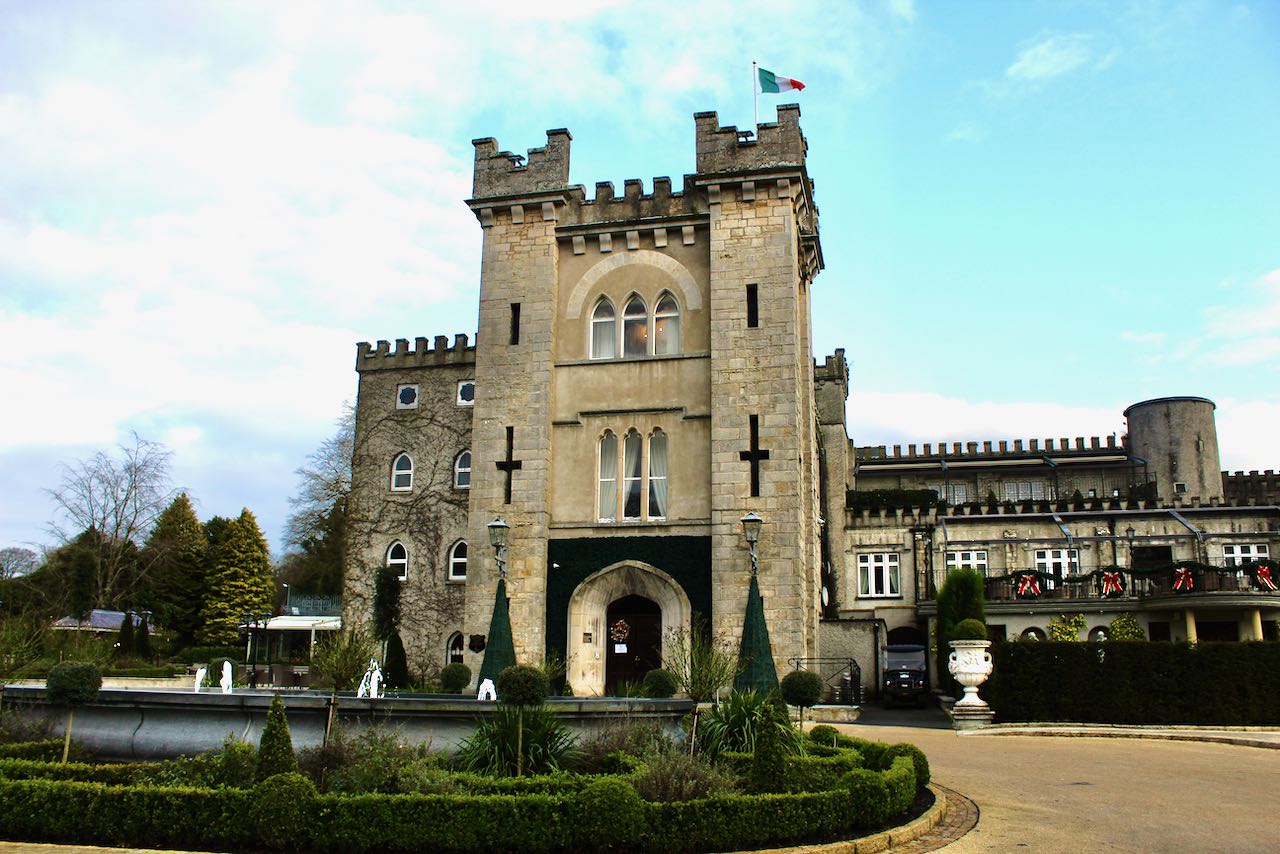
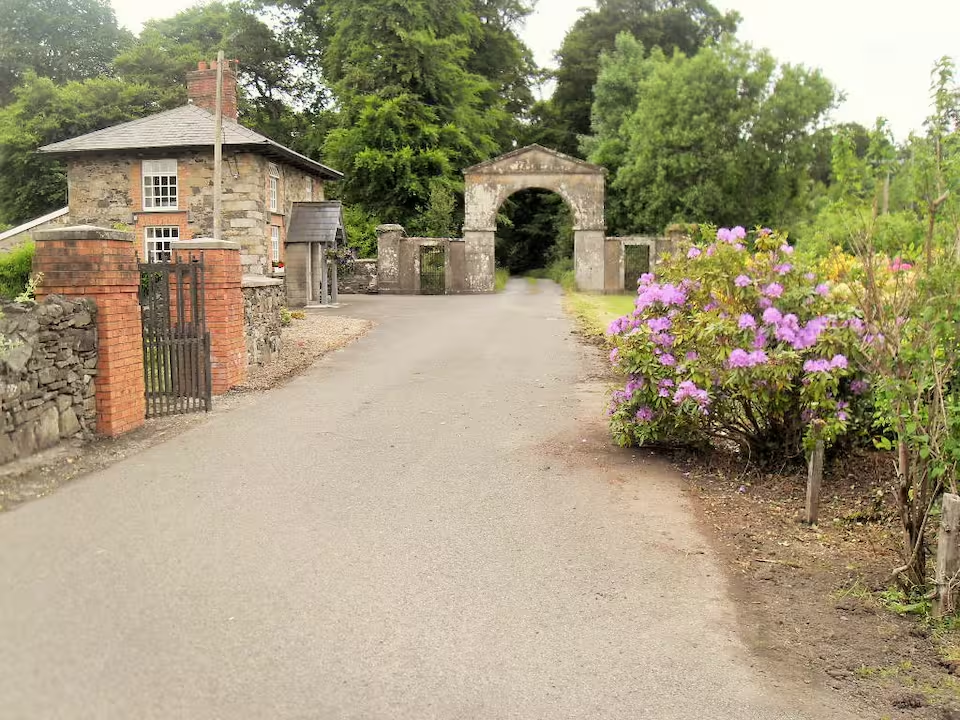
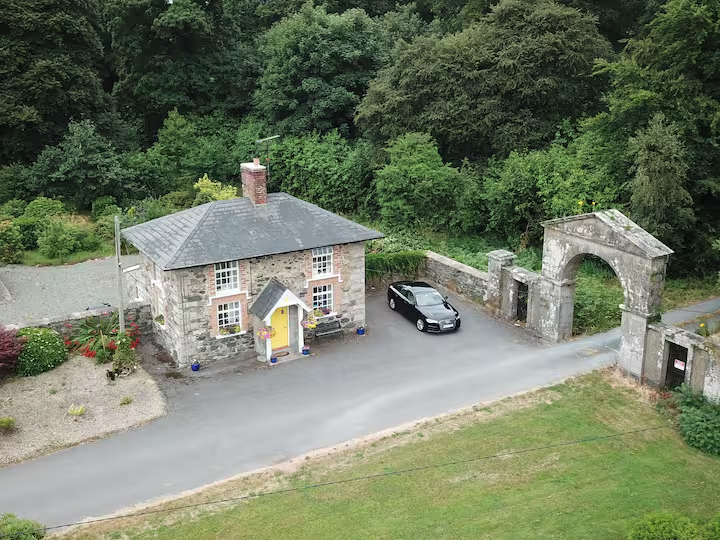
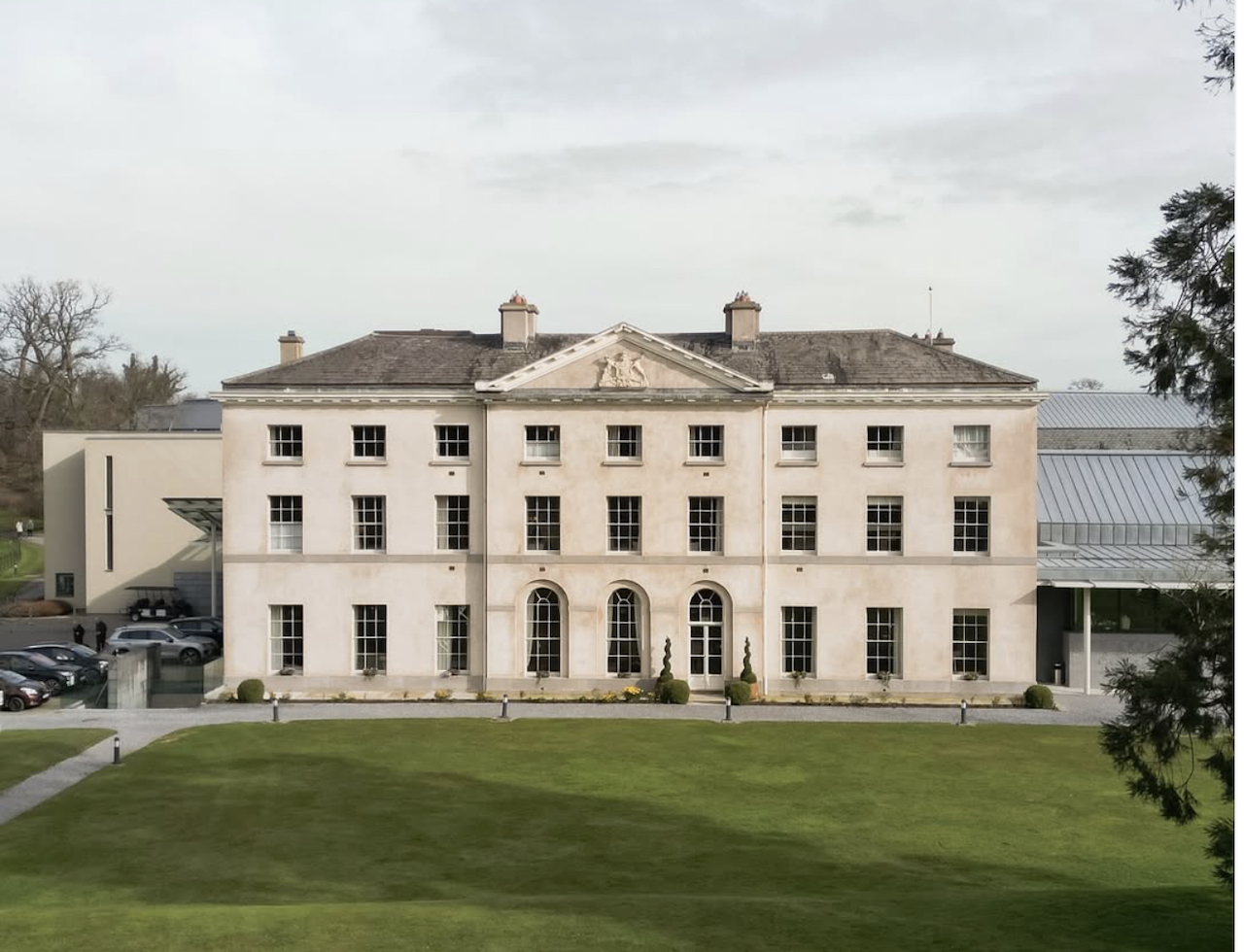
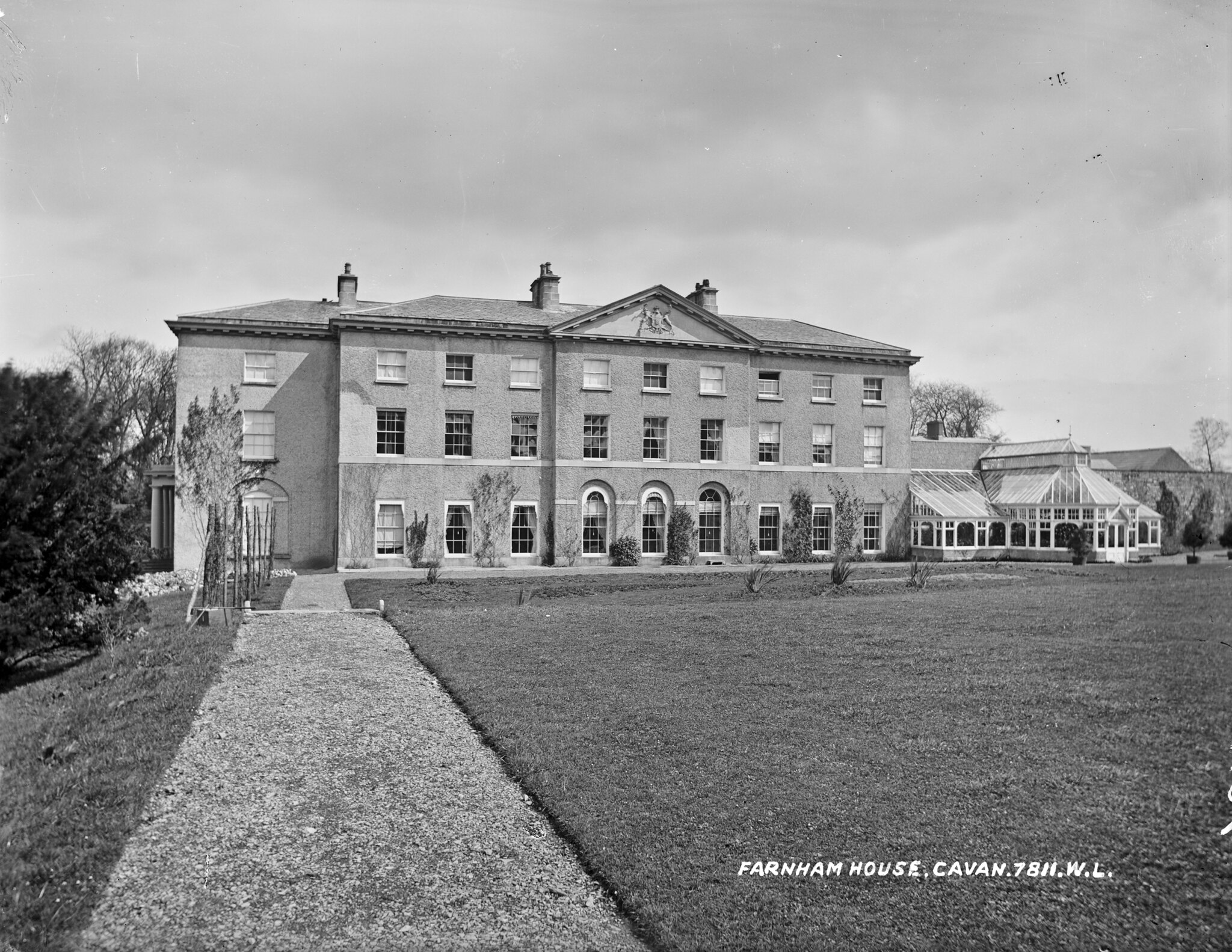
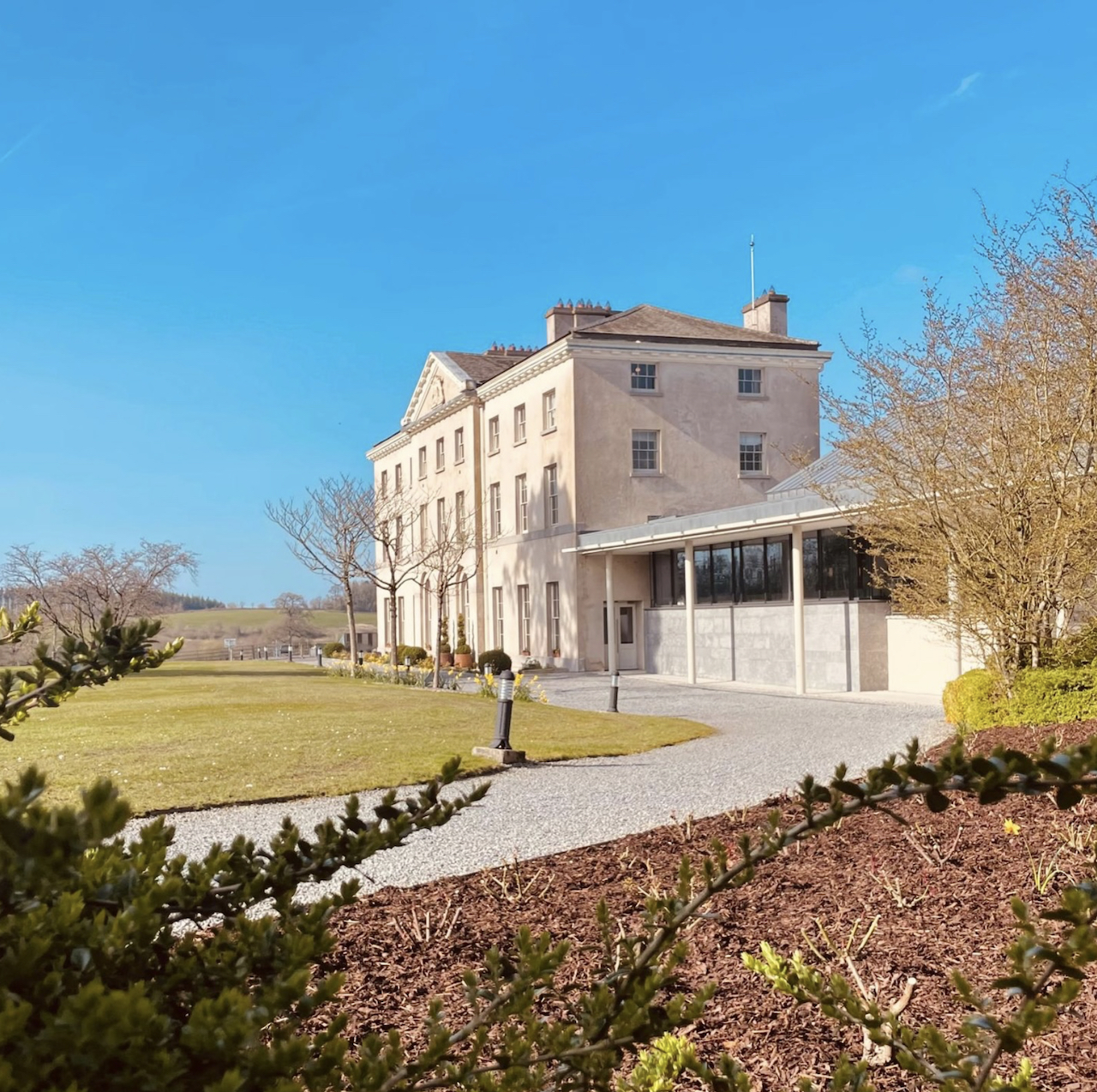
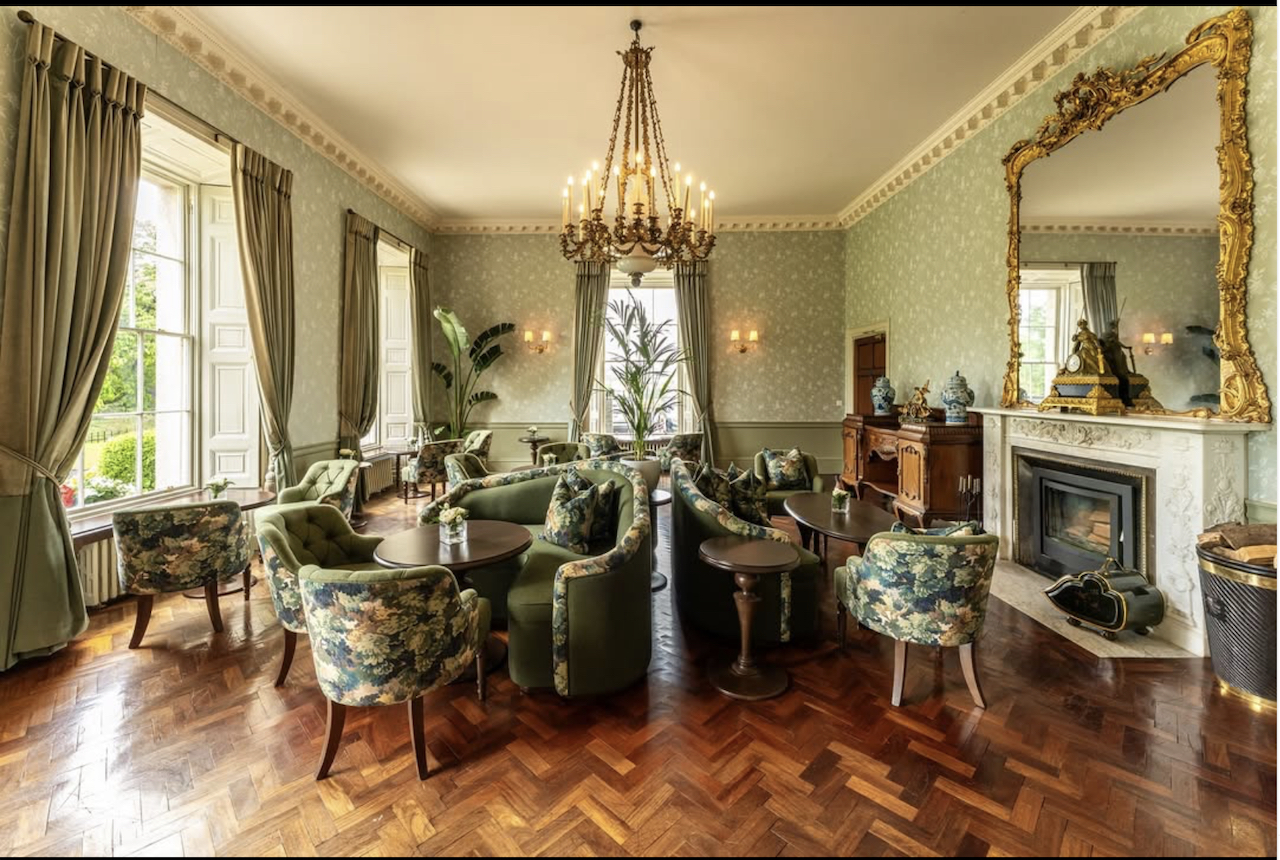
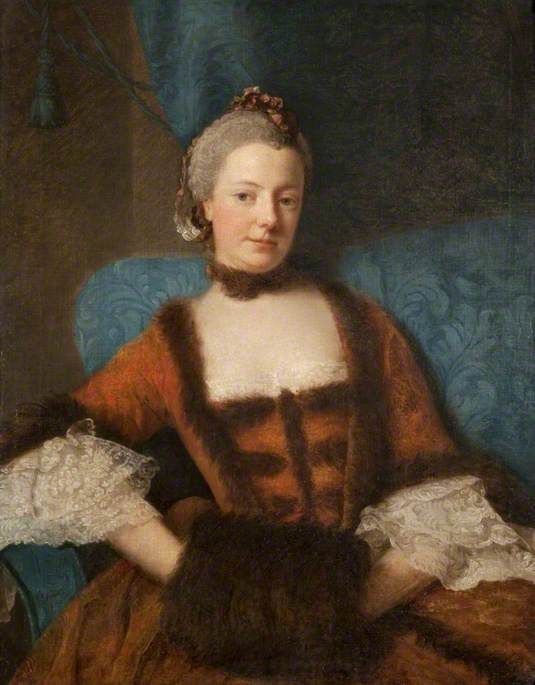


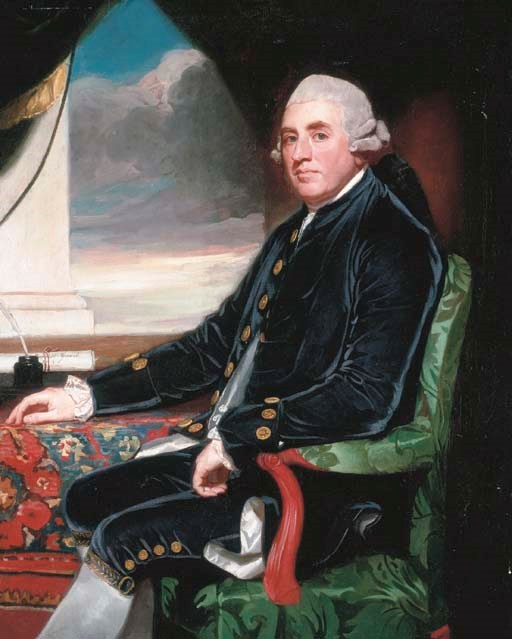
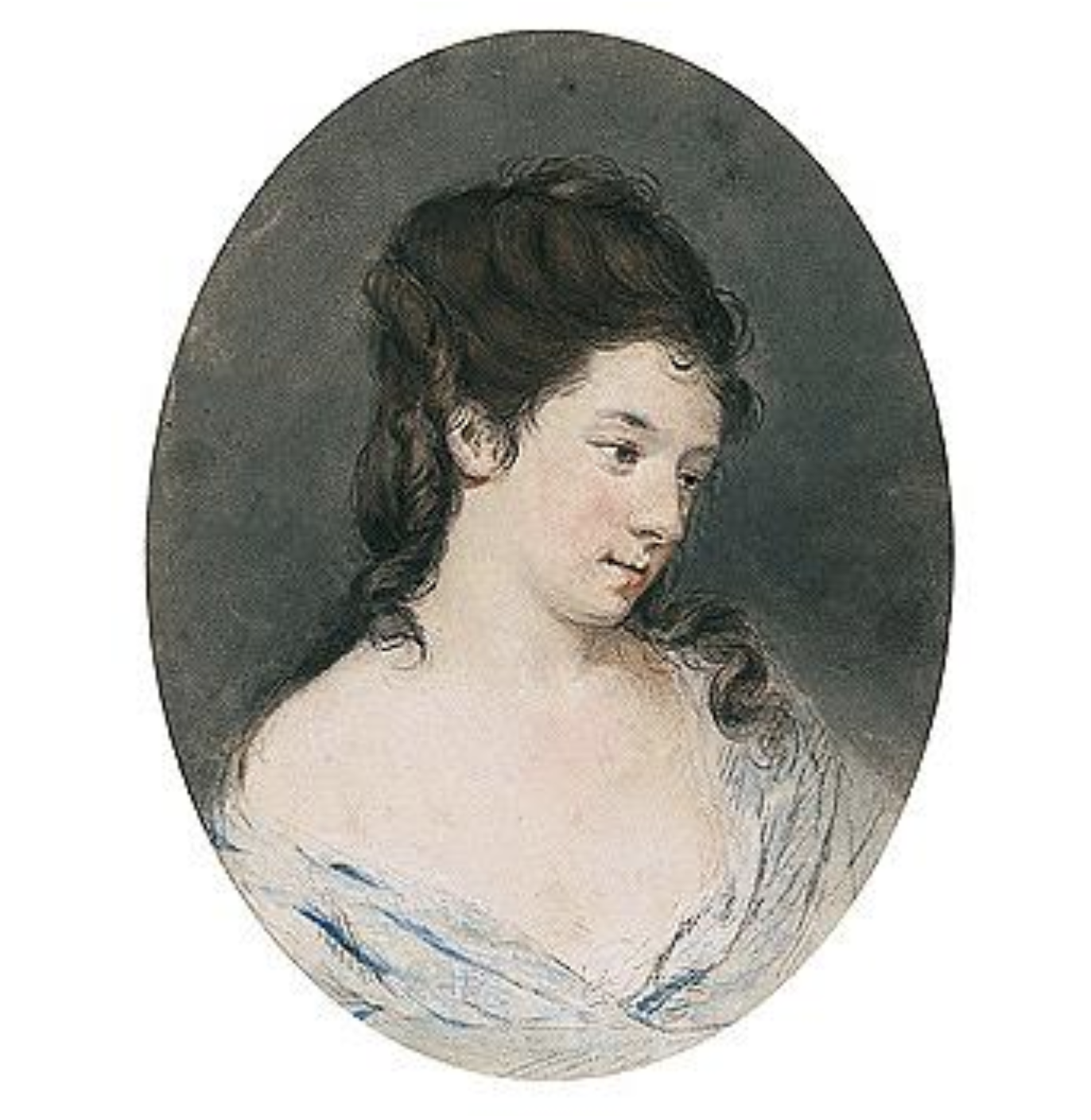
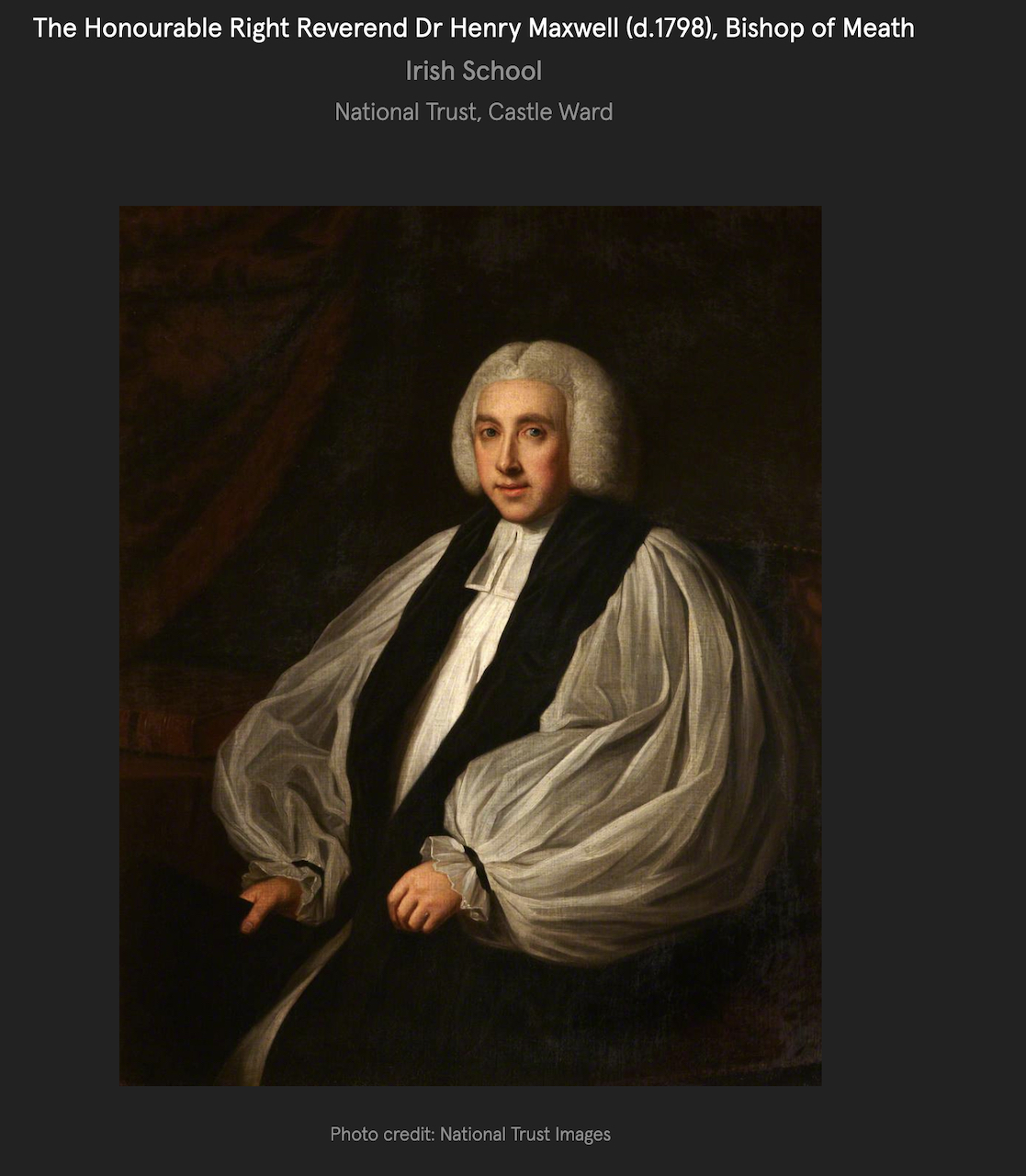
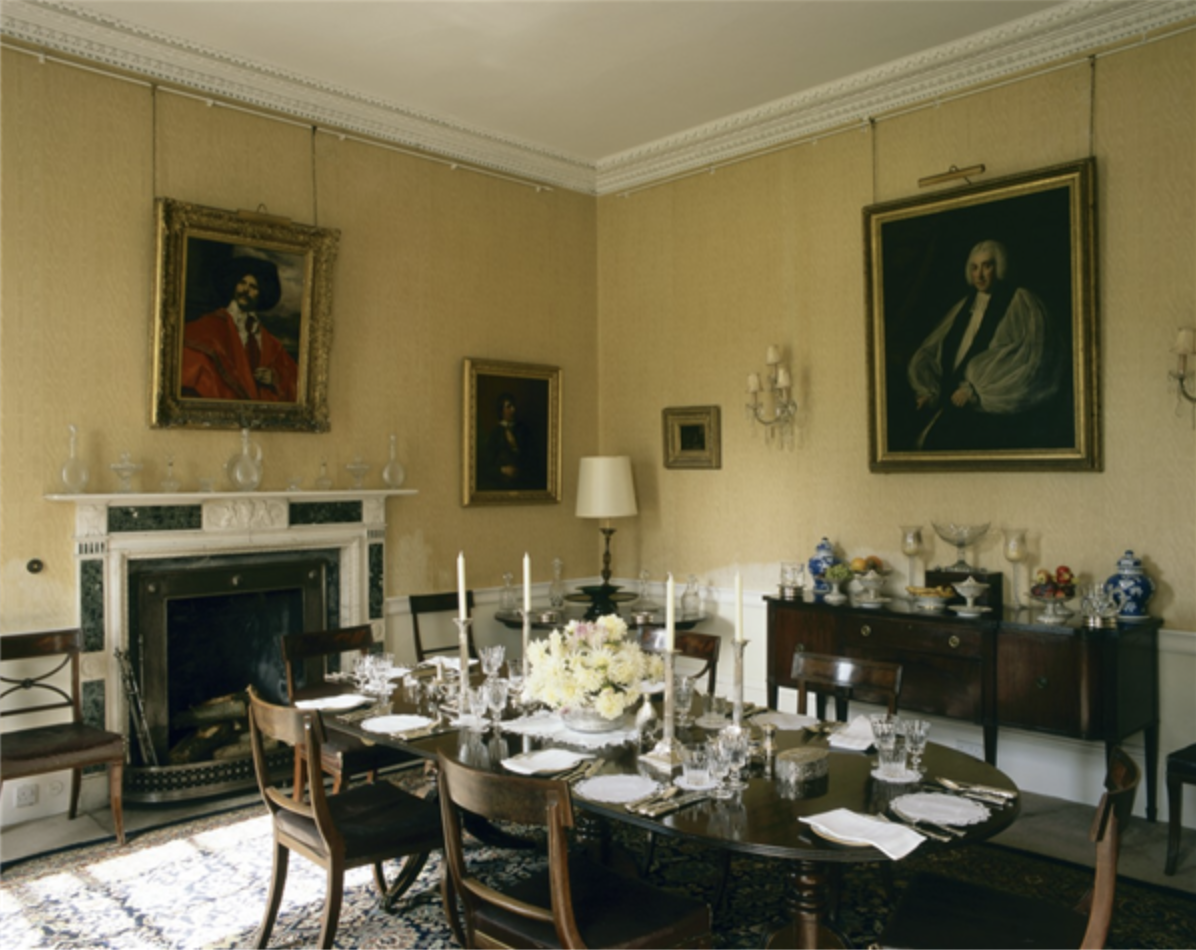
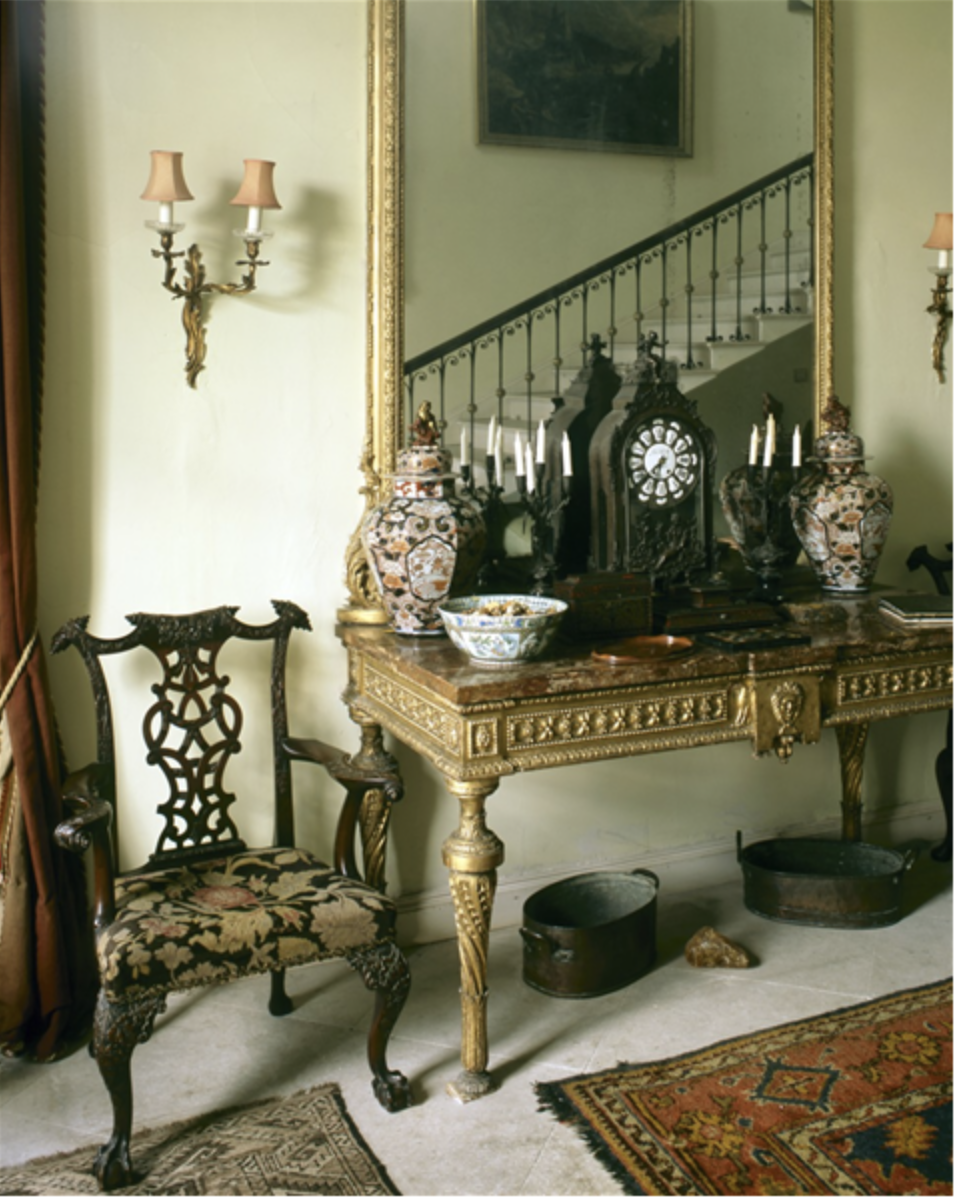

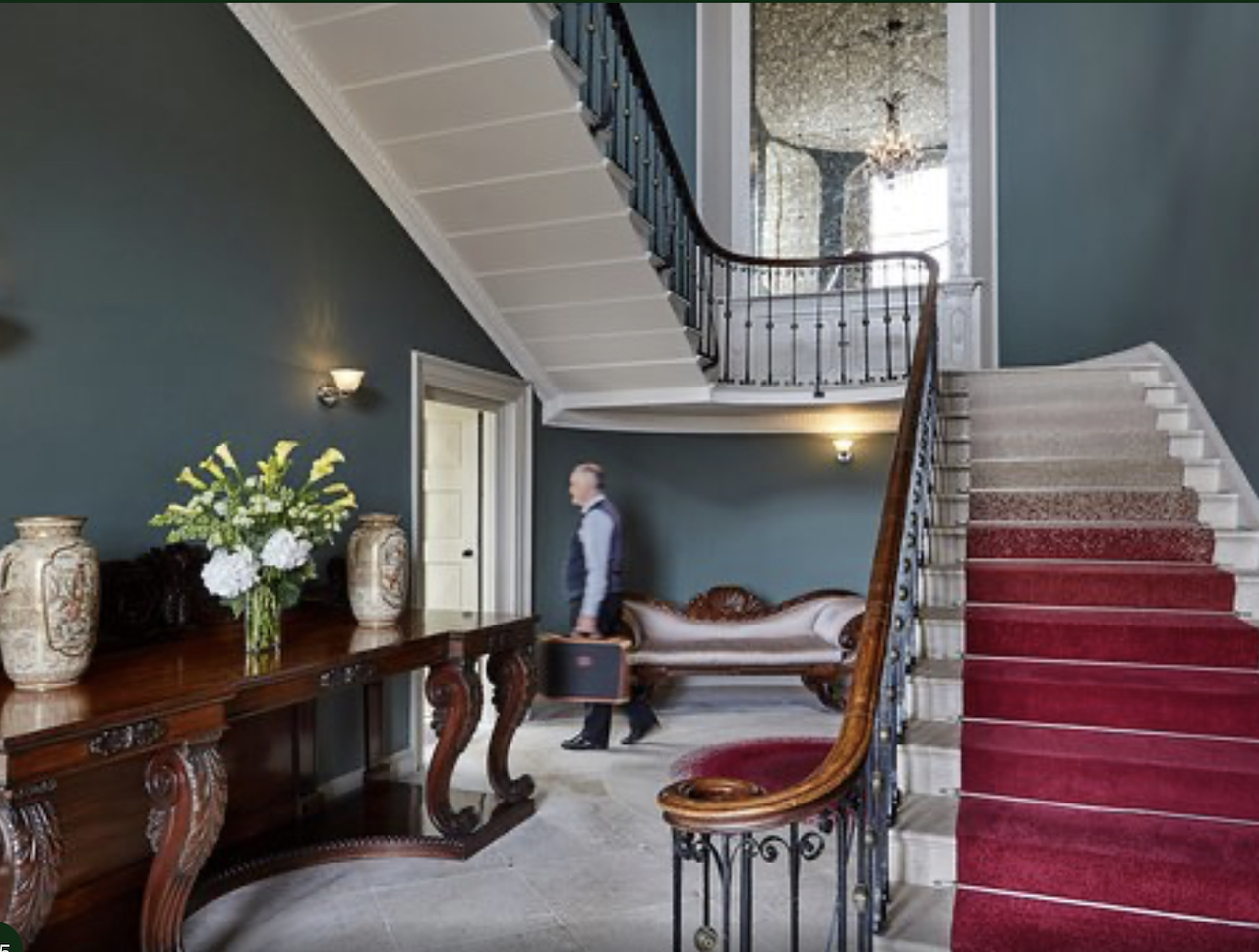

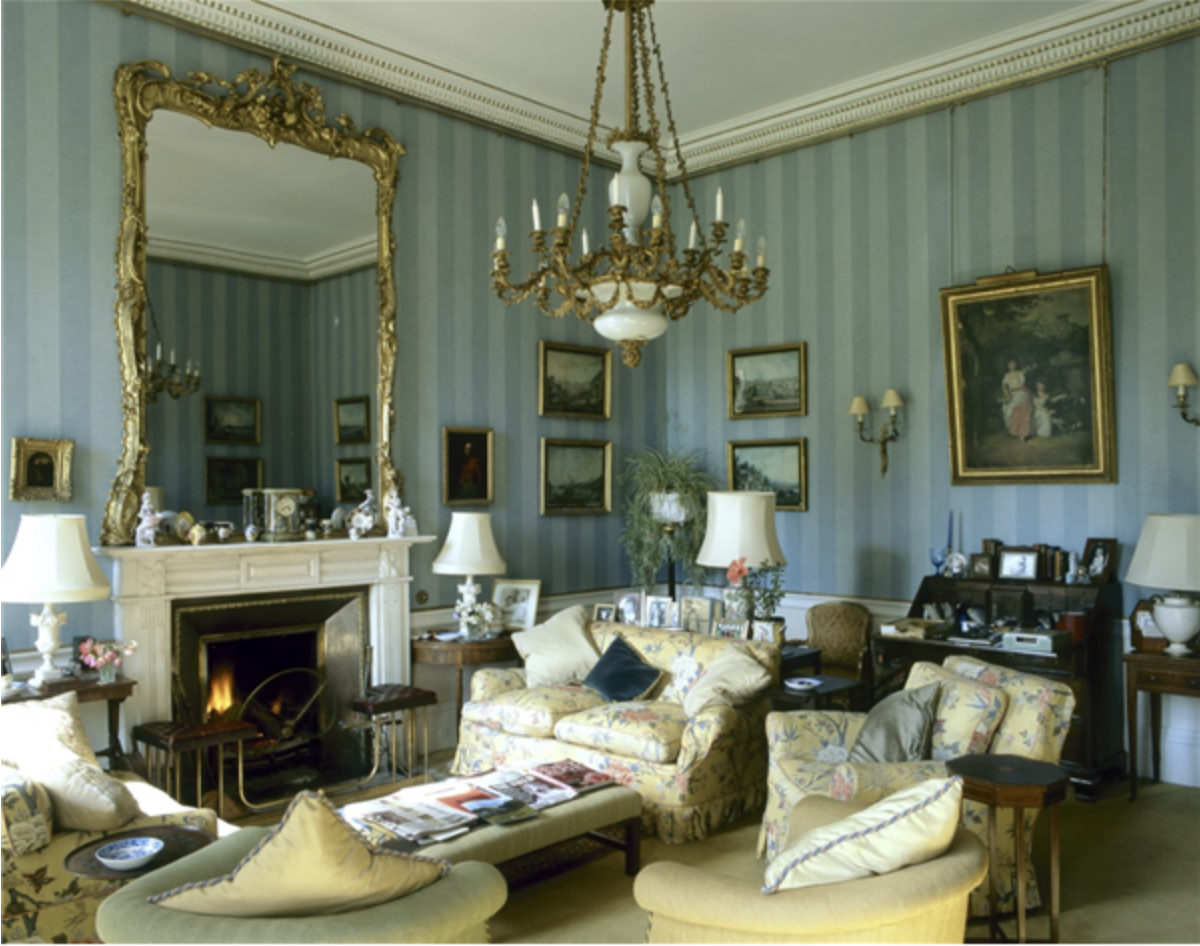
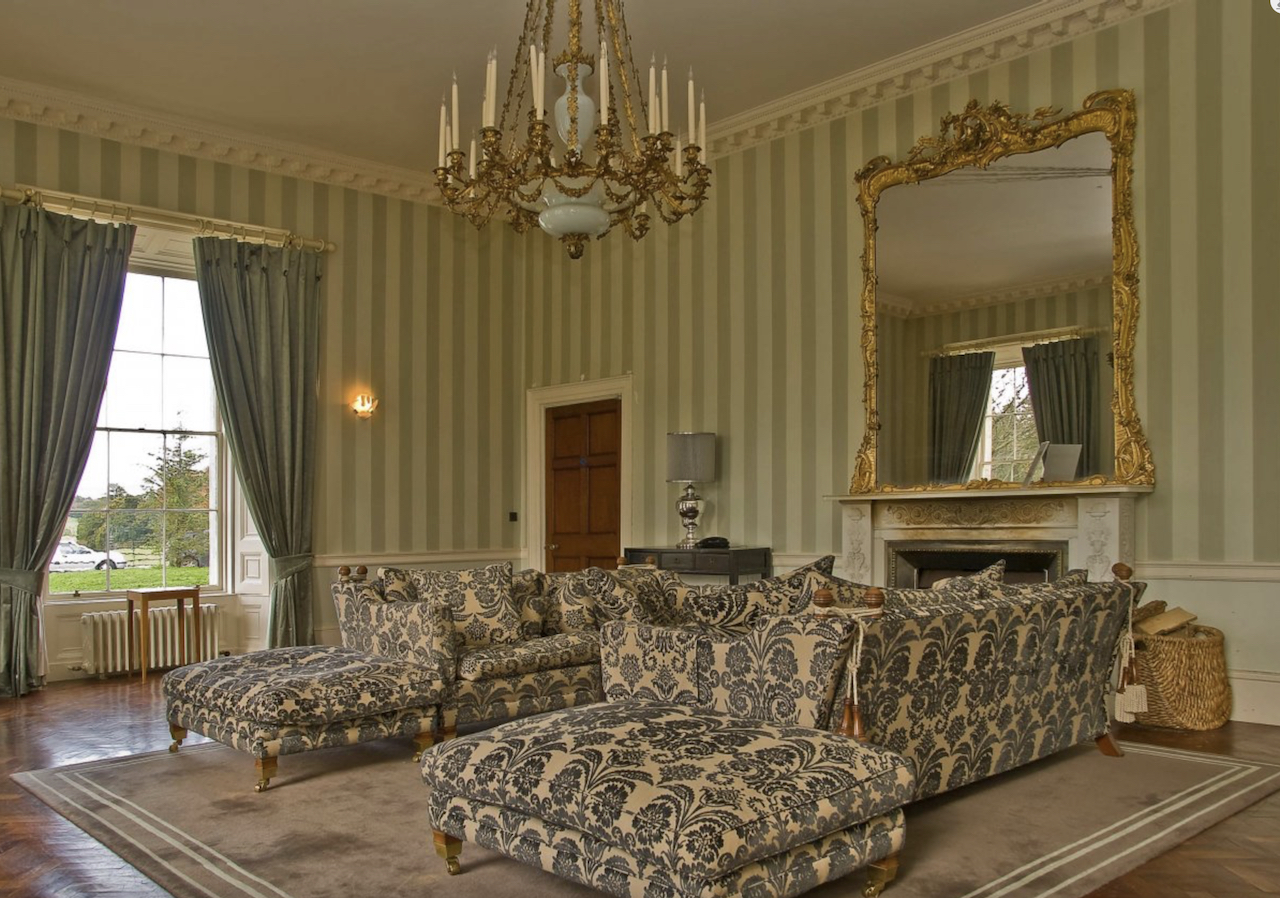
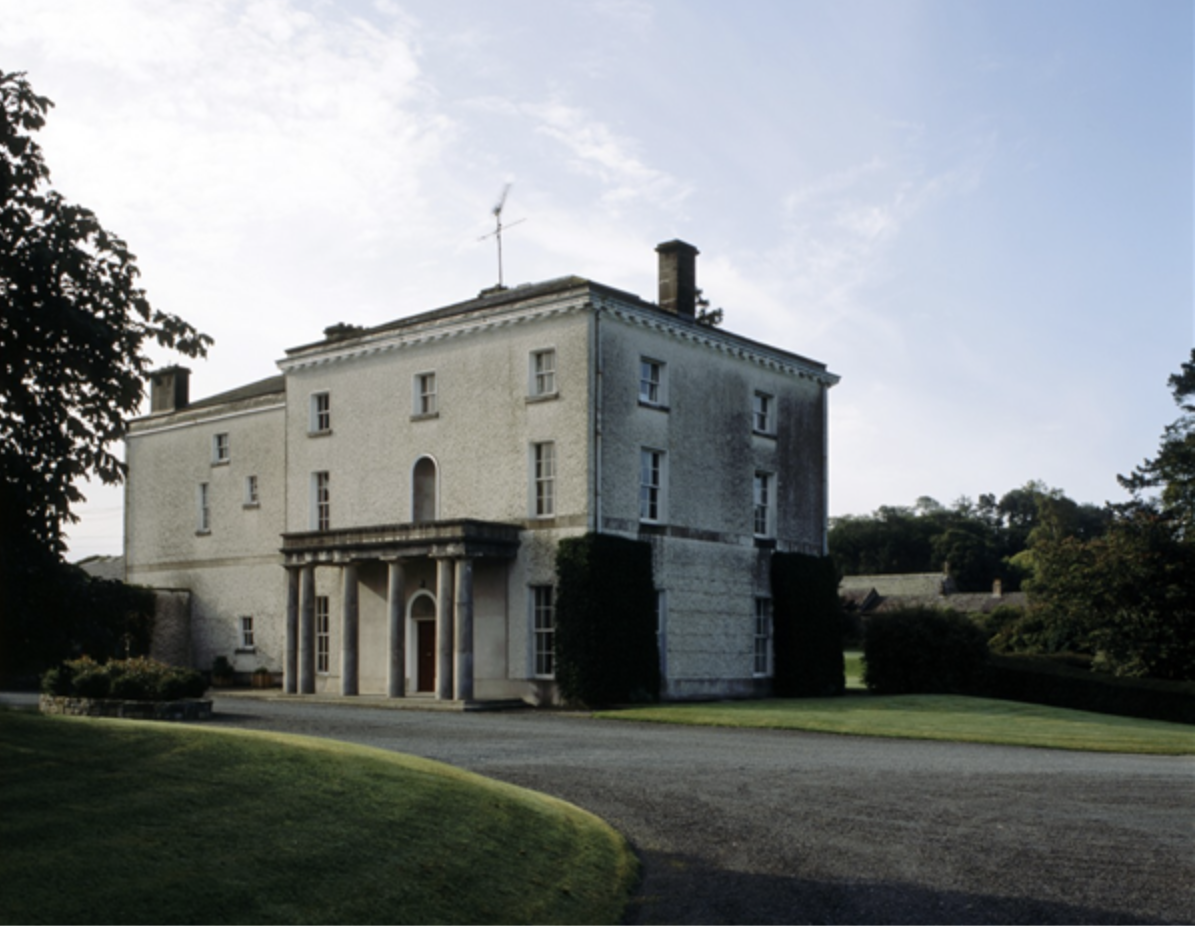
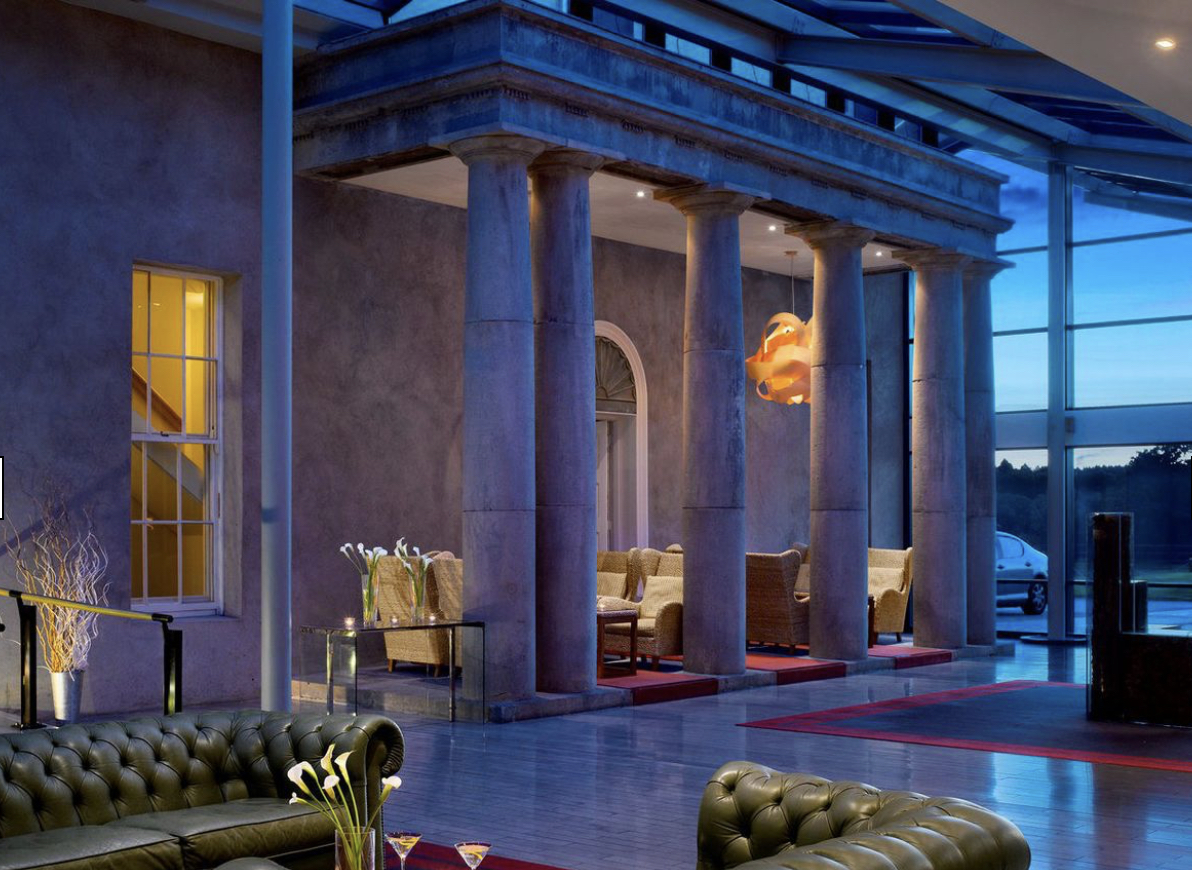
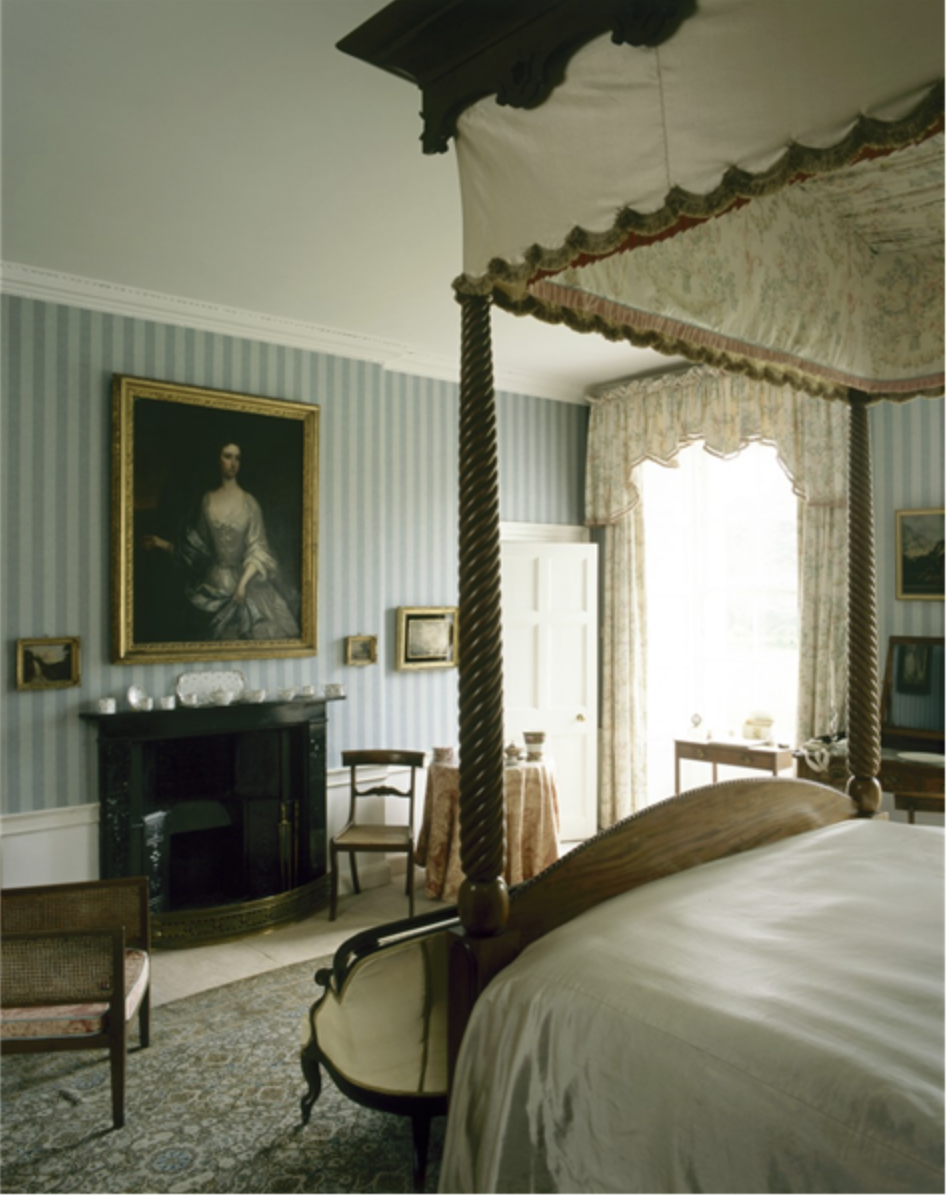


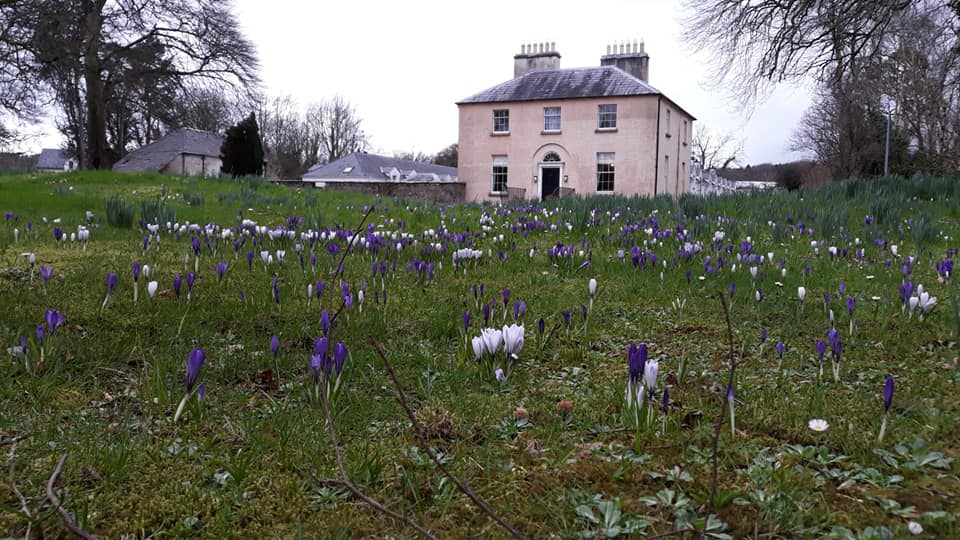
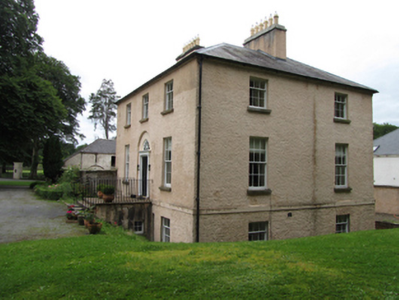
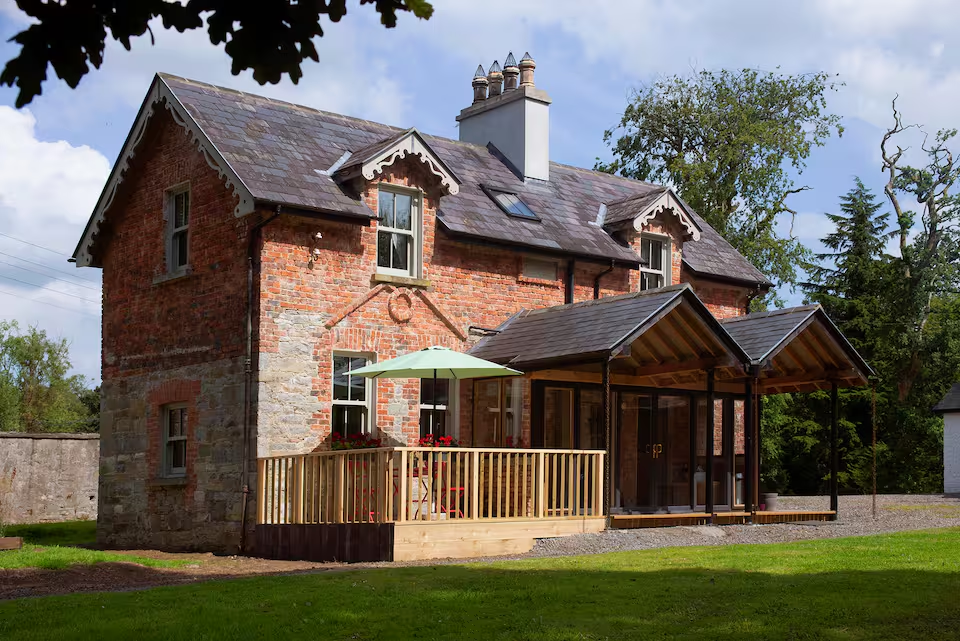

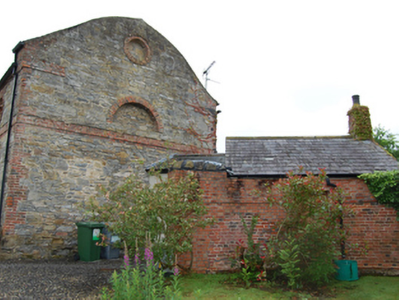

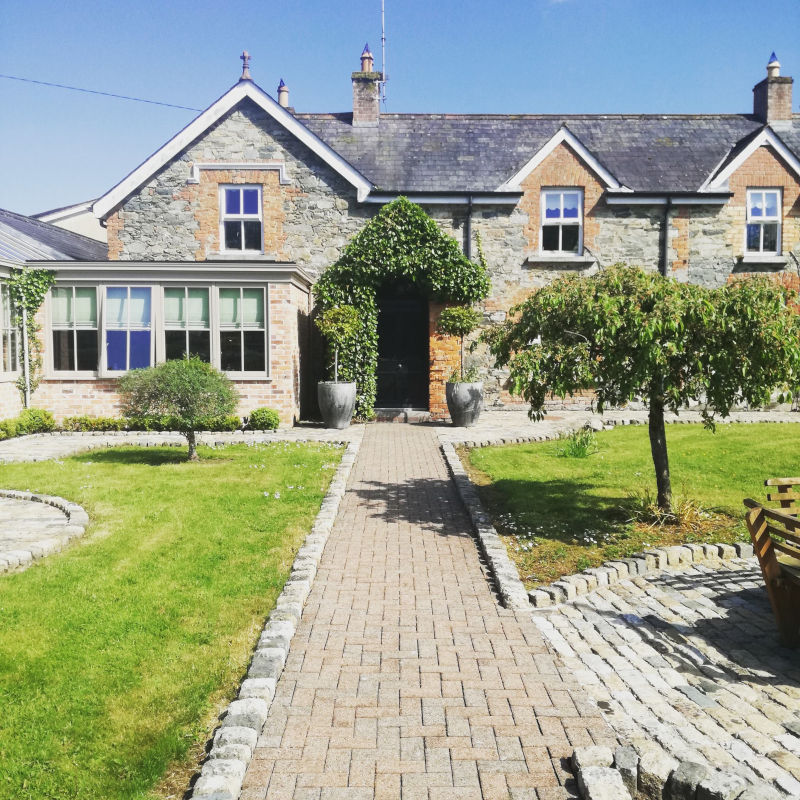
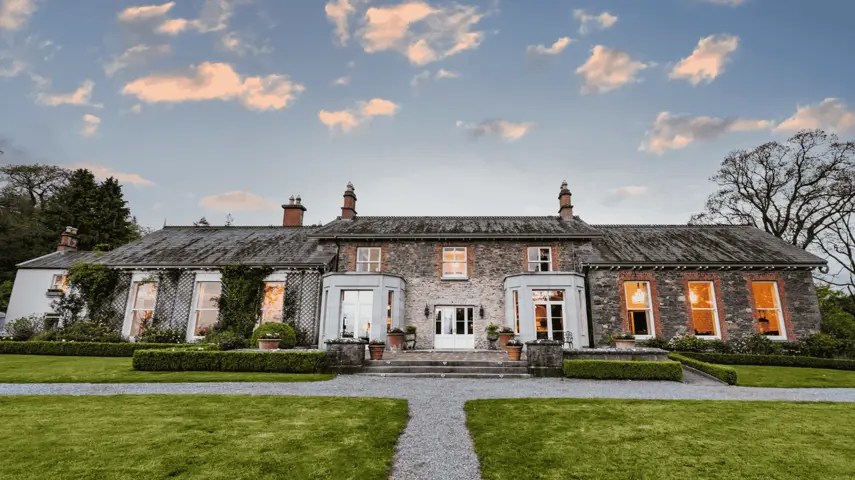

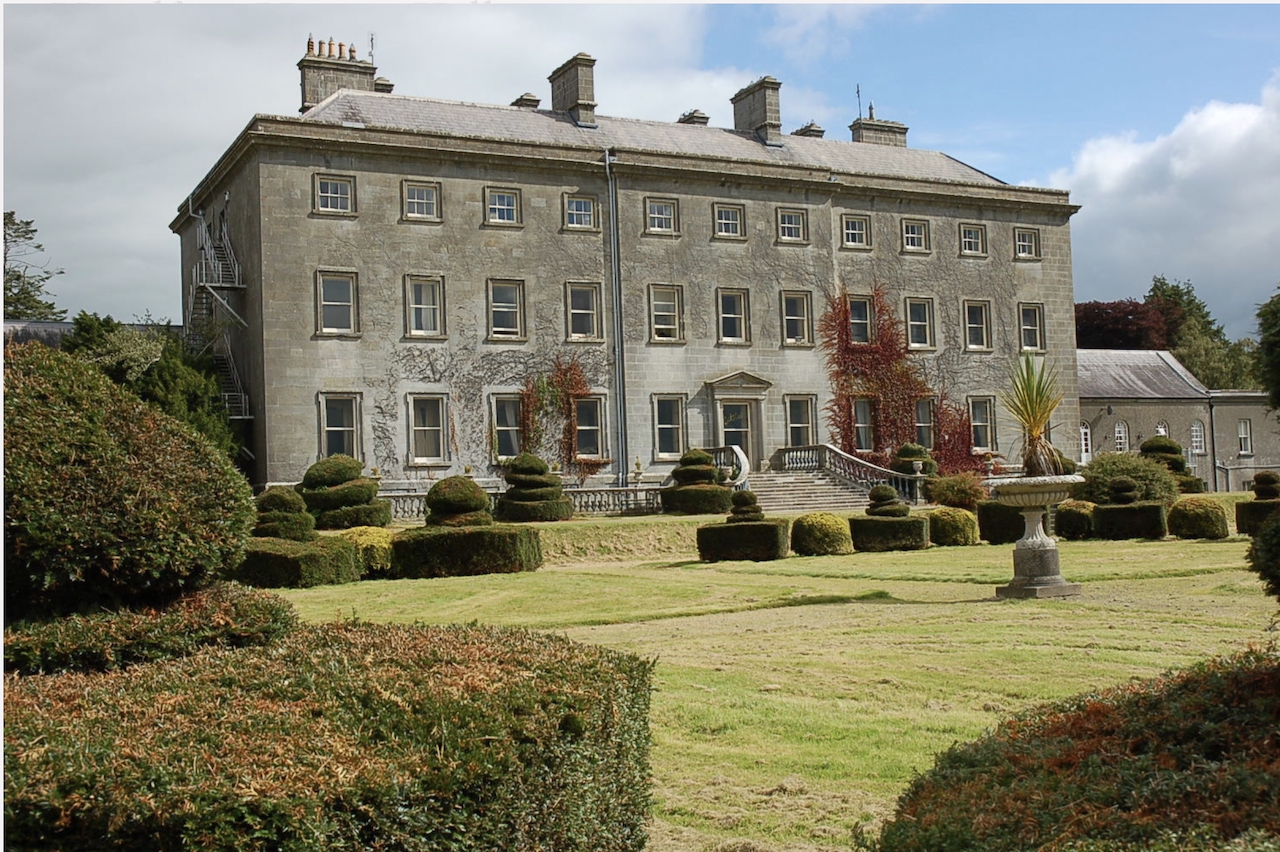


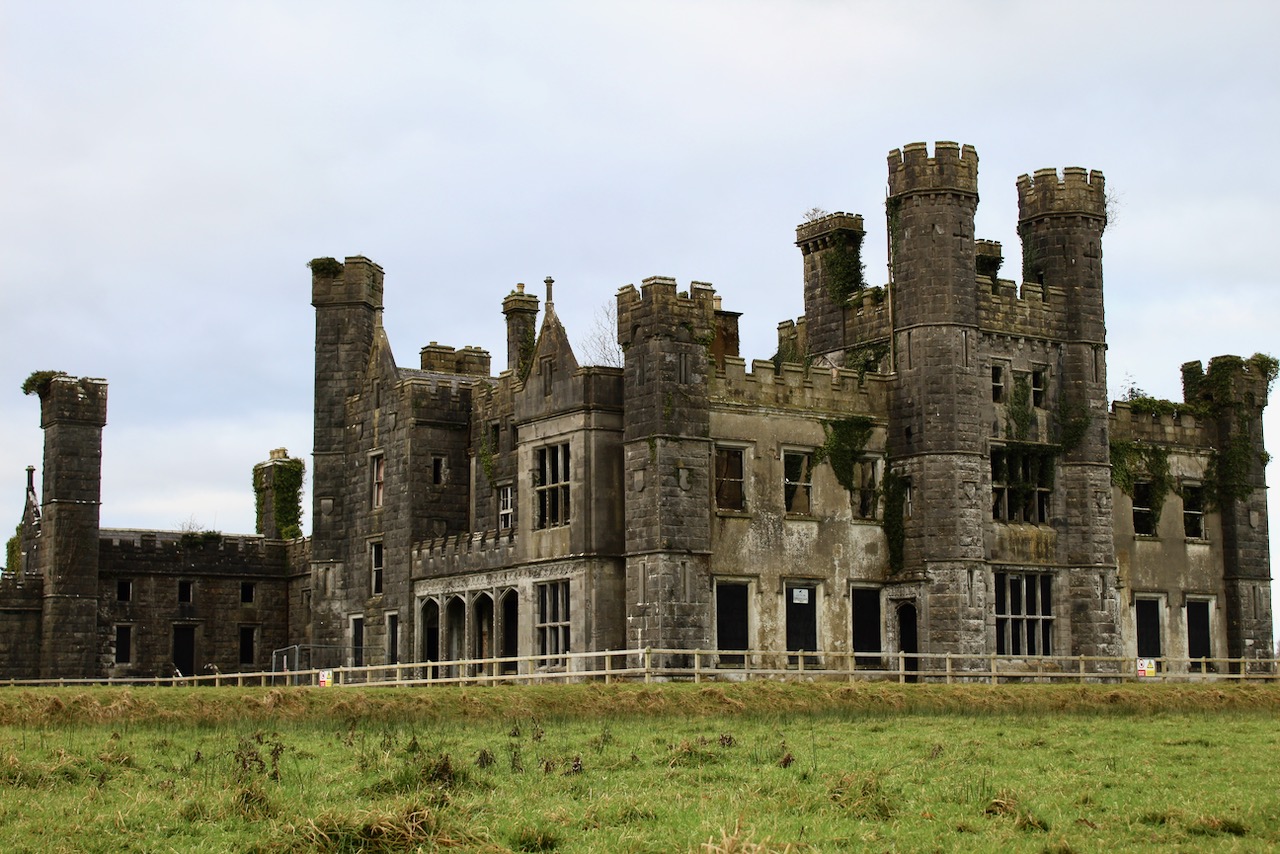
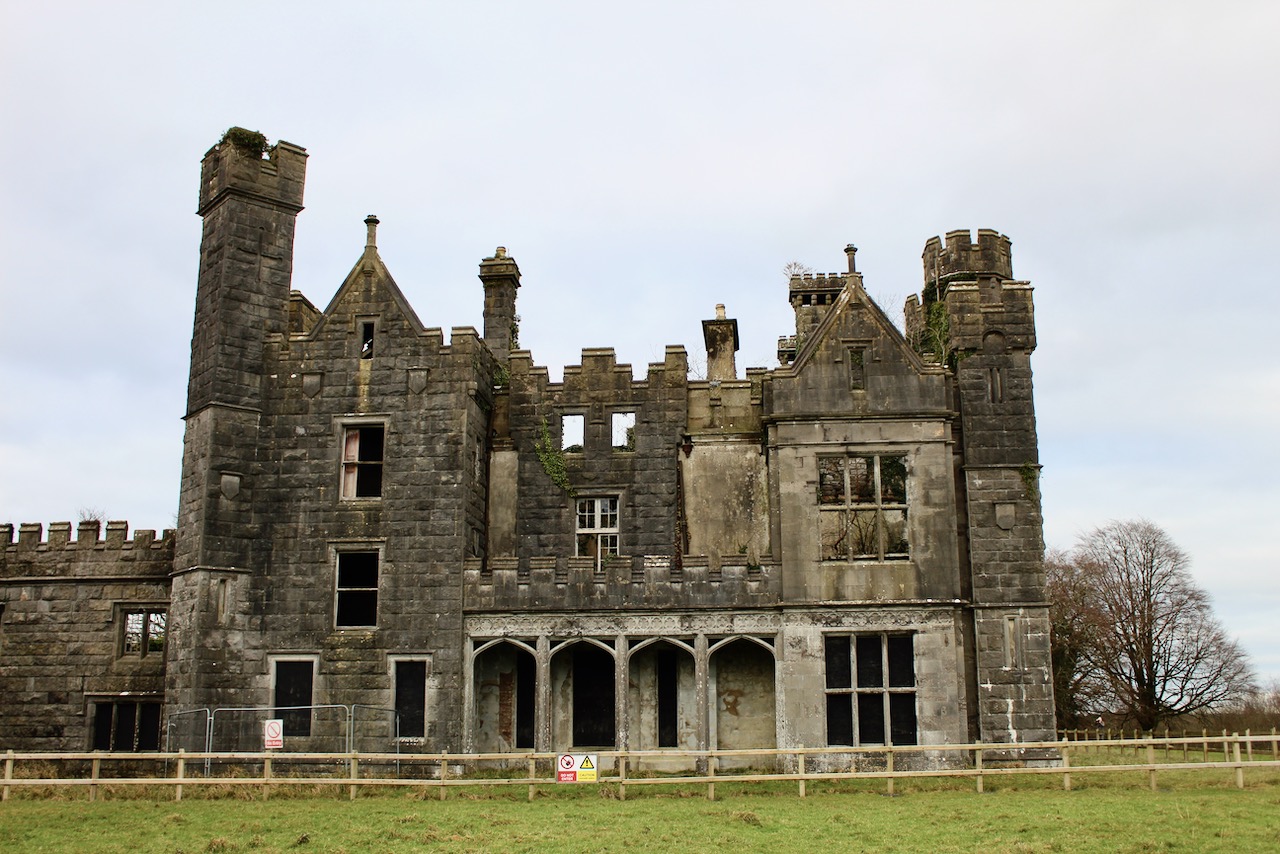
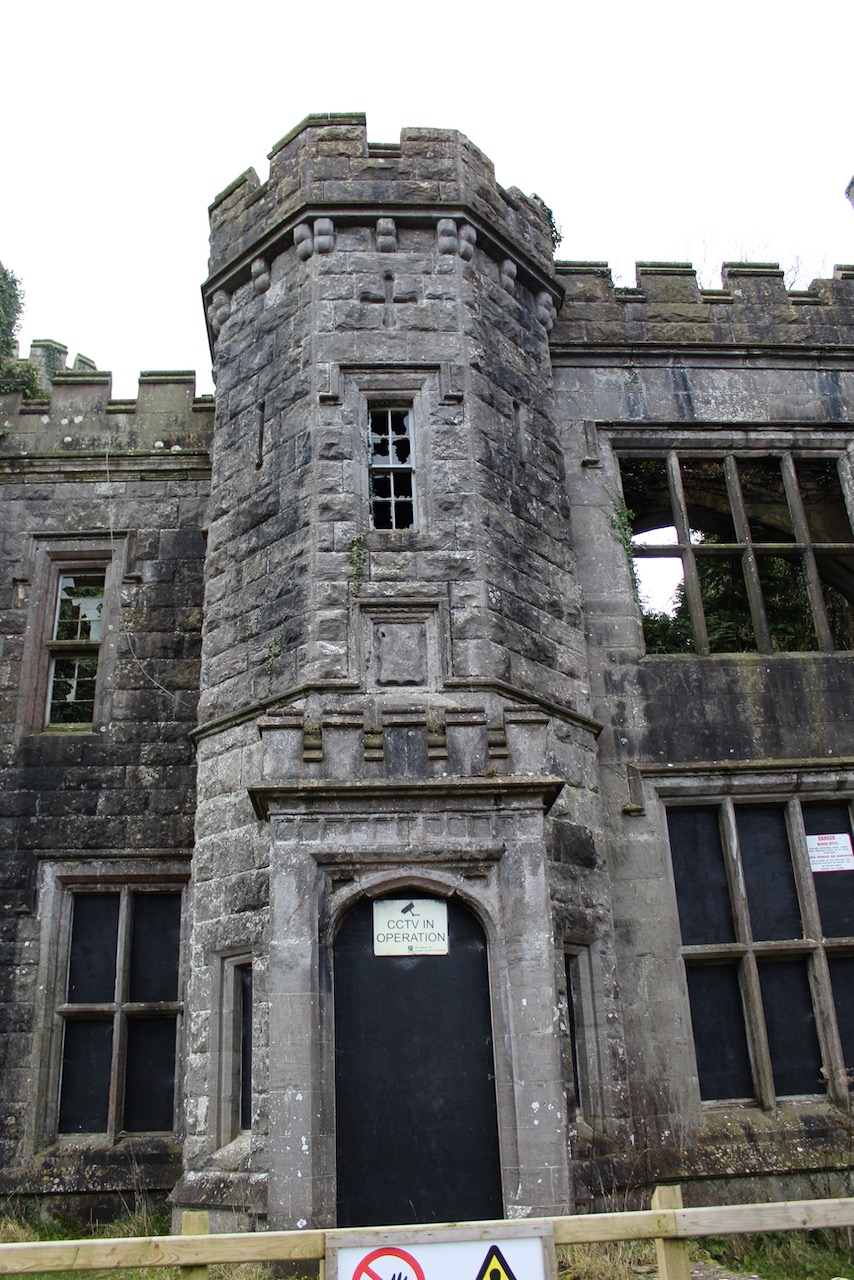
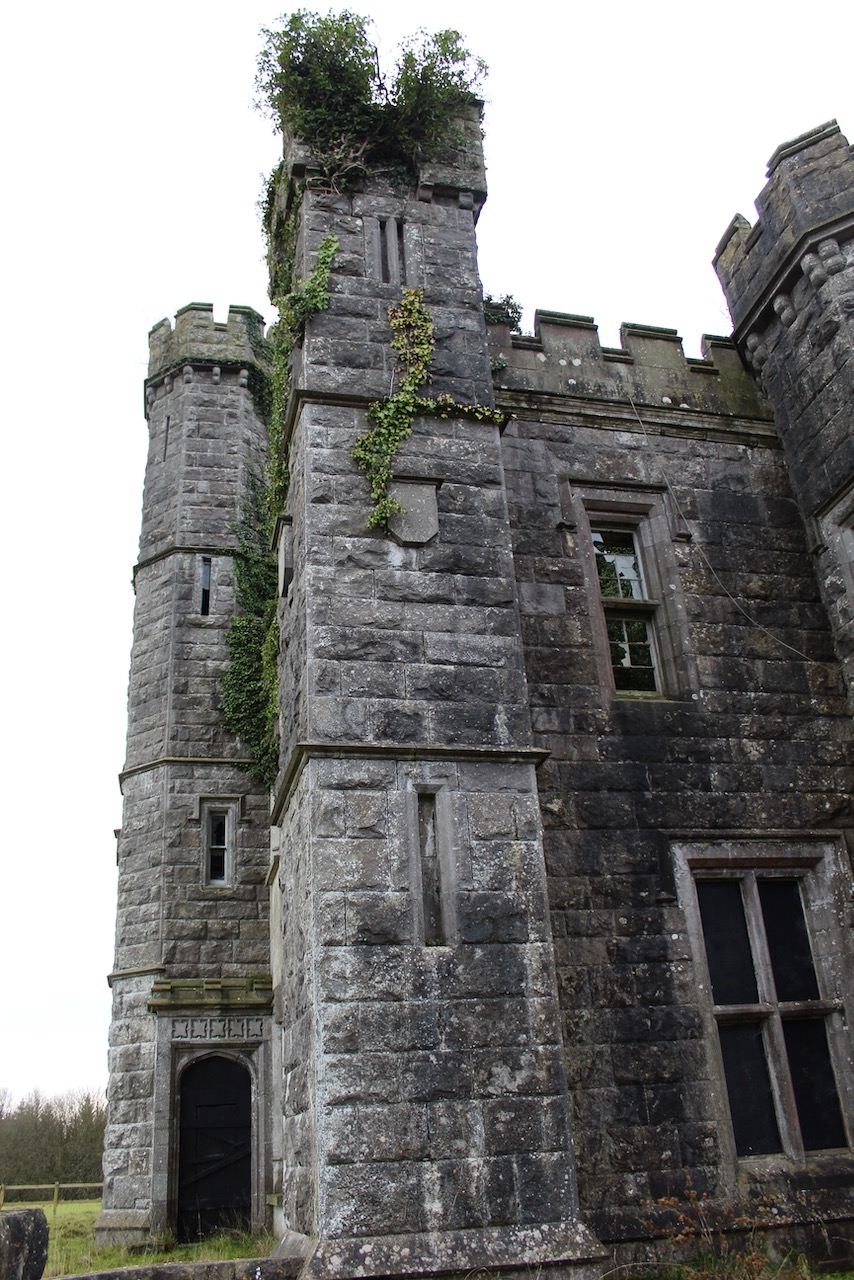
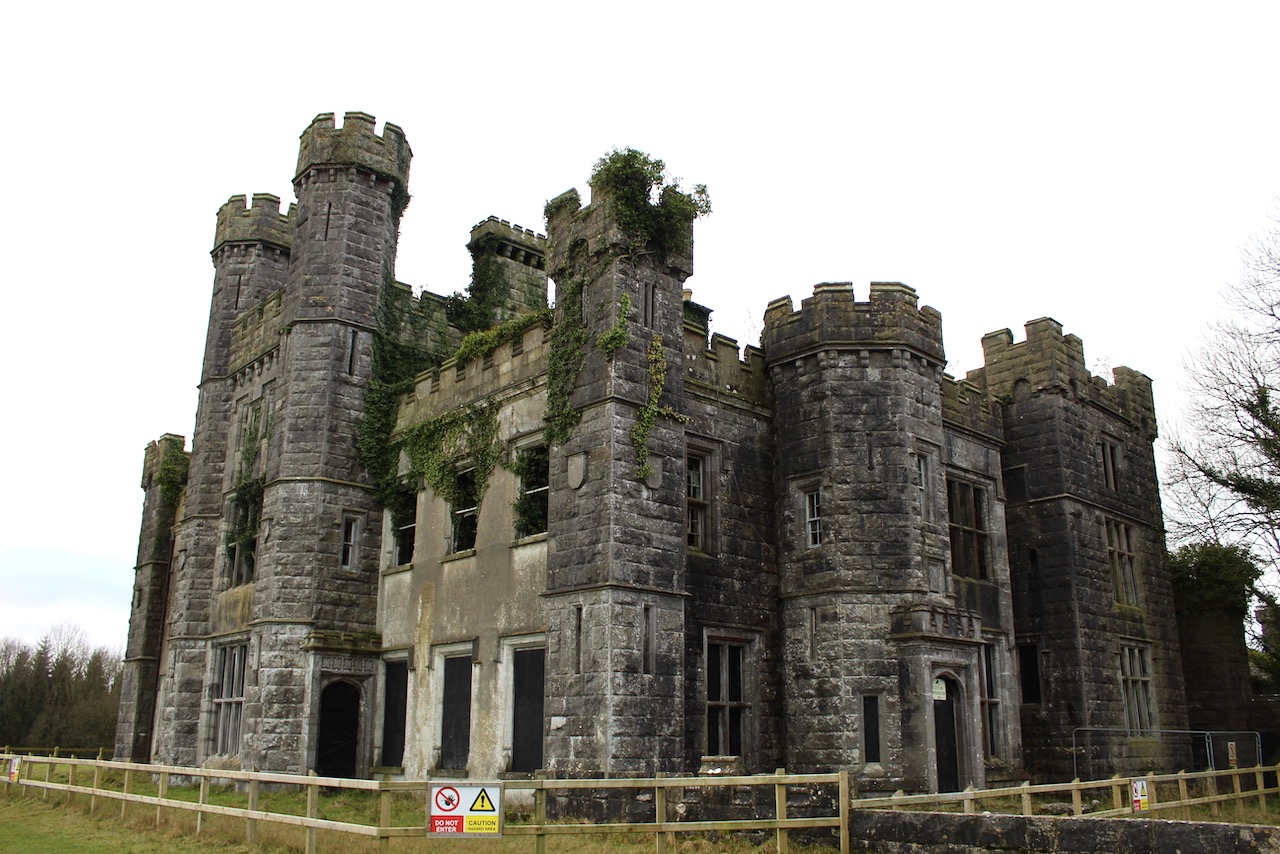

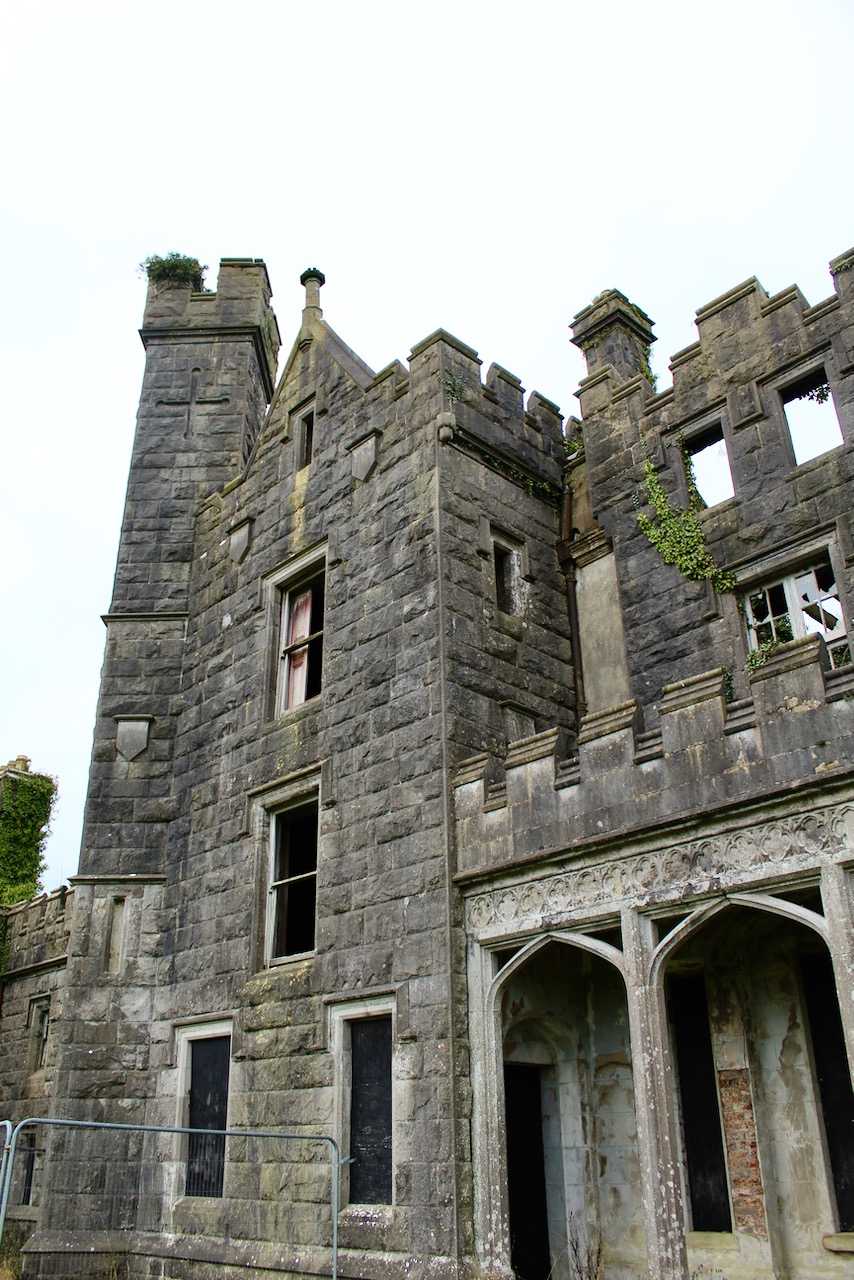
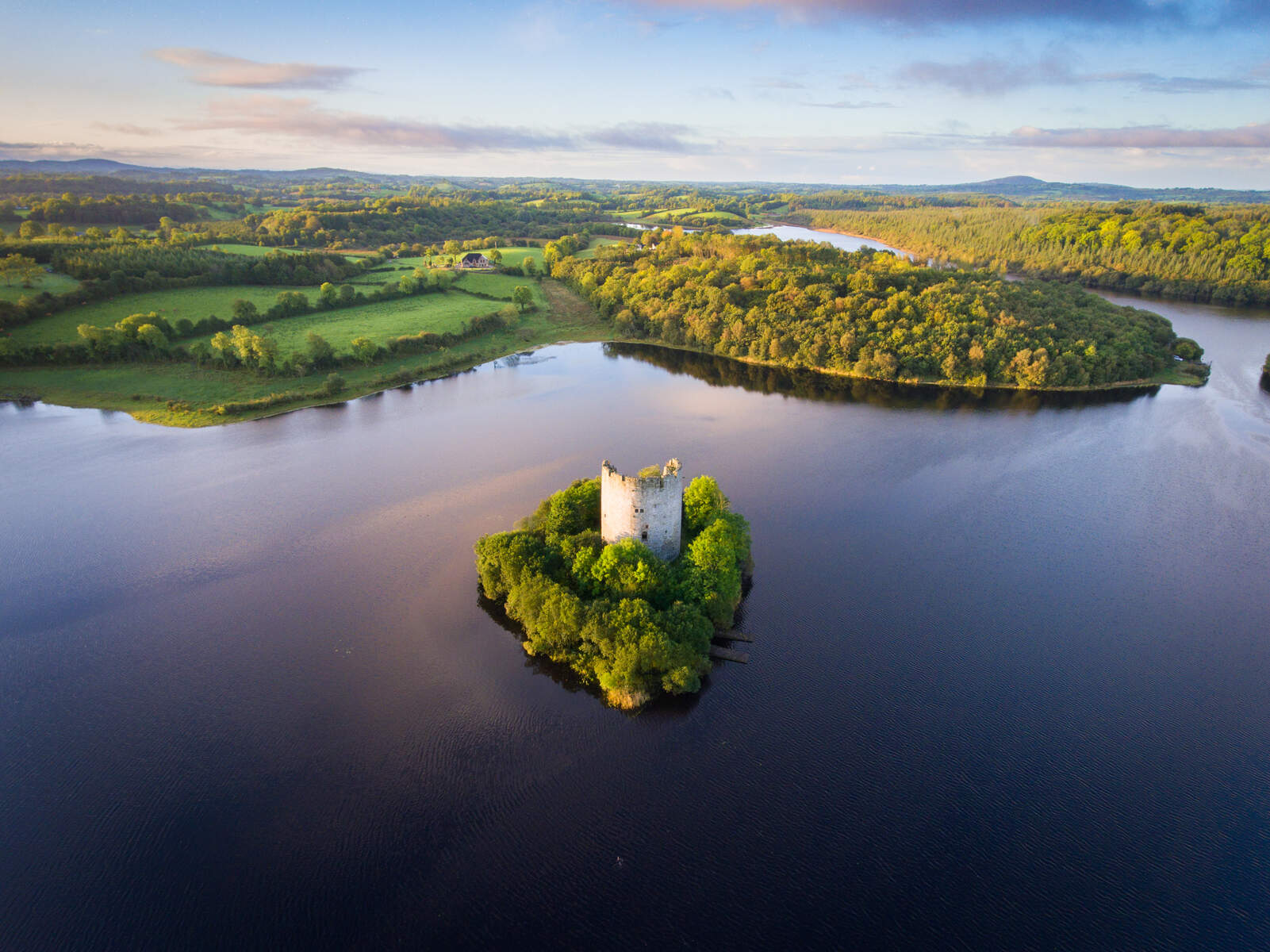

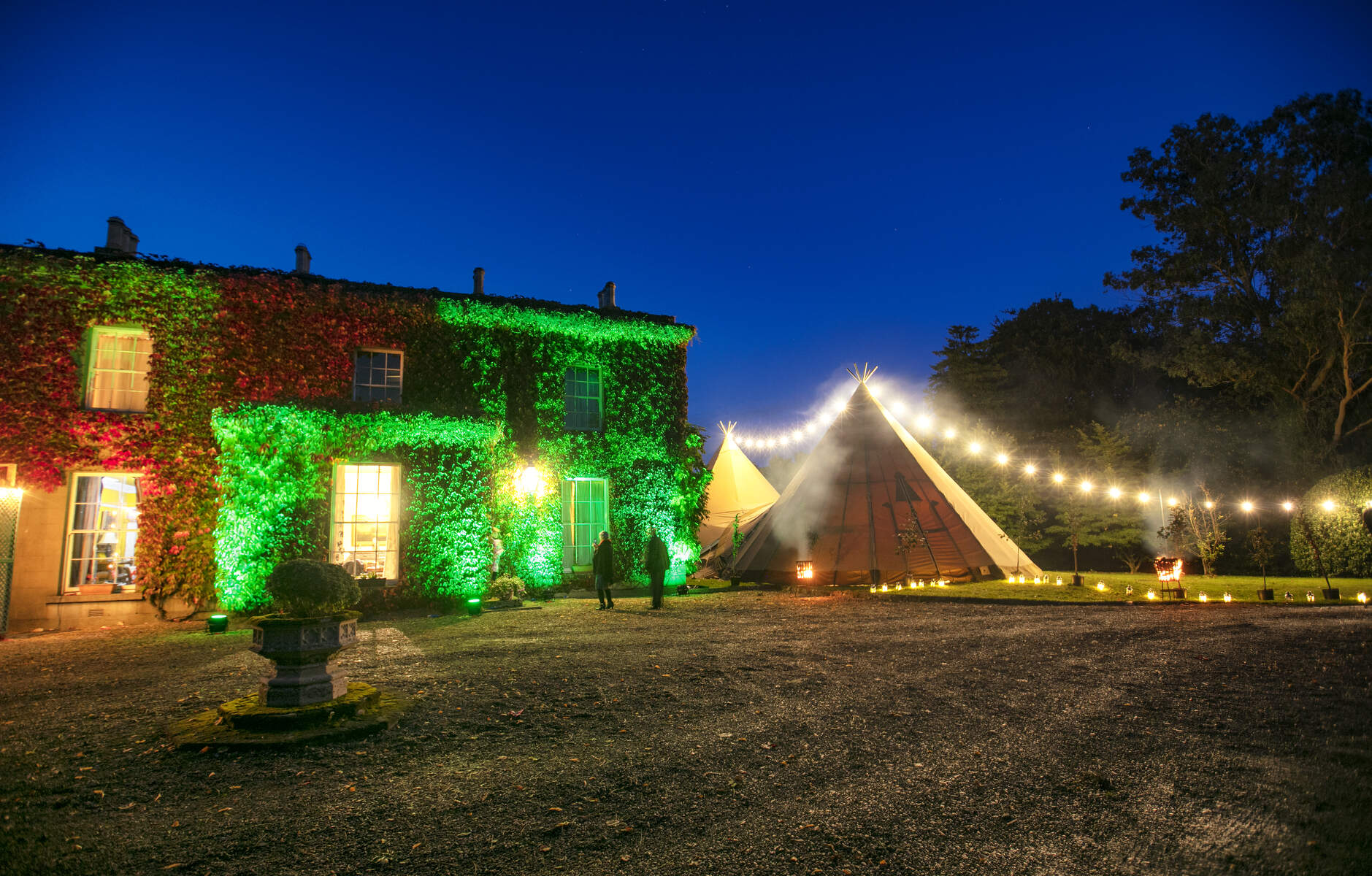

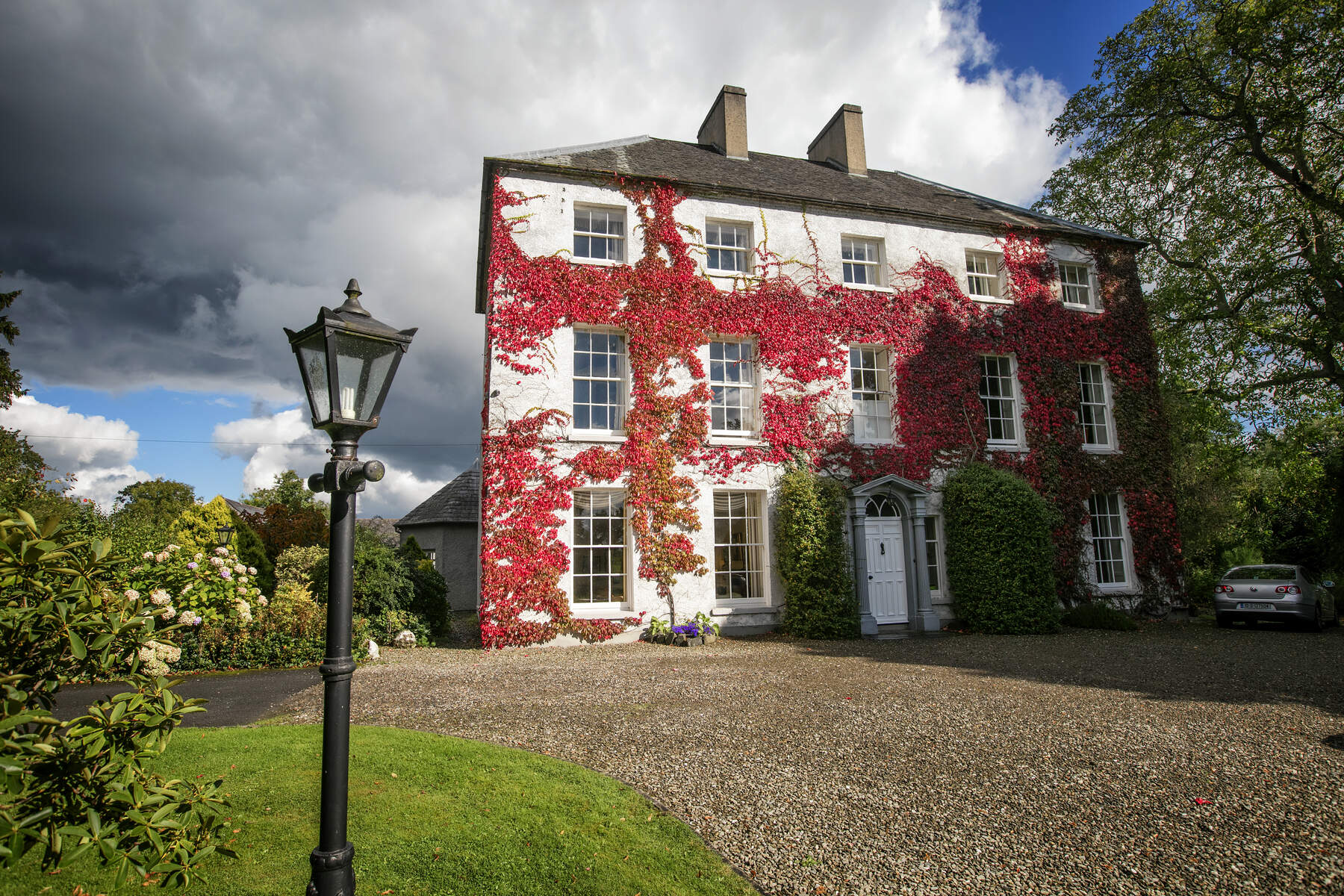
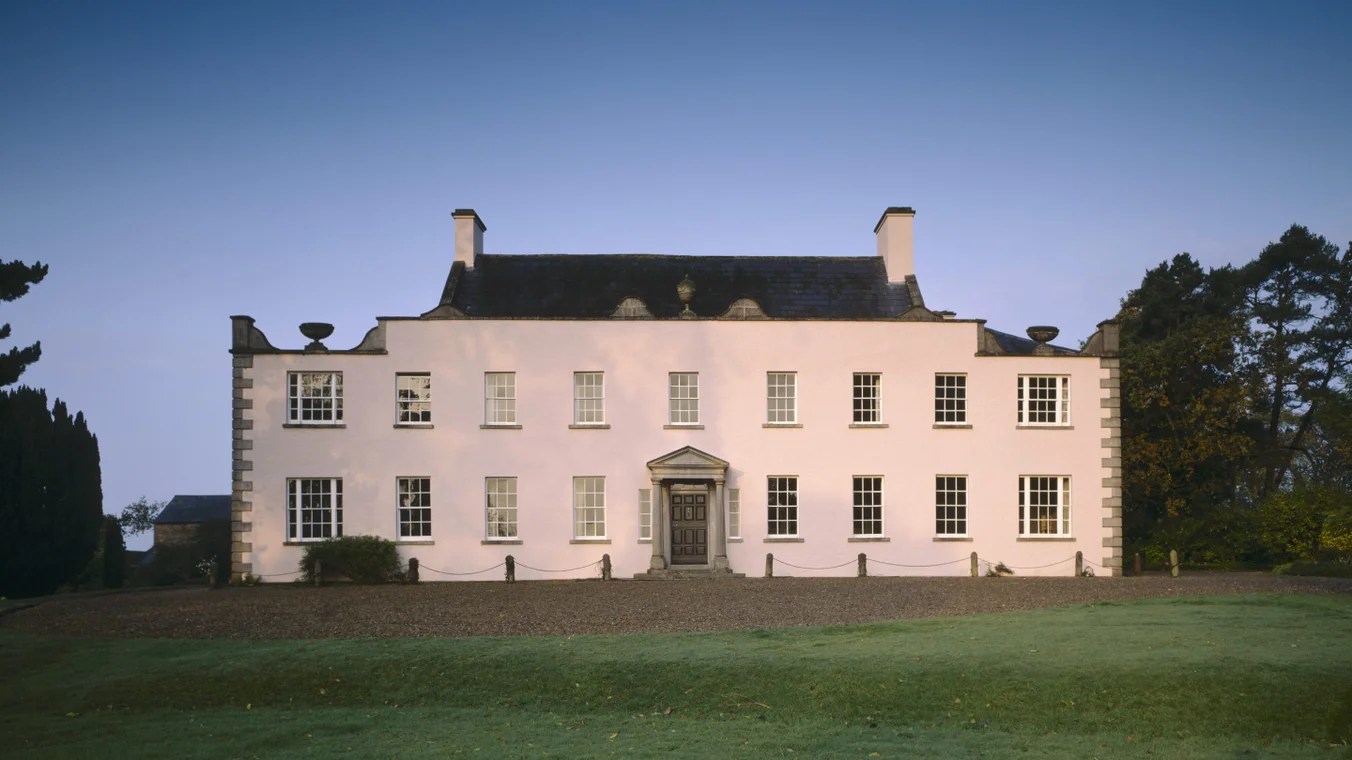
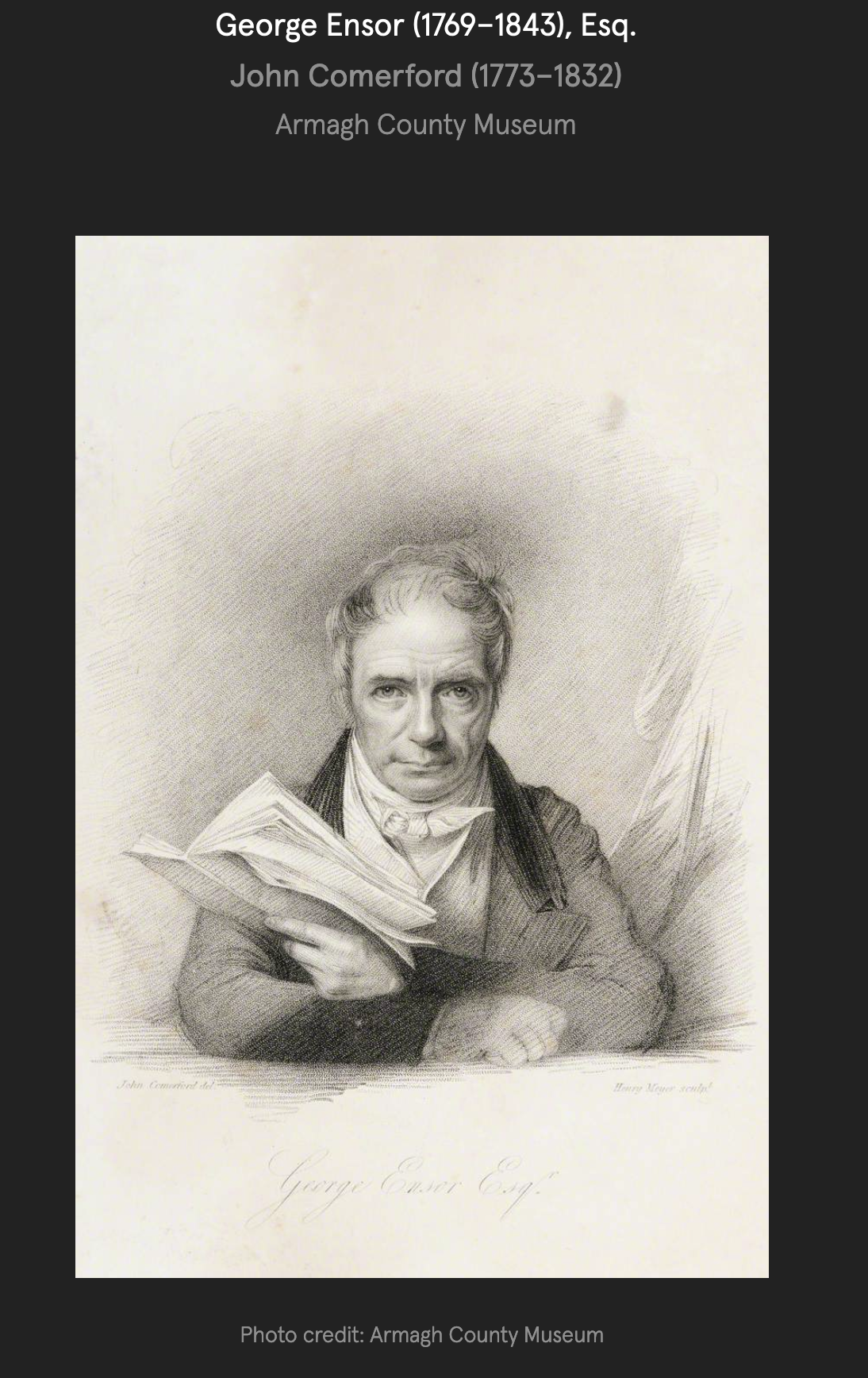
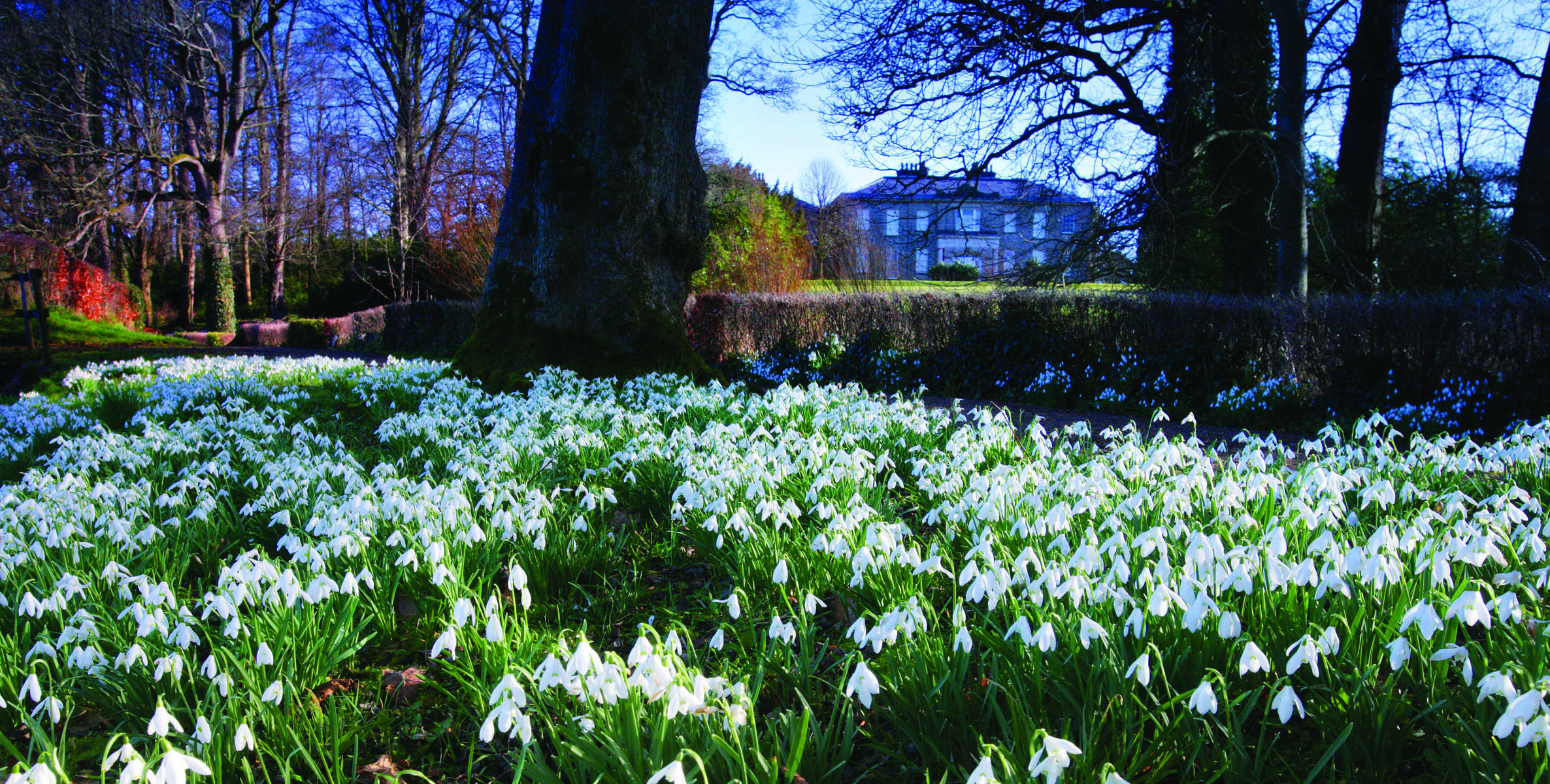
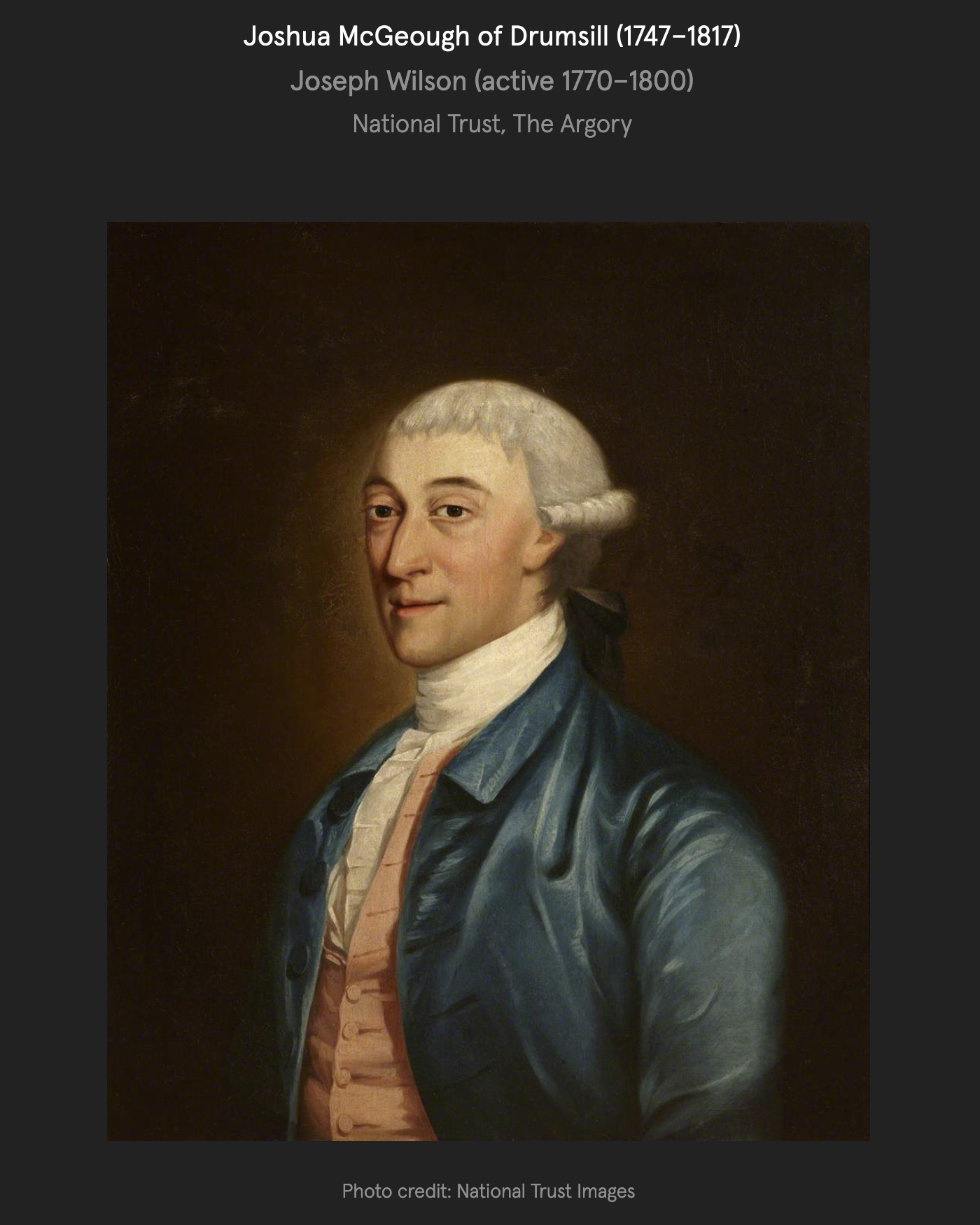
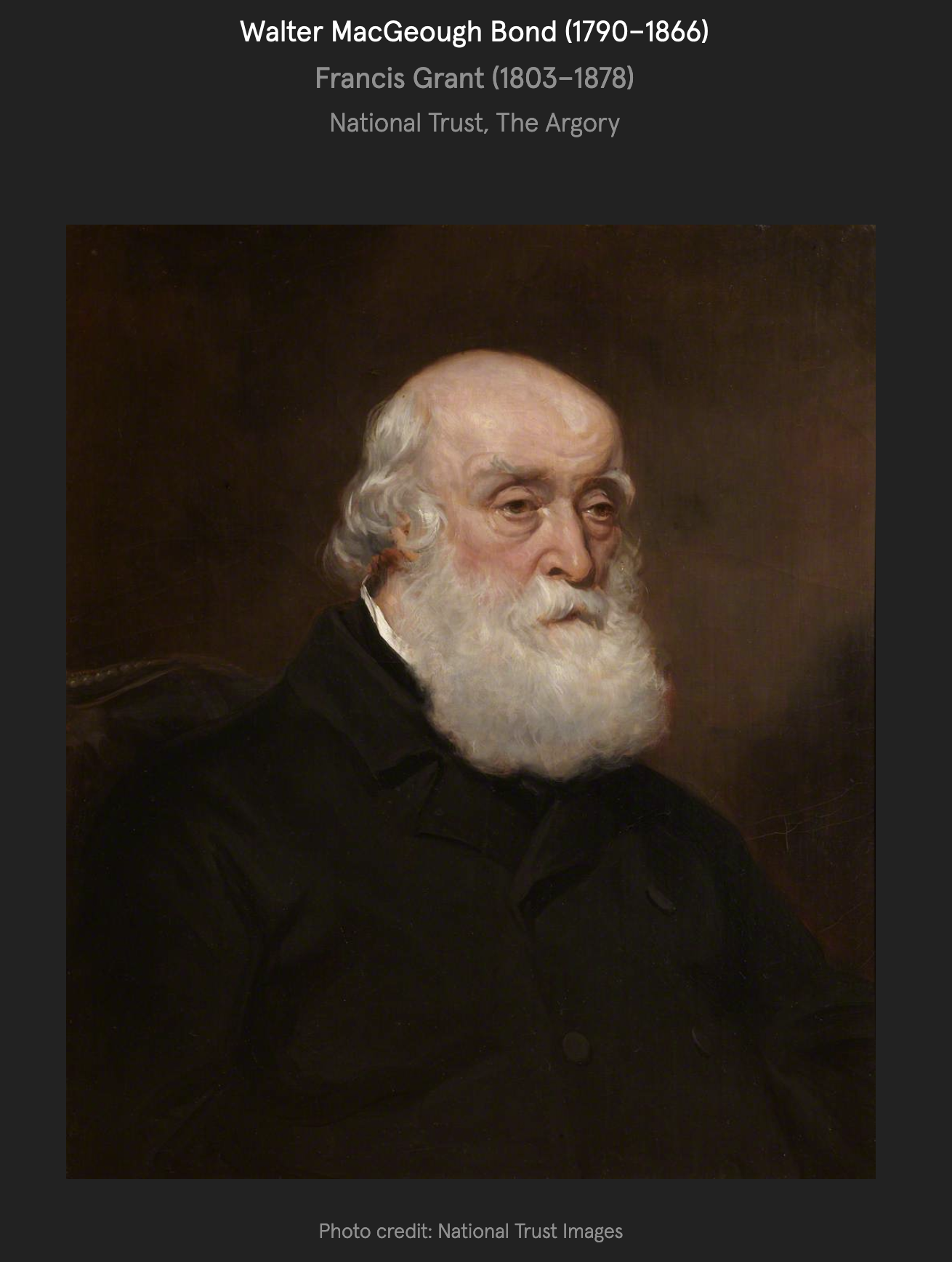
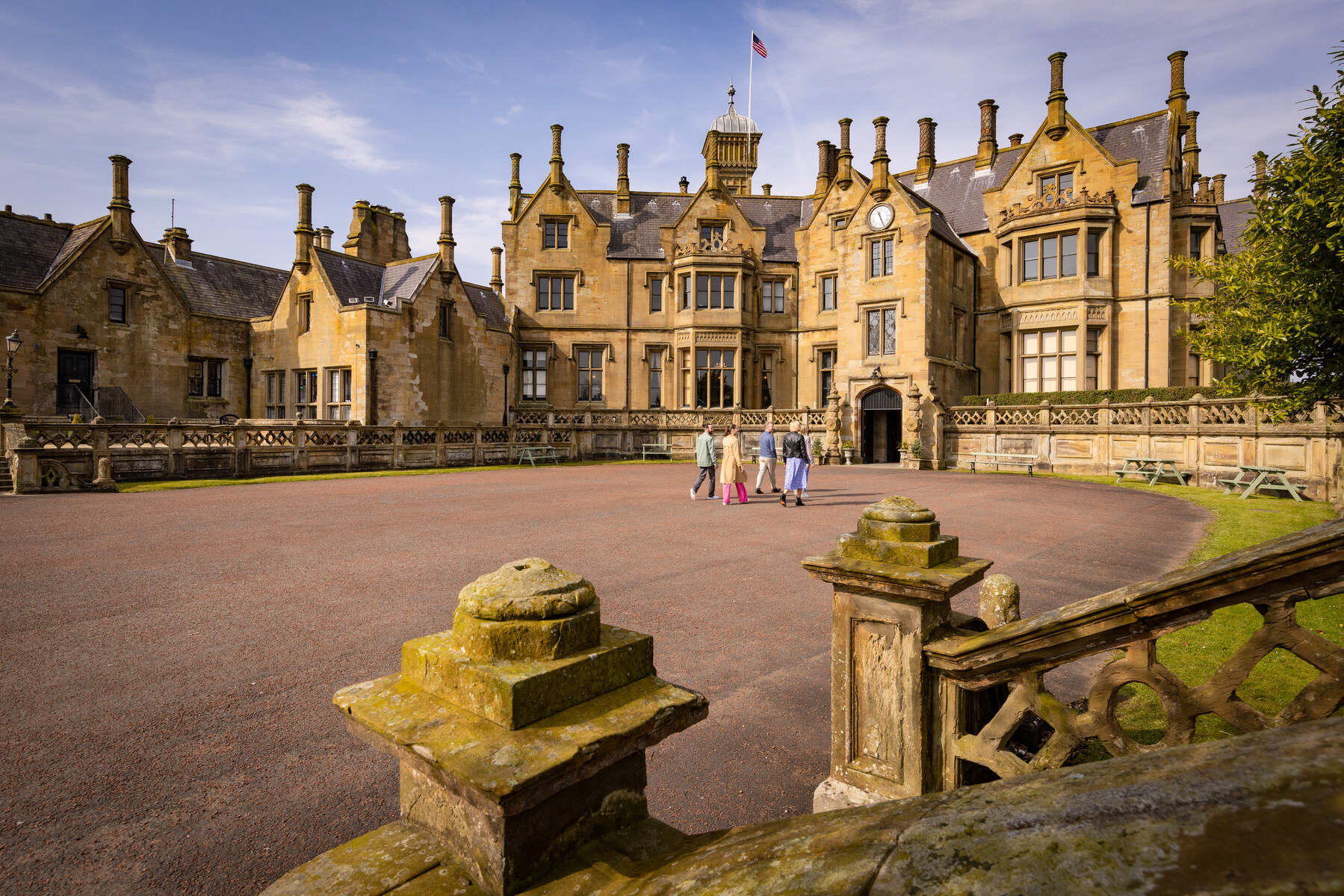
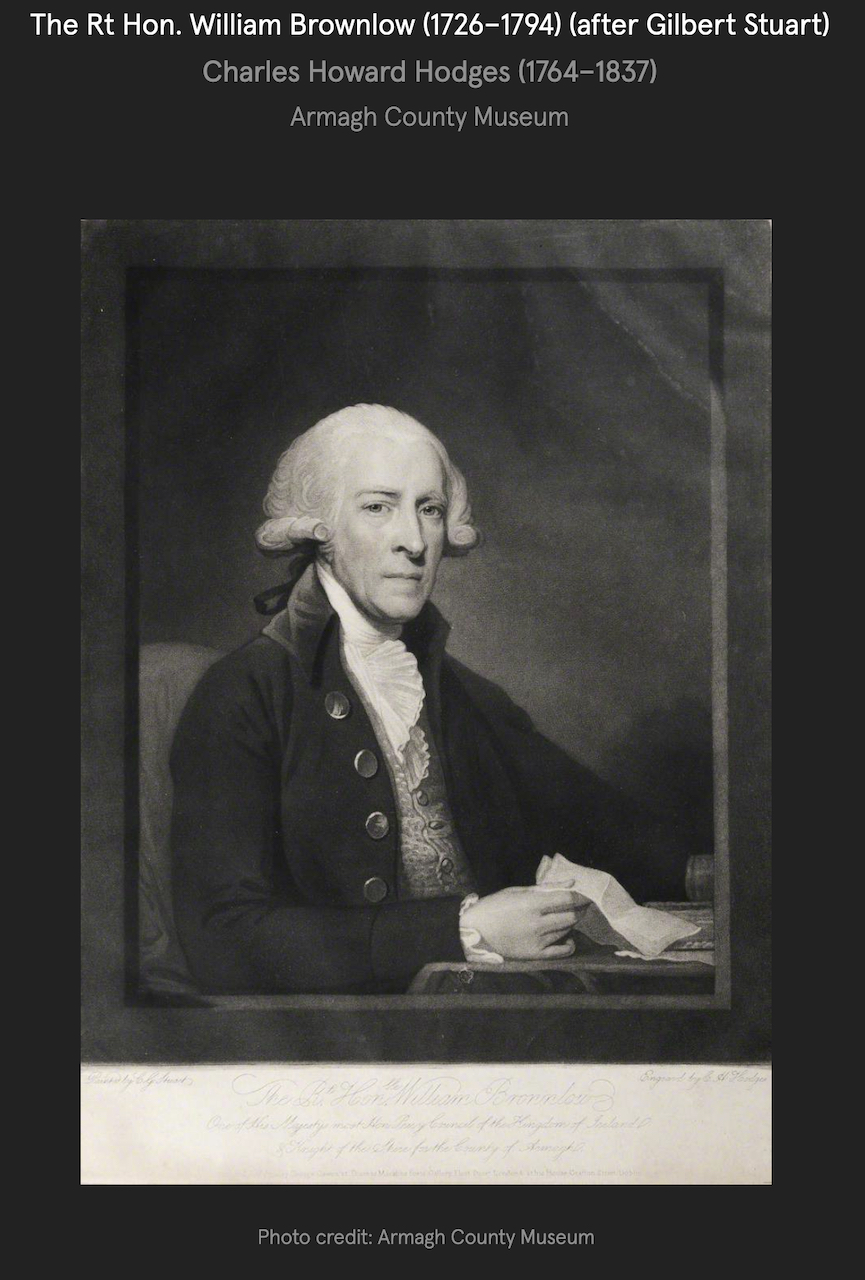
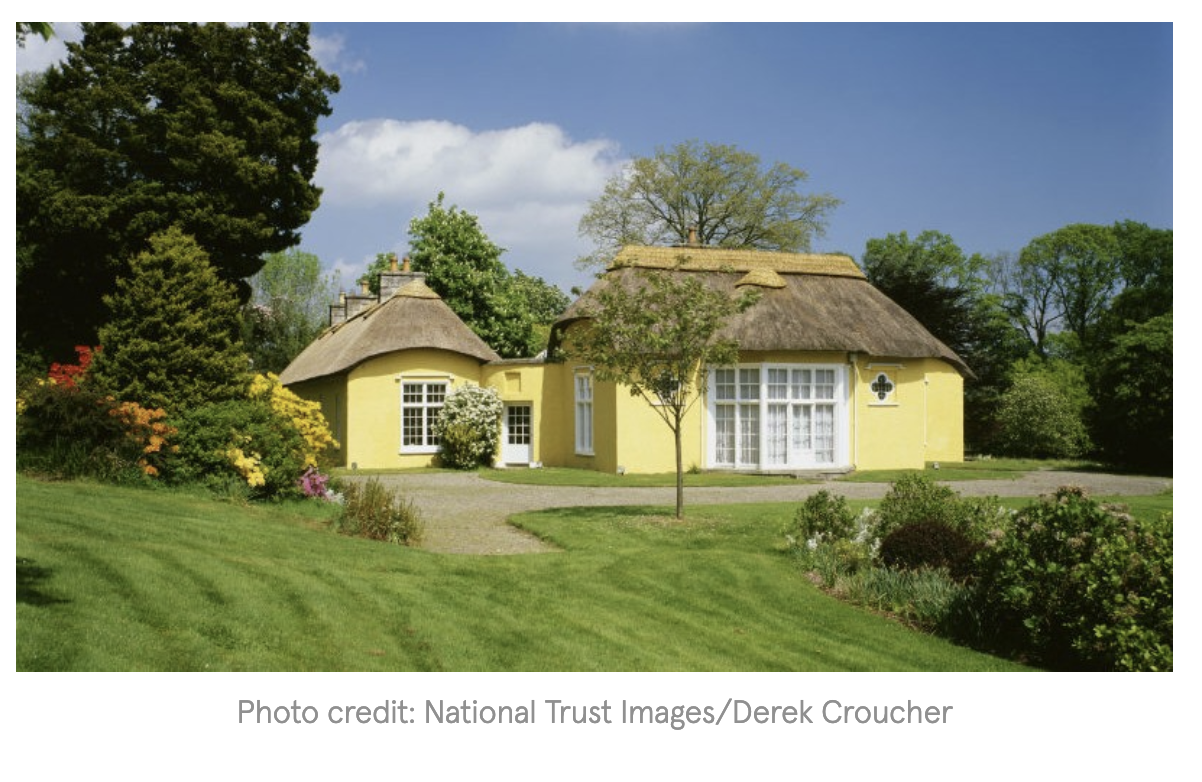
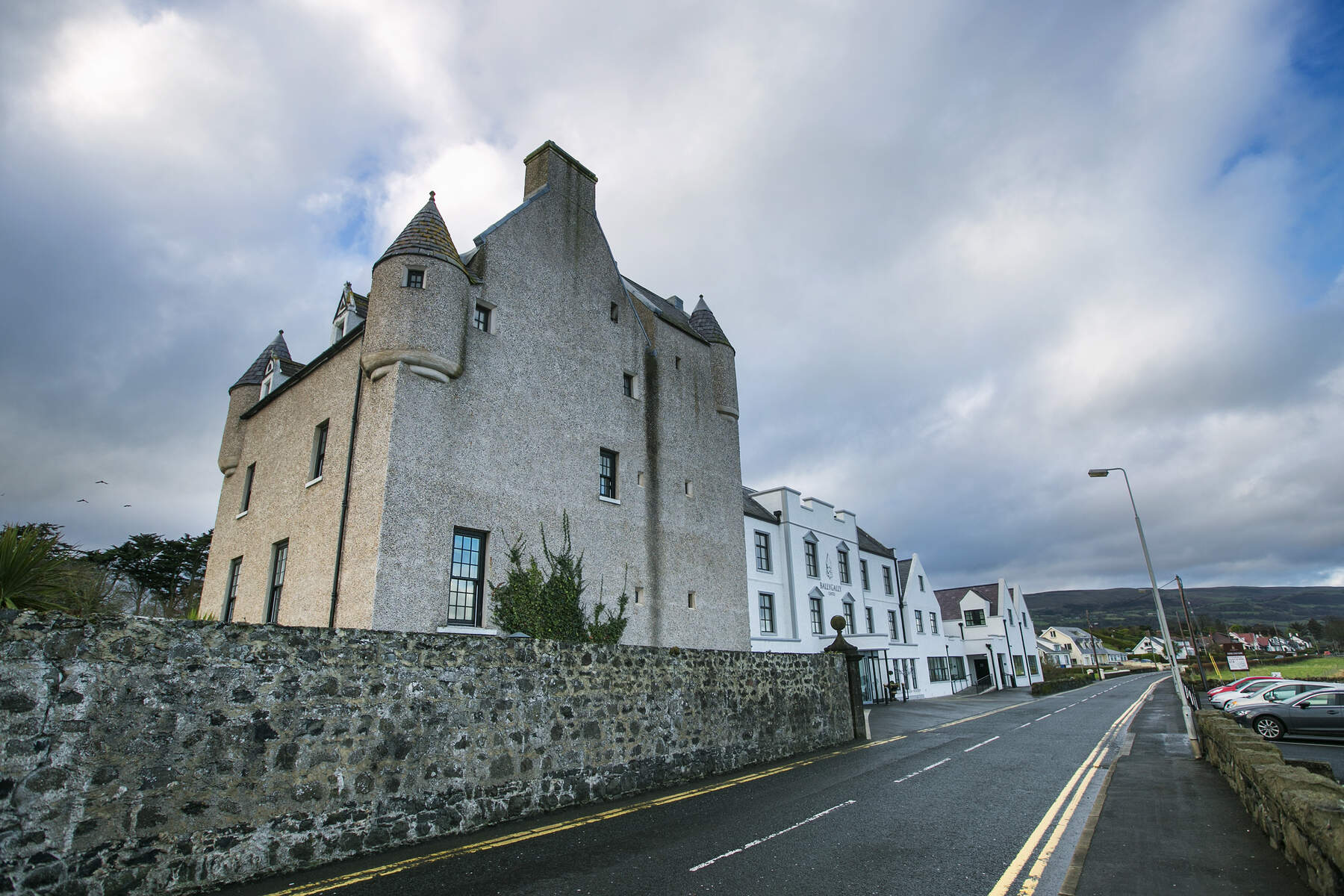
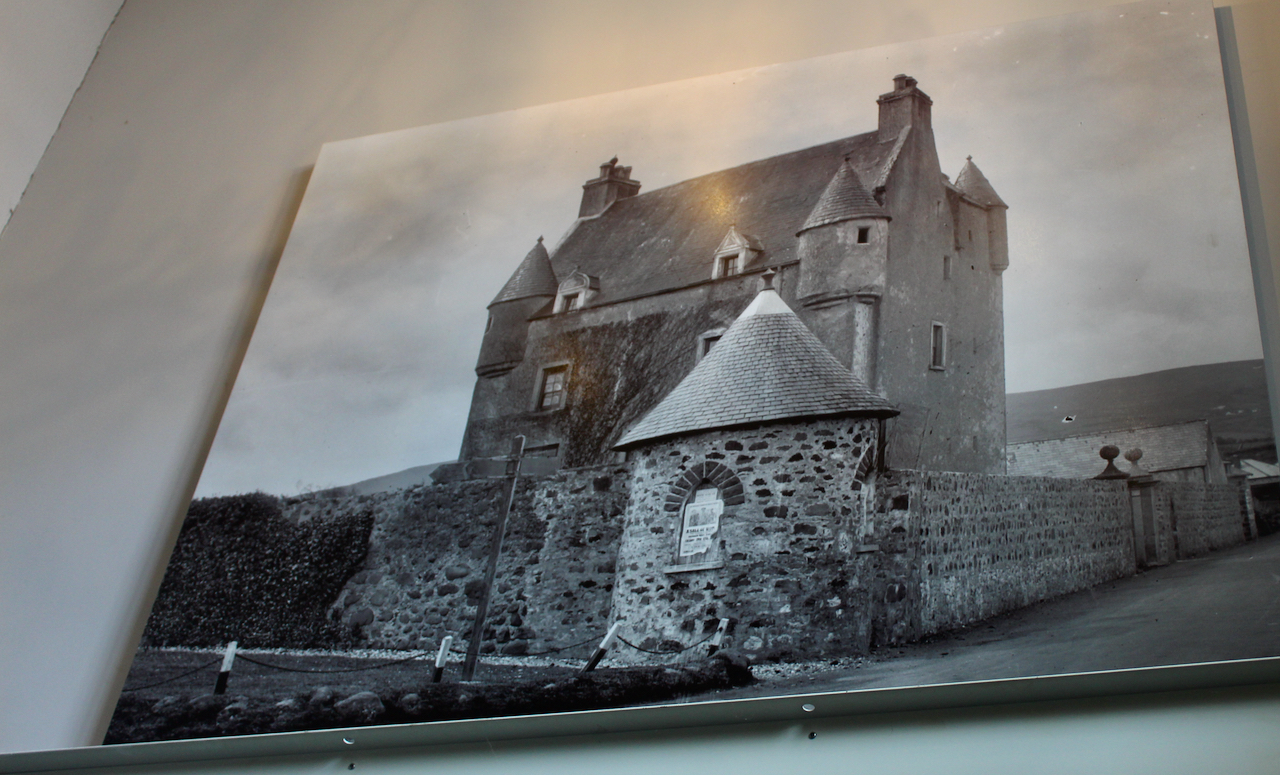

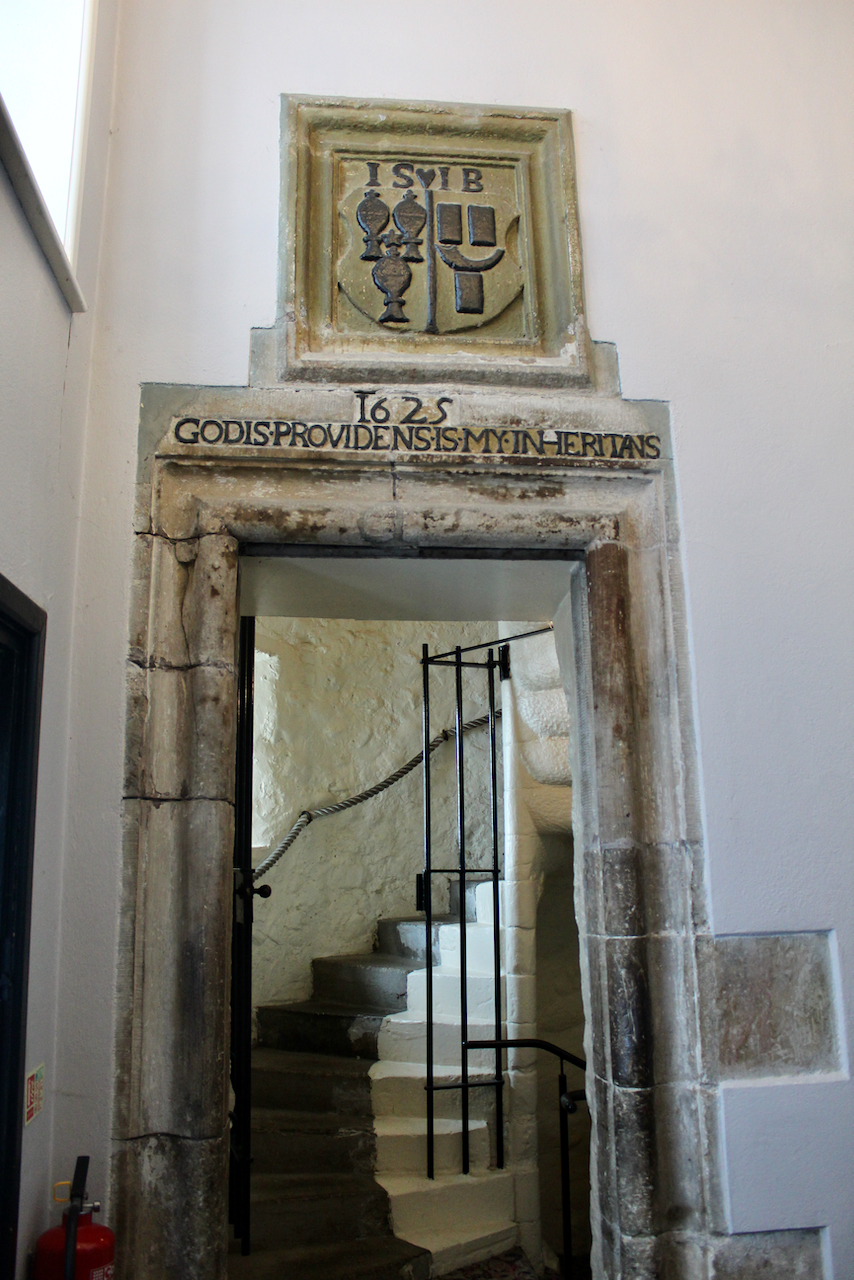
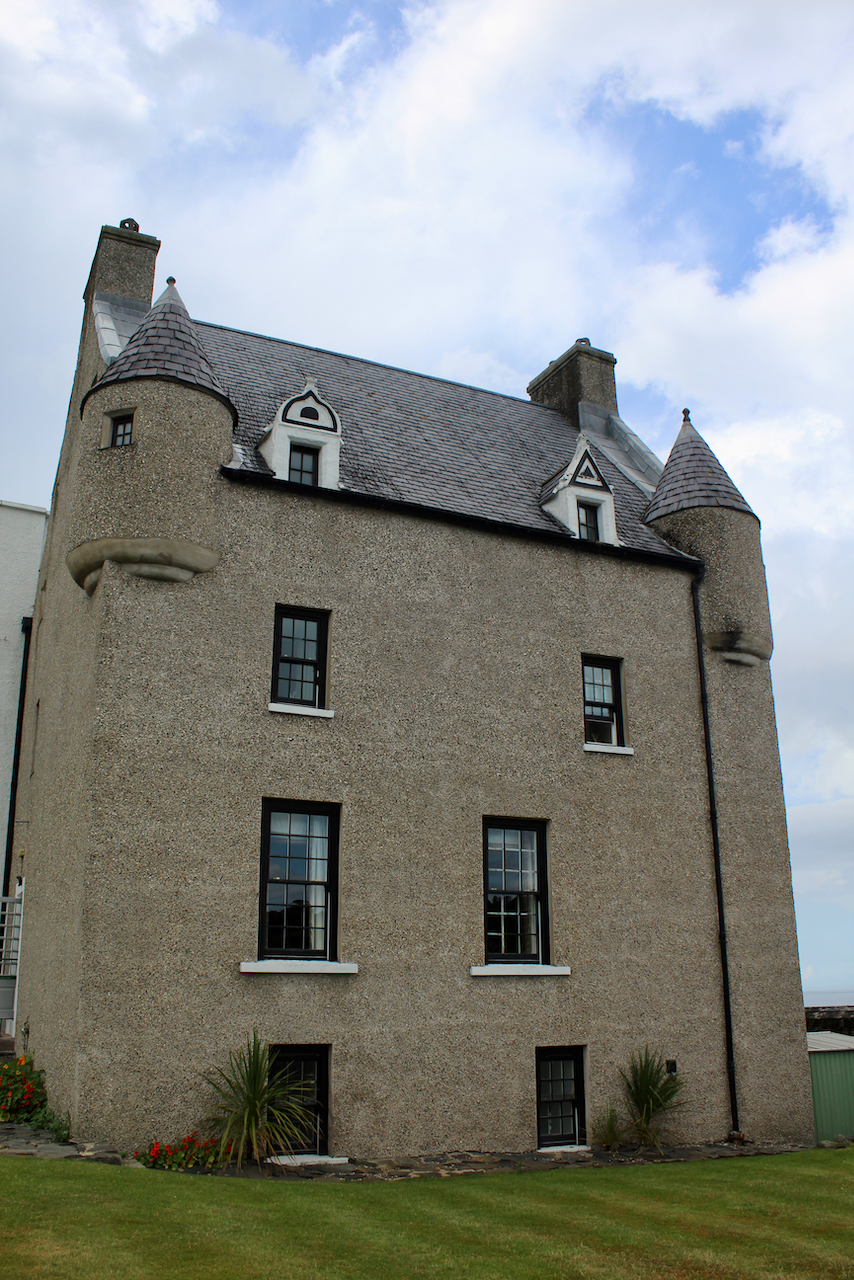
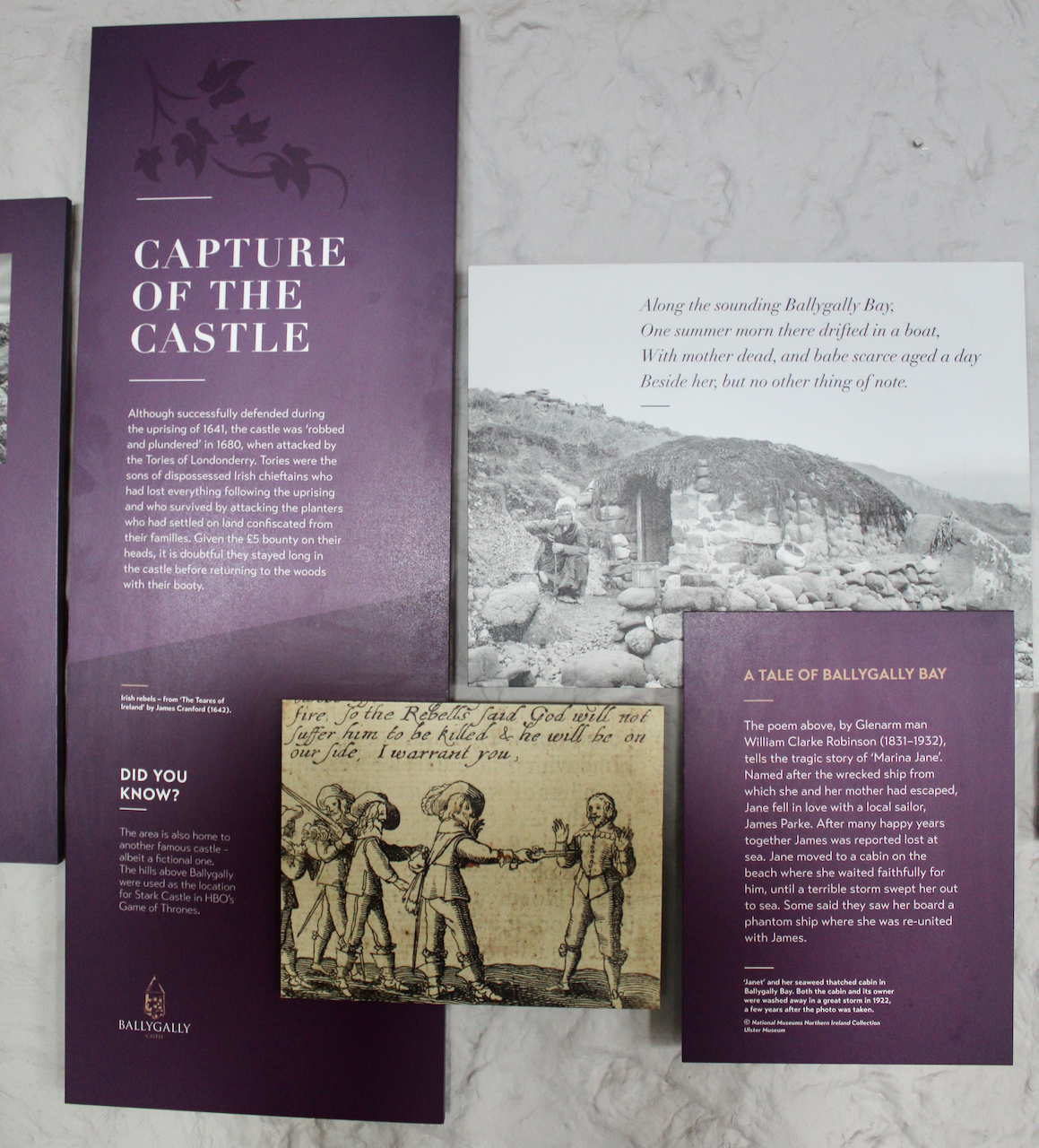

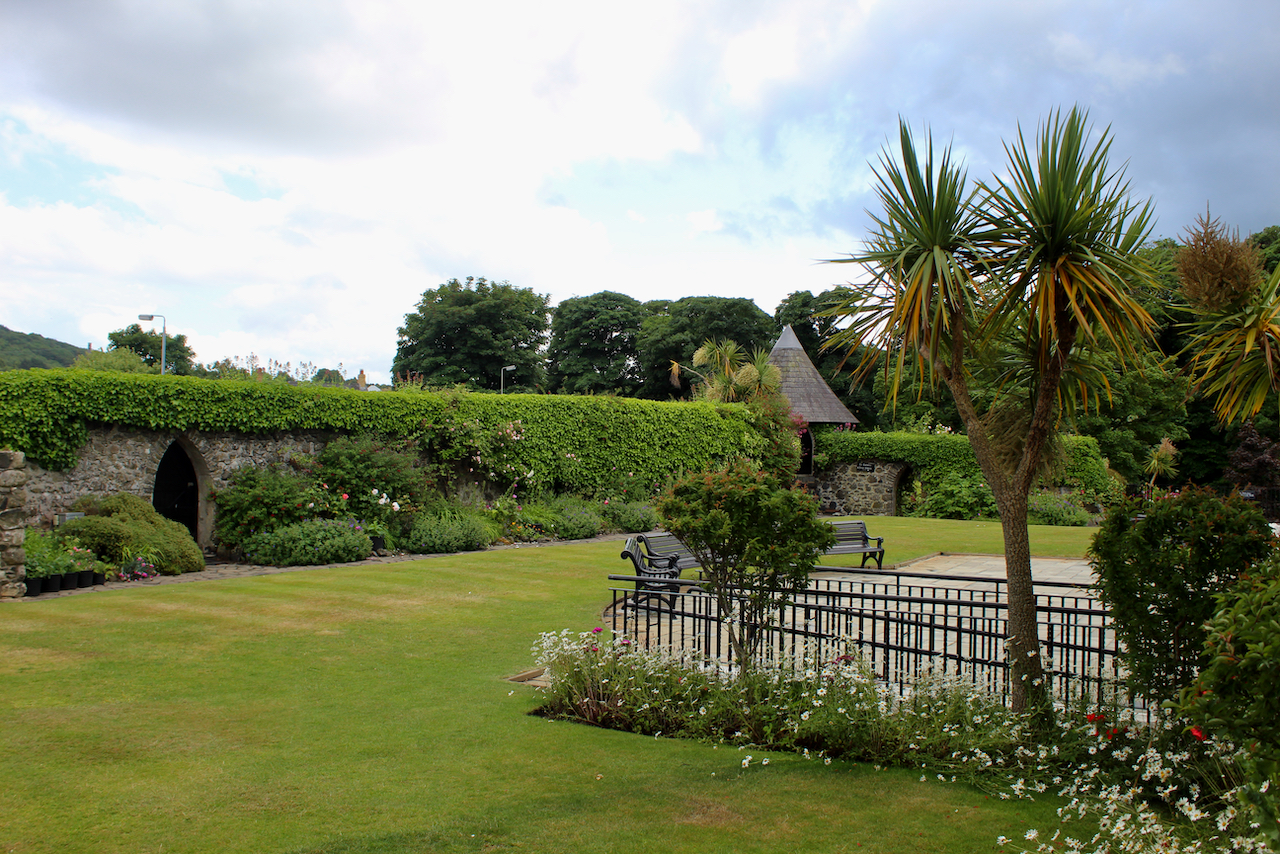

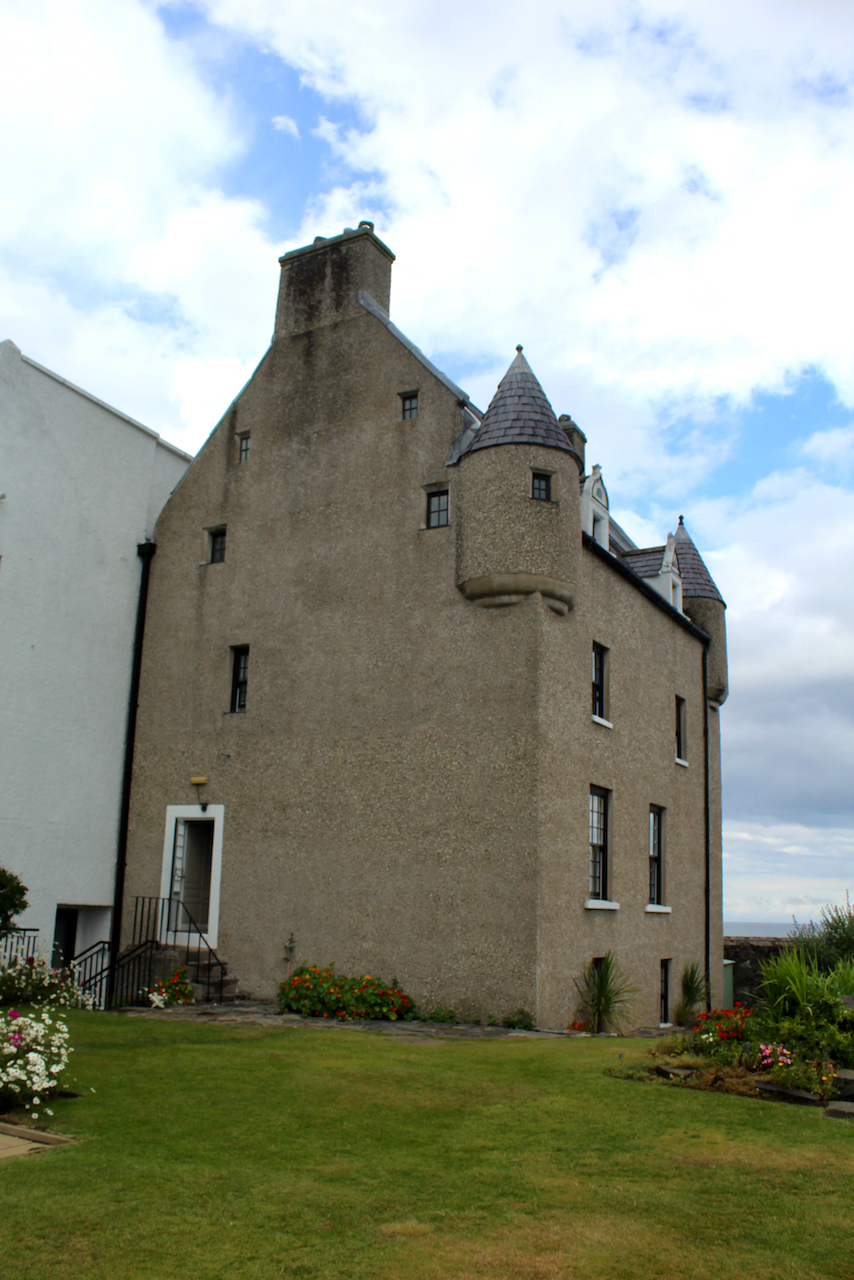

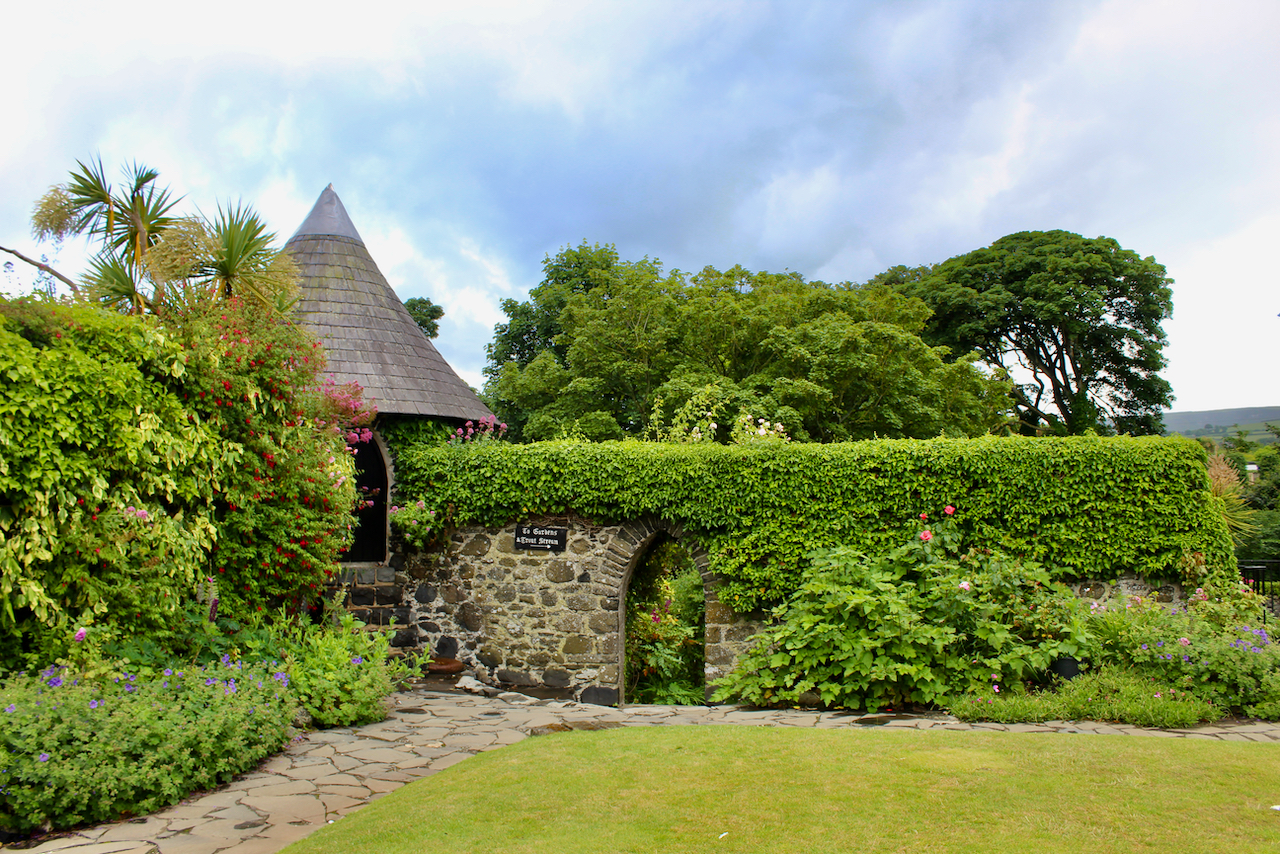
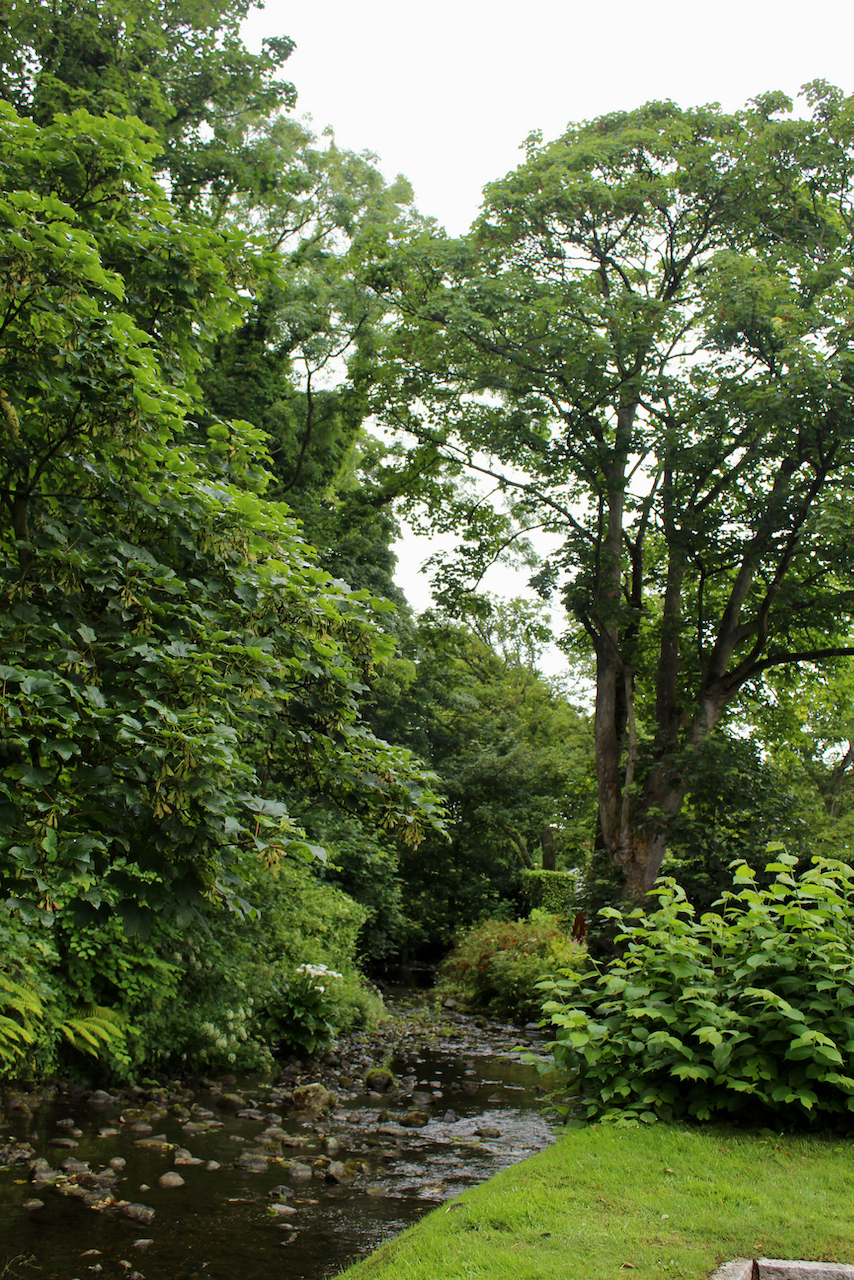
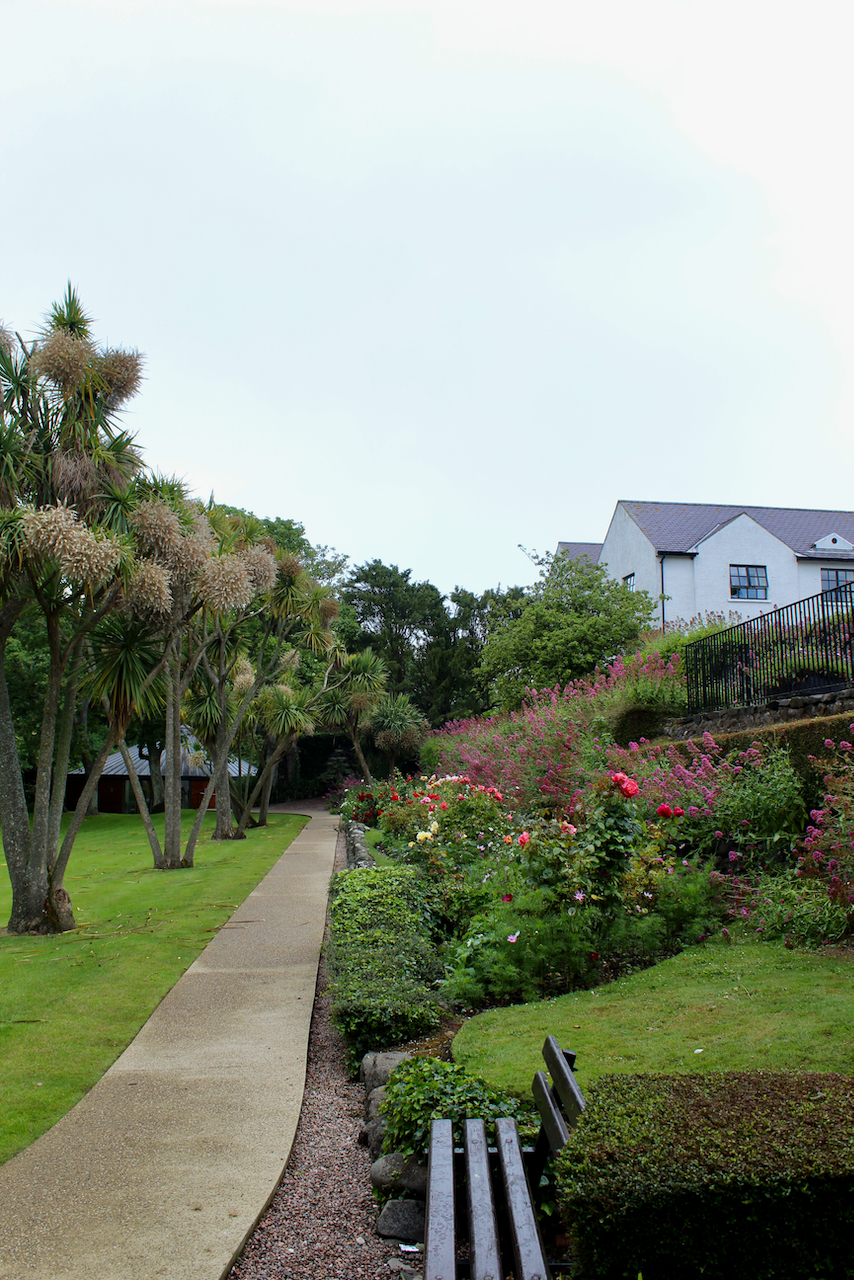


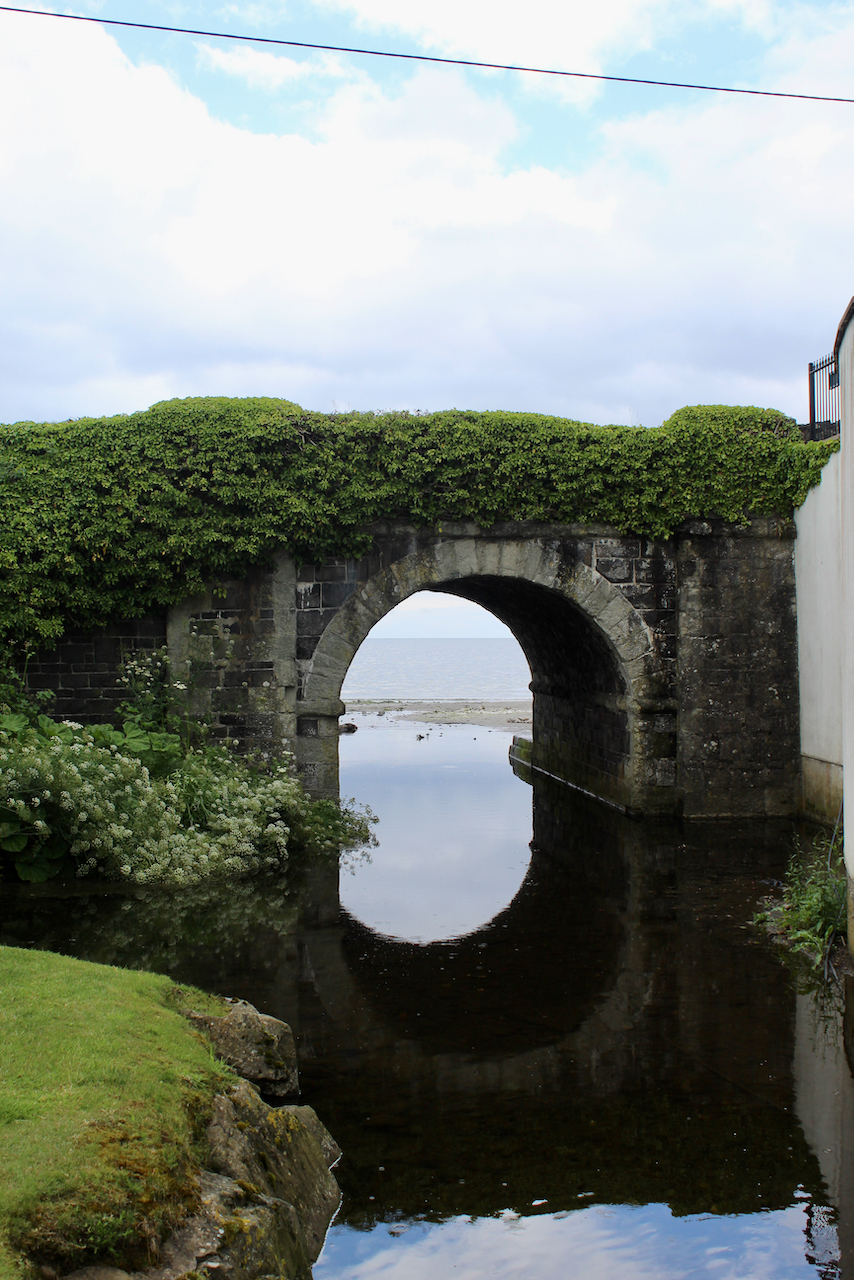
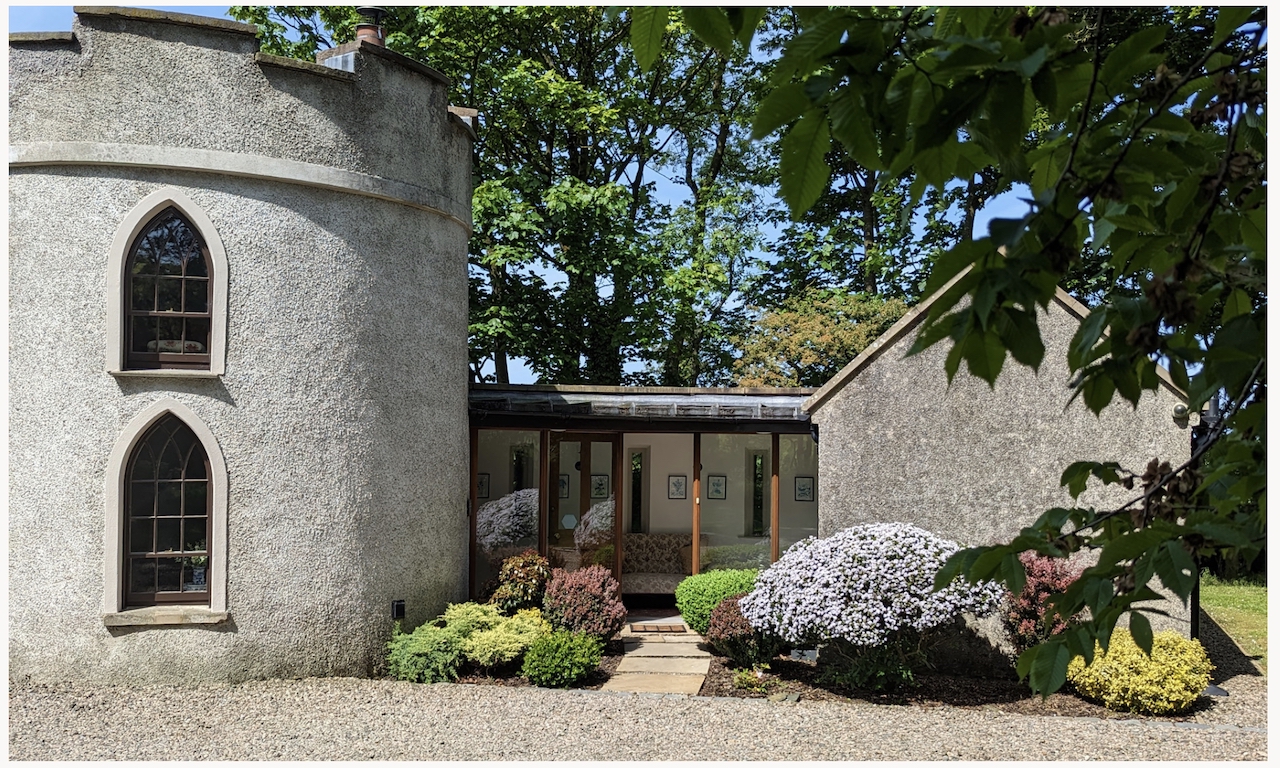
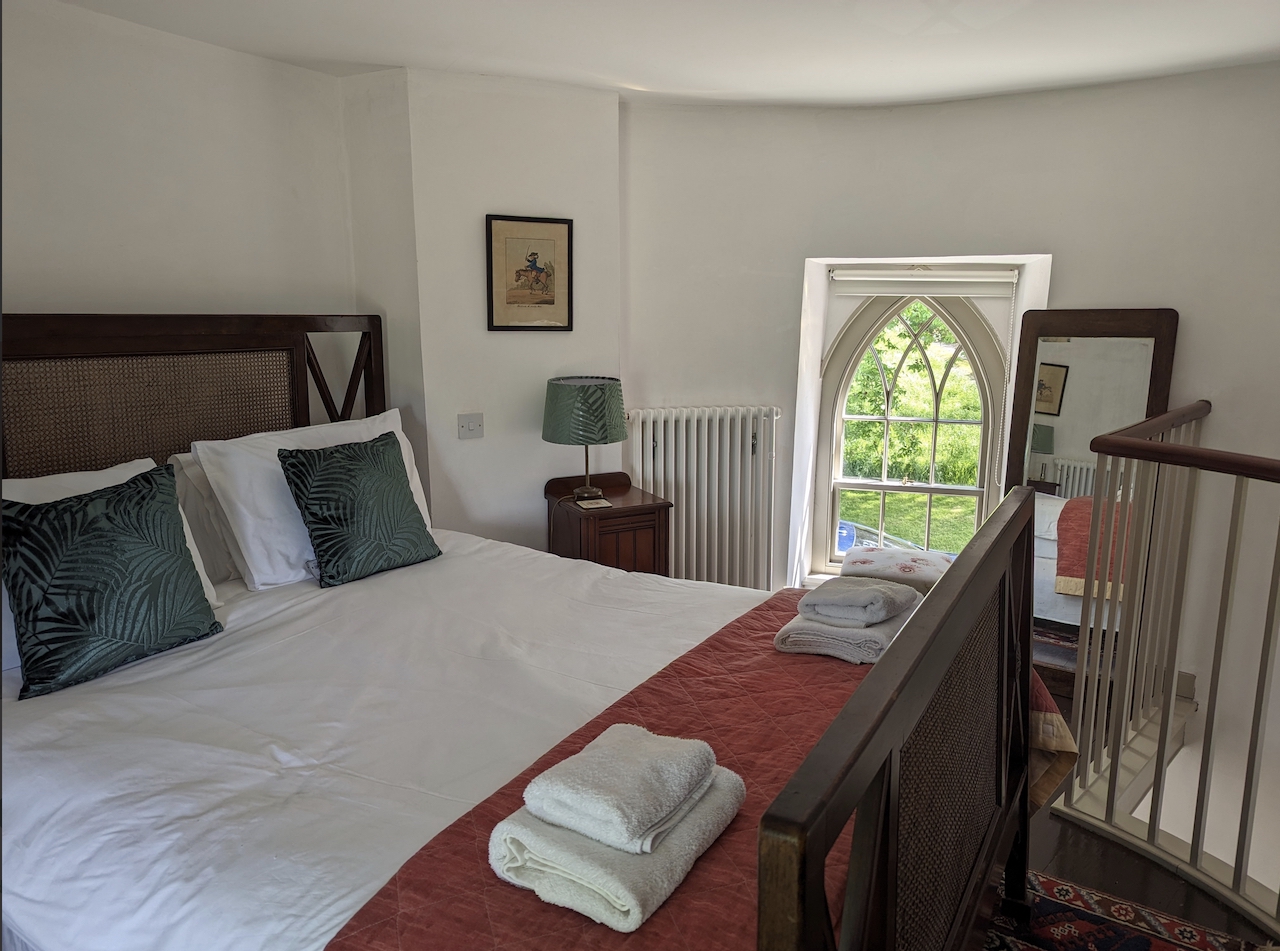
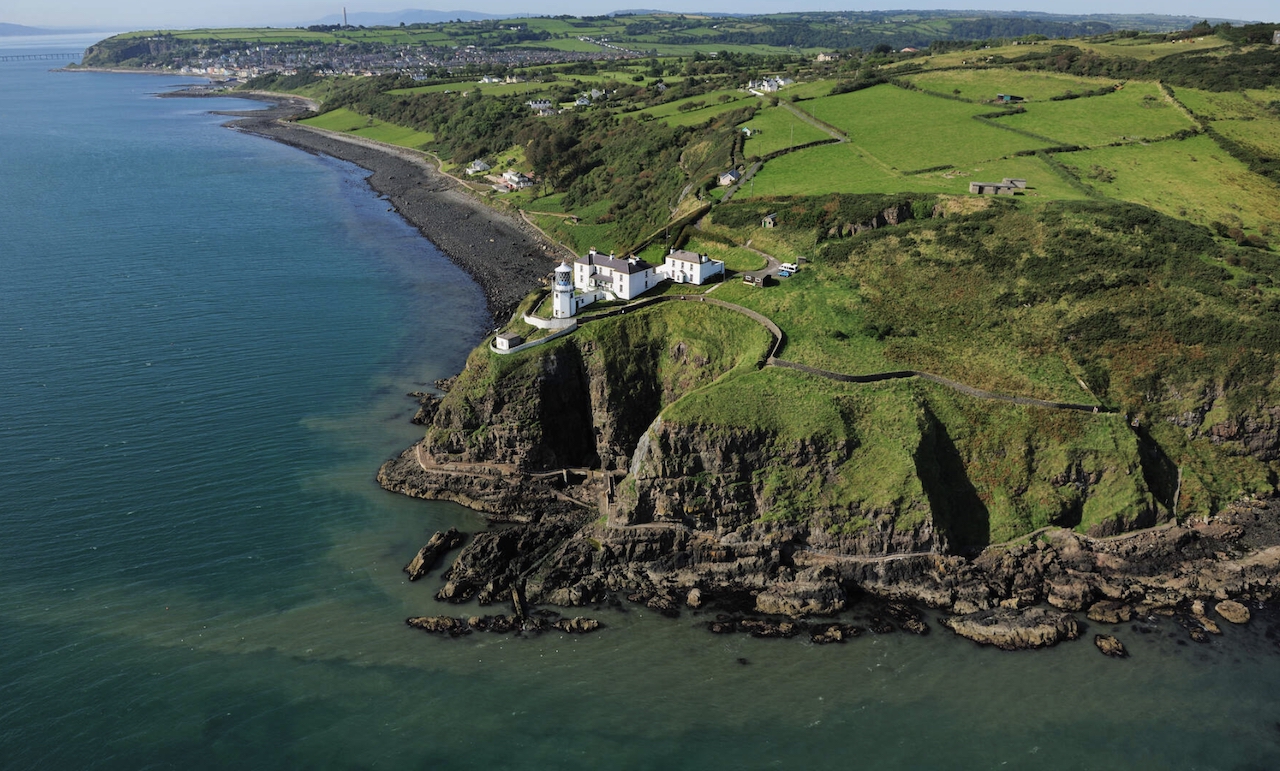
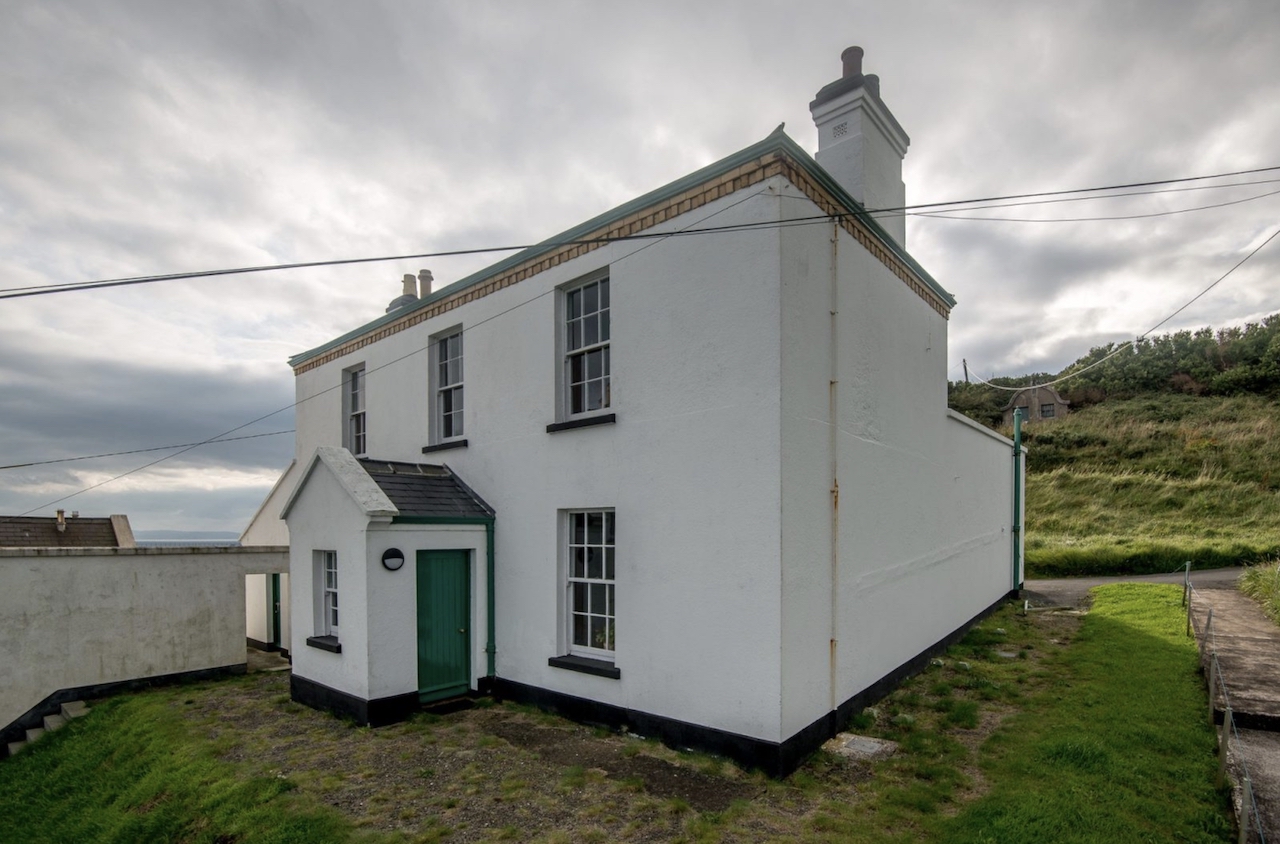
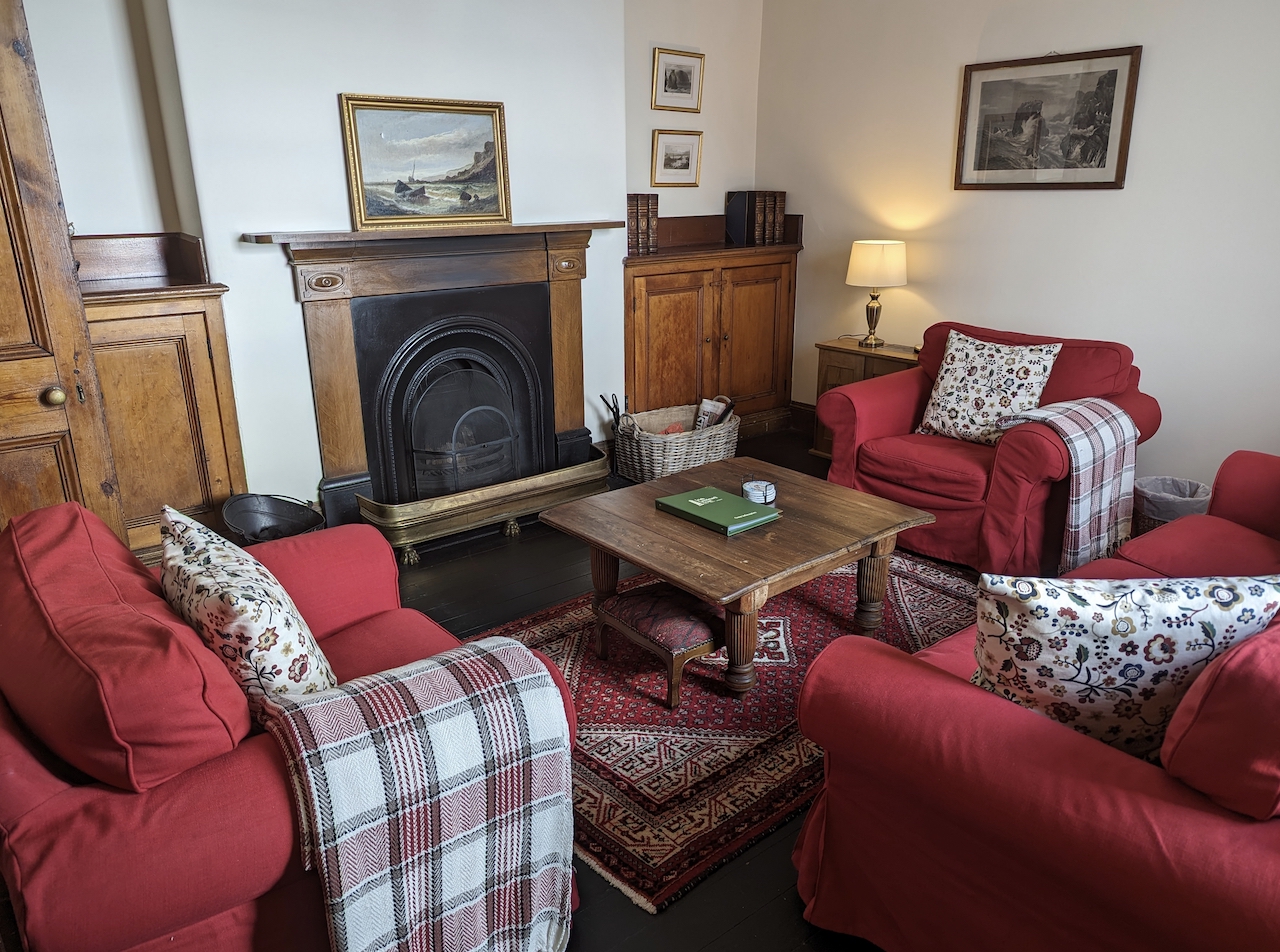
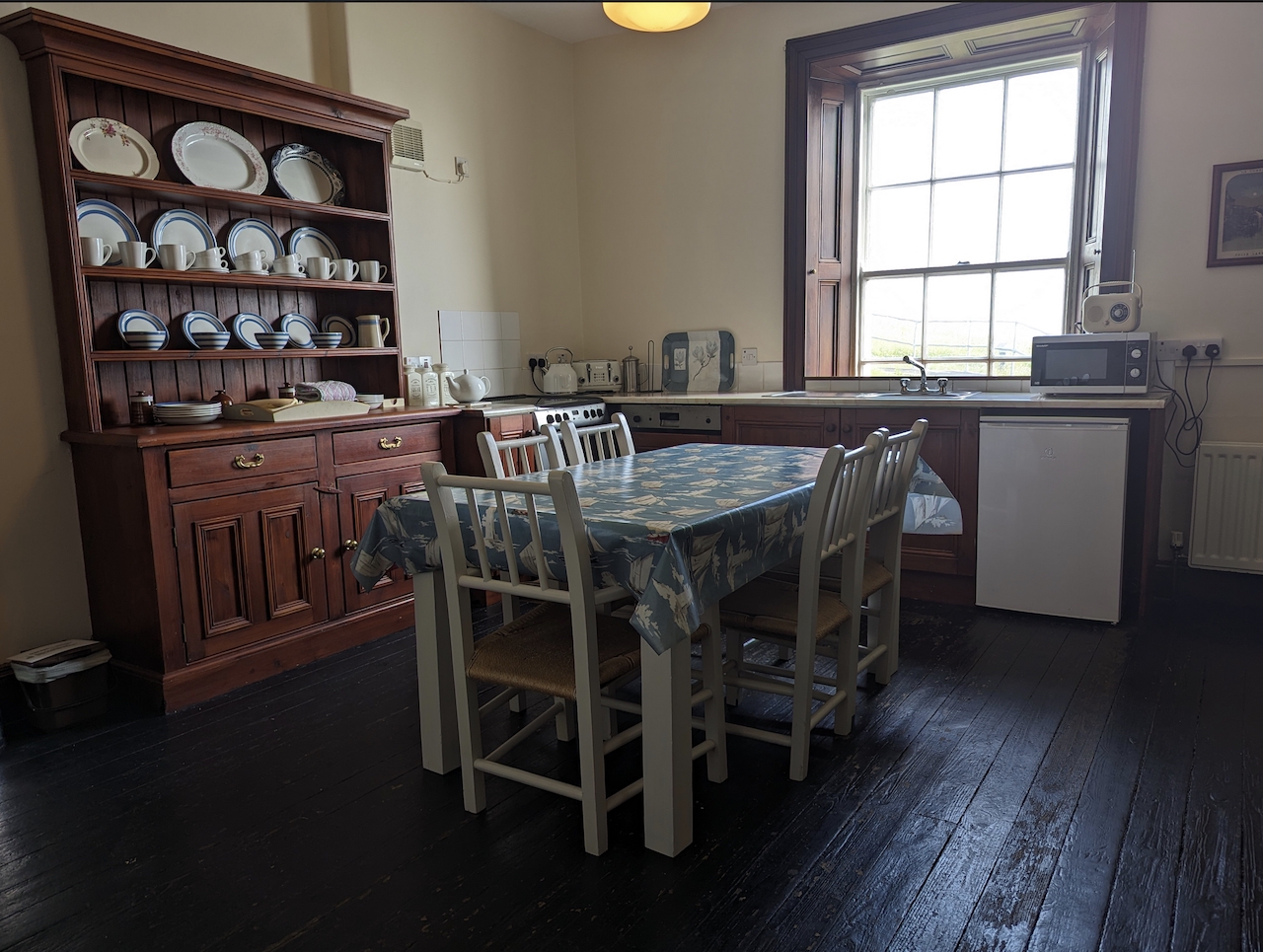
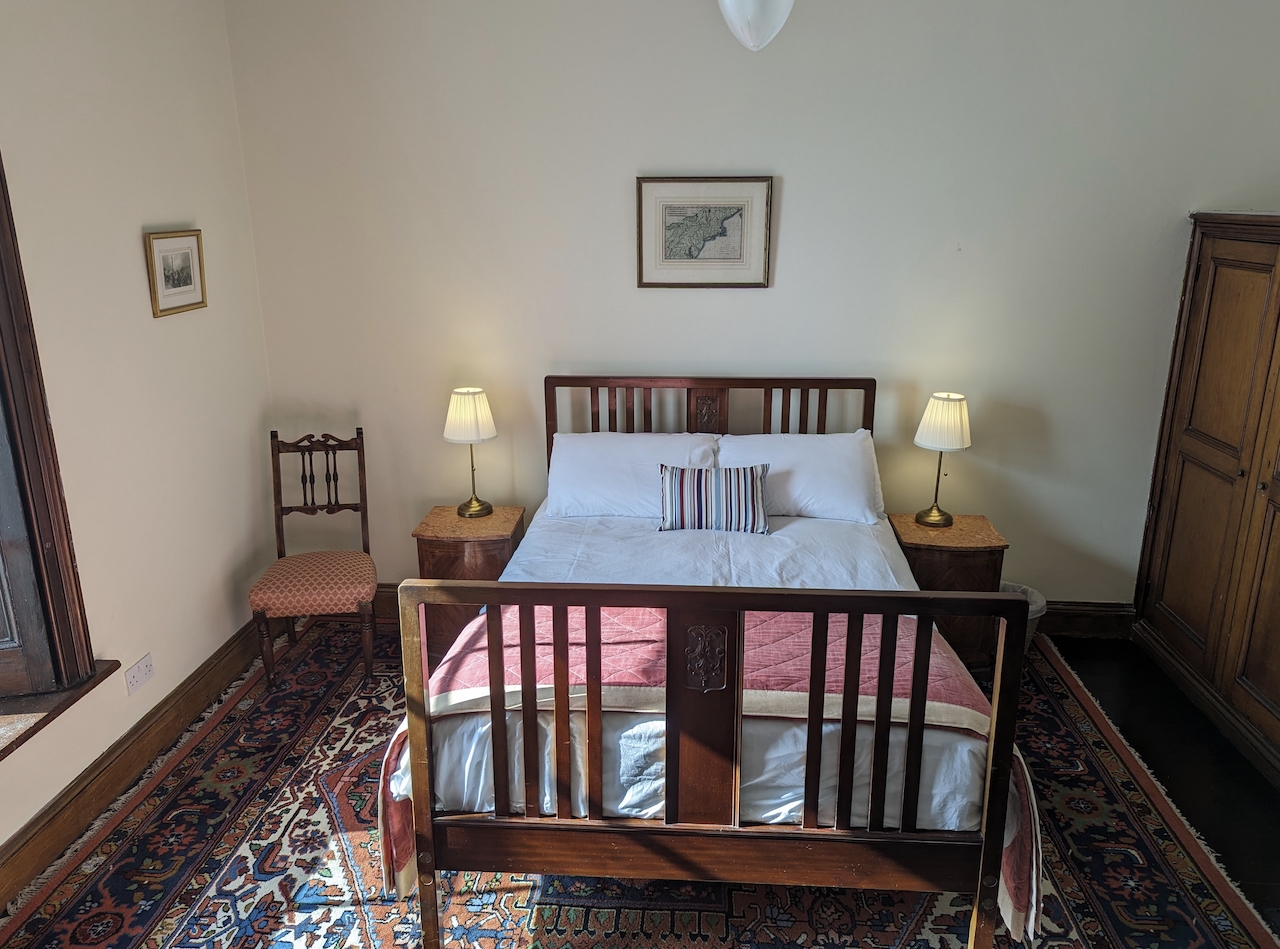
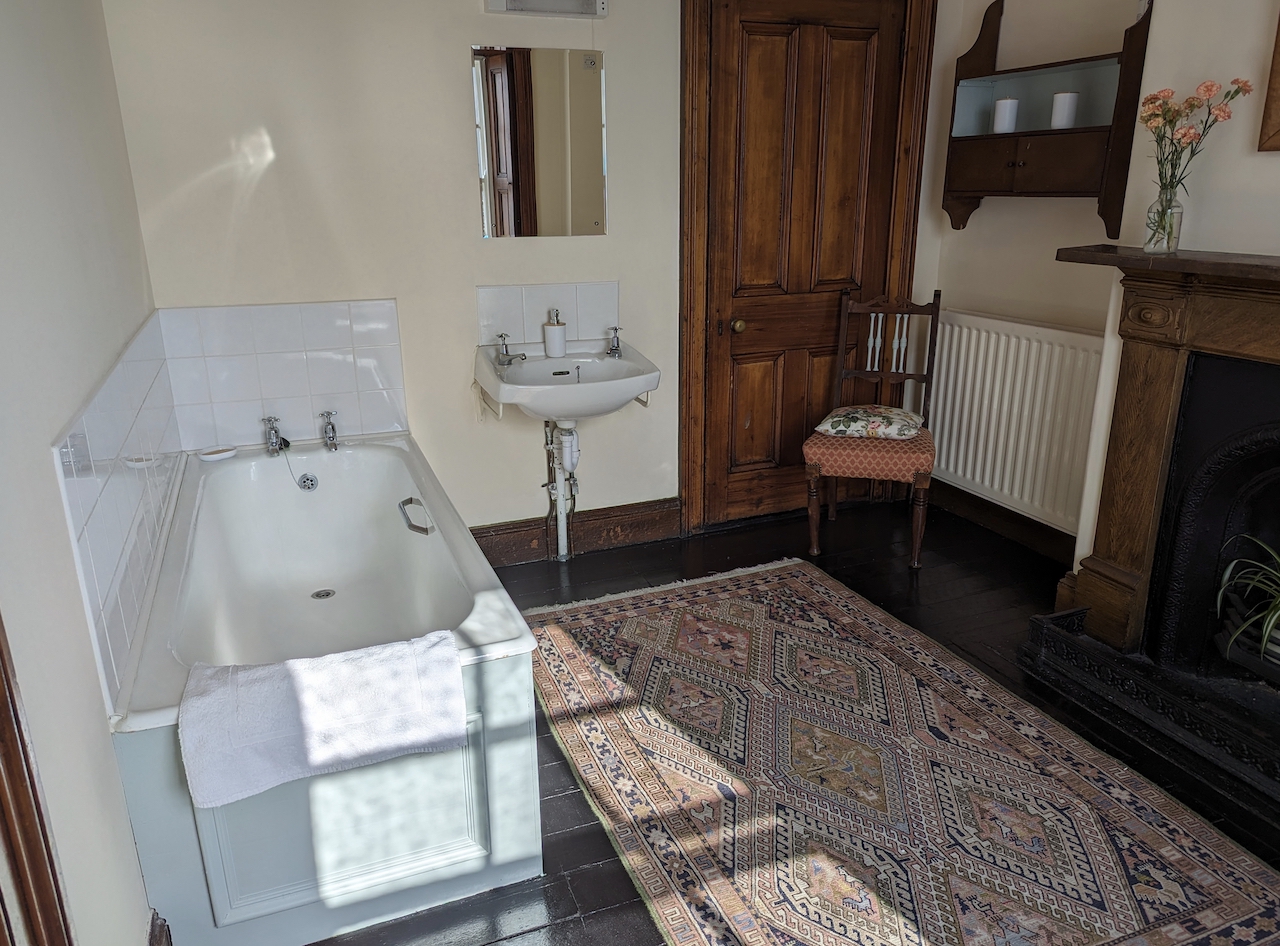
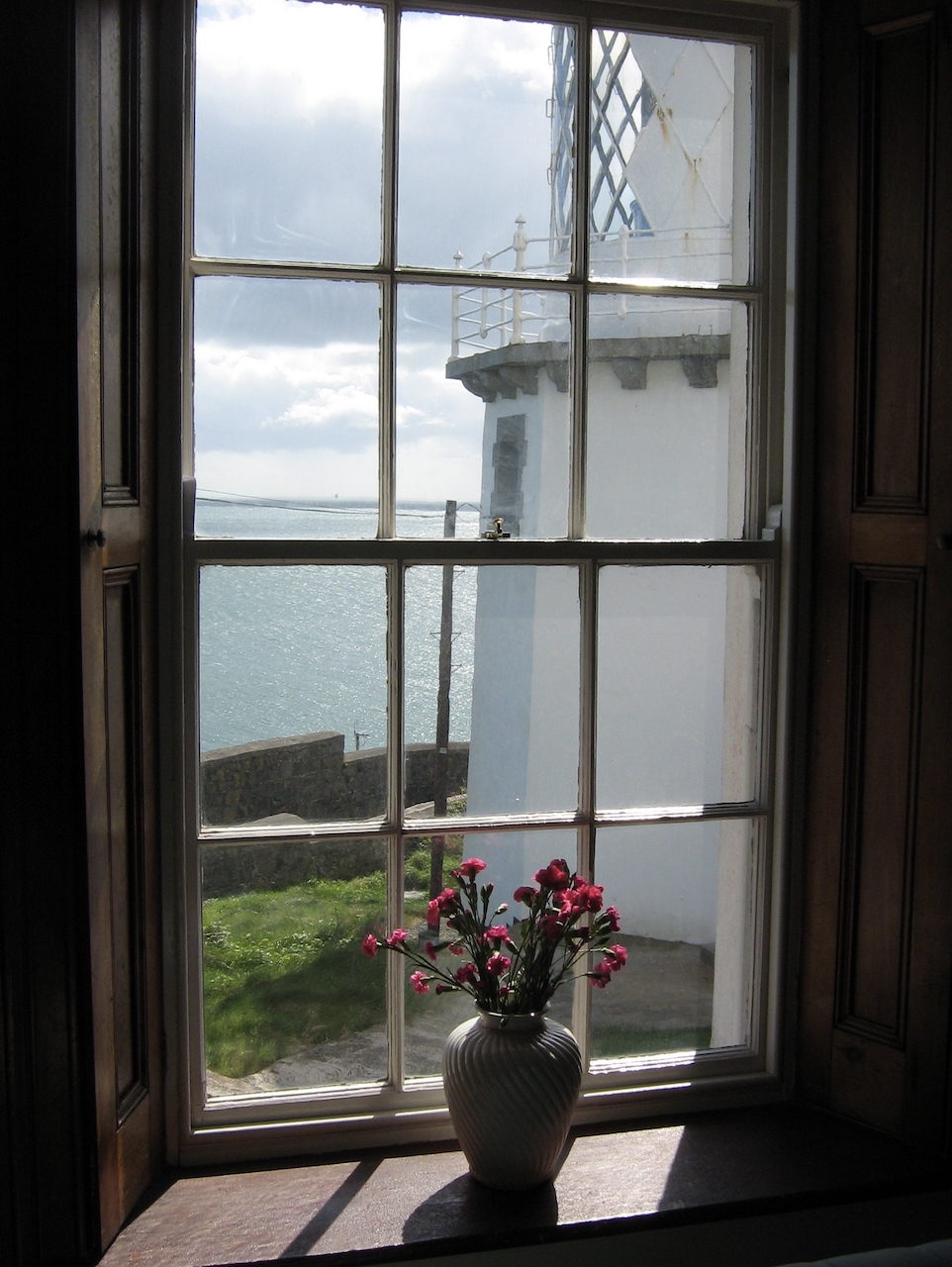
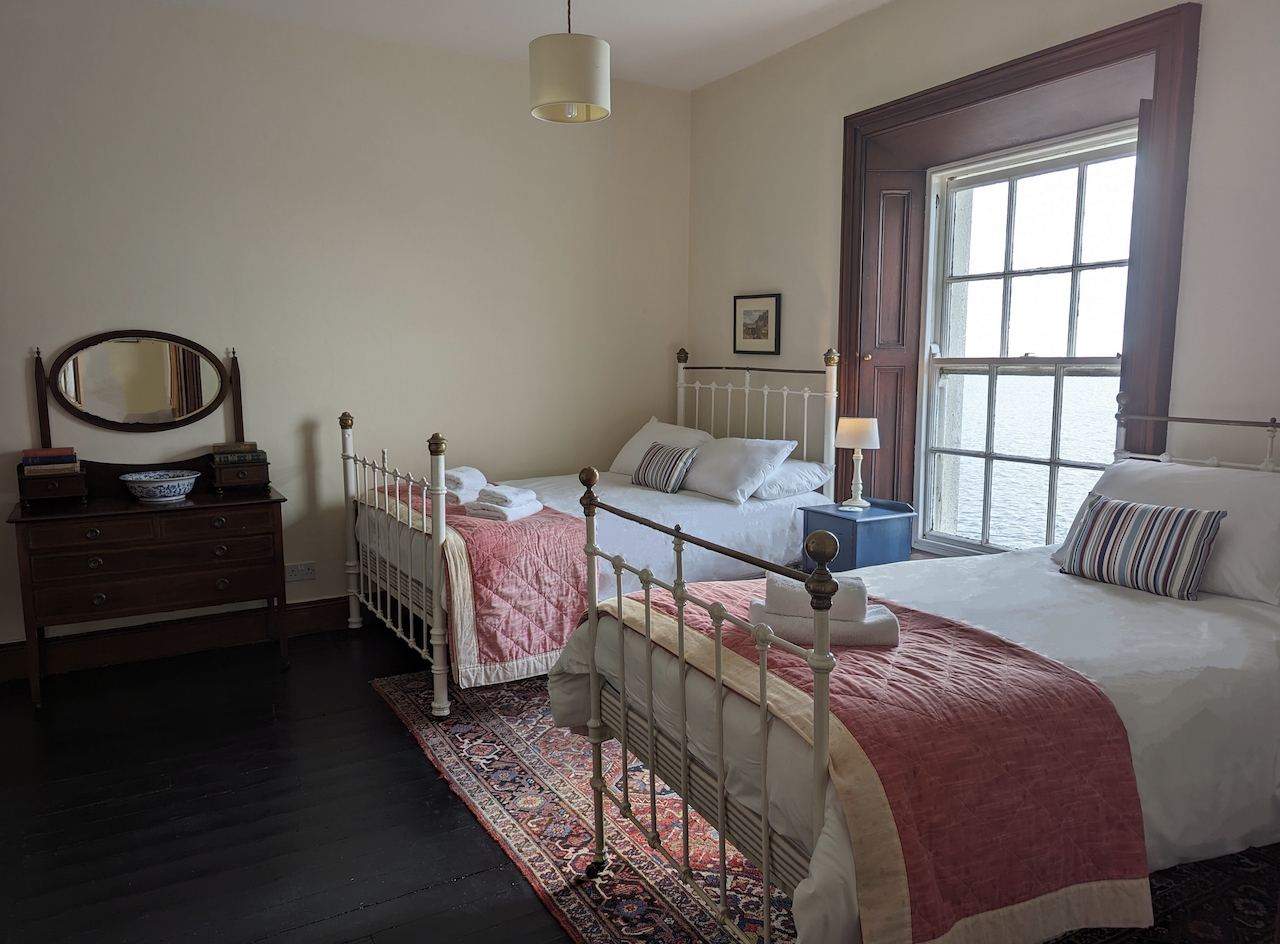
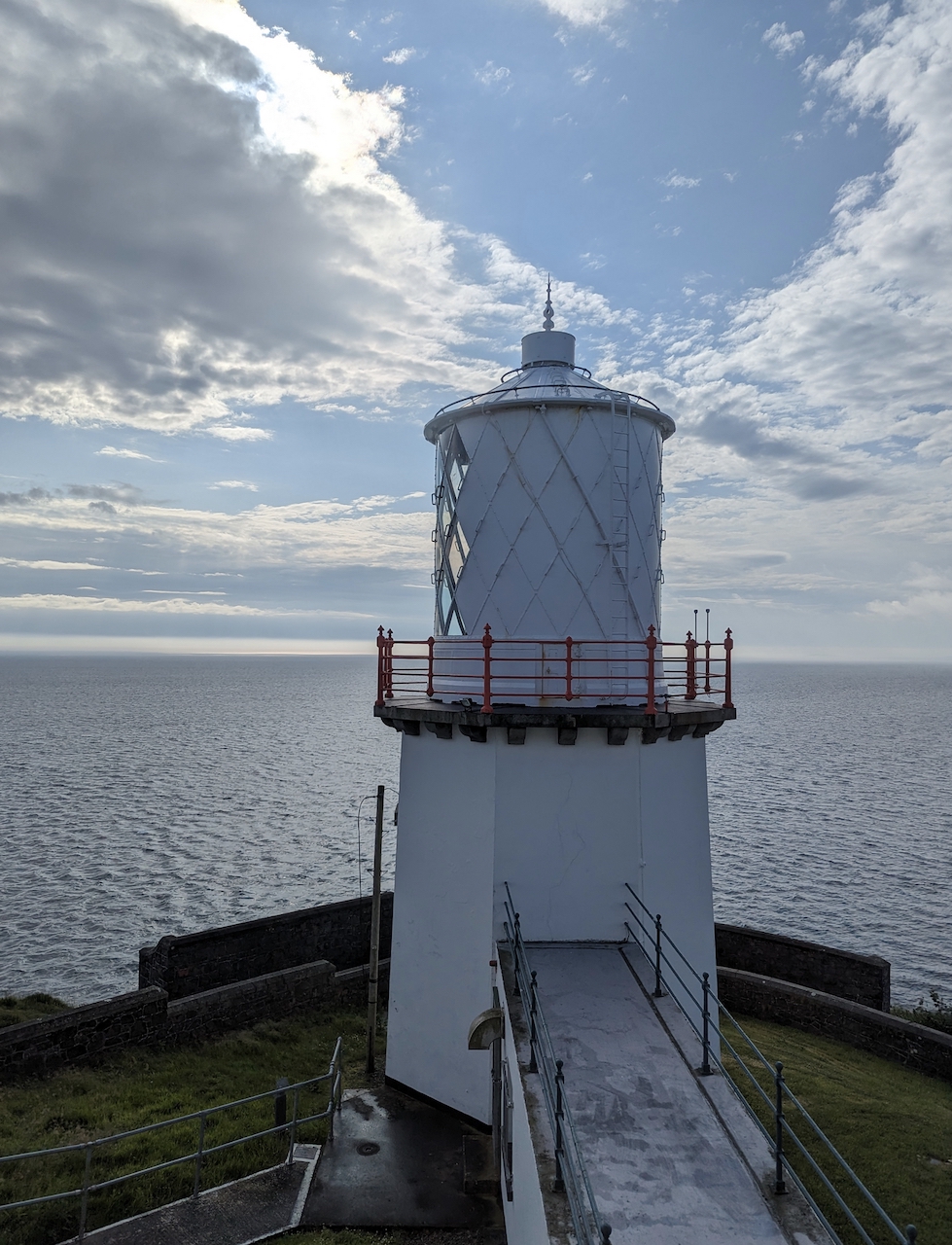
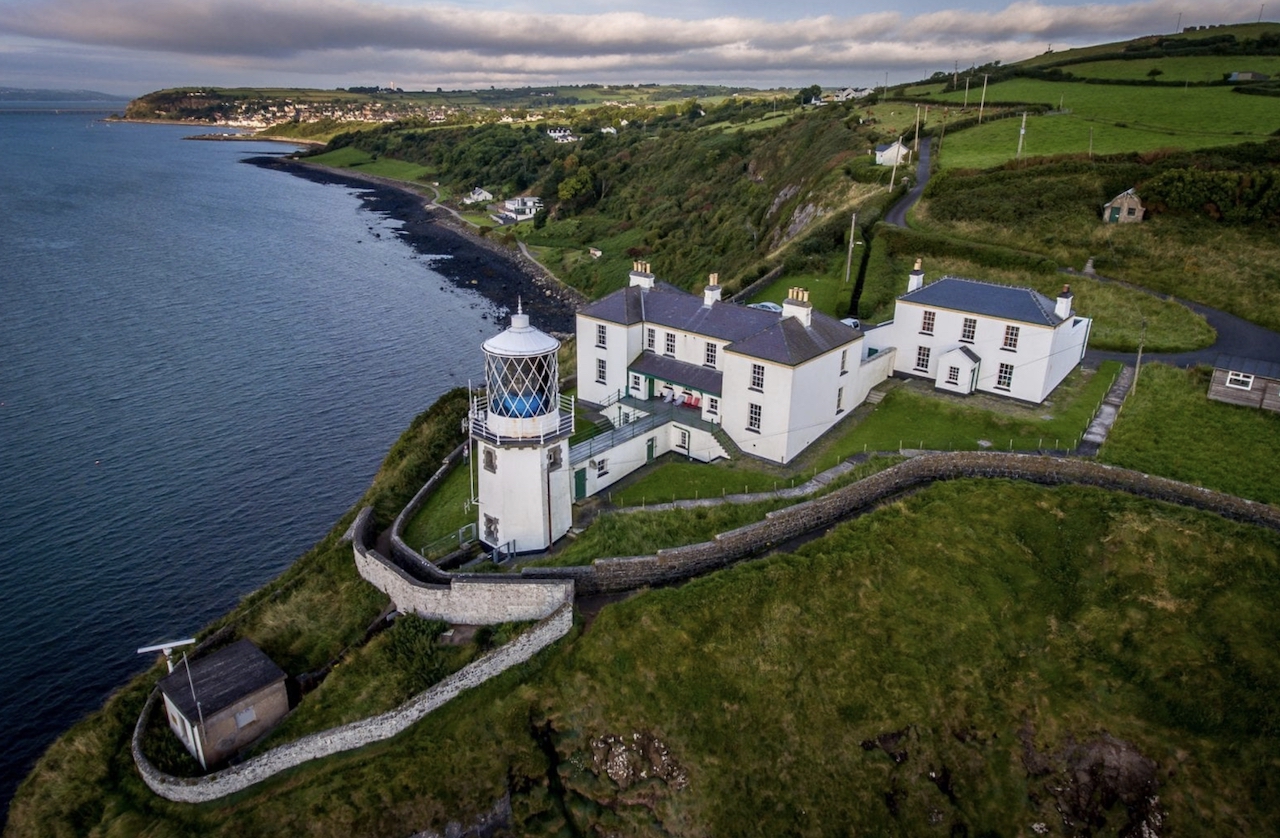
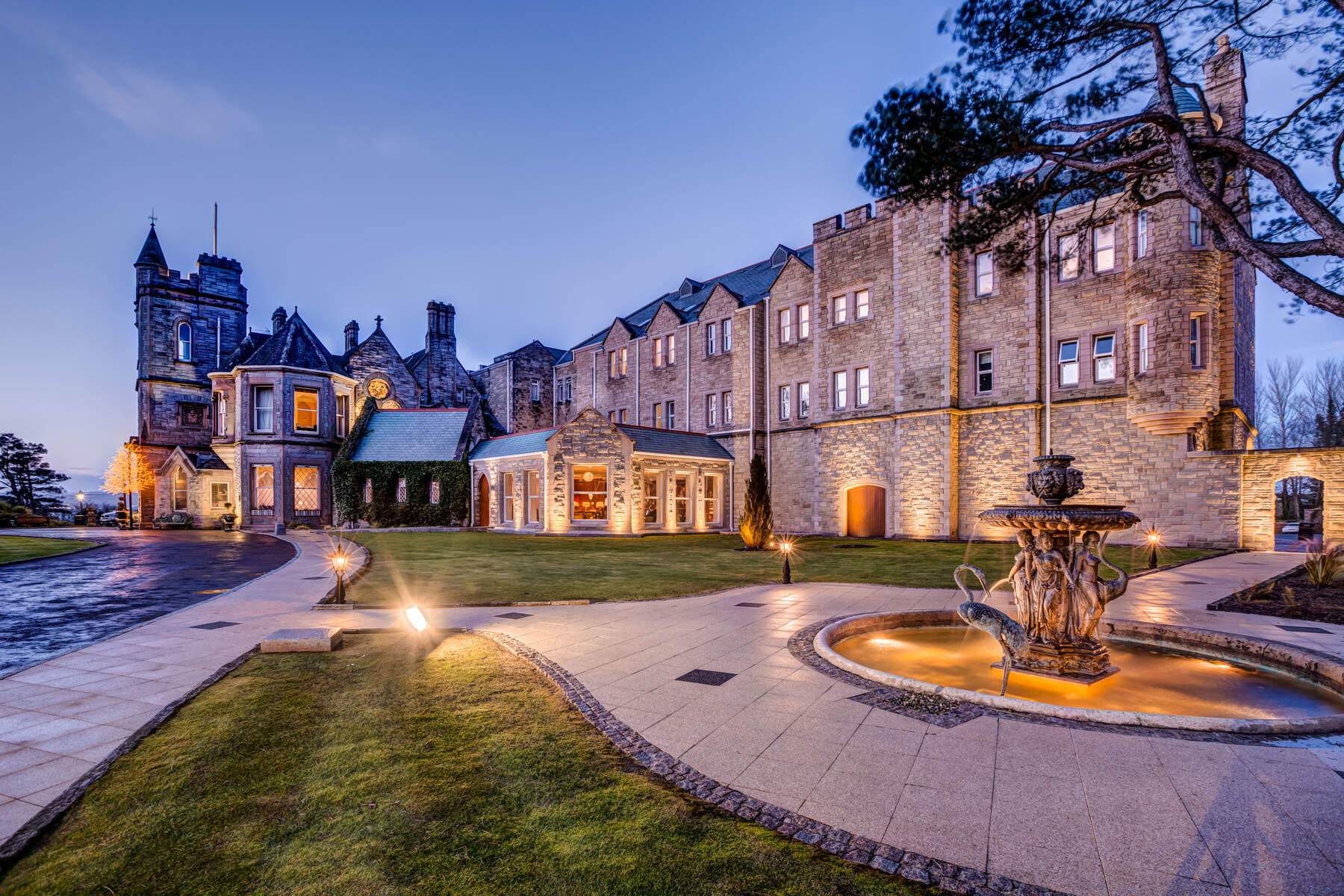
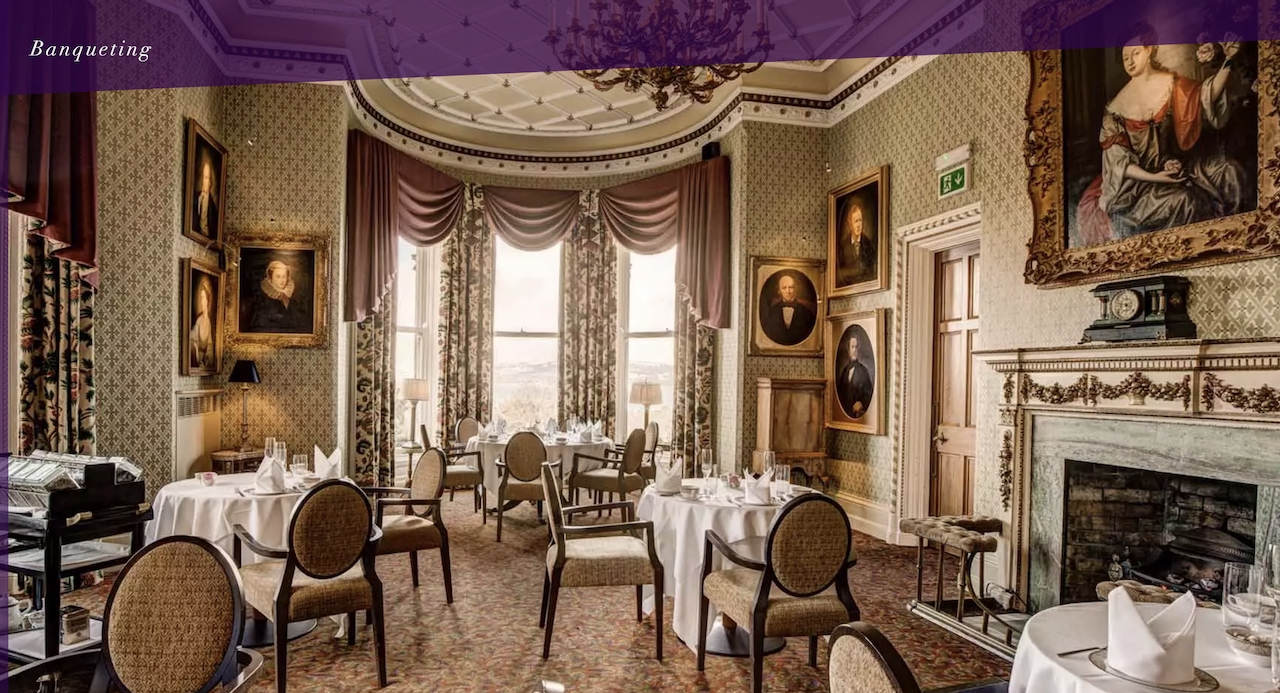
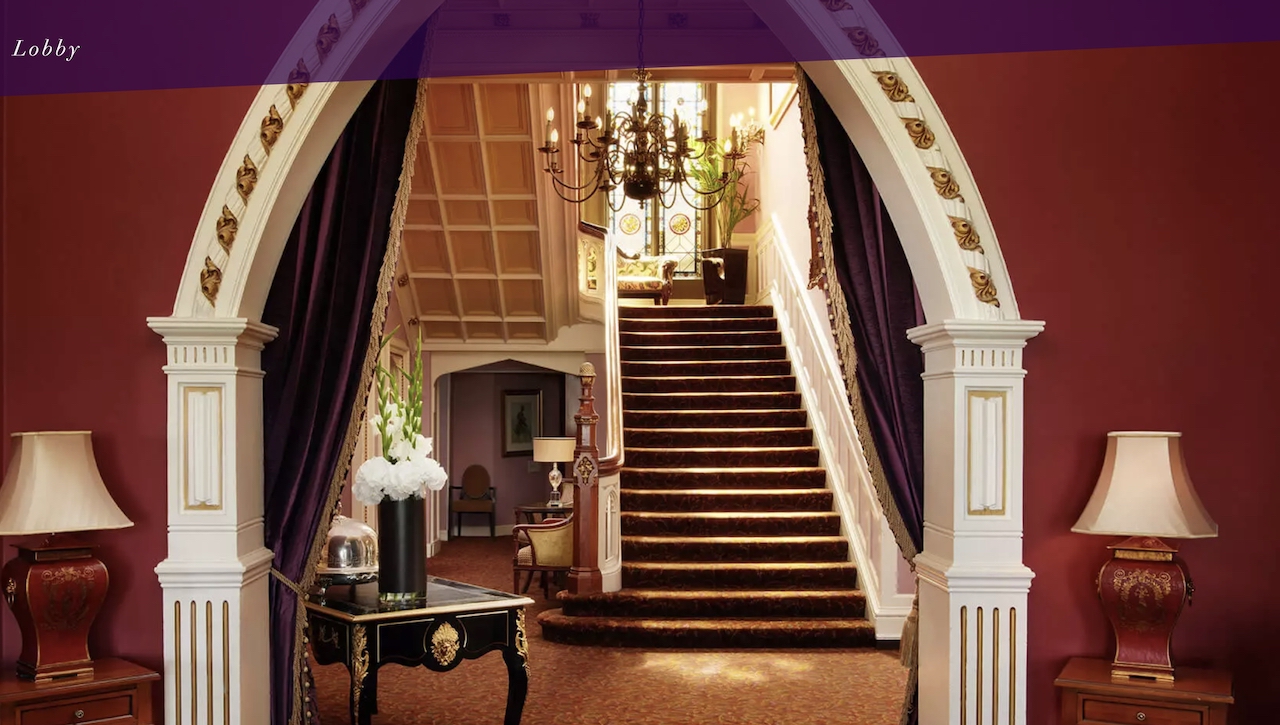
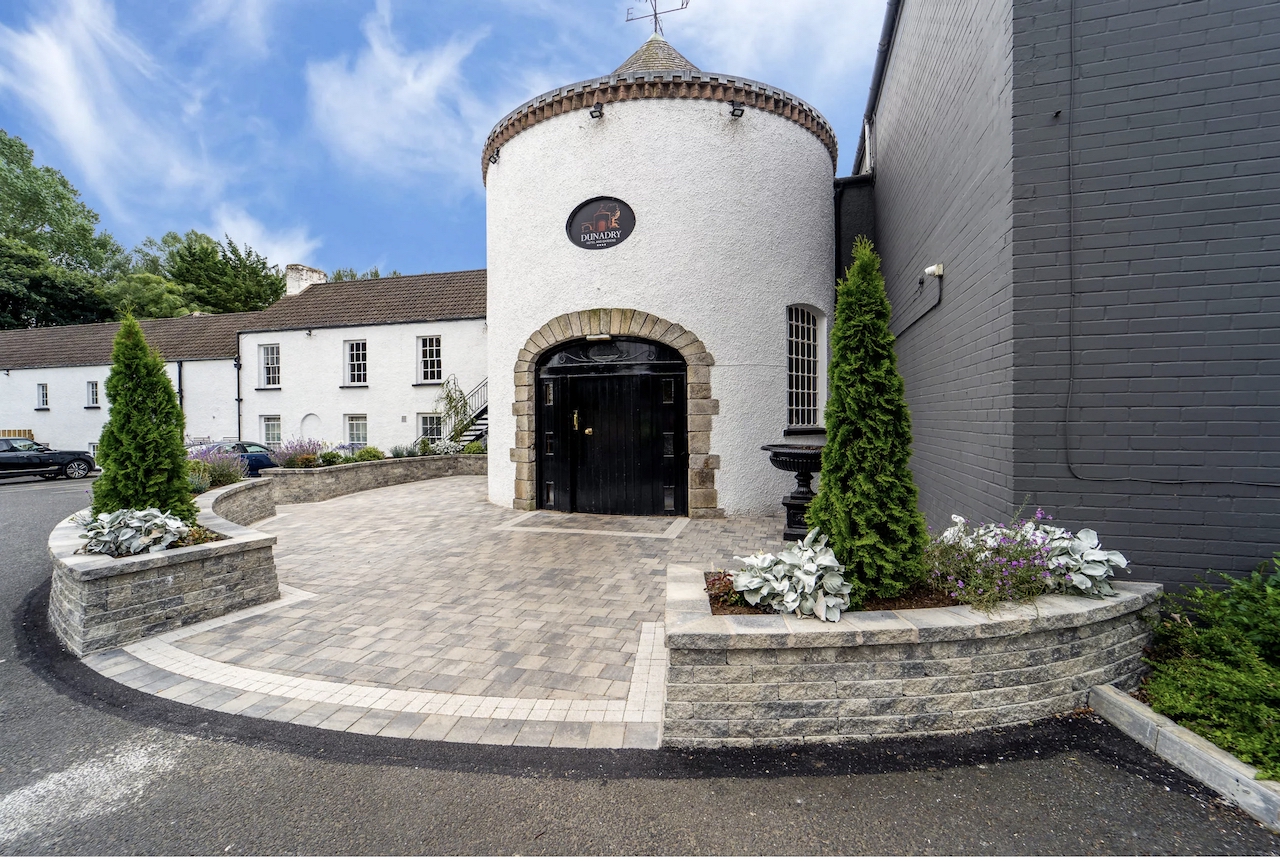
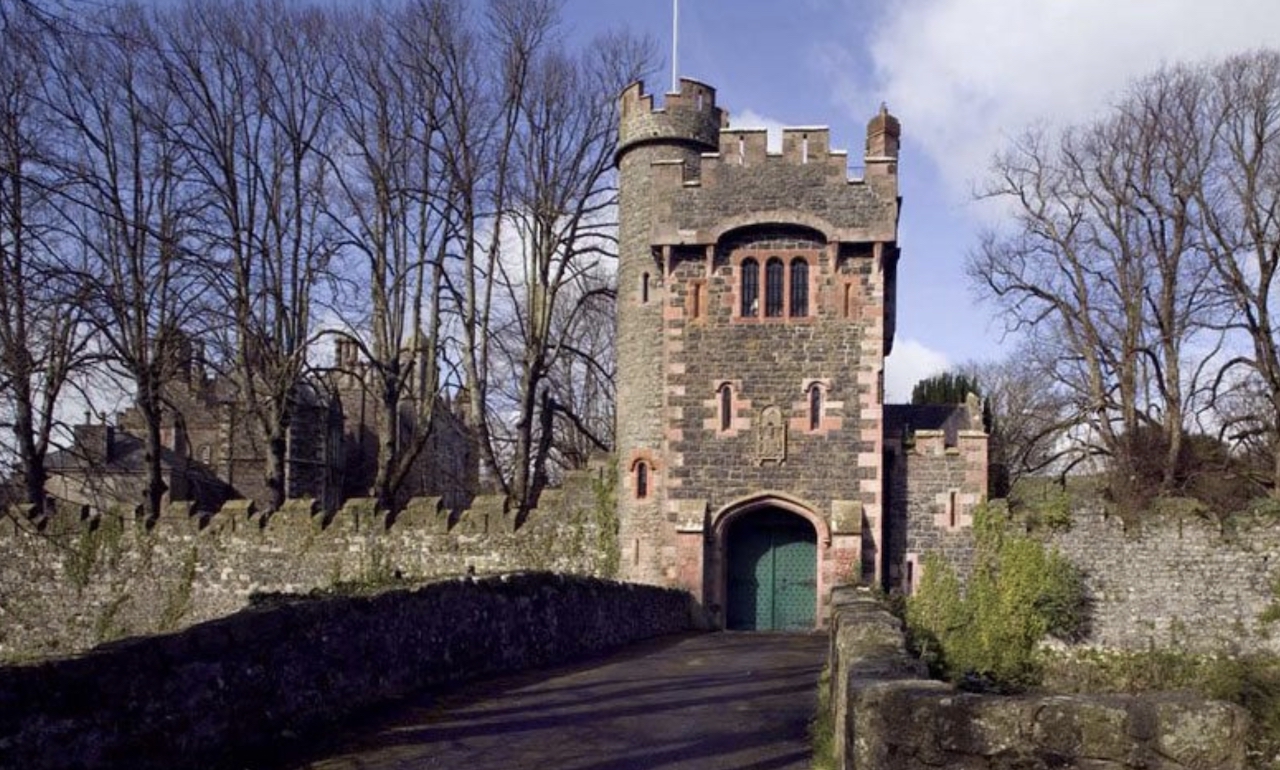
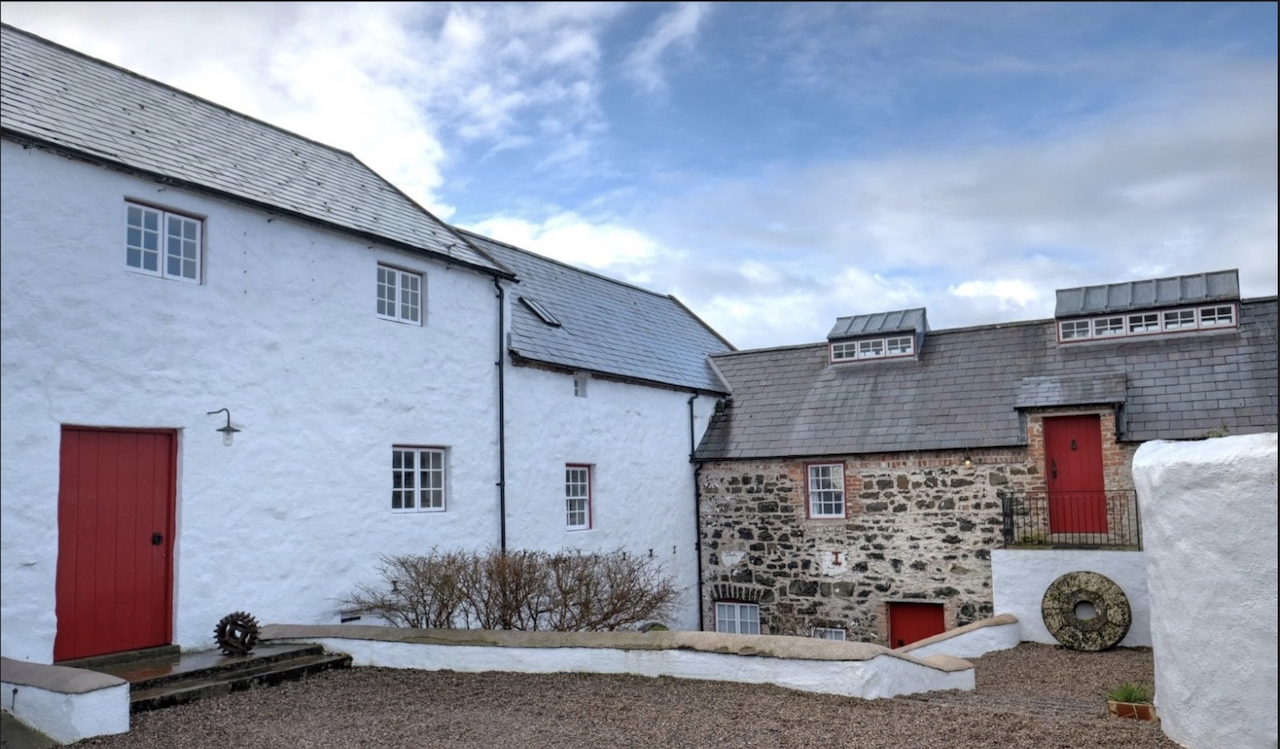
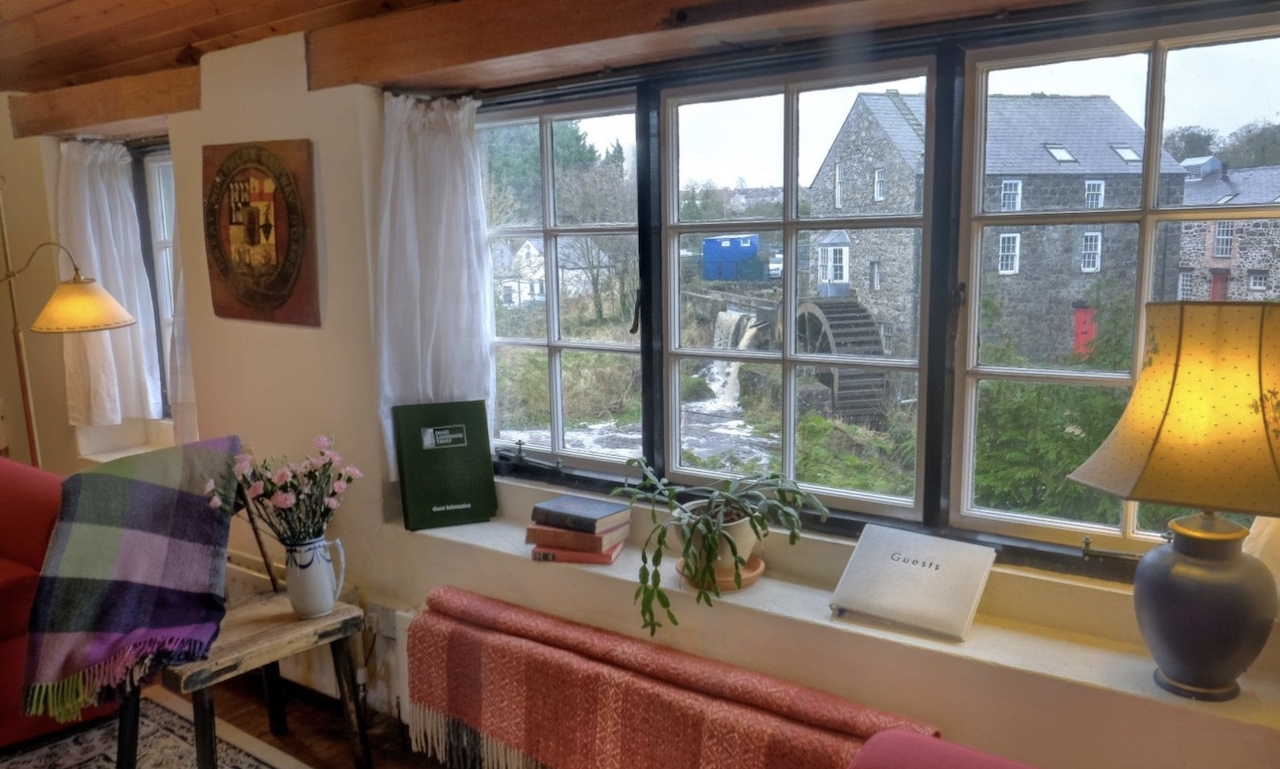
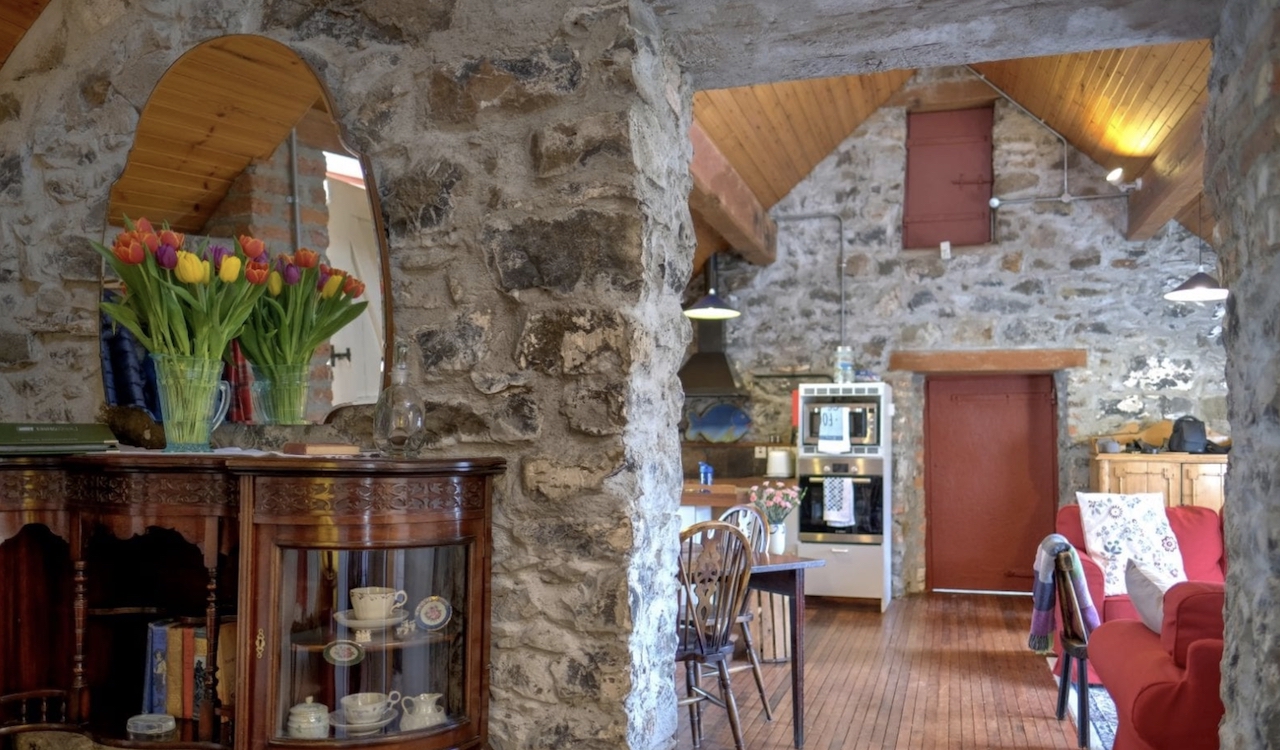
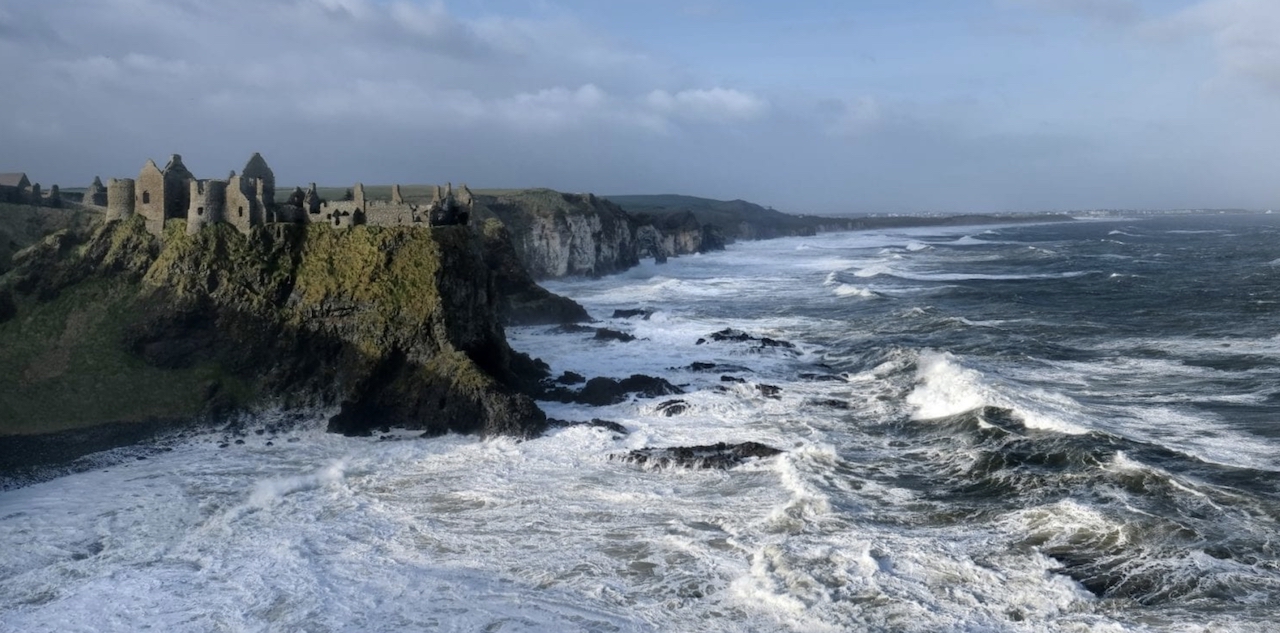

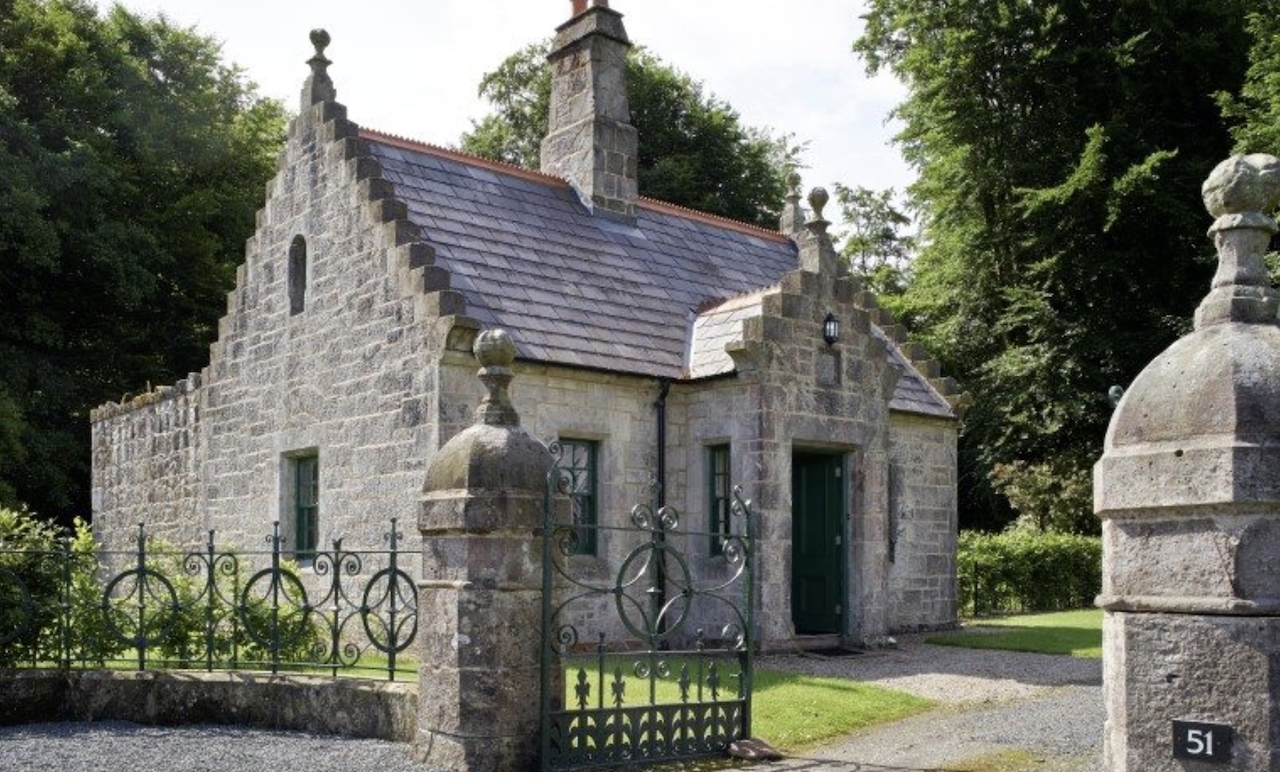
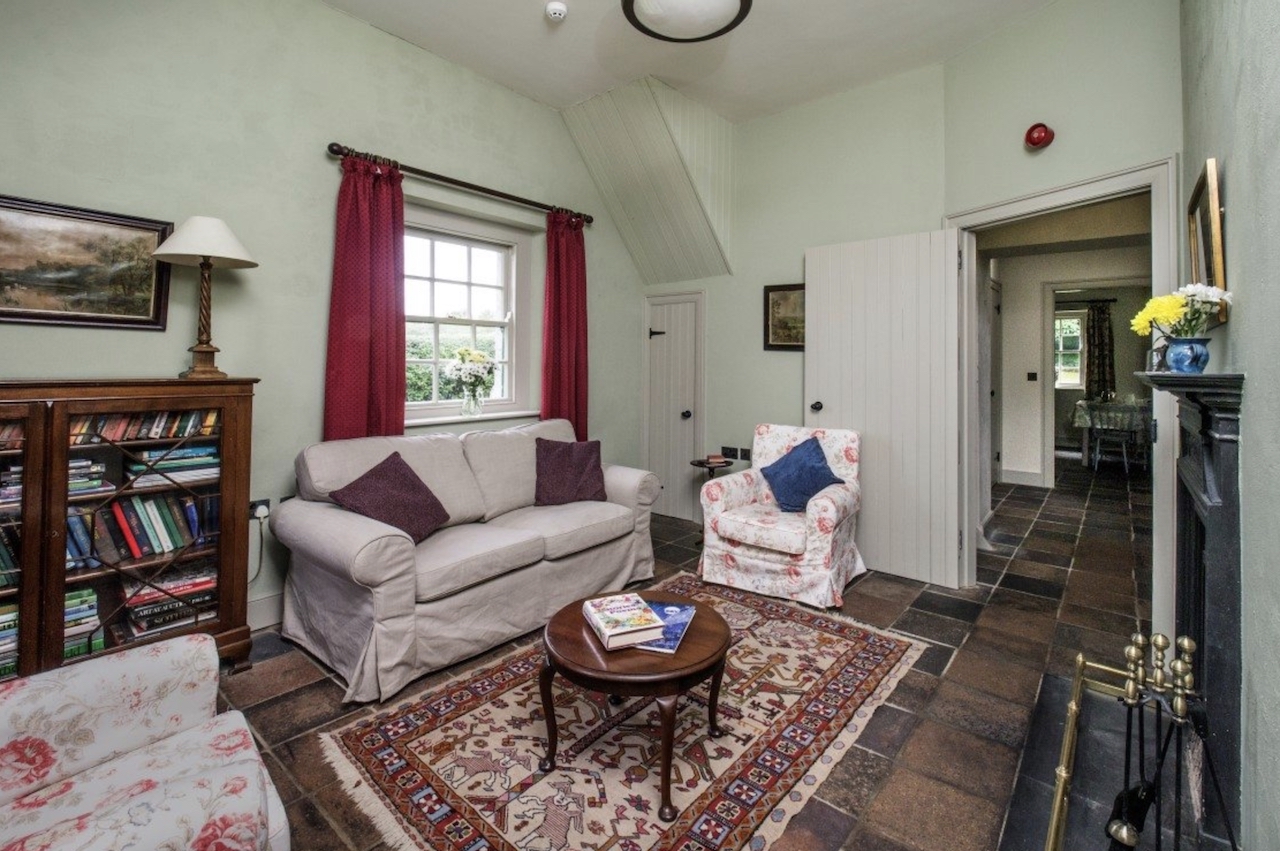
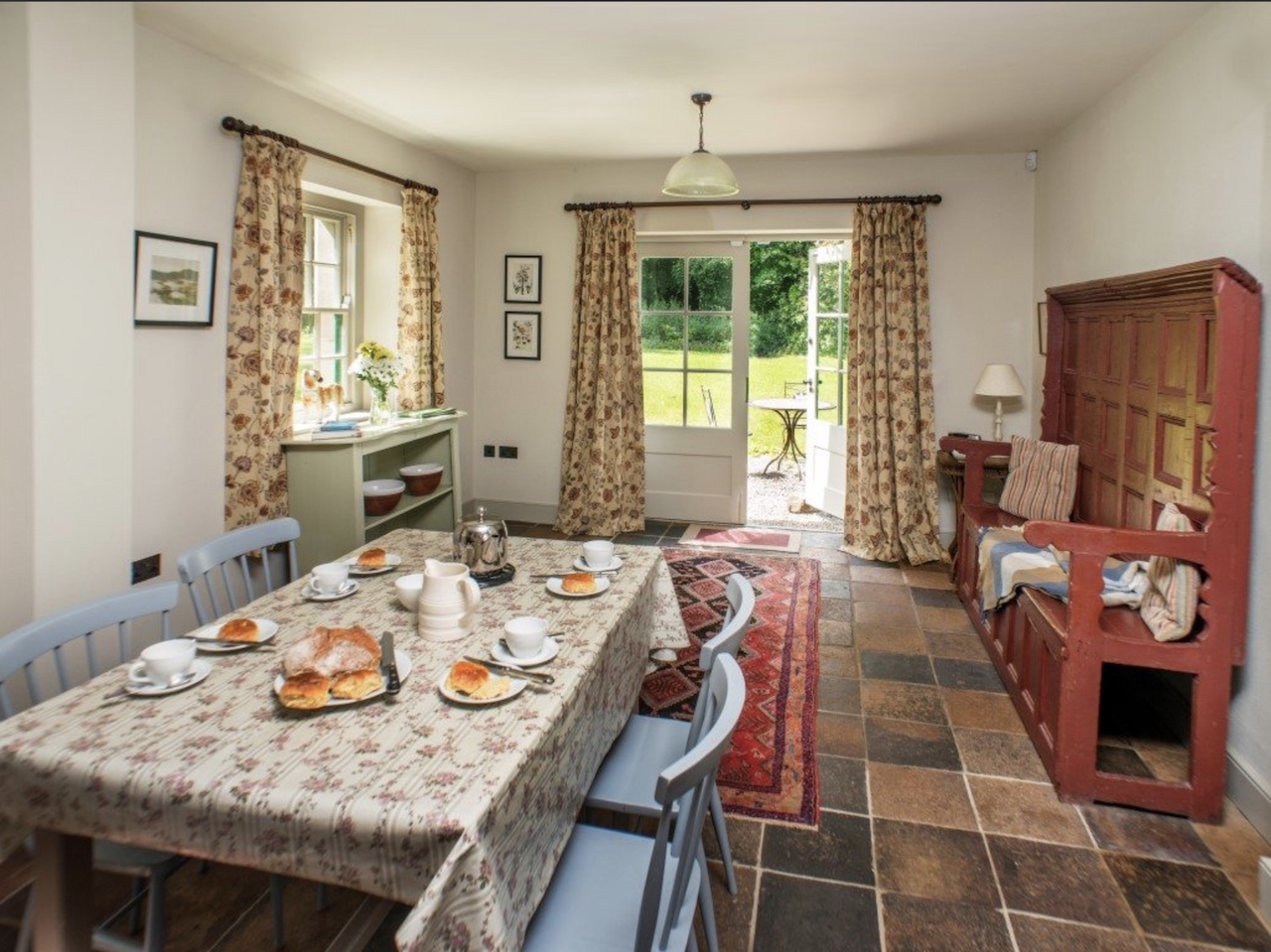
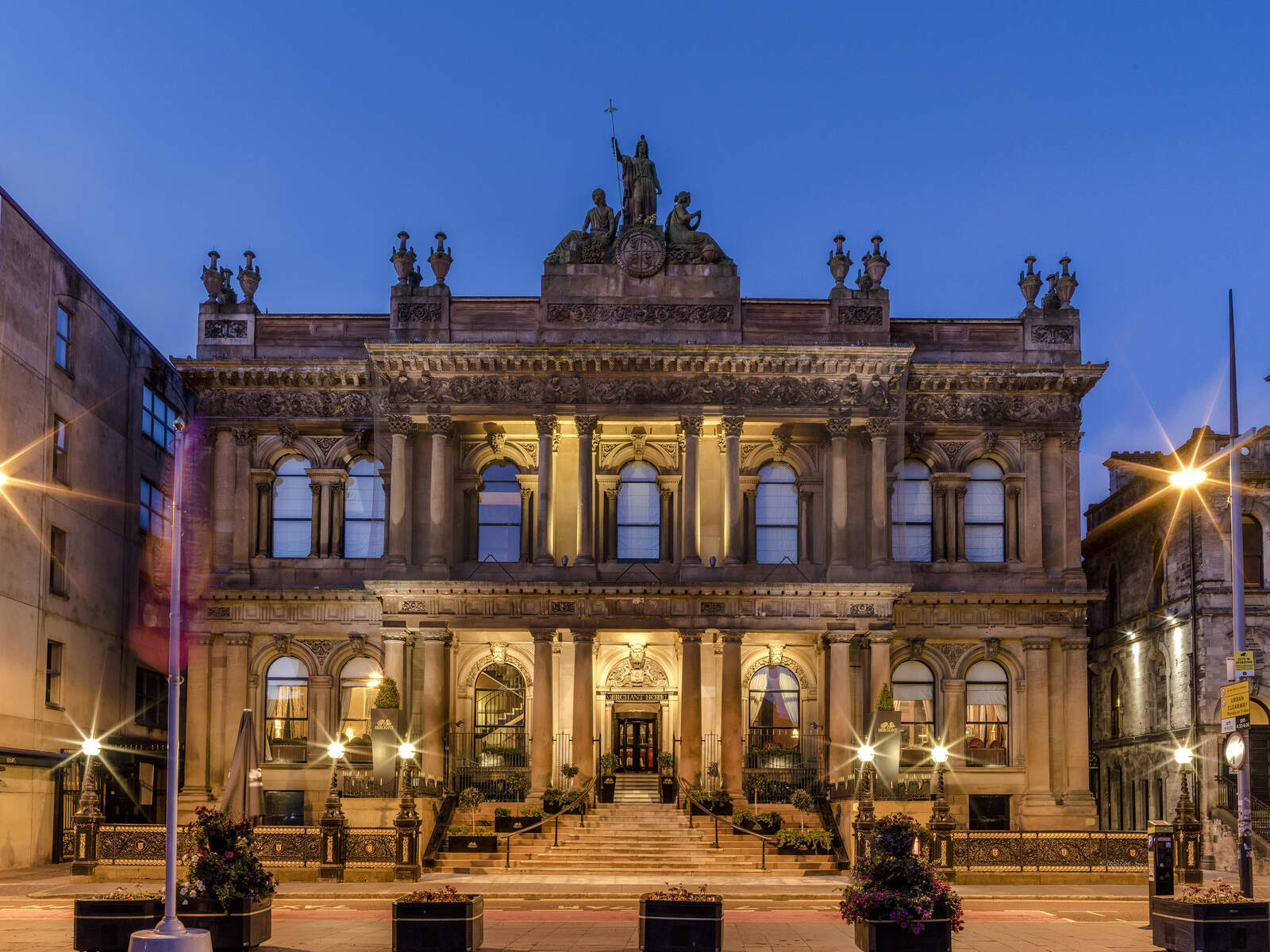


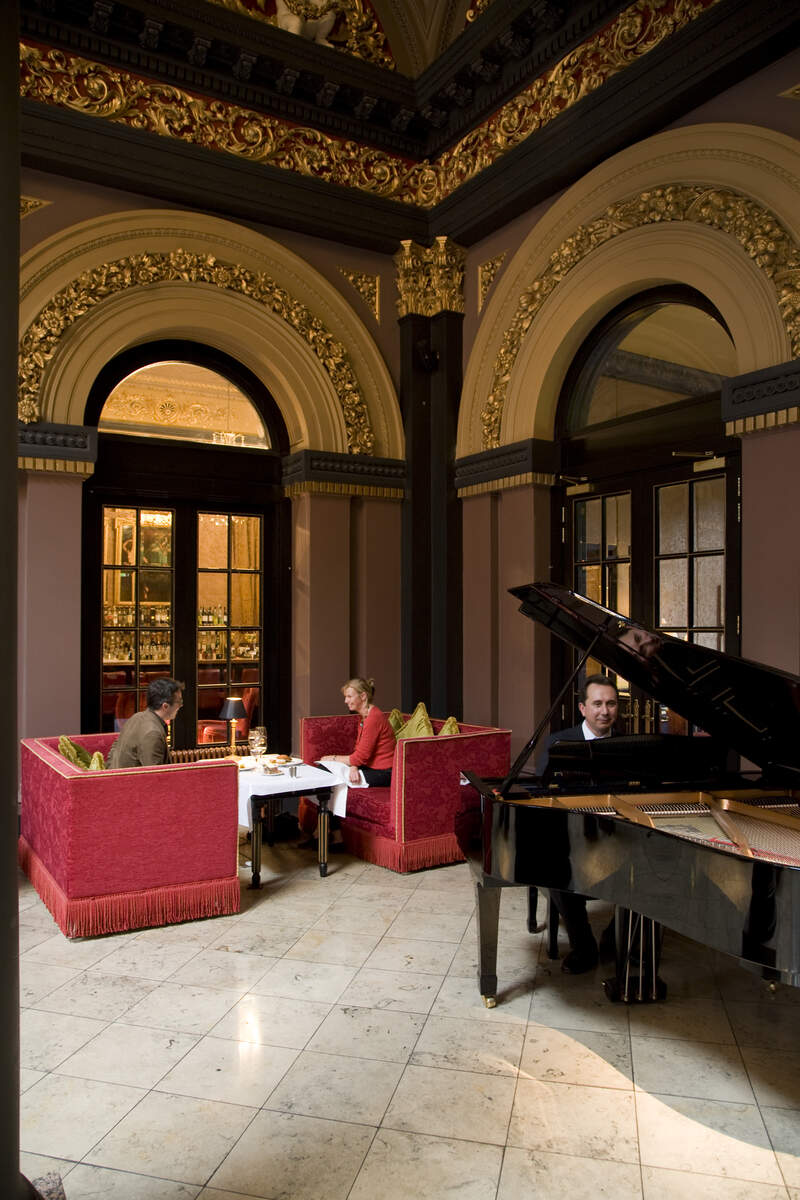


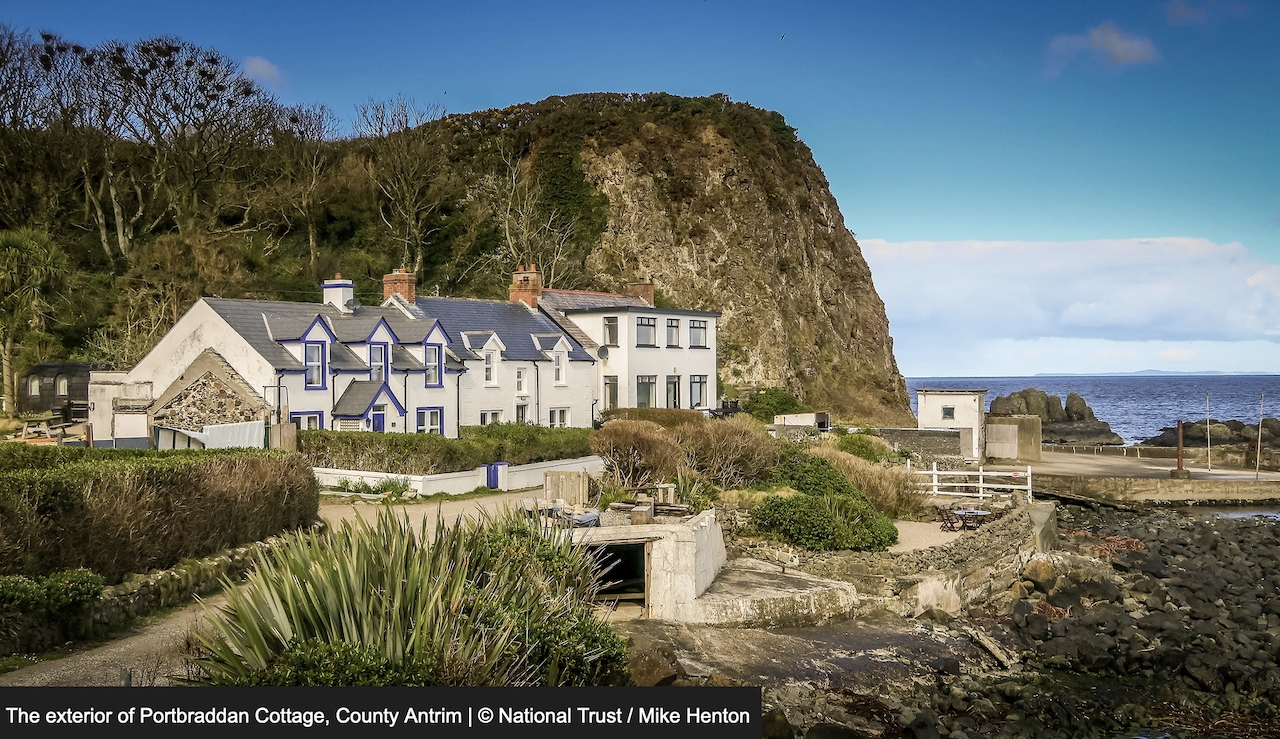
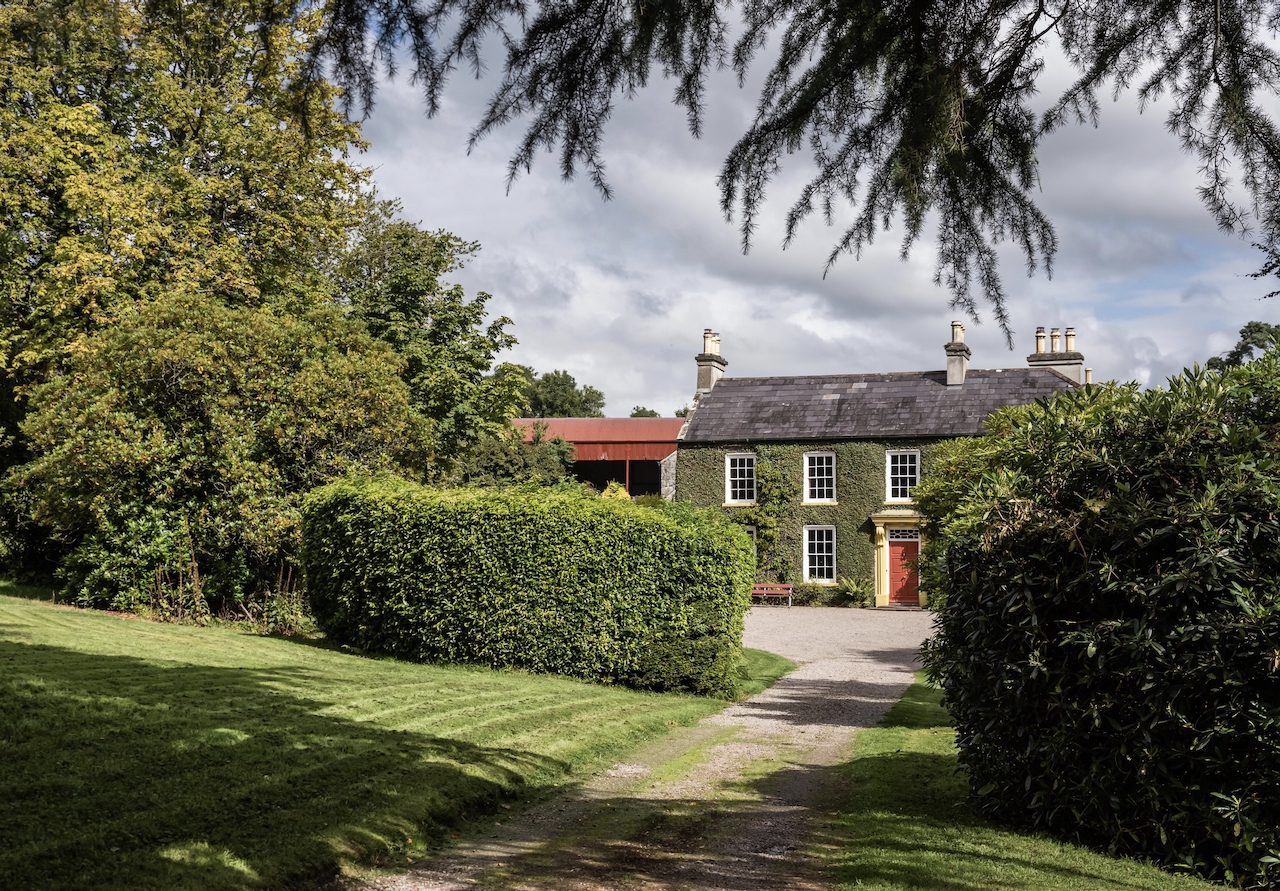
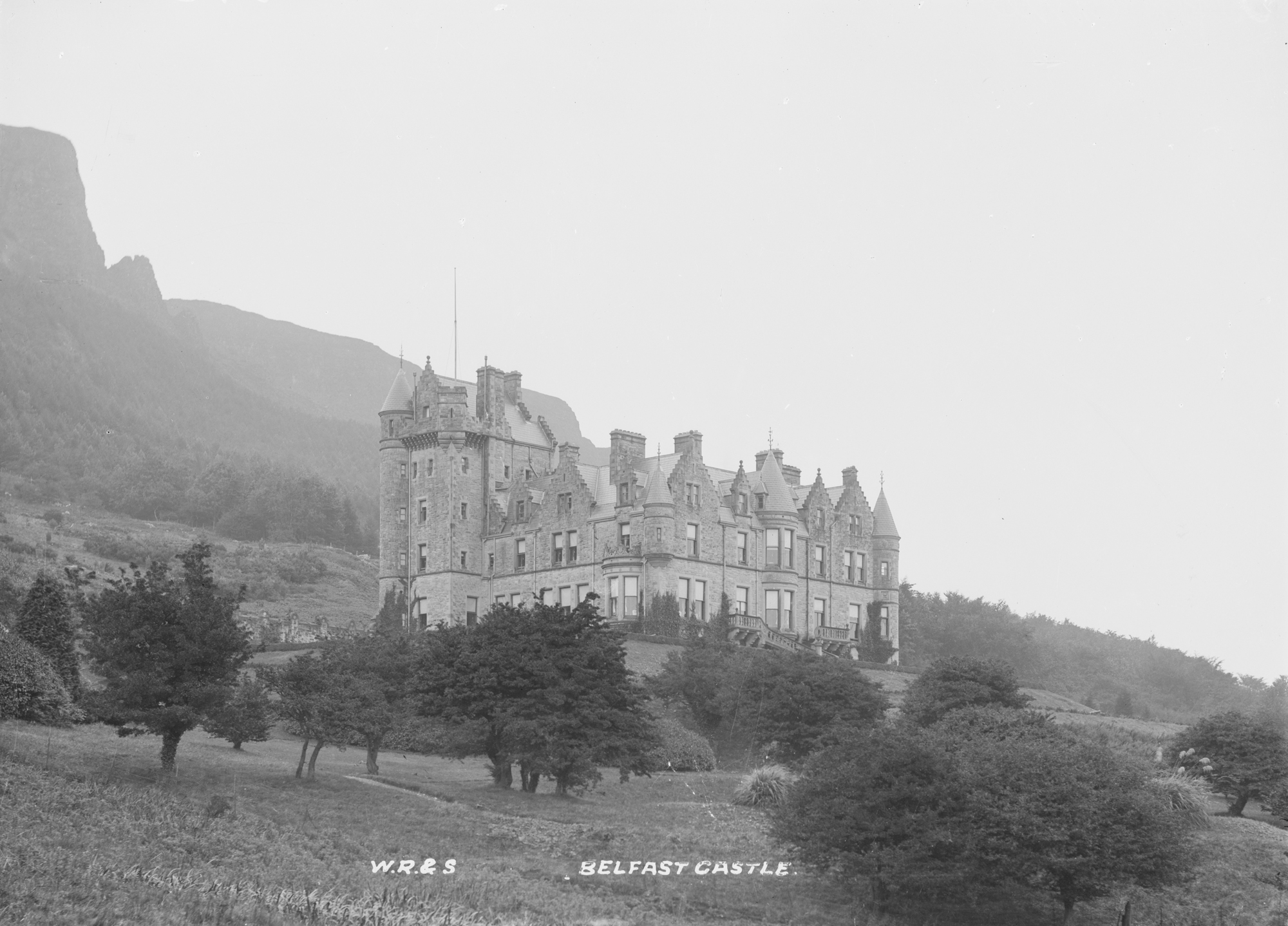

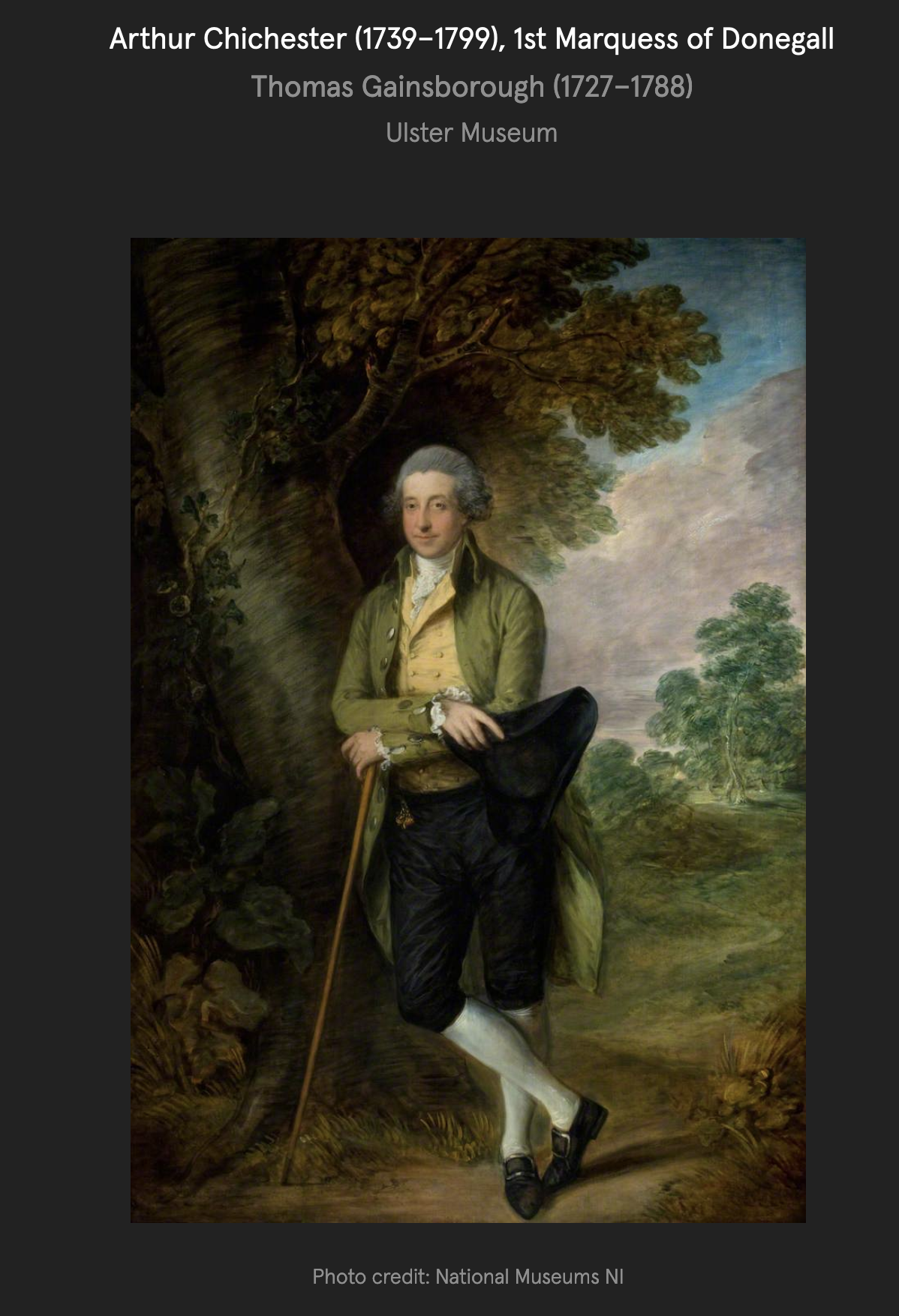
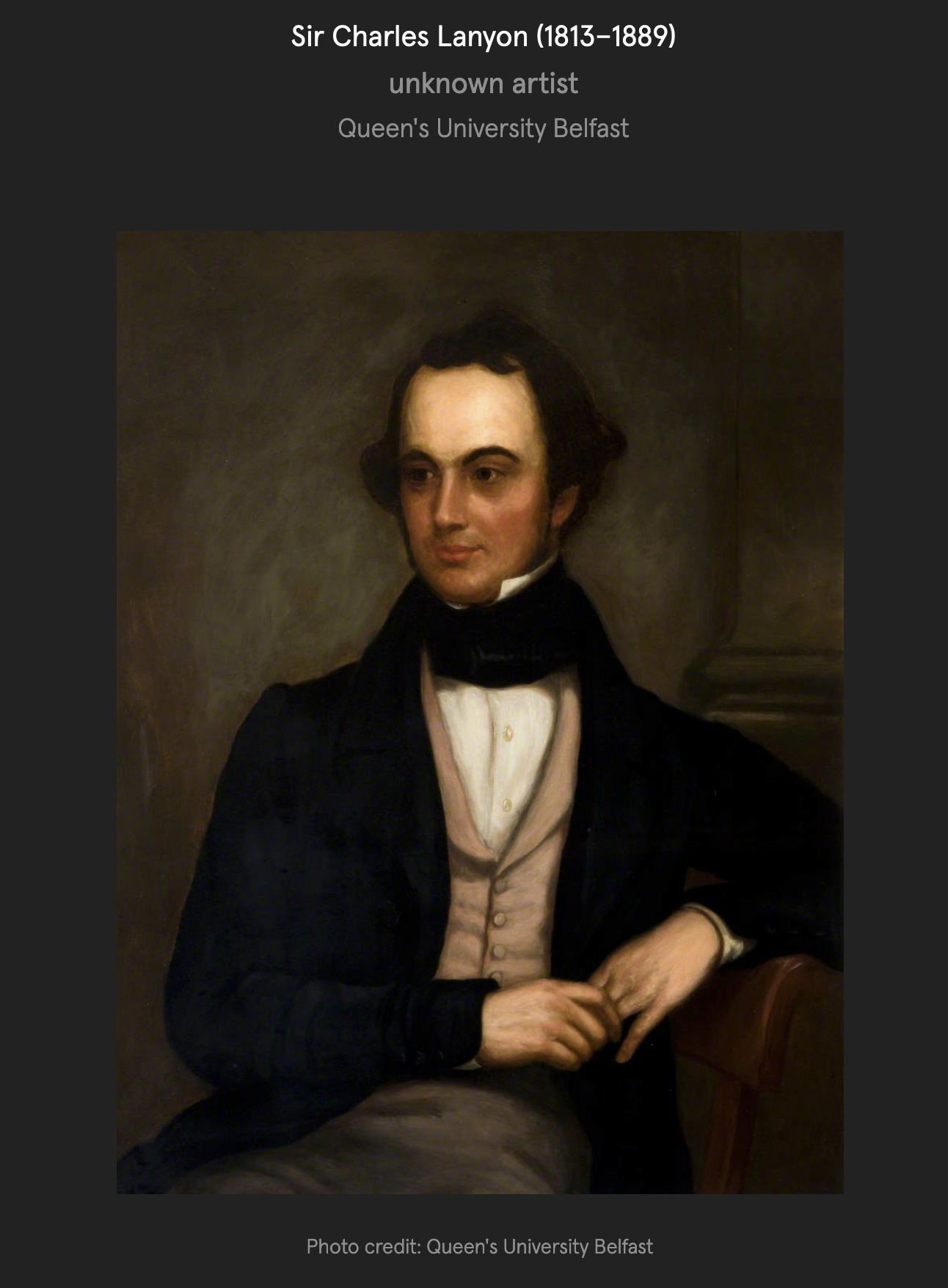
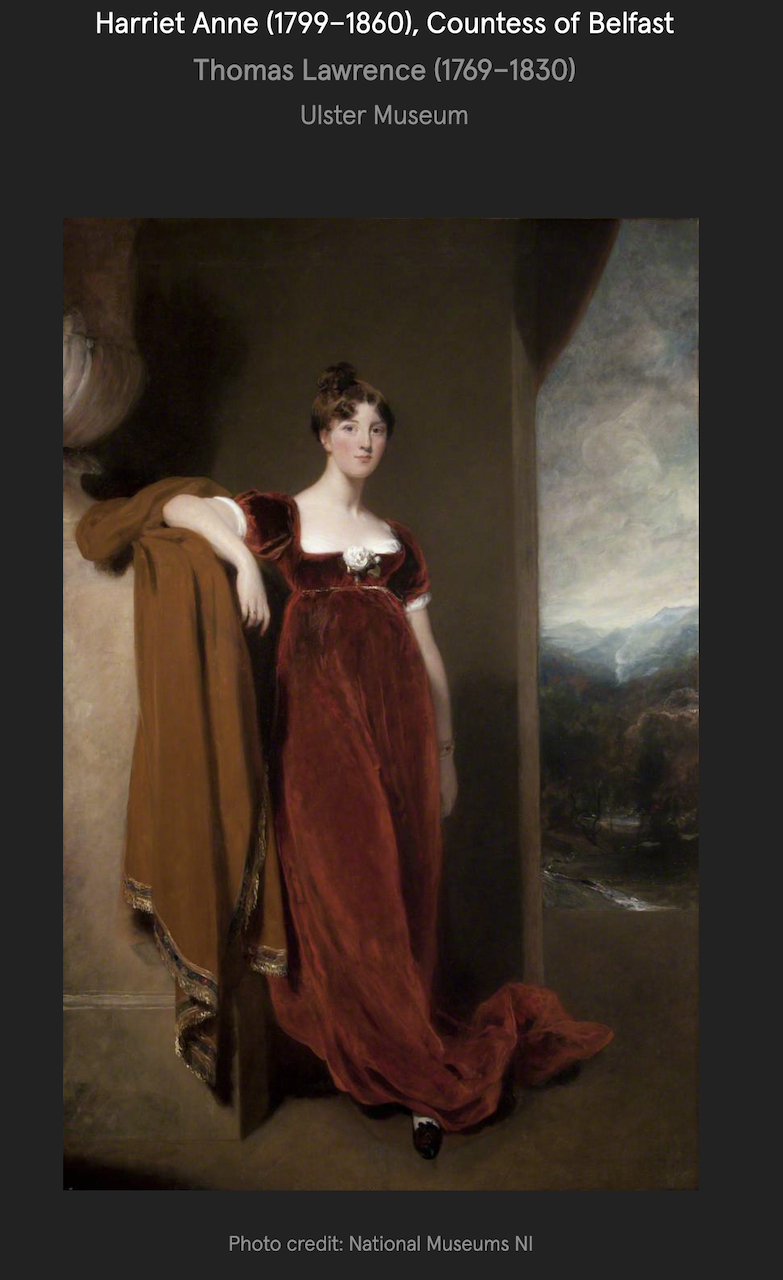
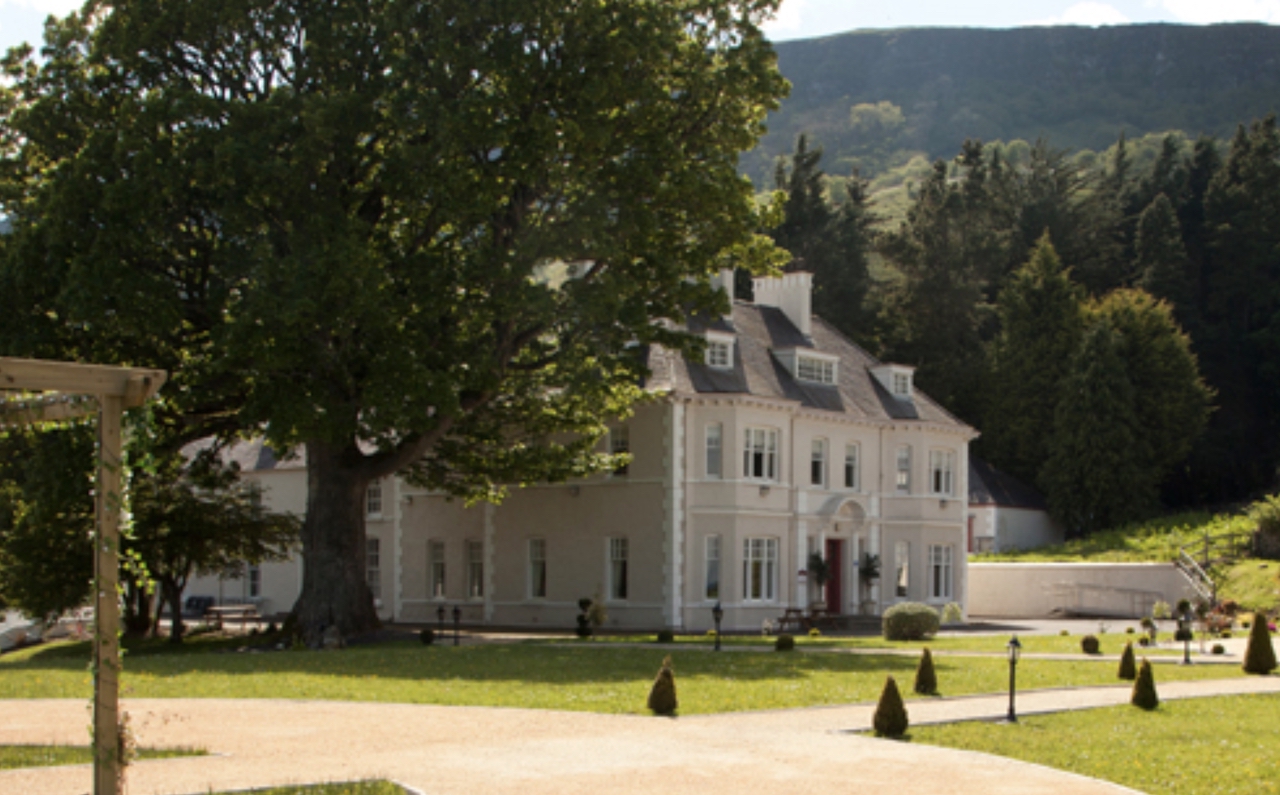
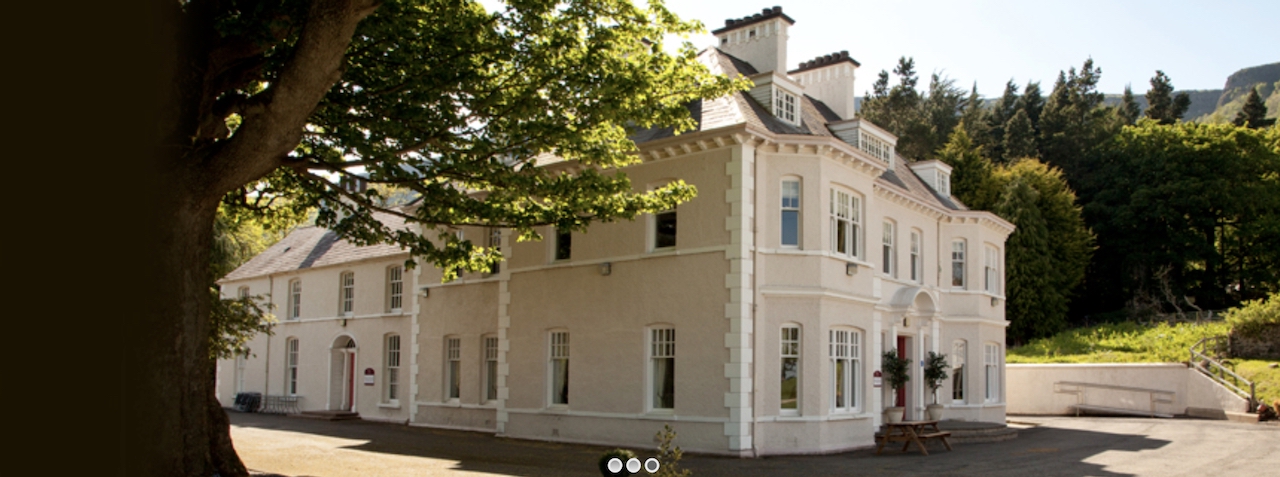
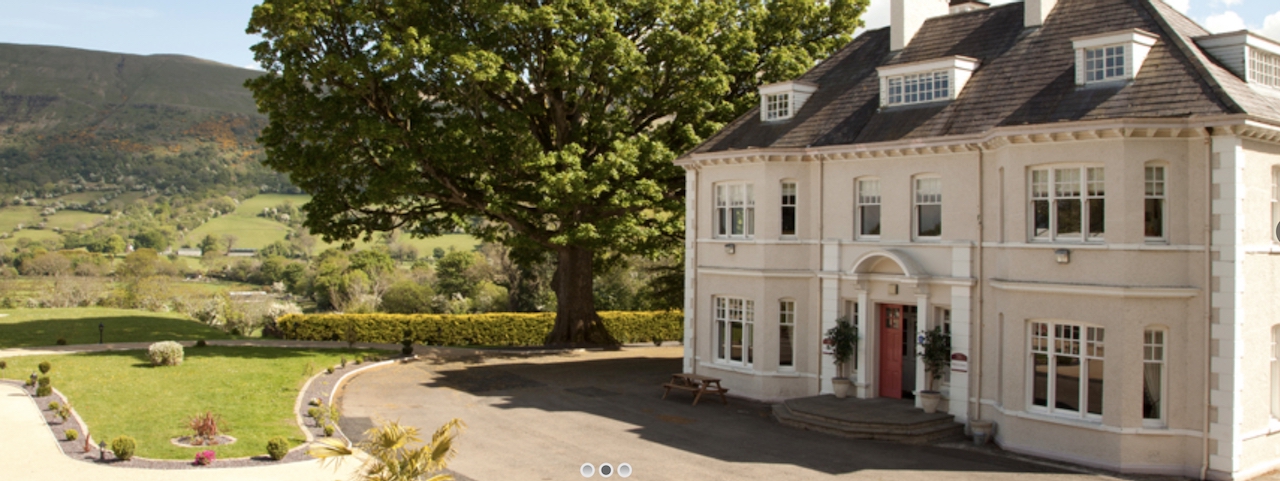
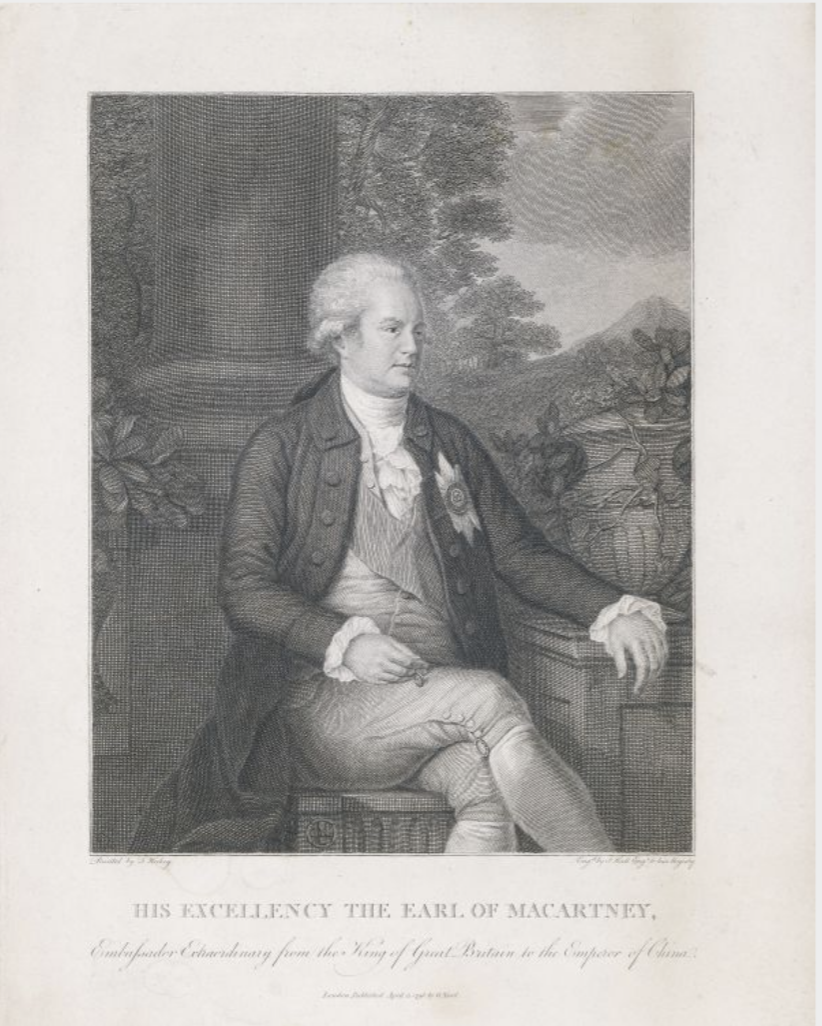
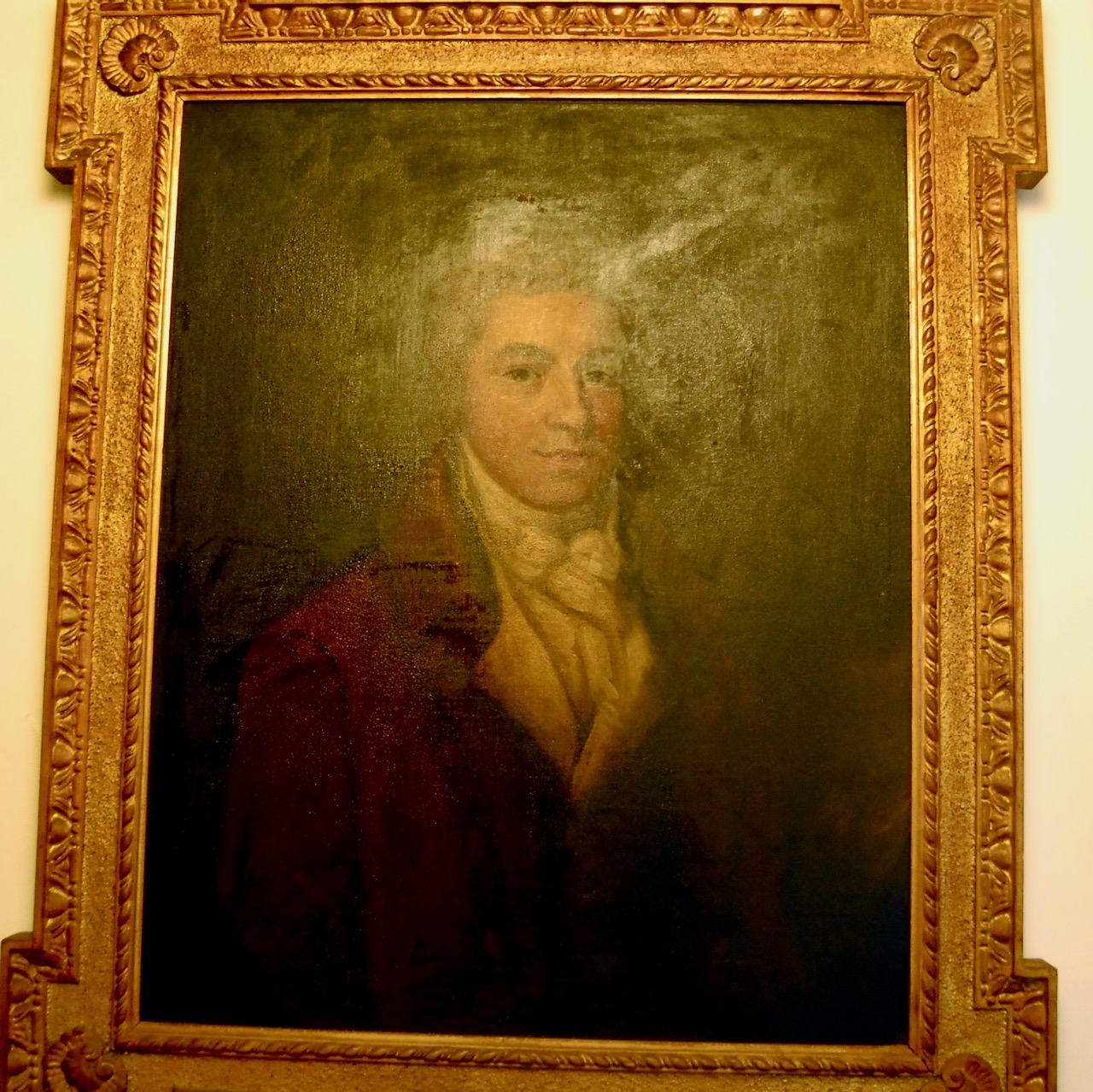

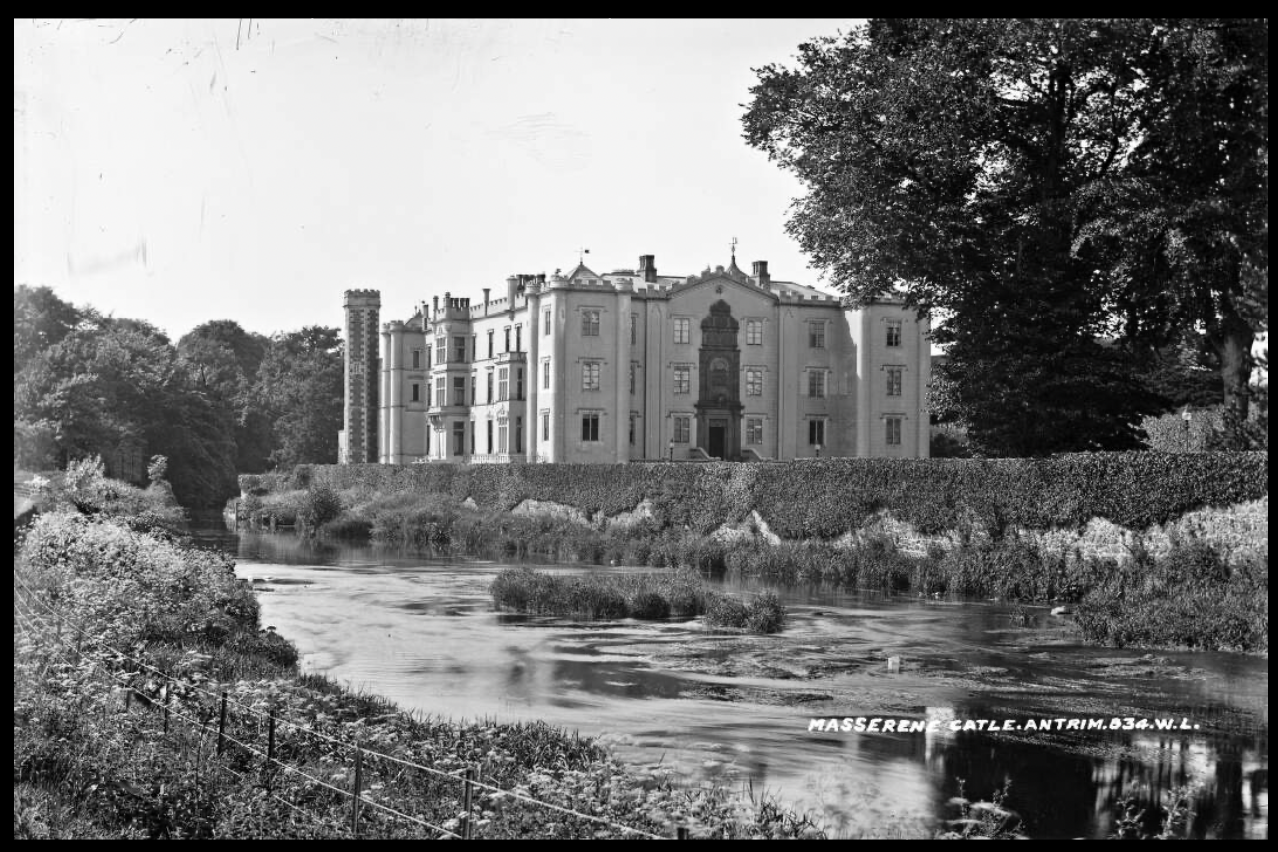
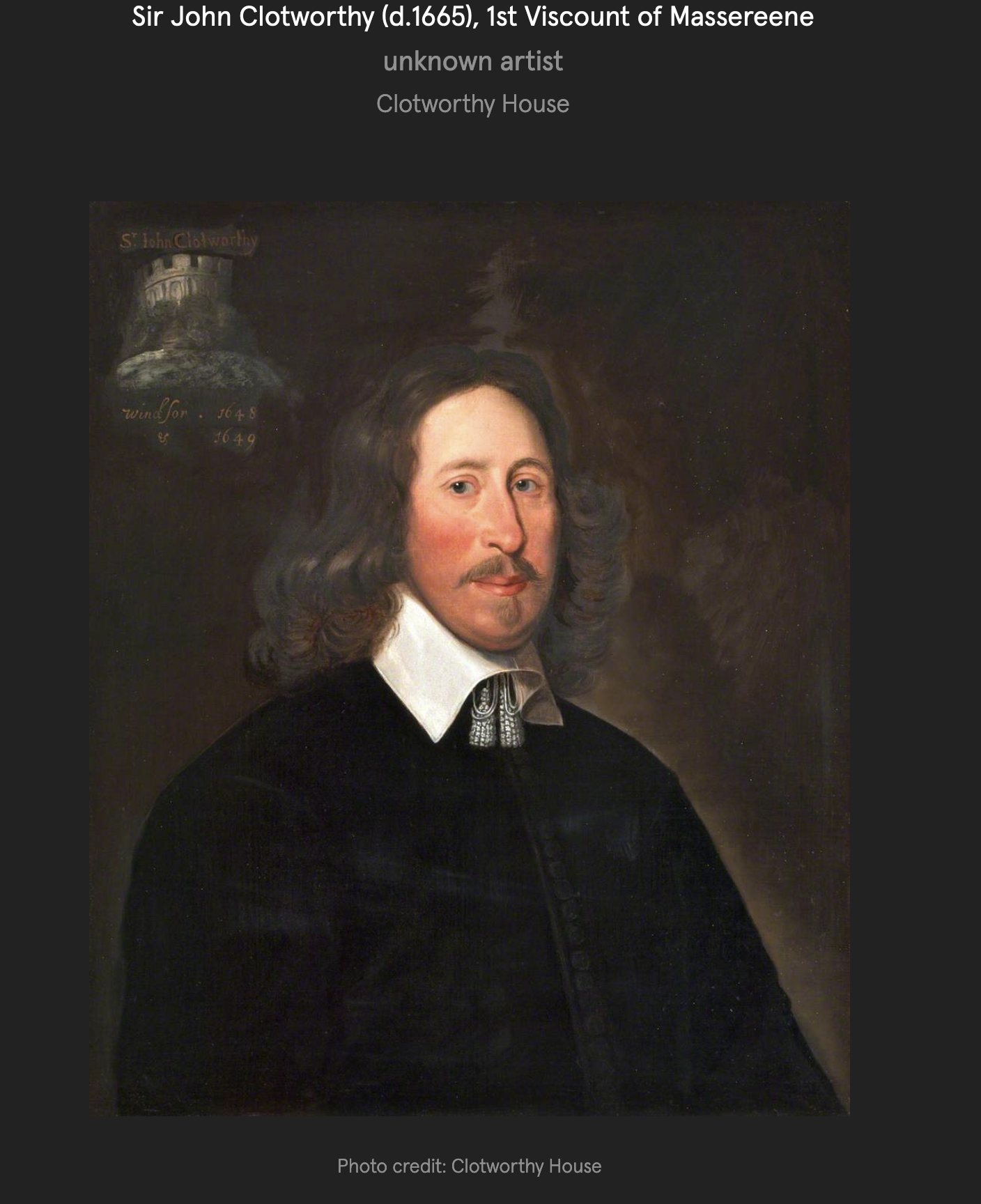
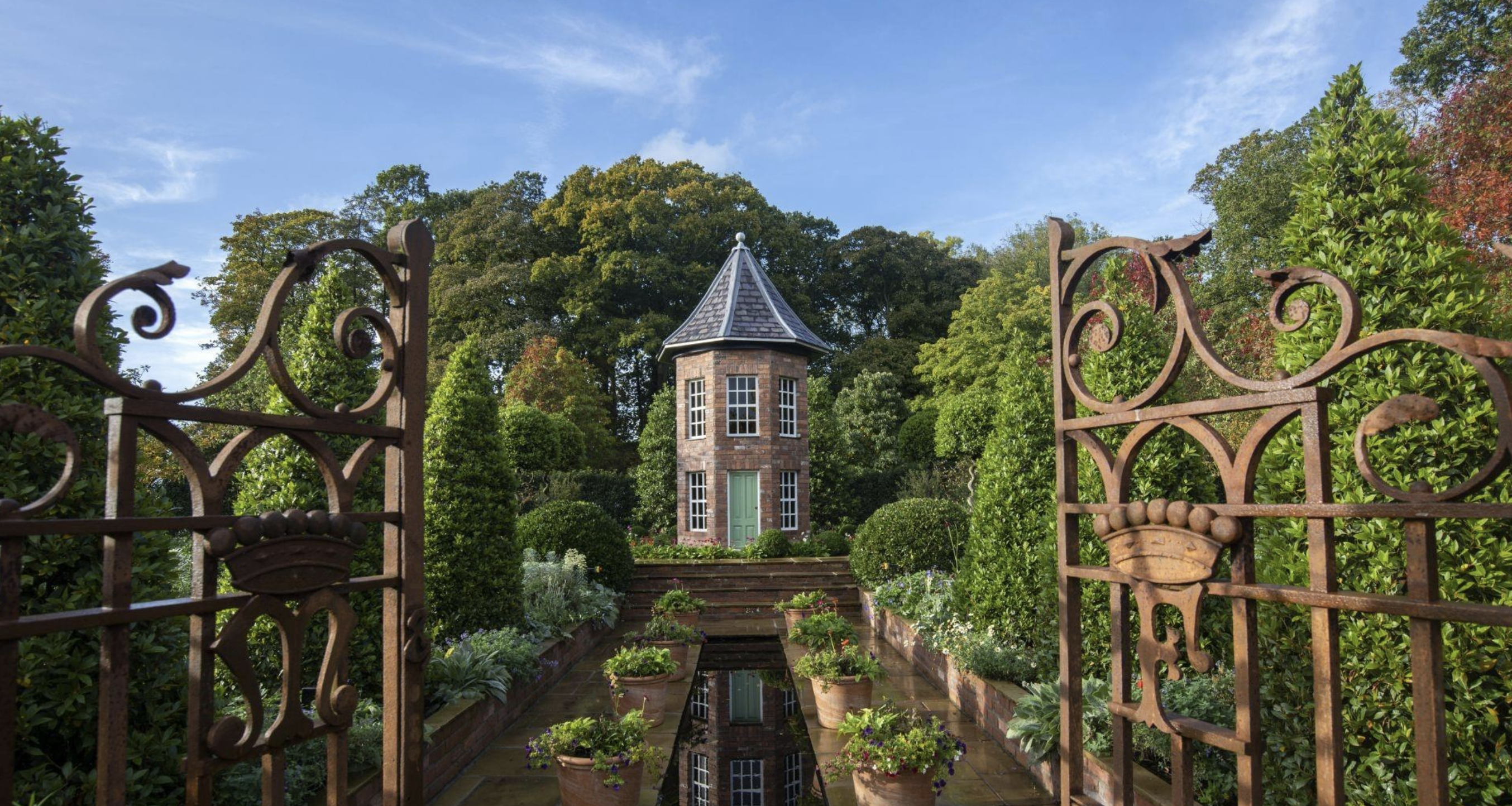
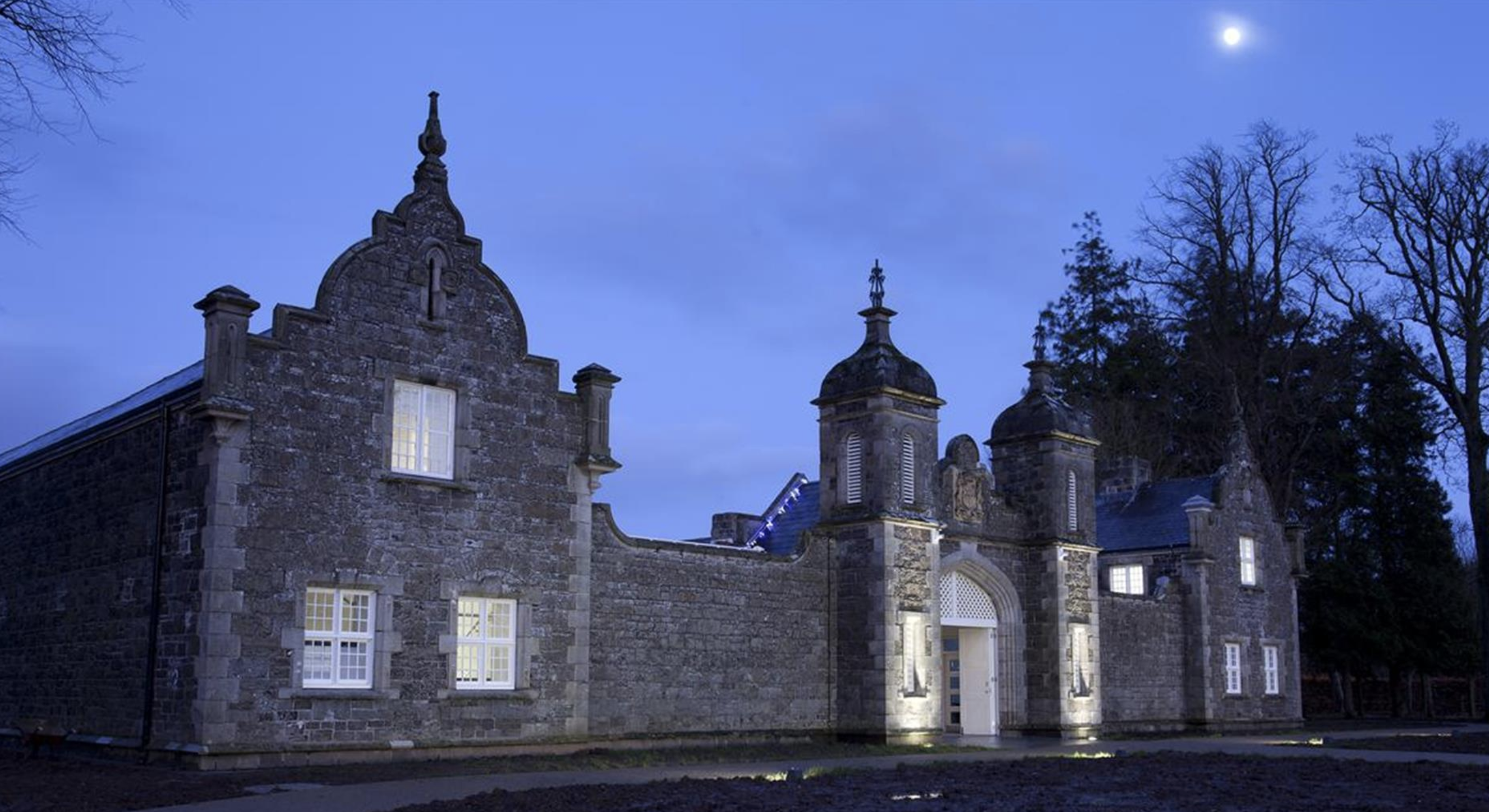
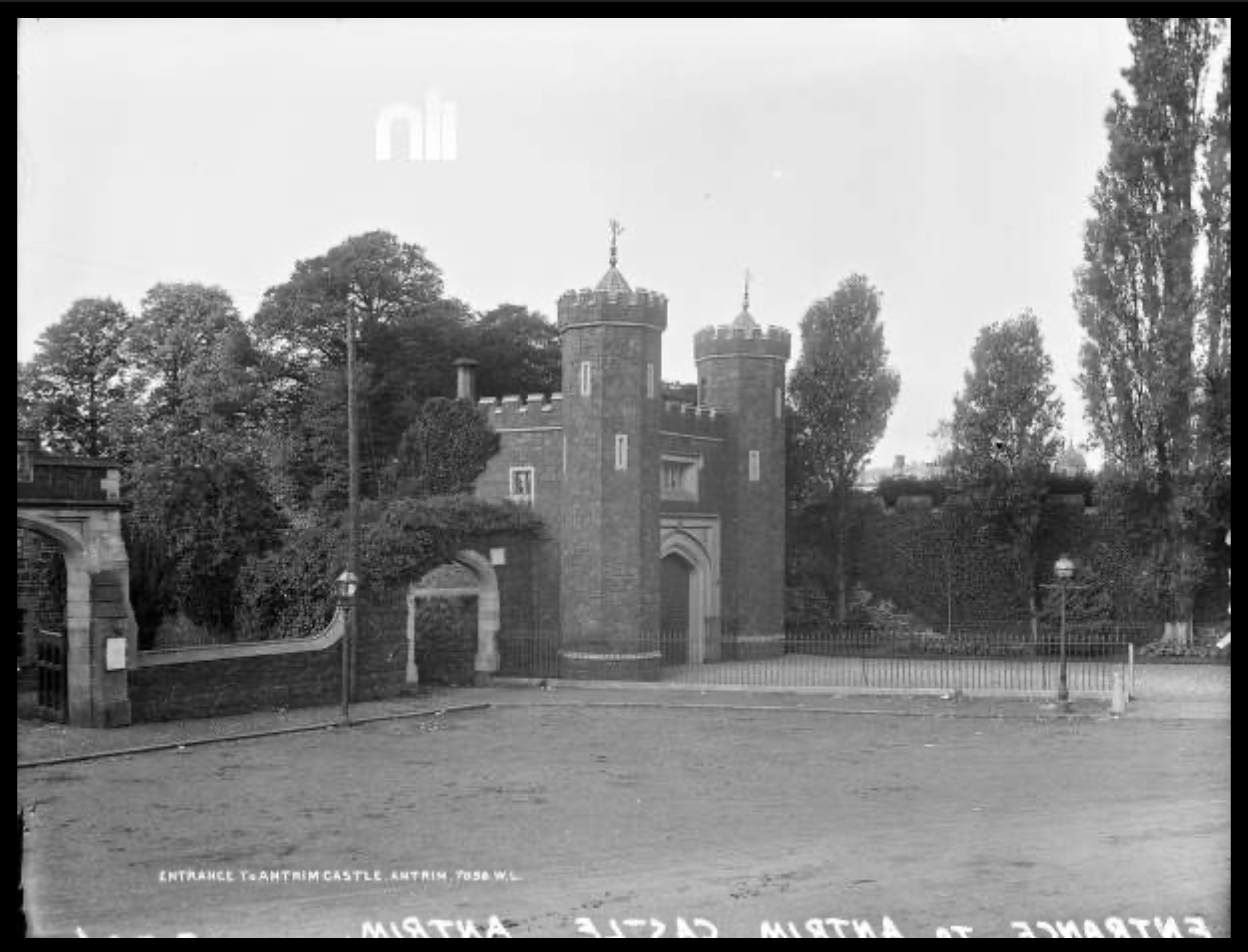
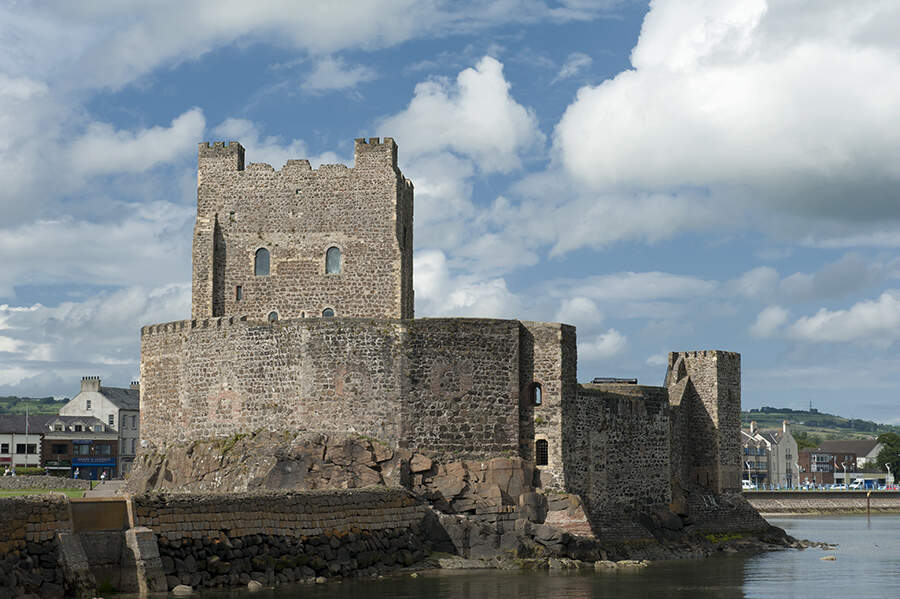

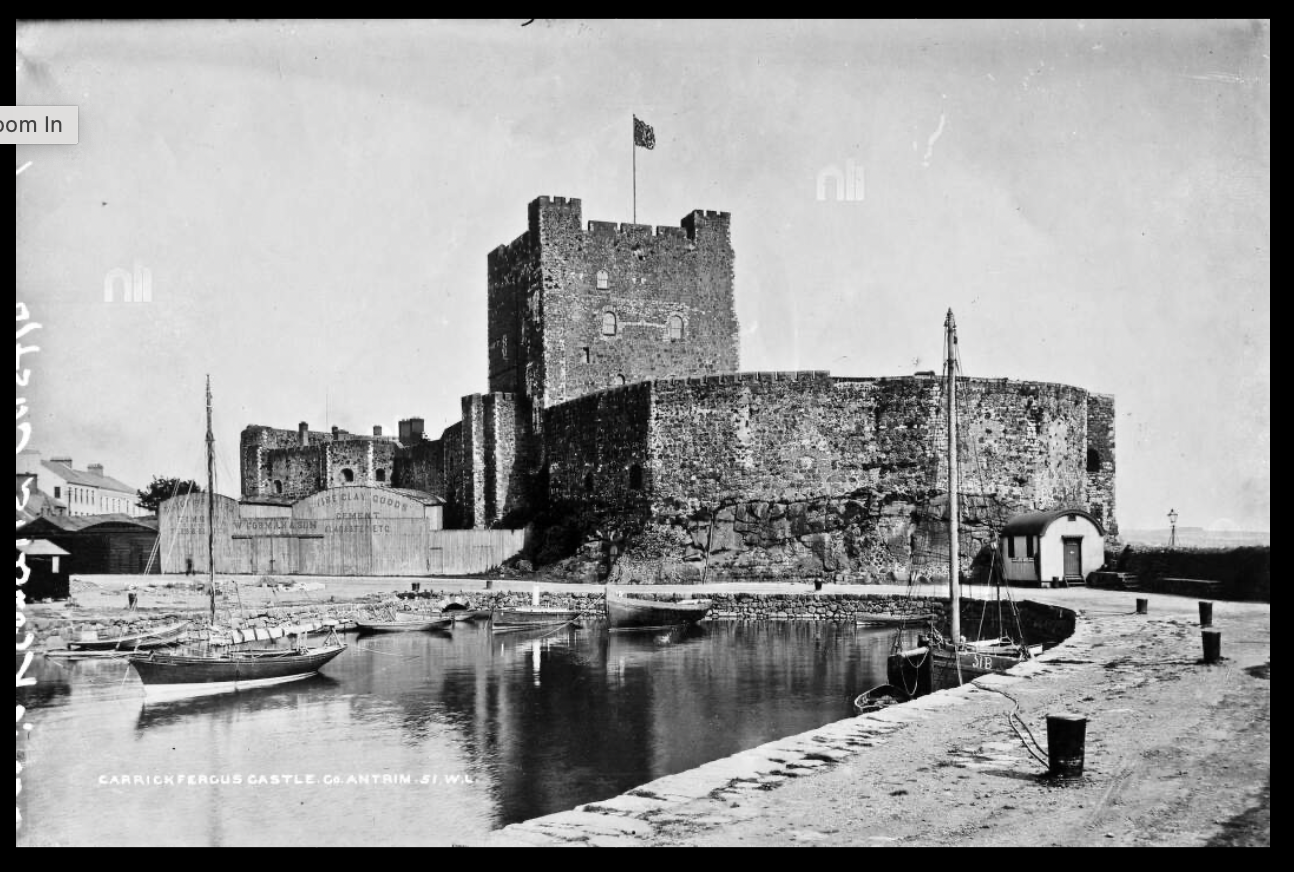
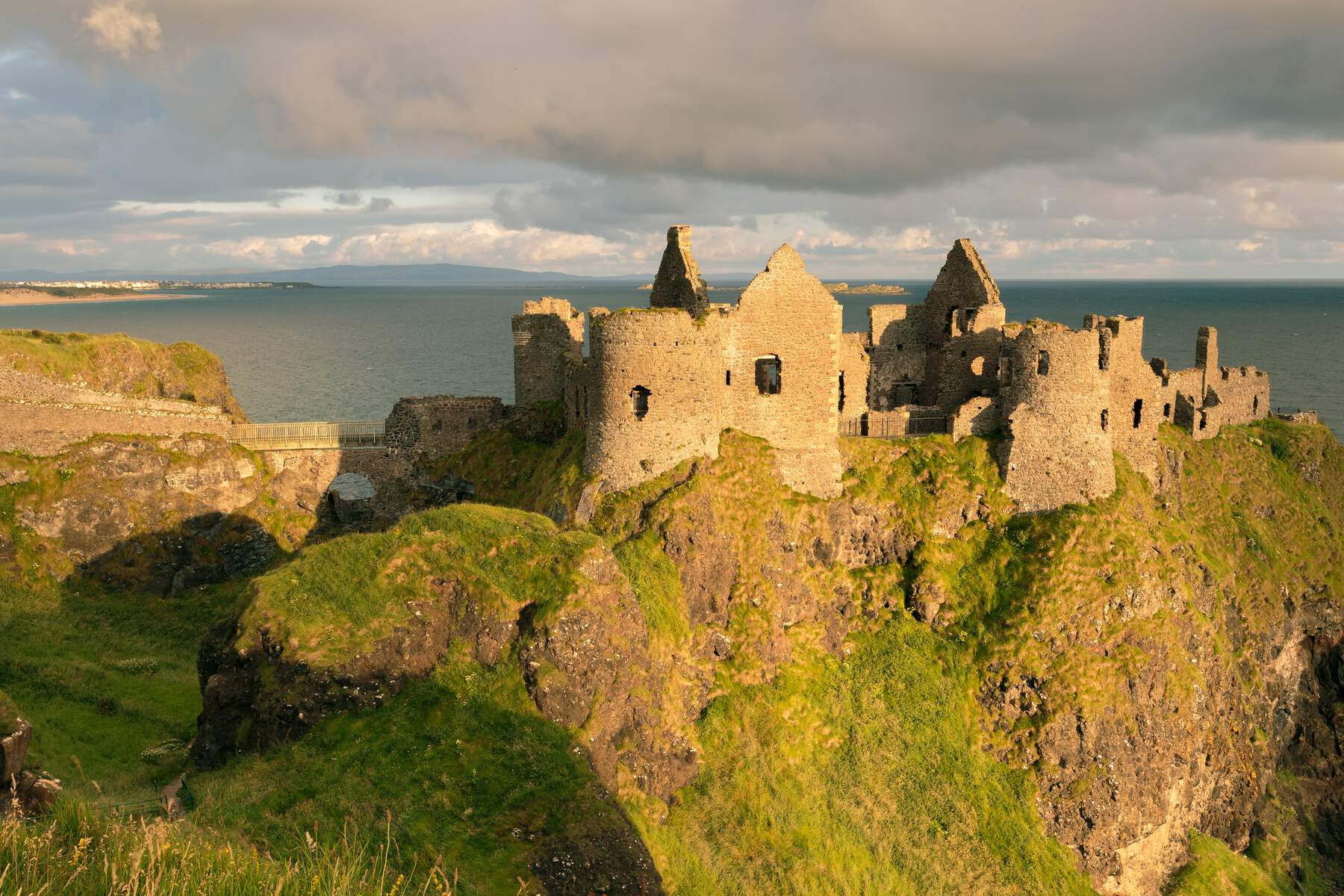
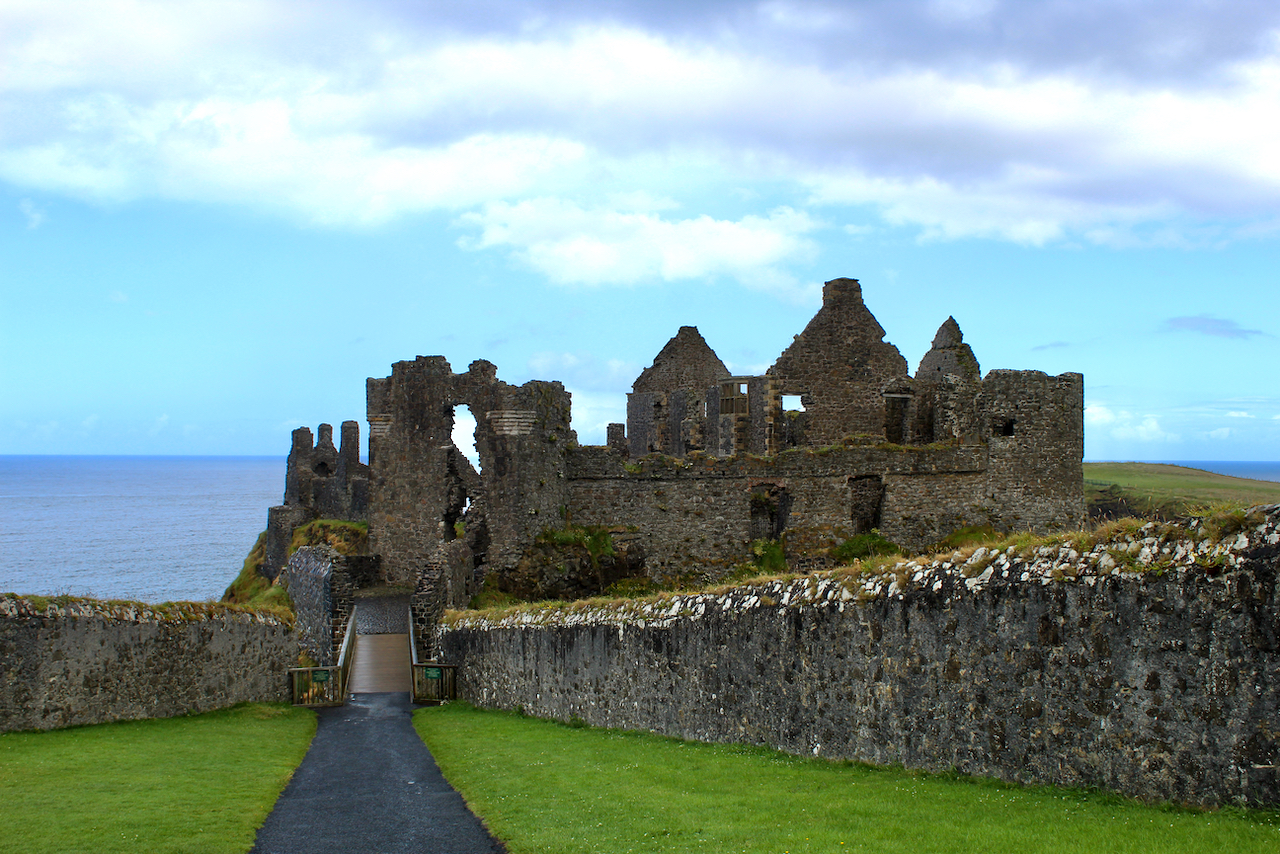
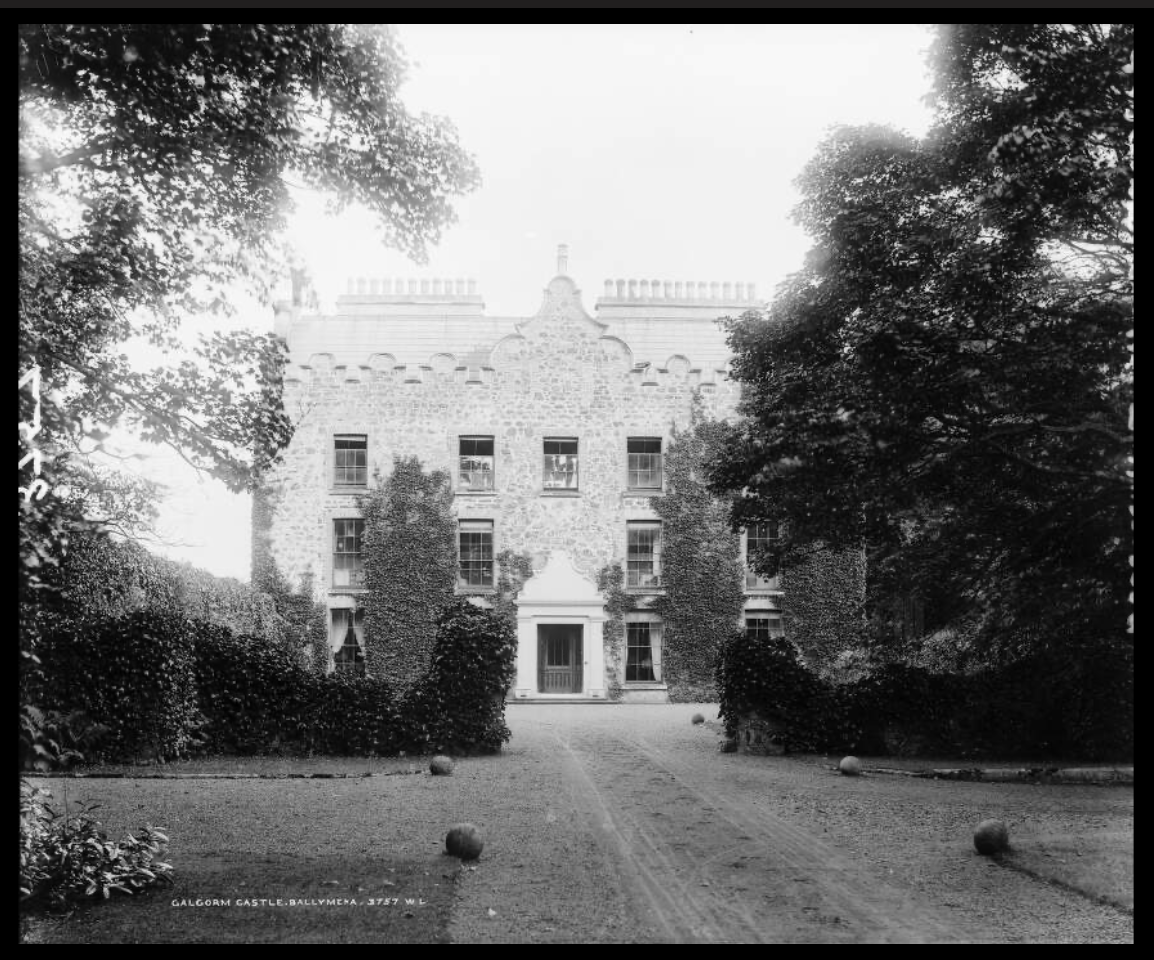
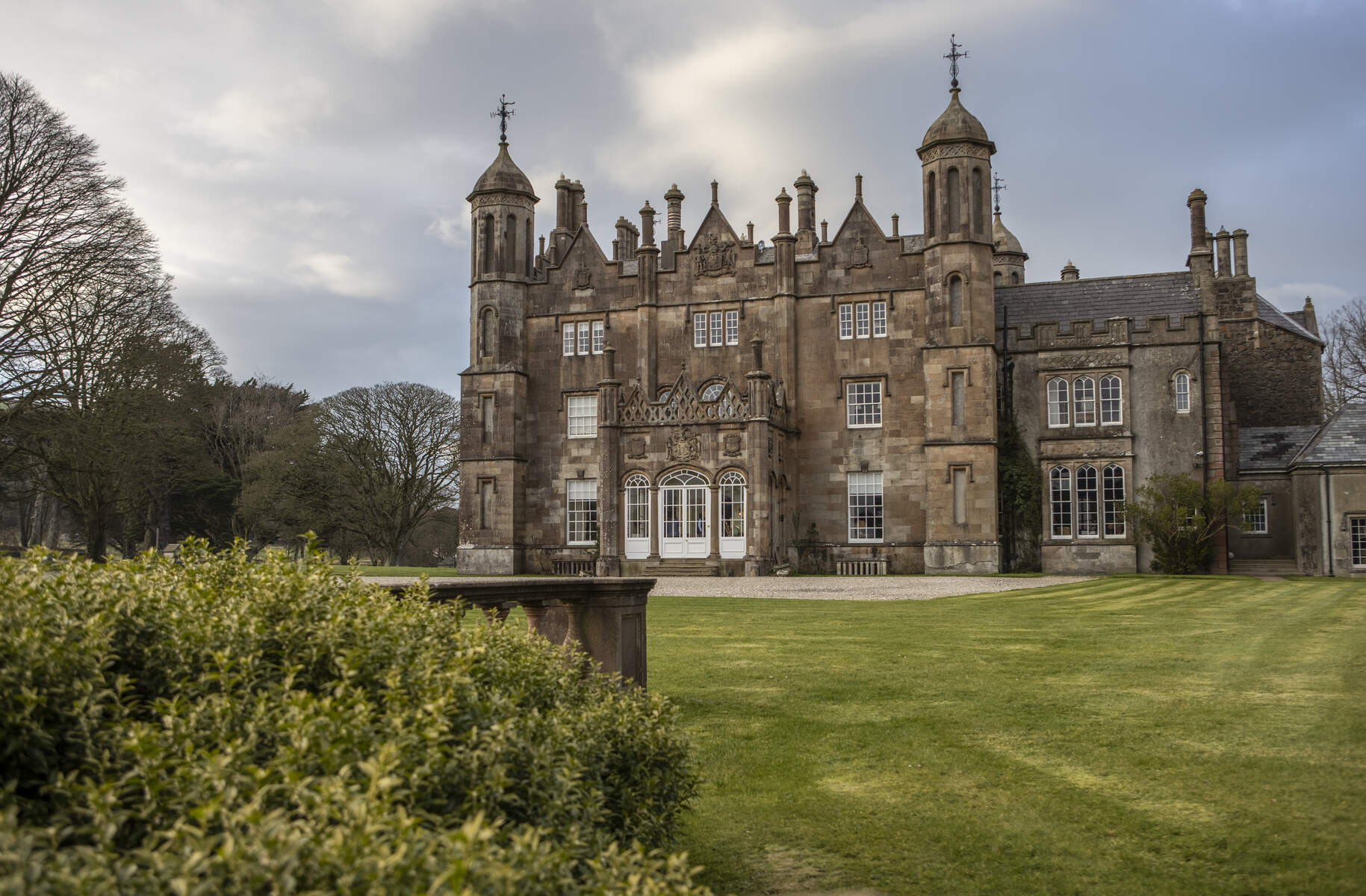


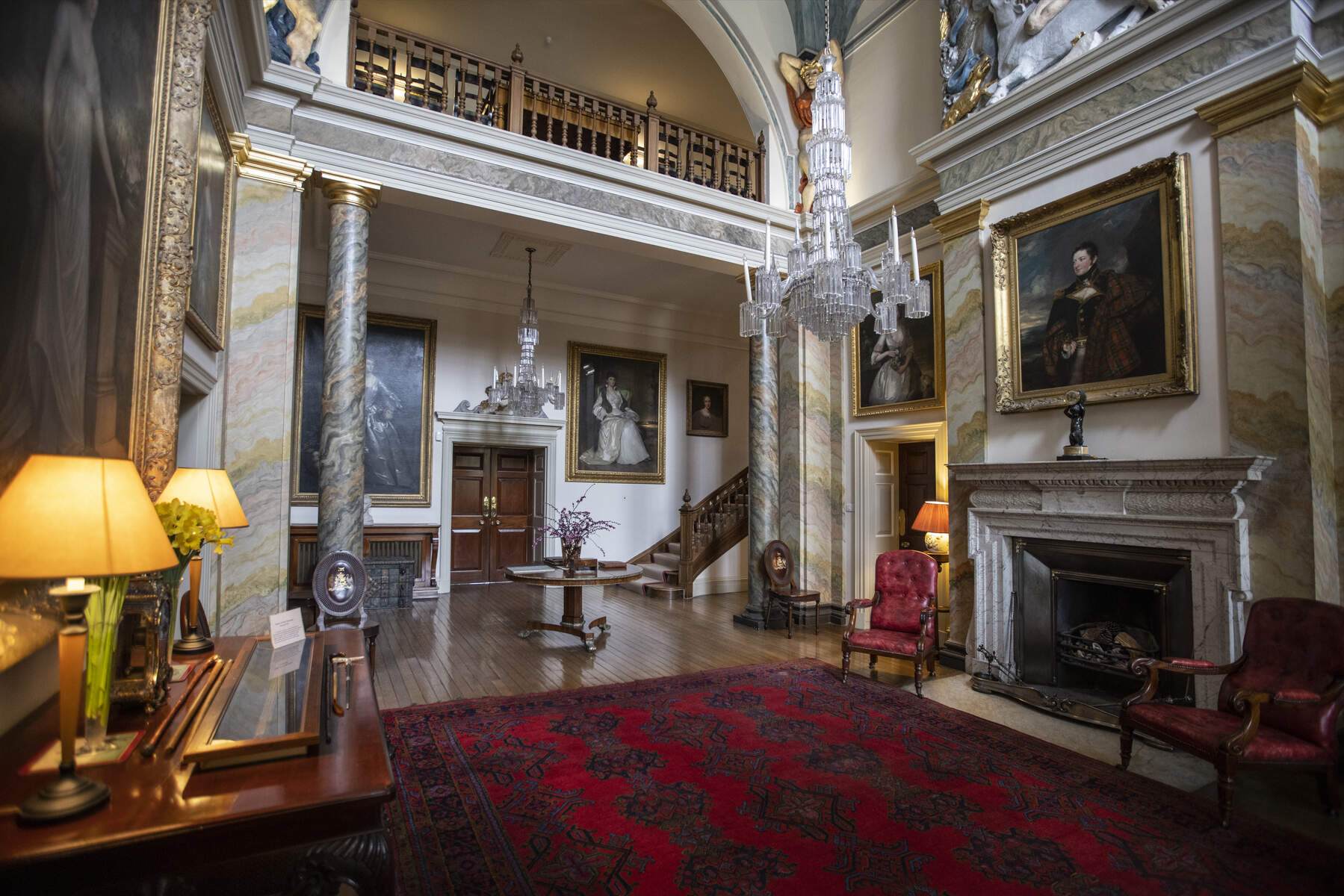
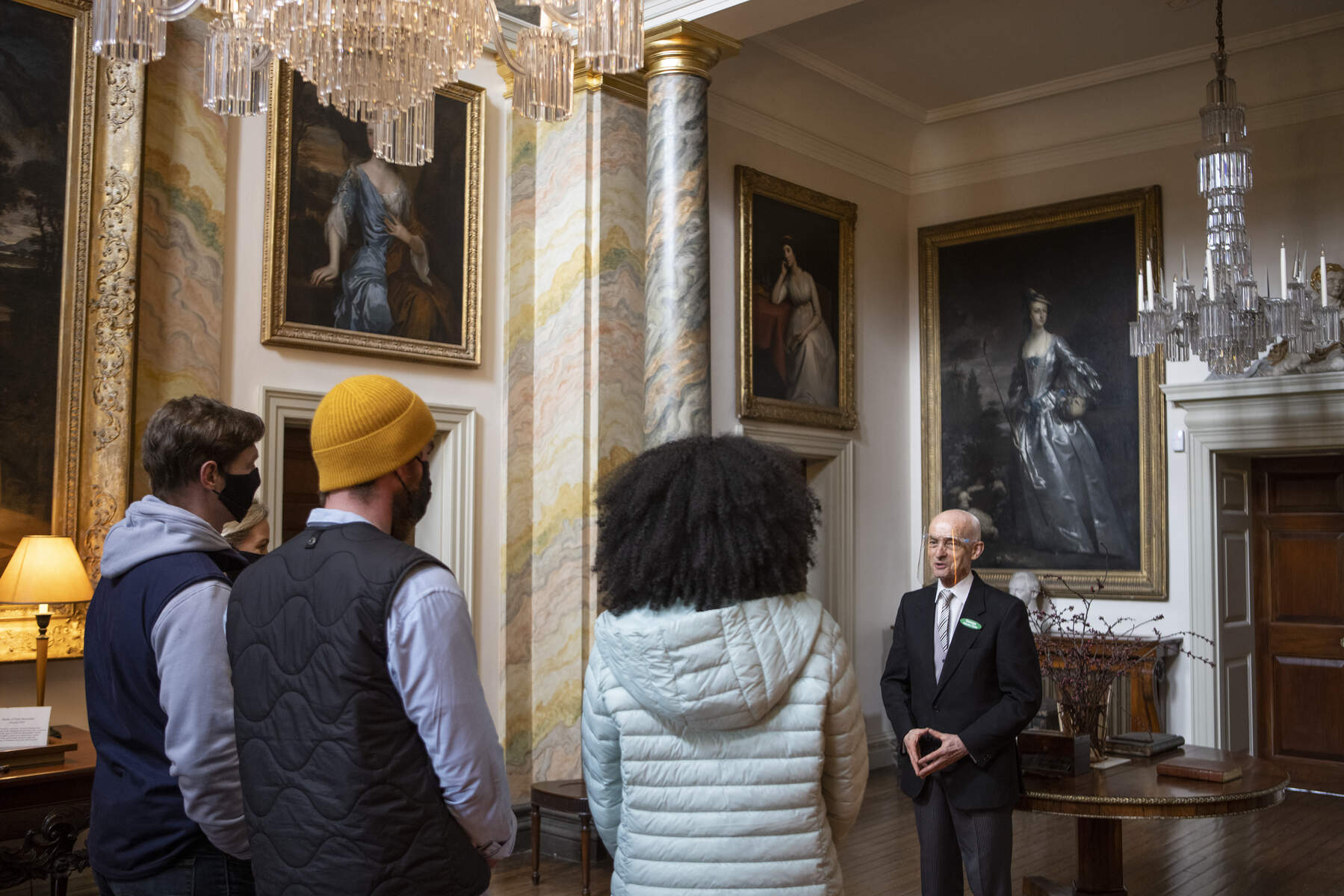

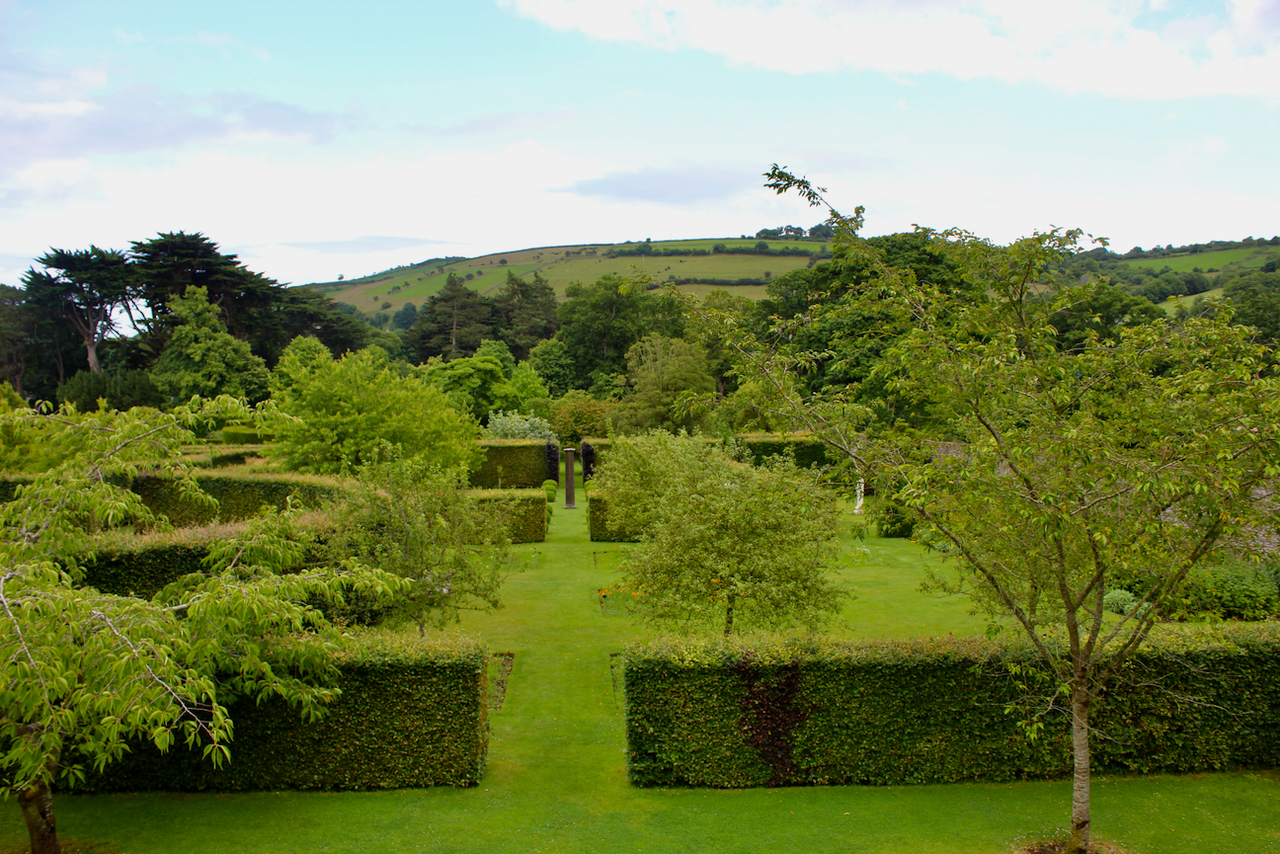
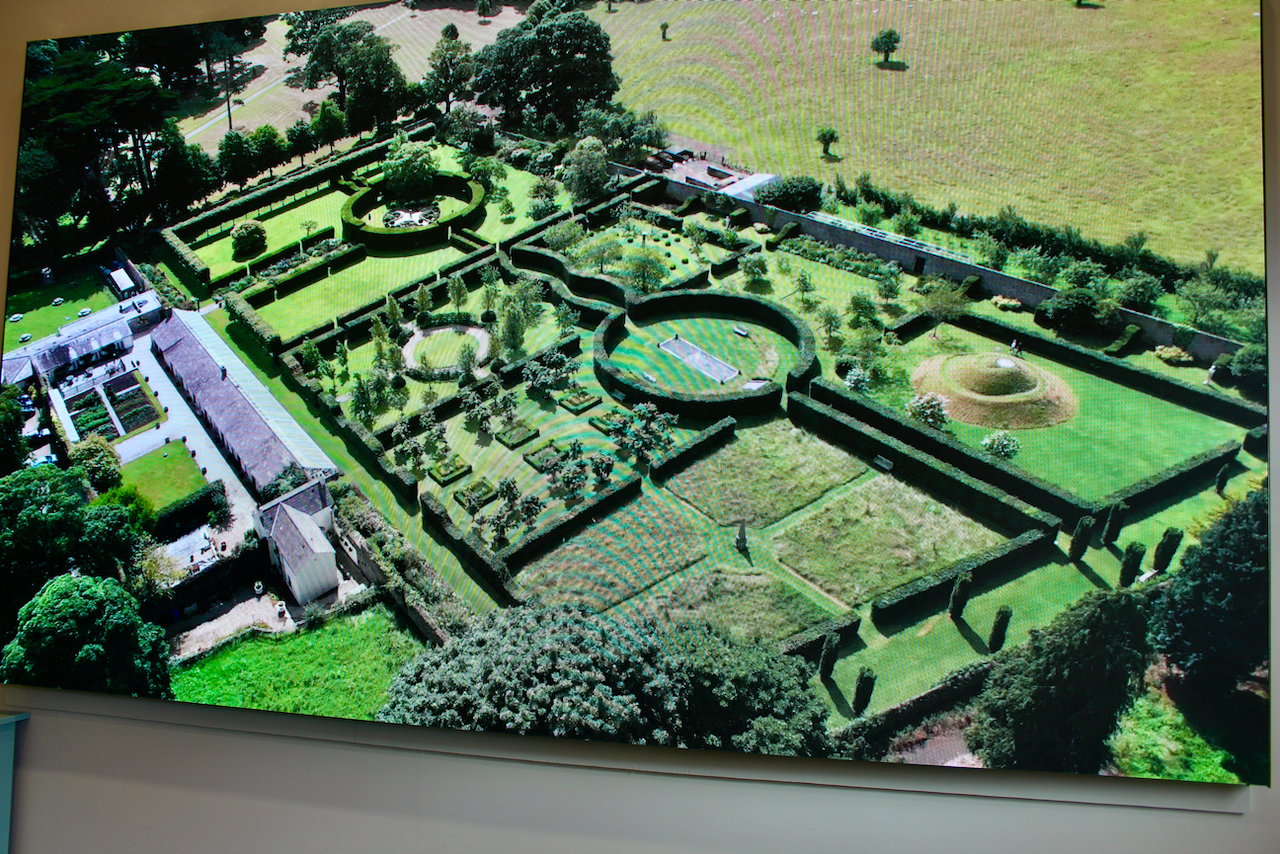
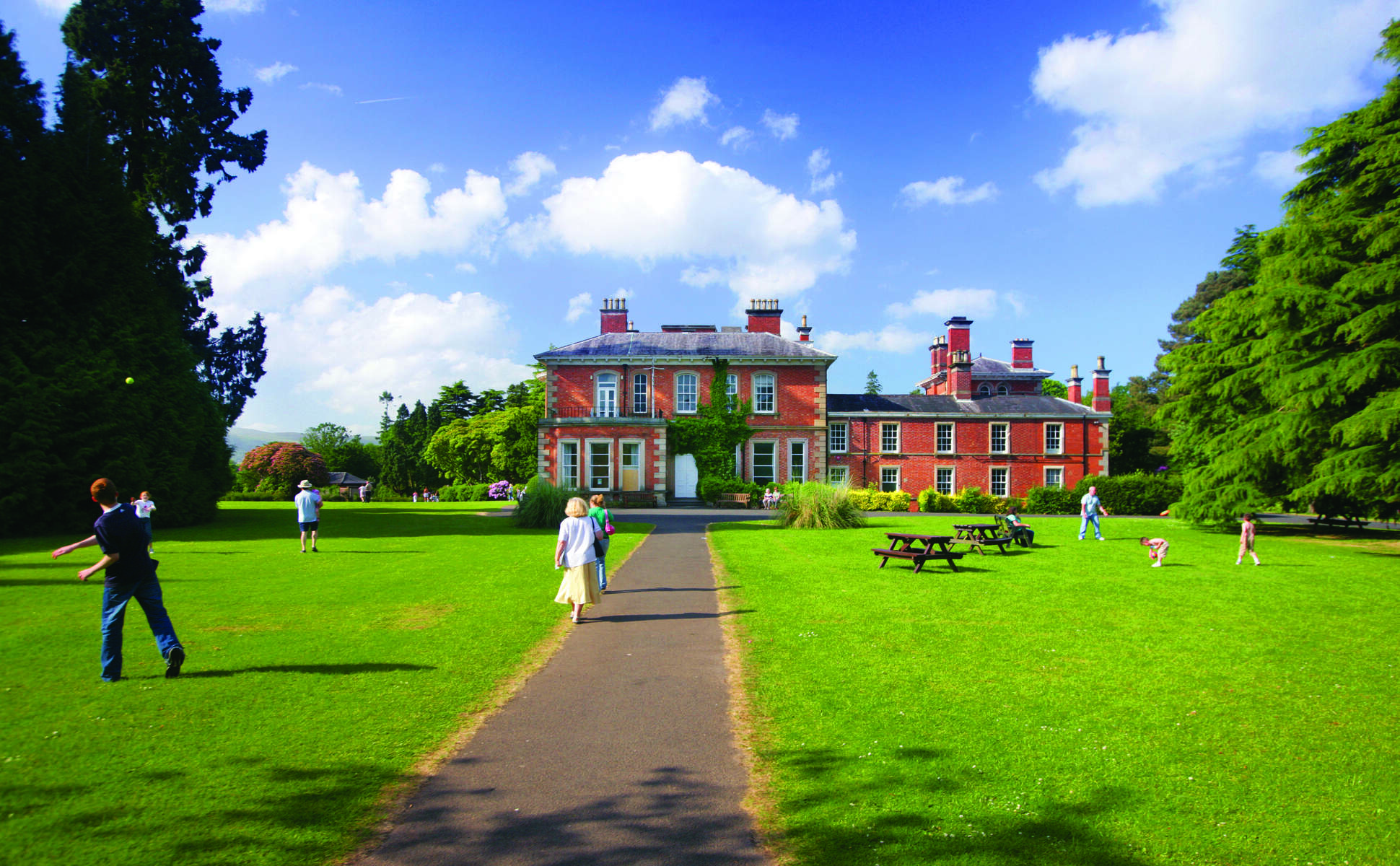
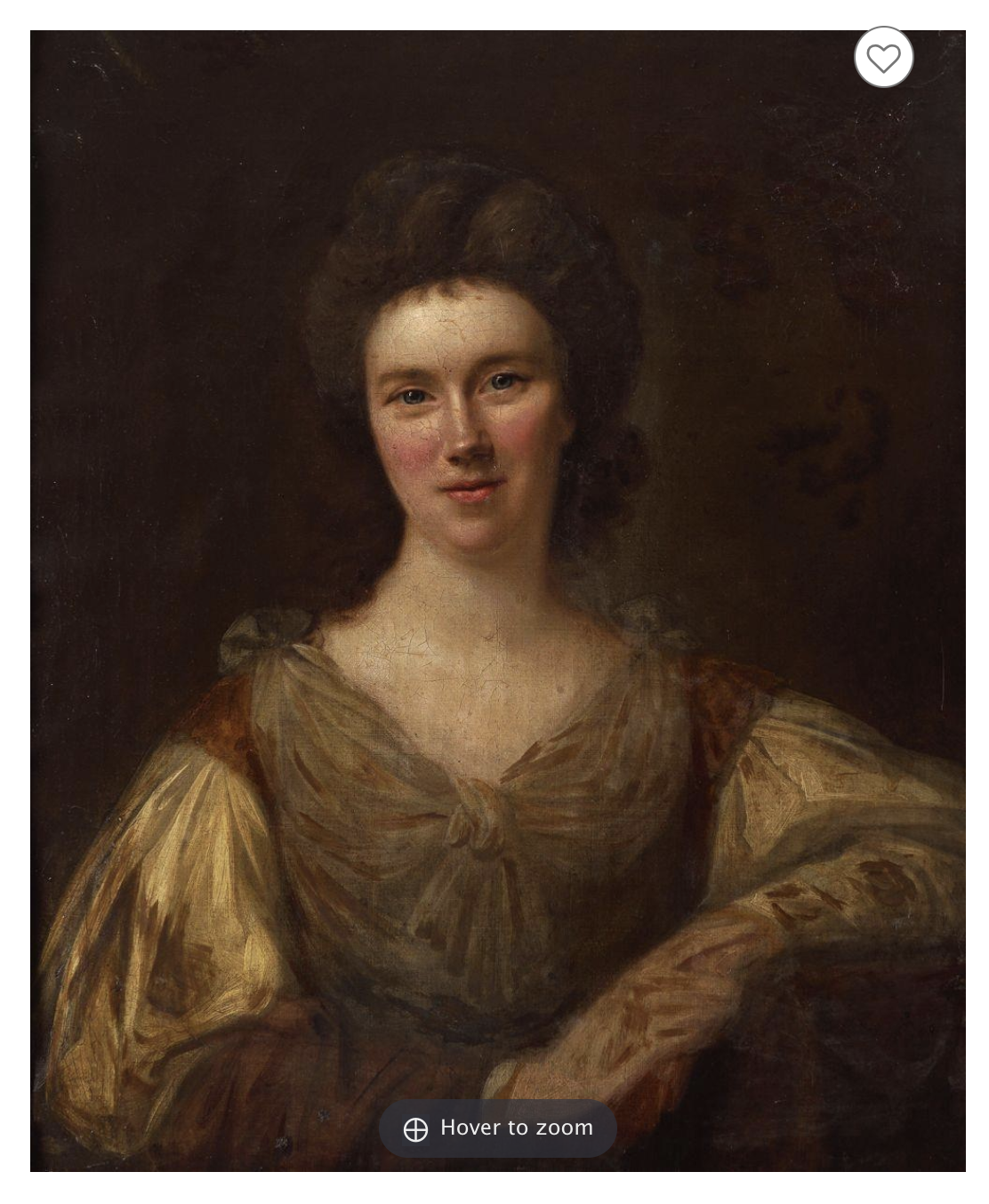
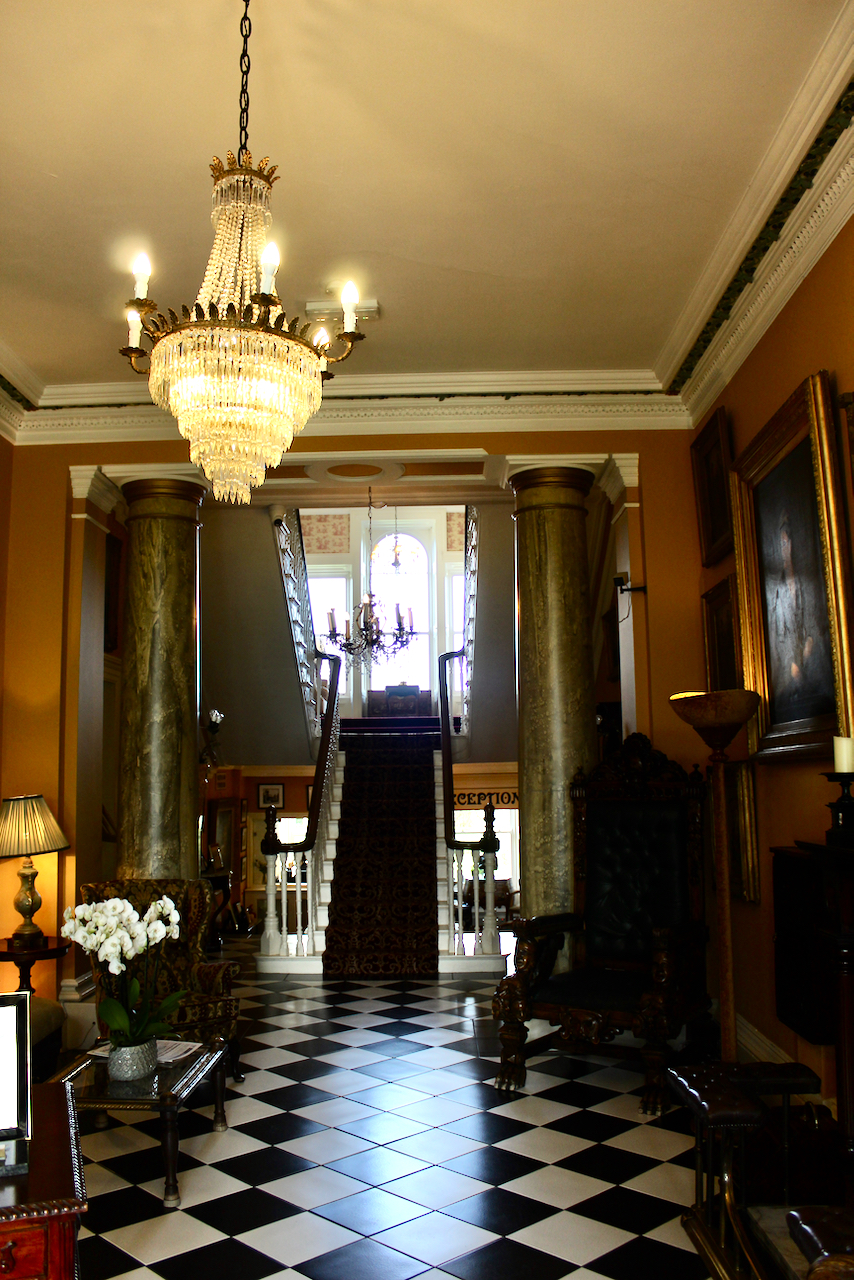
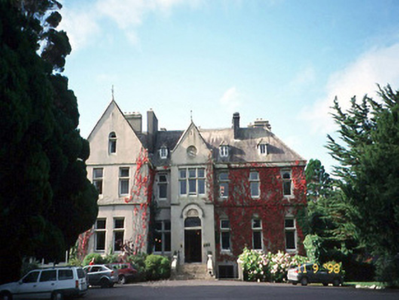

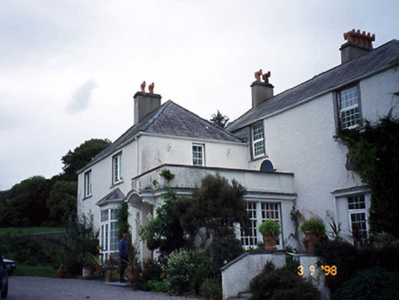
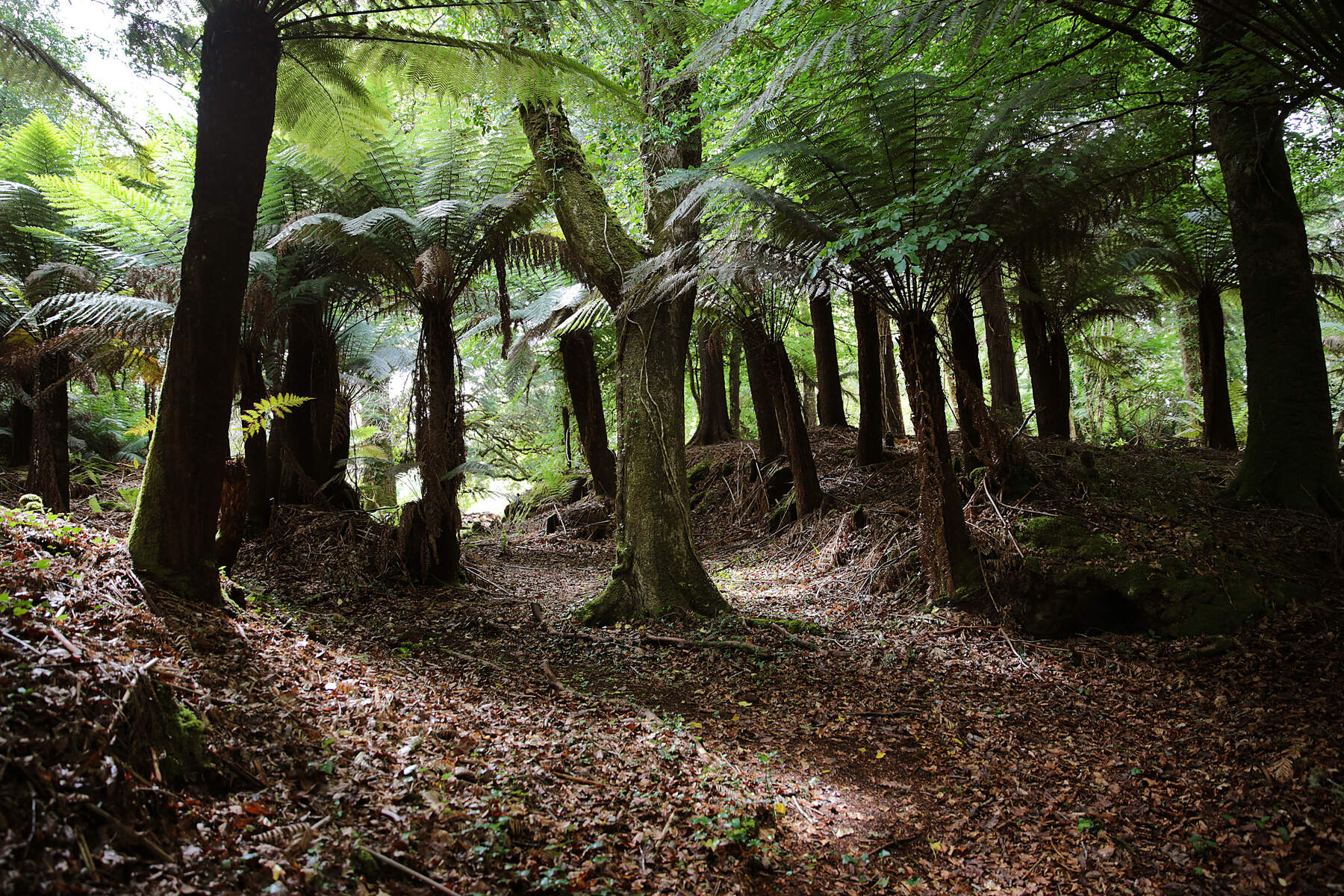
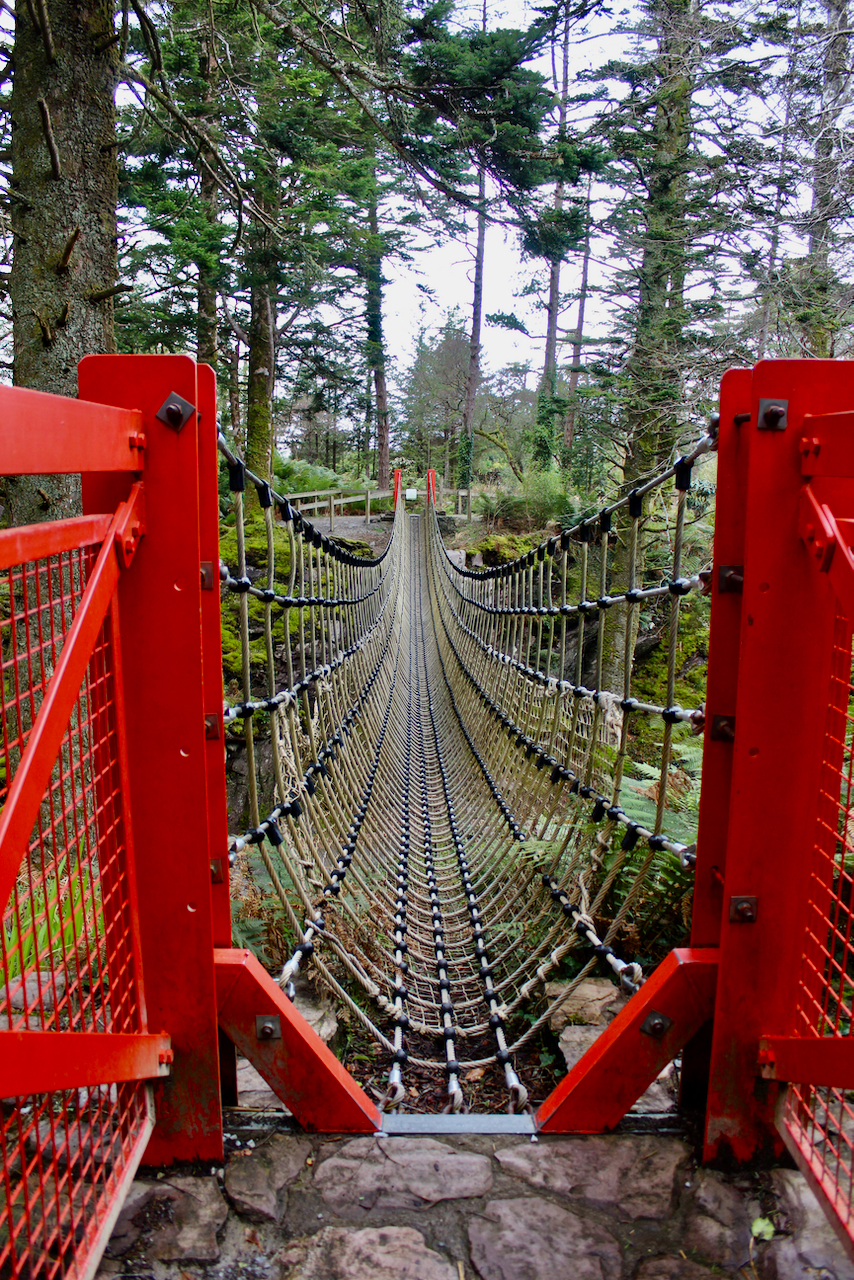


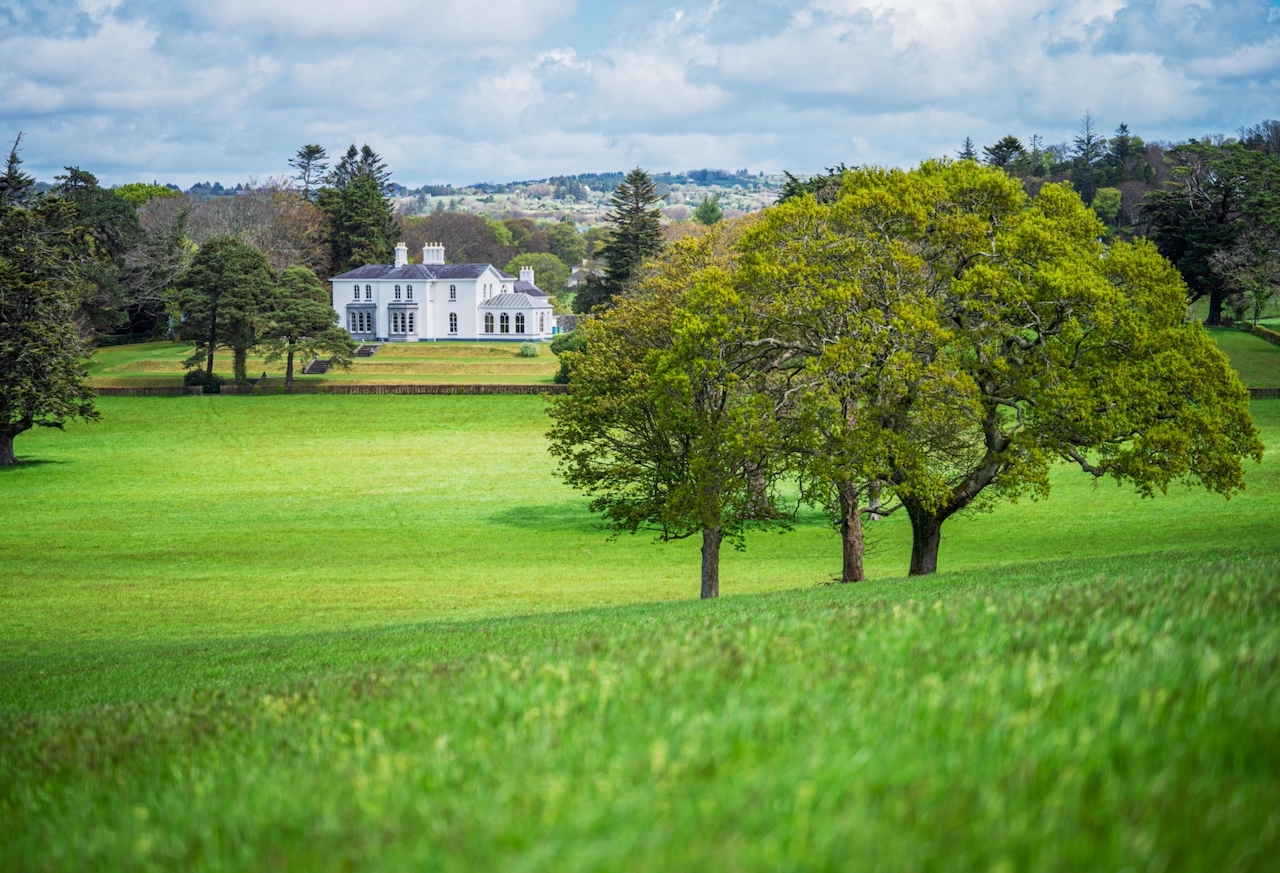
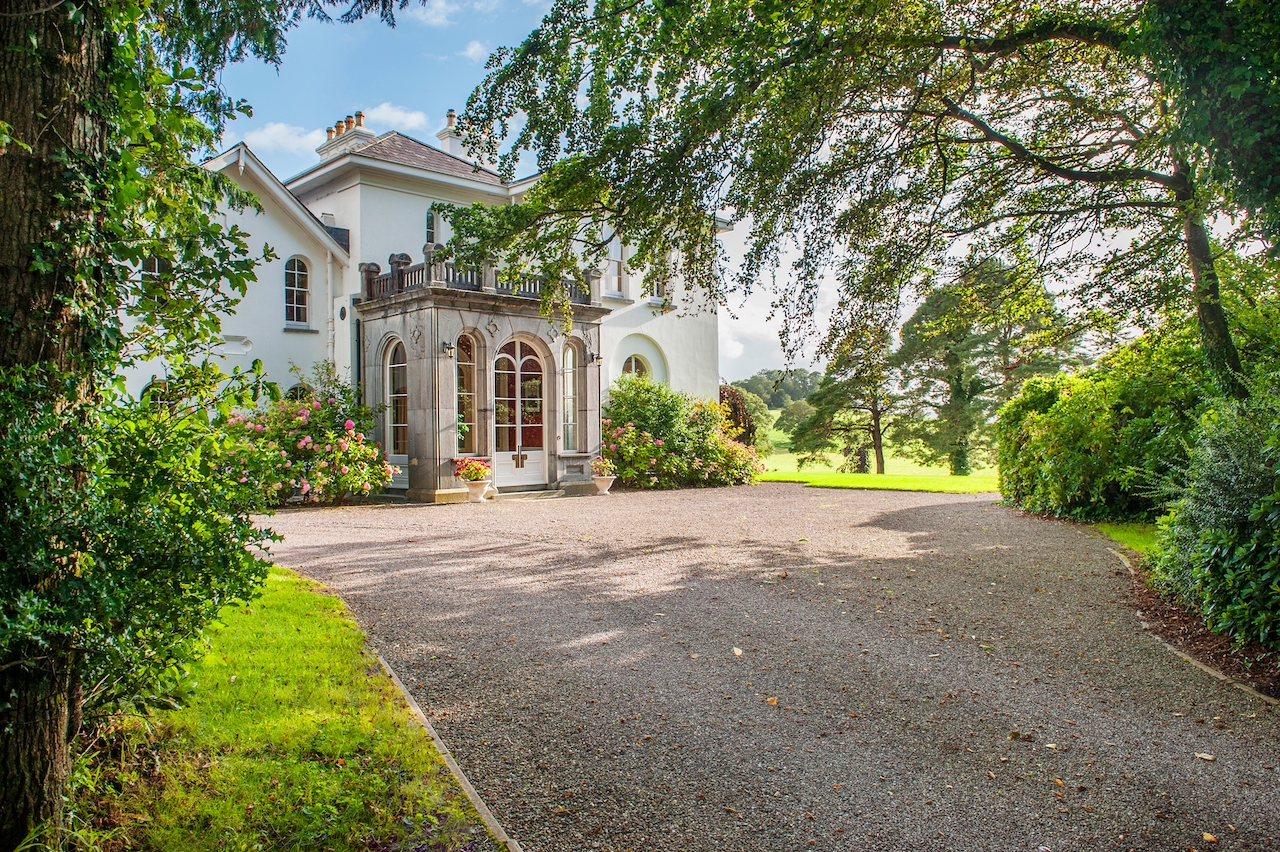
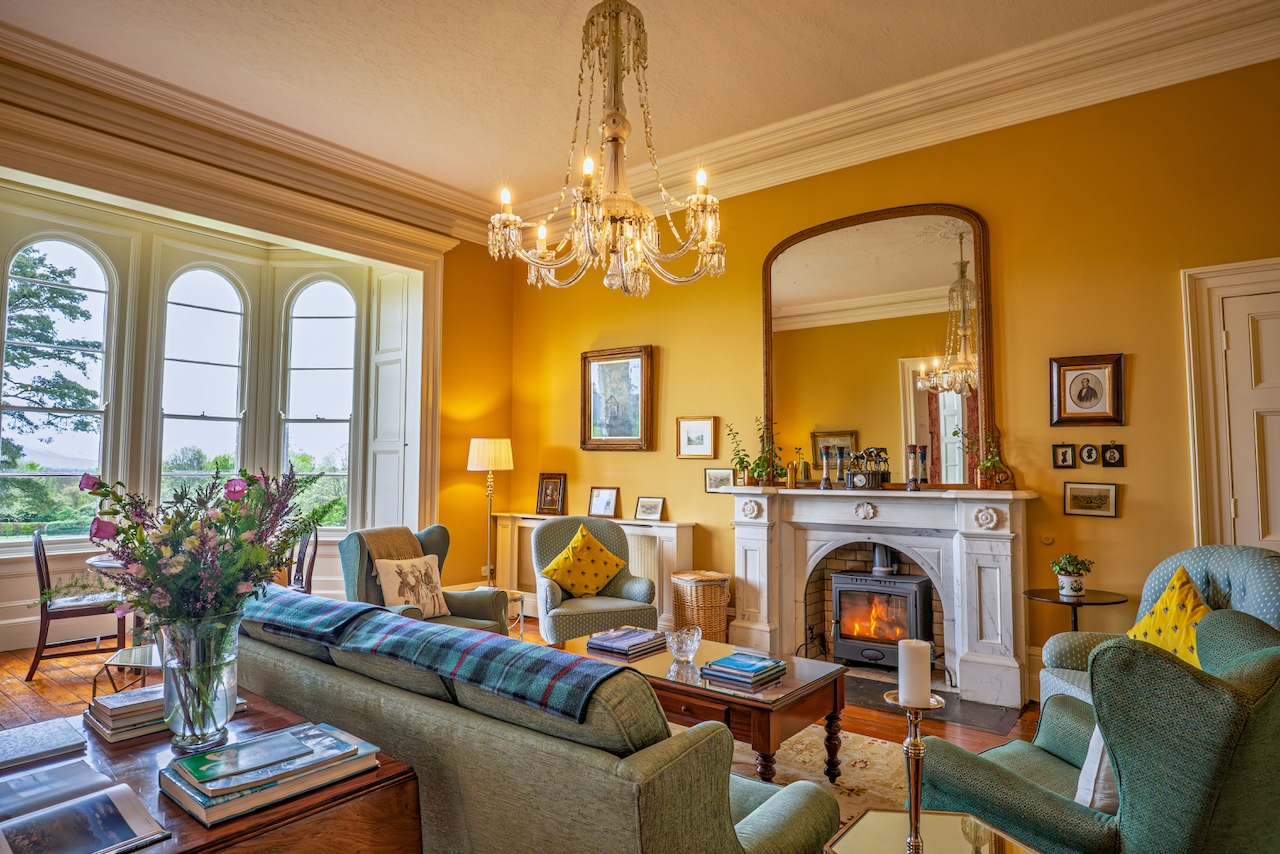
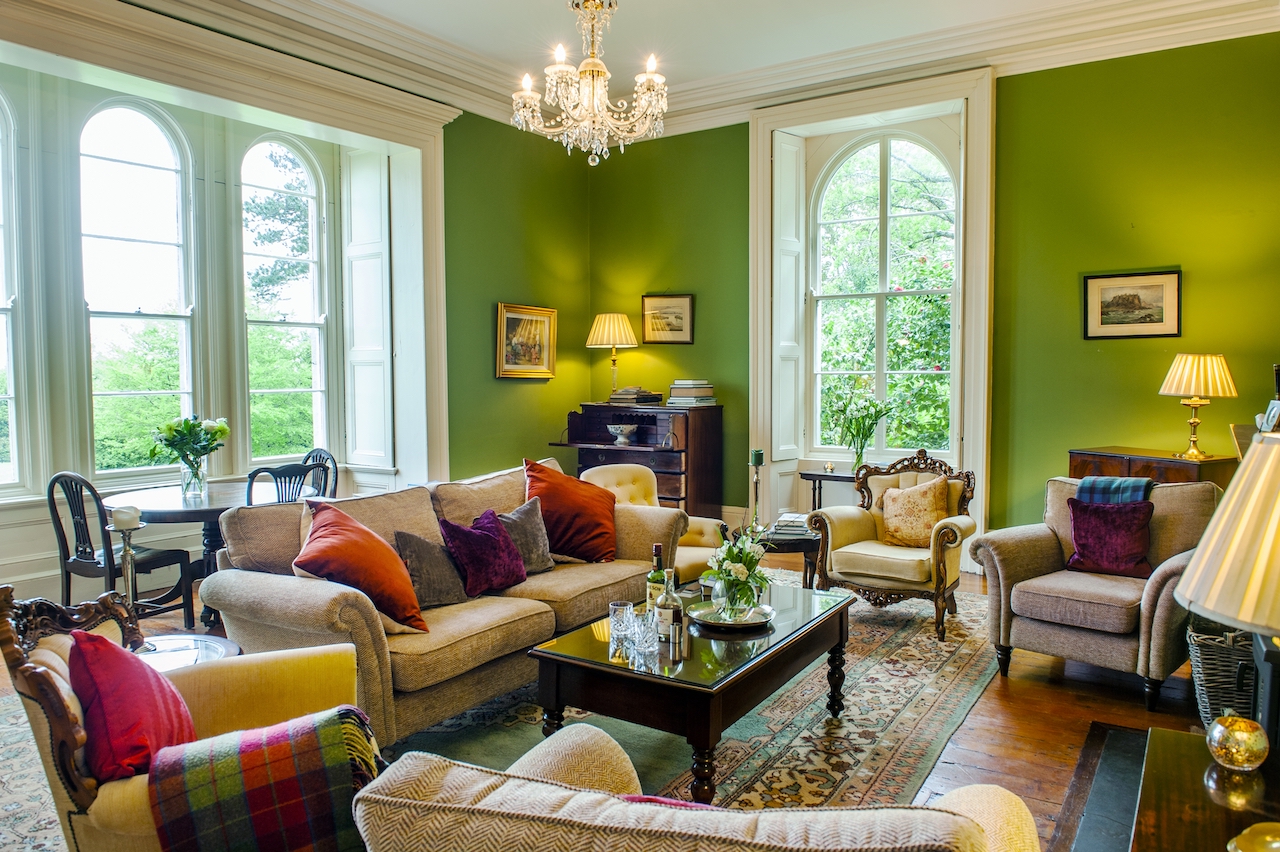
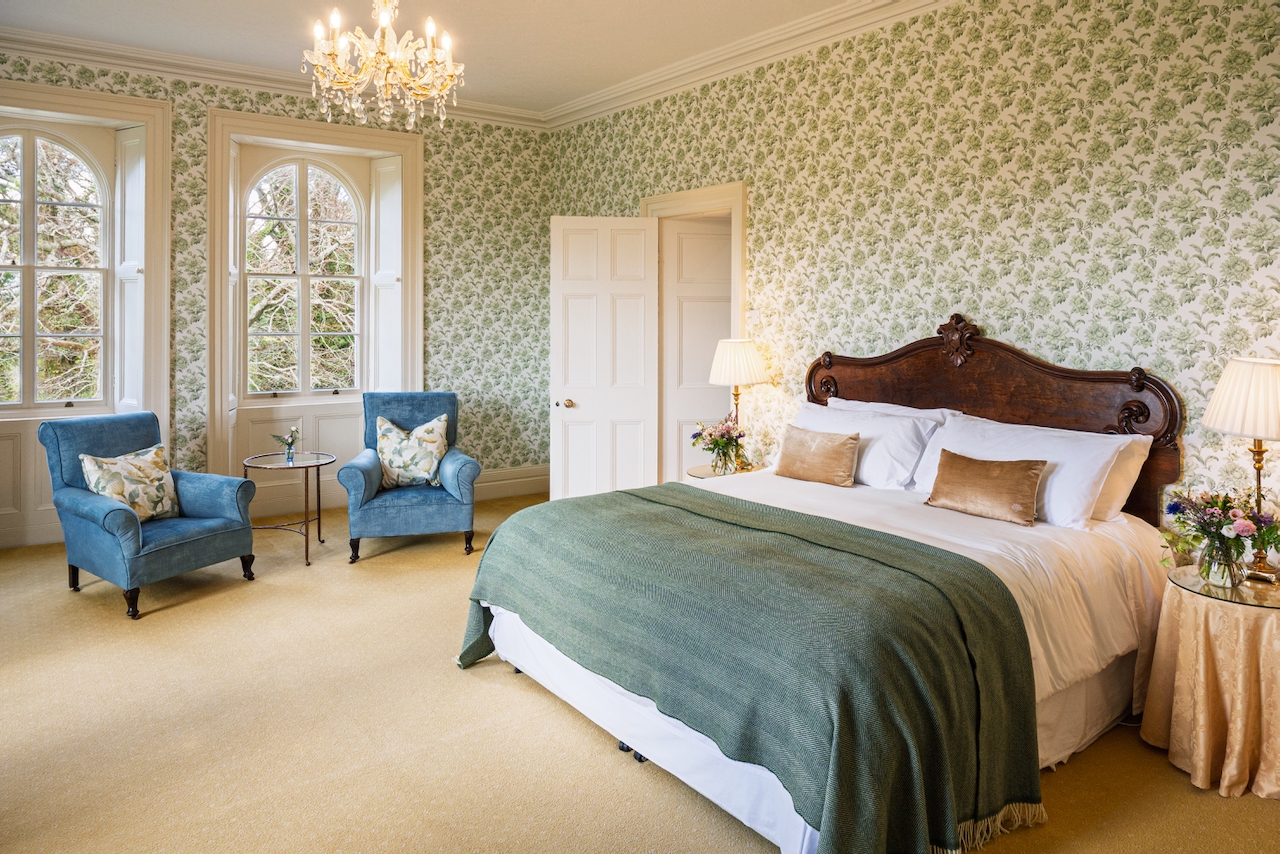
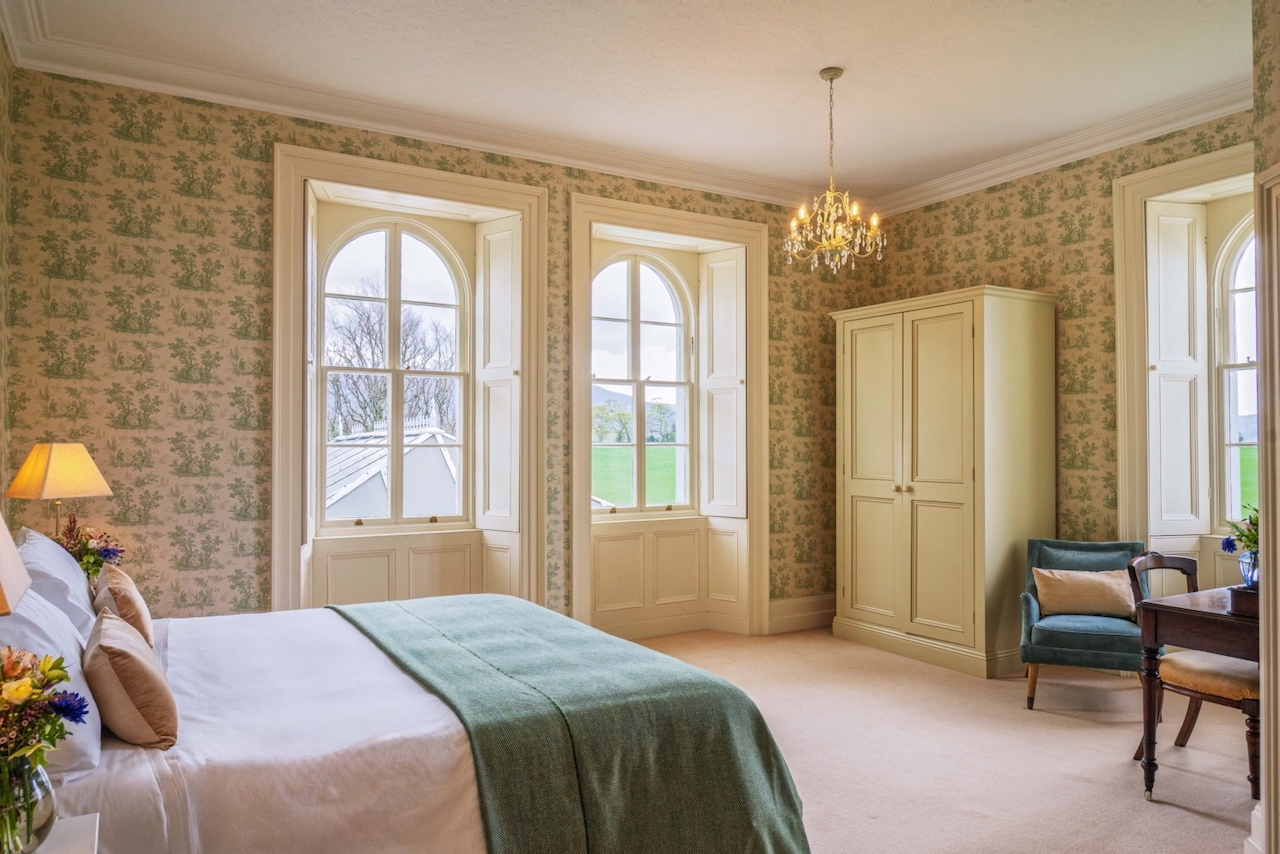
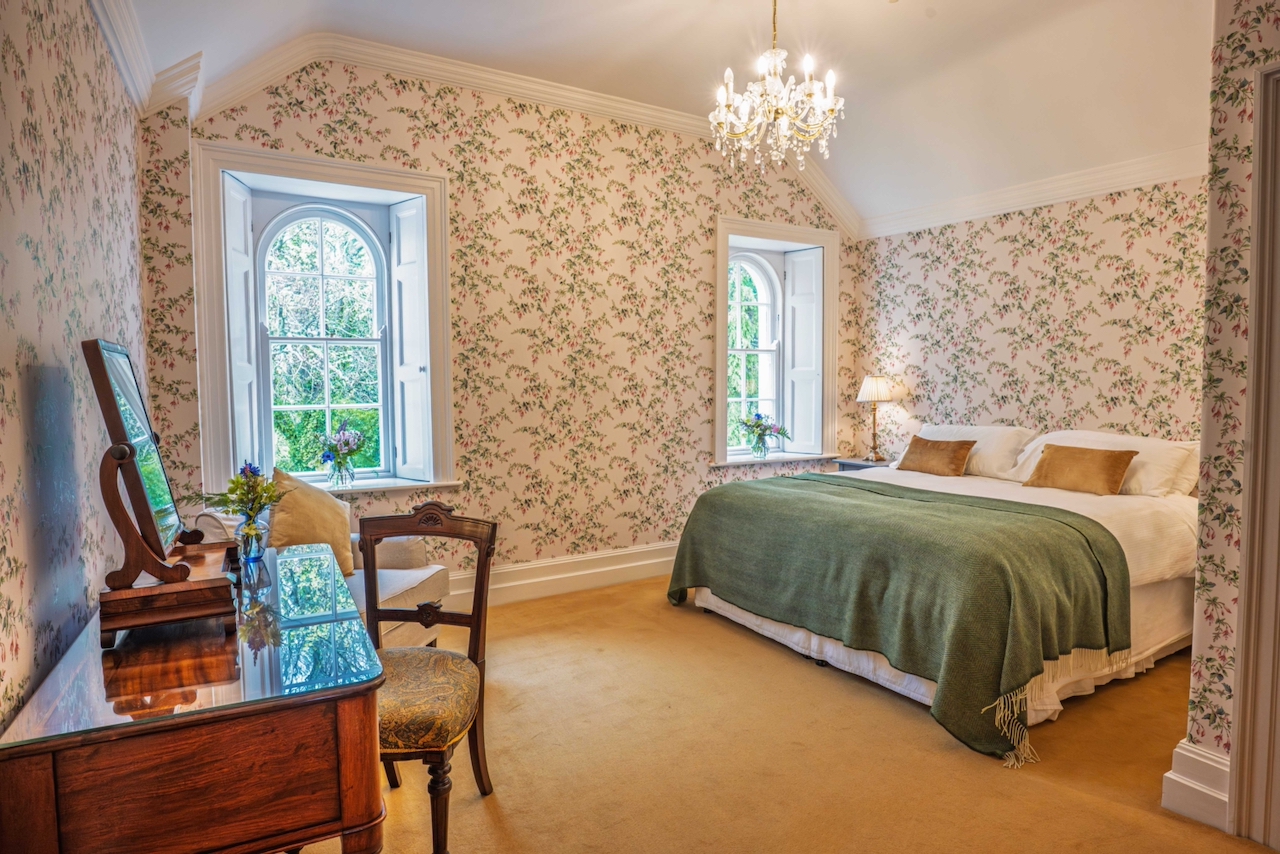
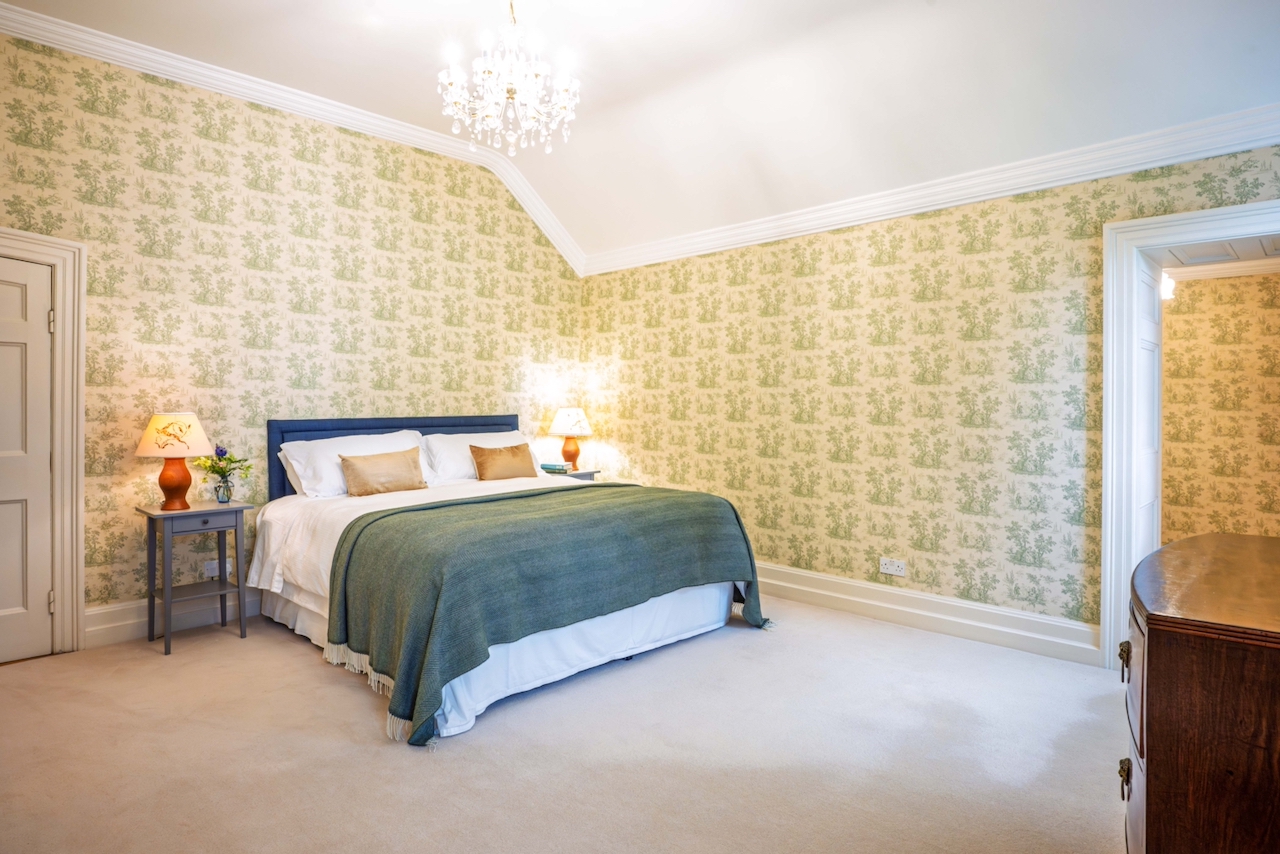
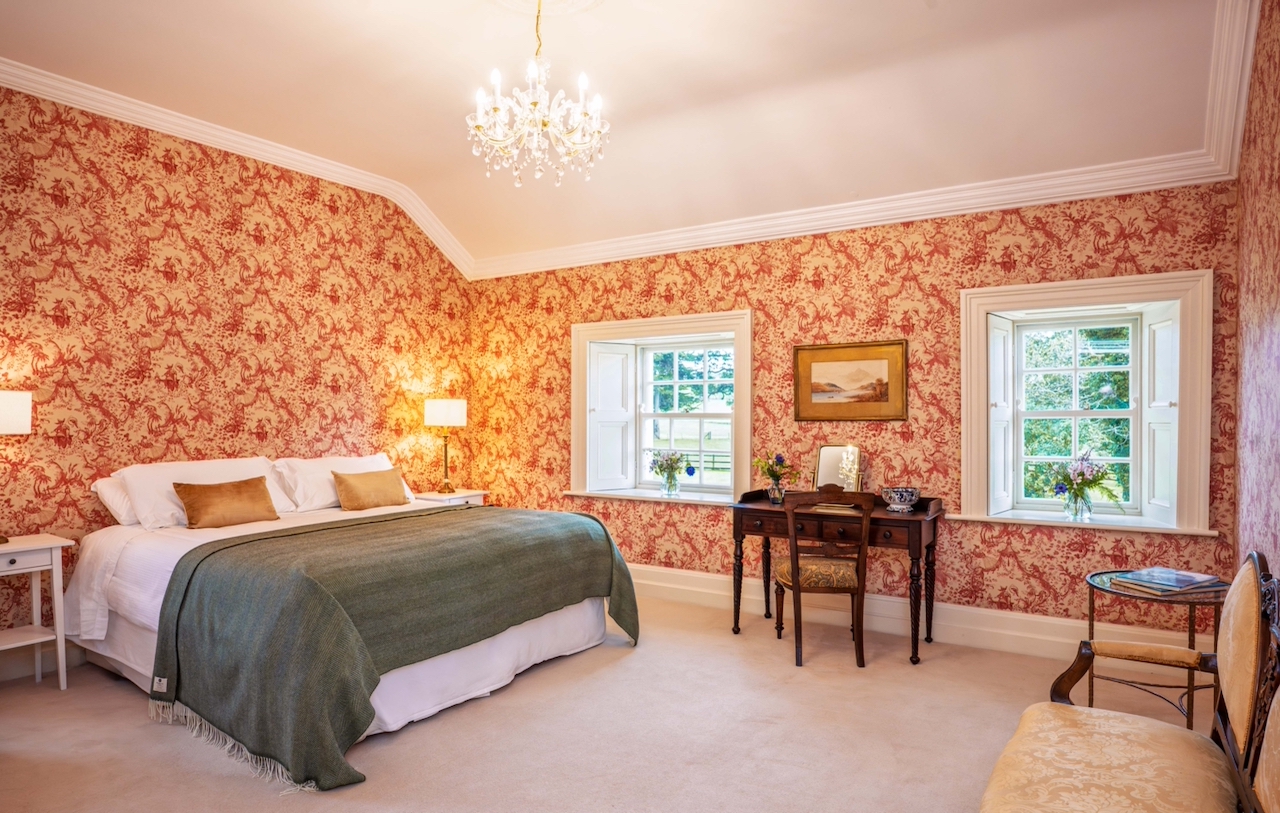
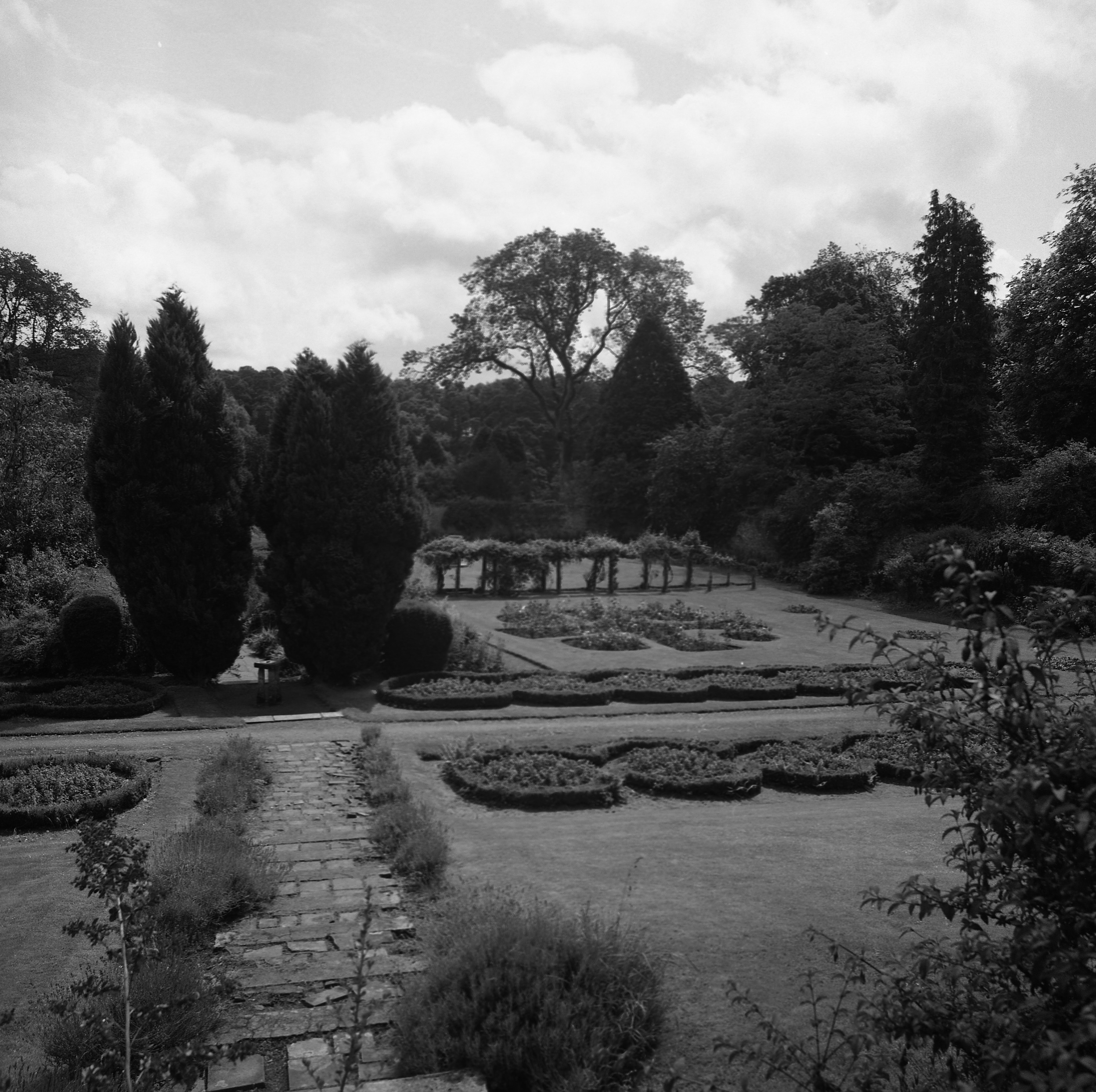
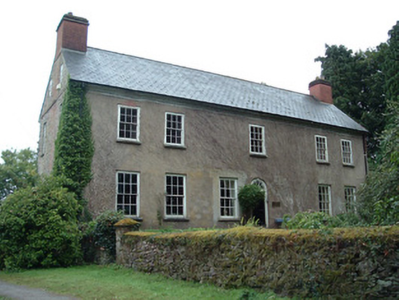


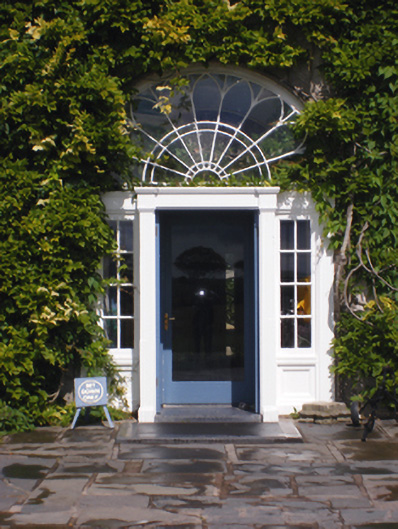
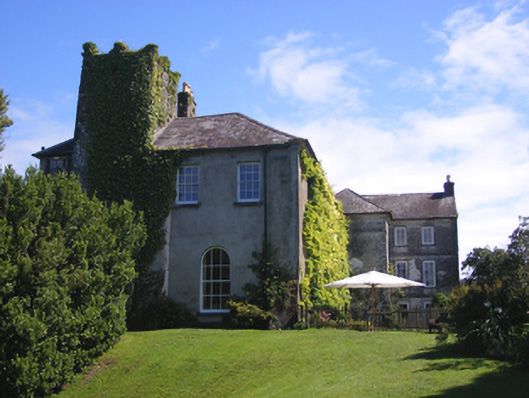
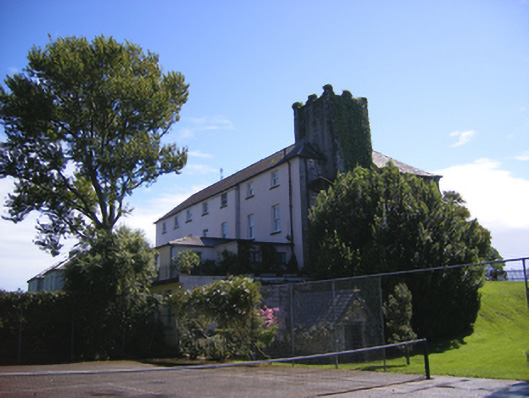
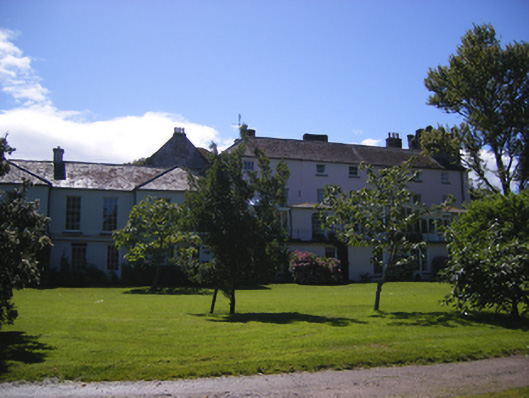
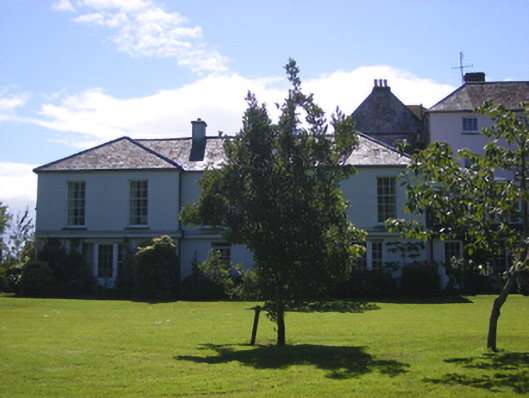


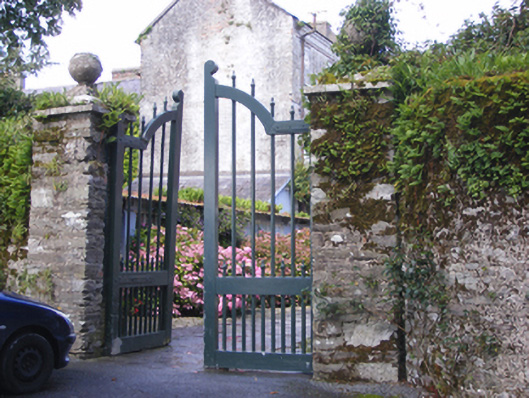

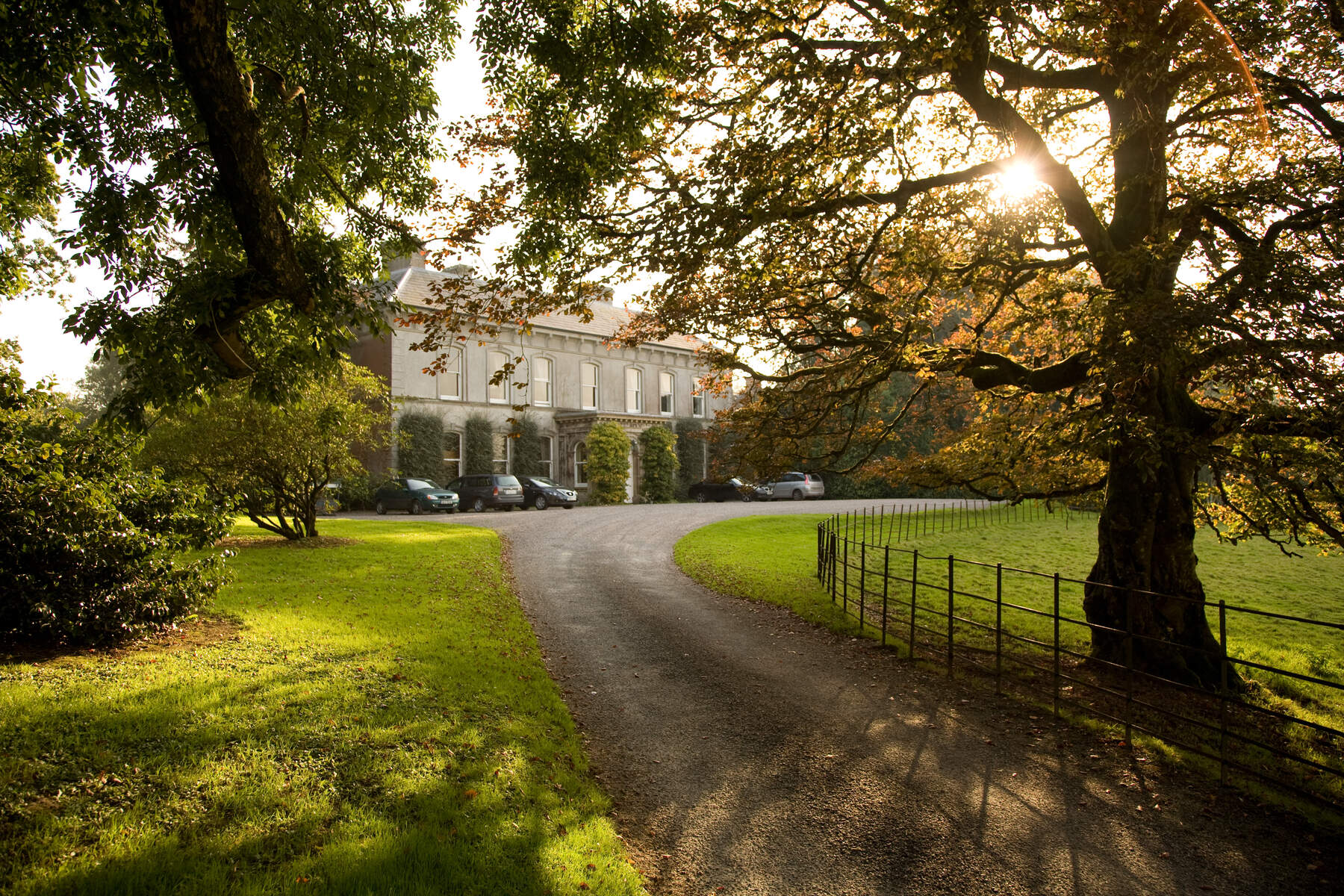


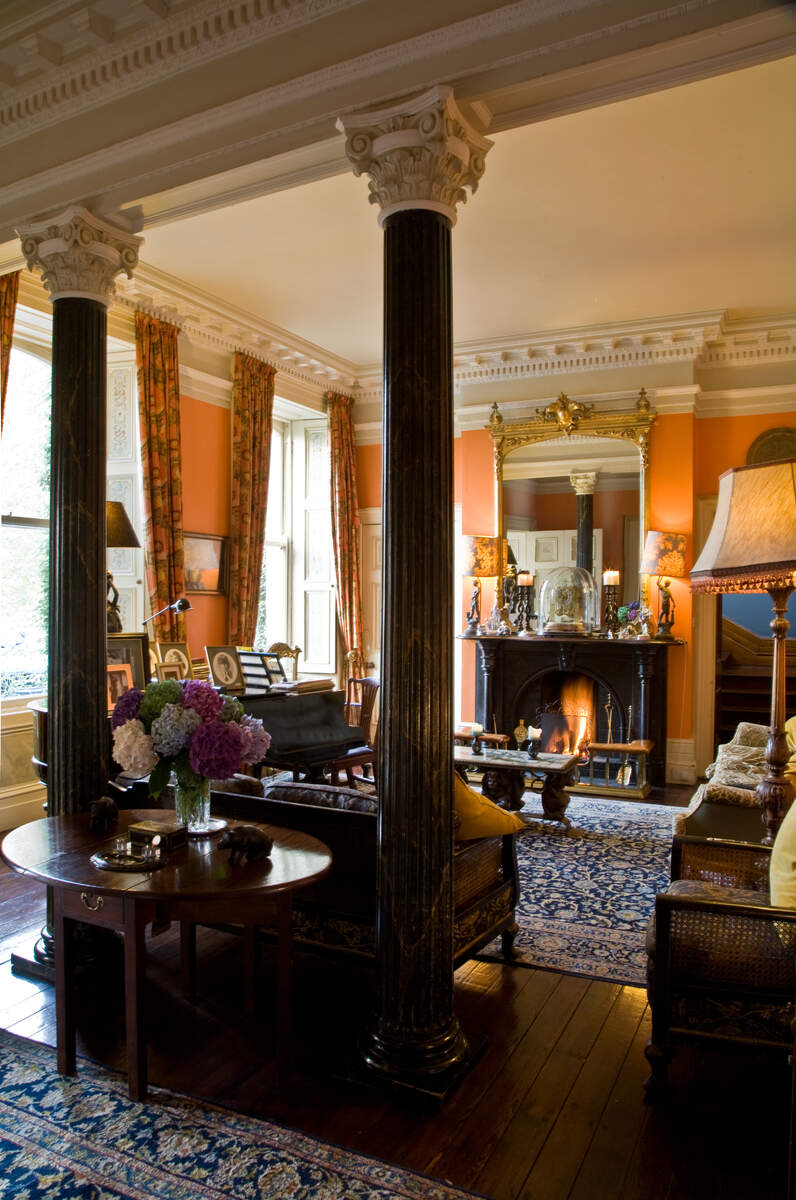

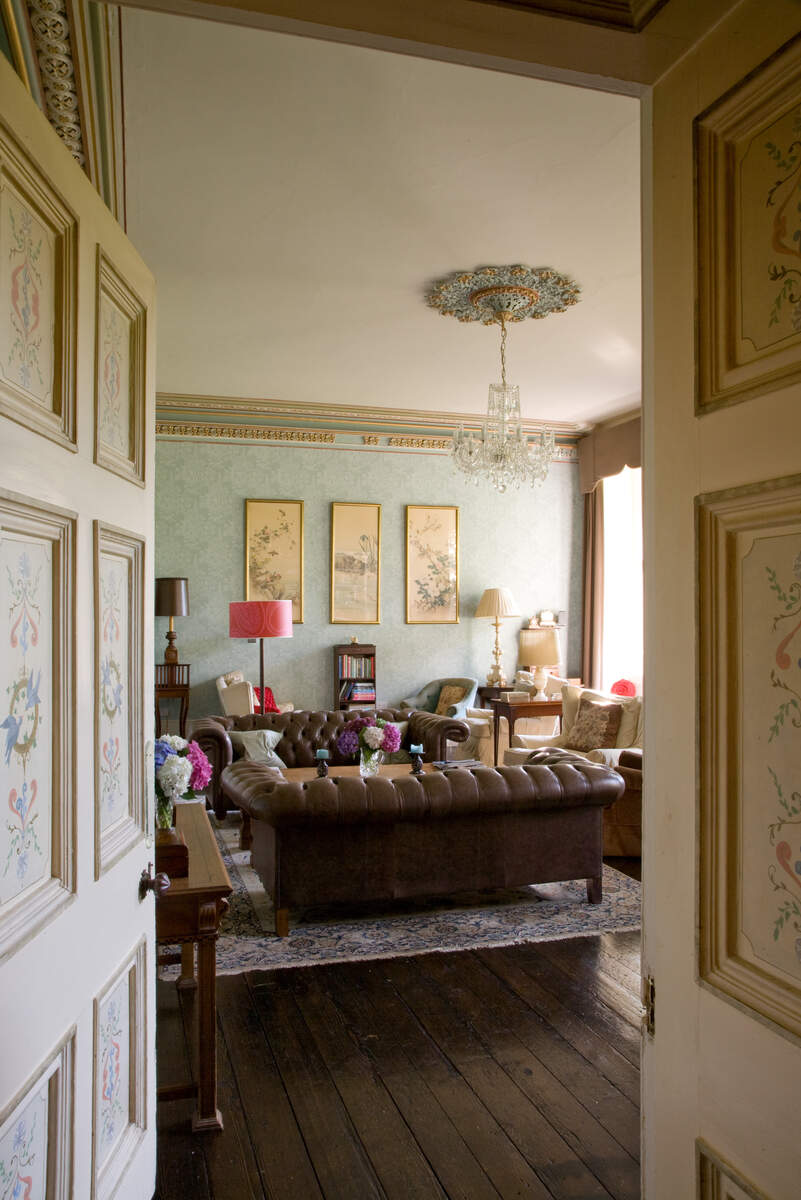


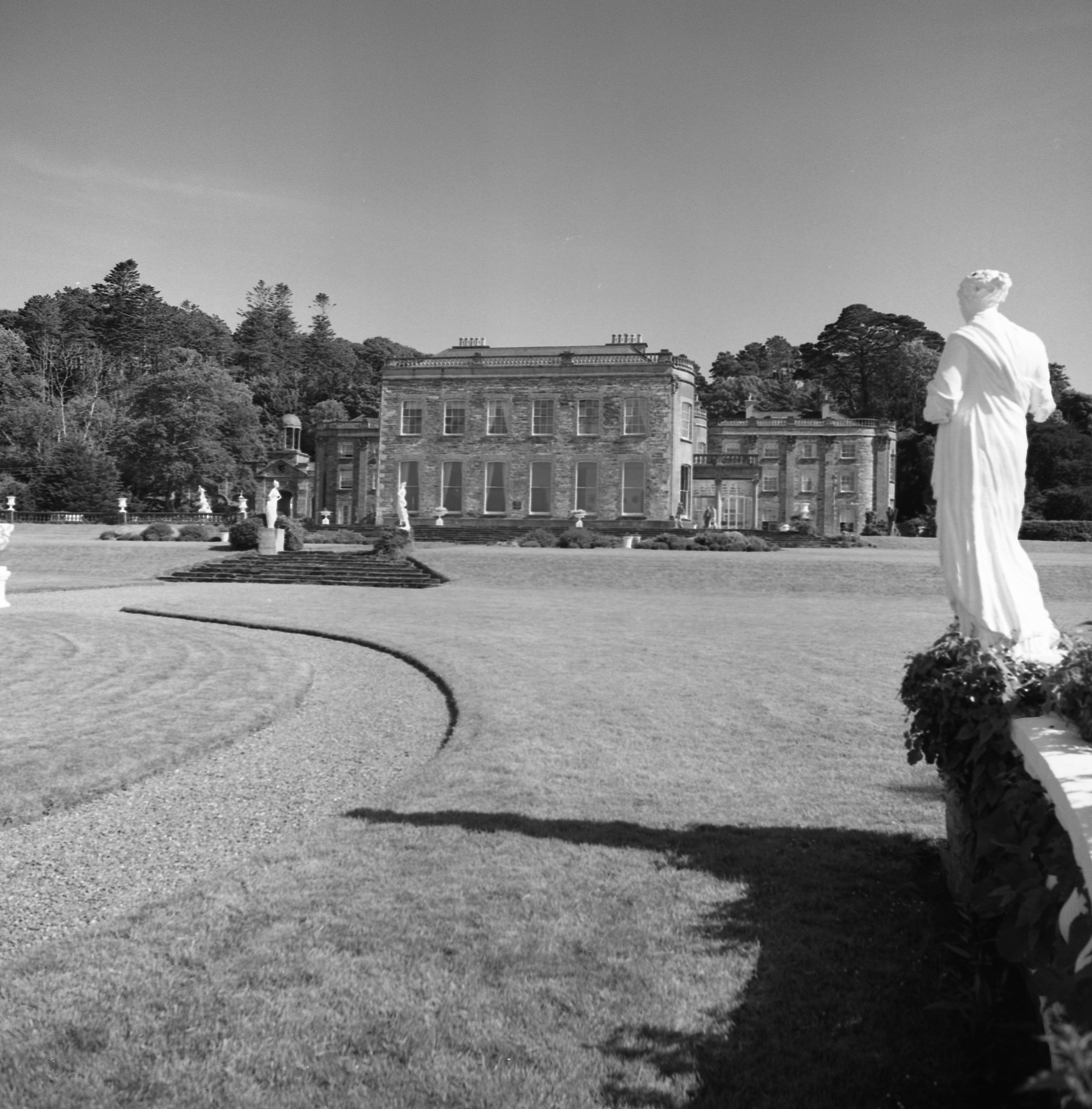
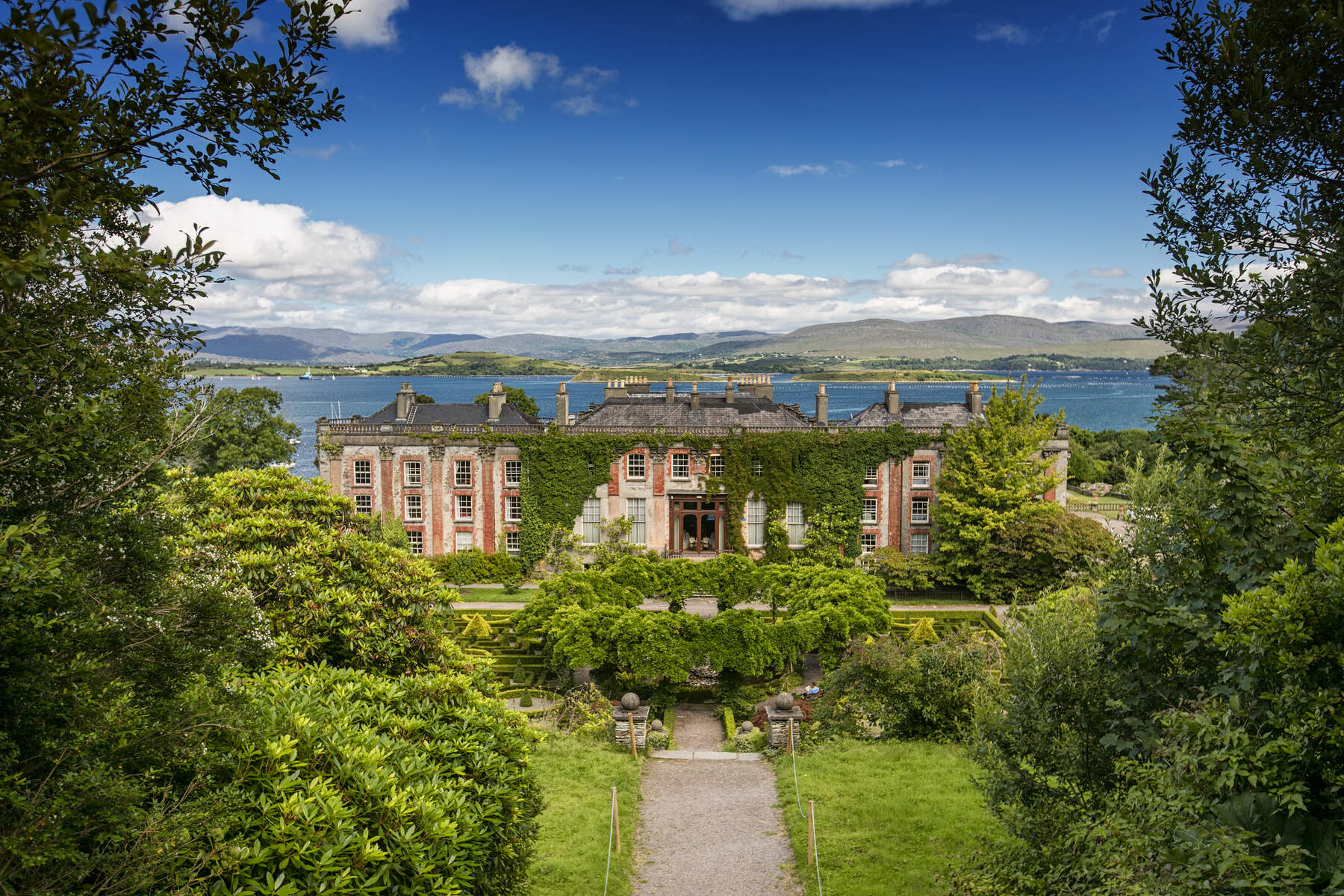
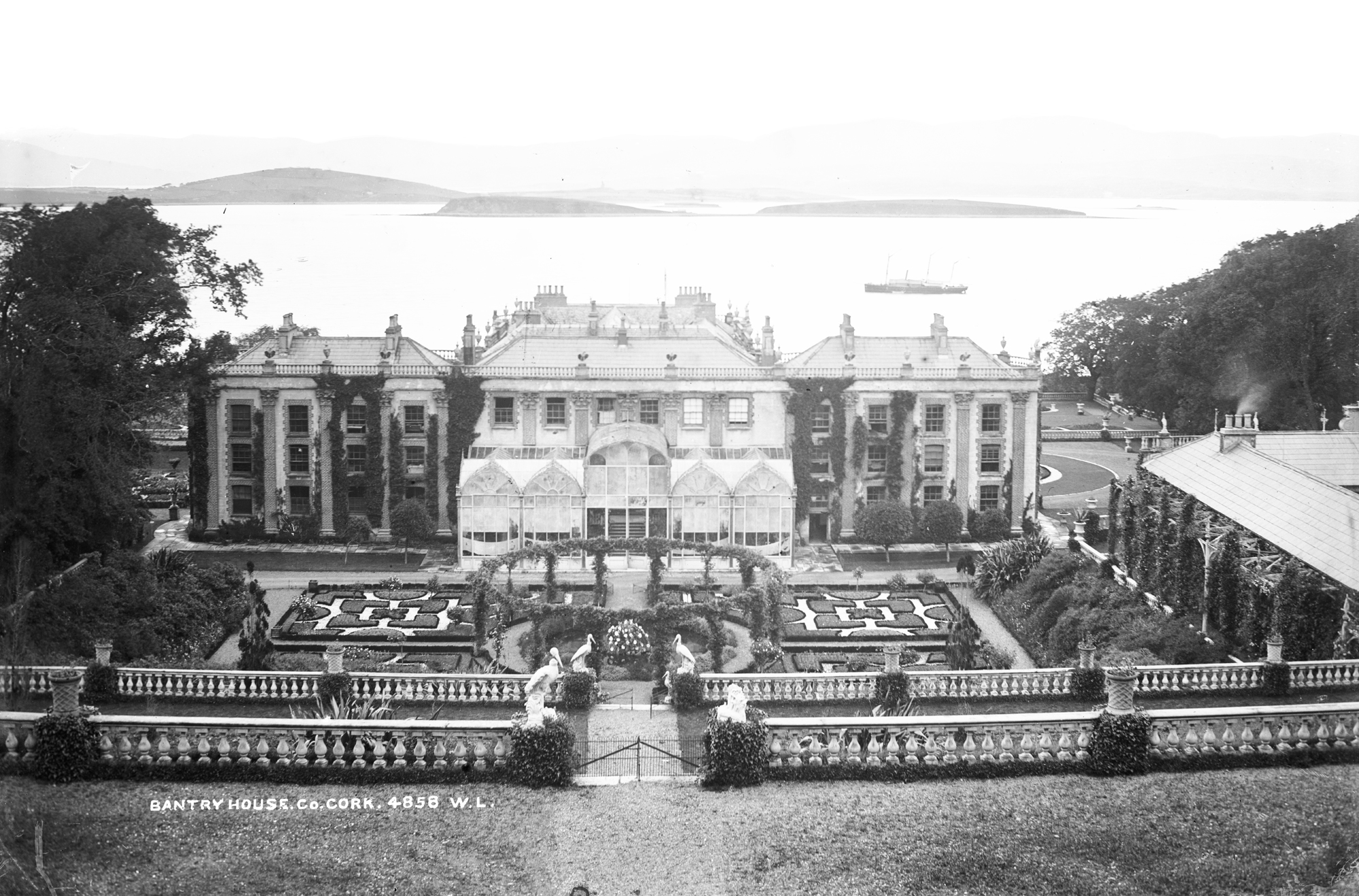
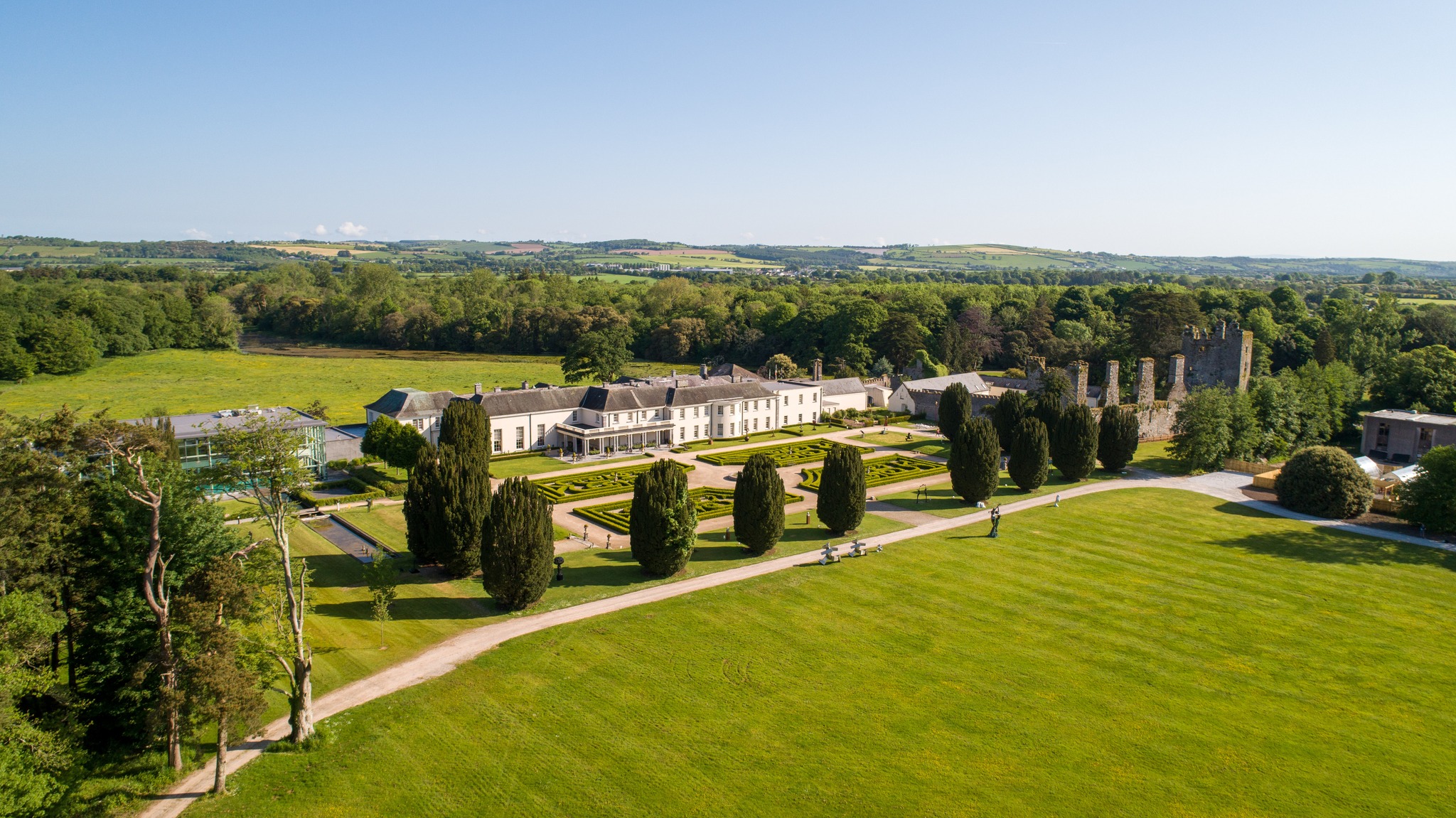

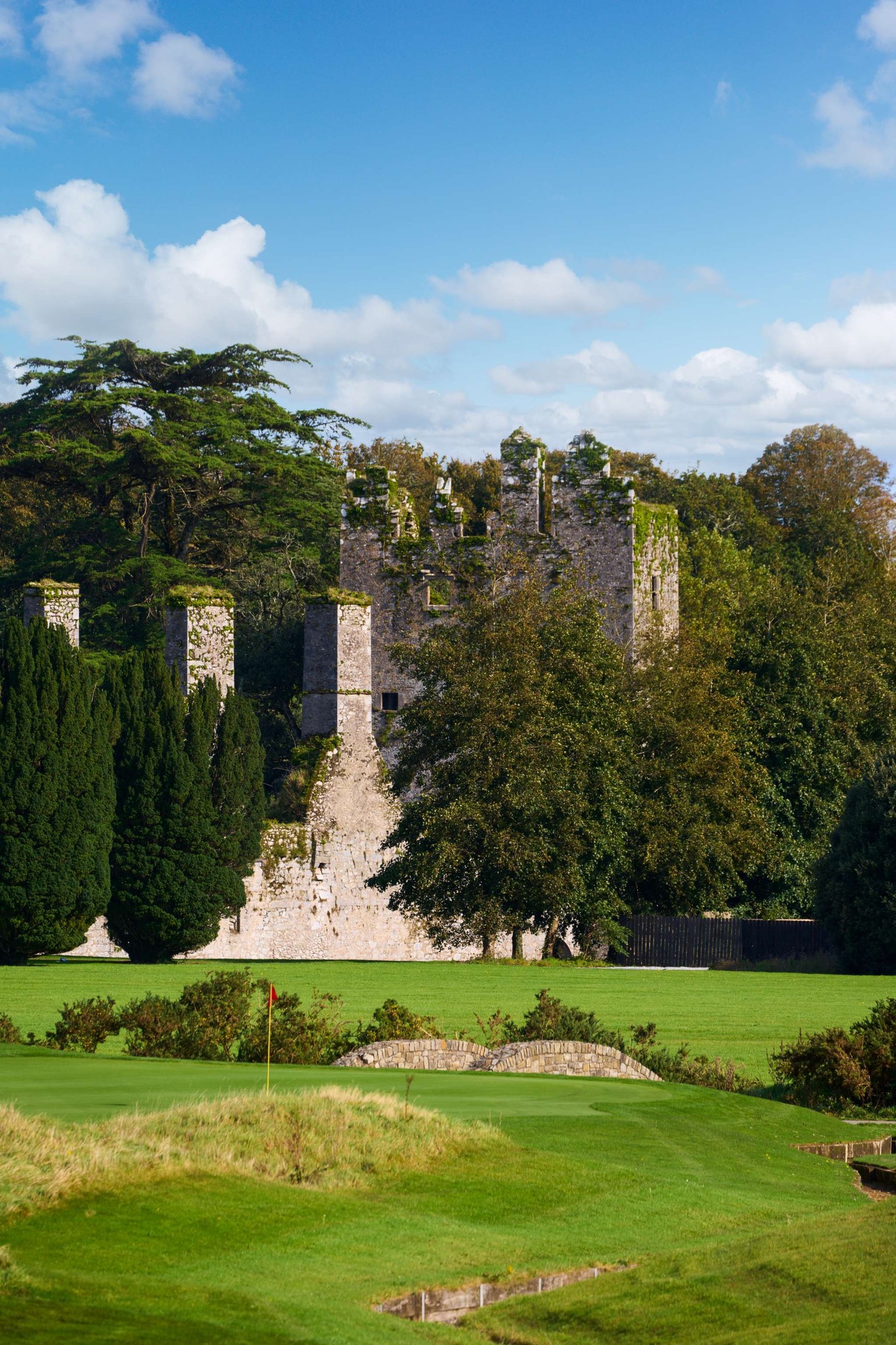
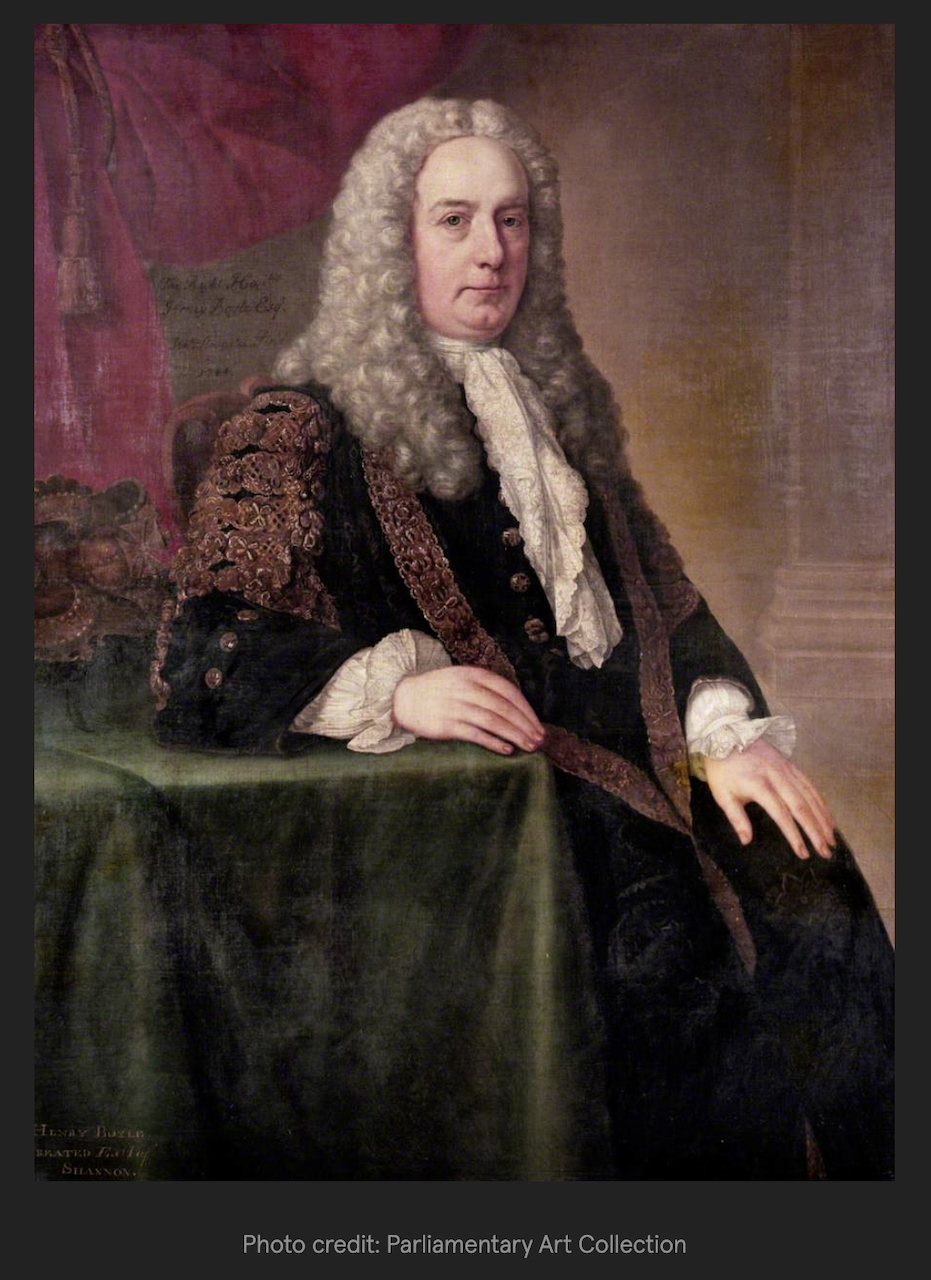
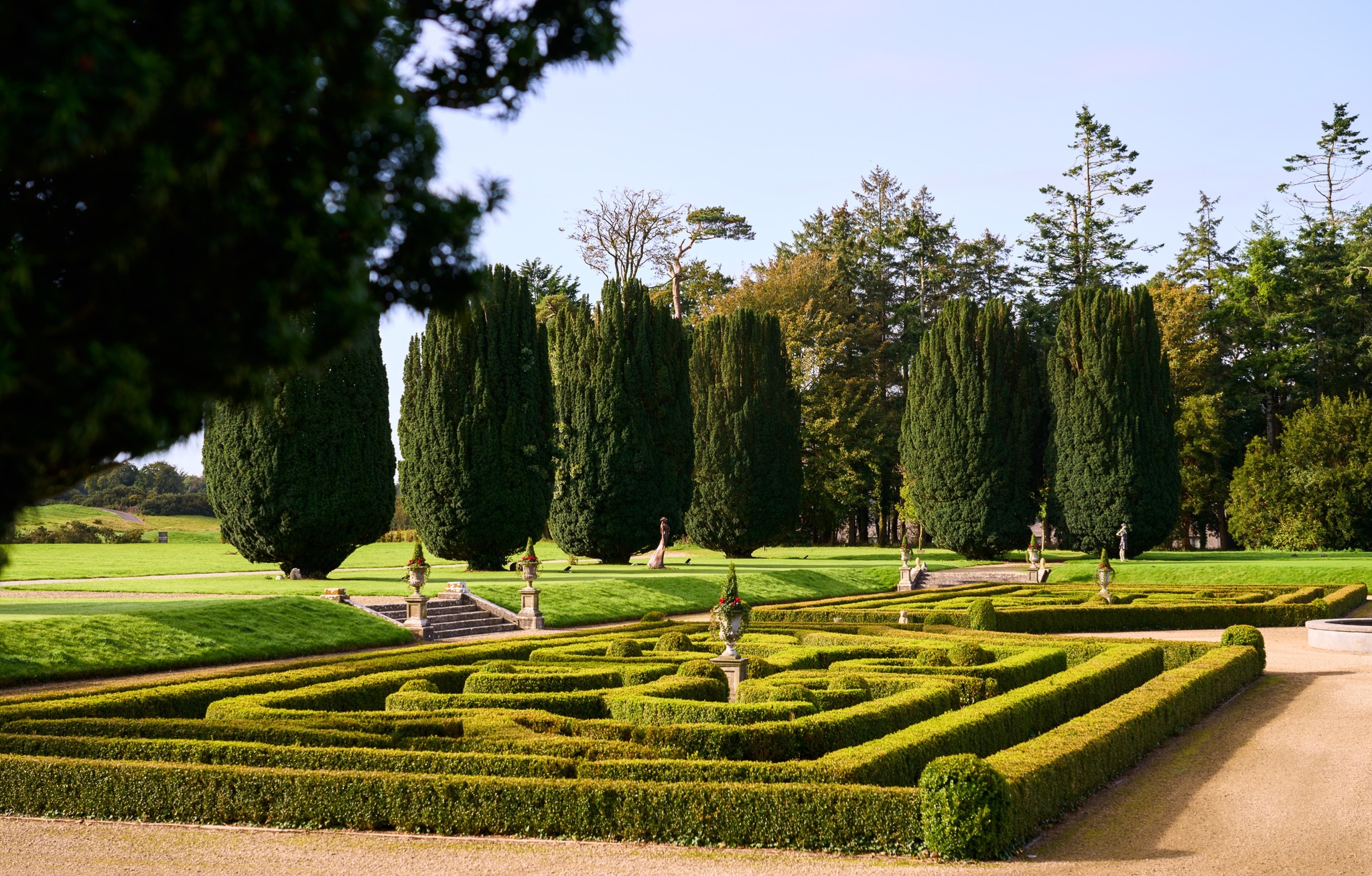

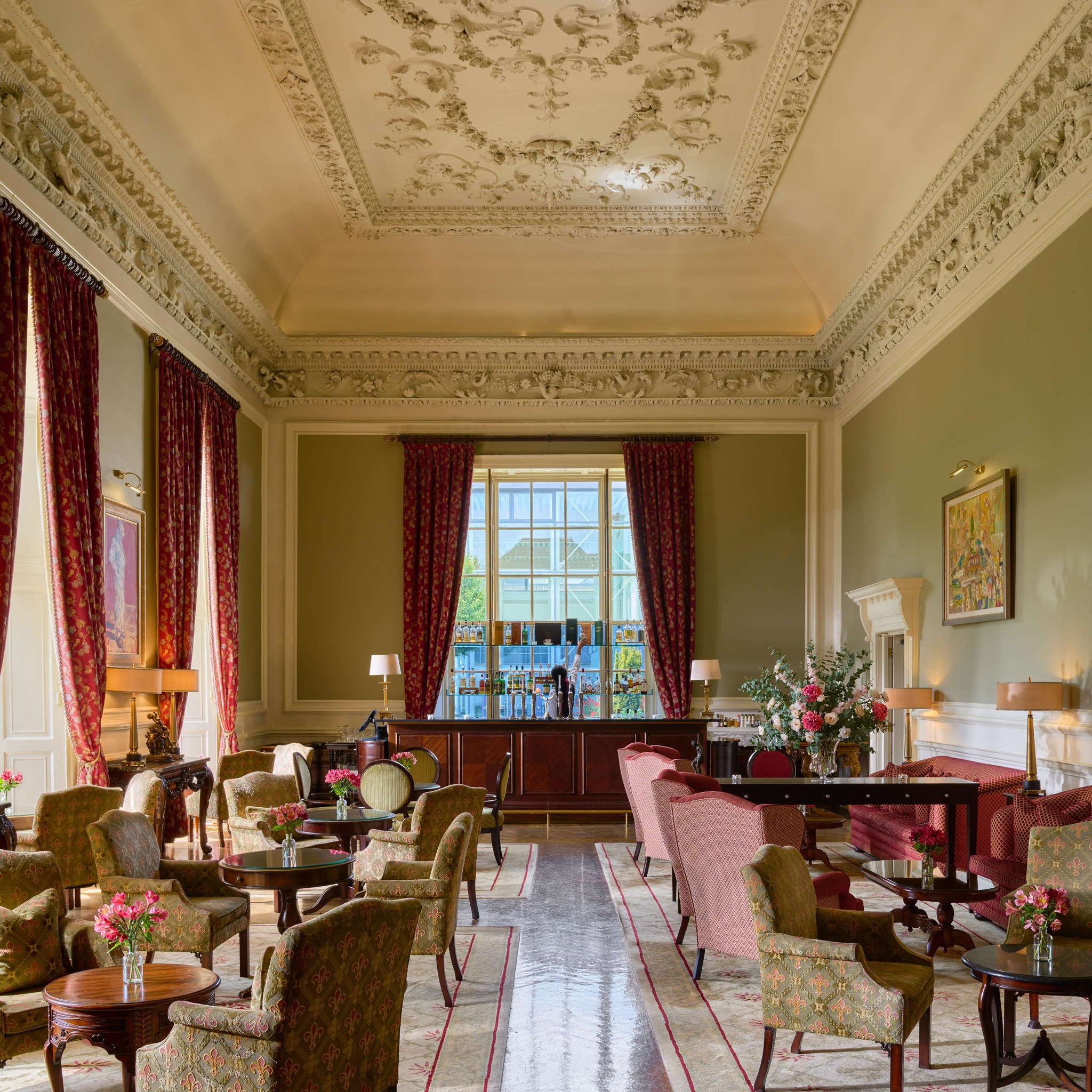
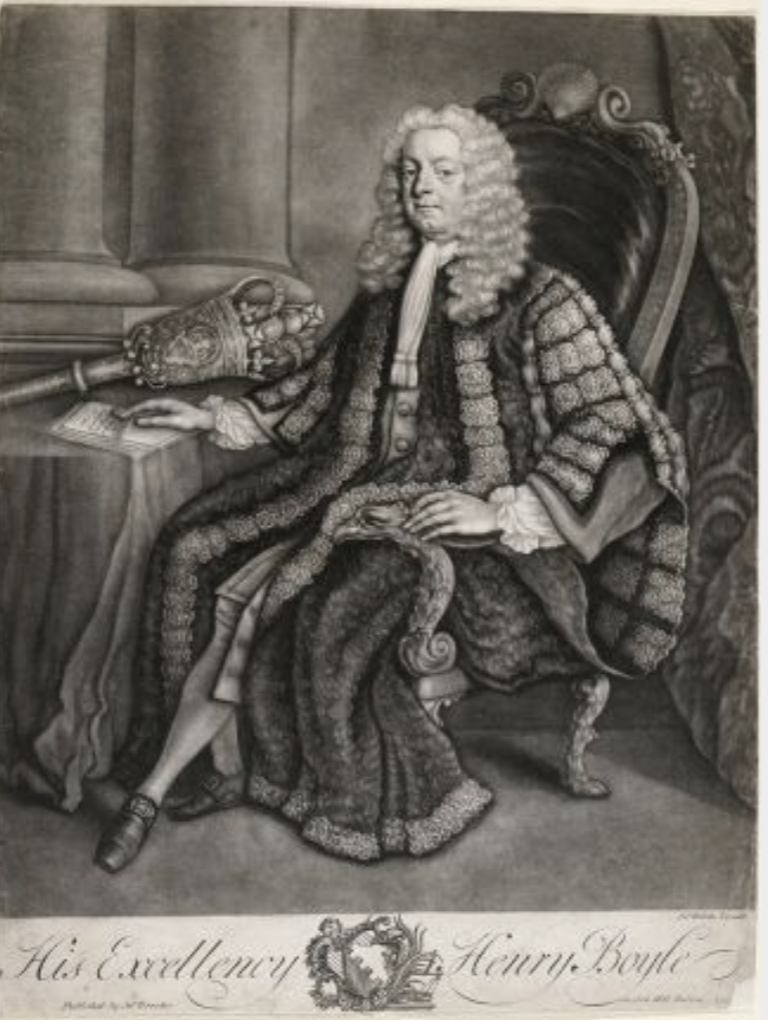

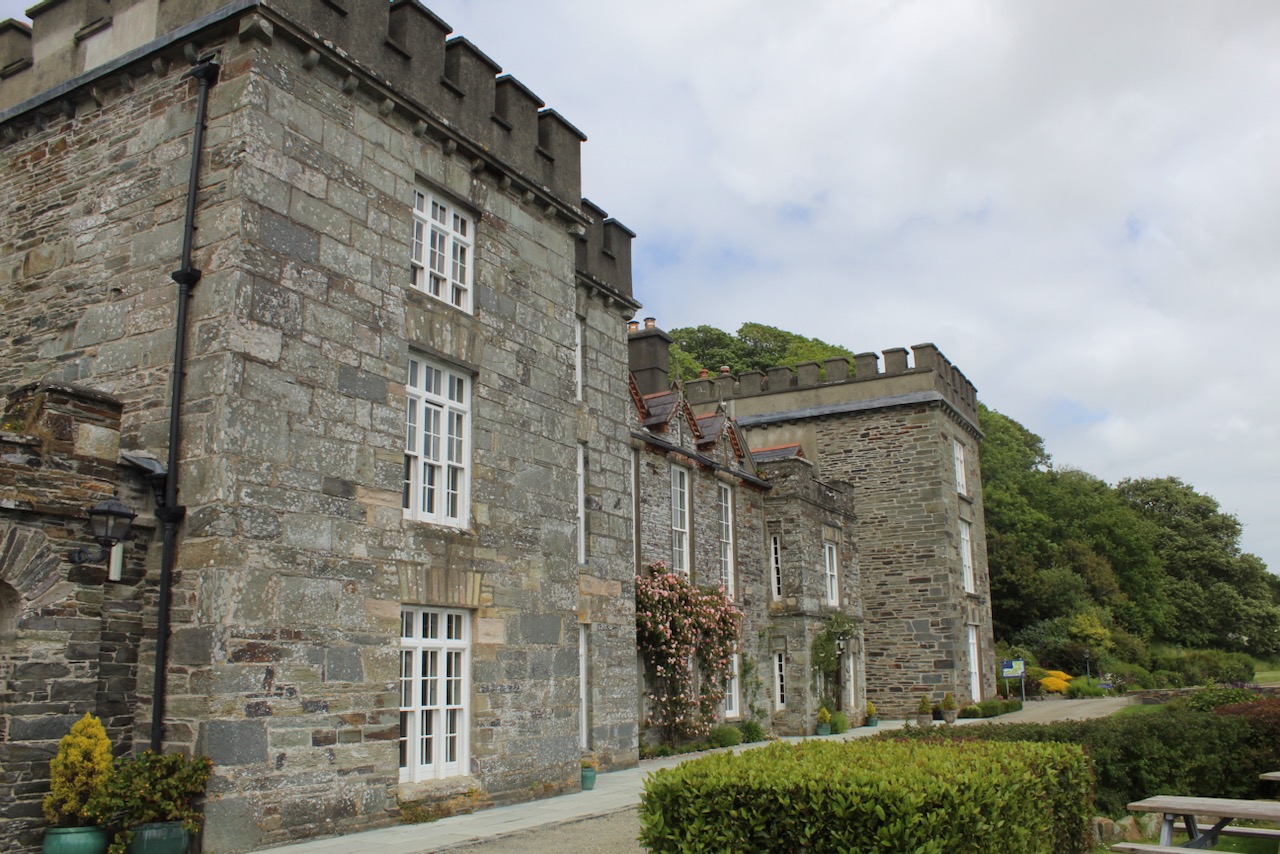
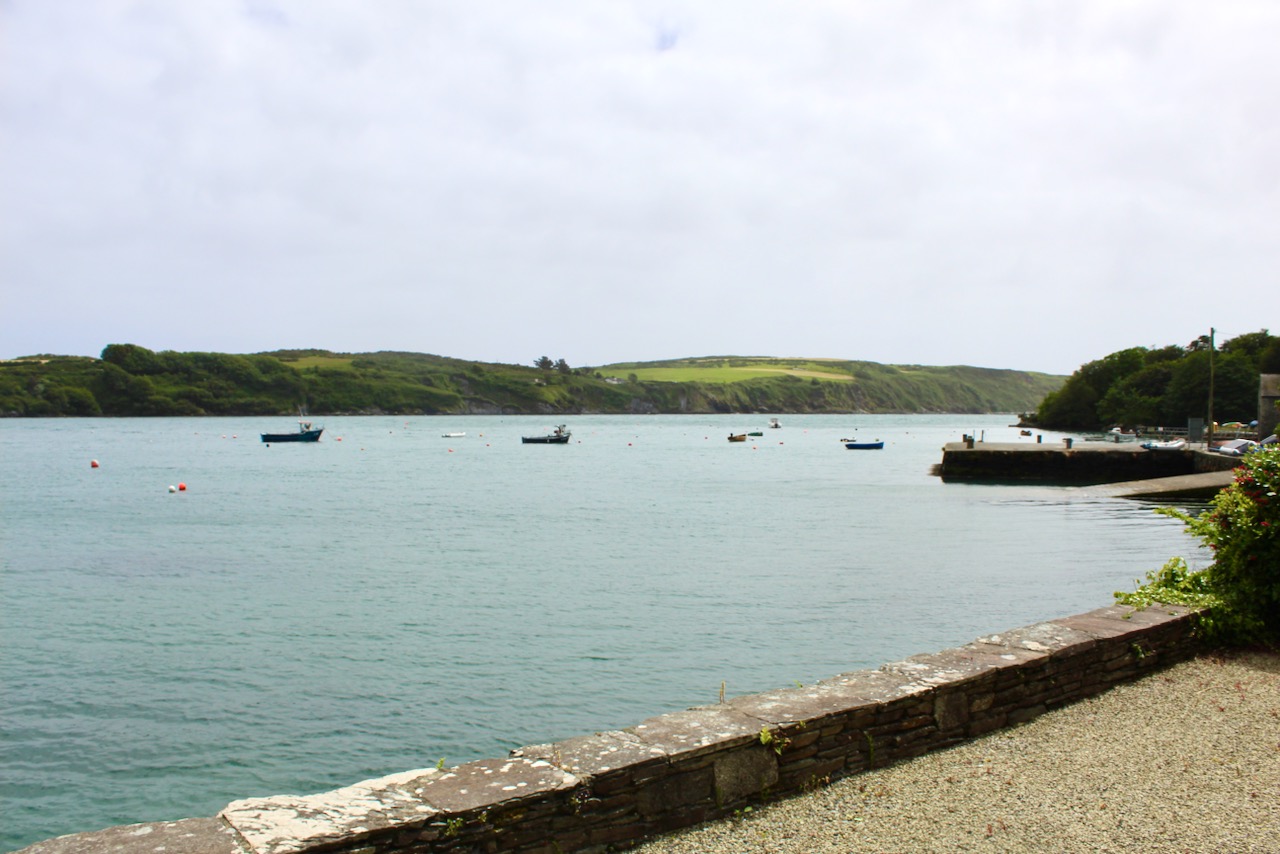
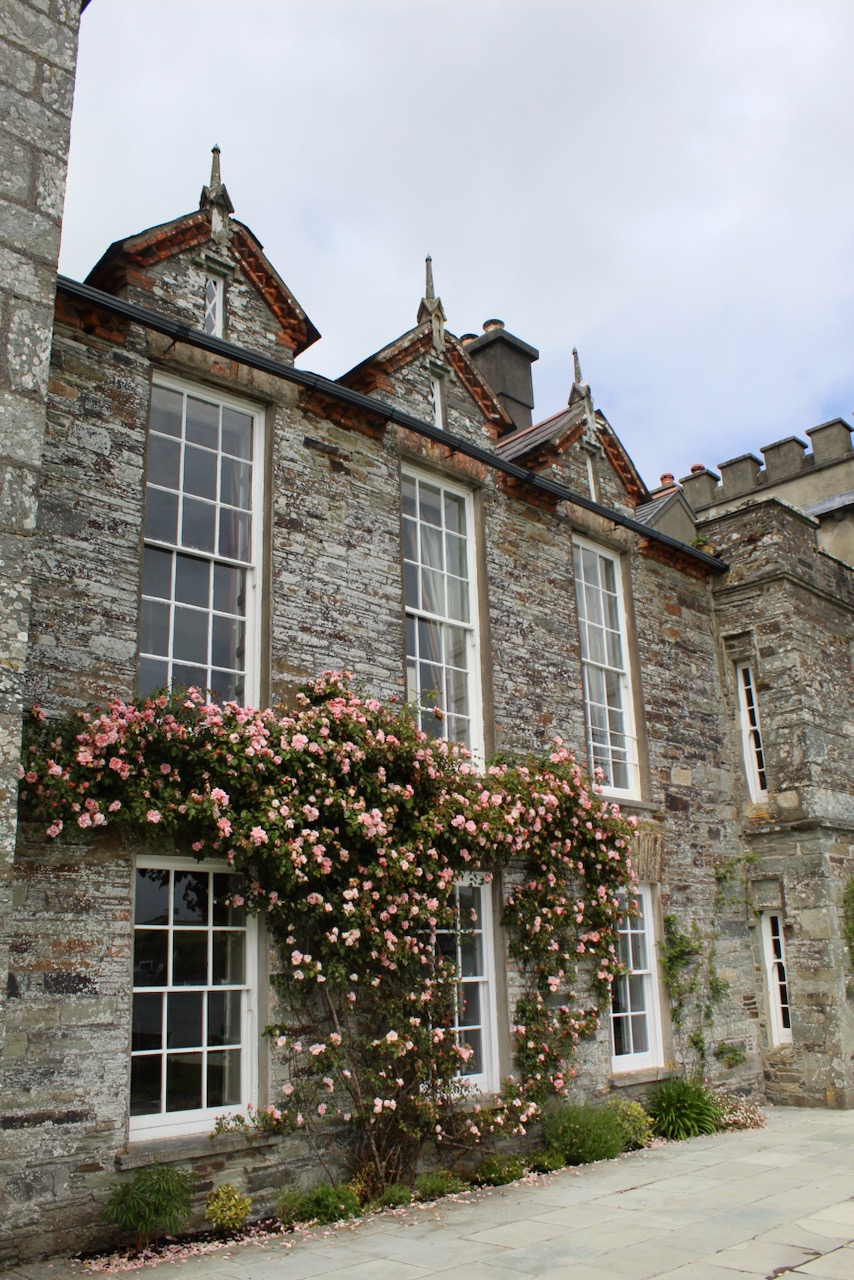
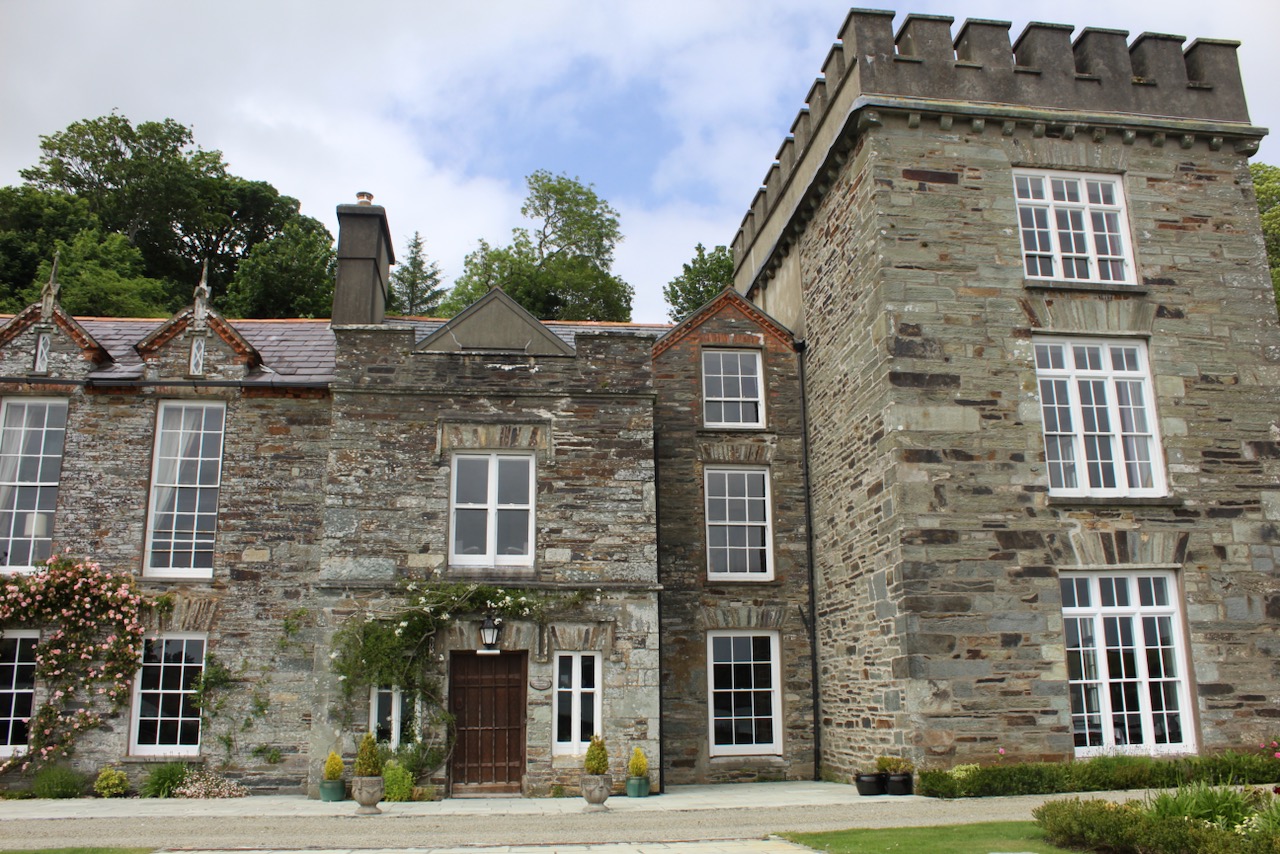

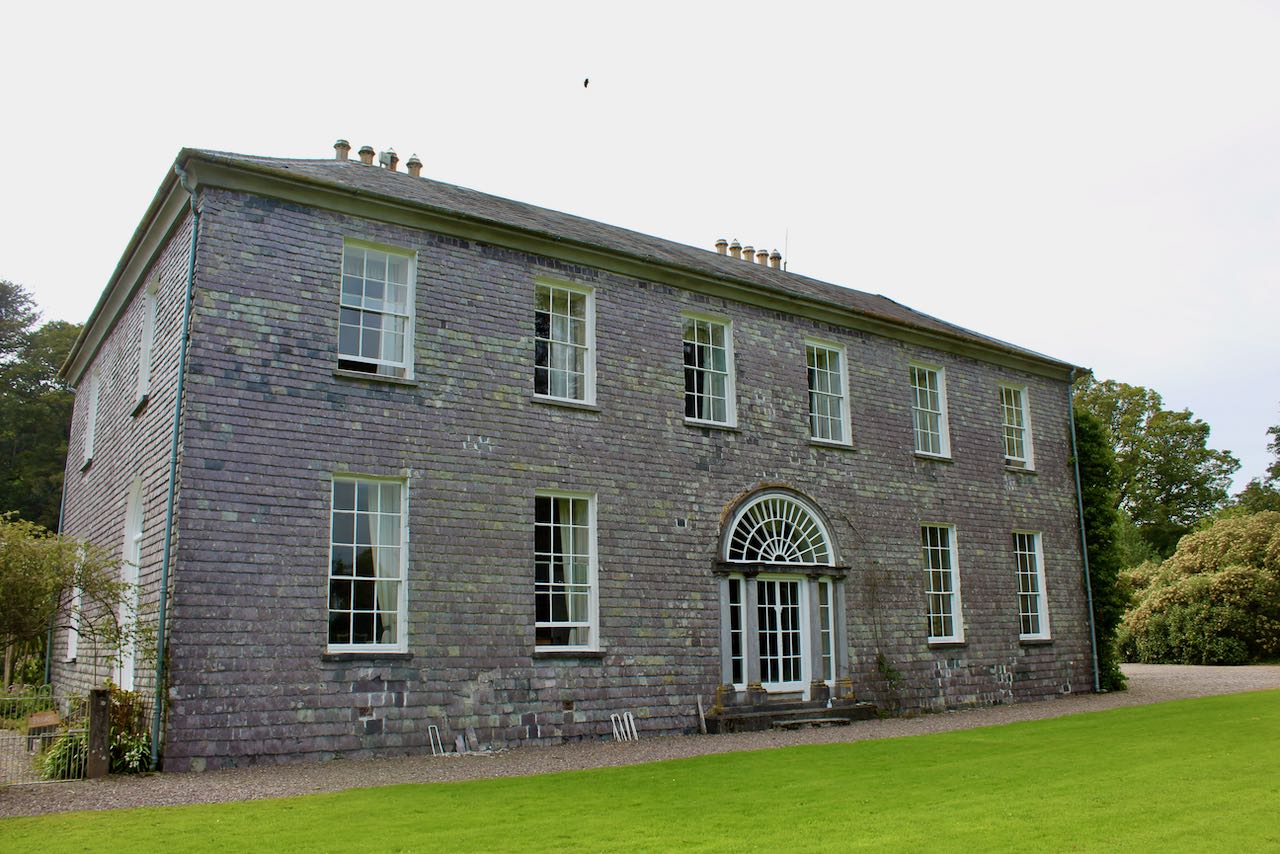
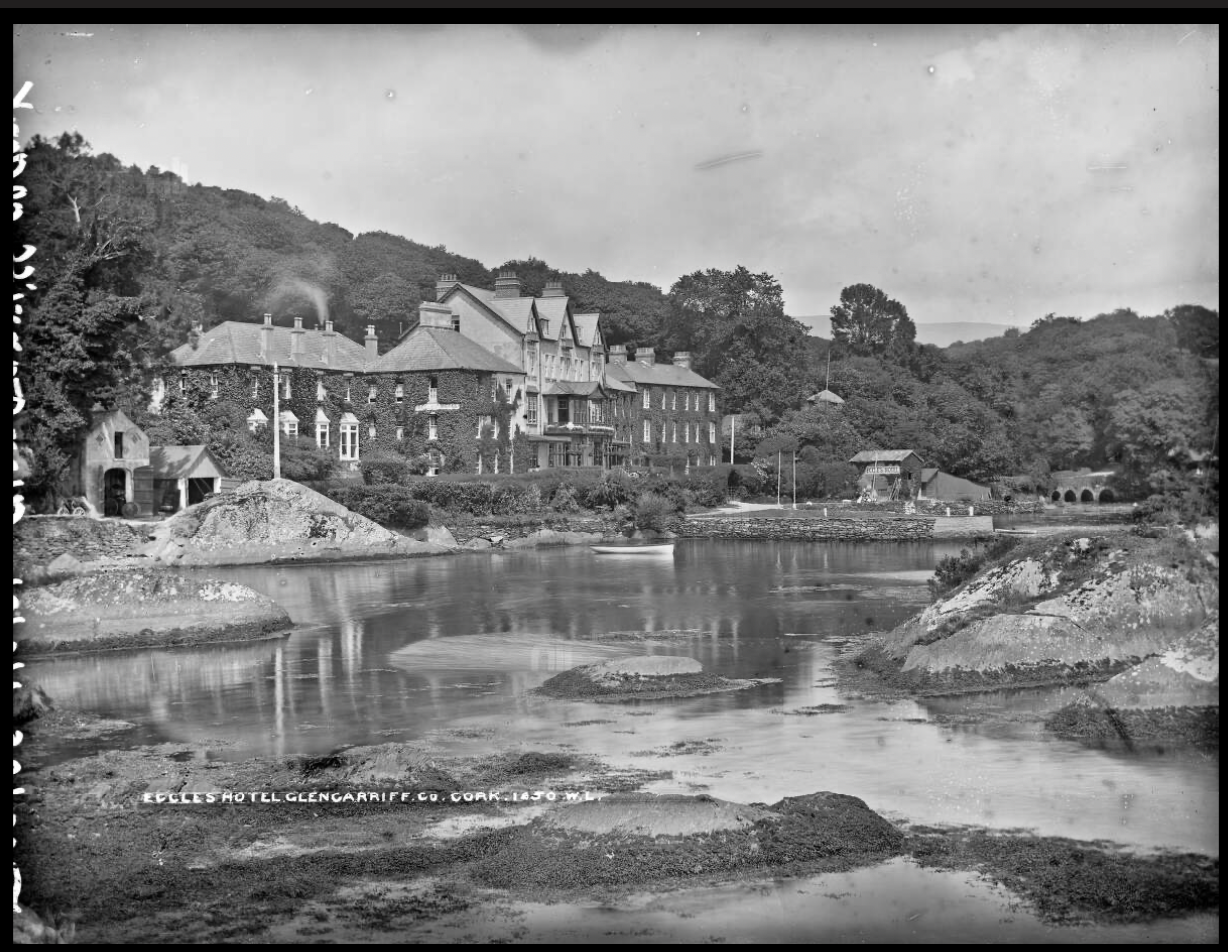
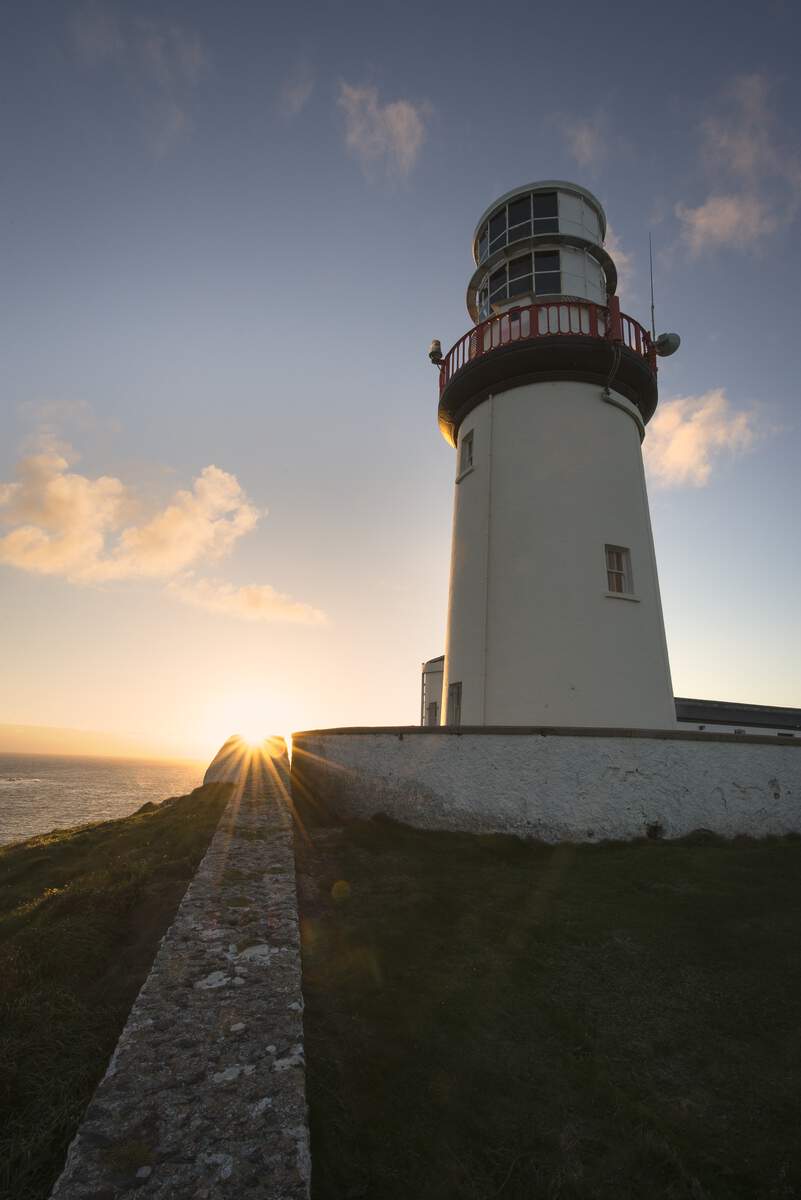
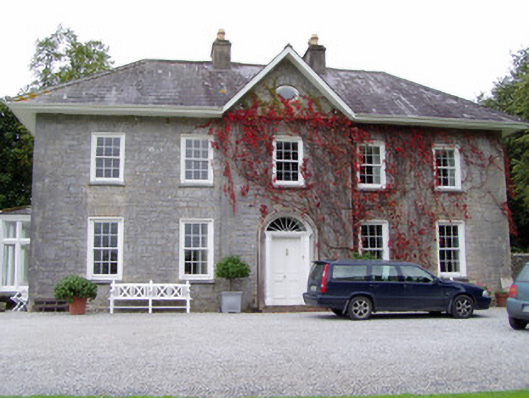
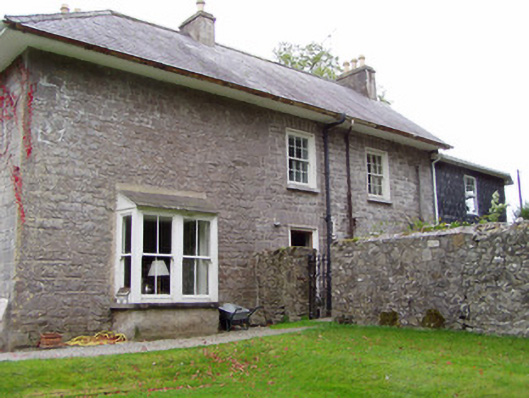
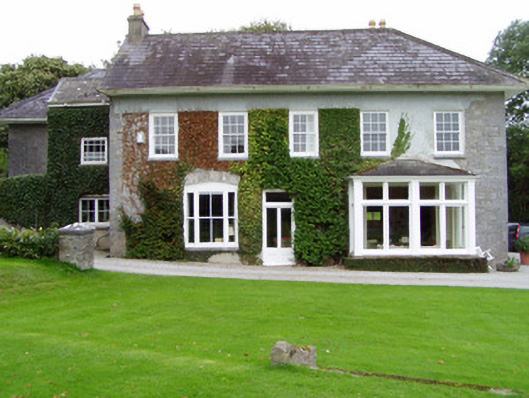

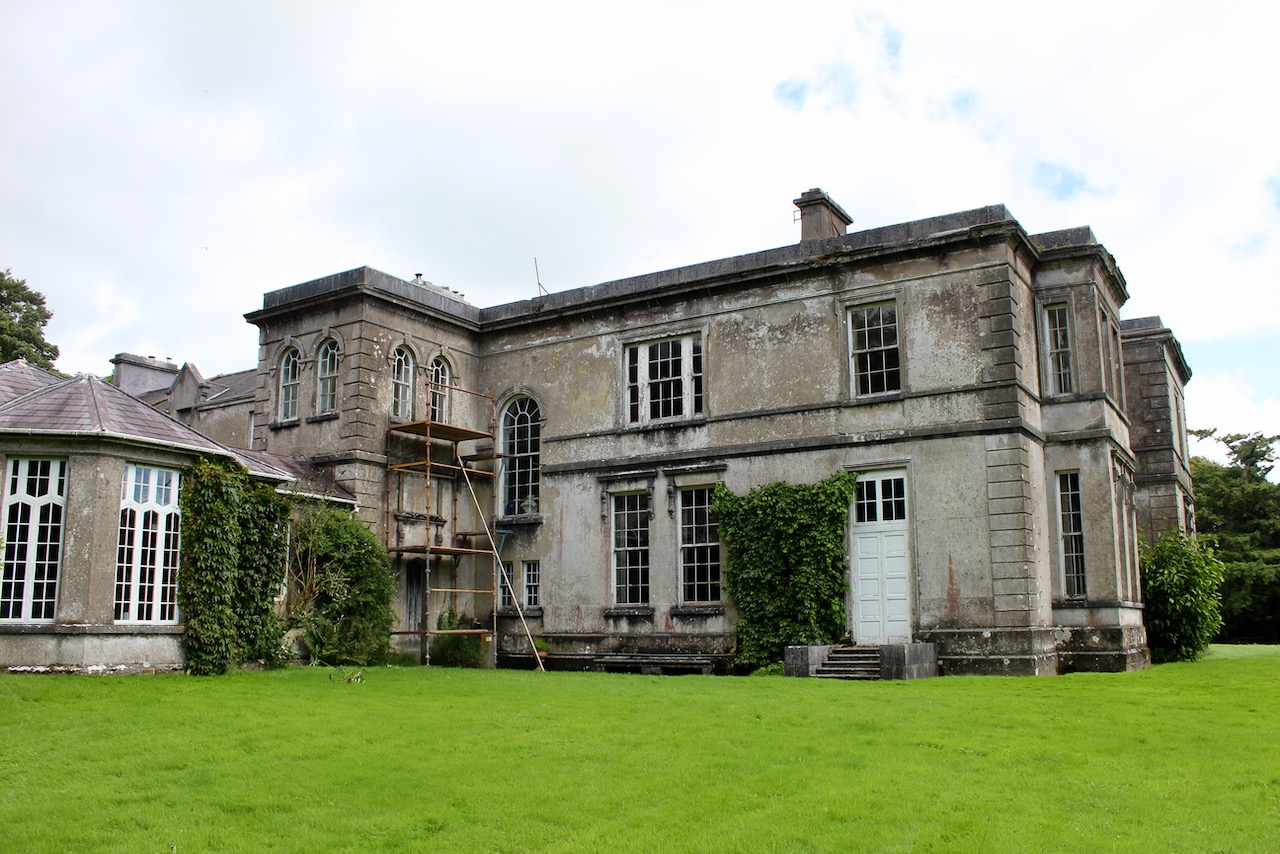
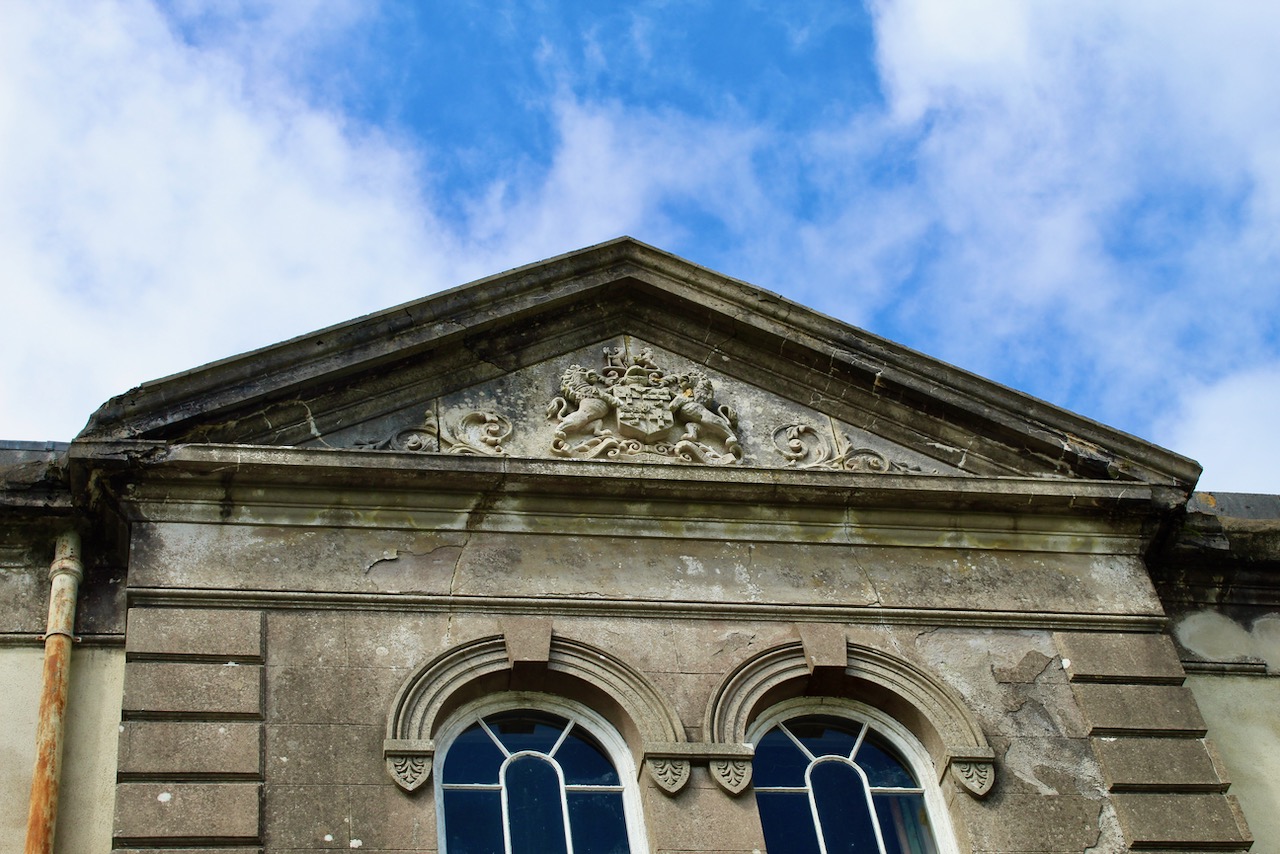
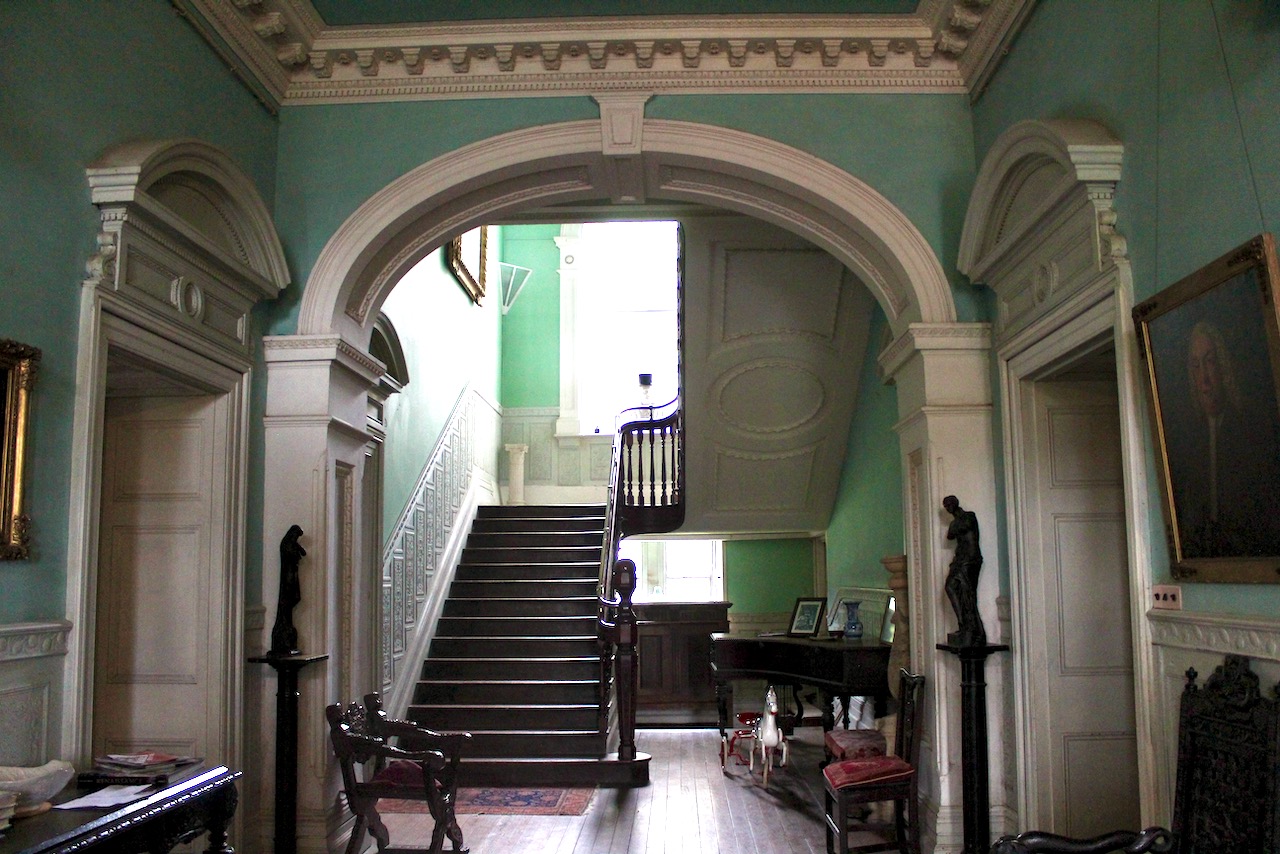

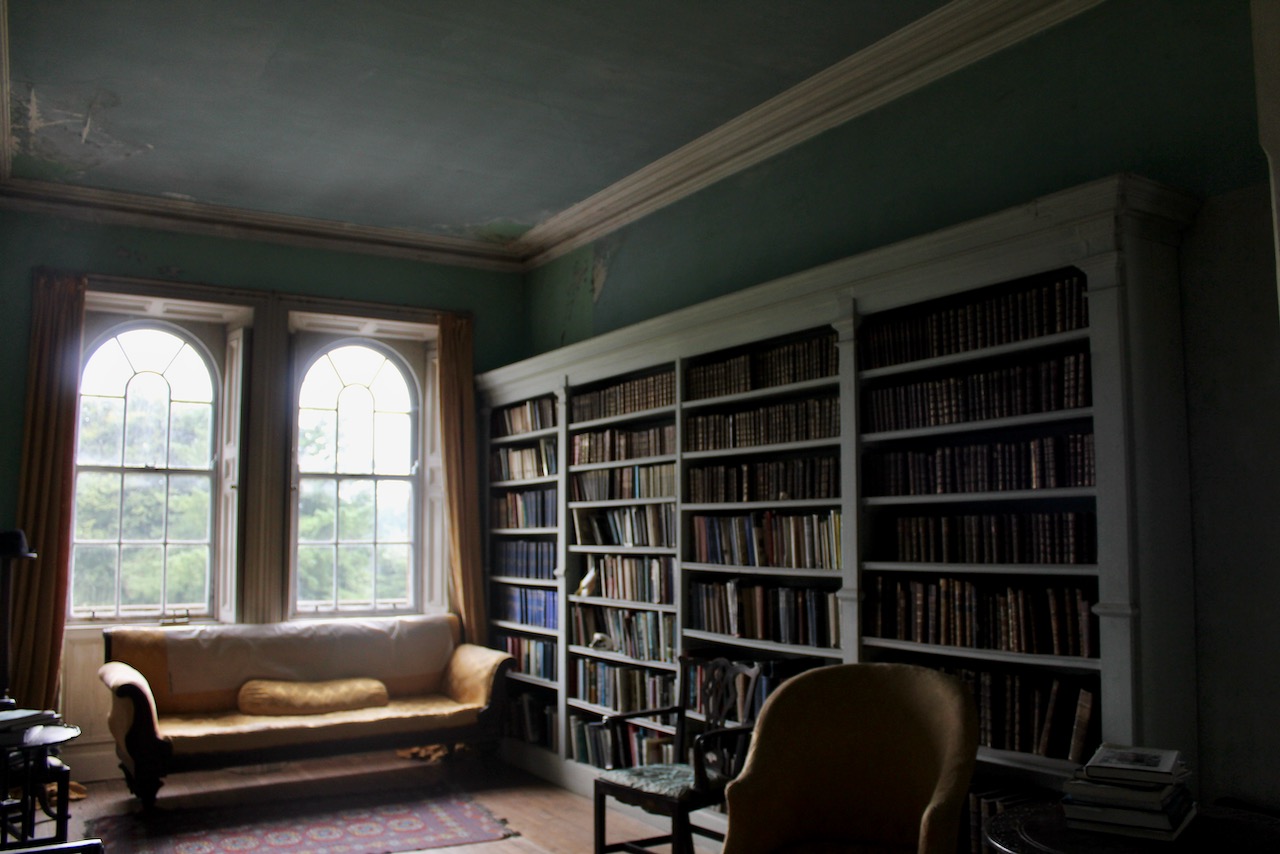
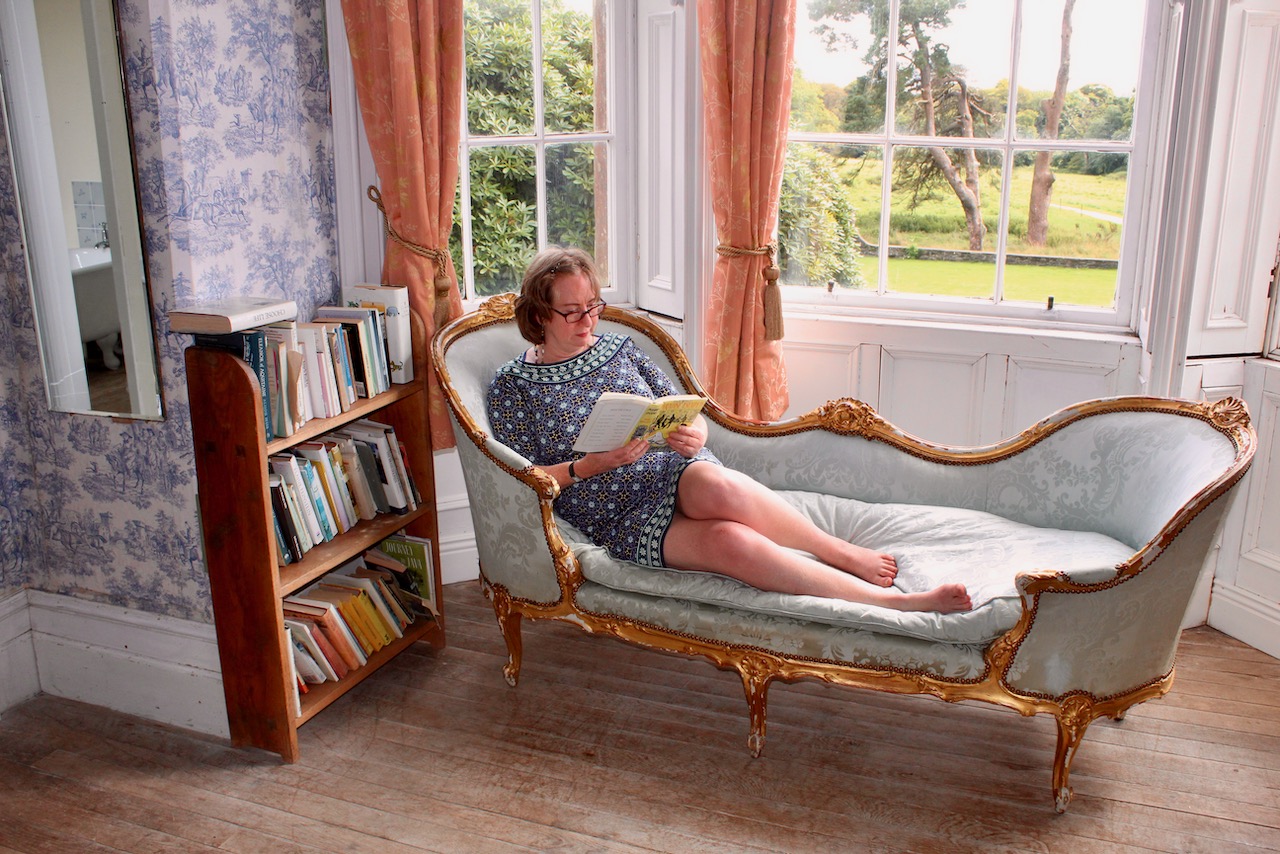
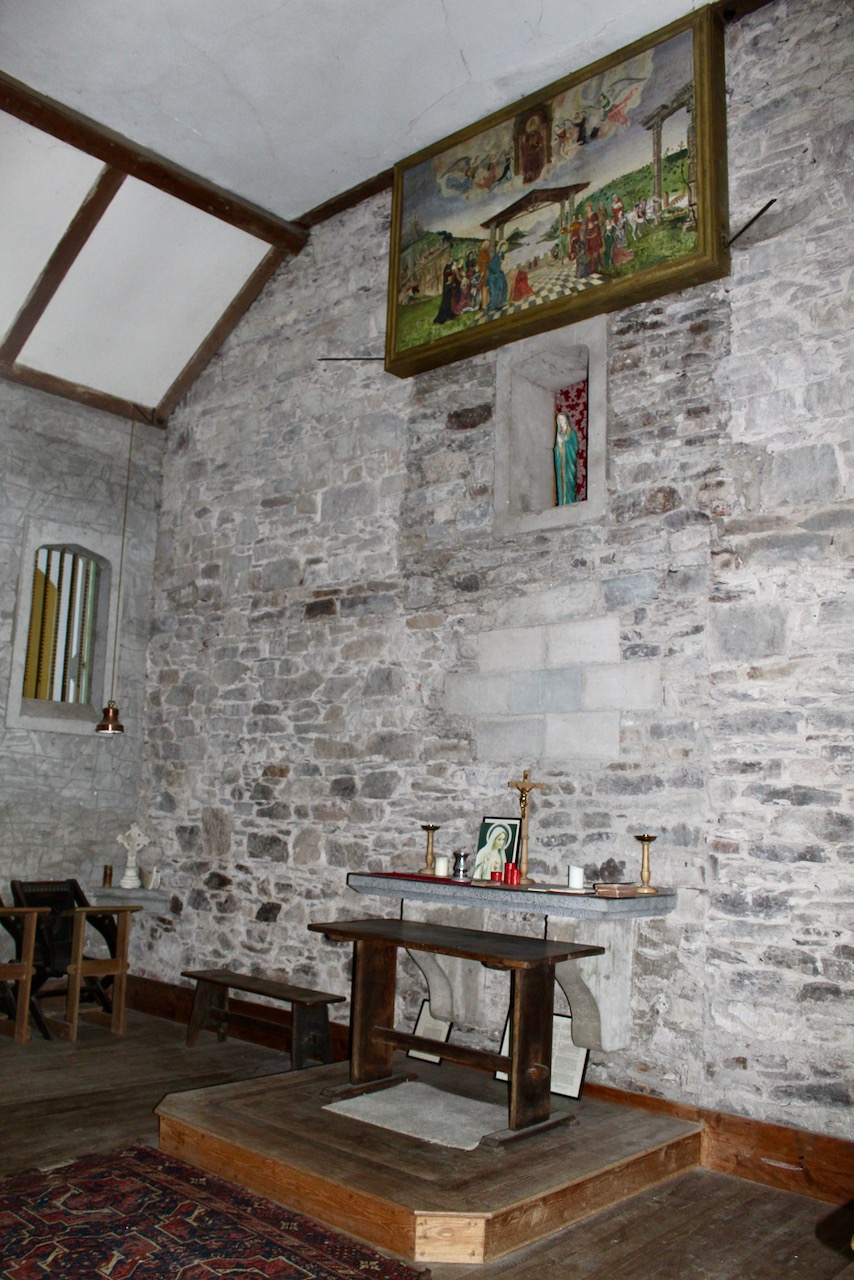
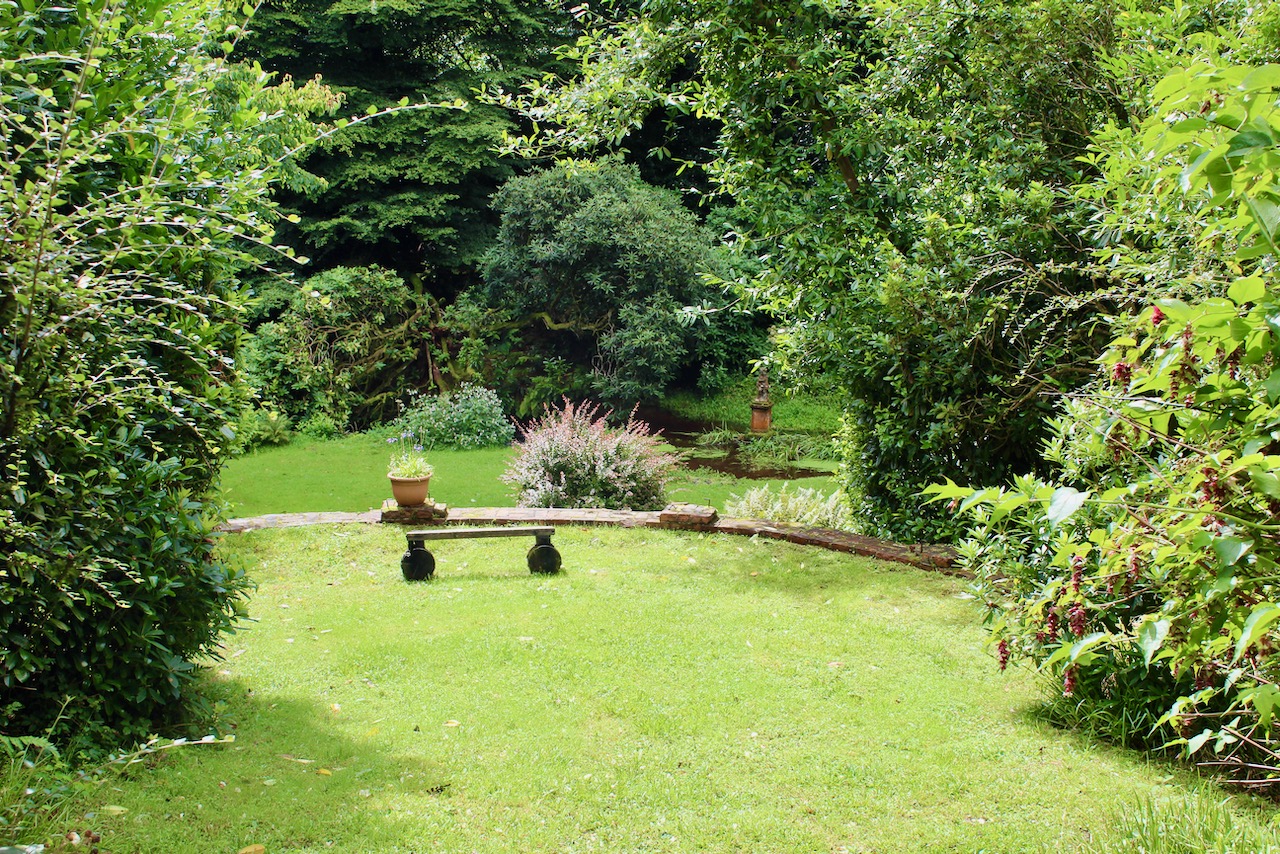


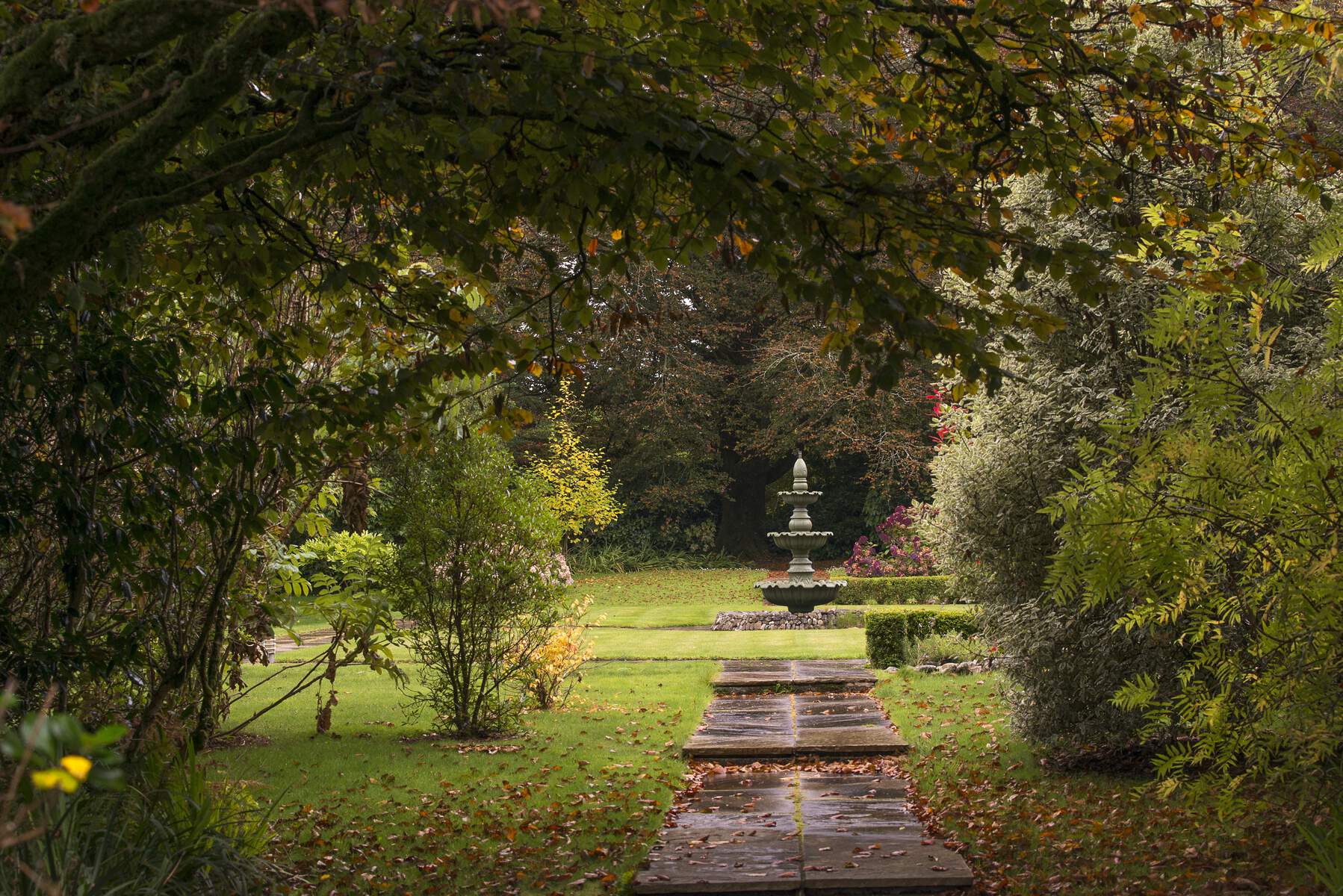

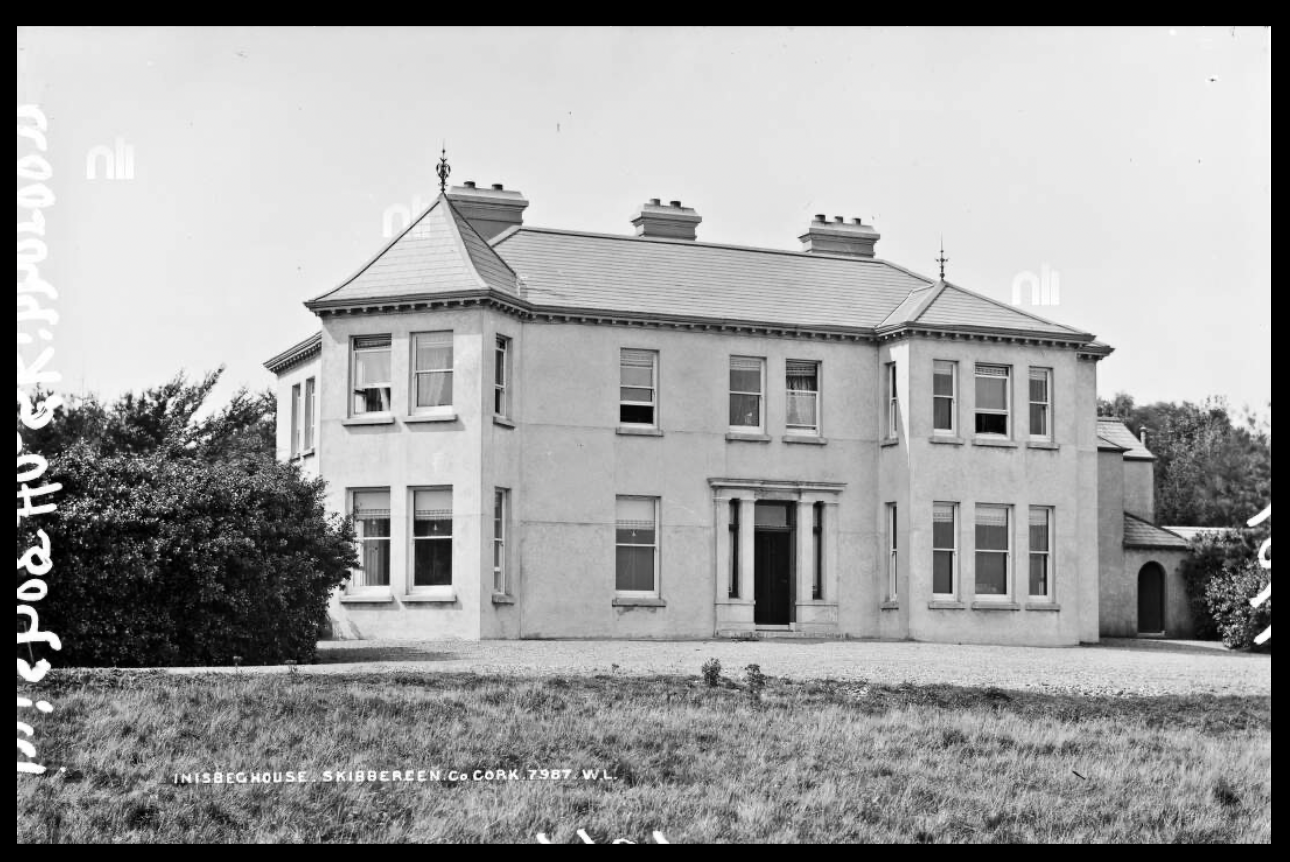
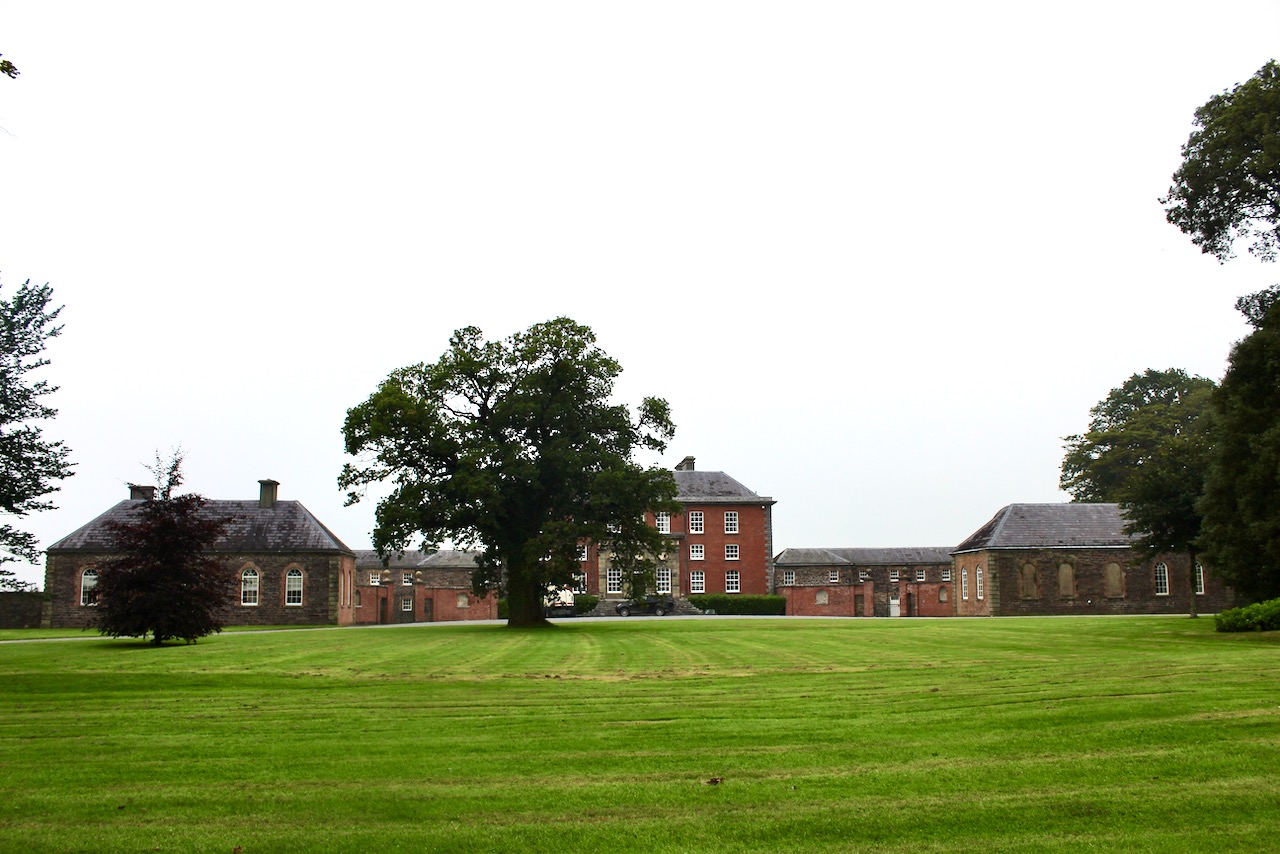

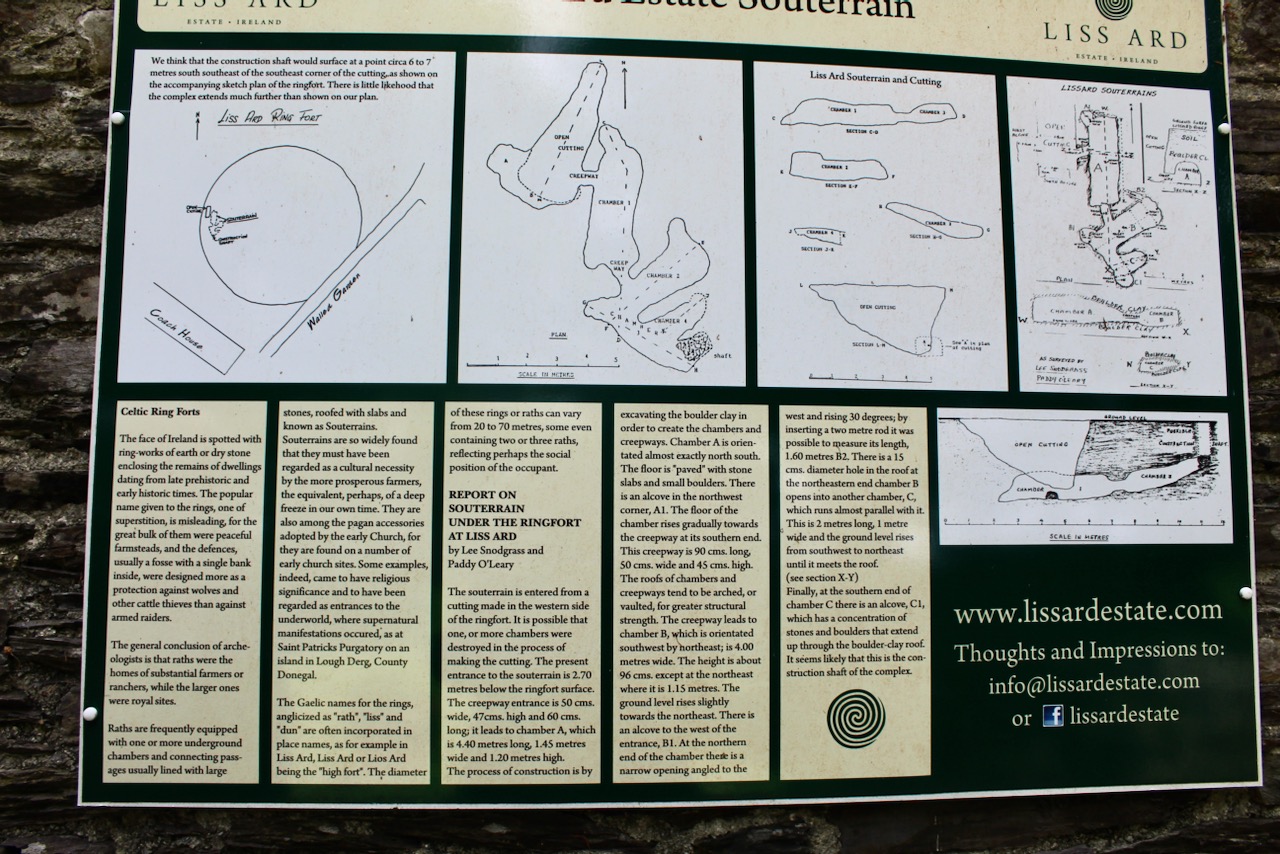


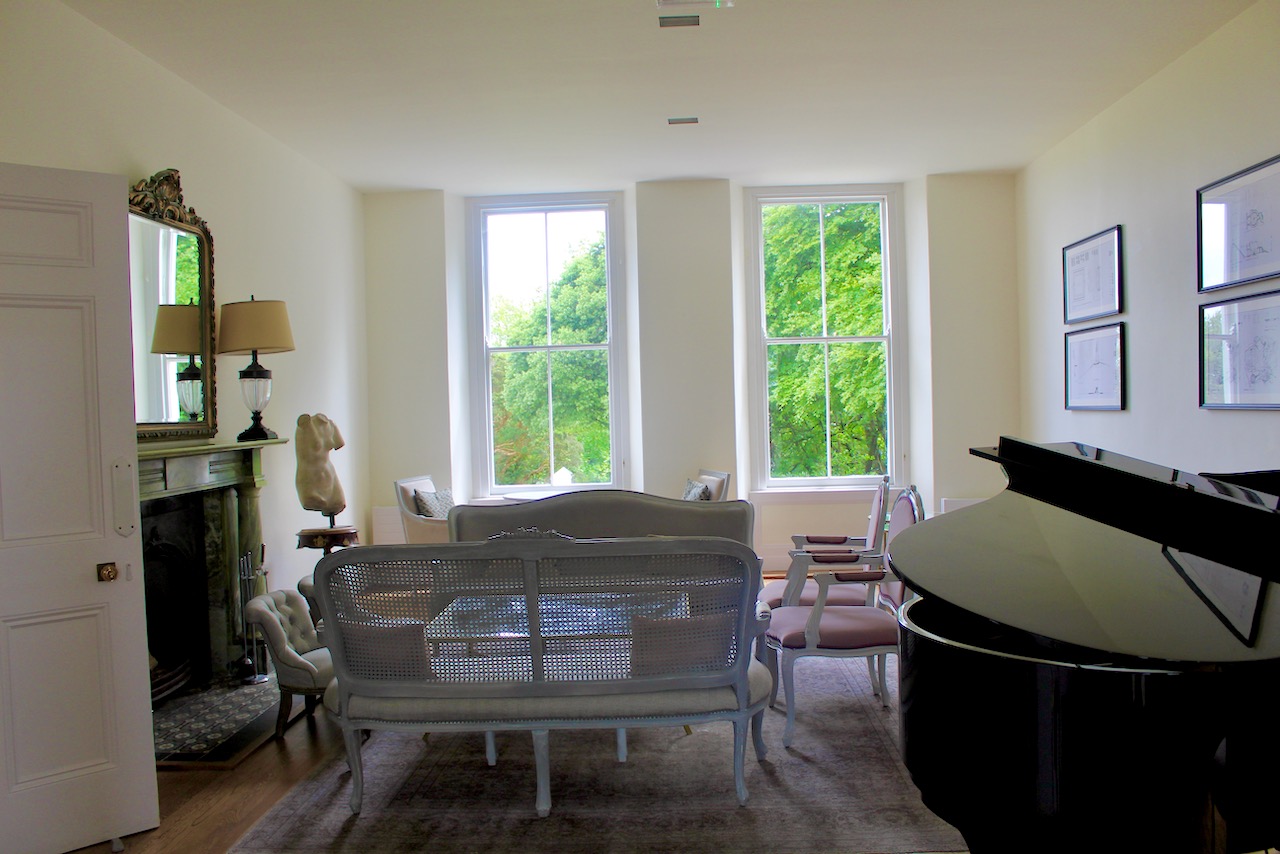


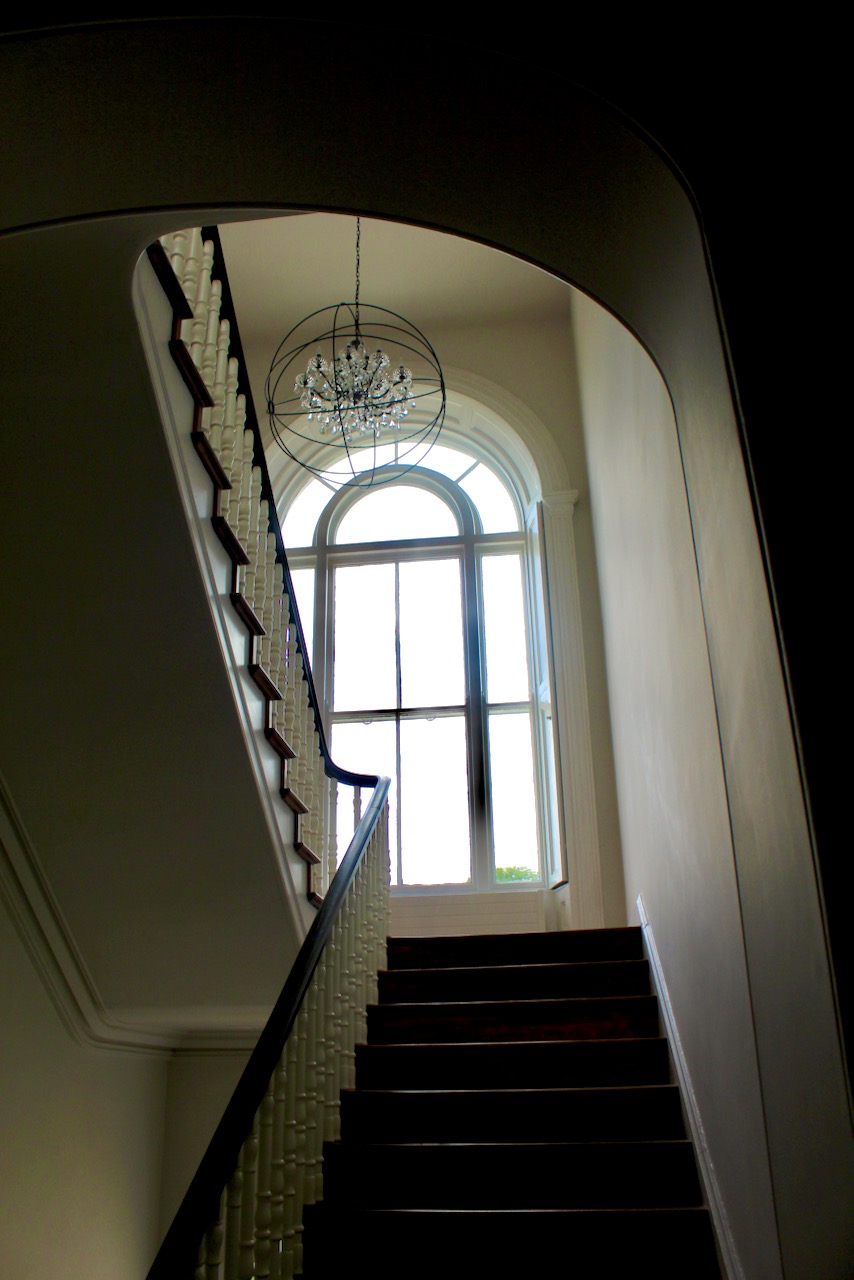
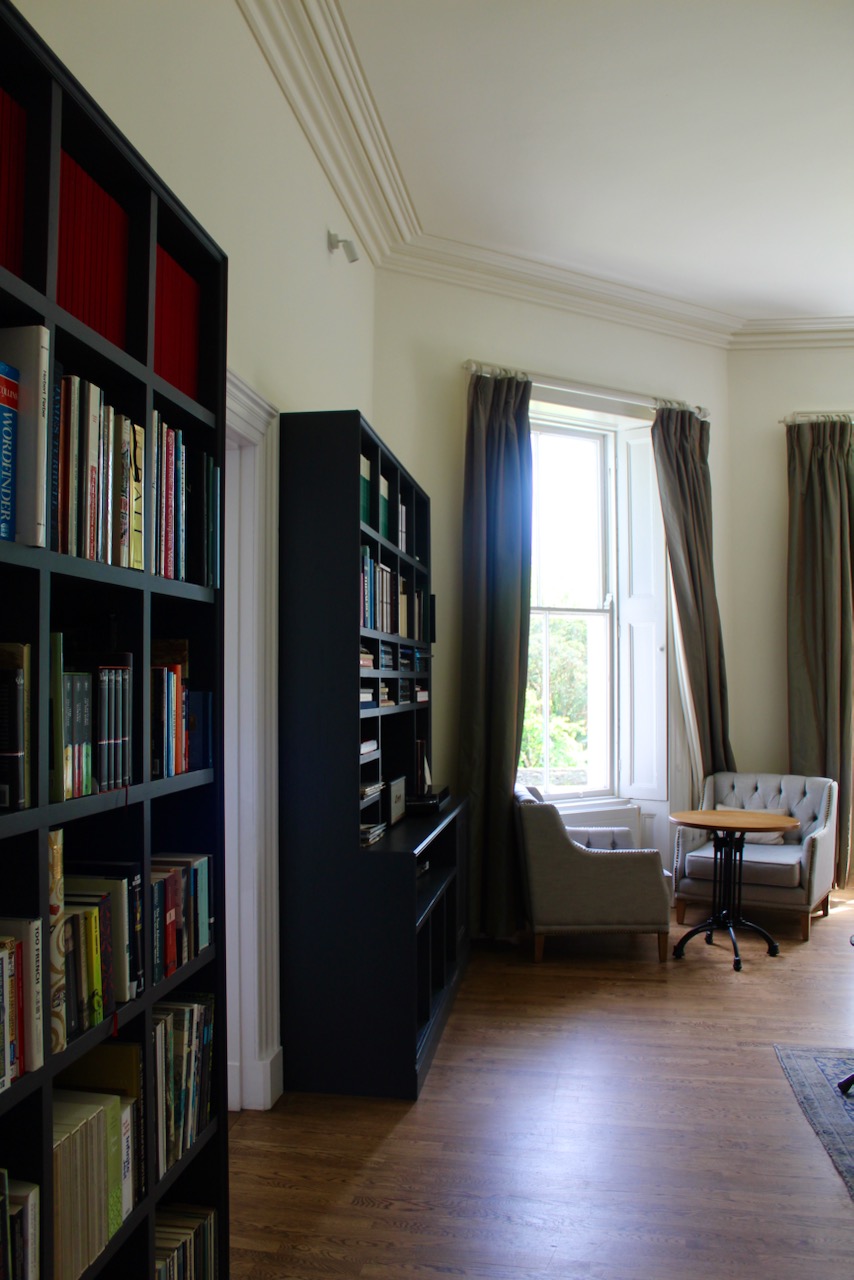
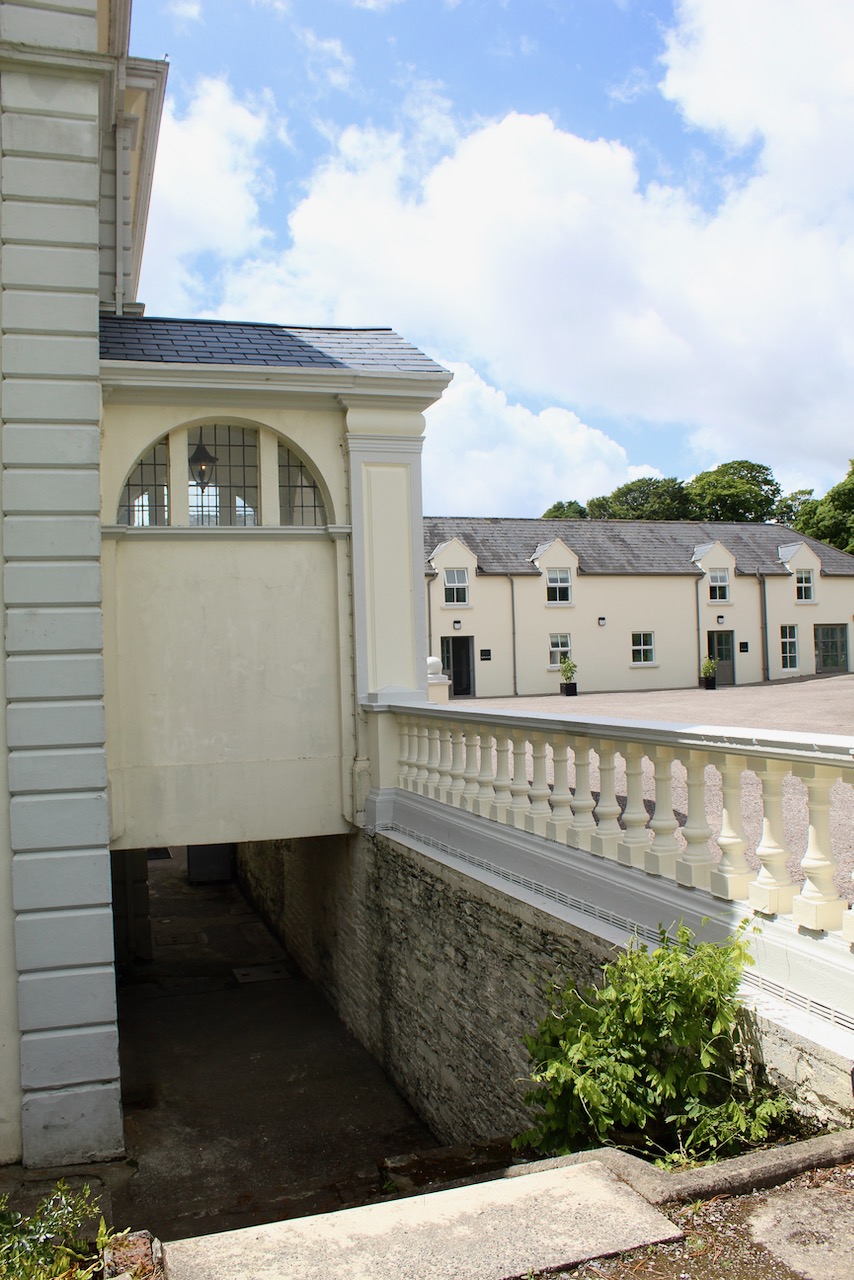
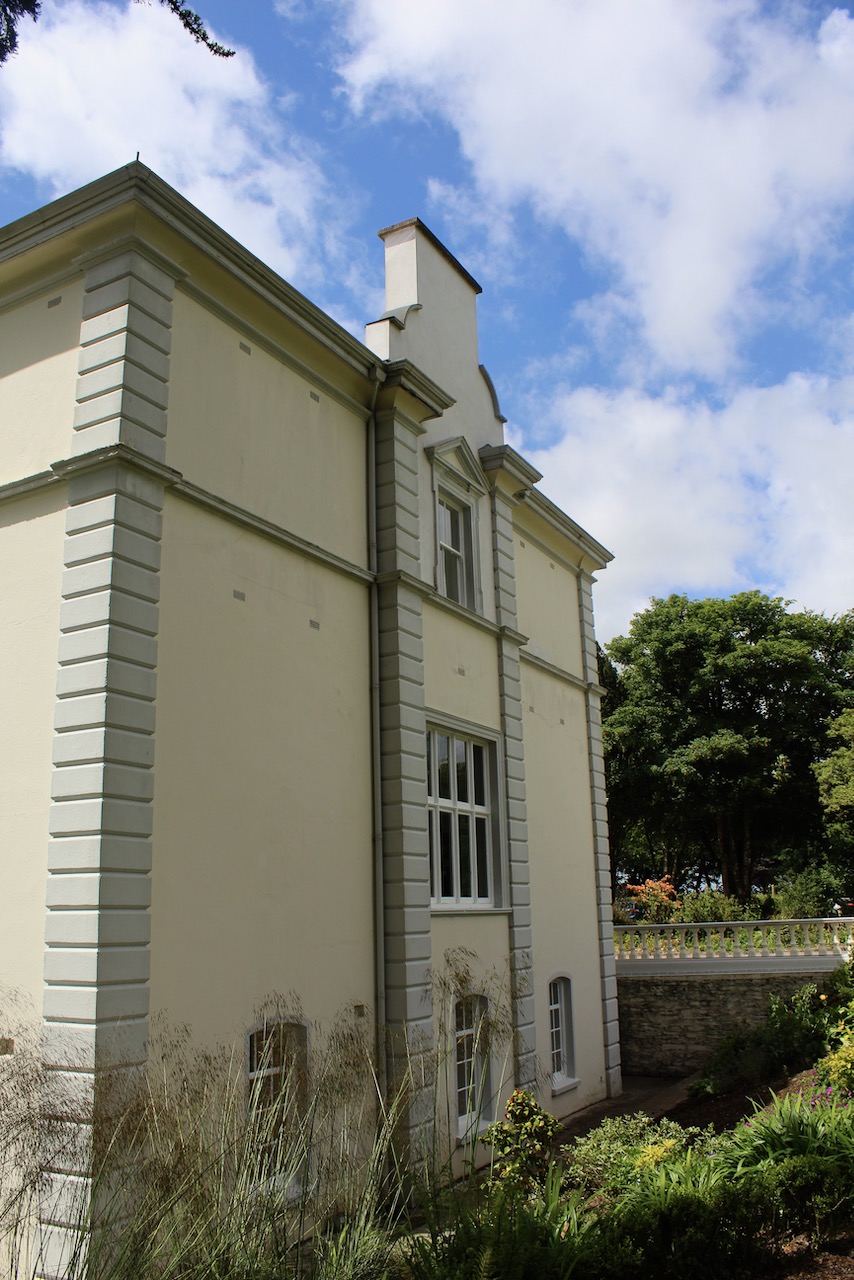



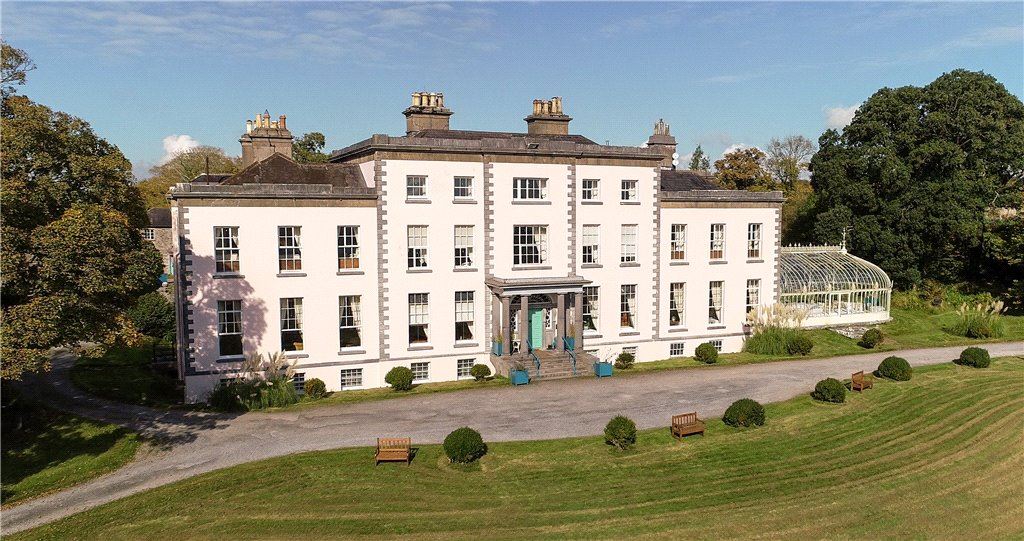

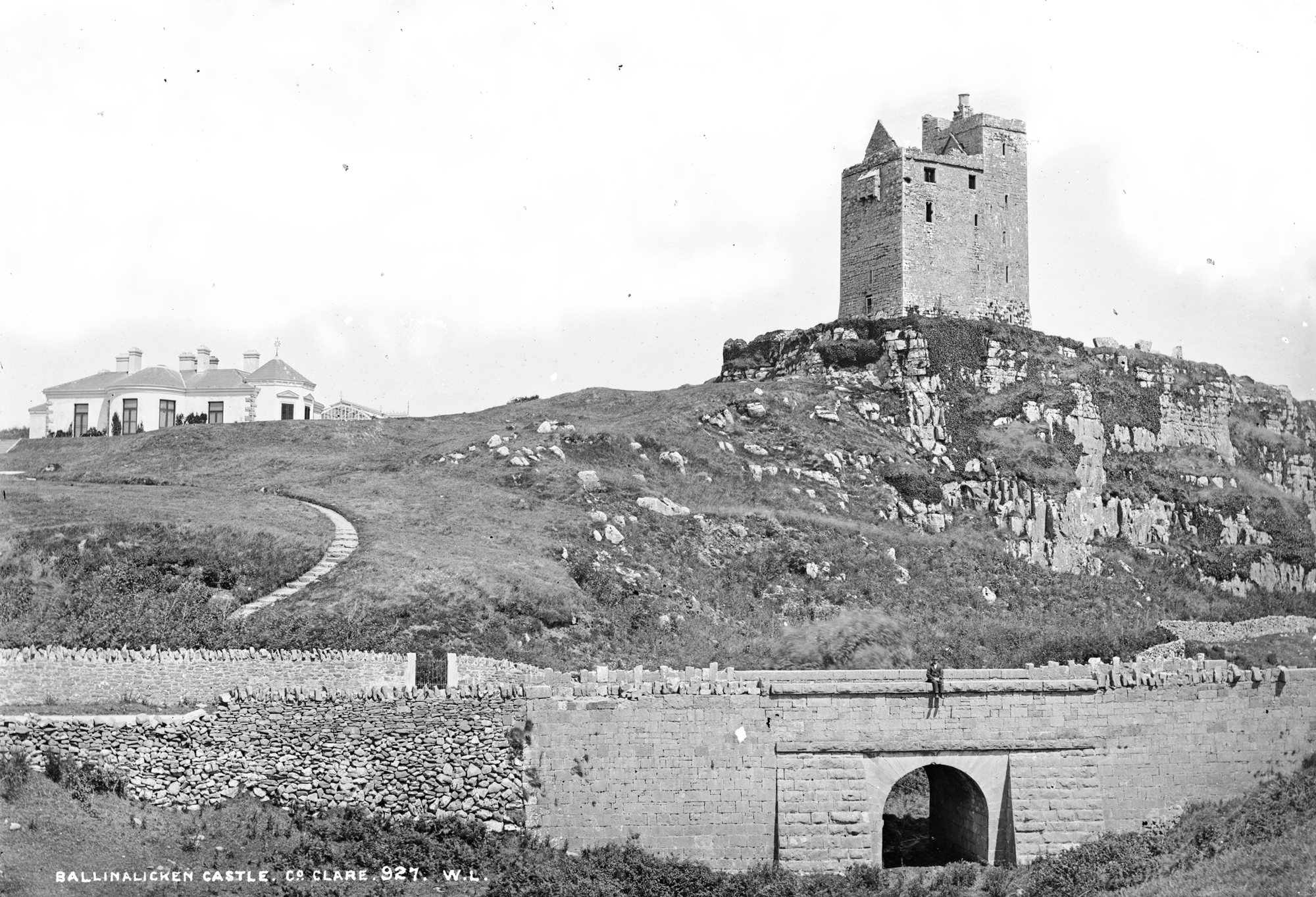


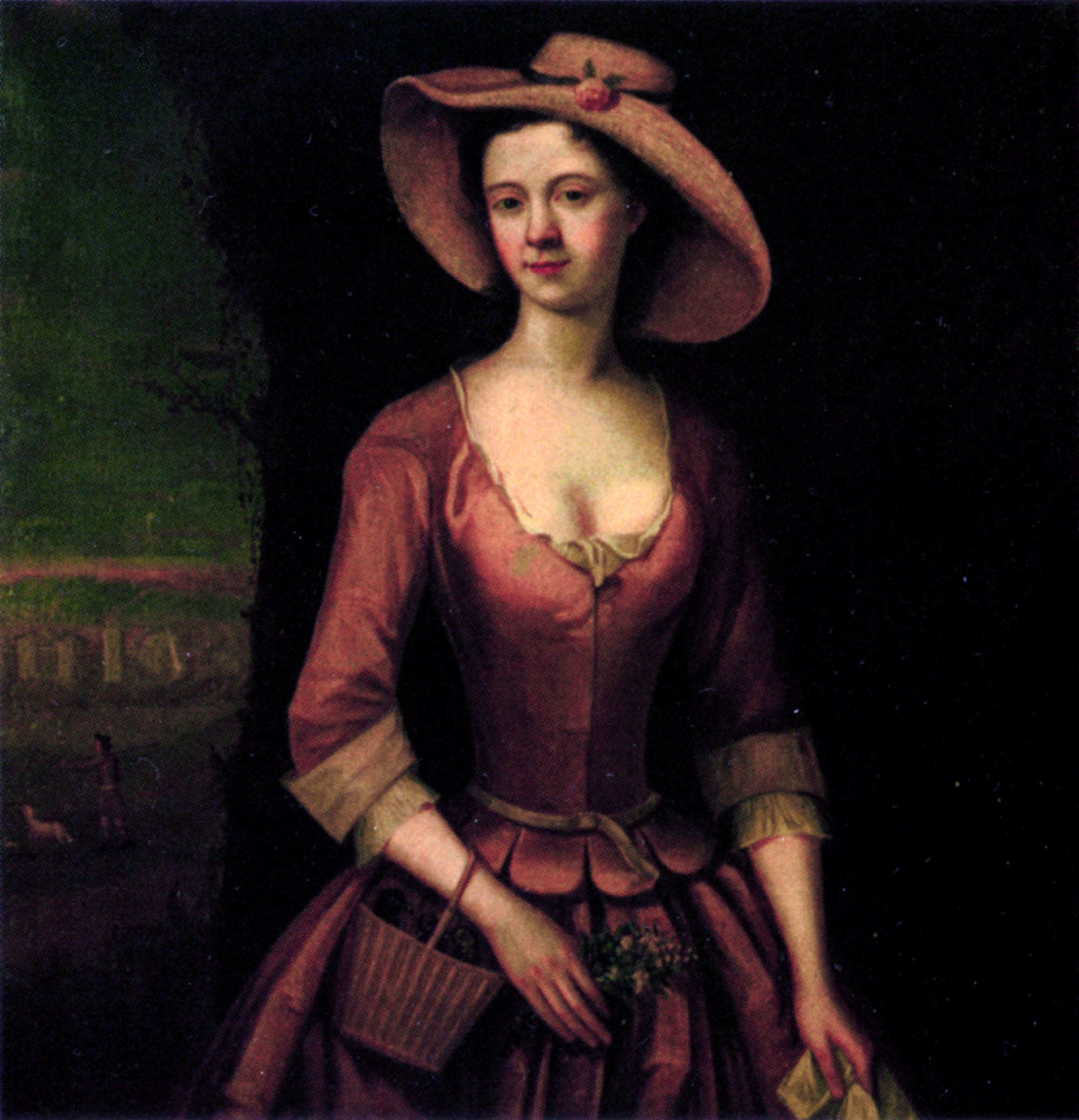
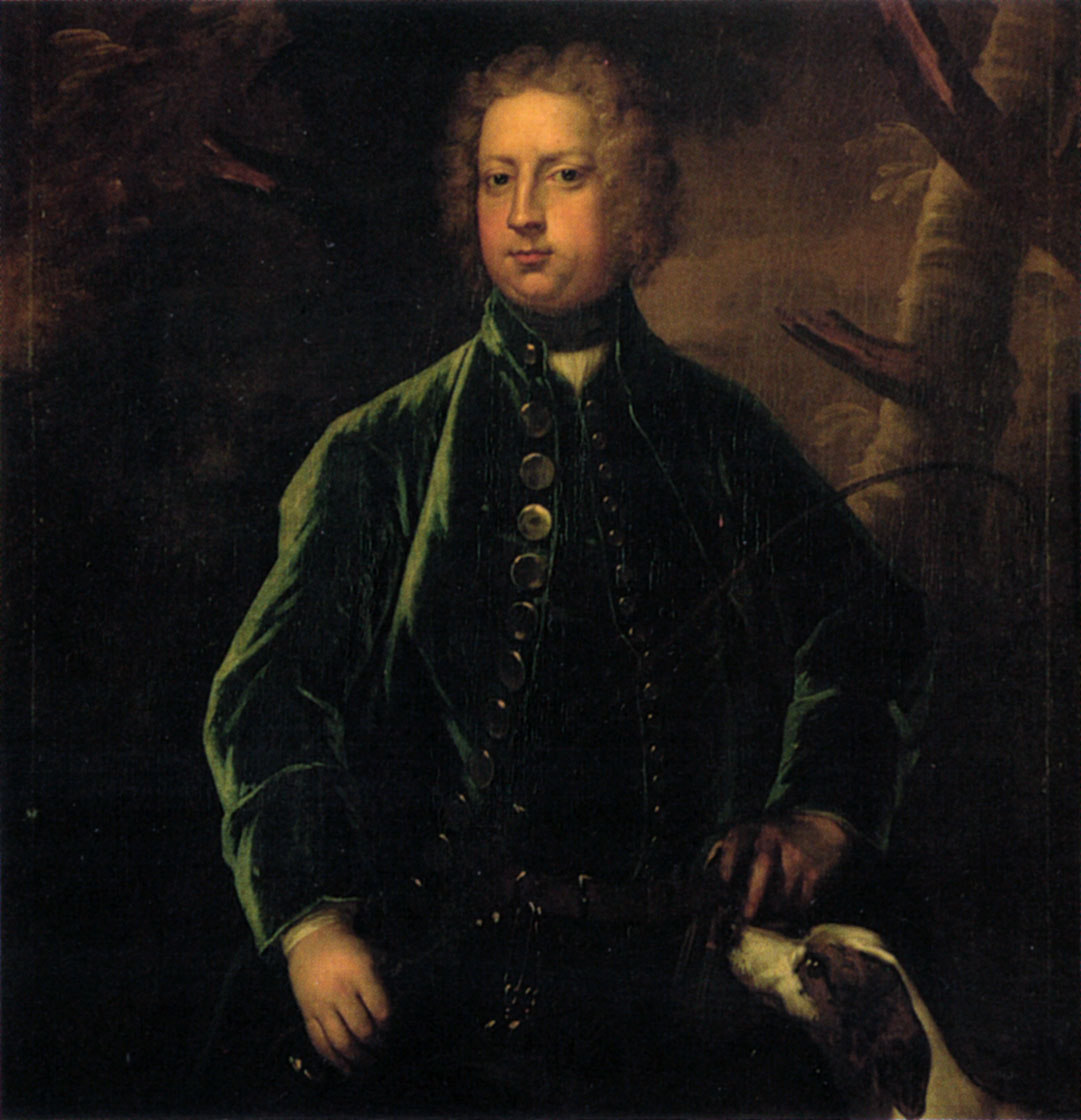
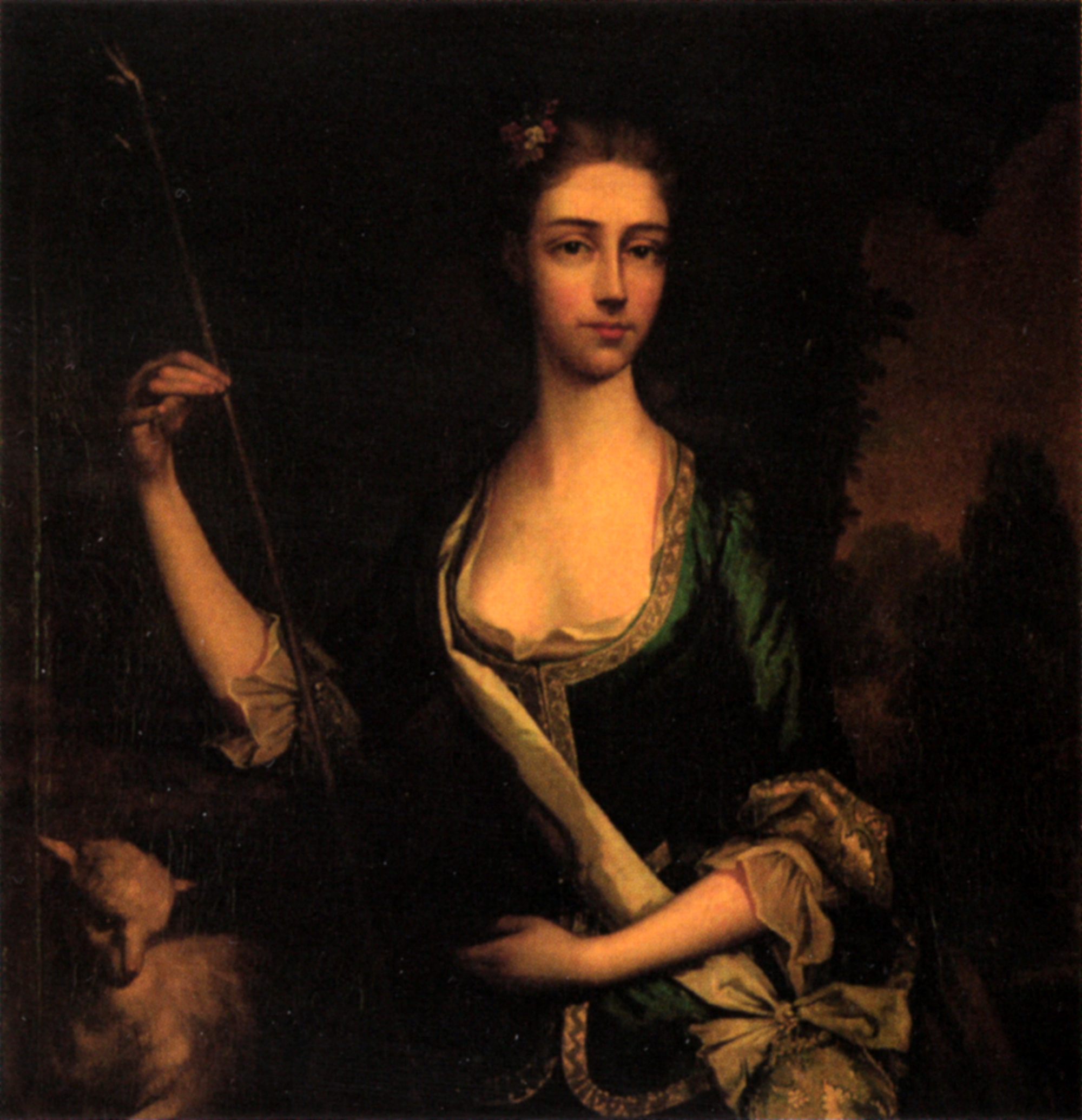
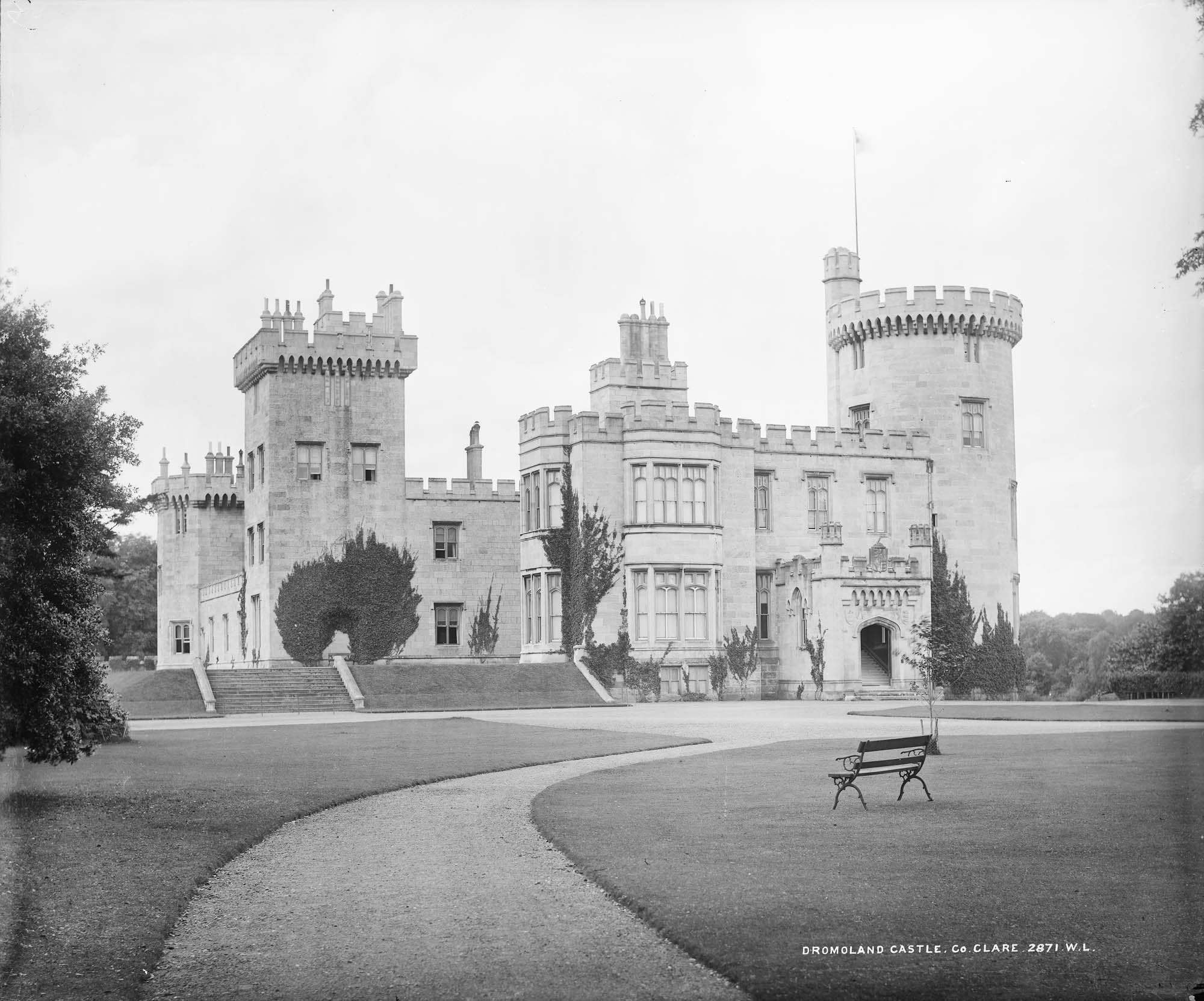
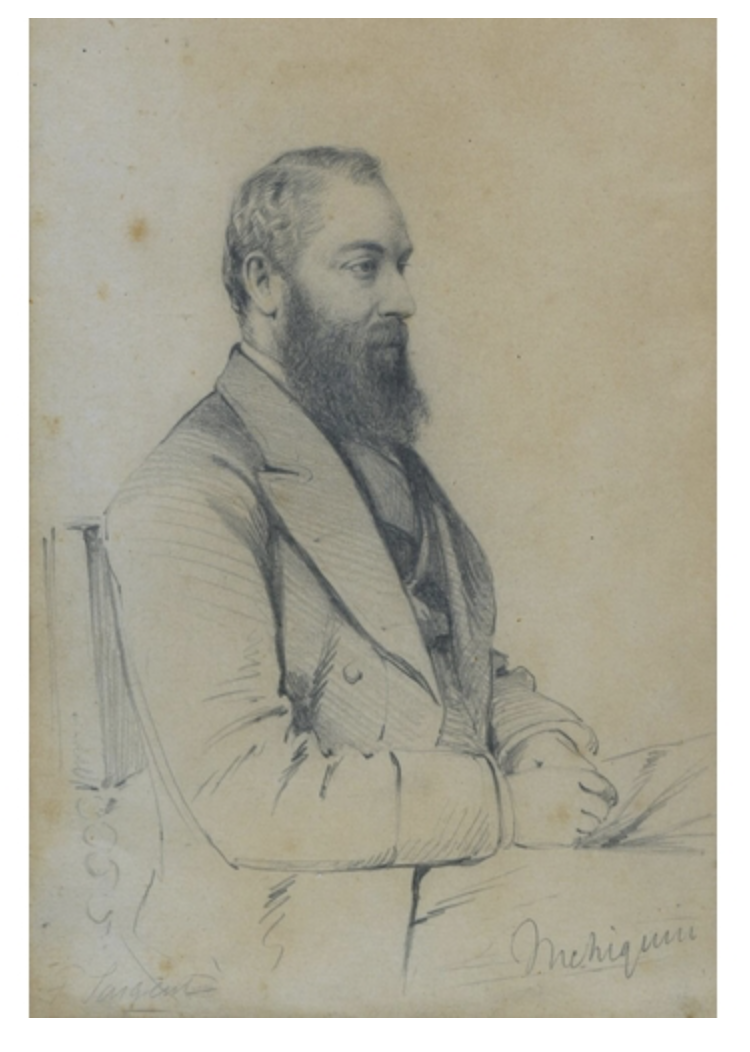
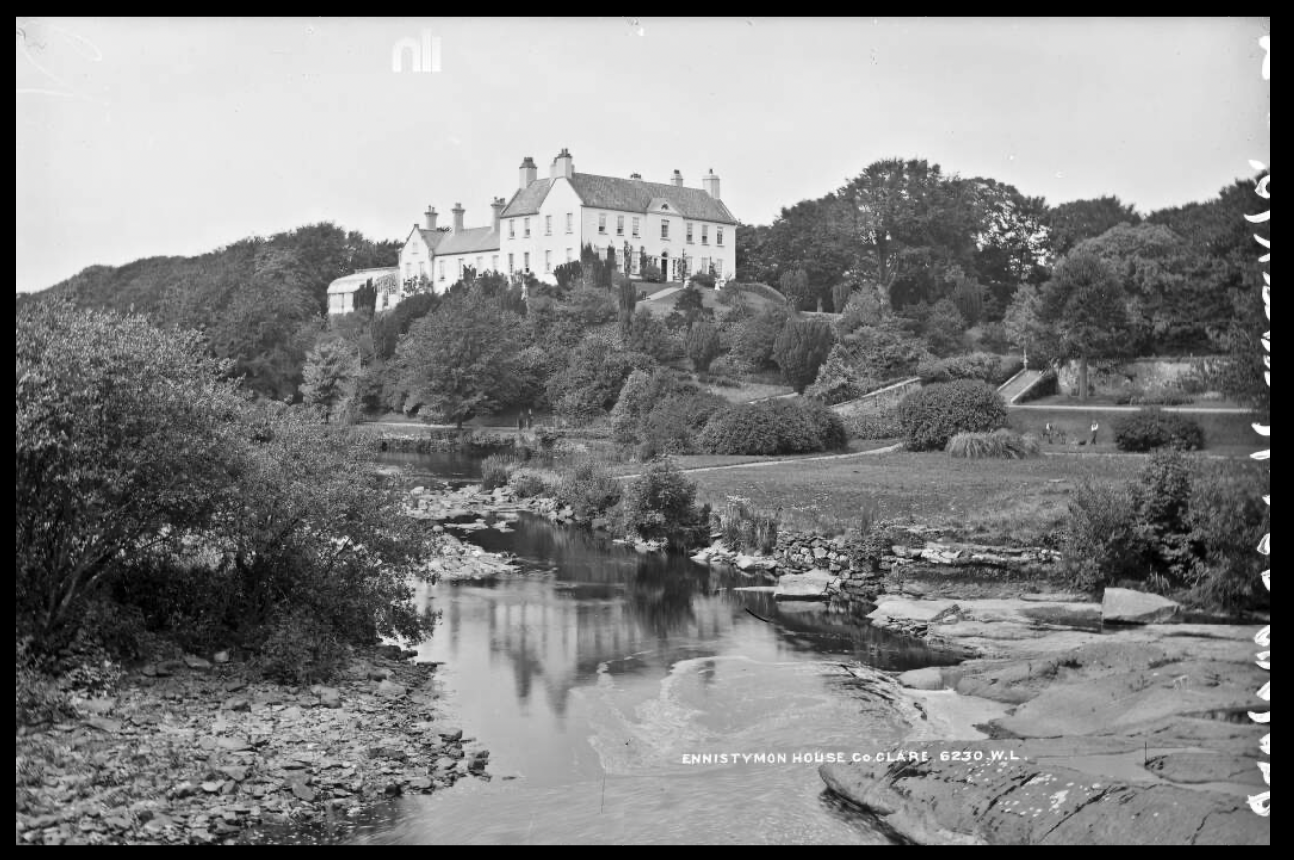
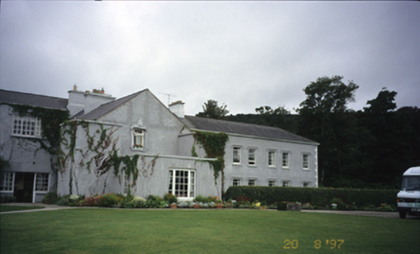

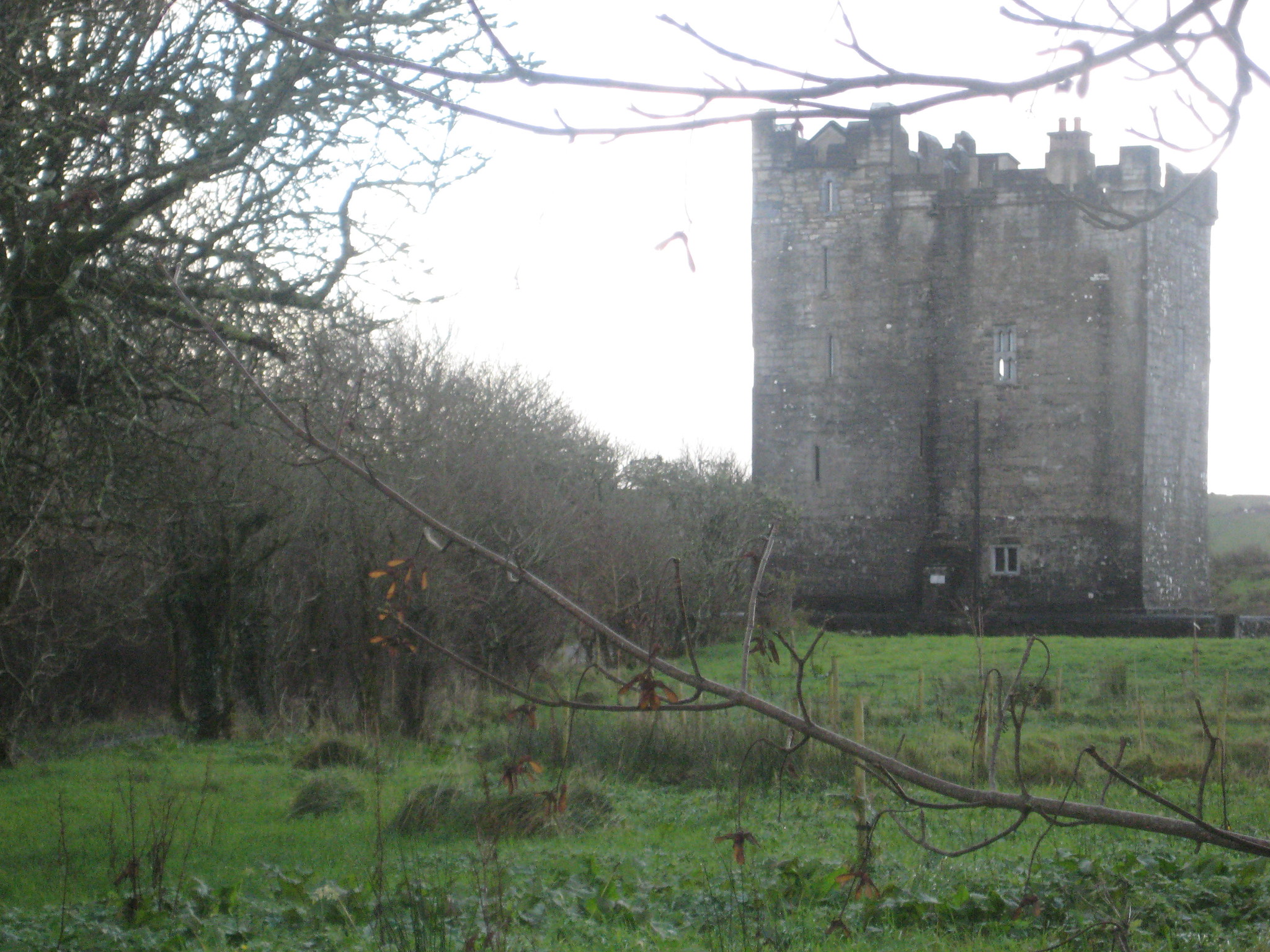

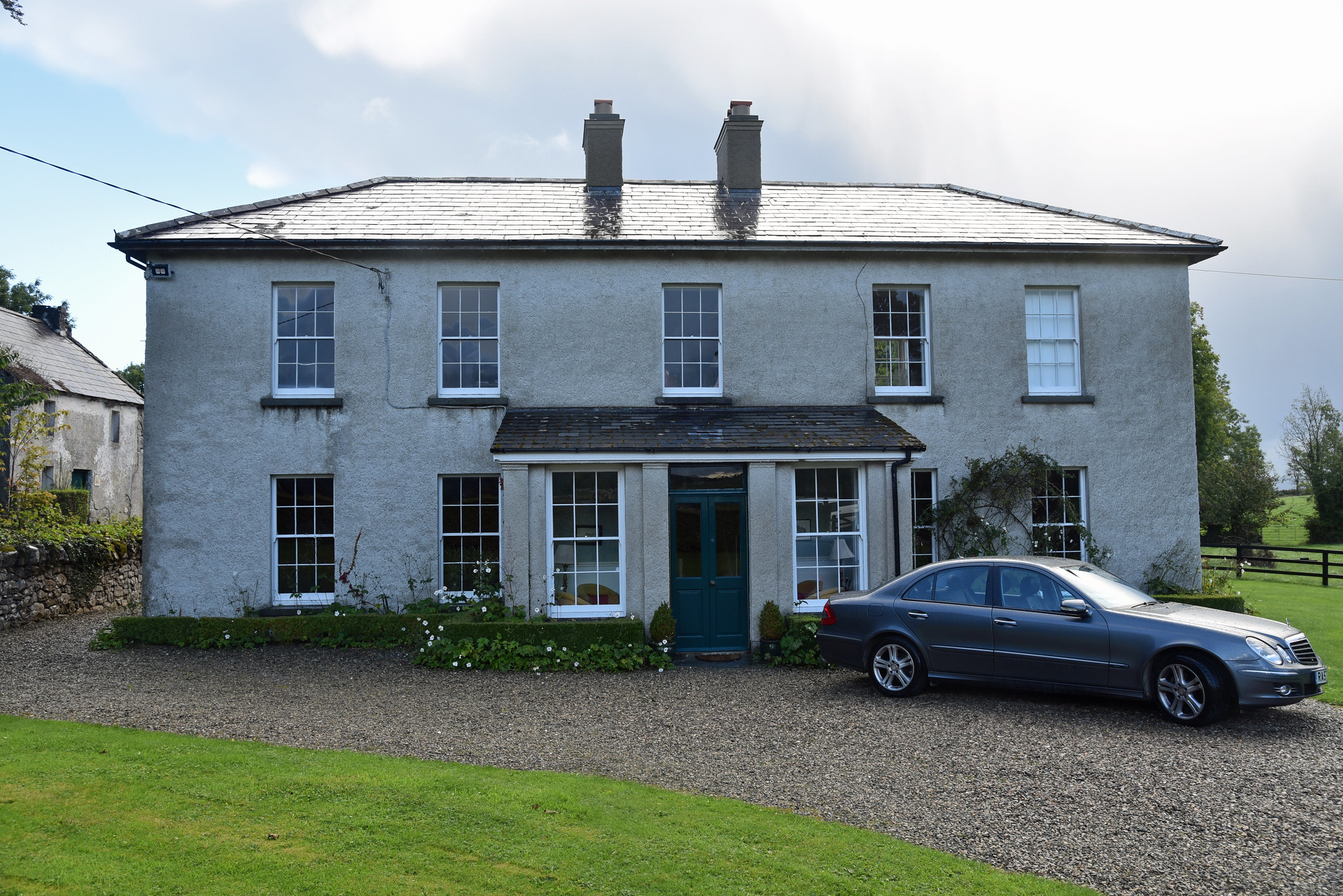
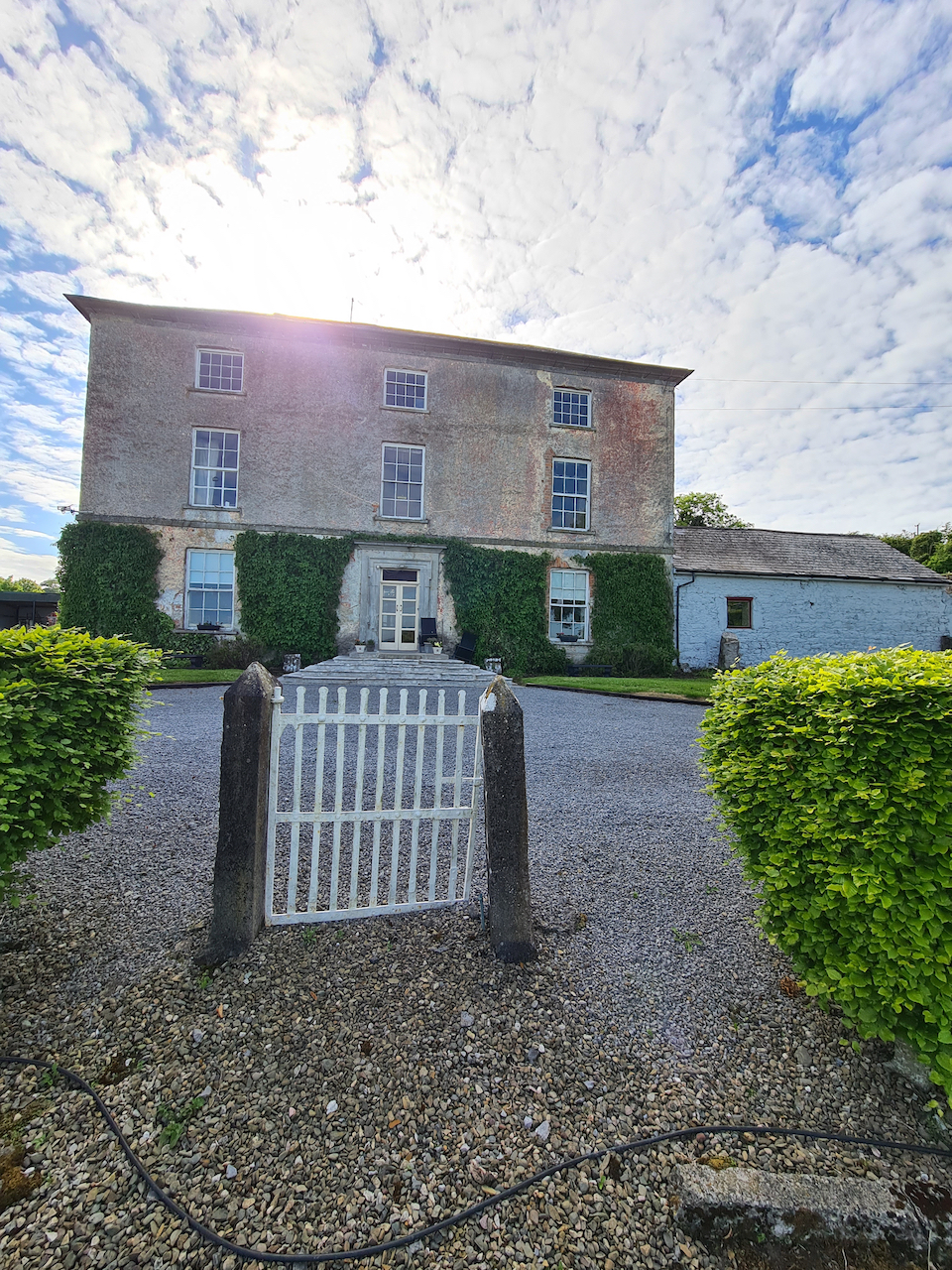
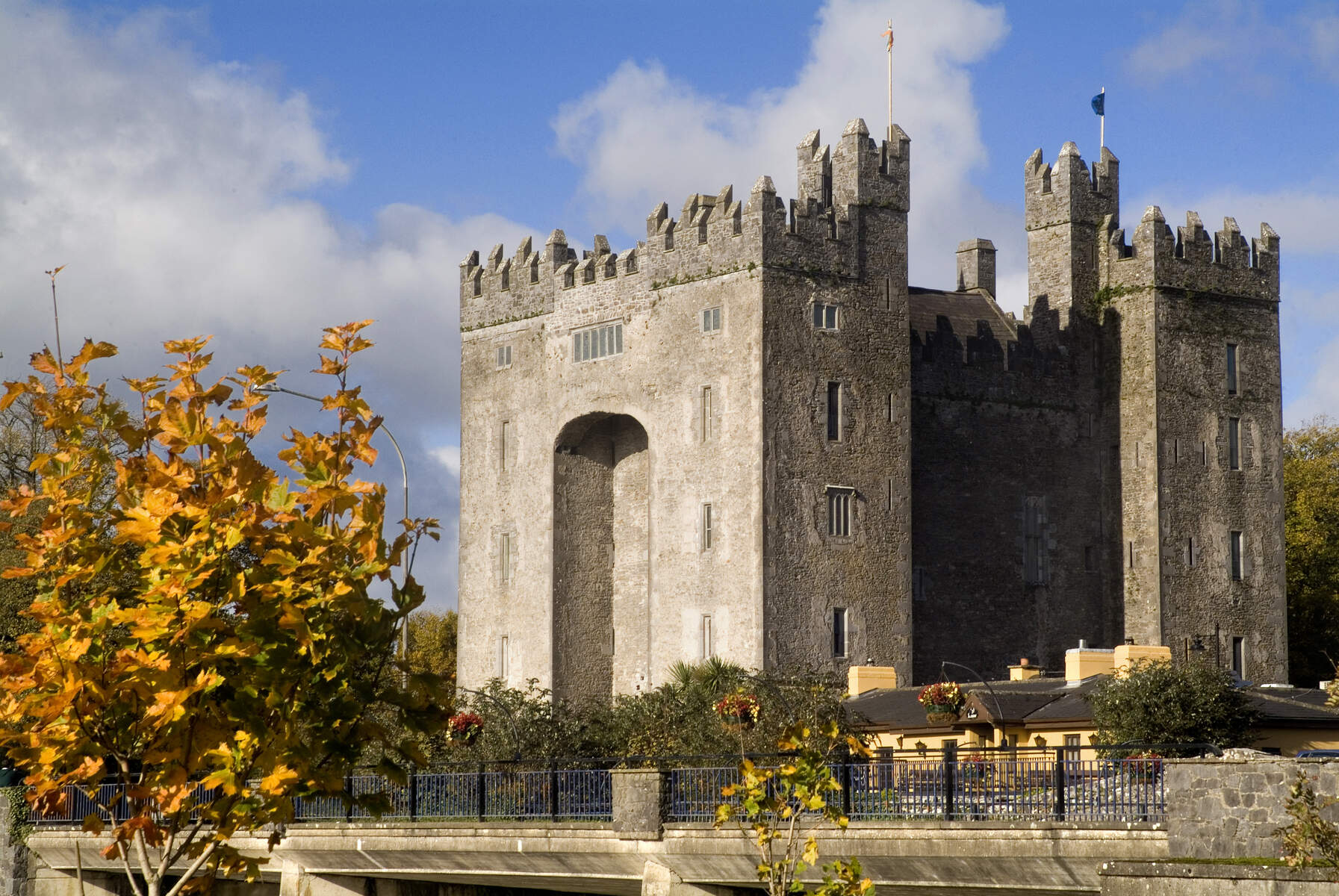
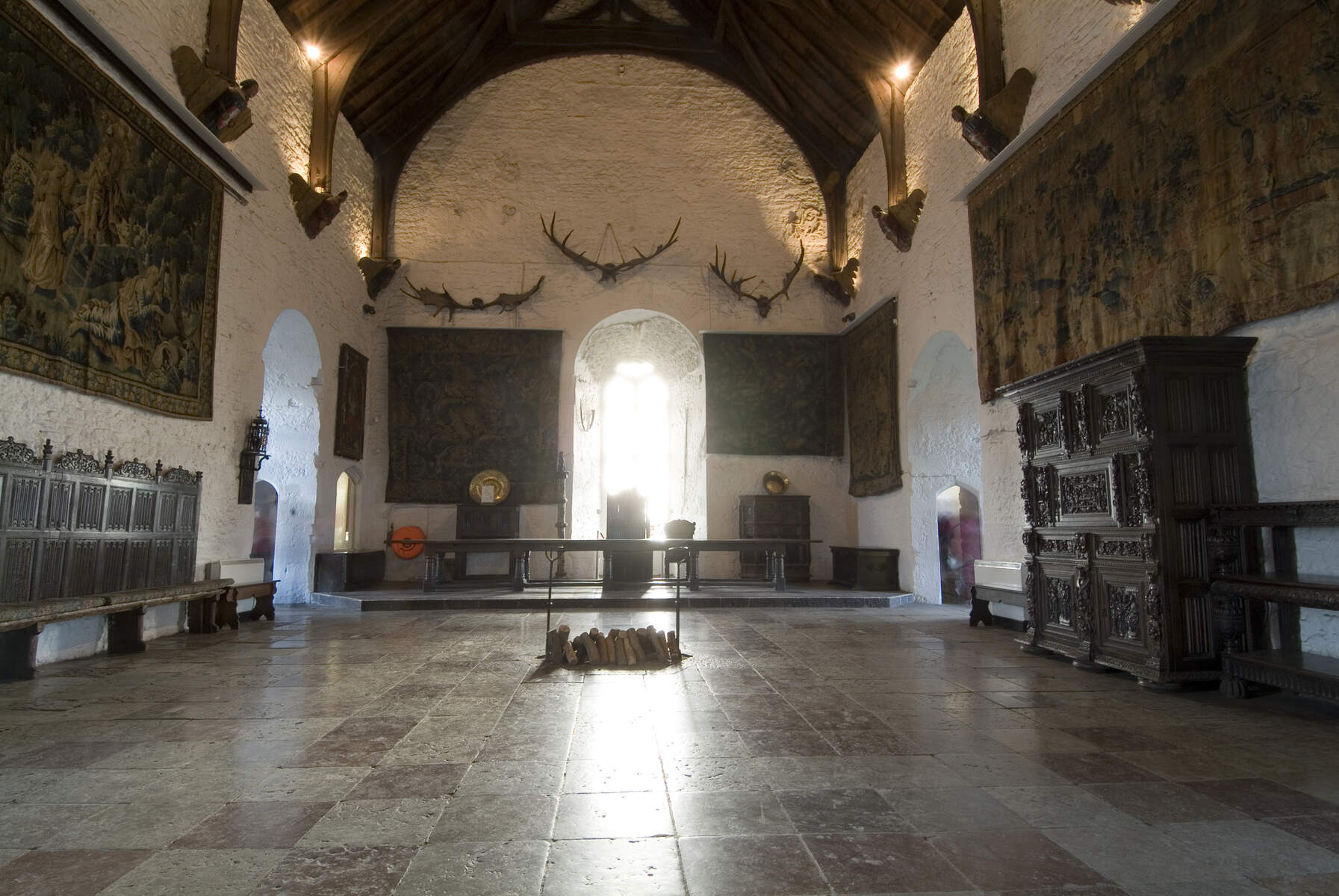

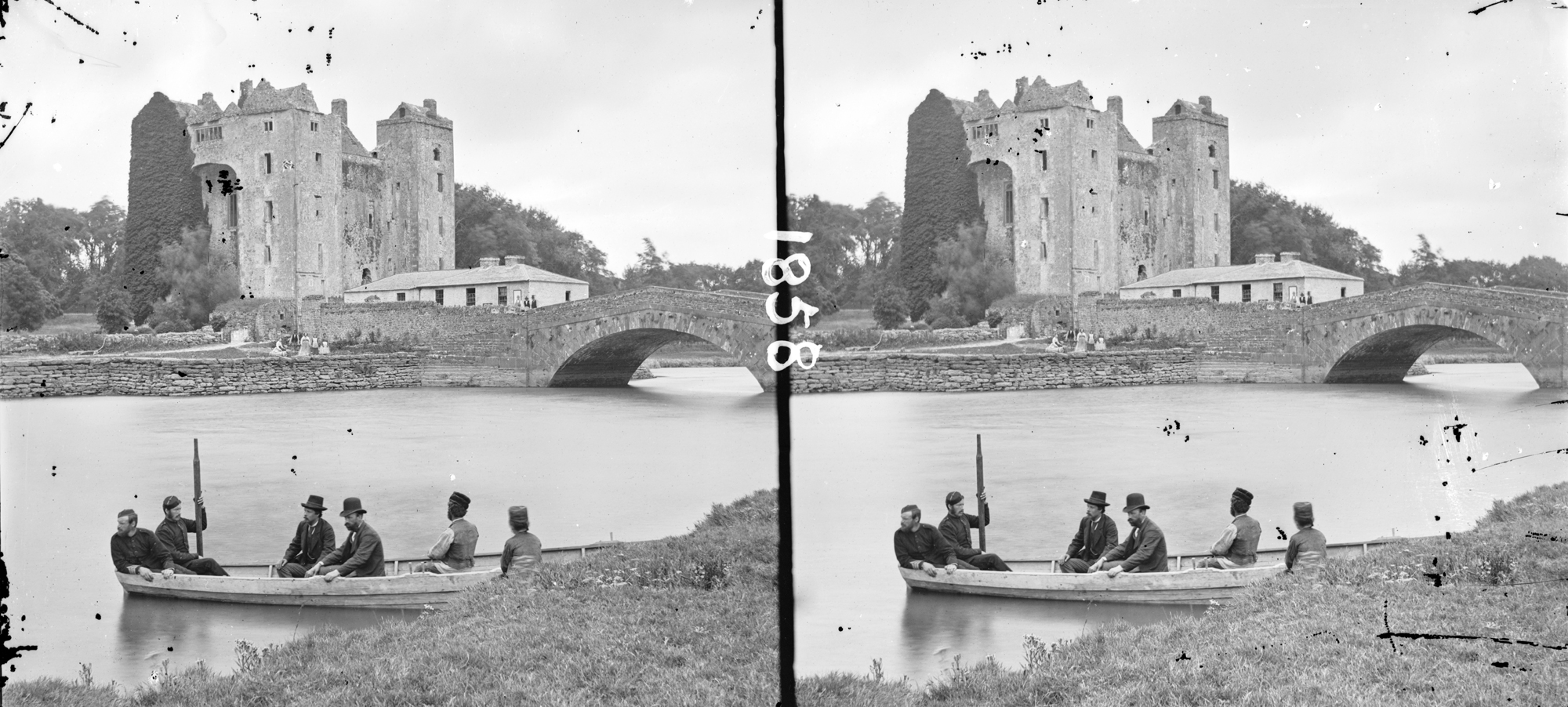
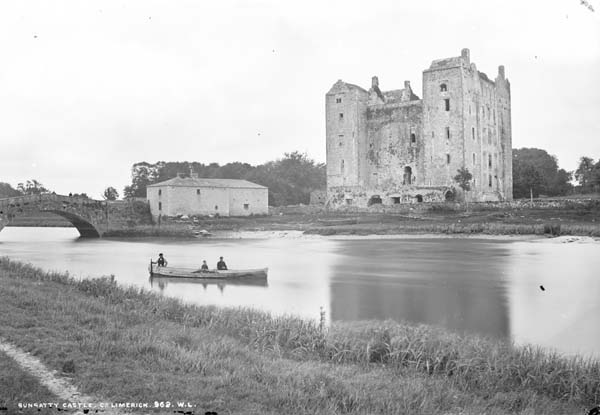
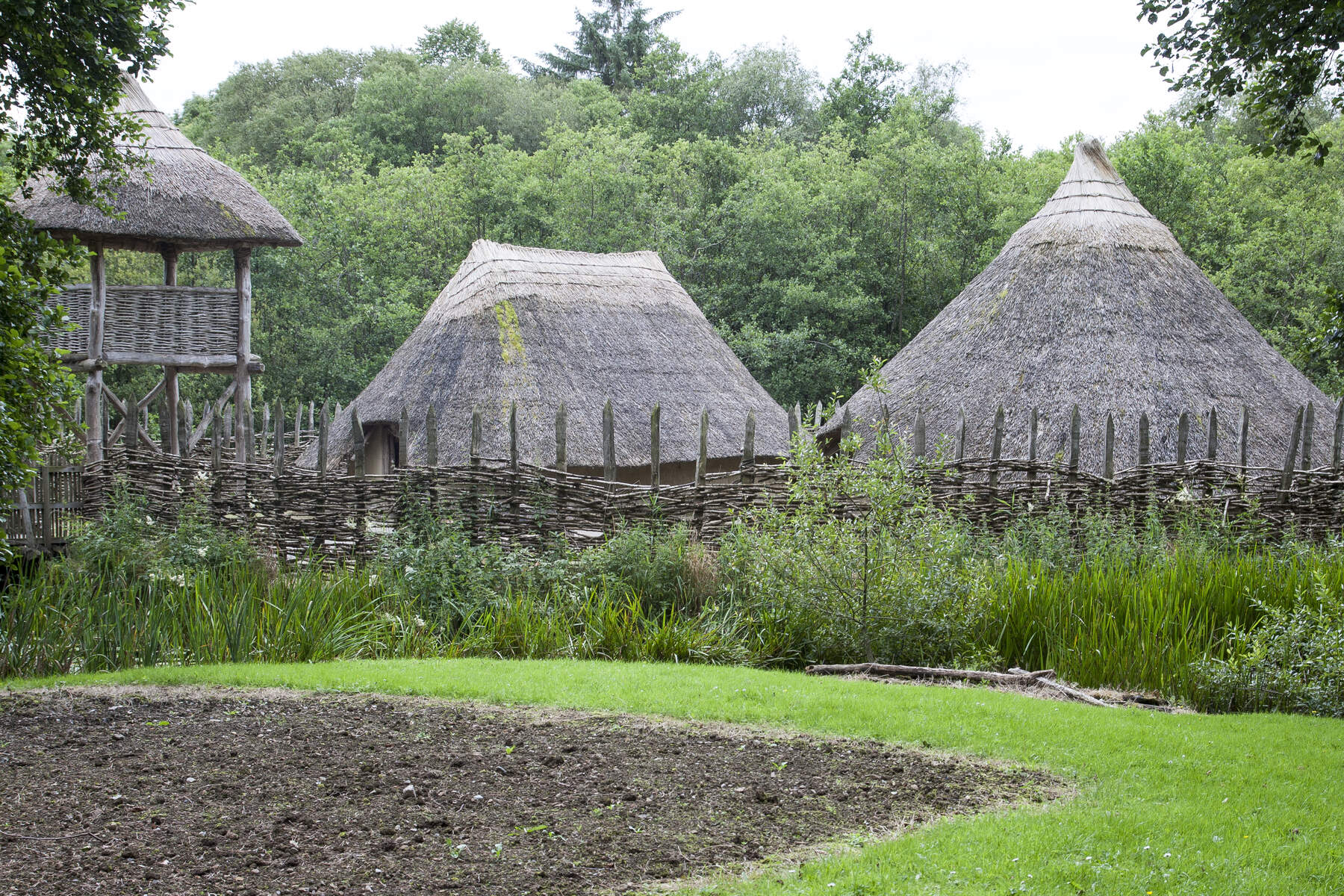


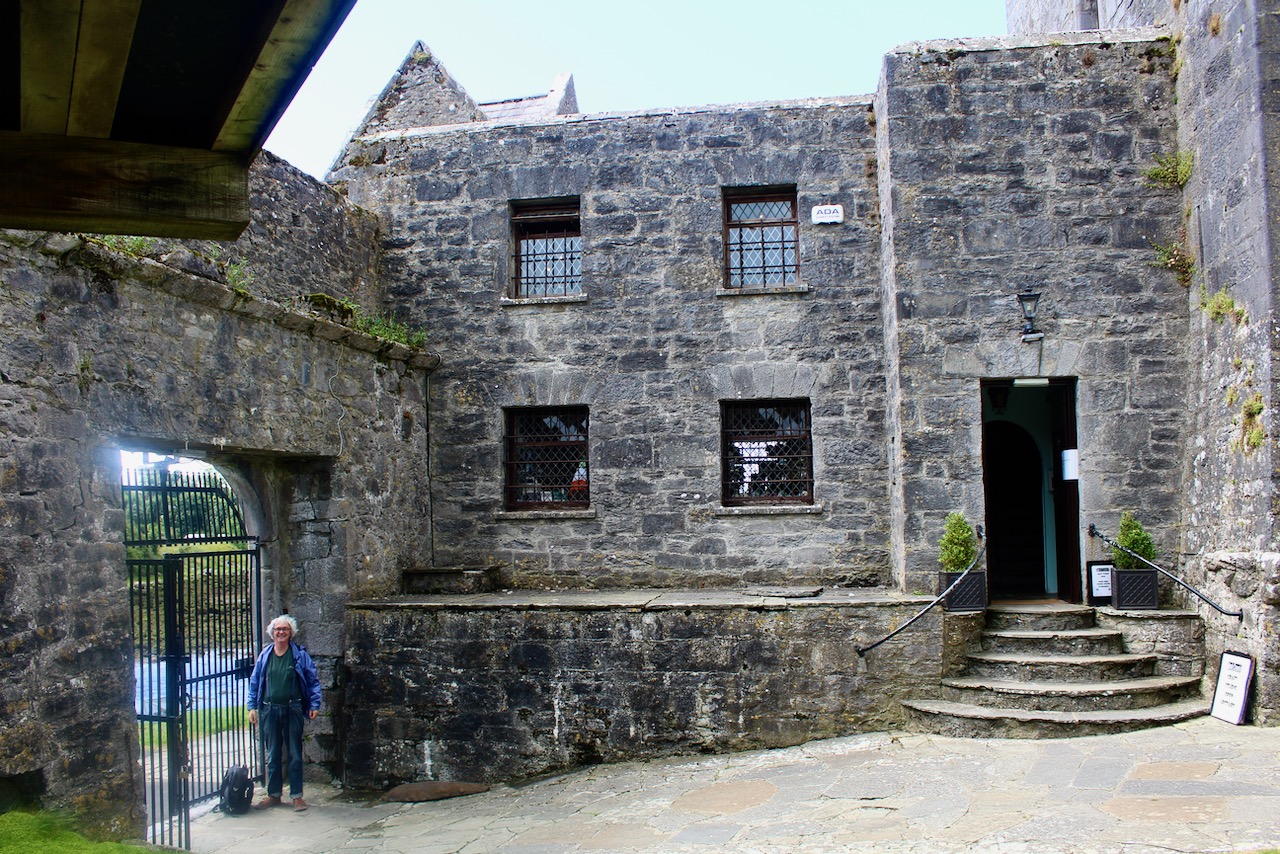
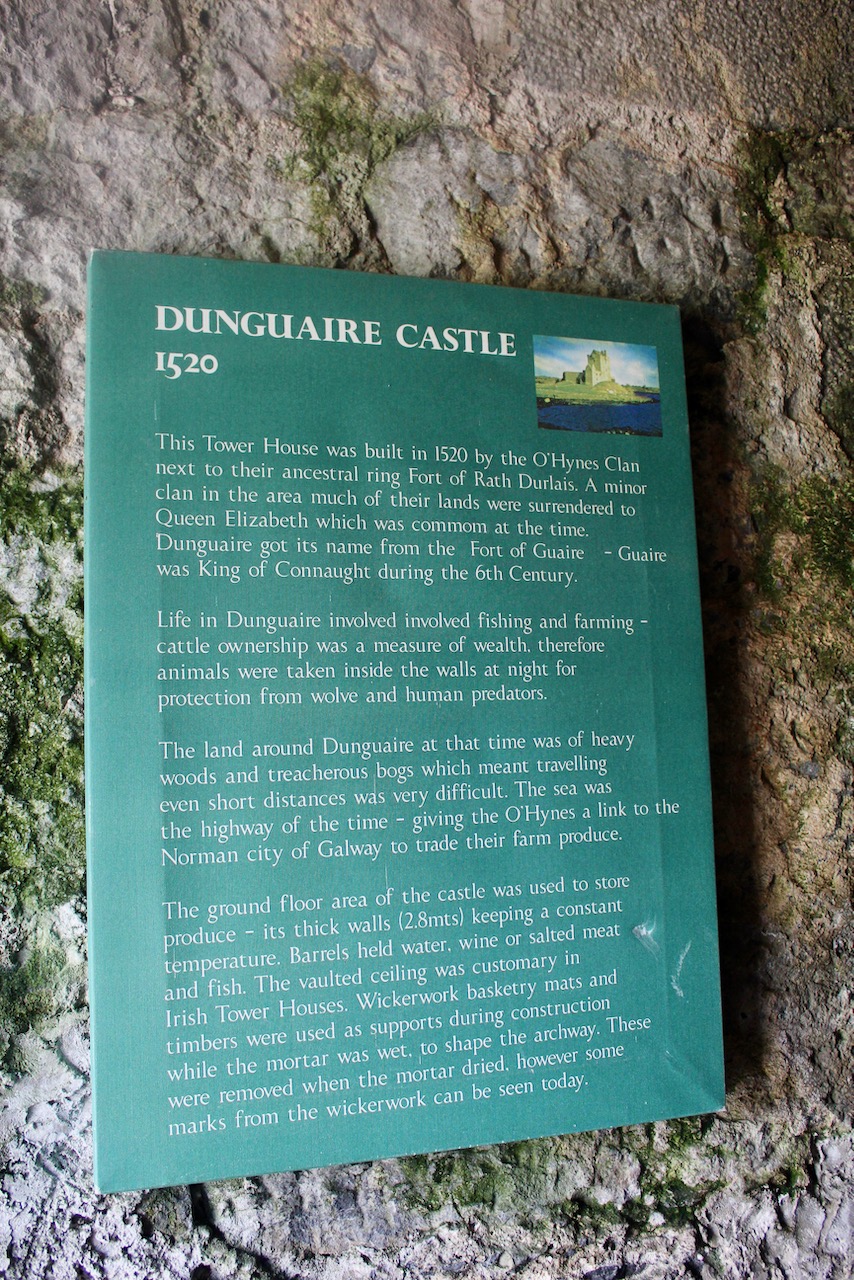



 Irish Historic Houses