Ozier Hill, Taghmon, County Wexford for sale courtesy Colliers
Ozier Hill, Taghmon, County Wexford for sale courtesy Colliers.
Y35 YH76 4 beds3 baths357 m2
Ozier Hill, Taghmon, Co. Wexford, Y35 YH76 with approx. 5.25 ha (13 acres) Description A charming and well-presented period house surrounded by lovely gardens, with adjoining attractive stone courtyard. Stables, hay barn and competition size all weather sand arena with good grazing land in a scenic rural setting. Situated a short distance off the N25 Waterford to Wexford Road the property is approached from the a R738 r via a tree lined avenue that leads to the front of the house.
Ozier Hill, Taghmon, County Wexford for sale courtesy Colliers.Ozier Hill, Taghmon, County Wexford for sale courtesy Colliers.Ozier Hill, Taghmon, County Wexford for sale courtesy Colliers.
The reception rooms and the principal bedrooms are bright and well-proportioned with lovely views across the surrounding gardens. Extensive lawns are bordered by planting that offers a profusion of colour throughout the summer.
Ozier Hill, Taghmon, County Wexford for sale courtesy Colliers.
Location This is a pleasant rural area in which to live with much to offer those interested in country pursuits. There is a choice of hunts locally, as well as equestrian training facilities and competition venues. Golf courses nearby include the championship links course at Rosslare, and salmon fishing can be arranged on the river Slaney and sea fishing from Kilmore Quay. There are excellent sailing and cruising facilities and the sandy beaches of the southeast coast are only 16 km distant. Situated close by is the village of Taghmon, with a choice of shops and a primary national school. The provincial town of Wexford has shopping centres, restaurants, cinemas etc. It also hosts annually the internationally renowned Wexford Festival Opera. Dublin city and airport 156 km, Wexford 14.5 km, Rosslare Harbour with its ferry service to the UK 24km, Kilmore Quay 16km and Taghmon village 1km History Taghmon is in the heart of Norman country, with an abundance of walking trails, Norman castles and monastic ruins dating back to the 12th century. According to an entry in Houses of Wexford, Ozier Hill was originally a farmhouse dating from prior to 1741. It was remodelled in the mid-19th century as a Church of Ireland rectory and retains period features from that time, including an original carved oak fireplace. The present owners carried out renovations in 2004, preserving and enhancing the character of the building.
Ozier Hill, Taghmon, County Wexford for sale courtesy Colliers.Ozier Hill, Taghmon, County Wexford for sale courtesy Colliers.Ozier Hill, Taghmon, County Wexford for sale courtesy Colliers.Ozier Hill, Taghmon, County Wexford for sale courtesy Colliers.Ozier Hill, Taghmon, County Wexford for sale courtesy Colliers.Ozier Hill, Taghmon, County Wexford for sale courtesy Colliers.
Accommodation The entrance/stairs hall with oak flooring extends the full depth of the house and off which all the main rooms radiate. To the right are the bright and spacious interconnecting drawing and dining rooms which overlook the gardens. To the left, the sitting room and the kitchen/breakfast room off which is a utility room, a boot room which in turn opens to a tack room and also to the courtyard.
Upstairs there are four double bedrooms and two bathrooms, with the main bedroom having an ensuite shower room.
Ozier Hill, Taghmon, County Wexford for sale courtesy Colliers.Ozier Hill, Taghmon, County Wexford for sale courtesy Colliers.Ozier Hill, Taghmon, County Wexford for sale courtesy Colliers.Ozier Hill, Taghmon, County Wexford for sale courtesy Colliers.Ozier Hill, Taghmon, County Wexford for sale courtesy Colliers.
There is a further bedroom annexe which could be used as a nursery or spacious dressing room. Full details of the accommodation measurements are shown in the floor plans. Outbuildings The outbuildings include a cut stone courtyard adjoining the house with four loose boxes, two coach houses with overhead loft, garage with an outer yard with four span barn with lean-to and five modern loose boxes. There is also a floodlit competition size all weather arena. The Lands The lands total approximately 5.25 ha (13 acres) of which about 2 acres comprise the house, yard and gardens the remaining 11 acres is level good quality grazing land all in old pasture in six part post and railed divisions.
Ozier Hill, Taghmon, County Wexford for sale courtesy Colliers.Ozier Hill, Taghmon, County Wexford for sale courtesy Colliers.Ozier Hill, Taghmon, County Wexford for sale courtesy Colliers.Ozier Hill, Taghmon, County Wexford for sale courtesy Colliers.
Features
Well presented private period residence. Good quality pastures. Excellent equine facilities.
Ozier Hill, Taghmon, County Wexford for sale courtesy Colliers.
Ozier Hill was originally a farmhouse dating from before 1741. Ozier Hill was remodelled in the mid-19th century as a Church of Ireland rectory.
From the French, the term ‘ozier’ is a variant of the topographic name for someone who lived near a willow tree or willow grove and stems from the Gaulish word ‘osier’ or ‘willow’.
Set within its own copse of specimen trees on a plot of some 13 acres in Taghmon in Co Wexford is Ozier Hill, a charming period home of almost 360 square metres, which has just come to market with Marcus Magnier of Colliers, who is guiding €950,000 for it.
The beautifully presented residence would suit buyers with an equestrian lean given its adjoining attractive stone courtyard and competition-size, all-weather sand arena, which is surrounded by lush gardens and good grazing land.
According to an entry in Houses of Wexford, Ozier Hill was originally a farmhouse dating from before 1741. It was remodelled in the mid-19th century as a Church of Ireland rectory and retains period features from that time, including an original carved oak fireplace. The present owners carried out renovations in 2004, preserving and enhancing the character of the building.
The property is approached from the R738 via a tree-lined avenue that leads to the front of the house.
A black front door opens to a wide and inviting entrance hall with oak floors, coving and ceiling roses and which extends the full depth of the house. All the main reception rooms radiate off that central, spinal hall.
To the right of it are the bright and spacious interconnecting drawing and dining rooms. Decorated in pale cream carpets with tasteful wallpapers, these sophisticated rooms both have open fires with attractive fire surrounds in marble and mahogany and dual aspect sash windows overlooking the gardens.
To the left of the hall, the family sitting room has oak floors, an open fire and decorative ceiling cornicing.
The large, adjacent kitchen/breakfast room has an extensive range of base and wall-mounted, cream, Shaker-style timber units, black granite worktops, the quintessential country kitchen staple – an Aga, this one in duck egg blue, tiled floors and splashbacks, a range of integrated appliances and ample space for a large table adn chairs and a window seat.
Off the kitchen is a utility room with additional fitted storage off it, and a boot room, which opens to a tack room and has access to the courtyard.Upstairs there are four large, luxurious double bedrooms and two bathrooms, with the main bedroom having an en suite shower room. There is a further bedroom annexe which could be used as a nursery or spacious dressing room.Outside, situated a short distance off the N25 Waterford to Wexford Road, Ozier Hill offers extensive lawns bordered by planting that offers a profusion of colour throughout the summer. Its cut stone courtyard adjoining the house has four loose boxes, two coach houses with an overhead loft, a garage with an outer yard with a barn and lean-to and five modern loose boxes. There is also the floodlit, all-weather arena. The house, yard and gardens sit on some two acres of the overall 13, the remaining acreage offering good quality grazing land all in old pasture in six part post and railed divisions.Taghmon is in the heart of Norman country, with an abundance of walking trails, Norman castles and monastic ruins dating back to the 12th century. Taghmon Village has a choice of shops and a primary national school. Wexford town is some 14.5 km away and has shopping centres, restaurants and a choice of facilities. The rural area boasts a choice of equestrian training facilities and competition venues, golf courses, river and sea fishing, sailing facilities and sandy beaches along the southeast coast, which is only 16 km away. Dublin city and airport are 156 km away. Services include mains electricity, high speed broadband, well water, oil fired central heating and septic tank drainage. For more details contact Colliers director, Marcus Magnier, at 01-6333700
Raffeen, Scilly, Kinsale, County Cork was sold in 2024 for €4.75 million by Colliers
P17K529 5 beds3 baths
Raffeen is an iconic property, a distinguished early 18th Century private residence, situated in the most sought-after area of Kinsale, Scilly. The house is literally on the waterfront, enjoying a southerly aspect overlooking magical seaside town of Kinsale. The property includes a large two storey boat house, manicured gardens and direct water access. The gardens lead down, via beautiful stone steps, to a private floating pontoon. It has unrestricted water access and also enjoys a mooring buoy located on the waterfront. Raffeen is an idyllic family home where classic Georgian elegance meets modern day comfort and convenience. The houses exudes character and has a lovely energy, enhanced by its south- facing aspect, water frontage and exceptionally high 4m ceilings. At all times the house feels light and bright thanks to its high Georgian windows. It has been meticulously refurbished by its current owners who were at all times very conscious of preserving the integrity of the home, mindful that they were caretakers of this unique landmark property for future generations. This house is in turn key condition. It is a dynamic house- being both a very comfortable and private family home and also perfect for entertaining. It enables living literally “pieds dans l’eau” in the rich natural and historical heritage of Kinsale. On its doorstep is the beautiful Scilly Walk leading to Summercove, Charles Fort and beyond. Cork airport is a 20 minute drive with no traffic lights or roundabouts along the route! The house has remained in private ownership and appears to have had only two owners since the 1900’s, being the Dorman Family, up to the purchase by the current owners in 2013. When purchased the house had become a protected structure within the Cork County Council Record of Protected Structures. The house required major restoration and modernisation to bring the accommodation and services up to modern day standards. The restoration and modernisation were conducted under the careful management of the current owners in conjunction with their architects and in compliance with the appropriate planning permission as required for a protected structure. Planning permission exists for the renovation and change of use of the boat house. To truly appreciate the wonder of Raffeen and its waterside location it is highly recommended to visit. HISTORY A map dating c1841-42 displays a residence on the site currently occupied by the house. It is likely the original house has been modified and from the original “T” plan with additions during the latter part of the 19th Century The peninsula known as Scilly, where the house is located is presumed to have derived its name from fishermen who settled here from the Scilly Isles off the South western tip of Cornwall in the UK.
Features
Maticulously renovated period house Gracious family house Private Garden Outstanding views over Kinsale Harbour Waterside with private pontoon jetty Boat House with planning to convert to residential accommodation Superb location close to Kinsale Easy access, Cork international Airport Kinsale, Gourmet capital of Ireland Outstanding Sailing Region https://michaelhdaniels.com/property_images/MD_Raffeen%20House%20v2.pdf
Mamree Lodge in Inistioge, Co Kilkenny, a completely renovated period house in a very pretty setting, had three cash bidders and sold in early 2022
Mamree Lodge, Inistioge, Co. Kilkenny for sale courtesy Savills
R95 Y2Y2 5 beds3 baths380 m2
A delightful Georgian House set on the banks of the River Nore Mamree Lodge is a beautifully restored Georgian house situated in a private setting on the banks of the River Nore and extending to about 4.5 acres. Previously described in The Irish Times as “the perfect Irish country house”, it has been expertly restored, retaining many notable period features both internally and externally, to provide comfortable accommodation for contemporary living standards. The property is accessed via an impressive stone-pillard entrance with cast iron electric gates and is approached along a sweeping gravel driveway, flanked by mature trees, which leads to the rear of the house where there is ample parking. Emulating the Georgian era, the property is set over two floors and extends to approximately 4,090 square feet. It is of generous and elegant proportions and well laid out for family living and formal entertaining. The accommodation is entered through a main entrance hall, which leads to the interconnecting drawing room and music room. Both rooms feature polished French oak flooring and ornate plasterwork on the ceilings. The Clive Christian-designed kitchen is a particular feature and comprises beautiful marble and mahogany worktops as well a wonderfully crafted and extensive range of floor and wall mounted units. It is an extremely bright and airy room which includes French doors that open onto the garden. The dining room is accessed via double doors in the kitchen and is a great room for entertaining. It includes panel walls, a ceiling rose, stylish cornicing and beautiful sash windows. The first floor is accessed via a delightful wooden staircase that leads onto the landing overlooking the picturesque views of the gardens and the River Nore. The bedroom accommodation is laid out here and comprises five bedrooms (two en suite). The master bedroom suite is a bright and spacious room and includes an extensive bathroom with a free standing, roll-top bath. GUEST HOUSE Situated to the rear of the property is a spacious one-bedroom guest house extending to approximately 1,173 square feet. The cleverly designed accommodation contains a kitchen/living room, bedroom, shower room, loft and garage/store. The loft is of a good size and could be used as a home office or gym. GARDENS & GROUNDS Mamree Lodge sits amidst established landscaped garden grounds which are predominantly laid to lawn. They form a beautiful parkland setting and include some outstanding specimen trees, which provide colour as well as shelter and privacy. There are a number of flowerbeds at the front of the house with many flowering plants and shrubs. The garden extends all the way down to the River Nore and is a delightful spot to enjoy the tranquillity of the surrounding area with an outstanding outlook onto the river. There is a charming summer house. Viewings Strictly by appointment by Savills Country, 33 Molesworth Street, Dublin 2. Tel: +353 (0) 1 663 4350 PSRA License: 002223 Fixtures & Fittings All fixtures and fittings are excluded from the sale including garden statuary, light fittings, and other removable fittings, although some items may be available by separate negotiation. Services Mains water, septic tank, oil-fired central heating and broadband. Please be advised that the selling agents have not checked the services and any purchaser should satisfy themselves with the availability and adequacy of all services. Entry & Possession Entry is by agreement with vacant possession.
Newhaggard House in Trim, Co Meath, photograph courtesy Sherry Fitzgerald, April 2023.
Newhaggard House in Trim, Co Meath, which is on the market for €1.95 million
As though plucked from the scene of a period drama, the splendid Newhaggard House estate on the banks of the River Boyne in Trim, Co Meath, comes with 39 acres of paddocks, a pretty stable block and the ruins of a four-storey ancient tower house.
Newhaggard House in Trim, Co Meath, photograph courtesy Sherry Fitzgerald, April 2023.Newhaggard House in Trim, Co Meath, photograph courtesy Sherry Fitzgerald, April 2023.Newhaggard House in Trim, Co Meath, photograph courtesy Sherry Fitzgerald, April 2023.
The two-storey, over-basement Georgian residence extends to a whopping 525 square metres and offers elegant reception rooms, five bedrooms, a wine cellar, games room and that 21st century essential – a home office.
The property has just been brought to the market by Sherry FitzGerald Country Homes and is guiding €1.95 million.
Newhaggard House in Trim, Co Meath, photograph courtesy Sherry Fitzgerald, April 2023.
Built in about 1780, Newhaggard House exemplifies true Georgian style and has been well maintained over time. The graceful reception rooms have perfect period era proportions, with high ceilings on the ground floor and tall windows to let in maximum light.
The estate is entered via a private, sweeping driveway which culminates in a turning circle to a parking area. The ample tarmac drive is bordered with ornate iron railings, and leads to the gardens.
A large, gravelled parking area at the front of the house leads to a short flight of stone steps rising to a carved stone doorcase with Ionic columns set around a soft pink period front door with a detailed fanlight.
This opens to a wide, L-shaped entrance hall with polished stone floor tiles and a typical Georgian arch, beyond which the tiles give way to wide-plank timber floors and a feature staircase.
The space has high ceilings, panelling, cornicing, architraves and generous proportions and opens to a family room and drawing room at the front of the house on either side of the entrance, both with shuttered sash windows and impressive fireplaces. The snug family room has a biscuit coloured carpet, while the large, dual aspect drawing room boasts original timber floors.
Newhaggard House in Trim, Co Meath, photograph courtesy Sherry Fitzgerald, April 2023.Newhaggard House in Trim, Co Meath, photograph courtesy Sherry Fitzgerald, April 2023.
With similar proportions but from the rear of the house, the dual aspect dining room has another ornate fireplace, timber floors and four tall, shuttered sash windows.
Newhaggard House in Trim, Co Meath, photograph courtesy Sherry Fitzgerald, April 2023.
A generous kitchen beside it is similarly dressed and has fitted modern, Shaker-style base and wall-mounted units in palest green and cream, polished granite worktops, a Rayburn range, and an adjacent utility space, WC and cloakroom.
Newhaggard House in Trim, Co Meath, photograph courtesy Sherry Fitzgerald, April 2023.Newhaggard House in Trim, Co Meath: The two-storey, over-basement Georgian residence extends to 525 square metres and offers elegant reception rooms, five bedrooms, a wine cellar, games room and a home office. Pictures: Eamonn Gosling, Business Post.
From the hallway, the grand staircase with its arched sash window leads upstairs where there are two large principal suites, both with an adjoining bathroom, and three further double bedrooms, all generous in size and with excellent views over the estate.
Newhaggard House in Trim, Co Meath, photograph courtesy Sherry Fitzgerald, April 2023.
The same staircase leads down to the basement, where there is access to the stables, located on the left side of the house. The basement offers ample, flexible space for a variety of uses. The space is currently used as a tack room, wine cellar, games room and for storage.
Newhaggard House in Trim, Co Meath, photograph courtesy Sherry Fitzgerald, April 2023.
Outside, the house is surrounded by manicured lawns and mature planting which rolls down to the banks of the River Boyne. The wider grounds are surrounded by mature hedging and trees.
There is a generous stone-slabbed patio garden at the kitchen side of the house, which overlooks the paddock that retains the ruins of the ancient castle tower house on the south bank of the River Boyne.
Newhaggard House in Trim, Co Meath, photograph courtesy Sherry Fitzgerald, April 2023.Newhaggard House in Trim, Co Meath, photograph courtesy Sherry Fitzgerald, April 2023.Newhaggard House in Trim, Co Meath, photograph courtesy Sherry Fitzgerald, April 2023.
The outbuildings, including the stone stable block with eight old-fashioned stables, are on the opposite side, to the left of the entrance of the house.
Newhaggard’s listed castle once belonged to the estate of Mary Newgent, according to the Civil Survey (1654-1656), which spanned 199 acres at the time and incorporated two mills, an orchard and some small cabins. Newhaggard House was constructed in 1780 as the miller’s residence.
The estate is 2km from the thriving market town of Trim. Nearby Navan has good shopping facilities, while larger shopping centres at Blanchardstown and Liffey Valley are within easy reach.
There is a good choice in both Trim and Navan of a number of private schools within a 40-minute drive.
Co Meath is home to Fairyhouse Racecourse, Navan Racecourse, Bellewstown Racecourse and Tattersalls Ireland. Golf enthusiasts can enjoy a number of courses close by, including Royal Tara Golf Course, Knightsbrook Golf and Leisure Centre and the famous Killeen Castle, home of the Solheim Cup 2011.
Newhaggard House is on the market guiding €1.95 million with Philip Guckian of Sherry FitzGerald Country Homes at 01-2376308.
Mark Bence-Jones. A Guide to Irish Country Houses (originally published as Burke’s Guide to Country Houses volume 1 Ireland by Burke’s Peerage Ltd. 1978); Revised edition 1988 Constable and Company Ltd, London.
p. 284. “(Drought/LGI1958) A two storey three bay gable-ended C18 house with a one bay extension of the same height on the left and a slightly lower one bay extension on the right. Round-headed doorway. Gothic tower, probably late C18, on fornt of stables. Fine Classical gate piers with swag friezes.”
Detached four-bay two-storey over basement country house, built c.1760, with outbuildings to rear. Set within its own grounds. Pitched slate roof with terracotta ridge tiles, rendered chimneystack with terracotta pots, cast-iron rainwater goods and tooled stone coping to gables. Roughcast render to walls. Timber sash windows and stone sills to all elevations and oculi to front and rear elevations. Main entrance with round-headed door opening with timber panelled double doors flanked by tooled limestone engaged Doric columns surmounted by petal fanlight. Door accessed by flight of punch-dressed limestone steps flanked by with low sweeping walls. Wrought-iron bootscraper to base of steps. Round-headed door opening to rear site with fanlight and timber panelled door with stone threshold. Multiple-bay two-storey stables to rear site with pitched slate roof and random coursed stone walls. Timber lintels to square-headed door and window openings and timber battened doors. Main entrance with square-profile gate piers of channelled limestone with carved stone swags to frieze surmounted by cornice and capping stone with flanking quadrant walls and wrought-iron gates.
Whigsborough House overlooks a sloping lawn. In excellent condition, this house portrays some interesting architectural details. A round-headed doorway with a petal fanlight and six-over-six sash windows are two items of significance. Accompanying this house is a wide range of outbuildings, including stables, gardener’s sheds and a walled garden with thick buttressed walls and a tower or folly façade overlooking front lawn. Without a doubt, Whigsborough House makes a positive architectural impact on County Offaly.
Gothic style tower façade, erected c.1770, abutting outbuilding and walled garden to north, situated within the grounds of Whigsborough House. Random coursed stone wall to tower with crenellated parapet and pointed-arched window opening with tooled stone tracery. Wall much overgrown with ivy. Outbuilding to north with pitched slate roof with terracotta ridge tiles and cast-iron rainwater goods. Roughcast render to random coursed stone walls. Segmental-headed integral carriage arch opening leading through to walled garden, with cut stone voussoirs and cobbled flooring. Square-headed door openings with timber battened doors. Walled garden to north with random coursed stone walls with large buttresses supporting south-eastern wall. Gardener’s shed to south of garden with pitched slate roof and random coursed stone walls.
Appraisal
This folly to Whigsborough House, abuts the stable and gardener’s complex and is accessed through a large walled garden with thick buttressed walls. This folly is a façade overlooking the extensive grounds of the house. According to the house’s owner a stream with a cut stone bridge once lead to the tower, ferrying people directly to this unusual structure.
Originally Dowris House, the residence was added to over the years and the archaeological find known as the Dowris Hoard was unearthed on the grounds of the original estate. It’s said that the Dowris Hoard was found in either 1825 or 1833 by two men trenching potatoes.
History and romance fill the house; from the circular petal window in the library, where a maid would place a lighted candle to signal to her local lover, to the maple-floored ballroom and 1.5-acre walled garden outside.
Surrounded by London Plane trees, the interior of the house pays compliment to its rural setting. The kitchen cabinets and bookshelves in the library were made from trees which fell on the estate.
Outside, the yard has an array of outbuildings including six stables, a 325 sqm stone lofted barn and stone coach houses, one of which has already been converted into an apartment.
Whigsborough House stands on 13 acres in Fivealley, Birr, Co Offaly and is for sale by private treaty. Contact DNG Purcell Birr on 057 9120270. Asking price €1.8m
Whigsborough House is a beautiful Georgian house set in mature grounds, just five miles from the town of Birr.
Whigsborough House has a growing reputation for hospitality, good food and wine and is a unique and very special dining experience. Pre-booking essential.
Mark Bence-Jones. A Guide to Irish Country Houses (originally published as Burke’s Guide to Country Houses volume 1 Ireland by Burke’s Peerage Ltd. 1978); Revised edition 1988 Constable and Company Ltd, London.
p. 219. “A plain long and low C18 house with a range of similar height and style at right angles. Simple fanlighted doorway set in arched recess, flanked by two Wyatt windows. The seat of the Lawder family.”
Mark Bence-Jones. A Guide to Irish Country Houses (originally published as Burke’s Guide to Country Houses volume 1 Ireland by Burke’s Peerage Ltd. 1978); Revised edition 1988 Constable and Company Ltd, London.
Woodville House, Templemore, Co. Tipperary for sale August 2025 photograph courtesy Sherry Fitzgerald Gleeson.
p. 287. “(Webb/LGI1958) A two storey house of late Georigian period with a three bay front and a one bay wing set back. Single-storey pedimented portico; external shutters; eaved roof on bracket cornice; Gothic glazed window in wing.”
Woodville House, Templemore, Co. Tipperary for sale August 2025 photograph courtesy Sherry Fitzgerald Gleeson.
The residence of the Webb family in the 19th century. The house was valued at £49+ in the early 1850s, occupied by Captain Daniel James Webb and held from Sir John C. Carden. Still a fine residence just south of Templemore.
Detached three-bay two-storey house, built c. 1820, with projecting pedimented entrance porch and with canted bay to south-west. Two-pile two-storey twentieth-century extension to rear. Hipped slate roof with blocked cornice and rendered chimneystacks. Rendered walls with cut limestone plinth to front and side elevations. Square-headed window openings with replacement uPVC windows and with internal shutters. Carved limestone door surround comprisingengaged columns and pilasters flanking timber panelled double door with overlight, having entablature and pediment above. Segmental-arched carriageway to east with dressed limestone jambs and voussoirs in rendered wall to yard. Single-storey outbuilding to east. Cut limestone piers with cast-iron and wrought-iron gates to road boundary.
Appraisal
This house retains much of its original form and structure which is enhanced by features such as blocked eaves course, limestone sills and internal shutters. The pedimented limestone portico is clearly the work of skilled craftsmen, and it also adds artistic interest to the building. The house, together with the outbuildings and entrance gates forms a group of interesting demesne structures.
Woodville House, Templemore, Co. Tipperary for sale August 2025 photograph courtesy Sherry Fitzgerald Gleeson.
Detached five-bay two-storey over bsement house, built c. 1780. Three-bay end elevations. Hipped slate roof with rendered chimneystacks. Rendered walls with cut limestone quoins and roughcast rendered plinth having cut limestone coping. Six-over-six pane timber sash windows in square-headed openings and with six-over-nine pane timber sash window in round-headed opening with cobweb fanlight to west elevation, all with cut limestone sills. Carved limestone shouldered and kneed doorcase with detached pediment above, with timber panelled door accessed by cut limestone steps with cast-iron railings.
Appraisal
This imposing house has a fine carved doorcase which is of apparent skilled craftsmanship. The building has retained interesting features and materials, such as the timber sash windows, limestone windows and slate roof. It is complimented by its pleasant siting amongst mature trees.
Woodville House, Templemore, Co. Tipperary for sale August 2025 photograph courtesy Sherry Fitzgerald Gleeson.Woodville House, Templemore, Co. Tipperary for sale August 2025 photograph courtesy Sherry Fitzgerald Gleeson.Woodville House, Templemore, Co. Tipperary for sale August 2025 photograph courtesy Sherry Fitzgerald Gleeson.Woodville House, Templemore, Co. Tipperary for sale August 2025 photograph courtesy Sherry Fitzgerald Gleeson.Woodville House, Templemore, Co. Tipperary for sale August 2025 photograph courtesy Sherry Fitzgerald Gleeson.Woodville House, Templemore, Co. Tipperary for sale August 2025 photograph courtesy Sherry Fitzgerald Gleeson.Woodville House, Templemore, Co. Tipperary for sale August 2025 photograph courtesy Sherry Fitzgerald Gleeson.Woodville House, Templemore, Co. Tipperary for sale August 2025 photograph courtesy Sherry Fitzgerald Gleeson.Woodville House, Templemore, Co. Tipperary for sale August 2025 photograph courtesy Sherry Fitzgerald Gleeson.Woodville House, Templemore, Co. Tipperary for sale August 2025 photograph courtesy Sherry Fitzgerald Gleeson.Woodville House, Templemore, Co. Tipperary for sale August 2025 photograph courtesy Sherry Fitzgerald Gleeson.Woodville House, Templemore, Co. Tipperary for sale August 2025 photograph courtesy Sherry Fitzgerald Gleeson.Woodville House, Templemore, Co. Tipperary for sale August 2025 photograph courtesy Sherry Fitzgerald Gleeson.Woodville House, Templemore, Co. Tipperary for sale August 2025 photograph courtesy Sherry Fitzgerald Gleeson.Woodville House, Templemore, Co. Tipperary for sale August 2025 photograph courtesy Sherry Fitzgerald Gleeson.Woodville House, Templemore, Co. Tipperary for sale August 2025 photograph courtesy Sherry Fitzgerald Gleeson.Woodville House, Templemore, Co. Tipperary for sale August 2025 photograph courtesy Sherry Fitzgerald Gleeson.Woodville House, Templemore, Co. Tipperary for sale August 2025 photograph courtesy Sherry Fitzgerald Gleeson.Woodville House, Templemore, Co. Tipperary for sale August 2025 photograph courtesy Sherry Fitzgerald Gleeson.Woodville House, Templemore, Co. Tipperary for sale August 2025 photograph courtesy Sherry Fitzgerald Gleeson.Woodville House, Templemore, Co. Tipperary for sale August 2025 photograph courtesy Sherry Fitzgerald Gleeson.Woodville House, Templemore, Co. Tipperary for sale August 2025 photograph courtesy Sherry Fitzgerald Gleeson.Woodville House, Templemore, Co. Tipperary for sale August 2025 photograph courtesy Sherry Fitzgerald Gleeson.Woodville House, Templemore, Co. Tipperary for sale August 2025 photograph courtesy Sherry Fitzgerald Gleeson.Woodville House, Templemore, Co. Tipperary for sale August 2025 photograph courtesy Sherry Fitzgerald Gleeson.Woodville House, Templemore, Co. Tipperary for sale August 2025 photograph courtesy Sherry Fitzgerald Gleeson.Woodville House, Templemore, Co. Tipperary for sale August 2025 photograph courtesy Sherry Fitzgerald Gleeson.Woodville House, Templemore, Co. Tipperary for sale August 2025 photograph courtesy Sherry Fitzgerald Gleeson.Woodville House, Templemore, Co. Tipperary for sale August 2025 photograph courtesy Sherry Fitzgerald Gleeson.Woodville House, Templemore, Co. Tipperary for sale August 2025 photograph courtesy Sherry Fitzgerald Gleeson.Woodville House, Templemore, Co. Tipperary for sale August 2025 photograph courtesy Sherry Fitzgerald Gleeson.Woodville House, Templemore, Co. Tipperary for sale August 2025 photograph courtesy Sherry Fitzgerald Gleeson.Woodville House, Templemore, Co. Tipperary for sale August 2025 photograph courtesy Sherry Fitzgerald Gleeson.Woodville House, Templemore, Co. Tipperary for sale August 2025 photograph courtesy Sherry Fitzgerald Gleeson.Woodville House, Templemore, Co. Tipperary for sale August 2025 photograph courtesy Sherry Fitzgerald Gleeson.Woodville House, Templemore, Co. Tipperary for sale August 2025 photograph courtesy Sherry Fitzgerald Gleeson.Woodville House, Templemore, Co. Tipperary for sale August 2025 photograph courtesy Sherry Fitzgerald Gleeson.Woodville House, Templemore, Co. Tipperary for sale August 2025 photograph courtesy Sherry Fitzgerald Gleeson.Woodville House, Templemore, Co. Tipperary for sale August 2025 photograph courtesy Sherry Fitzgerald Gleeson.Woodville House, Templemore, Co. Tipperary for sale August 2025 photograph courtesy Sherry Fitzgerald Gleeson.Woodville House, Templemore, Co. Tipperary for sale August 2025 photograph courtesy Sherry Fitzgerald Gleeson.Woodville House, Templemore, Co. Tipperary for sale August 2025 photograph courtesy Sherry Fitzgerald Gleeson.Woodville House, Templemore, Co. Tipperary for sale August 2025 photograph courtesy Sherry Fitzgerald Gleeson.Woodville House, Templemore, Co. Tipperary for sale August 2025 photograph courtesy Sherry Fitzgerald Gleeson.Woodville House, Templemore, Co. Tipperary for sale August 2025 photograph courtesy Sherry Fitzgerald Gleeson.Woodville House, Templemore, Co. Tipperary for sale August 2025 photograph courtesy Sherry Fitzgerald Gleeson.Woodville House, Templemore, Co. Tipperary for sale August 2025 photograph courtesy Sherry Fitzgerald Gleeson.Woodville House, Templemore, Co. Tipperary for sale August 2025 photograph courtesy Sherry Fitzgerald Gleeson.Woodville House, Templemore, Co. Tipperary for sale August 2025 photograph courtesy Sherry Fitzgerald Gleeson.Woodville House, Templemore, Co. Tipperary for sale August 2025 photograph courtesy Sherry Fitzgerald Gleeson.Woodville House, Templemore, Co. Tipperary for sale August 2025 photograph courtesy Sherry Fitzgerald Gleeson.Woodville House, Templemore, Co. Tipperary for sale August 2025 photograph courtesy Sherry Fitzgerald Gleeson.Woodville House, Templemore, Co. Tipperary for sale August 2025 photograph courtesy Sherry Fitzgerald Gleeson.Woodville House, Templemore, Co. Tipperary for sale August 2025 photograph courtesy Sherry Fitzgerald Gleeson.Woodville House, Templemore, Co. Tipperary for sale August 2025 photograph courtesy Sherry Fitzgerald Gleeson.Woodville House, Templemore, Co. Tipperary for sale August 2025 photograph courtesy Sherry Fitzgerald Gleeson.
Thomas J Bunbury (1793-1874), second son of Thomas (Thom) and Maria Bunbury Isaac, married Mary Barnard / Bernard of Lucan and lived at Lisbryan House (sometimes spelled Lisbrian), which is situated near Ballingarry, Borrisokane and Nenagh in County Tipperary. The house is still occupied by his direct descendants. The family were to have many extraordinary offspring including the world record holding shorthand writer and a woman who was murdered by her doctor husband in Spiddal. It may be relevant to find more details on Mary Bernard [Barnard?] in order to establish the origin of the Spiddal connection.
A notice of 1874 links them to the Manor House, County Galway … does anyone out there know where that might have been located?
According to the excellent Landed Estates Database from NUI Galway, Lisbrian (or Lisbryan) was occupied by Faulkner Esq in the 1770s and 1780s. Sir Robert Waller Baronet was occupying this house in 1814. Lewis records T. Bunbury as the proprietor in 1837. The Ordnance Survey Name Books, also refer to it as his residence, “a very extensive building of the modern style”. Thomas Bunbury held the property from Lord Ashtown at the time of Griffith’s Valuation when the buildings were valued at £40+.” It is uncertain whether Thomas 1793 was the actual builder of Lisbrian House. It may have been his father Thom, who was himself a son of Thomas Bunbury of Kill and a half-brother to William Bunbury of Lisnavagh. The Irish census of 1901 shows Lisbrian House had 33 rooms.
I believe Thomas also haad lands in County Carlow. On 10 October 1823, his uncle Benjamin Bunbury of Moyle passed away. In his will, Benjamin refers to ‘my nephew, Thomas Bunbury of Labanasigh in the county of Carlow …’, having earlier referred to ‘my nephew, Thomas Bunbury of Lisnavagh in the county of Carlow …’. Griffith’s Valuations for Labanasigh (near Fenagh) in 1852 list Thomas Bunbury as the landlord, but Thomas of Lisnavagh was six years dead by then. This leads me to believe that Thomas Bunbury of Labanasigh was Thomas J Bunbury. Among the Labanasigh tenants was Henry James who married Mary Cullen in Carrigbeg in 1841; they were living at Labanasigh when their fourth child was born circa 1852. (Thanks to Kevin James)
Following Thomas’s death, his effects at both Lisbryan House and the Manor House, County Galway, were valued and auctioned by Thomas Maher, auctioneer, of Borrisokane. He did so with such aplomb that Dublin-based barrister Sadleir Stoney (1822-1899)[who lived at Ballycaple House, Co. Tipperary], one of Thomas Bunbury’s executors, wrote to express ‘much pleasure in testifying the very great satisfaction’ he felt at Mr Maher’s work, his ‘energy’ and his ‘promptitude in settling the accounts.’ This letter was published in the King’s County Chronicle on 16 July 1874. I assume this is somehow connected to the presentation of the Bunbury Cup by Thomas and Mary as ‘a token of esteem’ to a Sadleir Stoney in 1874. The cup was found in a provincial auction in Bournemouth in the 1980s. Mr Stoney appears in less positive light in the account of George Bunbury of Woodville below.
Thomas and Mary Bunbury’s children are believed to have included:
Thomas Benjamin Bunbury (1830-1883), their eldest son, who succeeded to Lisbrian. (See below)
George William Bunbury who joined the army and later lived at Woodville House (See below).
Rebecca Margaretta Bunbury, their eldest daughter, was married at Ballingarry Church on 21 May 1841 to Ralph Smith-Smith of Milford, Co. Tipperary. (A Genealogical & Heraldic Dictionary of the Landed Gentry, Sir Bernard Burke, 1852). At the time of her wedding. [A contemporary record claims her father lived at Lisbegan House, surely a typo?] On 10 December 1845, the King’s County Chronicle reported that ‘serval armed ruffians’ had ‘effected an entrance’ into the Smith’s residence at Milford and attacked Ralph. ‘Presenting their muskets to his breast, forced him, on his knees, to take an oath, the nature of which we have not heard. The gentleman from whom we derive our information had been told that one of the fellows struck Mrs Smith on the shoulder with his gun but this, we hope, is not the case. The fellows offered no further violence, but before departing, intimated their intention of calling at another time. On the same night they visited several farmer’s houses in the neighbourhood. What motive they could have in visiting Mr Smith, we cannot imagine – for in the country there is not a more inoffensive or amiable gentleman.’ Ralph died in Camden, Illinois, on 8 Aug 1852, leaving six young children. Thomas and Mary Bunbury were named as guardians of the children in his will. On 21 November 1862, Rebecca was married, secondly, to Henry Neville of Heath Cottage; the wedding took place at Egglish Church. Rebecca was presumably the ‘Mrs. Smith’ who is supposed to have been one of three sisters (with Mrs Brodie and Mrs Palmer) who settled in Spiddal, with disastrous consequences for Mrs. Brodie. (See the full story below) There was a Smith House in the town, now a ruin, closely associated with the Bunbury family. The 1901 census for Spiddal records Mary Elizabeth Smith, a widow farmer, who was born in County Tipperary and gave her age as 60. She was living with her 30-year-old daughter Susan Florence who was born in County Galway. By the 1911 census, she gave her age as 83 (!) and had retired, while (Susan) Florence was now 40 and presumably running the farm.
Margaret Jane Bunbury, second daughter of Thomas Bunbury of Lisbegan, who was married at Ballingarry Church on 25 November 1842 to William Woods of High Park, King’s County.
Alice Georgina Bunbury who married the barrister Manners McKay on 1 September 1845 and settled at Moreen in Dundrum, County Dublin. A former cornet of the 3rd Dragoon Guards, this naughty chap appears to have been among a group of five soldiers who graffiti’d their names onto a pane of a sash window in a parlour at 14 St Stephen’s Green.[ii] If so, he was the son of Dublin attorney Daniel McKay (1778-1840) of St Stephen’s Green and Moreen, by his wife Eliza (1785-1858), daughter of Edward Rowland of Cathen Lodge, Ruabon, Denbighshire. Manners McKay had a brother William McKay who was also a barrister. The McKay’s are buried in a vault beneath St Ann’s church in Dawson Street, Dublin. Manners and Alice’s eldest daughter Mary Eliza Adette M’Kay was married in Ballingarry Church by the Rev William Isaac Bunbury, rector of Shandrum, to Lieutenant (James Francis) Lennox MacFarlane, 3rd Dragoon Guards, of Hunstown House, Co. Dublin. (King’s County Chronicle, 24 August 1870). Mrs MacFarlane died prematurely on 2 December 1882. Another of the M’Kay daughters, Ella, was married at St Patrick’s Cathedral, Dublin, to G. T. Selby of 1, Eaton Square, London, on 23 April 1874.
Sarah Frances Bunbury who was born in 1831 and married in Ballingarry on 12 March 1862 to James Lawson, esq., 59th Regt., second surviving son of Charles Lawson, esq., of Borthwick-hall, Mid Lothian. (The Gentleman’s Magazine, Volume 212). He became Major General James Lawson and served in the China War (1857-1858) and the Afghan War (1868-1870) before his death aged 65 in Dover in 1897. Mrs. S. F. Lawson passed away in Dover in June 1917. Their eldest son was Colonel Charles Lawson while their elder daughter Alice Georgina Lawson married Hawtrey Charles Marshall (after Apr 1864 – 5 Dec 1927) with whom she had 3 children: Ruby Eily Bunbury Marshall (6 Oct 1891 – 19 May 1953), Beryl Marshall (born 28 Nov 1895) and Cecil Clyde Marshall (born after Jul 1898 – 24 Jun 1917). With thanks to Megan Stevens. For more, see http://twgpp.org/information.php?id=3034206
Susan Catherine Bunbury was born in 1837. On 17th November 1876, aged 39, she was married in St. Anne’s Church, Dublin, to John Palmer, a flour merchant, of Foster’s Place, Galway City. He died less than a year later and was buried in St. Nicholas’ Church. Susan had a 1000-acre estate at the Manor House in Spiddal which previously belonged to Sir Robert Staples.
When the Griffith Valuation was conducted in these parts in 1864, much land in the area belonged to a Thomas Bunbury who may well have been her father. Susan lived here with the assistance of Bartley O’Donnell and, when she died, she named Bartley’s son as heir to the Spiddal estate. She was 94 years old when she died on 15th September 1931.
Much of this information was provided by Bartley O’Donnell’s grandson Noel O’Donnell who was born in Rosmuc. Noel, whom I spoke to in January 2014, has Susan’s will, in which she also left money to her nephew Colonel Charles Lawson, her niece Eily [sic] Marshall and someone called Minnie Bunbury Smith. Noel also has a document dated 6th May 1865 pertaining to Thomas Bunbury of Lisbrian and Captain George William Bunbury.
Why were they in Spiddal at all? I wondered was it something to do with the Irish Church Missions but, as of March 2019, the name ‘Bunbury’ rang no bells with Dr Miriam Moffitt of St Patrick’s College, Maynooth, who has published two books of relevance, “Soupers and Jumpers: The Protestant Missions in Connemara, 1848-1937” (2008) and “The Society of the Irish Church Missions to the Roman Catholics: Philanthropy or Bribery?” (2006). There was a station, albeit not the most successful one, and an orphanage, possibly the precursor to the Bird’s Nest. The Irish Church Missions still exist at 28 Bachelor’s Walk, just a couple of yards from O’Connell Bridge. The ICM had a children’s home, Nead na Farraige in Spiddal and the people who worked there were managed separately. The Nead was subsequently incorporated into the Birds Nest and Smyly homes. As Miriam remarked, ‘There was a considerable workforce in these homes, nurses and teachers and what we would nowadays term care assistants. Often people moved from the ICM infrastructure of missions and schools (community based work) to the residential section.’ Miriam also notes that the Eyres (with whom Dr Brodie was married) were a long standing Clifden family and that they were not active supporters of the mission. ‘The local Protestant community was somewhat ambivalent to the ICM, some were avid supporters, some less so, some quite critica’.
THE MURDER OF MOLLY BUNBURY
Mary Jane Bunbury, also known as Molly Bunbury, of Lower Mount Street, Dublin (and formerly of Lisbrien), was married in St. Peter’s Church on 11 December 1880 to Dr. Terence Benjamin Brodie, a man from a decent family who was many years younger than herself. He had previously been married in Clifden in 1872 to Frances Mary Eyre, daughter of John Joseph Eyre (1816-1894) of Clifden Castle and his wife Margaretta Atkinson (1812-1896).[iii] Frances gave Dr. Bridie three children Margaret Mary (b. 1874), Terence (1877-1879) and John Joseph (b. 1879) but great tragedy fell the family in 1879 when Frances died giving birth to a child (who also died), just weeks after two of their sons died of diptheria. The following year Dr Brodie married again – to Molly Bunbury – but he transpired to be an abusive husband, a trait exacerbated by his mounting addiction to alcohol. Perhaps he was affected by the intense fevers so rife in Connemara at this time; a doctor’s work cannot have been easy. In July 1886, he shot Molly in the face, apparently while she was looking out to sea through a telescope at their home in Spiddal. He did not deny the charge but blamed it on the copious amount of booze, primarily poteen, he had been guzzling beforehand. Such was the law at the time that the courts agreed and the verdict was temporary insanity caused by alcohol consumption. As historian Jackie Uí Chionna observes of the trial: ‘The great pity is that the servant girl who gave evidence was not believed. From the newspaper reports, her testimony was damning of Brodie, but then again, she was just a servant, and a woman at that, and so it is hardly surprising that her testimony was sidelined.’ Dr. Brodie went to Dundrum Asylum where he was immediately cured of his madness and, after just five years, he was discharged. He moved to South Africa where he married again and had children. He died in Parys, Free State, South Africa, on 23 Nov 1906, aged 56. In the 1940s, his son Ben unwittingly returned to Spiddal to ask if anyone knew anything of his father. He got more information than he bargained for.
The Molly Bunbury murder case formed the opening episode of the series “Racht” for TG4, which aired on 30 September 2015, repeated in June 2018. The series was produced by Paper Owl Films, who are based in Belfast. See the trailer here. There is a useful extract on this case in a review of Pauline Prior’s book ‘Madness and Murder: Gender, Crime and Mental Disorder in Nineteenth-Century Ireland’ (Irish Academic Press, 2008) published online by http://www.timeshighereducation.co.uk in 2008. [iv]
‘One cannot but be touched by the many cases of dreadful distress recounted here. The majority of the Dundrum inmates had been convicted of murder or serious assaults: many were traumatised to the extent that they could remember little of the events. Prior strives to find a balance between the criminal, the victim, and often the victim’s family, and permit each to “speak” their perspective of the crime. The famous Galway doctor Terence Brodie is a case in point. Convicted of murdering his wife in 1886 – and the testimony from his servants of how he drunkenly taunted her before her shooting, is truly harrowing – Brodie spent only five years in Dundrum before being discharged and emigrating to South Africa. His release (secured through influential connections) was vigorously opposed by his wife’s family, who also objected to the fact that he continued to enjoy a substantial income from her estate. Yet the reader’s response to this apparent case of gender and class inequality is complicated by the fact that Brodie had himself suffered dreadful trauma … He had lost his entire first family in the space of two months in 1879; two young sons to diphtheria in November, followed by his wife and her newborn infant just weeks later. His surviving daughter was taken to Dublin to be raised by an aunt, leaving him alone (and drinking heavily) in Galway. The doomed second marriage thus had a context that causes the reader to pause before rushing to judgment, and demonstrates the complexity that lies behind the blunt category of “criminal lunatic”.’
(With thanks to Jackie Uí Chíonna)
THOMAS BENJAMIN BUNBURY (1830-1883)
L-R: Thomas Benjamin Bunbury (1830-1883), eldest son of Thomas and Mary Bunbury, was married on 15 February 1862 to Frances Orr Smith from Gurteen; their eldest son Thomas Kane Bunbury (1863-1908); Mary Josephine Smith of Parsonstown (Birr) who married Thomas Kane Bunbury in 1893. Photos courtesy of Peter Bunbury via the granddaughter of Fred Bunbury and the late Hazel Ogilvie.
On 15 February 1862, Thomas Benjamin Bunbury was married at St. Peter’s Church, Dublin, to Frances Orr Smith, youngest daughter of George Smith Esq., of 4 Holles Street and Gurteen, an 1100 acre estate near Shinrone.[v] Thomas’ sister Sarah, who would be married four weeks later, was one of the witnesses. Frances was referred to as Fanny in her marriage notice in the Warder & Dublin Weekly Mail recorded on 22 February 1861, and on the 1901 Census she was Fanny Bunbury.[vi] They had a son, Thomas Kane Bunbury, born in Galway (Spiddal perhaps?) in 1863, and four daughters, Mary, Ellen, Eva and Ida, all variously recorded on the 1901 or 1911 census as still resident at Lisbryan [sic].
Curiously, at the time of the 1911 census, there was also a 54-year-old Catholic bachelor farm servant called Daniel Bunbury living on the farm of Thomas Tobin of Templenahurney, Bansha. Aside from the Lisbryan Bunburys, he is the only other Bunbury recorded in County Tipperary in 1911.The 1901 census does not record Daniel anywhere but has a 60-year-old Catholic boot and shoemaker called William Bunbury living on Blind Street in Tipperary Town.
Following the death of T. B. Bunbury at Lisbrian in 1883, ownership of the house passed to his eldest son Thomas Kane Bunbury (1863-1908). In 1893, he married Mary Josephine Smith of Parsonstown (Birr), Co. Offaly.
GEORGE & FRED BUNBURY
Thomas Kane and Mary Josephine Bunbury had two sons, (Cecil) George Bunbury (1900-1985) and Frederick Thomas Bunbury (b. 1907), and a daughter Eva (b. 1895).
George Bunbury lived in Roscrea, near Gurteen Agricultural College, of which he was a great supporter. My late Carlovian neighbour Dick Corrigan was one of the first students at Gurteen when it opened in 1947. He recalls how George Bunbury drove over with his tractor, which was bigger than the Colleges, to give them all a lesson. ‘He was a fine man’, says Dick. ‘He didn’t mind cussing, mind you’.
Above: George Bunbury (1900 -1985) at Lisbrian House, near Ballingarry, County Tipperary.
In 1935 George was married to Maey Adelaide, who lived to be 103, with whom he had four daughters, namely: 1) Ida, who married the late Robert ‘Bob’ Reed, teaches at Wesley, lives in Sandyford. 2) Eileen, who married the late Maslyn Dennison of Carrigagown, Carney, Nenagh, Co. Tipperary, and has a son Mervyn and two daughters Valerie and Aideen. 3) Violet, who married James Coburn of Portumna, a connection of the Grubb family, and whose son Howard runs the pharmacy in Rathdowney. 4) Georgina, who married Leslie William Stanley in 1980, with whom she has four sons and a daughter.)
Fred Bunbury married Alice Delahunt and lived at Finnoe, near Borrisokane, a stronghold of the Waller family. Their daughter Carol, whose twin brother died in infancy, married Mr Talbot and now lives at Finnoe. They also had a daughter, Angel Bunbury,who married Tom Donovan. On 3 May 1969, the Nenagh Guardian reported that Miss Angel Bunbury, daughter of Fred Bunbury of Rodeen, Finnoe, had been crowned Queen of the Borrisokane Carnival by RTE personality Charles Mitchell. (Thanks to David Broderick).
As a curious aside, Tom’s great-grandfather Benjamin Donovan was a sister of Phebe Donovan, who married the shoe-maker Joseph Kearney. Their son Fulmuth Carney was Barack Obama’s great-great-grandfather. The upshot of this was that Tom Donovan transpired to be Barack Obama’s third cousin three time removed which is why Tom and Angel were invited to meet the President in Moneygall during his visit! With thanks to Jennifer Donovan, daughter of Tom and Angel. Click here for more on Obama’s Irish Roots.
As neither George nor Fred left any male Bunburys heirs, Cecil George left the property at Lisbrian to his youngest daughter Georgina Stanley.
GEORGE WILLIAM BUNBURY OF WOODVILLE
The following information was provided by my late cousin Peter Bunbury, of West Australia, who was a huge source of inspiration and support to me in my genealogical endeavours for many years while I tried to make sense of all the different branches of this family. Also of vital assistance has been William Minchin, a Canadian descendant of the Woodville Bunburys.
George William Bunbury of Woodville House, Ballymackey, Nenagh, was the second son of Thomas and Maria Bunbury of Lisbrian House. He served as a Captain in the 50th Regt of Foot and a musketry instructor. He was married firstly, in Fermoy, Co Cork, on 5th November 1859, to Sarah Frances Mansergh, daughter of Lieut. Charles Carden Mansergh (1802-1873).[vii] George and Sarah went to Ceylon he served in 1857-59 and again in 1860-63. Their son Thomas Charles and daughter Alice were both born in Colombo. On account of Sarah’s illness, she returned to England with the children whilst her husband went on with his regiment to New Zealand. He sold his commission, which may have nullified his entitlement to a military service pension, and returned to England where his wife Sarah died at 26, Mountjoy Square, Dublin, on 17th November 1865 from cancer of the pelvic bones, which she had suffered for four years.
George and Sarah’s son Thomas Charles Bunbury later moved to Melbourne where he died in Kew in 1936. By his wife Laura Turner, he had three children – a son who died in Los Angeles, a son Clive Bunbury who was killed in action in January 1918 and a daughter Kathleen Sara Bunbury who, born in 1896, is presumed to have remained in England or followed her parents as her mother was an Australian.[viii]
George and Sarah’s only daughter Alice Maud Bunbury (1864-1938) was married at Bowen’s Court, Kildorrery, Co. Cork, on 18 December 1884 to George Golbourne Tarry (d. 1940), then a lieutenant in the 17th (the Leicestershire) Regiment. (Freeman’s Journal, 24 December 1884, p. 1). Having previously served in India, Egypt, Canada and the West Indies, George served as Chief Constable of Leeds from 1900 to 1912; a case of osteo-arthritis in his right knee, caused by an injury during his service in 1908, compelled him to retire in July 1912. (See full details in Yorkshire Post & Leeds Intelligencer, 20 July 1912, p. 10). He subsequently became Deputy Assistant Quartermaster-General of Ireland and was, I think, stationed at Dublin Castle during the Easter Rising. On 11 December 1912, their elder daughter Constance Maud Tarry married James Harvey Brand in London. On 14 November 1916, the youngest daughter FlorenceGolbourne Tarry made headlines with what was believed to have been the first marriage of a British officer interned in Switzerland when she was wed in Berne to Captain Robin Webb Thomas of the Munster Fusiliers, a son of the late Thomas Dawson Thomas and Mrs Georgina Thomas of Castletown-Roche, County Cork. He had been severely wounded in the throat at Mons and spent over two years as a prisoner-of-war in Germany before he was transferred, along with other invalid soldiers, to Switzerland on condition that he be interned until the end of the war. Florence went to live with him at Berne. Captain Thomas’s mother Georgina (nee Sherlock) was asister of Captain Thomas Henry Sherlock, MRCVS, grandfather to Anne Farrelly who helped me make sense of the above data. Thanks also to Robin Webb Thomas jun.
It is assumed George then took up residence at Woodville House, Ballymackey, Nenagh, Co. Tipperary, along with his two children, and he obviously needed servants to assist. He sought financial assistance from his wealthy cousin Colonel Kane Bunbury of Moyle and Rathmore. He also employed a new housekeeper / nanny Maria Georgeanne De’lessert who was to bear him five more children, one of whom was George William Bunbury, the esteemed shorthand expert.
Emily Madeline St Aubyn Bunbury, George and Maria’s eldest child, was born on 23rd November 1868 at 5, Richmond Court, Dublin, and is presumably the ‘Madeleine’ recorded as living with her brother George William Bunbury at Dufferin Avenue in Dublin on the 1901 census, although that gives her age as 29.[ix]
The other four children were born in Woodville between 1872 -1877. Among these was Frances Elizabeth Bunbury, who was born in Woodville House on 15 Feb 1874 and baptised as a Protestant. On 11 June 1895 she married her first husband William MacCormack, a Catholic, in Dublin Registry Office. A medical student at the time of their wedding, his father Thomas was an ironmonger. At the time of her marriage, Frances (AKA Fanny) was living at 15, Nelson Street, Dublin. William practiced as a GP in Spiddal, Co Galway. Their marriage certificate was witnessed by Maria Bunbury which, as Jerry Gardner observed, indicates that her mother Maria Georgeanne Delessert had assumed the Bunbury name, although she never married George W Bunbury Sr. William died at some point over the next ten years, leaving her with a son, also William, and a daughter, Kathleen. Family tradition records that Dr MacComack caught a chill and died after responding to a call in his pony and trap on a cold, rainy, windswept night. Frances Elizabeth is said to have suffered a stroke when she was 26. On the 1901 census she is recorded as a Catholic and as living in Monagham with her sister Eva Marie Quinn (nee Bunbury). The 1901 census also records her two (Catholic) children as living with their uncle George W Bunbury Jr (of 250 wpm fame, see below) and aunt Madeleine in Dublin. On 22 Nov 1905, the widowed Mrs MacCormack was back in Dublin Registry Office where she married, secondly, the dentist Bertram Douglas Black, son of dentist Gerard Black. Bertram was also Catholic. At some stage they moved to Somerset, possibly Yeovil. She and Bertram has a son, also Bertram (who served time in Wormwood Scrubs for being gay), and a daughter, Aunora, who married Bill Sharp of Taunton, Somerset. Frances Elizabeth Black died aged 81 on 15 Dec 1955 at 76, Hamilton Rd, Taunton. Frances’ son William MacCormack was married three times. His first wife Patricia Taylor of New Ross, Co Wexford died aged 28, leaving three young daughters Hilda (who lived in New Ross and then Dun Laoghaire, married Bob Hatton), Betty (who lives in Toronto, married Steve Sulewski) and Pamela (who was adopted by William’s half-sister Aurora (AKA Nora) Sharp. Pam who married Mike Gardner and was mother to Jerry Gardner.) By his second wife Kathleen, William was father to Christine (who lives in Worthing, Sussex) and Avril (who lived in Brighton). William’s third wife was called May; they lived in Guilford did not have children. In later life May (nee Mary Nesbitt) married George Landers and they moved to Magherafelt in her native Northern Ireland. [With thanks to Jery Gardner]
George did not marry Maria. Instead, on 9th September 1887, he married in Dublin Registry Office to 26-year-old Dublin-born Alice Maud Mary Stone. She was a sister of Dr. Frederick William Smith Stone, surgeon and physician, of 6 Grove Road, Rathmines, Dublin, and a daughter of John Stone, solicitor, who may also have lived in Rathmines. In 1889, Dr. Stone married Katie Eliza Machin, daughter of Edward Machin, gentleman, of ‘Melrose’, Leinster Road, Rathmines.
Alice gave George a son George John Bunbury (who was born at 6 Grove Road, Rathmines, on 10 September 1888) and a daughter Kathleen Susan Bunbury (who was born in Woodville on 29 March 1890). (Thanks to Jerry Gardner)
There was no shortage of drama in the house as per this story published in The Pall Mall Gazette (London, England) on Tuesday, June 7, 1892:
AN IRISH J.P. SENTENCED FOR ASSAULTING A LADY At the Court-house at Nenagh yesterday there was disclosed a remarkable case in the house of Captain Bunbury, of Woodville, county Tipperary. Mr Sadleir Storey, a justice of the peace and Barrister at law, being charged with assault on Mrs. Bunbury. It was stated that while Mrs. Bunbury went out to visit a lady friend in the neighbourhood, who was about to leave for the Continent, Captain Bunbury, who was drinking, invited Mr Sadleir Storey, who resided in the vicinity, to join him, and that when she returned the two gentlemen were engaged carousing in a room to which she was refused admittance. The door was locked, and with a small hachet she attempted to break it open, whereupon Mr Sadleir Storey, rushing out, felled her with a blow, and seizing the hatchet beat her with it. He aimed a blow with the edge of the hatchet at her. The coachman came up, but Mr Sadleir Storey, hatchet in hand, chased both of them and afterwards, when Mrs. Bunbury, fearing for the safety of her children, ran to the nursery, she found the infuriated gentleman pursuing the nurse round a table, and proclaiming his intention to murder her if only he could lay his hands on her. Mrs. Bunbury and the servants were examined for the prosecution. Mr. Sadleir Storey defended himself, and contended that the assault was a slight one and much exaggerated. The magistrates sentenced him to three months’ imprisonment with hard labour, and to give security for good behaviour. He gave notice of appeal. (With thanks to Adrian Wynne-Morgan for advising of this tale).
According to the Waterford Standard of 14 May 1892, Stoney appeared at the Nenagh Petty Sessions for common assault against Mrs Alice Bunbury (wife of Capt. Bunbury of Woodville) on the evening of 3 May 1892 in her own house. Stoney claimed in evidence that Capt. Bunbury “is a man whom I have known from my childhood.” He was given three months hard labour in Limerick Jail and ordered to post bail of £200 + £100 each from two solvent sureties.
The family appear to have abandoned Woodville after GWB ‘s death in 1898. He was survived by nine children from three different women.
Woodville House is now empty although there is talk of plans by the County Council to renovate it and put it to some kind of community use.
GEORGE JOHN BUNBURY (1898-1969)
George William Bunbury died in Woodville in 1898, leaving his 10-year-old youngest son George John Bunbury in the care of his wife Alice who in turn relied on her brother Dr. Stone. Alice died in St. Patrick’s Hospital, Dublin, on 2nd November 1910; Dr. Stone was named as the executor of her will.
Some serious misdemeanour caused Dr W. Stone to send George John Bunbury to Canada in 1904. As Peter remarks: ‘ I would say that GJB was brought up in Woodville House until he was deported to Canada at the age of 14 to work as a farm labourer. Surprisingly his uncle did not utilise the Bunbury military connections to get him started. So his sin must have been serious.’ George John Bunbury married Sarah Whiteside and died in Alberta, Canada in 1969. He may also have married a Greta Lynes with whom he apparently had a daughter Kathleen Elinor, born in Alberta in 1917. Some of this information came from William Minchin whose grandfather Tom Bunbury was George and Sarah’s youngest son. (Tom Bunbury married Marilyn; their daughter Valerie married Donald Minchin).
From William Minchin’s talks with Grandpa Tom, he understood that George John Bunbury grew up at Lisbryan House (referred to as ‘the Big House’) and attended school about four miles away. ‘Woodville’ was also a familiar name. It seems George John Bunbury returned to Ireland in the 1950’s to visit the surviving members of his family, including ‘Aunt Sue’ (perhaps his sister Kathleen Susan?) who, though reasonably wealthy, did not leave him much when she died.
KATHLEEN SUSAN BUNBURY
Kathleen Susan Bunbury was born in Woodville on 29 March 1890 and was named as ‘Kathleen Bunbury’ on the 1901 census at which time, aged 11, she was living with her mother Alice and brother George. She married a clergyman named Robert Miller on 25th March 1913 in Killoran, Co. Galway. There were a boy Robert Miller (born circa 1913-14) and two daughters (the oldest being Oliver Miller) before Robert Miller’s premature death in January 1918 at the age of 40.
It is possible that she was the ‘Kathleen Bunbury’ of Nenagh who, still alive in 1945, had a possible connection to Fianna Eireann (which was strong in Nenagh) and may have had a son or husband who was a member. (This from a Facebook message from Eamon Murphy whose grandfather Eamon Martin was not only Fianna Chief of Staff from 1916-1920 but also married to a Church of Ireland Protestant).
She lived with her second daughter Kathleen Susan Constance Miller in Bradford and Rugby, before moving to Scarborough and then Bournemouth. She died aged 83 in 1973 and was buried in Mt Jerome Cemetery, Dublin. [Source David Prout.]
Above: George William Bunbury, the world’s fastest shorthand writer.
GEORGE WILLIAM BUNBURY, JUN.
George William Bunbury the younger was the exceptionally talented son of George William Bunbury, sen. by Maria Georgeanne De’lessert. He was born on 22nd April 1872. As a boy, he copied out his books – Robinson Crusoe, Coral Island, The Gorilla Hunters - in shorthand, ‘as a beginning to many years intense study and energetic practice, comparable only to the preparatory work of a concert pianist. Isaac Pitman himself encouraged his labours’. It paid off in 1894 when the 21-year-old Dubliner became the first (and, I believe, only) man to write shorthand at 250 words a minute for ten minutes.[x] His speed earned him a place in the Guinness Book of Records and Sir Reginald Guinness assigned him a job at the Guinness Brewery where he started work as a clerk in the Directors’ Office on 1st July 1898. He would stay in that office for 47 years, serving as its head for fifteen of them. Clever him to get a job at Guinness, and clever Guinness to make sure the secretary to their Board of Directors was the world’s fastest shorthand writer.
In 1901, 28-year-old George William Bunbury was living with his sister Madeleine Bunbury at Dufferin Road in Dublin. His first wife was Gertrude Agnes Bunbury, second daughter of the celebrated County Clare journalist and poet Thomas Stanislaus Cleary (1851-1898) who lived in Ennis for a period before returning to Dublin. [In November 2018, I was contacted on Facebook by John Carey, a great great great grandson of T. S. Cleary.] Gertude, a Catholic, hailed from near Glasnevin, where her family – well-educated and skilled – occupied a solid red-bricked terrace house. Their son Thomas De’lessert Bunbury (known as Tom) was born in 1906. Gertrude subsequently contracted tuberculosis and, on doctor’s orders, they moved to Howth ‘for the benefit of her health’ and lived in a house called Gertville that stood on a height overlooking the distant sea. Tragically Gertrude she succumbed in Howth on 22 May 1909. (Weekly Irish Times, 5 June 1909). She was buried at St. Fintan’s Cemetery in Sutton. (With thanks to David Neary).
At the time of the 1911 census, GWB and 5-year-old Tom were living at 25 Kenilworth Park in Rathmines, Dublin. In the next year or two, GWB was married secondly to Elizabeth IreneL’Estrange Graham, known to her friends as Bessie and to GWB as ‘Gollie’. (She called him ‘Bunny’). Miss B. L’Estrange Graham was a celebrated contralto who studied either under a Mr Woodhouse or Jeannie Quinton-Rosse. She reached something of a peak in her career between 1909 and 1911 when the ‘Irish Primadonna’, as one paper called her, performed a series of concerts at the Gresham Hotel, the Rotunda (Antient Concert Rooms), the Kingstown Pavillion, the Commerical Rowing Club (where she drew ‘thunderous applause’), Sackville Hall and ‘At Home’ in Ely House for the Viceroy and his wife, Lady Aberdeen. She also won the Plunkett Greene Cup two years running at the Feis Ceol. However, it seems she opted (or was compelled) to give up singing after her marriage.
By his marriage to Bessie, GWB had two more sons, George (who served on the staff of the Park Royal Brewery) and Harry (who died of tuberculosis in 1949), and a daughter Evelyn Irene Bunbury, known as Gypsy, who was born on 7 March 1914. In 1932, aged 18, she went to work for Guinness and was based in the Accountants Department. She never married and died in 2001. Her last known address was 10 Greenmount Lawns, Terenure, Dublin 6W.[xi]
Ida Bunbury once showed me an album he compiled of 100-120 pages.
After a fall-out with his step mother, Tom ran off to Australia and changed his name to (John Patrick?) Burgess. Tom married twice and, by his first marriage, was father to Gregory J. W. Bunbury who lives in Sydney. By his association with Ethel Minney, Tom Burgess (nee Bunbury) had seven children, the youngest of whom was the late Hazel Ogilvie who did much, in conjunction with Peter Bunbury and Ida Bunbury, to shed light on this chapter before her death in 2012. Hazel’s brother Lawrence Burgess was father to Peter Burgess.
GW Bunbury was Directors’ Secretary when he retired from Guinness on 1st October 1945, at which time he was living at 18 Westbourne Road, Terenure, Dublin 6. He died on 14th February 1962, just a few weeks short of his 90th birthday. The family subsequently bought 12 Westbourne Road. Bessie survived him by five years and died on 14th June 1967.
LT. GEORGE BUNBURY & THE UNFORTUNATE EDWIN BUNBURY
Thom and Maria Bunbury’s third son was Lieut. George Benjamin Bunbury, RN, was born about 1800. According to The Bristol Mercury of Saturday, November 5, 1836, George was married two days earlier at Walcot church, Bath, to Elizabeth Ann, only child of Edwin Reeves, Esq., of Gay-street, Bristol. (Thanks to Sharon Oddie Brown).
George and Elizabeth’s eldest son (Thomas) Edwin (George) Bunbury was an ordained Naval Chaplain and sometime Curate in Burton-on-Trent who spent some time in New Zealand. Edwin Bunbury married Anna McGhie Pugh in 1870 but was subsequently confined to the Warneford Asylum on Old Road, Headington, Oxford, where he died on May 9th 1891 aged 51. As his family did not reclaim his body, he was buried at Holy Trinity Church, Headington Quarry.
Edwin and Anna’s son Charles Reeves Bunbury was born in Aylesbury in May 1875 and married Edith Ramsay. They were the parents of Edith Dorothy Bunbury (who married the Chief Police officer in Sandakan, see below under HWLB’s story) and Kathleen Anna Margaret Bunbury (born on 7 April 1904 and baptised in Grouville, Jersey). [viii]
Edwin and Anna’s second son Henry William Lisbrian Bunbury (see below) was born in Bath on 18th September 1876. Anna understandably covered up their father’s tragic demise, and said he had died in the 1870s when they were children.
George and Elizabeth’s youngest son William Reeves Bunbury was an Indian Army man, starting off as an Ensign with the 82nd Regt and then transferring as a Captain to the Bengal Staff Corps where he ended up as Colonel. He married Elizabeth Garrett and had six sons, the South Stoneham branch. Amongst these was George Alexander Bunbury who was born in Southampton on 1st June 1870 and who, at the time of the 1881 Census, was living with his grandmother Ann Elizabeth (nee Reeves). From Oriel College, Oxford, G. A. Bunbury was ordained in 1895 and after three years at the Church of Holy Trinity in Oxford, he set off as a C.M.S. missionary in 1898. In 1901, he became sub warden of St. Paul’s College, Hong Kong.[xii] He married Alice Jane Clayton, presumably before 1903 as their daughter Doris Elizabeth Bunbury was born in 1903. He officiated at the marriage of his cousin Henry William Lisbrian Bunbury to Helen Marjorie Miles on the 31st March 1921 when HWLB was on leave from North Borneo. He also presided at the 1902 wedding in Hong Kong of James Francis Wright of Ballinode, County Monaghan (and later of Gilford Castle, County Down) to Mary Menary. George Alexander Bunbury later became the Vicar of Leytonstone and died in Bath in 1937. His daughter Doris became a medical doctor.
THE SPIDDAL CONNECTION
Above: Evidence of the family’s Spiddal connection.
The family had a strong connection to Spiddal at this time and several of their daughters were to live in the town (see below). They had a small strip of land in Baile an tSagairt, near to Ballintleva, County Galway, which stretched to the sea. As well as a flax mill, they had a home known as the Manor House which stood where the Údarás na Gaeltachta industrial estate lies today. (With thanks to Cáit Seoighe).
Jackie Uí Chionna, who completed a Ph.D. at NUI Galway in 2010 on the History of the Galway Fishery, writes: ‘The Ashworth brothers, Thomas and Edmund, purchased the Fishery in 1852, and on one of their earliest visits to Galway to inspect their new purchase they visited a Mrs. Bunbury of Spiddal.[i] I have been able to find little information about this lady, other than the fact that a Mrs. Bunbury of Spiddal is listed in Slater’s Directory of 1870 under ‘Nobility, Gentry and Clergy’. She was clearly a widow by 1870, as there is no Mr. Bunbury listed, although in 1844 a Mr. Thomas Bunbury of Spiddal submitted a memorial for the establishment of a post office and a mail service for Spiddal, which was successful. Documents held at the Bolton Archive indicate that Mrs. Bunbury, was, in 1855, in the process of building a house and flax mill at Spiddal. Griffiths Valuation for the Barony of Moycullen also lists a Thomas Bunbury as a Lessor of lands at Spiddal East and Truskaunnagappul. The Landed Estates Database confirms that Thomas Bunbury owned estates in Spiddal and lived in the Manor House.’
There was also a connection between the Ashworths, who owned the Galway Fishery and Mrs Bunbury of Spiddal House.
It seems likely some of the photographs in this album were taken by Mr Bunbury.
The bulk of the following information was provided by my distant cousin, the late Peter Bunbury, who lived in West Australia and spent some 33 years living and working in Sandakan, North Borneo which became the State of Sabah within Malaysia in 1963.
Henry William Lisbrian Bunbury was born in Bath on 18 September 1876 and spent 28 years in Sabah, then British North Borneo, where he was at one time Acting Governor but fetched up as Resident, Sandakan. He graduated with a B.A. from Cambridge and was employed by the Chartered Company of North Borneo from 1900 onwards. As well as being a good photographer, he became fluent in both the Kadazan language and the local version of Malay. He was closely involved in the 1915 Rundum rebellion where he was the Interior Resident at the time. He is the likely origin for the name of the Bunbury Shoals which lie in the South China Sea, between the Spratly Islands and the northwest coast of Sabah near Kota Belud or Tuaran. The eight-mile long shoals are adjacent to St Joseph Oil field, named after St Joseph Rock, which was run by Shell Sabah for many years and then sold to Hibiscus Petroleum. [‘Asiatic Pilot: Sunda strait and the southern approaches to China sea with west and north coasts of Borneo and off-lying dangers, Volume V, (United States. Hydrographic Office, 2nd edition, 1925)].
The Bunbury Shoals are part of the Sunken Barrier Shoals, a line of shoals that run between Mangalum Island and the Mantanani Islands, which were first properly surveyed and named by the HMS Merlin, under the command of Commander Walter, between 1909 and 1914, during HWL’s magistracy at Tuaran. The survey recovered hydrocarbon gas samples that ultimately ‘laid the foundation for the subsequent large-scale petroleum-related hydrographic and seismic work off Brunei, Sarawak and Sabah. In 1914 HMS Merlin pushed on to Hong Kong.
In 2020, my old pal Paddy Mitchell, who worked in Brunei for many years, alerted me to the fact that HWL went on a science exhibition up Mount Kinabula with officers from the Merlin and suggests that he supplied all the brandy and cigars! He is referenced in relation to rebels in ‘British North Borneo’ by Owen Rutter (1922), and regarding locals and head hunters in ‘Among primitive peoples in Borneo’ by Ivor Evans (1922). I have not seen either book but both appear on Google Books.
HWL also engaged a local girl called Agnes Ninihan Kalau as a “Sleeping Dictionary” – by no means unusual in those days. Sir Harry Flashman was a considerable enthusiast, as was Sir Richard Burton. She bore him two daughters, Mary Dorothy and Winifred Agnes, who were born in Papar, North Borneo, and married locally. Agnes Ninihan Kalau died in 1958 in Papar.
Mary Dorothy Bunbury, the eldest daughter, was born on 10 January 1908 and married Charles Peter. After the Second World War, HWL’s son Charles, a naval officer, happened to call at Jesselton on his ship. He made a point of checking on the welfare of his father’s mistress, who had survived the Japanese occupation, as did her two daughters. However, Charles Peter was caught up in the rebellion against the Japanese in 1944. He was amongst 400 locals killed in a mass beheading at Petagas near Jesselton, now Kota Kinabalu.This information was given to Peter Bunbury by the late Mary Georgina Peter, the second daughter of Charles and Mary Dorothy, who lived in Melbourne. My initial miscorrection of ‘Peters’ was kindly corrected by James Peter, a grandson of Charles and Mary Dorothy, in 2020.
Winifred Agnes Bunbury, the younger daughter, was born on 10 June 1912 and married circa 1935 to Papar-born Stephen Michael Pritchard (1910-1952) but she died too young. They had three sons and four daughters, one of whom died in infancy during the Japanese occupation. Their eldest daughter Irene now lives in Canberra. Their second daughter Rosalind, a nurse in Jessleton, married the late Michael ‘Mike’ Baker, a Briton who graduated from Oxford, then Stamford, majoring in history. Mike Baker worked in Sandakan for the North Borneo Timber Co: and was also, for a while, part of the supervisory staff in their logging camp at Kretam. The Bakers had two daughters Nicola (born 1969), who is researching this history, and Philippa (born 1972). Another daughter Vivienne Pritchard Pembrey was in touch with me by Facebook in November 2016.
Above: A Dutch map from 941 showing the Bunbury Shoals. (Photo: University of Leiden)
Or click here to home in on the shoals from a map of 1881.
(With thanks to Paddy Mitchell)
As they were girls, the Bunbury name died out from these children of HWL’s first union.
HWL was on leave in U.K. after WW1 when he married Helen Marjorie Miles on 21st March 1921 at Marylebone. Their daughter Daphne Ann Bunbury was born in Sandakan on 18th February 1922. Whilst on U.K. leave in 1926 a son Charles Henry Bunbury was born in Woking, Surrey on the 25th April. In 1926 and 1927, they were accompanied on their return from leave by Edith Dorothy Bunbury, daughter of his brother Charles, who married the Chief Police officer in Sandakan. She was interned by the Japanese when they arrived in 1942.
On their return from leave in 1927, HWL resumed duty as Resident, Sandakan when on the 28th February 1928 his wife died suddenly, presumably from cerebral malaria as she had just returned from Jesselton where she competed in a golf tournament. She was buried in the Protestant section of the Sandakan cemetery, up the hill behind Singapore Road.
HWL was left to care for his two children and resigned from the Chartered Company and went to live in Cheltenham where he died in Cheltenham in 1950. He was cremated and the then Resident Sykes brought his ashes back to Sandakan where they were buried in his wife’s grave.
HWL’s daughter Daphne married Michael McClure Williams in 1947 and there were 3 children. She died in Cheltenham in 1993.
HWL’s son Charles Henry Bunbury became a naval officer Lieut Cdr and married in 1953 Norah Alice Bredonby whom he had a daughter and two sons. He now lives in Sothwold. Suffolk
******
With thanks to Audrey Arthure, Nicola Baker, Micheal Brennen (Carlow Rootsweb), Sharon Brown, Ida Bunbury, Peter Bunbury, William Minchin, David Williams, John Oisín Moran, Noel O’Donnell, the late Hazel Ogilvie, Sarah Ogilvie, David Prout, Anne Farrelly, Robin Webb Thomas, Michael Purcell, Robert Reed, Patrick Gageby, Dr Miriam Moffitt, Eibhlin Roche (Guinness Archives) and Jackie Uí Chionna.
FOOTNOTES
[i] Edmund Ashworth was married to Charlotte Christy of the hat manufacturing family. Her sister Ann married Edmund’s brother Thomas, but died after only a few years of marriage, and he remarried. Charlotte accompanied her brother, and brother-in-law, on their earliest trips to Ireland. See the Wakefield family history on this website.
[ii] For more on this, see ‘A window on history’ by Christine Casey and Christopher Ward, History Ireland (Issue 1 (Spring 1997), News, Volume 5)
[vii] Sarah Bunbury was a daughter of Lieut. Charles Carden Mansergh (1802-1873) and his wife (married 1830) Elizabeth Bland. Her siblings included Major John Loftus Otway Mansergh (1835-1863); Mary Adelaide Catherine Mansergh (who married Maj. John Lawrie in 1858); Elizabeth Frances Olivia Mansergh; Georgina Constance Antoinette Mansergh (who m. Robert St. John Cole Bowen in 1884 and died in 1886); Maj. Charles Stepney Perceval Egmont (1841-1879, married Helen Ogilvy in 1870); Maj. Arthur Henry Wentworth Mansergh (1844, married Bessie Horner Boyd in 1878); Major Neville Frederick Mansergh (145-1883, married Anne Elizabeth Gibbs in 1870); St. Geore Dyson (1848-1926, married Alice Emma (nee Horner) Peel in 1881).
[viii] It is possible that she was the ‘Kathleen Bunbury’ who, still alive in 1945, had a possible connection to Fianna Eireann and may have had a son or husband who was a member. (This from a Facebook message from Eamon Murphy).
[x] These details from a booklet called ‘Bunbury on Pitman’s Shorthand’ were recorded in the St. James’s Gate newsletter at the time of his retirement in 1945. Thanks to Eibhlin Roche.
[xi] Guinness also have a record of an Anthony Bunbury who only worked in the Brewery for 4 years from 1957 – 1961. Thanks to Eibhlin Roche.
[xii] 1906 Who’s Who of the Far East: BUNBURY, Rev. George Alexander (Hong Kong) M.A. clergyman Born June 10, 1870. Educated: past; Oriel College, Oxford; second-class classical mods., 1890; second-class literature humanities 1893. Ordained 1895; Church of Holy Trinity, Oxford, 1895 – 98; C.M.S. missionary from 1898; sub warden of St. Paul’s College, Hong Kong since 1901. Address: 2 College Gardens, Hong Kong.
Woodville House, Templemore, Co. Tipperary for sale August 2025 courtesy Sherry Fitzgerald Gleeson.
E41CA40
€1,650,000
7 Bed6 Bath467 m²
Sherry FitzGerald Gleeson are delighted to present Woodville House to the market, comprising a most impressive period residence, beautifully set on c. 38 acres of prime agricultural land in the heart of the Golden Vale. Originally constructed in 1813 and later renovated, the property underwent a major retrofit and upgrade in 2016, resulting in a remarkable B2 BER rating – a rarity for a home of this calibre and age. Approached via a distinguished stone-pillared gateway and a sweeping, tree-lined avenue, Woodville House immediately makes a striking impression. The residence has been meticulously maintained and is presented in impeccable, turnkey condition, while retaining its authentic period character. Many original features remain intact, including high 11ft ceilings, a stunning tiled main entrance hallway and large formal Reception rooms. The accommodation extends to over 5,000 sq.ft., providing generous and versatile living space. The ground floor boasts the original formal Sitting Room and Dining Room, two fully fitted Kitchens, Music Room, second Dining Room, Bathroom and another well apportioned room to the side ideal for a variety of uses including an Office, Playroom or Home Gym. Upstairs contains seven spacious Bedrooms, four of which are Ensuite, together with a main family Bathroom. The lower ground floor provides two useful Cellar Rooms. Externally, the property is equally impressive. Expansive lawns and mature gardens surround the residence, with a raised decking area providing superb views over the surrounding countryside and towards the iconic Devil’s Bit mountain to the North. In addition to the residence, Woodville House is complemented by high-quality farmland, suited to grazing, tillage, or equestrian pursuits. A selection of large agricultural buildings and a convenient second entrance from the main road service the farm. An option to acquire further land, up to c. 129 acres in total, can be discussed with the selling agent. The location is ideal – situated just outside Templemore Town, with schools, shops, and amenities close at hand, together with Templemore Train Station offering regular connections to Dublin, Cork, and Limerick. With its rare blend of period charm, modern efficiency, and extensive landholding, Woodville House represents a unique opportunity to acquire a luxury Georgian residence in a most sought-after setting.
Detached three-bay two-storey house, built c.1820, with projecting pedimented entrance porch and with canted bay to southwest. Two-pile two-storey twentieth-century extension to rear. Hipped slate roof with blocked cornice and rendered chimneystacks. Rendered walls with cut limestone plinth to front and side elevations. Square-headed window openings with replacement uPVC windows and with internal shutters. Carved limestone door surround comprising engaged columns and pilasters flanking timber panelled double-leaf door with over-light, having entablature and pediment above. Segmental-arched carriageway to east with dressed limestone jambs and voussoirs in rendered wall to yard. Single-storey outbuilding to east. Cut limestone piers with cast-iron and wrought-iron gates to road boundary. Appraisal This house retains much of its original form and structure which is enhanced by features such as blocked eaves course, limestone sills and internal shutters. The pedimented limestone portico is clearly the work of skilled craftsmen, and it also adds artistic interest to the building. The house, together with the outbuildings and entrance gates forms a group of interesting demesne structures.
Rathcline House Farm , Lanesborough, Co. Longford for sale August 2025 courtesy Savills
Rathcline House Farm , Lanesborough, Co. Longford for sale August 2025 courtesy Savills
N39P089
€1,200,000
8 Bed6 Bath482 m²
Rathcline House is a distinguished period residence occupying a commanding, elevated position at the heart of the estate, offering sweeping views across the surrounding countryside.
Approached via an impressive stone-pillared entrance with cast-iron gates, the driveway winds through mature parkland, gradually ascending towards the house and culminating at the front entrance, where there is ample space for parking.
This elegant four-bay, 19th-century residence sits beneath a hipped slate roof and is arranged over two storeys above a basement. The accommodation is of generous proportions, with beautifully preserved period features throughout, including ornate ceiling roses, decorative cornicing, original sash windows, detailed architraves, and striking marble fireplaces. Extending to approximately 5,195 sq ft, the house comprises four reception rooms and eight bedrooms. The light-filled entrance hall, accessed via limestone steps, features polished wooden flooring and leads directly to the principal reception rooms. The drawing room, located to the front of the house, enjoys panoramic views through a graceful bay window and flows seamlessly into both the dining room and sitting room, creating a superb space for both family living and entertaining. Also on the ground floor are a study and an additional bedroom.
Rathcline House Farm , Lanesborough, Co. Longford for sale August 2025 courtesy Savills
On the garden level, the kitchen features an extensive range of bespoke floor and wall-mounted units. Adjacent is a cosy sitting room with an open fireplace, along with a further bedroom, making this level ideal for guests or staff accommodation.
The main bedroom accommodation is located on the first floor and includes a spacious master suite, along with five additional bedrooms, a family bathroom, and a separate shower room.
Gardens and Grounds Rathcline House is set within wonderful mature gardens and grounds, with the surrounding countryside providing an incredible backdrop. To the front of the house are sloping lawns with a diverse assortment of flora and outstanding specimen trees, providing colour, shelter, and privacy.
Rathcline House Farm , Lanesborough, Co. Longford for sale August 2025 courtesy Savills
The estate enjoys approximately 500 metres of private frontage along Lough Ree, enhancing its natural beauty and recreational appeal.
Outbuildings To the rear of the property is a traditional courtyard framed by a series of stores and six stables. The scale and arrangement of these buildings offer excellent potential for alternative uses, subject to the necessary planning permissions. Beyond the courtyard lies an additional range of farm buildings and a walled garden, currently used as a turnout paddock and a sand arena. The outbuildings can be accessed via a separate farm entrance.
Rathcline House Farm , Lanesborough, Co. Longford for sale August 2025 courtesy Savills
Farmland The farmland at Rathcline is enclosed by a combination of stud railing, mature hedging, and stone walls, and comprises gently undulating grassland and mature woodland. The northern end of the estate is about 43.2 metres (141.8 feet) above sea level, while the southern boundary is about 34.1 metres (112.0 feet) above sea level. The field divisions are of a good, workable size and layout for contemporary farming. Each field is equipped with drinking troughs connected to the mains water supply.
Location & Amenities Set amid the tranquil countryside of West Longford, Rathcline enjoys a superb location on the shores of Lough Ree, just 4 kilometres from the vibrant riverside town of Lanesborough. Lough Ree, meaning King’s Lake in Irish, is the second largest of the three major lakes along the River Shannon. Renowned for its natural beauty, it is a haven for water sports enthusiasts and anglers alike. The lake’s shoreline is dotted with walking trails, while the surrounding area is steeped in history and folklore. Lanesborough, where the River Shannon meets Lough Ree, lies at the junction of Counties Longford and Roscommon, and is a lively hub for boating, angling, kayaking, and lakeside walks. Local highlights such as the Commons North Woodland Walk, marina, and riverfront parklands enhance its outdoor appeal, while the town offers a full range of amenities, including shops, cafés, pubs, and a health centre. The award-winning Lough Ree Distillery adds further charm and supports the area’s growing reputation as a visitor destination. The county town of Longford lies just 14 km from Rathcline, with Athlone 41 km to the south, both offering an extended range of shops, services, and amenities. The estate benefits from excellent transportation links, including easy access to the N63 connecting Longford and Roscommon. Regular bus and rail services run from both towns, providing convenient access to Galway and Dublin City, while Dublin Airport is approximately 137 kilometres distant. The area surrounding Rathcline is renowned for its dairy, arable, and stock-rearing farms and, as such, has a well-developed agricultural infrastructure including a good selection of merchants, milk processors, livestock markets, and abattoirs.
Rathcline House Farm , Lanesborough, Co. Longford for sale August 2025 courtesy SavillsRathcline House Farm , Lanesborough, Co. Longford for sale August 2025 courtesy SavillsRathcline House Farm , Lanesborough, Co. Longford for sale August 2025 courtesy SavillsRathcline House Farm , Lanesborough, Co. Longford for sale August 2025 courtesy SavillsRathcline House Farm , Lanesborough, Co. Longford for sale August 2025 courtesy SavillsRathcline House Farm, Lanesborough, Co. Longford for sale August 2025 courtesy Savills.Rathcline House Farm, Lanesborough, Co. Longford for sale August 2025 courtesy Savills.Rathcline House Farm, Lanesborough, Co. Longford for sale August 2025 courtesy Savills.Rathcline House Farm, Lanesborough, Co. Longford for sale August 2025 courtesy Savills.Rathcline House Farm, Lanesborough, Co. Longford for sale August 2025 courtesy Savills.Rathcline House Farm, Lanesborough, Co. Longford for sale August 2025 courtesy Savills.Rathcline House Farm, Lanesborough, Co. Longford for sale August 2025 courtesy Savills.Rathcline House Farm, Lanesborough, Co. Longford for sale August 2025 courtesy Savills.Rathcline House Farm, Lanesborough, Co. Longford for sale August 2025 courtesy Savills.Rathcline House Farm, Lanesborough, Co. Longford for sale August 2025 courtesy Savills.Rathcline House Farm, Lanesborough, Co. Longford for sale August 2025 courtesy Savills.Rathcline House Farm, Lanesborough, Co. Longford for sale August 2025 courtesy Savills.
I love Heritage Week, people are so generous with their time. I will be writing about it in the next couple of weeks but here is a quick preview of our week.
We visited Counties Roscommon and Sligo and stayed in the beautiful Andresna House B&B on the shore of Lake Arrow. https://www.andresnahouse.com
Andresna House was probably built as a fishing or hunting lodge, and I will be adding it to my “Places to visit and stay in County Sligo.” Owners Andy and Myriam were unable to determine its precise age, but a nearby house with the same design was built in 1795. I like that the owners run the B&B with an emphasis on organic produce and bed linen – it is a haven of beauty, fine taste and tranquility.
Andresna House on Lough Arrow, photograph courtesy of Andy of Andresna House.Andresna House on Lough Arrow, photograph courtesy of Andy of Andresna House.
Unfortunately we were only able to stay for one night as we had to get back to Dublin, but while in the area we visited Castlecoote in County Roscommon, Temple House in County Sligo and a property that is not on the Revenue Section 482 list but has been recently renovated and opened for B&B accommodation, Frybrook House in Boyle, County Roscommon https://frybrook.ie.
I was disappointed to learn that Temple House is no longer taking bookings for separate bedrooms for overnight guests, and is only available for group rental. I understand that it’s difficult to run a B&B (and they also served dinner) and I think Roderick and his family feel the need to step back from that end of hospitality. What a splendid house it is! The tour confirmed the Perceval links with Burton Park in County Cork, another Section 482 property https://irishhistorichouses.com/2024/02/08/burton-park-churchtown-mallow-county-cork-p51-vn8h/
At Temple House I met a historian who had worked in the Jacobean Kiplin Hall in Yorkshire, built in the 1620s for George Calvert, founder of Maryland in the United States. I was thrilled when she told me she is familiar with my website. It was great to receive a vote of confidence. She shared with me photographs of a visit she had made earlier in the week to the beautiful Raford House in Galway, a member of Historic Houses of Ireland which is not normally open to the public. This year the Historic Houses of Ireland participated in the Open Doors initiative, giving visitors an opportunity to explore homes that are not normally open to the public. https://www.ihh.ie I learned of the initiative too late to make plans, unfortunately – I do hope they do it again next year! I would have loved to avail of the opportunity to visit Ballydarton in County Carlow, Lohort Castle and Laurentinum House in Cork, Richmond House in Fermoy, Roundwood and Ballykilcalvan in Laois, Castlegarde in Limerick and Castlecor in Longford.
On Tuesday Stephen and I returned to Birr Castle for another tour – it’s so rich with living history, antiques, portraits, Gothic vaulting, brocades, enormous pelmets, crests and tapestries, I would need hours to take in its splendour and stories.
We had a little wander on the grounds to the formal gardens but didn’t have long until our tour at Bellefield House and Gardens nearby. Architect and landscape architect Angela Jupe left her beloved house, renovated outbuildings and nearly two acre walled gardens to the Royal Horticultural Society of Ireland, and the head gardener led tours during Heritage Week. The gardens are often open to the public during the year – check their website for details https://rhsi.ie/rhsi-bellefield/. I was excited that we were allowed to see inside the house as well as the garden on this Heritage Week tour. I love Angela Jupe’s taste in decor and furnishing, and her fondness for architectural salvage. Note that the coach house, renovated by Angela, can be rented as accommodation too. The website tells us that it has an accessible downstairs double bedroom and shower room and an upstairs mezzanine room with a double bed. There’s a fully equipped kitchen and an open plan living room and stove with access directly out onto the lower walled garden. For enquiries for both events in the large open space or accommodation, check the website.
Angela previously owned Fancroft Mill in County Tipperary, another Section 482 property which I look forward to visiting.
We enjoyed the tour of the garden and learned that good garden hygeine should help to cure our apple trees of their black spot infection. For the third time that week we sampled apples – or in the case of Castlecoote, delicious sweet apple juice.
Due to the heatwave we had to take a break from house visits in order to drive down to Wexford to water my vegetable garden. I was disappointed to realise that Ballyhack Castle, a tower house owned by the Office of Public Works but closed most of the time, was open for most of Heritage Week this year but closed on the days we were in Wexford!
However, we returned to Dublin to visit Howth Castle on Friday. Historian Daniel Eglington-Carey, who currently lives in the castle and gives tours, explained how the forecourt displays the different dates when parts of the castle were built. The St. Lawrence family settled in the location nearly 800 years ago and only moved out recently. None of the original structure remains, but the gate tower dates from 1450. My friend Gary and I really enjoyed the tour, and look forward to returning as a longer tour brings visitors to the Lutyens garden behind the castle. https://howthcastle.ie I’ll be updating my page soon with more about our visit.
‘The history of Mourne is associated with that of the Castle of Greencastle – one of the finest specimens of Anglo-Norman architecture military architecture in the County of Down – which constitutes such an important feature in the scenery of that coast, from every point of which it presents a noble and commanding appearance. It was erected by the early English invaders to guard the entrance to the Lough of Carlingford and to secure a line of correspondence between the Pale and their outlying possessions in Lecale.’ From An Historical Account of the Diocese of Down and Connor by the Rev. James O’Laverty (Dublin, 1878)
‘Greencastle, situated in the barony of Mourne, County Down, province of Ulster. It stands upon a gut or inlet of the sea and was reputed a strong castle, fortified by the Burghs, earls of Ulster and lords of Connaught. It was remarkable for two eminent marriages celebrated here in 1312; one between Maurice Fitzthomas and Catherine, daughter to the Earl of Ulster, on the 5th of August, and the other between Thomas Fitz-John and another daughter of the said earl, on the 16th of the same month. It was destroyed by the Irish, A.D. 1643, but soon after repaired and better fortified. Green Castle and the Castle of Carlingford, appear by a record, 1 Henry IV, to have been governed by one constable, the better to secure a communication between the English pale of the County Louth and the settlements of the English in Lecale and those northern parts; and Stephen Gernon was constable of both, for which he had a salary of 20l. per annum for Green Castle and 5l. for Carlingford. In 1495, it was thought to be a place of such importance to the crown, that no person, but of English birth was declared capable of being constable of it.’ From An Improved Topographical and Historical Hibernian Gazetteer, by the Rev. H Hansbrow (Dublin, 1835)
‘The castle stands upon an elevated rock, about a quarter of a mile from the sea. The walls are double, and the outer ones is looped at regular distances for archers, with passages to each floor. The central building is strengthened and protected by four square flanking towers at the corners, with a spiral staircase in each. Upon gaining the battlements, a beautiful view of the Lough scenery is obtained; the most striking object, however, is the Castle of Carlingford, which looks to great advantage from this point. Green Castle rendered important services in the rebellion of 1641. It served not only to protect the Protestants of the district, but exercised considerable influence in keeping the insurrection in check. A part of this old Castle is now in occupation, and the rest turned into out-offices for cattle.’ From Tours in Ulster: A Handbook to the Antiquities and Scenery by J.B. Doyle (Dublin, 1855)


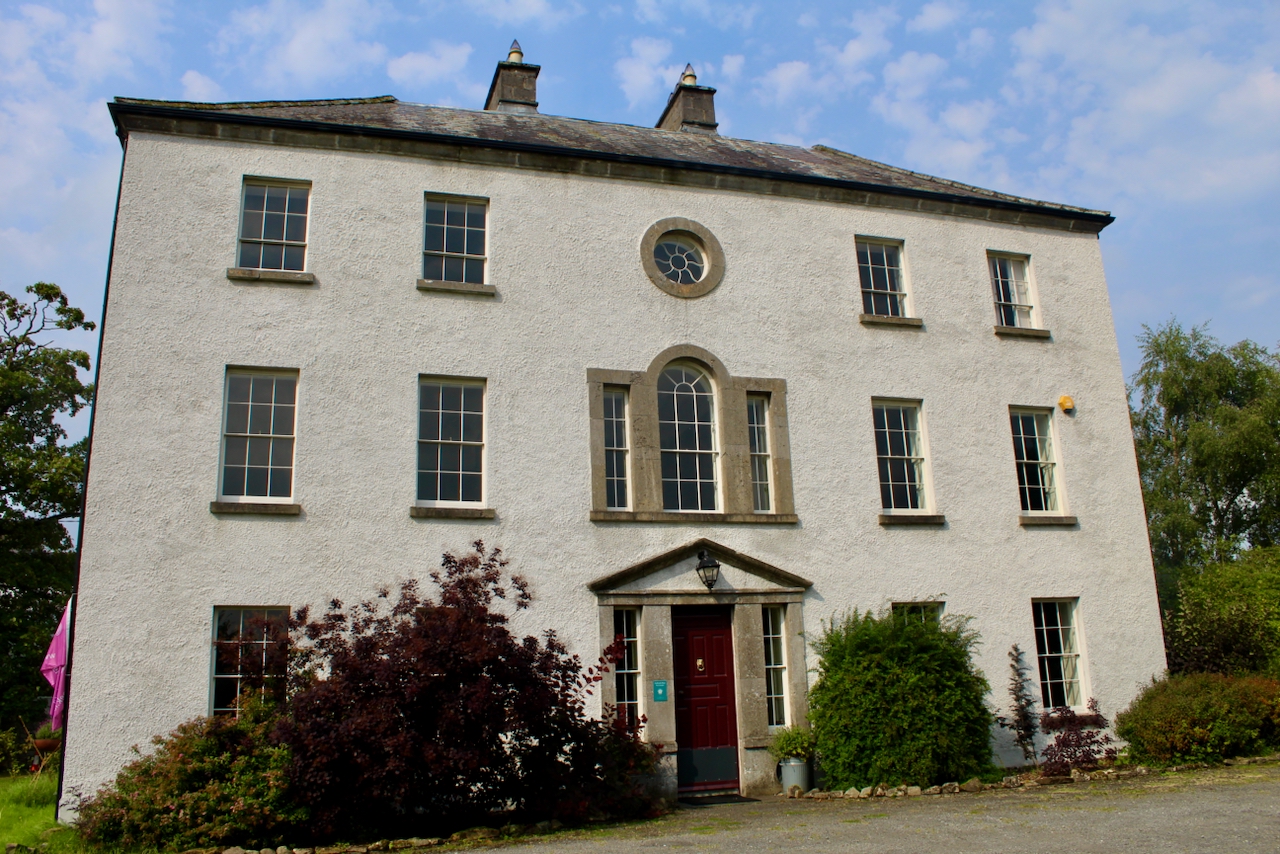
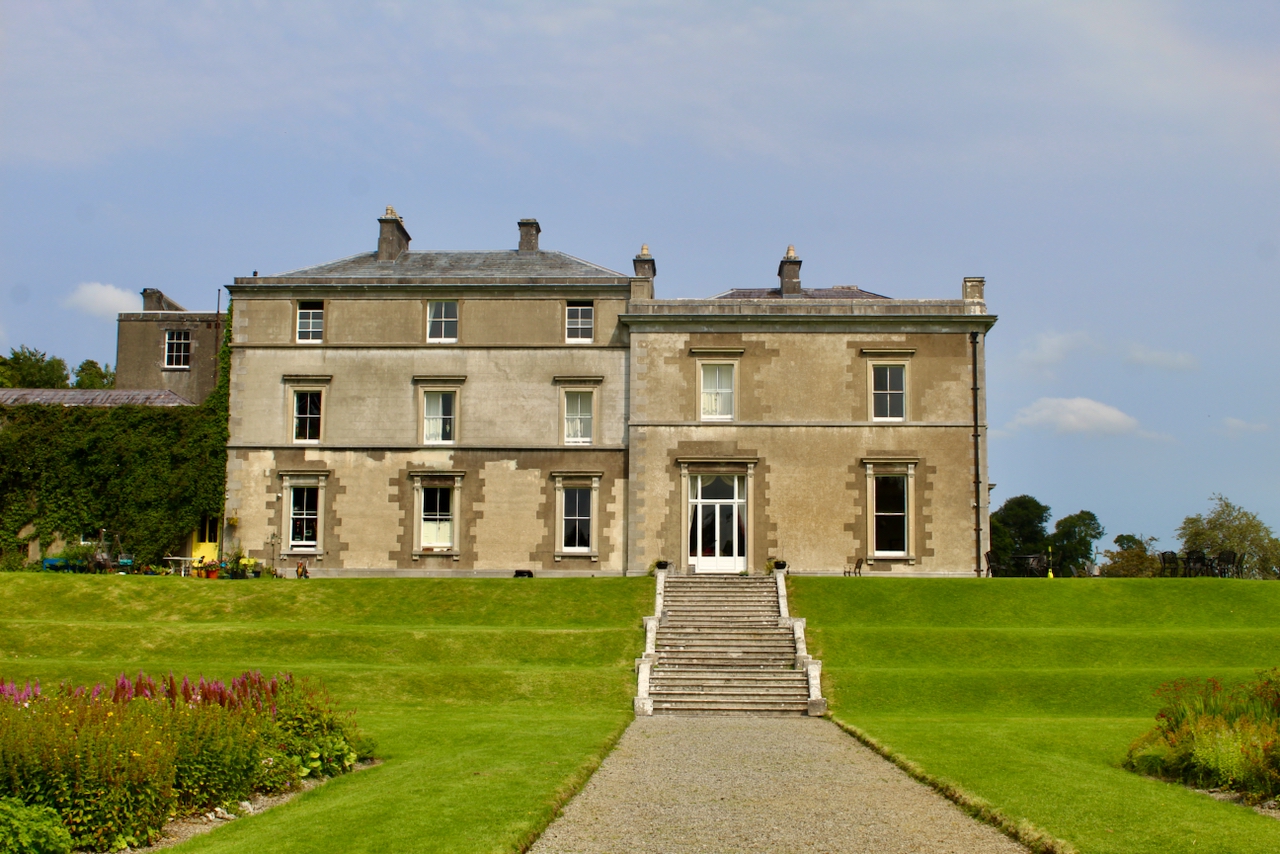


 Irish Historic Houses