Mark Bence-Jones. A Guide to Irish Country Houses (originally published as Burke’s Guide to Country Houses volume 1 Ireland by Burke’s Peerage Ltd. 1978); Revised edition 1988 Constable and Company Ltd, London.
p. 16. “(Bayley/IFR) A two storey gable ended house with irregular fenestration; round-headed windows, with simple fanlights in all of them; fanlighted entrance doorway, which is not central to the front. Ogee headed windows in gable end.”
Detached four-bay two-storey house, built c. 1820, with extension to north. Pitched slate roof with rendered chimneystacks. Roughcast rendered walls. Trefoil-headed window openings to gables and round-headed elsewhere, some paired, all with replacement windows. Square-headed door opening with replacement timber glazed door. Remains of a seventeenth-century house and ruins of thirteenth-century hall and towerhouse to north of site. Four-bay two-storey outbuilding to north of house with rubble limestone walls, pitched slate roof, square-headed openings to first floor, segmental to ground. Adjoining two-storey building to north is possible bastle house, with rendered stone walls, projecting chimneystack and flight of steps to first floor doorway. Cobbled courtyard.
Set in mature gardens, this house has retained much of its original form and structure, despite additions and alterations. The house retains its round-headed and unusual trefoil-pointed window openings which enliven the façade. Also to the site are the remains of thirteenth-, fifteenth- and seventeenth-century dwellings which add archaeological interest to the site.
This round castle is intact to second floor level. About half the original doorway remains and it is protected by a murder-hole. There is a large rectangular room at each level and a mural stairway rises to the upper levels. No smaller chambers were noted. There are fireplaces at the first and second floors and the first floor is lit by two windows, the smaller one having an ogee head. At the roadside nearby is a boulder with a possible bullaun.
Ballindoon House (formerly Kingsborough), Derry, Co Sligo
Ballindoon, County Sligo, photograph courtesy Wilsons Auctioneers.Ballindoolin, County Sligo, photograph courtesy Wilsons Auctioneers.
Mark Bence-Jones. A Guide to Irish Country Houses (originally published as Burke’s Guide to Country Houses volume 1 Ireland by Burke’s Peerage Ltd. 1978); Revised edition 1988 Constable and Company Ltd, London.
p. 18. “(Stafford-King-Harmon, Bt/PB and sub Kingston, E/PB) An early 19C house with a dome, in the manner of John Nash. Now the home of Mrs Peter Baden-Powell.”
Ballindoon, County Sligo, photograph courtesy Wilsons Auctioneers.
Detached three-bay two-storey-over-basement rendered house, built c. 1820. Rectangular main building with pedimented Doric portico to north front and two-stage engaged domed wing to south front, conservatory c. 1990 to west elevation, single-storey-over-basement pitched-roof east wing with canted oriel window on north elevation c. 1900, linked to main building by two-storey flat-roof building. Hipped artificial pitched slate roof to main building, polycarbonate glazing to dome and conservatory, clay ridge and hip tiles, painted smooth-rendered chimneystacks, moulded cast-iron gutters on moulded eaves cornice. Painted smooth-rendered walling. Projecting plinth to base of domed wing, engaged Doric columns, Doric entablature, plain drum to upper stage. Square-headed window openings, painted stone sills, painted margined timber sash windows. Tripartite plain-glazed ground floor windows to either side of domed wing. Tall square-headed entrance door opening within portico, moulded render architraves, painted timber double doors each with three panels, diagonally-laid stone paving to portico. Gravelled forecourt, lawns to north and south, ha ha to south. Farm to east with single- and two-storey rubble stone pitched-roof rubble stone outbuildings some with cast-iron diamond-paned windows.
Appraisal
This, picturesquely-sited, neo-classical house is of interest for its Greek Doric entrance portico and domed full-height return to the south. The proportions coupled with retention of early fenestration and other details all contribute to its commanding appearance. The very fine range of outbuildings to the east also adds to the completeness of the estate as a whole.
Ballindoon, County Sligo, photograph by Irish Aesthete.
Ballindoon, County Sligo, photograph by Irish Aesthete.
In a wonderful location looking east across Lough Arrow, Ballindoon, County Sligo was originally called Kingsborough, thereby indicating it was built for a branch of the King family who some lived some 25 miles away at Rockingham, County Roscommon. The latter house was designed by John Nash and Ballindoon has sometimes also been attributed to him, but since it is believed to date from c.1820 perhaps it can only regarded as being in his style: by that date the architect was far too busy with royal commissions in London to have time for an Irish client. Essentially a lake-side villa, Ballindoon is a building of exceptional character, beginning with the immense pedimented Doric portico on the north-facing entrance front, its scale overwhelming the single bays on either side. Similarly the garden front is dominated by an enormous dome-topped bow, with a further series of engaged Doric columns around the ground floor. Unfortunately, like Hollybrook a few miles to the west (see previous entry), Ballindoon has stood empty for some years and is now suffering as a consequence, with what appears to be dry rot appearing on the upper floor: the insertion of uPVC windows throughout the house probably doesn’t help. Ballindoon was offered for sale with 80 acres three years ago, but remains unsold, and accordingly remains at risk.
Ballindoon, County Sligo, photograph by Irish Aesthete.
Ballindoon, County Sligo, photograph by Irish Aesthete.
Pretty as a picture with Sligo lake views for €825,000
Ballindoon, County Sligo, photograph courtesy Wilsons Auctioneers.
Ballindoon House comes with its own chapel, garden lodge, gate lodge, boathouse and stables
Wed, Sep 26, 2018, 06:00
Rose Doyle
Ballindoon is a house that merits an avenue, and has one. A meandering 1.5km through the estate’s ancient woodlands and specimen trees, it gives tantalising views of Lough Arrow as it winds along the 1km of lake frontage that is part of the estate, tantalising splashes of colour passing the Ladies’ Rhododendron Walk before opening at last to Ballindoon House’s new-classical three-bay frontage, to its pedimented Doric portico and side wing.
Ballindoon, County Sligo, photograph courtesy Wilsons Auctioneers.
Architect James Nash designed Ballindoon House in the 1820s; it’s possible the side wing may have originally been an even earlier farmhouse. Ballindoon sits on an elevated 80 acres, has a farmyard with stone-cut buildings such as stables and a chapel, a gate lodge, garden lodge, stone-cut boathouse with slipway – even an old belfry once used to call workers and others to supper from the fields.
Ballindoon, County Sligo, photograph courtesy Wilsons Auctioneers.
The house itself is in need of someone to love it, appreciate its original design, and refurbish, notably the kitchen and bathrooms – but it has a great deal going for it. Agent Wilson Auctions, with a reserve of €825,000, will put house, lands and outbuildings to auction on October 17th.
Nash’s design is cleverly angled so as to give views of the lake and its islands from everywhere in the house. Views give a peaceful feel to all seven bedrooms (four en suite) and views especially dominate in the dome over the main bedroom from where there is a 360-degree view of the skies above and world below.
The extraordinary central hall has decorated doors leading to the dining and other rooms. Original plasterwork fills ceilings and is there too in decorative cornicing. There are original bow windows, canted oriel windows, fireplaces, floorboards and a cantilevered staircase.
The kitchen and sitting room are separate but will probably be opened into one by a new owner. The library (which has a large bay window), drawing and dining rooms are moderately sized. On the ground floor there is also a guest WC, laundry room and staircase hall.
A lower ground/garden floor has been completely gutted and dry-lined and could be used for games rooms, wine cellar or playrooms.
Ballindoon House is 3km from the N4 and a 20-minute drive from Sligo town.
Ballindoon, County Sligo, photograph courtesy Wilsons Auctioneers.Ballindoon, County Sligo, photograph courtesy Wilsons Auctioneers.Ballindoon, County Sligo, photograph courtesy Wilsons Auctioneers.
Mark Bence-Jones. A Guide to Irish Country Houses (originally published as Burke’s Guide to Country Houses volume 1 Ireland by Burke’s Peerage Ltd. 1978); Revised edition 1988 Constable and Company Ltd, London.
Woodville House, Templemore, Co. Tipperary for sale August 2025 photograph courtesy Sherry Fitzgerald Gleeson.
p. 287. “(Webb/LGI1958) A two storey house of late Georigian period with a three bay front and a one bay wing set back. Single-storey pedimented portico; external shutters; eaved roof on bracket cornice; Gothic glazed window in wing.”
Woodville House, Templemore, Co. Tipperary for sale August 2025 photograph courtesy Sherry Fitzgerald Gleeson.
The residence of the Webb family in the 19th century. The house was valued at £49+ in the early 1850s, occupied by Captain Daniel James Webb and held from Sir John C. Carden. Still a fine residence just south of Templemore.
Detached three-bay two-storey house, built c. 1820, with projecting pedimented entrance porch and with canted bay to south-west. Two-pile two-storey twentieth-century extension to rear. Hipped slate roof with blocked cornice and rendered chimneystacks. Rendered walls with cut limestone plinth to front and side elevations. Square-headed window openings with replacement uPVC windows and with internal shutters. Carved limestone door surround comprisingengaged columns and pilasters flanking timber panelled double door with overlight, having entablature and pediment above. Segmental-arched carriageway to east with dressed limestone jambs and voussoirs in rendered wall to yard. Single-storey outbuilding to east. Cut limestone piers with cast-iron and wrought-iron gates to road boundary.
Appraisal
This house retains much of its original form and structure which is enhanced by features such as blocked eaves course, limestone sills and internal shutters. The pedimented limestone portico is clearly the work of skilled craftsmen, and it also adds artistic interest to the building. The house, together with the outbuildings and entrance gates forms a group of interesting demesne structures.
Woodville House, Templemore, Co. Tipperary for sale August 2025 photograph courtesy Sherry Fitzgerald Gleeson.
Detached five-bay two-storey over bsement house, built c. 1780. Three-bay end elevations. Hipped slate roof with rendered chimneystacks. Rendered walls with cut limestone quoins and roughcast rendered plinth having cut limestone coping. Six-over-six pane timber sash windows in square-headed openings and with six-over-nine pane timber sash window in round-headed opening with cobweb fanlight to west elevation, all with cut limestone sills. Carved limestone shouldered and kneed doorcase with detached pediment above, with timber panelled door accessed by cut limestone steps with cast-iron railings.
Appraisal
This imposing house has a fine carved doorcase which is of apparent skilled craftsmanship. The building has retained interesting features and materials, such as the timber sash windows, limestone windows and slate roof. It is complimented by its pleasant siting amongst mature trees.
Woodville House, Templemore, Co. Tipperary for sale August 2025 photograph courtesy Sherry Fitzgerald Gleeson.Woodville House, Templemore, Co. Tipperary for sale August 2025 photograph courtesy Sherry Fitzgerald Gleeson.Woodville House, Templemore, Co. Tipperary for sale August 2025 photograph courtesy Sherry Fitzgerald Gleeson.Woodville House, Templemore, Co. Tipperary for sale August 2025 photograph courtesy Sherry Fitzgerald Gleeson.Woodville House, Templemore, Co. Tipperary for sale August 2025 photograph courtesy Sherry Fitzgerald Gleeson.Woodville House, Templemore, Co. Tipperary for sale August 2025 photograph courtesy Sherry Fitzgerald Gleeson.Woodville House, Templemore, Co. Tipperary for sale August 2025 photograph courtesy Sherry Fitzgerald Gleeson.Woodville House, Templemore, Co. Tipperary for sale August 2025 photograph courtesy Sherry Fitzgerald Gleeson.Woodville House, Templemore, Co. Tipperary for sale August 2025 photograph courtesy Sherry Fitzgerald Gleeson.Woodville House, Templemore, Co. Tipperary for sale August 2025 photograph courtesy Sherry Fitzgerald Gleeson.Woodville House, Templemore, Co. Tipperary for sale August 2025 photograph courtesy Sherry Fitzgerald Gleeson.Woodville House, Templemore, Co. Tipperary for sale August 2025 photograph courtesy Sherry Fitzgerald Gleeson.Woodville House, Templemore, Co. Tipperary for sale August 2025 photograph courtesy Sherry Fitzgerald Gleeson.Woodville House, Templemore, Co. Tipperary for sale August 2025 photograph courtesy Sherry Fitzgerald Gleeson.Woodville House, Templemore, Co. Tipperary for sale August 2025 photograph courtesy Sherry Fitzgerald Gleeson.Woodville House, Templemore, Co. Tipperary for sale August 2025 photograph courtesy Sherry Fitzgerald Gleeson.Woodville House, Templemore, Co. Tipperary for sale August 2025 photograph courtesy Sherry Fitzgerald Gleeson.Woodville House, Templemore, Co. Tipperary for sale August 2025 photograph courtesy Sherry Fitzgerald Gleeson.Woodville House, Templemore, Co. Tipperary for sale August 2025 photograph courtesy Sherry Fitzgerald Gleeson.Woodville House, Templemore, Co. Tipperary for sale August 2025 photograph courtesy Sherry Fitzgerald Gleeson.Woodville House, Templemore, Co. Tipperary for sale August 2025 photograph courtesy Sherry Fitzgerald Gleeson.Woodville House, Templemore, Co. Tipperary for sale August 2025 photograph courtesy Sherry Fitzgerald Gleeson.Woodville House, Templemore, Co. Tipperary for sale August 2025 photograph courtesy Sherry Fitzgerald Gleeson.Woodville House, Templemore, Co. Tipperary for sale August 2025 photograph courtesy Sherry Fitzgerald Gleeson.Woodville House, Templemore, Co. Tipperary for sale August 2025 photograph courtesy Sherry Fitzgerald Gleeson.Woodville House, Templemore, Co. Tipperary for sale August 2025 photograph courtesy Sherry Fitzgerald Gleeson.Woodville House, Templemore, Co. Tipperary for sale August 2025 photograph courtesy Sherry Fitzgerald Gleeson.Woodville House, Templemore, Co. Tipperary for sale August 2025 photograph courtesy Sherry Fitzgerald Gleeson.Woodville House, Templemore, Co. Tipperary for sale August 2025 photograph courtesy Sherry Fitzgerald Gleeson.Woodville House, Templemore, Co. Tipperary for sale August 2025 photograph courtesy Sherry Fitzgerald Gleeson.Woodville House, Templemore, Co. Tipperary for sale August 2025 photograph courtesy Sherry Fitzgerald Gleeson.Woodville House, Templemore, Co. Tipperary for sale August 2025 photograph courtesy Sherry Fitzgerald Gleeson.Woodville House, Templemore, Co. Tipperary for sale August 2025 photograph courtesy Sherry Fitzgerald Gleeson.Woodville House, Templemore, Co. Tipperary for sale August 2025 photograph courtesy Sherry Fitzgerald Gleeson.Woodville House, Templemore, Co. Tipperary for sale August 2025 photograph courtesy Sherry Fitzgerald Gleeson.Woodville House, Templemore, Co. Tipperary for sale August 2025 photograph courtesy Sherry Fitzgerald Gleeson.Woodville House, Templemore, Co. Tipperary for sale August 2025 photograph courtesy Sherry Fitzgerald Gleeson.Woodville House, Templemore, Co. Tipperary for sale August 2025 photograph courtesy Sherry Fitzgerald Gleeson.Woodville House, Templemore, Co. Tipperary for sale August 2025 photograph courtesy Sherry Fitzgerald Gleeson.Woodville House, Templemore, Co. Tipperary for sale August 2025 photograph courtesy Sherry Fitzgerald Gleeson.Woodville House, Templemore, Co. Tipperary for sale August 2025 photograph courtesy Sherry Fitzgerald Gleeson.Woodville House, Templemore, Co. Tipperary for sale August 2025 photograph courtesy Sherry Fitzgerald Gleeson.Woodville House, Templemore, Co. Tipperary for sale August 2025 photograph courtesy Sherry Fitzgerald Gleeson.Woodville House, Templemore, Co. Tipperary for sale August 2025 photograph courtesy Sherry Fitzgerald Gleeson.Woodville House, Templemore, Co. Tipperary for sale August 2025 photograph courtesy Sherry Fitzgerald Gleeson.Woodville House, Templemore, Co. Tipperary for sale August 2025 photograph courtesy Sherry Fitzgerald Gleeson.Woodville House, Templemore, Co. Tipperary for sale August 2025 photograph courtesy Sherry Fitzgerald Gleeson.Woodville House, Templemore, Co. Tipperary for sale August 2025 photograph courtesy Sherry Fitzgerald Gleeson.Woodville House, Templemore, Co. Tipperary for sale August 2025 photograph courtesy Sherry Fitzgerald Gleeson.Woodville House, Templemore, Co. Tipperary for sale August 2025 photograph courtesy Sherry Fitzgerald Gleeson.Woodville House, Templemore, Co. Tipperary for sale August 2025 photograph courtesy Sherry Fitzgerald Gleeson.Woodville House, Templemore, Co. Tipperary for sale August 2025 photograph courtesy Sherry Fitzgerald Gleeson.Woodville House, Templemore, Co. Tipperary for sale August 2025 photograph courtesy Sherry Fitzgerald Gleeson.Woodville House, Templemore, Co. Tipperary for sale August 2025 photograph courtesy Sherry Fitzgerald Gleeson.Woodville House, Templemore, Co. Tipperary for sale August 2025 photograph courtesy Sherry Fitzgerald Gleeson.Woodville House, Templemore, Co. Tipperary for sale August 2025 photograph courtesy Sherry Fitzgerald Gleeson.
Thomas J Bunbury (1793-1874), second son of Thomas (Thom) and Maria Bunbury Isaac, married Mary Barnard / Bernard of Lucan and lived at Lisbryan House (sometimes spelled Lisbrian), which is situated near Ballingarry, Borrisokane and Nenagh in County Tipperary. The house is still occupied by his direct descendants. The family were to have many extraordinary offspring including the world record holding shorthand writer and a woman who was murdered by her doctor husband in Spiddal. It may be relevant to find more details on Mary Bernard [Barnard?] in order to establish the origin of the Spiddal connection.
A notice of 1874 links them to the Manor House, County Galway … does anyone out there know where that might have been located?
According to the excellent Landed Estates Database from NUI Galway, Lisbrian (or Lisbryan) was occupied by Faulkner Esq in the 1770s and 1780s. Sir Robert Waller Baronet was occupying this house in 1814. Lewis records T. Bunbury as the proprietor in 1837. The Ordnance Survey Name Books, also refer to it as his residence, “a very extensive building of the modern style”. Thomas Bunbury held the property from Lord Ashtown at the time of Griffith’s Valuation when the buildings were valued at £40+.” It is uncertain whether Thomas 1793 was the actual builder of Lisbrian House. It may have been his father Thom, who was himself a son of Thomas Bunbury of Kill and a half-brother to William Bunbury of Lisnavagh. The Irish census of 1901 shows Lisbrian House had 33 rooms.
I believe Thomas also haad lands in County Carlow. On 10 October 1823, his uncle Benjamin Bunbury of Moyle passed away. In his will, Benjamin refers to ‘my nephew, Thomas Bunbury of Labanasigh in the county of Carlow …’, having earlier referred to ‘my nephew, Thomas Bunbury of Lisnavagh in the county of Carlow …’. Griffith’s Valuations for Labanasigh (near Fenagh) in 1852 list Thomas Bunbury as the landlord, but Thomas of Lisnavagh was six years dead by then. This leads me to believe that Thomas Bunbury of Labanasigh was Thomas J Bunbury. Among the Labanasigh tenants was Henry James who married Mary Cullen in Carrigbeg in 1841; they were living at Labanasigh when their fourth child was born circa 1852. (Thanks to Kevin James)
Following Thomas’s death, his effects at both Lisbryan House and the Manor House, County Galway, were valued and auctioned by Thomas Maher, auctioneer, of Borrisokane. He did so with such aplomb that Dublin-based barrister Sadleir Stoney (1822-1899)[who lived at Ballycaple House, Co. Tipperary], one of Thomas Bunbury’s executors, wrote to express ‘much pleasure in testifying the very great satisfaction’ he felt at Mr Maher’s work, his ‘energy’ and his ‘promptitude in settling the accounts.’ This letter was published in the King’s County Chronicle on 16 July 1874. I assume this is somehow connected to the presentation of the Bunbury Cup by Thomas and Mary as ‘a token of esteem’ to a Sadleir Stoney in 1874. The cup was found in a provincial auction in Bournemouth in the 1980s. Mr Stoney appears in less positive light in the account of George Bunbury of Woodville below.
Thomas and Mary Bunbury’s children are believed to have included:
Thomas Benjamin Bunbury (1830-1883), their eldest son, who succeeded to Lisbrian. (See below)
George William Bunbury who joined the army and later lived at Woodville House (See below).
Rebecca Margaretta Bunbury, their eldest daughter, was married at Ballingarry Church on 21 May 1841 to Ralph Smith-Smith of Milford, Co. Tipperary. (A Genealogical & Heraldic Dictionary of the Landed Gentry, Sir Bernard Burke, 1852). At the time of her wedding. [A contemporary record claims her father lived at Lisbegan House, surely a typo?] On 10 December 1845, the King’s County Chronicle reported that ‘serval armed ruffians’ had ‘effected an entrance’ into the Smith’s residence at Milford and attacked Ralph. ‘Presenting their muskets to his breast, forced him, on his knees, to take an oath, the nature of which we have not heard. The gentleman from whom we derive our information had been told that one of the fellows struck Mrs Smith on the shoulder with his gun but this, we hope, is not the case. The fellows offered no further violence, but before departing, intimated their intention of calling at another time. On the same night they visited several farmer’s houses in the neighbourhood. What motive they could have in visiting Mr Smith, we cannot imagine – for in the country there is not a more inoffensive or amiable gentleman.’ Ralph died in Camden, Illinois, on 8 Aug 1852, leaving six young children. Thomas and Mary Bunbury were named as guardians of the children in his will. On 21 November 1862, Rebecca was married, secondly, to Henry Neville of Heath Cottage; the wedding took place at Egglish Church. Rebecca was presumably the ‘Mrs. Smith’ who is supposed to have been one of three sisters (with Mrs Brodie and Mrs Palmer) who settled in Spiddal, with disastrous consequences for Mrs. Brodie. (See the full story below) There was a Smith House in the town, now a ruin, closely associated with the Bunbury family. The 1901 census for Spiddal records Mary Elizabeth Smith, a widow farmer, who was born in County Tipperary and gave her age as 60. She was living with her 30-year-old daughter Susan Florence who was born in County Galway. By the 1911 census, she gave her age as 83 (!) and had retired, while (Susan) Florence was now 40 and presumably running the farm.
Margaret Jane Bunbury, second daughter of Thomas Bunbury of Lisbegan, who was married at Ballingarry Church on 25 November 1842 to William Woods of High Park, King’s County.
Alice Georgina Bunbury who married the barrister Manners McKay on 1 September 1845 and settled at Moreen in Dundrum, County Dublin. A former cornet of the 3rd Dragoon Guards, this naughty chap appears to have been among a group of five soldiers who graffiti’d their names onto a pane of a sash window in a parlour at 14 St Stephen’s Green.[ii] If so, he was the son of Dublin attorney Daniel McKay (1778-1840) of St Stephen’s Green and Moreen, by his wife Eliza (1785-1858), daughter of Edward Rowland of Cathen Lodge, Ruabon, Denbighshire. Manners McKay had a brother William McKay who was also a barrister. The McKay’s are buried in a vault beneath St Ann’s church in Dawson Street, Dublin. Manners and Alice’s eldest daughter Mary Eliza Adette M’Kay was married in Ballingarry Church by the Rev William Isaac Bunbury, rector of Shandrum, to Lieutenant (James Francis) Lennox MacFarlane, 3rd Dragoon Guards, of Hunstown House, Co. Dublin. (King’s County Chronicle, 24 August 1870). Mrs MacFarlane died prematurely on 2 December 1882. Another of the M’Kay daughters, Ella, was married at St Patrick’s Cathedral, Dublin, to G. T. Selby of 1, Eaton Square, London, on 23 April 1874.
Sarah Frances Bunbury who was born in 1831 and married in Ballingarry on 12 March 1862 to James Lawson, esq., 59th Regt., second surviving son of Charles Lawson, esq., of Borthwick-hall, Mid Lothian. (The Gentleman’s Magazine, Volume 212). He became Major General James Lawson and served in the China War (1857-1858) and the Afghan War (1868-1870) before his death aged 65 in Dover in 1897. Mrs. S. F. Lawson passed away in Dover in June 1917. Their eldest son was Colonel Charles Lawson while their elder daughter Alice Georgina Lawson married Hawtrey Charles Marshall (after Apr 1864 – 5 Dec 1927) with whom she had 3 children: Ruby Eily Bunbury Marshall (6 Oct 1891 – 19 May 1953), Beryl Marshall (born 28 Nov 1895) and Cecil Clyde Marshall (born after Jul 1898 – 24 Jun 1917). With thanks to Megan Stevens. For more, see http://twgpp.org/information.php?id=3034206
Susan Catherine Bunbury was born in 1837. On 17th November 1876, aged 39, she was married in St. Anne’s Church, Dublin, to John Palmer, a flour merchant, of Foster’s Place, Galway City. He died less than a year later and was buried in St. Nicholas’ Church. Susan had a 1000-acre estate at the Manor House in Spiddal which previously belonged to Sir Robert Staples.
When the Griffith Valuation was conducted in these parts in 1864, much land in the area belonged to a Thomas Bunbury who may well have been her father. Susan lived here with the assistance of Bartley O’Donnell and, when she died, she named Bartley’s son as heir to the Spiddal estate. She was 94 years old when she died on 15th September 1931.
Much of this information was provided by Bartley O’Donnell’s grandson Noel O’Donnell who was born in Rosmuc. Noel, whom I spoke to in January 2014, has Susan’s will, in which she also left money to her nephew Colonel Charles Lawson, her niece Eily [sic] Marshall and someone called Minnie Bunbury Smith. Noel also has a document dated 6th May 1865 pertaining to Thomas Bunbury of Lisbrian and Captain George William Bunbury.
Why were they in Spiddal at all? I wondered was it something to do with the Irish Church Missions but, as of March 2019, the name ‘Bunbury’ rang no bells with Dr Miriam Moffitt of St Patrick’s College, Maynooth, who has published two books of relevance, “Soupers and Jumpers: The Protestant Missions in Connemara, 1848-1937” (2008) and “The Society of the Irish Church Missions to the Roman Catholics: Philanthropy or Bribery?” (2006). There was a station, albeit not the most successful one, and an orphanage, possibly the precursor to the Bird’s Nest. The Irish Church Missions still exist at 28 Bachelor’s Walk, just a couple of yards from O’Connell Bridge. The ICM had a children’s home, Nead na Farraige in Spiddal and the people who worked there were managed separately. The Nead was subsequently incorporated into the Birds Nest and Smyly homes. As Miriam remarked, ‘There was a considerable workforce in these homes, nurses and teachers and what we would nowadays term care assistants. Often people moved from the ICM infrastructure of missions and schools (community based work) to the residential section.’ Miriam also notes that the Eyres (with whom Dr Brodie was married) were a long standing Clifden family and that they were not active supporters of the mission. ‘The local Protestant community was somewhat ambivalent to the ICM, some were avid supporters, some less so, some quite critica’.
THE MURDER OF MOLLY BUNBURY
Mary Jane Bunbury, also known as Molly Bunbury, of Lower Mount Street, Dublin (and formerly of Lisbrien), was married in St. Peter’s Church on 11 December 1880 to Dr. Terence Benjamin Brodie, a man from a decent family who was many years younger than herself. He had previously been married in Clifden in 1872 to Frances Mary Eyre, daughter of John Joseph Eyre (1816-1894) of Clifden Castle and his wife Margaretta Atkinson (1812-1896).[iii] Frances gave Dr. Bridie three children Margaret Mary (b. 1874), Terence (1877-1879) and John Joseph (b. 1879) but great tragedy fell the family in 1879 when Frances died giving birth to a child (who also died), just weeks after two of their sons died of diptheria. The following year Dr Brodie married again – to Molly Bunbury – but he transpired to be an abusive husband, a trait exacerbated by his mounting addiction to alcohol. Perhaps he was affected by the intense fevers so rife in Connemara at this time; a doctor’s work cannot have been easy. In July 1886, he shot Molly in the face, apparently while she was looking out to sea through a telescope at their home in Spiddal. He did not deny the charge but blamed it on the copious amount of booze, primarily poteen, he had been guzzling beforehand. Such was the law at the time that the courts agreed and the verdict was temporary insanity caused by alcohol consumption. As historian Jackie Uí Chionna observes of the trial: ‘The great pity is that the servant girl who gave evidence was not believed. From the newspaper reports, her testimony was damning of Brodie, but then again, she was just a servant, and a woman at that, and so it is hardly surprising that her testimony was sidelined.’ Dr. Brodie went to Dundrum Asylum where he was immediately cured of his madness and, after just five years, he was discharged. He moved to South Africa where he married again and had children. He died in Parys, Free State, South Africa, on 23 Nov 1906, aged 56. In the 1940s, his son Ben unwittingly returned to Spiddal to ask if anyone knew anything of his father. He got more information than he bargained for.
The Molly Bunbury murder case formed the opening episode of the series “Racht” for TG4, which aired on 30 September 2015, repeated in June 2018. The series was produced by Paper Owl Films, who are based in Belfast. See the trailer here. There is a useful extract on this case in a review of Pauline Prior’s book ‘Madness and Murder: Gender, Crime and Mental Disorder in Nineteenth-Century Ireland’ (Irish Academic Press, 2008) published online by http://www.timeshighereducation.co.uk in 2008. [iv]
‘One cannot but be touched by the many cases of dreadful distress recounted here. The majority of the Dundrum inmates had been convicted of murder or serious assaults: many were traumatised to the extent that they could remember little of the events. Prior strives to find a balance between the criminal, the victim, and often the victim’s family, and permit each to “speak” their perspective of the crime. The famous Galway doctor Terence Brodie is a case in point. Convicted of murdering his wife in 1886 – and the testimony from his servants of how he drunkenly taunted her before her shooting, is truly harrowing – Brodie spent only five years in Dundrum before being discharged and emigrating to South Africa. His release (secured through influential connections) was vigorously opposed by his wife’s family, who also objected to the fact that he continued to enjoy a substantial income from her estate. Yet the reader’s response to this apparent case of gender and class inequality is complicated by the fact that Brodie had himself suffered dreadful trauma … He had lost his entire first family in the space of two months in 1879; two young sons to diphtheria in November, followed by his wife and her newborn infant just weeks later. His surviving daughter was taken to Dublin to be raised by an aunt, leaving him alone (and drinking heavily) in Galway. The doomed second marriage thus had a context that causes the reader to pause before rushing to judgment, and demonstrates the complexity that lies behind the blunt category of “criminal lunatic”.’
(With thanks to Jackie Uí Chíonna)
THOMAS BENJAMIN BUNBURY (1830-1883)
L-R: Thomas Benjamin Bunbury (1830-1883), eldest son of Thomas and Mary Bunbury, was married on 15 February 1862 to Frances Orr Smith from Gurteen; their eldest son Thomas Kane Bunbury (1863-1908); Mary Josephine Smith of Parsonstown (Birr) who married Thomas Kane Bunbury in 1893. Photos courtesy of Peter Bunbury via the granddaughter of Fred Bunbury and the late Hazel Ogilvie.
On 15 February 1862, Thomas Benjamin Bunbury was married at St. Peter’s Church, Dublin, to Frances Orr Smith, youngest daughter of George Smith Esq., of 4 Holles Street and Gurteen, an 1100 acre estate near Shinrone.[v] Thomas’ sister Sarah, who would be married four weeks later, was one of the witnesses. Frances was referred to as Fanny in her marriage notice in the Warder & Dublin Weekly Mail recorded on 22 February 1861, and on the 1901 Census she was Fanny Bunbury.[vi] They had a son, Thomas Kane Bunbury, born in Galway (Spiddal perhaps?) in 1863, and four daughters, Mary, Ellen, Eva and Ida, all variously recorded on the 1901 or 1911 census as still resident at Lisbryan [sic].
Curiously, at the time of the 1911 census, there was also a 54-year-old Catholic bachelor farm servant called Daniel Bunbury living on the farm of Thomas Tobin of Templenahurney, Bansha. Aside from the Lisbryan Bunburys, he is the only other Bunbury recorded in County Tipperary in 1911.The 1901 census does not record Daniel anywhere but has a 60-year-old Catholic boot and shoemaker called William Bunbury living on Blind Street in Tipperary Town.
Following the death of T. B. Bunbury at Lisbrian in 1883, ownership of the house passed to his eldest son Thomas Kane Bunbury (1863-1908). In 1893, he married Mary Josephine Smith of Parsonstown (Birr), Co. Offaly.
GEORGE & FRED BUNBURY
Thomas Kane and Mary Josephine Bunbury had two sons, (Cecil) George Bunbury (1900-1985) and Frederick Thomas Bunbury (b. 1907), and a daughter Eva (b. 1895).
George Bunbury lived in Roscrea, near Gurteen Agricultural College, of which he was a great supporter. My late Carlovian neighbour Dick Corrigan was one of the first students at Gurteen when it opened in 1947. He recalls how George Bunbury drove over with his tractor, which was bigger than the Colleges, to give them all a lesson. ‘He was a fine man’, says Dick. ‘He didn’t mind cussing, mind you’.
Above: George Bunbury (1900 -1985) at Lisbrian House, near Ballingarry, County Tipperary.
In 1935 George was married to Maey Adelaide, who lived to be 103, with whom he had four daughters, namely: 1) Ida, who married the late Robert ‘Bob’ Reed, teaches at Wesley, lives in Sandyford. 2) Eileen, who married the late Maslyn Dennison of Carrigagown, Carney, Nenagh, Co. Tipperary, and has a son Mervyn and two daughters Valerie and Aideen. 3) Violet, who married James Coburn of Portumna, a connection of the Grubb family, and whose son Howard runs the pharmacy in Rathdowney. 4) Georgina, who married Leslie William Stanley in 1980, with whom she has four sons and a daughter.)
Fred Bunbury married Alice Delahunt and lived at Finnoe, near Borrisokane, a stronghold of the Waller family. Their daughter Carol, whose twin brother died in infancy, married Mr Talbot and now lives at Finnoe. They also had a daughter, Angel Bunbury,who married Tom Donovan. On 3 May 1969, the Nenagh Guardian reported that Miss Angel Bunbury, daughter of Fred Bunbury of Rodeen, Finnoe, had been crowned Queen of the Borrisokane Carnival by RTE personality Charles Mitchell. (Thanks to David Broderick).
As a curious aside, Tom’s great-grandfather Benjamin Donovan was a sister of Phebe Donovan, who married the shoe-maker Joseph Kearney. Their son Fulmuth Carney was Barack Obama’s great-great-grandfather. The upshot of this was that Tom Donovan transpired to be Barack Obama’s third cousin three time removed which is why Tom and Angel were invited to meet the President in Moneygall during his visit! With thanks to Jennifer Donovan, daughter of Tom and Angel. Click here for more on Obama’s Irish Roots.
As neither George nor Fred left any male Bunburys heirs, Cecil George left the property at Lisbrian to his youngest daughter Georgina Stanley.
GEORGE WILLIAM BUNBURY OF WOODVILLE
The following information was provided by my late cousin Peter Bunbury, of West Australia, who was a huge source of inspiration and support to me in my genealogical endeavours for many years while I tried to make sense of all the different branches of this family. Also of vital assistance has been William Minchin, a Canadian descendant of the Woodville Bunburys.
George William Bunbury of Woodville House, Ballymackey, Nenagh, was the second son of Thomas and Maria Bunbury of Lisbrian House. He served as a Captain in the 50th Regt of Foot and a musketry instructor. He was married firstly, in Fermoy, Co Cork, on 5th November 1859, to Sarah Frances Mansergh, daughter of Lieut. Charles Carden Mansergh (1802-1873).[vii] George and Sarah went to Ceylon he served in 1857-59 and again in 1860-63. Their son Thomas Charles and daughter Alice were both born in Colombo. On account of Sarah’s illness, she returned to England with the children whilst her husband went on with his regiment to New Zealand. He sold his commission, which may have nullified his entitlement to a military service pension, and returned to England where his wife Sarah died at 26, Mountjoy Square, Dublin, on 17th November 1865 from cancer of the pelvic bones, which she had suffered for four years.
George and Sarah’s son Thomas Charles Bunbury later moved to Melbourne where he died in Kew in 1936. By his wife Laura Turner, he had three children – a son who died in Los Angeles, a son Clive Bunbury who was killed in action in January 1918 and a daughter Kathleen Sara Bunbury who, born in 1896, is presumed to have remained in England or followed her parents as her mother was an Australian.[viii]
George and Sarah’s only daughter Alice Maud Bunbury (1864-1938) was married at Bowen’s Court, Kildorrery, Co. Cork, on 18 December 1884 to George Golbourne Tarry (d. 1940), then a lieutenant in the 17th (the Leicestershire) Regiment. (Freeman’s Journal, 24 December 1884, p. 1). Having previously served in India, Egypt, Canada and the West Indies, George served as Chief Constable of Leeds from 1900 to 1912; a case of osteo-arthritis in his right knee, caused by an injury during his service in 1908, compelled him to retire in July 1912. (See full details in Yorkshire Post & Leeds Intelligencer, 20 July 1912, p. 10). He subsequently became Deputy Assistant Quartermaster-General of Ireland and was, I think, stationed at Dublin Castle during the Easter Rising. On 11 December 1912, their elder daughter Constance Maud Tarry married James Harvey Brand in London. On 14 November 1916, the youngest daughter FlorenceGolbourne Tarry made headlines with what was believed to have been the first marriage of a British officer interned in Switzerland when she was wed in Berne to Captain Robin Webb Thomas of the Munster Fusiliers, a son of the late Thomas Dawson Thomas and Mrs Georgina Thomas of Castletown-Roche, County Cork. He had been severely wounded in the throat at Mons and spent over two years as a prisoner-of-war in Germany before he was transferred, along with other invalid soldiers, to Switzerland on condition that he be interned until the end of the war. Florence went to live with him at Berne. Captain Thomas’s mother Georgina (nee Sherlock) was asister of Captain Thomas Henry Sherlock, MRCVS, grandfather to Anne Farrelly who helped me make sense of the above data. Thanks also to Robin Webb Thomas jun.
It is assumed George then took up residence at Woodville House, Ballymackey, Nenagh, Co. Tipperary, along with his two children, and he obviously needed servants to assist. He sought financial assistance from his wealthy cousin Colonel Kane Bunbury of Moyle and Rathmore. He also employed a new housekeeper / nanny Maria Georgeanne De’lessert who was to bear him five more children, one of whom was George William Bunbury, the esteemed shorthand expert.
Emily Madeline St Aubyn Bunbury, George and Maria’s eldest child, was born on 23rd November 1868 at 5, Richmond Court, Dublin, and is presumably the ‘Madeleine’ recorded as living with her brother George William Bunbury at Dufferin Avenue in Dublin on the 1901 census, although that gives her age as 29.[ix]
The other four children were born in Woodville between 1872 -1877. Among these was Frances Elizabeth Bunbury, who was born in Woodville House on 15 Feb 1874 and baptised as a Protestant. On 11 June 1895 she married her first husband William MacCormack, a Catholic, in Dublin Registry Office. A medical student at the time of their wedding, his father Thomas was an ironmonger. At the time of her marriage, Frances (AKA Fanny) was living at 15, Nelson Street, Dublin. William practiced as a GP in Spiddal, Co Galway. Their marriage certificate was witnessed by Maria Bunbury which, as Jerry Gardner observed, indicates that her mother Maria Georgeanne Delessert had assumed the Bunbury name, although she never married George W Bunbury Sr. William died at some point over the next ten years, leaving her with a son, also William, and a daughter, Kathleen. Family tradition records that Dr MacComack caught a chill and died after responding to a call in his pony and trap on a cold, rainy, windswept night. Frances Elizabeth is said to have suffered a stroke when she was 26. On the 1901 census she is recorded as a Catholic and as living in Monagham with her sister Eva Marie Quinn (nee Bunbury). The 1901 census also records her two (Catholic) children as living with their uncle George W Bunbury Jr (of 250 wpm fame, see below) and aunt Madeleine in Dublin. On 22 Nov 1905, the widowed Mrs MacCormack was back in Dublin Registry Office where she married, secondly, the dentist Bertram Douglas Black, son of dentist Gerard Black. Bertram was also Catholic. At some stage they moved to Somerset, possibly Yeovil. She and Bertram has a son, also Bertram (who served time in Wormwood Scrubs for being gay), and a daughter, Aunora, who married Bill Sharp of Taunton, Somerset. Frances Elizabeth Black died aged 81 on 15 Dec 1955 at 76, Hamilton Rd, Taunton. Frances’ son William MacCormack was married three times. His first wife Patricia Taylor of New Ross, Co Wexford died aged 28, leaving three young daughters Hilda (who lived in New Ross and then Dun Laoghaire, married Bob Hatton), Betty (who lives in Toronto, married Steve Sulewski) and Pamela (who was adopted by William’s half-sister Aurora (AKA Nora) Sharp. Pam who married Mike Gardner and was mother to Jerry Gardner.) By his second wife Kathleen, William was father to Christine (who lives in Worthing, Sussex) and Avril (who lived in Brighton). William’s third wife was called May; they lived in Guilford did not have children. In later life May (nee Mary Nesbitt) married George Landers and they moved to Magherafelt in her native Northern Ireland. [With thanks to Jery Gardner]
George did not marry Maria. Instead, on 9th September 1887, he married in Dublin Registry Office to 26-year-old Dublin-born Alice Maud Mary Stone. She was a sister of Dr. Frederick William Smith Stone, surgeon and physician, of 6 Grove Road, Rathmines, Dublin, and a daughter of John Stone, solicitor, who may also have lived in Rathmines. In 1889, Dr. Stone married Katie Eliza Machin, daughter of Edward Machin, gentleman, of ‘Melrose’, Leinster Road, Rathmines.
Alice gave George a son George John Bunbury (who was born at 6 Grove Road, Rathmines, on 10 September 1888) and a daughter Kathleen Susan Bunbury (who was born in Woodville on 29 March 1890). (Thanks to Jerry Gardner)
There was no shortage of drama in the house as per this story published in The Pall Mall Gazette (London, England) on Tuesday, June 7, 1892:
AN IRISH J.P. SENTENCED FOR ASSAULTING A LADY At the Court-house at Nenagh yesterday there was disclosed a remarkable case in the house of Captain Bunbury, of Woodville, county Tipperary. Mr Sadleir Storey, a justice of the peace and Barrister at law, being charged with assault on Mrs. Bunbury. It was stated that while Mrs. Bunbury went out to visit a lady friend in the neighbourhood, who was about to leave for the Continent, Captain Bunbury, who was drinking, invited Mr Sadleir Storey, who resided in the vicinity, to join him, and that when she returned the two gentlemen were engaged carousing in a room to which she was refused admittance. The door was locked, and with a small hachet she attempted to break it open, whereupon Mr Sadleir Storey, rushing out, felled her with a blow, and seizing the hatchet beat her with it. He aimed a blow with the edge of the hatchet at her. The coachman came up, but Mr Sadleir Storey, hatchet in hand, chased both of them and afterwards, when Mrs. Bunbury, fearing for the safety of her children, ran to the nursery, she found the infuriated gentleman pursuing the nurse round a table, and proclaiming his intention to murder her if only he could lay his hands on her. Mrs. Bunbury and the servants were examined for the prosecution. Mr. Sadleir Storey defended himself, and contended that the assault was a slight one and much exaggerated. The magistrates sentenced him to three months’ imprisonment with hard labour, and to give security for good behaviour. He gave notice of appeal. (With thanks to Adrian Wynne-Morgan for advising of this tale).
According to the Waterford Standard of 14 May 1892, Stoney appeared at the Nenagh Petty Sessions for common assault against Mrs Alice Bunbury (wife of Capt. Bunbury of Woodville) on the evening of 3 May 1892 in her own house. Stoney claimed in evidence that Capt. Bunbury “is a man whom I have known from my childhood.” He was given three months hard labour in Limerick Jail and ordered to post bail of £200 + £100 each from two solvent sureties.
The family appear to have abandoned Woodville after GWB ‘s death in 1898. He was survived by nine children from three different women.
Woodville House is now empty although there is talk of plans by the County Council to renovate it and put it to some kind of community use.
GEORGE JOHN BUNBURY (1898-1969)
George William Bunbury died in Woodville in 1898, leaving his 10-year-old youngest son George John Bunbury in the care of his wife Alice who in turn relied on her brother Dr. Stone. Alice died in St. Patrick’s Hospital, Dublin, on 2nd November 1910; Dr. Stone was named as the executor of her will.
Some serious misdemeanour caused Dr W. Stone to send George John Bunbury to Canada in 1904. As Peter remarks: ‘ I would say that GJB was brought up in Woodville House until he was deported to Canada at the age of 14 to work as a farm labourer. Surprisingly his uncle did not utilise the Bunbury military connections to get him started. So his sin must have been serious.’ George John Bunbury married Sarah Whiteside and died in Alberta, Canada in 1969. He may also have married a Greta Lynes with whom he apparently had a daughter Kathleen Elinor, born in Alberta in 1917. Some of this information came from William Minchin whose grandfather Tom Bunbury was George and Sarah’s youngest son. (Tom Bunbury married Marilyn; their daughter Valerie married Donald Minchin).
From William Minchin’s talks with Grandpa Tom, he understood that George John Bunbury grew up at Lisbryan House (referred to as ‘the Big House’) and attended school about four miles away. ‘Woodville’ was also a familiar name. It seems George John Bunbury returned to Ireland in the 1950’s to visit the surviving members of his family, including ‘Aunt Sue’ (perhaps his sister Kathleen Susan?) who, though reasonably wealthy, did not leave him much when she died.
KATHLEEN SUSAN BUNBURY
Kathleen Susan Bunbury was born in Woodville on 29 March 1890 and was named as ‘Kathleen Bunbury’ on the 1901 census at which time, aged 11, she was living with her mother Alice and brother George. She married a clergyman named Robert Miller on 25th March 1913 in Killoran, Co. Galway. There were a boy Robert Miller (born circa 1913-14) and two daughters (the oldest being Oliver Miller) before Robert Miller’s premature death in January 1918 at the age of 40.
It is possible that she was the ‘Kathleen Bunbury’ of Nenagh who, still alive in 1945, had a possible connection to Fianna Eireann (which was strong in Nenagh) and may have had a son or husband who was a member. (This from a Facebook message from Eamon Murphy whose grandfather Eamon Martin was not only Fianna Chief of Staff from 1916-1920 but also married to a Church of Ireland Protestant).
She lived with her second daughter Kathleen Susan Constance Miller in Bradford and Rugby, before moving to Scarborough and then Bournemouth. She died aged 83 in 1973 and was buried in Mt Jerome Cemetery, Dublin. [Source David Prout.]
Above: George William Bunbury, the world’s fastest shorthand writer.
GEORGE WILLIAM BUNBURY, JUN.
George William Bunbury the younger was the exceptionally talented son of George William Bunbury, sen. by Maria Georgeanne De’lessert. He was born on 22nd April 1872. As a boy, he copied out his books – Robinson Crusoe, Coral Island, The Gorilla Hunters - in shorthand, ‘as a beginning to many years intense study and energetic practice, comparable only to the preparatory work of a concert pianist. Isaac Pitman himself encouraged his labours’. It paid off in 1894 when the 21-year-old Dubliner became the first (and, I believe, only) man to write shorthand at 250 words a minute for ten minutes.[x] His speed earned him a place in the Guinness Book of Records and Sir Reginald Guinness assigned him a job at the Guinness Brewery where he started work as a clerk in the Directors’ Office on 1st July 1898. He would stay in that office for 47 years, serving as its head for fifteen of them. Clever him to get a job at Guinness, and clever Guinness to make sure the secretary to their Board of Directors was the world’s fastest shorthand writer.
In 1901, 28-year-old George William Bunbury was living with his sister Madeleine Bunbury at Dufferin Road in Dublin. His first wife was Gertrude Agnes Bunbury, second daughter of the celebrated County Clare journalist and poet Thomas Stanislaus Cleary (1851-1898) who lived in Ennis for a period before returning to Dublin. [In November 2018, I was contacted on Facebook by John Carey, a great great great grandson of T. S. Cleary.] Gertude, a Catholic, hailed from near Glasnevin, where her family – well-educated and skilled – occupied a solid red-bricked terrace house. Their son Thomas De’lessert Bunbury (known as Tom) was born in 1906. Gertrude subsequently contracted tuberculosis and, on doctor’s orders, they moved to Howth ‘for the benefit of her health’ and lived in a house called Gertville that stood on a height overlooking the distant sea. Tragically Gertrude she succumbed in Howth on 22 May 1909. (Weekly Irish Times, 5 June 1909). She was buried at St. Fintan’s Cemetery in Sutton. (With thanks to David Neary).
At the time of the 1911 census, GWB and 5-year-old Tom were living at 25 Kenilworth Park in Rathmines, Dublin. In the next year or two, GWB was married secondly to Elizabeth IreneL’Estrange Graham, known to her friends as Bessie and to GWB as ‘Gollie’. (She called him ‘Bunny’). Miss B. L’Estrange Graham was a celebrated contralto who studied either under a Mr Woodhouse or Jeannie Quinton-Rosse. She reached something of a peak in her career between 1909 and 1911 when the ‘Irish Primadonna’, as one paper called her, performed a series of concerts at the Gresham Hotel, the Rotunda (Antient Concert Rooms), the Kingstown Pavillion, the Commerical Rowing Club (where she drew ‘thunderous applause’), Sackville Hall and ‘At Home’ in Ely House for the Viceroy and his wife, Lady Aberdeen. She also won the Plunkett Greene Cup two years running at the Feis Ceol. However, it seems she opted (or was compelled) to give up singing after her marriage.
By his marriage to Bessie, GWB had two more sons, George (who served on the staff of the Park Royal Brewery) and Harry (who died of tuberculosis in 1949), and a daughter Evelyn Irene Bunbury, known as Gypsy, who was born on 7 March 1914. In 1932, aged 18, she went to work for Guinness and was based in the Accountants Department. She never married and died in 2001. Her last known address was 10 Greenmount Lawns, Terenure, Dublin 6W.[xi]
Ida Bunbury once showed me an album he compiled of 100-120 pages.
After a fall-out with his step mother, Tom ran off to Australia and changed his name to (John Patrick?) Burgess. Tom married twice and, by his first marriage, was father to Gregory J. W. Bunbury who lives in Sydney. By his association with Ethel Minney, Tom Burgess (nee Bunbury) had seven children, the youngest of whom was the late Hazel Ogilvie who did much, in conjunction with Peter Bunbury and Ida Bunbury, to shed light on this chapter before her death in 2012. Hazel’s brother Lawrence Burgess was father to Peter Burgess.
GW Bunbury was Directors’ Secretary when he retired from Guinness on 1st October 1945, at which time he was living at 18 Westbourne Road, Terenure, Dublin 6. He died on 14th February 1962, just a few weeks short of his 90th birthday. The family subsequently bought 12 Westbourne Road. Bessie survived him by five years and died on 14th June 1967.
LT. GEORGE BUNBURY & THE UNFORTUNATE EDWIN BUNBURY
Thom and Maria Bunbury’s third son was Lieut. George Benjamin Bunbury, RN, was born about 1800. According to The Bristol Mercury of Saturday, November 5, 1836, George was married two days earlier at Walcot church, Bath, to Elizabeth Ann, only child of Edwin Reeves, Esq., of Gay-street, Bristol. (Thanks to Sharon Oddie Brown).
George and Elizabeth’s eldest son (Thomas) Edwin (George) Bunbury was an ordained Naval Chaplain and sometime Curate in Burton-on-Trent who spent some time in New Zealand. Edwin Bunbury married Anna McGhie Pugh in 1870 but was subsequently confined to the Warneford Asylum on Old Road, Headington, Oxford, where he died on May 9th 1891 aged 51. As his family did not reclaim his body, he was buried at Holy Trinity Church, Headington Quarry.
Edwin and Anna’s son Charles Reeves Bunbury was born in Aylesbury in May 1875 and married Edith Ramsay. They were the parents of Edith Dorothy Bunbury (who married the Chief Police officer in Sandakan, see below under HWLB’s story) and Kathleen Anna Margaret Bunbury (born on 7 April 1904 and baptised in Grouville, Jersey). [viii]
Edwin and Anna’s second son Henry William Lisbrian Bunbury (see below) was born in Bath on 18th September 1876. Anna understandably covered up their father’s tragic demise, and said he had died in the 1870s when they were children.
George and Elizabeth’s youngest son William Reeves Bunbury was an Indian Army man, starting off as an Ensign with the 82nd Regt and then transferring as a Captain to the Bengal Staff Corps where he ended up as Colonel. He married Elizabeth Garrett and had six sons, the South Stoneham branch. Amongst these was George Alexander Bunbury who was born in Southampton on 1st June 1870 and who, at the time of the 1881 Census, was living with his grandmother Ann Elizabeth (nee Reeves). From Oriel College, Oxford, G. A. Bunbury was ordained in 1895 and after three years at the Church of Holy Trinity in Oxford, he set off as a C.M.S. missionary in 1898. In 1901, he became sub warden of St. Paul’s College, Hong Kong.[xii] He married Alice Jane Clayton, presumably before 1903 as their daughter Doris Elizabeth Bunbury was born in 1903. He officiated at the marriage of his cousin Henry William Lisbrian Bunbury to Helen Marjorie Miles on the 31st March 1921 when HWLB was on leave from North Borneo. He also presided at the 1902 wedding in Hong Kong of James Francis Wright of Ballinode, County Monaghan (and later of Gilford Castle, County Down) to Mary Menary. George Alexander Bunbury later became the Vicar of Leytonstone and died in Bath in 1937. His daughter Doris became a medical doctor.
THE SPIDDAL CONNECTION
Above: Evidence of the family’s Spiddal connection.
The family had a strong connection to Spiddal at this time and several of their daughters were to live in the town (see below). They had a small strip of land in Baile an tSagairt, near to Ballintleva, County Galway, which stretched to the sea. As well as a flax mill, they had a home known as the Manor House which stood where the Údarás na Gaeltachta industrial estate lies today. (With thanks to Cáit Seoighe).
Jackie Uí Chionna, who completed a Ph.D. at NUI Galway in 2010 on the History of the Galway Fishery, writes: ‘The Ashworth brothers, Thomas and Edmund, purchased the Fishery in 1852, and on one of their earliest visits to Galway to inspect their new purchase they visited a Mrs. Bunbury of Spiddal.[i] I have been able to find little information about this lady, other than the fact that a Mrs. Bunbury of Spiddal is listed in Slater’s Directory of 1870 under ‘Nobility, Gentry and Clergy’. She was clearly a widow by 1870, as there is no Mr. Bunbury listed, although in 1844 a Mr. Thomas Bunbury of Spiddal submitted a memorial for the establishment of a post office and a mail service for Spiddal, which was successful. Documents held at the Bolton Archive indicate that Mrs. Bunbury, was, in 1855, in the process of building a house and flax mill at Spiddal. Griffiths Valuation for the Barony of Moycullen also lists a Thomas Bunbury as a Lessor of lands at Spiddal East and Truskaunnagappul. The Landed Estates Database confirms that Thomas Bunbury owned estates in Spiddal and lived in the Manor House.’
There was also a connection between the Ashworths, who owned the Galway Fishery and Mrs Bunbury of Spiddal House.
It seems likely some of the photographs in this album were taken by Mr Bunbury.
The bulk of the following information was provided by my distant cousin, the late Peter Bunbury, who lived in West Australia and spent some 33 years living and working in Sandakan, North Borneo which became the State of Sabah within Malaysia in 1963.
Henry William Lisbrian Bunbury was born in Bath on 18 September 1876 and spent 28 years in Sabah, then British North Borneo, where he was at one time Acting Governor but fetched up as Resident, Sandakan. He graduated with a B.A. from Cambridge and was employed by the Chartered Company of North Borneo from 1900 onwards. As well as being a good photographer, he became fluent in both the Kadazan language and the local version of Malay. He was closely involved in the 1915 Rundum rebellion where he was the Interior Resident at the time. He is the likely origin for the name of the Bunbury Shoals which lie in the South China Sea, between the Spratly Islands and the northwest coast of Sabah near Kota Belud or Tuaran. The eight-mile long shoals are adjacent to St Joseph Oil field, named after St Joseph Rock, which was run by Shell Sabah for many years and then sold to Hibiscus Petroleum. [‘Asiatic Pilot: Sunda strait and the southern approaches to China sea with west and north coasts of Borneo and off-lying dangers, Volume V, (United States. Hydrographic Office, 2nd edition, 1925)].
The Bunbury Shoals are part of the Sunken Barrier Shoals, a line of shoals that run between Mangalum Island and the Mantanani Islands, which were first properly surveyed and named by the HMS Merlin, under the command of Commander Walter, between 1909 and 1914, during HWL’s magistracy at Tuaran. The survey recovered hydrocarbon gas samples that ultimately ‘laid the foundation for the subsequent large-scale petroleum-related hydrographic and seismic work off Brunei, Sarawak and Sabah. In 1914 HMS Merlin pushed on to Hong Kong.
In 2020, my old pal Paddy Mitchell, who worked in Brunei for many years, alerted me to the fact that HWL went on a science exhibition up Mount Kinabula with officers from the Merlin and suggests that he supplied all the brandy and cigars! He is referenced in relation to rebels in ‘British North Borneo’ by Owen Rutter (1922), and regarding locals and head hunters in ‘Among primitive peoples in Borneo’ by Ivor Evans (1922). I have not seen either book but both appear on Google Books.
HWL also engaged a local girl called Agnes Ninihan Kalau as a “Sleeping Dictionary” – by no means unusual in those days. Sir Harry Flashman was a considerable enthusiast, as was Sir Richard Burton. She bore him two daughters, Mary Dorothy and Winifred Agnes, who were born in Papar, North Borneo, and married locally. Agnes Ninihan Kalau died in 1958 in Papar.
Mary Dorothy Bunbury, the eldest daughter, was born on 10 January 1908 and married Charles Peter. After the Second World War, HWL’s son Charles, a naval officer, happened to call at Jesselton on his ship. He made a point of checking on the welfare of his father’s mistress, who had survived the Japanese occupation, as did her two daughters. However, Charles Peter was caught up in the rebellion against the Japanese in 1944. He was amongst 400 locals killed in a mass beheading at Petagas near Jesselton, now Kota Kinabalu.This information was given to Peter Bunbury by the late Mary Georgina Peter, the second daughter of Charles and Mary Dorothy, who lived in Melbourne. My initial miscorrection of ‘Peters’ was kindly corrected by James Peter, a grandson of Charles and Mary Dorothy, in 2020.
Winifred Agnes Bunbury, the younger daughter, was born on 10 June 1912 and married circa 1935 to Papar-born Stephen Michael Pritchard (1910-1952) but she died too young. They had three sons and four daughters, one of whom died in infancy during the Japanese occupation. Their eldest daughter Irene now lives in Canberra. Their second daughter Rosalind, a nurse in Jessleton, married the late Michael ‘Mike’ Baker, a Briton who graduated from Oxford, then Stamford, majoring in history. Mike Baker worked in Sandakan for the North Borneo Timber Co: and was also, for a while, part of the supervisory staff in their logging camp at Kretam. The Bakers had two daughters Nicola (born 1969), who is researching this history, and Philippa (born 1972). Another daughter Vivienne Pritchard Pembrey was in touch with me by Facebook in November 2016.
Above: A Dutch map from 941 showing the Bunbury Shoals. (Photo: University of Leiden)
Or click here to home in on the shoals from a map of 1881.
(With thanks to Paddy Mitchell)
As they were girls, the Bunbury name died out from these children of HWL’s first union.
HWL was on leave in U.K. after WW1 when he married Helen Marjorie Miles on 21st March 1921 at Marylebone. Their daughter Daphne Ann Bunbury was born in Sandakan on 18th February 1922. Whilst on U.K. leave in 1926 a son Charles Henry Bunbury was born in Woking, Surrey on the 25th April. In 1926 and 1927, they were accompanied on their return from leave by Edith Dorothy Bunbury, daughter of his brother Charles, who married the Chief Police officer in Sandakan. She was interned by the Japanese when they arrived in 1942.
On their return from leave in 1927, HWL resumed duty as Resident, Sandakan when on the 28th February 1928 his wife died suddenly, presumably from cerebral malaria as she had just returned from Jesselton where she competed in a golf tournament. She was buried in the Protestant section of the Sandakan cemetery, up the hill behind Singapore Road.
HWL was left to care for his two children and resigned from the Chartered Company and went to live in Cheltenham where he died in Cheltenham in 1950. He was cremated and the then Resident Sykes brought his ashes back to Sandakan where they were buried in his wife’s grave.
HWL’s daughter Daphne married Michael McClure Williams in 1947 and there were 3 children. She died in Cheltenham in 1993.
HWL’s son Charles Henry Bunbury became a naval officer Lieut Cdr and married in 1953 Norah Alice Bredonby whom he had a daughter and two sons. He now lives in Sothwold. Suffolk
******
With thanks to Audrey Arthure, Nicola Baker, Micheal Brennen (Carlow Rootsweb), Sharon Brown, Ida Bunbury, Peter Bunbury, William Minchin, David Williams, John Oisín Moran, Noel O’Donnell, the late Hazel Ogilvie, Sarah Ogilvie, David Prout, Anne Farrelly, Robin Webb Thomas, Michael Purcell, Robert Reed, Patrick Gageby, Dr Miriam Moffitt, Eibhlin Roche (Guinness Archives) and Jackie Uí Chionna.
FOOTNOTES
[i] Edmund Ashworth was married to Charlotte Christy of the hat manufacturing family. Her sister Ann married Edmund’s brother Thomas, but died after only a few years of marriage, and he remarried. Charlotte accompanied her brother, and brother-in-law, on their earliest trips to Ireland. See the Wakefield family history on this website.
[ii] For more on this, see ‘A window on history’ by Christine Casey and Christopher Ward, History Ireland (Issue 1 (Spring 1997), News, Volume 5)
[vii] Sarah Bunbury was a daughter of Lieut. Charles Carden Mansergh (1802-1873) and his wife (married 1830) Elizabeth Bland. Her siblings included Major John Loftus Otway Mansergh (1835-1863); Mary Adelaide Catherine Mansergh (who married Maj. John Lawrie in 1858); Elizabeth Frances Olivia Mansergh; Georgina Constance Antoinette Mansergh (who m. Robert St. John Cole Bowen in 1884 and died in 1886); Maj. Charles Stepney Perceval Egmont (1841-1879, married Helen Ogilvy in 1870); Maj. Arthur Henry Wentworth Mansergh (1844, married Bessie Horner Boyd in 1878); Major Neville Frederick Mansergh (145-1883, married Anne Elizabeth Gibbs in 1870); St. Geore Dyson (1848-1926, married Alice Emma (nee Horner) Peel in 1881).
[viii] It is possible that she was the ‘Kathleen Bunbury’ who, still alive in 1945, had a possible connection to Fianna Eireann and may have had a son or husband who was a member. (This from a Facebook message from Eamon Murphy).
[x] These details from a booklet called ‘Bunbury on Pitman’s Shorthand’ were recorded in the St. James’s Gate newsletter at the time of his retirement in 1945. Thanks to Eibhlin Roche.
[xi] Guinness also have a record of an Anthony Bunbury who only worked in the Brewery for 4 years from 1957 – 1961. Thanks to Eibhlin Roche.
[xii] 1906 Who’s Who of the Far East: BUNBURY, Rev. George Alexander (Hong Kong) M.A. clergyman Born June 10, 1870. Educated: past; Oriel College, Oxford; second-class classical mods., 1890; second-class literature humanities 1893. Ordained 1895; Church of Holy Trinity, Oxford, 1895 – 98; C.M.S. missionary from 1898; sub warden of St. Paul’s College, Hong Kong since 1901. Address: 2 College Gardens, Hong Kong.
Woodville House, Templemore, Co. Tipperary for sale August 2025 courtesy Sherry Fitzgerald Gleeson.
E41CA40
€1,650,000
7 Bed6 Bath467 m²
Sherry FitzGerald Gleeson are delighted to present Woodville House to the market, comprising a most impressive period residence, beautifully set on c. 38 acres of prime agricultural land in the heart of the Golden Vale. Originally constructed in 1813 and later renovated, the property underwent a major retrofit and upgrade in 2016, resulting in a remarkable B2 BER rating – a rarity for a home of this calibre and age. Approached via a distinguished stone-pillared gateway and a sweeping, tree-lined avenue, Woodville House immediately makes a striking impression. The residence has been meticulously maintained and is presented in impeccable, turnkey condition, while retaining its authentic period character. Many original features remain intact, including high 11ft ceilings, a stunning tiled main entrance hallway and large formal Reception rooms. The accommodation extends to over 5,000 sq.ft., providing generous and versatile living space. The ground floor boasts the original formal Sitting Room and Dining Room, two fully fitted Kitchens, Music Room, second Dining Room, Bathroom and another well apportioned room to the side ideal for a variety of uses including an Office, Playroom or Home Gym. Upstairs contains seven spacious Bedrooms, four of which are Ensuite, together with a main family Bathroom. The lower ground floor provides two useful Cellar Rooms. Externally, the property is equally impressive. Expansive lawns and mature gardens surround the residence, with a raised decking area providing superb views over the surrounding countryside and towards the iconic Devil’s Bit mountain to the North. In addition to the residence, Woodville House is complemented by high-quality farmland, suited to grazing, tillage, or equestrian pursuits. A selection of large agricultural buildings and a convenient second entrance from the main road service the farm. An option to acquire further land, up to c. 129 acres in total, can be discussed with the selling agent. The location is ideal – situated just outside Templemore Town, with schools, shops, and amenities close at hand, together with Templemore Train Station offering regular connections to Dublin, Cork, and Limerick. With its rare blend of period charm, modern efficiency, and extensive landholding, Woodville House represents a unique opportunity to acquire a luxury Georgian residence in a most sought-after setting.
Detached three-bay two-storey house, built c.1820, with projecting pedimented entrance porch and with canted bay to southwest. Two-pile two-storey twentieth-century extension to rear. Hipped slate roof with blocked cornice and rendered chimneystacks. Rendered walls with cut limestone plinth to front and side elevations. Square-headed window openings with replacement uPVC windows and with internal shutters. Carved limestone door surround comprising engaged columns and pilasters flanking timber panelled double-leaf door with over-light, having entablature and pediment above. Segmental-arched carriageway to east with dressed limestone jambs and voussoirs in rendered wall to yard. Single-storey outbuilding to east. Cut limestone piers with cast-iron and wrought-iron gates to road boundary. Appraisal This house retains much of its original form and structure which is enhanced by features such as blocked eaves course, limestone sills and internal shutters. The pedimented limestone portico is clearly the work of skilled craftsmen, and it also adds artistic interest to the building. The house, together with the outbuildings and entrance gates forms a group of interesting demesne structures.
Castlewhite, Rochfordstown, Waterfall, Co Cork for sale courtesy Lisney Sotheby’s
T12 XCW8
Price:
€825,000
Lisney Sotheby’s International Realty are delighted to present Castlewhite House to the market acquiring a large Georgian property in a secluded setting offering magnificent views overlooking cork city centre on a private mature garden. This unique opportunity offers an impressive site size, outbuildings, and substantial period family home with twelve-over-eight pane timber sliding sash windows to ground floor.
This spectacular building set in a historically rich area has classical proportions which are enhanced by the retention of historic features such as timber sash windows, slate roof and flanking wings to sides (east, west) with pedimented breakfront end-bays that are particularly attractive. Constructed in c. 1820, this five-bedroomed detached three bay, two storey family home set within its own extensive grounds having recent enclosing walls with gate piers to east along roadside ensuring privacy at all time.
Castlewhite house extends to approx. 282 sqm (3,035 sq. ft) with its accommodation spread over two levels boasting many original features throughout and offering spacious living and bedroom accommodation. The property dating back to the early c.1820’s is listed on the National Inventory of Architectural Heritage and is appraised as “Architectural, Artistic” in the category of special interest. This remarkable home offers all the original features and characteristics that you would expect from a building of this age and architectural structure to include high ceilings, sash windows with shutters, original cornicing, centre roses and original Georgian marble feature fireplaces throughout the rooms.
The accommodation extends to entrance porch, reception hallway, lounge, formal dining room, sitting room, kitchen, dining area, utility room, downstairs w.c. and a further bedroom or home office all on ground floor level. The first floor is home to five good sized bedrooms and a family bathroom on the half landing. There is a long-curved driveway lined with mature trees leading to a gravel surfaced area with ample parking space.
The property is located in the much sought- after Waterfall/Bishopstown area, approximately 8km west of Cork City Centre. The entrance to the property is situated just off the Bandon Road (N71), just minutes from the N40 Southring Road, providing easy access to all major routes. The property is also located just minutes from Cork International Airport which will aid the appeal of the property to the international market by providing excellent transport links. The approach to the property is via a very impressive peaceful tree lined driveway, creating a very impressive first impression & magnificent views over Cork City.
Features
Superb location within close proximity of CUH, Cork City Centre & Cork International Airport.
3,035 sq. ft over two levels
Exceptionally spacious living & bedroom accommodation
High ceilings, sash windows with shutters, slate roof, cornicing
Mature landscaped gardens with private entrance & driveway
Extensive site of approx. 5.5 hectares (13.6 Acre)
Accommodation
GROUND FLOOR Entrance Porch: The original door set comprising engaged
Doric columns, surmounted by stereotypical fanlight.
Reception hallway: 10.37m x 2.40m Sliding doors leading from entrance porch through to this spacious and bright reception hall with winding staircase leading to first floor. Access to formal dining room, lounge, and living room finished with carpet flooring.
Formal Dining Room: 4.87m x 4.87m Located at the front of the property with two large picture windows, this room enjoys feature fireplace and is ideal for entertaining. Original features to include cornicing, high ceilings, and carpet flooring. Original double doors leading the Family Room.
Drawing Room: 4.81m x 4.87m A sister image of the dining room this room looks in the opposite direction and captures the evening westerly sunshine. Again, original features of high ceilings, cornicing, sash windows and shutters abound. Fireplace fitted finished with carpet flooring.
Family Room: 4.57m x 4.71m Ideally located off the reception hall, this room is a perfect living area with carpet flooring and feature Adams fireplace overlooking side and rear garden with two large sash windows.
Home Office/Bedroom: 3.47m x 3.40m This room is located off the sitting room and is an ideal home office or further sixth bedroom.
Boot Room: Small Boot room leading from the home office.
Kitchen: 5.17m x 4.57m Located off the dining room towards the rear of the property, this kitchen is in need of modernisation and upgrades fitted with floor and eye level units. There are plenty of appliances and fitted cupboards for storage space.
Breakfast Room: 3.91m x 4.77m Located off kitchen room, this dining area is large and bright with plenty of fitted cupboards for storage, finished with carpet flooring.
Utility Room: 3.30m x 2.90m Located off the reception hallway, this room is an ideal utility area with a side room offering a w.c, wash hand basin and corner shower cubicle.
Landing: 2.15m x 6.50m Sweeping staircase with varnished handrail and carpet flooring. Cornicing and high ceilings on landing.
FIRST FLOOR
Bedroom 1: 5.20m x 4.40m This master bedroom is spacious and bright with dual aspect large sash windows complete with shutters overlooking spectacular views of Cork City. Original fireplace fitted, cornicing, and finished with carpet flooring.
Bedroom 2: 5.10m x 4.40m A sister image to bedroom 1 this room is spacious and bright and enjoys again two large picture windows overlooking the northwest. Finished with cornicing and carpet flooring.
Bedroom 3: 4.80m x 4.80m Enjoying an westerly aspect this double room has two windows overlooking the front garden and again finished with cornicing, carpet flooring.
Bedroom 4: 4.60m x 4.80m A fine double bedroom located off the landing with large windows overlooking front and side garden, finished with carpet flooring and cornicing.
Bedroom 5: 3.50m x 2.40m A fine single bedroom overlooking front garden, finished with carpet and cornicing and with views of Cork City.
Family Bathroom: 3.30m x 2.90m Located off the half landing, this family bathroom includes a three-piece suite with bath, w.c. and wash hand basin finished. There is a hot press and plenty of cupboards for storage. With adjoining linen closet shelved.
Outside
The property sits on a beautifully extensive private site of approx. 5.5 hectares (13.6 acres) offering exceptional gardens to front and side with mature trees and planting that enhances the overall privacy of this home. Accessed through two concrete pillars, this entrance has an extended winding driveway which brings you to the main house and offers magnificent views overlooking Cork City centre. The front gardens has a directly north facing aspect with the rear benefiting from a southerly facing aspect which remains bright and sunny throughout the day. There is a gravelled parking area to the front, side and rear. A circled area in the lawn which once hosted a pond in the original building of the property. https://photos-a.propertyimages.ie/media/5/7/0/4675075/7432c022-c4d6-43de-8e38-27e2ed50ceb0.pdf
Clogher Palace (subsequently known as Clogher Park), Clogher, County Tyrone
Mark Bence-Jones. A Guide to Irish Country Houses (originally published as Burke’s Guide to Country Houses volume 1 Ireland by Burke’s Peerage Ltd. 1978); Revised edition 1988 Constable and Company Ltd, London.
p. 85. “Porter/LGI1912 and sub Baird/IFR) The former Palace of the (C of I) Bishops of Clogher; a restrained cut-stone Classical mansion of 1819-23, begun by Lord John Beresford, afterwards Archbishop of Armagh, while Bishop of Clogher (see Waterford, M/PB); continued by the next Bishop, the ill-fated Hon Percy Jocelyn (see Roden, E/PB), who was unfrocked for sodomy 1822 and ended his days as a domestic servant.; completed by Bishop Jocelyn’s successor, Lord Robert Tottenham (see Ely, M/PB). Centre block of three storeys over a high basement, with lower wings. The entrance front, standing back from the street of the town beside the Cathedral, has an enclosed portico of fluted columns. The garden front, overlooking the large demesne, is of six bays in the centre block, which has a high arcaded basement. After being given up by the See, it became the seat of T.S. Porter and was known as Clogher Park. It is now a convent.”
CLOGHER PARK, County Tyrone (AP MID ULSTER 10) T/011 REGISTERED GRADE A Episcopal walled demesne of 17th-century origin with surviving registered 18th-century parkland (registered area 128.4 aces/52ha) located on the south-east side of the Main-street, Clogher, lying 6.7 miles (10.8km) south-west of Ballygawley and 19 miles (30km) north-east of Enniskillen. The present house (Listed HB 13/02/002A + entrance and lodge), which replaced an earlier 18th century house, ceased being a bishop’s palace in 1850 when the diocese of Clogher was united to that of Armagh. The building is constricted by the road through the village on the north side, the cathedral to the west and a steep slope on the south side. The park and demesne spreads out from the former palace to the east and south, incorporating undulating land that includes a significant hill with a well-known hillfort (SMR7/TYR 050:033). The main entrance is north of the palace off Main Street, while the secondary entrance is south of this. Both have gate lodges— Front Lodge and South Lodge respectively. The demesne, whose landscape park (the present registered area) retains an elegance of proportion with good mature planting, was laid out in the eighteenth century and once covered 560 acres (226ha) extending to the north, east and south, with a deer park (110.5 acres/44/7ha) in the south-east. The demesne with the former palace, the hillfort, the cathedral, the former monastic site and the town, forms once of richest heritage areas in Ulster and is of enormous archaeological importance. St. Macartan’s Cathedral as been an ecclesiastical site since at least the 11th century, with traditions stretching back to the early Christian period. The original palace may have been the work of Bishop Richard Tenison (1642-97, incumbent from 1690/91) who in 1696 wrote that he was ‘now building a hermitage at Clogher, where I will…end my life in religious retirement.’ According to Canon Leslie, Tenison’s successor, Bishop St. George Ashe (1657-1717/18), ‘repaired the See House and improved the See lands’. His successor, John Stearne (1660-1745), an individual who was renowned for his charity and hospitality and features often in Swift’s correspondence, rebuilt the cathedral in 1744 and may also have made alterations to both the house and its grounds, as the 1833 OS Memoirs noted he ‘expended 3,000 pounds in building and improvements’. The present building, which is a relatively plain Classical ashlar faced block of three-storeys over a basement, fully exposed on the east or garden side was built for Bishop Robert Tottenham in 1820-23, to designs of Sligo architect William Warren with David Henry of Dublin, contractor. It incorporates an eastern wing said to date from 1779 and a western wing built around 1817. The seven-bay garden facade a fully- exposed arcaded rusticated basement, which projects beyond the façade to form a terrace. The coach and stables ranges were located south-west side of the palace, and included houses for a steward, a gardener and a gate keeper’s lodge. The unusually large walled kitchen garden however was located nearly 500m south of the palace, adjacent to what used to be a public road on the perimeter of the demesne. It has a trapezoidal shape (4.81 acres/1.95ha); the 1830s OS map show it had at that time a ‘hot house’ against the north wall. The walls survive and the
Register of Parks, Gardens and Demesnes of Special Historic Interest (NI) – November 2020 garden is now under grass. The garden is not shown on James Leonard’s survey of the demesne in 1745 and was probably added by Bishop Robert Clayton (1695-1758), who also walled the demesne. Prior to Bishop Clayton’s improvements to the demesne in the 1745-58 period, the park had been given a formal landscape by John Stearne, who was bishop between 1717-1745. A series of wide formal terraces were created immediately below the garden front of the house, crossed at right angles by a straight path with steps that lead down to a circular formal water basin at the bottom of the hill. Aerial images suggest the hill below these terraces was dissected by a series of parallel paths in the sloping lawn. Mrs Delany, who came here in August 1748, said there were ‘four beautiful swans’ on the basin. She also said that the ‘steep hill’ immediately beyond the pond was ‘covered with fir’, noting that Mrs Clayton was ‘going to make a grotto’ in the side of it. There is no evidence that he di, but an ice house was made in this little wood above the basin (Listed HB13/02/012). The formal layout below the house also included a long rectangular canal which extended 100m north of basin, meeting what appears to have been another long water basin angled north-east south-west, a feature which appears on LiDAR images. Mrs Delany notes that when she was there in 1748 the bishop was ‘very busy’ making the demesne ‘very pretty’, but not with formal but ‘irregular planting’ in the new naturalistic style then becoming fashionable. The Clogher demesne never had any extensive woodland planting; Clayton added the narrow perimeter belts to the on the west and small blocks of woodland and clumps throughout the demesne. It was probably he who naturalised the basin and canals below the house and removed the terraces and formal paths, so that the natural ‘lawn’ swept up to the house windows. His successor Bishop John Garnet (1709-82), completed the planting, notably in the deer park which he added to the south-east of the demesne. The date of the decoy pond in the demesne east of the house has not been established, but it was probably added by Clayton and appears to be a single pipe decoy. The very fine mature lime clumps around a beech encircled fort were probably planted by Clayton and while many parkland trees have been felled over the past century, there are still a number that are now ageing, while a few new trees have been added near the pond. Not many changes took place t the park in the 19th century. A Moss house, shown on the 1830s OS map in a small wood on the eastern perimeter of the demesne was probably erected in the early 19th century when these structures were fashionable. In the early 1820s Robert Tottenham in 1820-23is said to have also spent £300 on the installation of a hydraulic ram ‘invented by Montgolfier’ which threw water ‘to the height of 110 feet, supplying the town, palace and offices. He also built the front gate lodge (Listed HB 13/02/002B) when the palace was being rebuilt; it is a small, but memorable single-storey Classical Style gabled dwelling in render and sandstone with a symmetrical frontage dominated by a large Tuscan portico with pediment. The South Lodge, set back from the road to the south, is late 19th century and is an asymmetric one and a half-storey house with a steeply-pitched overhanging gabled roof. In 1850 the diocese of Clogher was united to that of Armagh, and, now redundant, the palace and demesne were sold by the church to Rev. John Grey Porter (1790-1873) of Belle Isle, Co. Fermanagh, whose father, John Porter (1751-1819) had actually served as Bishop of Clogher from 1797 until his death. Porter renamed the property ‘Clogher Park’ and after their marriage in 1851, leased it to his third daughter, Elizabeth (d.1902), and her husband, John William Ellison (later Ellison McCartney, 1818-1904), MP for Tyrone 1874-85. The property was eventually bequeathed to Thomas Stewart Ellison McCartney (1854-1946), who assumed the name Porter by Royal License in 1875. In 1922 he sold the house and grounds to the R.C. Diocese of Clogher, apparently much to the chagrin of some of the local Orangemen, who seem to have regarded this as something of a security risk, the estate being close to the recently-established border with the Irish Free State. The house and its attendant outbuildings were subsequently converted for use as a convent by the Sisters of St. Louis, who remained there until the late 1960s. After this the house and 19 acres of grounds were acquired by the Sisters of Mercy, Enniskillen, who in conjunction with local health authorities established a residential home (‘St. Macartan’s, Clogher’, opened 1978), with new buildings built on the site of the outbuildings to the south-west. SMR: TYR 58:33
Register of Parks, Gardens and Demesnes of Special Historic Interest (NI) – November 2020 hill fort rath, 59:55, 59:80, 59:90 all enclosures, 65:12 souterrain, 65:13 enclosure, 65:14 large enclosure and 65:20 church site? Private.
Clogher Palace, County Tyrone, photograph by Robert O’Byrne.
Clogher Palace, County Tyrone, photograph by Robert O’Byrne.
To the immediate east of St Macartan’s Cathedral in Clogher, County Tyrone stands the former bishop’s palace which was likewise rebuilt in the early 18th century by the Rev Dr John Stearne. Mrs Delany visited the place in August 1748 when it was occupied by Stearne’s successor, Robert Clayton and his wife, and while she thought the garden ‘pretty with a fine large sloping green walk from the steps to a large basin on water, on which sail most gracefully fair beautiful swans,’ she was less satisfied with the house, describing it as ‘large, and makes a good showish figure; but great loss of room by ill-contrivance within doors. It is situated on the side of so steep a hill that part of the front next the street is under ground and from that to the garden you descend fifty stone steps which is intolerable.’ In consequence, while the seven-bay entrance front is of three storeys, the six-bay garden front is of four storeys. As seen today, the old palace is the result of work undertaken here by Lord John George Beresford, bishop in 1819-20 and then Lord Robert Tottenham. Following the union of the diocese of Clogher with the archdiocese of Armagh in 1850, the property was sold and became a private residence. The interiors are rather plain, the most striking feature being the staircase, the ceiling of which is painted with six cherubs: these represented the children of Thomas Stewart Porter who inherited what was then called Clogher Park in 1903. The house subsequently became a convent for the Sisters of St Louis, but is now a residential care home.
Clogher Palace, County Tyrone, photograph by Robert O’Byrne.
Clogher Palace, County Tyrone, photograph by Robert O’Byrne.
THE parliamentary gazetteer of Ireland, dated 1844, remarks
“The diocese of Clogher affects to have been founded by St Patrick, rather earlier than that of Armagh; but the authorities respecting its pretended early origin are even more suspicious than those respecting the city’s antiquities.”
“The diocese of Clogher very long remained complete, uniform, and separate, before the passing of the Church Temporalities Act; but it is now united to the diocese of Armagh.”
“The dignitaries of the cathedral … are the Dean, benefice of Clogher; the Archdeacon, benefice of Clontibret; the Precentor, benefice of Enniskillen; the Chancellor, benefice of Galloon; and the prebendaries of Kilskeery, Donacavey, Tyholland, Devenish, and Tullycorbet.”
The see stretches 78 miles from north-west to south-east by a breadth of 25 miles.
The diocese comprises some portion of five counties, viz. Fermanagh, Tyrone, Monaghan, Donegal, and Louth.
THE BISHOP’S PALACE, Clogher, County Tyrone, is a large and handsome edifice adjacent to the Cathedral, on the south side of the village, and consists of a central block with two wings.
The entrance, on the north front, has an enclosed portico supported by lofty fluted columns.
It is built throughout of hewn freestone, and standing on elevated ground commands extensive views over a richly planted undulating country.
Attached to the palace was a large and well-planted demesne of 566 acres, encircled by a stone wall; and within it are the remains of the royal dwelling-place of the princes of Ergallia, a lofty earthwork or fortress, protected on the west and south by a deep fosse; beyond this, to the south, is a camp surrounded by a single fosse, and still further southward is a tumulus or cairn, encircled by a raised earthwork.
Mark Bence-Jones describes the house as a restrained, cut-stone classical mansion of 1819-23, begun by Lord John Beresford (Lord Bishop of Clogher 1819-20; Lord Archbishop of Dublin, 1820-22; Lord Archbishop of Armagh, 1822-62; Bishop of Clogher again in 1850).Building work continued under the next prelate, the Rt Rev and Hon Percy Jocelyn; and was finally completed by Lord Robert Tottenham between 1822-50. The former episcopal palace has a centre block of three storeys over a high basement, with lower wings. The entrance front, which stands off the main street, has an enclosed portico of fluted columns.
The garden front, which overlooks the demesne, consists of six bays in the central block, which has a lofty, arcaded basement.
The walled demesne was set out for the 18th century bishop’s palace.
The present house, entrance and lodge replaced an earlier 18th century house and is a very fine one, though constricted by the road through the village of Clogher on the north side, the cathedral to the west and a steep slope on the south side.
It was designed by Warren and built between 1819 and 1820, possibly retaining earlier wings.
Although the house is no longer a bishop’s palace, the landscape park retains an elegance of proportion and planting that compliments the house.
There are very fine mature lime clumps around a beech encircled fort.
Parkland trees have been felled and many are now ageing but a few new trees have been added near the pond.
Mrs Delany visited the previous house in 1748 and commented on the steep slope, a basin of water with swans and expressed delight at a proposed grotto.
In a later era of garden history, there is a mention in Robinson’s Garden Annual & Almanac of 1936.
436 acres were sold by the Church of Ireland in 1853 for a private residence and during the 1970s the site was a convent.
There is a deer park, now farmland, and a walled garden that is used for agricultural purposes.
An Ice House remains, as does the man-made pond and indications of earlier water features.
There are two gate lodges: a classical one by Warren ca 1820 and a later lodge of ca 1890.
In 1850, a very curious coincidence occurred.
In that year the bishopric of Clogher was merged with the archbishopric of Armagh (which it remained until 1886).
In 1874, Clogher Palace was bought by the Rev Canon John Grey Porter, who sold it to his kinsman, Thomas S Porter, in 1922.
Thus Mr Porter had seized the opportunity to buy the now abandoned palace and demesne, and re-named it Clogher Park.
Paradoxically, Bishop Porter himself had had nothing to do with the building of Clogher Park House: it had been built, in the period 1819-1823, by the three bishops who succeeded him.
It was presumably his son, the Rev John Grey Porter, who made the alterations to the building of 1819-23 which were noted by Evelyn Barrett.
She describes Clogher Park as having,
‘… a pillared portico above a flight of steps and two wings added in Victorian times [presumably by the Rev. John Grey Porter]. Classic restraint was relieved by a balcony running the length of the south front …, in summer smothered in purple clematis and red and yellow climbing roses …, like the warmth of a smile on the formal façade.’
By his will, made in 1869 and subsequently much embellished with codicils, Porter left BELLE ISLE, Clogher Park and effectively all his landed property to his son and heir, John Grey Vesey Porter, with the proviso that his widow should enjoy Clogher Park for her life, together with the very large jointure of £3,000 a year.
The Rev John Grey Porter presumably lived at Clogher Park, when not at Kilskeery, until his death in 1873, when he was succeeded there by his widow until her death in 1881.
The demesne comprised 3,468 acres of land in 1871.
By 1890, it was the seat of John William Ellison-Macartney, MP for County Tyrone, 1874-85, who had married Porter’s third daughter, Elizabeth, in 1851.
Eventually, Clogher Park was to pass to the Ellison-Macartneys’ second son, and their occupation of the house must have been a grace-and-favour or leasehold arrangement anticipating this outcome.
This supposition is made the more probable by the fact that their second son, Thomas Stewart Ellison-Macartney, had assumed the name Porter as early as 1875.
The Roman Catholic Church purchased Clogher Park in 1922. According tothis article:
I helped to prevail on Bishop McKenna, of Monaghan, to buy Clogher Palace and grounds for £20,000 [£886,000 in 2010], as it was the ancient seat of St. Macartan, patron of the diocese.
This enraged the Orangemen, and as it is within the Tyrone border, the day after the Bishop took possession, it was commandeered by the Belfast Specials without notice!
To bring an injunction the Bishop would have to sue in Belfast, and they have got a military authorization, ex post facto. The malice of this is deplorable.
Clogher Park House is now a residential care home.
I’m seeking old images of Clogher Palace for the blog.
Lough Fea, County Monaghan, photograph courtesy National Library of Ireland.
Mark Bence-Jones. A Guide to Irish Country Houses (originally published as Burke’s Guide to Country Houses volume 1 Ireland by Burke’s Peerage Ltd. 1978); Revised edition 1988 Constable and Company Ltd, London.
p. 192. “(Shirley, sub Ferres, E/PB) A very large and unusual Tudor-Gothic house by Thomas Rickman, the English architect and architectural writer who invented the terms “Early English”, “decorated” and “perpendicular” to describe the different periods of Gothic architecture. Built ca 1827 for E.J. Shirley, whose family had owned the estate since the marriage of Sir Henry Shirley to the daughter of Elizabeth I’s favourite, the Earl of Essex; but had lived entirely at their English seat, so taht there was no previous house here.
Unlike most houses of its period and style, Lough Fea has no battlements and few gables, but a solid parapet which conceals much of the roof.
There are hardly any projecting bows or oriels, but rather small, mullioned windows under hood mouldings; so that the elevations, of pinkish-grey ashlar, have a solid effect.
There are several slender, square turrets with sprocketed pyramidal roofs; also a polygonal lantern and a small tower and polygonal turret at the end of one wing; but no major tower; so that the house seems low and wide-spreading.
The entrance front, facing the lough from which the estate takes its name, is flanked on one side by the chapel and on the other by a great hall, which together form a three-sided court.
The interior is of great complexity, with many corridors and ante-rooms.
There is a hall divided by a stone arcade, its walls hung with an early 19th-century wallpaper.
There is a large and handsome library with oak bookcases, which formerly contained the famous library of EP Shirley, the antiquary, son of the builder of the house.
The chapel is on the scale of a sizeable church, with two pulpits and a gallery.
The clou of the house is, however, the great hall: vast and baronial, with a lofty hammer-beam roof, a minstrels’ gallery and an arcade at first-floor level.
It was added after the rest of the house was completed.
According to the story, Mr Shirley and Lord Rossmore vied with one another as to which of them could build the bigger room.
Lord Rossmore enlarged his drawing room at Rossmore Park five times, but in the end Mr Shirley won the contest by building his great hall.
The garden front of the house faces along a vista to an immense Celtic cross, which was erected by the tenants of the estate in token of their gratitude to the Shirleys.
The demesne is noted for its magnificent woodlands.”
Lough Fea, County Monaghan, courtesy Mark Bence-Jones.Lough Fea House, County Monaghan, photograph by Robert French, (between ca. 1865-1914), Lawrence Photograph Collection, National Library of Ireland.Lough Fea House, County Monaghan, photograph by Robert French, (between ca. 1865-1914), Lawrence Photograph Collection, National Library of Ireland.Lough Fea House, County Monaghan, photograph by Robert French, (between ca. 1865-1914), Lawrence Photograph Collection, National Library of Ireland.Lough Fea House, County Monaghan, photograph by Robert French, (between ca. 1865-1914), Lawrence Photograph Collection, National Library of Ireland.
NLI photos.
Country Life photos:
Lough Fea, County Monaghan, photograph courtesy Country Life.Lough Fea, County Monaghan, photograph courtesy Country Life.Lough Fea, County Monaghan, photograph courtesy Country Life.Lough Fea, County Monaghan, photograph courtesy Country Life.Lough Fea, County Monaghan, photograph courtesy Country Life.Lough Fea, County Monaghan, photograph courtesy Country Life.Lough Fea, County Monaghan, photograph courtesy Country Life.Lough Fea, County Monaghan, photograph courtesy Country Life.Lough Fea, County Monaghan, photograph courtesy Country Life. I think the portraits are Robert Devereux, 2nd Earl of Essex, by Mireveldt. It has the inscription “Robert Devereux Earle of Essex Earle Marshall of England and Lord Deputie of Ireland. Viscount Hereford Baron Ferrers of Chartley, Lord Bouchier and Lovaine, Master of the Horse and Groome to Queen Elizabeth, Knight of the Garter, one of Her Majesties Privy Counsell, and Chancellor of the University of Cambridge.” Around his neck hangs a jewel representing the Queen encircled by true lover’s knots. The other is a portrait of Queen Elizabeth by Mireveldt, with “non sine sole iris.” The picture in the middle is, I think, Walter Devereux 5th Earl of Essex, copied in the year 1858 from the original belonging to Lord Bagot at Blithfield, half length in armour. [ https://babel.hathitrust.org/cgi/pt?id=chi.091031361&seq=10 ]Lough Fea, County Monaghan, photograph courtesy Country Life.Lough Fea, County Monaghan, photograph courtesy Country Life.Lough Fea, County Monaghan, photograph courtesy Country Life.Lough Fea, County Monaghan, photograph courtesy Country Life.Lough Fea, County Monaghan, photograph courtesy Country Life.Lough Fea, County Monaghan, photograph courtesy Country Life.Lough Fea, County Monaghan, photograph courtesy Country Life.
Designed for the Shirley family by the historian Thomas Rickman and which is his only Irish commission, Lough Fea was built in 1827. Lough Fea is unusual in that it resembles an Oxbridge college more than a Victorian castle with its absence of battlements in favour of a solid parapet concealing the roof. Small widely spaced windows give the building a very solid look. The Shirleys and the Rossmores competed for years to build the largest room in the county – with Lord Rossmore extending his Drawing room five times. However Lough Fea lifted the honours with the magnificent Great Hall.
With no major towers, Lough Fea seems low and well spaced as it faces onto the lake after which it is named – with the central block flanked by the double height chapel and Great Hall. The chapel is almost a full sized church with pulpit and gallery while the Great Hall has a seven bay minstral gallery over a doorway height dado and two fireplaces and open timber trussed roof.
National inventory no entry except for gate lodges:
Lough Fea, County Monaghan, photograph courtesy National Inventory.
Detached H-plan three-bay single-storey gate lodge with half-dormer attic, built c.1850, having advanced bays to either end of front (south) and rear elevations, that to west being full-height, that to east being higher; canted bay window to east gable of front elevation; gabled porch to east elevation; raised gablet to front and rear elevations, and multiple-bay single-storey outbuilding attached to west elevation. Formerly also used as land steward’s house. Now in use as house. Pitched slate roofs with cut limestone chimneystacks and cut limestone barges with kneelered gables. Snecked limestone walls having cut limestone quoins. Square-headed window openings, some double and triple-light, having chamfered stone surrounds, cut-stone sills, and carved stone label-mouldings. Pointed window openings to dormer windows, having chamfered stone surrounds. Replacement uPVC windows throughout. Square-headed door opening to rear of porch, having chamfered stone surround, carved stone label-moulding and cut-stone step. Curved rubble stone boundary wall to garden to rear, having square-headed opening with timber battened door. Outbuildings to north-west of site with pitched slate roofs and rubble stone walls. Wrought-iron railings forming boundary to front of house. Set back from road at south-east entrance to Lough Fea estate. Site entrance to east having cast-iron double-leaf gate, cut limestone octagonal-plan piers with carved caps, in turn flanked by matching cast-iron railings on cut limestone plinth.
Appraisal
Bracken Lodge is the largest of a number of gate lodges serving the Lough Fea Estate. It is understood to have been the land steward’s house, as well as functioning as a gate lodge, which would explain its larger size. Lough Fea is the seat of the Shirley family who, by 1876, had become the biggest landlords in County Monaghan. The house is well constructed and displays skilled stone masonry. It retains its original form and shares a number of characteristics with other estate buildings in the vicinity. The entrance gates and railings are similar to several other gate lodges on the estate, with their distinctive alternating fleur-de-lys and spearheads, and the carved piers are very similar to those of Lake Lodge to the west boundary of the estate.
Lough Fea, County Monaghan, photograph courtesy National Inventory.
THE SHIRLEYS WERE THE GREATEST LANDOWNERS IN COUNTY MONAGHAN, WITH 26,386 ACRES
This is a branch of the noble and ancient family of Shirley, EARLS FERRERS, springing from
SIR ROBERT SHIRLEY, Knight, 1st EARL FERRERS (1650-1717), who married firstly, Elizabeth, daughter and heir of Lawrence Washington, of Garsdon, Wiltshire; and secondly, in 1699, Selina, daughter of George Finch.
The third, but, eventually, eldest surviving son of his secondmarriage,
THE HON GEORGE SHIRLEY (1705-87), of Ettington Park, Warwickshire, Captain, 1st Regiment of Foot Guards, wedded Mary, daughter of Humphrey Sturt, and had issue,
GEORGE, his successor;
EVELYN, succeeded his brother;
Selina; Margaret.
He was succeeded by his eldest son,
GEORGE SHIRLEY, of Ettington Park and Lough Fea, County Monaghan, who espoused Phillis Byam, daughter of Charlton Wollaston, and had issue,
EVELYN JOHN;
Charles;
William;
James;
Horatio;
Arthur George Sewallis;
Selina; Mary; Frances; Emily Harriet.
Mr Shirley was succeeded by his eldest son,
EVELYN JOHN SHIRLEY (1788-1856), of Ettington Park and Lough Fea, who wedded, in 1810, Eliza, daughter of Arthur Stanhope, cousin to the Earl of Chesterfield, sometime MP for County Monaghan and South Warwickshire, and had issue,
EVELYN PHILIP;
Arthur;
Sewallis;
George Edward;
Walter Devereux;
Selina; Louisa.
His eldest son,
EVELYN PHILIP SHIRLEY DL (1812-82), of Ettington Park and Lough Fea, MP for South Warwickshire and County Monaghan, had issue,
SEWALLIS EVELYN SHIRLEY JP DL (1844-1904), of Ettington Park and Lough Fea, MP for County Monaghan, 1868-80, High Sheriff of Warwickshire, 1884, who had issue,
EVELYN CHARLES SHIRLEY JP DL (1889-1956), of Ettington Park and Lough Fea; High Sheriff of County Monaghan, 1914; Lieutenant-Colonel, Major, the Warwickshire Yeomanry; Lieutenant-Colonel, the General Staff, whose only son,
JOHN EVELYN SHIRLEY (1922-2009), of Ettington Park and Lough Fea, Major, King’s Royal Rifle Corps.
He lived in 2003 at Ormly Hall, Ramsey, Isle of Man.
He had issue,
Philip Evelyn Shirley, b 1955;
Emily Margaret Shirley, b 1957;
Hugh Sewallis Shirley, b 1961.
The Shirley estate is based at Lough Fea, near Carrickmacross in County Monaghan.
It had an area of some 40 square miles, in the western half of the barony of Farney, County Monaghan, in the period 1576-1960.
The Shirleys were semi-absentee landlords. Their main seat was Ettington Park in Warwickshire.
Evelyn Philip Shirley visited Lough Fea several times a year.
The estate was formerly in the ownership of the Earl of Essex, though underwent the first of several partitions: It passed in two halves to Essex’s co-heirs, the Marquess of Hertford and Sir Robert Shirley.
Sir Robert himself died in 1656, imprisoned in the Tower of London for supporting the Royalist cause in the English Civil War.
His son and heir was Sir Seymour Shirley, on whose death in 1667 the estate and the rest of the family inheritance passed in turn to his second and only surviving son, Sir Robert Shirley.
Sir Robert entered the House of Lords in 1677, as Baron Ferrers of Chartley, and in 1711 was further ennobled as 1st Earl Ferrers and Viscount Tamworth.
This last title related to the family seat of Ettington in Warwickshire.
About 1750, the Shirleys built a house near Carrickmacross for their occasional visits.
It was not until 1826 that Robert’s grandson, Evelyn John Shirley, laid the foundations of a mansion house worthy of the family and estate, near the banks of Lough Fea.
LOUGH FEA is a very large and unusual Tudor-Gothic house by Thomas Rickman, the English architect and architectural writer who invented the terms “Early English”, “decorated” and “perpendicular” to describe the different periods of Gothic architecture.
Unlike most houses of its period and style, Lough Fea has no battlements and few gables, but a solid parapet which conceals much of the roof.
There are also hardly any projecting bows or oriels, but rather small, mullioned windows under hood mouldings; so that the elevations, of pinkish-grey ashlar, have a solid effect.
There are several slender, square turrets with sprocketed, pyramidal roofs; also a polygonal lantern and a small tower and polygonal turret at the end of one wing; but no major tower; so that he house seems low and wide-spreading.
The entrance front, facing the lough, is flanked on one side by the chapel and on the other by a great hall, which together form a three-sided court.
The interior is of great complexity, with many corridors and ante-rooms.
There is a hall divided by a stone arcade, its walls hung with an early 19th-century wallpaper.
There is a large and handsome library, the famous library of EP Shirley, son of the builder of the house.
The chapel is on the scale of a sizeable church, with two pulpits and a gallery.
The clou of the house is, however, the great hall: vast and baronial, with a lofty hammer-beam roof, a minstrels’ gallery and an arcade at first-floor level.
It was added after the rest of the house was completed.
According to the story, Mr Shirley and Lord Rossmore vied with one another as to which of them could build the bigger room.
Lord Rossmore enlarged his drawing room at Rossmore Park five times, but in the end Mr Shirley won the contest by building his great hall.
The garden front of the house faces along a vista to an immense Celtic cross.
The demesne is noted for its magnificent woodlands.
At the end of the 19th century the estate comprised 26,386 acres, but these lands had to be sold due to the Irish Land Acts before the First World War.
The estate now has less than 1,000 acres of grass and woodland.
After the sale of the land, which had been rented to tenants, large mansions such as Lough Fea became white elephants with little revenue coming in.
In 1904, when Major Shirley’s grandfather died, his father moved from his Ettington Park home in Warwickshire to Carrickmacross, County Monaghan.
Between 1904 and 1977, Major Shirley’s father and his family lived there permanently.
There was a serious fire at the house in 1966, which did quite a lot of damage.
In 1977, the family moved to the Isle of Man and thus reverted to its 19th Century role of absenteeism; though because Major Shirley and his sons were brought up on the estate they have a great love of the place and they do their best to keep the main parts of the building waterproof.
Carrickmacross in Co. Monaghan came into existence as a plantation town. It belonged to an area called the Barony of Farney. The Barony of Farney was given by Queen Elizabeth I of England to the First Earl of Essex, Walter Deveraux in 1576. He planned to ‘plant’ the area with settlers and build a walled town around a nearby area called Donaghmoyne. He died, however, in September 1576 and never achieved this.
During the following years Ulster was in a state of rebellion. The 2nd Earl of Essex Robert Deveraux asked Queen Elizabeth if he could crush the rebellion. He achieved little, however, and was seen to have displeased the Queen. In 1601 he lost his head and the estate of Farney was taken from the Deveraux family. Queen Elizabeth died in 1603 and James I took the throne. He returned the estate of Farney to the Deveraux family. The Deveraux family faced the problem of local opposition in the area of Farney. The McMahons were the Gaelic Lords of the area and they posed a possible threat to the Deveraux family’s hold on Farney. The family therefore decided to build a stronghold in the area of Farney. They chose Carrickmacross as the place in which they would build a castle. This castle, known as Essex Castle was completed in 1630.
Before the castle was built the town did not exist. When the castle was built a street ran northwards from it and became the main street of the town. A survey of the estate carried out by Thomas Raven around that time reveals that before the building of the castle, there was only one properly constructed house. This was an inn belonging to William Ceasar. Beside it were a few hovels. With the arrival of the settlers, plots of land were distributed and fine houses were built. These houses, together with the castle, shaped the foundation of Carrickmacross Town.
Essex castle no longer exists. The site on which it was located was acquired by the order of St Louis nuns who came to Carrickmacross in 1888. They started a girl’s secondary school and also took charge of the girls’ national school. Both remain today. The St Louis nuns also started the famous Carrickmacross lace industry.
The Deveraux Estate passes to the Shirley family
In 1646 Robert Deveraux, a later Earl of Essex died leaving no heir. His estate was then passed on to his two sisters Dorothy and Francis. Lady Dorothy was married to Sir Henry Shirley and they had a son Robert who became co-heir. Francis was married to Sir William Seymour. In 1655 the Barony of Farney appears to have been surveyed. This survey shows the contents of every townland and it divides the land into profitable and waste ground. The survey that the whole estate was made up of 47,734 English acres equal to 29, 468 Irish acres and 36, 965 Scottish acres.
The Shirley family were absentee landlords, i.e. they did not live on their estates but occasionally visited. About 1750 the Shirley family erected a house adjoining the town of Carrickmacross. This became the occasional residence of the Shirley family.
It was located in an area now known as Ivy Lane. There are modern houses located there today. In 1777 the Hon. George Shirley made preparations to erect a castle on the high grounds of an area called the Lurgans. The design of this castle was abandoned and it was not until 1826 that the Hon. George Shirley’s grandson, Evelyn John Shirley Esq. laid the foundation of a mansion worthy of the estate near Lough Fea. This house still remains today.
The house is erected entirely of free stone found on the estate and built in the manner of a college. The ground floor holds a Great Hall, a chapel and in the centre are the principal living rooms. At the end of the 19th century the estate had approximately 25,000 acres but these lands had to be sold due to the Land Acts before the First World War. The estate now has less than 1,000 acres of grass and woodland. After the sale of the land, which had been rented to tenants, large mansions such as Shirley’s House became white elephants with little revenue coming in. In 1904 when the present Major Shirley’s grandfather died his father moved from his Ettington Park home in England to Carrickmacross. Between 1904 – 1977 Major Shirley’s father and his family lived there permanently. There was a serious fire at the house in 1966, which did quite a lot of damage. In 1977 the family moved to the Isle of Man and thus reverted to its 19th Century role of absenteeism. But because Major Shirley and his sons were brought up on the estate they have a great love of the place and they do their best to keep the main parts of the building waterproof.
Pedigree of the Shirleys of Lough Fea, Lords of the Manor of Ettington
1. Robert Shirley, 1st Earl Ferrers – died Dec 25, 1717 married 2nd: Selina, daughter of George Finch, of London esq. (note: children of Robert Shirley’s first wife inherited the title of Earl Ferrers) 2. Robert Shirley – born May 27 1700 Lord of the Manor of Ettington 2. Selina Shirley – m. Peter Bathurst 2. Mary Shirley – m. Charles Tryon 2. George Shirley – b. 1704 d. 1704 2. George Shirley – born Oct 23 1705 Lord of the Manor of Ettington married Mary, daughter of Humphry Sturt of Horton, Co Dorset 3. George Shirley – b. Nov 6 1750 3. Selina Shirley – m. Sir Thomas George Skipwith 3. Mary Shirley – m. John Smith 3. Evelyn Shirley – b Dec 17 1756 Lord of the Manor of Ettington married Phillis Byam, daughter of Charleton Wollaston esq. children: 4(i). Phillis Shirley – b. July 3 1785 4(ii). Selina Shirley – b March 31 1787 4(iii). Evelyn John Shirley – born April 26 1788 died 31 December 1856 Lord of the Manor of Ettington
Evelyn John Shirley (thanks to Alexander Brooks for this minature image)
married Eliza, daughter and heir of Arthur Stanhope, esq. 5. Evelyn Phillip Shirley – b Jan 22 1812 Lord of the Manor of Ettington married Mary Clara Elizabeth, daughter of Sir Edmund Hungerford Lechmere 6. Sewallis Evelyn Shirley – b July 15 1844 Lord of the Manor of Ettington married Emily Jean Macdonald 7. Lt. Col. Evelyn Charles Shirley Lord of the Manor of Ettington married Kathleen Mary Phyllis Cardew 8 Major John Shirley Lord of the Manor of Ettington Times of London obituary – John Evelyn Shirley, of Ettington and Lough Fea. Major retired 60th Rifles. Died peacefully at home on the Isle of Man on 7th November 2009 aged 86. Husband of Judith and father of Philip, Emily and Hugh. 9. Philip Evelyn Shirley was born on 29 September 1955 –
current owner of Lough Fea, Lord of the Manor of Ettington
6. Selina Shirley – b Aug 5 1845 6. Mary Clara Shirley – m. Rev W. K. W. Chafy 6. Katharine Shirley – b Mar 20 1857 5. Arthur Shirley – b Feb 8 1813 5. Selina Shirley – m. Sir William Heathcote of Hursley 5. Sewallis Shirley – b April 17 1816 5. George Edward Shirley – b July 24 1817 5. Louisa Shirley – m. Neil Malcolm of Poltallock, esq 5. Walter Devereaux Shirley b July 20 1829 married Anne Knox dau of W.K. Fawcette, esq. 6. Louisa Shirley – b Nov 27 1857 4(iv). Lt. Henry Robert Shirley – born Mar 27 1789; He died May 1808 during active Naval service at sea, age 19. 4(v). Mary Shirley – She died 17 February 1838; She married George Morant 4(vi). Gen. Charles Shirley – born Nov 15 1792; He died 12 December 1855, age 63 without children married Anne Charlotte Bridgeman on 7 December 1819, daughter of Rev Hon. George Bridgeman. 4(vii). Maj. William Shirley – b March 23 1794; He fought in the Battle of Waterloo in 1815. 4(viii). Frances Shirley – b May 18 1795 4(ix). Frederick Shirley – b June 15 1797 4(x). Emily Harriot Shirley – She died 3 January 1881; She married Edward, Lord Suffield 4(xi). Rev. James Shirley – born Jan 15 1802; He was Rector at Frettenham Norfolk; He died 7 January 1870 married Katherine Dolphin, daughter of the Rev. J. Dolphin children:(all died unmarried) 5. Horatio Henry Shirley – b Jan 6 1834 5. Katherine Frances Shirley – b Oct 15 1836 5. Georgiana Louisa Shirley – b Nov 13 1837 5. Evelyn William Shirley – b Nov 30 1840 5. Mary Shirley – b Mar 4 1842 5. James Charlton Shirley – b Aug 30 1843 5. Selina Caroline Shirley – b Mar 23 1850 4(xii). Georgiana Shirley – b June 27 1803 4(xiii). General Sir Horatio Shirley – born 8 December1805; Having been nominated a Knight Commander of the Order of the Bath, he was knighted by Her Majesty Queen Victoria, at Windsor Castle, 5th July 1869. He died 8 April 1879. 4(xiv).Rev. Arthur George Sewallis Shirley – born July 20 1810; MA of Christ Church Oxford; He was the Vicar of Stinsford, Dorset; He died 8 October 1891 married 1) Georgiana Emily Cookson on 24 August 1841 at Sherborne Minster, Dorset, daughter of Rev William Cookson. She died on 8 July 1852 and buried at Stinsford Dorset married 2) Mary Beadon Turner on 3 September 1853 at Swanage, Dorset, daughter of Edward Turner, esq. of Sherborne, Dorset. She was the widow of Dr Jackson MD of Dorchester; She died 3 April 1877. married 3) Francesca Vincenzia Edith Money in 1878, daughter of Captain John Ernle Money. 2. Frances Shirley – b May 5 1707 2. Anne Shirley – m. Sir Robert Furnese 2. Sewallis Shirley – b Oct 19 1709. m. Margaret, daughter of Samuel Rolle of Hainton Co Devon, Baroness Clinton and Say. 2. Stuarta Shirley – b Aug 19 1711 2. John Shirley – b. March 1 1712
Acknowledgements Text taken from: http://www.ulster.ac.uk/thisisland/modules/ ulsterplantation/carrickmacross.html Sketch of Essex Castle, Carrickmacross is taken from ‘The Monaghan Story’, by Peadar Livingstone. County Monaghan – Baronies, taken from ‘The Monaghan Story’, by Peadar Livingstone.
Detached three-bay two-storey house, built c. 1820, with glazed-roofed gabled porch to front elevation and single-bay two-storey extension to south-east elevation. Now disused. Hipped artificial slate roof with rendered chimneystacks, decorative ceramic chimneypots and cast-iron rainwater goods. Rendered walls. Square-headed window openings with concrete sills and replacement timber sliding sash windows, six-over-six pane to first storey and eight-over-eight pane to ground floor. Square-headed opening to interior of porch having overlight and timber panelled door. Square-headed opening to east elevation of porch with timber panelled half-glazed door. Single-bay two-storey former carriage house attached to south with pitched artificial slate roof, rendered walls, square-headed opening with one-over-one pane timber sliding sash window and segmental-headed carriage arch with timber battened double-leaf doors.
Appraisal
Well-executed house of modest architectural detailing and pleasing proportions. Retaining its early form and character and pleasantly located in the landscape. Such traditional houses are fast disappearing from the architectural record and hence the Irish landscape.
Ballybranagan House, Midleton, County Cork P25T202 courtesy of Hegarty Properties, sold in December 2024 for €790,000, 5 Bed 4 Bath.
Ballybranagan House, Midleton, County Cork courtesy of Hegarty Properties.Ballybranagan House, Midleton, County Cork courtesy of Hegarty Properties.Ballybranagan House, Midleton, County Cork courtesy of Hegarty Properties.Ballybranagan House, Midleton, County Cork courtesy of Hegarty Properties.Ballybranagan House, Midleton, County Cork courtesy of Hegarty Properties.Ballybranagan House, Midleton, County Cork courtesy of Hegarty Properties.Ballybranagan House, Midleton, County Cork courtesy of Hegarty Properties.Ballybranagan House, Midleton, County Cork courtesy of Hegarty Properties.Ballybranagan House, Midleton, County Cork courtesy of Hegarty Properties.Ballybranagan House, Midleton, County Cork courtesy of Hegarty Properties.Ballybranagan House, Midleton, County Cork courtesy of Hegarty Properties.Ballybranagan House, Midleton, County Cork courtesy of Hegarty Properties.Ballybranagan House, Midleton, County Cork courtesy of Hegarty Properties.Ballybranagan House, Midleton, County Cork courtesy of Hegarty Properties.Ballybranagan House, Midleton, County Cork courtesy of Hegarty Properties.Ballybranagan House, Midleton, County Cork courtesy of Hegarty Properties.Ballybranagan House, Midleton, County Cork courtesy of Hegarty Properties.Ballybranagan House, Midleton, County Cork courtesy of Hegarty Properties.Ballybranagan House, Midleton, County Cork courtesy of Hegarty Properties.Ballybranagan House, Midleton, County Cork courtesy of Hegarty Properties.Ballybranagan House, Midleton, County Cork courtesy of Hegarty Properties.Ballybranagan House, Midleton, County Cork courtesy of Hegarty Properties.Ballybranagan House, Midleton, County Cork courtesy of Hegarty Properties.Ballybranagan House, Midleton, County Cork courtesy of Hegarty Properties.Ballybranagan House, Midleton, County Cork courtesy of Hegarty Properties.Ballybranagan House, Midleton, County Cork courtesy of Hegarty Properties.Ballybranagan House, Midleton, County Cork courtesy of Hegarty Properties.Ballybranagan House, Midleton, County Cork courtesy of Hegarty Properties.Ballybranagan House, Midleton, County Cork courtesy of Hegarty Properties.Ballybranagan House, Midleton, County Cork courtesy of Hegarty Properties.Ballybranagan House, Midleton, County Cork courtesy of Hegarty Properties.
Kilsharvan, County Meath, for sale 2019, photograph courtesy Savills.
Mark Bence-Jones. A Guide to Irish Country Houses (originally published as Burke’s Guide to Country Houses volume 1 Ireland by Burke’s Peerage Ltd. 1978); Revised edition 1988 Constable and Company Ltd, London.
“[McDonnell/IFR] An attractive two storey late C18 house with shallow bows and a Doric portico. Windows set in blank arches.”
from myhome.ie
Record of Protected Structures:
Kilsharvan, townland: Kilsharvan.
Late 18thC, incl watermill.
Casey, Christine and Alistair Rowan. The Buildings of Ireland: North Leinster. Penguin Books, London, 1993.
p. 164.
For sale 4/11/2019 courtesy Savills (Country)
€2,400,000
9 beds, 965sq m
Kilsharvan Estate, Bellewstown, Drogheda, Co Meath, A92X4KN
Kilsharvan, County Meath, for sale 2019, photograph courtesy Savills.Kilsharvan, County Meath, for sale 2019, photograph courtesy Savills.Kilsharvan, County Meath, for sale 2019, photograph courtesy Savills.Kilsharvan, County Meath, for sale 2019, photograph courtesy Savills.Kilsharvan, County Meath, for sale 2019, photograph courtesy Savills.Kilsharvan, County Meath, for sale 2019, photograph courtesy Savills.
Spectacular country estate renovated for 21st century living and with a convenient situation Kilsharvan is a wonderful residential and equestrian estate extending to about 80 acres in total. At the heart of the estate is a magnificent manor house which is equally suited for family living and for hosting wonderful house parties, with guests able to enjoy the spectacular countryside on the banks of the River Nanny. A key feature of the estate is the extent and range of traditional outbuildings and the opportunities that they offer (subject to obtaining the necessary planning consents), including a quaint church and a former mill which has been extensively renovated to presently serve as a banqueting hall.
Kilsharvan, County Meath, for sale 2019, photograph courtesy Savills.Kilsharvan, County Meath, for sale 2019, photograph courtesy Savills.Kilsharvan, County Meath, for sale 2019, photograph courtesy Savills.
from myhome.ie
from myhome.ie
from myhome.ie
from myhome.ie
from myhome.ie
from myhome.ie
from myhome.ie
The equestrian facilities are centered upon a charming traditional range of farm buildings.
from myhome.ie
There is a characterful, period gate lodge, while the grounds are a combination of productive farmland and mature woods. A detached, two-storey house of traditional construction and with four bedrooms is owned but excluded from the sale. It is known as The Grange. The estate is available for sale as a whole or in six lots as follows: Lot 1 – Kilsharvan House About 37.7 acres (15.2 hectares) Lot 2 – West Field About 4.2 acres (1.7 hectares) Lot 3 – Woodland Paddock About 0.5 acre (0.20 hectare) Lot 4 – Farmland South About 25.9 acres (10.5 hectares) Lot 5 – East Field About 5.0 acres (2.0 hectares) Lot 6 – North Enclosure About 6.7 acres (2.7 hectares) Whole – About 80 acres / 32 hectares For more information, please download the brochure or contact the selling agents.
from myhome.ie
Kilsharvan House is located in the Royal County of Meath in the North East of Ireland. County Meath is internationally famed for its heritage, ancient history and excellent amenities on its doorstep. The nearby villages of Duleek (5 km) and Julianstown (5 km) offer local amenities with the nearest town to Kilsharvan House being Drogheda (8 km), one of Ireland’s oldest medieval towns. Drogheda has several quality hotels, restaurants, boutique shops and two shopping centres. It is one of the country’s largest towns and has seen significant growth in recent times due to its proximity to Dublin City. Drogheda also has the benefit of commuter rail and bus services to Dublin. There is convenient access to the M1, with Junction 7 situated 6 km to the south, connecting Belfast to Dublin. Dublin Airport is 37 km to the south, while the M50 is 40 km distant. The property is in the vicinity of the internationally renowned Boyne Valley which is host to Brú na Bóinne, a Unesco World Heritage site with tombs at Newgrange, Knowth and Dowth attracting thousands of tourists annually. There are wonderful walks in the area along the beaches and the River Boyne where a walkway has been created between Drogheda and Navan. The North East has a stunning coastline and there is a long sandy beach running from Gormanstown to Mornington. Laytown Strand is 7 km distant. County Meath has a proud sporting history and offers a huge array of quality sporting and recreational activities. The keen golfer is well catered for with a choice of superb courses within the county. The County Louth Golf Club at Baltray hosted the Irish Open in 2005 and 2009. Bellewstown Golf Club is 4 km distant, while there are links courses at Bettystown (12 km) and Baltray (14 km). Horse racing takes place close by in Bellewstown (3 km), which is one of the oldest race courses in Ireland and meets are held twice each summer. Laytown Racecourse is a horse racing venue on the beach at Laytown. It is unique in the racing calendar, as the only race event run on a beach under the rules of the Turf Club, since it was first staged in 1868. Other races are held at Navan (28 km) and at Dundalk (50 km) where the stadium also hosts greyhound racing. The keen huntsman has a choice of packs in the Louth and Meath Foxhounds, the Fingal Harriers and the Ward Union. Numerous primary and secondary schools serve the area. Secondary education is available in Drogheda Grammar School and Gormanston College, as well as several excellent secondary schools in in Drogheda, Balbriggan and Navan.
9-bedroom magnificent manor house
Renovated mill with banqueting hall and Kilsharvan Church
Gate lodge (2 bedrooms)
Outstanding grounds with formal lawns
Equestrian facilities including 14 loose boxes and 2 sand arenas
The main house at Kilsharvan dates from 1820 and it also incorporates a 17th century miller’s house. Kilsharvan was the residence of the Armstrong, McDonnell, and Shorter families for 200 years. A tulip tree in front of the house is reputed to be over 400 years old. The oldest part of the house may date back to the 17th century. Today, an attractive two storey house with shallow bows and a Doric portico the house stands on 37 acres of woodland, paddocks and gardens which run down to the river Nanny. The noted artist, William van der Hagen, died 1745, painted the overmantle at Kilsharvan. The oil on canvas is entitled A Capriccio Landscape with Shepherds Beside Ruins in a Romantic Landscape and dated 1736.
According to The parish of Duleek and over the ditches Kilsharvan house includes the original miller’s residence. Andrew Armstrong established a flax mill and linen industry at Kilsharvan in the 1780s. Andrew Armstrong married Catherine Anne McDonnell in 1814. Catherine came with a dowry of £3,000 and her father provided a further loan of £2,000 to Armstrong to purchase Kilsharvan, which he had been leasing. Armstrong re-directed the river, erected a weir and a millrace of over one mile long. The Bleach Field was upgraded with the addition of a circular watchtower for the production and the protection of the linen. In 1827 Armstrong mortgaged Kilsharvan and raised a further £3,692 for works at the Mill and to construct the fine stone cut buildings in the farm and stable yards. In 1833 Nicholas Austin remodelled Kilsharvan for Andrew Armstrong ‘in a style which does infinite credit to his taste, and that of his architect, Mr Austin Nicholls, of Drogheda’.
Armstrong upgraded Kilsharvan to a fine gentleman’s residence. He even considered building a “piazza”, the type of veranda he had seen on the great houses in Charleston, South Carolina, while there overseeing his import and export business.
His only son and heir, George Andrew, was killed in the battle of Ferrozopore in India in 1845, aged just 21 years of age. The property then passed into the hands of Armstong’s in laws, the McDonnells.
The McDonnells originated in County Antrim and were a noted medical family. In 1920 Penelope McDonnell Stevenson offered to donate to the Ulster Medical Society a bust of her great-uncle, Dr James McDonnell. McDonnell had been one of the leading physicians in Belfast in the early 19th century. When the society disposed of its building in 1965 the bust was offered to the Royal Victoria Hospital but it vanished a short time later. In 1937, Dr Robert Marshall gave to the Royal Victoria Hospital a bronze copy of a bust of McDonnell. The marble original dating to 1844 is now on permanent loan to the Ulster Museum. Another copy of the bust was on display at Kilsharvan House while the family were in residence. It is possible that the Kilsharvan bust was the original bust, and that after its exhibition at the RA in 1842, copies were made for other branches of the family.
Sir Alexander McDonnell, eldest son of Dr. James McDonnell, was born at Belfast in 1794. He became a barrister in England but returned to Ireland where he became commissioner of the Board of Education in 1839 where he did outstanding work. While he was an ardent Protestant he sought to provided the religious instruction of choice for pupils. He became a privy councillor of Ireland in 1846, resigned his commissionership in 1871 and was created a baronet in 1872 in recognition of his services. He died in Dublin in 1875 but was buried at Kilsharvan.
James’s son, Dr. John McDonnell of Kilsharvan, performed the first operation in Ireland under anaesthesia using ether for an amputation in 1847. His son Dr. Robert McDonnell gave the first transfusion of human blood in Ireland in 1865. Robert was a surgeon who served in the Crimean war and later became President of the Royal College of Surgeons in Ireland. James McDonnell, of Murlogh, co. Antrim and Kilsharvan was a barrister at law and he died in 1904.
Col. John McDonnell of Kilsharvan, Justice of the Peace, was Lieutenant Colonel in the 5th Batallion Leinster regiment and served in World War I. Killed at Tores in 1915 , his son, Robert, succeeded him on being born the same day, 7 May 1915.
Robert McDonnell, the last of the McDonnells died of wounds at Barce in 1941 during World War II and his mother married Captain Woods of Milverton Hall, Skerries and spent alternative halves of the year at Kilsharvan and Milverton. She adapted the old mill to produce a coffee substitute during the World War, produced from the roots of the dandelion plant. Mrs. Woods died in 1969 and was succeeded by Louisa McDonnell-Shorter and her daughter, Lucita. Louisa died in 2007.
The house and some adjoining land was sold in 1998 to the Duffy family. Restoration work has been ongoing in Kilsharvan since then with the gate lodge and garden being restored. The nearby cemetery of Kilsharvan dates back to the thirteenth century.
Mark Bence-Jones. A Guide to Irish Country Houses (originally published as Burke’s Guide to Country Houses volume 1 Ireland by Burke’s Peerage Ltd. 1978); Revised edition 1988 Constable and Company Ltd, London.
p. 104. “[Jones late of Headfort/LG1937 supp] An early C18 house of two storeys and seven bays, with a central breakfront, a Venetian window and a tall pedimented doorcase. Brackets under eaves on one side rather similar to those at Eyrescourt Castle, Co Galway. In 1814, the residence of Cunningham Jones (who was probably a son of Walter Jones, of Lisvagh, Co Leitrim, and his wife Charlotte, nee Cunningham.).”
Dollanstown, County Meath, courtesy Savills.
Record of Protected Structures:
Dolanstown, townland Dolanstown, town: Kilcock
An early 18th century house in part but is now much altered. It consists of 7 bays, 2 storeys, the roof dates from 1828. In 1786 this house was the seat of the Jones. The outbuildings, some modern, are used as a Stud farm. Incl. Gates and
DOLLANSTOWN ESTATE, KILCOCK, COUNTY MEATH, IRELAND A splendid late-Georgian country home, enjoying a majestic position within delightful gardens, as the centrepiece of a glorious parkland estate. Enjoying a remarkable position deep within the estate, comprising some 284 acres or 115 hectares, magnificent panoramic vistas are captured from large windows throughout all the principal rooms. Whilst an extremely picturesque and private estate with a rich equestrian provenance the position is equally desirable, being just 21 miles or 34 kilometres from Dublin city centre and about 30 minutes driving of Dublin International airport. Dollanstown House is quite beautiful, and when considered within the context of the glorious gardens and wider picturesque estate, it is nestled within, the effect is decidedly magical. Dating to circa 1780 the house features all the charm and eloquence of late-Georgian design. The principal rooms are well-proportioned and benefit from good natural light and fine decorative features, such as large timber sash windows, tall ceilings and restrained plasterwork. Accommodation within the house extends to some 8,396 square feet or 780 square metres and includes 5 reception rooms and 7 bedrooms.
from myhome.ie
Dollanstown, County Meath, courtesy Savills.
from myhome.ie
Dollanstown, County Meath, courtesy Savills.
from myhome.ie
from myhome.ie
Dollanstown, County Meath, courtesy Savills.Dollanstown, County Meath, courtesy Savills.Dollanstown, County Meath, courtesy Savills.
from myhome.ie
from myhome.ie
Dollanstown, County Meath, courtesy Savills.
from myhome.ie
Dollanstown, County Meath, courtesy Savills.
from myhome.ie
from myhome.ie
from myhome.ie
from myhome.ie
from myhome.ie
from myhome.ie
Dollanstown, County Meath, courtesy Savills.
A guest cottage and studio apartment within the enclosed courtyard provide further accommodation, giving a total of some 10,494 square feet or 975 square metres combined. A manager’s house and 3 gate lodges complete the accommodation within the estate.
Dollanstown, County Meath, courtesy Savills.Dollanstown, County Meath, courtesy Savills.Dollanstown, County Meath, courtesy Savills.Dollanstown, County Meath, courtesy Savills.
Quite a feature of Dollanstown Estate are the remarkable gardens and grounds. The formal gardens surrounding the house are laid out in carefully clipped lawns interspersed with many notable and mature shrubs. A magnificent and intact walled garden is serenely private and quiet. The wider grounds of the estate comprise well-timbered and highly fertile parkland augmented with belts of mature woodland. Well maintained throughout the overall effect of the estate is visually pleasing. Being within a single contiguous block the estate has superb internal roadways and bridal ways and offers great amenity for leisure rides and walks, taking in a pleasant mixture of open parkland, woodland shelter belts and copses.
Dollanstown, County Meath, courtesy Savills.Dollanstown, County Meath, courtesy Savills.
from myhome.ie
Dollanstown, County Meath, courtesy Savills.
from myhome.ie
The renowned horse trainer, Peter Purcell Gilpin, ran a stud at Dollanstown in conjunction with his stud in Newmarket. Dollanstown was subsequently owned by an Austrian couple, who bred many notable winners at Dollanstown, including the Derby winner from 1961, Psidium. This strong equestrian tradition continued with the present owner, a former Swedish international event rider, who, seeking an elegant country house with lands suitable to keep and train champion horses, purchased in 1982. Subsequently an International-standard event course was created at Dollanstown, with an assortment of testing cross country fences over varying terrain, including woodlands and open parkland. Among notable events held were trials for the Olympic Games and European Championships in three-day eventing. A Derby Course has been used in competition up to 2016. There is also a 1.5 mile or 2,400 metre all-weather gallop. There are 3 stable yards within the estate. The main stable yard is positioned nearby to the main house and manager’s house and comprises 14 loose boxes and is augmented by the 4 original stables within the courtyard, indoor and outdoor arenas, a covered 6-bay horse walker and a large Dutch barn, used for hay and straw storage. An in-hand farm is operated alongside the equestrian enterprises.
Dollanstown, County Meath, courtesy Savills.Dollanstown, County Meath, courtesy Savills.Dollanstown, County Meath, courtesy Savills.Dollanstown, County Meath, courtesy Savills.Dollanstown, County Meath, courtesy Savills.Dollanstown, County Meath, courtesy Savills.
The woods are mainly laid out as shelter belts or small copses and provide shelter, privacy and amenity. An additional, adjacent, out-farm comprising some 80 acres or 32.4 hectares can also be purchased. Eircode W23 XY6K, GPS Location 53.4118548 (latitude), -6.6490713 (longitude) SELLING AGENTS Ireland Sotheby’s International Realty and Savills (Ireland) For more information, pictures, an interview or a visit please contact: David Ashmore (david.ashmore@sothebysrealty.ie or 087 251 2909) PSRA Licence Number 003640 BER Exempt
Dollanstown or Dollinstown house is situated in the civil parish of Roddanstown, near Kilcock. An eighteenth century house of two storeys the roof dates from 1828. The outbuildings, some modern, are in use as a stud farm. In 1911 there were fifty one outbuildings, twenty one rooms in the house and eleven windows at the front of the house.
In 1775 Richard Jones was one of the Justices of the Peace for County Kildare. In 1765 Richard Jones was M.P. for Killybegs from 1761 to 1768 and M.P. for Newtown Limavady 1768 to 1778. Richard died in 1790. Richard was keen on hawking, hunting and country pursuits. Richard married Mary Cunningham. His ancestor, Roger Jones, was granted 200 acres to lay out the town of Killybegs by James I. Arthur Young, the English improver, visited Dollanstown in 1776 when he was the guest of Roger Jones.
In 1814 Dollanstown was the residence of Cunningham Jones and his wife Charlotte. In 1835 Dollanstown was the residence of Mr Gledstanes and described as a good two storey slated house with the land neatly planted with fir and ash trees. In 1834 Ambrose Upton Gledstanes was one of magistrates for County Fermanagh. In the 1850s Henry S. Jones held the land and Ambrose U. Gladstone was leasing the house but not living in it.
In 1901 Alexander McNeil and his family lived at Dollanstown. In 1911 Peter Purcell Gilpin was the owner of Dollanstown and Catherine Jane Newtown, caretaker and domestic servant, was residing in the house.
Later for sale by Savills:
W23 XY6K 7 beds5 baths780 m2
Exceptional estate with a quality stud farm in a prime location Read the feature on Dollanstown in Social and Personal Magazine here – Escape to the Country HISTORY Dollanstown was owned by the Hamilton Smythe family in the nineteenth century and for generations before. They are believed to have constructed the present house. The estate was taken over by the renowned horse trainer, Peter Purcell Gilpin, who established a stud at Dollanstown to run in conjunction with his stud at Newmarket. He sent out many notable winners, including two Derby winners and the mare, Pretty Polly, winner of 22 races. In 1939, following the death of Mr Gilpin, his widow leased Dollanstown to Mr J A Dewar, nephew of Lord Dewar, with an option to purchase the estate upon her death. Mrs Gilpin died in 1948 and Dewar availed of the option, subsequently adding a further 76 acres. Mr Jack Olding purchased the estate in 1954, following Mr Dewar’s death and after two years, sold it to Dr and Mme Plesch who added a further 100 acres to the estate to comprise a total of about 500 acres. Dr Plesch was a Doctor of Law, entrepreneur and horticulturalist, while his Austrian-born wife had a life-long affinity with horses. A total of 38 mares, fillies and yearlings were quickly acquired at public auction and privately to increase the broodmare band at Dollanstown. The couple bred many notable winners at Dollanstown, including the Derby winner from 1961, Psidium. Arguably the greatest horse owned by Dr and Mme Plesch was Sassafras, whose career highlight was success in the Prix de l’Arc de Triomphe. The death of Dr Plesch in 1974 led to a dispersal sale in 1975. The estate had a number of Irish owners before it was purchased by the present owners in 1982. The adjoining farm at Ferrestown was purchased in 1992. The present owners created a International-standard event course. DESCRIPTION Dollanstown Stud & Estate is an equestrian, agricultural and residential estate extending to about 284 acres (115 hectares) in total. It is situated in an area of Ireland which is famed worldwide for its equestrianism and combined with its excellent facilities, places Dollanstown in the premier league of country estates and stud farms in the country. The estate comprises a wide range of assets including a fully modernised country house at its core. The house is set within formal grounds and includes well-balanced and beautifully proportioned accommodation. Dollanstown includes an additional 6 residential properties which are of traditional construction and design. They provide employee accommodation and offer the potential for holiday cottages or longer term letting properties. The estate has immaculate formal gardens, a beautiful walled garden, parkland and wooded policies. The equestrianism at Dollanstown is the key feature with 71 stables spread over five yards, an all-weather gallop, two outdoor arenas, an indoor arena, a horse walker and an event course. A livestock-rearing enterprise is presently run in-hand at Dollanstown with farm buildings. A particular advantage of the estate is the extent and quality of the farmland which lies in a contiguous block and has good access via the public roads and a network of internal roads and tracks. The estate is partially enclosed by a traditional stone wall. While the house is within commuting distance of Dublin city centre and is just 23 kilometres from the M50 Dublin bypass, it occupies a private situation with no evidence of suburbia from the estate. The house and main yard are conveniently situated at the core of the estate. BER 1. Newtown Yard Lodge, BER No 111191458, BER D1 2. Gate Lodge Dollanstown, BER No 111191565, BER G
Mark Bence-Jones. A Guide to Irish Country Houses (originally published as Burke’s Guide to Country Houses volume 1 Ireland by Burke’s Peerage Ltd. 1978); Revised edition 1988 Constable and Company Ltd, London.
p. 20. “(Lynch, VSA) A late-Georgian house built 1828 by Capt Peter Lynch, replacing an earlier house said to have been built in C17 by Maurice Lynch. Of two storeys over basement, with cut stone quoins and other facings. Fine situation overlooking Lough Corrib; ruined castle in grounds.”
Ballycurrin, County Mayo, courtesy National Inventory.
Detached three-bay (two-bay deep) two-storey over part raised basement country house, built 1828; extant 1838, on a T-shaped plan with single-bay (single-bay deep) full-height central return (west). Vacant, 1898. Occupied, 1911. Sold, 1914. Burnt, 1921. In ruins, 1929. “Restored”, 2007-10, to accommodate occasional use. Replacement hipped slate roof on a T-shaped plan behind parapet with pressed iron ridges, paired limestone ashlar central chimney stacks having stringcourses below capping supporting terracotta octagonal pots, and concealed rainwater goods with cast-iron octagonal or ogee hoppers and downpipes. Replacement cement rendered walls on dragged cut-limestone chamfered cushion course on cement rendered base with drag edged rusticated cut-limestone quoins to corners supporting dragged cut-limestone monolithic cornice below iron-covered parapet. Segmental-headed central door opening approached by flight of five dragged cut-limestone steps, replacement timber doorcase with fluted engaged colonettes, and dragged cut-limestone surround framing reclaimed timber panelled door having sidelights on panelled risers below fanlight. Square-headed window openings including square-headed window openings in tripartite arrangement (ground floor) with drag edged dragged cut-limestone sills, timber mullions, and rendered surrounds framing replacement four-over-four (basement), nine-over-nine (ground floor) or six-over-six (first floor) timber sash windows having three-over-three (ground floor) or two-over-two (first floor) sidelights with nine-over-nine (ground floor) or six-over-six (first floor) timber sash windows to side elevations. Interior reconstructed, 2007-10, including (ground floor): central entrance hall-cum-staircase hall with carved timber surrounds to door openings framing timber panelled doors; reception room (south) with carved timber surround to door opening framing timber panelled door and carved timber surrounds to window openings framing timber panelled shutters on panelled risers; reception room (north) with carved timber surround to door opening framing timber panelled door and carved timber surrounds to window openings framing timber panelled shutters on panelled risers; and carved timber surrounds to door openings to remainder framing timber panelled doors with carved timber surrounds to window openings framing timber panelled shutters on panelled risers. Set in relandscaped grounds.
Appraisal
A country house erected for Captain Peter Lynch (d. 1840) regarded as an integral component of the early nineteenth-century domestic built heritage of south County Mayo with the architectural value of the composition, one allegedly retaining at least the footings of a seventeenth-century house annotated as “Ballicurren [of] Lynch Esquire” by Taylor and Skinner (1778 pl. 217), confirmed by such attributes as the deliberate alignment maximising on panoramic vistas overlooking Lough Corrib ‘with its numerous islands…and the picturesque chain of the Connaught mountains [in the distance]’ (Burke 1855 II, 19); the compact plan form centred on an elegant doorcase; and the diminishing in scale of the openings on each floor producing a graduated tiered visual effect with the principal “apartments” defined by Wyatt-style tripartite glazing patterns. Although reduced to an ivy-enveloped ruin following its destruction (1921) during “The Troubles” (1919-23), a recent “restoration” has secured the elementary form and massing together with interesting remnants of the original fabric, thereby upholding much of the character or integrity of the country house. Furthermore, an adjoining walled garden (extant 1838); and the nearby Ballycurrin Lighthouse (see 31312317), all continue to contribute positively to the group and setting values of a much-depleted estate having historic connections with the Lynch family including Charles Lynch (d. 1897; NLI); the succeeding Clarkin family including James Clarkin (b. 1864), ‘Farmer’ (NA 1911); and Lieutenant-Colonel Claude Beddington MA (1868-1940), later of Ower, County Galway (Tuam Herald 1923).
Ballycurrin, County Mayo, courtesy National Inventory.Ballycurrin, County Mayo, courtesy National Inventory.
Ballycurrin, County Mayo, courtesy National Inventory.Photography by James Fraher
Freestanding single-bay two-stage “lighthouse”, built 1847, on a circular plan. Now disused. Set on pier extending into lake. Photography by James Fraher
Appraisal
A lakeshore “lighthouse” erected by Charles Lynch DL (d. 1897) representing an important component of the mid nineteenth-century built heritage of south County Mayo. NOTE: Although traditionally cited as a late eighteenth-century “improvement” of the Ballycurrin House estate, quoting a date stone (“1772”) on the adjacent boathouse, the “lighthouse” does not appear on the first edition of the Ordnance Survey (surveyed 1838; published 1840) and an accompanying date stone (“1847”) indicates a period of construction coinciding with the height of the Great Famine (1845-9).
Ballycurrin, County Mayo, courtesy National Inventory.
Farrell Auctioneers & Estate Agents Ltd are delighted to bring to the market Ballycurrin House a restored period house on the shores of Lough Corrib outside Headford Co. Galway. Ballycurrin House dates from the 1770’s and is a beautifully restored period house located in rural splendour close to the shores of the famous Lough Corrib on approx 3.7 acres of land with three additional lakeside properties, and the historic ruins of the 14th century Ballycurrin Castle. It provides immediate access to fishing on Lough Corrib as it has it’s own private jetty. Ballycurrin House, cottage and lodge are currently available for rent and are an ideal base for those interested in angling or holidaying in the West of Ireland region. All accommodation is less than 50 metres from the lakeshore. Also located on the lands is a three bedroom bungalow dwelling on the shores of Lough Corrib. It provides immediate access to fishing on Lough Corrib as it has it’s own private jetty. Ballycurrin House, cottage and lodge are currently available for rent and are an ideal base for those interested in angling or holidaying in the West of Ireland region. Accommodation includes entrance hallway, kitchen, living room, 3 bedrooms 3 en-suite and a main bath is less than 20 metres from the lakeshore. Located in the centre of Europe’s largest brown trout fishing district and in the sought after area of Headford with its rural tranquility, this property offers incredible potential as a beautiful family home with uninterrupted views of the countryside, Connemara Mountains and Lough Corrib. Headford is a well-established town located 12 minutes from the property with a host of amenities including shops, supermarkets, pubs, restaurants, primary and secondary schools, public transport, childcare facilities and various sports facilities. The property is 20 minutes from Ballinrobe, 30 minutes from Claregalway, 30 minutes from Tuam, 34 minutes from Galway City and just an hour from Knock airport. The Property Is For Sale By Public Auction On Friday 3rd June 2022 Venue: At The Property Time : 1:00pm Solicitor with carriage of sale: Mr. Colman Sherry, Colman Sherry Solicitors, The Square, Gort, Co. Galway, 091 – 632688 €950,000 AMV
Accommodation
Drawing Room 7.10m x 7.40m This room has original solid oak flooring, south west facing windows over the lake with beautiful original design double glazed sash windows. There is also a limestone arch with brick built insert feature large open fire place with ornate antiques. Reception Hallway 4.80m x 9.20m This area has original solid pine flooring and feature ceiling centre piece and antique feature staircase. Dining Hall 5.10m x 7.10m This area has beech/maple flooring and large open fireplace with antique surround and limestone arch. Hallway To Basement 1.00m x 4.90m Master Bedroom Suite 7.20m x 7.45m This room has semi solid beech/maple flooring, triple aspect room with windows facing east, south and west, feature wall lighting and two open antique fireplaces. En- Suite 3.00m x 4.30m This area is tiled floor to ceiling and contains enclosed shower unite, w.c, bidet and vanity w.h.b unit. Landing 5.20m x 1.90m This area has solid pine flooring, access to the hot press and attic and staircase to ground floor. Bedroom 2 5.20m x 3.60m This room has beech/maple semi solid flooring, open antique fireplace. Bedroom 3 3.80m x 3.70m This room has beech/maple semi solid flooring, east facing window and feature fireplace. En – Suite 2.00m x 2.70m This area is tiled floor to ceiling and contains vanity w.h.b, w.c and enclosed shower unit sliding doors. Kitchen 7.00m x 7.50m This area has limestone flagstone flooring, fully fitted kitchen units with granite worktops, mosaic splash back, integrated appliances, gas stove and two larder units, Living Area 7.50m x 5.40m This area has limestone flagstone flooring, arch feature limestone wall with treble aspect windows. Bathroom 3.10m x 7.50m This area contains antique cast-iron bath with cast iron surround, all antique sanitary ware including w.c, bidet, and w.h.b.
Features
• Ballycurrin House dates back to 1770’s • Set on approx. 3.7 acres • Three additional guest lakeside cottages • Access to fishing on Lough Corrib • Private Jetty • Restored to its full glory including sash windows and 13ft ceilings. • Located just 10 minutes from Headford which is a host to all amenities • Located 34 minutes from Galway city • Located 1 hr from Knock airport • Ideal wedding venue
Ballycurrin, County Mayo, courtesyColman Sherry Solicitors.Ballycurrin, County Mayo, courtesyColman Sherry Solicitors.Ballycurrin, County Mayo, courtesyColman Sherry Solicitors.Ballycurrin, County Mayo, courtesyColman Sherry Solicitors.Ballycurrin, County Mayo, courtesyColman Sherry Solicitors.Ballycurrin, County Mayo, courtesyColman Sherry Solicitors.Ballycurrin, County Mayo, courtesyColman Sherry Solicitors.Ballycurrin, County Mayo, courtesyColman Sherry Solicitors.Ballycurrin, County Mayo, courtesyColman Sherry Solicitors.Ballycurrin, County Mayo, courtesyColman Sherry Solicitors.Ballycurrin, County Mayo, courtesyColman Sherry Solicitors.Ballycurrin, County Mayo, courtesyColman Sherry Solicitors.Ballycurrin, County Mayo, courtesyColman Sherry Solicitors.
Ballycurrin House was the former home of a branch of the Lynch family, the tribe of merchant prices who ruled Galway for some 600 years. In its grounds is one of the Lynches’ defensive towerhouses – the 14th century Ballycurrin Castle. The ruins of Ballycurrin Castle, seat of the Lynches, are also on the grounds. Sometime in the 18th century, Henry Lynch built the house as a more comfortable dwelling – records suggest the current house was built in 1828 to replace that one. The last Lynch to live there was Charles Lynch, who died in 1897. A supporter of the Land League, Charles established a Gaelic football club among his tenants and gave over his lawns for the sport. He was also something of an inventor. One of his designs, for a model paddle wheel, was displayed at the Exhibition of Art and Industry at the RDS in 1853. Charles and his wife Helena had only one child who died in infancy, so on Charles’ death, the estate passed to the Clarkins. One of an American branch of the Lynch family contested the will but to no avail – the 1901 census shows a clatter of Clarkins living there. In 1914 it was sold to the Congested Districts Board, which in turn passed it to a retired English army officer named Colonel Beddington. He renovated and landscaped it before being hounded out of the place during the Irish war years. Rumours still abound as to who was actually responsible for burning the house down in 1921. own on the lakeshore, though no longer on the property either, is Ireland’s only inshore lighthouse, said to have been built in the 1700’s by Henry Lynch so the steamer from Galway to Cong could get to Ballycurrin House with provisions. Sources differ on that though. Locals favour the version that has Henry Lynch’s wife building Ballycurrin Lighthouse so her husband could find his way home from the pub. The current owner in recent years has lovingly restored the property to his former glory. Since its restoration, the estate has been in commercial use for holiday lettings, parties and weddings.
Ballycurrin, County Mayo, courtesyColman Sherry Solicitors.Ballycurrin, County Mayo, courtesyColman Sherry Solicitors.Ballycurrin, County Mayo, courtesyColman Sherry Solicitors.Ballycurrin, County Mayo, courtesyColman Sherry Solicitors.Ballycurrin, County Mayo, courtesyColman Sherry Solicitors.Ballycurrin, County Mayo, courtesyColman Sherry Solicitors.Ballycurrin, County Mayo, courtesyColman Sherry Solicitors.Ballycurrin, County Mayo, courtesyColman Sherry Solicitors.Ballycurrin, County Mayo, courtesyColman Sherry Solicitors.Ballycurrin, County Mayo, courtesyColman Sherry Solicitors.Ballycurrin, County Mayo, courtesyColman Sherry Solicitors.Ballycurrin, County Mayo, courtesyColman Sherry Solicitors.Ballycurrin, County Mayo, courtesyColman Sherry Solicitors.Ballycurrin, County Mayo, courtesyColman Sherry Solicitors.Ballycurrin, County Mayo, courtesyColman Sherry Solicitors.Ballycurrin, County Mayo, courtesyColman Sherry Solicitors.Ballycurrin, County Mayo, courtesyColman Sherry Solicitors.Ballycurrin, County Mayo, courtesyColman Sherry Solicitors.Ballycurrin, County Mayo, courtesyColman Sherry Solicitors.Ballycurrin, County Mayo, courtesyColman Sherry Solicitors.


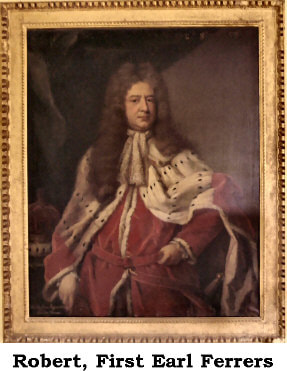


 Irish Historic Houses