Open dates in 2026: all year, except Jan 1, and Dec 25, 10am-7pm
Fee: Free
donation
Help me to pay the entrance fee to one of the houses on this website. This site is created purely out of love for the subject and I receive no payment so any donation is appreciated!
€15.00
Former Hibernian Bank,now H&M store, 2013.Photograph courtesy of Swire Chin, Toronto.
The former Union Bank, latterly the Hibernian Bank, building was designed by William George Murray (1822-1871), in association with Thomas Drew (1838-1910), and construction began in 1864. [1] Originally it was built with just four bays on College Green and two bays on Church Street.
The Bank of Ireland was formed in 1783. The Hibernian Bank was founded as The Hibernian Joint Stock and Annuity Company in April 1825, and later changed its name to The Hibernian Bank. A group of Dublin businessmen apparently formed the company in response to anti-Catholic discrimination by the Bank of Ireland. The bank aimed itself primarily at the Dublin business community. It opened its only branch in Dublin on 20 June 1825 with 1063 shareholders, many of them London based. The Hibernian Bank was taken over by the Bank of Ireland in 1958. [2]
William George Murray joined the architectural firm of his father, William Murray. William George Murray, the Dictionary of Irish Architects tells us, was architect to the Dundalk, Enniskillen & Londonderry Railway Company, for whom he built the railway station in Enniskillen, Fermanagh as well as many others. He was also architect to the South Dublin Union. [3] Thomas Drew was also an architect in the same firm, and he worked with Murray on the original building for the Union Bank. The Union Bank failed after just six months, and the building was bought by the Hibernian Bank.
William George Murray also designed the Royal College of Physicians on Kildare Street in Dublin after the previous building had been burnt in a fire. Murray also designed many more banks, including the Provincial Bank on College Green (now part of the Westin hotel), and insurance offices.
Thomas Drew was employed by the Hibernian Bank to add more bays to each side, from 1873-76. Thomas Drew later became President of the Royal Society of Ulster Architects and President of the RIAI, and held the Chair of Architecture in the new National University of Ireland. He married a sister of William G. Murray, Anne Adelaide, in 1871. Among his most important building, Archiseek tells us, are the Ulster Bank branch on Dame Street (the interior of which has been destroyed), the Trinity College Graduates Memorial Building, Rathmines Town Hall, and St. Anne’s Cathedral in Belfast. [4]
The building features a wonderful “chateau-esque” tower topped with ornate wrought iron railings and finials. It has another tapering belltower-type turret at the other side which is actually a chimneystack.
It is built chiefly in limestone, in the Italian Gothic style, with arcades, and has four storeys. The ground storey has deeply moulded arches splaying from octagon piers, and the corner toward College Green is squared off and one entrance door is positioned there on the ground floor, in an arched opening with Corinthian pilasters, under an ornately carved triangular pediment. There is another ornate door entrance at the other end of the building on Dame Street.
The Appraisal in the National Inventory gives us a summary:
“This exuberant former bank commenced operation as the Union Bank in 1864, designed by William G. Murray, assisted by Thomas Drew... It is constructed in an Italian Gothic Revival idiom with arcading to the main floors. The bosses and colonnettes of polished pink granite, and capitals and roundels of Portland stone by C.W. Harrison, create a strong contrast with the pale grey limestone that dominates the façade. The quality and profusion of ornament is particularly striking, with many very fine details, such as the carved timber door, the chimney structure, the carved tympanums and the aedicule [niche or pediment] to the roof of the corner bay. It is located within a group of significant historic bank buildings which line the north and south sides of College Green. The former banking hall has been recently converted for use a large retail outlet.” [5]
The Inventory description continues: “…Shouldered-arch door opening to elliptical-arch recess to corner bay, with carved Corinthian pilasters with engaged marble colonnettes, double-leaf battened timber door with trefoil-headed upper panels, and having carved limestone voussoirs [wedge shaped stones forming an arch] and moulded keystone and triangular pediment with carved tympanum bearing lettering ‘Hibernian Bank’, and egg-and-dart cornice.” [5] “Tympanum” comes from the word drum, like the eardrum of the ear, so is like a drum-skin, and in architecture it means the surface between the lintel of a doorway or window and the arch above it.
The National Inventory describes the doorway at the other end of the building on Dame Street: “Shoulder-arch door opening to west end of main facade, with Corinthian pilasters to reveals having engaged marble Corinthian colonnettes, limestone step, overlight, exquisitely carved timber panelled door, and voussoirs with keystone above, set within open-bed pedimented porch supported on hanging-posts, with carved panels to spandrels, and lettering ‘Hibernian Bank 1824’ to frieze.” [5]
The first floor has more deep semicircular arches divided by columns of polished red granite topped with ornately sculpted capitals. The windows in the first floor are square headed. On the arcading on the first floor level the arches over the windows contain the initials of the banks – the older bays have the initials of the Union Bank and the newer bays, the Hibernian Bank. The windows of the first storey have slightly pointed arched hood mouldings with carved limestone masks to the stops.
The second floor has semi-circular headed openings and the storey above has round dormer windows in the roof. The stone carving was done by C.W. Harrison of Great Brunswick Street. The dressings are in Portland stone, with the finer carving in Caen stone. [6]
The south elevation to St. Andrew Street was added in 1925-8 by Ralph Byrne.
The National Inventory tells us:
“College Green facade (north) has seven bays; Church Lane facade has nine bays, two at north end being similar to main facade and of same date, three to south end being similar at ground and first floors and built 1925-8, other four-bay section being different and built 1873-6; and five-bay facade to St. Andrew Street (current main entrance) built 1925-8.” [5]
The description continues: “Limestone balconette to first floor of middle bays of Trinity Lane elevation, supported on corbels, window openings to same floor being set within square-headed frame; same bays have paired square-headed window openings to second floor, with gablet above having limestone copings with finial, and carved tympanum. Three south end bays of Trinity Lane elevation and all bays of St. Andrew Street elevation have diminutive round-headed window openings to second floor; first floor has elliptical-arch double-height openings with decorative cast-iron balconettes to middle of each opening, with timber casement windows having margined upper lights with fanlights.” [5]
The former bank now houses a branch of the clothing shop H&M.
The interior has a vaulted ceiling, which was traditionally left lit up at night for display. It has a semicircular recess on one side. The arched ceiling is very ornate. Archiseek describes it as “arched and groined, and springs from a stone cornice all around; it is covered with coffered panels arranged in a kind of diaper, with rich centre flowers in each.” Note that a “groin” is described by Alistair Rowan in his Buildings of Ireland: Northwest Ulster, as a sharp edge at the meeting of two cells of a cross-vault, and coffering, he tells us, are sunken panels, square or polygonal, decorating a ceiling, vault or arch [see my entry of architectural definitions, https://irishhistorichouses.com/2020/04/18/architectural-definitions/ ]
orange: “whole house rental” i.e. those properties that are only for large group accommodations or weddings, e.g. 10 or more people.
green: gardens to visit
grey: ruins
donation
Help me to pay the entrance fee to one of the houses on this website. This site is created purely out of love for the subject and I receive no payment so any donation is appreciated!
“Lough Rynn Castle Hotel Estate & Gardens is one of the top luxury castle hotels to stay in. Located in County Leitrim, Lough Rynn Castle exceeds expectations as one of the most preferred hotels in Ireland.
“It is the ancestral home of the Clements family and the legendary Lord Leitrim. Our magical Irish castle hotel has been transformed from an incredible ancestral home into a place where old world elegance mixes seamlessly with unimaginable modern hotel luxury.
“Staying in a luxurious Castle Hotel in Ireland is a once in a lifetime experience and one that deserves to take place at a location full of history, luxury and charm. Take a step back in time as you approach imposing entrances at Lough Rynn Castle which offers acres of breathtaking scenery, historical sites and walled gardens. Our entire Irish castle hotel’s estate comprises of over 300 acres of land that is idyllic, rich in history and charmed with natural beauty. Take a romantic walk in our walled gardens overlooking our lough and come back to the castle hotel for some exquisite dining in our restaurant or drinks at the Dungeon Bar. Relax and take in the authentic Irish castle atmosphere in the Baronial Hall or in the John McGahern Library.
Lough Rynn, County Leitrim, Irish Tourist Collection National Library of Ireland ref NPA ITA 1377 (Box VII).
Mac Raghnaill family (1210 –1621)
“The current Lough Rynn estate is built on the ancestral lands of Clan Maelsechlainn-Oge Mac Raghnaill, the pre-Conquest rulers of this part of County Leitrim known as Muintir Eolais. The Annals of Loch Cé and Annals of Connacht refer to “the crannóg of Claenloch” (Lough Rynn) in the High Middle Ages, 1247AD, with the structure marked on some maps as “Crannoge” or “Crane Island”, while the medieval Mac Raghnaill‘s Castle is mentioned in 1474AD.
“The ruins of the Mac Raghnaill‘s Castle are located close to the lake and some 500 meters from the existing Lough Rynn Castle. The historian, Fiona Slevin, describes the structure of the Mac Raghnaill castle as “fairly standard for the time, but it did have a few unusual – and clever – features. Although a square shape, the castle had rounded corners that made it more impervious to artillery attacks and it had a straight stairway carved into the hollow of a wall, rather than the more usual spiral stair in one corner.”
“The Mac Raghnaill family had played an important role in the Nine Years War on the side of Aodh Mór Ó Néill resisting the English conquest of Ireland.
Crofton family (1621–1750)
“In the English Plantation of 1621, the Mac Raghnaill lands in Lough Rynn were confiscated and granted to an English family named Crofton. The Croftons brought British Protestant settlers with them and in the 1620s and 1630s the native Irish were gradually removed from the land.
“In 1749, a wealthy landowner named Nathaniel Clements purchased around 10,000 acres in the Mohill area of County Leitrim. Upon doing so, his son Robert became the 1st Earl of Leitrim. On their new estate, the Clements family took up residence in a modest dwelling already on the estate. However, they had their eyes on building a far more impressive residence worthy of their name and their stature – a magnificent castle.
Clements family (1750–1978)
“In 1750 the Croftons were replaced by another English family named the Clements. Daniel Clements, an officer in Oliver Cromwell‘s army, had been granted land in County Cavan which had been confiscated from the Irish following the Cromwellian conquest of Ireland. In 1750 Nathaniel Clements acquired the Lough Rynn estate, while remaining on his lands in Cavan. Nevertheless, the Clements started to become more involved in political life in Leitrim with Robert Clements becoming sheriff for the county in 1759. In 1795 Robert Clements became the first Earl of Leitrim. In 1833, Robert Bermingham [Clements (1805-1839)], Viscount Clements [grandson of the 1st Earl of Leitrim], built a mock Tudor revival house overlooking Lough Rynn. It is this property which is the basis for the current Lough Rynn Castle.
Robert Clements, later First Earl of Leitrim, by Pompeo Batoni, about 1753–1754, Hood Museum of Art.
“By the start of the 19th century, work had begun on the Clements family’s new home under the watchful eyes of the Earl. Sometime in 1839, Robert Clements died both suddenly and young, which passed the management of the estate to his brother William Sydney Clements. Although Sydney worked with his brother managing the build of Lough Rynn, as a second son, he never expected to inherit the lands or titles. However, in 1854, that’s exactly what he did, taking full ownership of the estate on the death of his father, thus becoming the 3rd Earl of Leitrim or Lord Leitrim as he preferred.
Robert Clements (1732-1804) 1st Earl of Leitrim by Gilbert Stuart courtesy of Christie’s Irish Sale 2001.
“Upon Robert’s death in 1839, management of Lough Rynn estate passed to his brother, William Sydney Clements [(1806-1879) 3rd Earl of Leitrim]. In 1854, when their father Nathaniel Clements, 2nd Earl of Leitrim, died William Sydney Clements became the 3rd Earl of Leitrim. He inherited an estate of a massive 90,000 acres which stretched across four counties. From around this time Sydney Clements asserted his control over the estate in an authoritarian manner which won him many opponents among the tenantry. He was unpopular in the locality and in Ireland, his assassination received widespread publicity in Ireland and abroad, with proponents of land reform using it as evidence of the need to protect tenants from the abuses of tyrannical landlords. His funeral in Dublin was marked by further riots, while none of the three assassins were convicted of his death.
“The inheritor of the Lough Rynn estate was Sydney Clements’ English-educated cousin who lived in Cavan, Colonel Henry Theophilus Clements [1820-1904], rather than the heir presumptive to the title who lived in England. This Colonel Clements embarked on an extensive expansion and refurbishment of the castle. He added a new wing, built a Baronial Hall designed by Thomas Drew with heavy plaster cornices, a large ornate Inglenook fireplace, and a fretted ceiling and walls wainscoted in solid English oak. Upon its completion in 1889, the principal floor of the house contained a main hall, Baronial Hall, chapel, reception room, living room and dining room. Two pantries, a kitchen, study, smokehouse and store were accessed by a separate entrance. In the basement there were stores and a wine cellar. There were fourteen bedrooms and four bathrooms upstairs.
“By 1952, when Marcus Clements took over the Lough Rynn estate, most of it had been sold off to former tenants under the land acts of the late nineteenth and early twentieth centuries. Clements lived there until the 1970’s. The estate remained largely empty until 1990 when it was purchased by an Irish-American investor, for a short time it was open to visitors but it was still in need of more investment and care.
Hanly Family (2001- Present)
“In 2001 Lough Rynn estate was purchased by the current owners, the Hanly family. They invested substantially in the castle and the grounds. In September 2006 when Lough Rynn Castle finally opened as a hotel, the estate extended to three hundred acres. Local father and son Alan and Albert Hanly purchased the castle and grounds. Over the seven years that followed, they lovingly brought it back to its former glory, so that it’s magic, luxury and history could be embraced.
“A secluded location, standard-setting craftsmanship, breathtaking views and the perfect blend of old-world elegance and new-world luxury, has turned Lough Rynn Castle into a truly magical destination.“
“Our charming award-winning boutique heritage hotel is in the centre of Carrick on Shannon, County Leitrim.”
The website tells us of its history:
“Since the late Eighteenth Century the simple bush that grew outside the local inn has been the symbol of a unique and historic establishment. Now in its fourth century, the Bush Hotel has maintained the Irish tradition of the Teach Aiochta, the ‘house of hospitality’ in all the changing circumstances of the passing years.
“The early Eighteenth Century was a totally different world to present-day Ireland. An increasingly large rural population in Counties Leitrim and Roscommon lived in great poverty and dreadful housing. They were mostly Irish speaking, illiterate and dependant on the potato as their main source of food. There was a small middle class of larger farmers, merchants and lower clergy. A tiny but powerful upper class was made up of landlords, their agents, government officials and Established Church Clergy.
“Early in the life-time of the Bush Hotel, in 1798, in a bloody aftermath of that year’s Rebellion, 200 captured rebels were brought to Carrick on Shannon, and following a ‘lottery of death’ 17 were hanged in the town centre. The following years were marked by periodic famine, outbreaks of cholera and typhus, and rural unrest in reaction to land scarcity and rack-renting. The grievances of the rural poor found expression in secret agrarian societies like The Ribbonmen, who used terror and even death to achieve their ends. These subversives feature in Anthony Trollop’s first novel, The McDermotts of Ballycloran, set in Leitrim in that era.
“The Bush Hotel, complete with rush-covered floors, is the scene of some of the action in the book.The greatest National leader of this era was Daniel O’Connell, who visited Carrick on Shannon in 1828. He led the successful campaign for Catholic Emancipation and the unsuccessful one for Repeal of the Act of Union.
“The greatest tragedy in Irish history was the Great Famine 1845- 1850. Caused by the failure of the potato crop and the inadequate steps taken by the British government to deal with the resulting starvation, it marked a turning point in Ireland. One million died: another million left the country, starting a stream of emigration that lasted till recent decades.
“The Famine Memorial Graveyard at St Patrick’s Hospital is a permanent local reminder of that terrible time and is within 10 minutes walk of the Bush Hotel.
“As the country slowly recovered in the wake of the Famine, an increasing middle class emerged. Towns like Carrick on Shannon took on a new more prosperous appearance as the second half of the Century moved on. The humble way-side inn became a fine hotel, one of the larger buildings in the town centre, along with the banks, the larger shops and new Catholic Church, across from the Bush Hotel. The extension of the railway from Longford to Sligo in 1862 provided Carrick on Shannon with its own railway station, a major economic boost.
“During this tour of Roscommon, Leitrim and Cavan in the early 1860’s the Fenian leader, Jeremiah O’Donovan Rossa, stayed in the Bush Hotel. His mission was to convert the agrarian Ribbonmen to the more nationalist and republican Fenianism.
“An important Irish leader who stated in the Bush Hotel in the 1880’s was Charles Steward Parnell, the ‘Uncrowned King of Ireland’. Along with Michael Davitt he addressed a huge Land League meeting in Carrick on Shannon. At this time the Catholic Parish Priests of County Leitrim, wishing to assert the political influence they held since the time of Daniel O’Connell, met in the Bush to nominate their own candidate during a general election.
“At the end of Parnell’s career, the Irish Home Rule Party Split into two factions over his leadership. A public meeting of the Anti-Parnellites, outside the Bush Hotel was attacked and disrupted by Parnellites from Drumshanbo, and had to withdraw behind the railings and gates of St Mary’s Church.
“The arrival of the Marist Sisters in 1873 and the Presentation Brothers in 1894 enhanced Carrick on Shannon as a centre of education for over a century.
“Two matters of interest in the story of the Bush Hotel are remembered from the Nineteenth century. The first was a tragic accident, when a male guest, who had a wooden leg, over-balanced and fell down the stairs, sustaining fatal injuries. The other was a ghostly presence in the attic, which may have been fact or phantom!In 1898, The Local Government Act replaced the old Grand Jury with the more Democratic Leitrim County Council.
“The meetings of the Council, the sessions of the Courts, and the business of commercial travellers all brought additional trade to the Hotel. Despite emigration the town still catered for a large rural population. Agriculture was modernising, the setting up of the local Kiltoghert Co-operative Creamery being a good example. Emigrants’ remittances from America helped the local economy.
“The coming of the Twentieth century was a time of great hope and expectation. It was marked for the Bush Hotel by the building in 1902 of the present three-story structure facing on to Main St., as the business continued to expand.
“The coming of the motor car brought a new dimension to travel and the Bush Hotel was a popular stop on the Dublin-Sligo Road.
“Early events in the new century were the expectation of Home Rule, the setting up of the Ulster and National Volunteers, the First World War, the 1916 Rising, all with local repercussions.
“In August 1917 a then little known visitor arrived at the Bush Hotel. He had come to organise the Sinn Fein Party in Carrick on Shannon, Drumlion and Gowel. His name was Michael Collins, who soon became the heroic leader in the War of Independence (1919-21) and a victim of the Civil War (1922-23).
“Other events were the setting up of the Irish Free State 1922, the replacement of the Royal Irish Constabulary by An Garda Siochana, and important bye-election in 1925 when Sam Holt, Carrick on Shannon’s only T.D. was elected.
“The period 1939-45 was a difficult time for business because of war-time scarcity, but the country maintained its neutrality and was spared the horrors of the Second World War. In the 1950’s Carrick on Shannon developed as a centre for angling tourism. Later the establishment of the Local Marina made Carrick on Shannon a leading centre for river cruising. These developments helped to make tourism a major part of the local economy.
“The building of the riverside service road gave a new access to the Bush Hotel property and enabled major expansion, which includes the Orchard Conference Centre and spacious car parks.
“In 1997, because of her family ties with the Carrick on Shannon area Mary McAleese chose the Bush Hotel to Launch her successful campaign for President of Ireland – Uachtaran na hEireann.
“The Hotel was demolished and rebuilt in 1920. Throughout the Twentieth Century the Bush Hotel, County Leitrim has continued to be a major centre of social and commercial life in Carrick on Shannon.
“Hotel was acquired by the Dolan Family in 1992 after 3 years closure and following a complete refurbishment opened in 1993 with 11 employees (8 of whom are still with us and two sadly are deceased).
“Dolan Family decided to move on and since April of 2022 the Hotel is recently operated by an Irish Firm called Hotels Properties with great Portfolio of Hotels across Ireland and the UK.”
orange: “whole house rental” i.e. those properties that are only for large group accommodations or weddings, e.g. 10 or more people.
green: gardens to visit
grey: ruins
donation
Help me to pay the entrance fee to one of the houses on this website. This site is created purely out of love for the subject and I receive no payment so any donation is appreciated!
€15.00
Mayo:
1. Belleek Castle and Ballina House, originally Belleek Castle, Ballina, Mayo – hotel and gives tours
Belleek Manor, or Castle, courtesy of National Inventory of Architectural Heritage.
The website tells us:
“Welcome to your authentic Castle Experience in the beautiful West of Ireland in Ballina, County Mayo. An award winning hotel & wedding venue with a gourmet restaurant, cafe and museum on site!
“Explore Belleek Castle, an iconic Irish Country Home a restaurant, wedding venue, boutique hotel and spectacular exhibition of the eclectic Marshall Doran Collection of which one of our academically trained guides will be delighted to take you on a tour.
“Belleek Castle has been a member of the prestigious Ireland’s Blue Book since 2016. Ireland’s Blue Book is a romantic collection of Irish Country House Hotels, Manor Houses, Castles and Restaurants. Located throughout the island of Ireland these charming and stylish hideaways are the perfect choice for your holiday vacation in Ireland. They are also ideal for a midweek or weekend break and those seeking a romantic getaway.
Open dates in 2026: Mar 13-26, Apr 17-25, June 12-26, July 8-24, Aug 15-23, 2pm-6pm
Fee: adult €8, OAP/child/student €3, National Heritage Week free
Brookhill House, photograph from National Inventory of Architectural Heritage. [1]
The National Inventory tells us it is a:
“Detached three-bay two-storey double-pile over part raised basement country house with attic, built 1845, on a T-shaped plan centred on single-bay full-height gabled frontispiece; three- or five-bay two-storey rear (south) elevation centred on single-bay full-height gabled “bas-relief” breakfront… “Restored”, 1990-1…Tudor-headed central door opening approached by flight of thirteen drag edged tooled cut-limestone steps between wrought iron railings, trefoil leaf-embossed timber doorcase having engaged colonette-detailed moulded rebated reveals with hood moulding on polygonal label stops framing timber panelled door. Pointed-arch flanking window openings with creeper- or ivy-covered sills, timber Y-mullions, and carved timber surrounds framing timber casement windows. Square-headed window openings in tripartite arrangement with drag edged dragged cut-limestone sills, timber cruciform mullions, and rendered flush surrounds having chamfered reveals with hood mouldings framing two-over-two timber sash windows without horns. Hipped square-headed central door opening to rear (south) elevation approached by flight of nine drag edged tooled cut-limestone steps between replacement mild steel railings, tooled cut-limestone surround having chamfered reveals with hood moulding framing glazed timber panelled double doors having sidelights below overlight. Square-headed window openings with rendered flush surrounds having chamfered reveals framing timber casement windows. Interior including (ground floor): central hall on a square plan retaining carved timber lugged surrounds to door openings framing timber panelled doors, and moulded plasterwork cornice to ceiling; and carved timber surrounds to door openings to remainder framing timber panelled doors with carved timber surrounds to window openings framing timber panelled shutters on panelled risers. Set in landscaped grounds.
Appraisal
“A country house erected to a design attributed to Frederick Darley Junior (1798-1872) of Dublin representing an important component of the domestic built heritage of the rural environs of Claremorris with the architectural value of the composition, one enveloping a “four square” house annotated as “Brook hill [of] Kirwan Esquire” by Taylor and Skinner (1778 pl. 214), confirmed by such attributes as the deliberate alignment maximising on panoramic vistas overlooking landscaped grounds; the symmetrical frontage centred on a “medieval” doorcase demonstrating good quality workmanship with the corresponding Garden Front centred on a streamlined doorcase; the diminishing in scale of the multipartite openings on each floor producing a graduated tiered visual effect with the principal “apartments” defined by polygonal bay windows; and the robust timber work embellishing the roofline. Having been well maintained, the elementary form and massing survive intact together with substantial quantities of the original fabric, both to the exterior and to the interior where contemporary joinery; Classical-style chimneypieces; and decorative plasterwork enrichments, all highlight the artistic potential of the composition. Furthermore, adjacent outbuildings (extant 1893); a lengthy walled garden (extant 1893); and an abbreviated “Triumphal Column” erected over the burial place of Joseph Lambert JP (1793-1855), all continue to contribute positively to the group and setting values of an estate having historic connections with the Lambert family including Joseph Lambert (1760-1813), one-time High Sheriff of County Mayo (fl. 1796); Alexander Clendenning Lambert JP DL (1803-92), ‘County Treasurer late of Brookhill County Mayo’ (Calendars of Wills and Administrations 1893, 432); Colonel Joseph Alexander Lambert JP DL (1855-1907), ‘late of Brookhill Claremorris County Mayo and of Bouverie Road West Folkestone Kent’ (Calendars of Wills and Administrations 1908, 297); and Brigadier Alexander Fane Lambert DL (1887-1974), later of Auld Licht Manse, Angus, Scotland; and a succession of tenants including Valentine Joseph Blake JP (1842-1912), ‘Land Agent’ (NA 1901); Major General Reginald Henry Mahon (1859-1929; NA 1911); and Katharine Tynan Hinkson (1859-1931; occupant 1916-21), poet and author of the autobiographical “The Years of the Shadow” (1919) and “The Wandering Years” (1922).“
The Landed Estates database tells us:
“Brookhill was situated on church land held by the Gonnes, who leased the house to the Kirwans in the late 1770s. Occupied by the Lambert family from the 1790s to the 1940s when it was sold to Gerald Maguire, a solicitor in Claremorris. Now the home of the Noone family.” [2]
3. Old Coastguard Station, Rosmoney, Westport, Co. Mayo– section 482
Open dates in 2026: June 29-30, July 1-31, Aug 1-30, Sept 1-8, 11am-4pm
Fee: adult €1, child/OAP/student free
Old Coastguard Station, County Mayo, photograph from National Inventory of Architectural Heritage.
The National Inventory tells us it is “A coastguard station erected to a design examined (1876) by Enoch Trevor Owen (c.1833-81), Assistant Architect to the Board of Public Works (appointed 1863), representing an important component of the later nineteenth-century maritime architectural heritage of County Mayo. Having been reasonably well maintained, the elementary form and massing survive intact together with quantities of the original fabric, both to the exterior and to the interior: the introduction of replacement fittings to the openings, however, has not had a beneficial impact on the character or integrity of the composition. Nevertheless, an adjacent boathouse (extant 1897) continues to contribute positively to the group and setting values of a neat self-contained ensemble making a pleasing visual statement in a low hillside overlooking the islet-studded Westport Bay.“
4. Partry House, Mayo – part of Museums of Mayo– sometimes open to the public
“Partry House is a charming historic house in a unique and secluded old estate by the shores of Lough Carra.
“Built in 1667 on the site of an old Castle, it is set in just 250 acres of unspoilt woodland, bog, pasture and parkland.
Farm
“The farm and gardens are run on ecologically friendly and organic principles. Wildlife abounds on this peaceful sanctuary in scenic South County Mayo.
“Now restored in keeping with its age and character, Partry House is open in part to the public during July and August.
“Partry House dates from 1667 when it was built on the remains of Cloonlagheen Castle by Arthur Lynch as a dowager house for his mother Lady Ellis, widow of Sir Roebuck Lynch [2nd Baronet, 1621-1667] of Castle Carra.
“Sir Roebuck’s lands were seized by the Cromwellians and he was compensated by lands at Castle Carra during the first half of the seventeenth century. The Castle was named after Cloonlagheen (‘the meadow of the little lake’) townland on which it stands.
“Evidence of the original castle was discovered during restoration work in 1995 when slit windows opening inwards were found at knee level on the first floor. Old castle walls can be seen incorporated into stable walls.
“Knox’s ‘History of Mayo‘ (1910) clearly states that Cloonlagheen castle was owned in 1574 by Abbé MacEnvile who was over Ballintubber Abbey. This was part of the Elizabethan survey called the ‘Divisons of Connaught’.
“The Lynchs, of the noted Galway family, occupied Partry House from 1667 until 1991; over 330 years in residence. Many of the ancestors of the present Lynch family are buried in a ring-fort graveyard on the estate, where their achievemements are noted on a large stone obelisk. Military, Exploratory and Humanitarian, their dates and names are written in stone.
“The one-time islands Moynish, Creggaun and Leamnahaye are linked to the shore by means of the Famine Walk built between the lake and a bog area. This and the fine limestone shore edging date from famine times when the Lynchs looked after their tenants providing food and work for them. Two old cast iron pots used to cook cornmeal stand in the garden.
“The obelisk commemorates George Quested Lynch MD who returned at once to Partry from Euphrates on hearing of the famine and died here of Typhus in 1848, aged only 34. The Lynchs, along with Browns of Westport House and the Moores of Moore Hall chartered the ship the ‘Martha Washington’ to bring corn meal from America for their tenants.”
5. Turlough Park, County Mayo – National Museum of Ireland Museum of Country Life
“Turlough Park was built in 1865, to replace a much older building near the entrance to the park. The name of the village and estate derives from the Irish turlach, signifying a lake that dries up in the summer period.
“Turlough Park was the home of the Fitzgerald family, to whom the estate was granted under the Cromwellian land settlements of the mid-seventeenth century.
“At its largest, the Turlough estate consisted of almost 8,500 acres requiring many indoor servants and outdoor estate workers to maintain the house and lands. In 1915, the Congested Districts Board – established to initiate economic improvements along the western seaboard – purchased and re-distributed the Fitzgerald estate.“
“A notable family member was George Robert [c. 1712-1782], son of George and later known as the ‘Fighting Fitzgerald’. Famous for his brave and reckless horsemanship, and a renowned duellist, George Robert was involved in a number of disputes and family quarrels. He was found guilty of murder and hanged in Castlebar, Co. Mayo in 1786.“
Mary née Hervey was George “Fighting Fitzgerald”s mother.Johann Zoffany Portrait of George Fitzgerald (1748-1786) with his Sons George and Charles (roughly 1764) courtesy of National Gallery of Ireland and Crawford Gallery.
“His younger brother Charles Lionel would inherit the Turlough Park estate.
“The architect Thomas Newenham Deane designed Turlough Park House. Deane was also the designer of the National Museum of Ireland – Archaeology in Dublin.
“The architectural style of the house has been referred to as ‘Victorian Gothic’. The two-storey house built of limestone rises to a high-pitched roof with dormer windows. It incorporates an open central Gothic porch bearing the house’s 1865 date stone.
“A service area adjoining the house, which once accommodated the kitchen and stable block, now incorporates visitor facilities such as the gift shop and café. In such houses, the kitchen was detached from the main house to avoid cooking smells disturbing the family and their guests and to minimise the risk of fire.“
“An imposing stained glass window above the porch incorporates the Fitzgerald family crest and bears the motto Honor Probataque Virtus (Honour, Probity & Virtue).”
“While the library was used mostly for recreation and study, the room was also where tenant farmers paid their quarterly rents to their landlord, the Fitzgerald family. The agent, seated facing the glass doors where the tenants entered, would note the payment in his rent book and issue the tenant with a receipt. It is said that the landlord sometimes sat behind the concealed door to hear what the tenants had to say without being observed.“
This room is furnished and decorated the way it may have looked around 1900. Most families occupying a house for a long time accumulate a variety of furniture from different eras and in different styles. The furniture here is from the Decorative Arts & History collections of the Museum.“
“Among the items is a Lyrachord Piano, which is the only one of its kind in the world. The left side operates like a piano and the right like a harpsichord.“
“There is also a nest of tables with harp and shamrock inlay typical of the Killarney school of furniture, as well as an embroidered armchair from Adare Manor, Co. Limerick dating from 1850.
“Becoming part of the National Museum of Ireland, Turlough Park House remained in the same family until 1991 when it was purchased by Mayo County Council. The proposal to open the house as a museum was a local initiative which led eventually to a decision made in 1995 to locate part of the National Museum of Ireland here. The Museum’s Folklife collections had been stored for a long time in Daingean, Co. Offaly, awaiting a suitable venue.“
“As the house was not suitable as a major exhibition space, a new building was purpose-built alongside it. Housing the Museum galleries, this award winning design was created by the architectural branch of the Office of Public Works. As part of the project, the Office of Public Works also restored the original ‘Big House’. The grounds and gardens were restored by Mayo County Council.“
The website tells us: “One of the few privately-owned historic houses left in Ireland, Westport House was built by the Browne family whose connections to Mayo date back to the 1500s. Their lineage relates them and the house to the trail-blazing pirate queen and chieftain, Grace O’Malley.“
“In 2017, Westport House was bought by another local and historic family, the Hughes family, who hope to ensure its survival into the future.
“Built in the 18th century, Westport House was designed by the famous architects, Richard Cassels, James Wyatt and Thomas Ivory. Westport House is located west of the Shannon and is considered to be one of Ireland’s most beautiful historic homes open to visitors – and is today often described as being one of Ireland’s National Treasures. It is situated in a superb parkland setting with lake, terraces, gardens and magnificent views overlooking Clew Bay, the Atlantic Ocean, Clare Island and Ireland’s Holy Mountain, Croagh Patrick right in the heart of the Wild Atlantic Way. It was built … by the Browne family, who are direct descendants of the famous 16th century Pirate Queen – Grace O’Malley.
“After Grace O’Malley’s death, a report stated that for forty years she was the stay of all rebellions in the West. She was chief of the O’Malley Clan and ruled the seas around Mayo. Grace O’Malley had several castles in the West of Ireland and it was on the foundations of one of these that Westport House was actually built. There is still an area of her original castle in the basement of the House (now known as The Dungeons), which is on view to visitors.
“The original house which would have been smaller, was built by Colonel John Browne [1631-1712], a Jacobite, who was at the Siege of Limerick and his wife, Maude Burke [or Bourke, (1640-1690)] in 1679-83. Maude Burke was Grace O’Malley’s great-great granddaughter. The house did not have the lake or a dam and the tide rose and fell against the walls.
“The east front of the House, as it is today, was built in 1730 by Colonel John Browne’s grandson, also John- 1st Earl of Altamont [1709-1776]. He hired the famous German architect, Richard Cassels. It is built with the finest limestone taken from the quarry south of the estate farmyard and was executed by local craftsmen. Richard Cassels also designed Carton, Haselwood, Russborough and Leinster Houses.
John Browne (1709-1776), Baron Mount Eagle, 1st Earl of Altamont, of Westport, County Mayo, after Joshua Reynold, Adams auction 18 Oct 2022.
“From the plans made in 1773, the ground floor contained:
The Waiting Room – now The Library
Front Staircase – now the Ante- library
Living Room – now The Front Hall
Back staircase – now part of the present Drawing Room
Dressing Room – now the East end of The Long Gallery.
“It was only one room deep, built round an open courtyard.
“In 1778, Peter, the 2nd Earl Of Altamont built the south wing to the Thomas Ivory plans his father had commissioned but had not carried out. Ivory’s south façade has a delicacy quite unlike Cassel’s bolder work on the East. In the 1780’s Peter’s son John Denis, 3rd Earl of Altamont (who later became the 1st Marquess of Sligo), completed the square of the House. He engaged James Wyatt to decorate his new Long Gallery and Large Dining Room (one of the great English architects who is responsible for other significant buildings in the town of Westport and further afield).“
John Denis Browne (1756-1809) 1st Marquess of Sligo Date 1806 Engraver William Whiston Barney, British, fl. c. 1805 After John Opie, English, 1761-1807, courtesy of National Gallery of Ireland.
“In 1816, Howe Peter (2nd Marquess of Sligo) began his alterations to the House. He built on the north wing for men servants and between 1819-1825, he built on the south wing. The south wing was built as a two-tiered library designed by Benjamin Wyatt. This was warmed by hot air and due to defects in the system, it was destroyed by fire almost immediately in 1826.
“In the 1830s, the central open courtyard where the Marble Staircase now sits, was covered in and Howe Peter made a new library by running a gallery round the now enclosed wall. In 1858 his son George abolished his father’s Library, moving it to where it is today and replaced it with the Marble Staircase.
“On the west side of the house, the highly effective balustraded terraces’above the lake and the landing places were put in by George Ulick (6th Marquess of Sligo). These were designed by the English architect, Romaine Walker, whose main Irish work was the remodelling of Waterford Castle.“
The website continues, telling us about the Browne Family:
“The story of the Browne Family is a microcosm for the wider and, at times, turbulent history of Ireland. Each generation has had to contend with and adapt to the prevailing social, political and religious changes encountered along the way. Despite revolution, invasion, plantation, famine and confiscation, the bond uniting Westport House and its family remained right up until 2017.
“The Browne Family originally arrived into Mayo from Sussex in the 16th century. Through marriage with daughters of native Irish landowners and by purchase, they built up a small estate near The Neale. As a Catholic family, they were fortunate that their lands were situated in Connaught thereby escaping the notorious confiscations of Cromwell. It was with John Browne III (1638-1711) with whom the connection with Westport House commenced. A successful lawyer, he married Maud Burke, daughter of Viscount Mayo and great-great granddaughter of the Pirate Queen Grace O’Malley (Granuaile 1530-1603).
“John Browne greatly increased his estate in Mayo and Galway including Cathair-na-mart (Stone-fort of the Beeves), a ruinous O’Malley fortress on the shores of Clew Bay. John’s good fortune was swept away as Ireland was plunged into chaos in the Williamite Wars. A Catholic, John supported the Jacobite cause and was appointed a Colonel in the Jacobite army. From the iron mines on his lands near Westport, he supplied the army with cannon balls and weapons. The defeat of the Jacobite army at Aughrim and Limerick in 1691 brought financial ruin in the confiscations that followed. At his death in 1711, his estate was reduced to Cathair-na-Mart and a few hundred acres.
“The Penal Laws which followed left his grandson, John IV, with little option but to conform to the prevailing religion in hope of surviving the confiscations and political upheaval. John IV gradually revived the family fortune. Young and ambitious he set about extending his estate and transforming the old O’Malley castle into modern day Westport House. In 1767, he – along with architect, William Leeson – replaced the old village of Cathair-na-Mart with a new town of Westport where he established a thriving linen industry. An excellent farmer he set about improving the fertility of his lands, which for the most part were of poor quality. He became the 1st Earl of Altamont. In 1752, his son and heir, Peter, 2nd Earl Of Altamont, married the heiress Elizabeth Kelly from Co. Galway whose estates in Jamaica further enhanced the family fortune. It is said that – as part of the dowry – her father insisted that he take the Kelly name and he became known as Peter Browne Kelly.
“John, 3rd Earl of Altamont, continued the innovative farming tradition of his grandfather. He created the lake to the West of Westport House and planted trees. He laid out the principal streets of the present town of Westport and many of the streets in Westport today are named after Browne Family members such as Peter Street, James Street, Altamont Street and John’s Row. He also established a theatre at the Octagon and built the town of Louisburgh. In 1787, he married Louisa Catherine, daughter and heiress of the famous English Admiral Earl Howe. During his lifetime, the French inspired 1798 Rebellion occurred. Aided by the arbitrary actions of Denis Browne, his younger brother, against the Irish insurgents (which earned him the reputation of “ black sheep” of the family), the Rebellion was crushed.
“In 1800, there was an Act of Union with England. The 3rd Earl voted for it and became the 1st Marquess of Sligo and an Irish representative peer. The reason the title is Sligo when the family home is in Mayo, is that in 1800 there was already an Earl of Mayo, a Viscount Galway to the south and a Lord Roscommon to the East. West was the Atlantic Ocean, so it had to be North – the land of Yeats and black cattle – Sligo.
“His only son Howe Peter, 2nd Marquess of Sligo, inherited in 1809 at the age of twenty-one. Extravagant and generous, his early life subscribed to the popular image of a “regency buck”. Friend of Byron, de Quincy and the Prince Regent, he traveled extensively throughout Europe on the “grand tour”. He excavated at Mycenae and discovered the 3,000 year old columns of the Treasury of Atreus. To bring them back to Westport, he took some seamen from a British warship and was subsequently sentenced to 4 months in Newgate prison. He married Hester, the Earl of Conricard’s daughter, with whom he had 14 children and settled down to life in Westport. He bred many famous race horses both at Westport and the Curragh. One of his horses, Waxy, won the Derby. He owned the last two of the original breed of Irish Wolfhound. In 1834, he was appointed Governor of Jamaica with the difficult task of overseeing the “apprenticeship system” a period prior to the full emancipation of the slaves. He met with great opposition from plantation owners and other vested interests. He was first to emancipate the slaves on the family’s Jamaican plantations. The first “free village” in the world, Sligoville, was subsequently named in his honour. A liberal, he was one of the few Irish Peers to vote for Catholic Emancipation. He died in 1845 as the clouds of the Great Famine descended over Mayo.
“His son, George, the 3rd Marquess, inherited a terrible legacy. The West of Ireland was worst affected by the famine. Westport House was closed and with no rents forthcoming, George borrowed where he could, spending £50,000 of his own money to alleviate the suffering of the tenants. With the guidance of his mother, Hesther Catherine, he imported cargoes of meal to Westport Quay and sub-vented the local workhouse, then the only shelter available to the destitute. He wrote tirelessly to the British Government demanding that they do more to help the famine victims. He wrote and had published a pamphlet outlining many pioneering reforms of the economic and social conditions that had led to the famine. In 1854, on being offered the Order of St. Patrick, an honour once held by his father and grandfather, disillusioned by England’s Irish policy (a reoccurring sentiment at Westport House!), the 3rd Marquess wrote “ I have no desire for the honour.” An exhibition about the Great Famine is on display in Westport House as told through Hesther Catherine’s letters to the estate’s agent in Westport, Hildebrand.
“John succeeded his brother as 4th Marquess. He had to contend with the huge changes that occurred in the ownership of land in Ireland in the late nineteenth and early twentieth century. Above all he was a “professional” farmer whose main contribution was to transform a reduced and almost bankrupt estate into a profitable one solely from agriculture. This work was continued by the 6th Marquess who added a sawmill, a salmon hatchery and planted extensively. The compulsory acquisition of the main entrance to the House for local public housing occurred in the ownership of the 8th Marquess which altered the historic relationship that had existed between the House and the town of Westport.
“In 1960, in the midst of a great depression and facing rising death duties, the 10th Marquess, Denis Edward, his wife Jose and son Jeremy (11th Marquess) decided to open Westport House and the grounds to the visiting public. It was a pioneering venture in a place and at a time that was remote and depressed. Over the succeeding decades, the 11th Marquess and his family developed the Estate into a Tourist Attraction.
The Grounds & Gardens
“The Brownes of Westport House knew the value of trees in a landscape too, as the stunning woodland in the estate’s grounds attest. Westport Demesne retains 100 acres of historic woods dating back to the 1700s.
“Back in the day, these trees provided a number of resources for the Westport House Estate. They created a shelter belt from the harsh Atlantic weather systems, they provided a fuel and timber source for heating and building materials, and they created a lush green back drop for the ‘naturalised parkland’ design landscape.
“The lords and ladies loved to interact with the landscape by promenading along a deep networks of track and trails. They would bring their visitors along these paths too, impressing them with the grandeur and beauty of the estate’s stately woodlands. Aptly enough, these design pathways and the areas of woodlands they ventured through were known as ‘the pleasure grounds’.
“An elaborate network of serpentine pathways meandered along, softly curving – following the style of landscape design that was popular during the 1800s and remains timeless to this day. The trails led the walker deep into the woodlands and surrounding landscape, where they could discover hidden design elements, such as sculptural pieces of architecture, exotic plant and tree species and new views.
“The pyramidal cone of Croagh Patrick was one of the most emphasised views in the Westport House Demesne, and a number of the historic pathways were specifically designed to yield the most captivating vistas. The woodlands even had purposely made gaps to seduce the stroller with sudden framed glimpses of the famous Reek.
Opened to the Public in 1960
“By the early 1960s, most historic homes of its nature were either burnt, knocked down or abandoned. Not so for Westport House. Jeremy – 11th Marquess of Sligo (1939 – 2014), took the estate in a whole new direction with inspiration from the “Big Houses” in the UK who had opened their doors to the interested public who were keen to see how the “other half” lived. In 1960, when Jeremy and Jennifer opened the attraction, the admission price was 2/6 for adults and 1/- for children. Admission to the grounds was 6d for both adults and children. In 1960, 2,400 visitors visited Westport House.
“Jeremy had a remarkable passion for product development and marketing. He was inspired by other houses that were becoming sustainable and viable by diversifying their offering from not only heritage but including other leisure attractions. He felt strongly that Westport House needed to appeal to a wider audience than those solely interested in antiques and architecture. Over time, he introduced a number of fun attractions. In the 1970s, the Slippery Dip (Cannon Ball run) and the Miniature Railway (Westport House Express) were added discretely on the grounds. A Camping and Caravan Park was developed – as well as Horse Drawn Caravan tours of Connemara – and Gracy’s Restaurant (situated at the Farmyard was created from what was originally a cowshed) and a shop evolved from a similar situation. There were even one armed bandits in the basement at one point in time and the giant pink rabbit called Pinkie was introduced as the estate’s mascot. The Tennis Courts, Pitch and Putt, a Flume Ride (The Pirates Plunge), Jungle World (The Pirates Den), and of course The Giant Swans on the lake were also phased in. In 2008, the Ships Galleon (The Pirate Queen) was introduced.
“It was during this time that Jeremy and Jennifer realised that in order to be able to leave the estate to their daughters, drastic action would need to be taken. Jeremy had signed a family trust aged 21 to leave the estate and title to his son. They went on to have five wonderful daughters (with no sign of a male heir). With the help of Mary Robinson QC (and later, first female president of Ireland) and Michael Egan, solicitor from Castlebar, Jeremy succeeded in bringing the Altamont Act through the senate in 1992 allowing him to leave the estate to his daughters and break the trust. He did not enact the same for the title of Marquess of Sligo and today, the 12th Marquess of Sligo, Sebastian Browne, resides in Sydney, Australia.
“In 2003, Jeremy commissioned Michael Cooper, his brother-in-law, to create a sculpture of Grace O’Malley – the original of alabaster stone is situated in the House and a bronze casting is in the garden. This was the beginning of reinstating her back where she belongs – in her home, with her family, and where the re-branding of the estate in 2009 as Westport House and Pirates Adventure Park emanated from.
“It was around this time that Sheelyn and Karen Browne – the two eldest of Jeremy’s five daughters – took the reins and added an Adventure Activity Centre, a seasonal Events Programme as well as holding the first large music festivals on the estate while Clare and Alannah ran Gracy’s Bar. Fifth sister, Lucinda, was always happy to lend a hand when home from the U.K. In 2017, the Browne family sold the house and estate to the local Hughes family who own neighbouring Hotel Westport and workwear provider, Portwest. A new chapter in the history of Westport House & Estate has begun. The Hughes family immediately started working on the grounds and gardens of the estate. The adventure park has been upgraded with a variety of new attractions and rides and there are plans to further invest in adventure. In 2021, urgent and necessary restorative works to Westport House will begin. And our new CEO’s main focus – along with the Hughes family – has been to produce a master plan for the entire estate that will ensure the sustainability and viability of the house and estate into the future.“
Places to stay, County Mayo:
1. Ashford Castle, Mayo/Galway – hotel
Ashford Castle, photograph Courtesy Aervisions 2016for Tourism Ireland, Ireland’s Content Pool (see [5]).
The website tells us: “Unrivalled service, warm Irish hospitality and five-star luxury await at Ashford Castle, part of The Red Carnation Hotel Collection. Situated in a spectacular 350-acre estate, discover sumptuous rooms and suites, splendid interiors brimming with antique furniture, fine fabrics and unique features at every turn.“
It was built originally by the Norman De Burgo family around 1228.
Ashford Castle, Cong, County Mayo, photograph by Robert French, Lawrence Photographic Collection, National Library of Ireland.Ashford Castle, photograph by Brian Morrison 2015 for Tourism Ireland, Ireland’s Content Pool (see [5]).Ashford Castle, photograph by Brian Morrison 2015 for Tourism Ireland, Ireland’s Content Pool (see [5]).
Mark Bence-Jones writes in A Guide to Irish Country Houses (1988):
p. 12. “(Browne, Oranmore and Browne, B/PB; Guinness, Bt/PB) A vast and imposing Victorian-Baronial castle of rather harsh rough-hewn grey stone in a superb postion and the head of Lough Corrib…built onto an earlier house consisting of a 2 storey 5 bay Georgian shooting-box enlarged and remodelled in French chateau style. The shooting-box and estate originally belonged to the Oranmore and Browne family; they were sold by the Encumbered Estates Court in 1855 and bought by Benjamin Lee Guinness, afterwards 1st Bt., head of Guinness’s brewery, who transformed the shooting-box into the French chateau. From the 1870s onwards, his son, Arthur, 1st and Last Lord Ardilaun, added the castle, which was designed by James Franklin Fuller and George Ashlin. He also built the tremendous castellated 6 arch bridge across the river, with outworks and an embattled gateway surmounted by a gigantic A and a Baron’s coronet, which is the main approach; from the far side of this bridge the castle looks most impressive. Its interior, however, is a disappointment, like the interiors of so many late-Victorian houses. The rooms are not particularly large, and some of them are rather low; everything is light oak, with timbered ceilings and panelling. The main hall was formed out of 2 or more rooms in the earlier house, and has a somewhat makeshift air; it is surrounded by an oak gallery with thin uprights and a staircase rises straight from one side of it. Another room has an immense carved oak mantel with caryatids and the Guinness motto. Magnificent gardens and grounds; large fountain, vista up the hillside with steps; castellated terrace by the lake. Sold ca 1930, now a hotel.” (see [3])
Ashford Castle, Cong, County Mayo, photograph by Robert French, Lawrence Photographic Collection, National Library of Ireland.Ashford Castle, Cong, County Mayo, photograph by Robert French, Lawrence Photographic Collection, National Library of Ireland.Ashford Castle, Cong, County Mayo, photograph by Robert French, Lawrence Photographic Collection, National Library of Ireland.Ashford Castle, Cong, County Mayo, photograph by Robert French, Lawrence Photographic Collection, National Library of Ireland.Ashford Castle, photograph by Brian Morrison 2015 for Tourism Ireland, Ireland’s Content Pool (see [5]).George V Dining Room, Ashford Castle, Co Mayo, Courtesy Jack Hardy 2016for Tourism Ireland, Ireland’s Content Pool (see [5]).Billiards Room, Ashford Castle,Courtesy Jack Hardy 2016for Tourism Ireland, Ireland’s Content Pool (see [5]).Afternoon tea, Ashford Castle, Co Mayo Courtesy Kelvin Gillmor 2014. (see [5])Ashford Castle, photograph by Brian Morrison 2015 for Tourism Ireland, Ireland’s Content Pool (see [5]).Ashford Castle, photograph by unknown, for Tourism Ireland, Ireland’s Content Pool (see [5]).Ashford Castle, photograph by Brian Morrison 2015 for Tourism Ireland, Ireland’s Content Pool (see [5]).
2. Belleek Castle and Ballina House, originally Belleek Castle, Ballina, Mayo –
Belleek Manor, or Castle, courtesy of National Inventory of Architectural Heritage.
The website tells us:
“Welcome to your authentic Castle Experience in the beautiful West of Ireland in Ballina, County Mayo. An award winning hotel & wedding venue with a gourmet restaurant, cafe and museum on site!
“Explore Belleek Castle, an iconic Irish Country Home a restaurant, wedding venue, boutique hotel and spectacular exhibition of the eclectic Marshall Doran Collection of which one of our academically trained guides will be delighted to take you on a tour.
“Belleek Castle has been a member of the prestigious Ireland’s Blue Book since 2016. Ireland’s Blue Book is a romantic collection of Irish Country House Hotels, Manor Houses, Castles and Restaurants. Located throughout the island of Ireland these charming and stylish hideaways are the perfect choice for your holiday vacation in Ireland. They are also ideal for a midweek or weekend break and those seeking a romantic getaway.
“The neo-gothic Country House, dating from 1831, has not lost its flavour by over modernisation…This historic Belleek Castle is informal, hassle-free and friendly, rich in decor and antiquities, with many open log fires to warm your steps back through half a millennium.”
Belleek Manor, or Castle, courtesy of National Inventory of Architectural Heritage.Belleek Manor, or Castle, courtesy of National Inventory of Architectural Heritage.
It continues in the history section:
“Belleek Castle was built between 1825 and finished in 1831 for the cost of £10,000. The building was commissioned by Sir Arthur Francis Knox-Gore for the cost of £10,000 and . The manor house was designed by the prolific architect John Benjamin Keane, and the Neo-Gothic architecture met the taste of the time, when Medieval styles became fashionable again.”
John B. Keane began his career as assistant to Richard Morrison in the early 1820s and set up his own practice by 1823, David Hicks tells us in his Irish Country Houses, A Chronicle of Change. The stone for the house was quarried from nearby quarry in Moyne. Francis Arthur Francis Knox-Gore had inherited the estate in 1818 when he was 15, and the manor was built after his marriage to Sarah Nesbit Knox from Castle Lacken, County Mayo. It is thought to have replaced an earlier structure, as the basement area of the castle today appears to be older than the floors above.
The website continues: “The house is thought to have replaced an earlier structure & is named after the original Belleek Castle, a 13th Tower House Castle situated on the banks of the River Moy. Francis lived at Belleek Castle with his wife Sarah and his 9 children until his death in 1873. According to his wishes he was buried in Belleek Demense. A striking Neo-Gothic Monument, designed by James Franklin Fuller, now marks his grave and is situated in the middle of Belleek Woods. It is said that his wife & favourite horse are both buried beside him. His eldest son Charles Knox-Gore inherited & became the 2nd Baronet. Charles died without issue in 1890 & was also buried in Belleek Demense beside the River Moy, and his dog Phizzie was buried beside him. The house was inherited by his sister Matilda who married Major General William Boyd Saunders of Torquay. Their grandson William Arthur Cecil Saunders-Knox-Gore sold the house in 1942.
“The house was later purchased by the Beckett family who intended on converting the Manor House into a stud farm but later sold the house. Mayo County Council purchased the house in the 1950s and used the Manor House as a hospital & military barracks and was later abandoned it. It was at this time that Mayo County Council considered taking the roof of the building to avoid paying rates. Fortunately Marshall Doran, a merchant navy officer and an avid collector of fossils and medieval armour, acquired the run down property in 1961, restored it and opened it as a hotel in 1970. Some of the rooms are in 19th style, whilst most of the interior design has a medieval and nautical touch. Marshall, being quite a craftsman, did a lot of the work himself, assisted by John Mullen, and supervised the restoration expertly. Today, the Castle is managed by Marshall’s son Paul Doran and Ms. Maya Nikolaeva.“
Belleek Manor, or Castle, courtesy of National Inventory of Architectural Heritage.
And about the tour of the castle:
“The Belleek Castle Tour includes an explanation of the origins of the Castle and the history of its former owners, the Knox-Gore family, the Earls of Arran. Learn about the life of Marshall Doran an adventurer, sailor & smuggler who restored Belleek Castle in the 1960’s. Visitors will see private dining rooms, decorated in opulent romantic style, as well as rooms designed by Marshal such as the Medieval Banquet Hall, the Spanish Armada Bar and the Tween Deck. The highlight of the tour is The Marshall Doran Collection, which is one of the finest collections of Jurassic fossils, Medieval Weapons and Medieval armour in Ireland. Visitors will also see the Grace O’Malley “The Pirate Queen’s” bed, the last wolf shot in Connaught and other curiosities.”
Magherameena Castle, Belleek, County Fermanagh, also designed by John Benjamin Keane, no longer standing. National Library of Ireland NLI Ref L_CAB_04725 National Library of Ireland
3. Breaffy House Resort, Castlebar, Co Mayo (formerly Breaghwy)
The website tells us: “Breaffy House Resort is located in the heart of County Mayo and is the perfect destination if you are looking for a well-deserved and relaxing break! Set on 101 acres, the resort consists of 4* Breaffy House Hotel and Self-Catering Apartments, only a 2 minute stroll between House Hotel & Apartments.”
Mark Bence-Jones writes (1988):
p. 47. “(Browne/IFR) A large Victorian Baronial mansion of rough-hewn grey stone with red sandstone around the windows; unusually long for its height. Entrance front with single-storey battlemented porch. Garden front with stepped gables, polygonal corner turret with battlements and pointed roof, and another battlemented turret set at an obtuse angle to the façade. Sold ca 1960. Now an hotel.” (see [5])
Archiseek describes it: “Dominick Andrew Browne built the present Breaffy House in 1890. The house is a Scottish baronial mansion and is victorian in style and was designed by English architect William M. Fawcett from Cambridge. The house has boldly recessed facades, a polygonal corner turret with battlements and pointed roof, a second turret set at an obtuse angle to the facade and stepped gables. The entrance front has a single story battlement porch. The building has tall slender chimneys and there are dormer windows on the roof.” (see [3])
4. Enniscoe House, Castlehill, Ballina, Co Mayo – section 482accommodation
The website tells us: “Owned and run by Adrian & Geraldine Noonan, Knockranny House Hotel & Spa is one of Ireland’s finest 4 star hotels in Westport.
“Set in secluded grounds on a hillside, this luxury hotel stands proudly overlooking the picturesque town of Westport and enjoys breathtaking views of Croagh Patrick and Clew Bay’s islands to the west and the Nephin Mountains to the north, one of the best Westport hotels locations.
“The welcoming atmosphere at Knockranny House Hotel Westport begins with the open log fires in the reception hall, and is carried throughout the property with its antique furniture, excellent spa facilities, superb cuisine and friendly service, creating a genuine sense of relaxed warmth and hospitality. Previously voted as AA Irish hotel of the year. “
Mount Falcon Estate, Co Mayo_by Mount Falcon 2020 for Tourism Ireland, Ireland’s Content Pool. (see [5])
The website tells us:
“Mount Falcon Estate is a luxury 32 bedroom 4-star deluxe hotel with 45 luxury lodges located on the west bank of the River Moy and is situated perfectly for exploring the 2500km of rugged Irish coastline called The Wild Atlantic Way. Mount Falcon hotel offers 100 acres of magical woodlands, between Foxford and Ballina, in North County Mayo, the most beautiful part of the West of Ireland. Situated in the heart of the Moy Valley (which encompasses Mayo North and Co. Sligo) this Victorian Gothic manor house (est. 1876) exudes understated elegance from a bygone era. Originally constructed as a wedding gift, Mount Falcon Estate has subsequently become known as the most romantic house in Ireland.
“Mount Falcon’s owners, the Maloney Family fell in love with the Estate and transformed it into one of the top Hotels in Ballina and Mayo. The owners have invested heavily in an ongoing restoration programme, and have ensured that the integrity and charm of the Estate have been completely retained. AA Hotel of the Year 2009/2010 & IGTOA Boutique Hotel of the Year 2011. Best Manor House Hotel in Ireland 2015, Hotel of the year 2017 Manor House Hotel, Traditional Luxury Hotel 2018 Luxury Travel Diary, Irelands Favourite Place to Stay Connaught 2018 Gold Medal Awards People Choice Winner, Top 100 Best Wedding Venues 2018 One Fab Day.“
Mark Bence-Jones writes (1988): p. 213. “(Knox/IFR) A Victorian Gothic house of rough-hewn stone, built 1876 for U.A. Knox [Utred Augustus Knox JP DL (1825-1913)], probably to the design of James Franklin Fuller. Of two storeys with a three storey bock to which a tower was added. Plate glass windows. There is a similarity between Mount Falcon and Errew Grange. Mount Falcon is now a hotel.“
The National Inventory adds:
“A country house erected for Utred Augustus Knox JP DL (1825-1913) to a design signed by James Franklin Fuller (1835-1924) of Great Brunswick Street [Pearse Street], Dublin, representing an important component of the later nineteenth-century domestic built heritage of County Mayo with the architectural value of the composition, one evoking strong comparisons with the Fuller-designed Errew House (1872-7), Errew, confirmed by such attributes as the deliberate alignment maximising on scenic vistas overlooking gently rolling grounds; the compact, albeit multi-faceted plan form; the robust rock faced surface finish offset by sheer limestone dressings not only demonstrating good quality workmanship, but also compounding a ponderous two-tone palette; the slight diminishing in scale of the openings on each floor producing a feint graduated visual effect with the principal “apartments” defined by polygonal bay windows; and the spire-topped tower embellishing a multi-gabled roofline. Having been well maintained, the elementary form and massing survive intact together with substantial quantities of the original fabric, both to the exterior and to the interior where encaustic tile work; contemporary joinery; restrained chimneypieces carrying the monogram of the proprietor (“UAK”); and decorative plasterwork enrichments, all highlight the considerable artistic potential of a country house having subsequent connections with the Aldridge family including Major John Beauclerk Aldridge RA (1900-76), previously of Glenmore: meanwhile, a discreet benchmark remains of additional interest for the connections with cartography and the preparation of maps by the Ordnance Survey (established 1824).” [7]
7. Owenmore, Garranard, Ballina, Co. Mayo –section 482 accommodation
Tourist Accommodation Facility: Open in 2026: all year except Jan, Feb, Mar 1-9, July 1-23, Dec 22-31
Since it is listed in Revenue Section 482 under Tourist Accommodation Facility, it does not have to open to the public.
Originally called Millbrook, Mark Bence-Jones tells us (1988):
p. 229. “(Orme/LGI1912; McCausland/IFR) An early C19 house of two storeys over high basement. Entrance front of 5 bays; single-storey Doric portico with a die up broad flight of steps. Entablatures on console brackets over windows of lower storey. Side elevation of one bay with a curved bow; at the other side is a two storey bowed wing of the same height and style as the main block, set back from it and joined to it by a canted bay. Eaved roof on cornice. Two drawing rooms en suite with decoration of ca 1830; ceilings with plasterwork in compartments; pediment over double-doors. Dining room ceiling with delicate plasterwork in centre surrounded by rectangular frame with similar decoration.” [3]
Timothy William Ferres tells us it was built ca 1847, and when the estate was decimated by the Land Acts, about 1926, it was sold to the Knox family. It was sold again in 1950 to Major Marcus McCausland.” [4]
It seems to have been built for William Orme (1810-76), JP. The National Inventory adds:
“the compact plan form centred on a pillared portico demonstrating good quality workmanship in a blue-grey limestone; and the very slight diminishing in scale of the openings on each floor producing a graduated visual impression with those openings showing sleek “stucco” dressings. Having been well maintained, the form and massing survive intact together with substantial quantities of the original fabric, both to the exterior and to the interior, including crown or cylinder glazing panels in hornless sash frames: meanwhile, contemporary joinery; and ‘splendid ceilings [revealing] the superb skill of the Italian masters introduced for this work’ (Irish Tourist Association Report 1942), all highlight the artistic potential of the composition.”
8. Turin Castle, Turin, Kilmaine, Co. Mayo, Ireland – whole castle rental, up to 12 guest
“Turin Castle in County Mayo is a luxury self catering venue near Ballinrobe in County Mayo Ireland. It is a unique medieval castle set against the backdrop of picturesque countryside. This exclusive and intimate venue is the perfect location for a romantic, castle wedding or family gathering. Unfortuntately It is not suitable for stag or hen parties. It is the only privately owned castle in Ireland with en-suite facilities. The castle sleeps a maximum of 12 people and is hired on a self catering basis but catering can be arranged if required. Please ask for details.
“If you are looking for a truly exceptional medieval experience, Turin Castle in County Mayo will not disappoint. The castle is ideal for a family holiday with a difference or a special intimate wedding affording total privacy.
“Turin Castle is situated in the ancient barony of Kilmaine, the castle is surrounded by 16 acres of rich walled pasture land and is an ideal choice for couples searching for an idyllic but small wedding venue. The nearest town is Ballinrobe which is 8 km away offering a good selection of pubs and eateries. The picturesque village of Cong famous for the John Ford film ” The Quiet Man” and Ashford castle are also close by. The castle is conveniently located close to excellent golf courses.“
The website includes a good description of its history:
“1238 was a most auspicious year in the long and turbulent history of County Mayo. For we are told in the annals of the four Masters that the foreigners erected Castles In Conmacnaine Cuile(Kilmaine) and Muinter Murchadha.(Robeen).
“The Foreigners were Anglo-Normans led by Richard de Burgo, son of William de Burgo. One of the most powerful Lords in England. In 1228 Richard had received the Overlordship of the whole of Connacht from the English King, Henry II, making him the “ red Earl “ the most powerful man in Ireland.
“The de Burgo dynasty survived and flourished up until Elizabethan times when the two hereditary titles of upper and lower Mac William (From William de Burgo, known as the conqueror) were finally abolished. During this time the de Burgos had become completely integrated into Gaelic society adopting Gaelic customs, laws and language becoming “ Hiberniores Hibernis ipis”. More Irish than the Irish themselves .However this was the beginning of the end of the old Gaelic order in Ireland and opened the way for the final conquest and plantation of Ireland.
“The origins and history of Turin Castle Ireland and neighbouring castles are sadly mostly lost in the mists of time. According to the chronicler O’Donovan “ In the parish of Kilmaine there are several square Castles said to have been built by the Burkes ( de Burgos) There is one in Kilmaine, one in Cregduff, one in Elistron and one in Killernan”. Turin would appear to derive from the old Irish meaning ‘small bleaching field’. Which may suggest that Turin Castle Ireland was involved in the very lucrative trade of sheep farming. There was a growing market for hides, meat and wool in continental Europe and by the mid 16th Century Kilmaine, politically and economically was the most important barony in the county. In 1574 there were 41 castles in an area of just 10 miles long by eight broad, by far the highest concentration of castles in Connacht, an indication that agriculture was on an industrial scale. The producers were the owners or tenants of the estates who would have enjoyed the protection of the upper and lower Mac William and in turn the Mac Williams would profit from the duty imposed which would probably directly affect the commodity market price in Galway. Keeping the lines of communication open was essential hence the need for a line of Castles protecting the trade route from Lough Corrib to Galway. Apart from this liberal studding of castles in Kilmaine another possible indication of the profitability and importance of this trade was the presence of a large mercenary army loyal to the Mac Williams.
“In the division of Connacht 1570-1574 one Walter Mac Remon is listed as being resident of Turin Castle Ireland.The Mac Remons was a cadet branch of the clann Seonin who were one of the chief de Burgo clans of Ireland.
“Following the death of the Mac William Sir Richard Bourke, in September of 1586. The de Burgo clans and the Mac Donnells along with the O’Malleys and the Joys(Joyces) rose up against the English oppressors in an attempt to reinstate the Mac Williamship and other lordships which the English had abolished. One of the signatories to a document presented to the council of Connaught was Walter Mac Jonyn ( Seonin) of Towrin (Turin). This document attested that the principle reason for the rebellion was the abolition of the Mac Williamship and other titles.
“In 1589 the de Burgo clans along with the O’ Flaherties,Joys and Clandonnel rose up against the English forces and plundered the baronies of Clare,Kilmaine and Clanmorris.
“Sir Murrough O’Flaherty [(1540-1626)I believe he was a son of Grace O’Malley and Donal O’Flaherty] stayed with a few men at Keltyprichnane in Kilmaine and sent the rest under his son Teige to plunder the baronies of Clare and Dunmore where they burned 16 towns and gathered 3000 head of cattle and horses. The” rebel forces” gathered at the Carre in Kilmainham and engaged the English. Edward Bermingham of MilltownCastle and former Sherrif of Mayo joined the battle after being attacked by Teig O’ Flaherty. He described the battle in a letter written from Athlone on the 31st March:-
“The soldiers not neglecting their time went against them; there was a volley of shot on both sides.They came to the push of the pike with great courage, when the said Teig O’ Flaherty was slain with eight of his company. They were then disordered and I with six horsemen of mine and eight footmen, being beside our battle as a wing ready to charge upon the breach, did charge,
When I struck their Guidion (standard bearer) under his morion (helmet) with my staff and ran him through in the face of battle. I followed another and had him down, and so did my horseman Kill 5 more at that charge. We had not six score of ground to deal with them when they recovered a main bog. Three of my horsemen and eight footmen did kill of them in the bog 16.
Her majesties attorney in that province (Mr Comerford)understanding of their disordering, issued forth when he met of them and did slay 16.Divers others in the fight did kill of them, so that I account there is slain of them 80 and upwards. The attorney and I brought the head of Teige O’Flaherty to Sir Richard yester night that was wonderful glad, for this Teige was the stoutest man in the province and could do most.”
“According to a letter written by Comerford at Turin Castle Ireland dated 29th March Comerford rode two miles to the battle field and sallied forth on the fugitives with six shot, seven footmen and four horsemen killing 24.
“Following the subjugation and pacification of the Gaelic lords and subsequent plantation of Mayo. Many of the Castles were abandoned by their new English owners preferring the comfort of Manor houses. In some cases, incorporating the existing building or cannibalising materials from it. From records we know that Turin Castle Ireland had been abandoned for at least two hundred and fifty years up until its restoration in 1997.“
11. Westbrook Country House, Castlebar, County Mayo – boutique country house holiday rental
“A New Boutique Georgian Country House, Westbrook epitomises elegance & splendour. Located between the tourist meccas’ Westport & Castlebar, Westbrook Country House is the ideal base from which to explore the stunning West of Ireland Wild Atlantic Way, cycle the Greenway, sail on Clew Bay, climb Croagh Patrick, visit Knock Shrine or the National Museum of Country Life, or catch a show in the Castlebar Theatre Royal.
“As restful or as adventurous as you prefer your break to be, Westbrook Country House is the perfect place to base yourself; with world-class home cooked breakfasts, and stylish, spacious, immaculate five star hotel-grade guest rooms & suites complimented by a relaxed, friendly family atmosphere.
“Curl up on a leather armchair in front of a roaring fire with a first edition or your favourite novel in our library, climb in under crisp white linen sheets on one of our sumptuous beds or sink into a bubbling Jacuzzi bath with your favourite music & a lovely glass of Sauvingon Blanc, our vibe is opulent and fabulous but down to earth, and homely. We pride ourselves on guest consideration that is second to none.
“Arrive as a Guest, leave as a friend. We look forward to welcoming you to Westbrook.”
[3] Bence-Jones, Mark. A Guide to Irish Country Houses (originally published as Burke’s Guide to Country Houses volume 1 Ireland by Burke’s Peerage Ltd. 1978); Revised edition 1988 Constable and Company Ltd, London.
I have a bigger project than this section 482 houses blog. It helps, when writing about big houses, to know what is out there. So I have studied Mark Bence-Jones’s 1988 publication in great detail,A Guide to Irish Country Houses, and have conducted research with the help of the internet.
For my own interest, and I am sure many of my readers will appreciate, I am compiling a list of all of the “big house” accommodation across Ireland – finding out places to stay for when Stephen and I go on holidays, especially when we go to see the section 482 houses!
I am also discovering what other houses are open to the public. There are plenty to see which are not privately owned or part of the section 482 scheme. In fact many of the larger houses are either owned by the state, or have been converted into hotels.
This Monday, 8th June 2020, Ireland moves to the next phase of the government’s Covid-19 prevention plan, and we are allowed to travel 20km from our home, or to places within our county. Big houses won’t be open for visits, but some will be opening their gardens – already my friend Gary has been to the gardens of Ardgillan Castle for a walk. Stephen and I went there before lockdown, meeting Stephen’s cousin Nessa for a walk. The castle was closed, but we were blown away by the amazing view from the garden, and walked down to the sea.
Here is my list of houses/castles to visit in Dublin. Some are on section 482 so are private houses with very limited visting times; others are state-owned and are open most days – though not during Covid-19 restriction lockdown – they might be open from June 29th but check websites. Some have gardens which are open to the public now for a wander.
The website says “Original home to the Overend family, today Airfield House is an interactive tour and exhibition which brings visitors closer to this admired Dublin family. Here you’ll view family photographs, letters, original clothing and display cases with information on their prize-winning Jersey herd, vintage cars and their much loved Victorian toys and books.
We focus not just on the way of life the family lived at Airfield, but also on their fantastic charitable work for organisations such as St John Ambulance and The Children’s Sunshine Home (now The Laura Lynn Foundation) to name but a few.“
The name was changed from Bess Mount to Airfield circa 1836. It is a working farm, in the middle of suburban Dundrum! The house was built around 1830. [1] It was built for Thomas Mackey Scully, eldest son of James Scully of Maudlins, Co Kildare. Thomas Mackey Scully was a barrister at Law Grays Inn 1833 and called to the bar in 1847. He was a supporter of O’Connell and a member of the Loyal National Repeal Association. In 1852 the house went into the Encumbered Estates, and was purchased by Thomas Cranfield.
The Stillorgan History and Genealogy website tells us that Thomas Cranfield married Anne Keys in 1839. Thomas was a stationer and printer of 23 Westmorland Street. In 1847 he became the first mezzotint printer in Ireland producing copies of a works by Irish artists such as William Brocas. He received an award from the RDS for his print from a portrait of the Earl of Clarendon. He moved to 115 Grafton Street and received a Royal Warrant in 1850. The family moved to Airfield in 1854. Thomas was also an agent for the London Stereoscopic company and moved into photography. He disposed of his business in 1878 to his son and his assistant George Nutter. I recently heard Brian May member of the former rock band Queen discussing his interest in stereoscopic photography, which was fascinating. I wonder has he been to Airfield? It’s a pity there is nothing about it in the house. Thomas moved to England in 1882 after the death of his son Charles.
Thomas’s father was interesting also: the website tells us: “In 1753, Dr Richard Russell published The Use of Sea Water which recommended the use of seawater for healing various diseases. Circa 1790 Richard Cranfield opened sea baths between Sandymount and Irishtown and by 1806 was also offering tepid baths. Originally called the Cranfield baths it was trading as the Tritonville baths by 1806. Richard Cranfield born circa 1731 died in 1809 at Tritonville Lodge outliving his wife by four years to whom he had been married for over 60 years. He was a sculptor and a carver of wood and had a share in the exhibition Hall in William Street which was put up for sale after his death. He was also the treasurer for the Society of Artists in Ireland. He worked at Carton House and Trinity College. His son Richard took over the baths.“
The Stillorgan History and Genealogy website continues. When the Cranfields left Airfield, it was taken over by the Jury family of the Shelbourne hotel in Dublin. William Jury born circa 1805 was a hotel proprietor. He and his second wife went to live at Tolka Park, Cabra and William became proprietor of the Imperial Hotel in Cork and in Belfast and also had an interest ‘Jurys’ in Derry. In 1865 William, together with Charles Cotton, (brother of his wife Margaret) and Christian Goodman, (manager of the Railway Hotel in Killarney) purchased The Shelbourne from the estate of Martin Burke. They closed The Shelbourne in February 1866, purchased additional ground from the Kildare Society, and proceeded with a rebuild and reopened on 21.02.1867. John McCurdy was the architect and Samuel Henry Bolton the builder. The four bronze figures of Assyrian muses/mutes installed at the entrance of the Shelbourne Hotel were designed by the Bronze-founders of Gustave Barbezat & CIE of France.
William’s wife Margaret took over the running of the hotel after the death of her husband. She travelled from Airfield each morning bringing fresh vegetables for use in the hotel. She left Airfield circa 1891.
Four of their sons followed into the hotel business. Their fourth son, Charles, took over the running of The Shelbourne and died in 1946 in Cheshire aged 91 years.
The Overends seem to have taken over Airfield from 1884. Trevor Thomas Letham Overend (1847-1919) was born in Portadown, 3rd son of John Overend of 57 Rutland Square. He married Elizabeth Anne (Lily) Butler 2nd daughter of William Paul Butler and Letitia Gray of Broomville, County Carlow. Their daughters Letitia and Naomi were left well provided for with no necessity to work and instead devoted themselves to volunteer work and never married.
The website continues: “We focus not just on the way of life the family lived at Airfield, but also on their fantastic charitable work for organisations such as St John Ambulance and The Children’s Sunshine Home (now The Laura Lynn Foundation) to name but a few.“
“Airfield Ornamental Gardens Airfield gardens came to prominence under the leadership of Jimi Blake in the early 2000’s. Like all progressive gardens the garden in Airfield is an ever-evolving landscape. The gardens were redesigned in 2014 by internationally renowned garden designer Lady Arabella Lenox Boyd and landscape architect Dermot Foley. The colour and life you see in our gardens today are the result of the hard work and imagination of our Head Gardener Colm O’Driscoll and his team who have since put their stamp on the gardens as they continue to evolve. The gardens are managed organically and regeneratively with a focus on arts and craft style of gardening.
Airfield Food Gardens Certified organic by the Irish Organic Association this productive 2-acre garden supplies the onsite café and farmers market with fresh seasonal produce. Food production is only one element of this dynamic food garden. Education is at the core of this space. Annual crop trails, experimental crops and forward-thinking growing methods are implemented throughout the garden. Soil is at the heart of the approach to growing and and on top of being certified organic the garden is managed under “no dig” principals. These regenerative approaches result in a thriving food garden that is a hive of activity throughout the growing season.”
“The Walled Garden was originally a Victorian-styled kitchen garden that used to supply the fruit, vegetables and cut flower requirements to the house. It is 1 hectare (2.27 acres) in size, and is subdivided by free standing walls into five separate compartments. The walled garden was replanted in 1992 and through the 1990’s, with each section given a different theme.“
“The Victorian Conservatory was originally built in 1880 at Seamount, Malahide, the home of the Jameson family, who became famous for their whiskey all over the world. It was built by a Scottish glasshouse builder McKenzie & Moncur Engineering, and is reputed to be a replica of a glasshouse built at Balmoral in Scotland, the Scottish home of the British Royal Family. The conservatory was donated to Fingal County Council by the present owner of Seamount, the Treacy family and was re-located to the Ardgillan Rose Garden in the mid-1990s by park staff.
“The Department of Arts, Heritage and the Gaeltacht (DAHG) approached Fingal County Council in early 2014 to participate in a pilot project to develop and enhance skill sets in built heritage conservation, under the Traditional Building Skills Training Scheme 2014. The glass house/ conservatory at Ardgillan was selected as part of this project. The glass house has been completely dismantled because it had decayed to such an extent that it was structurally unstable. All parts removed as part of this process are in safe storage. This work is the first stage of a major restoration project being undertaken by the Councils own Direct Labour Crew in the Operations Department supervised by David Curley along with Fingal County Council Architects so that the glasshouse can be re-erected in the garden and can again act as a wonderful backdrop to the rose garden. This is a complex and difficult piece of work which is currently on going and we are hopeful to have the glasshouse back to its former glory as a centrepiece of the visitor offering in Ardgillan Demesne in the near future.“
The Bewleys business began in 1840 as a leading tea and coffee company, started by Samuel Bewley and his son Charles, when they imported tea directly from China. Charles’s brother Joshua established the China Tea Company, the precursor to Bewleys.
The Buildings of Ireland publication on Dublin South City tells us: “Rebuilt in 1926 to designs by Miller and Symes, the playful mosaics framing the ground and mezzanine floors are indebted to the Egyptian style then in vogue following the discovery of Tutankhamun’s tomb. The interior, originally modelled on the grand cafés of Europe and Oriental tearooms, was restructured in 1995 but retains a suite of six stained glass windows designed (1927) by the celebrated Harry Clarke (1889-1931). Four windows lighting the back wall of the tearoom are particularly fine and represent the four orders of architecture.“
Recently Paddy Bewley died, the last of the family directly involved with the running of the cafe and coffee business of Bewleys. Paddy was responsible for starting the coffee supplying end of the Bewley business.
Paddy, like those in his family before him, was a Quaker, and he lived by their ethos. The Bewley family migrated from Cumberland in England to County Offaly in 1700. Their association with coffee and tea dates back to the mid nineteenth centry, when they began to import tea from China.
Mark Bence-Jones writes in his A Guide to Irish Country Houses (1988):
p. 52. [Nugent, Byrne 1863, Ormsby-Hamilton sub Ormsby] A C18 house built round three sides of a square; with well-proportioned rooms and good decoration. Built by that genial Irishman on the C18 English political scene, Robert [1702-1788] 1st and last Earl Nugent, on an estate which belonged to his brother-in-law, George Byrne [or O’Byrne (1717-1763), husband of Clare Née Nugent], and afterwards to his nephew and political protege, Michael Byrne MP. The house was originally known as Clare Hill, Lord Nugent’s 2nd title being Viscount Clare; but it became known as Cabinteely House after being bequeathed by Lord Nugent to the Byrnes, who made it their seat in preference to the original Cabinteely House, which, having been let for a period to John Dwyer – who, confusingly, was secretary to Lord Chancellor Fitzgibbon, 1st Earl of Clare [John Fitzgibbon (1748-1802)] – was demolished at end of C18 and a new house, known as Marlfield and afterwards a seat of the Jessop family (1912), built on the site. The new Cabinteely House (formerly Clare Hill), afterwards passed to the Ormsby-Hamilton family. In recent years, it was the home of Mr. Joseph McGrath, founder of the Irish Sweep and a well-known figure on the Turf.”
Cabinteely House, photograph from Dun Laoghaire Rathdown County Council website.
The National Inventory attributes it to architect Thomas Cooley. It is described as: Detached nine-bay (three-bay deep) two-storey country house, built 1769, on a quadrangular plan originally nine-bay two-storey on a U-shaped plan; six-bay two-storey parallel block (west). Sold, 1883. “Improved” producing present composition” when sold to George Pim (1801-87) of neighbouring Brenanstown House. The Inventory also lists other owners: estate having historic connections with Robert Byrne (d. 1798, a brother to above-mentioned Michael Byrne MP) and his spinster daughters Mary Clare (d. 1810), Clarinda Mary (d. 1850) and Georgina Mary (d. 1864); William Richard O’Byrne (1823-96), one-time High Sheriff of County Wicklow (fl. 1872) [he inherited the house after his cousin Georgiana Mary died]; a succession of tenants of the Pims including Alfred Hamilton Ormsby Hamilton (1852-1935), ‘Barrister – Not Practicing’ (NA 1901); John Hollowey (1858-1928); and Joseph McGrath (1887-1966), one-time Deputy Minister for Labour (fl. 1919-2) and co-founder of the Irish Hospitals’ Sweepstake (1930). [4]
Charlemount House. Photograph from flickr constant commons, National Library of Ireland.
The architect of Charlemount House was William Chambers, and it was built in 1763. The Archiseek website tells us:
“Lord Charlemont [James Caulfeild, 1st Earl, 4th Viscount of Charlemont] had met and befriended Sir William Chambers in Italy while Chambers was studying roman antiquities and Charlemont was on a collecting trip. Years later Charlemont had hired Chambers to design his Casino on his family estate at Marino outside Dublin. When the need arose for a residence in the city Charlemont turned again to Chambers who produced the designs for Charlemont House finished in 1763. The house now the Municipal Gallery of Modern Art consists of a single block of five bays with curved screen walls to either side. The house breaks up the regularity of this side of Parnell Square as it is set back from the other houses…Charlemont house was sold to the government in 1870 becoming the General Register and Census Offices for Ireland and later the Municipal Gallery for Modern Art – a development that Charlemont would undoubtedly would have approved.” [5]
Robert O’Byrne tells us that inside is work by Simon Vierpyl also.
James Caulfeild, 1st Earl of Charlemont (1728-1799) by Richard Livesay, British, 1753-1826.
Open dates in 2026: Apr 17-20, May 1-4, 15-18, 29-31, June 1, 5-8, 15, 19-22, July 17-20, 24-25, Aug 14-24, 28-29, Oct 23-26, Nov 6-9, 20-23, 27-30 Sat -Thurs 9am-1pm, Fridays 3pm -7pm
Open dates in 2026: June 2-30, Tues-Fri, July 1-31, Tue-Sat, Aug 4-23, 10am-2pm
Fee: adult €10, entrance fee is a voluntary donation in honesty box at door
“The house was built in the 1820’s to designs by William Farrell as an Italianate seaside villa. A Mediterranean grove was planted with a Cork tree as its centrepiece. In the remains of this romantic wilderness, the present owner, architect Alfred Cochrane, designed a garden punctuated by a collection of architectural follies salvaged from the demolition of Glendalough House, an 1830’s Tudor revival mansion, built for the Barton family by Daniel Robertson who designed Powerscourt Gardens.”
“There is more fun at Corke Lodge” writes Jane Powers, The Irish Times, where ” the ‘ancient garden’ of box parterres is punctuated by melancholy gothic follies, and emerges eerily from the dense boskage of evergreen oaks, myrtles, and a writhing cork oak tree with deeply corrugated bark. Avenues of cordyline palms and tree ferns, dense planting of sword-leaved New Zealand flax, and clumps of whispering bamboos lend a magical atmosphere to this rampantly imaginative creation.”
Believe it or not, I did my Leaving Certificate examinations in this building! I was extremely lucky and I loved it and the great atmosphere helped me to get the points/grades I wanted!
Dalkey Castle in Dalkey in the suburbs of south Dublin, photograph by Brian Morrison, 2014, from Tourism Ireland. (see [2])
The website tells us: “Dalkey Castle is one of the seven fortified town houses/castles of Dalkey. The castles were built to store the goods which were off-loaded in Dalkey during the Middle Ages, when Dalkey acted as the port for Dublin. The castles all had defensive features to protect the goods from being plundered. These are all still visible on the site: Machicolation, Murder Hole, Battlements and arrow-loop windows. In Dalkey Castle, you will see a fine example of barrel-vaulted ceiling and traces of the wicker work that supported it. Niches have been exposed on the walls where precious goods may have been stored. The Castle is an integral entrance to both the Heritage Centre and Dalkey Town Hall.
Dalkey Castle was called the Castle of Dalkey in the Middle Ages. Later, in the mid to late 1600s it was called Goat Castle when the Cheevers family of Monkstown Castle were the owners.
In 1860s the former living quarters, upstairs, became a meeting room for the Dalkey Town Commissioners. It continued as a meeting room until 1998 when it was incorporated into Dalkey Castle & Heritage Centre. Today, part of the Living History tour takes place there. There is a re-creation of the stocks that were across the street where the entrance to the church is today.“
The website describes the Castle: “Drimnagh Castle is the only castle in Ireland to retain a fully flooded moat. Its rectangular shape enclosing the castle, its gardens and courtyard, created a safe haven for people and animals in times of war and disturbance. The moat is fed by a small stream, called the Bluebell. The present bridge, by which you enter the castle, was erected in 1780 and replaced a drawbridge structure.“
Open dates in 2026: Jan 9-12, 16-19, 23-26, 30-31, Mon-Fri, 9.30pm-1.30pm, Sat-Sun, 1pm-5pm, May 11, 15-18, 29-31, June 5-8, 12-15, 19-22, Aug 14-23, Sept 11-12, 18-21, 25-28, Oct 16-19, 23-24, Mon- Fri 9.30am-1.30pm, Sat-Sun 2pm-6pm
The website tells us: “Fernhill is a former substantial family residence on 34 hectares of land at Stepaside. Fernhill Park and Gardens is Dublin’s newest Public Park, and forms an important component of the historic landscape on the fringe of Dublin City and an impressive example of a small estate dating back to around 1823. The former estate is a unique collection of heritage buildings, gardens, parkland, woodland and agricultural land. The elevated nature of the site, overlooking Dublin Bay on the threshold between the city and the Dublin mountains, lends a particular magic to the place. Fernhill is also home to a unique plant collection, made up of acid-loving plants such as Rhododendrons, Camelias and Magnolias, among others.“
The Stillorgan Genealogy and History website tells us:
“The original house was a single-storey (possibly a hunting lodge) built circa 1723. By 1812 it was substantial family residence with additional out buildings surrounded by gardens, woodlands, parkland and farming land on an elevated location overlooking Dublin Bay. The house itself is a series of rambling interconnecting blocks of one and two stories transcended by a three storey tower which has developed and evolved over the years.
The gardens were planted with exotics such as magnolia and Chilean firetrees but it is also home to an extensive daffodil collection. Originally on 110 acres it now now on about 82 acres. The land was owned by Sir William Verner and part was leased to Joseph Stock. Alderman Frederick Darley purchased the lease from Verner in 1812 and his son William purchased the property outright in 1841.” Another son was the architect Frederick Darley (1798-1872).
20. Georgian House Museum, 29 Lower Fitzwilliam Street, Merrion Square, Dublin 2 – virtual visit only
Mark Bence-Jones. A Guide to Irish Country Houses.[originally published as Burke’s Guide to Country Houses volume 1 Ireland by Burke’s Peerage Ltd. 1978; Revised edition 1988 Constable and Company Ltd, London.]
p. 155. “Gaisford-St. Lawrence/IF) A rambling and romantic castle on the Hill of Howth, which forms the northern side of Dublin bay; the home of the St. Lawrences for 800 years. Basically a massive medieval keep, with corner towers crenellated in the Irish crow-step fashion, to which additions have been made through the centuries. The keep is joined by a hall range to a tower with similar turrets which probably dates from early C16; in front of this tower stands a C15 gatehouse tower, joined to it by a battlemented wall which forms one side of the entrance court, the other side being an early C19 castellated range added by 3rd Earl of Howth. The hall range, in the centre, now has Georgian sash windows and in front of it runs a handsome balustraded terrace with a broad flight of steps leading up to the entrance door, which has a pedimented and rusticated Doric doorcase. These Classical features date from 1738, when the castle was enlarged and modernized by William St. Lawrence, 14th Lord Howth, who frequently entertained his friend Dean Swift here; the Dean described Lady Howth as a “blue eyed nymph.” On the other side of the hall range, a long two storey wing containing the drawing room extends at right angles to it, ending in another tower similar to the keep, with Irish battlemented corner turrets. This last tower was added 1910 for Cmdr Julian Gaisford-St. Lawrence, who inherited Howth from his maternal uncle, 4th and last Earl of Howth, and assumed the additional surname of St Lawrence; it was designed by Sir Edward Lutyens, who also added a corridor with corbelled oriels at the back of the drawing room wing and a loggia at the junction of the wing with the hall range; as well as carrying out some alterations to the interior. The hall has C18 doorcases with shouldered architraves, an early C19 Gothic frieze and a medieval stone fireplace with a surround by Lutyens. The dining room, which Lutyens restored to its original size after it had been partitioned off into several smaller rooms, has a modillion cornice and panelling of C18 style with fluted Corinthian pilasters. The drawing room has a heavily moulded mid-C18 ceiling, probably copied from William Kent’s Works of Inigo Jones; the walls are divided into panels with arched mouldings, a treatment which is repeated in one of the bedrooms. The library, by Lutyens, in his tower, has bookcases and panelling of oak and a ceiling of elm boarding. Lutyens also made a simple and dignified Catholic chapel in early C19 range on one side of the entrance court; it has a barrel-vaulted ceiling and an apse behind the altar. Howth Castle is celebrated for the custom, continuing down to the present day, of laying an extra place at meals for the descendent of the chieftan who, several centuries ago, kidnapped the infant heir of the Lord Howth at the time in retaliation for being refused admittance to the castle because the family was at dinner, only returning him after the family had promised that the gates of the castle should always be kept open at mealtimes and an extra place always set at the table in case the kidnapper’s descendants should wish to avail themselves of it. Famous gardens; formal garden laid out ca 1720, with gigantic beech hedges; early C18 canal; magnificent plantings of rhododendrons.”
“It is with great sadness that we report the death of Pat Herbert, the founder and curator of The Hurdy Gurdy Museum of Vintage Radio, sadly he passed away on the 18th of June, 2020.
The museum has been a very special place since it first opened its doors in 2003. Pat had begun collecting radios and all things connected with communications, when he was working in the construction industry in London in the 1950’s. His collection grew over the years and found its rightful home in the Martello Tower which has a long history with the story of radio in Ireland. Pat had an encyclopedic knowledge on the history of radio and was also a great storyteller. He generously allowed the setting up of the amateur station EI0MAR in the Martello Tower and was always fascinated with the contacts made throughout the world over the airwaves.”
25. Knocknagin House, Coney Hill, Ballbriggan, Co Dublin, K32 YECO – section 482
Open dates in 2026: June 2 – 27, July 1 – 31, Aug 1-14, Tues – Sat, National Heritage Week, Aug 15-23, 9.30am-1.30pm
Lambay Island, photograph courtesy ofwww.visitdublin.comLambay Island, photograph courtesy ofwww.visitdublin.comLambay Castle, Lambay Island. Photograph from Country Life.The east court of Lambay Castle. (see [8])
26. Lissen Hall, Lissenhall Demesne, Swords, Dublin – open by appointment
The Historic Houses of Ireland tells us about Lissen Hall:
“Looking over the Meadow Water near the expanding village of Swords, Lissen Hall presents a tranquil mid-Georgian façade that is typical of rural Leinster. In fact country houses have become a rarity in the suburb of Fingal, formerly North County Dublin, which reuses an ancient place name for one of Ireland’s newest administrative regions. A pair of end bows disguise the fact that Lissen Hall is part of a far earlier building, possibly dating from the very end of the 17th century. The newer five-bay front is a typical mid-Georgian concept, with a tripartite door-case surmounted by a Serlian window.
“The arrangement is repeated on the upper storey, where the central window is flanked by a pair of blind sidelights, and the façade continues upwards to form a high parapet, now adorned with a pair of stone eagles. The building’s other main decorative features, a pair of attached two-storey bows with half conical roofs, have many similarities with Mantua, a now-demolished house that faced Lissen Hall across the Meadow Water in former times. At Mantua, which was probably slightly earlier, the silhouettes of the bow roofs prolonged the hip of the main roof in an uninterrupted upward line. It is difficult to imagine how this arrangement could have been achieved at Lissen Hall without compromising the outer windows on the top floor.
“The principal rooms are not over large but the interior of the mid-Georgian range is largely intact and original, with good joinery and chimneypieces. Architectural drawings from 1765 can be seen in the house, which at that time was owned by John Hatch, MP for Swords in the Irish Parliament in Dublin.
“Lissen Hall has only been sold once in 250 years. It passed from John Hatch to the politically influential Hely-Hutchinson family, one of whose seats was Seafield House in nearby Donabate. In 1950 Terence Chadwick purchased the house and park from the Hely-Hutchinsons and the house was subsequently inherited by his daughter Sheelagh, the wife of Sir Robert Goff.”
The Great Hall has an important collection of Jacobite portraits, on loan from the National Gallery of Ireland. It has corbel heads of King Edward IV (28 April 1442 – 9 April 1483), which are original.
Malahide Castle 1976, Dublin City Library and Archives. (see [6])Malahide Castle 1976, Dublin City Library and Archives. (see [6])
The library wing dates to the seventeenth century and is hung with eighteenth century leather wall hangings.
The pair of drawing rooms were rebuilt c.1770 after a fire in 1760. They contain rococo plasterwork and decorative doorcases. The castle also has turret rooms.
Open dates in 2026: Jan 12-16, 19-23, 26-30, Feb 3-6, 9, May 1-2, 5-9, 25-30, June 2-6, 8-13, 15-20, 22, Aug 15-23, 9am-1pm
Fee: adult €5, OAP/child/student €2
Meander, photograph from National Inventory of Architectural Heritage.
The National Inventory of Architectural Heritage describes it:
“Detached four-bay two-storey mono-pitched house, built 1939, on an asymmetrical plan with single-bay single-storey flat-roofed projecting porch to ground floor abutting single-bay two-storey mono-pitched higher projection; five-bay two-storey rear (south) elevation with single-bay two-storey projection on a shallow segmental bowed plan….A house erected to a design by Alan Hodgson Hope (1909-65) representing an important component of the twentieth-century domestic built heritage of south County Dublin with the architectural value of the composition, one ‘exploring Scandinavian modernism rather than Mediterranean modernism‘ (Becker 1997, 117), confirmed by such attributes as the asymmetrical plan form; the cedar boarded surface finish; the slight diminishing in scale of the openings on each floor producing a graduated visual impression with some of those openings showing horizontal glazing bars; and the oversailing roofline: meanwhile, a cantilevered projection illustrates the later “improvement” of the house expressly to give the architect’s children a room to wallpaper (pers. comm. 12th April 2016). Having been well maintained, the elementary form and massing survive intact together with substantial quantities of the original fabric, both to the exterior and to the plywood-sheeted interior, thus upholding the character or integrity of a house ‘which has grown and matured together with its garden to make an ensemble appealing more to the senses than to the mind’.”
“No. 45 Merrion Square, the home of the Irish Architectural Archive, is one of the great Georgian houses of Dublin. Built for the speculative developer Gustavus Hume in the mid-1790s and situated directly across Merrion Square from Leinster House, this is the largest terraced house on the Square and is the centrepiece of its East Side.
Light-filled, spectacularly-proportioned, interconnected rooms on the piano nobile of this Georgian palazzo offer a range of venues and facilities: meeting rooms for up to 20 people; multimedia lecture facilities for up to 55, dining space for up to 80, and receptions for up to 250. Whether the event is a meeting, a conference with breakout sessions, or a private or corporate reception, the Irish Architectural Archive’s beautifully graceful spaces provide Georgian elegance in the heart of Dublin.”
“Standing four stories over basement, and five bays wide, No. 45 is the largest of the terraced houses on Merrion Square. The house was built circa 1794 for the property developer Gustavus Hume. The architect may have been Samuel Sproule who, in the early 1780s, was responsible for the laying out of much of Holles Street, of both Mount Streets and of the east side of Merrion Square. The first person to live in the house seems to have been Robert la Touche who leased the building in 1795. In 1829 the house was sold to Sir Thomas Staples. It had been built in an ambitious and optimistic age, but in the Dublin of the late 1820s its huge size was somewhat anachronistic and certainly uneconomical, so Sir Thomas had the building carefully divided into two separate houses. Sir Thomas died aged 90 in 1865, the last survivor of the Irish House of Commons.
On his death, both parts of the house passed to Sir John Banks, Regius Professor of Medicine in Trinity College, who, like his predecessor, leased the smaller portion of the divided building, by now numbered Nos. 10 and 11 Merrion Square East. Banks himself lived in No. 11, the larger part, which he maintained in high decorative order. Banks died in 1910, and both parts of the building fell vacant and remained so until 1915 when the whole property was used to accommodate the clerical offices of the National Health Insurance Company. With single occupancy restored, the division of the building, renumbered 44 – 45 Merrion Square, began to be reversed, a process carried on in fits and starts as successive Government departments and agencies moved in and out over the decades. The last to go was the Irish Patents Office, relocated to Kilkenny in 1996.
The house was assigned to Irish Architectural Archive by Ruairí Quinn TD, Minister for Finance, in his budget of 1996. The Office of Public Works carried out an extensive programme of works to the house from 2002 to 2004, including the refurbishment of the historic fabric and the construction of new state-of-the-art archival stores to the rear.“
32. MOLI, Museum of Literature Ireland, Newman House, 85-86 St Stephen’s Green, Dublin
“No. 85 St. Stephen’s Green was built in 1738 by Richard Cassels, architect of Powerscourt House and Russborough House, and is notable for its exquisite baroque plasterwork by the Lafranchini brothers. The adjoining townhouse at No. 86 was constructed in 1765 and features superb examples of rococo stuccowork by the distinguished Dublin School of Plaster Workers.
The building takes its name from the theologian and educationalist Dr. John Henry Newman, who was rector when the Catholic University was founded in 1854.”
One entire room is dedicated as a “cabinet of curiosities.” Desmond Guinness and Desmond FitzGerald tells us in their entry about Newbridge House in Great Irish Houses that the collection may have started life as a shell collection in the 1790s by Elizabeth Beresford (1736-1860), who married the archbishop’s son Colonel Thomas Cobbe (1733-1814). She came from Curraghmore in County Waterford (see my entry on Curraghmore) and would have been familiar with her mother’s Shell Cottage. Much of what we see in the collection today comes from the Indian subcontinent, including a Taj Mahal in alabaster, ostrich eggs, corals, statues of house gods, snake charmer’s box and tusks with carving noting the abolition of slavery [see 12]. The oriental theme is even carried through to the elephant design curtains. The panels on the wall are reproduction of the originals.
An Arts and Crafts Gothic Revival mansion built in the late 1870s by its architect owner George Coppinger Ashlin for himself and his wife, Mary in tribute to her father, the hugely influential Gothic Revival architect, Augustus Pugin, who most famously designed the British Houses of Parliament and a number of Irish churches and Cathedrals. [17]
The website tells us: “Located in the centre of the ancient town Swords Castle contains over 800 years of history and, as a recent surprising discovery of burials beneath the gatehouse shows, it has yet to give up all of its secrets. The castle was built by the Archbishop of Dublin, John Comyn, around 1200, as a residence and administrative centre. The extensive complex of buildings is in the form of a rough pentagon of 0.5 hectares and is enclosed by a perimeter wall of 260 meters. It is a National Monument, and it is the best surviving example of an Archbishop’s Palace in Ireland. The curtain walls enclose over an acre of land that slopes down to the Ward River. This complex of buildings is made up of many phases of reuse and redesign reflecting its long history and changing fortunes.”
Swords Castle, 1971, Dublin City Library and Archives photograph. (see [6])Swords Castle, 1971, Dublin City Library and Archives photograph. (see [6])
47. The Church, Junction of Mary’s Street/Jervis Street, Dublin 1– section 482
The National Inventory tells us it is: “Freestanding former Church of Ireland church, built 1700-4… Now in use as bar and restaurant, with recent glazed stair tower built to northeast, linked with recent elevated glazed walkway to restaurant at upper level within church… Saint Mary’s (former) Church of Ireland was begun c.1700 to the design of Sir William Robinson and was completed by his successor, Thomas Burgh.” [18]
Mark Bence-Jones writes in his A Guide to Irish Country Houses (1988):
“[Guinness/IFR] A Victorian house of two storeys over a basement with plate glass windows, built ca 1860 for Thomas Hosea Guinness and his wife Mary, nee Davis, who was heiress of the estate. Rich plasterwork and Corinthian columns with scagliola shafts in hall.”
The National Inventory adds the following assessment:
“A country house erected for Thomas Hosea Guinness JP (1831-88) to a design by Joseph Maguire (1820-1904) of Great Brunswick Street [Pearse Street], Dublin (Dublin Builder 1st December 1861, 692), representing an integral component of the mid nineteenth-century domestic built heritage of south County Dublin with the architectural value of the composition, one superseding an adjacent farmhouse annotated as “Tibradden House” on the first edition of the Ordnance Survey (surveyed 1837; published 1843), confirmed by such attributes as the deliberate alignment maximising on scenic vistas overlooking rolling grounds and the minor Glin River; the compact near-square plan form centred on a Classically-detailed doorcase demonstrating good quality workmanship; the diminishing in scale of the openings on each floor producing a graduated visual impression; and the open bed pediment embellishing a slightly oversailing roofline. Having been well maintained, the elementary form and massing survive intact together with substantial quantities of the original fabric, both to the exterior and to the interior where contemporary joinery; Classical-style chimneypieces; and decorative plasterwork enrichments, all highlight the artistic potential of the composition. Furthermore, adjacent outbuildings (extant 1909); a walled garden (extant 1837); and a nearby gate lodge (see 60250002), all continue to contribute positively to the group and setting values of a self-contained ensemble having historic connections with the Guinness family including Colonel Charles Davis Guinness (1860-1939), one-time High Sheriff of County Louth (fl. 1918); Major Owen Charles Guinness OBE (1894-1970); and Second Lieutenant Charles Spencer Guinness (1932-2004).“
Current owner Selina Guinness’s memoir The Crocodile by the Door tells us about the house and how she acquired it from her uncle, and the work she has undertaken to run it as a family home, with her adventure of taking up sheep farming to maintain the property and its land.
“Tyrrelstown House & Garden is set in 10 hectare of parkland in Fingal, North County Dublin, just minutes from the M50, off the N3 (Navan Road). There are 2 walled gardens, and an arboretum with woodland walks including 2 hectares of wild flower & pictorial meadows. Lots of spring bulbs and cyclamen adorn this lovely sylvan setting.
The walled gardens are over 600 years old and include a wide range of alkaline and acid loving plants and shrubs and include an organic vegetable garden.
The Wilkinson family arrived here in 1895 & have been farming the land ever since.“
[3] Mark Bence-Jones A Guide to Irish Country Houses (originally published as Burke’s Guide to Country Houses volume 1 Ireland by Burke’s Peerage Ltd. 1978); Revised edition 1988 Constable and Company Ltd, London.


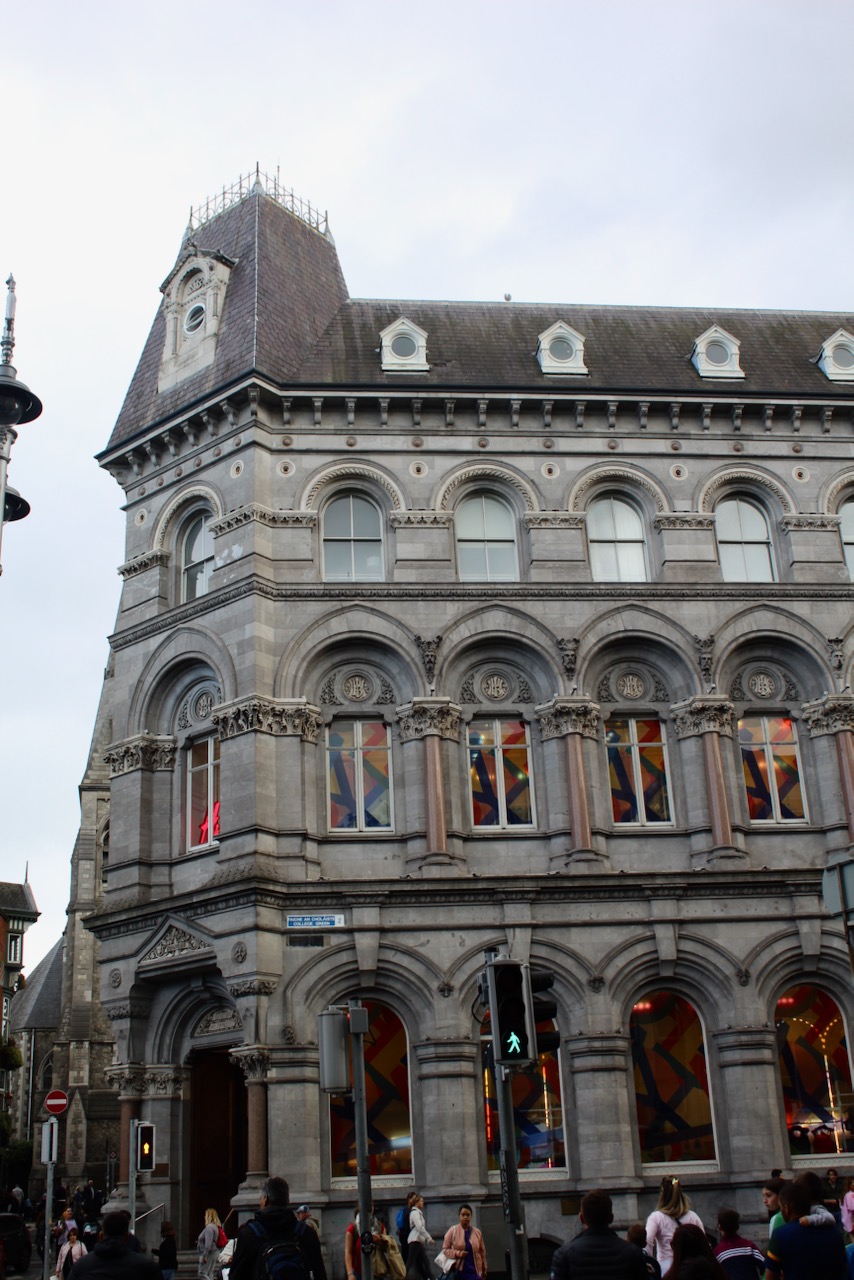
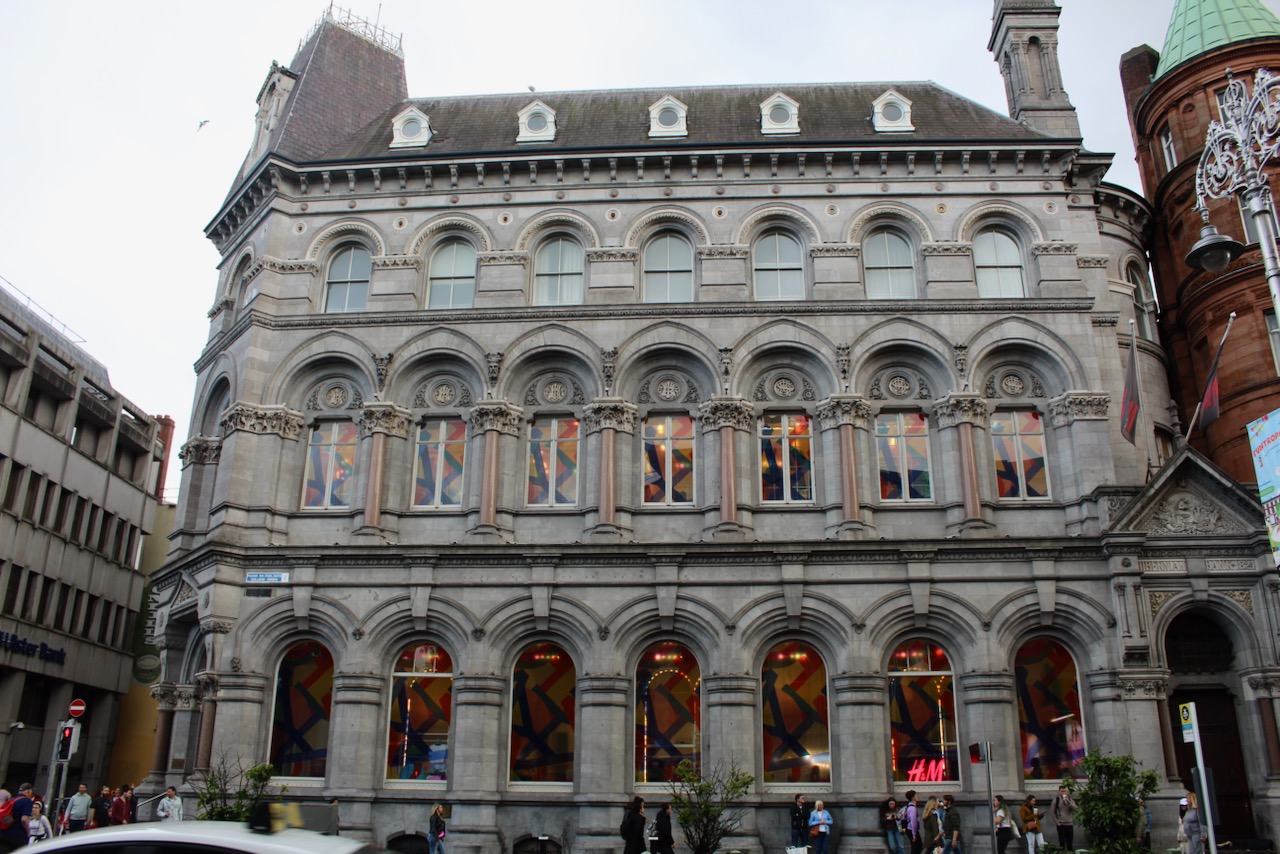
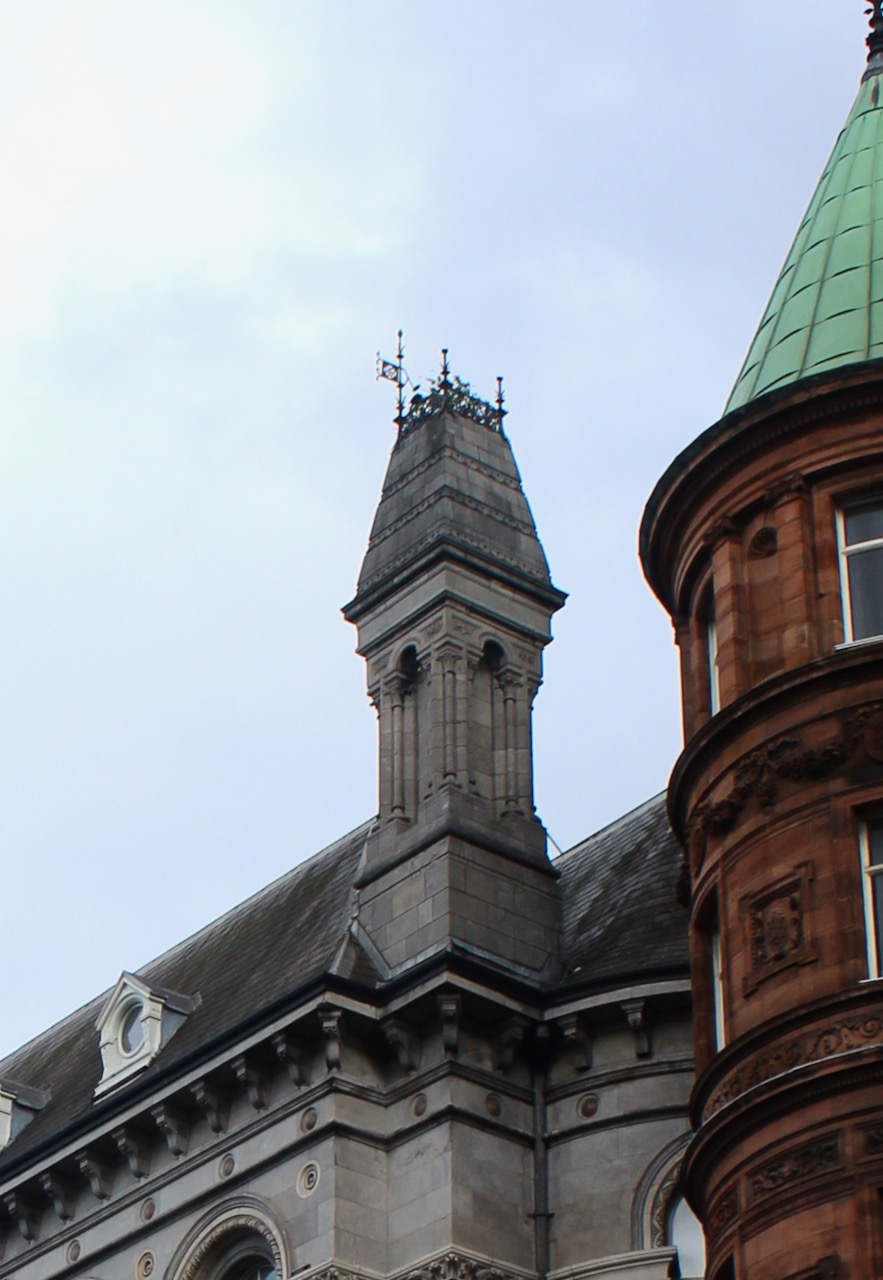
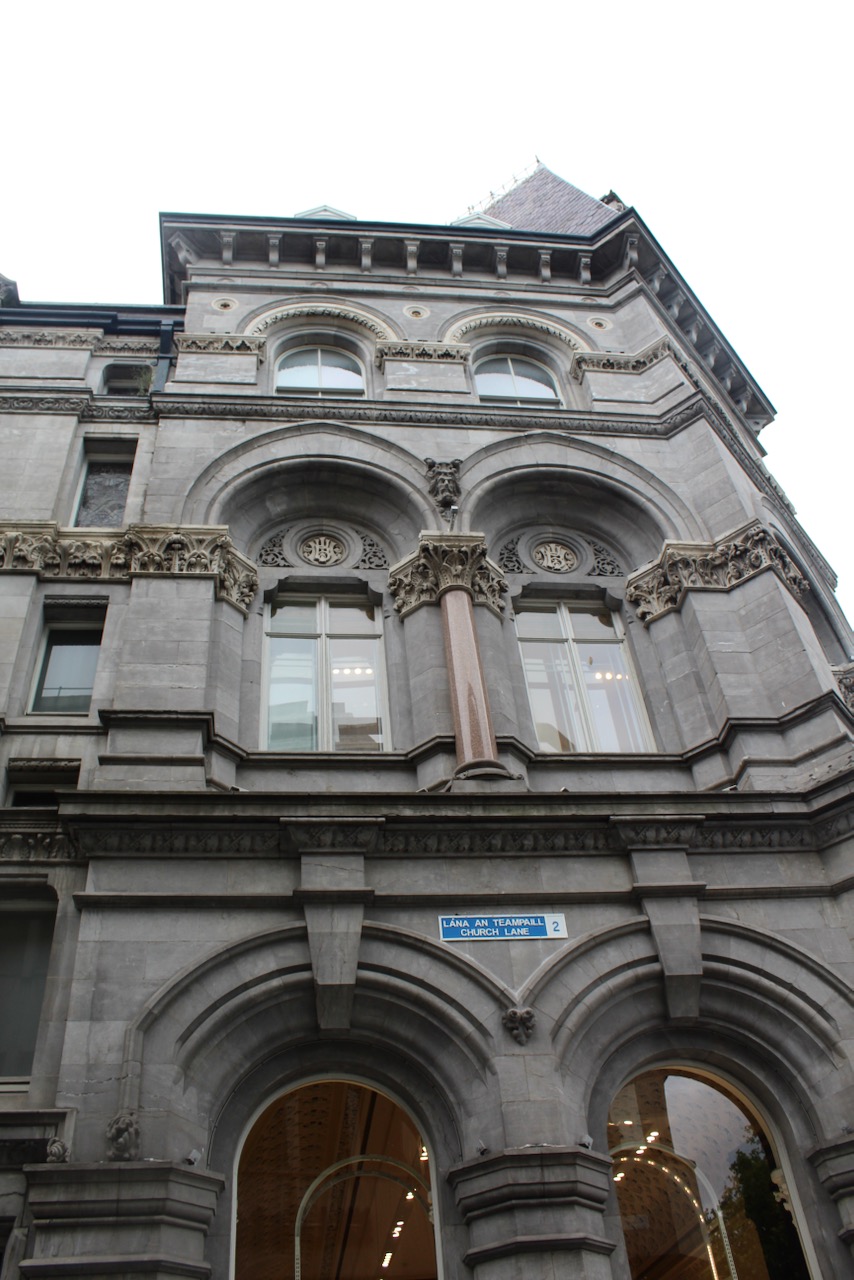

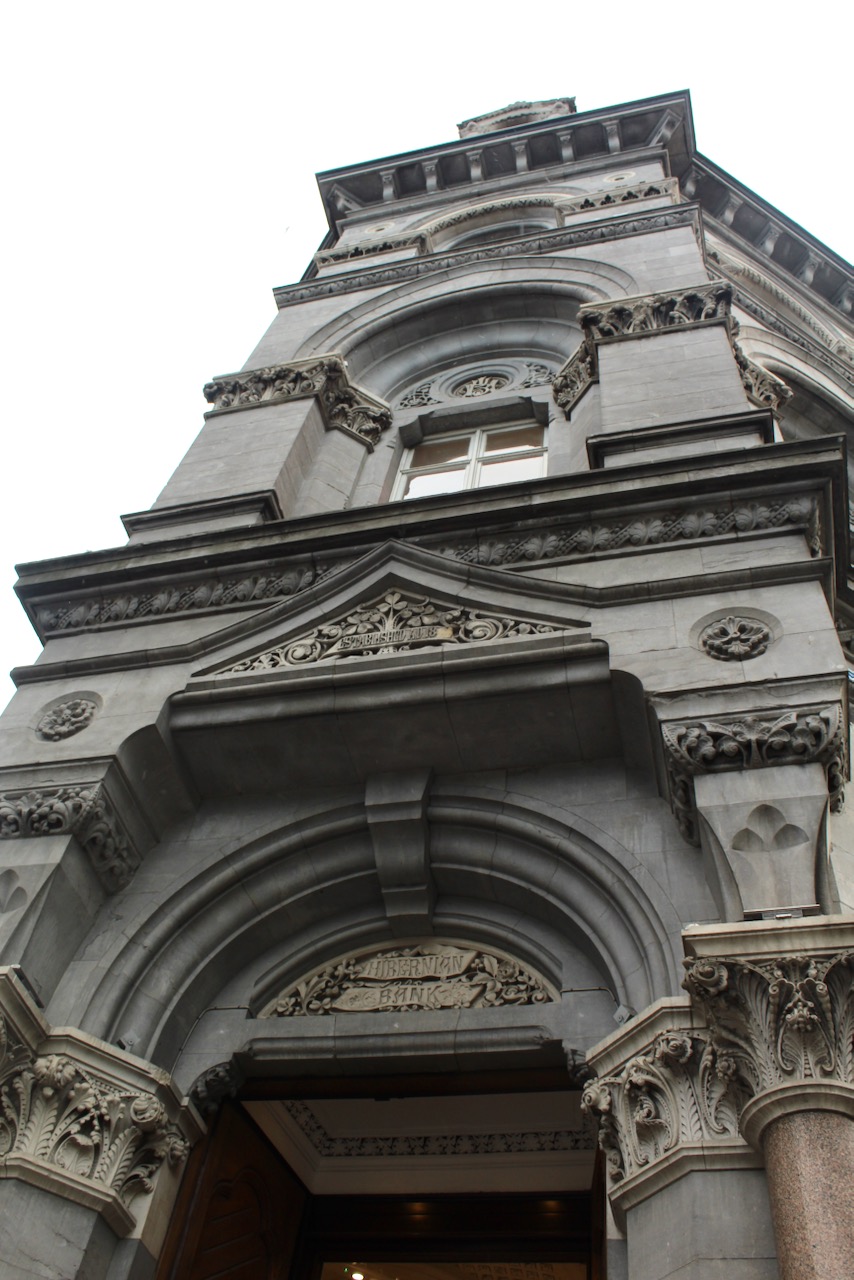
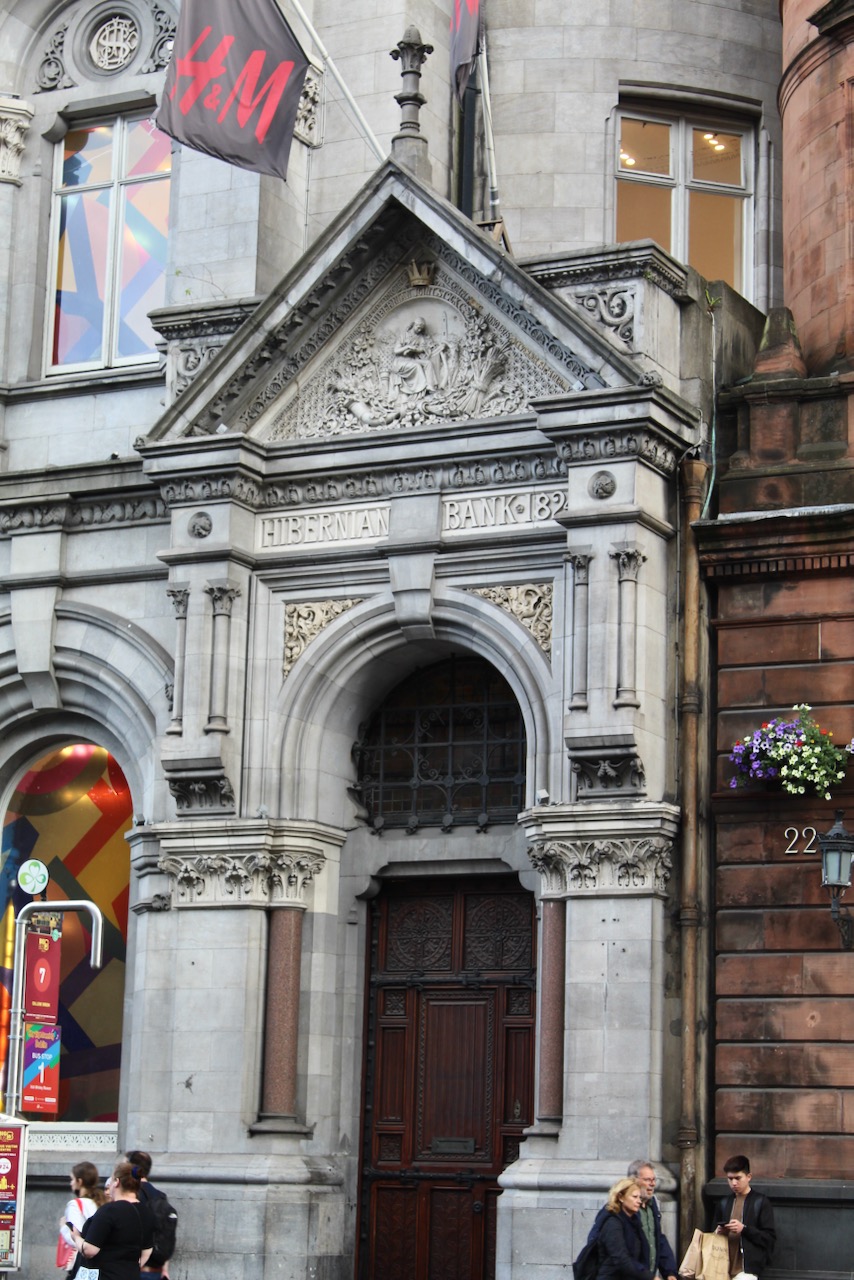
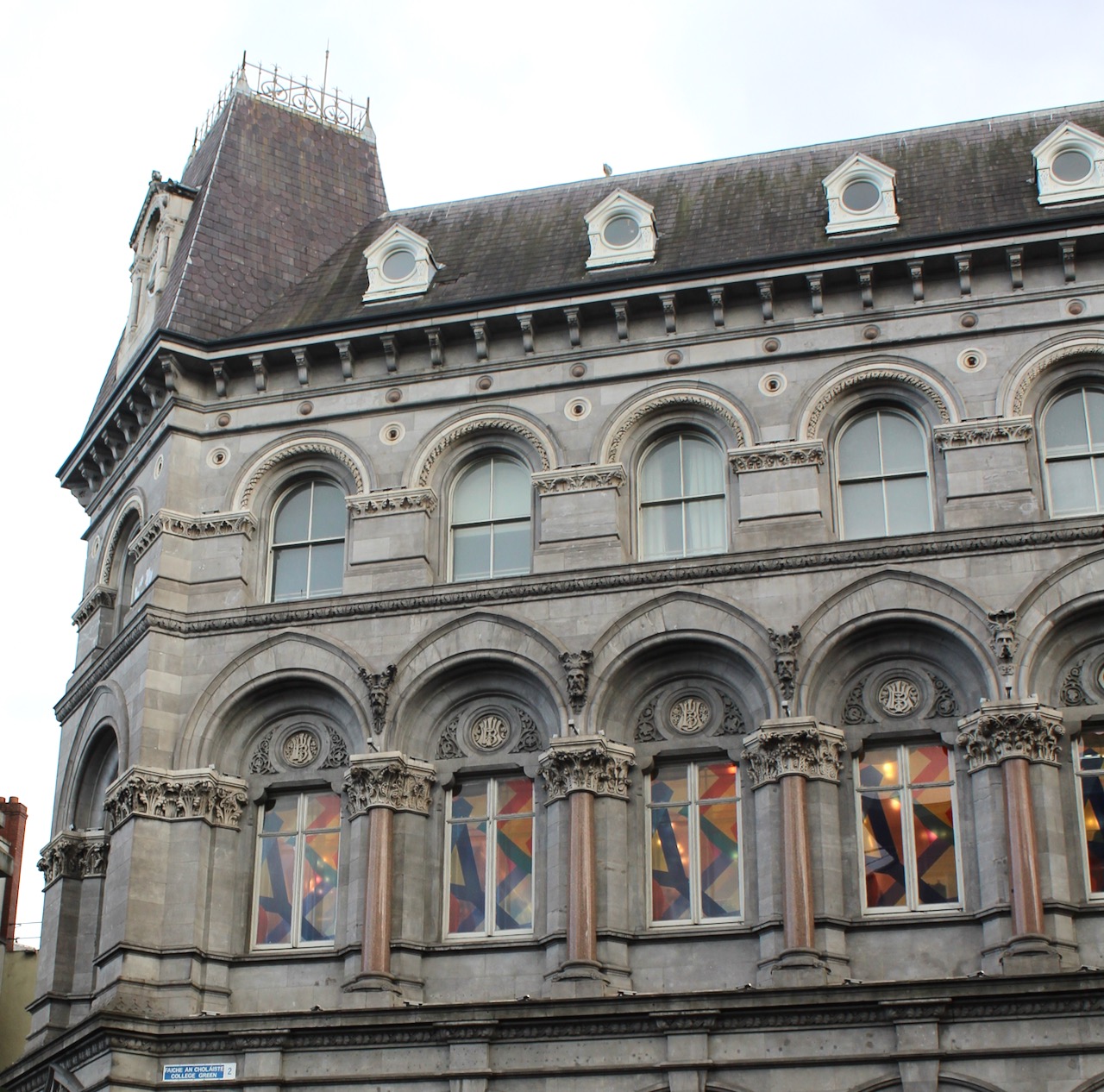
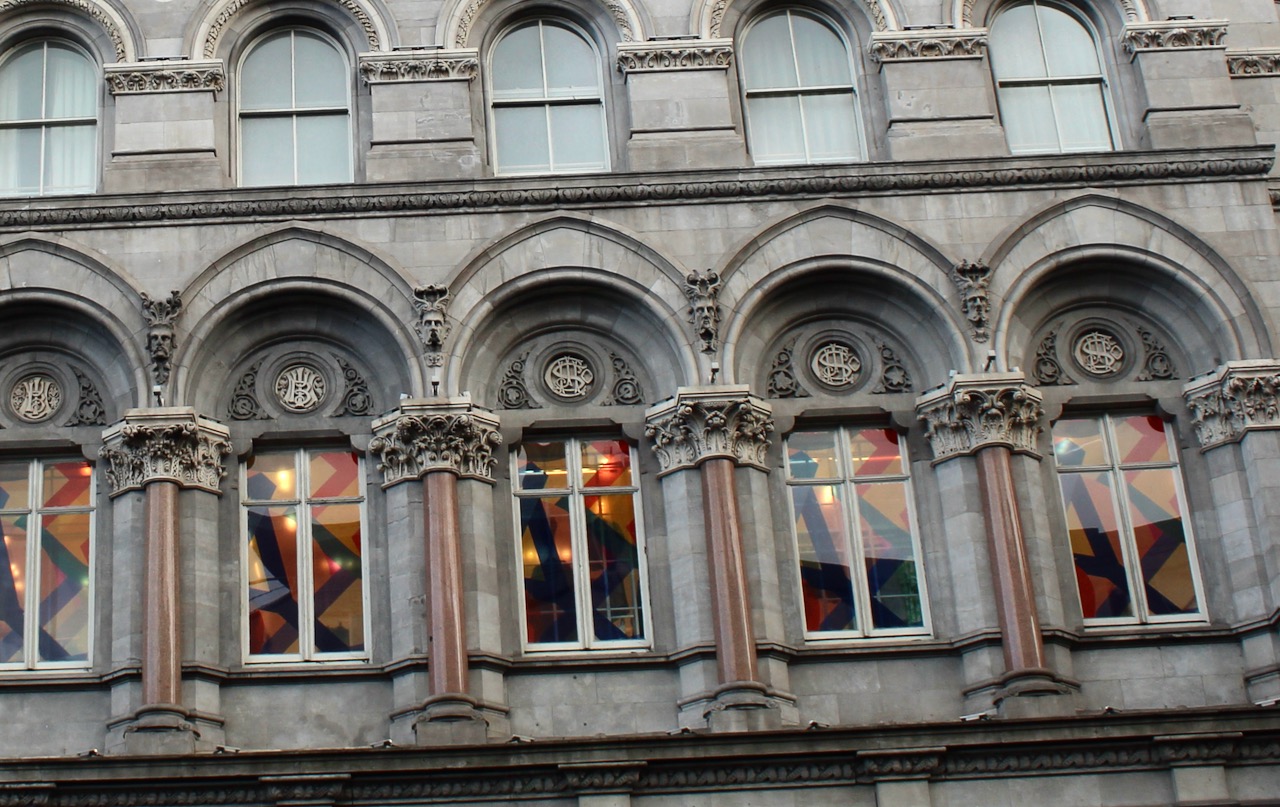


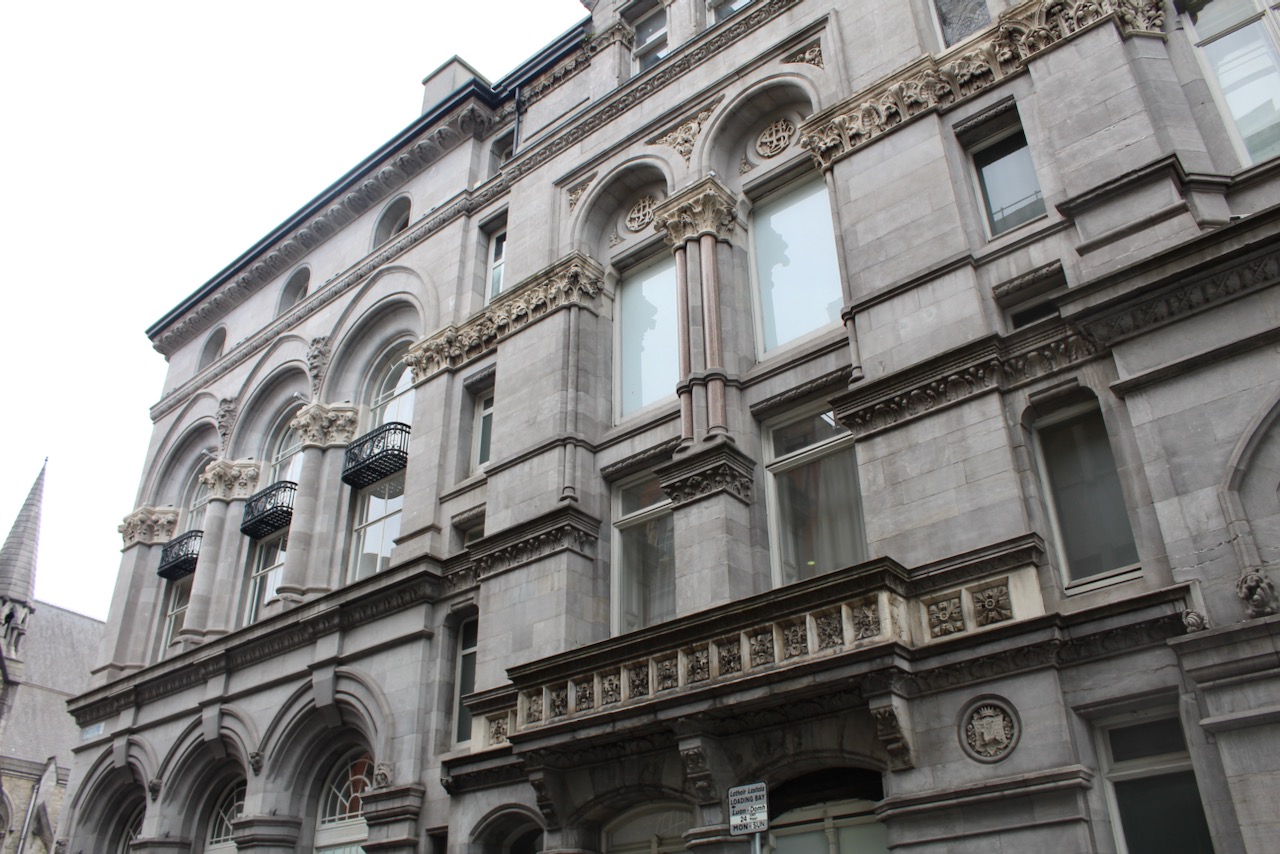
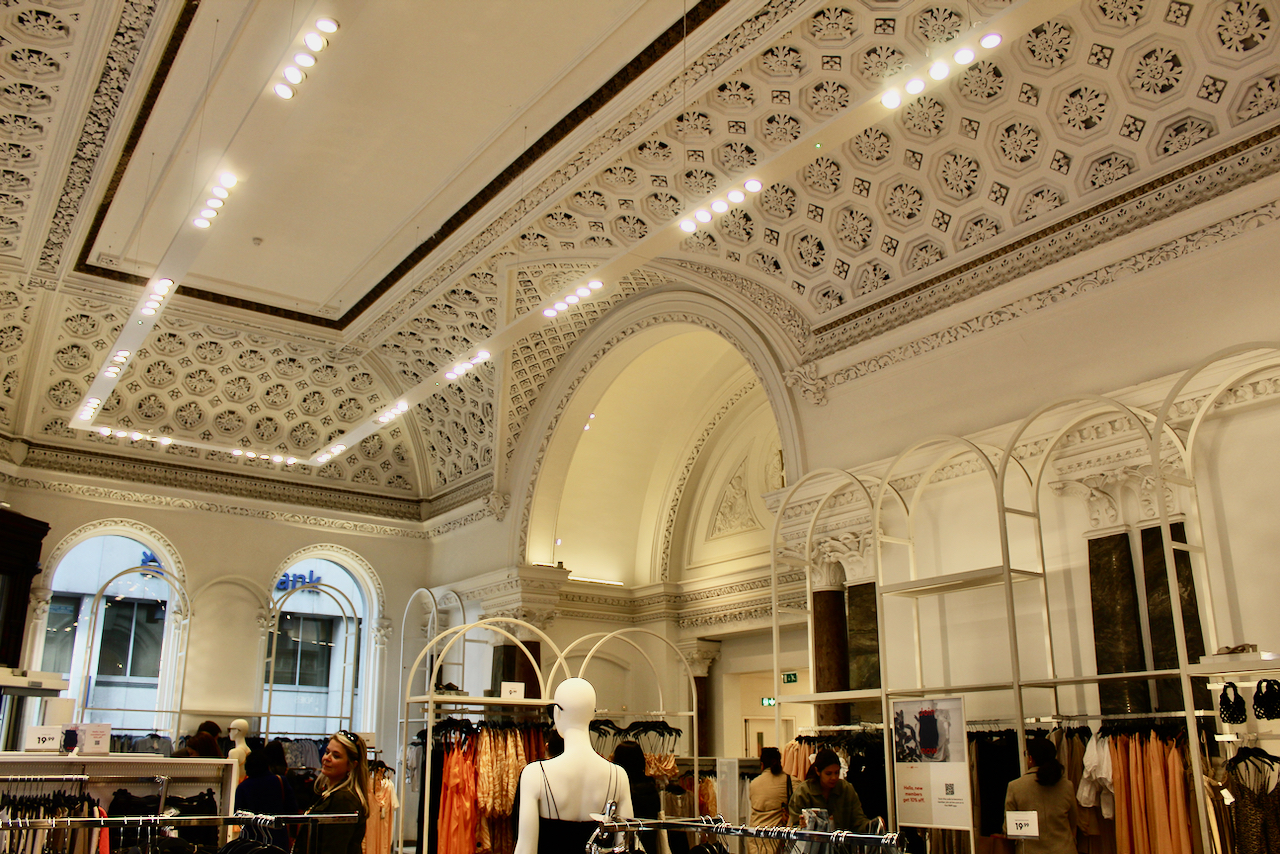

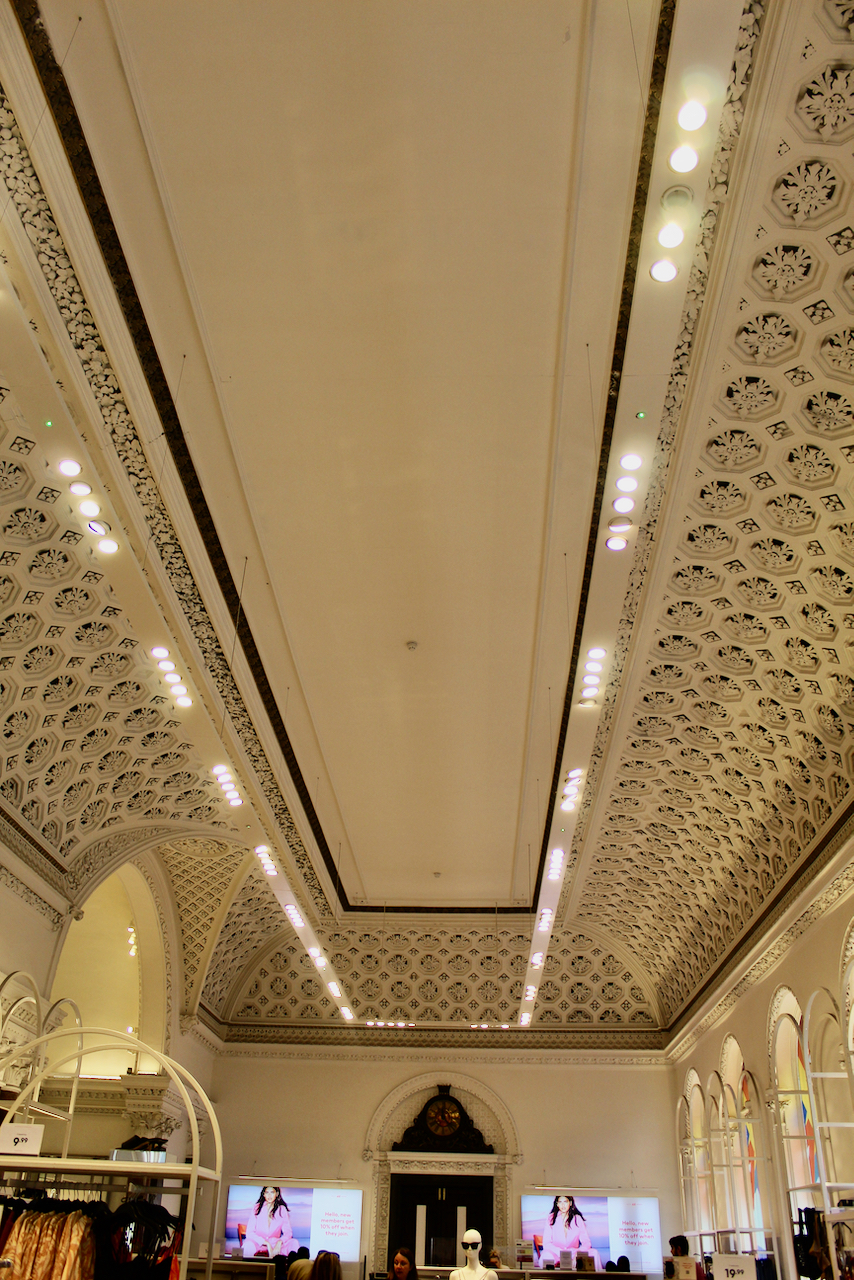
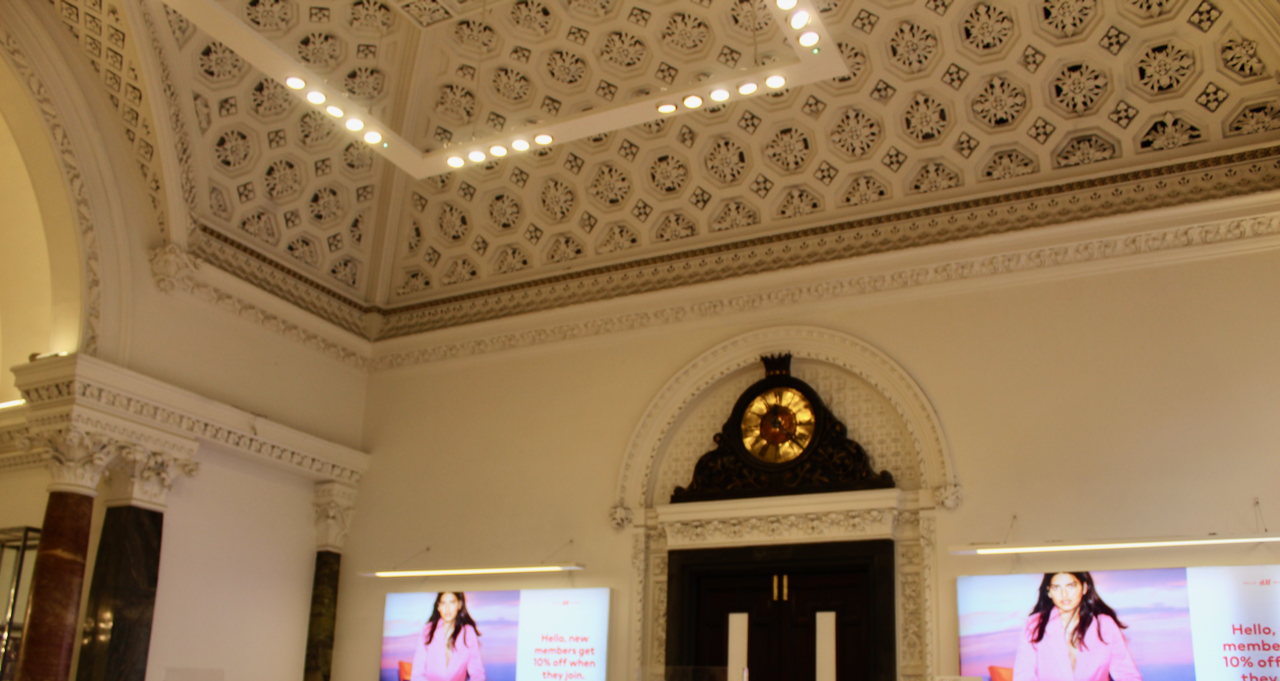


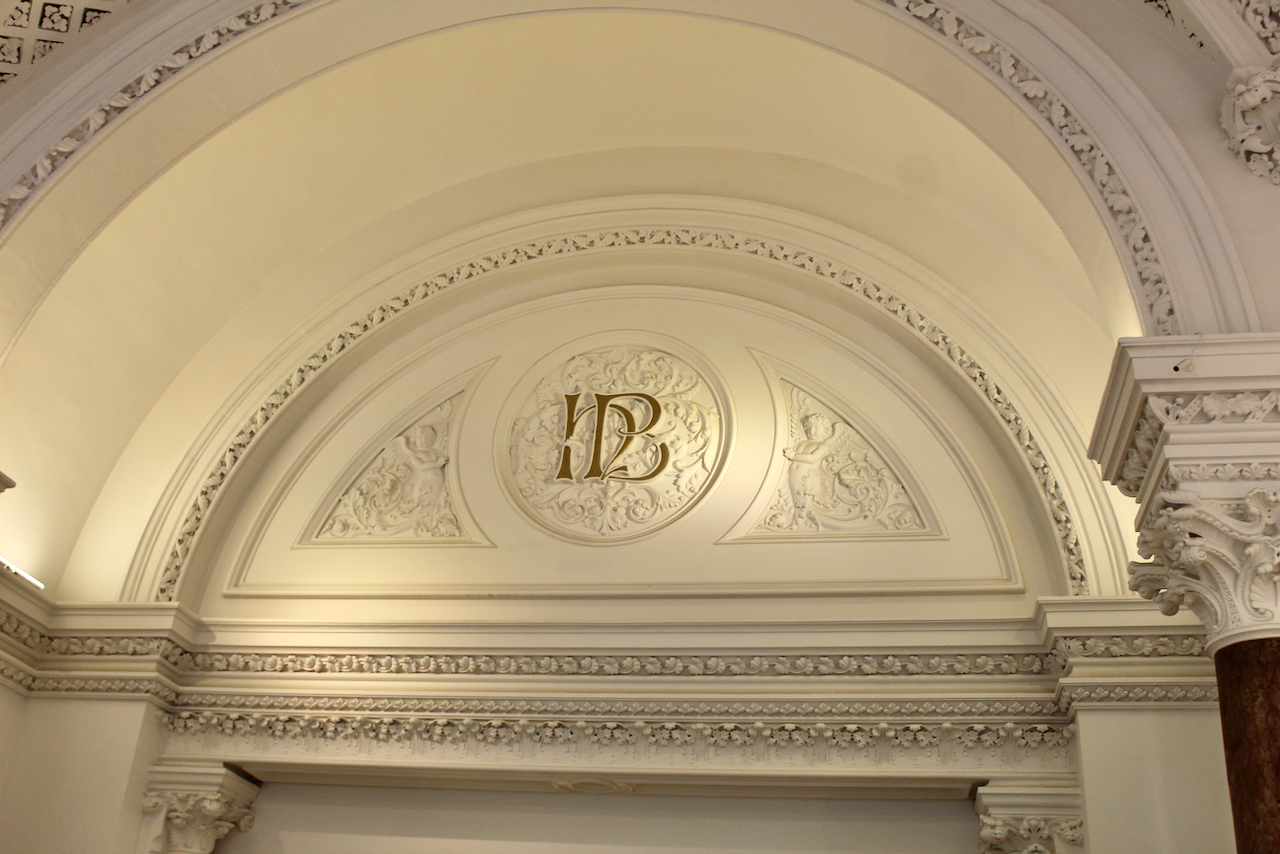
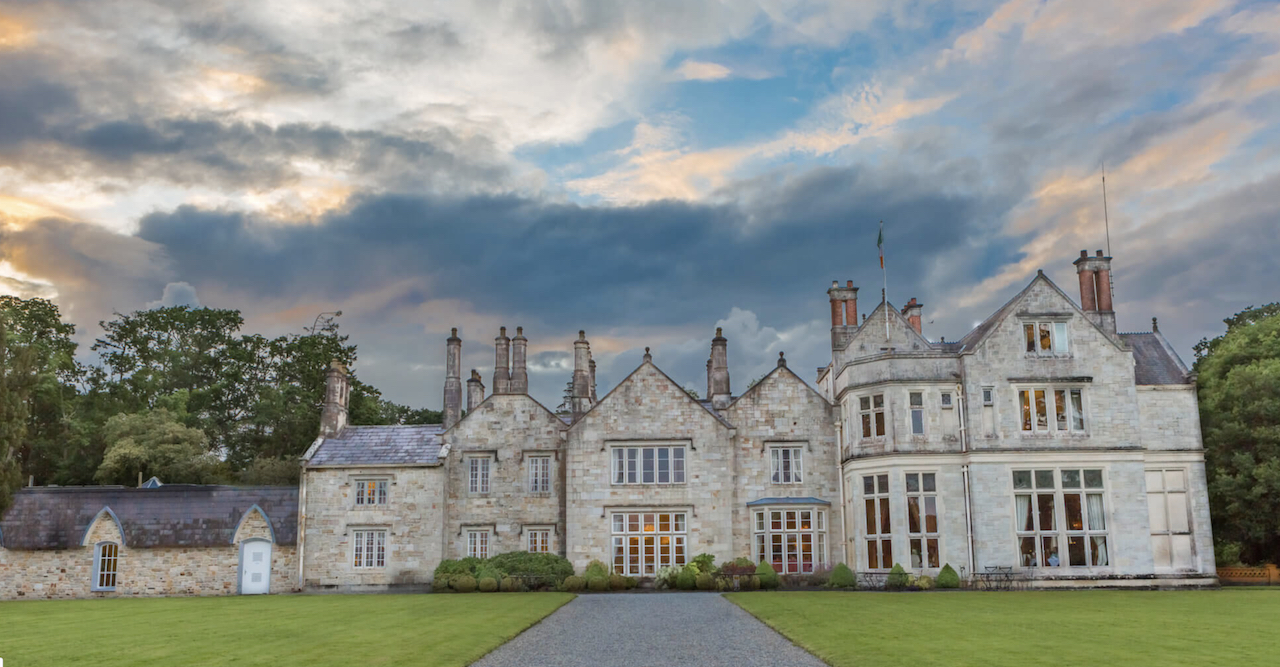
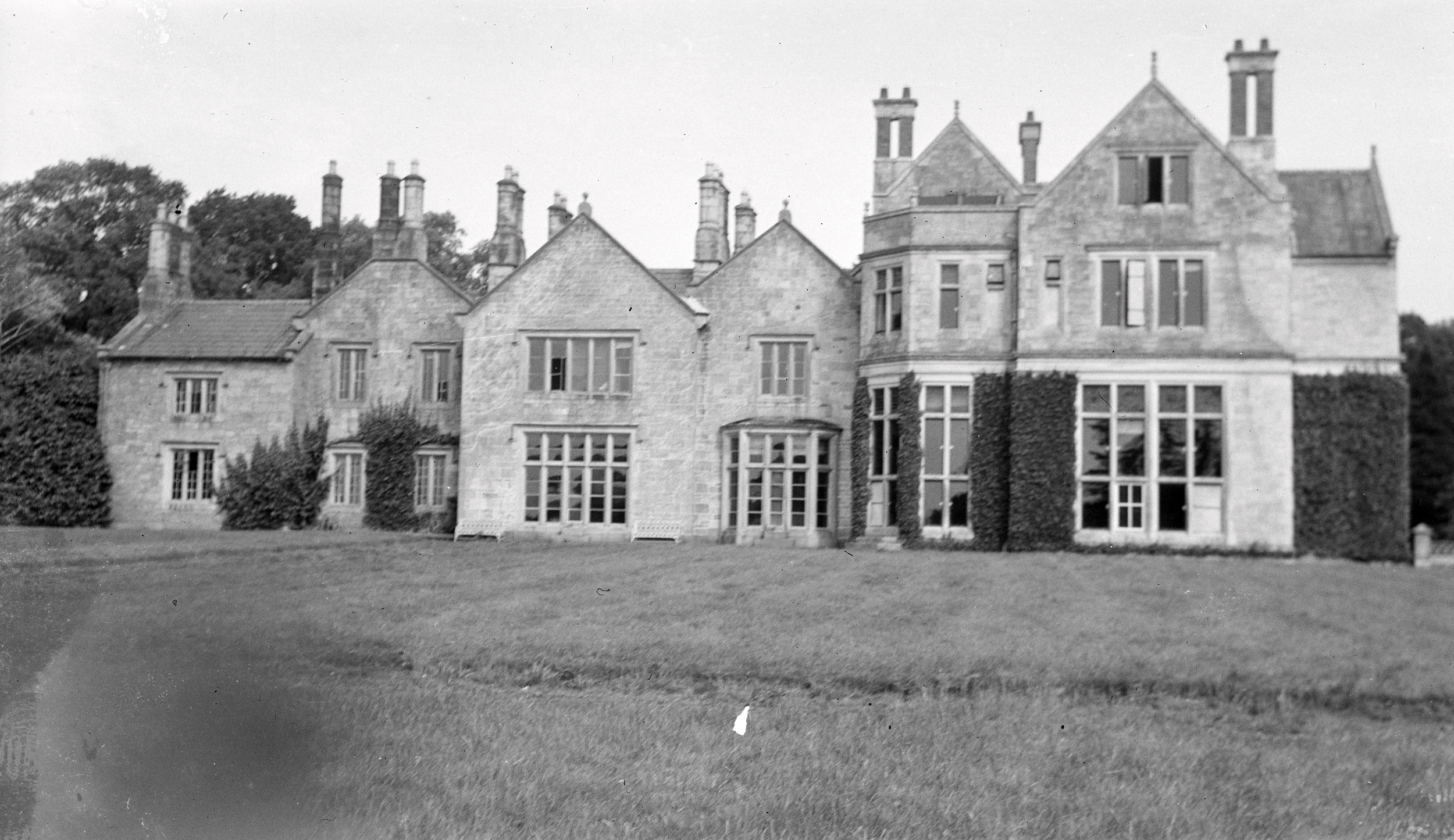
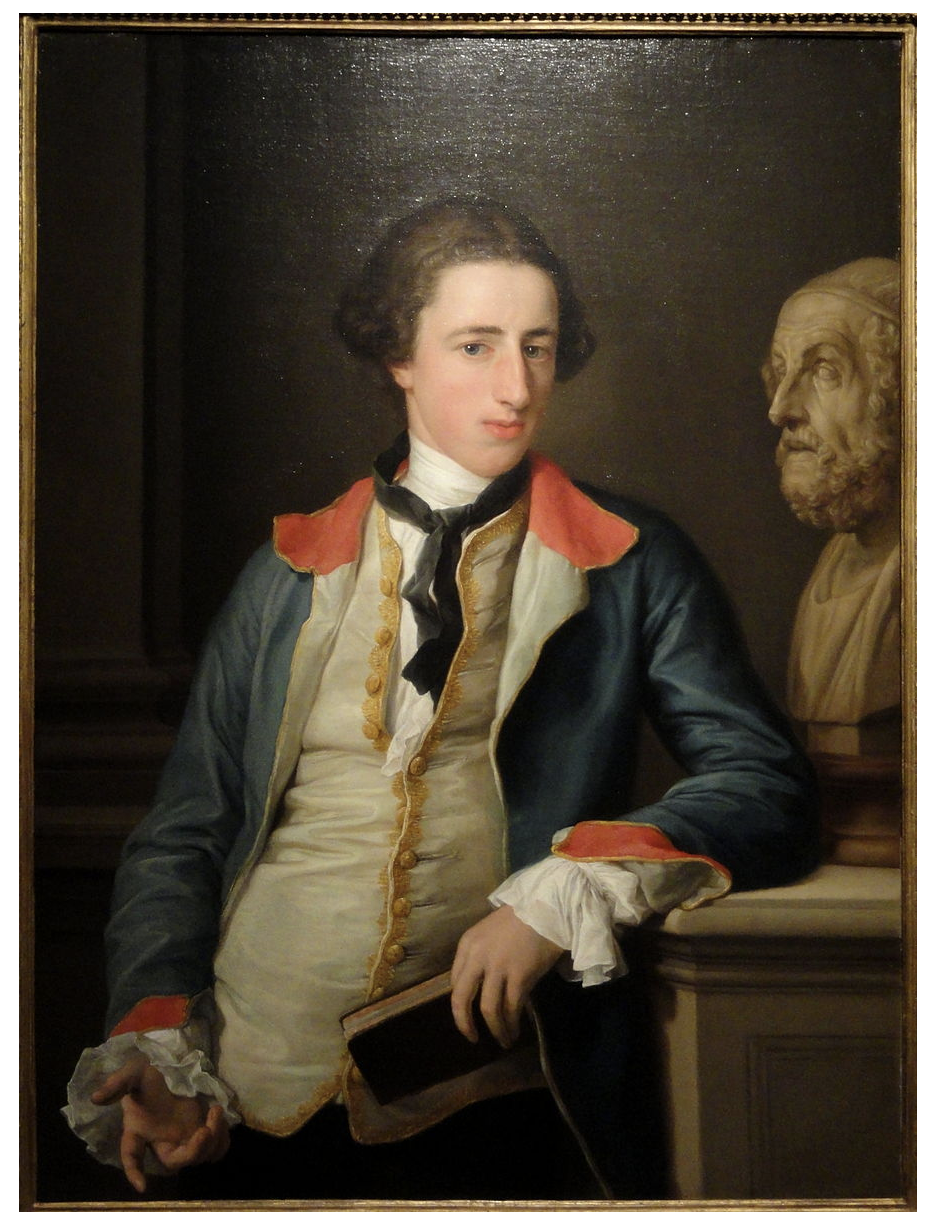
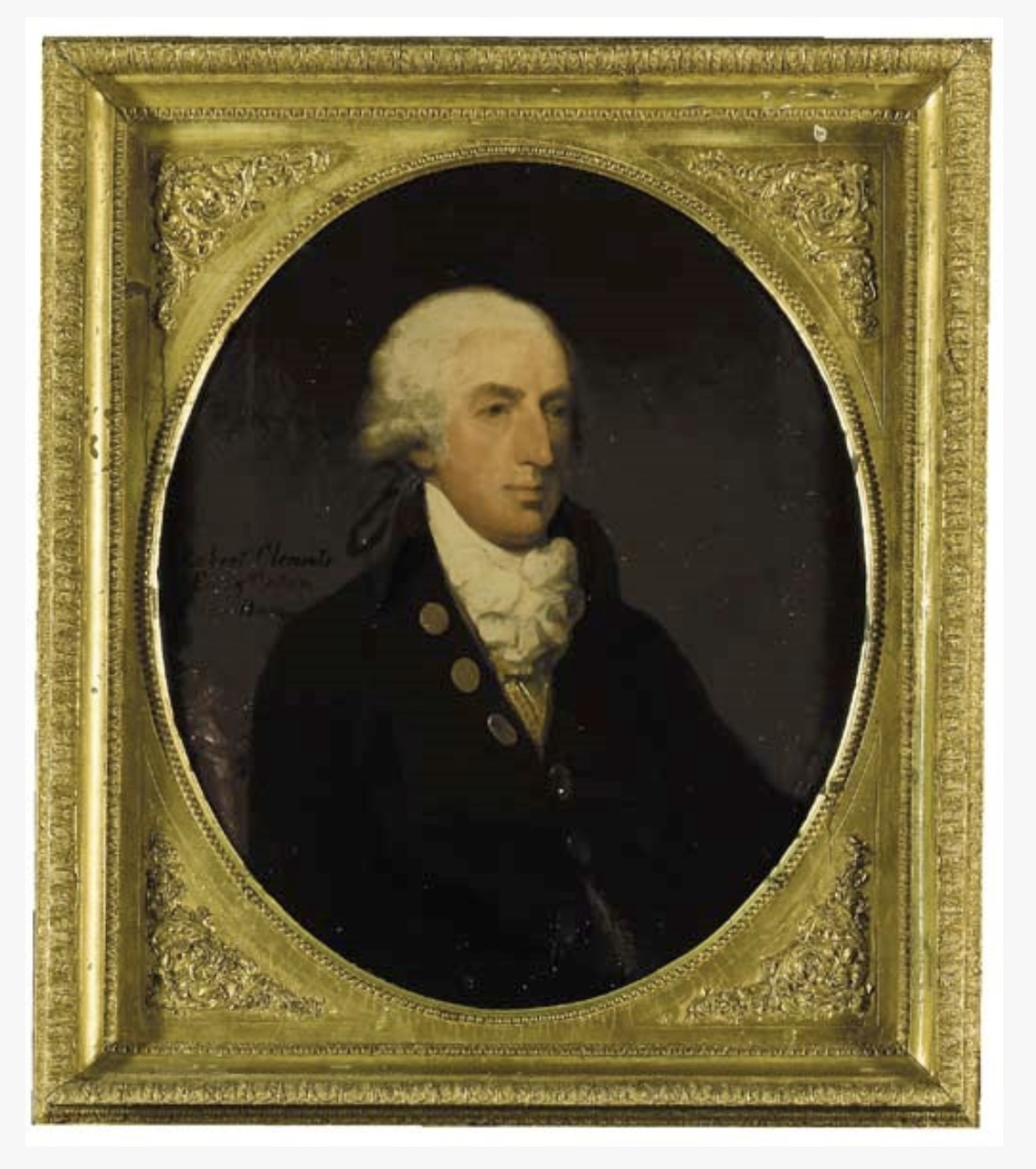


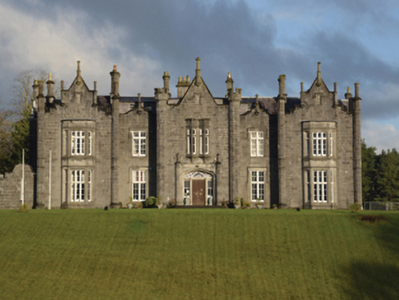
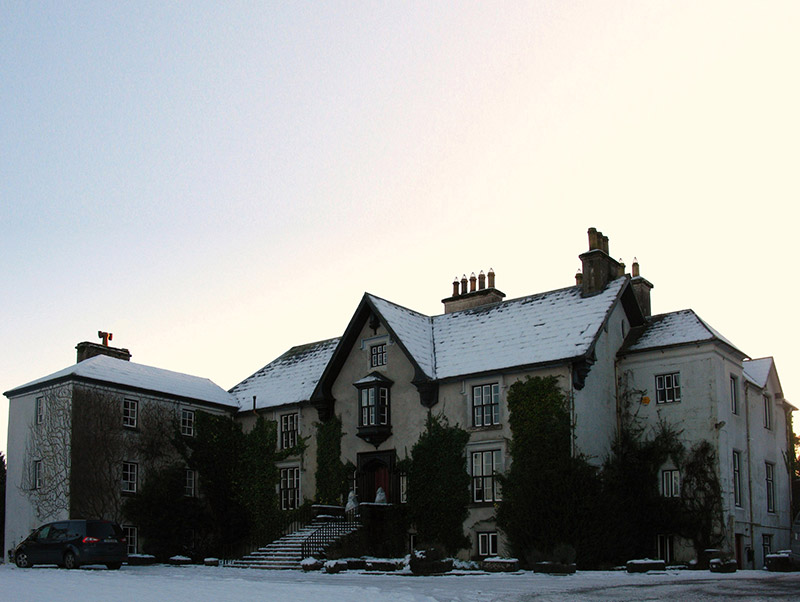
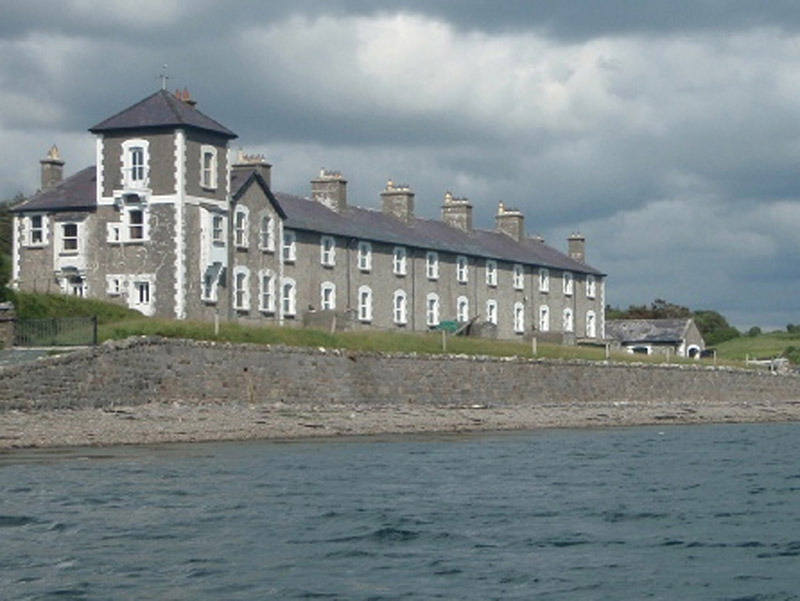
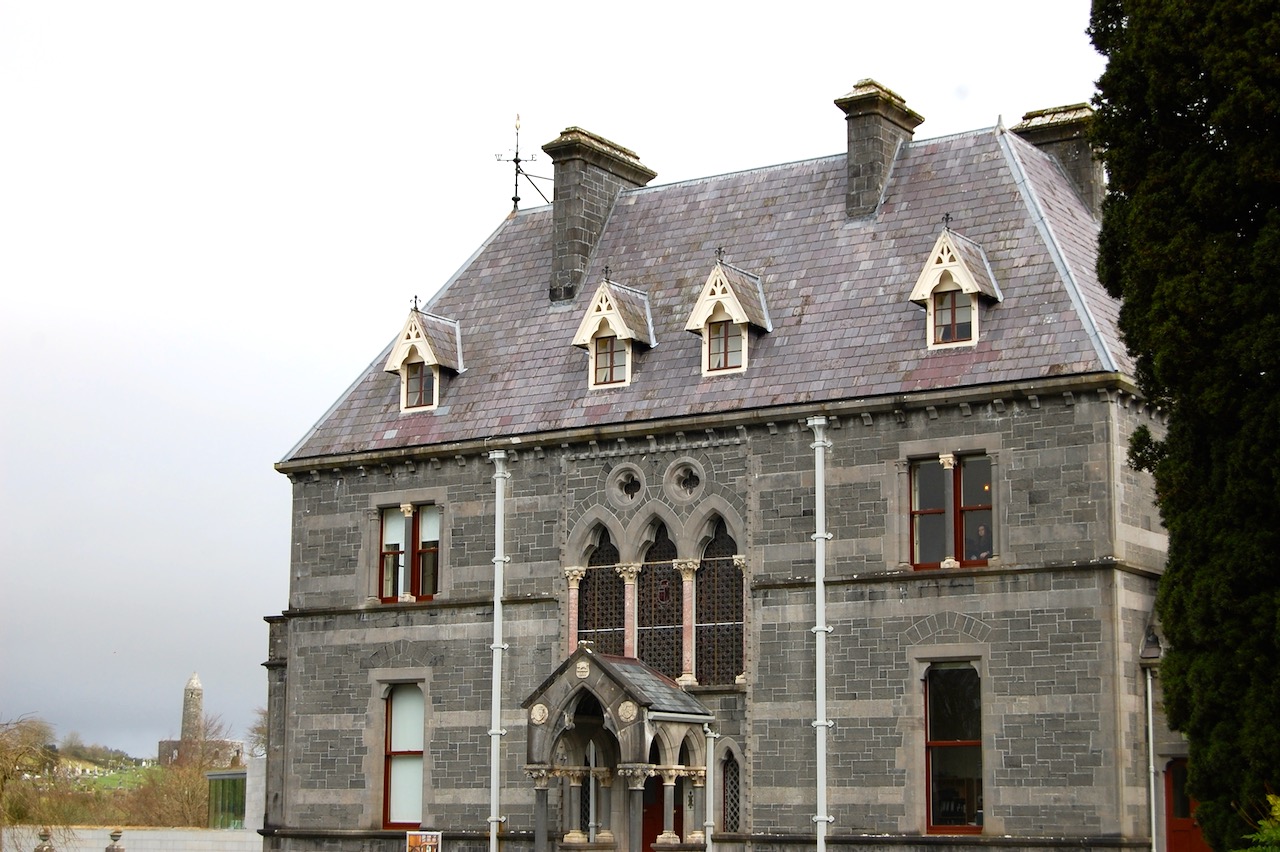

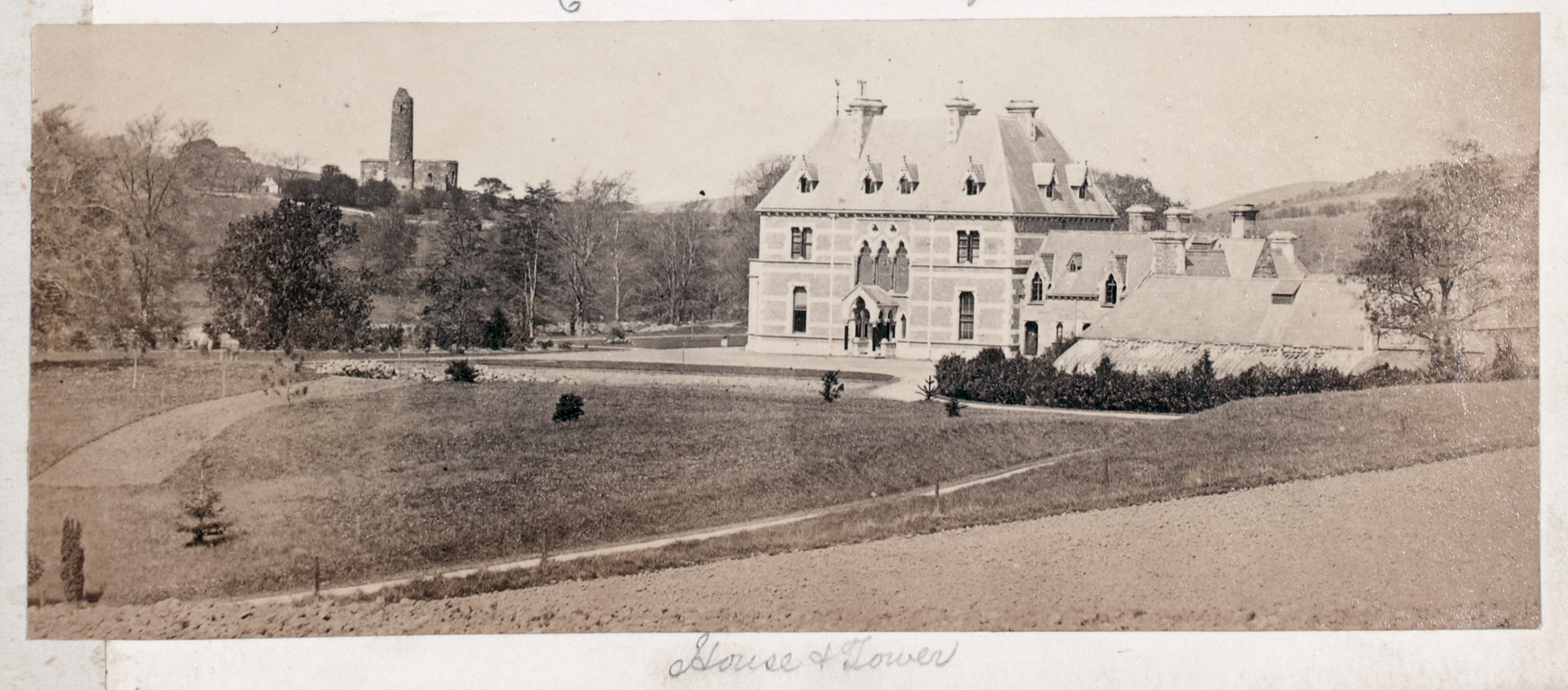
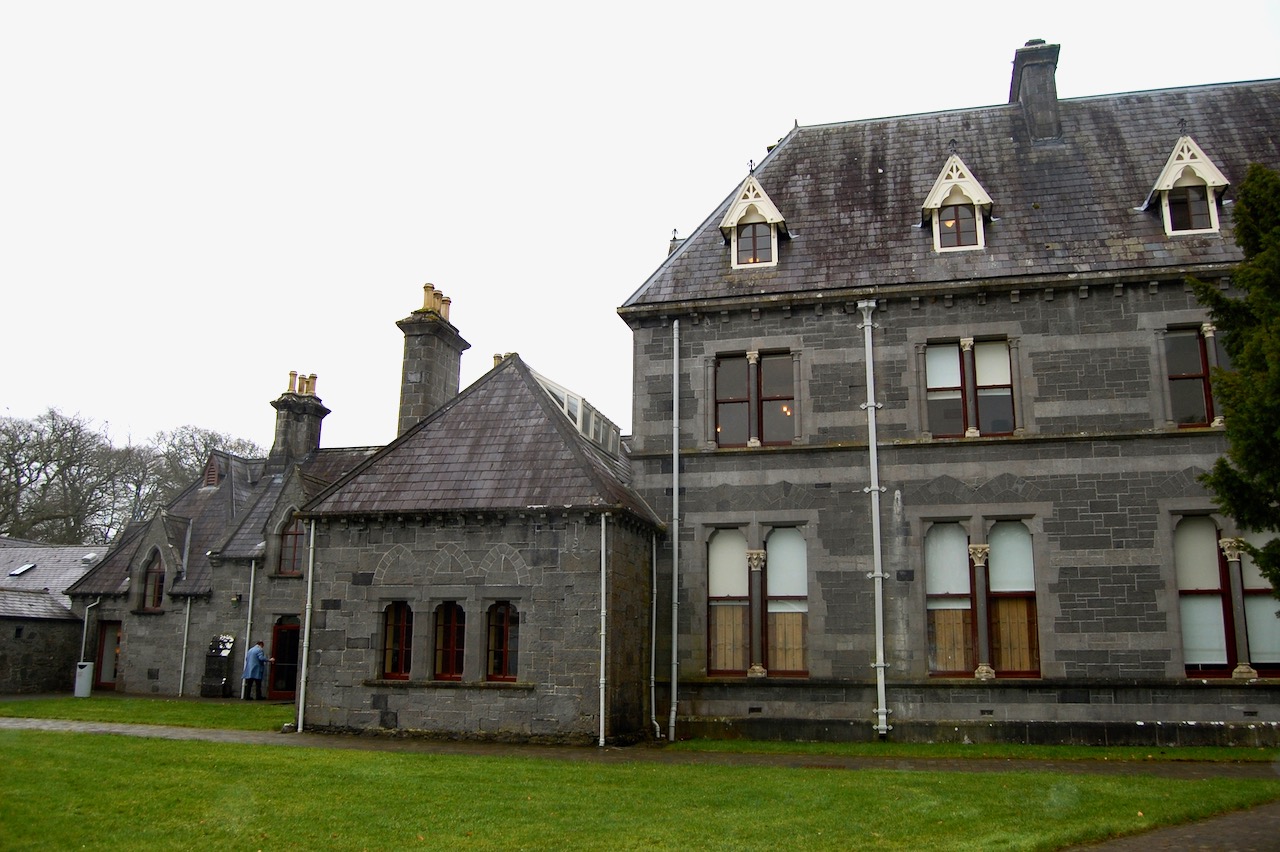
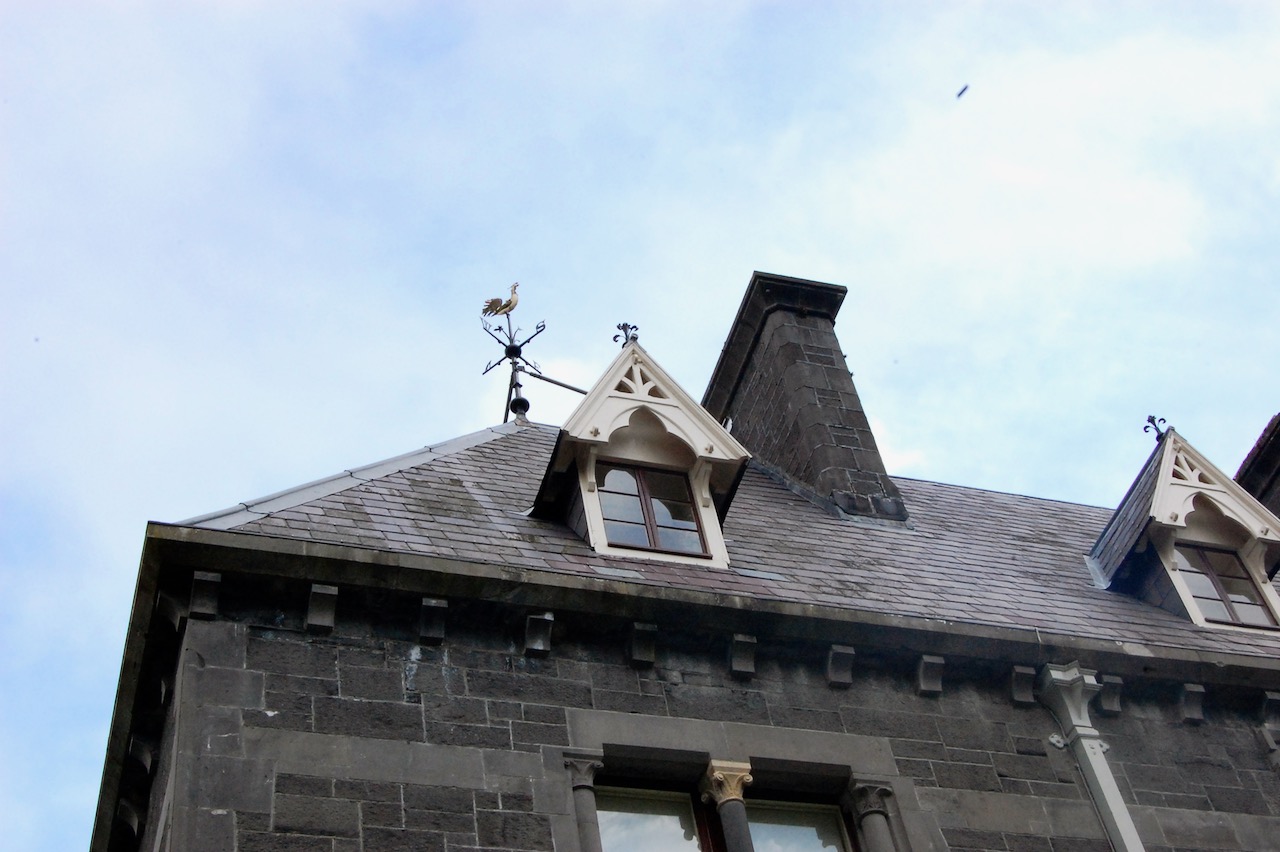

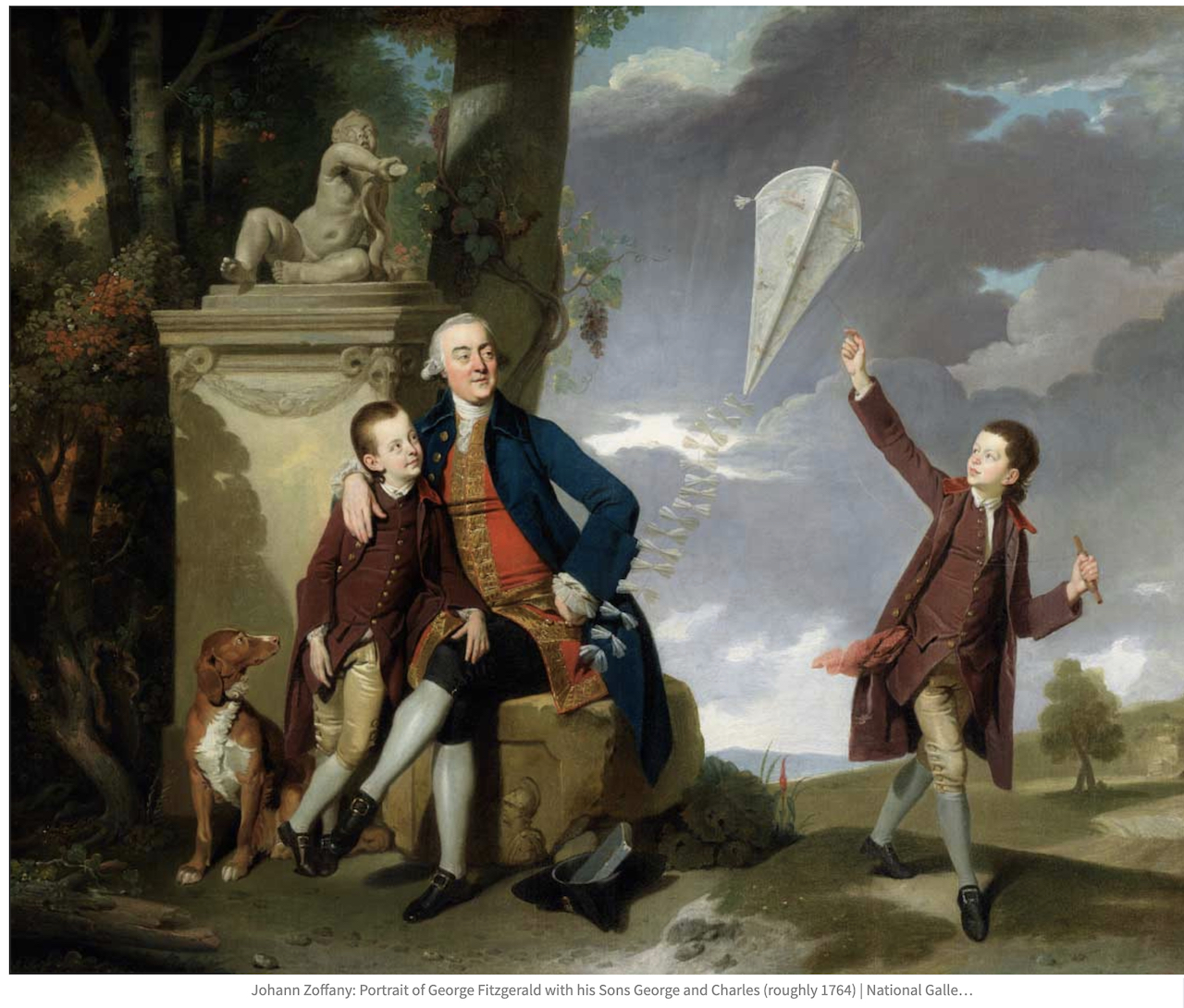
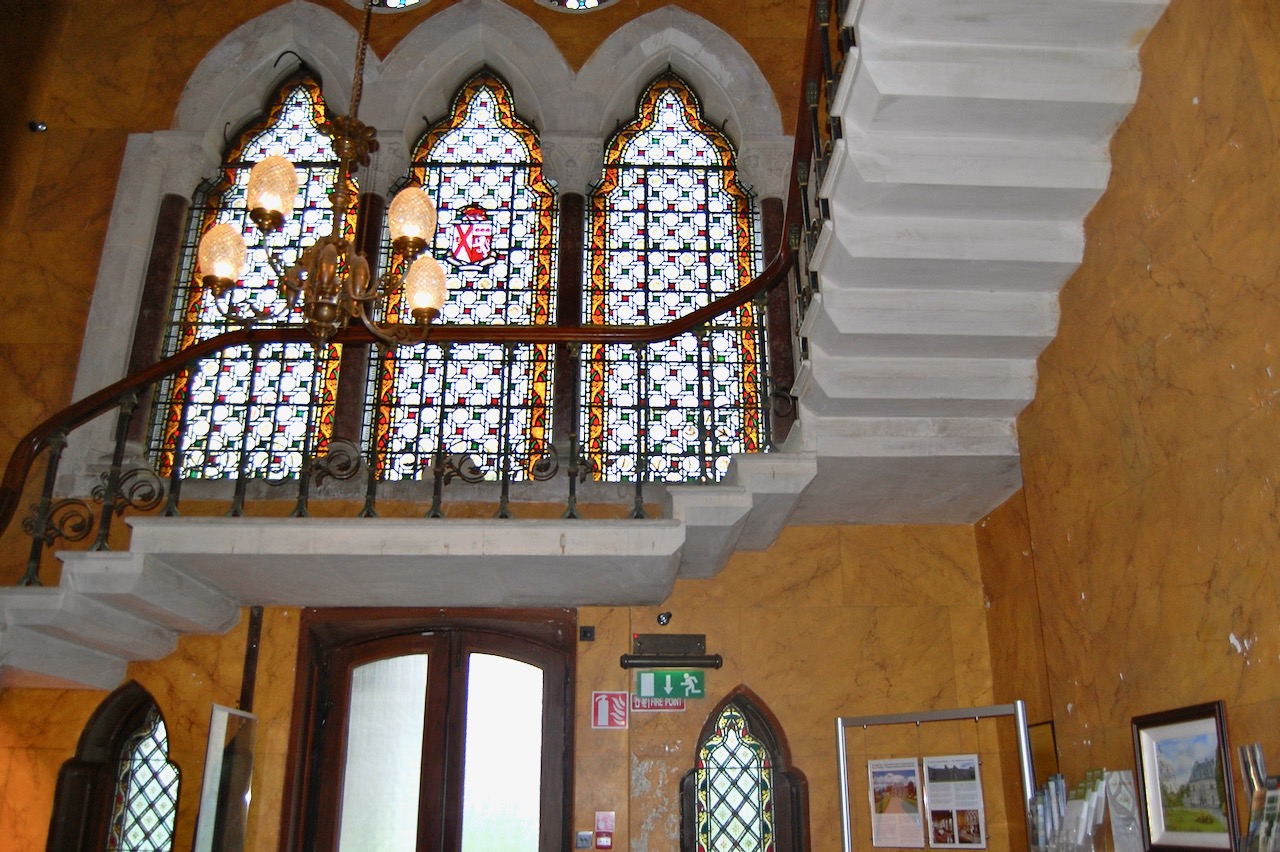
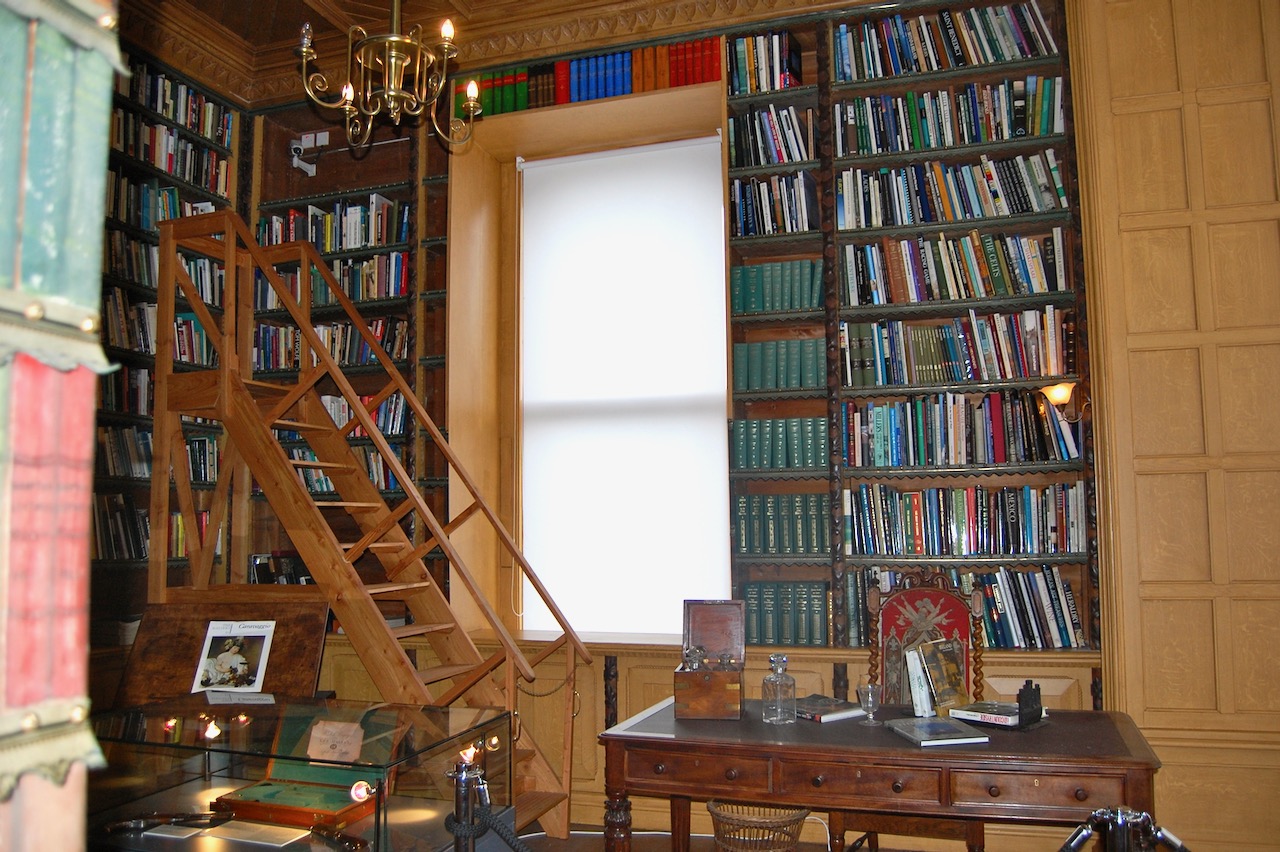
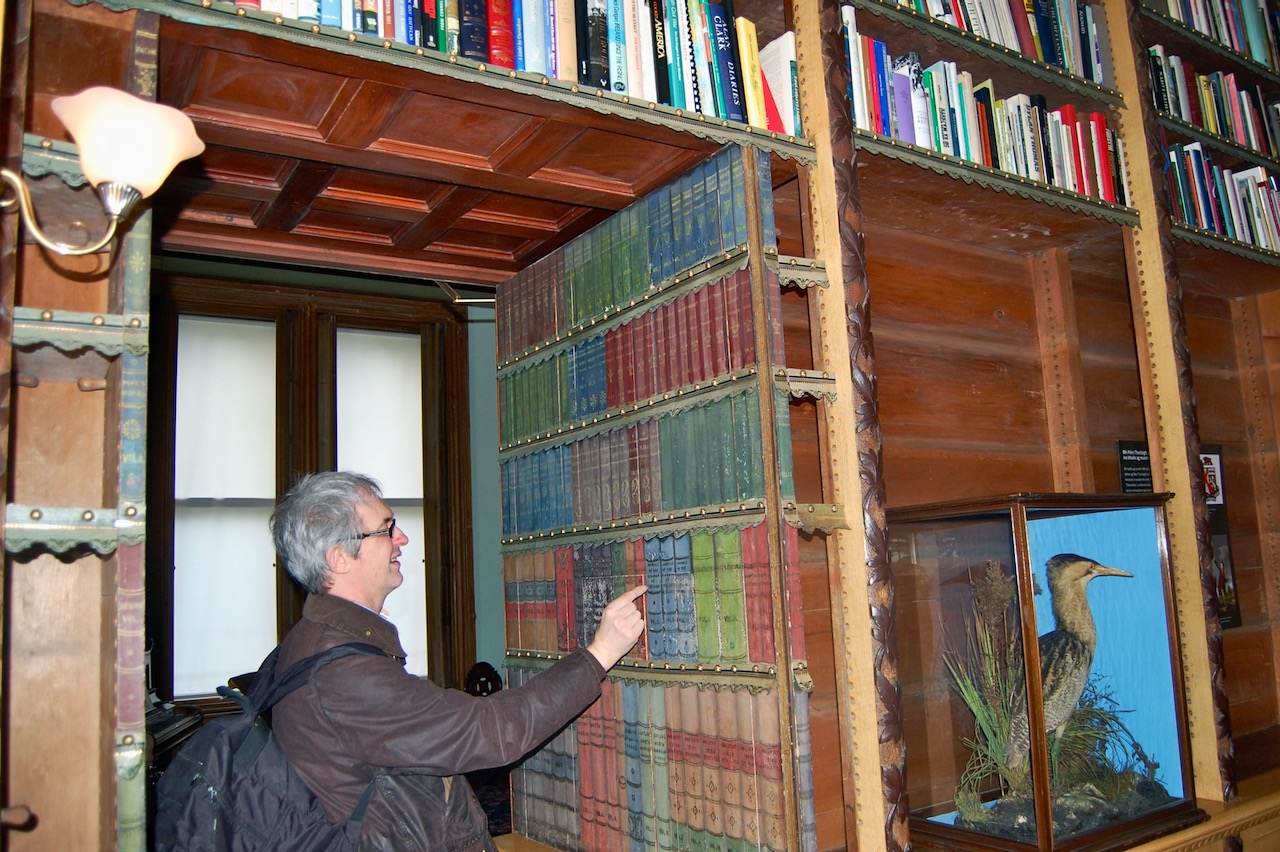
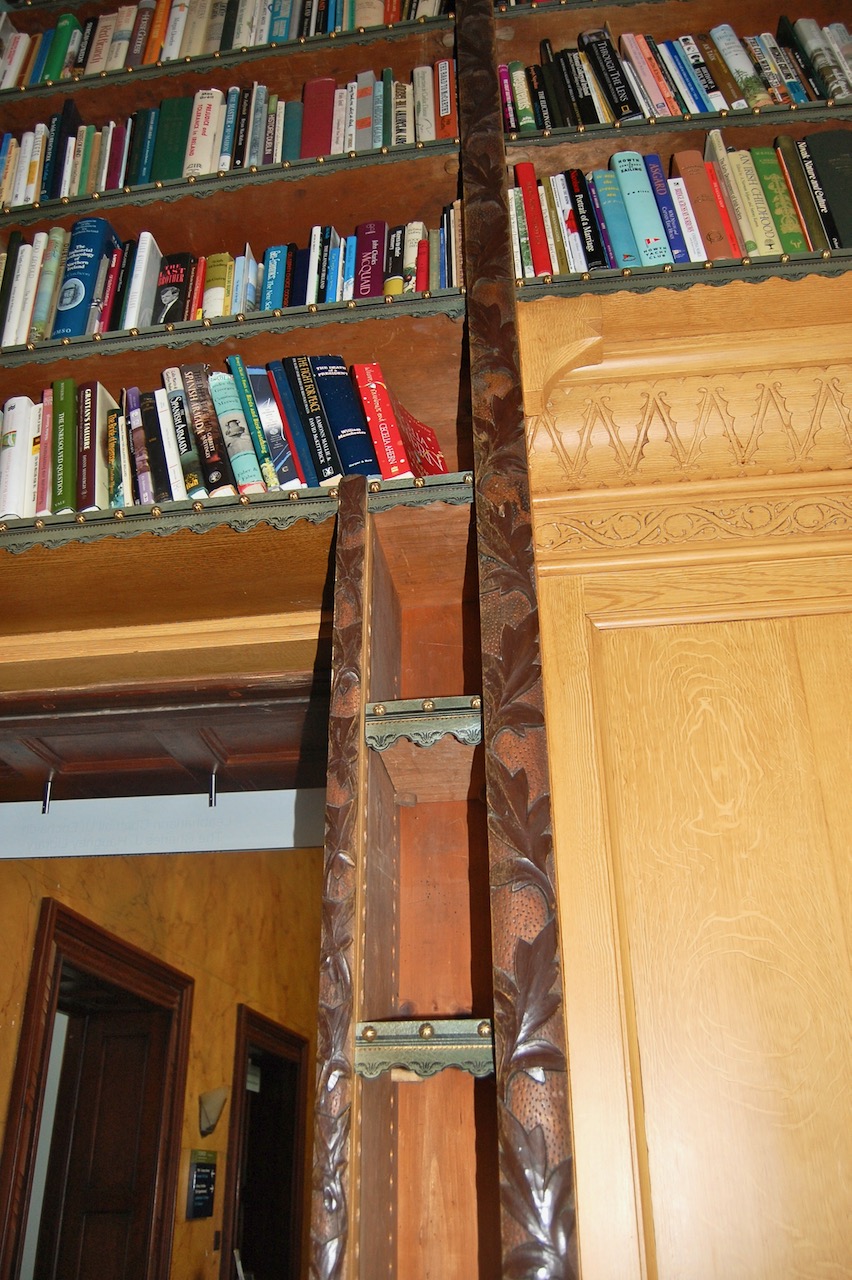
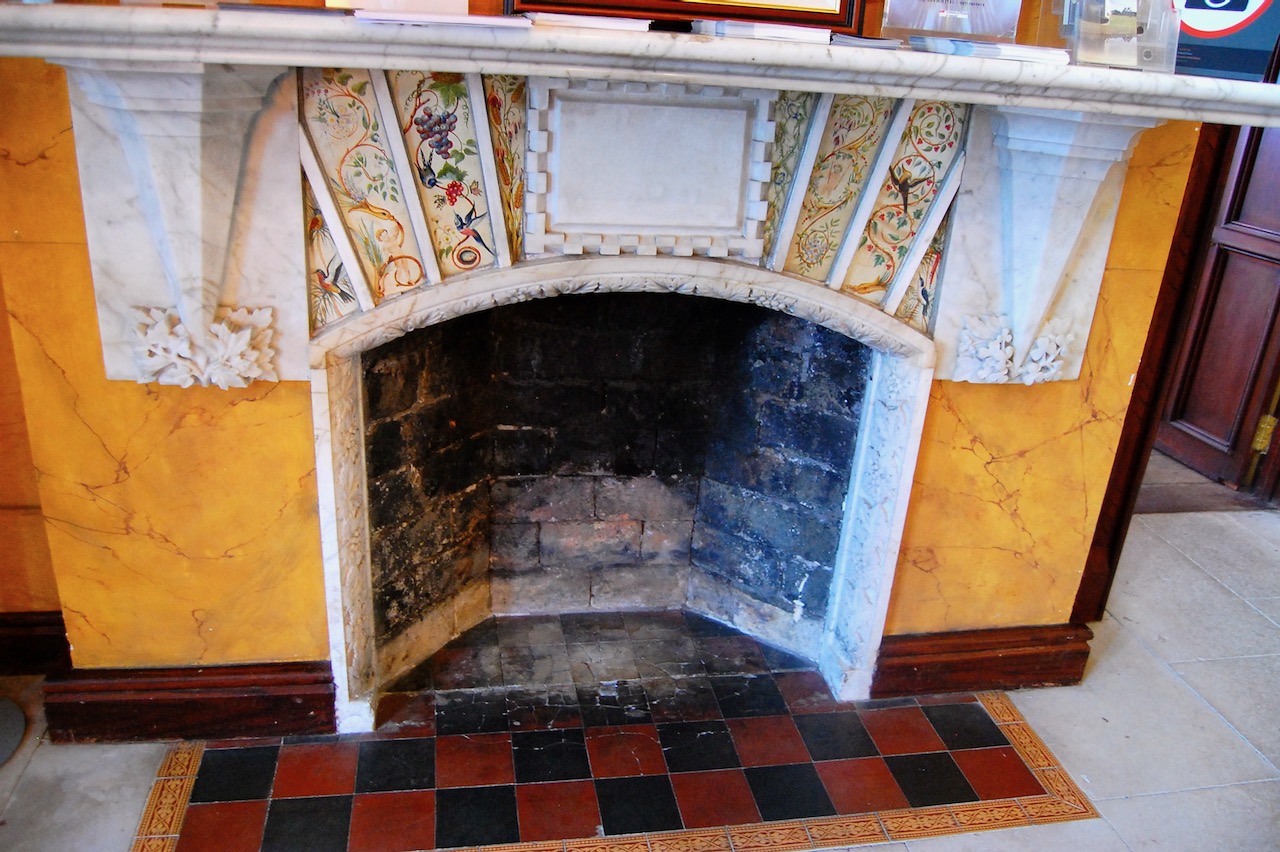
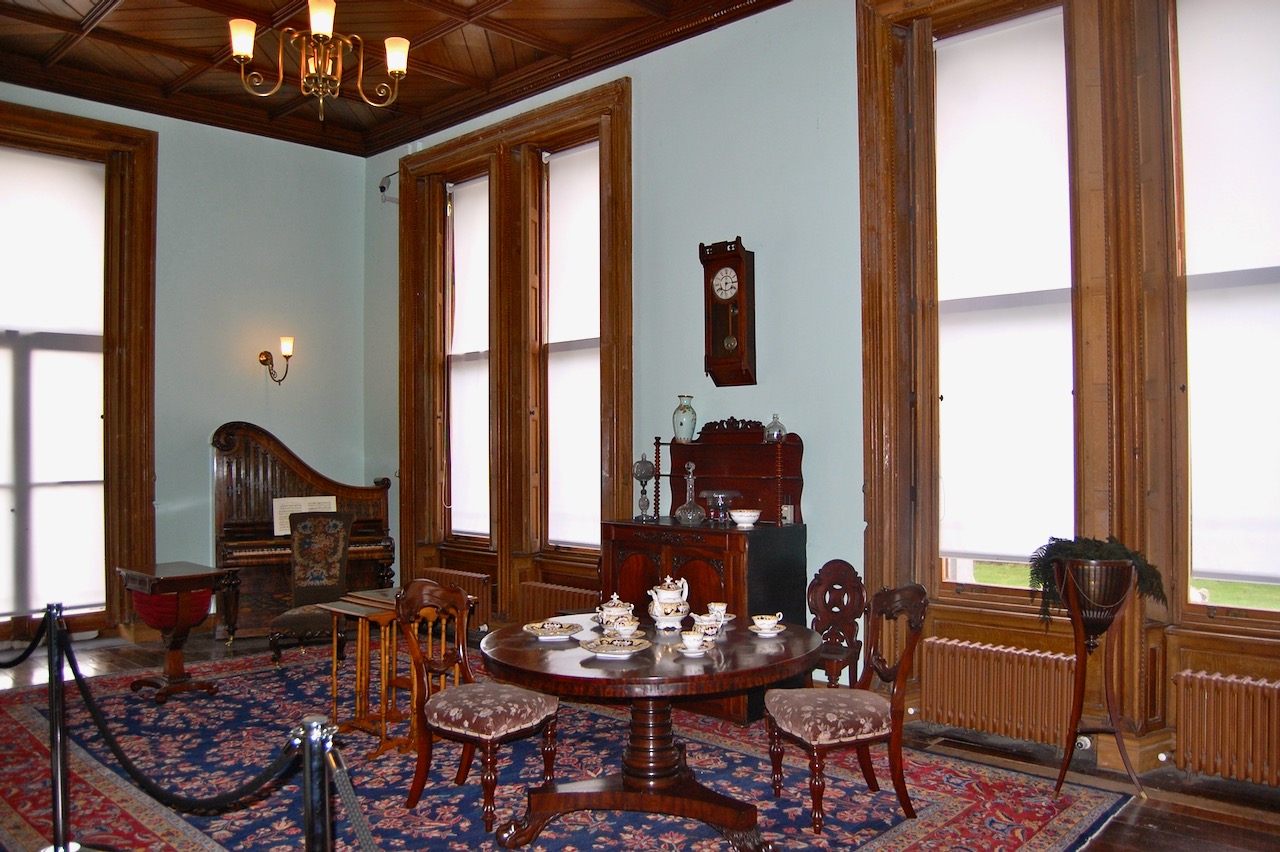
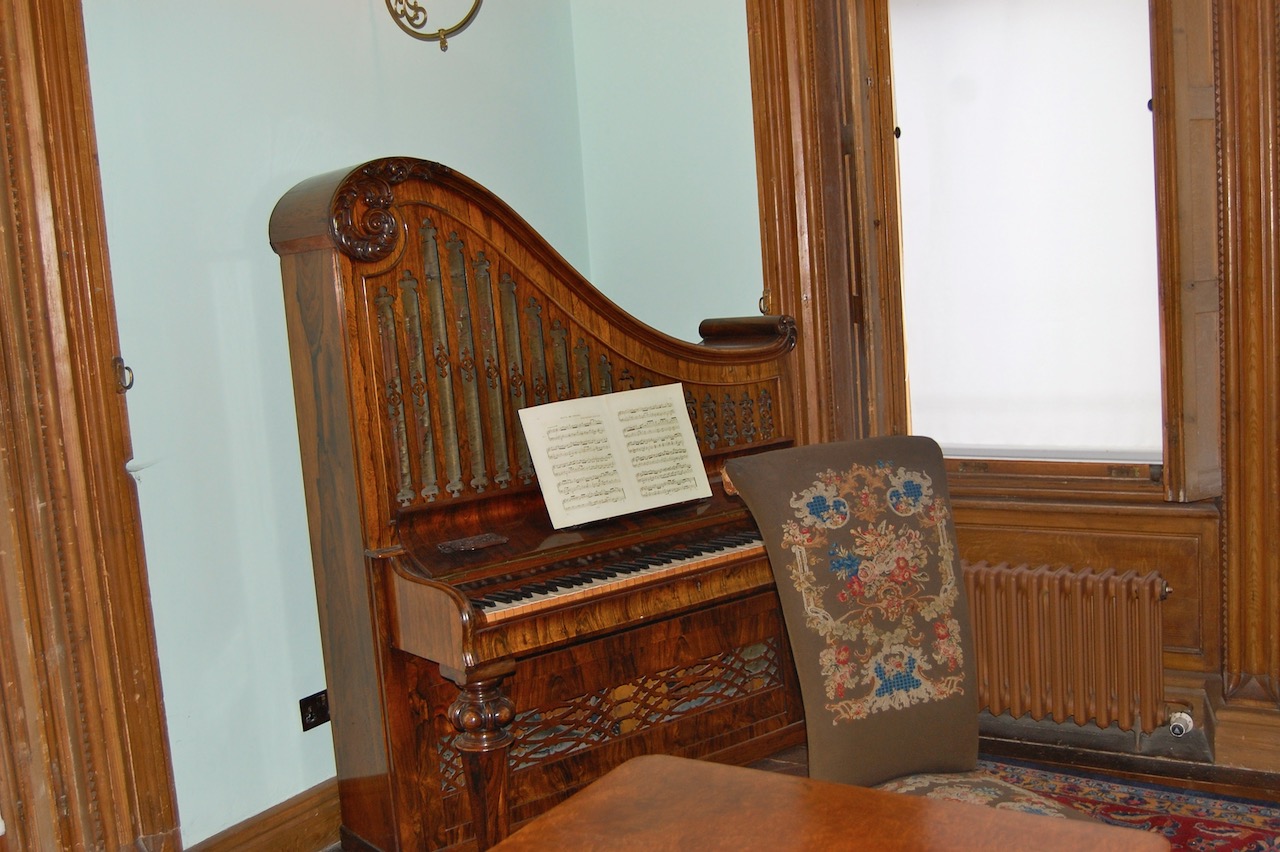


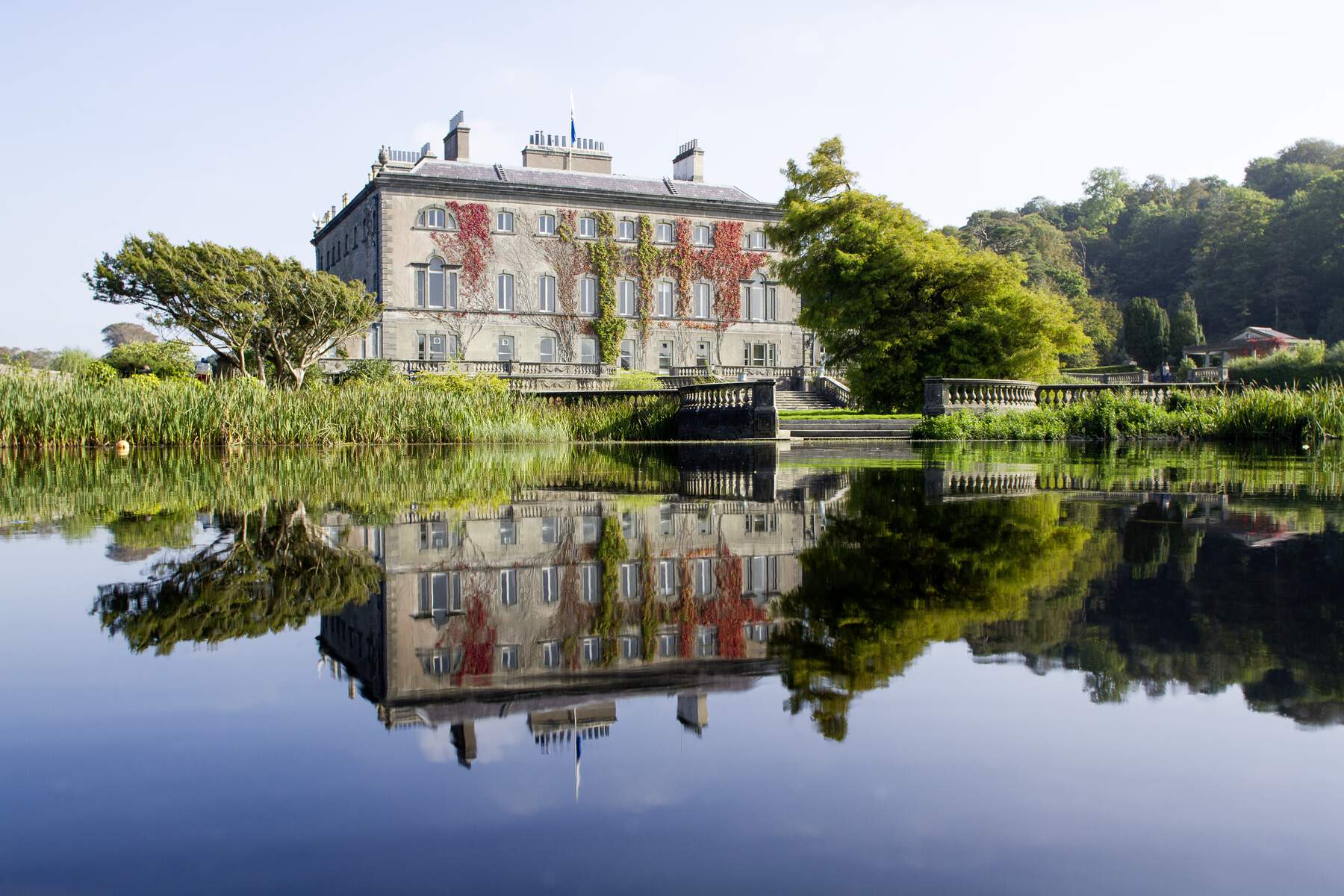
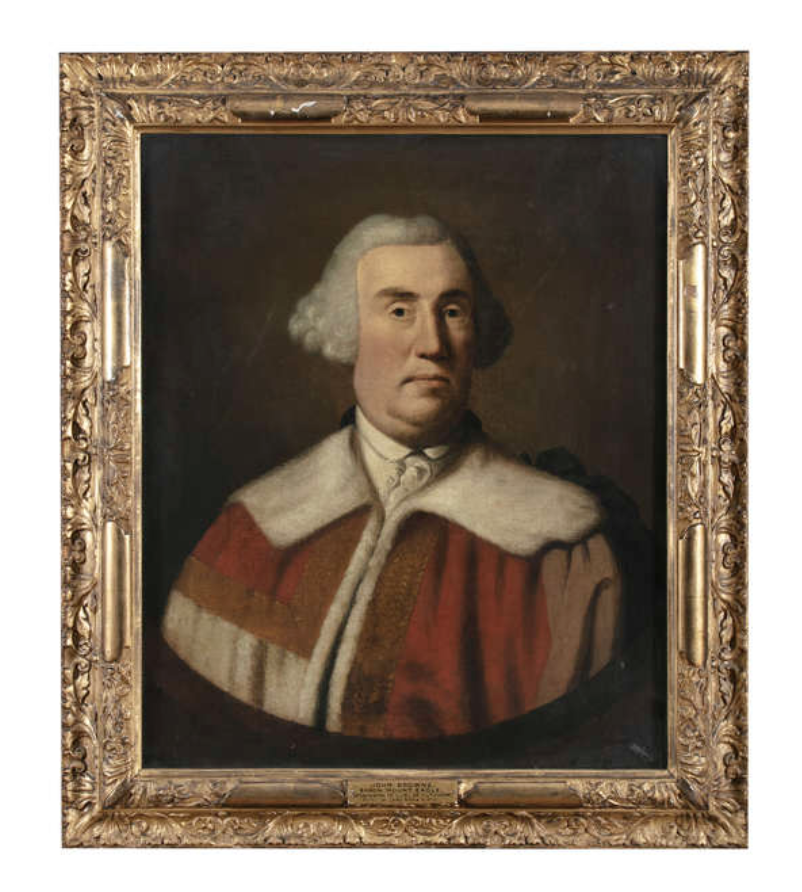
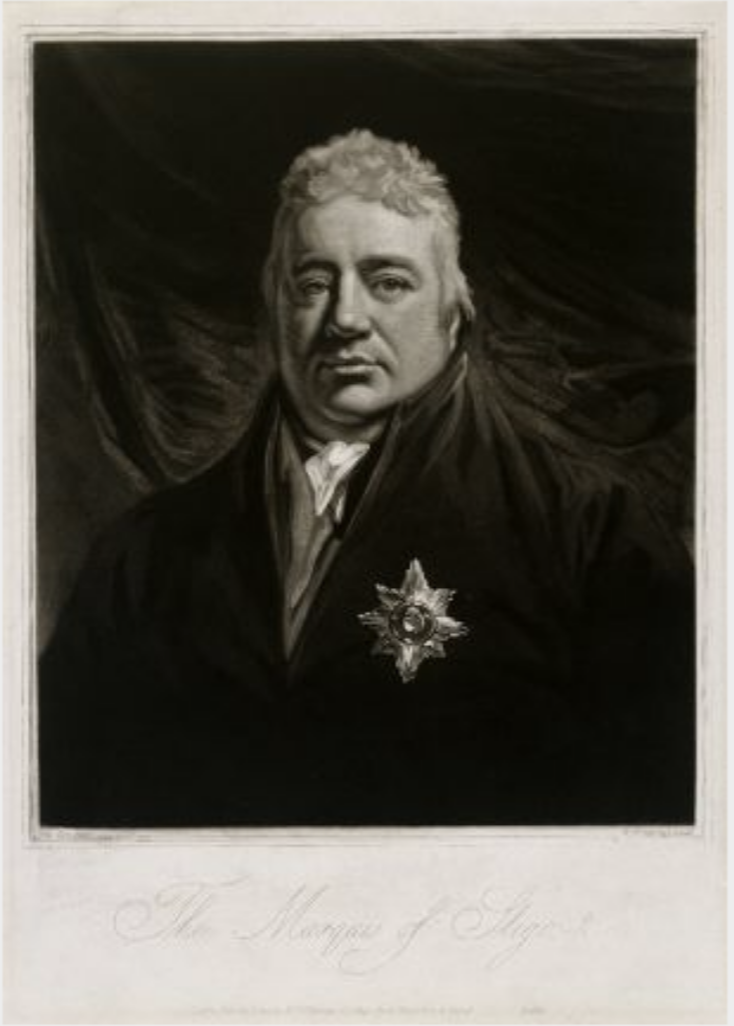
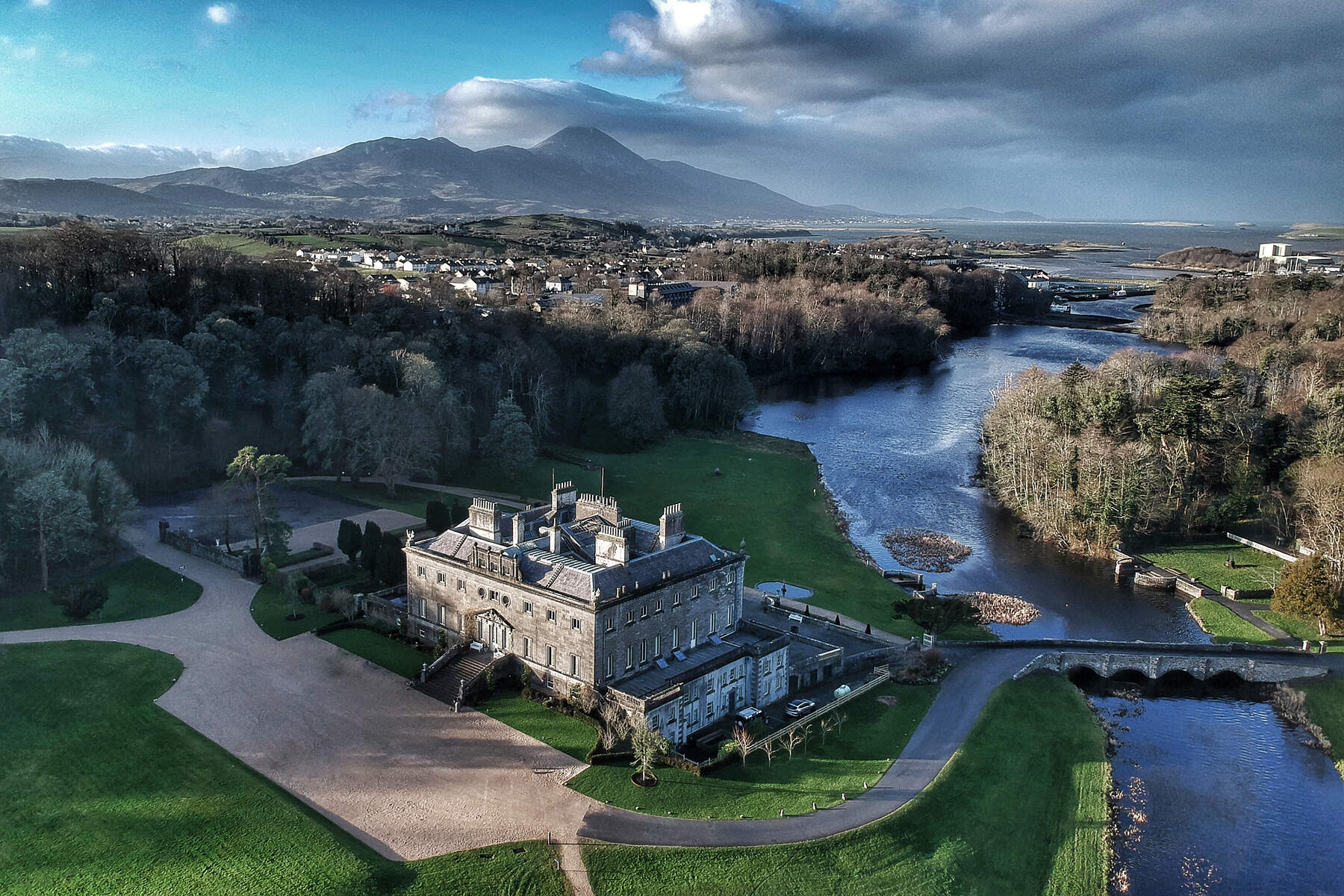

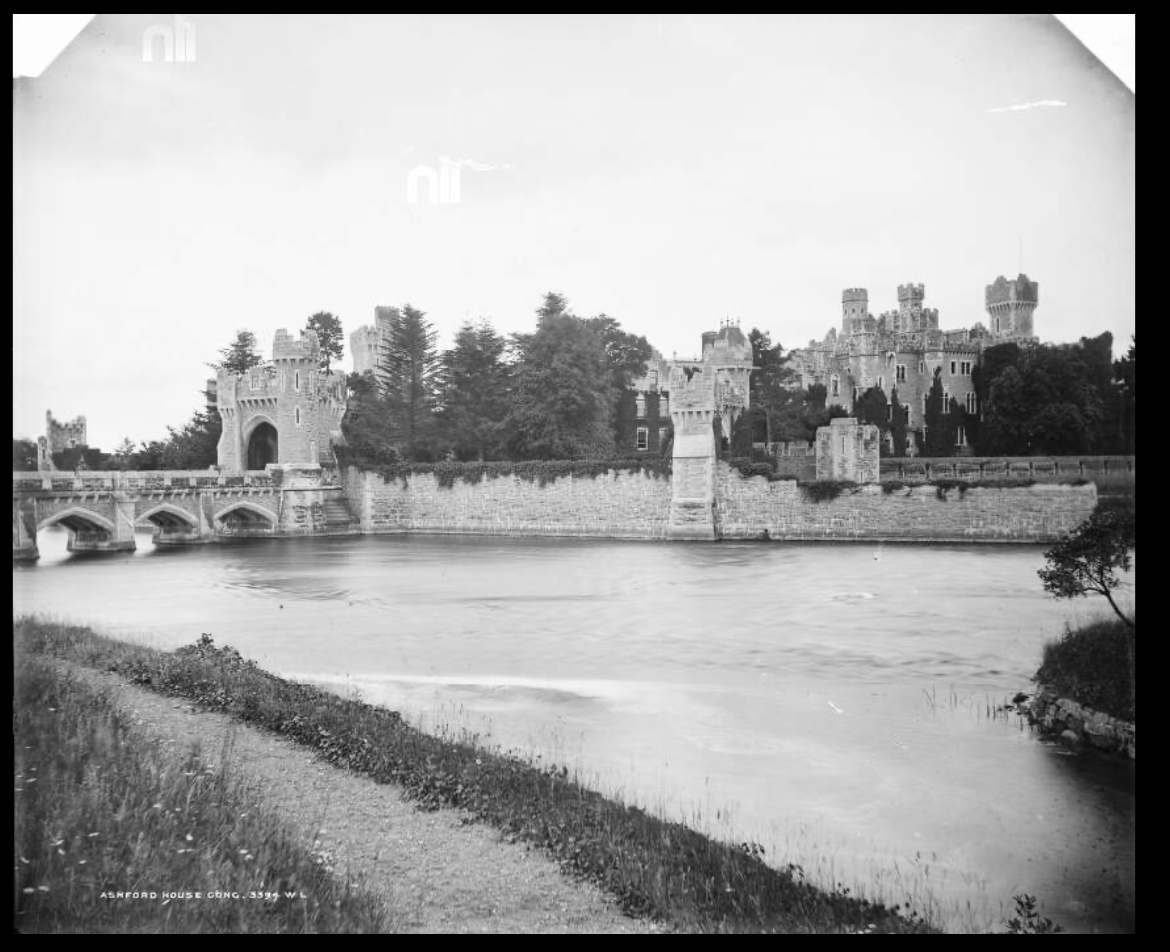
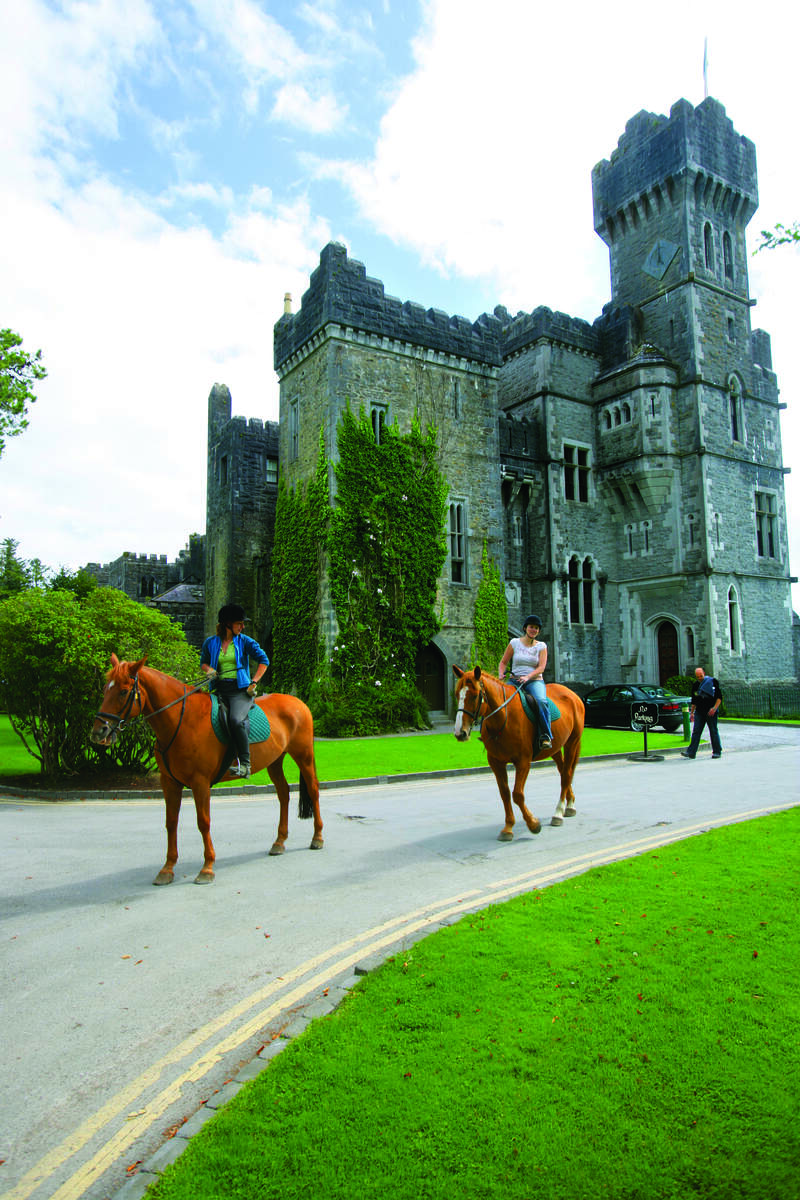
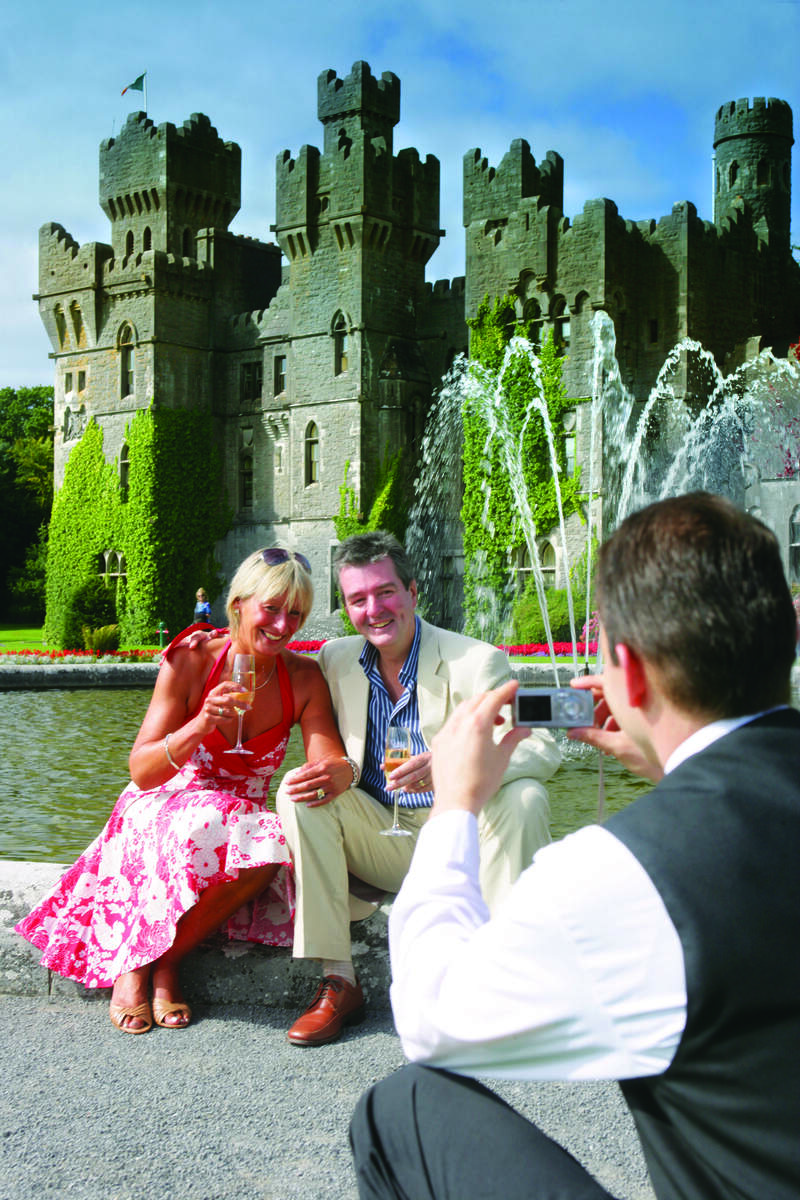
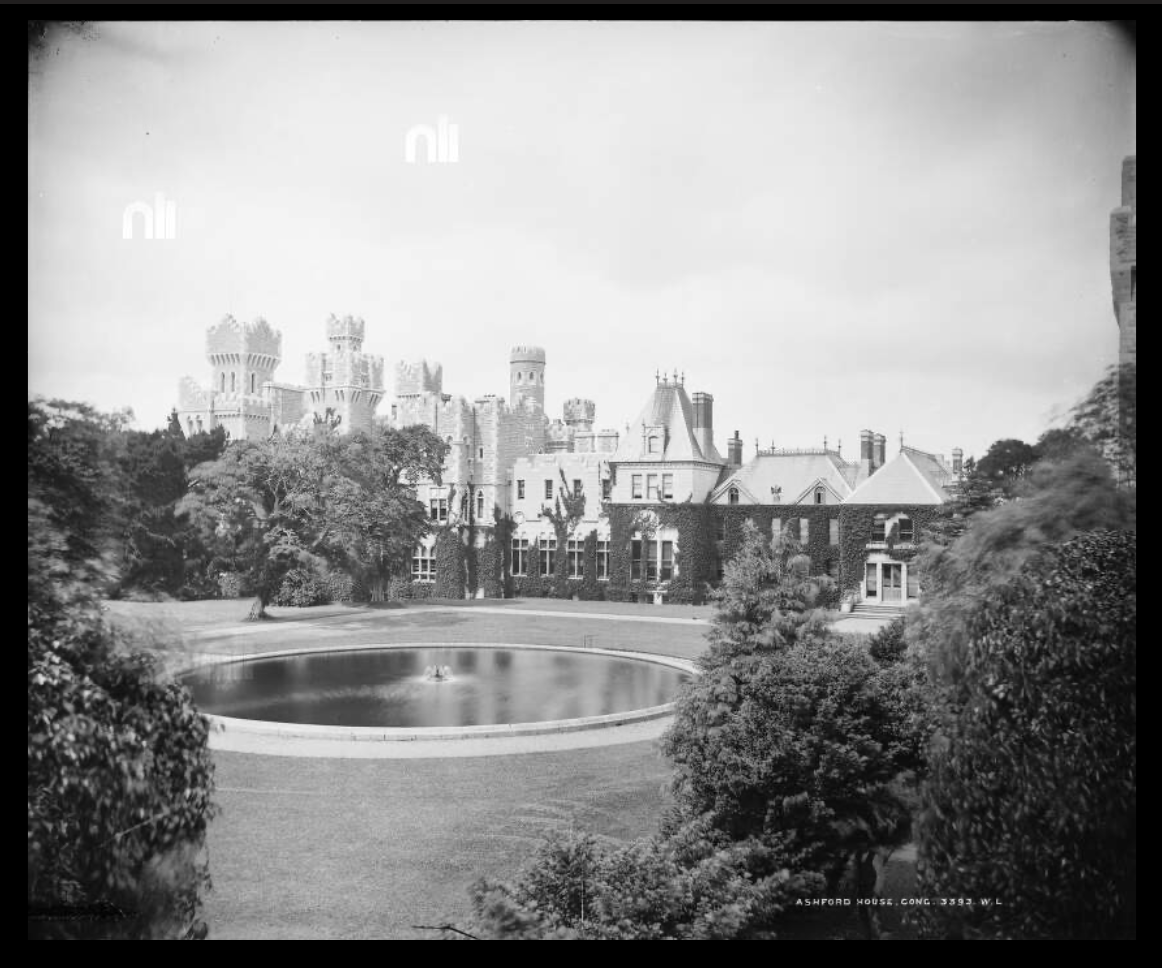
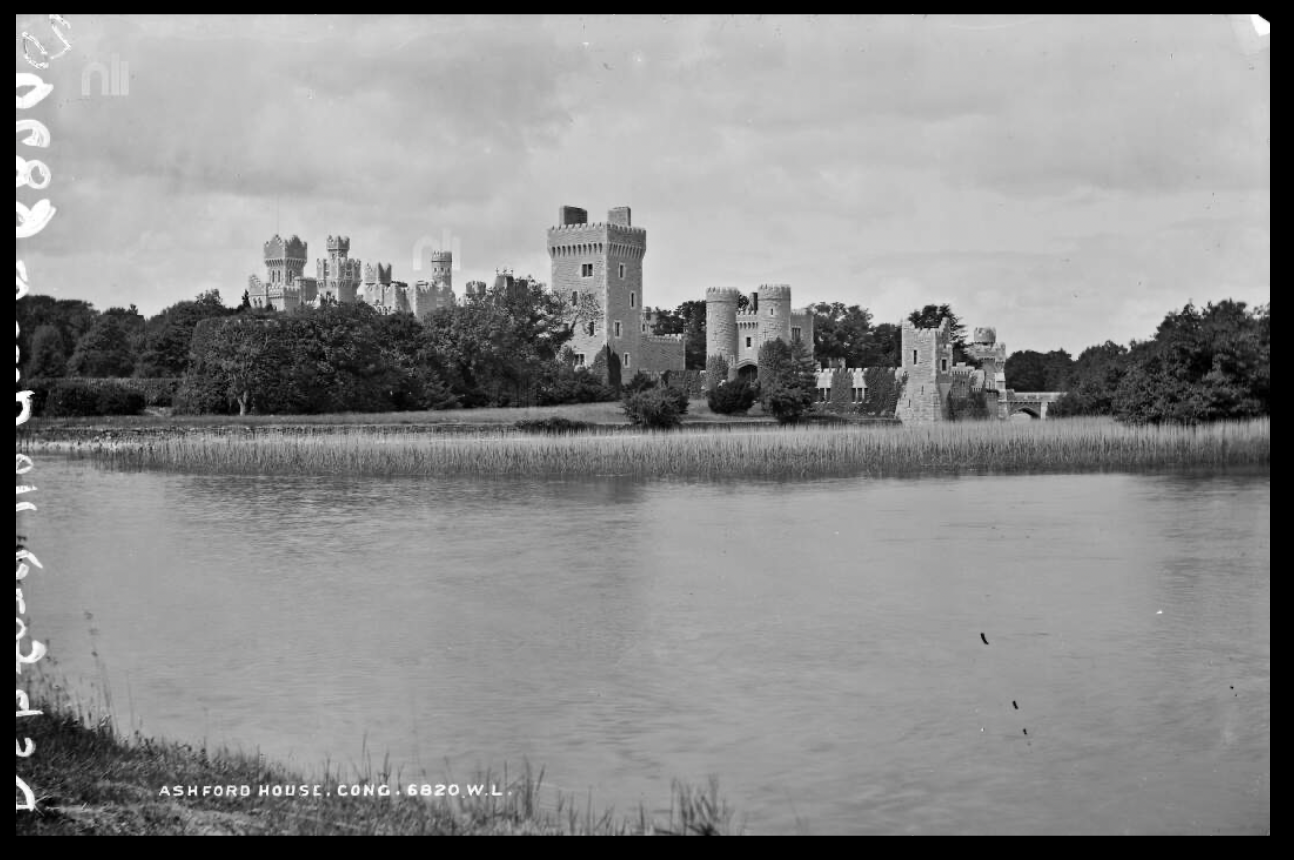
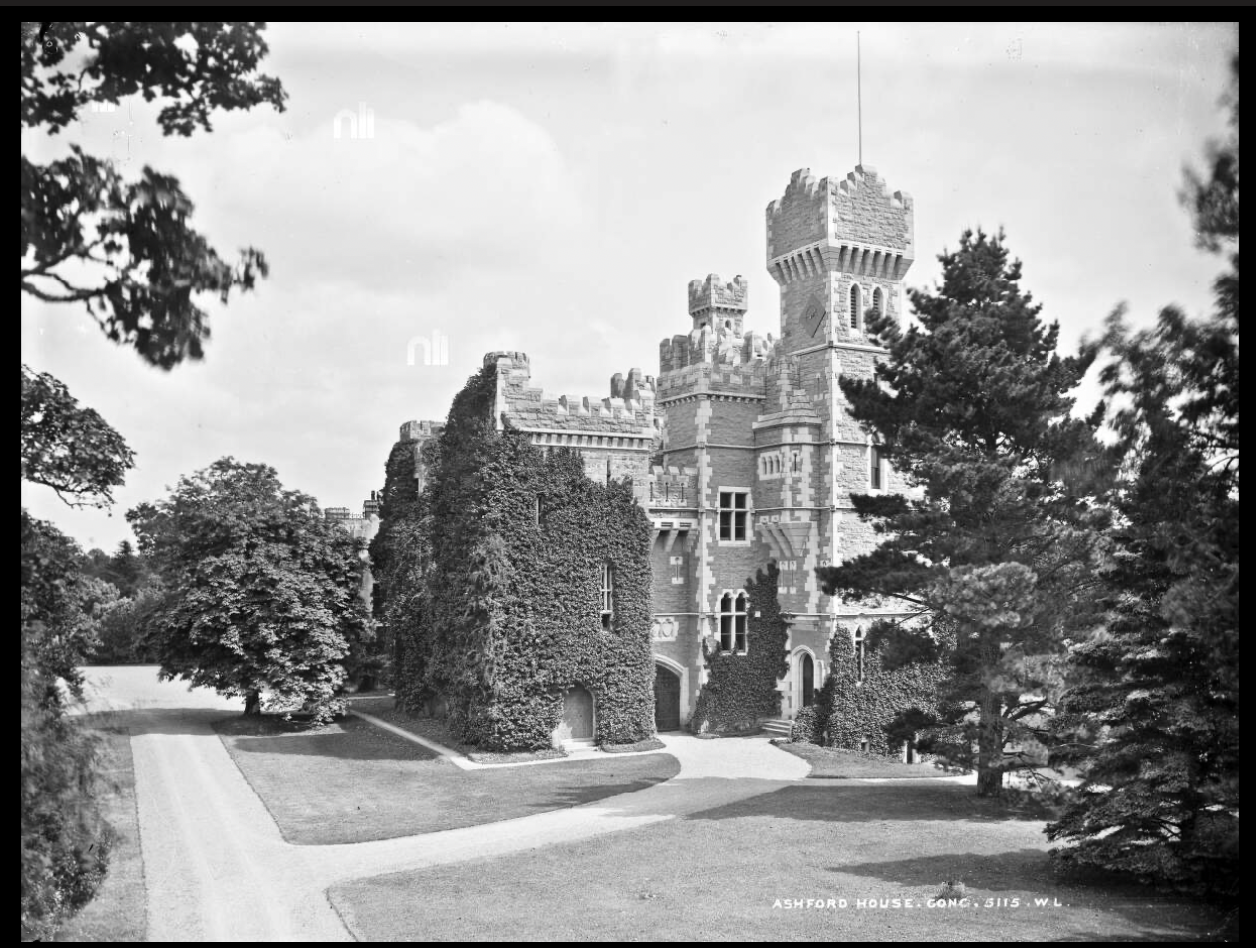
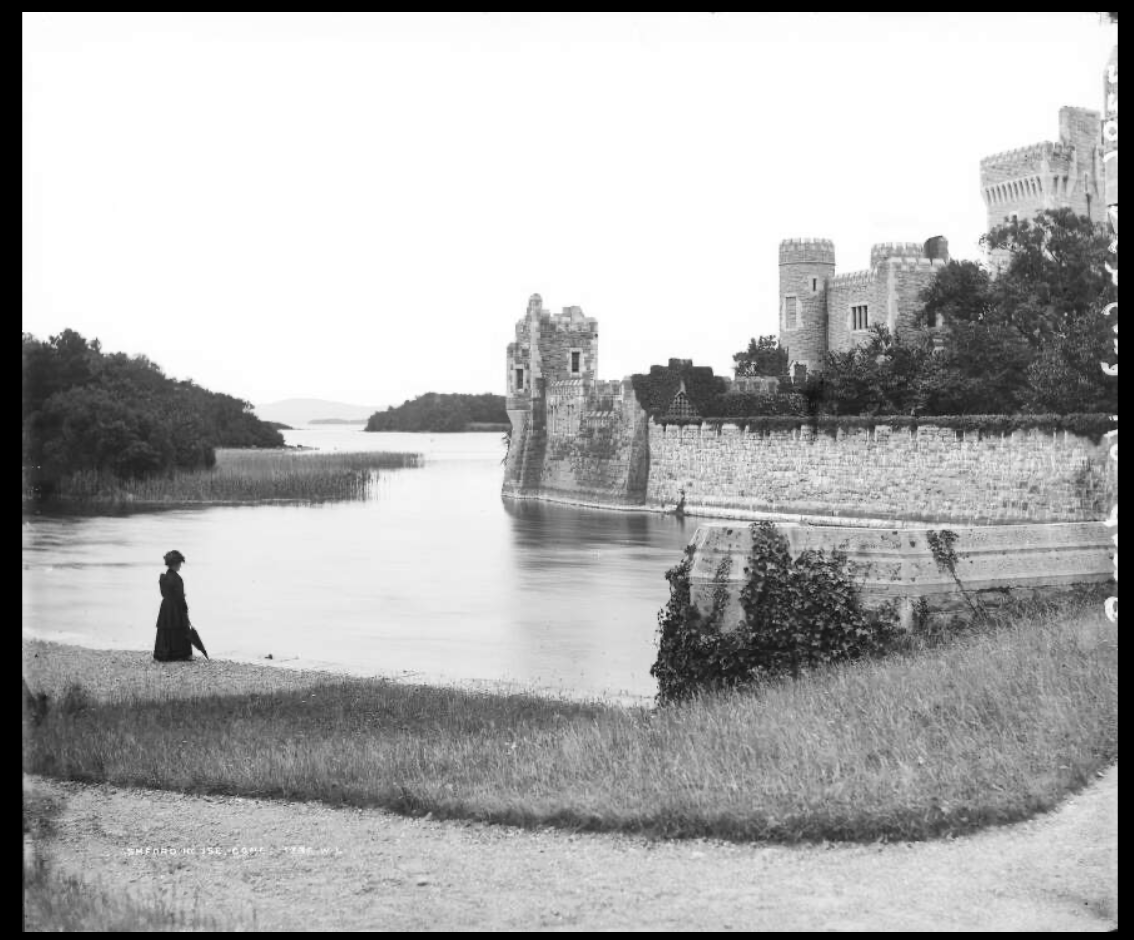

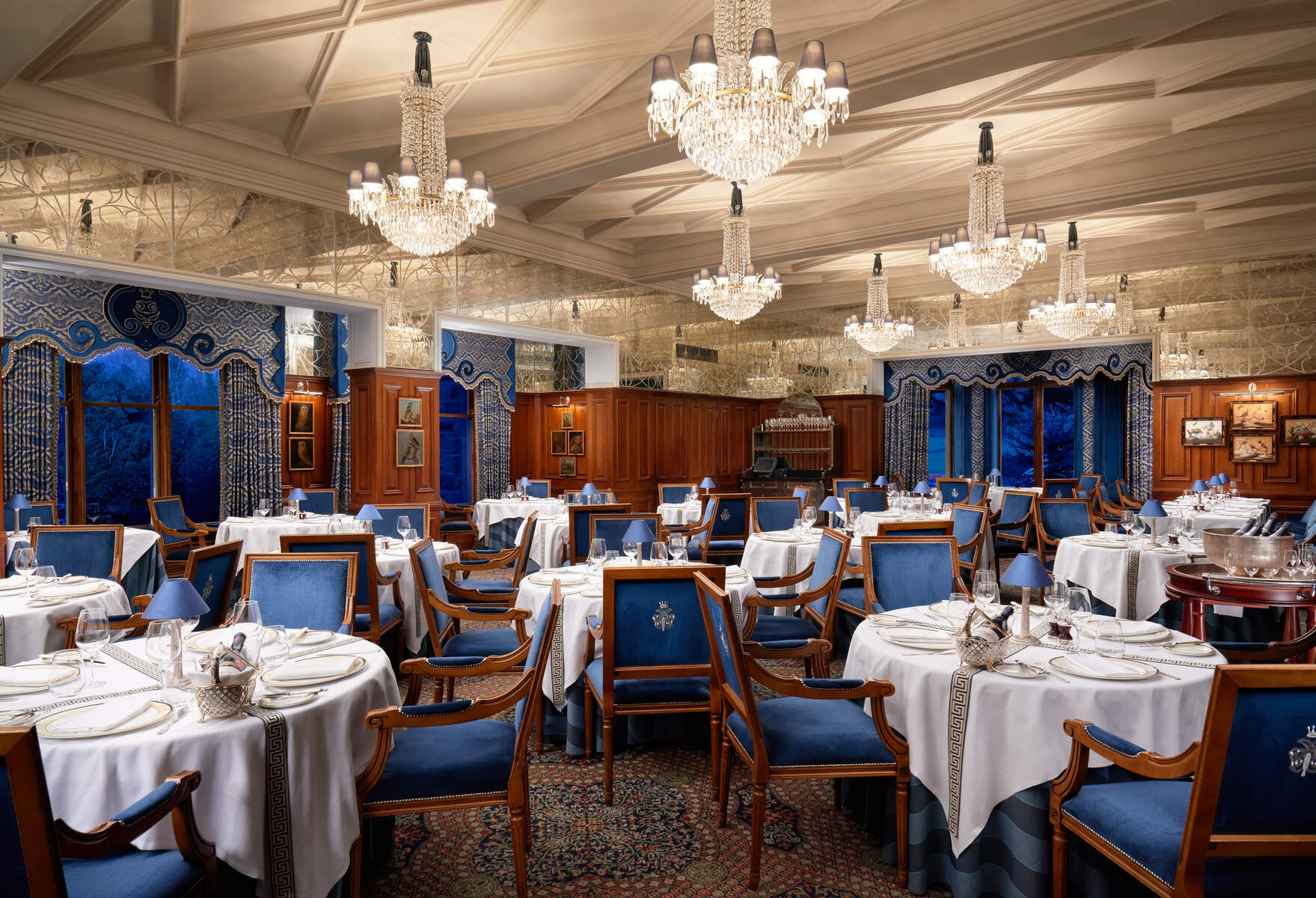

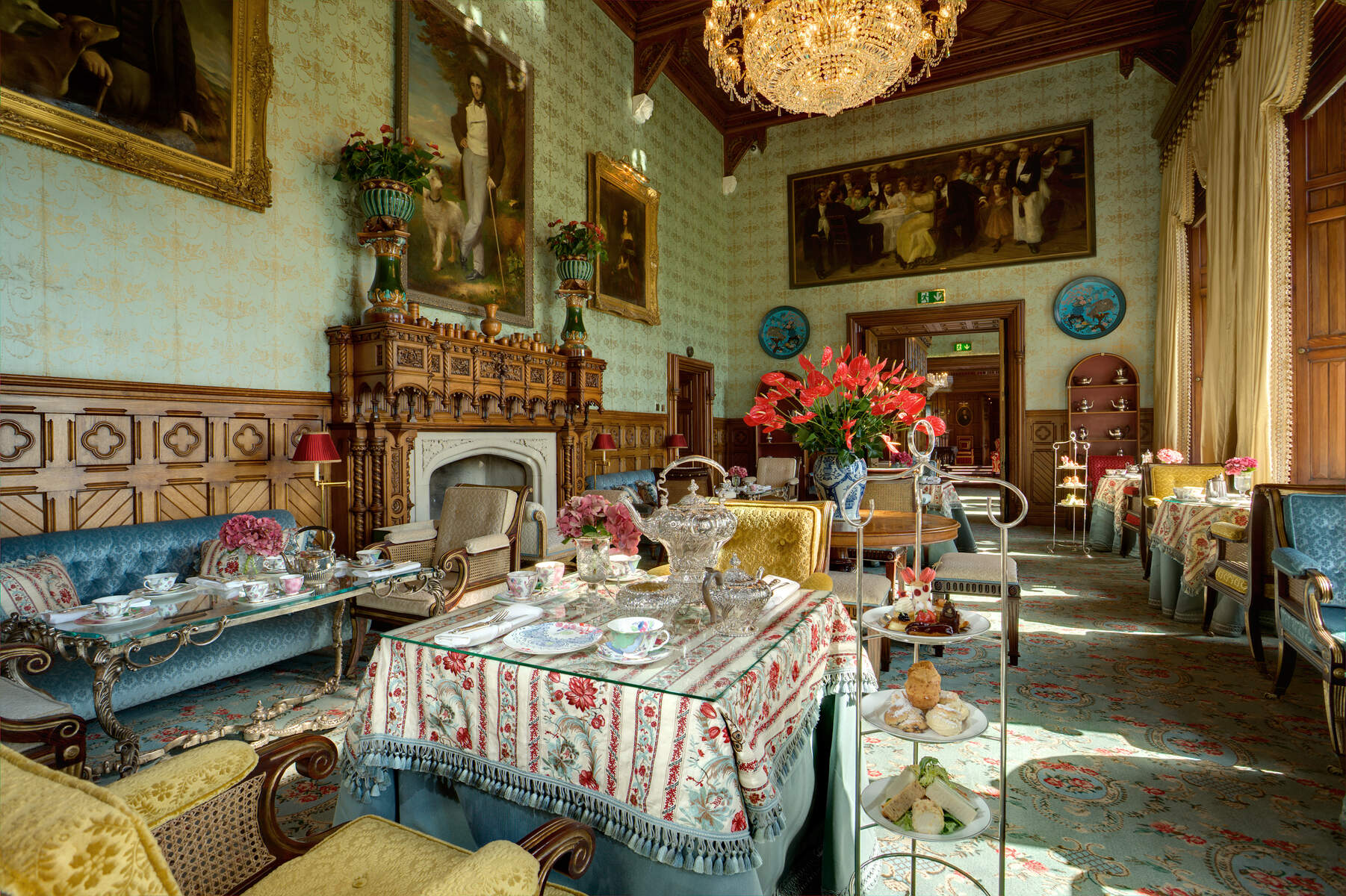


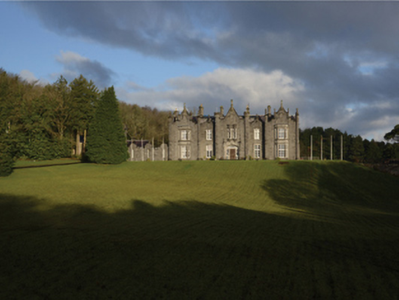


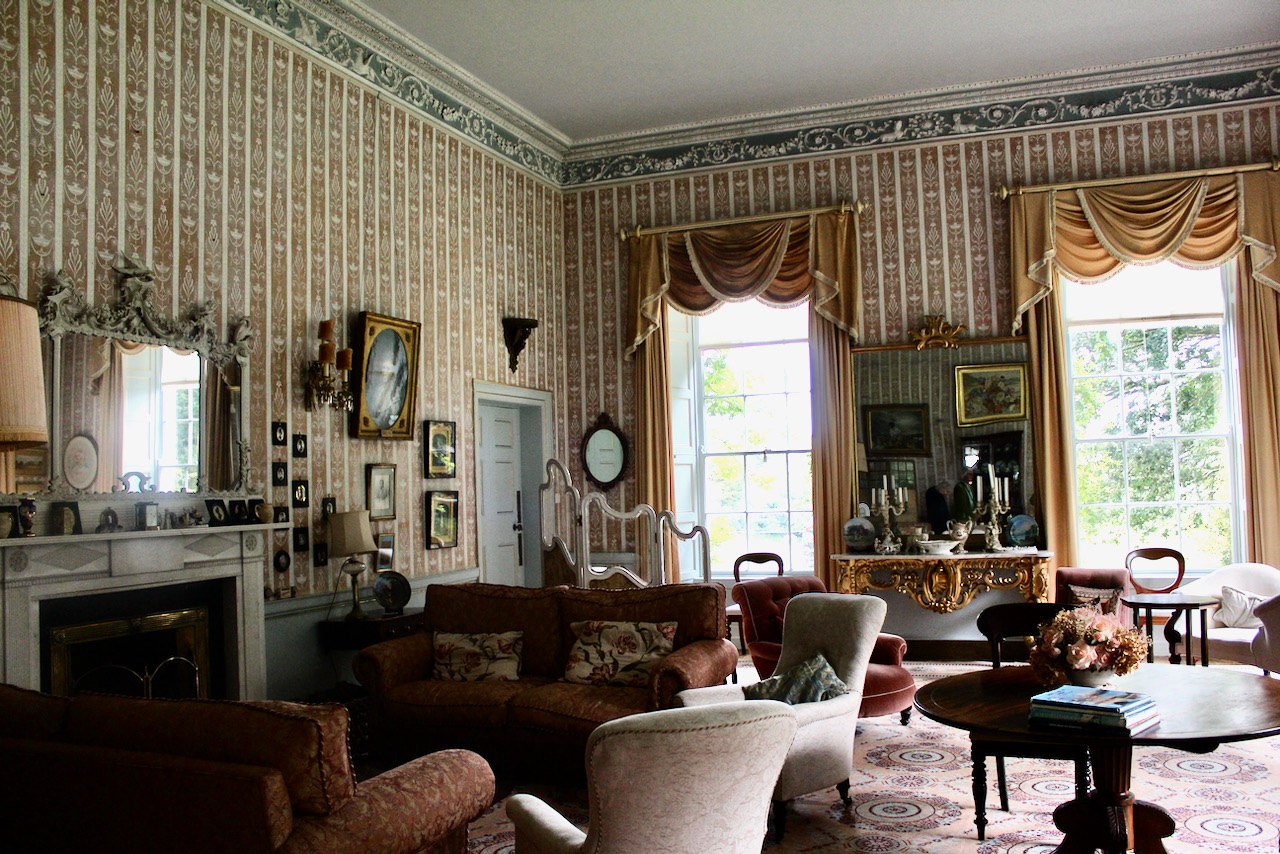
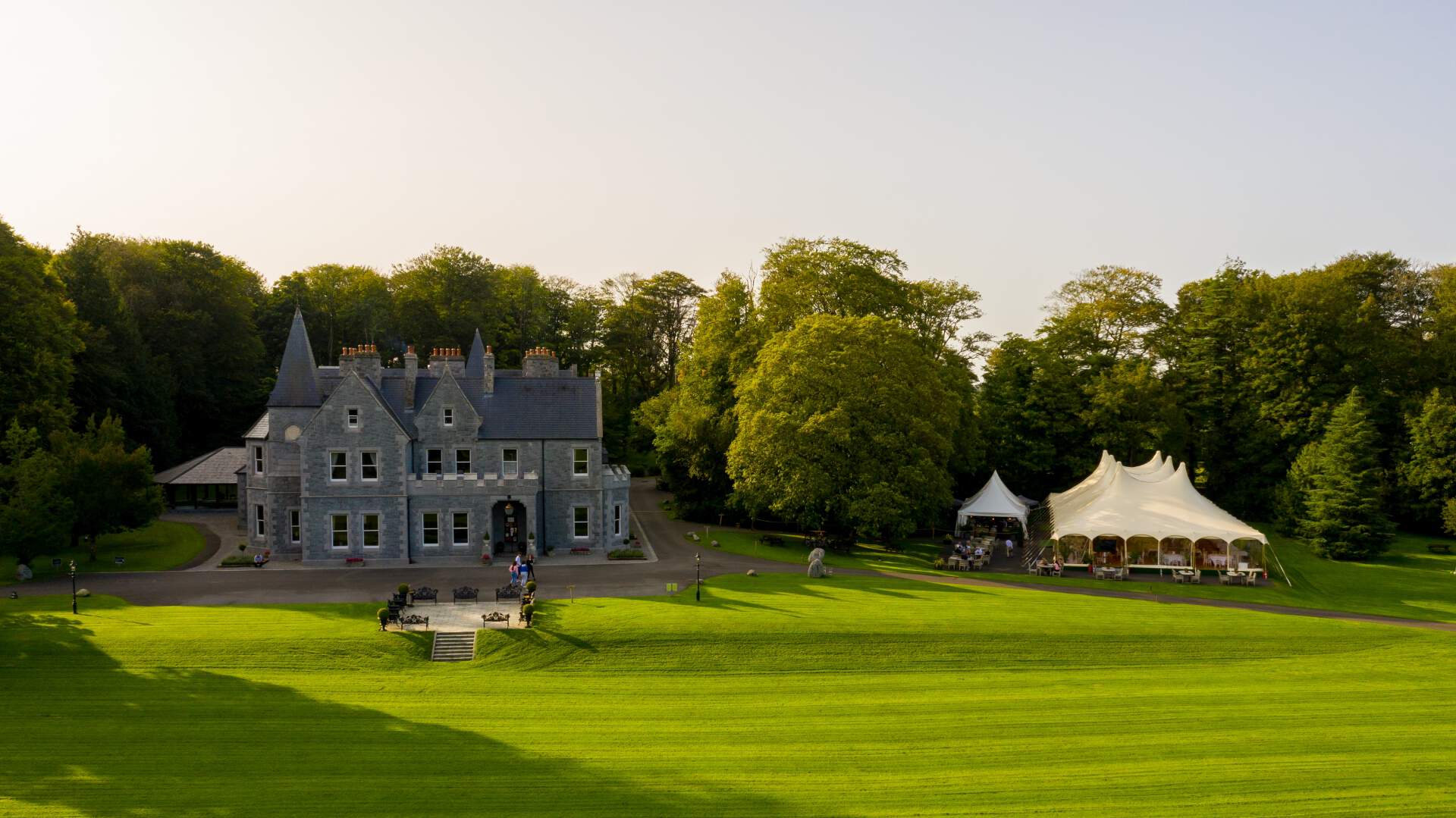

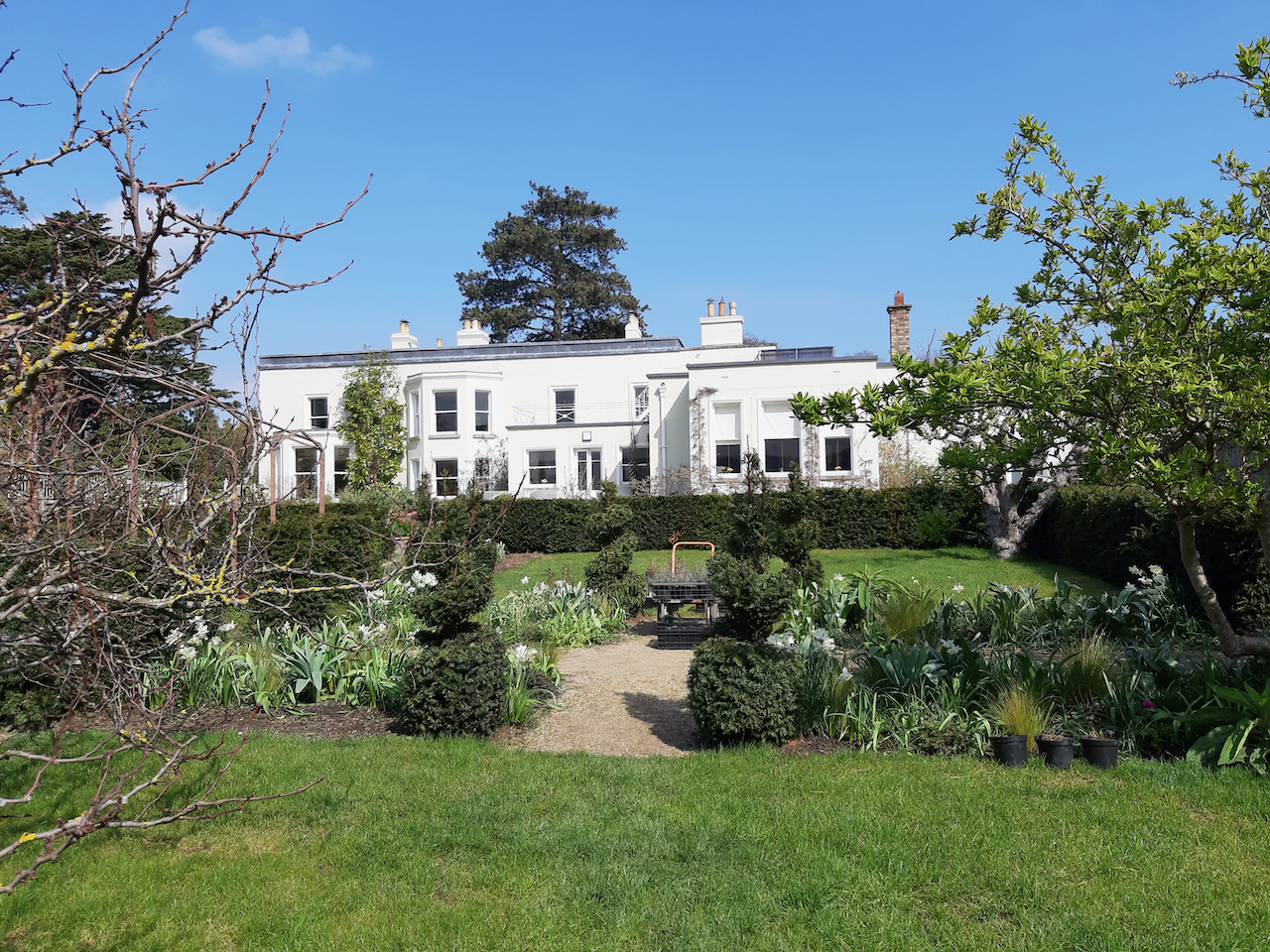
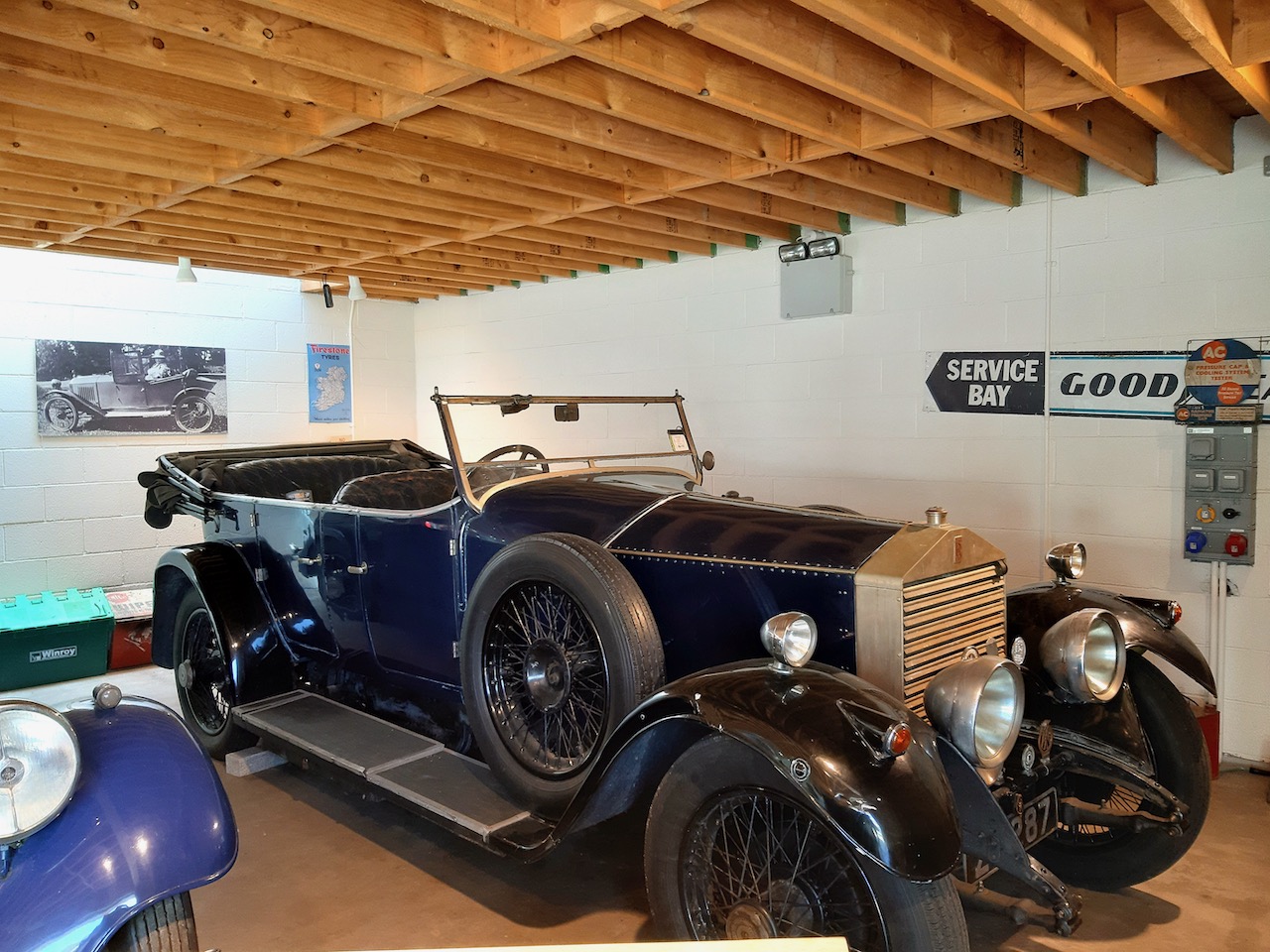


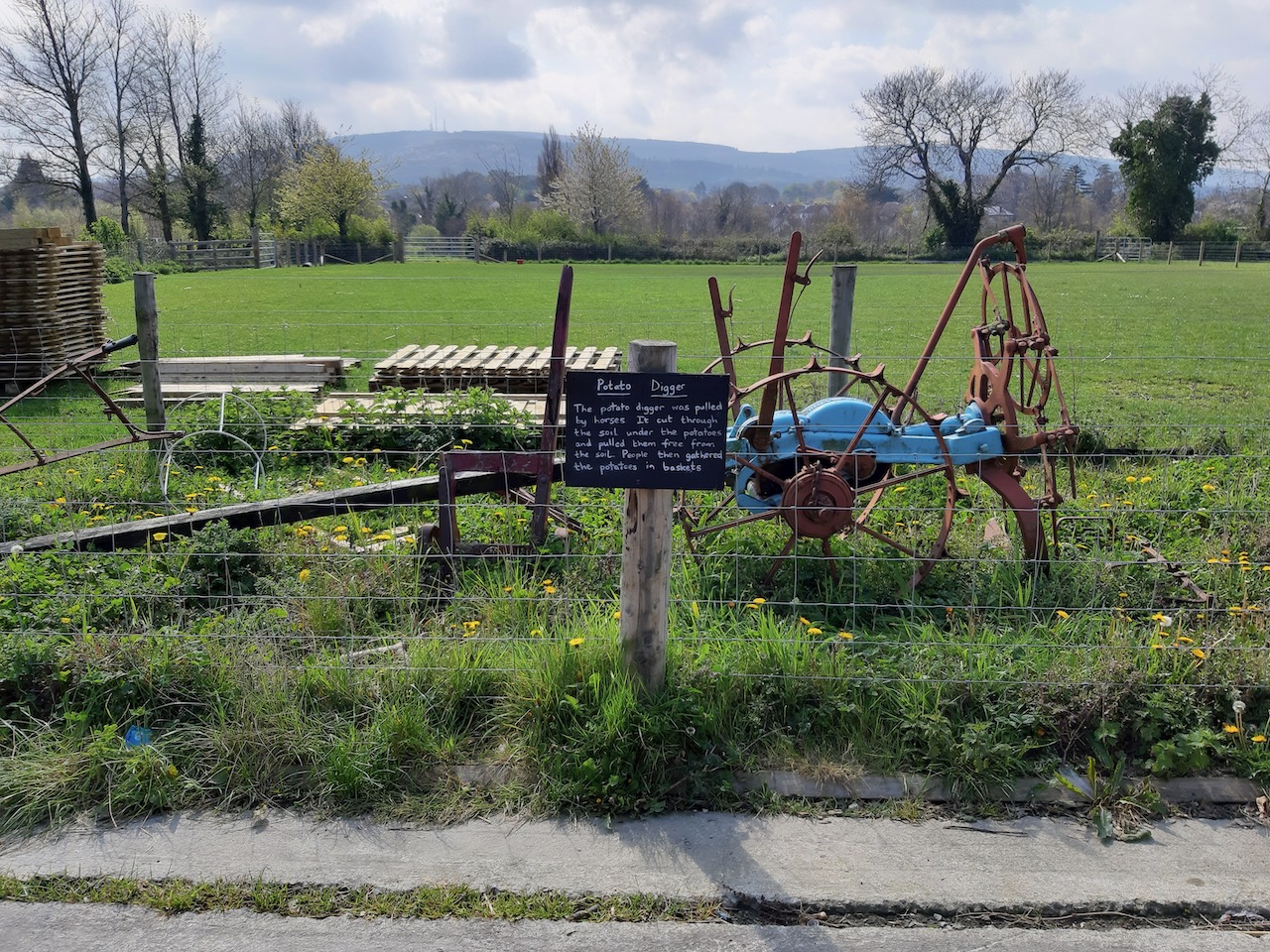



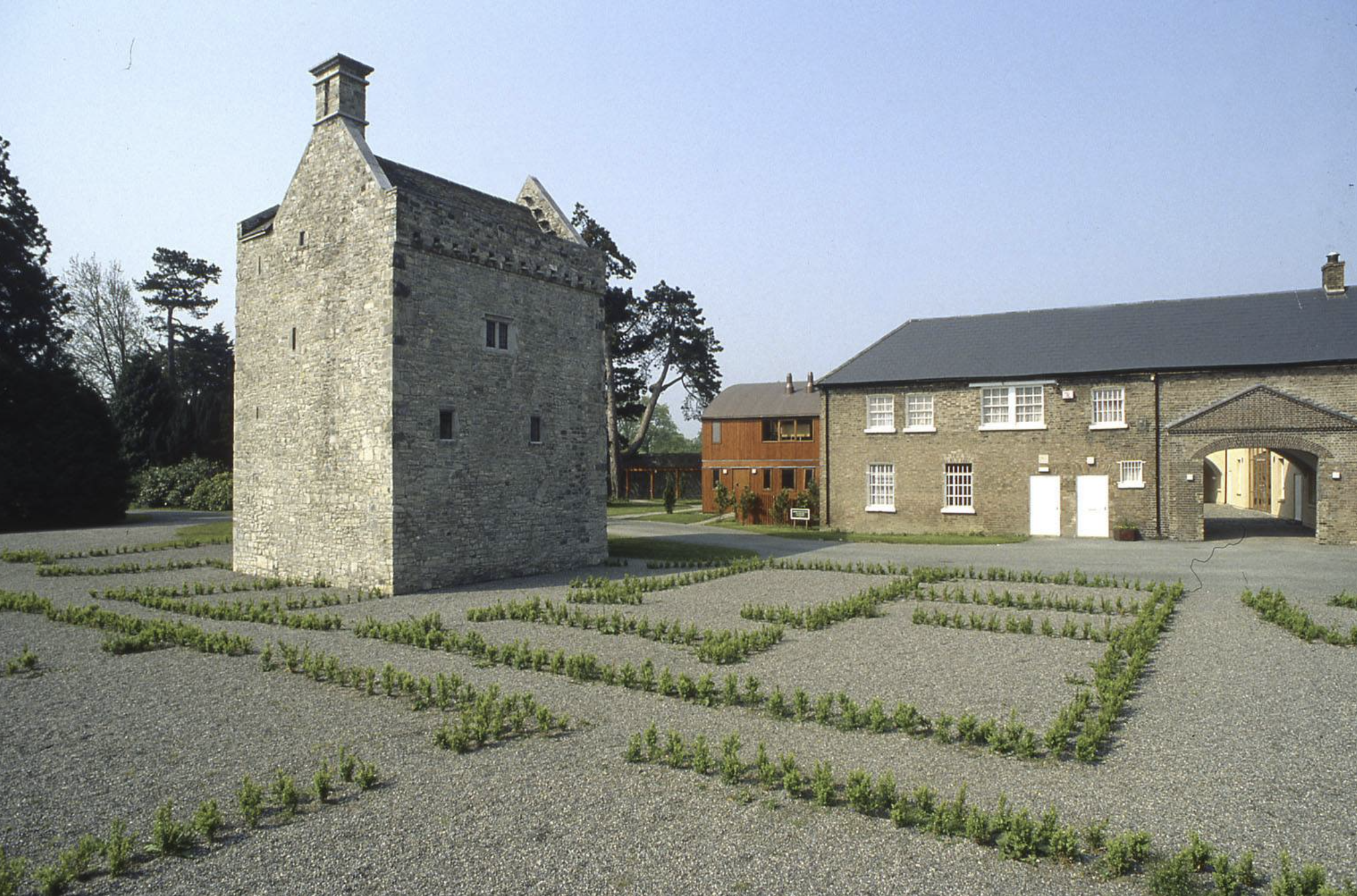

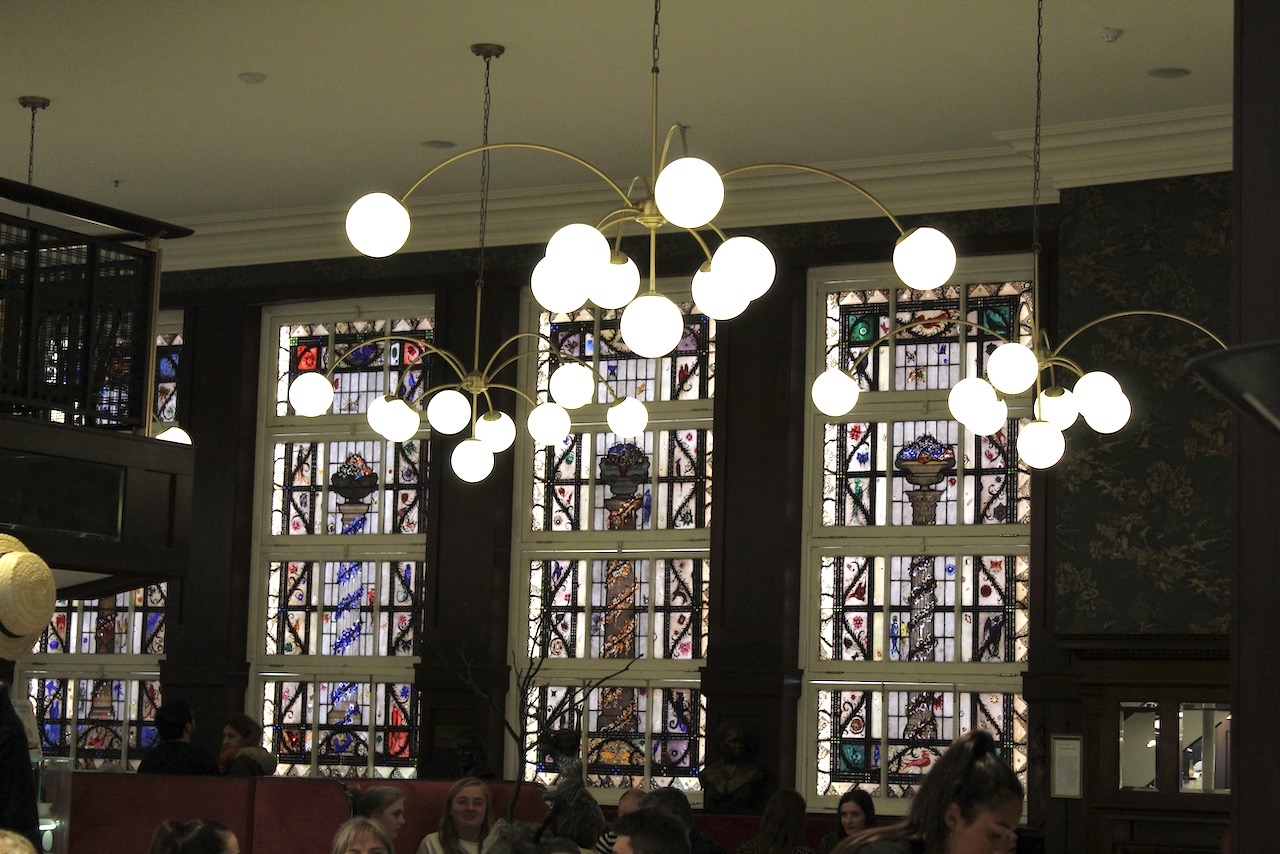
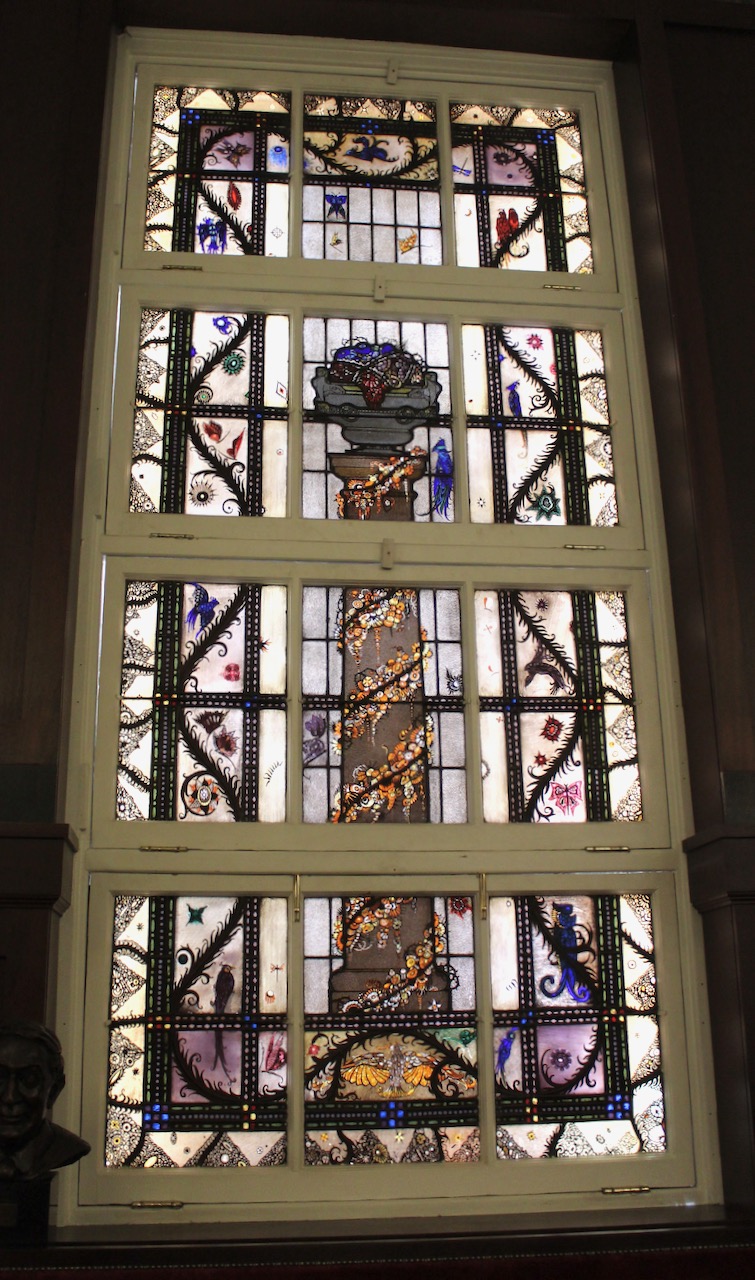


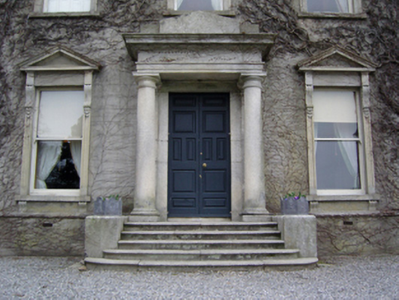


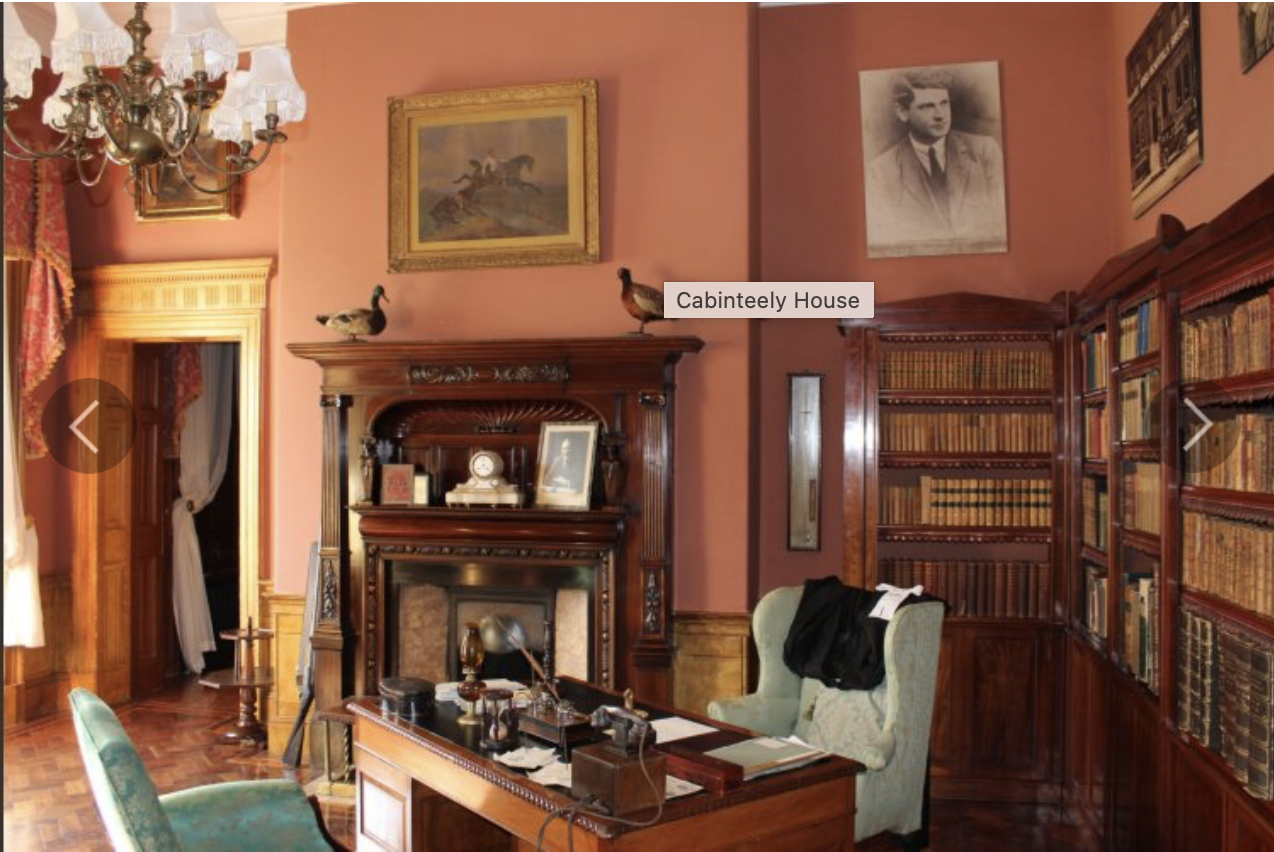
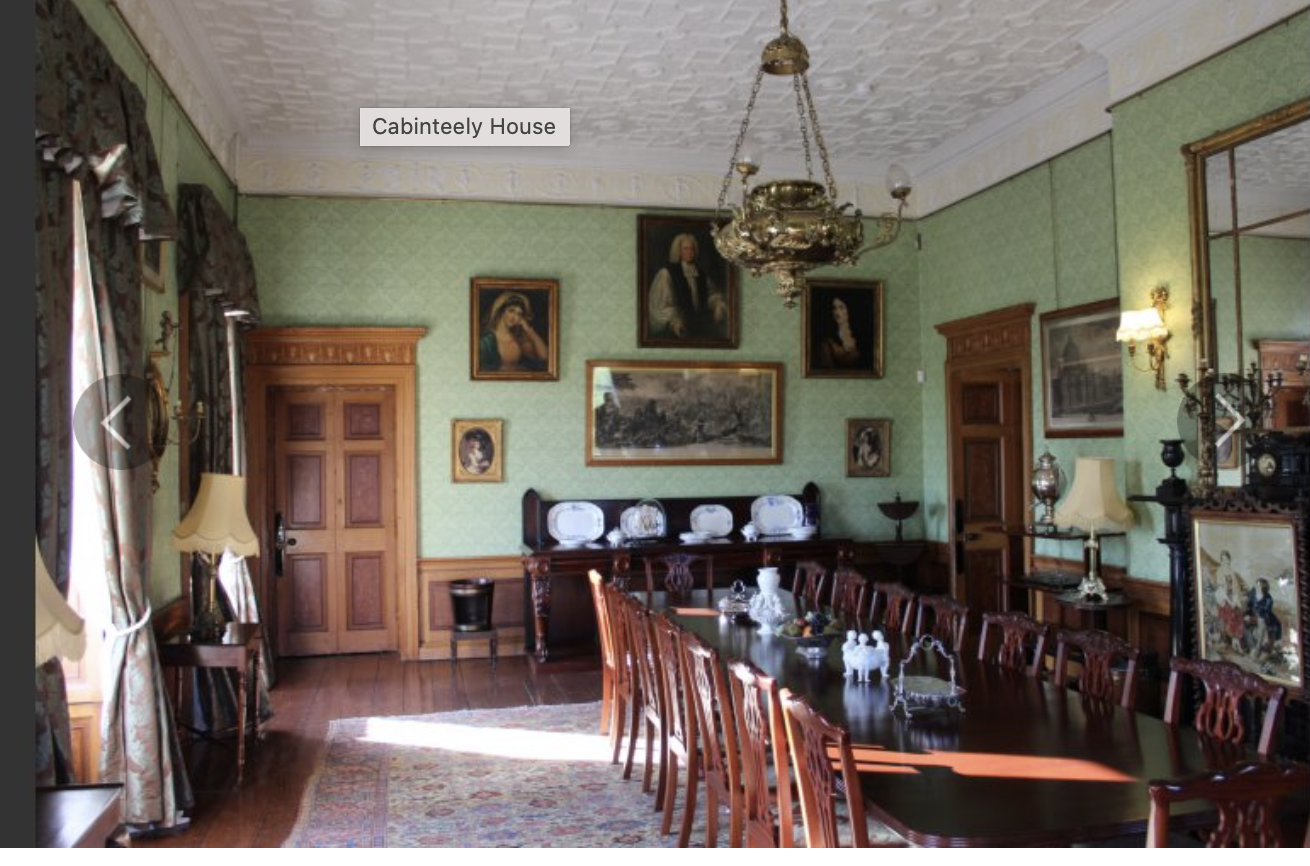
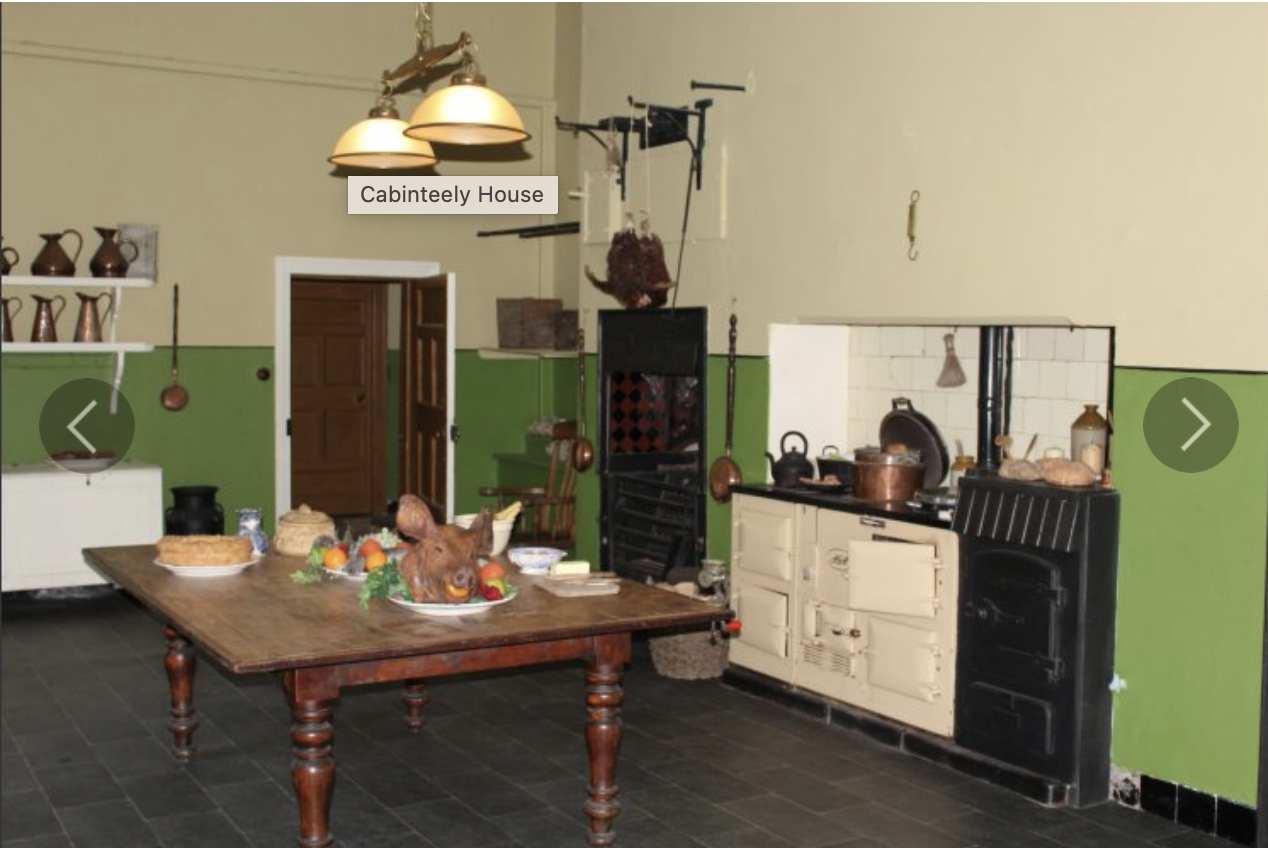

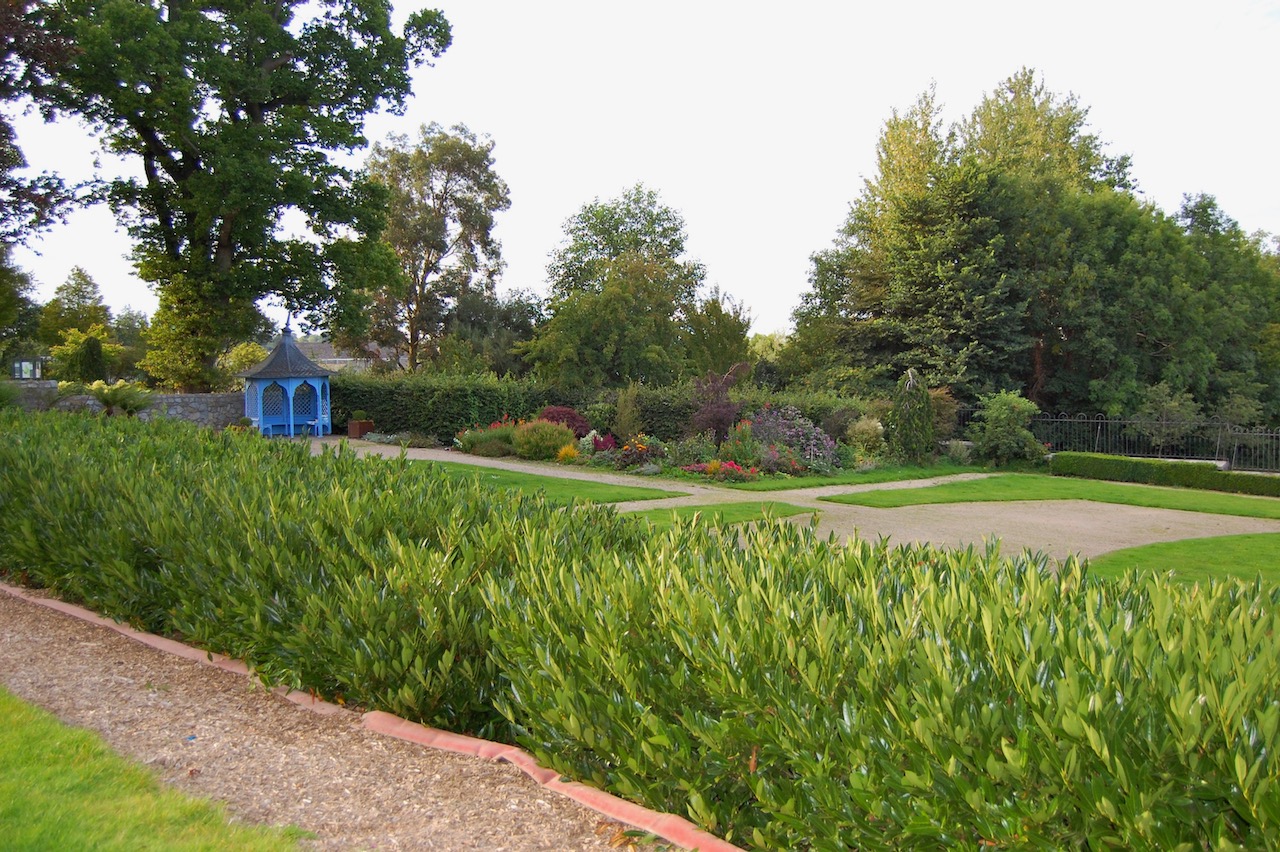
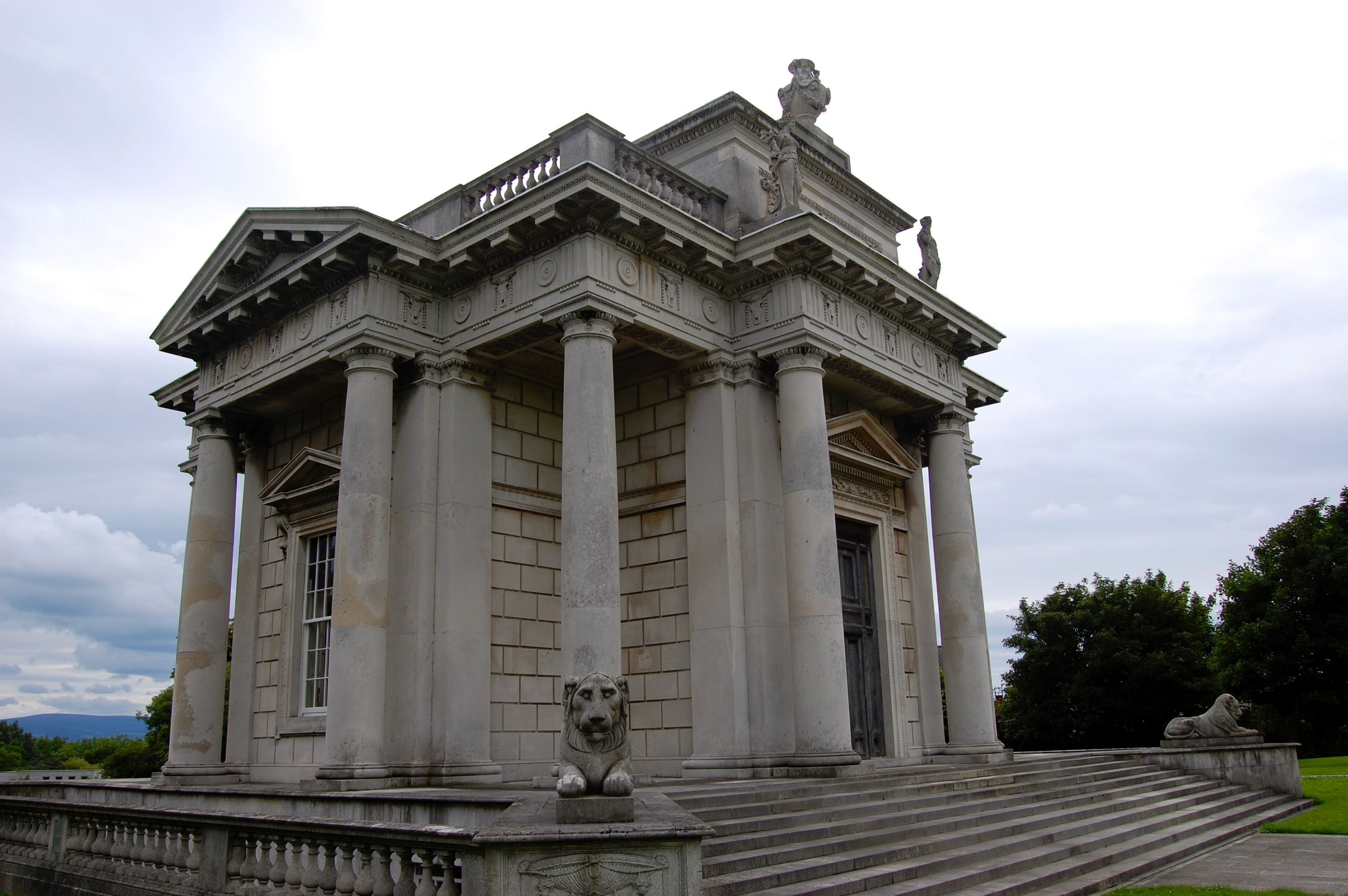


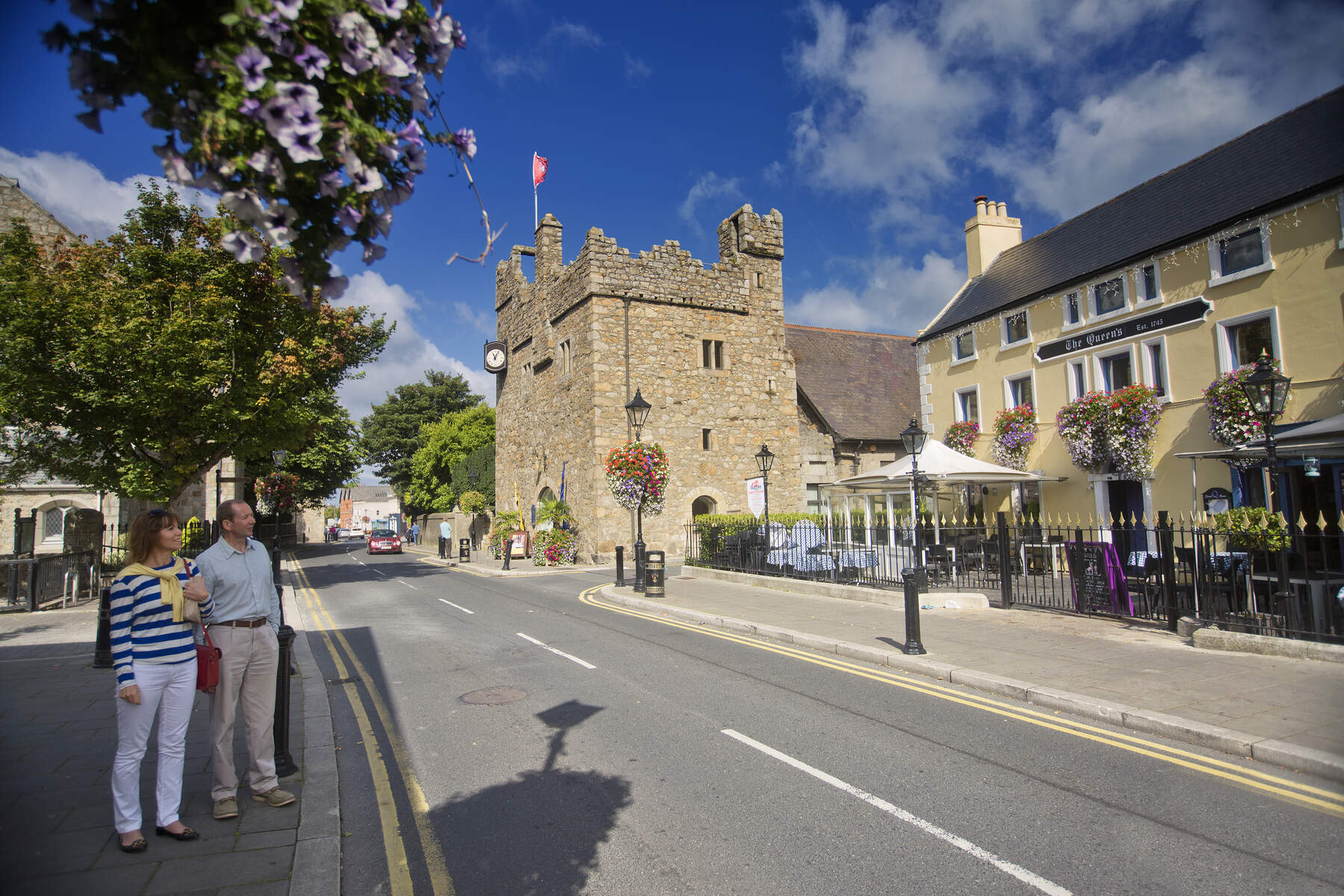
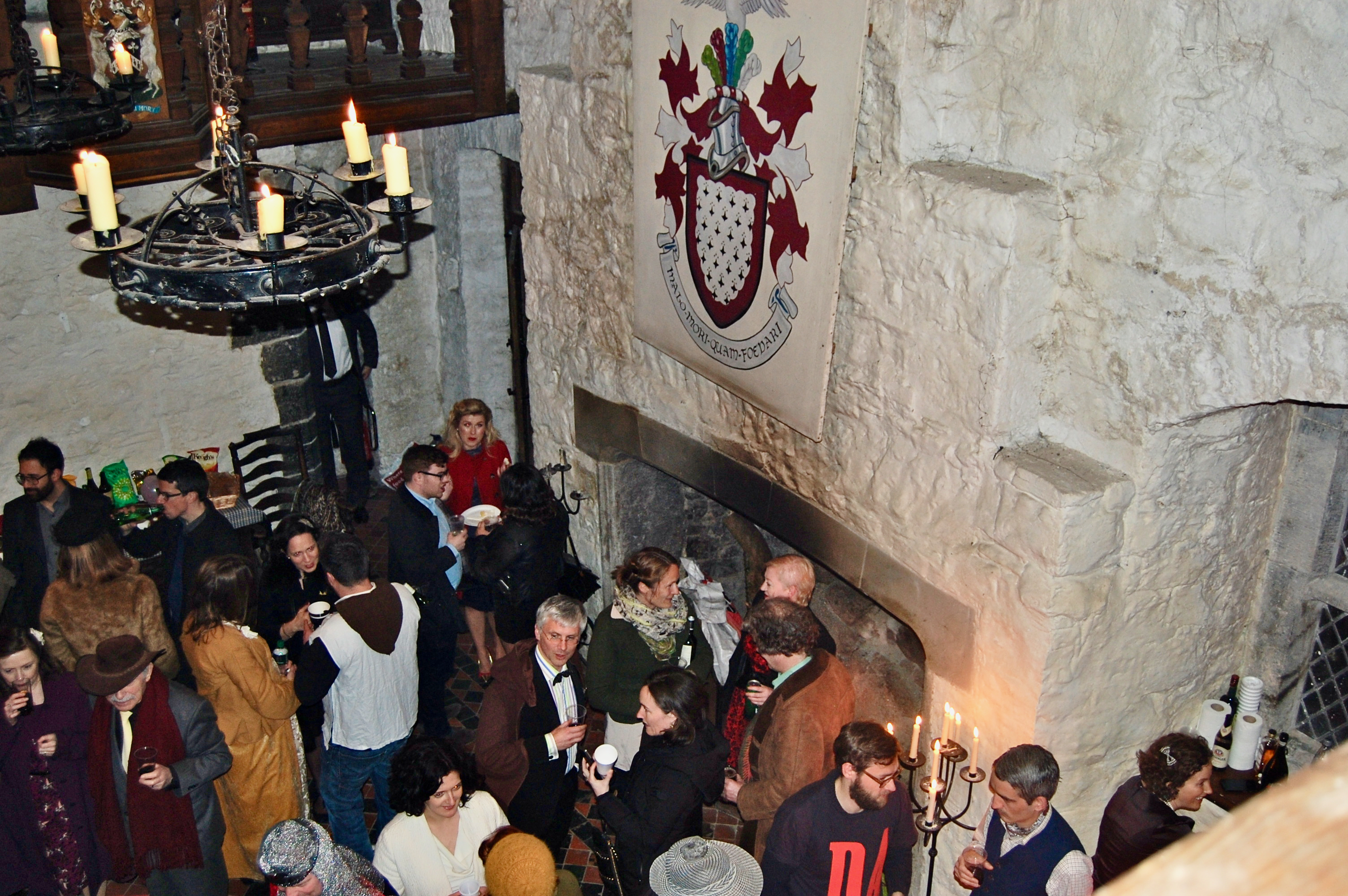
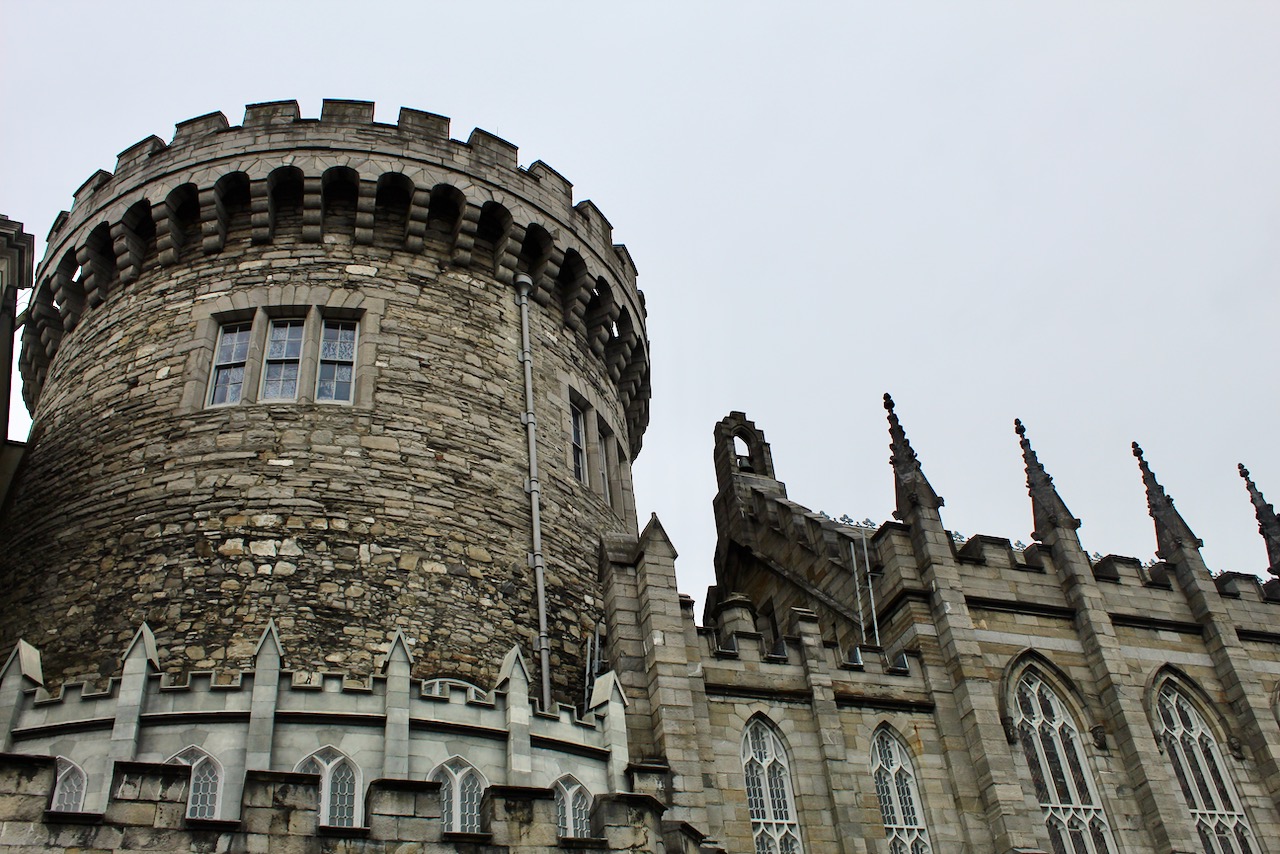
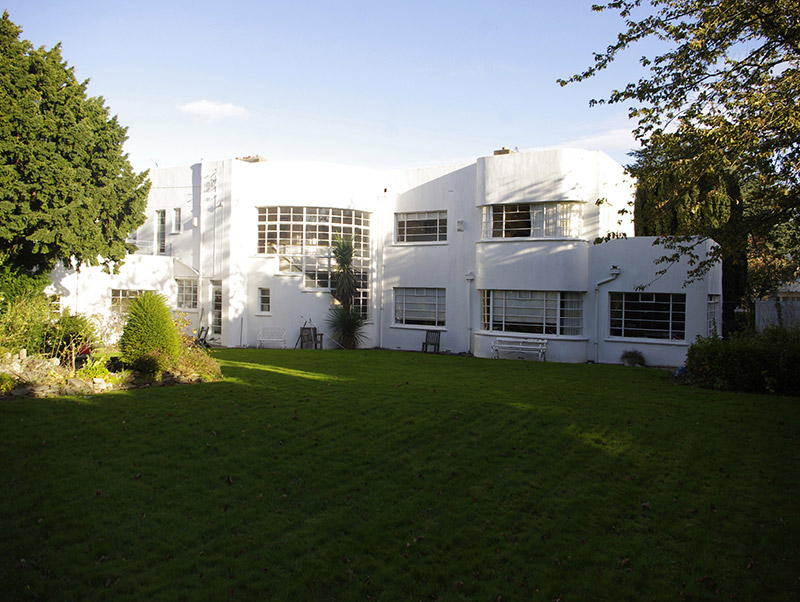

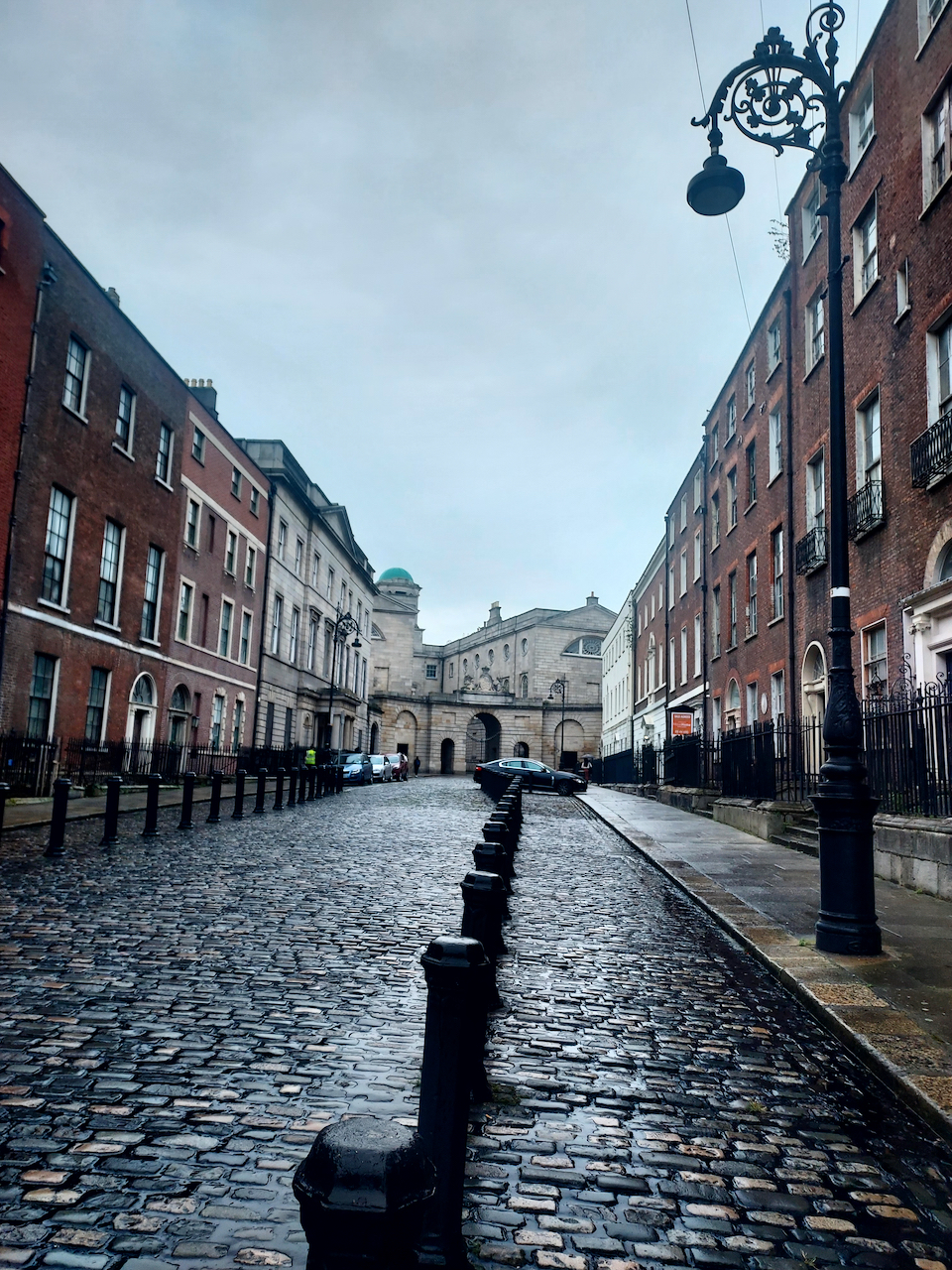
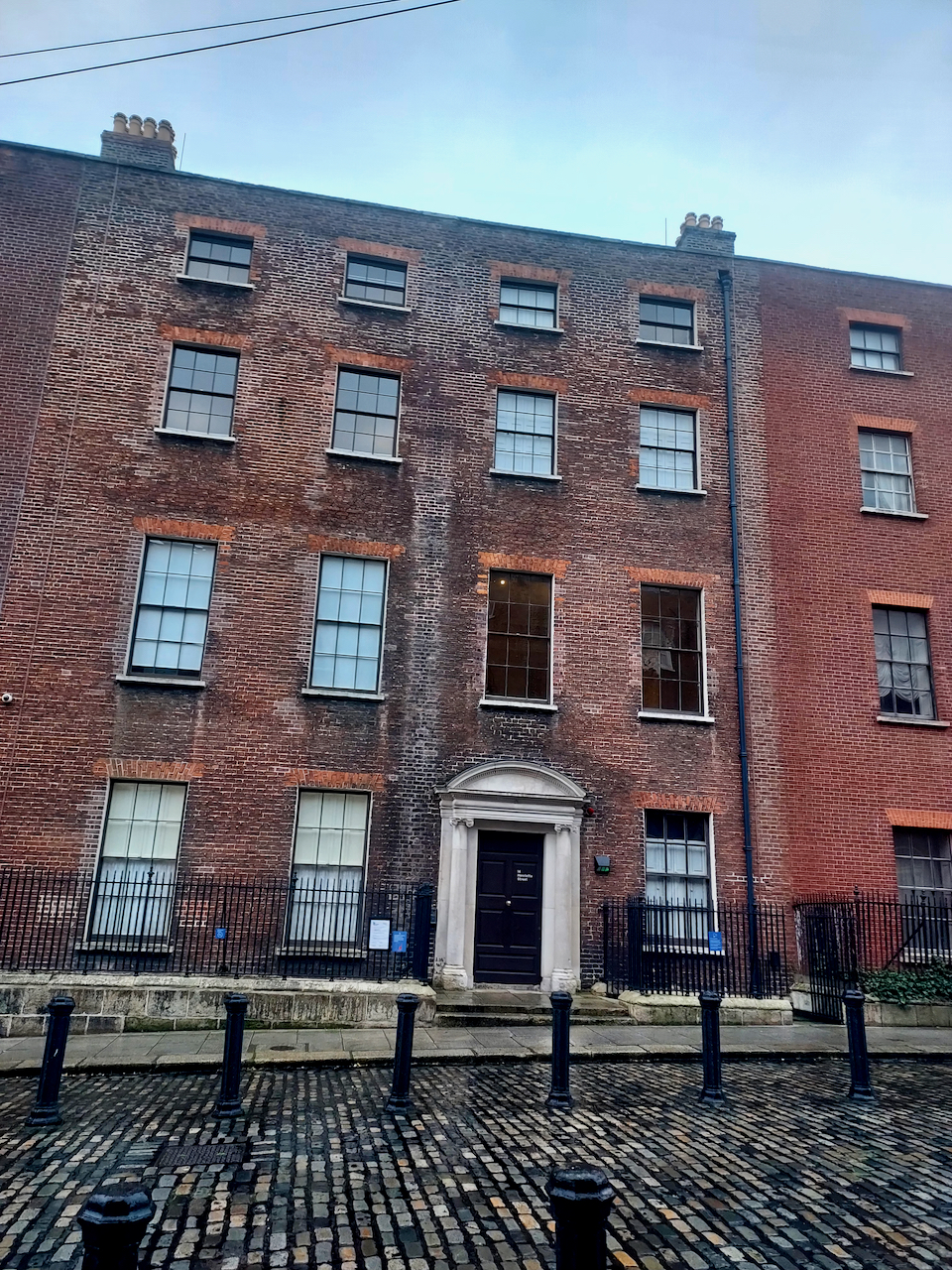

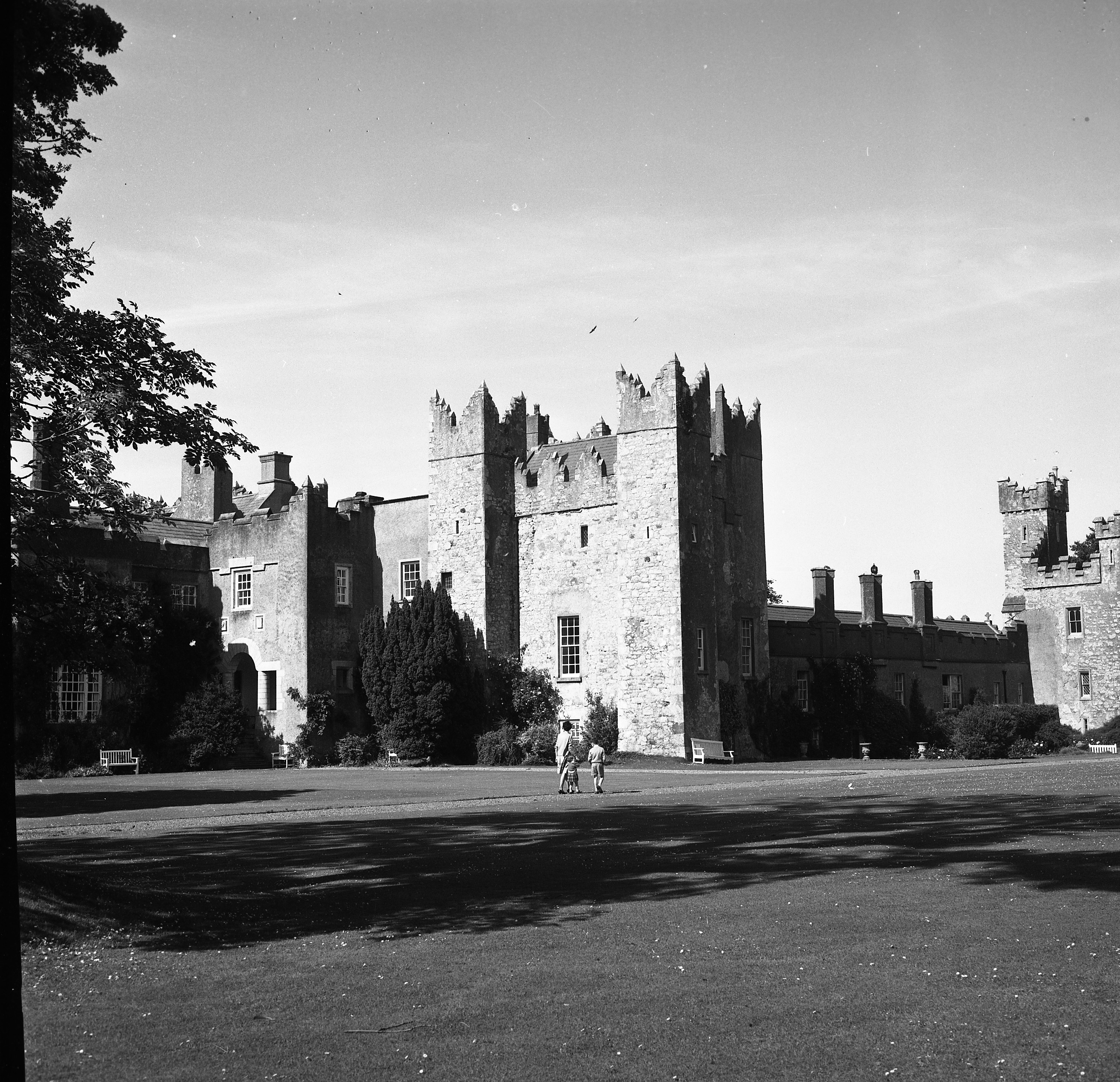
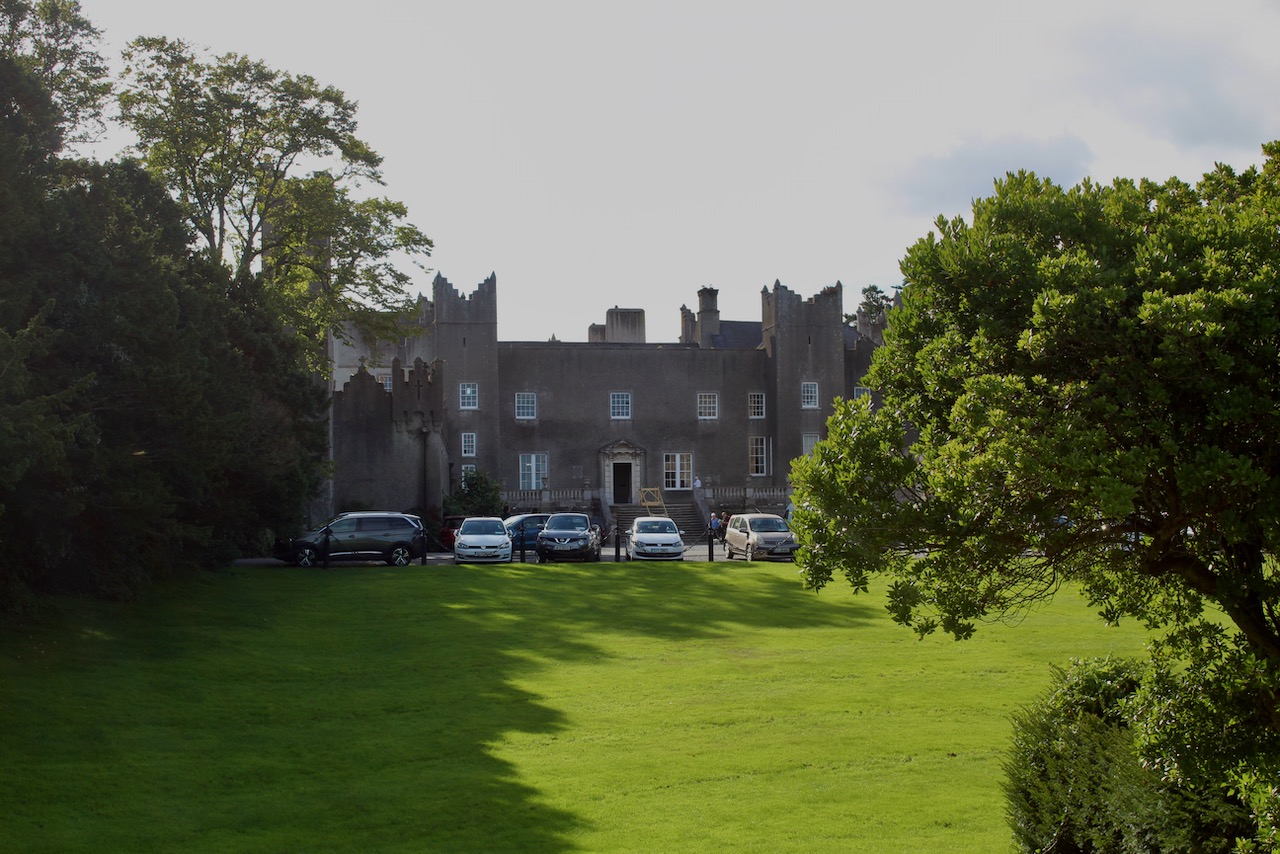
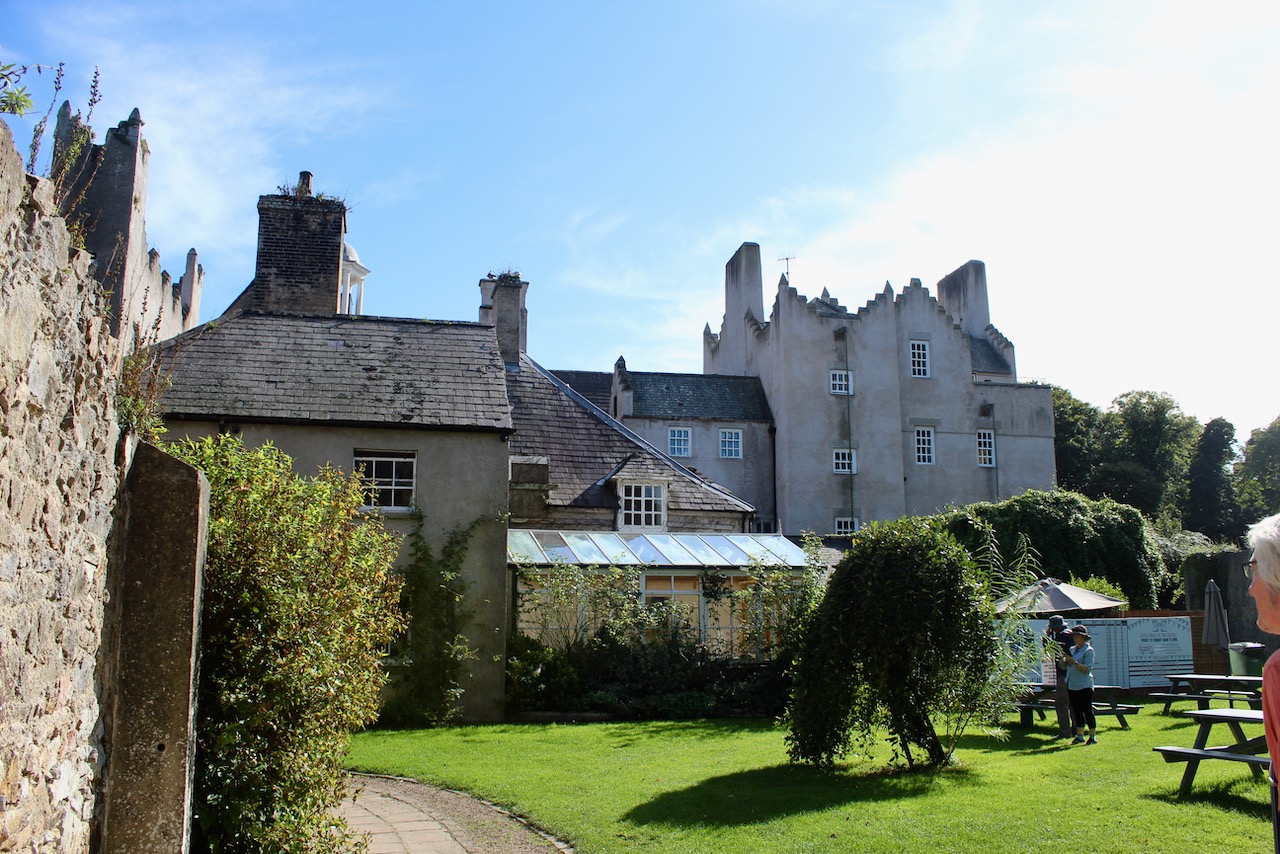
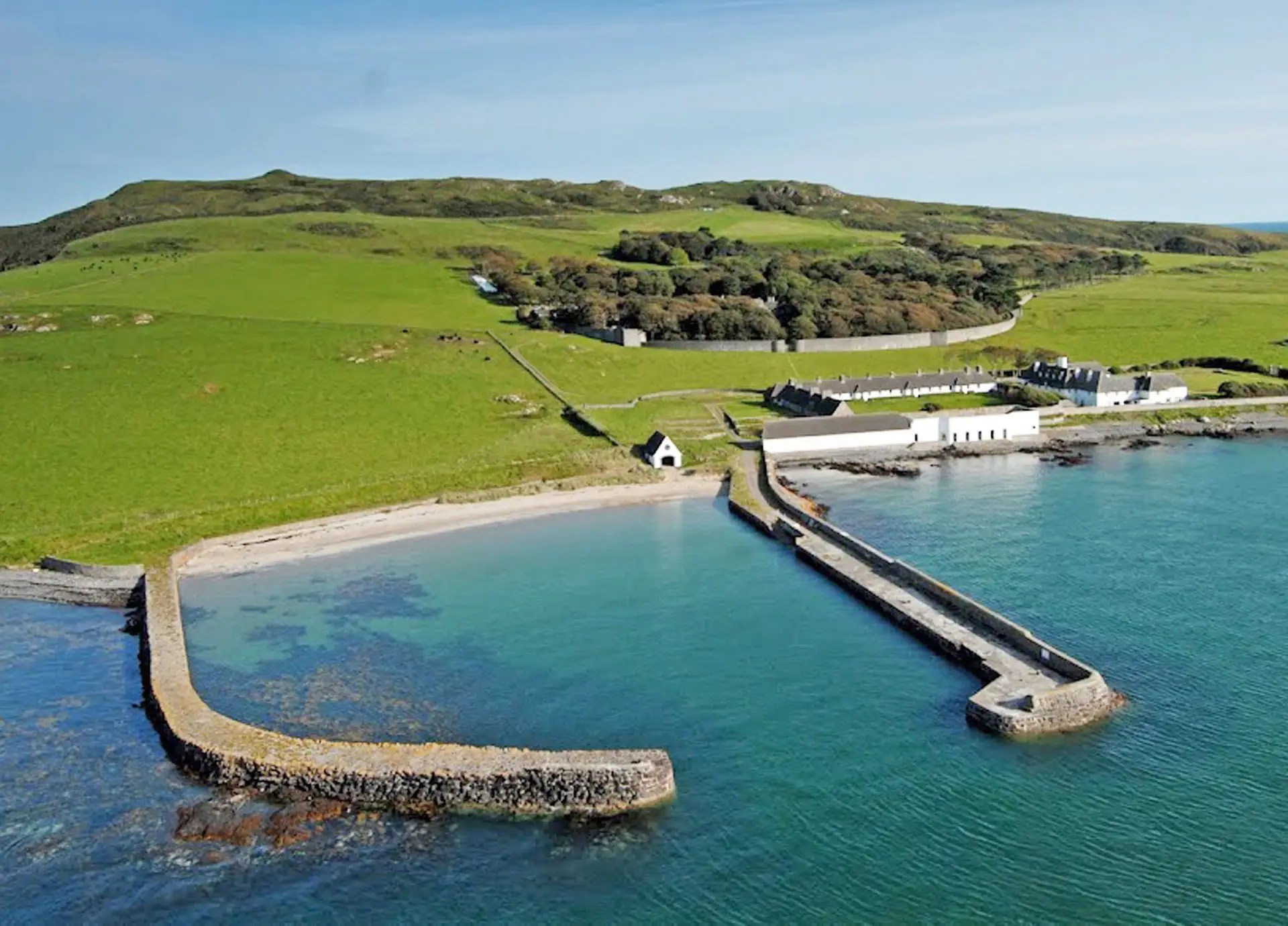
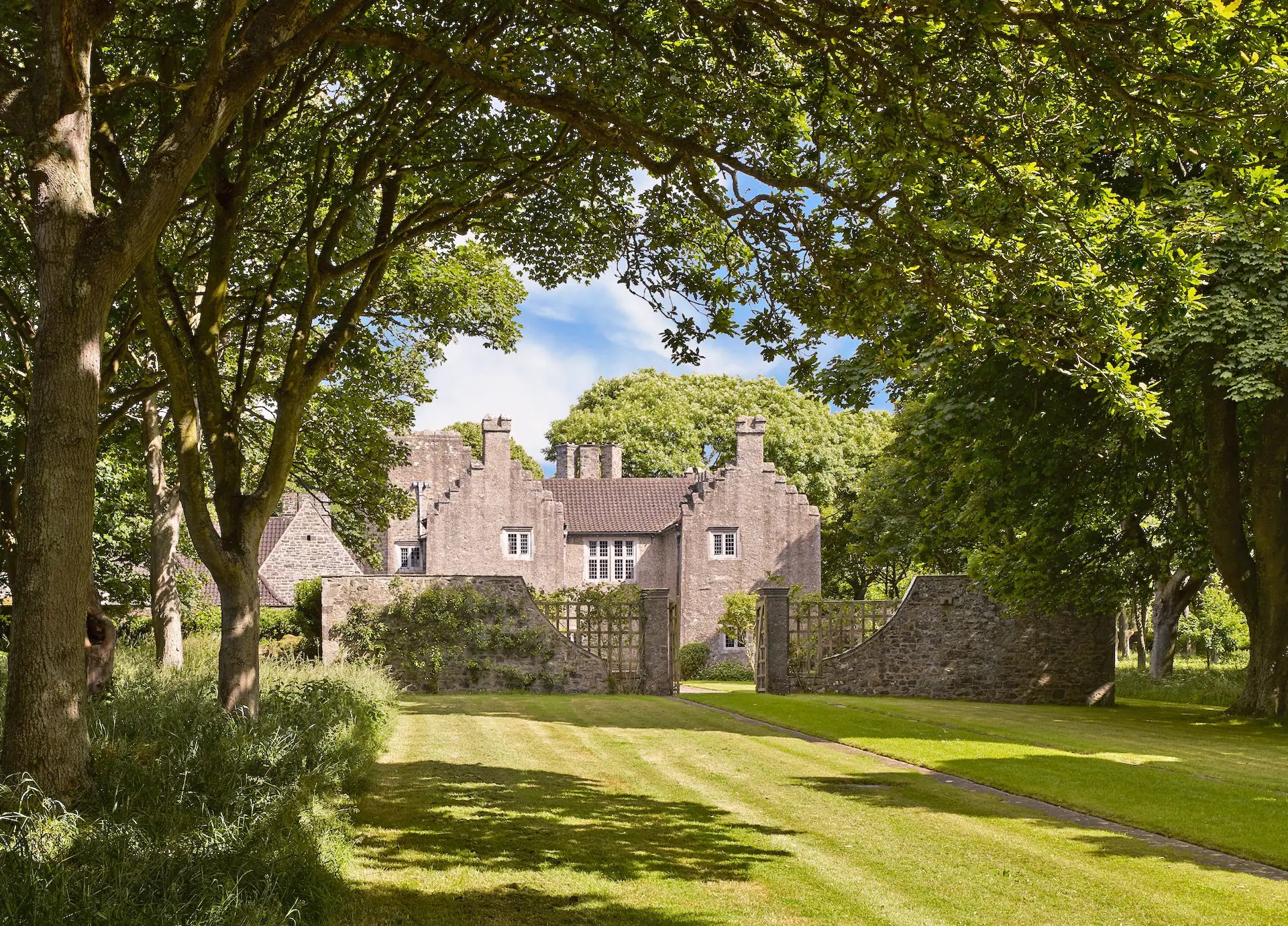
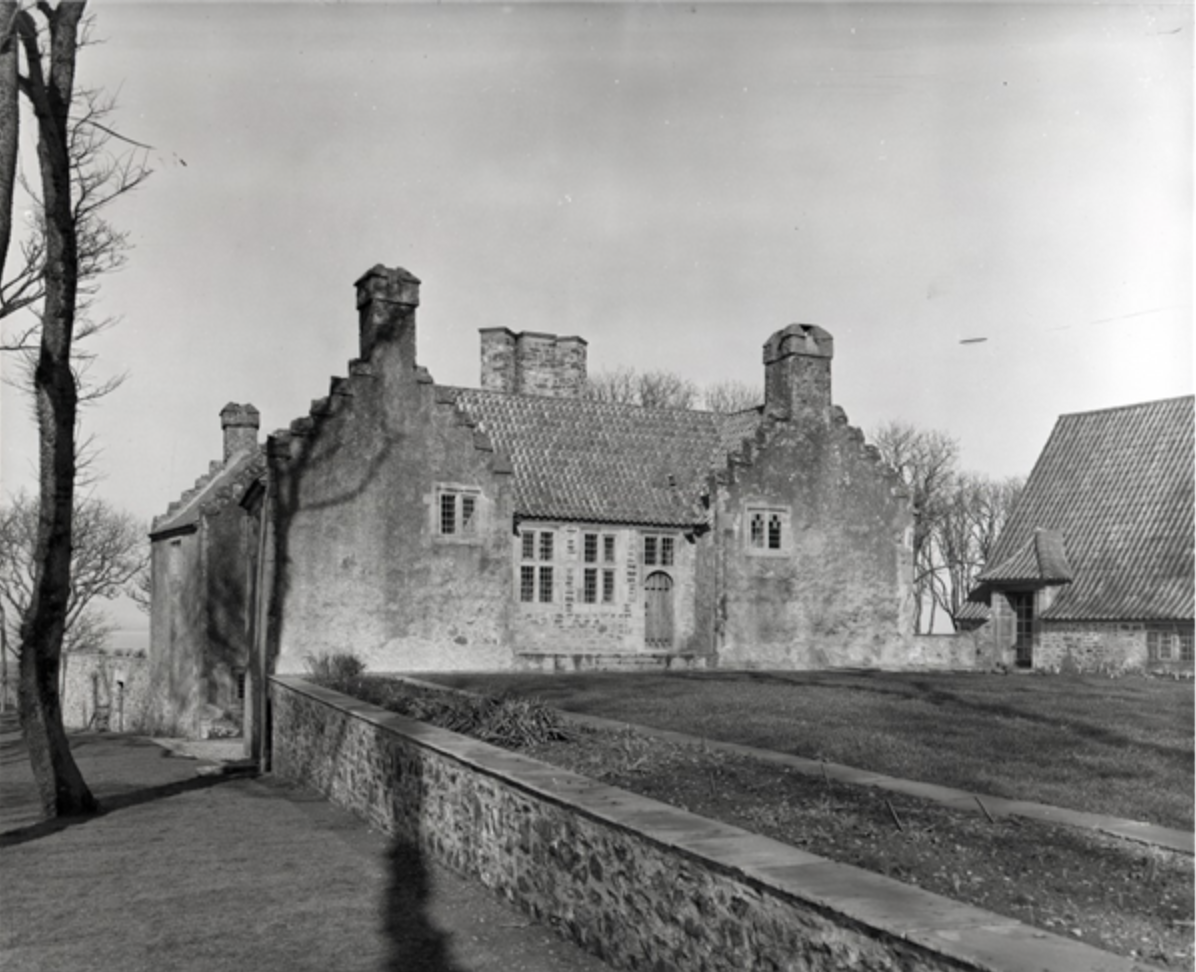
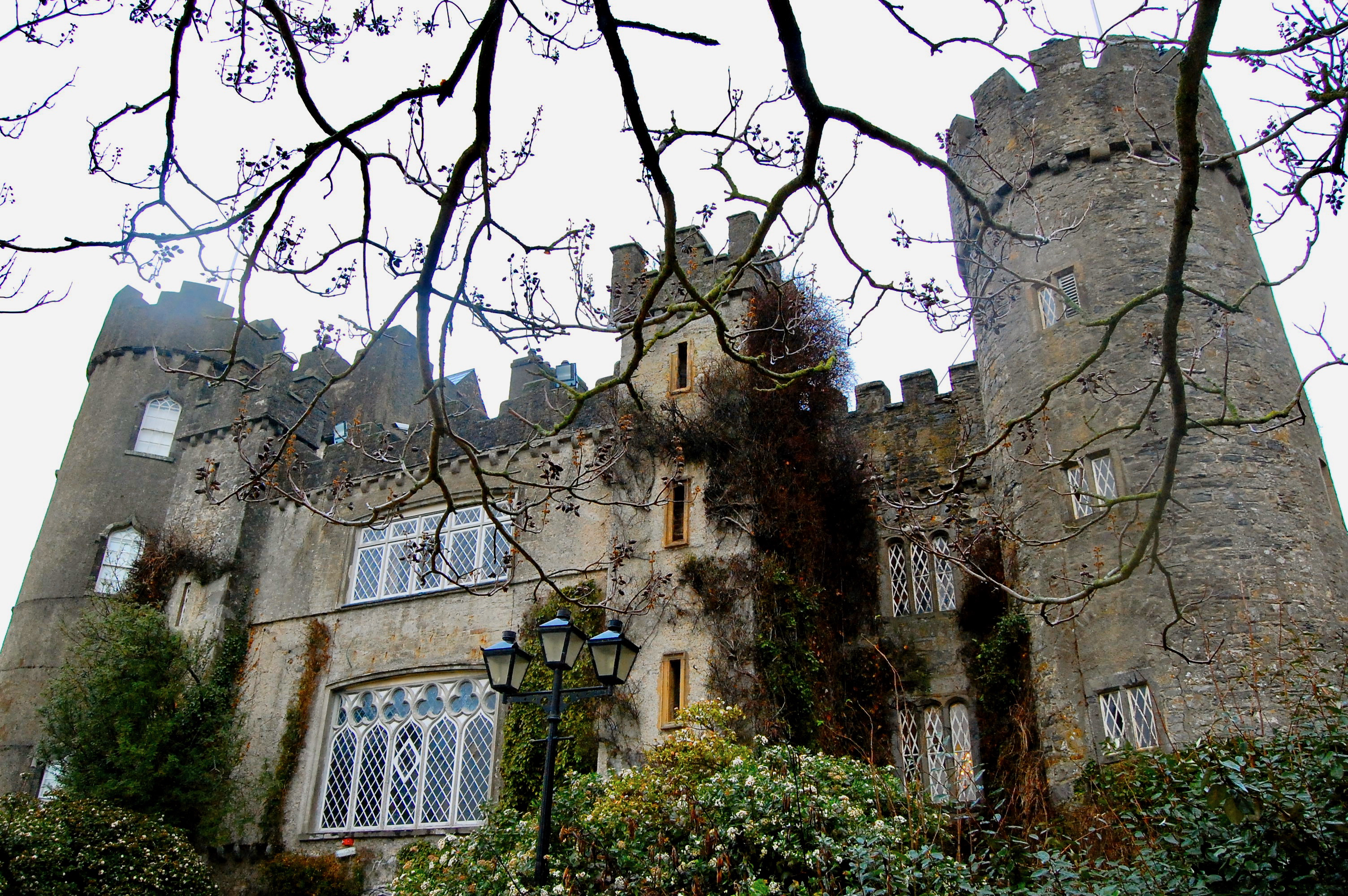
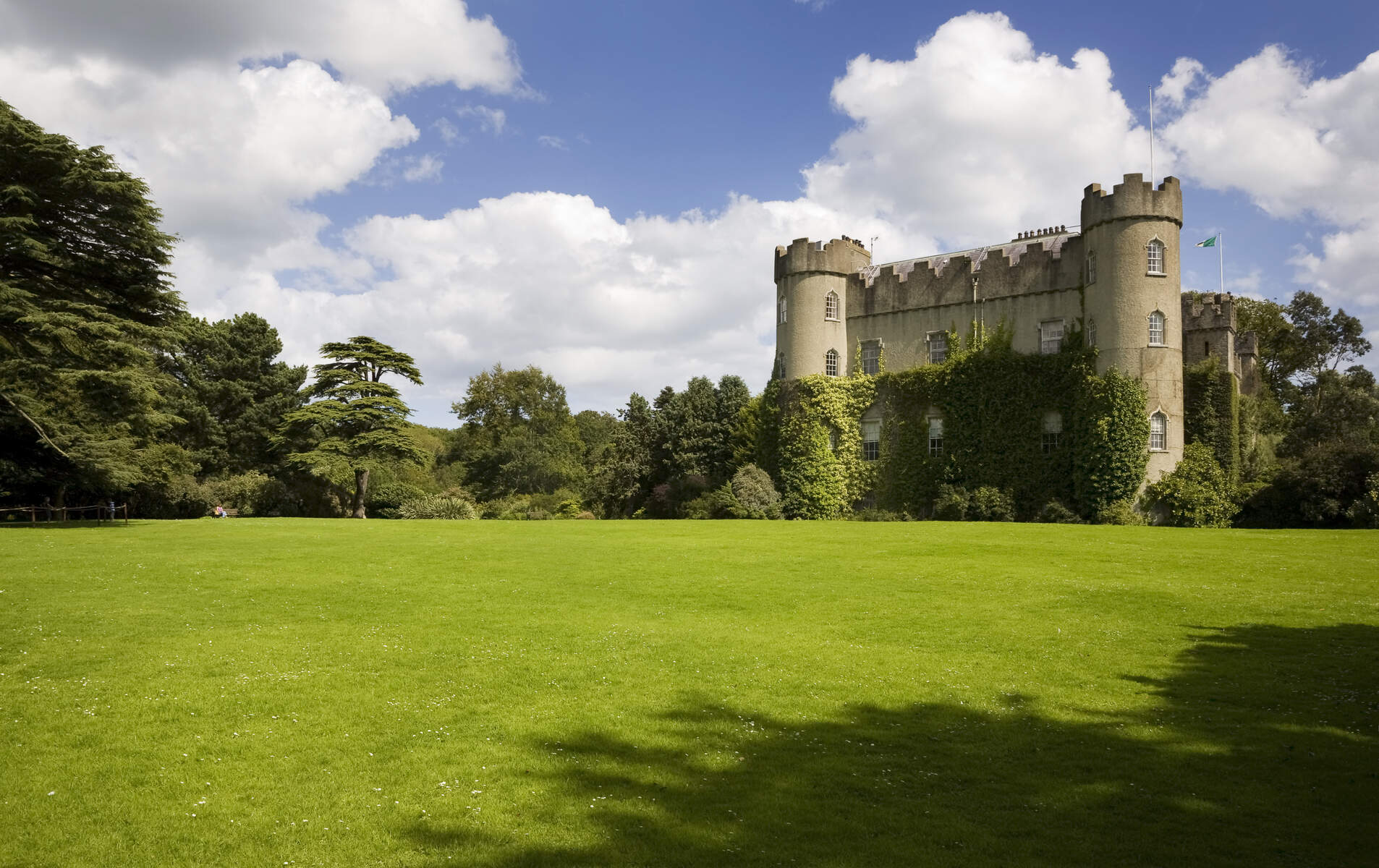
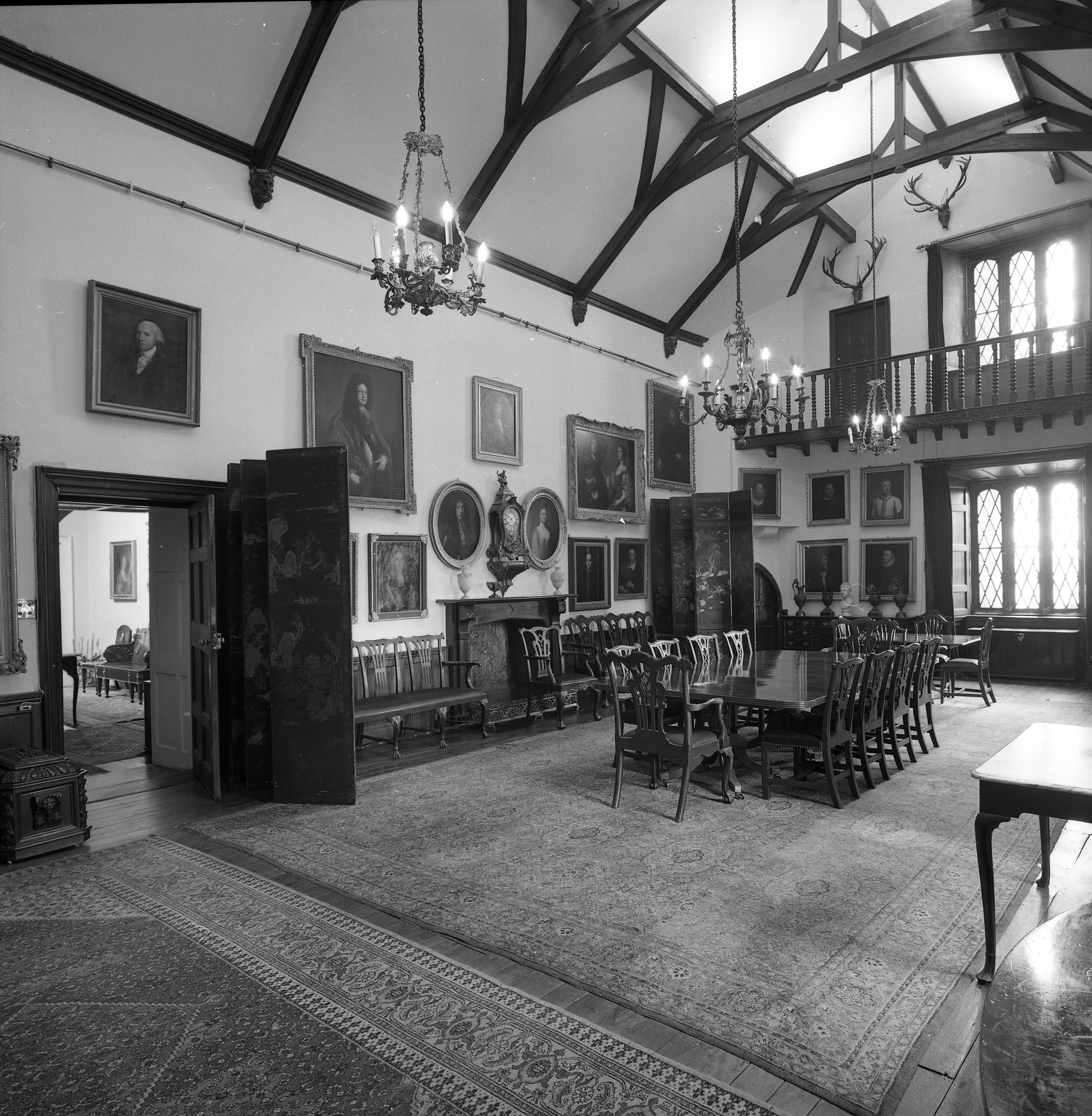
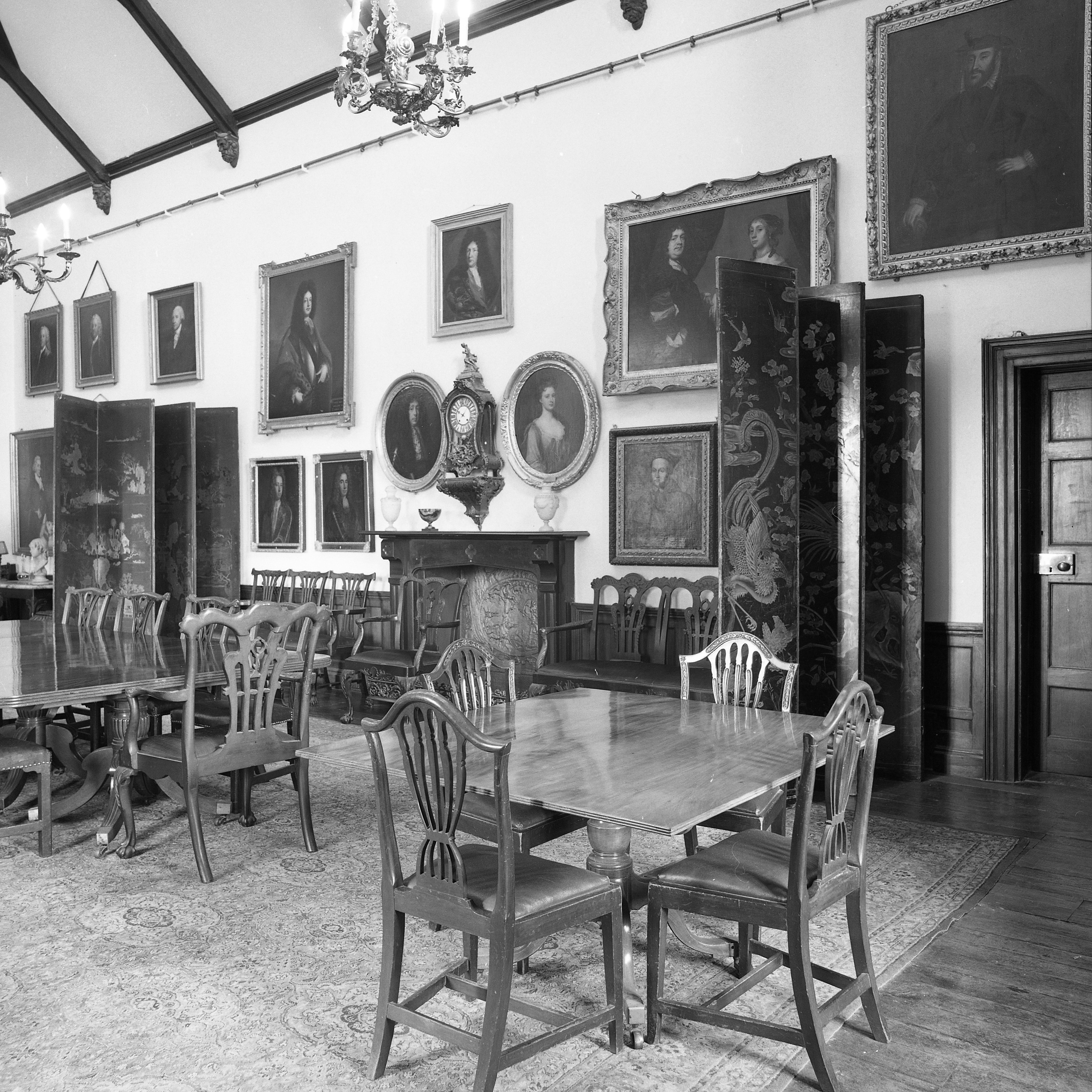
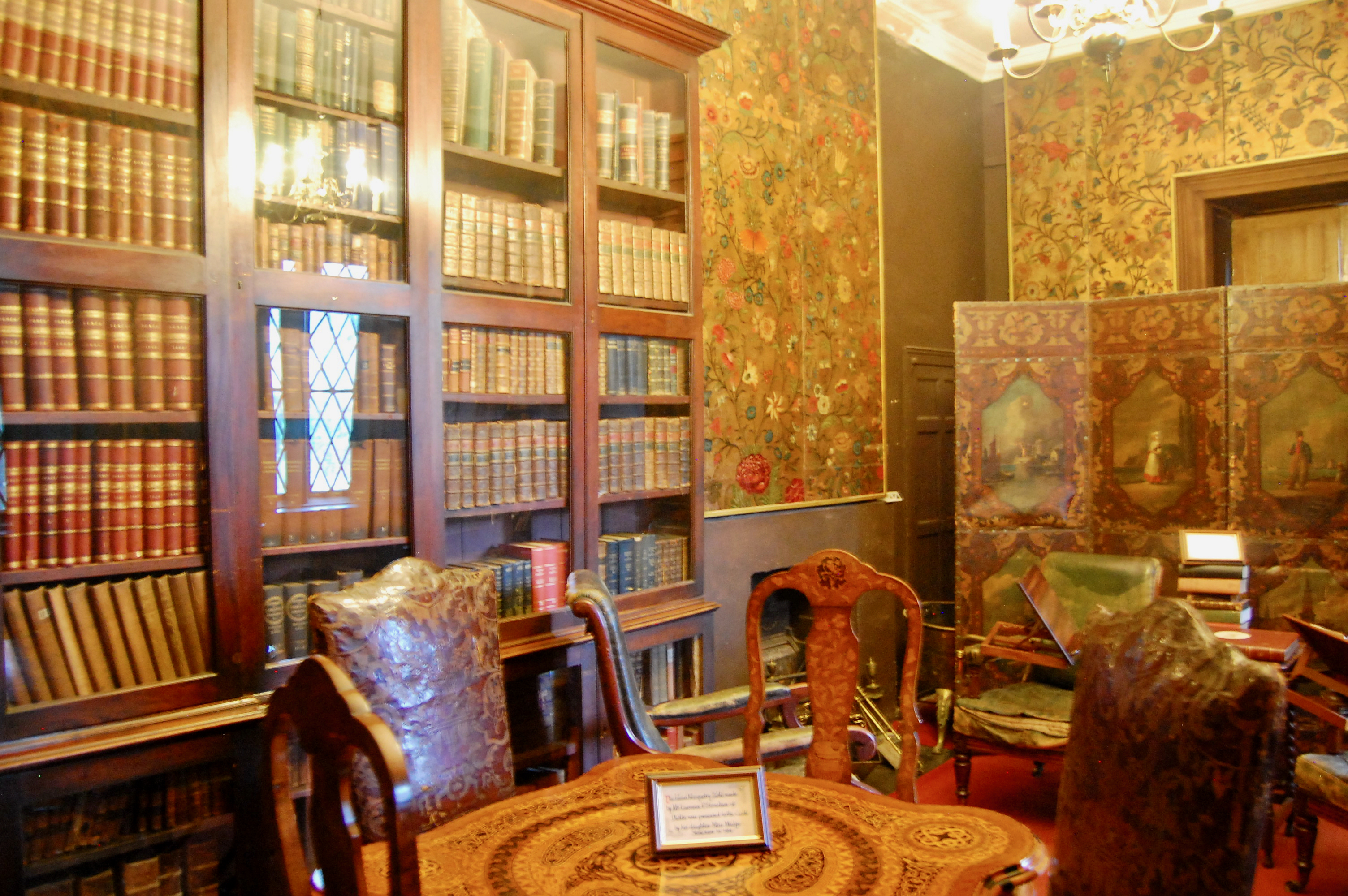
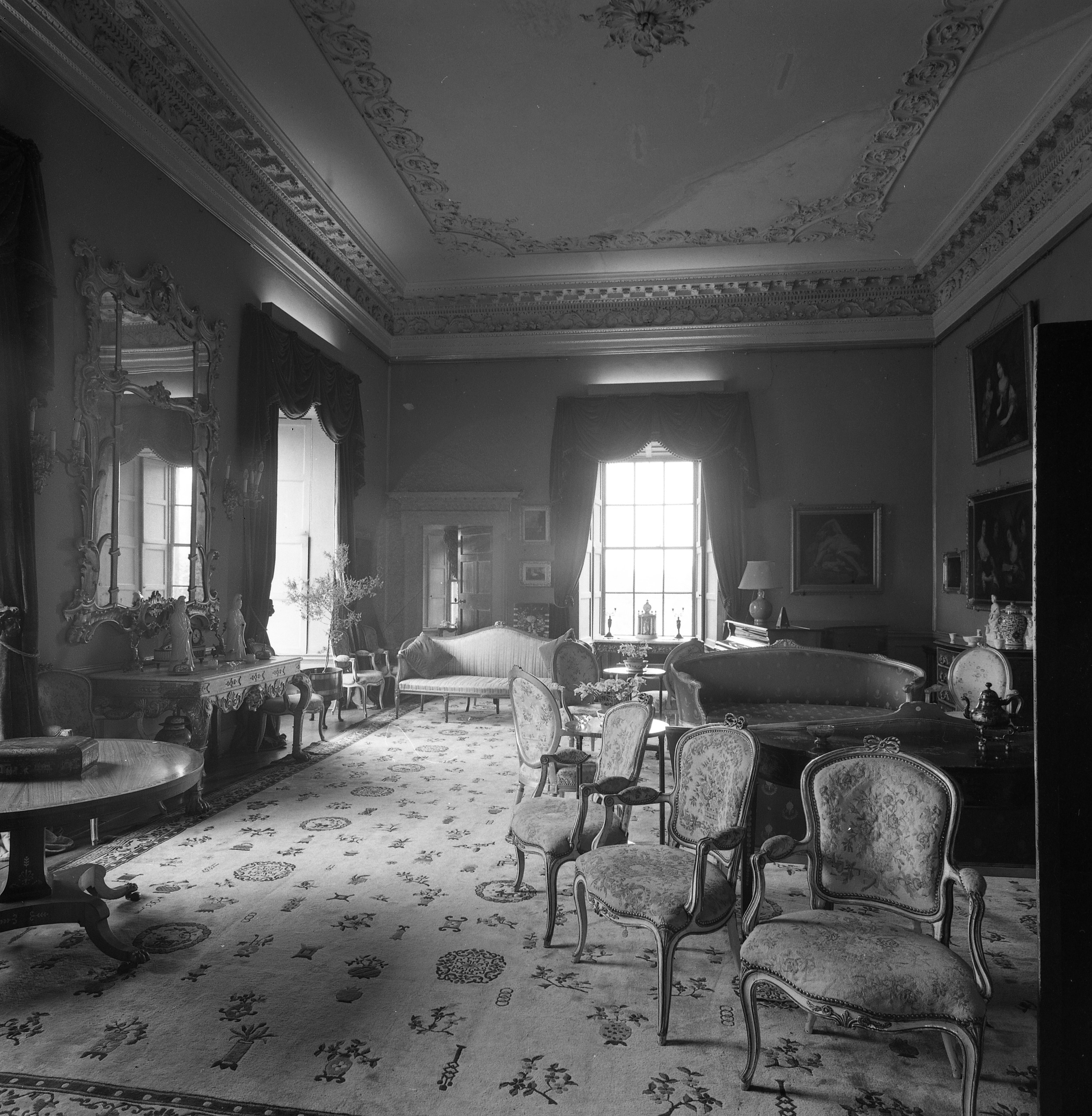

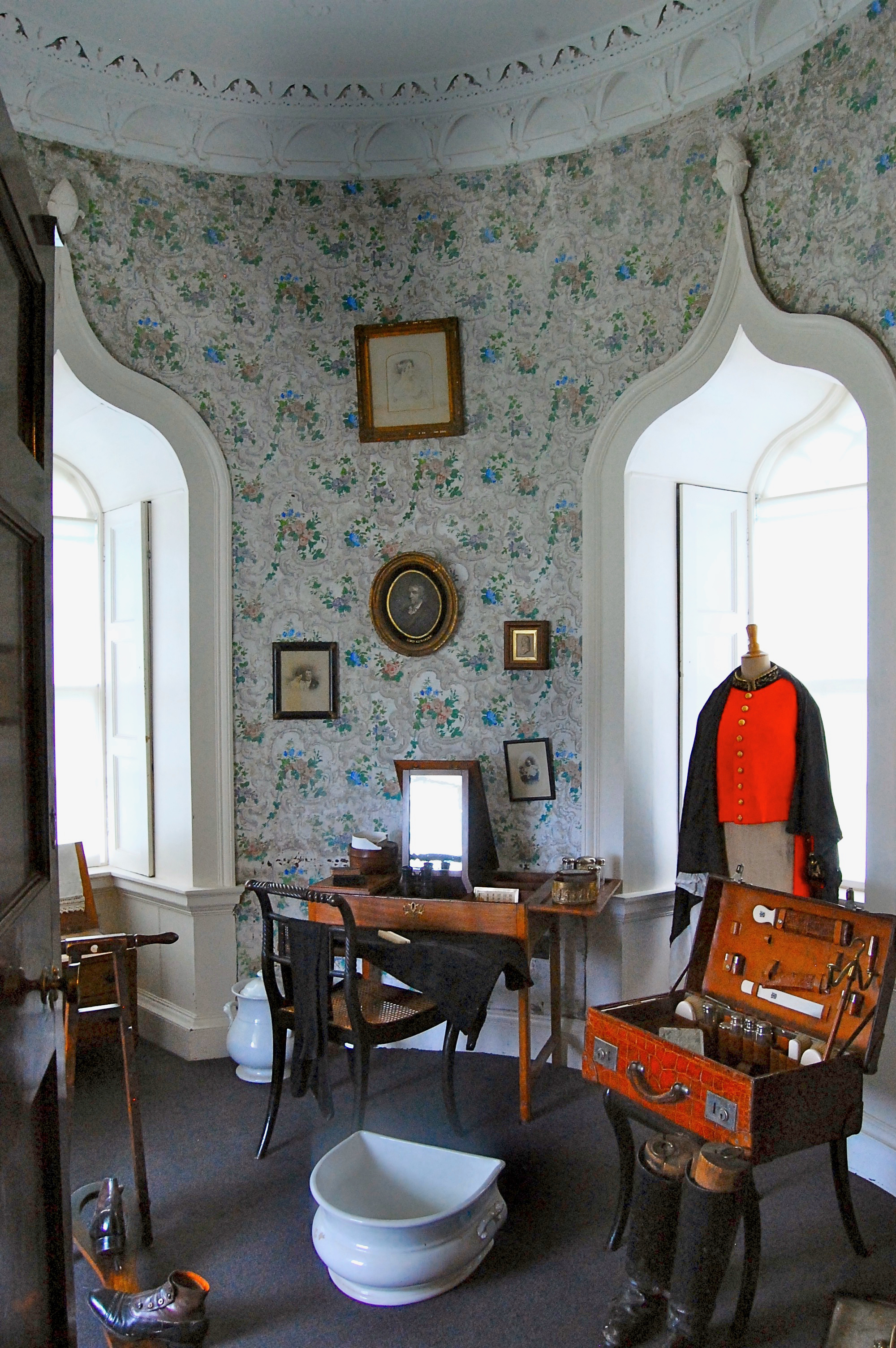
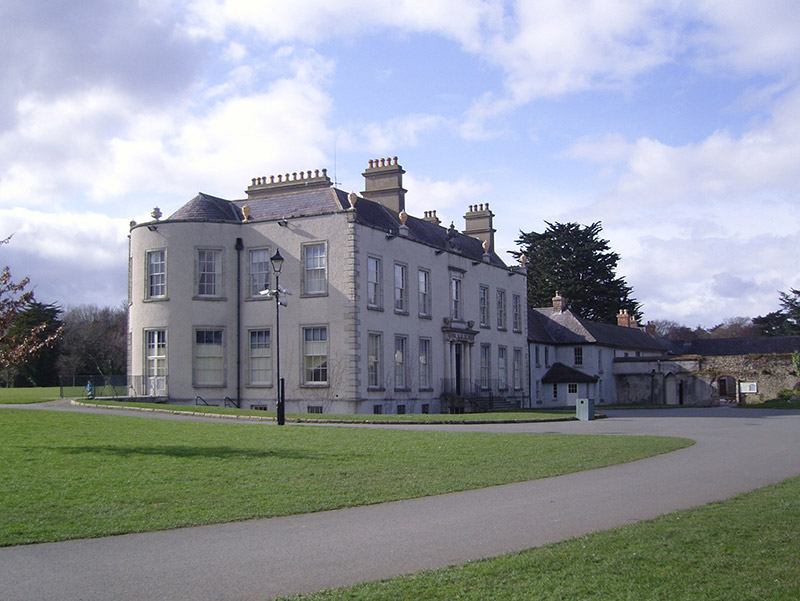
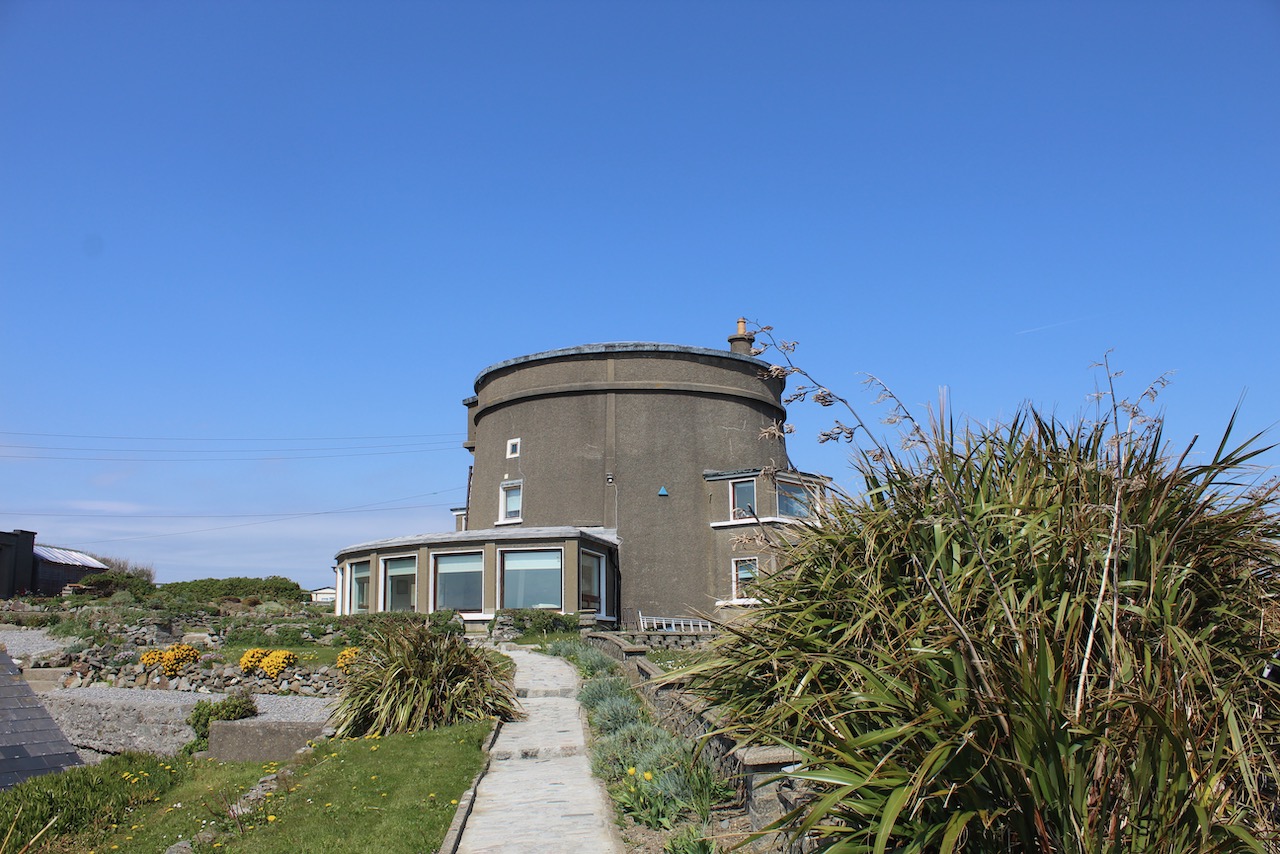
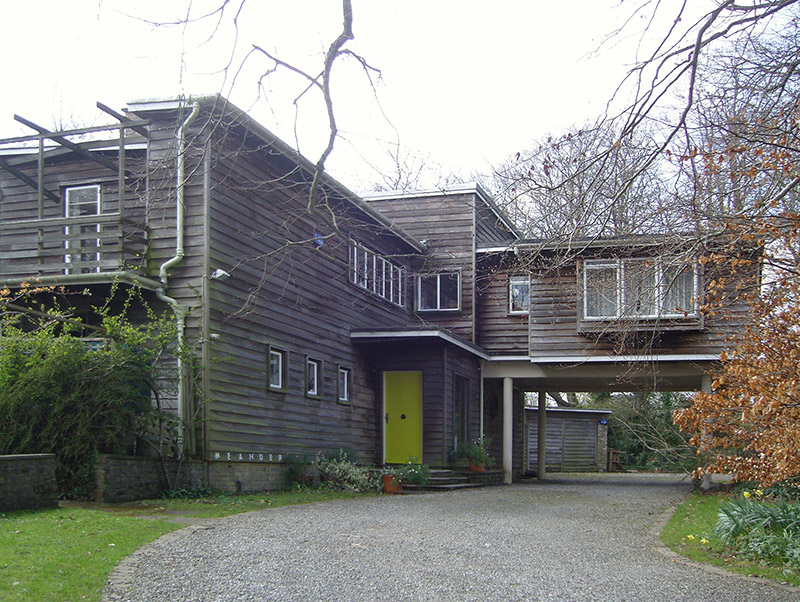

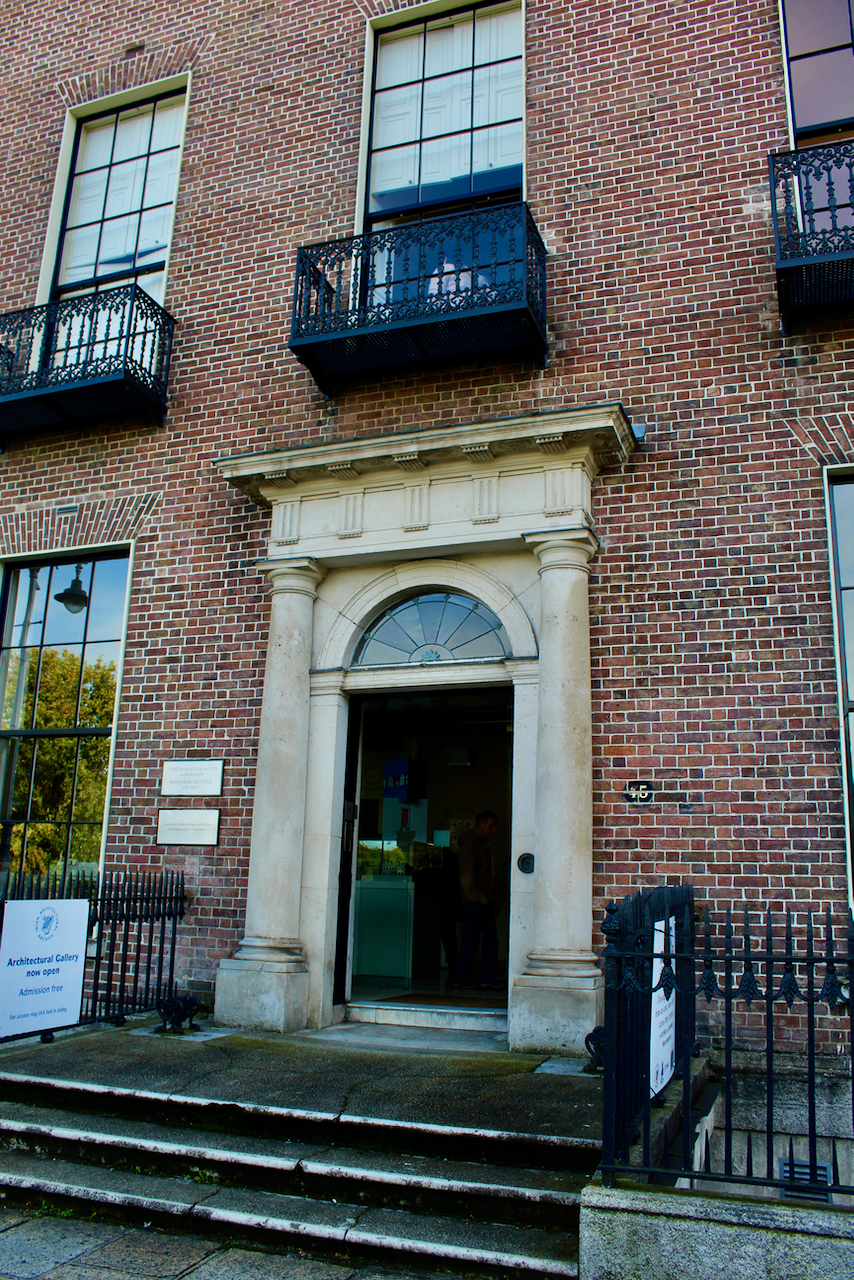
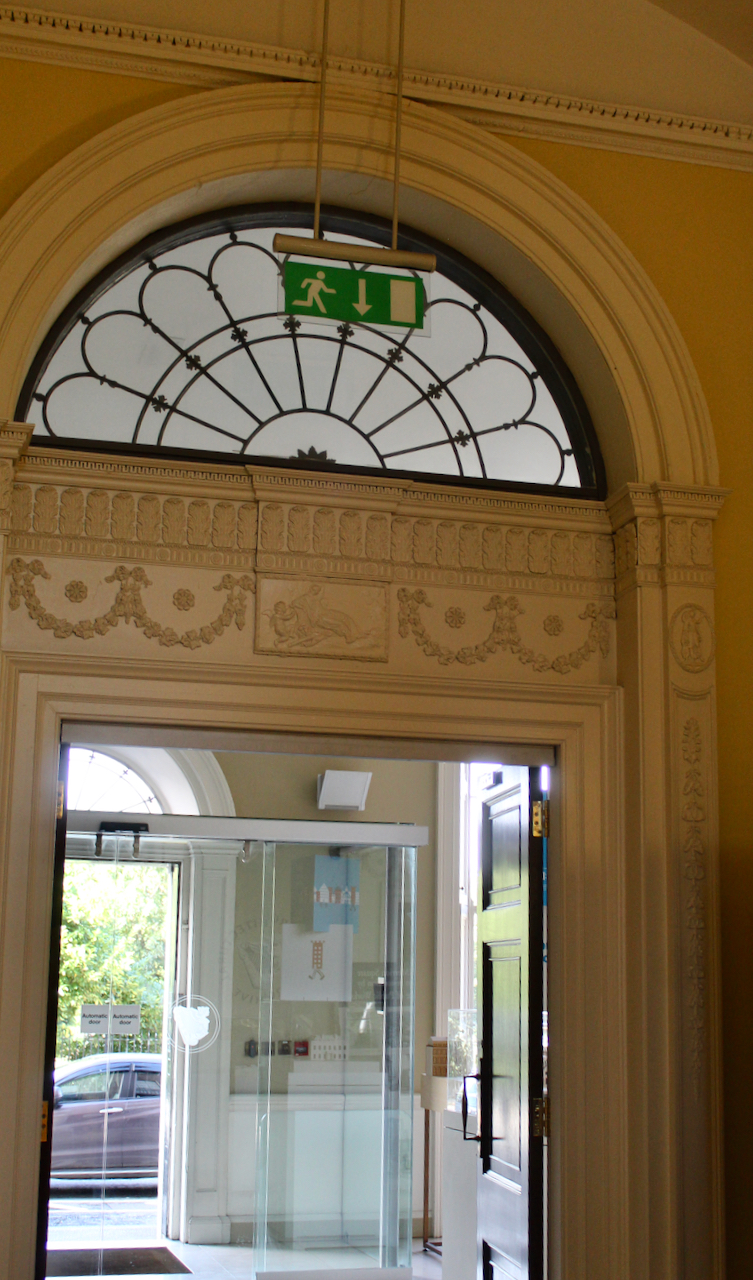

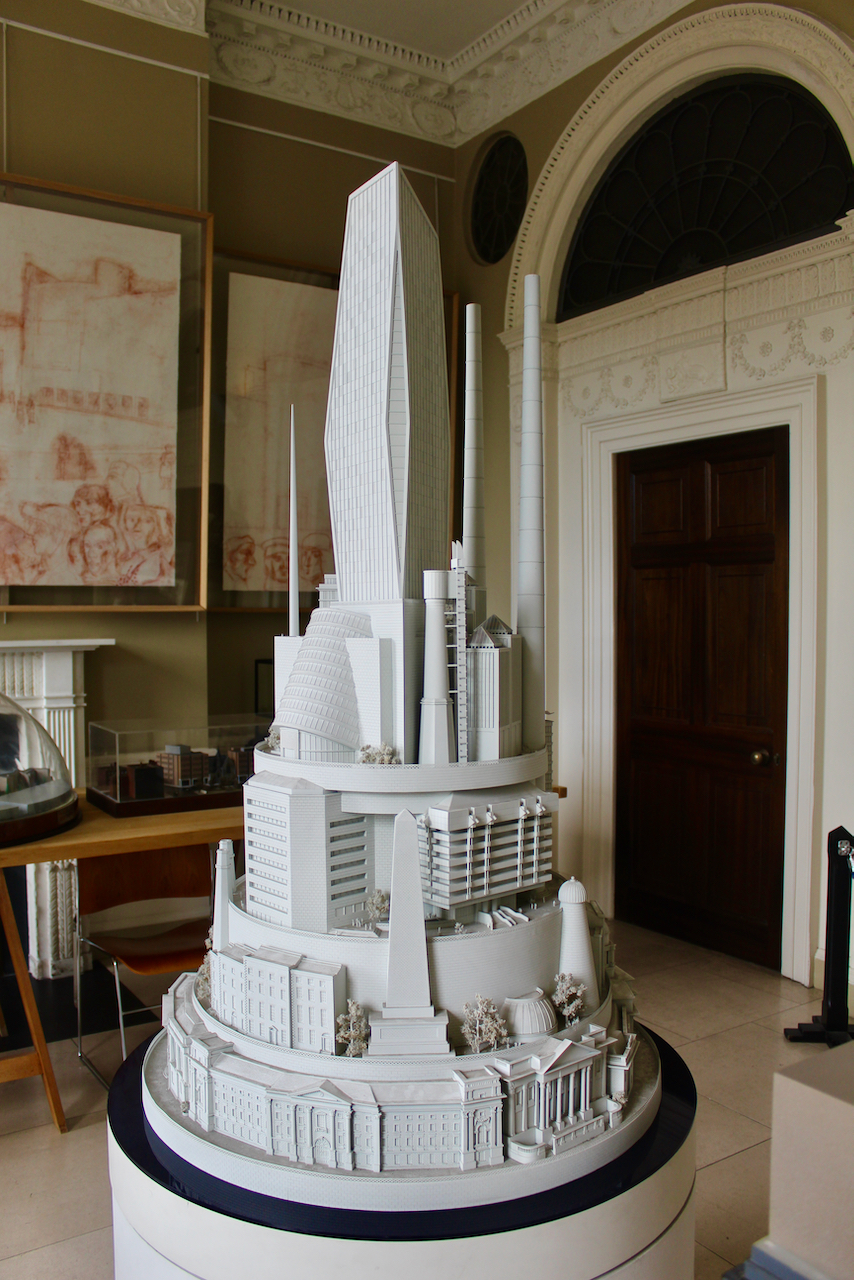
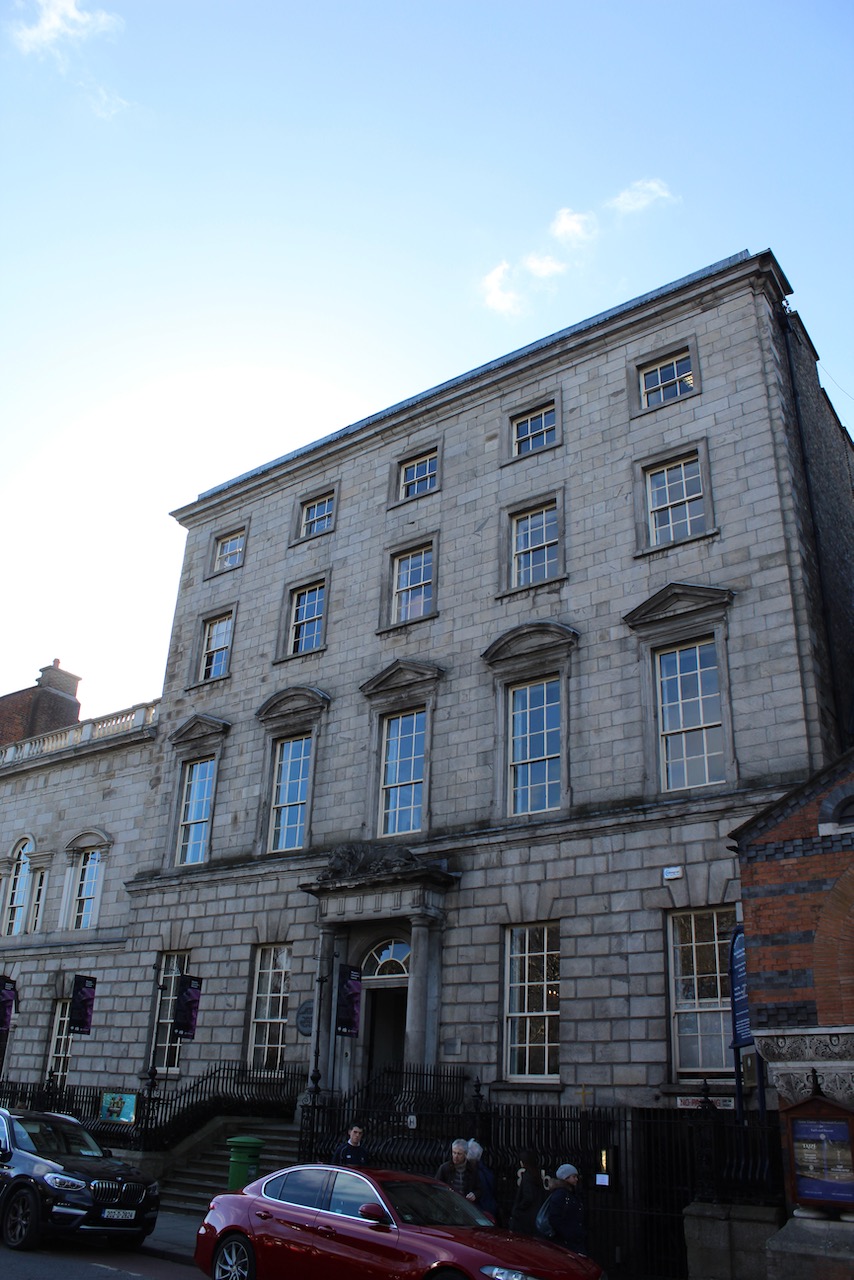
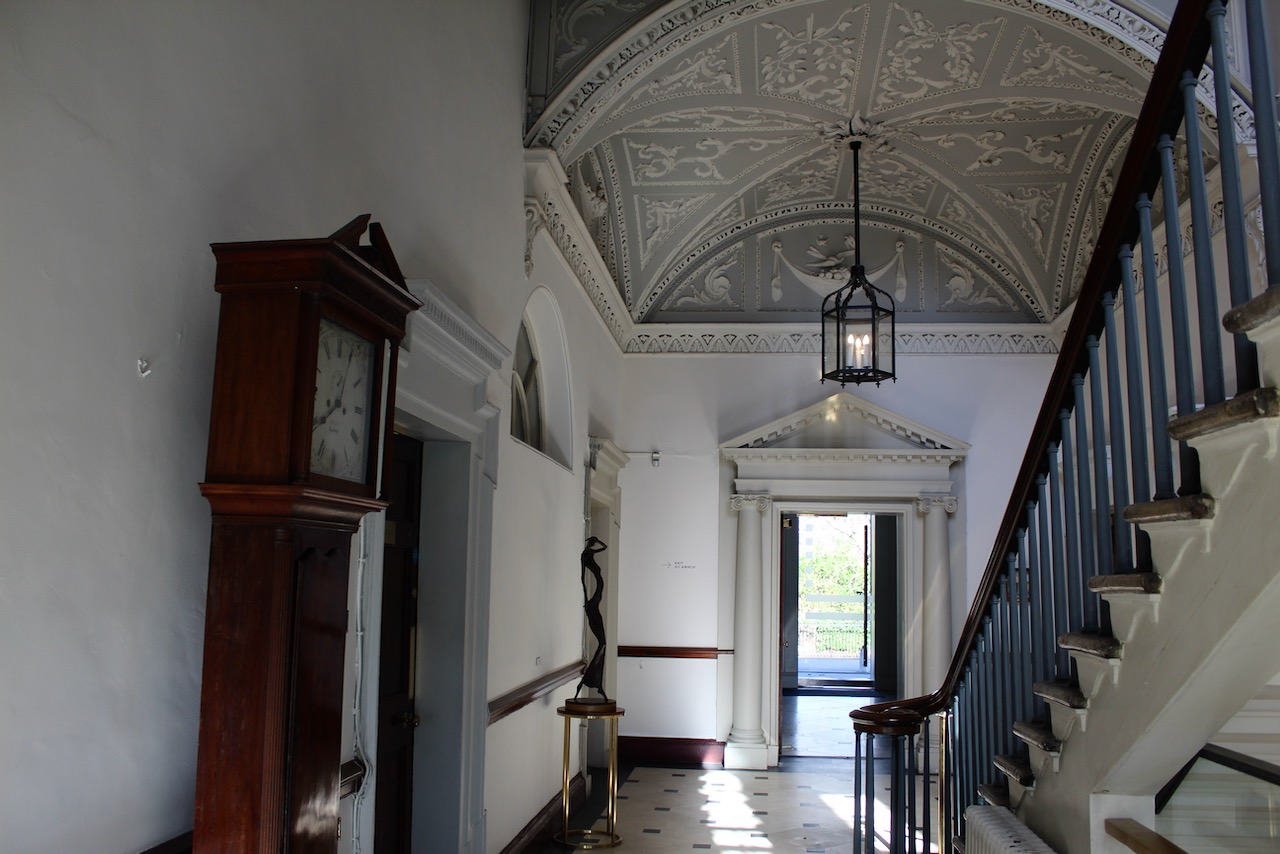
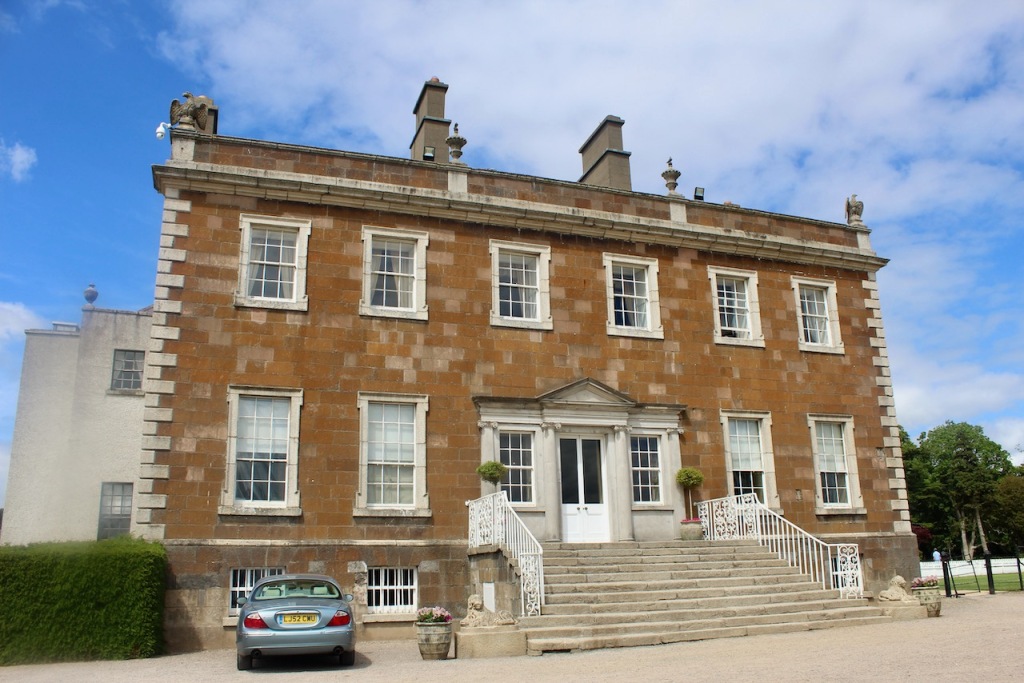


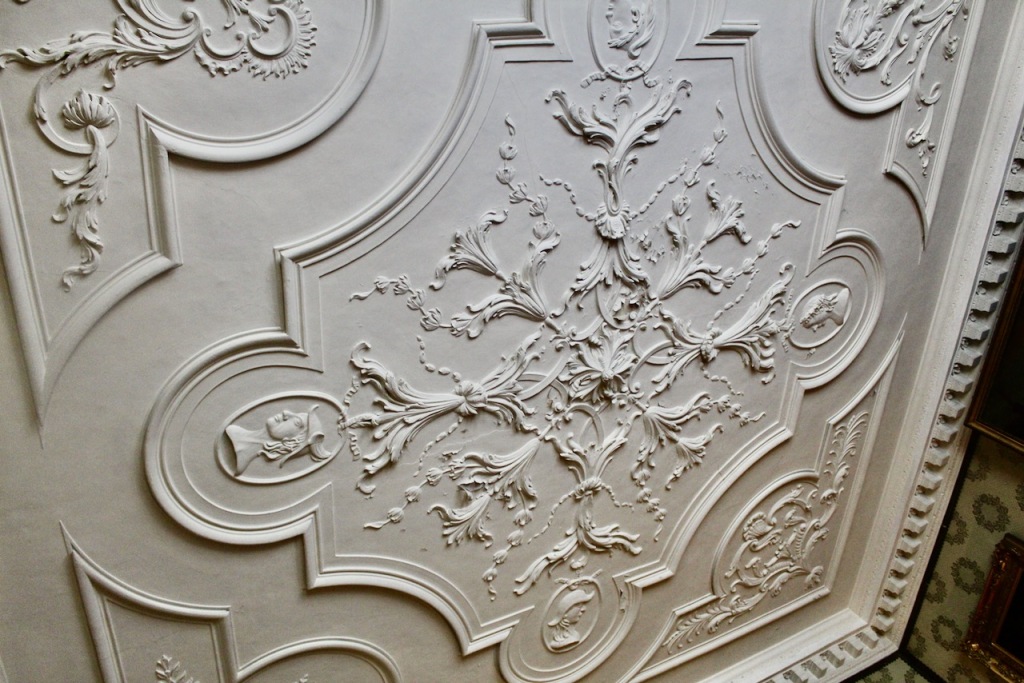
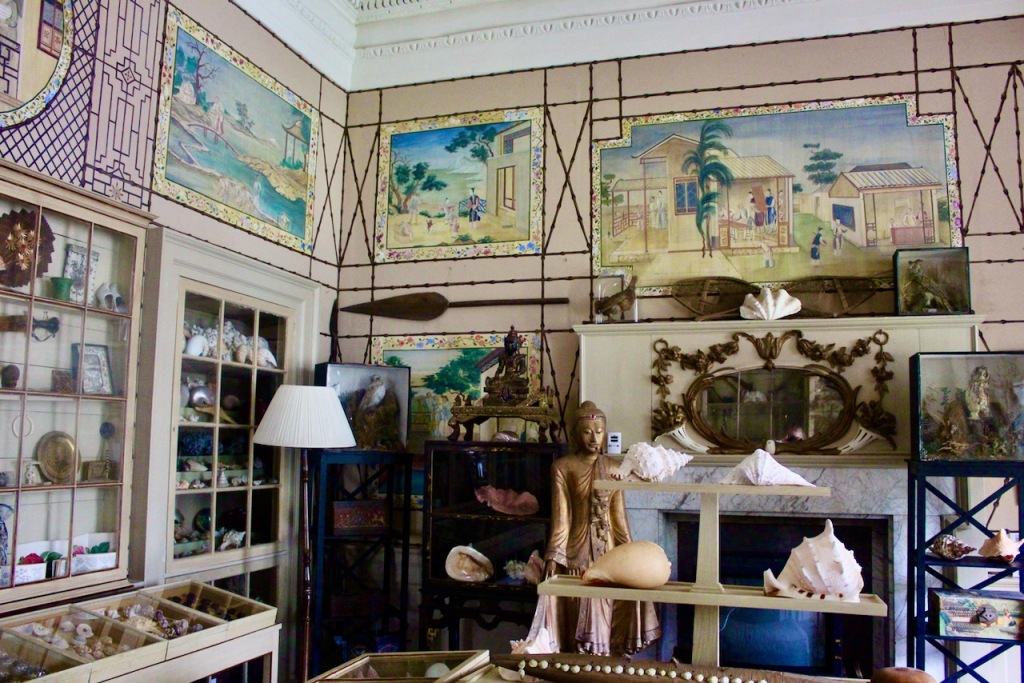

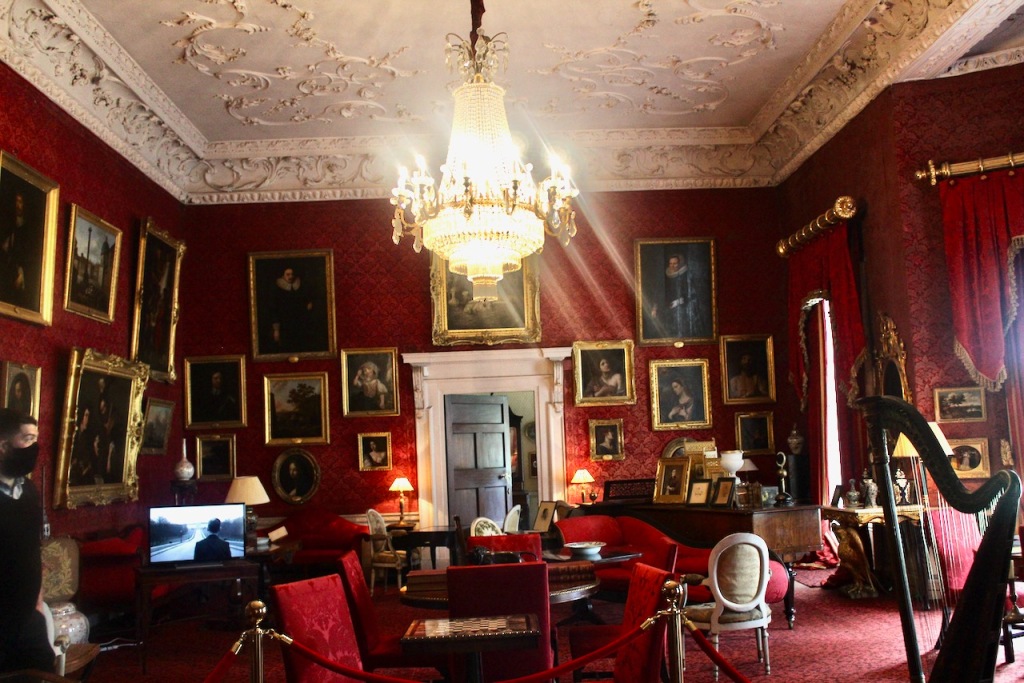


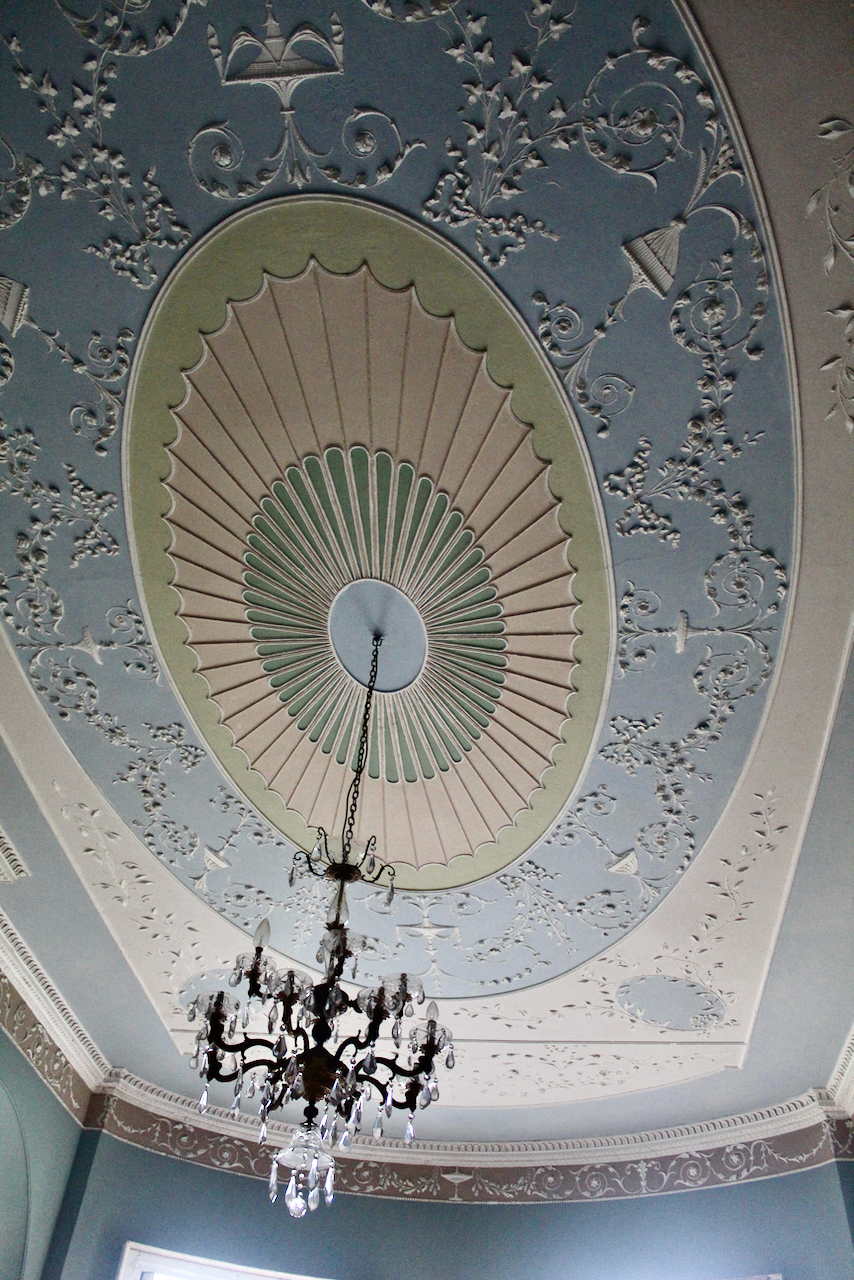


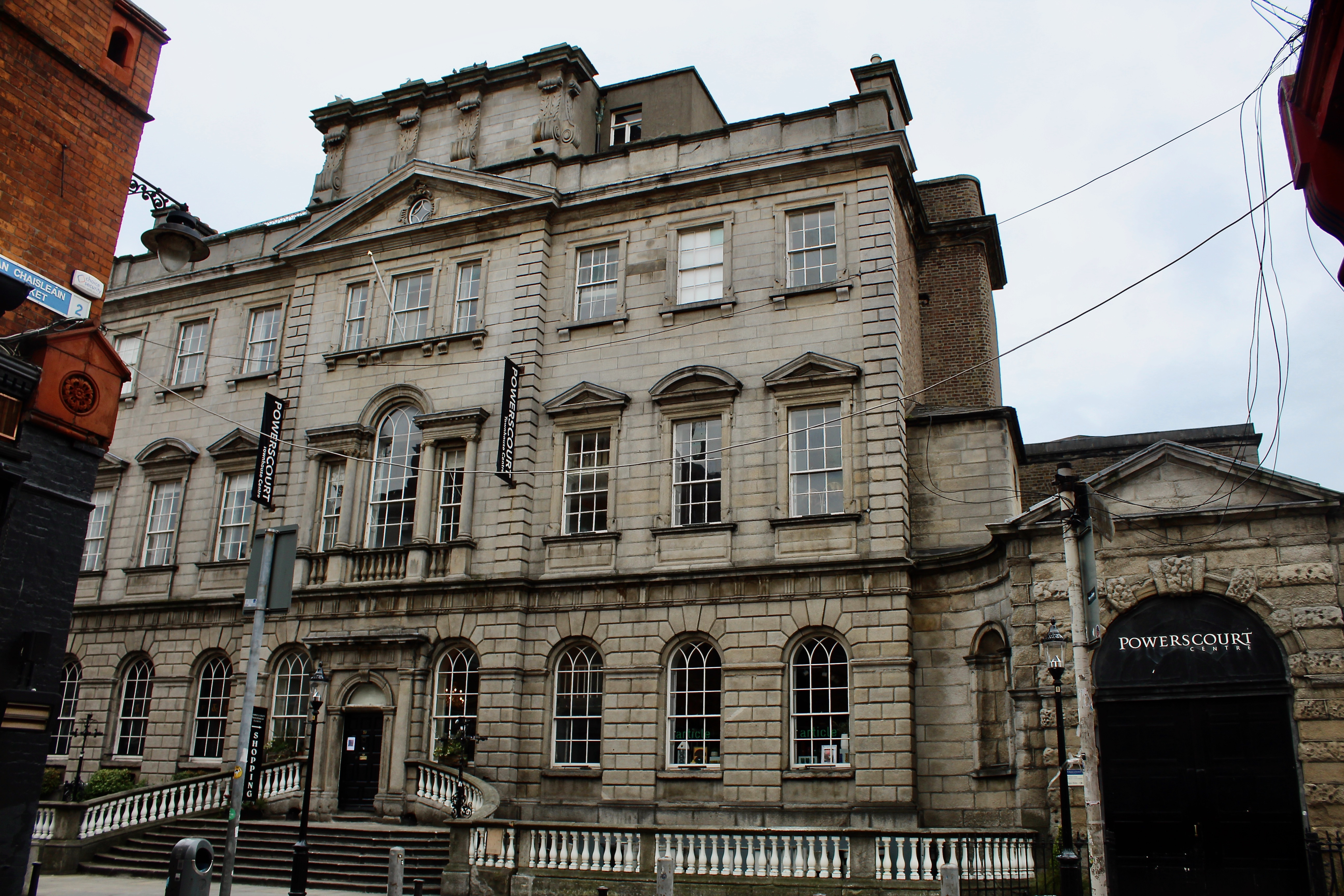
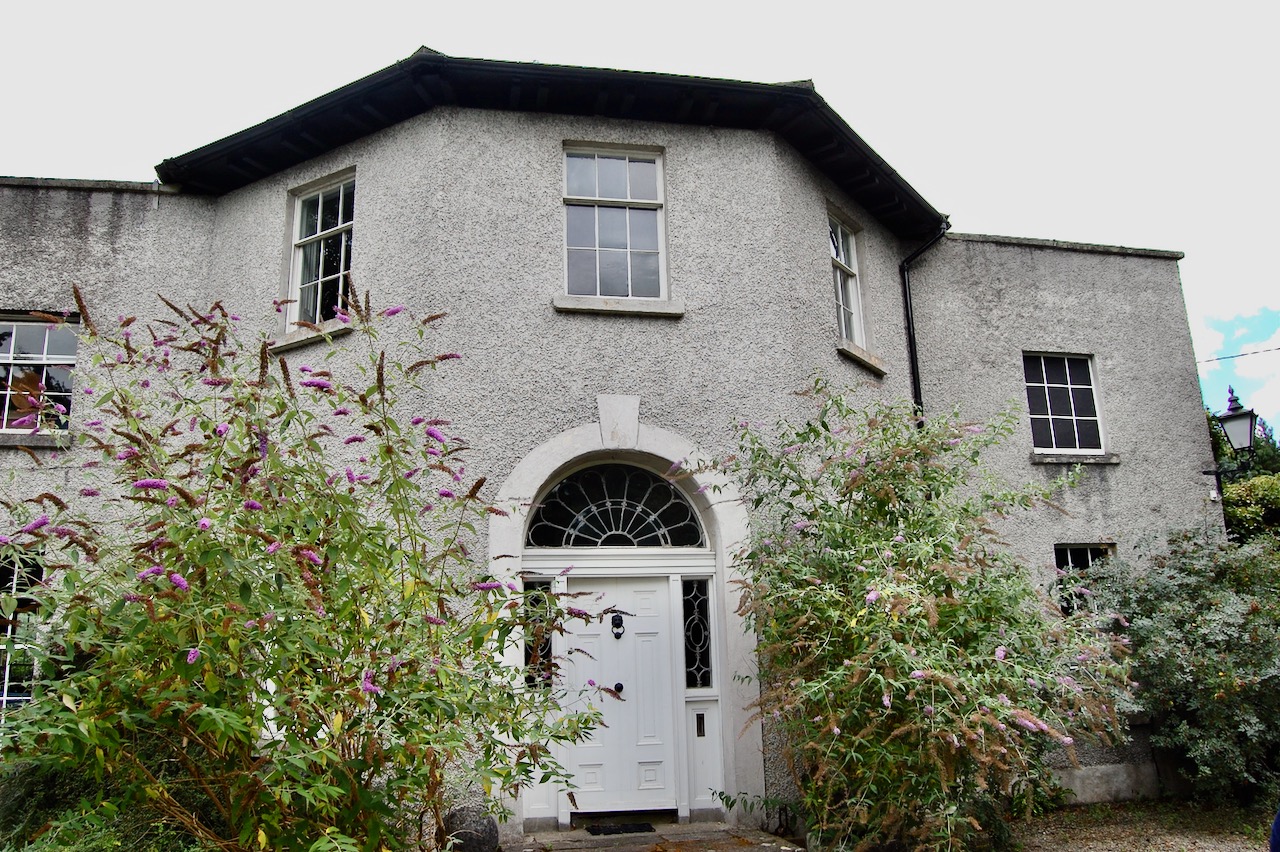
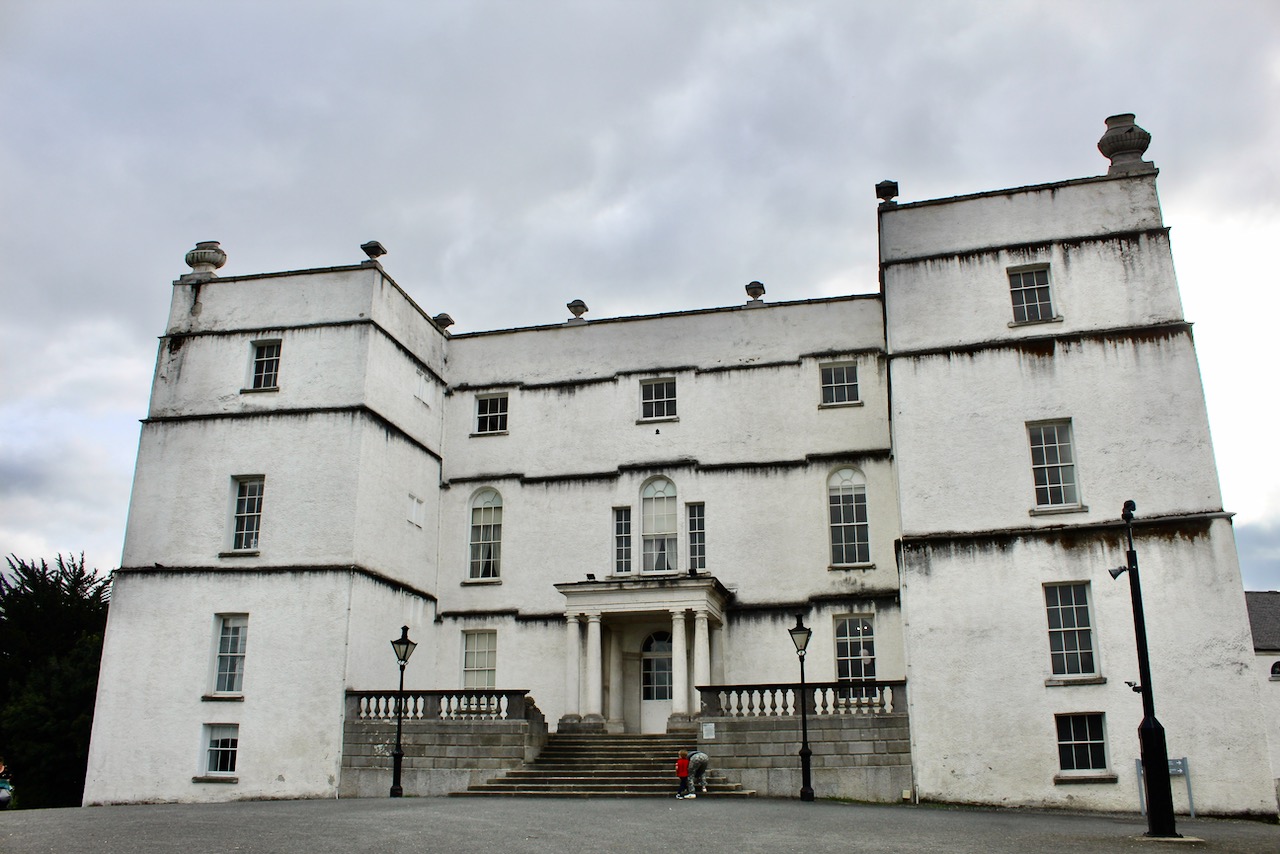

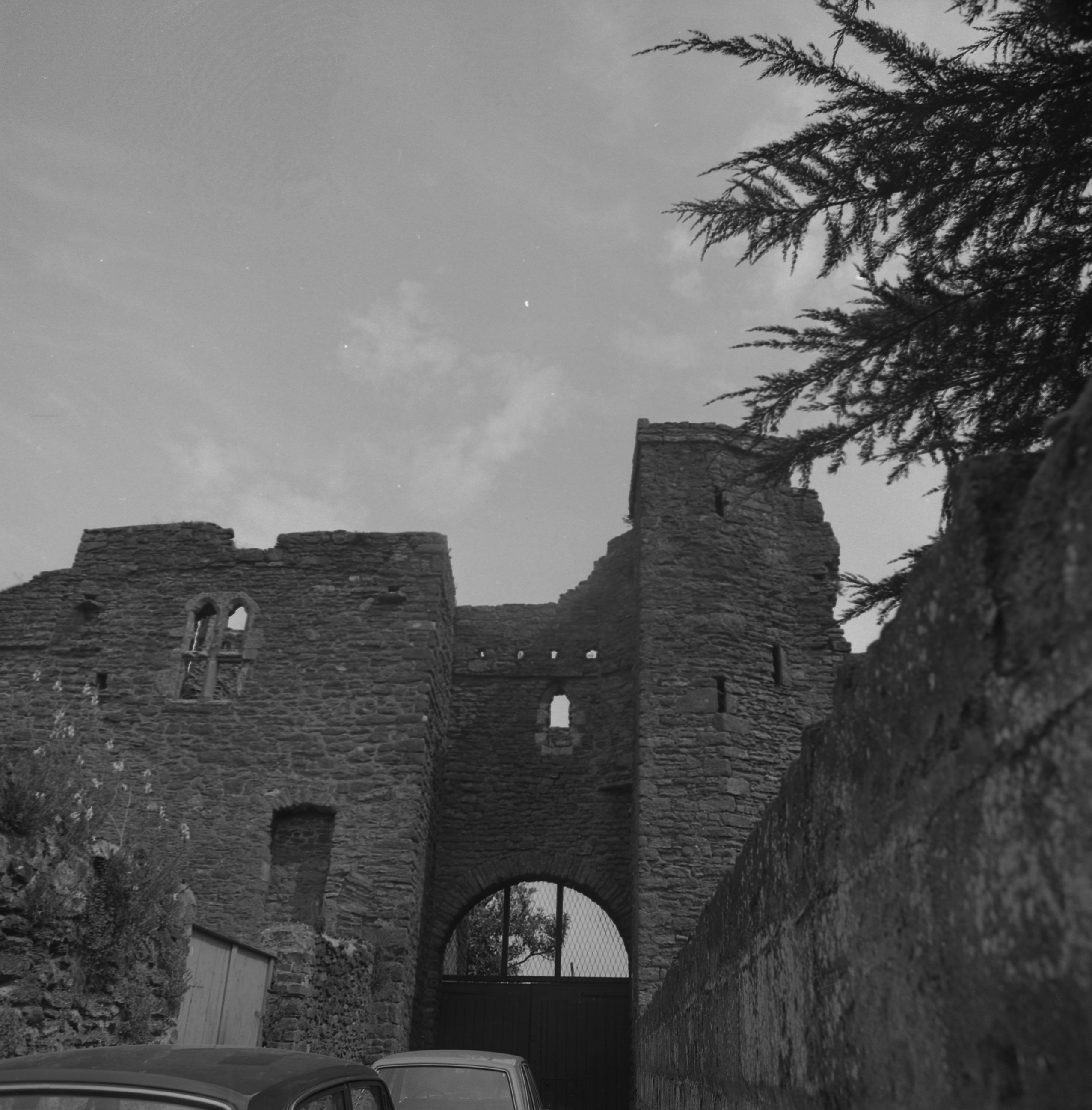

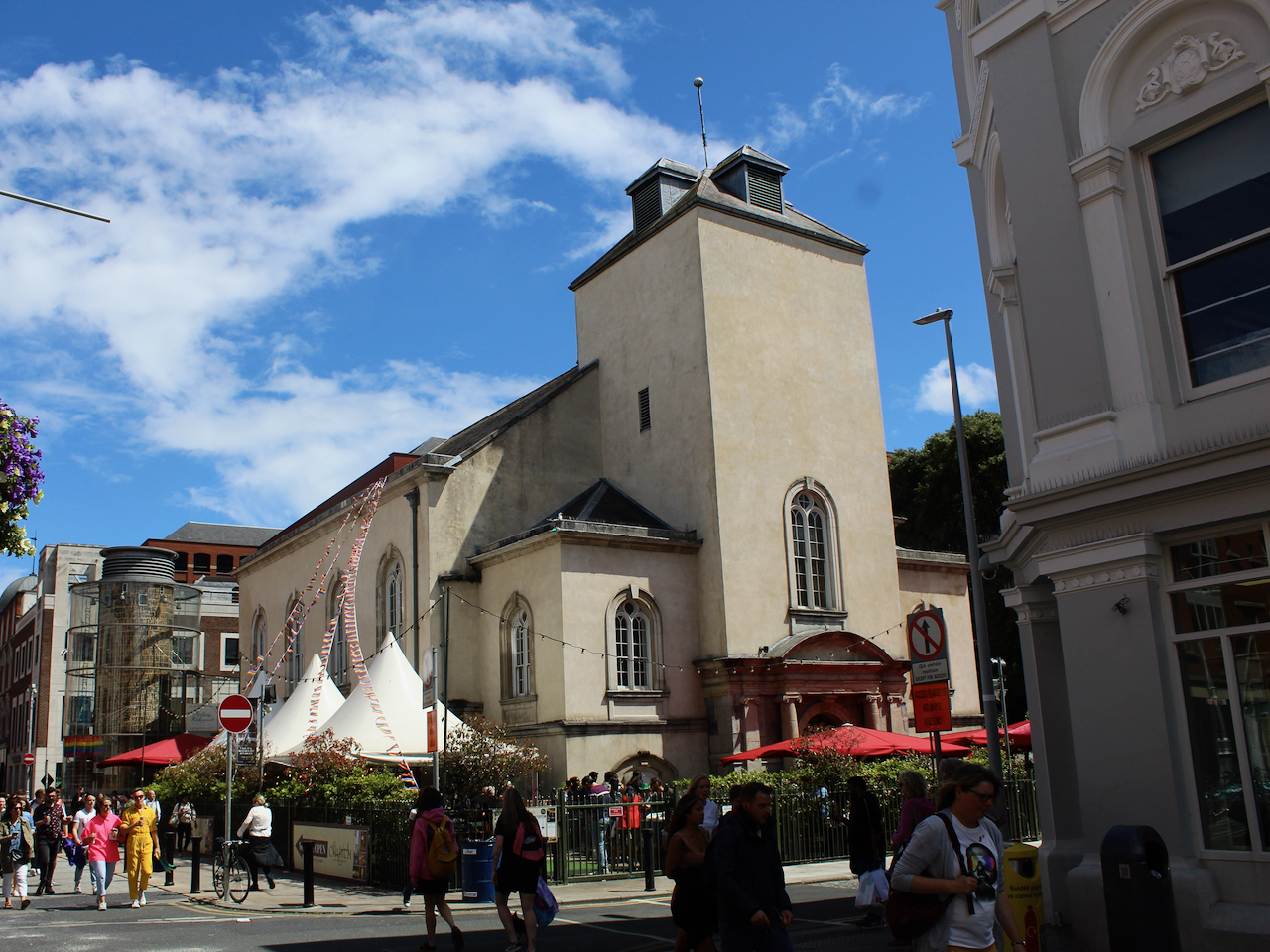
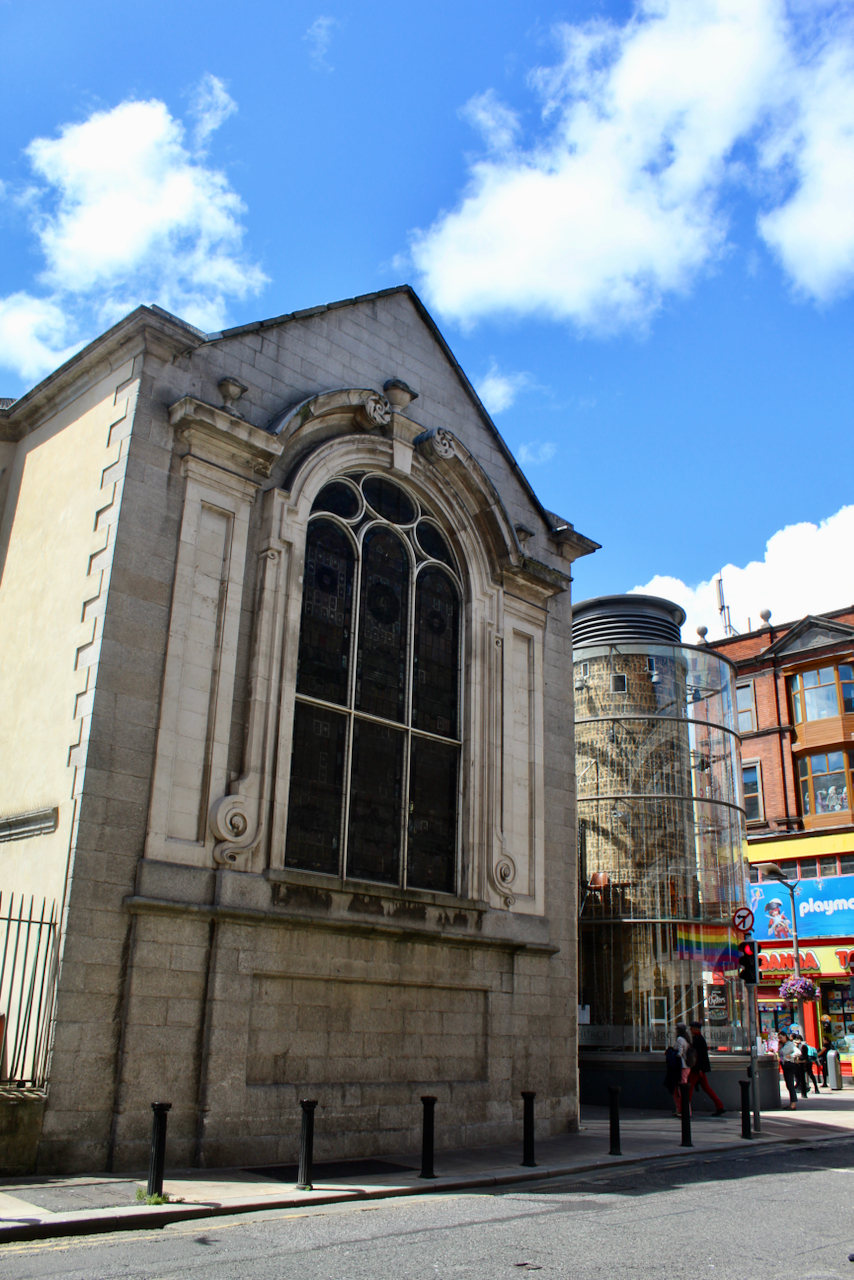

 Irish Historic Houses