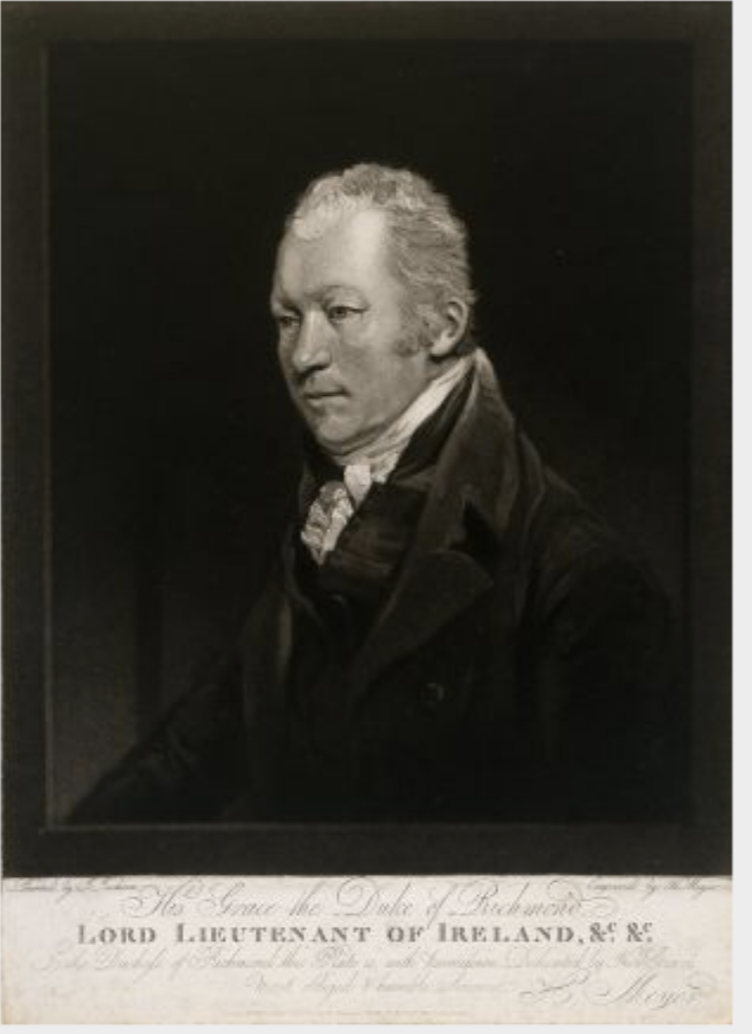
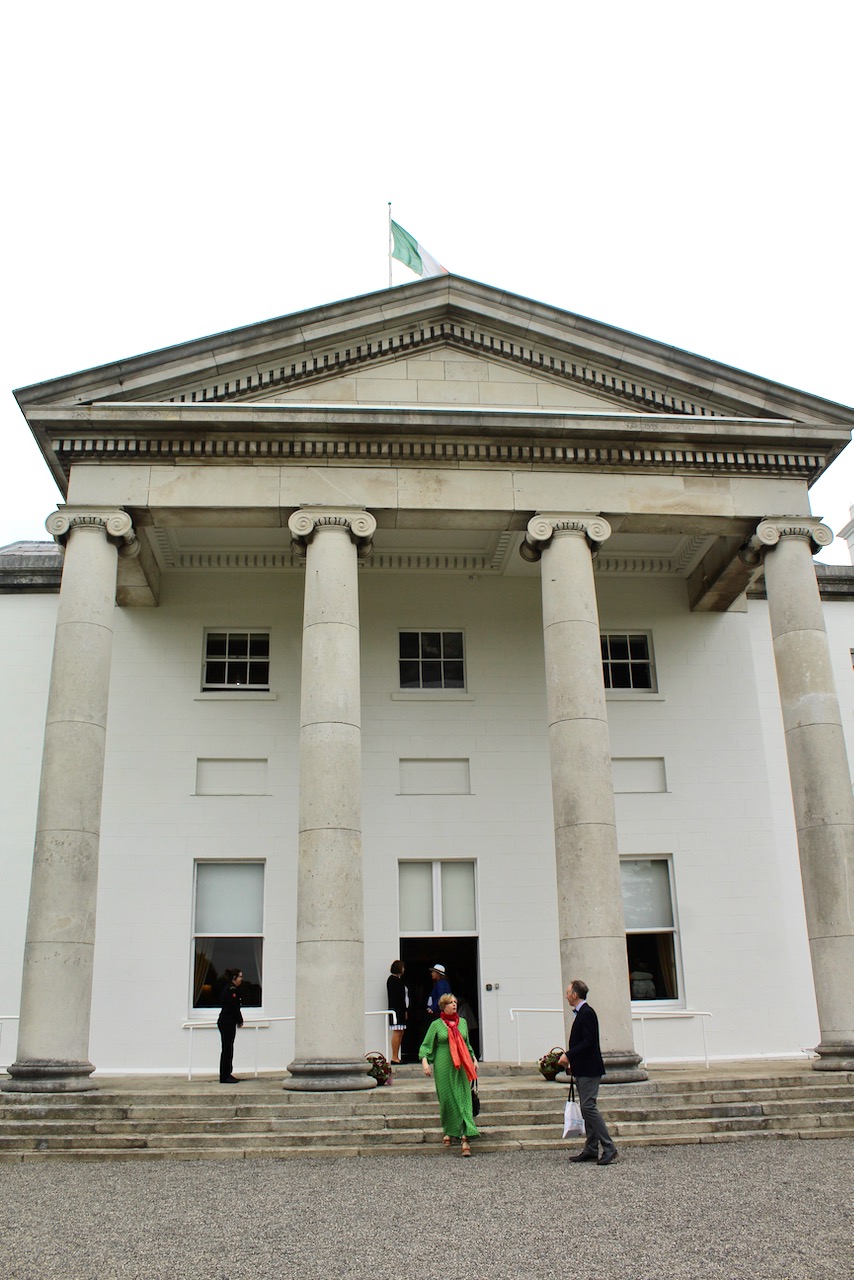
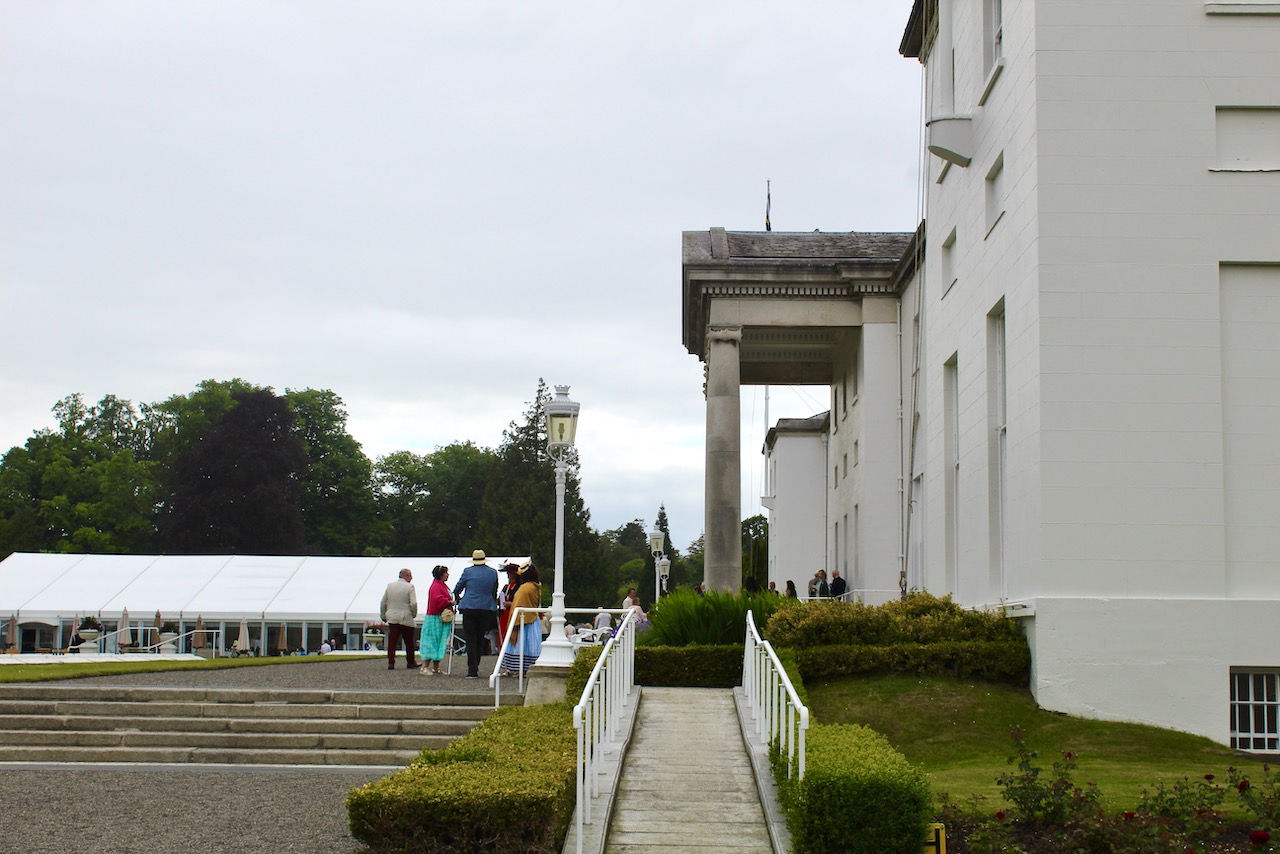
Killadoon, Celbridge, Co Kildare 

Killadoon, Celbridge, Co Kildare 

Mark Bence-Jones. A Guide to Irish Country Houses (originally published as Burke’s Guide to Country Houses volume 1 Ireland by Burke’s Peerage Ltd. 1978); Revised edition 1988 Constable and Company Ltd, London.  

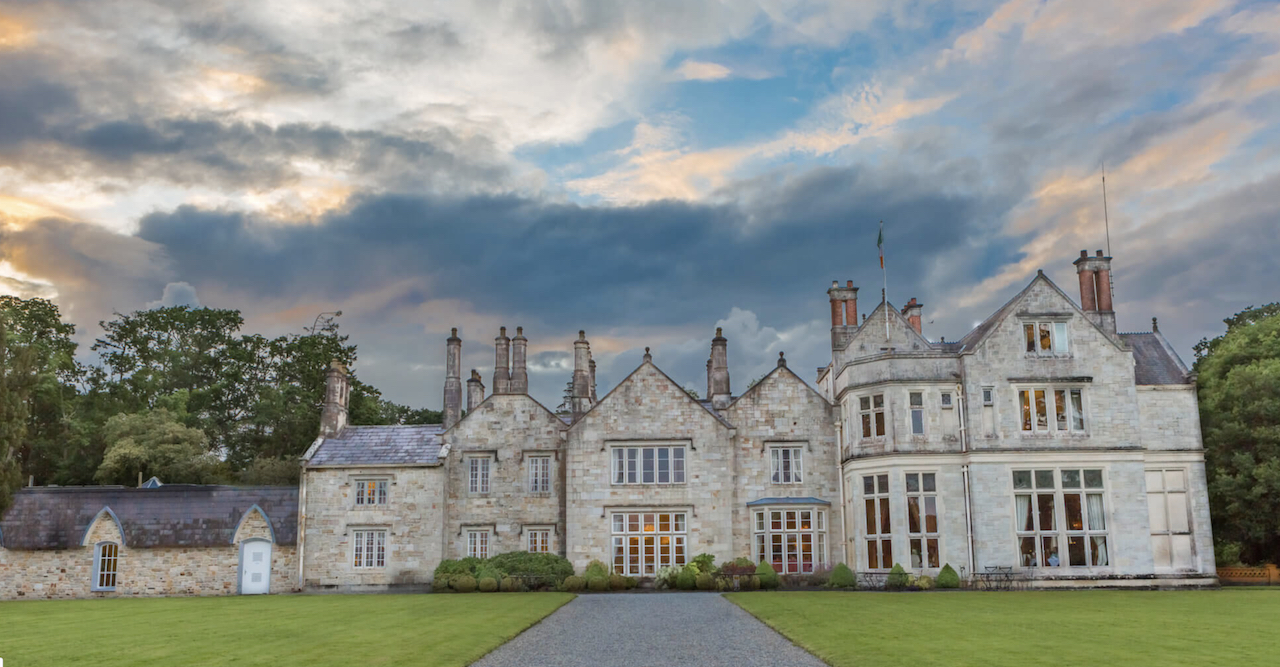
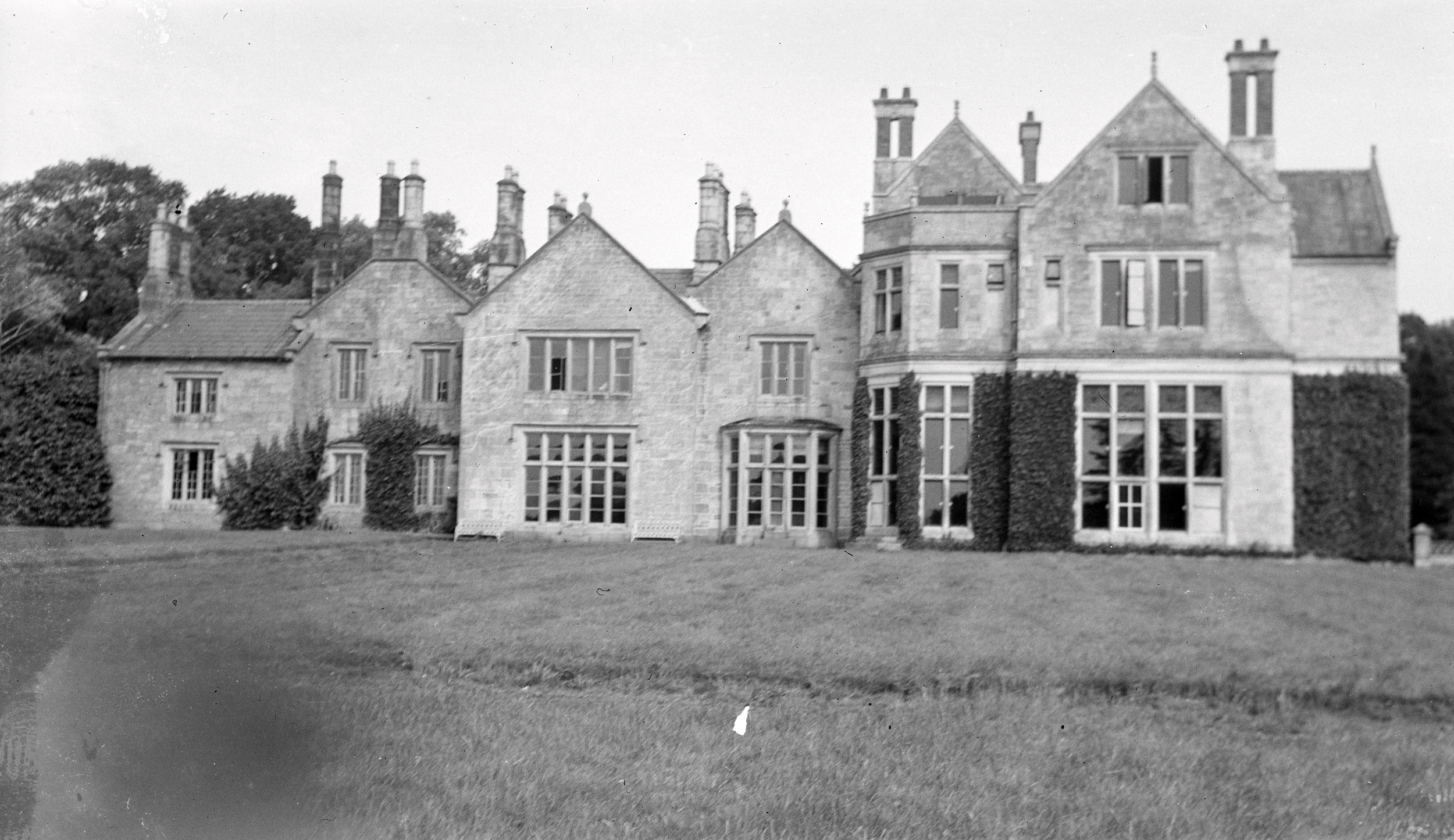
p. 168. “(Lucas-Clements/IFR; Clements/IFR) A three storey block of ca 1770, joined to a single two storey wing by a curved sweep; if the original intention was to build a balancing wing and sweep, the idea must have been abandoned fairly soon; because there is now a three sided bow on the other side of the house which would have clashed with the sweep and which appears in a C18 view. Built for Rt Hon Nathaniel Clements, MP, the banker, politician and amateur architect, one would naturally assume that it was so his own design, yet apart from having the “patternbook” tripartite doorway with a fanlight, a baseless pediment and engaged columns which he seems to have favoured, it lacks the characteristics of the houses known to be by him or convincingly attributed to him. Apart from the doorway, the five bay entrance front is quite plain, as is the six bay garden front, whch now has some relief in external shutters of the ground floor windows. The wing has a six bay front and there are small oculi in the sweep. All this plainness, however, seems like deliberate understatement; for it is, in fact, a house of great quality. The interior is very well finished; the rooms, though few in number, are of noble proportions. The hall has a Doric frieze and a neo-classical chimneypiece of stone, with fluted Doric columns. The staircase, in a separate hall to one side, is of good joinery. The dining rom has a modillion cornice and doorcases with entablatures carved with acanthus; painted in shades of chocolate, red and oyster. The library, extending into the bow at the side of the house, has a cornice of mutules. The drawing room, which has a gilded modillion cornice, remains almost exactly as it was when redecorated ca 1820s by Nathaniel Clement’s grandson, 2nd Earl of Leitrim, with a beautiful French wallpaper in faded green and gold, gilt pelmet boards and the original red curtains and flounces.” 

Not in national inventory 

Killadoon stands in its own well-wooded parkland, Killadoon, Copyright James Fennell/The Interior Archive Ltd, JF_IC6_01 

From Country Life. 

A grand swagged curtain in the Regency style overhangs the entrance to Killadoon, Killadoon, Copyright James Fennell/The Interior Archive Ltd, JF_IC6_03. 
A pair of antique elk, or giant deer, antlers hangs above the classical mantelpiece, Killadoon, Copyright James Fennell/The Interior Archive Ltd, JF_IC6_04 
The Georgian drawing room was redecorated in the 1820s with green floral wallpaper, Killadoon, Copyright James Fennell/The Interior Archive Ltd, JF_IC6_31 
A hall chair c. 1800, painted with the Clements crest and the 2nd Earl of Leitrim’s coronet, Killadoon, Copyright James Fennell/The Interior Archive Ltd, JF_IC6_08.
A selection of 1820s wallpapers found in the attic is laid out on the desk in the library, Copyright James Fennell/The Interior Archive Ltd, JF_IC6_82 
The formal dining room is laid for a dinner party with the family silver, glass, and china, Killadoon, Co Kildare, Copyright James Fennell/The Interior Archive Ltd, JF_IC6_35 
When they were purchased in the 1770s, the enormous pier glasses in the drawing room would have been the height of luxury, Killaddon, County Kildare, Copyright James Fennell/The Interior Archive Ltd, JF_IC6_33 

https://theirishaesthete.com/2015/08/03/killadoon/

Nathaniel Clements’ engagement in speculative building, together with his reputation as an arbiter of taste, led to several buildings being attributed to him by the Knight of Glin. These included Brookelawn and Colganstown, County Dublin; Williamstown and Newberry Hall, County Kildare; and Beauparc and Belview, County Meath. All can be dated to c.1750-65, and all share certain stylistic similarities, not least reliance on Palladianism which by that date was fast falling from fashion. While respecting the Knight’s notion of Clements as an architect, and one responsible for the houses listed above, Maurice Craig in Classic Irish Houses of the Middle Size (1976) proposes that he was ‘eclectic’ not least because ‘he picked and chose his elements from pattern-books and combined them so that they compose well enough together: but they do not interact on one another.’ However, given his many other professional and financial interests, it must now be accepted that Clements was not an architect as we would understand the term. Rather he was an influence, or as Malcomson proposes, ‘a role model’, someone to turn to for advice. Furthermore, the design of his Ranger’s Lodge provided the prototype for a new generation of villa-farms that were not grand country houses but residences at the centre of working estates. All this is applicable to a house which has long been ascribed to Nathaniel Clements because it was built for his eldest son and heir Robert who in 1795 was created first Earl of Leitrim. Killadoon, County Kildare, shown in the pictures here today, surely ought to have been designed by Nathaniel Clements but even Mark Bence-Jones in his 1978 Guide to Irish Country Houses argued that ‘apart from having the “pattern-book” tripartite doorway with a fanlight, a baseless pediment and engaged columns which he seems to have favoured, it lacks the characteristics of the houses known to be by him or convincingly attributed to him.’ In fact, as Malcomson shows, Nathaniel and Robert Clements had a troubled relationship and he proposes that the older man’s input into the house’s design ‘must have been limited.’ The need for a thorough re-examination of 18thcentury architectural attribution remains. 

The text below originally appeared here in 2015. Tomorrow at Sotheby’s in London many of the items in the accompanying photographs will be offered for sale; thankfully not all, since some key pieces such as the 1770s sofas, the Axminster carpet from c.1820-30 and 19th century beds with their original hangings have been offered on loan to the state for public display. Nevertheless, the contents of another historic Irish house are being broken up because there is little or no official support for owners of such properties struggling to survive and eventually they are left with no option but to sell. 
It is worth pointing out – again – that legislation has existed on the Irish statute books for many decades which is supposed to ensure that valuable paintings, furniture and so forth remain in this country. The Documents and Pictures (Regulation of Export) Act dates from 1945 and was, in theory at least, supplemented by the National Cultural Institutions Act of 1997. The idea behind these pieces of legislation is that before any item over a certain fairly low value can leave the country, the parties responsible are required to seek permission from government-appointed authorities (until July 2015 usually one of the main national cultural institutions.*) However, there is no known instance where such an export licence has been refused; auction houses have long understood that this is a mere paper-filling formality. Tomorrow’s sale, for example, also includes a mahogany dining table attributed to Mack, Williams and Gibton and dated c.1815. It was listed in an inventory made of the contents of Carton, County Kildare in 1818 and has remained in the house until now when, after 200 years, it will be offered for sale tomorrow. 
Vendors vend, buyers buy, auctioneers auction. Across millennia collections have been assembled and dispersed. There are no villains here, no one deserves to be castigated for acting in an untoward fashion. But there is, as has been the case for too long, evidence of clear neglect on the part of the Irish state towards what becomes of our patrimony, and an obvious want of concern over how this has been steadily whittled down, year by year, house by house. One must ask what is the function of legislation observed in name only? Surely the purpose of enacting the laws mentioned above was to ensure that a reasonable effort would be made to retain valuable works of art and collections in Ireland? That is currently not the case. A general election takes place here in a few weeks’ time: readers might like to ask any candidates they encounter for an opinion on the national heritage and what might be done to retain whatever is still here. Otherwise expect more sales. 

Despite the many advances made in Irish architectural history over recent decades, some areas remain in need of further investigation. Among the most obvious of these is the question of attribution. There are significant houses across the country yet to be assigned to any architect, and others which need to have their accreditations reassessed. In the latter category are those properties given accreditations by the late Knight of Glin in the early 1960s when he was engaged on his uncompleted thesis on the subject of Irish Palladianism. At the time there was far less information available on or interest in architectural history than is now the case, and therefore the Knight was to a large extent dependent on instinct when allocating various houses to different architects, about whom little or nothing was known. Often he had to rely on his eye rather than on documentation, and as he admitted towards the end of his life, mistakes were made. To date insufficient effort has been made to correct these and as a result attributions made half a century ago still stand. An obvious opportunity for correction occurred with the appearance of the relevant volume in the Royal Irish Academy’s Art and Architecture of Ireland series published earlier this year, but the editors failed to avail of this opportunity. A reassessment of the Knight’s attributions still awaits requiring someone able to combine scholarship with connoisseurship. Until such time, in particular the output of gentlemen architects like Francis Bindon (whose name has appeared here on more than one occasion) will remain unclear. On the other hand, thanks to another book published in 2015 we are now in a much better position to assess the oeuvre of another talented 18thcentury amateur, Nathaniel Clements. 

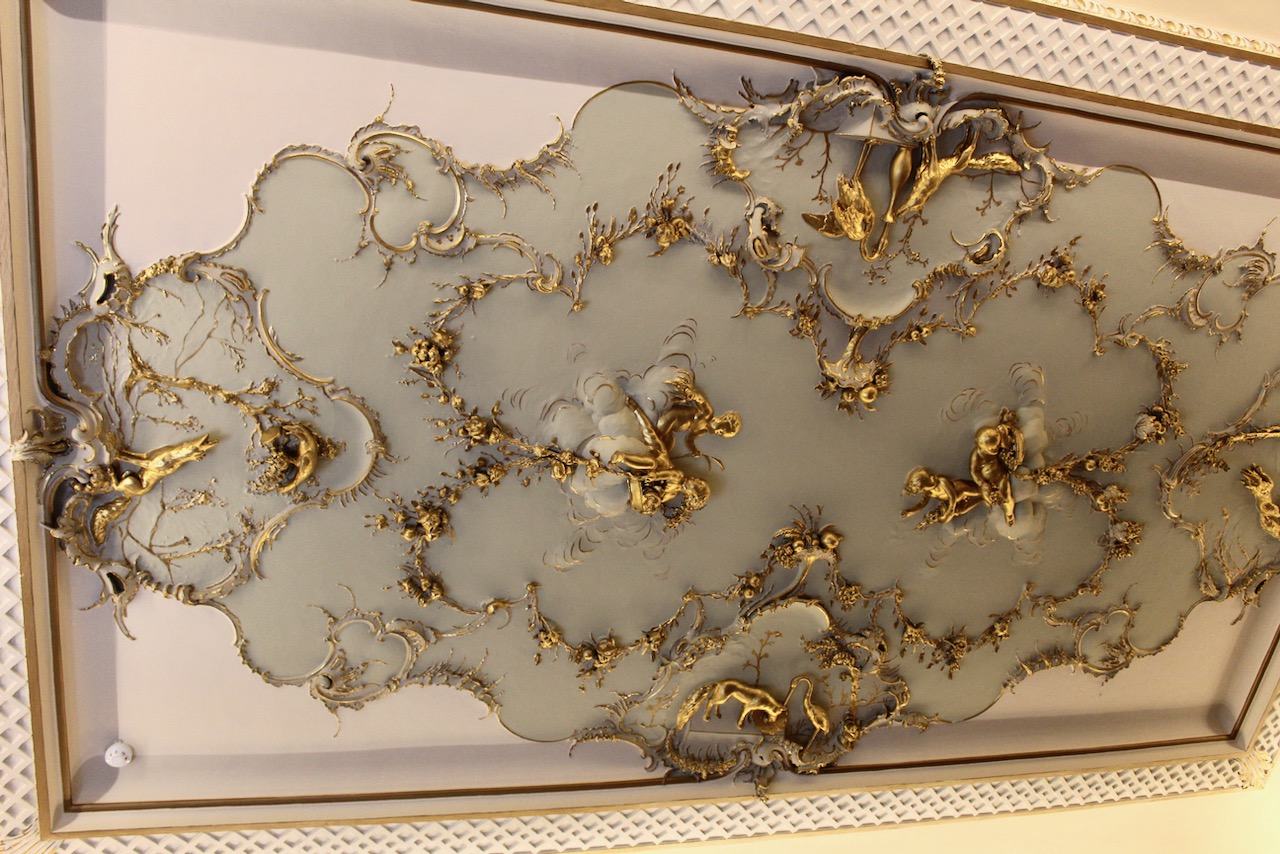
IMG_1612 
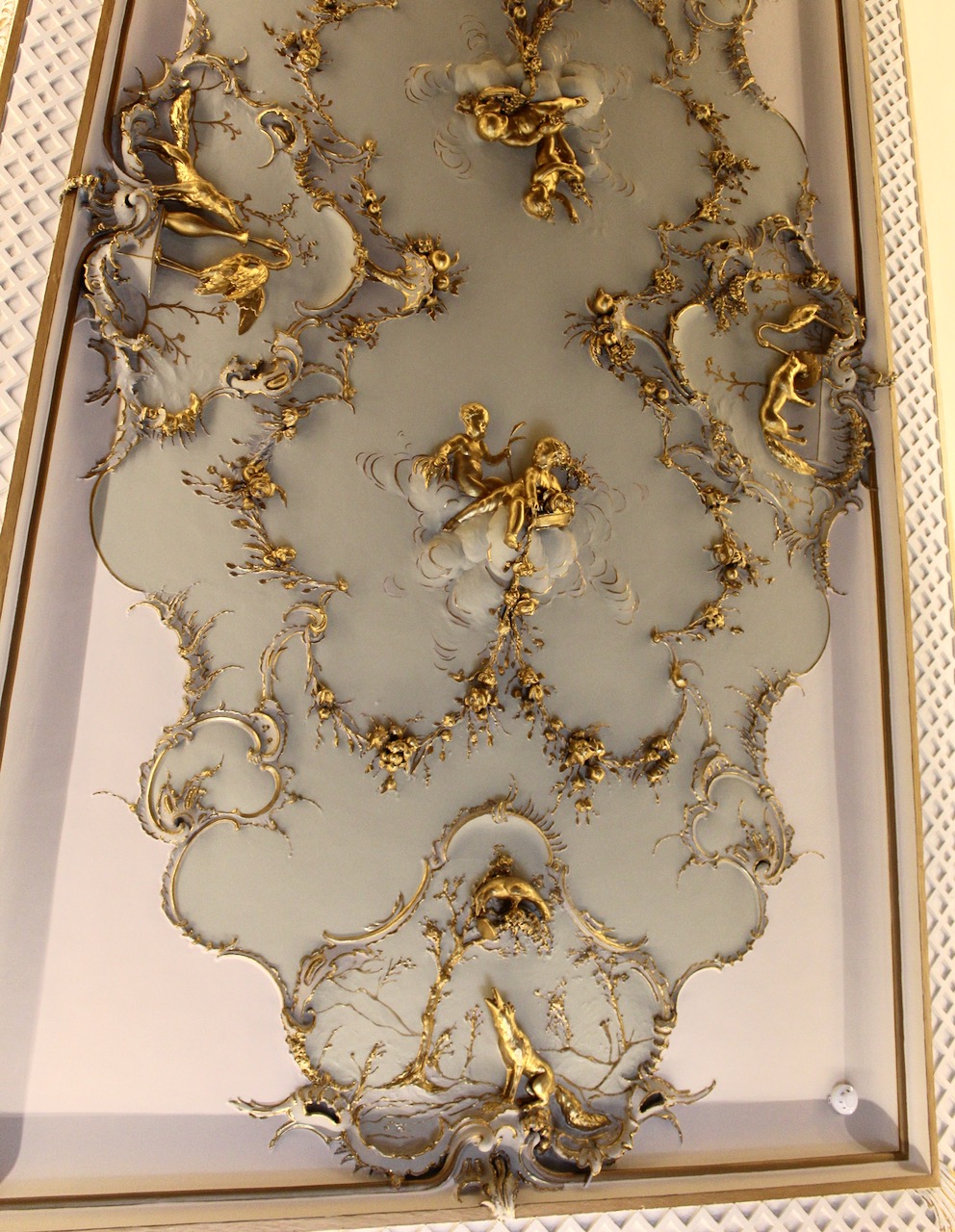
IMG_1614 
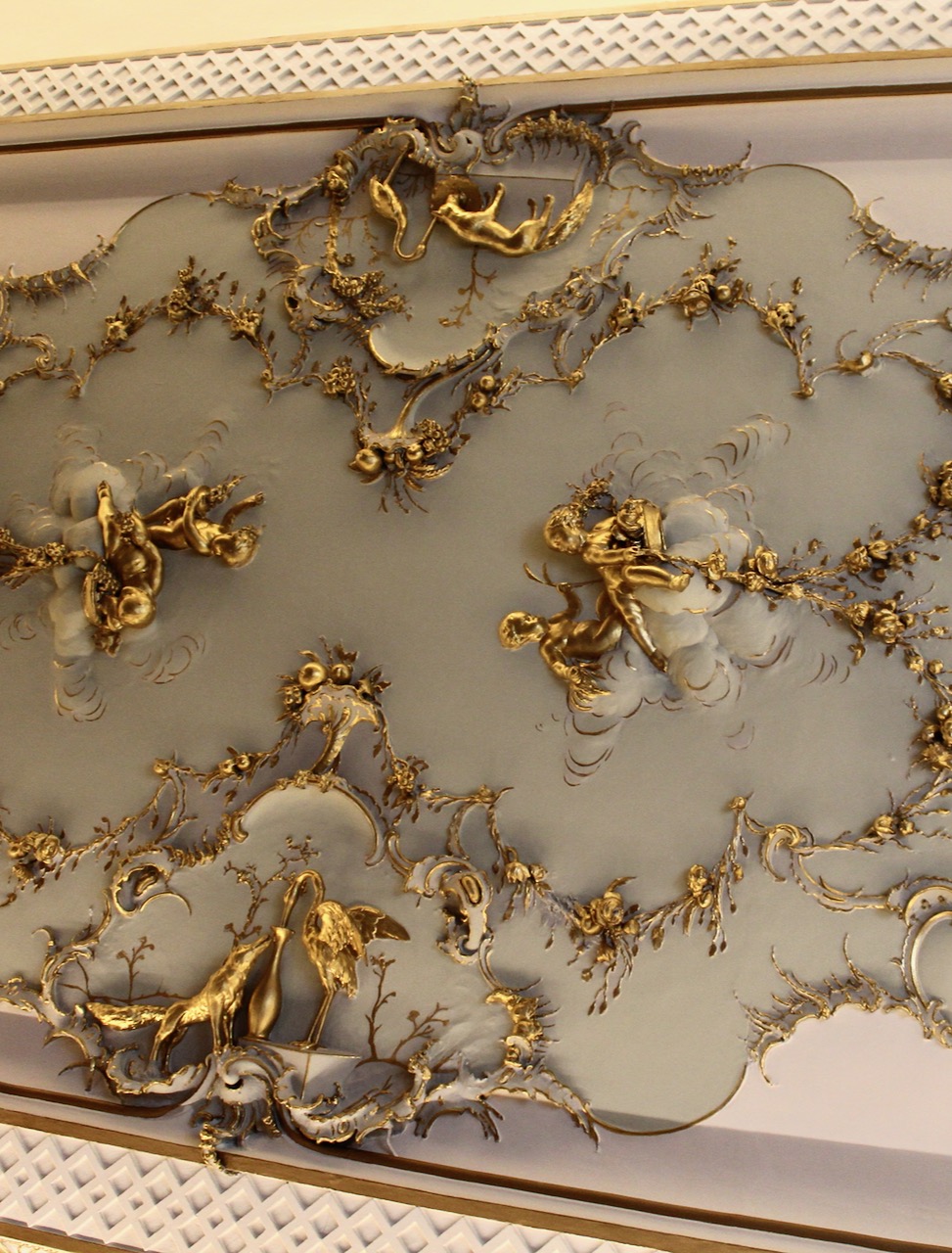
IMG_1619 
In 1754 John Carteret Pilkington published the third and final volume of his late mother Letitia’s celebrated memoirs in which he described Nathaniel Clements as being ‘a certain great man in Ireland, whose place of abode is not remote from Phoenix Park…whose acquirements have justly raised him from obscurity to opulence [and] whose extensive plans in building have excited an universal admiration of his taste in architecture.’ As Clements’ new biographer Anthony Malcomson noted, it was perhaps something of an exaggeration to claim he had raised himself from ‘obscurity’ but as a fifth son he would have been expected to make his own way in the world, especially since his father died when he was only seventeen. That father, Robert Clements had inherited an estate in County Cavan but in 1707 had secured the important, and lucrative, post of Teller to the Irish Exchequer. This job passed to his eldest son Theophilus who badly bungled his own financial affairs as was discovered when he died in 1728. Nevertheless, both the family and Nathaniel Clements were by this time sufficiently well connected for the Tellership of the Exchequer to pass to him, a job he held for the next twenty-seven years during which time, as Pilkington commented, he made himself exceedingly rich. His substantial income was boosted by money received from non-residents in receipt of an Irish pension for whom he acted as agent for decades (Malcolmson estimates that by the mid-1740s his annual income from this job alone was £1,500). He also held numerous other offices, all of which brought in additional funds. Much of this was used to acquire land, the most reliable form of investment in a period when banks failed regularly (as did that established by Clements and a couple of partners in 1759). By the end of his life he had bought up some 85,000 acres spread across three counties and producing an income of around £6,000 each year. 

IMG_1641 
IMG_1653 
IMG_1655 
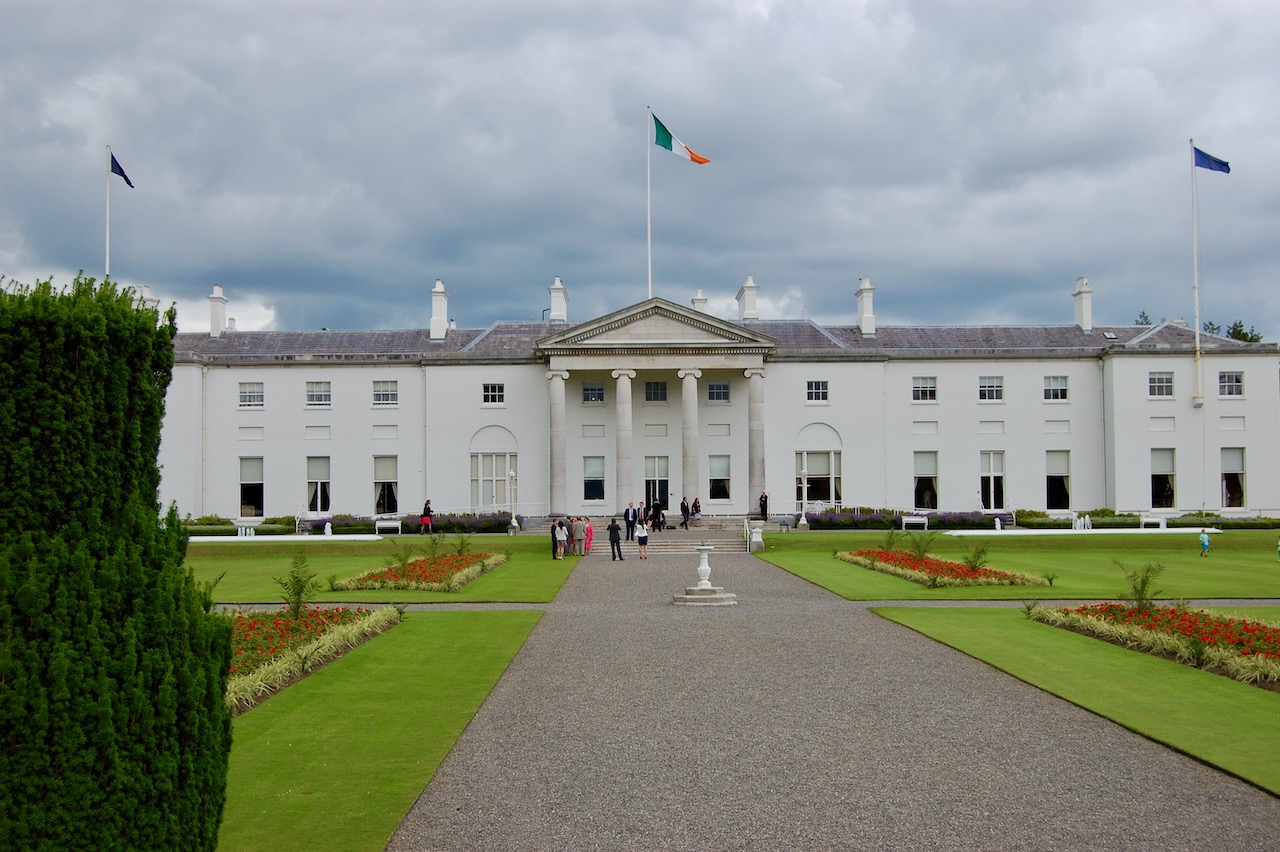
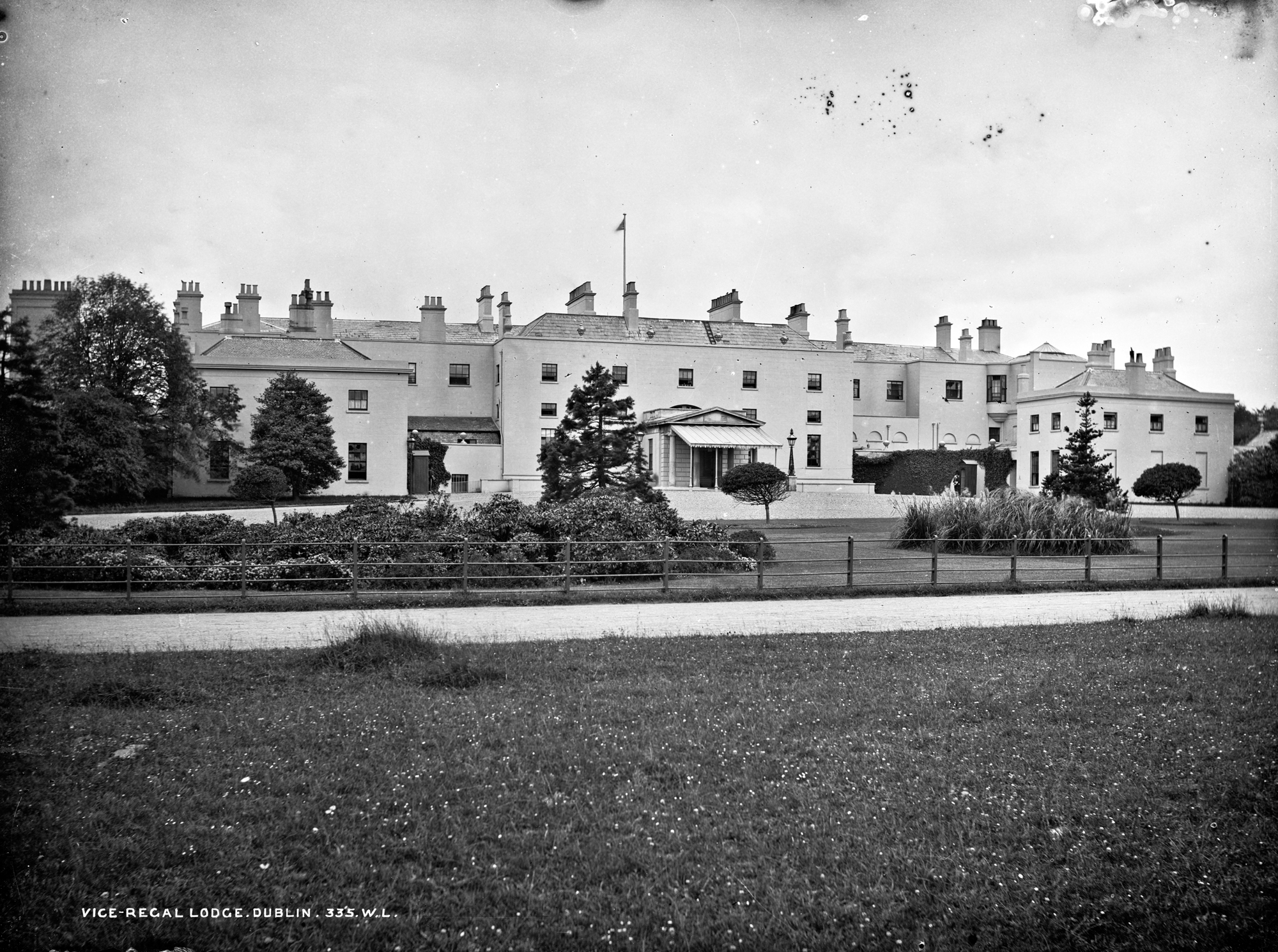
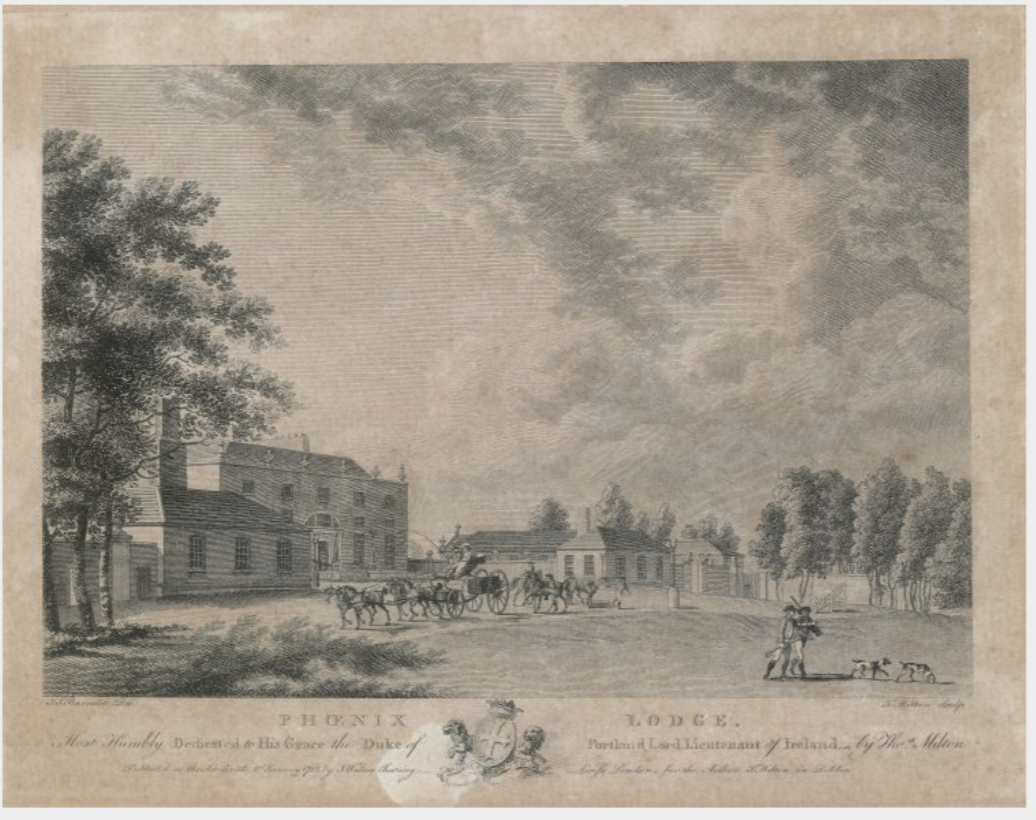
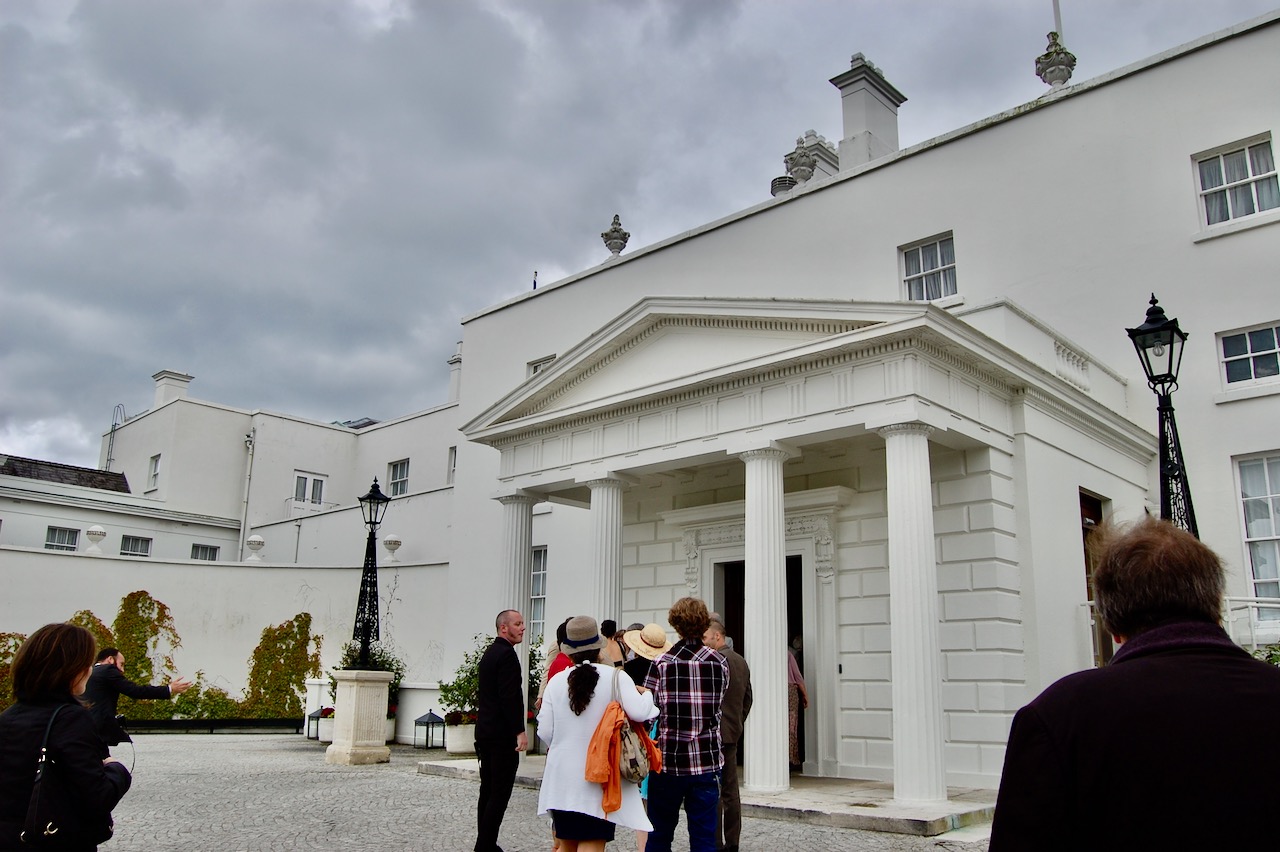
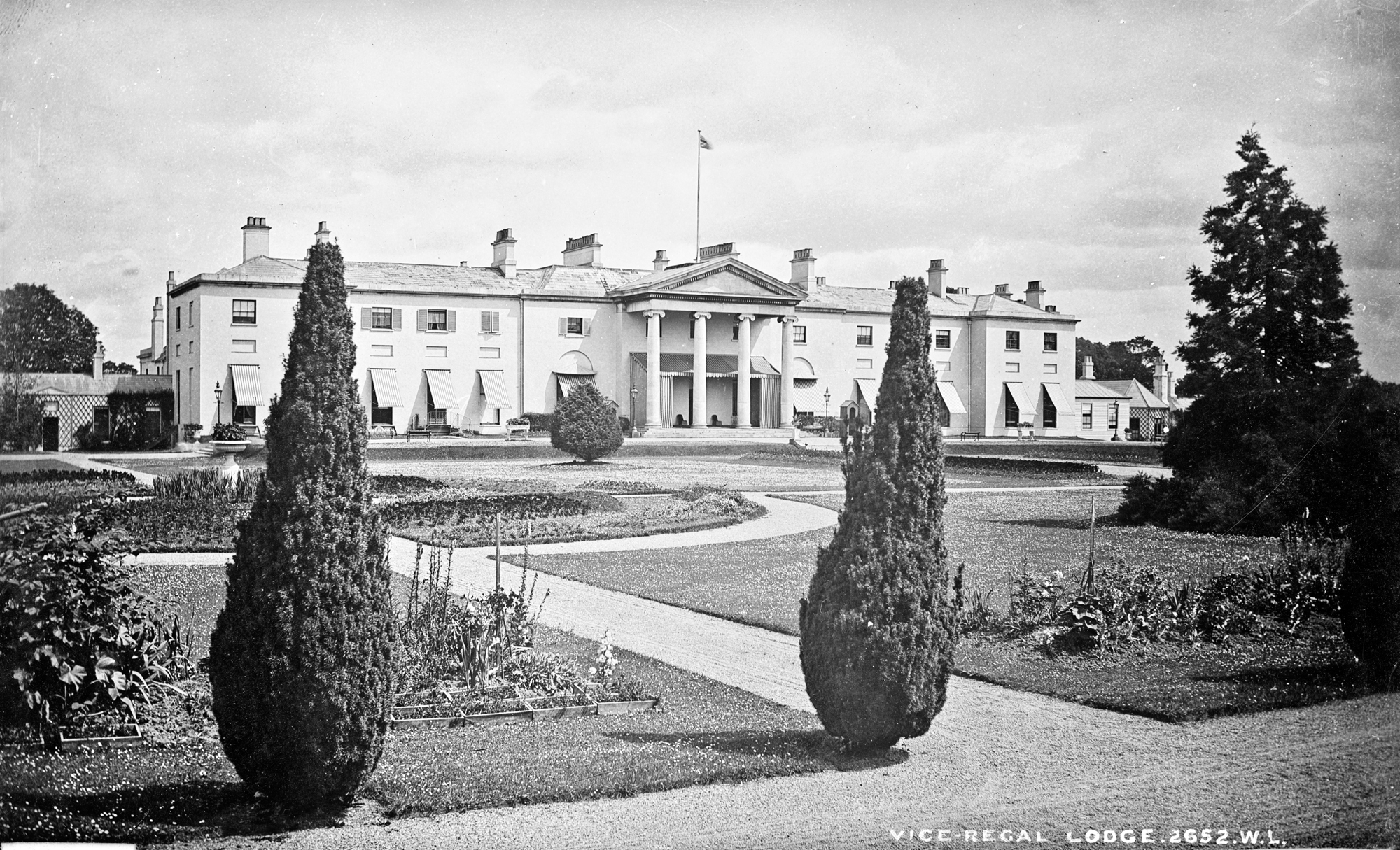
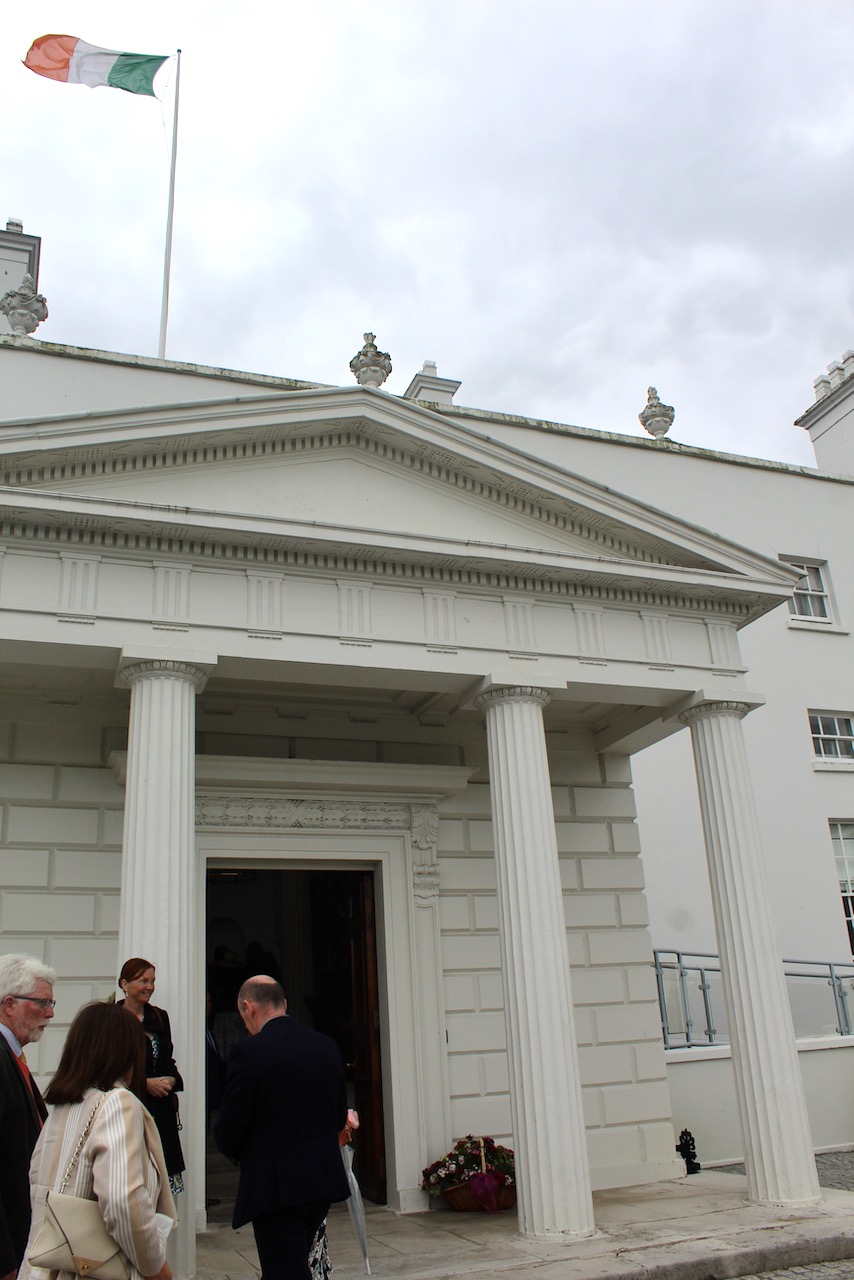
Another area of investment in which Clements engaged was housing, beginning with his participation in the development of Dublin’s Henrietta Street. The man behind this project, and others on the northern banks of the Liffey, was Luke Gardiner to whom Clements was related by marriage. Named after Henrietta, Duchess of Bolton, an old friend of Gardiner, whose husband acted as Ireland’s Lord Lieutenant in 1717-20, the street was from the start intended to be the capital’s premier address, its two sides lined with houses of princely splendor. As so often the case throughout 18th century Dublin, the exterior of the buildings, mostly standard red-brick and occupying sites of varying proportions, gave – and continue to give – insufficient notice of what lay behind the facades. Clements was responsible for constructing a number of houses on the street, beginning with Number 8 which was finished around 1733 and let to Colonel (later General) Richard St George. Three or four others then followed before he moved to Sackville (now O’Connell) Street, the initial development of which was likewise overseen by Gardiner. Here Clements built several more properties including a family residence that came to be known as Leitrim House. But having become ranger of the Phoenix Park in 1750 (having previously acted as deputy-ranger) he embarked on building himself a smart and substantial new villa. The Ranger’s Lodge was a five-bay, two-storey over full-height basement house on either side of which quadrants connected to L-shaped single-storey wings. Clements and his socially-ambitious wife hosted opulent parties on the premises intended to impress their contemporaries and to cement the couple’s place in Ireland’s hierarchy. In June 1760 for example, it was reported that the Clementses ‘gave an elegant entertainment to several of the nobility and gentry at his lodge in the Phoenix Park, which was illuminated in the most brilliant manner.’ Five years after Nathaniel Clements’ death in 1777, his son Robert sold the lodge to the government which then converted – and subsequently – enlarged the building for use as a Viceregal residence. Today the same property is known as Áras an Uachtaráin and occupied by the President of Ireland. 

IMG_1688 
IMG_1691 
 
Nathaniel Clements’ engagement in speculative building, together with his reputation as an arbiter of taste, led to several buildings being attributed to him by the Knight of Glin. These included Brookelawn and Colganstown, County Dublin; Williamstown and Newberry Hall, County Kildare; and Beauparc and Belview, County Meath. All can be dated to c.1750-65, and all share certain stylistic similarities, not least reliance on Palladianism which by that date was fast falling from fashion. While respecting the Knight’s notion of Clements as an architect, and one responsible for the houses listed above, Maurice Craig in Classic Irish Houses of the Middle Size (1976) proposes that he was ‘eclectic’ not least because ‘he picked and chose his elements from pattern-books and combined them so that they compose well enough together: but they do not interact on one another.’ However, given his many other professional and financial interests, it must now be accepted that Clements was not an architect as we would understand the term. Rather he was an influence, or as Malcomson proposes, ‘a role model’, someone to turn to for advice. Furthermore, the design of his Ranger’s Lodge provided the prototype for a new generation of villa-farms that were not grand country houses but residences at the centre of working estates. All this is applicable to a house which has long been ascribed to Nathaniel Clements because it was built for his eldest son and heir Robert who in 1795 was created first Earl of Leitrim. Killadoon, County Kildare, shown in the pictures here today, surely ought to have been designed by Nathaniel Clements but even Mark Bence-Jones in his 1978 Guide to Irish Country Houses argued that ‘apart from having the “pattern-book” tripartite doorway with a fanlight, a baseless pediment and engaged columns which he seems to have favoured, it lacks the characteristics of the houses known to be by him or convincingly attributed to him.’ In fact, as Malcomson shows, Nathaniel and Robert Clements had a troubled relationship and he proposes that the older man’s input into the house’s design ‘must have been limited.’ The need for a thorough re-examination of 18thcentury architectural attribution remains. 

*In July 2015 An Taisce took a successful case in the High Court against the state delegating responsibility for the granting of export licenses to cultural institutions such as the National Gallery of Ireland. However, this does not appear to have made any difference to such licenses being granted. 

 
Nathaniel Clements, 1705-77: Politics, Fashion and Architecture in mid-Eighteenth-Century Ireland by Anthony Malcomson is published by Four Courts Press 

http://www.turtlebunbury.com/history/history_family/hist_family_clements.html 

Clements of Killadoon, Co. Kildare 

In the mid 17th century, a Leicestershire family emigrated to Massachusetts and so escaped the ravages of the English Civil War. Only one son, Daniel Clements, remained behind, serving a commission in the army of Oliver Cromwell. For his military services in Ireland he was rewarded with an estate in Cavan. His descendents rapidly scaled the heights of the Anglo-Irish ascendancy gaining the Earldom of Leitrim in 1795. Meanwhile, in America, Daniel’s sister Mary was arrested for witchcraft during the Salem Witch Trials.  

Daniel’s grandson Nat Clements was one of the great amateur architects of Georgian Ireland. Perhaps his best-known legacy is the Irish President’s residence, Arás an Uachtaráin, in Phoenix Park. In 1767 Nat’s eldest son Robert took the first lease on a property at Killadoon, Co. Kildare. A series of prudent marriages and the will of the assassinated 3rd Earl of Leitrim boosted the fortune of the Killadoon branch, but the subsequent land acts considerably reduced the size of the estate in the 20th century. Killadoon is presently home to Charlie Clements, representing the tenth generation of the Clements family since Daniel’s arrival in Ireland. 

FROM LEICESTERSHIRE TO AMERICA 

The Clements of Killadoon descend from Robert Clements (1595–1658), a prosperous English wine merchant living at Croft, six miles south of Leicester City, in the reign of James I. By his first wife Lydia, Robert was father of eight children – Job, John, Robert, Sarah, Lydia, Daniel, Abraham and Mary. 

During the 1620s, the Clements had a fleet of three ships that plied the Atlantic Ocean between England and North America. By the late 1630s, it seemed inevitable that the escalating division between Royalists and Republicans in England would result in Civil War. The Clements appear to have been opponents of Charles I at this time. 

Lydia Clements died in March 1641 causing much distress in the family. Her son Job appears to have journeyed to America at this time with some freinds and, having scouted around New England, deduced that it was a suitable place to live. He subsequently convinced his distraught father to sell their estate in England and voyage to America with him. Robert Clements was subsequently hailed as a co-founder of the frontier settlement of Haverhill, Massachusetts.  

MARY OSGOOD & THE SALEM WITCH TRIALS 

In due course, several of Job’s brothers and sisters also crossed the ocean, except for two brothers Abraham and Daniel (see below) and his youngest sister Mary Clements who, born in 1637, may have been considered too young to travel in 1642. Mary was left in Coventry with a Mrs. Biddle. She finally sailed for New England in 1652.  

On November 15th 1653, Mary was married by arrangement to another early Haverhill settler, Captain John Osgood. Mary’s father, Robert Clements, now a New England magistrate, personally conducted the marriage ceremony. Over the next twenty years, Captain Osgood became a man of prominence in the state, having his own cavalry troop and acquiring considerable lands around Andover. 

In the summer of 1692 the towns of Massachusetts were immersed in a hysteric frenzy that became known as the Salem Witch Trials. The origin of this horrific affair probably stems from an African slave called Tituba who entertained the young white children with his stories of voodoo. This initially amounted to little more than floating an egg white in a glass of water and predicting future husbands. However, for unknown reasons, certain girls started having fits, making strange noises and contorting their bodies in an alarming manner. Doctors were summoned and the town elders, Puritans to a man, began to speak in increasingly high voices of witchcraft. The girls were apprehended and asked to provide the names of any witches living locally. Over the next three months, 141 people were arrested. 19 of these were hanged, including Tituba, while seven died in prison and one was crushed to death. In September 1692 Mary Osgood, hitherto regarded as “a remarkably pious and good woman”, was suddenly accused of witchcraft. Her accuser appears to have been Dudley Bradstreet, a friend of her husband. As one of the leading women in Andover at the time, her arrest caused much astonishment to the local community but the frenzy of what became known as the Salem Witch Trials was at full steam with nearly twenty people already executed. Her own son Peter Osgood, then Constable of Salem, oversaw her transportation to trail in Salem where she was asked to confess that she had indeed been had been “dipt” by Satan. The confession came on her husband’s advice, it being considered the only feasible way she might escape execution by burning. However, in the end, the awfulness of a confession that one had given body and soul to Satan, outweighed in Mrs. Osgood’s mind the desire for life and she recanted, and with others signed the following petition:– 

“Our nearest and dearest relations seeing us in that dreadful condition, and knowing our great danger, apprehended there was no other way to save our lives…. Indeed, that confession that it is said we made was no other than what was suggested to us by some gentlemen, they telling us that we were witches, and they knew it and we knew it, which made us think that it was so, and our understanding, our reason, our faculties almost gone we were not capable of judging our condition. As also the hard measures they used with us rendered us incapable of making our defence, but said any thing and everything which they desired and with most of us, what we said was but in effect a consenting to what they said. Sometime after, when we were better composed, they telling us what we had confessed, we did profess that we were innocent and ignorant of such things. Mary Osgood, Deliverance Dane, Sarah Wilson, Mary Tyler, Abigail Barker, Hannah Tyler.” [1] 

Mary was discharged in January 1693. Captain Osgood died the following August, apparently through sheer stress of the trials. His widow lived on until October 1710. The story of the “Salem Witch Trials” formed the basis of Arthur Miller’s play, “The Crucible”.  

DANIEL & ABRAHAM CLEMENTS 

While the majority of Robert and Lydia Clements children emigrated to North America, two sons stayed behind, Abraham and Daniel. It is thought they had both been conscripted into King Charles I’s army but later joined Oliver Cromwell’s Commonwealth (or Republican) army. It is not clear when or why they made this decision. Perhaps it was in response to the destruction of nearby Leicester City, a Republican stronghold, by Prince Rupert’s Royalist forces in May 1645. In 1646, the brothers both went to Ireland with Cromwell’s army, arriving into the port of Waterford in the south of Ireland. 

Daniel Clements was a Cornet, or junior officer, in Colonel Chidley Coote’s cavalry regiment.[2] He later transferred to the regiment of Chidley’s brother, Colonel Thomas Coote, with whom he was stationed in Belfast. Unconfirmed sources suggest he was present at the siege of Drogheda in September 1649. In 1657, by way of a reward for his military service, Daniel received a grant of about a thousand acres at Rathkenny, County Cavan. 

Abraham Clements also settled in Cavan and married Jane _____. His only child was a daughter, Lydia, who married Joseph Pratt. He left no sons so the name did not carry on through his blood-line.  

ROBERT CLEMENTS, TELLER OF THE IRISH EXCHEQUER 

Daniel died in June 1680 and was succeeded by his son Robert who, like so many Cromwellian settler families, was attainted by the Irish Parliament of James II in 1689. However, with the accession of William III and Mary, he was restored to his estates and appointed Deputy Treasurer of Ireland. Robert, who lived at Abbotstown near Castleknock, served as High Sheriff for County Cavan (1694), MP for Carrickfergus (1692) and as Teller of the Irish Exchequer in the reign of Queen Anne. He married Elizabeth Sandford, daughter of Colonel Theophilus Stanford and had four sons and a daughter.[3] 

The eldest son Theophilus Clements, a bachelor, succeeded to Rathkenny and 1722 and served as MP for Cavan from 1713 through to his death, aged 41, in 1728. In 1724 he presented the Borough of Cavan with its Silver Mace.  

The second son Robert became MP for Newry in 1715 and was forebear to the Lucas Clements family of Rathkenny, Co. Cavan.  

The third and youngest brother Nathaniel (“Nat”) Clements (1705 – 1777), a Dublin banker, architect and politician, was a close friend of the property developer Luke Gardiner. When Gardiner retired from public office in 1755, Nathaniel succeeded him as both Deputy Vice-Treasurer and Deputy Paymaster-General of Ireland. The two men worked together on the development of Dublin’s north side and Nat designed an imposing house for himself in Henrietta Street. He also worked in conjunction with Sir Edward Lovett Pearce, the most distinguished architect in Ireland, and his successor, Richard Castle. In April 1751, Nat was appointed Chief Ranger of the Phoenix Park, to which purpose he built a house in the Park known today as Arás an Uachtaráin, home to the Irish President. Nathaniel Clements is credited with the design of many other buildings of note such as Newbery Hall and Williamstown in Carbury, Lodge Park in Straffan and Colganstown outside Newcastle, Co. Dublin. 

In 1729 Nat married Hannah Gore, daughter of the Rev. William Gore, Dean of Down. Her uncle Sir Ralph Gore of Belle Isle, Co. Fermanagh, was a close friend of Speaker William Conolly and succeeded him as Speaker of the House of Commons in 1729. He was subsequently appointed Chancellor of the Irish Exchequer. Hannah was also a cousin to the “Nine Gore” brothers who sat in the Commons during the 1740s. Nat and Hannah had two sons – Robert and Henry.  

ROBERT CLEMENTS, CONTROLLER OF CUSTOMS 

Nat and Hannah’s elder son Robert seems to have inherited the Gores bent for politics and devoted considerable time and expense to ensuring his position in the government of the day. He also expended considerable effort petitioning for an Earldom, which title he was eventually granted through a combination of skilled political manoeuvring, social positioning and sheer persistence. Over the years, he held a succession of offices: Controller of the Great and Small Customs of the Port of Dublin for 46 years from 1760 until his death; Ranger of Phoenix Park 1777-87 and Searcher, Packer & Gauger at the Port of Dublin in 1787. In each role, he created connections and established relationships with the prime movers in both government and society. In 1765 he married Elizabeth Sandford of Maynooth which brought him further estates in County Kildare.  

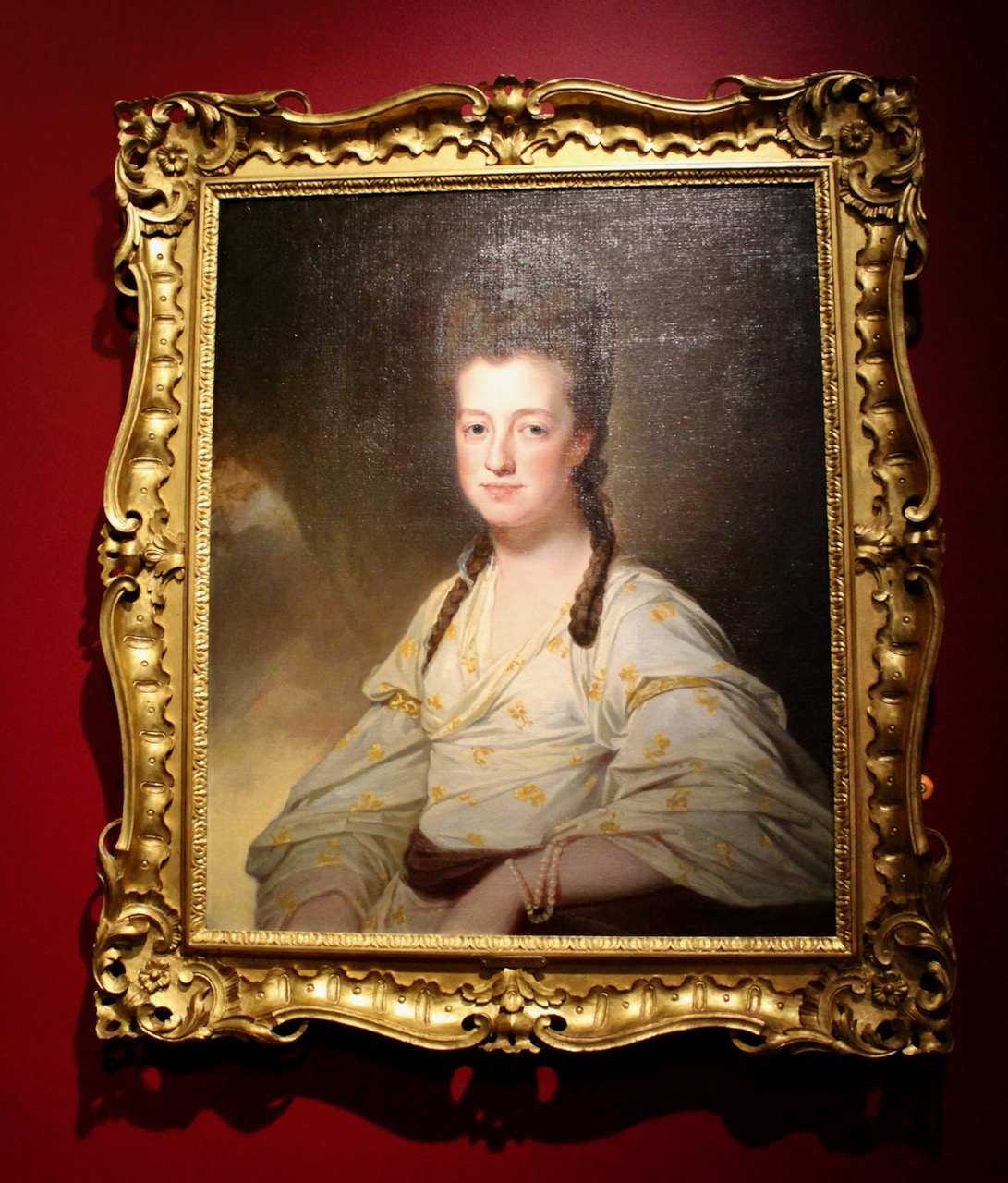
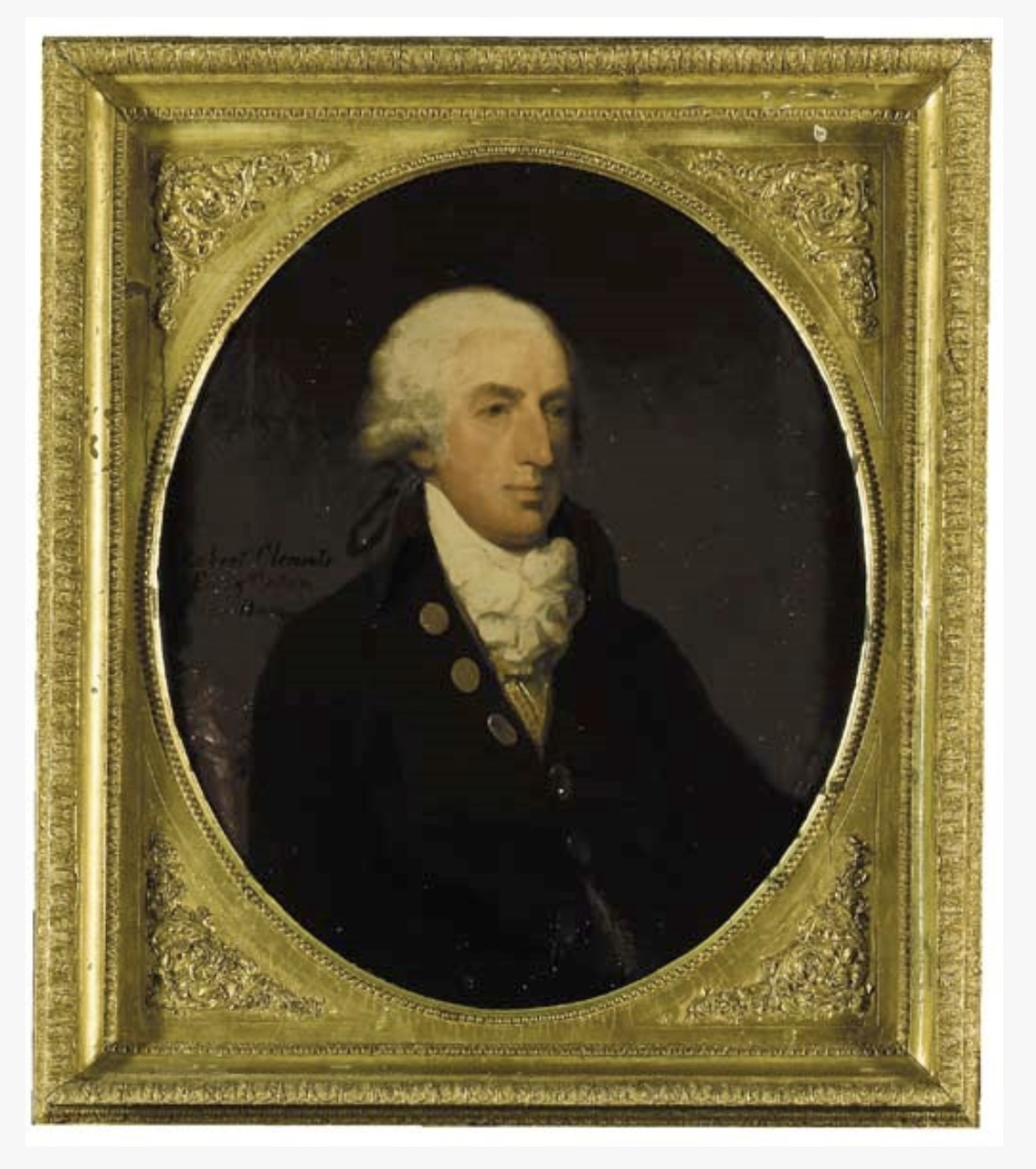
Robert Clements (1732-1804) 1st Earl of Leitrim by Gilbert Stuart courtesy of Christie’s Irish Sale 2001.

In 1767, Robert leased 140 acres at Killadoon outside Celbridge from Tom Conolly of Castletown. Tom’s great uncle, Speaker Conolly had purchased the property from the Plunkett family in 1724. In 1769 Robert leased a further 112 acres at Killadoon and commenced building a new house. His architect father does not seem to have had a say in the design, attributable perhaps to an unexplained rift that had evolved between the two men. The agricultural observer Arthur Young visited Robert in June 1776, shortly after Killadoon’s completion. He described it as “an excellent house, and planted much about it with the satisfaction of finding that all his trees thrive well. I remarked the beech and larch seemed to get beyond the rest.” Young felt Robert was “a good farmer, growing cabbages to feed the sheep and potatoes to feed the pigs”. In 1795, as a reward for his assistance in securing a parliamentary seat for the Lord Lieutenant’s private secretary, Robert was finally given the Earldom he had sought since his youth. The 1st Earl of Leitrim died in 1804, having been one of the most prominent supporters of the Union of Great Britain and Ireland. 

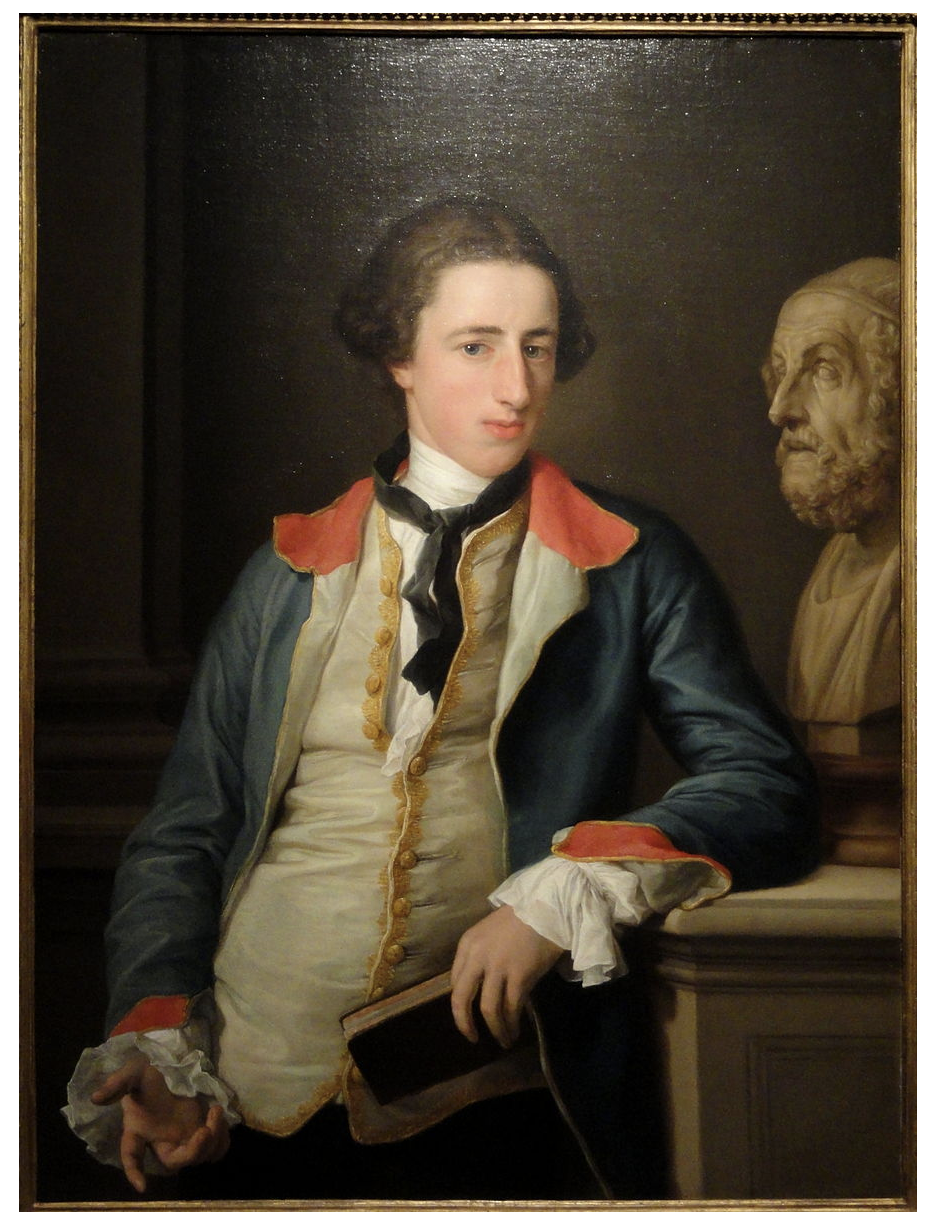
Robert Clements, later First Earl of Leitrim, by Pompeo Batoni, about 1753–1754, Hood Museum of Art.

His butler John McMahon/MacMahon was born in about 1735. It may have been Robert Clements influence that secured McMahon’s appointment as Comptroller of the Port of Limerick. McMahon later made an expedient second marriage into the wealthy Stackpoole family. The Gentleman’s Magazine of 10 April 1860 (p. 533) has an obituary to General Thomas MacMahon, who died at Great Cumberland Street, Hyde Park, and refers to ‘the gallant General’ as ‘a son of the late John McMahon, esq, sometime Comptroller of the port of Limerick; his mother was one of the Stackpooles of the county of Cork. He was born in December 1779 and entered the army towards the close of the last century.’ The Cumberland link is his is confusing because I assume he was also connected to this lady: ‘In North Cumberland street, Dublin. Catherine, wife of John MacMahon, Esq. aged 66 years’ Limerick and Clare Examiner, 4 February 1852 … it may help to follow the Clare-Limerick connection via the landedestates.ie database plus links like this and this. I took an interest in this when researching the Victorian canal engineer John MacMahon.  

HAL CLEMENTS & THE SEVEN YEARS WAR 

On May 15th 1756, Great Britain, in alliance with the German states of Prussia and Hanover, declared war on France. Within weeks, the French had managed to secure the support of Austria, Russia, Sweden and Saxony. The war quickly spilled across the Atlantic Ocean to North America where French and British troops were attempting to wrestle control of one another’s’ territory. Amongst those troops sent to assist the British in America was 23 year-old Henry Theophilus Clements, the younger son of Nat Clements the architect. Henry – known as Hal – was a junior officer in Lord Blakeney’s Inniskilling Regiment, the 27th Foot. 

In August 1757, a sizeable French army under the Marquis de Montcalm laid siege to the British stronghold of Fort William Henry on the southern banks of New York States’ Lake George. A short distance away, lay a significant British force commanded by Hal Clements future father-in-law, General Daniel Webb. General Webb is a somewhat controversial figure in 18th century military history, contributing to one of the more memorable scenes in “The Last of the Mohicans”. Faced with a French assault, Fort William Henry’s commander, Colonel Monro, sent urgent messages to Webb for assistance. Webb declined the request, despite strong words from his second-in-command, Sir William Johnson. “General Webb, just what in the hell are you doing sitting here when Fort William Henry is under attack? We’ve got men fighting and dying up at the lake. They have got to have help. Now!” Webb remained unmoved and Monro was obliged to surrender. The following day Monro’s retreating garrison was attacked by Panaouska, war chief of the Abnakis. Nearly a hundred British soldiers were killed and scalped within minutes. 

The assault on Fort William Henry had been orchestrated from Fort Carillion, a French fortress on the Ticonderoga peninsula. In July 1758, Hal Clements was one of 16,000 British Redcoats who attempted to oust the 3200-strong French garrison from Fort Carillion. Under the command of General Abercromby, the assault was an unmitigated disaster. The British lost over 1900 men, a third of whom were members of the Highland “Black Watch” Regiment. Despite being outnumbered 4 to 1, the French prevailed. 

The Seven Years War came to an end with the treaty of Paris in February 1763. Having obtained the rank of Lieutenant Colonel, Hal duly returned to Ireland. Seven years later, he greatly enhanced his personal fortune when he married Mary Webb, daughter and heiress of the afore-mentioned General Daniel Webb. He was appointed High Sheriff of Co. Cavan in 1766 and Leitrim in 1773. He sat in Parliament from 1769 until his death in 1795, variously representing the borough of Cavan and county of Leitrim. In 1777, he succeeded his father as Deputy Vice-Treasurer of Ireland, an office that greatly increased his personal wealth but which was abolished in 1793. He principally resided at Woodville near the Lucan spas outside Dublin where he often entertained the Lord Lieutenant. Woodville previously belonged to John Hawkins, the Ulster King of Arms. 

Mary Clements provided Hal with three daughters before dying young in the winter of 1777. Hal married his second wife Catherine Beresford in August 1778. His timing couldn’t have been better. Catherine’s father John Beresford, a brother of the 1st Marquess of Waterford, had lately been appointed to the lucrative post of Taster of the Wines in the Port of Dublin. Over the course of the 1780s and 1790s Beresford became the central figure in a powerful trio of Irish ministers (the others being John Foster and John Fitzgibbon) who governed Ireland on behalf of successive lord lieutenants in the lead up to the Act of Union. Beresford’s position as Chief Commissioner of the Irish Revenue from 1780 gave him control of extensive patronage, of which his son-in-law was content to take advantage. 

Colonel Hal Clements died on 26th October 1795 and was succeeded by his 14-year-old son Henry John Clements.  

HENRY JOHN CLEMENTS (1781-1843) 

Henry John Clements was 17 years old when rebels struck at Killadoon during the 1798 Rebellion but the house survived the looting. A committed Tory, Henry represented Counties Leitrim (1804 – 1818) and Cavan (1840 –1843) in the House of Commons. He was also a Colonel in the Leitrim Militia. In December 1811 he married Louisa Stewart (d. 27 April 1850) and settled at Ashfield Lodge, Cootehill, Co. Cavan.  

James Stewart (1741-1821) of Killymoon, County Tyrone, by Pompeo Batoni, Ulster Museum, National Museum of Northern Ireland.

Louisa’s father was James Stewart, MP, of Killymoon, Co. Tyrone. Stewart was a leading advocate for the abolition of penal laws against the northern Presbyterians. In 1772 he married Lady Elizabeth Molesworth, one of the heiresses of the substantial Molesworth estates. In 1763, Lady Elizabeth was badly injured in a fire at the family’s London townhouse that killed her widowed mother, two sisters and six servants, and sent her only surviving brother insane. By 1840, however, the Stewart family were in such terrible financial difficulty that Louisa’s siblings were obliged to seek refuge from their creditors in Boulogne. Following the death without issue of her only brother, Colonel William Stewart, in 1850, the Molesworth rents passed to her.  

Louisa’s husband, Colonel HJ Clements had died seven years earlier at the age of 62 and thus, on her death in the winter of 1850, the Molesworth estate passed directly to her eldest son, Henry Theophilus Clements. 

HENRY THEOPHILUS CLEMENTS (1820-1904) 

Henry Theophilus Clements was a man on whom destiny kept bestowing great fortunes. He was born at Ashfield Lodge, Co. Cavan, in 1820. After an education in England and on the Continent, he followed family tradition and became a gentleman and magistrate in his home county. Following the death of his father in 1843, he inherited Ashfield and was appointed Deputy Lieutenant, JP and High Sheriff for Cavan (1849). He later became a Colonel in the Leitrim Rifles and High Sheriff for Leitrim (1870). When he was 30-years old, his mother died and left him the Molesworth estates.  

Colonel Henry John Clements (1781-1843) of Ashfield, Co. Cavan by Martin Cregan, courtesy of Christie’s Irish Sale 2001. He was the son of Henry Theophilus Clements (1750-1795), a brother of the 1st Earl of Leitrim, and Catherine Beresford (1761-1836). He married Louisa Stewart (1778-1850) of Killymoon, Country Tyrone, daughter of James Stewart (1741-1821).

On 3rd December 1868, the 48-year-old Colonel was married at St Gabriel’s, Pimlico to Gertrude Markham, youngest daughter of David Markham, Canon of Windsor and Rector of Great Horkesley in Essex. Her brother was Sir Clements Robert Markham, the celebrated explorer and President of the Royal Geographical Society. 

On April 2nd 1878, Henry’s second cousin, the 3rd Earl of Leitrim, was assassinated near Milford in co. Donegal. The murder was in part a reaction to Lord Leitrim’s callous policy of evicting tenants and in part because the disreputable landlord had allegedly “debauched” a servant girl whose father was among the assassins.[4] As it happened, the Earl had fallen out with his own immediate family and so he bequeathed his vast property, consisting of nearly 96,000 acres in Leitrim, Donegal, Galway and Kildare, to a rather surprised Colonel HT Clements. On hearing this news, the Colonel promptly volunteered the Donegal estates to Robert Clements, the new Earl.[5] The Colonel subsequently employed Sir Thomas Drew, RHA, to add a substantial new wing to Lord Leitrim’s magnificent lakeside house at Lough Rhynn, completed in 1889. His inheritance also included the Clements estate at Killadoon, granted in fee to the 2nd Earl of Leitrim in 1853. 

Colonel HT Clements died on 7th January 1904 leaving two sons and two daughters, Gertrude (1873–1949) and Selina (1885–1961).  

HENRY JOHN BERESFORD CLEMENTS (1869–1940) 

Born in 1869, the Colonel’s eldest son Henry John Beresford Clements was educated at Eton and earned the unusual epitaph of being the world’s most acknowledged expert in the field of “armorial book-binding”. This was a 14th century practice, greatly developed in subsequent centuries, whereby the family arms of private individuals were placed on book covers. Henry’s collection, bequeathed to the Victoria & Albert Museum after his death, is the largest of its kind in the world. As a young man, he served in the Great War, in India and on the Western Front. He was sent home twice – once with frostbite, once with a wounded leg – and finished the war, like so many of his forbears, with the rank of Colonel. He was also involved in the judicial and administrative running of counties Leitrim and Cavan, serving variously as High Sheriff, DL and JP, as well as JP for Co. Kildare. 

“According to one of his employees, Thomas Boyle, Henry was a `very good employer’. Although he spent most of his time at his Killadoon estate, near Celbridge, Co. Kildare, Clements with his family and their servants spent about a month at Rynn each year. Boyle recalls that there were 46 workers on the payroll at the time, including Mr Steward the estate manager, Revd JG Digges the chaplain, Mr Hardy the steward and a housekeeper. In addition to a weekly wage of ten shillings (about €0.65), all the married workers received a partly furnished house, grass for a cow or donkey, ground for sowing potatoes a good sized garden and turbary rights – and seven tons of good farm manure. Thomas recalls the workers’ concern over Lloyd George’s Agricultural Wages Act of 1917: they were sure that Clements would dismiss a lot of the men rather than pay the newly mandated rate of 27/6 a week. Apparently not one man was dismissed – and while there were new contributions to be made for house rent, grazing, etc, the deductions amounted to less than 5 shillings a week”. [6] 

Henry married Eleonore Wickham (d. 1955) of Binstead Wyck, Yorkshire. Her father William Wickham, MP, was a keen biologist and Fellow of the Linnean Society while her great-grandfather, also William Wickham, was a master spy for the British during the French Revolution and, like the Scarlet Pimpernel, helped numerous aristocrats escape the guillotine.  

They had three sons (Henry, Charles and Robert) and three daughters (Eleonore, Cecily and Violet). The youngest son Bob Clements, or Riobard Mac Laghmainn, is of particular interest as became a prominent supporter of the Irish Republican Army during the 1930s. Born in 1900, he became a Nationalist while studying at Trinity College Dublin during the Anglo-Irish War of 1919. He was interred at the Curragh during the Second World War, during which time he learned how to speak fluent Irish. In later years, he lived at Killadoon. He was still speaking soft, fireside recollections when Charlie and Sally Clements moved into the house in 1991.[7] 

Henry’s younger brother Lieutenant Colonel Marcus Clements, DL, JP, was born on 29th September 1879 and educated at Harrow and Trinity College Oxford. He served with the King’s Royal Rifle Corps in the Great War, was wounded and retired from the army in 1924 to live at Ashfield Lodge in Cavan. On 14th April 1932 he married Wilhelmina, only daughter of Lt Col William Lennox-Conyngham, OBE, of Springhill, Moneymore, Co. Derry, by whom he had a son Marcus and daughter Kate. 

Henry’s eldest son Lieutenant Colonel Henry Theophilus Clements was born in November 1898 and educated at Eton. After a short spell at the Royal Military Academy in Woolwich, he saw action in France during the Great War. He served again in World War Two, commanding the 144th Field Regiment of the Royal Artillery in the Allied assault on Italian occupied Sudan in 1941. He was later Chairman of the Irish branch of SSAFA (the Soldiers’, Sailors’, Airmen and Families Association). He lived at Lough Rynn while his younger brother Robert, a solicitor, and sister Cecily, lived at Killadoon. He died unmarried on 6th August 1974, having made over Lough Rynn to his cousin Marcus (see below) in 1963. In his will, he bequeathed Killadoon to his sister Cecily, known as Kitty, for life with remainder to Charlie, eldest son of his cousin Marcus.  

Lieutenant Colonel Marcus Clements died on 17th February 1952 and was succeeded by his 17-year-old son, also Marcus, then a student at Eton. Ashfield Lodge was sold shortly afterwards and sadly demolished. His widow remarried Colonel Bob McClintock, DSO, youngest son of the Arctic explorer Admiral Sir Francis McClintock. Nearly all of the original Lough Rynn Estate had by now been sold off by the Land Commission – mostly to descendants of the tenants of the previous century. The Clements’ continued to live at Lough Rynn up to the 1970s, but on a much reduced estate. In 1990, the remainder of the estate was bought by Mike Flaherty, an Irish-American businessman.[8] 

Marcus went on to study agriculture at Cirencester and, in May 1959, married Joanne Fenwick. Her father, Commander Charles Edward Fenwick, RN, was head of India’s naval fleet after Indian independence was granted in 1948 and later served as an attaché with NATO in Brussels and Greece. They have three sons – Charles (1960) who is married to Sally and now runs Killadoon; Nat (1964), a decorative art specialist and Hal (1965), a wallpaper specialist – and two daughters – Fiona (1961) and Selina (1967). In 1961 Marcus’s sister Kate married Frank Mashahiro Okuno of Yokohama, Tokyo, with whom she had Richard (1962), Marcus (1963) and the late Mary Okuno. 

With thanks to Fiona Clements. 


NB: Those interested in the Clements story might like to seek a CD of a book written by an American relative (and Republican politician) Percival Wood-Clement (1846-1927) of Rutland Vermont, http://en.wikipedia.org/wiki/Percival_W._Clement According to Fiona Clements, ‘Percival was passionately empirical about his research, and photo-copied as many original documents as he could find, including the deed of sale between the founders of Haverhill and the Passaaquo and Saggahew Indians.’ 


FOOTNOTES 

[1] Charles W. Upham, Salem Witchcraft, With an Account of Salem Village and a History of Opinions on Witchcraft and Kindred Spirits (1867). 

[2] Chidley was the second son of Sir Charles Coote, a bloody-minded “New English” planter, killed leading a cavalry charge against Confederate forces at Trim in 1642. Chidley’s descendents were the Eyre-Cootes of Kilmallock, Co. Limerick. In 1808 Sir Eyre Coote was appointed Governor of Jamaica. In “In His Own Words: Colin Powell”, published in 1995, General Powell, US Secretary of State under the Bush administration, claimed kinship with the House of Coote by way of a secretive liaison between the Governor and a slave girl called Sally. 

[3] I am indebted to Anthony Malcolmson’s expert insight into the “Killadoon Papers” and “Ancestors & Descendants of Robert Clements of Leicestershire & Warwickshire, Eng., first settler of Haverhill, Mass”, P. W. Clement. 2 vols,. 1927.  

[4] The murder was to prove the inspiration for Shane Leslie’s story, “Lord Mulroy’s Ghost”. 

[5] This arrangement was later confirmed when Parliament passed the Leitrim Estate Act 1879. the 4th Earl rapidly set about regaining the trust of the Leitrim people. His son Charles Clements (1879 – 1952) was the 5th and last Earl of Leitrim. He was second only to Colonel Fred Crawford in organizing gun-running for the Ulster Volunteer Force between 1912 and 1914. In 1915 his wife, the Countess of Leitrim, caused quite a stir when she argued for compulsory recruitment of the Irish for the Great War. She stated that in “so many ways they [the Irish] are like children & they don’t understand an invitation where they would quietly obey an order”. Anglo-Saxons & Celts: Study of Anti-Irish Prejudice in Victorian England, L.P. Curtis (New York, 1969). 

[6] Fiona Slevin, Lough Rynn: Lives & Times. 

[7] The IRA in the Twilight Years, 1923 – 1948, Uinseann MacEoin (Argenta, 1997). 

[8] Flaherty developed the gardens and opened them to the public. The current owners are developing a hotel and golf resort on the site. 

In Living in Ireland by Barbara and Rene Stoeltie 

Lough Rynn Castle, Mohill, Co Leitrim

Lough Rynn Castle, Mohill, Co Leitrim

https://www.loughrynn.ie/

Loughrynn, photograph courtesy of hotel website.

The website tells us:

Lough Rynn Castle Hotel Estate & Gardens is one of the top luxury castle hotels to stay in. Located in County Leitrim, Lough Rynn Castle exceeds expectations as one of the most preferred hotels in Ireland.

It is the ancestral home of the Clements family and the legendary Lord Leitrim. Our magical Irish castle hotel has been transformed from an incredible ancestral home into a place where old world elegance mixes seamlessly with unimaginable modern hotel luxury.

Staying in a luxurious Castle Hotel in Ireland is a once in a lifetime experience and one that deserves to take place at a location full of history, luxury and charm. Take a step back in time as you approach imposing entrances at Lough Rynn Castle which offers acres of breathtaking scenery, historical sites and walled gardens. Our entire Irish castle hotel’s estate comprises of over 300 acres of land that is idyllic, rich in history and charmed with natural beauty. Take a romantic walk in our walled gardens overlooking our lough and come back to the castle hotel for some exquisite dining in our restaurant or drinks at the Dungeon Bar. Relax and take in the authentic Irish castle atmosphere in the Baronial Hall or in the John McGahern Library.

Mac Raghnaill family (1210 –1621)

The current Lough Rynn estate is built on the ancestral lands of Clan Maelsechlainn-Oge Mac Raghnaill, the pre-Conquest rulers of this part of County Leitrim known as Muintir Eolais. The Annals of Loch Cé and Annals of Connacht refer to “the crannóg of Claenloch” (Lough Rynn) in the High Middle Ages, 1247AD, with the structure marked on some maps as “Crannoge” or “Crane Island”, while the medieval Mac Raghnaill‘s Castle is mentioned in 1474AD.

The ruins of the Mac Raghnaill‘s Castle are located close to the lake and some 500 meters from the existing Lough Rynn Castle. The historian, Fiona Slevin, describes the structure of the Mac Raghnaill castle as “fairly standard for the time, but it did have a few unusual – and clever – features. Although a square shape, the castle had rounded corners that made it more impervious to artillery attacks and it had a straight stairway carved into the hollow of a wall, rather than the more usual spiral stair in one corner.”

The Mac Raghnaill family had played an important role in the Nine Years War on the side of Aodh Mór Ó Néill resisting the English conquest of Ireland.

Crofton family (1621–1750)

In the English Plantation of 1621, the Mac Raghnaill lands in Lough Rynn were confiscated and granted to an English family named Crofton. The Croftons brought British Protestant settlers with them and in the 1620s and 1630s the native Irish were gradually removed from the land.

In 1749, a wealthy landowner named Nathaniel Clements purchased around 10,000 acres in the Mohill area of County Leitrim. Upon doing so, his son Robert became the 1st Earl of Leitrim. On their new estate, the Clements family took up residence in a modest dwelling already on the estate. However, they had their eyes on building a far more impressive residence worthy of their name and their stature – a magnificent castle.

Robert Clements, later First Earl of Leitrim, by Pompeo Batoni, about 1753–1754, Hood Museum of Art.
Robert Clements (1732-1804) 1st Earl of Leitrim by Gilbert Stuart courtesy of Christie’s Irish Sale 2001.

By the start of the 19th century, work had begun on the Clements family’s new home under the watchful eyes of the Earl. Sometime in 1839, Robert Clements died both suddenly and young, which passed the management of the estate to his brother William Sydney Clements. Although Sydney worked with his brother managing the build of Lough Rynn, as a second son, he never expected to inherit the lands or titles. However, in 1854, that’s exactly what he did, taking full ownership of the estate on the death of his father, thus becoming the 3rd Earl of Leitrim or Lord Leitrim as he preferred.

Clements family (1750–1978)

“In 1750 the Croftons were replaced by another English family named the Clements. Daniel Clements, an officer in Oliver Cromwell‘s army, had been granted land in County Cavan which had been confiscated from the Irish following the Cromwellian conquest of Ireland. In 1750 Nathaniel Clements acquired the Lough Rynn estate, while remaining on his lands in Cavan. Nevertheless, the Clements started to become more involved in political life in Leitrim with Robert Clements becoming sheriff for the county in 1759. In 1795 Robert Clements became the first Earl of Leitrim. In 1833, Robert Bermingham [Clements (1805-1839)], Viscount Clements [grandson of the 1st Earl of Leitrim], built a mock Tudor revival house overlooking Lough Rynn. It is this property which is the basis for the current Lough Rynn Castle.

Upon Robert’s death in 1839, management of Lough Rynn estate passed to his brother, William Sydney Clements [(1806-1879) 3rd Earl of Leitrim]. In 1854, when their father Nathaniel Clements, 2nd Earl of Leitrim, died William Sydney Clements became the 3rd Earl of Leitrim. He inherited an estate of a massive 90,000 acres which stretched across four counties. From around this time Sydney Clements asserted his control over the estate in an authoritarian manner which won him many opponents among the tenantry. He was unpopular in the locality and in Ireland, his assassination received widespread publicity in Ireland and abroad, with proponents of land reform using it as evidence of the need to protect tenants from the abuses of tyrannical landlords. His funeral in Dublin was marked by further riots, while none of the three assassins were convicted of his death.

The inheritor of the Lough Rynn estate was Sydney Clements’ English-educated cousin who lived in Cavan, Colonel Henry Theophilus Clements [1820-1904], rather than the heir presumptive to the title who lived in England. This Colonel Clements embarked on an extensive expansion and refurbishment of the castle. He added a new wing, built a Baronial Hall designed by Thomas Drew with heavy plaster cornices, a large ornate Inglenook fireplace, and a fretted ceiling and walls wainscoted in solid English oak. Upon its completion in 1889, the principal floor of the house contained a main hall, Baronial Hall, chapel, reception room, living room and dining room. Two pantries, a kitchen, study, smokehouse and store were accessed by a separate entrance. In the basement there were stores and a wine cellar. There were fourteen bedrooms and four bathrooms upstairs.

By 1952, when Marcus Clements took over the Lough Rynn estate, most of it had been sold off to former tenants under the land acts of the late nineteenth and early twentieth centuries. Clements lived there until the 1970’s. The estate remained largely empty until 1990 when it was purchased by an Irish-American investor, for a short time it was open to visitors but it was still in need of more investment and care.

Hanly Family (2001- Present)

In 2001 Lough Rynn estate was purchased by the current owners, the Hanly family. They invested substantially in the castle and the grounds. In September 2006 when Lough Rynn Castle finally opened as a hotel, the estate extended to three hundred acres. Local father and son Alan and Albert Hanly purchased the castle and grounds. Over the seven years that followed, they lovingly brought it back to its former glory, so that it’s magic, luxury and history could be embraced.

Lough Rynn, County Leitrim, Irish Tourist Collection NLI ref NPA ITA 1377 (Box VII).

A secluded location, standard-setting craftsmanship, breathtaking views and the perfect blend of old-world elegance and new-world luxury, has turned Lough Rynn Castle into a truly magical destination.

Mark Bence-Jones. A Guide to Irish Country Houses (originally published as Burke’s Guide to Country Houses volume 1 Ireland by Burke’s Peerage Ltd. 1978); Revised edition 1988 Constable and Company Ltd, London.

p. 193. “(Lucas-Clements/IFR; Clements/IFR) A simple two storey Tudor-Revival house of cut stone, with gently sloping gables, mullioned windows, hood-mouldings and tall chimneys; built 1833 for Robert, Viscount Clements, probably to the design of William Burn; to which a wing in the same style but higher, and on a grander scale, was added 1889 to the design of Sir Thomas Drew for Col H.T. Clements, who inherited the estate from his cousin, William Clements, 3rd Earl of Leitrim. The 1833 range contains pleasant rooms with simple late-Georgian cornices, the later wing contains an oak panelled hall and a very large and impressive drawing room or ballroom in the Norman Shaw style; with oak panelling, a heavy plaster cornice, a fretted ceiling and a vast and ornate inglenook fireplace. Stables with high pitched roofs om French Renaissance style also by Drew. Heavily wooded demesne extending round the lough from which the estate takes its name. Walled garden with terrace above the water’s edge, the parapet adorned with urns and sculpture.” 

Lough Rynn, County Leitrim, photograph courtesy of Mark Bence-Jones, A Guide to Irish Country Houses.

https://www.buildingsofireland.ie/buildings-search/building/30936017/lough-rynn-house-rinn-co-leitrim

Lough Rynn House, RINN, County Leitrim 

Lough Rynn Castle, County Leitrim, courtesy National Inventory.

Detached seven-bay two-storey over basement Tudor Revival country house of irregular plan, built in 1832, extended to east in 1889. Multiple pitched slate roofs with cut stone chimneystacks to eastern block, cut stone finials to gables, cast-iron and lead rainwater goods. Cut limestone walls with string courses. Square-headed chamfered mullioned windows with label mouldings. Drew’s addition contains floor to ceiling windows to ground floor containing much elaborate stained glass. Canted-bay window to garden elevation. Gable-fronted entrance porch with segmental-headed opening, tooled moulded stone surrounds, date ‘1889’ above door in decoratively carved panels, surmounted by finely carved crest containing word ‘Salve’. Timber door with iron studs and wrought-iron handle. Limestone slabs to entrance. Doorbell set within carved circular panel. Limestone steps to entrance landing. Original round-headed entrance with block-and-start tooled moulded surround, timber battened door and stone steps to entrance. Cut stone wall to east with terracotta railings and decorative wrought-iron gates. House abutted by cut stone outbuildings to west. 

Appraisal 

This substantial house, designed by William Burn and extended by Sir Thomas Drew is situated within a large estate containing many buildings and features of notable architectural quality such as stables, coachyard, farmyard, boathouse, walled gardens, viewing tower as well as church, school, dispensary and a number of lodges and estate cottages. These buildings combine to form an estate of major significance within Leitrim and indeed Ireland

Lough Rynn Castle, County Leitrim, courtesy National Inventory.

https://www.buildingsofireland.ie/buildings-search/building/30936018/lough-rynn-estate-stables-rinn-co-leitrim

Detached eight-bay two-storey stable block, built in 1833, with stone walls surrounding yard. Currently disused. Pitched slate roof with dormer window below eaves and stone coping to gable ends. Coursed squared cut stone walls with square-headed window and door openings. Timber casement windows with stone sills. Timber and glazed doors with overlights. Pair of segmental-headed carriage openings. Red brick structure with corrugated lean-to roof to north. Cut stone slabs in circular pattern surrounding former well. Random coursed stone wall to garden. Cut stone piers with cast-iron gates give access to site. Subsequent stable block to west. 

Appraisal 

This stable yard, which appears to date to the first period of construction at Lough Rynn is of a pleasant design and retains many original features and materials. It forms an interesting group with the related demesne structures comprising Lough Rynn Estate. This group exhibits varied architectural styles, features and materials that are representative of nineteenth-century demesne architecture. 

Lough Rynn Castle, County Leitrim, courtesy National Inventory.

https://www.buildingsofireland.ie/buildings-search/building/30936019/lough-rynn-estate-stables-rinn-co-leitrim

Detached multiple-bay two-storey L-plan former stable block, built in 1858. Currently disused. Steeply-pitched roofs with gabled dormers, cut stone chimneystacks, stone coping to gables with wrought-iron finials. Random coursed stone walls with cut stone detailing to opening surrounds. Variety of window openings with timber sash and casement windows with stone sills. Slate canopy over four-centred integral carriage arches with timber and glass double doors. Buttress to rear supporting chimneystack. Site bounded by random coursed stone walls with cut stone piers and cast-iron gates. Cast-iron piers with wrought-iron gates situated to west of stable block. This stable block lies to the west of another. 

Appraisal 

This stableyard, designed by Benjamin Rogers, forms part of an impressive group of demesne-related structures that comprise Lough Rynn Estate. The stunning design of these buildings reflects a standard set amongst the various other structures in the estate. These stables and associated demesne structures are important contributors to the architectural heritage of County Leitrim. 

Lough Rynn Castle, County Leitrim, courtesy National Inventory.

https://www.buildingsofireland.ie/buildings-search/building/30935006/lough-rynn-walled-gardens-rinn-co-leitrim

Walled garden complex, built in 1859 to a design by the firm of Deane and Woodward, comprising four separate gardens, terraced towards Lough Rynn and bounded by random coursed stone walls. Access to first garden through cut stone piers with hipped slate canopy supported on timber brackets with limestone corbels. Garden contains stone outbuildings with slate roofs to south wall. Entrances in south wall to remaining three gardens. Pointed-arched openings with sandstone voussoirs and block-and-start surrounds. South-west garden contains glass house with castellated stone plinth walls. Three southern gardens have limestone steps leading between them descending westwards. Two-storey octagonal viewing turret or summer house, built in 1867 at north-west corner of south-east garden. Slate roof with cast-iron weather vane. Random coursed stone walls. Pointed-arched openings with dressed stone surrounds. Two cast-iron balconies. Steps leading from gardens to lakeside terminating in pointed-arched and segmental-headed openings with timber battened doors. 

Appraisal 

These walled gardens are a reminder of the past horticultural traditions associated with country houses. Their scale and the views they command over the lake make them a notable part of the estate. The glass house would have represented a significant technical achievement in its time. The summer house, which was designed by J.E. Rogers, is an appealing design with its finely executed stonework and cast-iron balconies adding artistic interest to the site. The notice board on site indicates that the garden designs were by Deane and Woodward. 

Lough Rynn Castle, County Leitrim, courtesy National Inventory.

https://www.buildingsofireland.ie/buildings-search/building/30935007/lough-rynn-estate-farmyard-rinn-co-leitrim

Farmyard complex, built c.1840 and extended in 1858. Currently disused. Comprises four detached outbuildings around central courtyard, with further enclosed courtyard to north-west, accessed through cast-iron gates. Pitched slate roofs with cut stone chimneystacks, cast-iron rainwater goods and dormer windows and rooflights. Random coursed limestone walls with dressed quoins. Block-and-start surrounds to windows and some doors. Timber sash and casement windows with block-and-start surrounds. Variety of timber doors. Cut stone bellcote to gable of north-west range with cast-iron weathervane. Complex bounded by random coursed cut stone walls with cut stone piers and cast-iron gates. Further cast-iron gates lead to a walled garden. 

Appraisal 

This farmyard is one of a group of structures that form the immediate setting of Lough Rynn House. Extended in 1858 by renowned architects Deane and Woodward the buildings display well-executed stonework which enhances their appeal as an aesthetic as well as functional complex. 

Lough Rynn Castle, County Leitrim, courtesy National Inventory.

https://www.buildingsofireland.ie/buildings-search/building/30935008/lough-rynn-estate-office-rinn-co-leitrim

Detached two-pile two-bay one-storey with attic former estate office, built c.1850, recently used as restaurant but now disused. Pitched slate roofs with brick chimneystacks, timber bargeboards, cast-iron rainwater goods and cast-iron finials to gables. Random coursed cut stone walls with dressed limestone quoins. Timber casement windows with brick surrounds and limestone sills. Sash windows to first floor. Timber battened door with pointed arch brick surround and limestone keystone to north. Dormer and oriel windows to east elevation. Glazed timber porch with monopitched slate roof to south elevation. Set at edge of farmyard with stone walls separating

Appraisal 

This former estate office, designed by Mathew Digby Wyatt in the 1850s, is embellished by varied colourful materials such as finely-executed stone walls and dressings, yellow brick surrounds and painted timber bargeboards. It forms an attractive part of the farmyard of the Lough Rynn Estate. 

Lough Rynn Castle, County Leitrim, courtesy National Inventory.

https://www.buildingsofireland.ie/buildings-search/building/30935011/lough-rynn-estate-former-forge-rinn-co-leitrim

Lough Rynn Castle, County Leitrim, courtesy National Inventory.

Detached three-bay two-storey former forge, built c.1840, with two-bay single-storey extension to east. Now disused. Pitched slate roof with stone and rendered chimneystacks to rear, timber bargeboards and some cast-iron rainwater goods. Random coursed cut stone walls. Block-and-start surrounds to timber windows with limestone sills. Block-and-start surrounds to square-headed integral carriage arches with cut stone voussoirs. This building is separate from the main outbuilding complex of estate. Adjacent to forge is a stone lined well with cut stone cover with remains of stone mortice. 

Appraisal 

This former forge forms part of a complex constituting the utilitarian buildings of Lough Rynn Estate. This simple structure is enhanced by the quality of its stonework, a prevailing feature of the buildings on the estate, especially those closest to the main house. The survival of many original features further enhances this structure, which contributes to the striking group of structures comprising Lough Rynn Estate. 

Lough Rynn Castle, County Leitrim, courtesy National Inventory.

https://www.buildingsofireland.ie/buildings-search/building/30936003/lough-rynn-estate-former-dispensary-farnaght-co-leitrim

Detached four-bay single-storey former dispensary, built c.1850, now derelict. Hipped slate roof with red brick chimneystacks. Random coursed stone walls with tooled quoins. Timber casement windows with limestone sills, lintels and block-and-start surrounds. Projecting gable-fronted ashlar porch with decorative timber bargeboard and shouldered-arched opening. Timber battened door with limestone steps. Random coursed stone outbuilding to rear. Site bounded by rubble stone wall. 

Appraisal 

This former dispensary forms part of a group of demesne-related structures associated with Lough Rynn Estate. Though fallen into disrepair, this building has retained its original form, features and materials. It is similar in design and detail to various lodges, houses and other structures on the estate, while the quality of craftsmanship maintains the same high level. This former dispensary is a socially- and architecturally-significant structure within the estate. 

Lough Rynn Castle, County Leitrim, courtesy National Inventory.

https://www.buildingsofireland.ie/buildings-search/building/30936004/lough-rynn-estate-former-school-farnaght-co-leitrim

Lough Rynn Castle, County Leitrim, courtesy National Inventory.

Detached four-bay single-storey with attic former primary school, built c.1870, now in domestic use. Pitched slate roof with decorative timber bargeboards and brick chimneystacks. Random coursed stone walls with cut stone quoins. Window openings to gable end with red brick surrounds. Stone and timber lintels to façade and rear elevation with replacement uPVC windows. Projecting gable-fronted porch to façade with shoulder-arched opening, brick surround and stone steps to entrance. Replacement uPVC door. Original entrance to site was over single-span stone bridge

Appraisal 

This former school, possibly by the architect Sir Andrew Drew, is an attractive and decorative building situated on the Lough Rynn Estate. Similar in style to various lodges and estate workers cottages, with its finely-tooled shoulder-arched openings and gable windows with brick surrounds, the school is an architecturally- and socially-significant structure within the estate. 

Lough Rynn Castle, County Leitrim, courtesy National Inventory.

https://www.buildingsofireland.ie/buildings-search/building/30936005/the-lodge-lough-rynn-estate-farnaght-co-leitrim

Lough Rynn Castle, County Leitrim, courtesy National Inventory.

Detached two-bay single-storey with attic gable-fronted former gate lodge, built c.1850, now in domestic use. Pitched slate roof with decorative timber bargeboards, oversailing eaves and catslide roof to porch. Cut stone chimneystack with terracotta pots. Random coursed stone walls with cut stone quoins. Square-headed window openings with yellow brick surrounds having chamfered reveals and chamfered tooled limestone sills. Casement windows and side-sliding timber sash windows. Shouldered-arched opening to entrance with timber battened door and stone steps. Stone outbuilding to rear of site with pitched slate roof. Site bounded by random stone wall with tooled stone piers

Appraisal 

This attractive lodge is one of three very similar lodges giving access to Lough Rynn Estate. The finely-tooled stonework to the shouldered-arched entrance and the window to the front gable with its brick dressings are found on various structures throughout the estate, echoing the architecture of Lough Rynn House. 

https://www.buildingsofireland.ie/buildings-search/building/30936001/lough-rynn-estate-former-gate-lodge-gortletteragh-co-leitrim

Lough Rynn Castle, County Leitrim, courtesy National Inventory.

Detached single-bay single-storey with attic gable-fronted former lodge, built c.1850, now a house. Pitched slate roof with catslide roof to porch and oversailing eaves, timber bargeboards to gables and cut-stone chimneystacks. Random coursed limestone walls with sandstone foundation. Side-sliding timber sash windows with tooled limestone lintels, sills and brick surrounds. Porch to east with shouldered-arched opening and brick surround with timber panelled door. Set behind random coursed limestone wall with soldier course forming coping at entrance to Lough Rynn Estate. 

Appraisal 

This attractive former gate lodge is one of three similar lodges dotted around the periphery of Lough Rynn Estate. The similar plan of these lodges is highlighted by subtle decorative features which vary between the individual structures. The finely-tooled shouldered-arched entrance mirrors that of other structures found within Lough Rynn. Further decorative enrichments include the dressed lintels, brickwork and treatment of the roof. 

Detached two-bay single-storey with attic gable-fronted former gate lodge, built c.1850, now vacant. Pitched slate roof with oversailing eaves, cut stone chimneystack and decorative timber bargeboards. Random coursed stone walls. Tooled limestone lintels to side-sliding timber sash windows with limestone sills and brick surrounds. Projecting lean-to entrance porch to east with shouldered-arched opening with cut stone lintel, red brick surround and timber battened door. Stone outbuilding with pitched slate roof to north-west. Set behind random coursed stone wall with rock-faced cut stone piers to estate. 

Appraisal 

This former gate lodge is one of three such giving access to Lough Rynn Estate. The lodges follow a similar plan with subtle decorative features distinguishing them from one another. The style echoes the architecture and skilled craftsmanship visible around Lough Rynn. The red brick to the window openings here add an interesting deviation and some colour to an otherwise stone façade. 

Detached four-bay single-storey with attic former estate worker’s house, built c.1860, with return and extension to rear. Now in domestic use. Pitched slate roof with rebuilt chimneystack and rooflights. Random coursed sandstone walls with dressed quoins. Block-and-start window surrounds to replacement windows. Projecting stone porch with catslide roof and replacement timber battened door. Stone outbuilding to east side, now connected to house. 

Appraisal 

This attractive former estate worker’s cottage displays well-executed stonework mirroring the standard set amongst other buildings on the estate. Although modernised it is similar in style to these other buildings and forms a charming addition to Lough Rynn. 

https://www.buildingsofireland.ie/buildings-search/building/30935010/lough-rynn-estate-former-stewards-house-rinn-co-leitrim

Detached three-bay two-storey T-plan former steward’s house, built c.1850 in a Tudor Gothic style. Now used as a private house. Multiple pitched slate roofs with cut stone, rendered and brick chimneystacks. Cut stone coping to gables. Random coursed cut stone walls with plinth. Projecting entrance porch with monopitched slate roof. Square-headed and Tudor-arched window openings with tooled stone surrounds, timber casement and uPVC windows. Gablet window to rear elevation. Tudor-arched door openings with tooled stone surrounds, timber panelled door to porch and replacement battened door, sidelight and overlight to rear. Stone and timber sheds to rear of site. Site bounded by random rubble wall and set within mature gardens. Lead water tank to rear of site. 

Appraisal 

This steward’s house, located near the farm complex, is a highly attractive structure, designed by the architect M.D. Wyatt. Situated on an elevated position, the fine dwelling retains much original fabric and character. This house is an important and imposing structure within Lough Rynn Estate. 

 
http://landedestates.nuigalway.ie/LandedEstates/jsp/property-list.jsp?letter=L 

Lough Rynn was built in the early 1830s by Robert, Viscount Clements, heir to the 2nd Earl. At the time of Griffith’s Valuation it was valued at £40. In 1906 it is recorded as the property of Col. H.T. Clements and has a valuation of £100. It is still extant. In 2006 it opened as a luxury hotel. For more information see http://www.loughrynn.ie and http://www.loughrynn.net.  

 
Irish HIstoric Houses. Kevin O’Connor 

Lough Rynn, one of Ireland’s most luxurious castle hotels, was once the ancestral home of the Clements family and the legendary Lord Leitrim. This secluded lakeside retreat offers you contemporary luxury steeped in history. Set inside a 300-acre estate, Lough Rynn offers you breathtaking scenery, lush green pastures, ancient forests and a magnificent Victorian walled garden. Lough Rynn Castle retains a splendour befitting its history. Dine in the 2AA Rosette awarded Sandstone Restaurant where a menu lovingly prepared, focuses on home-grown produce. A simply magical experience awaits you. 

Lough Rynn Castle, Restored Castle. Now a luxury castle hotel on the shores of Lough Rynn situated on the historic grounds of the medieval castle and estate of the Mac Raghnaill family of Muintir Eolais. The current Lough Rynn estate is built on the ancestral lands of the Mac Raghnaill family. See Mac Raghnaill’s Castle below. In the English Plantation of 1621, the Mac Raghnaill lands in Lough Rynn were confiscated and granted to an English family named Crofton. The Croftons brought British Protestant settlers with them and in the 1620s and 1630s the native Irish were gradually removed from the land. In 1750 the Croftons were replaced by another English family named the Clements. Daniel Clements, an officer in Oliver Cromwell’s army, had been granted land in County Cavan which had been confiscated from the Irish following the Cromwellian conquest of Ireland. In 1750 Nathaniel Clements, 2nd Earl of Leitrim KP PC acquired the Lough Rynn estate, while remaining on his lands in Cavan started to become more involved in political life in Leitrim with Robert Clements becoming sheriff for the county in 1759. In 1795 Robert Clements became the first Earl of Leitrim. In 1833, Robert Bermingham, Viscount Clements, built a mock Tudor revival house overlooking Lough Rynn, which is the basis for the current Lough Rynn Castle. When Robert died management of Lough Rynn passed to his brother, William Sydney Clements, 3rd Earl of Leitrim. In 1854, when their father Nathaniel Clements, 2nd Earl of Leitrim, died William Sydney Clements became the 3rd Earl of Leitrim. He inherited an estate of 90,000 acres which stretched across four counties. The inability of tenants to pay rent during and after An Gorta Mór provided him with an opportunity to clear his estate and introduce more productive farming practices. In 1858, in a nationally reported event, Clements assembled one thousand armed military and police to repossess the local Gortletteragh Church for non-payment of rent, (his liberally-minded father had refused to take rent). About six thousand men turned up from Longford, Westmeath, Roscommon and across Leitrim to defend the church, forcing Clements to back down. By 1860 Sydney Clements had become a staunch supporter of the Conservatives. In 1870 he spoke out vehemently against William Gladstone’s first Irish Land Act, believing it to be an encroachment on the rights of property owners. During the 1860s hatred towards Sydney Clements grew in the surrounding area and stories began to be told of his mistreatment of the wives and daughters of local men. In September 1860 James Murphy from Mohill fired a loaded pistol at him, two days after sending him a note challenging him to a duel to ‘take satisfaction for your ruffianly conduct towards my wife’. An additional attempt to shoot him followed in the 1860s. In 1878 Sydney Clements engaged in a wholesale eviction of his tenants in County Donegal, many of whom were starving as a result of the famine. On 2 April 1878 three men, Michael Heraghty, Michael McElwee and Neil Sheils, ambushed and killed William Sydney Clements, 3rd Lord Leitrim, at Cratlagh Wood near Milford, County Donegal. His funeral in Dublin was marked by further riots, while none of the three assassins were convicted of his death. Lough Rynn Castle Hotel now has forty-two bedrooms, a baronial hall, a library named after John McGahern, drawing room, piano room, bar, the award-winning Sandstone restaurant, as well as conference, bar and wedding facilities for up to three hundred guests in an adjoining function room. 

Áras an Uachtaráin, Phoenix Park, Office of Public Works Dublin

Having recently revisited the wonderful Casino (“little house”) in Marino, my entry for the Dublin Office of Public Works properties is becoming too long so I have to split it up into several entries, starting today with my entry for the Aras an Uachtaráin, the House of the President, in Phoenix Park. I will be publishing my updated Casino entry soon.

I haven’t been visiting Section 482 properties in the past two months, as I was experiencing “burnout.” As lovely as it is to visit historic properties, it is difficult arranging visits with owners. I feel like I am treading on toes, especially because I will be publishing about my visit, which I can understand alarms owners. It is so much easier visiting public properties. I am also still catching up writing about properties which I visited during the year, and sending entries to owners before publication, seeking approval.

Every weekend which passes, however, without a visit to a Section 482 property is an opportunity missed, and I do hope that the properties which I will not have time to visit this year will continue to be on the Section 482 list next year! Already since I started this project in 2019, some properties have dropped off the list and I have missed the chance to visit.

I’m already excited about the 2024 list, and I will be creating my calendars next year for the 2024 Section 482 properties, which will be available to purchase via this website. Unfortunately the Revenue does not publish the list until late February, so I won’t be able to have the calendars ready at the beginning of the new year. However, I have calendars for sale currently which do not list opening dates for the properties but have all of the pictures of the properties, and which can be used in any year. They would make a good Christmas present!

Section 482 any year calendar A5 size

2026 Diary of Irish Historic Houses (section 482 properties)

To purchase an A5 size 2026 Diary of Historic Houses (opening times and days are not listed so the calendar is for use for recording appointments and not as a reference for opening times) send your postal address to jennifer.baggot@gmail.com along with €20 via this payment button. The calendar of 84 pages includes space for writing your appointments as well as photographs of the historic houses. The price includes postage within Ireland. Postage to U.S. is a further €10 for the A5 size calendar, so I would appreciate a donation toward the postage – you can click on the donation link.

€20.00

Office of Public Works Properties in Dublin:

1. Áras an Uachtaráin, Phoenix Park, Dublin

2. Arbour Hill Cemetery, Dublin

3. Ashtown Castle, Phoenix Park, Dublin – closed at present

4. The Casino at Marino, Dublin

5. Customs House, Dublin

6. Dublin Castle

7. Farmleigh House, Dublin

8. Garden of Remembrance, Dublin

9. Government Buildings Dublin

10. Grangegorman Military Cemetery, Dublin

11. Irish National War Memorial Gardens, Dublin

12. Iveagh Gardens, Dublin

13. Kilmainham Gaol, Dublin

14. National Botanic Gardens, Dublin

15. Phoenix Park, Dublin

16. Rathfarnham Castle, Dublin

17. Royal Hospital Kilmainham in Dublin – historic rooms closed

18. St. Audoen’s, Dublin

19. St. Enda’s Park and Pearse Museum, Dublin

20. St. Stephen’s Green, Dublin

donation

Help me to pay the entrance fee to one of the houses on this website. This site is created purely out of love for the subject and I receive no payment so any donation is appreciated!

€15.00

1. Áras an Uachtaráin, Phoenix Park, Dublin 8:

July 2012, The Garden Front of the Aras. The portico with giant Ionic columns was added in 1815 by Francis Johnston. © Jennifer Winder-Baggot, www.irishhistorichouses.com

general enquiries: (01) 677 0095

phoenixparkvisitorcentre@opw.ie
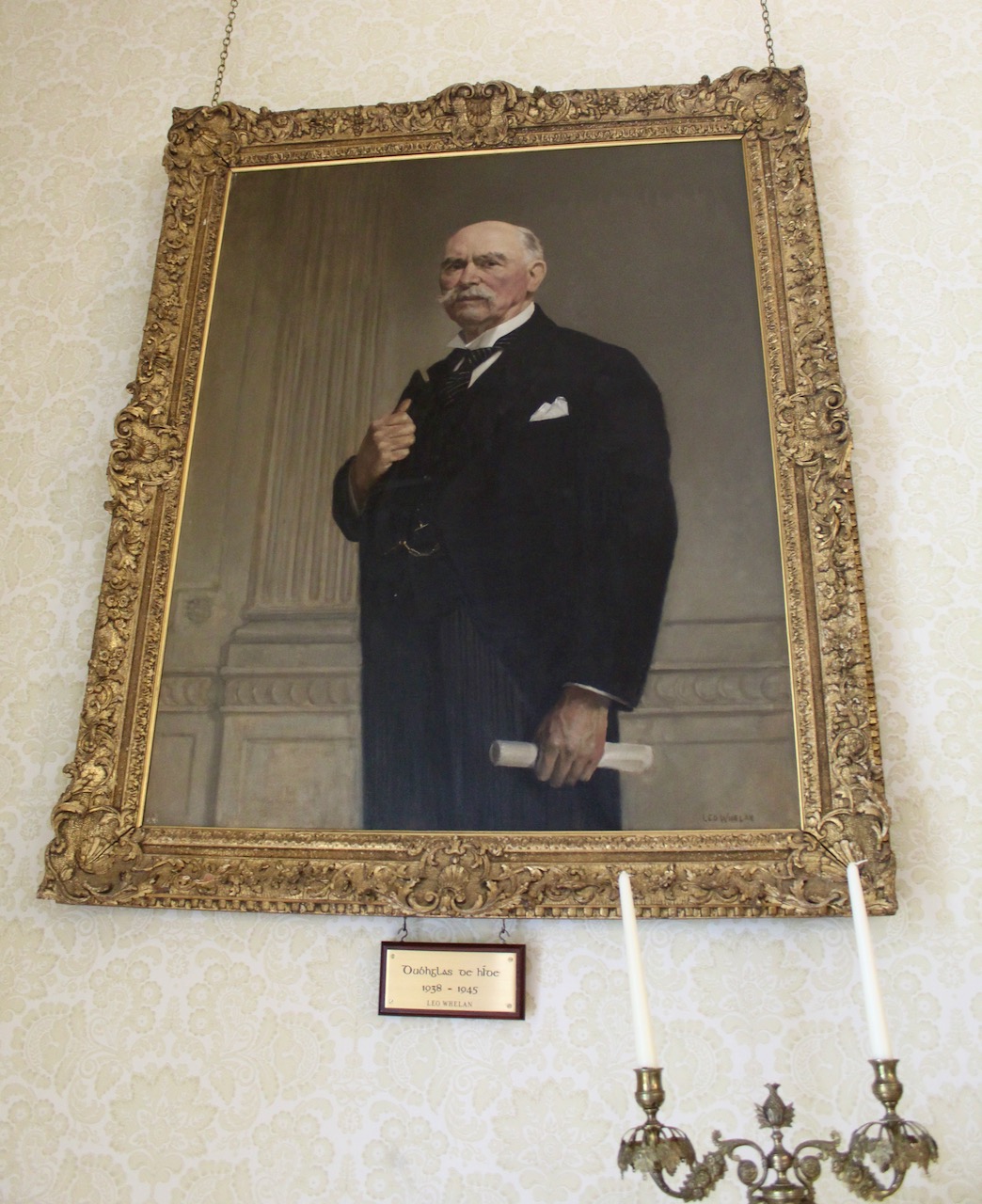
From the OPW website:
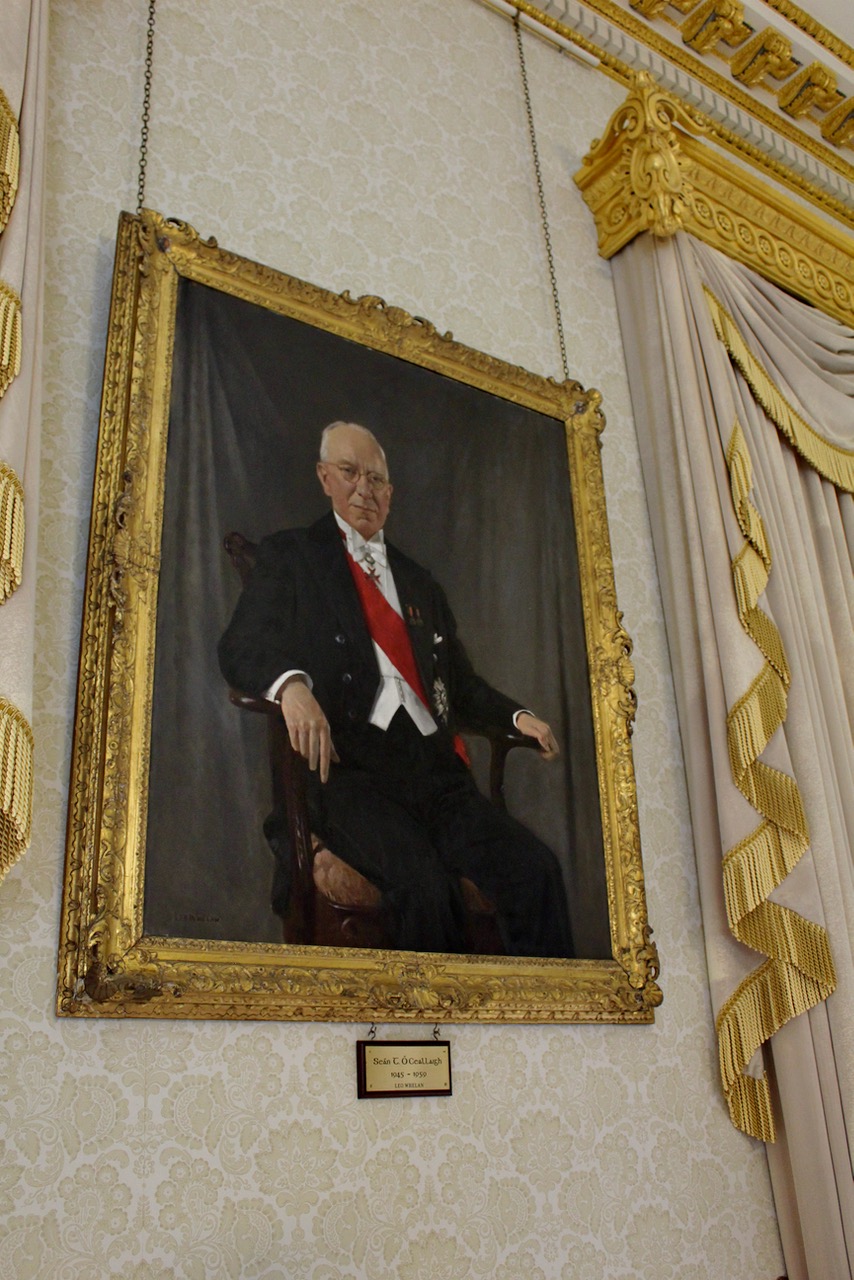
Áras an Uachtaráin started life as a modest brick house, built in 1751 for the Phoenix Park chief ranger. It was later an occasional residence for the lords lieutenant. During that period it evolved into a sizeable and elegant mansion.

It has been claimed that Irish architect James Hoban used the garden front portico as the model for the façade of the White House.

After independence, the governors general occupied the building. The first president of the Republic of Ireland, Douglas Hyde, took up residence here in 1938. It has been home to every president since then.” [1]

Phoenix Park was originally formed as a royal hunting Park in the 1660s, created by James Butler the Duke of Ormond. A large herd of fallow deer still remain to this day. Since it was a deer park it needed a park ranger. One of the park chief rangers was Nathaniel Clements (1705-1777), who was also an architect, and it was he who built the original house in 1751 which became the Aras. He was appointed as Ranger and Master of the Game by King George II in 1751. Clements was also an MP in the Irish Parliament.

Photograph from the National Library, from when the building was the Vice Regal Lodge. This is the front which faces Chesterfield Avenue. Photograph is by Robert French, and the photograph is part of the Lawrence Photographic Collection, Date: between circa. 1865-1914, NLI Ref: L_ROY_00335
The Vice-Regal Lodge (Lord Lieutenant’s Residence), Phoenix Park, Dublin After John James Barralet, Irish, 1747-1815, photograph courtesy of National Gallery of Ireland.

Clements accumulated much property including Abbotstown in Dublin, and estates in Leitrim and Cavan. In Dublin, he developed property including part of Henrietta Street, where he lived in number 7 from 1734 to 1757. For more about him, see Melanie Hayes’s wonderful book The Best Address in Town: Henrietta Street, Dublin and its First Residents, 1720-80 published by Four Courts Press in 2020. Another house he designed, which is sometimes on the Section 482 list, is Beauparc in County Meath, and another Section 482 property, Lodge Park in County Kildare. Desmond Fitzgerald also attributed Colganstown to him, a house we visited in 2019, though this is not certain. [2]

7 Henrietta Street, recently for sale, photograph courtesy of myhome.ie, built for Nathaniel Clements, who also built the house that has become Aras an Uachtarain.
Number 7 Henrietta Street, from myhome.ie. The interior retains an original double-height open-well staircase and early dog-leg closed-string service stair with original plasterwork and joinery throughout. Laid out by Luke Gardiner in the 1720s, Henrietta Street is a short cul-de-sac containing the finest early Georgian houses in the city, and was named after Henrietta Crofts, the third wife of Charles Paulet, 2nd Duke of Bolton and Lord Lieutenant in 1717-1721.

We attended a few of President Higgins’s summer parties at the Aras. These are open to the public, by booking tickets.

Aras an Uachtarain, July 2012. © Jennifer Winder-Baggot, www.irishhistorichouses.com
Aras an Uachtarain, June 2022. © Jennifer Winder-Baggot, www.irishhistorichouses.com

The Entrance Hall of the Áras dates from 1751 from the time of Nathaniel Clements, and features a magnificent barrel-vaulted ceiling with plaster busts in the ceiling coffers.

The Entrance Hall dates from 1751 and features a magnificent barrel-vaulted ceiling with plaster busts in the ceiling coffers. Photograph taken on our visit to the Aras Garden Party in June 2022. © Jennifer Winder-Baggot, www.irishhistorichouses.com
Aras an Uachtarain. © Jennifer Winder-Baggot, www.irishhistorichouses.com
Bust of President Michael D. Higgins in the Entrance Hall. © Jennifer Winder-Baggot, www.irishhistorichouses.com

The Council of State Room is part of the original 1751 house. The ceiling, installed by Nathaniel Clements in 1757, is by Bartholomew Cramillion and depicts three of Aesop’s Fables – the Fox and the Stork, the Fox and the Crow and the Fox and the Grapes.

A covered ceiling with original mid-C18 plasterwork of Aesop’s fable theme. This beautiful plasterwork is by Bartholomew Cramillion. Another ceiling by him was taken from a house which was demolished, Mespil House in Dublin, and is now in what is called the President’s Study, and depicts Jupiter presiding over the elements and the four season and dates from the late 1750s. © Jennifer Winder-Baggot, www.irishhistorichouses.com
Aras an Uachtarain. © Jennifer Winder-Baggot, www.irishhistorichouses.com
Maude Gonne, by Sarah Purser, on the right of us in our Bloomsday outfits, in the Council of State Room. On the left is Constance Markievicz, by Szankowski. © Jennifer Winder-Baggot, www.irishhistorichouses.com
The first meeting of the Council of State, January 1940. © Jennifer Winder-Baggot, www.irishhistorichouses.com

The State Drawing Room is also part of the original house and the its rich gilt ceiling dates from then. The walls are lined with green silk.

Myself and Stephen with the President Michael D. Higgins and his wife Sabina in 2012, in the State Drawing Room. © Jennifer Winder-Baggot, www.irishhistorichouses.com
The State Drawing Room. The Louis XVI couch came from the palace of Versailles during the Presidency of Eamon De Valera. © Jennifer Winder-Baggot, www.irishhistorichouses.com
The ceiling of the State Drawing Room, part of the 1751 house. © Jennifer Winder-Baggot, www.irishhistorichouses.com
Aras an Uachtarain. © Jennifer Winder-Baggot, www.irishhistorichouses.com
The State Drawing Room, June 2022. The chandelier commemorates the 1801 Act of Union with its entwined shamrocks, roses and thistles, and originally hung in Dublin Castle. The wall lights were made from a second similar chandelier. The Louis XIV couch and chairs came from the Palace of Versailles as a gift during Eamon de Valera’s Presidency. © Jennifer Winder-Baggot, www.irishhistorichouses.com
The Pianist at the Bloomsday Celebration at the Aras, June 2022, in the State Drawing Room. © Jennifer Winder-Baggot, www.irishhistorichouses.com

The administration of the British Lord Lieutenant bought the house from Nathaniel Clements’ son Robert 1st Earl of Leitrim in 1781, to be the personal residence for the Lord Lieutenant. In 1781 the Viceroy, or Lord Deputy, was Frederick Howard, 5th Earl of Carlisle. The building was rebuilt and named the Viceregal Lodge. At first it served as a summer residence, while the Viceroy stayed in Dublin Castle for the winter. The first “Lord Lieutenant” was his successor, William Henry Cavendish Bentinck, 3rd Duke of Portland.

Wife of the 1st Lord Lieutenant, Dorothy Bentinck Duchess of Portland (1750-1794), nee Cavendish, daughter of the 4th Duke of Devonshire, Vicereine of Ireland 1782, painted by George Romney. © Jennifer Winder-Baggot, www.irishhistorichouses.com

The house was extended when acquired for the Viceroys to reflect its increased ceremonial importance. Mark Bence-Jones tells us that after being bought by the government, the house was altered and enlarged at various times. David Hicks tells us in his Irish Country Houses, A Chronicle of Change that all those who were awarded the position of Lord Lieutenant were from titled backgrounds and accustomed to grand country houses in England, so they found the Viceregal Lodge to be unimpressive. The 3rd Earl of Hardwicke, Philip Yorke, was the first Lord Lieutenant after the Act of Union in 1800, in 1801-1806. Yorke supported Catholic emancipation. In 1802 Yorke employed Robert Woodgate, a Board of Works architect, to make some alterations to the house, adding new wings to the house.

Photograph from the National Library of Ireland. This is the garden side of the house. The double height pedimented portico of four gian Ionic columns was added in 1815 by architect Francis Johnston. Photograph is by Robert French, and the photograph is part of the Lawrence Photographic Collection, Date: between circa. 1865-1914, NLI Ref: L_CAB_02652.
Philip Yorke, 3rd Earl of Hardwicke, (1757-1834), Former Lord Lieutenant of Ireland Date 1836 Engraver William Giller, British, c.1805-after 1868 After Thomas Lawrence, English, 1769-1830, photograh courtesy of National Gallery of Ireland.

Additional work was carried out by Michael Stapleton – who was an architect as well as noted stuccadore – and Francis Johnston. In 1808, when Charles Lennox, 4th Duke of Richmond was Lord Lieutenant, Johnston added a Doric portico to the entrance front, and the single-storey wings were increased in height.

Aras an Uachtarain, June 2022. In 1808 Francis Johnston added a Doric portico to the entrance front. © Jennifer Winder-Baggot, www.irishhistorichouses.com
Aras an Uachtarain, June 2022. © Jennifer Winder-Baggot, www.irishhistorichouses.com
Charles Lennox, 4th Duke of Richmond, (1764-1819), Soldier and Lord Lieutenant of Ireland, had Francis Johnston work on the property. Engraver Henry Hoppner Meyer, English, 1782-1847 After John Jackson, English, 1778-1831. Photograph courtesy of National Gallery of Ireland.

In 1815, Johnston extended the garden front by five bays projecting forwards, and in the centre of this front he added the pedimented portico of four giant Ionic columns which is the house’s most familiar feature. 

In 1815, Francis Johnston added the pedimented portico of four giant Ionic columns which is the house’s most familiar feature. © Jennifer Winder-Baggot, www.irishhistorichouses.com
At the garden party, © Jennifer Winder-Baggot, www.irishhistorichouses.com

The ballroom/state reception room was also added at this time.

The former ballroom, now the State Reception Room, which features a plaster cast of a Lafrancini ceiling. Photograph taken in June 2022 at the Bloomsday Summer Garden Party. © Jennifer Winder-Baggot, www.irishhistorichouses.com

It was not until the major renovations in the 1820s that the Lodge came to be used regularly by Lord Lieutenants. In the 1820s the Lord Deputy was Richard Wellesley, 1st Marquess Wellesley, 2nd Earl of Mornington, brother of the Duke of Wellington of Waterloo fame. See my footnotes for some portraits of Vicereines and Viceroys who may have lived in the Aras.

Richard Colley Wellesley (1760-1842), 2nd Earl of Mornington and 1st Marquess Wellesley by John Philip Davis courtesy of National Portrait Gallery in London NPG 846.

Maria Phipps née Liddell, Marchioness of Normanby (1798-1882),Vicereine 1835-39, laid out the gardens along with Decimus Burton in 1839-40. Decimus Burton also designed many gardens in London including St. James’s Park, Hyde Park Corner and Regent’s Park. He was also an architect.

Maria Phipps nee Liddell, Marchioness of Normanby (1798-1882) by Sir George Hayter, Vicereine 1835-39, who laid out the gardens along with Decimus Burton. She persuaded Queen Victoria to support Irish weavers and grant them lucrative royal warrants. George Hayter was Queen Victoria’s favourite painter. © Jennifer Winder-Baggot, www.irishhistorichouses.com
The gardens of the Aras, at 2022 garden party. The main parterre forms a pair of ringed Celtic crosses, as laid out by Decimus Burton in conjunction with Maria Phipps nee Liddell, Lady Normanby, wife of the Viceroy in 1838. Decimus Burton also designed many gardens in London including St. James’s Park, Hyde Park Corner and Regent’s Park. He was also an architect. © Jennifer Winder-Baggot, www.irishhistorichouses.com
Aras an Uachtarain. © Jennifer Winder-Baggot, www.irishhistorichouses.com
At the garden party, © Jennifer Winder-Baggot, www.irishhistorichouses.com

In 1849 the east wing was added, which houses the new State Dining Room. The financing of any royal visit was a matter of concern for Lord Lieutenants as they had to finance any improvements to the Viceregal Lodge. It was during the tenure of George Villiers, 4th Earl of Clarendon (1800-1870), that Queen Victoria visited, with the idea that this would boost morale after the famine.

The State Dining Room at the Aras, July 2013. Jacob Owen, chief architect of the Board of Works, designed the dining room and matching drawing room in 1849. © Jennifer Winder-Baggot, www.irishhistorichouses.com

Jacob Owen, chief architect of the Board of Works, designed the dining room and matching drawing room in 1849.

The State Dining Room, June 2022. © Jennifer Winder-Baggot, www.irishhistorichouses.com

Queen Victoria planted a Wellingtonia Gigantea tree which is still standing (others have planted trees also, including Queen Alexandria and Barak Obama, Charles de Gaulle, John F. Kennedy, Pope John Paul II and King Juan Carlos of Spain).

Queen Victoria planted this Wellingtonia Gigantea (photograph from July 2012). © Jennifer Winder-Baggot, www.irishhistorichouses.com

In 1854 the west wing was added, also designed by Jacob Owen. Queen Victoria visited again in 1853, and at this time the Viceregal Lodge was connected to the public gas supply, in order to illuminate the reception rooms and also to provide public lighting throughout Phoenix Park.

A new part of the West Wing was added for the visit of George V in 1911, during the Lord Lieutenancy of John Campbell Hamilton-Gordon, 1st Marquess of Aberdeen and Temair.

Ishbel nee Marjoribanks Countess of Aberdeen (1857-1939), by Alphonse Jongers. Vicereine 1886 and 1905-1915, she brought about improvements in cottage industries and women’s healthcare, and was a committed advocate of Irish Home Rule. © Jennifer Winder-Baggot, www.irishhistorichouses.com

The office of Lord Lieutenant was abolished in 1922 when the Irish Free State came into being. From 1922 until 1932 it was the residence of the Governor General of the Irish Free State. In 1922 Tim Healy was sworn in as Governor General. Over the following weeks, the former Viceregal Lodge was attacked and came under heavy fire on regular occasions.

The State Dining Room contains furniture by James Hicks of Dublin. The early 19th century fireplaces were originally a gift to Archbishop Murray of Dublin in 1812 “by his flock” for his residence at 44 Mountjoy Square, and were brought to the house in 1923, upon the sale of the house in Mountjoy Square, by the first Governor General of the Irish Free State, Tim Healy.

The early 19th century fireplaces were originally a gift to Archbishop Murray of Dublin, and were brought to the house by the first Governor General, Tim Healy. © Jennifer Winder-Baggot, www.irishhistorichouses.com

In 1937 when the office of President of Ireland was established, the house became the house of the president. The first President was Douglas Hyde (President of Ireland 1938-1945).

Douglas Hyde, President of Ireland 1938-1945. © Jennifer Winder-Baggot, www.irishhistorichouses.com

During the incumbency of President Sean T. O’Kelly, in 1948, a mid-C18 plasterwork ceiling attributed to Cramillion representing Jupiter and the Four Elements, with figures half covered in clouds, was brought from Mespil House, Dublin, which was then being demolished, and installed in the President’s Study, one of the two smaller rooms in the garden front of the original house, which we did not see.

President Sean T. Kelly, term of office 1945-1959. © Jennifer Winder-Baggot, www.irishhistorichouses.com

The Mespil House ceiling was brought here at the instigation of Dr. C.P. Curran, who was also instrumental in having casts made of the plasterwork by the Francini, or Lafranchini, brothers, at Riverstown House, Co. Cork, which then seemed in danger; and which have been installed in the ballroom and in the adjoining corridor. 

The State Reception Room (formerly the ballroom) features a plaster cast of a Lafranchini panel in the ceiling. The Lafranchini brothers were 18th century Swiss stuccodores who also worked on Carton and Castletown Houses. See my entry about Riverstown House https://irishhistorichouses.com/2022/10/05/__trashed/.

One of the State Rooms in the Aras, 1984, photograph from Dublin City Library and Archives. [3] The handwoven Donegal carpet, designed for the house by Raymond McGrath, includes the riverine heads from the Custom House representing the principal rivers of Ireland, and the phoenix rising from the flames.
The plaster cast of the Lafrancini ceiling in the former ballroom. It features “Time Rescuing Truth from the Assaults of Discord and Envy.” © Jennifer Winder-Baggot, www.irishhistorichouses.com
The original Lafrancini ceiling in Riverstown House, County Cork, photograph taken on our visit to Riverstown in June 2022. © Jennifer Winder-Baggot, www.irishhistorichouses.com
Riverstown House, County Cork. The original of the plaster cast, in Riverstown House, County Cork. The owner of Riverstown House, Denis Dooley, cleaned the plasterwork himself, and discovered the castle in the top left hand corner, which is not in the cast, and which, on his visit to Riverstown, Desmond Guinness was astounded to notice! © Jennifer Winder-Baggot, www.irishhistorichouses.com

The State Corridor, also called the Lafranchini Corridor, leads from the Entrance Hall past the State Reception Room. This corridor was originally part of the orchestra pit for the adjoining ballroom. It was created as a corridor in the 1950s. One side of the corridor is lined with bronze busts of Irish Presidents mounted on marble columns and the other side features stucco panels showing classical figures. These too are casts taken from Riverstown House.

The Francini Corridor leads from the Entrance Hall past the State Reception Room. One side of the corridor is lined with bronze busts of Irish Presidents mounted on marble columns and the other side features stucco panels showing classical figures. © Jennifer Winder-Baggot, www.irishhistorichouses.com
The handwoven Donegal carpet, designed for the house by Raymond McGrath, includes the riverine heads from the Custom House representing the principal rivers of Ireland. © Jennifer Winder-Baggot, www.irishhistorichouses.com
Queuing in the Lafrancini Corridor at the June 2022 Garden Party, in order to enter the State Rooms and to meet President Michael D. Higgins and his wife Sabina. © Jennifer Winder-Baggot, www.irishhistorichouses.com
Plaster cast in the Aras. © Jennifer Winder-Baggot, www.irishhistorichouses.com
Original plaster in Riverstown House. © Jennifer Winder-Baggot, www.irishhistorichouses.com
Wall plaster cast of Francini plasterwork. © Jennifer Winder-Baggot, www.irishhistorichouses.com
Original plasterwork in Riverstown House. © Jennifer Winder-Baggot, www.irishhistorichouses.com
Riverstown, County Cork. © Jennifer Winder-Baggot, www.irishhistorichouses.com
The Francini corridor, © Jennifer Winder-Baggot, www.irishhistorichouses.com

The State corridor also has a fireplace by 18th century Italian craftsman, Bossi, whose family knew the secret of how to colour marble.

A plaster cast in the Lafrancini Corridor in the Aras, above a Bossi fireplace. © Jennifer Winder-Baggot, www.irishhistorichouses.com
The State Reception Room has a Bossi fireplace, as does the Lafranchini corridor. © Jennifer Winder-Baggot, www.irishhistorichouses.com
The Dining Room, which contains portraits of past Presidents of Ireland. © Jennifer Winder-Baggot, www.irishhistorichouses.com
Erskine Hamilton Childers, President of Ireland 1973 until 1974 when he died in office. © Jennifer Winder-Baggot, www.irishhistorichouses.com
Cearbhall Ó Dálaigh, President of Ireland from December 1974 to October 1976. © Jennifer Winder-Baggot, www.irishhistorichouses.com
Patrick Hillery, President of Ireland 1976-1990. © Jennifer Winder-Baggot, www.irishhistorichouses.com
“A breath of fresh air,” by the Keep Well Glass Quilt Project undertaken by members of the Glass Society of Ireland during the third wave of Covid with a twelve week lockdown. Fifty glassmakers made two pieces each. It is on loan to the President. © Jennifer Winder-Baggot, www.irishhistorichouses.com
Mary Robinson, President of Ireland 1990-1997. © Jennifer Winder-Baggot, www.irishhistorichouses.com

Later additions to the gardens were carried out by Ninian Niven, who designed Iveagh Gardens in Dublin. The gardens contain many Victorian features including ceremonial trees, an arboretum, wilderness, pleasure grounds, avenues, walks, ornamental lakes and a walled garden, which contains a Turner peach house and which grows the food and flowers organically.

© Jennifer Winder-Baggot, www.irishhistorichouses.com

The walled gardens at the Aras. © Jennifer Winder-Baggot, www.irishhistorichouses.com
The Peach House glasshouse was designed by Richard Turner, constructed between 1836-37. Turner also designed the large palm houses in the Botanic Gardens in Dubln, Belfast and London. The one at the Aras underwent restoration between 2007-2009. © Jennifer Winder-Baggot, www.irishhistorichouses.com
This lovely building is to one side of the main house at the Aras, I’m not sure what it is but it’s very picturesque. Photograph courtesy of Declan Murray.

[1] https://heritageireland.ie/visit/places-to-visit/aras-an-uachtarain/

Some of the Viceroys and Vicereines who lived there may include (portraits below are from the 2021 exhibition of Vicereines that took place in Dublin Castle): William Henry Cavendish-Bentinck the 3rd Duke of Portland and his wife Dorothy (Viceroy 1782), George Nugent-Temple-Grenville, 11st Marquess of Buckingham (Viceroy 1782), Charles Manners the 4th Duke of Rutland (1754-1787), Viceroy 1784-87, and his wife Mary Isabella, Charles Lennox the 4th Duke of Richmond and his wife Charlotte (Viceroy 1807-1813), Hugh Percy 3rd Duke of Northumberland and his wife Charlotte Florentia (Viceroy 1829-30), Constantine Henry Phipps 1st Marquess of Normanby and his wife Maria Phipps (Viceroy 1835-39), James Hamilton 1st Duke of Abercorn and his wife Louisa (Viceroy 1866-68 and 1874-76), Thomas de Grey, 2nd Earl de Grey, 3rd Baron Grantham, 6th Baron Lucas and his wife Henrietta Cole from Florence Court, County Fermanagh (Viceroy 1841-1844), Charles Vane-Tempest-Stewart, 6th Marquess of Londonderry and his wife Theresa (Viceroy 1886-89), John Spencer, 5th Earl Spencer (Viceroy 1868-74 and 1882-5), John Hamilton-Gordon, 1st Marquess of Aberdeen and Temair (Viceroy 1886 and 1905-1915)and Ivor Guest, 1st Viscount Wimborne (Viceroy 1915-1918).

Mary Somerset (1665-1733), Duchess of Ormond, wife of James Butler 2nd Duke of Ormond (1665-1745), painted by Michael Dahl. She publicly wore a new Irish-made dress every Monday in Dublin Castle to set a trend so that all ladies of fashion would buy Irish-made clothing. James Butler 2nd Duke became Lord Lieutenant in 1703, so they would have lived in Dublin Castle. © Jennifer Winder-Baggot, www.irishhistorichouses.com
Mary Isabella Manners nee Somerset, Duchess of Rutland, Vicereine 1784-87. © Jennifer Winder-Baggot, www.irishhistorichouses.com
Charlotte Florentia Percy nee Clive, Duchess of Northumberland (1787-1866), by Martin Cregan, Vicereine 1829-30. © Jennifer Winder-Baggot, www.irishhistorichouses.com
Lady Henrietta Cole, Lady Grantham, later Countess de Grey (1784-1848), Vicereine 1841-44, from Florence Court, Fermanagh. © Jennifer Winder-Baggot, www.irishhistorichouses.com
Louisa Hamilton nee Russell Duchess of Abercorn, by Edwin Landseer (Vicereine 1866-68 and 1874-76). © Jennifer Winder-Baggot, www.irishhistorichouses.com
Charlotte Spencer nee Seymour, Countess Spencer (1835-1903) by Sir John Leslie, Vicereine 1868-74 and 1882-5. She supported Home Rule for Ireland, putting her at odds with Queen Victoria. © Jennifer Winder-Baggot, www.irishhistorichouses.com
Theresa Susey Helen Talbot, Marchioness of Londonderry (1856-1919) by John Singer Sargent, Vicereine 1886-89. She worked to develop the craft of lacemaking in counties such as Limerick and Monaghan. © Jennifer Winder-Baggot, www.irishhistorichouses.com
This image has an empty alt attribute; its file name is img_5741.jpeg
Charles Vane-Tempest-Stewart, 6th Marquess of Londonderry, husband of Theresa Susey Helen Talbot (above). © Jennifer Winder-Baggot, www.irishhistorichouses.com
Alice Guest nee Grosvenor Viscountess Wimborne by Sir John Lavery, Vicereine 1915-18. © Jennifer Winder-Baggot, www.irishhistorichouses.com

[2] https://irishhistorichouses.com/2020/05/21/colganstown-house-hazelhatch-road-newcastle-county-dublin/

[3] https://repository.dri.ie/

Places to Visit and Stay in County Leitrim, Connaught

On the map above:

blue: places to visit that are not section 482

purple: section 482 properties

red: accommodation

yellow: less expensive accommodation for two

orange: “whole house rental” i.e. those properties that are only for large group accommodations or weddings, e.g. 10 or more people.

green: gardens to visit

grey: ruins

donation

Help me to pay the entrance fee to one of the houses on this website. This site is created purely out of love for the subject and I receive no payment so any donation is appreciated!

€15.00

Leitrim:

1. Lough Rynn Castle gardens, Mohill, Co Leitrim 

2. Manorhamilton Castle (Ruin), Castle St, Manorhamilton, Co. Leitrim – section 482

3. Parke’s Castle, County Leitrim (OPW)

Places to stay, Leitrim

1. Bush Hotel, Carrick on Shannon, Co Leitrim 

2. Lough Rynn Castle, Mohill, County Leitrim €

Leitrim:

1. Lough Rynn Castle gardens, Mohill, Co Leitrim

https://www.loughrynn.ie/

Loughrynn, photograph courtesy of hotel website.

The website tells us:

Lough Rynn Castle Hotel Estate & Gardens is one of the top luxury castle hotels to stay in. Located in County Leitrim, Lough Rynn Castle exceeds expectations as one of the most preferred hotels in Ireland.

It is the ancestral home of the Clements family and the legendary Lord Leitrim. Our magical Irish castle hotel has been transformed from an incredible ancestral home into a place where old world elegance mixes seamlessly with unimaginable modern hotel luxury.

Staying in a luxurious Castle Hotel in Ireland is a once in a lifetime experience and one that deserves to take place at a location full of history, luxury and charm. Take a step back in time as you approach imposing entrances at Lough Rynn Castle which offers acres of breathtaking scenery, historical sites and walled gardens. Our entire Irish castle hotel’s estate comprises of over 300 acres of land that is idyllic, rich in history and charmed with natural beauty. Take a romantic walk in our walled gardens overlooking our lough and come back to the castle hotel for some exquisite dining in our restaurant or drinks at the Dungeon Bar. Relax and take in the authentic Irish castle atmosphere in the Baronial Hall or in the John McGahern Library.

Lough Rynn, County Leitrim, Irish Tourist Collection National Library of Ireland ref NPA ITA 1377 (Box VII).

Mac Raghnaill family (1210 –1621)

The current Lough Rynn estate is built on the ancestral lands of Clan Maelsechlainn-Oge Mac Raghnaill, the pre-Conquest rulers of this part of County Leitrim known as Muintir Eolais. The Annals of Loch Cé and Annals of Connacht refer to “the crannóg of Claenloch” (Lough Rynn) in the High Middle Ages, 1247AD, with the structure marked on some maps as “Crannoge” or “Crane Island”, while the medieval Mac Raghnaill‘s Castle is mentioned in 1474AD.

The ruins of the Mac Raghnaill‘s Castle are located close to the lake and some 500 meters from the existing Lough Rynn Castle. The historian, Fiona Slevin, describes the structure of the Mac Raghnaill castle as “fairly standard for the time, but it did have a few unusual – and clever – features. Although a square shape, the castle had rounded corners that made it more impervious to artillery attacks and it had a straight stairway carved into the hollow of a wall, rather than the more usual spiral stair in one corner.”

The Mac Raghnaill family had played an important role in the Nine Years War on the side of Aodh Mór Ó Néill resisting the English conquest of Ireland.

Crofton family (1621–1750)

In the English Plantation of 1621, the Mac Raghnaill lands in Lough Rynn were confiscated and granted to an English family named Crofton. The Croftons brought British Protestant settlers with them and in the 1620s and 1630s the native Irish were gradually removed from the land.

In 1749, a wealthy landowner named Nathaniel Clements purchased around 10,000 acres in the Mohill area of County Leitrim. Upon doing so, his son Robert became the 1st Earl of Leitrim. On their new estate, the Clements family took up residence in a modest dwelling already on the estate. However, they had their eyes on building a far more impressive residence worthy of their name and their stature – a magnificent castle.

Clements family (1750–1978)

“In 1750 the Croftons were replaced by another English family named the Clements. Daniel Clements, an officer in Oliver Cromwell‘s army, had been granted land in County Cavan which had been confiscated from the Irish following the Cromwellian conquest of Ireland. In 1750 Nathaniel Clements acquired the Lough Rynn estate, while remaining on his lands in Cavan. Nevertheless, the Clements started to become more involved in political life in Leitrim with Robert Clements becoming sheriff for the county in 1759. In 1795 Robert Clements became the first Earl of Leitrim. In 1833, Robert Bermingham [Clements (1805-1839)], Viscount Clements [grandson of the 1st Earl of Leitrim], built a mock Tudor revival house overlooking Lough Rynn. It is this property which is the basis for the current Lough Rynn Castle.

Robert Clements, later First Earl of Leitrim, by Pompeo Batoni, about 1753–1754, Hood Museum of Art.

By the start of the 19th century, work had begun on the Clements family’s new home under the watchful eyes of the Earl. Sometime in 1839, Robert Clements died both suddenly and young, which passed the management of the estate to his brother William Sydney Clements. Although Sydney worked with his brother managing the build of Lough Rynn, as a second son, he never expected to inherit the lands or titles. However, in 1854, that’s exactly what he did, taking full ownership of the estate on the death of his father, thus becoming the 3rd Earl of Leitrim or Lord Leitrim as he preferred.

Robert Clements (1732-1804) 1st Earl of Leitrim by Gilbert Stuart courtesy of Christie’s Irish Sale 2001.

Upon Robert’s death in 1839, management of Lough Rynn estate passed to his brother, William Sydney Clements [(1806-1879) 3rd Earl of Leitrim]. In 1854, when their father Nathaniel Clements, 2nd Earl of Leitrim, died William Sydney Clements became the 3rd Earl of Leitrim. He inherited an estate of a massive 90,000 acres which stretched across four counties. From around this time Sydney Clements asserted his control over the estate in an authoritarian manner which won him many opponents among the tenantry. He was unpopular in the locality and in Ireland, his assassination received widespread publicity in Ireland and abroad, with proponents of land reform using it as evidence of the need to protect tenants from the abuses of tyrannical landlords. His funeral in Dublin was marked by further riots, while none of the three assassins were convicted of his death.

The inheritor of the Lough Rynn estate was Sydney Clements’ English-educated cousin who lived in Cavan, Colonel Henry Theophilus Clements [1820-1904], rather than the heir presumptive to the title who lived in England. This Colonel Clements embarked on an extensive expansion and refurbishment of the castle. He added a new wing, built a Baronial Hall designed by Thomas Drew with heavy plaster cornices, a large ornate Inglenook fireplace, and a fretted ceiling and walls wainscoted in solid English oak. Upon its completion in 1889, the principal floor of the house contained a main hall, Baronial Hall, chapel, reception room, living room and dining room. Two pantries, a kitchen, study, smokehouse and store were accessed by a separate entrance. In the basement there were stores and a wine cellar. There were fourteen bedrooms and four bathrooms upstairs.

By 1952, when Marcus Clements took over the Lough Rynn estate, most of it had been sold off to former tenants under the land acts of the late nineteenth and early twentieth centuries. Clements lived there until the 1970’s. The estate remained largely empty until 1990 when it was purchased by an Irish-American investor, for a short time it was open to visitors but it was still in need of more investment and care.

Hanly Family (2001- Present)

In 2001 Lough Rynn estate was purchased by the current owners, the Hanly family. They invested substantially in the castle and the grounds. In September 2006 when Lough Rynn Castle finally opened as a hotel, the estate extended to three hundred acres. Local father and son Alan and Albert Hanly purchased the castle and grounds. Over the seven years that followed, they lovingly brought it back to its former glory, so that it’s magic, luxury and history could be embraced.

A secluded location, standard-setting craftsmanship, breathtaking views and the perfect blend of old-world elegance and new-world luxury, has turned Lough Rynn Castle into a truly magical destination.

2. Manorhamilton Castle (Ruin), Castle St, Manorhamilton, Co. Leitrim – section 482

www.manorhamilton.ie

Open dates in 2026: Mar 16-29, Apr 13-26, May 4-31, June 2-12, Aug 15-23, 9am-1pm

Fee: adult €5, child/OAP/student free

Manorhamilton Castle. Photograph © Jennifer Winder-Baggot, www.irishhistorichouses.com

See my entry https://irishhistorichouses.com/2025/02/20/manorhamilton-castle-castle-st-manorhamilton-co-leitrim/

3. Parke’s Castle, County Leitrim (OPW)

see my OPW entry: https://irishhistorichouses.com/2022/10/31/office-of-public-works-properties-in-connaught-counties-leitrim-mayo-roscommon-and-sligo/

Parkes Castle, County Leitrim. Photograph © Jennifer Winder-Baggot, www.irishhistorichouses.com

Places to stay, Leitrim

1. Bush Hotel, Carrick on Shannon, Co Leitrim

https://www.bushhotel.com/

Our charming award-winning boutique heritage hotel is in the centre of Carrick on Shannon, County Leitrim.”

The website tells us of its history:

Since the late Eighteenth Century the simple bush that grew outside the local inn has been the symbol of a unique and historic establishment. Now in its fourth century, the Bush Hotel has maintained the Irish tradition of the Teach Aiochta, the ‘house of hospitality’ in all the changing circumstances of the passing years.

The early Eighteenth Century was a totally different world to present-day Ireland. An increasingly large rural population in Counties Leitrim and Roscommon lived in great poverty and dreadful housing.  They were mostly Irish speaking, illiterate and dependant on the potato as their main source of food.  There was a small middle class of larger farmers, merchants and lower clergy.  A tiny but powerful upper class was made up of landlords, their agents, government officials and Established Church Clergy.

Early in the life-time of the Bush Hotel, in 1798, in a bloody aftermath of that year’s Rebellion, 200 captured rebels were brought to Carrick on Shannon, and following a ‘lottery of death’ 17 were hanged in the town centre.  The following years were marked by periodic famine, outbreaks of cholera and typhus, and rural unrest in reaction to land scarcity and rack-renting.  The grievances of the rural poor found expression in secret agrarian societies like The Ribbonmen, who used terror and even death to achieve their ends.  These subversives feature in Anthony Trollop’s first novel, The McDermotts of Ballycloran, set in Leitrim in that era.

The Bush Hotel, complete with rush-covered floors, is the scene of some of the action in the book.The greatest National leader of this era was Daniel O’Connell, who visited Carrick on Shannon in 1828. He led the successful campaign for Catholic Emancipation and the unsuccessful one for Repeal of the Act of Union.

The greatest tragedy in Irish history was the Great Famine 1845- 1850. Caused by the failure of the potato crop and the inadequate steps taken by the British government to deal with the resulting starvation, it marked a turning point in Ireland. One million died: another million left the country, starting a stream of emigration that lasted till recent decades.

The Famine Memorial Graveyard at St Patrick’s Hospital is a permanent local reminder of that terrible time and is within 10 minutes walk of the Bush Hotel.

As the country slowly recovered in the wake of the Famine, an increasing middle class emerged.  Towns like Carrick on Shannon took on a new more prosperous appearance as the second half of the Century moved on.  The humble way-side inn became a fine hotel, one of the larger buildings in the town centre, along with the banks, the larger shops and new Catholic Church, across from the Bush Hotel.  The extension of the railway from Longford to Sligo in 1862 provided Carrick on Shannon with its own railway station, a major economic boost.

During this tour of Roscommon, Leitrim and Cavan in the early 1860’s the Fenian leader, Jeremiah O’Donovan Rossa, stayed in the Bush Hotel.  His mission was to convert the agrarian Ribbonmen to the more nationalist and republican Fenianism.

An important Irish leader who stated in the Bush Hotel in the 1880’s was Charles Steward Parnell, the ‘Uncrowned King of Ireland’. Along with Michael Davitt he addressed a huge Land League meeting in Carrick on Shannon.  At this time the Catholic Parish Priests of County Leitrim, wishing to assert the political influence they held since the time of Daniel O’Connell, met in the Bush to nominate their own candidate during a general election.

At the end of Parnell’s career, the Irish Home Rule Party Split into two factions over his leadership.  A public meeting of the Anti-Parnellites, outside the Bush Hotel was attacked and disrupted by Parnellites from Drumshanbo, and had to withdraw behind the railings and gates of St Mary’s Church.

The arrival of the Marist Sisters in 1873 and the Presentation Brothers in 1894 enhanced Carrick on Shannon as a centre of education for over a century.

Two matters of interest in the story of the Bush Hotel are remembered from the Nineteenth century.  The first was a tragic accident, when a male guest, who had a wooden leg, over-balanced and fell down the stairs, sustaining fatal injuries.  The other was a ghostly presence in the attic, which may have been fact or phantom!In 1898, The Local Government Act replaced the old Grand Jury with the more Democratic Leitrim County Council.

The meetings of the Council, the sessions of the Courts, and the business of commercial travellers all brought additional trade to the Hotel.  Despite emigration the town still catered for a large rural population.  Agriculture was modernising, the setting up of the local Kiltoghert Co-operative Creamery being a good example. Emigrants’ remittances from America helped the local economy.

The coming of the Twentieth century was a time of great hope and expectation.  It was marked for the Bush Hotel by the building in 1902 of the present three-story structure facing on to Main St., as the business continued to expand.

The coming of the motor car brought a new dimension to travel and the Bush Hotel was a popular stop on the Dublin-Sligo Road.

Early events in the new century were the expectation of Home Rule, the setting up of the Ulster and National Volunteers, the First World War, the 1916 Rising, all with local repercussions.

In August 1917 a then little known visitor arrived at the Bush Hotel. He had come to organise the Sinn Fein Party in Carrick on Shannon, Drumlion and Gowel.  His name was Michael Collins, who soon became the heroic leader in the War of Independence (1919-21) and a victim of the Civil War (1922-23).

Other events were the setting up of the Irish Free State 1922, the replacement of the Royal Irish Constabulary by An Garda Siochana, and important bye-election in 1925 when Sam Holt, Carrick on Shannon’s only T.D. was elected.

The period 1939-45 was a difficult time for business because of war-time scarcity, but the country maintained its neutrality and was spared the horrors of the Second World War.  In the 1950’s Carrick on Shannon developed as a centre for angling tourism. Later the establishment of the Local Marina made Carrick on Shannon a leading centre for river cruising. These developments helped to make tourism a major part of the local economy.

The building of the riverside service road gave a new access to the Bush Hotel property and enabled major expansion, which includes the Orchard Conference Centre and spacious car parks.

In 1997, because of her family ties with the Carrick on Shannon area Mary McAleese chose the Bush Hotel to Launch her successful campaign for President of Ireland – Uachtaran na hEireann.

The Hotel was demolished and rebuilt in 1920. Throughout the Twentieth Century the Bush Hotel, County Leitrim has continued to be a major centre of social and commercial life in Carrick on Shannon.

Hotel was acquired by the Dolan Family in 1992 after 3 years closure and following a complete refurbishment  opened in 1993 with 11 employees (8 of whom are still with us and two sadly are deceased). 

Dolan Family decided to move on and since April of 2022 the Hotel is recently operated by an Irish Firm called Hotels Properties with great Portfolio of Hotels across Ireland and the UK.” 

2. Lough Rynn Castle, Mohill, County Leitrim

See above in places to visit.

https://www.loughrynn.ie/

and self-catering cottages https://www.loughrynn.ie/self-catering/

Text © Jennifer Winder-Baggot, www.irishhistorichouses.com