Places to visit and stay in County Wexford

On the map above:

blue: places to visit that are not section 482

purple: section 482 properties

red: accommodation

yellow: less expensive accommodation for two

orange: “whole house rental” i.e. those properties that are only for large group accommodations or weddings, e.g. 10 or more people.

green: gardens to visit

grey: ruins

As well as places to visit, I have listed separately places to stay, because some of them are worth visiting – you may be able to visit for afternoon tea or a meal.

For places to stay, I have made a rough estimate of prices at time of publication:

€ = up to approximately €150 per night for two people sharing (in yellow on map);

€€ – up to approx €250 per night for two;

€€€ – over €250 per night for two.

2025 Diary of Irish Historic Houses (section 482 properties)

To purchase an A5 size 2025 Diary of Historic Houses (opening times and days are not listed so the calendar is for use for recording appointments and not as a reference for opening times) send your postal address to jennifer.baggot@gmail.com along with €20 via this payment button. The calendar of 84 pages includes space for writing your appointments as well as photographs of the historic houses. The price includes postage within Ireland. Postage to U.S. is a further €10 for the A5 size calendar, so I would appreciate a donation toward the postage – you can click on the donation link.

€20.00

donation

Help me to pay the entrance fee to one of the houses on this website. This site is created purely out of love for the subject and I receive no payment so any donation is appreciated!

€15.00

Wexford:

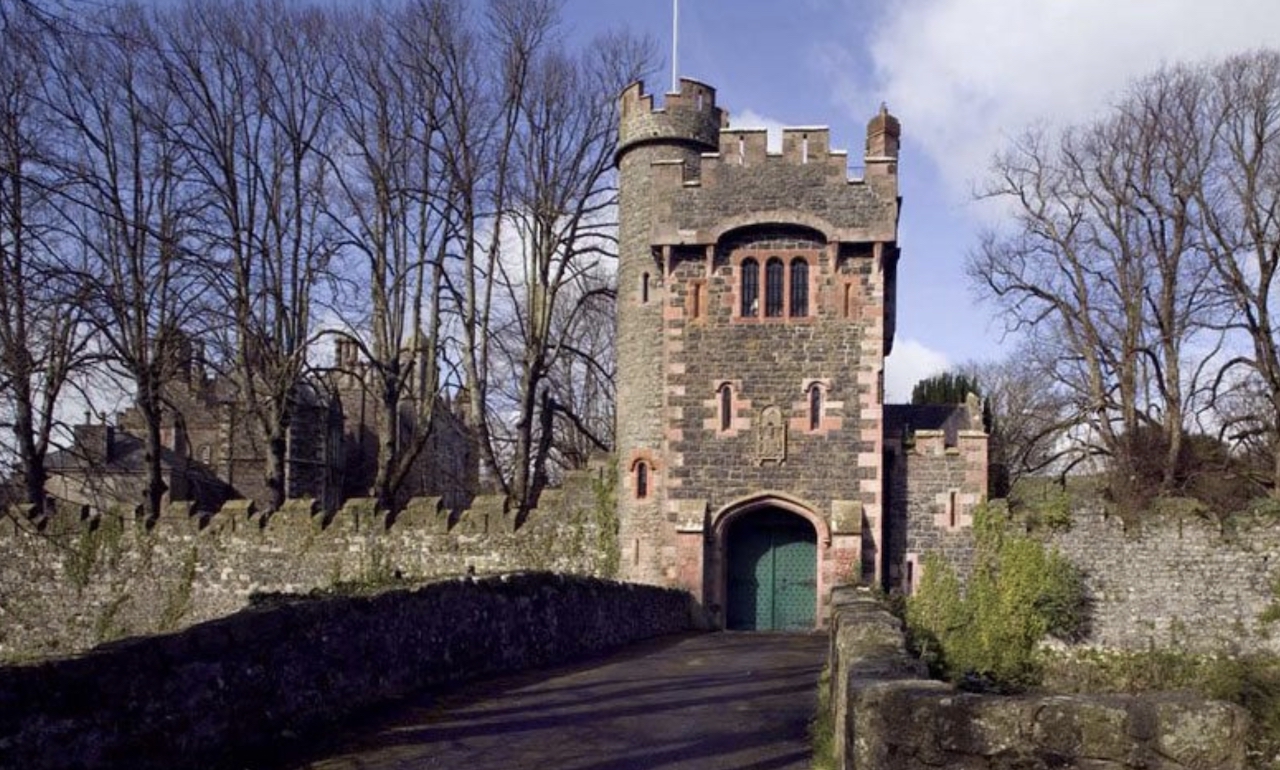
1. Ballyhack Castle, Co. Wexford – open to public OPW

2. Ballymore, Camolin, Co Wexford – museum 

3. Berkeley Forest House, County Wexford

4. Clougheast Cottage, Carne, Co. Wexford – section 482

5. Enniscorthy Castle, County Wexford

6. Ferns Castle, Wexford – open to public, OPW

7. Johnstown Castle, County Wexford maintained by the Irish Heritage Trust

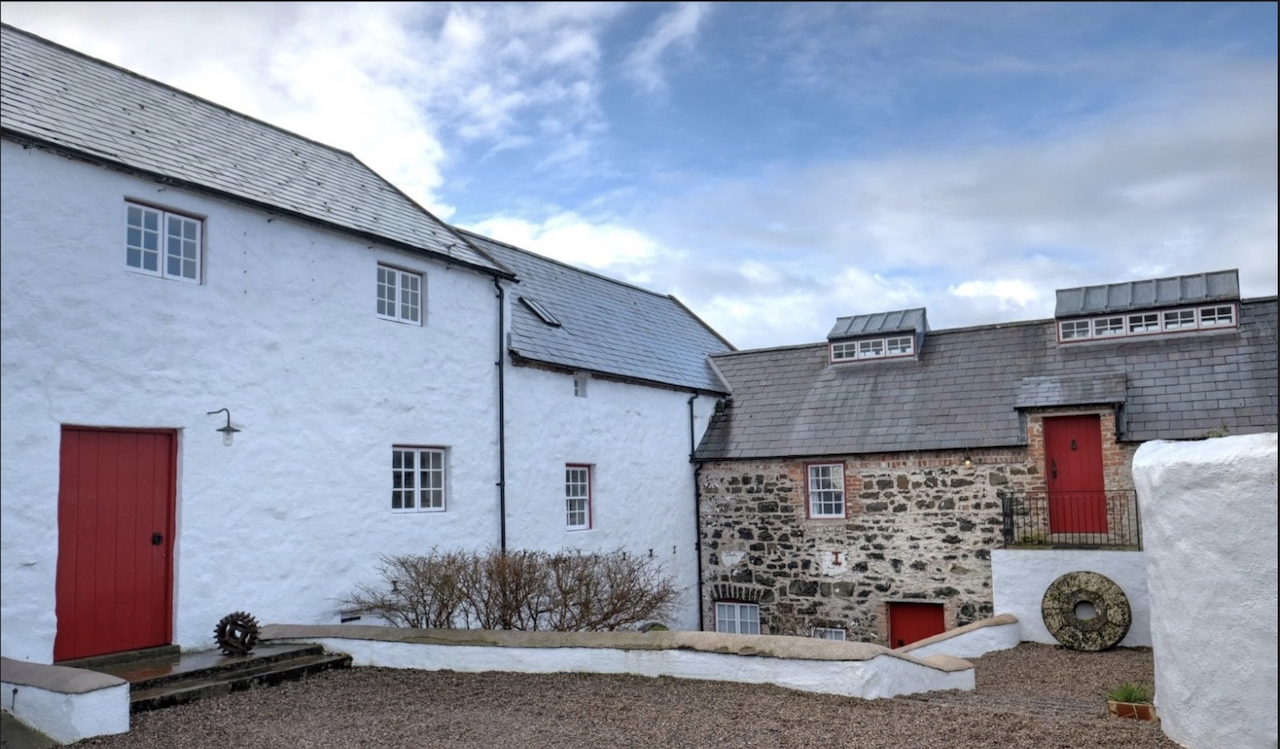
8. Kilcarbry Mill Engine House, Sweetfarm, Enniscorthy, Co Wexford – section 482

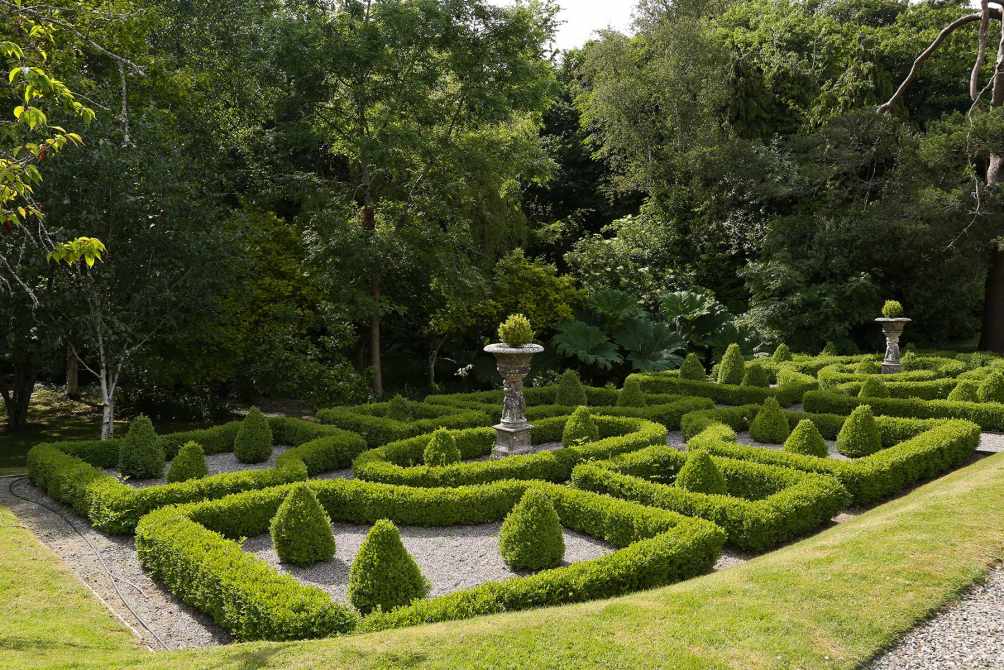
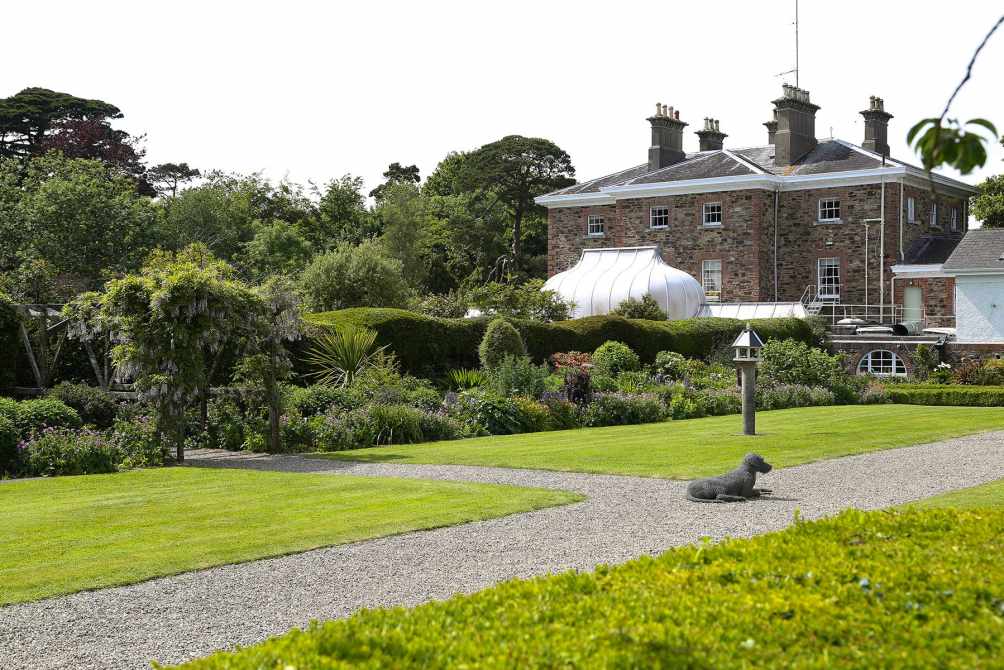
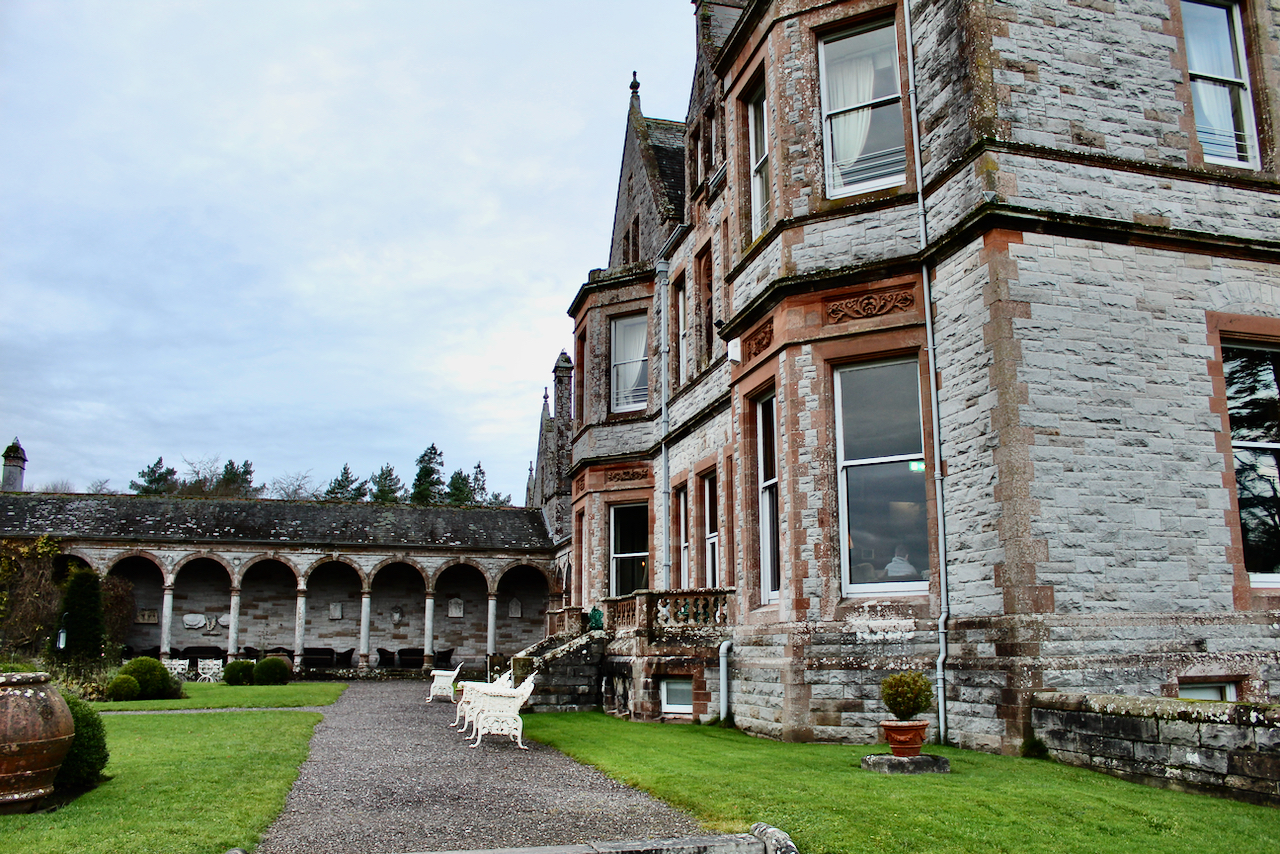
9. Kilmokea Country Manor & Gardens, Great Island, Campile, New Ross, Co. Wexford – section 482, gardens open

10. Newtownbarry House, Wexford

11. Sigginstown Castle, Sigginstown, Tacumshane, Co. Wexford – section 482

12. Tintern Abbey, Ballycullane, County Wexford – concessionary entrance to IGS members, OPW

13. Wells House, County Wexford

14. Woodville House, New Ross, Co. Wexford – section 482

Places to Stay, County Wexford

1. Artramon House, Castlebridge, Co Wexford – B&B 

2. Ballytrent House, Broadway, Co Wexford

3. Bellfry at Old Boley, County Wexford

4. Butlerstown Castle, Tomhaggard, Co Wexford – A ruin, coach house accommodation  

5. Clonganny House, Wexford – accommodation 

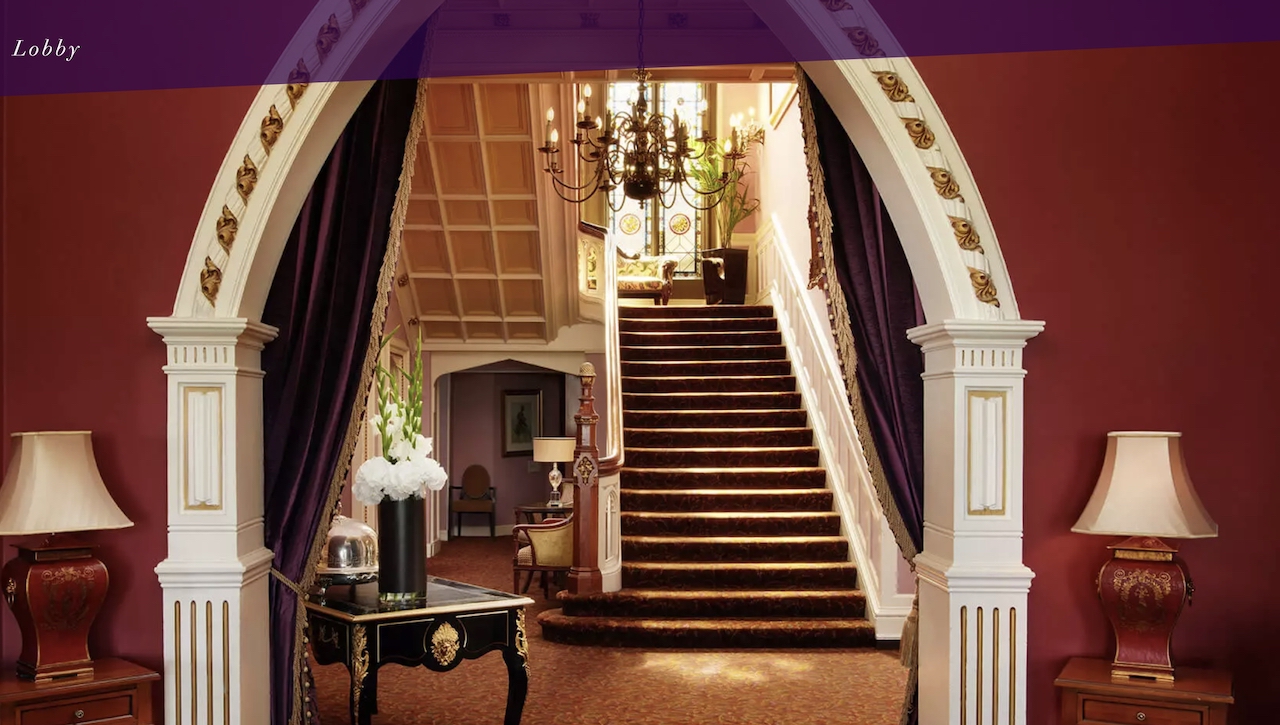
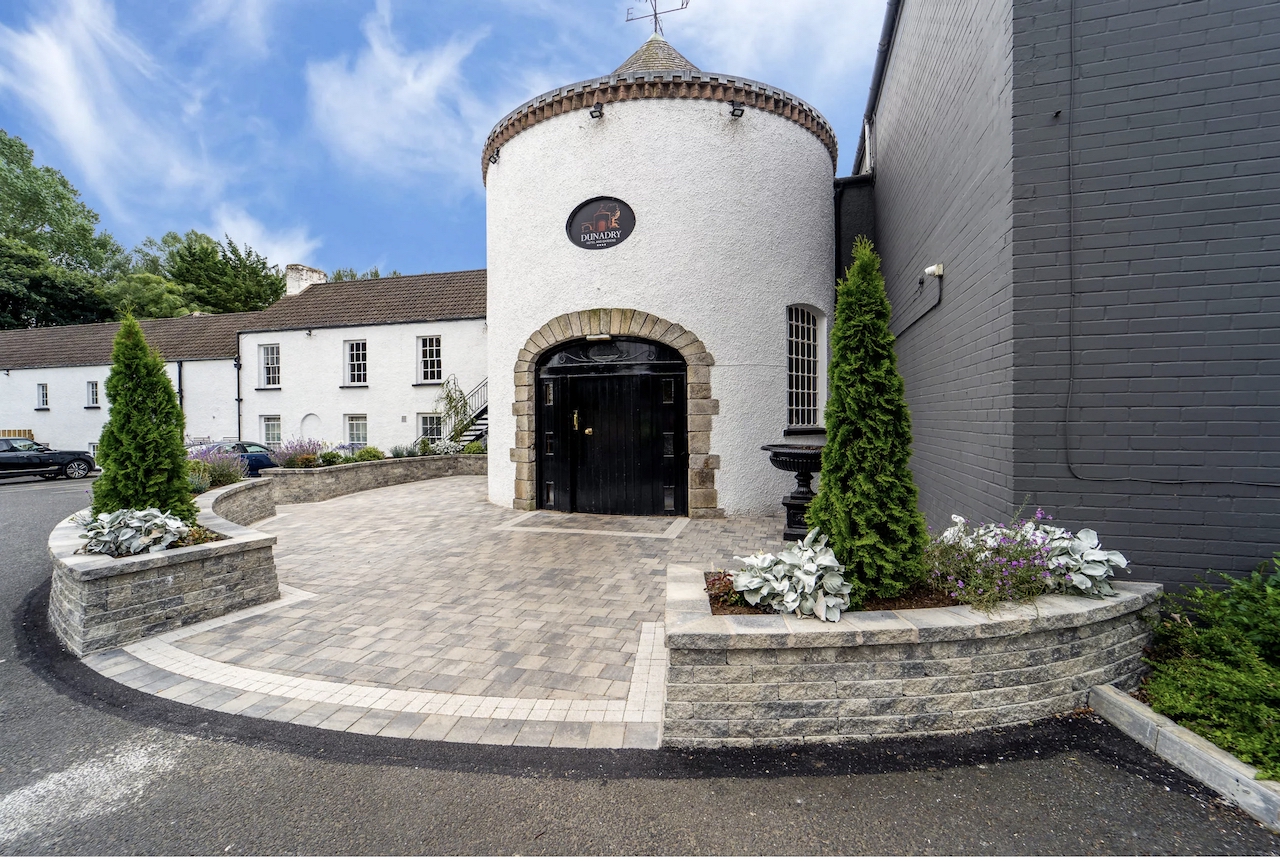
6. Dunbrody Park, Arthurstown, County Wexford – accommodation

7. Fruit Hill Cottages, Fruit Hill House, Campile, New Ross, County Wexford

8. Glendine House hotel, New Ross, County Wexford 

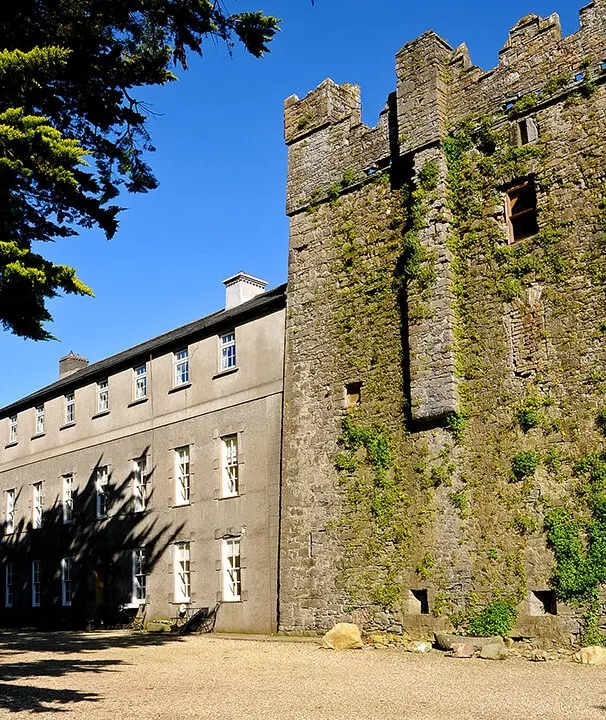
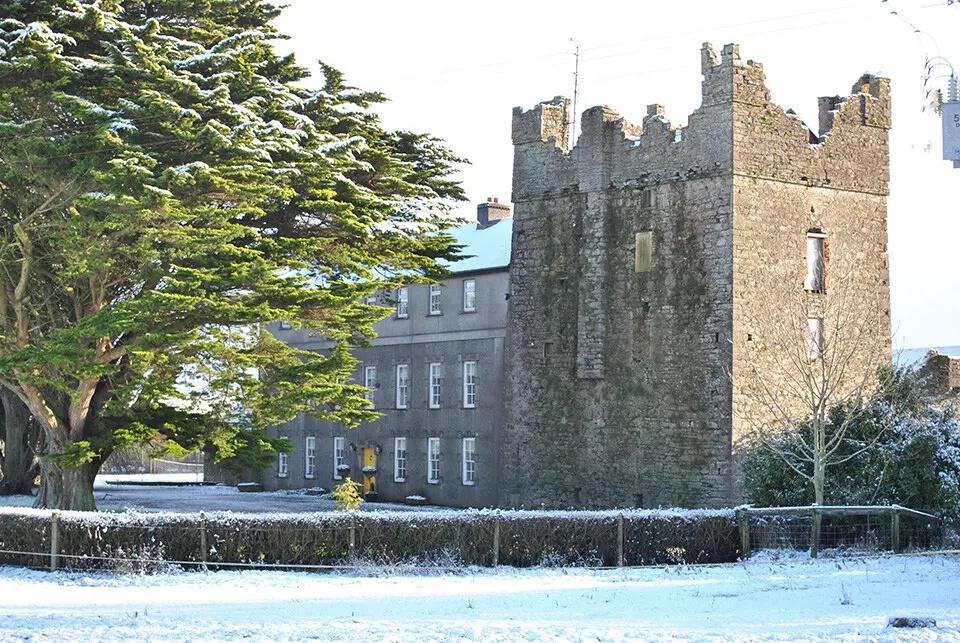
9. Killiane Castle, County Wexford

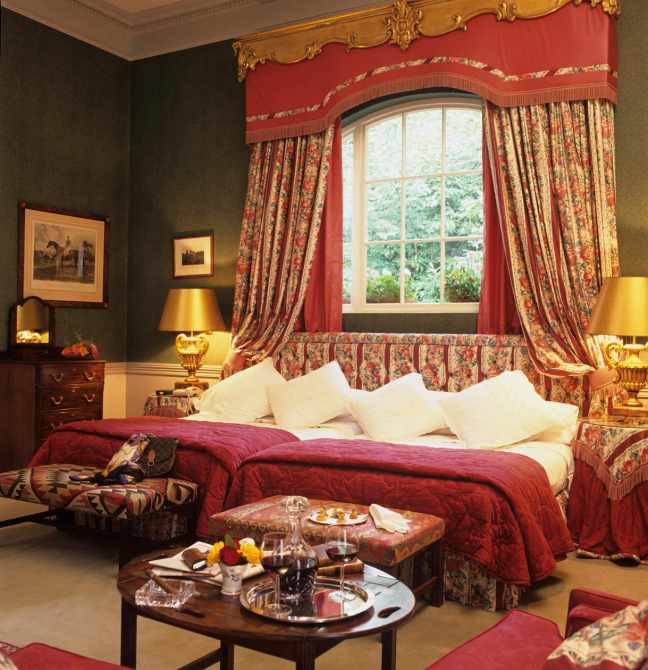
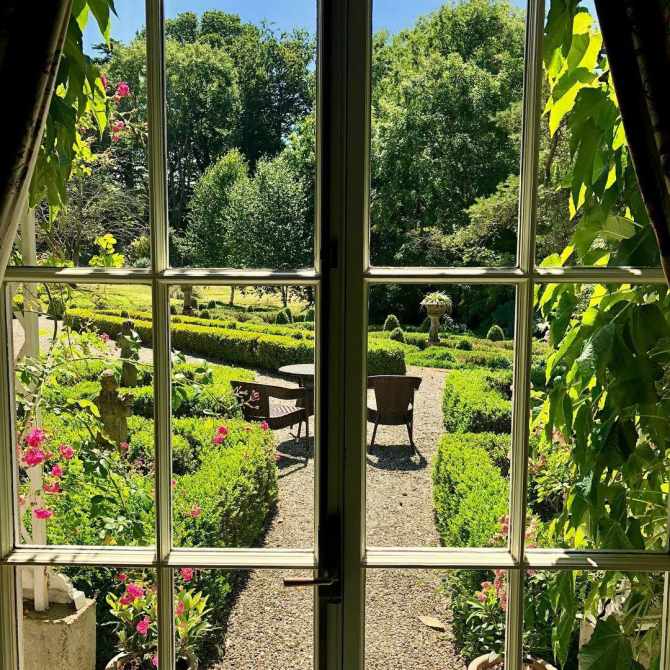
10. Kilmokea Country Manor & Gardens, Kilmokea, Great Island, Campile, New Ross, Co. Wexford  – accommodation 

11. Marlfield, Gorey, Co Wexford – accommodation 

12. Monart, Enniscorthy, Co Wexford – 5* hotel 

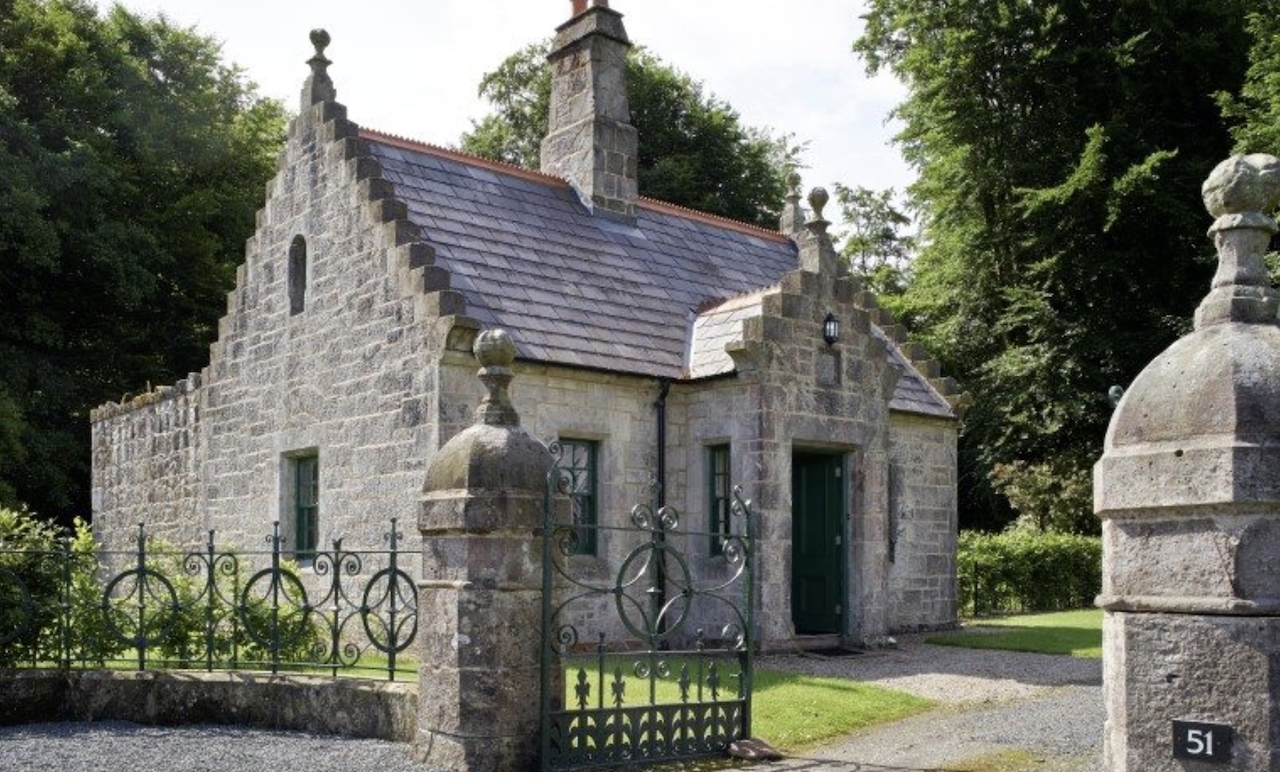
13. The Gate Lodge, Mount Congreve

14. Rathaspeck Manor “doll’s house” gate lodge, County Wexford and the Manor B&B

15. Riverbank House Hotel, The Bridge, Wexford, Ireland Y35 AH33

16. Rosegarland House, Wellingtonbridge, County Wexford – accommodation 

17. Wells House, County Wexford – self catering cottages

18. Wilton castle, Enniscorthy, Co Wexford

19. Woodbrook, Killane, Co Wexford

20. Woodlands Country House, Killinierin, County Wexford B&B

21. Woodville House, New Ross, Co Wexford

Whole House rental County Wexford:

1. Ballinkeele, County Wexford – whole house rental (sleeps up to 19 people)

2. Horetown House, County Wexford – whole house rental (wedding venue, up to 24 people in house, plus shepherd’s huts)

Places to visit in County Wexford:

1. Ballyhack Castle, Co. Wexford – open to public OPW

see my OPW write-up https://irishhistorichouses.com/2022/02/07/office-of-public-works-properties-leinster-laois-longford-louth-meath-offaly-westmeath-wexford-wicklow/

2. Ballymore, Camolin, Co Wexford – museum 

http://www.ballymorehistoricfeatures.com

The website tells us:

Ballymore is an old family property located away from main routes in a particularly scenic part of North Wexford. It retains many features which have survived from past periods of occupation in an attractive setting of mature trees, ordered landscape and views of the surrounding countryside.

It is a country house erected by Richard Donovan (1697-1763). The National Inventory tells us it is:

an estate having long-standing connections with the Donovan family including Richard Donovan (1752-1816); Richard Donovan (1781-1849) ‘of Ballymore’ (cf. 15612001); Richard Donovan (1819-84) ‘late of Ballymore Camolin County Wexford’ (Calendars of Wills and Administrations 1885, 217); Richard Donovan JP DL (1858-1916), ‘Gentleman late of Ballymore County Wexford’ (Calendars of Wills and Administrations 1916, 172); Richard Charlie Donovan (1898-1952); and Richard Alexander Donovan (1927-2005).

Ballymore, photograph courtesy of National Inventory of Architectural Heritage. The house itself is not open to the public. The house was built in 1721.

A large scale map indicates the route visitors are requested to follow. This route allows a leisurely ramble around several interesting features including the tea room, the museum, art gallery and display of old farming equipment in part of the farmyard. The residence itself is private and not open to the public.

In the surrounding grounds you will find the church and ancient graveyard, holy well, former site of a 1798 rebel camp and the 14th century Norman castle ruins, which now is a simple labyrinth.

The present church was built in 1869 on the site of a medieval building, of which nothing now survives except a carved wooden door lintel which can be seen at the museum.

The holy well is covered completely by a large boulder. This was done some centuries ago to discourage its continued use for prayer and devotion.

Ballymore, photograph courtesy of National Inventory of Architectural Heritage.

The castle mound is all that remains of the 14th century motte built by Norman settlers. The ruins of the stone-built tower were pulled down in the 19th century.

The large reconstructed greenhouse is the setting for the tea room. Its design copies the original greenhouse built around 1820, along with the walled garden behind it.

The museum and display area open out from the small courtyard. The museum itself is in a large converted hayloft in a period farmyard building. The contents of the museum are from the family home and farmyard. They illustrate many different aspects of earlier occupation and activity. Another feature is the old water wheel now on display in the same farm building.

The old dairy room will take you back in time. It adjoins the 1798 Room, containing a display of items from this period and from the house and family records. The further display area includes pieces of older farm equipment and hand tools used when the horse was the only source of motive power.

Ballymore, photograph courtesy of National Inventory of Architectural Heritage – the house is not open to the public.

The art gallery is located below the museum in what was the farm stables. It displays a selection of paintings and drawings of local scenes and activities by the much admired artist Phoebe Donovan.

Take one of our exclusive tours, which encompasses many features including the museum of local and family history spanning over 300 years, dairy and farming display, 1798 memorabilia room and the Phoebe Donovan art gallery.

Venture out into the surrounding grounds and you will find the ruins of a Norman castle dating back to the 14th century, Ballymore Church and graveyard (1869), and a former 1798 rebel camp site. You may even spot a buzzard or some of the other varied wildlife in the area.

Finally, relax and enjoy a beverage in our greenhouse tea room. Ballymore Historic Features is also part of the Wexford Heritage Trail.”

3. Berkeley Forest House, County Wexford

http://berkeleyforesthouse.com
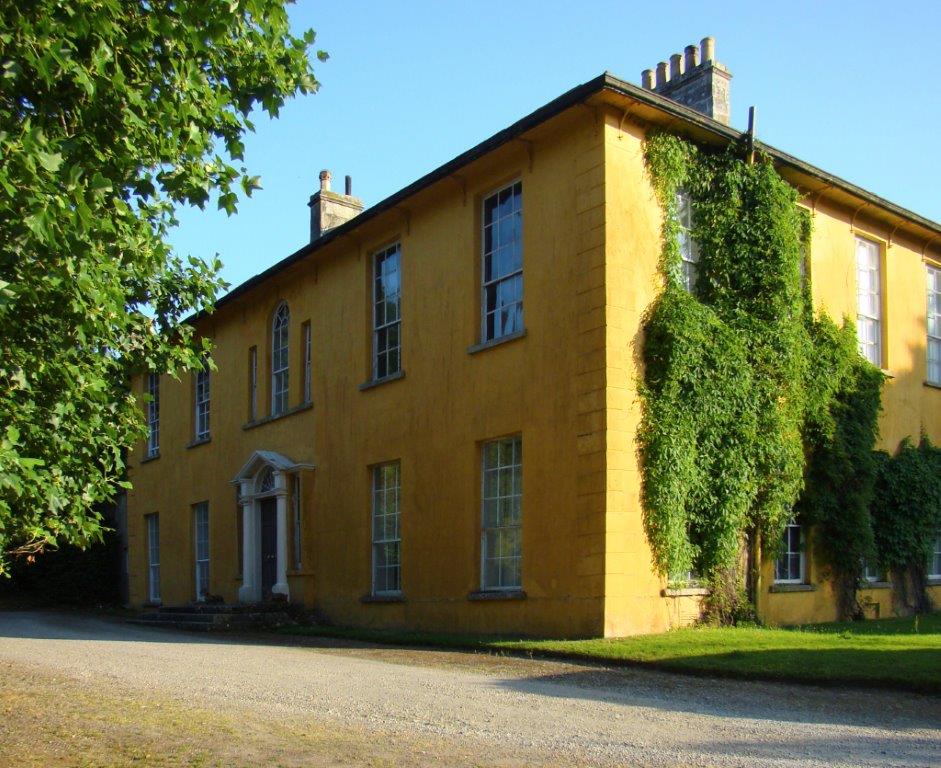
Berkeley Forest House, photograph courtesy of the house’s website.

This website tells us:

Berkeley Forest is unusual as a period house as it has a bright and uncluttered look with a strong Scandinavian flavour -painted floors, hand stencilled wallpaper and bedcoverings designed by artist Ann Griffin-Bernstorff who lives and works here during part of the year.

The house offers a beguiling experience. With a beautiful faded brick walled garden with a terrace, summer house and an outdoor fireplace, it is a delight throughout the day.

In easy reach of the Wexford beaches to the South and East and the picturesque villages of Inistioge, Thomastown and Graiguenamanagh, the cities of Kilkenny (Medieval) and Waterford (Viking) are also nearby. Just off the N30, less than 2 hours from Dublin Airport, 45 mins from Kilkenny, 20 mins from Wexford or Waterford, the house is perfectly situated to visit a host of interesting historical, cultural or sporting amenities, or to hide away in complete peace and quiet.

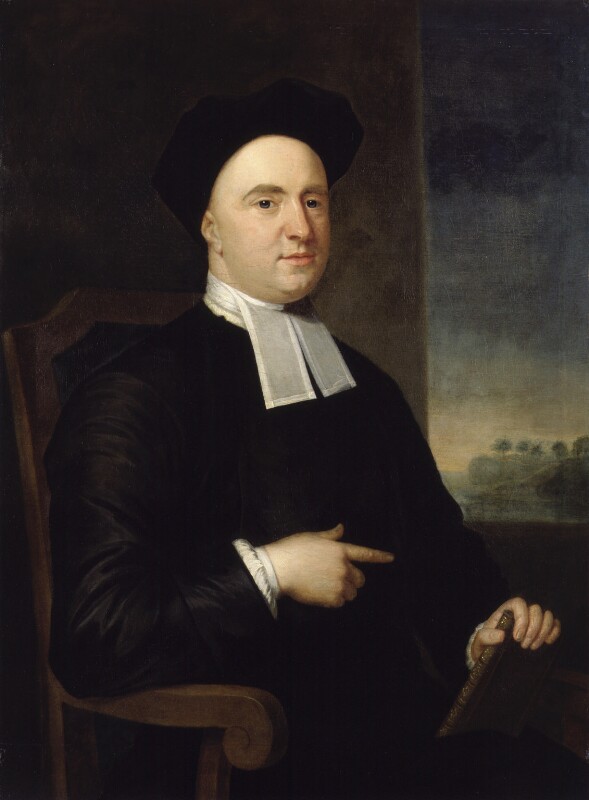
The house was once the home of the family of 18th century philosopher George Berkeley.
It also houses a 19th Costume museum which was created by Ann Griffin-Bernstorff and is available to costume and fashion students on request (her original 18th century Costume Collection is now to be seen at Rathfarnham Castle in Dublin) She is also the designer of the internationally acclaimed Ros Tapestry.

Berkeley Forest House, photograph courtesy of the house’s website.

The property consists of the main house, lawns and gardens; beyond that are pasture and woodland, some mature, some more recently planted; as well as original farm buildings. All of which ideal for exploring and wandering. There is a beautifully proportioned upper drawing room (28ftx18ft) which is suitable for music rehearsal, fine dining and specialist conferences.”

Berkeley Forest House, photograph courtesy of the house’s website.
George Berkeley (1685-1753), Philosopher; Bishop of Cloyne, by John Smibert 1730 courtesy of National Portrait Gallery NPG 653.

4. Clougheast Cottage, Carne, Co. Wexford – section 482

Jacinta Denieffe Tel: 086-1234322

Open dates in 2025: Jan 12-31, May 1-31, August 16-24, 9am-1pm

Fee: adult €5, child/OAP/student €2.50

5. Enniscorthy Castle, County Wexford

http://enniscorthycastle.ie

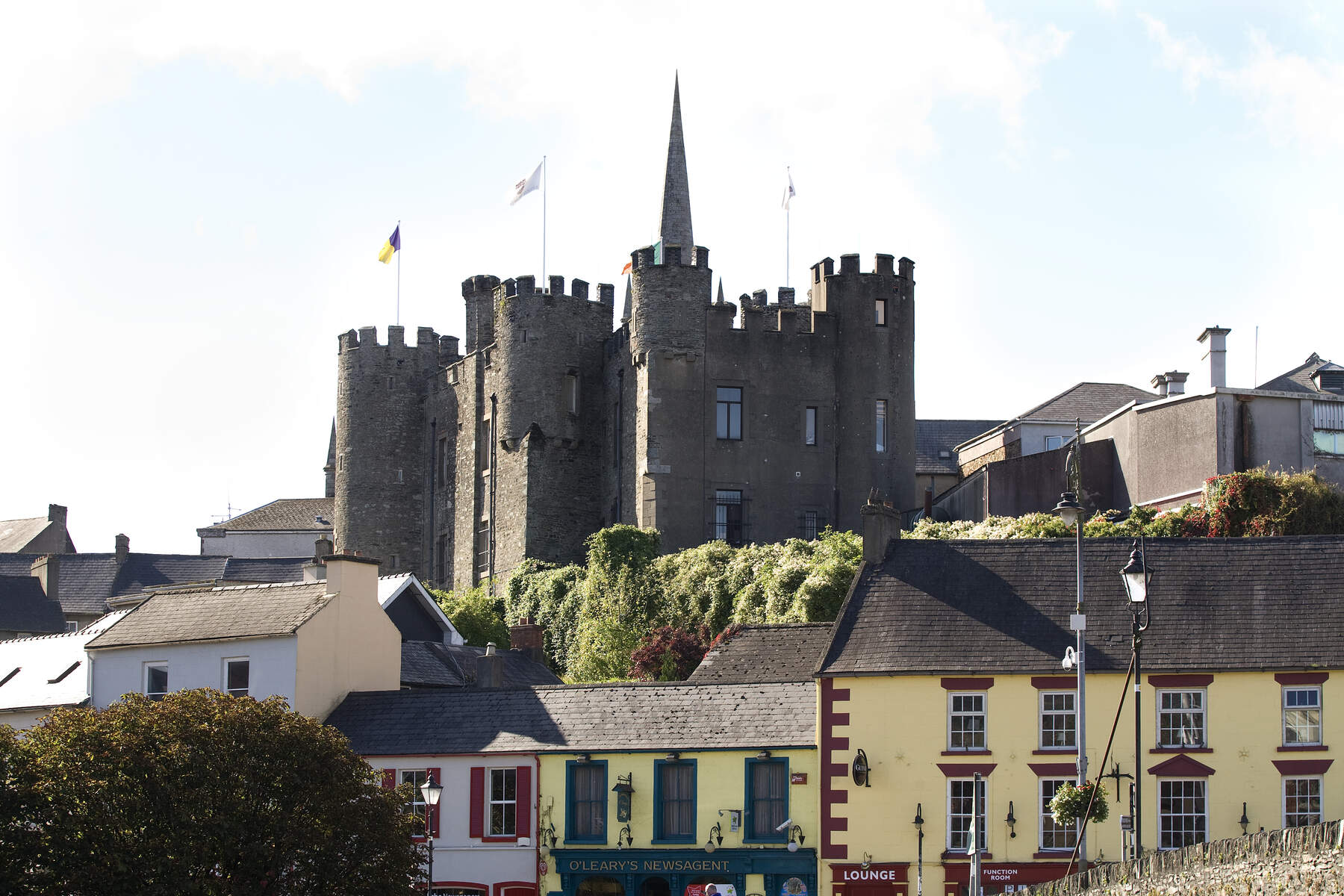
Enniscorthy castle, Co Wexford_Courtesy Patrick Brown 2014, for Tourism Ireland, Ireland’s Content Pool. [1]

The website tells us:

Enniscorthy Castle, in the heart of Enniscorthy town, was originally built in the 13th century, and has been ‘home’ to Norman knights, English armies, Irish rebels and prisoners, and local  merchant families.  Why not visit our dungeon to see the rare medieval wall art –The Swordsman, or our battlements at the top of the castle to marvel at the amazing views of Vinegar Hill Battlefield, Enniscorthy town, and the sights, flora and  fauna of the  surrounding countryside. Enniscorthy Castle explores the development of the Castle and town from its earliest Anglo-Norman origins, with a special focus on the Castle as a family home. Visitors can also view the ‘Enniscorthy Industries ‘exhibition on the ground floor from the early 1600’s onwards when Enniscorthy began to grow and prosper as a market town. Visitors can explore the work of the renowned Irish furniture designer and architect Eileen Gray (born in 1878 just outside the town). The roof of the castle is also accessible, with spectacular views of the surrounding buildings, Vinegar Hill, and countryside. Note that access to the roof is only possible when accompanied by a staff member. Tours of the Castle are self guided. Last admission is 30 minutes before closing. Our facilities include: craft and gift shop, toilets and baby changing area, wheelchair access to all floors (including roof) , and visitor information point (tourist office for town). We look forward to welcoming you to our town’s most public ‘home’.

Enniscorthy castle, Co Wexford_Courtesy Patrick Brown 2014, for Tourism Ireland, Ireland’s Content Pool. [1]

Mark Bence-Jones writes in his A Guide to Irish Country Houses (1988):

p. 121. “(Wallop, Portsmouth, E/IFR) A C13 four-towered keep, like the ruined castles at Carlow and Ferns, restored at various dates and rising above the surrounding rooftops of the town of Enniscorthy like a French chateau-fort, with its near row of tourelles. Once the home of Edmund Spenser, the poet. Now a museum.” [2]

The National Inventory of Architectural Heritage tells us that it is a two-bay three-stage over basement castle, built 1588, on a rectangular plan with single-bay full-height engaged drum towers to corners on circular plans. [3]

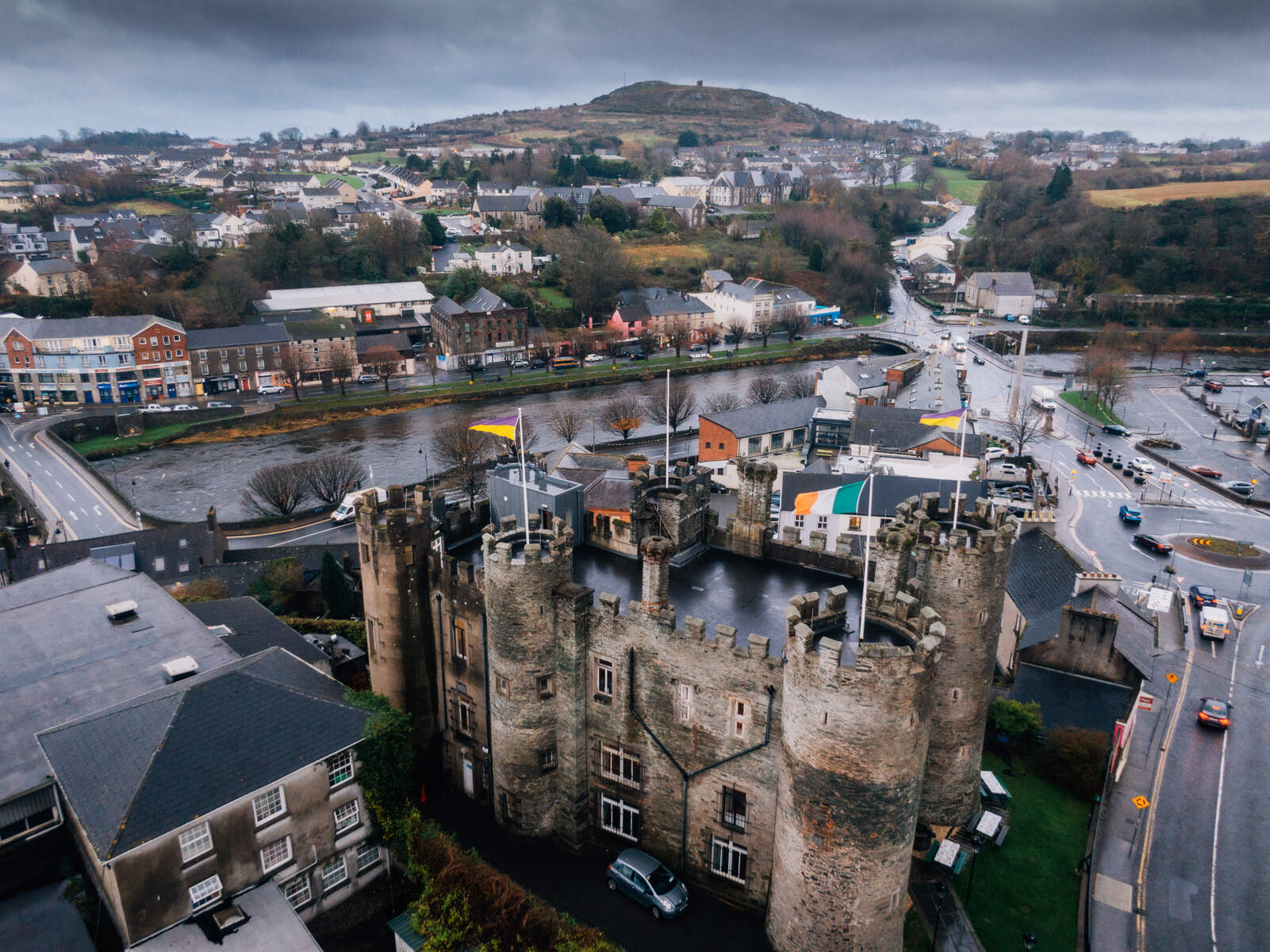
Enniscorthy, Co Wexford_Courtesy Celtic Routes 2019, for Tourism Ireland, Ireland’s Content Pool. (see [1])
Enniscorthy, Co Wexford_Courtesy Celtic Routes 2020, for Tourism Ireland, Ireland’s Content Pool. (see [1])

The website tells us more about the history of the castle:

Maud de Quency (granddaughter of the famous Strongbow) marries Philip de Prendergast (son of Anglo-Norman Knight Maurice de Prendergast) and they reside at Enniscorthy Castle from 1190 to his death in 1229. From then until the 1370’s, their descendants, and other Anglo-Norman families rule the Duffry and reside in Enniscorthy Castle.

“In 1375: The fief (a defined area of land or territory) of the Duffry  and Enniscorthy Castle are forcefully retaken by Art MacMurrough Kavanagh who regains his ancestral lands. This marks a time of Gaelic Irish revival. The MacMurrough Kavanagh dynasty rule until they eventually surrender the Castle and lands to Lord Leonard Grey in 1536. At this time Enniscorthy Castle is reported be in a ruined condition.

Enniscorthy, Co Wexford_Courtesy Celtic Routes 2020, for Tourism Ireland, Ireland’s Content Pool. (see [1])

“In 1569, The Butlers of Kilkenny and the Earl of Kildare lead a raid on Enniscorthy town on a fair day, killing numerous civilians and burning the castle. In 1581, The poet Edmund Spenser leases the Castle but never lives in it. Historians speculate that this was because Spenser feared the MacMurrough Kavanaghs.

“In 1585, Henry Wallop receives ownership of the Duffry by Royal Appointment. He exploits the dense forests (the Duffry, An Dubh Tír in Irish, meaning “The Black Country”) surrounding Enniscorthy which brings considerable wealth to the town, and funds the rebuilding of Enniscorthy Castle which we see standing today. Enniscorthy begins to rapidly develop as a plantation town.

“1649: Oliver Cromwell arrives in Co. Wexford. Enniscorthy Castle is beseiged by his forces; its defenders surrender, leaving it intact. In December of the same year the Castle once again fell to the Irish (under Captain Daniel Farrell), but two months later Colonel Cooke, the Governor of Wexford, reoccupied the castle.

“1898: The Castle is leased by Patrick J. Roche from the Earl of Portsmouth. P.J. Roche restores and extends the Castle making it into a residence for his son Henry J. Roche.

“1951: Roche family leaves.

“1962: Castle opens as Wexford County Museum.

Enniscorthy, Co Wexford_Courtesy Celtic Routes 2020, for Tourism Ireland, Ireland’s Content Pool. (see [1])

6. Ferns Castle, Wexford – open to public, OPW

see my OPW entry: https://irishhistorichouses.com/2022/02/07/office-of-public-works-properties-leinster-laois-longford-louth-meath-offaly-westmeath-wexford-wicklow/ 
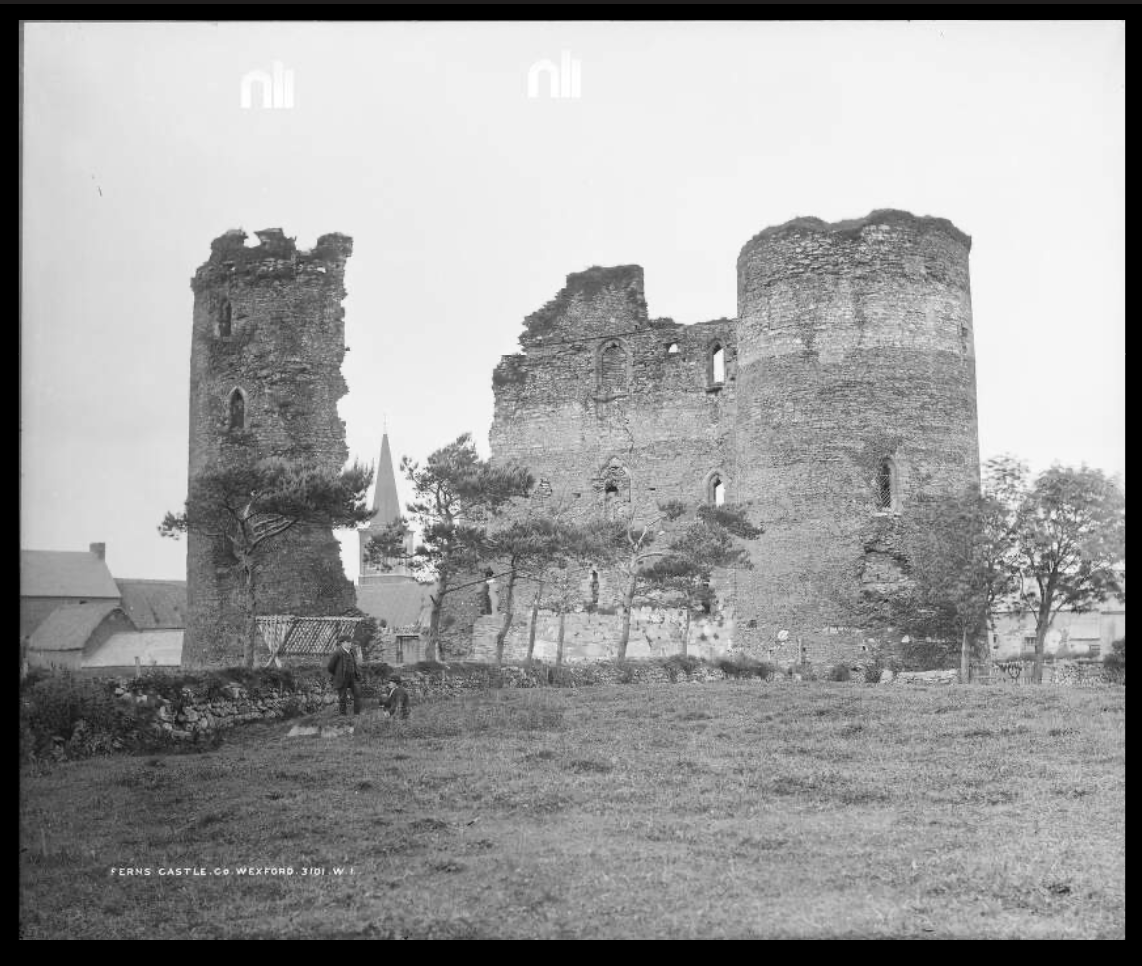
Ferns Castle, County Wexford, photograph by Robert French, Lawrence Photograph Collection, National Library of Ireland.

7. Johnstown Castle, County Wexford maintained by the Irish Heritage Trust
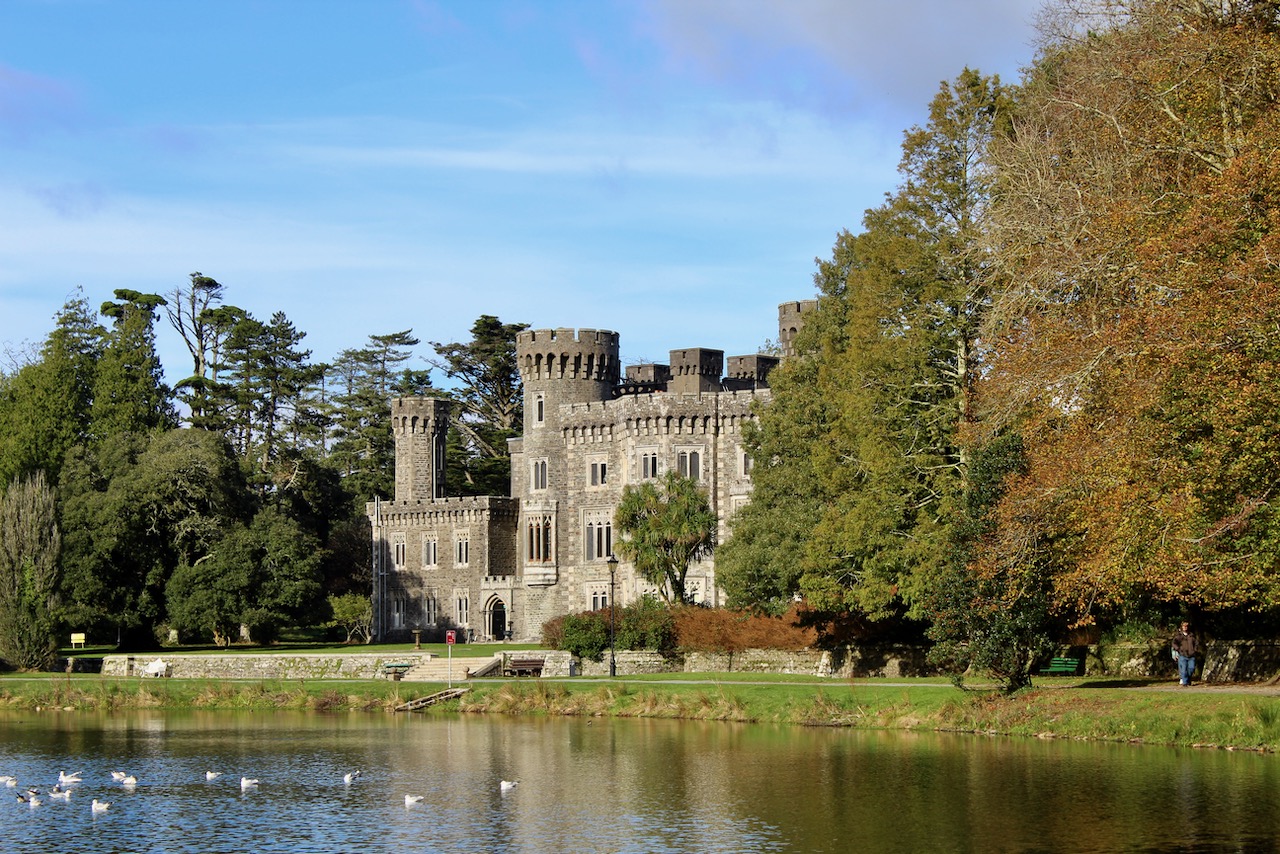
Johnstown Castle, County Wexford. The house was designed by Daniel Robertson (d. 1849). It envelops a seventeenth-century house (perhaps by Thomas Hopper) [4] remodelled (1810-4) by James Pain (1779-1877) of Limerick. Photograph © Jennifer Winder-Baggot, www.irishhistorichouses.com

https://johnstowncastle.ie/

See my entry https://irishhistorichouses.com/2023/09/30/a-heritage-trust-property-johnstown-castle-county-wexford/
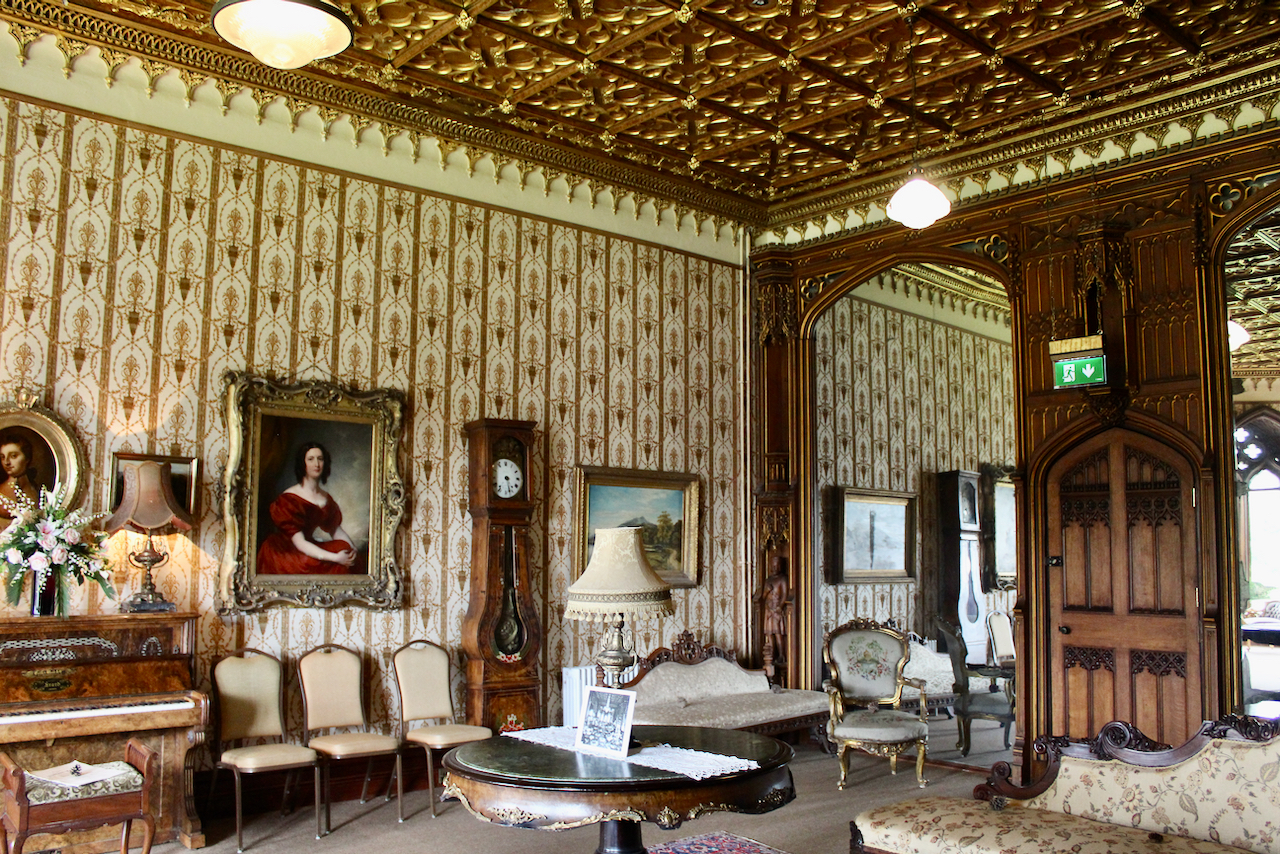
The Principal Drawing Room in Johnstown Castle. Photograph © Jennifer Winder-Baggot, www.irishhistorichouses.com
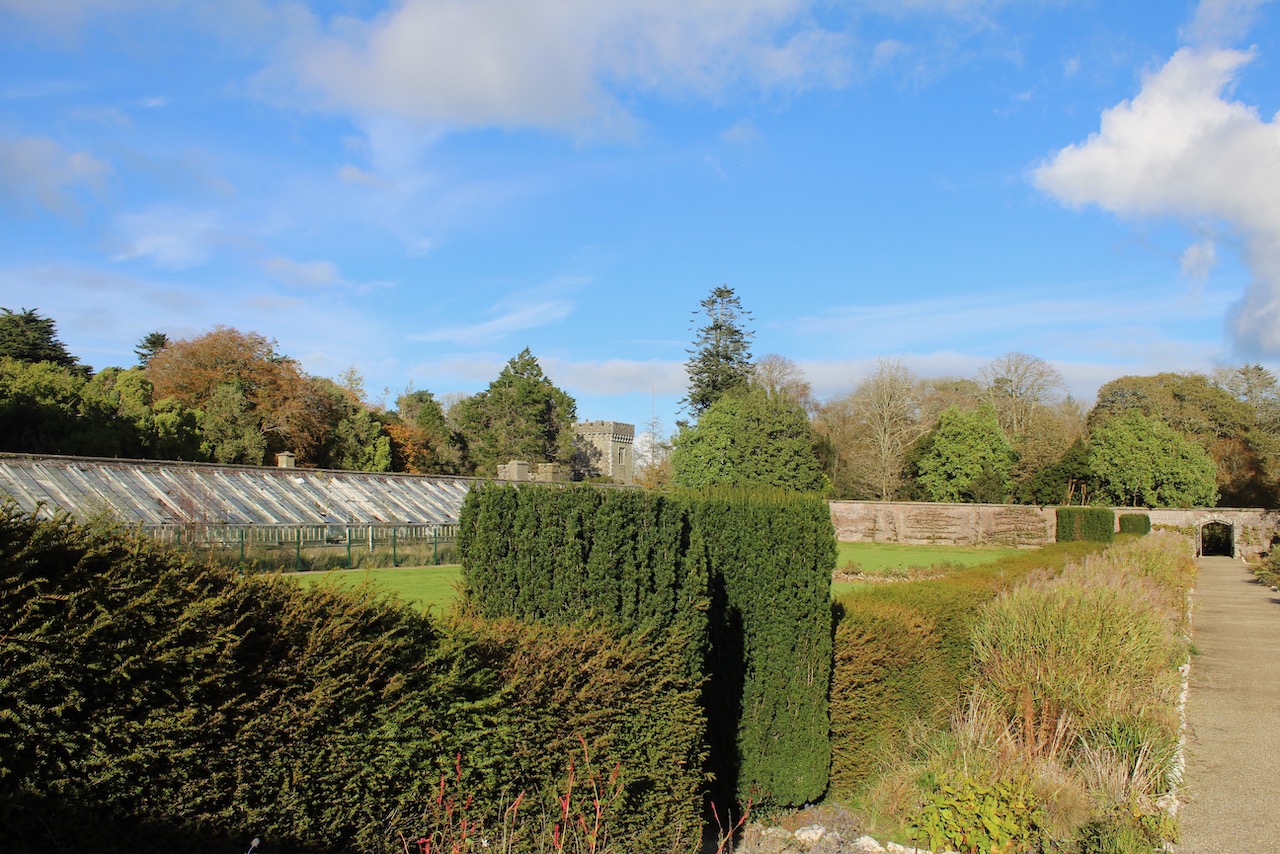
Walled garden, Johnstown Castle, County Wexford, November 2021. Photograph © Jennifer Winder-Baggot, www.irishhistorichouses.com
Stable Complex, Johnstown Castle, County Wexford, November 2021. Photograph © Jennifer Winder-Baggot, www.irishhistorichouses.com

8. Kilcarbry Mill Engine House, Sweetfarm, Enniscorthy, Co Wexford – section 482

Open dates in 2025: Jan 1-4, 29-31, Feb 3-5, Mar 5-7, 10-11, Apr 3-4, 11-13, May 10-12, 19-23, July 5-7, Aug 2-31, Dec 19-23, 27-30, 12 noon-4pm

Fee: adult €10, student/OAP €5, child free

9. Kilmokea Country Manor & Gardens, Great Island, Campile, New Ross, Co. Wexford Y34 TH58 – section 482, gardens open to public
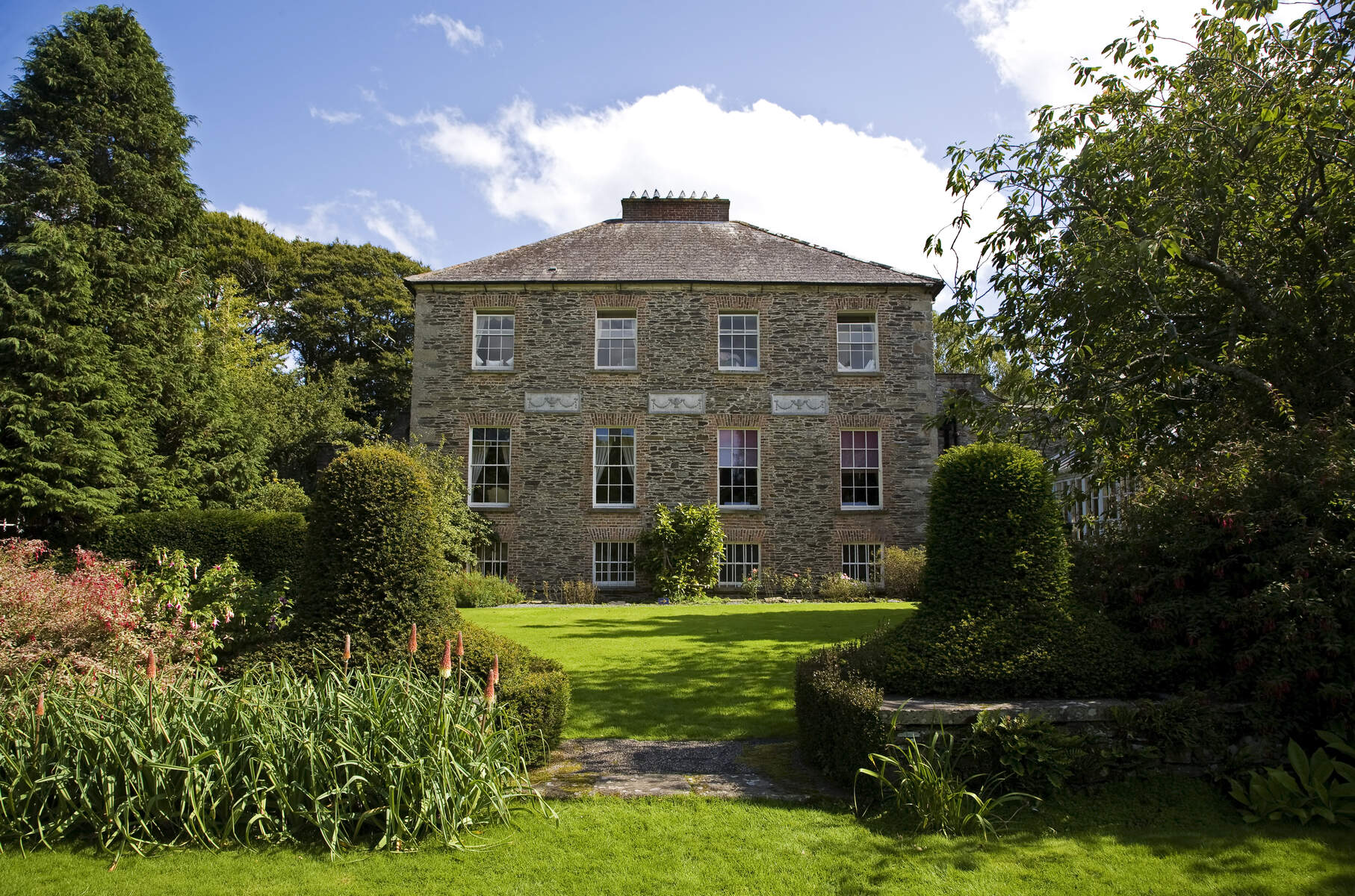
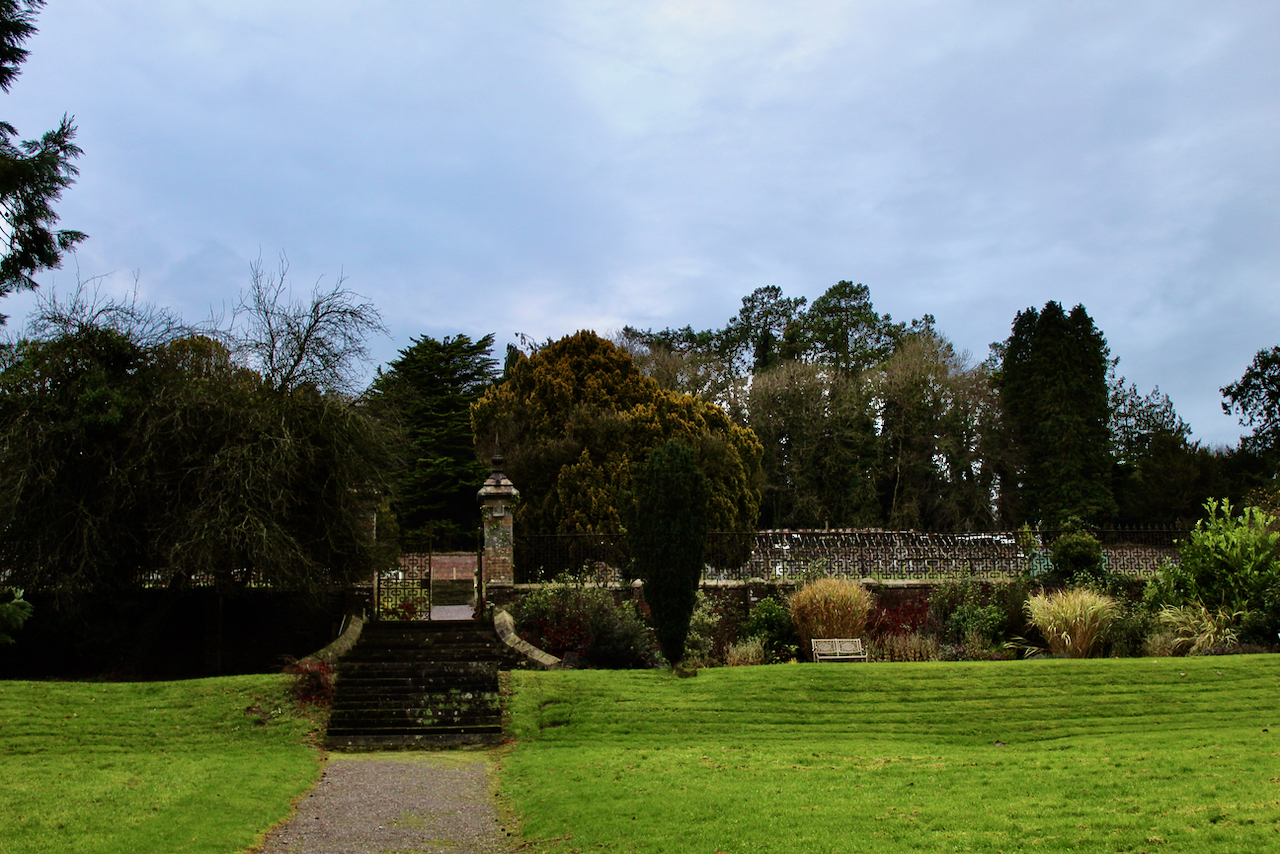
The main lawn at the rear of the house at Kilmokea – surrounded by perenniel borders – and some fine topiary, photograph 2014 by George Munday/Tourism Ireland. (see [1])

www.kilmokea.com
Tourist Accommodation Facility
Gardens Open in 2025: April 1-Nov 2, 10am-6pm

Fee: adult €9, OAP €6, student /child €5, family €25

We visited in 2023 – see my entry https://irishhistorichouses.com/2023/10/12/kilmokea-country-manor-gardens-kilmokea-great-island-campile-new-ross-co-wexford-y34-th58/

10. Newtownbarry House, Wexford – gardens open to the public

https://www.gardensofireland.org/directory/52/
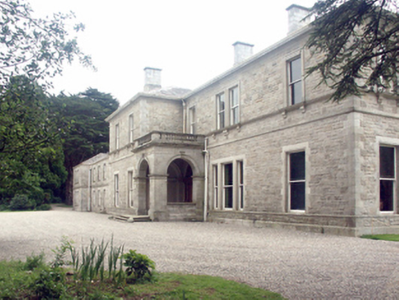
Newtownbarry House, County Wexford, photograph from National Inventory of Architectural Heritage.

Contact: Clody and Alice Norton 

Tel: +353 (0) 53 937 6383 

Email: clodynorton@gmail.com 

Mark Bence-Jones writes (1988): p. 225. “(Barry/IFR; Maxwell, Farnham, B/PB; Hall-Dare;IFR) The estate of Newtownbarry originally belonged to a branch of the Barrys; passed to the Farnhams with the marriage of Judith Barry to John Maxwell, afterwards 1st Lord Farnham, 1719. Subsequently acquired by the Hall-Dare family, who built the present house 1860s, to the design of Sir Charles Lanyon. It is in a rather restrained Classical style, of rough ashlar; the windows have surrounds of smooth ashlar, with blocking. Two storey; asymmetrical entrance front, with two bays projecting at one end; against this projection is set a balustraded open porch. Lower two storey service wing. Eaved roof on plain cornice. Impressive staircase.”

Newtownbarry House, County Wexford, photograph from National Inventory of Architectural Heritage.

The National Inventory tells us that it is a five-bay (five-bay deep) two-storey country house, built 1863-9, on an L-shaped plan off-centred on single-bay single-storey flat-roofed projecting porch to ground floor abutting two-bay two-storey projecting end bay; eight-bay two-storey rear (south) elevation. It continues:
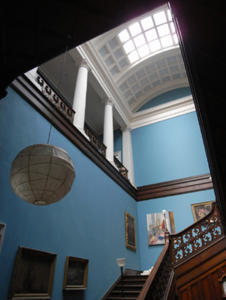
Newtownbarry House, County Wexford, photograph from National Inventory of Architectural Heritage.

A country house erected for Robert Westley Hall-Dare JP DL (1840-76) to a design by Lanyon, Lynn and Lanyon (formed 1860) of Belfast and Dublin (Dublin Builder 1864, 66) representing an important component of the mid nineteenth-century domestic built heritage of County Wexford with the architectural value of the composition, one succeeding the eighteenth-century ‘Woodfield…[a] mansion of long standing and of cottage-like character in the Grecian style of architecture’ (Lacy 1863, 485), confirmed by such attributes as the deliberate alignment maximising on panoramic vistas overlooking the meandering River Slaney with its mountainous backdrop in the near distance; the asymmetrical footprint off-centred on an Italianate porch; the construction in a rough cut granite offset by silver-grey dressings not only demonstrating good quality workmanship, but also providing an interplay of light and shade in an otherwise monochrome palette; and the slight diminishing in scale of the openings on each floor producing a feint graduated visual impression. Having been well maintained, the elementary form and massing survive intact together with substantial quantities of the original fabric, both to the exterior and to the interior arranged around a top-lit staircase hall recalling the Lanyon, Lynn and Lanyon-designed Stradbally Hall (1866-7), County Laois, where contemporary joinery; Classical-style chimneypieces; and plasterwork enrichments, all highlight the considerable artistic potential of the composition. Furthermore, adjacent outbuildings; walled gardens; all continue to contribute positively to the group and setting values of an estate having historic connections with the Hall-Dare family including Captain Robert Westley Hall-Dare JP DL (1866-1939), one-time High Sheriff of County Wexford (fl. 1891); and Robert Westley Hall-Dare (1899-1972).”

11. Sigginstown Castle, Sigginstown, Tacumshane, Co. Wexford, Y35 XK7D – section 482
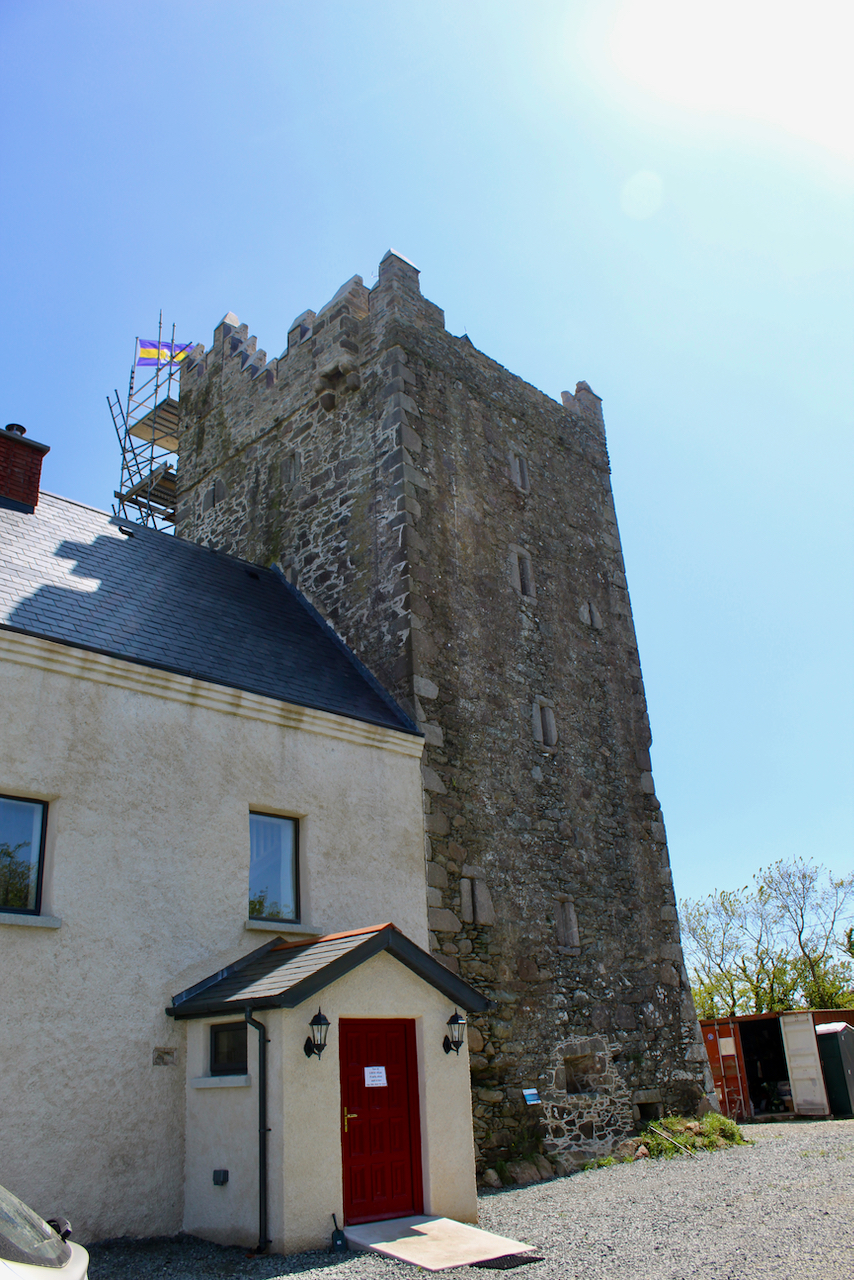
Sigginstown Castle, County Wexford, Photograph © Jennifer Winder-Baggot, www.irishhistorichouses.com

www.sigginstowncastle.com
Open dates in 2025: Mar 14-17, 21-23, April 4-6, 11-13, 18-21, May 2-5, 9-11, 16-18, 23-25, June 6-8, 13-15, 20-22, 27-29, July 4-6, 11-13, 18-20, 25-27, Aug 1-4, 8-10, 15-24, Sept 6-7, 13-14, 20-21, 27-28, 1pm-5pm

Fee: adult €10, child/OAP/student €8, groups of 6 or more €8 per person

We visited in 2023 – see my entry https://irishhistorichouses.com/2023/11/16/sigginstown-castle-tacumshane-co-wexford-y35-xk7d/

Sigginstown Castle, May 2023. Photograph © Jennifer Winder-Baggot, www.irishhistorichouses.com.

12. Tintern Abbey, Ballycullane, County Wexford – concessionary entrance to IGS members, OPW

see my entry https://irishhistorichouses.com/2025/04/07/tintern-abbey-county-wexford-an-opw-property/
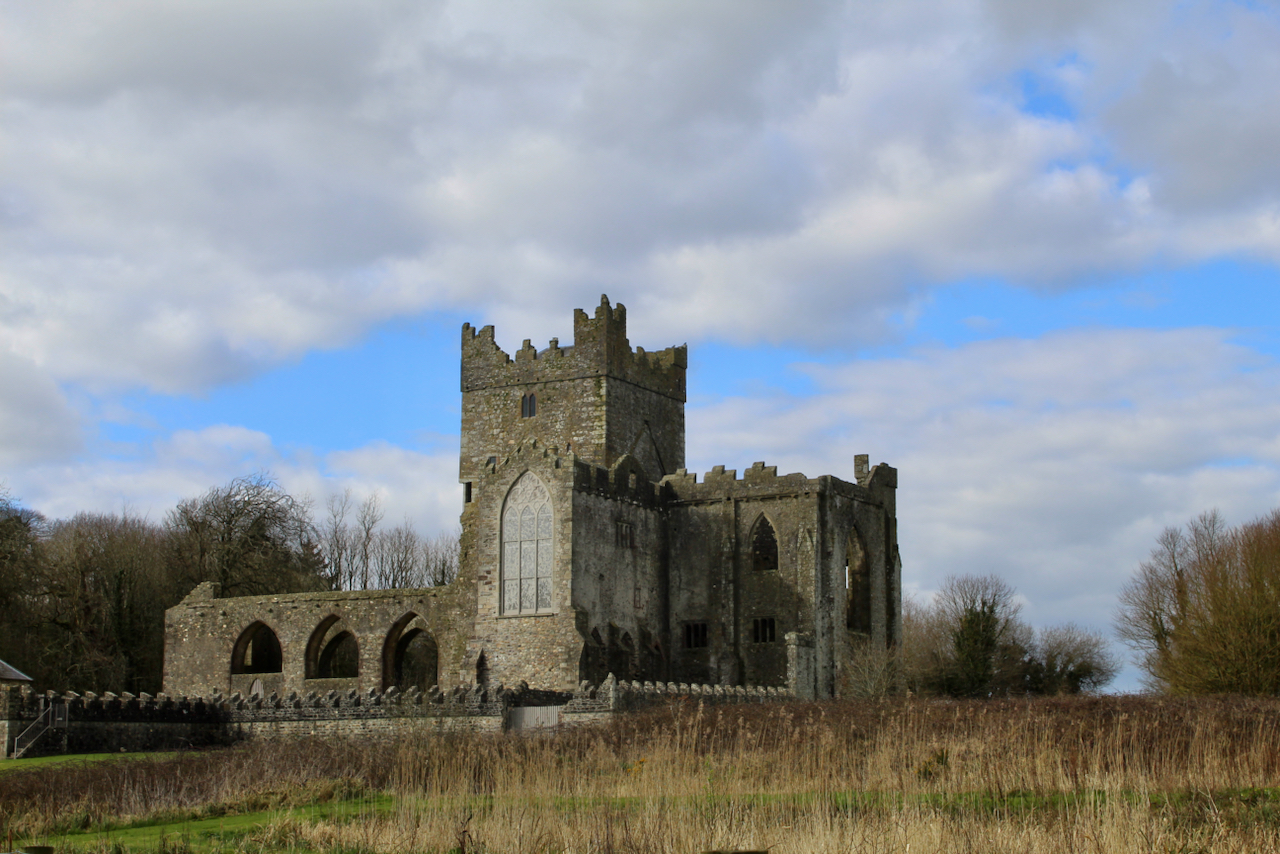
Tintern Abbey, County Wexford, 15th March 2025. Photograph © Jennifer Winder-Baggot, www.irishhistorichouses.com

13. Wells House, County Wexford – open for tours
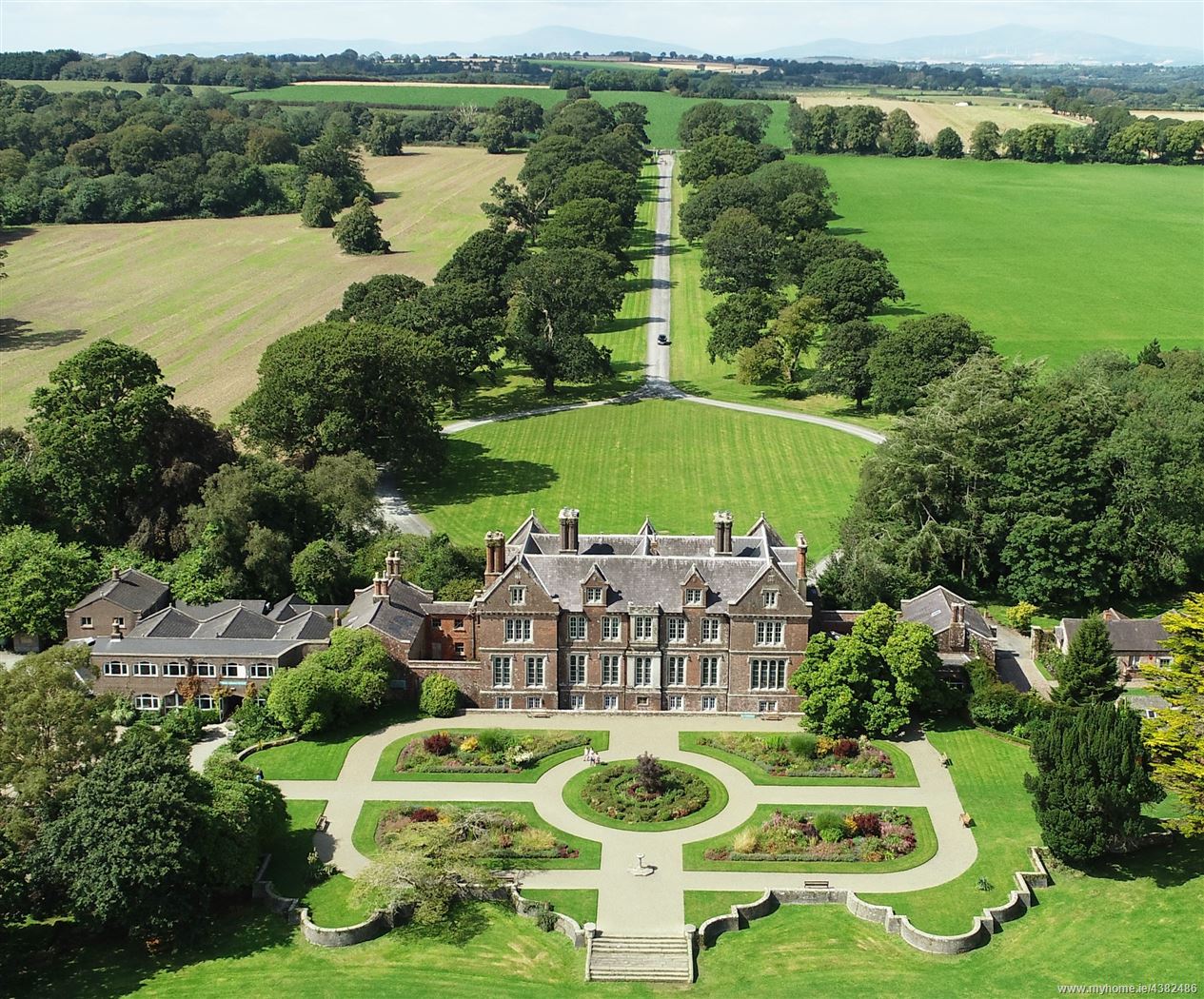
Wells House, County Wexford, from myhome.ie

See my entry https://irishhistorichouses.com/2025/05/29/wells-house-and-gardens-county-wexford-open-for-tours/

Web: www.wellshouse.ie 

Wells House has a stunning Victorian Terrace garden, parterre garden and arboretum designed by the renowned architect and landscape designer, Daniel Robertson. 

The terraced gardens which have been restored to their former glory sit beautifully into the large setting of his vast parkland design which spans for acres in the stunning Co. Wexford landscape. 

With two woodland walks, a craft courtyard, adventure playground, restaurant and a busy calendar of events this is a perfect day out for all the family. 

and “Discover the 400-year-old history of Wells House & Gardens by taking a guided exploration of the house. Our living house tour and expert guide in Victorian dress will bring you back to a time. To a time when the magnificent ground floor and bedrooms witnessed the stories of Cromwell, Rebellions and the Famine. Uncover the everyday lives of the wealthy, powerful families who lived in the estate and their famed architect Daniel Robertson. All giving you a unique insight into the life of previous generations all the way up until the current owners of Wells House.

14. Woodville House, New Ross, Co. Wexford Y34 WP93 – section 482

www.woodvillegardens.ie
Open dates in 2025: May 1-31, June 1-30, July 1-31, Aug 1-24, 10am-5pm

Fee: adult/OAP /student €7, child under 12 years free

The National Inventory of Architectural Heritage tells us that it was allegedly erected for Edward William Tottenham (d. 1860) on the occasion of his marriage (1807) to Henrietta Alcock (d. 1861).

We visited in 2023, see my entry https://irishhistorichouses.com/2023/10/19/woodville-house-new-ross-co-wexford-y34-wp93/

Woodville House, photograph courtesy of Woodville house website.

Places to Stay, County Wexford

1. Artramon House, Castlebridge, Co Wexford – B&B 
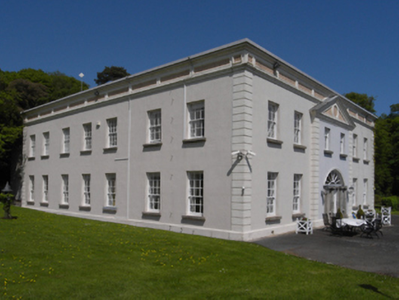
Artramon House, County Wexford, photograph from National Inventory of Architectural Heritage.
Artramon House, County Wexford, photograph from Artramon website.

https://www.artramon-farm.com/english/welcome

Mark Bence-Jones writes: p. 12. “(Le Hunte/LGI 1912; Neave, Bt/Pb) A late C18 house, remodelled after being burnt 1923. 2 storey; entrance front with pediment of which the peak is level with the coping of the parapet, and the base is well below the level of the main cornice. In the breakfront central feature below the pediment are two windows and a tripartite Venetian doorway; two bays on either side of the central feature.” 

Artramon – by Ulrike von Walderdorff in Wexford / Ireland

The National Inventory tells us it is a five-bay two-storey country house, rebuilt 1928-32, on an L-shaped plan centred on single-bay two-storey pedimented breakfront; seven-bay two-storey side (west) elevation… “A country house erected for Richard “Dick” Richards (Wexford County Council 17th June 1927) to a design by Patrick Joseph Brady (d. 1936) of Ballyhaise, County Cavan (Irish Builder 1928, 602), representing an important component of the domestic built heritage of County Wexford with the architectural value of the composition, one retaining at least the footings of an eighteenth-century house destroyed (1923) during “The Troubles” (1919-23), confirmed by such attributes as the deliberate alignment maximising on scenic vistas overlooking gently rolling grounds with ‘fine views of the estuary, harbour and town of Wexford’ as a backdrop (Fraser 1844, 118); the symmetrical frontage centred on a curiously compressed breakfront; the diminishing in scale of the openings on each floor producing a graduated visual impression; and the monolithic parapeted roofline. Having been well maintained, the elementary form and massing survive intact together with substantial quantities of the original fabric, both to the exterior and to the interior where contemporary joinery; reclaimed Classical-style chimneypieces; and sleek plasterwork refinements, all highlight the artistic potential of the composition. Furthermore, adjacent outbuildings (extant 1840); and a substantial walled garden (extant 1840), all continue to contribute positively to the group and setting values of an estate having historic connections with the Le Hunte family including Captain George Le Hunte (d. 1799); William Augustus Le Hunte (1774-1820), one-time High Sheriff of County Wexford (fl. 1817); George Le Hunte (1814-91), ‘late of Artramont [sic] County Waterford [sic]’ (Calendars of Wills and Administrations (1892, 481); and the largely absentee Sir George Ruthven Le Hunte KCMG (1852-1925), one-time Governor and Commander-in-Chief of Trinidad and Tobago (fl. 1908-15); and Major Sir Arundell Thomas Clifton Neave (1916-92), sixth Baronet.

2. Ballytrent House, Broadway, Co Wexford – one wing rental.
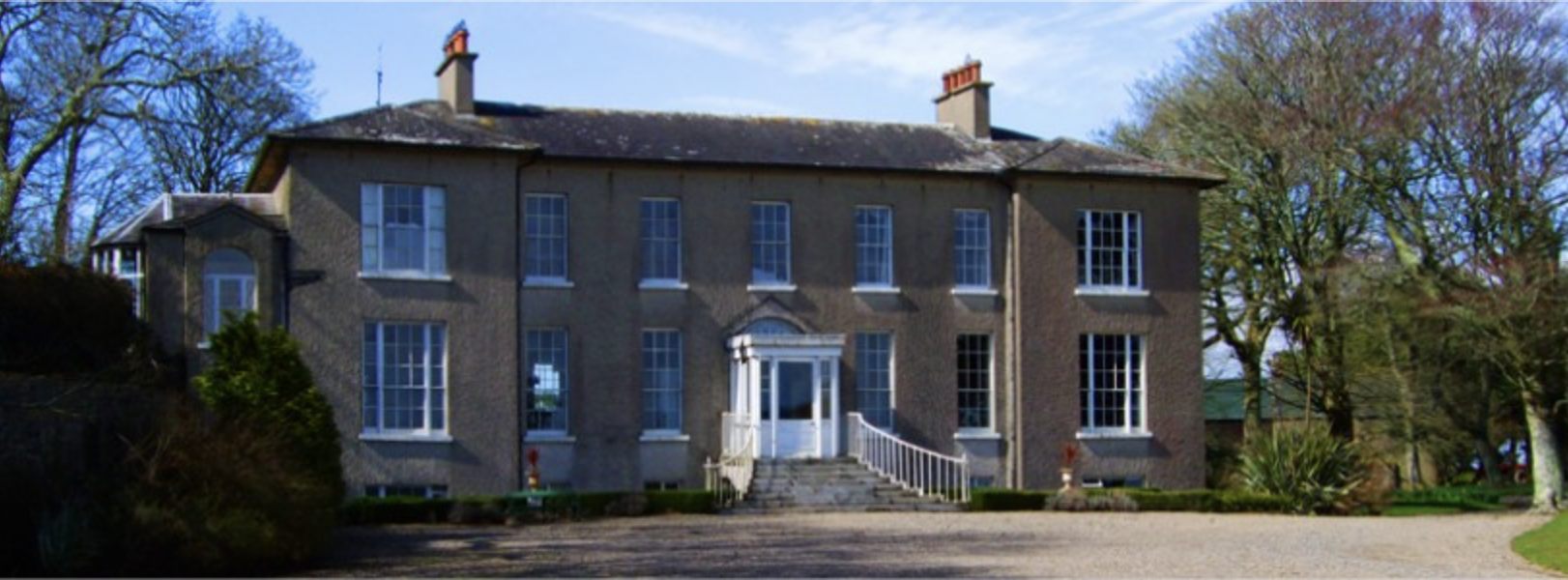
http://ballytrenthouse.com 

Ballytrent House, courtesy of their website.

Mark Bence-Jones writes of Ballytrent (1988):

p. 28. “Redmond/Hughes. A two storey Georgian house, 5 bays, projecting ends, each with a Wyatt window in both storeys. Adamesque plasterwork. Home of John Redmond MP, leader of Irish Parliamentary Party.” 

The website tells us:

Welcome to the Ballytrent website. Visitors to Wexford seeking a quiet, secluded location,could not choose a better location than Ballytrent. Ballytrent is a magnificent 18th century heritage house set in extensive grounds overlooking the sea towards Tuskar Rock Lighthouse. 

In the grounds of the house is located a Ráth or earthen mound dating back to prechristian times and, measuring 650 yards in circumference, is reputed to be the largest in Europe. The grounds also contain a large flag pole that was once the tallest mast in the British Isles. The Rath garden is a haven for songbirds & a visit, either early morning or late evening, is pure magic! 

Ballytrent is tranquil and secluded. The garden & lawns cover three acres and include some rare plants. Our farm is a mix of cattle, cereals and root crops. We extend a warm welcome to those interested in visiting the farm. We are fortunate in having the best weather in Ireland – the annual rainfall is approximately 35 inches and each year the Weather Station at Rosslare records the highest mean sunshine hours. We are indeed the Sunny South East! 

Ballytrent House, 
Ballytrent, 
Rosslare Harbour, 
Co. Wexford, 
Ireland. 

Telephone/Fax: 053 91 31147 
Email: jepryan@eircom.net 

Situated in St Helen’s E.D., Ballytrent, with its double ringed ráth, is an 18th century  home set in extensive ground. The history of Ballytrent is a collection of works and illustrations put together after several years  of research by Mary Stratton Ryan, wife of the present owner, James Power Ryan. 

A brief look at this work could keep the most avid historian content for quite a while. It is from this book that the following list of names and facts are taken,  all having connections to Ballytrent. 

  • Aymer De Valance; Earl of Pembroke, buried in Westminster Abbey, London. 
  • Robert Fitzstephens; Ballytrent bestowed on him by Strongbow. 
  • John le Boteller (Butler); Constable of the Kings Castle at Ballytrent. 
  • John Sinnot; Listed as a Juror of the Inquisition at Wexford (c1420). 
  • Patrick Synnot; In a 1656 Curl Survey of Ireland shown as owner of 96 acres 24 perches at Ballytrent. 
  • Abraham Deane; Given Ballytrent by Cromwell. 
  • Sarah Hughes; Daughter of Abraham Deane. 
  • Walter Redmond; Purchased Ballytrent from Henry Hughes. 
  • William Archer Redmond MP; Father of John and William – both also MP’s. 
John Redmond (1856-1918) by Harry Jones Thaddeus, 1901, National Gallery of Ireland NGI889.
  • John Edward Redmond MP; Represented North Wexford, succeeded Parnell as leader of the Nationalist Party. 
  • William Hoey Kearney Redmond MP; MP for Wexford and Fermanagh. 
  • John H. Talbot (the younger);  Inherited Ballytrent from his sister Matilda Seagrave. 
  • William Ryan; Grandson of Sir James Power. Purchased Ballytrent from Emily Talbot (nee Considine). 
  • James Edward Power Ryan; Present owner and grandson of William Ryan. 

This clearly illustrates the influence and power that is part of the documented history of Ballytrent, without even considering the possibilities of the time when the ráth was in its prime.”

3. Bellfry at Old Boley, County Wexford

http://oldboleywexford.com

4. Butlerstown Castle, Tomhaggard, Co Wexford – A ruin, coach house accommodation  

http://www.butlerstowncastle.com/  

5. Clonganny House, Wexford – accommodation 
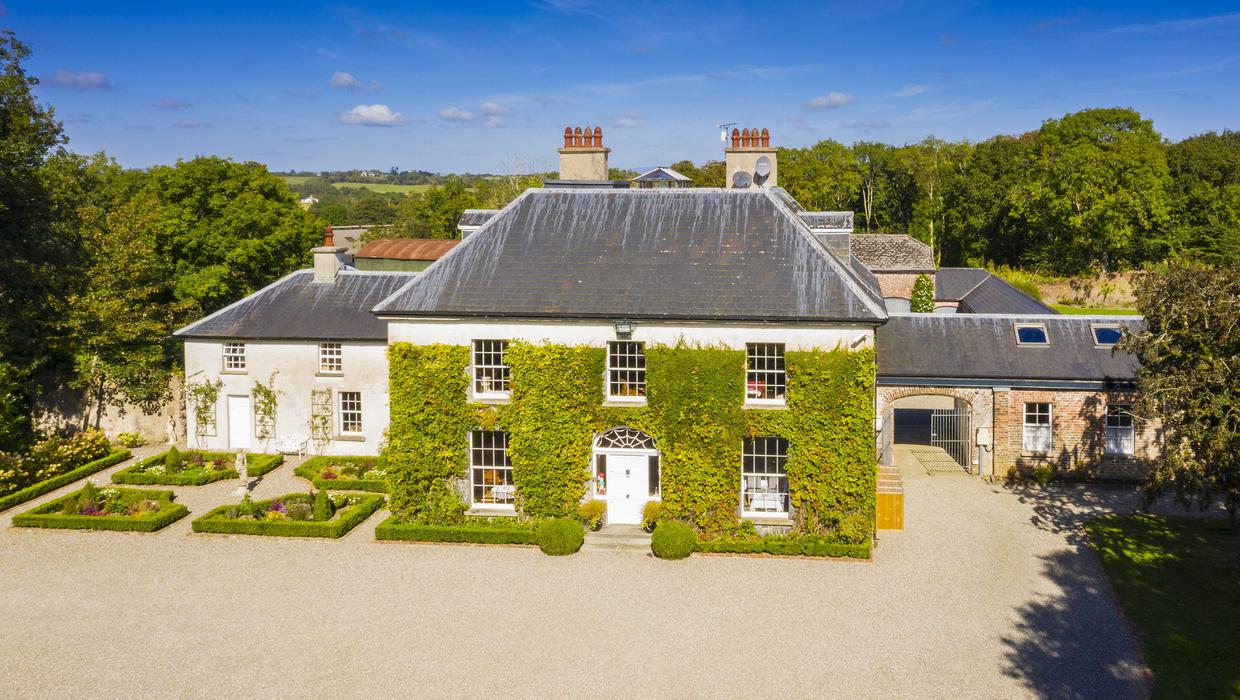
https://clonganny.com/

Clonganny House, County Wexford.

The website tells us: “Clonganny House is a fine country Georgian residence originally erected for Hawtry White (1758-1837) and sympathetically restored in the late twentieth century. Retaining many original features, Clonganny is a fine example of late Georgian architecture. Set in eight acres embracing gently rolling lawns, serene woodland, and a stunning walled garden, Clonganny House is only a short drive to a beautiful, award winning coastline and miles of golden sandy beaches.

6. Dunbrody Park, Arthurstown, County Wexford – accommodation €€

WWW.DUNBRODYHOUSE.COM 

Dunbrody House, courtesy of their website.

Mark Bence-Jones writes (1988): p. 114. “(Chichester, Templemore, B/PB; and Donegall, M/PB) A pleasant, comfortable unassuming house of ca 1860 which from its appearance might be a C20 house of vaguely Queen Anne flavour. Two storey, five bay centre, with middle bay breaking forward and three-sided single-storey central bow; two bay projecting ends. Moderately high roof on bracket cornice; windows with cambered heads and astragals. Wyatt windows in side elevation.” 
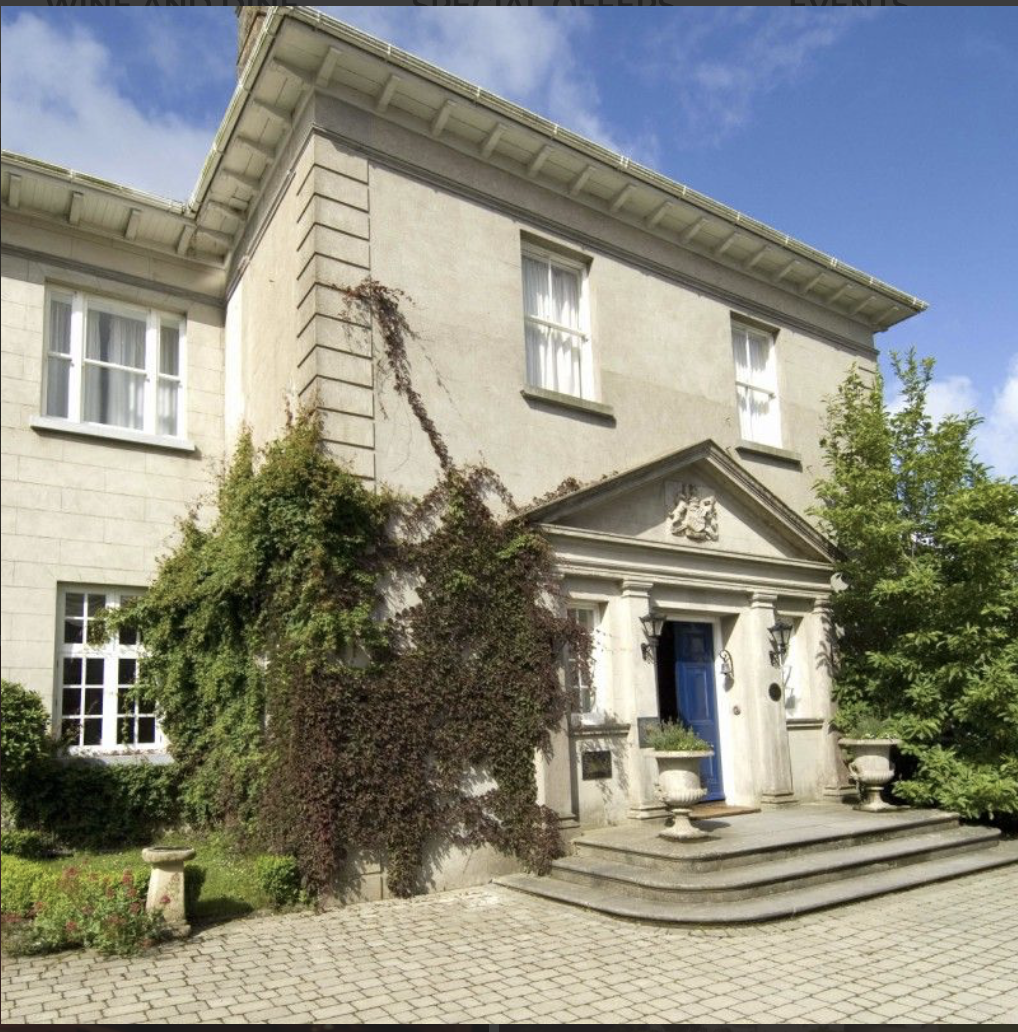
Dunbrody House, courtesy of their website.

The National Inventory tells us:

nine-bay two-storey country house with dormer attic, extant 1819, on an E-shaped plan with two-bay two-storey advanced end bays centred on single-bay two-storey breakfront originally single-bay three-storey on a rectangular plan. “Improved”, 1909-10, producing present composition…A country house erected by Lord Spencer Stanley Chichester (1775-1819) representing an integral component of the domestic built heritage of south County Wexford with the architectural value of the composition, one sometimes known as “Dunbrody Park” (Lacy 1863, 516) or “Harriet’s Lodge” after Lady Anne Harriet Chichester (née Stewart) (c.1770-1850), suggested by such attributes as the deliberate alignment maximising on scenic vistas overlooking gently rolling grounds with Waterford Harbour as a backdrop; the near-symmetrical frontage centred on a truncated breakfront; the diminishing in scale of the openings on each floor producing a graduated visual impression; and the decorative timber work embellishing the roofline: meanwhile, a photograph (30th August 1910) by A.H. Poole of Waterford captures recent “improvements” to the country house with those works ‘[presenting the] appearance [of] a twentieth-century house of vaguely “Queen Anne” flavour’ (Bence-Jones 1978, 114). Having been well maintained, the elementary form and massing survive intact together with substantial quantities of the original or sympathetically replicated fabric, both to the exterior and to the interior where contemporary joinery; Classical-style chimneypieces; and sleek plasterwork refinements, all highlight the artistic potential of the composition. Furthermore, adjacent outbuildings (extant 1840); a private burial ground; and distant gate lodges, all continue to contribute positively to the group and setting values of an estate having historic connections with the Barons Templemore including Henry “Harry” Spencer Chichester (1821-1906), second Baron Templemore ‘late of Great Cumberland-place Middlesex’ (Calendars of Wills and Administrations 1907, 508); Arthur Henry Chichester (1854-1924), third Baron Templemore; Arthur Claud Spencer Chichester (1880-1953), fourth Baron Templemore; and Dermot Richard Claud Chichester (1916-2007), fifth Baron Templemore.

7. Fruit Hill Cottages, Fruit Hill House, Campile, New Ross, County Wexford €

https://www.fruithillcottages.com/

Set in the landscaped grounds of 18th Century Fruit Hill House, these traditional self-catering farm cottages make an ideal base for touring South-East Ireland.

8. Killiane Castle, County Wexford

Killiane Castle, courtesy of their website.

https://killianecastle.com/

The website tells us: “The castle history is a remarkable tale of survival. Killiane Castle, a landmark in this cornerstone of Ireland’s Ancient East, has been in the Mernagh family for over one hundred years. However, its origins date back to medieval times to the Norman conquests and possibly even further to the early Irish settlers 500 years ago. 

The name ‘Killiane’ derives from ‘Cill Liadhaine’ in Gaelic, meaning the church of St Leonard which lies within the grounds of the Castle. 

Killiane Castle, courtesy of their website.

Medieval Times 

Pre-dating the castle history, it is likely that there was some form of native Irish settlement here before the Normans. However, the first recorded owner of the lands was Richard de Hay in the 13th century. Richard de Hay came over with Fitzstephen in the first Norman invasion. 

The Norman tower house is approximately 50ft high and measures 39ft x 27ft externally. The walls are between 4ft and 9ft in thick. The Normans built the tower around 1470. It is most likely one of the “£10 castles”.  King Henry VIII awarded a grant of £10 for the building of fortresses in his kingdom that became known as the “£10 castles”.  In recent years, an Australian visitor brought us a photo of the original deeds for Killiane Castle signed by King Henry VIII no less! 

Thomas Hay, a descendant of Richard, probably built the tower in the late 15th century c.1470. The present castle and surrounding walls bear testimony to the building genius of the Normans, over 500 years old and quite sound!  Built in a prominent position, the tower most likely overlooked a harbour. However, in the intervening years, reclaimed land replaced the harbour.  The surrounding lands feature a canal, slob lands and slightly further down the coast, Rosslare strand. 

Local Legend… 

Legend has it that below the ground floor underneath the stair way is a dungeon leading to a passageway to a doorway that no longer exists. 

“In the early 16th century c.1520, Killiane passed to the Cheevers family by marriage. They continued to fortify the site. By 1543 one Howard Cheevers held Killiane, 2000 acres of land and the office of Mayor of Wexford. The ‘Laughing Cheevers’, as they were then known, held prominence in Wexford for another 100 years until the great rebellion. They built the house sometime in the early 17th century. 

The 17th century was a tumultuous part of the castle history. George Cheevers took part in the Irish Rebellion of 1641. He played a role in both the Siege of Duncannon, and the Confederation of Kilkenny. Following the Sacking of Wexford, Cromwell dispossessed him for his part in these rebellions. Georges son, Didicus, was a blind Franciscan monk. Infamously, several clergy were murdered in Wexford town’s Bullring at this time. Didicus was one of them. Sent to Connaught by Cromwell, the Cheevers family left Killiane. Just a few remained as tenants. The last of the them, an old man, who died in 1849. 

Nearby stands the ruins of the small medieval church of Saint Helen which was in ruins by 1835. Enclosed by a wall is the adjoining cemetery. It is reputed to be the burial place of the Cheevers family.” 
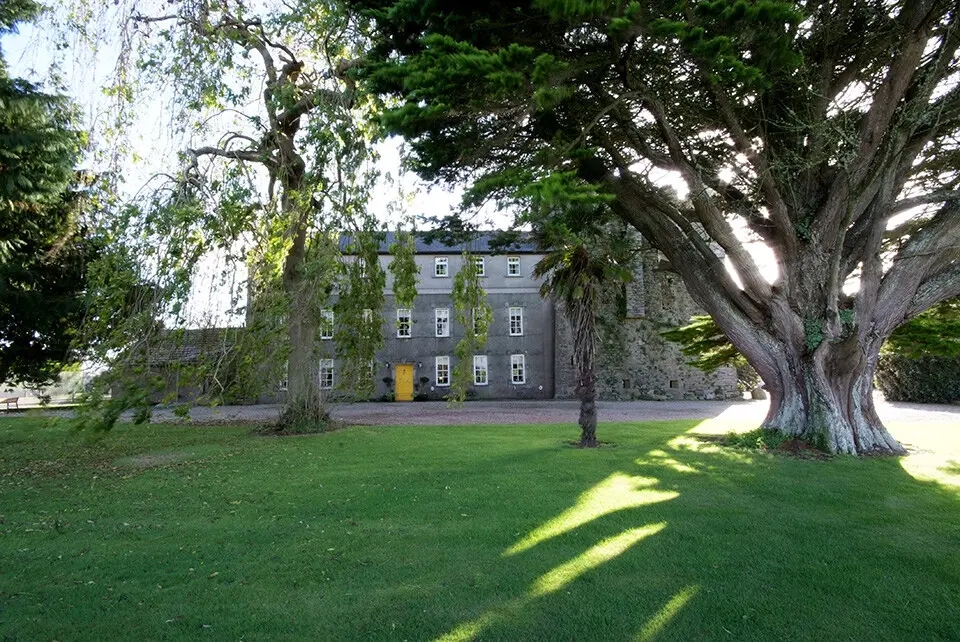
Killiane Castle, courtesy of their website.

Cromwell’s Rule 

In 1656 the property, along with 1500 acres, was granted to one of Cromwell’s soldiers, a Colonel Bunbury.  He sold it on to his friends, the Harveys of Lyme Regis. The first of these, Francis Harvey, became MP for Clonmines and Mayor of Wexford, positions his son John also held.  A famous beauty known as the Rose of Killiane, a daughter of the Harveys, married the Dean of Dublin in 1809. 

Victorian Times 

As time went by, the Harveys increasingly became absentee landlords. They leased the land to their tenants. Both the condition of the castle and the size of the estate materially diminished during this dark time in the castle hsitory. 

Throughout the 19th century there are references to tenants ‘Aylward’, ‘Elard’ and ‘Ellard’, possibly all the one family. By this time, the Harveys overwintered in their townhouse in Wexford at 38 Selskar Street. The family considered Killiane Castle too damp to stay at in winter. 

In 1908 Crown Solicitor, Kennan Cooper, bought the property for £1515. Cooper, a renowned character, kept racehorses and the 1911 census shows Killiane occupied by his tenant, George Grant and family. The census records Grant’s occupation as a ‘Horse trainer/jockey’. 

In 1920 John Mernagh, father of Jack the present owner, bought Killiane with 230 acres for £2000. At that time there was no roof on the tower-house. Ivy covered it. John re-roofed it and used it to store grain and potatoes.  Today the castle is home to Jack & Kathleen Mernagh who run the property along with their son Paul & his wife Patrycja and their family. 

The Structure of the Building  

Original Norman Features  

The castle still contains one original window that dates from the 15th century.  The original window is an ogee style window featuring two lights. Over the years, incumbents replaced the other windows. The main entrance to the castle was originally on the east side. It provided an adjoining door to the house at one time. The original door is bricked-up. On the south side of the tower a new door has been opened. 

Murder Holes! 

Looking at the front of the castle. There are murder holes over each of the doors on the ground floor. Perfectly located to pour hot tar over any unwelcome visitors!  This practice, we assure you, is not in place today! 

The third floor contains a fine granite fireplace. Small smooth stones from the beach line the chimney rising on the outer wall. Also in evidence on this floor, is a cupboard recess. 

Corrugated iron replaced the original slate roof. The parapet consists of large sloping slabs. The battlements are of the steeply stepped type. There is a square turret on each corner. On the outside of the southern turret is a carved head. 

The large bawn has a round tower on the south east corner and a square tower on the south west corner, castle occupying the north west corner. The north east tower has been removed. In order to accommodate the facade of the house, the northern apron wall was taken down. 

Original 17th Century House 

The original 17th century house consisted of two storeys with a garret on top. The incumbents raised the roof at a date unknown to us.  This action incorporated the original dormer windows of the garrets,converting it into a third storey. Furthermore, they also reduced the great slant on the original 17th-century roof. The staircase of the house is of a simple very wide design, typical of the 17th century. 

9. Kilmokea Country Manor & Gardens, Kilmokea, Great Island, Campile, New Ross, Co. Wexford  – accommodation, see above

10. Marlfield, Gorey, Co Wexford – accommodation 
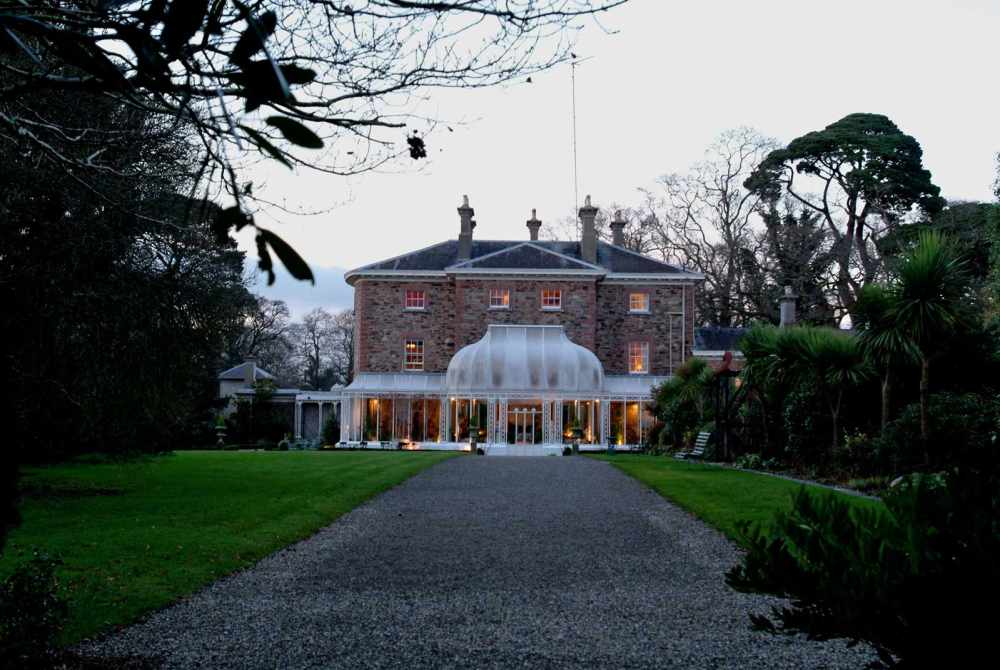
WWW.MARLFIELDHOUSE.COM 

Marlfield House, photograph courtesy of the website.

The website tells us:

Marlfield House is renowned for its hospitality and service, welcoming guests for over 40 years, and is recognised as one of the most luxurious boutique hotels in Wexford, Ireland with the focus on environmentally sustainable practices. All rooms and suites at Marlfield House luxury hotel in County Wexford, Ireland are styled to provide you with elegant, comfortable interiors, furnished with antiques and paintings. Set in 36 acres of woodland, ornamental lake, rose, vegetable and herb gardens, it is a haven of tranquillity, with peacocks, hens, dogs and ponies waiting to greet you on your garden walk.

Marlfield House, photograph courtesy of the website.

The house is set in 40 acres of manicured gardens, encompassing a large kitchen garden, woodland walks, lake and fowl reserve, lawns and herbaceous borders. The interior bears all the signs of a much loved house filled with fresh flowers, gleaming antiques and mirrors, blazing fires and period paintings.

Marlfield House, photograph courtesy of the website.

Mark Bence-Jones writes of Marlfield (1988):

Supplement 

P. 299. (Stopford, Courtown, E/PB) “A three storey Regency house of random stone with brick facings; four bay front with two bay breakfront centre, eaved roof on bracket cornice, massive chimneystacks. Originally the dower house of the [Stopford] Earls of Courtown, it eventually replaced Courtown House as their Irish seat. Sold in 1979 to Mary Bowe, who has opened it as an hotel. As an extension to the dining room, a veranda and an elegant curvilinear conservatory were added to the front of the house 1983; the architects of this addition being Messrs Cochrane, Flynn-Rogers and Williams.” 
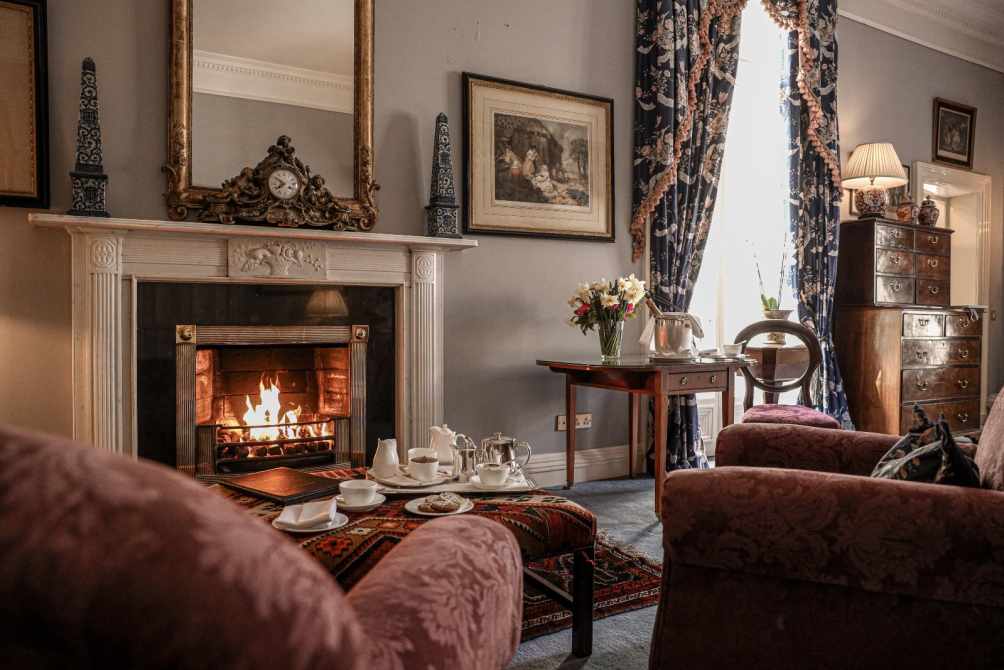
Marlfield House, photograph courtesy of the website.

The National Inventory tells us it is a four-bay (two-bay deep) three-storey land agent’s house, built 1852, on a T-shaped plan; four-bay three-storey rear (south) elevation centred on two-bay full-height breakfront. Occupied, 1901; 1911. In occasional use, 1916-75. Vacated, 1975. Sold, 1977. Modified, 1989, producing present composition to accommodate continued alternative use… “A land agent’s house erected by James Thomas Stopford (1794-1858), fourth Earl of Courtown (Walsh 1996, 68), representing an important component of the mid nineteenth-century domestic built heritage of the outskirts of Gorey with the architectural value of the composition, one succeeding an adjacent house occupied by Reverend James Bentley Gordon (1750-1819), author of “History of the Rebellion in Ireland in the Year 1798” (1803), confirmed by such attributes as the compact plan form centred on a much-modified doorcase; the construction in an ochre-coloured fieldstone offset by vibrant red brick dressings producing a mild polychromatic palette; the diminishing in scale of the openings on each floor producing a graduated visual impression; and the monolithic timber work embellishing the roofline. Having been well maintained, the elementary form and massing survive intact together with substantial quantities of the original fabric, both to the exterior and to the interior, including some crown or cylinder glazing panels in hornless sash frames: meanwhile, contemporary joinery; Classical-style chimneypieces; and the decorative plasterwork enrichments, all highlight the artistic potential of the composition. Furthermore, adjacent outbuildings (extant 1904); a walled garden (extant 1904); and a nearby gate lodge (see 15700718), all continue to contribute positively to the group and setting values of a self-contained estate having historic connections with Colonel Robert Owen (1784-1867) and Charlotte Owen (1796-1853) ‘late of Marlfield County Wexford’ (Calendars of Wills and Administrations 1870, 447); and the Stopford family following the sale (1947) and demolition (1948-9) of Courtown House (see 15701216) including James Walter Milles Stopford (1853-1933), sixth Earl of Courtown; Major James Richard Neville Stopford DL OBE (1877-1957), seventh Earl of Courtown; and Brevet Colonel James Montagu Burgoyne Stopford OBE (1908-75), eighth Earl of Courtown.

Marlfield House, photograph courtesy of the website.

11. Monart, Enniscorthy, Co Wexford – 5* hotel 
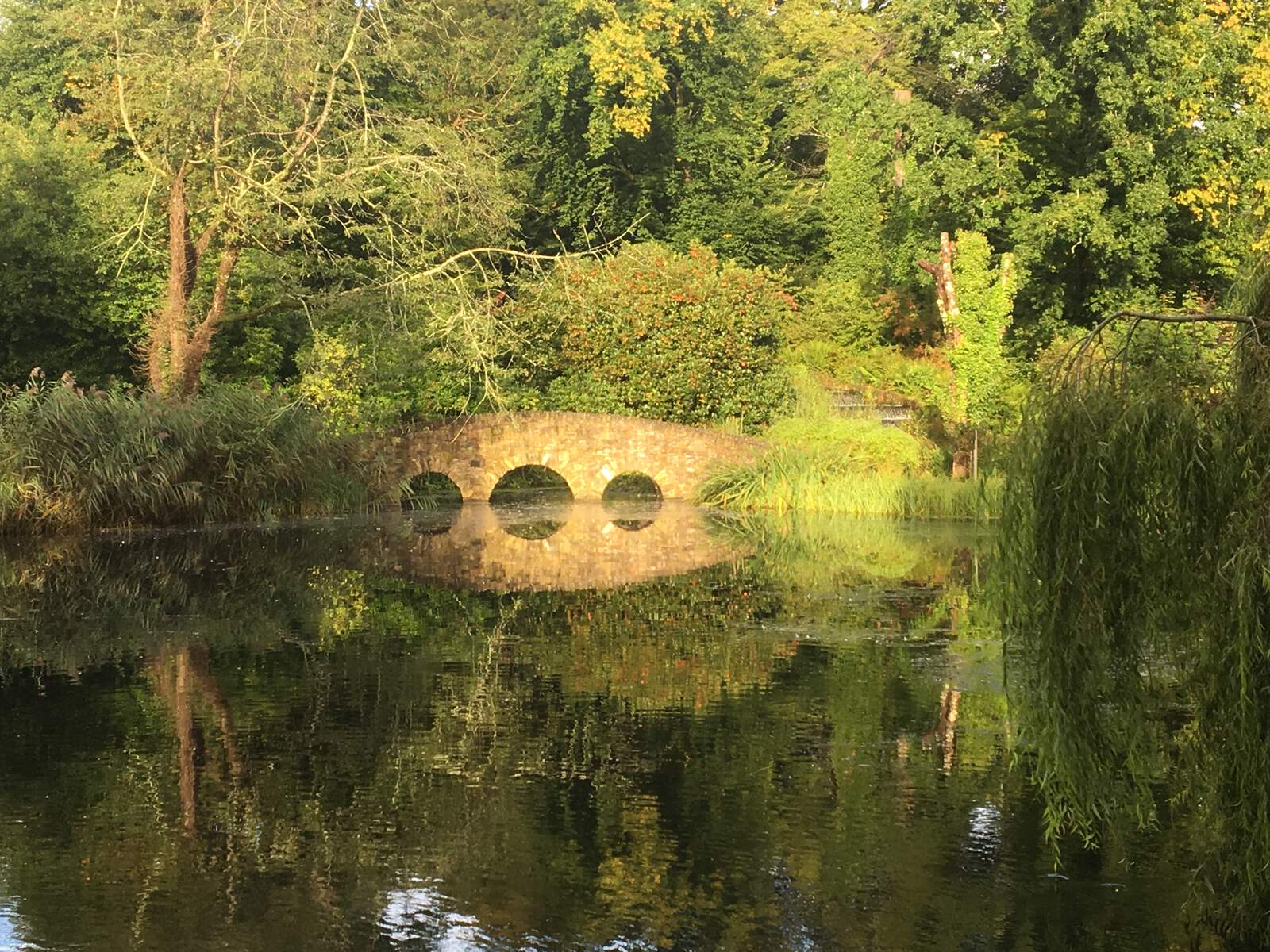
https://www.monart.ie/

Monart Spa Wexford Annica Jansson 2016, for Tourism Ireland, Ireland’s Content Pool.

Nestled in over 100 acres of lush countryside in County Wexford, Monart offers two types of accommodation, 68 deluxe bedrooms with lake or woodland views and two luxurious suites located in the 18th century Monart House.

Mark Bence-Jones writes (1988): p. 208. “Cookman/IFR) A three storey mid-C18 house of sandstone and limestone dressings Five bay front with breakfront centre; Venetian windows in centre of middle storey, with Diocletian windows over it; modified Gibbsian doorcase. Later additions.”

The National Inventory tells us:

A country house erected by Edward Cookman JP (d. 1774), one-time High Sheriff of County Wexford (fl. 1763), representing an important component of the eighteenth-century domestic built heritage of County Wexford with the architectural value of the composition, ‘a handsome mansion pleasantly situated on a gentle eminence above the Urrin [River] in a highly improved and richly wooded demesne’ (Lewis 1837 II, 385), confirmed by such attributes as the neo-Palladian plan form centred on a Classically-detailed breakfront; the construction in an ochre-coloured fieldstone offset by silver-grey granite dressings not only demonstrating good quality workmanship, but also producing a mild polychromatic palette; the diminishing in scale of the openings on each floor producing a graduated visual impression; and the parapeted roofline. Having been sympathetically restored following a prolonged period of unoccupancy in the later twentieth century, the elementary form and massing survive intact together with substantial quantities of the original fabric, both to the exterior and to the interior, including crown or cylinder glazing panels in hornless sash frames: meanwhile, contemporary joinery; Classical-style chimneypieces; and “bas-relief” plasterwork enrichments, all highlight the artistic potential of a country house having historic connections with the Cookman family including Nathaniel Cookman (—-); Edward Rogers Cookman JP (1788-1865) ‘late of Monart House in the County of Wexford’ (Calendars of Wills and Administrations 1865, 70); Nathaniel Narcissus Cookman JP DL (1827-1908), ‘Country Gentleman late of Monart House Enniscorthy County Wexford’ (Calendars of Wills and Administrations 1908, 96; cf. 15701922); and Captain Nathaniel Edward Rogers Cookman JP DL (1894-1983); and a succession of tenants including Lowry Cliffe Tottenham (1858-1937), ‘Gentleman [and] District Inspector of Royal Irish Constabulary’ (NA 1911).” 

12. The Gate Lodge, Mount Congreve €€

https://mountcongreve.com/gate-lodge/

Located in the heart of the lush Waterford countryside, on the grounds of the historic 18th-century Mount Congreve estate, this tastefully restored gate lodge is the perfect choice if you’re looking for a luxury self-catering stay in Ireland.

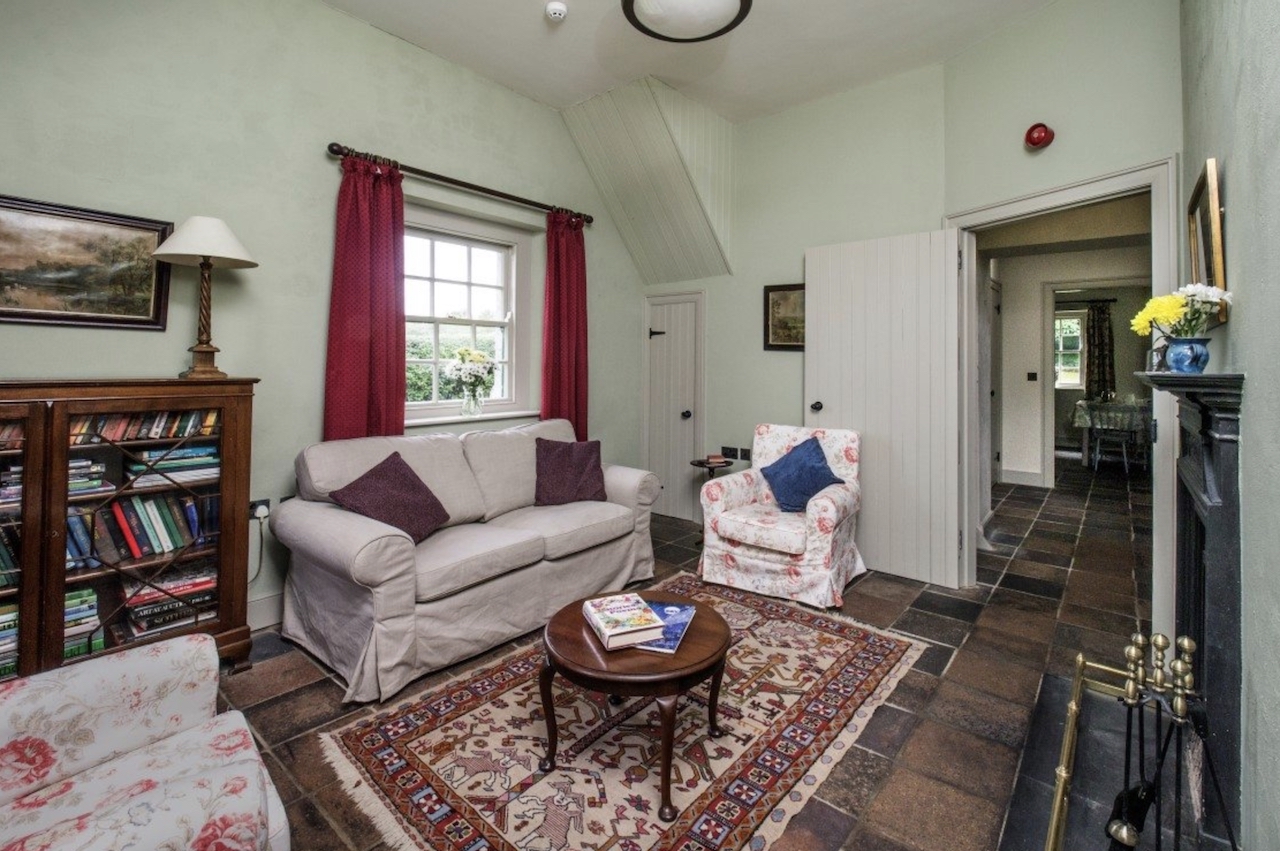
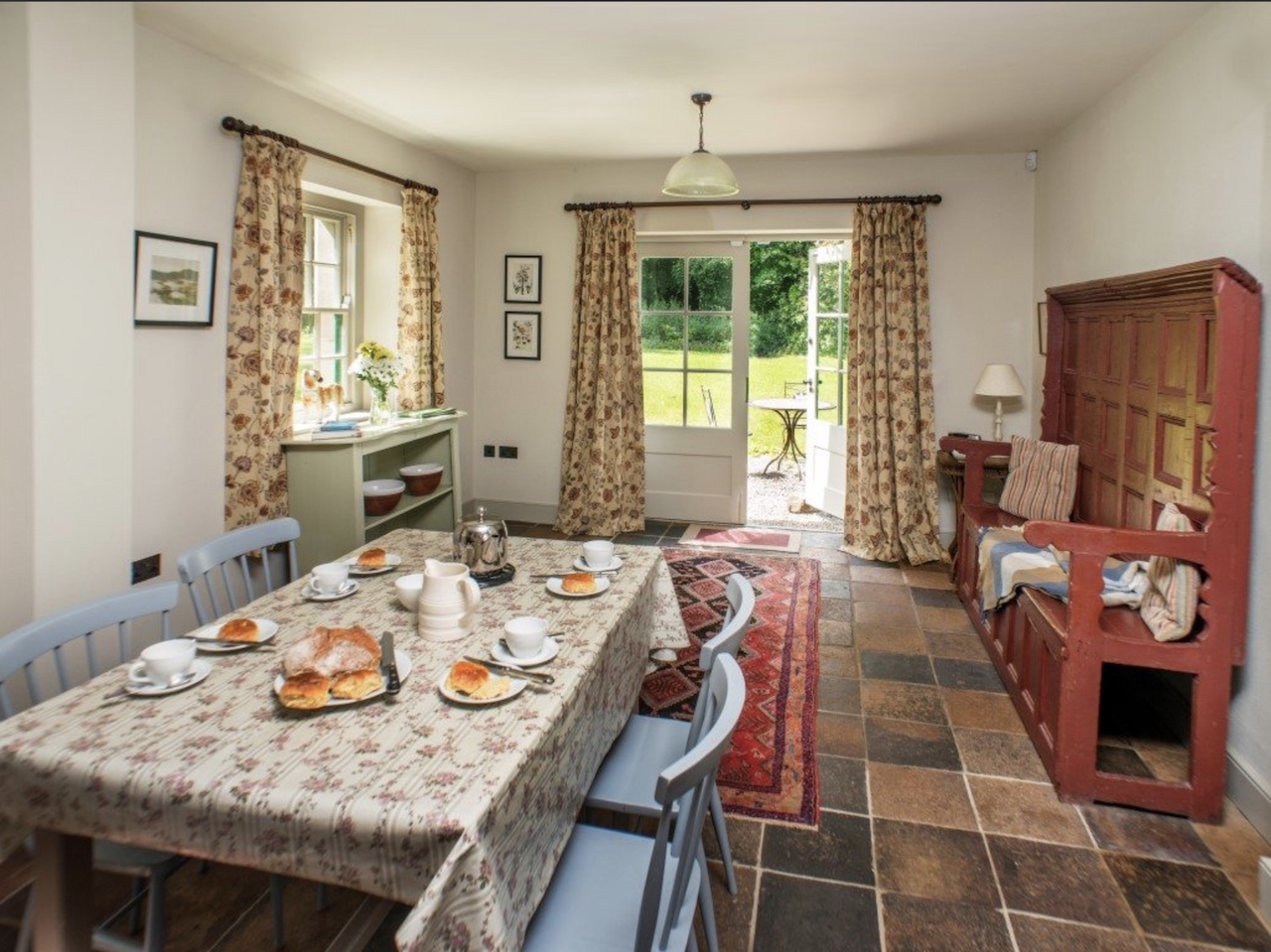
Originally built in 1775, the newly renovated Gate Lodge at Mount Congreve is home to a fully fitted galley kitchen with marble countertops, a living room with a 19th-century French walnut fold-out day bed, two mustard wingback armchairs, Smart TV, an antique bio-ethanol stove, and a bathroom complete with a walk-in shower.”Originally built in 1775, the newly renovated Gate Lodge at Mount Congreve is home to a fully fitted galley kitchen with marble countertops, a living room with a 19th-century French walnut fold-out day bed, two mustard wingback armchairs, Smart TV, an antique bio-ethanol stove, and a bathroom complete with a walk-in shower.

With two cosy double bedrooms (sleeping up to four adults*), the Gate Lodge is the perfect choice if you’re looking for a luxury self-catering stay in Ireland.

13. Rathaspeck Manor “doll’s house” gate lodge, County Wexford and the Manor B&B

https://www.airbnb.ie/rooms/18288598?source_impression_id=p3_1646906004_9dSSY0tDTw%2FmQ8TE

The delightful Rathaspeck gate lodge, County Wexford, available for accommodatino on airbnb. Photograph © Jennifer Winder-Baggot, www.irishhistorichouses.com

and Manor https://www.rathaspeckmanor.ie

The website tells us:

Rathaspeck Manor Georgian House Wexford was built between 1680-1720 by the Codd Family who came to Ireland circa 1169. William Codd’s son Sir Osborne Codd settled at Rathaspeck and erected a castle there in 1351. 

A descendant Loftus Codd was succeeded by daughters, one of whom, Jane Codd, married Thomas Richards. The Richards Family came to Ireland in 1570 approx. It was this marriage which placed Rathaspeck in the Richards Family. 

Jane and Thomas had 6 sons and 2 daughters. The eldest son Thomas, born 1722 had a Family of two daughters, the oldest Martha married Count Willimsdorf from the Kingdom of Hannover in 1802. This couple had one son, Thomas William Fredrick Von Preberton Willimsdorf who died in 1834 unmarried. There were also three daughters, one of whom Elizabeth, born in 1778, died in 1863 in Holland. 

Elizabeth married Count Von Leinburg Slirrin on April 15th 1802 and they proceeded to have a Family of ten children born between 1803 and 1820 . It is believed that sometime after this the family moved to Holland. Rathaspeck was in the hands of an English Family called Moody after this until the early 1900’s. The Moody built the present gate lodge – or “Doll’s House” in 1900. 

The Meyler Family came to Rathaspeck in 1911 when it was offered for sale and it was from the Meyler Family that the Manor passed to the Cuddihy Family. 

The site of the original Castle is unknown, but it is considered that the present Rathaspeck Manor Georgian Country Home, Ireland is built on the site. 

“Rath” means Fort , so the name of Rathaspeck stems from the Gaelic Ratheasbuig , meaning “Fort of the Bishop”. 

14. Riverbank House Hotel, The Bridge, Wexford, Ireland Y35 AH33

https://www.riverbankhousehotel.com

15. Rosegarland House, Wellingtonbridge, County Wexford – courtyard accommodation

https://rosegarlandestate.ie/

Rosegarland Estate offers visitors a unique opportunity to stay on an extremely old and unspoilt country estate. It allows you to step back in time when you walk along the avenues, woodland paths and old bridle paths which pass through the ancient woodlands and beside the River Corach.

Relax and unwind in one of our luxury self-catering cottages in Rosegarland Estate. Our four cottages are registered with Failte Ireland (the Irish Tourist Board) and have been awarded a 4 star rating.  Old world charm has been combined with modern day luxury in the cottages which are set in a picturesque courtyard. A welcome basket of home baked goodies will greet you when you arrive.

All the cottages have complimentary WiFi and satellite television channels which can be enjoyed in front of a Waterford Stanley wood burning stove.

Rosegarland Estate, courtesy of website.

Mark Bence-Jones writes (1988):

p. 245. “(Synnott/IFR; Leigh/IFR) An early C18 house of two storeys over a high basement was built by Leigh family, close to an old tower house of the Synnotts, the original owners of the estate. Later in C18, a larger two storey gable-ended range was added at right angles to the earlier building, giving the house a new seven bay front, with a very elegant columned and fanlighted doorway, in which the delicately leaded fanlight extends over the door and the sidelights. There is resemblance between this doorway and that of William Morris’s town house in Waterford (now the Chamber of Commerce) which is attributed to the Waterford architect, John  Roberts; the fact is that it is also possible to see a resemblance between the gracefully curving and cantilevered top-lit staircase at Rosegarland – which is separated from the entrance hall by a doorway with an internal fanlight – and the staircase of the Morris house, would suggest that the newer range at Rosegarland and the Morris house are by the same architect. At the back of the house, the two ranges form a corner of a large and impressive office courtyard, one side of which has a pediment and a Venetian window. In another corner of the courtyard stands the old Synnott tower house, which, in C19, was decorated with little battlemented turrets and a tall and slender turret like a folly tower, with battlements and rectangular and pointed openings; this fantasy rises above the front of the house. The early C18 range contains a contemporary stair of good joinery, with panelling curved to reflect the curve of the handrail. The drawing room, in the later range, has a cornice of early C19 plasterowrk and an elaborately carved chimneypiece of white marble. The dining room, also in this range, was redecorated ca 1874, and given a timber ceiling and a carved oak chimneypiece.” 
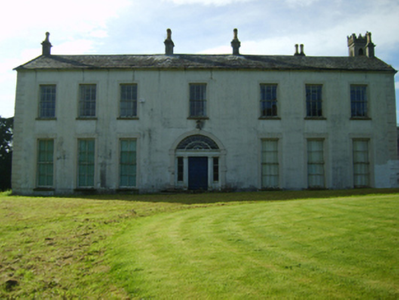
Rosegarland House, courtesy of National Inventory of Architectural Heritage.

The National Inventory tells us:

A country house erected by Robert Leigh MP (1729-1803) representing an important component of the eighteenth-century domestic built heritage of south County Wexford with the architectural value of the composition, one attributable with near certainty to John Roberts (1712-96) of Waterford, confirmed by such attributes as the deliberate alignment maximising on scenic vistas overlooking gently rolling grounds and the meandering Corock River; the symmetrical footprint centred on a Classically-detailed doorcase not only demonstrating good quality workmanship, but also showing a pretty fanlight; and the diminishing in scale of the openings on each floor producing a graduated visual impression. A prolonged period of unoccupancy notwithstanding, the elementary form and massing survive intact together with substantial quantities of the original fabric, both to the exterior and to the interior including not only crown or cylinder glazing panels in hornless sash frames, but also a partial slate hung surface finish widely regarded as an increasingly endangered hallmark of the architectural heritage of County Wexford: meanwhile, contemporary joinery; ‘elaborately carved chimneypieces of white marble’ (Bence-Jones 1978, 246); plasterwork enrichments; and a top-lit staircase recalling the Roberts-designed Morris House [Chamber of Commerce] in neighbouring Waterford (Craig and Garner 1975, 68), all highlight the considerable artistic potential of the composition. Furthermore, an adjacent stable complex (see 15704041); a walled garden (see 15704042); a nearby farmyard complex (extant 1902; coordinates 685132,615236); and a distant gate lodge (extant 1840; coordinates 685381,616928), all continue to contribute positively to the group and setting values of an estate having long-standing connections with the Leigh family including Francis Robert Leigh MP (1758-1839); Francis Augustine Leigh (1822-1900), ‘late of Rosegarland County Wexford’ (Calendars of Wills and Administrations 1900, 277); Francis Robert Leigh DL (1853-1916), ‘late of Rosegarland Wellington Bridge County Wexford’ (Calendars of Wills and Administrations 1916, 371); Francis Edward Leigh (1907-2003); and Robert Edward Francis Leigh (1937-2005).

16. Wells House, County Wexfordself-catering cottage accommodation, see above

https://wellshouse.ie/self-catering-accommodation-wexford 

17. Wilton Castle, Bree, Enniscorthy, Co. Wexford Y21 V9P9 – section 482

www.wiltoncastleireland.com
Open for accommodation: all year

See my write-up: www.irishhistorichouses.com/2022/02/04/wilton-castle-bree-enniscorthy-co-wexford-and-a-trip-to-johnstown-castle/
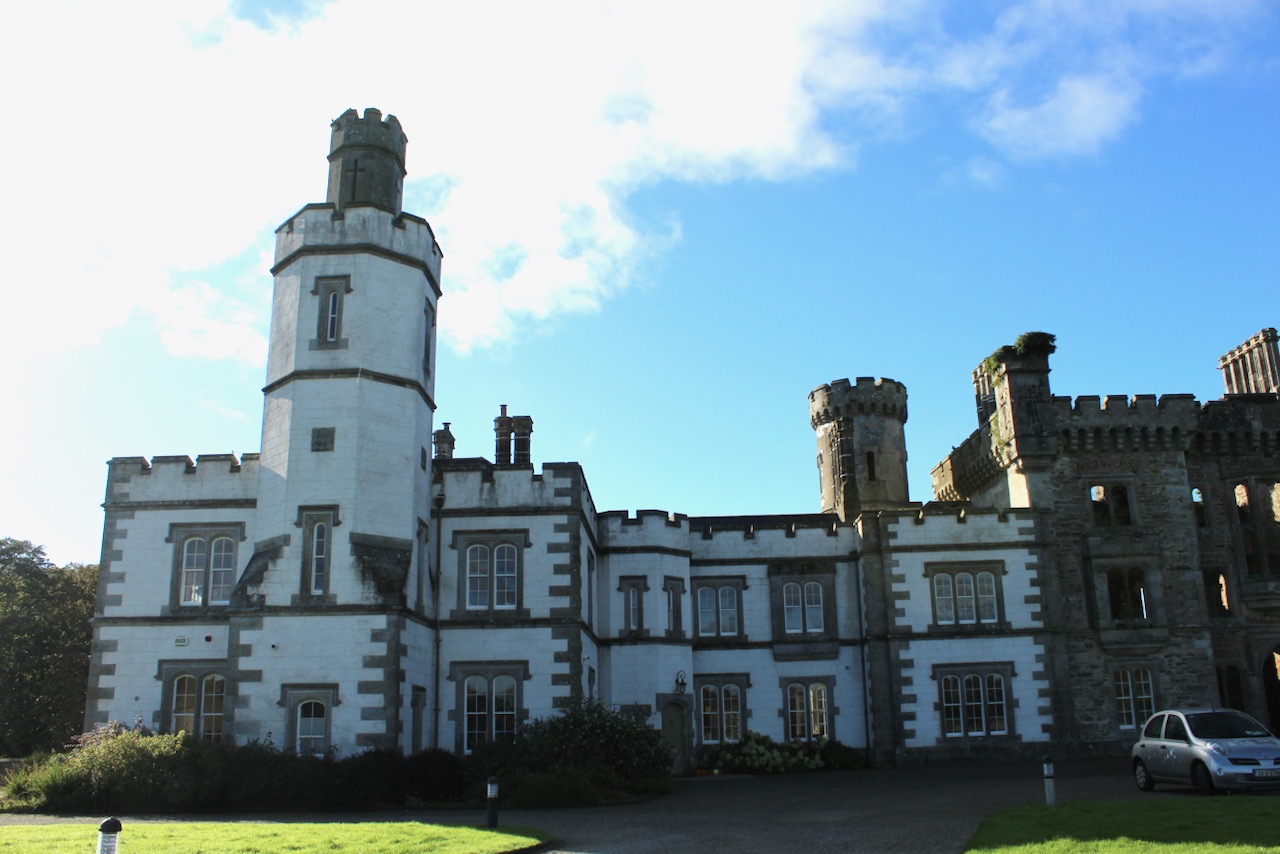
Wilton Castle, County Wexford.

18. Woodbrook House, Killanne, Enniscorthy, Co. Wexford – section 482

Tourist Accommodation Facility

Open for accommodation all year 2025

www.woodbrookhouse.ie

See my entnry https://irishhistorichouses.com/2025/03/13/woodbrook-killanne-enniscorthy-co-wexford-y21-tp-92-section-482-accommodation/
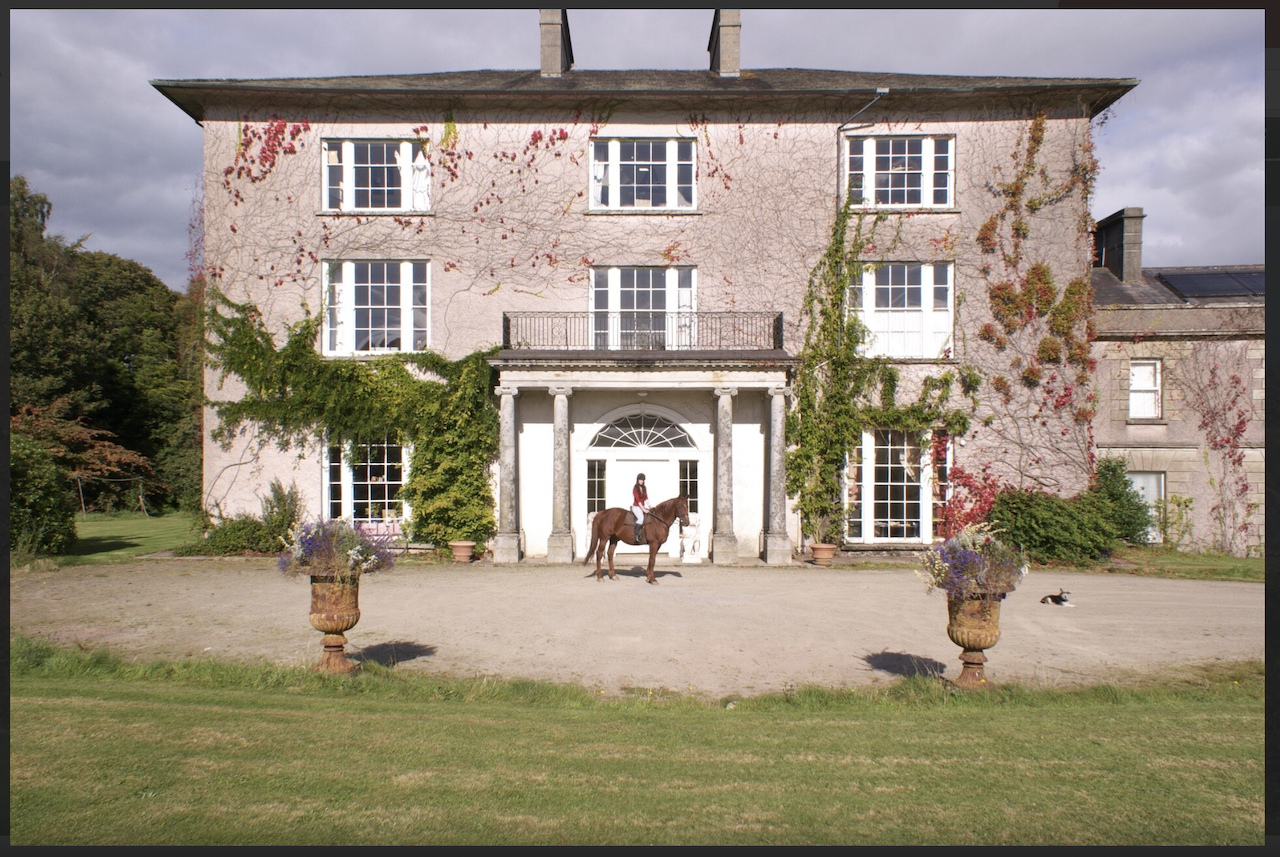
Woodbrook, County Wexford, courtesy Hidden Ireland.

The Historic Houses of Ireland website tells us:

Nestling beneath the Backstairs Mountains near Enniscorthy in County Wexford, Woodbrook, which was first built in the 1770s, was occupied by a group of local rebels during the 1798 rebellion. Allegedly the leader was John Kelly, the ‘giant with the gold curling hair’ in the well known song ‘The Boy from Killanne’. It is said that Kelly made a will leaving Woodbrook to his sons but he was hanged on Wexford bridge, along with many others after the rebels defeat at Vinegar Hill. He was later given an imposing monument in nearby Killanne cemetery. 

Arthur Jacob, who originally came from Enniscorthy and became Archdeacon of Armagh, built Woodbrook for his daughter Susan, who had married Captain William Blacker, a younger son of the family at Carrigblacker near Portadown. The house was badly knocked about by the rebels and substantially rebuilt in about 1820 as a regular three storey Regency pile with overhanging eaves, a correct Ionic porch surmounted by a balcony and three bays of unusually large Wyatt windows on each floor of the facade.

Woodbrook House, photograph courtesy of Woodbrook website.

Woodbrook lay empty for some years after E. C. Blacker’s death in 1932. The house was occupied by the Irish army during the Second World War and was then extensively modernised when his nephew Robert moved back to County Wexford with his wife and family after the sale of Carrickblacker in the 1950s. Eventually sold in the mid 1990s, Woodbrook and the remains of a once substantial estate was bought by Giles and Alexandra FitzHerbert in 1998. They continue to live in the house with their family today.https://www.ihh.ie/index.cfm/houses/house/name/Woodbrook

19. Woodlands Country House, Killinierin, County Wexford B&B

https://www.woodlandscountryhouse.com

Relax in comfortable old world charm in the heart of the Wexford Countryside at Woodlands Country House, a magnificently well preserved Georgian House with beautiful antiques. It is a charming and intimate place to relax, where fine food and furnishings are matched by warm and impeccable service that says you are special.

Woodlands Country House Bed & Breakfast is ideally situated near the market town of Gorey and the picturesque seaside resort of Courtown Harbour on the Wexford/Wicklow border in South East Ireland. The Country House B&B is only 1 hour from Dublin off the M11 making it an ideal location for touring the South East of Ireland.

20. Woodville House, New Ross, Co Wexford – 482, see above

Whole House rental County Wexford:

1. Ballinkeele, whole house rental (sleeps up to 19 people)

www.ballinkeele.ie

Ballinkeele House, photograph courtesy of website.

The website says:

Make yourselves comfortable in your grand home from home. This Irish country house was built to entertain and is perfect for gathering family & friends together for a holiday, a special birthday or anniversary. With 7 bedrooms and dining table for 19 guests – there’s space for everyone. You’ll be the hero for booking Ballinkeele!

Built in the 1840s by your host’s family, it’s a the perfect blend of modern and antique with a bespoke modern kitchen, WiFi and (Joy of Joys!) a modern heating system!”

Ballinkeele House, photograph courtesy of website.

The Historic Houses of Ireland website tells us:

In the first quarter of the 19th century the Maher family, who were famous for their hunting and racing exploits in County Tipperary, moved to County Wexford. They purchased Ballinkeele, near Enniscorthy, from the Hay family, one of whose members had been hanged for rebellion on Wexford bridge in 1798. John Maher, MP for County Wexford, began work on a new house in 1840 and Ballinkeele is one of Daniel Robertson’s few houses in the classical taste. The other was Lord Carew’s magnificent Castleboro, on the opposite side of the River Slaney, sadly burnt by the IRA in 1922 and now a spectacular ruin.   

The house is comprised of a ground floor and a single upper storey, with a long, slightly lower, service wing to one side in lieu of a basement. The facades are rendered with cut-granite decoration, including a grandiose central porch, supported by six Tuscan columns and surmounted by an elaborate balustrade, which projects to form a porte cochère.”

Ballinkeele House, photograph courtesy of website.

The garden front has a central breakfront with a shallow bow, flanked by wide piers of rusticated granite. These are repeated at each corner as coigns.

The interior is classical, with baroque overtones, and is largely unaltered with most of its original contents. The hall runs from left to right and is consequently lit from one side, with a screen of scagliola Corinthian columns at one end and an elaborate cast-iron stove at the other.

The library and drawing room both have splendid chimneypieces of inlaid marble in the manner of Pietro Bossi, while the fine suite of interconnecting rooms on the garden front open onto a raised terrace.” 
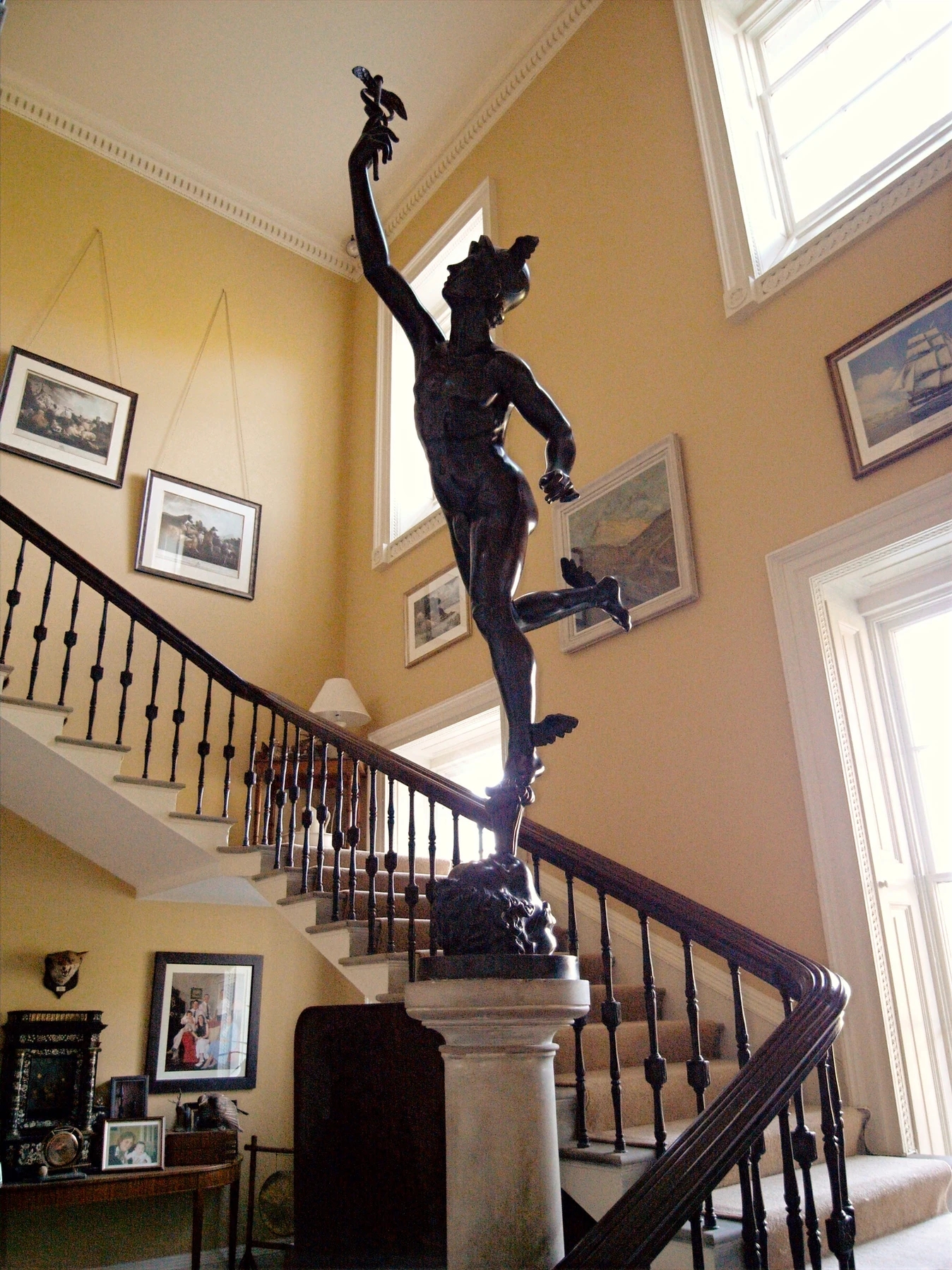
Ballinkeele House, photograph courtesy of website.

“The staircase hall has a spectacularly cantilevered stone staircase, with decorative metal balusters. As it approaches the ground floor the swooping mahogany handrail wraps itself around a Tuscan column supporting a bronze statue of Mercury, in a style that anticipates Art Nouveau by more than forty years.

Outside, two avenues approach the house, one which provides a glimpse of a ruined keep reflected in an artificial lake, while both entrances were built to Robertson’s designs.

The present owners are Valentine and Laura Maher who live at Ballinkeele with their children.

[ https://www.ihh.ie/index.cfm/houses/house/name/Ballinkeele ]
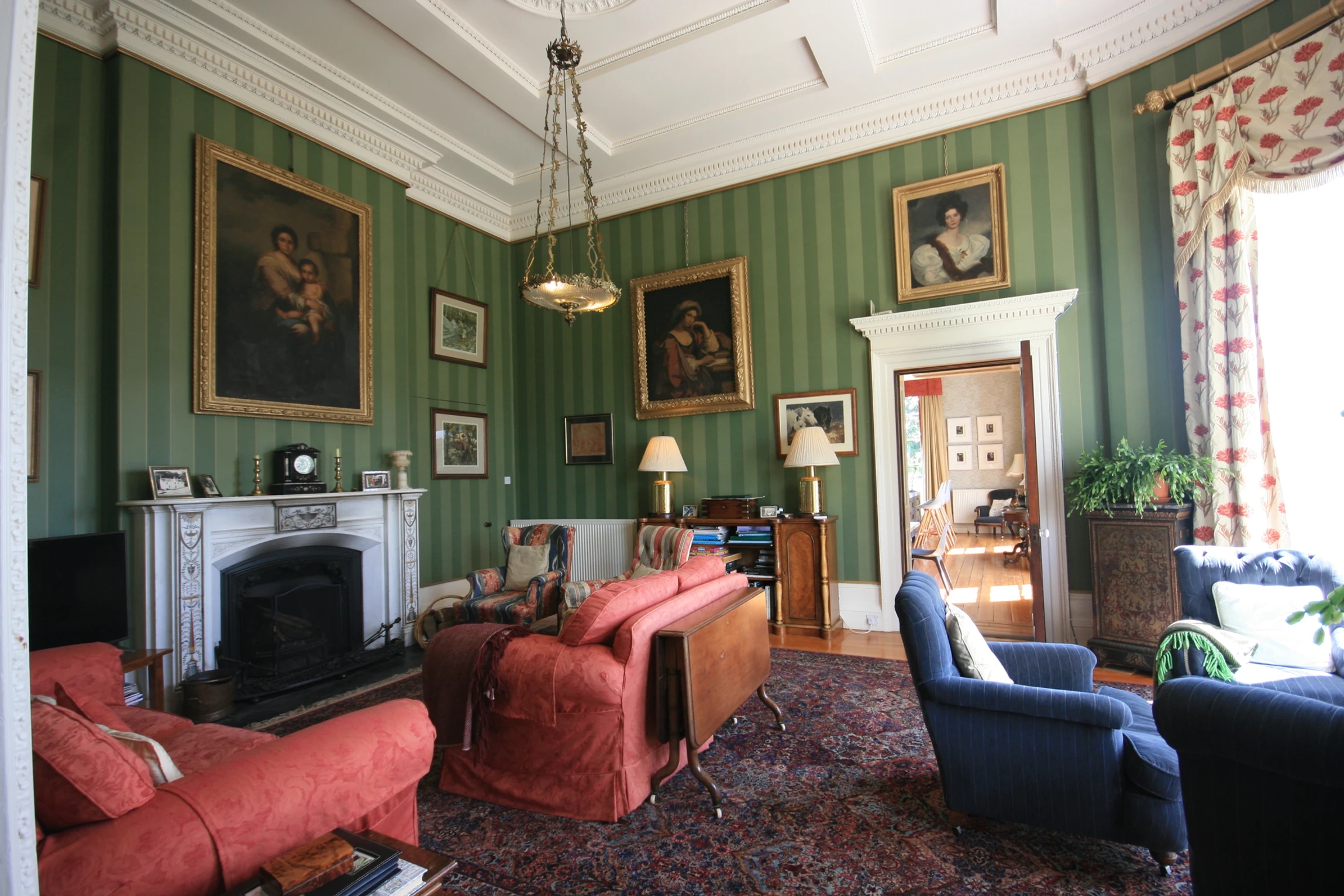
Ballinkeele House, photograph courtesy of website.

2. Horetown House, County Wexford (wedding venue, up to 24 people in house, plus shepherd’s huts)

https://www.horetownhouse.ie/

The website tells us:

Horetown House, photograph courtesy of website.

Horetown House is a private country house wedding venue in County Wexford in the South-East corner of Ireland. Situated among rolling hills in the heart of rural Wexford, Horetown House is the perfect venue for a stylish, laid back wedding. Our charming country house is yours exclusively for the duration of your stay with us.

Family owned and run, we can take care of everything from delicious food, bedrooms and Shepherds huts, to a fully licensed pub in the cellar. Horetown House is perfect for couples looking for something a little bit different, your very own country house to create your dream wedding.

Mark Bence-Jones writes (1988): p. 155. “(Davis-Goff, Bt/PB) A three storey Georgian house. Front with two bays on either side of a recessed centre. Triple windows in centre and pillared portico joining the two projections.” 

The National Inventory tells us it is:

A country house erected to designs signed (1843) by Martin Day (d. 1861) of Gallagh (DIA; NLI) representing an important component of the mid nineteenth-century domestic built heritage of County Wexford with the architectural value of the composition, one succeeding a seventeenth-century house (1693) annotated as “Hoarstown [of] Goff Esquire” by Taylor and Skinner (1778 pl. 149), confirmed by such attributes as the deliberate alignment maximising on panoramic vistas overlooking gently rolling grounds; the symmetrical frontage centred on a pillared portico demonstrating good quality workmanship in a silver-grey granite; the diminishing in scale of the openings on each floor producing a graduated visual impression; and the parapeted roofline. Having been well maintained, the elementary form and massing survive intact together with substantial quantities of the original fabric, both to the exterior and to the interior where contemporary joinery; restrained chimneypieces; and decorative plasterwork enrichments, all highlight the artistic potential of the composition. Furthermore, a nearby quadrangle erected (1846) by ‘S.D. Goff Esq Architect [and] Johnson Builder’ continues to contribute positively to the group and setting values of an estate having historic connections with the Goff family including Strangman Davis Goff (né Davis) (1810-83) ‘late of Horetown House County Wexford’ (Calendars of Wills and Administration 1883, 318); and Sir William Goff Davis Goff (1838-1918) of Glenville, County Waterford; a succession of tenants including Joseph Russell Morris (NA 1901) and Edward Naim Townsend (NA 1911); and Major Michael Lawrence Lakin DSO (1881-1960) and Kathleen Lakin (née FitzGerald) (1892-30) of Johnstown Castle.”

donation

Help me to pay the entrance fee to one of the houses on this website. This site is created purely out of love for the subject and I receive no payment so any donation is appreciated!

€15.00

[1] https://www.irelandscontentpool.com/en

[2] Bence-Jones, Mark. A Guide to Irish Country Houses (originally published as Burke’s Guide to Country Houses volume 1 Ireland by Burke’s Peerage Ltd. 1978); Revised edition 1988 Constable and Company Ltd, London.

[3] https://www.buildingsofireland.ie/buildings-search/building/15603115/enniscorthy-castle-castle-hill-enniscorthy-enniscorthy-wexford

[4] https://www.archiseek.com/2014/johnstown-castle-county-wexford/

[5] https://www.buildingsofireland.ie/buildings-search/building/15704226/johnstown-castle-johnstown-fo-by-wexford

Text © Jennifer Winder-Baggot, www.irishhistorichouses.com

Places to visit and stay in County Derry, Northern Ireland

On the map above:

blue: places to visit that are not section 482

purple: section 482 properties

red: accommodation

yellow: less expensive accommodation for two

orange: “whole house rental” i.e. those properties that are only for large group accommodations or weddings, e.g. 10 or more people.

green: gardens to visit

grey: ruins

2025 Diary of Irish Historic Houses (section 482 properties)

To purchase an A5 size 2025 Diary of Historic Houses (opening times and days are not listed so the calendar is for use for recording appointments and not as a reference for opening times) send your postal address to jennifer.baggot@gmail.com along with €20 via this payment button. The calendar of 84 pages includes space for writing your appointments as well as photographs of the historic houses. The price includes postage within Ireland. Postage to U.S. is a further €10 for the A5 size calendar, so I would appreciate a donation toward the postage – you can click on the donation link.

€20.00

The province of Ulster contains counties Antrim, Armagh, Cavan, Derry, Donegal, Down, Fermanagh, Monaghan and Tyrone.

For places to stay, I have made a rough estimate of prices at time of publication:

€ = up to approximately €150 per night for two people sharing (in yellow on map);

€€ – up to approx €250 per night for two;

€€€ – over €250 per night for two.

For a full listing of accommodation in big houses in Ireland, see my accommodation page: https://irishhistorichouses.com/accommodation/

On September 9th 2023 all Landmark Trust properties in Northern Ireland will be open to visitors, from 10am-4pm. See their website for details, https://irishlandmark.com/ as booking will be required, but booking is not open yet. Subscribe for updates to find out when you need to book to make a visit.

Derry:

1. Bellaghy Bawn, County Derry 

2. Hezlett House, 107 Sea Road, Castlerock, County Derry, BT51 4TW on Downhill Demesne.

3. Mussenden Temple, Downhill Demesne

4. Springhill House, County Derry

Places to stay, County Derry

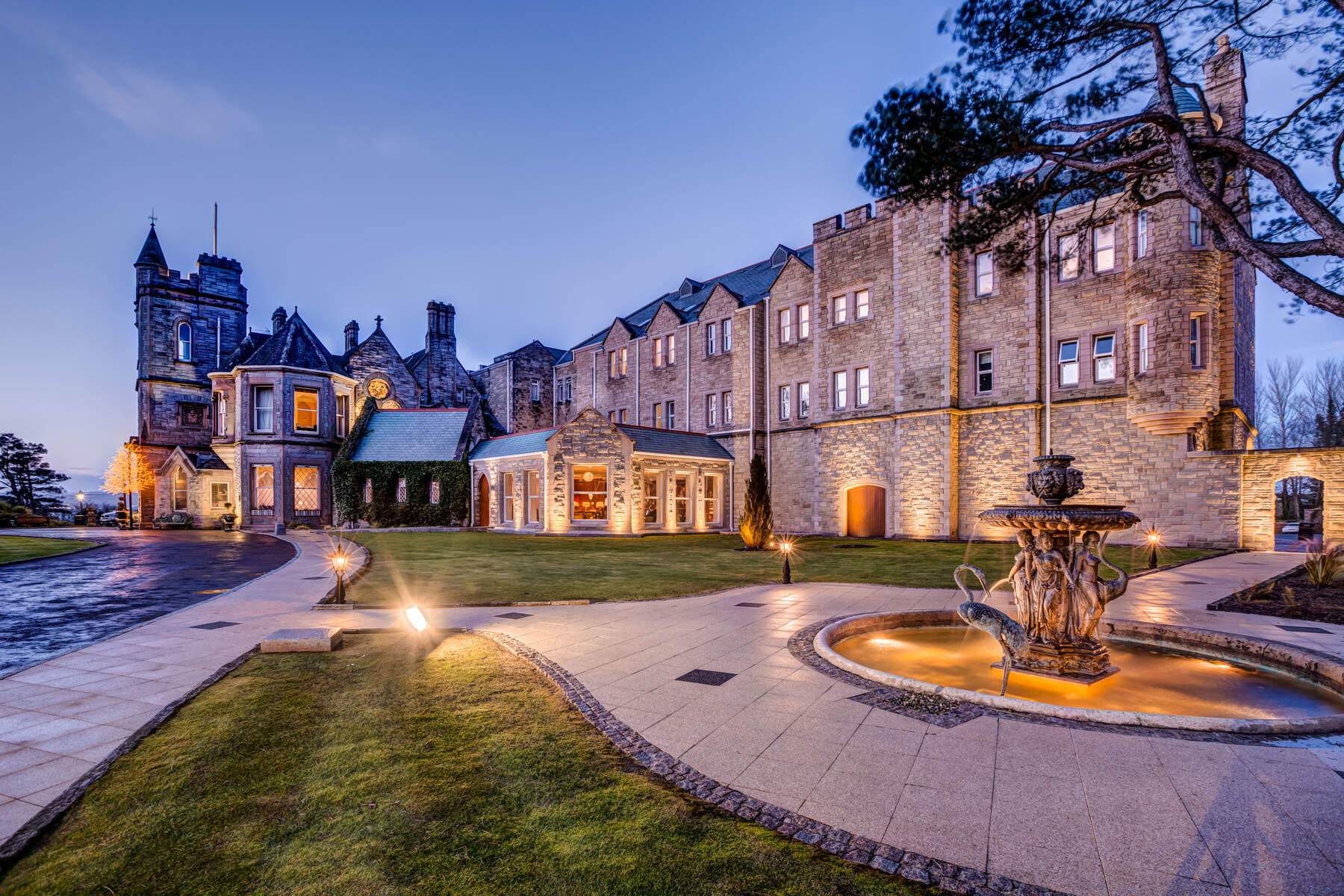
1. Ardtara Country House and restaurant, County Derry €€ 

2. Brown Trout Inn, Aghadowey, Nr Coleraine Co. Derry, BT51 4AD

3. Roselick Lodge, County Derry – whole house rental for 8 guests, three nights minuminimum

Whole House Rental, County Derry

1. Ashbrook House, Brookeborough, Northern Ireland, BT94 4GX

2. Beechill House, 32 Ardmore Road, Derry-Londonderry, Northern Ireland BT47 3QP – weddings

3. Drenagh House, County Derrywhole house rental, 22 guests

donation

Help me to pay the entrance fee to one of the houses on this website. This site is created purely out of love for the subject and I receive no payment so any donation is appreciated!

€15.00

Places to visit in County Derry:

1. Bellaghy Bawn, County Derry

https://discovernorthernireland.com/things-to-do/bellaghy-bawn-p675661

Built around 1619 by Sir Baptist Jones, Bellaghy Bawn is a fortified house and bawn (the defensive wall surrounding an Irish tower house). What exists today is a mix of various building styles from different periods with the main house lived in until 1987.” Open on Sundays.

2. Hezlett House, 107 Sea Road, Castlerock, County Derry, BT51 4TW on Downhill Demesne. https://discovernorthernireland.com/things-to-do/hezlett-house-p687301

Hezlett’s picturesque thatched cottage exterior hides a fascinating early timber frame dating from 1690, making it one of the oldest vernacular domestic buildings in Northern Ireland. The story of the house is told through the experiences of the people who lived there.

The house at Liffock became home to the Hezletts in 1766 and stayed within the family for the next 200 years until the National Trust acquired it in 1976. The National Trust website tells us:

Isaac Hezlett (1720-1790) was the first Hezlett to live in the cottage at Liffock. He acquired the dwelling and some land in 1766. At this point in his life he was married to his second wife Esther and had two sons; Samuel from his first marriage with Margaret Kerr and Jack, half-brother to Samuel. When Samuel’s father died, he inherited the farm at the age of 37 and about five years later he married Esther Steel. She was 22 years his junior and they had eight children. Samuel was intimidated by local insurgents to join the United Irishmen; his half-brother Jack was an ardent supporter. He was threatened to be hanged from the Spanish chestnut tree in his own garden. By 1798 the rebellion was at its height and the two brothers were on opposite sides of the war. 30,000 lives were lost when the rebels were finally defeated. Jack escaped to the recently created United States of America while Samuel remained with his family in their home at Liffock until he died in 1821.

Samuel’s eldest son Isaac (1796-1883) married Jane Swan (1805-1896) in 1823. He built a two-storey extension to form a new self-contained unit for his mother and sisters. This extension could be regarded as forerunner of what we call today a ‘granny-flat’. Isaac also increased the acreage farmed at Liffock. Hugh (1825-1906), Samuel and Jane’s eldest son, increased the acreage of the farm once more. By putting his education to good use he made the farm more productive; more cash crops were grown and the herds of dairy cattle and sheep were increased. The outputs from the farm which generated income included the cash crops of flax, barley, potatoes, oats and turnips, in addition to wool, milk, calves, pigs and eggs. Hugh also oversaw an extensive re-modelling of the farmyard and outbuildings. In 1881 the Gladstone Land Act paved the way for further Acts which enabled tenant farmers to buy the land they had hitherto rented. So by the early 20th century the Hezletts were not tenant farmers but owner-occupiers.

In 1976, with funds provided by Ulster Land fund and the Ulster Architectural Heritage Society the National Trust acquired the house from the third Hugh Hezlett (1911-1988).”

3. Mussenden Temple, Downhill Demesne, County Derry

Mussenden Temple by Matthew Woodhouse 2015 for Tourism Ireland.

https://www.nationaltrust.org.uk/mussenden-temple-and-downhill-demesne

Downhill Demesne delves into a life and landscape steeped in history and nature. There’s much to explore as you enter this enchanting estate. Wander around the 18th-century demesne and discover dovecotes and gardens as you stumble upon a spectacular temple.”

Downhill Demesne, County Derry, photograph by Pocket Squares

The house of Downhill is now a ruin.

Downhill House, County Derry, photograph by Pocket Squares

The National Trust website tells us:

2018 marked the 250th anniversary of the arrival of Frederick Augustus Hervey in the Diocese of Derry. He was consecrated as Bishop in St Columb’s Cathedral in March 1768. Frederick was a man of many parts as well as being a cleric he was a scientist with a deep interest in volcanology; he was a collector of art; he travelled extensively and spoke German, French and Italian fluently; he took a keen interest in Irish politics and music; he was a powerful proponent of religious equality; and he was a builder of churches, bridges and roads.

He is remembered by us for his association with the Giant’s Causeway and the creation of the Downhill Demesne. A keen volcanologist, Frederick ‘discovered’ the Giant’s Causeway in the sense that he publicised what was then an isolated, seldom-visited spot and was the first to study it in a wider scientific context and pass on his findings to his learned friends throughout Europe. He also created Downhill House and the Mussenden Temple, Northern Ireland’s most iconic building, as his country retreat.

The Earl Bishop is largely regarded as being his own architect at Downhill but it was the Cork born Michael Shanahan who drew up most of the building plans and was, for most of the time, his buildings works superintendent. The mason James McBlain executed all the decorative carving and much of the subsequent building for the Earl. Italian stuccadores were also employed, chief among whom was Placido Columbani.

Downhill is characterised by a three storey front, facing south and with two long wings at the back of this. Originally these wings terminated in domes topped with ornamental chimney-pots. The wings were continued in ranges of outbuildings, forming inner and outer yards, and ending towards the sea in two immense curving bastions of basalt.

The main house block was faced with freestone from Dungiven quarries, about 30 miles away. The basement is rusticated and the storeys above decorated with pairs of Corinthian pilasters, topped by Vitruvian scroll course, a cornice and parapet.

Sadly the interior of the house shows little of its original character. The house was almost entirely gutted by a fire which broke out on a Sunday in May 1851. The library was completely destroyed and more than 20 pieces of sculpture had been ruined. Most of the paintings were rescued, but a Raphael, The Boar Hunt, was reported destroyed.

In his later years, the Earl Bishop spent very little time in Ireland. His Irish estates were administered by a distant cousin, Henry Hervey Aston Bruce, who succeeded him following his death in 1803.

In 1804 Henry Hervey Aston Bruce was created a baronet and Downhill remained with the Bruce family until at least 1948, though the family rarely lived there after around 1920.

The only other occupation of the house came about during WWII when the site was requisitioned by the RAF. The house was subsequently dismantled after the war and its roof removed in 1950.”

Frederick Augustus Hervey also built Ballyscullion in Derry and Ickworth in Suffolk, England. He built them not only to indulge his love of architecture, but to house his large collection of paintings, furniture and statues. He first encountered his architect, Michael Shanahan, when he was Bishop of Cloyne in Cork. David Hicks tells us in his Irish Country Houses, a Chronicle of Change that Hervey took Shanahan on a trip to Italy between 1770-1772 in order to make sketches of various items of interest that could be incorporated into his home. Shanahan took up residence in the Hervey estate in Derry and acted as the Earl Bishop’s architect in residence.

Mussenden Temple, Downhill Demesne, County Derry, photograph by Pocket Squares

The Bishop created Mussenden Temple in memory of Mrs Frideswide Mussenden, a cousin who died in 1785. Shanahan was the architect. It is believed that the Bishop used it as a private library, and permitted local Catholics to use the ground floor for mass. He left Downhill and Ballyscullion to Mrs Mussenden’s brother, Reverend Henry Aston Bruce. In doing so, he disinherited his wife and son, with whom he had quarrelled.

Frideswide Mussenden was born Frideswide Bruce. Her parents were Henrietta Aston and James Bruce. Henrietta Aston was daughter of Rev. Hon. Henry Hervey-Aston, son of John Hervey, 1st Earl of Bristol, who was the brother of Bishop Frederick Augustus’s father. The Bishop’s heir was therefore only distantly related, quite a blow to the disinherited wife and son.

He was disinherited by his father the 4th Earl of Bristol.

Reverend Bruce who inherited Downhill and Ballyscullion dismantled the latter in 1813, perhaps due to window taxes, and transferred its furniture and art to Downhill. A fire in 1851 destroyed Downhill and much of its contents. The house was rebuilt to some degree to the design of John Lanyon between 1870-74.

Reverend Bruce was created a British Baronet in 1804. His son became 2nd Baronet and grandson, 3rd Baronet of Downhill. It was passed to the 4th, 5th and 6th Baronets. By the 1950s most of the contents of the house has been sold and the house dismantled and surrounding land sold. The estate is now in the care of the National Trust.

4. Springhill House, County Derry

Springhill House and Gardens Courtesy of Tourism Northern Ireland 2007.

https://discovernorthernireland.com/things-to-do/springhill-p675711

Springhill has a beguiling spirit that captures the heart of every visitor.  Described as ‘one of the prettiest houses in Ulster’, its welcoming charm reveals a family home with portraits, furniture and decorative arts that bring to life the many generations of Lenox-Conynghams who lived here from 1680. The old laundry houses one of Springhill’s most popular attractions, the Costume Collection with some exceptionally fine 18th to 20th century pieces.

New Visitor Reception offering a retail and grab and go catering offer. Celebrated collection of costumes, from the 18th century to 1970s. Visit our second-hand bookshop and pick up a bargain. 

Walks:
Beautiful walled gardens and way marked paths through the parkland. Children’s adventure trail play park and natural play area. A variety of events throughout the year.  There are three walks available: Beech Walk, Snowdrop Walk, Sawpit Hill Walk.

Visitor Facilities:
Historic house, garden, shop, refreshments, guided tours.
Suitable for picnics and country walks. Programme of events available.
House: admission by guided tour (last admission 1 hour before closing).
Open Bank Holiday Mondays and all other public holidays in Northern Ireland.
Closed 25 and 26 December.
Visitor Centre has café and shop.
See Information tab for full Opening Times and Prices.
Access for visitors with disability and facilities for families.
Dogs welcome on leads in grounds/garden only.
Available for functions.

Caravan Site 

and https://www.nationaltrust.org.uk/springhill

Mark Bence-Jones writes about Springhill House in A Guide to Irish Country Houses (1988):

p. 263. “(Lenox-Conyngham/IFR) A low, white-washed, high roofed house with a sense of great age and peace; its nucleus late C17, built ca 1680 by “Good Will” Conyngham [1660-1721], who afterwards played a leading part in the defence of Derry during the Siege. Altered and enlarged at various times; the defensive enclosure or bawn with which it was originally surrounded was taken down, and two single storey free-standing office wings of stone with curvilinear end-gables were built early C18 flaking the entrance front, forming a deep forecourt. Col William Conyngham, MP, added two single-storey wings to the house ca 1765, which was when the entrance front assumed its present appearance: of seven bays, the windows on either side of the centre being narrower than the rest, and with a three sided bow in each of the wings. In the high roof, a single central dormer lighting the attic. The hall has C18 panelling; behind the hall is an early C18 staircase of oak and yew with alternate straight and spiral twisted balusters. The Gun Room has bolection moulded oak panelling which could be late C17 or early C18, though it cannot have been put into this room until much later, for there are remains of C18 wallpaper behind it. The large and lofty drawing room in the right-hand wing is a great contrast after the small, low-ceilinged rooms in the centre of the house; it has a modillion cornice and a handsome black marble chimneypiece. Though essentially a Georgian room, it has been given a Victorian character with a grey and green wallpaper of Victorian pattern. Next to the drawing room, in the garden front, is the dining room, added ca 1850 by William Lenox-Conygham; a large simple room of Georgian character, with a red flock paper and a chimneypiece of yellow marble brought from Herculaneum by the Earl of Bristol Bishop of Derry and presented by him to the family. The garden front, which is irregular, going in and out, facing along an old beech venue to a ruined tower which may originally have been a windmill. Transferred to the Northern Ireland Trust by W.L Lenox-Conygham, HML, shortly before his death in 1957. Springhill is featured in his mother, Mina’s book An Old Ulster Home and is open to the public.” 

William Conyngham (d. 1721), “Good Will”, courtesy of National Trust. Springhill, County Derry.
Ann Upton (1664-1753) wife of William “Goodwill” Conyngham (1660-1721), daughter of Arthur Upton (1623-1706) of Castle Upton, County Antrim, courtesy of National Trust. Springhill, County Derry.

William Conyngham married Ann Upton, daughter of Arthur Upton of Castle Upton, County Antrim (this still exists and is privately owned), MP for County Antrim. Springhill passed to their daughter Anne who married David Butle, a merchant. Their son George took the name Conyngham and inherited Springhill. Although he had sons, Springhill passed through the line of his daughter, Ann (1724-1777) who married Clotworthy Lenox (1707-1785). Their son took the name George Lenox-Conyngham (1752-1816) when he inherited. George married twice: first to Jane Hamilton, and their son William Lenox-Conyngham (1792-1858) added the dining room to Springhill. George married secondly Olivia Irvine of Castle Irvine (also called Necarne; the park around Necarne Castle can freely be visited during daytime. The ruin of the castle itself is boarded up, so its interior can not be visited), County Fermanagh. One of their descendants was Jack Nicholson who inherited Enniscoe in County Mayo.

George Butle Conyngham (d. 1756), courtesy of National Trust. Springhill, County Derry.
Anne Peacocke (d. 1754), Mrs George Butle Conyngham, courtesy of National Trust. Springhill, County Derry.
Called Anne Conyngham (1724-1777) Mrs Clotworthy Lenox, courtesy of National Trust. Springhill, County Derry.
Clotworthy Lenox, courtesy of National Trust. Springhill, County Derry.
George Lenox-Conyngham (1752-1816) courtesy of National Trust. Springhill, County Derry.
William Lenox-Conyngham (1792-1858) courtesy of National Trust. Springhill, County Derry.
Chalotte Melosina Staples (1786-1847), wife of William Lenox-Conyngham (1792-1858), daughter of John Staples (1736-1820) of Lissan, County Tyrone, courtesy of National Trust. Springhill, County Derry.

Springhill passed then from William Lenox-Conyngham (1792-1858) and his wife Charlotte Mesolina Staples of Lissan, County Tyrone, to their son William Fitzwilliam Lenox-Conyngham, and it was his grandson William Lowry Lenox-Conyngham who left it to the Northern Ireland Trust.

Places to stay, County Derry

1. Ardtara Country House and restaurant, County Derry €€

 WWW.ARDTARA.COM

Ardtara is over 120 years old, but its story goes back much further. Back to the origins of the linen industry in Northern Ireland. The house was built by Harry Clark as a romantic and lively family home around 1896. Harry was a restless adventurer who was coerced to join his family’s linen business with promises of global travel and the freedom to pursue his ambitions. Clark’s linen business was already over 150 years old at the time and was famous for producing fine linens from Flax using the ancient process of beetling.”

2. Brown Trout Inn, Aghadowey, Nr Coleraine Co. Derry, BT51 4AD

https://www.browntroutinn.com/

The website tells us:

Whether it’s for a drink, dinner, a weekend break or a round of golf we want you to enjoy the Brown Trout experience.

At the Brown Trout Inn we know that relaxing means different things to different people. For some, food and drink is all-important. Our menu offers fresh locally sourced produce ranging from ‘taste of Ulster’ favourites like honey-grilled gammon and buttery champ to slow-roasted lamb shanks and not forgetting fresh fish, including grilled trout of course.

For others, putting their feet up is the closest thing to heaven. Our Courtyard accommodation offers space, comfort and quality – the cottages hold NITB four-star status. All our accommodation is easily accessible for wheelchair users and guests with disabilities and all rooms are dog-friendly. Wifi access is free throughtout the hotel.

3. Roselick Lodge, County Derry – whole house rental for 8 guests, three night minimum

https://www.roselicklodge.co.uk

Dating back to 1830, this sympathetically restored Georgian property offers a tranquil rural setting midway between Portstewart and Portrush. Whilst retaining many of the original features and charm, the open plan extension has been adapted to suit modern living. The accommodation comprises three main reception areas, a Magnificent Family Kitchen /Living and Dining area, a cosy and tastefully decorated Snug with open fire, access to south facing Orangery and large secluded cottage gardens. Upstairs are four well proportioned bedrooms sleeping up to eight guests and a spacious first floor balcony with sea views. Minimum 3 night stay.

Whole House Rental, County Derry

1. Ashbrook House, Brookeborough, Northern Ireland, BT94 4GX

Weddings or whole house rental: https://www.ashbrookehouse.com

Ashbrook House, County Derry, photograph courtesy of Ashbook House facebook page.

The earliest part of the house was built in 1830 by Sir Henry Brooke Baronet for use by his tenants. It was then enlarged to create the beautiful Georgian dower house that you see today. Generations of the historic Brooke family are woven into the fabric of the house – quite literally, in the case of the exquisite needlepoints created by Christopher’s maternal grandmother that can be found in various rooms. Ashbrooke’s latest custodians are Christopher Brooke and his wife Amanda, whose tireless efforts have restored the historic mansion to full glory.”

2. Beechill House, 32 Ardmore Road, Derry-Londonderry, Northern Ireland BT47 3QPweddings

https://www.beech-hill.com/

Beechill Country House Hotel, Courtesy of Tyrone and Sperrins destination, for Tourism Ireland.

3. Drenagh House, County Derry – whole house rental, 22 guests

https://www.drenagh.com

Nestled in beautiful parkland where you will find our grand Georgian Mansion House which is perfect for weddings, family get togethers, corporate events and much more.

Mark Bence-Jones writes about Drenagh House (formerly Fruit Hill) in A Guide to Irish Country Houses (1988):

p. 107. “(McCausland/IFR) The earliest major country house by Charles Lanyon, built ca 1837 for Marcus McCausland, replacing an early C18 house on a different site. Of significance in the history of C19 Irish domestic architecture in that it is a competent late-Georgian design by an architect whose buildings in the following decade are definitely Victorian. Two storey; o an attractive pinkish sandstone ashlar. Five bay entrance front with the centre bay recessed and a single-storey Ionic portico in which the outer columns aer coupled. Adjoining front of six bays with two bay pedimented breakfront; the duality of the elevation being emphasised rather than resolved by the presence of three giant pilasters, supporting the pediment. Rear elevation of one bay between two three sided bows, with fanlighted tripartite garden door. Lower service wing at side. Balustraded parapet round roof and on portico. Single-storey top-lit central hall with screen of fluted Corinthian columns; graceful double staircase with elegant cast iron balusters rising from behind one of these screens. Rich plasterwork ceilings in hall, over staircase and in drawing room; simpler ceilings in morning room and dining room. At the head of the stairs, a bedroom corridor with a ceiling of plaster vaulting and shallow domes goes round the central court or well, the lower part of which is roofed over to form the hall. Very large and extensive outbuildings. Vista through gap in trees opposite entrance front of house to idyllic landscape far below, the ground falling steeply on this side; straight flight of steps on the axis of this vista leading down to bastion terrace with urns. Chinese garden with circular “moon gate,” laid out by Lady Margaret McCausland 1960s. Gate lodge by Lanyon with pedimented Ionic portico.” 

Charles Lanyon (1813-1889) courtesy of Queen’s University Belfast.

Text © Jennifer Winder-Baggot, www.irishhistorichouses.com
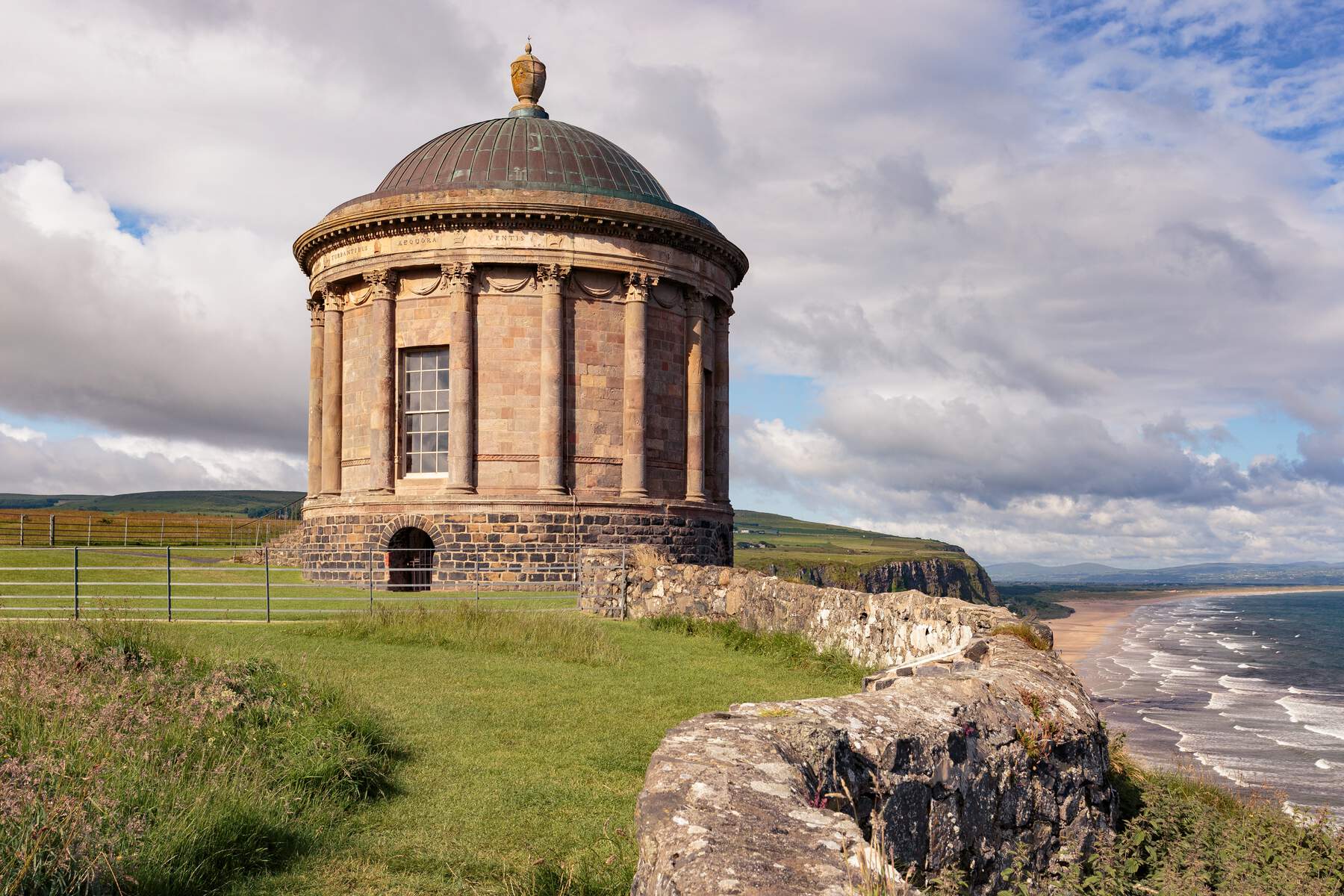
Hilton Park House, Clones, Co. Monaghan – section 482 accommodation

www.hiltonpark.ie

Tourist Accommodation Facility – since it is listed under Revenue Section 482 as a Tourist Accommodation Facility, Hilton Park House does not have to open to the public. However, it has some open house days for tours.

Open for accommodation: April- Sept

Listed open dates in 2025: House tours, Jan 13-17, 20-24, Feb 3-7, 10-14, 9am-1pm, May 1-2, 4-9, 11-16, 18-22, 27-30, weekdays 9am-1pm, Sun 1pm-5pm, June 8, 10-15, 17-20, 1pm-5pm, Aug 16-24, weekdays, 9am-1pm, weekends 1pm-5pm

Fee: adult €10, OAP/student €8, child €5

Screenshot 2024-05-28 at 10.18.30

2025 Diary of Irish Historic Houses (section 482 properties)

To purchase an A5 size 2025 Diary of Historic Houses (opening times and days are not listed so the calendar is for use for recording appointments and not as a reference for opening times) send your postal address to jennifer.baggot@gmail.com along with €20 via this payment button. The calendar of 84 pages includes space for writing your appointments as well as photographs of the historic houses. The price includes postage within Ireland. Postage to U.S. is a further €10 for the A5 size calendar, so I would appreciate a donation toward the postage – you can click on the donation link.

€20.00

Donation

Help me to maintain my website by making a donation. I do not receive any funding for my research and visits. For this entry I paid for accommodation nearby and petrol – Fred waived the fee as we visited during Heritage Week.

€10.00

Hilton Park, County Monaghan. Photograph © Jennifer Winder-Baggot, www.irishhistorichouses.com
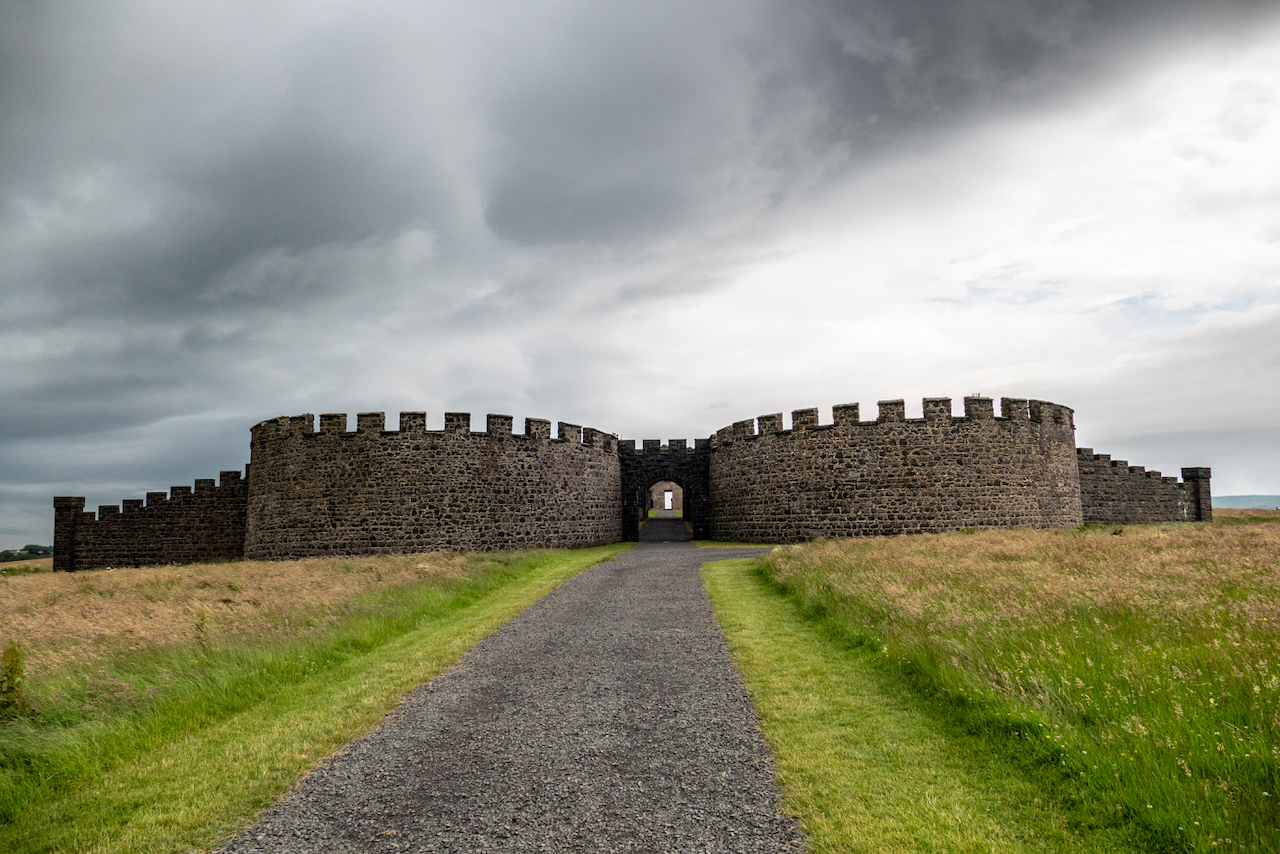
Hilton Park, County Monaghan. The five centre bays of the front facade break forward slightly. Photograph © Jennifer Winder-Baggot, www.irishhistorichouses.com
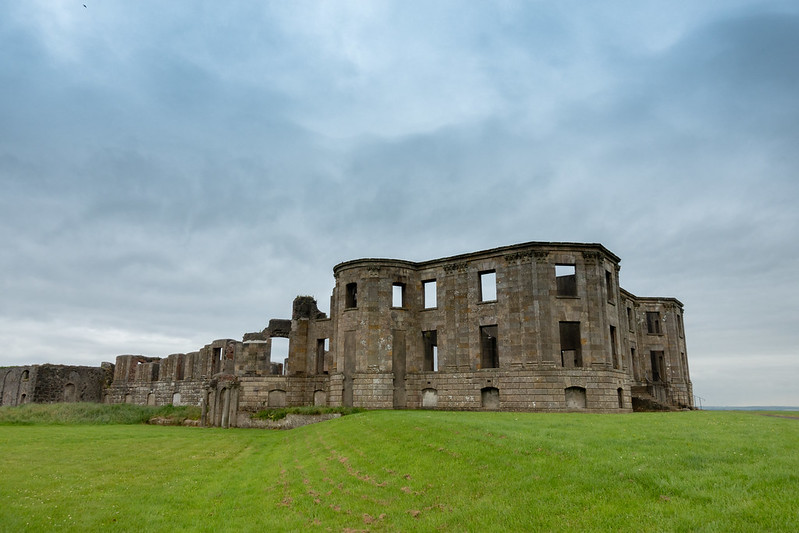
Hilton Park, County Monaghan. Photograph © Jennifer Winder-Baggot, www.irishhistorichouses.com
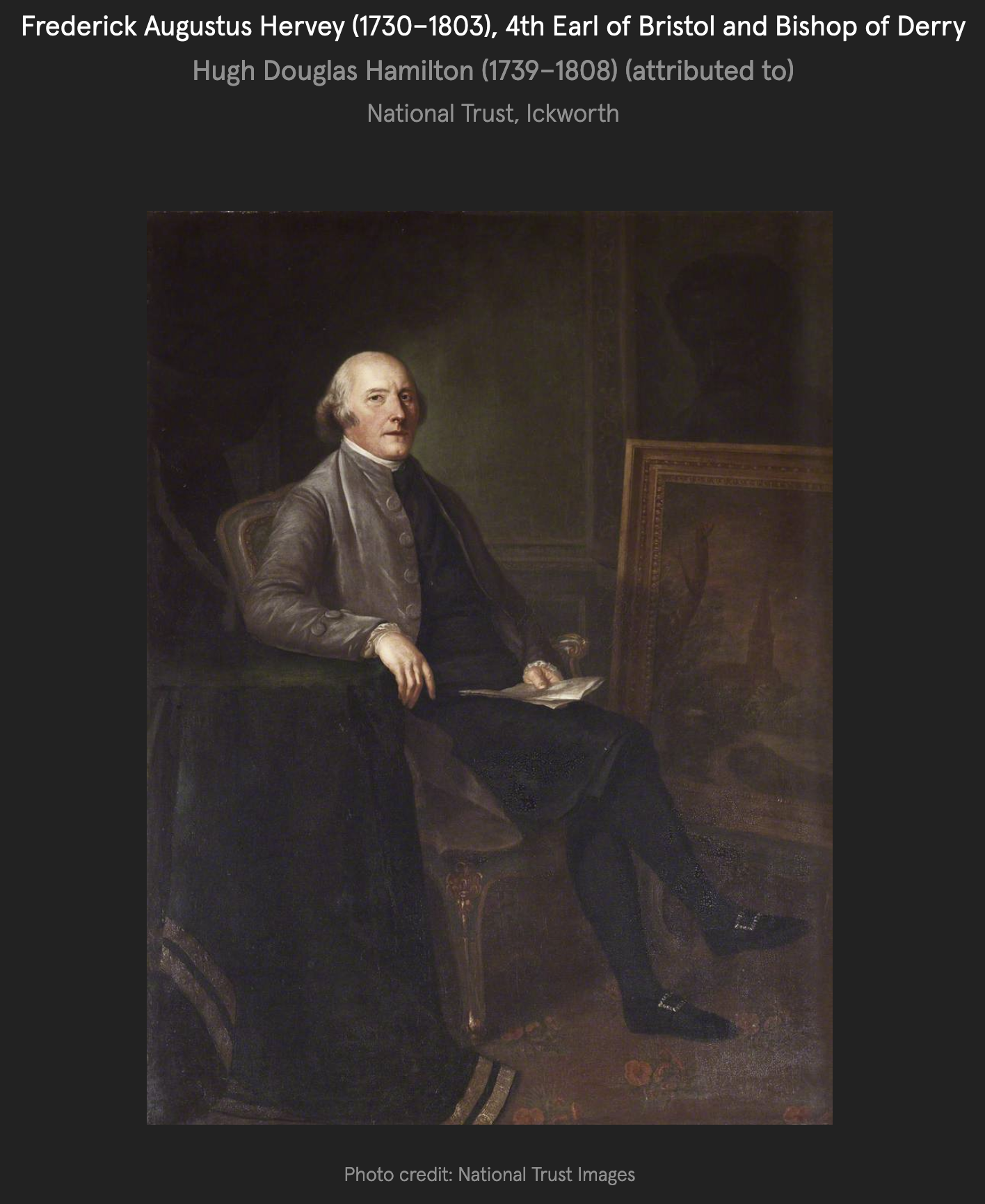
In his The Buildings of Ireland: South Ulster: Armagh, Cavan and Monaghan, Kevin V. Mulligan tells us that Hilton Park house in a Late Victorian structure that conceals a more ancient house at its core. [1] The Madden family who built the current incarnation still occupy the estate.

Before the Maddens, the area was held by the MacMahons of Roosky, County Monaghan. They sold the property in 1624 to Sir William Temple, Provost of Trinity College Dublin. [see 1] The Trinity website tells us that he was elected Provost in 1609. He descended from an old Warwickshire family, and had previously held a fellowship at King’s College, Cambridge. Eminent as a scholar and logician, he was also experienced in public affairs, having been secretary to Sir Philip Sidney (who died in his arms at Arnheim) and then to the second Earl of Essex. He was the first layman to hold the position of Provost of Trinity. He defined the duties of various College Officers, including the Bursar and the Deans, on the Cambridge model. Temple confined participation in the government of College to the seven most senior fellows. He was responsible for introducing the distinction between Senior and Junior Fellows, which is still a significant feature of Trinity’s constitution. Temple was the first Provost to die in office, on 15th January 1627, at the age of 72. He was an ancestor of Viscount Palmerston, and of the Temples of Temple Bar in Dublin.

The field in front of Hilton Park. Photograph © Jennifer Winder-Baggot, www.irishhistorichouses.com
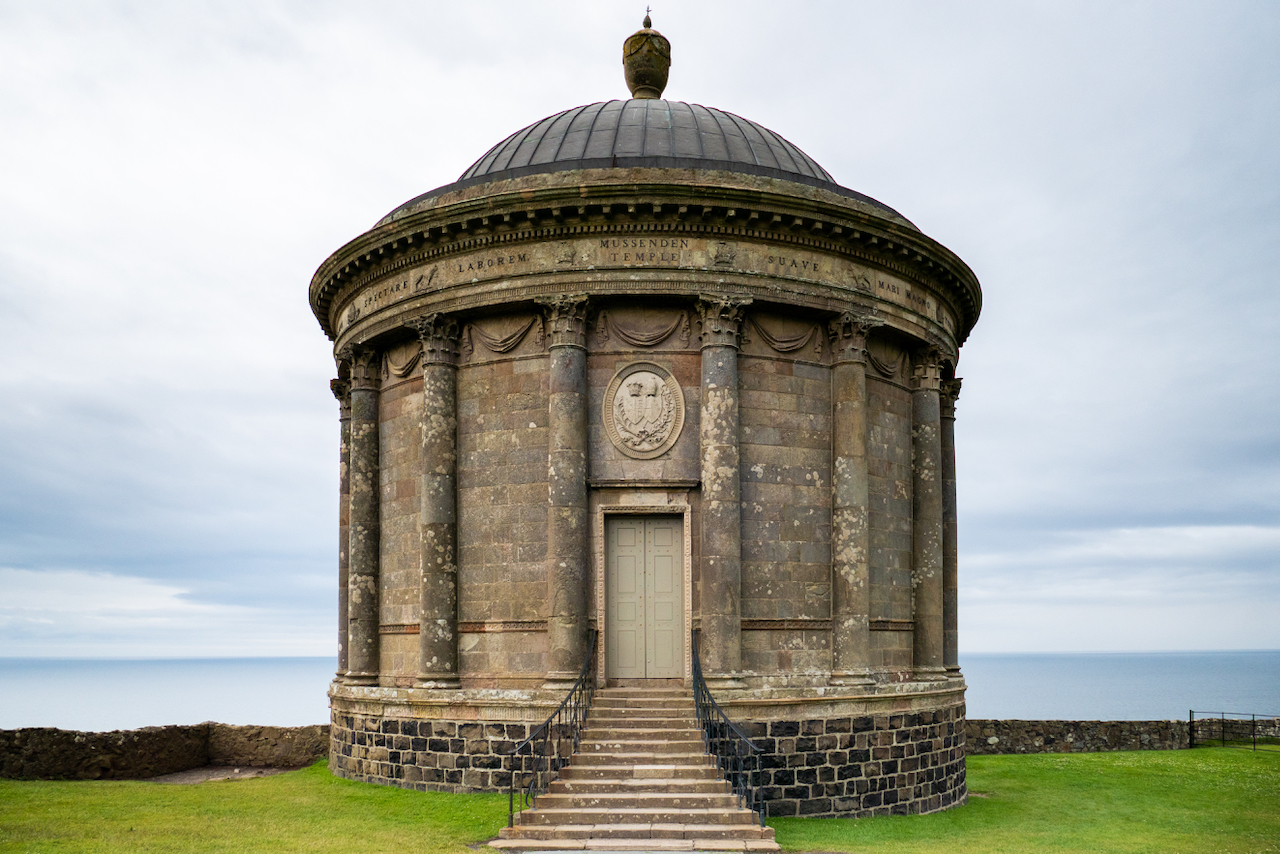
The property next passed to Robert Forth, and he and his descendants expanded the estate. I think this must be Robert Forth (c.1600-c.1663), who was a supporter of the Duke of Ormonde. He had served as MP for Kilbeggan in the Irish Parliament but retired to his property in Cavan and Monaghan in the Cromwellian period. After the Restoration of Charles II, he served as MP for County Meath.

A survey made for James Forth in 1713 indicated that a large house had been built in Kilshanlis, as the area was then called, in the preceding decades. It is shown as a seven bay two storey gable ended block with red brick stacks. The National Inventory tells us that the house was built originally in around 1650.

The Maddens were established at Hilton by Reverend Dr. Samuel Madden, who acquired the property in 1734 for one of his sons. [2] Samuel Madden had inherited an estate at Manor Waterhouse, Co. Fermanagh, while still an undergraduate. Manor Waterhouse, which no longer stands, came into the Madden family from Reverend Samuel Madden’s grandmother, Elizabeth Waterhouse, who married John Madden of Maddenstown, County Kildare. Her brother had died in 1641 and members of her family may have been killed in the uprising of 1641. She was the co-heiress of her father Charles.

Reverend Samuel Madden (1686-1765), Philanthropist Attributed to Thomas Hickey, Irish, 1741-1824, courtesy of National Gallery of Ireland.

Around the same time that he purchased what is now Hilton Park, Samuel Madden bought an estate at Spring Grove (or Rosslea Manor) County Monaghan (the house is also no longer in existence) for his youngest son, Edward, who married Charlotte Creighton, daughter of Abraham, 1st Baron Erne of Crom Castle, County Fermanagh.

Reverend Samuel Madden’s grandparents John and Elizabeth had a daughter Anne who married Josias Stewart, 4th Baron Castle Stuart of County Tyrone. Their son John (1649-1703), Reverend Samuel Madden’s father, lived at Manor Waterhouse and was a doctor. The Hilton Park website tells us that John was three times President of the Irish College of Physicians and clearly a most cultured man as he had a very valuable collection of early Irish and English historical manuscripts. He married Mary, daughter of Samuel Molyneux (d. 1693), sister of William (1656–98), the scientist and political writer, and of Thomas, 1st Baronet Molyneux, of Castle Dillon, Co. Armagh. After she died, he married Frances, daughter of Nicholas Bolton, of Brazeel, County Dublin.

William Molyneux (1656-1698) by Unknown, circa 1696 National Portrait Gallery of London ref. 5386.

John Madden and Mary (née Molyneux) had two sons who both joined the clergy. The younger son, John, was Vicar in St. Anne’s in Dublin and Dean of Kilmore in 1735. Samuel was the elder son.

After Samuel’s ordination he obtained a living in the nearby parish of Galloon (which included Newtownbutler, the nearest place to the family estate), to which was added (in 1727) the adjacent parish of Drumully, which was in the gift of the Madden family. [3]

Samuel Madden, 1686-1765, portrait by Philip Hussey, c. 1760, courtesy of National Gallery of Ireland.

We came across Reverend Samuel Madden before, under his nickname, “Premium Madden,” when I wrote about Riverstown in County Cork and its Lafranchini brothers’ stuccowork. The owner of Riverstown, Reverend Jemmet Browne (1703-1782), married Alice Waterhouse, daughter of Reverend Thomas Waterhouse, so the Brownes and the Maddens were probably related by marriages.

A portrait of Alice Waterhouse, wife of Bishop Jemmett Browne.

Jemmett Browne’s interest in fine stucco work, as we saw in Riverstown, was probably influenced by fellow clerics Samuel Madden, Bishop George Berkeley and Bishop Robert Clayton. Samuel Madden recommended, in his Reflections and Resolutions Proper to the Gentlemen of Ireland, that stucco be substituted for wainscot. [4] Bishop Clayton owned what is now called Iveagh House on St. Stephen’s Green in Dublin (see my entry, https://irishhistorichouses.com/2022/09/23/open-house-culture-night-and-heritage-week-dublin-visits/ ). This observation about stucco makes Madden look like an overly refine aesthete but in fact he was a principled, practical and philanthropic man.

George Berkeley (1685-1753) Protestant Bishop of Cloyne and Philosopher by John Smibert, American, 1688-1751, courtesy of National Gallery of Ireland.

Samuel’s nickname “Premium” is explained in the Dictionary of Irish Biography:

In 1730 he submitted to Trinity College Dublin a plan for the encouragement of learning, which involved the establishment of premiums or grants of no less that £230, which he proposed to raise by subscription and taxing undergraduates. Madden contributed generously himself, to the tune of £600, and his scheme, with some modifications, was adopted by the university.” [5]

The Dictionary of Irish Biography tells us that Madden is best remembered for his Reflections and resolutions proper for the gentlemen of Ireland, as to their conduct for the service of their country (1738). In his book he condemned absenteeism by landlords. He encouraged the founding of enterprises to manufacture hemp and flax and advocated setting up schools and professorships of agriculture. He made the sensible suggestion that raw materials should not be exported to England, but rather that ‘value should be added at home.’

The walk toward the lake. Photograph © Jennifer Winder-Baggot, www.irishhistorichouses.com
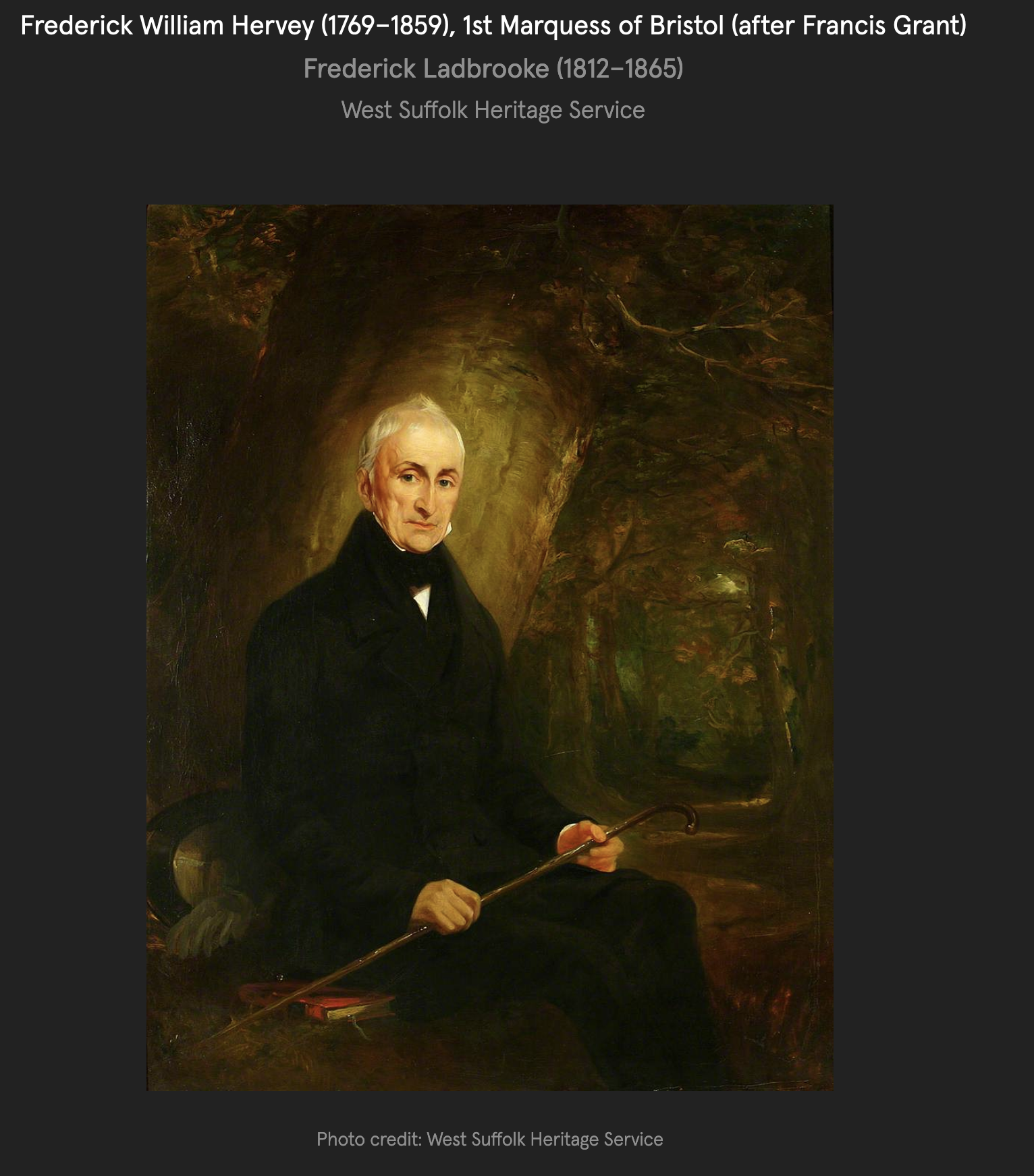
Many of Madden’s ideas came to fruition through the activities of the Dublin Society (now the Royal Dublin Society or RDS), which he and his brother John helped to establish in 1731. The Society promoted a spirit of improvement among the gentry.

By the way I hope I am related to another founding member of the earlier version, the Dublin Philosophical Society. Mark Baggot, who died in 1718 and is buried in St. Audoen’s in Dublin, was the only Catholic in the society, which was founded in 1683 by, amongst others, Samuel Madden’s uncles William and Thomas Molyneux, and was intended to be the equivalent of the Royal Society in London. I have not found a connection yet with Mark Baggot but perhaps my family comes from a junior line I haven’t yet traced. The Hilton Park website tells us that it was through Madden’s friendship with the Earl of Chesterfield that the Dublin Society received its Royal Charter.

The Hilton Park website tells us that Samuel Madden was a collector of works of art and left Trinity twenty of his best paintings to hang in the Provost’s House. As we will learn, this was fortuitous as the house of his descendants, Hilton Park, had a fire in which many of Madden’s possessions were destroyed.

Hilton Park, County Monaghan. Photograph © Jennifer Winder-Baggot, www.irishhistorichouses.com
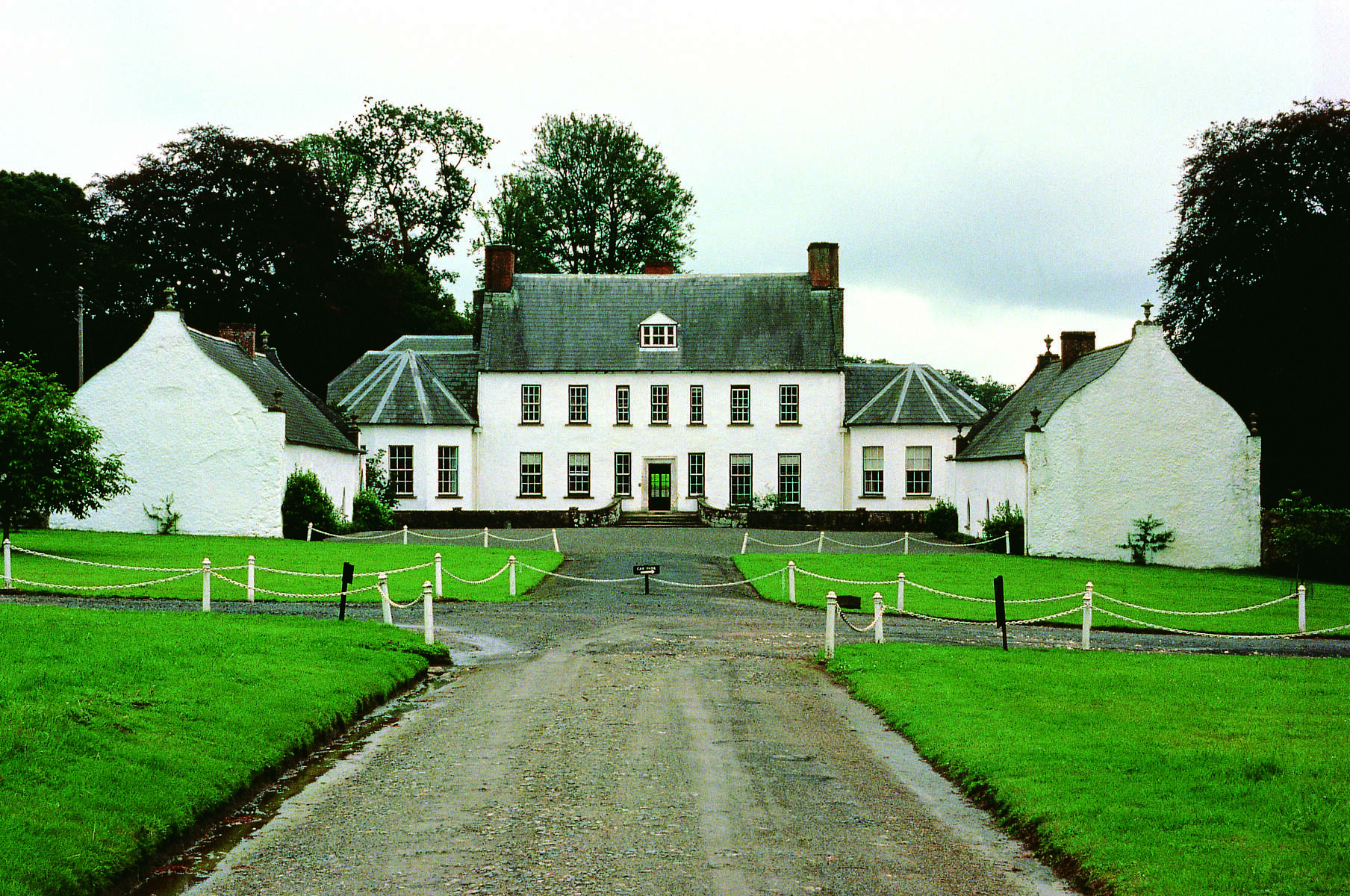
As well as his book about Gentlemen, Premium Madden published, in 1729, Themistocles, the lover of his country, a verse tragedy in five acts, which played with considerable success at Lincoln’s Inn Fields in London.

In 1733 he anonymously produced his Memoirs of the twentieth century, a satire, in which the fictitious author, a Jacobite, was promised that his descendants would flourish under the Hanoverians, and that one would become prime minister at the end of the twentieth century. Originally intended for publication in six volumes, only one of which ever appeared, it was dedicated to Frederick, Prince of Wales, estranged son of George II, to whom Madden may have served as tutor and with whom he carried on a correspondence. A thousand copies were produced but nine hundred were soon afterwards delivered to the author and probably destroyed. Its content may have been a little too Jacobite or too critical of the church.

Baggotsrath Castle, 1792 sketch by Francis Grose.

Coincidentally, an ancestor of Samuel Madden, Thomas Madden (c. 1575-1640) moved from England to Ireland and settled in Baggotrath Castle in Dublin, which occupied the ground now covered by Upper Baggot Street. The area of Baggotrath in Dublin was probably the home of the first Baggots who came to Ireland, including Robert Bagod or Bagot, who was Chief Justice in Ireland and a “justice itinerant” in 1274 (he had to travel down to Limerick and established a seat there, Baggotstown Castle). Turtle Bunbury tells us that Baggotrath Castle was once amongst the most splendid addresses in Dublin, and that other occupants of the castle included Sir Anthony St. Leger, sometime Master of the Rolls, and Sir John King, ancestor of the Earls of Kingston of King House in County Roscommon, another Section 482 property (see my entry). Thomas Madden was Comptroller of the Household to Thomas Wentworth, subsequently Earl of Strafford, when Wentworth served as Lord Lieutenant of Ireland (1632 – 1639). The castle at Baggotrath was destroyed in 1649 by Parliamentarian troops.

“Premium” Madden married Jane Magill (d. 1765) of Kirkstown, Co. Armagh, with whom he had five sons and five daughters. He died 31 December 1765 at Manor Waterhouse and was succeeded by his second son, also Samuel Molyneux Madden.

Rev. Samuel Madden, (1686-1765), Co-Founder of the Dublin Society. Engraver Charles Spooner, Irish, c.1720-1767 After John van Nost the Younger, Flemish, c.1710 – 1780. Photograph courtesy of National Gallery of Ireland.

In their book published in 2008 called Great Irish Houses, Desmond Guinness and Desmond Fitzgerald tell us that when Samuel Madden purchased the estate that later was called Hilton Park: “At that time the estate extended to some 4,000 acres and was purchased on a mortgage of about 80% from Trinity College, an unusual transaction at the time. An earlier house was almost certainly there at the time of purchase, but possibly not on the current site. All historical notes say the current house was built in 1734, but the purists argue it was more likely 1780.” [6]

The house there at the time of purchase would have been the one built for the Forth family. Samuel Madden gave the property of Hilton Park, which he called Maddentown, to his third son, John (1713-1791), in 1752, upon his marriage to Anne, daughter of Robert Cope MP, of Loughgall, County Armagh. John Madden was High Sheriff of County Monaghan.

The Hilton Park website tells us that as both of the elder sons of Samuel Madden failed to bring children to majority, the Manor Waterhouse estate was inherited by John Madden of Hilton, but it appears to have been largely uninhabited after Premium Madden died in 1765. The old Manor Waterhouse castle had been sacked in the Jacobite wars and the new one may not have been well-built.

Robert O’Byrne tells us that John planted the oak wood on the estate which is called Cope’s Wood. [7]

The walk toward the lake. Photograph © Jennifer Winder-Baggot, www.irishhistorichouses.com
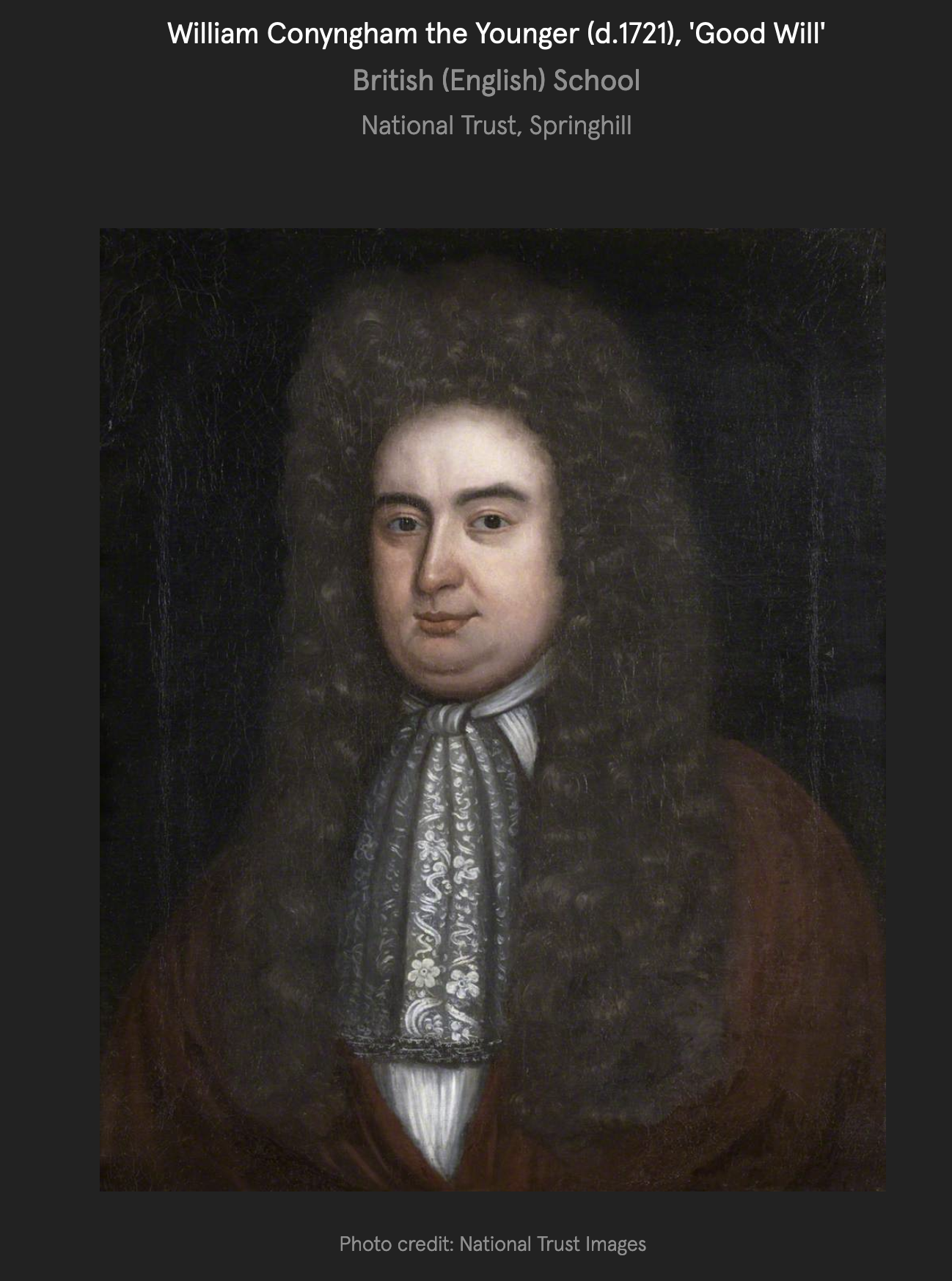
Hilton Park, County Monaghan, June 2011. Photograph © Jennifer Winder-Baggot, www.irishhistorichouses.com
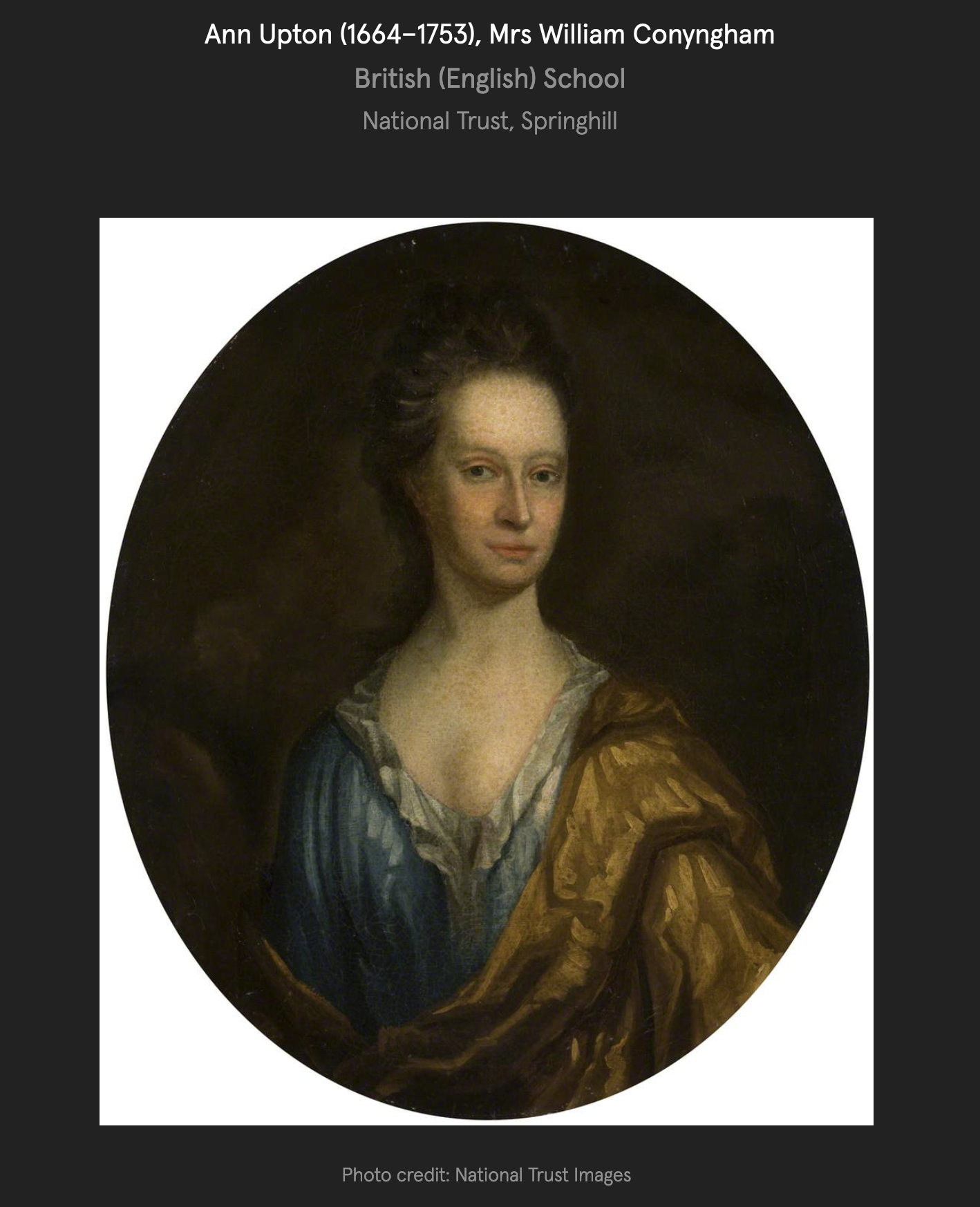
The walk toward the lake, through the woodland. Photograph © Jennifer Winder-Baggot, www.irishhistorichouses.com
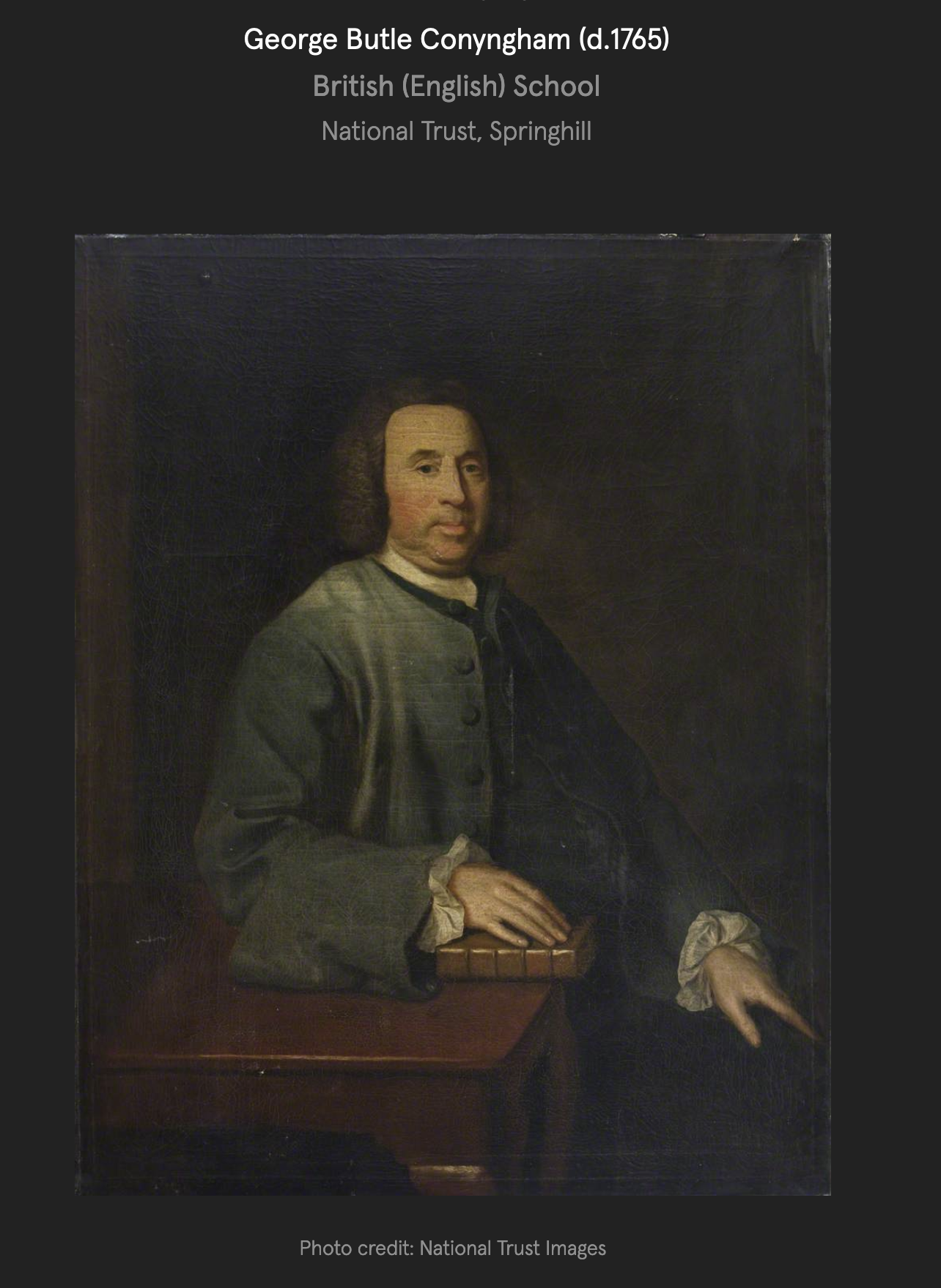
Around 1780 the name of Maddenstown or Maddenton was changed to Hilltown or Hilton, and records in the Public Records Office of Northern Ireland (PRONI) tell us that the name is “from no other reason that is now remembered than for the sake of euphony, and fairly applicable from its situation commanding a beautiful and undulating prospect.”

Hilton Park House is on an elevated site overlooking a lake and woods. Photograph © Jennifer Winder-Baggot, www.irishhistorichouses.com
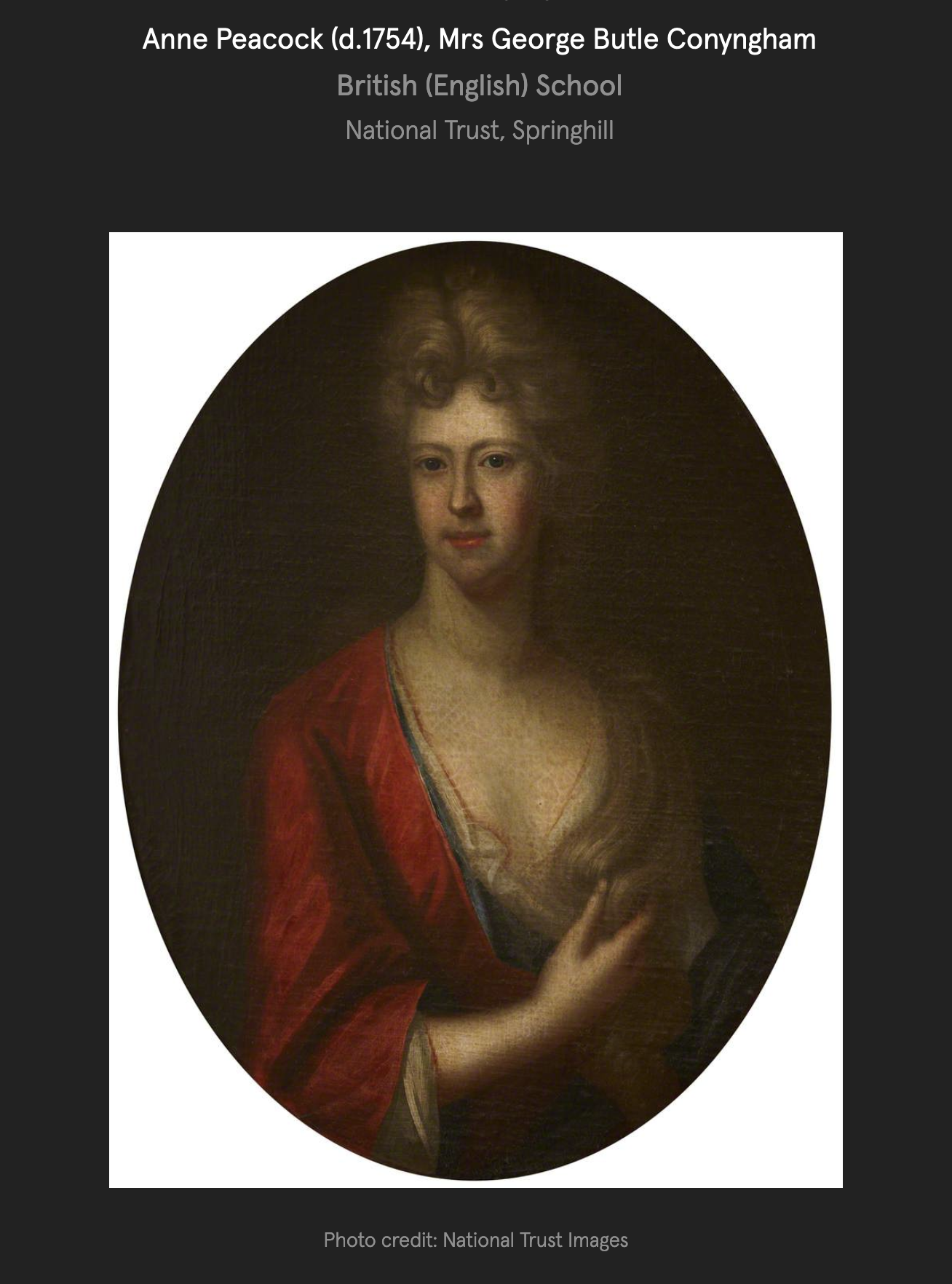
John died in 1791, and the property passed to his son Lt.-Col. Samuel Madden (1756-1814). Colonel Madden laid out much of the park and planted many of the older trees.

Colonel Samuel Madden ran a “gambling school” at Hilton Park around 1780. (see [6]). Due to losses in gambling, in around 1796 he had to sell his wife Katherine Ryder’s inheritance, half of the Snarestone Estate in Leicestershire. Coincidentally, Katherine’s sister Anne inherited the other half of the Snarestone estate in 1796 and she married another inhabitant of County Monaghan, Charles Powell Leslie (1769-1831) of Castle Leslie.

A photograph of the house which Fred showed us, before the porte-cochére was added and the basement dug out. The doorcase had taken the form of a Venetian window but side windows were filled in during a period of agrarian unrest in the 1860s. [see 1]

Originally, the house was of two storeys with twelve bays over a basement. A major fire occurred in 1803; in Great Irish Houses, Desmond Guinness and Desmond Fitzgerald tell us that family papers record that while the family was away a servant put down a bucket of glowing coals from a cleaned out grate and the fire broke out. The house is said to have burned for two days before it was extinguished and the main and upper floors were completely gutted. Many works of art and furniture perished, as did most of Reverend Samuel Madden’s archive. The likelihood is that the middle section of the 1770 house was not rebuilt and the staff quarters where the servants lived escaped the worst of the fire.

Archiseek describes the rebuilt house and attributes the 1804 rebuilding to Francis Johnston; this could be referring to a suggestion by Jeremy Williams in A Companion Guide to Architecture in Ireland, 1837-1921 (Dublin, 1994). However, the rebuilding is now attributed to James Jones of Dundalk. Furthermore, the rebuilding only seems to have taken place from 1815-1830. Progress on the build was slow due to lack of funds, and initially parts were thatched over just to protect the walls [see 1].

On his death in 1814, Col. Samuel Madden left debts of £52,000. Robert O’Byrne tells us that the estate itself was only preserved thanks to the prudence of the Colonel’s father-in-law, the Reverend Charles Dudley Ryder, who kept the greater part of his own fortune to pass on to his grandson. The Madden family lived over the stables from the time of the fire until around 1830, when the house was partly rebuilt. (see [6]) The property was inherited by Col. Samuel Madden’s son Col. John Madden (1782-1844). He married, in 1835, Sydney Anne, daughter of Admiral William Wolseley, of Rostrevor.

Reproduction of a portrait of Admiral William Wolseley (1756 – 1842) by Jules Laur from Innes, Mary C. (1895) A Memoir of William Wolseley, Admiral of the Red Squadron, London, Kegan Paul, Trench, Trübner and Co Ltd.

Robert O’Byrne tells us:

Rebuilding may have begun around 1815 when Ryder died, or not until the early 1830s, with the focus being on the rooms at the south side of the house which looked down to the lake: the dining room and a bedroom immediately above retain their decoration from this period. The finished house, the design of which is assigned to James Jones of Dundalk and the appearance of which can still be seen in old family photographs, had a long eastern facade of two storeys over basement and eleven bays. The centre five of these projected slightly, a flight of stone steps leading to the rather meanly proportioned entrance door. All this work and more (a new nursery wing to the north) was undertaken by Colonel John Madden of the Monaghan Militia who was able to benefit from his wise maternal grandfather’s inheritance and was as industrious as some of his forebears: he became a noted breeder of Shorthorn cattle and hackney horses, and built the Ride, a colonnade for exercising horses on wet days under his study window. A keen sailor and member of the Royal Yacht Squadron, he won a race around Ireland and sailed to the Mediterranean, bringing back from Naples a chimney piece now found in the drawing room. He also built a villa at Sandycove, Dublin and it was there he died in 1844. ” (see [7])

“The Ride” now makes a beautiful room for weddings.

“The Ride,” originally built to exercise horses without getting wet in the rain. The National Inventory tells us it was built by James Jones c.1835. Photograph © Jennifer Winder-Baggot, www.irishhistorichouses.com
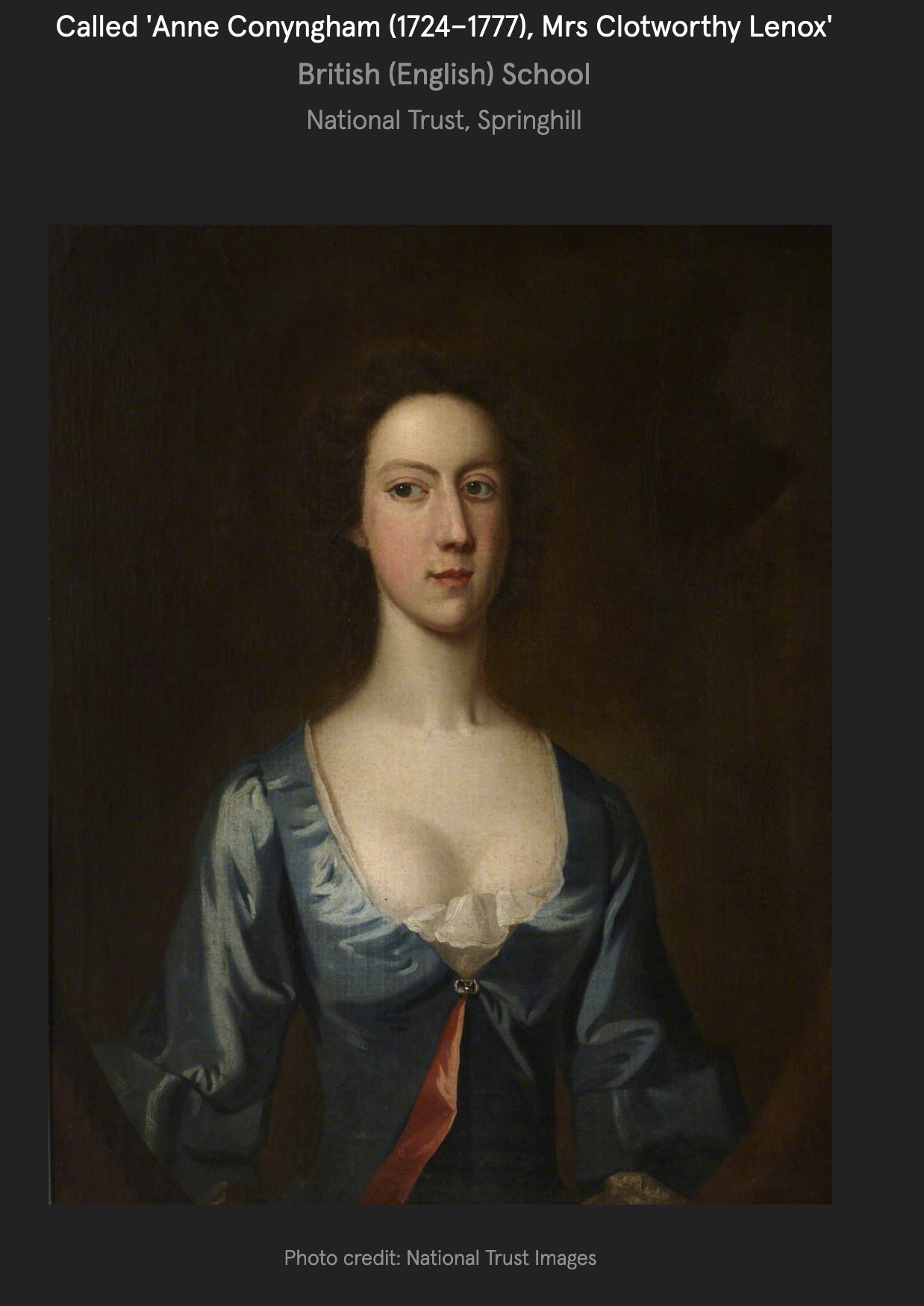
The next generation carried out more renovations to the house. John and Sydney Anne’s son John (1836-1902) inherited when he was just six years old. He became a ward of court until he came of age at 21 years old, and to celebrate he built a bell-tower in around 1857 which he designed himself. Two years before this, at the age of just 19 he displayed his enterprising nature by sinking a well 135 feet into the ground, from which the family still get their water.

The bell-tower built to celebrate John Madden’s (1782-1844) 21st birthday. Photograph © Jennifer Winder-Baggot, www.irishhistorichouses.com
The National Inventory describes the bell-tower: It is a square bell-tower of four stages, with a narrow crenellated belfry at the top, and more crenellations on the parapet of the tower. The walls are of rubble stone, with dressed quoins and string courses between stages. It has round headed openings at each stage on each side with stone surrounds and an oculus on the south elevation of the third stage, which may have contained a clock, which has a thin stone hood-moulding. There is a round carriage arch with dressed stone surround, and a metal door on the north elevation – this was open so we did not see the hand-shaped cast-iron knockers.

A square bell-tower of four stages, with a narrow crenellated belfry at the top, and more crenellations on the parapet of the tower, was erected around 1857. Photograph © Jennifer Winder-Baggot, www.irishhistorichouses.com
The Bell Tower. Photograph © Jennifer Winder-Baggot, www.irishhistorichouses.com
The knocker on the metal door of the tower, photograph courtesy of the National Inventory of Architectural Heritage.

The Hilton Park website describes John and his brothers:

At twenty-four he travelled for months on horseback through the eastern states of America up to the Great Lakes; this only a year before the Civil War. Back home he joined Isaac Butt’s Home Rule Party, but failed to get elected in the three elections he fought. Disappointed, and particularly so when he saw Parnell take over the Home Rulers, he reverted to Toryism. The rest of his life he devoted to travel and improving – first the park, then the gardens and pleasure grounds and finally the house, and all the time writing. He kept a diary from 1868 onwards and published his magnum opus, The Wilderness and its Tenants in three volumes in 1897; this meticulous work is an inventory of the natural world prior to the industrial revolution. Having read widely of the early travellers and hunters, he found during his own travels in the latter half of the 19th Century that much had been altered since the start of the century: the great herds of buffalo had been reduced, and the Sahara had moved; he wanted to set a yardstick by which future depredations could be assessed. The public were not sufficiently concerned to buy his book and his warnings went unheeded.” He had great foresight, and we could learn lessons from him today.

John Madden (1836-1902) courtesy of David Madden, ancestry.co.uk

The website continues: “Of particular interest to the family is his journal, which records details of the estates in Monaghan, Fermanagh and Leitrim during and before his time. Another record of immense intrinsic value is the photographic record of his younger brother, Charles Dudley Ryder, who obtained a camera in 1858 when only 19 and his albums, up until his death in 1874 at Cork Barracks of typhoid fever, show the park, house and gardens as they were before being improved. Charles and his brother, William Wolseley, both served in the 8th King’s Liverpool Regiment and both died within 5 weeks of each other, William in Brighton. William was very involved in the loyal orders and built the Protestant Hall in Scotshouse. There is some mystery about him because, from his brother John’s diary, it is clear that he was convicted of causing grievous bodily harm and he served two years in Strangeways Gaol, Manchester. One can only surmise that some loyalist fracas led to his conviction, but it should also be remembered that a letter of his instructing Protestants not to interfere with Fenian processions had much to do with defusing local tensions.

The diary and photo albums sound fascinating!

John Madden married Caroline Clements, daughter of Rev. Hon. Francis Nathanial Clements (son of Nathanial, 2nd Earl of Leitrim). John also inherited Manor Waterhouse. He was High Sheriff of County Fermanagh, 1859, and County Monaghan, 1863. [8]. However, he was “relieved of his duties” due to letters he had written to the Secretary of State which expressed opinions considered to be outrageous. (see [7]) The website clarifies this and they don’t seem to be outrageous to me! The website tells us: “On being appointed Deputy Lieutenant for Leitrim, he refused the honour saying that he was no longer prepared to serve an administration that had presided over a complete breakdown in law and order. He was summarily stripped of all his honours and appointments ‘for this studied insult to the Queen’. He at least had the satisfaction that all the magistrates in Ireland signed a petition in favour of his reinstatement.

He carried out more improvements to the house in the 1870s. He hired William Hague, a young local architect, who had previously mostly worked on Catholic churches (Robert O’Byrne tells us that he designed or altered between forty and fifty Catholic churches across the country). [9] At first John had consulted Charles Lanyon, but in his Buildings of Ireland, Kevin V. Mulligan suggests that John’s radical plans may have been better suited to a young and ambitious architect than to a more staid figure like Lanyon. Furthermore, John had trained as an engineer in London and Paris and it suited him to be involved directly in the work. [see 1]

The ground around the basement was dug out and the basement made into the ground floor of the house. Mark Bence-Jones tells us in his Guide to Irish Country Houses (1988) that a similar treatment with the basement being dug out was done in Montalto, County Down. [10] Madden claimed that it was his idea to dig out the basement. It took three years, as it involved cutting into hard clay and rebuilding most of the front wall of the central block, and the entire structure was underpinned.

William Hague created a house in the style of an Italian palazzo.

The exterior was faced in cut Dungannon sandstone, and the porte-cochére was built. The window pediments were added and the old parapet removed and a deep parapet decorated by what Mulligan calls a “volley of blind discs” across the front.

Hilton Park, County Monaghan. The house was of two storeys, but the basement was dug out in 1870, and is now the ground floor. Photograph © Jennifer Winder-Baggot, www.irishhistorichouses.com
Hilton Park, County Monaghan. Photograph © Jennifer Winder-Baggot, www.irishhistorichouses.com

The renovations made the house more secure against unwanted visitors. Bar were installed on all ground floor windows and all three entrances to the farmyard had large iron gates installed. Heavy steel shutters were added to the bedroom windows and the front door was reinforced with four inches of steel.

The Historic Houses of Ireland adds:

There was a good deal of agrarian unrest in 19th century Ireland so the present owner’s great-great-grandfather looked to his defences… These new arrangements gave the main rooms an uninterrupted field of fire and the house could probably have withstood a small siege.” [11]

The porte-cochére has a triangular pediment with the coat of arms of the Madden family and ionic columns, and is two storeys high, topped with a balustrade and four stone urns. The columns in the centre are in pairs. The columns are mirrored by four ionic pilasters on the front of the house. The principal reception rooms were given decorative ceilings at this time. There are triangular pediments over the windows of the first storey.

Hilton Park, County Monaghan: the porte-cochére was added in the 1870s, when the basement was dug out to become the ground floor of the house. Photograph © Jennifer Winder-Baggot, www.irishhistorichouses.com
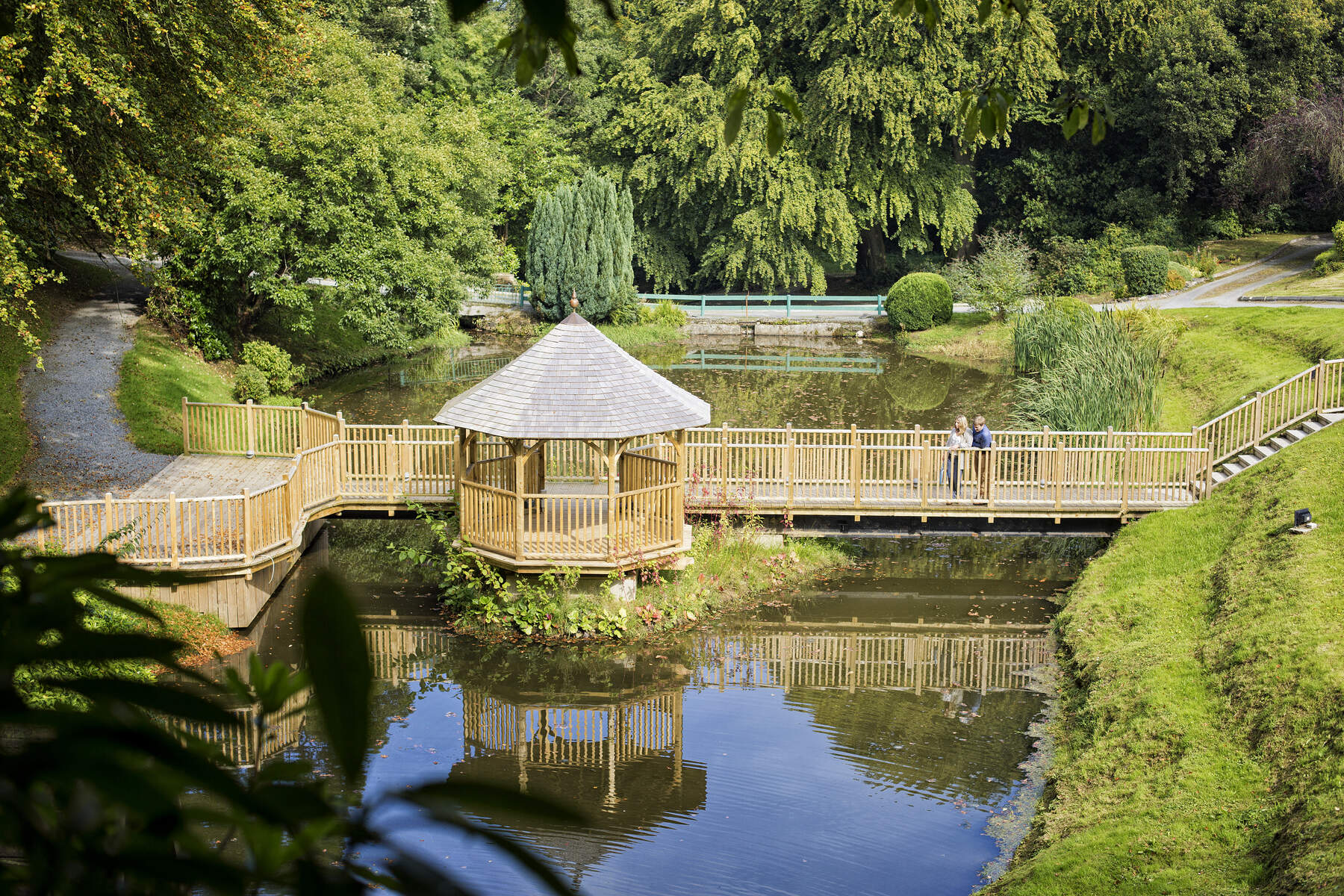
Hilton Park, County Monaghan: the ground floor quoins are vermiculated (from the Latin vermiculus meaning “little worm” because the shapes resemble worms), as is the plinth around the ground. Photograph © Jennifer Winder-Baggot, www.irishhistorichouses.com
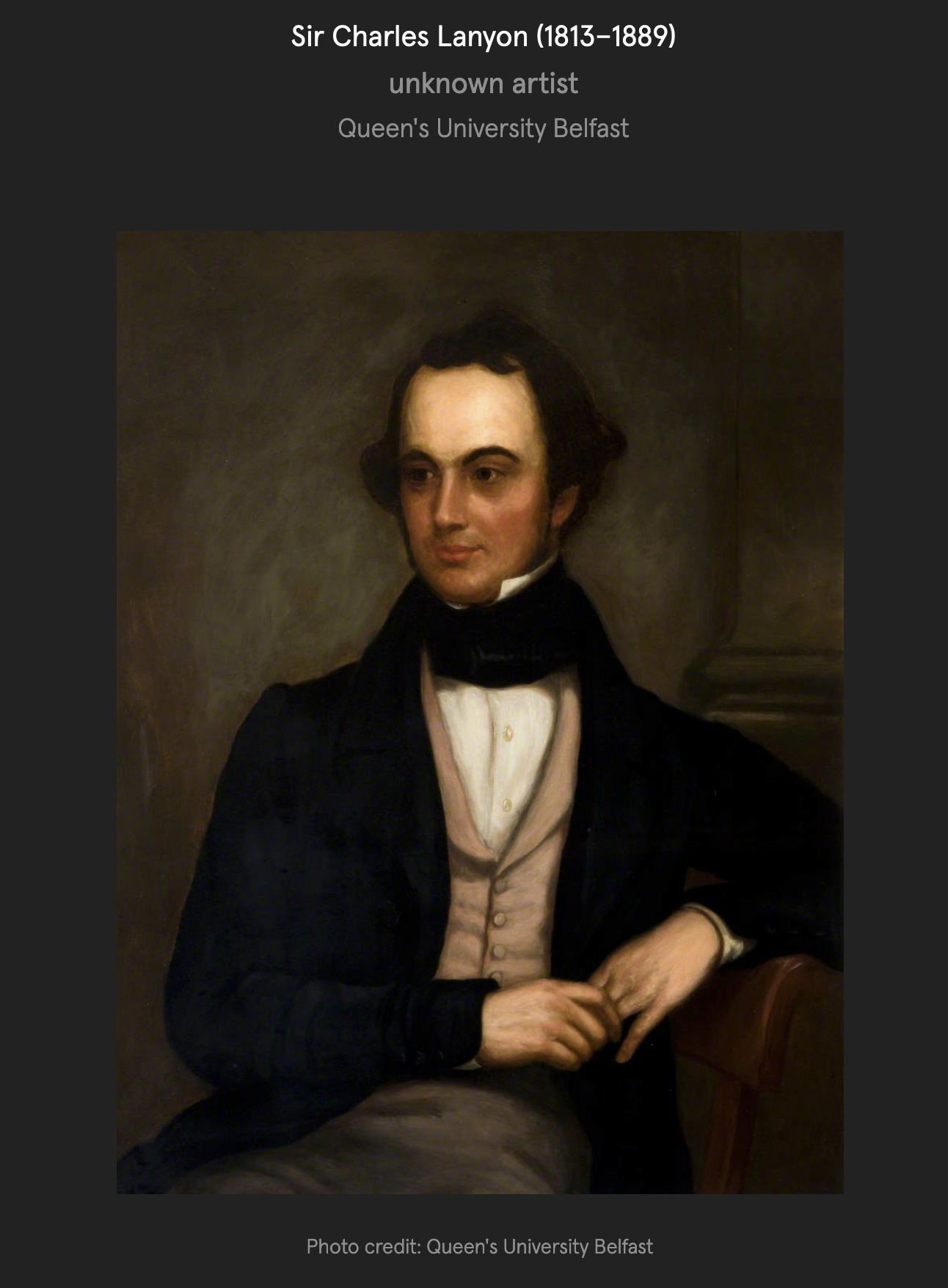
The entrance, under the porte cochére. The National Inventory describes the entrance: “Square-headed door opening to house with double-leaf timber panelled door, recessed between channelled panelled pilasters, with moulded sandstone lintel cornice over with shallow moulded brackets and flanked by square-headed sidelights with moulded surrounds, one-over-one pane timber sliding sash windows and decorative cast-iron bars.” Photograph © Jennifer Winder-Baggot, www.irishhistorichouses.com
The underside of the porte-cochére, segmented and dentillated with egg-and-dart surround, and panels with a circular figure in the centre. Photograph © Jennifer Winder-Baggot, www.irishhistorichouses.com
Hilton Park, County Monaghan, June 2011. Photograph © Jennifer Winder-Baggot, www.irishhistorichouses.com
Hilton Park, County Monaghan. Photograph © Jennifer Winder-Baggot, www.irishhistorichouses.com

The cast iron entrance gates were added in 1868. They have fleur de lys finials, and are flanked by square-plan panelled cast-iron piers on plinths, surmounted by crown and falcon ornaments. There are matching cast-iron pedestrian gates to each side, flanked by matching outer piers with mace-head ornaments. The National Inventory tells us that the falcon traditionally represents leadership and wisdom. 

Since the basement became the ground floor, the entrance hall and rooms next to it have a lower ceiling than one would expect from such an impressive house. The entrance hall has lovely encaustic tiles, and a barrel vaulted ceiling. Encaustic means “to heat or burn in,” from an ancient Greek word, and encaustic materials are produced through a process which involves heating to seal in the dyes and clays. Traditional encaustic tiles are made using clay and powdered glazes, and are fired in a coal or wood-fired kiln. Mulligan tells us that Hague suggested an elaborate painted heraldic ceiling with gilding, but this was not executed. [see 1]

The pantry and housekeeper’s rooms in the former basement were converted into a study and smoking room. A new oak staircase was added between the ground and first floor, with a gallery, carved by a local carpenter, John Armstrong from Parkanaur Manor, near Dungannon, County Tyrone. This meets the original Georgian staircase on the first floor. The first floor became a “piano nobile” containing the main formal rooms, as it had originally been the ground floor. Great Irish Houses tells us that a ballroom and boudoir were introduced.

The stair hall is lit by two large round-headed windows filled with stained glass, with the family crest and motto, “He who conquers himself conquers all.” The walls of the lower portion of the hall were panelled with oak in 1935.

The interior of Hilton Park is described in Great Irish Houses (IMAGE Publications, 2008):

The cosy upstairs sitting room, where guests generally meet before dinner, was originally part of a much larger drawing room accessed by an archway. The passage has been closed since the 1920s, thus creating two drawing rooms with separate entrances…The great great grandfather of the present owner brought the fireplace back from Naples in the hold of his yacht. The central chandelier is English and dates from the 1880s.

The other half of the drawing room, termed the long drawing room, now serves as a passage corridor to the boudoir. The family possessions perished in the fire and this room has been hung with recent family portraits rather than the original silk hangings.

Back in the drawing room, fans on the architraves would suggest that this room was not altered in the later renovations …while the dramatic fireplace showing Achilles carrying the corpse of Hector around the walls of Troy came from Lenihans in Dublin.

The room was last decorated in 1905 and the faded duck egg colouring of the wallpaper is typical of this period...The remarkable stained glass windows in the hall were supplied from Munich, via Meyer and Company.

The ceilings are compartmented and impressive with heavy decorated cornice.

Image by unknown photographer, 2014, Tourism Ireland, from Ireland’s Content Pool. [13]

Mulligan tells us that only the central core was renovated in Hague’s time, and the north and south ends were left as they were: the dining room, stairs and nursery rooms. The dining room has shallow vaulting, Mulligan describes, “springing from foliate corbels in the corners with flat ribs inset with a cable moulding.” [see 1].

The principal drawing room was formed out of the previous billiard room and entrance hall at the centre of the old house. It has a flat panelled ceiling with enriched borders. It has parquetry borders by C.H. Davies of London and heavy oak cornices over the windows.

The boudoir was given a new ceiling, a bold geometric design formed with heavy foliate bands, and the adjoining bedrooms have more refine late eighteenth century cornices, Mulligan tells us in his Buildings of Ireland. Most of the redecoration of the interiors was by James Gibson & Son of Dublin.

p. 198 Great Irish Houses (IMAGE Publications, 2008): “The dining room, termed a “Nelson room” and almost certainly rebuilt in William IV’s time [1830-1837, so was unaltered in the later 1870 renovations], is arguably the best room in the house with its Nelson rope-twist plasterwork decoration… The original 1830s pelmet and curtains remain, as does the blue wallpaper in the bedroom directly above.

Robert O’Byrne tells us that the rope motif was said to be in honour of Horatio Nelson. Colonel John Madden’s father-in-law Admiral William Wolseley was friendly with Nelson and had sailed with him.

Image by unknown, 2014, Tourism Ireland, from Ireland’s Content Pool. [13]
Hilton Park, Monaghan, photograph taken 2018 for Tourism Ireland. (see [13]) The dining room was rebuilt in the 1830s by John Madden.

The parterre and the pleasure grounds, and the new avenue approach were laid out by Scots gardener and landscape architect Ninian Niven in 1870, curator of the Botanic Gardens, who also worked on the Iveagh Gardens in Dublin (see my entry on Office of Public Works properties).

Entrance toward Hilton Park House. Photograph © Jennifer Winder-Baggot, www.irishhistorichouses.com
Hilton Park. Photograph © Jennifer Winder-Baggot, www.irishhistorichouses.com
Hilton Park, County Monaghan. Photograph © Jennifer Winder-Baggot, www.irishhistorichouses.com
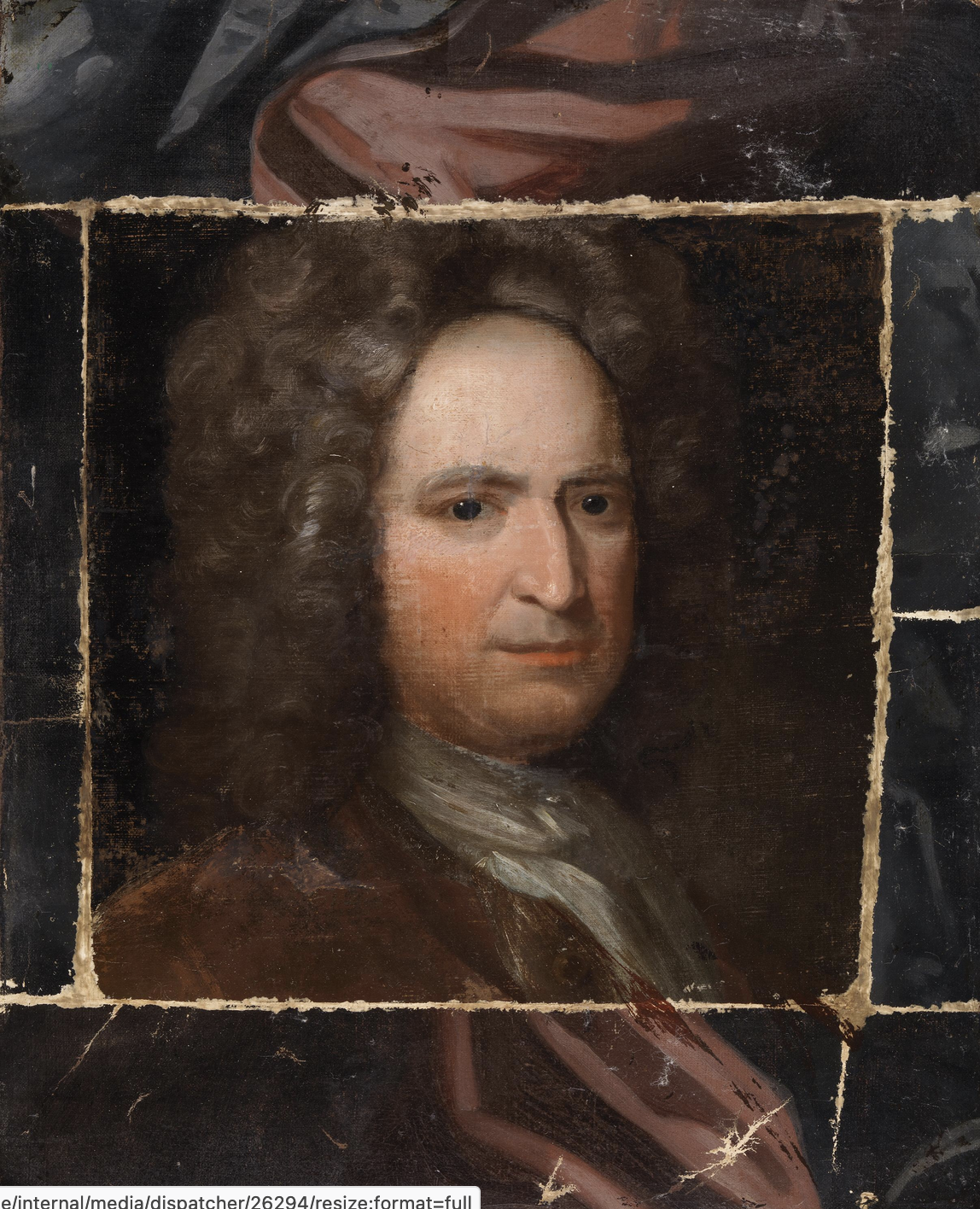
Hilton Park House, and the parterre by Ninian Niven. Photograph © Jennifer Winder-Baggot, www.irishhistorichouses.com
Hilton Park, County Monaghan, June 2011. Photograph © Jennifer Winder-Baggot, www.irishhistorichouses.com
The parterre by Ninian Niven. Photograph © Jennifer Winder-Baggot, www.irishhistorichouses.com
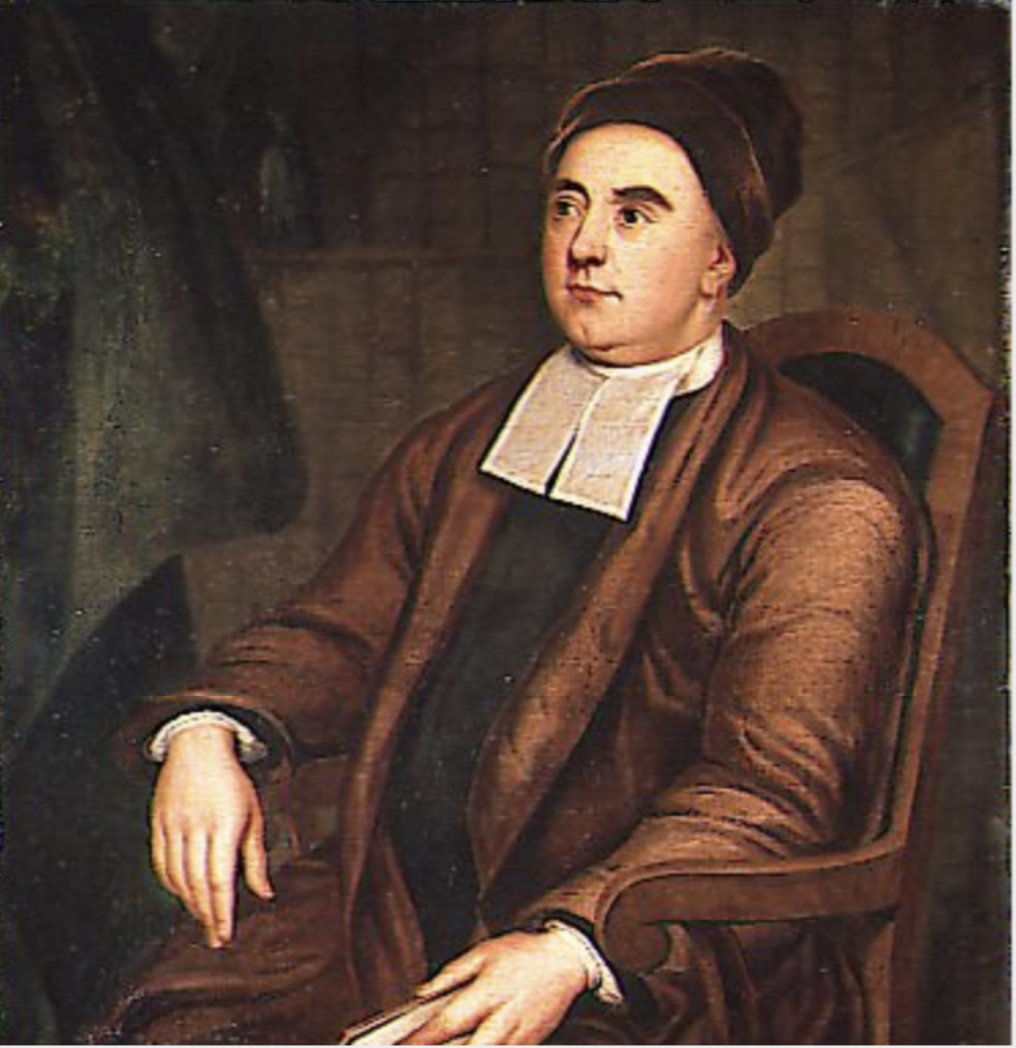
John and Caroline’s son John Clements (Jack) Waterhouse Madden (1870-1935) succeeded to the property, and was High Sheriff of County Monaghan in 1906, and County Fermanagh in 1909. In 1908 he married Agnes Mary, third daughter of Sir William Henry Tate Bt, of Highfield, Woolton, Lancashire. We came across another son, Gerald Hugh Charles Madden, who served in the Irish Guards and died in active service, mentioned on a memorial in the garden.

Gerard Hugh Charles Madden, Lt. Colonel in Irish Guards, b. 1872, d. 12 November 1915. Photograph © Jennifer Winder-Baggot, www.irishhistorichouses.com
Hilton Park’s website description of Jack gives a good picture of the difficulty that landowners had at the time of the transition of Ireland from being part of the United Kingdom to independence. Jack had held the usual posts that went with his status, such as Justice of the Peace, High Sheriff and Deputy Lieutenant. However, when the border was drawn up to separate Northern Ireland from the Republic, Hilton Park was on the southern side of the border. Having fully participated in administrative positions, and being a Standing Committee Member of the Ulster Unionist Council and a Deputy Grand Master of Ireland in the Orange Society, Jack felt betrayed by Northern Unionists. He would have preferred Hilton Park to be on the northern side of the border.

He wrote to the Boundary Commission but the border was not changed. After Independence he went on to serve as a Monaghan County Councillor. Despite this, he had trouble with the new government officials, as illustrated by a telling story told on the website:

“On one occasion he crossed swords with General Eoin O’Duffy of Blueshirt fame. Jack had been to Belfast by train on GNR business and on his return to Clones station found his car gone. He was told it had been commandeered in the name of the State by General O’Duffy and was thus forced to walk the 4 miles home in pouring rain.

He wrote complaining at this high handed treatment and he asked the General to tell him if his government wished people such as he to leave the country. The reply was noncommital, non apologetic and cited national business.

A son of Jack and Agnes Mary, another John William Ryder Madden (1913-1996), rose to the position of Major in the Irish Guards, and married Nita Mellor. The website tells us that serving in the military, he landed in Normandy in 1944 but was wounded some three weeks later at La Marvindiere, losing a leg, which forced his retirement with the rank of Major. He brought his family to live at Hilton in 1945 and took a refresher course in agriculture at Cirencester. Encouraged by a neighbour, Jack Gibson, he established a Hereford herd, which became famous all over Ireland. Owning a great deal more land than the average in Ireland at that time, he saw it as his duty to use every square yard and to employ as many as possible on the land, the website tells us. He became a great innovator, introducing silage making to the area and planting orchards and Christmas trees which he exported to Britain. He also grew Dutch bulbs: at one time in the 1950s there were five acres of daffodils, gladioli and tulips as well as onions. He also gained expertise as a forester.

The pleasure grounds surrounding the house have also been restored, much as a result of the talented eye of Lucy Madden, a well-known cookery writer and author of The Potato Year, who has created a herb garden and revived the kitchen garden.

John and Lucy, the eighth generation of Maddens to live on the estate, which encompasses 500 acres of forests, parklands and lakes, began to take in guests. Taking on the estate in 1986, they restored the house and its gardens. They have handed over to their son Freddie and his wife Joanna, who live at Hilton with their family.

The website tells us that:

The Hilton that John Madden bequeathed is today substantially as he altered it, except that it is electrified, centrally heated, every bedroom has its ‘en suite’ bathroom and the ballroom has been divided to make two drawing rooms.

As a ‘piano nobile’ the main floor commands outstanding views over the park, parterre and lake. Hague’s fine watercoloured architectural drawings for these works can be seen on the way downstairs to the breakfast room.

Hilton Park, Monaghan, photograph taken 2014 for Tourism Ireland. (see [13])
The beautiful gardens of Hilton Park. Photograph © Jennifer Winder-Baggot, www.irishhistorichouses.com
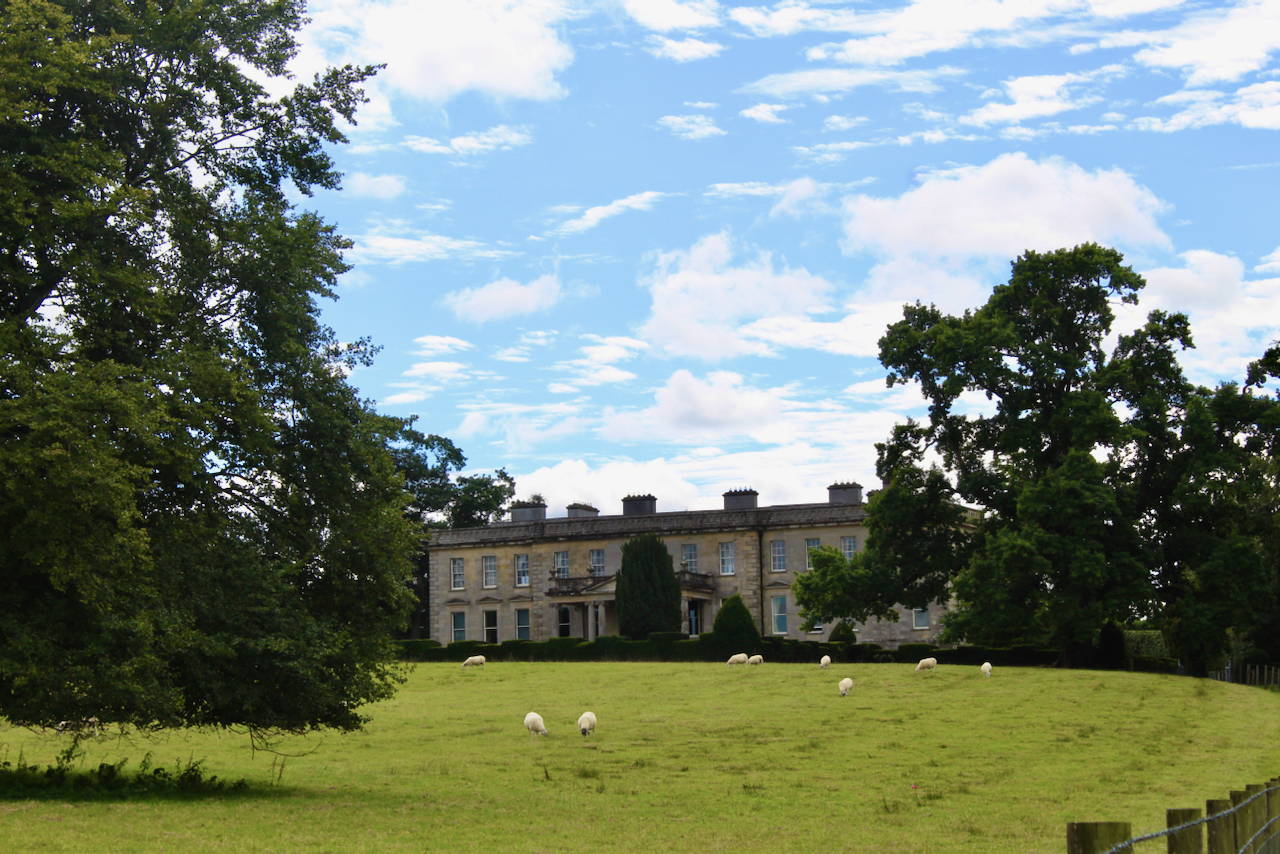
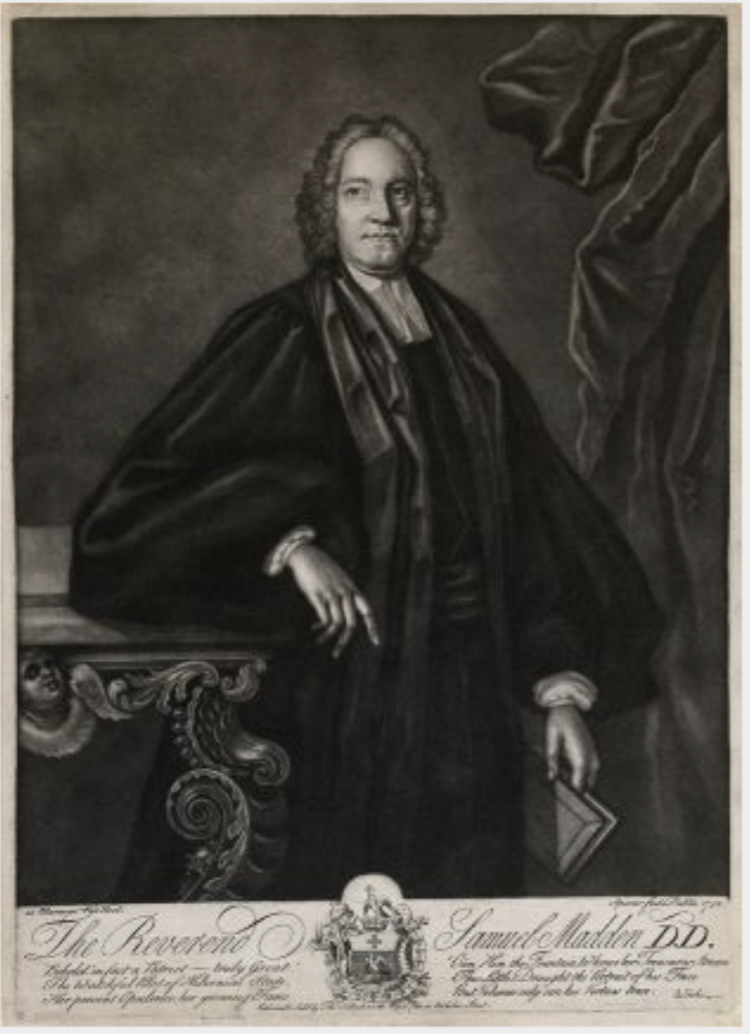
Hilton Park, County Monaghan, June 2011. Photograph © Jennifer Winder-Baggot, www.irishhistorichouses.com
The beautiful gardens of Hilton Park. Photograph © Jennifer Winder-Baggot, www.irishhistorichouses.com

Fred, who showed us around the house, continues the hospitality, although he acknowledged that with health and safety requirements it is becoming more difficult.

The view from the dining room to the south before 1870 was of shrubbery and trees and the lake behind. The framing trees were planted from 1752 to 1780.

There is a cottage on the grounds available for accommodation. [12]

We visited in 2022 during Heritage Week, when Fred gave us a tour of the house. Before that, we had attended the Flat Lakes Festival and camped at Hilton Park, back in 2011!

The lake at Hilton Park. Photograph © Jennifer Winder-Baggot, www.irishhistorichouses.com
The Lake at Hilton Park. Photograph © Jennifer Winder-Baggot, www.irishhistorichouses.com
The view toward the lake. The framing trees were planted from 1752 to 1780. Photograph © Jennifer Winder-Baggot, www.irishhistorichouses.com
Grounds of Hilton Park, County Monaghan, home of the “flat lakes,” June 2011. Photograph © Jennifer Winder-Baggot, www.irishhistorichouses.com
Hilton Park, County Monaghan, June 2011. Photograph © Jennifer Winder-Baggot, www.irishhistorichouses.com
The Flat Lakes festival bus! Photograph © Jennifer Winder-Baggot, www.irishhistorichouses.com
Remnants in 2022 of the Flat Lakes Festival from a decade previous. Photograph © Jennifer Winder-Baggot, www.irishhistorichouses.com
Outbuildings at Hilton Park. Photograph © Jennifer Winder-Baggot, www.irishhistorichouses.com
We can see the massive iron doors that were installed to protect the property back in the 1860s. Photograph © Jennifer Winder-Baggot, www.irishhistorichouses.com
The fine outbuildings. Photograph © Jennifer Winder-Baggot, www.irishhistorichouses.com
The walk toward the lake. Photograph © Jennifer Winder-Baggot, www.irishhistorichouses.com
The drive up to the house, through the woodland. Photograph © Jennifer Winder-Baggot, www.irishhistorichouses.com

[1] p. 352. Mulligan, Kevin V. The Buildings of Ireland: South Ulster: Armagh, Cavan and Monaghan. Founding Editors of The Buildings of Ireland series: Nikolaus Pevsner and Alistair Rowan (2005). Yales University Press, New Haven and London, 2013.

[2] p. 194. Great Irish Houses. Forewards by Desmond FitzGerald, Desmond Guinness. IMAGE Publications, 2008.

[3] https://www.dib.ie/index.php/biography/madden-samuel-molyneux-premium-madden-a5303

[4] Curran, C.P. Riverstown House Glanmire, County Cork and the Francini. A leaflet given to us by Denis Dooley of Riverstown.

[5] https://www.dib.ie/index.php/biography/madden-samuel-molyneux-premium-madden-a5303

[6] p. 194. Great Irish Houses. Forewards by Desmond FitzGerald, Desmond Guinness. IMAGE Publications, 2008.

[7] https://theirishaesthete.com/2016/02/08/hilton-hospitality/

[8] http://lordbelmontinnorthernireland.blogspot.com/search/label/County%20Monaghan%20Landowners

[9] https://www.archiseek.com/2009/1874-hilton-park-clones-co-monaghan/

[10] Mark Bence-Jones. A Guide to Irish Country Houses (originally published as Burke’s Guide to Country Houses volume 1 Ireland by Burke’s Peerage Ltd. 1978); Revised edition 1988, Constable and Company Ltd, London.

[11] http://www.ihh.ie/index.cfm/houses/house/name/Hilton%20Park

[12] https://www.hiltonpark.ie/cottage/

[13] https://www.irelandscontentpool.com/en

Text © Jennifer Winder-Baggot, www.irishhistorichouses.com

Places to Visit and Stay in County Antrim, Northern Ireland

On the map above:

blue: places to visit that are not section 482

purple: section 482 properties

red: accommodation

yellow: less expensive accommodation for two

orange: “whole house rental” i.e. those properties that are only for large group accommodations or weddings, e.g. 10 or more people.

green: gardens to visit

grey: ruins

Today we start with places to see in Ulster. I am publishing this list first because in my researches, I have so often met with families and properties in Northern Ireland which I had not been including in my listings. I can’t wait to start exploring Northern Ireland as well as continuing my visits to Section 482 properties.

The province of Ulster contains counties Antrim, Armagh, Cavan, Derry, Donegal, Down, Fermanagh, Monaghan and Tyrone.

For places to stay, I have made a rough estimate of prices at time of publication:

€ = up to approximately €150 per night for two people sharing (in yellow on map);

€€ – up to approx €250 per night for two;

€€€ – over €250 per night for two.

For a full listing of accommodation in big houses in Ireland, see my accommodation page: https://irishhistorichouses.com/accommodation/

Antrim – listings, and see descriptions below:

1. Antrim Castle and Clotworthy House, County Antrim

2. Belfast Castle estate , County Antrim

3. Carrickfergus Castle, County Antrim

4. Dunluce Castle (ruin), County Antrim

5. Galgorm Castle, County Antrim – now part of a golf club.

6. Glenarm Castle, County Antrimprivate, can book a tour

7. Lissanoure Castle, County Antrimprivate, wedding venue

8. Malone House, Belfast, County Antrimwedding and conference venue

9. Wilmont House (park only), Sir Thomas and Lady Dixon Rose Gardens.

Places to stay. Count Antrim: 

1. Ballygally Castle, Larne, County Antrim €

2. Ballylough House, County Antrim €€

3. Drum Gate Lodge, Ballylough House, Bushmills, County Antrim €€

4. Blackhead Cutter Lighthouse keeper’s house, Whitehead, County Antrim €€ for two, € for 4/5

5. Culloden Estate and Spa, Bangor Road, Holywood, Belfast, BT18 0EX €€€

6. Dunadry Hotel, County Antrim €€

7. Barbican, Glenarm Castle, County Antrim €€

8. Kiln Wing, Old Corn Mill, Bushmills, County Antrim €€

9. Larchfield Estate, Lisburn, Co Antrim, BT27 6XJ, Northern Ireland

10. Lissanoure Estate cottages: all currently let

12. Magherintemple Gate Lodge, Ballycastle, County Antrim €€ for 2; € for 3/4

13. Merchant Hotel, Belfast €€€

14. Old Bushmills Barn, 15 Priestlands Road, Antrim €€€ for two; € for four

15. Portbradden Cottage, Bushmills, County Antrim

16. Strand House, Ballymena, County Antrim

17. Tullymurry House, Banbridge, County Antrim, whole house rental: €€€ for two; € for 3-8

Weddings/whole house rental:

1. Kilmore House, County Antrim

2. Magheramorne, County Antrim.

donation

Help me to pay the entrance fee to one of the houses on this website. This site is created purely out of love for the subject and I receive no payment so any donation is appreciated!

€15.00

1. Antrim Castle gardens and Clotworthy House, County Antrim – estate and gardens open to the public, the Castle was destroyed by fire. The stable block, built in the 1840s and now known as Clotworthy House, is used as an arts centre.

https://discovernorthernireland.com/things-to-do/antrim-castle-gardens-and-clotworthy-house-p704051

Antrim Castle, County Antrim courtesy of Discover Northern Ireland.

* Closed 1 January, 12 July, 25 & 26 December.

This website tells us:

Antrim Castle Gardens are an absolute historical gem. You will find nothing like these 400 year old gardens anywhere else in Northern Ireland. A £6m restoration project, which received generous support from Heritage Lottery Fund, has now preserved this historic site for generations to come.

Walk into the past as you stroll around this magnificent setting, visiting beautiful features such as the Large Parterre, Her Ladyship’s Pleasure Garden and Yew Tree Pond.

Within the heart of the Gardens is a unique visitor experience, the refurbished Clotworthy House. Visit the Garden Heritage Exhibition where you can read about the history of the Gardens and the story of the Massereene family. It provides a fantastic opportunity to come and learn about garden history how the lives of the key family members intertwine with the development of Antrim town and the surrounding areas.

The light filled Oriel Gallery plays host to a range of stunning exhibitions throughout the year.

Be sure to visit and sample the many culinary delights in the Garden Coffee Shop with its delicious treat menu which has something to suit everyone. Your visit won’t be complete without a visit to the Visitor Shop where there is a unique range of goods with a distinct garden focus. With Christmas just around the corner, the shop offers some interesting and quaint gift ideas so why not drop in and pick something up for a friend, a loved one or even to spoil yourself.

With a year round programme of events and activities including talks, walks, interactive workshops, performances and exhibitions, the Gardens are just waiting to be explored.

Antrim Castle gardens, County Antrim courtesy of Discover Northern Ireland.

See also https://visitantrimandnewtownabbey.com/things-to-do/gardens-and-parks/antrim-castle-gardens-clotworthy-house/ which tells us that:

Antrim Castle Gardens is a 17th century Anglo Dutch water garden, one of only three in the British Isles. In a beautiful riverside location close to Antrim town centre they are perfect for a stroll, a coffee or the opportunity to experience a variety of exhibitions, courses and classes.

Developed around Antrim Castle, built by Sir Hugh Clotworthy and his son, Sir John Clotworthy, between 1610 and 1662, they are a complex living museum containing over four centuries of culture and heritage that tell the stories of the people who created, lived and worked here.

John Clotworthy (d. 1665) 1st Viscount of Massereene, courtesy of Clotworthy House.
Antrim Castle (between ca. 1865-1914), County Antrim, photograph by Robert French, Lawrence Photographic Collection, National Library of Ireland.

Mark Bence-Jones writes of Antrim Castle in his  A Guide to Irish Country Houses

(Skeffington, Massereene and Ferrard, V/PB) A castle by the side of the Sixmilewater, just above where it flows into Lough Neagh, built originally 1613 by the important English settler, Sir Hugh Clotworthy, and enlarged 1662 by his son, 1st Viscount Massereene [John Clotworthy (1614-1665)]. The castle was rebuilt 1813 as a solid three storey Georgian-Gothic castellated mansion, designed by John Bowden, of Dublin, faced in Roman cement of a pleasant orange colour; the original Carolean doorway of the castle, a tremendous affair of Ionic pilasters, heraldry, festoons and a head of Charles I, being re-erected as the central feature of the entrance front, below a battlemented pediment. Apart from this, and tower-like projections at the corners, with slender round angle turrets and shallow pyramidal roofs, the elevations were plain; the entrance front being of four bays between the projections, and the long adjoining front of 11 bays. Mullioned oriels and a tall octagonal turret of ashlar were added to the long front in 1887, when the castle was further enlarged. Remarkable C17 formal garden, unique in Ulster, its only surviving counterpart being at Killruddery, Co Wicklow. Long canal, bordered with tall hedges, and other canal at right angles to it, making a “T” shape; old trees, dark masses of yew and walls of rose-coloured brick. Mount, with spiral path, originally the motte of a Norman castle. Imposing Jacobean revival outbuildings of course rubble basalt with sandstone dressings; built ca. 1840. Entrance gateway to the demesne with octagonal turrets. Antrim Castle was burnt 1922.” [1]

Antrim Castle entrance (between ca. 1865-1914), County Antrim, photograph by Robert French, Lawrence Photographic Collection, National Library of Ireland.

The 1st Viscount Massereene married Margaret Jones, daughter of Roger Jones, 1st Viscount Ranelagh. Their daughter Margaret married and her husband gained the title through her, to become John Skeffington, 2nd Viscount Massereene. The 4th Viscount, whose first name was Clotworthy, which became a family name, married Lady Catherine Chichester, eldest daughter of Arthur, 4th Earl of Donegall. Their son Clotworthy became 1st Earl of Massereene.

The 4th Earl died in 1816, and the earldom expired; but the viscountcy of Massereene and barony of Loughneagh devolved upon his only daughter and sole heiress, Harriet Skeffington, 9th Viscountess of Massereene (1789-1843) [2]. She married, in 1810, Thomas Henry Foster, 2nd Viscount Ferrard. It was for Harriet and Thomas that the castle was rebuilt in 1813. Algernon William John Clotworthy Whyte-Melville Skeffington, 12th Viscount Massereene and Ferrard, DSO, was the last of the Skeffingtons to live at Antrim Castle. Lord and Lady Massereene and their family were hosting a grand ball in Antrim Castle when it was burnt by an IRA gang on the 28th October, 1922. Following the fire, Lord Massereene went to live in the nearby dower house, Skeffington Lodge (which subsequently became the Deer Park Hotel, but is no longer a hotel). Further losses of family treasures – this time by sale, not by fire – now followed. 

After the Second World War, Skeffington Lodge was abandoned; the Antrim Castle stable block was converted for use as a family residence, and was re-named Clotworthy House. Clotworthy was acquired by Antrim Borough Council, and was converted for use as an Arts Centre in 1992. 

Timothy William Ferrers tells us that a fine stone bridge, the Deer Park Bridge, spans the river at a shallow point and formed a link between the demesne and the rest of the estate. He continues:
 
The Anglo-Norman motte adjacent to the house was made into a garden feature, with a yew-lined spiral walk leading to the top, from which views of the grounds, the town of Antrim and the river could (and can still) be enjoyed. 
 
The castle and the motte were enclosed within a bawn and protected by artillery bastions, which were utilized for gardens from the 18th century. 
 
The formal canals, linked by a small cascade and lined with clipped lime and hornbeam hedges, are the main attraction. The main gate lodge from the town, the Barbican Gate, was possibly built in 1818 to the designs of John Bowden and has been separated from the site by the intrusion of the road. An underpass now connects the lodge entrance to the grounds.” (see [2])

Also Featured in Irish Country Houses, Portraits and Painters. David Hicks. The Collins Press, Cork, 2014.  

2. Belfast Castle estate , County Antrim

https://discovernorthernireland.com/things-to-do/belfast-castle-estate-p676051

The website tells us:

Belfast Castle estate is situated on the lower slopes of Cave Hill Country Park in north Belfast. It contains both parkland and mature mixed woodland and offers superb views of the city from a variety of vantage points. The estate is home to many different species of wildlife, including long-eared owls, sparrowhawks and Belfast’s rarest plant, the town hall clock.

More information about the estate is available from Cave Hill Visitor Centre, located in Belfast Castle.
You can call the centre directly on 028 9077 6925.
Park features include Cave Hill Adventurous Playground, Cave Hill Visitor Centre, landscaped gardens, a Millennium herb garden, ecotrails and orienteering routes.
We also offer refreshments (in Belfast Castle), scenic views, full car parking facilities and a wide variety of wildlife.

Belfast Castle ca. 1900-1939, Eason photographic collection National Library of Ireland, flickr constant commons.
Belfast Castle and Gardens, photograph by Aidan Monaghan 2015 for Tourism Ireland [3]

Mark Bence-Jones writes in his A Guide to Irish Country Houses:

“(Chichester, Donegall, M/PB; Ashley-Cooper, Shaftsbury, E/PB) The original Belfast Castle was a tall, square semi-fortified house with many gables, built at the beginning of C17 by the Lord Deputy Sir Arthur Chichester, uncle of the 1st Earl of Donegall. It stood surrounded by formal gardens and orchards going down to a branch of the River Lagan, and was the seat of the Donegalls until 1708 when it was destroyed by a fire “caused through the carelessness of a female servant,” three of six daughters of 3rd Earl perishing in the blaze. The castle was not rebuilt and the ruin was subsequently demolished; its site and that of its gardens is now occupied by Castle Place and the adjoining streets, in what is now the centre of the city. For much of C18, the Donegalls lived in England; later, they lived at Ormeau, just outside Belfast to the south-east. 3rd Marquess of Donegall [George Hamilton Chichester (1797-1883)] found Ormeau inconvenient; and so, towards the end of 1860s, he and his son-in-law and daughter, afterwards 8th Earl and Countess of Shaftesbury, built a large Scottish-Baronial castle at the opposite side of the city, in a fine position on the lower slopes of Cave Hill, overlooking the Lough; it was named Belfast Castle, after Sir Arthur Chichester’s vanished house. The architects of the new Belfast Castle were Sir Charles Lanyon and William Henry Lynn; stylistically, it would seem to be very much Lynn’s work; but it may also perhaps have been influenced by a design by William Burn, having a plan almost exactly similar to those of several of Burns’s Scottish-Baronial castles. Tall square tower, of six storeys, in the manner of Balmoral. Projecting pillared porch in “Jacobethan” style, with strapwork on columns. On the garden front, a fantastic snaking Elizabethan staircase of stone leading down to the terrace from the piano nobile was added 1894. Entrance hall in base of tower; larger hall opening at one end into staircase well with massive oak stair; arcaded first floor gallery. Now well maintained by the City of Belfast as a setting for functions.” [4]

Arthur Chichester (1739-1799) 1st Marquess of Donegall by Thomas Gainsborough, courtesy of Ulster Museum.

The Castle passed from the 3rd Marquess of Donegall to his daughter Harriet Chichester and her husband Anthony Ashley-Cooper (1831-1886), who became the 8th Earl of Shaftsbury. Their son the 9th Earl of Shaftsbury served as Lord Mayor in 1907 and Chancellor of Queen’s University the following year. The family presented the castle and estate to the City of Belfast in 1934. 

Charles Lanyon (1813-1889) courtesy of Queen’s University Belfast.

Timothy William Ferres tells us that from the end of the 2nd World War until the 1970s the castle became a popular venue for wedding receptions, dances and afternoon teas. In 1978, Belfast City Council instituted a major refurbishment programme that was to continue over a period of ten years at a cost of over two million pounds.  

Harriet Anne née Butler (1799-1860) Countess of Belfast, wife of George Hamilton Chichester 3rd Marquess of Donegal and daughter of Richard Butler, 1st Earl of Glengall.

The architect this time was the Hewitt and Haslam Partnership. The building was officially re-opened to the public on 11 November 1988. [see 2]

3. Carrickfergus Castle, County Antrim

https://discovernorthernireland.com/things-to-do/carrickfergus-castle-p674971

Carrickfergus Castle, County Antrim, 2014 photography by Arthur Ward for Tourism Ireland, Ireland’s Content Pool. [3]

The website tells us

Carrickfergus Castle is a Norman castle in Northern Ireland, situated in the town of Carrickfergus in County Antrim, on the northern shore of Belfast Lough.

Besieged in turn by the Scots, Irish, English and French, the castle played an important military role until 1928 and remains one of the best preserved medieval structures in Ireland.

For more than 800 years, Carrickfergus Castle has been an imposing monument on the Northern Ireland landscape whether approached by land, sea or air. The castle now houses historical displays as well as cannons from the 17th to the 19th centuries.

A visit will give you the opportunity to see how the Great Hall at the top of the Great Tower has been transformed by the new roof which has greatly improved the visitor’s experience.

Carrickfergus Castle, County Antrim, 2014 photography by Arthur Ward for Tourism Ireland, Ireland’s Content Pool. [3]

https://www.communities-ni.gov.uk/heritage-sites/carrickfergus-castle

The Department for Communities website has more information about Carrickfergus Castle. It tells us:

Begun by John de Courcy soon after his 1177 invasion of Ulster. Besieged in turn by the Scots, Irish, English and French, the castle played an important military role until 1928 and remains one of the best preserved medieval structures in Ireland.

Its long history includes sieges by King John in 1210 and Edward Bruce in 1315, its capture by Schomberg for William III in 1689, and capture by the French under Thurot in 1760. The castle was used by the army until 1928, and in the 1939 to 1945 war it housed air-raid shelters.

John de Courcy (1177-1204) came to Ireland in the time of King Henry II, and Henry gave him land in Ulster. De Courcy fought the inhabitants of Downpatrick for his land and set up a castle there for himself. King Henry II was so pleased with him he created him Earl of Ulster and Lord of Connacht and in 1185 appointed him Lord Lieutenant of Ireland. [see Patrick Weston Joyce, The Wonders of Ireland, 1911, on https://www.libraryireland.com/Wonders/Sir-John-De-Courcy-1.php ]

Carrickfergus Castle, County Antrim, photograph by Robert French, (between ca. 1865-1914), Lawrence Photograph Collection, National Library of Ireland.

4. Dunluce Castle (ruin), County Antrim

https://discovernorthernireland.com/things-to-do/dunluce-castle-medieval-irish-castle-on-the-antrim-coast-p675011

Dunluce Castle by Matthew Woodhouse 2015 for Tourism Ireland [see 3]

The website tells us:

With evidence of settlement from the first millennium, the present castle ruins date mainly from the 16th and 17th centuries. It was inhabited by both the feuding MacQuillan and MacDonnell clans. Historical and archaeological exhibits are on display for public viewing.

Opening Hours: Please check before visiting as public access may be restricted.

The entrance to the castle. Photograph © Jennifer Winder-Baggot, www.irishhistorichouses.com

We visited in June 2023. See my entry https://irishhistorichouses.com/2024/07/04/dunluce-castle-ruin-county-antrim-northern-ireland/

The view from the castle in the other direction. Photograph © Jennifer Winder-Baggot, www.irishhistorichouses.com

5. Galgorm Castle – now part of a golf club, County Antrim

https://www.galgormcastle.com/galgorm-estate.html

The website tells us: “Galgorm Castle is an historic estate dating back to Jacobean times but has evolved into one of Northern Ireland’s most vibrant destinations with diverse business, golf and recreational activities housed there. The focal point is the 17th century Jacobean castle dating back to 1607, which has been restored and along with the immaculate walled gardens is part of the Ivory Pavilion wedding and events company. The castle is also a historical reminder of the important role the Galgorm Estate played as part of Northern Ireland’s history. Away from the championship golf course there is plenty of opportunity to try the game for the first time at the Fun Golf Area with a six-hole short course and Himalayas Putting Green. The Galgorm Fairy Trail is another family option which runs out of Arthur’s Cottage at the Fun Golf Area.And if looking for great food and drink, a meal at the Castle Kitchen + Bar at the Galgorm Castle clubhouse is a must. Members and non-members are welcome.”

See my entry https://irishhistorichouses.com/2024/09/27/galgorm-castle-county-antrim-now-part-of-a-golf-club/

Galgorm, County Antrim, photograph by Robert French, Lawrence Photograph Collection, National Library of Ireland.

6. Glenarm Castle, County Antrim – private, can book a tour

https://glenarmcastle.com

Glenarm Castle & Garden, photo by Donal Maloney 2021 for Tourism Ireland [see 3]

The website tells us that Glenarm Castle is one of few country estates that remains privately owned but open to the public. It is steeped in a wealth of history, culture and heritage and attracts over 100,000 visitors annually from all over the world. See my entry https://irishhistorichouses.com/2024/07/11/glenarm-castle-county-antrim-northern-ireland-private-can-book-a-tour/

Visitors can enjoy enchanted walks through the Walled Garden and Castle Trail, indulge in an amazing lunch in the Tea Room, purchase some local produce or official merchandise, or browse through a wide range of ladies & gents fashions and accessories and a selection of beautiful gifts, souvenirs and crafts in the Byre Shop and Shambles Workshop – with many ranges exclusive to Glenarm Castle.

Glenarm Castle is the ancestral home of the McDonnell family, Earls of Antrim. The castle is first and foremost the private family home of Viscount and Viscountess Dunluce and their family but they are delighted to welcome visitors to Glenarm Castle for guided tours on selected dates throughout the year.

Delve deep into the history of Glenarm Castle brought to life by the family butler and house staff within the walls of the drawing room, the dining room, the ‘Blue Room’ and the Castle’s striking hall. 

Finish the day with the glorious sight of the historic Walled Garden, which dates back to the 17th century.

Dates are limited and booking in advance is required.  

Glenarm Castle, June 2023. Photograph © Jennifer Winder-Baggot, www.irishhistorichouses.com

The castle was built around 1603 by Randal MacDonnell [1610-1682], afterwards 1st Earl of Antrim, as a hunting lodge or secondary residence to Dunluce Castle, and became the principal seat of the family after Dunluce Castle was abandoned. The mansion house was rebuilt ca. 1750 as a 3-storey double gable-ended block, joined by curving colonnades to two storey  pavilions with high roofs and cupolas. This would have been during the life of the 5th Earl of Antrim, Alexander MacDonnell (1713-1775).

Glenarm Castle, June 2023. Photograph © Jennifer Winder-Baggot, www.irishhistorichouses.com
Glenarm Castle, by Donal Maloney 2021, for Tourism Ireland. [see 3]
Glenarm Castle, with George the butler, who gave us a tour, photograph by Donal Malony 2021 for Tourism Ireland, Ireland’s Content Pool (see [3]). A portrait of Charlotte, Countess of Antrim, with her head resting on her hand, is on the wall.
Glenarm walled garden, June 2023. Photograph © Jennifer Winder-Baggot, www.irishhistorichouses.com
More beautiful vistas at Glenarm walled garden, June 2023. Photograph © Jennifer Winder-Baggot, www.irishhistorichouses.com
Glenarm walled garden, photograph courtesy of Heritage centre.

7. Lissanoure Castle, County Antrim – private, wedding venue

https://lissanourecastle.com

George MacCartney, 1st and last Earl Macartney, lived at Lissanoure Castle, and is an ancestor of my husband, Stephen! His mother was a Winder.

George Macartney of Lissanoure.

The website tells us: “Lissanoure Castle is an award-winning venue situated on a privately owned estate. The beautiful natural landscape provides the perfect backdrop for those all important photos and memories that last a lifetime. The 18th century Coach House and the Castle Barn have been converted into spectacular venues, with a fully licensed bar.

Lissanoure Castle is on an island site in the heart of a privately owned estate of Peter and Emily Mackie. It was the original seat of Lord Macartney, the first British Ambassador to China.” Earl Macartney brought his cousin (1st cousin, once removed) Edward Winder with him to China, and Edward kept a diary, which is in the National Library of Ireland’s manuscript room.

Edward Winder (1775-1829) who went with his cousin George Macartney to China and wrote diaries on the trip, which are in the National Library of Ireland.

The website for Lissanoure tells us: “There has been a settlement at Lissanoure since Celtic times because of its naturally defensive position. In the middle of the lake there is a crannóg (an artificial island normally dating from the Iron Age and used for defence).

The earliest record of a castle situated at Lissanoure dates from 1300. There is some confusion about who built it, some records naming Sir Philip Savage and other records showing Richard Óg de Burgh, second Earl of Ulster (also known as The Red Earl).

The estate passed to the O’Hara family of Crebilly in the early part of the fourteenth century. There are maps dated 1610 and published by John Speede, showing the castle (called Castle Balan) sited on the north shore of the lake.

The estate was sold in 1733 to George Macartney, a member of the Irish Parliament, for over fifty-four years. 

It passed in due course to his only grandson, George (born 1737) later Envoy Extraordinary to Catherine the Great, Chief Secretary for Ireland, President of Fort St. George, Madras, Ambassador to China, Govenor of the Cape of Good Hope, Earl in the Irish Peerage and Baron in the British Peerage.

The estate remained with the Macartney family until the beginning of the last century when it was acquired by the Mackie family.

Today, it is still a traditional family estate with farming and forestry and it is owned and managed by Peter and Emily Mackie. They have continued the restoration work, started by his parents, of the castle and the gardens.

Earl Macartney did not have children. The website tells us that The Lissanoure and Dervock estates were left to Macartney’s wife who had a life-interest. The heir was his sister’s daughter, Elizabeth Belaguier, who married the Rev. Dr Travers Hume, a Church of Ireland clergyman. However she never inherited the estates as she died before the Countess of Macartney, so Elizabeth’s eldest son, George Hume, inherited the Lissanoure and Dervock estates, with one of the conditions being that he assumed the surname Macartney.

George Hume Macartney had expressed dissatisfaction with the existing castle as it was often in need of repair, for it suffered from damp, and the family had to move out for periods. He decided to rebuild much of it whilst, at the same time rebuilding an “elegant cottage in the later English style” near the edge of the lake. He changed the Gothic mansion to a Georgian styled mansion extending the living quarters for the house into where the stables and coach houses were in the court yard. He then built on a semi-circular yard of grand dimensions for the stables and coach houses with an impressive Tudor revival archway and clock tower entrance.

Mark Bence-Jones writes in his A Guide to Irish Country Houses (1988):

Following Lord Macartney’s death in 1806, Lissanoure was inherited by his great-nephew, George Hume, who assumed the surname of Macartney; and who began rebuilding the house from 1829 onwards, pulling down the old castle, which stood at one corner of it; putting up  a Tudor archway leading into the courtyard, surmounted by an octagonal battlemented belfry and spire, very much in the manner of William Vitruvius Morrison. 
 
Not until 1847 did he tackle the front of the house, having in the meantime built himself ”an elegant cottage in the later English style, richly embellished” by the side of the lake. In that same year, after the front wall has been taken down, with a view to rebuilding it, there was an explosion which killed Mrs Macartney and presumably also damaged the structure of the house; for all work on it ceased and it was allowed to fall into ruin. The “elegant cottage” continued to serve as the family residence and it was later rebuilt in a more rustic style, with dormer gables and elaborate bargeboards; and an office wing a the back almost twice as large as the house itself.” [6]

The website tells us that George Hume Macartney died and the Lissanoure and Dervock estates were inherited in 1869 by his eldest son, George Travers Macartney, a former Captain in the 15th King’s Hussars. “He was well regarded by all his tenants and workers, so it came as a tremendous shock when he died of a sudden heart attack on the 29th August 1874 attack aged 44 leaving a wife and four small children. The people of Dervock erected a fountain to him beside the bridge in the centre of the village in his memory and many tributes were paid to him.

Carthanach George Macartney, aged 5 years, inherited the estates. He was officially landlord of Lissanoure and Dervock for a total of 62 years, a record among Irish gentry.

His mother and cousins took charge in the early years but when Carthanach came to power he proved himself kind and generous.

He saw the break-up of the estate under the Land Acts,which started in 1881, under which his tenantry eventually became owner-occupiers and he was left only with the lands immediately around his home, which he farmed. In 1936 his son George Travers Lucy Macartney aged 40 years became his successor... In 1943 The Mackie family of James Mackie & Sons of Belfast, once the world’s largest producers of textile machinery and major contributors to the war effort with the production of Bofors gun shells and the fuselage for Stirling bombers, buy the estate from the Macartney family.”

8. Malone House, Belfast, County Antrim – wedding and conference venue

https://discovernorthernireland.com/things-to-do/malone-house-p674831

The discover Northern Ireland website tells us:

Malone House, located in Barnett Demesne in south Belfast, is an late Georgian mansion which dates from the 1820s.

T”oday, it is a popular venue for conferences, functions and weddings and is licensed to hold marriage and civil partnership ceremonies, subject to the availability of a Registrar.

It offers a wide range of facilities, including:
• Function rooms
• Conference rooms
• Malone Room for coffee, lunches and afternoon teas
• Higgin Gallery

https://www.malonehouse.co.uk

Malone House 2014, unknown photographer for Tourism Ireland [see 3]

The website tells us:

Located on the site of a 17th century fort, Malone House was built in the 1820s for William Wallace Legge, a rich Belfast merchant who had inherited the surrounding land. A keen landscaper, he designed and planted most of the estate’s grounds, which remain relatively unchanged today. 

When Legge died, ownership of Malone House passed to the Harberton family, who lived on the premises from 1868 to 1920. The building’s last owner was William Barnett, who presented Malone House to the city of Belfast in 1946.

Following its presentation to the city, Malone House was leased to the National Trust in the early 1970s. After it was nearly destroyed by a fire in 1976, the building was repaired by the council and reopened in June 1983. 

Since then, it has become a major venue for weddings, conferences, social functions and other events, while the surrounding grounds are popular with walkers and cyclists.”

9. Wilmont House (park only), Sir Thomas and Lady Dixon Rose Gardens.

Wilmont House, Sir Thomas and Lady Dixon Park, 2015, by Brian Morrison for Tourism Ireland, see [3]

https://discovernorthernireland.com/things-to-do/sir-thomas-and-lady-dixon-park-p674891

The website for the park tells us

The beautiful Sir Thomas and Lady Dixon Park comprises rolling meadows, woodland, riverside fields and formal gardens. The City of Belfast International Rose Garden has made the park world famous, and contains over 20,000 blooms in the summer, divided into trial and display beds, an historical section, and a heritage garden that displays the best of the roses from local breeders. Each season thousands of visitors enjoy the rose gardens and associated events during Rose Week. 

Sir Thomas and Lady Dixon Park also contains International Camellia Trials, a walled garden, a Japanese-style garden with water features for quiet contemplation, a very popular childrens’ playground, an orienteering course and many walks.”

Anna Stewart (née Garner), of Lisburn Co. Down, Second Wife of William Stewart of Wilmont, by Nathaniel Hone, courtesy of Shepphards auctions.

Mark Bence-Jones describes Wilmont House: p. 285. “(Reade/LGI1958) A plain two storey Victorian house, built 1859. Three bay front, with balustraded porch; lower wing, ending with wing as high as main block. Adjoining front with central curved bown and one bay on either side. Camber-headed windows in upper storey of main block. Eaved roof on bracket cornice.” 

Timothy William Ferres tells us:

The original house, which stood on the site of the present-day barbecue area, dated back to 1740 and was replaced by the present red-bricked house in 1859. 

This house was designed by Thomas Jackson (1807-90), one of Belfast`s most notable Victorian architects.

Sir Thomas and Lady Dixon purchased Wilmont demesne in 1919. 

Sir Thomas died at Harrowgate in 1950. Lady Dixon, who was appointed DBE after the 1st World War in recognition of her service to HM Forces, died in 1964. A year before her death, in 1963, Wilmont demesne was officially handed over to Belfast Corporation. The house, according to her wishes, was shortly afterwards opened as a home for the elderly; while the grounds, at her behest, were opened to the public. 
 
The present park, named after its benefactors, consists of 134 acres and has been the venue for the City of Belfast International Rose Trials since 1964.” (see [2])

Places to stay. Count Antrim: 

1. Ballygally Castle, Larne, County Antrim €

https://www.hastingshotels.com/ballygally-castle/?gclid=CjwKCAjwybyJBhBwEiwAvz4G7w8_p7MWKXCL6Vrjer6k5D4AaaJg8CVSfc31wnqzX2CTqPmXQcBoLBoCez8QAvD_BwE

Ballygally Castle, County Antrim, photograph by Brian Morrison 2017 for Tourism Ireland [see 3]
Inside the hotel was a photograph of how the castle looked before the hotel addition.

The website tells us:

Ballygally Castle, affectionately dubbed “the jewel in the Hastings Crown”, was purchased by the Hastings Hotels Group in 1966 and over the years various extensions and renovations have transformed it to the charming hotel it is today. It received official four star status from the Northern Ireland Tourist Board in 2007 and in 2014 the hotel underwent a further major refurbishment and extension project, with the addition of ten new Coastal Deluxe bedrooms, a new larger Reception area and the stunning new Kintyre Ballroom. All developments at the Castle have been very carefully undertaken so as not to distract from the history of the original building, as the hotel’s distinctive character comes from the fact that it dates back to 1625. The Ballygally Castle is unique in that it is the only 17th Century building in Northern Ireland still being used as a residence today!

We visited Ballygally castle in June 2023, and had some lunch here. Photograph © Jennifer Winder-Baggot, www.irishhistorichouses.com
The castle’s original entrance. The motto means “With God on my side, all will be well.” The initials above are JS for James Shaw and IB for Isabella Brisbane. Photograph © Jennifer Winder-Baggot, www.irishhistorichouses.com

Built in 1625 by James Shaw and his wife Isabella Brisbane. Shaw, a native of Greenock, Scotland, came to Ireland in 1606 to seek his fortune. In 1613, he received a sub-grant of land from the Earl of Antrim. It was on this land that the castle was built. [James Shaw, a Scot, built the castle in Scottish style with a steep roof, high walls, corner turrets and dormer windows. Its walls are five feet thick and studded with ‘loopholes’, narrow vertical slits through which muskets could be fired.]

The castle came under attack during the 1641 rising, when the Gaelic Irish rose against the English and Scots settlers. Although a nearby Irish garrison controlled the countryside around and tried to force their way in, the inhabitants held out.

They did not all survive. John Jamieson sent his two sons and daughter out to fetch corn. One son was hung by rebels and his daughter taken prisoner.

In 1680 the castle was actually captured by the ‘Tories’ of Londonderry – dispossessed Irish chieftains who had lost everything following the 1641 rising. However, with a bounty on their heads, they did not stay long and soon returned to the then plentiful woods.

Photograph © Jennifer Winder-Baggot, www.irishhistorichouses.com

The original castle served as a place of refuge for the Protestants during the Civil Wars. During that time, it was handed down from fathers to sons and in 1799 it was passed to William Shaw, the last squire of Ballygally. In the early 1800s the Shaw family lost their wealth and the estate was sold to the Agnew family for £15,400.

For several years it was used as a coastguard station, before the Reverend Classon Porter and his family took residence. It was then taken over by the Moore family. They then sold it to textile millionaire Mr. Cyril Lord in the early 1950s, who refurbished it as a hotel.

After centuries of private ownership, Ballygally Castle was turned into the elegant Candlelight Inn in the 1950s by ‘Carpet King’ Cyril Lord, who became famous from the TV ads for his carpet company. Its candelabra brand was designed around distinctive light fittings, some of which can still be seen in the 1625 Room.

Sir Billy Hastings bought Ballygally Castle in 1966. Beautifully refurbished, the hotel has preserved the castle’s unique character and many of its features.

I was happy to see that the tower house still has its winding staircase and there are rooms which one cay stay in. We climbed the stairs to the top to a room left for visitors to view decorated as it may have looked in the past.

The room at the top of the castle. Storyboards tell us that James Shaw locked his wife in this room when she gave birth to a daughter, because he was enraged that the baby was not a boy. It says she jumped to her death from this room. I don’t know if that’s true! Photograph © Jennifer Winder-Baggot, www.irishhistorichouses.com

Mark Bence-Jones writes in his A Guide to Irish Country Houses (1988):

p. 22. “A unique example of a C17 Plantation Castle surviving intact, inhabited and unchanged, except from the insertion of sash windows. Built 1625 by James Shaw. With its high roof, its two pepperpot bartizans, and its two curvilinear dormer-gables, which do not quite match, it looks for all the world like a little C16 or early C17 tower-house in Scotland. In 1814, the residence of Rev. Thomas Alexander. Now an hotel.”

See also the blog of Timothy William Ferres. [see 2] http://lordbelmontinnorthernireland.blogspot.com/2014/10/ballygally-castle.html

The gardens of the hotel are lovely.

There’s a lovely little corner building. Photograph © Jennifer Winder-Baggot, www.irishhistorichouses.com
The hotel is directly across from the sea, and one can see Scotland. Photograph © Jennifer Winder-Baggot, www.irishhistorichouses.com
The other side of the castle. Photograph © Jennifer Winder-Baggot, www.irishhistorichouses.com
The corner building, and the view of the sea. Photograph © Jennifer Winder-Baggot, www.irishhistorichouses.com
Below is a trout stream. Photograph © Jennifer Winder-Baggot, www.irishhistorichouses.com
The trout stream running beside the hotel. Photograph © Jennifer Winder-Baggot, www.irishhistorichouses.com
The well-maintained gardens. Photograph © Jennifer Winder-Baggot, www.irishhistorichouses.com
The gardens of Ballygally castle hotel.
The gardens of Ballygally castle hotel. Photograph © Jennifer Winder-Baggot, www.irishhistorichouses.com
At one end of the garden and the trout stream is a picturesqe bridge, which carries the main road in front of the hotel. Beyond is the sea, and Scotland. Photograph © Jennifer Winder-Baggot, www.irishhistorichouses.com

2. Ballylough House, County Antrim 

https://ballyloughbnb.co.uk

Mark Bence-Jones writes in A Guide to Irish Country Houses (1988):

p. 24. “(Traill/IFR) A C18 house originally belonging to Archibald Stewart of Ballintoy; bought by the Traill family 1789, two storey over basement; three bay front. The front was subsequently given Wyatt windows; battlemented segmental flanking walls with niches were built 1815; and a wing was added, also in early C19. At some other date, the Tuscan doorcase was moved from the centre to the front to the righ-hand bay, thereby spoiling the symmetry. Plasterwork in hall which may be contemporary with the original building of the house; plasterwork festoons, flowers and foliage elsewhere, probably later.”

See also the blog of Timothy William Ferres. [see 2]

3. Drum Gate Lodge, Ballylough House, Bushmills, County Antrim €€

https://www.irishlandmark.com/propertytag/cottages-and-houses/?gclid=Cj0KCQiApL2QBhC8ARIsAGMm-KFInICcRSxwLSiDxfFNk5WFytNcVrLvOQYhzJbIBes4V-M65iXz0gYaAln_EALw_wcB

Drum Gate Lodge, Ballylough House, Bushmills, County Antrim photograph courtesy of Landmark Trust.

The blog of Timothy William Ferres tells us that there are two gate lodges to Ballylough House: the unusual circular West Lodge of ca 1800, now known as The Drum; and the East Lodge of ca 1840, which is still occupied and has its own charming cottage garden. The West Lodge, now known as The Drum, was built at the end of a long avenue of beech trees at the western edge of the Ballylough Estate in 1800 by Archdeacon Traill, two years after he bought the estate. [see 2]

Bedroom of Drum Gate Lodge, Ballylough House, Bushmills, County Antrim photograph courtesy of Landmark Trust.

4. Blackhead Cutter Lighthouse keeper’s house, Whitehead, County Antrim €€ for two, € for 4/5

https://www.irishlandmark.com/property/blackhead-cutter/

Blackhead Cutter Lighthouse keeper’s house, Whitehead, County Antrim, photograph courtesy of Landmark Trust.

3 houses: https://www.irishlandmark.com/properties/

Blackhead Lightkeepers’ Houses are ideally situated on the North Shore of Belfast Lough. This is one of three houses on the Lightkeepers’ station at Blackhead. The panoramic views from this property are stunning and fill visitors with pure delight and admiration.

The House is a proud example of Ireland’s rich maritime heritage. If you are lucky enough to stay during a storm you will have an opportunity to experience the elements at their wildest. The House oozes character and charm and makes for an ideal location for a really special break.

Blackhead Lightkeepers’ House 1, County Antrim, photograph courtesy of Landmark Trust.
Blackhead Lightkeepers’ House, County Antrim, photograph courtesy of Landmark Trust.

5. Culloden Estate and Spa, Bangor Road, Holywood, Belfast, BT18 0EX €€€ https://www.cullodenestateandspa.com

Culloden Estate and Spa, courtesy of Hastings Hotels, 2017, Ireland’s Content Pool (see [3]).

The website tells us Colloden was originally built as an official palace for the Bishops of Down. The Culloden Estate and Spa stands in twelve acres of secluded gardens and woodland.

Culloden estate dining courtesy of website.

6. Dunadry Hotel, County Antrim €€

https://www.dunadry.com

Located at the heart of County Antrim, our location is easily accessed from anywhere in Northern Ireland, and further afield with Belfast International Airport only a short 10-minute drive away.

If the walls within our iconic venue could speak, they will tell many stories of times gone by, dating back to the 1600’s when it housed the High Kings of Ireland, to its days as a Paper Mill and a Linen Mill before it took form as a hotel.

It’s time for you to experience the history that flows through this iconic venue, rich with traditional features still on show, complimented now by its modern and contemporary décor.

Dunadry hotel County Antrim courtesy of website.

7. Barbican, Glenarm Castle, County Antrim – €€ see also Glenarm Castle, above

https://www.irishlandmark.com/property/the-barbican/

Timothy William Ferres tells us: “The Barbican gate lodge is built into the estate wall at the end of an old stone bridge spanning the river Glenarm. It was commissioned in 1823 by Edmund Phelps, the second husband of Anne Catherine, Countess of Antrim suo jure, who inherited the estate when her father, the 6th Earl, died without male issue. 
 
“The architect William Vitruvius Morrison built it using local, coursed, rubble basalt and red ashlar sandstone dressings. This gate lodge has a narrow turret staircase which leads onto a roof terrace overlooking the surrounding countryside
.” [see 2]

Barbican Gatelodge, Co. Antrim photograph courtesy of Landmark Trust.

8. Kiln Wing, Old Corn Mill, Bushmills, County Antrim €€

https://www.irishlandmark.com/property/kiln-wing-old-corn-mill/

The Kiln Wing, Co. Antrim, photograph courtesy of Landmark Trust.

The Kiln Wing is a wonderfully restored 19th Century corn mill, full of character and charm and located right in the town of Bushmills.

It has great views of the River Bush and is a stone’s throw from wonderful attractions like the Giants Causeway, Toor Head and Dunseverick Castle. Best of all, you get the chance to sleep with your head over a flowing river, allowing it to take your stress with it as it rushes out to sea.

The Kiln Wing, Co. Antrim, photograph courtesy of Landmark Trust.
Dunluce Castle, Co. Antrim, photograph courtesy of Landmark Trust.

9. Larchfield Estate, Lisburn, Co Antrim, BT27 6XJ, Northern Ireland https://www.larchfieldestate.co.uk/staying-over

House Tour with a guided Nature walk. Fly Fishing course also available. Accomodation and Clamping also on site. Larchfield Estate walk, Lisburn, @ChristopherHeaney Courtesy of Tourism Northern Ireland 2022

The website tells us that Larchfield extends to 600 acres and includes peaceful forest and woodland alongside picturesque river banks. Steeped in history, Larchfield’s heritage dates back to the 1600’s with many remarkable ups and downs throughout its 350-year history.

Larchfield’s story starts back in 1660 when the land (at that time, about 1500 acres) was bought from the O’Neills. It wasn’t until 1750 that the original part of the current house was built on the site of an old farm house. It was built by the Mussendens, who were merchants bankers in Belfast. We have an interesting connection with Mussenden Temple in County Londonderry which was built by the Earl Bishop (a cousin) in memory of Mrs. Mussenden from Larchfield who died at the age of 22, sadly before Mussenden Temple was finished.

In 1845, the house was redesigned by Charles Lanyon, one of Belfast’s most prominent and influential architects of the Victoria Era and famous for designing Queens University and the Custom House in Belfast among many others. We know that Lanyon changed the front of the house to face south, with new driveways.

Then in 1868/9, William Mussenden sold the house to Ogilvie B Graham, 1st of a family of hereditary directors of the York Street Flax Spinning Company. The valuation of the house was about £100 at the time and as well as adding an extra storey to the main house, Graham added the gate lodge.

In 1873 the Victorian wing of the house was added, followed by the Fish Pond Lake in 1896. Our Fish Pond Lake, accessed exclusively by only the bride and groom when we host a wedding, is referenced both in maps from 1896 and also in Gerard Brennan’s book, A Life of One’s Own. In this book he also refers to Larchfield as the pink house. Gerard Brennan was the grandson of the Ogilvie Grahams.

Moving to more recent times, in 1968, Mr. Leslie Mackie, father of current owner Gavin Mackie, bought the estate at auction from Col Ogilvy Graham (approx. 300 acres). Some of the best parkland trees had to be bought back from a timber merchant as they had been sold prior to auction!

The current owners (Gavin and Sarah Mackie) were married themselves at Larchfield in 2007, and moved back to take on the estate from Gavin’s parents. The estate was opened up for weddings and events around this time and in 2010, as part of its renovation, the Stables was re-built and re-roofed for hire for ceremonies and smaller functions downstairs.

In 2012, Rose Cottage was the first of the onsite accommodation to be restored, leading to the development of accommodation for up to 37 guests. Late 2019 saw the completion of the redevelopment of an 1800s railway style building facing the Larchfield Estate cottages. Harkening back to its history as a piggery, The Old Piggery was officially launched in 2020 as a new offering for experiences, dining, special celebrations and corporate retreats. This project was kindly supported by the Rural Development Programme.

10. Lissanoure Estate cottages: see above, and

https://lissanourecastle.com/the-estate/

All currently let.

The website tells us:

The Londonderry Arms Hotel is a historic hotel situated in the picturesque Glens of Antrim in the small coastal village of Carnlough on the award winning Antrim Coast Road which forms a core part of the Causeway Coastal Route.

Built in 1847 and once owned by Sir Winston Churchill, the hotel has been in the O’Neill family ownership for more than 70 years.

The Londonderry Arms Hotel is a haven for local friends and guests and visitors from afar. Featuring in several films and books, it has a sense of old world charm which appeals to all.

“The Blue Bay, Mr Churchill on the Riviera” by John Lavery, 1921. Photograph © Jennifer Winder-Baggot, www.irishhistorichouses.com

It was built in 1848 by Frances Anne Vane Tempest, Lady Londonderry, who had married Charles William Stewart 3rd Marquess of Londonderry. She had it built as a coaching house for visitors travelling to her house Garron Tower (now St. Killian’s College). The fine Georgian architecture has been retained and the hotel has been in the ownership of the O’Neill family for over 76 years. It is a warm welcoming place and filled with nostalgia for all the events and families and visitors it has hosted throughout the years.

Frances Anne’s daughter, also named Frances Anne (1822-1899) married John Winston Spencer Churchill, 7th Duke of Marlborough. They had a son, Randolph Henry Spencer-Churchill (1849-1895), who married Jenny Jerome from the United States. Her sister Leonie married John Leslie, 2nd Baronet, of Castle Leslie in County Monaghan. Winston Churchill was Jenny’s son.

12. Magherintemple Gate Lodge, Ballycastle, County Antrim €€ for 2; € for 3/4

https://www.irishlandmark.com/propertytag/cottages-and-houses/?gclid=Cj0KCQiApL2QBhC8ARIsAGMm-KFInICcRSxwLSiDxfFNk5WFytNcVrLvOQYhzJbIBes4V-M65iXz0gYaAln_EALw_wcB

Magherintemple Lodge, Co. Antrim photograph courtesy of Landmark Trust.

Mark Bence-Jones writes in his A Guide to Irish Country Houses:

(Casement/IFR) A house of ca. 1875, in Scottish baronial style. The seat of the Casement family, of which Sir Roger Casement was a cadet.” [7]

Timothy William Ferres adds that an earlier quite modest house called Churchfield was described in 1835 as being a plain two storey dwelling, the property of the Casement family from 1790. 
 
It was considerably enlarged in 1874-75 for John Casement, adding an austere Scottish-baronial block in Ballyvoy stone with gate lodge in matching style. 

Magherintemple Lodge, Co. Antrim photograph courtesy of Landmark Trust.

13. Merchant Hotel, Belfast €€€

https://www.themerchanthotel.com/our-history

The Merchant Hotel – Front Entrance, Courtesy of Merchant Hotel, Belfast 2017, Ireland’s Content Pool (see [3]).
Ulster Bank, now the Merchant Hotel, Belfast, NLI Lawrence Photographic Collection photo by Robert French.

The website tells us:

The Merchant Hotel has long been admired for its distinctive architectural style, both in its former life as the headquarters of the Ulster Bank and now, in its current incarnation as a five-star luxury hotel.

This formidable sandstone structure was purpose built as the headquarters of the Ulster Bank. The site was originally acquired in 1836. However, the decision to build was not taken until 1857. Bank Directors Robert Grimshaw and James Heron visited Glasgow and Edinburgh to glean as much information as possible on the best banking buildings. It was their wish that the building should appear elegant, substantial and prosperous.

The location was deemed suitable as it was in the heart of Belfast’s mercantile and commercial centre. In fact, Waring Street derives its name from a successful local merchant William Waring.

For the creation of the Ulster Bank headquarters, the directors felt the work should be undertaken by an innovative architect. Over sixty proposals were submitted to the bank’s committee and £100 was offered for the best design. In the end the design of a talented Glaswegian by the name of James Hamilton was selected. The building work was undertaken by Messer’s D and J Fulton, while the spectacularly ornate plasterwork in the main banking hall was carried out by Belfast man George Crowe.

The exterior of the building is Italianate in style. Sculptures depicting Commerce, Justice and Britannia, look down benignly from the apex of the magnificent façade. Under the grand central dome of the main banking hall (now The Great Room Restaurant), fruit and foliage designs surround the walls in a magnificent frieze. Four Corinthian columns frame the room and feature plump putti (cherub-like figures) depicting science, painting, scripture and music.

Generosity of proportions and an ornate but not ostentatious style throughout the building has ensured that it is one of the most renowned and best loved buildings in Belfast. When the designs were first shown at the 1858 London Architectural Exhibition, the literary magazine Athenaeum described them as “very commendable, earnest, massive, rich and suitable”. Writing more than a century later, founding member of the Ulster Architectural Heritage Society C.E.B. Brett said the building offered “every inducement to linger and ponder on wealth and its advantages”.

The Ulster Bank headquarters were transformed into the five-star Merchant Hotel in 2006. The original Grade A listed building was then greatly enhanced in the summer of 2010 by the addition of a £16.5 million extension featuring a wealth of new facilities for guests. 

Thanks to local historian Raymond O’Regan for some of the historical information referenced in this section.

Merchant Hotel, 2014, photograph by James Fennell, for Tourism Northern Ireland, Ireland’s Content Pool (see [3])
Inside the Merchant Hotel, 2014, photograph by James Fennell, for Tourism Northern Ireland, Ireland’s Content Pool (see [3])
Inside the Merchant Hotel, photograph by James Fennell, 2014, for Tourism Northern Ireland, Ireland’s Content Pool (see [3])

14. Old Bushmills Barn, 15 Priestlands Road, Antrim €€€ for two; € for four

https://www.theoldbushmillsbarn.com

The website tells us:

“1608

The history of the barn fascinates everyone. Tradition and innovation melts into these stunning grounds. Bushmills is a town with a rich history boasting the oldest distillery in the world, originating in 1608.

1700’s

Bushmills grows and The Old Rectory & its Barns are built.

The 1821 listing’s text changed to: In 1821 for a cost of £1200 (£960,000 in today’s money) the still existing church, Dunluce Parish was built. Four years later in 1825 the Rectory and the Barns were extended, a big step in the history of Bushmills, serving as a home to the church’s ministers for the next 150 years.

1821

In 1821 for a cost of £1200 (£960,000 in today’s money) the still existing church, Dunluce Parish was built. Four years later in 1825 the Rectory and the Barns was erected, starting its journey in the history of Bushmills, serving as a home to the church’s ministers for the next 150 years.

The Reverent James Morewood was the first occupant.

During these periods of ownership, the Barns are used for servants quarters and stables for horses.

1960

In 1960 flooding happened and the house and barns were abandoned and a new modern house was built for the minister at that time and future ministers to come.

1990

Young business owners Robert Mckeag and Louise Mckeag purchase the house from the church and the original restoration of this Georgian Manor begins.

1993

The original restoration of the now Old Rectory is completed. With the Barns now having a tin roof.

2018

The Old Rectory hosts the VIP guests and commentators of the American news channel NBC news for the 148th British Open, Royal Portrush.

2019

After studying International Hospitality and Tourism Management and working at The Gleneagles Hotel, Robert and Louise’s son Jasper dreams up the perfect accommodation for exploring the booming tourism spot – The North Coast of Northern Ireland.”

15. Portbradden Cottage, Bushmills, County Antrim

https://www.nationaltrust.org.uk/holidays/portbraddan-cottage-northern-ireland

Three bedrooms, minimum three night stay.

Portbraddan Cottage, County Antrim, courtesy Nationl Trust, photograph by Mike Henton.

16. Strand House, Ballymena, County Antrim

https://www.nationaltrust.org.uk/holidays/strand-house-northern-ireland

The website describes it:

Step through the bold red stable door of this cottage to discover the quirky internal layout. Take in the sea views from the bedroom or head outside to feel the sand between your toes on the wide sandy beach. Families, history enthusiasts and walkers will love the secluded location.

Sitting in the heart of the Antrim coast and Glens Area of Outstanding Natural Beauty, you may recognise the dramatic landscape surrounding the cottage from the Game of Thrones series. Inside, the layout downstairs is definitely unusual, but you’ll find a living room with woodburner, separate dining room, bathroom and hallway (not necessarily in that order, but that’s part of the fun). Upstairs there’s three bedrooms; a double, a twin and a single. Make the most of sunny seaside days and nights in the enclosed grassy gardens front and back, where the picnic table provides a great spot for an al-fresco family meal.

With its secluded setting just north of the village of Cushendun, Strand House is ideal for escaping the hustle and bustle of everyday life. The village (which is now cared for by the National Trust) was built in the Cornish style in 1912 by Baron Cushendun in attempt to please his Cornish-born wife. The sheltered bay is also where you’ll find amenities like the pub, tearoom and shops. Or stay closer to home and relax on the beautiful sandy beach that curves right past the cottage. If you’re a nature lover, there are red squirrels to seek out in the forest at nearby Glenmona House.

17. Tullymurry House, Banbridge, County Antrim, whole house rental: €€€ for two; € for 3-8

https://www.irishlandmark.com/propertytag/cottages-and-houses/?gclid=Cj0KCQiApL2QBhC8ARIsAGMm-KFInICcRSxwLSiDxfFNk5WFytNcVrLvOQYhzJbIBes4V-M65iXz0gYaAln_EALw_wcB

The website tells us: “This fabulous period home is a historic Irish country farm house. Set on wonderful gardens including an orchard, Tullymurry House is an ideal base for golf, fishing, hiking, walking, beach, and other outdoor pursuits.

Tullymurray House, County Antrim, photograph courtesy of Landmark Trust.

Weddings/whole house rental:

1. Kilmore House, County Antrim

https://kilmorecountryhouse.com

Kilmore Country House County Antrim courtesy of website.

Timothy William Ferres tells us:

KILMORE HOUSE, Glenariff, County Antrim, comprises a large two-and-a-half-storey Edwardian block with earlier Georgian wings to its southern elevation. The house was constructed in stages, and parts of the building may date from as early as the 18th century. The current façade of the house, however, was built in 1907-8. 

The first recorded occupant of the site was Coll McDonnell, a gentleman who leased 10 acres of land in Kilmore from his kinsman, Lord Antrim, and established a dwelling there in 1706. The site passed to Coll’s son Alexander in 1742; and then to his grandson, John, in 1803 before being occupied by his great-grandson Randal in 1815. 
 

The McDonnells initially resided in an early-Georgian house which had been constructed in the townland ca 1706. 
 
“The two-storey, four-bay farmhouse (at the south side of the two-and-a-half-storey Edwardian block) had been constructed by 1832. 
 
A thatched building (which predated the rest of the farmhouse) was presumably the McDonnell family’s previous dwelling on the site, however it cannot be confirmed with certainty whether any trace of this structure survives at the site. 
 
The farmhouse at Kilmore was originally known as Ballinlig. 
 
By the mid-19th century Ballinlig had passed to Randal McDonnell’s eldest son Alexander; following whose decease, in 1862, Ballinlig was occupied by his younger brother, Colonel John McDonnell, who remained at the site until his own death in 1905. 
 
McDonnell’s residence became known as “Kilmore House” by at least the turn of the 20th century. Following the death of Colonel McDonnell in 1905, Kilmore House passed to his nephew, Captain William Alexander Silvertop. 
 
The Silvertop family extended the house in 1907-8. The Edwardian extension was designed by Nicholas Fitzsimmons (1869-c1940), a Belfast-based architect who entered into partnership with Robert Graeme Watt and Frederick Tulloch in 1909. Fitzsimons’s original plans show that the extension consisted of the two-and-a-half-storey Edwardian block to the north side of the Georgian farmhouse. 
 
The plans of Kilmore House record that the interior floor-plan of the original farmhouse was altered to incorporate the kitchen, dining-room, a study and private chapel; whilst the new block consisted of a drawing-room and billiards-room (at ground floor), bedrooms and bathrooms (at first floor) and servants quarters (in the attic storey). 
 
Captain Silvertop served in France during the 1st World War, but following his death, in 1917, the house was sold and passed out of the McDonnell family. Kilmore House had lain vacant from 1910 until 1919, when it was purchased by Joseph Maguire, a senator in the Northern Ireland Parliament at Stormont. 
 

The De La Salle Order purchased Kilmore in 1958, when it was occupied by the Most Rev Dr  D Mageean, RC Bishop of Down and Connor (1882-1962).The Bishop resided at Kilmore House until ca 1960, when the building was converted into a holiday home for visitors to the North Coast, administered by the Trustees of Kilmore Holiday House.

Kilmore Country House County Antrim courtesy of website.

Kilmore House was listed in 1980 and is now a country house hotel. Today the house is set in thirteen acres. It has fourteen bedrooms. A stained-glass window at the landing still has the McDonnell and Silvertop armorial bearings.” (see [2])

Kilmore Country House County Antrim courtesy of website.

2. Magheramorne, County Antrim

https://magheramorneestate.com/

The website tells us:

The stunning Magheramorne Estate, conveniently located just 23 miles from Belfast, is one of the most exclusive venues available for private hire in Northern Ireland. From weddings, family parties, corporate meetings and events to occasion meals, this coastal estate offers a variety of unique indoor and outdoor spaces to fulfil your dreams.

Built as a grand family home around 1880, the house has recently enjoyed sympathetic and elegant restoration in keeping with its Grade B1 listed status.

The Allen family have made significant investments to ensure the house meets modern expectations while carefully retaining the welcoming warmth of genuine domestic comfort.

Designed circa 1878 by Samuel P Close, it was built by James Henry for Sir James Hogg [1823-1890; On 8 February 1877 his name was legally changed to James MacNaghten McGarel-Hogg by Royal Licence] to mark his rise to the peerage of Baron Magheramorne in 1880. It replaced Ballylig House, an earlier and more modest residence originally constructed in 1817.

Magheramorne House was then occupied by the Baron’s family until 1904 when Colonel James McCalmont took up residence.

The estate changed hands again in 1932 as Major Harold Robinson, (of Robinson and Cleaver’s department store fame), transformed the house and grounds.

He further extended and developed the impressive gardens by planting many of the 150 different species of woodland trees present at the estate to this day.

These grounds are today maintained in their impressively manicured state by a skilled full-time gardener.

Magheramorne House’s architectural and historical significance is reflected in its Grade B1 listed status. While the accommodation has been modernised since its original construction, many notable period features, both internally and externally, have been retained.

The magnificent gardens extend over 40 acres and are a particular feature of the estate.

“They include formal landscaped gardens and an exceptional array of specimen trees that impressively enhance the naturalistic planting.

Also tucked away in the private estate are two dramatic glens, a waterfall, ornamental walks, streams, ponds, feature bridges and a wide array of flora, fauna and indigenous wildlife to discover.

A new chapter in the history of Magheramorne Estate was opened in 2020 following its purchase by the Allen family who are very well respected in the food and hospitality sector.

They are currently investing all their time and energy into giving Magheramorne Estate a whole new lease of life with a sympathetic restoration and innovative plans for staging future events.

[1] p. 6. Bence-Jones, Mark. A Guide to Irish Country Houses (originally published as Burke’s Guide to Country Houses volume 1 Ireland by Burke’s Peerage Ltd. 1978); Revised edition 1988 Constable and Company Ltd, London.

[2] http://lordbelmontinnorthernireland.blogspot.com/search/label/County%20Antrim%20Landowners?updated-max=2020-02-05T07:48:00Z&max-results=20&start=49&by-date=false

[3] https://www.irelandscontentpool.com/en

[4] p. 36, Bence-Jones, Mark. A Guide to Irish Country Houses (originally published as Burke’s Guide to Country Houses volume 1 Ireland by Burke’s Peerage Ltd. 1978); Revised edition 1988, Constable and Company Ltd, London.

[5] p. 116. Bence-Jones, Mark. A Guide to Irish Country Houses (originally published as Burke’s Guide to Country Houses volume 1 Ireland by Burke’s Peerage Ltd. 1978); Revised edition 1988 Constable and Company Ltd, London.

[6] p. 188, Bence-Jones, Mark. A Guide to Irish Country Houses (originally published as Burke’s Guide to Country Houses volume 1 Ireland by Burke’s Peerage Ltd. 1978); Revised edition 1988 Constable and Company Ltd, London.

[7] p. 198. Bence-Jones, Mark. A Guide to Irish Country Houses (originally published as Burke’s Guide to Country Houses volume 1 Ireland by Burke’s Peerage Ltd. 1978); Revised edition 1988 Constable and Company Ltd, London.

Text © Jennifer Winder-Baggot, www.irishhistorichouses.com

Stradbally Hall, Stradbally, Co. Laois – section 482

Open dates in 2025: May 1-31, June 1-9, Aug 16-24, Oct 1-14, 9am-1pm

Fee: adult €10, OAP/student €5, child free

donation

Help me to pay the entrance fee to one of the houses on this website. This site is created purely out of love for the subject and I receive no payment so any donation is appreciated!

€15.00

Stradbally Hall, June 2021. Photograph © Jennifer Winder-Baggot, www.irishhistorichouses.com

Thomas Cosby kindly agreed to show us his home, Stradbally Hall, in June, despite ongoing Covid restrictions. This year (2021) Section 482 houses are not required to be open to the public due to the dangers of the Covid virus.

Many people have heard of Stradbally nowadays as it is the venue for Electric Picnic. Being the venue for a festival brings in much-needed finances for some of the big houses in Ireland. Stradbally is owned by the same family for whom it was built, and it is magnificent. I can only imagine how hard it is to maintain. Like many of the owners who inherit their big houses, Thomas farms his land.

Mark Bence-Jones tells us in his  A Guide to Irish Country Houses that a house was built at Stradbally in 1699 for Lt-Col Dudley Cosby (1662-1729). [1] This house, however, was demolished by the grandson of Lt-Col. Dudley, another Dudley (Alexander Sydney) Cosby, 1stand last Lord Sydney of Leix and Baron of Stradbally, in 1768, and a new house was built in 1772, on what was regarded to be a healthier site. It is a nine bay, two storey over basement house. The stone walls of the original house gardens are now the walled garden.

The 1740s painting of Stradbally with the previous (1699) house in the centre. This hangs in the Billiard Room where Thomas brought us first, and used the painting to illustrate the history of his family.
The Archers John Dyke Acland and Dudley Alexander Sydney Cosby Baron Sydney, by James Scott, after Sir Joshua Reynolds, mezzotint, late 19th century (1769). Photograph from the National Portrait Gallery, London.

The second (1772) house was enlarged in 1866-69, designed by Sir Charles Lanyon, of Lanyon, Lynn & Lanyon, to form the house which we see today. Lanyon, Lynn & Lanyon also designed Castle Leslie, which we visited – another Section 482 property which is now a hotel. [2]

The entrance gates to Stradbally Hall. Photograph © Jennifer Winder-Baggot, www.irishhistorichouses.com
Stradbally Hall, June 2021. Photograph © Jennifer Winder-Baggot, www.irishhistorichouses.com

Lt-Col. Dudley Cosby was not the first Cosby to live in Ireland. The Cosby, or Cosbie, family, came to Ireland around 1538, during the reign of Queen Mary (i.e. “Bloody Mary,” the eldest daughter of King Henry VIII, called “Bloody” as she used bloody means to defend the Catholic faith). General Francis Cosby (1510-1580) was an active defender of the Pale in Ireland, the area around Dublin controlled by the British crown,  and in 1562 he was granted the site of the Abbey of Stradbally. [3] Francis Cosby married the daughter of the Lord Protector of England, Edward Seymour, the 1st Duke of Somerset. Lord Seymour was the brother of Jane Seymour, wife of Henry VIII. Due to the struggles for power within the court of Henry VIII, Lord Seymour was executed. Francis Cosby came to Ireland at this time. The Abbey, which had been disestablished in Henry VIII’s time (i.e. was taken from the Catholic church and no longer served as an Abbey) became Francis Cosby’s residence, and part of it still exist in the town of Stradbally in a building still called “the Abbey.”

General Francis Cosby died in battle, at the age of seventy, in the battle of Glenmalure in Wicklow, in 1580. He was succeeded by his son, Alexander. Alexander and his son, Francis, continued to fight, engaged in perpetual battle, Major E.A.S. Cosby tells us, with the O’Moores, who had originally controlled the land in the area. In 1596 Anthony O’Moore sent to demand a passage over Stradbally Bridge. Alexander understood this to be a challenge, so he refused passage, and prepared to fight once again, along with his son Francis. That day both Alexander and Francis Cosby were killed, leaving Francis’s nine week old son, William, to inherit. Parts of Stradbally Bridge still exist.

Along the drive to the house. Photograph © Jennifer Winder-Baggot, www.irishhistorichouses.com
Stradbally Hall, June 2021. Photograph © Jennifer Winder-Baggot, www.irishhistorichouses.com

William died at a young age and so his uncle, Richard (d. 1631), inherited the Stradbally estate. Richard challenged the O’Moores to a further fight to avenge his father, and this time he won. Having won one battle each, the fighting seems to have subsided. Richard married Elizabeth Pigott, daughter of the neighbour Robert Pigott of Dysart.

It was Richard’s great-grandson, Lt-Col. Dudley Cosby (1662-1729) who built the house at Stradbally pictured in the 1740 painting. He married Sarah Pole, daughter of Periam Pole (1625-1704) of Ballyfin in County Laois, now a luxury hotel. Her dowry helped pay for the work on the Stradbally estate.

Ballyfin hotel, Photo by Tony Pleavin, 2018. [9]

Dudley Cosby created gardens and kept racehorses. His father-in-law did not like this extravagance and gave Dudley £100 not to keep them, which Lt-Col Dudley did not strictly observe!

Dudley and Sarah Cosby had a son whom they named Pole (1703-1766).

Pole Cosby wrote an autobiography. [8] His return from a Grand Tour of Europe is pictured in the 1740 painting in the Billiard Room.

As foreseen by his father-in-law, Dudley Cosby overstretched his finances and he purchased a Captain’s Commission in a military regiment. He leased out Stradbally, and his wife returned to Ballyfin while he was fighting abroad. Her father died but she continued to live with her brother in Ballyfin in the winter and in his house in Queens Street, Dublin, in the summer, for five years. The children were sent to board with a family for schooling and to learn French. 

After five years, Dudley and his wife Sarah moved to London “for cheapness” (Pole writes in his autobiography) and then to York. They returned to Stradbally in 1714 in better financial circumstances and Dudley continued to do up the house and garden.

Pole Cosby’s autobiography is very detailed and he writes of the places in which he lived and of his father’s battles in the military, then of his own schooling, listing all of his schoolmates. He also discusses family finances in detail. He writes that his father financed himself at first by marrying Miss Ann Owens daughter of Sir Andrew Owens of the City of Dublin and “with her he got £1500,” then in 1699 he married Sarah Pole and “got with her £2000.” He paid £300 for his Captain Commission and had to pay £100 for his brother Alexander for not finishing his apprenticeship (this Alexander moved to the U.S. along with his brother William). 

Pole Cosby went to university in Leyden in Holland, as did several of his Irish cousins. There he was studious and abstemious, he tells us. He travelled while in Europe and was introduced by Lord Townsend to King George I and his son Frederick Prince of Wales. He visited a monastery of Irish priests in Prague and argued with them about religion – they told him he was a heretic and would be damned, but when not talking of religion he says they got along very well!

Pole Cosby and his Daughter Sarah, by James Latham, portrait courtesy of Gallery of the Masters website. Sarah (b. 1730) married, first, Arthur Upton (1715-1768) of Castle Upton in County Antrim, after his first wife Sophia Ward had died, and secondly, Robert Maxwell (d. 1779) 1st and last Earl of Farnham. https://www.galleryofthemasters.com/l-folder/latham-james-pole-cosby.html

Pole Cosby married Mary Dodwell and they had a son named Dudley Alexander Sydney Cosby (1732-1774), who served as Ambassador to the Court of Denmark, and for his services, was created Lord Sydney of Leix and Baron of Stradbally, in 1768. When serving as Ambassador to Denmark he helped to arrange the marriage of King George III’s sister to the son of the King of Denmark. It was an unsuccessful marriage and she left her husband for the Prime Minister of Denmark! Despite the lack of success of the marriage he helped to arrange, Dudley Cosby was elevated to the peerage. He married Lady Isabella St Lawrence, daughter of Thomas St Lawrence, 1st Earl of Howth (who lived in Howth Castle – the castle only recently passed out of ownership of the St. Lawrence family). 

I was lucky to be able to see Howth Castle (pictured here) this year when I went to the preview for the sale of the books in its library. Photograph © Jennifer Winder-Baggot, www.irishhistorichouses.com

Pole’s son Dudley, Lord Sydney, built the new (current) house, in 1772.

The overseer  for the building of the new house was Arthur Roberts, which is stated on a plaque which reads: “Built by Dudley, Lord Sydney, 1772, Arthur Roberts, overseer.” 

Dudley Lord Sydney died in 1774, soon after his marriage, and did not have any children. The estate passed to his nephew, son of his brother Alexander, Admiral Phillips Cosby (1729-1808).

The Historic Houses of Ireland website tells us that Dudley died before the house was finished, and his successor Admiral Phillips had to sell 5000 acres to finance the completion. [4]

Phillips’s father, Alexander (d. 1742), was Lieutenant Governor of Annapolis Royal in the United States, and Alexander’s brother William (c.1690-1736) was Governor of New York between 1732-1736.

General William Cosby (c.1690-1736), Date 1710 by Charles Jervas, Irish, c.1675-1739, photograph courtesy of National Gallery of Ireland. William Cosby became Governor of New York.

William’s daughter Elizabeth Cosby married Lord Augustus Fitzroy (1716-1741) and her son, Augustus Henry Fitzroy, 3rd Duke of Grafton, became Prime Minister of England in 1767. After her first husband died Elizabeth née Cosby married James St. John Jefferyes of Blarney Castle in County Cork.

Admiral Phillips Cosby (1729-1808) was born in the United States and was active in the Navy, in which he continued to serve after inheriting Stradbally Hall. He served on the British side in the American War of Independence. He collected many paintings. 

View from the front of the house. Photograph © Jennifer Winder-Baggot, www.irishhistorichouses.com

Admiral Phillips had no children, so the estate passed to Thomas Cosby (d. 1798). Thomas was a descendant of Richard Cosby and Elizabeth Pigott. Their son Francis (b. 1612) married Ann Loftus (d. 1673). Francis and Ann née Loftus’s son Alexander (d. 1694) married Elizabeth L’Estrange and their son was Lt-Col. Dudley Cosby (1662-1729) who built the house at Stradbally.

When the Cosby line died out with Admiral Phillips Cosby (1729-1808), it was a descendant of Francis and Ann née Loftus’s Thomas (d. 1713) rather than their son Alexander, who inherited. Thomas Cosby (d. 1713) lived at Vicarstown, Stradbally, County Laois. He married Elizabeth Smith, and they had a son, Francis (d. 1783). Francis married Ann Pigott and they had several children. The Thomas who inherited was a son of their son Thomas (b. 1742), and Frances Bowker.

Thomas Cosby (1765-1798) married Grace Johnstone, daughter of George of Glaslough, County Monaghan.

Stradbally passed to his son Thomas (d. 1832). Thomas (d. 1832) was High Sheriff of Queen’s County in 1809 and also Governor of Queen’s County. He married Charlotte Elizabeth Kelly of Kellyville, County Laois. The property passed via their son Thomas Phillips, who died in 1851. He served as High Sheriff, Deputy Lieutenant and Justice of the Peace for Queen’s County.

The property passed on down to via Thomas Phillips Cosby’s brother Sydney Cosby (who had died in 1840) to Sydney’s son, Colonel Robert Cosby (1837-1920). Sydney Cosby had married Emily, the daughter and co-heir of Robert Ashworth of Shirley House, Twickenham (his brother Wellesley Pole Cosby had married the other daughter and co-heiress, Marie). 

Emily Ashworth, Mrs. Sydney Cosby, by Camille Silvy, albumen print, 21 April 1861, photograph from the National Portrait Gallery, London.

Colonel Robert Cosby employed Charles Lanyon in 1866 to enlarge the house, remodelling it in an Italianate style. He inherited a fortune, and built houses in the nearby village of Stradbally, following in the footsteps of his forebears who had also sought to develop the village.

Stradbally passed to his son, also in the military, Captain Dudley Cosby (1862-1923), and to his son, Major Ashworth Cosby (1898-1984). Major Ashworth married Enid Elizabeth Hamilton from nearby Roundwood, County Laois. 

Roundwood House, County Laois, photograph from the National Inventory of Architectural Heritage.

It was Major Ashworth’s grandson, Thomas, who showed us around the house. Thomas’s young son joined us in the Billiard room to look at the old painting of Stradbally, and asked a few intelligent questions, so he is learning the history of his home also!

Stradbally Hall, June 2021. Photograph © Jennifer Winder-Baggot, www.irishhistorichouses.com

Mark Bence-Jones tells us that Lanyon added a new entrance front, which was advanced from the old front wall so that the house became three rooms deep instead of two. This front has an impressive single-storey balustraded Doric portico leading up a flight of stone steps to the front door. On either side of the portico are a group of three round-headed windows, and beyond those on either side, a two-bay block projecting forward. 

Stradbally Hall, June 2021. Photograph © Jennifer Winder-Baggot, www.irishhistorichouses.com

The upper storey windows are what Bence-Jones describes as “camber-headed” (he defines camber-headed windows as a window of which the head is in the form of a shallow convex curve). [5]

The house was given a high-pitched eaved roof on a bracket cornice. 

After our tour of the house, we walked around to the back of the house as I wanted to see what Bence-Jones had described: “On the garden front, Lanyon left the two three sided bows, but filled in the recessed centre with a giant pedimented three arch loggia.” It is impressive! According to the National Inventory of Architectural Heritage, this was originally the front of the house, but when the three arches were added, so was the Doric portico on what is now the entrance front, so this impressive two storey over basement treble arch was never intended, it seems, as an entry to a front door! [6]

The impressive garden front of the house with its “giant pedimented three arch loggia.” Photograph © Jennifer Winder-Baggot, www.irishhistorichouses.com
Stradbally Hall, June 2021. Photograph © Jennifer Winder-Baggot, www.irishhistorichouses.com

The arches extend into shallow barrel-vaults with well-executed coffering. The door into the garden has an arched pediment over it on brackets. [7]

The side of the house has a bow in the centre, and rectangular windows with entablatures on console-brackets over them. 

Stradbally, County Laois. Photograph © Jennifer Winder-Baggot, www.irishhistorichouses.com
Stradbally Hall, June 2021. Photograph © Jennifer Winder-Baggot, www.irishhistorichouses.com

The other end of the house is a slightly lower two storey over basement “bachelor’s wing” (this may have been used for visiting single gentlemen.)

Stradbally, County Laois. Photograph © Jennifer Winder-Baggot, www.irishhistorichouses.com
The “bachelor’s wing” viewed from the garden front. Photograph © Jennifer Winder-Baggot, www.irishhistorichouses.com

But let us go around to the front again. The sides of the Doric portico hold niches.

Stradbally, County Laois. Photograph © Jennifer Winder-Baggot, www.irishhistorichouses.com
Stradbally Hall, June 2021. Photograph © Jennifer Winder-Baggot, www.irishhistorichouses.com

I love the little doors at either side of the Doric portico.

Two small doors either side of the portico, with segmental pediments surmounted by urns. Photograph © Jennifer Winder-Baggot, www.irishhistorichouses.com

In the Doric portico is a round-headed door opening and timber panelled double door with overpanel.

Stradbally, County Laois. Photograph © Jennifer Winder-Baggot, www.irishhistorichouses.com
Stradbally Hall, June 2021. Photograph © Jennifer Winder-Baggot, www.irishhistorichouses.com

The door leads into an entrance hall with a vaulted ceiling and a flight of steps up to the level of the principal storey. 

This figure is in the front hall, and looks like something from the prow of a ship. Perhaps she is from one of Admiral Phillips Cosby’s ships. Photograph © Jennifer Winder-Baggot, www.irishhistorichouses.com

We went first to the billiard room on our right (the newer, Lanyon designed part of the house) to see the large painting of old Stradbally. From the billiard room you have a good view of the beautiful cut-stone farm buildings.

Stradbally, County Laois. Photograph © Jennifer Winder-Baggot, www.irishhistorichouses.com
 The dining room. Photograph © Jennifer Winder-Baggot, www.irishhistorichouses.com

The three reception rooms on the garden front, the dining room, saloon and drawing room, remain much as they were before the Lanyon renovation, with late-Georgian plasterwork. 

I admired the beautiful lamp shade over the dining table, and the plasterwork ceiling, which the National Inventory describes as “Adamesque” (ie. like the work of William Adams and his sons, most famous of whom are Robert and James). Andrew Tierney in his Buildings of Ireland describes the frieze of swags “framing calyxes and paterae”, and a “guttae cornice.” Patera is a round or oval ornament in shallow relief, and calyxes are the whorls of a plant that encloses the petals and forms a protective layer around a bud. A guttae is one part of a post-and-lintel structure.

The ceiling centrepiece is of acanthus, anthemion and circles of laurel interweaving around a ribbon-and-reed moulding.

Stradbally Hall, June 2021. Photograph © Jennifer Winder-Baggot, www.irishhistorichouses.com

In the dining room are several portraits. There is one of William Wellesley-Pole, 3rd Earl of Mornington. He inherited from William Pole of Ballyfin and added Pole to his surname. He was the elder brother of the Duke of Wellington. Their grandfather, the 1st Baron of Mornington, was born Richard Colley, and he inherited from his cousin and took the name Wesley, which was later changed to Wellesley. His sister Anne Colley married William Pole, of the Poles of Ballyfin. Another portrait is of Captain Thomas Cosby of the Royal Horse Guards; and another of Emily and Marie Ashworth by Sir Thomas Laurence. Elsewhere in the house, are portraits of Dudley Cosby Lord Sydney; the Prime Minister Augustus Henry Fitzroy, 3rd Duke of Grafton; and George Earl of Halifax (William Cosby who was the Governor of New York married Grace Montagu, sister of the 1st Earl of Halifax).

Stradbally, County Laois. Photograph © Jennifer Winder-Baggot, www.irishhistorichouses.com
The ceiling centrepiece is of acanthus, anthemion (i.e. honeysuckle flower) and circles of laurel interweaving around a ribbon-and-reed moulding. [10] Photograph © Jennifer Winder-Baggot, www.irishhistorichouses.com
William Wellesley-Pole, later 1st Baron Maryborough and 3rd Earl of Mornington (1763-1845) by Thomas Lawrence courtesy of wikipedia and Bonhams.

From the Dining Room we went into the Saloon. 

Photograph © Jennifer Winder-Baggot, www.irishhistorichouses.com

The stuccowork is carefully coloured with pale blue and salmon red, and there is paintwork on the ceiling:

Stradbally Hall, June 2021. Photograph © Jennifer Winder-Baggot, www.irishhistorichouses.com

The next room had a ceiling that took my breath away. It has a delicate band of acanthus fronds and an outer band of husks. Andrew Tierney describes also the gilded rinceau freize, in his Buildings of Ireland: Central Leinster. This is a frieze of leafy scrolls branching alternately to left and right. The walls have a Victorian paper in a gilt diamond pattern.

Stradbally, County Laois. Photograph © Jennifer Winder-Baggot, www.irishhistorichouses.com
The late eighteenth century doorways of the original 1770s house remain. Photograph © Jennifer Winder-Baggot, www.irishhistorichouses.com

The ballroom, as Bence-Jones calls it, now the library, one of the additional rooms formed 1866-69, extends into the bow at the end of the house. It has a ceiling decorated with panels of early C19 pictorial paper in grissaille, i.e. painting using a palette of greys, or “gris” in French. There is a pink egg and dart and dentil cornice around the ceiling, and patterning similarly painted in the ceiling rose.

Stradbally, County Laois. Photograph © Jennifer Winder-Baggot, www.irishhistorichouses.com
Above and below, grissaille painting on the library ceiling. The paintings are of French origin and depict the story of Cupid and Psyche. [11] Photograph © Jennifer Winder-Baggot, www.irishhistorichouses.com
Stradbally, County Laois. Photograph © Jennifer Winder-Baggot, www.irishhistorichouses.com
The library extends into the bow. Photograph © Jennifer Winder-Baggot, www.irishhistorichouses.com

Back to the front of the house, is the study, on the other side of the front hall from the billiards room.

In his book The Lost Houses of Ireland, Randal MacDonnell identifies the portrait over the fireplace as that of Colonel Cosby. Photograph © Jennifer Winder-Baggot, www.irishhistorichouses.com

Amazing as the house is so far, the best is yet to come: the front hall leads to the stairwell. The former entrance hall, which keeps its eighteenth century chimneypiece, was made by Lanyon into a central top-lit staircase hall. The staircase is of Victorian oak joinery and leads up to a long picture gallery. This occupies the centre of the house, and is sixty feet in length and twenty in breadth, and is surmounted by an elaborate coffered and ornamented barrel-vaulted ceiling with glass roof  of panels set in steel frame. 

Stradbally, County Laois. Photograph © Jennifer Winder-Baggot, www.irishhistorichouses.com
Stradbally Hall, June 2021. Photograph © Jennifer Winder-Baggot, www.irishhistorichouses.com

The gallery is flanked by narrow passages from which open the bedrooms. At the western end is a small lobby separated from the main portion by two pink marble Corinthian pillars, above which is an architrave decorated with a bold design in stucco.

Stradbally Hall, June 2021. Photograph © Jennifer Winder-Baggot, www.irishhistorichouses.com

After seeing the house, we went outside to wander around the gardens. The garden front looks on to Italianate gardens, laid out in 1867 by Maurice Armour.

Stradbally, County Laois. Photograph © Jennifer Winder-Baggot, www.irishhistorichouses.com
Stradbally Hall, June 2021. Photograph © Jennifer Winder-Baggot, www.irishhistorichouses.com

There are also lovely walks around, of which we didn’t properly avail – we must have been tired!

Stradbally Hall, June 2021. Photograph © Jennifer Winder-Baggot, www.irishhistorichouses.com

There’s a lake on the property, and tennis court. 

Stradbally Hall, June 2021. Photograph © Jennifer Winder-Baggot, www.irishhistorichouses.com

The stable complex matches the house, and was also designed by Lanyon, Lynn & Lanyon. 

Stradbally, County Laois. Photograph © Jennifer Winder-Baggot, www.irishhistorichouses.com
Stradbally Hall, June 2021. Photograph © Jennifer Winder-Baggot, www.irishhistorichouses.com

Inside the stable courtyard is a pretty little building, a well house with blind recessed arches and raised ornamental panels:

Stradbally, County Laois. Photograph © Jennifer Winder-Baggot, www.irishhistorichouses.com
View of the bachelor’s wing from the stable courtyard, and below, the farmyard bell. Photograph © Jennifer Winder-Baggot, www.irishhistorichouses.com
Stradbally Hall, June 2021. Photograph © Jennifer Winder-Baggot, www.irishhistorichouses.com

[1] p. 265. Mark Bence-Jones. A Guide to Irish Country Houses (originally published as Burke’s Guide to Country Houses volume 1 Ireland by Burke’s Peerage Ltd. 1978); Revised edition 1988 Constable and Company Ltd, London.

[2] https://irishhistorichouses.com/2020/08/07/castle-leslie-glaslough-county-monaghan/

[3] see the Stradbally Hall website, and the history of the house, written by Major E.A.S. Cosby in 1951. https://www.stradballyhall.ie/history/

[4] https://www.ihh.ie/index.cfm/houses/house/name/Stradbally%20Hall

[5] https://irishhistorichouses.com/2020/04/18/architectural-definitions/

[6] https://www.buildingsofireland.ie/buildings-search/building/12900432/stradbally-hall-stradbally-demesne-stradbally-stradbally-co-laois

[7] p. 598. Tierney, Andrew. The Buildings of Ireland: Central Leinster. Kildare, Laois and Offaly. Yale University Press, New Haven and London, 2019.

[8] Autobiography of Pole-Cosby of Stradbally, Queen’s County  (1703-1766) originally published in the Journal of the Co Kildare Archæological Society and Surrounding Districts, Vol V, 1906-1908. 
https://www.ornaverum.org/reference/pdf/183.pdf

[9] https://www.irelandscontentpool.com/en/media-assets/media/52026  

[10] p. 600. Tierney, Andrew. The Buildings of Ireland: Central Leinster. Kildare, Laois and Offaly. Yale University Press, New Haven and London, 2019.

[11] see https://theirishaesthete.com/2020/02/22/dancing-on-the-ceiling/

for more information about these pictures.

Text © Jennifer Winder-Baggot, www.irishhistorichouses.com

Castle Leslie, Glaslough, County Monaghan – accommodation, section 482

www.castleleslie.com

Tourist Accommodation Facility – since it is listed in Revenue Section 482 as Tourist Accommodation Facility, it does not have to open to the public.
Open for accommodation: all year,

National Heritage Week events 2025: August 16-24 2025.

donation

Help me to pay the entrance fee to one of the houses on this website. This site is created purely out of love for the subject and I receive no payment so any donation is appreciated!

€15.00

Photo by Chris Hill of Tourism Ireland, Ireland’s Content Pool.
IMG_1489
A brooding pile of rock faced limestone and russet sandstone, the exterior blends the irregular massing and elongated proportions typical of the High Victorian era with details inspired by the Renaissance and Tudor periods.” [1] Photograph © Jennifer Winder-Baggot, www.irishhistorichouses.com
Castle Leslie, County Monaghan, photograph by Robert French, Lawrence Photograph Collection, National Library of Ireland.

As a treat for Stephen’s birthday we booked ourselves in to Castle Leslie for two nights at the end of November. What luxury! I assumed we could not afford it as I only heard of it when Paul McCartney married there in 2002. But it is amazingly reasonable! In Christmas regalia, its beauty and opulence took my breath away, as did the generosity of the owners, allowing us to wander every nook and cranny and to sleep in a bed that was made in the year 1617!

IMG_1650
The Drawing Room: “Among the suite of lavish reception rooms, each one a showcase for the skill of the carpenter and stuccadore, is the Italian Renaissance-style drawing room where polygonal bay windows give unsurpassed views overlooking manicured terraces and the wooded Glaslough Lake.” (see [1]) Photograph © Jennifer Winder-Baggot, www.irishhistorichouses.com
IMG_1503
Our bed from 1617. Photograph © Jennifer Winder-Baggot, www.irishhistorichouses.com

DAY 1: Our Castle Tour and the history of the Leslies

We had to make sure we left Dublin in time for the tour at 1pm, which does not run every day but several days a week. Our tour guide, Enda, shared only the tip of the iceberg of his knowledge of the castle and family in a tour that lasted an hour. We were able to mine him for even more tidbits later and still I felt we only scratched the surface!

The castle is a relative youngster at just 130 years old, a “grey stone Victorian pile” as Mark Bence-Jones calls it [2], or in Scottish Baronial style, according to Maurice Curtis and Desmond Fitzgerald [3]. It was designed by Sir Charles Lanyon and William Henry Lynn, built ca. 1870 for John Leslie, MP, incorporating part of an earlier house. William Henry Lynn (1821-71) was a Belfast based architect and the Castle is considered to be his masterpiece. It is set in a 1000 acre estate (much reduced from its original size) overlooking a lake, and the castle is near another residence, the Lodge (formerly the Hunting Lodge), which houses the bar and restaurant.

Charles Lanyon (1813-1889) courtesy of Queen’s University Belfast.

The Lodge was designed by one of the Leslies, Charles Powell Leslie II, and was built before the present castle. The hotel includes an excellent Equestrian centre on its grounds – a perfect way to explore the huge estate of lakes, forest, parkland and streams. The Estate has three lakes, Glaslough (Green Lake), Kilvey Lake and Dream Lake. [4] There is more accommodation in the restored Old Stable Mews, or in holiday cottages in the village.

IMG_1499
The Lodge, November 2019. Photograph © Jennifer Winder-Baggot, www.irishhistorichouses.com

We drove through the picturesque village of Glaslough to reach the “crow stepped gabled gate lodges” marking the entrance to the Castle Leslie estate. (see [1])

Our tour began in the front hall of the Castle, soon after we arrived, so we left our suitcases at the front desk, to check into our room afterwards. The front hall contained arms from the Leslie family.

IMG_1495
Castle Leslie. Photograph © Jennifer Winder-Baggot, www.irishhistorichouses.com
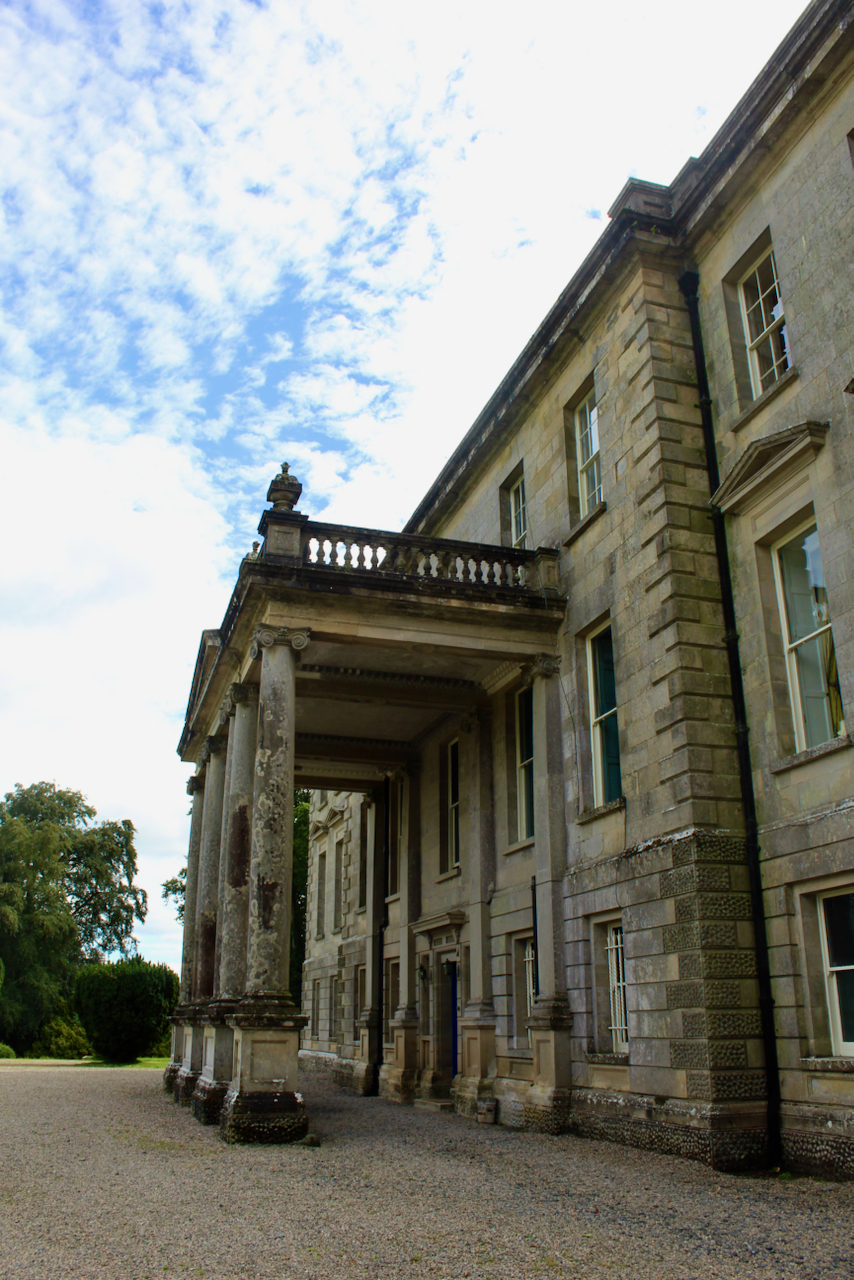
IMG_1494
Castle Leslie. Photograph © Jennifer Winder-Baggot, www.irishhistorichouses.com
IMG_1496
The bust is of Charles Powell Leslie III. The animal heads, which you can barely see at the top of the photograph, were shot by Norman Leslie, whose bedroom we slept in! Photograph © Jennifer Winder-Baggot, www.irishhistorichouses.com

Originally Hungarian, the first of the family moved to Ireland in 1633. They have lived at Castle Leslie since 1665. Our guide traced the family back to 1040. Their genealogy reaches even further back to Attila the Hun (he died in the year 453).

According to the Castle Leslie website, Bartholomew Leslie, a Hungarian nobleman, was the chamberlain and protector of Margaret Queen of Scotland, who was wife of King Malcolm III (he lived 1031-1093). One day, fleeing from enemies, Queen Margaret rode behind Bartholomew on his horse. When fording a river, the queen fell off and Bartholomew threw her the end of his belt and told her to “grip fast” the buckle. He saved the Queen’s life and from that day onwards she bestowed the motto “Grip Fast” on the Leslies. [5]

IMG_1497
Castle Leslie, November 2019. Photograph © Jennifer Winder-Baggot, www.irishhistorichouses.com

Our guide told us that King Malcolm’s sister Beatrice married Bartholomew Leslie. They moved to Aberdeenshire in Scotland.

Five hundred or so years later a descendent John Leslie was born in 1571 in Aberdeenshire. He received his Doctorate of Divinity from Cambridge and was Privy Councillor to Kings James I and Charles I. He was promoted to become Bishop of the Scottish Isles, and in 1633 transferred to Donegal to the Bishopric of Raphoe.

When Oliver Cromwell came to Ireland, John Leslie, friend of the monarchy, raised a private army to battle against Cromwell, as so he earned the moniker “The Fighting Bishop.” His troops beat Cromwell in the Battle of Raphoe. When King Charles II was restored to the throne in 1660, he rewarded the Bishop with £2000 – note that the Bishop was ninety years old by this time! Despite his age, he became Bishop of the Diocese of Clogher in 1661.

With the £2000, in 1665 Bishop Leslie bought the estate at Glaslough with an existing castle which had been built in 1608 by Sir Thomas Ridgeway. Bishop Leslie died at the age of one hundred, and left the estate to his wife, Catherine Cunningham (or Conyngham) of Mount Charles in Donegal (an ancestor of the present Lord Henry Mount Charles of Slane Castle), and children. He had married at the age of 67 the 18 year old Catherine and sired five (according to our guide) or 10 (according to Wikipedia, [6]) children! Only two of his children survived to adulthood and only one has descendants.

Due to the limitation of the tour’s length our guide jumped forward to the 1880s. I am guessing that it was he who wrote the history of the Leslies on the Castle’s website, so I will defer to that to fill in the gaps. We moved from the front hall into the hallway of the grand staircase, where our guide told us about the people in the various portraits. We then moved through a room with a large table, to the drawing room and the dining room, where the guide spoke about more of the family and their portraits.

IMG_1498
Castle Leslie. Photograph © Jennifer Winder-Baggot, www.irishhistorichouses.com
IMG_1646
The Drawing Room. Photograph © Jennifer Winder-Baggot, www.irishhistorichouses.com
IMG_1647
The Drawing Room, with the throne of Bishop John Leslie, the “fighting Bishop.” He also built the church on the estate, in 1670. Photograph © Jennifer Winder-Baggot, www.irishhistorichouses.com
IMG_1662
The Dining Room. Photograph © Jennifer Winder-Baggot, www.irishhistorichouses.com

The Bishop’s son John, another cleric, the Dean of Dromore, inherited the estate. He never married so when he died, the estate passed to his brother, Charles, at 71 years of age. Charles was a theologian and defended the Catholics, opposing the penal laws which prevented Catholics from participating in political life. King William III had him arrested for high treason, but he escaped to France. The next king, George I, pardoned him, saying “Let the old man go home to Glaslough to die.” (see [5], which provides most of my narrative)

Rev. Charles Leslie (1650-1722), Jacobite Religious Controversialist and Pamphleteer. Portrait After [i.e. print created from a portrait by] Alexis-Simon Belle, French, 1674-1734. Photograph courtesy of the National Gallery of Ireland.

Charles married Jane Griffith, daughter of the Very Reverend Richard Griffith, Dean of Ross [7] had three children: Robert, Henry, and the unusually named “Vinegar” Jane. Robert and Henry were friends with Jonathan Swift, who wrote the following about the family:

“Here I am in Castle Leslie

With rows and rows of books upon the shelves

Written by The Leslies

All about themselves.”

I’m not sure what was written at that stage, but certainly when we stayed, there were plenty of books by the Leslies! I had a good browse through them – more on them later.

Robert wedded, in 1730, Frances, daughter of Stephen Ludlow.

Lady Frances Leslie, by Hugh Douglas Hamilton (1734-1808), courtesy of Adam’s auction 11th Oct 2016. Perhaps this is Frances née Ludlow who married Robert Leslie (1680-1743). Photograph © Jennifer Winder-Baggot, www.irishhistorichouses.com

Their son Charles Powell Leslie (c. 1738-1800), took over the Estate in 1743. He devoted himself to the improvement of farming methods in the district. He was elected MP for Hillsborough in 1771 and MP for Monaghan in 1776. Like his grandfather, he supported the Catholics. At the time, due to Poynings Law, all Irish legislation had to be approved by the British Privy Council. Henry Grattan and others, including Charles Powell Leslie, sought legislative independence. Once this was achieved, Grattan fought in parliament for Catholic Emancipation from the Penal Laws, so that Catholics could be treated as equal citizens of Ireland. In his election speech of 1783, Charles Powell Leslie stated ”I desire a more equal representation of the people and a tax upon our Absentee Landlords”.

IMG_1655
Portrait of Charles Powell Leslie I. Photograph © Jennifer Winder-Baggot, www.irishhistorichouses.com

In 1765 Charles Powell married Prudence Penelope Hill-Trevor, daughter of Arthur Hill-Trevor, 1st Viscount Dungannon. They had two sons, Charles Powell II and John. After his first wife died, Charles Powell Leslie I married, in 1785, Mary Anne Tench, and had a third son. The heir, Charles Powell II, also represented Monaghan in parliament.

IMG_1657
Charles Powell Leslie II. Photograph © Jennifer Winder-Baggot, www.irishhistorichouses.com

Arthur Hill-Trevor’s elder daughter, Anne, married Garret Wesley, the 1st Earl of Mornington, of Dangan Castle County Meath, and their son grew up to be the Duke of Wellington who defeated Napolean at Waterloo. According to the website, Charles Powell Leslie gave his impoverished brother-in-law, Lord Mornington, the money to educate his son Arthur, in Eton and then military school in France (Stephen and I found it ironic that the Duke of Wellington, who beat Napoleon, hence France, received his military training in France!). Arthur, the Duke of Wellington, married Kitty Pakenham of Tullynally, County Westmeath.

Charles Powell Leslie II, an amateur architect, designed the present farm buildings and the gate lodge. (see [8] for more about Charles Powell Leslie II). He died in 1831 and his wife Christiana took over the running of the estate. She managed to feed the needy during the great famine of 1845, setting up soup kitchens, and gave employment by having a wall built around the estate. The population of County Monaghan was 208,000 before the Famine. It went down to 51,000 during and after the Famine and is now only 61,000 – still far less than its pre-Famine population. It is said that nobody perished on the Leslie estate. As well as the soup kitchen, Christiana suspended rents.

IMG_1680
Farm buildings: perhaps these are ones designed by Charles Powell Leslie II. Photograph © Jennifer Winder-Baggot, www.irishhistorichouses.com

Her son Charles Powell III (1821-71) also enjoyed architecture, and had flamboyant taste. He designed the entrance lodges at the main gates of the estate. He had many other grand building plans but died, choking on a fishbone, and it was his brother John (1822-1916) who built the new castle – to a much more modest design than Charles’s. Charles never married so John succeeded to the estate, in 1871.

John Leslie married Constance Dawson Damer, the daughter of Mary Seymour who was allegedly George IV’s daughter by Mrs. Fitzherbert.

IMG_1566
A portrait of Mrs. Maria Fitzherbert, which Stephen and I discovered upstairs on our way to the cinema room in the castle! Photograph © Jennifer Winder-Baggot, www.irishhistorichouses.com
IMG_1565
Castle Leslie, November 2019. Photograph © Jennifer Winder-Baggot, www.irishhistorichouses.com
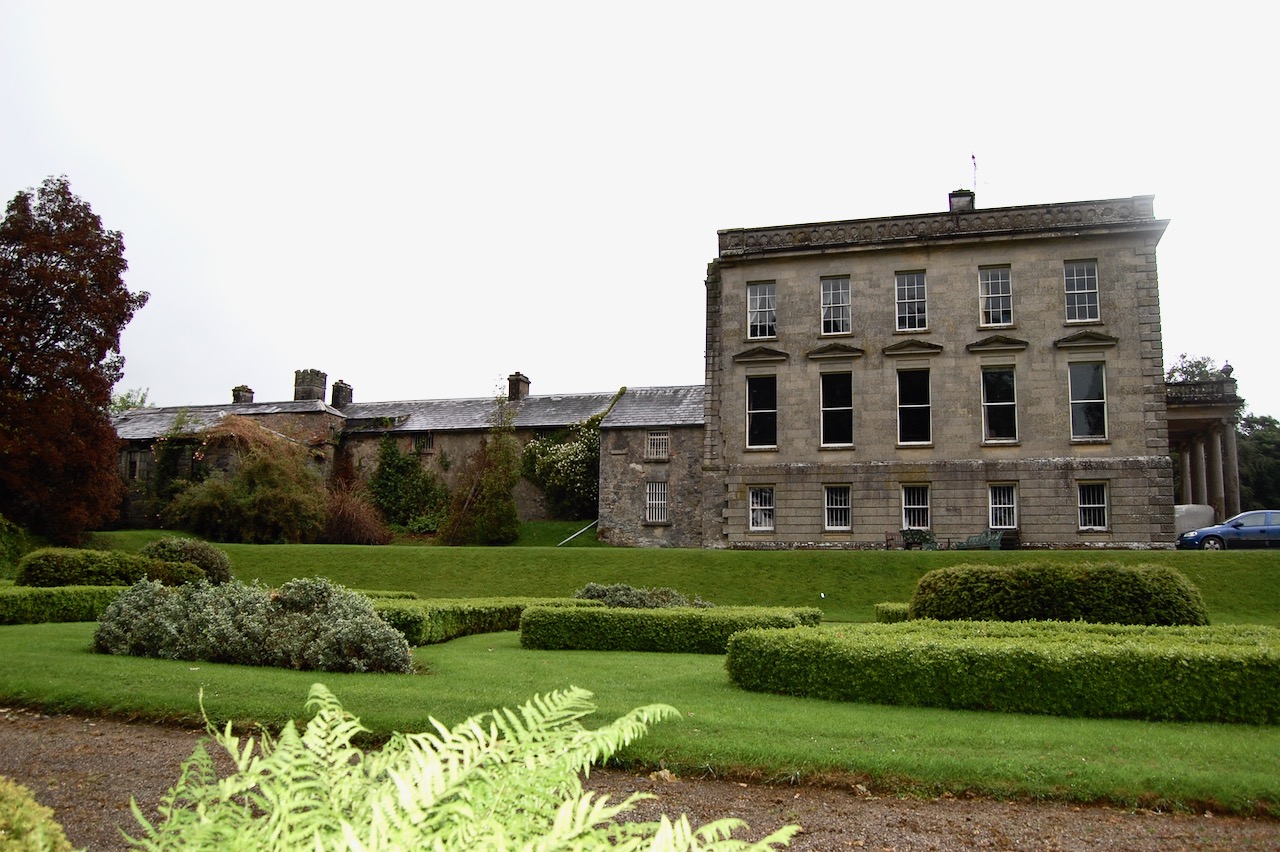
Maria, born Smythe, was a Catholic. She married a wealthy Catholic landowner when she was just 18 years old. He died tragically, and she married a second time, but her second husband died when she was just 24! Her uncle decided to bring her out into society, and brought her to the opera. There, she met King George IV. He pursued her, and a marriage between them is recognised by the Catholic church, but not by the Monarchy. He moved her to Brighton and the Royal family took care of her, although George was married off to European Royalty, Princess Caroline.

Maria had two children, reputedly, with George IV. The daughter was adopted by a friend of George IV, Hugh Seymour. It was this Mary Seymour who married George Dawson Damer, and her daughter Constance married John Leslie. Constance burned all the evidence of her background, as it was not approved by the Royal Family. It is therefore not a definitive history, just, shall we say, rumour. Her descendant Shane Leslie wrote a biography of Mrs. Fitzherbert.

IMG_1656
A portrait of Lady Constance in later life. Photograph © Jennifer Winder-Baggot, www.irishhistorichouses.com

It was the portrait above, of Lady Constance, which a nurse, who had been attending the dying Leonie (wife of Constance and John’s heir, John), recognised as the lady who had visited Leonie’s deathbed – despite Constance having been dead for nearly twenty years!

Before his brother died, John brought Constance to live in the old castle. Constance must have wanted a place of her own so in 1860, they moved into the Hunting Lodge in order to live separately from Charles Powell III and his mother.

IMG_1537
A room inside the Lodge. Photograph © Jennifer Winder-Baggot, www.irishhistorichouses.com
49395095897_952f851fc4_o (1)
Front hall and welcoming room of the Lodge. Photograph © Jennifer Winder-Baggot, www.irishhistorichouses.com
IMG_1544
A small private dining room in the Lodge. Photograph © Jennifer Winder-Baggot, www.irishhistorichouses.com

However, once they inherited the old castle, not content with her Lodge or the old castle, it was Constance who insisted that John build the new castle. While it was being built she and her husband went on a Grand Tour and collected much of the present furniture in the house including the blue and white Della Robbia chimneypiece in the drawing room, and a mosaic floor in the hall which is a replica of a two thousand year old Roman villa floor. Constance was a connoisseur of fine art and antiques.

IMG_1645
Della Robbia chimneypiece in Drawing Room, purchased by Constance and John Leslie. Photograph © Jennifer Winder-Baggot, www.irishhistorichouses.com

Their travels influenced the style of the Castle, built by Sir Charles Lanyon and William Henry Lynn. An Italian Renaissance cloister (said to have been copied from Michaelangelo’s cloister at Santa Maria degli Angeli in Rome, according to Mark Bence Jones (see [2]) joins the main block of the castle to a single-storey wing containing the library and former billiard-room.

IMG_1594
The Italian Renaissance style Cloister. Photograph © Jennifer Winder-Baggot, www.irishhistorichouses.com
IMG_1592
Castle Leslie, November 2019. Photograph © Jennifer Winder-Baggot, www.irishhistorichouses.com
Castle Leslie, County Monaghan, photograph by Robert French, Lawrence Photograph Collection, National Library of Ireland.

Behind the cloister runs a long top-lit gallery divided by many arches, with pre-Raphaelite style frescoes of angels and other figures, including portraits of members of the family, painted by John Leslie, a talented artist. One of his paintings was hung in the Royal Academy in the same year. He later become 1st Baronet of Glaslough.

49394897816_14481f72f0_o
Castle Leslie. Photograph © Jennifer Winder-Baggot, www.irishhistorichouses.com
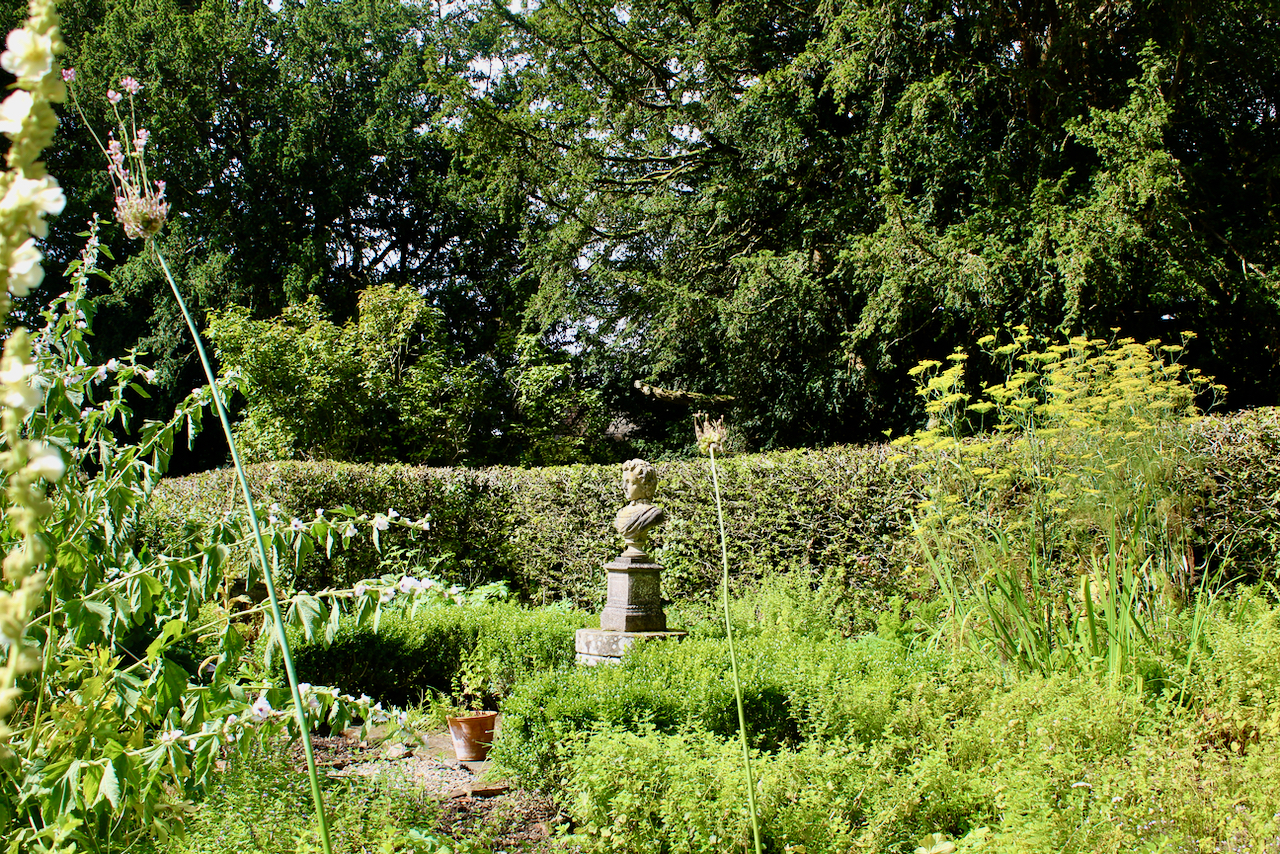
IMG_1525
Frescoes painted by Sir John Leslie. Photograph © Jennifer Winder-Baggot, www.irishhistorichouses.com
IMG_1526
Castle Leslie. Photograph © Jennifer Winder-Baggot, www.irishhistorichouses.com
IMG_1659
I think it was this painting that hung in the Royal Academy. Photograph © Jennifer Winder-Baggot, www.irishhistorichouses.com

The next to inherit the estate was the 2nd Baronet, Sir John Leslie (1857–1944). He married Leonie Jerome, one of the three beautiful daughters of Leonard Jerome of New York. Her sister Jenny married Lord Randolph Churchill and was the mother of Prime Minister Winston Churchill. Winston did not get on well with his mother but was very close to his aunt Leonie. The young Winston Churchill paid visits here to his uncle and aunt, except when he was temporarily banished by his uncle on account of his espousal of Home Rule! Leonie’s correspondence with Winston is in Blenheim Castle in England, the estate of the Churchills. When his beloved aunt died in August 1943, Winston couldn’t attend the funeral due to the war, but he telephoned Eamon de Valera to request permission for the flyover of an Royal Air Force Spitfire plane. It was her son, Desmond Leslie, who was in the RAF, who flew the Spitfire and dropped a huge wreath from Winston Churchill to the funeral.

Leonie Leslie née Jerome, her sister Jennie was Winston Churchill’s mother.
IMG_1648
I was touched by the presence of Winston Churchill’s christening robe in the drawing room. Photograph © Jennifer Winder-Baggot, www.irishhistorichouses.com

Sir John Leslie died in 1944 and was succeeded by his son Sir Shane Leslie (1885–1971). Shane was one of four brothers: he was christened John, and changed his name to Shane in 1921 when he embraced Irish nationalism; the other brothers were Lionel, Norman and Seymour.

Shane Leslie.

Shane grew up to be an ardent nationalist (he joined the Irish Volunteers, a group founded in response to the Ulster Volunteers in Northern Ireland who opposed Home Rule – he thus rejected the support his father gave to the Ulster Volunteers!) and Irish speaker, and converted to Catholicism, under the influence of Cardinal Henry Newman, when he was in Cambridge. He hoped to retreat to a Monastery but instead married another American beauty, Majorie Ide of Vermont. According to the history of the Leslie family recounted on the website, Majorie’s father, Henry Clay Ide, was Chief Justice of Samoa, a tropical paradise where he and his daughters became great friends of fellow islander Robert Louis Stevenson. He was also Governor General of the Philippines. Later in our stay, our guide told us that before she married, Majorie and her sister accompanied U.S. President Teddy Roosevelt’s daughter on a trade mission to China. The President considered the women to be suitable ambassadors because the current monarch of China was an Empress (the last Empress of China). There are many Chinese objects in Castle Leslie which Majorie brought with her.

IMG_1541
Castle Leslie. Photograph © Jennifer Winder-Baggot, www.irishhistorichouses.com
IMG_1547
Castle Leslie, November 2019. Photograph © Jennifer Winder-Baggot, www.irishhistorichouses.com

Sir Shane, as a poet and Nationalist, was not fond of running the estate so transferred it to his son John Norman Leslie (1916-2016), who became 4th Baronet. Shane Leslie travelled to London when Michael Collins was negotiating the Treaty granting Ireland its independence from the United Kingdom. Shane’s brother Norman on the other hand fought in the British army, and was killed by a sniper. The bedrooms in the Castle are now named after the family, and Stephen and I stayed in “Norman’s Room”!

IMG_1504
Castle Leslie, November 2019. Photograph © Jennifer Winder-Baggot, www.irishhistorichouses.com

Shane had three children: Anita, John (Jack) and Desmond. Jack transferred the estate over to his sister Anita, owing to ill health after five years in a prisoner of war camp. He had been Captain in the Irish Life Guards in WWII. He moved to Rome where he lived for forty years, finally returning to Castle Leslie in 1994. He died only a few years ago, at 99 years old, inheriting the hardy genes of the Fighting Bishop, and is obviously much missed in the castle which houses many of his mementos and memorabilia.

IMG_1589
“Jack’s bed,” in which he used to sleep, now in pride of place on the upper landing, although the bed would have been a squeeze for his over six foot frame! Photograph © Jennifer Winder-Baggot, www.irishhistorichouses.com
IMG_1591
Portraits of the family including several of Jack. Jack wrote of his life in Never a Dull Moment. Photograph © Jennifer Winder-Baggot, www.irishhistorichouses.com

Later in our stay, Enda the guide told us more about Anita, as we were admiring the paintings of Anita, Jack and Desmond at the bottom of the grand staircase.

IMG_1586
Castle Leslie, November 2019. Photograph © Jennifer Winder-Baggot, www.irishhistorichouses.com

Anita married Pavel Rodzianko, a dashing soldier from Russia, Equerry to Tsar Nicholas and Alexandra. Anita was just 23 years old but bowled over by the 47 year old Pavel. The marriage lasted only three years. This marriage explains the presence of the paintings of Nicholas and Alexandra which Stephen and I had noticed in the bar area.

IMG_1670
Tsar Nicholas and Alexandra. Photograph © Jennifer Winder-Baggot, www.irishhistorichouses.com
IMG_1669
A poignant picture of Alexandra and her children, all of whom were assassinated only two days before Pavel Rodzianko was able to rescue them. Photograph © Jennifer Winder-Baggot, www.irishhistorichouses.com

Pavel tried to rescue the Tsar and his family. He followed with other soldiers loyal to the Tsar, as the Royal family was moved from place to place by those who had overthrown the Tsar. When they caught up with the family Pavel and his companions were too late: the family had been shot in the basement and their bodies burned. Pavel found little Alexi’s dog Joy still alive. Pavel saved the dog and brought her to his home next to Windsor Castle in England, where Pavel lived after leaving Castle Leslie, where Joy lived the rest of her life. Pavel went on to train the Irish show-jumping team, who won the Agha Khan trophy in the Royal Dublin Society (RDS) Horse Show.

During World War II Anita joined the French army as an ambulance driver and married Bill King, a submarine commander. In the 1960s she moved to Oranmore in Galway (Oranmore Castle is a Section 482 property so I hope to visit it!) and transferred Glaslough to her younger brother Desmond (the Spitfire pilot). In 1991 he handed the Estate over to his five children and Castle Leslie Estate is now run by his daughter Samantha Leslie.

I mentioned earlier that many Leslies have written books. I browsed through books by Shane Leslie and Jack. Anita Leslie wrote about her time in the army in The Train to Nowhere. Desmond’s wife Agnes Bernaur is also a published writer. I copied the family tree from Shane Leslie’s book, and notice that the sister of John Leslie 2nd Baronet, Theodisia, married a Bagot! She married Josceline Fitzroy Bagot, of Levens Hall. I may be distantly related to this Bagot, as we are rumoured to be descended from the Bagots of Staffordshire! I confess I have not found the link.

After our tour, we were shown to our room. We were thrilled with it, and especially with our 1617 four poster oak bed. The bed was so high that it required steps to get up to it:

IMG_1637
Castle Leslie, November 2019. Photograph © Jennifer Winder-Baggot, www.irishhistorichouses.com

We had a table and chair, and a lovely wardrobe and chaise longue! I started writing this entry on the chaise longue.

IMG_1571
Castle Leslie, November 2019. Photograph © Jennifer Winder-Baggot, www.irishhistorichouses.com

According to the website, Sammy started her ambition of bringing the Estate back to life by establishing tea rooms in the old conservatory. This had been a painting studio for John Leslie, as it was created to have lots of light.

IMG_1665
Castle Leslie, November 2019. Photograph © Jennifer Winder-Baggot, www.irishhistorichouses.com

The website continues:

Between 1995 and 1997, Sammy refurbished fourteen of the Castle bedrooms and bathrooms, each in its own unique style, in an effort to maintain the individuality and uniqueness of the property. Dinners were served by candlelight in the original dining room, just as it had been in the old days, with pre-dinner drinks served in the Drawing Room or Fountain Garden. The Castle at Castle Leslie Estate was soon rewarded with The Good Hotel Guide Caesar Award for being ‘utterly enjoyable and mildly eccentric’.” [9]

Perhaps one of the mildly eccentric details referred to are the beautiful old fashioned porcelain toilets such as the one in our en suite:

IMG_1634
Castle Leslie, November 2019. Photograph © Jennifer Winder-Baggot, www.irishhistorichouses.com

After the tour, we still had so much of the castle to explore! The tour had only taken in a few of the rooms! We were tired after the tour and lay on our wonderful bed for a nap before dinner. While we were reading, we heard a knock on our door. The staff had brought us a much appreciated, delicious strong cup of coffee! Perfect!

We emerged for dinner. We chose to eat in the bistro rather than the fancier restaurant. The reception staff offered us a lift over to the Lodge, but we chose to walk the short distance up the drive, as it was a beautiful crisp night.

We did a little exploring back at the castle after dinner. We discovered more beautiful rooms to sit in, and a lovely library, and it was only now that we found the bar and the long painted gallery!

IMG_1512
Castle Leslie. Photograph © Jennifer Winder-Baggot, www.irishhistorichouses.com
IMG_1523
Castle Leslie. Photograph © Jennifer Winder-Baggot, www.irishhistorichouses.com
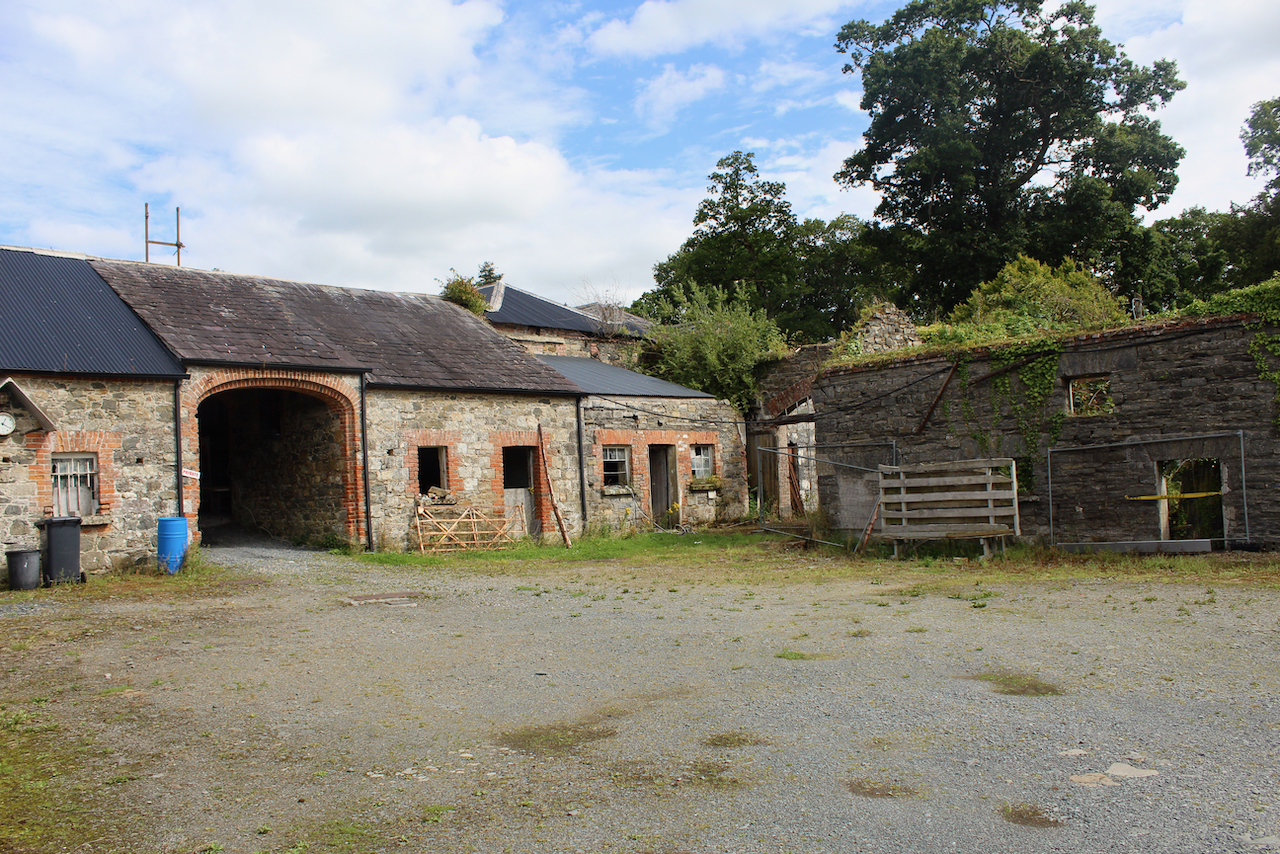
IMG_1557
Castle Leslie. Photograph © Jennifer Winder-Baggot, www.irishhistorichouses.com
IMG_1555
Castle Leslie. Photograph © Jennifer Winder-Baggot, www.irishhistorichouses.com
IMG_1558
Castle Leslie. Photograph © Jennifer Winder-Baggot, www.irishhistorichouses.com
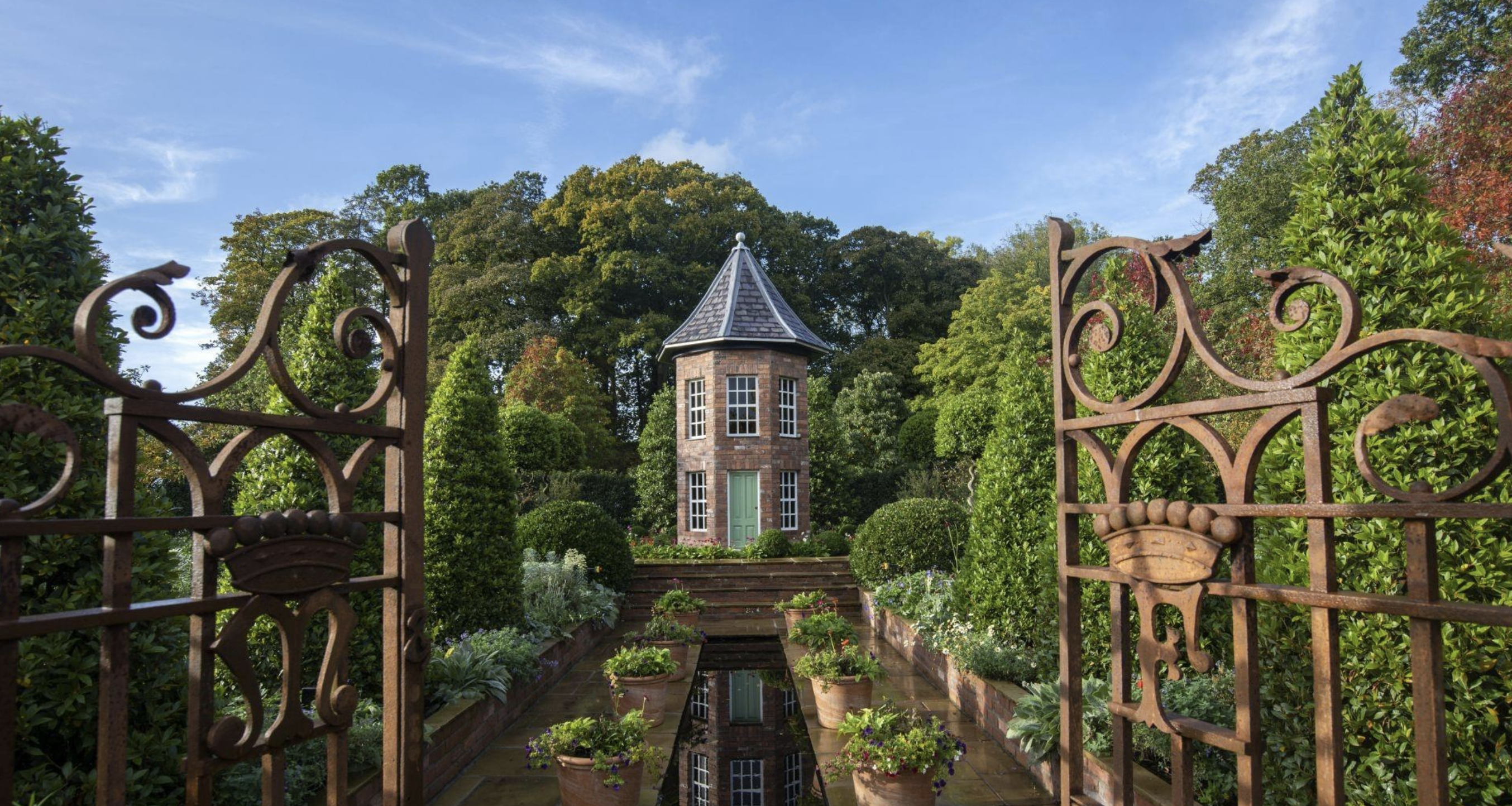
IMG_1561
Castle Leslie, November 2019. Photograph © Jennifer Winder-Baggot, www.irishhistorichouses.com
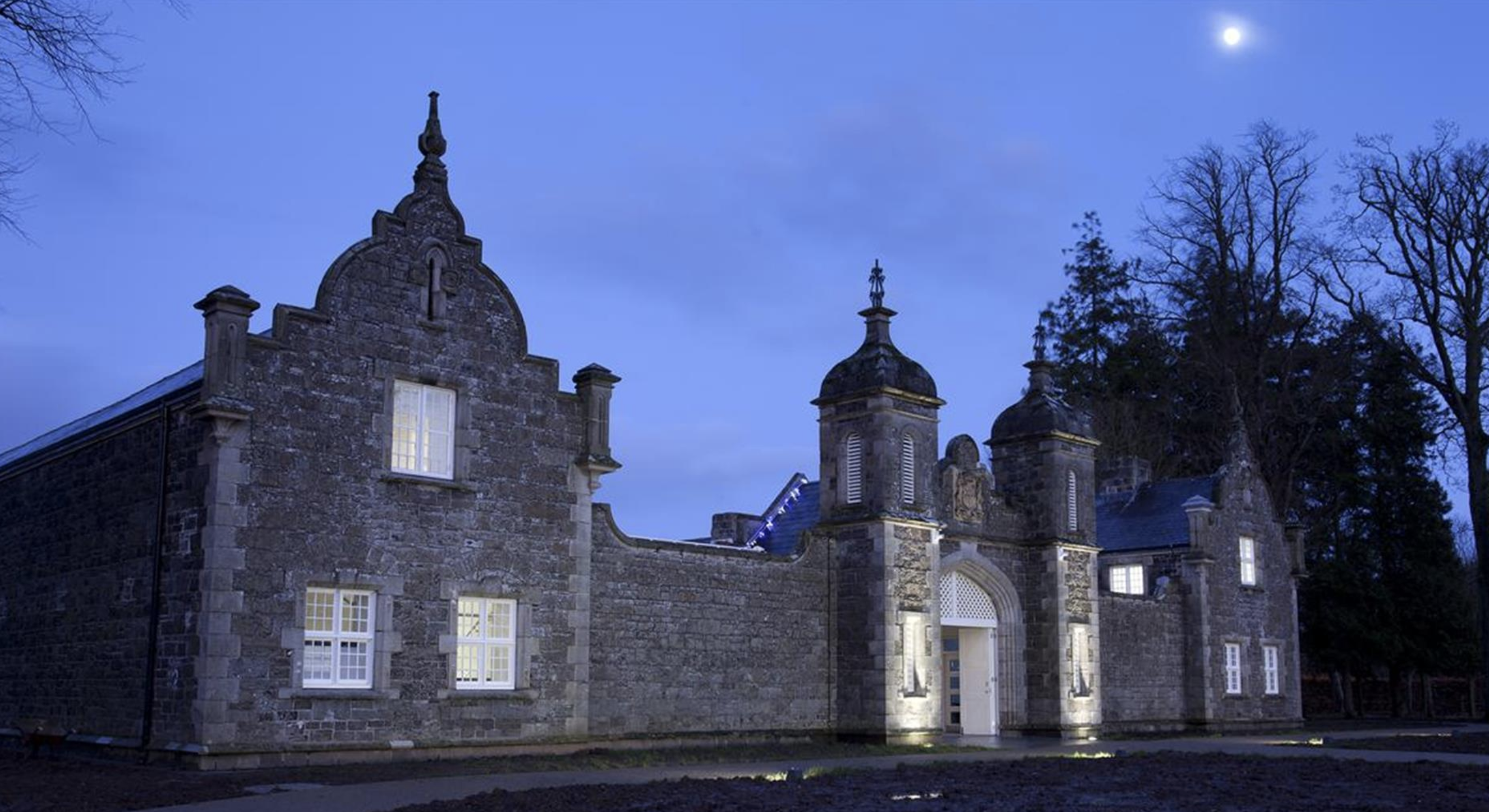
Many new features have been added to the estate, including a spa, a bar and restaurant, and a cookery school.

A new pavilion, adjacent to the long gallery of the main house, facilitates conferences, weddings and other large events – see the pathway leading to the pavilion in the photograph below.

49394425158_9437d142b4_o
Castle Leslie. Photograph © Jennifer Winder-Baggot, www.irishhistorichouses.com
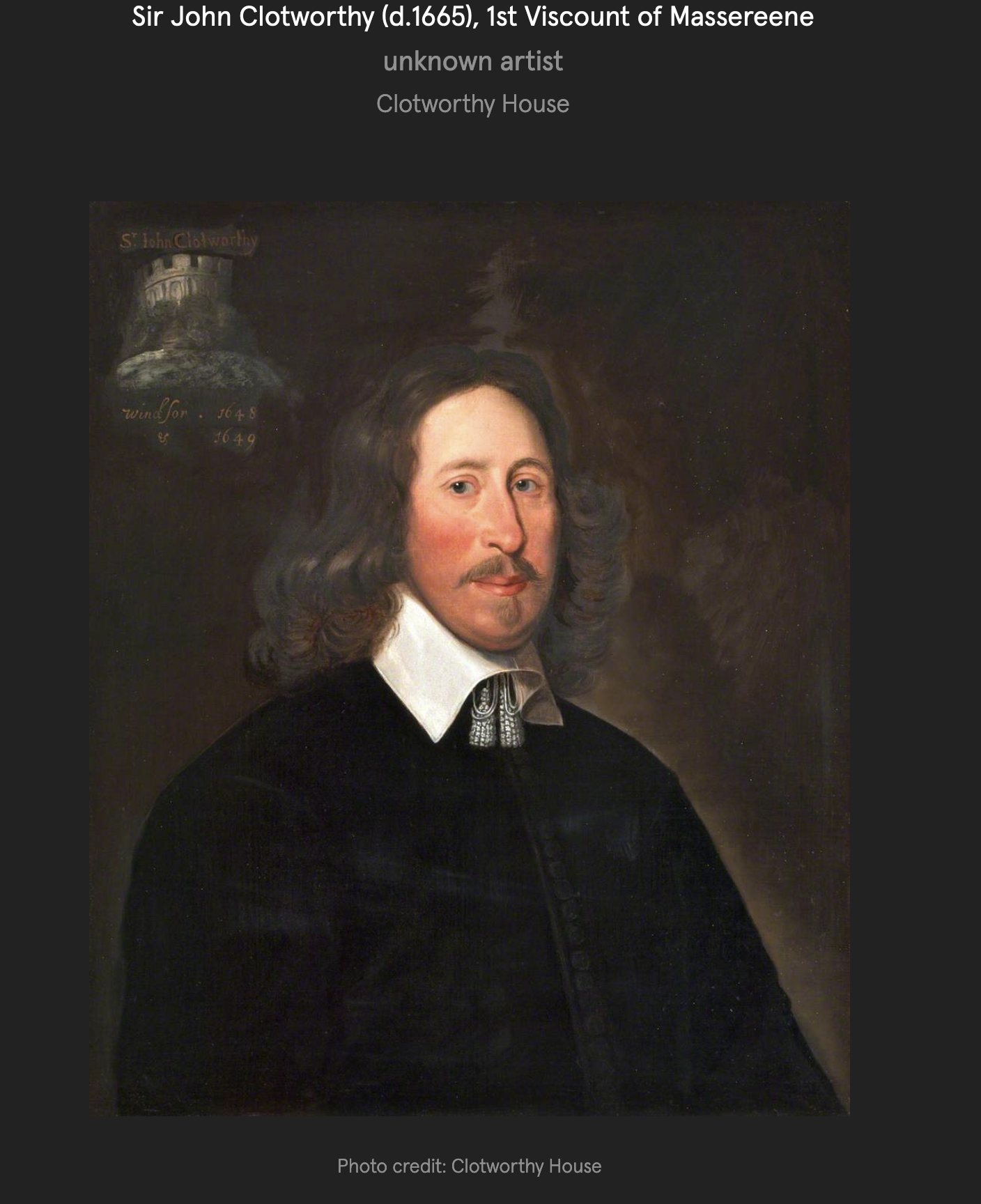
IMG_1676
Castle Leslie, November 2019. Photograph © Jennifer Winder-Baggot, www.irishhistorichouses.com
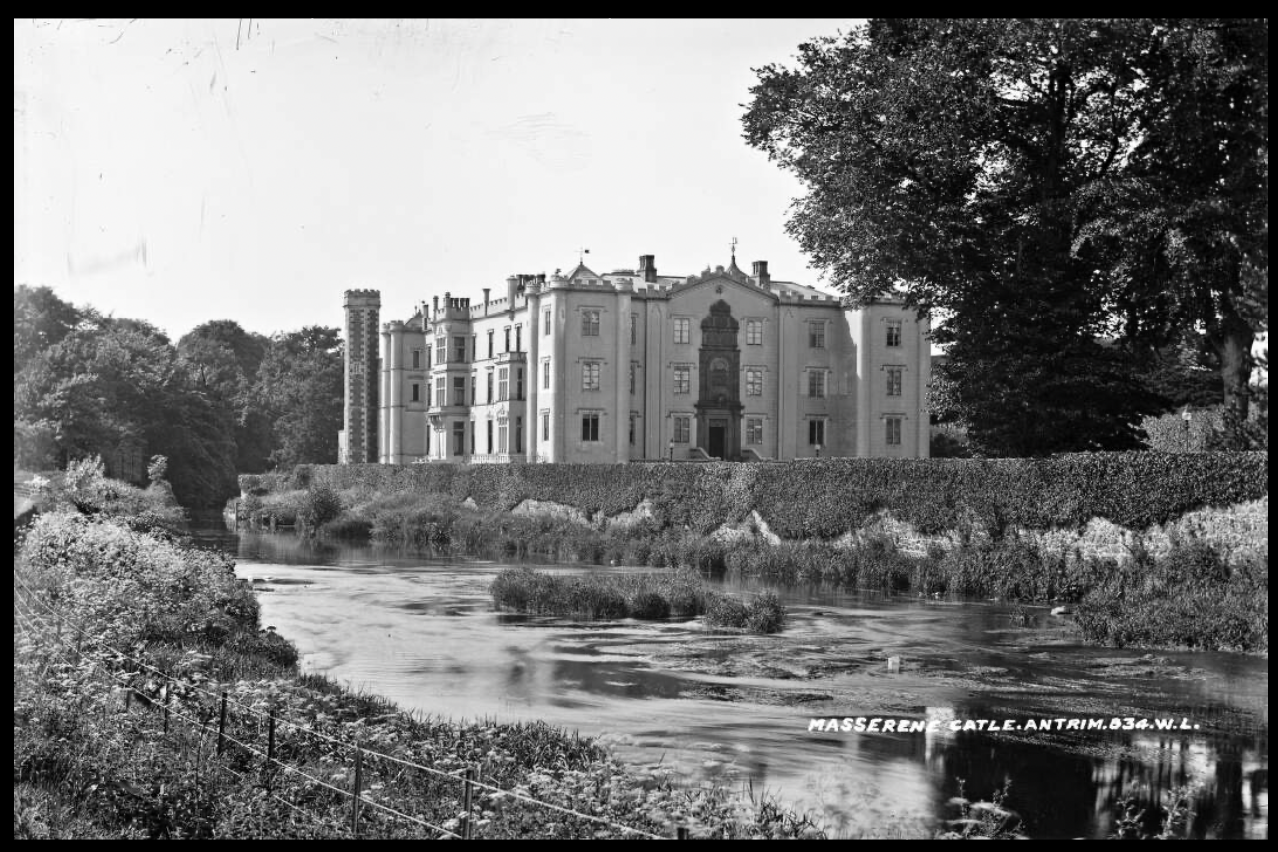
The website tells us that five new sub-ground floor bedrooms were added to the castle in 2005: the Desmond Leslie room, the Agnes Bernelle Room, the Helen Strong Room, Sir Jack’s Room and the only room in the castle not named after a family member, The Calm Room.

DAY 2: Horse riding! And exploring the Lodge

Stephen and I only saw the castle in daylight the next day, as we had been too tired to explore outside after the tour. It was only then that we saw the cloisters, and the lake! We wandered outside in the evening. Earlier in the day, we decided to avail of the Equestrian Centre, since Stephen confided that he had never sat on a horse!

We booked a one hour walking session, a gentle wander through woods on the estate, hand-led by a guide. I felt safe enough walking without a guide at the reins, as I endured two years of weekly riding lessons when I was young! I say “endured” as I was scared of the horses and fell often! The horses we rode during my lessons in Australia were a more cantankerous brood than those that bless Castle Leslie!

IMG_1574
Castle Leslie, November 2019. Photograph © Jennifer Winder-Baggot, www.irishhistorichouses.com
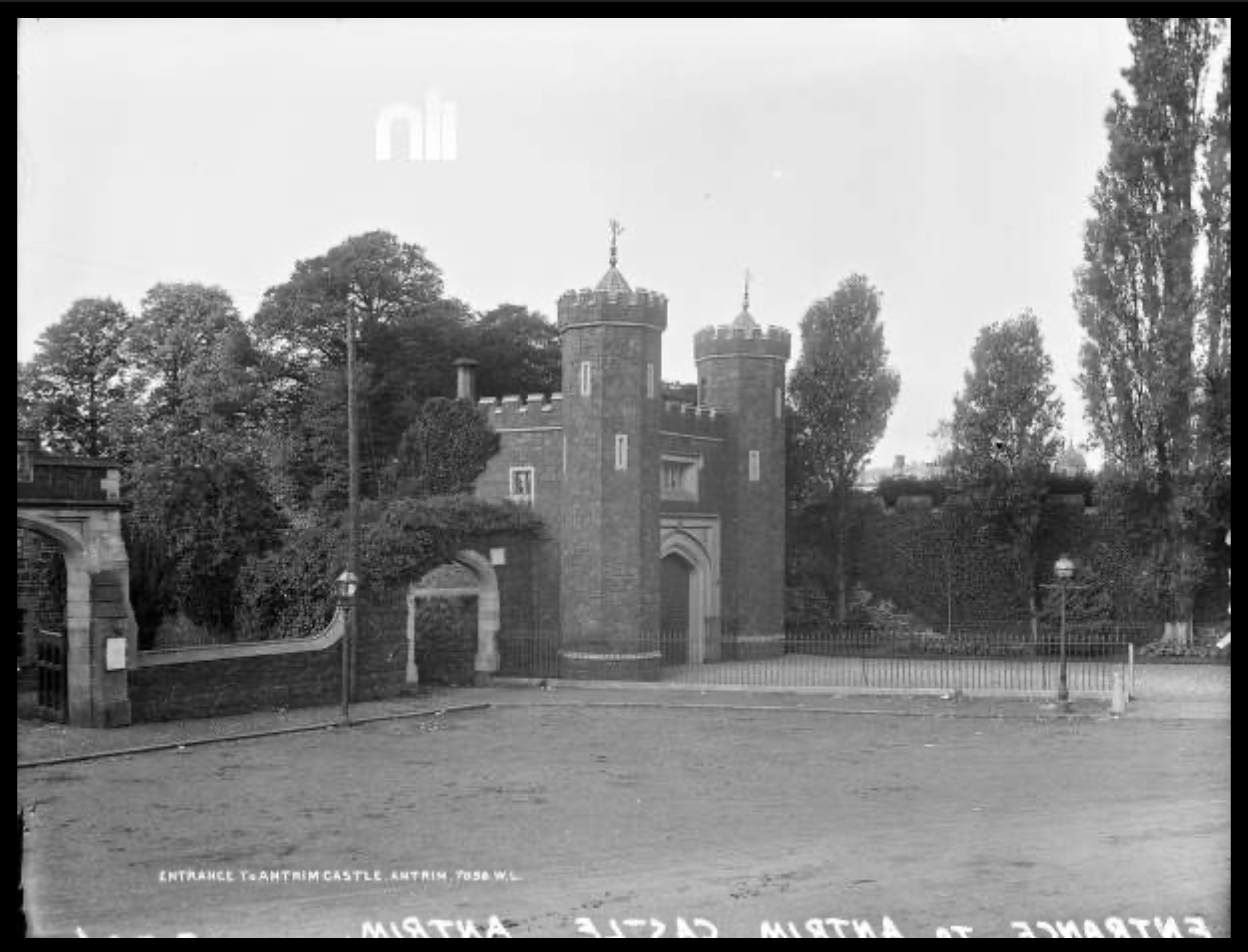
Below shows me in Australia at my horse riding lessons with my sister when I was young!

Caballo Stables, Jen and Siobhan riding
My sister Siobhán and I horseriding in Caballo Stables, Western Australia. Photograph © Jennifer Winder-Baggot, www.irishhistorichouses.com
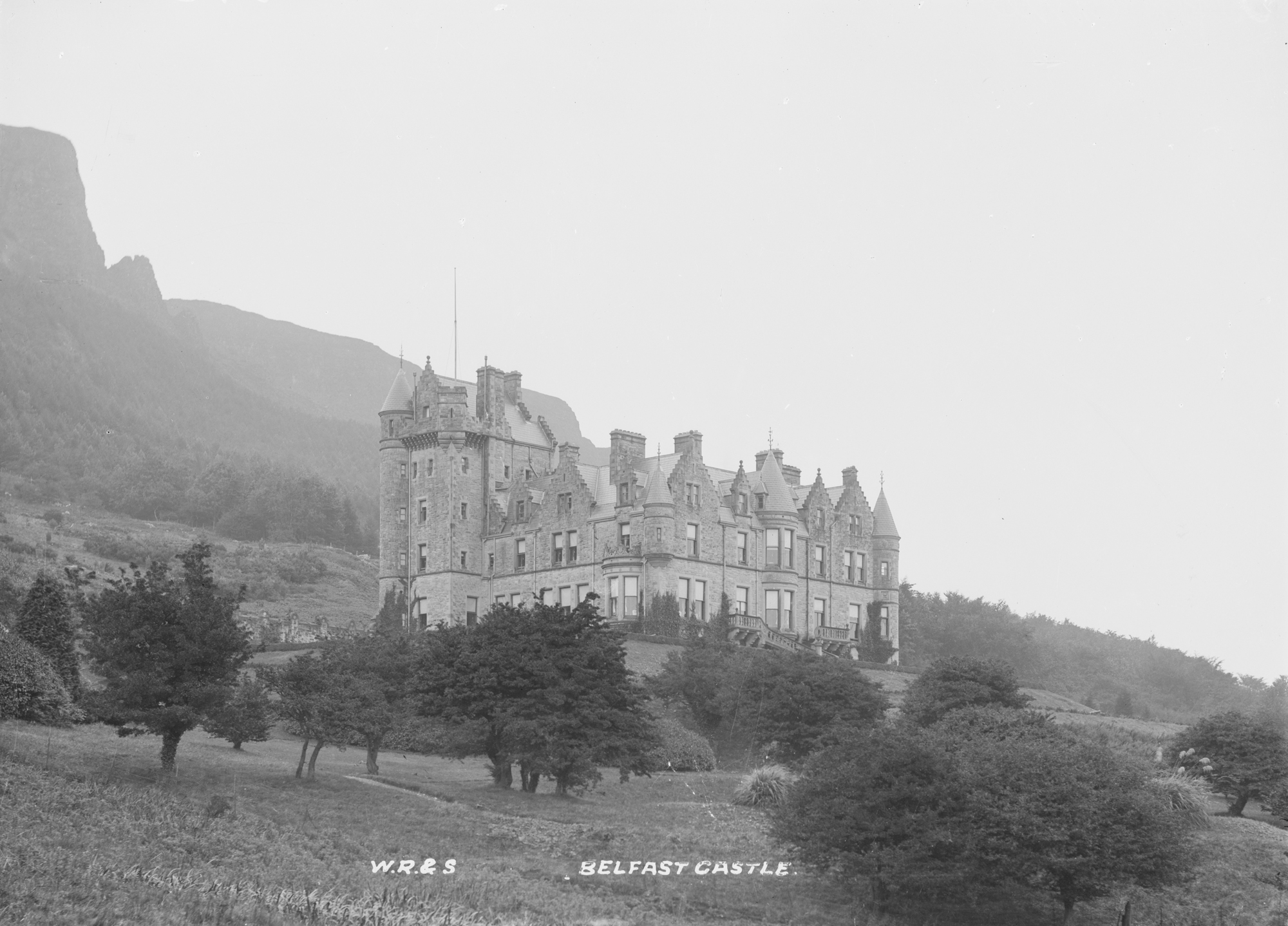
Jen and Siobhan ready for riding lesson
Me and my sister Siobhan in Perth, Western Australia, ready for our riding lesson. Photograph © Jennifer Winder-Baggot, www.irishhistorichouses.com

And now:

IMG_1576
Castle Leslie. Photograph © Jennifer Winder-Baggot, www.irishhistorichouses.com
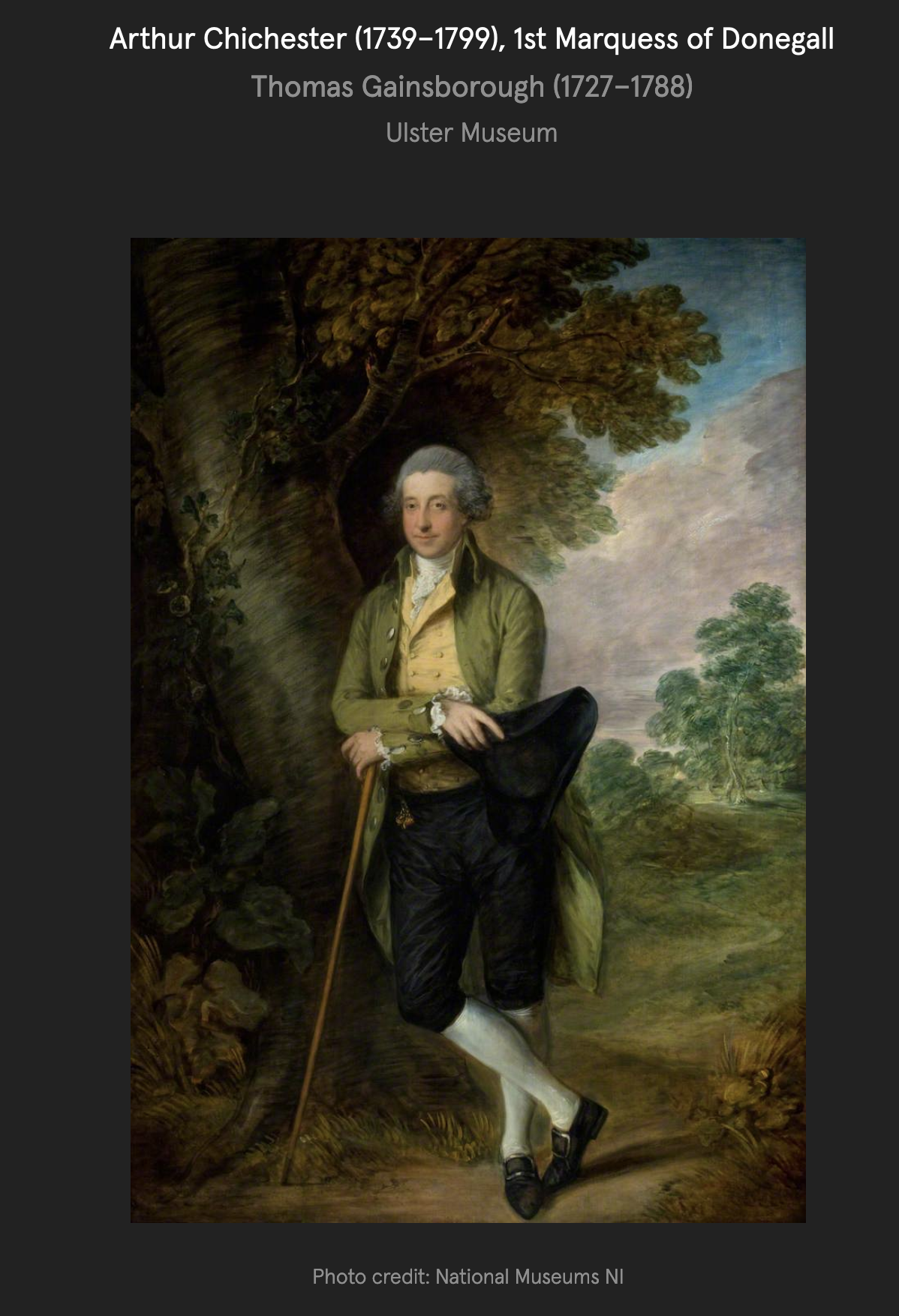
IMG_1583
Castle Leslie, November 2019. Photograph © Jennifer Winder-Baggot, www.irishhistorichouses.com

Our guide, Chris, told us a bit more about the estate as we relaxed onto the hip swinging gait of our horses, and we passed one of the lodges. I knew Stephen would be imagining himself back in the 1700s, familiarising himself with the atmosphere of the former mode of transportation. We both lost our balance as we slid off our horses, Stephen doing the full topple onto the sand, but we were elated! You can see a map of the estate on the castle website. [10]

After lunch in the Lodge, we explored. I took some photographs inside the lodge.

49394414913_6ed49b601c_o
Castle Leslie. Photograph © Jennifer Winder-Baggot, www.irishhistorichouses.com
49394417598_c00d560572_o
Castle Leslie, November 2019. Photograph © Jennifer Winder-Baggot, www.irishhistorichouses.com

Dusk fell by the time I took photographs outside behind the castle.

IMG_1596
Castle Leslie. Photograph © Jennifer Winder-Baggot, www.irishhistorichouses.com
IMG_1607
Castle Leslie. Photograph © Jennifer Winder-Baggot, www.irishhistorichouses.com
IMG_1616
Castle Leslie, November 2019. Photograph © Jennifer Winder-Baggot, www.irishhistorichouses.com

Sammy’s most recent project (begun in 2015) is renovating the walled garden. I’m sorry I reached it so late in the day, compromising my photographs. These were built in 1860 by Charles Powell Leslie III.

IMG_1620
Castle Leslie. Photograph © Jennifer Winder-Baggot, www.irishhistorichouses.com
49394965401_a85013d342_o (1)
Castle Leslie, November 2019. Photograph © Jennifer Winder-Baggot, www.irishhistorichouses.com

According to information posted in the walled garden, they cover about four acres, and contain two forty metre greenhouses heated by individual underground boilers fed by rainwater collected from the glass roofs. The flues were built originally under the paths to chimneys hidden in the surrounding garden wall! Ingenious ancestors! Charles Leslie consulted with Joseph Paxton, the Duke of Devonshire’s head gardener, who created the “Crystal Palace” of the 1851 Great Exhibition in Hyde Park in London for Queen Victoria’s consort Prince Alfred.

Outside the Walled Garden was a third large greenhouse, a Tropical House. Charles Powell Leslie III, according to the information boards in the garden, wooed an opera singer with weekly hampers of bananas, melons and mangoes sent from Castle Leslie to her dressing room in Covent Gardens in London!

The Pump House, built from approximately 1848, was one of the first water systems to be constructed for a village and estate. One can still see the ornate cast iron fountains in the village, along with the statue of Charles Powell Leslie III.

Day Three: A walk to the stables and goodbye to Castle Leslie!

The next day dawned bright, a crisp November day. We followed our map of the estate to see the Stable Mews, for a bit of exercise before we had to depart.

IMG_1681
Castle Leslie. Photograph © Jennifer Winder-Baggot, www.irishhistorichouses.com
IMG_1682
Castle Leslie, November 2019. Photograph © Jennifer Winder-Baggot, www.irishhistorichouses.com

[1] https://www.buildingsofireland.ie/places-to-visit/monaghan/glaslough-castle-leslie/

[2] Mark Bence-Jones. A Guide to Irish Country Houses.[originally published as Burke’s Guide to Country Houses volume 1 Ireland by Burke’s Peerage Ltd. 1978; Revised edition 1988 Constable and Company Ltd, London.]

[3] Curtis, Maurice and Knight of Glin, Ireland Observed. Mercier Press, Dublin and Cork 1970.

[4] http://www.britainirelandcastles.com/Ireland/County-Monaghan/Castle-Leslie.html

[5] https://www.castleleslie.com/life-the-way-its-supposed-to-be-2/historical-castle-ireland/

[6] https://en.wikipedia.org/wiki/John_Leslie_(bishop_of_Clogher)

[7] http://lordbelmontinnorthernireland.blogspot.com/search/label/County%20Monaghan%20Landowners

Note that this website states that Charles and his wife had only one child whereas the Castle Leslie website claims that they had three children.

[8] see [7]. CHARLES POWELL LESLIE II, JP (c1767-1831), Colonel, County Monaghan Militia, High Sheriff of County Monaghan, 1788, MP for County Monaghan, 1801-26, New Ross, 1830-1, who espoused firstly, Anne, daughter of the Rev Dudley Charles Ryder, and had issue, three daughters.

He married secondly, in 1819, Christiana, daughter of George Fosbery, and had further issue,

Charles Powell (1821-71);
 JOHN, his heir;
 Thomas Slingsby;
 Prudentia Penelope; Christiana; Julia; Emily.

[9] https://zs35w2fzekug05wf2mckg53k-wpengine.netdna-ssl.com/wp-content/uploads/2019/02/Regeneration-History.pdf

[10] https://zs35w2fzekug05wf2mckg53k-wpengine.netdna-ssl.com/wp-content/uploads/2018/04/E-Map-Only-2017.pdf

Text © Jennifer Winder-Baggot, www.irishhistorichouses.com