Open dates in 2026: Mar 13-15, 20-22, 27-29, April 3-6, 10-12, 24-26, May 1-4, 8-10, 15-17, 22-24, June 4-7, 11-14, 25-28, July 2-5, 9-12, 16-19, 23-28, Aug 1-3, 6-9, 13-23, 27-30, Sept 4-6, 11-13, 18-20, 25-27, 12noon-5pm
Fee: adult €12, child/OAP/student €10, groups of 6 or more €10 per person
We went on holidays to County Wexford in May 2023 to visit some Section 482 properties. We visited Kilmokea, Woodville and Sigginstown Castle, as well as the Heritage Trust run Johnstown Castle and OPW owned Tintern Abbey. Unforunately Wells House was only open at the weekend so we have to save that, along with the other Section 482 Wexford properties, for another visit!
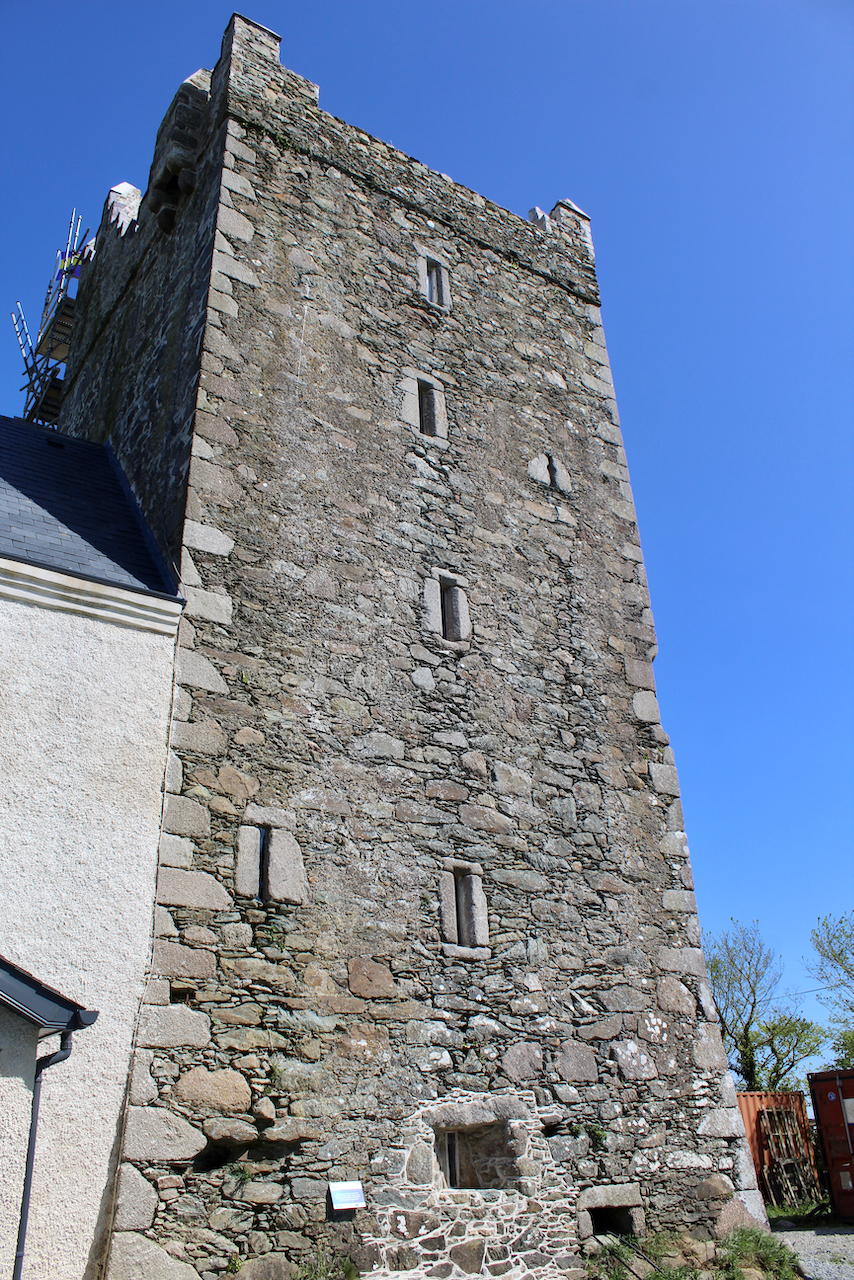
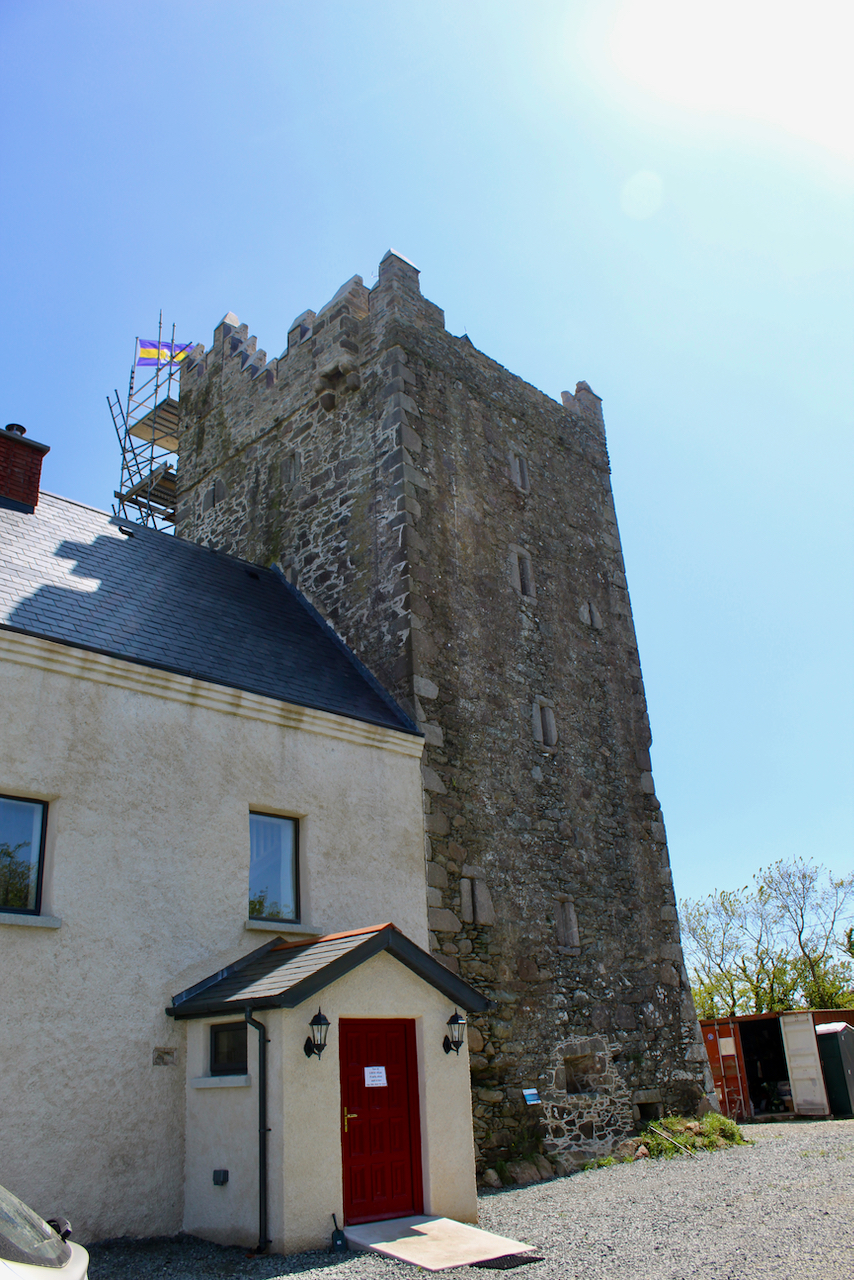
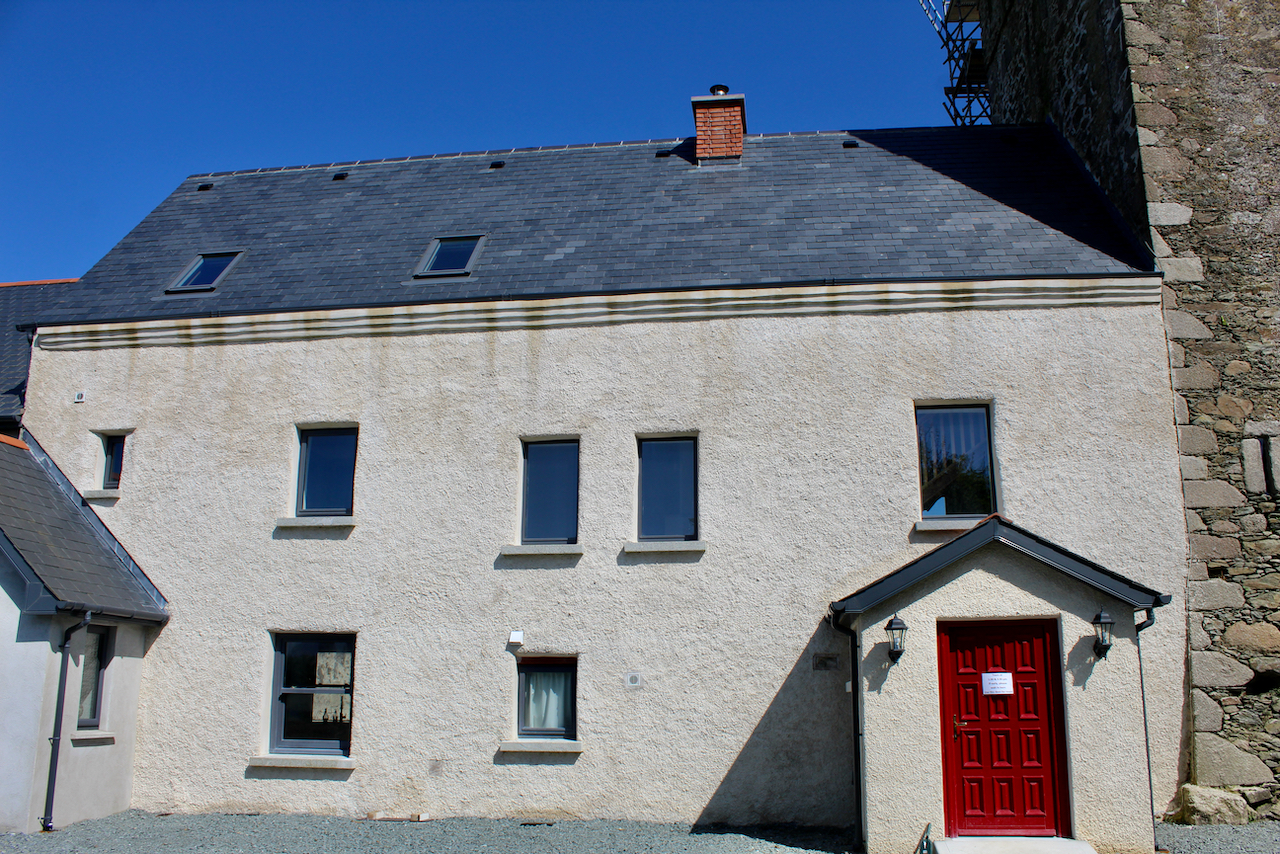
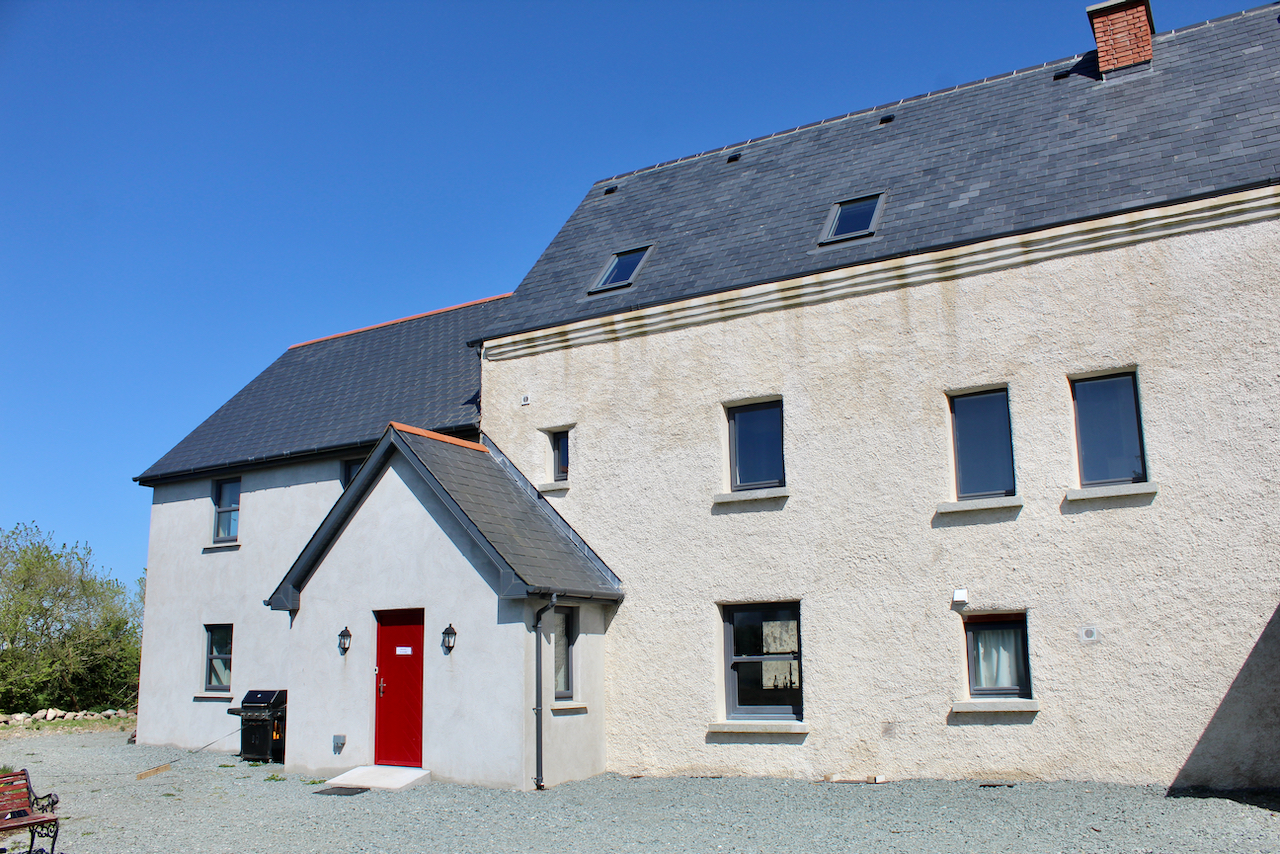
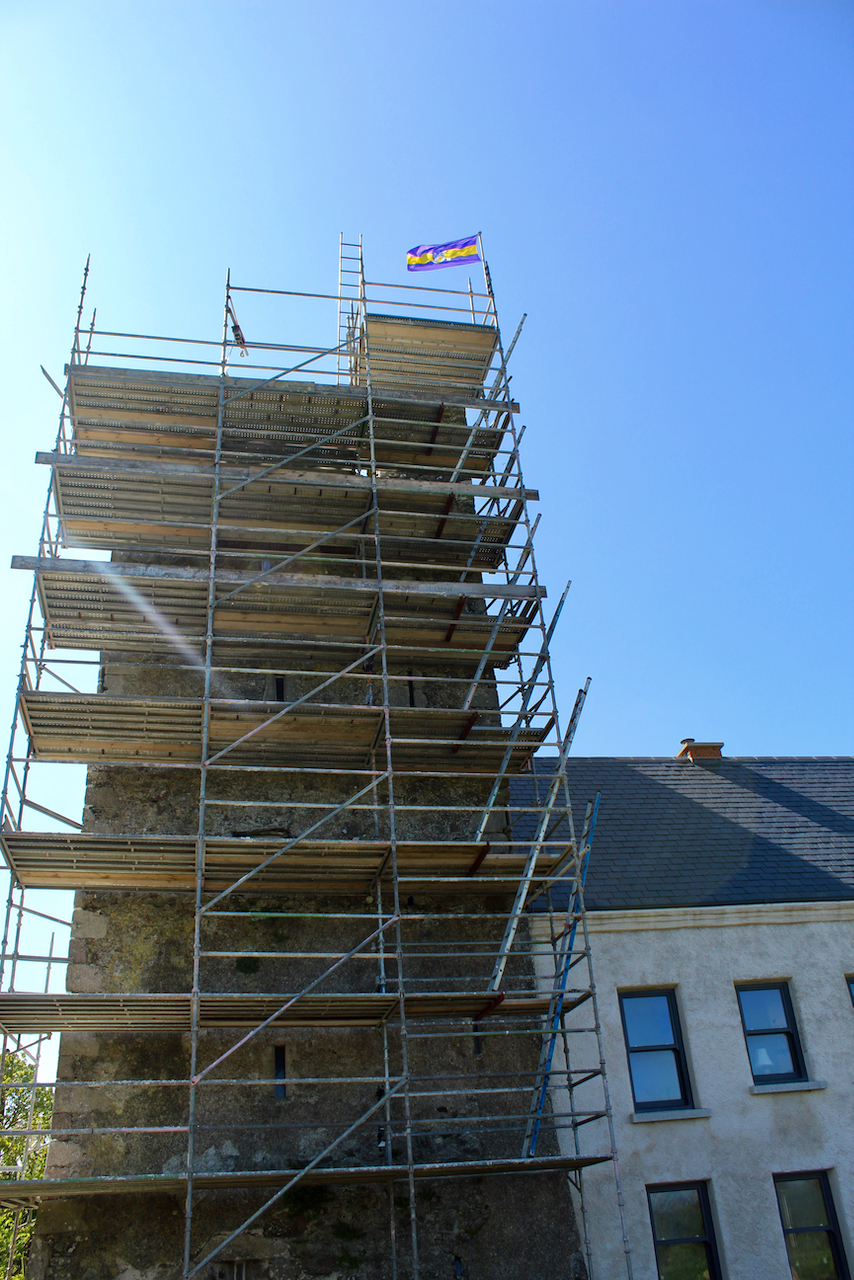
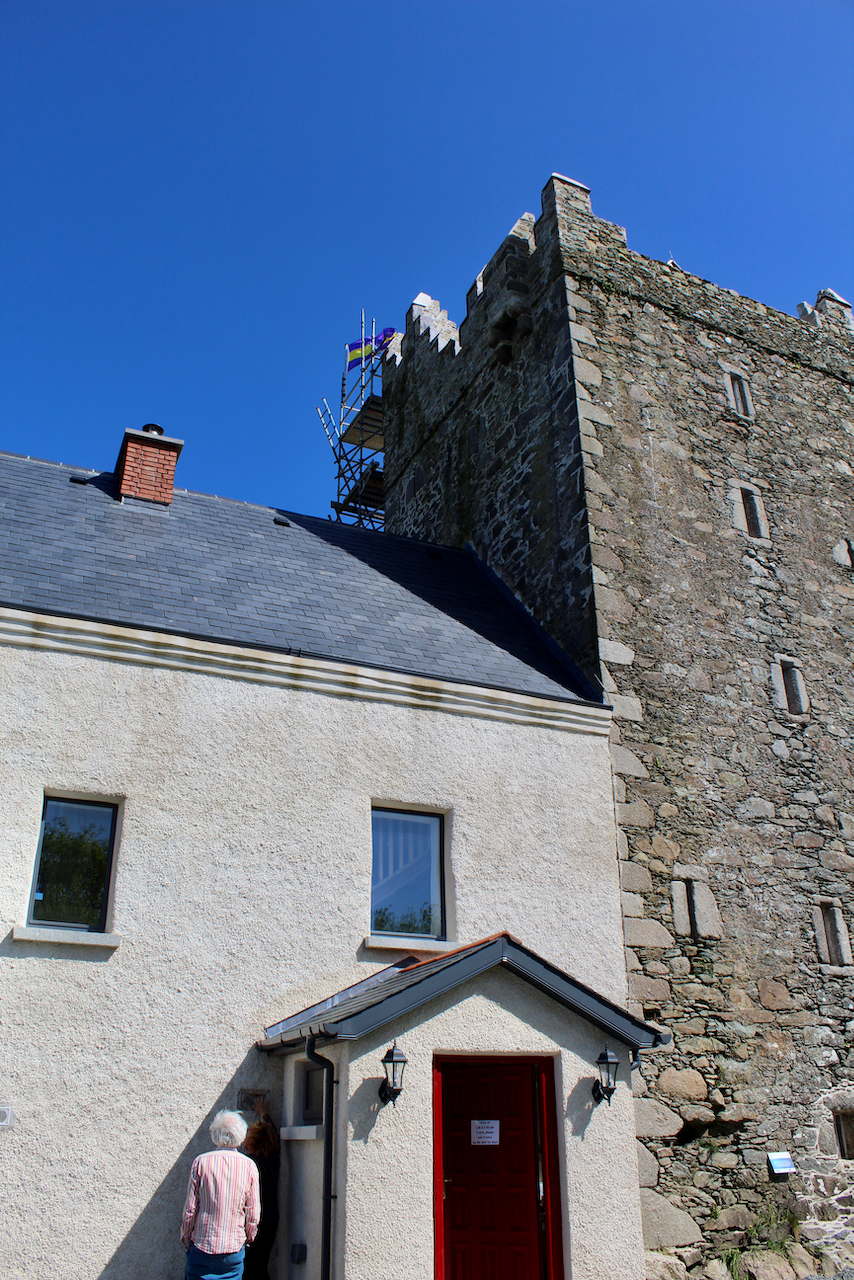
The owners of Sigginstown Castle are very brave to have taken on a derelict tower house. They have created something wonderful with its restoration. They restored not only the sixteenth century tower house but also the adjoining house, which was built in the seventeenth century.
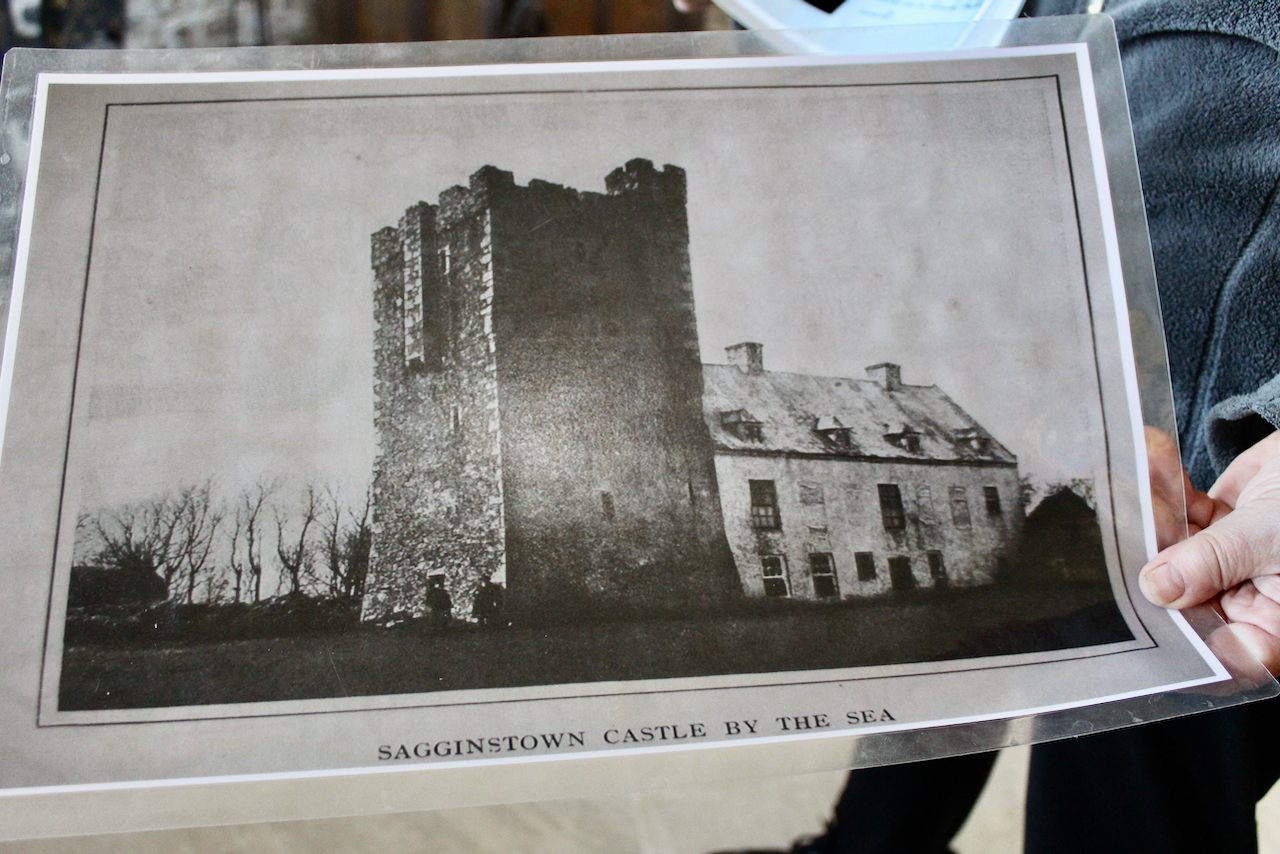
When the current owners, Gordon and Liz Jones, purchased the house it had no roof. Liz showed us some photographs of how the house and castle used to look before renovation.
The house as it used to look.The castle as it used to look, along with the house.You can see that the house was completely unroofed and empty.
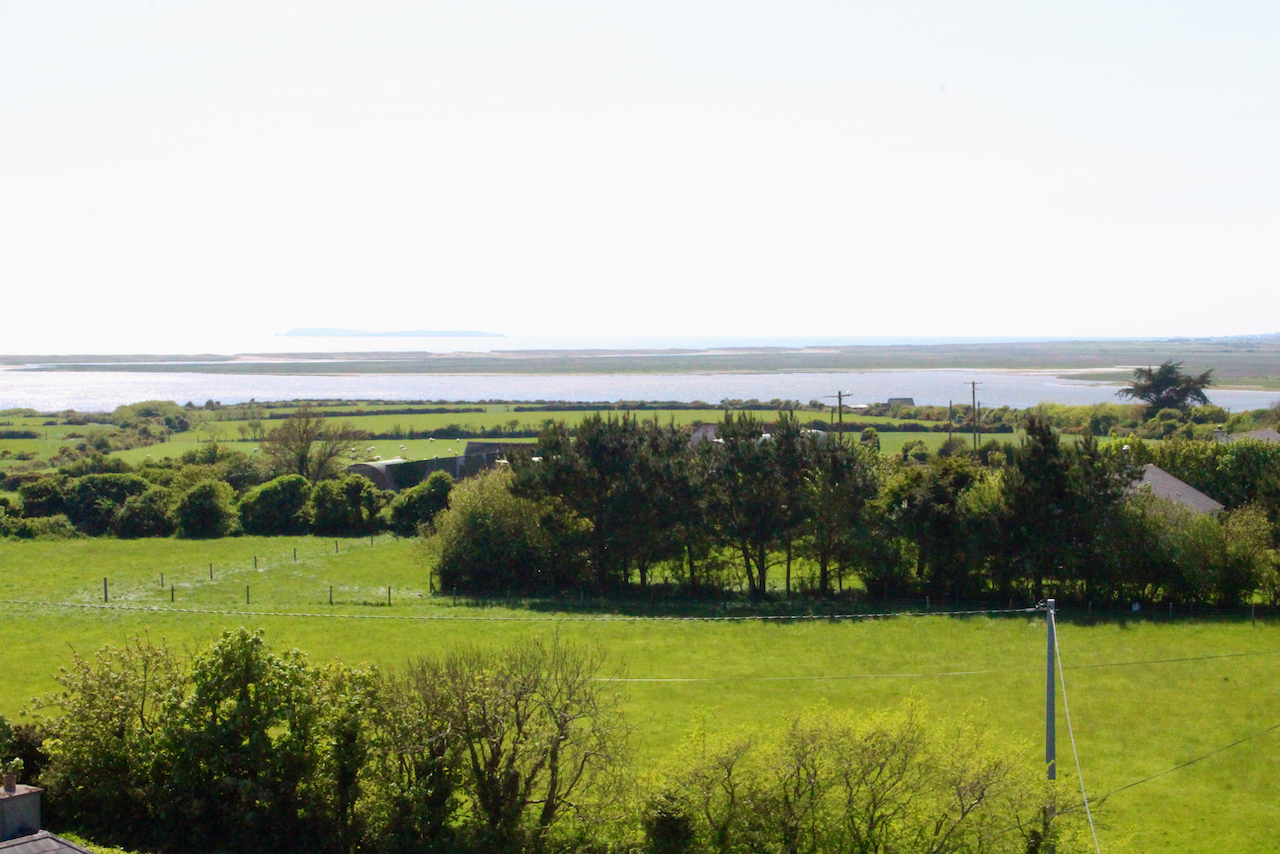
The Siggins family who owed the castle originally lived in the area from around 1342, and were of Anglo-Norman descent. The castle is built near the coast and would have been built to take advantage of sea trade. Many castles were built along the Wexford coast. The Siggins family also owned a mill nearby. They had rights to the mill as well as to fishing and to salvage of any shipwrecks in the area.
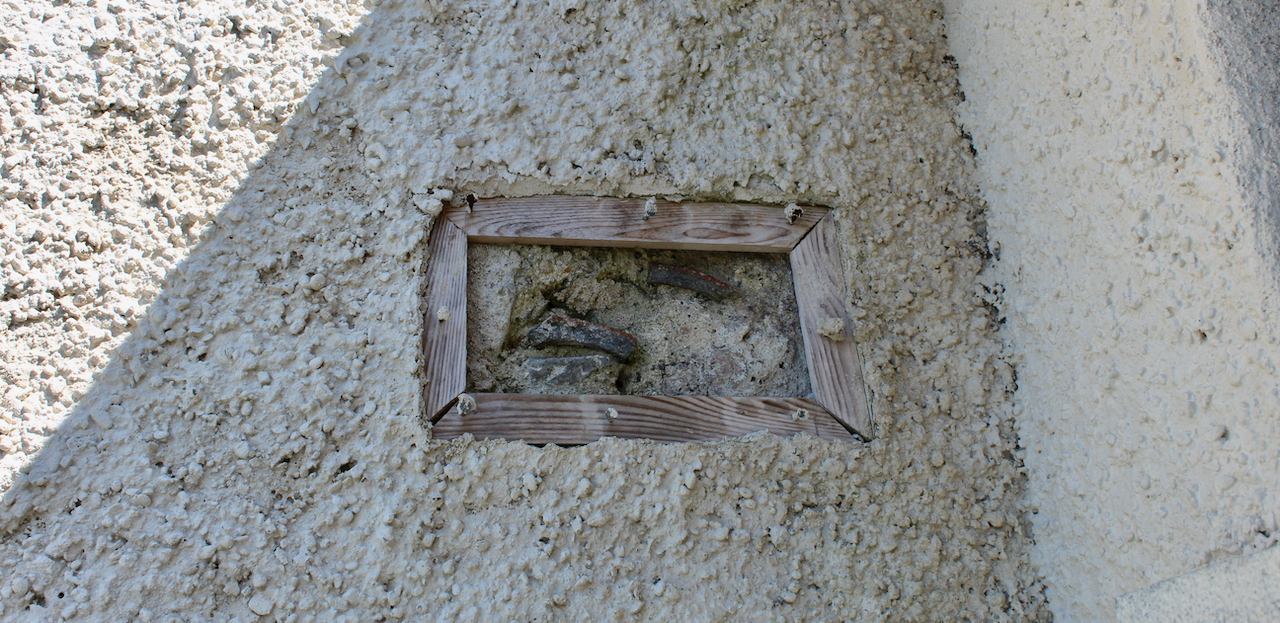
After Cromwell’s invasion and the Down Survey, the Siggins family were dispossessed and they moved to Mayo. The castle passed to William Jacob, a lieutenant in Oliver Cromwell’s army. He purchased more land in the area and his family built the house attached to the castle. Liz pointed out some ceramics which they set into the wall of the house near the door that were dated to that time period.
Eventually the house, castle and lands passed through a daughter who married a farmer named Wilson. The castle remained in that family until sold to the Pierce family, who then sold to the current owners in 2016. The Jones’ began renovation in 2019. They have done much of the work themselves, and found master craftspeople to do what they could not. It is wonderful to see the skills utilised and promoted.
The Facebook page mentions, for example, obtaining flagstones from the Traditional Lime Company. The Jones’ even produced their own handwrought nails, and they limewashed the house and castle using traditional ingredients. They also researched the history of the castle.
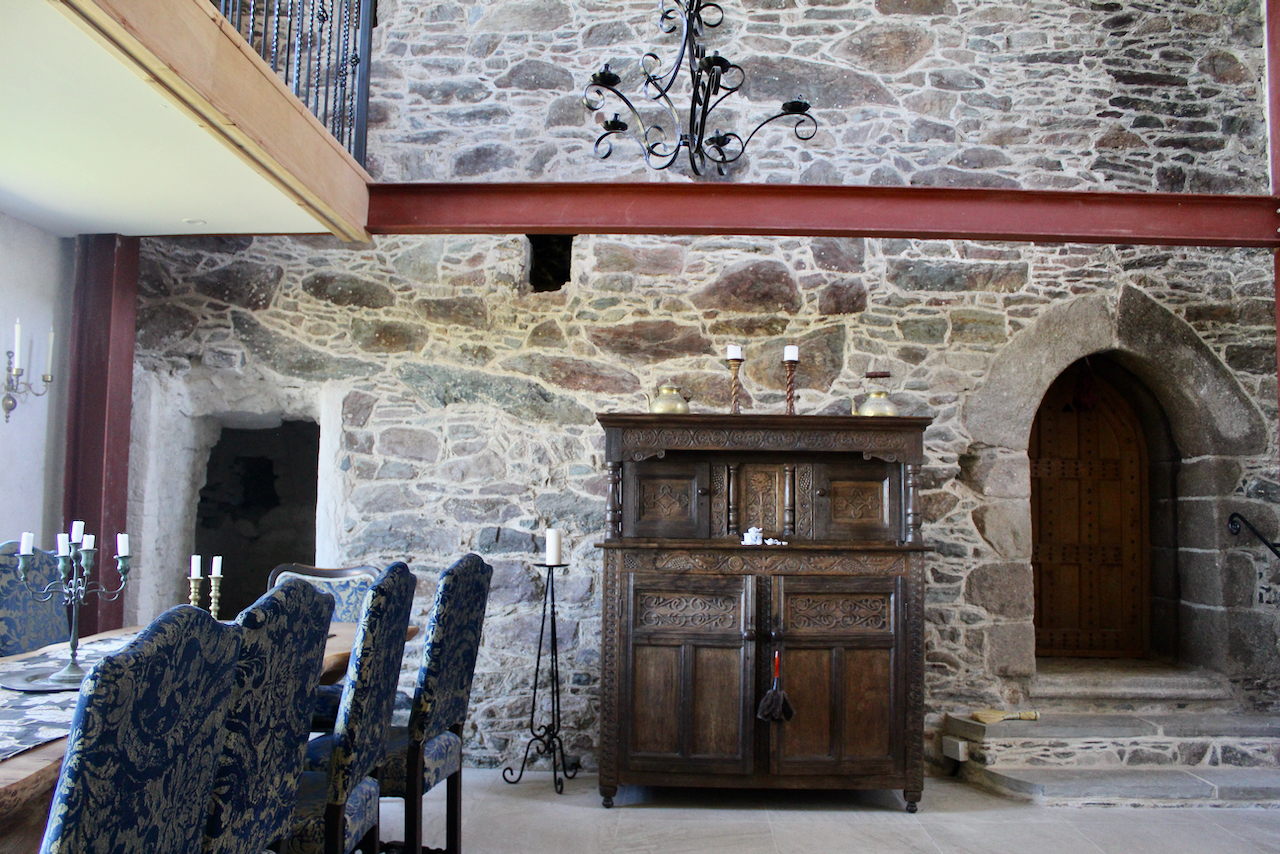
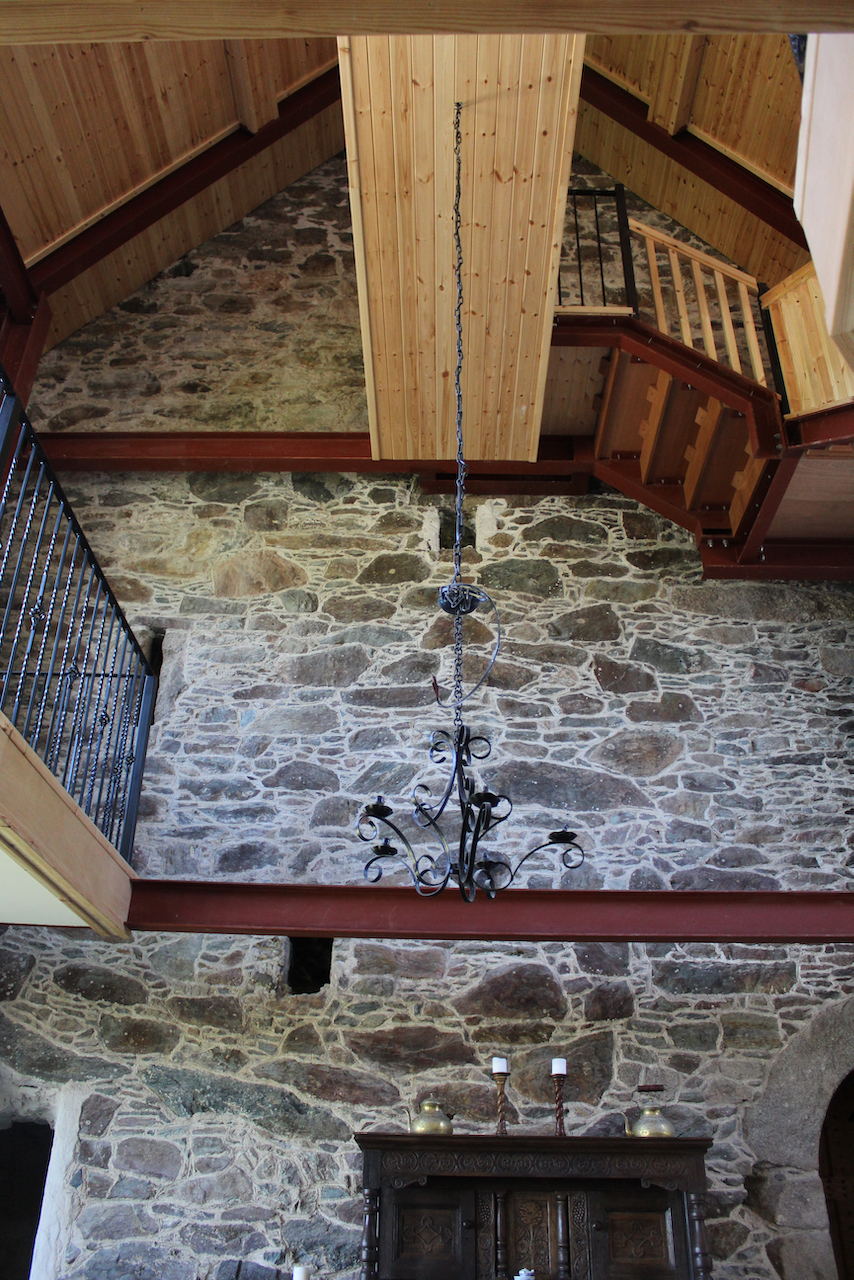
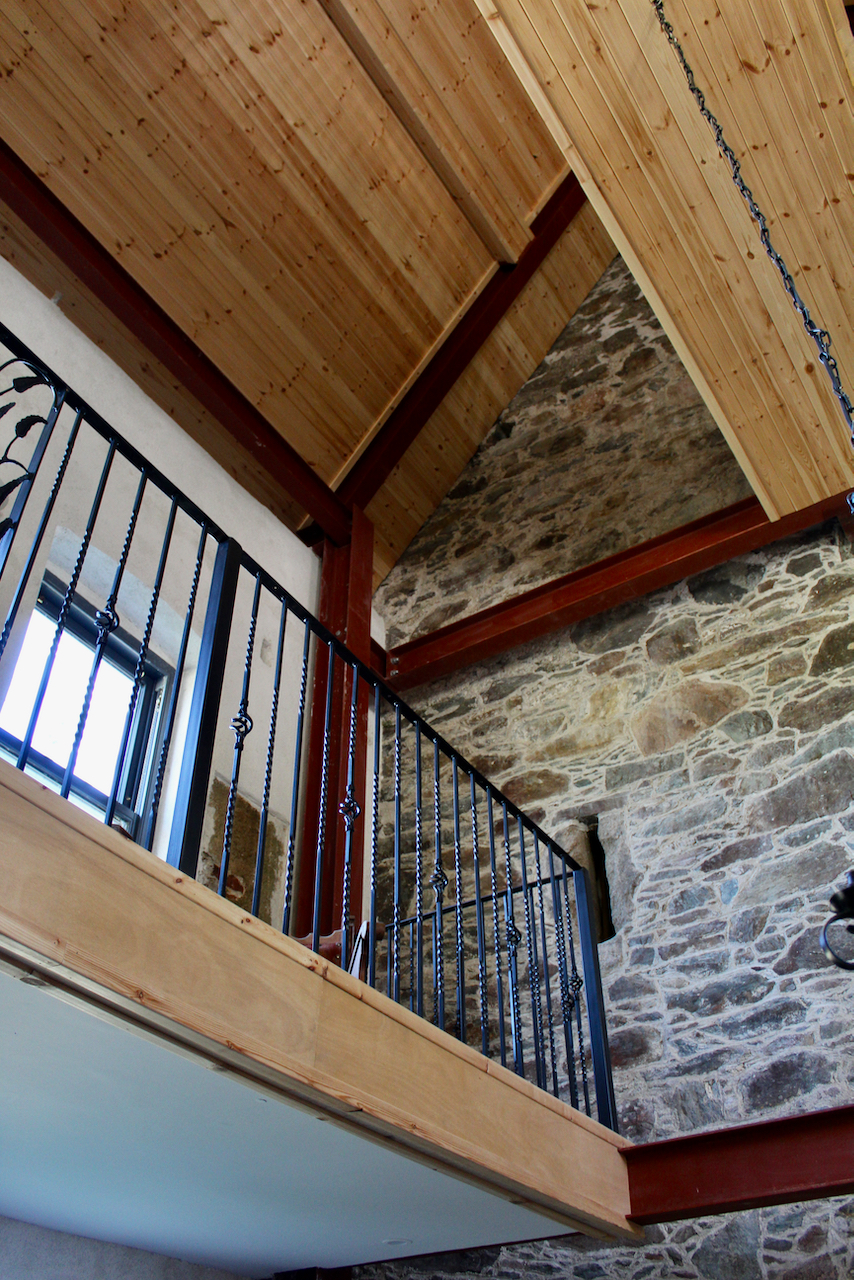
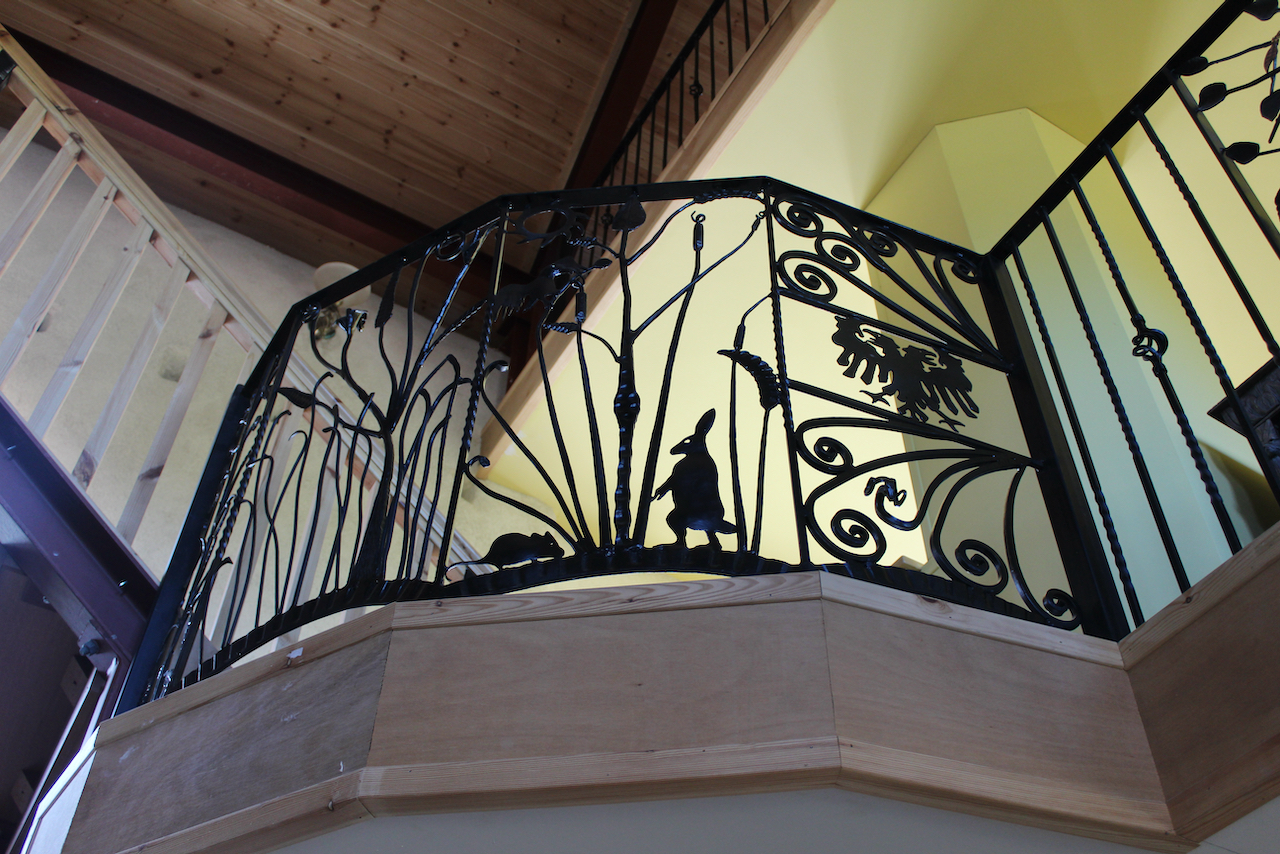
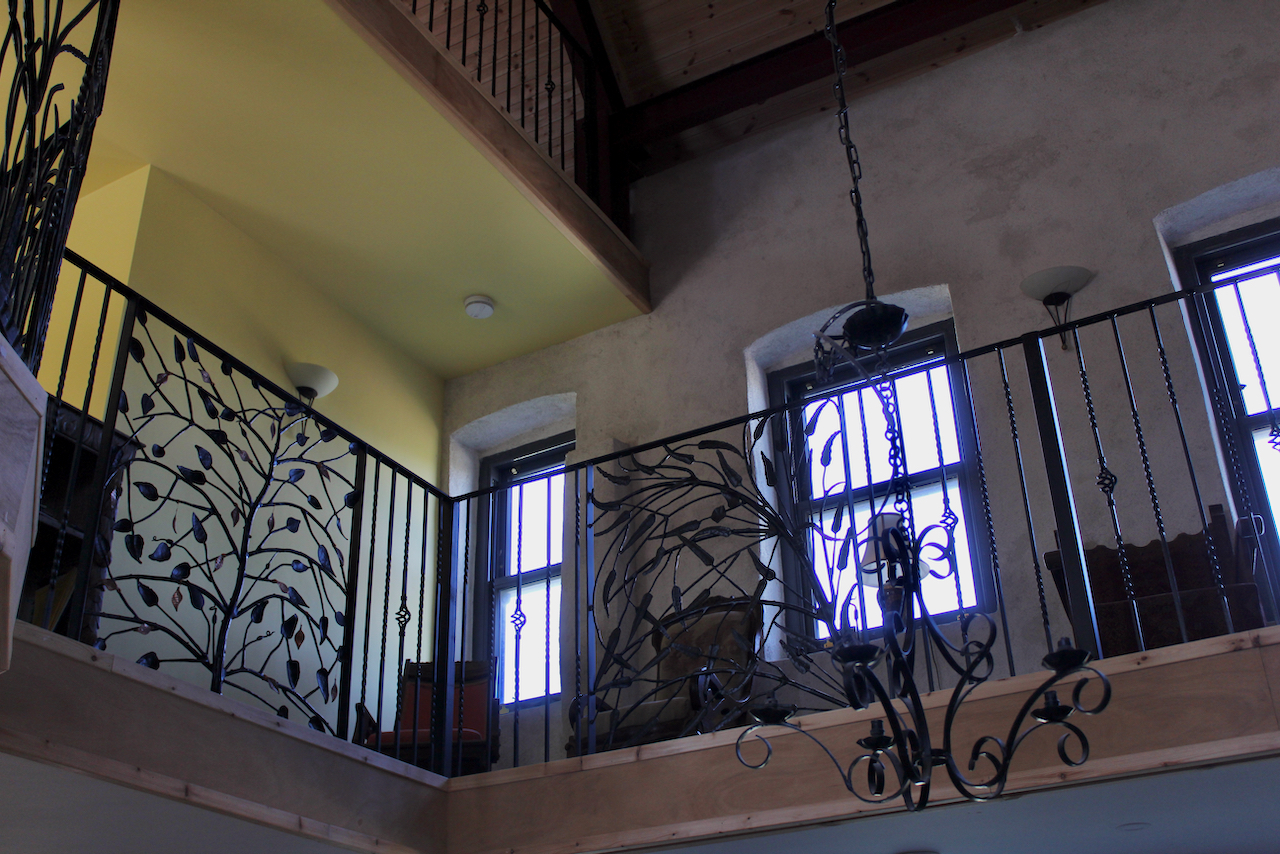
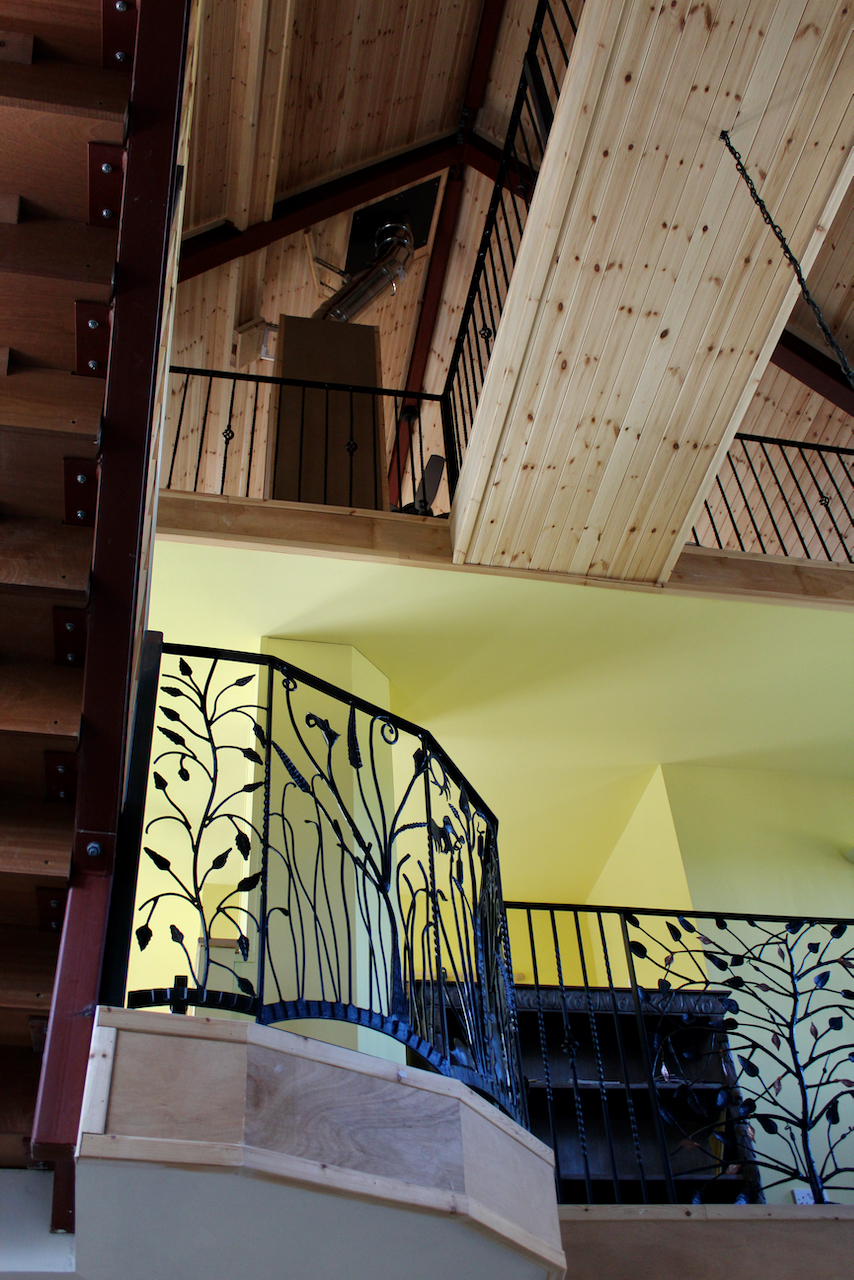
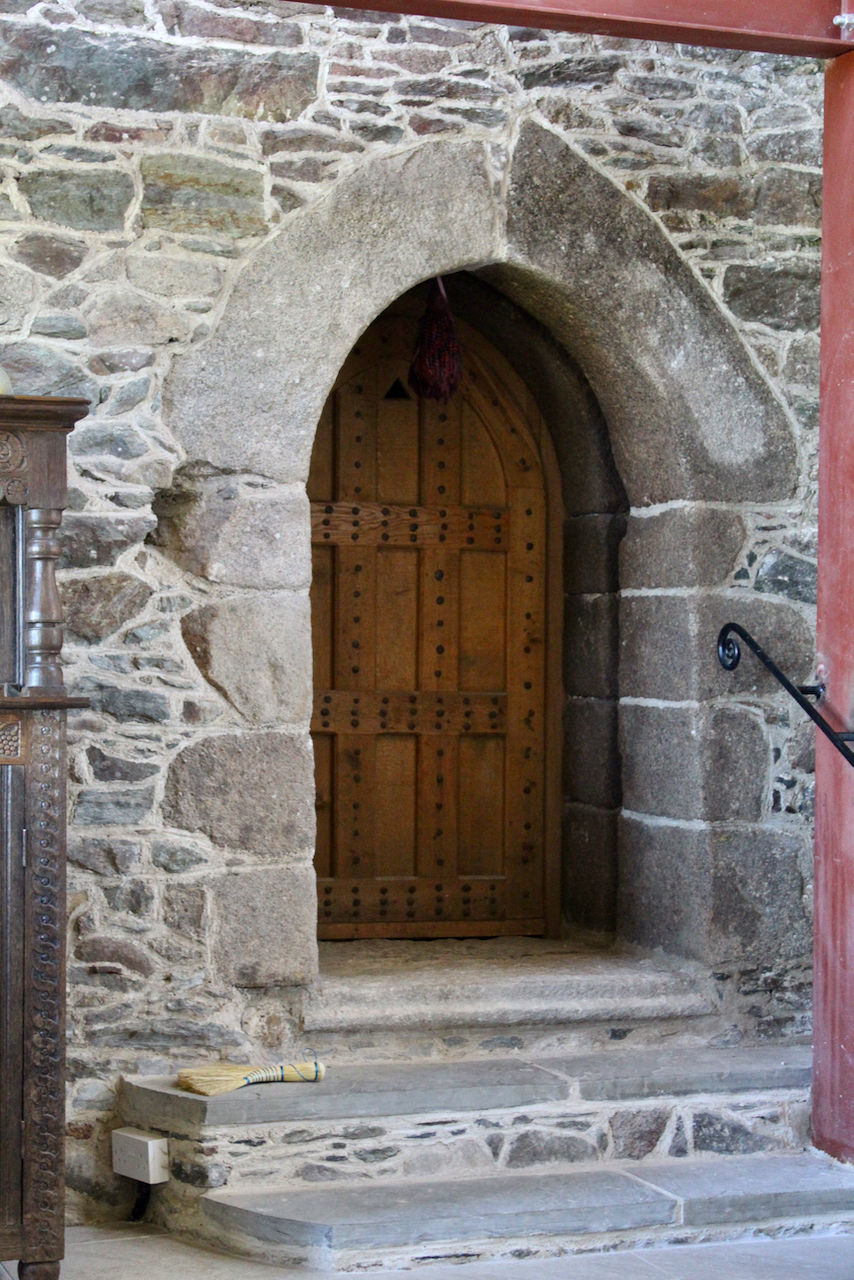
You enter the castle through the house. The Jones’ created a wonderful space inside the house with a triple height room, with walkways across and a second entrance to the castle at an upper level.
The ground floor of the house has great entertaining space, with a long dining table and a kitchen and a built in ceramic stove.
Liz and Gordon are members of an international community, the Society for Creative Anachronism (SCA). It sounds like a great group, and they do medieval re-enactments and events. Liz and Gordon are also musicians and most recently participated in an event “W.B. Yeats, in Story and Song.” See their facebook page for details. The page also describes the journey of creating this beautiful space. During its creation they participated in some television programmes including “Castle Hunting in Ireland” and a renovation show with presenter and architect Hugh Wallace.
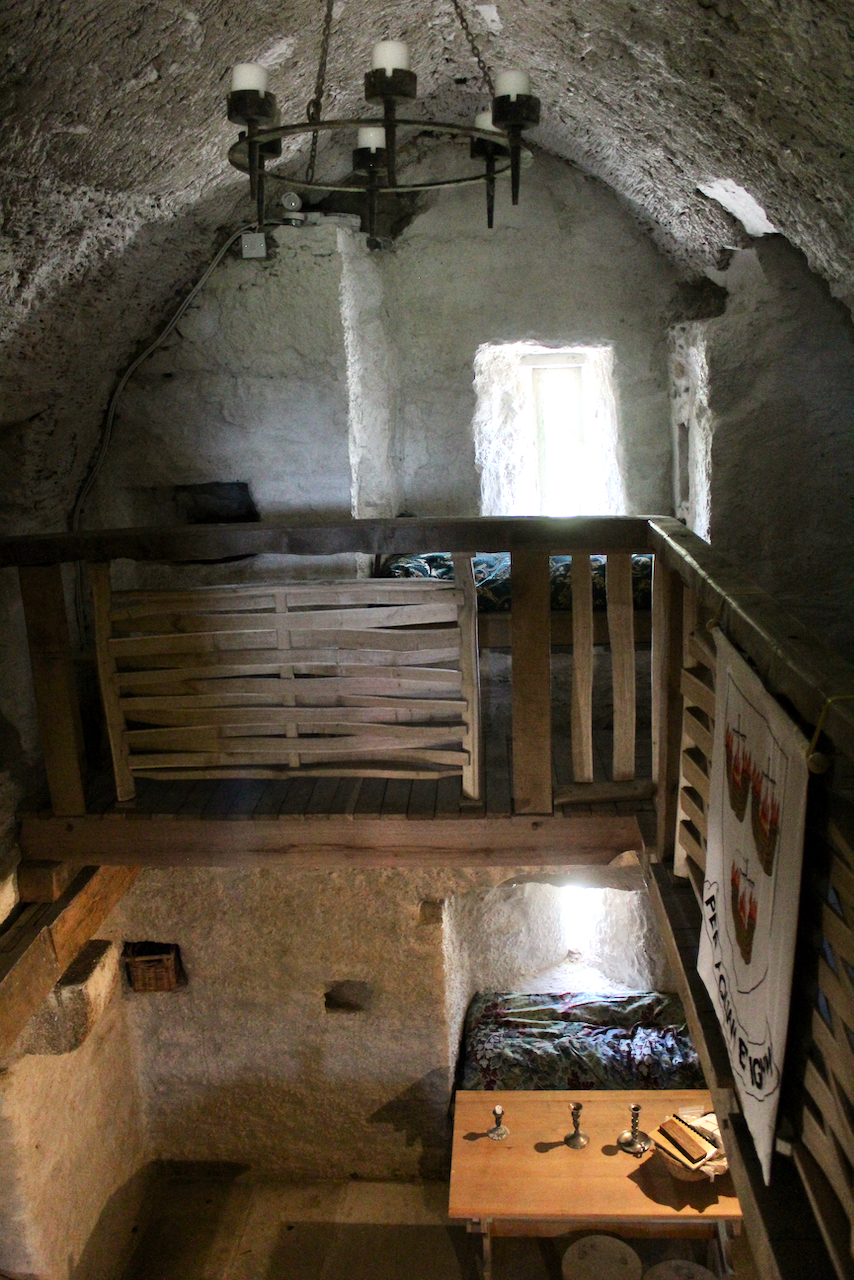
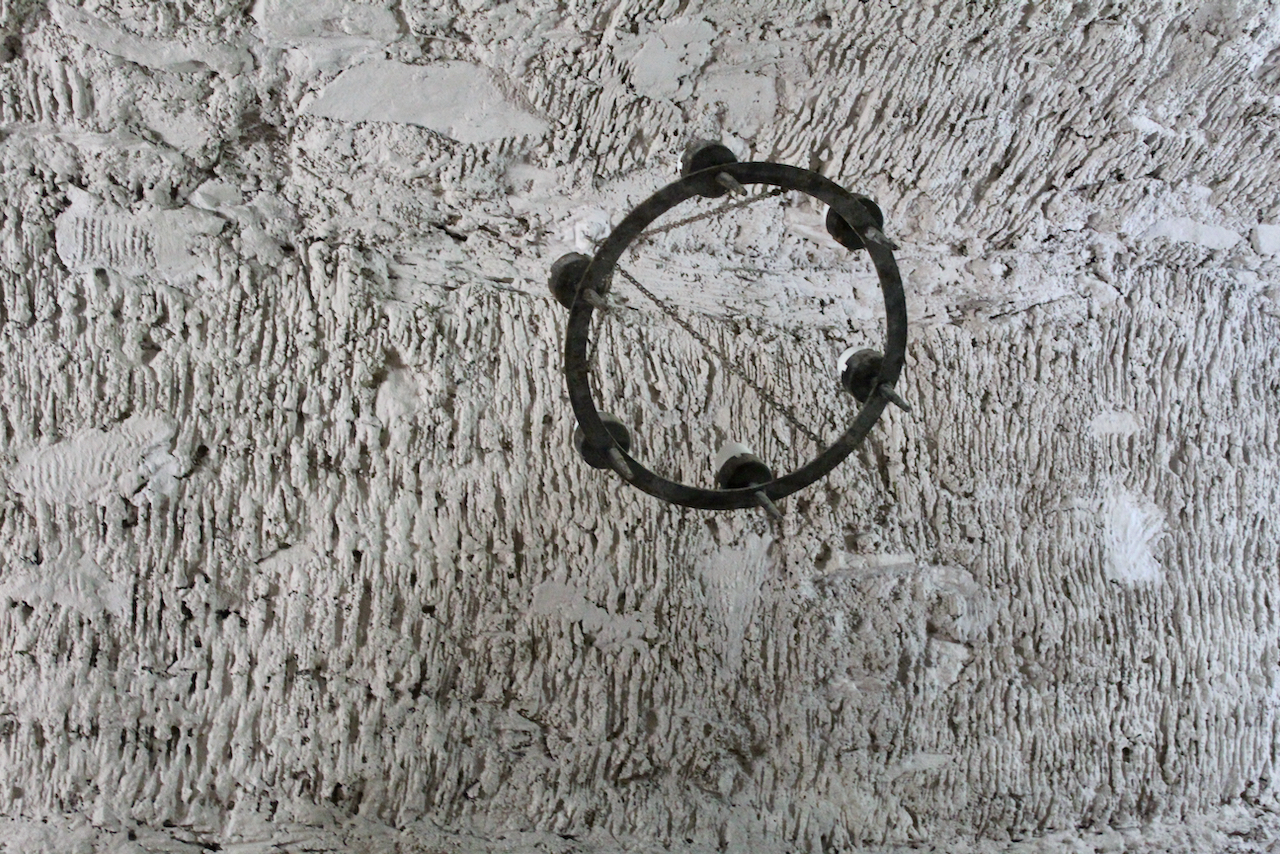
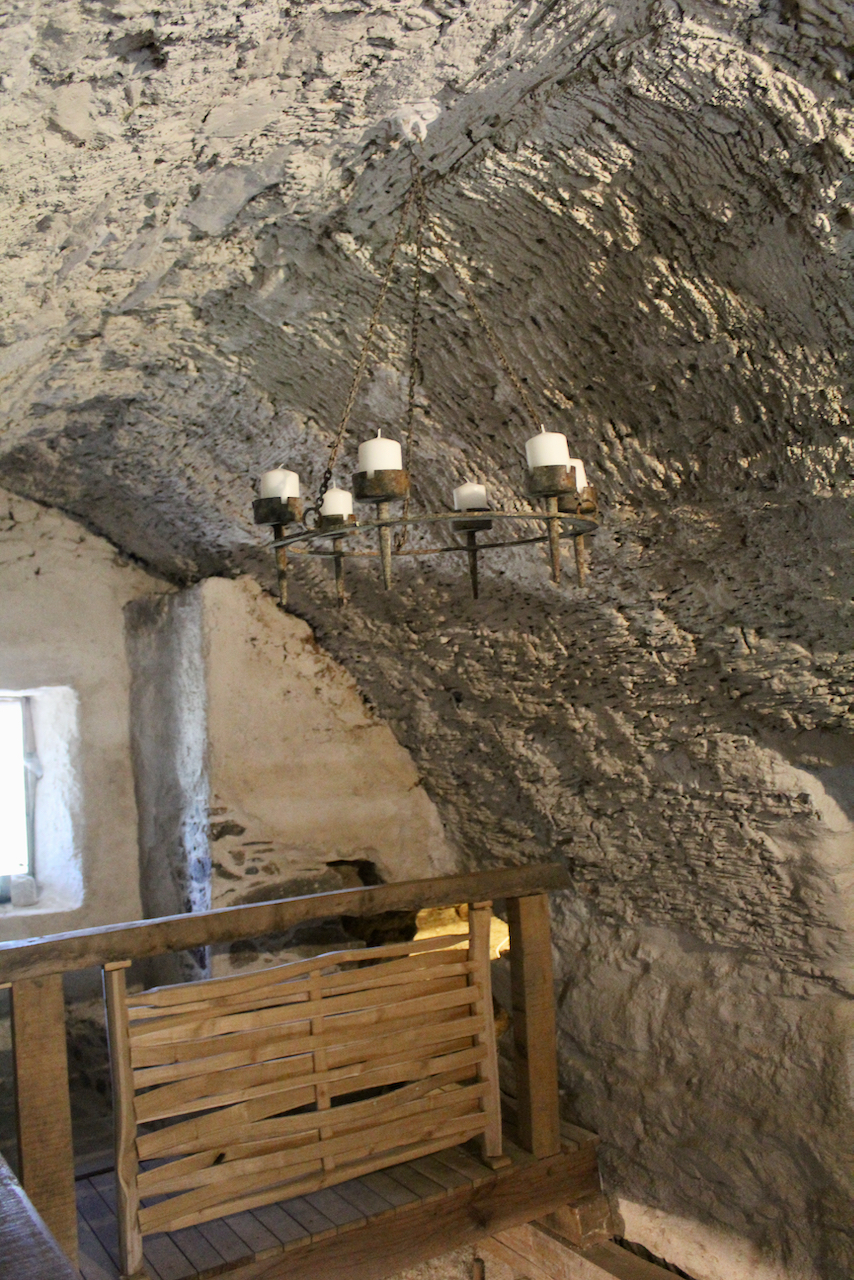
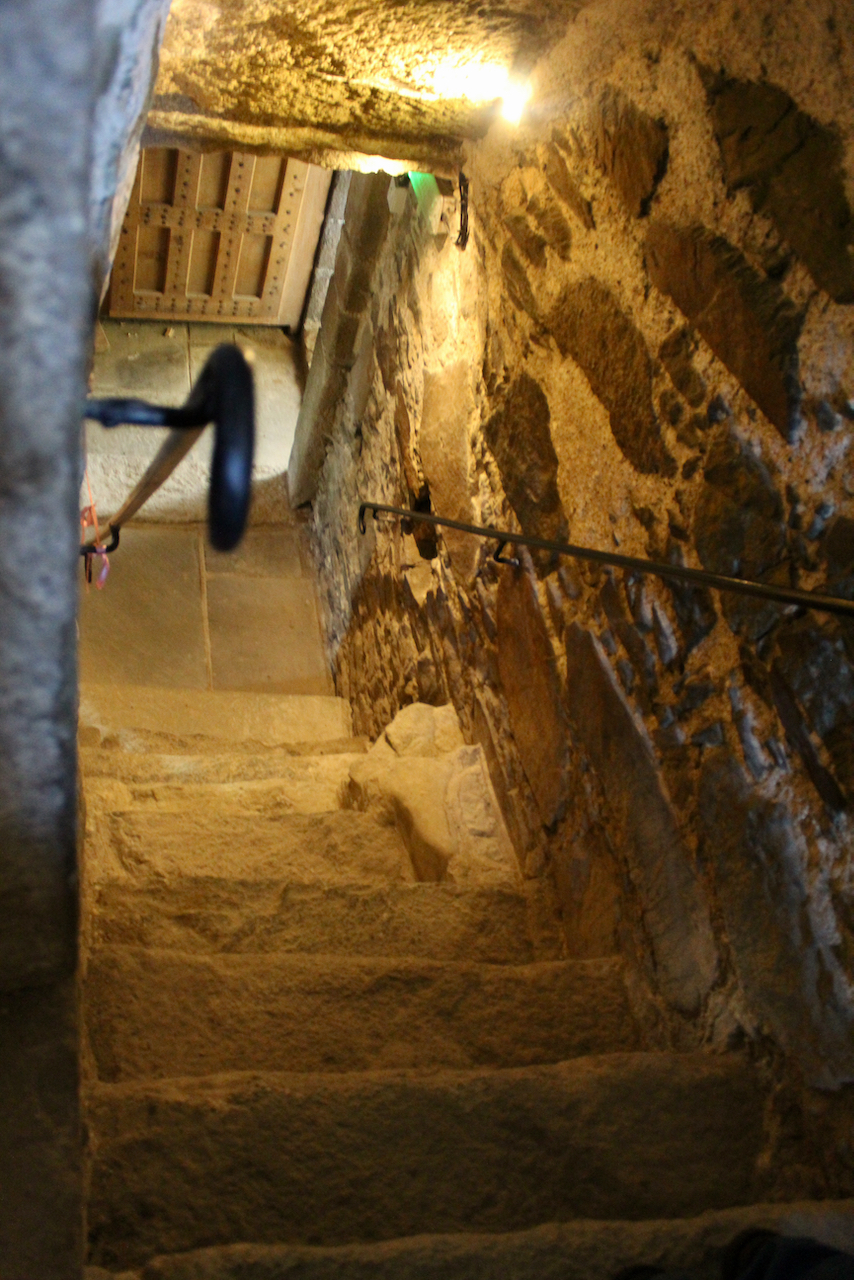
The ground floor room in the castle opens up to a vaulted ceiling with remains of the wickerwork on which the vaulted ceiling was originally built. The Jones’ only put in a half floor at the first level, resting on original corbels, to create a more spacious room than may have been in the original layout. The stone stairs in the tower were quite intact, with just the bottom steps removed to stop cattle from climbing upstairs!
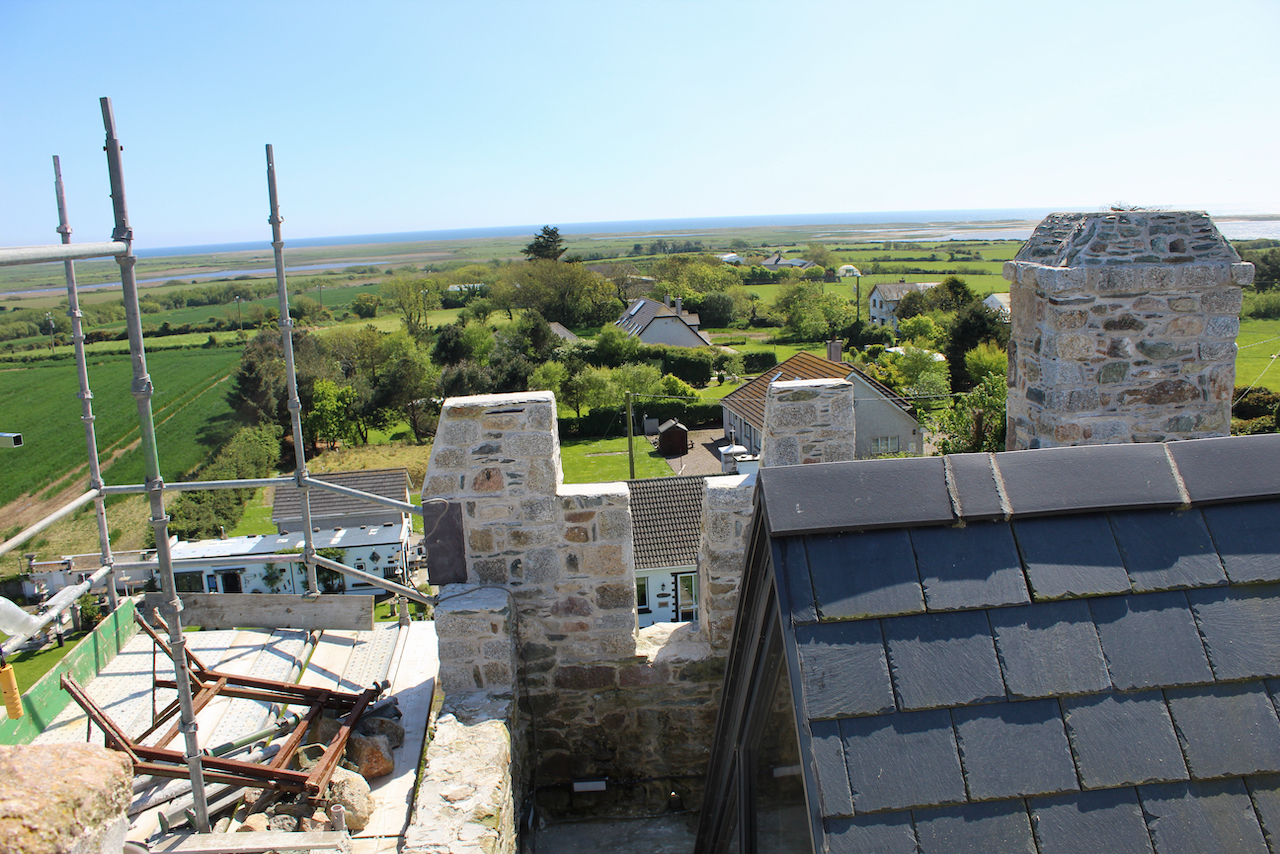
The castle has some of the usual protective features, but not all, as it is a small castle. It has machicolation at the top, and an “oubliette,” a place where someone can be imprisoned and forgotten about! In this castle it’s a deep chimney type space or shaft.
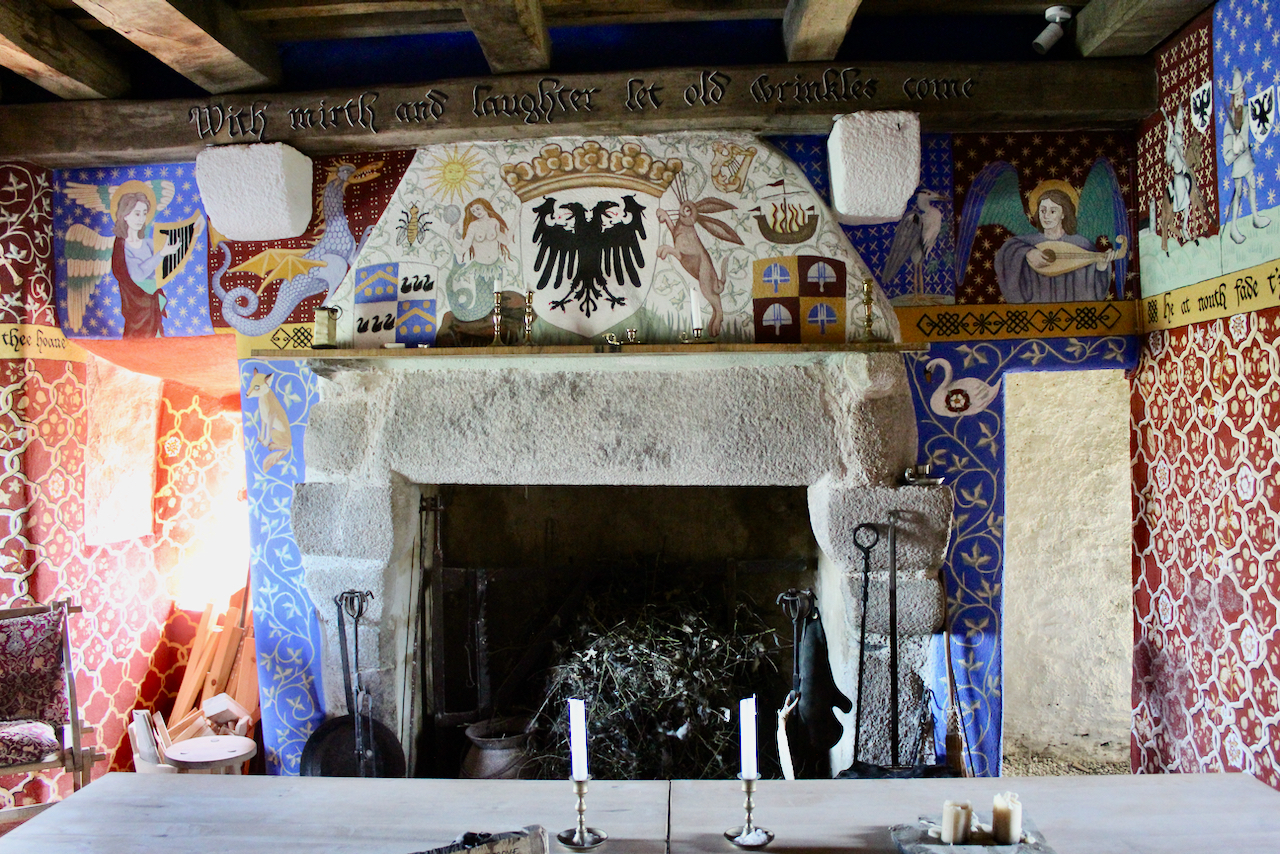
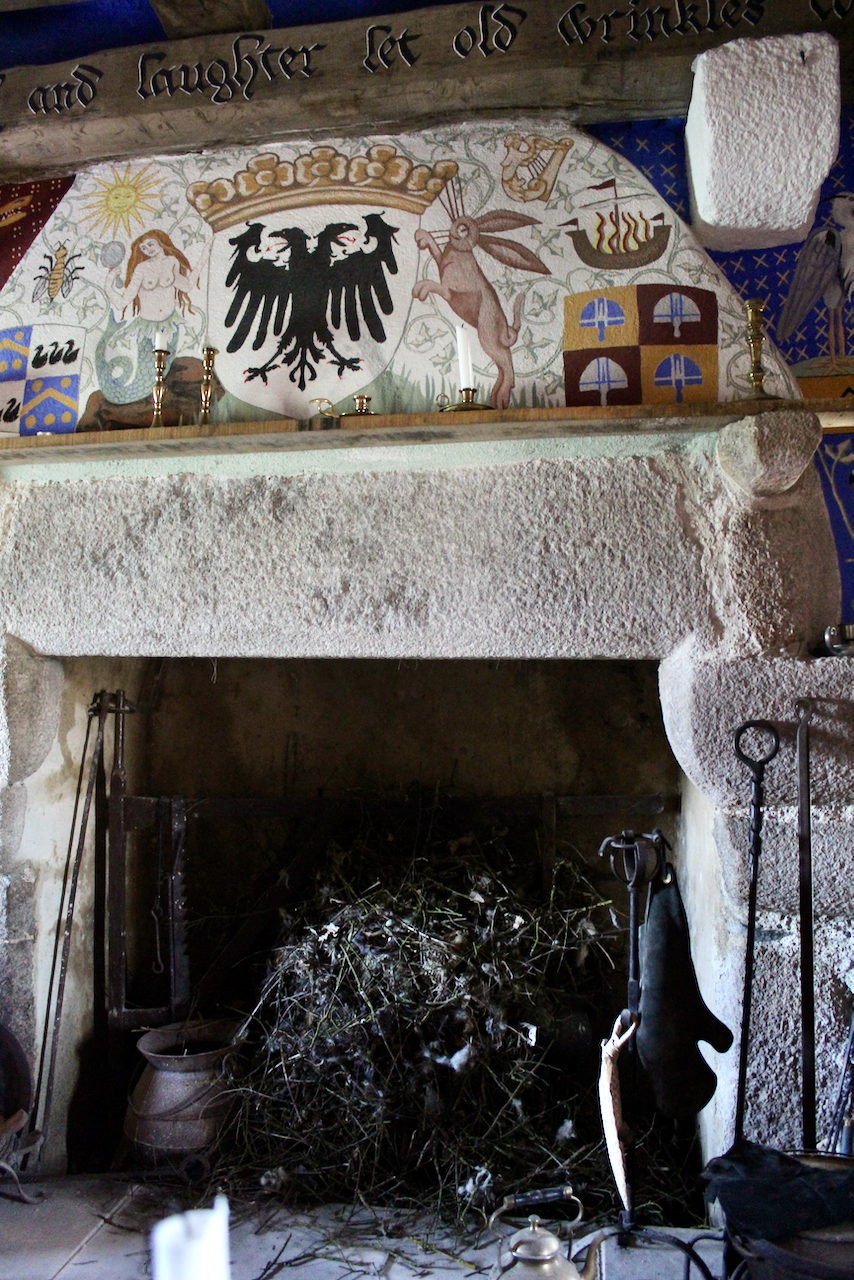
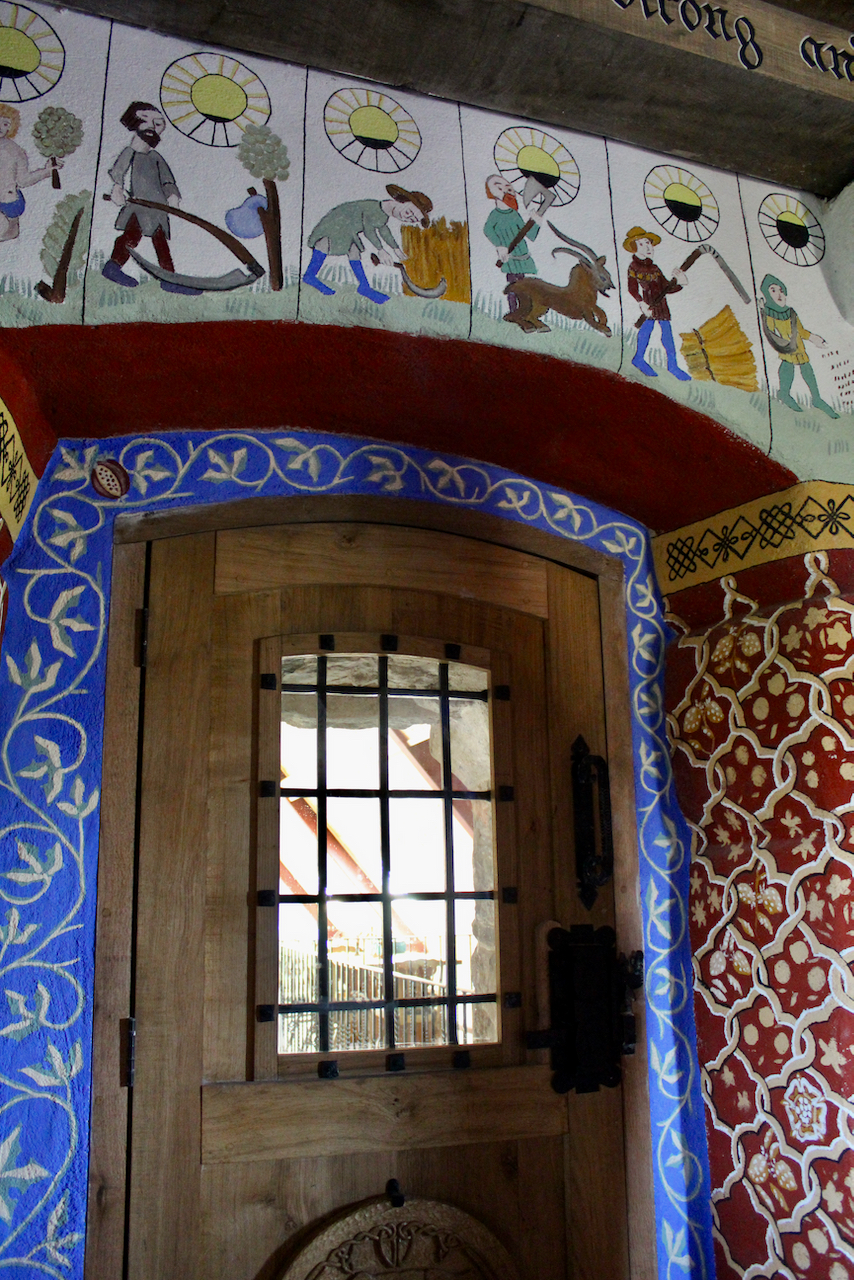
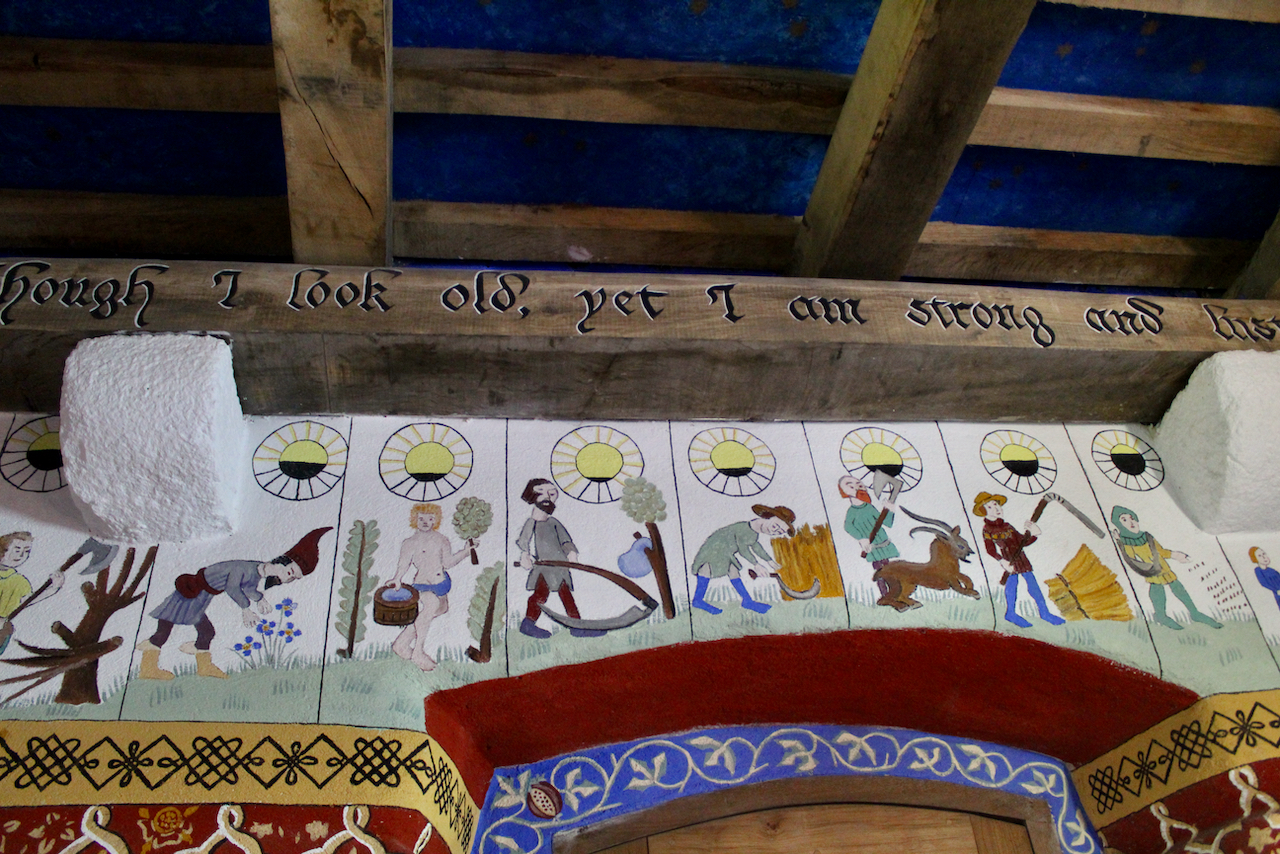
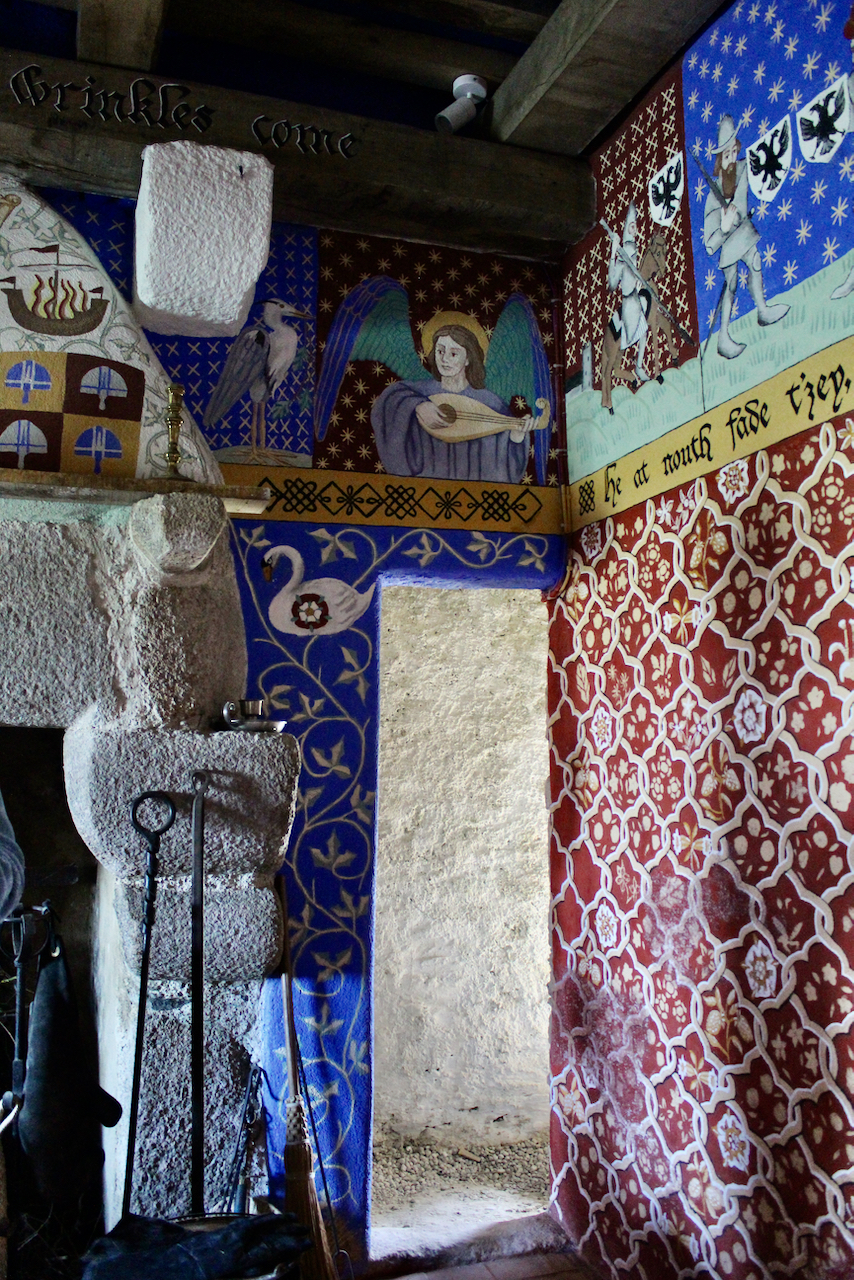
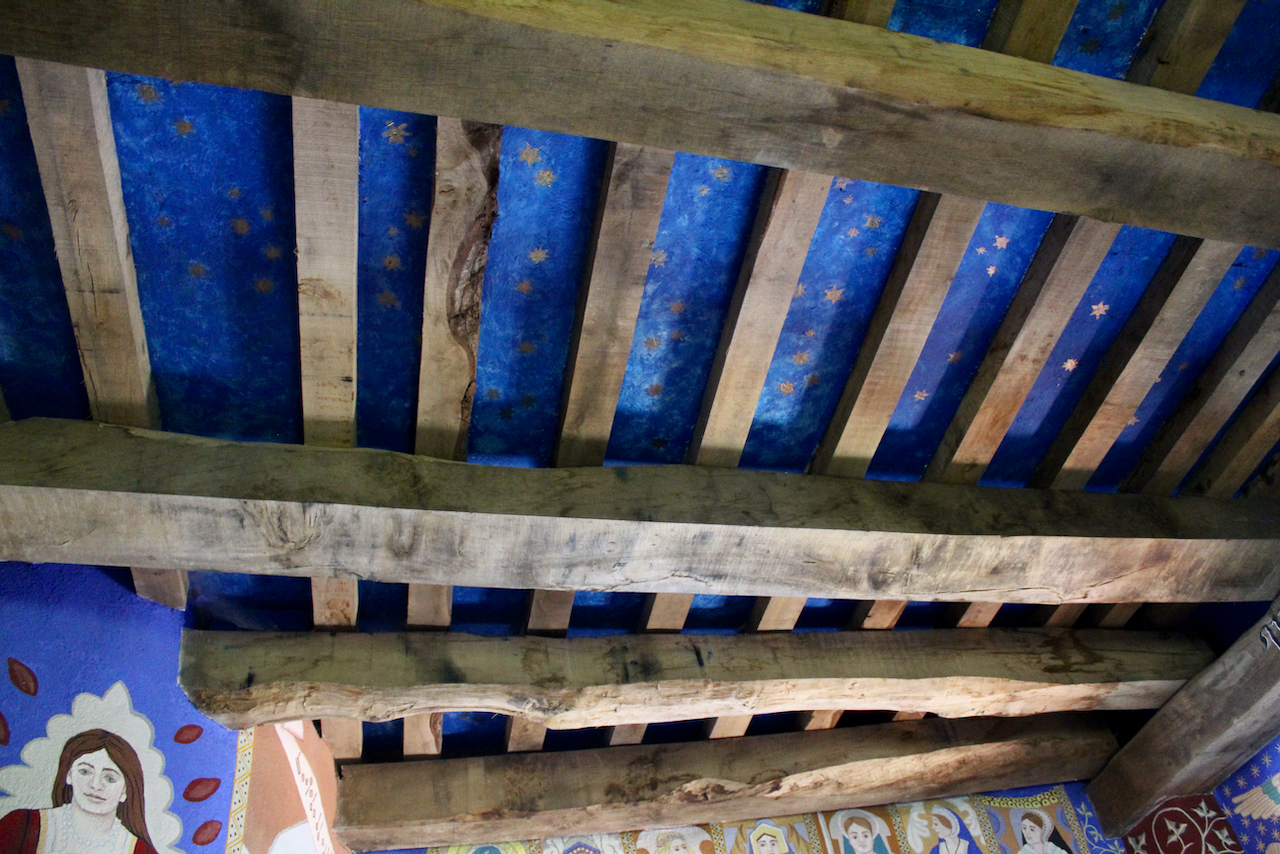
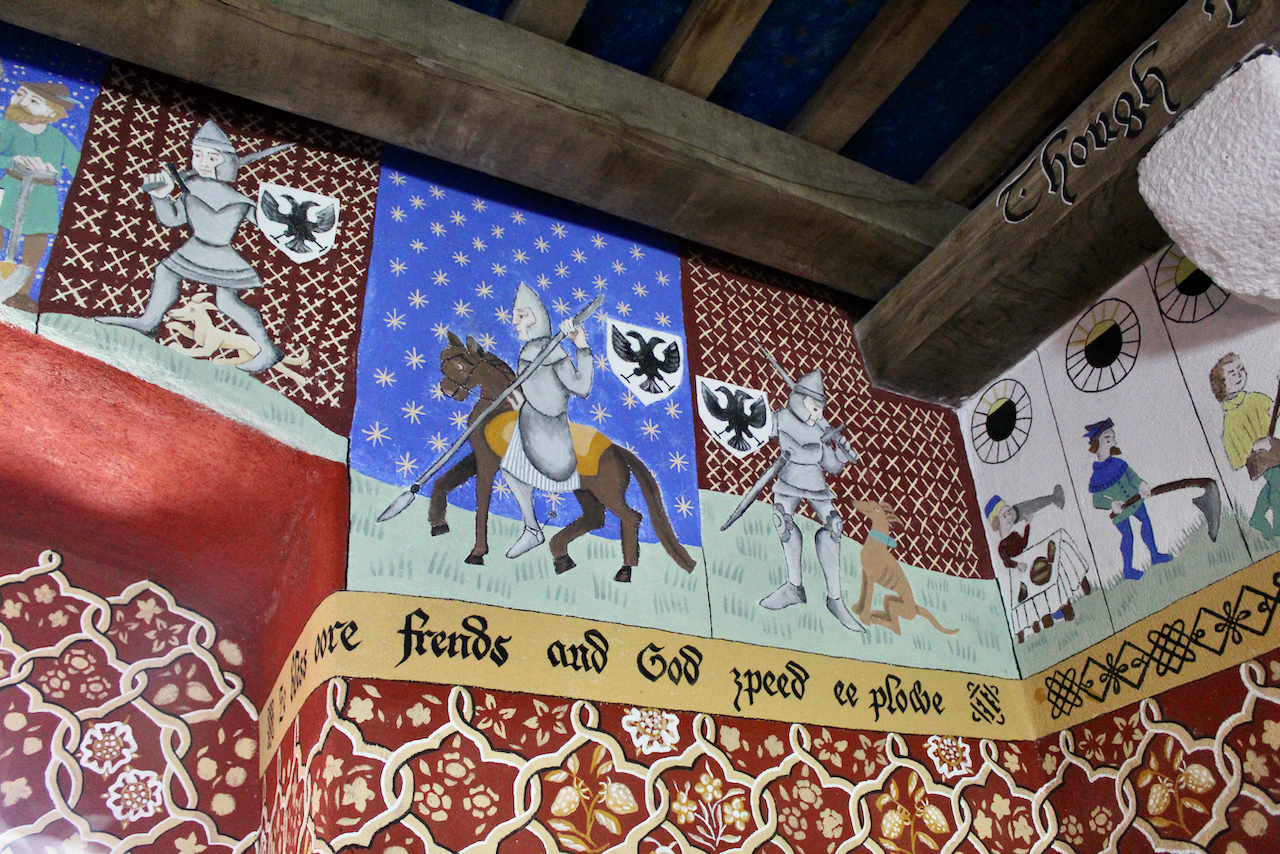
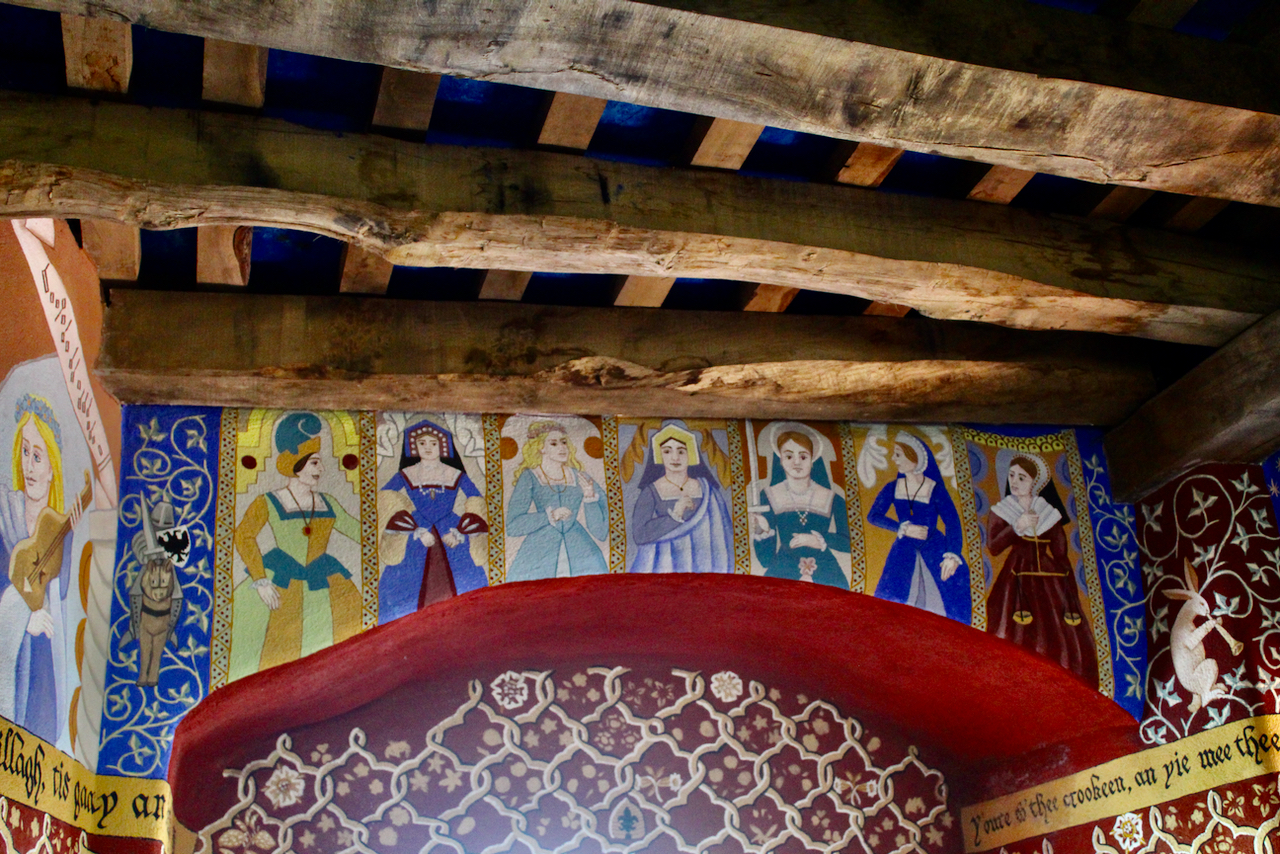
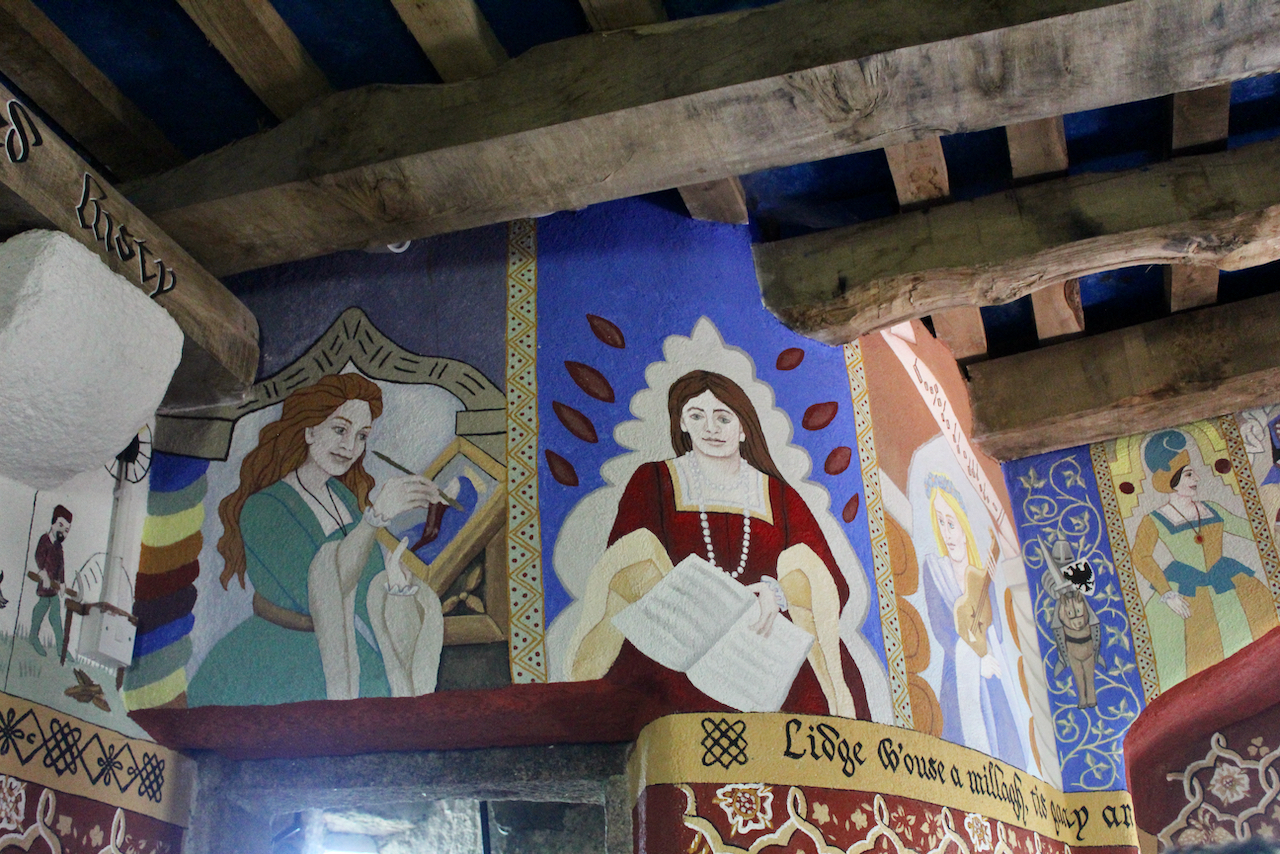
The next level of the castle opens onto a beautifully decorated room. The painting uses sixteenth century sources. A friend of the Jones’ painted the murals. Some paintings copy a De Burgo manuscript, and the phrases are in “Yola,” “ye old language,” a mixture of Finnish, Norman and English.
The paintings are also personal to the Jones’. For example, the women painted represent family members and their interests in painting, poetry and music. They also represent virtues, such as courage, justice and mirth, as well as temperance.
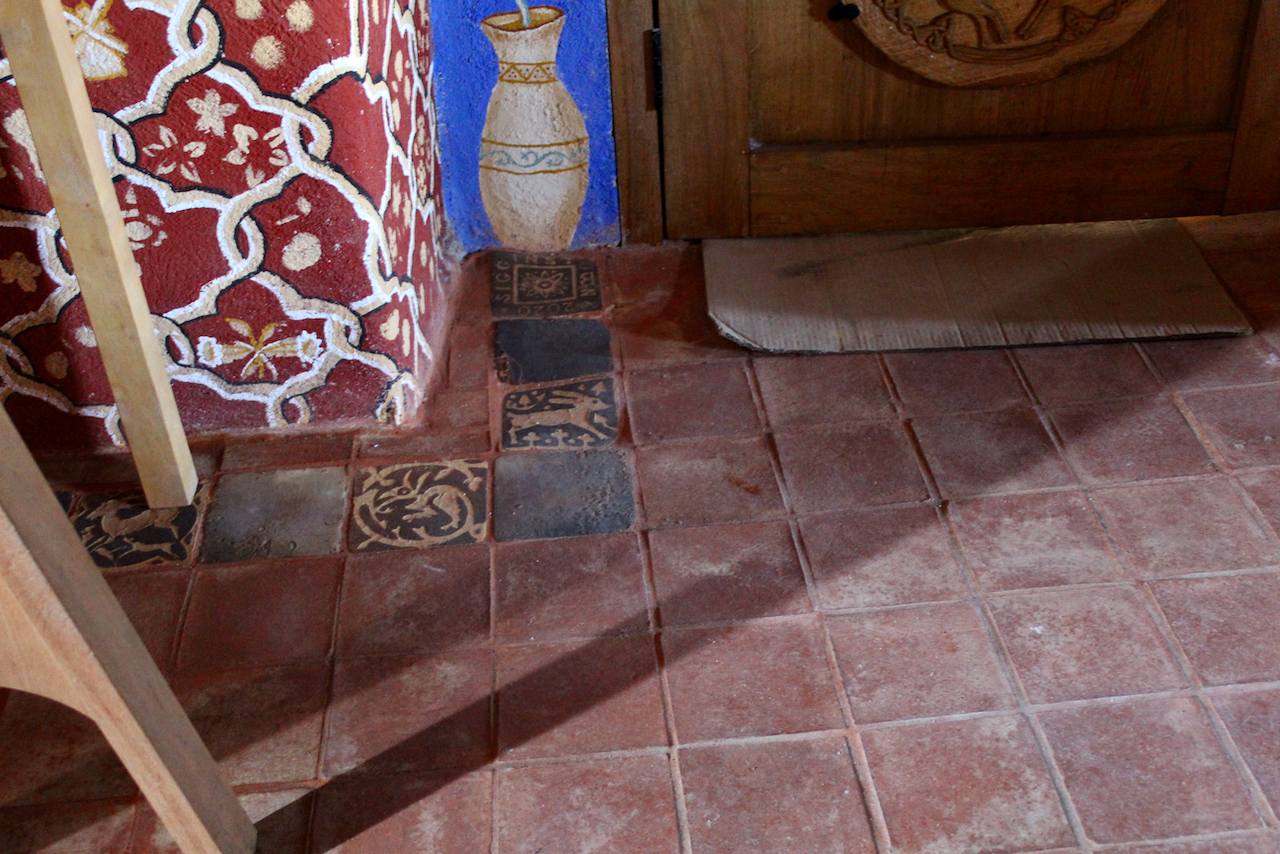
The floor is made of ceramic tiles. Liz discovered clay on the land, and she found a man who could make tiles from scratch. He built a medieval style kiln and they fired the tiles they made. All of the decorative tiles on the floor were made on site, and the plain tiles were sources from Spain.
A door at this level opens into the upper floor of the house.
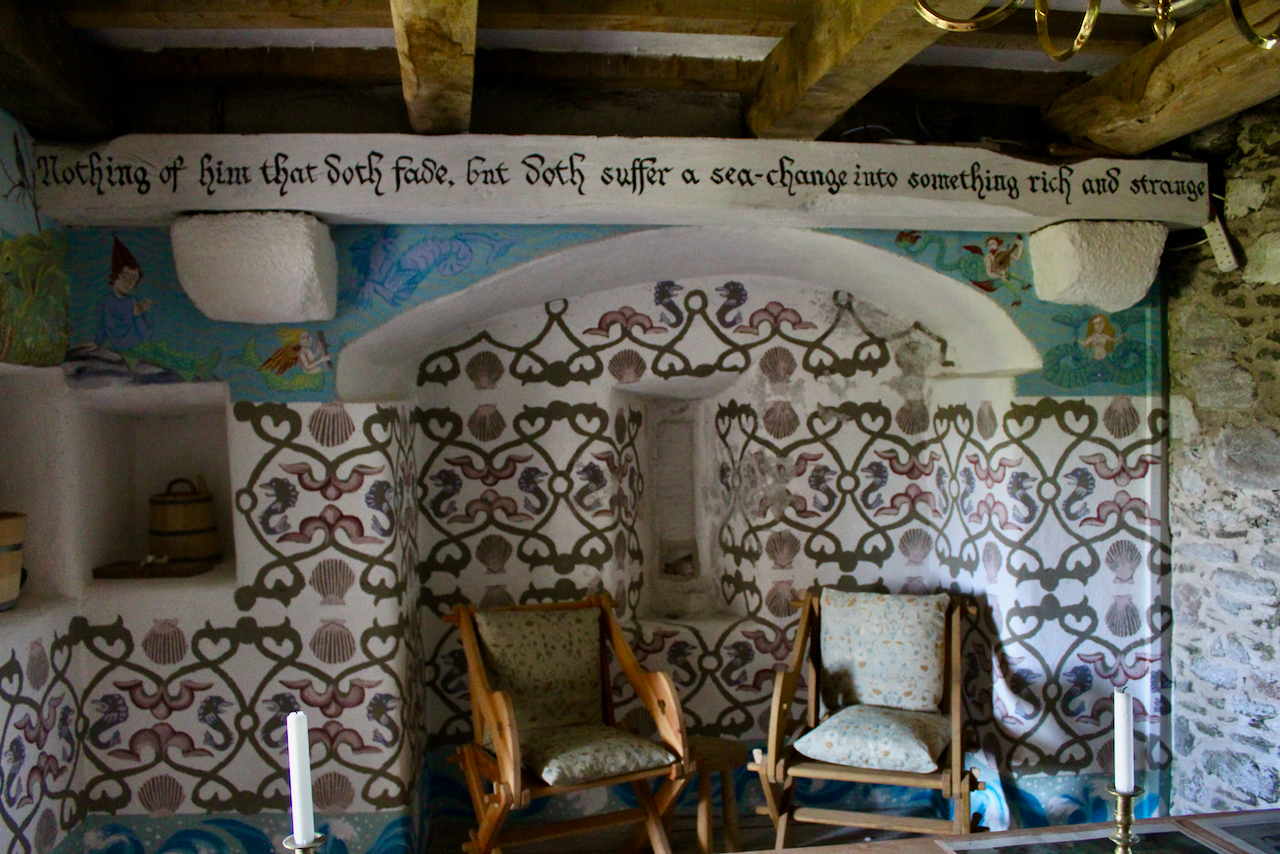
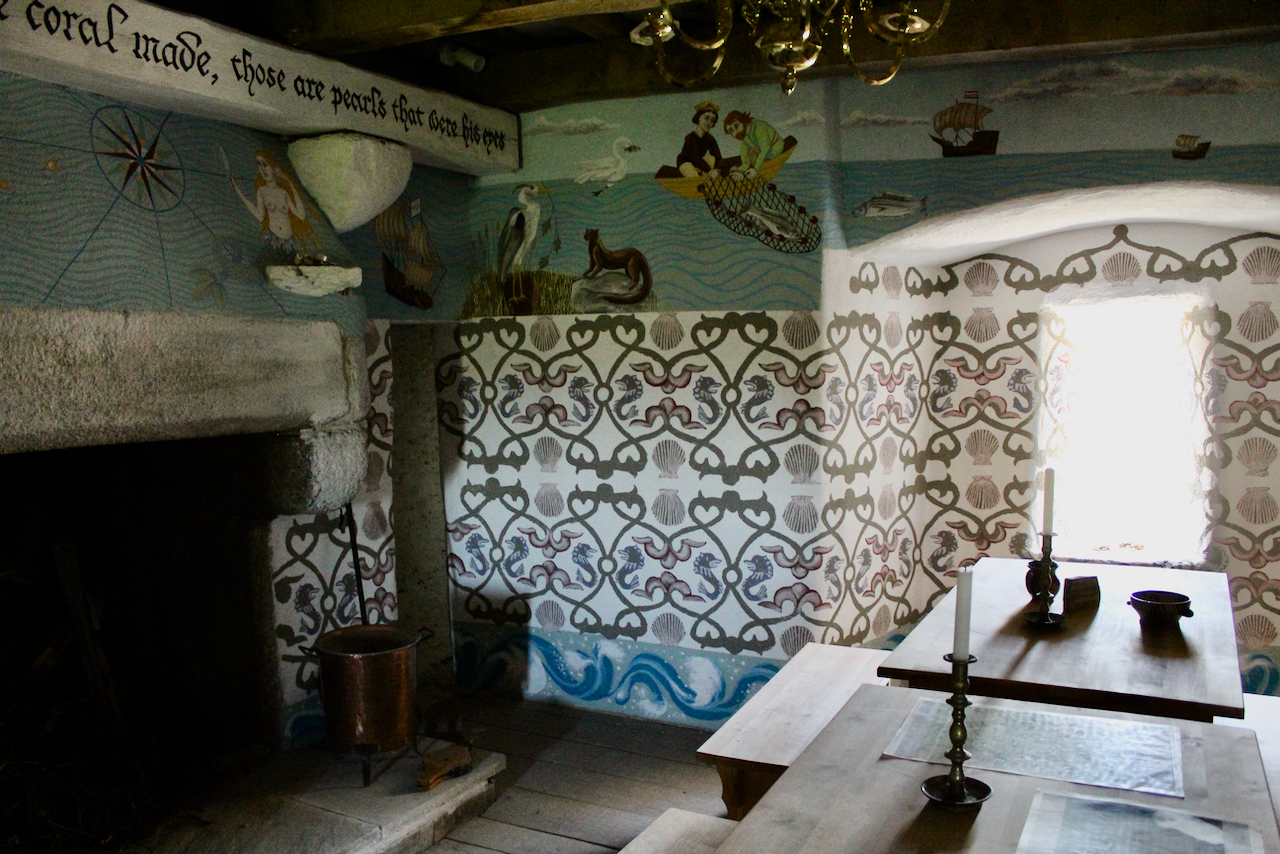
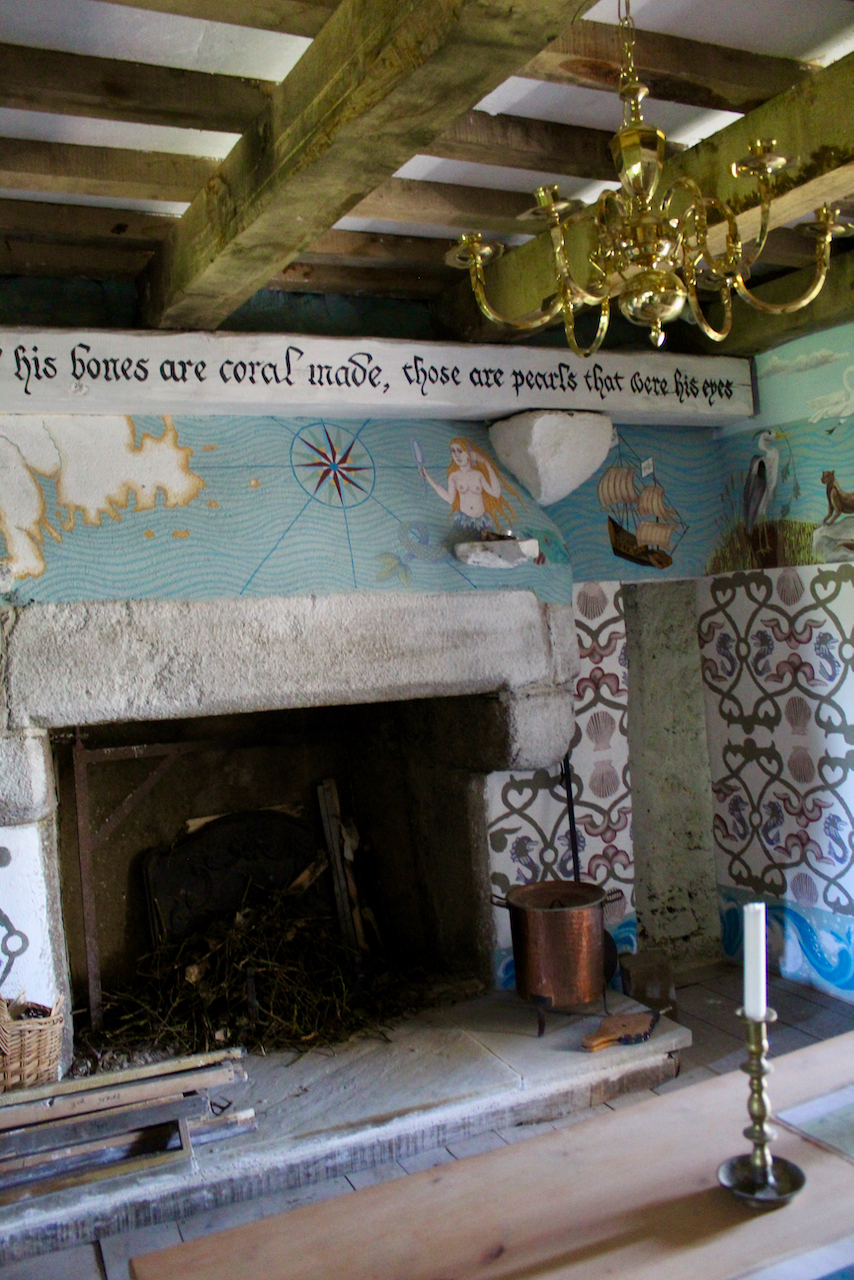
We then went up to the next floor. This has a maritime theme. A map on the wall is a 1610 map of Wexford. Ships used to come from Bristol, but the coast is treacherous.
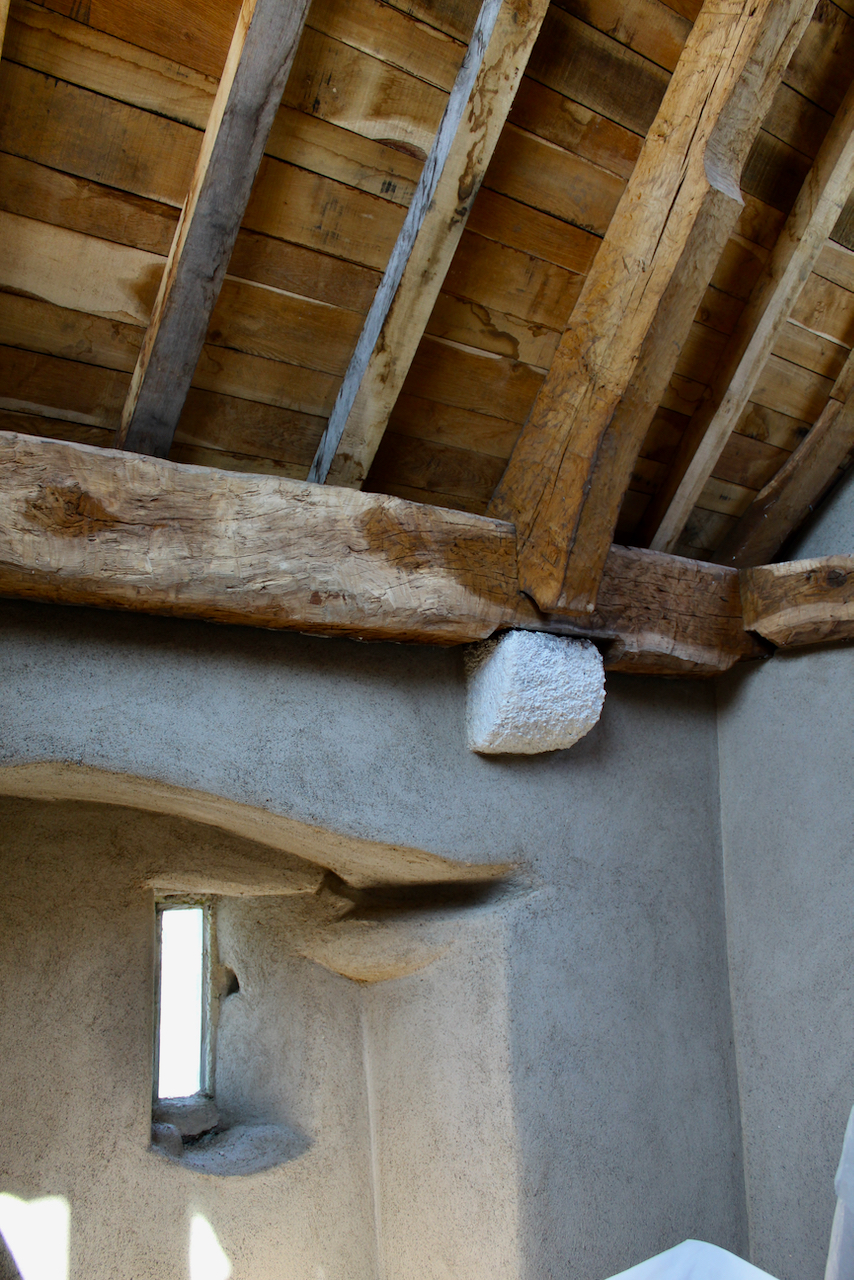
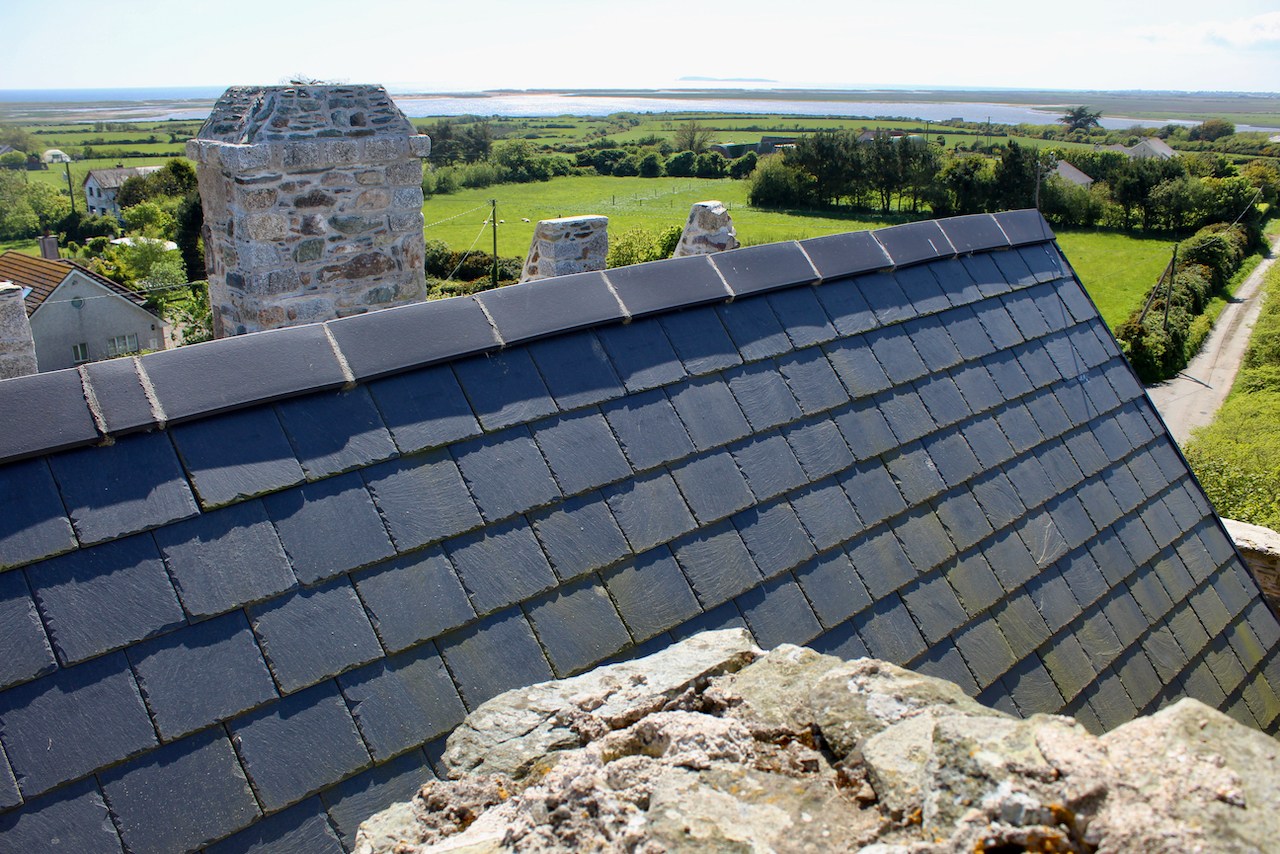
I was tremendously impressed with the new roof of the castle, all hand-hewn and lifted into place. The trees that provided the green oak timber came from County Carlow, and the carpenter/joiner was James Grace. He put his own signature on the beams, with “Grace and Plenty.”
Liz and Gordon seem to embody the values on their castle walls of grace and strength, as well as hospitality, warmth and generosity. May the castle stand another 500 years and more as a testament to their spirit!













 Irish Historic Houses