As you can see as I work my way though the contents of Mark Bence-Jones’s A Guide to Irish Country Houses [1], there are thousands of “big houses” in Ireland – though many are “houses of middle size.” It’s not clear why some houses are included in Bence-Jones’s book and others are not. If it were up to me, I’d compile a more defined list – I’d like to compile a list of houses built before 1700, for example, to have a more clear cut-off, and another list of houses built before 1800. I would also like to group houses by architect, and I will do that eventually, I hope! But Bence-Jones gives us a good idea as to what exists – albeit he includes some important houses that no longer exist.
Note that the majority of these are private houses, not open to the public. I discovered “my bible” of big houses by Mark Bence-Jones only after I began this project of visiting historic houses that have days that they are open to the public (Section 482 properties).
This is a project I have been working on for a while, collecting pictures of houses. Enjoy! Feel free to contact me to send me better photographs if you have them! I’ll be adding letters as I go…
[1] Mark Bence-Jones. A Guide to Irish Country Houses (originally published as Burke’s Guide to Country Houses volume 1 Ireland by Burke’s Peerage Ltd. 1978); Revised edition 1988 Constable and Company Ltd, London.

Donation
Help me to fund my creation and update of this website. It is created purely out of love for the subject and I receive no payment so any donation is appreciated! My website costs €300 per year on WordPress.
€15.00
Cabinteely House (formerly Clare Hill), Cabinteely, Dublin – sometimes open to public

See my entry https://irishhistorichouses.com/2020/06/06/covid-19-lockdown-20km-limits-and-places-to-visit-in-dublin/
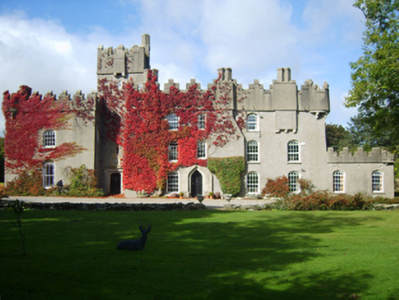
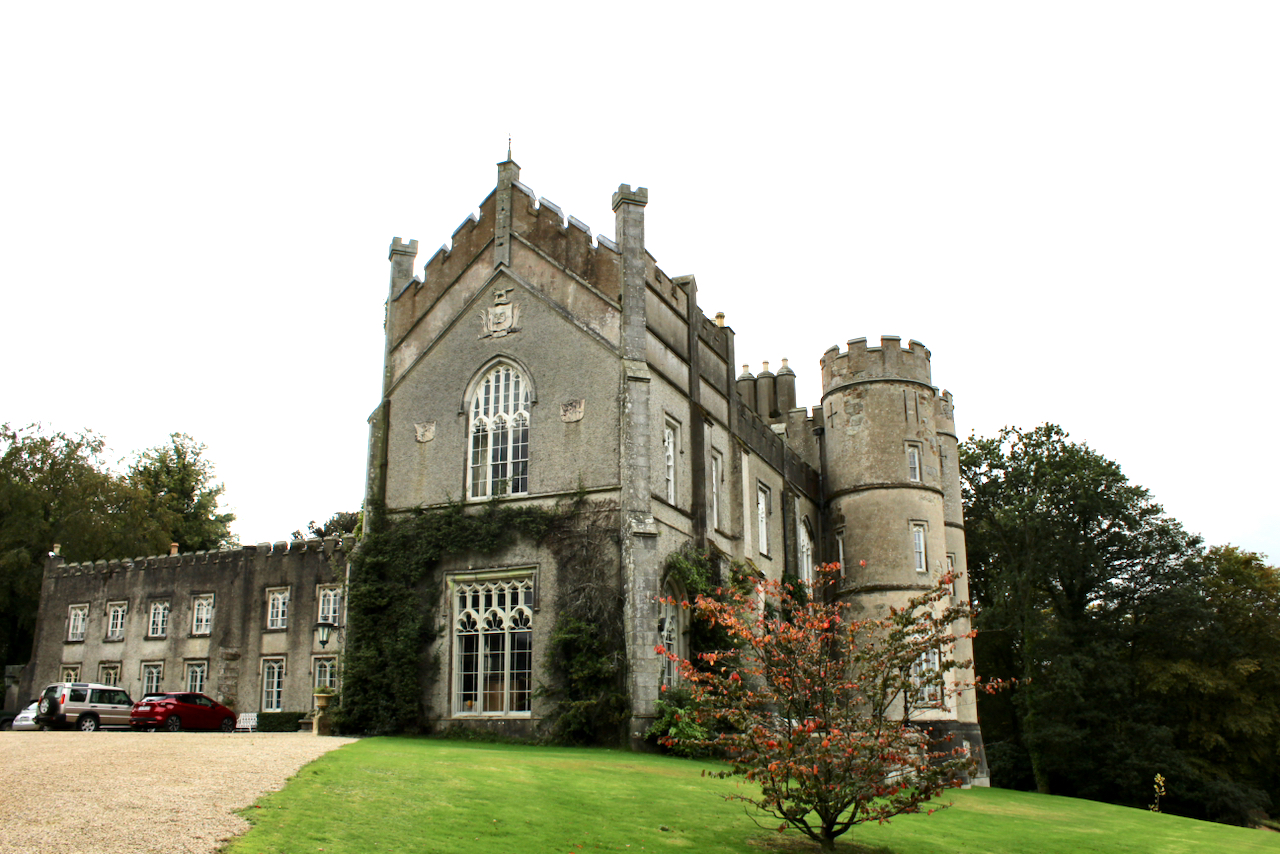
Cabra Castle, County Cavan, on section 482 in 2019-2025 – hotel

See my entry https://irishhistorichouses.com/2021/03/28/cabra-castle-kingscourt-county-cavan/
Cabra (or Cabragh) House, Co Dublin – demolished 1948
Cahercon (see Cahircon), County Limerick
Caherelly Grange, Herbertstown, Co Limerick
An old castle, not lived in since mid-C19.
Cahir Castle, Cahir, Tipperary – OPW

See my entry https://irishhistorichouses.com/2024/03/29/cahir-castle-county-tipperary-an-office-of-public-works-property/
Cahircalla, Ennis, Co Clare – nursing home
Cahircon House (or Cahercon or Cahiracon), Killadysert, Co. Clare
The National Inventory tells us that Cahercon is a “five-bay three-storey over basement late-Georgian house, built c. 1790, with limestone cut-stone projecting Ionic porch to centre. Three-bay two-storey over basement flanking wings with full-height canted bay windows, lean-to conservatory to left hand side and two-bay single-storey bay to right hand side, added 1873. Five-bay single-storey return, added c. 1990, to accommodate use as convent and school.”

Cahirduggan, Midleton, Co Cork
A two storey house of late-Georgian appearance.

Cahir-Guillamore, Kilmallock, Co Limerick

Cahirmoyle, Ardagh, Co Limerick


Cahirnane House (or Cahernane), Co Kerry – accommodation

See my entry https://irishhistorichouses.com/2022/10/19/places-to-visit-and-stay-in-county-kerry-munster/
Cahore House, Cahore, Co Wexford

Cairndhu, Larne, County Antrim
A two storey, many-gabled Victorian house, given a Chinese flavour by the design of the ornate open-work bargeboards, and of the elaborate wooden verandah and balcony running along most of the front.
Caledon, County Tyrone


Callinafercy House, Milltown, Co Kerry
A Victorian Tudor house of 1861, built for Robert Leeson, grandson of 1st Earl of Milltown.

Camass House, Bruff, Co Limerick

Camla Vale, Monaghan, Co Monaghan

Camlin Estate, Co Donegal – demolished

Camolin Park, Camolin, Co Wexford
A square block of superior quality, dating from first half of C18. Good doorcase with segmental pediment. The seat of the Annesleys, Earls of Mountnorris and Viscounts Valentia, sold by them 1858. A ruin for many years, demolished ca 1974.
Camphire, Cappoquin, Co Waterford

Cangort, Shinrone, Co Offaly

Cangort Park, Shinrone, Co. Offaly


Capard, Rosenalis, Co Laois

Cappagh House, Cappagh, Co Waterford (Old and New, section 482)

See my entry https://irishhistorichouses.com/2023/12/09/cappagh-house-old-and-new-dungarvan-co-waterford/
Cappamurra, Dundrum, Co Tipperary
A two storey house with round-headed windows in its upper storey and windows of unusual shape below.

Cappoquin House, Waterford – section 482

See my entry https://irishhistorichouses.com/2021/01/24/cappoquin-house-gardens-cappoquin-co-waterford/
Carbury Castle, Co Kildare (or Castle Carbury or Carbery) – ruin


Careysville, (Ballymacpatrick Castle), Clondulane, Fermoy, County Cork

See my entry https://irishhistorichouses.com/2022/05/17/places-to-visit-and-stay-munster-county-cork/
Cargins Park, Roscommon, Co Roscommon
A two storey three bay Victorian house with a porch.
Carker House, Doneraile, Co Cork
A two storey C18 house, 6 bay front; two bay breakfront, with small pediment-gable; tripartite round-headed doorcase.

Carnagh House, New Ross, Co Wexford
Carnalea House, County Down
Carnalway Glebe, Kilcullen, Co. Kildare
Carnelly, Ennis, Co. Clare
A 3 storey mid-C18 house of pink brick, built for George Stamer almost certainly to the design of his brother-in-law Francis Bindon.

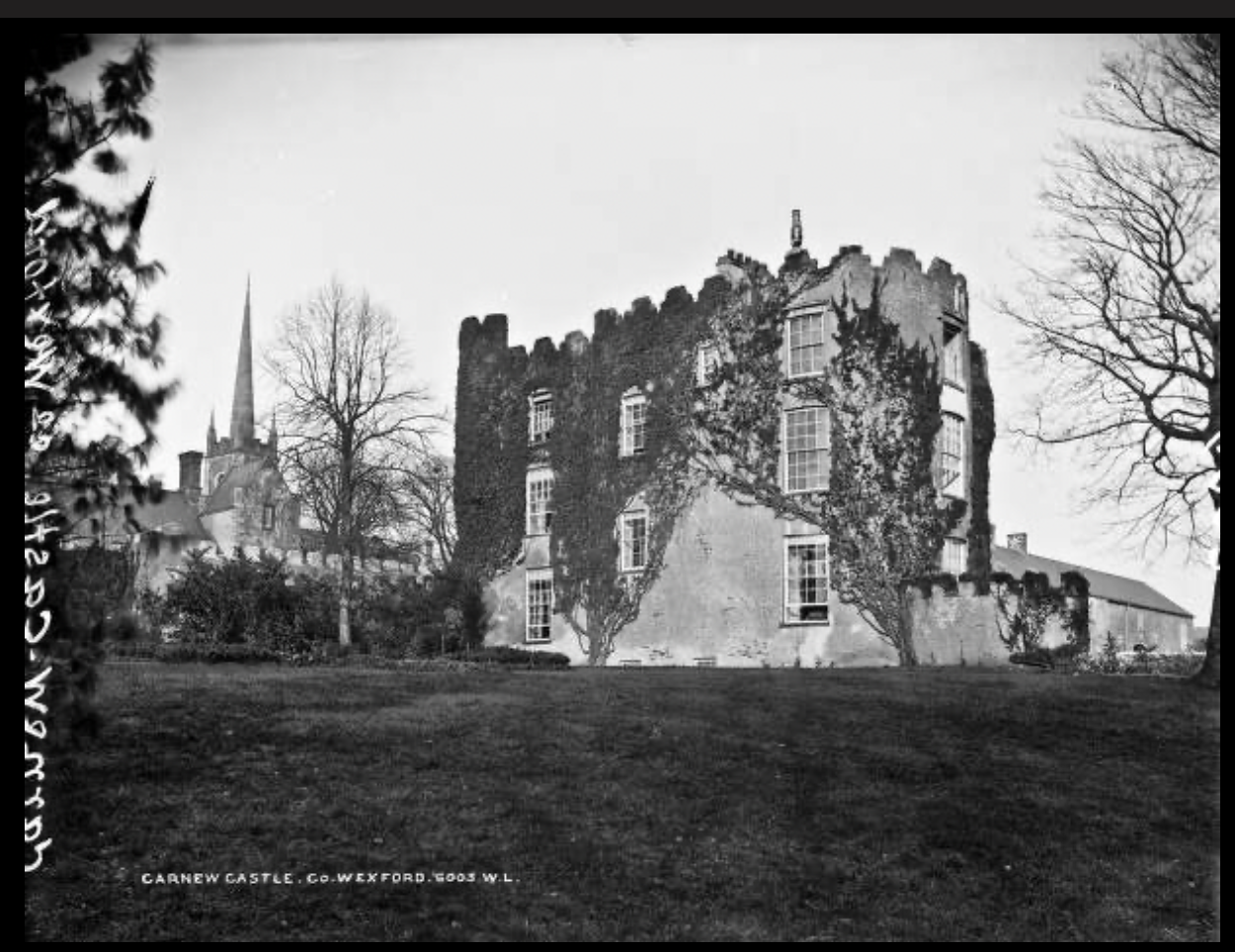
Carnew Castle, Carnew, Co Wicklow


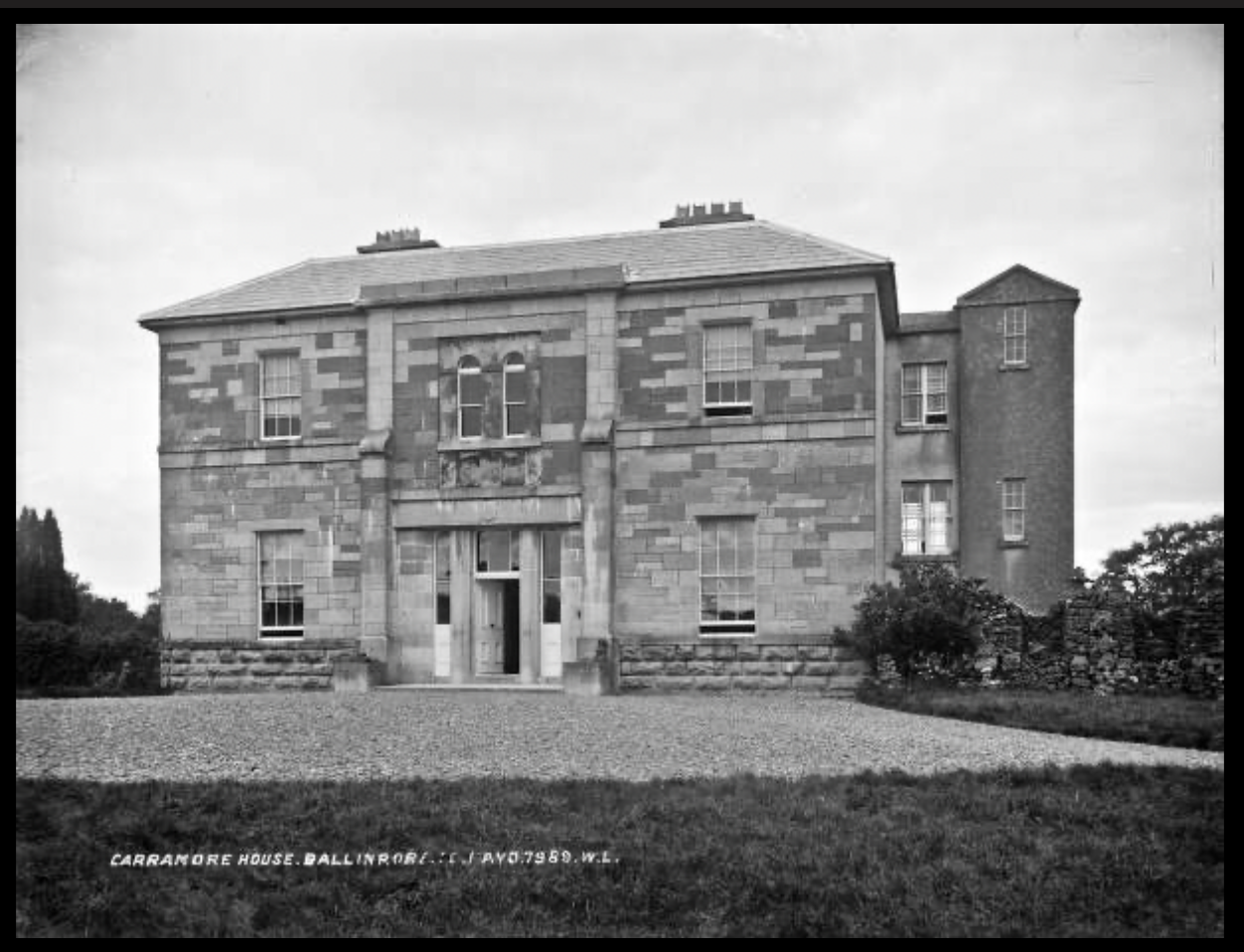
Carramore, Ballina, County Mayo

Carrick Barron, or Carrickbarrahane, Stradbally, Co. Waterford
Carrick-on-Suir, Co Tipperary, The Castle (see Ormonde Castle), Carrick Castle
Carrickblacker, Portadown, County Armagh – demolished

Carrickmore House (formerly Carrickmore Hall), County Tyrone
Carrig Park, Mallow, Co Cork
A two storey bow ended Georgian house.
Carrigacunna Castle, Killavullen, Co Cork

A two storey early nineteenth century house alongside an old tower-house above the River Blackwater.
Carrigaholt Tower and the Cottage, Shannon, County Clare

Bence-Jones writes of the cottage: “A C19 house of random ashlar consisting of a 2 storey centre with pointed windows, flanked by single-storey gabled wings; overlooking the mouth of the Shannon, close to the ruins of an old castle of the MacMahons which was captured by the O’Briens of Thomond and afterwards passed to the Burton family. Now rebuilt, but the old C18 pink brick garden walls still survive.“


Carriglas Manor, Longford


Carriglea, Dungarvan, Co Waterford
Carrigmore, Ballineen, Co Cork
A two storey house in the late Georgian manner, built 1842 by James Lysaght on the site of an earlier house, known as Connerville, which had formerly belonged to the Conner family and which he purchased from them.
Carrigmore, Montenotte, Cork, Co Cork
A very handsome C19 Classical house…Now ruinous.
Carrignavar, Co Cork
A late C19 castellated house incorporating some fragments of an old castle.

Carrigoran, Newmarket-on-Fergus, Co Clare – demolished in the 1980s
Carrigrenane, Little Island, Co Cork
A pleasant square late-Georgian house of two storeys over a basement on a promontory jutting out into Lough Mahon.
Carrigrohane Castle, Carrigrohane, County Cork
Detached four-bay three-storey over basement and with dormer attic house, built c.1850, incorporating fabric of an earlier building.

Carrowdore Castle, Donaghadee, County Down
A Georgian Gothic castle built 1818 by Nicholas de la Cherois-Crommelin.
Carrowgar (see Moy House)
Carrowgarry, Beltra, Co Sligo – coffee roasters
A Victorian house built ca 1880 by A.J. Crichton.
Carrowmore (also known as Fairfield House), Aughrim, Co Galway
A plain three storey 5 bay Georgian house.
Carrowmore House, Carrowmorelacken, Co Mayo

Carrowroe Park, Roscommon, Co Roscommon
An early C19 Classical house of two storeys and three bays, pedimented breakfront with Wyatt window over Doric portico. The front prolonged by single-storey wings with pairs of pedimented pavilions, those on one side being wider apart; blind wall with pilasters on one side, windows on the other. Garden front with two arched loggias joined by colonnade.
Carstown, Drogheda, Co Louth

Carton House, Kildare – hotel

See my entry https://irishhistorichouses.com/2024/06/04/carton-house-county-kildare-a-hotel/
Cashel Palace, Cashel, Co Tipperary – hotel

See my entry https://irishhistorichouses.com/2022/10/19/places-to-visit-and-stay-in-county-tipperary-munster/
Cashel House, Cashel, Connemara, County Galway
Casino at Marino, County Dublin – Office of Public Works

See my entry https://irishhistorichouses.com/2023/11/09/office-of-public-works-dublin-the-casino-at-marino/
Castle Archdale, Irvinestown, County Fermanagh – house a ruin but War museum in stables

See my entry https://irishhistorichouses.com/2022/04/03/places-to-visit-and-stay-in-ulster-counties-fermanagh-monaghan-and-tyrone/

Castle Bellingham, County Louth – hotel

See my entry https://irishhistorichouses.com/2022/10/28/places-to-visit-and-stay-in-county-louth-leinster/
Castle Bernard (formerly Castle Mahon), Bandon, Co Cork – ruin

Castle Bernard (see Kinnity Castle), Kinnity, Co Offaly – hotel
Castle Blunden, County Kilkenny – whole house rental

See my entry https://irishhistorichouses.com/2022/10/28/places-to-visit-and-stay-in-county-kilkenny-leinster/
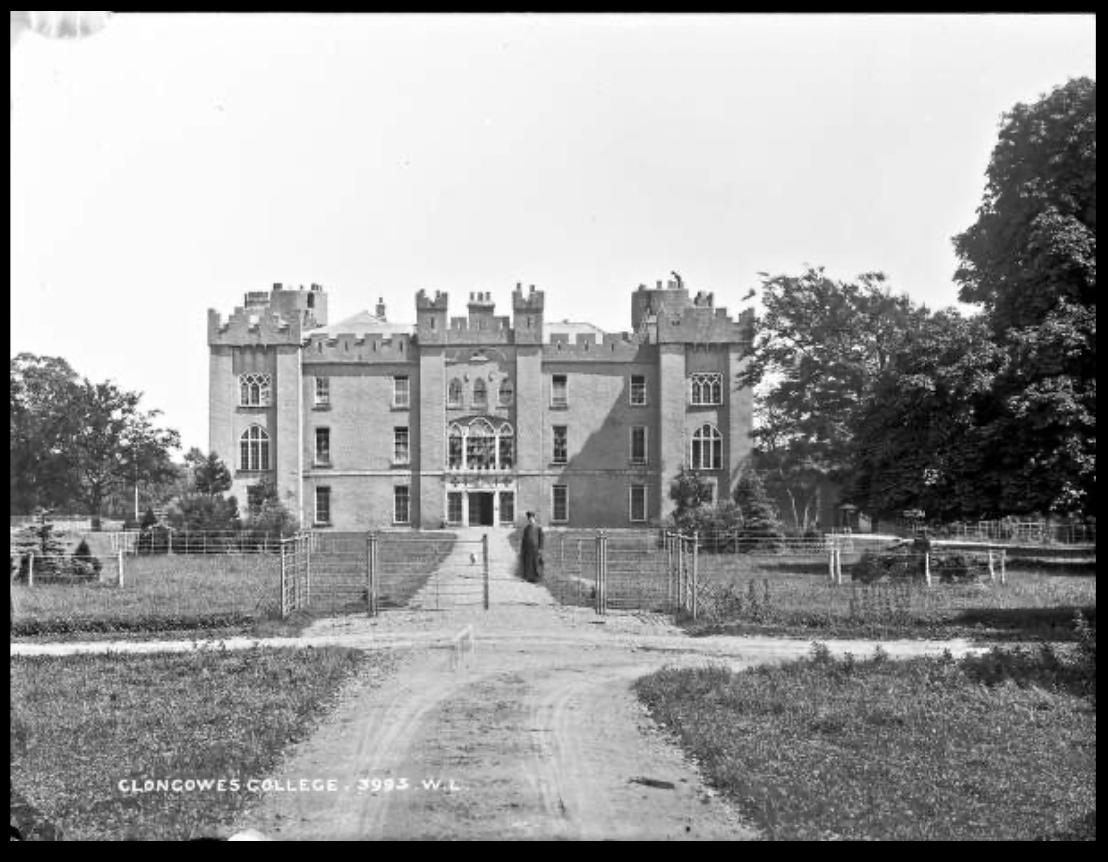
Castle Browne (Clongowes Wood College), Clane, Co Kildare

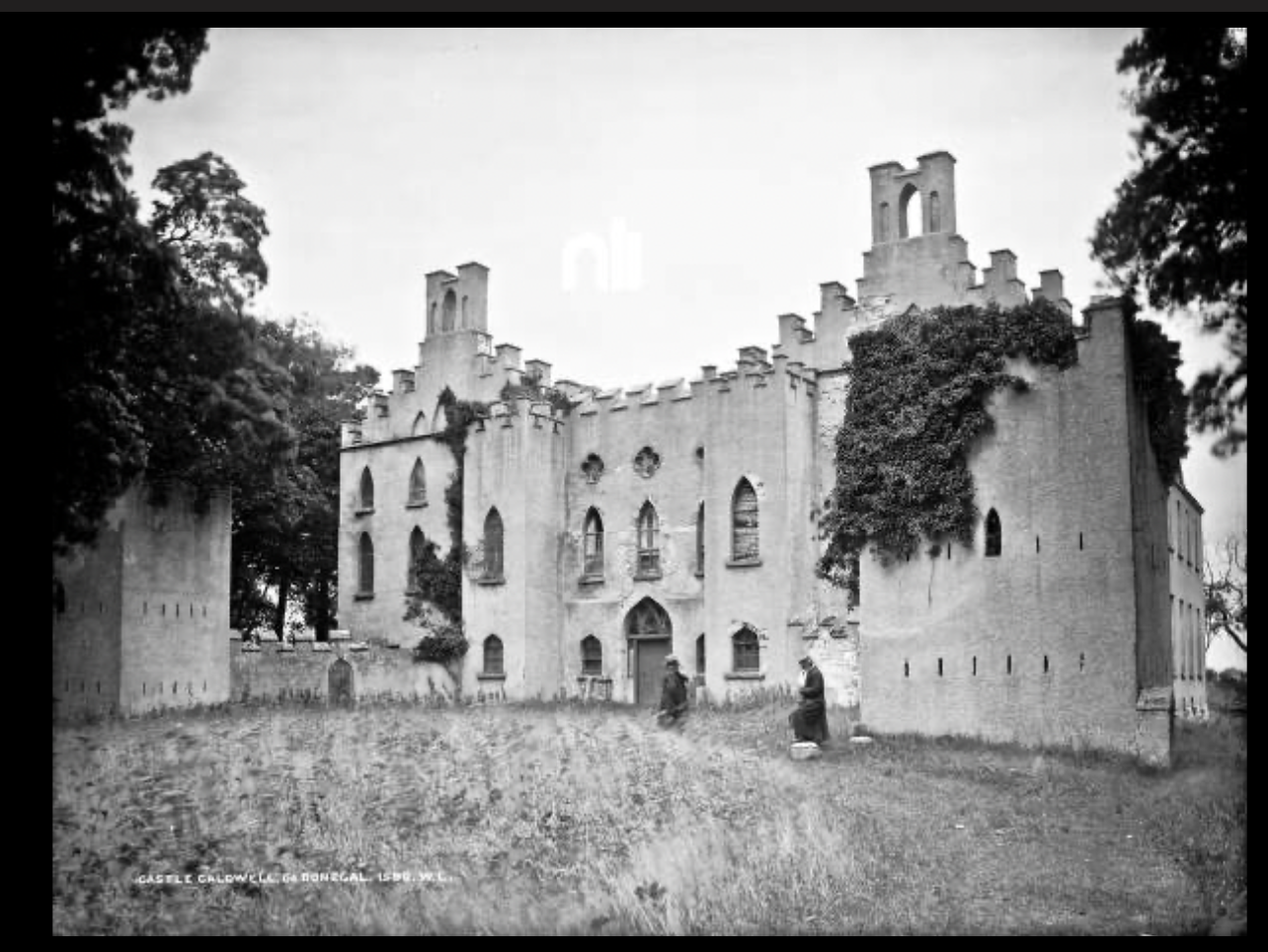
Castle Caldwell, Belleek, County Fermanagh
“A C18 house of two storeys over a basement, on the shores of Lough Erne, with a delightful Georgian “pasteboard Gothic” façade… The house was ruinous by the end of C19.”
Castle Carbery (see Carbury Castle), Carbury, County Kildare
Castle Cooke, Kilworth, Co Cork – ‘lost’
The old castle of Dungallane was acquired by Thomas Cooke, a Cork Quaker merchant, in second half of C17, and subsequently named Castle Cooke.
Castle Coole (see Castlecoole), County Fermanagh
Castle Cor, Kanturk, Co Cork – ‘lost’

Castle Crine, near Sixmilebridge, Co Clare –
A castellated late-Georgian house, demolished in 1955.
Castle Daly, Loughrea, Co Galway – ‘lost’

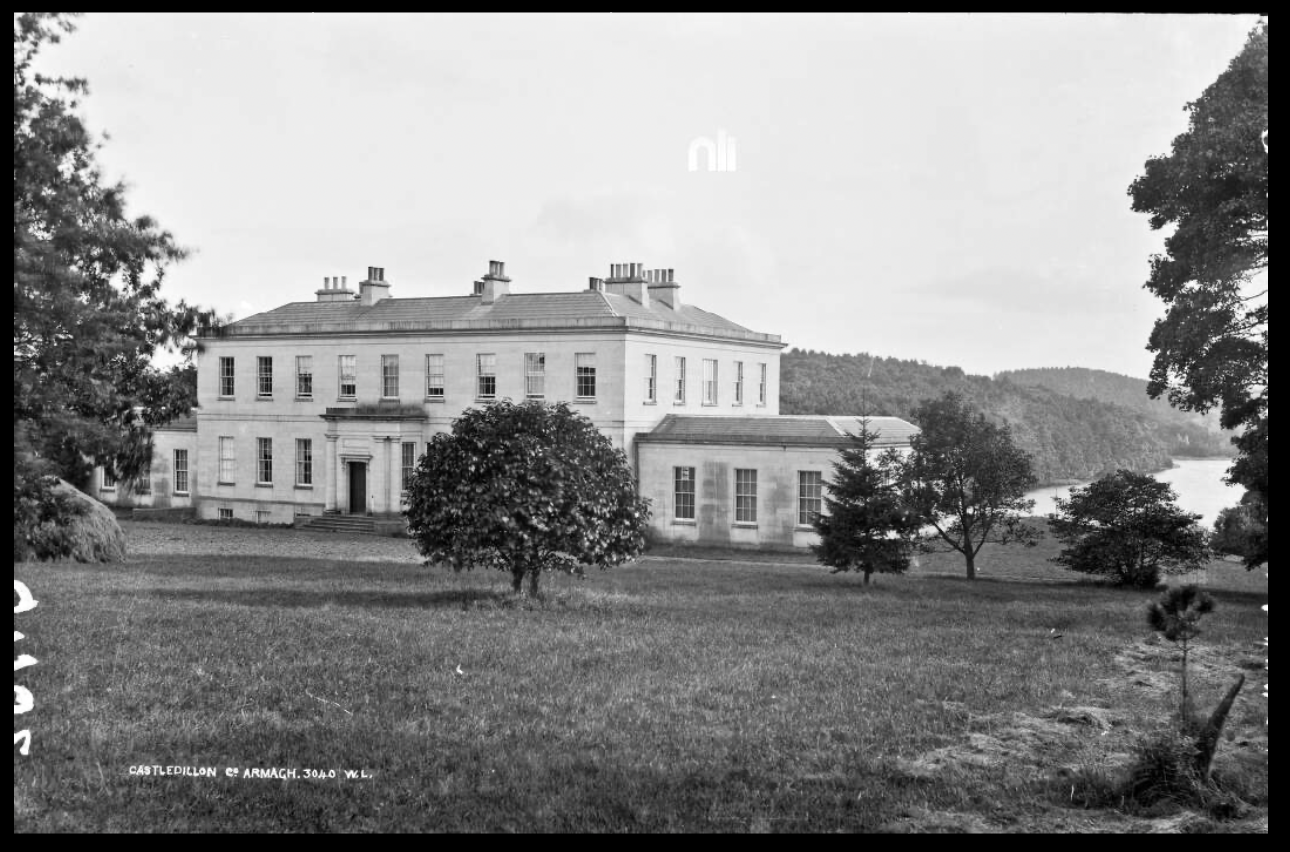
Castle Dillon, Armagh, County Armagh
A large and austere mansion of 1845 by William Murray; built for Sir George Molyneux, 6th Bt, to replace a rather low and plain mid-C18 winged house, which had itself replaced the second of two earlier houses again.
Castle Dobbs, Carrickfergus, County Antrim
An early C18 house in the manner of Sir Edward Lovett Pearce, built 1730 by Arthur Dobbs, Surveyor-General of Ireland, Governor of North Carolina, agriculturalist and organizer of expeditions to discover the NW passage from Hudson’s Bay to the Pacific.

Castle Dodard, Lismore, County Waterford

Castle Durrow, Co Laois – a hotel, gardens open to public

See my entry https://irishhistorichouses.com/2022/10/27/places-to-visit-and-stay-in-county-laois-leinster/
Castle Ellen, Athenry, County Galway – on 482 in 2019-2025

See my entry https://irishhistorichouses.com/2023/05/31/places-to-visit-and-stay-in-county-galway/
Castle Ffogarty, Thurles, Co Tipperary
A rather insubstantial C19 castle; burnt 1922 and now a ruin except for one tower which has been rebuilt.
Castle Ffrench, Ahascragh, Co Galway
An elegant ashlar-faced house of three storeys over a basement, built in 1779 for Sir Charles ffrench, Mayor of Galway; replacing a late C17 house on a different site which itself replaced a castle built by the ffrench family soon after they bought the estate in late C16.

Castle Forbes, County Longford


Castle Forward, Newtowncunningham, Co Donegal – ruin
Castle Freke, Rosscarbery, Co Cork


Castle Gore (or Old Castle, Deel Castle), Ballina, Co Mayo

Castle Grace, Clogheen, Co Tipperary

Castle Grove, County Donegal – accommodation

See my entry https://irishhistorichouses.com/2022/10/27/places-to-visit-and-stay-in-county-donegal-ulster/
Castle Hacket (or Castlehacket), Belclare, Co Galway

See my entry https://irishhistorichouses.com/2023/05/31/places-to-visit-and-stay-in-county-galway/
Castle Harrison, Charleville, Co Cork – ‘lost’
C18 house…sold 1956 and subsequently demolished
Castle Hewson, Askeaton, Co Limerick

Castle Howard, Avoca, Co Wicklow – section 482

See my entry https://irishhistorichouses.com/2020/11/13/castle-howard-avoca-county-wicklow/
Castle Hume (see Ely Lodge), County Fermanagh
Castle Hyde, Fermoy, County Cork


Castle Ievers, Croom, Co Limerick

Castle Irvine (or Necarne Castle), Irvinestown, County Fermanagh

See my entry https://irishhistorichouses.com/2022/04/03/places-to-visit-and-stay-in-ulster-counties-fermanagh-monaghan-and-tyrone/
Castle Kelly, see Aughrane Castle, County Galway
Castle Kevin, Mallow, Co Cork

Castle Kevin, Annamoe, County Wicklow

Castle Lackin, near Ballycastle, Co Mayo
A plain two storey late Georgian house, with a wide curved bow at one end of its garden front; simple entablatures over ground floor windows. A vast complex of outbuildings at rear of the house, partly surrounded by a high battlemented wall with castellated gate piers. “Eyecatcher” folly on hill opposite. Now the house and outbuildings are in ruins and some of the wall has collapsed.
Castle Leslie, County Monaghan – section 482 in 2019, hotel

See my entry https://irishhistorichouses.com/2020/08/07/castle-leslie-glaslough-county-monaghan/
Castle Lough, Co Tipperary
A two storey five bay Georgian house with a high roof.
Castle Lyons, Fermoy, Co Cork – ‘lost’
A C16 fortified mansion, built on the foundations of the castle of the O’Lenans, from whom the place too its name; principal seat of the Earls of Barrymore. …The house was burnt 1771, through the carelessness of a workman, and never rebuilt.
Castle MacGarrett, Claremorris, County Mayo


Castle Mahon (see Castle Bernard) – ruin
Castle Martin, Co Kildare


Castle Martyr (or Castlemartyr), Co Cork – hotel

See my entry https://irishhistorichouses.com/2022/05/17/places-to-visit-and-stay-munster-county-cork/
Castle Mary, Cloyne, Co Cork – ‘lost’

Castle Matrix, Rathkeale, Co. Limerick (also called Castle Mattress)

Castle Morres, Kilmaganny, Co Kilkenny

Castle Neynoe (Ballysumaghan House), Balintogher, Co Sligo
“A small symmetrical Gothic-Revival castle with a central bow carried upwards as a three storey tower. Seat of the Neynoes. Now a ruin.”
Castle Oliver (also known as Clonodfoy), Kilfinane, Co Limerick


Castle Otway, Templederry, Co Tipperary


Castle Park, Limerick, Co Limerick

Castle Pollard (formerly Kinturk), Co Westmeath
Castle Ring, Dundalk, Co Louth
A two storey five bay gable-ended C18 house with simple round-headed doorway.
Castle Saffron (see Creagh Castle), Co Cork
Castle Saunderson, Co. Cavan – a ruin, can visit

See my entry https://irishhistorichouses.com/2020/07/03/county-cavan-historic-houses-to-see-and-stay/
Castle Shane, Co Monaghan

Castle Sheppard, Borrisokane, County Tipperary – ruinous
Castle Strange, Athleague, Co Roscommon- ruin
Castle Talbot, Blackwater, County Wexford

Castle Taylor, Ardrahan, Co Galway – ruin
Castle Townshend, Co Cork – accommodation, hotel

See my entry https://irishhistorichouses.com/2025/04/25/the-castle-castletownshend-co-cork-accommodation/
Castle Upton, Templepatrick, County Antrim

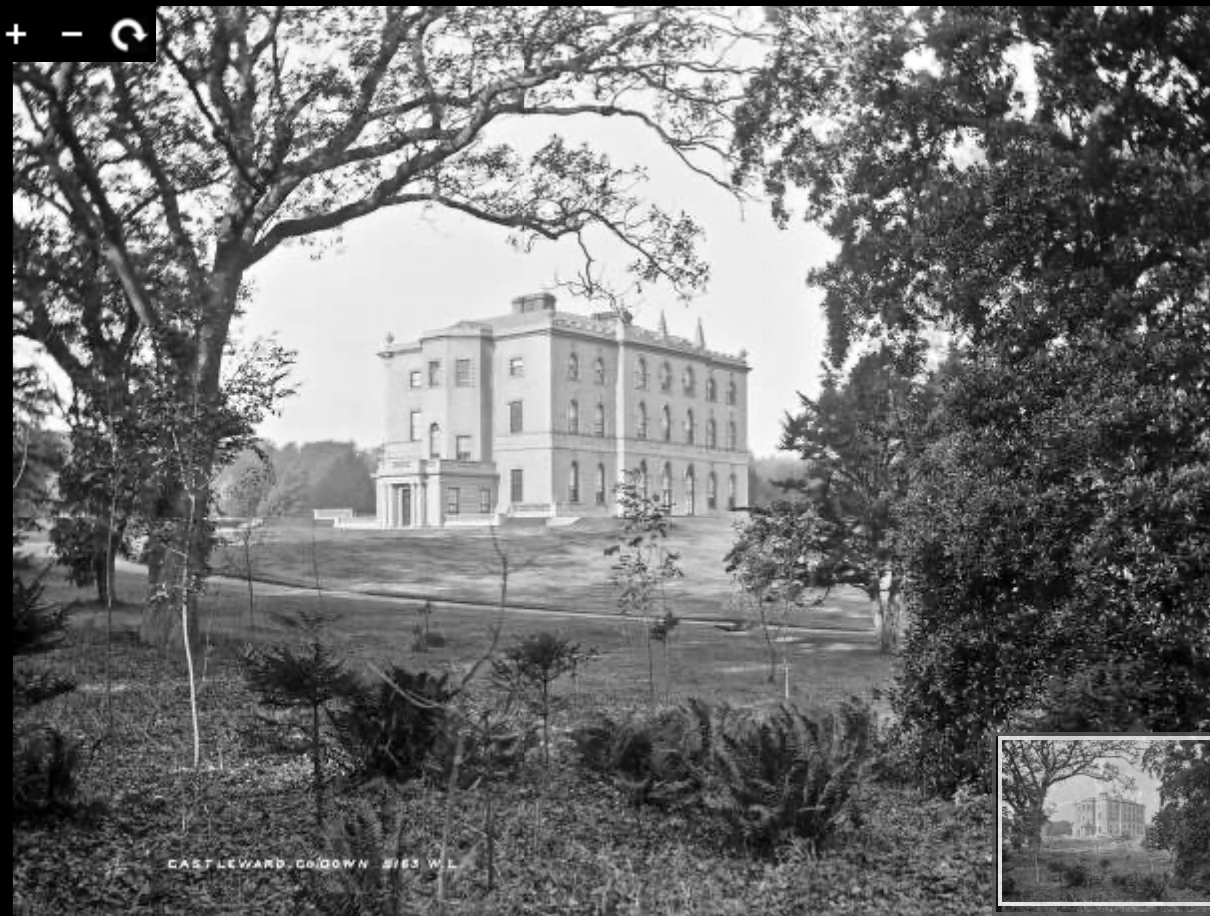
Castle Ward, Strangford, County Down
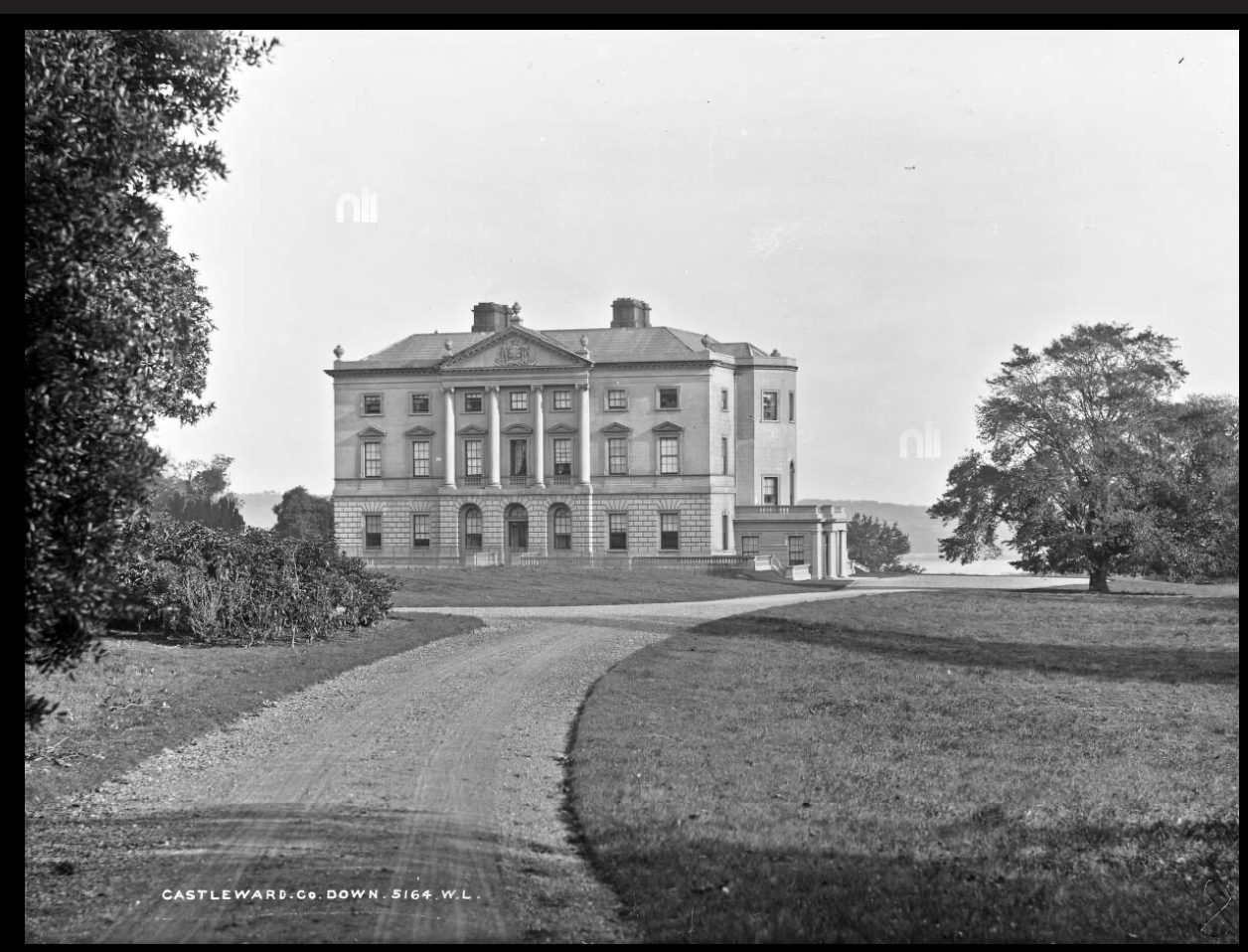
See my entry https://irishhistorichouses.com/2023/10/06/places-to-visit-and-stay-in-county-down-northern-ireland/

Castle Widenham (or Blackwater Castle), Castletownroche, Co Cork


Castle Wilder (also known as Cloughdoo), Abbeyshrule, County Longford

Castle Willington, Nenagh, Co Tipperary


Castle Wray, Letterkenny, Co Donegal – ruins
Castlebar House, Castlebar, Co Mayo – burned
Castleblayney (see Blayney Castle), County Monaghan
Castleboro House, County Wexford – ruin


Castlecaulfeild, County Tyrone – ruin
Castlecomer House, Co Kilkenny

Castlecoole, Enniskillen, County Fermanagh – open to the public

See my entry https://irishhistorichouses.com/2024/03/21/castle-coole-county-fermanagh-a-national-trust-property/
Castlecor, Ballymahon, County Longford

See my entry https://irishhistorichouses.com/2024/03/16/places-to-visit-and-stay-in-county-longford-leinster/
Castlefield, Co Kilkenny
A three storey bow-fronted Georgian house, the bow having a trefoil window and battlements. Pillared porch.
Castlegar, Ahascragh, Co Galway
The grandest of Sir Richard Morrison’s villas, built from 1803 onwards for Ross Mahon, afterwards 1st Bt; replacing an earlier house.

Castlegarde, Cappamore, Limerick

Castlegrove, Tuam, County Galway

Castlehacket (see Castle Hacket), Belclare, Co Galway
Castlehaven House, Castletownsend, Co Cork


Castlemaine Lodge, Hare Island, Athlone, Co Westmeath (or Hare Island)

Castlemore, Tullow, Co. Carlow – ruins

Castlerea, Killala, Co Mayo – demolished 1937
Castlerea House, Co Roscommon – demolished
Castlerichard, (see Glencairn Abbey) Co Waterford
Castlesize, Sallins, Co Kildare
A two storey late C18 house of seven bays, the two outer bays on either side projecting slightly.
Castletown Castle, Dundalk, Co Louth

Castletown Castle/ House, Co Carlow

Castletown House, County Kildare – open to public

Castletown Castle, Dundalk, County Louth

Castletown Conyers, Ballyagran, Co Limerick

Castletown ‘Cox’ Kilkenny

Castletown Manor, Enniskillen, County Fermanagh – demolished
Castletown Manor, Pallaskenry, Co Limerick – demolished
Castleview, Conna, Co Cork (see Glynnatore)
Castlewellan, County Down

Cavangarden, Ballyshannon, Co Donegal – B&B
See my entry https://irishhistorichouses.com/2022/10/27/places-to-visit-and-stay-in-county-donegal-ulster/
Cecil Manor, Augher, County Tyrone
Celbridge Abbey, Celbridge, Co Kildare

Celbridge Lodge, Co Kildare

Chaffpool, Ballymote, Co Sligo – derelict
Chanter Hill, Enniskillen, County Fermanagh
A two storey house built 1780 as a Glebe for Rev Thomas Smyth DD. Front of one bay between two three sided bows.
Charlemont Fort, County Armagh (see Roxborough Castle, County Tyrone)
Charlesfort, Kells, Co Meath
A two storey house of ca 1800, with a lower wing.
Charlesfort, Co Wexford

Charlestown House, Clara, Offaly


Charlestown, Clogher, Co Roscommon
The house is no longer extant but extensive estate architecture survives.
Charleville, Co Cork – gone
A fine house built 1661 to his own design by the 1st Earl of Orrery, who at the same time developed the nearby town which is named Charleville after Charles II. The house stood on one side of a fortified enclosure, it had extensive gardens and a park. It was burnt 1690 during the Williamite war by the troops of Berwick and not rebuilt
Charleville, Castlebar, Co Mayo
A square C18 house, now in ruins.
Charleville, Enniskerry, Co Wicklow – section 482

See my entry https://irishhistorichouses.com/2020/09/18/charleville-county-wicklow/
Charleville Forest Castle, Tullamore, County Offaly

Charleville Park (also known as Sanders Park), Charleville, Co Cork –
A three storey six bay late C18 house, built by Christopher Sanders, now divided into flats.
Chief Secretary’s Lodge, Dublin (see United States Ambassador’s Residence)
Church Hill, Maghera, County Down
An early to mid-C18 two storey gable-ended house of five bays; extended towards the end of C18 to form a new drawing room, the addition begin of the same height as the original front; and also gable-ended; but single-storey, with a three sided bow in its front and end walls.
Churchill House, Chapeltown, County Kerry

Churchtown House, Churchtown, County Kerry – whole house accommodation

See my entry https://irishhistorichouses.com/2022/10/19/places-to-visit-and-stay-in-county-kerry-munster/
Cill-Alaithe, Killala, Co Mayo

Clandeboye, County Down


Clanwilliam House, County Antrim (see Danesfort)
Clara House, Clara, County Offaly
Three-bay two-storey over basement house, built c.1800, with attic, conservatory to rear and projecting entrance porch added to front.
Clare Hill (see Cabinteely House), Co Dublin
Clare Park, Ballycastle, County Antrim
Claremont, Claremorris, Co Mayo

Clarisford, Killaloe (Bishops’ Palace), Co Clare
The Palace of the (C of I) Bishops of Killaloe, a late C18 block of three storeys over a basement in a demesne by the River Shannon outside the town.
Clashenure House, Ovens, Co Cork

Classiebawn Castle, County Sligo

Cleggan Lodge, Ballymena, County Antrim
Originally a hunting lodge, owned at various times by the O’Neills and the O’Haras.
Cleariestown Hall, Cleariestown, County Wexford

Clearmont, Claremorris, County Mayo
Clermont, Co Wicklow– school then sold 2005


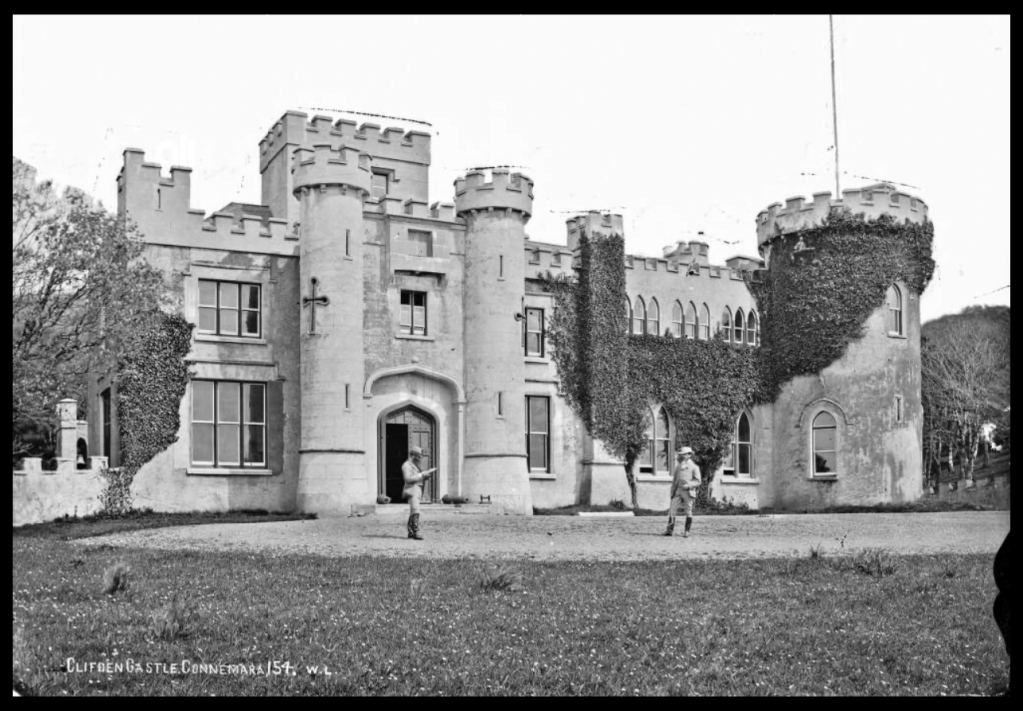
Clifden Castle, Clifden, Co Galway – ‘lost’
Clifden House, Corofin, Co Clare
A two storey seven bay early C18 house. Central niche over Doric doorcase of stone. Seat of the Burton family, which produced the C19 portrait painter and miniaturist Sir Frederick Burton.
Cliff, Ballyshannon, Co Donegal – demolished in late 1940s

The Cliffs, Baily, Co Dublin
A C19 house added to at various times in the present centry, and full of Edwardian charm.
Clifton, Montenotte, Cork, Co Cork – convalescent home
Two storey five bay early C19 house, with a single storey two bay wing balanced by conservatory, behind which is a chapel, with a lantern.
Clinshogh, Co Dublin (see Woodlands)
Clobemon Hall, Ferns, County Wexford
Cloghans, Co Mayo

Clogher House, Ballyglass, Co Mayo

Clogher Palace (subsequenty Clogher Park), Clogher, County Tyrone
Cloghroe House, Blarney, Co Cork
A Georgian house built on the site of an old castle.
Clogrenane (or Clogrennan), Carlow, Co Carlow – a ruin

Clohamon House, near Ferns, Co Wexford

Clonacody, Fethard, County Tipperary – accommodation

See my entry https://irishhistorichouses.com/2022/10/19/places-to-visit-and-stay-in-county-tipperary-munster/
Clonageera House, Durrow, Co Laois

Clonalis House, Castlerea, Co Roscommon – accommodation and section 482

See my entry https://irishhistorichouses.com/2020/10/16/clonalis-castlerea-county-roscommon/
Clonard, near Wexford, Co Wexford

Clonattin House, Gorey, Co Wexford
Clonboy, O’Brien’s Bridge, County Clare – demolished
Clonbrock, Ahascragh, Co Galway – ‘lost’


Cloncarneel (see Clown), Co Meath
Cloncorick Castle, Carrigallen, Co Leitrim
A two storey early to mid C-19 Tudor-Gothic house with buttresses and stepped gables.
Cloncoskraine, Dungarvan, Co Waterford
Clonearl, Daingean (formerly Philipstown), Offaly
Clonebraney, Crossakeel, Co Meath – only a ruinous wing remains.
Clonfert Palace, Eyrecourt, Co Galway – ‘lost’

Clonganny House, Wexford – accommodation

See my entry https://irishhistorichouses.com/2023/11/15/places-to-visit-and-stay-in-county-wexford/
Clongill Castle, Co Meath – ruin
Clongowes Wood, Co Kildare (see Castle Browne)
Clonhugh, Multyfarnham, County Westmeath

Clonleigh, Ballindrait, Co Donegal – demolished
Clonlost House, Killucan, Co Westmeath
A tall Georgian block with a central pedimented attic. Now a ruin.
Clonmannon, Rathnew, Co. Wicklow – plans for retirement home

Clonmeen, Banteer, Co Cork – whole house airbnb

See my entry https://irishhistorichouses.com/2022/05/17/places-to-visit-and-stay-munster-county-cork/
Clonmore House, Piltown, Co Kilkenny

Clonodfoy, Co Limerick (see Castle Oliver)
Clonshavoy, Co Limerick

The Irish Tourist Association surveyor writes in 1944 that the house was interesting as it was the remains of a very old Elizabethan house. He says that more than half the house was pulled down as it was unsafe “and the present eastern wing is a reconstruction”. Photograph from the Irish Tourist Association Survey 1943-44.
Clonshire House, Adare, Co Limerick

Clonskeagh Castle, Co Dublin

See my entry https://irishhistorichouses.com/2024/04/25/clonskeagh-castle-dublin/
Clontarf Castle, Clontarf, Co Dublin – hotel

See my entry https://irishhistorichouses.com/2023/05/26/places-to-visit-and-stay-in-dublin-city-and-county/
Clontead More, Coachford, Co Cork

Clontra, Shankill, Co Dublin
A delightful Ruskinian Gothic villa, almost certainly by Sir Thomas Newenham Deane, and possibly designed by his brilliant younger partner, Benjamin Woodward.
Clonyn Castle, County Westmeath

Clonyquin (or Clooneyquin or Cloonyquin), Elphin, Co Roscommon – demolished
Cloonacauneen Castle, Co Galway
An old tower-house with a two storey three bay castellated wing attached
Cloonamahon, Collooney, County Sligo
Clooncahir, Mohill, Co Leitrim
A plain two storey four bay house of ca 1820.
Clooney House, Clooney, Co Clare – ruin
Originally a two storey five bay C17 house of the Bindon family, which produced the C18 amateur architect and portrait painter Francis Bindon. The house burnt C19 and the property was sold by the impecunious Burton Bindon, who emigrated to Australia; his daughter and her husband Joseph Hall subsequently returned to Ireland and bought back Clooney. They rebuilt the burnt-out shell of the house in a rich Victorian Italianate style, … Unfortunately the Hall’s finances did not last out; he is said to have gambled and she was extravagant; so that by early C20 the house was once again ruinous.
Cloughdoo (see Castle Wilder), County Longford
Cloverhill, Belturbet, Co Cavan

Clown (now known as Cloncarneel), Trim, Co Meath

Colebrook Park, County Fermanagh
An austere Classical house of 1825 by William Farrell; built for Sir Henry Brooke, 1st Bt of 2nd creation.

See my entry https://irishhistorichouses.com/2022/04/03/places-to-visit-and-stay-in-ulster-counties-fermanagh-monaghan-and-tyrone/
Coleraine Manor House (formerly Jackson Hall), Coleraine, County Derry
Colganstown, Newcastle, Co Dublin – 482

See my entry https://irishhistorichouses.com/2020/05/21/colganstown-house-hazelhatch-road-newcastle-county-dublin/
Collierstown House, Collierstown, Co Meath
A late C18 house, built ca 1775.
Collis Sandes House (see Oak Park)
Collon House, Ardee Street, Collon, Louth (also Oriel Temple) – accommodation and tours

See my entry https://irishhistorichouses.com/2022/10/28/places-to-visit-and-stay-in-county-louth-leinster/
Combermere, Glounthaune, Co Cork – Danish consulate
An early c19 “gentleman’s cottage” mostly of one storey, with a small castellated wing.
Conlig (or Little Clandeboye) House, County Down
Convamore, Ballyhooly, Co Cork – ‘lost’

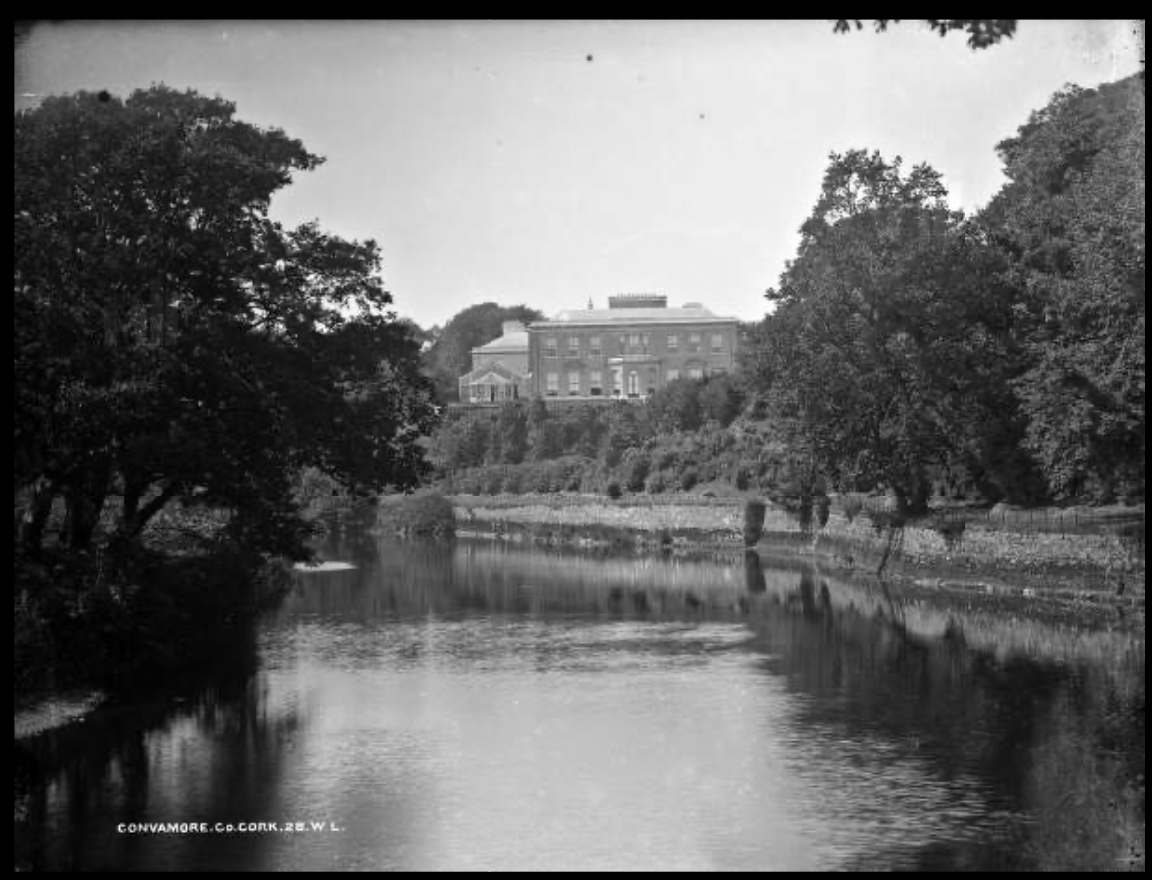

Conway, Dunmurry, County Antrim
A two storey Victorian house with a symmetrical front of two shallow curved bows and a central projection; on either side of which runs a pillared and balustraded veranda, joining at one end to a single-storey wing, and at the other to a pilastered conservatory. Became hotel; suffered irreparable bomb damage 1970.
Cookstown House, Co Meath (see Corbalton Hall)
Coolamber, Street, Co Westmeath

Coolamber Manor, Lisryan, County Longford

Coolavin, Monasteraden, Co Sligo
Multiple-bay two- and three-storey stone house, built 1898, to designs by architect James Franklin Fuller.
Coolbawn House, near Enniscorthy, Co Wexford – ruin

Coolcarrigan House and Gardens, Naas, County Kildare – section 482 in 2019

See my entry https://irishhistorichouses.com/2020/05/31/coolcarrigan-house-and-gardens-coill-dubh-naas-county-kildare/
Coolderry House, Carrickmacross, Co Monaghan – lost
A two storey late C18 house of five bays between two semi-circular bows. …Sold 1920 by Col G.J. Brownlow, afterwards demolished.
Coole, Millstreet, Co Cork
A long and low two storey Georgian house with a plain seven bay front.

Coole Abbey, Fermoy, Co Cork
A house built ca 1765 by Henry Peard; attributed, on stylistic grounds, to Davis Duckart.

Coole Park, County Galway – ‘lost’

See my entry https://irishhistorichouses.com/2023/05/31/places-to-visit-and-stay-in-county-galway/
Cooleville, Clogheen, County Tipperary

Coolhull Castle, County Wexford

Coolkelure, Dunmanway, Co Cork
A late-Victorian house of stone, with gables of timber open-work in the Swiss manner and a pyramidal roofed tower.

Coollattin (also known as Malton), Shillelagh, Co Wicklow – golf club

Coolmain Castle, Kilbrittain, Co Cork

Coolmore, Carrigaline, Co Cork
A large late C18 block built 1788 by W.W. Newenham to replace a house built ca 1701 built by Thomas Newenham.
Coolmore, Thomastown, Co Kilkenny

Coolnamuck, Carrickbeg, Co Waterford
“A three storey C18 block…Formerly the seat of a branch of the Wall family. It is said that one of the families who owned it in the past lived very extravagantly; and when, as a result, they went bankrupt, they committed mass suicide by driving their coach over the cliff at Tramore. In the present century, the main block became derelict; a house was made in the wing, which in recent years was the home of Mr C.C. Sanders. The house has now been demolished.”
Coolready (see St. Catherine’s)
Cooper Hill, Clarina, Co Limerick

Coopershill, Riverstown, Co Sligo – 482, accommodation

See my entry https://irishhistorichouses.com/2022/01/11/coopershill-house-riverstown-co-sligo/
Coppinger’s Court, Cork, Co.Cork – ruin
An impressive early to mid C17 semi-fortified house built by Sir Walter Coppinger; with gables, machiolations and mullioned windows. Now a ruin.

Cor Castle, Innishannon, Co Cork
A small, early Gothic Revival castle, its doorway being a Gothicized Venetian window in the Batty Langley manner

Corbally, Taghadoe, Co Kildare
A small early C18 gable-ended house of two storeys over basement.
Corballymore (formerly Summerville), Dunmore East, Co Waterford

Corbalton Hall (formerly Cookstown House), Tara, Co Meath

Corduff, Ballinamore, Co Leitrim
A two storey five bay house probably of late C18.
Corick, Clogher, County Tyrone – hotel
https://www.corickcountryhouse.com
See my entry https://irishhistorichouses.com/2022/04/03/places-to-visit-and-stay-in-ulster-counties-fermanagh-monaghan-and-tyrone/
Corkagh House, Clondalkin, Co Dublin – demolished

Corkbeg, Whitegate, Co Cork – demolished
A square two storey early to mid-C19 house on an island just inside the entrance to Cork Harbour joined to the mainland by a causeway; built to replace an earlier house by the water’s edge.
Corke Lodge, Bray, County Wicklow – the gardens are open to the public as Section 482. www.corkelodge.com
See my entry https://irishhistorichouses.com/2023/05/26/places-to-visit-and-stay-in-dublin-city-and-county/

Cornacassa, Monaghan, Co Monaghan

Cornahir (or Cornaher), Tyrrellspass, Co Westmeath

Corradoo, Ballinafad, Co Sligo
A house built 1768 by William Phibbs, of Hollybrook, for use as a school.
Corries, Bagenalstown, Co Carlow

Corville, Roscrea, Co Tipperary
A C18 house with a breakfront centre.
Costello Lodge, Costello, Co Galway
“A fishing lodge in Connemara, owned earlier this century by J. Bruce Ismay, head of the White Star Line at the time of the sinking of the Titanic and one of the survivors from that ill-fated ship. Burnt 1922 and rebuilt 1925; a two storey house with gables, dormer gables and pantiled roof.”
Court Hill, Dunboyne, Co Meath
An elegant mid-C19 neo-Classical villa in the style of J.S. Mulvany, of one storey over a basement and three bays; the centre bay being raised as a pedimented attic. Flanking service tower. Remodelled in Edwardian period.
Courtown, Kilcock, County Kildare
A plain two storey house of ca 1815, built by John Aylmer to replace the earlier house here, which was burned and looted 1798 during the ownership of his father, Michael Aylmer, who had been unable to rebuilt it, not having received sufficient compensation from the state. Five bay front, with strip pilasters. Much enlarged ca 1900 by J.A. Aylmer, who added a wing at right angles to the original block to form a new entrance front, with a three sided bow and an open porch, at one side of a pedimented projection; containing, among other rooms, a hall with a massive oak staircase.
Courtown House, Courtown, Co Wexford
A C18 house overlooking the sea at Courtown Harbour, much altered and enlarged C19 after being sacked during 1798 Rebellion. The front of the house…Sold post WWII, subsequently demolished.

Craddenstown, County Westmeath

Cragleigh House, Ennis, Co Clare

A two storey three bay early C19 house with Wyatt windows and fanlighted doorway, standing in front of an older building to which it is linked.
Craigavad House, County Down
“A restrained Classical house on the shores of Belfast Lough, built ca 1852 for John Mulholland, afterwards 1st Lord Dunleath, to the design of the Belfast architect Thomas Turner. Top-lit central hall with a circular gallery and a glazed dome. Now a golf club.”
Craigavon, Strandtown, County Down
“A two storey Victorian house with a front of two bays on either side of a central bow. Round-headed windows in lower storey, camber-headed windows above. Pavilion with pedimented portico at back of house, joined to main block by orangery. The home of James Craig, 1st Viscount Craigavon, 1st Prime Minister of Northern Ireland. Given to the nation.”
CRAIGAVON HOUSE is owned and run by the Somme Association, a charity which cares for elderly war veterans. The future of Craigavon House remains uncertain.
Craigdun or Craigdunn Castle, Dunminning, County Antrim
A Victorian Scottish Baronial castle of basalt, built by Edmund McNeill.

Cranagh Castle, Templemore, Co Tipperary
A three storey house of 1768 built on to a medieval round tower.
Cranaghan House, Ballyconnell, Co Cavan – Slieve Russell hotel?

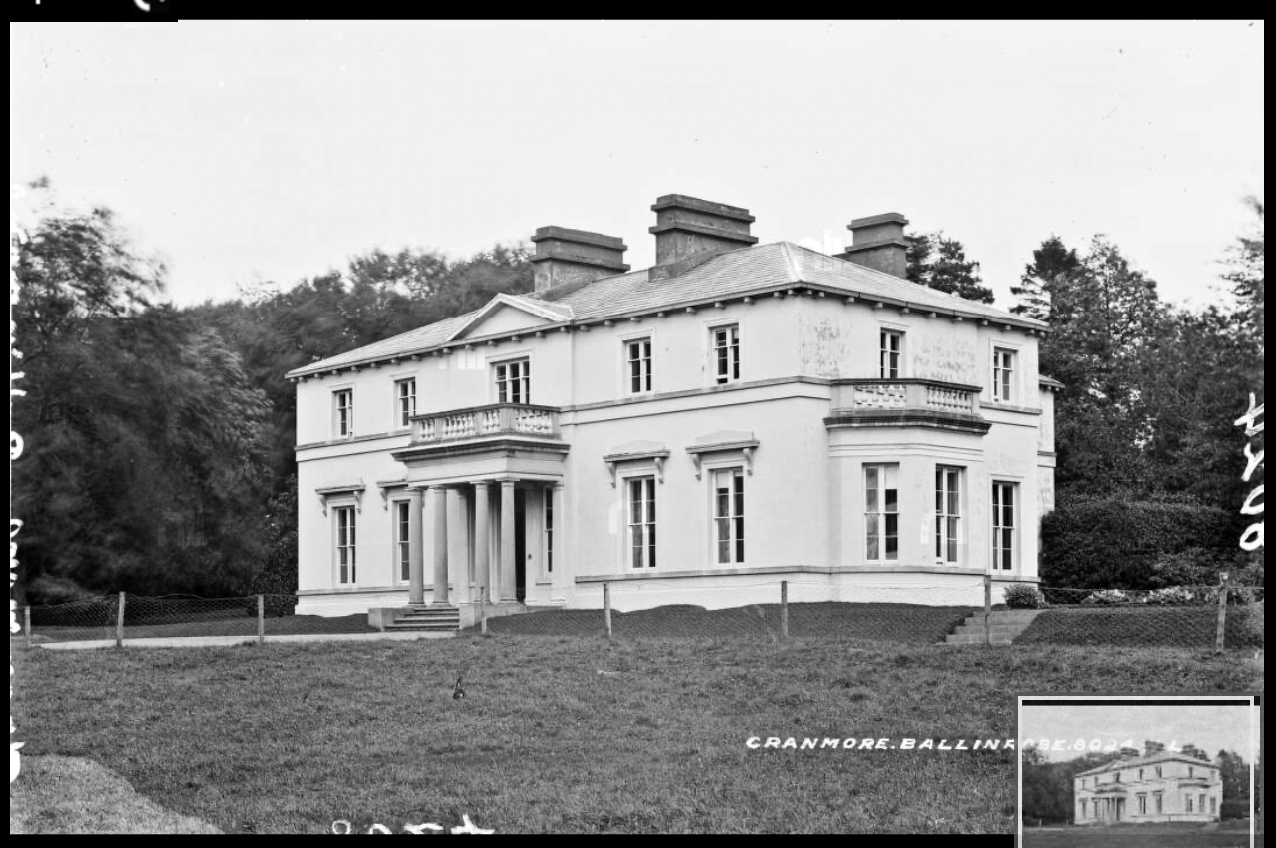
Cranmore House, Ballinrobe, Co Mayo
Cratloe Woods House, Cratloe, County Clare – private, used to be public, in public woods
A long, low two storey gable ended C17 house one room thick. Its principal elevation, of thirteen bays, with Georgian sash windows and central three sided bow, is now the garden front; a new entrance front, in simple style with timbered porch, having been added to other side ca 1850 to provide a corridor and larger staircase, possibly to the design of James Pain, who gave the garden front bow a Tudor-Revival gable and heightened the chimneystacks, also in Tudor-Revival style.
Crawfordsburn Park, Bangor, County Down
Originally a two storey five bay gable-ended house overlooking Belfast Lough. Triple window above fanlighted doorway. Return. Enlarged in C19 gable style. Now a hospital and much altered.
Creagh, Skibbereen, Co Cork
A pleasant Regency house of two storeys over basement, built ca. 1820.

Creagh Castle/House, Doneraile, Co Cork

Creagh House, County Mayo


Crebilly House, County Antrim
A two storey C19 Italianate house which from its appearance could be an early work of Sir Charles Lanyon.
Creevaghmore, Ballymahon, Co Longford

Cregg Castle, Fermoy, Co Cork
A home of mid-C18 appearance, of three storeys over a basement; the top storey being treated as an attic, above the cornice.

Cregg Castle, Corrandulla, Co Galway

See my entry https://irishhistorichouses.com/2023/05/31/places-to-visit-and-stay-in-county-galway/
Crevenagh House, Omagh, County Tyrone
Crobeg, Doneraile, Co Cork – demolished in 1980s
Crocknacrieve, Enniskillen, County Fermanagh
Crom Castle, Newtown Butler, County Fermanagh

See my entry https://irishhistorichouses.com/2022/04/03/places-to-visit-and-stay-in-ulster-counties-fermanagh-monaghan-and-tyrone/


Cromore House, Portstewart, County Derry
A mid-C18 house of two storeys with a dormered attic and four bays, enlarged and remodelled 1834 by John Cromie, who added a two storey wing on either side, of the same height as the centre; with a single large many-paned window in each storey.
Cromwellsfort, Co Wexford

Croney Byrne, Rathdrum, Co Wicklow – courtyard accommodation
See my entry https://irishhistorichouses.com/2022/10/20/places-to-visit-and-stay-in-county-wicklow-leinster/
Cronroe, Ashford, Co Wicklow – Bel Air hotel and equestrian centre

See my entry https://irishhistorichouses.com/2022/10/20/places-to-visit-and-stay-in-county-wicklow-leinster/
Crossdrum, Oldcastle, Co Meath

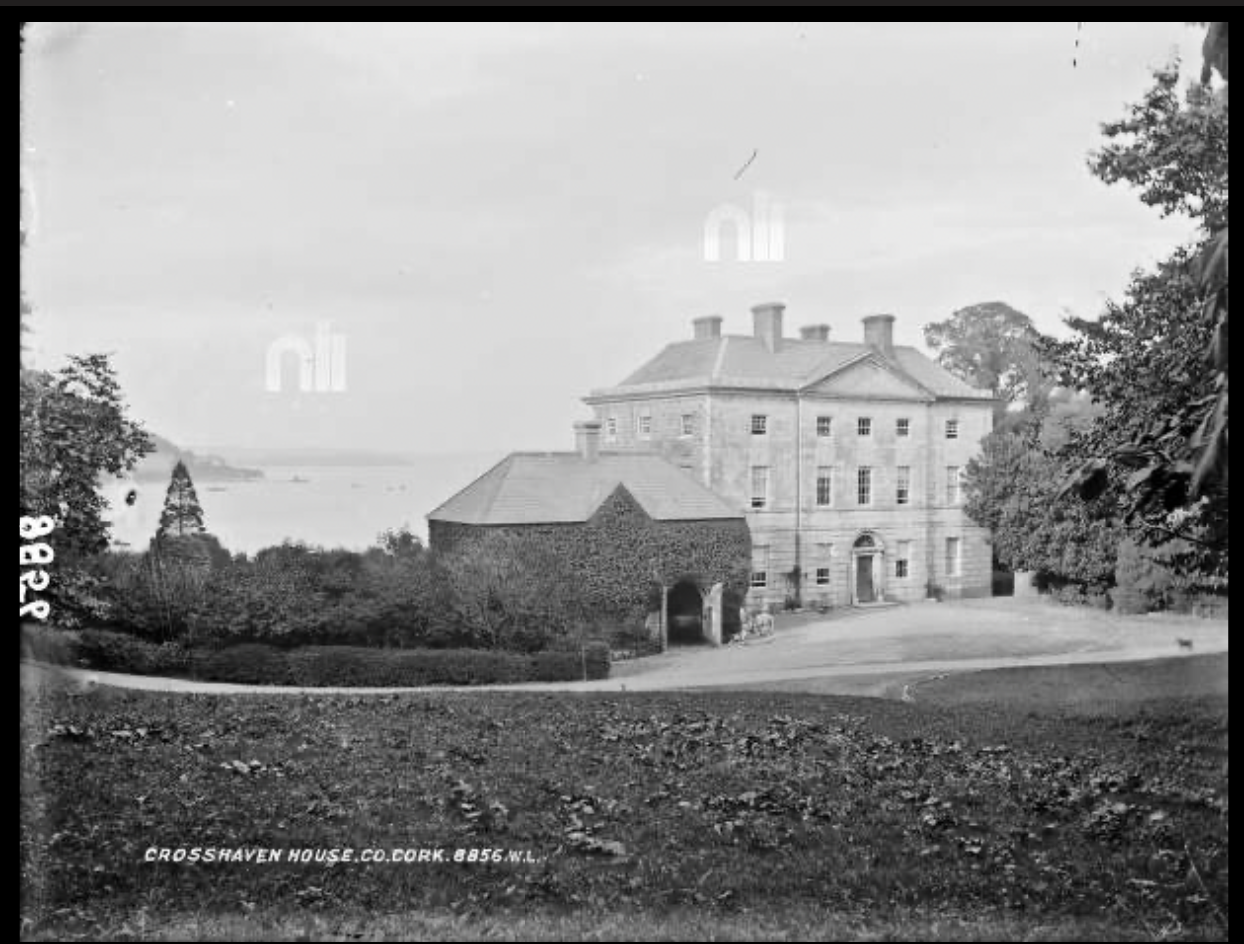
Crosshaven House, Crosshaven, Co Cork – whole house rental
A three storey house built 1769 by William Hayes, wiht two identical fronts of crisp grey ashlar which almost certainly derive from Isaac Ware’s design for Clifton Hill House, Bristol. https://www.crosshavenhouse.ie/

See my entry https://irishhistorichouses.com/2022/05/17/places-to-visit-and-stay-munster-county-cork/
Crossogue House, Ballycahill, Co Tipperary
An early Victorian house with a high basement.
Crotto, Kilflynn, Co Kerry – ‘lost’

Crowhill, Annaghmore, County Armagh
A two storey late Georgian house; five bay front with one bay pedimented breakfront.
Cuba Court, Banagher, Co Offaly – demolished

Cuffesborough, Durrow, Co Laois
A three storey house of 1770 which from both elevation and plan would appear to have been built about thirty years earlier.
Culdaff House, Carndonagh, Co Donegal


Cullamore, Carney, Co Sligo

Cullane, Sixmilebridge, Co Clare – ruin
A Georgian house with a bow window, overlooking the lake. Had a good scrolled overmantel in one room. Now a ruin.
Culmore House, Ballykelly, County Derry
A good quality late-Georgian house of brilliant red brick, built 1805.
Cultra Manor, Craigavad, County Down
Originally a large plain house with a central bow and a battlemented parapet. Towards the end of the C19, or in the opening years of C20, Robert Kennedy, a diplomat who eventually became Minister to Uruguay, replaced the house with a long two storey mansion built of rubble and ashlar facings, which he named Cultra Manor.
Cultra Bishops’ Palace, Cultra, County Down
“A gabled Victorian house with a battlemented tower at one corner.”
Curragh, Lisnaskea, County Fermanagh
A two storey three bay house with quoins, said to have been originally built ca 1699-1700.
Curragh Chase, Adare, Co Limerick

Curraghmore, Ballinrobe, Co Mayo

Curraghmore, Portlaw, County Waterford – section 482 in 2019

See my entry https://irishhistorichouses.com/2020/08/01/curraghmore-portlaw-county-waterford/
Curraglass, Co Cork – ‘lost’
Currarevagh, Oughterard, Co Galway – accommodation

See my entry https://irishhistorichouses.com/2023/05/31/places-to-visit-and-stay-in-county-galway/
Curravordy (see Mount Pleasant), Co Cork
Cuskinny, Cobh, Co Cork




































































 Irish Historic Houses