Heritage Week 2024 continued

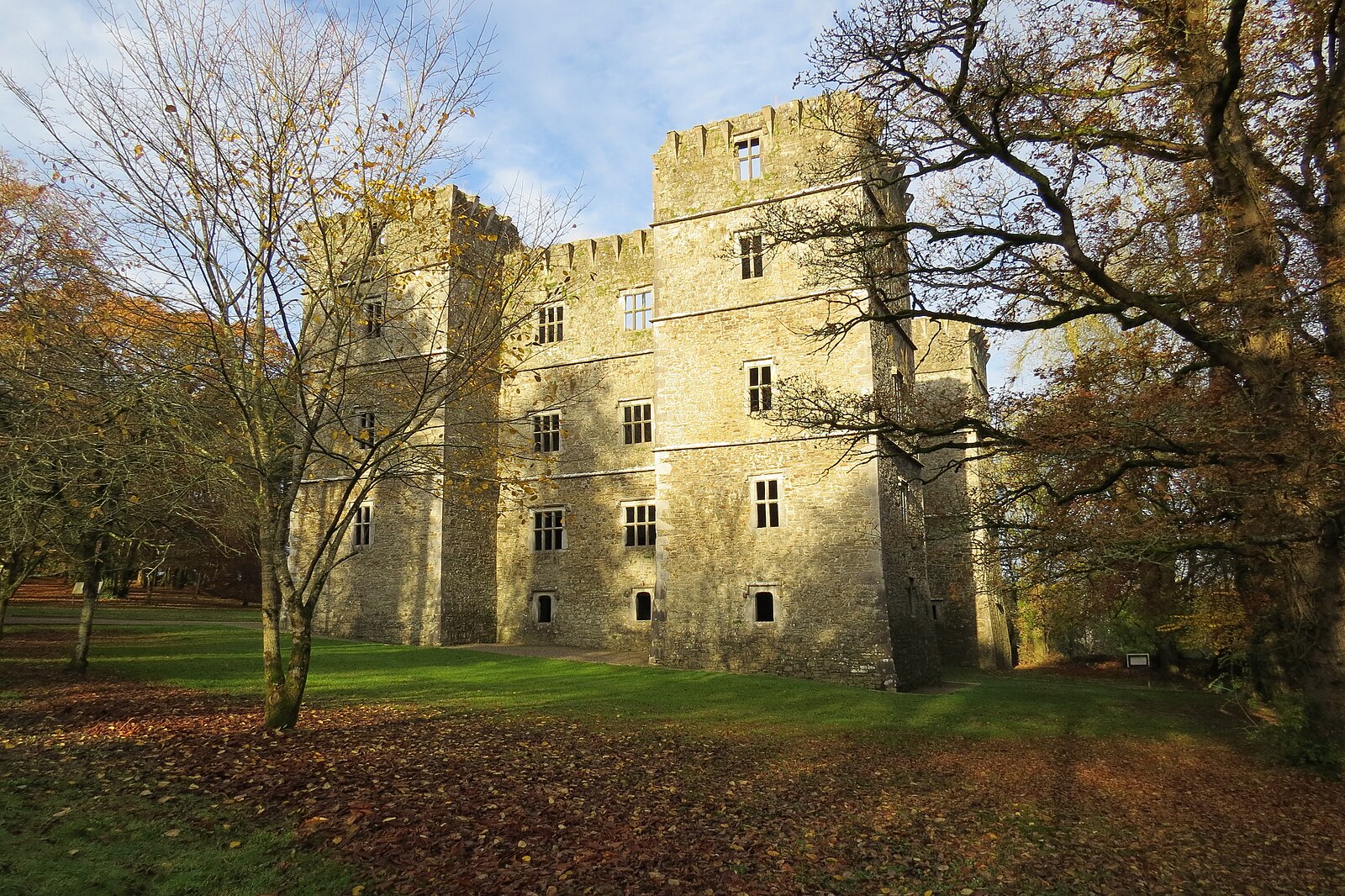
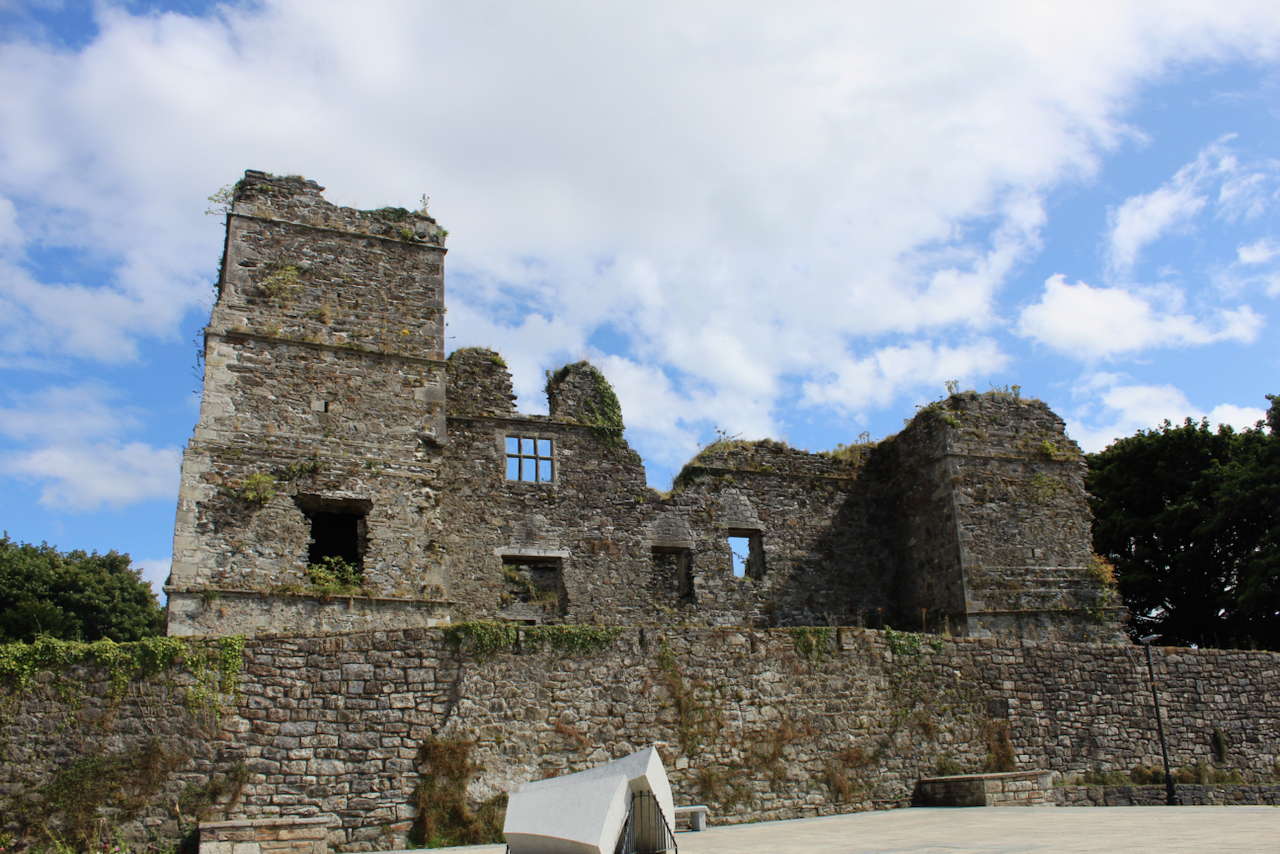
We continued our outings for Heritage Week this week. We didn’t do our usual travel around to Section 482 properties as we were both too tired this year. As I mentioned in my last post, we went to Charleville Castle in Tullamore on Saturday, which is wonderful. Unfortunately we didn’t linger to wander in the woods as rain threatened and I wanted to visit my aunt who lives in the town.

Charleville Castle, County Offaly, August 2024. Photograph © Jennifer Winder-Baggot, www.irishhistorichouses.com

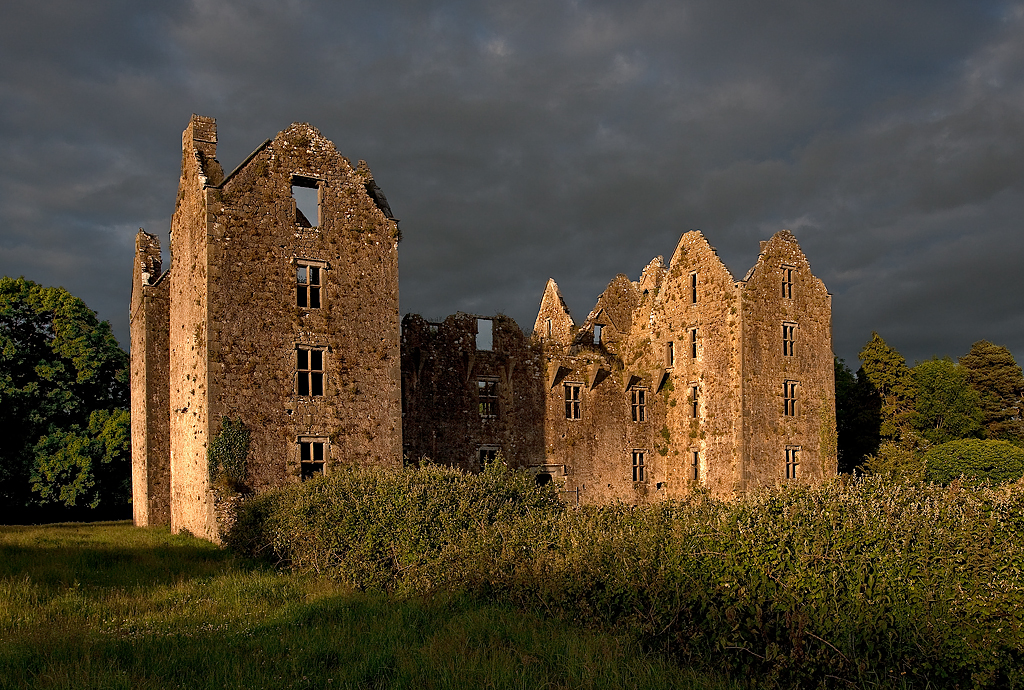
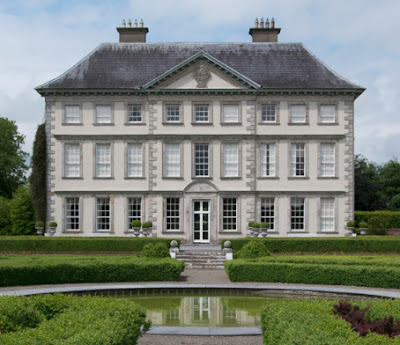
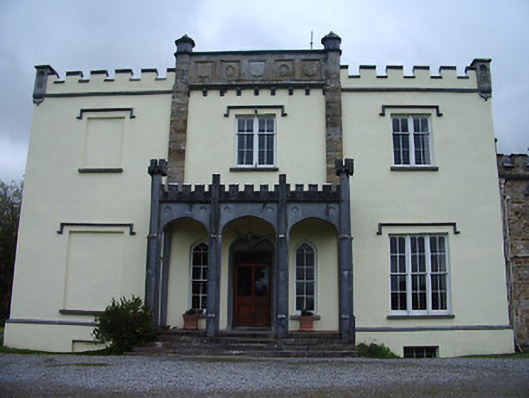
On Monday we missed our booked visit to Number 6 High Street in Tullamore, unfortunately, but went to see Tullynisk house that afternoon. We were given a wonderful tour by its resident Alicia Clements, daughter of the Earl of Rosse, who married a descendant of Nathaniel Clements who built the Áras an Uachtaráin in the Phoenix Park.

Tullynisk House, County Offaly. Photograph © Jennifer Winder-Baggot, www.irishhistorichouses.com

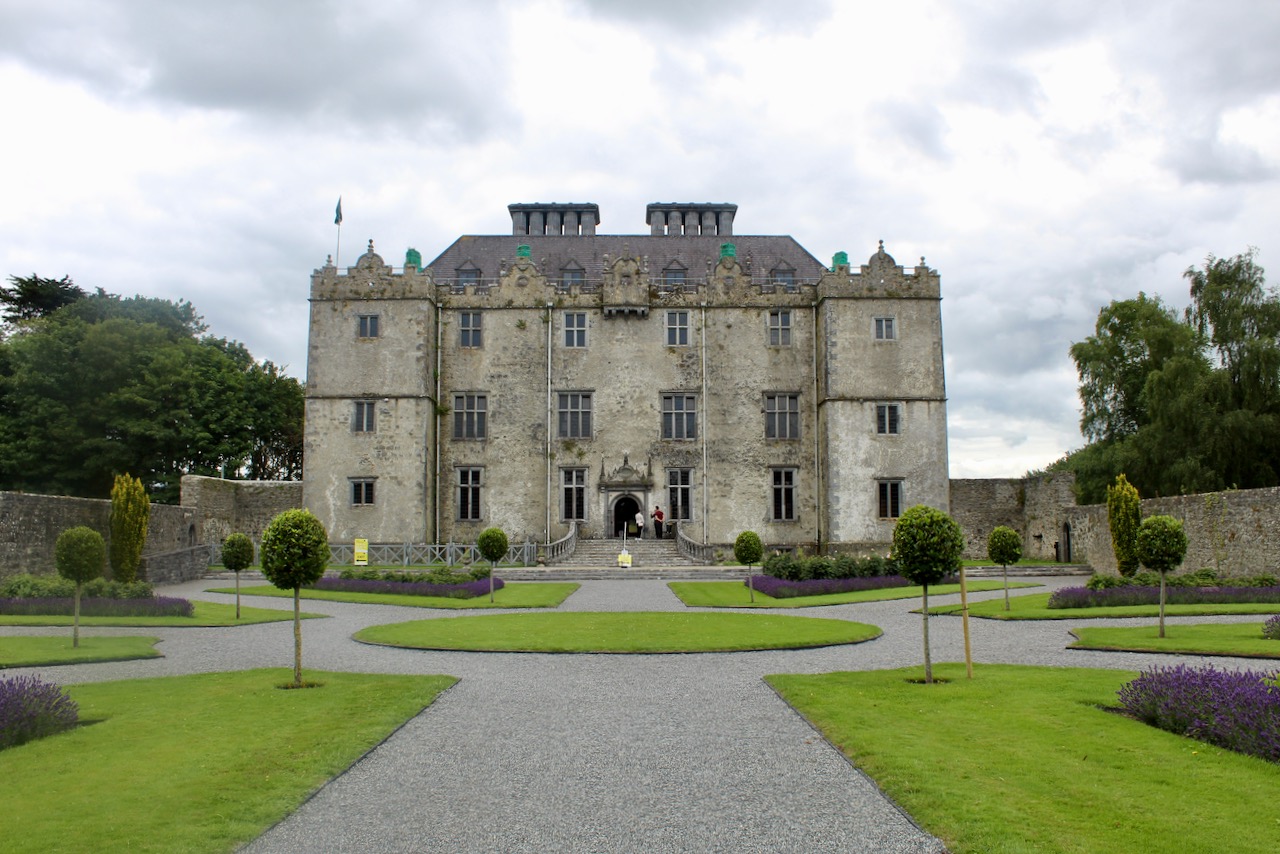
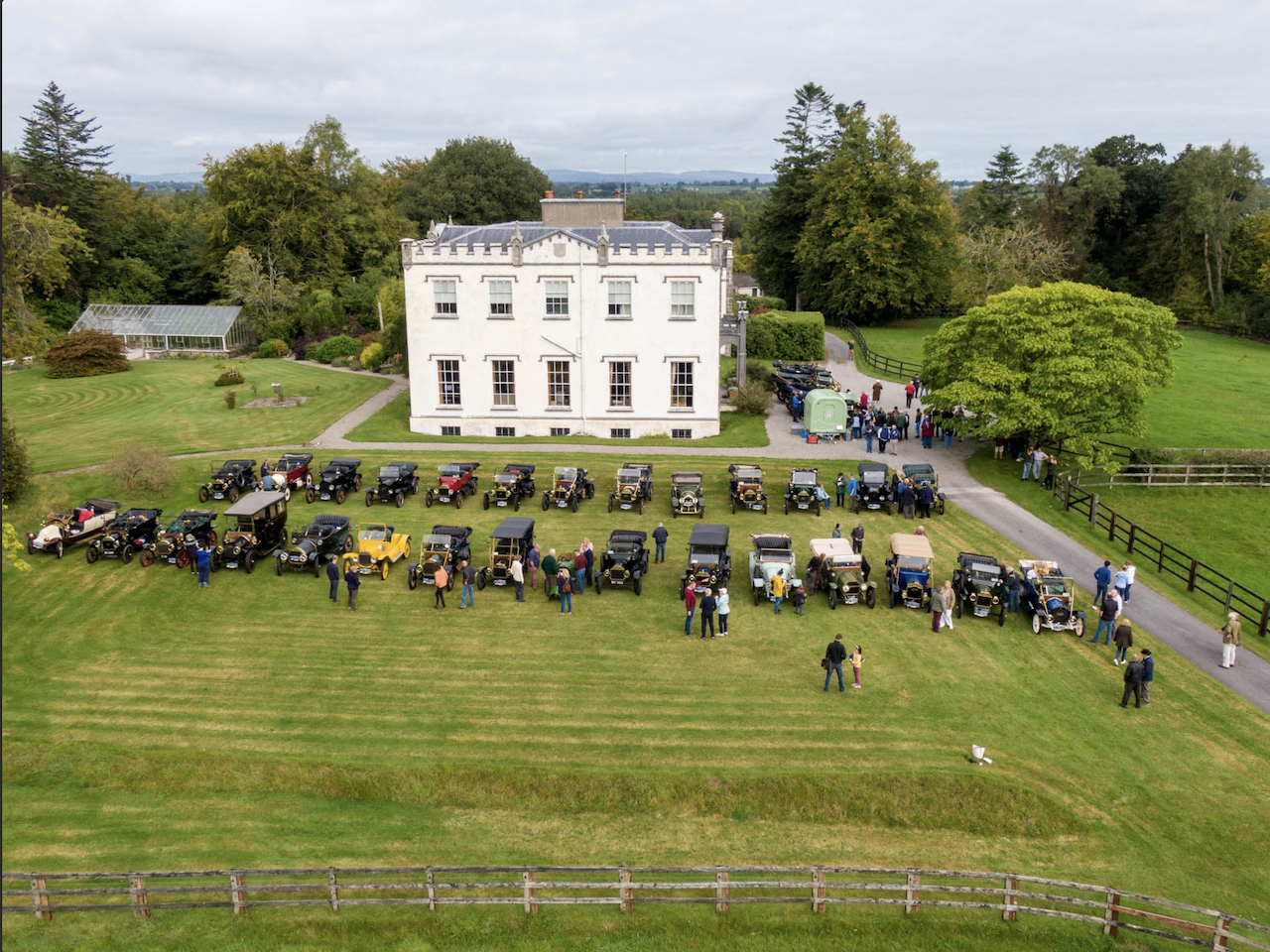
On Wednesday we went to Emo Court in Laois, an Office of Public Works property, because the OPW opened a few rooms for tours during the week and it is closing again afterwards for more repairs. It is so disappointing it has been closed since 2019. We were not allowed to take photographs inside since the work is unfinished!

Emo Park, County Laois. Photograph © Jennifer Winder-Baggot, www.irishhistorichouses.com
At Emo during this visit we had to wear these shoe covers to protect the floors. Photograph © Jennifer Winder-Baggot, www.irishhistorichouses.com

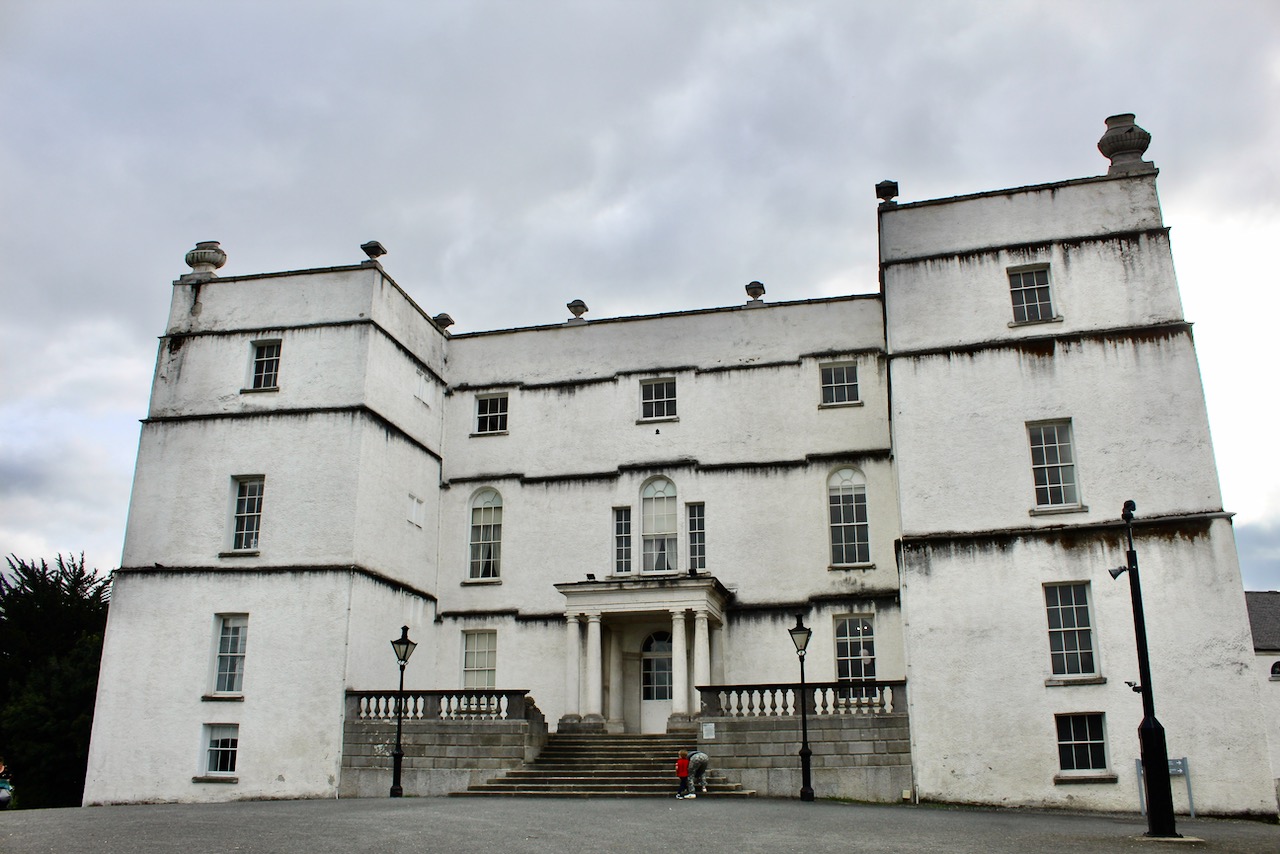
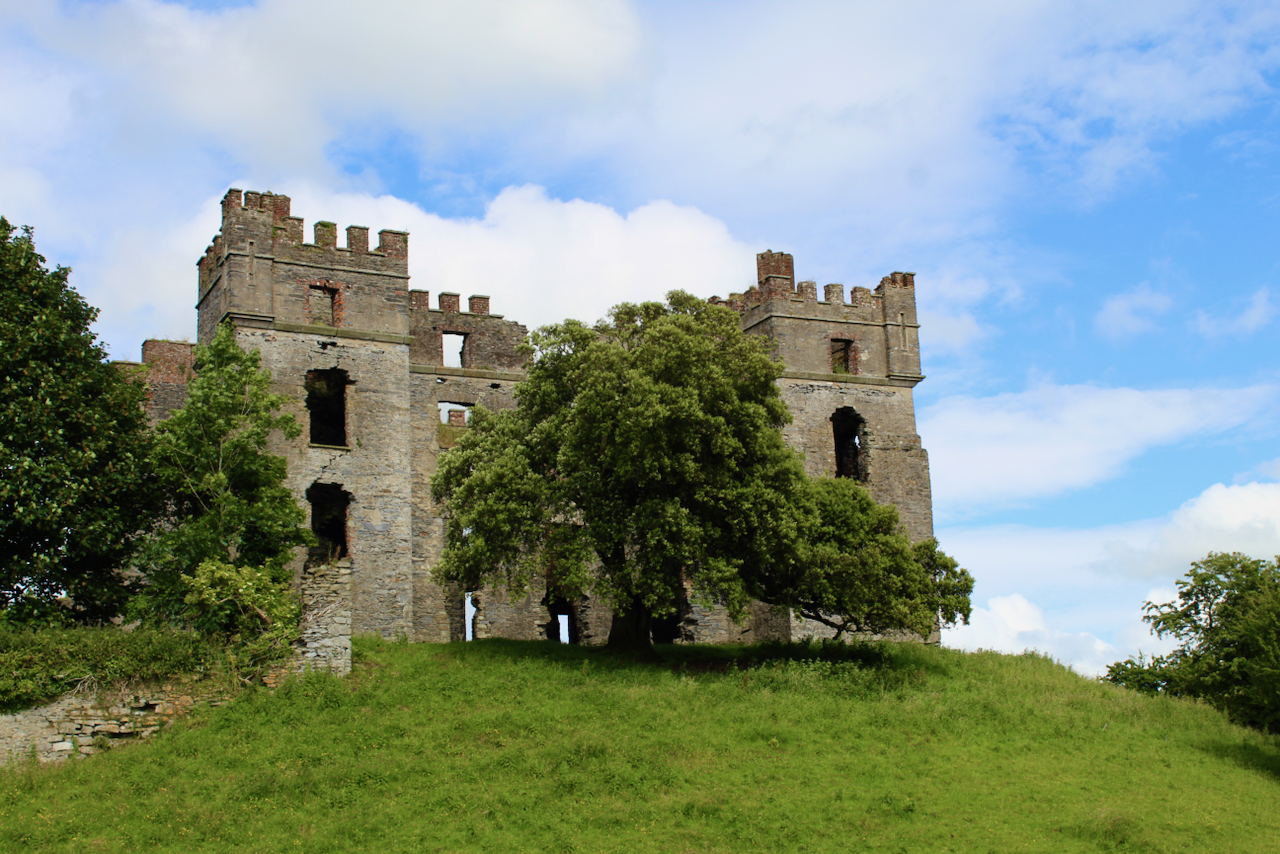
We found ourselves with spare time after Emo Park as it was too rainy to wander the lush grounds, so we headed to Roscrea for more OPW properties: Damer House and Roscrea Castle. Unfortunately we weren’t allowed to take photographs inside Damer House except in the exhibition rooms. After a tour of Damer House we went across the bawn to tour Roscrea Castle. It is a treasure for the beautiful ancient town of Roscrea. I’ll be writing more about all of these places.

Damer House, Roscrea, 21st August 2024. Photograph © Jennifer Winder-Baggot, www.irishhistorichouses.com
The gardens at Damer house and Roscrea Castle, with the castle in the background. Photograph © Jennifer Winder-Baggot, www.irishhistorichouses.com
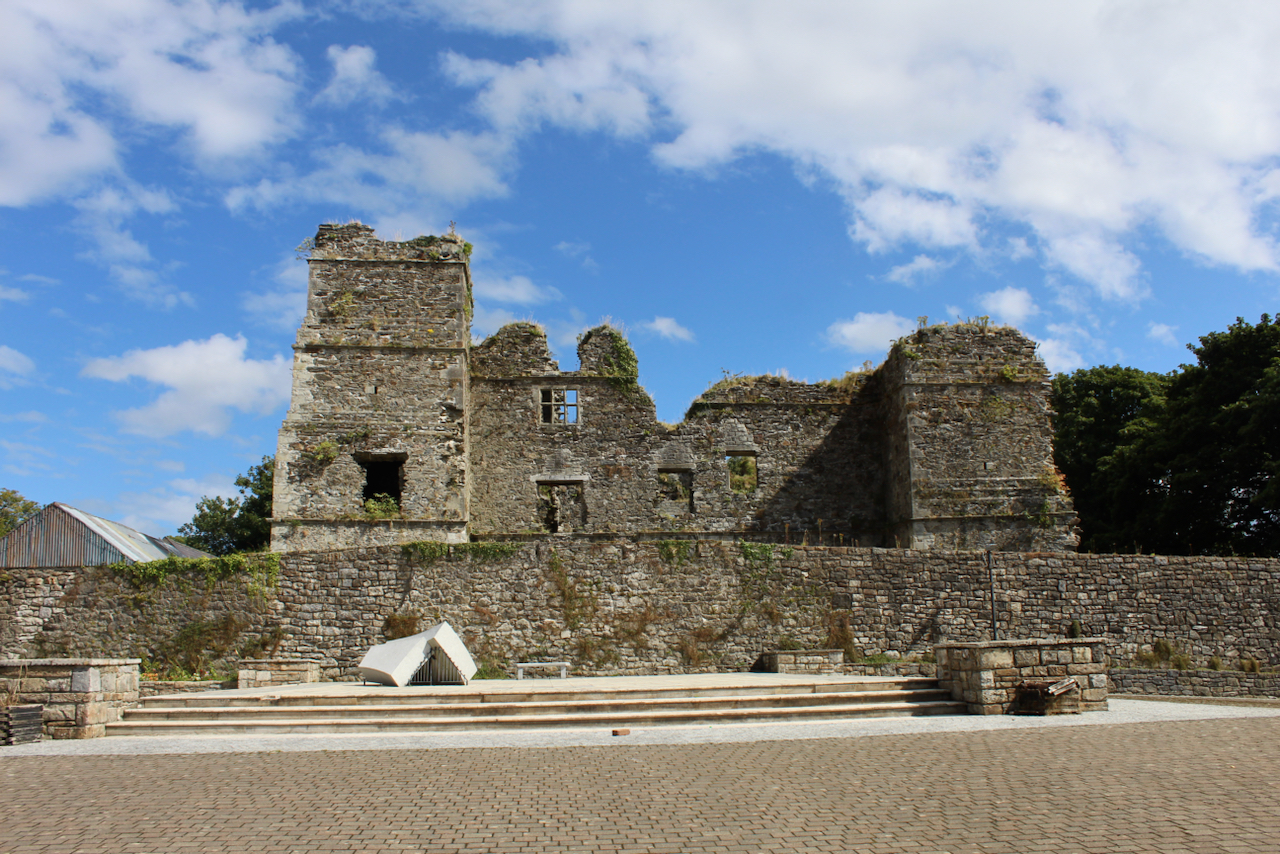
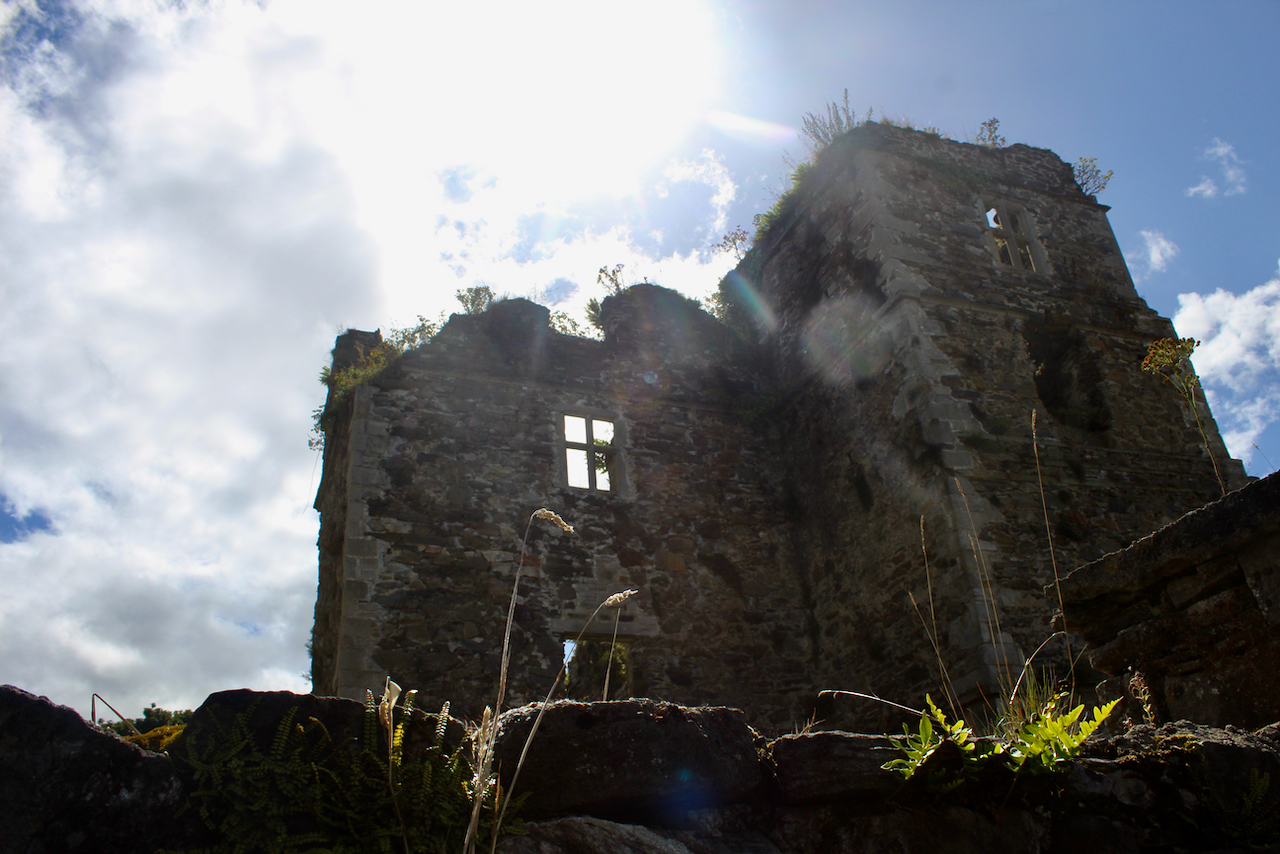
Roscrea Castle, August 2024. Photograph © Jennifer Winder-Baggot, www.irishhistorichouses.com
These buildings in Roscrea look impressively ancient. Photograph © Jennifer Winder-Baggot, www.irishhistorichouses.com
Stephen liked hearing of George Thomas, “the Rajah from Tipperary” who minted his own rupees. Photograph © Jennifer Winder-Baggot, www.irishhistorichouses.com

We stayed one night in Birr in the Stables townhouse. The houses along Oxmantown Mall are magnificent!

The Stables, Birr, August 2024. Photograph © Jennifer Winder-Baggot, www.irishhistorichouses.com
Oxmantown Mall, Birr, August 2024. Photograph © Jennifer Winder-Baggot, www.irishhistorichouses.com
A theatre on Oxmantown Mall in Birr, designed by James Franklin Fuller. The idea of creating a theatre for the locality was formally announced on 10th September 1885, reports the Kings County Chronical. The site on Oxmantown Mall was donated by Lawrence Parsons the 4th Earl. Photograph © Jennifer Winder-Baggot, www.irishhistorichouses.com
A theatre on Oxmantown Mall in Birr, designed by James Franklin Fuller. Photograph © Jennifer Winder-Baggot, www.irishhistorichouses.com
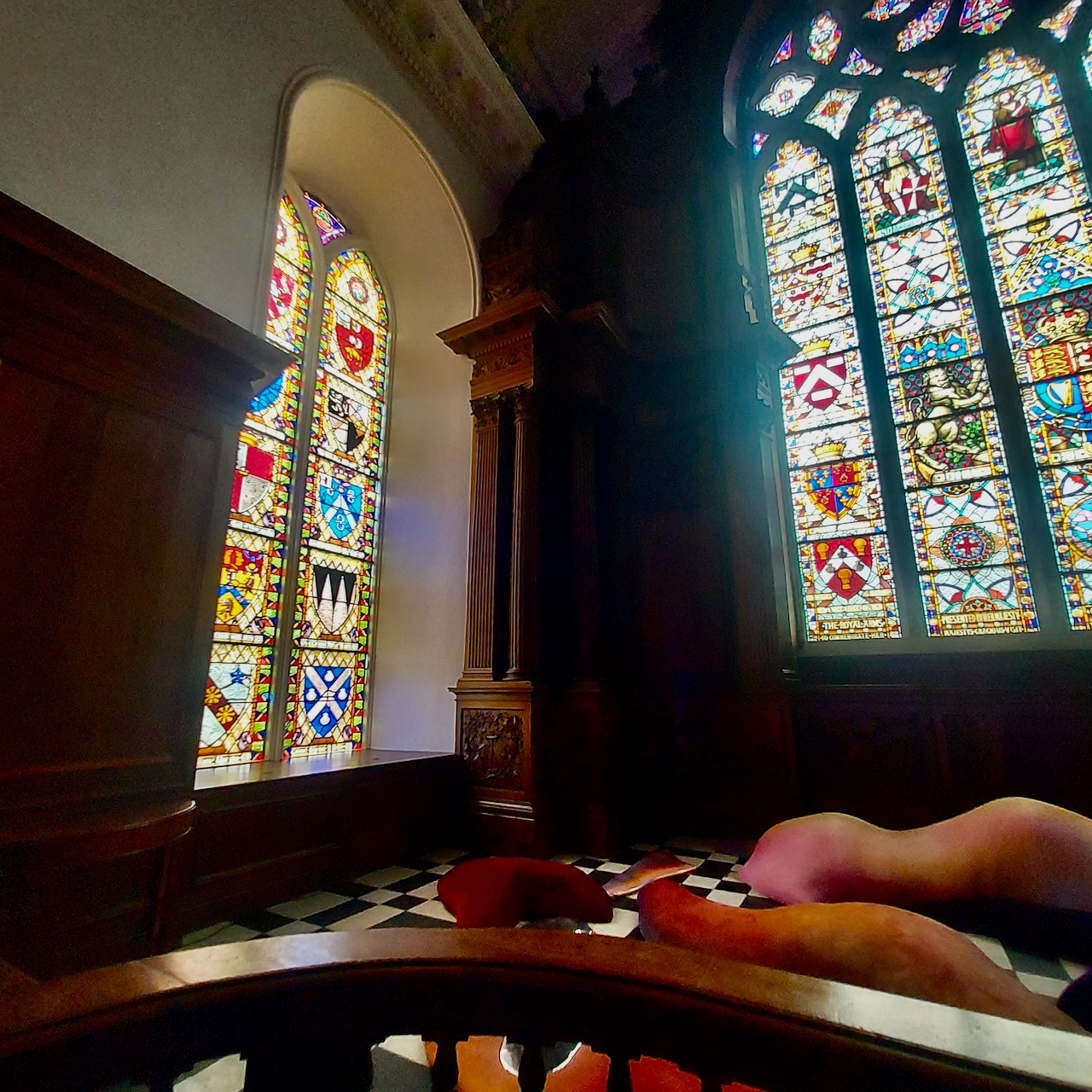
St. Brendan’s Church of Ireland, Oxmantown Mall, Birr. Built by the architect John Johnson in 1815, it was extended in 1876 by the renowned architect Sir Thomas Drew who added a new chancel. Further enhancements included the insertion of the east window, which was commissioned from Charles Kempe by the fourth Earl of Rosse in 1891. Photograph © Jennifer Winder-Baggot, www.irishhistorichouses.com
On Oxmantown Mall in Birr. Photograph © Jennifer Winder-Baggot, www.irishhistorichouses.com
Cumberland House, Emmet Square, Birr, built around 1760, decorated with Palladian motifs including Venetian and Diocletian style windows and a surmounting oculus, and Gibbsean doorway. Photograph © Jennifer Winder-Baggot, www.irishhistorichouses.com

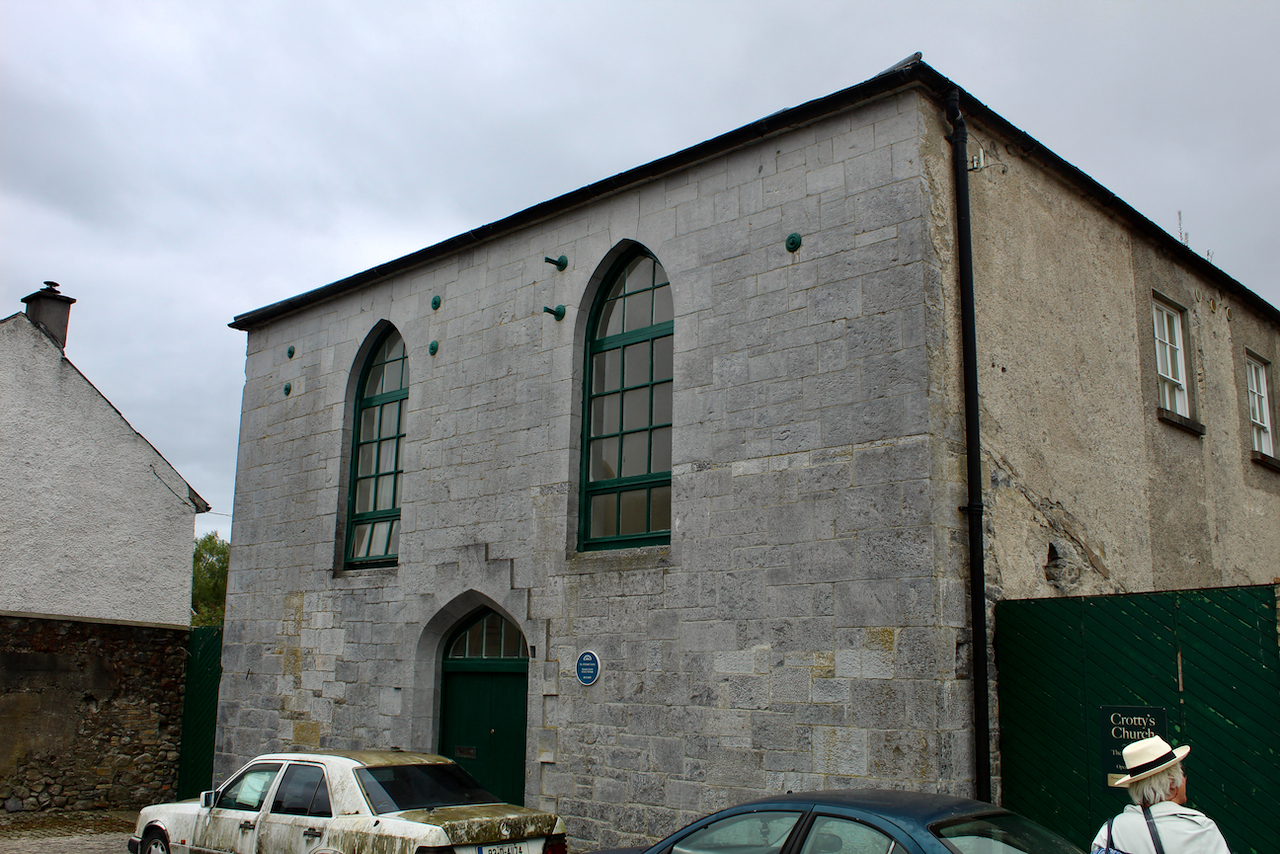
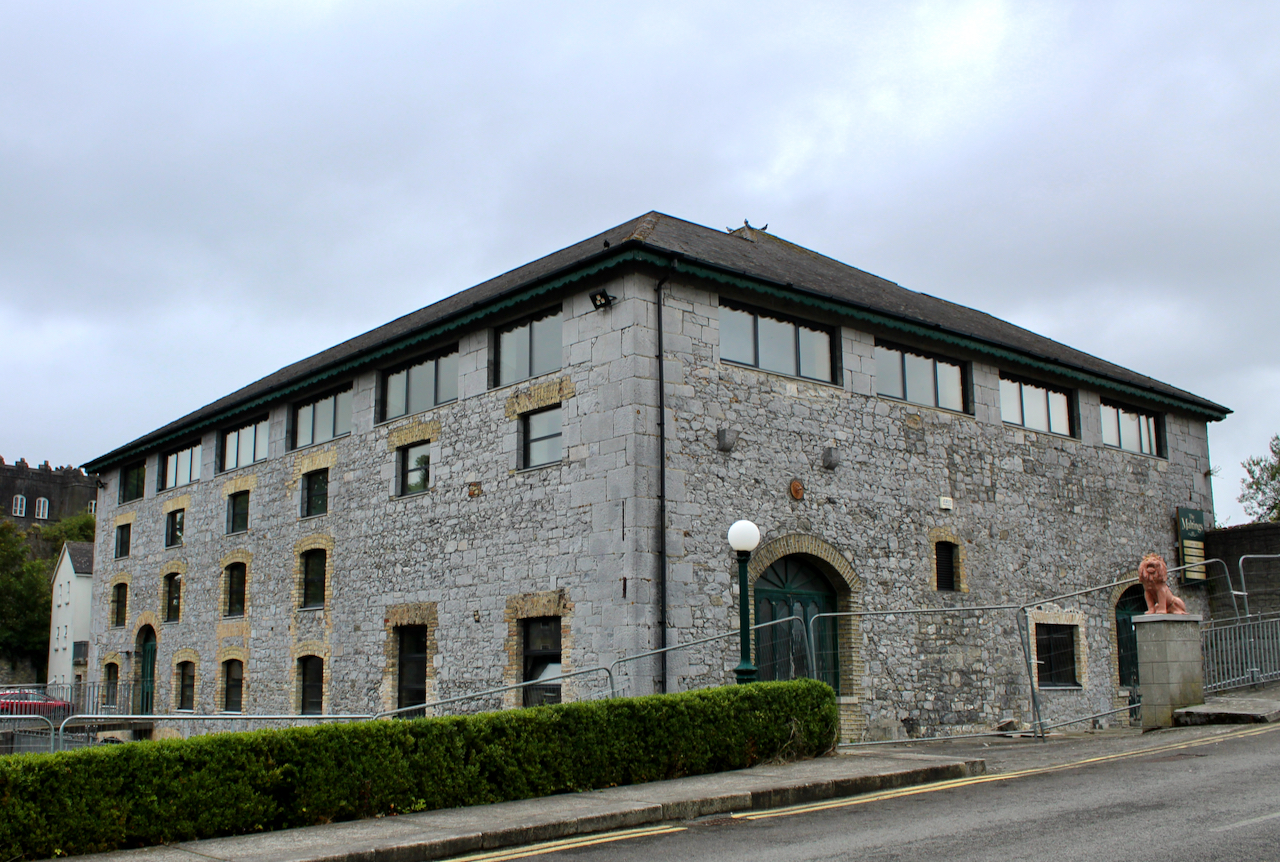
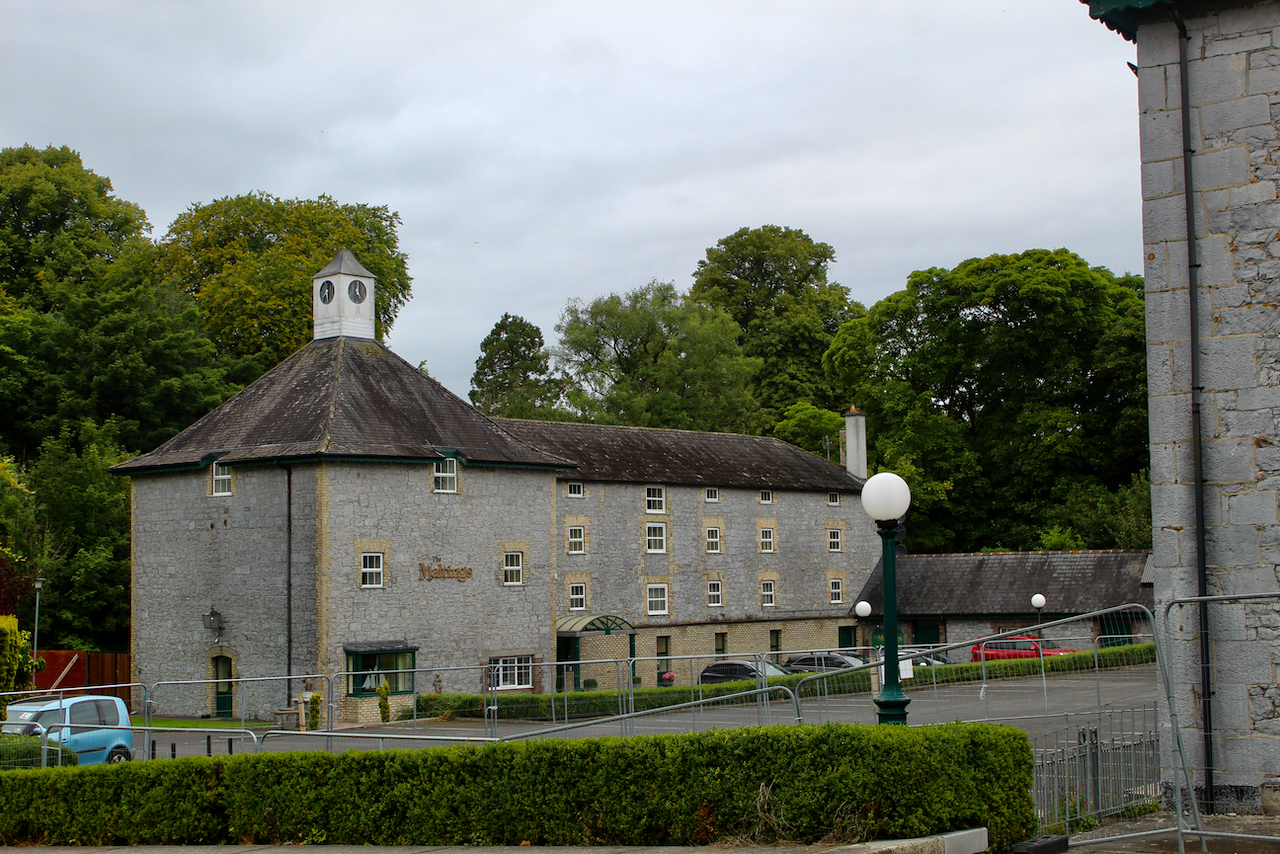
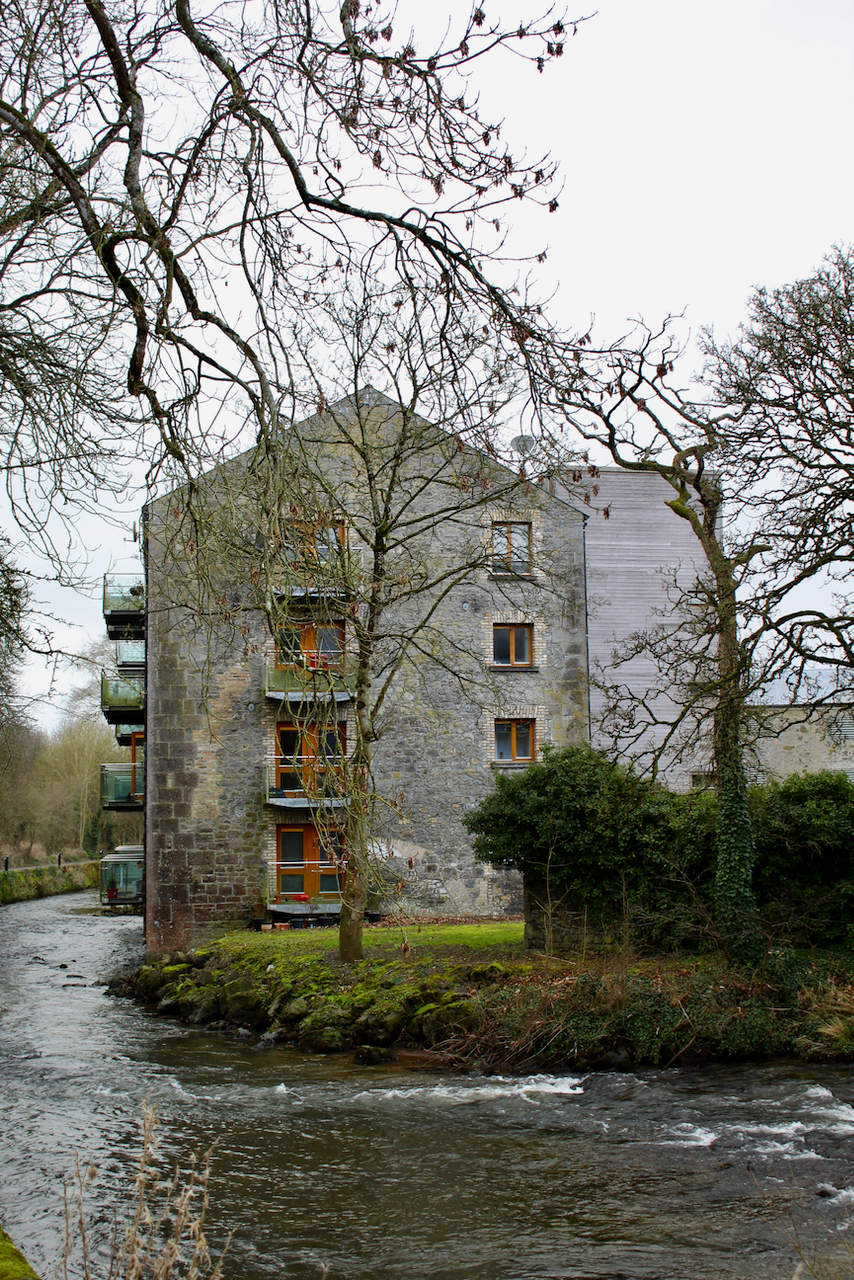
We didn’t get to visit the castle this time. Instead we were in the town to attend a talk about the Crotty Schism which took place in the Catholic church in the mid 1800s. I’ll be writing more about that soon, as the Crotty Church is a Section 482 property, although it is not open to the public! It is certainly meant to be open, and The Maltings across the road is meant to have tourist accommodation to earn its Section 482 status, but is also not open and never seems to have been since I started my blog in 2018, as I have often checked it out as a place to stay. For the talk on the Crotty Schism, we had to sit outside, despite rain threatening.

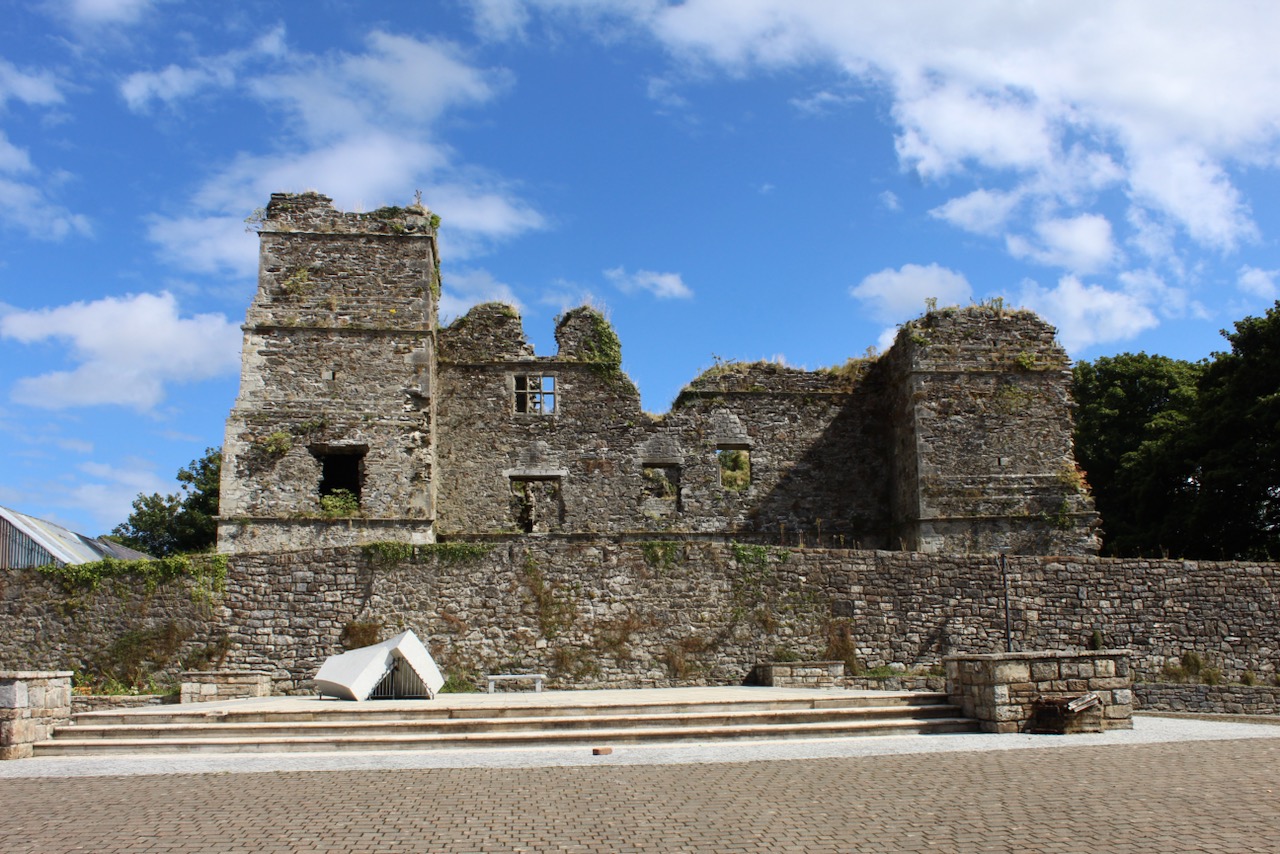
Crotty’s Church, Birr, which despite being a Section 482 property is not open to the public. Photograph © Jennifer Winder-Baggot, www.irishhistorichouses.com
The Maltings, Birr, County Offaly. Despite trying to book several times, this is not available for accommodation, despite being listed as tourist accommodation under Revenue Section 482. Photograph © Jennifer Winder-Baggot, www.irishhistorichouses.com
The Maltings, Birr, County Offaly, Photograph © Jennifer Winder-Baggot, www.irishhistorichouses.com
The Maltings, Birr, County Offaly, June 2023. Photograph © Jennifer Winder-Baggot, www.irishhistorichouses.com

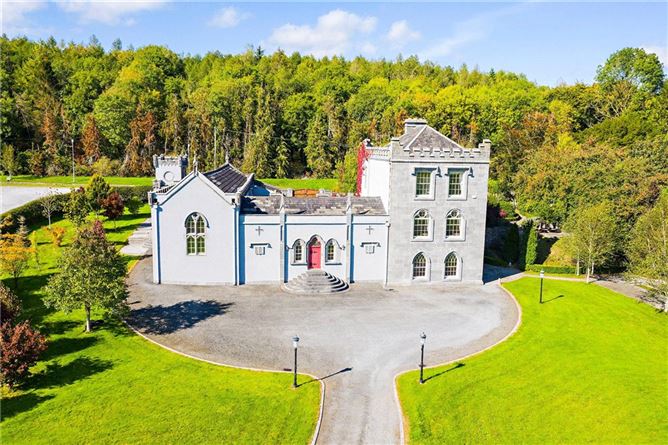
On Saturday we visited Ballybrittan Castle, which we were lucky to see before it changes hands to a new owner. Rosemarie warmly welcomed her visitors, sharing the home she lived in and loved for 27 years along with her late husband Jerry Healy, who served on the boards of the Irish Georgian Society and the Alfred Beit Foundation, which manages Russborough House, Co Wicklow.

Ballybrittan, courtesy of Sherry Fitzgerald Rose de Vere Hunt and myhome.ie

Heritage Week 2024

I have been looking forward to Heritage Week, August 17-25 2024, the time when all the Section 482 properties are open to the public. I hope that you have made your plans because you might need to book in advance! https://www.heritageweek.ie/

Yesterday we went to the wonderful Charleville Woods Castle in County Offaly (which is not Section 482). I notice that most of the Section 482 houses are not advertised on the Heritage Week website, though they all have to open this week – at least, the ones that are not specifically listed as Tourist Accommodation – so do let me know if you make any visits this week!

Charleville Castle Tullamore by Matt McKnight 2007, courtesy of flickr constant commons. Unfortunately this room was closed to the public yesterday as it is being used in filming Wednesday, the Addams family movie.

We never “rock up” unannounced, but this year, 2024, the Revenue Section 482 list does not include contact details, so one really does have to just take one’s chances and hope that the owner abides by the rules. Do let me know if you go and somewhere isn’t open. We may try a few later this week. I managed to book a few tours via the Heritage Week website.

We are going to see Ballybrittan Castle later in the week, and No. 6 High Street in Tullamore. We’re also booked to see a house that is not on the Section 482 list, Tullynisk. Emo Park has finally opened its doors, and I hope to go to see its wonderful interiors – I’m not sure if it will be open to the public after Heritage Week as it has been under renovation for years.

Emo Park, County Laois. Photograph © Jennifer Winder-Baggot, www.irishhistorichouses.com

Glenveagh Castle, County Donegal – a castle and garden open to the public

www.glenveaghnationalpark.ie

Glenveagh Castle, County Donegal, photograph by Robert French, Lawrence Photograph Collection, National Library of Ireland.

You can take a virtual tour online on the website. Sorry for the cut and paste entry today – I published this previously under “Places to visit and stay in County Donegal.” Stephen and I are still in the throes of buying and selling a property so I still haven’t had time to visit Section 482 properties. I shall try to put all of that on hold in order to take advantage of Heritage Week, August 17-25th, 2024! See https://www.heritageweek.ie/

Glenveagh Castle, County Donegal, photograph by Gareth Wray, 2020 for Tourism Ireland, Ireland’s Content Pool [see 2]

Mark Bence-Jones writes in A Guide to Irish Country Houses (1988):

p. 139. “(Adair/LG1863) A Victorian Baronial castle of rough-hewn granite at the end of a wooded promontory jutting out into Lough Veagh, surrounded by the bare and desolate hills of a deer-forest, so large as to seem like a world apart. Built 1870 [the website tells us 1857-9] by J.G. [John George] Adair, of Bellegrove, Co Leix, whose wife was a rich American heiress [Cornelia Wadsworth]; designed by his cousin, J.T. Trench. The castle consists of a frowning keep with Irish battlements, flanked by a lower round tower and other buildings; the effect being one of feudal strength. The entrance is by way of a walled courtyard. Glenveagh has always had an American connection; after the death of Mrs Adair, it was bought by the distinguished American archaeologist, Prof Kingsley Porter; then, in 1938, it was bought by its late owner, Mr Henry McIlhenny, of Philadelphia. Mr McIlhenny, whose hospitality was legendary, decorated and furnished the interior of the castle in a way that combined the best of the Victorian age with Georgian elegance and modern luxury; and which contrasted splendidly with the rugged medievalism of the exterior and the wildness of the surrounding glen. He also made what is now one of the great gardens of the British Isles. There are terraces with busts and statues, there is a formal pool by the side of the lough, an Italian garden, a walled garden containing a Gothic orangery designed by M. Philippe Jullian; while the hillside above the castle is planted with a wonderful variety of rare and exotic trees and shrubs.” [1]

Glenveagh Castle, County Donegal, photograph by Gareth Wray, 2020 for Tourism Ireland, Ireland’s Content Pool [2]
Glenveagh Castle, County Donegal, photograph by Robert French, Lawrence Photograph Collection, National Library of Ireland.

The website tells us:

The estate of Glenveagh was created in 1857-9 by the purchase of several smaller holdings by John George Adair, a wealthy land speculator from Co. Laois. John Adair was to later incur infamy throughout Donegal and Ireland by ruthlessly evicting some 244 tenants in the Derryveagh Evictions.

After marrying his American born wife Cornelia, Adair began the construction of Glenveagh Castle in 1867, which was completed by 1873. Adair however was never to fulfil his dream of creating a hunting estate in the highlands of Donegal and died suddenly in 1885 on return from a business trip to America.

After her husband’s death Cornelia took over the running of the estate and introduced deer stalking in the 1890’s. She continually sought to improve the castle’s comforts and the beauty of its grounds, carrying out major improvements to the estate and laying out the gardens. Over the next 30 years she was to become a much noted society hostess and continued to summer at the castle until 1916.

Following the death of Mrs Adair in London in 1921, Glenveagh fell much into decline and was occupied by both the Anti-treaty and Free State Army forces during the Irish civil war.

Glenveagh’s next owner was not to be until 1929 when purchased by Professor Arthur Kingsley Porter of Harvard University who came to Ireland to study Irish archaeology and culture. The Kingsley Porters mainly entertained Irish literary and artistic figures including close friend AE Russell whose paintings still hang in the library of the castle. Their stay was to be short however as Arthur Kingsley Porter mysteriously disappeared from Inishbofin Island in 1933 while visiting the island.

The last private owner was Mr Henry McIlhenny of Philadelphia who bought the estate in 1937. Henry McIlhenny was an Irish American whose Grandfather John McIlhenny grew up in Milford a few miles north of Glenveagh. After buying the estate Mr McIlhenny devoted much time to restoring the castle and developing its gardens.

Eventually Henry McIlhenny began to find travelling to and from Ireland too demanding and the upkeep of the estate was also becoming a strain. In 1975 he agreed the sale of the estate to the Office of Public Works allowing for the creation of a National Park. In 1983 he bestowed the castle to the nation along with its gardens and much of the contents.

Glenveagh National Park opened to the public in 1984 while the castle opened in 1986. Today as under private ownership Glenveagh continues to attract and inspire visitors from all over the world.”

Glenveagh Castle, County Donegal, photograph by Gareth Wray, 2020 for Tourism Ireland, Ireland’s Content Pool [2]
Glenveagh Castle in Co Donegal, photograph by Robert French, Lawrence Photograph Collection, National Library of Ireland.
Glenveagh Castle, County Donegal, photograph by Gareth Wray, 2020 for Tourism Ireland, Ireland’s Content Pool [2]
April 2011, gardens of Glenveagh Castle. Photograph © Jennifer Winder-Baggot, www.irishhistorichouses.com

The website tells us about the gardens:

The two major elements of the Garden, the Pleasure Gardens and the Walled Garden were constructed in the late 1880’s. The original Victorian Garden layout remains intact. It was for Mrs. Cornelia Adair that the gardens were constructed. Mrs. Adair had a Gardener’s House constructed at the top of the Walled Garden and employed a Kew trained gardener to lay out the gardens. Some of the planting in the Pleasure Grounds such as the purple maples and the shelter belt of Scots pine trees were planted at this time.

In 1929 Lucy and Arthur Kingsley-Porter became the new owners. They were also keen gardeners and Mrs Porter introduced the dahlia seed from which was grown the unique cultivar known as Dahlia ‘Matt Armour’ to Glenveagh.

“The last private owner, Henry P McIlhenny began to develop the gardens in the late 1940’s with the assistance of Jim Russell of Sunningdale Nurseries and Lanning Roper his Harvard classmate, both well-known garden design consultants. From the late 1950’s through to the early 1980’s the design and layout of the garden was developed and refined to include the Gothic Orangery, the Italian Terrace, the Tuscan Garden, an ornamental Jardin Potager and the development of the plant collection.

Glenveagh is well known today for its rich collection of trees and shrubs specialising in southern hemisphere species and a diverse Rhododendron collection. Displays of Rhododendrons are at their best from late March to the end of May. A large collection of old narcissi varieties from Donegal gardens fills the walled garden in March and April. Displays of colour in the Walled Garden are at their best through the summer months. Fine specimens of the white flowered Eucryphia adorn the gardens in late summer. Dramatic autumn colour follows in October.

April 2011, gardens of Glenveagh Castle. Photograph © Jennifer Winder-Baggot, www.irishhistorichouses.com
April 2011, the walled garden of Glenveagh Castle. Photograph © Jennifer Winder-Baggot, www.irishhistorichouses.com
April 2011, gardens of Glenveagh Castle. Photograph © Jennifer Winder-Baggot, www.irishhistorichouses.com
April 2011, the walled garden of Glenveagh Castle. Photograph © Jennifer Winder-Baggot, www.irishhistorichouses.com
April 2011, gardens of Glenveagh Castle: the Gardener’s House. Photograph © Jennifer Winder-Baggot, www.irishhistorichouses.com
April 2011, gardens of Glenveagh Castle. Photograph © Jennifer Winder-Baggot, www.irishhistorichouses.com
April 2011, Tuscan Gardens of Glenveagh Castle, Italian Garden. Photograph © Jennifer Winder-Baggot, www.irishhistorichouses.com
April 2011, Glenveagh Castle. Photograph © Jennifer Winder-Baggot, www.irishhistorichouses.com
February 2015, Glenveagh Castle. Photograph © Jennifer Winder-Baggot, www.irishhistorichouses.com
November 2017, Glenveagh Castle. Photograph © Jennifer Winder-Baggot, www.irishhistorichouses.com
November 2017, gardens of Glenveagh Castle. Photograph © Jennifer Winder-Baggot, www.irishhistorichouses.com
November 2017, The Italian Terrace of Glenveagh Castle. Photograph © Jennifer Winder-Baggot, www.irishhistorichouses.com

[1] Bence-Jones, Mark. A Guide to Irish Country Houses (originally published as Burke’s Guide to Country Houses volume 1 Ireland by Burke’s Peerage Ltd. 1978); Revised edition 1988 Constable and Company Ltd, London.

[2] https://www.irelandscontentpool.com

Text © Jennifer Winder-Baggot, www.irishhistorichouses.com

Dublin Castle, an Office of Public Works property

Dublin castle, photograph taken 1951, from Dublin City Library archives. [1] This is the Bedford Hall and the design has been attributed to Arthur Jones Nevill (d. 1771), who was Surveyor General at the time. He also designed the entrance front of the Battleaxe Hall building with its colonnade of Doric columns. The Bedford Hall was completed by his successor Thomas Eyre (d. 1772). [2]
Dublin Castle, 2020.
Dublin Castle information board.

General Enquiries: 01 645 8813, dublincastle@opw.ie

From the website:

Just a short walk from Trinity College, on the way to Christchurch, Dublin Castle is well situated for visiting on foot. The history of this city-centre site stretches back to the Viking Age and the castle itself was built in the thirteenth century.

The building served as a military fortress, a prison, a treasury and courts of law. For 700 years, from 1204 until independence, it was the seat of English (and then British) rule in Ireland.

Rebuilt as the castle we now know in the seventeenth, eighteenth, nineteenth and twentieth centuries, Dublin Castle is now a government complex and an arena of state ceremony.

The state apartments, undercroft, chapel royal, heritage centre and restaurant are now open to visitors.

Dublin castle by Robert French Lawrence Photographic Collection National Library of Ireland, flickr constant commons.
Dublin Castle, 2020.

What is called “Dublin Castle” is a jumble of buildings from different periods and of different styles. The castle was founded in 1204 by order of King John who wanted a fortress constructed for the administration of the city. By the beginning of the seventeenth century, the castle contained law courts, meeting of Parliament, the residence of the Viceroy and a council chamber, as well as a chapel.

The oldest parts remaining are the medieval Record Tower from the thirteenth century and the tenth century stone bank visible in the Castle’s underground excavation.

Dublin Castle and Black Pool By Pi3.124 – Own work, CC BY-SA 3.0, https//:commons.wikimedia.org

The first Lord Deputy (also called Lord Lieutenant or Viceroy) to make his residence here was Sir Henry Sidney (1529-1586) in 1565. He was brought up at the Royal Court as a companion to Prince Edward, afterwards King Edward VI. He served under both Queen Mary and Queen Elizabeth I. He spent much of his time in Ireland expanding English administration over Ireland, which had reduced before his time to the Pale and a few outlying areas.

Sir Henry Sidney (1529-1586), Lord Deputy of Ireland After Arnold van Brounkhorst, Dutch, fl.1565-1583. Photograph courtesy of National Gallery of Ireland.
James Malton, English, 1761-1803 The Upper Yard, Dublin Castle, photograph courtesy of National Gallery of Ireland.
Dublin Castle.
Dublin Castle.
Frances Jennings, Vicereine of Ireland 1687-89, Duchess of Tyrconnell. She and her husband would have been Vicereine and Viceroy while the new State Apartments by William Robinson were constructed. Resting her hand on a spaniel, a symbol of loyalty. She was committed to James II, which prompted her to establish a Catholic convent beside Dublin Castle and in 1689, to lead a procession that culminated in the seizure of Christ Church cathedral from Protestant hands. She was married to Richard Talbot, 1st Duke of Tyrconnell (1630-1691). She was previously married to George Hamilton, Comte d’Hamilton.
The statue of Justice by John Van Nost (1721).
Dublin Castle, September 2021. The statue of Justice by John Van Nost (1721). On the other gate is the figure of Fortitude.
Fortitude by John Van Nost, photograph by Jeremy Hylton.
Dublin Castle.

In 1684 a fire in the Viceregal quarters destroyed part of the building. The Viceroy at the time would have been James Butler, 1st Duke of Ormond. He moved temporarily to the new building of the Royal Hospital Kilmainham. New designs by the Surveyor General Sir William Robinson were constructed by October 1688, who also designed the Royal Hospital Kilmainham. He designed the State Apartments, originally to be living accommodation for the Lord Lieutenant (later known as the Viceroy), the representative for the British monarch in Ireland. [3] Balls and other events were held for fashionable society in the Castle. The State Apartments are now used for State occasions such as the Inauguration of the President. The Castle was formally handed over to General Michael Collins on 16th January 1922, and the Centenary of this event was commemorated in January 2022.

James Butler 1st Duke of Ormond, Viceroy from 1643, on and off until he died in 1688.
Dublin Castle Upper Yard, 2022.
Dublin Castle Upper Yard, 2022, exit to the Lower Yard.
Dublin Castle Lower Yard, 2020.

The State Apartments consist of a series of ornate decorated rooms, stretching along the first floor of the southern range of the upper yard.

The Battleaxe Staircase, Dublin Castle, September 2021. This staircase dates from 1749 and is the gateway to the State Apartments. The Viceroy’s Guards were called the Battleaxe Guards.
Photograph of the “Battleaxe staircase” taken in 1984, photograph from Dublin City Library archives. [see 3]
NLI Ref.: L_ROY_06809, National Library of Ireland, flickr constant commons.
Dublin Castle.

Located around the castle within the castle grounds are the Coach House Gallery, Garda Museum, the Revenue Museum, the Hibernia Conference Centre and the Chester Beatty Museum and Dubh Linn Gardens, which are located on the original “dubh linn” or black pool of Dublin.

Dublin Castle, 2020.
Dublin Castle July 2011.
Bermingham Tower of Dublin Castle, 2020. This tower was destroyed by a gunpowder explosion in 1775 and demolished, leaving only its lowest stage and battery base. The tower was rebuilt in 1777 in a loose interpretation of the medieval which we now term Georgian Gothic or “Gothick.” [4]
Dublin Castle, 2020, the base of the Records, or Wardrobe, Tower.

The Bedford Tower was constructed around 1750 along with its flanking gateways to the city. The clock tower is named after the 4th Duke of Bedford John Russell who was Lord Lieutenant at the time.

The Chapel Royal, renamed the Church of the Most Holy Trinity in 1943, was designed by Francis Johnston in 1807. It is built on the site of an earlier church which was built around 1700. The exterior is decorated with over 100 carved stone heads by Edward Smyth, who did the river heads on Dublin’s Custom House, and by his son John. They are carved in Tullamore limestone, and represent a variety of kings, queens, archbishops and ‘grotesques’. A carving of Queen Elizabeth I is on the north façade and Saint Peter and Jonathan Swift above the main entrance. The interior of the chapel has plasterwork by George Stapleton and wood carving by Richard Stewart. What looks like carved stone is actually limestone ashlar facing on a structure of timber, covered in painted plaster. Plasterwork fan vaulting, inspired by Henry VII’s chapel at Westminster Abbey, is by George Stapleton (1777-1841) while a host of modelled plasterwork heads are by the Smyths, likely the work of John (the younger) after the death of his father in 1812. [9] The Arms of all the Viceroys from 1172-1922 are on display.

Chapel Royal and the Record Tower, Dublin Castle, March 2020.
Dublin Castle, 2020. The Wardrobe tower was renovated at the same time as the Chapel Royal, in 1807, with the addition of a storey, topped with battlements.
Chapel Royal, Dublin Castle, 2020.
Chapel Royal, Dublin Castle, 2020. Two of the 103 heads carved by Edward and John Smyth. These two are Brian Boru and St. Patrick.

Returning to the State Apartments in the Upper Courtyard, The State Corridor on the first floor of the State Apartments is by Edward Lovett Pearce in 1758.

The Viceroy at the time of Francis Johnston’s work on the chapel would have been Charles Lennox, 4th Duke of Richmond.

The State Corridor, Dublin Castle, September 2021. It was designed in 1758 and provided access to a series of public reception rooms on the left and the Viceregal’s quarters on the right. At the far end it led to the Privy Council Chamber.
State apartments Dublin Castle, photograph taken 1985, from Dublin City Library archives. [see 3]
The ceiling of the Apollo Room. Apollo, god of the sun and music, identified by a sunburst and a lyre. Emerging from the clouds are some of the signs of the zodiac, including Sagittarius, Scorpio and Libra. The ceiling was taken in eleven pieces from a nearby townhouse, Tracton House, St Stephen’s Green, which was demolished in 1910. [10]
In the corners of the Apollo room are “trophies” i.e. collections of objects and instruments that symbolise life’s pursuits. Pictures here is Music. The other corners are The Arts, Hunting and some that can either be identified as Love or War.

The Drawing room was largely destroyed in a fire in 1941, and was reconstructed in 1968 in 18th century style. It is heavily mirrored with five large Waterford crystal chandeliers.

The State Drawing Room, designed in 1838, with its five Waterford crystal chandeliers, installed in the 1960s.

The Throne Room, originally known as Battleaxe Hall, has a throne created for the visit of King George IV in 1821. The walls are decorated with roundels painted by Gaetano Gandolfi, depicting Jupiter, Juno, Mars and Venus. The Throne Room was created by George Nugent-Temple-Grenville, 1st Marquess of Buckingham, the viceroy of the day.

The Throne Room, originally known as Battleaxe Hall. The walls are decorated with roundels painted by Gaetano Gandolfi depicting Jupiter, Juno, Mars and Venus. The chandelier was created in 1788. (see [6])
Dublin Castle.
On the canopy is a lion representing England and a unicorn representing Scotland, each gripping the harp, to symbolise British control of Ireland. These date from 1788 when the Throne Room was created by Lord George Nugent-Temple-Grenville, 1st Marquess Buckingham (1753-1813), the viceroy of the day.
The Throne Room, originally known as Battleaxe Hall. The walls are decorated with roundels painted by Gaetano Gandolfi depicting Jupiter, Juno, Mars and Venus.

Next to the Throne Room is the Portrait Gallery, where formal banquets took place at the time of the Viceroys.

There are many other important rooms, including the Wedgwood Room, an oval room decorated in Wedgwood Blue with details in white, which was used as a Billiards Room in the 19th century. It dates from 1777.

Dublin Castle.
The Wedgwood Room.
Wedgwood Room, Dublin Castle, photograph taken 1985, from Dublin City Library archives. [see 3]

Beyond the Wedgwood Room is the Gothic Room, and then St. Patrick’s Hall. It has two galleries, one at each end, initially intended as one for musicians and one for spectators. There are hanging banners of the arms of the members of the Order of St Patrick, the Irish version of the Knight of the Garter: they first met here in 1783. The room is in a gold and white colour scheme with Corinthian columns. The painted ceiling, commissioned and paid for by the viceroy George Nugent-Temple-Grenville, 1st Marquess of Buckingham in 1788, is by Vincenzo Valdre (c. 1742-1814), an Italian who was brought to Ireland by his patron the Marquess of Buckingham. In the central panel, George III is between Hibernia and Brittania, with Liberty and Justice. Other panels depict St. Patrick, and Henry II receiving the surrender of Irish chieftains.

The hall was built originally as a ballroom in the 1740s but was damaged by an explosion in 1764, remodelled in 1769, and redecorated in the 1780s in honour of the Order of St Patrick.

1985, photograph from Dublin City Library and Archives. (see [5])
St. Patrick’s Hall, Dublin Castle.
Dublin castle, photograph taken 1960, from Dublin City Library archives. [see 3]
St. Patrick’s Hall, Dublin Castle.
Henrietta Crofts, Duchess of Bolton (1682-1730) as shepherdess, by James Maubert. Henrietta Street was named in her honour. Vicereine 1717-1720. She was the daughter of James Crofts (Scott), 1st and last Duke of Monmouth, illegitimate son of King Charles II. She married Charles Paulet, 2nd Duke of Bolton.
Dublin Castle, September 2021.
Dublin Castle state apartments, photograph taken 1985, from Dublin City Library archives. [see 3]
next to Dublin Castle, 2020.
Entrance to Dublin Castle, March 2020.

The following is a list of the Lord Lieutenants of Ireland (courtesy of wikipedia):

Under the House of Anjou

  • Hugh de Lacy, Lord of Meath: 1172–73
Hugh de Lacy (d. 1186) 4th Baron Lacy portrait by Gerald of Wales – Expugnatio Hibernica (1189) https///www.isos.dias.ie/NLI/NLI_MS_700
  • William FitzAldelm: 1173
  • Richard de Clare, 2nd Earl of Pembroke (Strongbow): 1173–1176
  • William FitzAldelm: 1176–1177
  • Hugh de Lacy, Lord of Meath: 1177–1181
  • John fitz Richard, Baron of Halton, Constable of Chester and Richard Peche, Bishop of Lichfield, jointly: 1181
  • Hugh de Lacy, Lord of Meath and Hubert Walter, Bishop of Salisbury, jointly: (1181–1184)
  • Philip de Worcester: 1184–1185
  • John de Courcy: 1185–1192
  • William le Petit & Walter de Lacy: 1192–1194
  • Walter de Lacy & John de Courcy: 1194–1195
  • Hamo de Valognes: 1195–1198
  • Meiler Fitzhenry: 1198–1208
  • John de Gray, Bishop of Norwich: 1208–1213
  • William le Petit 1211: (during John’s absence)
  • Henry de Loundres, Archbishop of Dublin: 1213–1215
  • Geoffrey de Marisco: 1215–1221

Under the House of Plantagenet

  • Henry de Loundres, Archbishop of Dublin: 1221–1224
  • William Marshal: 1224–1226
  • Geoffrey de Marisco: 1226–1228
  • Richard Mor de Burgh: 1228–1232
  • Hubert de Burgh, 1st Earl of Kent 1232 (held the office formally, but never came to Ireland)[3]
  • Maurice FitzGerald, 2nd Lord of Offaly: 1232–1245
  • Sir John Fitz Geoffrey: 1246–1256
  • Sir Richard de la Rochelle 1256
  • Alan de la Zouche: 1256–1258
  • Stephen Longespée: 1258–1260
  • William Dean: 1260–1261
  • Sir Richard de la Rochelle: 1261–1266
  • David de Barry 1266–1268
  • Robert d’Ufford 1268–1270
  • James de Audley: 1270–1272
  • Maurice Fitzmaurice Fitzgerald: 1272–1273
  • Geoffrey de Geneville: 1273–1276
  • Sir Robert D’Ufford: 1276–1281
  • Stephen de Fulbourn, Archbishop of Tuam: 1281–1288
  • John de Sandford, Archbishop of Dublin: 1288–1290
  • Sir Guillaume de Vesci: 1290–1294
  • Sir Walter de la Haye: 1294
  • William fitz Roger, prior of Kilmainham 1294
  • Guillaume D’Ardingselles: 1294–1295
  • Thomas Fitzmaurice Fitzgerald: 1295
  • Sir John Wogan: 1295–1308
  • Edmund Butler 1304–1305 (while Wogan was in Scotland)
  • Piers Gaveston: 1308–1309
  • Sir John Wogan: 1309–1312
  • Edmund Butler, Earl of Carrick: 1312–1314
  • Theobald de Verdun, 2nd Baron Verdun: 1314–1315
  • Edmund Butler, Earl of Carrick: 1315–1318
  • Roger Mortimer, 1st Earl of March: 1317–1318
  • William FitzJohn, Archbishop of Cashel: 1318
  • Alexander de Bicknor, Archbishop of Dublin: 1318–19
  • Roger Mortimer, 1st Earl of March 1319–1320
  • Thomas FitzGerald, 2nd Earl of Kildare: 1320–1321
  • Sir Ralph de Gorges: 1321 (appointment ineffective)
  • John de Bermingham, 1st Earl of Louth: 1321–1324
  • John D’Arcy: 1324–1327
  • Thomas FitzGerald, 2nd Earl of Kildare: 1327–1328
  • Roger Utlagh: 1328–1329
  • John D’Arcy: 1329–1331
  • William Donn de Burgh, 3rd Earl of Ulster: 1331–1331
  • Anthony de Lucy: 1331–1332
  • John D’Arcy: 1332–1338 (Lords Deputy: Sir Thomas de Burgh: 1333–1337 and Sir John Charlton: 1337–1338)
  • Thomas Charleton, Bishop of Hereford: 1338–1340
  • Roger Utlagh: 1340
  • Sir John d’Arcy: 1340–1344 (Lord Deputy: Sir John Morice (or Moriz))
  • Sir Raoul d’Ufford: 1344–1346 (died in office in April 1346)
  • Roger Darcy 1346
  • Sir John Moriz, or Morice: 1346–1346
  • Sir Walter de Bermingham: 1346–1347
  • John L’Archers, Prior of Kilmainham: 1347–1348
  • Sir Walter de Bermingham: 1348–1349
  • John, Lord Carew: 1349
  • Sir Thomas de Rokeby: 1349–1355
  • Maurice FitzGerald, 4th Earl of Kildare: 1355–1355
  • Maurice FitzGerald, 1st Earl of Desmond: 1355–1356
  • Maurice FitzGerald, 4th Earl of Kildare: 1356
  • Sir Thomas de Rokeby: 1356–1357
  • John de Boulton: 1357
  • Maurice FitzGerald, 4th Earl of Kildare: 1357
  • Almaric de St. Amaud, Lord Gormanston: 1357–1359
  • James Butler, 2nd Earl of Ormond: 1359–1360
  • Maurice FitzGerald, 4th Earl of Kildare: 1361
  • Lionel of Antwerp, 5th Earl of Ulster (later Duke of Clarence): 1361–1364
  • James Butler, 2nd Earl of Ormond: 1364–1365
  • Lionel of Antwerp, Duke of Clarence: 1365–1366
  • Thomas de la Dale: 1366–1367
  • Gerald FitzGerald, 3rd Earl of Desmond: 1367–1369, a.k.a. Gearóid Iarla
  • Sir William de Windsor: 1369–1376
  • James Butler, 2nd Earl of Ormond: 1376–1378
  • Alexander de Balscot and John de Bromwich: 1378–1380
  • Edmund Mortimer, 3rd Earl of March: 1380–1381
  • Roger Mortimer, 4th Earl of March: 1382 (first term, aged 11, Lord Deputy: Sir Thomas Mortimer)
  • Sir Philip Courtenay: 1385–1386
  • Robert de Vere, Duke of Ireland: 1386
  • Alexander de Balscot, Bishop of Meath: 1387–1389
  • Sir John Stanley, K.G., King of Mann: 1389–1391 (first term)
  • James Butler, 3rd Earl of Ormond: 1391
  • Thomas of Woodstock, Duke of Gloucester: 1392–1395
  • Roger Mortimer, 4th Earl of March: 1395–1398 (second term)
  • Thomas Holland, Duke of Surrey: 1399

Under the Houses of York and Lancaster

  • Sir John Stanley: 1399–1402 (second term)
  • Thomas of Lancaster, 1st Duke of Clarence: 1402–1405 (aged 13)
  • James Butler, 3rd Earl of Ormond: 1405
  • Gerald FitzGerald, 5th Earl of Kildare: 1405–1408
  • Thomas of Lancaster, 1st Duke of Clarence: 1408–1413
  • Sir John Stanley: 1413–1414 (third term)
  • Thomas Cranley, Archbishop of Dublin: 1414
  • John Talbot, 1st Earl of Shrewsbury: 1414–1421 (first term)
  • James Butler, 4th Earl of Ormond: 1419–1421 (first term)
  • Edmund Mortimer, 5th Earl of March: 1423–1425
  • John Talbot, 1st Earl of Shrewsbury: 1425 (second term)
  • James Butler, 4th Earl of Ormond: 1425–1427
  • Sir John Grey: 1427–1428
  • John Sutton, later 1st Lord Dudley: 1428–1429
  • Sir Thomas le Strange: 1429–1431
  • Thomas Stanley, 1st Baron Stanley: 1431–1436
  • Lionel de Welles, 6th Baron Welles: 1438–1446
  • John Talbot, 1st Earl of Shrewsbury: 1446 (third term)
  • Richard of York, 3rd Duke of York: 1447–1460 (Lord Deputy: Thomas FitzGerald, 7th Earl of Kildare)
  • George Plantagenet, Duke of Clarence: 1462–1478 (Lords Deputy: Thomas FitzGerald, 7th Earl of Desmond/Thomas FitzGerald, 7th Earl of Kildare)
  • John de la Pole, 2nd Duke of Suffolk: 1478
  • Richard of Shrewsbury, Duke of York: 1478–1483 (aged 5. Lord Deputy:Gerald FitzGerald, 8th Earl of Kildare)
  • Edward of Middleham: 1483–1484 (aged 11. Lord Deputy:Gerald FitzGerald, 8th Earl of Kildare)
  • John de la Pole, Earl of Lincoln: 1484–1485

Under the House of Tudor

  • Jasper Tudor, 1st Duke of Bedford| 1485–1494 (Lord Deputy:Gerald FitzGerald, 8th Earl of Kildare)
  • Henry, Duke of York: 1494–?1519 (Aged 4. Lords Deputy: Sir Edward Poynings/Gerald FitzGerald, 8th Earl of Kildare/Gerald FitzGerald, 9th Earl of Kildare)
Gerald Fitzgerald (1487-1534) 9th Earl of Kildare, courtesy of Bodleian Libraries, University of Oxford.
  • Thomas Howard, 2nd Duke of Norfolk: 1519–1523 (Lord Deputy:Thomas Howard, Earl of Surrey)

Lords Deputy

Under the House of Tudor

  • The Earl of Ossory: 1523–1524
  • Gerald FitzGerald, 9th Earl of Kildare: 1524–1529
  • The Duke of Richmond and Somerset: 22 June 1529 (aged 10)
  • Sir William Skeffington: 1529–1532
  • Gerald FitzGerald, 9th Earl of Kildare: 1532–1534
  • Sir William Skeffington: 30 July 1534
  • Leonard Grey, 1st Viscount Grane: 23 February 1536 – 1540 (executed, 1540)
  • Lords Justices: 1 April 1540
  • Sir Anthony St Leger: 7 July 1540 (first term)
  • Sir Edward Bellingham: 22 April 1548
  • Lords Justices: 27 December 1549
  • Sir Anthony St Leger: 4 August 1550 (second term)
  • Sir James Croft: 29 April 1551
  • Lords Justices: 6 December 1552
  • Sir Anthony St Leger: 1 September 1553 – 1556 (third term)
  • Viscount FitzWalter: 27 April 1556
  • Lords Justices: 12 December 1558
  • The Earl of Sussex (Lord Deputy): 3 July 1559
  • The Earl of Sussex (Lord Lieutenant): 6 May 1560
  • Sir Henry Sidney: 13 October 1565
  • Lord Justice: 1 April 1571
  • Sir William FitzWilliam: 11 December 1571
  • Sir Henry Sidney: 5 August 1575
  • Lord Justice: 27 April 1578
  • The Lord Grey de Wilton: 15 July 1580
  • Lords Justices: 14 July 1582
  • Sir John Perrot: 7 January 1584
Sir John Perrot 1527-1592, said to be a son of King Henry VIII, soldier and Lord Deputy of Ireland, date 1776, engraver Valentine Green, English 1739-1813 copyist George Powle.
  • Sir William FitzWilliam: 17 February 1588
  • Sir William Russell: 16 May 1594
  • The Lord Burgh: 5 March 1597
  • Lords Justices: 29 October 1597
  • Robert Devereux, 2nd Earl of Essex. 12 March 1599
Robert Devereux, 2nd Earl of Essex.
  • Lords Justices: 24 September 1599
  • The Lord Mountjoy (Lord Deputy): 21 January 1600

Under the House of Stuart

  • The Lord Mountjoy (Lord Lieutenant): 25 April 1603
  • Arthur Chichester (1563-1625) Baron Chichester Of Belfast : 15 October 1604
Arthur Chichester (1563-1625) Baron Chichester Of Belfast (c) Belfast Harbour Commissioners; Supplied by The Public Catalogue Foundation.
  • Sir Oliver St John: 2 July 1616
  • Henry Cary, 1st Viscount Falkland: 18 September 1622
  • Lords Justices: 8 August 1629
  • The Viscount Wentworth later The Earl of Strafford: 3 July 1633 (executed May 1641)
  • The Earl of Leicester (Lord Lieutenant): 14 June 1641
  • The Marquess of Ormonde: 13 November 1643 (appointed by the king)
  • Viscount Lisle: 9 April 1646 (appointed by parliament, commission expired 15 April 1647)
  • The Marquess of Ormonde: 30 September 1648 (appointed by the King)

During the Interregnum

  • Oliver Cromwell (Lord Lieutenant): 22 June 1649
  • Henry Ireton (Lord Deputy): 2 July 1650 (d. 20 November 1651)
  • Charles Fleetwood (Lord Deputy): 9 July 1652
  • Henry Cromwell (Lord Deputy): 17 November 1657
  • Henry Cromwell (Lord Lieutenant): 6 October 1658, resigned 15 June 1659
  • Edmund Ludlow (Commander-in-Chief): 4 July 1659

Under the House of Stuart

  • The Duke of Albemarle: June 1660
  • The Duke of Ormonde: 21 February 1662
James Butler (1611–1688), 1st Duke of Ormonde, in Garter Robes, Peter Lely (1618-1680) (style of), 1171123 National Trust.
  • Thomas Butler (1634-1680) 6th Earl of Ossory (Lord Deputy): 7 February 1668
Thomas Butler (1634-1680) 6th Earl of Ossory, studio of Sir Peter Lely, circa 1678, courtesy of National Portrait Gallery NPG 371. Second son of the Duke and Duchess of Ormond and father of 2nd Duke of Ormonde.
  • The Lord Robartes: 3 May 1669
  • The Lord Berkeley of Stratton: 4 February 1670
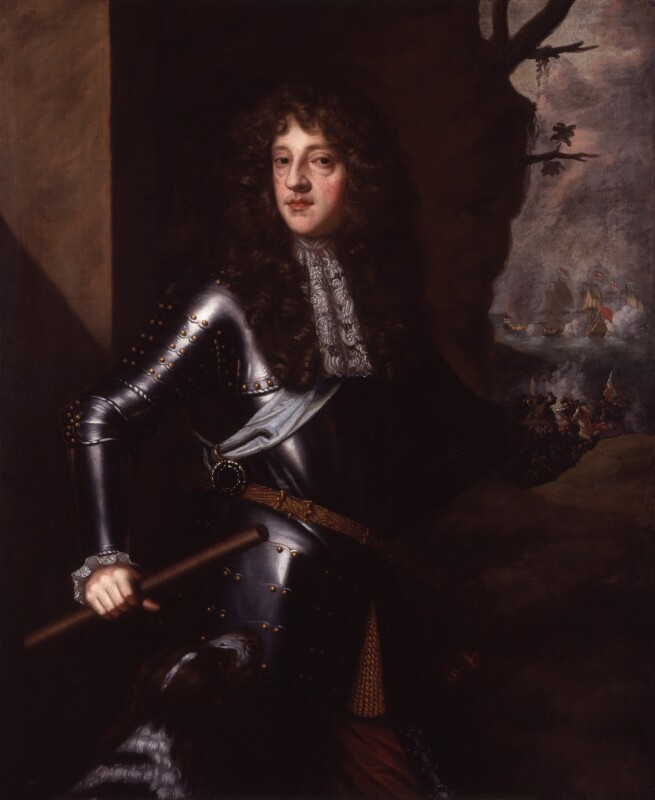
  • The Earl of Essex: 21 May 1672
  • The Duke of Ormonde: 24 May 1677
  • The Earl of Arran: 13 April 1682
Richard Butler (1639-1686) 1st Earl of Arran, son of the Duke of Ormonde, Royal Hospital Kilmainham, 15th October 2023.
  • The Duke of Ormonde: 19 August 1684
  • Lords Justices: 24 February 1685
  • Henry Hyde (1638-1709 (?)) 2nd Earl of Clarendon: 1 October 1685
Henry Hyde (1638-1709 (?)) 2nd Earl of Clarendon, as Lord Privy Seal and Lord Lieutenant of Ireland, Irish school courtesy of National Trust Castle Ward.
  • Richard Talbot (1630-1691), Duke of Tyrconnell (Lord Deputy): 8 January 1687
Richard Talbot (1630-1691), Duke of Tyrconnell, courtesy of National Gallery of Ireland.
  • King James II himself in Ireland: 12 March 1689 – 4 July 1690
  • King William III himself in Ireland: 14 June 1690
  • Lords Justices: 5 September 1690
  • The Viscount Sydney: 18 March 1692
  • Lords Justices: 13 June 1693
  • Algernon Capell 1670-1710 2nd Earl of Essex (Lord Deputy): 9 May 1695
Algernon Capell 1670-1710 2nd Earl of Essex.
  • Lords Justices: 16 May 1696
  • The Earl of Rochester: 28 December 1700
  • The Duke of Ormonde: 19 February 1703
  • The Earl of Pembroke: 30 April 1707
  • The Earl of Wharton: 4 December 1708
  • The Duke of Ormonde: 26 October 1710
  • The Duke of Shrewsbury: 22 September 1713

Under the House of Hannover

  • The Earl of Sunderland: 21 September 1714
  • Lords Justices: 6 September 1715
  • The Viscount Townshend: 13 February 1717
  • The Duke of Bolton: 27 April 1717
  • The Duke of Grafton: 18 June 1720
  • The Lord Carteret: 6 May 1724
  • The Duke of Dorset: 23 June 1730
  • The Duke of Devonshire: 9 April 1737
  • The Earl of Chesterfield: 8 January 1745
  • The Earl of Harrington: 15 November 1746
  • The Duke of Dorset: 15 December 1750
  • William Cavendish (1720-1764) 4th Duke of Devonshire: 2 April 1755
William Cavendish (1720-1764) 4th Duke of Devonshire, who brought Lismore Castle, County Waterford, into the Cavendish family by his marriage. Painting by Thomas Hudson.
  • The Duke of Bedford: 3 January 1757
  • The Earl of Halifax: 3 April 1761
  • The Earl of Northumberland: 27 April 1763
  • The Viscount Weymouth: 5 June 1765
  • The Earl of Hertford: 7 August 1765
  • The Earl of Bristol: 16 October 1766 (did not assume office)
  • The Viscount Townshend: 19 August 1767
  • The Earl Harcourt: 29 October 1772
  • The Earl of Buckinghamshire: 7 December 1776
  • The Earl of Carlisle: 29 November 1780
  • The Duke of Portland: 8 April 1782
  • The Earl Temple: 15 August 1782
  • The Earl of Northington: 3 May 1783
  • The Duke of Rutland: 12 February 1784
  • The Marquess of Buckingham: 27 October 1787
  • The Earl of Westmorland: 24 October 1789
  • The Earl FitzWilliam: 13 December 1794
  • The Earl Camden: 13 March 1795
  • The Marquess Cornwallis: 14 June 1798

United Kingdom of Great Britain and Ireland

Under the House of Hannover

Henry Paget, 1st Marquess of Anglesey (1768-1854), Viceroy in 1828 and 1830.
  • The Earl of Hardwicke: 27 April 1801
  • The Earl of Powis: 21 November 1805 (did not serve)
  • The Duke of Bedford: 12 March 1806
  • Charles Lennox, 4th Duke of Richmond: 11 April 1807
Charles Lennox (1764-1819) 4th Duke of Richmond, engraver Henry Hoppner Meyer, after painter John Jackson, courtesy of National Gallery of Ireland.
Charlotte Lennox nee Gordon (1768-1842), Duchess of Richmond, Vicereine 1807-1813, wife of Charles Lennox, 4th Duke of Richmond.
  • The Viscount Whitworth: 23 June 1813
  • The Earl Talbot: 3 October 1817
  • The Marquess Wellesley: 8 December 1821
  • Henry Paget, 1st Marquess of Anglesey (1768-1854): 27 February 1828
  • The Duke of Northumberland: 22 January 1829
  • Henry Paget, 1st Marquess of Anglesey (1768-1854): 4 December 1830
  • Richard Colley Wellesley (1760-1842), 2nd Earl of Mornington and 1st Marquess Wellesley: 12 September 1833
Richard Colley Wellesley (1760-1842), 2nd Earl of Mornington and 1st Marquess Wellesley by John Philip Davis courtesy of National Portrait Gallery in London NPG 846.
  • The Earl of Haddington: 1 January 1835
  • The Earl of Mulgrave: 29 April 1835
  • Viscount Ebrington: 13 March 1839
  • The Earl de Grey: 11 September 1841
  • The Lord Heytesbury: 17 July 1844
  • John William Brabazon Ponsonby (1781-1847) 4th Earl of Bessborough, County Kilkenny: 8 July 1846
The Viceroys wear a star-shaped badge that contains rubies, emeralds and Brazilian diamonds. These crown jewels were stolen from Dublin Castle in 1907. Pictured here, John William Brabazon Ponsonby (1781-1847) 4th Earl of Bessborough, County Kilkenny, Viceroy in 1846.
  • The Earl of Clarendon: 22 May 1847
  • The Earl of Eglinton: 1 March 1852
  • The Earl of St Germans: 5 January 1853
  • The Earl of Carlisle: 7 March 1855
  • The Earl of Eglinton: 8 March 1858
  • The Earl of Carlisle: 24 June 1859
  • The Lord Wodehouse: 1 November 1864
  • The Marquess of Abercorn: 13 July 1866
  • The Earl Spencer: 18 December 1868
  • James Hamilton (1811-1885) 1st Duke of Abercorn: 2 March 1874
James Hamilton (1811-1885) 1st Duke of Abercorn, Landowner and politician; Lord Lieutenant of Ireland, possibly by John Watkins 1860s courtesy of National Portrait Gallery NPG Ax21858.
  • The Duke of Marlborough: 11 December 1876
  • The Earl Cowper: 4 May 1880
  • The Earl Spencer: 4 May 1882
  • The Earl of Carnarvon: 27 June 1885
  • The Earl of Aberdeen: 8 February 1886
  • Charles Vane-Tempest-Stewart (1852-1915), 6th Marquess of Londonderry: 3 August 1886
Some of the Viceroys also wear the chain of office.The panelling in the room is from 1747 and is the oldest surviving interior finish in the State Apartments. Pictured here, Charles Vane-Tempest-Stewart (1852-1915), 6th Marquess of Londonderry, Viceroy from 1886-1889.
  • The Earl of Zetland: 30 July 1889
  • The Lord Houghton: 18 August 1892
  • The Earl Cadogan: 29 June 1895

Under the House of Saxe-Coburg and Gotha (later Windsor)

  • The Earl of Dudley: 11 August 1902
  • The Earl of Aberdeen: 11 December 1905
  • The Lord Wimborne: 17 February 1915
  • The Viscount French: 9 May 1918
  • The Viscount FitzAlan of Derwent: 27 April 1921

[1] https://repository.dri.ie/

[2] p. 8, Marnham, Niamh. An Introduction to the Architectural Heritage of Dublin South City. Published by the Department of Culture, Heritage and the Gaeltacht, 2017.

[3] https://www.archiseek.com/2010/1204-dublin-castle/

[4] p. 6, Marnham, Niamh. An Introduction to the Architectural Heritage of Dublin South City. Published by the Department of Culture, Heritage and the Gaeltacht, 2017.

[3] https://www.irelandscontentpool.com

[9] https://www.buildingsofireland.ie/building-of-the-month/chapel-royal-dublin-castle-dame-street-dublin-2/

[10] p. 9, Marnham, Niamh. An Introduction to the Architectural Heritage of Dublin South City. Published by the Department of Culture, Heritage and the Gaeltacht, 2017.

Duckett’s Grove, County Carlow, an impressive ruin and a walled garden

Maintained by Carlow County Council. Destroyed by fire in 1933 but there is a walled garden open to visitor and one can see the impressive ruins.

Photograph by Robert French, late 1800s, Lawrence Photographic Collection National Library of Ireland, flickr constant commons.
Duckett’s Grove, County Carlow, August 2021. Photograph © Jennifer Winder-Baggot, www.irishhistorichouses.com

The National Inventory tells us of the house:

Remains of detached three-storey over basement country house, c. 1745 now in ruins. Gothic style mantle added, c. 1825. Designed by Thomas Cobden. Extended c. 1845, with granite ashlar viewing tower on an octagonal plan, turrets and entrance screens added. Designed by J. McDuff Derick. Stable complex to rear.” [1]

Thomas Duckett (1646-1682) purchased the property in 1695. He married Judith Power, granddaughter of 5th Baron of Curraghmore.

The property was once part of a 12,000 acre estate with eight acres of gardens.

Duckett’s Grove, County Carlow, August 2021. Photograph © Jennifer Winder-Baggot, www.irishhistorichouses.com

The Duckett’s Grove website tells us:

In 1695 Thomas Duckett (1) who is stated, by Sir William Betham, Ulster King of Arms, to have been the son of James Duckett, of Grayrigg, Westmorland, by his third wife Elizabeth, daughter of Christopher Walker, of Workington, Cumberland, purchased five hundred acres of land in Kneestown, Rainestown, and Ardnahue, Palatine, Co. Carlow from British landlord Thomas Crosthwaite from Cockermouth near the Lake District in Scotland. Thomas Crosthwaite owned a vast amount of land in Ireland during that period and had himself acquired this and other lands which comprised of 495 acres of plantation in 1666 under the Acts of Settlement (1666 – 1684) in the reign of King Charles II.  However, Thomas Duckett did not make use of this land until the 1700s when he built a country house in Rainestown, replacing a smaller house on the same site where Duckett’s Grove stands today.” http://duckettsgrove.ie/

Duckett’s Grove, County Carlow, August 2021. The tallest, granite, flag tower was added in 1853 and designed to be seen above the tree line. Photograph © Jennifer Winder-Baggot, www.irishhistorichouses.com

The website continues:

In the early years of the Ducketts’ story, intermarriage with some well-connected and wealthy families contributed greatly to their financial standing and allowed for the expansion of the Demesne. Thomas Duckett’s (1) wife Judith de la Poer was the heiress of the wealthy Pierce De La Poer of Killowen in County Waterford, grandson of the Honorary Pierce De la Poer, of Killowen, Brother of Richard, First Earl of Tyrone. Thomas Duckett (1) had one son, Thomas Duckett (2)[1667-1735] who was his successor and heir. The Duckett family extended their estate, and their wealth grew throughout the eighteenth century.

The only son from this marriage Thomas Duckett (2) (a member of the Religious Society of Friends, commonly known as Quakers) lived in Phillipstown Manor, Rathvilly, Co. Carlow, situated approximately 3 miles from Kneestown and Rainestown which was a property purchased from the Earl of Ormonde. He married Jane Bunce, daughter of John Bunce, of Berkshire in 1687.  His last will and testament was dated 18th January 1732 and was proved on 13th May 1735. Thomas Duckett (2) had three daughters and one son and heir; John Duckett Esq., (1) of Phillipstown, Rathvilly, Co. Carlow and Newtown, Co. Kildare, whose last will and testament dated 13th April 1733, was proved on 17th May 1738.

A house called Phillipstown Manor built in 1745 according to the National Inventory of Architectural Heritage still survives – Thomas Duckett (1667-1735) and his wife Jane Bunce must have lived in an earlier version of this.

John Duckett Esq., (1) married Jane Devonsher who was daughter of Thomas Devonsher Esq. from Cork. The first son of John Duckett (1) and Jane Devonsher was Thomas Duckett (3) of Newtown died unmarried.

Jane Devonsher was the sister of Abraham Devonsher who lived at Kilshannig in Cork (see my entry – it is a Section 482 property). My Quaker husband and I laugh that some of the most exuberant plasterwork and the most exuberant architecture was owned by Quakers! But perhaps the Ducketts were no longer Quakers by the time the house was made so ornate. John and his wife Jane lived in Phillipstown Manor. https://www.buildingsofireland.ie/buildings-search/building/10300308/philipstown-manor-phillipstown-carlow

Duckett’s Grove, County Carlow, August 2021. Photograph © Jennifer Winder-Baggot, www.irishhistorichouses.com

John and Jane’s second son William Duckett (1) of Phillipstown, Co. Carlow married Janet Summers, daughter of Samuel Summers, Esq., and they had no children. Their third son, Abraham Duckett (1) of Ardnahue, Co. Carlow married Mary Jessop, daughter of Samuel Jessop, Esq. Abraham Duckett (1) and Mary Jessop had four sons (three sons, who all died without children) and three daughters.”

It was John and Jane’s fourth son, Jonas Duckett Esq. (1720-1797) of Co. Carlow (who Duckett’s Grove is said to have been named after), who passed Duckett’s Grove to the next generation. It may have been he who built a two storey Georgian house on the property later transformed into the current confection.

Jonas married Hannah Alloway, daughter of William Alloway, Esq. of Dublin, a merchant banker, who brought money to the marriage. They had four sons, their eldest son and heir being William Duckett who was born in 1761In 1790 William Duckett (b. 1761) married another daughter of a banker, Elizabeth Dawson Coates, daughter and co-heir of John Dawson-Coates Esq, a banker of Dawson Court, Co. Dublin. The bank was called Coates and Lawless and in 1770 it was located at 36 Thomas Street.

William Duckett (b. 1761) and Elizabeth Dawson-Coates’s son John (1791-1866), added Dawson to his name, to become John Dawson-Duckett. I believe that this is because Elizabeth Dawson-Coates’s father John Dawson-Coates may have been the heir of John Dawson of the bank Wilcox and Dawson. [2]

John Dawson-Coates had two daughters who were his co-heirs, Elizabeth and Anne. Their brothers predeceased their father. Elizabeth married William Duckett (b. 1761) and Anne married William Hutchinson of Timoney, County Tipperary. [see 2] 

The fortunes of the two heiresses, Elizabeth and Anne Dawson-Coates, coalesced when the daughter of Anne Dawson-Coates and William Hutchinson (Sarah Hutchinson Summers) married her cousin (John Dawson-Duckett) the son of Elizabeth Dawson-Coates and William Duckett.

Duckett’s Grove, County Carlow, August 2021. Photograph © Jennifer Winder-Baggot, www.irishhistorichouses.com

John Dawson-Duckett (1791-1866) hired Thomas A. Cobden to turn his house into a castle.

The Cobden work is rendered in patent cement and includes an oriel window over entrance and a full-height bow on the North East corner, while the later work, which includes a slender viewing tower, entrance to the stables and curtain walls is executed in granite ashlar. [7] Photograph © Jennifer Winder-Baggot, www.irishhistorichouses.com
Duckett’s Grove, County Carlow, August 2021. Photograph © Jennifer Winder-Baggot, www.irishhistorichouses.com

Mark Bence-Jones writes in his A Guide to Irish Country Houses (1988):

p. 113. “(Eustace-Duckett/IFR) A square house of two and three storeys, transformed into a spectacular castellated Gothic fantasy by Thomas A. Cobden [1794-1842], of Carlow, for J. D. Duckett 1830 [John Dawson Duckett (1791-1866)]. Numerous towers and turrets, round, square and octagonal; notably a heavily machicolated round tower with a tall octagonal turret growing out of it. The walls enlivened with oriels and many canopied niches sheltering statues; more statues and busts in niches along the battlemented wall joining the house to a massively feudal yard gateway; yet more statues manning the battlements of one of the towers, and disposed around the house on pedestals. At the entrance to the demesne is one of the most stupendous castellated gateways in Ireland: with a formidable array of battlemented and machicolated towers and two great archways giving onto two different drives; the principal archway having a portcullis, and being surmounted by an immense armorial achievement, which was originally coloured. The house was burnt 1933 and is now a ruin.” [3]

Duckett’s Grove, County Carlow, August 2021. Photograph © Jennifer Winder-Baggot, www.irishhistorichouses.com

John Dawson Duckett was appointed High Sheriff of County Carlow in 1819 and married Sarah Hutchinson Summers [or is it Sarah Summers Hutchinson?], daughter of William Hutchinson Esq. from Timoney Park, Co. Tipperary on 16th March 1819. They had two sons: the eldest, William (Dawson) Duckett (1822 – 1908) was named after his grandfather and he was the last blood heir to Duckett’s Grove. Their second daughter, Anne Duckett married Hardy Eustace of Castlemore, Tullow, Co. Carlow. They went on to live at Hardymount in County Carlow, which has gardens one can visit (see below).

David Hicks tells us in his book Irish Country Houses, A Chronicle of Change, that more work was carried out in the 1840s, designed by architect John MacDuff Derick, who added extra floor space and prominent architectural features, such as a large circular flag tower, which was faced in local granite. A new basement kitchen as added with a billiard room above on the ground floor level. The exterior of the castle was decorated with various niches that contained statues and, on the facade of the building, heads of many mythological creatures. Bust of famous warriors decorated the length of the battlemented wall that joined the castle to one of the courtyards to its rear. Statues around the grounds depicted Greek and Roman figures.

As well as enlarging the castle, MacDuff Derick created the impressive entrance gateway, with an immense coat of arms carved by Kelly and Kinsella, which was gilded and coloured and features birds and animals associated with the lineage of the Duckett family.

Duckett’s Grove, County Carlow, August 2021. Photograph © Jennifer Winder-Baggot, www.irishhistorichouses.com
Duckett’s Grove, County Carlow, August 2021. The tallest, granite, flag tower was added in 1853 and designed to be seen above the tree line. Photograph © Jennifer Winder-Baggot, www.irishhistorichouses.com
Duckett’s Grove, County Carlow, August 2021. Photograph © Jennifer Winder-Baggot, www.irishhistorichouses.com

The Ducketts were quite happy to allow members of the public to picnic in their gardens until one group disturbed the peace in 1902, peering in their windows, and the family closed the grounds to the public.

Duckett’s Grove, County Carlow, August 2021. Photograph © Jennifer Winder-Baggot, www.irishhistorichouses.com
The exterior of the castle was decorated with various niches that contained statues and, on the facade of the building, heads of many mythological creatures. Photograph © Jennifer Winder-Baggot, www.irishhistorichouses.com
Duckett’s Grove, County Carlow, August 2021. Photograph © Jennifer Winder-Baggot, www.irishhistorichouses.com

The courtyards of outbuildings are accessed from either side of the castle by impressive gateways with towers and arches.

Entrance to stable yards. Photograph © Jennifer Winder-Baggot, www.irishhistorichouses.com
The curtain wall. Photograph © Jennifer Winder-Baggot, www.irishhistorichouses.com
Duckett’s Grove, County Carlow, August 2021. Photograph © Jennifer Winder-Baggot, www.irishhistorichouses.com

William Dawson Duckett (1822 – 1908) married twice. His first wife died without any children. One year later William Dawson Duckett, at the age of 73 years, married 21 year old Maria Georgina Thompson. Maria Georgina Thompson was daughter of Captain Robert Gordon Cummins and widow of Theophilius Thompson of Forde Lodge, Co. Cavan. She had one daughter.

The website tells us:

“William (Dawson) Duckett (2) now had a new wife Maria and a stepdaughter Olive. He didn’t live that long afterwards, as he died on 22nd June, 1908 aged 86. He was the last member of the Duckett family line to live in Duckett’s Grove Gothic Mansion, in Rainestown, Carlow, leaving just his wife Maria and her daughter [Olive, by a previous marriage of Maria to Theophilus Thompson] living there after his death. In his last will and testament dated 29th February, 1904, William (Dawson) Duckett (2) willed his estate to his widow, Maria Georgina Duckett with the exception of a small section of his estate willed to his nephew, John Hardy Rowland Eustace with the instruction that the Duckett family name be affixed to the name Eustace, giving rise to the name ‘Eustace Duckett’ from Castlemore. [William Dawson Duckett’s sister Anne married Hardy Eustace and their son was John Hardy Roland Eustace] Maria’s daughter Olive married Captain Edward Stamer O’Grady circa 1916. 

It was also at this time that Maria decided to leave Duckett’s Grove following alleged threats from seven Carlow businessmen who were disgruntled and had become malicious in their feelings towards her, allegedly wanting to acquire Duckett’s Grove Gothic mansion. She decided to live in ‘De Wyndesore’, a mansion on Raglan Road, Dublin which was purchased for her as a wedding gift by her late husband William (Dawson) Duckett 2. She spent some time moving between her Dublin and London homes and rarely returned to Duckett’s Grove.” She became mentally ill and paranoid and the only heir to Duckett Grove, her daughter Olive, was cut from her will. [see the full story in Jimmy O’Toole, The Carlow Gentry: What will the neighbours say! Published by Jimmy O’Toole, Carlow, Ireland, 1993. Printed by Leinster Leader Ltd, Naas, Kildare.] [4]

Duckett’s Grove, County Carlow, August 2021. Photograph © Jennifer Winder-Baggot, www.irishhistorichouses.com
The information board tells us that the drive was lined by statues, which were unfortunately destroyed by the IRA as target practice, when the IRA occupied Duckett’s Grove in 1923. Photograph © Jennifer Winder-Baggot, www.irishhistorichouses.com

Driving to Duckett’s Grove, you first come across the impressive entrance gates:

Duckett’s Grove entrance gates, August 2021. Photograph © Jennifer Winder-Baggot, www.irishhistorichouses.com

The National Inventory tells us about these gates:

The double entrance arches and lodges were designed in a gothic-revival style by J.McDuff Derick [1810-1859] about 1840. This structure is difficult to describe but is a mixture of walls, buttresses, towers and crennelations with lancet windows and heavily mullioned windows. This is possibly the most elaborate entrance to any estate in Ireland and is of considerable architectural importance.”  [see 1]

Duckett’s Grove entrance gates, August 2021. Photograph © Jennifer Winder-Baggot, www.irishhistorichouses.com
Duckett’s Grove entrance gates, August 2021. This crest used to be coloured and gilded. Photograph © Jennifer Winder-Baggot, www.irishhistorichouses.com
Duckett’s Grove entrance gates, August 2021. Photograph © Jennifer Winder-Baggot, www.irishhistorichouses.com

Om 1921 Duckett’s Grove was sold to a consortium of local farmers. After the sale the house was occupied by British soldiers and later by Irish Free State soldiers during the Civil War. The Ducketts were held in high regard by the community so that house was not damaged beyond the soldiers taking pot-shots at the statues. The house was sold again, this time to Theo Frederick George Thompson of the Hanover Works in Carlow (see David Hicks). While he was deciding what to do with it the disaster of the fire occurred.

After the fire the building was sold to Charles Balding of Rainstown House and in later years, used as a riding school. The gate lodge was converted into a pub in the 1970s. In 2005 Carlow County Council took possession of Duckett’s Grove for use as a public park with the intention of conserving the castle and restoring the gardens.

After wandering around the castle we went back through the stable yard toward the walled garden.

Duckett’s Grove, County Carlow, August 2021. Photograph © Jennifer Winder-Baggot, www.irishhistorichouses.com
I think there is a cafe in the courtyard, but we were there during lockdown due to Covid so there was no cafe open, August 2021. Photograph © Jennifer Winder-Baggot, www.irishhistorichouses.com
Duckett’s Grove, County Carlow, August 2021. Photograph © Jennifer Winder-Baggot, www.irishhistorichouses.com

The walled garden has also been redeveloped.

Walled garden, Duckett’s Grove, County Carlow, August 2021. Photograph © Jennifer Winder-Baggot, www.irishhistorichouses.com

The brick walls of the walled garden retain the sun’s heat better than the granite of surrounding building structures.

Walled garden, Duckett’s Grove, County Carlow, August 2021. Photograph © Jennifer Winder-Baggot, www.irishhistorichouses.com

[1] https://www.buildingsofireland.ie/buildings-search/building/10300304/ducketts-grove-russellstown-cross-roads-russellstown-carlow

[2] Tenison, C.M. “The Old Dublin Bankers.” Journal of the Cork Historical and Archaeological Society. vol. 1, 1895.

[3] p. 113, Bence-Jones, Mark. A Guide to Irish Country Houses (originally published as Burke’s Guide to Country Houses volume 1 Ireland by Burke’s Peerage Ltd. 1978); Revised edition 1988 Constable and Company Ltd, London.

[4] Jimmy O’Toole, The Carlow Gentry: What will the neighbours say! Published by Jimmy O’Toole, Carlow, Ireland, 1993. Printed by Leinster Leader Ltd, Naas, Kildare. 

Text © Jennifer Winder-Baggot, www.irishhistorichouses.com

Glenarm Castle, County Antrim, Northern Ireland – private, can book a tour

https://glenarmcastle.com

Glenarm Castle & Garden, photo by Donal Maloney 2021 for Tourism Ireland [1]

Sorry, this is another re-publishing, as it was previously published on my “Places to Visit in County Antrim” page. Stephen and I have still been too busy this year to visit more Section 482 properties. Heritage Week is coming up next month, August 17-24th, so all of the Section 482 properties should be open – see my home page for details, https://irishhistorichouses.com/

I hope Stephen and I can visit many properties this year during Heritage Week!

The website tells us that Glenarm Castle is one of few country estates that remains privately owned but open to the public. It is steeped in a wealth of history, culture and heritage and attracts over 100,000 visitors annually from all over the world. 

Photograph © Jennifer Winder-Baggot, www.irishhistorichouses.com

Visitors can enjoy enchanted walks through the Walled Garden and Castle Trail, indulge in an amazing lunch in the Tea Room, purchase some local produce or official merchandise, or browse through a wide range of ladies & gents fashions and accessories and a selection of beautiful gifts, souvenirs and crafts in the Byre Shop and Shambles Workshop – with many ranges exclusive to Glenarm Castle.

Glenarm Castle is the ancestral home of the McDonnell family, Earls of Antrim. The castle is first and foremost the private family home of Viscount and Viscountess Dunluce and their family but they are delighted to welcome visitors to Glenarm Castle for guided tours on selected dates throughout the year.

Delve deep into the history of Glenarm Castle brought to life by the family butler and house staff within the walls of the drawing room, the dining room, the ‘Blue Room’ and the Castle’s striking hall. 

Finish the day with the glorious sight of the historic Walled Garden, which dates back to the 17th century.

Dates are limited and booking in advance is required.  

An image of Glenarm Castle from the slideshow in the museum.
Glenarm Castle, June 2023. Photograph © Jennifer Winder-Baggot, www.irishhistorichouses.com
Information board at Glenarm.

The castle was built around 1603 by Randal MacDonnell [1610-1682], afterwards 1st Earl of Antrim, as a hunting lodge or secondary residence to Dunluce Castle, and became the principal seat of the family after Dunluce Castle was abandoned. The mansion house was rebuilt ca. 1750 as a 3-storey double gable-ended block, joined by curving colonnades to two storey  pavilions with high roofs and cupolas. This would have been during the life of the 5th Earl of Antrim, Alexander MacDonnell (1713-1775).

Glenarm Castle, June 2023. Photograph © Jennifer Winder-Baggot, www.irishhistorichouses.com

We learned of the 1st and 2nd Earls of Antrim on our visit to Dunluce Castle in Antrim. When the 2nd Earl died in 1682 his brother Alexander (1615-1699) became 3rd Earl of Antrim. He first married Elizabeth Annesley, daughter of the 1st Earl of Anglesey.

Arthur Annesley (1614-1686) 1st Earl of Anglesey, after John Michael Wright based on a work of 1676, National Portrait Gallery of London 3805.

Elizabeth née Annesley died in 1672 and Alexander married Helena Burke. Their son Randal (1680-1721) became the 4th Earl of Antrim.

Photograph © Jennifer Winder-Baggot, www.irishhistorichouses.com

The 4th Earl married Rachael Skeffington, daughter of Clotworthy, 3rd Viscount Massereene, Co. Antrim, of Antrim Castle. The 4th Earl of Rachael had a son Alexander MacDonnell (1713-1775) who succeeded as 5th Earl of Antrim. It was during his time that the castle was enlarged. He was a Privy Counsellor and Governor of County Antrim.

Ballymagarry, where the Earls lived after Dunluce Castle, burned down in 1750, so in 1756 the 5th Earl of Antrim invited an engineer from Cumbria called Christopher Myers to come to Glenarm to rebuild the ruin. Myers transformed it into a grand Palladian country house with curving colonnades ending in pavilions on either side, one of which contained a banqueting room. The lime trees that now arch over the driveway were planted and gardens were planned in a network of walled enclosures.

Alexander the 5th Earl married Elizabeth Pennefather, daughter of Matthew, MP for Cashel and Comptroller and Accountant-General for Ireland. She died, however, in 1736, and he married Anne Plunkett in 1739.

“Miss Anne Plunkett, niece of the first Lord Aldborough, Countess of Antrim,” 18th Century Irish School , courtesy of Fonsie Mealy Fortgranite. She was the daughter of Charles Patrick Plunkett of Dillonstown, County Louth and Elizabeth Stratford. She married Alexander MacDonnell the 5th Earl of Antrim.

Anne née Plunkett gave birth to the heir, Randal William (1749-1791), who later became the 6th Earl of Antrim. Anne died when Randall was just six years old, so Alexander married again, this time to Catherine Meredyth, daughter of Thomas of Newtown, County Meath. She had been previously married to James Taylor (1700-1747), son of Thomas 1st Baronet Taylor, of Kells, Co. Meath.

Information board about the 5th and 6th Earls of Antrim.
This room in Glenarm Castle has portraits of many of the 5th Earl’s horses. Photograph is from the slideshow in the museum.
Glenarm Castle. Photograph © Jennifer Winder-Baggot, www.irishhistorichouses.com

The 6th Earl served as MP for County Antrim as well as High Sheriff for the county. Randall William MacDonnell married Letitia Morres, daughter of Hervey Morres 1st Viscount Mountmorres of Kilkenny. They had no sons.

Randall William was created 1st Viscount Dunluce [Ireland] and 1st Earl of Antrim [Ireland] on 19 June 1785, with special remainder to his daughters in order of seniority. This meant that his daughters became Countesses of Antim in their own right. He then served as Privy Counsellor for Ireland. He was created 1st Marquess of Antrim [Ireland] on 18 August 1789 but this title died with him, along with the two earlier creations of Earl of Antrim and Viscount Dunluce.

His eldest daughter Anne Catherine (1778-1834) became 2nd Countess of Antrim in 1791 when her father died. Anne Catherine’s sister Letitia Mary predeceased her. When Anne Catherine died in 1834 her sister Charlotte became 3rd Countess of Antrim. Charlotte’s sons became the 4th and 5th Earls of Antrim (the Countesses being in lieu of the 2nd and 3rd Earls). The descendants still live in the castle.

See also the blog of Timothy William Ferres. [2]

Information about Anne Catherine (1775-1834), Countess of Antrim.
Anne Katherine MacDonnell, 2nd Countess of Antrim (1778-1834) by Anne Mee, watercolour painting on ivory.
Information board about Elizabeth Catherine, Countes of Antrim.
Crest on the front of the house at Glenarm Castle. See also the lions heads over the windows. Photograph © Jennifer Winder-Baggot, www.irishhistorichouses.com

Anne Catherine married first Henry Vane-Tempest (1771-1813) 2nd Baronet Vane, of Long Newton, Co. Durham. They had a daughter, Frances Anne Emily Vane-Tempest, who married Charles William Vane, 3rd Marquess of Londonderry. Harry Vane-Tempest decided to ‘Gothicise’ the building. The colonnades and pavilions were demolished and Gothic windows installed. When he died, Anne Catherine married Edmund Phelps, who assumed the name of MacDonnell.

Anne Catherine and Edmund hired William Vitruvius Morrison to enlarge Glenarm.

Mark Bence-Jones writes in his  A Guide to Irish Country Houses (1988):

p. 135. “(McDonnell, Antrim, E/PB) The main block had a pedimented breakfront with three windows in the top storey, a Venetian window below and a tripartite doorway below again, flanked on either side by a Venetian window in each of the two lower storeys and a triple window above. The pavilions were of three bays. Ca. 1825, the heiress of the McDonnells, Anne, Countess of Antrim in her own right, and her second husband [Edmund Phelps], who had assumed the surname of McDonnell, commissioned William Vitruvius Morrison to throw a Tudor cloak over Glenarm. He did very much the same as he had done at Borris, Co Carlow and Kilcoleman Abbey, Co Kerry; adding four slender corner turrets to C18 block, crowned with cupolas and gilded vanes; he also gave the house a Tudor-Revival façade with stepped gables, finials, pointed and mullioned windows and heraldic achievements, as well as a suitably Tudor porch. The other fronts were also given pointed windows and the colonnades and pavilions were swept away, a two storey Tudor-Revival service wing being added in their stead.” [3]

A photograph of Glenarm Castle from the museum slideshow.
Glenarm Castle, June 2023. Photograph © Jennifer Winder-Baggot, www.irishhistorichouses.com
Glenarm Castle. Photograph © Jennifer Winder-Baggot, www.irishhistorichouses.com
A crest on Glenarm Castle. Photograph © Jennifer Winder-Baggot, www.irishhistorichouses.com
Photograph © Jennifer Winder-Baggot, www.irishhistorichouses.com

Mark Bence-Jones continues:”The interior remained Classical; the hall being divided by an arcade with fluted Corinthian columns; the dining room having a cornice of plasterwork in the keyhole pattern. In 1929, the Castle was more or less gutted by fire; in the subsequent rebuilding, to the designs of Imrie & Angell, of London, the pointed and mullioned windows were replaced with rectangular Georgian sashes. Apart from the octagon bedroom, which keeps its original plasterwork ceiling with doves, the interior now dates from the post-fire rebuilding; some of the rooms have ceilings painted by the present Countess of Antrim [Elizabeth Hannah Sacher]. The service wing was reconstructed after another fire 1967, the architect being Mr Donal Insall. In 1825, at the same time as the castle was made Tudor, the entrance to the demesne from the town of Glenarm was transformed into one of the most romantic pieces of C19 medievalism in Ireland, probably also by Morrison. A tall, embattled gate tower, known as the Barbican, stands at the far end of the bridge across the river, flanked by battlemented walls rising from the river bed.” [3]

Glenarm Castle, by Donal Maloney 2021, for Tourism Ireland. [see 1]
Glenarm Castle, with George the butler, who gave us a tour, photograph by Donal Malony 2021 for Tourism Ireland, Ireland’s Content Pool (see [1]). A portrait of Charlotte, Countess of Antrim, with her head resting on her hand, is on the wall.
Glenarm, County Antrim.

The second daughter, Charlotte 3rd Countess of Antrim married Mark Robert Kerr (1776-1840), son of William John Kerr, 5th Marquess of Lothian, Scotland. An information board tells us that as well as being a military man, he had a fondness for art.

Drawings by Mark Kerr.
Glenarm, County Antrim.

Charlotte and Mark had many children. Their sons who inherited the title Earl of Antrim after their mother’s death took the name MacDonnell when they succeeded to the title. The 4th Earl, Hugh Seymour McDonnell (1812-1855) had no son so his brother, Mark (1814-1869), succeeded him as 5th Earl of Antrim.

Glenarm, County Antrim.

Mark’s son William Randal McDonnell (1851-1918) succeeded as 6th/11th Earl of Antrim. He held the office of Deputy Lieutenant (D.L.) of County Antrim. In the information panel in the museum at the castle, he is referred to as the 11th Earl. He married Louisa Jane Grey. She held the office of a Lady of the Bedchamber to Queen Victoria between 1890 and 1901.

Louisa, wife of 11th, or 6th Earl of Antrim.
Information about William, 6th Earl of Antrim. His wife Louisa née Grey was lady-in-waiting to Queen Victoria.
Glenarm, County Antrim.

Their son Randal Kerr MacDonnell (1878-1932) became 7th/12th Earl of Antrim in 1918. In 1929 a large fire occurred.

Glenarm, County Antrim.

His son Randal John (1911-1977) became 8th Earl (13th) in 1932, and his son in turn, Alexander Randal MacDonnell (1935-2021) the 9th Earl.

Glenarm, County Antrim.

Randal John 8th Earl and his wife Angela attended the coronation of Queen Elizabeth II in 1953.

Randal John 9th Earl and Angela Christina attended the coronation of Queen Elizabeth II. Photograph © Jennifer Winder-Baggot, www.irishhistorichouses.com
Explanation of the Coronation robes.
The family at the time of the Coronation in 1953.

Angela Sykes (1911-1984), wife of the 8th or 13th Earl was an artist and she created the rather bulging statues of planetary gods that adorn the ceiling corners of the front hall. She also designed Mithras slaying the bull over the fireplace. She also created murals in the dining room, drawing room and in her bedroom.

About Angela Sykes and her art.
Mithras slaying the bull, which features in the Castle Hall, by Angela Sykes.
The front hall of Glenarm, photograph courtesy of Heritage centre.
Angela Sykes also painted the ceiling decoration, photograph courtesy of the McDonnell family heritage centre museum.
Information about Alexander MacDonnell, the 9th Earl of Antrim, the 14th Earl.
The current Earl of Antrim.
Courtyard on the way to the walled garden at Glenarm. Photograph © Jennifer Winder-Baggot, www.irishhistorichouses.com
Explanation about the walled garden at Glenarm.
The Walled Garden at Glenarm is amazing, June 2023. Photograph © Jennifer Winder-Baggot, www.irishhistorichouses.com
Anne Catherine (1778-1834) MacDonnell, daughter of the 1st Earl of Antrim, built the current four acre walled garden in the 1820s. She planted the circular yew hedge and installed an enormous five bay glass house.
The circular yew hedge, photograph from slide show in museum.
The walled garden at Glenarm, photograph courtesy of Heritage Centre.
Walled garden, Glenarm, June 2023. Photograph © Jennifer Winder-Baggot, www.irishhistorichouses.com
The Glass houses at Glenarm, June 2023. Photograph © Jennifer Winder-Baggot, www.irishhistorichouses.com
The Glenarm walled garden is full of beautiful vistas. Photograph © Jennifer Winder-Baggot, www.irishhistorichouses.com
Glenarm walled garden, June 2023. Photograph © Jennifer Winder-Baggot, www.irishhistorichouses.com
Glenarm walled garden, June 2023.
Glenarm walled garden, June 2023. Photograph © Jennifer Winder-Baggot, www.irishhistorichouses.com
More beautiful vistas at Glenarm walled garden, June 2023. Photograph © Jennifer Winder-Baggot, www.irishhistorichouses.com
Glenarm walled garden, photograph courtesy of Heritage centre.
“The Mound” in the garden, photograph courtesy of Heritage centre.
“The Mound.”
Mother and Child by Angela Sykes (1911-1984), wife of the 13th Earl of Antrim. Photograph © Jennifer Winder-Baggot, www.irishhistorichouses.com
The estate continues to provide employment. Angela wife of the 13th Earl established a furniture factory. Today Glenarn has an organic salmon farm, an organic shorthorn beefherd, farming, forestry and hydro-electric enterprises.
The outbuildings at Glenarm Castle. Photograph © Jennifer Winder-Baggot, www.irishhistorichouses.com

The Castle also hosts a Coach House Museum.

In the Coach House Museum at Glenarm. Photograph © Jennifer Winder-Baggot, www.irishhistorichouses.com
In the Coach House Museum at Glenarm.
Glenarm, County Antrim.

[1] https://www.irelandscontentpool.com/en

[2] http://lordbelmontinnorthernireland.blogspot.com/search/label/County%20Antrim%20Landowners?updated-max=2020-02-05T07:48:00Z&max-results=20&start=49&by-date=false

[3] p. 135, Bence-Jones, Mark. A Guide to Irish Country Houses (originally published as Burke’s Guide to Country Houses volume 1 Ireland by Burke’s Peerage Ltd. 1978); Revised edition 1988, Constable and Company Ltd, London.

Text © Jennifer Winder-Baggot, www.irishhistorichouses.com

Dunluce Castle (ruin), County Antrim, Northern Ireland

I am republishing this as a separate entry. Sorry not to have a Section 482 property to write about this week – still one to write up, and we haven’t been visiting as we’ve been looking for our own house to buy in the countryside – it won’t be a Georgian house, unfortunately! I hope to get back to visiting Section 482 properties eventually….

https://discovernorthernireland.com/things-to-do/dunluce-castle-medieval-irish-castle-on-the-antrim-coast-p675011

Dunluce Castle Co Antrim by Robert French, Lawrence Collection National Library of Ireland, flickr constant commons.
Dunluce Castle by Matthew Woodhouse 2015 for Tourism Ireland [1]

The website tells us:

With evidence of settlement from the first millennium, the present castle ruins date mainly from the 16th and 17th centuries. It was inhabited by both the feuding MacQuillan and MacDonnell clans. Historical and archaeological exhibits are on display for public viewing.

Opening Hours: Please check before visiting as public access may be restricted.

We visited in June 2023.

Dunluce, June 2023. Photograph © Jennifer Winder-Baggot, www.irishhistorichouses.com
Before the MacDonnells, the area was inhabited by the MacQuillan family. The area was called “The Route” meaning small private army. They built a castle in around 1480. Around 1540, Rory MacQuillan looked for help from mercenaries to help him to hold his area. They hired the MacDonnells, who came from the Scottish island of Islay in the 14th century. The MacDonnells soon overthrew the MacQuillans and took control of Dunluce Castle.
The early MacDonnell story.

The storyboards tell us that Colla MacDonnell was head of the clan and overthrew the MacQuillans, and that when he died in 1558, Dunluce passed to his brother, Sorley Boy MacDonnell. The MacDonnells had more castles up along the coast. Sorley Boy had to spend much time in battle defending his territory. In 1565 he was captured by Shane O’Neill and held hostage for two years.

Sorley Boy married Mary O’Neill, daughter of Conn Baccach O’Neill (1484-1559), 1st Earl of Tyrone. Families intermarried to form alliances.

In 1563, an expedition of the Walter Devereux, 1st Earl of Essex, massacred Sorley Boy’s troops on Rathlin Island, across the bay from his castle, when they had fled there for safety.

Dunluce Castle was captured in 1584 by John Perrot, Lord Deputy of Ireland. Sorley Boy’s troops scaled the cliffs to attack and recapture the castle. Sorley Boy surrendered to Queen Elizabeth in order to be rewarded his lands again, under “Surrender and Regrant.” Sorley Boy died in 1589.

Sir John Perrot, (1527-1592) said to be a son of King Henry VIII, Soldier and Lord Deputy of Ireland, Date 1776 Engraver: Valentine Green (English, 1739 – 1813); Copyist: George Powle, (English, fl.1764-1771), courtesy of National Gallery of Ireland.
Portrait of Elizabeth I, Queen of England (1503-1603) Date c.1560, courtesy of National Gallery of Ireland.

The sign boards tell us that after Sorley Boy’s death in 1589 he was succeeded by his third son, James. James died in 1601 and was succeeded by his brother, Randall Arranach MacDonnell (1556-1635). He fought against the English in the Battle of Kinsale in 1601, but later sought to regain favour with the crown and again surrendered and was regranted the lands of “the Route” and the Glens of Antrim, owning 330,000 acres. He was made Viscount Dunluce in 1618 and Earl of Antrim in 1620.

The story of Randal Arranach MacDonnell, d. 1636, 1st Earl of Antrim. His name “Arranach” refers to the fact that he was brought up by a foster family in the Scottish Isle of Arran. It was common for one family to foster the children of another, to solidify social and political bonds.

Mark Bence-Jones writes in his A Guide to Irish Country Houses:

(McDonnell, Antrim, E/PB) The ancestral stronghold of the McDonnells, Earls of Antrim, dramatically situated at the end of a rocky promontory jutting out into the sea off the north Antrim coat. The castle, which was built at various periods from C14 to C17, eventually consisted of several round towers and a gatehouse with rather Scottish bartizans, joined by a curtain wall, with domestic buildings inside this enclosure. The latter included a mid-C16 loggia with sandstone columns, and a two storey Elizabethan or Jacobean house, with three large oriels. These two buildings were first of two courtyards into which the castle enclosure was divided; the other and lower yard containing offices and servants’ quarters. There were also buildings on the mainland, erected early C17. In 1639, part of the curtain wall of the castle collapsed into the sea, together with some of the servants’ quarters and a number of servants. After the Civil Wars, the castle was abandoned by the family in favour of Glenarm Castle, it is now a romantic ruin.” [2]

The entrance to the castle. Photograph © Jennifer Winder-Baggot, www.irishhistorichouses.com
The entrance was like a funnel. Photograph © Jennifer Winder-Baggot, www.irishhistorichouses.com
The entrance is still imposing. Photograph © Jennifer Winder-Baggot, www.irishhistorichouses.com
Part of the gate house built by Sorley Boy MacDonnell in the late 1580s. It would have had a drawbridge. Photograph © Jennifer Winder-Baggot, www.irishhistorichouses.com
The castle perches on the cliff. Photograph © Jennifer Winder-Baggot, www.irishhistorichouses.com
The view from the castle in one direction up the coast. Photograph © Jennifer Winder-Baggot, www.irishhistorichouses.com
Dunluce, June 2023. Photograph © Jennifer Winder-Baggot, www.irishhistorichouses.com
The view from the castle in the other direction. Photograph © Jennifer Winder-Baggot, www.irishhistorichouses.com
Photograph © Jennifer Winder-Baggot, www.irishhistorichouses.com

The structure consisted of the gatehouse and a curtain wall, with domestic buildings inside the enclosure. Signage tells us that Sorley Boy MacDonnell built the Scottish style gate house. About forty years later, Randal MacDonnell built a manor house, by 1620, inside the enclosure, of which we can see remnants. It was of two or three storeys and had three large oriel windows.

Signage about Manor House. Photograph © Jennifer Winder-Baggot, www.irishhistorichouses.com
Remnants of the Manor House of Dunluce Castle. Photograph © Jennifer Winder-Baggot, www.irishhistorichouses.com
The Oriel windows. Photograph © Jennifer Winder-Baggot, www.irishhistorichouses.com
The Oriel windows have been reconstructed, I believe. Photograph © Jennifer Winder-Baggot, www.irishhistorichouses.com
Remnants of the manor house and surrounding walls. Photograph © Jennifer Winder-Baggot, www.irishhistorichouses.com
Remnants of the Manor House. Photograph © Jennifer Winder-Baggot, www.irishhistorichouses.com
A picture of what the castle may have looked like inside.
We saw this, a reproduction fireback of an original from Dunluce Castle, in Ballygally Castle. The fireback was commissioned by Randall MacDonnell around 1603. It has a heraldic leopard, a Tudor rose for England and a thistle for Scotland. It may commemorate King James VI of Scotland becoming James I of England. Under James I, Randall MacDonnell became the first Earl of Antrim. The fireback was discovered at Dunluce in 1929 and this copy was cast for the descendant of the 1st Earl, and his children installed in in Ballygally when they purchased Ballygally castle. The original has now been lost. Photograph © Jennifer Winder-Baggot, www.irishhistorichouses.com

As Mark Bence-Jones writes: “The castle, which was built at various periods from C14 to C17, eventually consisted of several round towers and a gatehouse with rather Scottish bartizans, joined by a curtain wall, with domestic buildings inside this enclosure. The latter included a mid-C16 loggia with sandstone columns, and a two storey Elizabethan or Jacobean house, with three large oriels. These two buildings were first of two courtyards into which the castle enclosure was divided; the other and lower yard containing offices and servants’ quarters.

Signage tells us that it was not just a castle that was located on the cliff but a whole town, established by Randal MacDonnell (1556-1635), 1st Earl of Antrim, in 1608.

Archaeologists have recently unearthed remains of merchants’ houses and a forge, cobbled streets 11 metres wide, and an array of personal artefacts.

Coins were unearthed from the time of King James I (1603-1625). Photograph © Jennifer Winder-Baggot, www.irishhistorichouses.com
Samples of pottery unearthed at the site. Photograph © Jennifer Winder-Baggot, www.irishhistorichouses.com
More pottery unearthed. Photograph © Jennifer Winder-Baggot, www.irishhistorichouses.com
A diorama of how Dunluce may have looked. Photograph © Jennifer Winder-Baggot, www.irishhistorichouses.com
Setting up the town at Dunluce. Photograph © Jennifer Winder-Baggot, www.irishhistorichouses.com
Dunluce, June 2023. Photograph © Jennifer Winder-Baggot, www.irishhistorichouses.com

In 1642 Dunluce was burned to the ground. At that time, the next generation, Randal Macdonnell (1610-1682) 1st Marquess of Antrim and 2nd Earl of Antrim inhabited the castle, with his wife Katherine Manners, who was the widow of George Villiers, 1st Duke of Buckingham.

The town as well as the castle was devastated in the 1641 Rebellion.
Randal Macdonnell, 2nd Earl of Antrim.
Katherine was painted by Rubens.

Before walking across to the Castle, you pass remains of ancilliary buildings.

The Lodgings, for visitors. Photograph © Jennifer Winder-Baggot, www.irishhistorichouses.com
Ancilliary buildings to the castle.

[1] https://www.irelandscontentpool.com/en

[2] p. 116. Bence-Jones, Mark. A Guide to Irish Country Houses (originally published as Burke’s Guide to Country Houses volume 1 Ireland by Burke’s Peerage Ltd. 1978); Revised edition 1988 Constable and Company Ltd, London.

Malahide Castle, County Dublin – open to the public

 https://www.malahidecastleandgardens.ie

Malahide Castle by Brian Morrison, 2015, for Tourism Ireland [1]

The castle is described in the National Inventory of Architectural Heritage as a five bay three storey over basement medieval mansion from 1450, renovated and extended around 1650, and again partly rebuilt and extended in 1770 with single-bay three-storey Georgian Gothic style circular towers added at each end of the front elevation. It was further extensively renovated in 1990. It is open to the public.

In 1185, Richard Talbot, who had accompanied King Henry II of England to Ireland in 1174, was granted the land and harbour of Malahide. [2] Talbots remained living at the site of Malahide Castle for the next nearly 800 years, from 1185 until 1976, with the exception of a few years during Oliver Cromwell’s time as Lord Protectorate.

I visited again recently so though I have published about the castle before, I am adding to it today. Unfortunately I seem to have lost the first two pages of the notes I took, so apologies to our very informative tour guide!

DSC_0059
Malahide Castle, Photograph © Jennifer Winder-Baggot, www.irishhistorichouses.com

The Malahide Castle website tells us :

The original stronghold built on the lands was a wooden fortress but this was eventually superseded by a stone structure on the site of the current Malahide Castle. Over the centuries, rooms and fortifications were added, modified and strengthened until the castle took on its current form.” [3]

The first stone castle was probably built around the end of the fifteenth century. It was a simple rectangular building of two storeys. The ground floor contained the kitchen and servants quarters and the first floor the family quarters and a great hall.

Mark Bence-Jones describes it in his Guide to Irish Country Houses:

p. 198. “(Talbot de Malahide, b/PB) The most distinguished of all Irish castles, probably in continuous occupation by the same family for longer than any other house in Ireland. It also contains the only surviving medieval great hall in Ireland to keep its original form and remain in domestic use – at any case, until recently.” [4]

Another castle that has been in nearly continuous occupation by the same family since the time of the Norman invasion and of King Henry II of England is Dunsany in County Meath – which was also occupied by a Cromwellian during the time of the Protectorate. Dunsany is a Revenue Section 482 property and it can be visited on certain dates during the year, and it is still occupied by the Plunkett family. (I haven’t published an entry about it as the family asked me not to.) Another, whose entry I will be adding to soon after my Heritage Week visit, is Howth Castle in Dublin, built by the St. Lawrence’s, or an earlier version of it, after the Battle of Clontarf in 1014, and which was only sold by the family a few years ago.

The Dunsany Plunkett and the Talbot families intermarried. Matilda Plunket (d. 1482), daughter of Christopher Plunket of both Dunsany and Killeen, sister of Christopher Plunket 1st Baron of Dunsany (d. 1467), married Richard Talbot of Malahide (b. 1418).

Dunsany Castle, County Meath. Photograph © Jennifer Winder-Baggot, www.irishhistorichouses.com

Matilda Plunket’s first husband, Walter Hussey, Baron of Galtrim, was killed in a battle on their wedding day! The couple were married on Whit Monday 1429, but within a few hours the bridegroom was murdered in a skirmish at Balbriggan, County Dublin. In the Meath History Hub, Noel French tells us that Lord Galtrim supposely wanders through Malahide Castle at night pointing to the spear wound in his side and uttering dreadful groans. It is said he haunts the Castle to show his resentment towards his young bride, who married his rival immediately after he had given up his life in defence of her honour and happiness.

Matilda married Richard Talbot in 1430. When Richard died she married a third time, to John Cornwallis, who held the office of Chief Baron of the Exchequer of Ireland. She moved back to Malahide Castle when widowed, running the household and overseeing major extensions to the castle. The Archiseek website tells us that the castle was notably enlarged in the reign of Edward IV (28 April 1442 – 9 April 1483). Matilda is buried in the old abbey next to Malahide Castle.

The old abbey at Malahide, where Matilda Talbot née Plunket is buried, along with many other Talbots. The church stands on the site of an earlier church which was dedicated to St. Fenweis. It is said that Cromwellian Myles Corbett unroofed the church in 1649 to use the lead for bullets. Photograph © Jennifer Winder-Baggot, www.irishhistorichouses.com

Richard and Matilda’s son Thomas Talbot (d. 1487) held an office created for him by King Edward IV in 1475, called Hereditary Lord High Admiral of Malahide and the Adjacent Seas. With this title he was awarded dues from customs, which would have been lucrative.

Thomas’s son John Talbot lived in Dardistown Castle in County Meath, another Section 482 property which can be visited. https://irishhistorichouses.com/2019/07/19/dardistown-castle-county-meath/

Another son, Peter Talbot (d. 1528) married Catherine Fitzgerald, an illegitimate daughter of Gerald Fitzgerald 8th Earl of Kildare.

Malahide Castle, August 2025. Photograph © Jennifer Winder-Baggot, www.irishhistorichouses.com

The Gothic windows over the entrance door are the windows of the oldest remaining part of the castle, the Oak Room. The windows themselves were only added in the 1820s, when the Oak Room was enlarged to the south by Colonel Richard Wogan Talbot, 2nd Baron, when he added on the Entrance Porch and the two small squared towers. Originally, there was no entrance on the south side, but a shell-lined grotto.

Malahide Castle, County Dublin, August 2025. Photograph © Jennifer Winder-Baggot, www.irishhistorichouses.com
Malahide Castle, County Dublin, January 2018. Photograph © Jennifer Winder-Baggot, www.irishhistorichouses.com
The Oak Room, Malahide Castle, this photograph was displayed on the wall on the way to the Oak Room.
The Oak Room, Malahide Castle 1976, Dublin City Library and Archives. [5] Notice the fanciful legs on of the table, with carved horses heads and hooves!

The Oak Room would have been the main room in the early stone castle.

The Oak Room, Malahide Castle 1976, Dublin City Library and Archives. [5]

The oak room is lined with oak panelling, elaborately carved. The carvings would have originally been part of older furniture. The panelling would have made the room warmer than having bare stone walls or limewash. The panels were painted white to make the room brighter as the windows would have been small to keep out the cold and to protect against invaders.

The Talbot crest features a lion and a dog, symbolising strength and loyalty. In the entrance courtyard to the castle, Talbot dogs sit on the pillars.

John Talbot (c. 1384-1453), 1st Earl of Shrewsbury, Detail of illuminated miniature from the Talbot Shrewsbury. He is in a habit as a knight of the Garter. Behind him a Talbot hound, his heraldic badge. presenting the book to Margaret of Anjou, Queen of England, 1445. His robe displays several encircled Garters. See Poems and Romances (Shrewsbury book), illuminated by the MASTER OF JOHN TALBOT http://www.bl.uk/catalogues/illuminatedmanuscripts/ILLUMIN.ASP?Size=mid&IllID=47542

The website of the Malahide Historical Society tells us that in 1641 John Talbot (d. 1671) succeeded his father Richard to the lordship of the Talbot estates in Malahide, Garristown and Castlering (Co. Louth).

During the uprising of 1641, Talbot tried to remain neutral, although as Catholics, many of his relatives rebelled. The Malahide Heritage website tells us:

The Duke of Ormonde, on behalf of the Lords Chief Justices, garrisoned Malahide Castle but desisted from laying waste the farmland and village. The 500 acres about the castle were very productive and Talbot was supplying the garrison and Dublin with grain and vegetables at a time when the authorities were concerned with a very severe food shortage. Nevertheless, John was indicted for treason in February 1642, outlawed and his estates at Malahide, Garristown and Castlering declared forfeited. However, he managed to rent back his own castle and estate for a further decade.

James Butler, 1st Duke of Ormond, who was also a supporter of the Stuart monarchy, in a portrait in Malahide Castle.

In 1653 Myles Corbett, Commissioner of Affairs in for Oliver Cromwell in Ireland, fleeing from an outbreak of plague in Dublin, ousted the family and obtained a seven-year lease on the castle.

A portrait of Oliver Cromwell in Malahide Castle. I don’t think the Talbots would have owned this picture! Most of the paintings are on loan from the National Gallery. The corbel head above is of King Edward IV (28 April 1442 – 9 April 1483) and is original to the Great Hall.
Myles Corbett, Cromwellian, who occupied Malahide Castle in Cromwell’s time and who signed death warrant of Charles I. Photograph © Jennifer Winder-Baggot, www.irishhistorichouses.com

When Charles II was restored to the throne, Myles Corbett was executed for his role in signing the death warrant of King Charles I.

The castle was restored to the Talbots after Corbet’s death.

John Talbot married Catherine Plunkett, daughter of Lucas 1st Earl of Fingall, of Killeen Castle, and Susannah Brabazon daughter of Edward Brabazon, 1st Lord Brabazon and Baron of Ardee (the Brabazons still live in Killruddery in County Wicklow).

According to tradition, Mark Bence-Jones tells us, the carving of the Coronation of the Virgin above the fireplace of the Oak Room miraculously disappeared when the castle was occupied Myles Corbett and reappeared when the Talbots returned after the Restoration. This would have been a Catholic tale, as Protestants do not believe in the virgin birth and would not venerate Mary the mother of Jesus in the way that Catholics do. The carving is seventeenth century Flemish.

Malahide Castle 1984, Dublin City Library and Archives. (see [5]) According to tradition, Mark Bence-Jones tells us, the carving of the Coronation of the Virgin above the fireplace of this room miraculously disappeared when the castle was occupied by the regicide, Myles Corbett, during the Cromwellian period, and reappeared when the Talbots returned after the Restoration.
The Egyptian style fireplace surround would have been added some time after the early 1900s, I believe, after Howard Carter make his discovery of Tutenkamen’s tomb. Malahide Castle, August 2025. Photograph © Jennifer Winder-Baggot, www.irishhistorichouses.com
Malahide Castle 1976, Dublin City Library and Archives. (see [5])

Behind the carved panels on the wall to the right hand side of the fireplace is a door that acted as an escape route for Catholic priests when Catholic mass was held in this room.

Behind the carved panels is a door that acted as an escape route for Catholic priests when Catholic mass was held in this room. Malahide Castle, August 2025. Photograph © Jennifer Winder-Baggot, www.irishhistorichouses.com
Malahide Castle, August 2025. Photograph © Jennifer Winder-Baggot, www.irishhistorichouses.com
Malahide Castle 1976, Dublin City Library and Archives. (see [5])

When he returned to Ireland after Corbet left Malahide, Talbot acted as agent for Irish Catholics attempting to recover confiscated estates. He regained title to Malahide but he lost the customs of the port of Malahide, all his land in Castlering and most of the Garristown land, amounting to 2,716 acres in all or two-thirds of what he inherited in 1640.

The other ancient room in the castle is the Great Hall, which dates to 1475. The room has carved wooden corbel heads of King Edward IV (28 April 1442 – 9 April 1483), which are original. Here, Talbots would have presided over a medieval court, a place of banquets, feasting and music, with its minstrals gallery. The minstrels would have been kept away from the family for health reasons, as they might have carried disease and infection.

The Minstrals Gallery, above the Malahide Castle Great Hall dining room, Dublin City Library and Archives, 1976. (see [5])
The Great Hall, Malahide Castle, August 2025. Photograph © Jennifer Winder-Baggot, www.irishhistorichouses.com

The Great Hall has an important collection of Jacobite portraits. Jacobites were supporters of King James II, as opposed to William of Orange. The portraits belonged to the Talbots and were acquired by the National Gallery and are now on loan to the castle.

You can see the carved heads of King Edward IV (1442 – 1483) in this photograph of Malahide Castle 1976, Dublin City Library and Archives. Richard Talbot (1630-1690) Duke of Tyrconnell sits to the left of the chimneypiece. (see [5])
The Great Hall, a photograph that is displayed in the entrance hall of the castle.

Richard Wogan Talbot (1766-1849) 2nd Baron Talbot extensively remodelled the Great Hall in 1825 in a neo-gothic revival style. Also, as you can see in my photographs, the ceiling has more wooden beams than in the 1976 photographs: the room was conserved in 2022 to honour its history.

Work on the Great Hall was carried out under the direction of conservation architects Blackwood Associates Architects. Over €500,000 was invested by Fingal County Council. Work was done to the external fabric of the building, including upgrading the roof and rainwater goods. Internally, the rafters of the great hall were restored as well as the minstrels’ gallery.

Conservation of the 19th century windows and fireplaces also took place. Studying the photographs, the windows appear to have been moved from the right hand side when facing the minstrals gallery, to the left hand wall! In fact a room seems to have disappeared from the Dublin City Library and Archives 1976 photograph above.

The Great Hall, Malahide Castle, August 2025. Photograph © Jennifer Winder-Baggot, www.irishhistorichouses.com
We can see philosopher George Berkeley next to the door on the right in this photograph. Malahide Castle, Dublin, photograph by Pocket Squares
Malahide Castle 1976, Dublin City Library and Archives. In this photograph there are windows on the right hand wall to the minstrals’ gallery. (see [5])

I was greatly interested in the portraits and would love to return to learn more about them and their sitters.

I have not yet identified the man who currently takes pride of place over the chimneypiece between the two windows.

I haven’t identified this man in his fine suit of armour and frilly lace collar and cuffs, who currently sits over the chimneypiece between the windows. I’d love help with identifications! He is rather like Thomas Butler, Earl of Ossory, Eldest son of James, Duke of Ormond.
Thomas Butler, 6th Earl of Ossory, (1634-1680), Eldest son of James, Duke of Ormond, in armour standing near his charge, attributed to Van Dyck, courtesy of Adam’s auction 11 Oct 2016. Provenance: Formerly in the collection of the Earl of Fitzwilliam, 1948.
Thomas Butler (1634-1680) 6th Earl of Ossory, studio of Sir Peter Lely, circa 1678, courtesy of National Portrait Gallery NPG 371. Second son of the Duke and Duchess of Ormond and father of 2nd Duke of Ormonde.
Malahide Castle 1976, Dublin City Library and Archives. (see [5])

An exerpt from J. Stirling Coyne and N.P. Willis’s The Scenery and Antiquities of Ireland, 1841, describes the portrait collection at Malahide Castle, writing that there were portraits of Charles I and his wife by Van Dyke and of James II and his queen by Peter Lely.

John Talbot (d. 1671) and Catherine Plunkett’s son Richard (1638-1703) married Frances Talbot (d. 1718) daughter of Robert Talbot (d. 1670) 2nd Baronet Talbot, of Carton, Co. Kildare. Frances’s father played a leading role in the Catholic Confederacy of the 1640s.

Richard Talbot of Malahide (1638-1703), Attributed to Peter Lely, Dutch, 1618-1680. Photograph courtesy of National Gallery of Ireland.
Frances Talbot (c.1670-1718) by Garret Morphy courtesy National Gallery of Ireland NGI 4150. She was the daughter of Robert Talbot, 2nd Baronet of Carton, County Kildare, and wife of Richard Talbot (1638-1703) of Malahide.
Malahide Castle 1976, Dublin City Library and Archives. (see [5]). Portrait of Frances Talbot (c.1670-1718) by Garret Morphy.

The Talbot family played a leading role at the Battle of the Boyne in 1690: it is said 14 members of the Talbot family had breakfast together in the great hall on the morning of the battle, but only one of the 14 cousins returned to Malahide when the battle was over. They fought on the side of James II.

Displayed in the castle, this family tree includes the Talbots of Carton.

Richard’s wife Frances was a niece of Richard Talbot, 1st Duke of Tyrconnell (1630-1691). The Duke of Tyrconnell was a close companion of James, Duke of York, who later became King James II. The Dictionary of Irish Biography tell us:

At the battle of the Boyne on 1 July the greater part of the Jacobite army was diverted upstream as a result of a Williamite ruse, leaving Tyrconnell in command of 8,000 men at Oldbridge, where the battle was fought and lost, despite fierce resistance, especially from Tyrconnell’s cavalry. Immediately after the battle both Lauzun and Tyrconnell advised James to leave for France.

Richard Talbot (1630-1691), Duke of Tyrconnell, courtesy of National Gallery of Ireland.
Richard Talbot (1630-1690) Duke of Tyrconnell.

Richard Talbot (1630-1691), Duke of Tyrconnell’s portrait takes centre stage on the back wall of the Great Hall.

Centre, Richard Talbot, Earl of Tyrconnell. Portrait by Francois de Troy, court painter for King James II in his exile. Above him in the centre is John Talbot 1st Earl of Shrewsbury c. 1670. In the top right corner is Catherine Nugent (d.1756) by James Latham c. 1725.
Richard, 5th Viscount Molyneux of Maryborough (1679-1738) and Mary, 5th Viscountess Molyneux (1680-1766) by Garret Morphy, c. 1705, above Morris Hayes (2025).

I’m not sure what role Richard of Malahide played in battles in Ireland, but he was Auditor-General of Ireland in 1688, when the Duke of Tyrconnell was Lord Deputy of Ireland.

Richard of Malahide and his sons survived the change in monarchy and although the Earl of Tyrconnell and his brother, Frances Talbot’s father the 2nd Baronet of Carton, were attainted, Richard managed to keep his estate of Malahide.

King William III as a boy. It may seem strange that as Jacobites, there’s a portrait of William III, or William of Orange, in Malahide Castle, who took the throne from his father-in-law James II, but James and William were were closely related. King James’s sister was William III’s mother. Photograph © Jennifer Winder-Baggot, www.irishhistorichouses.com

The library wing dates to the seventeenth century and is hung with eighteenth century leather wall hangings.

Malahide Castle 1976, Dublin City Library and Archives. (see [5])
The library, Malahide Castle, Dublin, photograph by Pocket Squares . The wallpaper is of calfskin with gold and silver leaf and is three hundred years old. The room was used as a dining room in the 1970s by the Talbots.

Richard’s son John (1668-1739) married Frances Wogan, daughter of Colonel Nicholas Wogan of Rathcoffey, County Kildare. The Wogans had also been a Jacobite family.

The family continued to intermarry with prominent Irish Catholic families: John and Frances née Wogan’s son Richard (d. 1788) married Margaret O’Reilly, daughter of James O’Reilly of Ballinlough Castle and of Barbara Nugent, another Catholic family. Archiseek tells us that the family remained Roman Catholic until 1774. At this time Richard officially converted to Protestantism, but our tour guide pondered rhetorically “but did he really?” His wife Margaret did not convert.

Richard raised a company of military volunteers. The Malahide heritage site tells us:

Early in November 1779, the anniversary of the birth of William III and of his landing in England, one hundred and fifty of Captain Talbot’s men joined up with other north side Volunteers and all nine hundred marched through the city to College Green led by the Duke of Leinster. There, in company with south side Volunteers, they called for Free Trade between Ireland and England, firing off their muskets and discharging small cannon. The scene was recorded by the English painter Francis Wheatley in his well known canvas. Talbot’s Volunteers later formed the nucleus of an officially recognised regiment of Fencibles, renamed the 106th Regiment of Foot with Richard as their colonel. They proved unruly and mutinous and were disbanded in 1783 but not before they had cost Talbot a great deal of expense.

Painting by Francis Wheatley depicting the Dublin Volunteers on College Green, 1779.

A fire in the castle in 1760 destroyed a great hall that dated from the early 16th or 17th century. The room had been divided into four smaller rooms by hanging tapestries from the ceiling to form walls. Richard and Margaret had a new Georgian Gothic wing built, which added two slender round towers. Part of the castle was reconfigured with the new wing, to create two magnificent drawing rooms with rococo plasterwork which may be by or is certainly in the style of Robert West.

The Castle from the Pleasure Garden, photograph by George Munday, 2014, Tourism Ireland. The towers were added in 1765.  (see [1])
Malahide Castle, engraving of picture by Francis Wheatley, photograph courtesy of National Gallery of Ireland.

Mark Bence-Jones suggest that the work at Malahide Castle was probably done by amateur architect Thomas Wogan Browne, who may also have carried out work for Hugh O’Reilly (1741-1821) of Ballinlough Castle in County Westmeath, Margaret’s brother.

Ballinlough Castle, County Westmeath, photograph courtesy of Ballinlough Castle’s website.

Thomas Wogan Browne (d. 1812) of Castle Brown in County Kildare, which is now the home of the school Clongowes Woods College, was a cousin of Richard. Richard Talbot’s mother was Frances Wogan, daughter of Nicholas Wogan of Castle Browne and his wife Rose O’Neill, and her sister Catherine married Michael Browne, and was the mother of Thomas Wogan Browne. [6]

Clongowes Wood College, County Kildare, home of amateur architect Thomas Wogan Browne who may have designed the new wing at Malahide Castle.
Rose O’Neill, later Mrs Nicholas Wogan, by Garret Morphy c. 1695. She was Richard Talbot’s grandmother. Thomas Wogan Browne the amateur architect was her nephew. Portrait courtesy of National Gallery of Ireland NGI 4149.

The Dictionary of Irish Biograph tells us that, like Richard Talbot, Wogan Browne was brought up a Catholic but at about the time of his marriage conformed to the Protestant church (October 1785), which enabled him to play a part in local life and politics closed to him as a Catholic.

Malahide Castle, County Dublin, August 2025. The slender towers were added in 1765. Photograph © Jennifer Winder-Baggot, www.irishhistorichouses.com
Ballinlough Castle, County Westmeath, photograph courtesy of Ballinlough website https://www.ballinloughcastle.ie/history

Ballinlough Castle is available for hire! See my entry about Places to Visit and Stay in County Meath https://irishhistorichouses.com/2022/10/28/places-to-visit-and-stay-in-county-meath-leinster/

The pair of “Malahide Orange” painted drawing rooms which contain rococo plasterwork in the manner of Robert West and the Dublin school also have decorative doorcases and marble fireplaces and are now filled with portraits and paintings.

Malahide Castle, Dublin, photograph by Pocket Squares

West, Robert (d. 1790), stuccodore and Dublin property developer, was probably born in Dublin c. 1720-1730. The Dictionary of Irish Biography tells us that he was established in his trade by c.1750. His brother John was also a plasterer and builder. The Dictionary of Irish Biography entry states:

West is often confused with Robert West (d. 1770), artist and draughtsman, who lived in Dublin at the same time and was a teacher of applied arts such as stucco design as well as life drawing. Though there is no evidence that the two men were blood relatives, they would almost certainly have known of each other’s work. Continental prints, showing ceiling designs by artists such as Bérain, Pineau, and Boucher, were commonly circulated among craftsmen and students in Dublin during the 1750s and 60s. Robert West the artist may have provided inspiration for some of the motifs (such as birds, swags, and musical instruments) used by West the stuccodore. The design and fixing of plasterwork was a complex collaborative venture involving many hands, and it is rarely possible to attribute plasterwork designs to a single artist. It is known that Robert worked alongside his brother John West and he would have required a team of assistants.

Robert was a property developer as well as a stuccodore, which provided a ready-made market for his team of plaster workers. In 1757 he leased two adjacent plots on what is now Lower Dominick St. The surviving plaster work in number 20, which is attributed to West and his circle, is among the most daring rococo plasterwork to be found anywhere in Ireland. Menacing birds perch on pedestals, and naturalistic busts of girls, sea-pieces, and bowls of flowers are sculpted with great sensitivity. West is associated with the plasterwork in about ten town houses in Dublin such as 4 and 5 Rutland (latterly Parnell) Square and 86 St Stephen’s Green. All of these interiors date from c.1756 to 1765. West is not connected to any plasterwork between 1765 and his death in 1790.

Robert West plasterwork in 20 Lower Dominic Street, photograph courtesy of Dublin City Library Archive.
Dominick Street Lower, No. 20 ceiling of stairhall, Robert West’s house 1758.

The West circle of stuccodores was instrumental in encouraging imaginative rococo plasterwork in Ireland during the 1750s and 1760s. West was a magpie in terms of style and deployed elements of the chinoiserie (winged dragons and ho-ho birds) alongside the more conventional swirling acanthus leaves commonly found on contemporary continental prints. Indeed, this eclectic mix can be seen in many Dublin town houses and in country houses as far afield as Florence Court, Co. Fermanagh.

Malahide Castle, August 2025. Photograph © Jennifer Winder-Baggot, www.irishhistorichouses.com
The large portrait is of Adam Loftus of Rathfarnham Castle, Lord Chancellor, 1619.
Malahide Castle, August 2025. Photograph © Jennifer Winder-Baggot, www.irishhistorichouses.com
Malahide Castle, August 2025, with portrait of Milo George Milo Talbot (1854-1931) by William Carter. Above him is a portrait of Mrs Kelly (born Lynch of Barna) by Martin Archer Shee c. 1820. Photograph © Jennifer Winder-Baggot, www.irishhistorichouses.com
The Rococo plasterwork in the manner of Robert West of the Dublin School in Malahide Castle. Photograph © Jennifer Winder-Baggot, www.irishhistorichouses.com
85/86 St. Stephen’s Green work by Robert West. Photograph © Jennifer Winder-Baggot, www.irishhistorichouses.com

Mark Bence-Jones continues: “The doorway between the two rooms has on one side a doorcase with a broken pediment on Ionic columns. The walls of the two drawing rooms are painted a subtle shade of orange, which makes a perfect background to the pictures in their gilt frames.  

Opening off each of the two drawing rooms is a charming little turret room. A third round tower was subsequently added at the corner of the hall range, balancing one of C18 towers at the opposite side of the entrance front; and in early C19, an addition was built in the centre of this front, with two wide mullioned windows windows above an entrance door; forming an extension to the Oak Room and providing an entrance hall below it.”  

Malahide Castle drawing room 1976, Dublin City Library and Archives. (see [5])
Malahide Castle 1980, Dublin City Library and Archives. (see [5])
Malahide Castle 1976, Dublin City Library and Archives. (see [5])
Malahide Castle 1984, Dublin City Library and Archives. (see [5])

The Malahide history website tells us that to generate employment for his tenants, beginning in 1782 Richard Talbot built a five-storey cotton mill, generating energy from a large water wheel. He wanted to construct a canal from Malahide into county Meath, from which he could obtain a toll, and obtained parliamentary approval, but died just as work commenced in 1788, so it wasn’t built. [6]

Richard’s widow Margaret was created Baroness Talbot in 1931 at the age of 86. This could be due to her husband’s work, and also her family connections. She was related by marriage to the influential George Temple Grenville, later to become the Marquess of Buckingham, who was twice Lord Lieutenant of Ireland. He married Mary Nugent, daughter of Robert Craggs-Nugent (né Nugent), 1st Earl Nugent. His patronage would be of considerable benefit to Margaret and her offspring. Due to this creation, her sons then became Barons.

Her son Richard Wogan Talbot (1766-1849) became 2nd Baron Talbot of Malahide in 1834 when his mother died. He held the office of Member of Parliament (Whig) for County Dublin between 1807 and 1830. The Malahide Heritage Site tells us that he carried out extensive repairs and improvements to Malahide Castle and let it for the summer of 1825 to the Lord Lieutenant, the Marquesss of Wellesley (the Duke of Wellington’s eldest brother Richard).

Colonel Richard Wogan Talbot, 2nd Baron Talbot of Malahide (c.1766-1849) Date 1840, by Giovanni Battista Canevari, Italian, 1789-1876. Photograph courtesy of National Gallery of Ireland.

When there was a dire shortage of coinage in 1803, Richard Wogan Talbot set up a bank in Malahide with authority to issue small denomination notes. He became an early director of the Provincial Bank of Ireland which many years later amalgamated with the Munster & Leinster Bank and the Royal Bank of Ireland to form the now existing Allied Irish Bank. 

He also sought to improve the farmland on Lambay and retired there for extended periods on several occasions, so it is apt that later owners of Lambay are of the Barings bank family. (see my entry https://irishhistorichouses.com/2025/01/03/lambay-castle-lambay-island-malahide-co-dublin-section-482-tourist-accommodation/ )

Richard Wogan Talbot was elected to Westminster in 1806 and continued there until he retired in 1830. He was a supporter of Catholic Emancipation.

He was created Baron Furnival of Malahide in 1839 in the Peerage of the United Kingdom. He married firstly Catherine Malpas (d. c.1800) of Chapelizod and Rochestown, Co. Dublin, by whom he had two children. In 1806 he married Margaret Sayers, daughter of Andrew Sayers of Drogheda. He lived beyond his limited means throughout most of his life and was supported by his mother, Margaret. [7]

His son predeceased him, so the baronetcy passed to his brother, James Talbot (1767-1850).

Here is the portrait of Colonel Richard Wogan Talbot, 2nd Baron Talbot of Malahide (c.1766-1849) in situ, below Frances Talbot (c.1670-1718) by Garret Morphy.

The Dictionary of Irish Biography has an extensive entry for James Talbot (1767-1850) 3rd Baron of Malahide, who was a diplomat and spy! From 1796 until he retired in 1803 he engaged in highly sensitive and covert activities mainly in France and Switzerland. In 1804 he married Anne Sarah Rodbard of Somerset with whom he had seven sons and five daughters. The family lived in France and Italy for about thirteen years before returning to his wife’s family home in Somerset. On the death of his brother Richard in October 1849 he became 3rd Baron Talbot. However, he was too infirm to travel to Malahide and he died in December 1850, aged 83. [see 7]

The Baronetcy then passed to his son James Talbot (1805-1883) 4th Baron of Malahide. He was an antiquarian and archaeologist.

James Talbot, 4th Baron Talbot de Malahide (1805-1883) by John Collier courtesy National Gallery of Ireland NGI 4654.

The Malahide History Site describes the 4th Baron’s achievements:

In 1838 he set off with his aunt Eliza from Ballinclea House in Killiney on an extended tour of Europe and the near east. They spent over two years abroad during which he conducted much research while in Egypt and developed a keen interest in Roman antiquities. He succeeded his father as fourth Baron Talbot of Malahide in 1850 having already been in residence in Malahide and in 1856 he was created a peer of the United Kingdom as Baron Talbot de Malahide, in the County of Dublin. This gave him a seat in the House of Lords where he contributed regularly and from 1863 to 1866 he served as a Lord-in-Waiting (government whip) in the Liberal administrations of Lord Palmerston and Lord Russell. He was also a magistrate for Co. Dublin. James Talbot was also a noted amateur archaeologist and an active member of the Royal Archaeological Institute, serving as president for 30 years. Moreover, he was a Fellow of the Royal Society and of the Society of Antiquaries of London and served as president of the Royal Irish Academy. He was president also of the Geological and Zoological Societies of Ireland and vice-president of the Royal Dublin Society where he was a regular exhibitor of cattle at its shows. In that society’s autumn show he won a prize for seventeen varieties of farm produce from Lambay. He was instrumental in the revival of the Fingal Farming Society. Lord Talbot of Malahide married a well-to-do Scottish heiress, Maria Margaretta, daughter of Patrick Murray, of Simprim, Forfarshire, in 1842 but was left a widower in August, 1873. She was the last to be buried in the crypt in Malahide Abbey under the altar tomb associated with Maud Plunkett. He had a family of seven children. He died in Madeira in April 1883, aged 77, and was succeeded in his titles and estates by his eldest son.

Maria Margaretta Murray, Lady Talbot, married to James 4th Baron Talbot of Malahide, by Thomas Lawrence.

The Malahide History Site tells us that a gas-making plant was purchased from Messrs Edmundson of Capel Street in Dublin in 1856 and erected on The Green in the village. Apart from providing street lighting, the gas appears to have been piped to the castle thus making it one of the earlier houses to have gas lighting installed.

James’s son Richard Wogan Talbot (1846-1921) was next in line as 5th Baron. He also sounds like a fascinating character. He joined an exploration party making researches into the interior of Africa, and later published an account of his adventures. He found the estate in poor condition when he inherited, so he saved all that he could to put the castle and estate in order. [see 7]

Richard married Emily Harriette Boswell, and after his death their son James Boswell Talbot became the 6th Baron. Emily Harriette was the granddaughter of James Boswell the biographer of Samuel Johnson, author of the Dictionary of the English Language in 1775. When Emily died in 1898, Richard Talbot inherited the Boswell estate in Auchinleck, Scotland. This included an ebony cabinet full of the writer’s papers! In 1986 the remains of the buildings at Auchinleck were turned over to the Scottish Historic Buildings Trust by James Boswell, a descendant of the 18th-century Boswells. Now restored, Auchinleck House is used for holiday lets through the Landmark Trust, and is occasionally open to the public.

Richard the 5th Baron and his son spent much time travelling and the castle was left empty for long periods. He married for a second time in 1901 and he and his wife returned to live in Malahide. Several of his wife Isabelle’s paintings hang in the castle. She filled the house with children from her first marriage to John Gurney of Ham House and Sprowston Hall in England. She became head of the Dublin branch of the Red Cross during World War I and was awarded an O.B.E. in 1920. 

James Boswell Talbot the 6th Baron’s main interests were horse racing, Irish wolfhounds and fishing. He married at aged 50 Joyce Gunning Kerr, the eighteen year old daughter of an actor and London theatre manager. He fished at Mountshannon where he and his wife maintained a lodge and boat. Having inherited about 3,000 acres he had, by 1946, sold all but the 300 acres around the castle. He was of a retiring disposition but popular locally. His new wife assumed much of the day-to-day management of the castle. Lady Joyce took a keen interest in the Boswell Papers and was closely involved in their sale but not before she attempted to censor some of Boswell’s more explicit descriptions of his sexual encounters. They had no children so when he died in 1948 the title went to a grandson of the 4th Baron, Milo, who became 7th Baron, and who inherited Malahide Castle and estate.

James Boswell Talbot (1874-1948) 6th Baron Talbot and his wife.

Milo would not have grown up expecting the title, as his father had an elder brother who predeceased him by just one year, but this brother did not have children.

Colonel The Hon. Milo George Milo Talbot (1854-1931) by William Carter. He was the father of Milo the 7th Baron.

Milo the 7th Baron was a diplomat in Laos when he inherited Malahide Castle and was later Ambassador to Laos. He never married. He returned to live in the castle and died in 1973.

Milo Talbot, one of the last owners of Malahide, at Queen Elizabeth II’s coronation in 1952.

He is yet another fascinating character and is described on the Malahide Historical Society website:

Much of Milo’s career during the 1940s and early 50s is shrouded in mystery and rumour. At Cambridge, Guy Burgess had been his history tutor and Anthony Blount had also tutored him. Kim Philby and Donald Maclean were also at Cambridge around this time. Milo is thought to have worked in the Secret Service for some years during World War II and to have encountered some of these men in the Foreign Office  and in diplomatic postings abroad especially at Ankara in Turkey. In the course of Milo’s time at the Foreign Office during the Cold War Burgess and Maclean defected to the Russians after Philby alerted them to the fact that they were under suspicion. Milo retired in 1956 aged 45. Philby subsequently defected to be followed by Blount who was exposed as a double agent and who had been a regular guest of Milo at Malahide Castle. When Milo died suddenly in Greece when apparently in good health rumours and innuendos again circulated. No post mortem was carried out. Milo’s sister Rose burned his papers immediately on his death and many of the Foreign Office papers relating to him have disappeared.” [see 7]

When Milo the 7th Baron died the barony expired, and Malahide Castle and demesne was inherited by his sister Rose. Two years later, in 1975, she sold the castle to the Irish state, partly due to inheritance taxes. She moved to family property in Tasmania.

Milo and Rose Talbot with their mother. At the time of this painting they would have had no idea that they were to inherit Malahide Castle. Apparently Rose did not like the painting and left it for the castle. Photograph © Jennifer Winder-Baggot, www.irishhistorichouses.com
A photograph of Milo and Rose Talbot, the last Talbots to live in Malahide Castle.

We saw two bedrooms after touring the formal rooms.

Malahide Castle 1980, Dublin City Library and Archives. That’s Oliver Goldsmith on the stairs, by Joshua Reynolds. (see [5])
Malahide Castle, August 2025. Photograph © Jennifer Winder-Baggot, www.irishhistorichouses.com
Malahide Castle 2018. Photograph © Jennifer Winder-Baggot, www.irishhistorichouses.com
Actor David Garrick’s bed. The tour guide isn’t sure how or why it was acquired for the castle! Malahide Castle, August 2025. Photograph © Jennifer Winder-Baggot, www.irishhistorichouses.com

A flushing toilet was installed in 1870. Queen Victoria had a similar one, designed by Thomas Crapper.

Malahide Castle, County Dublin. Photograph © Jennifer Winder-Baggot, www.irishhistorichouses.com
A room in the tower, Malahide Castle, January 2018. Photograph © Jennifer Winder-Baggot, www.irishhistorichouses.com
Malahide Castle, 2025. Photograph © Jennifer Winder-Baggot, www.irishhistorichouses.com
The tower room has another beautiful stucco ceiling. Photograph © Jennifer Winder-Baggot, www.irishhistorichouses.com
Malahide Castle 1984, Dublin City Library and Archives. (see [5])
Malahide Castle, 2018. Photograph © Jennifer Winder-Baggot, www.irishhistorichouses.com

The castle is surrounded by extensive lawns and woodland, and includes a butterfly house! There’s also a Victorian conservatory.

Malahide Castle, 2025. Photograph © Jennifer Winder-Baggot, www.irishhistorichouses.com
The Butterfly house at Malahide Castle, August 2025. Photograph © Jennifer Winder-Baggot, www.irishhistorichouses.com
Inside the Butterfly House at Malahide Castle, 2025. Photograph © Jennifer Winder-Baggot, www.irishhistorichouses.com
Malahide Castle, 2025. Photograph © Jennifer Winder-Baggot, www.irishhistorichouses.com

[1] https://www.irelandscontentpool.com/en/media-assets/media/100792

[2] https://www.archiseek.com/2011/1765-malahide-castle-co-dublin/

[3] https://www.malahidecastleandgardens.ie/castle/a-brief-history/

[4] Mark Bence-Jones  A Guide to Irish Country Houses (originally published as Burke’s Guide to Country Houses volume 1 Ireland by Burke’s Peerage Ltd. 1978); Revised edition 1988 Constable and Company Ltd, London.

[5] Dublin City Library and Archives. https://repository.dri.ie

[6] https://www.dib.ie/biography/browne-thomas-wogan-a1055 and Hugh A. Law “Sir Charles Wogan,”

The Journal of the Royal Society of Antiquaries of Ireland, Seventh Series, Vol. 7, No. 2 (Dec. 31, 1937), pp. 253-264 (12 pages), on JStor https://www.jstor.org/stable/25513883?read-now=1&seq=5#page_scan_tab_contents

[5] www.archiseek.com

[6] https://www.malahideheritage.ie/Other-Notable-Talbots.php

[7] https://www.malahideheritage.ie/The-Talbots.php

Newbridge House, Donabate, County Dublin – maintained by Shannon Heritage

Newbridge House, Donabate, County Dublin. Photograph © Jennifer Winder-Baggot, www.irishhistorichouses.com. It is a six-bay two-storey over basement house with dormer attic, built 1737, of ashlar sandstone, with pedimented tripartite doorcase approached by flight of granite steps.

https://www.newbridgehouseandfarm.com

Newbridge House is a Georgian Villa built to the design of James Gibbs in 1737 for Charles Cobbe (1686-1765), Archbishop of Dublin. For many years, it was attributed to Richard Castle, but in 2000 a plan for Newbridge was discovered which suggests it was the work of James Gibbs, an English architect. [1] As Alec Cobbe and Terry Friedman highlight in their 2005 study, James Gibbs in Ireland: His villa for Charles Cobbe Archbishop of Dublin: “Newbridge, in its simplicity and beautiful proportions, stands as a handsome achievement of Palladian restraint, one of the very few of Gibbs’ country houses to survive largely unaltered.” 

In Great Irish Houses, with forewards by Desmond FitzGerald and Desmond Guinness, we are told:

The Cobbe family association with Newbridge stretches back to the late mid 18C when Charles Cobbe was named Archbishop of Dublin, a prestigious and lucrative title with a salary of up to £10,000 per annum. The Archbishop immediately began to think of living quarters in line with his station and turned to Newbridge where a medium-sized Stuart house already existed. In engaging Gibbs for the rebuilt, Cobbe and Friedman note the Archbishop took “a step distinctly independent of what was happening on the architectural scene in Dublin.” A grand architectural design for Newbridge was abandoned when the Archbishop failed to secure the See of Armagh and Gibbs set about rescaling the design to one more closely resembling the property that stands today.” [1]

Charles Cobbe advanced rapidly through the ecclesiastical ranks; he was appointed Dean of Ardagh in 1718, Bishop of Killala in 1720, Bishop of Dromore in 1727, Bishop of Kildare in 1732, and finally Archbishop of Dublin in 1746. He married Dorothea, daughter of the Richard Levinge 1st Baronet, Speaker of the House of Commons, and Chief Justice of Common Pleas in Ireland, of Knockdrin Castle, County Westmeath. She was the widow of John Rawdon 3rd Baronet, of Moira House, County Down.

Charles Cobbe (1686-1765), Archbishop of Dublin, who had Newbridge House built. Photograph © Jennifer Winder-Baggot, www.irishhistorichouses.com

Mark Bence-Jones describes Newbridge House in his  A Guide to Irish Country Houses (1988):

Of two storeys over high basement, ashlar faced entrance of six bays, with a pedimented tripartite doorcase. Broad flight of stairs with ironwork railings up to hall door; shouldered window architraves; solid roof parapet with urns and eagles at corners.

Photograph © Jennifer Winder-Baggot, www.irishhistorichouses.com

The website for Newbridge House tells us: “In 1985 the family gave the house and sold the demesne to Dublin County Council (now Fingal County Council) entering into an agreement under which the historic family-owned pictures, furniture and documents, are kept in situ while the Cobbe family remains in residence. As a result of this agreement, the interiors of Newbridge House are remarkably complete and amongst the best preserved in Ireland.

Dublin county Council began an extensive programme of restoration, renovation and reconstruction when it took over ownership of the house. The house was opened to the public in 1986 along with 360 acres of landscape which had been developed in the style of the English landscape movement, probably to the designs of Charles Frizell from Wexford [2]. Additions include the cobbled courtyard designed by Robert Mack and built about 1790. This too has been extensively restored and now houses a museum on late 18th century rural life.

The Robert Mack designed courtyard of Newbridge House. Photograph © Jennifer Winder-Baggot, www.irishhistorichouses.com

Hugh Montgomery-Massingberd and Christopher Simon Sykes describe the acquisition of Newbridge House in their Great Houses of Ireland: “the enterprising pair of Michael Lynch, of Dublin County Council’s Parks Dept, and Matt McNulty, of Bord Failte (the Irish Tourist Board), who had already rescued the historic Malahide Castle nearby to be a tourist attraction, stepped in with an ingenious solution [in 1985]. The Cobbes could continue to reside in the house in return for leaving most of the contents – the original Irish furniture, pictures and works of art on display – in situ on loan.” [3]

In 1749 three years after Charles Cobbe was made Archbishop of Dublin, he hired his friend, architect George Semple, to add the 100 foot spire to St Patrick’s Cathedral in Dublin. Before this, Jonathan Swift, a former Dean of St. Patrick’s had objected to a steeple.

The website tells us about the history of the Cobbe family:

In 1717, Charles Cobbe (1686-1765) came to Ireland as private secretary and chaplain to his kinsman Charles Paulet, 2nd Duke of Bolton and Lord Lieutenant of Ireland. He was appointed Bishop of Killala in 1720 and his career progressed with successive bishoprics until he was enthroned as Archbishop of Dublin in 1743.

Cobbe began purchasing lands on the Donabate peninsula in 1736, and commissioned the celebrated architect James Gibbs in 1744 to design a plan for the rebuilding of Newbridge House, where a house had stood previously. Work began in 1747 and Newbridge is Gibbs’s only executed work in Ireland.

The Archbishop gave the near-finished building to his only surviving son, Thomas (1733-1814) in 1755, on the latter’s marriage to Lady Elizabeth (Betty) Beresford, youngest daughter of the 1st Earl of Tyrone [of Curraghmore, County Waterford]. By extending the house, decorating it with ornamental stucco, collecting pictures, porcelain and commissioning furniture from Irish cabinetmakers, Thomas and Lady Betty left a significant mark on Newbridge which is still evident today.”

Newbridge House, Donabate, County Dublin. Photograph © Jennifer Winder-Baggot, www.irishhistorichouses.com
Photograph © Jennifer Winder-Baggot, www.irishhistorichouses.com
The Entrance Hall, Newbridge. The head above the door is an Abyssinian buffalo shot in 1908. [see 2] Photograph © Jennifer Winder-Baggot, www.irishhistorichouses.com

The entrance hall, which is one of the three halls, has a grand a pedimented chimneypiece flanked by doors that have shouldered architraves. The coat of arms of the Cobbe family features two swans with the legend Moriens Cano (dying, I sing), along with the Archbishop’s coat of arms. The plaster cornice features an oak leaf and ribbon frieze, and the chair rails and skirting all have the mark of Gibbs as seen in other houses of the period. The flooring is of Portland stone and Welsh slate. Throughout the house, the plasterwork is attributed to the Dublin stuccodore Richard Williams, who is documented as receiving payments at Newbridge during the early 1760s. [4]

Off the entrance hall is a study, where locals remember doing business across the large desk in the centre of the room, selling hay or buying cattle. Family portraits hang on the walls and there is a writing desk that was used by a daughter of the house, Frances Power Cobbe, the great social campaigner. Her two autobiographies provide a telling insight into the 19th century operation of the house. [see 4]

The dining room, which features a black Kilkenny marble broken-pedimented chimneypiece. Newbridge House, Donabate, County Dublin. Photograph © Jennifer Winder-Baggot, www.irishhistorichouses.com
The Greek key motif of the panel frets is replicated in the side tables made for the room. Photograph © Jennifer Winder-Baggot, www.irishhistorichouses.com

To the right, facing south, is the dining room, which features a black Kilkenny marble broken-pedimented chimneypiece. It is likely that this followed a Gibbs design, as drawings for similar pieces exist for the drawing room, library and saloon at Kelmarsh Hall, Gibbs’ Palladian-style mansion in Northampton [see 1]. Both the walls and ceiling are decorated with ornate stuccowork, with the Greek key motif of the panel frets replicated in the side tables made for the room. A hand-operated dumb-waiter sits in one corner. The room has a portrait of the Duke of Bolton as Knight of the Garter and a portrait of the Archbishop. [see 4, p. 243]

Portrait of Charles Paulet, 2nd Duke of Bolton, Lord Lieutenant of Ireland. Newbridge House, Donabate, County Dublin. Photograph © Jennifer Winder-Baggot, www.irishhistorichouses.com
Photograph © Jennifer Winder-Baggot, www.irishhistorichouses.com
Stuccowork detail of bird and swags in the dining room. Photograph © Jennifer Winder-Baggot, www.irishhistorichouses.com
Photograph © Jennifer Winder-Baggot, www.irishhistorichouses.com
Stuccowork ceiling in the dining room. Photograph © Jennifer Winder-Baggot, www.irishhistorichouses.com
The silver contraption with the descending screw is a “duck press.” Photograph © Jennifer Winder-Baggot, www.irishhistorichouses.com
Photograph © Jennifer Winder-Baggot, www.irishhistorichouses.com
This cabinet would be used to keep the food and plates warm. Photograph © Jennifer Winder-Baggot, www.irishhistorichouses.com
Photograph © Jennifer Winder-Baggot, www.irishhistorichouses.com
Sculpture from an exhibition in the house at the time of our visit! Photograph © Jennifer Winder-Baggot, www.irishhistorichouses.com

The library has a bow window and nicely fanned floorboards that were added in 1870.

The library, Newbridge House, Donabate, County Dublin. Photograph © Jennifer Winder-Baggot, www.irishhistorichouses.com
Photograph © Jennifer Winder-Baggot, www.irishhistorichouses.com

The style of original plasterwork is baroque in style. The ceiling of the library depicts the four seasons in each corner, with Greek and Roman gods.

The library ceiling, Newbridge House, Donabate, County Dublin. Photograph © Jennifer Winder-Baggot, www.irishhistorichouses.com

Hugh Montgomery-Massingberd and Christopher Simon Sykes tell us that this room was last decorated several years ago when Alec Cobbe had curtains and wallpaper made. In one corner stands an unusual piece of furniture that may have been an oyster table. The estuary at Malahide was well known for oysters up until the mid 19th century and this table allows diners to deposit shells through a narrow channel.

Thomas Cobbe and his wife Elizabeth née Beresford had a son, Charles (1756-1798). He married Anne Power Trench of Garbally, County Galway in 1778 but also ran up considerable debts. As a result, his father Thomas had to sell some estates in Louth and their large townhouse in Palace Row. Charles served as MP for Swords in the Irish Parliament, and predeceased his father.

The website tells us that in 1810, Thomas gifted Newbridge to his eldest grandson, Charles Cobbe (1781-1857), who, as well as raising his own five children here, provided a centre of home life for the numerous children of his brothers.

Montgomery-Massingberd and Sykes tell us that two interesting portraits hang in the library: Charles Cobbe and Fanny Kemble. Charles, great grandson of the Archbishop, went to India with his brother to join the Duke of Wellington’s forces. When he moved back, his grandparents Tommy and Lady Betty Cobbe had gone to live in Bath and the house had been closed up. Following marriage to Frances Conway he began restoring Newbridge to its former glory from 1810 onwards. Much of the furnishings date from this golden period in the house’s history. The actress Fanny Kemble was a friend of Fanny Cobbe and a frequent visitor to the house. [5]

The painting above the chimneypiece is of the School of Schweikhardt [see 2]. Newbridge House, Donabate, County Dublin. Photograph © Jennifer Winder-Baggot, www.irishhistorichouses.com
Newbridge House, Donabate, County Dublin. Photograph © Jennifer Winder-Baggot, www.irishhistorichouses.com

One room is dedicated as a “cabinet of curiosities.” Desmond Guinness and Desmond FitzGerald tell us in their entry about Newbridge House in Great Irish Houses that the collection may have started life as a shell collection in the 1790s by Elizabeth Beresford (1736-1860) who married the archbishop’s son Colonel Thomas Cobbe. She came from Curraghmore in County Waterford (see my entry on Curraghmore) and would have been familiar with her mother’s Shell Cottage. Much of what we see in the collection today comes from the Indian subcontinent, including a Taj Mahal in alabaster, ostrich eggs, corals, statues of house gods, a snake charmer’s box and tusks with carving noting the abolition of slavery [see 5]. The oriental theme is even carried through to the elephant design curtains. The panels on the wall are reproduction of the originals.

An article in the 2017 Irish Georgian Society Review tells us the Chinese painted paper panels are linked with a “treillage” of cut-out bamboo. Newbridge House, Donabate, County Dublin. Photograph © Jennifer Winder-Baggot, www.irishhistorichouses.com
Newbridge House, Donabate, County Dublin. Photograph © Jennifer Winder-Baggot, www.irishhistorichouses.com

Mark Bence-Jones continues: “Soon after the Archbishop’s death, 1765, his son, Col Thomas Cobbe, MP, who had a fashionable wife, a sister of 1st Marquess of Waterford, added a wing at the back of the house containing a very large drawing room, with a ceiling of rococo plasterwork by Robert West [we now know it is actually by a pupil of Robert West, Richard Williams], who also decorated the family pew in the Protestant church at Donabate. This great room, which is now hung with a scarlet wallpaper, is entered by way of a corridor and though a monumental doorway with a pediment and fluted engaged Corinthian column.” 

The grand drawing room is entered via a sculpture gallery.

Statue of Venus in the window, Newbridge House, Donabate, County Dublin. Photograph © Jennifer Winder-Baggot, www.irishhistorichouses.com
Newbridge House, Donabate, County Dublin. Photograph © Jennifer Winder-Baggot, www.irishhistorichouses.com

The Corinthian door, which was executed between 1763 and 1764, is a marvellous entrance to the room. Montgomery-Massingberd and Sykes tell us it was George Semple who oversaw the new building work. [see 3]. They write:

Above all, Thomas, who followed his maternal grandfather, Speaker Sir Richard Levinge, 1st Baronet, into the Irish House of Commons, and Lady Betty, a celebrated hostess, were determined to make Newbridge a fashionable place for entertaining. They promptly extended the house by adding the Red Drawing Room, a highly impressive chamber, 45 feet long, entered through a monumental doorway with a pediment and fluted engaged Corinthian columns. The glorious ceiling of rococo plasterwork, and also the one which enlivened the Archbishop’s Dining Room, is by the Dublin stuccodore Richard Williams, a pupil of Robert West of Florence Court fame.

The ornate ceiling in this room includes baskets of flowers and exotic bird dragons. An article in the 2017 Irish Georgian Society Review tells us that Williams worked so much in the house that he married the children’s nurse!

The room was last redecorated in 1828, when the wallpaper, curtains and the unusual curtain rails were commissioned. The Dublin upholsterers Mack, Williams and Gibton supplied the carpet and curtains. The fireplace is Italian.

Archbishop Charles Cobbe and his son Thomas were assisted in the purchase of art by Matthew Pilkington, husband of the writer Letitia Pilkington, a friend of Jonathan Swift.

Newbridge House, Donabate, County Dublin. Photograph © Jennifer Winder-Baggot, www.irishhistorichouses.com
The back of Newbridge House, you can see the bow of the Drawing Room. Photograph © Jennifer Winder-Baggot, www.irishhistorichouses.com
Newbridge House, Donabate, County Dublin. Photograph © Jennifer Winder-Baggot, www.irishhistorichouses.com

Hugh Montgomery-Massingberd and Christopher Simon Sykes tell us:

Besides serving as Thomas and Lady Betty’s salon, the Red Drawing Room was also in effect a picture gallery to show off the magnificent collection of Old Master paintings which they formed with the expert advice of the local clergyman the Reverend Matthew Pilkington. For as well as being Vicar of Donabate (where the Cobbe family piew was also decorated by ‘Williams the Stoccoer,’ as he is described in the Newbridge accounts), Pilkington was, by a happy chance, the author of The Gentleman’s and Connoisseur’s Dictionary of Painters (1770), the first such work of reference to be published in English.” [see 2, p. 130]

Robert O’Byrne tells us more about the Reverend Matthew Pilkington:

“In 1725 he married the well-connected Laetitia van Lewen, as diminutive – but also as witty – as her husband, and the couple became friends with the likes of Jonathan Swift and Patrick Delany. Through the former Pilkington secured the position of Chaplain to the London Mayor of London and so moved to the other side of the Irish Sea. However in London he antagonized potential supporters and was imprisoned two years later. On returning to Dublin, he then became estranged from his wife and the couple was eventually and scandalously divorced in 1737: just over a decade later Laetitia Pilkington published her entertaining memoirs, from which her former husband emerges in a poor light. Ultimately he recovered his social position thanks to the patronage of Charles Cobbe, Archbishop of Dublin who offered Pilkington the living of Donabate and Portraine next to Cobbe’s newly completed seat at Newbridge.” [6]

Mrs Letitia Pilkington (née Van Lewen), (1712-1750), Adventuress and Author Date: c.1760 Engraver: Richard Purcell, Irish, c.1736-c.1766 After Nathaniel Hone the Elder, Irish, 1718-1784.

The website tells us of Charles Cobbe (1781-1857) and his family. Cobbe was concerned with the welfare and the living conditions of his tenants, and in the 1830s he sold two of the best pictures of this room to raze the ‘wretched mud cabins’ of his tenants and replace them with proper cottages.

Charles’s daughter, Frances Power Cobbe, would become a noted philanthropist, feminist and writer, and advocated university education for women. She was the author of a number of books and essays, including The Intuitive Theory of Morals (1855), On the Pursuits of Women (1863), Cities of the Past (1864), Criminals, Idiots, Women and Minors (1869), Darwinism in Morals (1871) and Scientific Spirit of the Age (1888). She was the partner of Mary Lloyd, the sculptor, whom she met in Rome. In letters and published writing, Cobbe referred to Lloyd alternately as “husband,” “wife,” and “dear friend.”

Frances Power Cobbe By https://wellcomecollection.org Image from frontispiece of autobiography “Life of Life of Frances Power Cobbe, by Herself, Volume 1.” Bentley, London, 1894.

Charles occupied Newbridge for 47 years and on his death it passed to his son, also named Charles (1811-1886). The house passed from Charles (1811-1886) to his brother Thomas’s son, Leuric Charles Cobbe (1859-97), and then to his son, Thomas Maberley Cobbe (1884-1914). The website continues:

…Thomas Maberley Cobbe married Eleanor Colville Frankland, the elegant daughter of an Anglo-American heiress and descendant of one of the Founding Fathers of the United States, John Jay. The couple, setting up at Newbridge at the beginning of the 20th century, entertained guests, raised their family and managed the estate for the trustees. In 1933, Newbridge was inherited by their son Tommy, who was born and lived there his whole life. When he died in 1984 it passed to his two nephews and his niece who had grown up in the house.

The nephews and niece were children of Tommy’s brother Francis (1913-1949): Hugh, Alec and Mary – their mother was also a Cobbe (descended from the fourth son of Charles Cobbe and Anne Power Trench).

The house tour includes the basement and servants’ quarters.

Hugh Montgomery-Massingberd and Christopher Simon Sykes write:

p. 131. “Nostalgically stocked kitchens, laundries and outbuildings help present a rounded picture of life in an Irish country house. The coaches on display in the stables include a splendid State Coach built in 1790 (about the same time as the square cobbled courtyard was laid out) for ‘Black Jack’ FitzGibbon, Lord Chancellor of Ireland.

They tell us that ‘Black Jack’ was notorious for his remark that he would ‘tame the Irish like cats.’ Hardly surprisingly, they add, that his coffin had dead cats thrown at it.

Newbridge House, Donabate, County Dublin. Photograph © Jennifer Winder-Baggot, www.irishhistorichouses.com
Photograph © Jennifer Winder-Baggot, www.irishhistorichouses.com

There is a farmyard with animals to visit and an old forge.

Photograph © Jennifer Winder-Baggot, www.irishhistorichouses.com

[1] p. 241, Great Irish Houses. Foreward by Desmond FitzGerald and Desmond Guinness. IMAGE Publications, 2008.

[2] p. 131, Montgomery-Massingberd, Hugh and Christopher Simon Sykes. Great Houses of Ireland, Laurence King Publishing, London, 1999. 

[3] p. 123, Montgomery-Massingberd, Hugh and Christopher Simon Sykes. Great Houses of Ireland, Laurence King Publishing, London, 1999. 

[4] p. 242, Great Irish Houses. Foreward by Desmond FitgGerald and Desmond Guinness. IMAGE Publications, 2008.

[5] p. 245, Great Irish Houses. Foreward by Desmond FitgGerald and Desmond Guinness. IMAGE Publications, 2008.

[6] https://theirishaesthete.com/2018/05/28/newbridge/

Gravelmount House, Castletown Kilpatrick, Navan, Co. Meath – section 482

Open dates in 2025: Jan 2-11, May 1-31, Aug 16-24, Dec 10-19, 9am-1pm

Fee: adult €6, OAP/student/child €3

Gravelmount House, December 2023. Photograph © Jennifer Winder-Baggot, www.irishhistorichouses.com

Stephen and I visited Gravelmount House in December 2023. Christine Casey and Alistair Rowan describe Gravelmount in their The Buildings of Ireland: North Leinster. Penguin Books, London, 1993:

p. 199. “Large three storey, five-bay late Georgian house with a shallow hipped roof and no eaves cornice. Attractive ivy-grown façade, with very long sash windows diminishing abruptly on the top storey. Central fanlit doorcase flanked by freestanding Doric columns supporting an entablature.”

Gravelmount House. Photograph © Jennifer Winder-Baggot, www.irishhistorichouses.com

Brian the owner told us it is called “Gravelmount” as it sits on gravel.

Through the front door, one steps into a spacious hall with an acanthus leaf ceiling rose and frieze of urns, swags and drapery. The hall was festooned with generous Christmas decorations. Current owners the McKennas purchased the property in 2004, and the thirty acres includes an Equestrian centre which runs an Ability Therapy school for children with special needs.

The front hall of Gravelmount. Photograph © Jennifer Winder-Baggot, www.irishhistorichouses.com
The frieze in the front hall. Photograph © Jennifer Winder-Baggot, www.irishhistorichouses.com
The front door with Christmas decorations. Photograph © Jennifer Winder-Baggot, www.irishhistorichouses.com

Gravelmount was built in around 1780, Brian told us, for the Weldon family. William Weldon, Barrister, of Gravelmount, married Elizabeth (d. 1761), daughter of Nicholas Browne, 2nd Viscount and 4th Baronet of Kenmare, County Kerry.

William’s son Nicholas married Lucy Gorges, widow of William St. Lawrence, 14th Baron Howth. She was the daughter of Richard Gorges (d. 1728) of Kilbrew, County Meath and Nichola Sophia Hamilton (1666-1713). William’s daughter Helen became the third wife of John Nugent, heir to the title Earl Nugent of Westmeath in 1748. [1]

Lucy was friendly with Jonathan Swift, and he called her his “blue eyed nymph.” [2] In order to marry the Catholic Nicholas Weldon, Lucy had to obtain a royal pardon, in order to maintain her property rights. [3]

The sweeping lawn in front of Gravelmount House. Photograph © Jennifer Winder-Baggot, www.irishhistorichouses.com

Nicholas Weldon and Lucy had a son William. The Meath website tells us that on 30 April 1776 William Weldon renounced the Catholic Church and became a Protestant at the parish church of St. Peters. He married Isabella Rose Fleming and secondly, Lucy Cuffe, daughter of John, 2nd Baron Desart of County Kilkenny. William died after 1802. His son John Hamilton Weldon (d. 1837) held Gravelmount in 1812 and also had a city residence at 42 Lower Gardiner Street, Dublin. [see 1]

In the 1830s the house belonged to the Rev. R. Longfield and was occupied by John O’Connor. In 1837 it was described as a spacious and handsome house with the demesne comprising about 160 statute acres and the grounds were tastefully laid out. John O’Connor inherited an estate at nearby Ardlonan. O’Connor, son of Rev. George O’Connor of Castleknock, was a graduate of Trinity College and bred horses at Gravelmount. [see 1]

The most famous inhabitant of Gravelmount was John’s son Charles Yelverton O’Connor, an engineer who emigrated to Australia and constructed Fremantle harbour in Western Australia and a water pipeline to the gold fields, from Perth to Kalgoorlie, 330 miles. A plaque by the front gate honours him. There was a ceremony when the plaque was revealed in the presence of the Australian ambassador.

The plaque commemorating Charles O’Connor. Photograph © Jennifer Winder-Baggot, www.irishhistorichouses.com

The house changed hands a few times until the current owners.

The windows have shutters and the corner has a distinctive fanlike decoration. Photograph © Jennifer Winder-Baggot, www.irishhistorichouses.com

The current owners have not yet fixed up the top floor so they live on the first two storeys. We went through the drawing room and dining room and into the morning room which is south facing and still has its original fireplace.

The stairs are lit by a large window, and below the stairs is a lovely stained glass window.

Photograph © Jennifer Winder-Baggot, www.irishhistorichouses.com

The owners added panelling to the hall and morning room. Brian then took us down to the basement, where it still has its original wine cellar, and a vaulted ceiling. A door in the basement leads out to a yard.

Gravelmount. Photograph © Jennifer Winder-Baggot, www.irishhistorichouses.com

[1] http://www.meath.ie/Tourism/Heritage/HistoricHousesOpentothePublic/http://www.navanhistory.ie/index.php?page=engineers

[2] Ball, F. Elrington History of Dublin Vol. 5 “Howth and its Owners” University Press Dublin 1917 pp. 135-40.

[3] “Pardon of George II to Lucy Lady Dowager Howth in respect of rents imperilled through her marriage to Nicholas Weldon, a papist” 13 December 1751 National Library of Ireland.