“tootling”

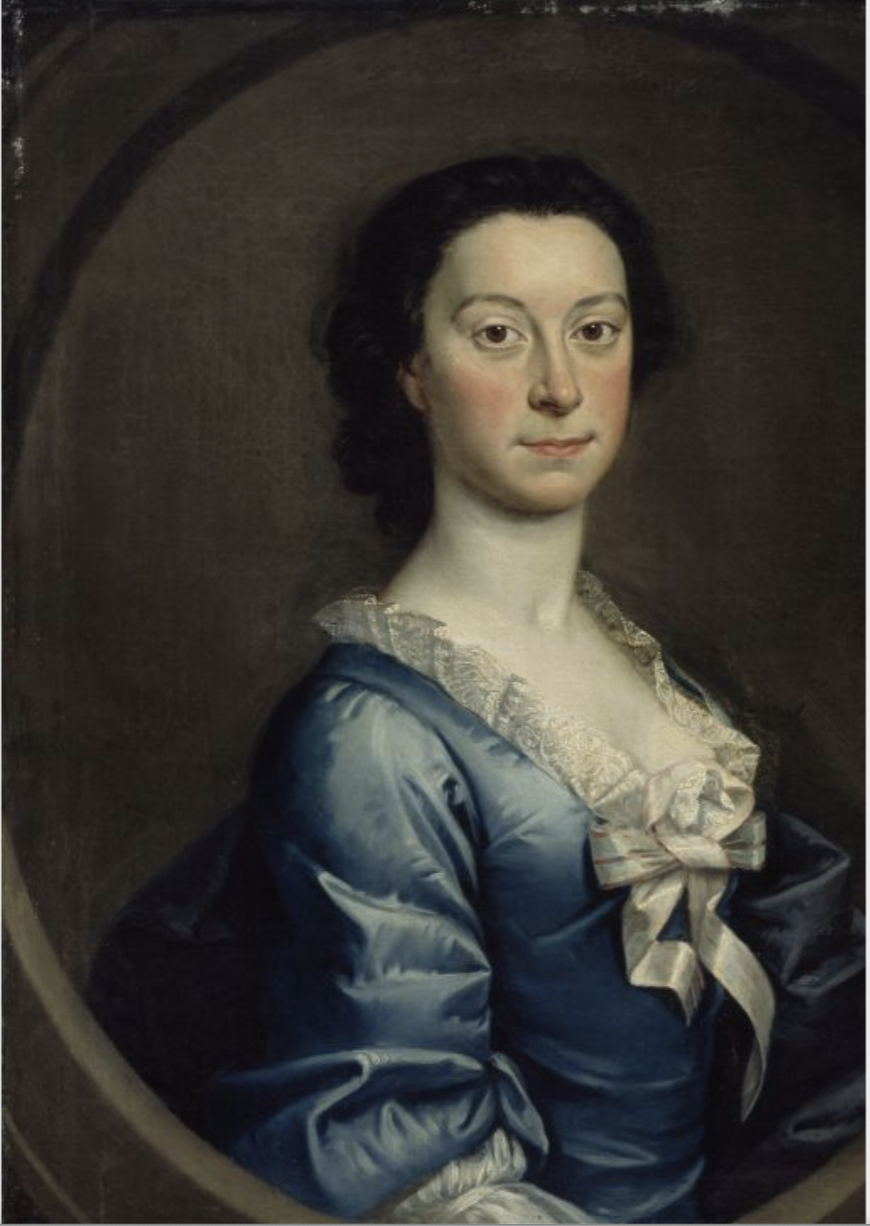
If you are a regular reader of this blog, you will know that along with visiting Section 482 properties and other “big houses” and castles that are open to the public, I am compiling a virtual Portrait Gallery of Ireland. I watch out online for portraits of Irish people who may become the subject of my website entries. Recently browsing portraits which were for auction with Christies Irish Auction in 2005, I came across a portrait of George Grierson of Rathfarnham House.
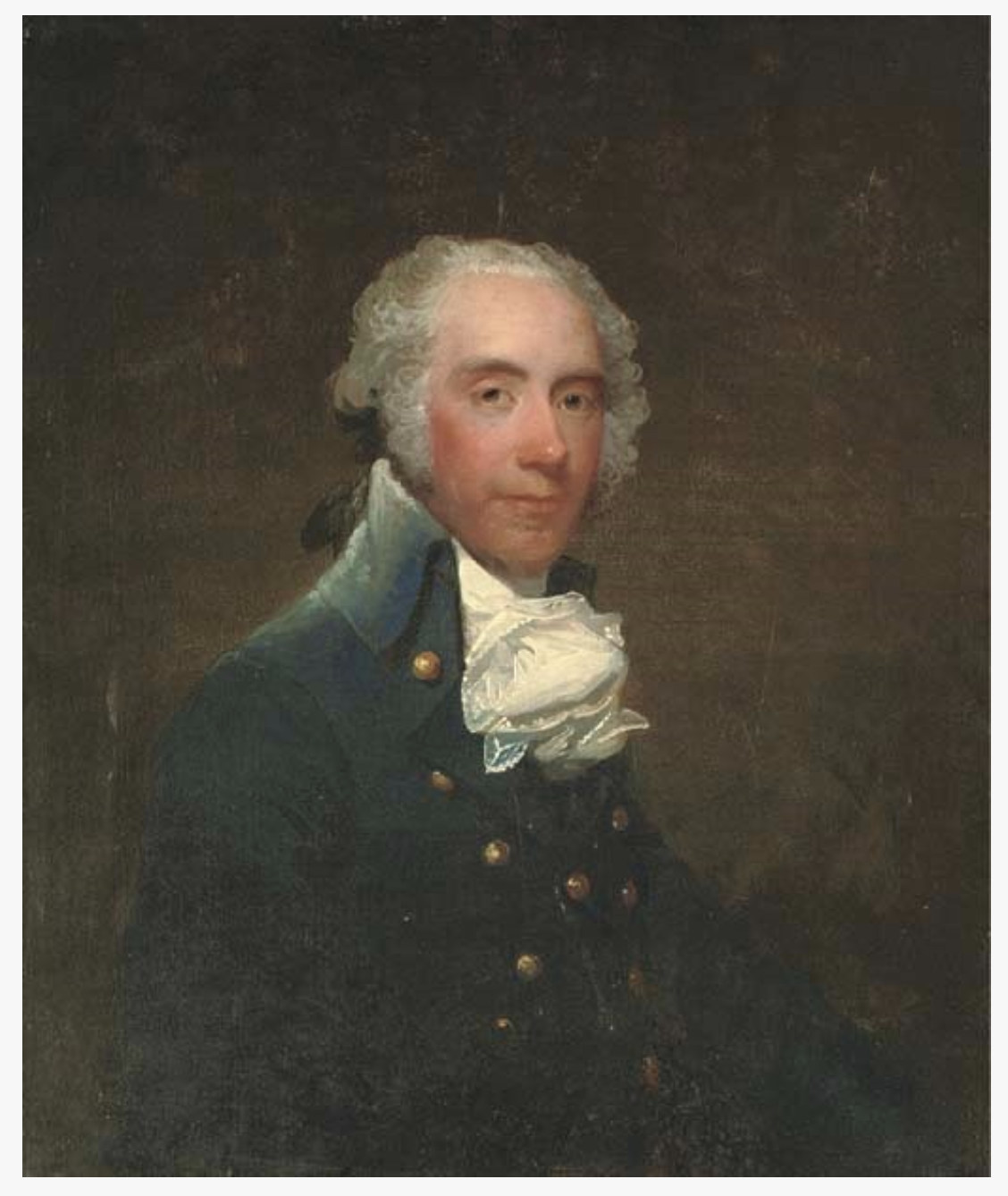
George Grierson, of Rathfarnham House, Co. Dublin by Gilbert Stuart (1755-1825) courtesy Christies 2005.

I was not familiar with Rathfarnham House so I looked it up online and found that it is an impressive former residence built in 1725, and later became part of Loreto Abbey. It was built for William Palliser (1695-1768), son of William Palliser (1646–1727) who was Church of Ireland Archbishop of Cashel. [1]

This ties in neatly with another portrait I came across, of William King (1650-1729) Archbishop of Dublin.
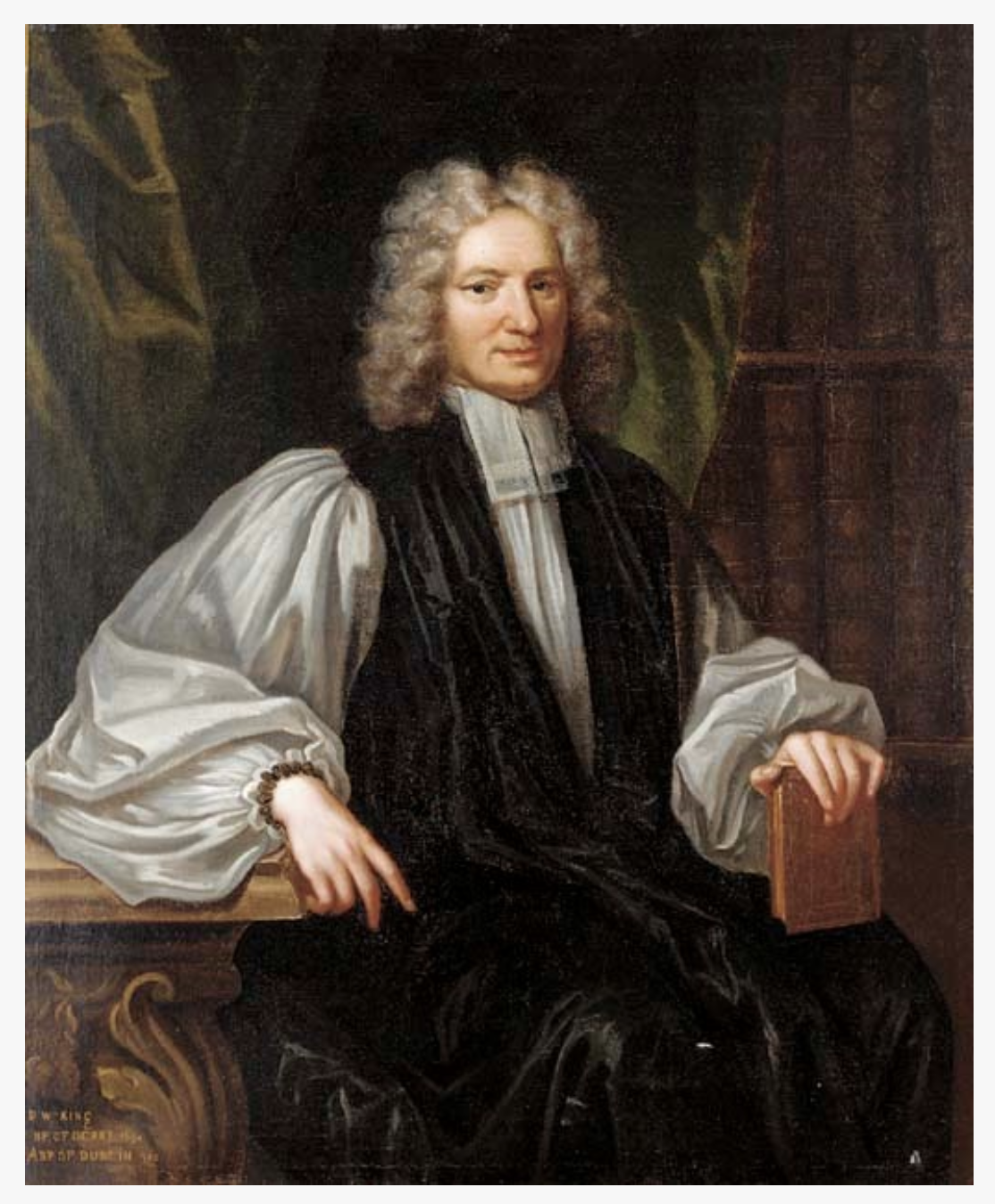
Dr. William King, Archbishop of Dublin Attributed to Ralph Holland (early 18th Century) courtesy Christies Irish Sale.

I had a previous photograph of a portrait of Archbishop William King from a visit to Trinity exam hall for a Trinity Book Sale.
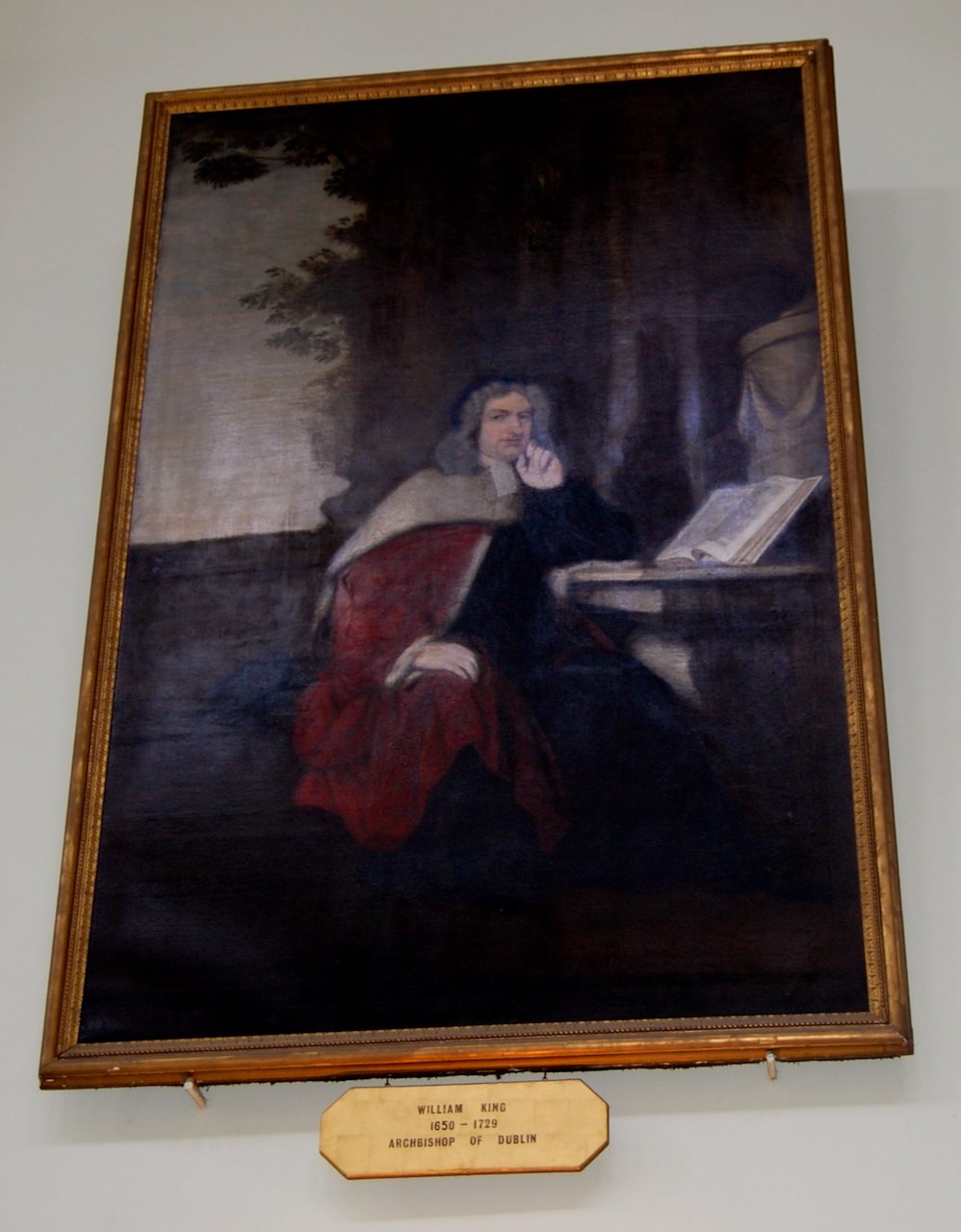
William King (1650-1729) Archbishop of Dublin, portrait in Trinity College Dublin exam hall. Photograph © Jennifer Winder-Baggot
Mark Baggot’s descendants lived in Castle Bagot, Rathcoole, 4th April 2011. When I visited the building housed a creche. Photograph © Jennifer Winder-Baggot, www.irishhistorichouses.com.

I have an interest in Archbishop William King as he vouched for a Mark Baggot (d. 1718, buried in St. Audoen’s, Dublin) when Mark was losing his residence in Mount Arran, County Carlow. I don’t know if I am a descendant of Mark Baggot but I hope I am, as he is fascinating. Mark was one of the first members of the Dublin Philosophical Society. [2] I have gathered much information about Mark, but in short, when Mark, as a Catholic, was set to lose Mount Arran, he sought intercession from his friend William King. King vouched for Mark Baggot’s character. [3] The letters are in Trinity College Dublin. Mark and William King shared an interest in mathematics. Two of Mark Baggot’s books somehow made their way into Marsh’s Library – I have yet to see these books as when I requested them, they were being re-bound. I discovered today that William King’s library was bought by Archbishop Theophilus Bolton (d. 1744) and is held today in the University of Limerick in the Bolton Library. Mark was also a member of St. Anne’s Guild in Dublin, which was based in St. Audoen’s church.

We came across some of Mark’s descendants when we visited The Old Glebe in Newcastle Lyons, County Dublin (see my entry https://irishhistorichouses.com/2019/12/31/the-old-glebe-newcastle-lyons-county-dublin/), as James John Bagot (1784-1860) and his wife are buried in the graveyard of the adjoining church.

[1] https://source.southdublinlibraries.ie/handle/10599/7447?locale=en

“Loreto Abbey has as its core, Rathfarnham House, a mansion built in 1725 by William Palliser who expended considerable resources on its interior with polished mahogany and, in one room, embossed leather wallpaper. On his death in 1768 without children of his own, his cousin Reverend John Palliser inherited it. When he died in 1795, George Grierson, the King’s Printer purchased the house, from which he later moved to Woodtown House. The Most Reverend Dr Murray purchased it in 1821, after it lay vacant for some years, for the Loreto Order, then just founded. The first Superior of the Order, the Reverend Mother Francis Mary Teresa Ball made additions to the house, including supposedly an extra storey on to the house. A church was added in 1840, the novitiate in 1863, St Joseph’s wing in 1869 comprising concert hall and refectory, St Anthony’s wing St. Anthony’s wing in 1896, St Francis Xavier’s wing in 1903 and Liseux in 1932. Mother Theresa of Calcutta entered religion in Loreto Abbey in 1928. At its height it houses some 200 pupils. It cease to take boarders in 1996 and the building closed in 1999. A building company Riversmith Ltd acquired a site to the rear where it constructed apartments. The Loreto Order is now headquartered in Beaufort House, part of the Loreto High School.” Text by Kieran Swords.

[2] Hoppen, K. Theodore, “The Dublin Philosophical Society and the New Learning in Ireland” Irish Historical Studies, Vol. 14, No. 54 (Sep., 1964), pp. 99-118 (20 pages). The Society was founded in 1683. The article tells us that the Dublin College of Physicians secured a royal charter in 1667. The Royal Society of London was founded in 1660, and George Tollett, a Dublin mathematics teacher, Narcissus Marsh, who was Bishop of Ferns and Leighlin at the time, and Allen Mullen, a Dublin physician, were in correspondence with it. In 1682 William Molyneux undertook to write a Natural History of Ireland, and in working, he met several other Irishmen interested in geography. He then set out to form the Dublin Society. He acquired the aid of Dr St George Ashe, then Rev Dr Huntington who was then provost of Trinity College. Within four months it had a membership of 14, and acquired permanent residence on Crow’s Nest off Dame Street in Dublin, where they established a laboratory, museum and herb garden. Other members were John Baynard, Archdeacon of Connor, Samuel Foley, a fellow of Trinity and later bishop, a physician John Willoughby who had studied in Padua, and Mark Baggot, Catholic. By 1685 a further 20 members had joined, including William King. William Petty became President and Edward Smyth, Treasurer.

Narcissus Marsh, Provost of Trinity ca. 1690, then Archbishop of Dublin.
William Petty (1623-1687) by Isaac Fuller circa 1651, National Portrait Gallery in London NPG 2924.

Between 1687 and 1693 the weekly meetings were suspended due to political turmoil in Ireland. During the Williamite revolution many members fled to England. Dudley Loftus was temporarily a member but left as he didn’t like its progressive nature. The revival lasted only 18 months, but it was then revived again in 1707 by William Molyneux’s son Samuel. At this time members included Peter Browne the Provost of Trinity College Dublin, Samuel Dopping, and Thomas Burgh, the architect of Trinity College library, and philosopher George Berkeley. The Society ceased to meet in 1709.

Other members are listed in a Memoir, including: William Lord Viscount Mountjoy; John Worth, Dean of St. Patrick’s; Robert Redding, Bt; Cyril Wyche, Knight; Richard Bulkely, Knt. and Bt; Patrick Dun MD; Henry Fenerly; J. Finglass; Daniel Houlaghan; John Keogh; George Patterson, Surgeon; John Maden MD (his descendant Samuel Madden set up the Royal Dublin Society in 1731); Richard Acton; John Bulkeley; Paul Chamberlain; Robert Clements; Francis Cuff; Christopher Dominick; William Palliser later Archbishop of Cashel; Edward Smith, Professor of Mathematics and later Archbishop of Down and Connor; John Stanley; Jacobus Silvius; Jacobus Walkington; Paul Ricaut.

Subjects studied were Mathematics and Physics; Polite Literature; History and Antiquities; Medical Science including Anatomy, Zoology, Physiology, Chemistry.

[3] Mark Baggot, a major landowner in County Carlow, was the son of John Baggot who had forfeited as a Jacobite. Mark became friendly wiht George Tollet, later a powerful official in London, who was close to Archbishop King. See J.G. Simms, “Dublin in 1685” IHS xiv, 1965, p. 222-3. Baggot was also friendly with King due to their common interest in mathematics. When Baggot’s claim for restoration for his estate was before the trustees, Mark asked King to intercede on his behalf (see Baggot to King, 30 Jan 1701, TCD Lyons Collection MSS 1995-2008/754). King wrote to one of the trustees, Sir Henry Sheres, on Baggot’s behalf, citing Baggot’s links with Tollet who was a friend of Sheres. Baggot’s claim was allowed. The Chancellor of the Exchequer, Philip Savage, was acting as Counsel on Mark’s behalf. This was in spite of the fact that Mark’s estate had been granted to the Savages and later to the Wolseleys, and the fact that local Protestants had petitioned Ormond strongly to use his influence against Baggot’s restoration (see petition dated 16 April 1701, NLI Ormond MSS, MS 2457, f. 75). The petition accuses Baggot of “insufferable pride, rigour and insolence towards the Protestants here.”
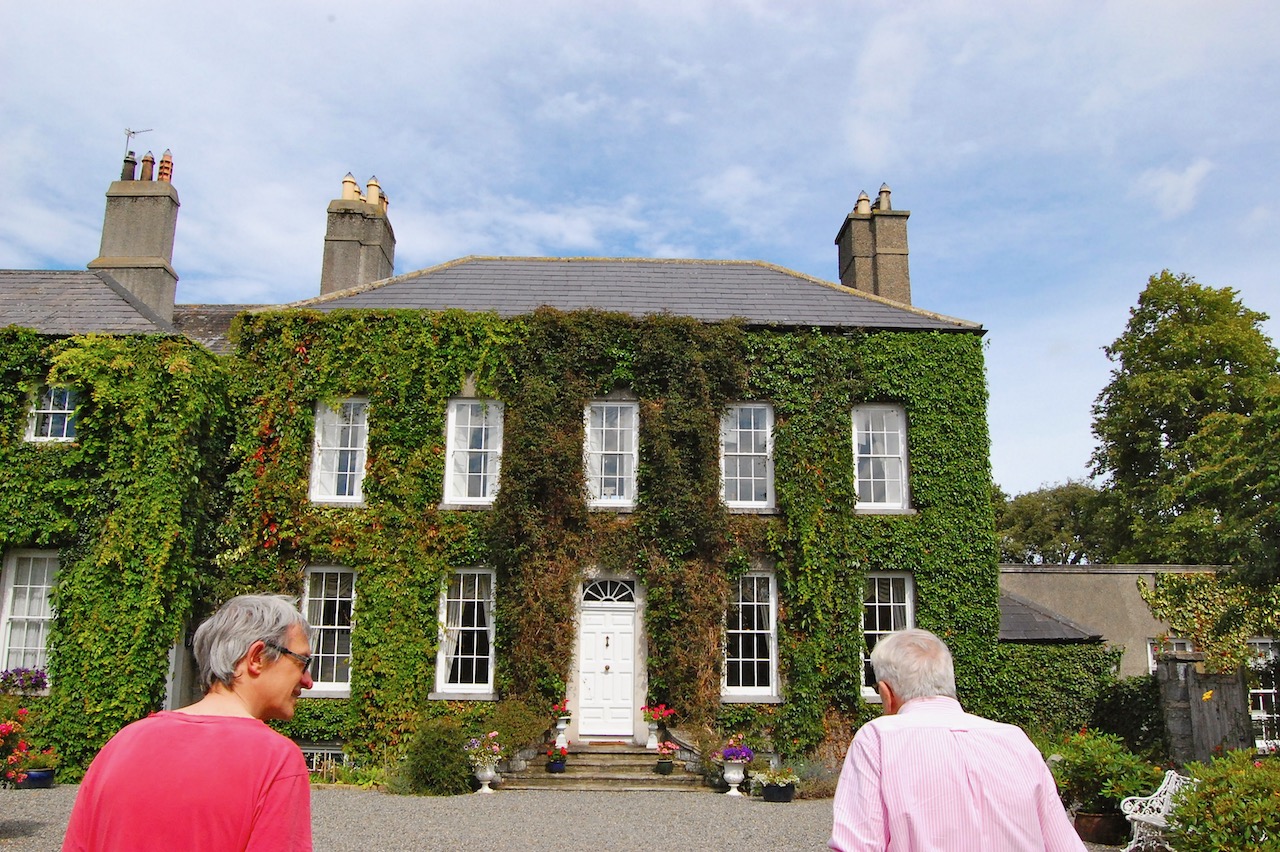
The Old Glebe, Newcastle-Lyons, County Dublin – section 482

Open dates in 2025: May 1-31, June 2-30, Mon-Sat, Aug 16-24, 10am-2pm

Fee: Free

I visited this property in 2012 during Heritage Week with my husband Stephen and my Dad. We were welcomed by the owner, Frank Kerins. A glebe house is one on the grounds of a church providing accommodation for the clergy. This house is next to Saint Finian’s, an ancient church from the fifteenth century, but no longer houses its vicar and is in private ownership. St. Finian’s is now a Church of Ireland and still holds weekly services. There’s a beautiful view of the church from the back of the house, where one can see the restored Gothic “pointed-arched window with flowing tracery” [1] through another arch, and behind, the church tower.

“The Old Glebe,” Newcastle-Lyons, County Dublin. Photograph © Jennifer Winder-Baggot, www.irishhistorichouses.com

The older part of the house dates from around 1720, and is a five bay two storey block over basement [2].

[17/5/20: I have stumbled across a reference while looking up historic houses in Dublin, while googling Athgoe Castle. This reference gives a little detail about the Glebe House, which is referred to as the Rectory for St. Finian’s Church: The Archdeacon of Glendalough, Thomas Smyth, who became Archdeacon in 1722, built the rectory. The east window of the church bears his initials and the date 1724. [3] He was son of Thomas Smyth Bishop of Limerick.]

An addition from about 1820 has, according to the National Inventory of Architectural Heritage website, two-bay rere elevation, and single-storey extensions to east. [4]

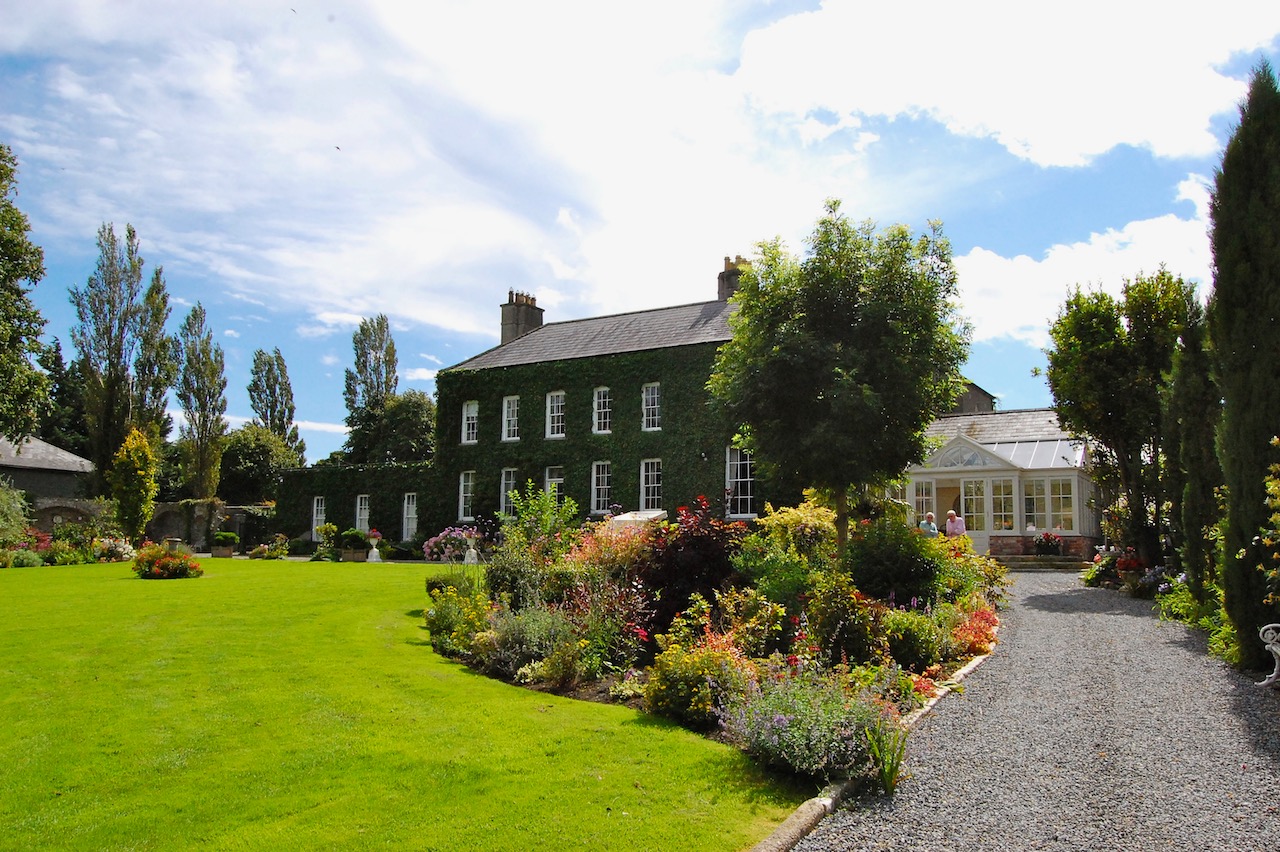
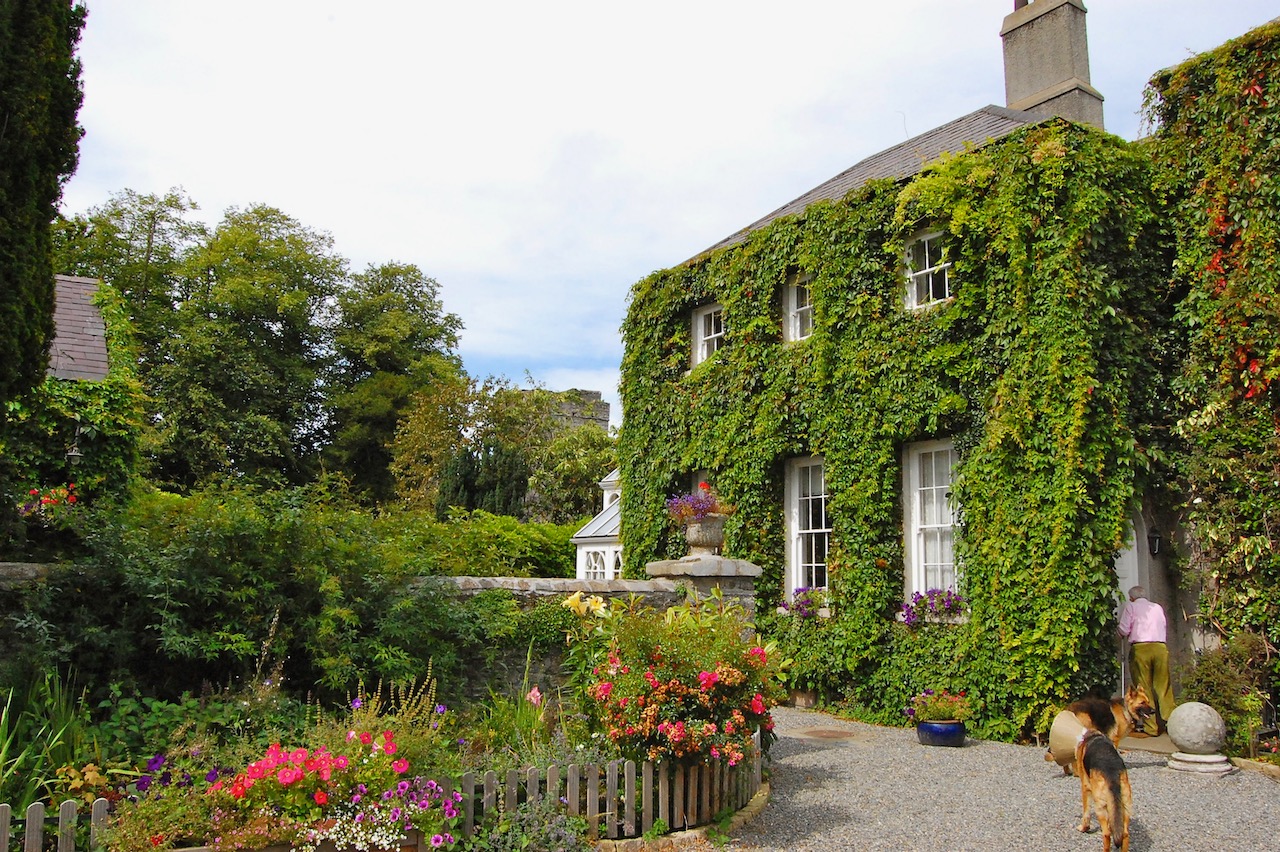
Continuation of the front of the house; the gardens were looking splendid on the August day on which we visited, the flowers in full array. Photograph © Jennifer Winder-Baggot, www.irishhistorichouses.com
St Finian’s church, Newcastle Lyons (now Protestant). Photograph © Jennifer Winder-Baggot, www.irishhistorichouses.com

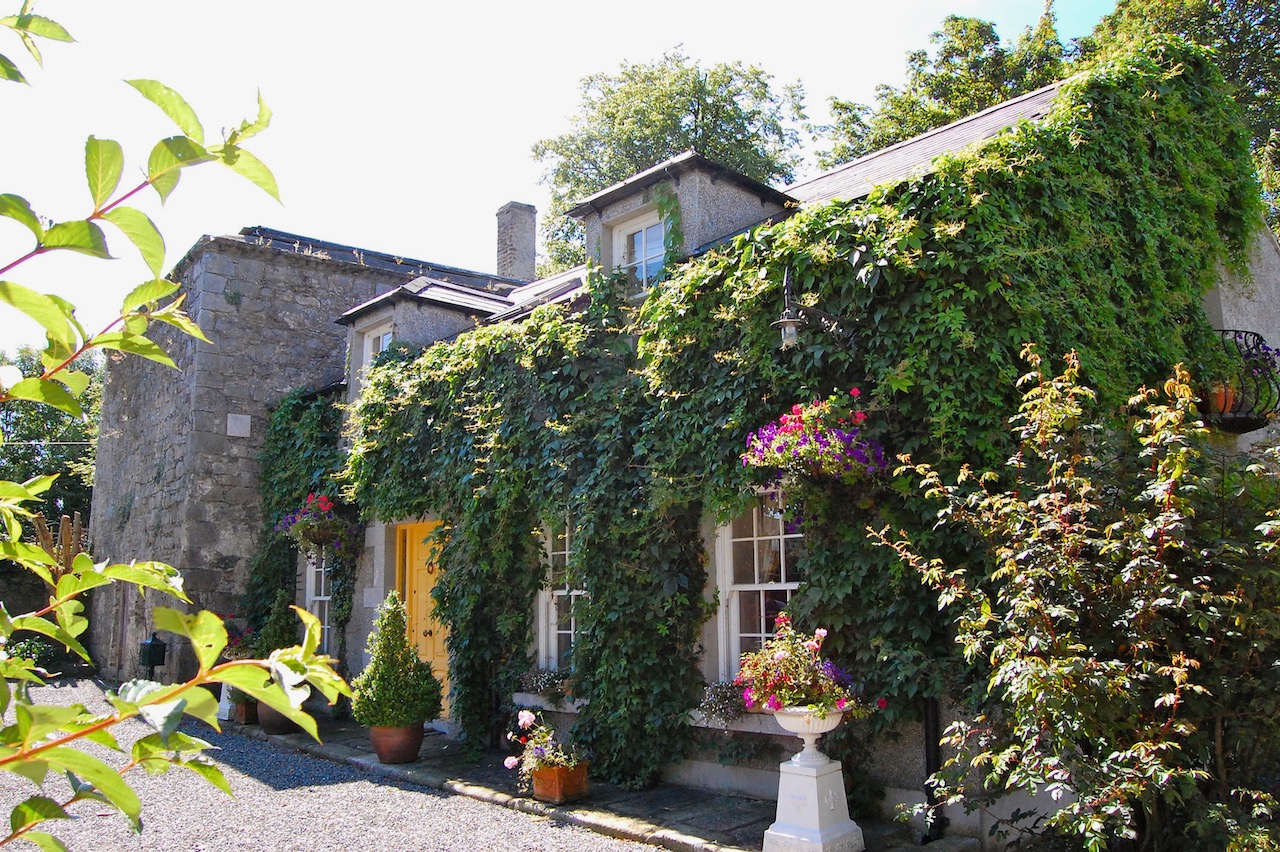
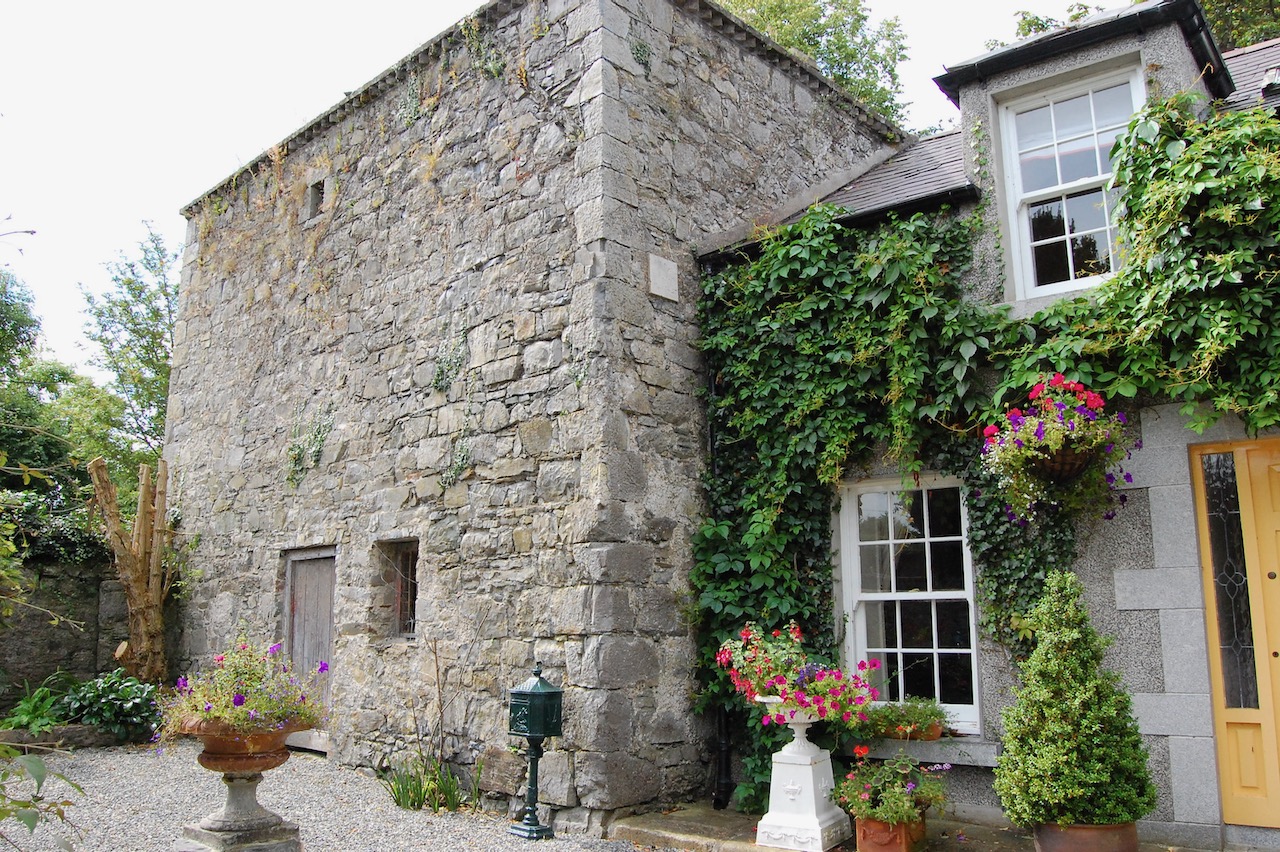
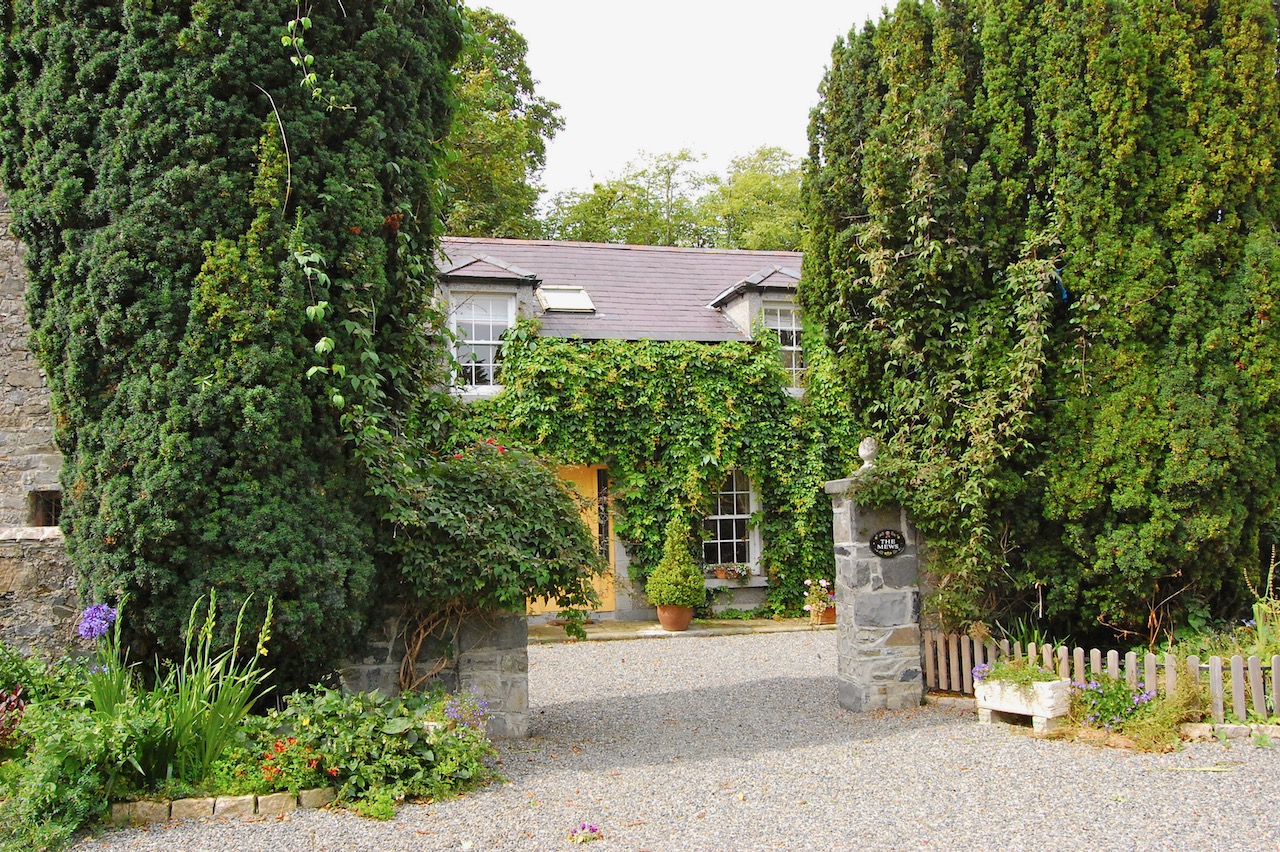
A second tower stands in front of the Glebe house, and I immediately fell in love with the attached 1727 Mews house. The Mews house contains accommodation and an artist’s studio. The deep yellow door, white painted divided pane sash windows, ivy and flowers won my heart.

The Old Glebe, Mews House. Photograph © Jennifer Winder-Baggot, www.irishhistorichouses.com
Mews house at the Old Glebe, Newcastle. Photograph © Jennifer Winder-Baggot, www.irishhistorichouses.com
“The Old Glebe,” Newcastle-Lyons, County Dublin. Photograph © Jennifer Winder-Baggot, www.irishhistorichouses.com

Mr. Kerins is enthusiastic about the house and is familiar with the history, as of that of the tower and adjoining church. He has written a book, published in 2017, called Some views of the Old Glebe House, Newcastle.

There is an article that was in the Irish Times when the house was for sale in 1999, by Orna Mulcahy. She overestimates, I believe, the age of the house. [5]:

One of the oldest houses in south Dublin, it was built by a vicar of Rathmichael, the Reverend Simon Swayne, in the mid-1600s. The original two-storey over basement house was extended in the 18th and 19th centuries and the current owners have made their own contribution in the form of a small conservatory overlooking the gardens. The property includes an old cut-stone mews house.

Maurice Craig in his Classic Irish Houses of the Middle Size, p. 66, pictures “Newcastle Rectory, Co. Dublin” and it looks like this Glebe House. He says it is built in 1727 by Archdeacon Smyth. Another article in the Irish Times claims that it was built in 1710. [6]

I was not allowed to take photographs inside the house, which is usual for the section 428 properties. Mr. Kerins gave us a tour. We entered the large front hall, impressively furnished and finished. This open into the long drawing room through a door with fanlight. Another door from the hall leads to a dining room. Through a hall, one steps into a lower level of the house and to the timber conservatory. My father and Mr. Kerins chatted about furniture, as my Dad’s father was an antiques dealer, while I envied the occupants of this beautiful, comfortable, elegant home. There is a beautiful wood-panelled sitting room.

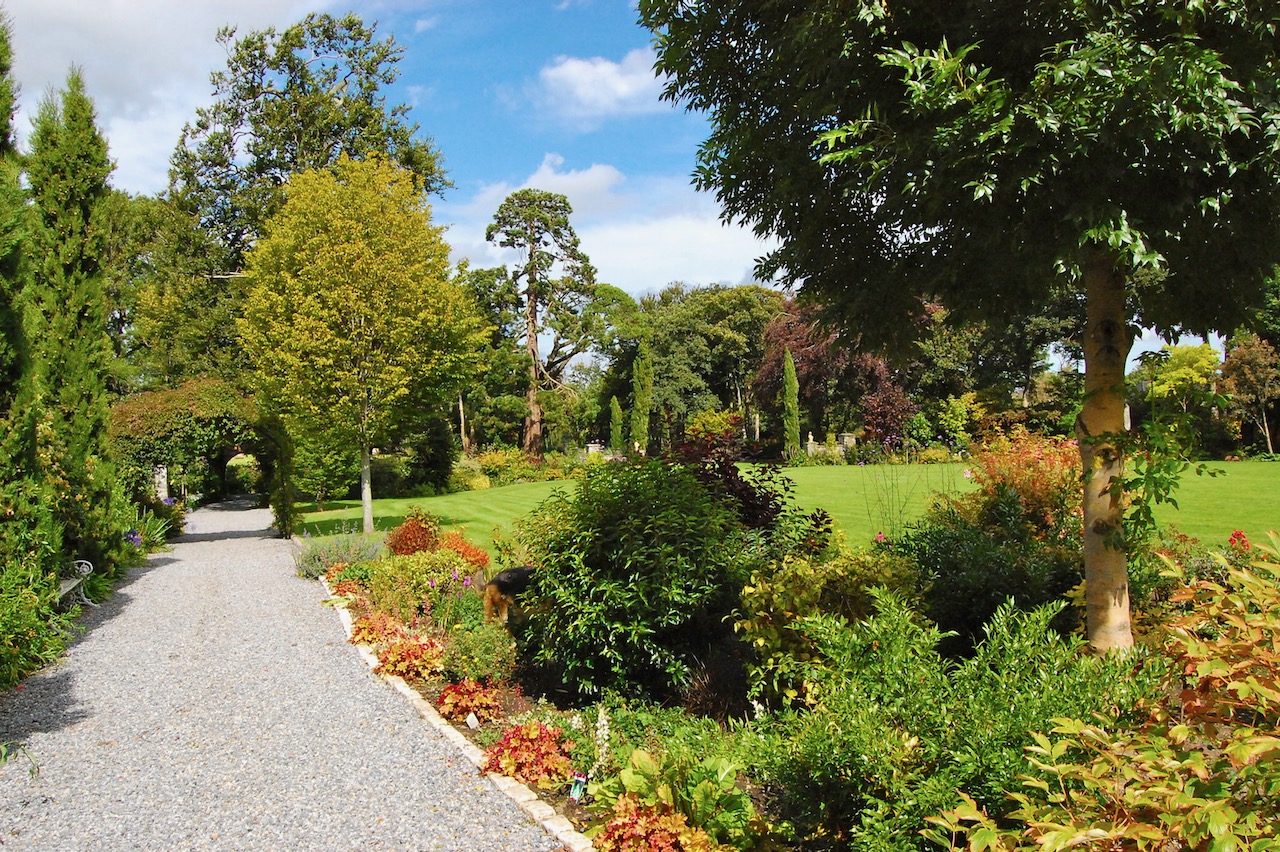
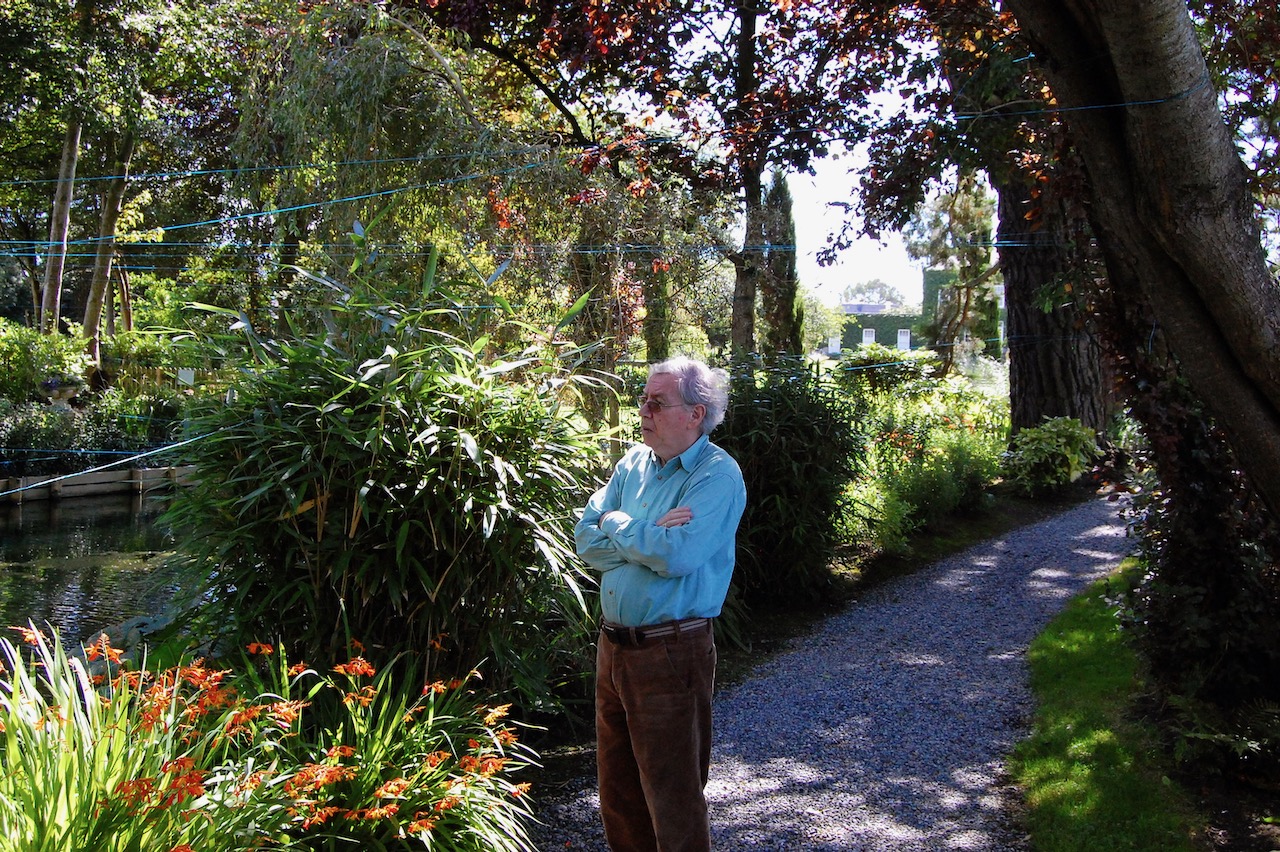
I did, however, take many photographs of the splendid garden at the back of the house, which leads down to a lake.

Back of “The Old Glebe” Newcastle, County Dublin. Photograph © Jennifer Winder-Baggot, www.irishhistorichouses.com
Looking down the garden from the back of the house. Photograph © Jennifer Winder-Baggot, www.irishhistorichouses.com
“The Old Glebe,” Newcastle-Lyons, County Dublin. Photograph © Jennifer Winder-Baggot, www.irishhistorichouses.com

The second article from the Irish Times continues:

The Old Glebe used to belong to the Church of Ireland. The church dates back to the 13th century but the present house was built in 1710. The current owner, Frank Kerins, bought it in 1989. In a corner of the garden (open to the public in summer) surrounded by benches, stands a wonderfully wide and healthy yew. Like any tree, its age is up for dispute. With a bulging girth of five metres, Fennell estimates it at 500 years plus. “Some of the branches have been lifted, but it’s probably Dublin’s oldest tree.” Kerins is adamant it is older. “ There are local references to it and to Jonathan Swift – it’s definitely over 700 years.”

Fennell is conservative when estimating age. “Yews are probably older than most people think. Some time in the future they will be able to nail it down with new technology and humble previous opinions.”

In the meantime, Kerins, like others before him, enjoys his tree. ‘We’ve restored the gardens and the house. The wildlife and shrubs have returned. We love to sit under the tree and take a glass of wine and imagine what Swift must have been thinking when he sat here 300 years ago. He wrote to his friends and he also had a girlfriend in the area, from Celbridge.’ ” [he must mean “Vanessa,” or Esther Vanhomrigh, who lived in Celbridge Abbey in County Kildare].

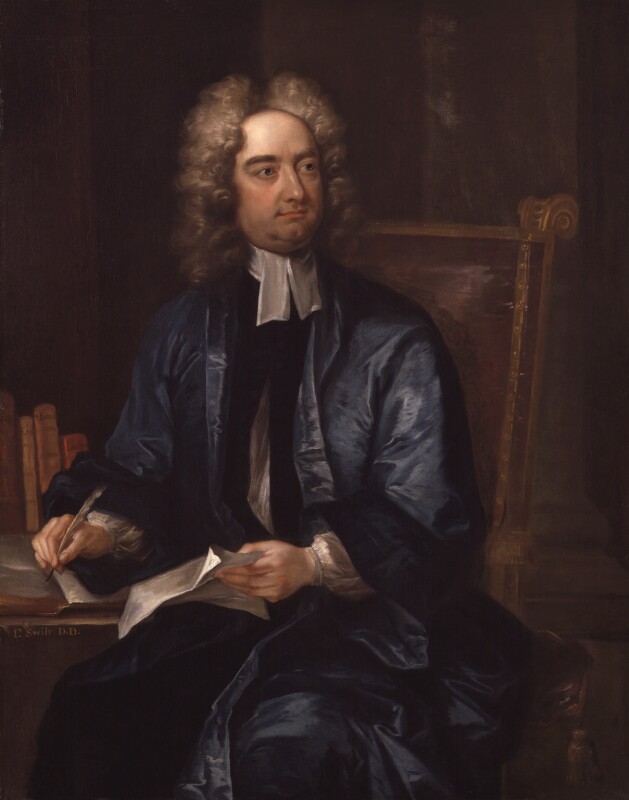
Jonathan Swift by Charles Jervas circa 1718, National Portrait Gallery 278.
Possibly a portrait of Hester Van Homrigh (1690-1723), Jonathan Swift’s “Vanessa,” courtesy of National Gallery of Ireland.

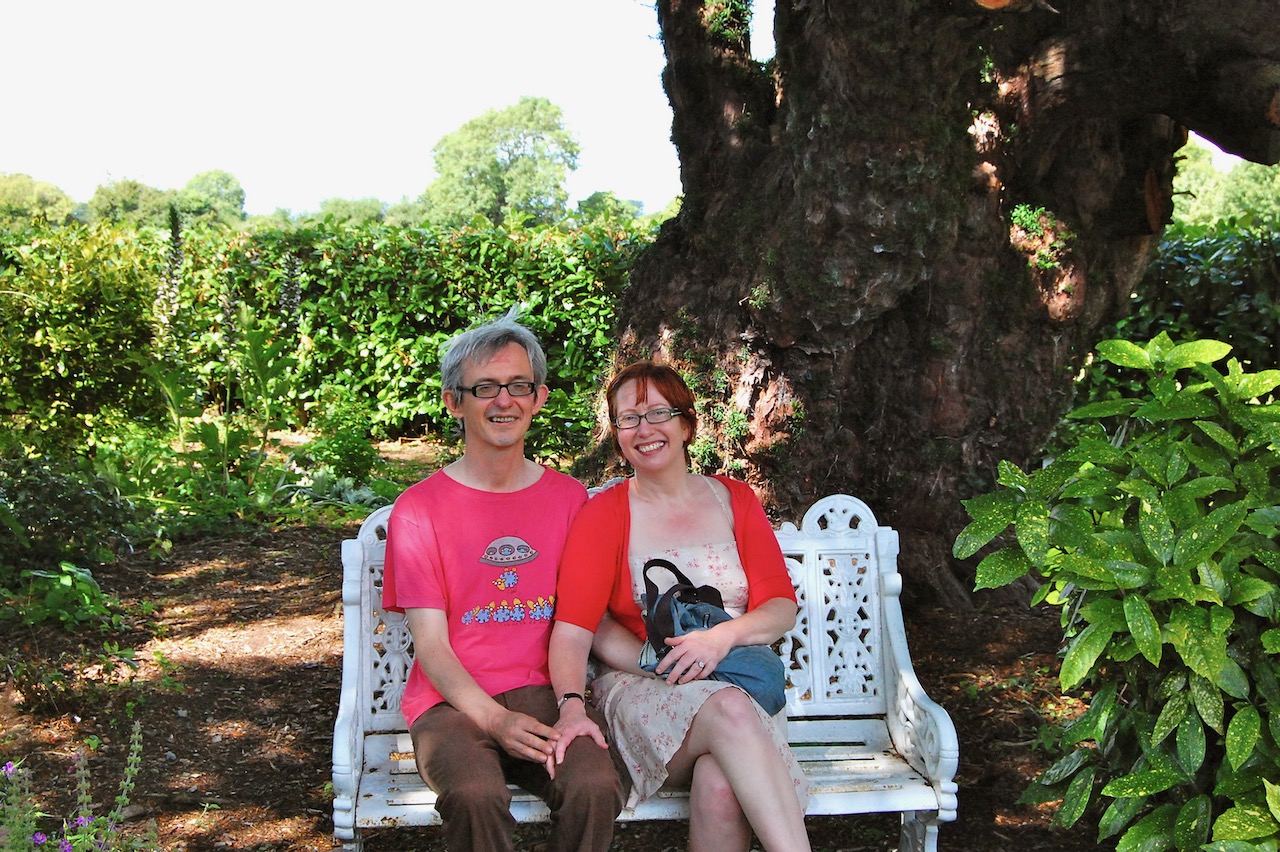
Stephen and I sat beneath this “Dean’s Tree”, under which Jonathan Swift, Dean of St. Patrick’s Cathedral, enjoyed writing before his death in 1745. Perhaps he sat here to write a letter to Stephen’s ancestor, the Reverend John Winder, who succeeded Jonathan Swift as Vicar of Kilroot, County Armagh.

Stephen and Jen at the “Dean’s Tree” (Jonathan Swift sat on that bench!). Photograph © Jennifer Winder-Baggot, www.irishhistorichouses.com

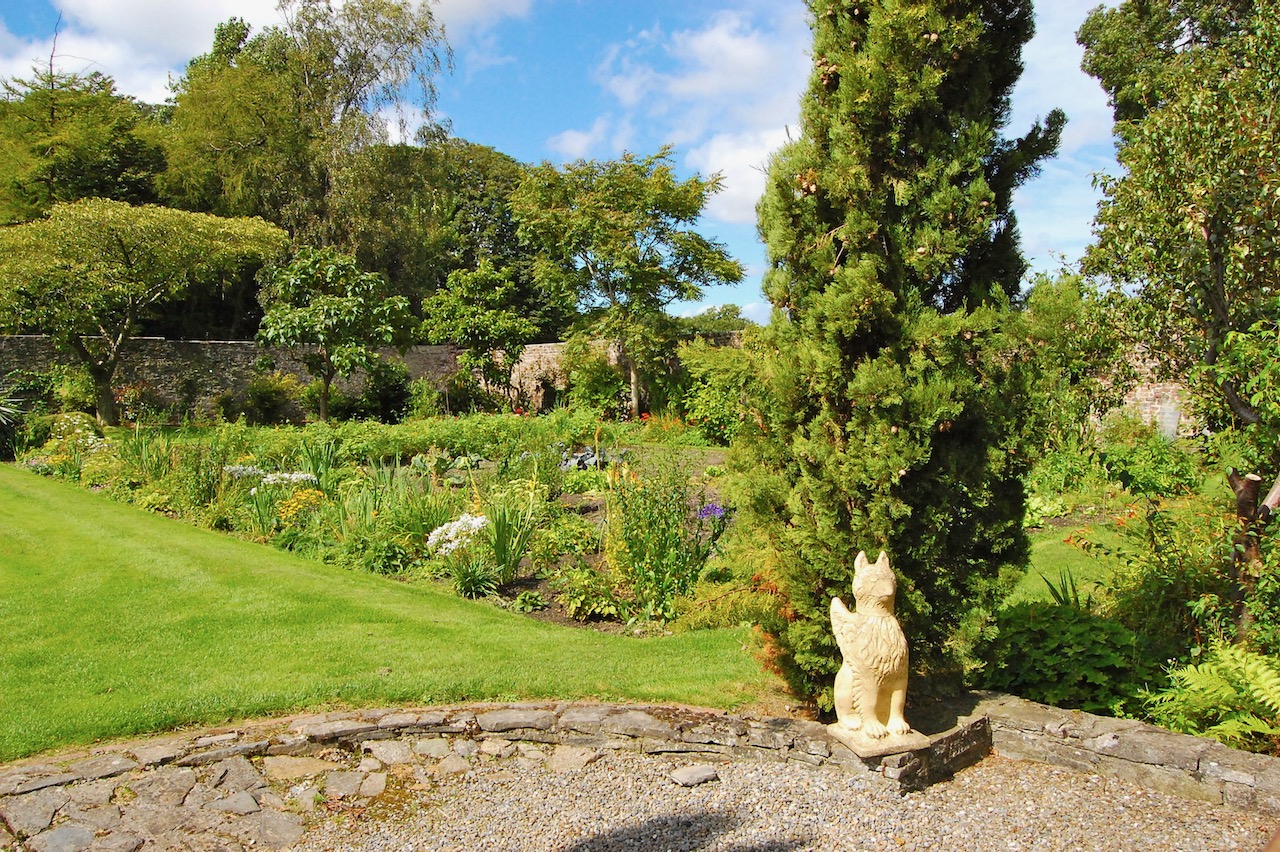
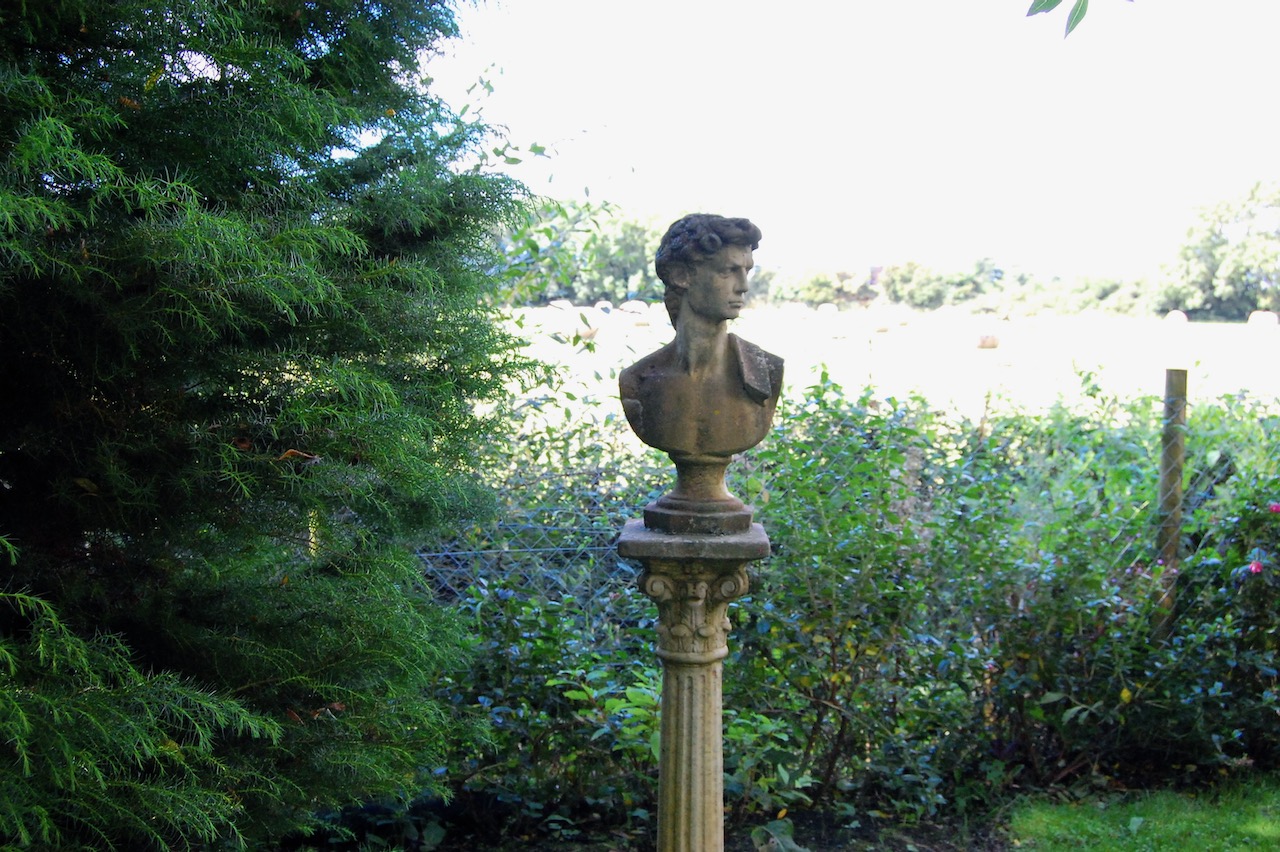
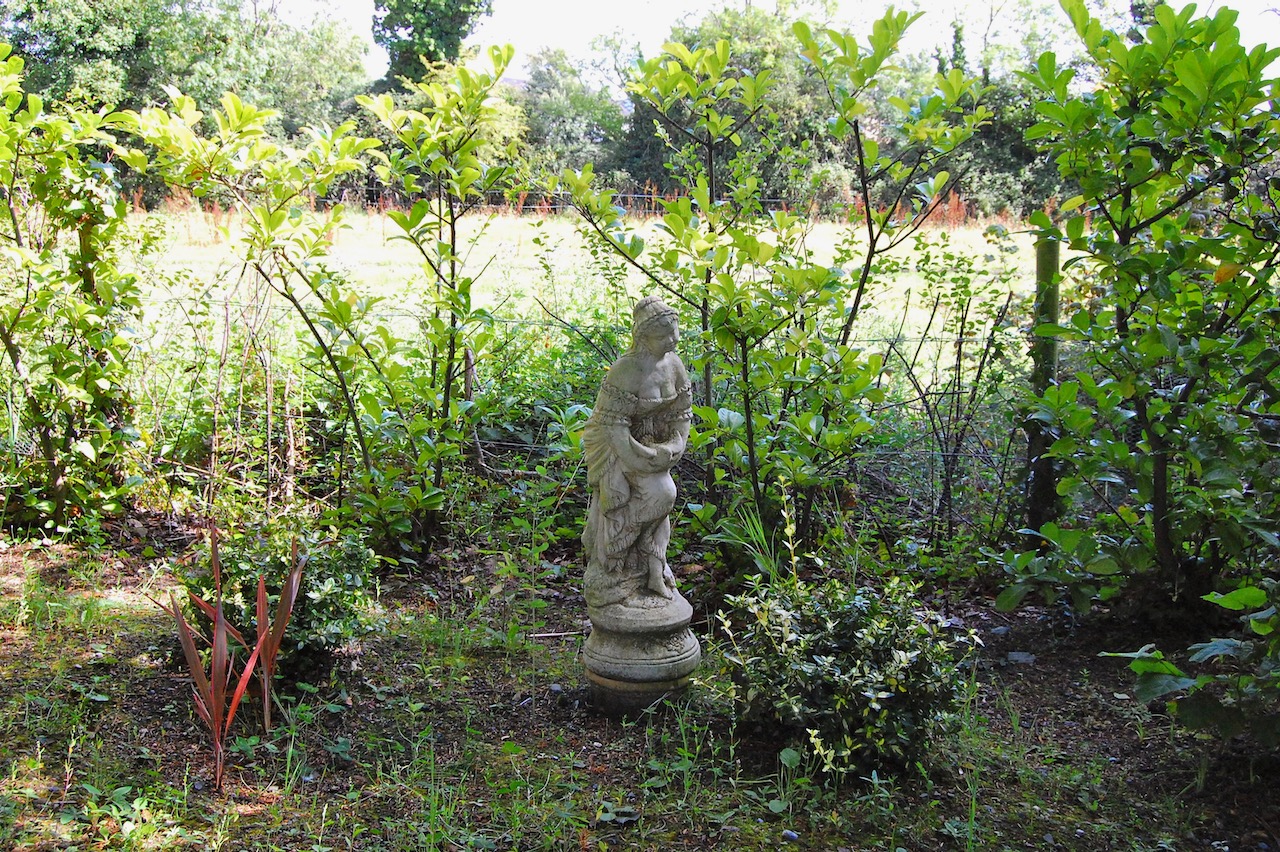
I loved the romantic statues placed in the garden.

At the Old Glebe. Photograph © Jennifer Winder-Baggot, www.irishhistorichouses.com
“The Old Glebe,” Newcastle-Lyons, County Dublin. Photograph © Jennifer Winder-Baggot, www.irishhistorichouses.com

The picturesque lake completes the beauty of the garden with its deep peace.

By the ornamental lake at The Old Glebe, Newcastle, County Dublin. Photograph © Jennifer Winder-Baggot, www.irishhistorichouses.com
My father observes the lake and its small fountain. Photograph © Jennifer Winder-Baggot, www.irishhistorichouses.com

After we said goodbye to Mr. Kerins, we went to explore the church nextdoor. The National Inventory describes it [1]:

Detached single-cell church, c.1775, incorporating west tower and chancel of fifteenth-century church. Four-bay nave, with further three bays to east, now unroofed. Rubble stone walls. Paired cusp-headed windows with quatrefoil [2] over having smooth limestone surround to nave. Large pointed-arched window with flowing tracery to the east gable of nave. Pitched slate roof. Graveyard to grounds in use since medieval times. Some table graves, legible gravestones dating from the late 1760s, also including medieval cross. Rendered stone rubble boundary wall and gate piers to road.

“Appraisal
This church has been a major historical feature of Newcastle since the fifteenth century, once a Parish Church of the Royal Manor and is still in use. The site contains a variety of fine gravestones which further enhance the setting of this engaging building which possesses many attractive features, particularly its windows.

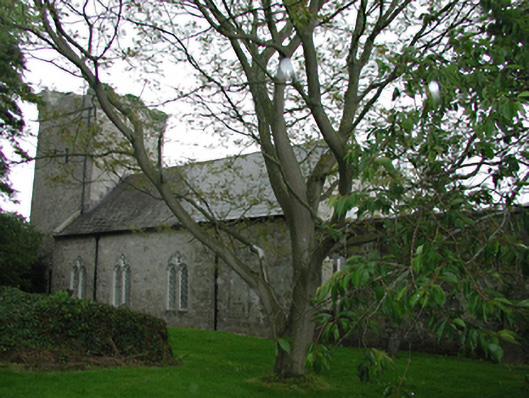
I found it difficult to take a photograph of the whole church, so here is one from the National Inventory website:

11212009_1
photograph from the National Inventory of Architectural Heritage.
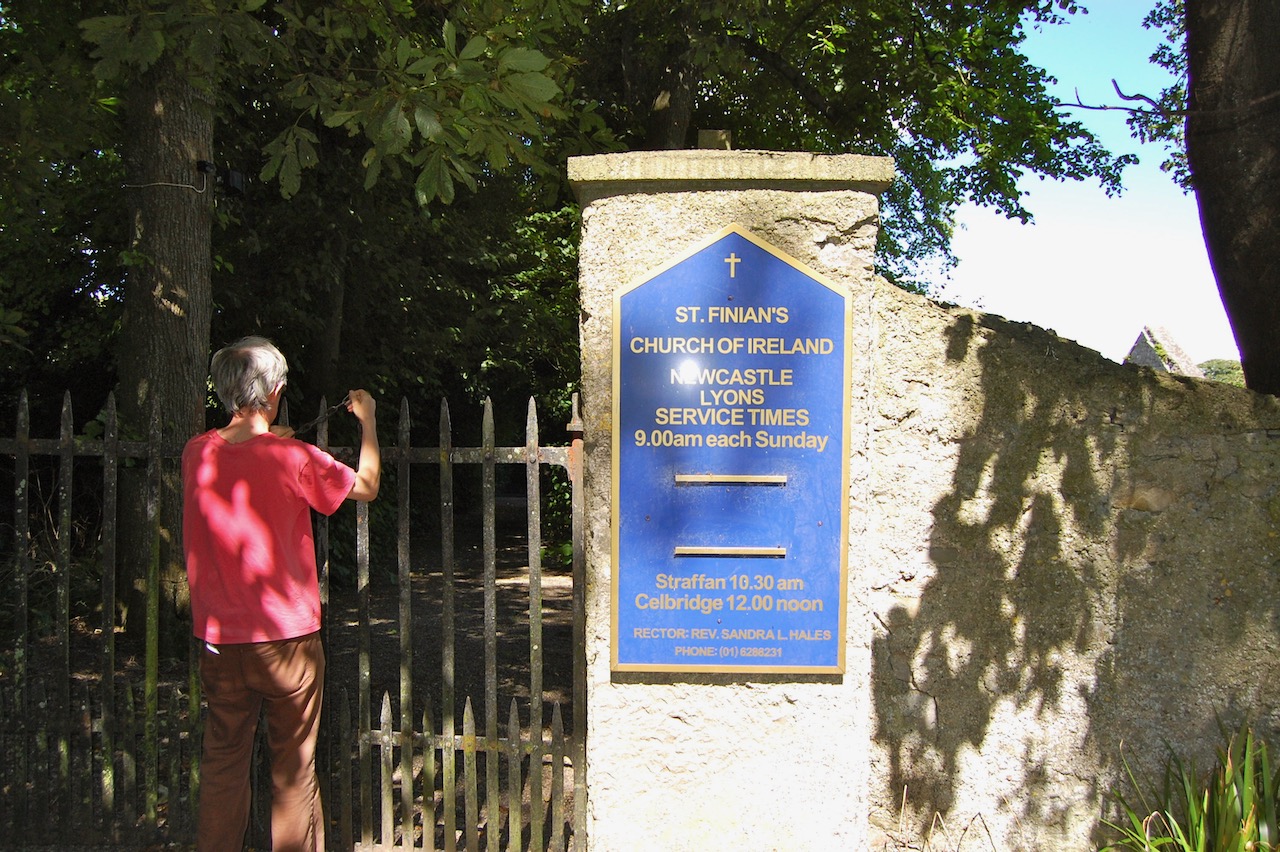
Newcastle-Lyons, County Dublin. Photograph © Jennifer Winder-Baggot, www.irishhistorichouses.com

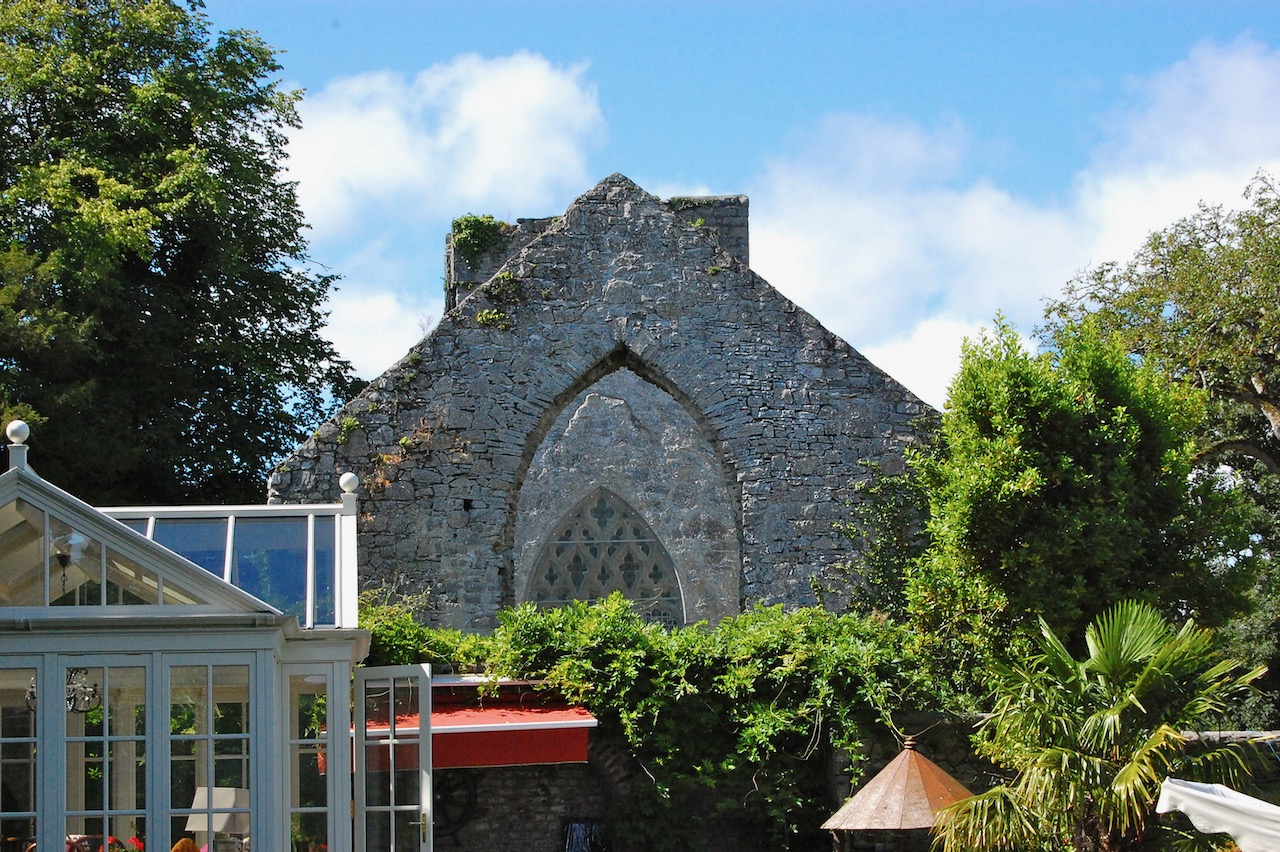
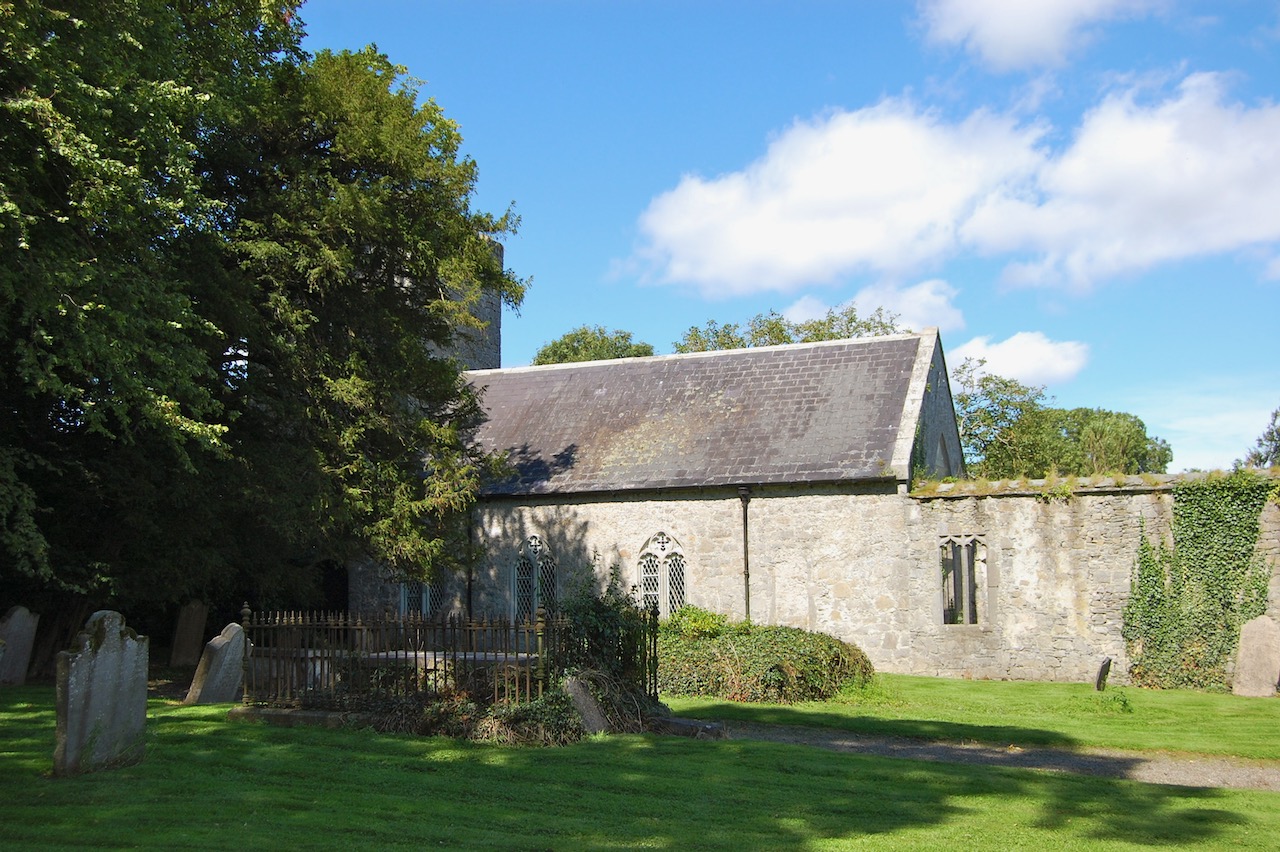
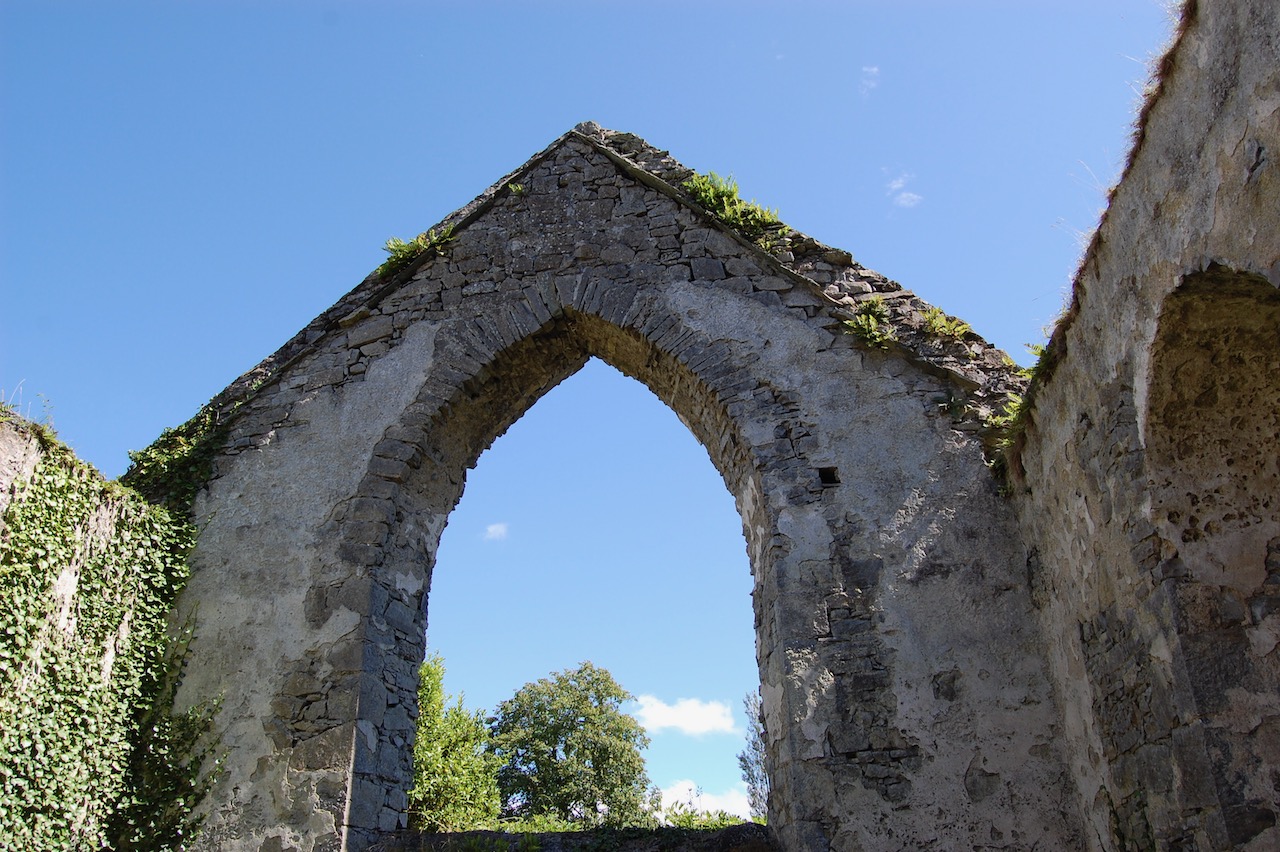
The church consists of three parts: the tower, built in the days of King John (1166-1216), the church section (built around 1775), and a roofless section.

St. Finian’s Church. The ivy covered grave is, I think, a Bagot grave. Photograph © Jennifer Winder-Baggot, www.irishhistorichouses.com
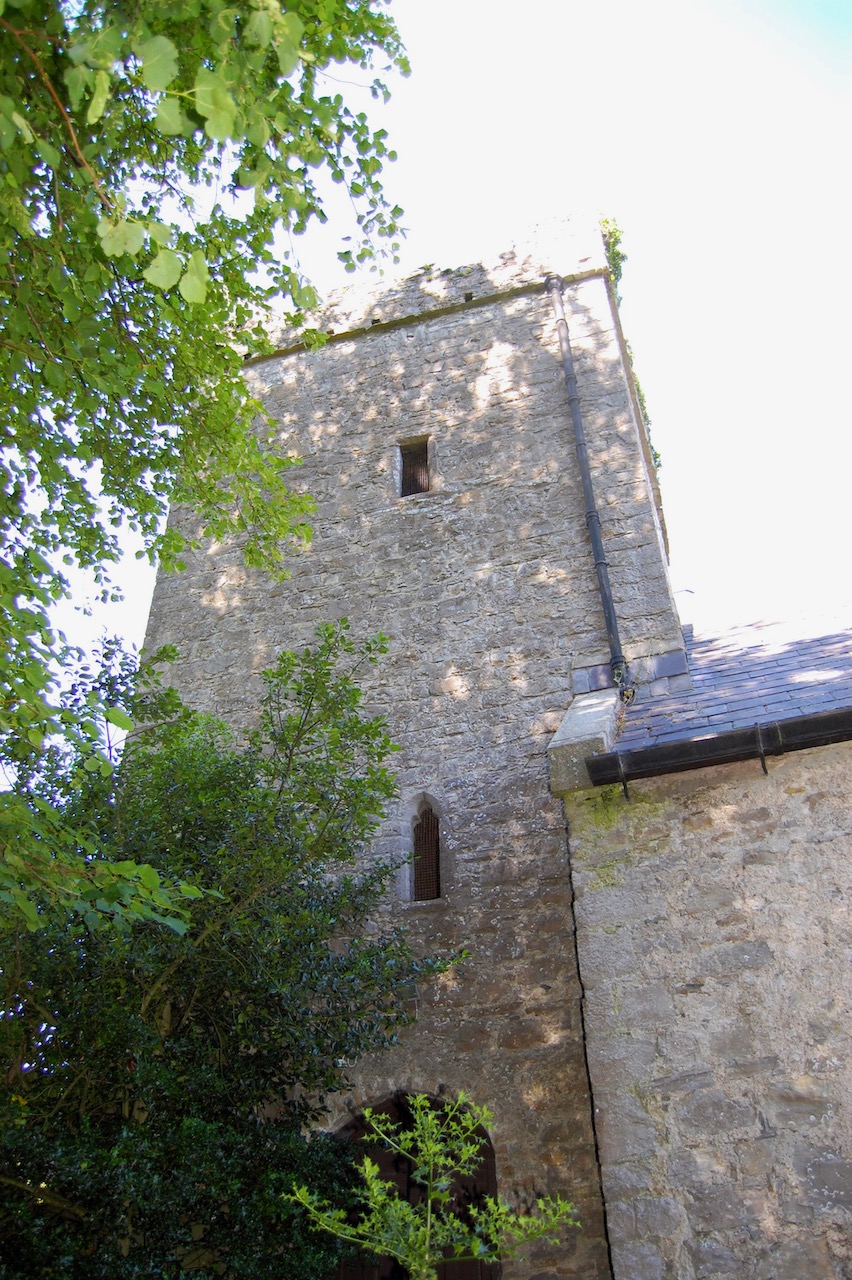
The impressive church tower, built during the era of King John, it is believed (1166-1216), through which one enters to go to the nave of the church. Photograph © Jennifer Winder-Baggot, www.irishhistorichouses.com
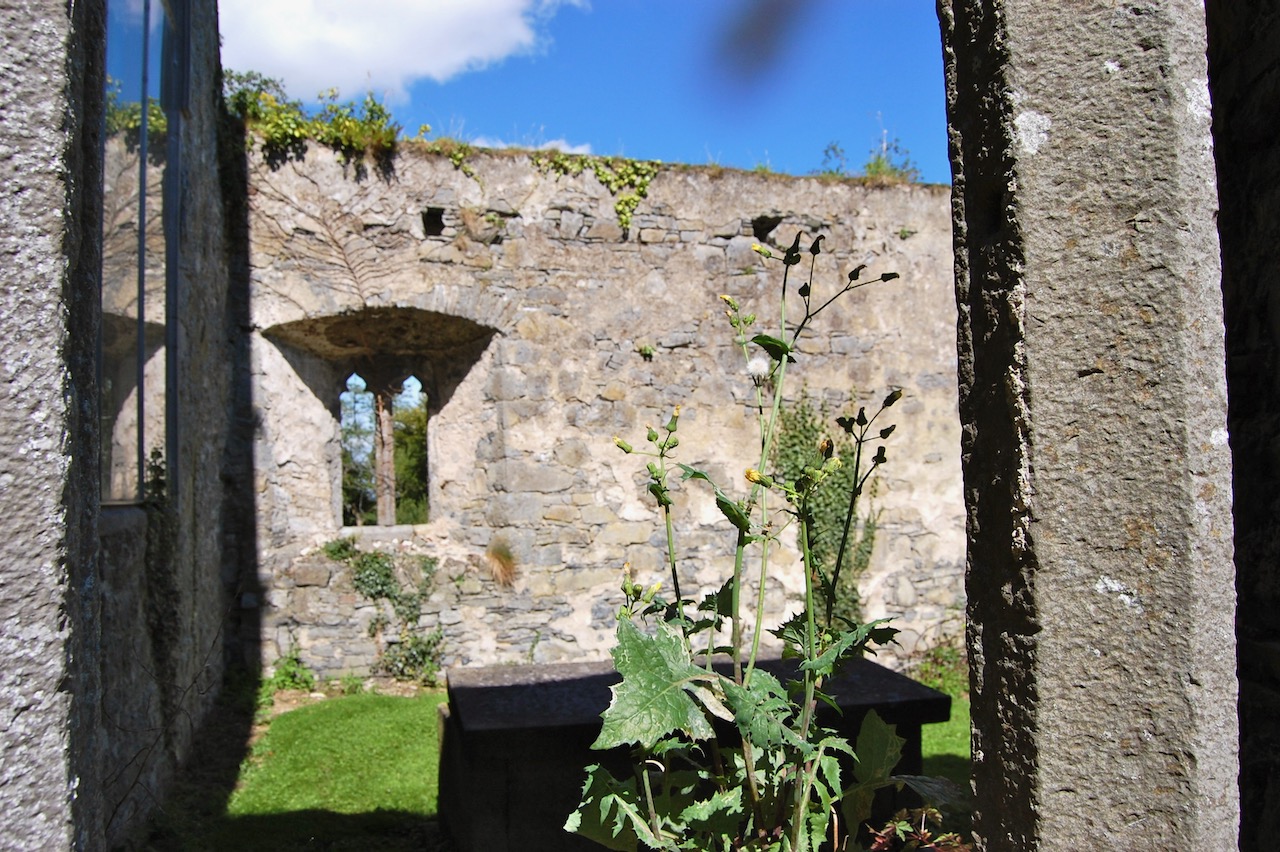
Windows looking into the functioning part of the church. Photograph © Jennifer Winder-Baggot, www.irishhistorichouses.com
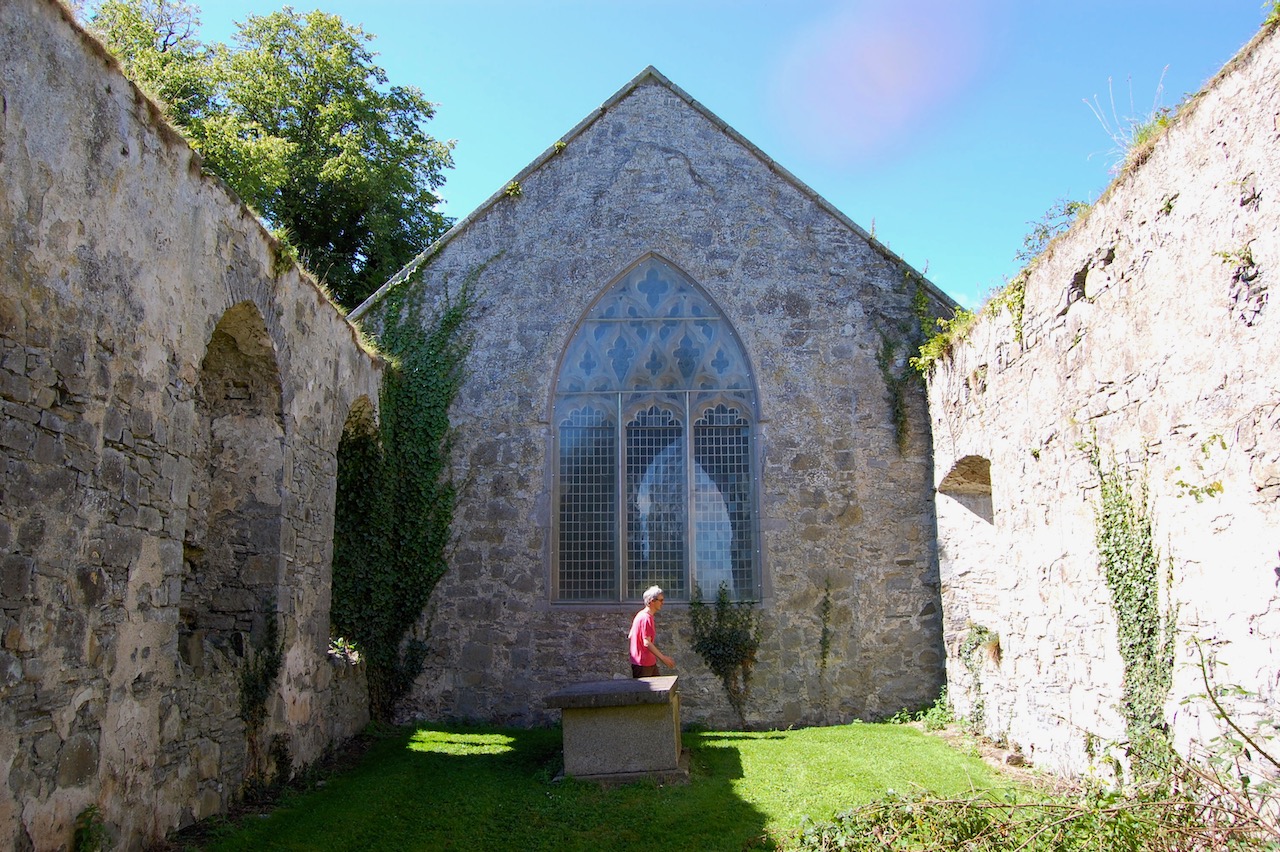
Stephen in the roofless section of the church. Photograph © Jennifer Winder-Baggot, www.irishhistorichouses.com
At the Old Glebe. Photograph © Jennifer Winder-Baggot, www.irishhistorichouses.com
Newcastle-Lyons, County Dublin. Photograph © Jennifer Winder-Baggot, www.irishhistorichouses.com

I was particularly interested in the graveyard as it contains some Bagots, whom I hope were my relatives, though I have not found the connection (it must be far back in the family tree, and we stem from a different branch, if connected at all). A website that describes graves lists James John Bagot and his wife Ellen Maria (nee O’Callaghan), who are interred in this cemetery [7]:

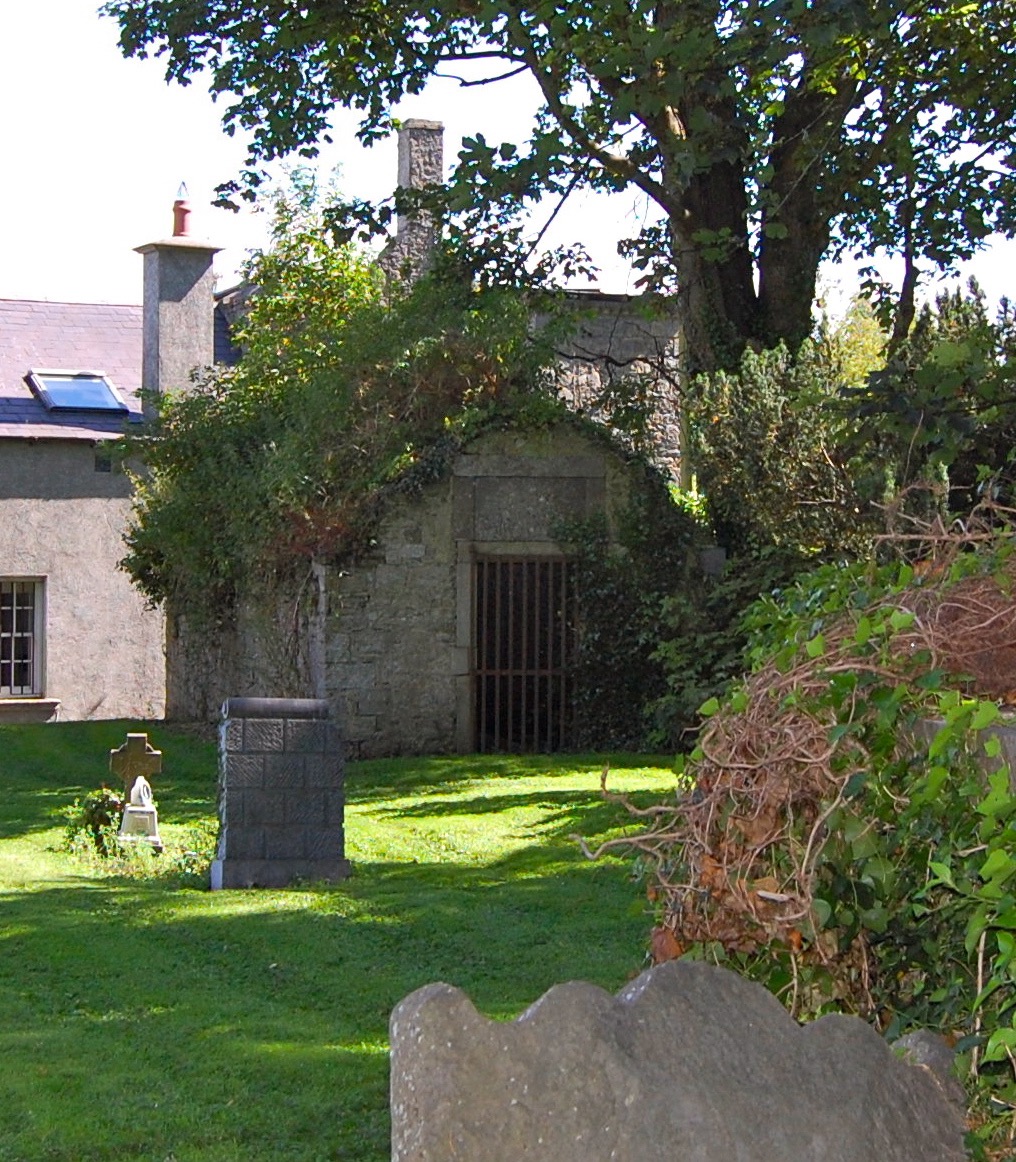
There is a large vault, grass-grown at top, with a cross-shaped loophole at east end,inscribed:-
Pray for the souls of | Those members of the BAGOT Family | who are interred herein | the last of whom | JAMES JOHN BAGOT ESQr | of Castle Bagot County Dublin | Died Aged 76 years | on the 9th of June 1860 | Pray also for the soul of |Ellen Maria BAGOT | his widow interred Herein | who died at Rathgar on 17th Sept 1871 | R.I. P.

Stephen and I returned in 2018 to have a closer look at the grave. In 2012, we thought the grave was the rather macabre vault containing half-open coffins:

At the Old Glebe. Photograph © Jennifer Winder-Baggot, www.irishhistorichouses.com
Iron vaults in graveyard at St Finian’s, Newcastle Lyons. Photograph © Jennifer Winder-Baggot, www.irishhistorichouses.com

Coincidentally, James John’s mother, Eleanor Dease, was probaby related to Colonel Gerald Dease who lived in Celbridge Abbey in 1901.

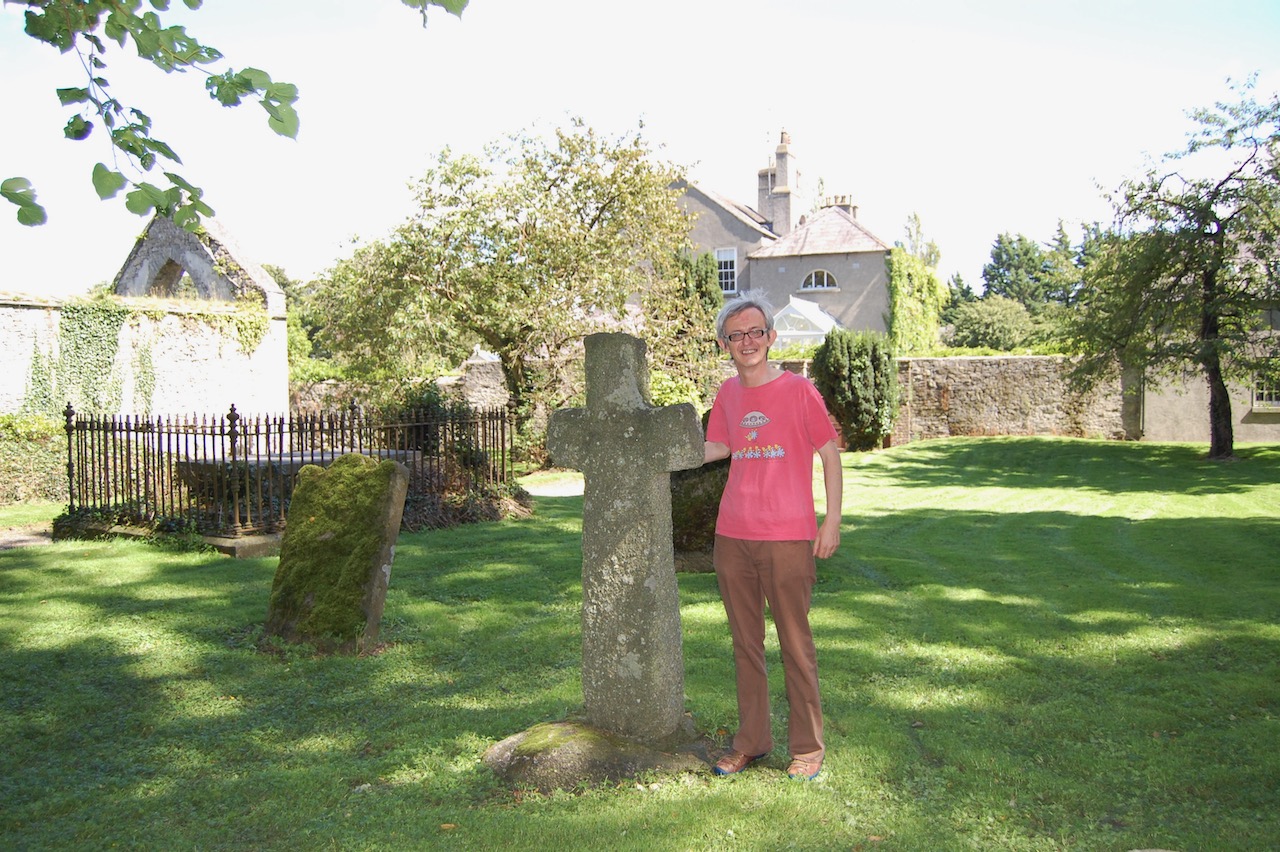
1000 year old cross in graveyard of St Finian’s, Newcastle Lyons. Photograph © Jennifer Winder-Baggot, www.irishhistorichouses.com

In August 2012, we also visited the Catholic church of St. Finian’s in nearby Kilamactalway, to see the baptismal font donated by Ellen Maria Bagot in memory of her husband James John, who died in 1860 and who had lived in Castle Bagot in Rathcoole/ Kilmactalway. I’m a little confused as to why James John and his wife were buried in the Protestant graveyard, since there is a graveyard at the Catholic church, which was built in 1813.

Catholic church of St. Finian’s in Kilmactalway. Photograph © Jennifer Winder-Baggot, www.irishhistorichouses.com
Castle Bagot, Rathcoole, 4th April 2011. Photograph © Jennifer Winder-Baggot, www.irishhistorichouses.com.

Donation

Help me to fund my creation and update of this website. It is created purely out of love for the subject and I receive no payment so any donation is appreciated! For this entry I paid for petrol. There was no entrance fee as we visited during Heritage Week.

€10.00


[1] http://www.buildingsofireland.ie/niah/search.jsp?type=record&county=SC&regno=11212009

[2] architectural definitions

“A bay is a vertical division of the exterior of a building marked by a single tier of windows in its centre. Thus the number of bays in a façade is usually the same as the number of windows in each storey. There are, however, facades in which some of the bays contain two or more narrow windows in each storey in place of a single window of whatever width is the norm.”

“Quatrefoil window: a window in the shape of a four leafed clover; found in Gothic and Gothic-Revival architecture.”

Mark Bence-Jones. A Guide to Irish Country Houses.[originally published as Burke’s Guide to Country Houses volume 1 Ireland by Burke’s Peerage Ltd. 1978; Revised edition 1988 Constable and Company Ltd, London.] pp. xxix-xxxi

[3] https://ardclough.wordpress.com/about/ardclough-history/xtras-hinterland-history-celbridge-straffan/newcastle-lyons-by-francis-ball-1905/

[4] http://www.buildingsofireland.ie/niah/search.jsp?type=record&county=SC&regno=11212007

[5] https://www.irishtimes.com/life-and-style/homes-and-property/900-000-plus-for-historic-family-home-on-1-3-acres-1.223027

[6] https://www.irishtimes.com/life-and-style/growing-old-gracefully-1.788481

[7] http://www.igp-web.com/IGPArchives/ire/dublin/cemeteries/st-finian.txt

Text © Jennifer Winder-Baggot, www.irishhistorichouses.com

Irish Historic Homes