Mark Bence-Jones. A Guide to Irish Country Houses (originally published as Burke’s Guide to Country Houses volume 1 Ireland by Burke’s Peerage Ltd. 1978); Revised edition 1988 Constable and Company Ltd, London.
Supplement
p. 298. “(Butler, Ormonde, M/PB) One of the chief strongholds of the Ormonde Butlers, a large tower house with a hall wing on the southern slopes of Slievenaman. Kilcash was the seat of a junior branch of the family from 1639 until 1758, when John Butler, of Kilcash, became de jure 15th Earl of Ormonde. The castle afterwards fell into decay, but is still owned by the Ormonde famly, who in 1867 built Ballyknockane Lodge on their lands here. Kilcash gives its name to a well-known C18 irish song which mourns the death of Margaret, wife of Col Thomas Butler and of the de jure 15th Earl.”
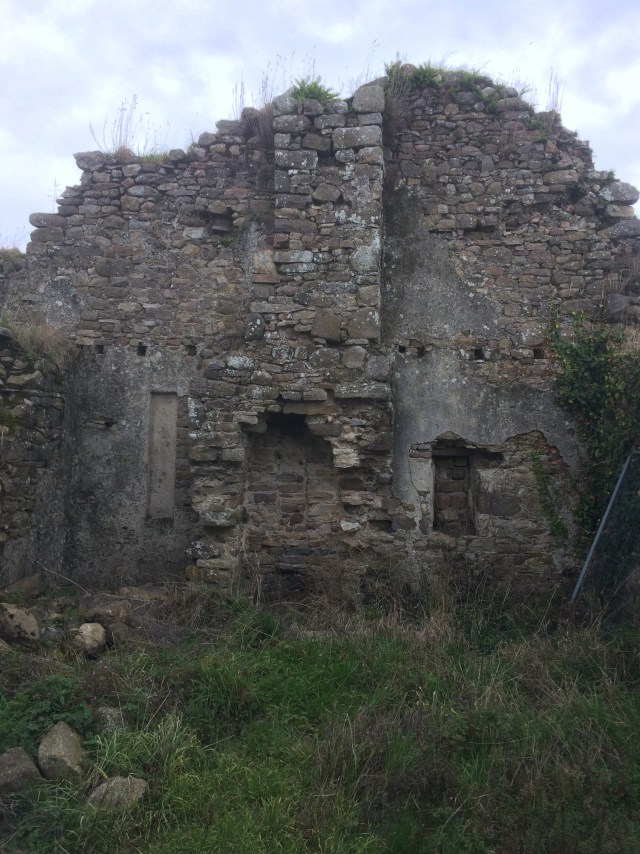
Kilcash Castle is a very fine tower-house attached to the remains of a lower and more recent building. There are bartizans at the NW and SE corners and a machicolation over the doorway which is in the west wall. There are four chimney stacks. At least one of these is a later insertion since it leads from a fireplace now on the outside of the tower and originally in the upper storey of the later house. This house had two storeys plus attic. It has large window openings which have rough wooden lintels.
The starting point of settlement at Kilcash begins in an obscure past: eight hundred metres east of Kilcash Castle is an embanked barrow, a burial site dating from before 400AD. The placename is no help as it came from a later time and the traditional translation of Cill Chaise as ‘the church of Caise’ has been rejected by the official Placenames Database. No St Caise associated with the area can confidently be identified.
The Manor of Kilcash
The first recorded Lord of Kilcash was the Anglo-Norman Baldwin Niger (‘Baldwin the Black’) in the late twelfth century. He gave the church at Kilcash and six hundred acres of land to the hospital of the Fratres Cruciferi (Crutched Friars) of the Priory of St John the Baptist in Dublin who were extensive landowners in Tipperary.
The Walls & Alice Kyteler
In the early 1300s the manor of Kilcash belonged to a branch of the de Valle (or Wall) family. Sir Richard de Valle of Kilcash served both as Sheriff of Waterford (1301-2) and Sheriff of Tipperary (1307-8). His heirs occupied similar administrative positions. However, the most famous member of the family was Sir Richard’s second wife, Alice Kyteler (c.1262-post 1324).
Lady Alice was from a Kilkenny merchant family and she maintained independent business interests – including lending money to the crown – throughout her wife. Widowed several times, some of her stepchildren resented her growing wealth and her favouring of a son by her first husband. At that time, a widow was entitled to the use of a third of her husband’s estate as long as she lived, so when Richard de Valle died, a third of Kilcash passed into her control. She sued her stepson to secure this right (throughout her career she showed that she was adept at employing the legal system and her family connections).
Under other circumstances it is likely that Lady Alice would merely have been inconvenienced by the complaints about her. Unfortunately for her, the newly appointed bishop of Ossory, Richard Ledrede (d.1361), had arrived from the papal court at Avignon where the Knights Templar had been supressed for heresy and sorcery. The bishop detected the same diabolic taint in Lady Alice’s affairs and she was tried for witchcraft. This gave rise to stories of her drinking from skulls and having sex with demons. Despite the vigorous intervention of important supporters, Lady Alice was evidently losing an immediate legal battle and facing the possibility of execution. She fled (most likely aborad) and her ultimate fate is unknown. One of the women associated with her, Petronilla de Midia, became the first person to be burnt for heresy in Ireland. W. B. Yeats wrote of the Kyteler case in his ‘Nineteen Hundred and Nineteen’:
There lurches past, his great eyes without thought Under the shadow of stupid straw-pale locks, That insolent fiend Robert Artisson To whom the love-lorn Lady Kyteler brought Bronzed peacock feathers, red combs of her cocks.
The Butlers
Walter de Valle transferred ownership of Kilcash to the Butlers in the 1540s (although members of Walter’s family continued to live in the area). The manor passed to Sir John Butler (d.1570), a younger son of James Butler, the 9th Earl of Ormond. The castle’s estate remained in the possession of the Butlers until it was divided up in late nineteenth-century land settlements. The castle itself was sold to the Irish State in 1997. In the meantime, the vicissitudes of inheritance moved Kilcash at various times from being the residence of cadet branches of the Butlers to being the homes of the earls of Ormond (later also spelt ‘Ormonde’).
James, the 9th Earl, was succeeded by his son, ‘Black Tom’ (1531-1614), the builder of the Tudor house at Ormond Castle in Carrick-on-Suir. When the tenth earl died he had no living legitimate sons and only one daughter, Elizabeth, so the earldom passed to his nephew, Sir Walter Butler of Kilcash (c.1559-1633). Walter was a staunch Roman Catholic which was politically inconvenient for a Protestant government. Furthermore, King James I supported the claim of Black Tom’s daughter and her second husband, Richard Preston, to a large part of the Ormond estate. The end result was that Walter, who refused to surrender any part of his inheritance, was imprisoned in London between 1619 and 1625.
Walter married Lady Ellen Butler (d.1632) the eldest daughter of Edmond Butler, 2nd Viscount Mountgarret. Earl Walter’s daughters were married to members of important local families: Sir Edmund Blanchville; Richard, Earl of Clanricard; George Bagenal MP; Theobald Purcell, Baron of Loughmo[r]e; Viscount Ikerrin; Piers Power (son of the 4th Baron of Coroghmore); Barnaby Fitzpatrick, Baron of Upper Ossory; Sir George Hamilton of Roscrea; James Butler of Grallagh (a son of Lord Dunboyne); and Sir Turlough O’Brien-Arra. Walter’s only son to survive into adulthood was Thomas, Viscount Thurles, who was killed in a shipwreck in 1619 while travelling to England to answer charges of garrisoning Kilkenny Castle against the government. Viscount Thurles’s eldest son, James (1610-88), became the first Duke of Ormond and a younger son, Richard (c.1616-1701), was given Kilcash.
Richard Butler lived through the complicated and bloody sequence of events that dominated Ireland after the 1641 rebellion which began in Ulster. Richard joined the Catholic Confederation (the Confederation of Kilkenny) and thereby split from his brother, the duke of Ormond, who was the commander of the king’s forces in Ireland. The political situation was further complicated by the outbreak of the English Civil Wars which were followed by the arrival of a parliamentary army under Oliver Cromwell. The Butlers allied against Cromwell, but the victory of the latter drove them into exile on the Continent. Richard returned to Ireland with the restoration of the monarchy in 1660. Charles II made special provisions for him as a reward for his service to the crown and as a mark of favour to Ormond.
Richard Butler married Lady Frances Touchet (1617-88), a daughter of the infamous Mervyn, the 2nd Earl of Castlehaven, who had been executed for rape and sodomy in 1631 after one of the most sensational English trials of the century. Lady Frances’ brother, James, became the 3rd Earl of Castlehaven and fought alongside Butler during the Confederate Wars. Castlehaven wrote part of his memoirs in Kilcash and he died there in 1684. Richard and Frances Butler’s eldest son, Colonel Walter Butler (d.1700) was established at nearby Garryrickin in Co. Kilkenny. He married Lady Mary Plunket, a daughter of the 2nd Earl of Fingall. Walter Butler of Garryrickin’s eldest son, Thomas, inherited Kilcash.
Colonel Thomas Butler
In his youth Thomas Butler (d.1738) served a soldier on the Continent fighting against the Ottomans and he was at the Siege of Buda (1686). Butler was an infantry colonel in the army of James II and fought in the War of the Two Kings (also called the Williamite War) against William III during which he led a regiment of more than four hundred soldiers. He was made prisoner after the defeat of the Stuart forces at the Battle of Aughrim (1691). He did comparatively well as many of his fellow officers (several of whom were related to him) died.
In 1698 Butler married Margaret Bourke, Lady Iveagh (see below) and had three sons and five daughters. His daughters married into families with which Kilcash maintained strong ties: the Kavanaghs of Borris, Co. Carlow; the Brownes (viscounts of Kenmare); the Mathews of Thurles; the Mandevilles of nearby Ballydine; the Esmondes of Clonegal, Co. Carlow; and the Butlers of Westcourt. Two sons died young: the eldest, Richard, was killed after a fall from his horse and Walter died of smallpox while studying in Paris.
Butler’s second son, John (d.1766), converted to the Established Church, and became the heir of his childless cousin, Charles Butler, Earl of Arran (1671-1758). In 1715, Arran’s brother, the 2nd Duke of Ormond, had been attainted for treason and fled from England. Arran had been allowed purchase the Ormond estate but he never used the Ormond title. John was able to inherit Arran’s property, but not the Arran title as he was not one of his descendants. John could have claimed the Ormond earldom if it had not been extinguished because of the 2nd Duke’s treason. He is therefore referred to as the de jure 15th Earl but in fact he remained plain Mr Butler (although a fairly wealthy and well-connected Mr Butler).
Once he came into his inheritance, Butler spent a good deal of time in London. In 1763 he married Bridget Stacey, but they were unhappy together and separated a few years later. In part, this was probably due to Butler’s recurring mental health problems. He left no legitimate children so the Ormond estate passed to his first cousin, Walter Butler of Garryrickin.
ady Iveagh & Her Family
Margaret Bourke (1673-1744) was a daughter of William, 7th Earl of Clanricard by his second wife, Lady Helen MacCarthy, the daughter of Donough, 1st Earl of Clancarty and Lady Ellen Butler (a sister of Richard of Kilcash). Aged sixteen, she married Bryan Magennis, 5th Viscount Iveagh (from Co. Down) who was a colonel in the Jacobite army. At the end of the War of the Two Kings, Iveagh opted to go into the military service with the Austrian empire (which was both Catholic and allied to William III) and he died in Hungary in about 1693. The Iveaghs had a daughter, but she died young. The circumstances in which Lady Margaret met Thomas Butler are unknown. As the latter had no title, the convention was that she kept the courtesy title of viscountess from her first marriage and thus she remained ‘Lady Iveagh’ amidst the Butlers. Commemorated in the song Cill Chaise, she was celebrated as a model of piety and charity. She was also a woman of practical accomplishments: she spent most of her married life enmeshed in court battles over her mother’s inheritance and she smuggled money out of the country to support Irish clerical projects in Paris.
Lady Iveagh’s sister, Honora, married Patrick Sarsfield in 1689 (when she was only fifteen). Sarsfield went on to be one of the most famous Jacobite commanders during the War of the Two Kings and was made Earl of Lucan by James II. After the Treaty of Limerick which ended the Williamite wars, the Sarsfields moved to France. In 1693, the Earl died of wounds incurred at the Battle of Landen, leaving behind his widow and an infant son. Honora remarried in 1695, to James Fitzjames, the Duke of Berwick and an illegitimate son of King James II. She died in 1698. Honora’s family maintained links with Kilcash.
Archbishop Christopher Butler
Christopher (1637-1757) was a younger brother of Colonel Thomas Butler. He studied at Gray’s Inn in London after which he decided to become a priest and was ordained for the diocese of Ossory. He went to Paris where he received his MA and then commenced his study of theology. He was awarded his doctorate in 1710 and the following year he was appointed Archbishop of Cashel (a diocese which was united with the diocese of Emly at his request). During his episcopate, Christopher spent a good deal of time at Kilcash. The penal laws were in force and the power of the Butlers there gave him some protection. His presence at the castle was noted by a priest hunter and orders – which turned out to be unsuccessful – were issued for his arrest. The archbishop was one of Ireland’s most influential prelates and he was involved with ecclesiastical affairs outside his diocese, including corresponding with James III, the Stuart king in exile. He was buried in the mausoleum in Kilcash churchyard.
When Walter Butler of Garryrickin (1703-83) inherited the Ormond Estate from his cousin, John Butler of Kilcash, he moved into Kilkenny Castle with his wife, Eleanor Morres (1711-93). Their son, John (1740-95; also called ‘Jack o’ the Castle’), married Anne Wandesford (1754-1830), the daughter and heir of the 1st Earl of Wandesford (Castlecomer, Co. Kilkenny). John converted to Protestantism and was politically astute. As a result, the Dublin House of Lords recognised the continuing existence of the Ormond title and he became the 17th Earl. He and his father were buried in the mausoleum at Kilcash.
The 17th Earl’s eldest son, Walter (1770-1820), spent much of his time in London where he was close to the Prince Regent. He was rewarded with the title of marquess of Ormond (a step up from being an earl). Despite marrying a Derbyshire heiress, Maria Catherine Price-Clarke (1789–1817), Walter had severe financial problems because he was unable to finance his extravagant lifestyle. In an effort to sustain his spending, the marquess sold timber from Kilcash in 1797 and 1801 as well as stripping the castle. This was the genesis of a ruin that would be complete by the mid-nineteenth century.
Kilcash Castle belonged to the Ormond Estate until it was sold to the Irish government in 1997. Since then, it has been under the care of the Office of Public Works (OPW). Ongoing conservation by the OPW has secured a building which was in danger of collapsing.
Demesne
In the eighteenth century Kilcash Castle was situated on luxurious grounds. Thomas Butler had a twenty-five hectare deerpark as well as the surrounding woodland which included two ponds linked by ornamental walkways. A nineteenth-century map shows a ‘cascade gate’, an additional water feature. Famously, the woods of Kilcash are gone, but the landscaping has not been obliterated: the two avenues which lead to it remain and south of the castle there is a plateau which was a lawn or a turning circle. Four walled gardens south-east of the castle occupy 0.65 hectares. These are lined with brick on their north and west walls (brick retained heat and allowed the cultivation of a variety of fruits).
The tower was built in the mid-sixteenth century and was originally a stand-alone building. It is five stories high and made of sandstone with some dressed limestone (e.g. at the corners). The external walls were covered in white plaster. The small windows on the north-east corner of the tower light its spiral staircase. The larger windows are later and date from a time when comfort took precedence over security. It is clear where these have been restored by the OPW with limestone surrounds.
The tower was entered by a doorway in the west wall. This was secured by a ‘yett’ (metal grille) and was further protected by a box machicolation at roof level above it. This defensive feature would have allowed the castle dwellers to drop things on attackers and became obviously redundant when the house was added. Next to the machicolation is a ‘drip stone’ that carried water away from the walls. The doorway was also protected by a murder hole built into the wall.
The most striking internal feature of the tower at the moment is a substantial metal frame which was inserted by the OPW to stabilise the structure. This was lowered in through the top of the tower, something that was possible because all of its roof and floors had been taken away in the nineteenth century.
It is easy to see where the original floors were. The quoins that support them are still there as are the doorways opening from the stairs and from small rooms built into the west wall (intramural chambers) which is more than 2m thick. Such spaces provided the building’s garderobes (toilets). The principal rooms would have been subdivided by wooden partitions. As a result, more than one fireplace can be found on some floors. These had decorative surrounds, some of which proved too tempting for recyclers.
The stairs open out in a small caphouse at their top. From here, you could walk around the pitched roof and enjoy an impressive view. The three large chimneys on the west wall may have been ostentatious as well as practical. The gables of the attic level have recently been conserved by the OPW.
House
Written records show that there was a house at Kilcash in the seventeenth century. This was either demolished or substantially remodelled to become the two-storey structure (plus attic) which is today attached to the tower. The three bays which remain are only 12.5m of a wall that was 46.5m long and which had ten bays (a bay corresponds to a window). This was once an enormous building whose scale is now not immediately appreciable unless you know that the adjoining hedge conceals the foundations of the old house.
The upstairs windows date from the early seventeenth century but were narrowed to follow the dictates of eighteenth-century fashion. Their surrounds are of cut limestone. The lower windows received new oak lintels during OPW restoration. The square holes running along the top of the walls were for brackets supporting the projecting eave of the roof.
Kilcash Castle’s portraits were moved to Kilkenny Castle in the late eighteenth century. An earlier inventory lists the items in the kitchen. Otherwise, nothing is known for certain about the interior division or furnishing of the house. It probably had a formal dining room, a drawing room, informal rooms, and an office (or study) on the ground floor with bedrooms for the residents and guests on the upper floor and in the attic. Kilcash certainly hosted family and hunting parties where visitors stayed for days or even weeks.
Outbuildings
An early nineteenth-century map shows that there were extensive outbuildings north of the castle. Some of these were joined to the house and tower so that an enclosed yard was created. All that survives of this is the east wing which is now made up of ruined cottages. The west wing of the yard is completely gone along with the farm, mill and kennels which are documented. The yard was enclosed on the north side by a three metre wall (called a ‘bawn’) which still guards the site.
About fifty metres east of the tower is the remains of a bakehouse with a brick-lined oven. The oven was heated by burning furze inside it. The ashes were swept out and then the baking could be done. West of the house (and most likely joined to it) stood a building which was likely to have been a chapel. Its wall is hidden in the hedge since it collapsed in a storm in 1998.
Kilcash, County Tipperary, photograph by Robert O’Byrne, Irish Aesthete.
Now what will we do for timber, With the last of the woods laid low? There’s no talk of Cill Chais or its household And its bell will be struck no more. That dwelling where lived the good lady Most honoured and joyous of women Earls made their way over wave there And the sweet Mass once was said.
Kilcash, County Tipperary, photograph by Robert O’Byrne, Irish Aesthete.
Kilcash, County Tipperary, photograph by Robert O’Byrne, Irish Aesthete.
Ducks’ voices nor geese do I hear there, Nor the eagle’s cry over the bay, Nor even the bees at their labour Bringing honey and wax to us all. No birdsong there, sweet and delightful, As we watch the sun go down, Nor cuckoo on top of the branches Settling the world to rest.
Kilcash, County Tipperary, photograph by Robert O’Byrne, Irish Aesthete.
Kilcash, County Tipperary, photograph by Robert O’Byrne, Irish Aesthete.
A mist on the boughs is descending Neither daylight nor sun can clear. A stain from the sky is descending And the waters receding away. No hazel nor holly nor berry But boulders and bare stone heaps, Not a branch in our neighbourly haggard, and the game all scattered and gone.
Kilcash, County Tipperary, photograph by Robert O’Byrne, Irish Aesthete.
Kilcash, County Tipperary, photograph by Robert O’Byrne, Irish Aesthete.
Then a climax to all of our misery: The prince of the Gael is abroad Oversea with that maiden of mildness Who found honour in France and Spain. Her company now must lament her, Who would give yellow money and white She who’d never take land from the people But was friend to the truly poor.
Kilcash, County Tipperary, photograph by Robert O’Byrne, Irish Aesthete.
Kilcash, County Tipperary, photograph by Robert O’Byrne, Irish Aesthete.
I call upon Mary and Jesus To send her safe home again: Dances we’ll have in long circles And bone-fires and violin music; That Cill Chais, the townland of our fathers, Will rise handsome on high once more And till doom – or the Deluge returns – We’ll see it no more laid.
Kilcash, County Tipperary, photograph by Robert O’Byrne, Irish Aesthete.
A Lament for Kilcash, translated from the Irish by Thomas Kinsella. The remains of Kilcash Castle, County Tipperary.
Thomastown Castle, County Tipperary, entrance front 1917, photograph: Miss Moira Lysaght, Vanishing Country Houses of Ireland by The Knight of Glin, David J. Griffin and Nicholas K. Robinson, published by The Irish Architectural Archive and The Irish Georgian Society, 1988.Thomastown, County Tipperary, entrance front c. 1969, photograph: Christopher Tynne, Vanishing Country Houses of Ireland by The Knight of Glin, David J. Griffin and Nicholas K. Robinson, published by The Irish Architectural Archive and The Irish Georgian Society, 1988.
Mark Bence-Jones. A Guide to Irish Country Houses (originally published as Burke’s Guide to Country Houses volume 1 Ireland by Burke’s Peerage Ltd. 1978); Revised edition 1988 Constable and Company Ltd, London.
p. 272. “(Mathew/IFR; Daly/IFR) Originally a long two storey house of pink brick built from 1670 onwards by George Mathew, half-brother of the great Great Duke of Ormonde; with a centre one room deep consisting of a great chamber or gallery above a rusticated arcade, and projecting wings; a massive oak staircase led up from the arcade to the first floor. It was probably by the same builders who worked for the Duchess of Ormonde at Dunmore House, near Kilkenny; while Dr Loeber suggests that the arcade may have been a design by Sir William Robinson. The Mathews grew richer through heiress marriages, and the grandson of the builder of the house, another George, who inherited 1711, carried out various additions and improvements…This George Mathew was known as “Grand George” and renowned for his hospitality; people could come uninvited to Thomastown and use it as though it were an inn; many legends have grown up about him, though he has become somewhat confused, in local legend, with “Big George,” Earl of Kingston (see Mitchellstown Castle). In 1812, Francis Mathew, 2nd Earl of Llandaff, called in Richard Morrison to enlarge the house and transform it into a castle. Morrison’s transformation was literally skin-deep; he refaced the house in cement, which was originally painted the rather surprising shade of pale blue’ a mask of Gothic openings was applied to the front of C17 arcade which was glazecd and turned into a “Gothic Hall” with a Gothic chimneypiece of plaster and other Gothic plasterwork. Slender turrets, square and polygonal, were added to the entrance and garden fronts, which remained symmetrical; the two on either side of the entrance have pinnacles like rockets or darts growing out of them; from a distance they look like rabbit ears. Thr office wing to the right of the entrance front was enlarged into a vast Gothic kitchen court and stables; a detached entrance tower was also built. The great upstairs room became a Gothic library; the drawing room remained Classical and was adorned with scagliola columns. Fr Theobald Mathew, the “Apostle of Temperance,” grew up here, his father having been a cousin of 1st Earl of Landaff who more or less adopted him and made him his agent. Lady Elizabeth Mathew, sister of 2nd Earl, left Thomastown to her cousin on her mother’s side, the Visomte de Rohan Chabot, son of the Comte de Jarnac. It eventually passed to the Daly family, but from ca 1872 onwards it was allowed to fall into disrepair; it is now one of the most spectacular ruined Gothic castles in Ireland, much of it submerged beneath the ivy which grows here with an unbelievable luxuriance. In 1938 the ruin was bought by Archbishop David Mathew, the historian, in order to keep it in the family and to save it from destruction.”
Listed in Vanishing Country Houses of Ireland by The Knight of Glin, David J. Griffin and Nicholas K. Robinson, published by The Irish Architectural Archive and The Irish Georgian Society, 1988.
p. 136. A large Tudor Revival house designed by Richard Morrison in 1812 for Thomas Mathew 2nd Earl of Llandaff incorporating a late 17C house which may have been designed by Sir William Robinson. Very fine interiors some of which were classical. Now a ruin.
Detached multiple-bay two-storey country house, incorporating seventeenth-century house, enlarged 1812, now in ruins. Comprising central block with office wing to west having square and polygonal towers to front elevation and incorporating an earlier seventeenth-century house. Courtyard with outbuildings to north. Crenellations with machicolations to roofline. Lined-and-ruled render over brick walls with rendered string course to office wing. Ashlar limestone masonry plinths to towers. Projecting entrance bay, in ruins. Square-headed window openings with carved limestone label mouldings having ornate label stops to front. Pointed arch window openings to office wing. Two-storey gate lodge to east having crenellations with machicolations. Rendered brick walls with blank cross-loops to first floor and buttresses to ground floor. Square-headed opening with render hood moulding over pointed arch entrance. Three-stage polygonal tower to east elevation with crenellations and arrow slit windows with hood-mouldings. Coursed rubble limestone walled gardens to north.
Appraisal
This former country house was built by the Matthew family, the earliest house on this site, built by George Matthew dating to c. 1670. The house in its present form was enlarged in the Gothic style by Francis Matthew, II Earl of Llandaff in 1812. Richard Morrison designed the house incorporating a veneer of Gothic openings including the ornate polygonal and square towers to front elevation. The office wing to the right was also enlarged in the Gothic style. From 1870 the house fell into disrepair to become the impressive and spectacular ruin it is today. Much of the original seventeenth-century house survives in the interior of the building. The arched gate lodge to the east mirrors the architecture of the main house and retains many fine details such as the cross loops and hood mouldings. The walled gardens provide an example of the many demesne related activities thereby contributing context to the site.
Built in 1812 for the 2nd Earl of Landaff, the large Tudor Revival castle incorporated a previous 17th century house, thought to have been designed by Sir William Robinson. Now a ruin, the castle was the victim of the decline of the family’s fortunes and was largely closed up in the early part of the 20th century. Now a spectacular ruin.
The original building was a two storey house of pink brick built in the 1670s by George Mathew with early 18th additions. Wilson decribed it in 1786 as “an ancient but handsome edifice”. In the second decade of the 19th century it was enlarged and transformed into a Gothic castle, designed by Richard Morrison for the 2nd Earl of Llandaff. Viscount Chabot is recorded as the occupier in the mid 19th century. He held the property in fee and the buildings were valued at £100. Bence Jones writes that it later was in the possession of the Daly family but from the mid 1870s it began to decay. William Daly was the occupier in 1906 when the buildings were valued at £61.
The family of MATHEW originated from Wales, where at Radyr, Glamorganshire, they long resided; and possessed the town of Llandaff in that county.
SIR DAVID MATHEW (1400-84), Knight, was Standard-Bearer of EDWARD IV, whose monument is still to be seen in Llandaff Cathedral, Glamorganshire.
EDWARD MATHEW, of Radyr, was possessed, in 1600, of the town of Llandaff, and other estates, which his ancestors enjoyed for time immemorial.
At his decease he left an only son,
GEORGE MATHEW, the first of the family in Ireland, who became seated at Thurles, County Tipperary, and married Elizabeth, daughter of Sir John Poyntz MP, of Iron Acton, Gloucestershire, and widow of Thomas Butler, Viscount Thurles (who died before his father Walter, 11th Earl of Ormond).
Mr Mathew died in 1636, leaving two sons and a daughter, and was succeeded by the elder son,
THEOBOLD MATHEW, of Thurles, who married Margaret, eldest daughter of Sir Valentine Browne Bt, and was succeeded by his elder son,
GEORGE MATHEW, of Thurles, who wedded Eleanor, second daughter of Edmond, 3rd/13th Baron Dunboyne, and was succeeded by his son,
GEORGE MATHEW, who erected a splendid mansion upon his estate at Thurles, containing forty bedrooms, and ample corresponding accommodation for as many guests.
This gentleman distinguished himself by hospitality upon an unprecedented and almost boundless scale.
He fitted up his sumptuous residence as a guest house of the first magnitude, and his guests were informed upon their arrival, that as such they were to regard it, and to consider themselves, in every sense of the word, quite at home.
They might either live in their own suite of rooms, or at the table d’hôte, as they pleased.
There was a coffee-room, tavern, billiards-room, etc, and Mr Mathew himself appeared only as one of the guests.
This highly accomplished and celebrated person had the degree of LL.D conferred upon him, 1677, by his half-brother James, 1st Duke of Ormond, Chancellor of the University of Oxford.
Mr Mathew wedded firstly, Catherine, third daughter of Sir John Shelley, 3rd Baronet, by Mary, eldest daughter and co-heiress of Sir John Gage Bt, of Firle, East Sussex, and had issue, an only child,
GEORGE, his heir.
He espoused secondly, in 1716, Ann, widow of James, 3rd Earl of Tyrone, by whom he no issue, and at his decease, the estates devolved upon his brother-in-law,
GEORGE MATHEW, married his cousin, Mary Anne Mathew, and had issue,
George (1733-8); Elizabeth.
On the failure of male issue in this branch, the estates devolved to
GEORGE MATHEW, of Thomastown, who wedded firstly, Margaret, fourth daughter of Thomas Butler (grandson of the Lord Richard Butler, younger son of James, 1st Duke of Ormond, by the Lady Margaret Burke, eldest daughter of William, 7th Earl of Clanricarde, and widow of Bryan Magennis, Viscount Iveagh, and had issue, a daughter.
Mr Mathew espoused secondly, Isabella, fourth daughter of William Brownlow, of Lurgan, County Armagh (by the Lady Elizabeth Hamilton, eldest daughter of James, 6th Earl of Abercorn), and had issue, a son, who died in infancy, when the estate devolved upon a junior branch of the family,
THOMAS MATHEW, of Thurles, and subsequently of Thomastown, who married, in 1736, Miss Mary Mathews, of Dublin, and had issue,
FRANCIS, his heir; Catherine Ann Maria.
The only son and heir,
FRANCIS MATHEW (1738-1806), wedded firstly, in 1764, Ellis, second daughter of James Smyth (son of the Rt Rev Edward Smyth, Lord Bishop of Down and Connor), and had issue,
FRANCIS JAMES, his heir; Montague James, Lieutenant-General in the Army; George Toby Skeffington; Elizabeth.
He espoused secondly, in 1784, the Lady Catherine Skeffington; and thirdly, in 1799, ______ Coghlan, second daughter of Jeremiah Coghlan.
Mr Mathew, MP for Tipperary, 1768-83, High Sheriff of County Tipperary, 1769, was elevated to the peerage, in 1783, as Baron Landaff, of Thomastown, County Tipperary; and was advanced to a viscountcy, in 1793, as Viscount Landaff, of Thomastown, County Tipperary.
His lordship was further advanced to the dignity of an earldom, in 1797, as EARL LANDAFF.
He was succeeded by his eldest son,
FRANCIS JAMES, 2nd Earl (1768-1833), MP for County Tipperary, 1801-6, Knight of St Patrick, 1831, who married, in 1797, Gertrude Cecilia, daughter of John La Touche, of Harristown, County Kildare, though the marriage was without issue.
His lordship died of syncope in Dublin, on 12 March 1833, aged 65, when the titles expired.
Dying intestate, his estates went to his sister, the Lady Elizabeth Mathew, who died in 1842, leaving the estates to a cousin, the Vicomte de Chabot, the son of her mother’s sister, Elizabeth Smyth.
THOMASTOWN CASTLE, Golden, County Tipperary, was built by George Matthew and dated from ca 1670.
It comprised a long, two-storey house of pink brick.
The house in its present form was enlarged in the Gothic style by Francis, 2nd Earl Landaff, in 1812.
(Sir) Richard Morrison designed the house incorporating a veneer of Gothic openings, including the ornate polygonal and square towers to the front elevation.
The office wing to the right was also enlarged in the Gothic style.
From ca 1872 the great mansion fell into disrepair to become the impressive and spectacular ruin it is today.
Father Theobald Mathew, the famous temperance reformer whose father was a cousin of the 1st Earl, grew up at the Castle.
The 2nd Earl’s sister, Lady Elizabeth Mathew, bequeathed Thomastown to her maternal cousin, the Vicomte de Rohan-Chabot, son of the Comte de Jarnac.
The estate later passed to the Daly family.
The ruinous building was purchased in 1938 by the Rt Rev David Mathew, the historian, who wished it to be kept in the family and saved from destruction.
This expectation proved to have been in vain.
The arched gate lodge to the east reflects the architecture of the main house and retains many fine details, such as the cross loops and hood mouldings.
The walled gardens provide an example of the many demesne-related activities thereby contributing context to the site.
The Tipperary Gentry. Volume 1. By William Hayes and Art Kavanagh. Published by Irish Family Names, c/o Eneclann, Unit 1, The Trinity Enterprise Centre, Pearse St, Dublin 2, 11 Emerald Cottages, Grand Canal St, Dublin 4 and Market Square, Bunclody, Co Wexford, Ireland. 2003.
Matthew of Thomastown, Annfield and Thurles
p. 135. Viscount Thurles was Thomas Butler the eldest son of Walter the 11th Earl of Ormonde. Thomas’s wife was Elizabeth the daughter of Sir John Poynz of Acton, Gloucester, and she was a Catholic. Thomas died tragically in a drowing accident when he was travelling to Ireland from England in 1619. His widow, Elizabeth, had three sons and four daughters. Elizabeth’s eldest son became the 12th Earl of 1st Duke of Ormonde. She did not remain a widow for long. She married George Mathew of Llandaff, Glamorgan, in 1620. [This enterprising lady managed to save Thurles during the Cromwellian wards by telling Cromwell taht she had refused to allow a Royalist company under Colonel Brian O’Neill to occupy the town and sought Cromwell’s help. This action saved the town of Thurles from being despoiled and saved the Mathew family from being dispossessed.]
George and his widow, Elizabeth, had two sons, Theobald, who founded the Thurles adn Annfield dynasties of Mathew, and George Reihill, later of Thomastown, who managed the estates of the Ormondes in Tipperary [The Peerage has him as the son of Theobald]. In the process George succeeded in acquiring substantial properties himself. The fact that George Reihill married Eleanor Butler, the [p. 136] daughter of Lord Dunboyne and widow of Lord Cahir (another Butler) helped considerably. George raised her young son the 4th Lord Cahir and when he was of age married him off to his niece, Elizabeth. George Reihill was the ancestor of the Thomastown Mathews. [George surrendered Cahir Castle to Cromwell in 1649. Apparently he was warned by his mother, Elizabeth, to follow that course of action as she had done in Thurles]. [ note: the Mathew family of Llandaff adopted “Mathews” with an ‘s’ in the mid 17th century]
When the Duke and Duchess of Ormonde were away in England or in Dublin the maintenance of Kilkenny Castle was the provenance of Captain George Reihill Mathew, their relation. The Duchess bombarded him with orders, “my Lord and I doe so much apprehend the danger to the roof of the old hall of the castle of Kilkenny and he desires it may be secured, repaired and mended with as much speed as may be.” “I desire you will furnish the castle of Kilkenny to be in readiness to receive me, my son and his family in the middle of next month.”
p. 137. When the Lady Cahir died George married another widow, who brought with her a dowry of £10,000. She was the widow of the last Earl of Tyrone [ on my family tree I have her as Anne Rickard (1665-1729) but she is married to his son, George Mathew *. She was married to James de la Poer, 3rd Earl of Tyrone (1666-1704), and they had a child, Catherine de la Poer, Baroness de la Poer (1701-1769)].
She had no children [Anne Rickard, according to this book] and when George died in 1689 she became somewhat isolated in Thomastown. [Thomastown was built around 1670 by George Reihill. Prior to that he had lived in Cahir Castle]. She fled to London in 1690 whre she petitioned the government for help, stating that she, a Protestant, had been driven out of Ireladn by her in-laws who were Catholic. [see Marnane, Land and Violence in West Tipperary].
George Reihill was succeeded by his second son, Theobald, who was also twice married. [the eldest son, George, was educated in England and died on the way home from England in 1666]. He died in 1711. Theobald’s son, George, known as “Grand” George, inherited the estate of Thomastown. In his will, Thomas left several bequests including monies to be put in trust and managed for his three daughters until they got married or reached the age of 21. [The ladies in question were Elizabeth, who married Christopher O’Brien of County Clare, Frances, who married John Butler of Co Tipperary, and Elinor who married Kean O’Hara of County Sligo]. He expected a return of 8% on his money. He left money to the youngest son, Bartholomew, and to his “dear cousin” Major George Mathew of Thurles…
The problem of succession in the Catholic Mathew families contrasts with the almost smooth successions achieved by the families of the Butlers of Cahir and the Ryans of Inch.
p. 138. The Thurles Mathews were fortunate that there were three single male heirs following the death of Theobald Mathew in 1699. This meant that no stratagem had to be used to avoid carving up the estate. However, a failsafe plan was put in place in the event that the male heirs were not forthcoming. In 1713 a settlement was put in place, which ensured that in default of male heirs the estate would go to the Annfield and Thomastown branches successively. Similar plans must have been put in place in the other Mathew properties because in 1738 the Thurles and Thomastown estates were joined because of the failure of direct heirs in Thomastown. It should be noted that “Grand” George Mathew who died in 1738 had converted in the early years of the 18th century. This inheritance did put a strain on the Thurles owner, George Mathew, who felt it incumbent to change his religion in 1740.
p. 138. Theobald of Thurles (who died in 1699) did in fact have several sons and daughters himself. He was married three times. By his first wife, Margaret the daughter of Sir valentine Browne he had three sons, George, known as Major George who inherited in 1699, Edmund who died young and James who married Elizabeth Bourke, daughter of the 3rd Baron Brittas. [he is acknowledged to be the father of James Mathew of Thomastown and later of Rathclogheen, who was adopted by his cousin and guardian the 1st Earl of Llandaff. James of Rathclogheen is the ancestor of the modern day Mathews] James had no family. He also had two daughters – Elizabeth who married the 4th Lord Cahir, and Anne who married Viscount Galmoy [ 3rd]
By his second marriage to the heiress, Anne Salle of Killough Castle, County tipperary, he had one son….[see tree]
The Annfield branch of the family found life a little more complicated in that Theobald of Annfield, who inherited in 1714 had two brothers. However there is no record on any legal pressure being applied to compel the family to comply with the penal laws of inheritance.
p. 139. When Theobald died in 1745 the estate went to his son Thomas Mathew. [Thomas had three sons and two daughters, one of whom, Mary, married John Ryan of Inch. The sons were Theobald, who inherited in 1714, Edmund who died in 1772 and James of Borris who married the heiress Anne Morres. They had one daughter who married her cousin Charles Mathew.]
Again there does not seem to have been any pressure put on Thomas to divide the estate. Howver, in 1755 just prior to Parliament considering framing anti-Catholic laws Thomas decided to convert. The fact that his relation, George Mathew of Thurles, who had inherited Thomastown, was now elderly and had no male heir may have been a contributory factor also. George died in 1760 and Thomas Mathew of Annfield now became the sole owner of all the Mathew properties.
p. 141. Thomastown had been repaired and reconstruction began in 1711. [ W. Nolan in Tipperary History and Society] It was reported that “Grand” George Mathew and his family lived ‘frugally’ on the continent for seven years on £600 a year in order to devote his £8,000 rental to the laying out of his 1500 acre demesne and the fitting out of the house with forty bedrooms. [T. Power in Land, Politics and Society in 18th Century Tipperary]…
“Grand” George of Thomastown turned Protestant in the early decades of the 18th century and was elected an MP for County Tipperary. George sat as a Tory and a supporter of the 2nd Duke of Ormonde. He was also elected MP for the period 1727-1736. He died two years later. This was the same George Mathew who was visited by Dean Swift in 1719. In 1704 he was one of nine Catholics in the country who were given licenses to carry arms. However this situation changed after 1715 when the government ordered the seizure of Catholics horses and arms. At some stage in th following years George adn his son were apprehended and searched for arms.
The other two branches of the family remained Catholic. When Lady Thurles died she left her second son Theobald the town and manor of Thurles and an estate of four thousand acres. He was married three times and his second wife was Anne Sall, an heiress. Theobald gave her esate to his second son Thomas and so began the Annfield family. The changes in land ownership, which was effected by the necessity of the Ormonde Duke to reduce his overwhelming debts, benefited many landowners in Tipperary, including the Mathew famiy. They used the opportunity to consolidate and expand their holdings. [other families to benefit were Sadleir, Coote, Langley, Baker, Cleere, Dawson, Dancer and Harrison – T. Power in Land, Politics and Society in 18th C Tipperary]
p. 142. The Mathew family owned Thurles town and because of their patronage the Catholic Butler bishop was allowed to live there. [Whelan in Tipperary society and history]. In addition the Mathew family of Annfield built Inch and Thurles chapels. A plaque on the wall of the chapel, which was built in 1730 in Thurles, stated that it was built by “Big” George Mathew. He was the George Mathew of thurles who married his stepsister Martha Eaton. He was also the son of the Major mentioned above.
The Thomastown dynasty came to an abrupt end with the death of “Grand” George and his grandson who both died in 1738. “Grand” George’s son, Theobald, had died two years earlier in 1736. He was married to a cousin from Thurles, Mary Ann Mathew. Her brother, George of Thurles inherited Thomastown at this time. As George of Thurles had no sons the Thomastown and Thurles estates passed into the ownershop of Thomas of Annfield in 1760. The will, transferring the ownership, was contested unsuccessfully by Margaret the daughter of George of Thurles.
Thomas had converted to the Church of Ireland in 1755 and he was returned an MP for Tipperary in 1761. In the turbulent political climate of the times, his election was seen as a triumph for the pro Catholic interest in the county. Thomas was perceived as being of dubious conformity himself. He conformed again in 1762. He was elected MP again [p. 143] in 1768 but by a very small margin of 25 votes. On petition the result was overturned. Unlike the Pritties who were very widely connected with teh Protestant landowning classes, Thomas Mathew had to rely on his own voters and whatver support he could must from among the more liberal gentry.
…Thomas Mathew’s son Francis was perceived as being a closet Catholic. However, he was fortunate in that he had John Scott (later Lord Clonmell) as his brother-in-law. Scott became solicitor-general and was very influential in government circles. Through his influence, Francis, formerly an opposition MP, became a government supporter and this led to his elevation to the peerage as Lord Llandaff in 1784. Though he had, to some extent, changed his allegiance, he still championed the Catholic cause right up to the end of the century and beyond.
The Act of 1778, which gave an enormous measure of relief to the Catholics, was widely welcomed by the Catholics in Tipperary. The men most associated with the carriage of the Act were Francis Mathew of Thomastown, Lord Clonmel (John Scott, brother in law of Francis, Sir William Osborne and John Hely-Hutchinson. [This close association between Lord Clonell and Francis Mathew wasn’t always harmonious. According to Barrington, in his Reminiscences, Lord Clonmell fought duels with Lord Llandaff, Lord Tryawley and others.] p. 144. The main features of the Act were (1) the removal of the requirement that Catholic property had to be divided among the surviving sons (2) leases could now be given for more than 31 yers (3) the removal of the decree that a son who converted would get immediate possession making his parent a tenant for life only. The Act would only apply to people who took the Oath of Allegiance. …
That is not to say that Francis favoured any change in the status quo with regard to property rights. During the heyday of Whiteboyism he stood four square with the landlords. After the murder of Ambrose Power, a landlord, in 1775, over sixty of the leading figures in Tipperary including Francis Mathew nd Thomas Maude, pledged their lives and fortunes to suppress Whiteboyism.
With the re-emergence of considerable agrarian unrest, the American war of Independence and threatened French invasions, Volunteer Corps were founded all over Ireland. ..Each corps ws comprised of about forty rank and file members drawn from the head tenantry or from friends or associates of the Colonel. Francis Mathew had three corps, one in each of his main holdings at thomastown, Annfield and Thurles.
…p. 145. Francis was made Baron Llandaff of Thomastown in 1783 and he was later made Earl of Llandaff in 1797. The Earl lived the life of a Lord and entertained and was entertained royally. ..
In 1812 Francis the 2nd Earl employed the architect Richard Morrison to “throw a Gothic cloak over the earlier house” (at Thomastown)…
Fortuitous marriages brought additional wealth to the Mathew family starting with George the first Mathew to arrive in Tipperary, who married the widow of Viscount Thurles. His soon George Reihill married the widow of Lord Cahir who was also the daughter of Lord Dunboyne. “Grand” George Mathew, a grandson of George Reihill, married as his second wife Lady Ann Hume who brought him an estate worth £10,000 in the 1680s. He converted the title to his own use and that of his heirs and used the money to make further land purchases. Francis Mathew the 1st Earl received £10,000 with Ellis Smyth of Wicklow when they married in 1764.
…Francis was in serious debt when he inherited in 1777 due largely to marriage payments and unpaid debts from previous generations. Trustees were appointed by Parliament to unravel his affairs and lands had to be disposed of.
When he died in 1806 the estate was still very much in debt for a variety of reaons one of which was his sponsoring a bill to bring a water supply to Thomastown Castle.
p. 147. Francis teh 2nd Earl died in 1833. He had been predeceased by his brother Montague in 1819. His second brother George was insane and had died in 1832, so teh estates passed to Elizabeth his sister. She too died unmarried in 1841.
While the main branch of the family disappeared the Mathew name was kept aloive…For example, Francis Mathew of Rockview House who was mentioned in the will of Elizabeth was married twice and had four sons and two daughters. ..
Thomastown Castle, County Tipperary, photograph by Robert O’Byrne.
Many people in Ireland will be familiar with the name of Theobald Mathew, a 19th century Roman Catholic priest who became known as the Apostle of Temperance. A member of the Capuchin order, in 1838 Fr Mathew, witnessing the problems arising from excessive consumption of alcohol, founded the Total Abstinence Society in Cork city, where he was then living. Within nine months some 150,000 persons had enrolled in this organisation and at its height during the late 1840s it is estimated that half the population of Ireland were members. What may be less well known is that Theobald Mathew was related to a wealthy, and Protestand, landed family and grew up at Thomastown Castle, County Tipperary where his father acted as agent to a cousin, the first Earl of Landaff. Now a striking ruin, Thomastown was for several centuries the seat of the Mathew family. Of Welsh origin (hence the choice of name for their title), they were connected through marriage to the Butlers, and thus acquired land in this part of the country. As was so often the case, a series of judicious marital alliances made them exceedingly rich, allowing the construction of a large residence in the late 17th/early 18th centuries. In Town and Country in Ireland under the Georges (1940) Constantia Maxwell provides an excellent account of life there in the years after the house had been built by Thomas Mathew. The building was ‘surrounded by gardens adorned with terraces, statuary, and fish ponds, and by a park of some two thousand acres stocked with deer. Mr Mathew, besides being very rich, was held to be one of the finest gentlemen of the age, and, having travelled much on the Continent and lived in London and Dublin, had a large circle of friends. Nothing gave him so much pleasure as to invite these to Thomastown, where he had no less than forty guest-rooms, besides handsome accommodation for servants. The guests in his house were invited to order anything they might wish for, as at an inn; they might seat themselves at the dining-room table without paying irksome respect to rank, or, if they preferred it, dine with chosen companions in their own rooms. A large room was fitted up as a city coffee-house with newspapers and chessboards, where servants had been ordered to bring refreshments at any time of the day. For those who liked sport fishing tackle was provided, as well as guns and ammunition, while hounds and hunters were available in the stables. But, although everything at Thomastown was on such a lavish scale, there was no disorder or waste, for Mr Mathew rose early every morning to look over the accounts, and his servants were well paid, and forbidden to take tips.’ A description of life at Thomastown was provided by Thomas Sheridan in his biography of Jonathan Swift described how the later was so delighted with Thomas Mathew’s hospitality that instead of staying for a fortnight, as originally intended, he remained there for four months.
Thomastown Castle, County Tipperary, photograph by Robert O’Byrne.
Thomastown Castle, County Tipperary, photograph by Robert O’Byrne.
Thomastown Castle, County Tipperary, photograph by Robert O’Byrne.
Thomastown Castle, County Tipperary, photograph by Robert O’Byrne.
As mentioned, the house at Thomastown was once surrounded by splendid gardens. Writing in 1778, Thomas Campbell noted that not only was the setting perfect, with the Galtee Mountains ‘set at such a due distance that they are the finest termination for a prospect a painter could desire’ but ‘behind the house is a square parterre, with flowers, with terraces thickly studded with busts and statues; before it, a long and blind avenue, planted with treble rows of well-grown trees, extends its awkward length. In the centre of this, and on the acclivity of the hill, are little fish ponds, pond above pond. The whole park is thrown into squares and parallelograms, with numerous avenues fenced and planted.’ By the time Campbell visited, this style of garden had fallen out of fashion, so he tut-tutted that ‘if a hillock dared to interpose its little head, it was cut off as an excrescence, or at least cut through; that the roads might be everywhere as level as they are straight. Thus was this delightful spot treated by some Procrustes of the last age.’ A few years later, Joseph Cooper Walker was just as critical of Thomastown’s gardens. ‘They lie principally on the gentle declivity of an hill,’ he explained, ‘resting on terraces, and filled with “statues thick as trees”. A long fish pond, sleeping under “a green mantle” between two rectilineous banks, appears in the midst. And in one corner stands a verdant theatre (once the scene of several dramatic exhibitions) displaying all the absurdity of the architecture of gardening. Thus did our ancestors, governed by the false taste which they imbibed from the English, disfigure, with unsuitable ornaments, the simple garb of nature.’ Not much later, perhaps when the second Earl of Landaff, who inherited title and estate on his father’s death in 1806, transformed the house, these by-now old-fashioned gardens were largely swept away in favour of open parkland.
Thomastown Castle, County Tipperary, photograph by Robert O’Byrne.
Thomastown Castle, County Tipperary, photograph by Robert O’Byrne.
Thomastown, as previously mentioned, was originally a late 17th/early 18th century house of two storeys, the centre just one room deep with projecting wings forming a short entrance courtyard. However, it appears that the generous Thomas Mathew enlarged the house by filling in the space between the wings to create a dining room, some 50 feet long and 20 feet deep, no doubt to feed all the guests he entertained. Several generations later, the second Earl of Landaff decided to alter the building’s appearance by giving it a Gothick makeover. In 1812 the architect Richard Morrison was commissioned to come up with a design for the place. The original entrance arcade was now glazed to create a Great Hall, while the first-floor gallery became a gothic-style library. However, the drawing room retained its classical decoration, with screens of scagliola columns at either end, a typical Morrison flourish which can still be seen in the library at Ballyfin, County Laois. Meanwhile, the exterior was ornamented with a crenellated parapet and a series of octagonal turrets topped with dart-like finials. As Mark Bence-Jones noted, from a distance these look like rabbits’ ears. A kitchen and service wing at right-angles to the house was also thoroughly dressed in Tudor-Gothic decoration, although a stone tower at the corner of the range is in Norman style. The entire building was covered in stucco, which was then rather oddly painted pale blue. An engraving of the completed work made by John PrestonNeale in 1819 although this included an unexecuted family wing and a more simple service range than that actually constructed. The second earl had no children and following his death, Thomastown passed to a sister Lady Elizabeth Mathew who in turn left the estate to a cousin of her mother, the Vicomte de Chabot. Before the end of the 19th century, it had come into the possession of the Dalys of Dunsandle, County Galway but seemingly by then the house was already falling into ruin. And so it has remained, with much of the central block, where those hospitable dinners were once given, long since collapsed. Today the only diners seen here are cattle.
Thomastown Castle, County Tipperary, photograph by Robert O’Byrne.
Thomastown Castle gate tower, County Tipperary, photograph by Robert O’Byrne.
Thomastown Castle gate tower, County Tipperary, photograph by Robert O’Byrne.
After Monday’s post explaining the history of Thomastown Castle, County Tipperary, these pictures might be of interest since they show the gate tower that formerly gave access to the main house. It dates from around 1812 and was likewise designed by Richard Morrison: note the Mathew family coat of arms prominently displayed over the gateway. Aside from this detail, the building is almost identical to a similar gate tower at the entrance to the demesne of Borris House, County Carlow. This was also designed by Morrison and at the same date: one wonders if the estates’ respective owners ever noticed or remarked on the duplication?
Thomastown Castle gate tower, County Tipperary, photograph by Robert O’Byrne.
Thomastown Castle gate tower, County Tipperary, photograph by Robert O’Byrne.
In recent days, I have been writing about tangled family trees and difficult marriages that led to questions about the inheritance of titles and estates in the Townshend familyand the Leeson family.
In the Townshend family, scandals and a bigamous marriage threatened the succession to both the title of Marquess Townshend and the ownership of Tamworth Castle. In the Leeson family, a tangled family tree led to the loss of Russborough House in Co Wicklow and the disappearance of the title of Earl of Milltown.
Similar stories are told about the Mathew family of Thomastown, Co Tipperary, and the claims to the title of Earl Landaff.
The Mathew family claimed descent from a branch of the Matthew family of Radyr in Glamorgan, in south Wales. There are three 15th and 16th century Mathew family effigies In Llandaff Cathedral.
George Mathew sold his estate at Radyr in the mid-17th and moved to Co Tipperary. He became the owner of Thomastown Castle, near Thurles, when he married Elizabeth Poyntz (1587-1673), Lady Thurles, widow of Thomas Butler, Viscount Thurles.
It was a marriage that brought George Mathew into a powerful and influential family circle, and he was the stepfather of James Butler (1610-1688), 1st Duke of Ormond.
George Mathew died in 1638, but the Mathew family maintained close connections with the Ormond Butlers in the generations that followed. In 1666, George Mathew was granted a large estate in Co Tipperary, including part of Thomastown. The original Thomastown Castle was a two-storey house of pink brick built in the 1670s by George Mathew with early 18th additions.
Thomastown Castle was the birthplace and early home of Father Mathew, the ‘Apostle of Temperance,’ and his father was a cousin of Thomas Mathew and worked for him as his agent.
Thomas Mathew of Annefield succeeded to the Mathew estates of Thomastown and Thurles in 1760. Wilson described Thomastown Castle in 1786 as ‘an ancient but handsome edifice.’ Thomas was succeeded by his son Francis Mathew in 1777 who was given the title of Earl Landaff in 1797.
Francis Mathew (1738-1806), 1st Earl Landaff, had been MP for Tipperary in the Irish House of Commons in 1768-1783, and was High Sheriff of Tipperary. He was made a member of the Irish House of Lords in 1783 with the title of Baron Landaff, of Thomastown, in Co Tipperary. In 1793, he received the higher title of Viscount Landaff, and in 1797 he was made Earl Landaff.
The Earls Landaff used the invented courtesy title Viscount Mathew for the heir apparent. Despite their territorial designations, the misspelling of Llandaff as Landaff, and the fact that the titles were in the Irish Peerage, the titles all referred to the place in Glamorgan now spelt Llandaff. After the Act of Union, Lord Landaff was elected as one of the 28 Irish peers to the British House of Lords.
This Lord Landaff was married three times. On 6 September 1764, he married Elisha Smyth (1743-1781) in Bellinter, Co Meath. She was a sister of Sir Skeffington Smyth of Tinney Park, Co Wicklow. They had four children, three sons and two daughters: Francis James Mathew, later 2nd Earl of Landaff; General Montague Mathew (1773-1819); the Hon George Toby Skeffington Mathew (died 1832); and Lady Elizabeth Mathew (died 1842).
In 1784, he married his second wife, Lady Catherine Skeffington (1752-1796), a daughter of Clotworthy Skeffington, 1st Earl of Massereene. They had no children, and in 1799 he married his third wife, a woman named Coghlan from Ardo, Co Waterford.
When he died in 1806, he was succeeded in his titles by his eldest son from his first marriage, Francis James Mathew (1768-1833), 2nd Earl Landaff, who had been known by the courtesy title of Viscount Mathew. He was MP for Tipperary in the Irish House of Commons (1790-1792), Callan (1796) and again for Tipperary (1796-1801). As Earl Landaff, he also took his father’s place as an Irish representative peer in the House of Lords.
He opposed the Act of Union, supported Catholic Emancipation, and was seen as ‘a personal enemy of George IV’ when he gave evidence in favour of Queen Charlotte regarding her conduct at the Court of Naples during her famous trial.
Thomastown Castle was enlarged in the early 19th century, and transformed into a Gothic castle, designed by Richard Morrison for Francis James Mathew, the 2nd Earl Landaff.
Lord Landaff married Gertrude Cecilia La Touche, a daughter of John La Touche, of Harristown, Co Kildare. They had no children, and he died in Dublin on 12 March 1833, aged 65.
Lord Landaff’s next brother, Lieut-Gen Montague James Mathew (1773-1819), had died 14 years earlier, on 19 March 1819, and so the family titles became extinct. General Mathew was MP for for Ballynakill in the Irish Parliament until 1800, and MP for Co Tipperary in Westminster in 1806-1819. He was a Whig and a supporter of Catholic Emancipation.
Their youngest brother, the Hon George Toby Skeffington Mathew, also died in 1832. So, when the second earl died, the family titles became extinct, and the estates passed to his sister, Lady Elizabeth Mathew. The Ordnance Survey Name Books record Lady Elizabeth Mathew owned townlands in the parish of Kilfeacle, barony of Clanwilliam, in 1840.
When she died in 1842, she left the family estates and fortune to a cousin, the Vicomte de Chabot, the son of her mother’s sister Elizabeth Smyth. Viscount Chabot was living at Thomastown Castle in the mid-19th century. Later it was owned by the Daly family, but from the mid-1870s it began to decay from the mid-1870s. William Daly was living there in 1906.
As Thomastown Castle crumbled and decayed, a number of pretenders came forward, claiming they were the rightful holders of the title Earl Landaff and heirs to the castle. The most outrageous of these pretenders was Arnold Harris Mathew (1852-1919), self-styled de jure 4th Earl Landaff, also self-styled Count Povoleri di Vicenza.
Mathew was also the founder and first bishop of the self-styled Old Roman Catholic Western Orthodox Church in Great Britain, an Old Catholic Church. His episcopal consecration was declared null and void by the Union of Utrecht’s International Old Catholic Bishops’ Conference. In addition, he was excommunicated by Pope Pius X for illicitly consecrating two priests as bishops which led a London jury to find that ‘the words were true in substance and in fact’ that he was a ‘pseudo-bishop.’
He claimed his father, Major Arnold Henry Ochterlony Mathew, who died in 1894, was the third Earl Landaff, and the son of Major Arnold Nesbit Mathew, of the Indian Army. According to these claims, this Major Arnold Mathew was, in turn, the eldest son of the 1st Earl Landaff, born in Paris five months after his parents married.
This claim was later shown to be based on invented and fictitious information. Arnold Nesbit Mathew originally used the name Matthews, as did his son. He was, in fact, the son of William Richard Matthews and his wife Anne, of Down Ampney in Gloucestershire. Incidentally, Down Ampney was also the home village of the composer Ralph Vaughan Williams (1872-1958(, who composed the tune ‘Down Ampney’ for the hymn ‘Come down, O love divine’
Arnold Harris Mathew put forward his claim to the Garter Principal King of Arms for the title of 4th Earl Landaff of Thomastown, Co Tipperary, in 1890, and placed his creative pedigree on the official record at the College of Arms.
John H Matthews, Cardiff archivist, said in 1898 that the number of claimants to the dormant or extinct earldom was ‘legion.’ In his opinion, Arnold Henry Mathew’s pedigree was ‘too extra-ordinary to commend itself to an impartial mind.’
Nevertheless, Arnold Henry Mathew presented his petition to the House of Lords in 1899, claiming a right to vote with the Irish peers for representative peers in the House of Lords. In his petition, he did not repeat other exuberant claims, including one that his grandmother was Eliza Francesca Povoleri, was an Italian countess and the daughter of a Papal marchese.
His petition was read and referred to the Lord Chancellor, Lord Halsbury, who reported in 1902 that Mathew’s claim ‘is of such a nature that it ought to be referred to the Committee for Privileges; read, and ordered to lie on the Table.’
Mark Bence Jones in a feature in Country Life says Archbishop Mathew also bought the ruins of Thomastown Castle and 20 acres surrounding it to save it from destruction.
Mathew’s aristocratic pretensions, like his life as a ‘wandering bishop,’ were fantasies that continue to resurface in the claims of fantasists and pretenders in many walks of life.
When he died on 19 December 1919, the claims to the Mathew title did not come to an end.
As recently as 1987, a mural memorial was erected in Llandaff Cathedral, claiming it was: ‘In memory of Thomas James Mathew son and heir of Francis James Mathew second Earl of Landaff born in London 1798 died in Cape Town 1862.’ The memorial includes a full display of the coat of arms of the Mathew family of Co Tipperary as Earls Landaff, and the misspelling of Llandaff as Landaff.




 Irish Historic Houses