Ardbraccan, County Meath

Ardbraccan House, Navan, Co Meath

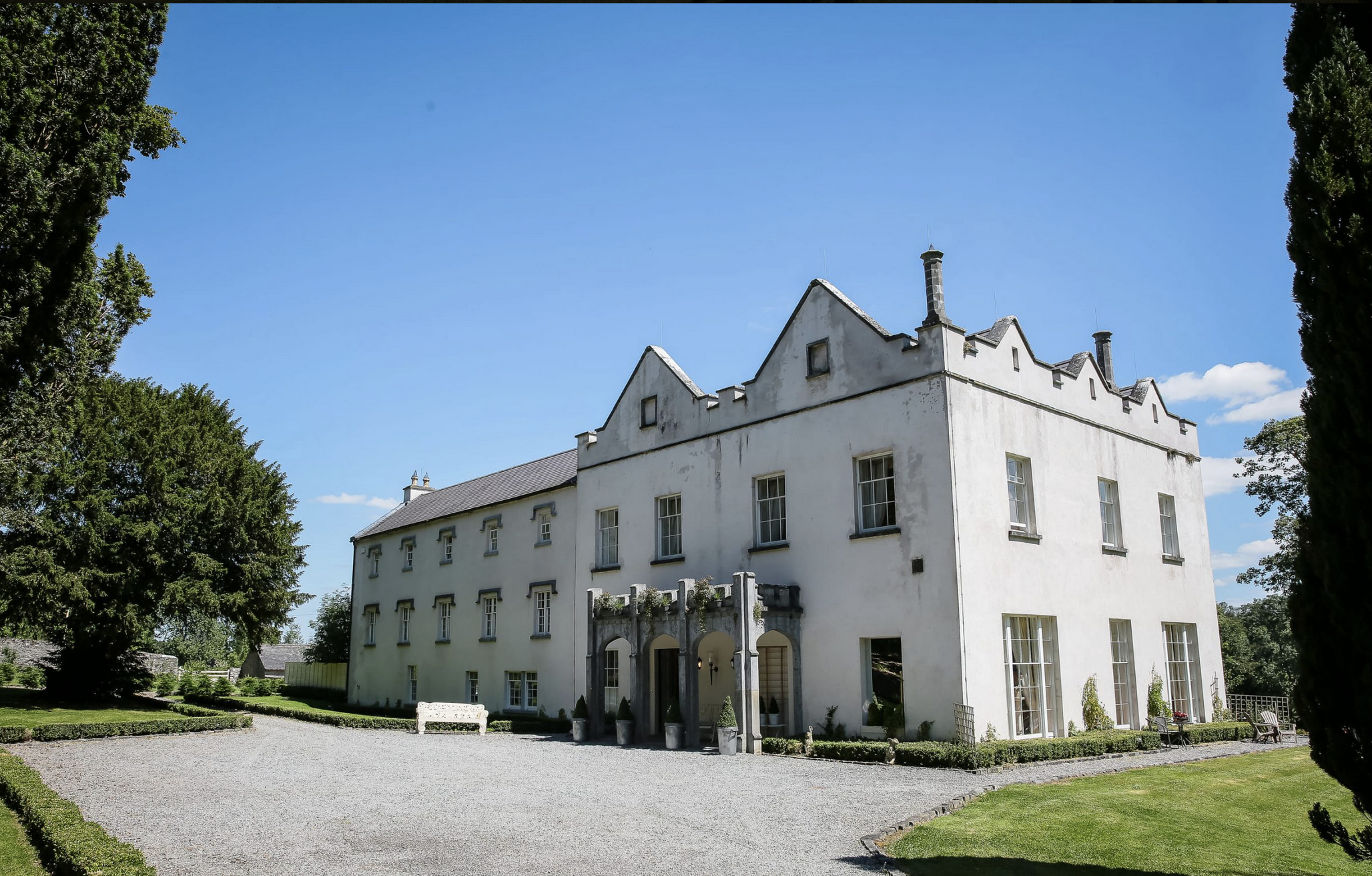
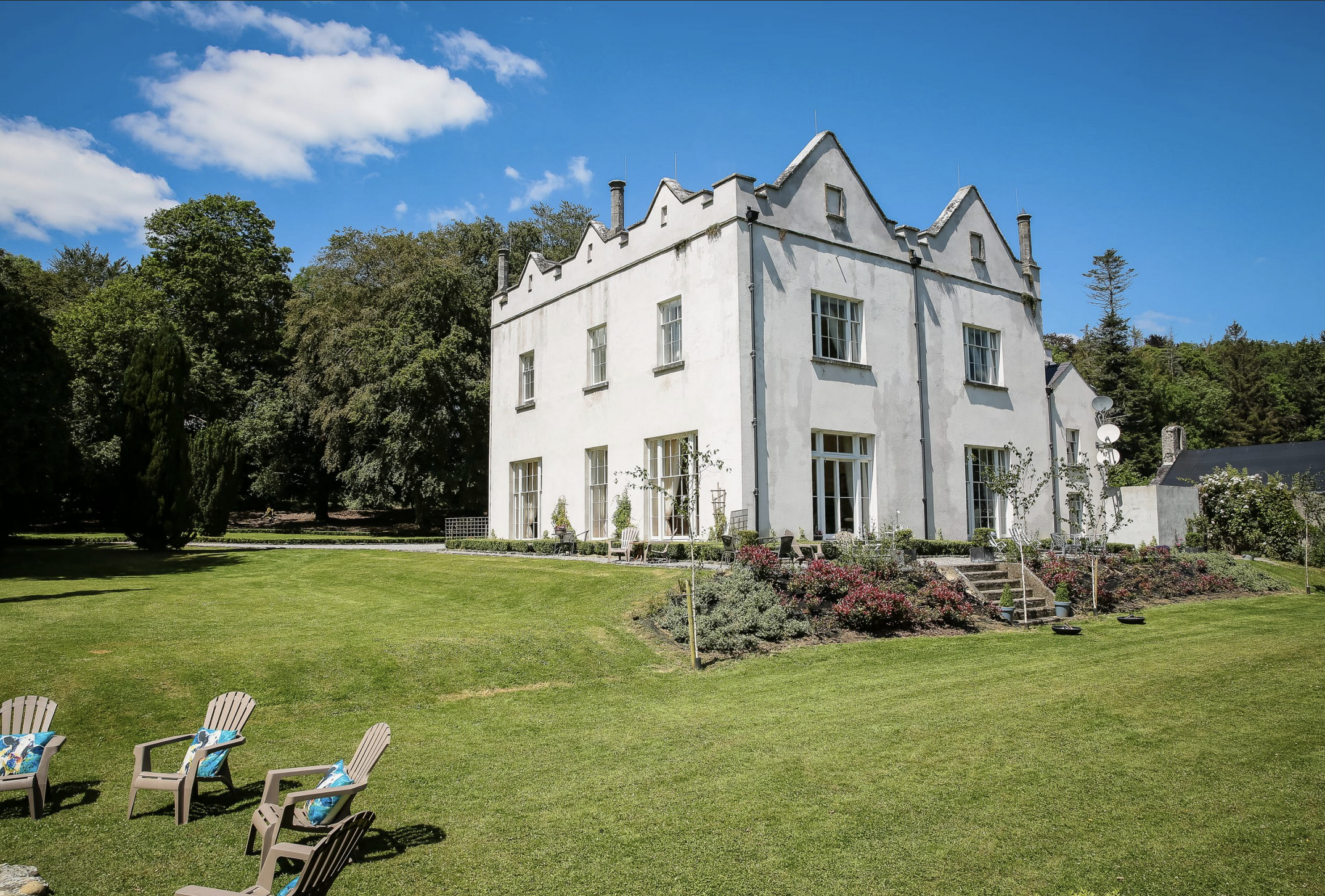
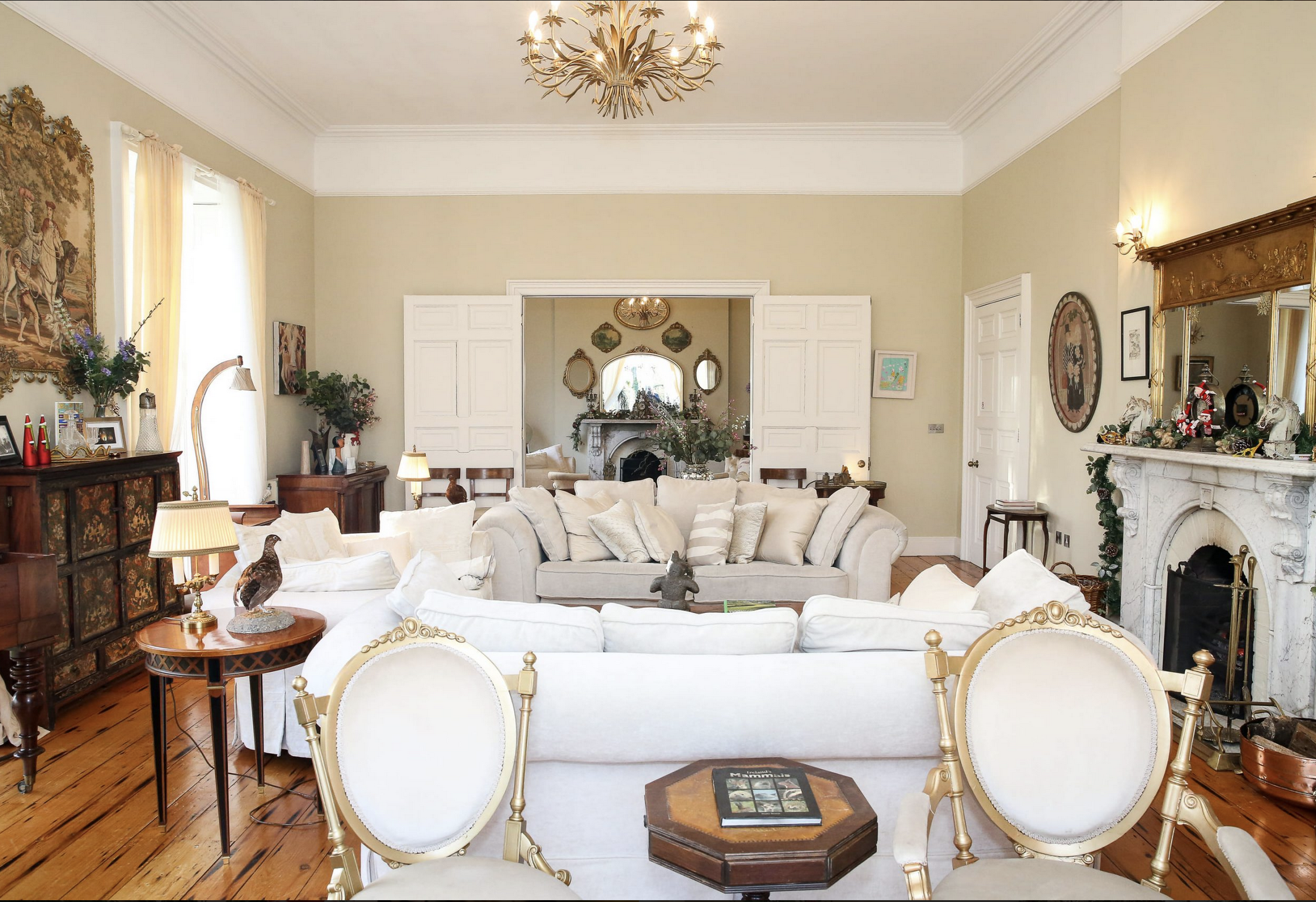
Ardbraccan House, Ardbraccan, Navan, County Meath, C15W8C0 for sale March 2025 courtesy Sherry Fitzgerald

Mark Bence-Jones. A Guide to Irish Country Houses (originally published as Burke’s Guide to Country Houses volume 1 Ireland by Burke’s Peerage Ltd. 1978); Revised edition 1988 Constable and Company Ltd, London.

p. 7. “The Palace of the (C of I) Bishops of Meath, on the site of the old castle where the Bishops lived from C14. Bishop Evans left money for the building of a new house here early in C18; his successor, Bishop Henry Downes, came here with Dean Swift to lay out the ground; but it was not until the time of the next Bishop again, Arthur Price, that the house was begun ca 1734, to the design of Richard Castle. When the two 2 storey 5 bay wings of what was to be a Palladian mansion had been completed, Price was elevated to the Archdiocese of Cashel. For the next 30 years, the subsequent Bishops did nothing about building the central block, but lived in one of the wings, using the other for guests. It was not until early 1770s that Bishop Henry Maxwell, a younger son of 1st Lord Farnham, decided to complete the house; he is said to have boasted that he would build a palace so grand that no scholar or tutor would dare to live in it. He obtained designs from Thomas Cooley and also from one of his own clergy, Rv. Daniel Beaufort, Rector of Navan, who was a talented amateur architect. Both of them were, to a certain extent, under the influence of James Wyatt, who produced a sketch of the garden front. The centre block, which was eventually begun 1776 and took several years to build, is a simple and dignified grey stone house of 2 storeys and 7 bays, with an Ionic doorcase; it harmonises well with Castle’s wings, to which it is joined by curved sweeps with niches. The garden front, also of 7 bays, has a 3 bay central breakfront in which the ground floor windows are set in a blind arcade. The restrained neo-Classical interior plasterwork is said to have been designed by Wyatt, though Beaufort was asked by Bishop Maxwell to design a ceiling for the entrance vestibule 1780. This is a narrow room with a barrel-vaulted ceiling of shallow hexagonal coffering; a door under a large and elegant internal fanlight at its inner end opens into the main hall or saloon in the middle of the garden front, which has a cornice of mutules and elliptical panels above the doors. The principal and secondary stairs lie on either side of this saloon, which also communicates with the drawing room and dining room in the entrance front, on either side of the vestibule. Despite Bishop Maxwell’s hope that the grandeurs of Ardbraccan would discourage scholars and tutors from aspiring to the diocese, his successor was Thomas O’Beirne who had started life as a humble schoolmaster; but who none the less carried out improvements to the outbuildings, advised by Beaufort. The more aristocratic Bishop Nathaniel Alexander carried out grander improvements to the outbuildings in 1820s and 30s. The handsome farm and stable yards are joined by a tunnel under the garden terrace.” 

George Montgomery, Bishop of Meath (c. 1566-1621), courtesy of Fonsie Mealy auction 2021.
Ardbraccan House, Ardbraccan, Navan, County Meath, C15W8C0 for sale March 2025 courtesy Sherry Fitzgerald

Ardbraccan House, Ardbraccan, Navan, County Meath, C15W8C0 for sale March 2025 courtesy Sherry Fitzgerald

€10,150,000

11 Bed

7 Bath

2150 m²
for sale March 2025 courtesy Sherry Fitzgerald.

Ardbraccan House, Ardbraccan, Navan, County Meath, C15W8C0 for sale March 2025 courtesy Sherry Fitzgerald

Once home to the Lord Bishop of Meath, and with a history going back one thousand years, Ardbraccan House owes its design to one of the most significant architects working in Georgian Ireland. Thanks to award winning restoration works, this Palladian Mansion is presented in ideal condition, while the approx. 101ha (250 acres) of lands include pleasure grounds, gardens, pastures and farmlands and so comprise one of the county’s finest country estates.

Right Reverend Henry Maxwell (d. 1798) Bishop of Meath Irish school courtesy of National Trust Castle Ward
Ardbraccan House, Ardbraccan, Navan, County Meath, C15W8C0 for sale March 2025 courtesy Sherry Fitzgerald

Mansion House, approximately 2,150 sq. m. (23,142 sq. ft.) 4-bedroom guest wing, 2 bedroom staff apartment, 4 guest lodges SPECIAL FEATURES • Approx. 101 Hectares (250 Acres) Country Estate with lands laid out in grazing paddocks and woodlands in the Boyne Valley • Walled garden, specimen trees, pleasure grounds, formal gardens and secluded walking trails • Historic 18th Century Georgian Mansion designed in the Palladian style by a team of architects including Richard Castle, architect of Leinster House • Beautiful and elegant original features throughout, with ideally proportioned reception and entertainment rooms • Full stables, stud farm and horse sport facilities Additional farmyards and coach houses and outbuildings • Excellent lands, ideally maintained and suitable for grazing, sporting pursuits or tillage • Eleven bedrooms in the central main house, four-bedroom guest wing, and two-bedroom staff apartment • Historic church and four additional lodges on site, including two apartments • Located just 5km from Navan • Approx 56km from Dublin International Airport • Approx 12km from Ballyboy Private Airfield • Excellent road network throughout the lands, including tunnels linking farmyards • Lands very well laid out with excellent secure fencing • Heritage award winning restoration of the Main Residence

Ardbraccan House, Ardbraccan, Navan, County Meath, C15W8C0 for sale March 2025 courtesy Sherry Fitzgerald

ARDBRACCAN HOUSE Ardbraccan House joins Castletown and Carton as one of Ireland’s most significant Palladian mansions, taking its design from the hey days of classical Georgian Architecture. Contributed to by many of Europe’s most significant architects and designers, craftspeople and creators, it has been refurbished to award-winning standards. The principal mansion sits at the heart of lands that have been equally well designed, tended and restored over the centuries. A significant two storey over basement centrepiece is flanked by curved linking enfilades leading to a pair of symmetrical guest wings, one of which also houses a set of palatial stables. Reached via a sweeping set of stone steps, Ardbraccan preserves the symmetry so loved by the Georgians by means of a rare and beautiful barrel-vaulted hall, leading through to the wider Great Hall beyond. This feature allows the principal Dining and Drawing rooms three windows apiece, with lavish views across the estate parklands. Both of these gracious rooms have particularly fine neo-Classical plasterwork. The Great Hall has a William Chambers chimney piece, elegant plasterwork and French windows to the garden terrace. It leads to the Library and Study. Adjacent to this, the main Stair Hall has plasterwork to designs by James Wyatt, who also worked on Slane Castle.

Ardbraccan House, Ardbraccan, Navan, County Meath, C15W8C0 for sale March 2025 courtesy Sherry Fitzgerald

Also at this level are a servery / kitchen, a pair of cloakrooms and a second staircase. At garden level there is a larger kitchen / breakfast room, gym, laundry room, playroom, pantry, stores, brickfloored beer cellar and wine cellar. The vaulted, country-style garden level kitchen is a particularly beautiful room. Light-filled it has an Aga, granite worktops, wooden-topped island unit, York flagstone floor, and solid timber cabinetry.

Ardbraccan House, Ardbraccan, Navan, County Meath, C15W8C0 for sale March 2025 courtesy Sherry Fitzgerald

Upstairs are four generous bedroom suites, and two further bedrooms, and on the second floor, you will find a further five bedroom suites. All are beautifully proportioned with views across the gardens and parklands. A kitchenette on the top floor is a wise convenience for both nightcaps and morning coffees.

Ardbraccan House, Ardbraccan, Navan, County Meath, C15W8C0 for sale March 2025 courtesy Sherry Fitzgerald

The two adjoining wings have been beautifully refurbished. To the left is a semi-separate wing with a kitchen, breakfast area, dining area, staff room and laundry room, with one bedroom at ground level, and three generous bedrooms above.

To the right, the ground floor houses stables, a tack room and boot room, while above is a kitchen, living room, two bedrooms and a loft.

Ardbraccan House, Ardbraccan, Navan, County Meath, C15W8C0 for sale March 2025 courtesy Sherry Fitzgerald

Guest and staff accommodation throughout the estate is also provided in four lodges altogether. At the main entrance, the Main Gate Lodge offers a one-bedroom residence, providing an elegant and welcoming setting as you enter the estate.

At the rear entrance, the Kells Gate Lodge features two bedrooms, along with its own private parking area and garden, ensuring privacy. Built in the late 1990s, this lodge was designed in a traditional period style to blend with the aesthetic of the estate. Additionally, at the entrance to St. Ultan’s Church, which has been de-consecrated in recent years, stand two beautifully refurbished cottages: The School House and Sexton’s Cottage. Both of these lodges feature two bedrooms and have been meticulously restored, including the refurbishment of original sash windows, and are finished to an very high standard throughout.

Ardbraccan House, Ardbraccan, Navan, County Meath, C15W8C0 for sale March 2025 courtesy Sherry Fitzgerald

RESTORING ARDBRACCAN, A PROJECT OF PASSION While the house and lands at Ardbraccan feel timeless, history marches on, and estates such as this thrive on the care of each succeeding generation. After lying vacant towards the end of the last century, previous owners lavished their attention on a painstaking restoration project. Working to conservation standards, specialist craftspeople used and revived traditional methods to bring the woodwork, plasterwork, stonework, roofs and windows back to their former glory. Where replacements were necessary, items were sourced and salvaged from sister properties in Ireland and the United Kingdom. Chimney pots were re-cast to match the originals, and the roofs were restored using the original slates, copper and leadwork. Specialist painters, stoneworkers and stuccadores congregated, some to apply and pass on their skills, and others to perfect their craft with the masters. Glass was handblown, and work extended right through to the inlay details in mother of pearl, as well as brass, pewter, marble and papier mache. At the same time, services were brought up to twenty first century standards. The project was renowned in Ireland, and in 2002 Ardbraccan was accoladed with An Taisce’s BestRestoration of a Private Building award. More recently, Ardbraccan’s owners have continued this legacy by restoring one of the wings, upgrading the behind-the-scenes services, sensitively revitalising the interiors, and refurbishing some of the lodges. LANDS AT ARDBRACCAN With approximately 101 Hectares (250 Acres) of excellent land, the immediate gardens at Ardbraccan are thought to have been originally designed by Ninian Nevin, who also designed the Iveagh Gardens in Dublin, and those at the home of the President of Ireland, Áras an Uachtaráin. Notable in the immediate vicinity of the main house are pleasure gardens with paths leading to informal gardens, shrubberies, small conservatories and a brick-lined walled garden. This was restored with the expertise of Daphne Shackleton, whose portfolio also includes gardens at Slane Castle, Virginia Park, the historic gardens at Loughcrew, and restorations at Ballintubbert and Baronscourt. These gardens speak of history and time: one Yew tree on the property is thought to be more than 500 years old. Stands of mature trees shelter the house and provide privacy, while opening up to reveal unspoilt views. The pastures and woodlands are separated by a pair of ha-has, adding to the sense of expansiveness. Beyond these are stud-railed paddocks and pastures. The parklands were extensively drained, fenced and replanted with specimen trees in the early 2000s, and the care has been on-going since then. Extensive yard and farm buildings include Palladian style yards, with stables, coach houses, a restored clock tower, lofted hay stores, a timber-panelled tack room, and horse walker. Two of these yards are linked by an underground tunnel. Further farm buildings are south, beyond a private sunken garden. These include a walled orchard, bell tower, grain lofts and a dovecote. A more-modern farmyard is screened within a former walled garden. There is also an historic church, now deconsecrated, on site. The estate is set within a single block, with the exclusion of a minor public road beyond the immediate core. Offering unparalleled privacy, and huge opportunity, the estate and lands at Ardbraccan give extraordinary scope for country and sporting pursuits, equestrian enterprises and farming. They also comprise an idyllic retreat in The Royal County, in a welcoming community, within easy reach of Ireland’s capital, and Dublin Airport, connecting you to the world, just half an hour away.

Ardbraccan House, Ardbraccan, Navan, County Meath, C15W8C0 for sale March 2025 courtesy Sherry Fitzgerald

Section 482 in 2000, David Maher 046 9074800 

https://www.buildingsofireland.ie/buildings-search/building/14402402/ardbraccan-house-ardbraccan-co-meath

Detached double-pile seven-bay two-storey over raised basement central block, built c.1776, flanked by quadrant walls to five-bay two-storey kitchen and stable wings, built c.1735. Former residence of the Bishops of Meath, now in use as a private house. Hipped slate roof to main block with ashlar chimney stacks. Hipped slate roof to flanking blocks with central chimney stacks. Ashlar Ardbraccan limestone walls with string course and a carved limestone cornice. Rear elevation with central three bays advanced with full length square-headed window openings to central block with ashlar limestone reveals, tooled limestone sills and timber sash windows. Laundry house, granary, outbuildings, icehouse and walled gardens to rear. 

Appraisal 

Ardbraccan House and demesne occupy an historically important site as it has been the seat of the Bishops of Meath since the fourteenth century. It has archaeological sites within the demesne including a holy well and two mounds. Architecturally the house is significant as Richard Castle designed the kitchen and stable blocks while the central block appears to be a culmination of the designs of Thomas Cooley and James Wyatt, together with amateur architect the Rev. Daniel A. Beaufort. The house displays the finest construction materials, such as Ardbraccan limestone and high quality fixtures and fittings. The house is set in mature pasture land with formal gardens and walled gardens. 

Ardbraccan, County Meath, courtesy National Inventory.

Casey, Christine and Alistair Rowan. The Buildings of Ireland: North Leinster. Penguin Books, London, 1993.  

p. 113. “The house was begun in the 1730s for Bishop Arthur Price, to designs by Richard Castle, who clearly envisaged a typical Palladian house with a large central block joined by curved links to kitchen and stable wings. When Price was raised to the Archbishopric of Cashel, building activity ceased at Ardbraccan; only the wings had been completed, and they served as accommodation for successive, and presumably less worldly, bishops until the 1770s. They survive today as rectangular four-bay, two-storey blocks with hipped roofs and central chimneystacks. The architecture is simple: sash windows, twelve-pane below and six-above, with a continuous string-course between. The S kitchen wing, now remodelled internally, had originally two-storey kitchen with a gallery or walkway to facilitate efficient supervision. The N stable wing, similar to Castle’s work at Strokestown in Co Roscommon, and to other stable blocks by him, is groin-vaulted throughout, the vaults carried on Tuscan columns set on the deep round bases that are characteristic of Castle’s architecture and derive ultimately from the bases of the minor order of Palladio’s basilica at Vincenza. 

The decision to complete the house was made by Henry Maxwell, a younger son of the first Lord Farnham and Bishop of Meath for 32 years from 1766 to 1798. In 1773 he obtained a preliminary design for the central block from James Wyatt. This shows a simple seven-bay, two-storey block above a basement, astylar and studiously understated, with regular sash windows, embellished only by architraves at ground-floor level, an Ionic doorcase and string-courses. The existing house, a reticent seven-bay two-storey building of grey Ardbraccan limestone, although almost certainly not by Wyatt, differs little from his conception, and both Thomas Cooley and the Rev. Daniel A. Beaufort, the amateur architect who provided the later and more detailed designs for the house, were undoubtedly guided by it… [p. 114].Cooley’s plans are restrained and nearer to Wyatt’s than Beaufort’s, which are often fussily grandiose and old-fashioned. Wyatt left no model for the garden front, proposals for this elevation were less inhibited. What was built is a simple seven-bay façade – the three centre bays advanced and expressed as full-length windows on the ground floor, set in round-headed relieving arches, a design close to Cooley’s drawings of 1775, though they lack the rather gauche arches of the design as built. 

In one sense the plan of Ardbraccan follows the traditional double-pile layout: a hall flanked by public rooms, with the principal and service stairs in the middle on each side and three rooms at the rear. What is different is that the usual large square hall is here placed in the centre at the rear, behind a narrow vaulted vestibule, an arrangement which first appears in Cooley’s plans of 1773 and 1774 and permits the rooms on either side to be large rectangular spaces, each with three windows, instead of the more common near square plan. 

The ground plan for the unsigned and unexecuted Adamesque design was the most unusual and up-to-date of all the proposals: a rectangular hall, elliptical stairhall and circular saloon, all on a central axis flanked on each side by dining and drawing rooms, parlour and library. 

Internal features suggest the close involvement of Cooley: the square, ample proportions, the free yet restrained treatment of anthemion and foliate motifs to the joinery and plasterwork, particularly the bay-leaf garlands in the dining room and the simplified – and freely treated – mutule cornice in the stairhall. An elegant finishing touch is the curved inner edge of the mahogany doors throughout the ground floor, all of which operate on a swivel rather than a hinge, a measure of the absolute refinement of late C18 building. Ardbraccan is a sophisticated house, cool and reticent rather than graceful, and more elegant than endearing.” 

Ardbraccan, County Meath, “This formal dining room features panels on the wall painted in a delicate acqua tone and a large dining table ” copyright Luke White/The Interior ArchiveLW_268_18 

Ardbraccan County Meath copyright Luke White The Interior Archive, dining room LW_268_13 

This formal living room is furnished with an Aubusson carpet and a formal arrangement of sofas and armchairs. Ardbraccan House, Copyright Luke White/The Interior Archive Ltd, LW_268_06 

The comfortable library is decorated in warm shades of red. Ardbraccan, Copyright Luke White/The Interior Archive Ltd, LW_268_05 

The gracious entrance hall features a drum table and walls painted a neo-classical grey, Ardbraccan, Copyright Luke White/The Interior Archive Ltd, LW_268_26 

Ardbraccan County Meath, This landing is furnished with a mahogany period sideboard and a pair of matching table lamps and armchairs ,copyright Luke White The Interior ArchiveLW_268_15 

The master bedroom is decorated with a formal portrait above the fireplace, Ardbraccan County Meath copyright Luke White The Interior Archive , the master bedroom LW_268_14 

Record of Protected Structures: 

Detached double-pile seven-bay two-storey over raised 

basement central block, built c.1776, flanked by quadrant 

walls to five-bay two-storey kitchen and stable wings, built 

c.1735. Former residence of the Bishops of Meath. 

Front gate lodge: 

Detached three-bay single-storey gable-fronted gate lodge, 

built c.1770. Now in use as private residence. Main facade 

constructed of ashlar limestone with pediment and 

pronounced cornice. 

http://www.buildingsofireland.ie/PlacesToSee/Meath/  

Ardbraccan Estate former home to the Church of Ireland Bishops of Meath. 

https://www.geni.com/projects/Historic-Buildings-of-County-Meath/29729

Ardbraccan House Liscarton. Bishop’s Palace. Historic house which served as the residence of the Church of Ireland Lord Bishop of Meath. residence of a bishop for over one thousand years, first of the Bishop of Ardbraccan and later following the merger of many small dioceses into the Diocese of Meath as the residence of the Bishop of Meath. By the Middle Ages a large Tudor house, containing its own church, known as St. Mary’s, stood on the site.  1734Bishop Arthur Price (1678-1752) decided to replace the decaying mansion with a new Georgian residence. Initially the two wings of the house were built, before the main four-bay two-storey block of the house was completed in the 1770s by Bishop Maxwell. It was partly designed by the acclaimed 18th-century German architect Richard Castle (also known as Richard Cassels) was the architect of many notable Irish buildings including Leinster House in Dublin.Ardbraccan House and demesne occupy an historically important site as it has been the seat of the Bishops of Meath since the fourteenth century. It has archaeological sites within the demesne including a holy well and two mounds. Architecturally the house is significant as Richard Castle designed the kitchen and stable blocks while the central block appears to be a culmination of the designs of Thomas Cooley and James Wyatt, together with amateur architect the Rev. Daniel A. Beaufort. The new bishop’s palace became famous for the quality of its architecture. Funded by government grants and locally paid tithes, the Church of Ireland bishop held court from the mansion, which was the centre of a large agricultural demesne. However the disestablishment of the Church of Ireland in 1871, following the previous scrapping of Roman Catholic-paid tithes, fatally weakened the economic survival of the bishop’s estate, which was left totally reliant on the small local Church of Ireland community, and in 1885 the bishop sold the estate and house, moving to a smaller mansion nearby (which Church of Ireland continued to live until 1958 and which was then sold to a Roman Catholic religious institute, the Holy Ghost Fathers). Ardbraccan House was bought by Hugh Law, the son of the Lord Chancellor of Ireland and remained in the ownership of his descendants until sold by Colonel Owen Foster in 1985 to Tara Mines who used it as a guest residence for visiting businessmen. In the late 1990s the house once again changed hands. The new owners invested large sums to completely restore the mansion. In 2002 the restoration of Ardbraccan House won the An Taisce Best Restoration of a Private Building award. It is now open to the public. In the early 2000s, the County Meath planning authority approved plans to build a major new motorway linking Clonee and Kells through part of the house’s historic demesne. The Irish Georgian Society and environmentalists criticised the proposal. The motorway would also pass through the pristine parkland of a religious seminary called Dalgan Park and close by the historic Hill of Tara, seat of the ancient Árd Rí na hÉireann (High King of Ireland). The motorway is currently (2008) being built. 
 

http://www.navanhistory.ie/index.php?page=ardbraccan-house 

Ardbraccan was the seat of the diocese of Ardbraccan founded by St. Breaccan and St. Ultan. In the middle ages Ardbraccan became the seat for the Protestant bishops of Meath and a large house was erected with a chapel dedicated to St. Mary. The bishops of Meath were interred in the churchyard at Ardbraccan. The house was replaced by a Georgian building in the eighteenth century. The kitchen and stable wings were completed first in the mid 1730s and then the central block was erected about 1776. The two wings were designed by Richard Castle, the pre-eminent architect working in Ireland at the time while the central block was an amalgam of the designs of Thomas Cooley and James Wyatt, together with amateur Navan architect, the Rev. Daniel A. Beaufort. The house was constructed with limestone from the nearby White Quarry. The house is set in mature pasture land with formal gardens and walled gardens. There is a courtyard of domestic and agricultural buildings to the north of the house. The farm and stables are joined to the house by a tunnel under the garden terrace. A dome-shaped icehouse, dating from about 1800, is located to the south of the outbuilding complex. A gable fronted gate lodge was constructed about 1776 when the main house was completed. Known as Ardbraccan House or Bishops Palace the house was the residence of the bishops of Meath until 1885, after which it became a private residence. 

In 1734 Bishop Arthur Price decided to replace the old Tudor house with a new residence and commissioned Richard Castle to prepare plans. Arthur Price had been vicar of Celbridge and resided at Oakley Park. Here his steward at Oakley Park was Richard Guinness, who was acclaimed for his brewing talents. Richard‟s son, Arthur, went on to establish the Guinness Brewery in Dublin in 1759. While the new house was in the process of construction Price was elevated to Archbishop of Cashel and construction came to a halt. The kitchen wing was used as the bishop‟s residence for more than thirty years until Bishop Henry Maxwell decided to complete the building. Bishop Maxwell was a younger son of the 1st Lord Farnham of Cavan. James Wyatt, Thomas Cooley and Rev. Daniel Beaufort of Navan drew up plans and it would appear that while Wyatt‟s plans were used but Beaufort and Cooley also influenced the final house. Beaufort attended the laying of the foundation stone but had to leave early due to a toothache. Beaufort described the house as being “in a style of superior elegance, and yet with such simplicity as does equal honour to his lordship’s taste and liberality.‟ Maxwell is said to have boasted that he would build a palace so grand that no scholar or tutor would dare live in it. Bishop Maxwell also constructed the nearby Ardbracan church about 1777. The Bishops of Meath resided at Ardbraccan during the late eighteenth and first half of the nineteenth centuries. Rev. James Singer became bishop in 1852 but resided mostly in Dublin and the house at Ardbraccan was shut up in the 1860s. In 1876 Rev. William Plunket became bishop of Meath and he resolved to sell Ardbraccan as the costs of upkeep were too large for a now disestablished Church of Ireland. 

The bishops moved to a smaller house in the locality, Bishop’s court, now An Tobar. Bishop Plunkett sold the house in 1885 to Hugh Law, son of the Lord Chancellor of Ireland. At the time Fr. Kearney P.P. Bohermeen suggested purchasing the Bishop‟s Palace as a seminary but his bishop did not agree with the suggestion. The house remained in the Law family until it passed by marriage to the Foster family. In 1985 Colonel Owen Foster sold Ardbraccan House to Tara Mines who used it as an occasional guest residence for visiting businessmen. The Fosters moved to the old schoolhouse at the entrance to the churchyard and were noted for their great care of the grounds of the church. In the late 1990s the house was once again sold. 

Copied from meath-roots.com” 

The Irish Aesthete: Buildings of Ireland, Lost and Found. Robert O’Byrne. The Lilliput Press, Dublin, 2024.

Ardbraccan, County Meath. January 2021

For many centuries, Ardbraccan was the seat of the Church of Ireland Bishop of Meath. In 1734, following his appointment to the diocese, Arthur Price embarked on building a new residence for which one of his predecessors, John Evans, had left the sum of £1,000. Designs for a Palladian house were provided by Richard Castle and work began on the project but then halted in 1744 when Price was transferred to the archdiocese of Cashel. By this date, the wings of the building had both been completed and one of these, intended to house the kitchen, was converted into a residence for Price’s successors. Only following Henry Maxwell’s appointment as Bishop of Meath in 1766 was it decided to finish work on the site. In the early 1770s new designs were sought from three architects, not least James Wyatt, based in London. Thomas Cooley, then also working for Richard Robinson, Archbishop of Armagh, likewise produced plans, as did local rector and amateur architect, the Rev. Daniel Beaufort. The finished house, in the then-fashionable cool neoclassical style, is an amalgam of all three men’s proposals. The garden front of the main block… is of seven bays with a three-bay central breakfront, the ground floor windows set in a blind arcade. Ardbraccan remained the seat of Maxwell’s ancestors until after the disestablishment of the Church of Ireland in 1869 and has been owned by a number of private individuals since that date.

Right Reverend Henry Maxwell (d. 1798) Bishop of Meath Irish school courtesy of National Trust Castle Ward.

https://theirishaesthete.com/2013/04/29/practical-palladianism/

Palladian is a much-abused term in this country, frequently applied to buildings which visibly have no link with Palladio but which happen to be old. Rather than attempt to re-write an already admirable summary, I here quote from the Encyclopaedia Britannica: ‘Palladianism, style of architecture based on the writings and buildings of the humanist and theorist from Vicenza, Andrea Palladio (1508–80), perhaps the greatest architect of the latter 16th century and certainly the most influential. Palladio felt that architecture should be governed by reason and by the principles of classical antiquity as it was known in surviving buildings and in the writings of the 1st-century-bc architect and theorist Vitruvius. Palladianism bespeaks rationality in its clarity, order, and symmetry, while it also pays homage to antiquity in its use of classical forms and decorative motifs.’ 
Palladianism as we see it in Ireland emerged in the early 18th century, heavily influenced by English practitioners and theorists such as Colen Campbell whose Vitruvius Britannicus was published in 1715, and his patron Richard Boyle, 3rd Earl of Burlington (and also, let it not be forgotten, 4th Earl of Cork, since he was a large landowner in this country). The first indisputably Irish Palladian house is Castletown, County Kildare on which work began c.1722 with its facade designed by Florentine architect Alessandro Galilei (1691-1737), today best known for his work at the basilica of San Giovanni in Laterano in Rome. 

One aspect of Palladianism often overlooked is its functionality: seduced by the beauty of the overall design we are inclined to forget these buildings were intended to serve a practical purpose. In the 16th century many of Palladio’s clients were wealthy Venetians who owned country estates on which they wished to spend the summer months. The estates were working farms, and the houses Palladio created at their centre reflect this reality. Because of his admiration for classical design and the importance of symmetry, rather than permit a variety of stand-alone farm buildings scattered across the site as had customarily been the case, he consolidated them into a single unit. 
Thus the archetypal Palladian villa is dominated by a central residence with a facade inspired by Roman temples (hence the frequency of pedimented porticos). On either side of this block run a series of lower wings symmetrical in appearance and practical in purpose. Behind their calm and orderly exteriors a quantity of different activities would take place, whether the preparation of meals or the storage of grain, the housing of livestock or the washing of clothes. There would be stables and dovecots, piggeries and chicken coops, all of them part of a single harmonious unit. The concept was both simple and yet sophisticated, rational yet handsome. In the late 19th century the American architect Louis Sullivan proclaimed ‘form ever follows function.’ Palladio’s villas demonstrate the truth of this maxim. As his influence spread beyond Italy, so too did his designs and the practical philosophy that underlay them. This approach found a particularly warm reception in Ireland where from the late 17th century onwards landowners sought to bring order to their estates and to create new residences at their core. 

One such estate was Ardbraccan, County Meath. This had been the seat of a bishopric for over a thousand years and in the 16th century a large Tudor house called St Mary’s stood there. However by the early 18th century the old residence had become so dilapidated that a new house was deemed essential. In 1734 then-Bishop of Meath Arthur Price made a start on the project but within a few years he had been transferred to the Archbishopric of Cashel (where incidentally he was responsible for unroofing the old cathedral, seemingly because he found his carriage could not easily be driven to the top of the hill on which it stands). It would be another 30 years before the work initiated by Price was brought to completion, but the two wings of the building he commissioned were completed before his departure. 
The architect employed for this task was Richard Castle, whose personal history remains somewhat shrouded in mystery. He is believed to have grown up in Dresden, where his father, an English-born Jew named Joseph Riccardo, served as Director of Munitions and Mines to Friedrich Augustus, Elector of Saxony and King of Poland. By 1725 Castle, sometimes called Cassels, had come to England where he is likely to have encountered Lord Burlington and his circle of Palladians. Three years later he moved to Ireland, supposedly at the request of Sir Gustavus Hume, to design Castle Hume, County Fermanagh. Not long after Castle began working as a draughtsman for Sir Edward Lovett Pearce on the plans of the new Parliament House then being built in Dublin. Following Pearce’s death in 1733 Castle took over some of his unfinished commissions and also became the most notable designer of country houses in Ireland. He was, therefore, the obvious choice when Bishop Price sought an architect for the new residence at Ardbraccan. 

Understandably visitors to Ardbraccan focus their attention on the main house, finished in the 1770s to the designs of no less than three architects: James Wyatt, Thomas Cooley and the Rev. Daniel Beaufort. As a result, the rest of the structure receives less notice, even though it offers one of the purest examples of Palladianism in Ireland. To north and south of the central block run arcaded quadrants that link to two-storey, five-bay wings, their entrances facing one another across the house’s forecourt. The facade presented to the world is one of order and equilibrium, harmony and proportion. In classic Palladian fashion Castle provided facilities for a wealth of complementary domestic and agricultural activities, all housed in splendidly constructed outbuildings that remain intact. These include stables and carriage houses, kitchens and laundry yard, pump yard and slaughter house, piggeries, granary, dovecotes, cattle sheds and fowl yards, accommodation for the large community of workers who engaged in diverse activities, and rising above them all a clock tower to ensure time was kept on the day’s tasks. 
One of the pleasures of these buildings is the quality of their finish, a tribute to Irish workmanship at the time. It is worth noting the way different sections interact; the mixture of cut and uncut stone within the stable block to the north, for example, is surprisingly successful. On this side of the house a Gibbsian door permitted the bishop to descend to the yard via a flight of handsome steps, and then climb another short sequence to the mounting block for his horse. Inside the wing itself look at the superlative groin vaulting in the stables, the vaults carried on solid Tuscan column. Elsewhere the interplay of curved wall and staircase is another delight. These were all practical spaces, intended to ensure the estate operated smoothly and would be almost self-sufficient. Nonetheless as much attention was paid to their design and construction as to the episcopal residence. Here are the tenets of Palladianism put into practice and showing their mettle. 

https://theirishaesthete.com/2017/05/10/a-day-in-may/

Pastoral scene with country house as backdrop: Ardbraccan, County Meath. The central block dates from the 1770s when it was constructed for the then-Bishop of Meath, Henry Maxwell. Visiting the place two centuries ago, the English agronomist and politician John Christian Curwen wrote that Ardbraccan ‘is a modern edifice, erected by the former Bishop on a plan of the late Dr Beaufort; which unites much internal comfort with great external beauty and simple elegance, well designed and appropriated for the residence of so considerable a dignitary of the church. The grounds are laid out with great taste, and the luxuriant growth of the trees and shrubs affords incontestable evidence of the fertility of the soil.’ 

https://theirishaesthete.com/2017/09/27/autumn-hues/

A moment when the Virginia Creeper perfectly matches the colour of the door: the façade of Ardbraccan, County Meath. Dating from the late 1760s the building has a complex history, since Henry Maxwell, Bishop of Meath commissioned designs from three architects: James Wyatt, Thomas Cooley and Daniel Beaufort, the last of these also being a local Anglican clergyman. In the end the façade reflects elements of all their proposals, although it is closest to that of Wyatt. 

https://theirishaesthete.com/2014/01/04/wyatt-thing/

A detail of the plaster frieze running around the walls of the staircase hall at Ardbraccan, County Meath. We know that in 1773 James Wyatt produced drawings for the centre block of the house. These were commissioned by Henry Maxwell, Bishop of Meath whose brother Barry Maxwell, Earl of Farnham would likewise employ Wyatt to design a new house for him in County Cavan a few years later. In the event, the architect’s plans for Ardbraccan were modified to incorporate elements from schemes by both Thomas Cooley and Daniel Beaufort, the latter a gifted amateur who was also Rector of nearby Navan. However, the staircase hall’s plasterwork is distinctly Wyatt’esque and so it is surely not too fanciful to imagine that at least this part of his proposal was executed without intervention from other hands. 

https://www.irishtimes.com/life-and-style/homes-and-property/2.1233/us-buyer-snaps-up-meath-estate-for-4-9m-1.1386140

US buyer snaps up Meath estate for €4.9m  

A businessman from Maryland is the latest American to buy an Irish country estate, in this case Ardbraccan, a Palladian pile partly designed by Richard Castle, the classical-style architect who also created Leinster House  

for sale, bought 2013 

9 May 2013 by Jack Fagan 

A wealthy American businessman has availed of the sharp fall in the price of country estates here to buy one of Ireland’s finest Palladian mansions on the Ardbraccan Estate in Navan, Co Meath. 

Charles Noell, who co-founded JMI Equity in Baltimore, Maryland, has paid close to the asking price of €4.9 million for the 18th century mansion and 120 acres of formal gardens, ancient woodlands and parkland about three miles outside Navan.  

Noell was underbidder last February for the 420-acre Dowth Hall estate on the river Boyne between Slane and Drogheda which was bought by a local businessman for €5 million.  

Noell is the latest American to invest in a large estate in Ireland following the purchase of Humewood Castle in Co Wicklow, and Woodhouse Estate in Co Waterford, in recent months by American businessmen.  

Noell is best known as president of the family investment company of John J Moores, founder of BMC Software, who last year attracted international attention when he sold the San Diego Padres baseball team for €800 million. 

George Windsor-Clive, an international equestrian property agent, who advised Noell, said his client enjoys an interest in bloodstock and racing, and he expects that he will breed horses at Ardbraccan.  

The marketing campaign here was handled by Pat O’Hagan of Savills who said that when the “overseas buyer” indicated his interest in acquiring the Navan estate the deal was wrapped up in record time and the sale closed last Friday.  

Ardbraccan was built in the mid-1700s as the palace of the bishops of Meath. It is now a vast home, extending to 2,150 sq m (23,142 sq ft), and includes a stunning range of reception rooms and 15 bedrooms, six of which are suites.  

Like many other great mansions, Ardbraccan, partly designed by Richard Castle, conforms to the classical style of a central block joined to subordinate wings by curved linking walls inset with niches.  

riginally housing butlers’ and housekeepers’ rooms and kitchens, the south wing now provides well-proportioned guest accommodation including three reception rooms and four bedrooms.  

The north wing is mainly used for staff accommodation and a farm office. 

The central block, built after the two wings, is a simple and dignified grey stone house of two storeys over basement and seven bays with an Ionic doorcase.  

When the last owner, property investor David Maher, acquired Ardbraccan, the property had been unoccupied for almost 20 years and was in need of considerable attention. Over four years the house, yards, gardens and grounds were restored by specialist craftsmen using traditional methods and, where necessary, salvaged materials from Ireland and the UK. 

Chimney pots were specially cast to match the originals and roofs recovered with original slates, and worked in copper and lead. Internal fittings were also restored and replaced and parklands were fenced and replanted with specimen trees.  

One of the unusual features of the house is a narrow entrance vestibule with a barrel-vaulted ceiling. This allows the principal rooms on either side to be large rectangular spaces, each with three windows looking out on to the spectacular gardens.  

rdbraccan differs from most layouts in that it has a large square hall at the rear of the house behind the entrance vestibule. The Great Hall has French doors leading to the rear garden. This also connects directly with the drawingroom and the diningroom. The principal and secondary stairs are on either side of the Great Hall.  

Like the rest of the house, the basement has also been tastefully restored and includes a wide range of facilities including a kitchen, wine cellar, pantry, laundry room, playroom and billiard room. And of course a boot room. Where would you be without one? 

http://lordbelmontinnorthernireland.blogspot.com/2015/10/ardbraccan-house.html 

SEVERAL small bishoprics gradually coalesced into one See, which received the name of Meath, at the end of the 12th century. 
 
In 1568, the bishopric of Clonmacnoise was incorporated with it by act of parliament. 
 
It extends from the sea to the River Shannon, over part of six counties, viz. Meath, Westmeath, King’s County (Offaly), Cavan, Longford, and Kildare. 
 
From east to west it extends 80 miles; and in breadth, about 25 at a medium. 
 
The Lord Bishop of Meath traditionally took precedence next to the four archbishops (Armagh, Dublin, Cashel, Tuam), and has been styled Most Reverend. 
 
The other bishops, excepting only the Lord Bishop of Kildare, took precedence according to the date of their consecration. 

A large brick building with grass in front of a house

Description automatically generated 
Entrance Front 

 
ARDBRACCAN HOUSE, near Navan, County Meath, is a large Palladian mansion house which served from the 1770s until 1885 as the seat of the Lord Bishop of Meath. 
 
By the Middle Ages a large Tudor house, containing its own church, known as St. Mary’s, stood on the site. 
 
Bishop Evans left money for the building of a new residence here early in the 18th century. 
 
His successor, Bishop Downes, came here with Dean Swift to lay out the new ground; though it was not until 1734 that Bishop Price (1678-1752) decided to replace the decaying mansion with a new Georgian residence. 
 
Initially the two wings of the house were built, before the main four-bay two-storey block of the house was completed in the 1770s by Bishop Maxwell
 
It was partly designed by the acclaimed 18th-century German architect Richard Castle (also known as Richard Cassels). 

A large brick building with a clock tower on a green field

Description automatically generated 
Garden Front 

 
When the two two-storey, five-bay wings had been completed, Bishop Price was translated to the archbishopric of Cashel. 
 
For the following thirty years, succeeding bishops did nothing about building the centre block, but resided in one of the wings, using the other for guests. 
 
It wasn’t till the early 1770s that Bishop Maxwell, a younger son of the 1st Baron Farnham, decided to complete the house. 
 
This prelate boasted that he would erect a palace so grand that no scholar or tutor would dare inhabit it. 
 
The centre block, which was eventually begun in 1776, took a number of years to complete. 
 
It comprises two storeys and seven bays, with an Ionic doorcase. 
 
This block complements the wings with curved sweeps and niches. 
 
The garden front has a three-bay central breakfront. 
 
The interior plasterwork is Neo-Classical in style. 
 
Bishop Alexander carried out more elaborate renovations to the outbuildings in the 1820s and 1830s. 
 
THE disestablishment of the Church of Ireland in 1871 fatally weakened the economic survival of the bishops’ estate, which was left totally reliant on the small local Church of Ireland community. 
 
In 1885, the Church of Ireland sold the estate and house. 
 
The bishop moved to a smaller mansion nearby (until 1958, when it was sold to a Catholic religious institute, the Holy Ghost Fathers). 
 
Ardbraccan House was bought by Hugh Law, the son of the Lord Chancellor of Ireland and remained in the ownership of his descendants until sold by Colonel Owen Foster in 1985 to Tara Mines who used it as a guest residence for visiting businessmen. 
 
In the late 1990s, Ardbraccan once again changed hands. 
 
The new owners invested large sums to restore the mansion house. 

https://meathhistoryhub.ie/houses-a-d/

Ardbraccan was the seat of the diocese of Ardbraccan founded by St. Breaccan and St. Ultan. In the middle ages Ardbraccan became the seat for the Protestant bishops of Meath and a large house was erected with a chapel dedicated to St. Mary. The bishops of Meath were interred in the churchyard at Ardbraccan. 

The house was replaced by a Georgian building in the eighteenth century. The kitchen and stable wings were completed first in the mid 1730s and then the central block was erected about 1776. The two wings were designed by Richard Castle, the pre-eminent architect working in Ireland at the time while the central block was an amalgam of the designs of Thomas Cooley and James Wyatt, together with amateur Navan architect, the Rev. Daniel A. Beaufort. The house was constructed with limestone from the nearby White Quarry.  The house is set in mature pasture land with formal gardens and walled gardens. There is a courtyard of domestic and agricultural buildings to the north of the house. The farm and stables are joined to the house by a tunnel under the garden terrace. A dome-shaped icehouse, dating from about 1800, is located to the south of the outbuilding complex. A gable fronted gate lodge was constructed about 1776 when the main house was completed. 

Known as Ardbraccan House or Bishop’s Palace the house was the residence of the bishops of Meath until 1885, after which it became a private residence. 

In 1734 Bishop Arthur Price decided to replace the old Tudor house with a new  residence and commissioned Richard Castle to prepare plans. Arthur Price had been vicar of Celbridge and resided at Oakley Park. Here his steward at Oakley Park was Richard Guinness, who was acclaimed for his brewing talents. Richard’s son, Arthur, went on to establish the Guinness Brewery in Dublin in 1759. While the new house was in the process of construction Price was elevated to Archbishop of Cashel and construction came to a halt. The kitchen wing was used as the bishop’s residence for more than thirty years until Bishop Henry Maxwell decided to complete the building. Bishop Maxwell was a younger son of the 1st Lord Farnham of Cavan. James Wyatt, Thomas Cooley and Rev. Daniel Beaufort of Navan drew up plans and it would appear that while Wyatt’s plans were used but Beaufort and Cooley also influenced the final house.  Beaufort attended  the laying of the foundation stone but had to leave early due to a toothache. Beaufort described the house as being ‘in a style of superior elegance, and yet with such simplicity as does equal honour to his lordship’s taste and liberality.’ Maxwell is said to have boasted that he would build a palace so grand  that no scholar or tutor would dare live in it. Bishop Maxwell also constructed the nearby Ardbracan church about 1777. 

The Bishops of Meath resided at Ardbraccan during the late eighteenth and first half of the nineteenth centuries. 

Rev. James Singer became bishop in 1852 but resided mostly in Dublin and the house at Ardbraccan was shut up in the 1860s. In 1876 Rev. William Plunket became bishop of Meath and he resolved to sell Ardbraccan as the costs of upkeep were too large for a now disestablished Church of Ireland. The bishops moved to a smaller house in the locality, Bishop’s court, now An Tobar. 

Bishop Plunkett sold the house in 1885 to Hugh Law, son of the Lord Chancellor of Ireland.  At the time Fr. Kearney P.P. Bohermeen suggested purchasing the Bishop’s Palace as a seminary but his bishop did not agree with the suggestion. 

The house remained in the Law family until it passed by marriage to the Foster family. In 1985 Colonel Owen Foster sold Ardbraccan House to Tara Mines who used it as an occasional guest residence for visiting businessmen. The Fosters moved to the old schoolhouse at the entrance to the churchyard and were noted for their great care of the grounds of the church. 

In the late 1990s the house was once again sold. 

Places to visit and stay in County Kilkenny

On the map above:

blue: places to visit that are not section 482

purple: section 482 properties

red: accommodation

yellow: less expensive accommodation for two

orange: “whole house rental” i.e. those properties that are only for large group accommodations or weddings, e.g. 10 or more people.

green: gardens to visit

grey: ruins

donation

Help me to pay the entrance fee to one of the houses on this website. This site is created purely out of love for the subject and I receive no payment so any donation is appreciated!

€15.00

Places to visit in County Kilkenny:

1. Aylwardstown, Glenmore, Co Kilkenny – section 482 

2.  Kilfane Glen & Waterfall Garden, Thomastown, County Kilkenny – 482 – garden only

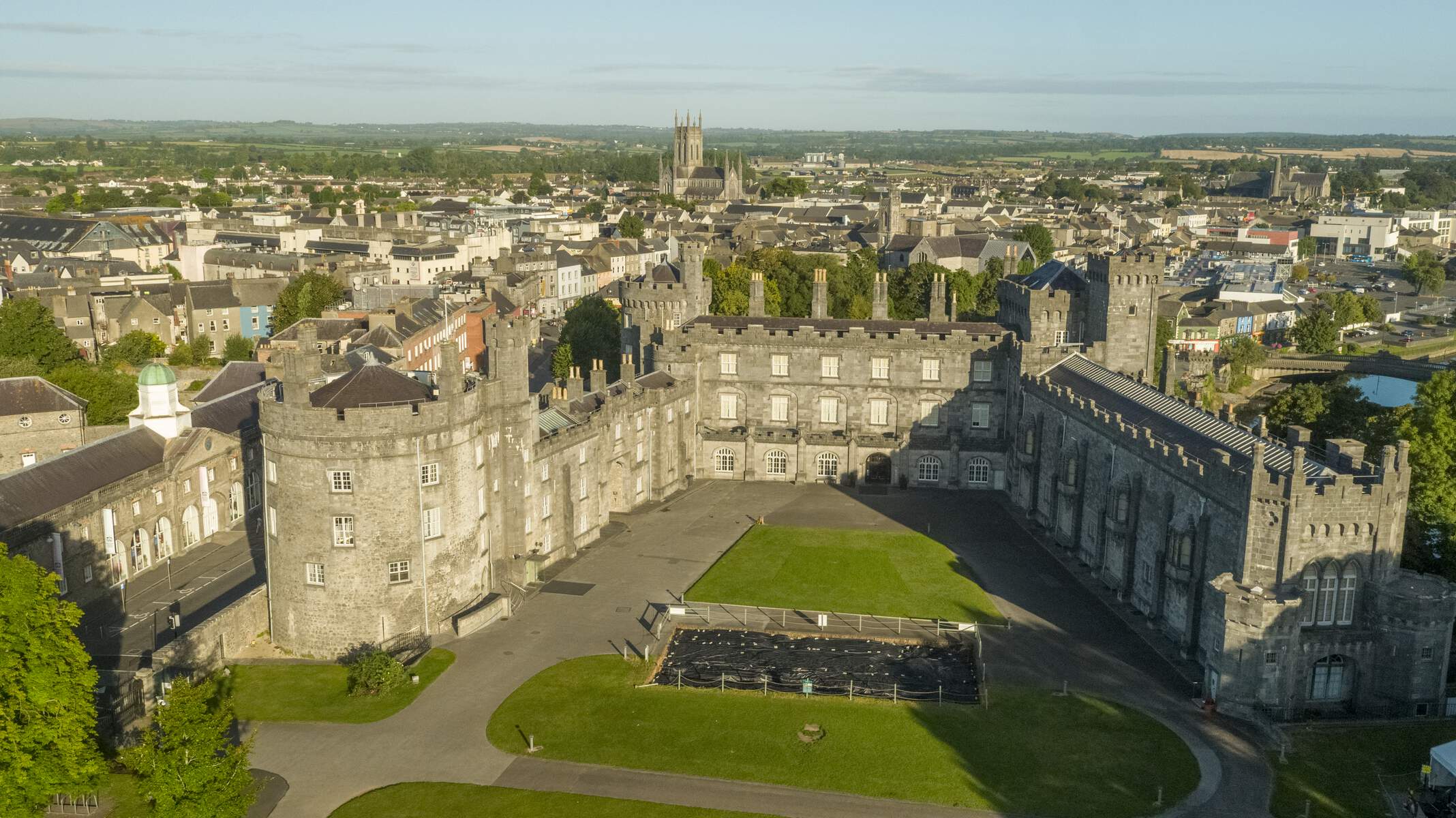
3. Kilkenny Castle, Kilkenny – OPW

4. Kilrush House, County Kilkenny, ihh member, by appt. 

5. Rothe House, Kilkenny, County Kilkenny – open to the public  

6. Shankill Castle, Paulstown, Co. Kilkenny – section 482 

7. Tybroughney Castle, Piltown, Co Kilkenny – section 482 

8. Woodstock Gardens and Arboretum, Woodstock, Inistioge, Kilkenny

Places to stay, County Kilkenny

1. Ballyduff, Thomastown, Co Kilkenny – wedding venue, B&B 

2. Blanchville Coachyard, Dunbell, County Kilkenny – courtyard accommodation

3. Butler House, Kilkenny, co Kilkenny – accommodation 

4. Clomantagh Castle, Co Kilkenny – tower house accommodation

6. Lyrath House, near Kilkenny, County Kilkenny – hotel 

7.  Mount Juliet, Thomastown, County Kilkenny – hotel 

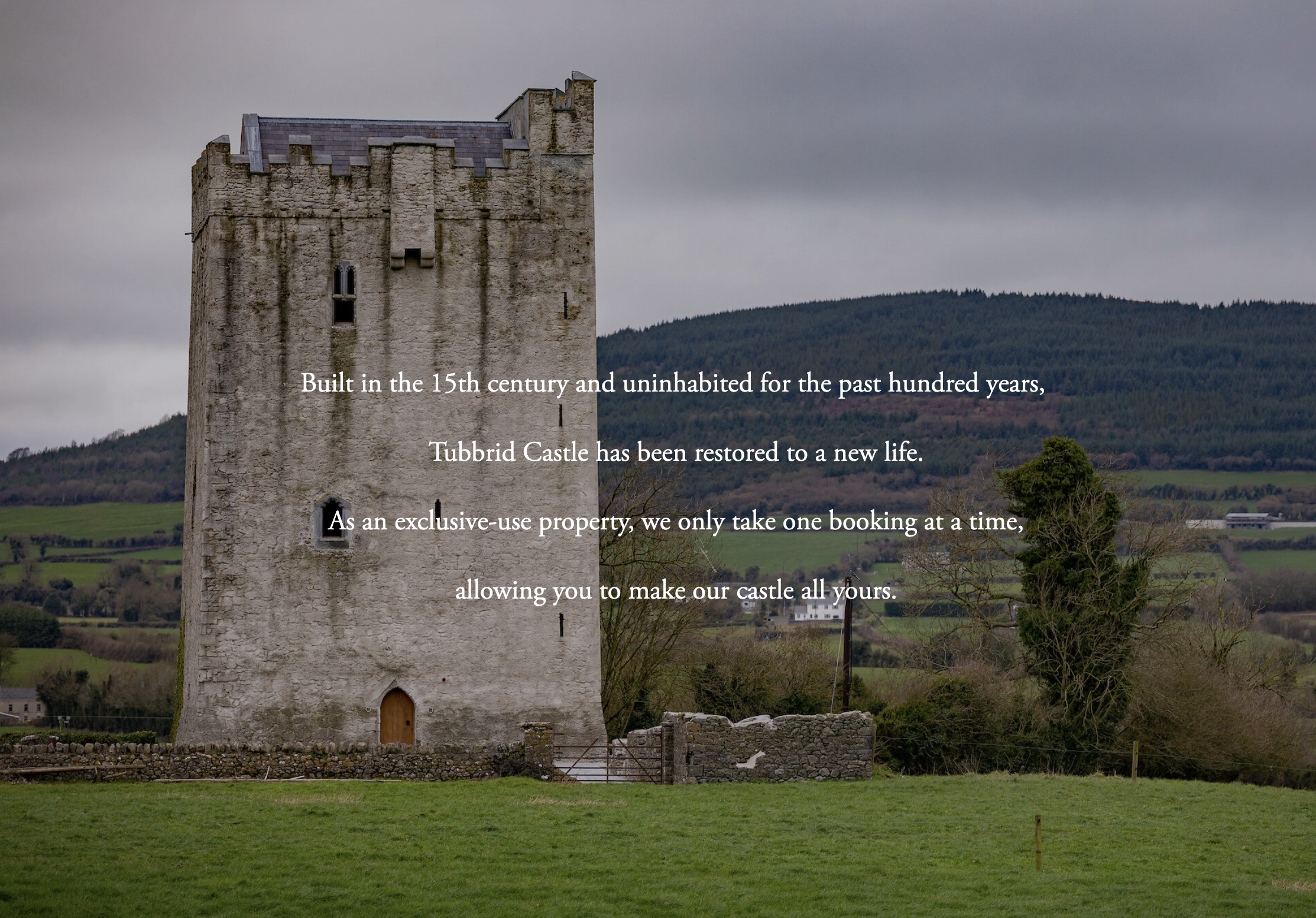
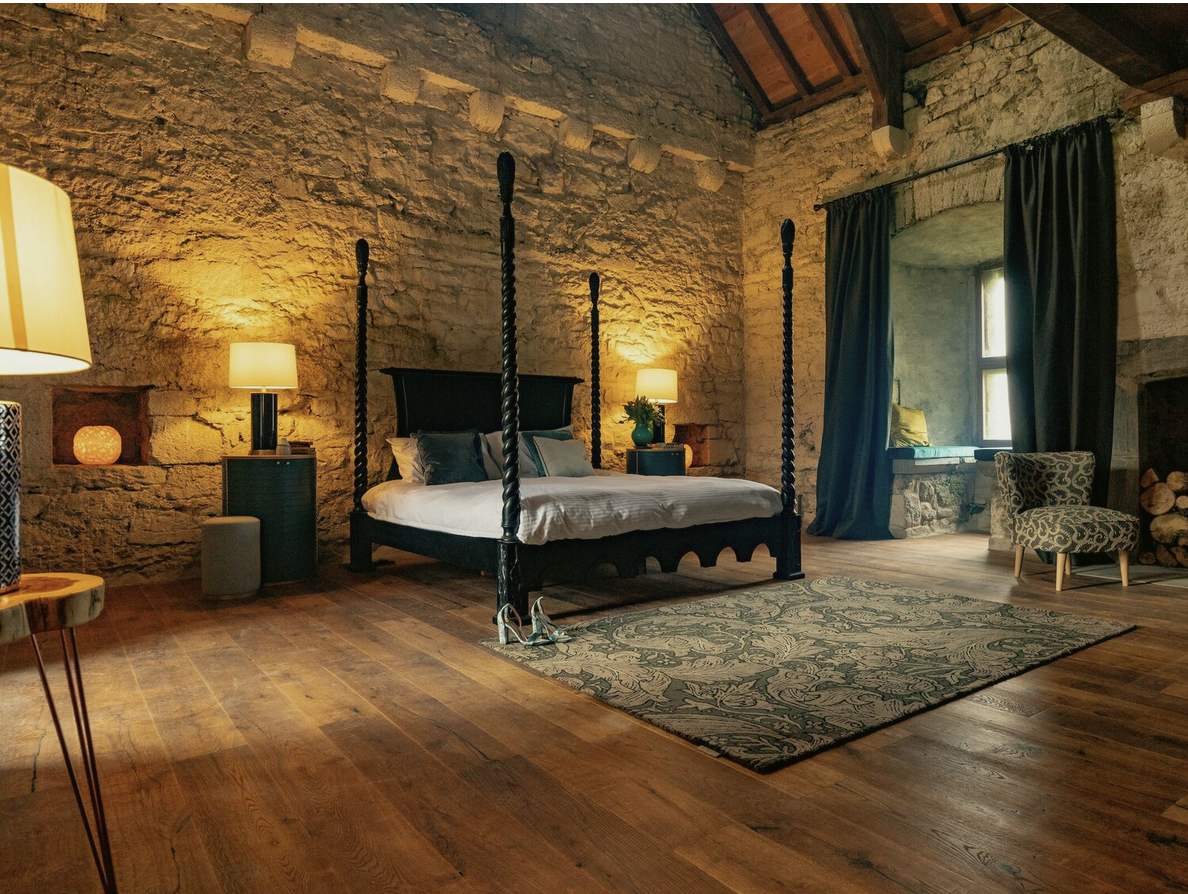
8. Tubbrid Castle, County Kilkenny – tower house accommodation

9. Waterside Guest House, Graiguenamanagh, County Kilkenny

Whole House Rental County Kilkenny:

1. Annamult House, Bennettsbridge, Co Kilkenny – whole house accommodation

2. Ballybur Castle, County Kilkenny – castle accommodation

3. Castle Blunden, County Kilkenny – whole house accommodation

Places to visit in County Kilkenny:

1. Aylwardstown, Glenmore, Co Kilkenny – section 482 

Open dates in 2026: Aug 1-31, Sept 1-30, 10am-5pm

Fee: adult €5, OAP/student €3, child free

2.  Kilfane Glen & Waterfall Garden, Thomastown, County Kilkenny R95 RXO5 – 482 – garden only

Kilfane, County Kilkenny, August 2021. Photograph © Jennifer Winder-Baggot, www.irishhistorichouses.com

See my entry:

https://irishhistorichouses.com/2021/12/16/kilfane-glen-waterfall-kilfane-thomastown-co-kilkenny/

www.kilfane.com

Open dates in 2026: July 1-31, Aug 1-31, 11am-6pm
Fee: adult €9, OAP/student €7, child €6

3. Kilkenny Castle, Kilkenny – OPW

Kilkenny Castle, May 2018. Photograph © Jennifer Winder-Baggot, www.irishhistorichouses.com
Kilkenny Castle, Kilkenny City by Sonder Visuals for Failte Ireland 2014.

see my entry https://irishhistorichouses.com/2024/04/08/kilkenny-castle-county-kilkenny-an-office-of-public-works-property/

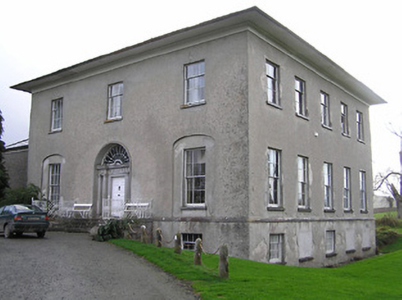
4. Kilrush House, County Kilkenny, ihh member, by appt. 

Kilrush House, photograph courtesy of National Inventory of Architectural Heritage
Kilrush House, photograph courtesy of National Inventory of Architectural Heritage.

The Historic Houses of Ireland website tells us:

William Robertson (1777 – 1850) was a native of Kilkenny where the patronage of Lord Ormonde stood him in good stead, since most of his work can be found in Kilkenny and the neighbouring counties of Laois, Tipperary and Waterford. When Richard St. George wished to move from his medieval castle at Kilrush near Freshford in 1820, Robertson was the obvious choice. His work is less exuberant than that of his namesake Daniel but he was a talented architect and produced an interesting early nineteenth century reinterpretation of the typical late-Georgian country house. 

The St Georges are a Norman family who ‘came over to England with the Conqueror’ and arrived in Ireland in the sixteenth century. They quickly became established here, with several branches in County Kilkenny and others in Galway, Leitrim and Roscommon.

The St Georges of Kilrush were active in political and cultural circles in the seventeenth and eighteenth centuries. Richard St George was an M.P. in the Irish Parliament, with a town house at No. 8 Henrietta Street, while his cousin St George Ashe was the Provost of Trinity College and a close friend of Dean Swift. St. George was also a founding member of the Dublin Philosophical Society, which encouraged his numerous publications of scientific and national interest.

Richard considered moving out of his tower-house at Kilrush in the middle of the eighteenth century but this decision was left to his heirs, who built the existing house in the early nineteenth century. Kilrush has a three bay façade, a five bay garden front, a hipped roof with widely overhanging eaves, a single very large, central chimney-stack into which all the flues are diverted, and an interesting ground plan.

The cut-stone door case is a handsome arrangement of Doric half-columns and pilasters, supporting a deep entablature with swags beneath a semi-circular leaded fanlight. The ground floor windows to either side are set in shallow recesses with elliptical heads; otherwise the elevations are quite plain.

The most interesting internal space is the landing, a perfect Doric rotunda supporting a delicately glazed dome. This partly lights the inner hall below through a circular well in the floor. The dining and drawing rooms are both finely proportioned apartments, with many original fittings and furnishings, and their original wallpaper.

Kilrush looks out over mature parkland to a large mill, almost half a mile off.  The gardens contain a stupendous collection of snowdrops, there is a tower house, the former residence of the family in the attached yard, while an interesting early garden layout with connected canals has recently been identified and is currently in the course of restoration.” [1]

5. Rothe House, Kilkenny, County Kilkenny  

Rothe House, Kilkenny, photograph by Brian Morrison 2015 for Tourism Ireland [2]

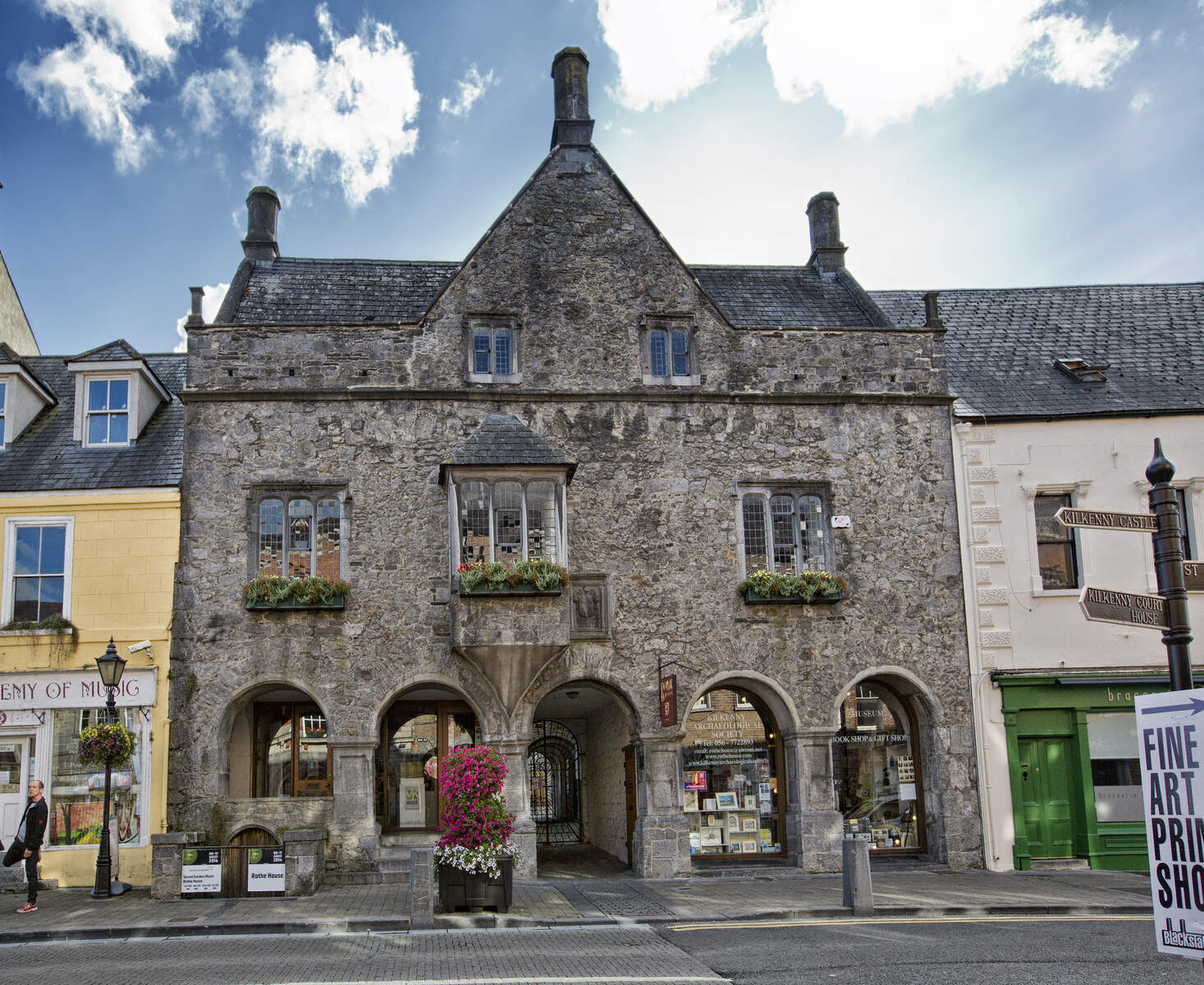
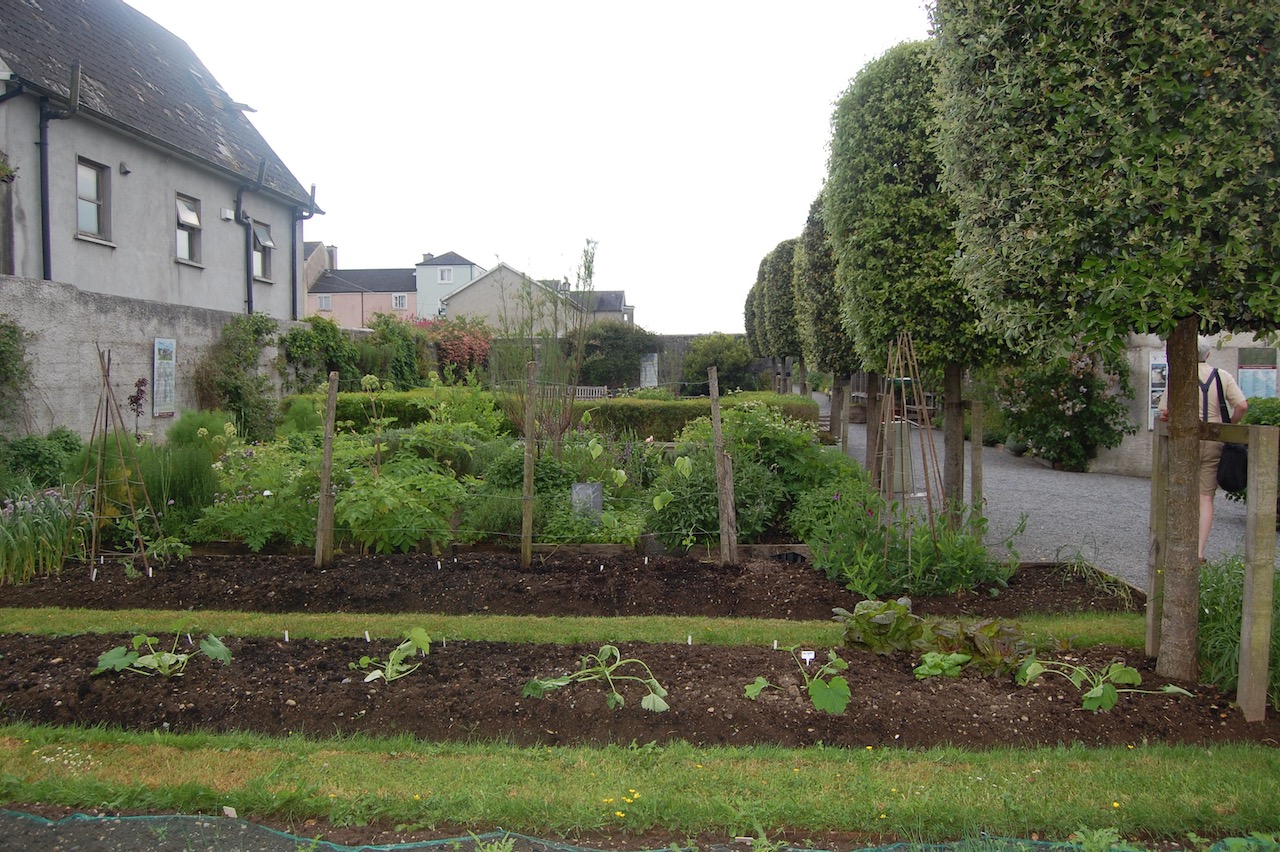
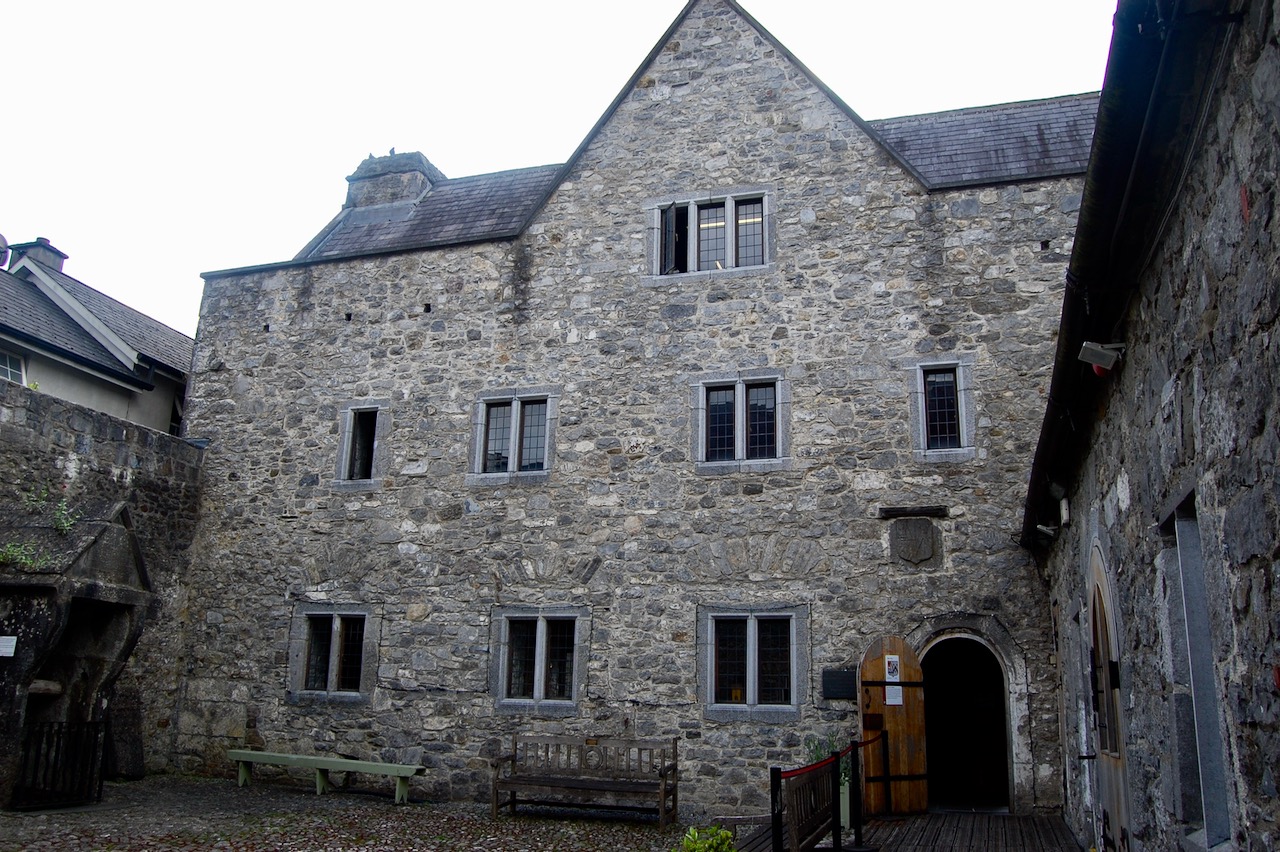
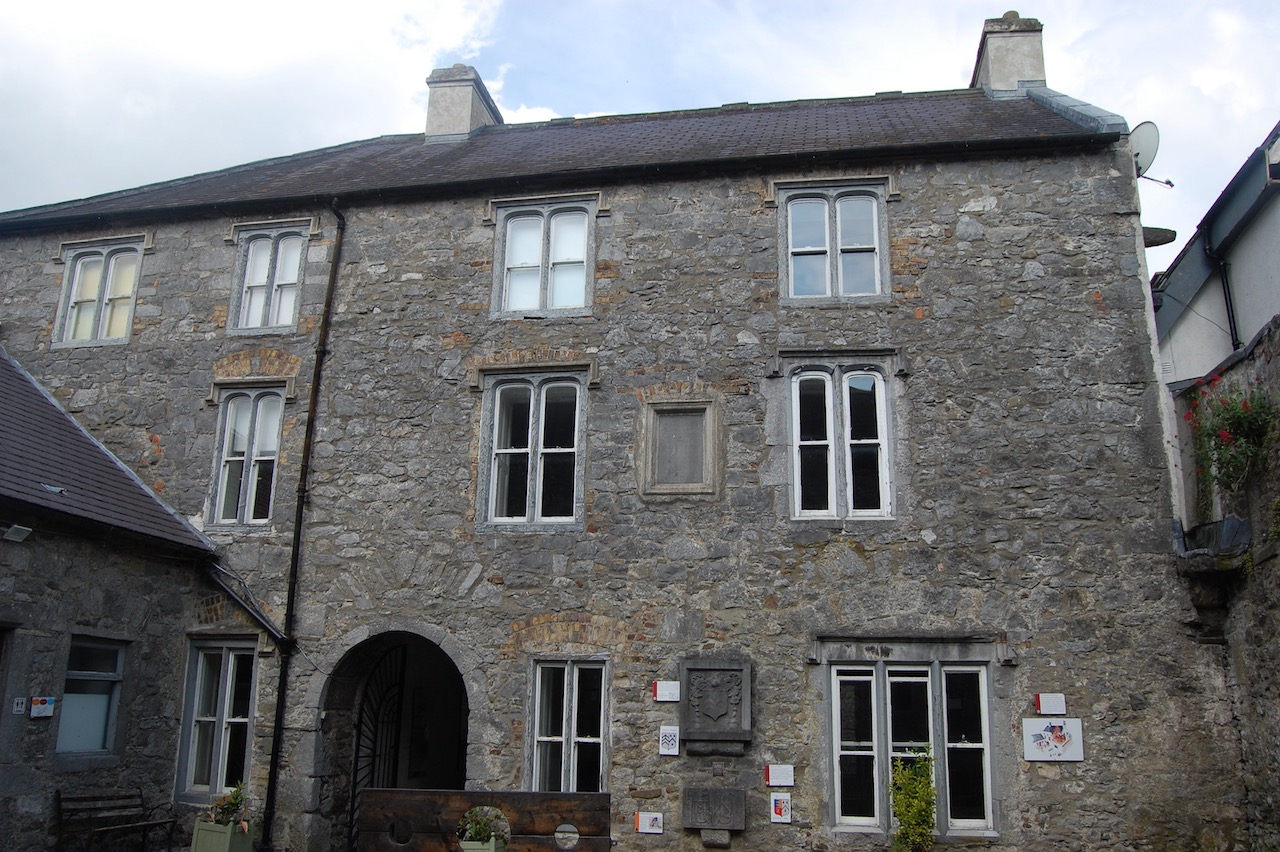
Rothe House is a treasure, older than any house in Dublin! It was built around 1594-1610, by John Rothe FitzPiers (1560-1620) for his wife Rose Archer, and is the last merchant’s townhouse in Kilkenny surviving from the early post-medieval period. [3] The house, purchased by Kilkenny Archaeological Society in 1962, is open to the public as a museum displaying a selection of the historic artefacts collected by the Society since its founding in 1947.  The artefacts relate to Kilkenny heritage throughout the ages and some date from prehistoric times.  The adjoining garden has since 2008 been open to the public and is a faithful reconstruction of an early seventeenth-century urban garden. 

Garden at Rothe House, May 2018. Photograph © Jennifer Winder-Baggot, www.irishhistorichouses.com
Rothe House, May 2018. Photograph © Jennifer Winder-Baggot, www.irishhistorichouses.com

The National Inventory describes it:

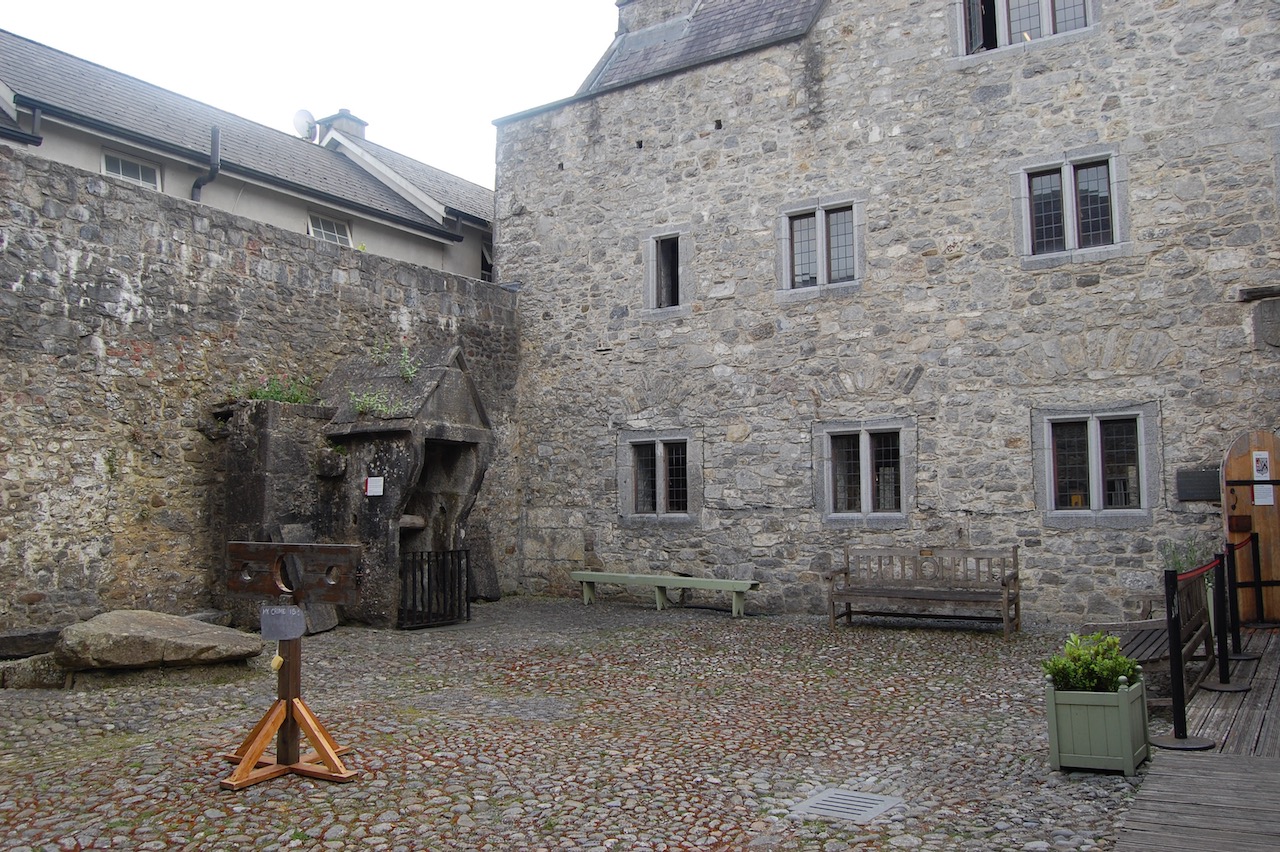
Terraced five-bay two-storey over basement house with dormer attic on a U-shaped plan about a stone cobbled (east) courtyard with two-bay two-storey gabled central bay having jettied box oriel window to first floor, series of five round-headed openings to ground floor forming arcade, single-bay three-storey linking range to north-west, and three-bay three-storey parallel range to west (completing U-shaped plan about a courtyard) originally three-bay two-storey having round-headed carriageway to right ground floor. In use as school, c.1750. Restored, 1898, to accommodate use as Gaelic League house. Converted to use as museum, 1963-5. Restored, 1983. Restored, 1999, to accommodate use as offices.”

Rothe House, May 2018. Photograph © Jennifer Winder-Baggot, www.irishhistorichouses.com

The Archiseek website tells us:

In 1594 a wealthy merchant called John Rothe built this magnificent Tudor mansion. Second and third generation houses were built around the cobelled courtyards and a well dating to 1604. The façade houses shops, one of them was John Rothe’s own. During the Confederation of Kilkenny, many dignitaries were entertained here by John Rothe and his cousin, the Bishop of Ossory. The building has been restored magnificently and is now home to Kilkenny Archaeological Society.” [4]

Rothe House, May 2018. Photograph © Jennifer Winder-Baggot, www.irishhistorichouses.com
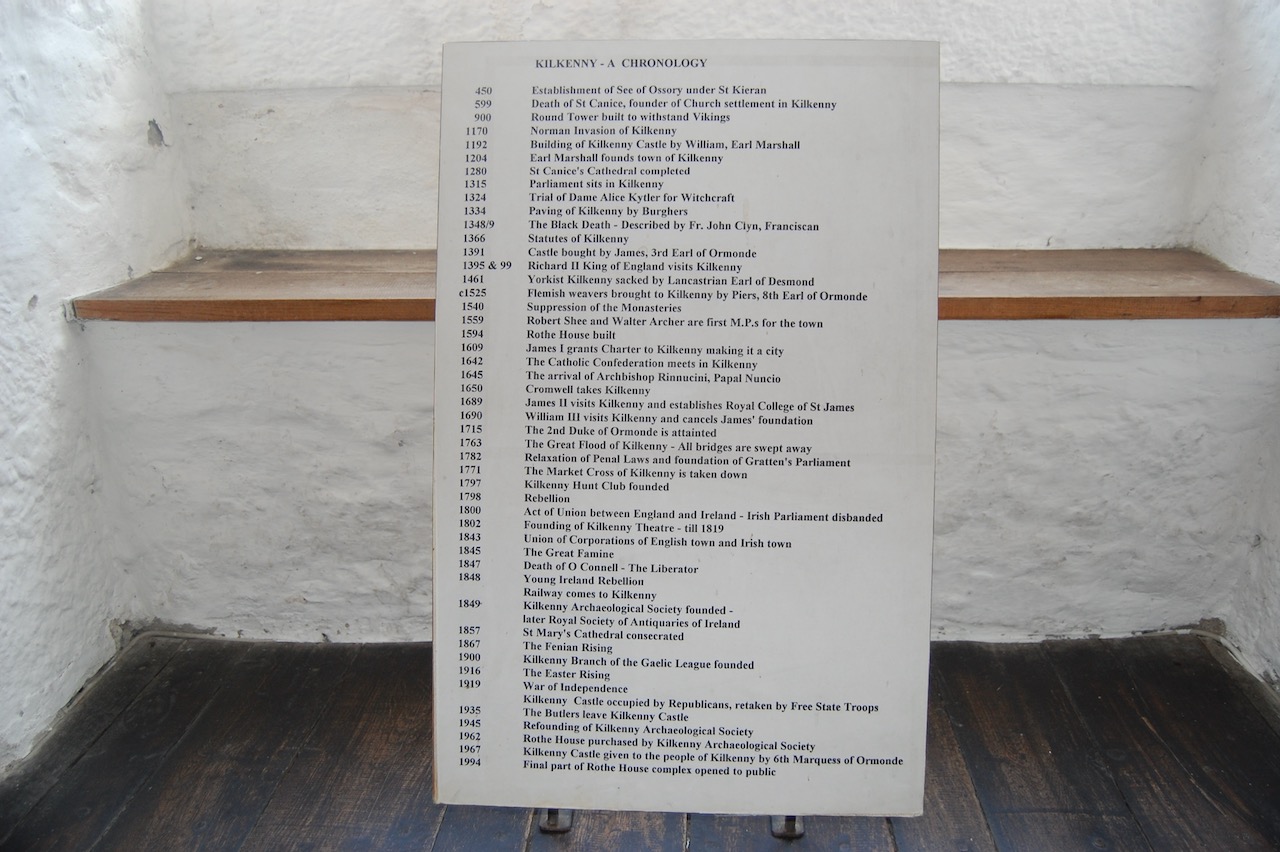
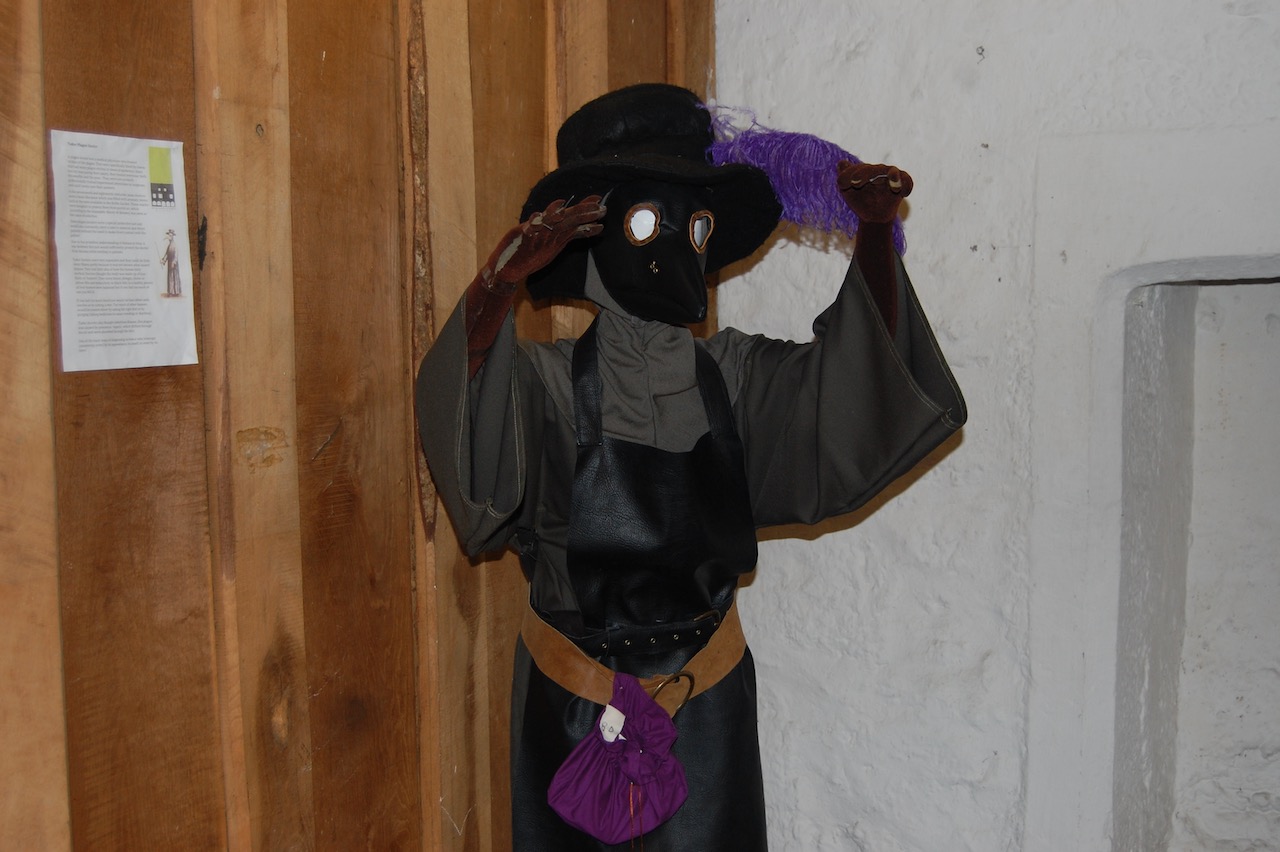
Plague Doctor! In 1348 there was Plague in Kilkenny. Friar John Clyn in the Franciscan Abbey across the road  recorded the effect of the plague on the town and the friary. He himself fell victim to the epidemic.  Photograph © Jennifer Winder-Baggot, www.irishhistorichouses.com
Rothe House, May 2018. Photograph © Jennifer Winder-Baggot, www.irishhistorichouses.com
Artefacts from the Confederation of Kilkenny. Photograph © Jennifer Winder-Baggot, www.irishhistorichouses.com
Rothe House, May 2018.
Rothe House, May 2018. Photograph © Jennifer Winder-Baggot, www.irishhistorichouses.com
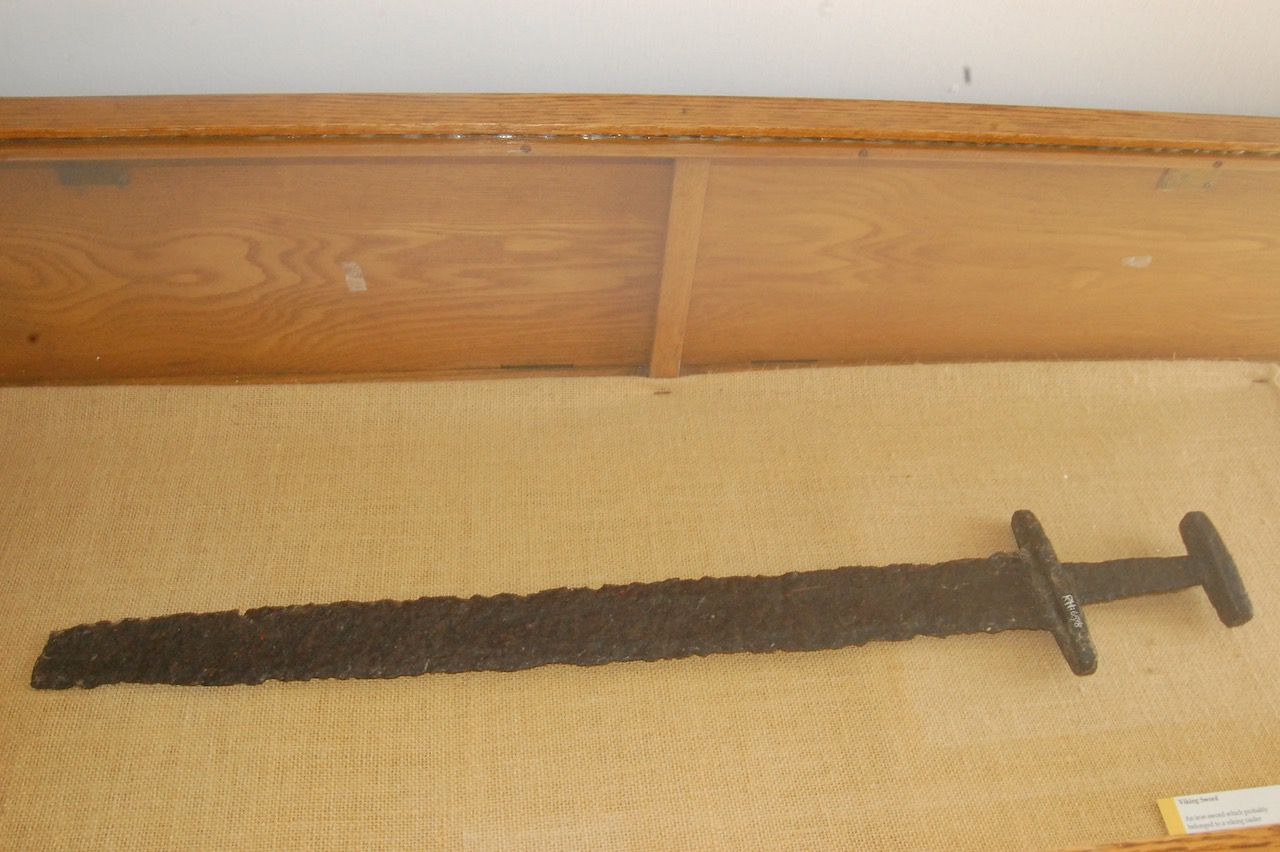
Viking Sword. Photograph © Jennifer Winder-Baggot, www.irishhistorichouses.com
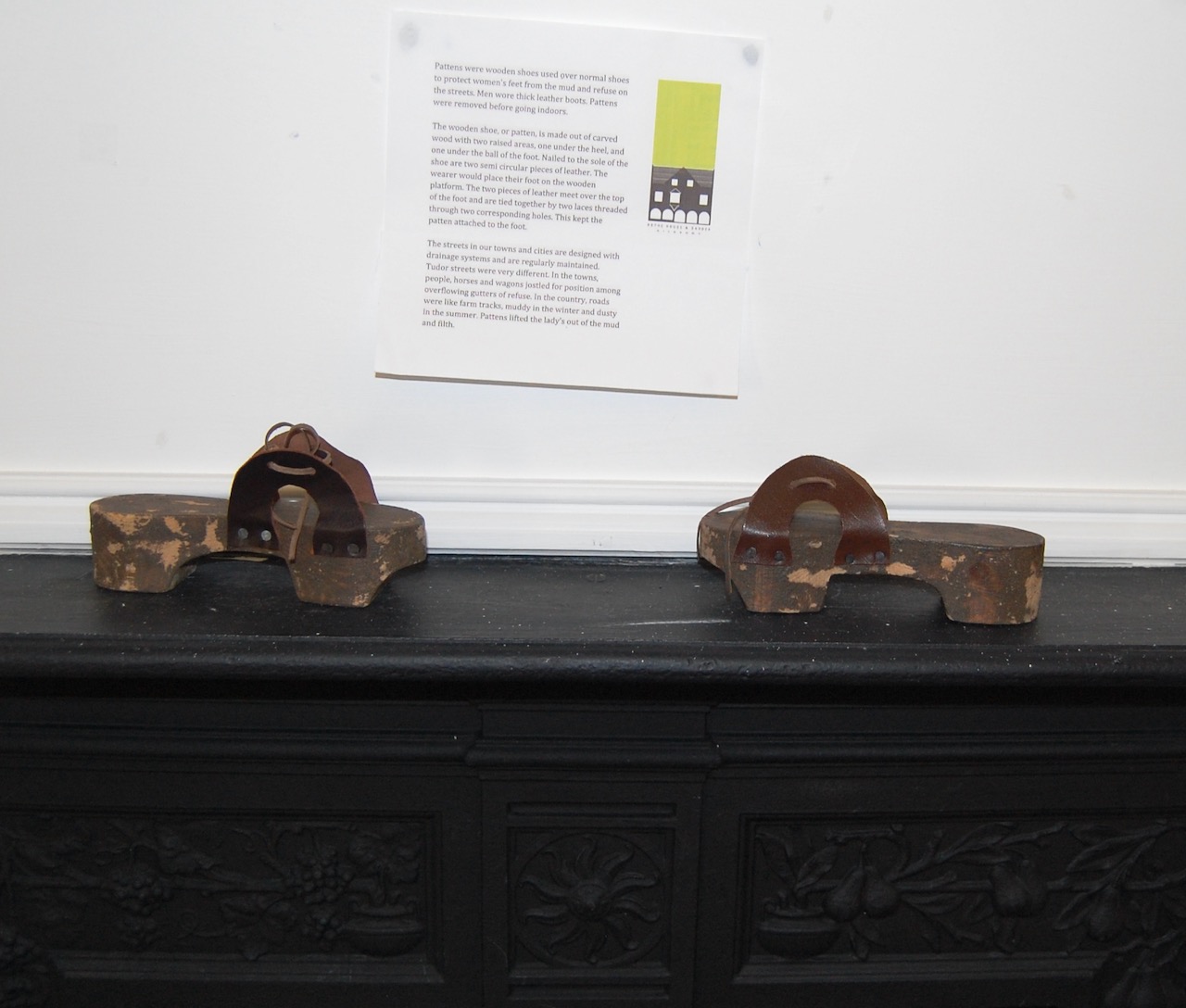
“Pattens” – wooden shoes worn by women over their regular shoes to protect from mud. Photograph © Jennifer Winder-Baggot, www.irishhistorichouses.com

6. Shankill Castle, Paulstown, Co. Kilkenny R95 T8X7 – section 482 

www.shankillcastle.com

Open dates in 2026: Feb 7-8, 14-15, 21-22, 28, Mar 1, Apr 3-5, 10-12, 17-19, 24-26, May 1-3, 8-10, 15-17, 22-24, 29-31, June 5-7, 12-14, 19-21, 26-28, July 3-5, 10-12, 17-19, 24-26, 29, 31, Aug 1-2, 7-9, 14-23, 28-30, Sept 4-6, 11-13, 18-20, 25-27, Oct 2-4, 9-11, 16-18, 23-25, 30-31, 11am-5pm

Fee: adult €14 house & garden, €6 garden, OAP/student €10 house & garden, €4 garden, child house & garden €6, €3 garden

See my entry https://irishhistorichouses.com/2023/11/30/shankill-castle-paulstown-county-kilkenny-r95-t8x7/

Shankill Castle County Kilkenny 3rd June 2023. Photograph © Jennifer Winder-Baggot, www.irishhistorichouses.com

7. Tybroughney Castle, Piltown, Co Kilkenny E32 NV 32  – section 482 and castle accommodation 

Tybroughney, photograph courtesy of National Inventory of Architectural Heritage.

https://www.tybroughneycastle.com/

Open dates in 2026: Mar 1-20, May 1-31, Aug 15-23,11am-3pm

Fee: adult €5, student €3, child/OAP free

8. Woodstock Gardens and Arboretum, Woodstock, Inistioge, Kilkenny, maintained by Kilkenny County Council

Woodstock, County Kilkenny. Photograph © Jennifer Winder-Baggot, www.irishhistorichouses.com

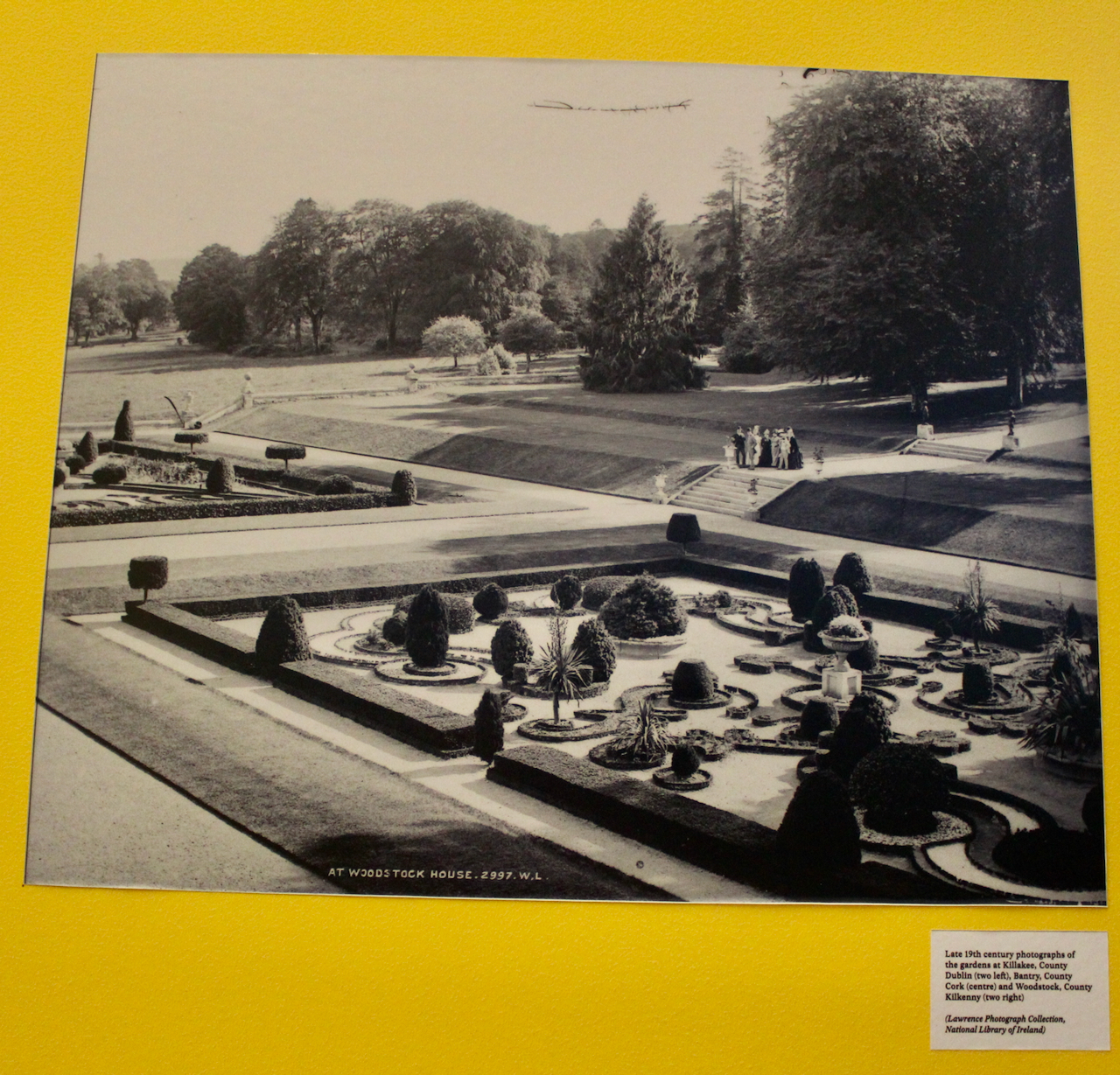
Woodstock Gardens, photograph from Lawrence Photograph Collections, National Library of Ireland, photograph from “In Harmony with Nature” exhibition at the Irish Georgian Society curated by Robert O’Byrne.

Mark Bence-Jones writes about Woodstock (1988):

p. 286. “(Fownes, Bt/EDB; Tighe/IFR) A house by Francis Bindon [for William Fownes, 2nd Baronet], probably dating from 1740s, which is unusual in being built round a small inner court, or light-shaft. Three storeys; handsomely rusticated entrance front of six bays with a central niche and statue above the entrance doorway…In 1770s Sarah Ponsonby lived here with her cousins, Sir William and Betty Fownes [born Elizabeth Ponsonby]; her friend, Eleanor Butler, having escaped from Borris, co Carlow, where she was being kept in disgrace, was let into Woodstock through a window, hiding herself in Sarah’s room for 24 hours before being discovered; shortly afterwards, the two friends left for Wales, where they subsequently became famous as the “Ladies of Llangollen.” Woodstock passed to the Tighes with the marriage of the daughter and heiress of Sir William Fownes to William Tighe, whose daughter-in-law was Mary Tighe, the poet, author of Psyche; she died at Woodstock 1810 aged 37, and Flaxman’s monument to her is in a small neo-Classical mausoleum behind the Protestant church in the village of Inistioge, at the gates of the demesne. There was also a statue of her in one of the rooms in the house. Woodstock was burnt ca 1920, and is now a ruin, but the demesne, with its magnificent beechwoods, still belongs to the Tighes.” [6]

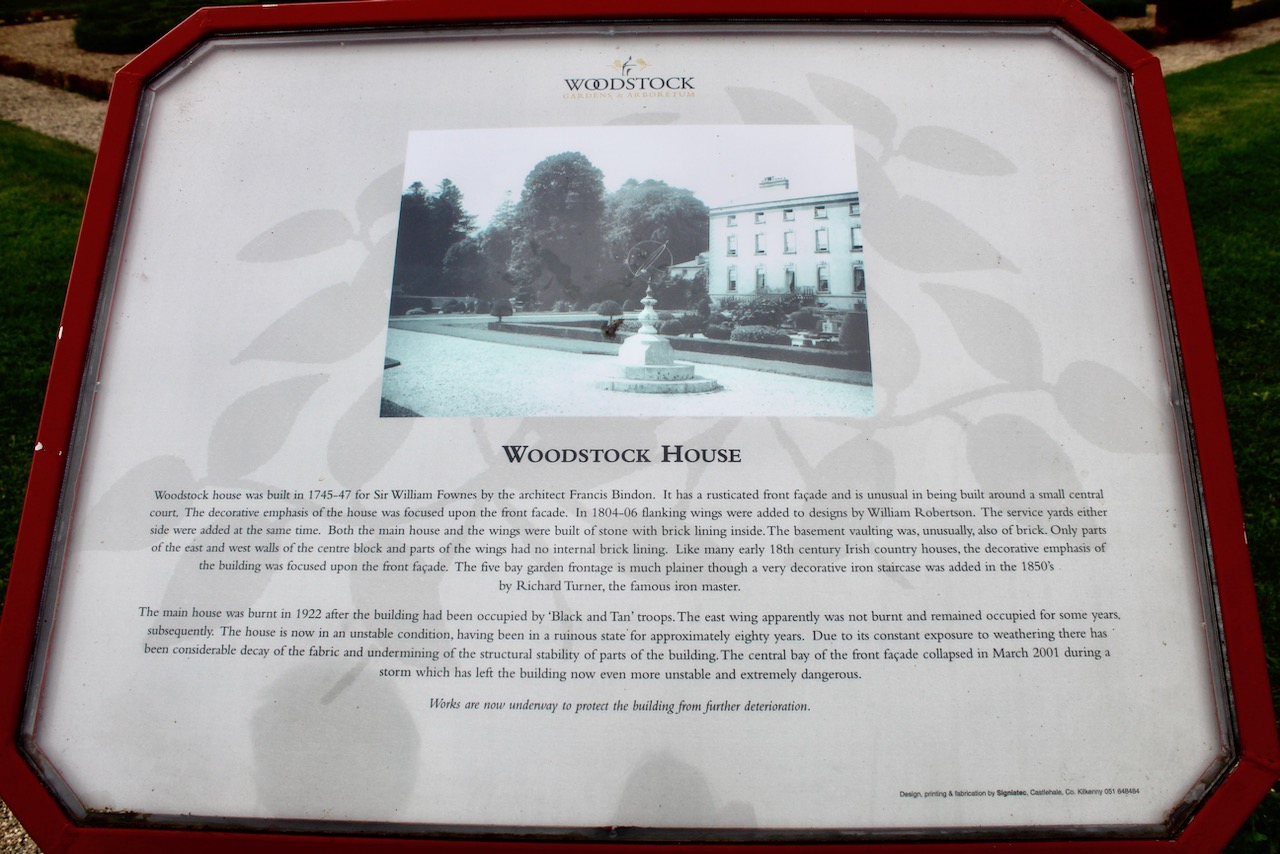
The information board tells us that in 1804 flanking wings were added to designs by William Robertson (1770-1850). The house was burned in 1922 after being occupied by the Black and Tans.
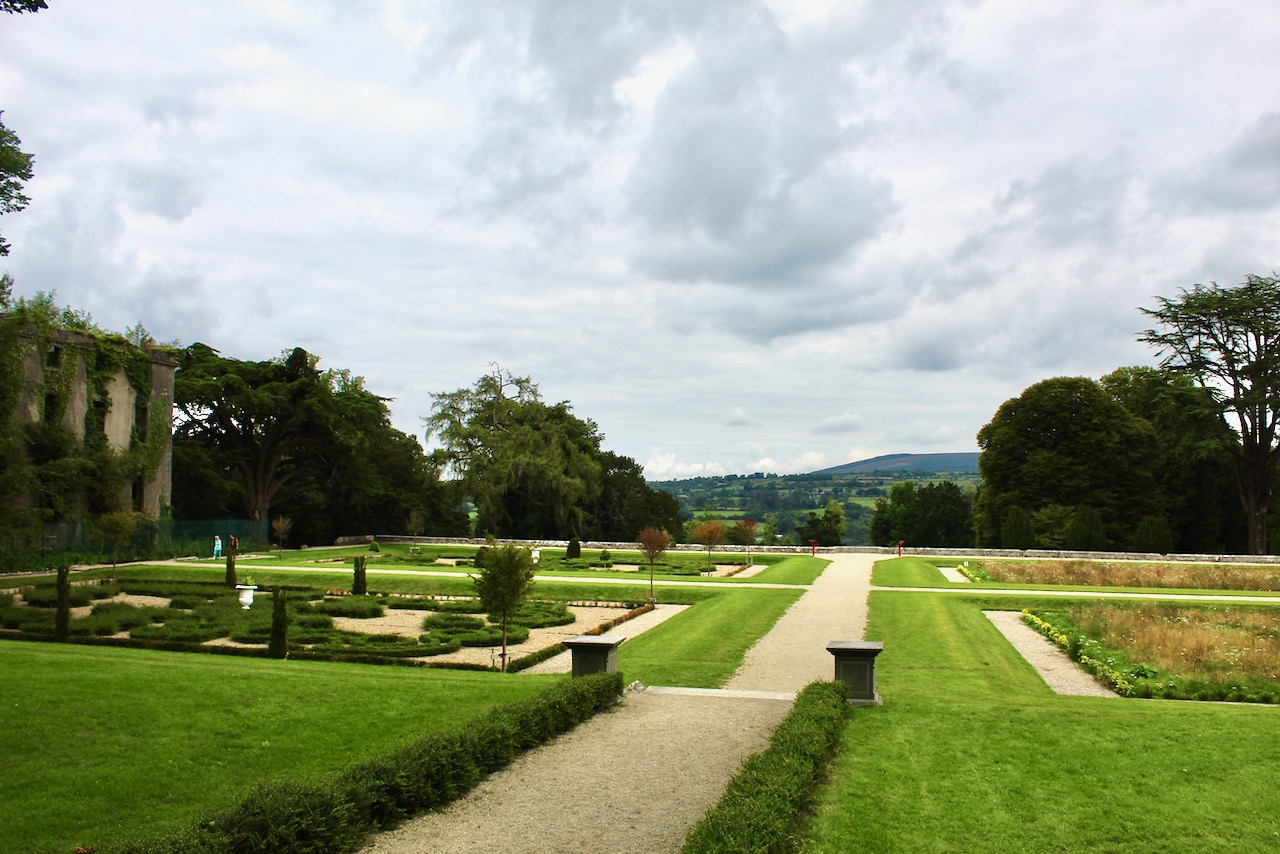
The gardens at Woodstock, County Kilkenny, August 2021. The gardens at Woodstock, gloriously situated above the River Nore, were conceived on a grand scale by Colonel William Tighe (1794-1878) and Lady Louisa Lennox (1803-1900) as the centrepiece of a great estate. Photograph © Jennifer Winder-Baggot, www.irishhistorichouses.com
The Ladies of Llangollen, Sarah Ponsonby and Charlotte Eleanor Butler, by Richard James Lane, printed by Jérémie Graf, after Lady Mary Leighton (née Parker) courtesy of National Portrait Gallery NPG D32504.
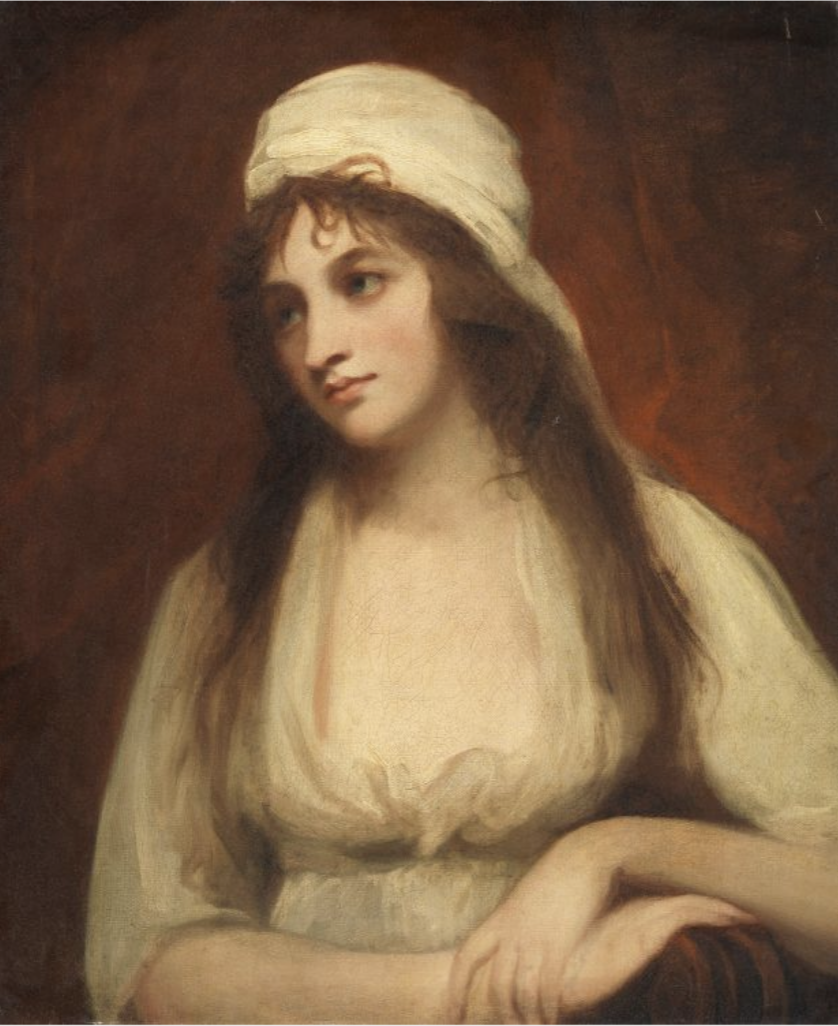
Mary Tighe née Blachford (1747-1791), courtesy of National Gallery of Ireland.

The formal parterres were created in the 1860s by a Scotsman, Charles McDonald, for Colonel William Tighe (1794-1878) and his wife Lady Louisa née Lennox (1803-1900, daughter of Charles, 4th Duke of Richmond – she is not to be confused with Louisa Lennox (1743-1817) daughter of Charles 2nd Duke of Richmond, who married Thomas Conolly of Castletown, County Kildare). The parterre incorporates a shamrock motif. Robert O’Byrne tells us in his exhibition “In Harmony with Nature” at the Irish Georgian Society July 2022 that creating the parterres involved removing 200,000 cubic yards of earth and retention by a wall of cut granite quarried on the estate and ornamented by local craftsmen with stone finials, balls and vases.

Woodstock Gardens, photograph from Lawrence Photograph Collections, National Library of Ireland, photograph from “In Harmony with Nature” exhibition at the Irish Georgian Society July 2022 curated by Robert O’Byrne.

The estate passed to the daughter, Sarah, of William Fownes and Elizabeth Ponsonby, and Sarah married William Tighe (1738-1872) of Rossana, County Wicklow.

William Tighe of Rosanna! Portrait by by Charles Jervas (c.1675-1739), courtesy of Adams auction 19 Oct 2021.
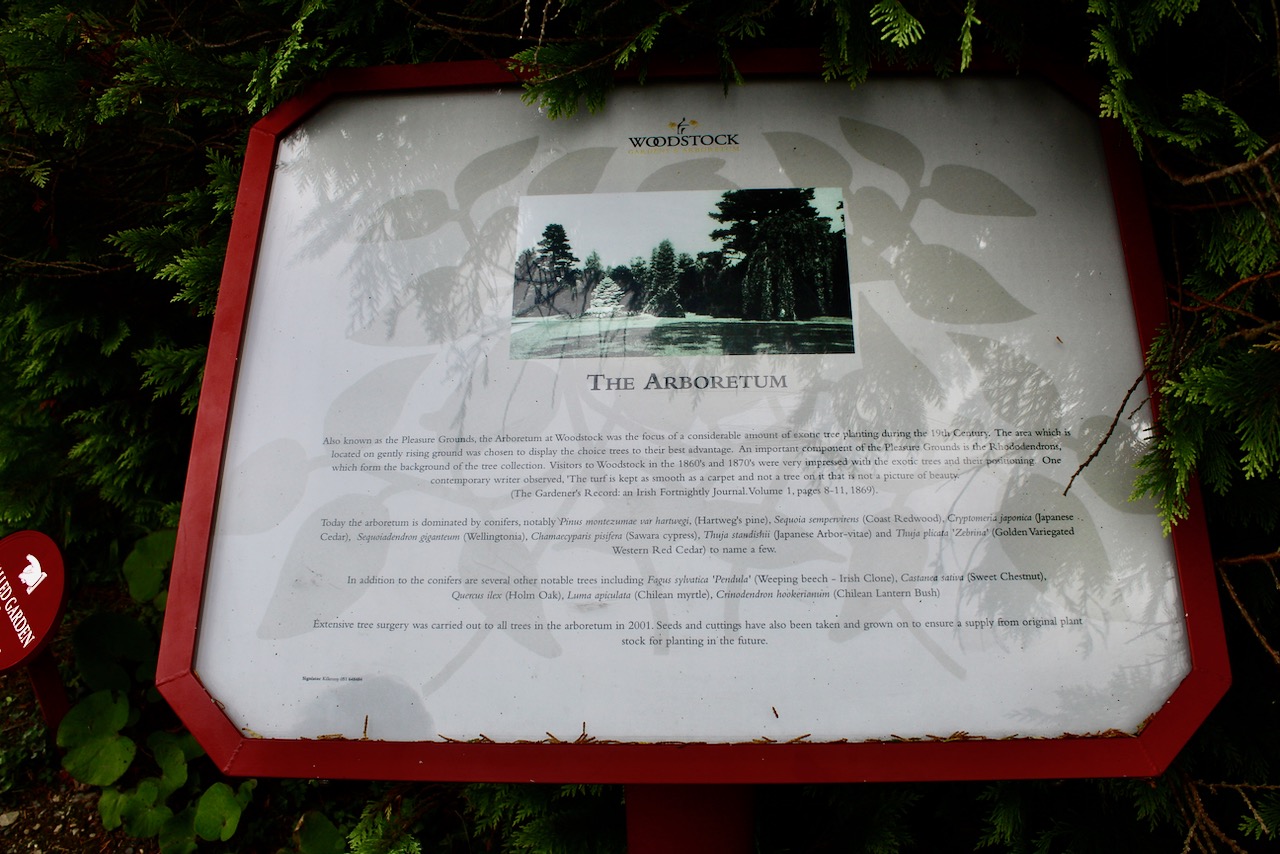
This information board tells us about the Arboretum at Woodstock, where a number of exotic trees were planted in the nineteenth century.
Woodstock, County Kilkenny.
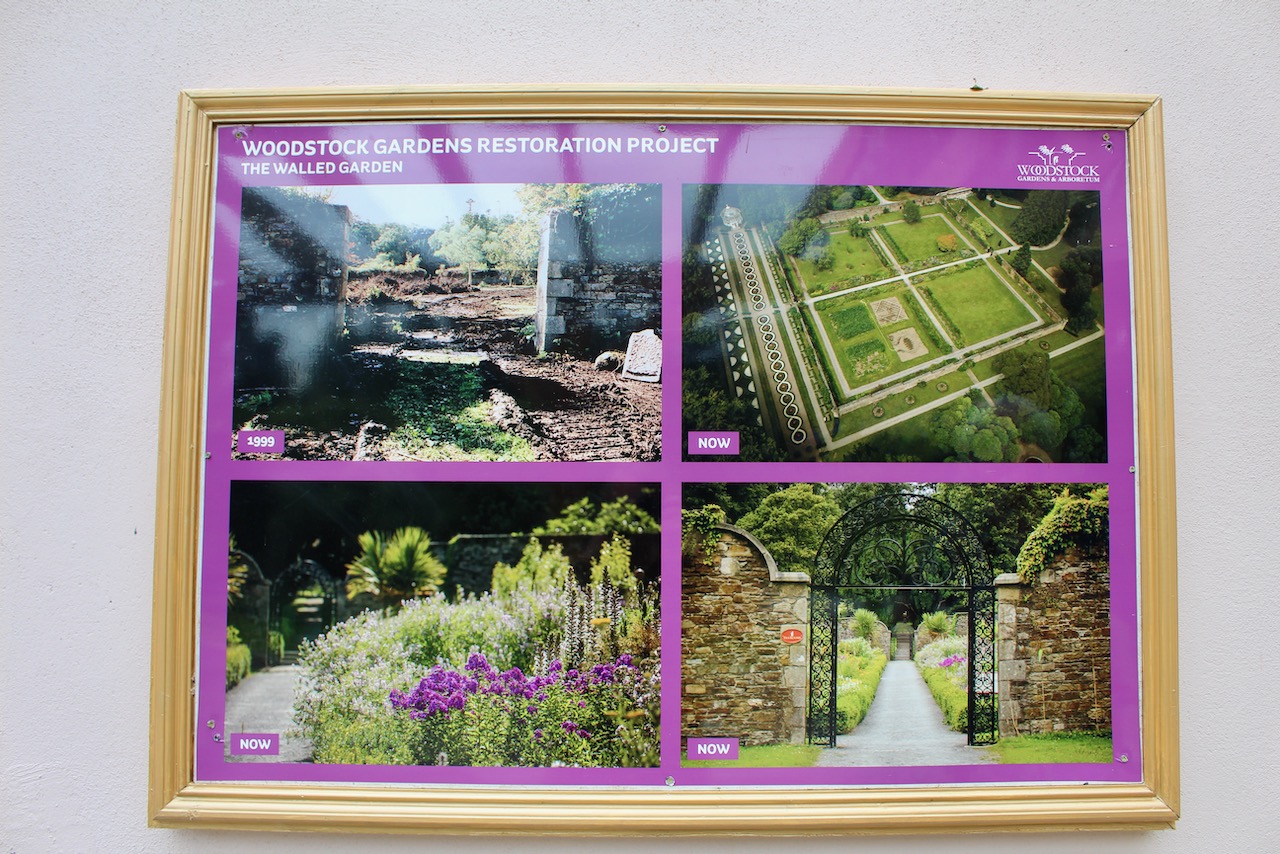
Entrance to walled garden at Woodstock. Photograph © Jennifer Winder-Baggot, www.irishhistorichouses.com
Gardens at Woodstock, with reproduction Turner glasshouse. Photograph © Jennifer Winder-Baggot, www.irishhistorichouses.com
“Turner bench” which matches the glasshouse at Woodstock. Photograph © Jennifer Winder-Baggot, www.irishhistorichouses.com
The longest and oldest Monkey Puzzle Walk in Europe, at Woodstock. Photograph © Jennifer Winder-Baggot, www.irishhistorichouses.com

Places to stay, County Kilkenny

1. Ballyduff, Thomastown, Co Kilkenny – wedding venue, B&B 

http://ballyduffhouse.ie/booking-enquiries/ 

Ballyduff House, courtesy of National Inventory of Architectural Heritage.

The website tells us:

Ballyduff House is a classic Georgian country house with a 14th century castle, steeped in Irish history and full of the warmest of welcomes.

The River Nore sparkles as it runs along Ballyduff’s riverbank while sheep and cattle graze the pasture either side.

Open fires, the book lined library and the comfortable bedrooms furnished with Irish antiques capture an early 18th century experience tempered by discreet 21st century comfort.

This is real Ireland – calm, green and beautiful, set alongside the picturesque village of Inistioge with Dublin only an hour away.

The National Inventory tells us:

A country house representing an important component of the mid eighteenth-century domestic built heritage of County Kilkenny with the architectural value of the composition, one abutting a “roofed down” tower house, confirmed by such attributes as the deliberate alignment maximising on panoramic vistas overlooking broad parkland and the wooded River Nore; the compact rectilinear plan form centred on a restrained doorcase showing a simple radial fanlight; the diminishing in scale of the openings on each floor producing a graduated visual impression with the principal “apartments” or reception rooms defined by Wyatt-style tripartite glazing patterns; and the slightly oversailing roofline. Having been well maintained, the elementary form and massing survive intact together with substantial quantities of the original fabric, both to the exterior and to the interior, including crown or cylinder glazing panels in hornless sash frames: meanwhile, contemporary joinery; restrained chimneypieces; and sleek plasterwork refinements, all highlight the artistic potential of the composition. Furthermore, an adjacent farmyard complex ; and a walled garden (extant 1839), all continue to contribute positively to the group and setting values of a self-contained estate having historic connections with the Coghill family including Sir Josiah Coghill (1773-1850), third Baronet (Lewis 1837 II, 18); the Connellans of nearby Coolmore House (see 12403210); and Lieutenant-Colonel Frederick William John Shore (1844-1916), fourth Baron Teignmouth (NA 1901; NA 1911). NOTE: Given as the birthplace of Sir John Joscelyn Coghill (1826-1905) of Glen Barrahane in Castletownshend, County Cork (Dod’s Peerage Baronetage and Knightage 1865, 186); and George Leopold Bryan (1828-80) of Jenkinstown (Dod’s Parliamentary Companion 1875, 174).

2. Blanchville Coachyard, Dunbell, County Kilkenny – coachyard accommodation

https://blanchville.ie/

Blanchville Coachyard, Dunbell, County Kilkenny, photograph from website https://blanchville.ie/

The Coach Houses & Gardener’s Cottage are, as the name suggests, part of the beautiful old stone building that was originally the Coach House at Blanchville. The building has been sensitively and extensively refurbished and now offers guests comfortable and inviting Self-Catering Accommodation in three self-contained Holiday Homes.

These Heritage Holiday Lets feature a cosy woodburning stove or open fire, fully fitted modern kitchen and relaxing bedrooms – the perfect requisite for an enjoyable weekend break or holiday in Kilkenny.

3. Butler House, Kilkenny, co Kilkenny – accommodation 

https://www.butler.ie

View to Butler House and Garden, Kilkenny Leo Byrne Photography 2015. (see [2])

The National Inventory tells us about Butler house: “Semi-detached three-bay three-storey over basement house, built 1786, with pair of three-bay full-height bowed bays to rear (east) elevation. Extended, 1832, comprising two-bay three-storey perpendicular block to right. Renovated, 1972. Now in use as hotel. One of a pair…An elegantly-composed Classically-proportioned substantial house built either by Walter Butler (1713-83), sixteenth Earl of Ormonde or John Butler (1740-95), seventeenth Earl of Ormonde as one of a pair of dower houses…Distinctive attributes including the elegant bowed bays to the Garden (east) Front contribute positively to the architectural design value of the composition while carved limestone dressings with particular emphasis on the well-executed doorcase displaying high quality stone masonry further enliven the external expression of the house in the streetscape.”

The house was home to Lady Eleanor Butler who lived here after the death of her husband Walter in 1783. Lady Eleanor Butler was the mother of John, the 17th Earl of Ormonde and her daughter, also Eleanor, was one of the famous “Ladies of Langollen”.

James, Earl of Ormonde (1777-1838, and 1st Marquess) resided in the house while the Castle was under reconstruction in 1831. A soup kitchen was run from here during the cholera epidemic of 1832.

The Royal Historical and Archaeological Association of Ireland held their meetings in Butler House in 1870. Kilkenny Design, the state design agency, restored Butler House in 1972. The decor and furnishings reflect a certain 1970s Art Deco style, which because of the muted colours and natural fabrics used, proved sympathetic to the original features of the house. In 1989, the Kilkenny Civic Trust acquired both Butler House and the Castle Stables. 

4. Clomantagh Castle, Co Kilkennytower house accommodation

Clomantagh Castle, courtesy of National Inventory of Architectural Heritage.

https://www.airbnb.ie/rooms/29346656?federated_search_id=050f383f-6e5e-45b5-9989-b166bfe7e70d&source_impression_id=p3_1650104926_er%2FjFSqCgEWzQLW5

The National Inventory tells us it is a farmhouse erected by John Shortal (d. 1857) or Patrick Shortal (d. 1858) representing an integral component of the mid nineteenth-century domestic built heritage of County Kilkenny with the architectural value of the composition, one occupying the site of a hall adjoining the fifteenth-century Clomantagh Castle.

Clomantagh Castle - was home to the [8th] Earl of Ormond, Pierce Ruadh (1467-1539). When he died in 1539 the castle along with other properties was passed to his son Richard Butler, first Viscount Mountgarret (1500-1571). The castle and its estate stayed in the Butler family until it was forfeited during the war with Cromwell to Lieutenant Arthur St. George [ancestor of the Kilrush family]. After the war the castle changed hands twice more and a farmhouse was added by the Shortall family, the owners in the 1800’s, before its last owner  Willie White a local vet. The property is now owned by a non profit making charity called the Landmark Trust who preserve historic buildings. 

The Landmark site tells us:

The name Clomantagh comes from the Irish “cloch mantaigh”, meaning missing tooth or gappy smile. Locals gave this name to the castle as the irregular castellation reminded them of someone smiling with missing teeth.  

“It has been established that the tower and bawn were built in the 15th century (c.1430). The tower house has been modified and extended over the centuries, and in the early 19th century a farmhouse was added providing accommodation with comfort, rather than defence, in mind. In recent times, the bawn walls have sheltered the buildings of a 20th century working farm. It also has a rare clochán (small dome-roomed structure) knit into the bawn walls. Five other tower houses can be seen from the roof of Clomantagh Castle, and they were all strategically aligned for defence purposes.

Clomantagh followed mainstream castle design, emerging as an almost square building, six storeys high, with massive walls built from local limestone, and a corner staircase. Inserted high on the south wall is a Sheela-na-Gig. This pagan symbol was adopted by medieval builders and incorporated as the building was erected. High up the remains of the stepped battlement walls, the merlons can be seen – a specifically Irish feature whose inspiration is considered to be Venetian. Inside the battlements a wide walkway gave access to all sides of the building. In the north east corner, a high watchtower has been built. This is knows as Moll Gearailt’s Chair, after the particularly ferocious original mistress of the house, Maighréad nhee Gearóid, who used to sit watching over her fields to ensure that her labourers were not slacking at their work. The walkway, or Alure, was sloped outward to allow run off water through drainage holes and stone spouts. Generally, battlement walls have not survived well, their thinner construction and unstable sloping bases have contributed to their disappearance from tower houses.” [6]

You can stay in the main house or in smaller private accommodation https://cullintrahouse.com

The website tells us: “A countryside retreat in the heart of Co Kilkenny, Ireland – surrounded by acres of woodland, farmland and secret places to explore, Cullintra House offers guests a unique accommodation experience.

The house is furnished with your host Patricia Cantlon’s artistic style to the fore – each room has unique pieces of furniture or bespoke decorative touches that make Cullintra House a special find in Co Kilkenny.

6. Lyrath House, near Kilkenny, County Kilkenny – hotel

Lyrath Estate by Colin Whittaker 2009, flickr creative commons.

https://www.lyrath.com

Mark Bence-Jones writes:

p. 184. “(Wheeler-Cuffe, Bt/PB1934; Tupper/LGI1958) Originally a Tobin castle, acquired by the Wheeler family C17. By 1826, the house here consisted of a simple two storey five bay pedimented front facing west, with two wings running back from it to enclose a small three sided office court; the entrance door being on the south side; under a Regency veranda. In 1861, Sir Charles Wheeler-Cuffe, 2nd Bt, married Pauline Villiers-Stuart, daughter of Lord Stuart de Decies [of Dromana House, County Waterford – see my entry], whose parents did not regard this house as grand enough for her; so in that same year he rebuilt the main western block on a larger scale and in a rich Italianate style, while leaving the two storey wings more of less as they were.; his architect being John McCurdy. The entrance was moved from the south side to the new west front, which is pedimented and of five bays like its predecessor, but not entirely symmetrical; having a pair of windows on the ground floor to the left of centre, but a single window on the right. Entrance door framed by Ionic columns carrying a balustrade, above which is a Venetian window framed by an aedicule with a segmental pediment. All the ground floor windows have semi-circular heads, while the heads of the windows of the upper storey – apart from the central Venetian windows – are cambered. The garden front to the north has two single-storey balustraded curved bows, the windows of which are treated as arcades supported by Romanesque columns of sandstone. There is another Romanesque column separated the pair of windows in the centre of the front. The windows in the bow are glazed with curved glass. The roof is carried on a deep bracket cornice and there are prominent string courses, which give the elevations a High Victorian character. Hall with imposing imperial staircase, the centre ramp of which rises between two fluted Corinthian columns. There is a similarity between the staircase here and that at Dromana, Co Waterford, Pauline Lady Wheeler-Cuffe’s old home; except that the Dromana staircase was of stone, whereas that at Leyrath is of wood, with ornate cast-iron balustrades. On the centre ramp of the staircase there is still a chair with its back legs cut down to fit the steps; this was put there in 1880s for Pauline when she became infirm. Hall has a ceiling cornice of typical C19 plasterwork in a design of foliage, and door with entablatures which still have their original walnut graining. To the left of the hall, in the garden front, are the drawing room, ante-room and dining room, opening into each other with large double doors’ they have ceiling cornices similar to that in the hall, and good C19 white chimneypieces, enriched with carving; the drawing room and ante-room keep their original white and gold wallpaper. In the south wing there are smaller and lower rooms surviving from before the rebuilding; while first floor rooms in this wing have barrel ceilings throughout and contain some C18 chimneypieces of black marble.” 

The website tells us more about the history:

The name Lyrath is thought to date back to Norman times when “Strongbow” settled in Ireland during the Norman invasion. The area was originally called Le Rar or Le Rath by the French speaking De Ponte family who during the 12th century lived in the Monastery which was once located within the grounds. There is also a mention of a castle which was once said to have been situated within the grounds.

Prior to 1653 the lands were owned by the Shortall family, who then rented the ‘old castle in repair’ and land to Thomas Tobin, Constable of the Barony of Gowran. In 1664, a gentleman named Thomas Mances, paid a sum of 4s ‘hearth money’ for the old castle.

Later in the Seventeenth Century the property was acquired by Richard Wheeler through his kinship to Jonah Wheeler the Bishop of Ossary. By then the original ‘Tobin’ castle had been demolished.

Richard Wheeler’s son, Jonah Wheeler, married Elisabeth Denny-Cuffe, a descendant of the Desart-Cuffe family who had extensive landed property in the Counties of Carlow and Kilkenny, on his marriage Jonah decided to adopt the name Cuffe.

In 1814 the grandson of Jonah, also named Jonah, was living in the house with his with Elisabeth Browne, from Brownes Hill in neighbouring Carlow. Sir Jonah died in 1853 and his elder son, Sir Charles Denny Wheeler-Cuffe succeeded him.

To redesign the house Sir Charles engaged the services of John McCurdy, a Dublin born Architect, whose other commissions with his partner, William Mitchell, include Kilkenny’s Knocktopher Abbey, Dublin’s famous ‘Shelbourne Hotel’ and the South City Markets.

The current house is one of the most important surviving country houses built by John McCurdy.

Sir Charles and Pauline had no children, so on the death of Sir Charles, his nephew Sir Ottway Fortesque Luke Wheeler-Cuffe inherited the baronetcy and demesne of Lyrath and became the primary resident. Sir Ottaway married Charlotte Isabel Williams in 1897. Lady Charlotte was the earliest known botanical explorer to reach the remote areas Burma and it was during these trips that she discovered several plants including two new species of Rhododendrons, Burmanicum, and Cuffianum (named after her). Cuffianum, the white rhododendron is extremely rare and has not been collected by any botanist since Lady Wheeler-Cuffe found in 1911.

Sir Ottway and Lady Charlotte stayed in Burma until Sir Ottway’s retirement in August 1921 when they finally returned to live at Lyrath. On her return to Lyrath, Lady Charlotte redesigned the gardens. The Conservatory adjacent to Tupper’s Bar in the new Hotel overlooks the Victorian garden designer by her which has been carefully restored to her original design (based on family records and drawings), they are also home to the ancient yew trees which are now protected by a preservation order.

Lady Charlotte lived in the house until her death in 1966 in her 100th year.

Following the death of Lady Charlotte, in 1967 the property was inherited by Lieutenant-Colonel G.W. Tupper whose grandfather had married Sir Charles’ sister in 1846. Reginald’s great nephew, Captain Anthony Tupper and his wife moved into the house and ran it as a traditional estate farm with a herd of Jersey cows, hens, and geese in the yard, calves in the haggard field and a big old-fashioned kitchen with dogs and cats which rambled in and out at will.

The Tuppers remained in the house until 1997.

When the Tuppers left, there was an auction at the house of all the furniture and the bits and pieces accumulated over several lifetimes laid out and labelled for sale. Fortunately, Xavier McAuliffe managed to obtain many of the items on auction that day, these items are now on display in the house and include to original large portraits hanging in the hallway and other paintings on display.

Xavier purchased the Estate in 2003 and developed the house into Lyrath Estate Hotel and Convention Centre, which opened its doors to the public in 2006.

7. Mount Juliet, Thomastown, County Kilkenny – hotel

Mount Juliet Gardens, Thomastown, Co Kilkenny, photograph by Finn Richards 2015 for Tourism Ireland, Ireland’s Content Pool. (see [2])
Drawing room of Mount Juliet, County Kilkenny, Date 2 November 1920 courtesy of National Library of Ireland NLI Ref. P_WP_2886.

https://www.mountjuliet.ie/

Mark Bence-Jones writes of Mount Juliet:

p. 214. “(Butler, Carrick, E/PB; McCalmont/IFR) A mid to late C18 house built by the 1st Earl of Carrick [Somerset Hamilton Butler, 8th Viscount Ikerrin and 1st Earl of Carrick (1719-1774)] across the River Nore from the former family seat, Ballylinch Castle on an estate which he had bought ca 1750 from Rev Thomas Bushe [1727-1795], of Kilmurry; traditionally named by him after his wife [Juliana Boyle, daugher of the 1st Earl of Shannon]. Of three storeys over basement, front of seven bays between two shallow curved bows, each having three windows. One bay central breakfront, with Venetian windows in the two upper storeys above tripartite pedimented and fanlighted doorway. Centre window in two lower storeys of bows roundheaded. Perron and double steps in front of entrance door, with iron railings. High pitched roof and massive stacks. Sold 1914 by 6th Earl of Carrick to the McCalmonts who had leased the house for some years. Major Dermot McCalmont made a new entrance in what had formerly been the back of the house, where the main block is flanked by two storey wings, extending at right angles from  it to form a shallow three sided court, and joined to it by curved sweeps. The interior of the house was richly decorated by 2nd Earl of Carrick 1780s with plasterwork in the manner of Michael Stapleton. The hall, which is long and narrow, is divided by an arcade carried on fluted Ionic columns, beyond which rises a bifurcating staircase with a balustrade of plain slender uprights; the present entrance being by way of a porch built out at the back of the staircase. The rooms on either side of the hall in what was formerly the entrance front and is now the garden front have plasterwork ceilings; one with a centre medallion of a hunting scene, another with a medallion of a man shooting. One of these rooms, the dining room, also has plasterwork on the walls, incorporating medallions with Classical reliefs. One of the wings flanking the present entrance front contains a ballroom made by Major Dermot McCalmont 1920s, with a frieze of late C18 style plasterwork; it is reached by way of a curving corridor. The demesne of Mount Juliet is one of the finest in Ireland, with magnificent hardwoods above the River Nore ; it includes the Ballylinch demesne across the river. There is a series of large walled gardens near the house Mount Juliet is famous for its stud, founded by Major Dermot McCalmont 1915. Sold 1987.” 

Reverend Thomas McCalmont, 2nd Son of Hugh McCalmont, of Abbey Lands, Belfast. Born 1809, Died 1872, courtesy Sheppard’s Nov 7 2023.

8. Tybroughney Castle, Piltown, Co Kilkenny E32 NV 32  – section 482 and castle accommodation 

Tybroughney, photograph courtesy of National Inventory of Architectural Heritage.

https://www.tybroughneycastle.com/

Open dates in 2026: Mar 1-20, May 1-31, Aug 15-23,11am-3pm

Fee: adult €5, student €3, child/OAP free

9. Tubbrid Castle, County Kilkenny – castle rental accommodation

https://www.tubbridcastle.com/

Tubbrid Castle, photograph courtesy of https://www.tubbridcastle.com/

and https://www.airbnb.ie/rooms/29598290?adults=2&category_tag=Tag%3A8047&children=0&infants=0&search_mode=flex_destinations_search&check_in=2022-06-05&check_out=2022-06-10&federated_search_id=6eebbe51-3470-4008-be61-4228d4019473&source_impression_id=p3_1652359358_O%2F1m3ENyNNeiOZ%2Bf

The entry tells us:

Tubbrid Castle is a unique 15th-century tower house, uninhabited for the last century and now restored to its former glory. We’ve highlighted original features to let you step back in time and added luxury touches so you can indulge your inner prince or princess.

Heritage

Tubbrid Castle stands at an important point on the borders of the ancient kingdoms of Laighean and Mumhan. Built as a defensive structure to protect the territory of the Butlers of Ormond, the tower house was home to generations of families allied to the Butlers of Kilkenny Castle. The architectural significance of Tubbrid Castle is denoted by its designation as a National Monument and a Protected Structure.

In 942 AD, Muircheartach, King of modern-day Ulster, marched his army of 1000 Leather Cloaks south to avenge his allies, who had been attacked by Callaghan, King of Cashel. Muircheartach’s bard, Colmanach, recorded the journey in an epic poem, Circuit of Ireland, in which he praised the beauty of Osraí (now Kilkenny), and the hospitality of its people. At the edge of enemy territory and on the cusp of battle, Muircheartach’s army set up camp in Tubbrid, on a plain that a millennium later is still called Bán an Champa (the Field of the Encampment). The King himself is thought to have slept at the fort where Tubbrid Castle now stands. A thousand years later, the people of Kilkenny still pride ourselves on our warm hospitality and from the top floor bedroom of Tubbrid Castle you can survey Bán an Champa and enjoy lodgings befitting a king.

Tubbrid Castle, photograph courtesy of https://www.tubbridcastle.com/

The website tells us that Margeret Fitzgerald, 8th Countess of Ormond, is supposed to have had the castle built. When the Countess visited Tubbrid, she is said to have slept at the castle’s highest point, to keep her safe from enemy attackers. She is buried with her husband Piers Butler (8th Earl of Ormond) under elaborate effigies at St Canice’s Cathedral, in Kilkenny City.

A detailed written description of the castle comes from James Mease in 1851, writing for the Transactions of the Kilkenny Archaeological Society. Mease claims that, according to locals at the time, there were three ditches surrounding the castle, which had been dug away for manure. Supposedly a cannon ball was found during these works. No trace of these outer fortifications survives today. Mease believed that the castle may have been built on an ancient mound or rath, and perhaps at an old habitation site that might have been the location where the King of Aileach, mentioned in the poem of 971 camped. The ground and second floor were wicker-vaulted and at the time this paper was written, some of the wicker was still in place. We know from the Griffith Valuation that this castle was owned at the time by Arthur St. George, Esq. and leased to Catherine Campion.

Around the turn of the 19th century, the roof was removed from Tubbrid Castle, leaving it open to the elements and accelerating structural decay. By the turn of the millenium, the corners were crumbling and floors were sagging.

John Campion Snr began working on the tower house, aiming at first simply to prevent its collapse. Over several years he repointed the facade and applied a traditional lime mortar, known as harling. The tower house was re-roofed in green oak, in the same style as the original, with no nails or screws.

“In 2016, John Campion Jnr took over the restoration of Tubbrid Castle. Following archaeological impact reports, and with input from the National Monuments Office, John completed the restoration and fit-out of the tower house, turning it into a three-bedroom home.”

9. Waterside Guest House, Graiguenamanagh, County Kilkenny

https://www.watersideguesthouse.com

Phone: (059) 9724246

Email: info@watersideguesthouse.com

Waterside Guesthouse Graiguenamanagh, County Kilkenny, photograph courtesy of website.

This is set in a beautiful old 19th century granite corn store on the River Barrow in Graiguenamanagh.

Whole House rental, County Kilkenny:

1. Annamult House, Bennettsbridge, Co Kilkenny – whole house rental 

Annamult House, courtesy of Annamult website.

https://annamultcountryhouseestate.com

Annamult House, courtesy of Annamult website.

The website tells us:

Annamult County House Estate is a lovely Grade I listed ancient Manor House in the heart of the countryside in Kilkenny with parts dating back to the 16th century. But unlike other grand old homes, Annamult Country House Estate is warm, friendly and welcoming with unlimited hot water, central heating and log fires throughout with beautiful antiques. A uniquely beautiful Country Estate. It’s light, bright and airy. And the moment you step through the door it feels like home.

The website describes the accommodation as 7 Bedrooms, 1 on the lower ground floor, 1 wheelchair accessible bedroom on the ground floor and 4 very large formal bedrooms upstairs and our Japanese Bedroom at the heart of the house . 4 Bedrooms are ensuite with the Bed 1 and 2 sharing a Bathroom nestled between them

Annamult House, courtesy of Annamult website.

The National Inventory describes Annamult: “Detached four-bay two-storey double gable-fronted Tudor-style country house, c.1825, incorporating fabric of earlier house, pre-1771, with three-bay single-storey flat-roofed projecting open porch to centre ground floor, three-bay two-storey side elevations, and five-bay three-storey lower wing to left having single-bay (two-bay deep) two-storey connecting return to east...Forming a picturesque landmark rising above a mature wooded setting on a bank at the confluence of the Kings River and the River Nore a large-scale country house exhibiting a robust Tudor theme represents an important element of the architectural heritage of County Kilkenny. Having origins in an eighteenth-century range the architectural design value of the composition is identified by elegant attributes including the porch displaying high quality stone masonry reminiscent of a similar treatment at the contemporary (c.1825) Shankill Castle (12306002/KK-16-06-02), the Classically-inspired Wyatt-style tripartite openings, the enriched parapet, and so on: the wing incorporating minimal surface detailing is comparatively demure in quality. Having been carefully maintained to present an early aspect the house makes a significant contribution to the character of the locality. The house remains of additional importance for the associations with the Prim, the Nevill (Neville), and the Bayley families.

Annamult House, courtesy of Annamult website.

“You can dine inside or outside in luxury
you can picnic on the island , the riverside or in the woods .
You can relax or play on the lawns .
Climb trees
Boules on the lawns
Croquet on the lawns
You can swim in the river
You can fish in the river
You can walk in the woods
You can relax in the silence
You can star gaze at the firepit
You can play loud music
Great exploration for kids
you can birdwatch and spot some fab wildlife like our buzzards and hawks .
You may come across the deer in the woods
Watch out for badgers … Its ok they are nocturnal only .
Various local suppliers will run group activities on the grounds from yoga to tag archery.”

Annamult House, courtesy of Annamult website.

2. Castle Blunden, County Kilkenny – whole house rental

hhiref@castleblunden.com https://www.castleblunden.com/

Castle Blunden courtesy of National Inventory of Architectural Heritage.

The Historic Houses of Ireland website tells us:

A few miles from the cathedral city of Kilkenny, Castle Blunden stands on an elevated site in the midst of mature parkland. Dating from the 1750s, and still owned by the Blunden family, this pretty seven-bay building is typical of County Kilkenny houses from the mid-Georgian period. The house is rendered, with a profusion of cut limestone decoration and details, and a handsome sprocketed roof, while the later Doric porch compliments the symmetry of the facade. The basement is concealed by a ramped gravel approach, which makes the house appear both lower and wider than is actually the case, while the small lakes to either side add to the overall air of enchantment.” [7]

The National Inventory tells us:

Representing an important element of the mid eighteenth-century architectural legacy of County Kilkenny a Classically-composed substantial country house built to designs attributed to Francis Bindon (c.1698-1765) in a manner reminiscent of the contemporary (1737) Bonnettstown Hall (12401909/KK-19-09) nearby has been very well maintained to present an early aspect with the original composition attributes surviving in place together with most of the historic fabric both to the exterior and to the interior. Sparsely-detailed the external expression of the house is enlivened by limestone dressings including a somewhat squat portico displaying high quality stone masonry. Forming the centrepiece of a large-scale estate the resulting ensemble having long-standing connections with the Blunden family makes a pleasant contribution to the visual appeal of the local landscape.”

[1] https://www.ihh.ie/index.cfm/houses/house/name/Kilrush%20House

[2] https://www.irelandscontentpool.com/en

[3] https://www.buildingsofireland.ie/buildings-search/building/12000025/rothe-house-15-16-parliament-street-gardens-st-johns-par-kilkenny-co-kilkenny

[4] https://archiseek.com/2010/1594-rothe-house-kilkenny-co-kilkenny/

[5] Bence-Jones, Mark. A Guide to Irish Country Houses (originally published as Burke’s Guide to Country Houses volume 1 Ireland by Burke’s Peerage Ltd. 1978); Revised edition 1988 Constable and Company Ltd, London.

[6] https://www.irishlandmark.com/wp-content/uploads/2013/06/Clomantagh_castle.pdf

and http://kilkennyarchaeologicalsociety.ie

[7] https://www.ihh.ie/index.cfm/houses/house/name/Castle%20Blunden

Text © Jennifer Winder-Baggot, www.irishhistorichouses.com