Kildrought House, Celbridge Village, Co. Kildare W23 N9P2 – section 482

Open dates in 2025: Jan 6-20, Feb 3-7, May 19-31, June 1-2, July 12-21, Aug 11-25, 10am-2pm

Fee: adult €10, OAP €8, student €5, child €5 under 12 years, school groups €3 per person

Kildrought House, Celbridge. Above the door is an arched window, which my photograph does not capture. For a good photograph, see Robert O’Byrne’s entry about Kildrought. [1] Photograph © Jennifer Winder-Baggot, www.irishhistorichouses.com
Entrance gate to Kildrought. Three stone and brick arches front the street, two for carriages and one for pedestrians. Photograph © Jennifer Winder-Baggot, www.irishhistorichouses.com

The charming Kildrought house is located on the main street of the village of Celbridge. I had never been to Celbridge village despite many visits to Castletown House, which has an entry from one end of the village. Kildrought house was developed at the same time as Castletown house, if not a little earlier, as Kildrought was built for Robert Baillie, who was, as well as being a leading tapestry manufacturer, a land agent for William Conolly (1662-1729) who built Castletown.

Front garden of Kildrought. Photograph © Jennifer Winder-Baggot, www.irishhistorichouses.com

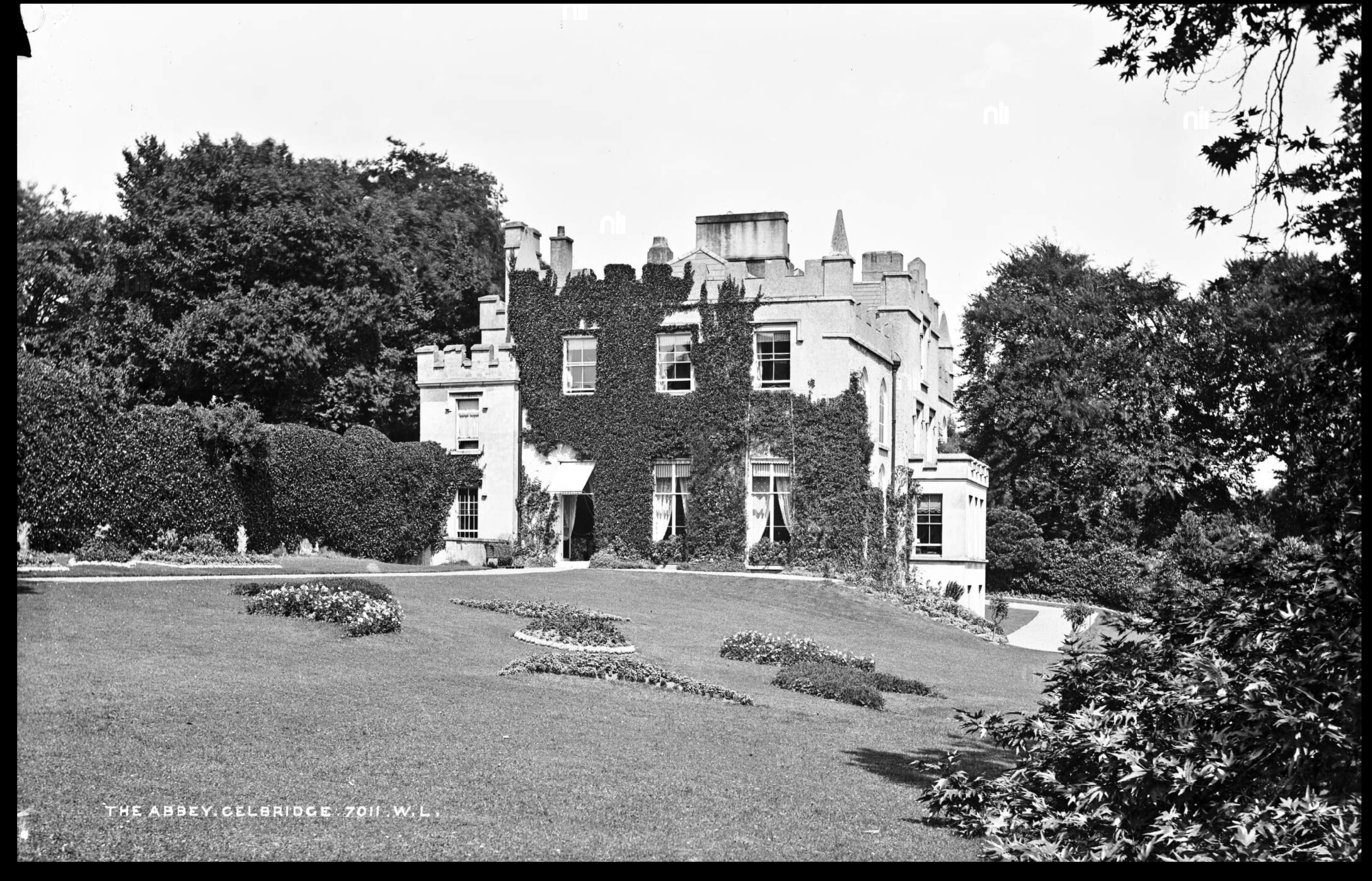
Up the road another house had been recently built, in 1703, Celbridge Abbey for Bartholomew Van Homreigh (also spelled Homrigh. Celbridge Abbey is now unfortunately in a sad state of disrepair). Van Homreigh was commissary-general to William III’s army, and he became Lord Mayor of Dublin. He was the father of a friend of Jonathan Swift, Esther Van Homreigh, whom he called “Vanessa.”
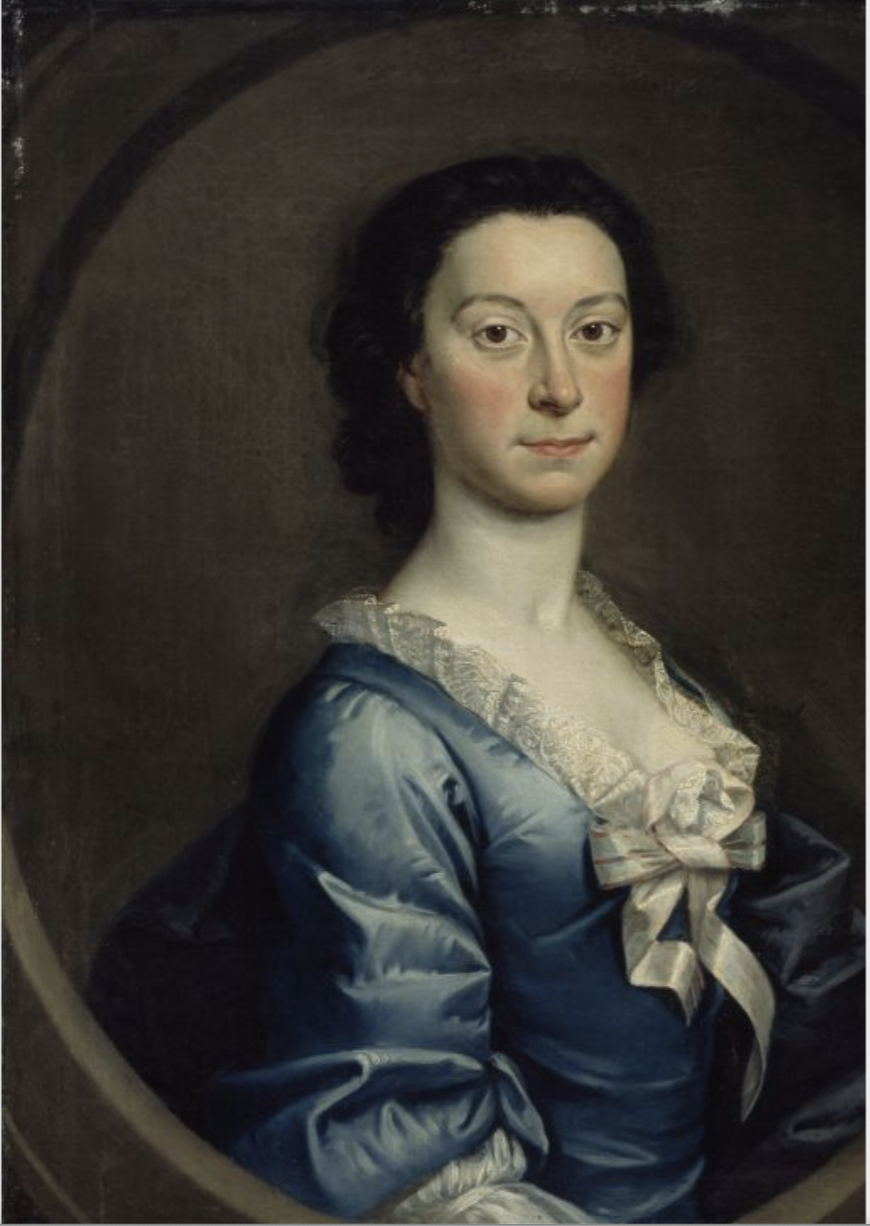
Possible Portrait of Hester Vanhomrigh (‘Vanessa’) (1690-1723), courtesy of National Gallery of Ireland.
Celbridge Abbey, courtesy of National Library of Ireland published between ca. 1865-1914 Lawrence Photographic Collection, French, Robert, 1841-1917 photographer.
Celbridge Abbey, Lawrence Photographic Collection National Library of Ireland, French, Robert, 1841-1917 photographer.

The Kildare local history website tells us that the area was historically named Kildrought, and only changed the name to Cell-bridge, shortened to Celbridge, in 1714. [2] The River Liffey runs parallel to the main road of Celbridge.

Sign about the area of Celbridge.

William Conolly purchased land which had been owned by Thomas Dongan (1634-1715), 2nd Earl of Limerick, in 1709. Dongan’s estate has been confiscated as he was a Jacobite supporter of James II (he became first governor of the duke of York’s province of New York! The Earldom ended at his death). His mother was the daughter of William Talbot, 1st Baronet of Carton (see my entry about Carton, County Kildare, under Places to stay in County Kildare).

William Conolly (1662-1729) in his robes as Speaker of the Irish House of Commons, by Stephen Catterson Smith the Elder (1806-1872), portrait in Hall of Castletown. The portrait was donated by Mr and Mrs Galen Weston. This posthumous portrait was based on Jervas’s portrait.

Both Conolly and Baillie had property on Capel Street in Dublin, before moving to Celbridge. Conolly’s house was on the corner of Capel Street and Little Britain Street and was demolished around 1770. [3] William Conolly started from relatively humble beginnings in County Donegal. He trained as an attorney and grew wealthy by making astute land investments.

Kildrought house was built around 1720. Building at Castletown began in 1722.

Robert Baillie brought tapestry-making to Ireland, bringing Flemish weavers to Ireland. The tapestries in the House of Lords in Parliament, which is now part of the Bank of Ireland on College Green in Dublin, features tapestries made by Baillie’s workers. June, Kildrought’s owner, told us that he was an “upholder,” or what we now call an “upholsterer,” but it really meant at the time an interior designer. Baillie obtained the commission through his connection with Conolly. It was Conolly who oversaw the construction of the new Parliament building on College Green, the first purpose built two chamber parliament building in the world. (see [2])

The tapestries by the employees of Robert Baillie, in the House of Lords. Photograph by Swire Chin, Toronto, May 2013 flickr constant commons.

For more on the Irish Houses of Parliament, see Robert O’Byrne’s entry, https://theirishaesthete.com/2024/07/08/bank-of-ireland/

A Section of the House of Lords, Dublin 1767 After Rowland Omer, Irish, fl.1755-1767, courtesy of National Gallery of Ireland.

The design of Kildrought is attributed to Thomas Burgh (1670-1730), Surveyor General of Ireland, who also designed the Library of Trinity College, Dublin (the building that contains The Long Room).

The design of Kildrought is attributed to Thomas Burgh (1670-1730), Surveyor General of Ireland, who also designed the Library of Trinity College, Dublin (the building that contains The Long Room): A Prospect of the Library of Trinity College, Dublin, 1753, After Joseph Tudor (1695-1759). Print courtesy of the National Gallery of Ireland.

The house is two storeys to the front elevation and three to the rear (including a basement) and is five bays wide with a central entryway on the front facade. There is a pediment on the front facade and the arched window stretches up into the pediment. The National Inventory tells us that the use of early red brick (now painted yellow) to the dressings is an attractive feature of the composition and reveals a high quality of craftsmanship in the locality, notably to the profiled courses to the eaves. [4] The house is lime plastered, and has a two storey lean-to to one side with a pretty arched window, and a sundial installed by June, the current owner.

The brickwork of the eaves, repeated here on the one storey section of the house, is unusual. Photograph © Jennifer Winder-Baggot, www.irishhistorichouses.com
Sundial installed by the current owner, June. Photograph © Jennifer Winder-Baggot, www.irishhistorichouses.com
This entrance to the forecourt is from the carriage entrance to one side of the house. Photograph © Jennifer Winder-Baggot, www.irishhistorichouses.com
The carriage entrance of Kildrought, restored by the Stuarts. Photograph © Jennifer Winder-Baggot, www.irishhistorichouses.com

Stone steps lead up to the front door from the forecourt, and one walks over a bridgeway over the basement level. Over the front door is a decorative fanlight.

Kildrought. Photograph © Jennifer Winder-Baggot, www.irishhistorichouses.com

The current owners purchased the house in 1985, the first time it came on the market in 265 years, as before that, it was a leasehold property on the estate of William Conolly (1662-1729).

Robert Baillie married Susanna Antrobus, a cousin of Ester Van Homrigh. Jimmy O’Toole tells us in his book The Carlow Gentry: What will the neighbours say! that the commission for the House of Lords did not work out well for Robert Baillie. [6] He engaged the services of painter Johann Van der Hagen (we saw his work in Beaulieu in County Louth, see my entry) and the weaver John Van Beaver. Baillie understood that he would also be commissioned to furnish the houses of Parliament. However, he did not receive the commission for the furniture. Perhaps it was this misunderstanding that led to Baillie’s financial decline, leading him to sell Kildrought in 1749. This often seems to be the way with tradesmen working for aristocrats. Work was undertaken with expectation of further work and commissions. Businessmen had to take a gamble on the hope of future work, investing often beyond their means to supply quality work for the initial commission. If this initial commission didn’t lead to further work, it could lead to ruin.

Unfortunately the same worked for the aristocrats themselves. They ordered and obtained food, clothing, furniture from merchants and tradesmen, on credit. They built up debt, and were sometimes unable to pay off their debts. Debts were passed on after death to descendants so that one could inherit not just land and goods but debts.

The Baillie family moved to County Carlow. Robert’s son Arthur (b. 1726) married the daughter of a neighbour and land agent of William Conolly, Williamina Katherina Finey. Arthur purchased Sherwood Park in County Carlow. He passed the house then to his brother Richard (1726-1804) who fought with Wolfe at Quebec.

Sherwood Park, County Carlow, a later house of the Baillie family. Photograph taken from myhome.ie, house for sale in September 2022.

Robert’s son William (1723-1810) became a well-known engraver.

Captain William Baillie, (1723-1810), Engraver and Connoisseur by Engraver William Baillie, Irish, 1723-1818 After Nathaniel Hone the Elder, Irish, 1718-1784.

From 1782 Kildrought became the home of Owen Bagnall’s Celbridge Academy, until 1814, where students included future bishop John Jebb and the sons of George Napier and Sarah Lennox (her sister married Thomas Conolly, nephew and heir of William Conolly).

From 1818-40 it served as a fever hospital, then a vicarage, and had a few other occupants before the current owners.

The building was restored 1985-95 by the present owners.

The current owners have sought to restore the house authentically to what would have been the original condition. The front hall has decorative dentil cornice original to the house, and niches on either side of the front door, which Andrew Tierney tells us in his book The Buildings of Ireland: Central Leinster were uncovered during the restoration in the 1990s. Their keystones were copied from Castletown. [5] The front door has shutters for the glass top half of the door. The hall is a perfect cube.

Kildrought, County Kildare. Photograph © Jennifer Winder-Baggot, www.irishhistorichouses.com
Kildrought. Photograph © Jennifer Winder-Baggot, www.irishhistorichouses.com

The Stuarts had all of the wood panelling done in the house. The doors with shouldered architraves are original to the house.

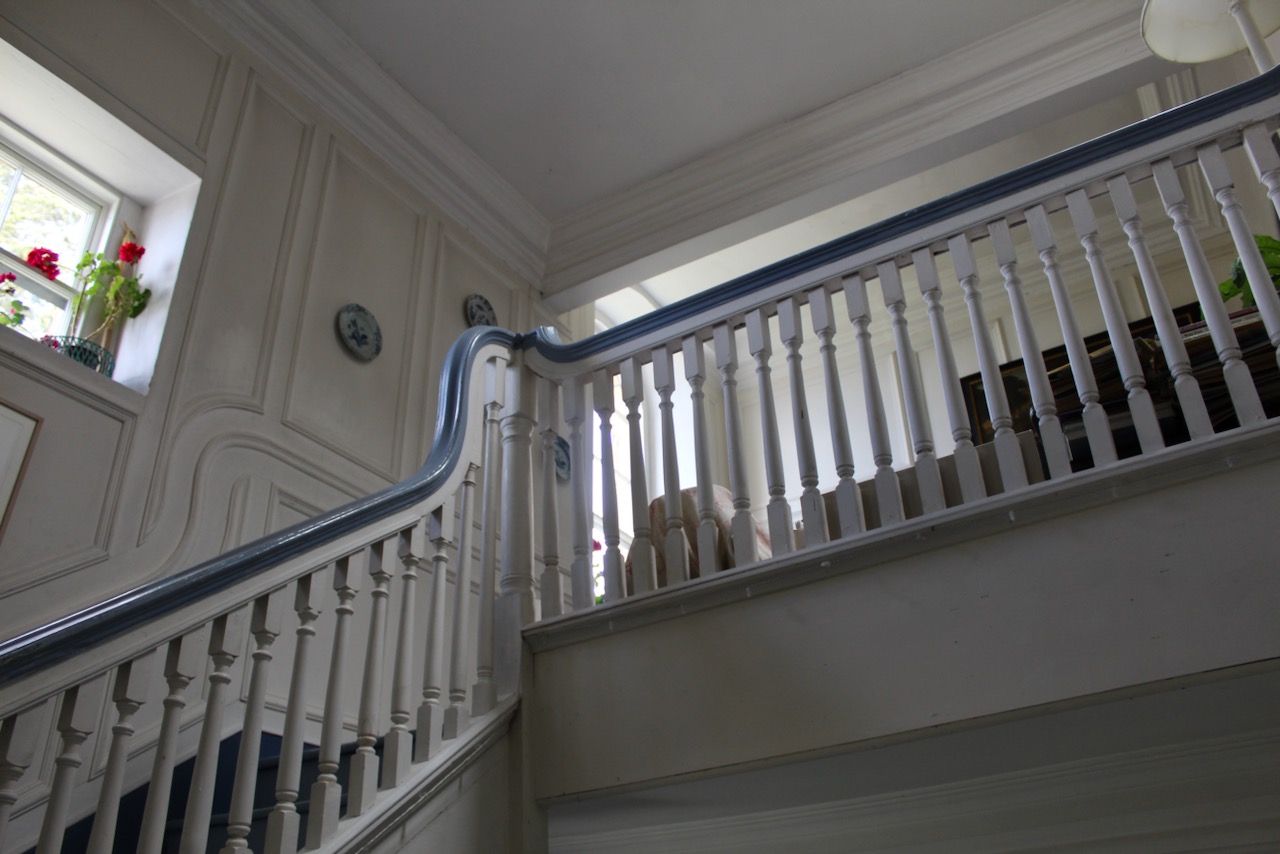
Kildrought, County Kildare. Photograph © Jennifer Winder-Baggot, www.irishhistorichouses.com
Kildrought. Photograph © Jennifer Winder-Baggot, www.irishhistorichouses.com

The upstairs had been altered, and the Stuarts brought the house back to something more like its original configuration. At the top of the stairs is the arched window which we saw from the front.

Kildrought. Photograph © Jennifer Winder-Baggot, www.irishhistorichouses.com

The drawing room is the width of the main house, and has beautiful views over the back garden, and a fireplace at either end. The room had been divided into two but the Stuarts took down the central wall to create the spacious bright salon, the Great Parlour.

The Great Parlour. The fireplaces are cast in concrete and painted to look like marble, done by Peter Pearson, who also painted the overmantel paintings. Photograph © Jennifer Winder-Baggot, www.irishhistorichouses.com
Kildrought. Photograph © Jennifer Winder-Baggot, www.irishhistorichouses.com

The kitchen and another sitting room and informal dining room are downstairs in the basement level of the house, which is the ground level at the back of the house.

The terraced garden at the rear of the house goes down to the Liffey and was also created in 1720. The National Inventory points out that the formal gardens to the south-east are of particular interest in terms of their landscape design qualities, and reflect the eighteenth- and nineteenth-century fashions for formal landscaping. They are splendid, and we were lucky to have a superb sunny day which showed them off to best effect.

The current owners sought to recreate a formal garden and to restrict plantings only to those known to be introduced before 1720.
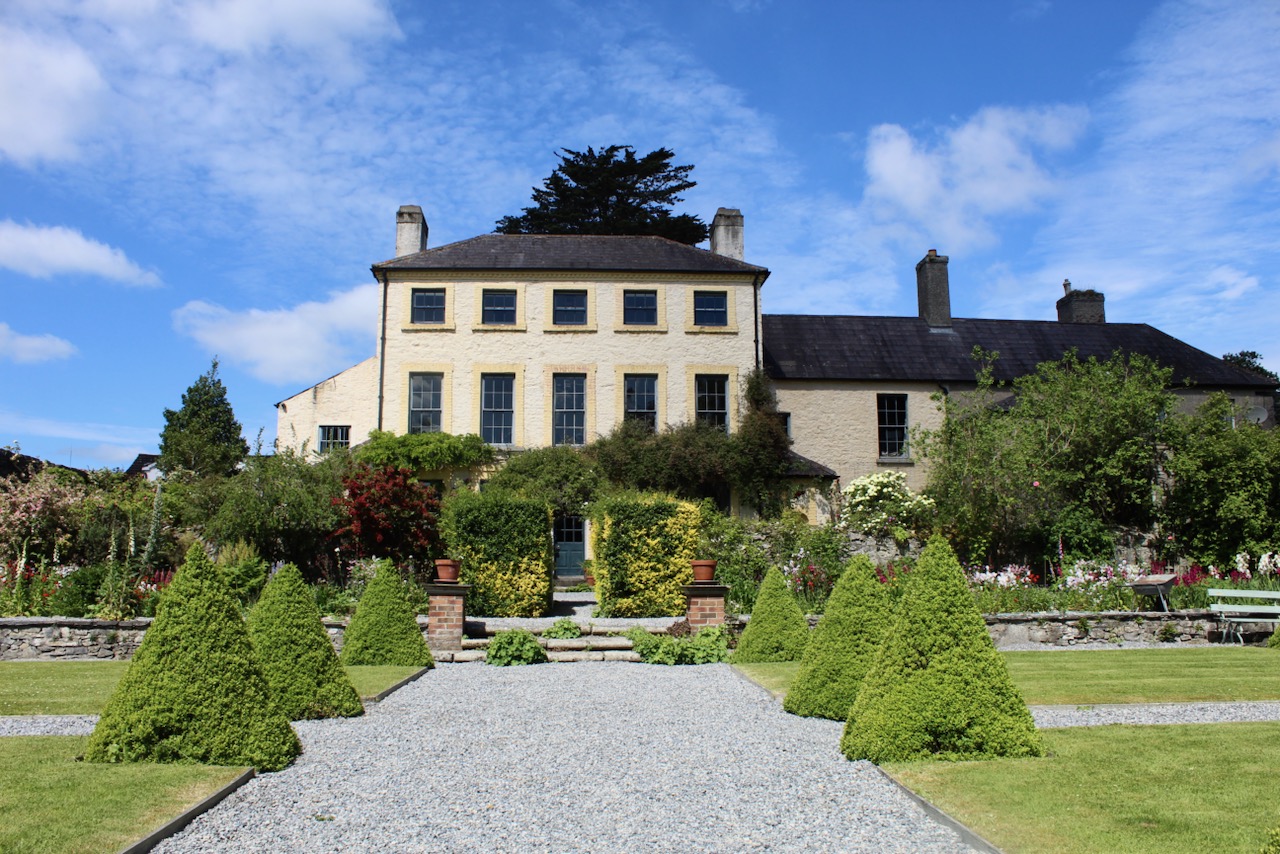
The back of Kildrought. Photograph © Jennifer Winder-Baggot, www.irishhistorichouses.com
Kildrought, County Kildare. Photograph © Jennifer Winder-Baggot, www.irishhistorichouses.com
Kildrought. Photograph © Jennifer Winder-Baggot, www.irishhistorichouses.com

The side wing was added around 1747.
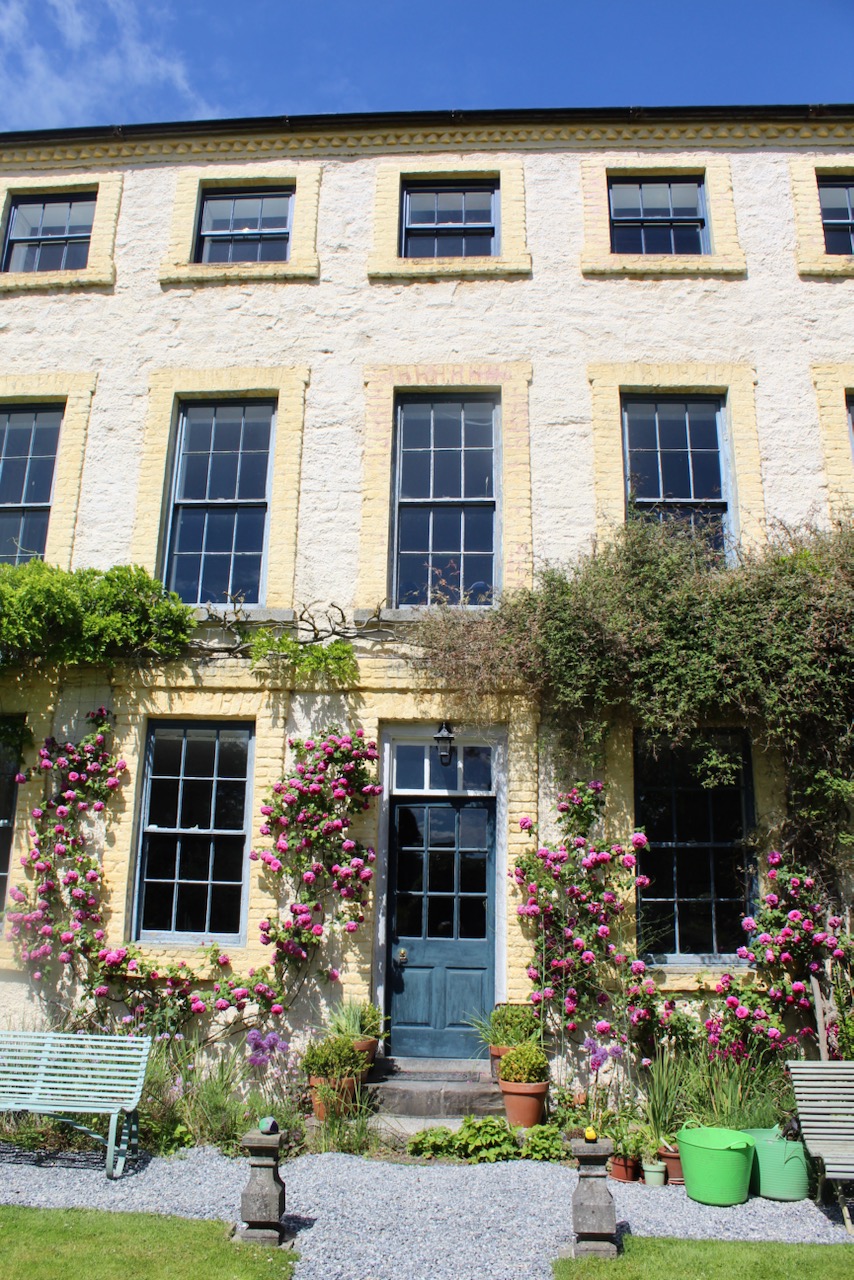
The roses are as well chosen for their scent as their beauty. Photograph © Jennifer Winder-Baggot, www.irishhistorichouses.com
The side wing, added approximately 1747. Photograph © Jennifer Winder-Baggot, www.irishhistorichouses.com
Kildrought, County Kildare. Photograph © Jennifer Winder-Baggot, www.irishhistorichouses.com
Kildrought. Photograph © Jennifer Winder-Baggot, www.irishhistorichouses.com

There are two more buildings on the property. One has been converted to extra accommodation, described by the National Inventory as a three-bay single-storey curvilinear gable-fronted outbuilding with attic, c.1720, to north-west with seven-bay single-storey side elevation to north-east.

June and her husband had the gable end added to this building. Photograph © Jennifer Winder-Baggot, www.irishhistorichouses.com

There is also a three-bay single-storey flat-roofed red brick summer house, built around 1840, to the south.

Summer house, built around 1840. Photograph © Jennifer Winder-Baggot, www.irishhistorichouses.com

The Stuarts have created a wonderful home and every inch of the property seems to be well-kept and beautiful!

[1] https://theirishaesthete.com/tag/kildrought-house/

[2] http://kildarelocalhistory.ie/celbridge See also my entry on Castletown House in my entry for OPW properties in Kildare, https://irishhistorichouses.com/2022/02/21/office-of-public-works-properties-leinster-carlow-kildare-kilkenny/

[3] p. xiii, Jennings, Marie-Louise and Gabrielle M. Ashford (eds.), The Letters of Katherine Conolly, 1707-1747. Irish Manuscripts Commission 2018. The editors reference TCD, MS 3974/121-125; Capel Street and environs, draft architectural conservation area (Dublin City Council) and Olwyn James, Capel Street, a study of the past, a vision of the future (Dublin, 2001), pp. 9, 13, 15-17.

[4] https://www.buildingsofireland.ie/buildings-search/building/11805062/kildrought-house-main-street-celbridge-celbridge-co-kildare

[5] p. 225, Tierney, Andrew. The Buildings of Ireland: Central Leinster: Kildare, Laois and Offaly. Yale University Press, New Haven and London, 2019.

[6] p. 19. O’Toole, Jimmy. The Carlow Gentry: What will the neighbours say! Published by Jimmy O’Toole, Carlow, Ireland, 1993. Printed by Leinster Leader Ltd, Naas, Kildare. 

Text © Jennifer Winder-Baggot, www.irishhistorichouses.com
The Old Glebe, Newcastle-Lyons, County Dublin – section 482

Open dates in 2025: May 1-31, June 2-30, Mon-Sat, Aug 16-24, 10am-2pm

Fee: Free

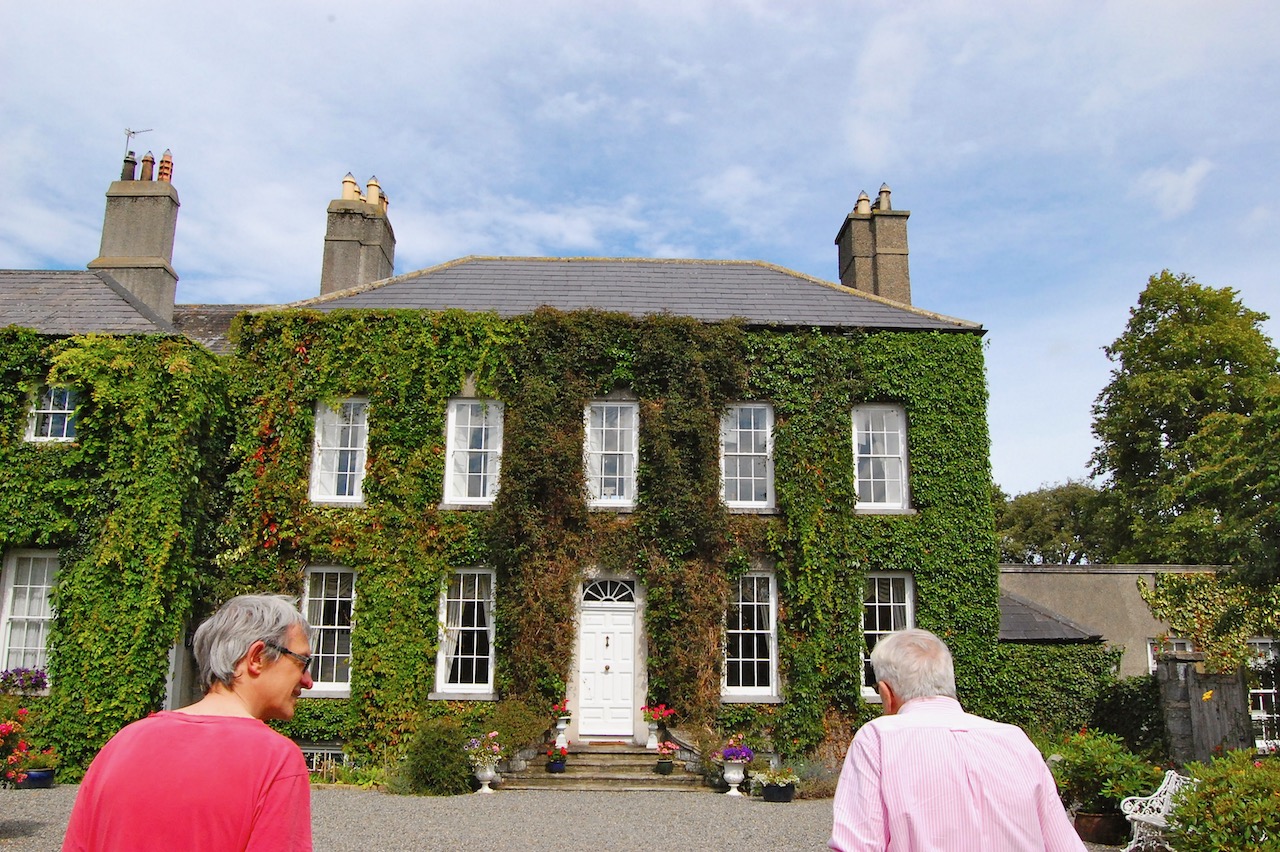
I visited this property in 2012 during Heritage Week with my husband Stephen and my Dad. We were welcomed by the owner, Frank Kerins. A glebe house is one on the grounds of a church providing accommodation for the clergy. This house is next to Saint Finian’s, an ancient church from the fifteenth century, but no longer houses its vicar and is in private ownership. St. Finian’s is now a Church of Ireland and still holds weekly services. There’s a beautiful view of the church from the back of the house, where one can see the restored Gothic “pointed-arched window with flowing tracery” [1] through another arch, and behind, the church tower.

“The Old Glebe,” Newcastle-Lyons, County Dublin. Photograph © Jennifer Winder-Baggot, www.irishhistorichouses.com
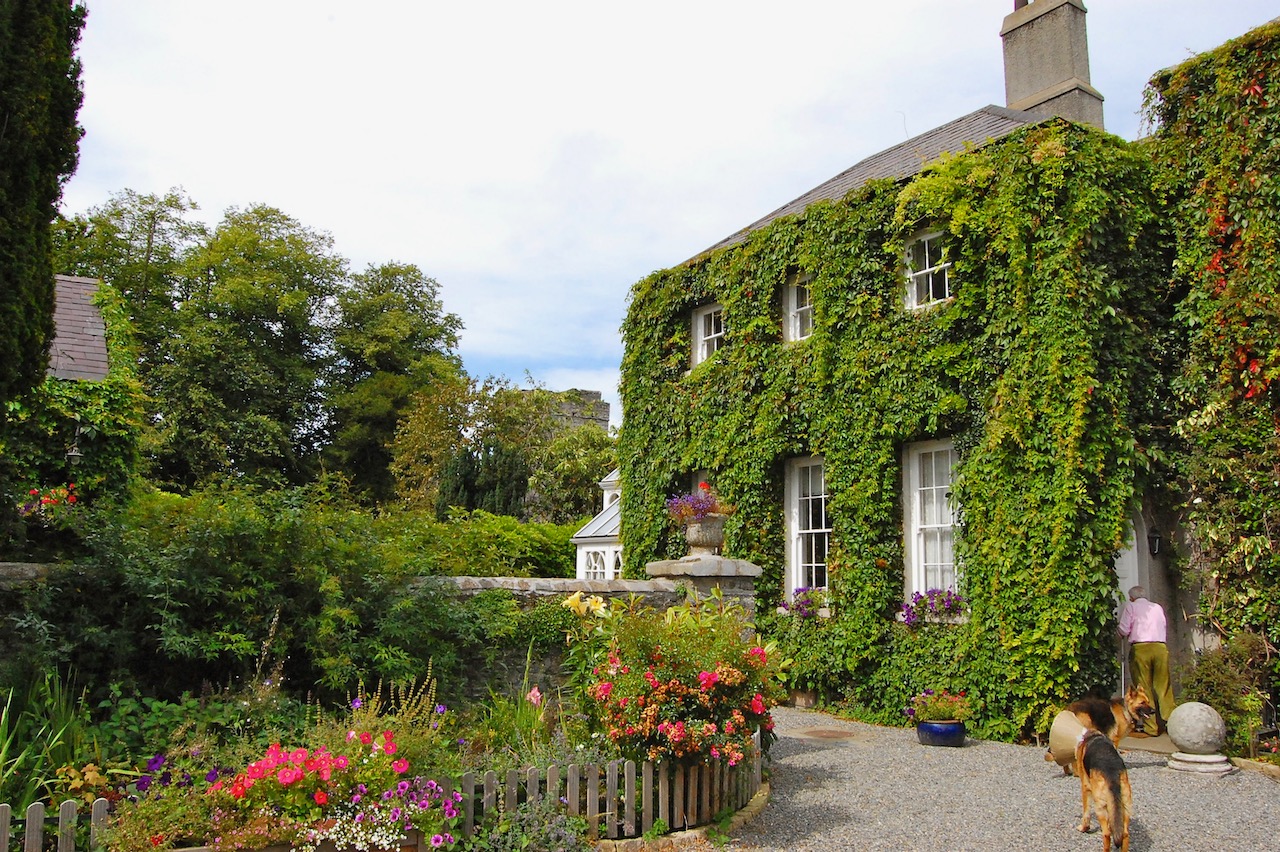
The older part of the house dates from around 1720, and is a five bay two storey block over basement [2].

[17/5/20: I have stumbled across a reference while looking up historic houses in Dublin, while googling Athgoe Castle. This reference gives a little detail about the Glebe House, which is referred to as the Rectory for St. Finian’s Church: The Archdeacon of Glendalough, Thomas Smyth, who became Archdeacon in 1722, built the rectory. The east window of the church bears his initials and the date 1724. [3] He was son of Thomas Smyth Bishop of Limerick.]

An addition from about 1820 has, according to the National Inventory of Architectural Heritage website, two-bay rere elevation, and single-storey extensions to east. [4]

Continuation of the front of the house; the gardens were looking splendid on the August day on which we visited, the flowers in full array. Photograph © Jennifer Winder-Baggot, www.irishhistorichouses.com
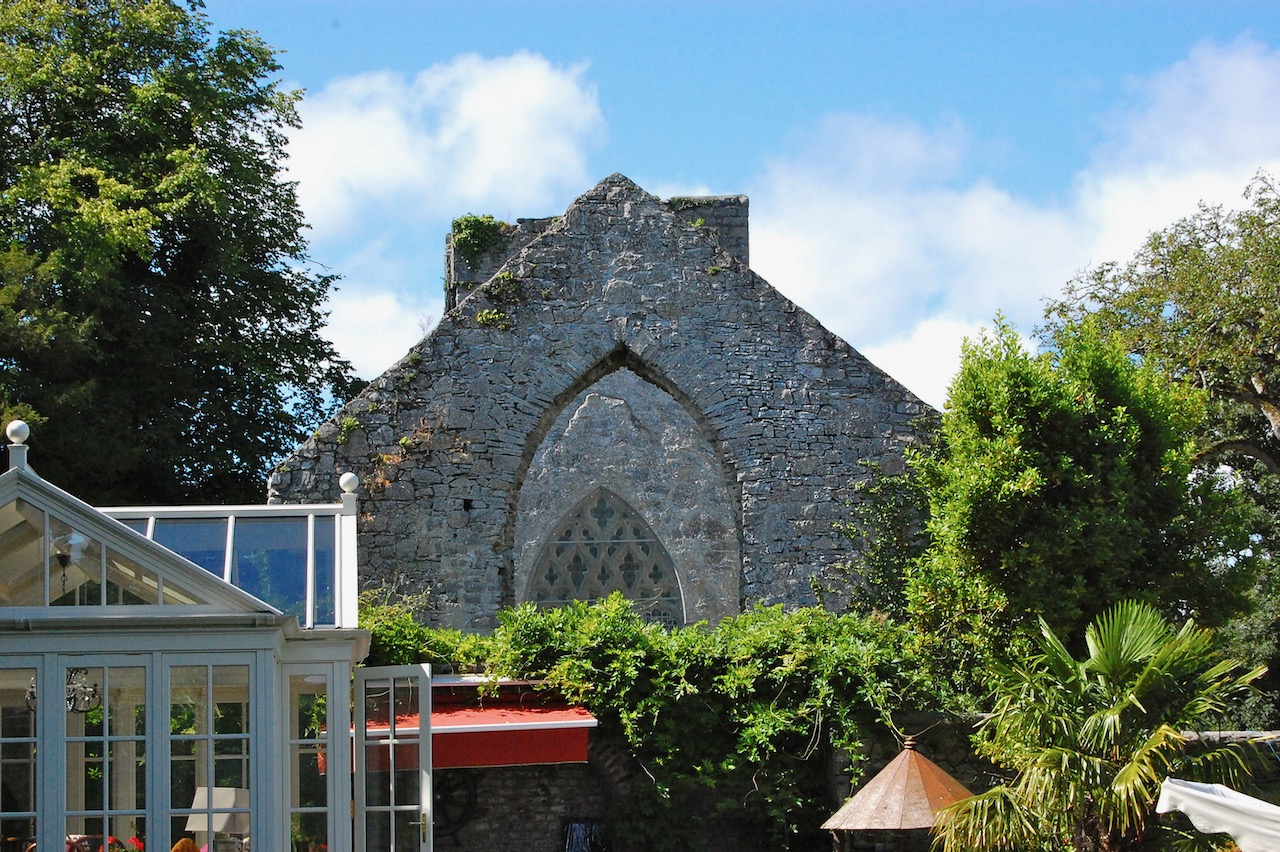
St Finian’s church, Newcastle Lyons (now Protestant). Photograph © Jennifer Winder-Baggot, www.irishhistorichouses.com
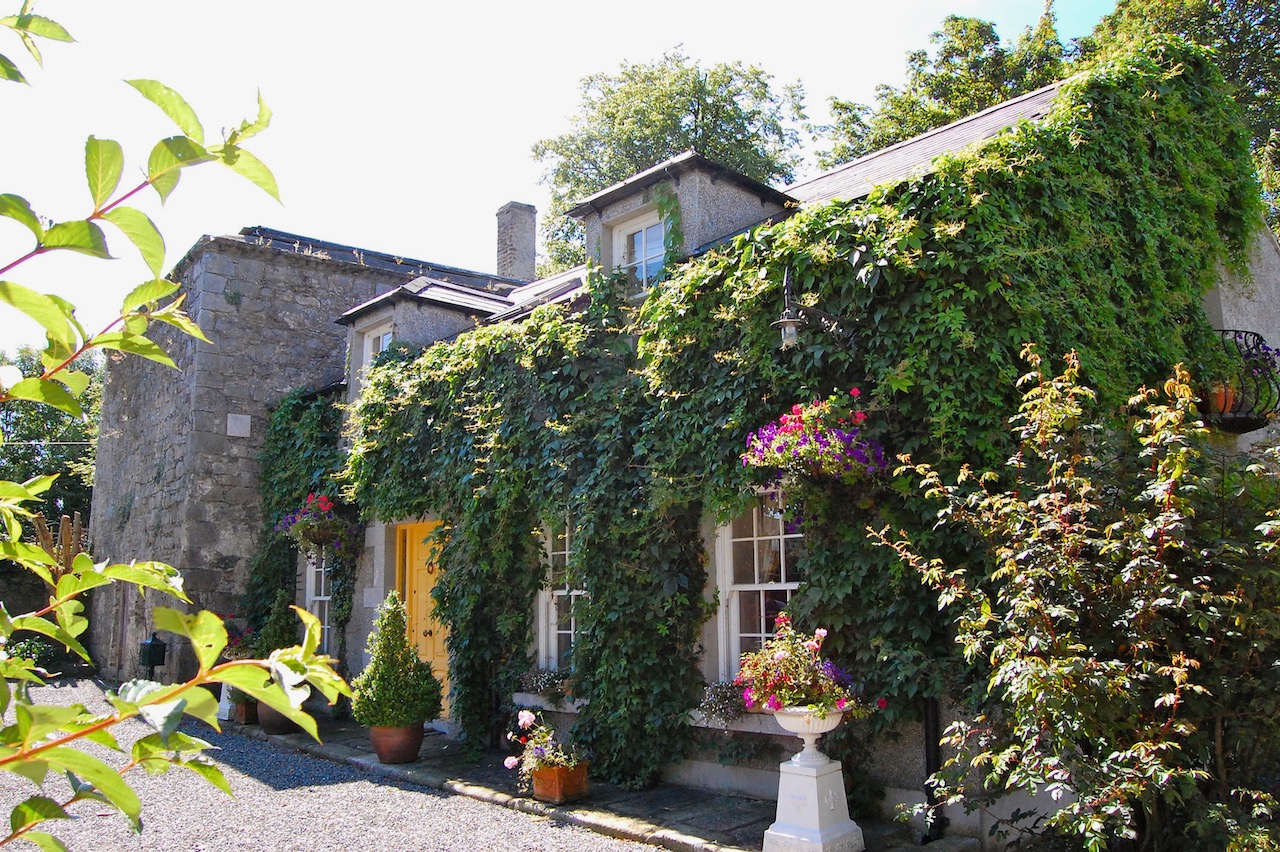
A second tower stands in front of the Glebe house, and I immediately fell in love with the attached 1727 Mews house. The Mews house contains accommodation and an artist’s studio. The deep yellow door, white painted divided pane sash windows, ivy and flowers won my heart.

The Old Glebe, Mews House. Photograph © Jennifer Winder-Baggot, www.irishhistorichouses.com
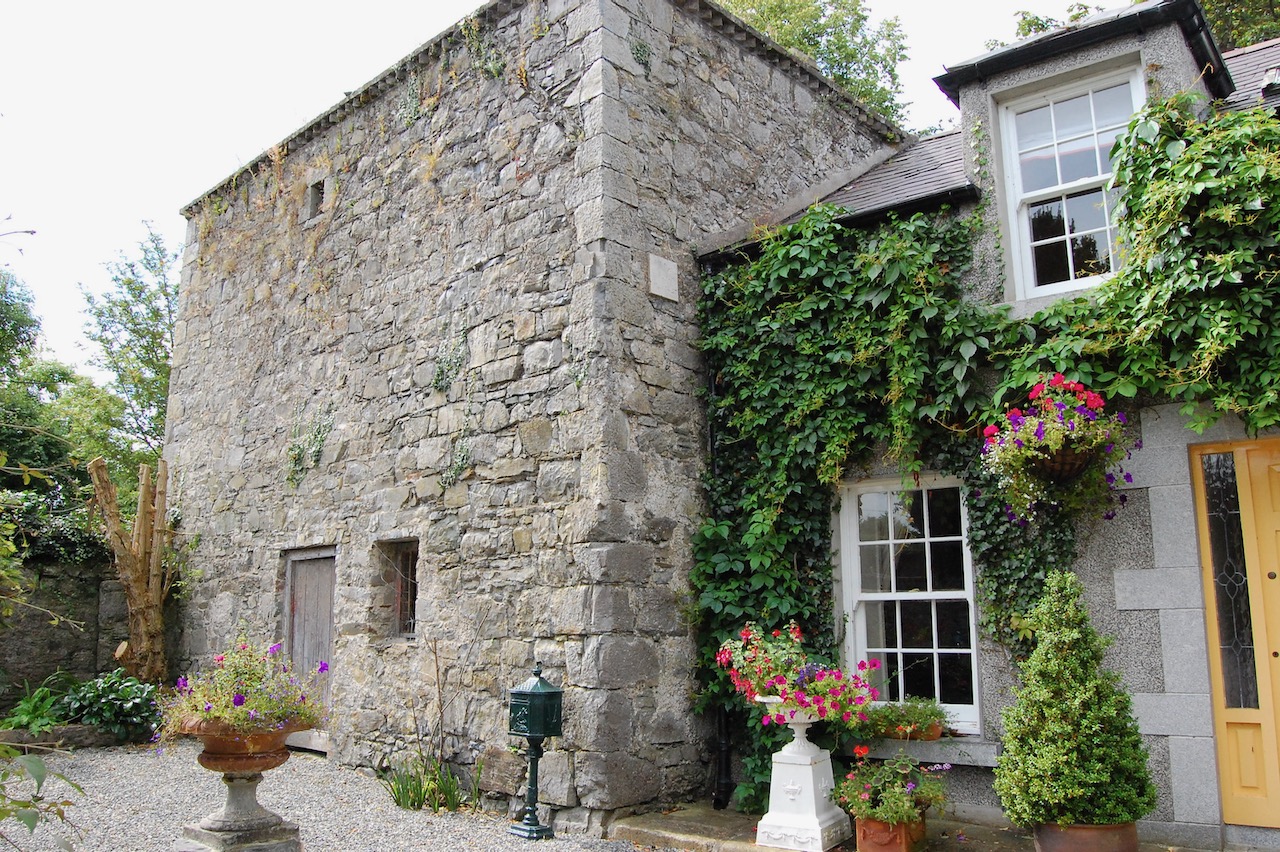
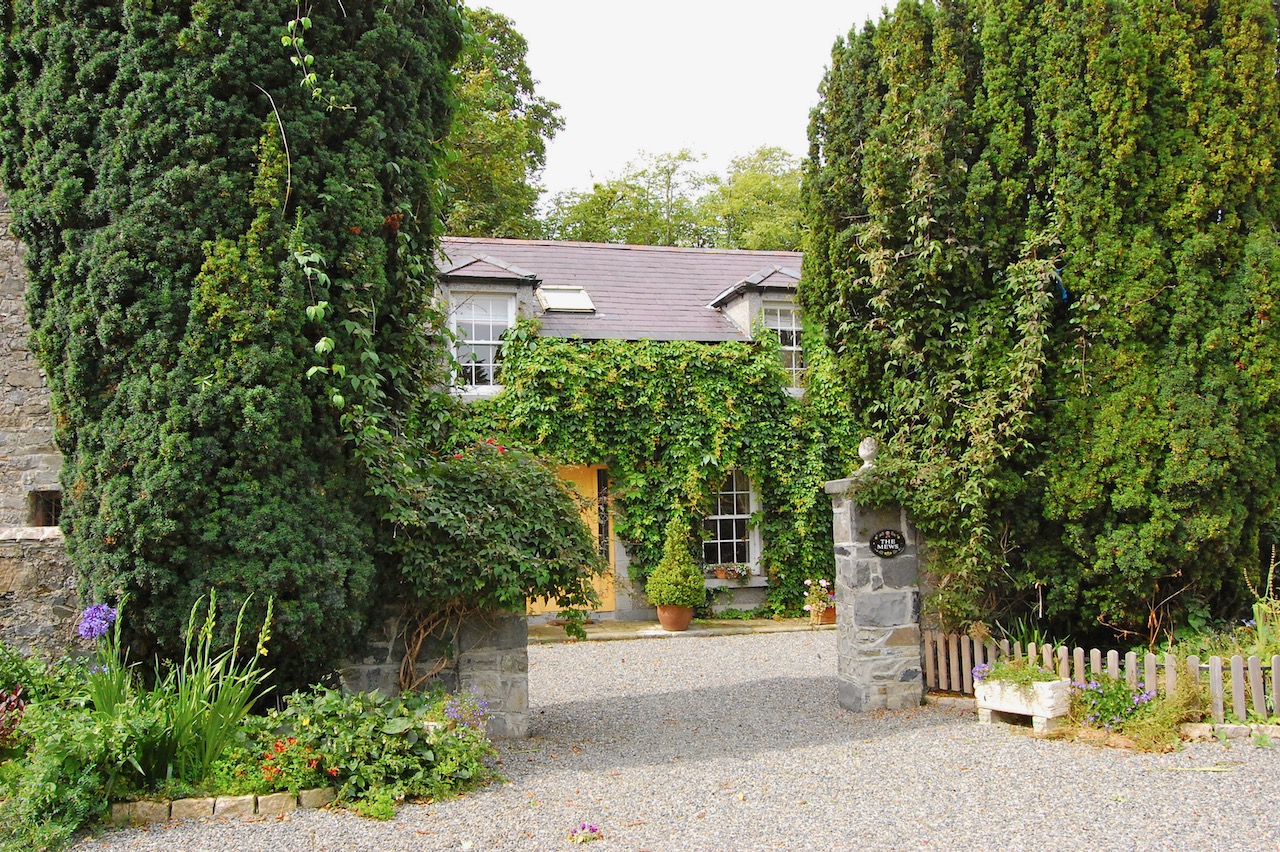
Mews house at the Old Glebe, Newcastle. Photograph © Jennifer Winder-Baggot, www.irishhistorichouses.com
“The Old Glebe,” Newcastle-Lyons, County Dublin. Photograph © Jennifer Winder-Baggot, www.irishhistorichouses.com
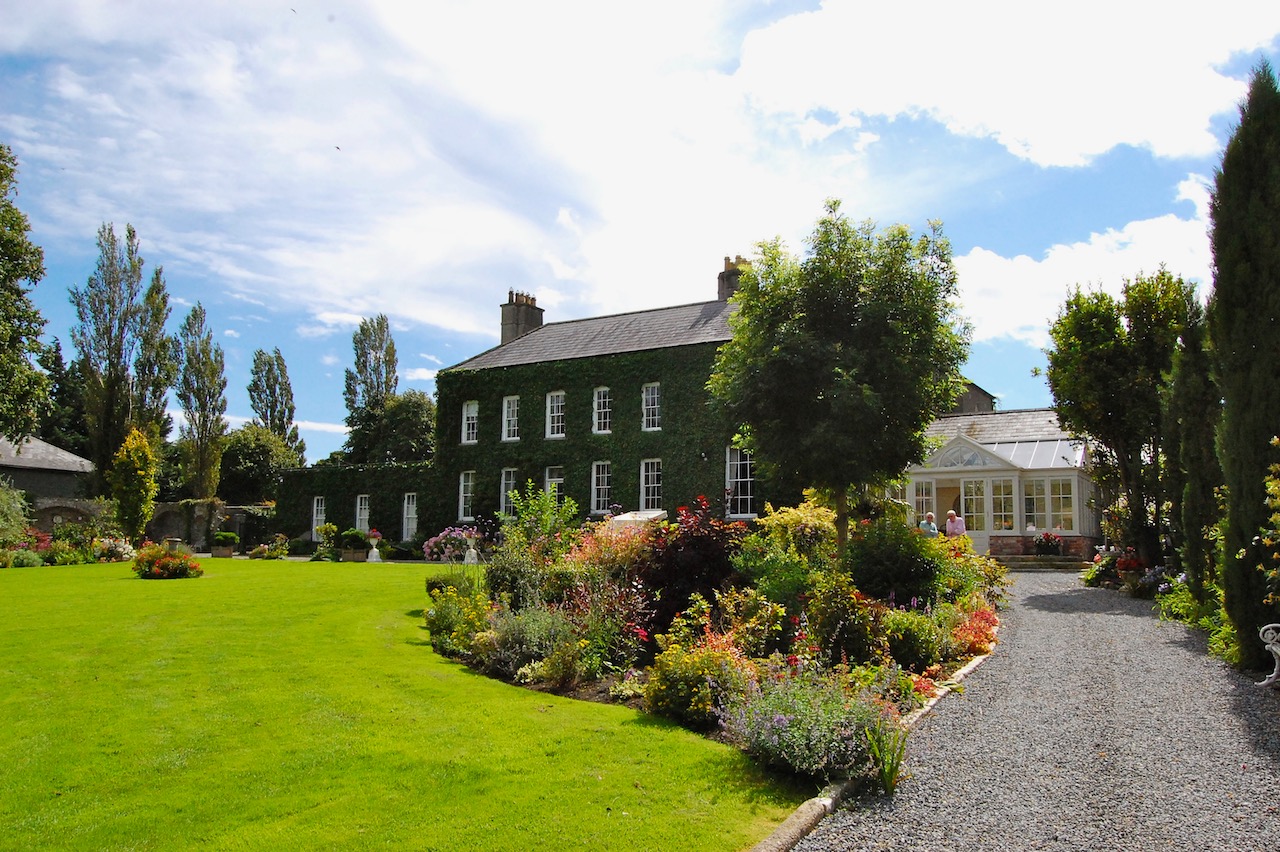
Mr. Kerins is enthusiastic about the house and is familiar with the history, as of that of the tower and adjoining church. He has written a book, published in 2017, called Some views of the Old Glebe House, Newcastle.

There is an article that was in the Irish Times when the house was for sale in 1999, by Orna Mulcahy. She overestimates, I believe, the age of the house. [5]:

One of the oldest houses in south Dublin, it was built by a vicar of Rathmichael, the Reverend Simon Swayne, in the mid-1600s. The original two-storey over basement house was extended in the 18th and 19th centuries and the current owners have made their own contribution in the form of a small conservatory overlooking the gardens. The property includes an old cut-stone mews house.

Maurice Craig in his Classic Irish Houses of the Middle Size, p. 66, pictures “Newcastle Rectory, Co. Dublin” and it looks like this Glebe House. He says it is built in 1727 by Archdeacon Smyth. Another article in the Irish Times claims that it was built in 1710. [6]

I was not allowed to take photographs inside the house, which is usual for the section 428 properties. Mr. Kerins gave us a tour. We entered the large front hall, impressively furnished and finished. This open into the long drawing room through a door with fanlight. Another door from the hall leads to a dining room. Through a hall, one steps into a lower level of the house and to the timber conservatory. My father and Mr. Kerins chatted about furniture, as my Dad’s father was an antiques dealer, while I envied the occupants of this beautiful, comfortable, elegant home. There is a beautiful wood-panelled sitting room.

I did, however, take many photographs of the splendid garden at the back of the house, which leads down to a lake.

Back of “The Old Glebe” Newcastle, County Dublin. Photograph © Jennifer Winder-Baggot, www.irishhistorichouses.com
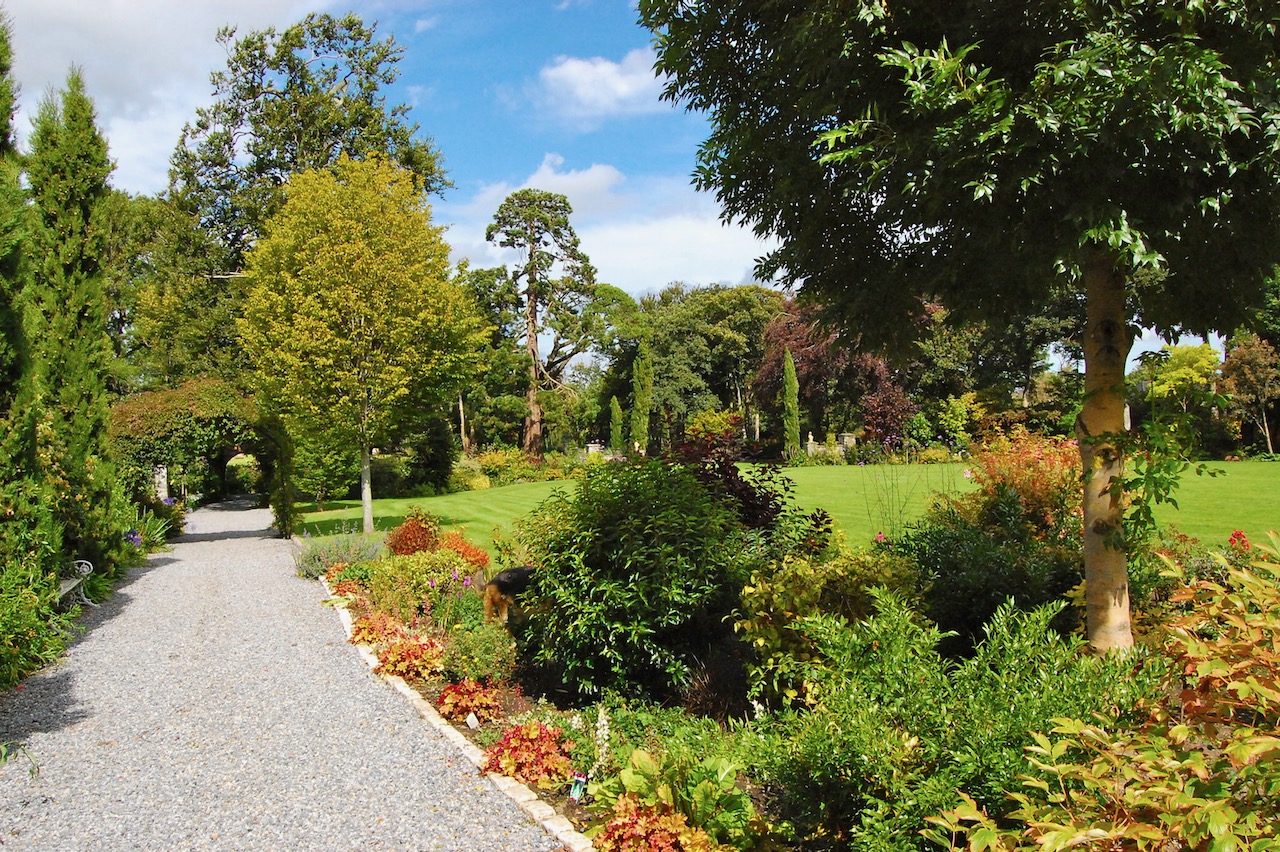
Looking down the garden from the back of the house. Photograph © Jennifer Winder-Baggot, www.irishhistorichouses.com
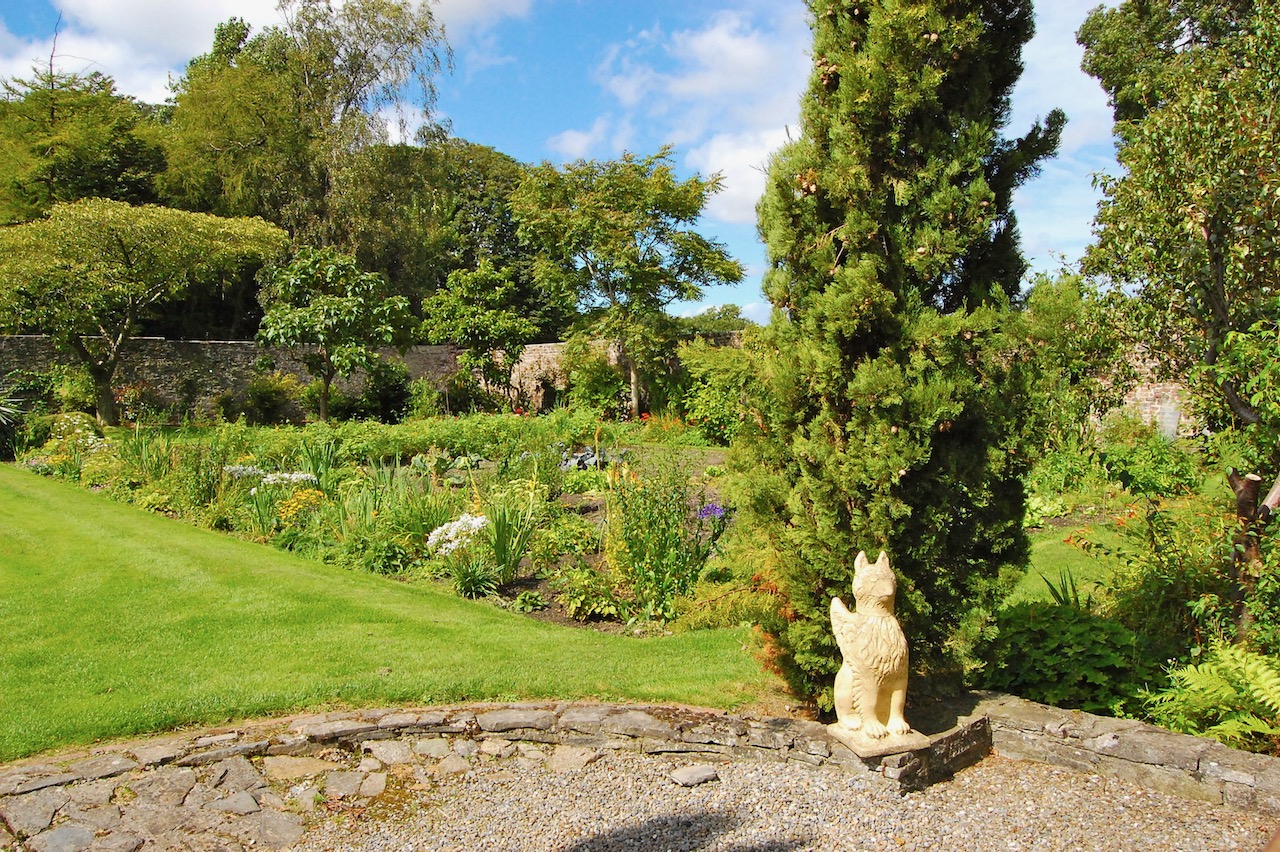
“The Old Glebe,” Newcastle-Lyons, County Dublin. Photograph © Jennifer Winder-Baggot, www.irishhistorichouses.com
The second article from the Irish Times continues:

The Old Glebe used to belong to the Church of Ireland. The church dates back to the 13th century but the present house was built in 1710. The current owner, Frank Kerins, bought it in 1989. In a corner of the garden (open to the public in summer) surrounded by benches, stands a wonderfully wide and healthy yew. Like any tree, its age is up for dispute. With a bulging girth of five metres, Fennell estimates it at 500 years plus. “Some of the branches have been lifted, but it’s probably Dublin’s oldest tree.” Kerins is adamant it is older. “ There are local references to it and to Jonathan Swift – it’s definitely over 700 years.”

Fennell is conservative when estimating age. “Yews are probably older than most people think. Some time in the future they will be able to nail it down with new technology and humble previous opinions.”

In the meantime, Kerins, like others before him, enjoys his tree. ‘We’ve restored the gardens and the house. The wildlife and shrubs have returned. We love to sit under the tree and take a glass of wine and imagine what Swift must have been thinking when he sat here 300 years ago. He wrote to his friends and he also had a girlfriend in the area, from Celbridge.’ ” [he must mean “Vanessa,” or Esther Vanhomrigh, who lived in Celbridge Abbey in County Kildare].

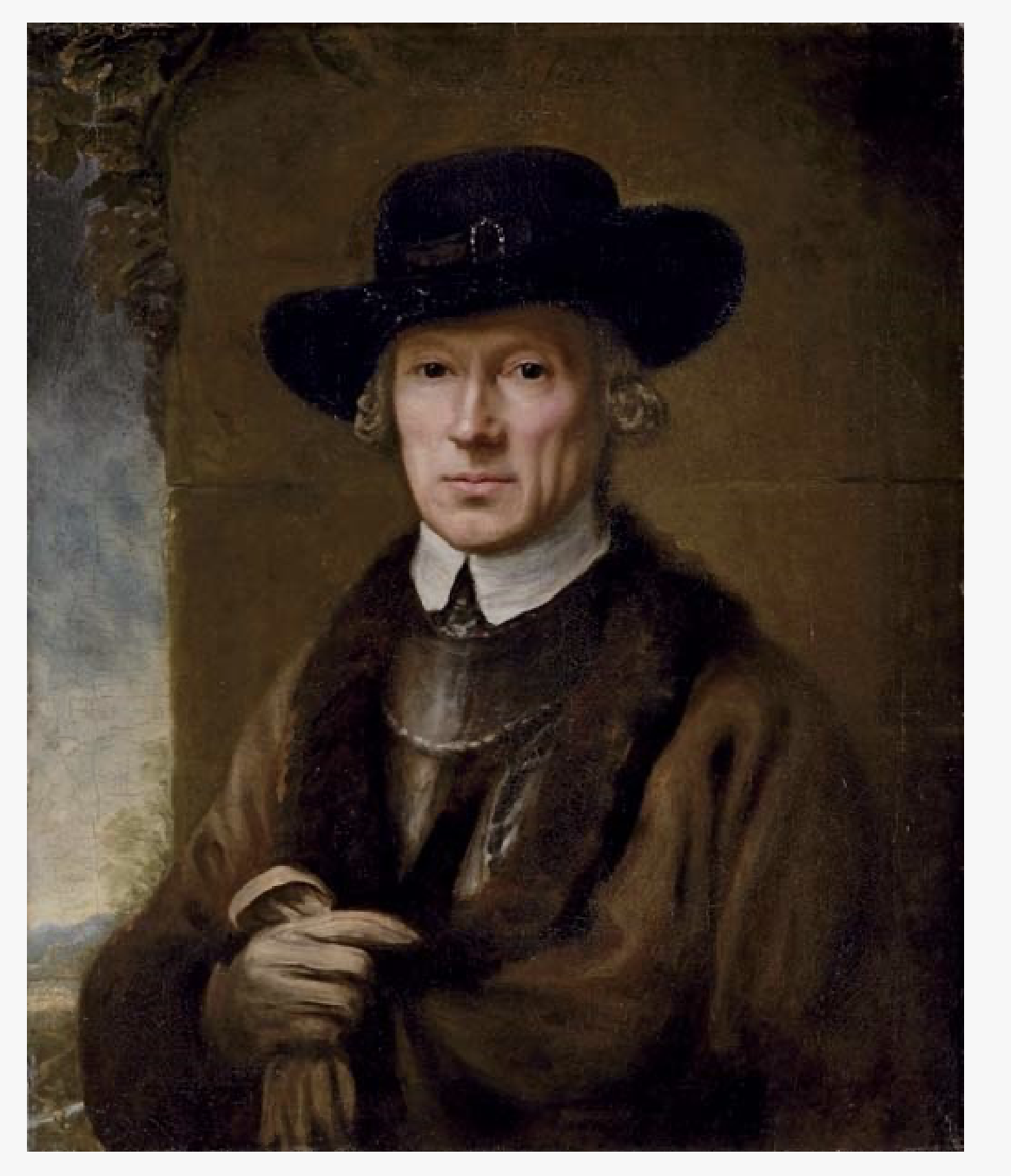
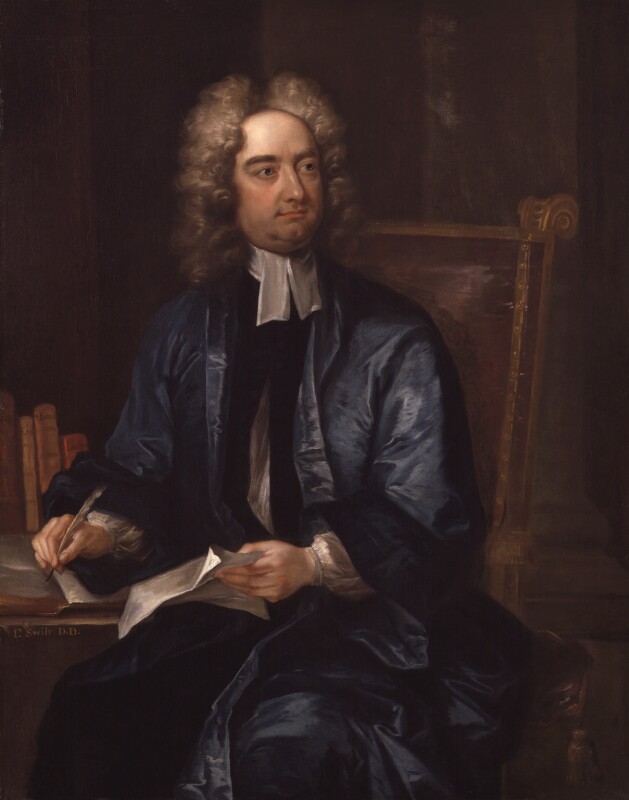
Jonathan Swift by Charles Jervas circa 1718, National Portrait Gallery 278.
Possibly a portrait of Hester Van Homrigh (1690-1723), Jonathan Swift’s “Vanessa,” courtesy of National Gallery of Ireland.

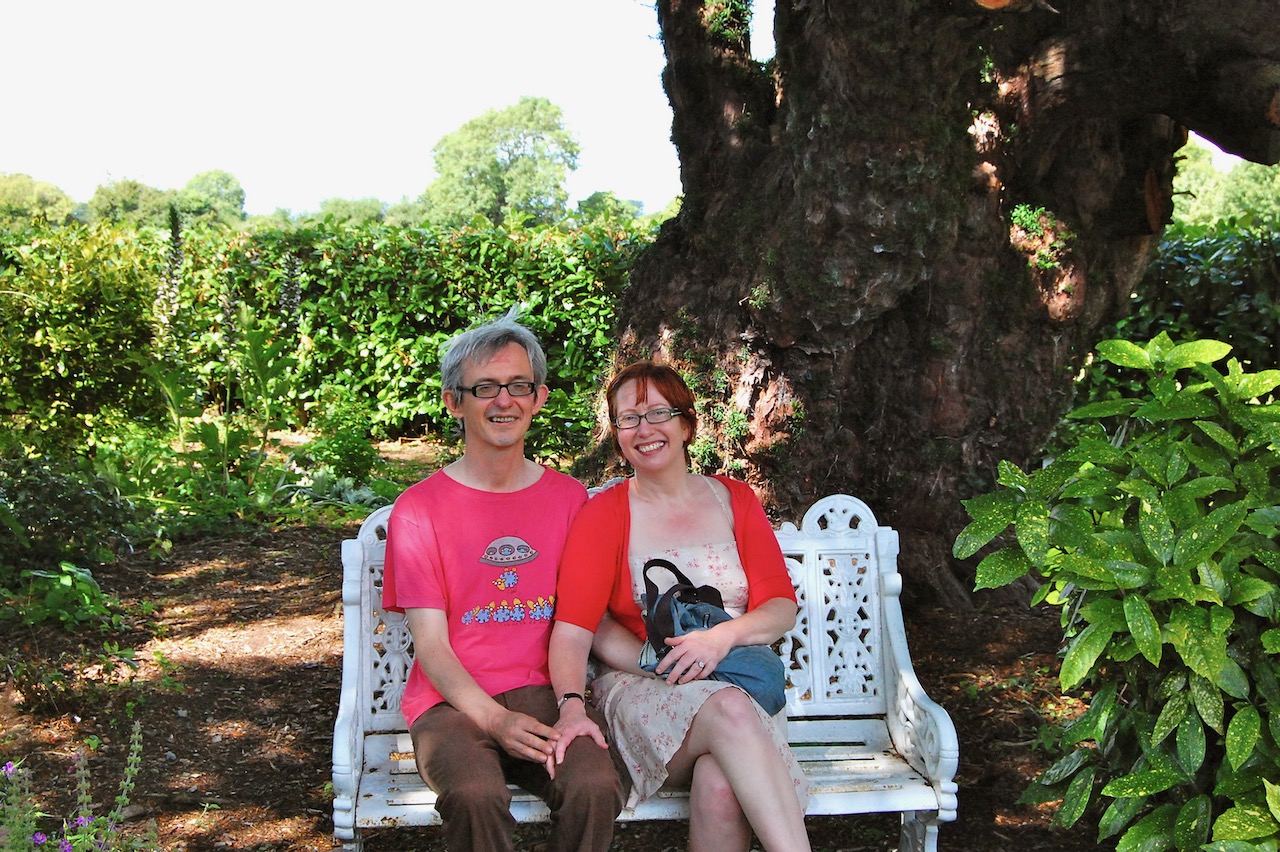
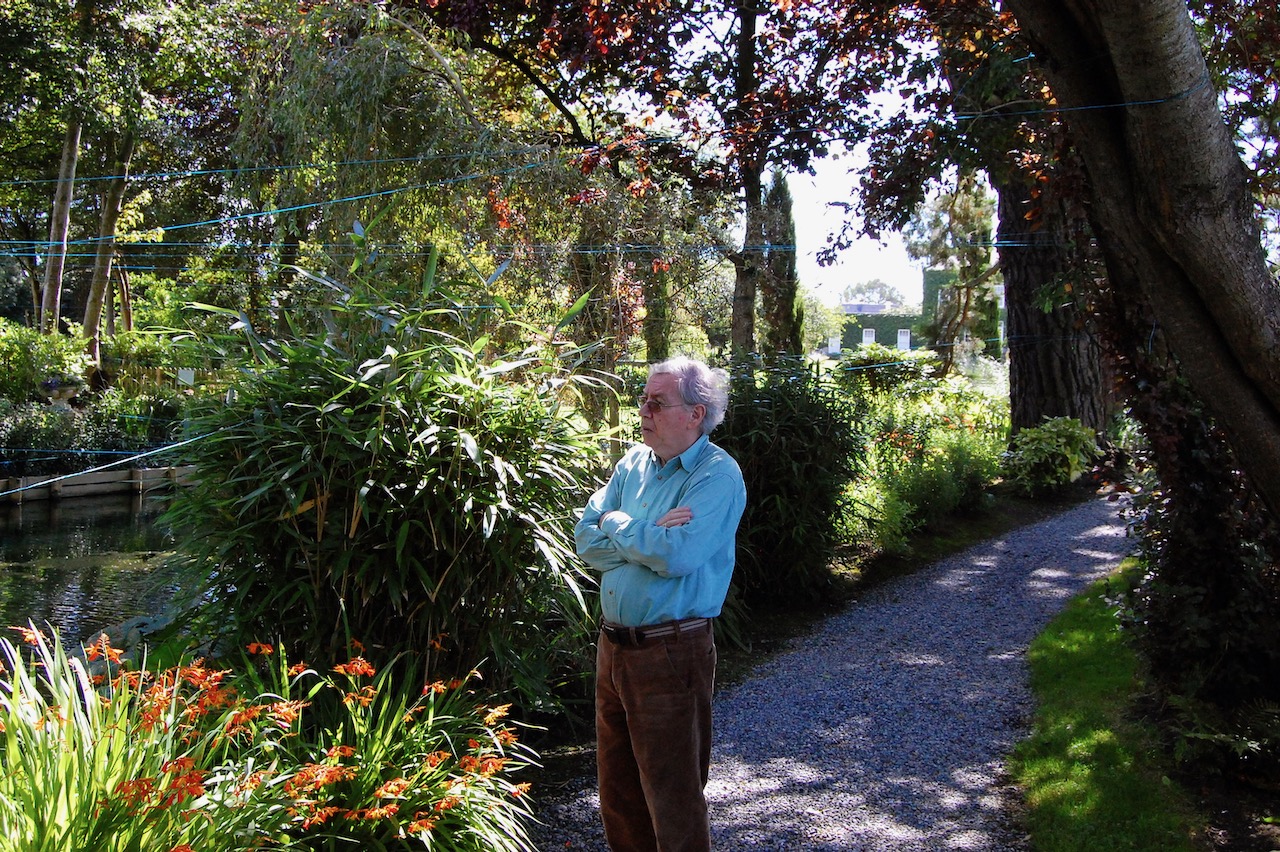
Stephen and I sat beneath this “Dean’s Tree”, under which Jonathan Swift, Dean of St. Patrick’s Cathedral, enjoyed writing before his death in 1745. Perhaps he sat here to write a letter to Stephen’s ancestor, the Reverend John Winder, who succeeded Jonathan Swift as Vicar of Kilroot, County Armagh.

Stephen and Jen at the “Dean’s Tree” (Jonathan Swift sat on that bench!). Photograph © Jennifer Winder-Baggot, www.irishhistorichouses.com
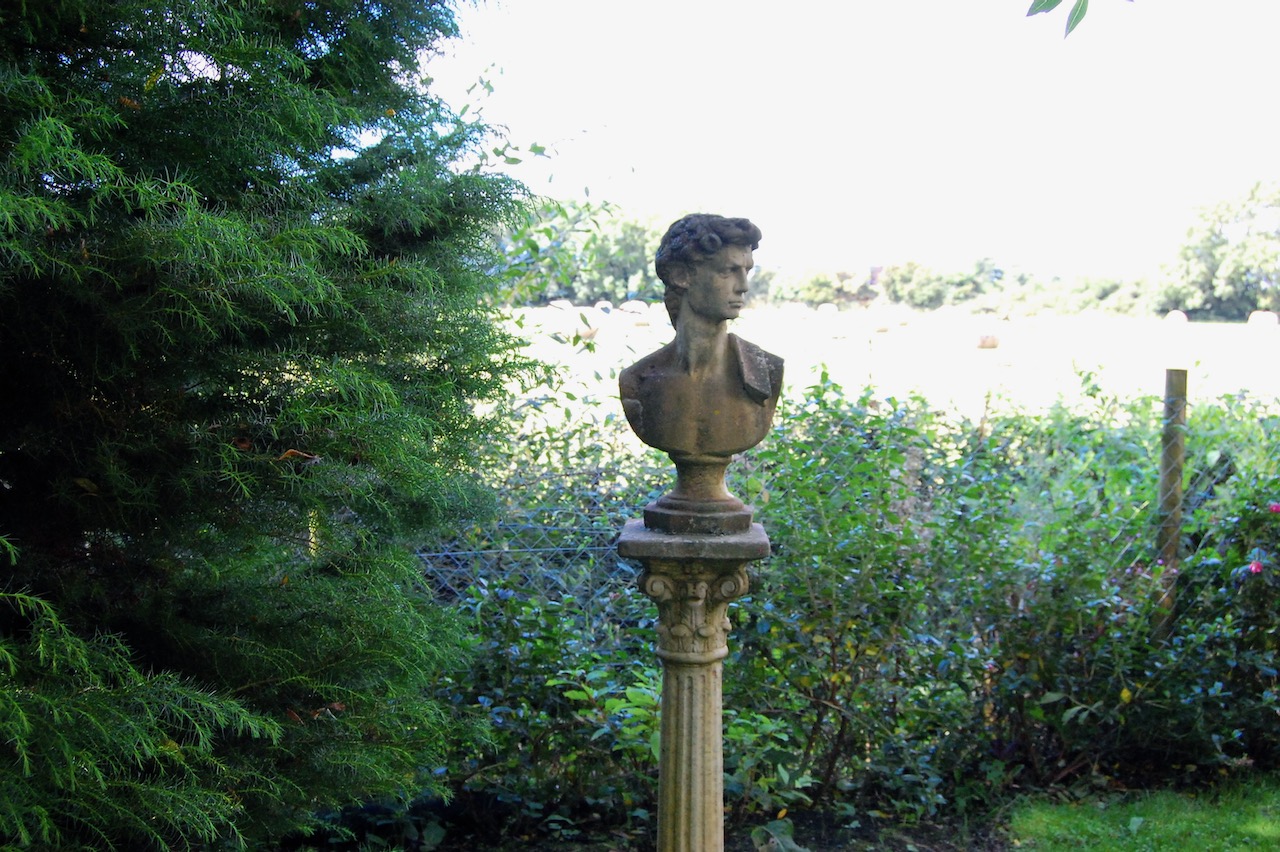
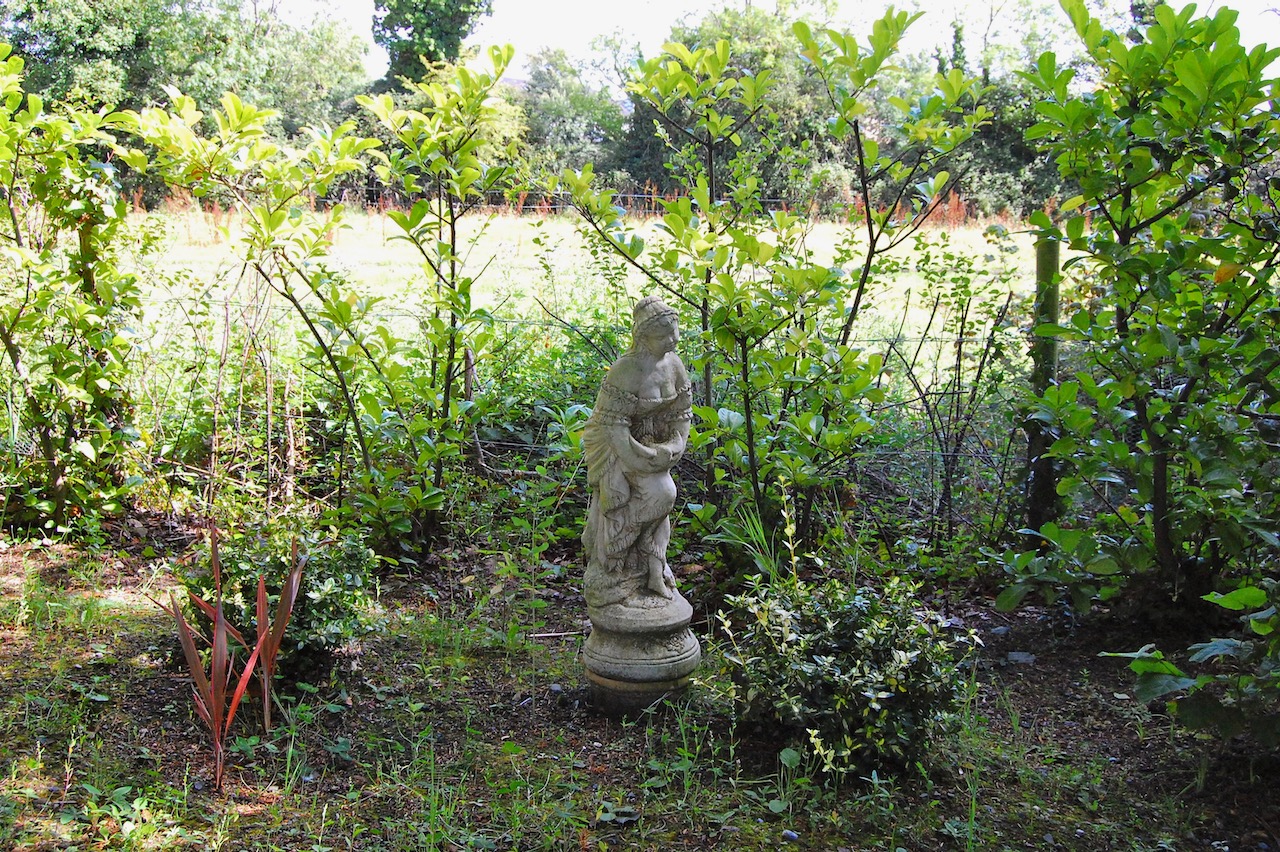
I loved the romantic statues placed in the garden.

At the Old Glebe. Photograph © Jennifer Winder-Baggot, www.irishhistorichouses.com
“The Old Glebe,” Newcastle-Lyons, County Dublin. Photograph © Jennifer Winder-Baggot, www.irishhistorichouses.com
The picturesque lake completes the beauty of the garden with its deep peace.

By the ornamental lake at The Old Glebe, Newcastle, County Dublin. Photograph © Jennifer Winder-Baggot, www.irishhistorichouses.com
My father observes the lake and its small fountain. Photograph © Jennifer Winder-Baggot, www.irishhistorichouses.com
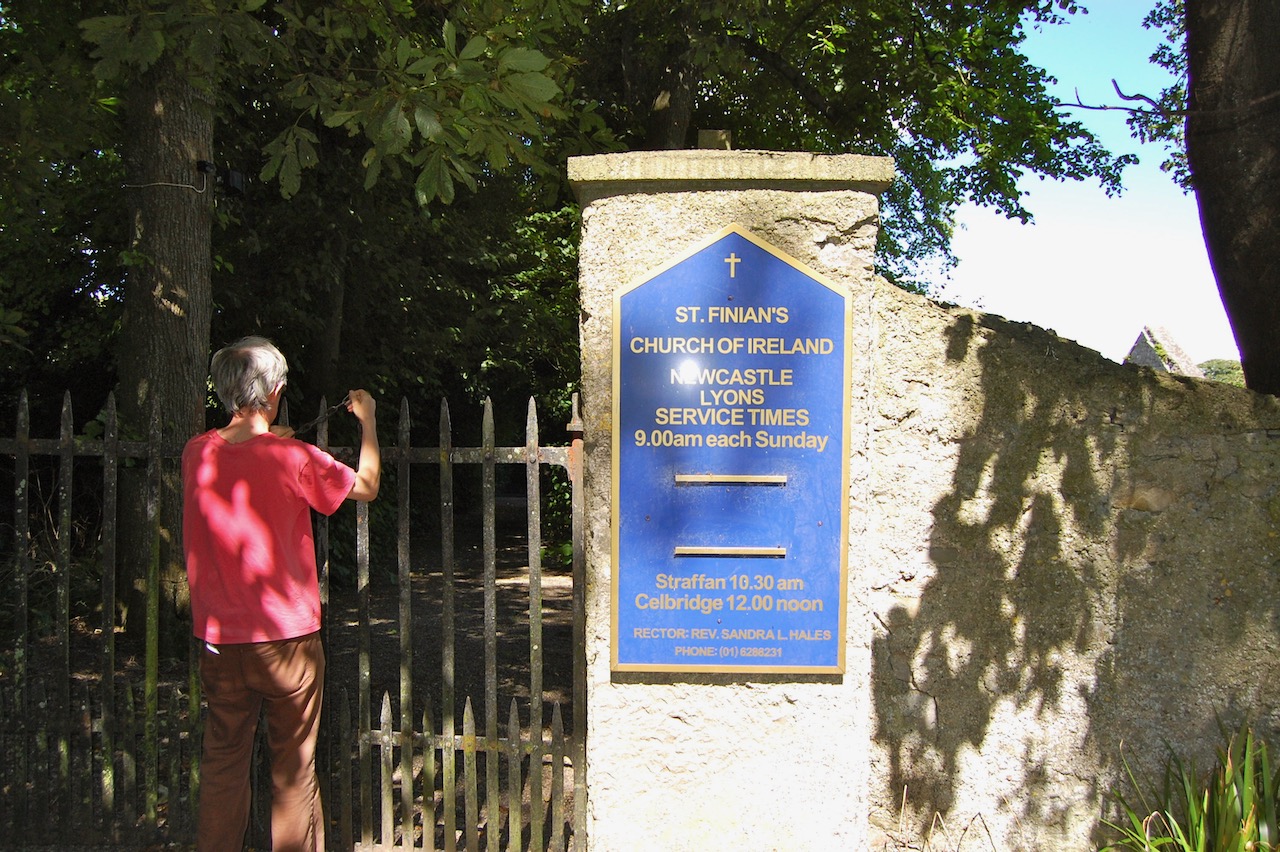
After we said goodbye to Mr. Kerins, we went to explore the church nextdoor. The National Inventory describes it [1]:

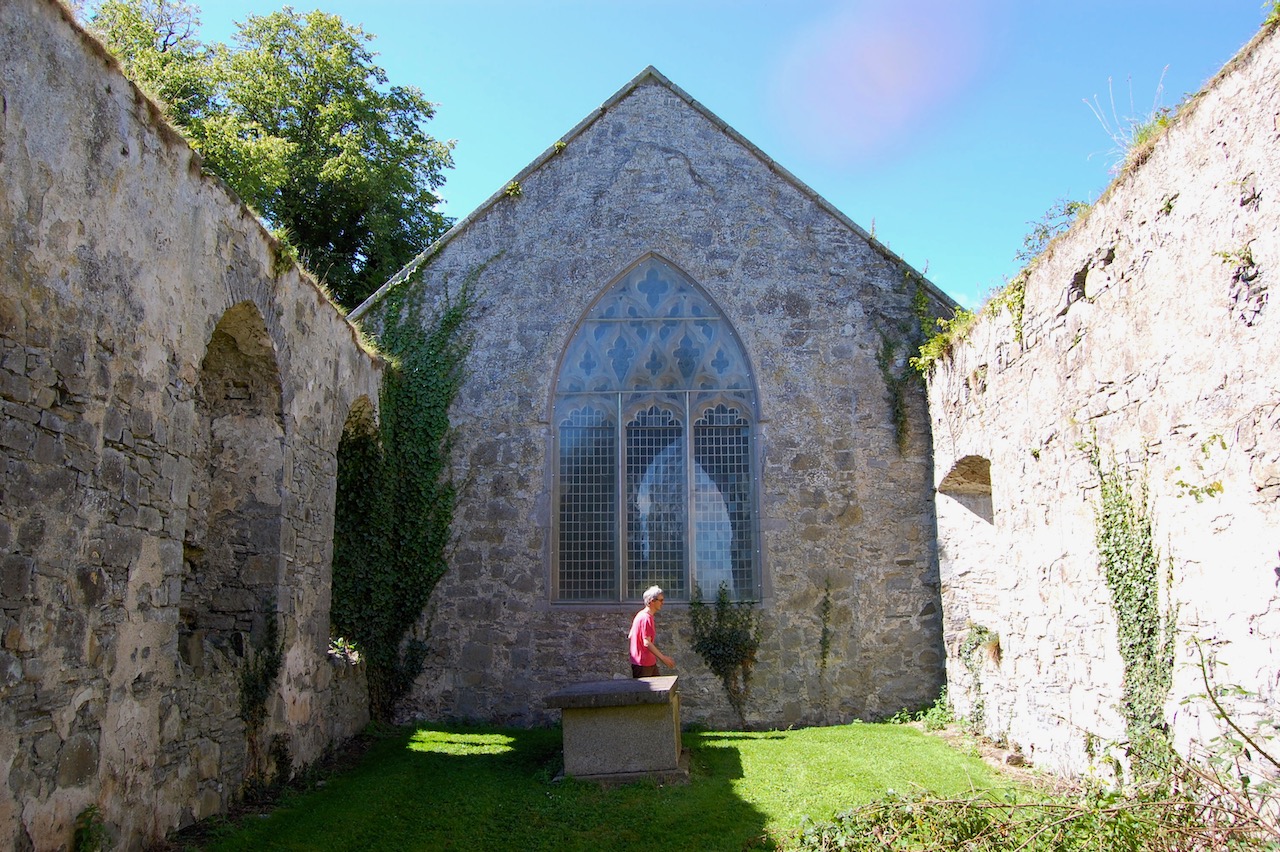
Detached single-cell church, c.1775, incorporating west tower and chancel of fifteenth-century church. Four-bay nave, with further three bays to east, now unroofed. Rubble stone walls. Paired cusp-headed windows with quatrefoil [2] over having smooth limestone surround to nave. Large pointed-arched window with flowing tracery to the east gable of nave. Pitched slate roof. Graveyard to grounds in use since medieval times. Some table graves, legible gravestones dating from the late 1760s, also including medieval cross. Rendered stone rubble boundary wall and gate piers to road.

“Appraisal
This church has been a major historical feature of Newcastle since the fifteenth century, once a Parish Church of the Royal Manor and is still in use. The site contains a variety of fine gravestones which further enhance the setting of this engaging building which possesses many attractive features, particularly its windows.

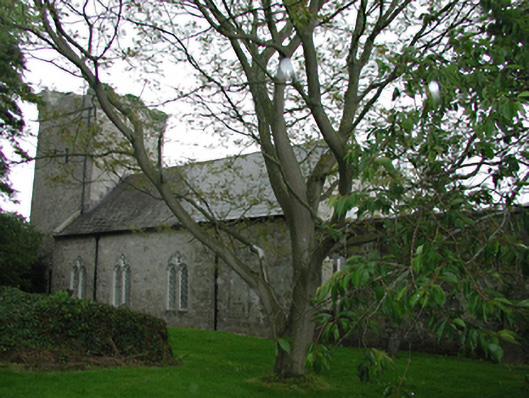
I found it difficult to take a photograph of the whole church, so here is one from the National Inventory website:

11212009_1
photograph from the National Inventory of Architectural Heritage.
Newcastle-Lyons, County Dublin. Photograph © Jennifer Winder-Baggot, www.irishhistorichouses.com
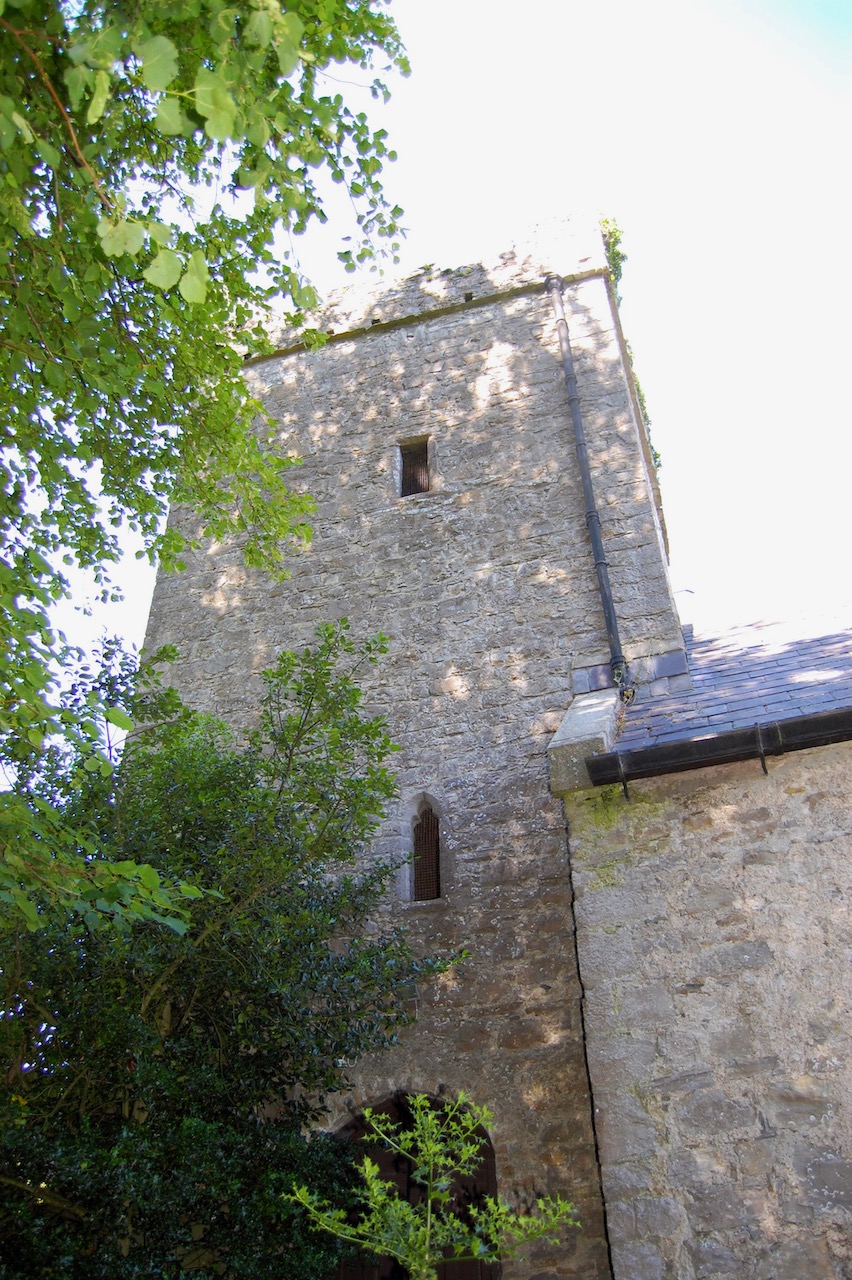
The church consists of three parts: the tower, built in the days of King John (1166-1216), the church section (built around 1775), and a roofless section.

St. Finian’s Church. The ivy covered grave is, I think, a Bagot grave. Photograph © Jennifer Winder-Baggot, www.irishhistorichouses.com
The impressive church tower, built during the era of King John, it is believed (1166-1216), through which one enters to go to the nave of the church. Photograph © Jennifer Winder-Baggot, www.irishhistorichouses.com
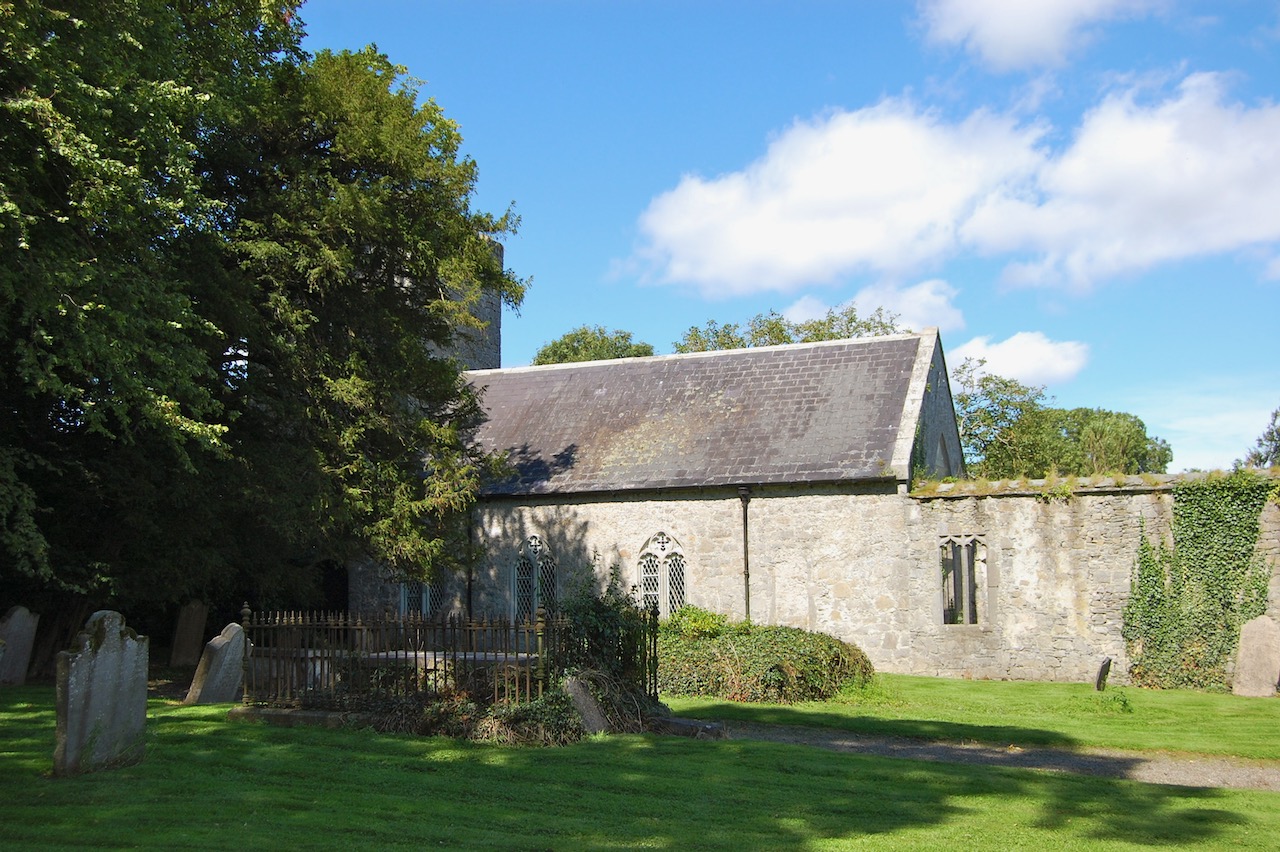
Windows looking into the functioning part of the church. Photograph © Jennifer Winder-Baggot, www.irishhistorichouses.com
Stephen in the roofless section of the church. Photograph © Jennifer Winder-Baggot, www.irishhistorichouses.com
At the Old Glebe. Photograph © Jennifer Winder-Baggot, www.irishhistorichouses.com
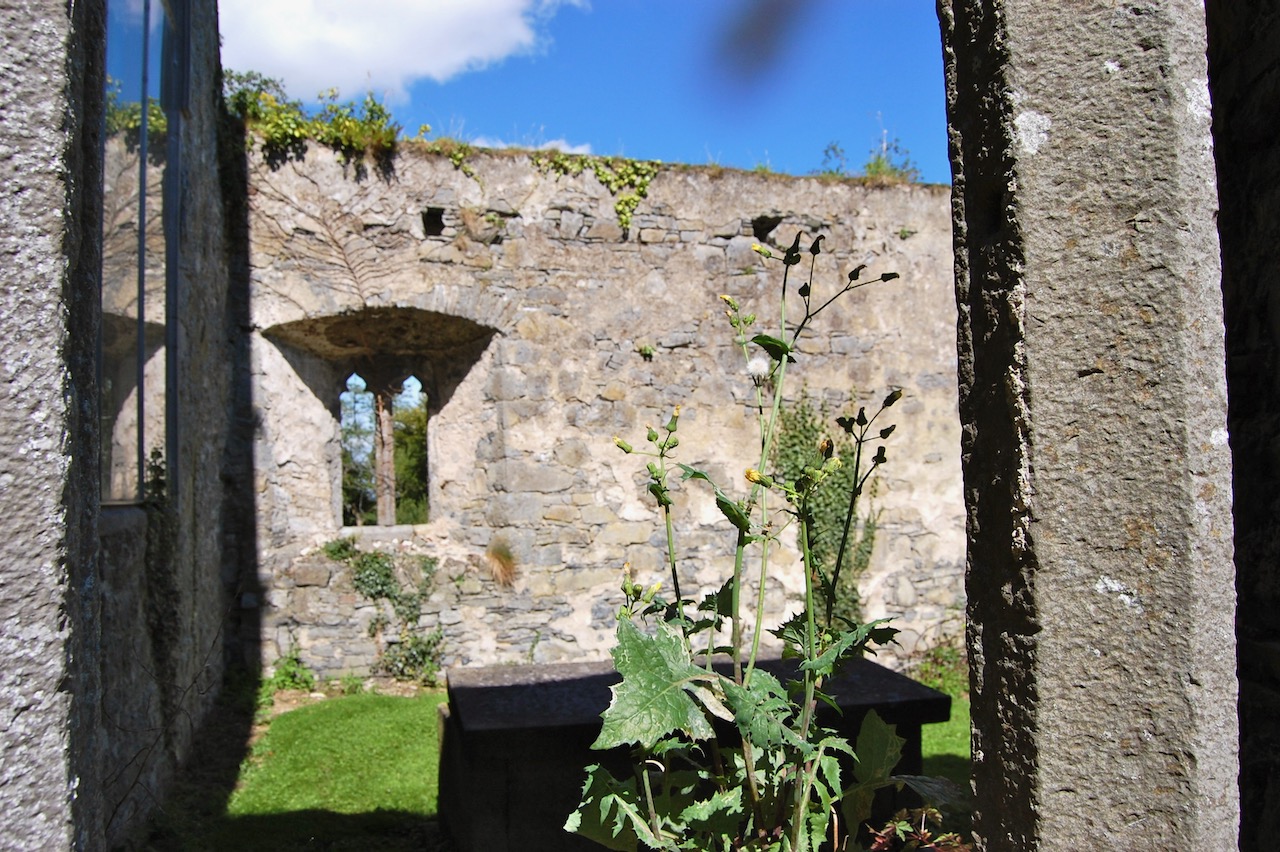
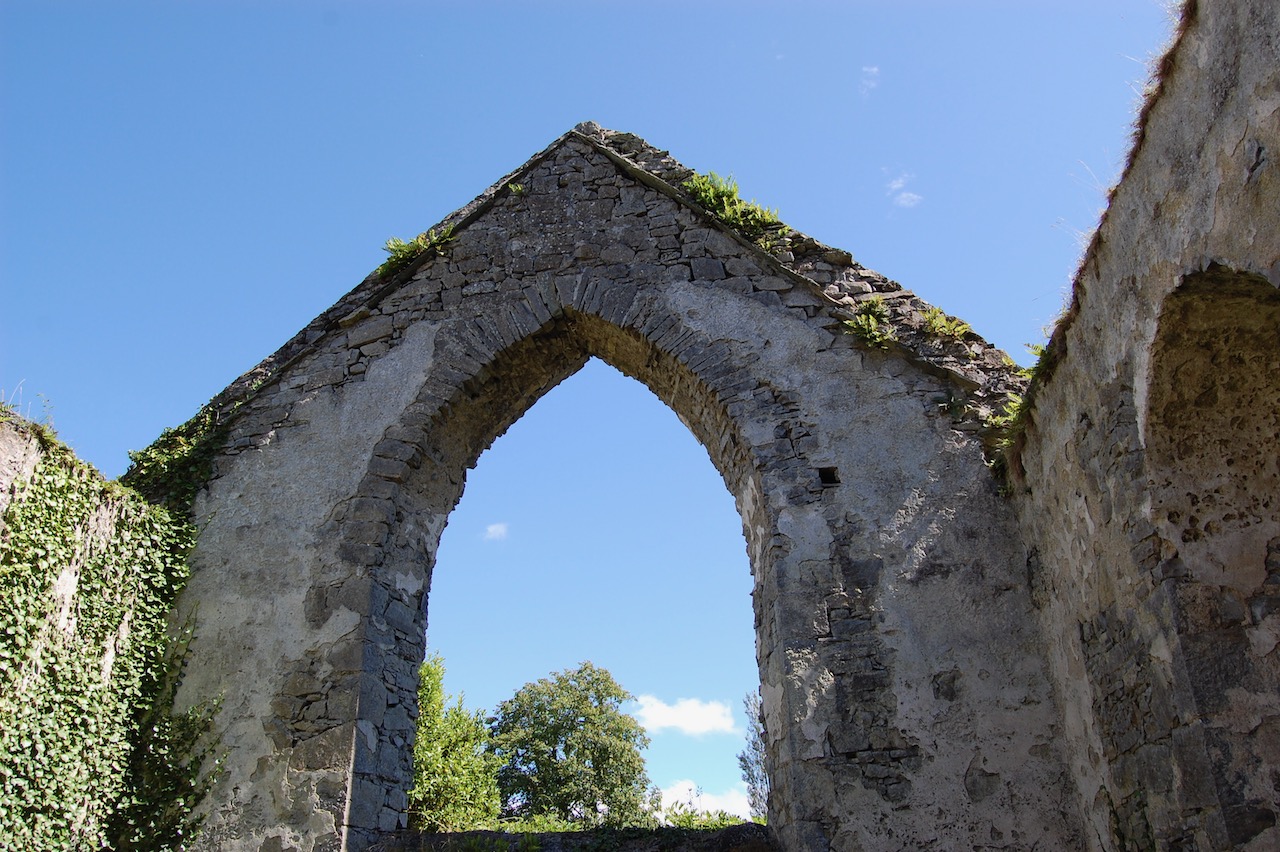
Newcastle-Lyons, County Dublin. Photograph © Jennifer Winder-Baggot, www.irishhistorichouses.com
I was particularly interested in the graveyard as it contains some Bagots, whom I hope were my relatives, though I have not found the connection (it must be far back in the family tree, and we stem from a different branch, if connected at all). A website that describes graves lists James John Bagot and his wife Ellen Maria (nee O’Callaghan), who are interred in this cemetery [7]:

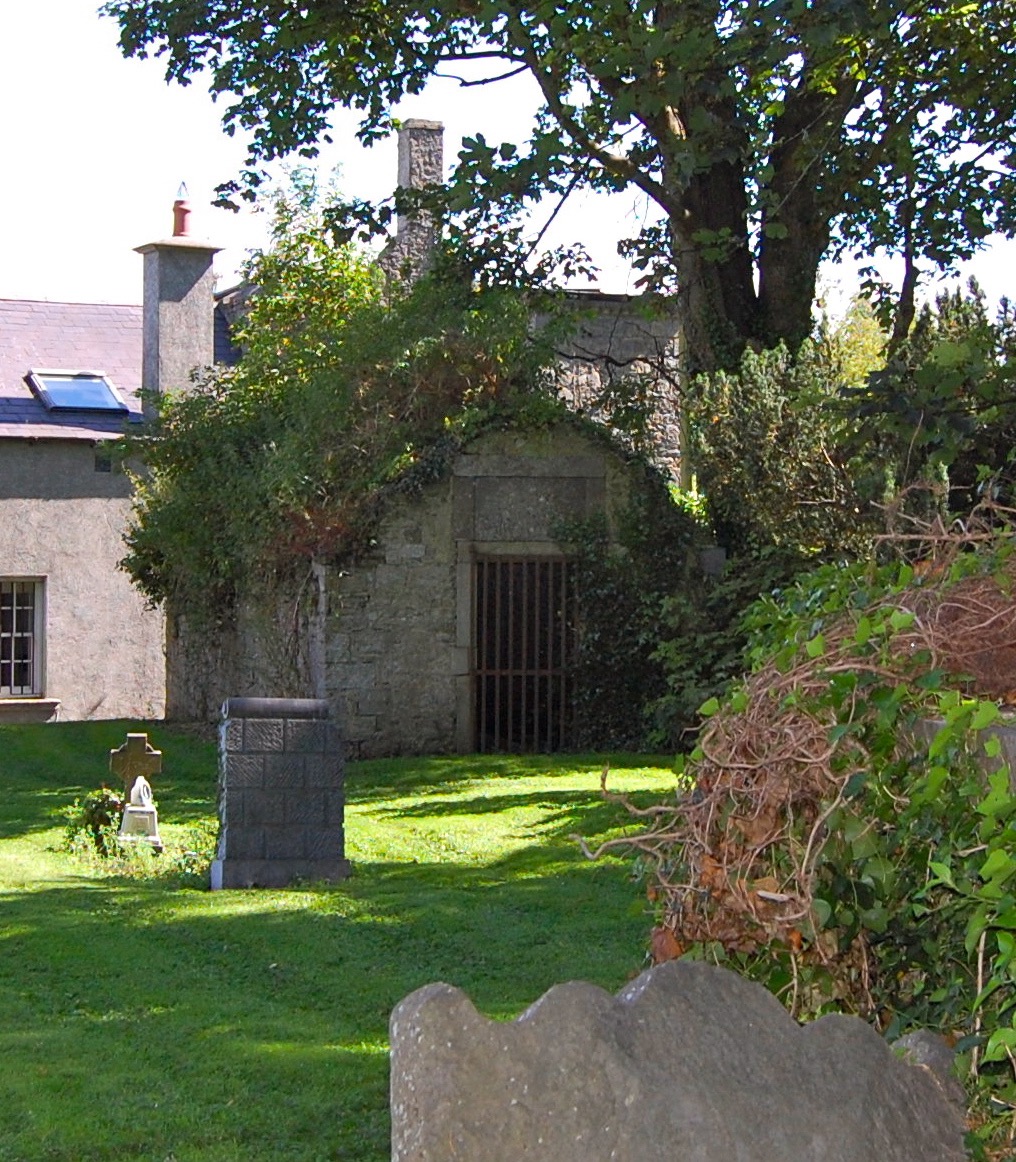
There is a large vault, grass-grown at top, with a cross-shaped loophole at east end,inscribed:-
Pray for the souls of | Those members of the BAGOT Family | who are interred herein | the last of whom | JAMES JOHN BAGOT ESQr | of Castle Bagot County Dublin | Died Aged 76 years | on the 9th of June 1860 | Pray also for the soul of |Ellen Maria BAGOT | his widow interred Herein | who died at Rathgar on 17th Sept 1871 | R.I. P.

Stephen and I returned in 2018 to have a closer look at the grave. In 2012, we thought the grave was the rather macabre vault containing half-open coffins:

At the Old Glebe. Photograph © Jennifer Winder-Baggot, www.irishhistorichouses.com
Iron vaults in graveyard at St Finian’s, Newcastle Lyons. Photograph © Jennifer Winder-Baggot, www.irishhistorichouses.com
Coincidentally, James John’s mother, Eleanor Dease, was probaby related to Colonel Gerald Dease who lived in Celbridge Abbey in 1901.

1000 year old cross in graveyard of St Finian’s, Newcastle Lyons. Photograph © Jennifer Winder-Baggot, www.irishhistorichouses.com

In August 2012, we also visited the Catholic church of St. Finian’s in nearby Kilamactalway, to see the baptismal font donated by Ellen Maria Bagot in memory of her husband James John, who died in 1860 and who had lived in Castle Bagot in Rathcoole/ Kilmactalway. I’m a little confused as to why James John and his wife were buried in the Protestant graveyard, since there is a graveyard at the Catholic church, which was built in 1813.

Catholic church of St. Finian’s in Kilmactalway. Photograph © Jennifer Winder-Baggot, www.irishhistorichouses.com
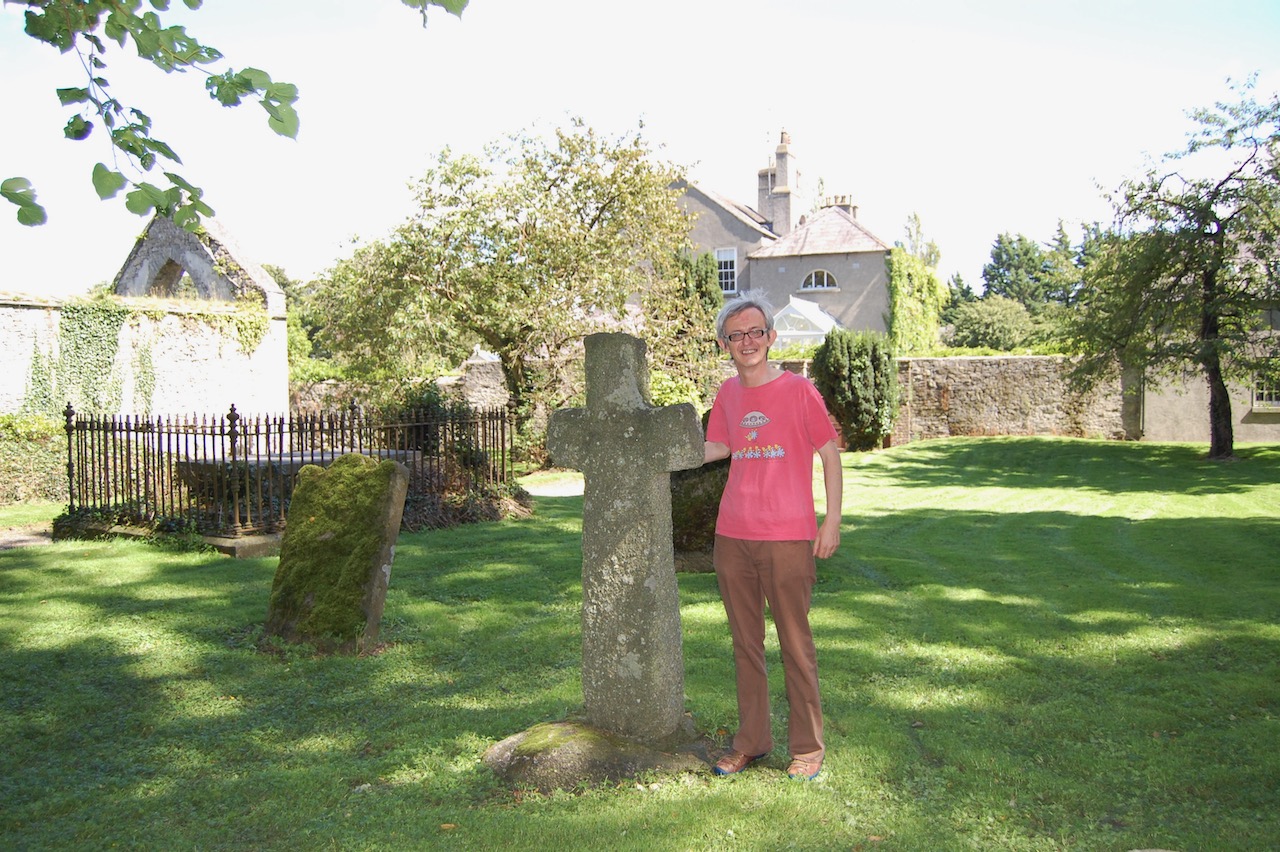
Castle Bagot, Rathcoole, 4th April 2011. Photograph © Jennifer Winder-Baggot, www.irishhistorichouses.com.

Donation

Help me to fund my creation and update of this website. It is created purely out of love for the subject and I receive no payment so any donation is appreciated! For this entry I paid for petrol. There was no entrance fee as we visited during Heritage Week.

€10.00


[1] http://www.buildingsofireland.ie/niah/search.jsp?type=record&county=SC&regno=11212009

[2] architectural definitions

“A bay is a vertical division of the exterior of a building marked by a single tier of windows in its centre. Thus the number of bays in a façade is usually the same as the number of windows in each storey. There are, however, facades in which some of the bays contain two or more narrow windows in each storey in place of a single window of whatever width is the norm.”

“Quatrefoil window: a window in the shape of a four leafed clover; found in Gothic and Gothic-Revival architecture.”

Mark Bence-Jones. A Guide to Irish Country Houses.[originally published as Burke’s Guide to Country Houses volume 1 Ireland by Burke’s Peerage Ltd. 1978; Revised edition 1988 Constable and Company Ltd, London.] pp. xxix-xxxi

[3] https://ardclough.wordpress.com/about/ardclough-history/xtras-hinterland-history-celbridge-straffan/newcastle-lyons-by-francis-ball-1905/

[4] http://www.buildingsofireland.ie/niah/search.jsp?type=record&county=SC&regno=11212007

[5] https://www.irishtimes.com/life-and-style/homes-and-property/900-000-plus-for-historic-family-home-on-1-3-acres-1.223027

[6] https://www.irishtimes.com/life-and-style/growing-old-gracefully-1.788481

[7] http://www.igp-web.com/IGPArchives/ire/dublin/cemeteries/st-finian.txt

Text © Jennifer Winder-Baggot, www.irishhistorichouses.com

Irish Historic Homes