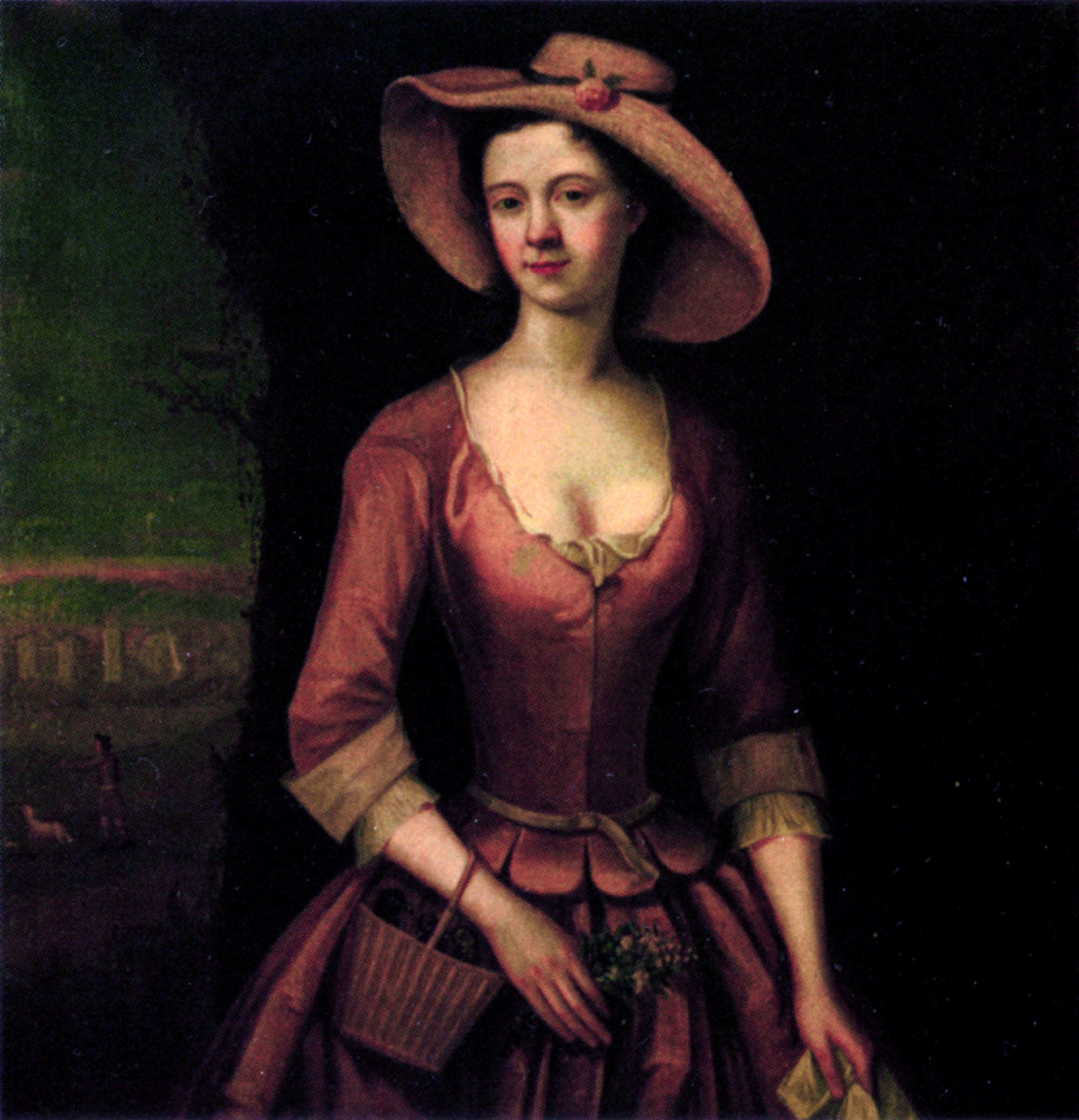
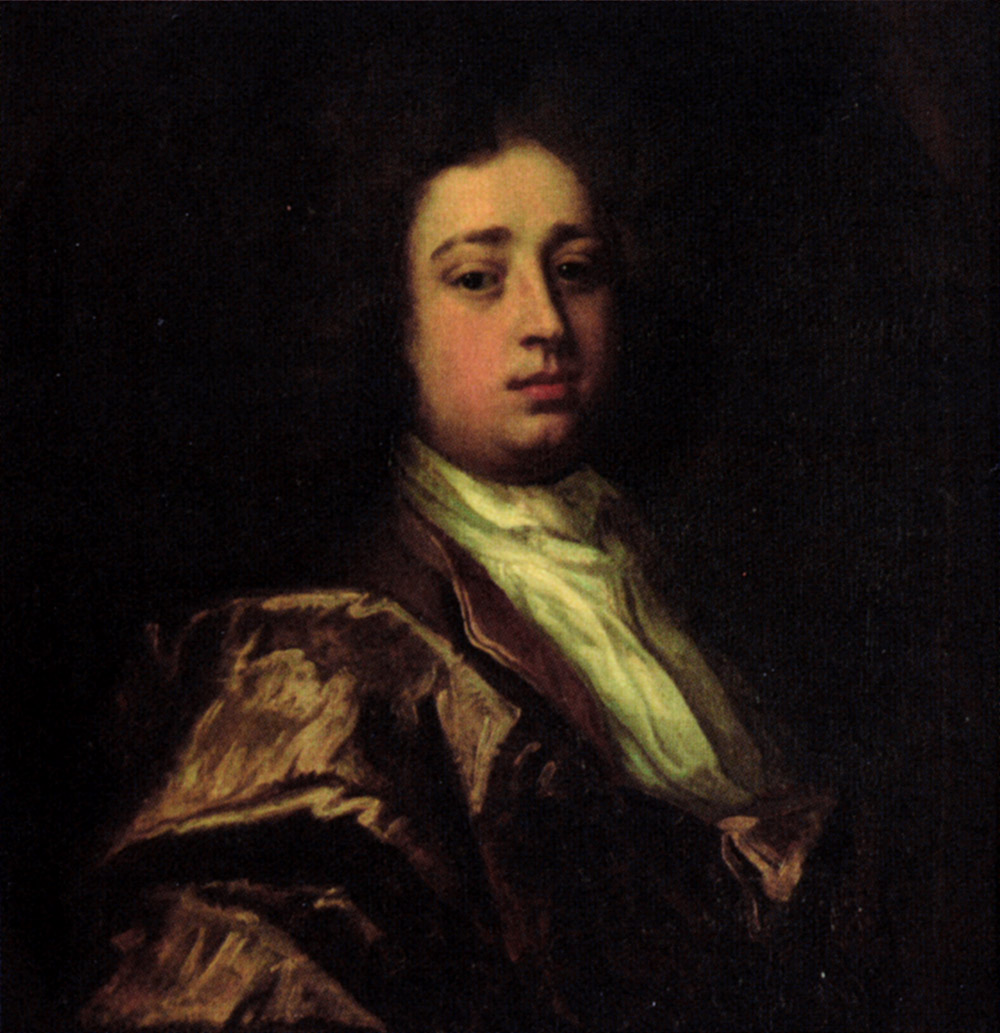
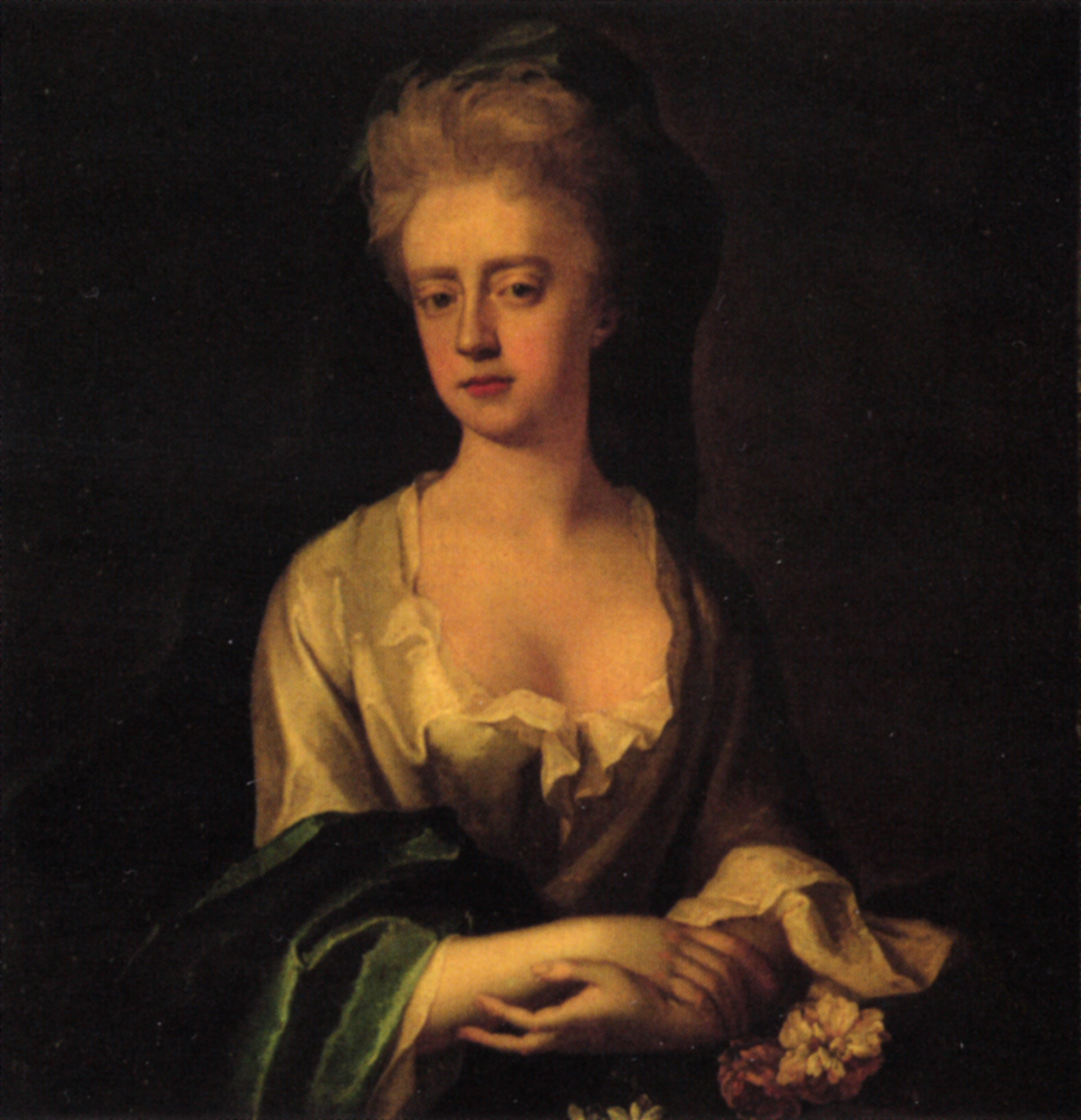
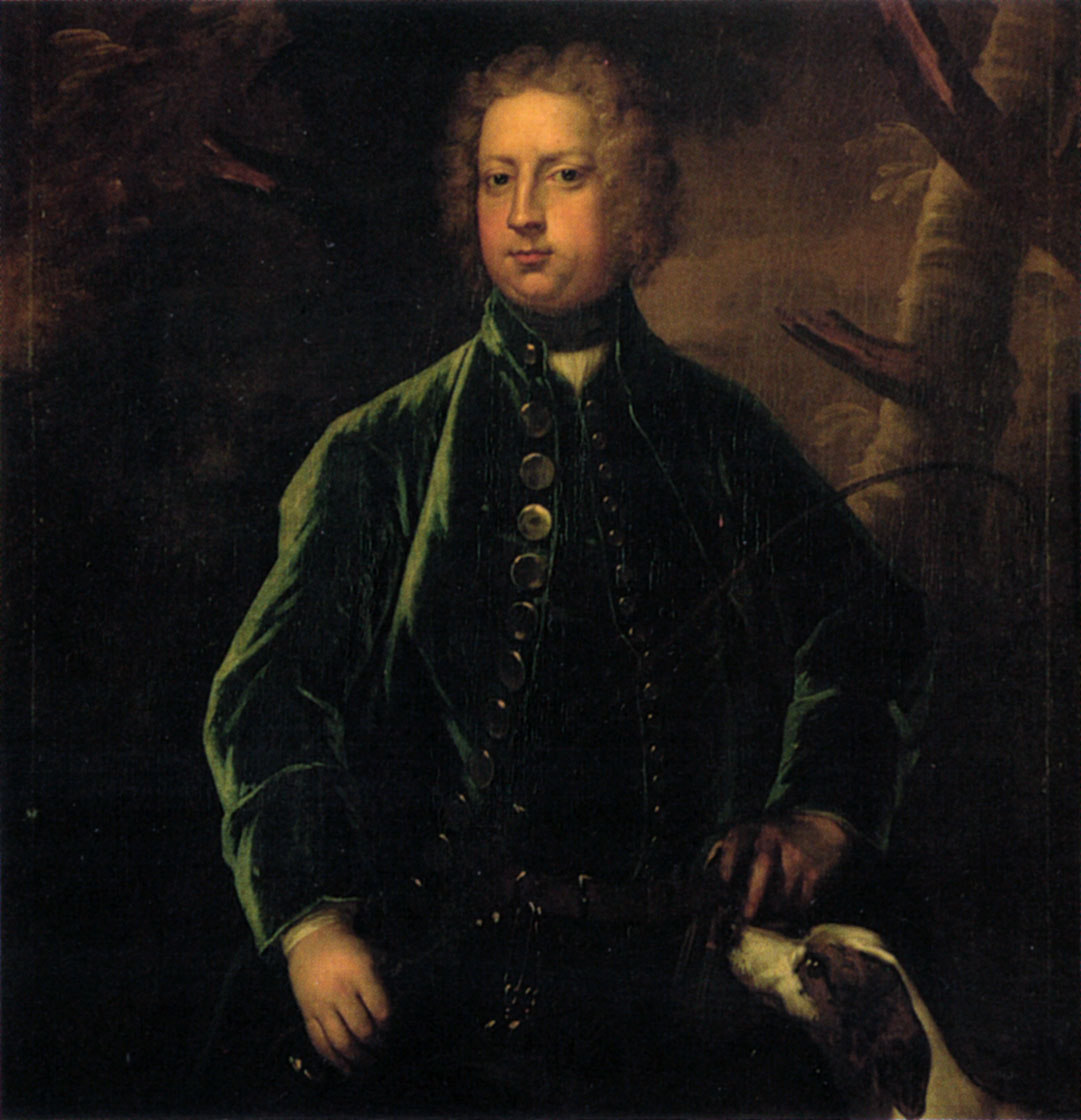
Portraits N-O

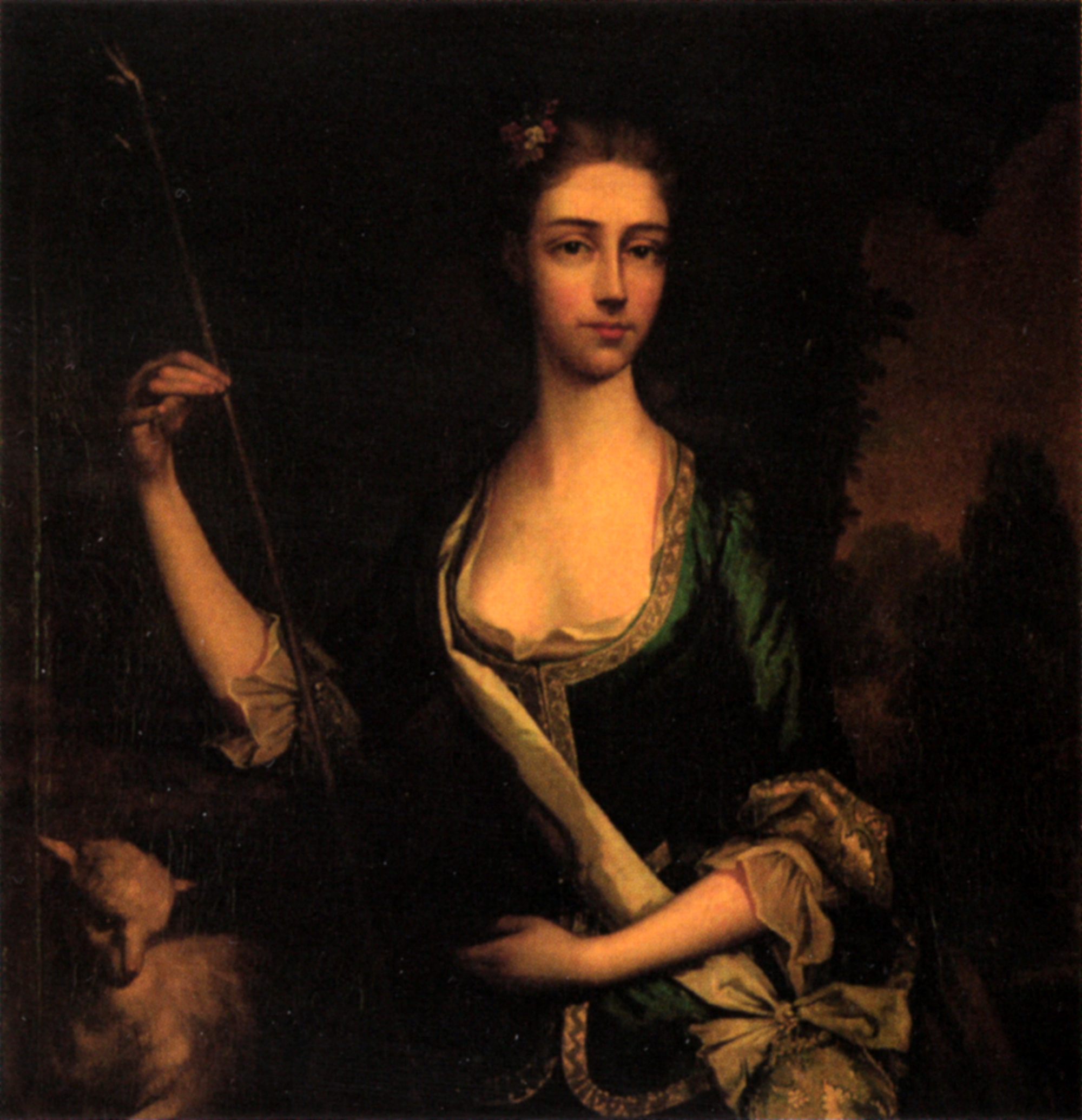
I have an editorial decision to make regarding women. Do I put them under their married name or under their maiden name? I think for now I’ll put them under both, as it’s nice to see them in relation to their fathers as well as in relation to their husband!

N

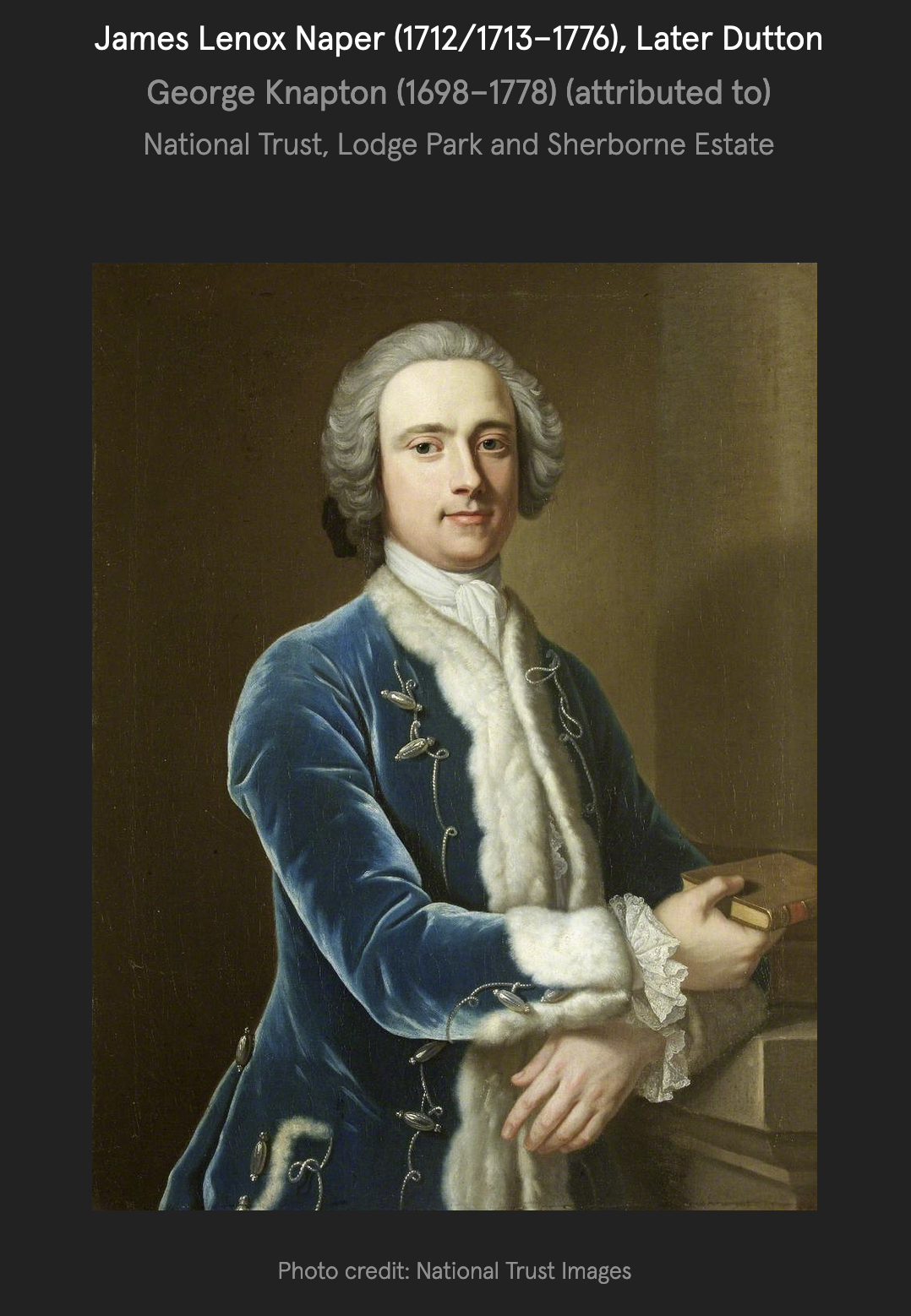
James Lenox Naper (1712-1776), who later changed his surname to Dutton.
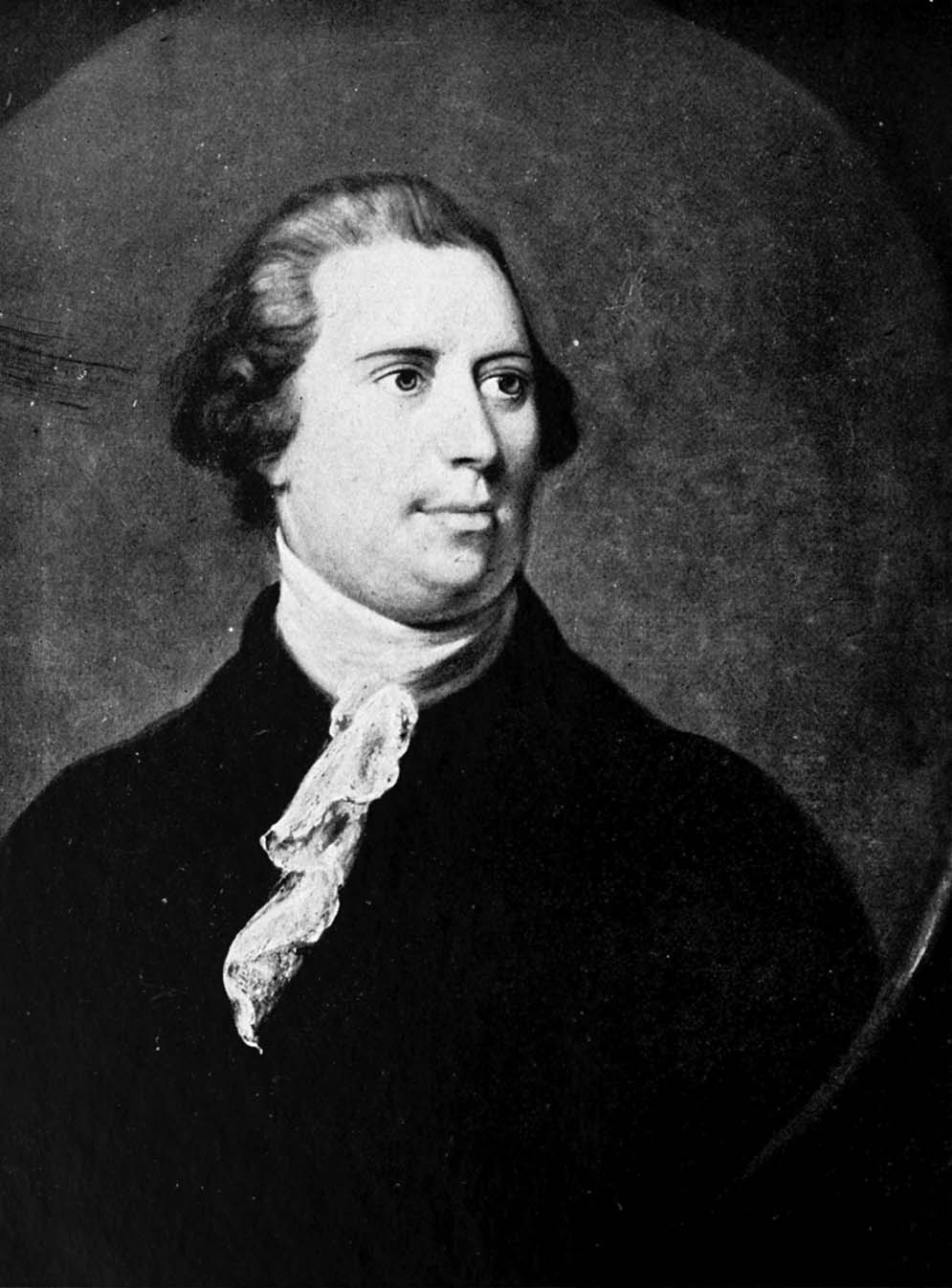
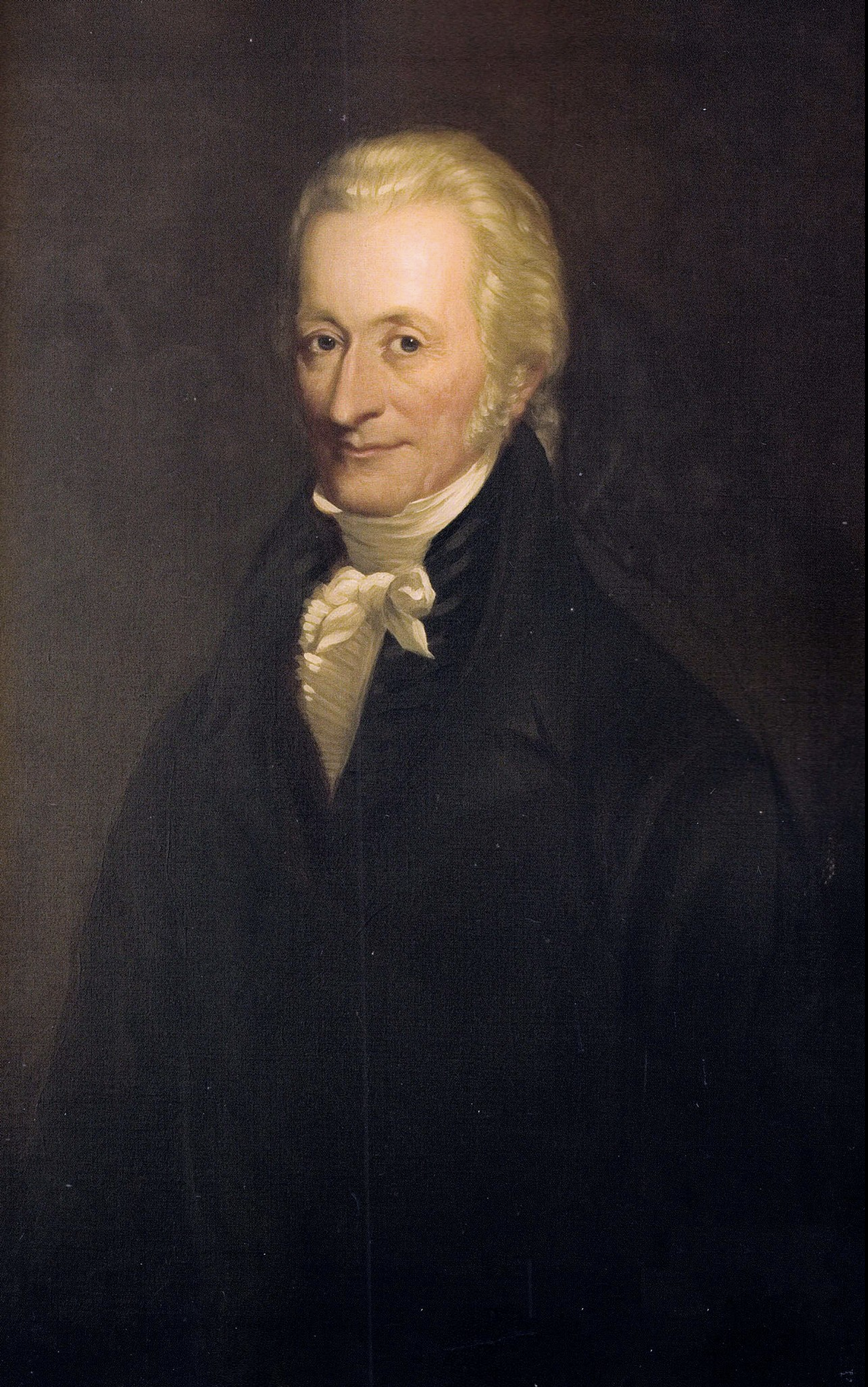
William Newcome (1729–1800), Archbishop of Armagh.
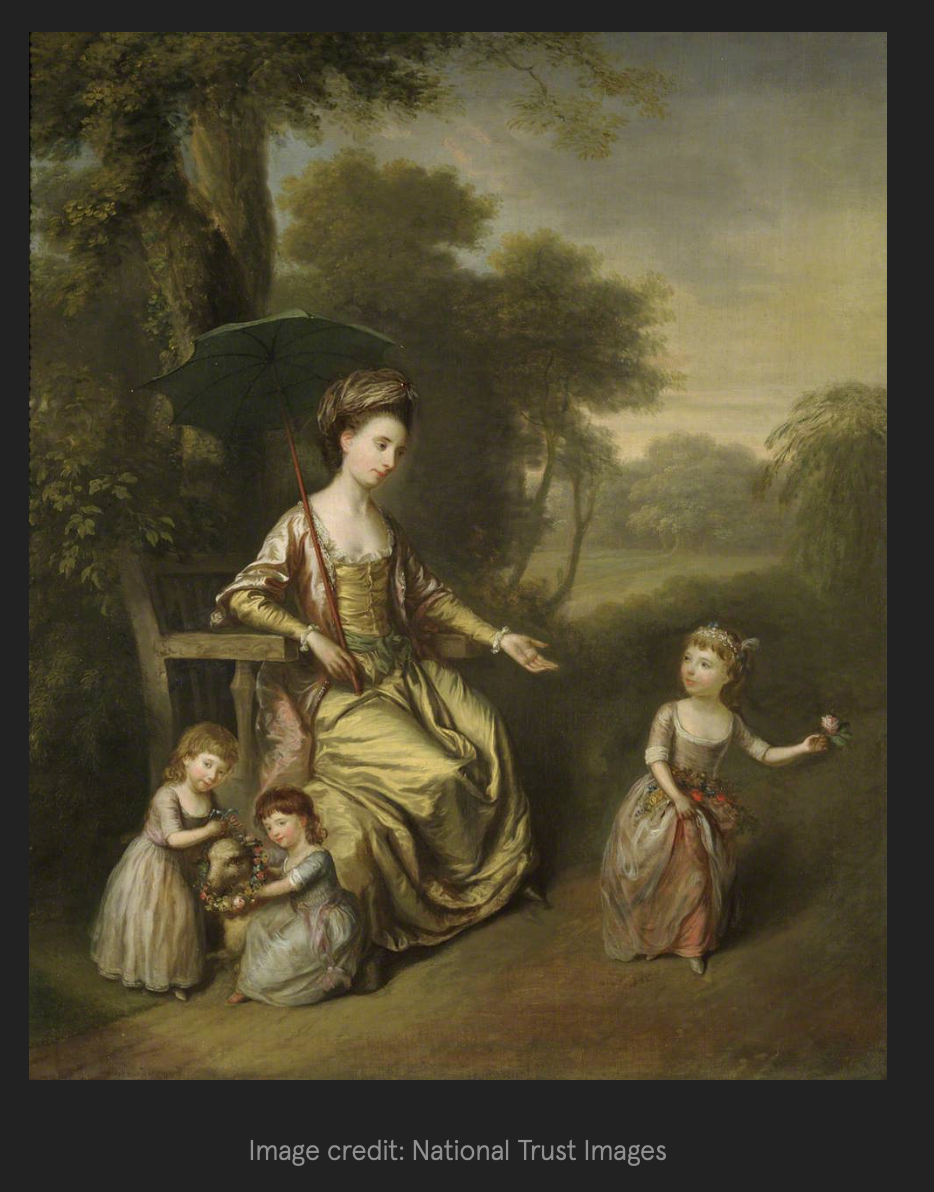
Charlotte Newcomen (d. 1817) Viscountess Newcomen by Thomas Hickey, with her daughters Jane, Teresa and Charlotte, 1779, courtesy National Trust Wimpole Hall.
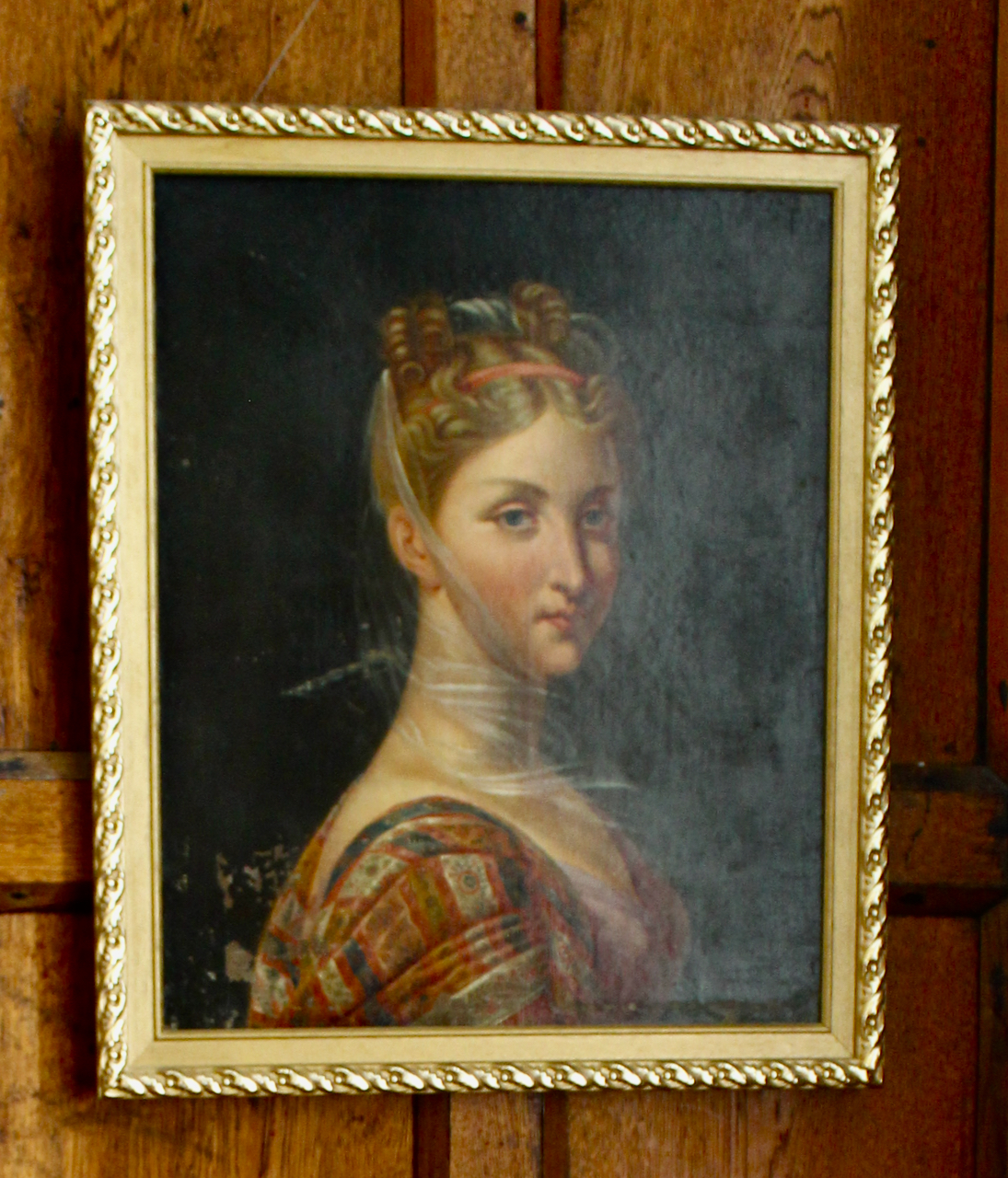
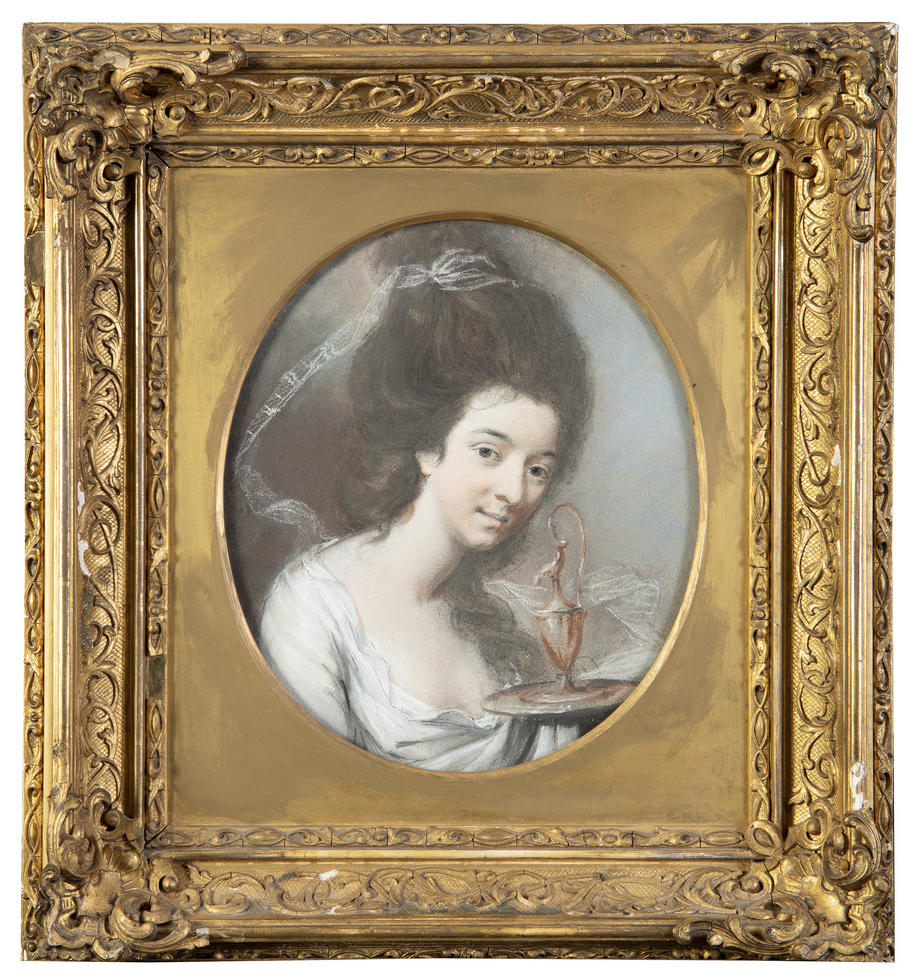
I think this is a portrait of Henrietta Townsend née Newenham (1764-1848). She married Richard Boyle Townsend and was daughter of John Newenham (1738-1785) of Maryborough, County Cork and Harriet Vereker of Roxborough, County Limerick. Photograph © Jennifer Winder-Baggot, www.irishhistorichouses.com
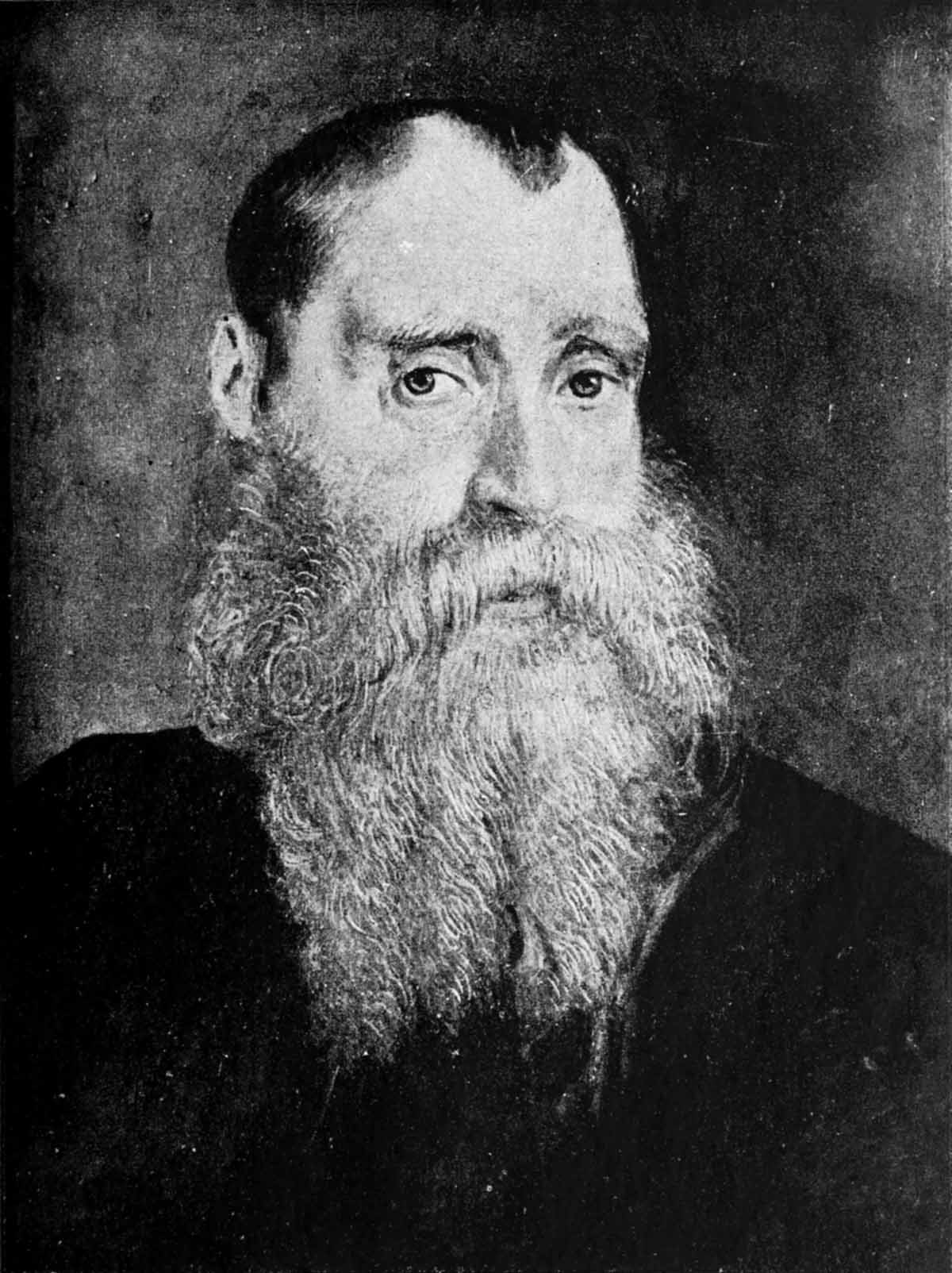
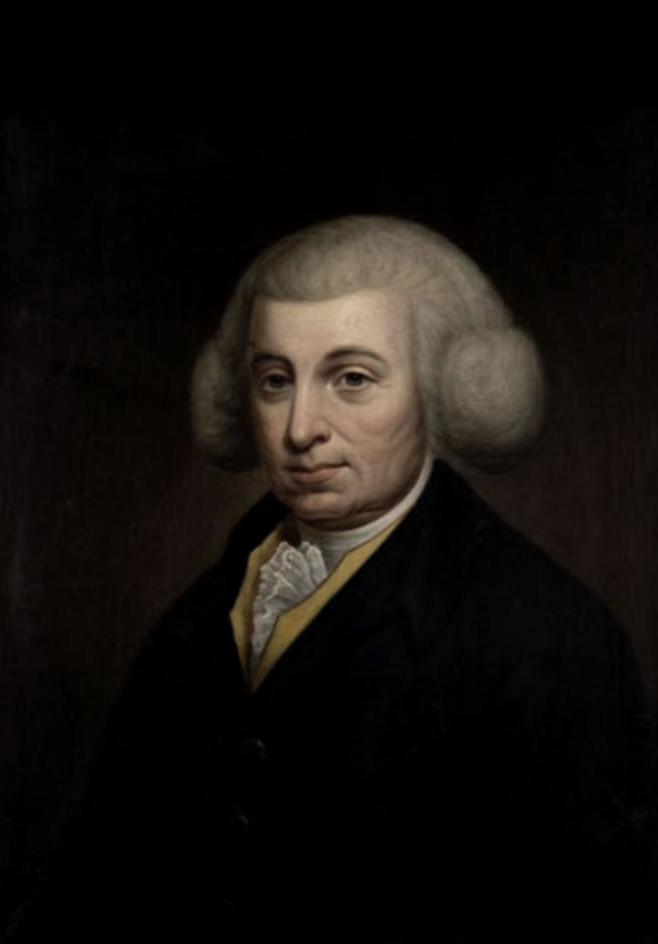
William Nicolson (1655-1727) Bishop of Derry.
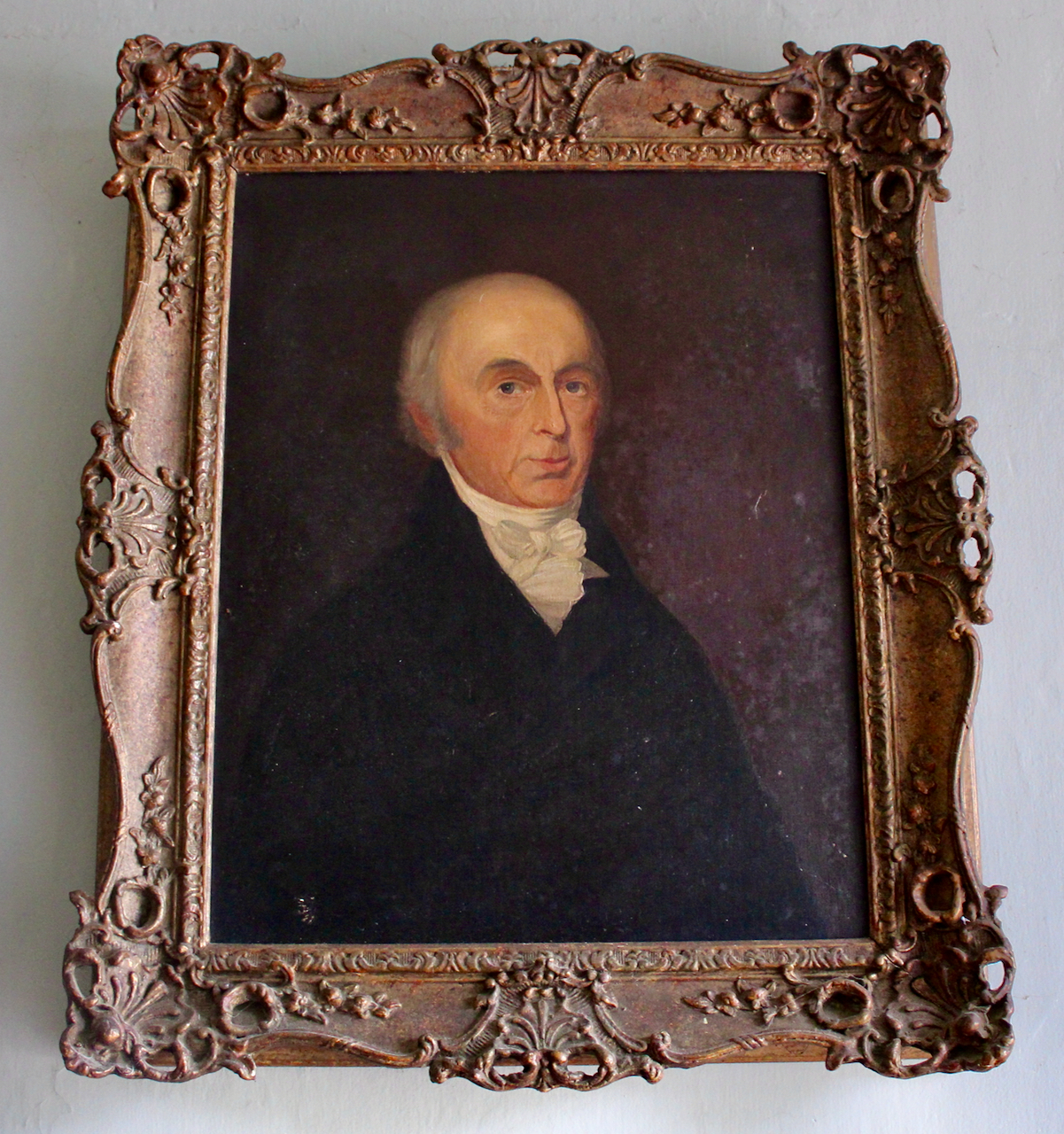
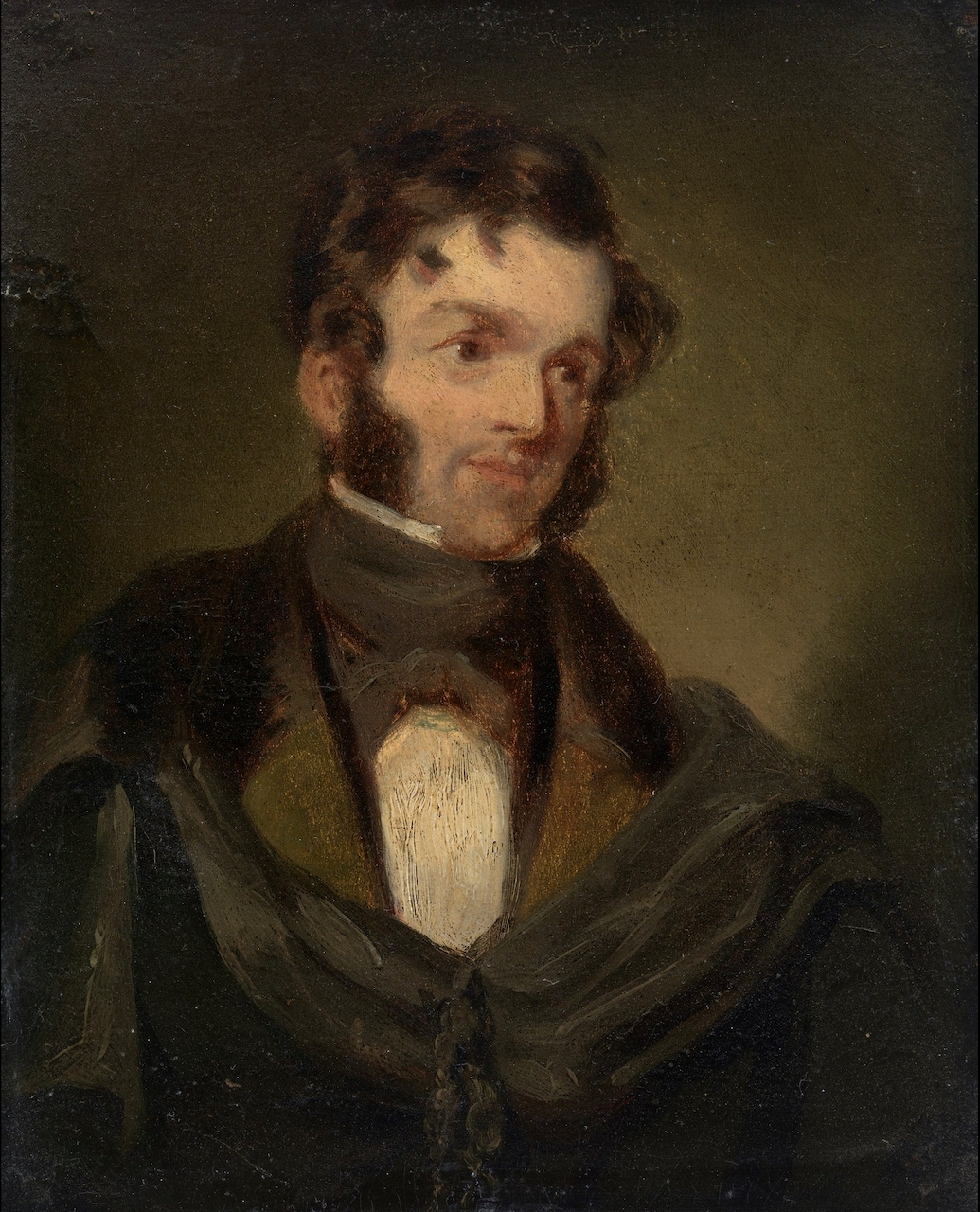
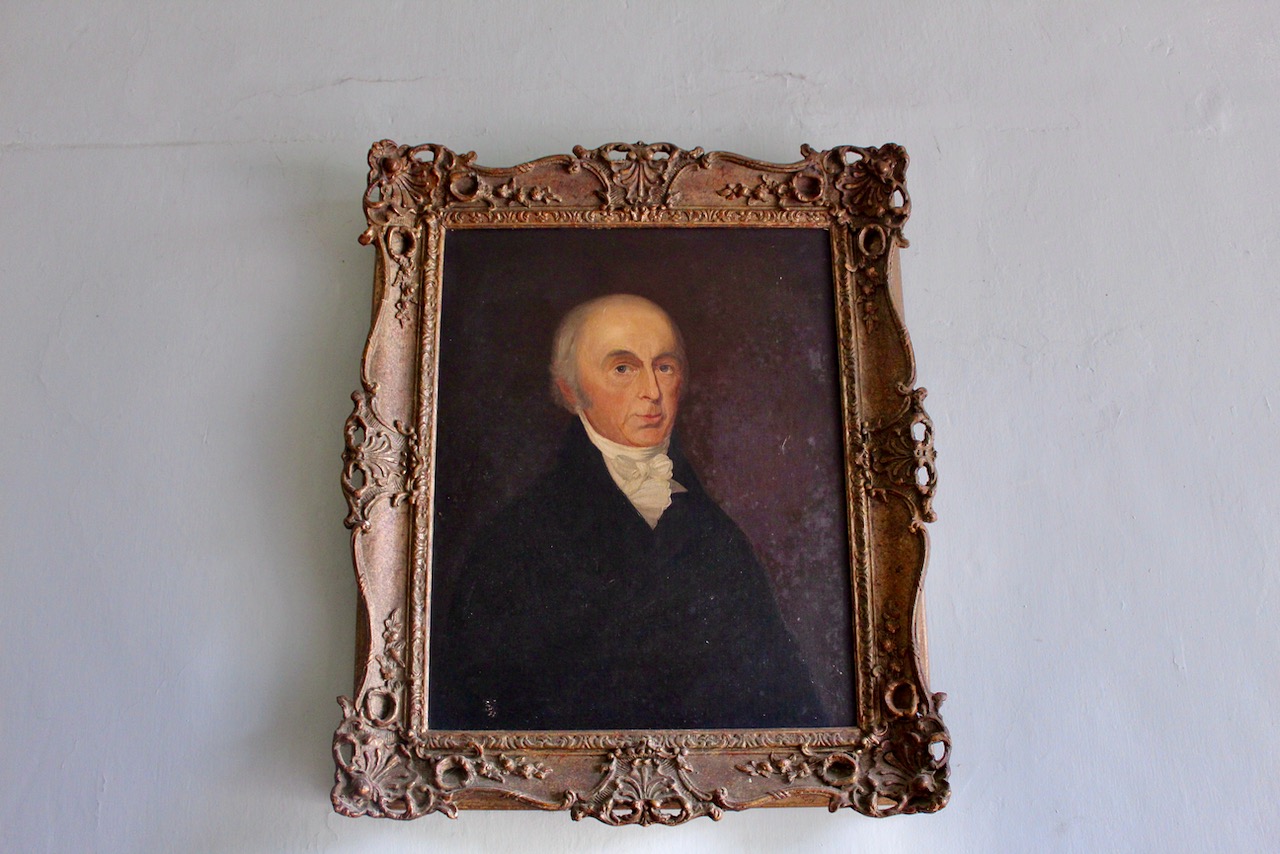
Isaac Nicholson, b. 1840. Photograph © Jennifer Winder-Baggot, www.irishhistorichouses.com
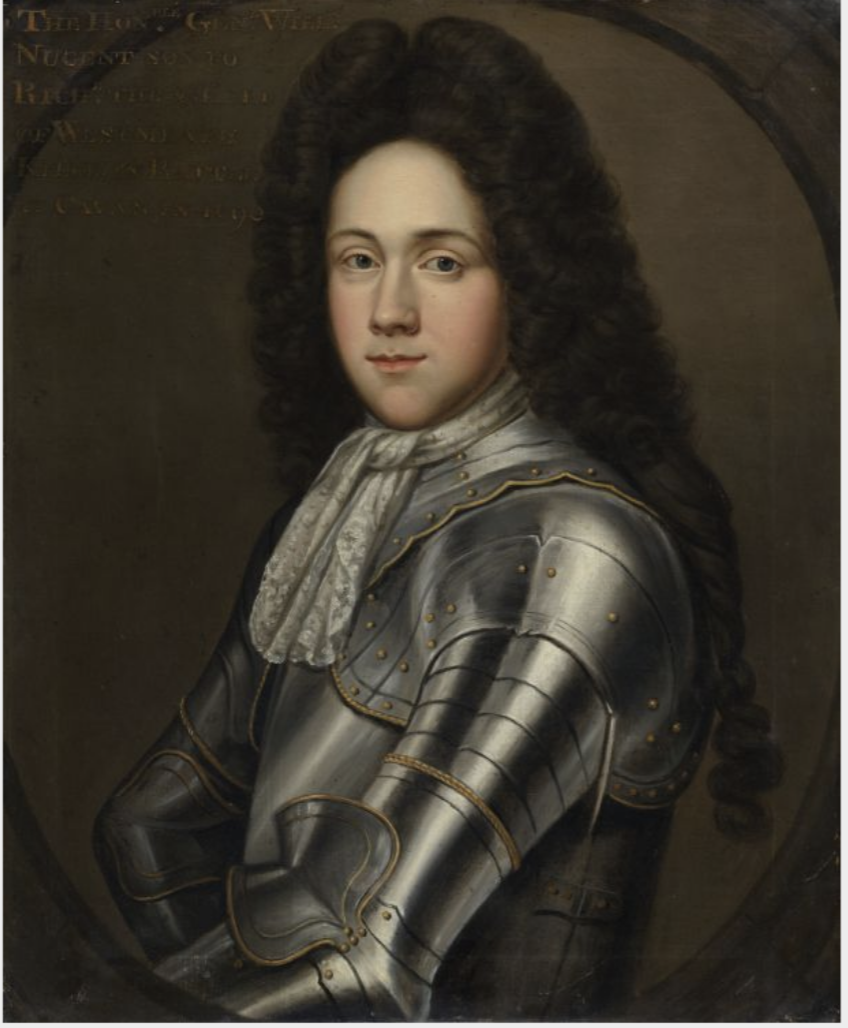
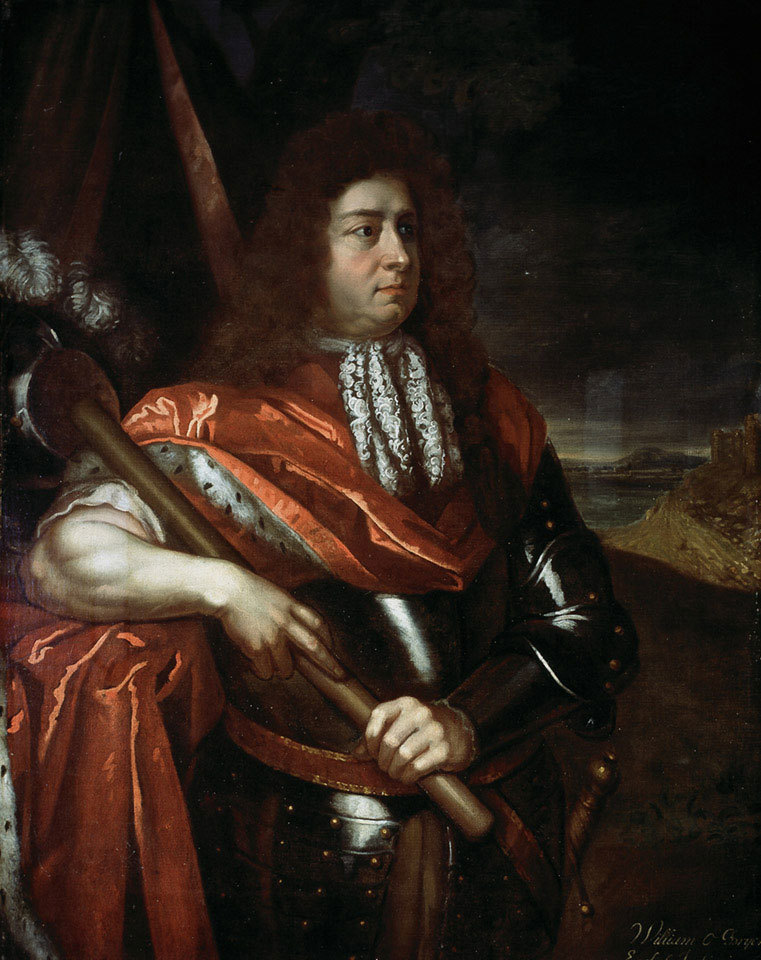
General William Nugent (d. 1690) Date. c.1685 by Gaspar Smitz, courtesy of National Gallery of Ireland.
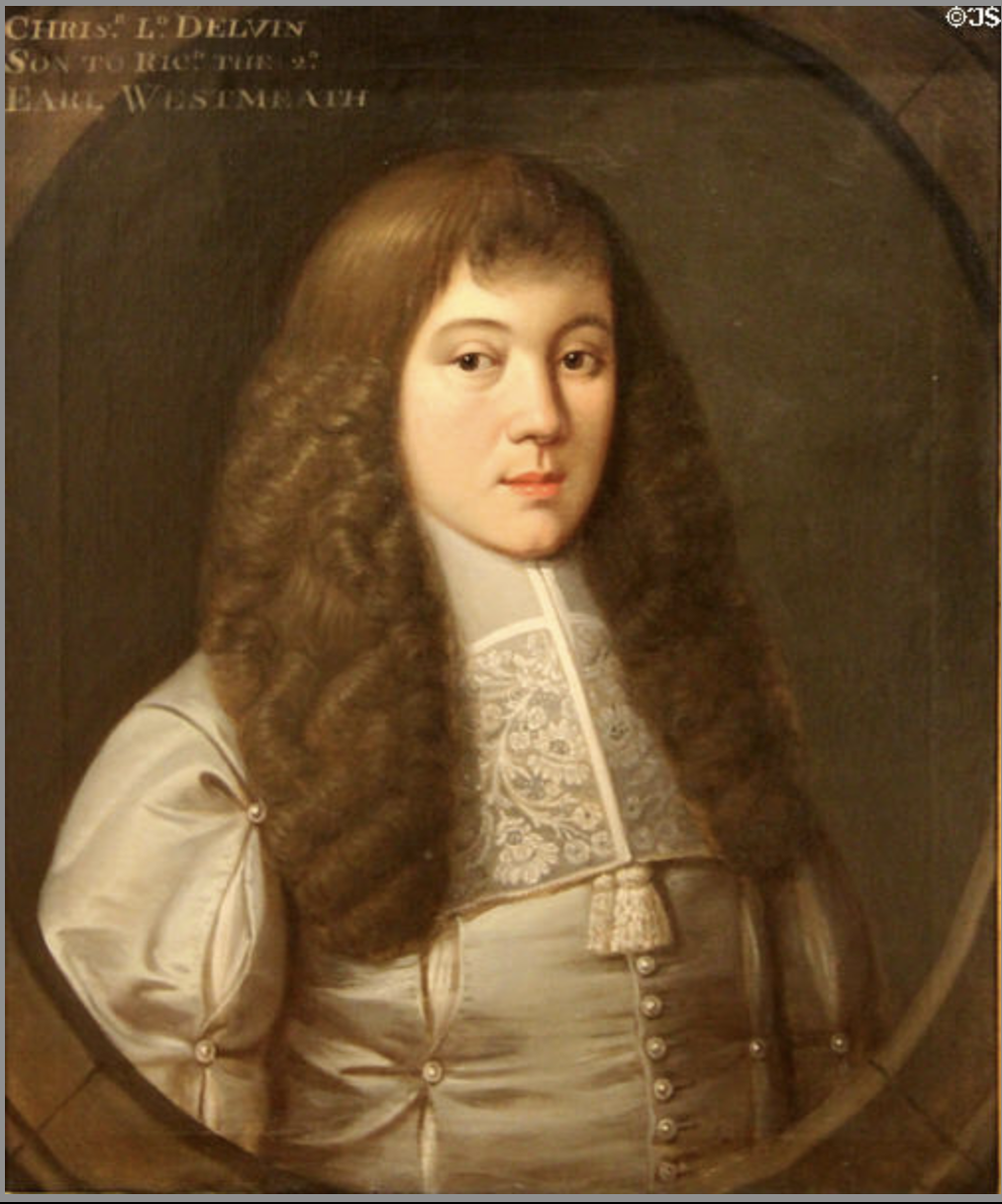
Christopher Nugent (1642-1680) Lord Delvin portrait (c1660-5) by Gaspar Smitz at National Gallery of Ireland. Dublin, Ireland. Smitz was a Dutch artist who is said to have come to England shortly after the Restoration and who became a member of the Guild of St. Luke in Dublin. This Guild was also known as the Guild of Dublin Cutlers, Painter-Steyners and Stationers, and was founded in 1670.
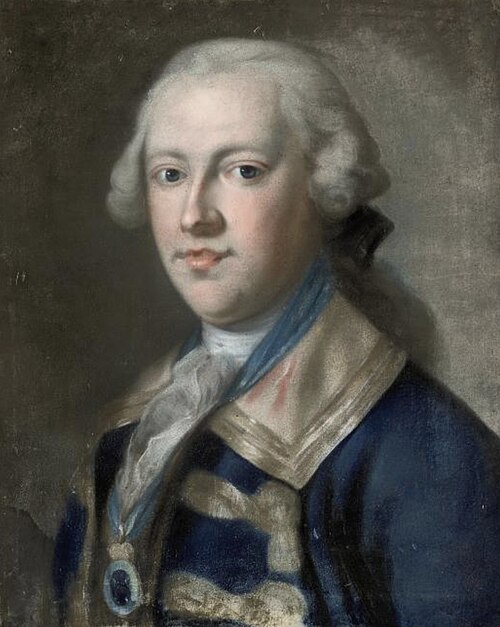
Possibly George Frederick Nugent, Lord Delvin, later 7th Earl of Westmeath, by François-Xavier Vispré https://www.christies.com.cn/lot/attributed-to-francois-xavier-vispre-french-c1730-1794-5341641/?intObjectID=5341641&lid=1
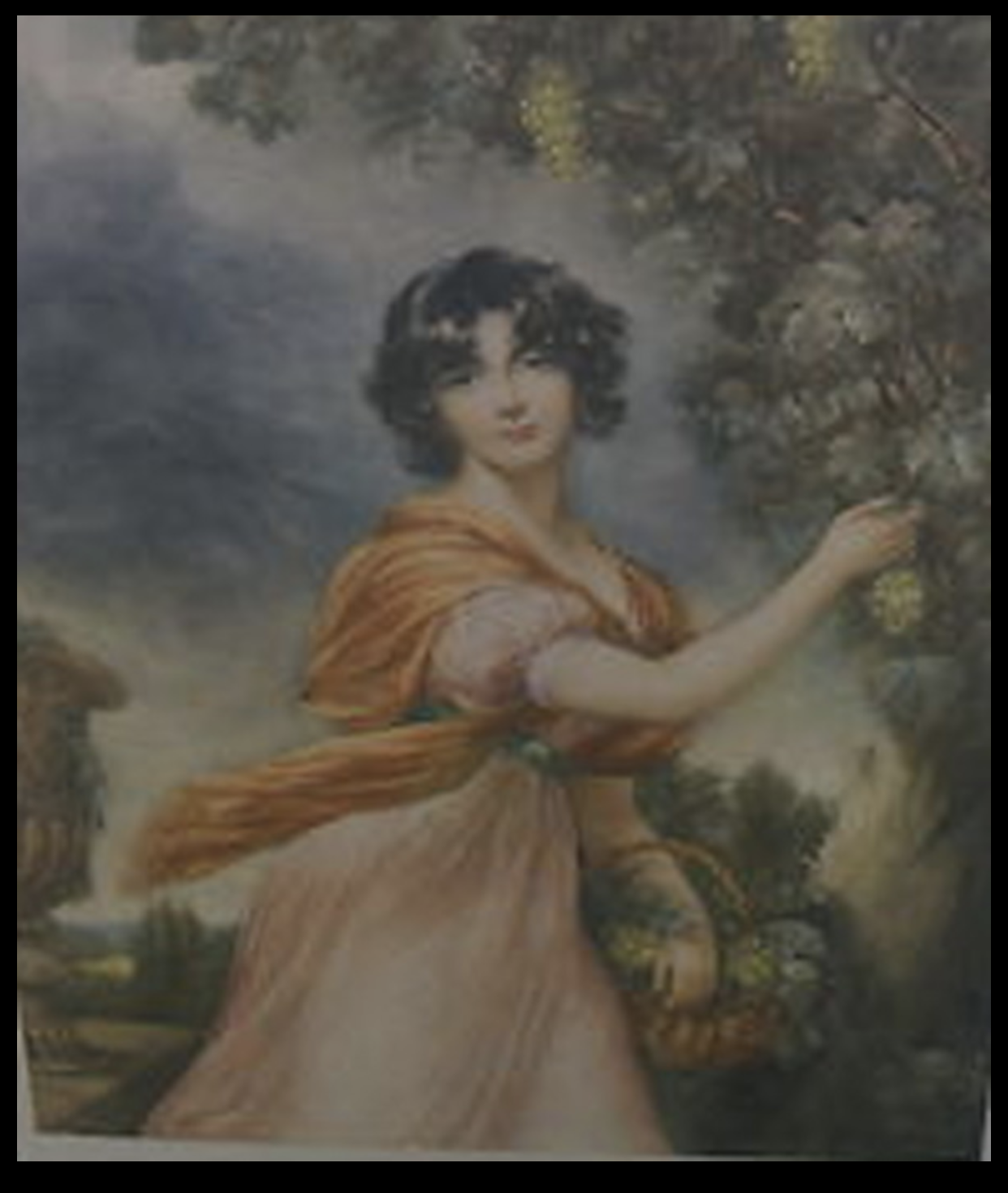
Mary Ann Cavendish Bradshaw also known as the Countess of Westmeath. Portrait painted by Sir Thomas Lawrence in 1806. She was born Marianne Jeffreys, and married George Frederick Nugent, the 7th Earl of Westmeath and she became the Countess of Westmeath. In 1796 in a sensational court case she divorced Nugent and soon after married Augustus Cavendish Bradshaw.

O

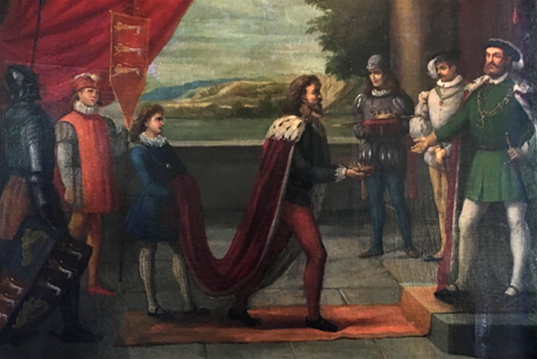
Murrough O’Brien (d. 1551) King of Thomond, Submits to King Henry VIII, Created 1543, History of the O’Briens from Brian Boroimhe, AD. 1000 to AD. 1945, page 264, https://archive.org/details/historyofobriens00obri/page/n309/mode/2up

Murrough O’Brien (d. 1551) King of Thomond, submitted to King Henry VIII in 1543 and was created 1st Earl of Thomond [Ireland] on 1 July 1543, for life with a special remainder to his nephew, Donogh. He was also created 1st Baron of Inchiquin [Ireland].

Donough O’Brien (died 1582) of Leameneagh and Dromoland, younger son of Murrough O’Brien last King of Thomond, 1st Earl of Thomond, painted 1577 on panel, courtesy History of the O’Briens from Brian Boroimhe, AD. 1000 to AD. 1945, by Donough O’Brien, page 200.
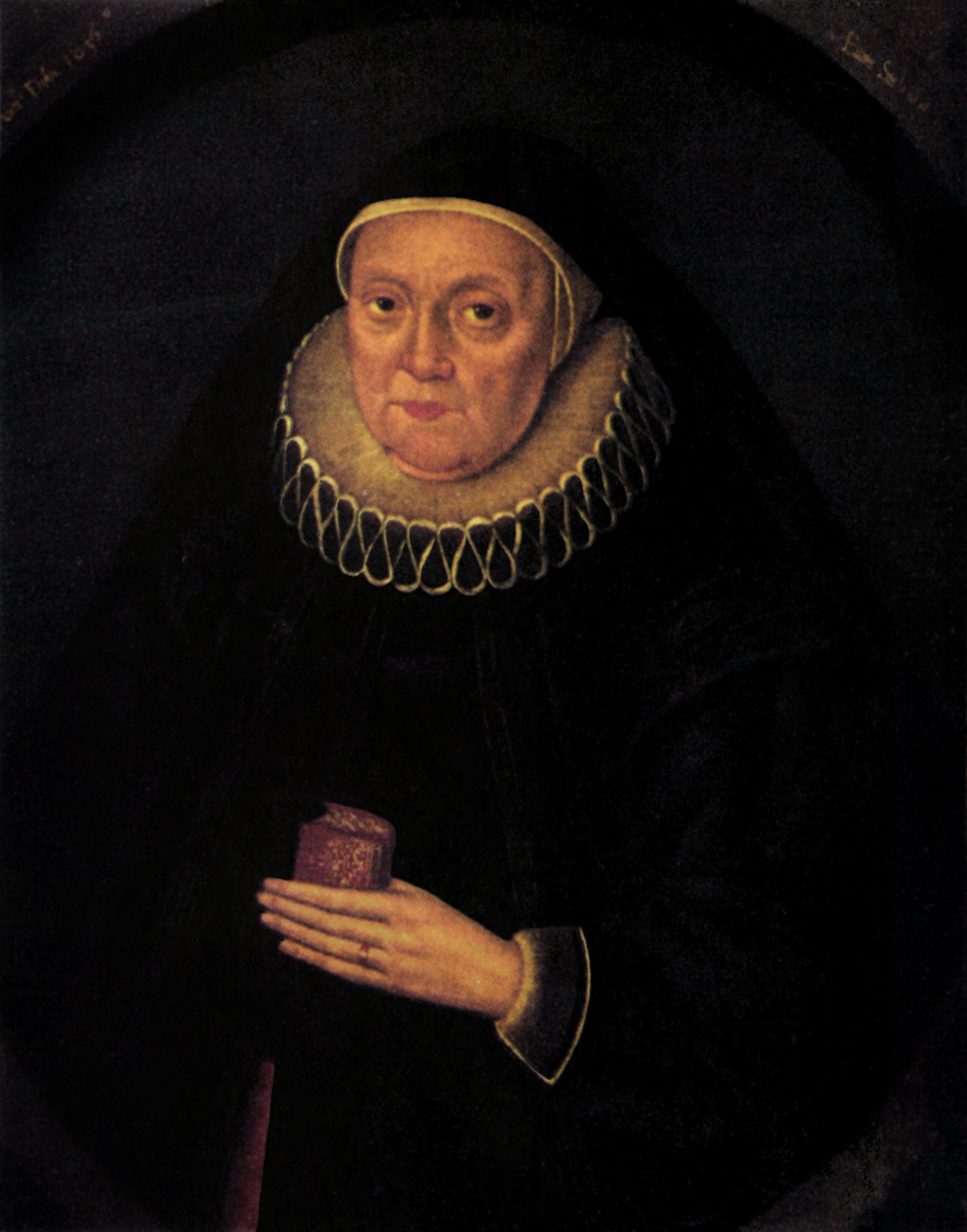
Slaney O’Brien nee McNamara, daughter of John of Cratelagh, wife of Donough O’Brien of Leameneagh (d. 1582), 1577 on panel in her 28th year. History of the O’Briens from Brian Boroimhe, AD. 1000 to AD. 1945, by Donough O’Brien, p 200.

His son Donogh McMurrough O’Brien (d. 1582) lived at Leamanagh and at Dromoland, County Clare. He in turn had a son Connor McDonogh O’Brien (d. 1603/4), who had a son, Donogh O’Brien (1595-1634/35) who married Honora Wingfield.

Slaney O’Brien, wife of Conor, Daughter of Turlough O’Brien of the Dough and Ennistymon courtesy Max Gheeraerts, Historical memoir of the O’Briens, The Origin and History of the O’Brien Clan by John O’Donoghue, Publ.1860, Martin Breen 2002.
Donough O’Brien of Lemeneagh (1595-1637) Scan from Historical Memoir of the O’Briens, The Origin and History of the O’Brien Clan John O’Donoghue published by Martin Breen (Collection of Lord Inchiquin).

Donogh and Honoria Wingfield had a son Colonel Connor McDonogh O’Brien (1617-1651) who married Mary ‘Rua’ MacMahon.

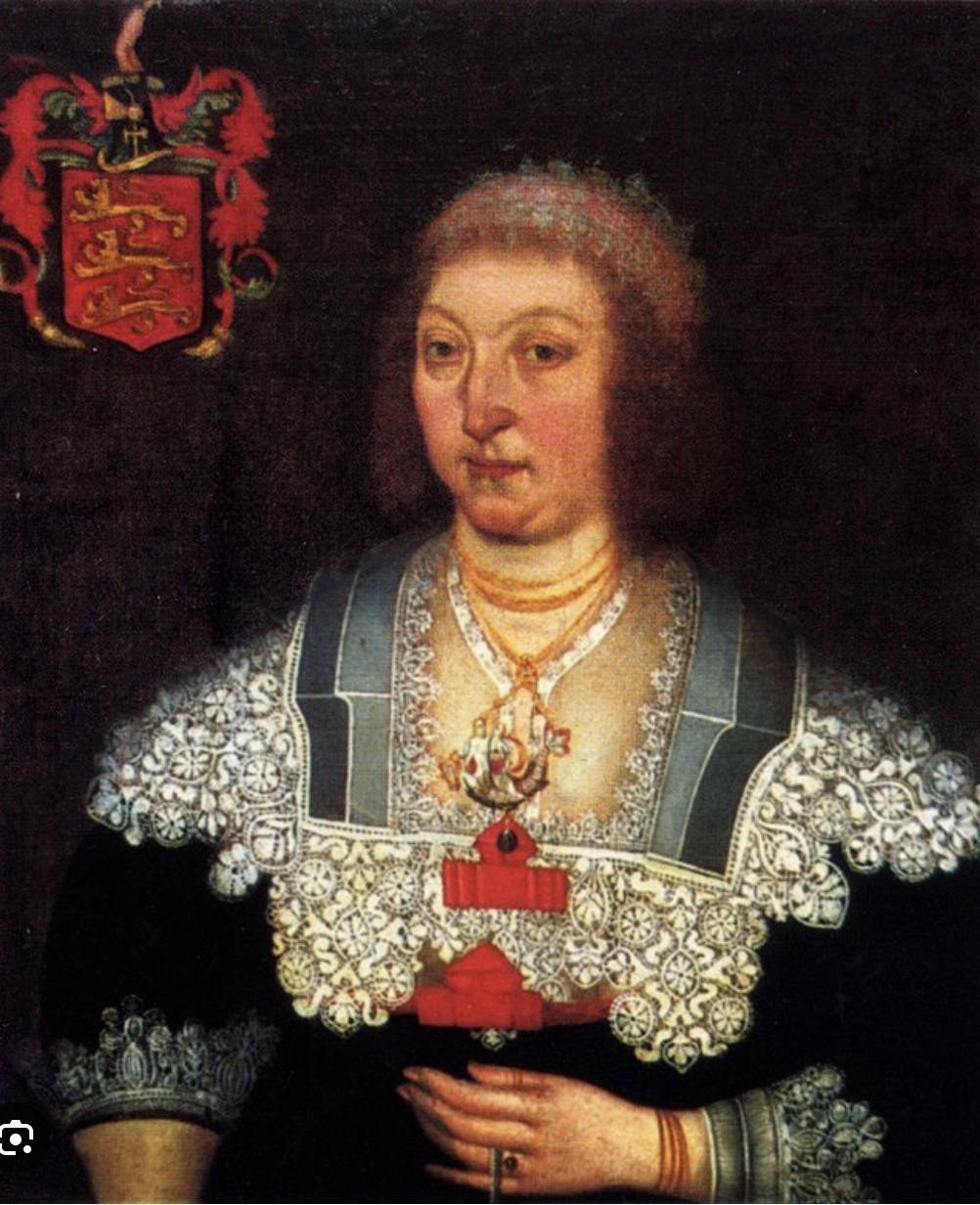
Máire Rua O’Brien née McMahon (1615/1616 – 1686) daughter of Turlough Roe McMahon Baronet, wearing Felemish bobbin lace with O’Brien coat of arms. She married first Colonel Neylan, then in 1639, Colonel Conor O’Brien (1617-1651) of Lemeneagh, ancestor of Barons Inchiquin, but he was slain in battle in 1651. She then married, to keep the family property, Captain John Cooper of Ireton’s army, whom she is said to have murdered! It’s a rare example of a portrait almost certainly painted in Ireland in the first half of the seventeenth century – see Irish Portraits 1660-1860 by Anne Crookshank and the Knight of Glin, published by the Paul Mellon Foundation for British Art 1969.
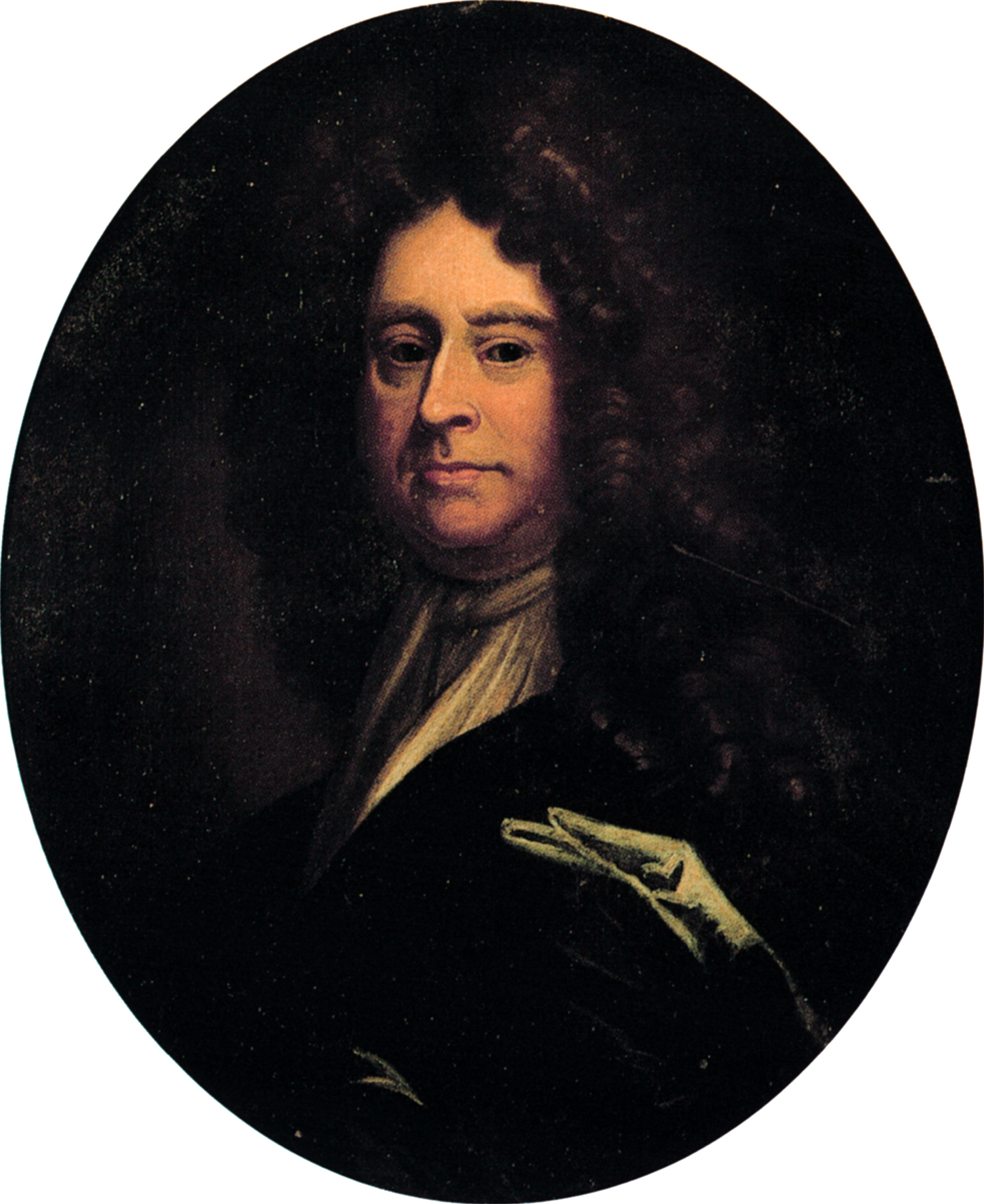
Donough O’Brien (1642-1717), 1st Baronet of Lemeneagh and Dromoland, Co. Clare by Mary Beale, 1690. He lived in Dromoland Castle. He was the son of Máire Rua O’Brien née McMahon (1615/1616 – 1686) and Conor McDonogh O’Brien (1617-1651).
Lucia Hamilton, 1674, daughter of George Hamilton. Wife of Donough O’Brien, 1st Baronet, married in 1674. She died two years later, not long after the birth of his son and heir, Lucius.
Lucius O’Brien (1675-1717) son of Donough O’Brien 1st Baronet of Leameneh, History of the O’Briens from Brian Boroimhe, AD. 1000 to AD. 1945, by Donough O’Brien, p 212.jpg
Catherine Keightley, daughter of Thomas Keightley and Frances Hyde, aunt of Queens Anne and Mary, wife of Lucius O’Brien, History of the O’Briens from Brian Boroimhe, AD. 1000 to AD. 1945, by Donough O’Brien, p 232.
Edward O’Brien (1705-1765) 2nd Baronet of Dromoland, County Clare from Historical memoir of the O’Briens : The Origin and History of the O’Brien Clan, by John O’Donoghue A.M, Barrister-at-Law, First Published in 1860 (Martin Breen 2002) Illustrations section (Collection of O’Brien of Dromoland), Public Domain, https://commons.wikimedia.org/w/index.php?curid=109837449 He was the son of Lucius O’Brien.
Mary Hickman, wife of Edward O’Brien, 2nd Baronet, from Historical memoir of the O’Briens : The Origin and History of the O’Brien Clan, by John O’Donoghue A.M, Barrister-at-Law, First Published in 1860 (Martin Breen 2002) Illustrations section, Public Domain, https://commons.wikimedia.org/w/index.php?curid=109837783
Lucius O’Brien (1731-1795) 3rd Baronet, courtesy of Harnet – The Other Clare Vol. 9 page 14,15.
Ann Ffrench wife of Sir Lucius O’Brien, 3rd Baronet courtesy Unknown author – These My Friends and Forebears: The O’Briens of Dromoland. She was daughter of Robert Ffrench of Monivea Castle, County Galway, MP for County Galway, and of Nichola Acheson, daughter of Arthur, 5th Baronet of Market Hill, County Armagh.
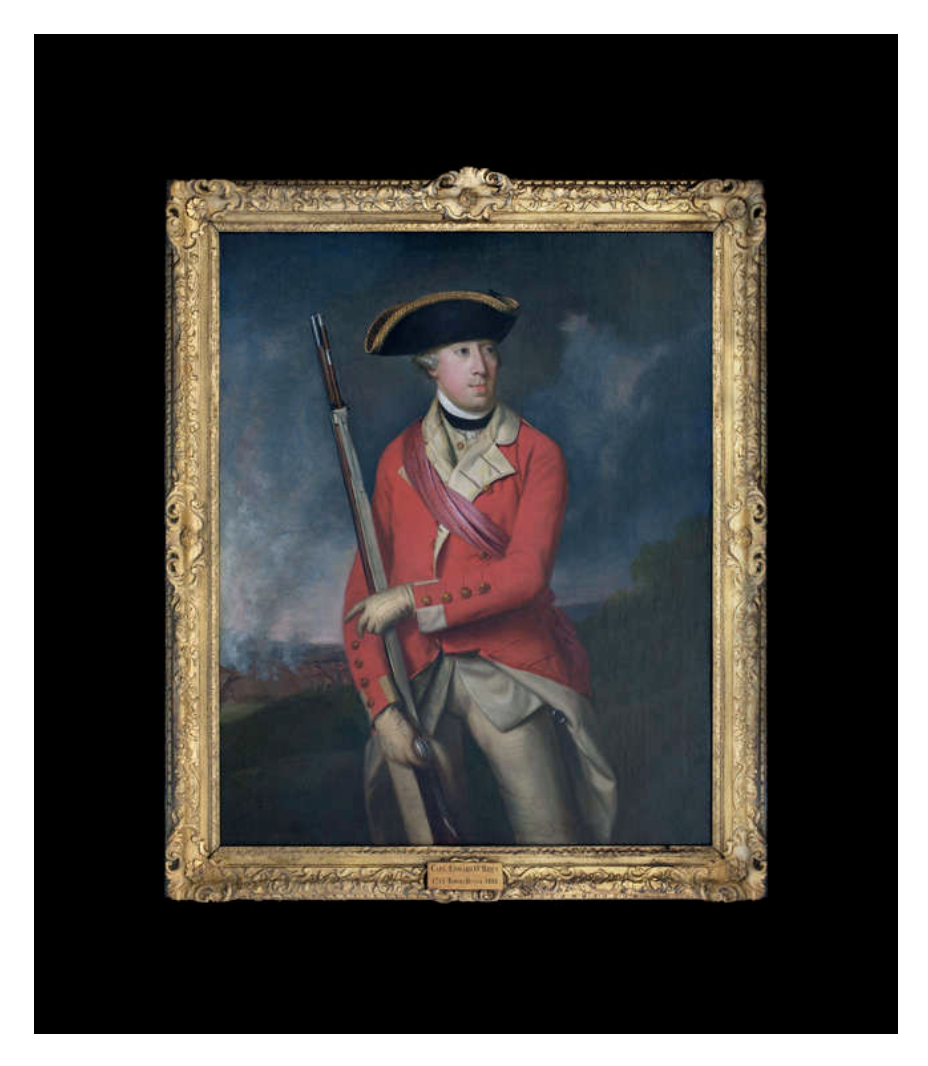
Capt. Edward O’Brien, holding a musket in the uniform of 52nd Regiment of Foot, standing against landscape, line of infantry firing a volley against an advisory, by Robert Hunter (1715 – 1780), courtesy of Adam’s auction 16 Oct 2018. Edward O’Brien (c.1735 1787) was the third son of Sir Edward O’Brien 2nd Baronet of Dromoland and Mary Hickman. A portrait of him and titled Master Edward O’Brien by Philip Hussey was exhibited with the Irish Portraits 1660 1860 Dublin, London and Belfast 1970, Cat no. 31. His ambition was to be a solider but there was no money to buy a Cornecy of Dragoons until 1759. A riding accident prevented his joining Corps being raised to go to America. He became a Captain in the 122nd Regiment and then exchanged (costing £379 3 4) into the 52nd Regiment. He married his cousin Charlotte Hickman of Brickhall, Co. Clare. With his easy-going spendthrift nature and love of horses, it is easy to see why he was his fathers favourite son. Although his father had left him Jockey Hall on the Curragh, he was not able to provide for his family and appealed to his more serious brother, Lucius, for help who assigned him a life interest in lands at Leamanagh and organised his return to military service. However, he forbade him from leaving the kingdom, thereby again preventing him going to America where he thought he could distinguish himself. He died in 1787 with the rank of colonel.

Another son of Murrough O’Brien (d. 1551) 1st Earl of Thomond was Dermod O’Brien (d. 1552) 2nd Baron of Inchiquin. He married Margaret (d. 1568), daughter of Donough O’Brien (d. 1553) 1st Earl of Thomond. She gave birth to their heir, Murrough Macdermot O’Brien (1550-1573) 3rd Baron of Inchiquin. After her husband died, Margaret married Richard Bourke (d. 1582) 2nd Earl of Clanricarde. Murrough O’Brien (1614-1674) 6th Baron of Inchiquin was created 1st Earl of Inchiquin.

Murrough O’Brien (1614-1674) 1st Earl of Inchiquin by John Michael Wright courtesy of Manchester Art Gallery. He married Elizabeth St. Leger (d. 1685).

Murrough O’Brien (1614-1674) 1st Earl of Inchiquin married Elizabeth St. Leger (d. 1685). His daughter Honoria married Lt.-Col. Theobald Bourke, 3rd Lord Bourke, Baron of Brittas. His daughter Elizabeth (d. 1688) married Richard Southwell, MP for Askeaton, County Limerick. His daughter Mary married Henry Boyle (1648-1693) son of the 1st Earl of Orrery. His son was William O’Brien (d. 1691) 2nd Earl of Inchiquin.

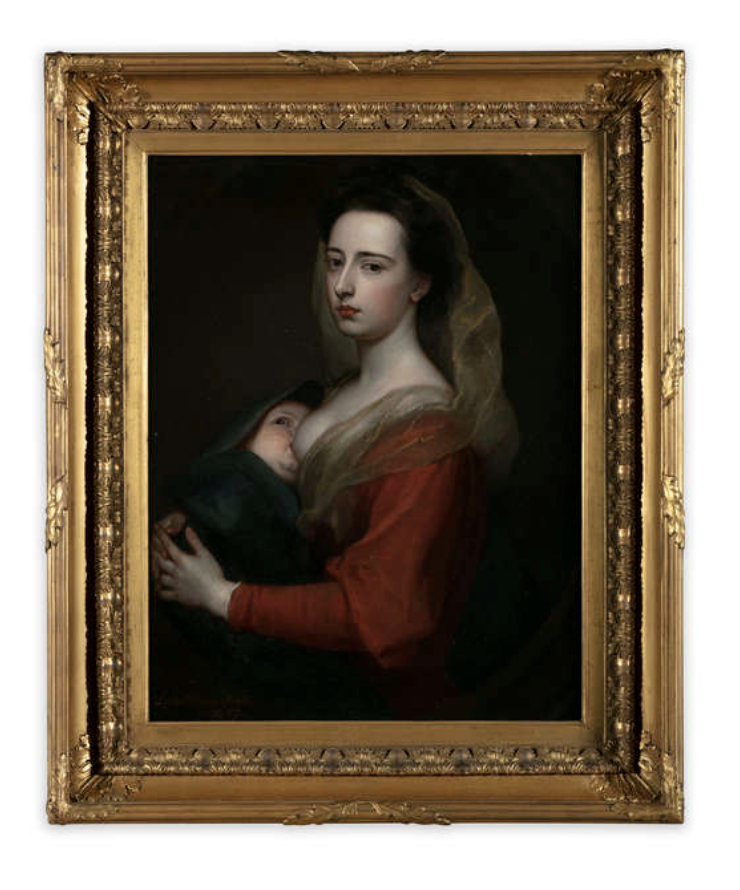
Lady Mary Boyle nursing her son Charles, by Godfrey Kneller (1646-1723) Adams auction 18 Oct 2022. She was daughter of Murrough O’Brien (1614-1674) 1st Earl of Inchiquin. She married married Henry Boyle (1648-1693) son of the 1st Earl of Orrery.
William O’Brien (1638-1952) 2nd Earl of Inchiquin, 7th Baron Inchiquin https//:commons.wikimedia.org

William O’Brien (1638-1952) 2nd Earl of Inchiquin, 7th Baron Inchiquin married Margaret Boyle, daughter of Roger Boyle 1st Earl of Orrery. Their son was William O’Brien (d. 1719) 3rd Earl of Inchiquin.

William O’Brien (d. 1719) 3rd Earl of Inchiquin courtesy of https//:commons.wikimedia.org

William O’Brien (d. 1719) 3rd Earl of Inchiquin married Mary Villiers and their daughter Mary married Robert FitzGerald, 19th Earl of Kildare.

James O’Brien (d. 1771) was a son of William O’Brien (d. 1719) 3rd Earl of Inchiquin and Mary Villiers. He married Mary Jephson. They had a son Murrough O’Brien (1726-1808) 1st Marquess of Thomond.

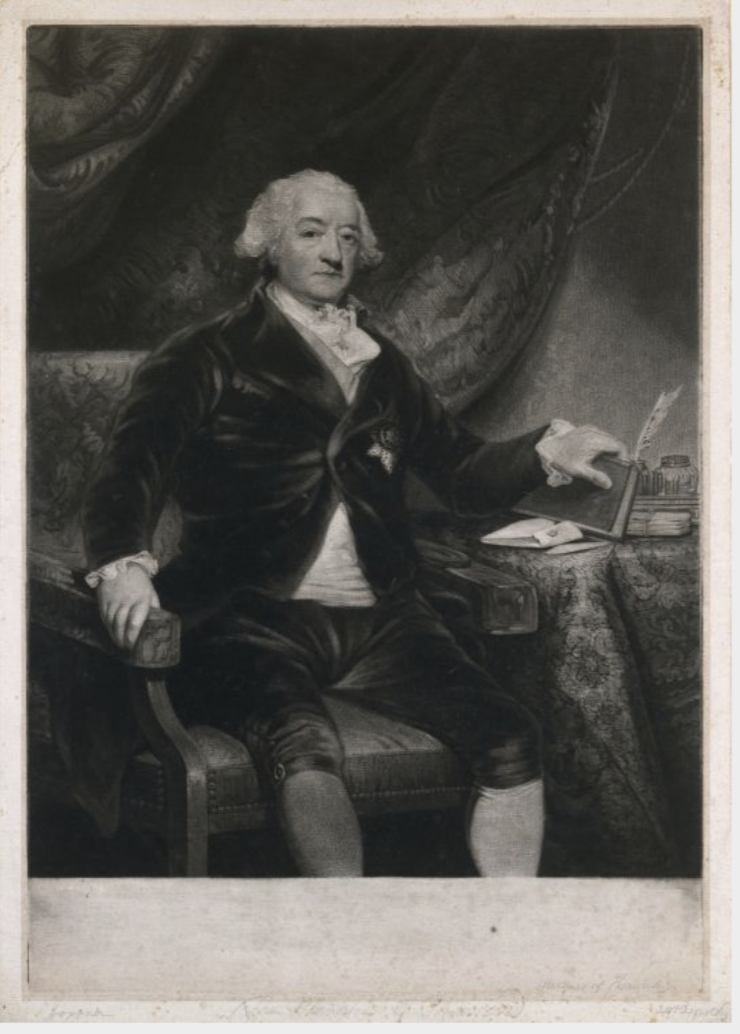
Murrough O’Brien, 1st Marquess of Thomond, (1726-1808) Engraver Samuel William Reynolds, English, 1773-1835 After John Hoppner, English, 1758-1810, courtesy of National Gallery of Ireland.
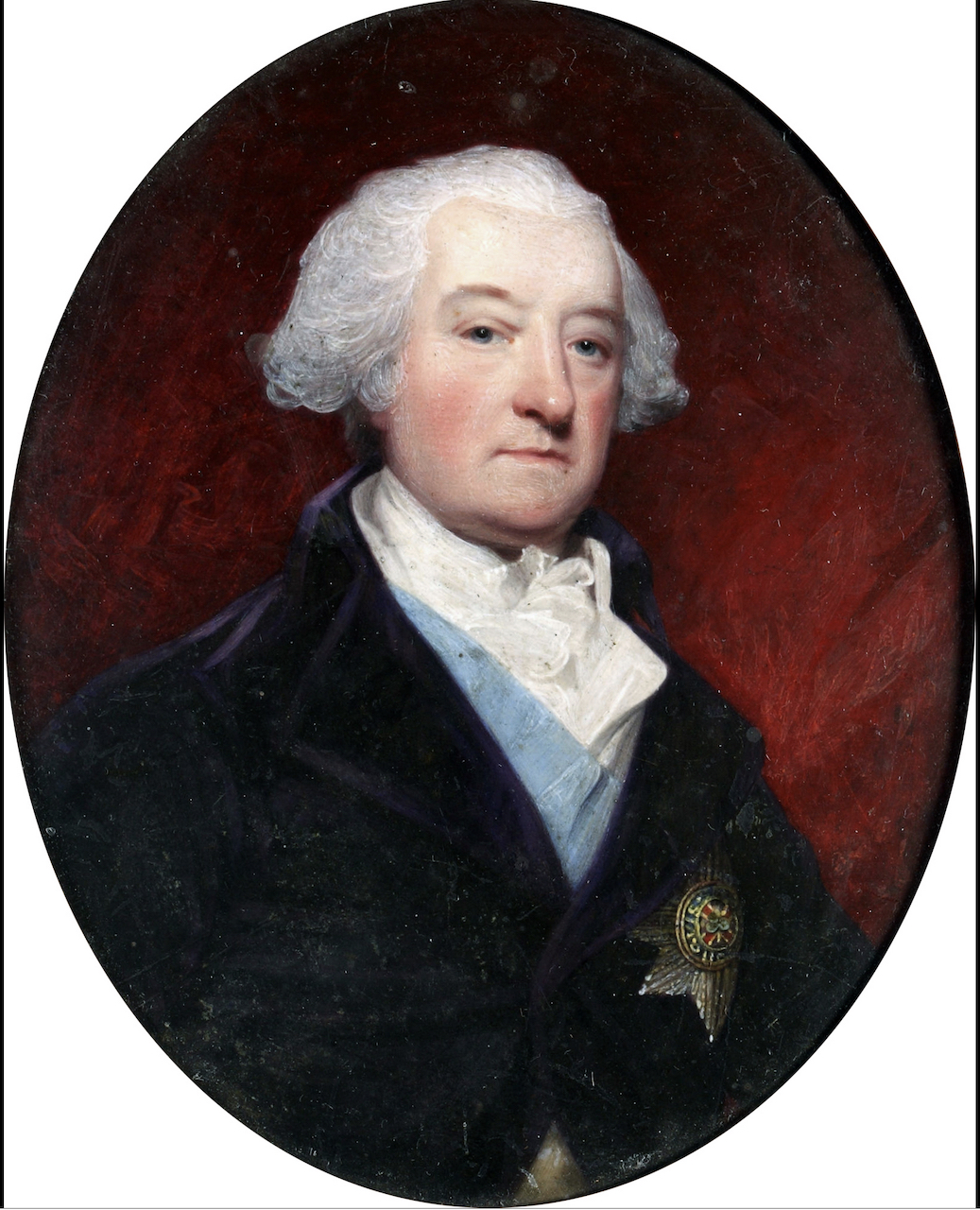
Murrough O’Brien, 1st Marquess of Thomond KP, PC (1726–1808), 5th Earl of Inchiquin (1777–1800) by Henry Bone courtesy of Bonhams.
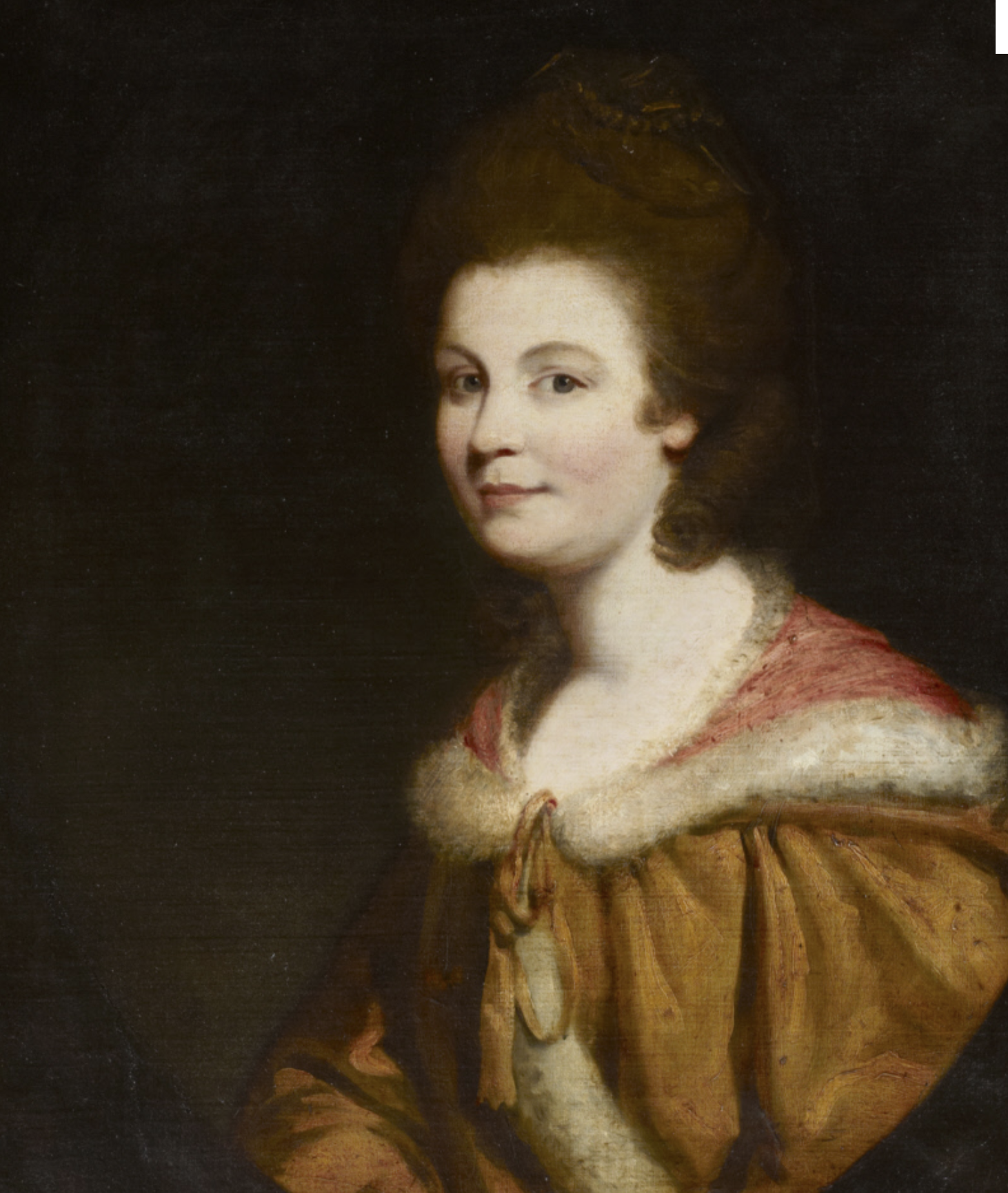
Mary Palmer, Countess of Inchiquin, Marchioness of Thomond (1750-1820), wife of Murrough O’Brien, 1st Marquess (after Sir Joshua Reynolds) by Thomas Phillips courtesy of National Trust Petworth.

James O’Brien (d. 1771) and Mary Jephson had a daughter Anne (1720-1745) who married Most Rev. Michael Cox (1691-1779). James O’Brien (d. 1771) and Mary Jephson had another daughter, Henrietta (d. 1797), who married William Vigors Burdett, 2nd Bt of Dunmore, County Carlow. Murrough O’Brien 1st Marquess had no sons so the title passed to the sons of his brother, Edward O’Brien (d. 1801).

Miss Henrietta O’Brien by Stephen Slaughter 1746. She married first Terence O’Loughlen and second William Vigors Burdett 2nd Baronet, and was sister of Anne who married Archbishop Cox of Cashel.
William Smith O’Brien (1803-1864) by George Francis Mulvaney, courtesy of National Gallery of Ireland P1934.
Louisa O’’Callaghan (1780-1863) as Hebe, daughter of Cornelius O’’Callaghan (1741/41-1797) 1st Baron Lismore by Hugh Douglas Hamilton courtesy of Country House Collections at Townley Hall 16th October 2018 Adams. She married William George Spencer Cavendish, son of 1st Earl of Burlington.
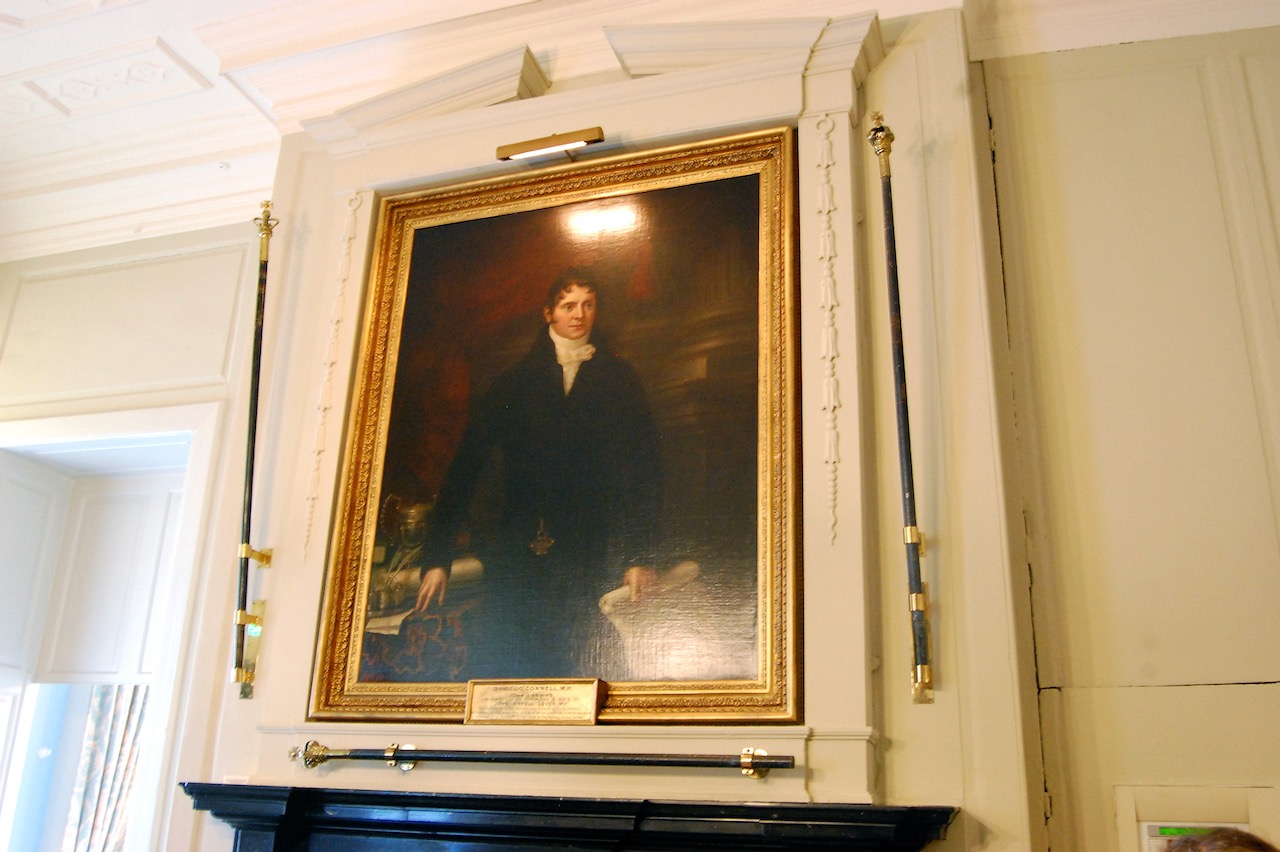
Daniel O’Connell. Photograph © Jennifer Winder-Baggot, www.irishhistorichouses.com
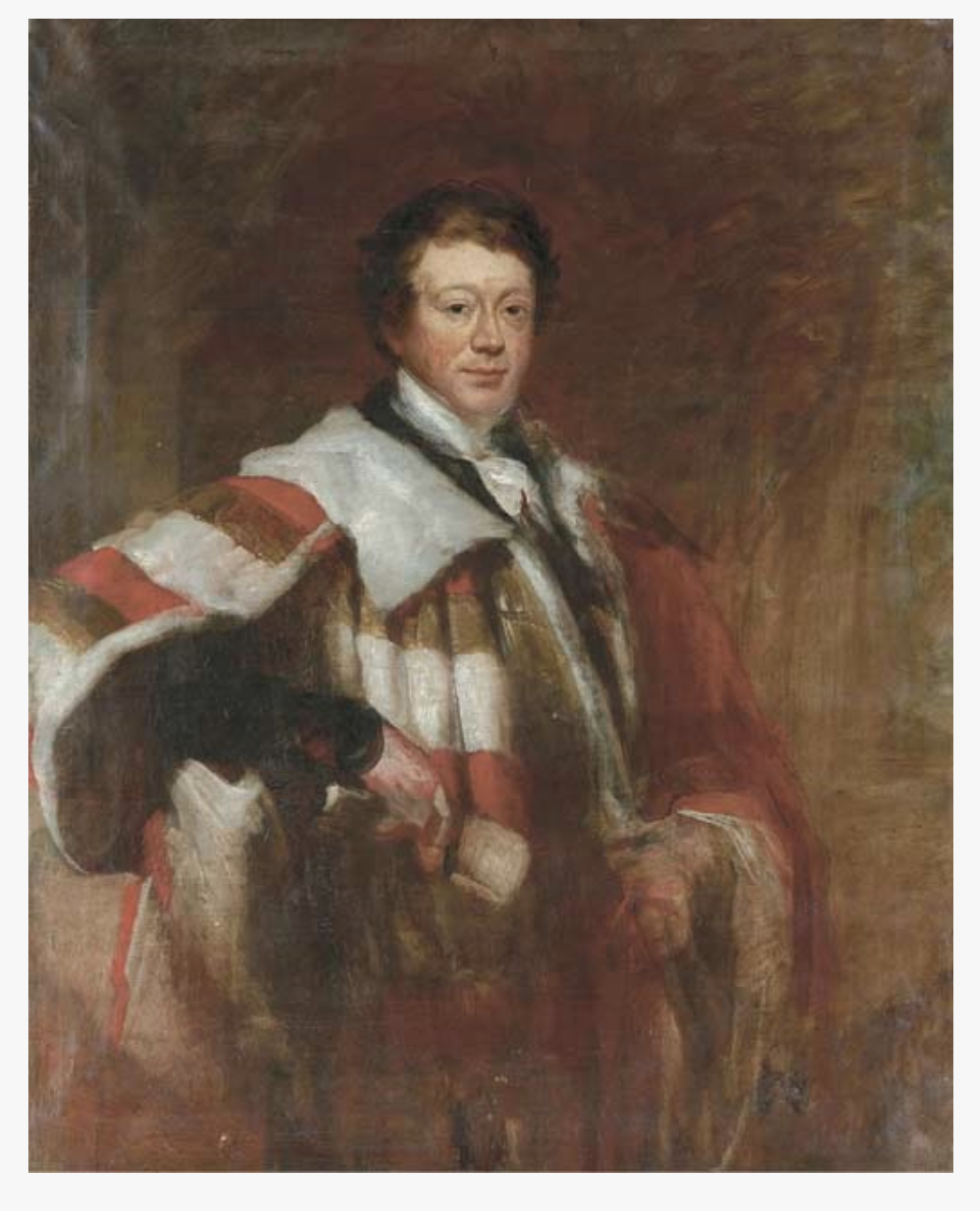
Daniel O’Connell (1775-1847) by Stephen Catterson Smith courtesy Christies auction house.
Phelim O’Connor, d. 1315, King of Connaught, courtesy of National Gallery of Ireland.
Denis O’Conor of Ballinagare (Donnchadh Liath) (b. 1674), picture from Charles O’Conor of Ballinagare, ed. Luke Gibbons and Kieran O’Conor.
Charles O’Conor of Ballinagare (1710–1791), courtesy of Royal Irish Academy. He was a son of Denis O’Conor of Ballinagare (Donnchadh Liath) (b. 1674)
Charles O’Conor of Ballinagare (1710–1791), in middle age, from Charles O’Conor of Ballinagare, ed. Luke Gibbons and Kieran O’Conor. He was a son of Denis O’Conor of Ballinagare (Donnchadh Liath) (b. 1674)
Charles O’Conor of Mount Allen (1736–1808) as a young man from Charles O’Conor of Ballinagare, ed. Luke Gibbons and Kieran O’Conor. He was a son of Charles O’Conor of Ballinagare (1710–1791).
Denis O’Conor of Ballinagare (1732–1804), in middle age, from Charles O’Conor of Ballinagare, ed. Luke Gibbons and Kieran O’Conor. He was the eldest son of Charles O’Conor of Ballinagare (1710–1791)
Owen O’Conor (1763-1831) of Ballinagare, son of Denis O’Conor of Ballinagare (1732–1804). He purchased Clonalis estate in 1805 and inherited the O’Conor Don title in 1820. Owen moved his family and household to Clonalis in that year and left Ballinagare Castle. Photograph courtesy of Charles O’Conor of Ballinagare, ed. Luke Gibbons and Kieran O’Conor.
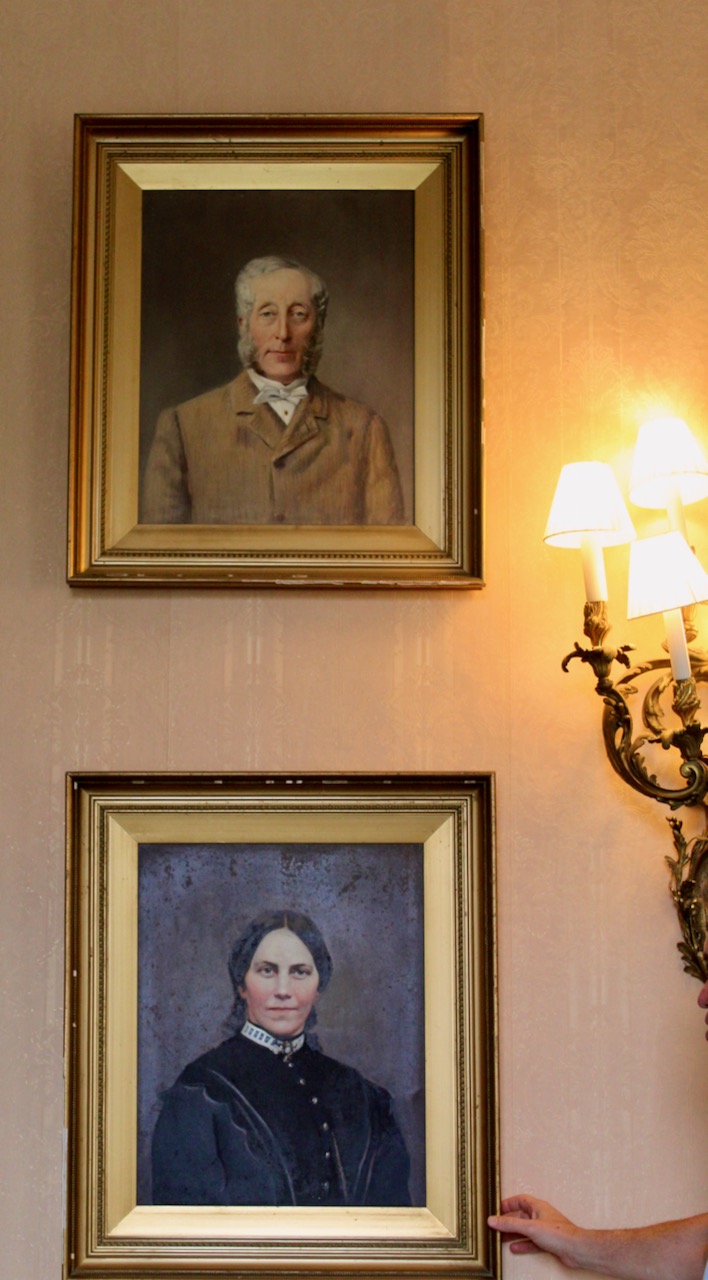
Portraits of Charles William Cooper (1817-1898), who took the name O’Hara when he inherited his uncle’s estate, and his wife Anne Streatfield (1836-1882). Photograph © Jennifer Winder-Baggot, www.irishhistorichouses.com
Grace O’Malley (1530-1603) 18th century Irish school, courtesy of Fonsie Mealy auction.
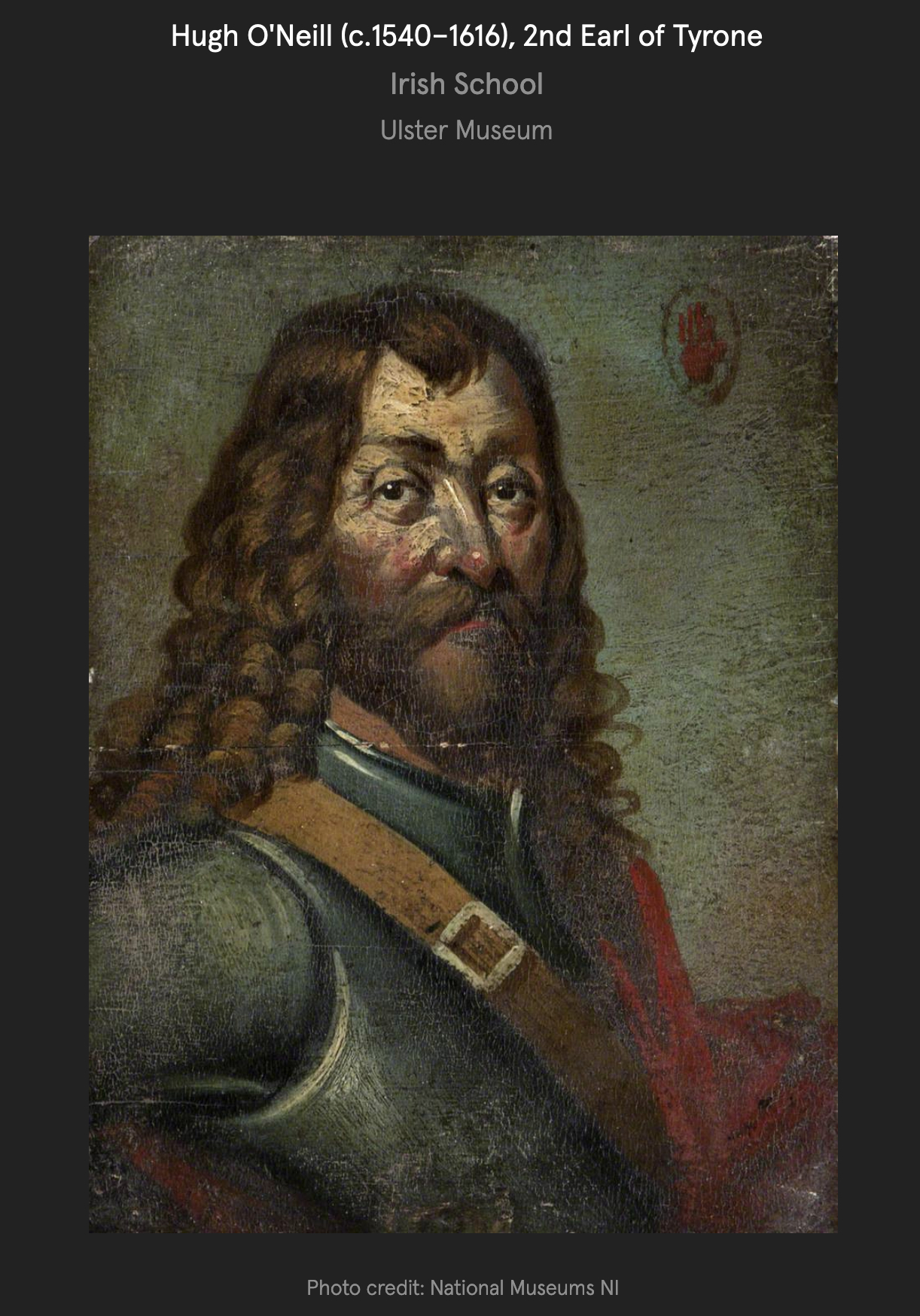
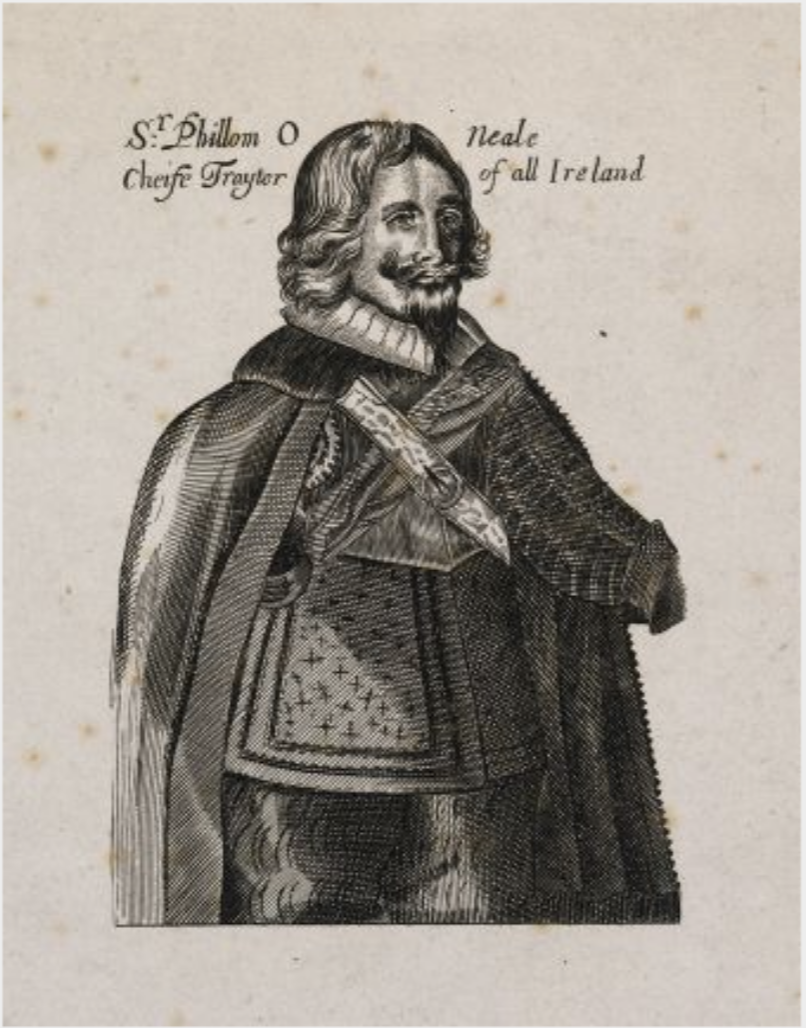
Hugh O’Neill (c. 1540-1616) 2nd Earl of Tyrone, courtesy of National Museums Northern Ireland, Ulster Museum.
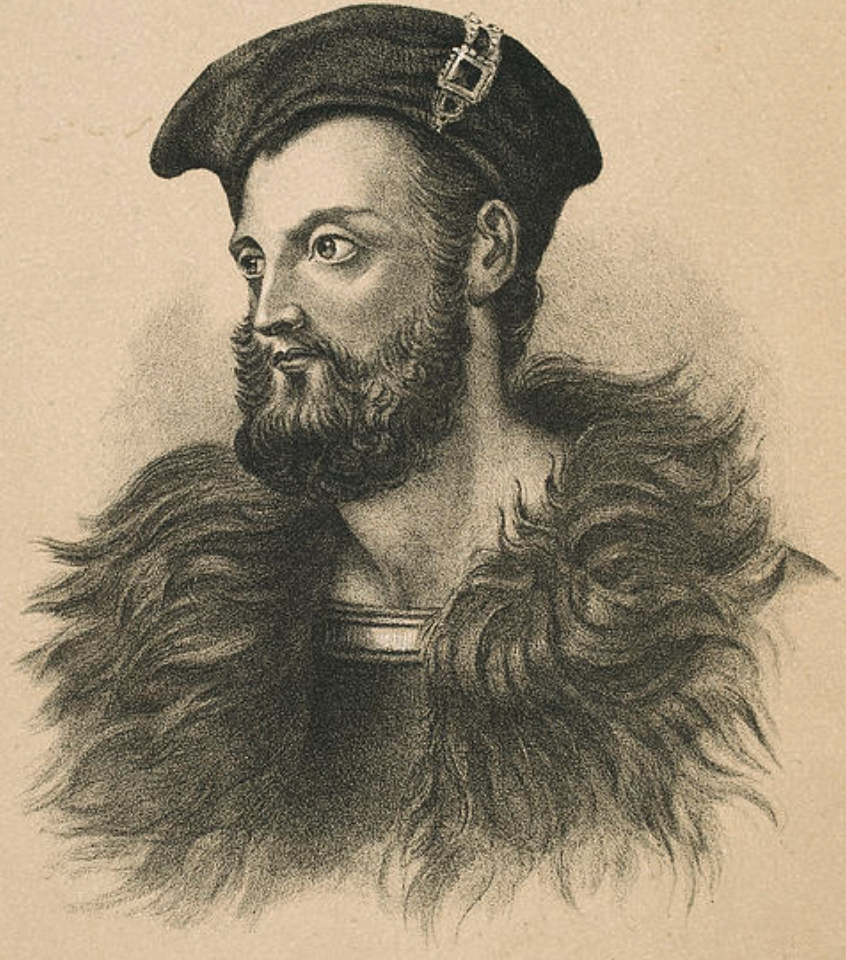
Owen Roe O’Neill By Unknown, Van Brugens – Ulster Journal of Archaeology Volume 4, Public Domain, https///commons.wikimedia.org/w/index.php?curid=17552770.jpg
Phelim O’Neill (1604-1653), Leader of 1641 Rebellion, courtesy of National Gallery of Ireland.
John O’Neill, 1st Viscount O’Neill, M.P., (1740-1798) Engraver: Samuel William Reynolds, English, 1773-1835 Copyist: James Dowling Herbert, Irish, c.1762-1837 After Matthew William Peters, English, 1742-1814, courtesy of National Gallery of Ireland.
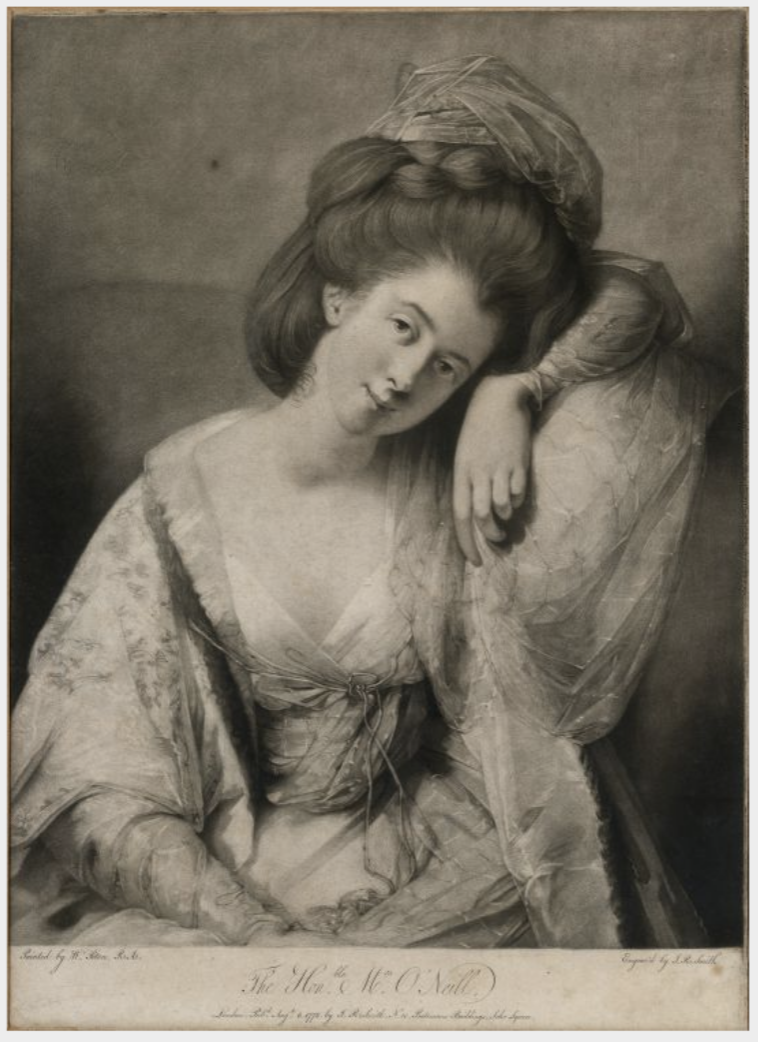
Mrs John O’Neill (née Henrietta Boyle) (1756-1793), Poet and Patron of Mrs Siddons, Engraver John Raphael Smith, English, 1752-1812 After Matthew William Peters, English, 1742-1814, courtesy of National Gallery of Ireland. She was the wife of John O’Neill (1740-1798), 1st Viscount, of Shane’s Castle, County Antrim, and the daughter of Charles Boyle, Viscount Dungarvan, who was the son of John Boyle 5th Earl of Orrery and 5th Earl of Cork.
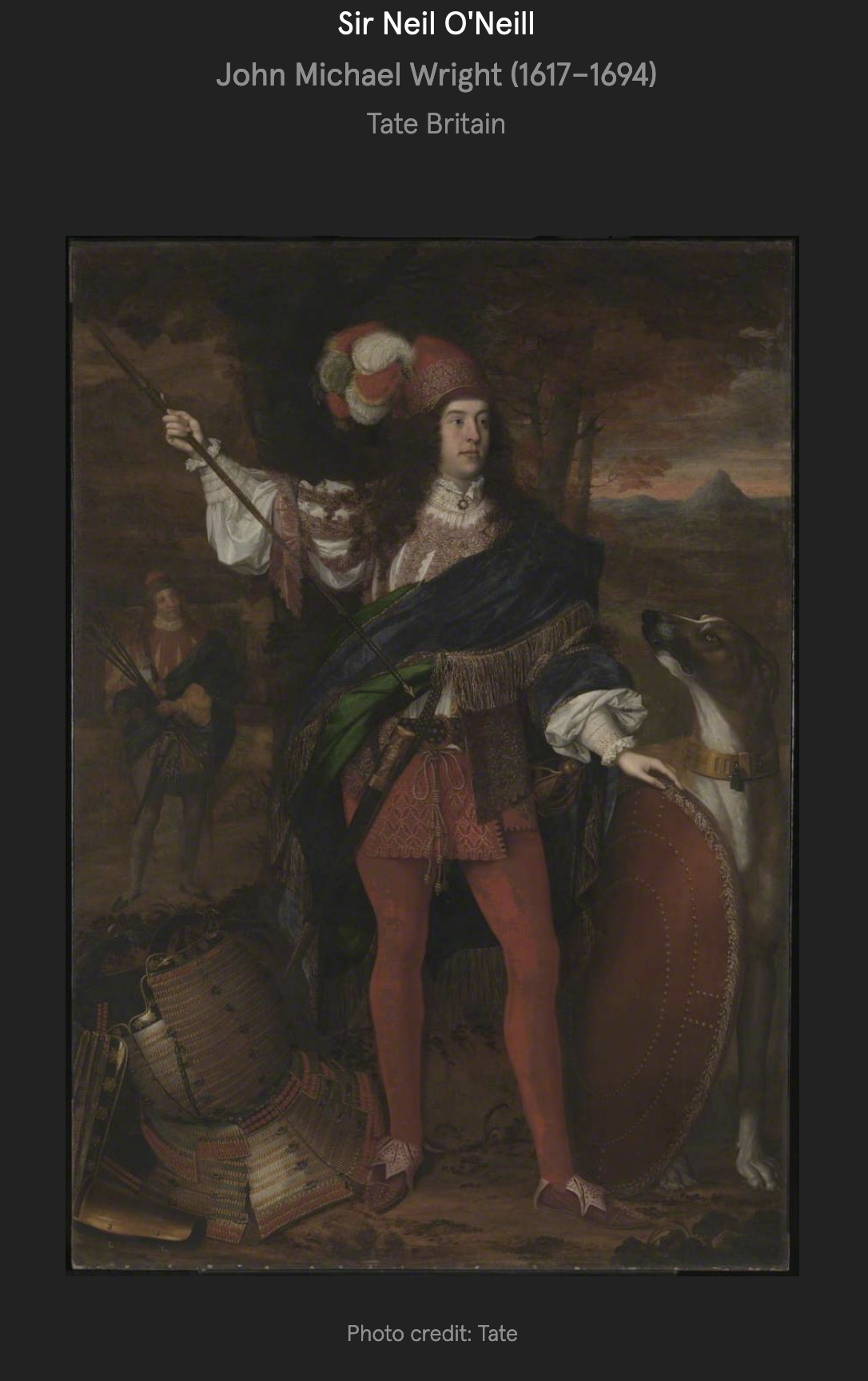
Neil O’Neil (1658-1690) 2nd Baronet of Killyleagh, County Antrim by John Michael Wright, courtesy of Tate Britain. It is the only surviving contemporary presentation of the traditional costume of an Irish chieftain. At his feet is the armour of a Japanese samurai as a symbol of victory over the oppression of Catholics; next to him is an Irish wolfhound as a symbol of Ireland.
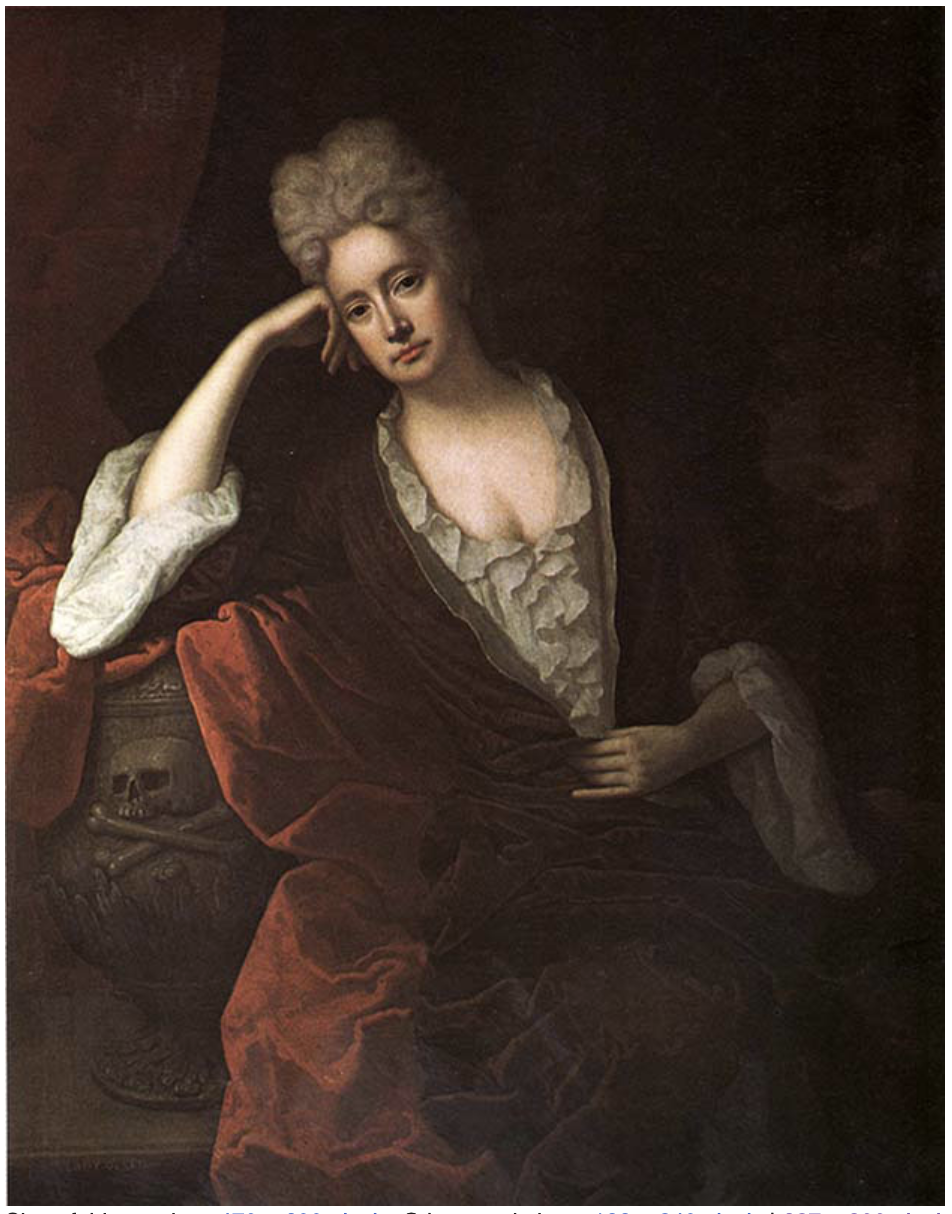
Lady Neill O’Neill, Frances née Molyneux (1655-1732) daughter of 3rd Viscount who married Neil O’Neill of Killelagh in 1677, by Garrett Morphy. The painting was probably painted soon after her husband died from wounds obtained in the Battle of the Boyne in 1690, due to the funerary urn carved with a memento moi of skull and crossbones.
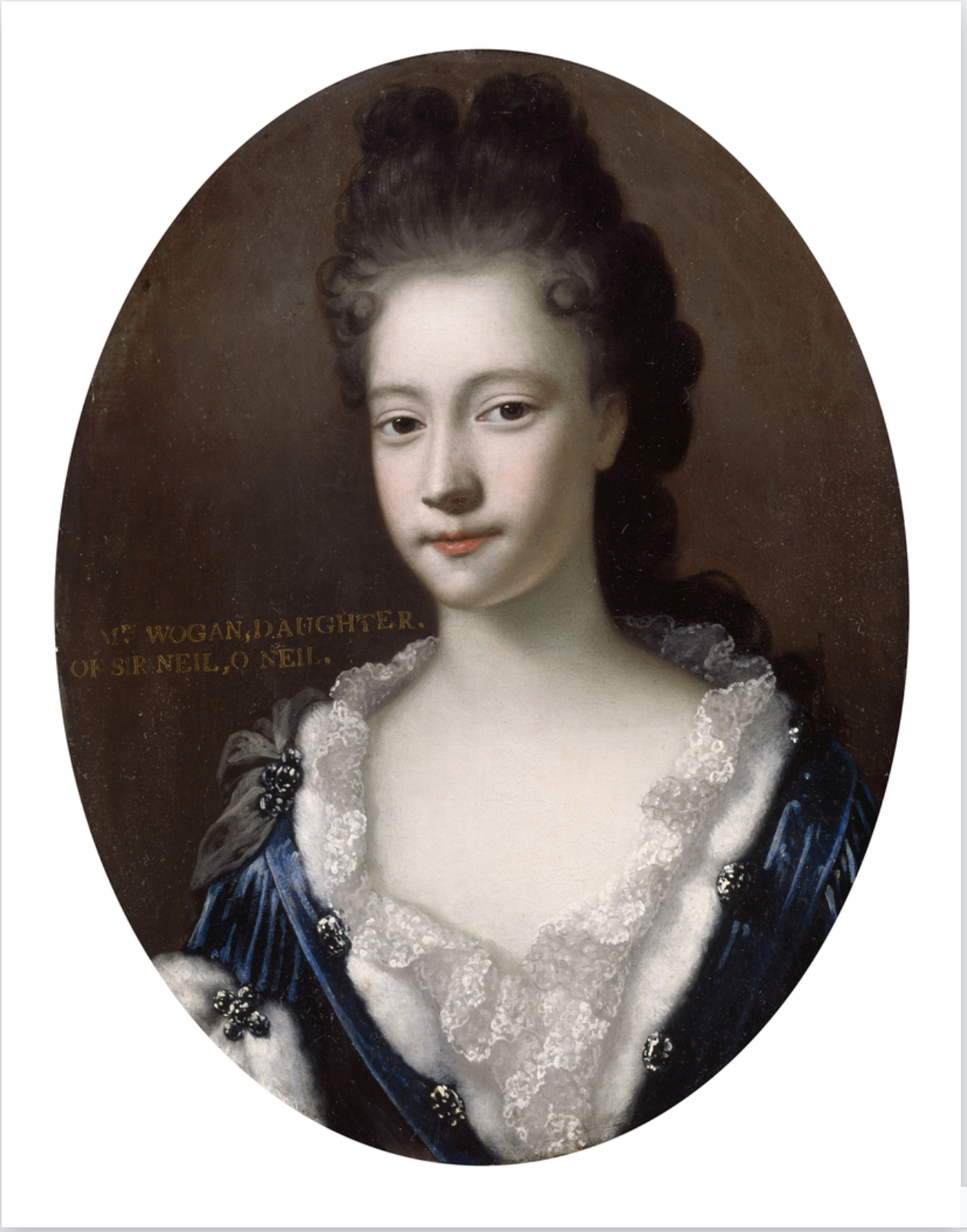
Rose O’Neill, later Mrs Nicholas Wogan (c.1695) by Garrett Morphy. She was daughter of Neil O’Neil (1658-1690) 2nd Baronet of Killyleagh, County Antrim, and married Col Nicholas Wogan of Rathcoffey, Co Meath. Her daughter married John Talbot of Malahide.
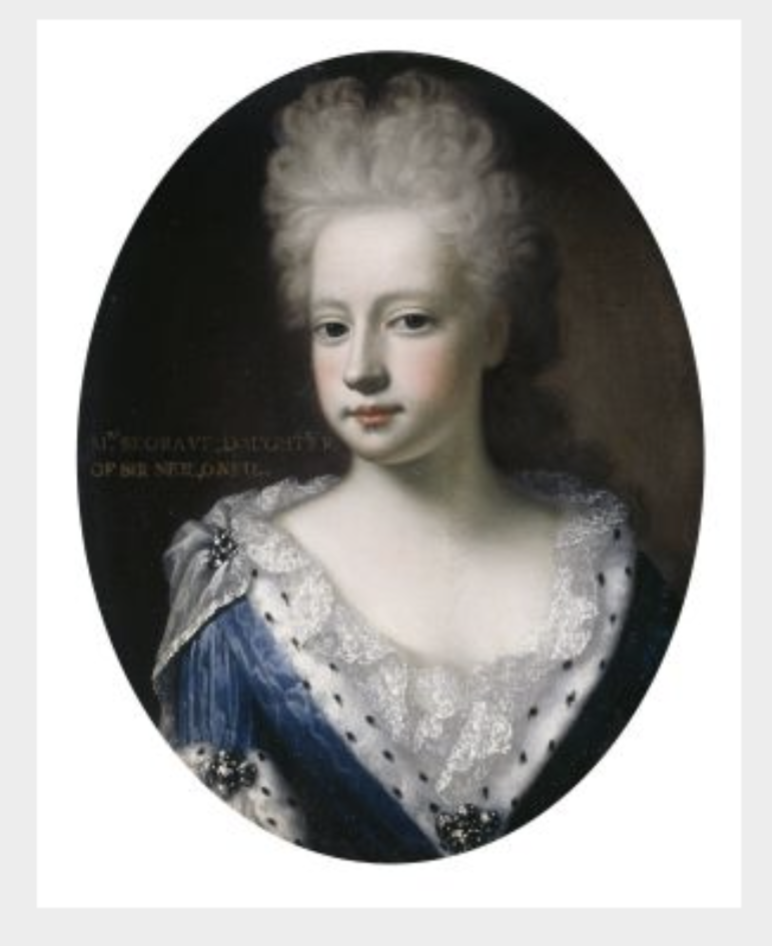
Anne O’Neill, later Mrs Segrave by Garret Morphy c. 1695, courtesy National Gallery of Ireland ngi.4148. She was daughter of Neil O’Neill of Killelagh, Co Antrim.
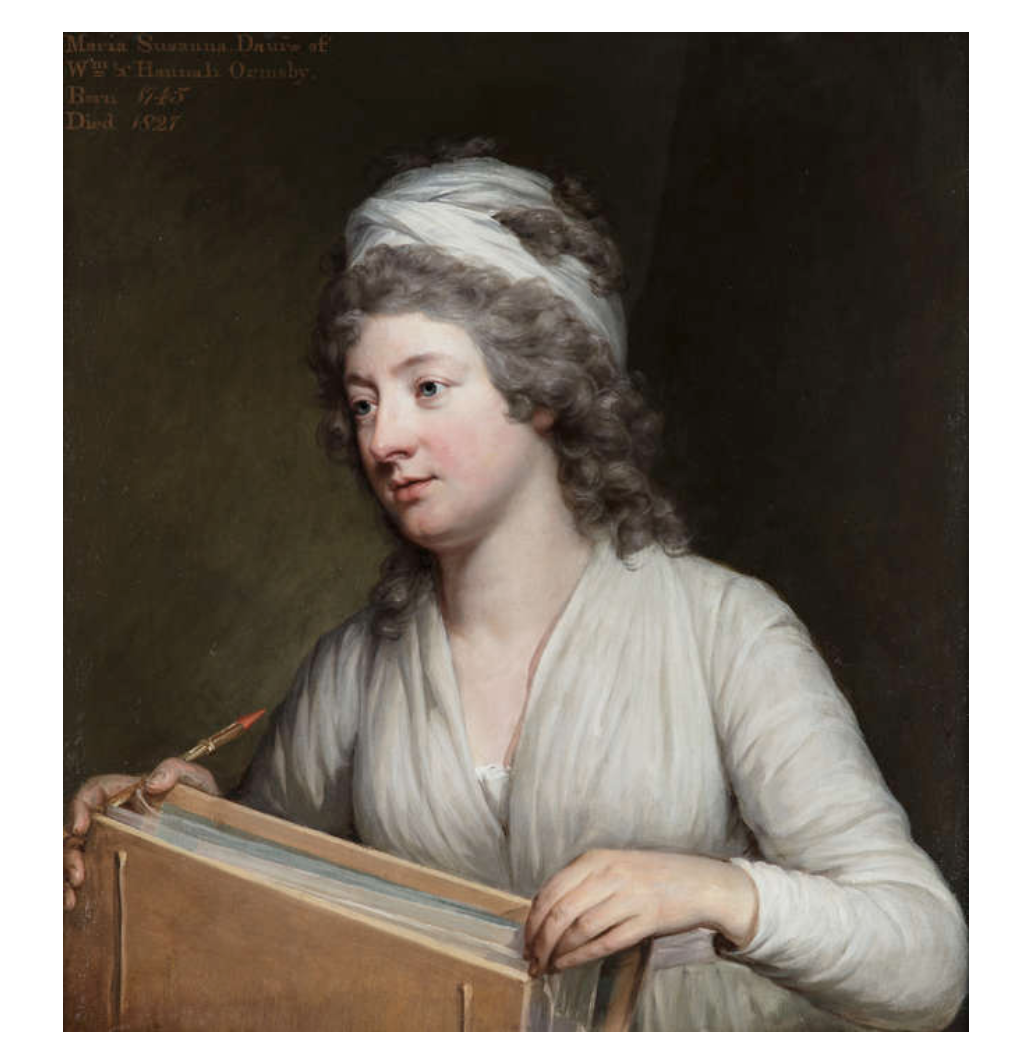
Maria Susanna Ormbsy by Hugh Douglas Hamilton, she was daughter of William Ormsby (1718-1781) and Hannah Wynne of Hazelwood, County Sligo courtesy of Adams auction 27 March 2018. This excellent portrait, painted after Hamiltons return to Dublin from Rome is not listed by Fintan Cullen. [Oil Paintings of Hugh Douglas Hamilton, Walpole Society Vol. 50 1984] and is a welcome addition to the inventory of Hamiltons extant portraits (1796).
It re-emerged from the recent disposal of the Harlech Collection in Wales. The Ormsby-Gores, in spite of a Welsh title and seat, represent two families from the West of Ireland who flourished in the 18th century.
The subject of the present lot, Maria Susannah Ormsby was the daughter of William Ormsby M.P for Sligo and Hannah Wynne of Haselwood, County Sligo, the lovely Palladian villa designed by Richard Castle. Her brother, Owen Ormsby married (1777) Margaret Owen who came into a great Welsh estate that had been swollen by the Godolphin inheritance. Their only child and heiress Mary Jane Ormsby married (1815)William Gore, M.P. for Leitrim from a family long influential in Counties Mayo, Sligo and Leitrim. Thereafter the family became Ormsby-Gore and were subsumed into English high society with a title from the Barony of Harlech.
Our subject, Maria Susannah Ormsby, died unmarried so this portrait of a charming and artistic woman remained with the Ormsby-Gores. As an observation of mature character it confirms Hugh Douglas Hamiltons place in the top rank of European portraiture.

Newpark House and Demesne, Newpark, Ballymote, Co. Sligo F56 X985 – section 482

Open dates in 2025: Jan 20-24, 27-31, Feb 10-14, 17-21, May 6-10, 12-23, June 9-13, 23-29, Aug 16-24, 29-30, 9.30am-1.30pm

Fee: adult €7, OAP/student €5, child free

donation

Help me to pay the entrance fee to one of the houses on this website. This site is created purely out of love for the subject and I receive no payment so any donation is appreciated!

€15.00

Newpark, August 2021. Photograph © Jennifer Winder-Baggot, www.irishhistorichouses.com

We visited Newpark House during Heritage Week, when we went on holidays to Sligo. We were delighted to discover that the owner, Christopher, is a cousin of Durcan O’Hara, with whom we were staying at Annaghmore in nearby Collooney.

Burke’s A Genealogical and Heraldic History of the Landed Gentry of Ireland tells us that Newpark was built for Robert King Duke (1770-1836), Justice of the Peace and Deputy Governor of Sligo, but the Historic Houses of Ireland website points out that he was only a boy of ten in 1780 when the house was built, so it was probably built for his father Robert (1732-1792). The Duke family descends from John Duke, who came to Sligo at the time of Oliver Cromwell and was granted land in Sligo in 1662. One can still see traces of their presence in the decorative plasterwork in the house. [1]

In 1910, the In 1910, the Duke family left Newpark, and it was purchased by Richard O’Hara, a younger son from nearby Annaghmore and Coopershill.

The house may have been designed by John Roberts of Waterford, who also may have designed Enniscoe in County Mayo, another house we visited during Heritage Week [2].

Newpark, August 2021. Photograph © Jennifer Winder-Baggot, www.irishhistorichouses.com

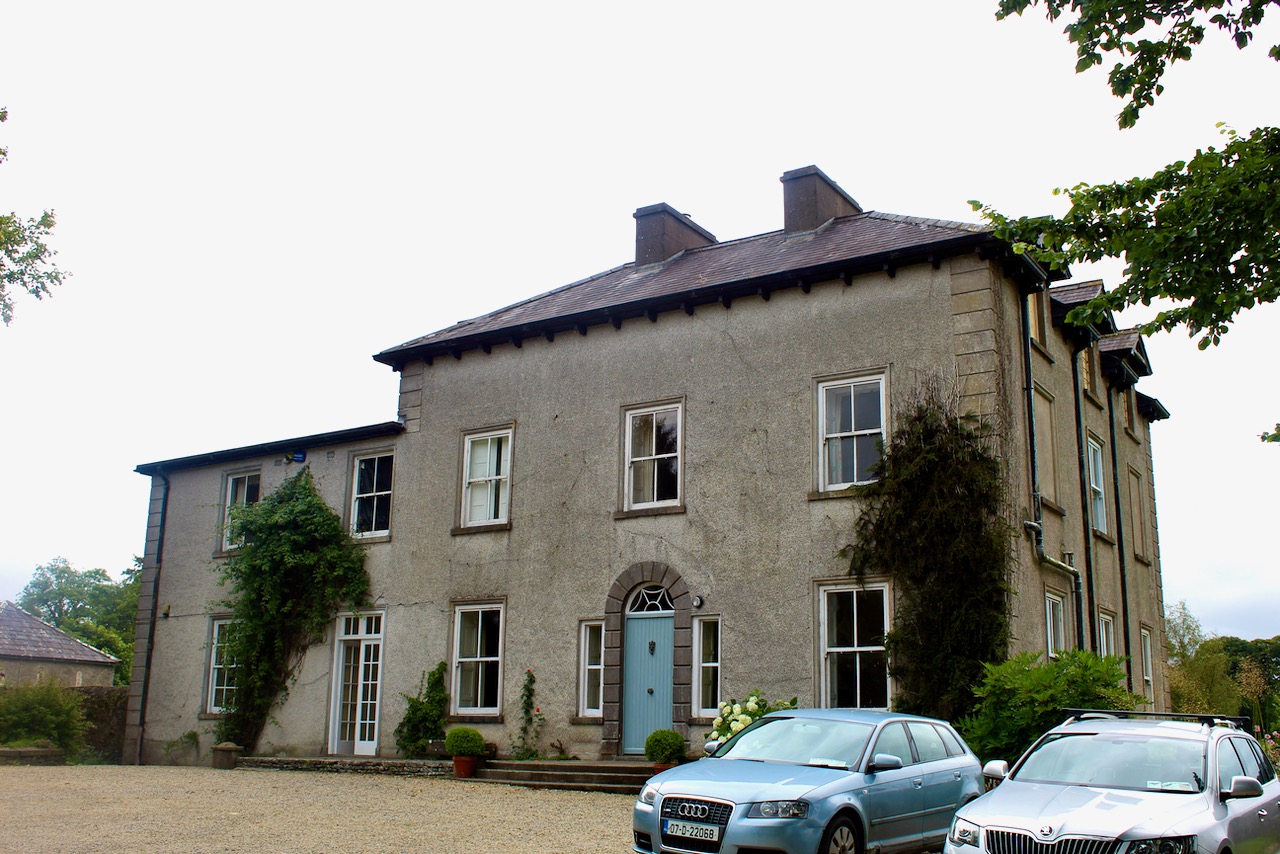
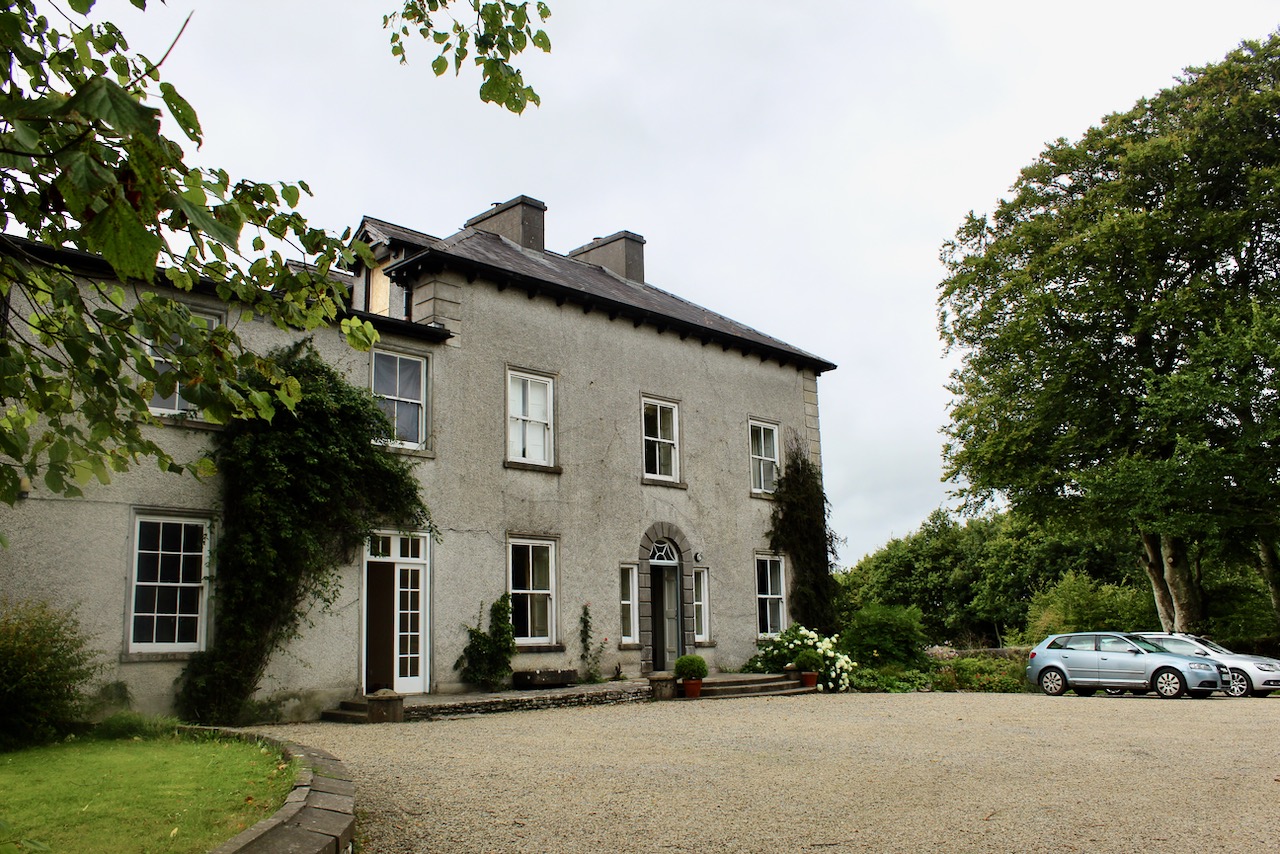
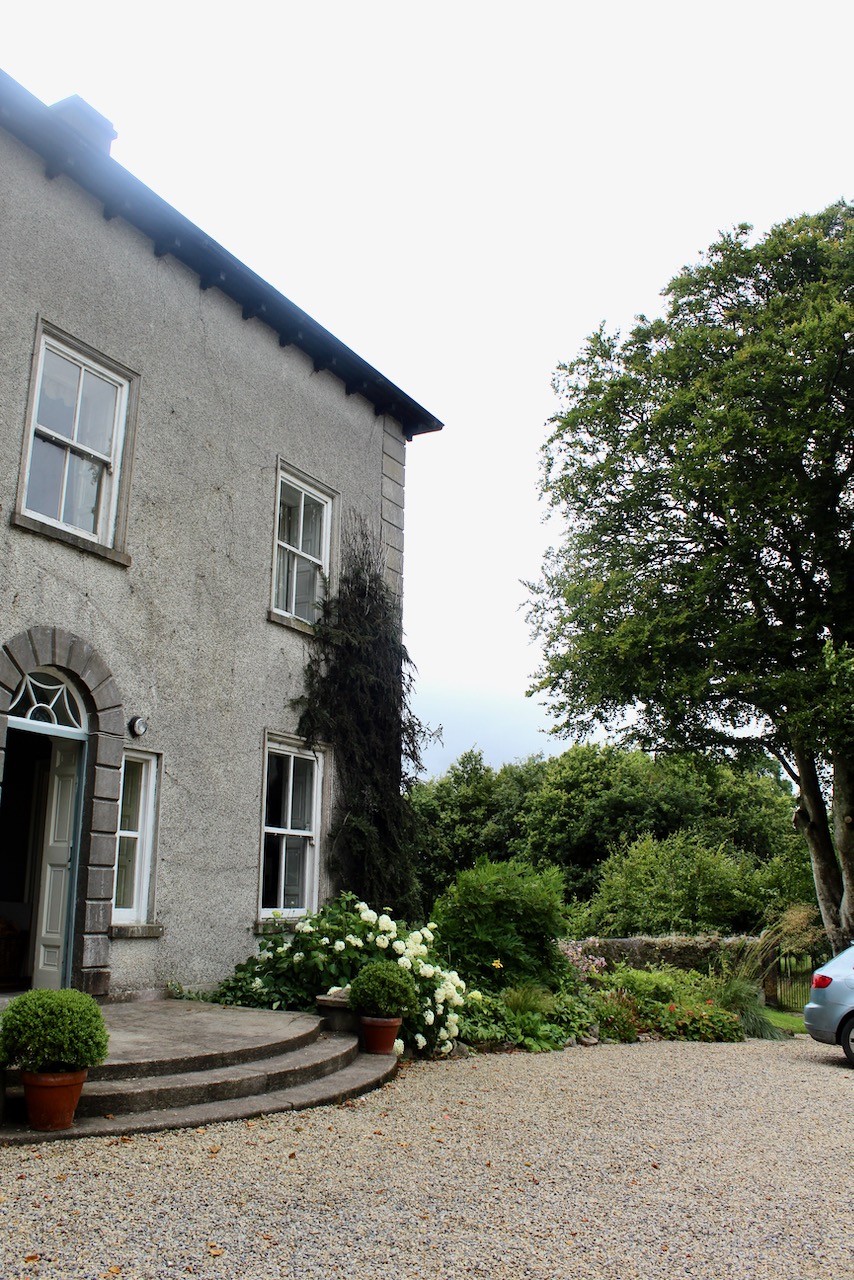
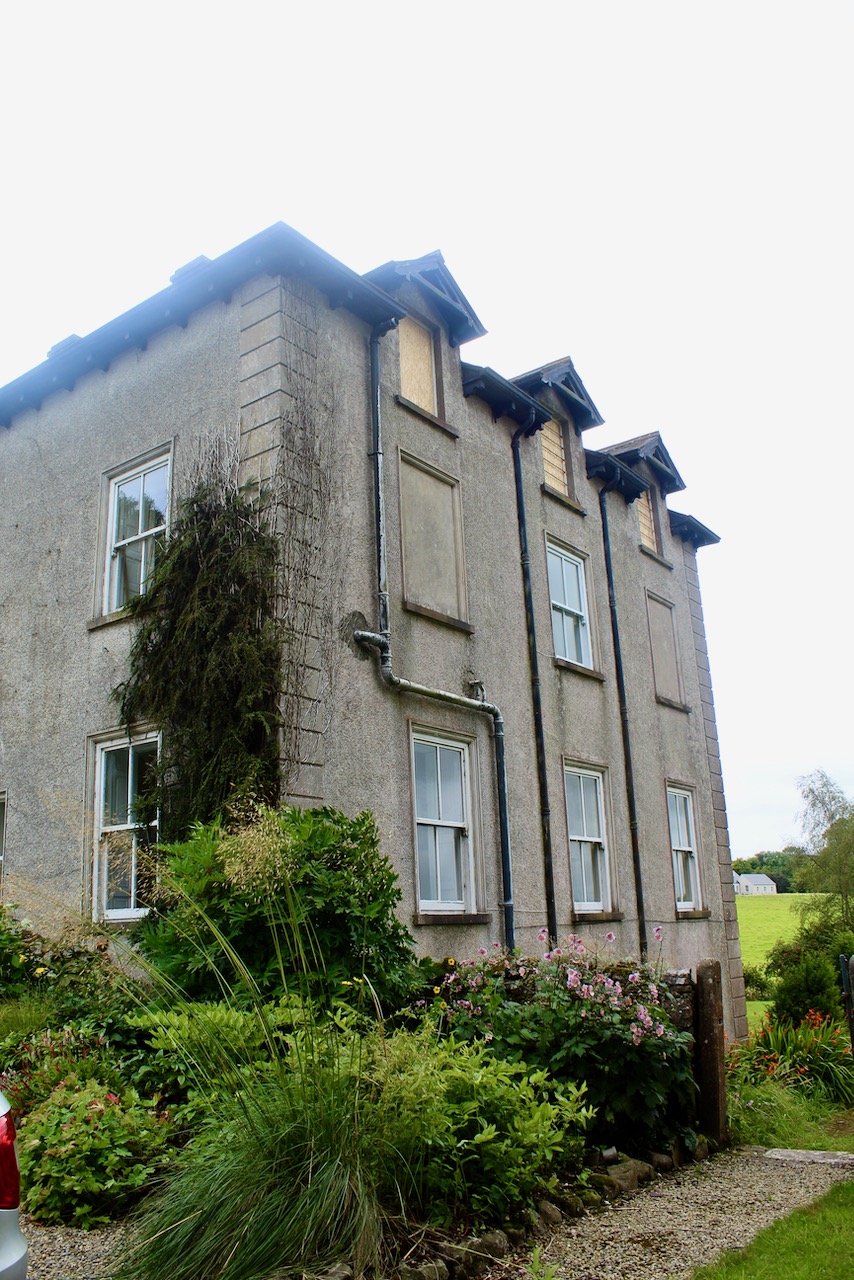
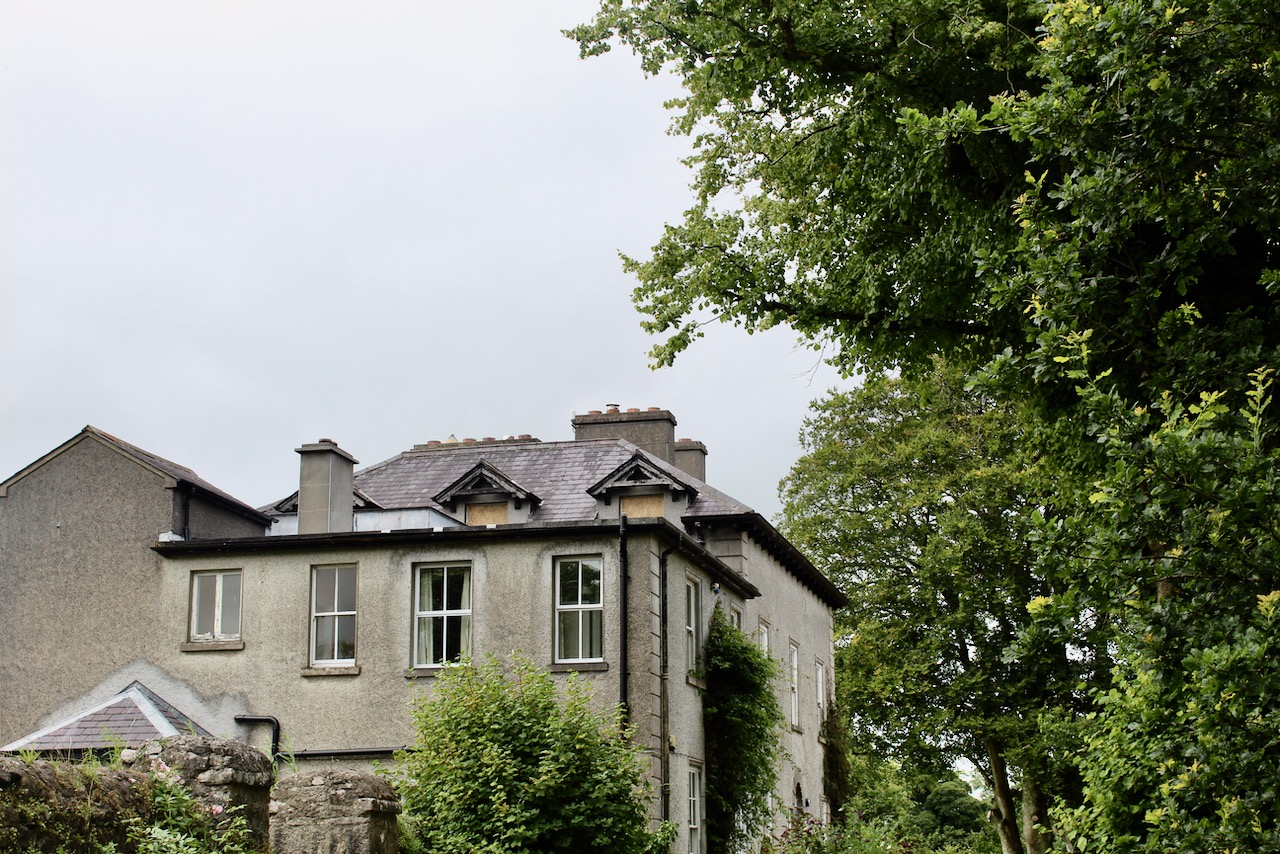
The house has a main rectangular block of three bays and two storeys, with a basement and dormer attic, built in 1780. The house was extended in the 1870s and lost some of its original features, but the original staircase remains.

A two-bay two-storey over basement wing was added around 1920.

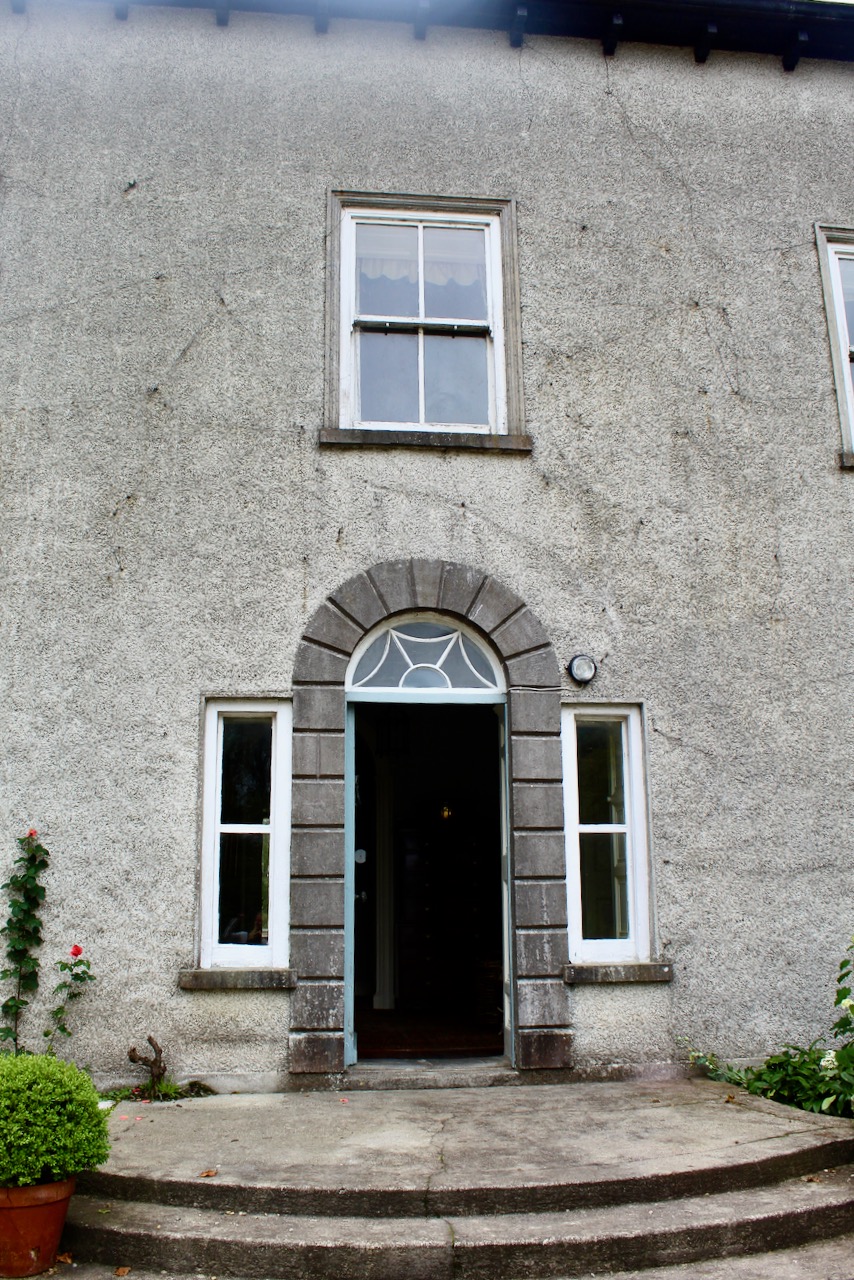
The house is lime rendered with a tripartite entrance: a round-headed door-case flanked by narrow rectangular sidelights. There is another door in the front in the newer section of the house.

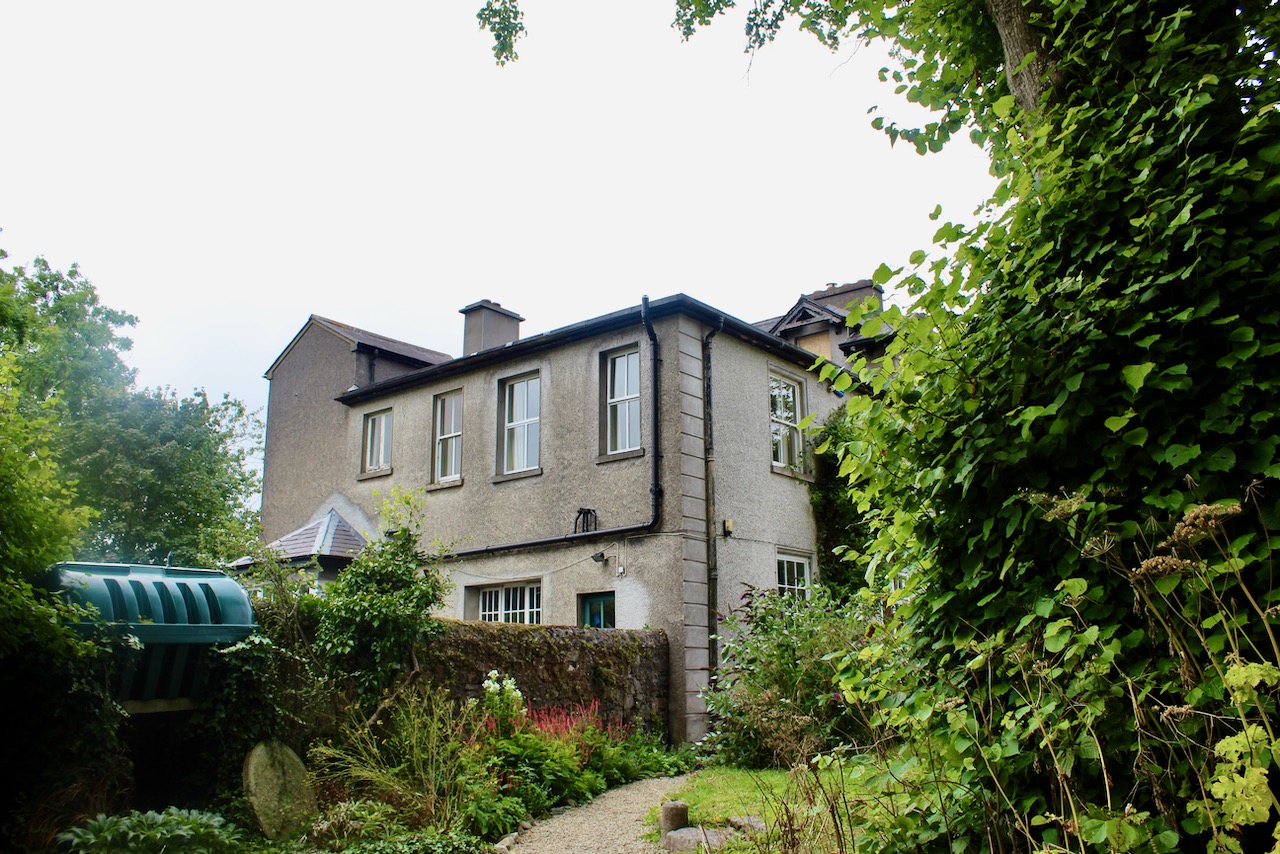
Two storey addition to the house. Photograph © Jennifer Winder-Baggot, www.irishhistorichouses.com
The round-headed doorcase with side windows and fanlight. Photograph © Jennifer Winder-Baggot, www.irishhistorichouses.com
Eaved roof rests on corbels, i.e. blocks projecting from the walls supporting the roof. Photograph © Jennifer Winder-Baggot, www.irishhistorichouses.com
The Kitchens have recently received a grant to fix their gabled windows, which are on both sides of the house, and have decorative wooden bargeboards. Photograph © Jennifer Winder-Baggot, www.irishhistorichouses.com
Gabled windows with decorative bargeboards, seen here above the later two storey addition. Photograph © Jennifer Winder-Baggot, www.irishhistorichouses.com

The Historic Houses of Ireland website tells us that architect and writer Jeremy Williams observed of Newtown: “What strikes one is the harmony of the whole ensemble. Entrance gates and lodge, lime avenue, house, carriage-house, farm yard and partly walled demesne are all proportionate to each other and reveal the unpretentious lifestyle of a typical west of Ireland squireen, a rare survival today.” 

The gate lodge is available for hired accommodation. [3]

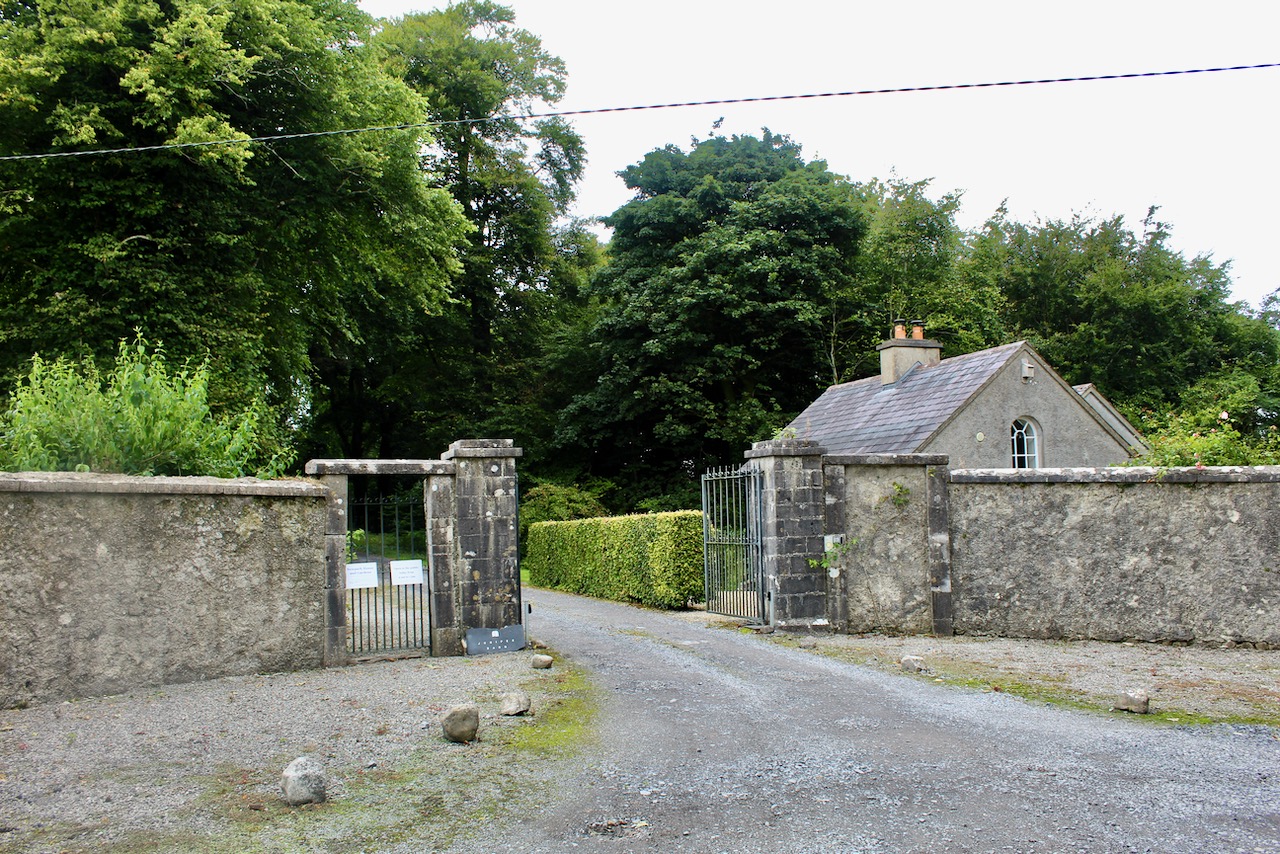
The entrance gates to Newpark. Photograph © Jennifer Winder-Baggot, www.irishhistorichouses.com
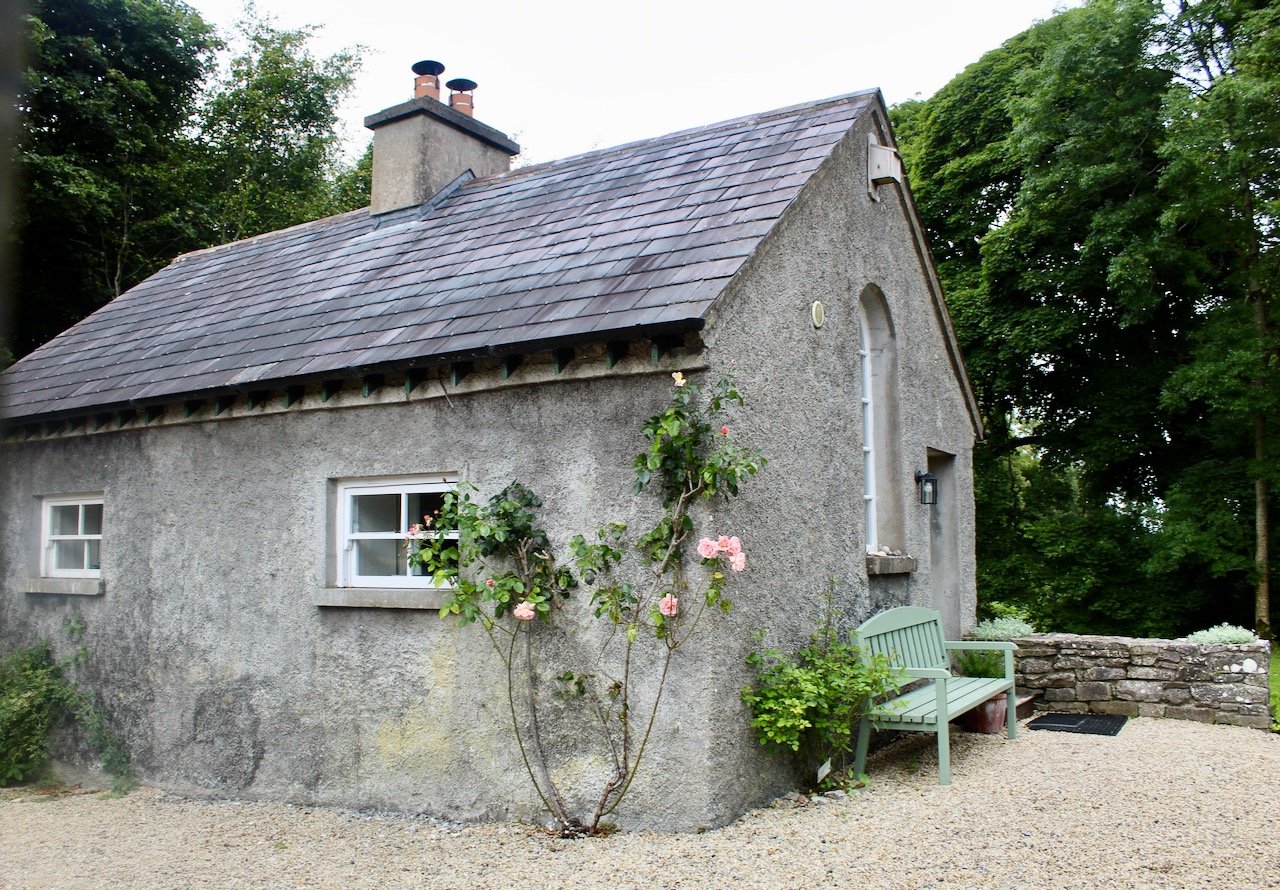
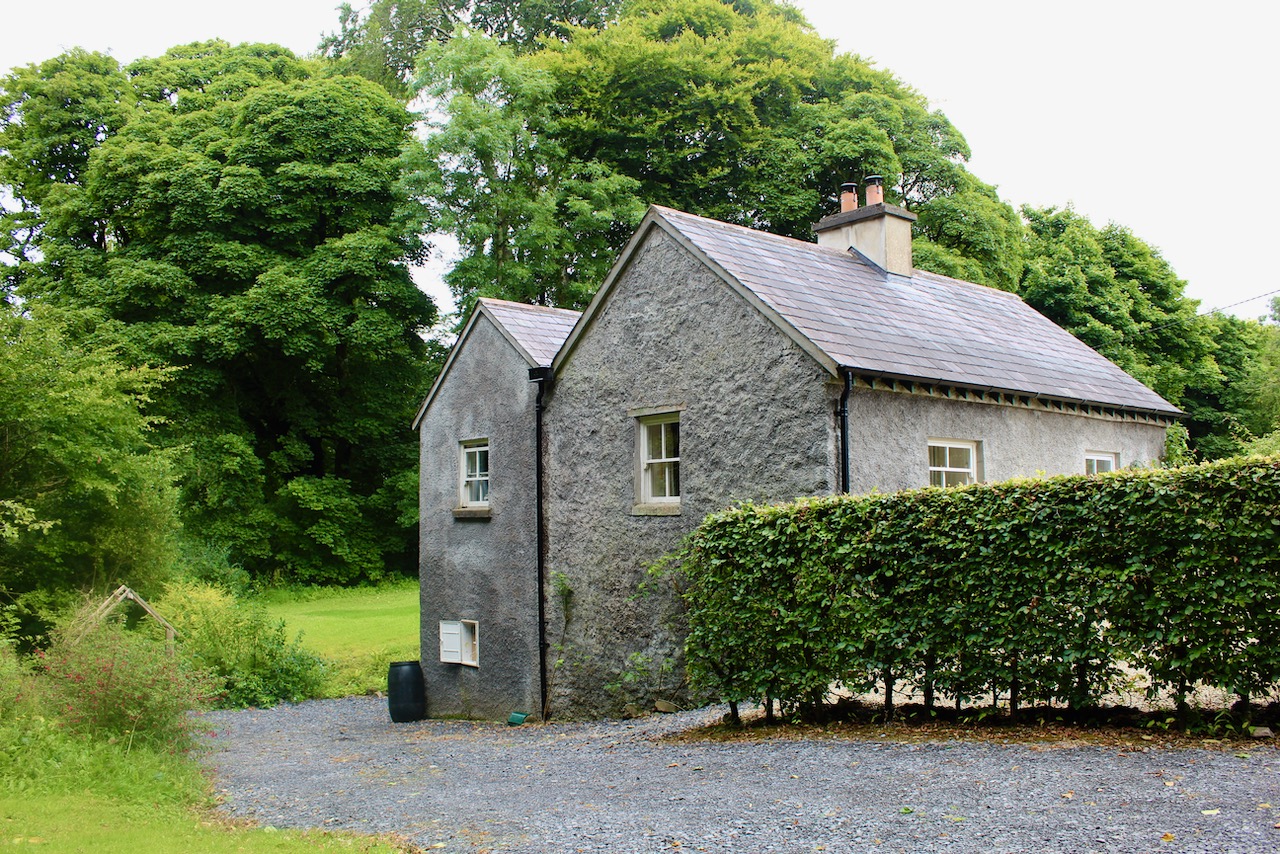
My photograph of the picturesque gate lodge of Newpark – I did not realise it is much bigger than it looks from the side facing the driveway. You can see the lower storey in my photograph below. Photograph © Jennifer Winder-Baggot, www.irishhistorichouses.com
Newpark, County Sligo. Photograph © Jennifer Winder-Baggot, www.irishhistorichouses.com
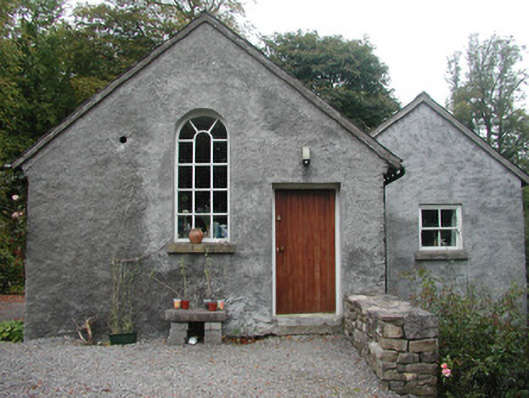
Photograph taken from National Inventory of Architectural Heritage, since I did not like to walk around the gate lodge, unsure if it had residents! In this photograph you can see the lovely arched window at the front.
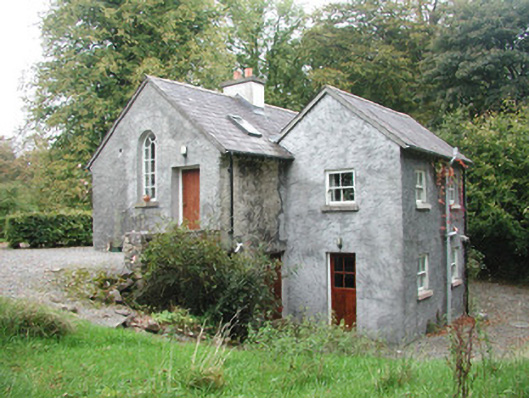
The gate lodge is much larger than it looks from the photographs I took, since I did not walk around it. This photograph taken from National Inventory of Architectural Heritage shows that the side of the lodge away from the driveway has another storey, lower than that facing the driveway. This extension was built in about 1960 onto the original c. 1840 cottage. [4]
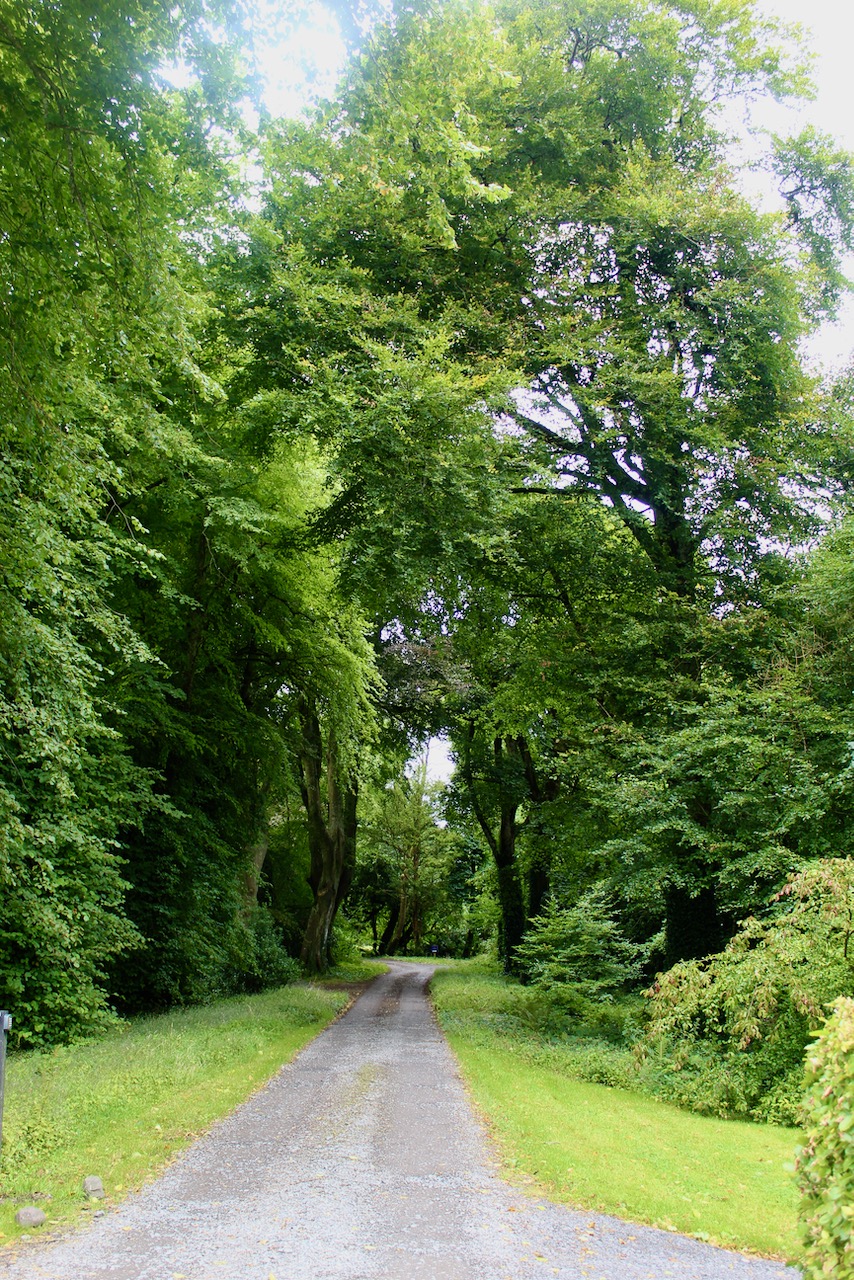
Entrance drive to Newpark. Photograph © Jennifer Winder-Baggot, www.irishhistorichouses.com

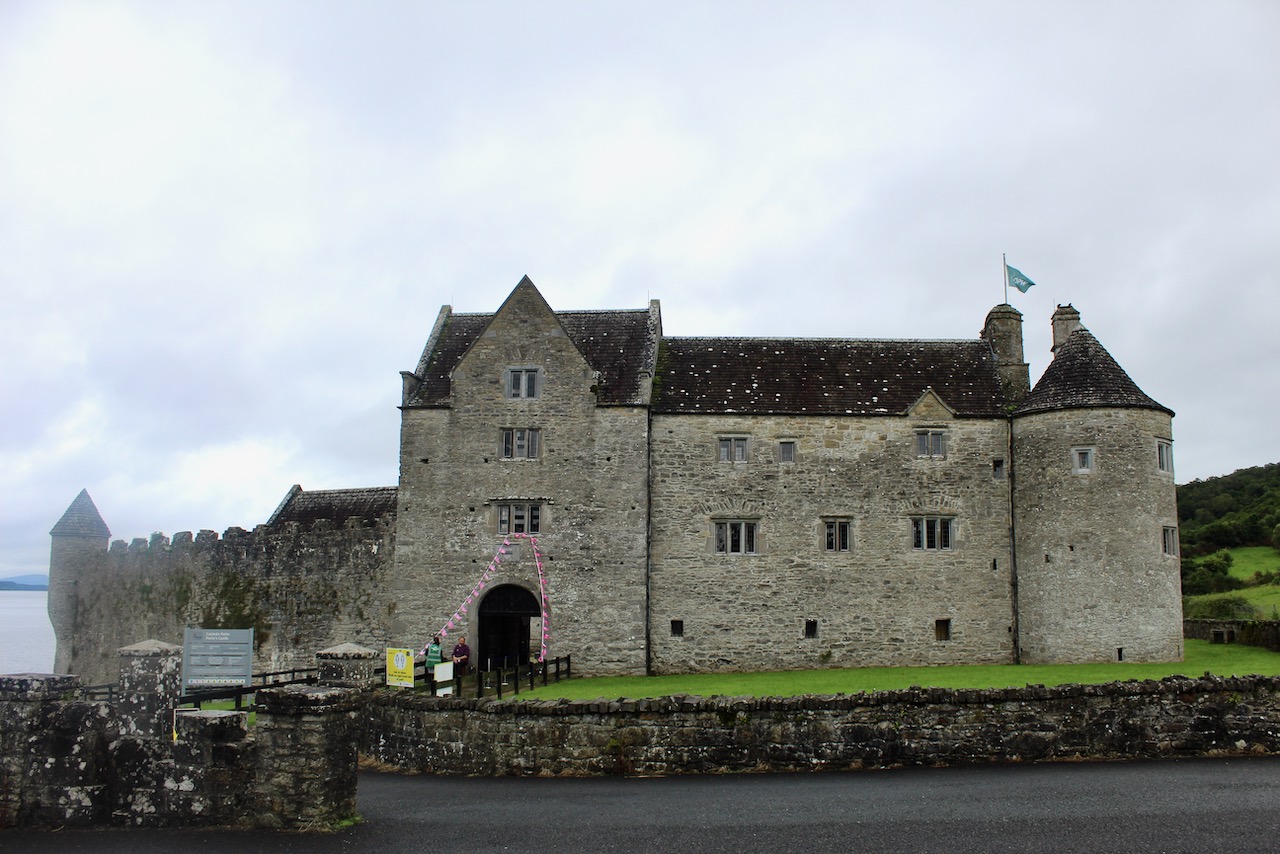
Robert Duke (1732-1792) of Newtown married Lucinda Parke, daughter of William Parke of Dunally, County Sligo. The Parkes of Dunally were a branch of the Parkes who owned Parkes Castle in County Leitrim, which we also visited during Heritage Week.

Parkes Castle, County Leitrim, built in the early seventeenth century by Captain Robert Parke on the foundations on an old O’Rourke castle built by Brian O’Rourke, Prince of Breffne. Photograph © Jennifer Winder-Baggot, www.irishhistorichouses.com

Robert King Duke (1770-1836) also married a Parke from Dunally, Anne. Newpark passed down through the family and it must have been his great-grandson, Roger Philip Duke (1874-1944), who sold Newpark.

Richard Edward O’Hara (1863-1948) who purchased Newpark in 1913 was the son of Charles William Cooper (1817-1898) of Coopershill, who took the name O’Hara when he inherited Annaghmore from his uncle, Charles King O’Hara (1784-1860) (the “King” may have been from Charles King O’Hara’s mother’s mother, whose maiden name was King). Charles William Cooper O’Hara married Anne Charlotte Streatfield, a wealthy heiress, and they lived in Annaghmore. They had many children, one of whom, Richard Edward O’Hara (1863-1948), purchased Newpark. He moved to Queensland, Australia, where he farmed, and married Ethel Fisken in 1911. They returned to live in Ireland and he purchased Newpark.

They had a daughter, Sheela, who married Finlay Kitchin, grandfather of the current owner, Christopher. Christopher’s parents moved out of Newpark only a few years ago to a house built on the property, yielding the house to their son and his wife, Dorothy-Ellen. Our week took a serendipitous turn when we learned that Dorothy-Ellen is the daughter of Mary White of The Old Rectory, Killedmond in Carlow, where we were going to be staying later that week! [5]

Dorothy and Christopher had arranged for a special event for Heritage Week, so Stephen and I purchased tickets for this: a nature talk and walk by Michael Bell of Naturelearn [6]. Christopher told us that the house would be open to visitors during the event.

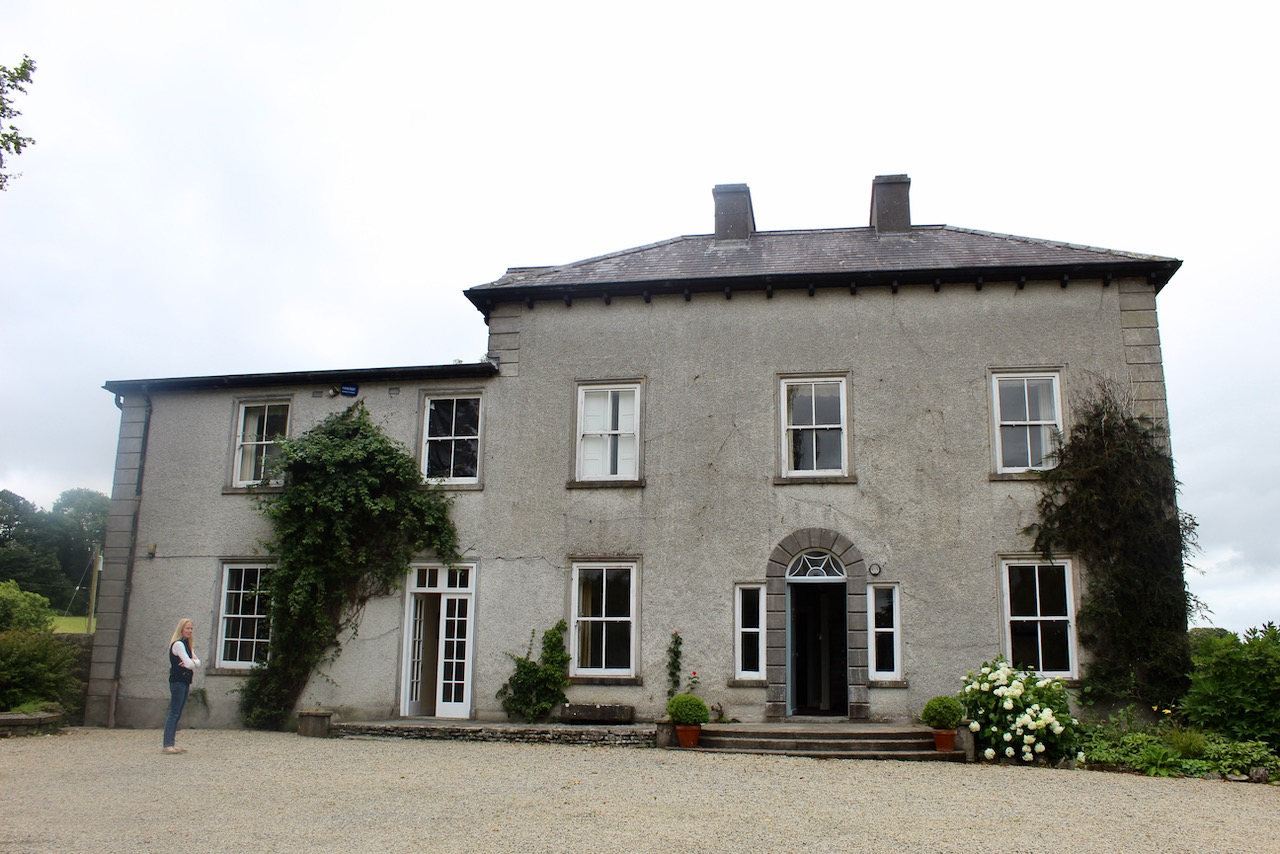
Dorothy-Ellen in front of her home. Photograph © Jennifer Winder-Baggot, www.irishhistorichouses.com
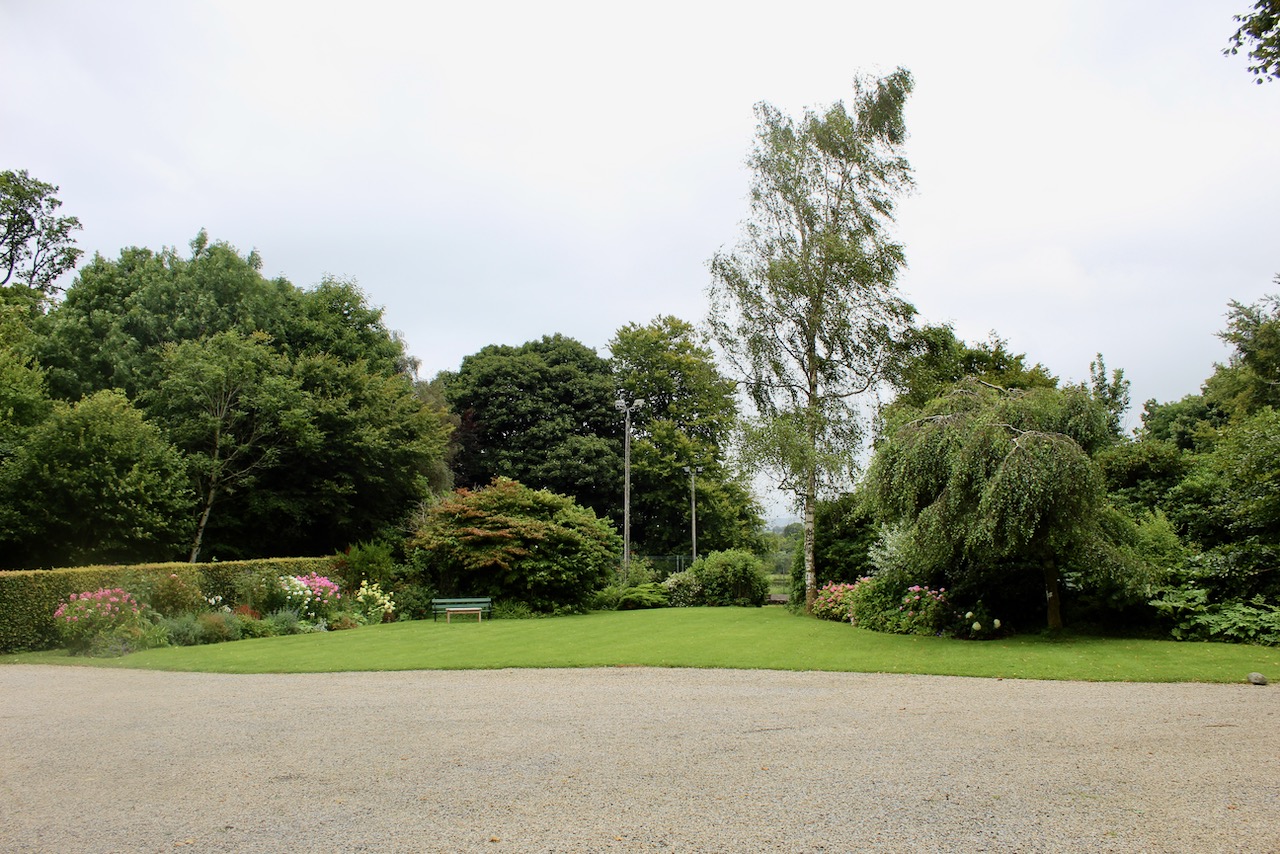
The gardens in front of the house. Photograph © Jennifer Winder-Baggot, www.irishhistorichouses.com

Christopher greeted us and was kind enough to take time from his busy preparations for the Heritage Week event to give us a tour of the house. He pointed out that the geometrical plan is most unusual, and reminded the architectural historian Maurice Craig of a swastika, with four principal rooms of unequal size arranged around a small central hall. Another Section 482 property, Oakfield Park in County Donegal, also has this arrangement.

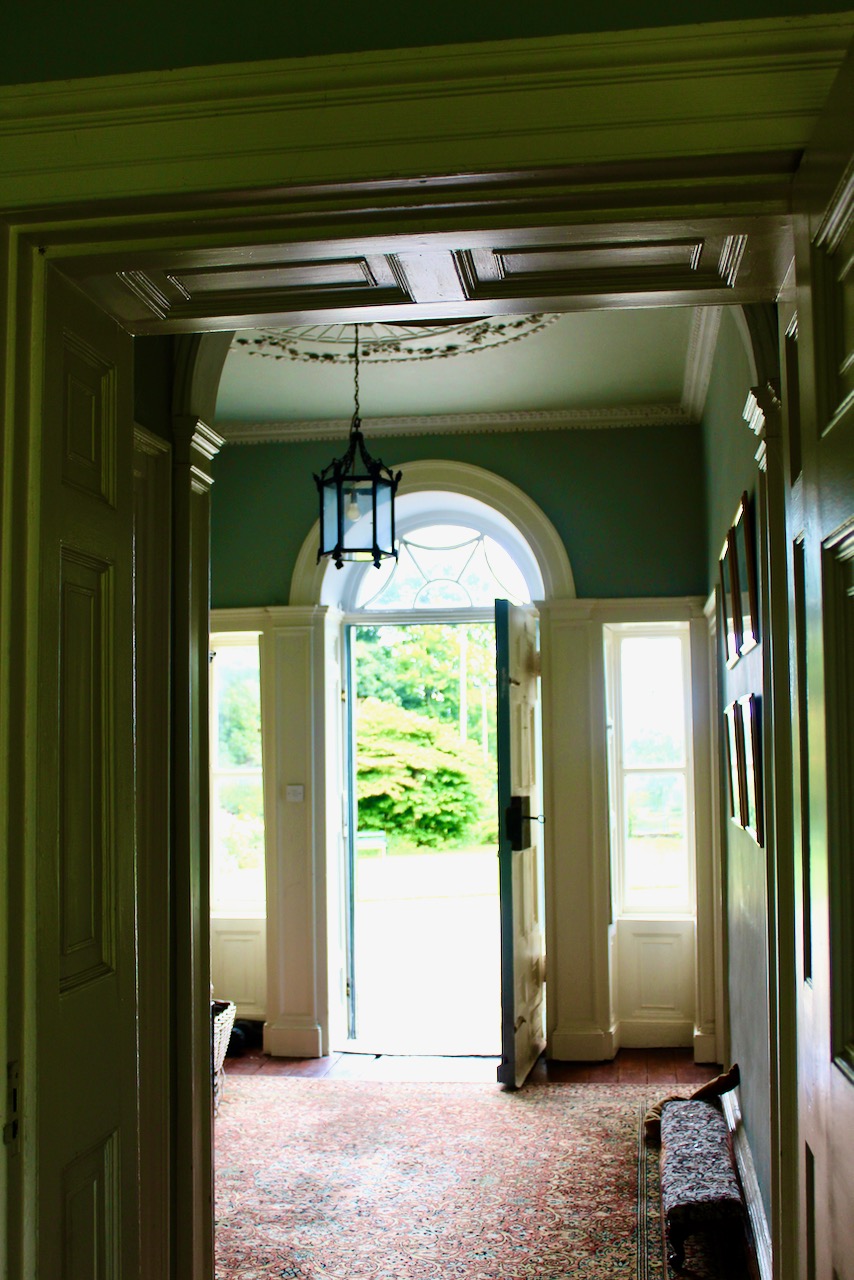
Front hall of Newpark, with “cobweb” fanlight. Photograph © Jennifer Winder-Baggot, www.irishhistorichouses.com
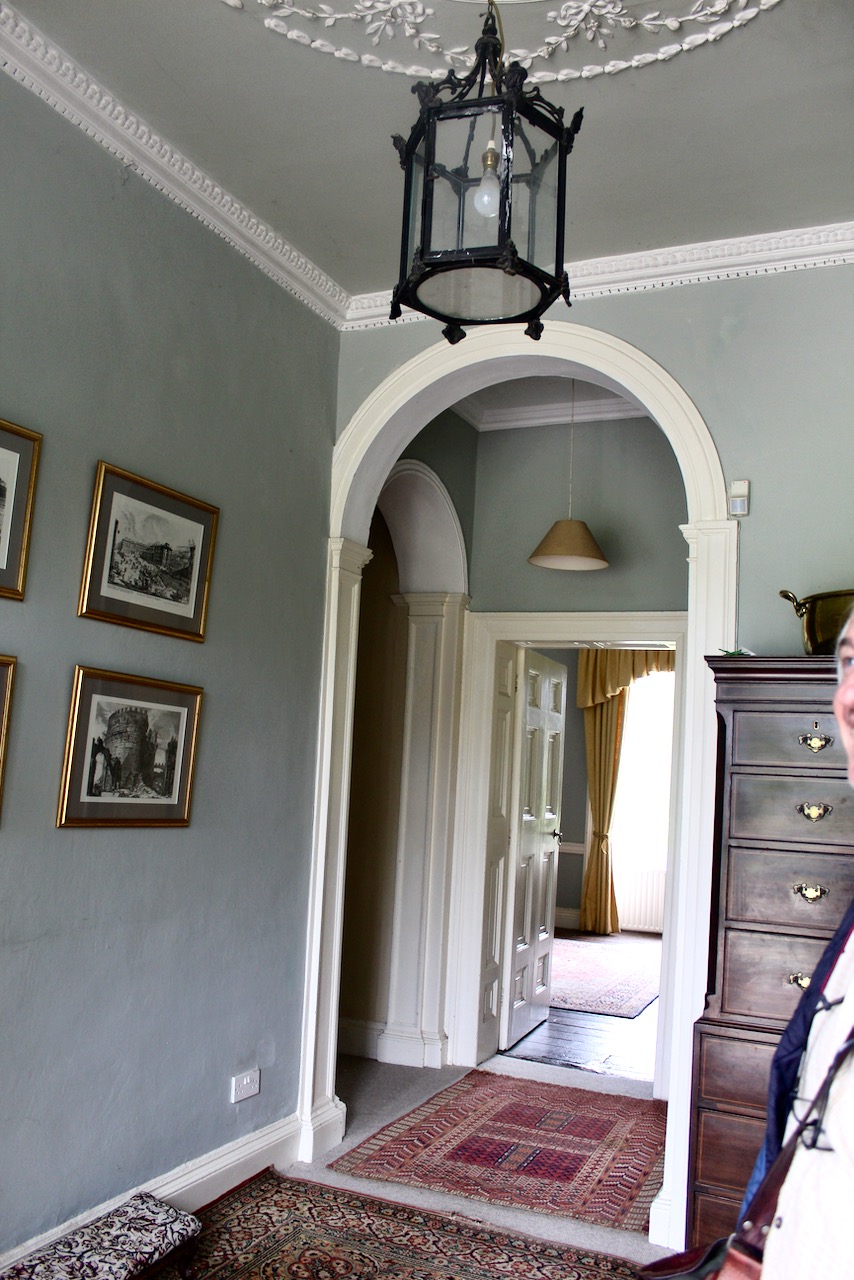
The front hall of Newpark, with lovely plasterwork on ceiling: a decorative cornice and central ceiling rose feature. Photograph © Jennifer Winder-Baggot, www.irishhistorichouses.com
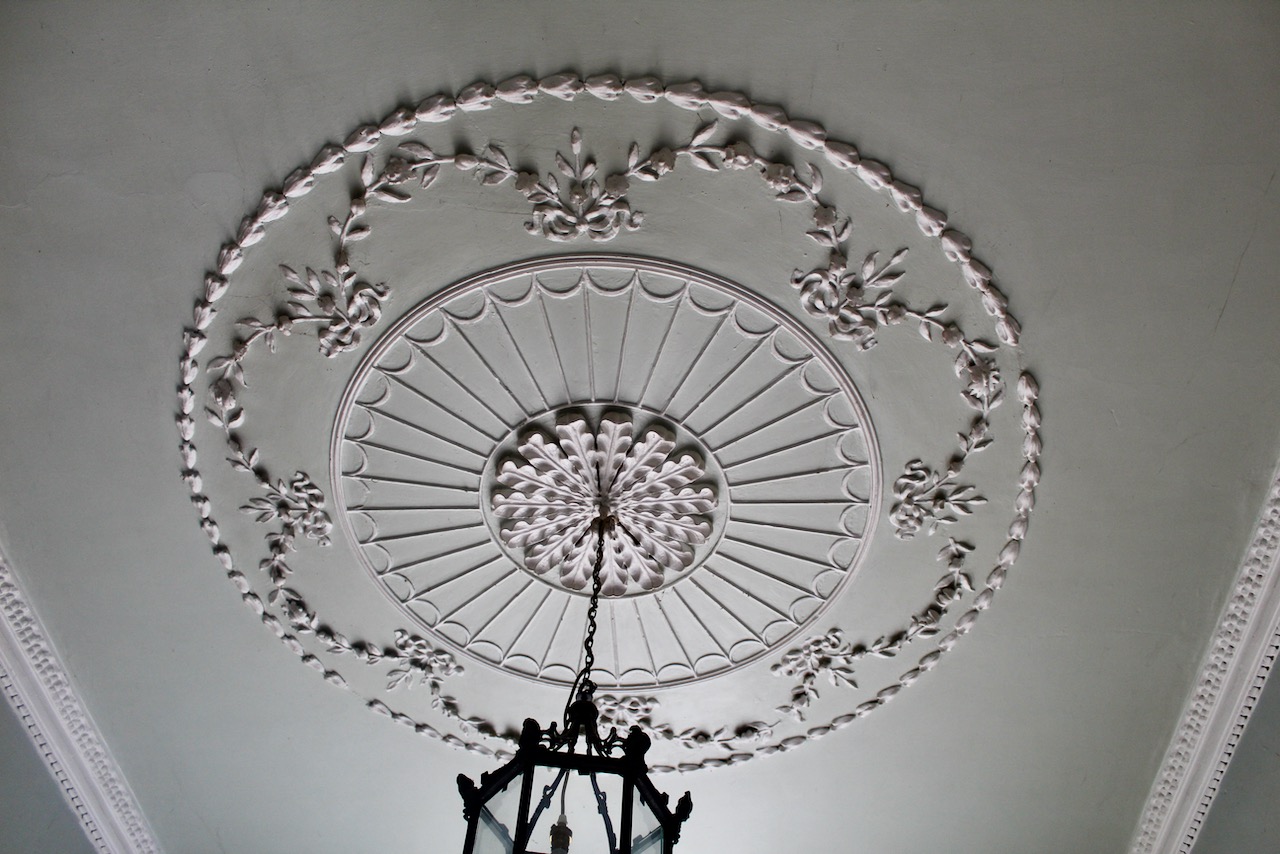
The plasterwork on the front hall ceiling, of acanthus leaves and floral swags and a geometrical design. Photograph © Jennifer Winder-Baggot, www.irishhistorichouses.com
Isaac Nicholson, b. 1840, a Kitchin ancestor. Photograph © Jennifer Winder-Baggot, www.irishhistorichouses.com

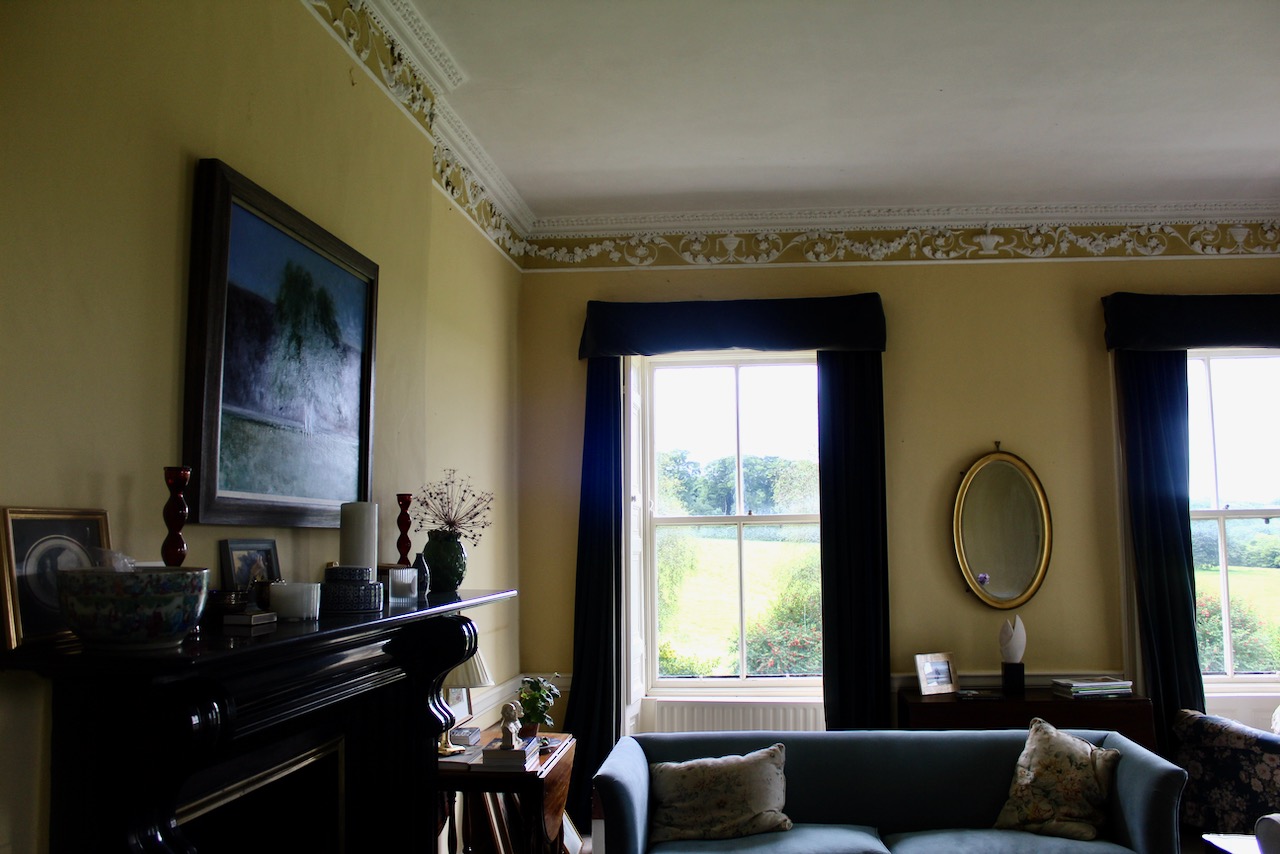
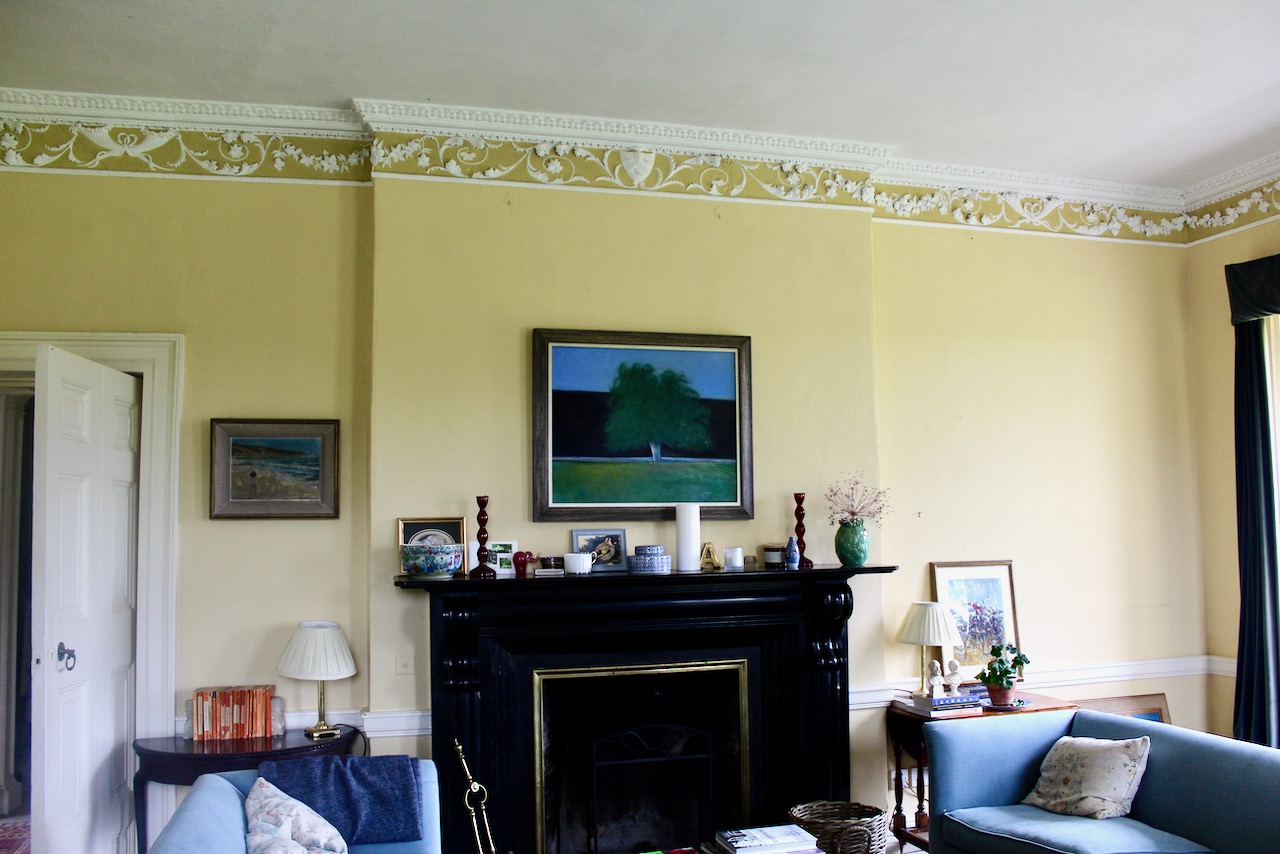
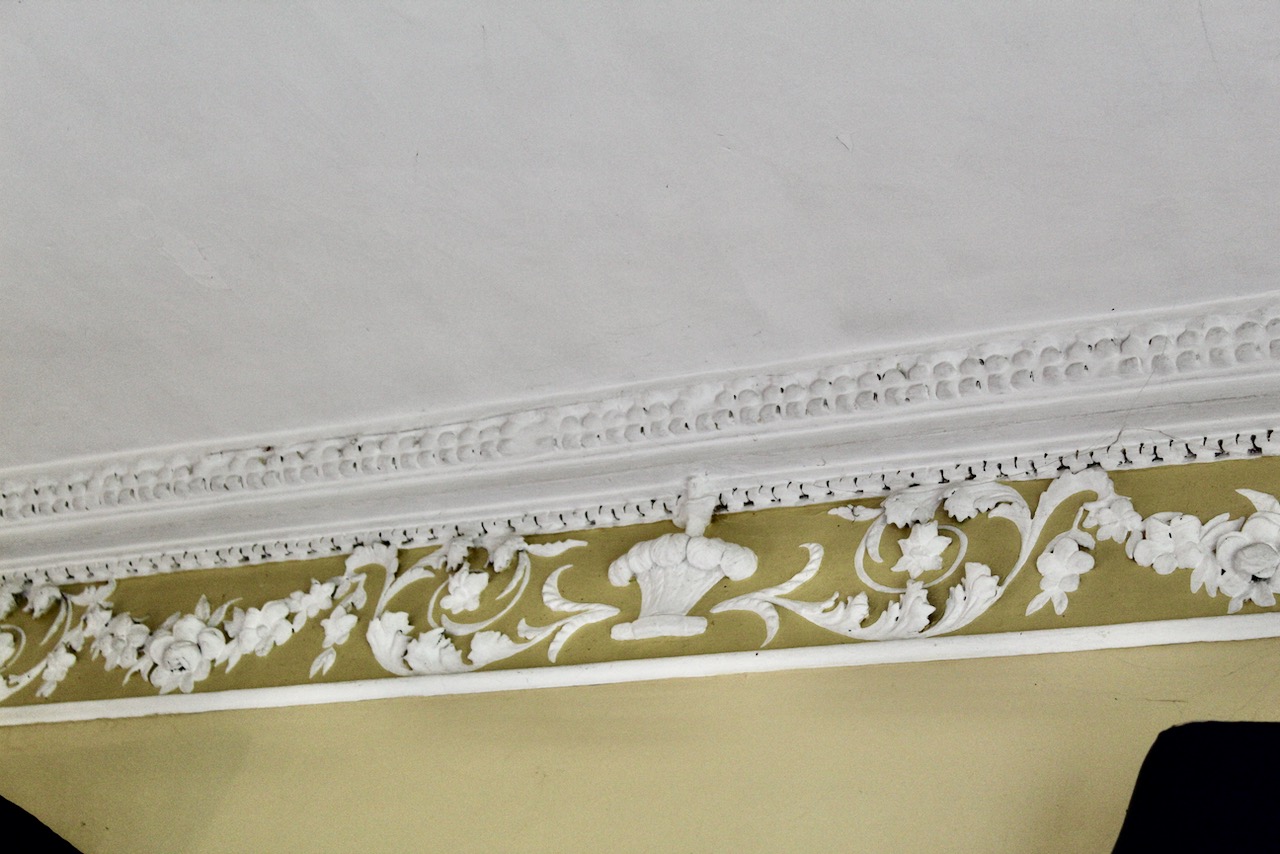
The drawing room also has fine stucco work, with garlands and flowers and urns.

Newpark, County Sligo. Photograph © Jennifer Winder-Baggot, www.irishhistorichouses.com
Newpark, August 2021. Photograph © Jennifer Winder-Baggot, www.irishhistorichouses.com

Above the fireplace the frieze of plasterwork has a shield with the arms of the Duke family, a chevron between three terns. The frieze also features the crest of the Dukes, a sword plunged in a plume of nine ostrich feathers. Robert O’Byrne points out that there is a cornet with plumes rising from it, and that this may represent the coat of arms of Lucinda Parke, wife of Robert Duke. [7]

The crest of the Dukes features in the cornice frieze, a sword plunged in a plume of nine ostrich feathers. Photograph © Jennifer Winder-Baggot, www.irishhistorichouses.com

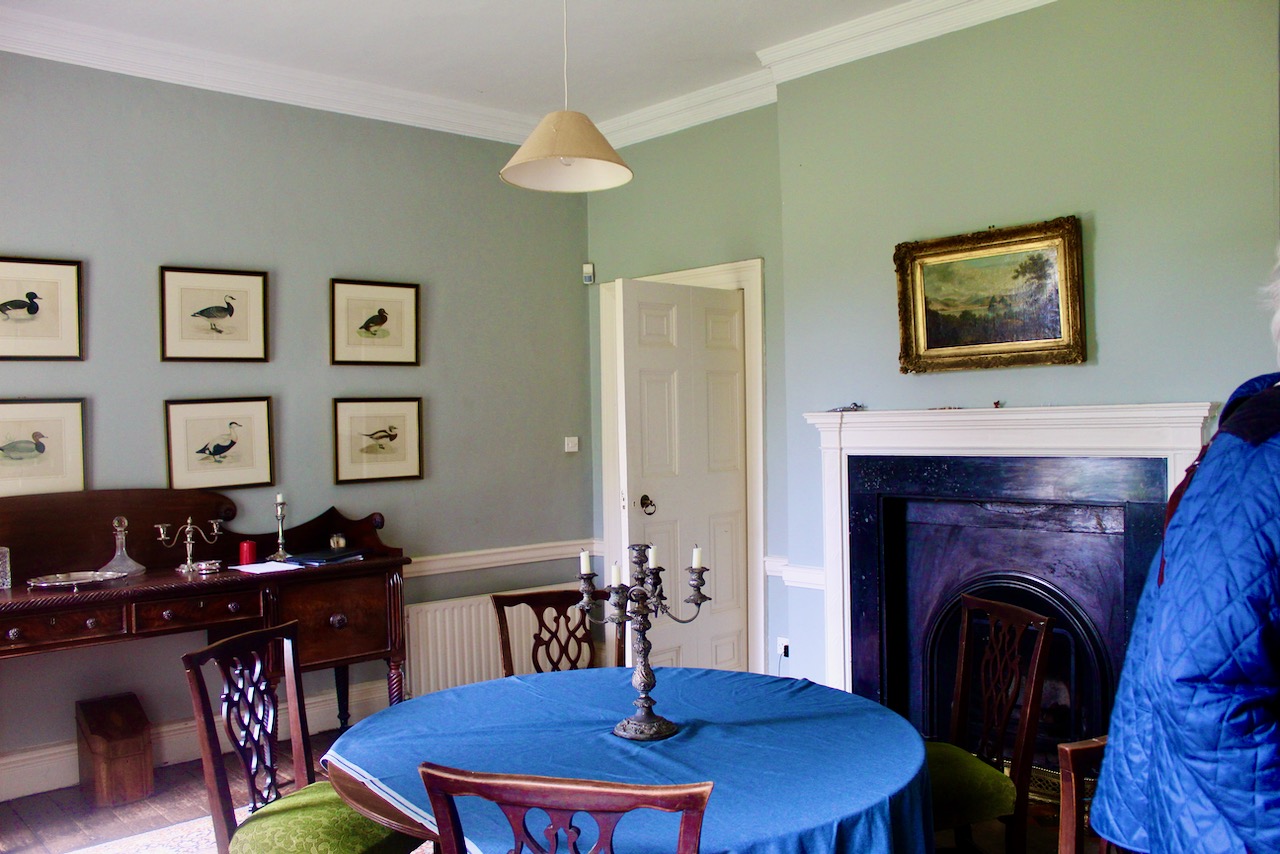
The other main reception room is the dining room.

Newpark, County Sligo. Photograph © Jennifer Winder-Baggot, www.irishhistorichouses.com
Newpark, August 2021. Photograph © Jennifer Winder-Baggot, www.irishhistorichouses.com

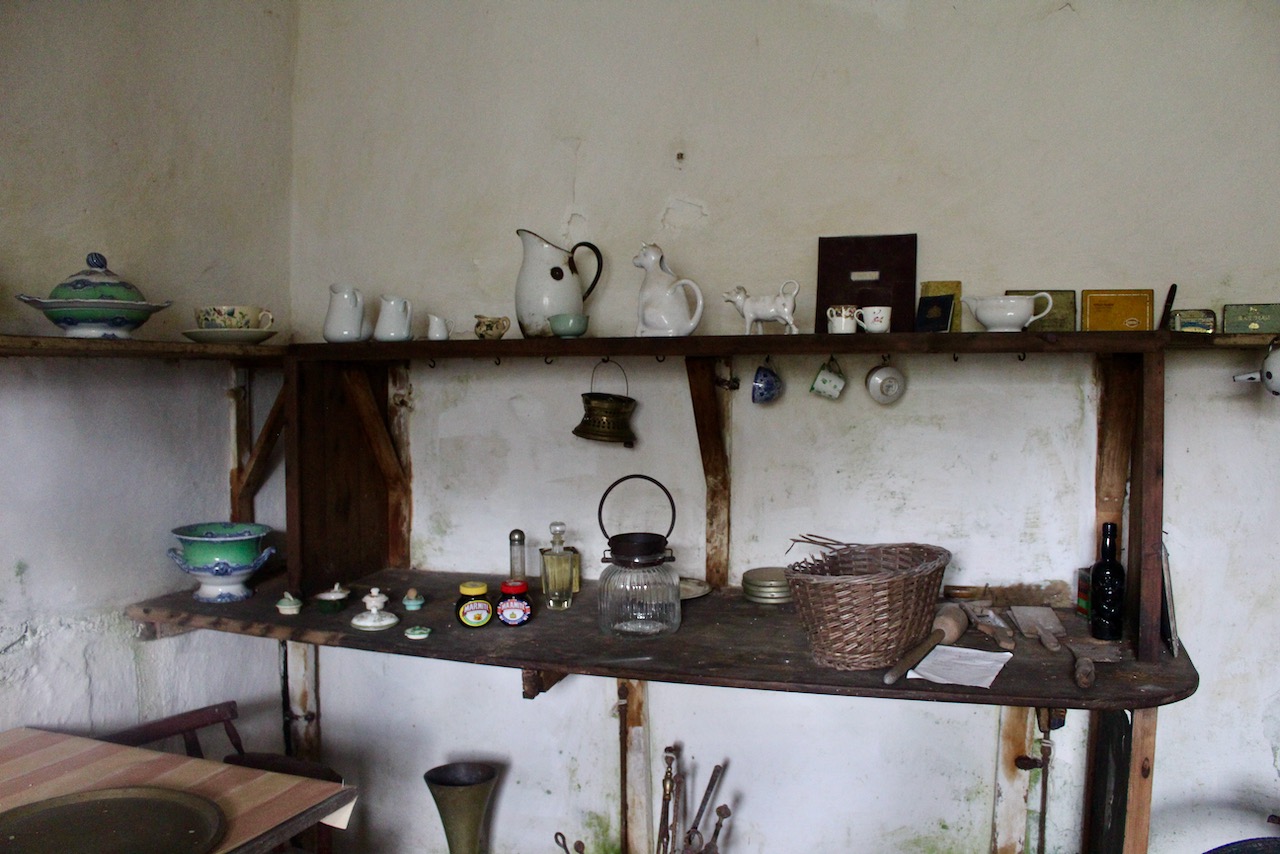
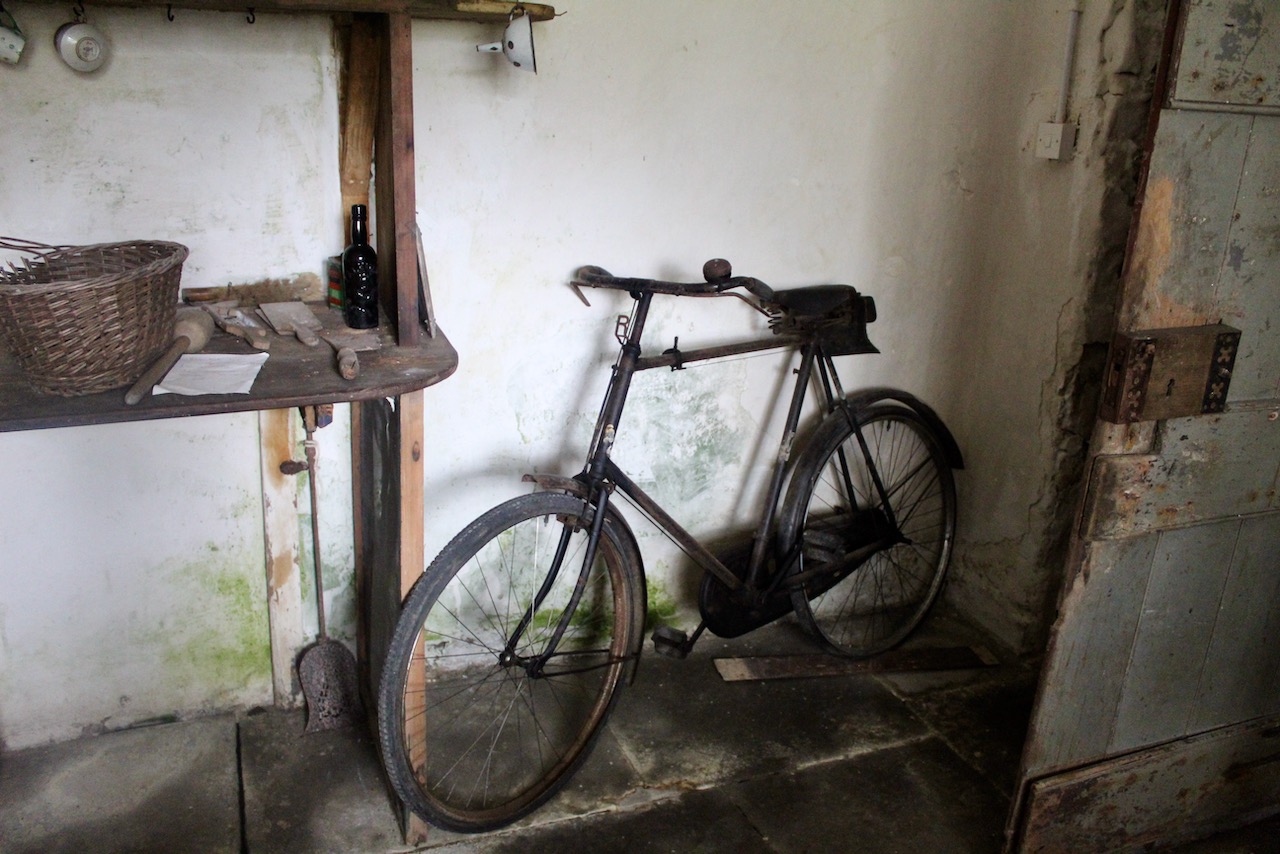
Dorothy-Ellen took us downstairs to show us the basement, and the room in which she is creating a museum of the old things from the house.

Newpark, County Sligo. Photograph © Jennifer Winder-Baggot, www.irishhistorichouses.com
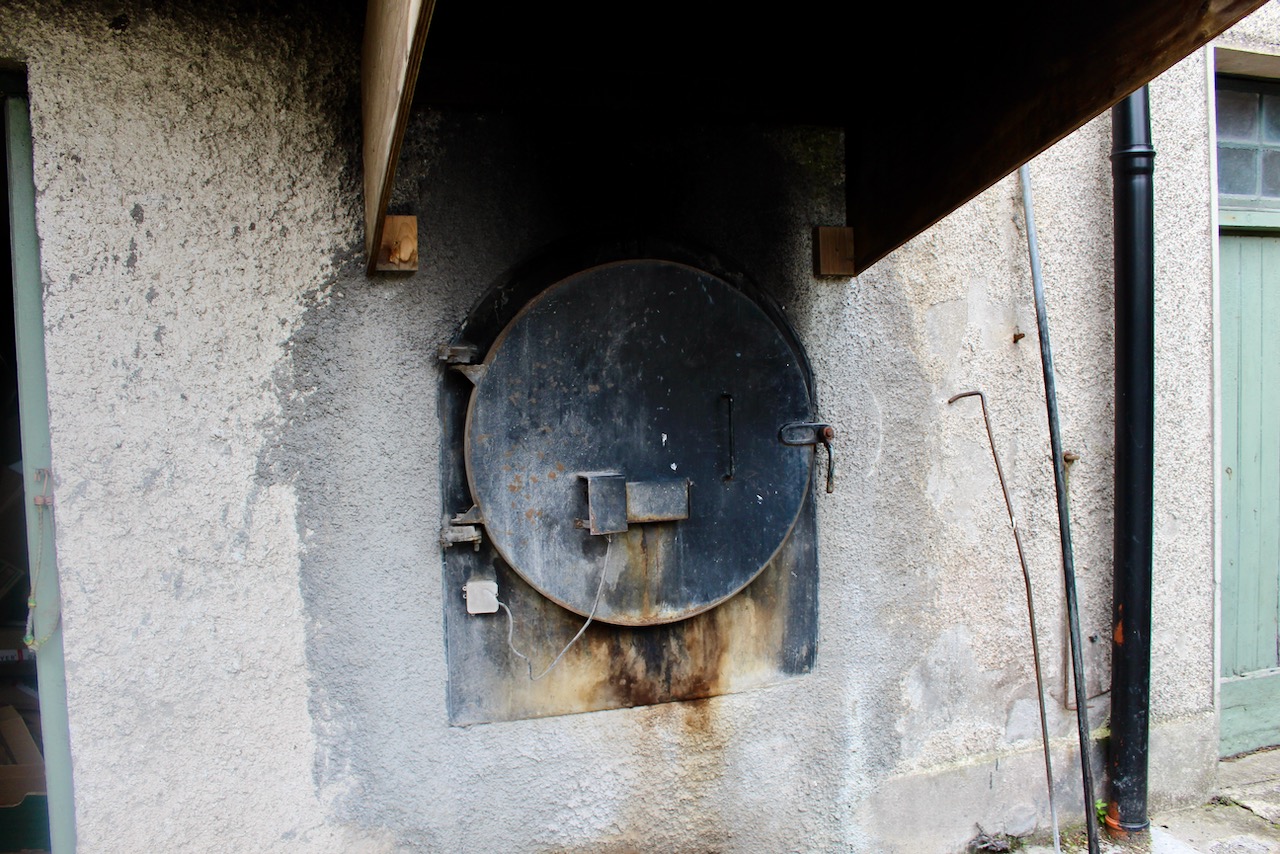
All the heating is supplied by this passat boiler which Dorothy-Ellen showed us. Photograph © Jennifer Winder-Baggot, www.irishhistorichouses.com

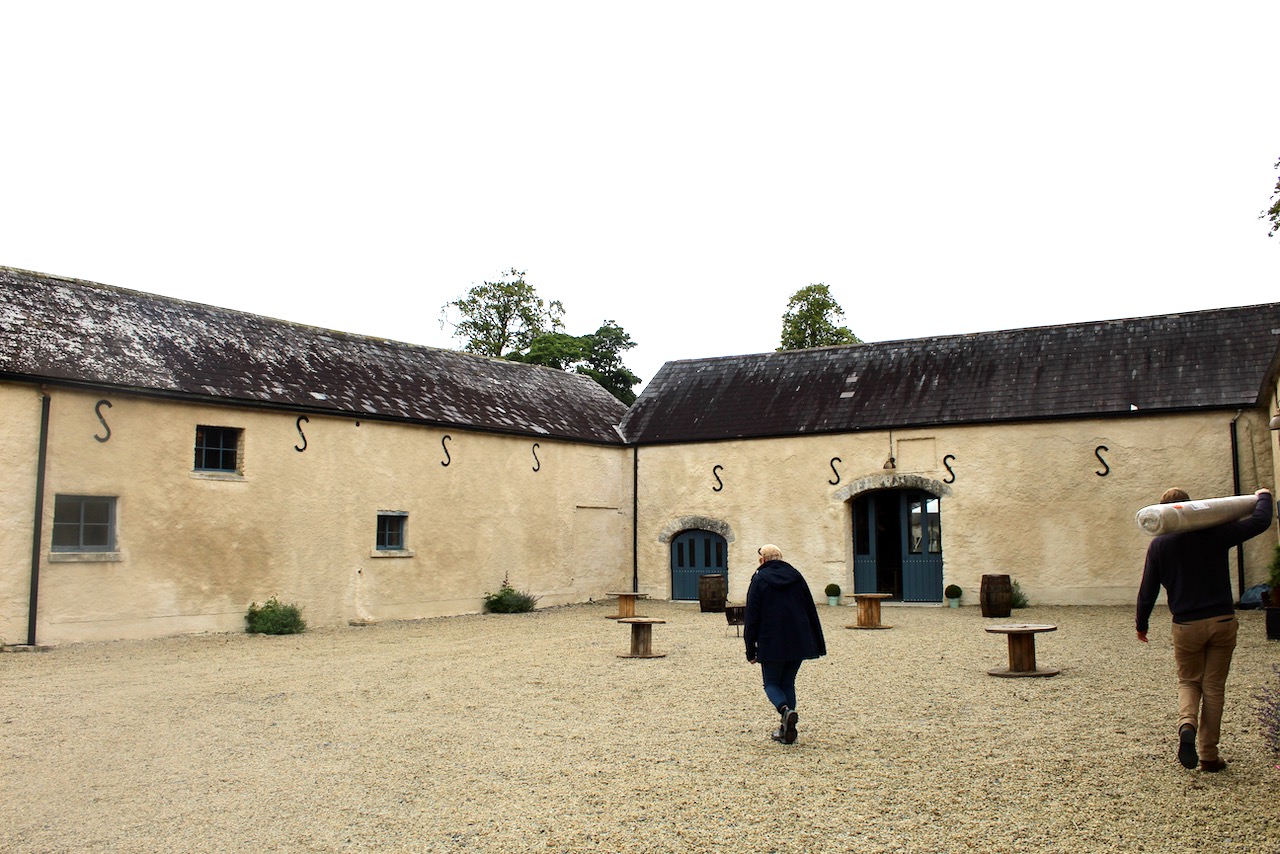
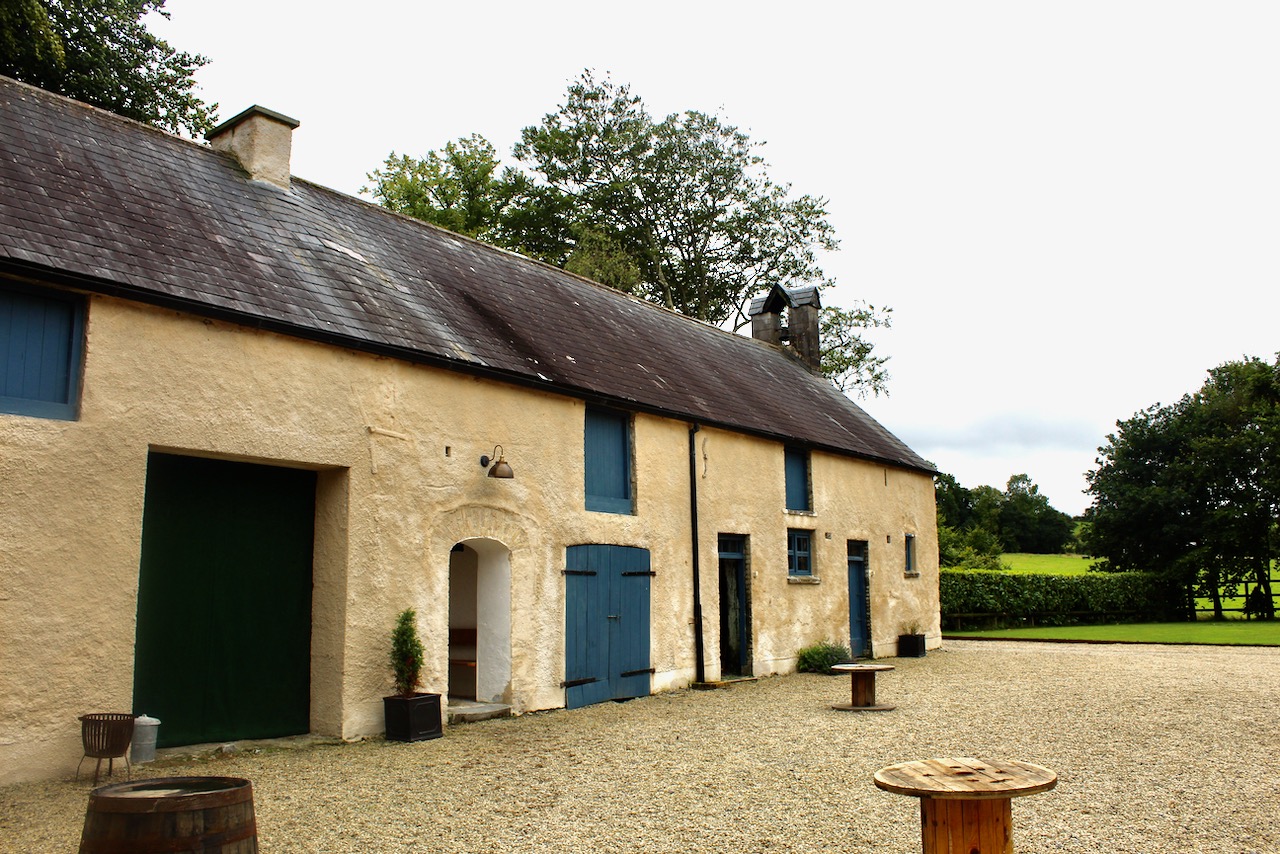
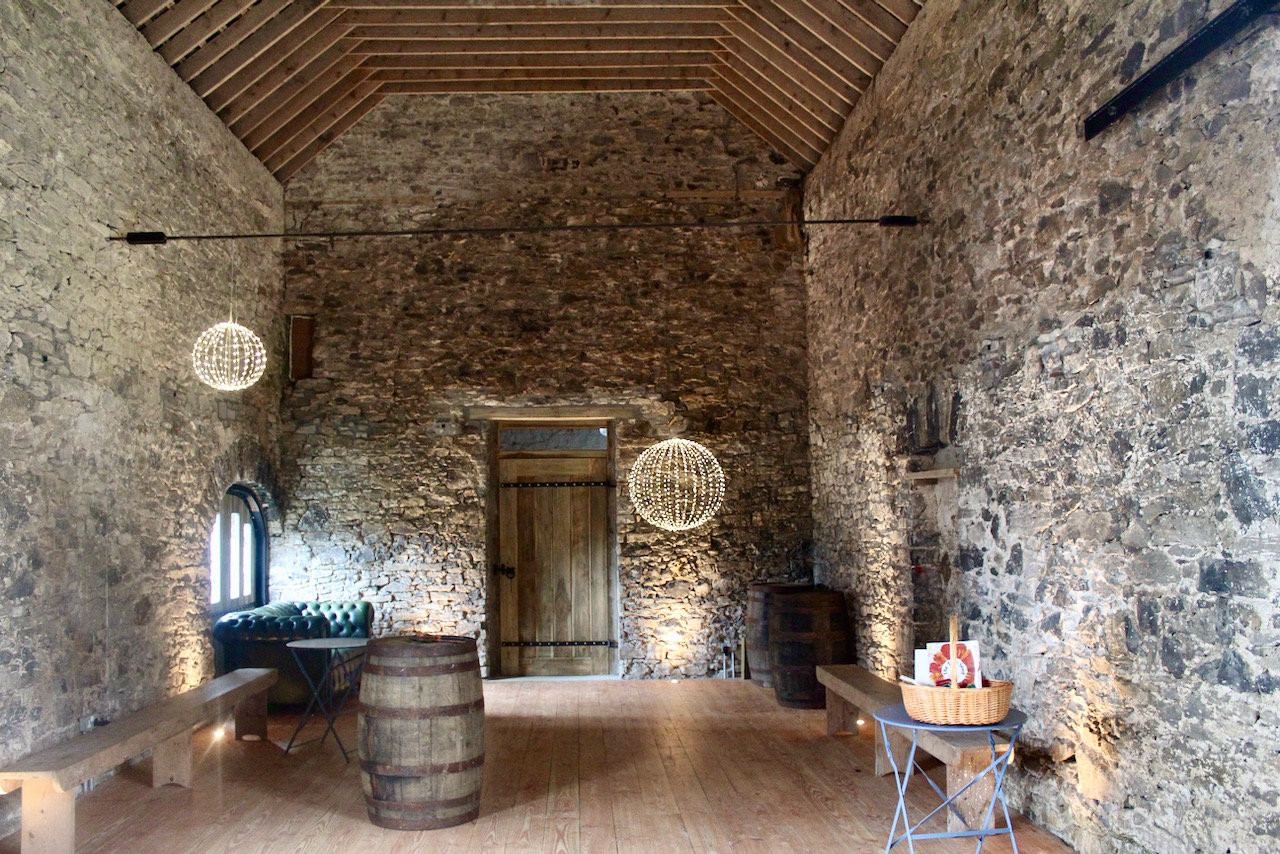
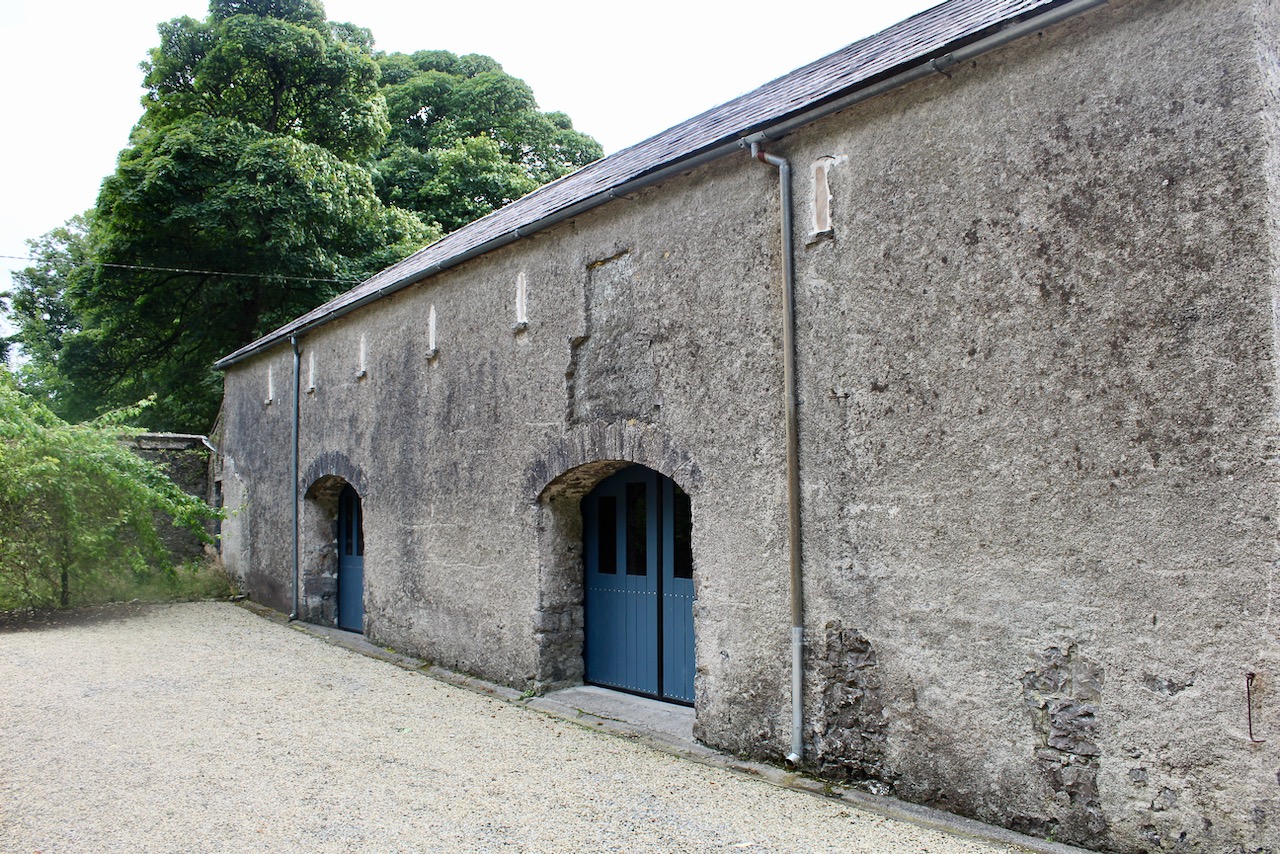
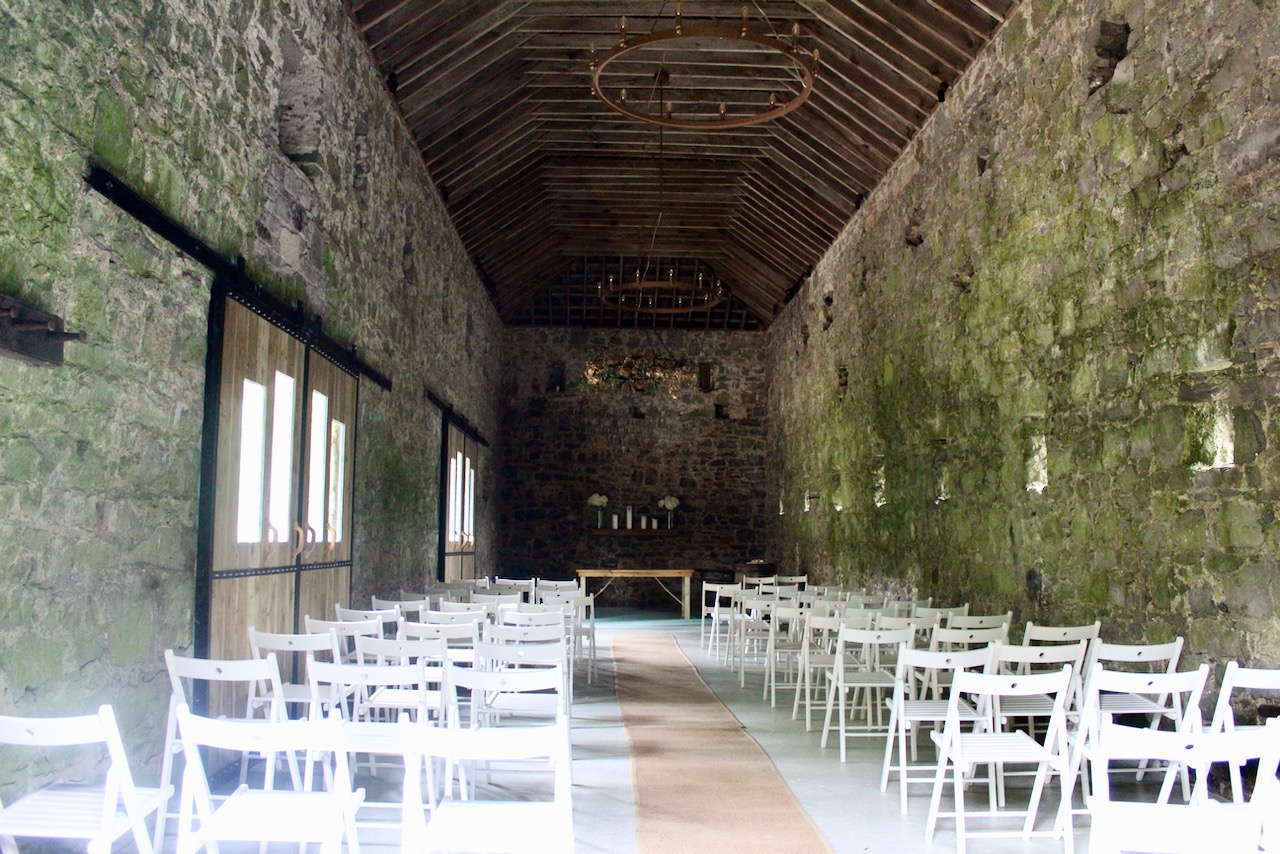
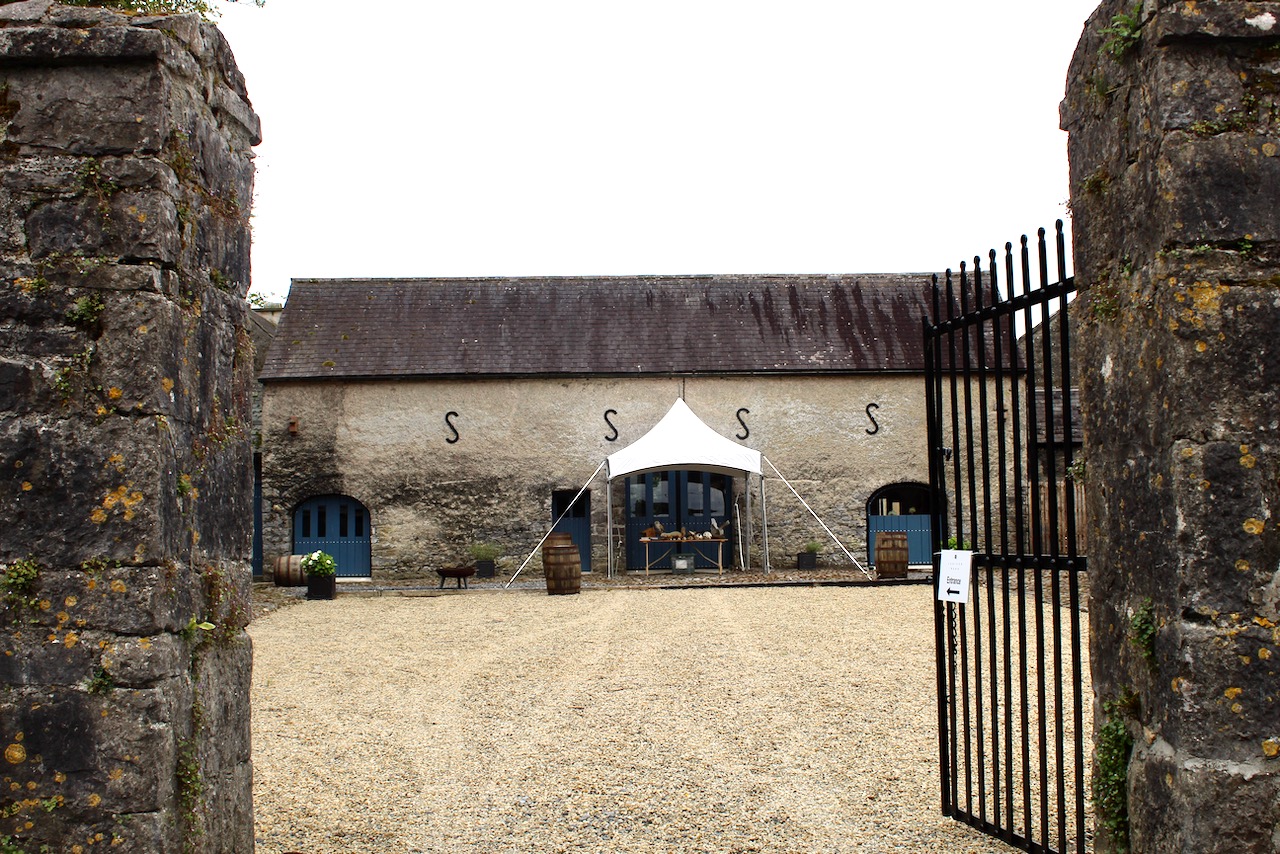
Dorothy and Christopher have converted their barns into a beautiful event space which they call the Juniper Barn. [8] They run it according to eco-conscious principals very like those of Dorothy-Ellen’s mother, a former Green party TD. We headed over to the barns to attend the nature talk.
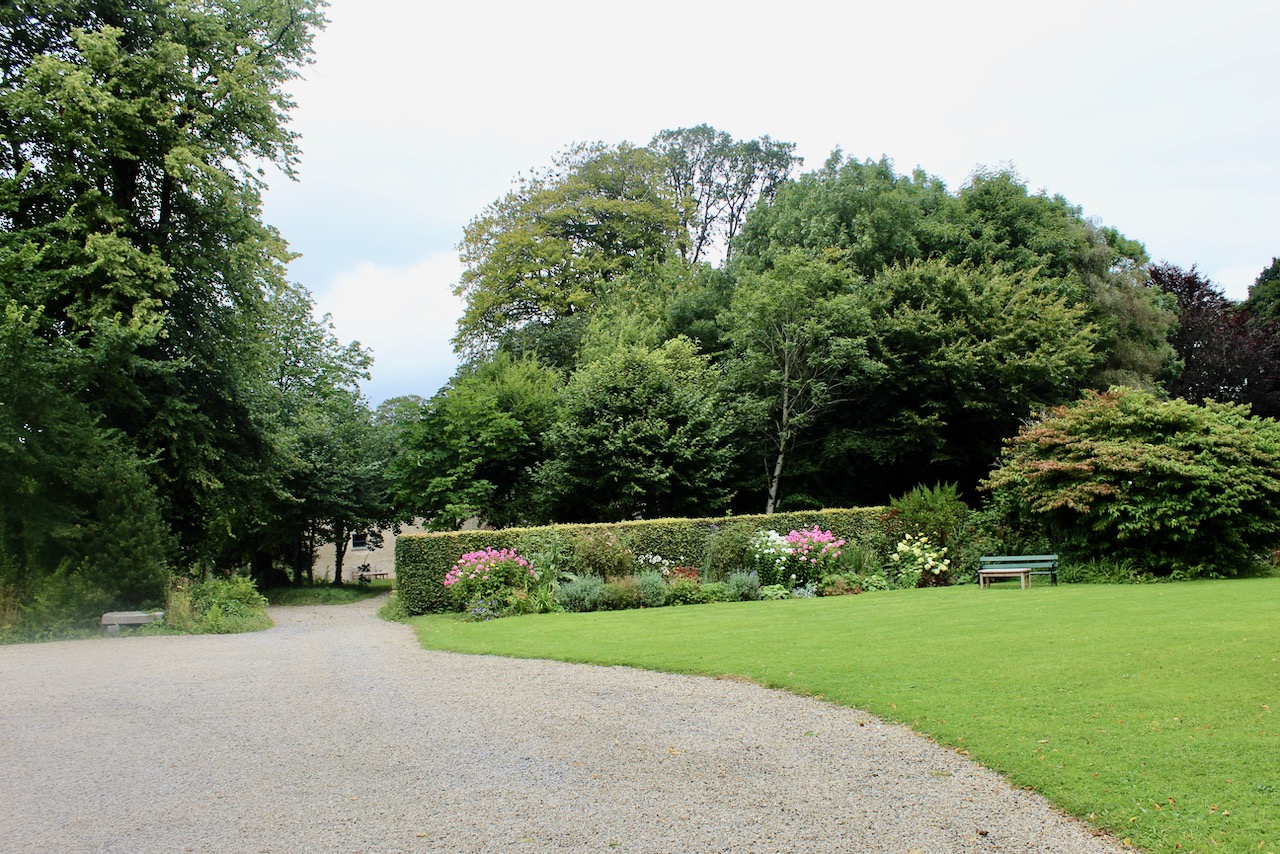
Newpark, County Sligo. Photograph © Jennifer Winder-Baggot, www.irishhistorichouses.com
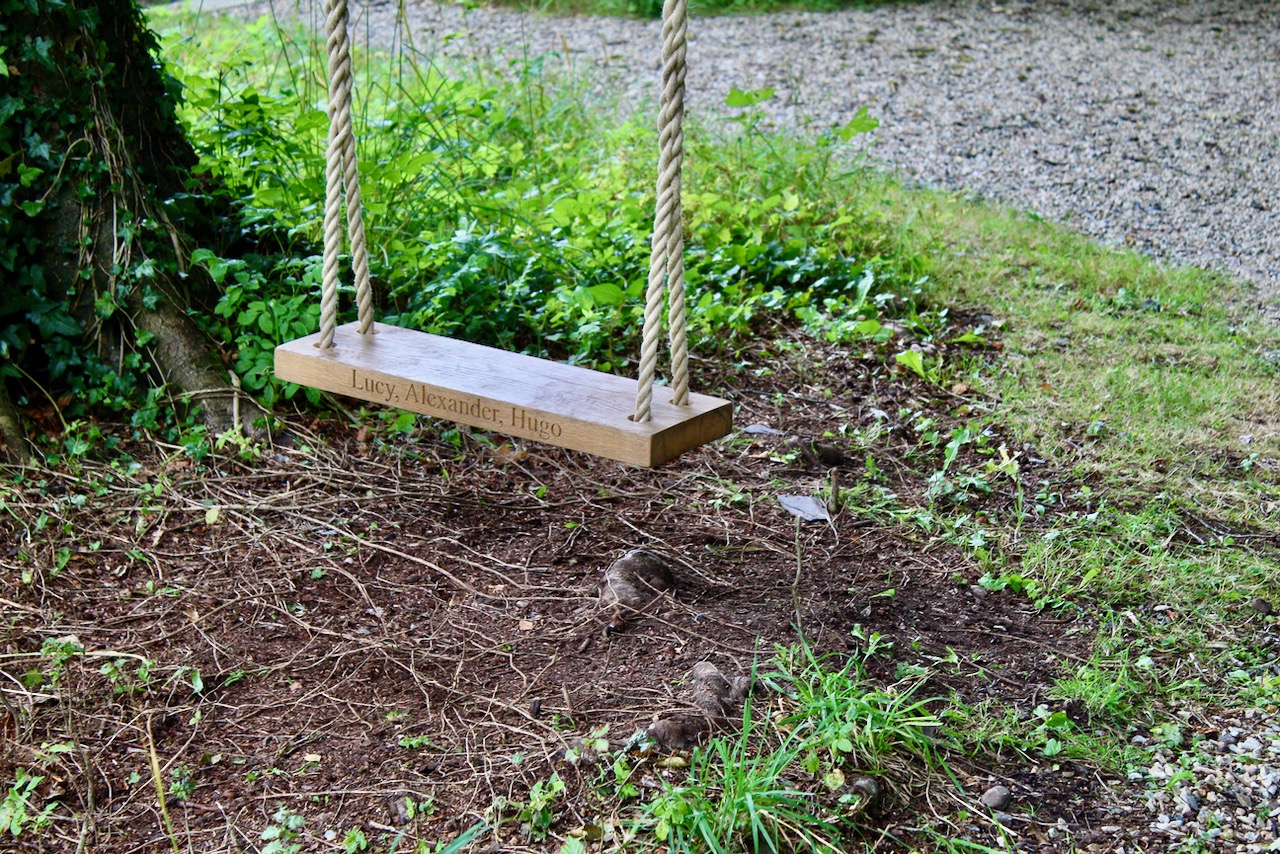
The names of Christopher and Dorothy-Ellen’s children are carved in the swing. Photograph © Jennifer Winder-Baggot, www.irishhistorichouses.com
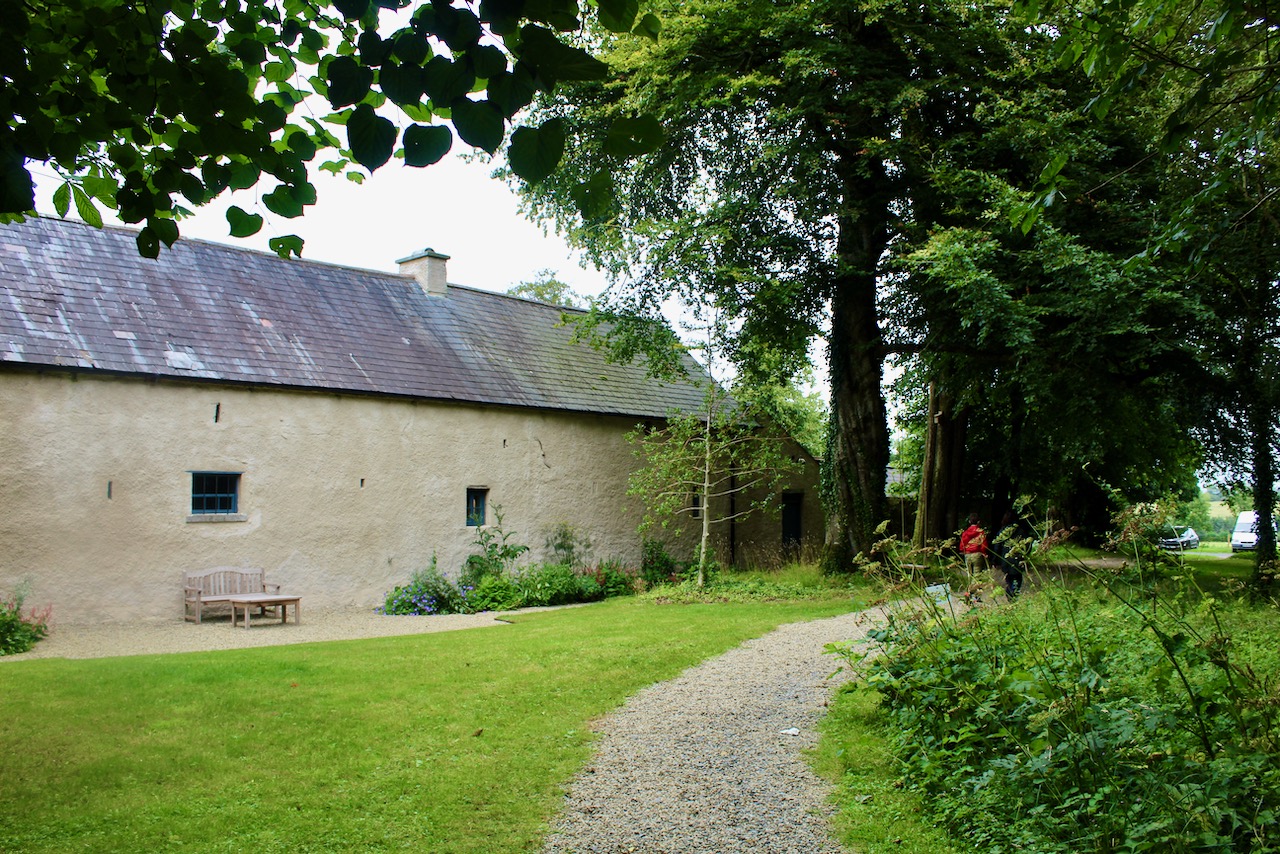
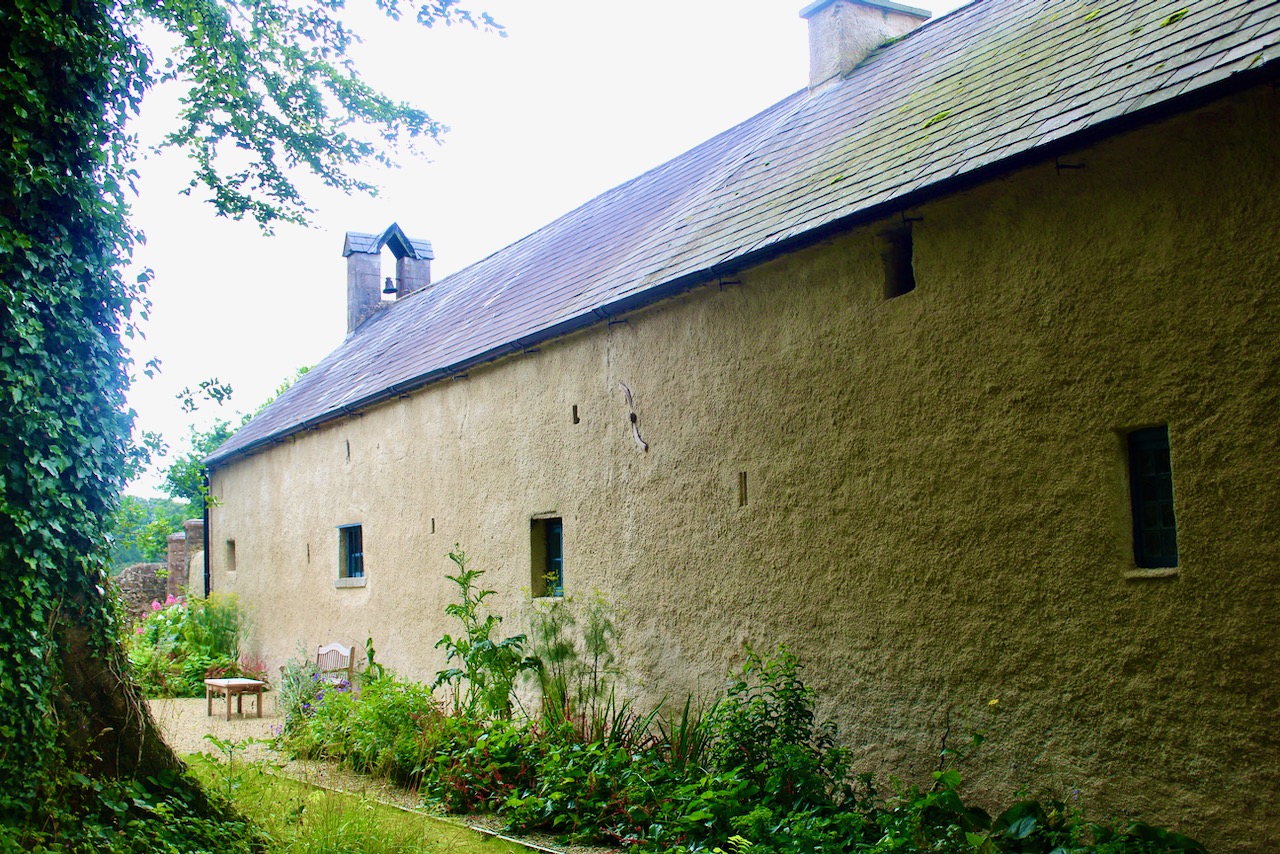
I asked Christopher about the “S” shapes on the barns – they are part of the construction of the barn. Photograph © Jennifer Winder-Baggot, www.irishhistorichouses.com
Barn with bellcote. Photograph © Jennifer Winder-Baggot, www.irishhistorichouses.com
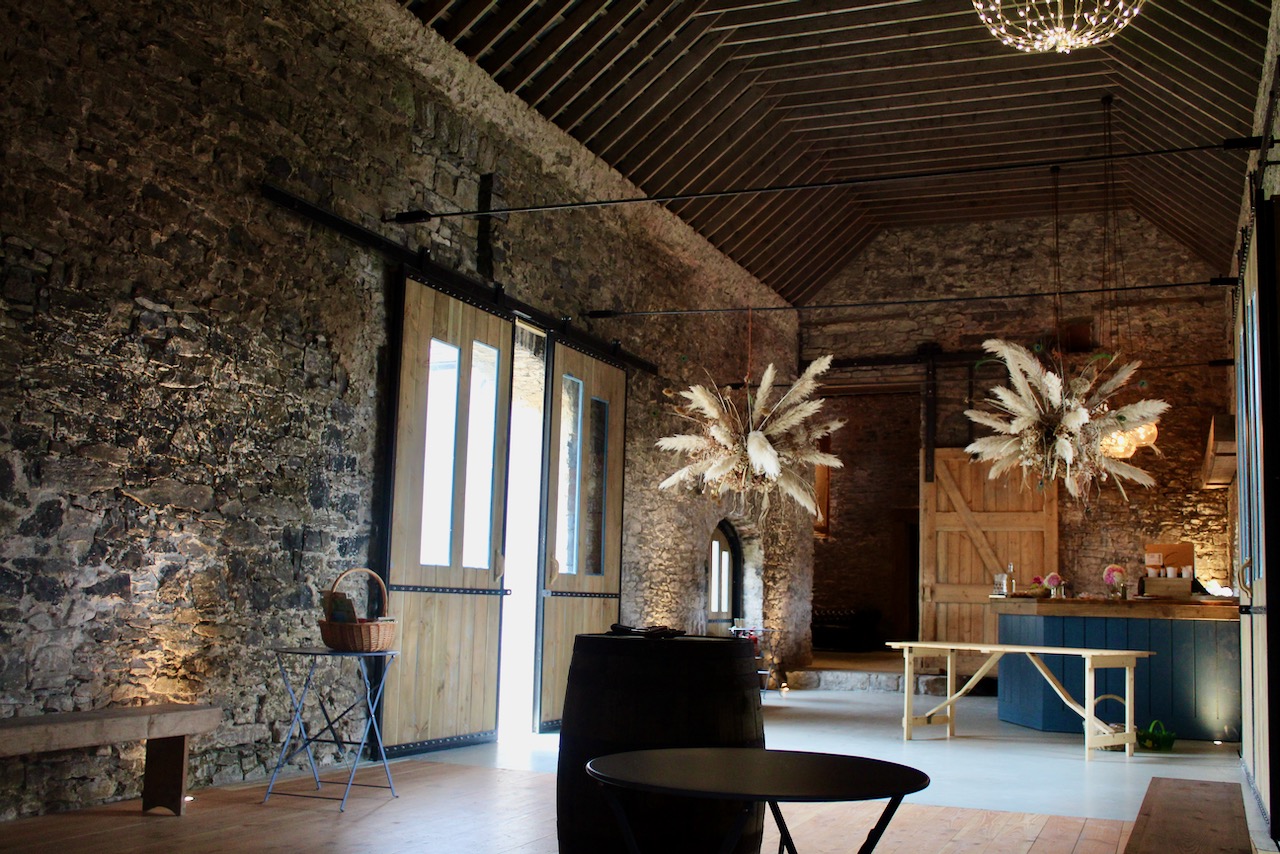
The beautiful interior of the barn, which is available for hire. Photograph © Jennifer Winder-Baggot, www.irishhistorichouses.com
Newpark, County Sligo. Photograph © Jennifer Winder-Baggot, www.irishhistorichouses.com
I was very impressed by the hanging plume pampas grass decorations, created by Dorothy-Ellen. Photograph © Jennifer Winder-Baggot, www.irishhistorichouses.com
Newpark, County Sligo. Photograph © Jennifer Winder-Baggot, www.irishhistorichouses.com
Newpark, August 2021. Photograph © Jennifer Winder-Baggot, www.irishhistorichouses.com

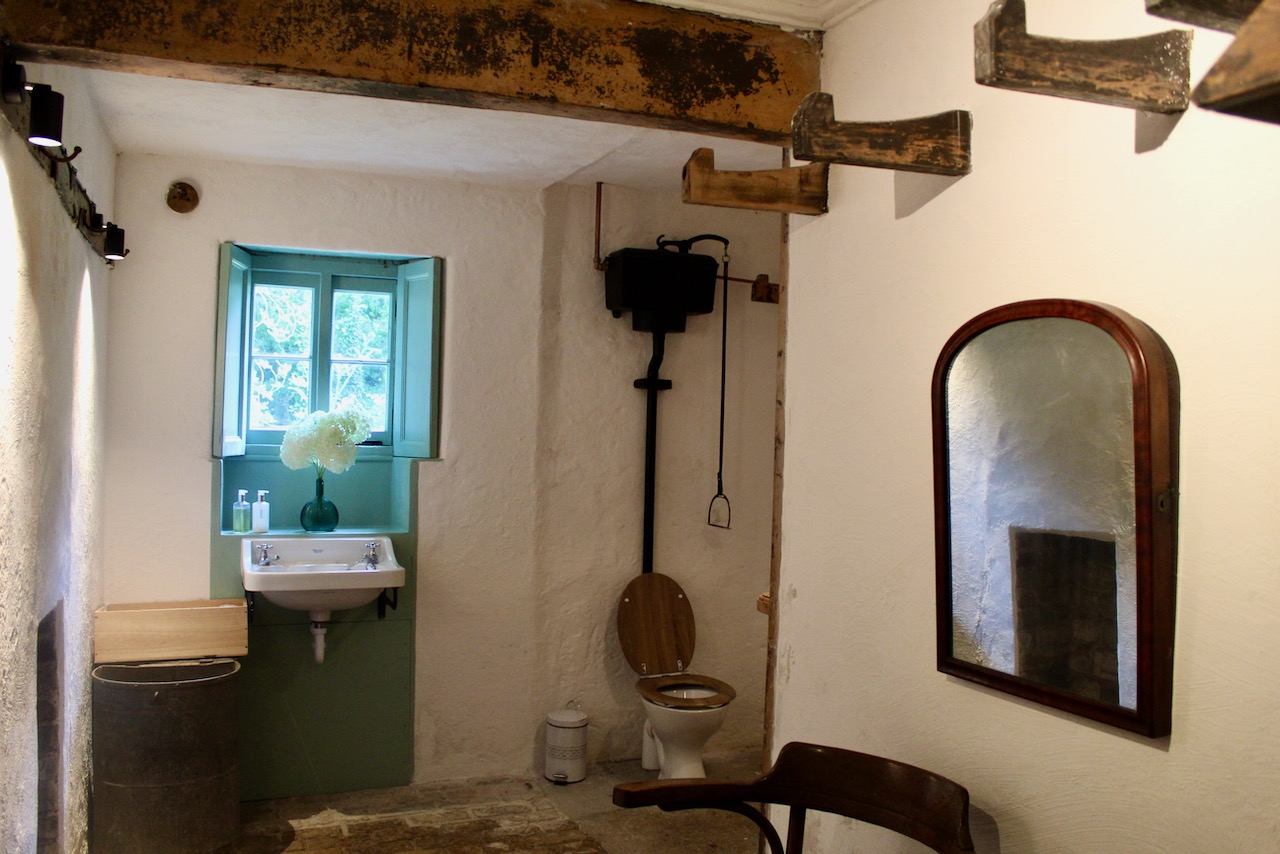
I was even impressed by the “decor” of the bathroom in the outbuildings, and especially like the stirrup incorporated into the chain of the cistern.

Newpark, County Sligo. Photograph © Jennifer Winder-Baggot, www.irishhistorichouses.com
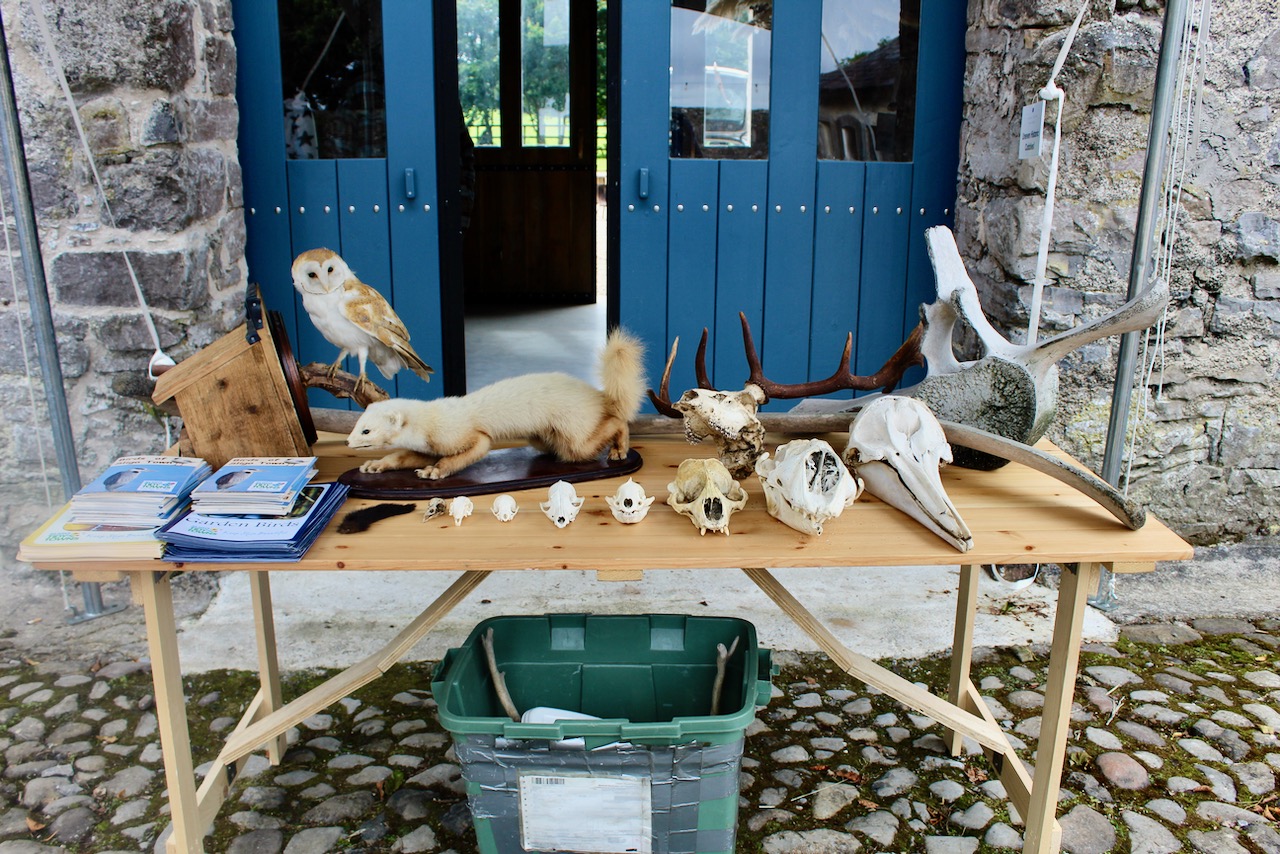
The animals and skulls brought by Michael Bell, including a huge vertebrae, and a dolphin skull. Photograph © Jennifer Winder-Baggot, www.irishhistorichouses.com
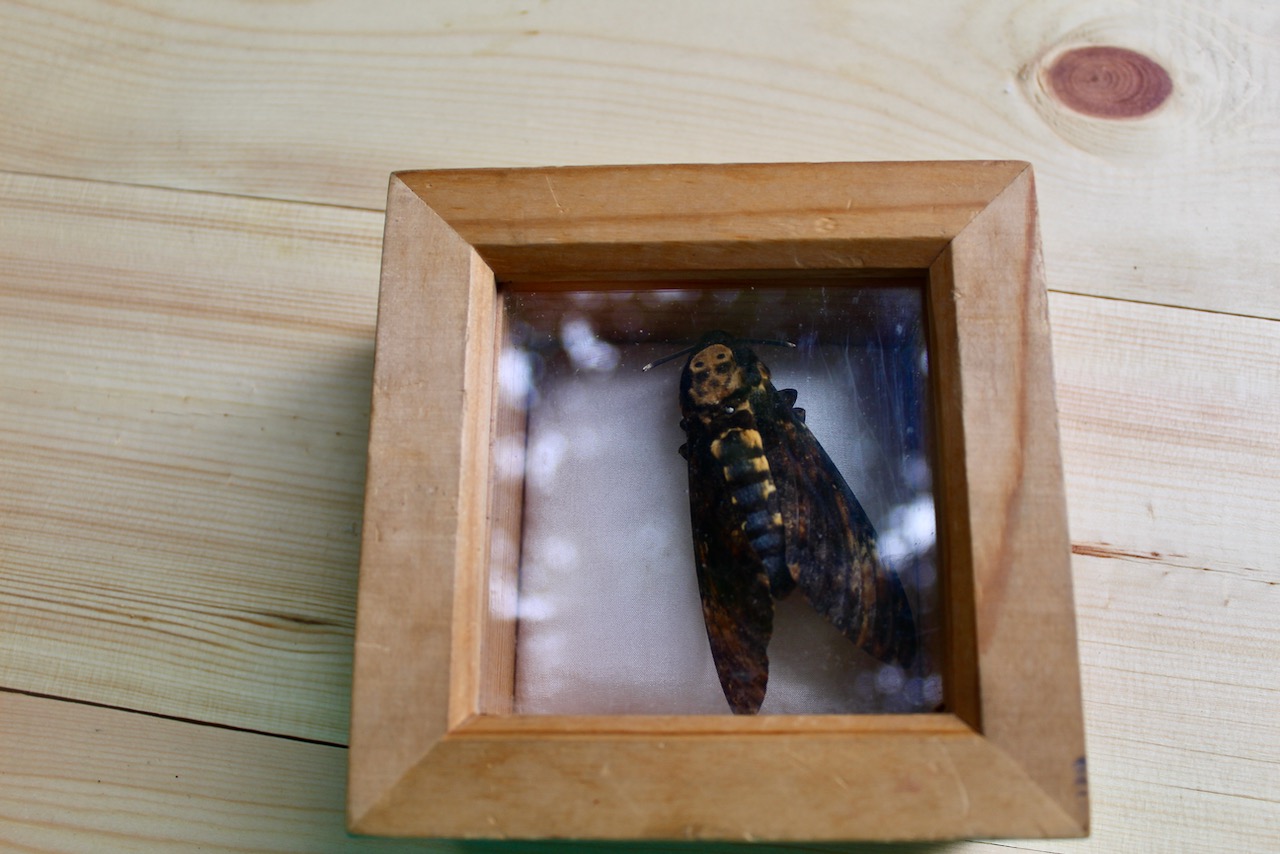
A “death’s head” hawkmoth with what looks like a skull on its head. Michael Bell set up a moth catcher, and showed us the typical types of moths of the area. Photograph © Jennifer Winder-Baggot, www.irishhistorichouses.com
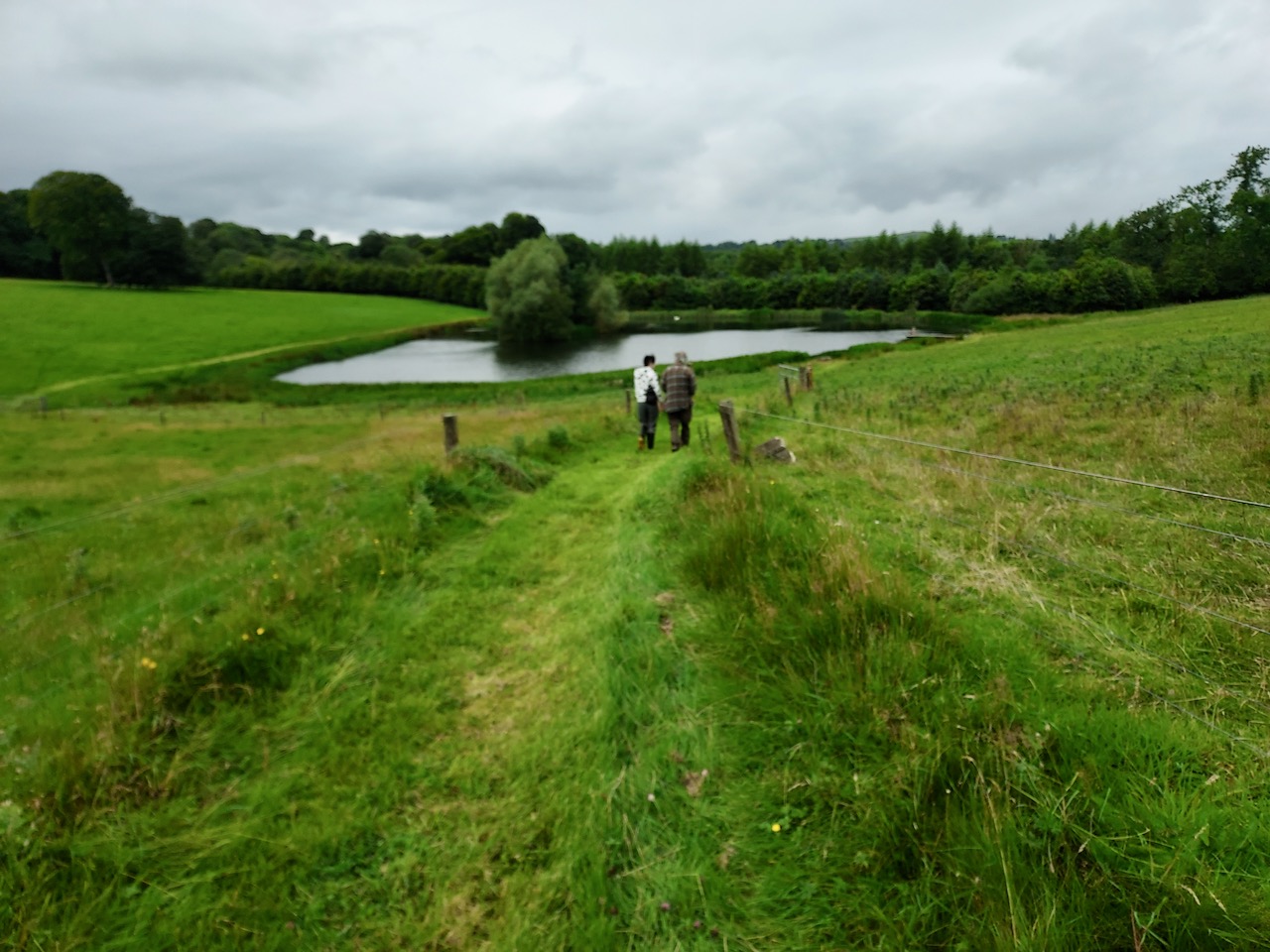
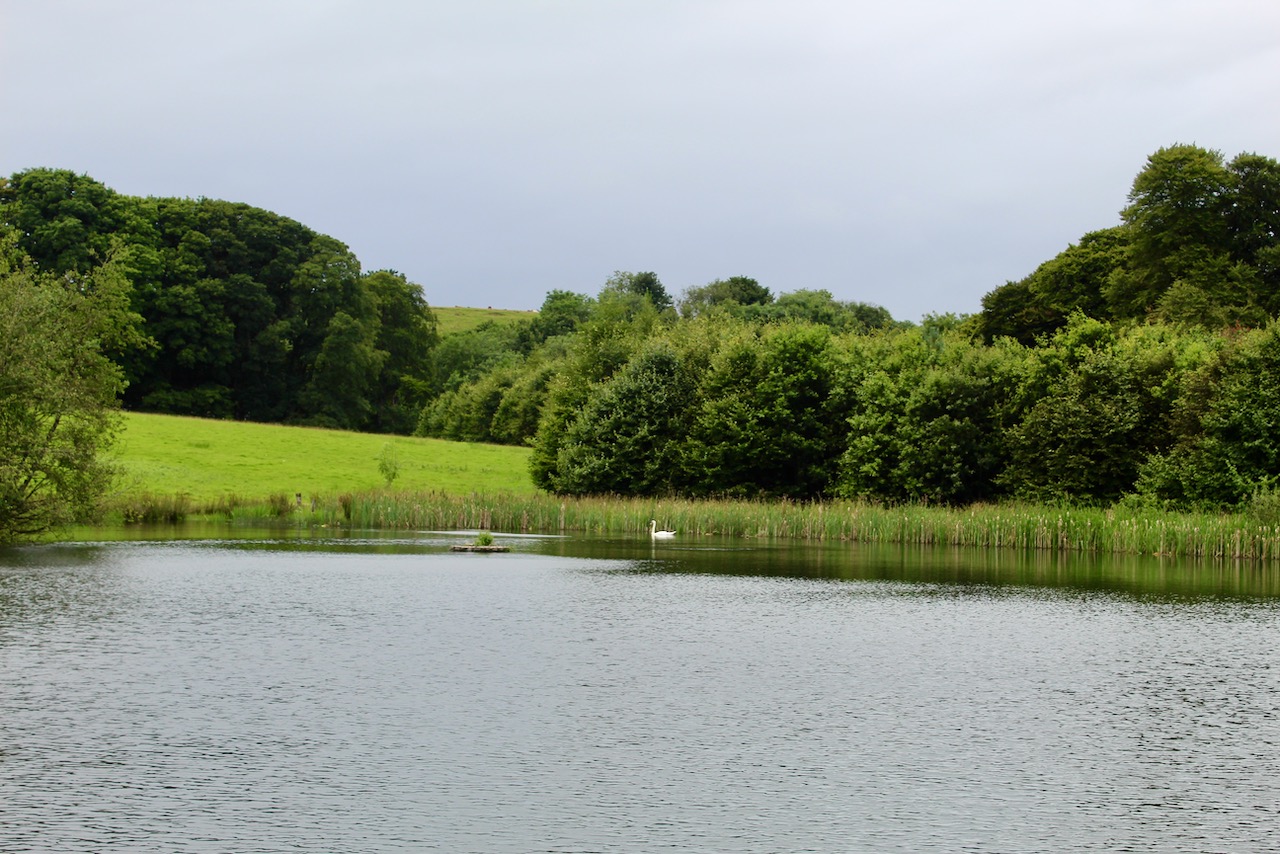
Michael and his daughter brought us down to the lake to see what wildlife we could find. We saw different types of dragonflies, and he told us about the lonely swan, whose mate had died. I hope it won’t be lonely for long! Photograph © Jennifer Winder-Baggot, www.irishhistorichouses.com
Newpark, August 2021. Photograph © Jennifer Winder-Baggot, www.irishhistorichouses.com

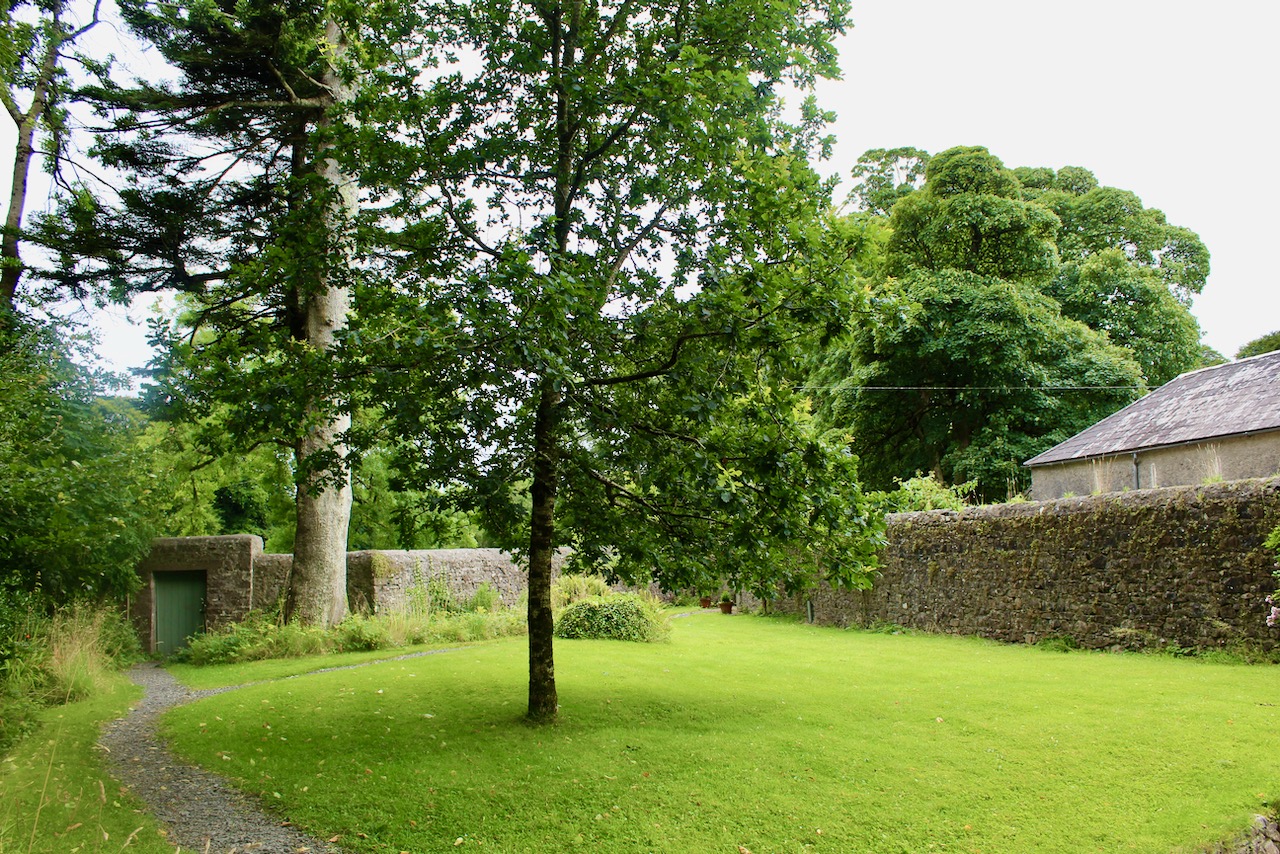
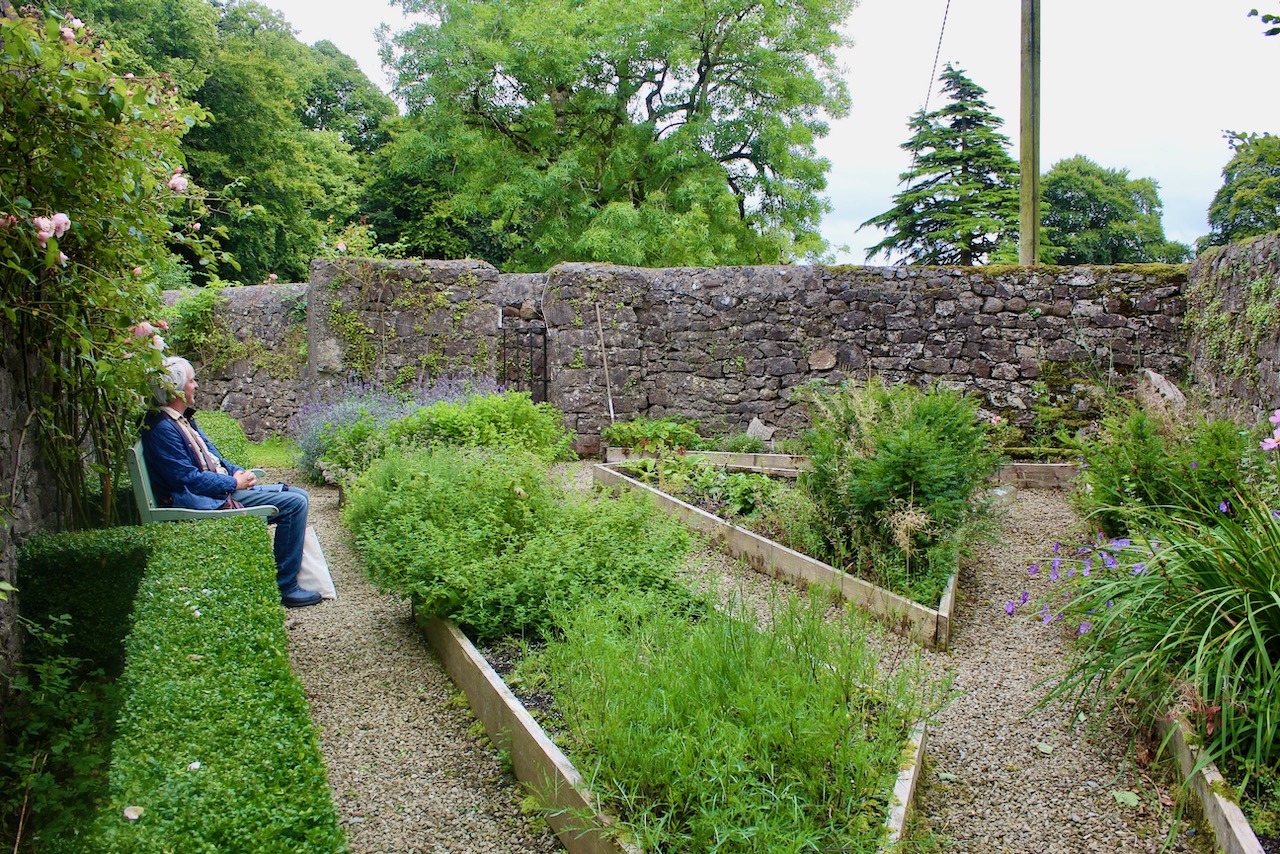
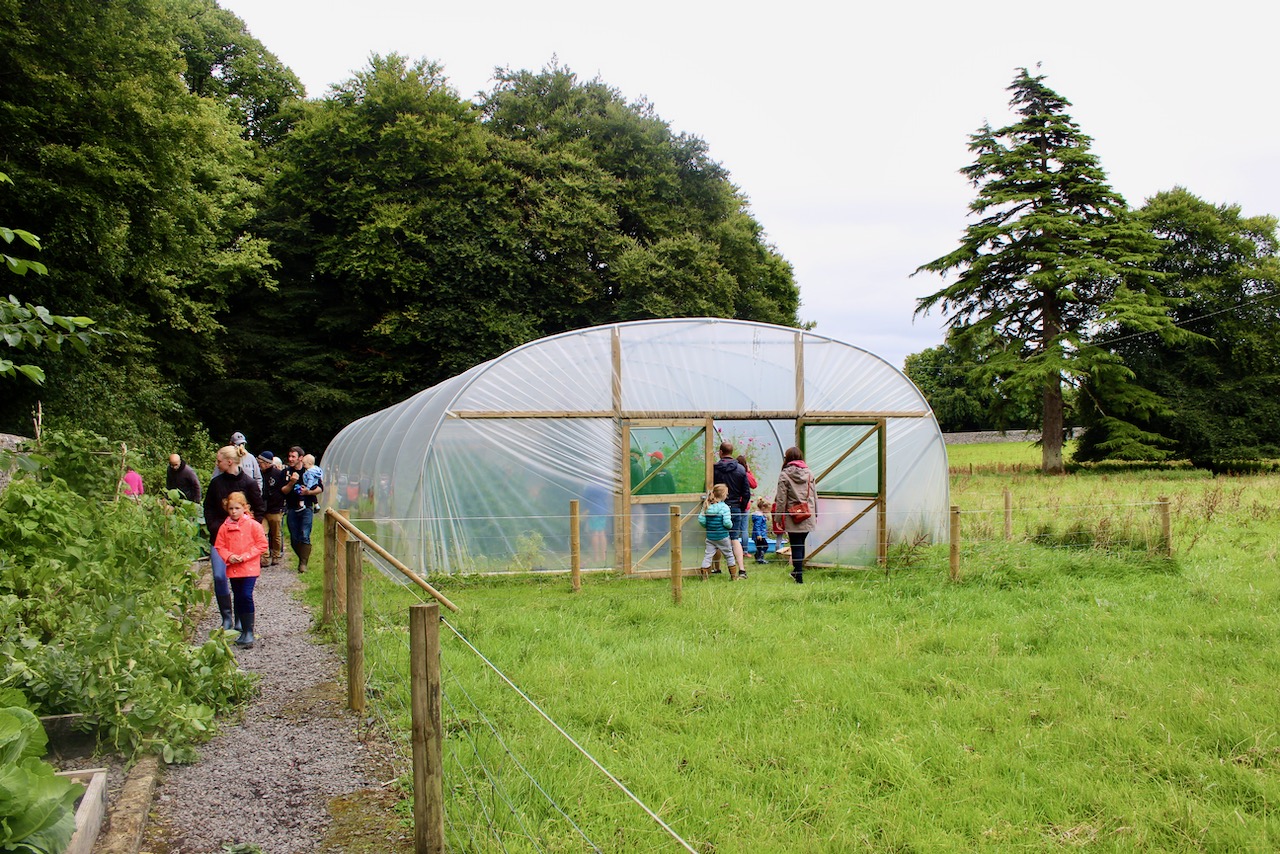
We then headed back to see the gardens around the house, including the herb garden and walled garden.

Newpark, County Sligo. Photograph © Jennifer Winder-Baggot, www.irishhistorichouses.com
The herb garden, created by Christopher’s parents. Photograph © Jennifer Winder-Baggot, www.irishhistorichouses.com
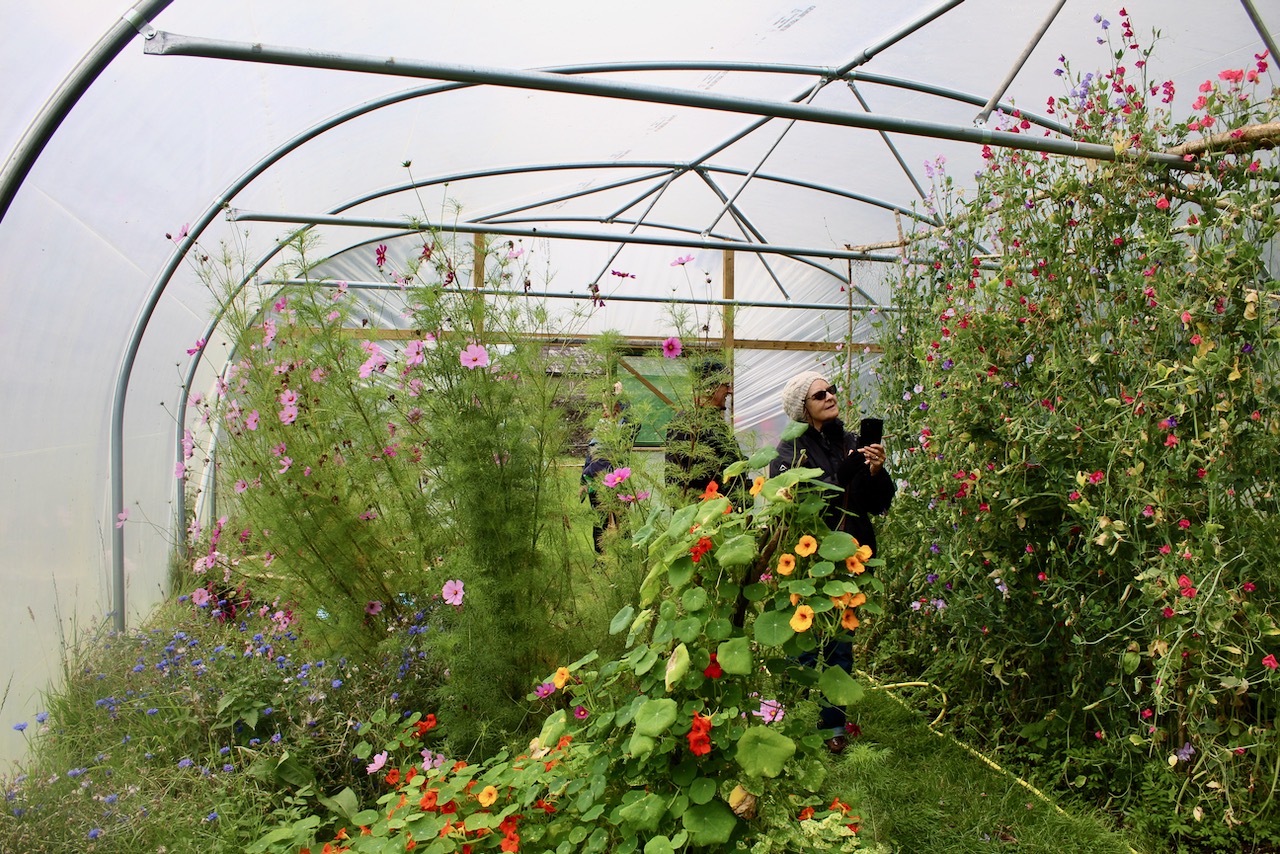
The walled garden contains a polytunnel. Photograph © Jennifer Winder-Baggot, www.irishhistorichouses.com
Newpark, August 2021. Photograph © Jennifer Winder-Baggot, www.irishhistorichouses.com

[1] http://www.ihh.ie/index.cfm/houses/house/name/Newpark

[2] http://www.ihh.ie/index.cfm/houses/house/name/Newpark and see my entry about Enniscoe, County Mayo, https://irishhistorichouses.com/2021/11/25/enniscoe-house-gardens-castlehill-ballina-co-mayo/

[3] https://www.juniperbarn.ie/accommodation

[4] https://www.buildingsofireland.ie/buildings-search/building/32403317/newpark-house-newpark-sligo

[5] https://irishhistorichouses.com/2020/07/16/the-old-rectory-killedmond-borris-co-carlow/

[6] https://www.naturelearn.com

[7] https://theirishaesthete.com/2019/01/30/frieze-it/

[8] https://www.juniperbarn.ie/venue

Text © Jennifer Winder-Baggot, www.irishhistorichouses.com