Curragh Chase, County Limerick garden front 1938, Vanishing Country Houses of Ireland by The Knight of Glin, David J. Griffin and Nicholas K. Robinson, published by The Irish Architectural Archive and The Irish Georgian Society, 1988.
Mark Bence-Jones. A Guide to Irish Country Houses (originally published as Burke’s Guide to Country Houses volume 1 Ireland by Burke’s Peerage Ltd. 1978); Revised edition 1988 Constable and Company Ltd, London.
“(de Vere, a sub Hunt/ LGI1912; De Vere, sub Inchiquin, B/PB) A large house of two storeys over a basement with two adjoining fronts. The shorter of two is C18, by a Limerick architect, with two bays on either side of a central three sided bow; lower storey windows with shouldered architraves and simple entablatures; upper storey windows with shouldered architraves on console brackets. The longer front is early C19, probably added 1829 by Sir Aubrey de Vere, 2nd Bt (author of Julian the Apostate and The Duke of Mercia), to the design of an English architect, Amon Henry Wilds; of 11 bays, the three end bays on either side breaking forward; it is plain, except for prominent quoins, and has a curved bow at one end. A terrace with a broad flight of steps leading up to it runs along the whole length of the front, concealing the basement. Large library. The house is what Mr James Lees-Milne describes as “one of the most remote and romantic settings conceivable”; above a reed-fringed lake with woods stretching away to distant hills. The landscape was largely created by Sir Aubrey de Vere, 2nd Bt, with whom, in the words of his son, the C19 Catholic poet Aubrey de Vere, “landscape gardenings was one mode of taking out the poetry which was so deeply seated within him.” Aubrey de Vere was born here and though only a younger son, lived here for most of his long life; dying here at the age of 87 in the same small room which he had occupied as a child. His friend, Tennyson, often came to visit him here; and while here he wrote Clara Lady Vere de Vere. Curragh Chase passed to a great-nephew of Aubrey de Vere, R.S.V. O’Brien, of the Inchiquin family, who assumed the name of de Vere. The house was gutted by fire 1941 the ruin and its surrmoundings are now kept in good order by the Dept of Lands, which maintains the demesne as well as a forest park.”
Featured in Mark Bence Jones, Life in an Irish Country House. Constable, London. 1996.
On An Taisce Buildings at Risk register
Listed in Vanishing Country Houses of Ireland by The Knight of Glin, David J. Griffin and Nicholas K. Robinson, published by The Irish Architectural Archive and The Irish Georgian Society, 1988.
This building has been vacant for a number of years and does not appear to be maintained. Most of the external fabric remains, but there are obvious signs of deterioration, particularly water penetration, slipped slates and vegetation growth. There is no immediate danger of collapse but the condition is such that unless urgent remedial works are carried out the building will sharply deteriorate.
Curraghchase House which was the residence of by the de Vere family and was the birthplace of the poet Aubrey de Vere is set in a magnificent demense landscape. The house is now derelict and vacant following a fire in 1941 but retains many limestone features. It is currently in the ownership of Coillte who have not put in any significant measures to improve the condition of the structure. This building urgently requires a conservation management plan and new uses to be identified to prevent further deterioration of its character.
Detached eleven-bay two-storey over half-basement house, built c. 1750, with two adjoining fronts, shorter one dating to the eighteenth century, longer front dating to c. 1829. House now derelict following a fire in 1941. Having bowed north elevation, full-height canted bay to south elevation and extensions to rear (west). Projecting three-bay end bays to front (east) elevation. Roof missing. Cut limestone walls with cut limestone quoins, plinth course, cornice and raised parapet. Cut limestone platband to south and part of rear elevation. Lined-and-ruled rendered walls to part of rear elevation, having render quoins. Mixed red brick and rubble stone walls to north elevation of extension. Square-headed openings having cut limestone sills and voussoirs throughout, now blocked. Those to south elevation having cut limestone surrounds and hoodmouldings. Shared limestone hoodmoulding to ground floor windows, north elevation. Square-headed openings to basement, north elevation, with limestone sills and surrounds and metal railings. Some openings to rear having red brick voussoirs. Square-headed opening to front with cut limestone voussoirs. Limestone slab to entrance. Square-headed opening to north elevation of rear extension with red brick surround and voussoirs, and metal door. Semi-circular opening to threshold with cut limestone surround and cast-iron lid. Raised land to front of house with cut limestone retaining wall with cut limestone copings. Rubble stone wall to rear of house enclosing yard. Segmental-headed arch to south elevation set within cut limestone breakfront, having red brick voussoirs and double-leaf timber battened door. Segmental-headed opening to north elevation, with red brick voussoirs, cut limestone surround, and bellcote to top. Five-bay single-storey stable building to rear. Pitched slate roof having cut limestone eaves course. Rubble stone walls. Square-headed openings with limestone sills, red-brick voussoirs and surrounds. Square-headed opening with red brick voussoirs and surround, and timber battened door. Segmental-headed opening having red brick voussoirs and double-leaf timber battened door. Rubble stone semi-circular retaining wall marking meditation area to site.
The house and estate was formerly owned by the de Vere family and was the birthplace of the poet Aubrey de Vere, lending historical and cultural significance to the house. The work dating to 1829 was carried out by the architect Amon Henry Wilds. Although its been severely damaged by the fire, the house retains much of its original fabric, such as its limestone sills and decorative window surrounds. Its imposing size and austere appearance make a notable impression on the surrounding landscape. The outbuildings and yard to the rear of the house add context to the site.
Open in 2026: Mar 2-6, 9-13, 16-20, 23-27, 9am – 2pm, May 3, 10, 17, 24, 10am – 5pm, Aug 15-24, 1pm – 5pm, Sept 1 – 30, excluding Saturdays, 1 pm-5pm,
Fee: adult €10, OAP/student/child €5, family €30 Concession: groups of 10 €70
donation
Help me to pay the entrance fee to one of the houses on this website. This site is created purely out of love for the subject and I receive no payment so any donation is appreciated!
We visited Mount Trenchard during Heritage Week 2022. The owner is in touch with the original occupants of the house, the Spring Rice family, and they visited several times.
The Landed estates database tells us:
“Lewis described this mansion formerly called Cappa as “beautifully situated on the banks of the Shannon”. Marked as “Cappo” on the Taylor and Skinner map of the 1770s. Home of the Rice/Spring Rice family in the 19th century, valued at £40 in the 1850s and at £54 in 1906. Occupied by the Military in 1944, sold to Lady Holland in 1947 and to the Sisters of Mercy in 1953 who opened a school.” [1]
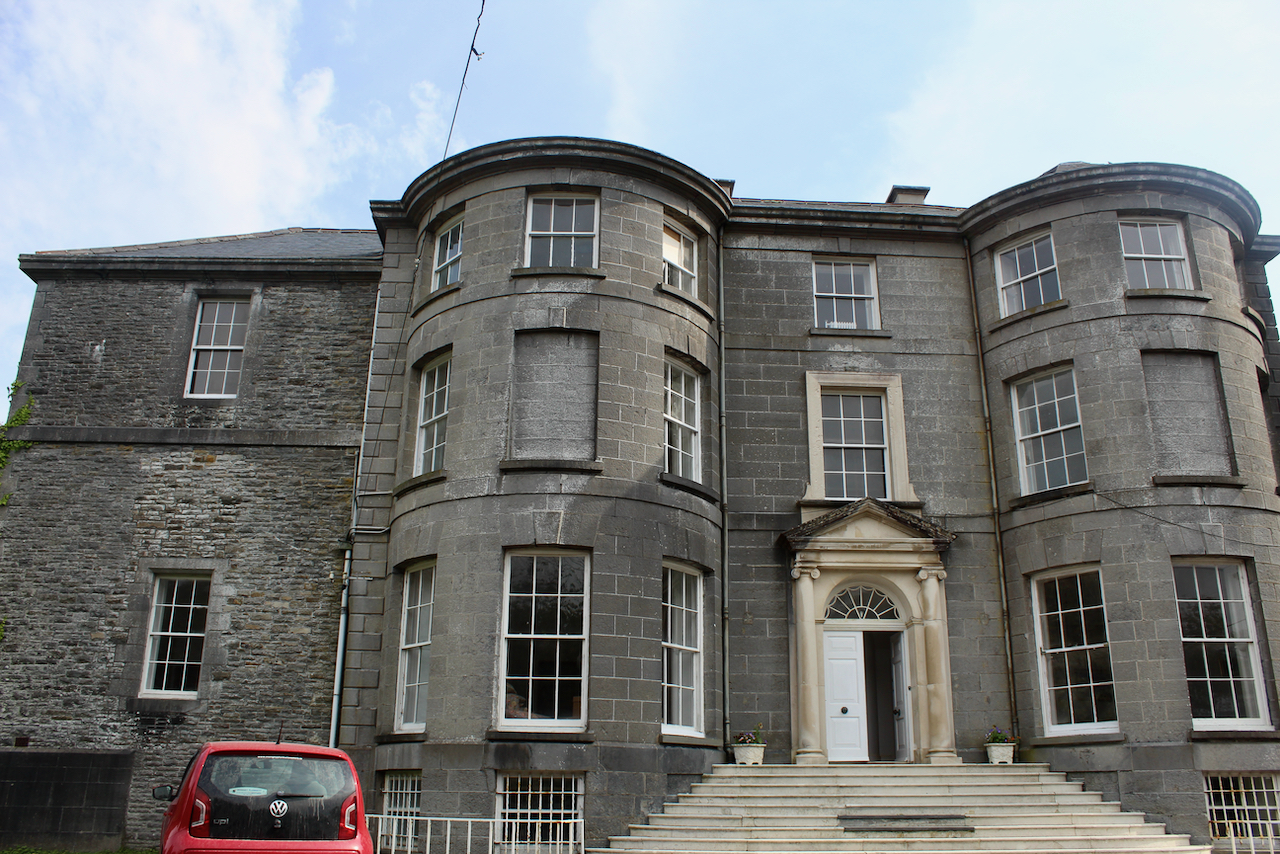
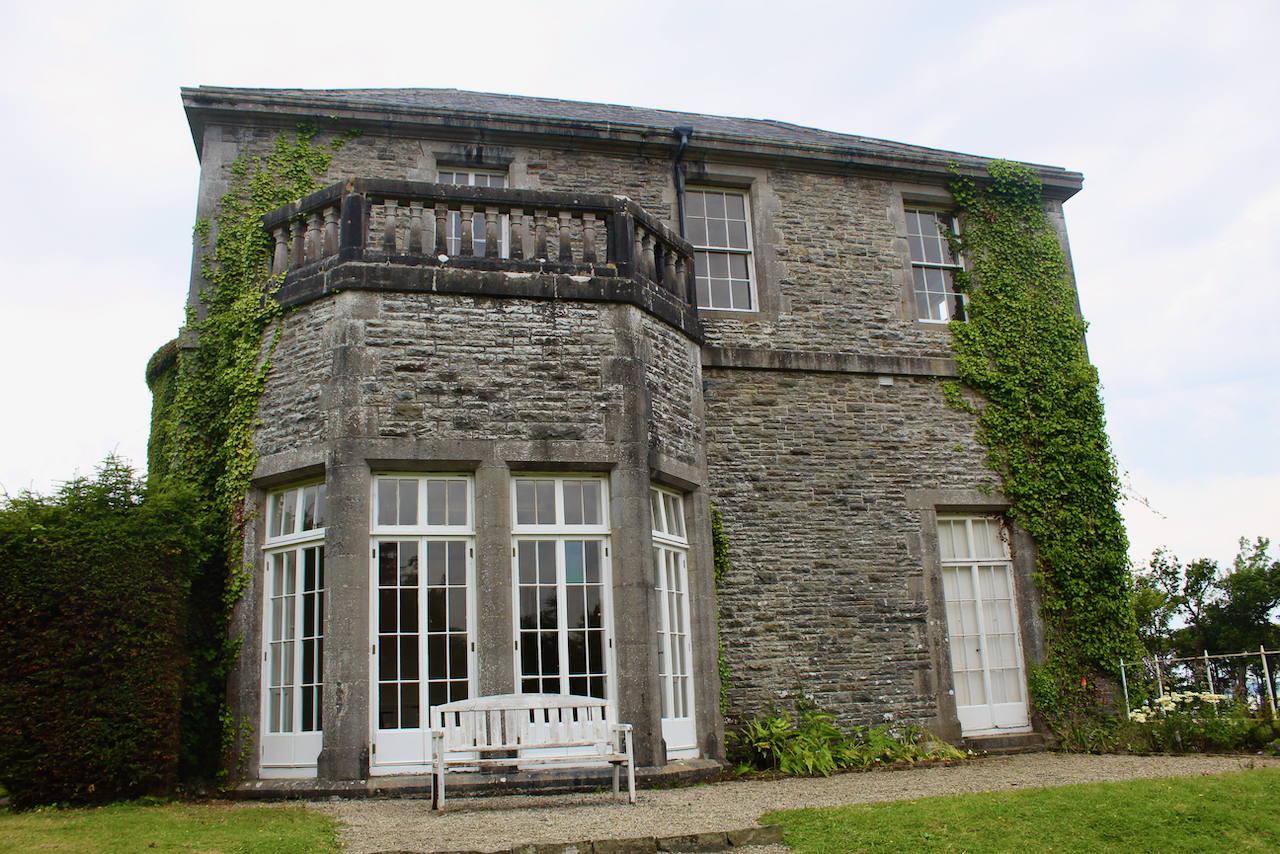
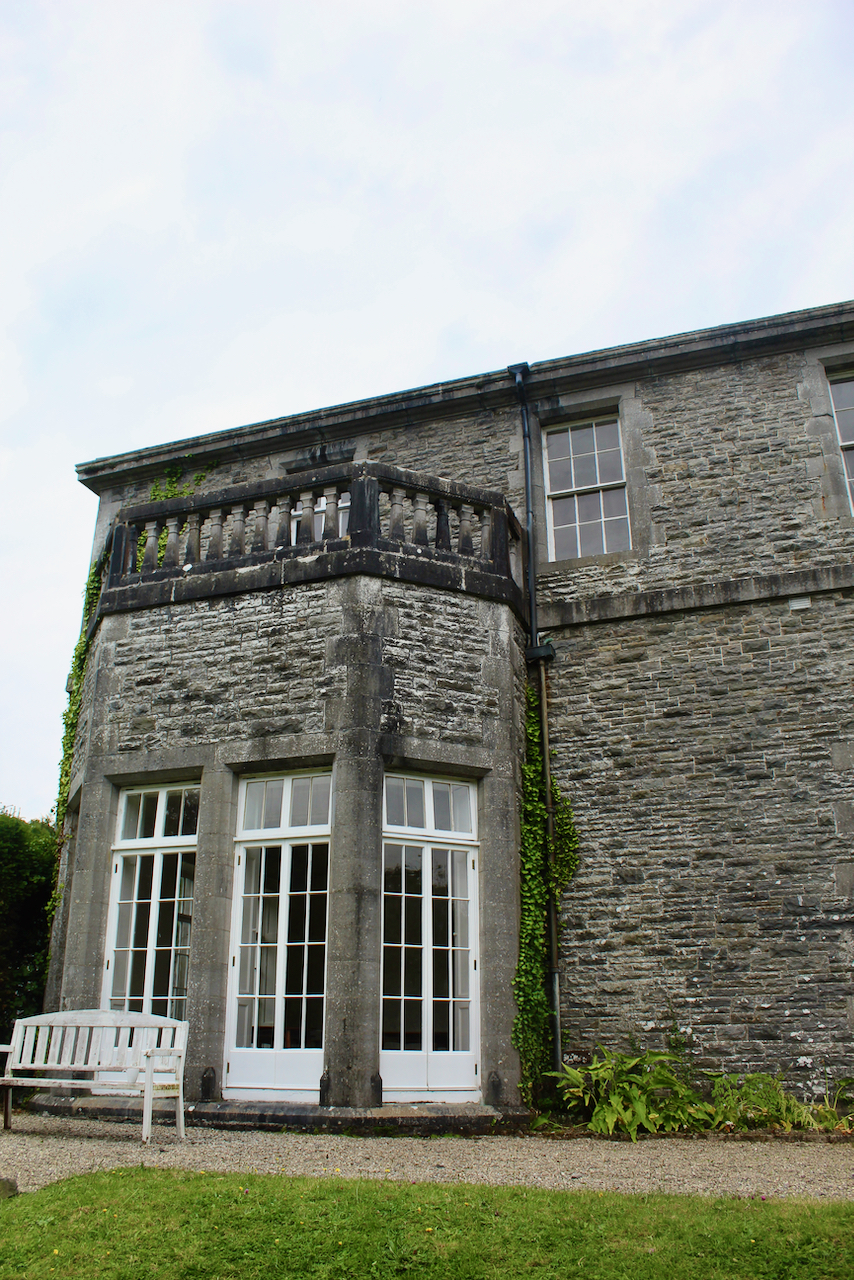
The National Inventory tells us that the house was built in 1777, and it was originally a three bay three storey over basement house. [2] It has two bays in front, with an entrance door in a later added doorcase of Ionic pillars and a pediment, and a similar window case above. The door is surmounted by a fanlight. The centre window of each bow on the second storey is blocked up. The facade is of limestone, with cut cut limestone platbands to dividing storeys.
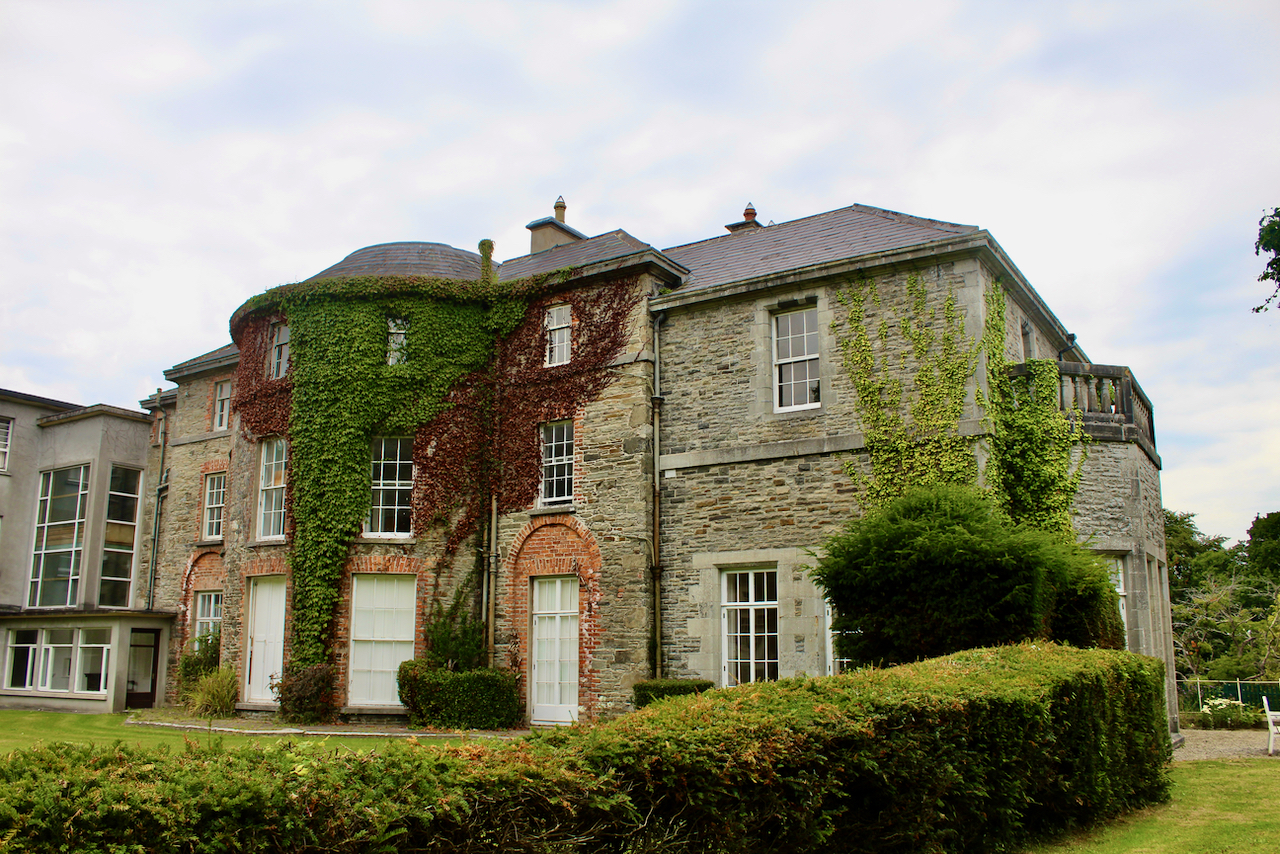
Mark Bence-Jones tells us in his A Guide to Irish Country Houses (1988) that there are Victorian additions either side of the main block and that the front entrance doorcase was a later addition. [3]
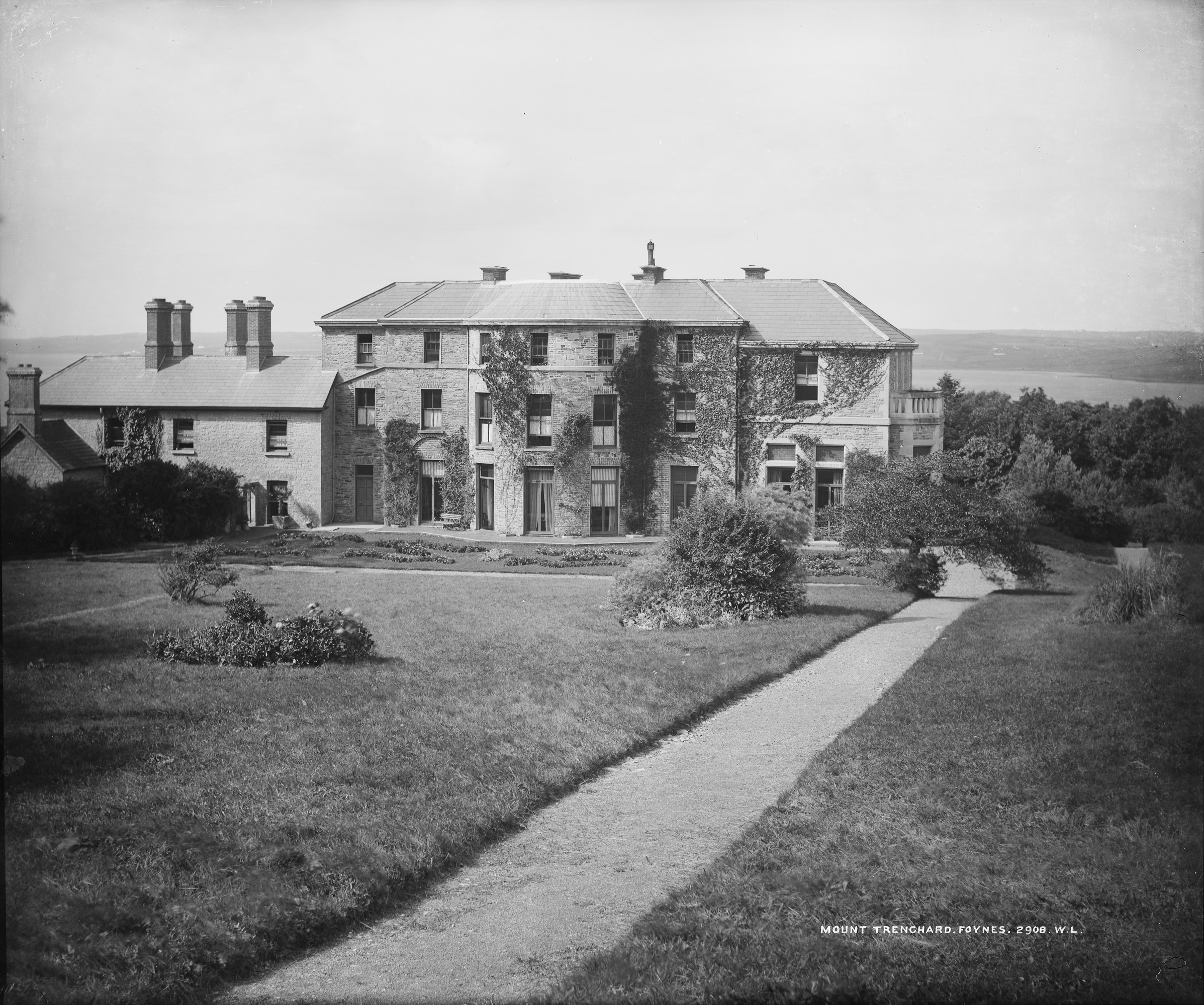
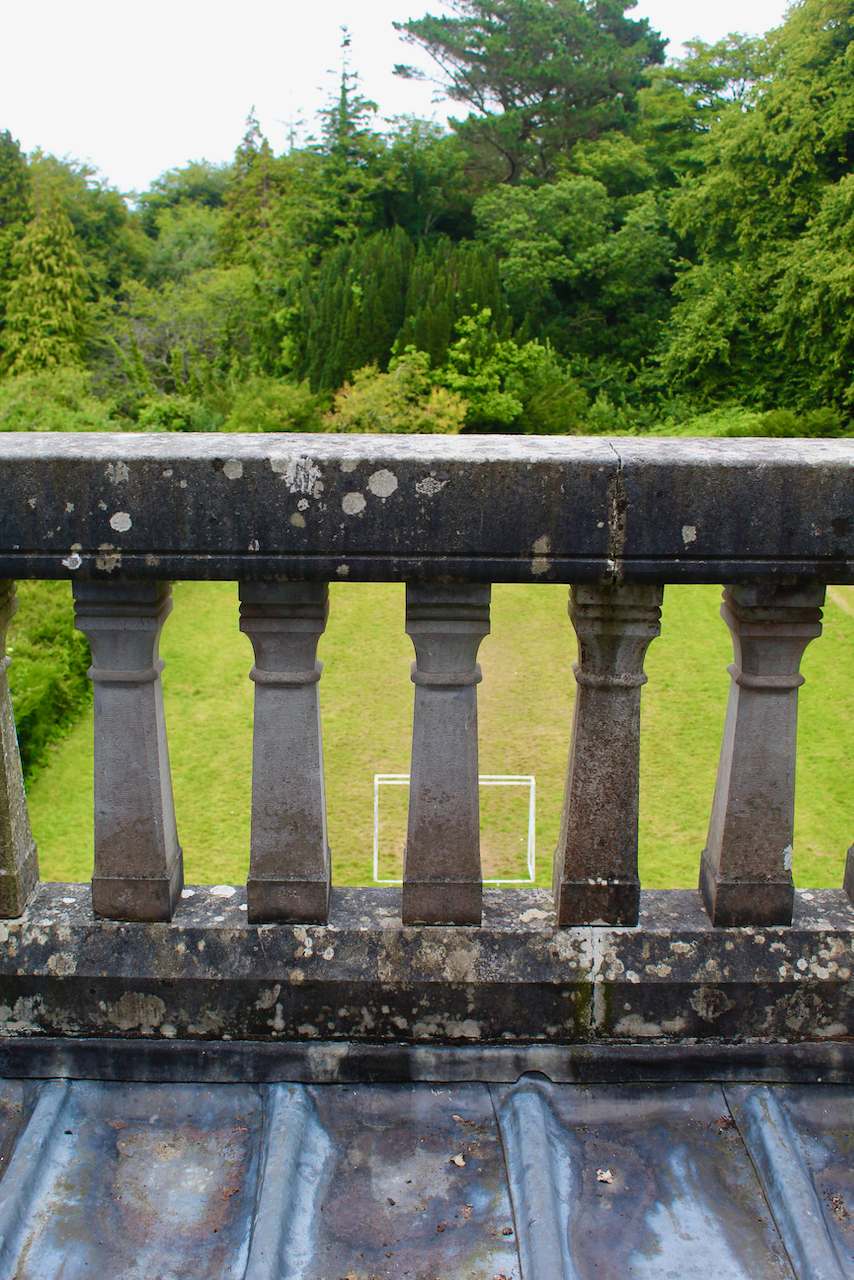
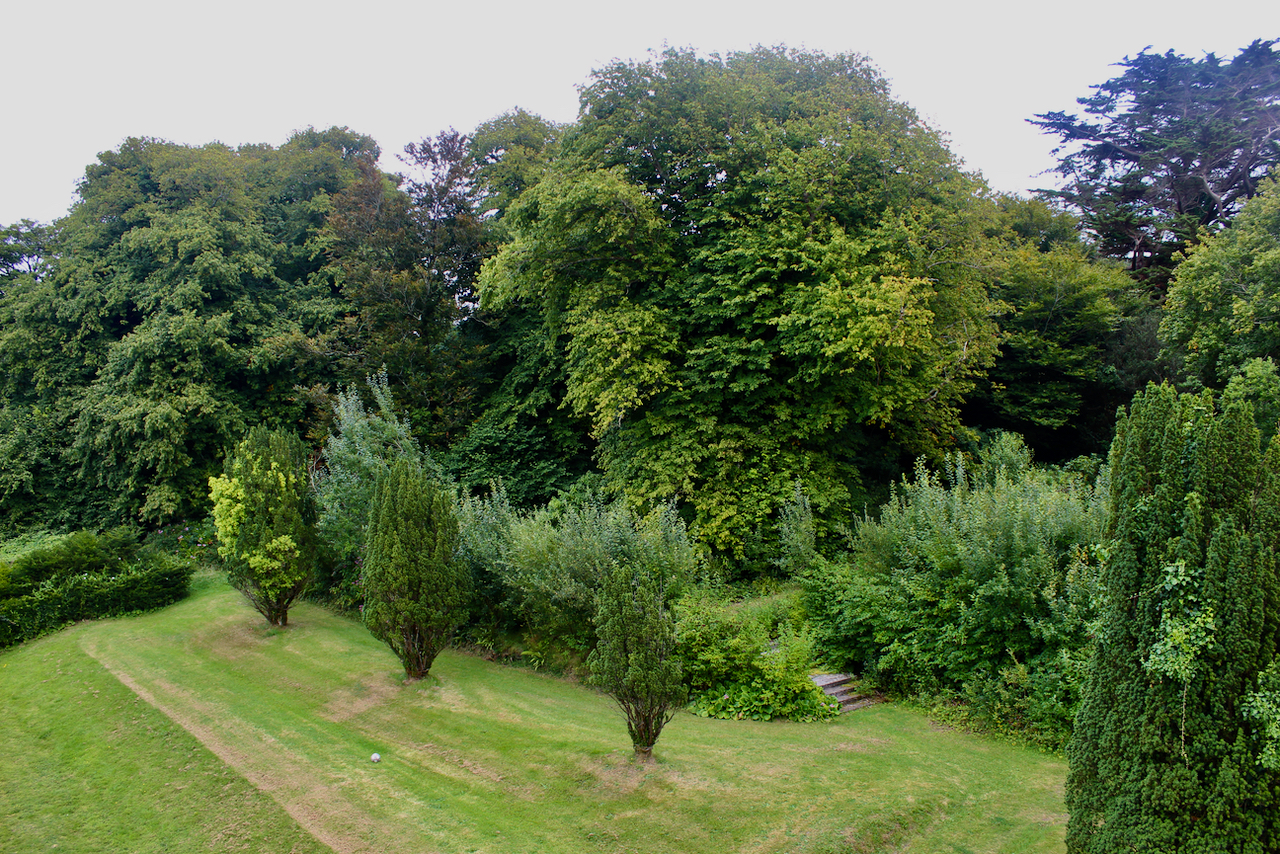
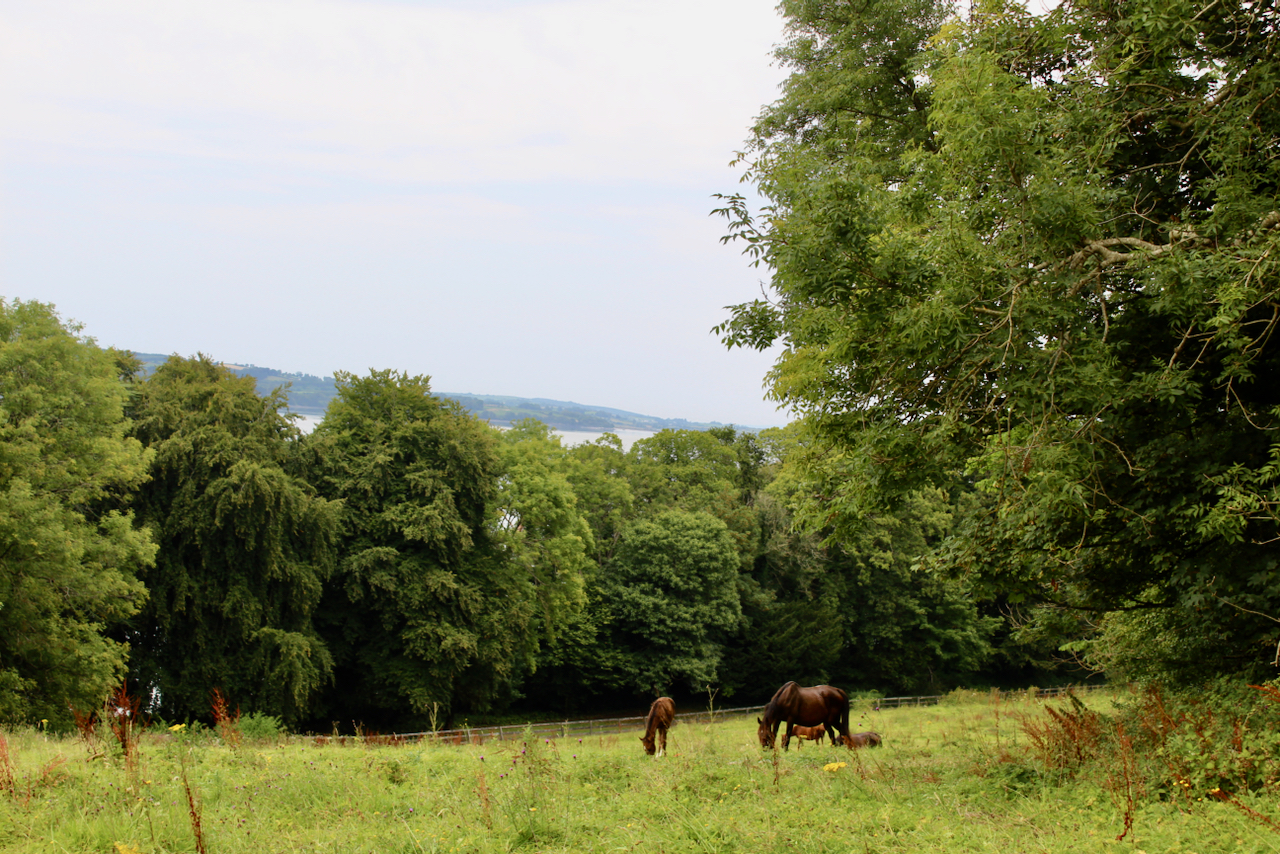
When we were inside the house we were able to go out onto the stone balustraded balcony that is on top of this addition. It gives a lovely view over the gardens.
The estate was initially granted to Frances Trenchard on 20 June 1612 by a charter of King James I. He built a house there. The property was later owned by the Rice family.
Stephen Rice (1637-1715), Chief Baron of the Irish Exchequer, and a supporter of James II, wedded Mary, daughter of Thomas FitzGerald, of County Limerick. Stephen Rice came from Dingle, County Kerry and was Catholic. He was a lawyer and had many landholders as his clients, including several from County Limerick. After the battle of the Boyne (1 July 1690), Rice accompanied King James II to France, although he was soon back in Ireland, in January 1691. [4] I am not sure when the property passed from Trenchard to Rice hands.
The Dictionary of Irish Biography tells us that an incomplete patent conferring the title of Baron Monteagle on Rice was allegedly found among the papers of James II after the battle of the Boyne. The title was revived in September 1839 and granted to Thomas Spring Rice (1790–1866) of Mount Trenchard, Co. Limerick, who became Baron Monteagle of Brandon.
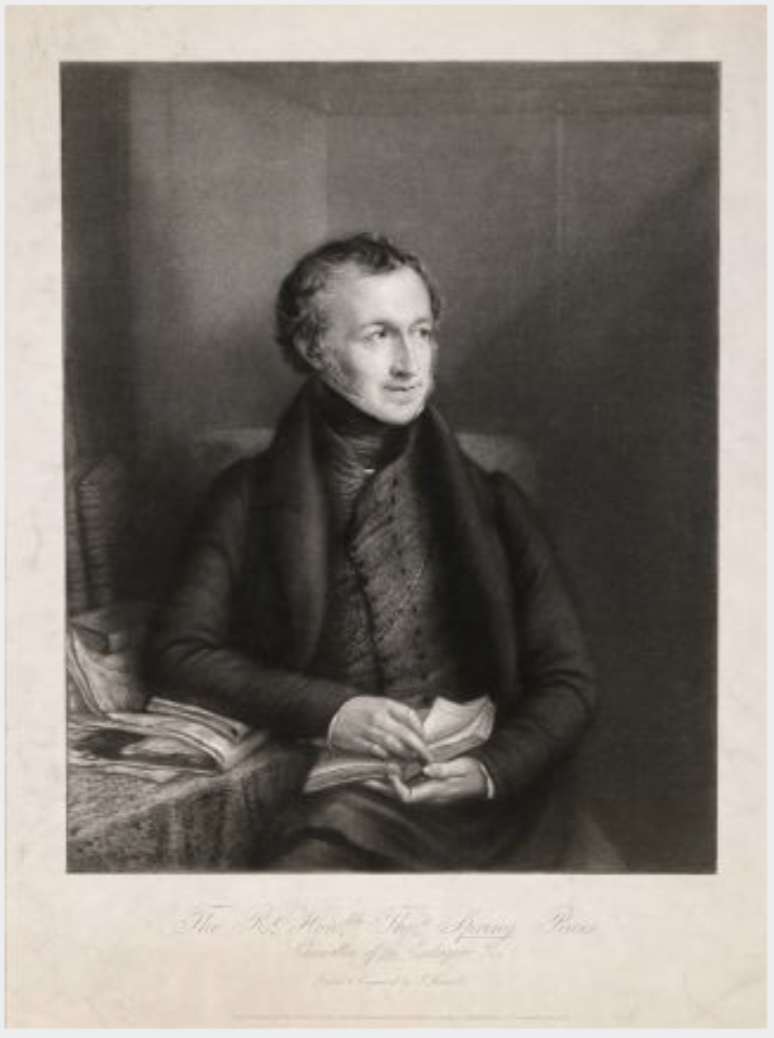
Portrait of Thomas Spring Rice, MP (1790-1866), Chancellor of the Exchequer, later 1st Baron Monteagle, courtesy of National Gallery of Ireland.
It was Stephen’s son, Thomas, who had Mount Trenchard built much as we see it today, in 1777. Thomas married another Mary Fitzgerald, this one was daughter of Maurice the 14th Knight of Kerry. Thomas was also a lawyer. They had a son, Stephen Edward Rice (d. 1831). He married, in 1785, Catherine, only child and heiress of Thomas Spring, of Castlemaine, County Kerry.
Stephen Edward and Catherine Rice had a daughter Mary who married Aubrey De Vere, 2nd Baronet of Curragh Chase, Co. Limerick. [5]
Their son was Thomas Spring-Rice (1790-1866). He married in 1811 the Lady Theodosia Pery, second daughter of Edmund, 1st Earl of Limerick. She brought with her a large dowry. Thomas Spring-Rice was Member of Parliament (M.P.) (Whig) for Limerick between 1820 and 1832, and served in many positions in government, including Chancellor of the Exchequer between 1835 and 1839.
As well as his property in County Limerick, he had property in London, Dublin and Kildare.
Thomas Spring-Rice actively sought to improve the welfare of tenants and of the underprivileged. He led an inquiry into the alleged ill-treatment of inmates in Limerick Lunatic Asylum. He also advocated the end of slavery. He also brought improvements to Limerick, such as having a new bridge built over the River Shannon. He was a supporter of Catholic Emancipation. There is a statue of him Pery Square in Limerick, which looks down on the People’s Park, which was erected due to gratitude for his work toward Catholic Emancipation.
He lost his seat in 1832 but was returned for a seat in Cambridge, so he sat in Parliament in England. Although he supported Catholic emancipation didn’t support repeal of the Act of Union, which disappointed many of his supporters. The Dictionary of Irish Biography tells us that he referred to himself as a West Briton, and may have coined this phrase.
Thomas was elevated to the peerage in 1839 to become 1st Baron Monteagle of Brandon, County Kerry. The Dictionary of Irish Biography gives us a good summary of his subsequent views:
“With his removal to the lords, Monteagle took little part in public life till roused by the famine. An improving, paternalistic landlord, during the crisis years he was characterised by his concern for his tenants, energetic attempts to influence policy, and a mounting bitterness towards the government. His correspondence with the treasury and board of works is of considerable value in helping to elucidate the official government position. His letters and speeches in the lords were studded with rhetorical invective against Britain’s long mistreatment of Ireland. Holding landlords to be as much victims of British mismanagement as tenants, he rejected forcibly any claim that they should be held responsible and continually advocated state intervention, though he felt it should not be limited to road works, but extended to agricultural improvements. He did not accept fixity of tenure, since he felt Irish peasants too prone to subletting. His own experience as a landlord bore this out and he considered overcrowding as the principal evil of Irish agriculture. A strong advocate of state-assisted emigration, he was successful in bringing the lord lieutenant, Lord Clarendon, over to his viewpoint, but not the government as a whole. He personally assisted numerous tenants to emigrate and then acted as mediator between them and their families still on his estate.” [6]
Mount Trenchard, 2022.Mount Trenchard, County Limerick, August 2022.
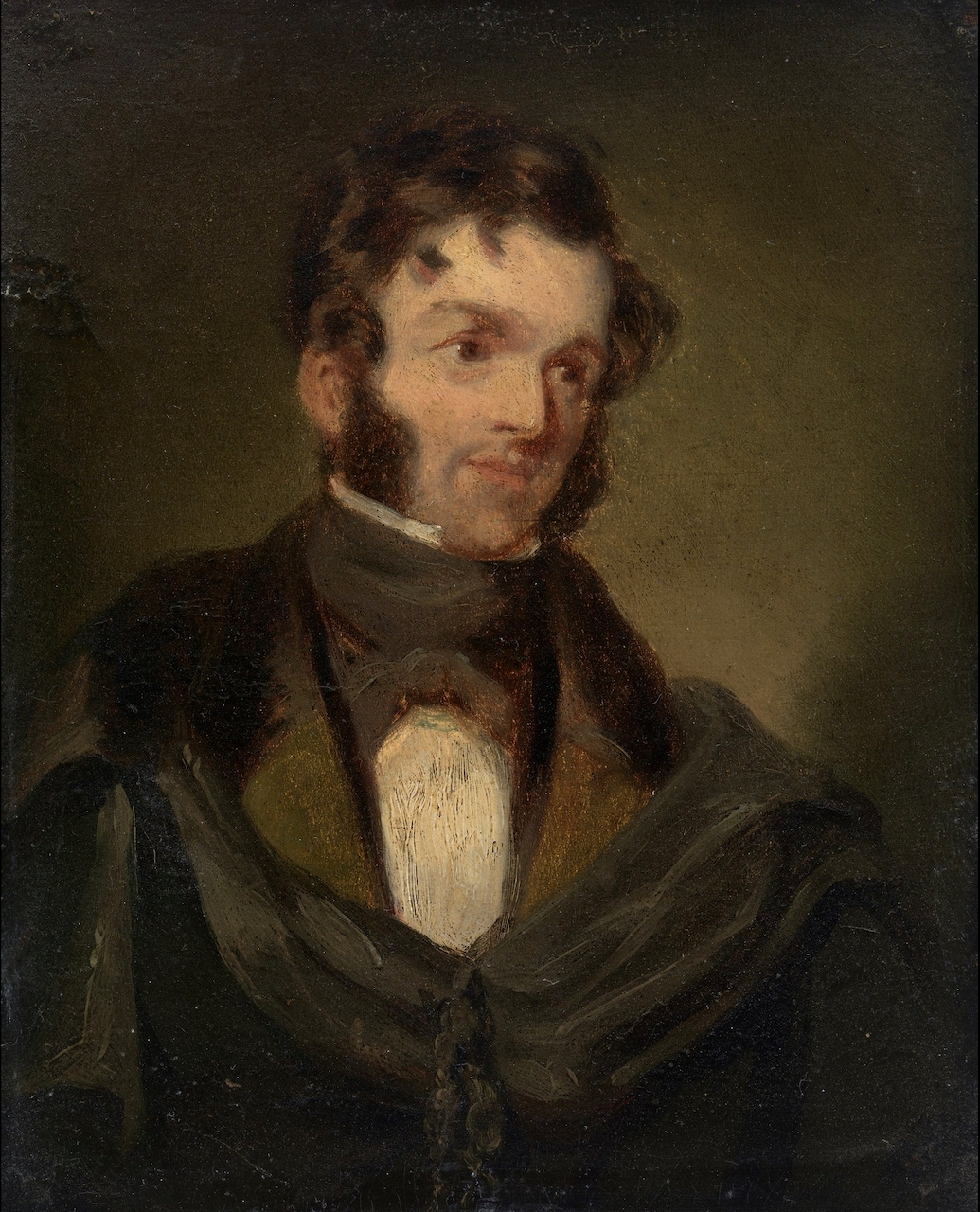
Thomas Rice Spring’s son Stephen died tragically at sea in 1865, and thus a grandson, Thomas (1849-1926) inherited the family property and the title to become 2nd Baron Monteagle in 1866.
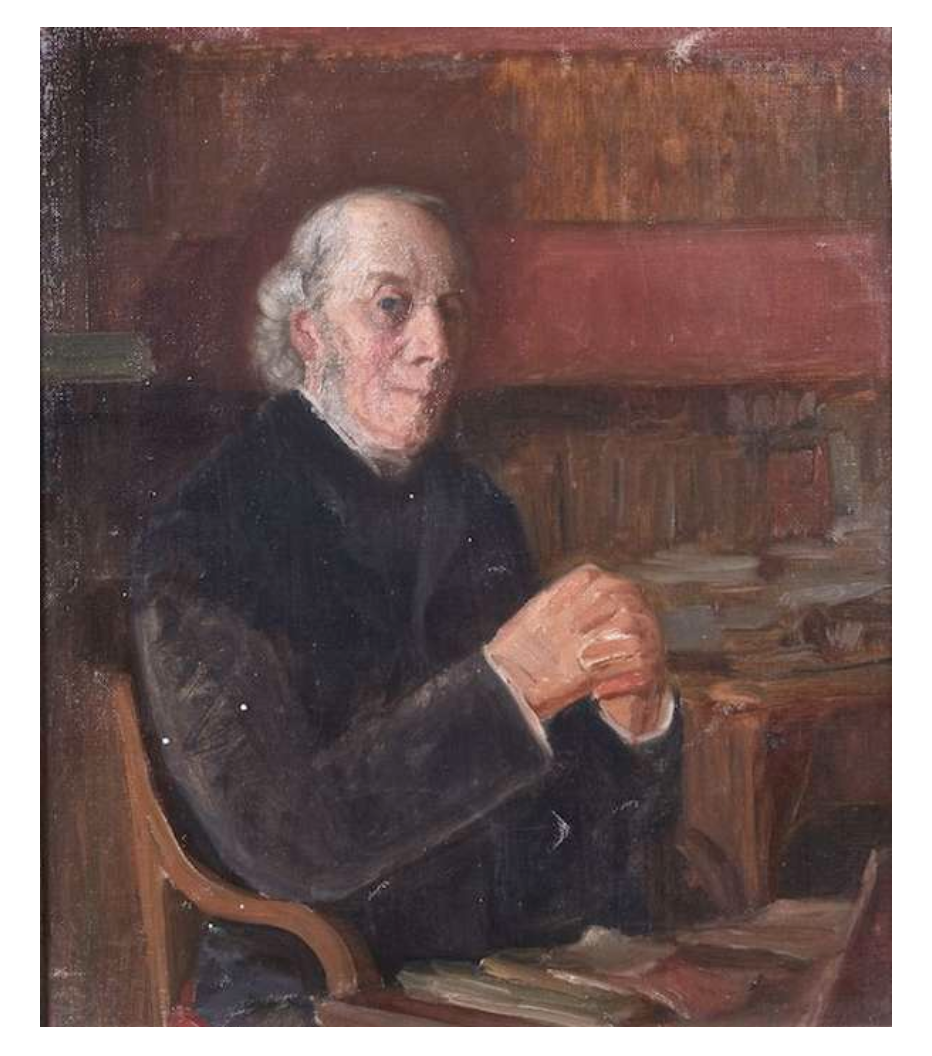
Portrait of Thomas Spring Rice (1849-1926), 2nd Baron Monteagle, by Charles Wellington Fursecourtesy of National Gallery of Ireland.
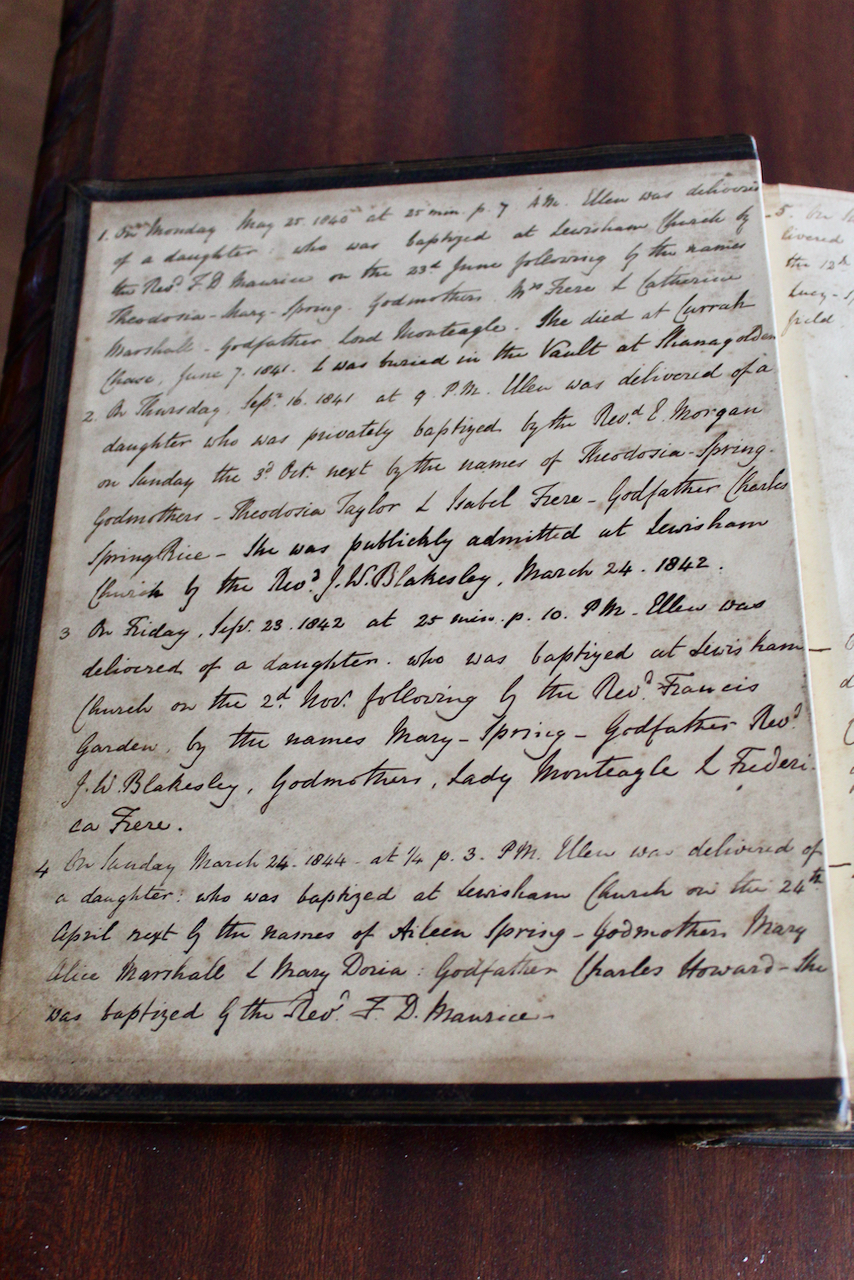
The caretaker Tommy showed us the family bible, which follows the tradition of writing births and deaths in the family inside the covers. Here we can see the births recorded of Stephen and his wife, Ellen Mary Frere. They had many children. A daughter Mary married Edward William O’Brien of Cahermoyle House in County Limerick, whose father was the politician, Nationalist and leader of the Young Irelander movement William Smith O’Brien (1803–64).
Thomas (1849-1926) was popular with the locals and helped to promote the Co-operative Creamery Movement in Limerick, and was a friend of Horace Plunkett. He held the office of Deputy Lieutenant (D.L.) of County Limerick.
Thomas the 2nd Baron married Elizabeth Butcher in 1875, daughter of the Bishop of Meath. Their daughter Mary (1880-1924) became a passionate advocate of Irish independence. She was influenced by her cousin Nelly O’Brien, from Cahermoyle House in County Limerick. She learned Irish and hired a native speaker from Kerry to teach classes in the local national school. [7] The Dictionary of Irish Biography tells us that she was an early member of the United Irishwomen, founded in 1910 as a sister organisation to the Irish Agricultural Organisation Society (IAOS) of Horace Plunkett, to encourage countrywomen’s industries and handicrafts. In 1911 she was on the executive of the Limerick branch of the Irish Countrywomen’s Association.
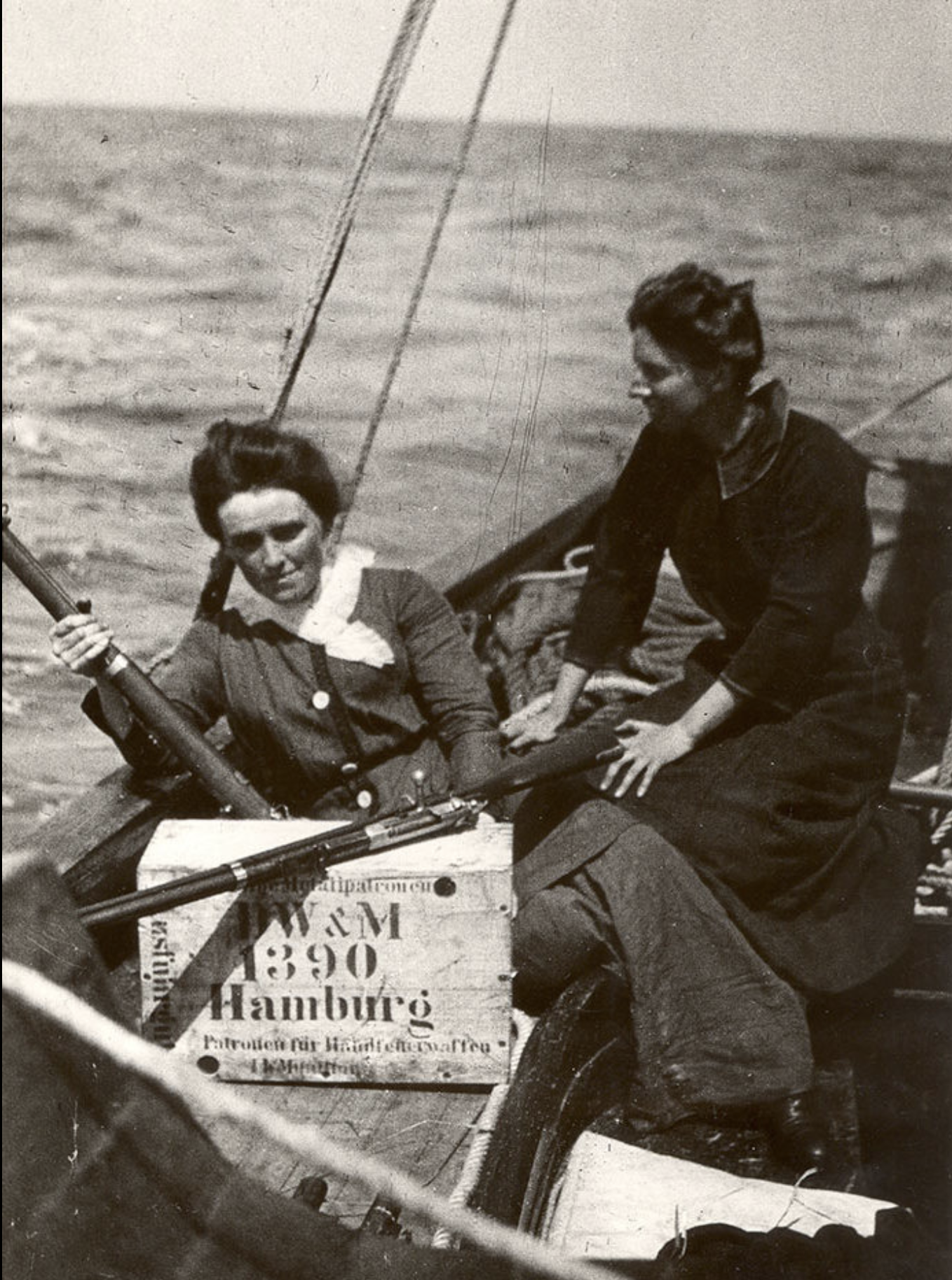
Most famously, she was involved with bringing guns from Germany into Ireland with Erskine Childers in his boat the Asgard. Her Asgard diary was published in Martin, Howth gun running (1964). Mount Trenchard was used as a safe house for member of the IRA during the War of Independence. There are tunnels underground which could lead down to the Shannon estuary.
In 1940 the house was let and occupied by a unit of the Irish Army, and they remained there for the duration of WWII.
The 3rd Baron Monteagle did not marry, and his uncle, Francis Spring Rice (1852-1937) became 4th Baron Monteagle of Brandon, of Brandon, Co. Kerry in 1934. He gained the rank of Commander in the Royal Navy. In 1882 he married Elizabeth Ann Fitzgerald, daughter of Peter George, 1st Baronet FitzGerald, of Valencia, Co. Kerry (son of the 18th Knight of Kerry). It was their son Charles who became 5th Baron Monteagle. The 4th Baron later married his wife’s sister, after his wife died. She was the widow of Stephen Edward Spring Rice (1856-1902), grandson of 1st Baron Monteagle.
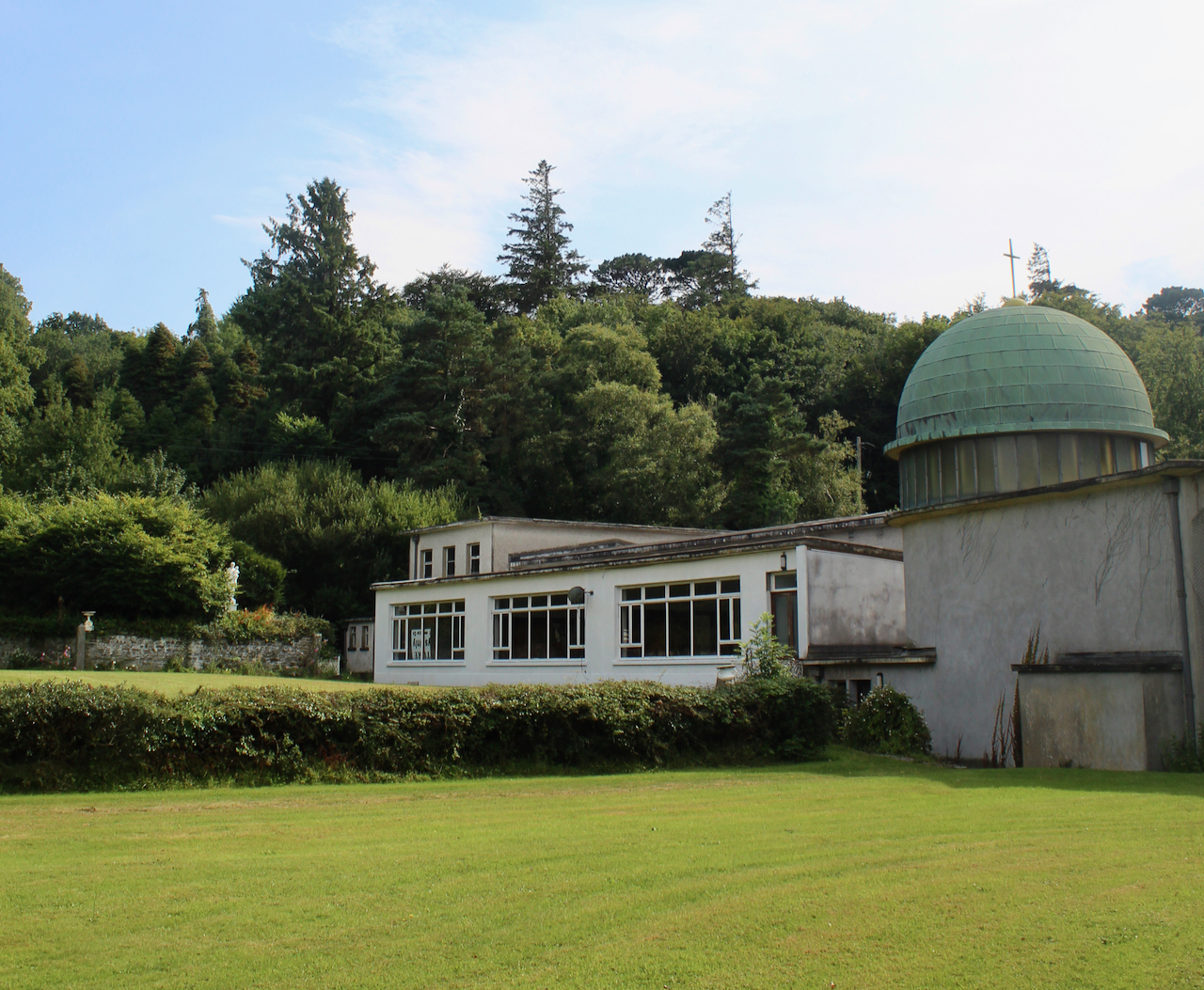
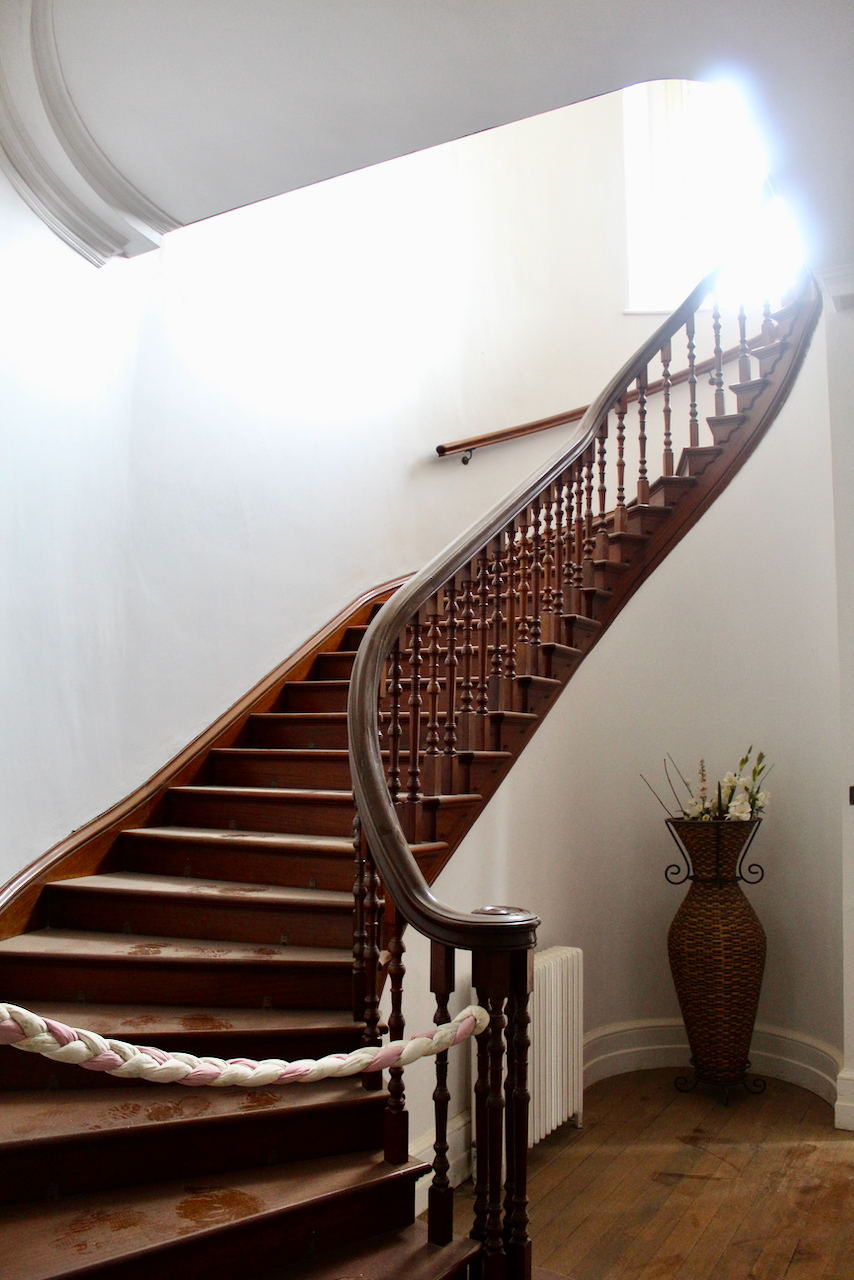
Charles Spring Rice (1887-1946) joined the military and fought in WWI. When the 5th Baron Monteagle of Brandon died in 1946, the estate was sold. In 1954, the Sisters of Mercy acquired the estate and ran it as a private boarding school for girls, called Stella Maris. [8] It was later sold again, and is now being renovated. The caretaker gave us a wonderful tour of the house and showed us details of renovation, as well as bringing us out to the walled garden, where he has done great work.
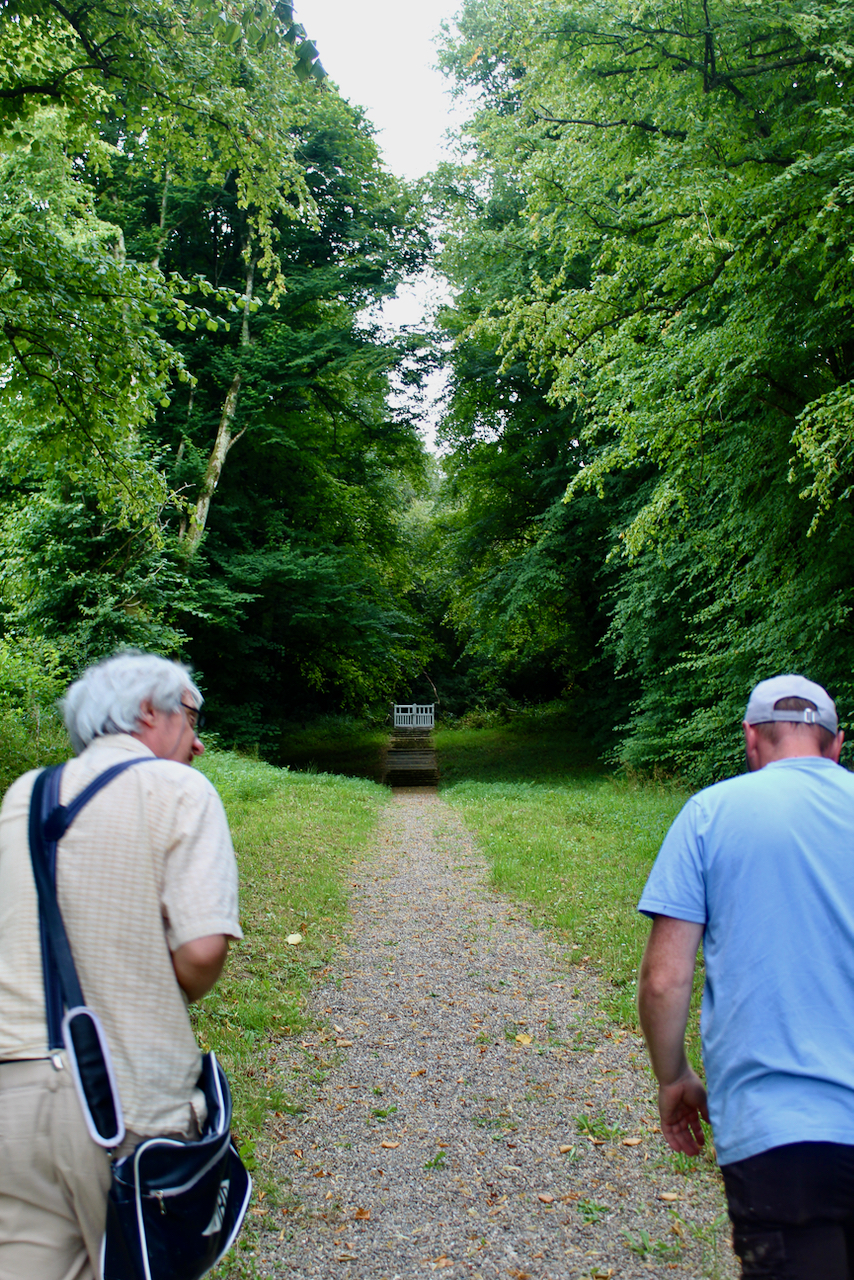
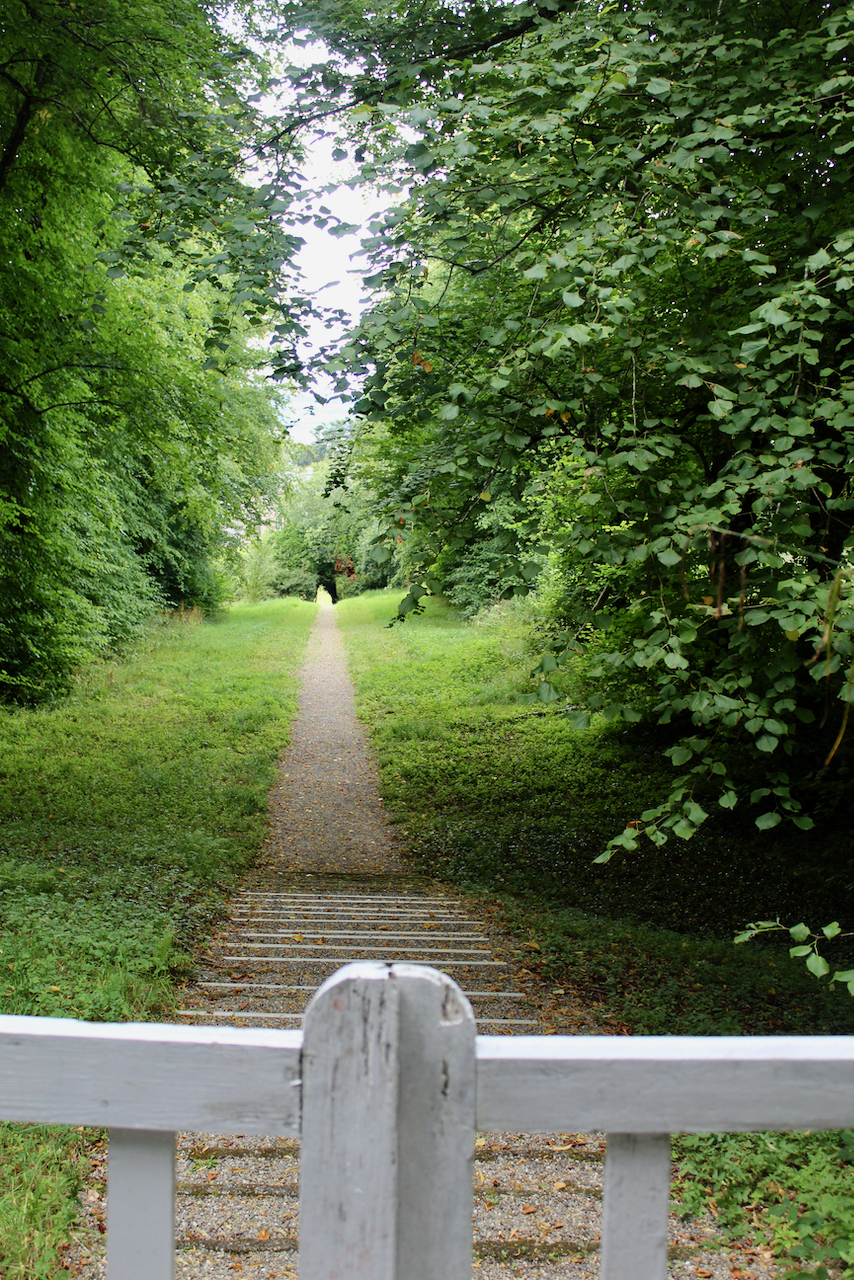
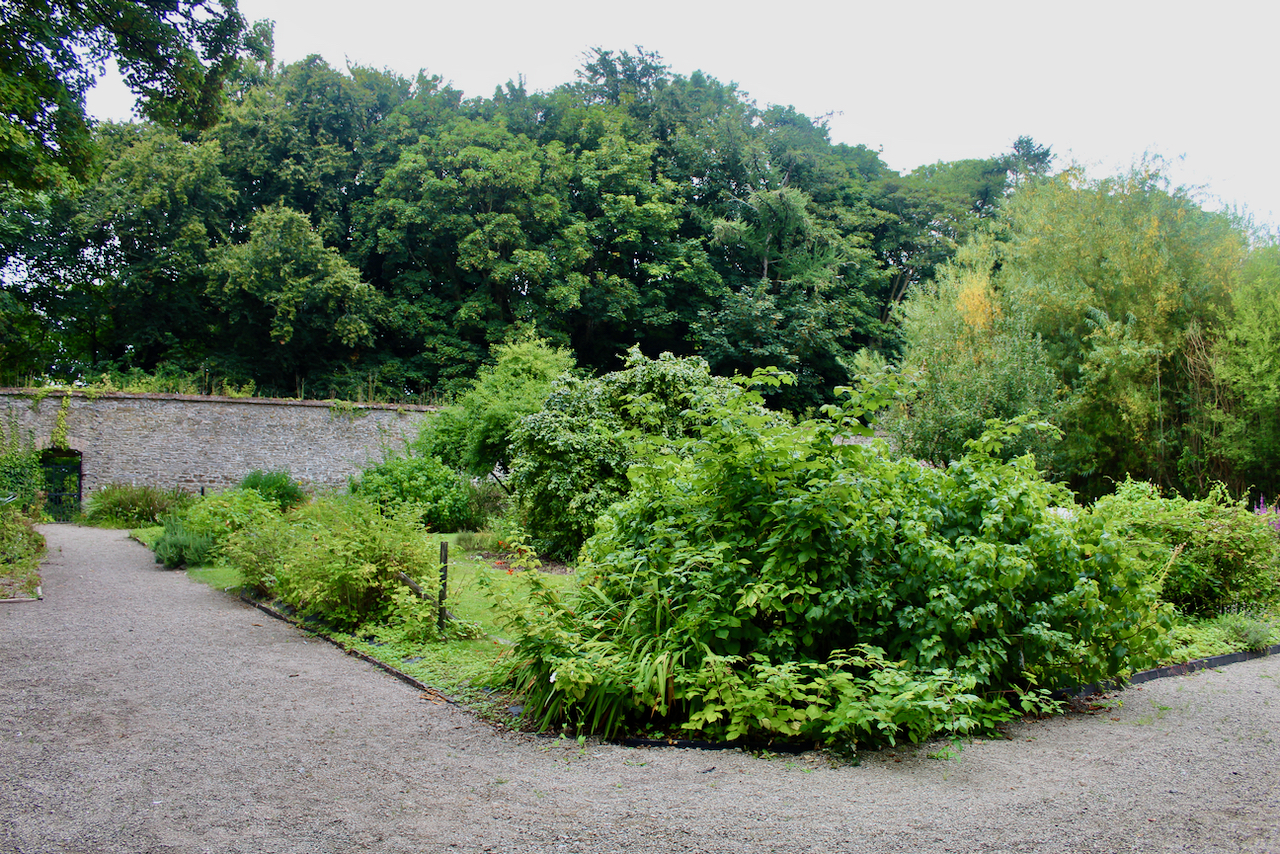
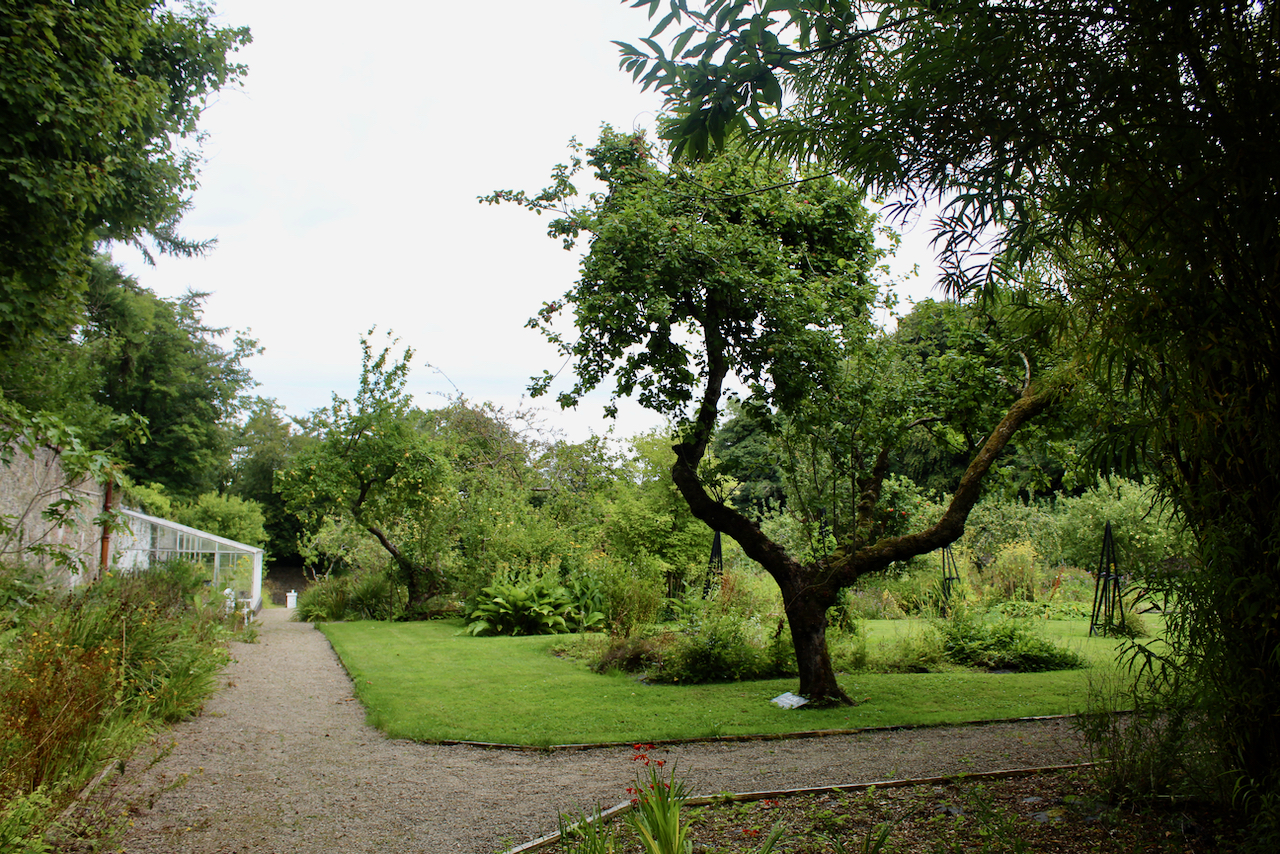
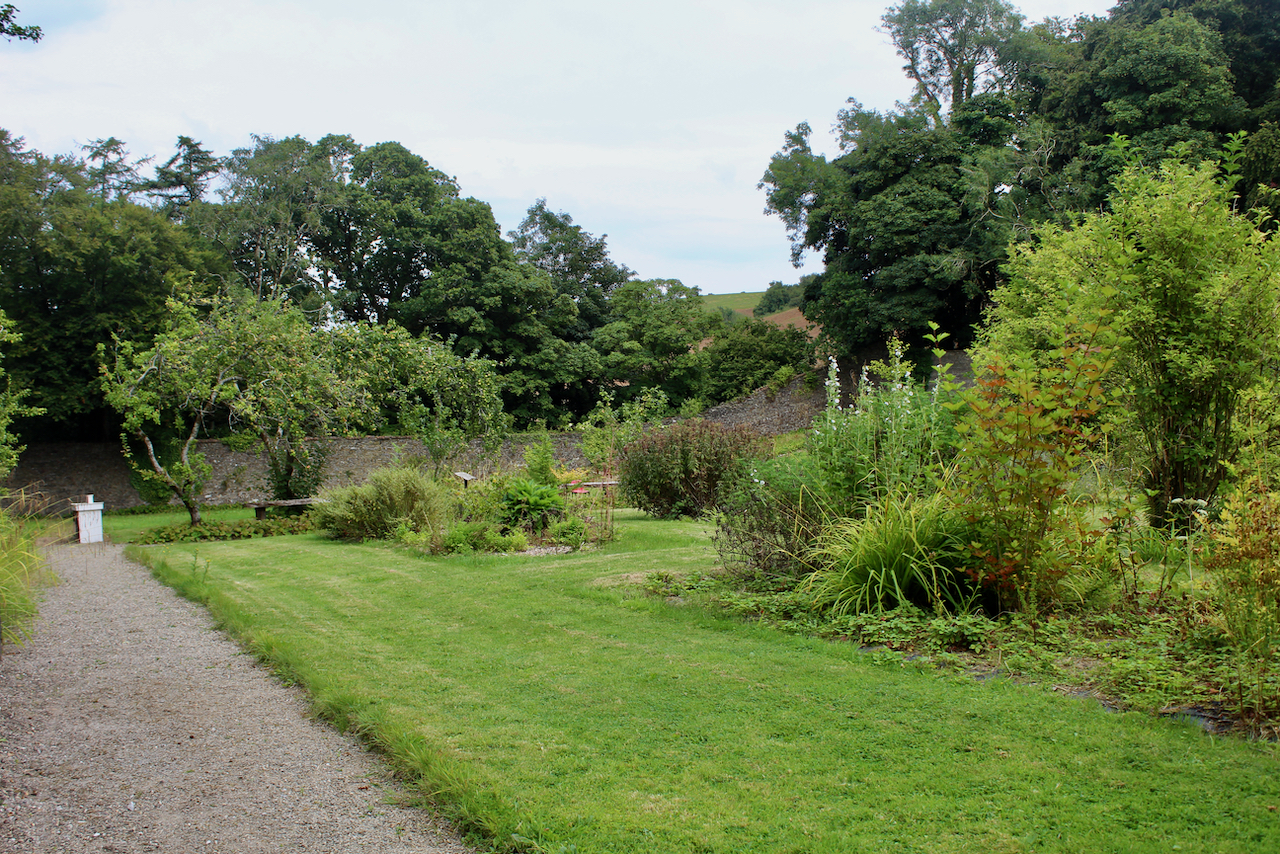
It’s a lovely walk from the back garden up to the walled garden. Our tour guide also does the gardening and the walled garden is productive as well as beautiful.
[3] Bence-Jones, Mark. A Guide to Irish Country Houses (originally published as Burke’s Guide to Country Houses volume 1 Ireland by Burke’s Peerage Ltd. 1978); Revised edition 1988, Constable and Company Ltd, London.














 Irish Historic Houses