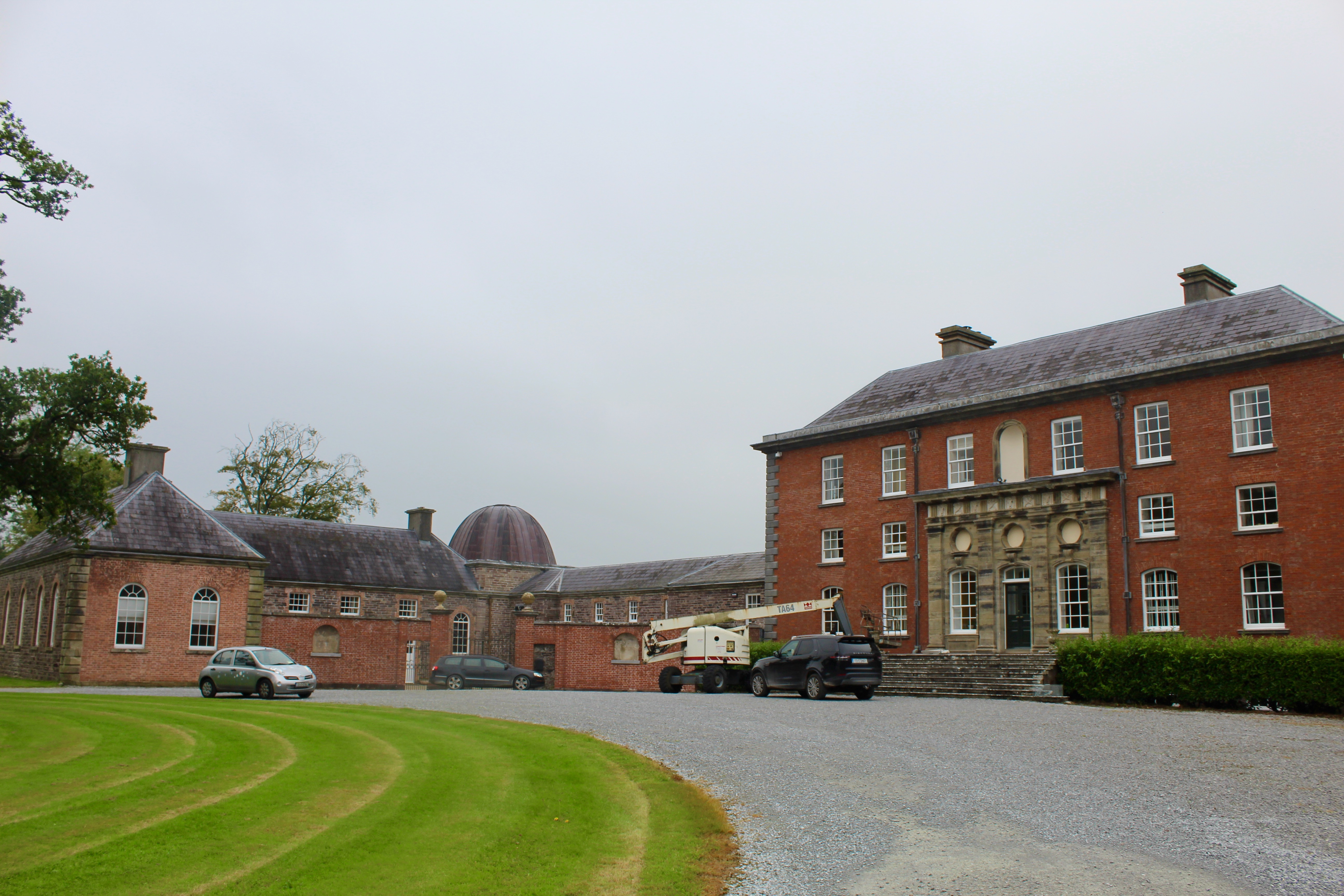
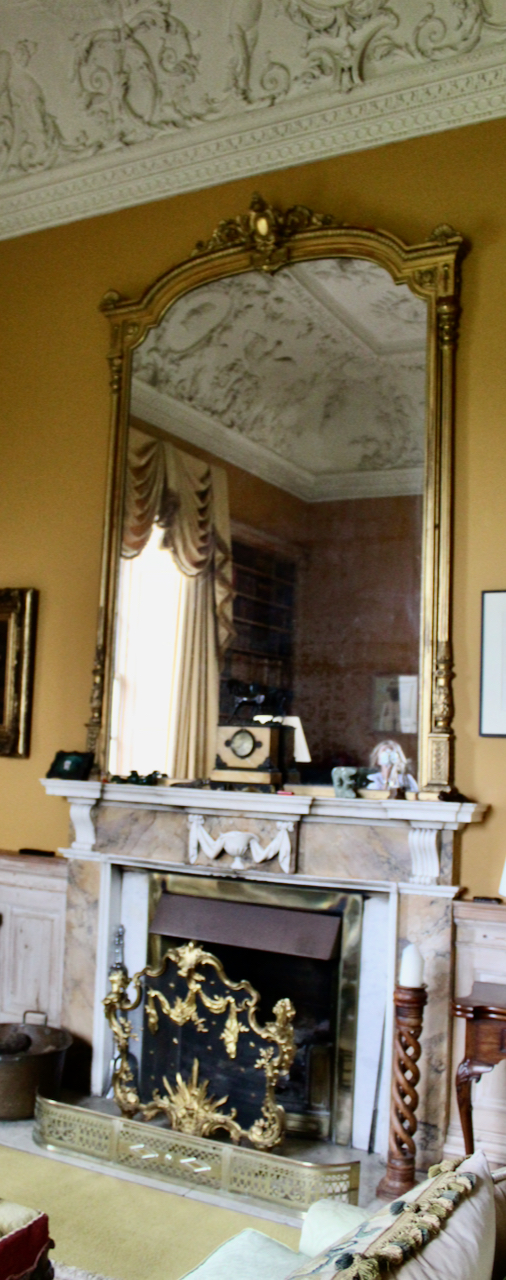
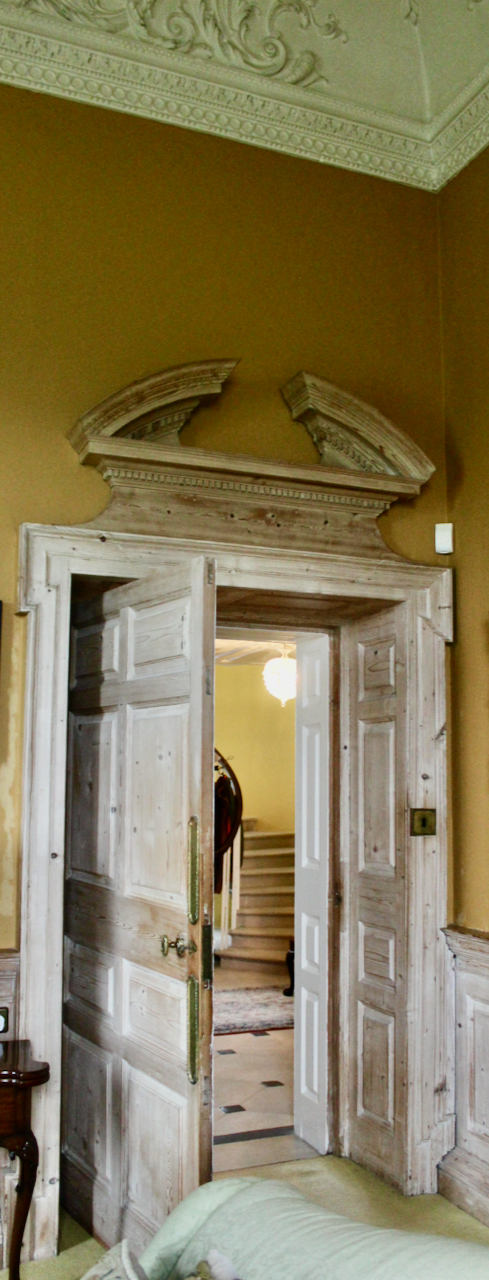
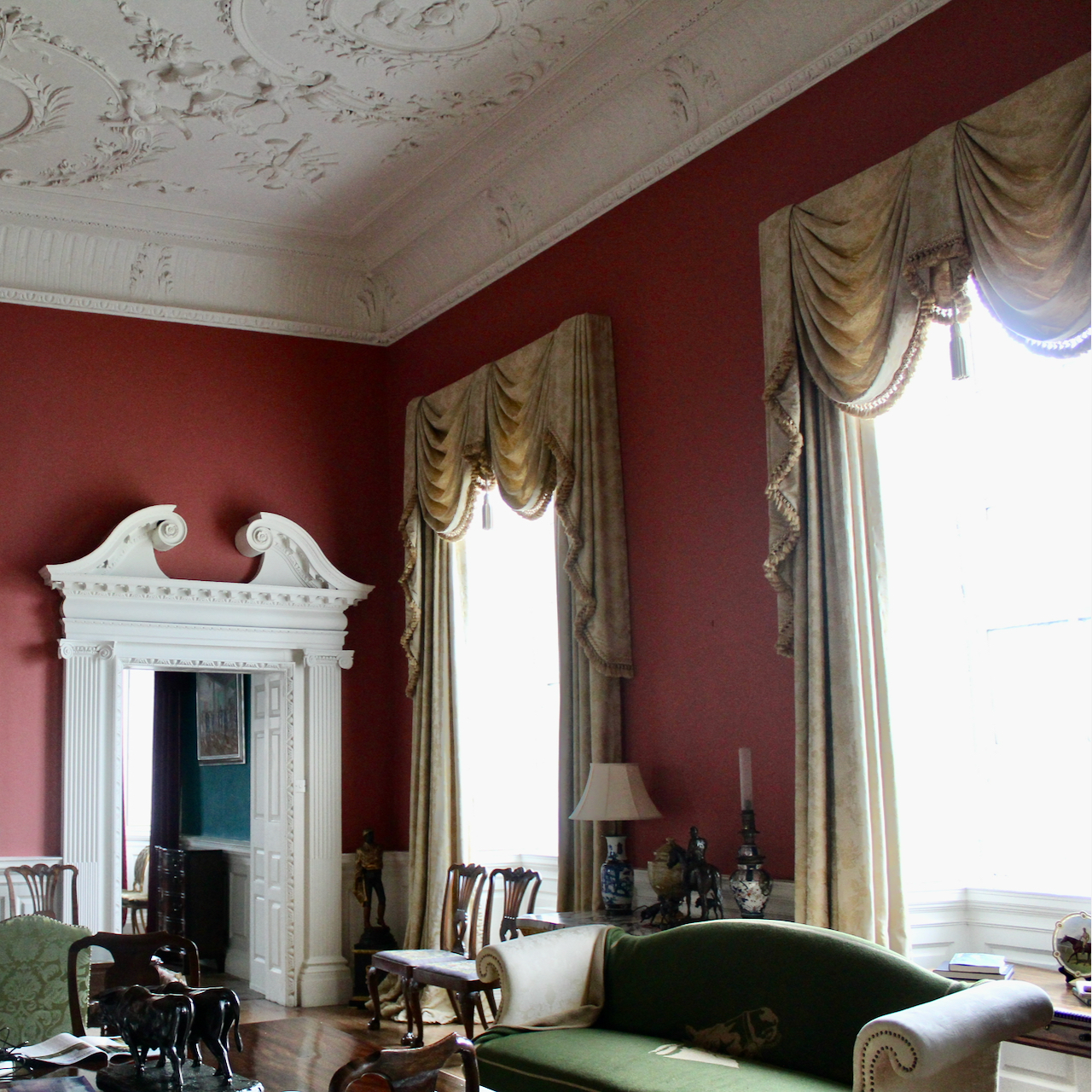
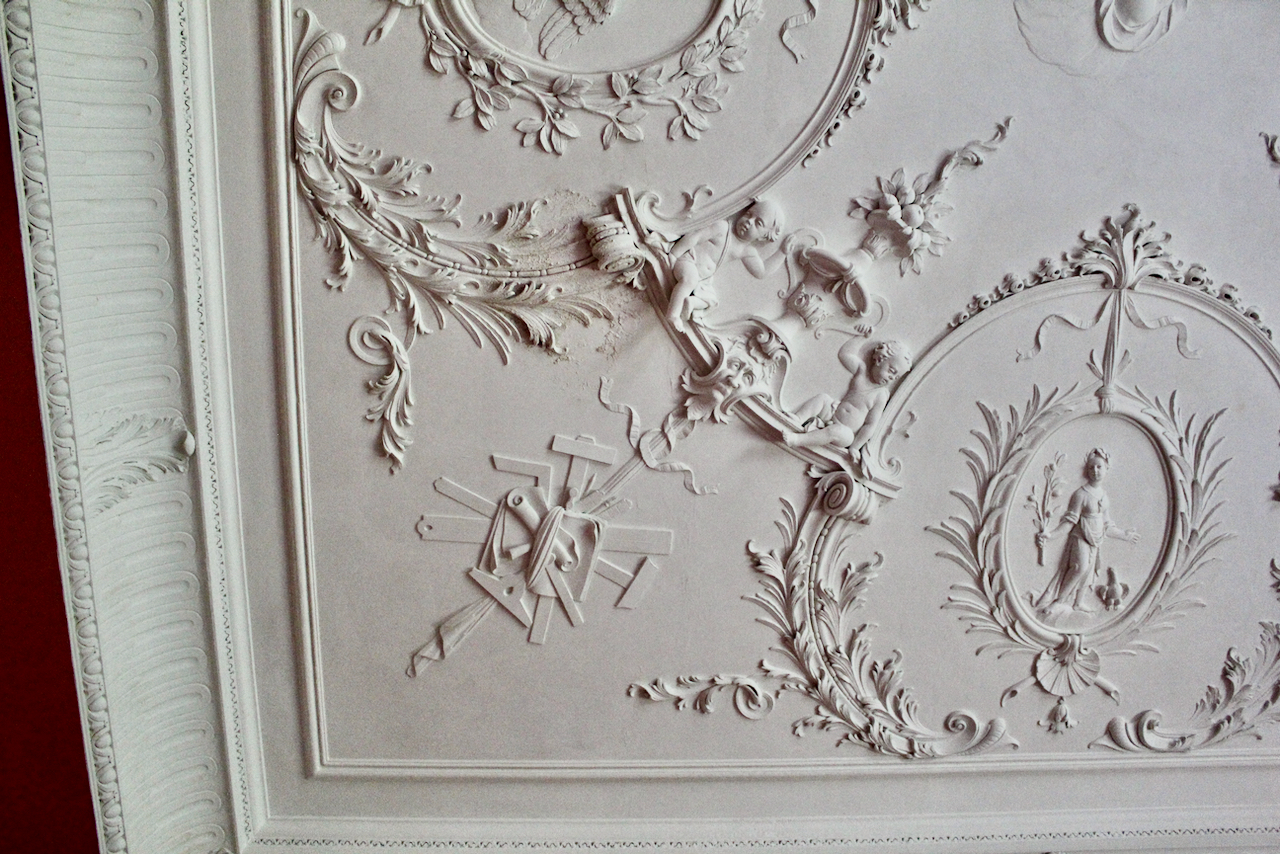
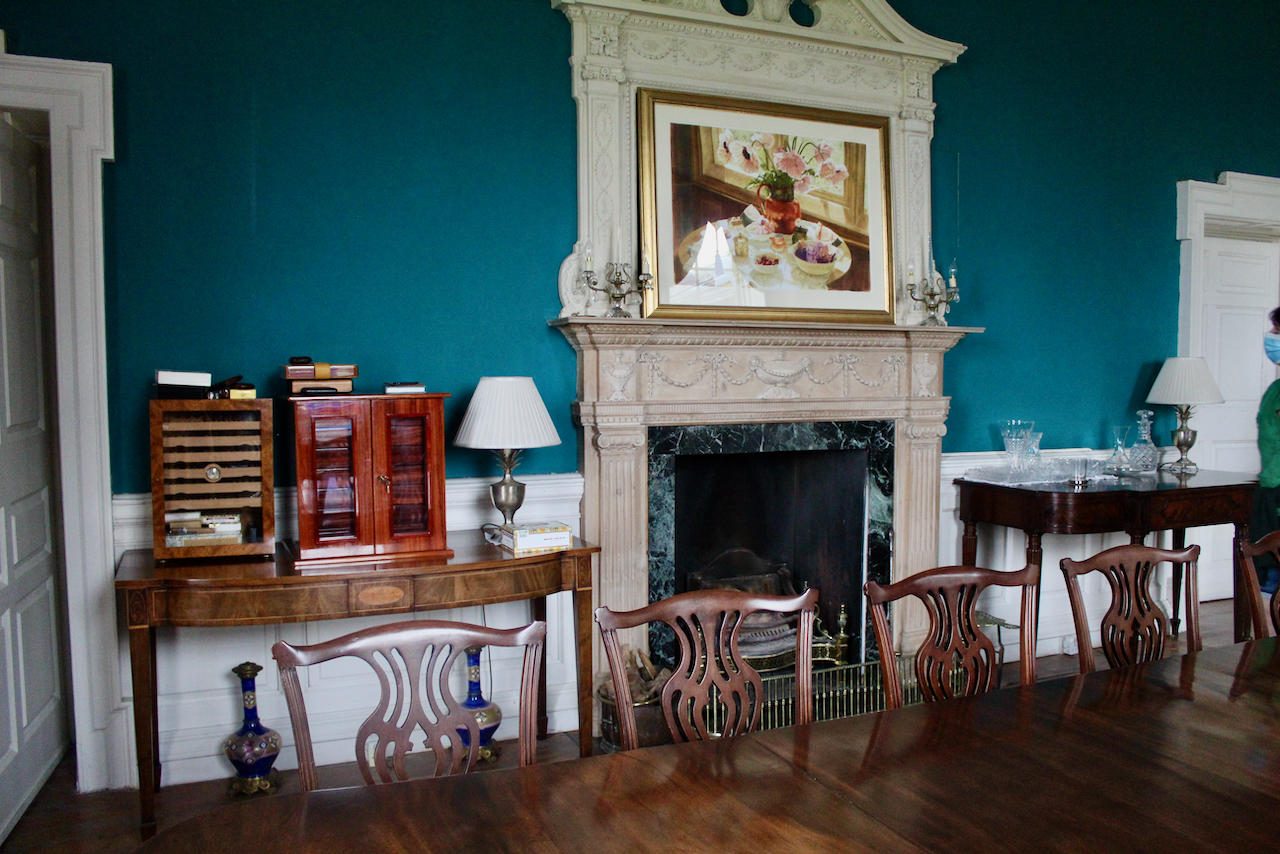
Maryborough, County Cork, photograph courtesy Irish Aesthete.
The website tells us:
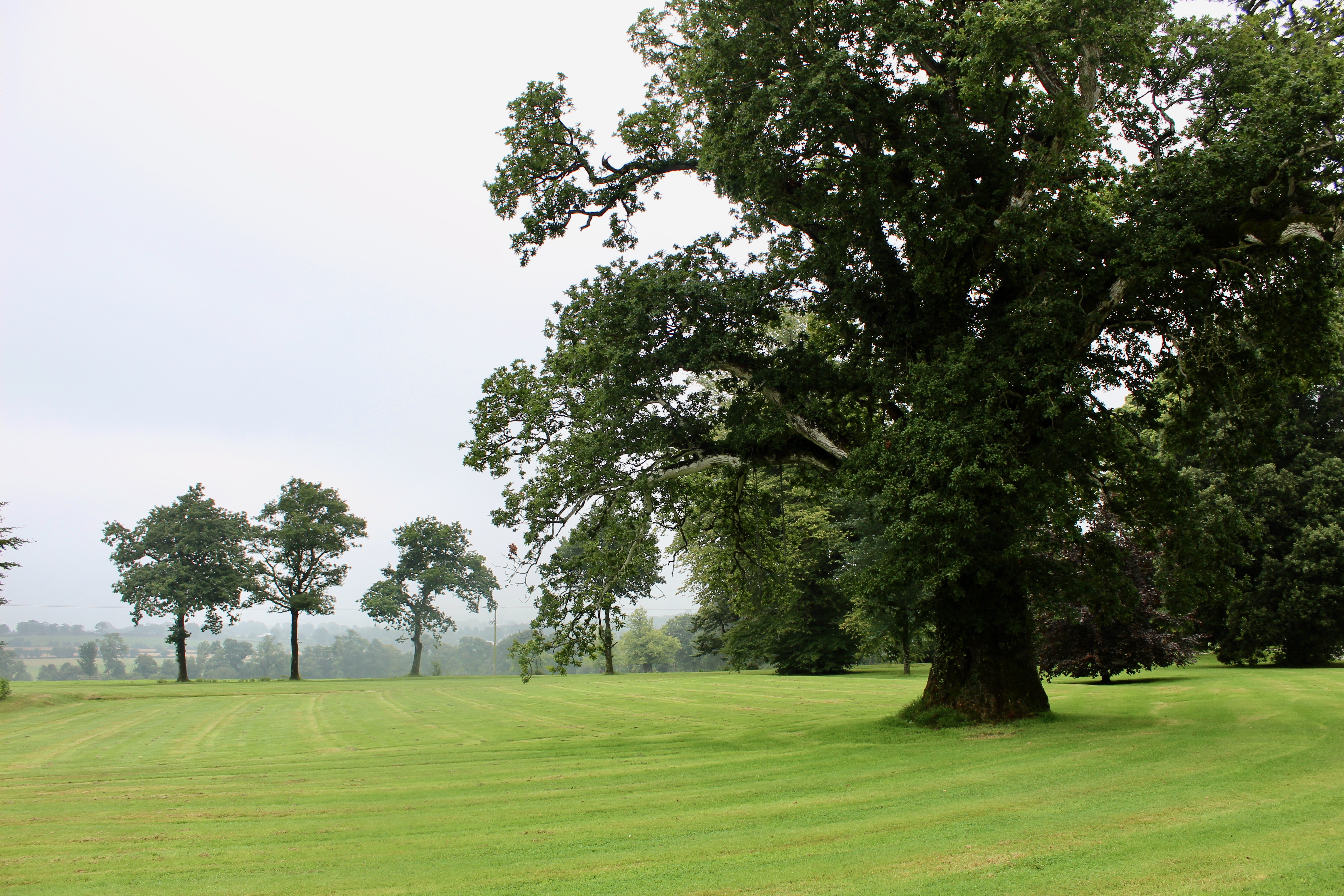
“Located in the leafy suburbs of Douglas, yet minutes from Cork City Centre, The Maryborough has a character and style all of its own. Set in 18 acres of 300-year-old listed gardens and woodland, our family-owned boutique hotel affords guests an experience in luxury itself and is among the top hotels in Cork. The Maryborough Hotel is unique with its charming 18th Century Mansion accompanied by the creatively designed contemporary extension. All of this combined makes The Maryborough the perfect destination.
“The hotel delivers a unique experience in an exceptional atmosphere. From the moment you enter, we will guarantee you a level of personal service and care designed to match the exquisite surroundings of our 300-year-old listed gardens. Guests can enjoy an award-winning restaurant in Cork, state of the art Leisure Club and luxurious ESPA spa.
Maryborough, County Cork, photograph courtesy Irish Aesthete.
Our History
“The Maryborough Hotel & Spa is one of the most renowned 4 star hotels in Cork today. The Maryborough’s Georgian Manor House was built in 1710 by Mr Richard Newenham [note that a Richard Newenham of Maryborough married Sarah Devonsher, niece of Abraham Devonsher of Kilshannig]. Descendants of the Newenhams as well as other families lived there up until the 1990s when it was purchased by the O’Sullivan family. In 1997 the family opened what is now The Maryborough Hotel, a 4 star luxury hotel in Cork with 93 bedrooms.
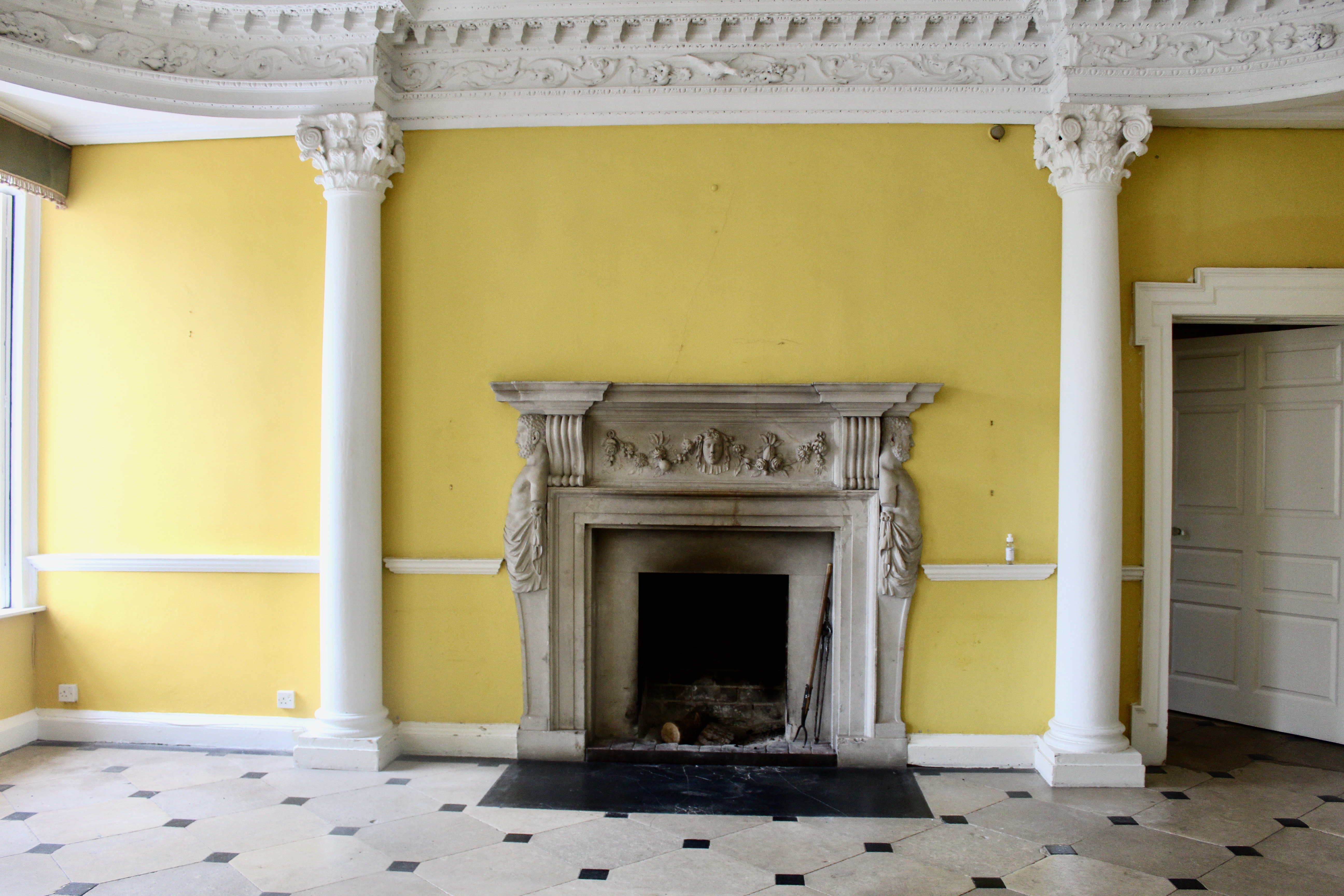
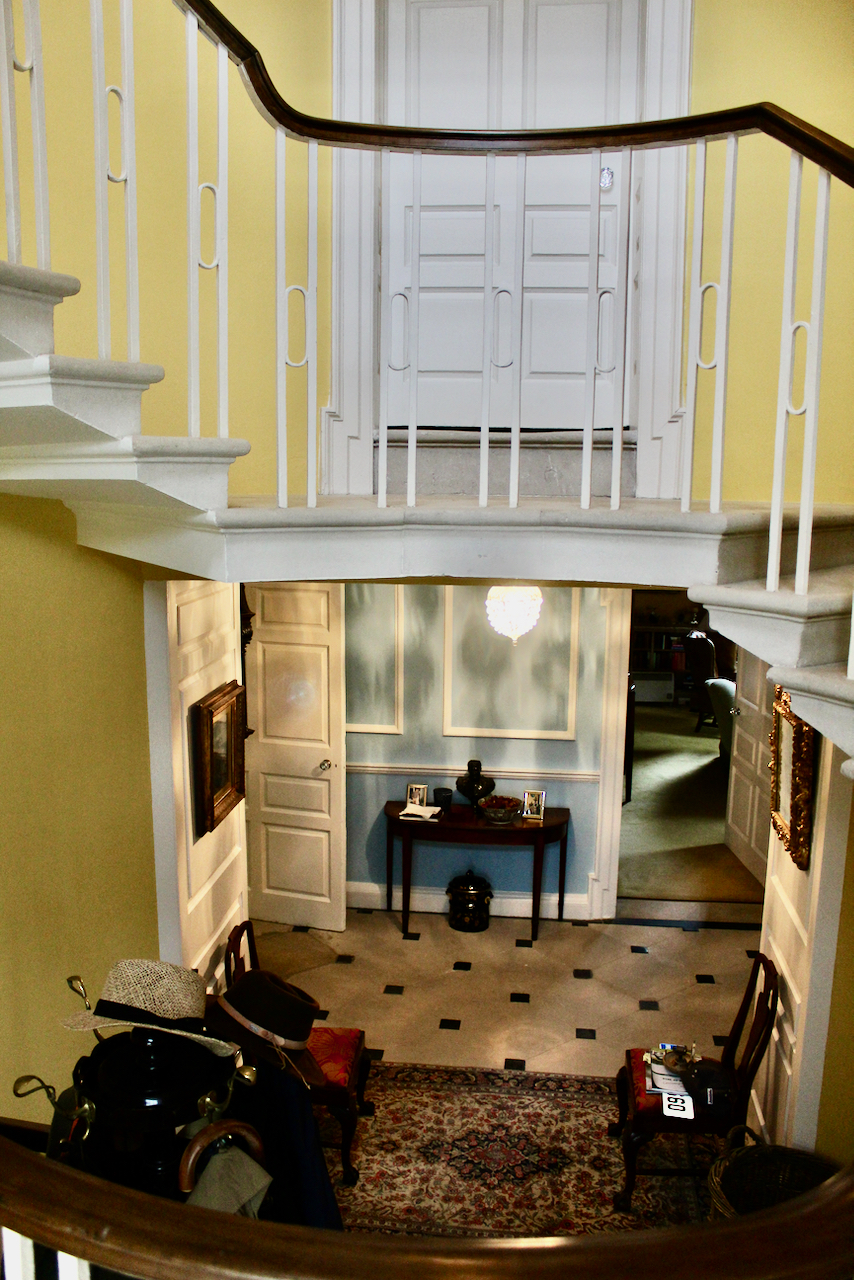
“Since becoming a hotel, the Mansion House has fortunately retained its striking original architectural features. Some of the rooms at The Maryborough still showcase Adam style decoration – notably the entrance hall and some mantelpieces. This adds to the historical relevance of the manor house and contributes to the decadence and luxury of this boutique hotel in Cork.
“The former eighteenth-century stately home is set amid acres of woods and beautiful gardens, just south of Cork’s historical city centre in Douglas. John Newenham, a younger brother of the last Newenham owner of The Maryborough was a great gardener and collector of trees. Thanks to his inspired work the gardens at The Maryborough still host quite a collection, in particular of rhododendrons, making it one of the reasons for The Maryborough being one of the best hotels in Cork.
“The Maryborough works to continually develop a deluxe guest experience merging the hotels history with beautifully appointed accommodations. In order to incorporate the elegant grandeur of the old house into the hotel, several splendid suites were built on the upper floors of the Mansion House. Read more about our luxury suites in Cork.
“To compliment the opulent charm of the old house, the hotel’s contemporary extension was built. It is here you will find our Deluxe, Executive and Family Rooms. Spectacular architecture blended with effortless service and genuine hospitality makes the Maryborough one of the top hotels in Cork.“
Bence-Jones, Mark. A Guide to Irish Country Houses (originally published as Burke’s Guide to Country Houses volume 1 Ireland by Burke’s Peerage Ltd. 1978); Revised edition 1988 Constable and Company Ltd, London.
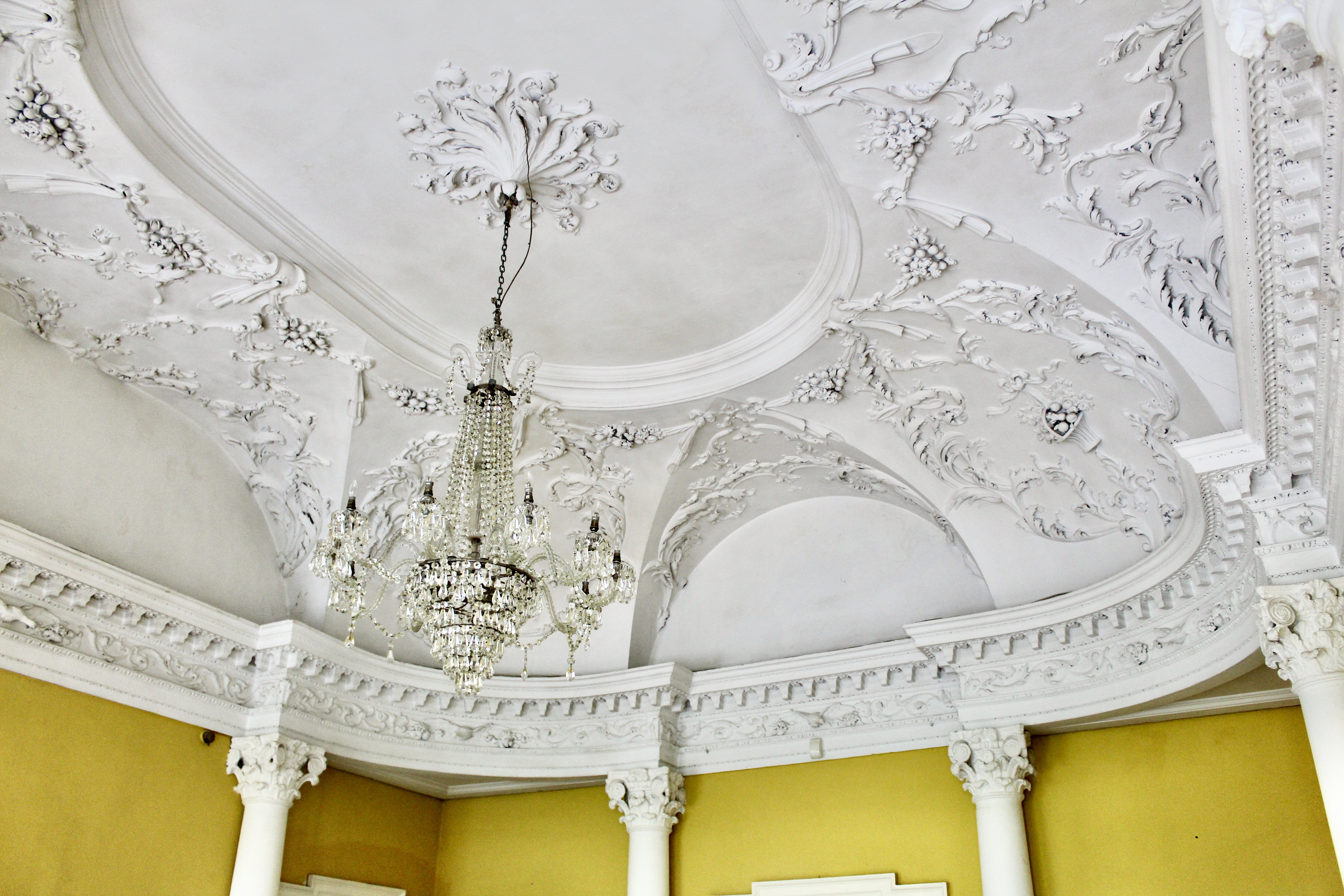
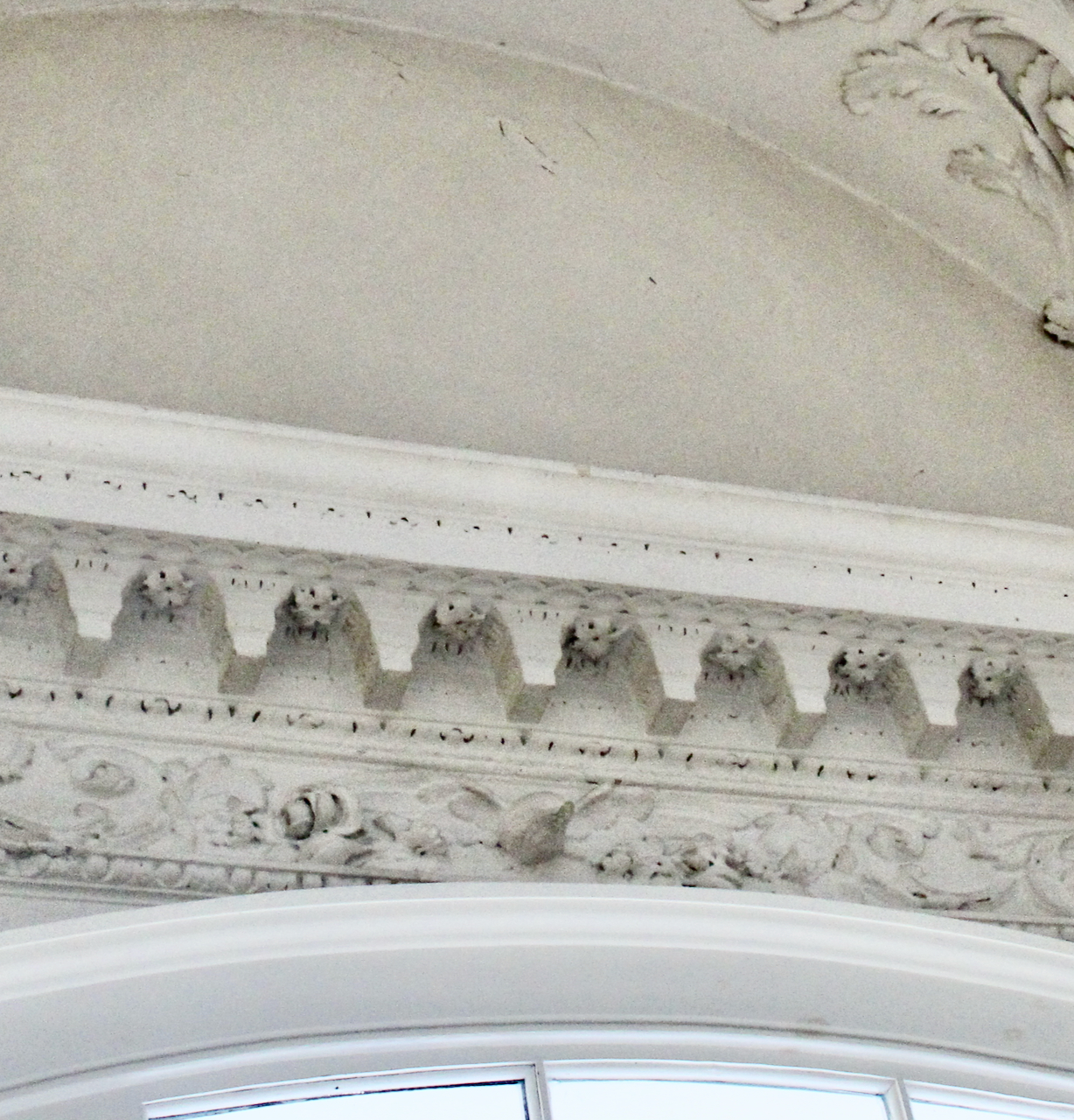
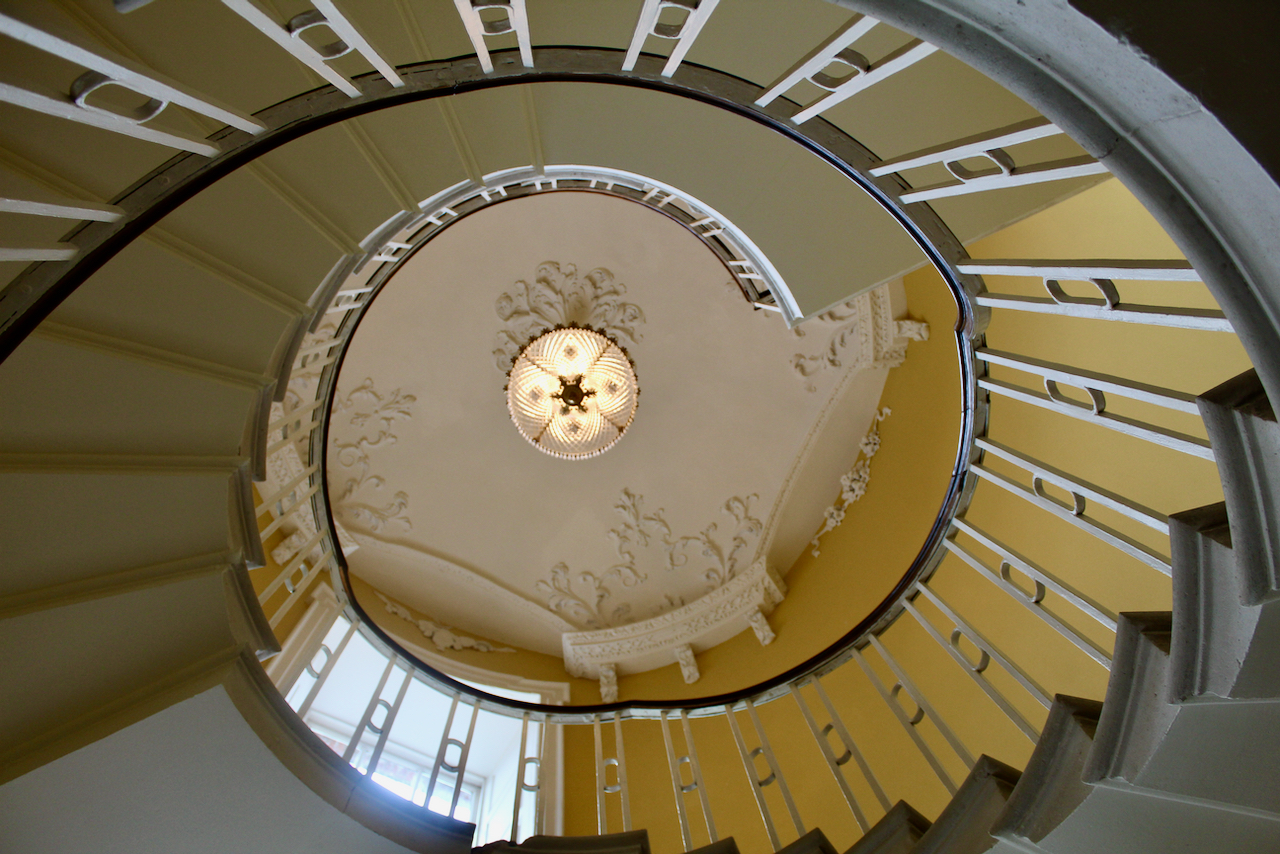
p. 204. “(Newenham/IFR; Sherrard, sub Morrough/IFR) A three storey seven bay mid-C18 house with a lower late-Georgian bow-fronted addition. On the garden front, the house is weather-slated; and the main block is joined by a curving corridor to an office wing with a high-pitched sprocketed roof. Hall with ceiling of Adamesque plasterwork and floor of black and white pavement. Dining room with plasterwork frieze. Staircase of handsome C18 joinery, with Corinthian newels. Upper hall with ceiling of rococo plasterwork in the manner of Robert West. In the late-Georgian wing, there is an oval cantilevered stone staircase with an iron balustrade; the wing also formerly contained a ballroom and library, but these were destroyed by fire 1914 and rebuilt as kitchens. Originally the seat of a branch of the Newenham family; passed at the beginning of the present century to the Sherrard family.”
The Buildings of Ireland. Cork City and County. Frank Keohane. Yale University Press: New Haven and London. 2020.
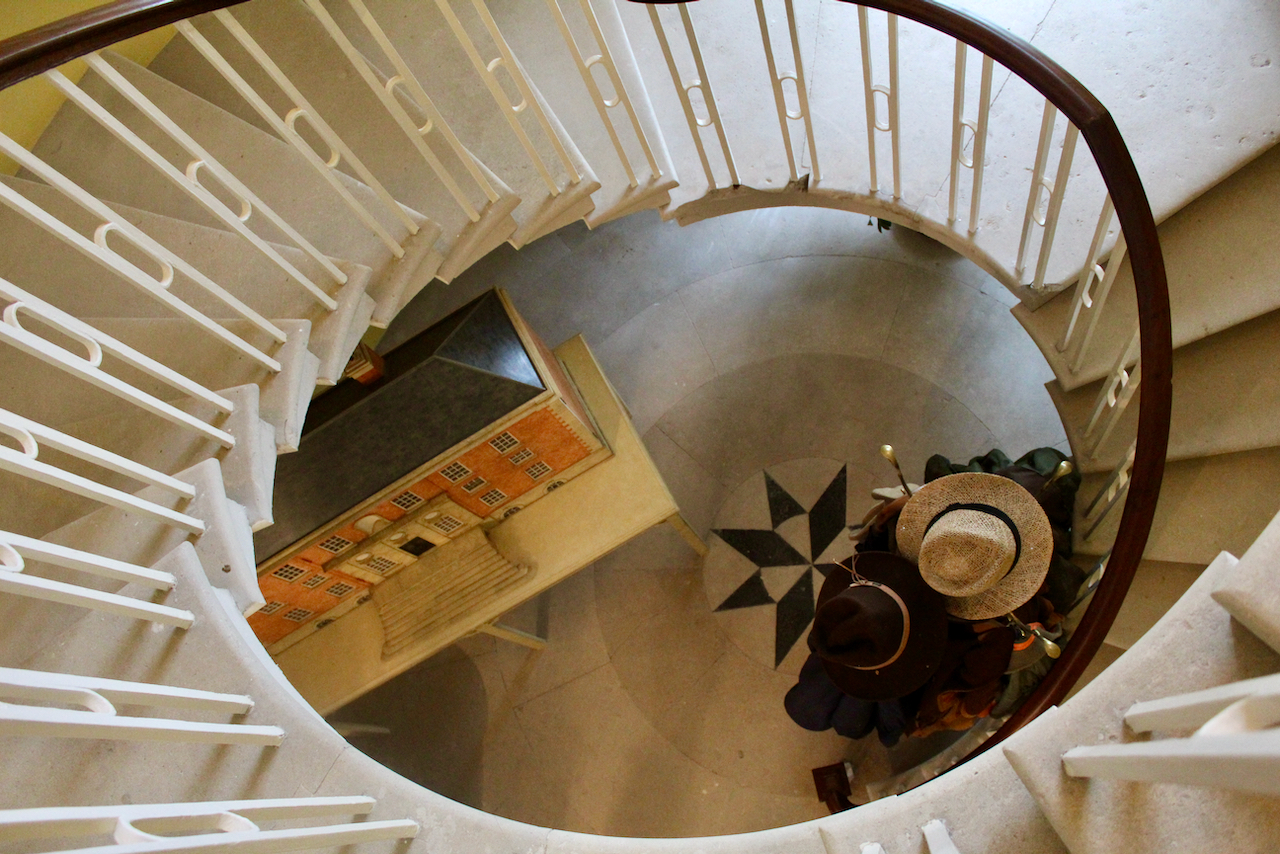
p. 27. Of mid-C18 Palladian interiors, good representative examples with panelled dados, lugged architraves, fielded panelling and chunky cornices are found at Coole Abbey House, Assolas, Cloghroe, Kilshannig, and Blackrock House. Curiously, the heavy Palladian lugged architrave remained in use in the county long after it fell out of fashion elsewhere. At Lisnabrin, Dunkathel, Burton, Rockforest and Muckridge, the form is encountered in late C18 Neoclassical interiors, suggesting an innate conservatism among local joiners. The finest joinery in most houses is reserved for the staircase, and in many cases these have survived. The best early C18 staircases, at the Red House and Annes Grove, have alternating barley-twist and columnar balusters, big Corinthian newel posts, ramped handrails and carved tread-end brackets. Mount Alvernia (Mallow), Carrigrohane and Cloghroe all have good mid-C18 staircases of a similar type; that at Lota is exceptional in its use of mahogany and for its imperial plan. Good Neoclassical staircases, geometrical in form with delicate ironwork balustrades, survive at Maryborough, Newmarket Court and Castle Hyde; the destruction of those at Vernon Mount is a particularly sad loss.
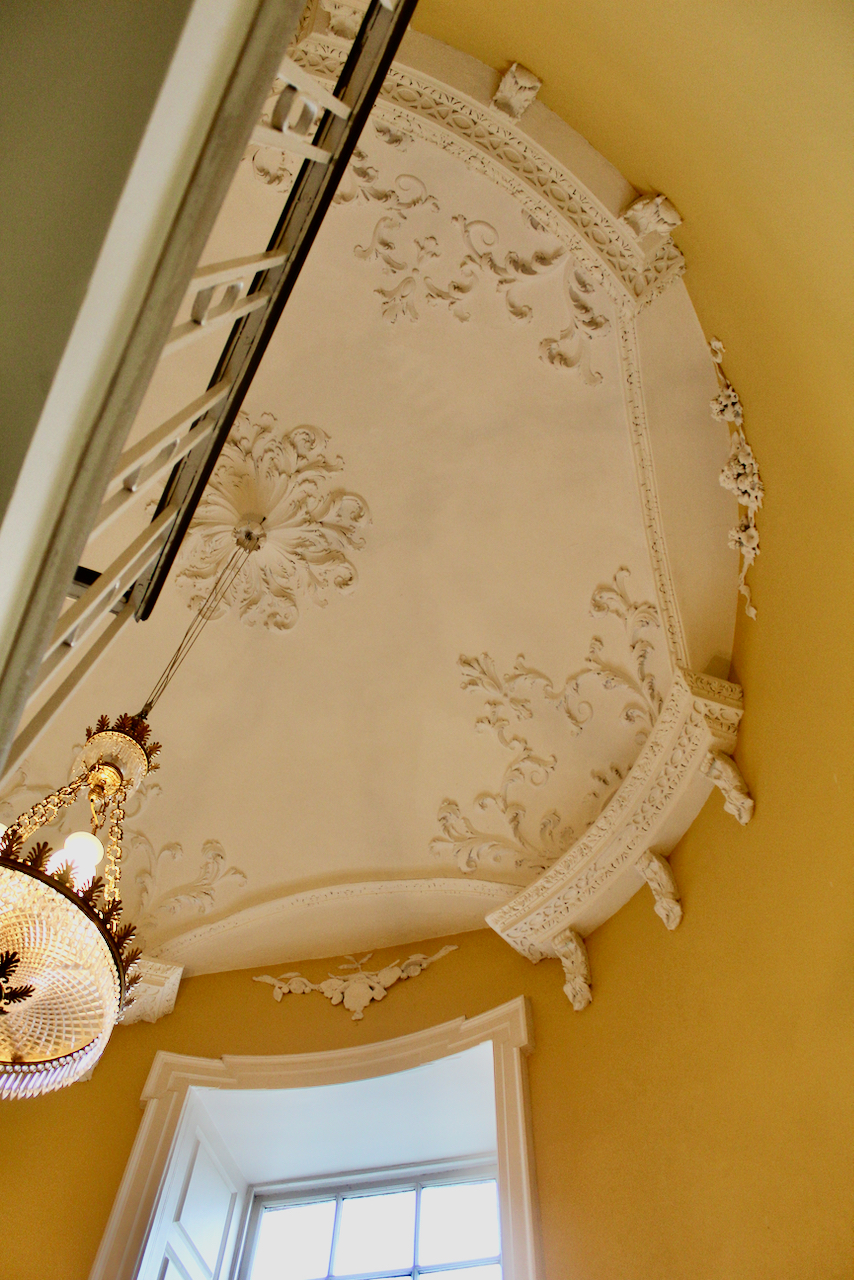
The best early plasterwork is that of the Swiss-Italian brothers Paolo and Filippo Lafranchini at Riverstown, where highly sculptural late Baroque figurative ornament is applied to the walls and ceilings of the Saloon… Filippo alone decorated two rooms at Kilshannig, blending late Baroque figures with lighter acanthus arabesques and putti. Rococo plasterwork featuring scrolling acanthus and birds comparable to the Dublin school of the 1760s is encountered in the Saloon at Castlemartyr, and at Maryborough. At Laurentium (Doneraile) and the Old College (Youghal), it is rather more hesitant. For the most part, stucco workers remain anonymous, so it is a happy circumstance that Patrick Osborne’s accomplished work at the former Mansion House at Cork is recorded. He also probably worked at Lota, as well as at Castle Hyde. Good Neoclassical plasterwork in low relief and employing small-scale classical motifs of the type made fashionable by Robert Adam and James Wyatt is found at Maryborough, at Old Court House (Rochestown), and at the Old College and Loreto College at Youghal.
‘Not far from Douglas is a handsome house adorned with a cupola and good plantations, the residence of Mr Richard Newenham, merchant in Cork, a gentleman who is the largest dealer in Ireland in the worsted trade, and employs some thousands in different parts of this country in spinning bay yarn, which he exports to Bristol.’ From The Ancient and Present State of the County and City of Cork by Charles Smith (1750). The Newenhams are believed to have settled in Cork in the early 17th century and to have prospered as merchants: in 1671 one of their number, John Newenham, served as Mayor of Cork city. One branch of the family would come to live at Coolmore (see Trans-Atlantic Links « The Irish Aesthete). Believed to have been born around 1705, Richard Newenham was the son of another John, a clothier who some years earlier had become a Quaker. His father-in-law, Thomas Wight, who also began professional life as a clothier, was author of A history of the rise and progress of the people called Quakers, in Ireland, from the year 1653 to 1700. The eldest of seven children, Richard Newenham prospered and, as noted by Charles Smith, developed a thriving textile business. As Daniel Beaumont has noted, he may also have been involved in the manufacture of sailcloth, because the village of Douglas, close to Maryborough, had become an important centre for this industry. Newenham also went into partnership with a number of other men in the business of ‘sugar making and sugar boiling’ on the southern outskirts of Cork city. In 1738 he married Sarah Devonsher, member of another successful Quaker family which was responsible for building Kilshannig (see Exuberance « The Irish Aesthete).
Maryborough, County Cork, photograph courtesy Irish Aesthete.
Maryborough, County Cork, photograph courtesy Irish Aesthete.
Maryborough, County Cork, photograph courtesy Irish Aesthete.
Maryborough, County Cork, photograph courtesy Irish Aesthete.
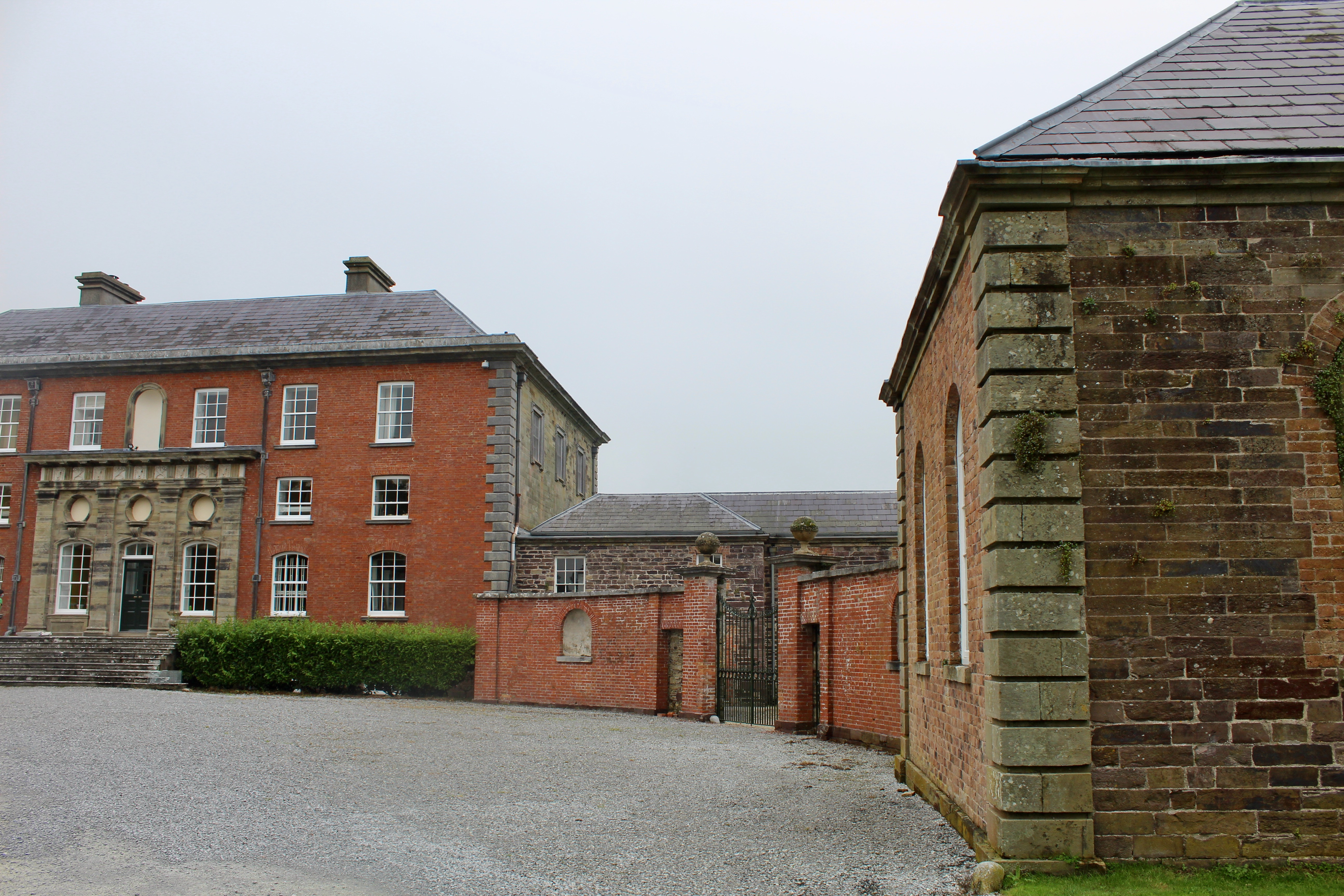
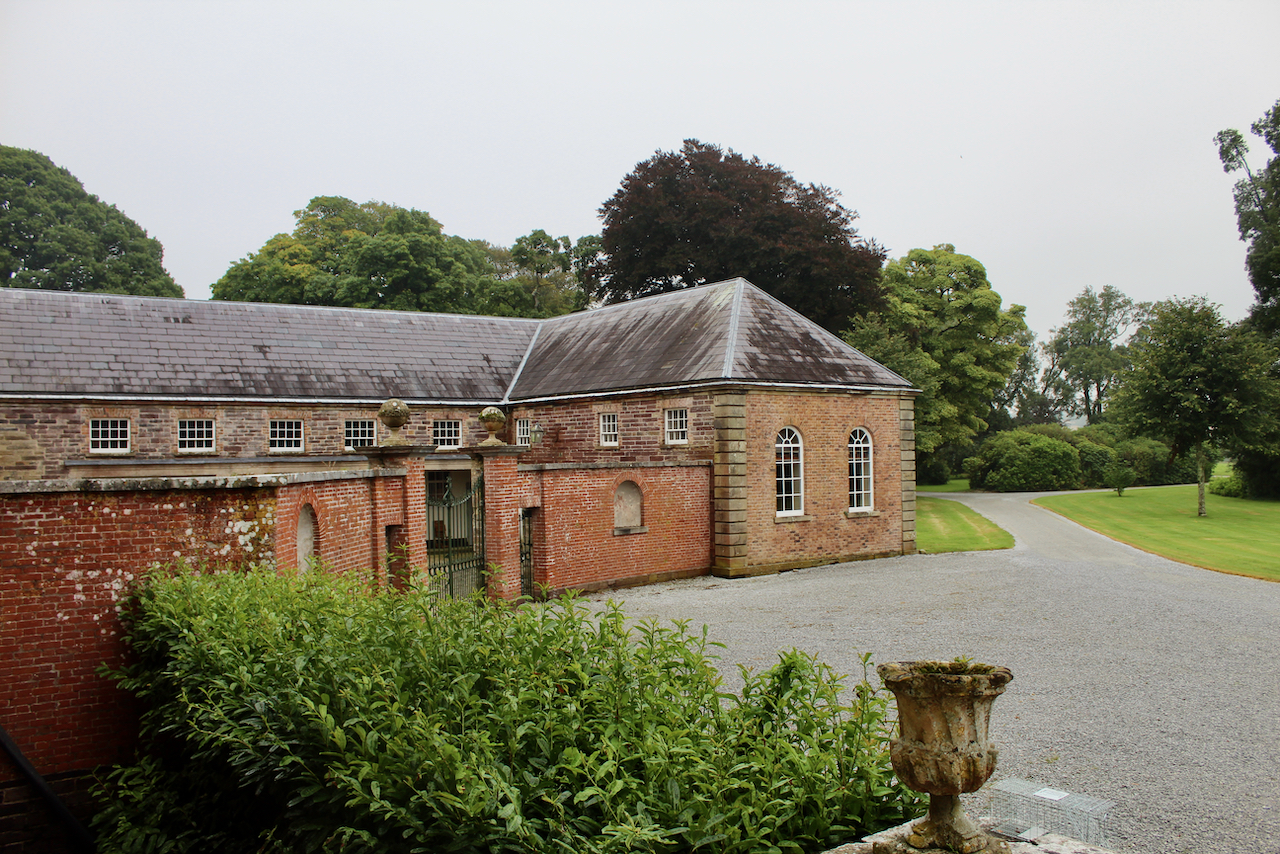
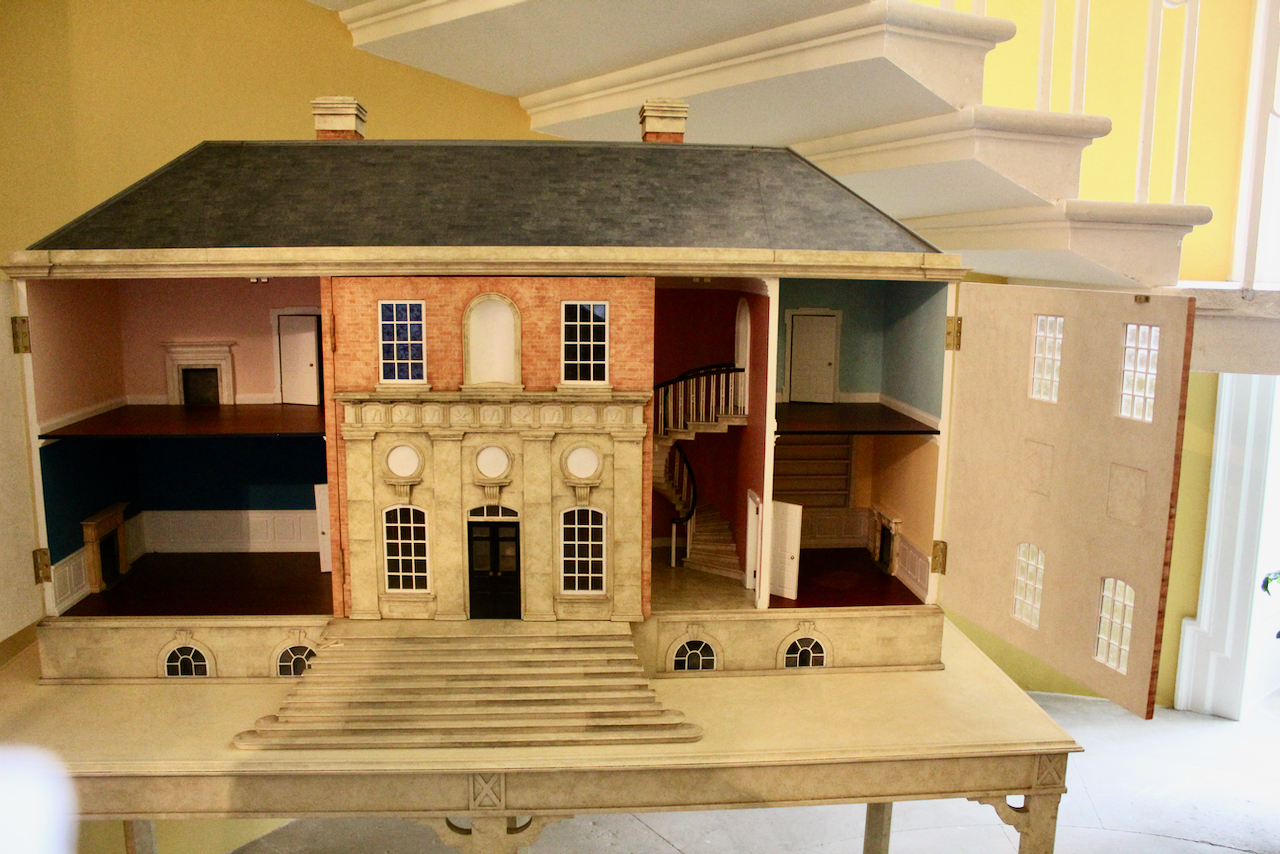
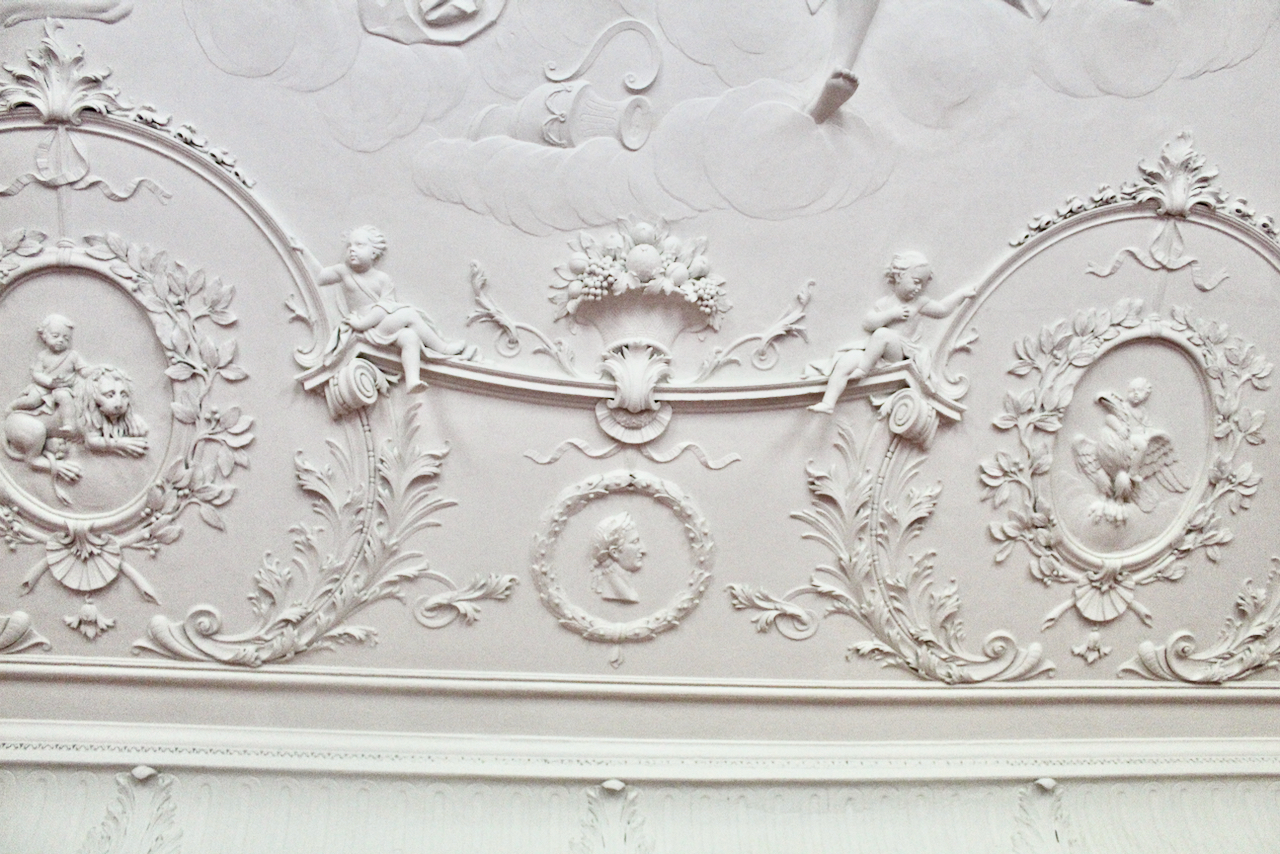
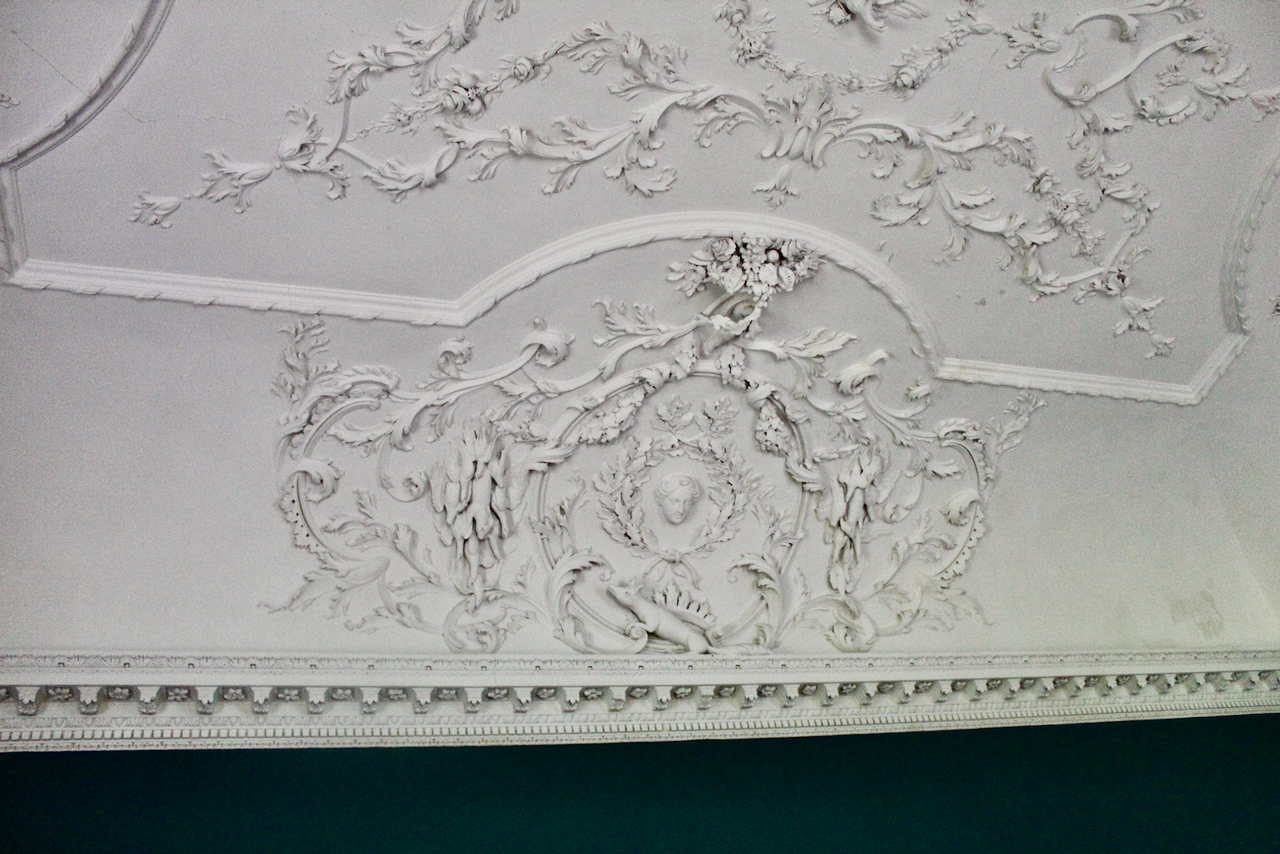
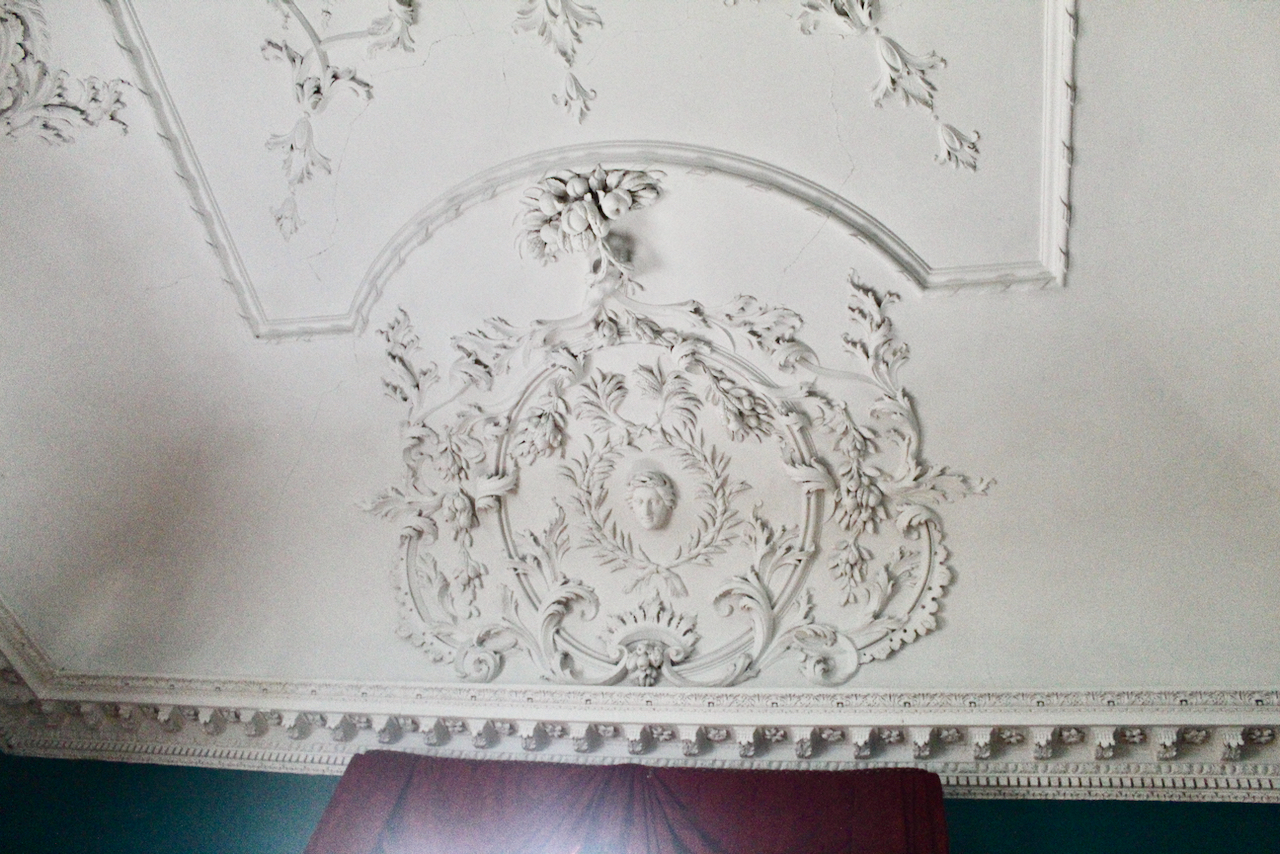
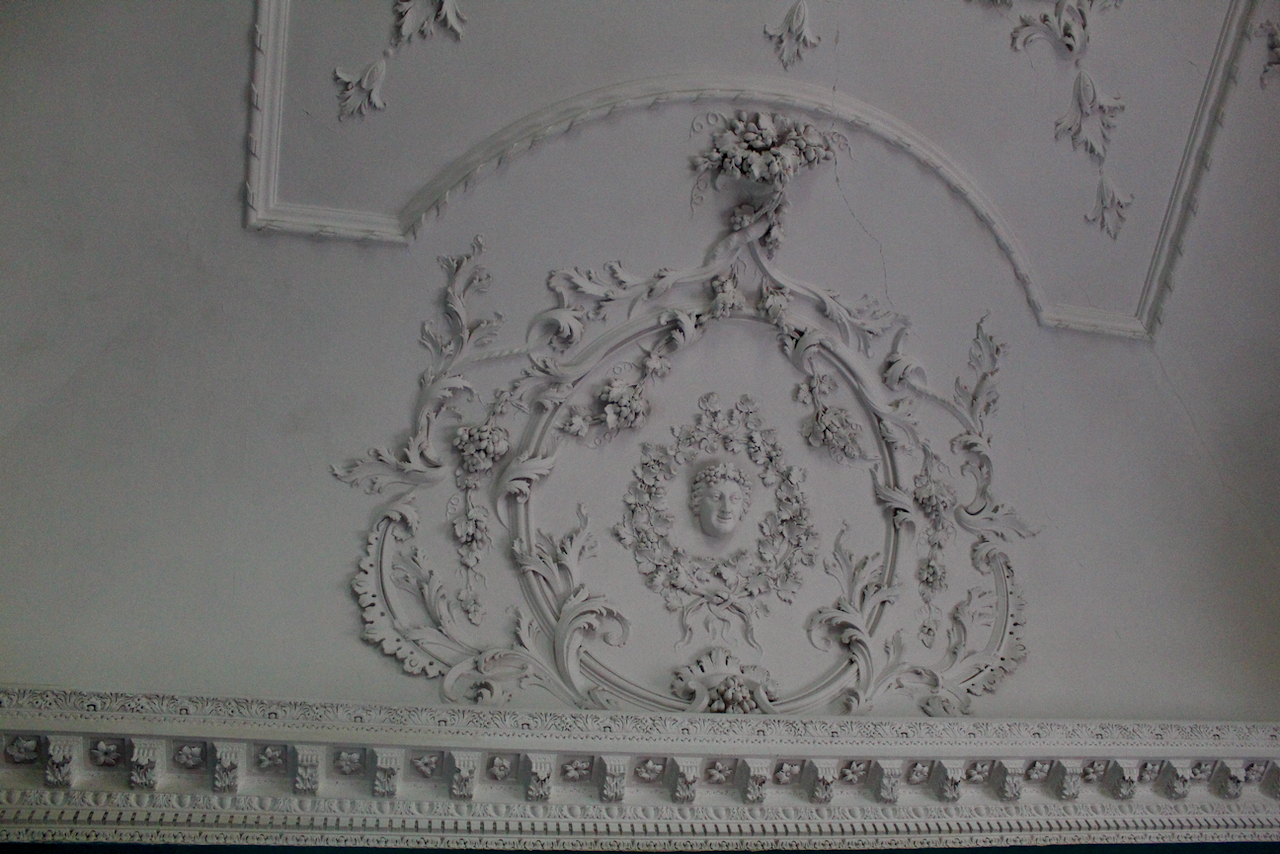
Probably built not long before Charles Smith published his book on Cork in 1750 and thought to be on the site of an earlier house, Maryborough was then described as having a cupola, but that no longer exists. The main body of the house is rendered, of three storeys over a raised basement, and seven bays wide, the three-bay breakfront defined with limestone quoins. A substantial flight of steps leads up to the pedimented entrance doorcase, also of limestone. The rear of the house is similar, having a three-bay breakfront but with a Gibbsian doorcase and the two upper floors being slate-fronted, as is the upper section of an extension to the east. The latter’s two-storied facade is a substantial, three-bay bow. This part of the building is thought to be a later extension from c.1830 while behind it is another addition from the late 18th century, a gable-ended wing accommodating a cantilevered Portland stone staircase: Frank Keohane proposes this as the work of local architect Michael Shanahan (who also worked in Ulster for the Earl-Bishop of Derry). The interiors of Maryborough are relatively plain, as befitted the home of a member of the Quaker community, amongst whom there was strong disapproval of gratuitous ornament. However, one room on the first floor has an elaborately decorated rococo ceiling, heavily enriched with scrolling acanthus leaves and an abundance of floral bouquets.
Maryborough, County Cork, photograph courtesy Irish Aesthete.
Maryborough, County Cork, photograph courtesy Irish Aesthete.
Maryborough, County Cork, photograph courtesy Irish Aesthete.
Maryborough, County Cork, photograph courtesy Irish Aesthete.
Following Richard Newenham’s death in 1759, Maryborough was inherited by his only son John, and after the latter died in turn his son, another Richard, inherited the property. In 1837 it was described by Samuel Lewis as ‘the residence of E.E. Newenham Esq., a noble mansion in a spacious demesne, embellished with stately timber.’ Maryborough remained in the ownership of the Newenhams until the late 19th century, although rented out for some years before being sold to Thomas Sherrard in 1889. His descendants lived there until 1995 when the place was sold to the present owners who turned the house into an hotel, with a large bedroom extension added to the south and, more recently, an orangery/function room to the immediate west of the old building.
Maryborough, County Cork, photograph courtesy Irish Aesthete.
Maryborough, County Cork, photograph courtesy Irish Aesthete.
“Remains of detached three-storey over basement country house, c. 1745 now in ruins. Gothic style mantle added, c. 1825. Designed by Thomas Cobden. Extended c. 1845, with granite ashlar viewing tower on an octagonal plan, turrets and entrance screens added. Designed by J. McDuff Derick. Stable complex to rear.” [1]
Thomas Duckett (1646-1682) purchased the property in 1695. He married Judith Power, granddaughter of 5th Baron of Curraghmore.
The property was once part of a 12,000 acre estate with eight acres of gardens.
“In 1695 Thomas Duckett (1) who is stated, by Sir William Betham, Ulster King of Arms, to have been the son of James Duckett, of Grayrigg, Westmorland, by his third wife Elizabeth, daughter of Christopher Walker, of Workington, Cumberland, purchased five hundred acres of land in Kneestown, Rainestown, and Ardnahue, Palatine, Co. Carlow from British landlord Thomas Crosthwaite from Cockermouth near the Lake District in Scotland. Thomas Crosthwaite owned a vast amount of land in Ireland during that period and had himself acquired this and other lands which comprised of 495 acres of plantation in 1666 under the Acts of Settlement (1666 – 1684) in the reign of King Charles II. However, Thomas Duckett did not make use of this land until the 1700s when he built a country house in Rainestown, replacing a smaller house on the same site where Duckett’s Grove stands today.” http://duckettsgrove.ie/
“In the early years of the Ducketts’ story, intermarriage with some well-connected and wealthy families contributed greatly to their financial standing and allowed for the expansion of the Demesne. Thomas Duckett’s (1) wife Judith de la Poer was the heiress of the wealthy Pierce De La Poer of Killowen in County Waterford, grandson of the Honorary Pierce De la Poer, of Killowen, Brother of Richard, First Earl of Tyrone. Thomas Duckett (1) had one son, Thomas Duckett (2)[1667-1735] who was his successor and heir. The Duckett family extended their estate, and their wealth grew throughout the eighteenth century.
“The only son from this marriage Thomas Duckett (2) (a member of the Religious Society of Friends, commonly known as Quakers) lived in Phillipstown Manor, Rathvilly, Co. Carlow, situated approximately 3 miles from Kneestown and Rainestown which was a property purchased from the Earl of Ormonde. He married Jane Bunce, daughter of John Bunce, of Berkshire in 1687. His last will and testament was dated 18th January 1732 and was proved on 13th May 1735. Thomas Duckett (2) had three daughters and one son and heir; John Duckett Esq., (1) of Phillipstown, Rathvilly, Co. Carlow and Newtown, Co. Kildare, whose last will and testament dated 13th April 1733, was proved on 17th May 1738.“
A house called Phillipstown Manor built in 1745 according to the National Inventory of Architectural Heritage still survives – Thomas Duckett (1667-1735) and his wife Jane Bunce must have lived in an earlier version of this.
“John Duckett Esq., (1)married Jane Devonsher who was daughter of Thomas Devonsher Esq. from Cork. The first son of John Duckett (1) and Jane Devonsher was Thomas Duckett (3) of Newtown died unmarried.“
Jane Devonsher was the sister of Abraham Devonsher who lived at Kilshannig in Cork (see my entry – it is a Section 482 property). My Quaker husband and I laugh that some of the most exuberant plasterwork and the most exuberant architecture was owned by Quakers! But perhaps the Ducketts were no longer Quakers by the time the house was made so ornate. John and his wife Jane lived in Phillipstown Manor. https://www.buildingsofireland.ie/buildings-search/building/10300308/philipstown-manor-phillipstown-carlow
“John and Jane’s second sonWilliam Duckett (1) of Phillipstown, Co. Carlow married Janet Summers, daughter of Samuel Summers, Esq., and they had no children. Their third son, Abraham Duckett (1) of Ardnahue, Co. Carlow married Mary Jessop, daughter of Samuel Jessop, Esq. Abraham Duckett (1) and Mary Jessop had four sons (three sons, who all died without children) and three daughters.”
It was John and Jane’s fourth son, Jonas Duckett Esq. (1720-1797) of Co. Carlow (who Duckett’s Grove is said to have been named after), who passed Duckett’s Grove to the next generation. It may have been he who built a two storey Georgian house on the property later transformed into the current confection.
Jonas married Hannah Alloway, daughter of William Alloway, Esq. of Dublin, a merchant banker, who brought money to the marriage. They had four sons, their eldest son and heir being William Duckett who was born in 1761. In 1790 William Duckett (b. 1761)married another daughter of a banker, Elizabeth Dawson Coates, daughter and co-heir of John Dawson-Coates Esq, a banker of Dawson Court, Co. Dublin. The bank was called Coates and Lawless and in 1770 it was located at 36 Thomas Street.
William Duckett (b. 1761) and Elizabeth Dawson-Coates’s son John (1791-1866), added Dawson to his name, to become John Dawson-Duckett. I believe that this is because Elizabeth Dawson-Coates’s father John Dawson-Coates may have been the heir of John Dawson of the bank Wilcox and Dawson. [2]
John Dawson-Coates had two daughters who were his co-heirs, Elizabeth and Anne. Their brothers predeceased their father. Elizabeth married William Duckett (b. 1761) and Anne married William Hutchinson of Timoney, County Tipperary. [see 2]
The fortunes of the two heiresses, Elizabeth and Anne Dawson-Coates, coalesced when the daughter of Anne Dawson-Coates and William Hutchinson (Sarah Hutchinson Summers) married her cousin (John Dawson-Duckett) the son of Elizabeth Dawson-Coates and William Duckett.
Mark Bence-Jones writes in his A Guide to Irish Country Houses (1988):
p. 113. “(Eustace-Duckett/IFR) A square house of two and three storeys, transformed into a spectacular castellated Gothic fantasy by Thomas A. Cobden [1794-1842], of Carlow, for J. D. Duckett 1830 [John Dawson Duckett (1791-1866)]. Numerous towers and turrets, round, square and octagonal; notably a heavily machicolated round tower with a tall octagonal turret growing out of it. The walls enlivened with oriels and many canopied niches sheltering statues; more statues and busts in niches along the battlemented wall joining the house to a massively feudal yard gateway; yet more statues manning the battlements of one of the towers, and disposed around the house on pedestals. At the entrance to the demesne is one of the most stupendous castellated gateways in Ireland: with a formidable array of battlemented and machicolated towers and two great archways giving onto two different drives; the principal archway having a portcullis, and being surmounted by an immense armorial achievement, which was originally coloured. The house was burnt 1933 and is now a ruin.” [3]
John Dawson Duckett was appointed High Sheriff of County Carlow in 1819 and married Sarah Hutchinson Summers [or is it Sarah Summers Hutchinson?], daughter of William Hutchinson Esq. from Timoney Park, Co. Tipperary on 16th March 1819. They had two sons: the eldest, William (Dawson) Duckett (1822 – 1908) was named after his grandfather and he was the last blood heir to Duckett’s Grove. Their second daughter, Anne Duckett married Hardy Eustace of Castlemore, Tullow, Co. Carlow. They went on to live at Hardymount in County Carlow, which has gardens one can visit (see below).
David Hicks tells us in his book Irish Country Houses, A Chronicle of Change, that more work was carried out in the 1840s, designed by architect John MacDuff Derick, who added extra floor space and prominent architectural features, such as a large circular flag tower, which was faced in local granite. A new basement kitchen as added with a billiard room above on the ground floor level. The exterior of the castle was decorated with various niches that contained statues and, on the facade of the building, heads of many mythological creatures. Bust of famous warriors decorated the length of the battlemented wall that joined the castle to one of the courtyards to its rear. Statues around the grounds depicted Greek and Roman figures.
As well as enlarging the castle, MacDuff Derick created the impressive entrance gateway, with an immense coat of arms carved by Kelly and Kinsella, which was gilded and coloured and features birds and animals associated with the lineage of the Duckett family.
The Ducketts were quite happy to allow members of the public to picnic in their gardens until one group disturbed the peace in 1902, peering in their windows, and the family closed the grounds to the public.
William Dawson Duckett (1822 – 1908) married twice. His first wife died without any children. One year later William Dawson Duckett, at the age of 73 years, married 21 year old Maria Georgina Thompson. Maria Georgina Thompson was daughter of Captain Robert Gordon Cummins and widow of Theophilius Thompson of Forde Lodge, Co. Cavan. She had one daughter.
The website tells us:
“William (Dawson) Duckett (2) now had a new wife Maria and a stepdaughter Olive. He didn’t live that long afterwards, as he died on 22nd June, 1908 aged 86. He was the last member of the Duckett family line to live in Duckett’s Grove Gothic Mansion, in Rainestown, Carlow, leaving just his wife Maria and her daughter [Olive, by a previous marriage of Maria to Theophilus Thompson] living there after his death. In his last will and testament dated 29th February, 1904, William (Dawson) Duckett (2) willed his estate to his widow, Maria Georgina Duckett with the exception of a small section of his estate willed to his nephew, John Hardy Rowland Eustace with the instruction that the Duckett family name be affixed to the name Eustace, giving rise to the name ‘Eustace Duckett’ from Castlemore. [William Dawson Duckett’s sister Anne married Hardy Eustace and their son was John Hardy Roland Eustace] Maria’s daughter Olive married Captain Edward Stamer O’Grady circa 1916.
“It was also at this time that Maria decided to leave Duckett’s Grove following alleged threats from seven Carlow businessmen who were disgruntled and had become malicious in their feelings towards her, allegedly wanting to acquire Duckett’s Grove Gothic mansion. She decided to live in ‘De Wyndesore’, a mansion on Raglan Road, Dublin which was purchased for her as a wedding gift by her late husband William (Dawson) Duckett 2. She spent some time moving between her Dublin and London homes and rarely returned to Duckett’s Grove.” She became mentally ill and paranoid and the only heir to Duckett Grove, her daughter Olive, was cut from her will. [see the full story in Jimmy O’Toole, The Carlow Gentry: What will the neighbours say! Published by Jimmy O’Toole, Carlow, Ireland, 1993. Printed by Leinster Leader Ltd, Naas, Kildare.] [4]
The National Inventory tells us about these gates:
“The double entrance arches and lodges were designed in a gothic-revival style by J.McDuff Derick [1810-1859] about 1840. This structure is difficult to describe but is a mixture of walls, buttresses, towers and crennelations with lancet windows and heavily mullioned windows. This is possibly the most elaborate entrance to any estate in Ireland and is of considerable architectural importance.” [see 1]
Om 1921 Duckett’s Grove was sold to a consortium of local farmers. After the sale the house was occupied by British soldiers and later by Irish Free State soldiers during the Civil War. The Ducketts were held in high regard by the community so that house was not damaged beyond the soldiers taking pot-shots at the statues. The house was sold again, this time to Theo Frederick George Thompson of the Hanover Works in Carlow (see David Hicks). While he was deciding what to do with it the disaster of the fire occurred.
After the fire the building was sold to Charles Balding of Rainstown House and in later years, used as a riding school. The gate lodge was converted into a pub in the 1970s. In 2005 Carlow County Council took possession of Duckett’s Grove for use as a public park with the intention of conserving the castle and restoring the gardens.
After wandering around the castle we went back through the stable yard toward the walled garden.
[2] Tenison, C.M. “The Old Dublin Bankers.” Journal of the Cork Historical and Archaeological Society. vol. 1, 1895.
[3] p. 113, Bence-Jones, Mark. A Guide to Irish Country Houses (originally published as Burke’s Guide to Country Houses volume 1 Ireland by Burke’s Peerage Ltd. 1978); Revised edition 1988 Constable and Company Ltd, London.
[4] Jimmy O’Toole, The Carlow Gentry: What will the neighbours say! Published by Jimmy O’Toole, Carlow, Ireland, 1993. Printed by Leinster Leader Ltd, Naas, Kildare.
Open dates in 2026: March 18-19, 21, 24, 26-27, April2, 4-7, 9, 11-12,15, 21, 23, 25, May 12, 14, 16-17, 19, 21, 23-26, 28, 30, June 2, 4, 6-9, 11, 13, 16, 25, 27-29, July 2, 4-7, 14, 16, 18-20, 28, 30, Aug 1- 4, 6, 8, 11, 13, 15-25, Sept 18, 20, 22-25, 27, 29, 8.30am-3pm,
Fee: adult €14, OAP €12, student €10, child €8
Stephen and I visited Kilshannig House in Rathcormac, County Cork, in August 2020, during Heritage Week. Kilshannig is most notable for its wonderful stucco work.
I rang Mr. Merry in advance, and he was away but told me his housekeeper could show us around. Stephen and I were spending a few days on holidays with our friends Denise and Ivan, and Denise decided to join us to come to see the house. I was excited to show someone what it is like to visit the section 482 houses. In most cases, like this day visiting Kilshannig, we are going to see someone’s private home. It is not like visiting a place normally open to the public, like Fota House or Doneraile Court, two houses which Stephen and I also visited while in Cork, which are now owned and run by Irish Heritage Trust and the OPW (Office of Public Works) respectively. [1] I always feel that I am an inconvenience, requesting a visit someone’s home. I must remind myself that it is visitors like me and you who ensure that the section 482 revenue scheme continues. I envy owners of these beautiful homes, but maintaining a Big House is almost a career choice. In fact owners often express their belief that they are the caretaker of a small part of Ireland’s built heritage. In this case, Mr. Merry runs an equine stud, and it is the success of that which enables him to maintain the upkeep of his home. He has also converted an extension into self-catering accommodation [2].
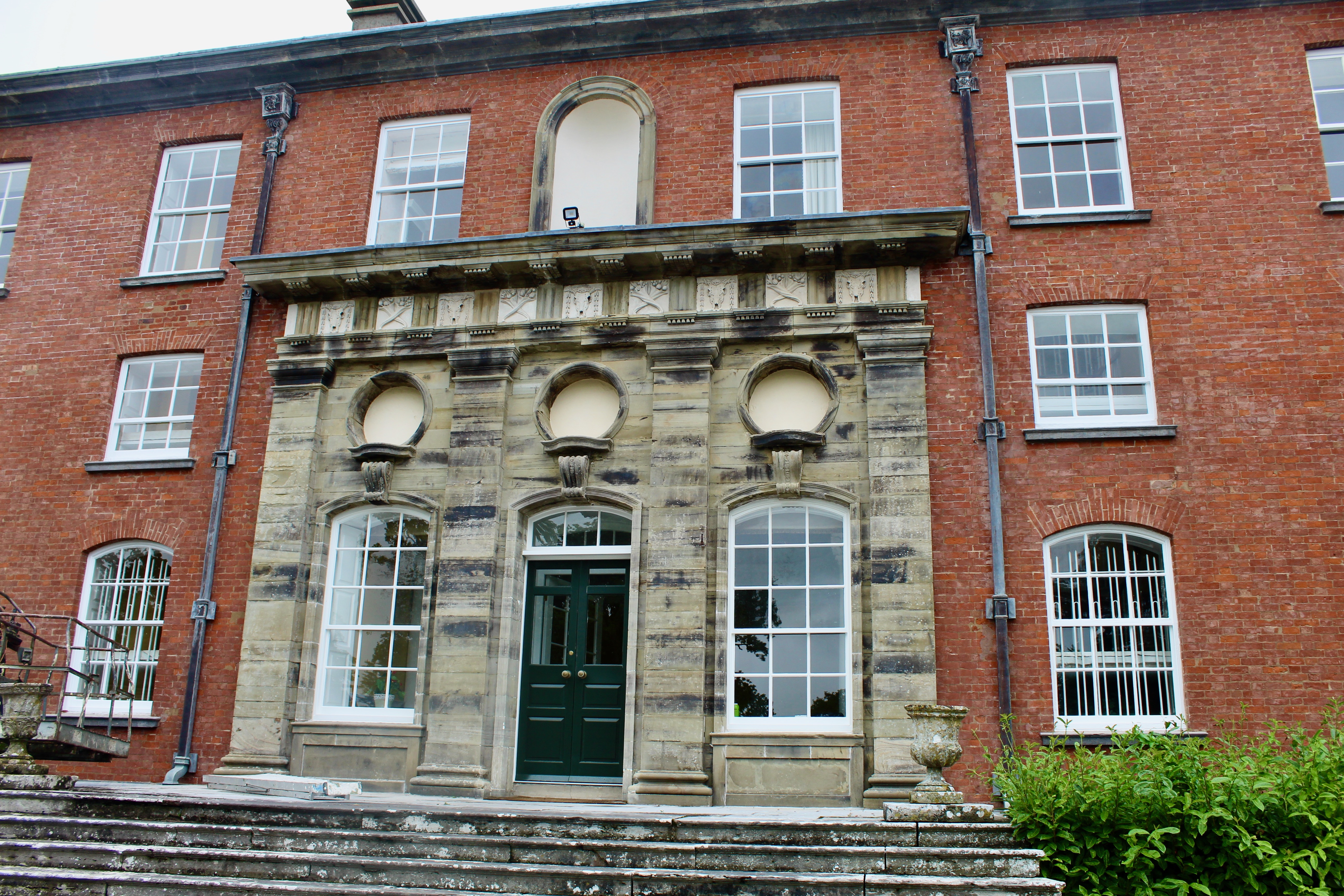
The house, as you can see from the photograph of the entire sweep, is Palladian [3]. It was built in 1765-66 for Abraham Devonsher, an MP and a Cork banker. The date 1766 is written on a “hopper” and probably commemorates the completion of the house.
It was designed by Davis Ducart [or Duckart], whose Irish career began in the 1760s and continued until his death in about 1785. The Dictionary of Irish Architects tells us:
According to William Brownlow, writing to the Earl of Abercorn in 1768, he ‘dropped into this Kingdom from the clouds, no one knows how, or what brought him to it.’ [4]
The Irish Historic Houses website tells us that Ducart worked as a canal and mining engineer as well as an architect. With engineering skill, he was committed to good design and craftsmanship. The Dictionary of Irish Architects tells us of criticism of his work, however:
An attack on him in the Freeman’s Journal for 3-4 February 1773 states that he had given up architecture by this time: ‘Our French architect … never could bring any thing to perfection he put his hands to; he made some of his first (and, alas! his last) experiments as an architect, at the cost of the public and many private gentlemen, in the country and city of Cork, the latter of which bears a large monument of his insipid, uncooth taste in the art of designing; he was actually ignorant of the common rules and proportions of architecture; eternally committing mistakes and blunders, and confounding and contradicting his own directions, until he himself saw the folly of such proceedings, and (not without certain admonitions) quitted the profession he had no sort of claim to.’
I do not know enough about architecture to contradict the writer in the Freeman’s Journal but the Irish Historic Houses website claims: “Ducart was arguably the most accomplished architect working in Ireland between the death of Richard Cassels and arrival of James Gandon.” [5] In an article in Country Life, Judith Hill suggests that criticism was motivated by professional jealousy of a foreigner. [6]
Other works associated with Ducart are the Mayoralty or Mansion House, Cork (1765-1773); Lota Lodge in County Cork (1765); Castletown Cox in County Kilkenny (1767); Brockley House, Laois (1768); Custom House of Limerick (1769) which now houses the Hunt Museum; Castlehyde House, County Cork; Drishane Castle, County Cork (which is also a section 482 property, not to be confused with Drishane House – about which I will be writing shortly). [see 4]
The house consists of a central block of two storeys over basement (with a mezzanine level), with wings either side that are described by Mark Bence-Jones as “L” shaped but to me they look U shaped, almost like a pair of crab claws. [7] Curved walls close in either wing into courtyards. Frank Keohane describes it in The Buildings of Ireland: Cork, City and County:
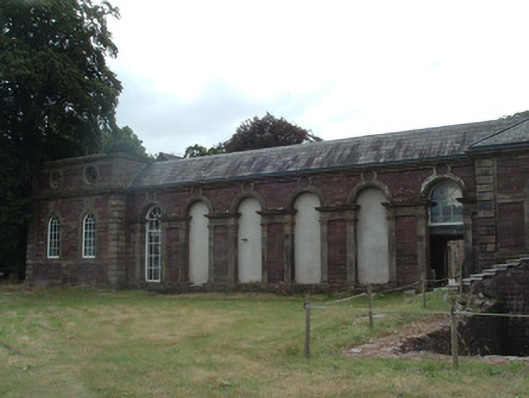
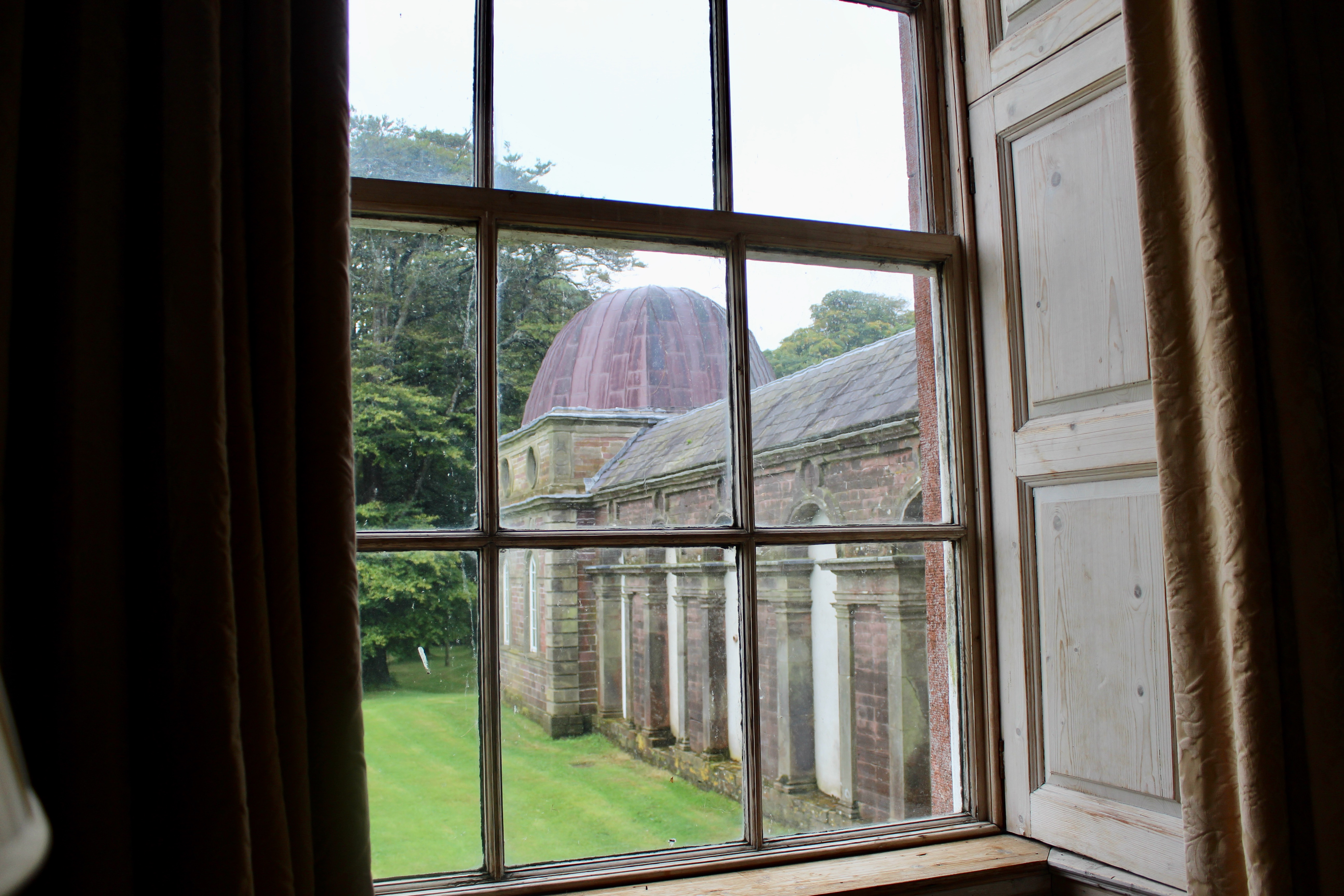
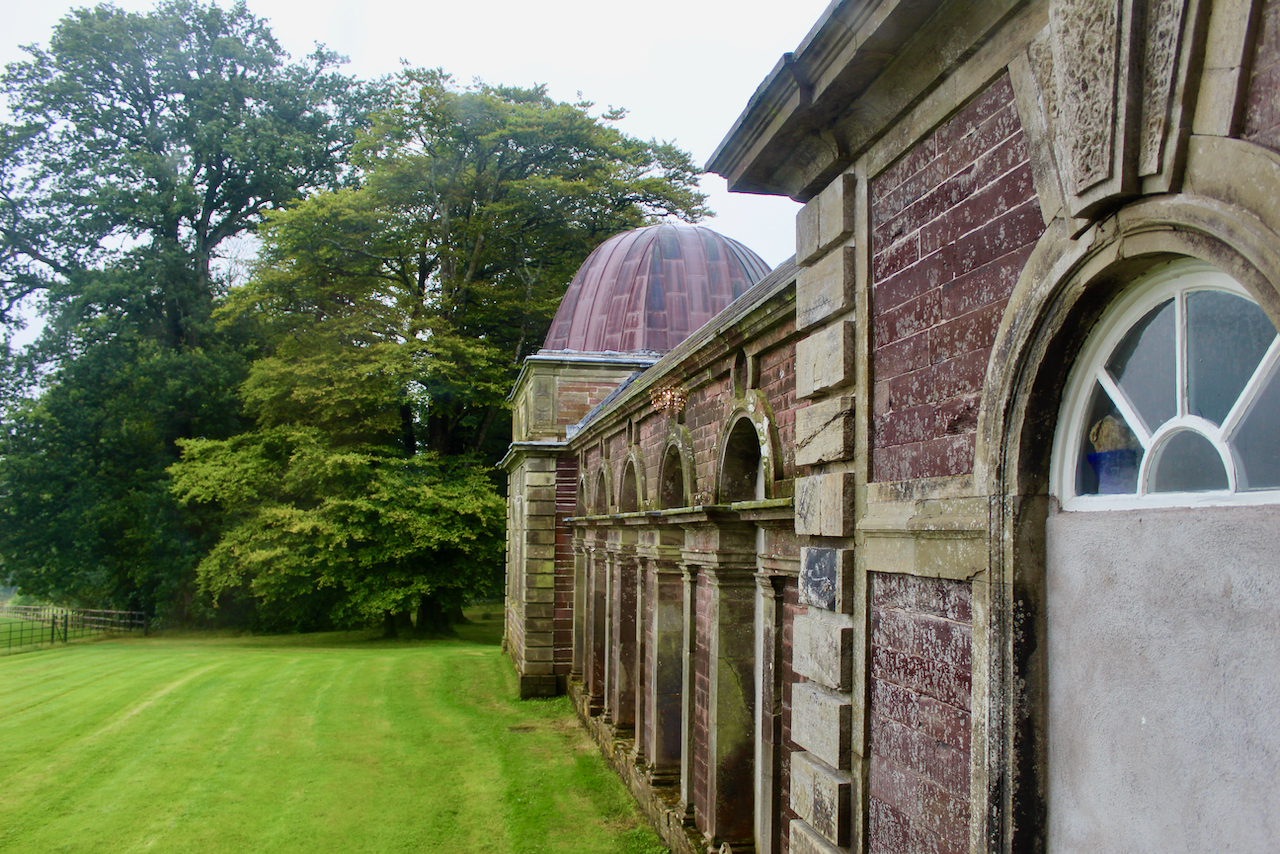
“At Kilshannig, Ducart developed his own interpretation of the ubiquitous Irish Palladian country-house plan, which he also used with modification at Castletown Cox, Co Kilkenny, and The Island, Co Cork (demolished). Eschewing the Pearse-Castle tradition, Duckart’s central block is flanked by inward turned L-shaped (rather than rectangular) wings which project forward to form a cour d’honneur. Curved screen walls connect the inward-facing ends of the wings back to the house and enclose kitchen and stable courts. The principal North front, looking across the park to Devonsher’s parliamentary borough of Rathcormac, comprises a neat central corps de logis flanked by six-bay blind arcades, representing the back ranges of the courts, which terminate in domed pavilions. The plan has been likened to that of Vanbrugh’s Castle Howard, Yorkshire.” [8]
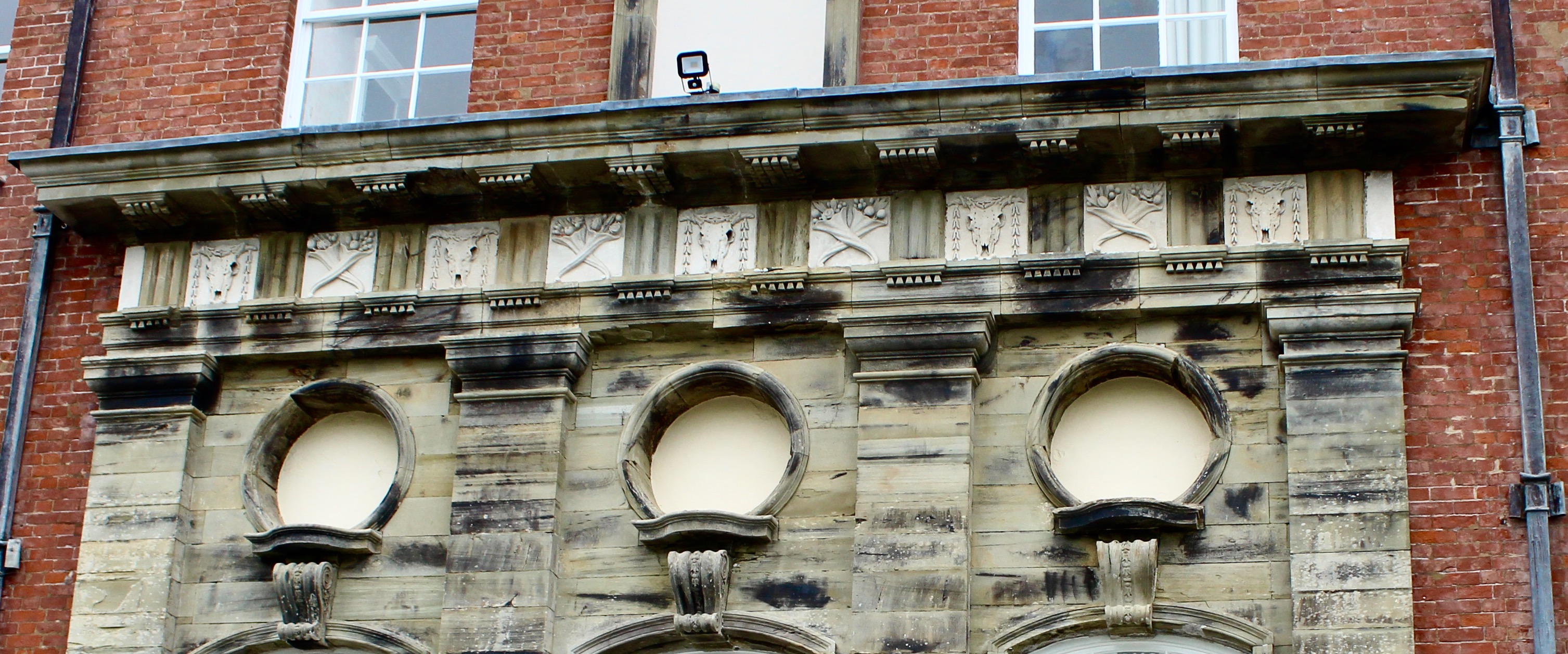
Keohane suggests that Davis Ducart was probably assisted by Thomas Roberts of Waterford. The front of the house is of red brick with limestone quoins, and the centre block is seven bays across with a single-storey three bay Doric frontispiece which the National Inventory of Architectural Heritage tells us is of cut sandstone. [9] The frontispiece has Doric style pilasters, and the door and window openings have fluted scroll keystones with plinths that look like they should hold something, in circular niches. The pilasters support an entablature which the National Inventory describes: “with alternating bucrania and fruit and flowers metopes and triglyphs.” The metopes are the squares with the pictures of “bucrania” (cow or ox skulls, commonly used in Classical architecture, they represent ancient Greek and Roman ceremonies of sacrifice) and fruit and flowers, and the triglyphs are the three little pillars between each square picture (wikipedia describes: “In classical architecture, a metope (μετόπη) is a rectangular architectural element that fills the space between two triglyphs in a Doric frieze, which is a decorative band of alternating triglyphs and metopes above the architrave of a building of the Doric order.“) [10]
Above this stone frontispiece is an empty niche which Bence-Jones tells us contained, in a photograph taken in approximately 1940, a statue or relief of a warrior or god.
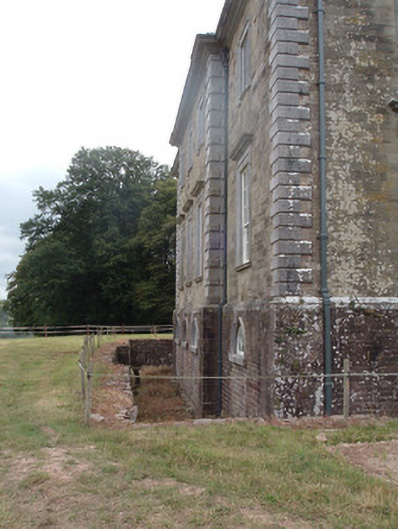
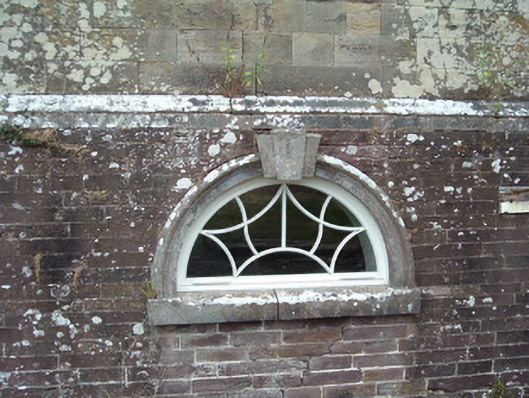
There is a mezzanine level, which is unusual in such a house, and we can see that the windows at this level are squeezed between ground and first floor levels. The Irish Historic Houses website tells us that the house has four formal fronts. Unfortunately we did not walk around the house so I did not photograph the other fronts. The basement windows are semicircular, which is apparently characteristic for Ducart.
Photograph from the National Inventory of Architectural Heritage [9].The basement windows, “charmingly glazed with cobweb-like astragals,” as Casey and Rowan describe them. Photograph from National Inventory of Architectural Heritage.
The wings have five arched windows each and Keohane tells us that the wings are actually low two-storey buildings. The copper domes and timber cupolas have been reinstated by the present owners.
Keohane writes that the plasterwork in Kilshannig is by two different people with distinctive styles. He writes: “The accomplished decoration to the Saloon and Library ceilings is the work of the Swiss-Italian Filippo Lafranchini, here combining emphatic late Baroque modelling with the refinement of small-scale ornament of a Rococo character. The remaining decoration, which is vigorously naturalistic and in places ungainly, is by an unknown, and presumably Irish, hand.” For more on the Lafranchini brothers, see the Irish Aesthete’s entry about them. [11]
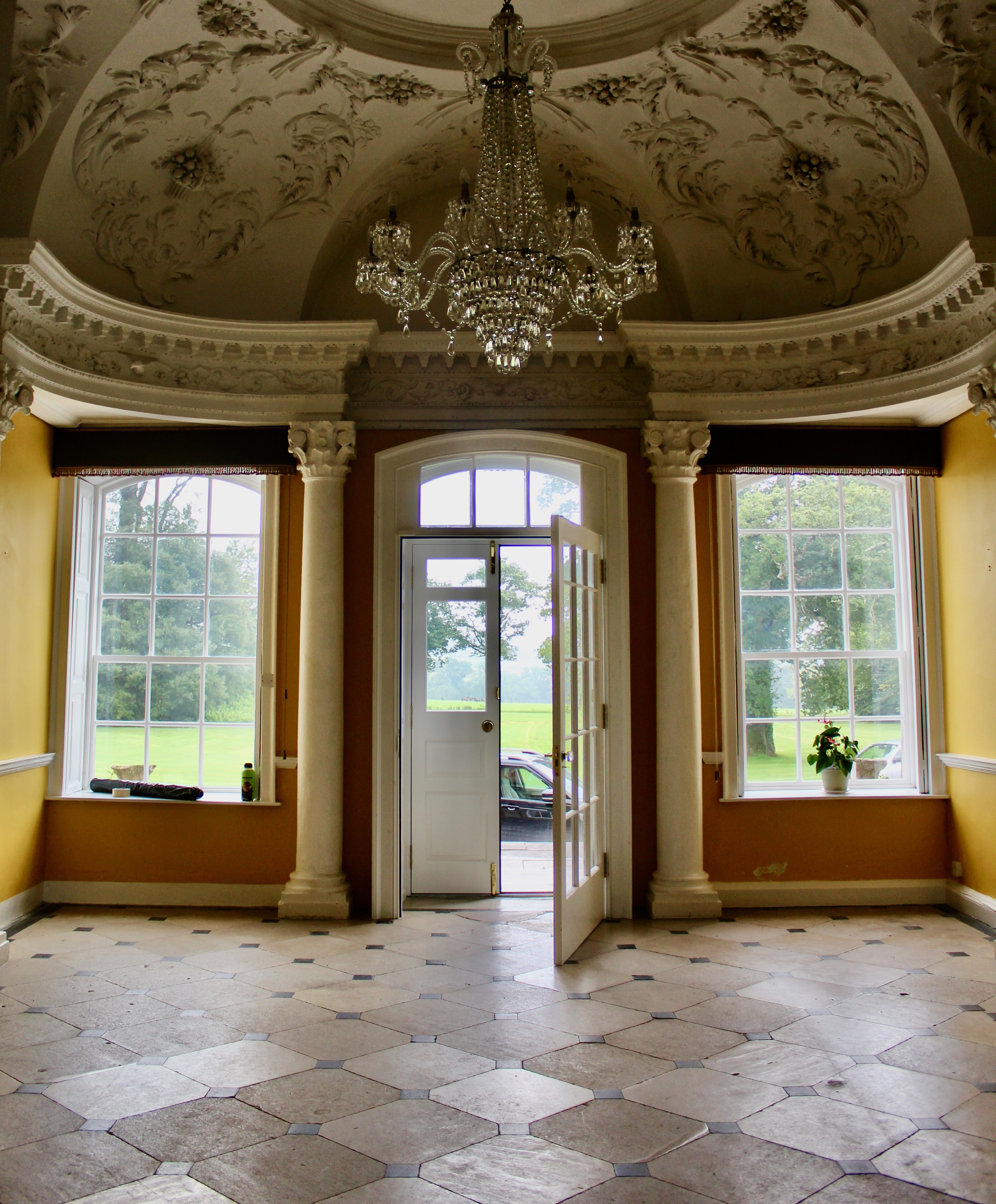
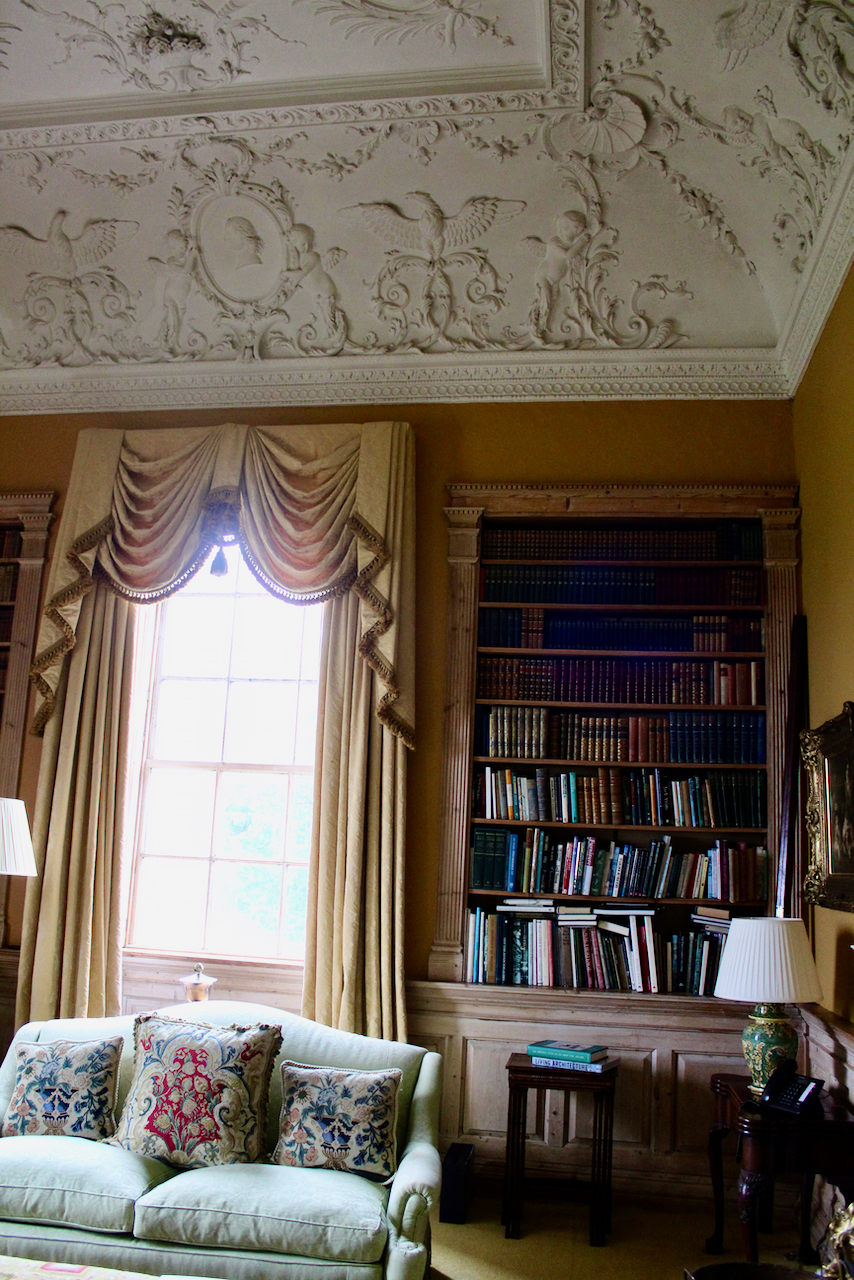
The stuccadore of the wonderful Rococo plasterwork in the hall is therefore unknown. Our guide, Anne, pointed out that the birds, that reminded me of birds at Colganstown by Robert West of Dublin, stick out too far and that the heads have a tendency to be knocked off. The ceiling is deeply coved, and features acanthus leaves, flower and fruit-filled baskets and garlands with draped ribbons.
The floor of the front hall is of Portland stone with black insets. The walls have Corinthian columns and the corners of the ceiling decoration are curved.
The hall has a beautiful Portland stone fireplace with a mask flanked by garlands, and two male Grecian bearded Herms (“a tapering pedestal supporting a bust, or merging into a sculpted figure, used ornamentally, particularly at the sides of chimneypieces. Roughly similar to a term.’) [3]. Herm refers to Hermes, the Greek god.
The entrance hall leads to a three bay saloon, with dining room on one side and library on the other. To one side of the front hall is a corridor leading to the wonderfully curving staircase. The stone floor and stuccowork continue into the corridor, which has panelled walls.
The circular cantilevered Portland stone staircase rises two full rotations to the first floor. The domed ceiling has more stuccowork. There’s also a lovely circular pattern with geometrical black and grey shapes on the floor below the stairs.
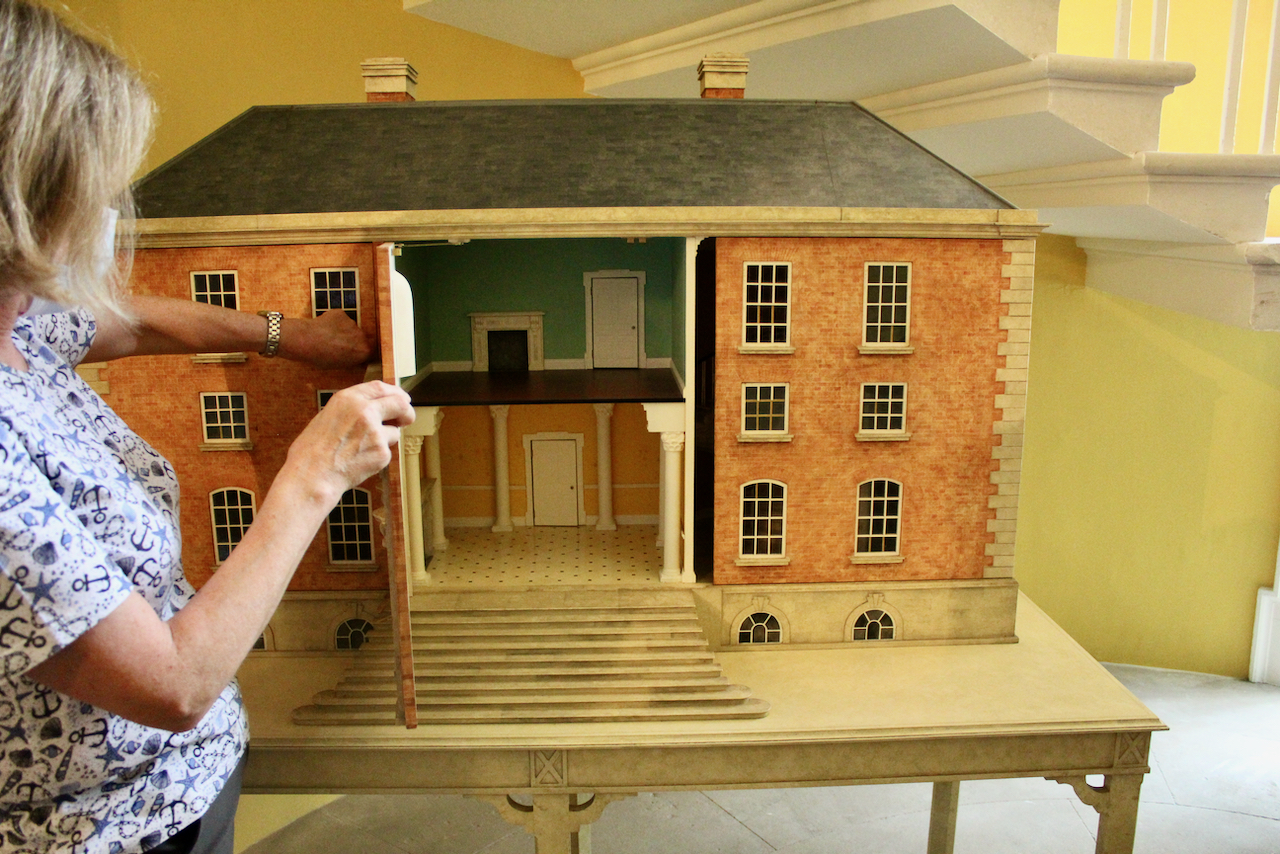
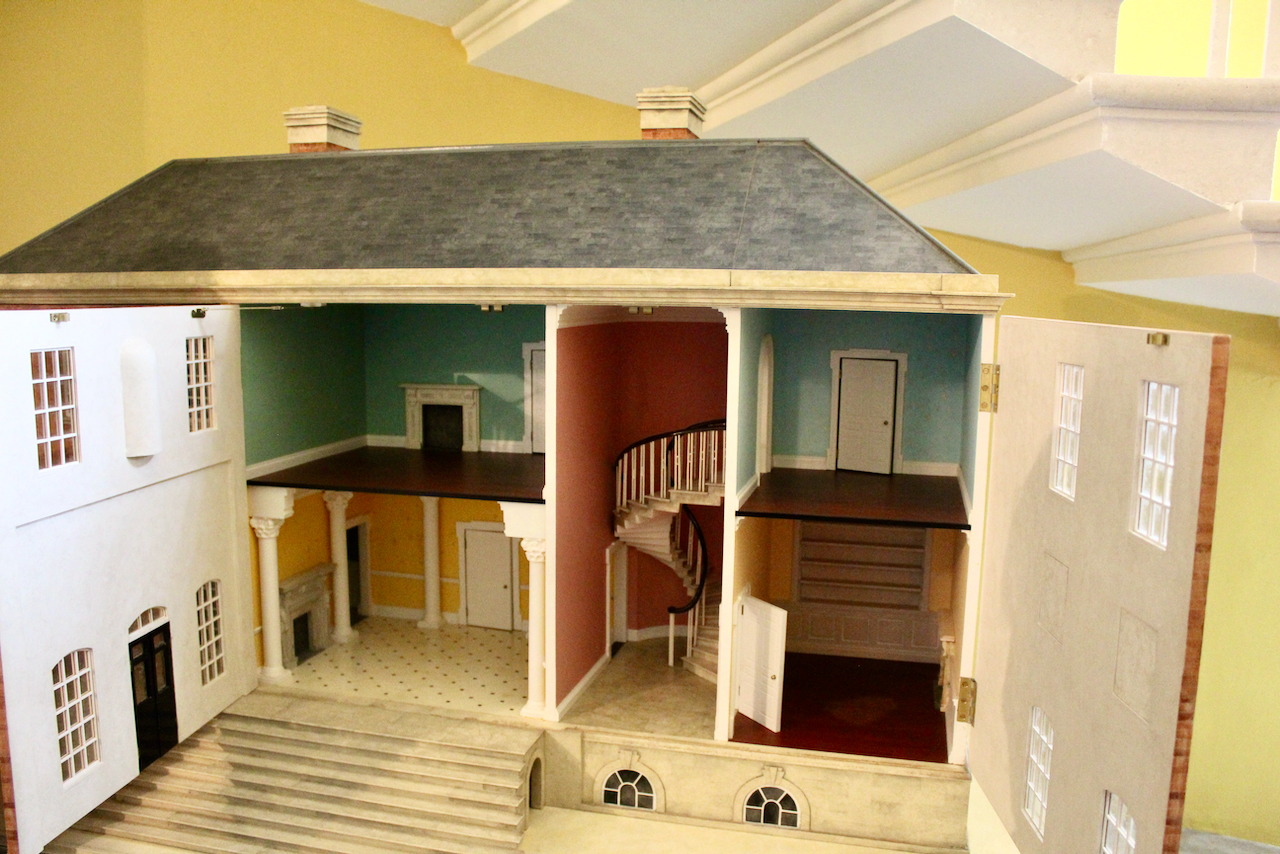
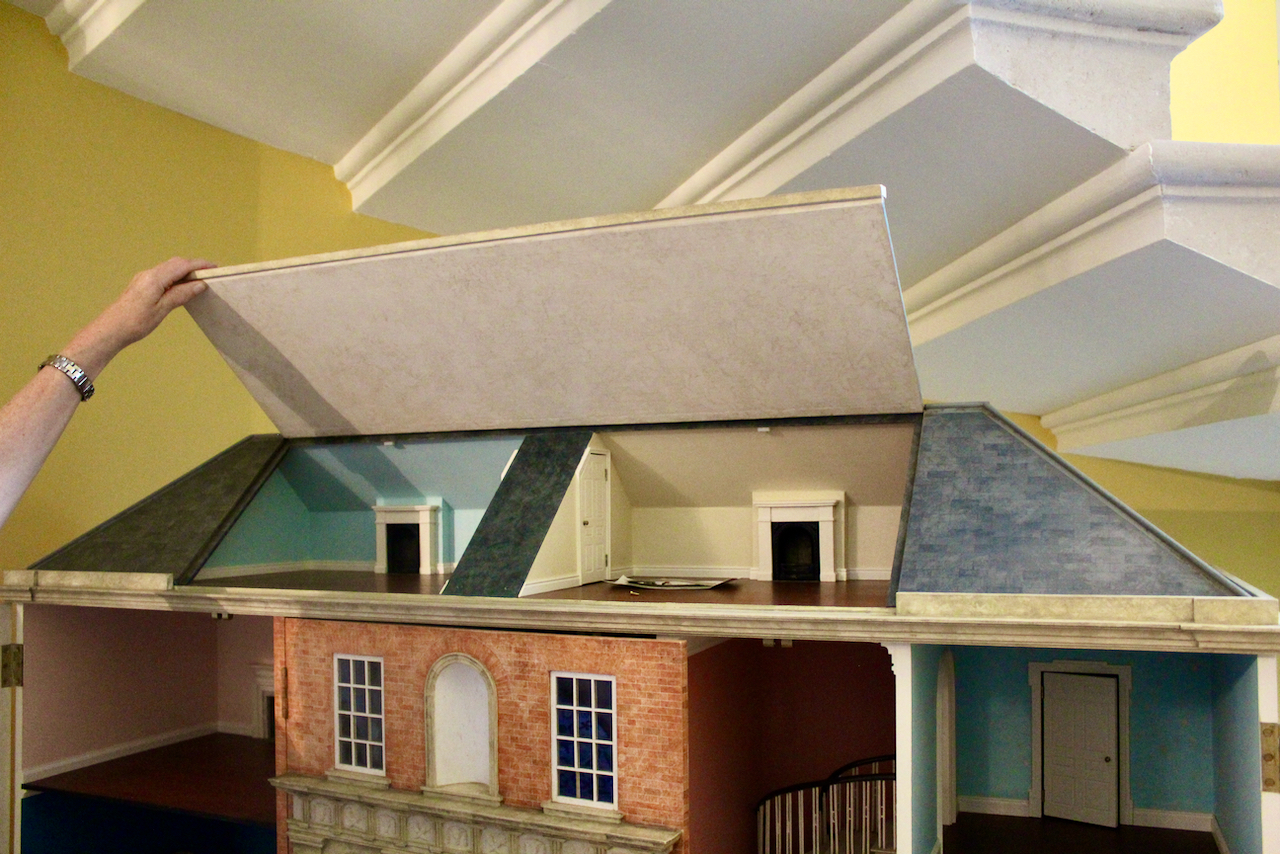
Amusingly, the Kilshannig doll house is more advanced than the actual house, as the attic has been converted! The actual attic of Kilshanning House has not been converted. As the owner charmingly told me: “The two [bedrooms] in the dolls’ house are poetic license to give the owner of the dolls’ house the opportunity to decorate and fit it out bedrooms.”
We entered the library first. The current owner’s father, Commander Merry, and his wife, bought the house. With his DIY skills, the Commander installed the library shelves, acquired from a Big House built in the same period as Kilshannig. The room has another spectacular ceiling, which is deeply coved. The centre features a rondel with Diana and Apollo, and the corners have oval plaques depicting the Seasons. The cove features female portrait busts, eagles, standing putti and garlands. Christine Casey has noted the likeness of the cove to that formerly in the Gallery at Northumberland House in London, which was decorated by Pietro N. Lafranchini, perhaps in collaboration with his brother Filippo.
The next room is the Saloon, or Salon. It has a particularly splendid ceiling, also by Filippo Lafranchini, “combining emphatic late Baroque modelling with the refinement of small-scale ornament of a Rococo character” (Keohane):
“Joseph McDonnell has established that the figurative work is derived from an engraving of 1717 of a now lost ceiling painting by Antoine Coypel, the Assembly of the Gods, at the Palais-Royale in Paris. The centre depicts Bacchus and Araidne, with Pan and a sleeping Silenus, reclining on almost imperceptible clouds. The lavishly intricate border consists of six cartouches framing plaques depicting the Four Elements – Water (a dolphin), Air (an eagle), Earth (a lion), and Fire (a Phoenix) as well as Justice and Liberty. These are linked by a sinuous frame populated by charming putti with dangling legs. The corners feature trophies dedicated to Architecture, Painting, Music and Sculpture.” [12]
The final room we were shown was the dining room. Keohane writes that the stuccowork is by a different hand than the Lafranchini brothers. “The deep cove has four large oval cartouches of naturalistic foliage with masks depicting Bacchus, Ceres, Flora and Diana, the last framed by trophies of the chase and a rather insipid fox.” [13]
It was in the dining room under Bacchus that we stopped to consider how odd it was that a Quaker, as Abraham Devonsher was, had such an elaborate ceilings created in his home. Indeed, he was expelled from the Quaker community before he had the house built, in 1756, for “conformity to the world.” This was because he entered politics that year and became an MP for Rathcormac. [14] My husband Stephen, a Quaker, tells me that in order to serve as an MP, Devonsher would have had to swear an oath, and Quakers do not believe in swearing oaths – they believe that their word suffices (George Fox said: “My yea is my yea and my nay is my nay.”).
The borough was very small – in 1783 it had only seven electors. Devonsher won his seat by appealing directly to the electors, unseating the Barrys who had traditionally held the seat. He entertained grandly in order to woo the electors. He also served as High Sheriff for County Cork in 1762.
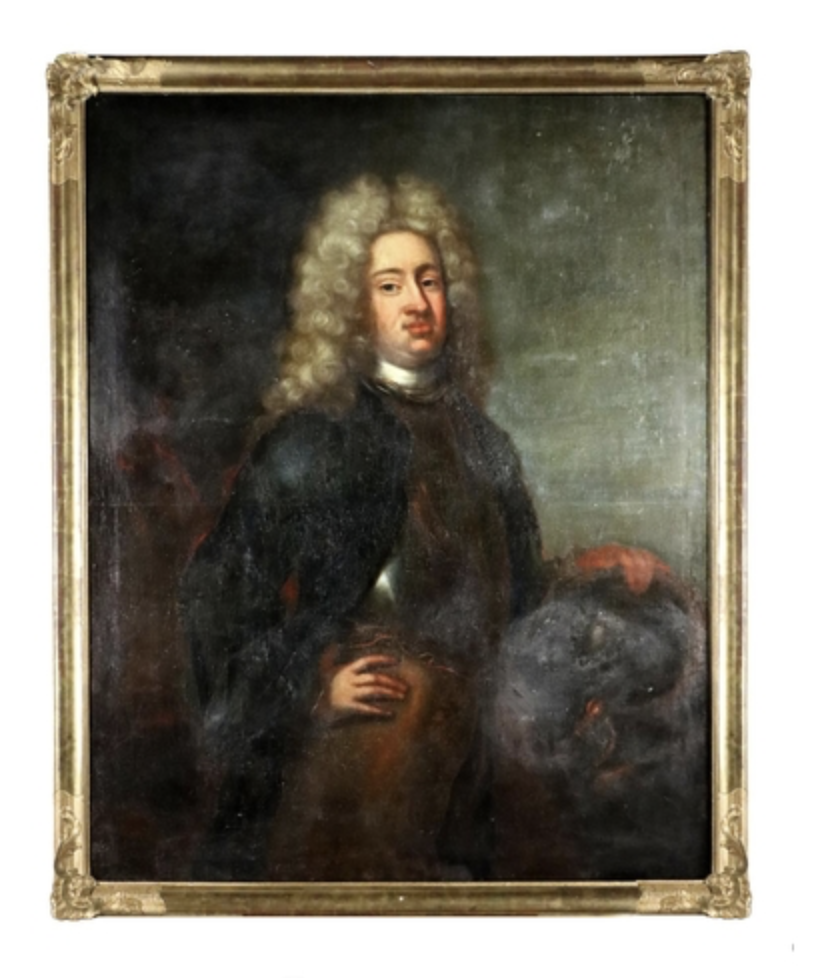
The Devonsher family had settled in Cork as merchants in the mid seventeenth century. [15] Abraham’s father Thomas married Sarah Webber in 1662. It was his father Jonas who acquired the land at Kilshannig. A portrait offered for sale in May 2025 by Fonsie Mealy auctioneers could portray Jonas or Thomas, and the seller speculates that it could be by Garret Morphey, as the painting bears many of the attributes of a work by Garret Morphey, an artist who had close connections with Ireland. Many of Morphey’s portraits were of members of families such as the Plunketts, Nettervilles, Talbots, Nugents and O’Neills, and he often depicted men wearing armour, as in his portrait of Sir Edward Villiers at Dromana House in Co. Waterford.
Possibly of a member of the Devonsher family of Kilshannig, attributed to Garret Morphey, provenance Kilshannig House, courtesy Fonsie Mealey Summer art sale 2025. The auctin house writes that “Judging by the style of thepainting and the costume, this portrait can be dated to around 1700.”
The article in Country Life tells us that toward the end of his life the sociable Abraham Devonsher “lives a recluse life with a Harlot.” He led a rather rakish life, apparently, and he died childless in 1783 – or at least left no legitimate heirs – and left the estate to a grand-nephew, John Newenham, of Maryborough, County Cork (now a hotel) who then assumed the name Devonsher.
John had a son, John (1763-1801), who inherited the house and passed it to his son, Abraham Newenham Devonsher. He ran into financial difficulties, and at some date before 1837, sold the estate to Edward Roche (1771-1855). [16]
Edward Roche used it as a winter residence, and lived the rest of the year in his other estate, Trabolgan (since demolished), as did his son, Edmond Burke Roche, who was raised to the peerage as 1st Baron Fermoy in 1856. He was also an MP and served as Lord Lieutenant for County Cork 1856-1874.
According to the Landed estates database, at the time of the Griffith Valuation, James Kelly occupied Kilshanning. The Griffith valuation was carried out between 1848 and 1864 to determine liability to pay the Poor rate (for the support of the poor and destitute within each Poor Law Union). The 1st Baron Fermoy’s sister, Frances Maria, married James Michael Kelly, another MP (for Limerick), of Cahircon, County Clare, and James Kelly was their son. According to the Landed Estates Database, in 1943 the Irish Tourist Association Survey mentioned that it was the home of the McVeigh family. Mark Bence-Jones adds that other owners were the Myles family, and Mr and Mrs Paul Rose. The property had a succession of owners until it was purchased in 1960 by Commander Douglas Merry and his wife.
When they purchased it, the cupolas had disappeared and one wing was ruinous and the rest in poor condition. Commander Merry set about restoring the house. His son Hugo has continued the work, partly with help from the Irish Georgian Society [17]. This work included repairing a sagging saloon ceiling, and restoring the pavilions and cupolas, recladding them in copper. The entire main house, arcades and both courtyards have been completely restored and re-roofed. One wing is used for self-catering and events, and the other contains stables. There are fourteen bedrooms in the wing, and six in the main house, Anne told us.
We did not explore the outside, and did not get to see inside the pavilions or wings. That will have to wait for another visit!
donation
Help me to pay the entrance fee to one of the houses on this website. This site is created purely out of love for the subject and I receive no payment so any donation is appreciated!
[3] Palladian architecture is a style derived from the designs of the Venetian architect Andrea Palladio (1508-1580). Palladio’s work was strongly based on the symmetry, perspective, and values of the formal classical temple architecture of the ancient Greeks and Romans. https://irishhistorichouses.com/2020/04/18/architectural-definitions/
[6] Hill, Judith. “Pot-Walloping Palladianism.” Country Life, June 15, 2016.
[7] Bence-Jones, Mark. A Guide to Irish Country Houses. (originally published as Burke’s Guide to Country Houses volume 1 Ireland by Burke’s Peerage Ltd. 1978); Revised edition 1988 Constable and Company Ltd, London.
[8] p. 465. Keohane, Frank. The Buildings of Ireland: Cork, City and County. Yale University Press, New Haven and London, 2020.
[15] Keohane writes that Abraham Devonsher’s parents are Thomas Devonsher and Sarah Webber. The website The Peerage says his mother was Sarah Morris. https://www.thepeerage.com/p30600.htm#i305998
See also the article in Country Life from June 15 2016, by Judith Hill, that is linked to the Kilshannig courtyard website. Hill says Abraham Devonsher’s father was named Jonas, and that his family began to acquire the land at Kilshannig from the 1670s.
Keohane says that John Newenham was Abraham’s nephew, the Peerage website has John as the great nephew: Abraham’s brother Jonas had a daughter Sarah who married Richard Newenham, and it was their son, John Newenham, who inherited Kilshannig.
The home of the Newenhams, Maryborough, is now a hotel:


















 Irish Historic Houses