Castle Freke, Rosscarbery, Co Cork  

Castle Freke, Rosscarbery, Co Cork  

Castle Freke, County Cork, courtesy of http://www.castlefreke.ie
Castle Freke, County Cork, from Dublin City Library archives.

https://www.castlefreke.ie

Bence-Jones, Mark. A Guide to Irish Country Houses (originally published as Burke’s Guide to Country Houses volume 1 Ireland by Burke’s Peerage Ltd. 1978); Revised edition 1988 Constable and Company Ltd, London. 

p. 68. “(Evans-Freke, Carbery, B/PB) The original Castle Freke was an old castle formerly belonging to the Barrys, which was bought by the Frekes in C17; Capt Arthur Freke defended it for several months during the Williamite ward, but it was afterwards captured by the forces of King James and partially burnt. It continued to serve as the family seat until late 1780s, when Sir John Evans-Freke, 2nd Bt, after coming of age, found it so neglected and disapidated that he abandoned it and built a new house on a more convenient site, with splendid views over Roscarbery Bay…When the offices came to be built, which was not until ca 1820, it occurred to Sir John (by this time 6th Lord Carbery) that “the whole might be thrown into the character of a castle”; and so he commissioned Sir Richard Morrison to carry out a transformation….The house was gutted by fire in 1910 and rebuilt with steel window-frames…The work ws finished in 1913, when a ball was given here for the coming of age of 10th Lord Carbery, who sold Castle Freke post WWI. The house was dismantled 1952 and is now a ruin.” 

John Freke of Castle Freke, Co. Cork. attributed to John Lewis, courtesy of Adam’s auction 16th Oct 2018. From the same sale was the signed and dated (1757) conversation piece by Lewis called Sir John Freke, Lady Freke and Mr Jeffries of Blarney (sold Sothebys at Slane Castle Lot 423, 26/6/1979). The present lot is likely to be an individual study of the same sitter, perhaps Sir John Redmond Freke M.P. for Cork. John Evans whose mother was Grace Freke inherited from his maternal uncle,founding the family of Evans Freke, whose baronetcy was only created in 1768. The Evans title of Baron Carbery was subsequently inherited by this family.
Castle Freke north facade, County Cork, courtesy of http://www.castlefreke.ie

Listed in Vanishing Country Houses of Ireland by The Knight of Glin, David J. Griffin and Nicholas K. Robinson, published by The Irish Architectural Archive and The Irish Georgian Society, 1988.

“A large classical house built c. 1790 by Sir John Evans-Freke, altered by Richard Morrison c. 1820, when he also designed the large office court. The original house was at the same time remodelled in the Tudor Revival style. The main block was destroyed by fire in 1910. In the subsequent rebuilding Morrison’s alterations were simplified. The house was stipped of its fittings in 1952. Now a ruin.”

Castle Freke west facade, County Cork, courtesy of http://www.castlefreke.ie
Castle Freke, County Cork, photograph by Robert French, (between ca. 1865-1914), Lawrence Photograph Collection, National Library of Ireland.

The Buildings of Ireland. Cork City and County. Frank Keohane. Yale University Press: New Haven and London. 2020. 

p. 25. The first prominent exponent of Neoclassicism in Cork was a native, Michael Shanahan. He appears to have been a stonecutter, and probably came to the attention of the ‘Earl-Bishop’ Frederick Hervey while the latter was Bishop of Cloyne in 1767-8. Hervey took Shanahan on a Continental tour in 1770-2, a very rare thing for an Irish architect, during which Shanahan made measured drawings, particularly of bridges, as Hervey was proposing to build a bridge at Londonderry. On his return to Ireland, he became Hervey’s agent and oversaw the construction of James Wyatt’s Downhill in Derry, as well as designing churches and glebe houses in that diocese. Shanahan returned to Cork in the early 1780s, establishing a marble and stone works in White Street which specialized in chimneypieces, geometrical stone staircases and porticos. His first significant commission was St Patrick’s Bridge, in 1788-91. Shanahan’s houses tend to be reticent in the extreme. Castle Freke (1780s) and Castle Bernard [p. 26] (1790s) are big astylar blocks, bare except for rusticated quoins and thin cornices. Castle Bernard in particular appears to owe a debt to Wyatt’s Castle Coole in the axial arrangement of a hall with columnar screen, and the elliptical saloon projecting into the bow on the garden front.  

Castle Freke south facade, County Cork, courtesy of http://www.castlefreke.ie
Castle Freke, County Cork, courtesy of http://www.castlefreke.ie

https://archiseek.com/2011/1820-castle-freke-co-cork/

1820 – Castle Freke, Co. Cork 

Architect: Richard Morrison 

Ruined for many years, currently undergoing reconstruction. 

https://www.buildingsofireland.ie/buildings-search/building/20914314/castle-freke-castlefreke-co-cork

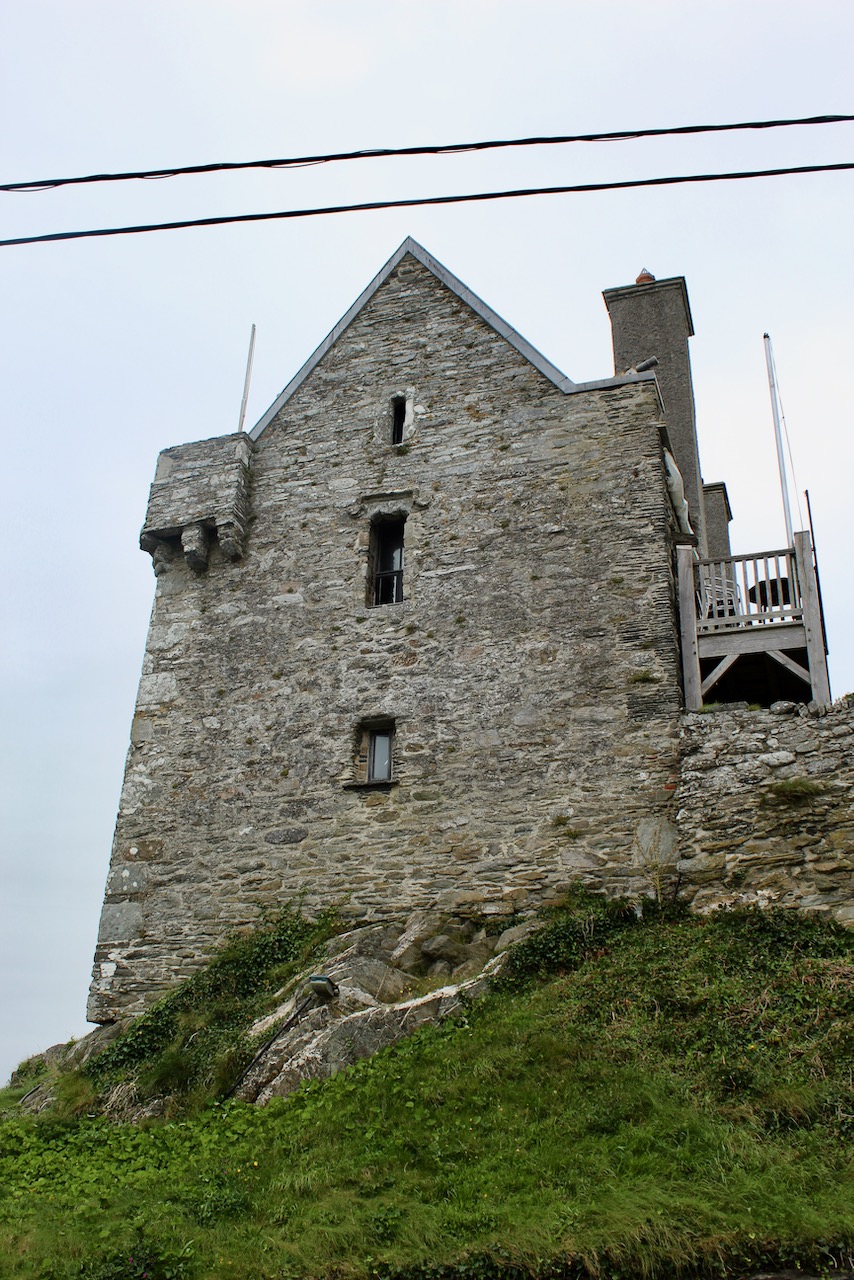
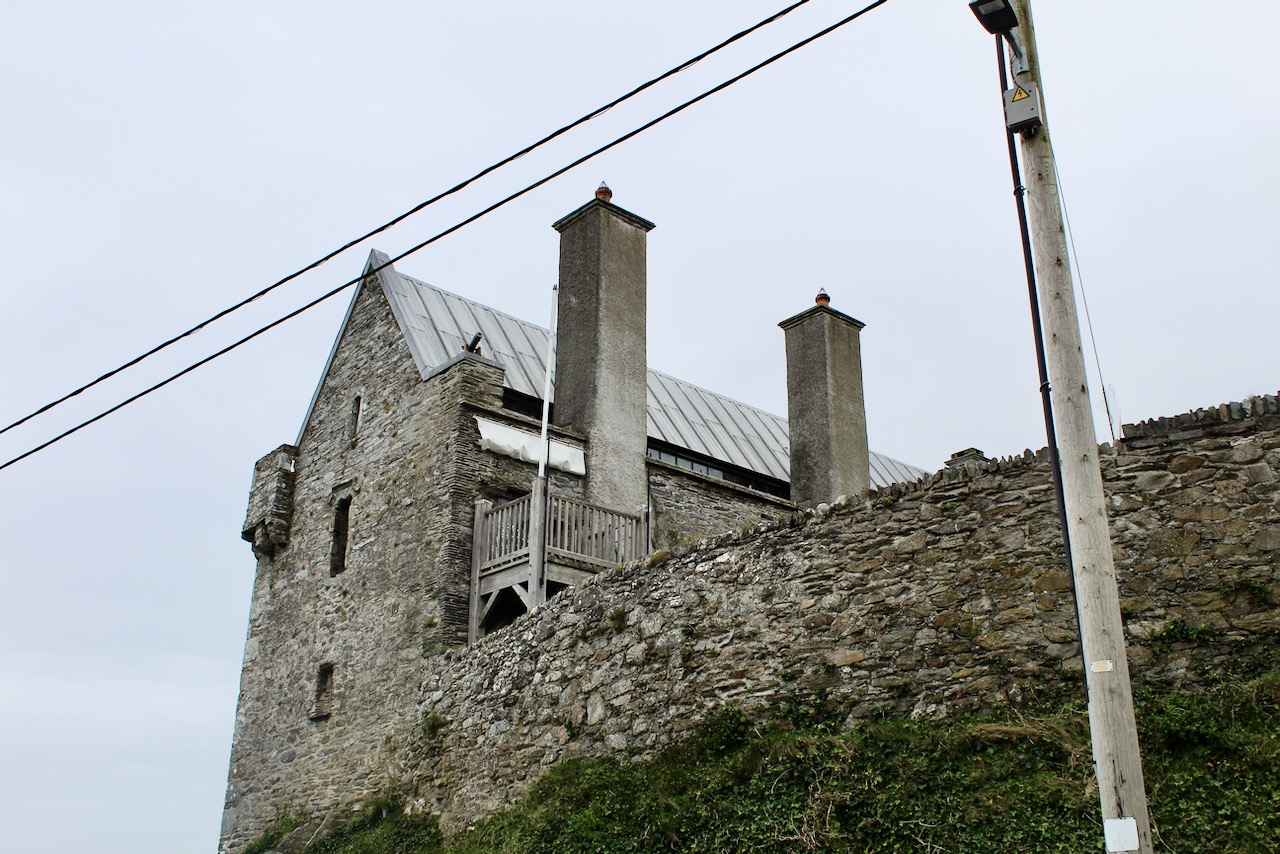
Detached multiple-bay two-storey castle, built c.1780, having break front to front (south-east) elevation, four-stage tower to western corner and bartizan to south corner on stone corbels. Crenellated stone parapets on stone corbels, having roughly coursed sandstone chimneys. Roughly coursed sandstone walls with string course to tower and parapets and limestone quoins. Camber-headed window openings with stone sills and sandstone voussoirs, set within recessed round-headed niches to side (south-west) elevation having sandstone voussoirs and keystones. Square-headed window openings to tower with chamfered stone sills. Various associated buildings to front including round and octagonal-profile towers with parapets having decorative scalloped coping surmounting stone corbels and coursed stone circular-plan chimneystacks. Coursed limestone walls with cruciform loops. Three-stage octagonal tower attached to single-bay two-storey ruin. Crenellated parapet on stone corbels to tower and coursed stone chimneystack to ruin. Roughly coursed stone walls with string course to tower. Square-headed window openings with stone sills and moulded stone label mouldings to ruin. Located within own expansive grounds. 

Castle Freke makes a notable and significant contribution to the surrounding landscape. Located on an elevated site overlooking the sea, the building is visible for miles from both sea and land. Associated with the Evans-Freke family, they were significant contributors to the social and historic fabric of the area. The architectural form of the building and association with significant architects, William Morrison in the early nineteenth century and Kaye-Parry and Ross in the early twentieth century, make this country house an important contributor to the architectural heritage. The eighteenth century classical house was disguised by William Morrison in his 1807 design with the addition of Gothic Revival features, including towers, bartizans, castellations and tall chimneystacks. The courtyard was remodelled and a second courtyard created with the addition of a single-storey wing and tower. It would appear that this work remained incomplete up to c.1840. The interior was destroyed by fire in 1910 and architects Kaye-Parry and Ross inserted concrete floors and roof and a Jacobean Revival style interior. The reinforced concrete technology utilised during the early twentieth century reconstruction adds both technical and scientific significance to the building. In 1919 the last Baron of Carbery, John Evans-Freke sold the estate. The lands were divided when it passed to the Land Commission in the 1930s. It was used as army barracks for the 38th-39th Battalions during World War II, and later as a summer base for the boys of Upton Industrial School. The house was dismantled in 1952 following the purchase of the house by a local man.

Warden’s Tower, Castle Freke, County Cork, courtesy of http://www.castlefreke.ie
The saloon, Castle Freke, County Cork, courtesy of http://www.castlefreke.ie
Castle Freke, County Cork, courtesy of http://www.castlefreke.ie

https://www.castles.nl/castle-freke 

Castle Freke lies next to a small forest in Castlefreke townsland, in County Cork in Ireland. 

Originally Castle Freke was a tower house dating back to the 15th century. It belonged to the Barry family. It was occupied by the Frekes 1617. 

The Frekes and Evans intermarried and became Barons of Carbery 1715 and Castle Freke was rebuilt in 1780 by Sir John Evans-Freke, incorporating the original castle keep in its design. 

The renowned architect Sir Richard Morrison altered the castle into its current Gothic castellated style in 1820. In 1910 a fire gutted the castle. John Carbery was forced to sell Castle Freke in the 1920s and it was dismantled in 1952. 

In 2005 the sprawling ruin of the castle was bought back by Stephen Evans Freke, the youngest son of the late Peter Evans Freke, the 11th Lord Carbery. He started a restoration to return Castle Freke to its former glory. But in 2014 he had a financial dispute with the architect overseeing the restoration and the works halted. The current phase of restoration is partially complete. 

This is a great castle, too bad it’s completely sealed off and abandoned again. But I must say that it also adds to its creepy atmosphere. It is on private property and therefore not accessible. 

David Hicks, Irish Country Houses, A Chronicle of change. The Collins Press, County Cork, 2012. 

http://www.bandon-genealogy.com/Frekes_of_Castle_Freke.htm

https://www.irishexaminer.com/news/arid-30942022.html

Labour of love to restore former family castle 

A retired Wall Street investment banker is spending millions of euros “on a labour of love” rebuilding a castle which was once in his family’s possession for hundreds of years. 

Tue, 06 Aug, 2019 – 07:05 

Sean O’RiordanA retired Wall Street investment banker is spending millions of euros “on a labour of love” rebuilding a castle which was once in his family’s possession for hundreds of years. 

Stephen Evans-Freke is painstakingly rebuilding Castle Freke, originally constructed as a mansion house in the 1750s, but which had impressive battlements added to it later. The castle, which is situated near Rosscarbery, Co Cork, has impressive views of the sea and surrounding land. On a clear day, you can see Fastnet Rock. 

Stephen explained that the Evans’ side of the family were Welsh Celts, while the Frekes were Norse Vikings. They both arrived in Ireland around the same time, in the late 1570s. The Frekes bought land and the old Rathbarry Castle from the Barry clan shortly after their arrival. The Barrys were the dominant force in the area at the time. 

The Frekes and Evans intermarried and became Barons of Carbery in 1715. The current Castle Freke was built by John Evans-Freke, although, as Stephen pointed out, there was clear evidence on the site of an older “fortified Elizabethan ‘strong house’.” 

His Norse, Welsh, and Irish heritage are to the fore in the rebuilding programme and can be seen in some of the magnificent plaster ceilings which are being put into the castle. The type of plasterwork being carried out by experts hasn’t been undertaken in Europe for hundreds of years. 

Stephen Evans-Freke with his partner Barbara Birt at Castle Freke Castle in West Cork.  

One of the impressive reliefs on the ceilings is a depiction of the Children’s of Lir legend, replete with resplendent swans. But Stephen has a sense of humour and in one corner, he’s added a small frog poking his head out and smoking a cigar. 

To honour his Viking heritage, there’s a large plaster ceiling depiction of the Norse god Odin and his two protective wolves. It also features the legendary Valkyries collecting the bodies of fallen heroes from the battlefield to bring them to Valhalla. Freke is incidentally the Norse name for a wolfman. 

For his Celtic/Welsh ancestry, he has created another ceiling scene, this time depicting the Lady of the Lake presenting the legendary sword Excalibur to King Arthur. There are also two dragons fighting, which signifies the one-time struggle for supremacy between Wales and England. 

The magnificent music room has had an entire plaster ceiling installed, the inspiration for which came from the ceiling of Lincoln Cathedral. Stone flooring recently put down in part of the house came from a medieval monastery in the Burgundy region of France. 

“It’s a bit of a pay as you go project,” says Stephen, who declined to comment on what the final bill for the restoration project was likely to cost him. 

Funeral shrouds don’t come with pockets. You’re not going to be able to take it (money) with you. You might as well do something worthwhile with it. 

There was a major fire in the castle in 1909 and when it was rebuilt, the plaster walls were replaced with concrete. A team of 20 workmen, made up of stonemasons, plasterers, sculptors, and carpenters, have stripped the walls of the old concrete and are preparing to re-plaster all of them. 

The 40-plus chimneys have already been relined and the vast majority of the battlements have been repaired, as have many external walls on land surrounding the castle. 

“All of the parapets were knocked for their lead in the 1950s,” says Stephen. “We’ve probably moved the world market on lead restoring them. We had two craftsmen who came out of retirement to do it.” 

In particular, he has great praise for his master stonemason, Micheál Ó Suilleabháin. 

He painstakingly replaced stone on the battlements and other parts of the building, most of which was cut from local quarries. Some old quarries in the area were reopened to source the same kind of stone. 

“It’s been sandblasted so lichen can grow on it and give it that weathered look like the rest of the stones,” Stephen says. 

His family owned Castle Freke up to 1921, but they didn’t leave it because of the political turmoil of the time. In fact, the Evans-Frekes openly supported the winning side. 

“My great uncle, Baron John Carey, was a great supporter of Michael Collins. He was the first man in Munster to own an aeroplane used to put on flying shows at which he would raise funds for the cause of independence.” 

The castle was later taken over by another family. Stephen bought it back in 1999, “but with no particular intention at the time of restoring it”. 

However, thoughts of finally getting his hands back on the family pile were sown when he was quite young. 

“We had a painting of the castle in our family home,” he says. “My father brought me to see the castle when I was 12. It was very forlorn-looking. This is about roots. My aim is to get the main block restored in the next five years.” 

Stephen says he is also going to put a lot of effort into restoring the gardens, and will work with Cork County Council experts on the best way to do this. Eventually, he hopes to open them up to the public. Once the castle is refurbished, he plans to spend part of his time living there, but would also open it on occasion to the public for charity events. 

“The castle and the approximate 170-acre estate have been put into a trust to preserve it for future generations of the family.” 

From mining and biotech to trad music and fishing 

Stephen Evans-Freke was born in Ashbourne, Co Meath. He is the youngest son of the late Peter Evans-Freke, the 11th Lord Carbery. Stephen’s father was an engineer, but as there was no work for such professionals at the time in Ireland, the family moved to England when he was at a young age. 

After graduating in 1973 from Cambridge University with a law degree, Stephen moved to South Africa, where he worked with IBM to build the first computer programme for valuing gold mines. 

In 1976, he moved to New York and became an investment banker working in Wall Street. In the 1980s, Stephen concentrated much of his efforts on financing the first generation of biotech companies, a feat he is especially proud of as many of these companies went on to produce life-saving and life-improving treatments. 

He was lead investment banker to Genentech, AMGEN, Centocor, and a number of other leading biotech companies. He left Wall Street in 1990. Stephen describes himself as having a couple of great passions in his life, apart from renovating the castle. 

“I’m a passionate environmentalist and very much supportive of sustainable farming,” he said proudly as he looked down from the castle turrets on a herd of horned Aberdeen Angus grazing in a field below. 

“I also love traditional music.” 

He also likes his fishing, and big fish at that. Stephen spends a lot of his time in the Caribbean, having moved to the US Virgin Islands in 2008, and prefers nothing better than fishing for big marlin. 

He also enjoys scuba diving, sailing, tennis, playing the piano, reading history and philosophy, and horseback riding. Stephen is a well-known philanthropist. He founded new ventures on the US Virgin Islands, including the leading Caribbean air ambulance company, AeroMD. 

Baltimore Castle (Dún Na Séad), Co. Cork P81 X968 – section 482

www.baltimorecastle.ie

Open dates in 2026: Apr 1-Oct 31, 10am-5pm

Fee: adult/OAP/student €6, child free with an adult

2026 Diary of Irish Historic Houses (section 482 properties)

To purchase an A5 size 2026 Diary of Historic Houses (opening times and days are not listed so the calendar is for use for recording appointments and not as a reference for opening times) send your postal address to jennifer.baggot@gmail.com along with €20 via this payment button. The calendar of 84 pages includes space for writing your appointments as well as photographs of the historic houses. The price includes postage within Ireland. Postage to U.S. is a further €10 for the A5 size calendar, so I would appreciate a donation toward the postage – you can click on the donation link.

€20.00

donation

Help me to pay the entrance fee to one of the houses on this website. This site is created purely out of love for the subject and I receive no payment so any donation is appreciated!

€15.00

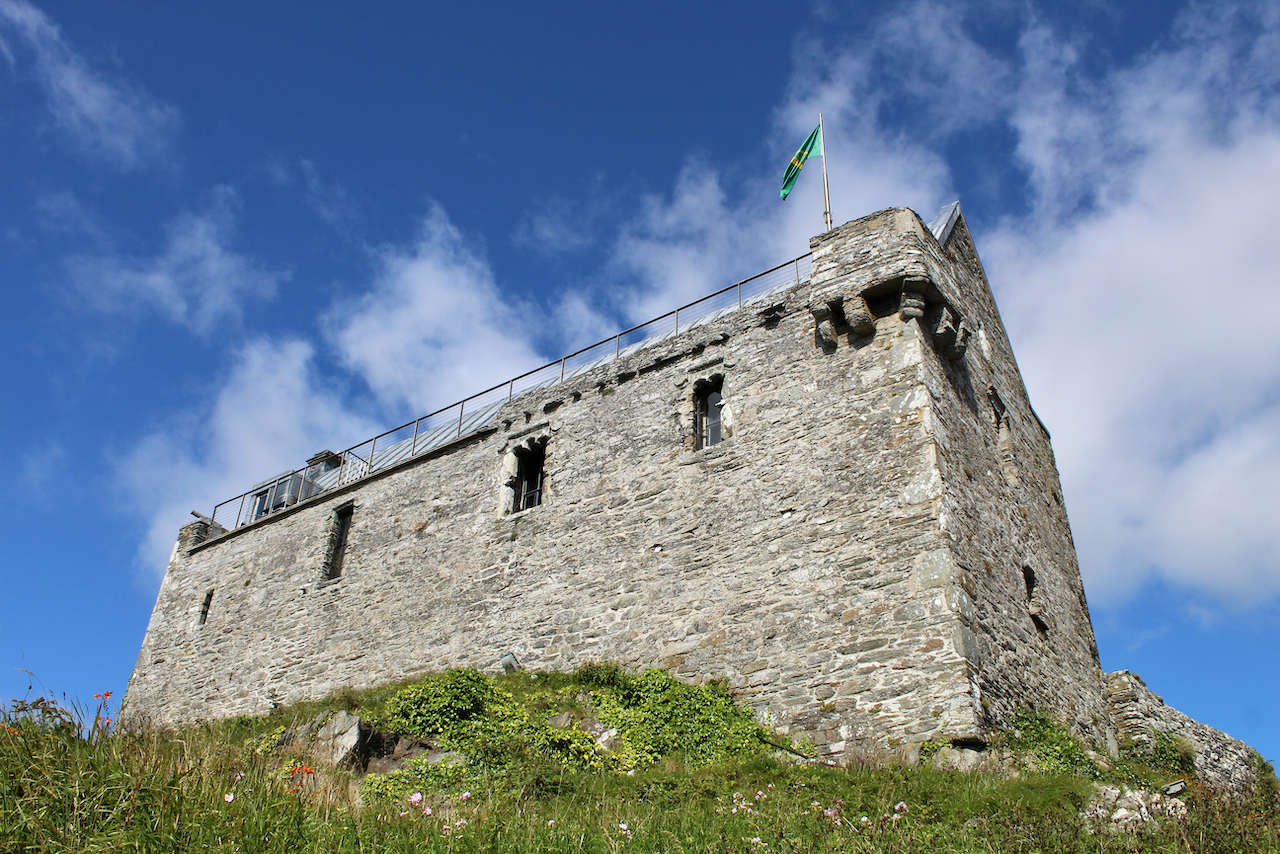
Baltimore Castle, April 2021. © Jennifer Winder-Baggot, www.irishhistorichouses.com

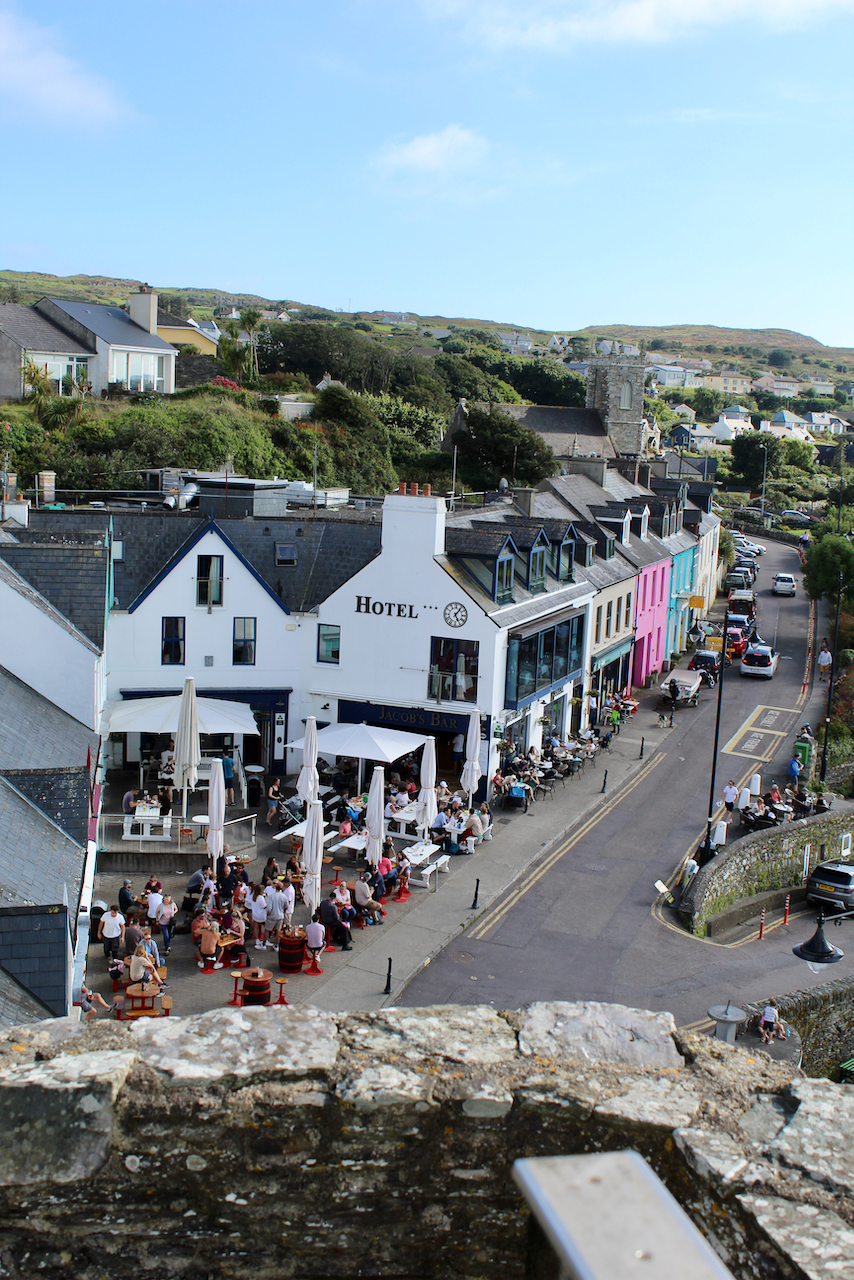
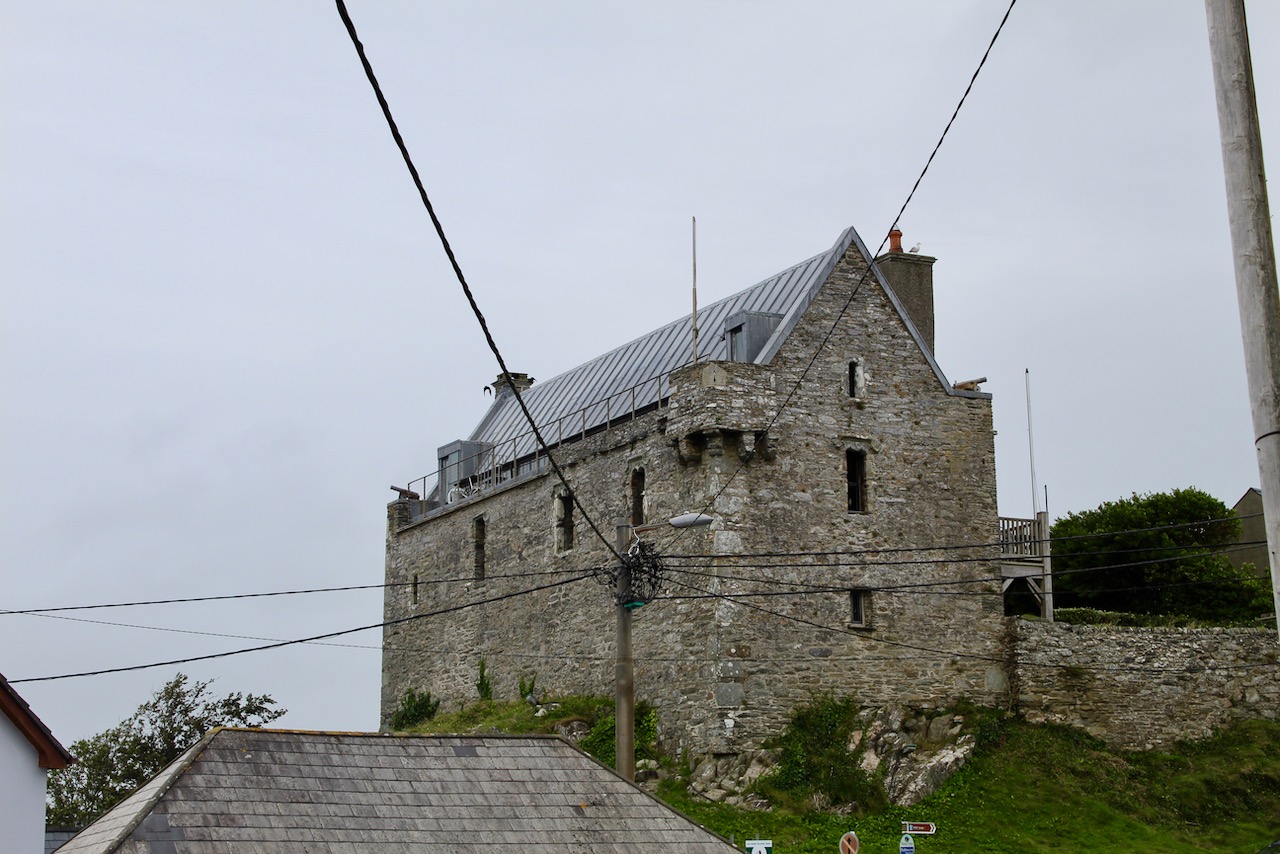
Dunasead Castle, also known as Dún a Séad (“Fort of the Jewels”), Dunashad or Baltimore Castle, lies in the town of Baltimore in County Cork.

The view from Baltimore Castle 16 August 2023. © Jennifer Winder-Baggot, www.irishhistorichouses.com
Baltimore Castle, April 2021. © Jennifer Winder-Baggot, www.irishhistorichouses.com

The website tells us that the site of Dún na séad Castle has been fortified for a very long time. The first fortification might have been a ring fort. After that an Anglo-Norman castle was built here in 1215. In 1305 that castle was taken and destroyed by the MacCarthys. Subsequently the O’Driscolls took possession of the site and built a castle.

Baltimore Castle, April 2021.

The website tells us that the present Dún na séad Castle was built in the 1620s by the O’Driscolls, but Frank Keohane writes that it was built by Thomas Crooke before 1610 near an earlier O’Driscoll castle. Frank Keohane writes in his The Buildings of Ireland: Cork City and County:

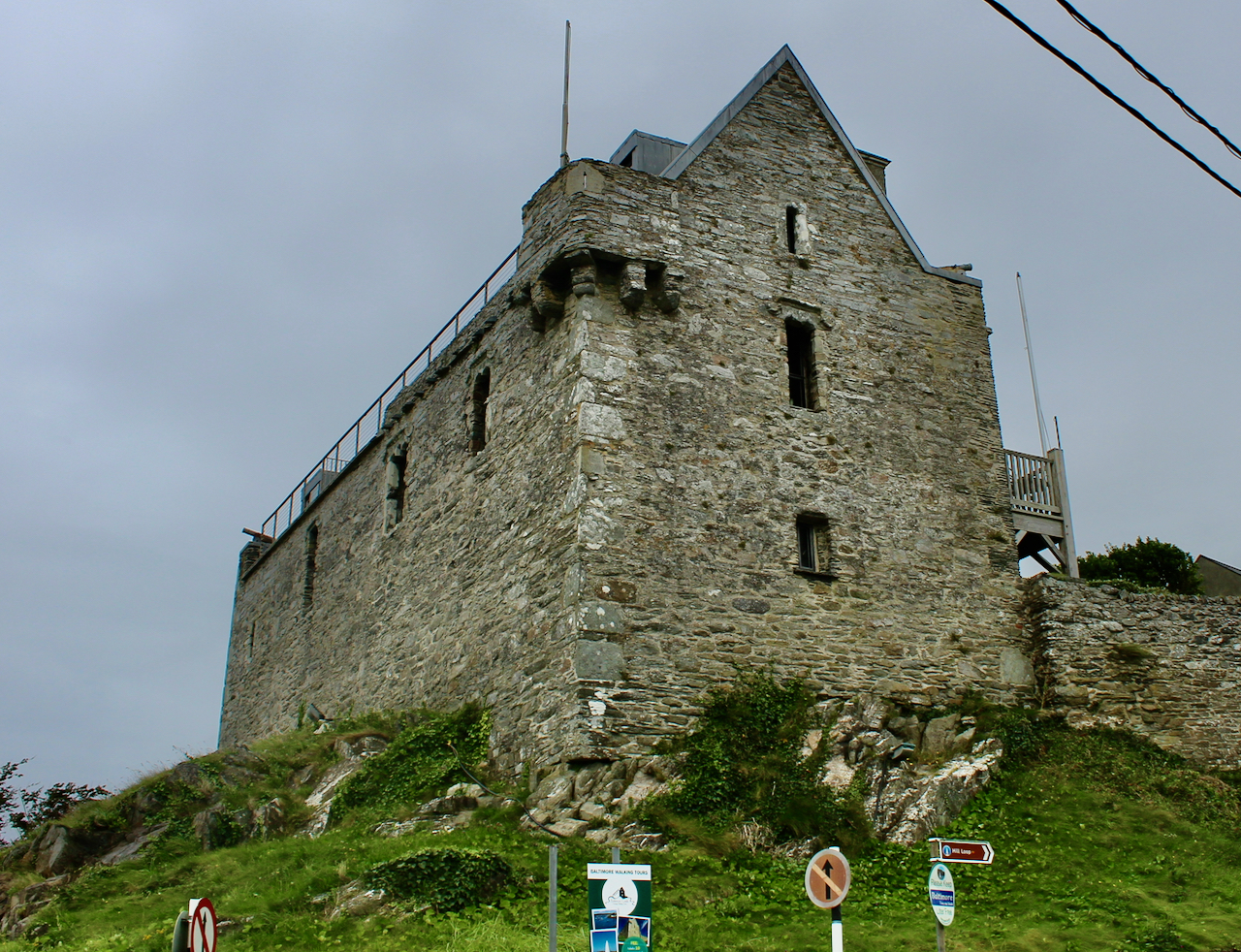
Baltimore or Dunasead Castle. Early C17 two-storey gable-ended block with an attic, set on a rock overlooking Baltimore Harbour. An O’Driscoll castle NE of the present building was occupied by an English force in 1602 after the Battle of Kinsale, during which it was substantially demolished. Sir Fineen O’Driscoll then leased Baltimore and its ‘castle’ to Thomas Crooke and William Coppinger. Crooke, who established an English settlement, appears to have built the present castle before 1610, possibly incorporating features such as the window surrounds from the O’Driscoll castle.” [1]

Baltimore Castle, April 2021. © Jennifer Winder-Baggot, www.irishhistorichouses.com

Keohane tells us: “[Baltimore is] a small pretty village… overlooking a broad deep bay sheltered from the Atlantic by Sherkin Island. An English settlement was first established here in the early C17 by Sir Thomas Crooke, later passing to Sir Walter Coppinger. By 1629 English settlers had built sixty houses here.

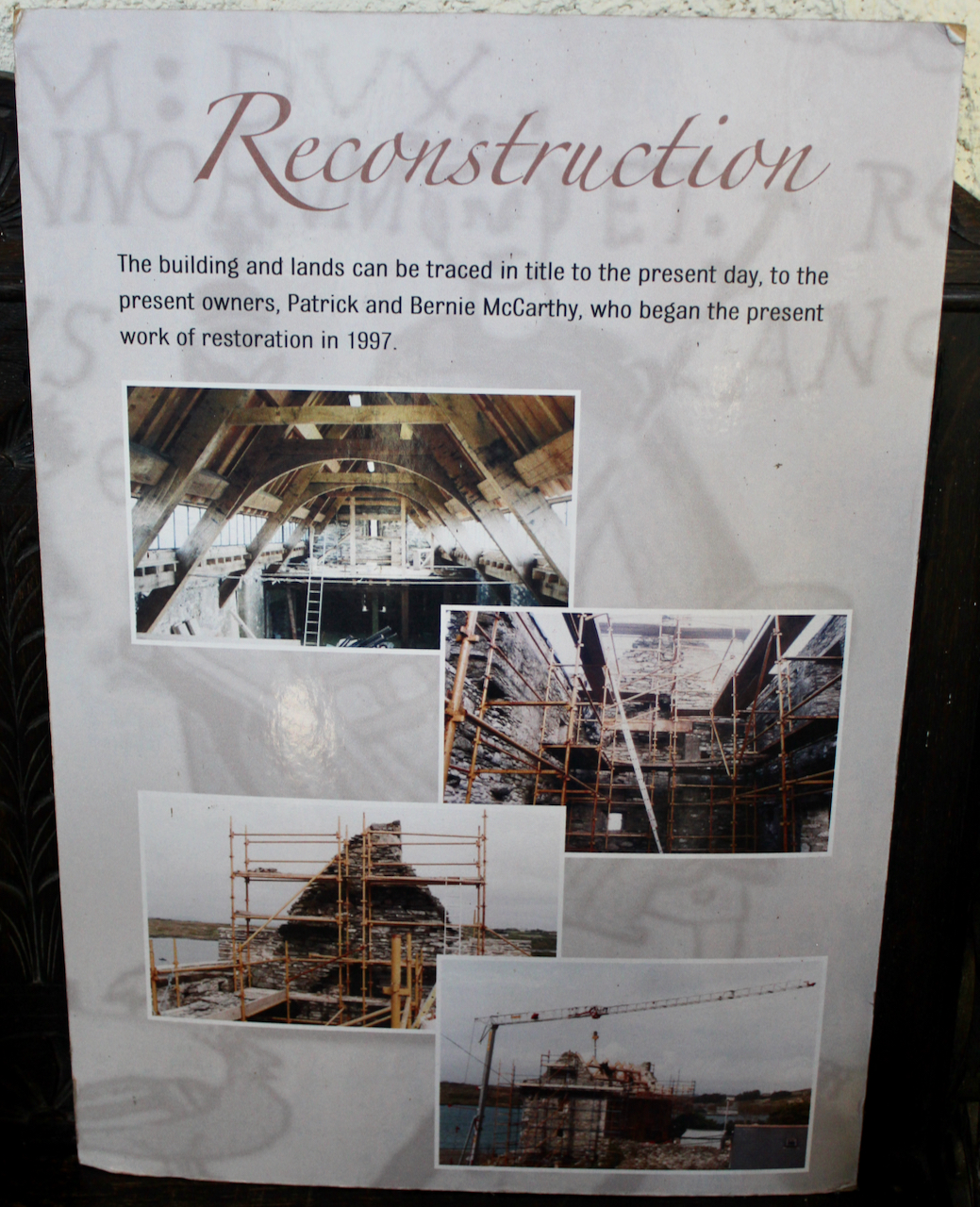
Between 1997 and 2005 the ruined castle was rebuilt as a private residence. At present it is a small museum. The owners, the McCarthys, have done an amazing job restoring the castle and it is also their home.

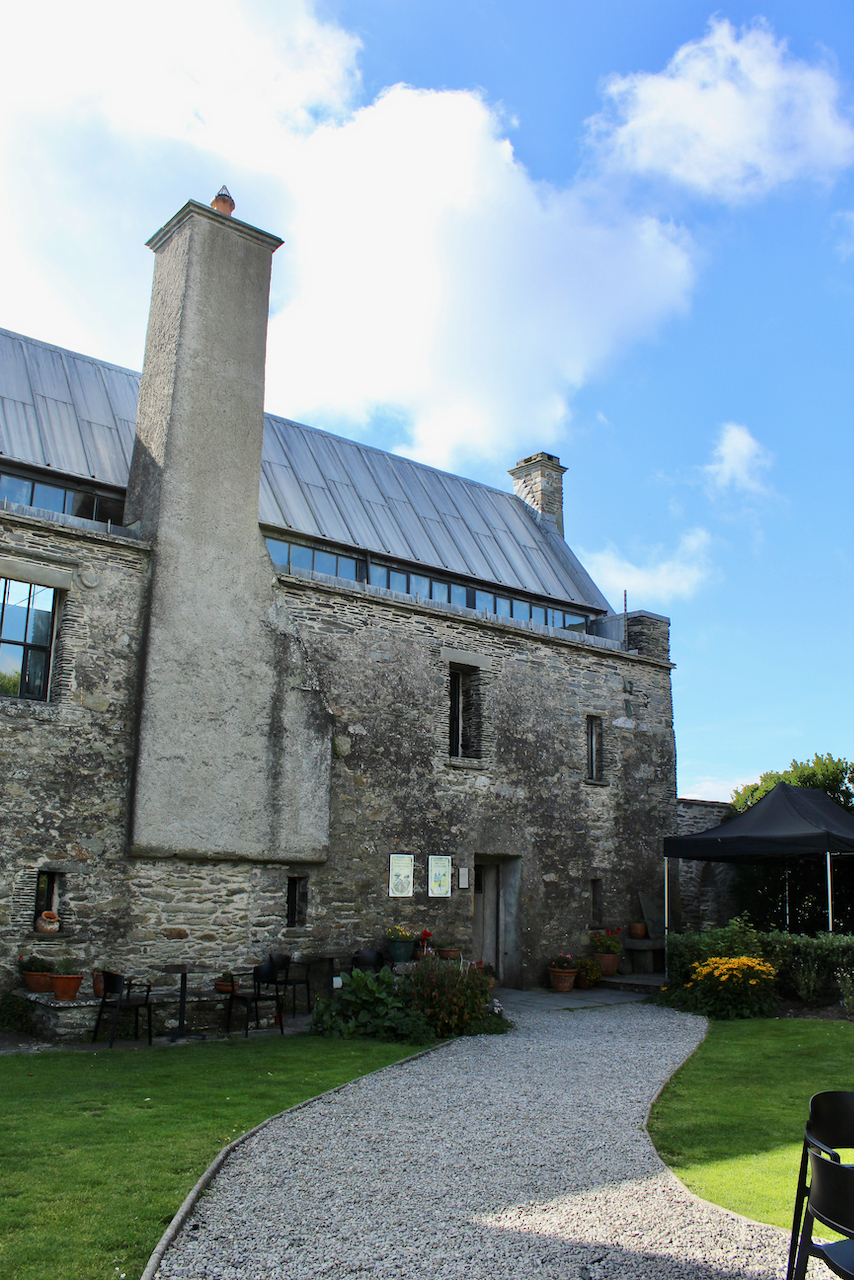
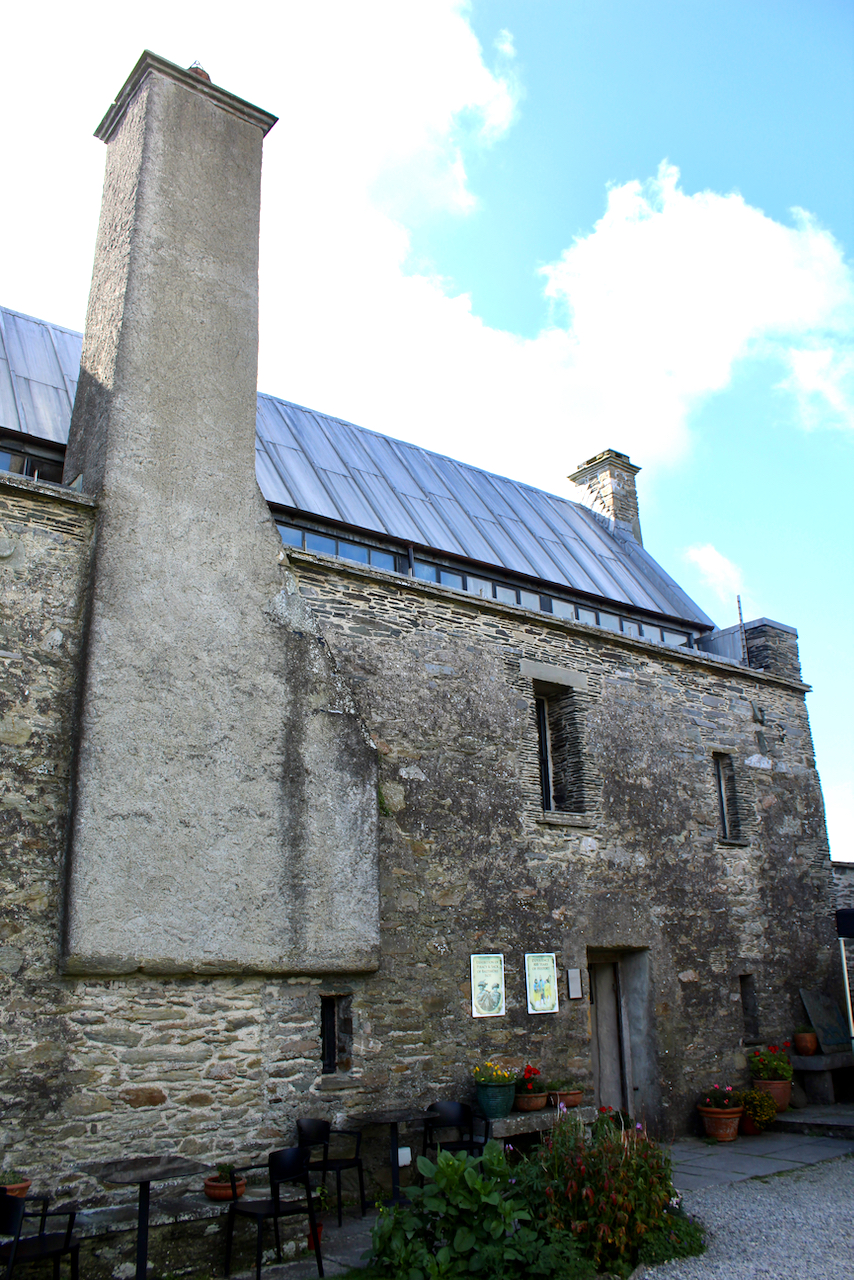
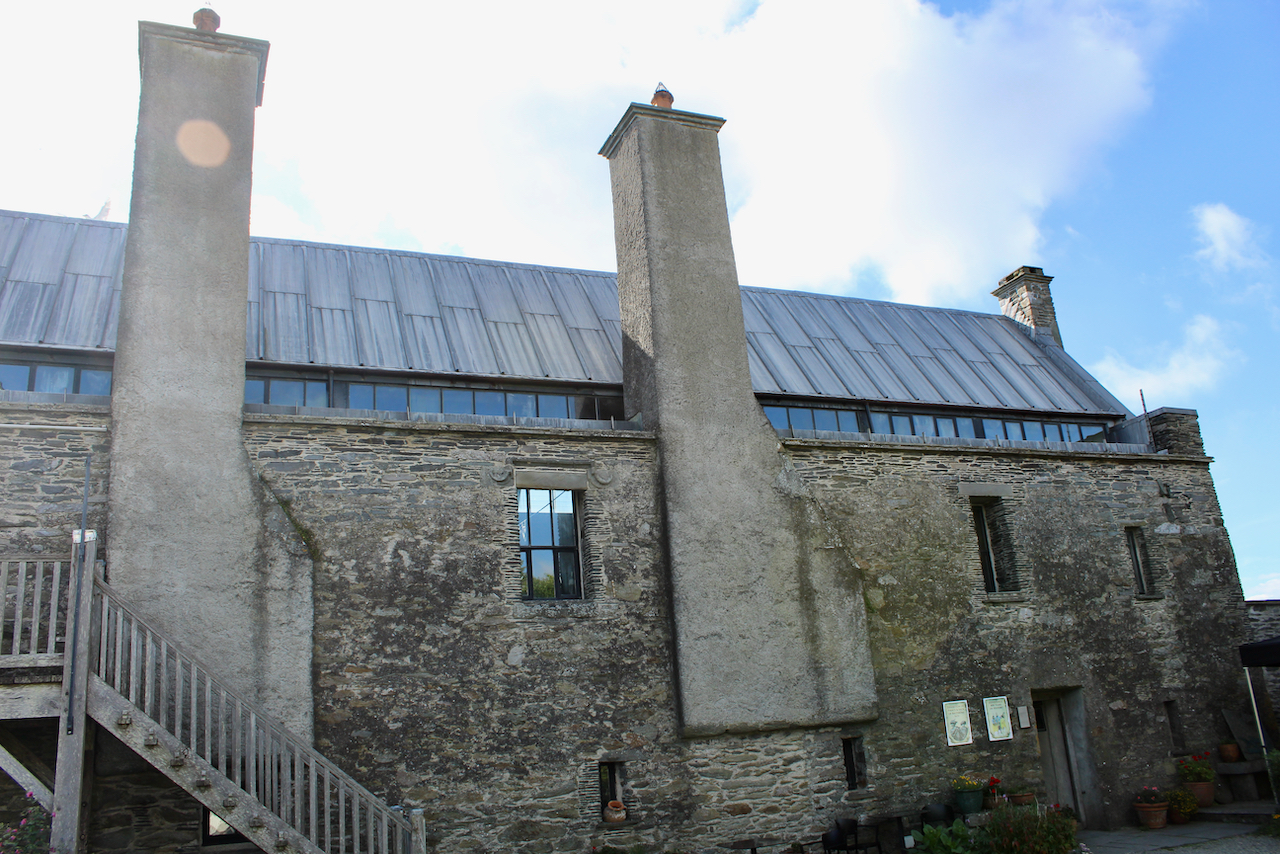
Keohane continues: “Restored as a dwelling in 1997-2003. The contemporary interventions are well considered, with minimal conjecture and cleanly distinct materials….The castle is approached across a small enclosed bawn on the east or landward side. The lower floor served as stores, with living quarters above. Wall-walks behind parapets are provided on the long sides. These give access to a square bartizan over the SW corner; another bartizan was probably provided on the opposing NE corner. The West side is blind at the ground level but has generous two and three light first floor windows (all now missing mullions and transoms), with ogee heads, sunken spandrels and curious curved hoodmould terminals similar to those at Clodagh Castle (Crookstown). On the east side, two great reconstructed chimneystacks sit on corbels at first-floor level. Here, small rectangular lights serve the ground-floor rooms, while the first-floor rooms have wider windows. A narrow first-floor door at the south end led to a now destroyed garderobe turret. The upper rooms were approached by an internal stair rather than a forestair. Markings in the plaster suggest that there were three major rooms, divided by partitions, with attics at each end. The central “hall” had good sandstone window dressings with neat roll mouldings, and a fireplace with remains of a moulded and chamfered limestone jamb. A solar or parlour was provided to the south. The north room has a bread oven and a slop stone in addition to its fireplace, indicating use as a kitchen.

Baltimore Castle 16 August 2023: a chimneystack from first floor level. © Jennifer Winder-Baggot, www.irishhistorichouses.com
Baltimore Castle, here we see the small bartizan on the southwest corner, and the hood moulding over the ogee shaped window, April 2021. © Jennifer Winder-Baggot, www.irishhistorichouses.com
Baltimore Castle 16 August 2023. © Jennifer Winder-Baggot, www.irishhistorichouses.com
Baltimore Castle, April 2021. © Jennifer Winder-Baggot, www.irishhistorichouses.com
Baltimore Castle 16 August 2023. © Jennifer Winder-Baggot, www.irishhistorichouses.com

But let us backtrack to the Castle’s fascinating history.

Information board in Baltimore Castle.

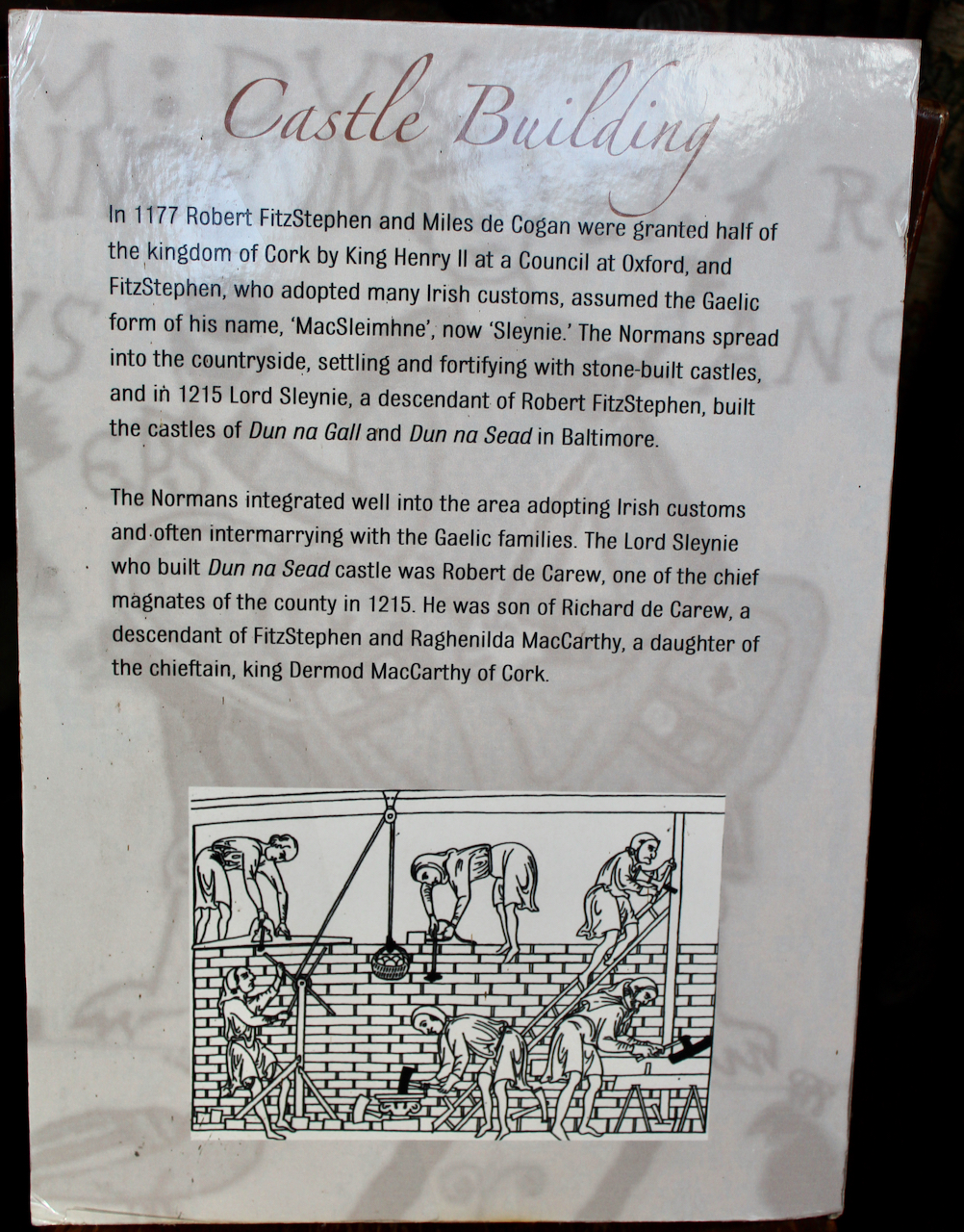
The information boards tell us that in 1215 Robert de Carew, Lord Sleynie, built the castle, and that his mother was a daughter of the chieftain Dermod MacCarthy of Cork.

Information board in Baltimore Castle.

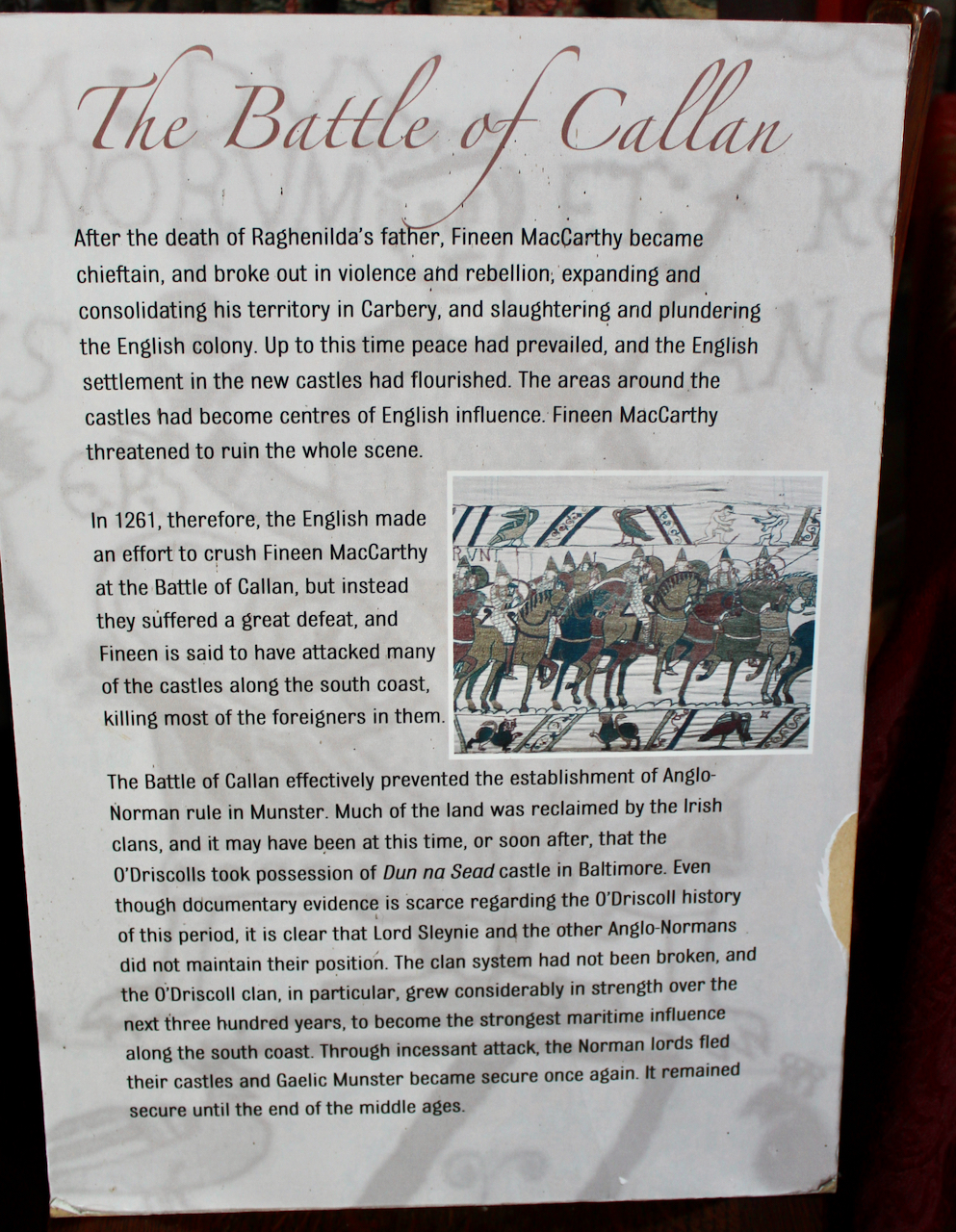
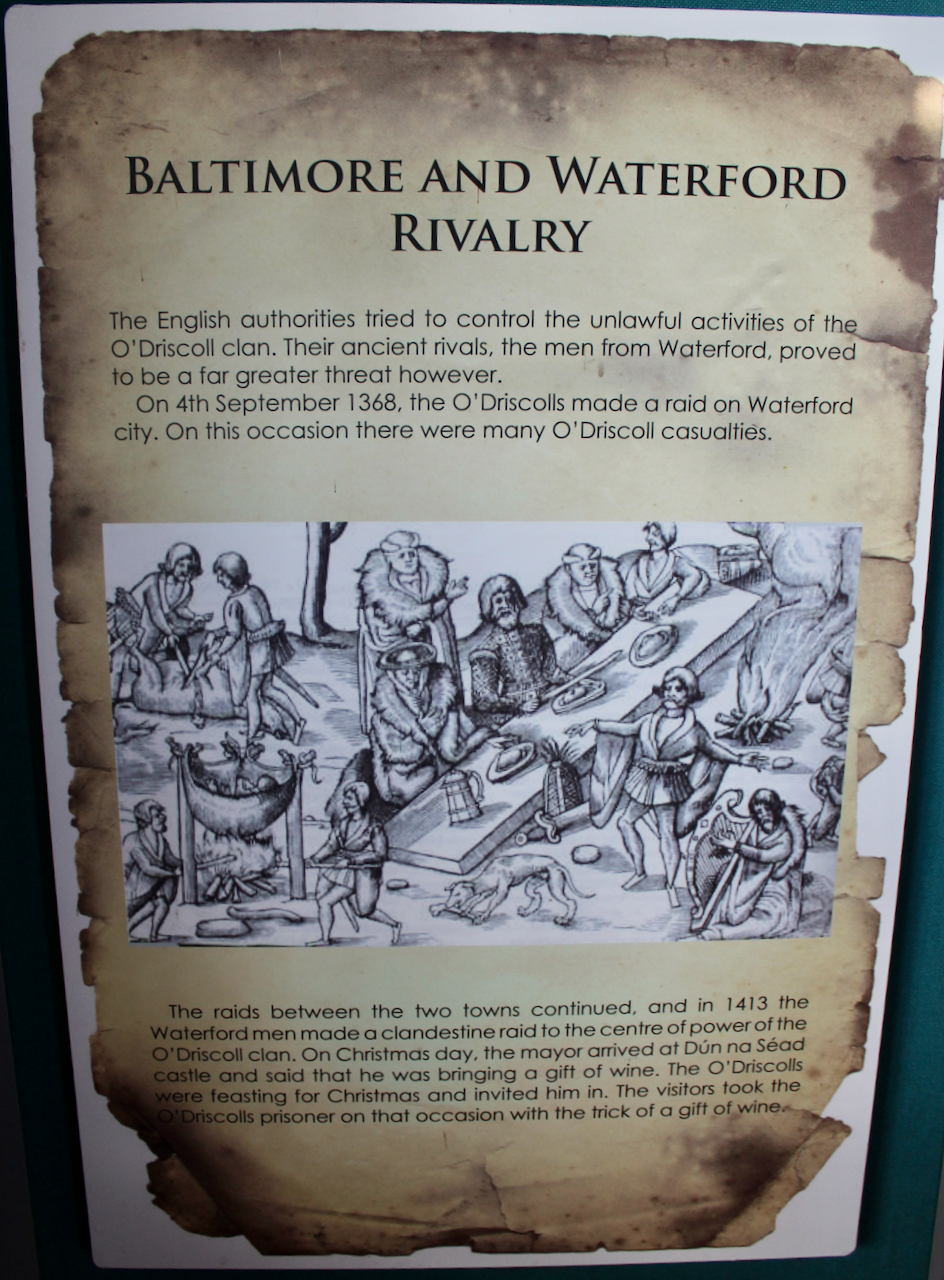
After the Battle of Callan, the O’Driscoll family took possession of the castle at Baltimore. The O’Driscolls were fishermen and pirates.

Information board in Baltimore Castle.

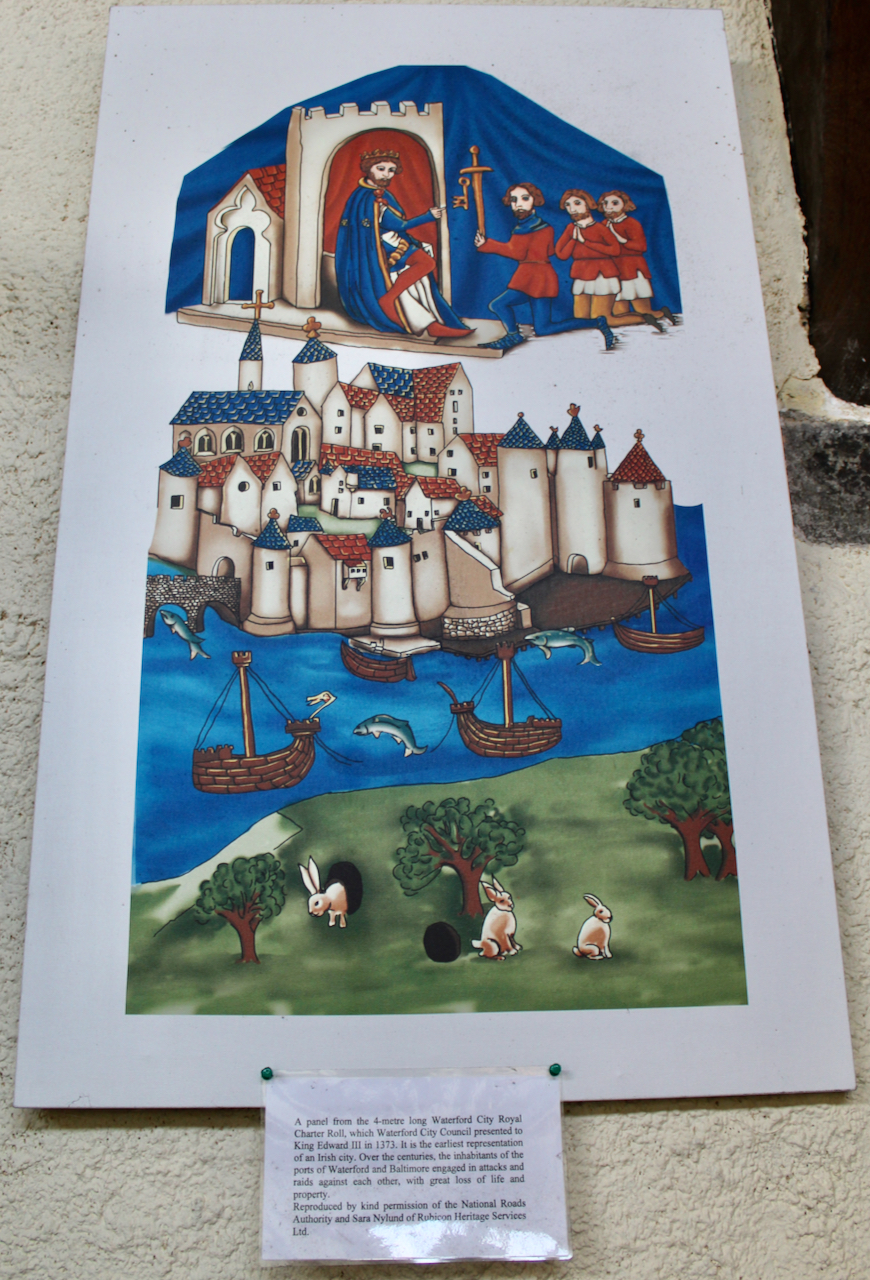
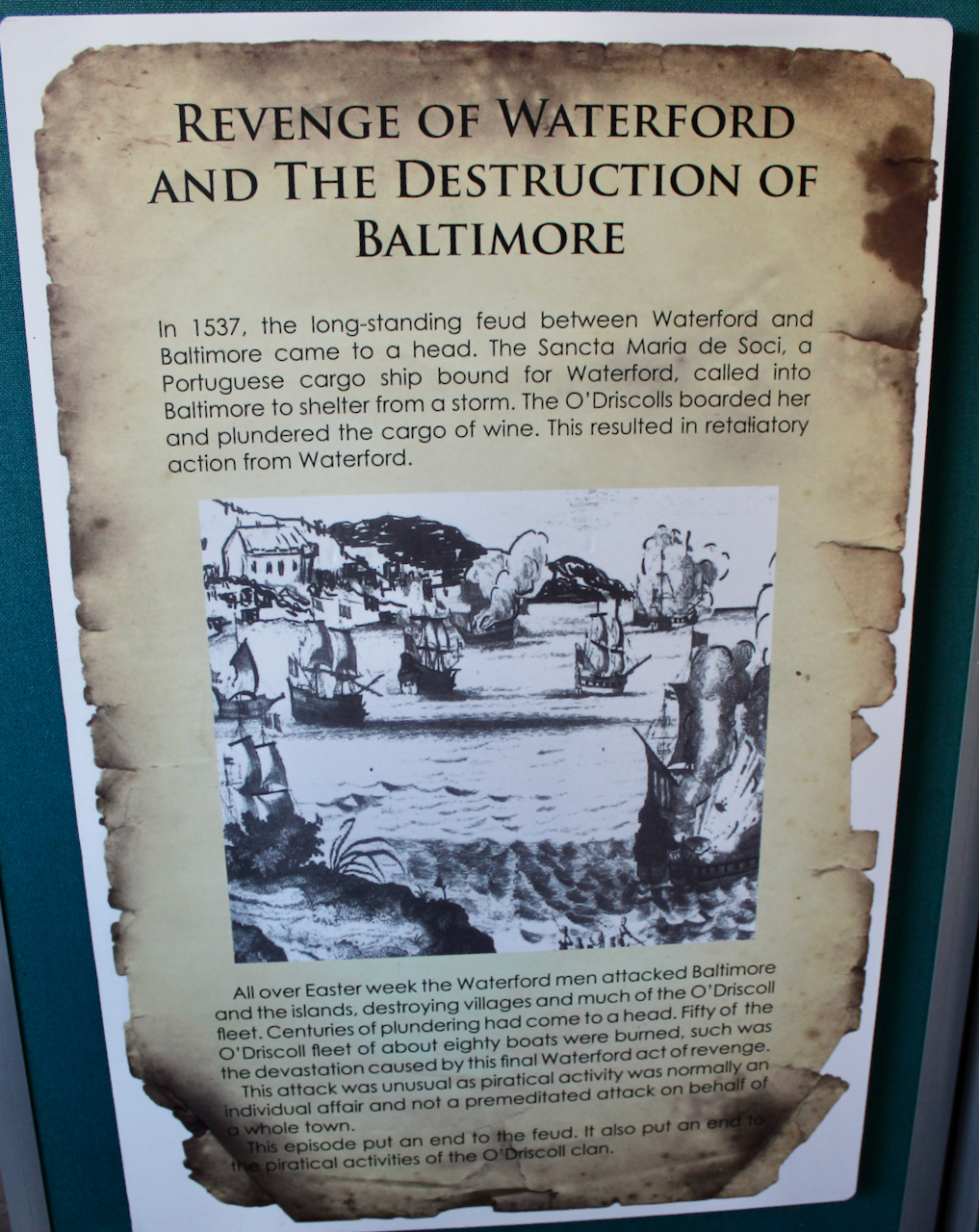
The website tells us that the O’Driscolls were constantly under pressure from encroachments by Anglo-Norman settlers and rival Gaelic clans on their territory and trade interests, which resulted in the castle being attacked and destroyed numerous times in the following centuries.

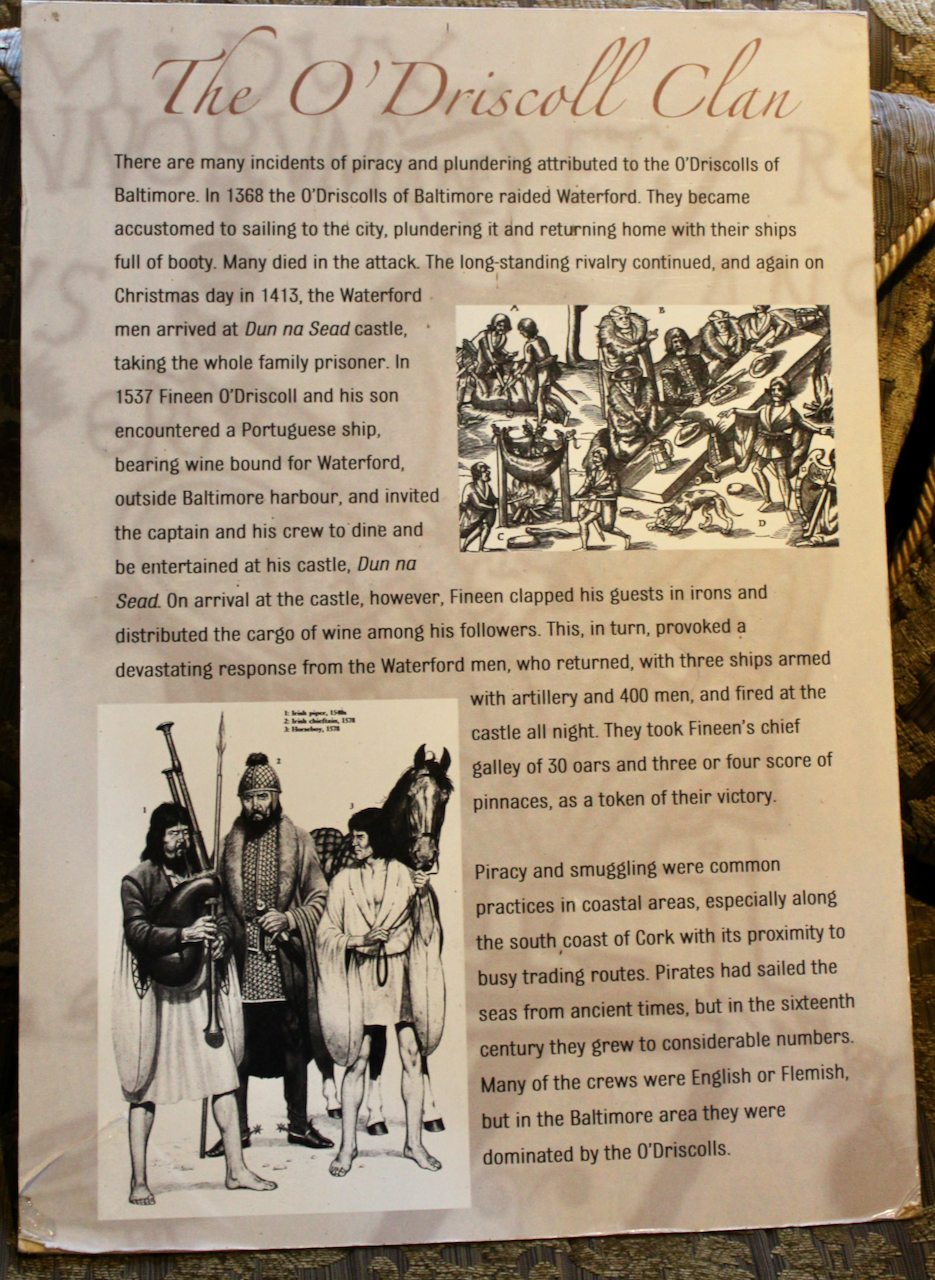
The O’Driscolls imposed taxes on harbour trade and traffic in order to support their opulent lifestyle. They had no authority from the crown to impose such taxes, so in 1381 King Richard II appointed admirals for the ports of county Cork in an attempt to deal with the pirate menace to merchant shipping in the area. The admirals were commissioned to deal in particular with the O’Driscolls of Baltimore “who constantly remained upon the western ocean, preying in passing ships.” [2]

Information board in Baltimore Castle.

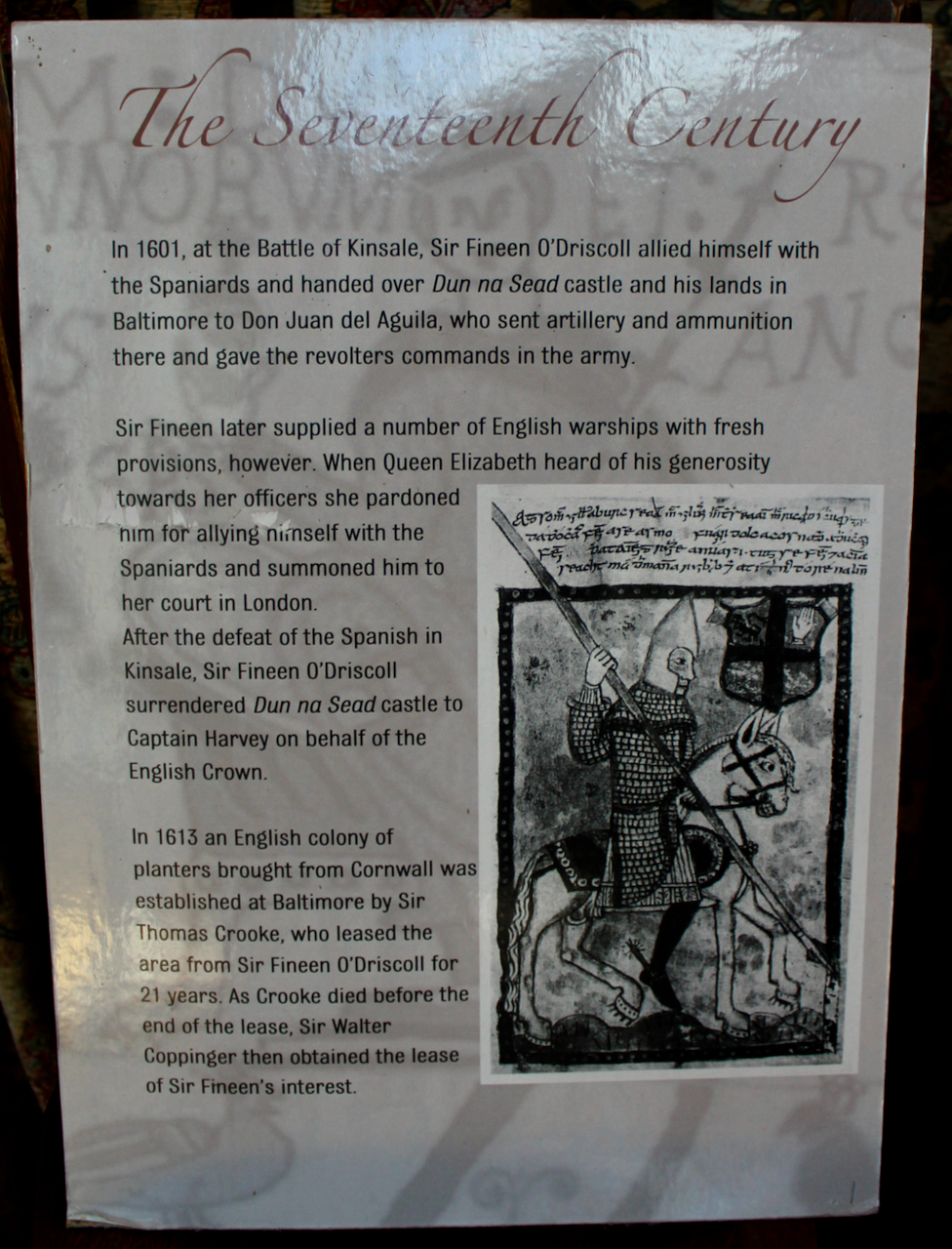
In the early 1600s Fineen O’Driscoll of Dún na Séad castle pledged loyalty to the Crown of England. He was knighted by Queen Elizabeth I.

Information board in Baltimore Castle.
Elizabeth I Queen of England (1503-1603) date c.1560, courtesy of National Gallery of Ireland.
Information board in Baltimore Castle.
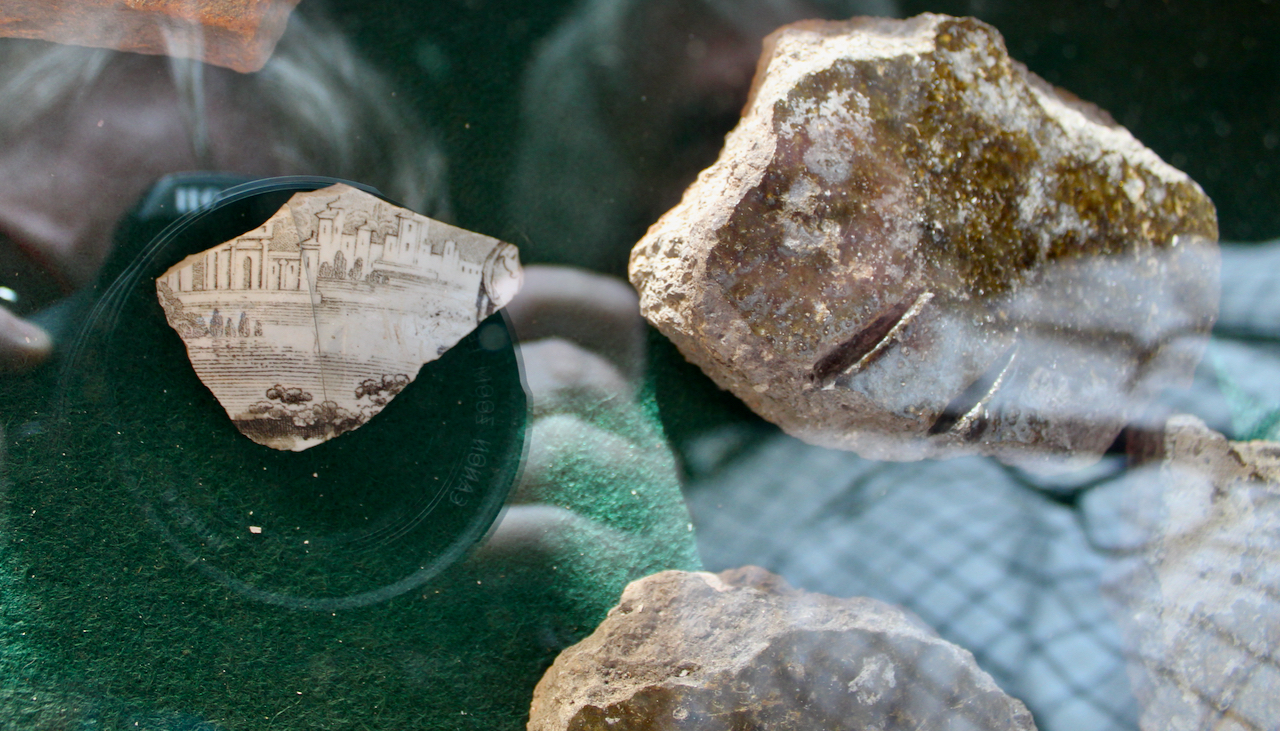
Pottery shards found around Baltimore Castle. © Jennifer Winder-Baggot, www.irishhistorichouses.com
Information board in Baltimore Castle.

In 1606 Thomas Crooke (b. 1574) was granted Baltimore Castle and the town of Baltimore as well as lands and islands formerly belonging to the O’Driscolls, in order to secure the area for the Crown and establish a Protestant colony. Bernie McCarthy tells us in her book that there is no evidence of the relationship between Fineen O’Driscoll and Thomas Crooke, and we do not know if the O’Driscolls stood aside willingly or whether Crooke had to engage in force to obtain the property. The portrait in the information board is not of Thomas Crooke but is of typical attire of an English planter at the time.

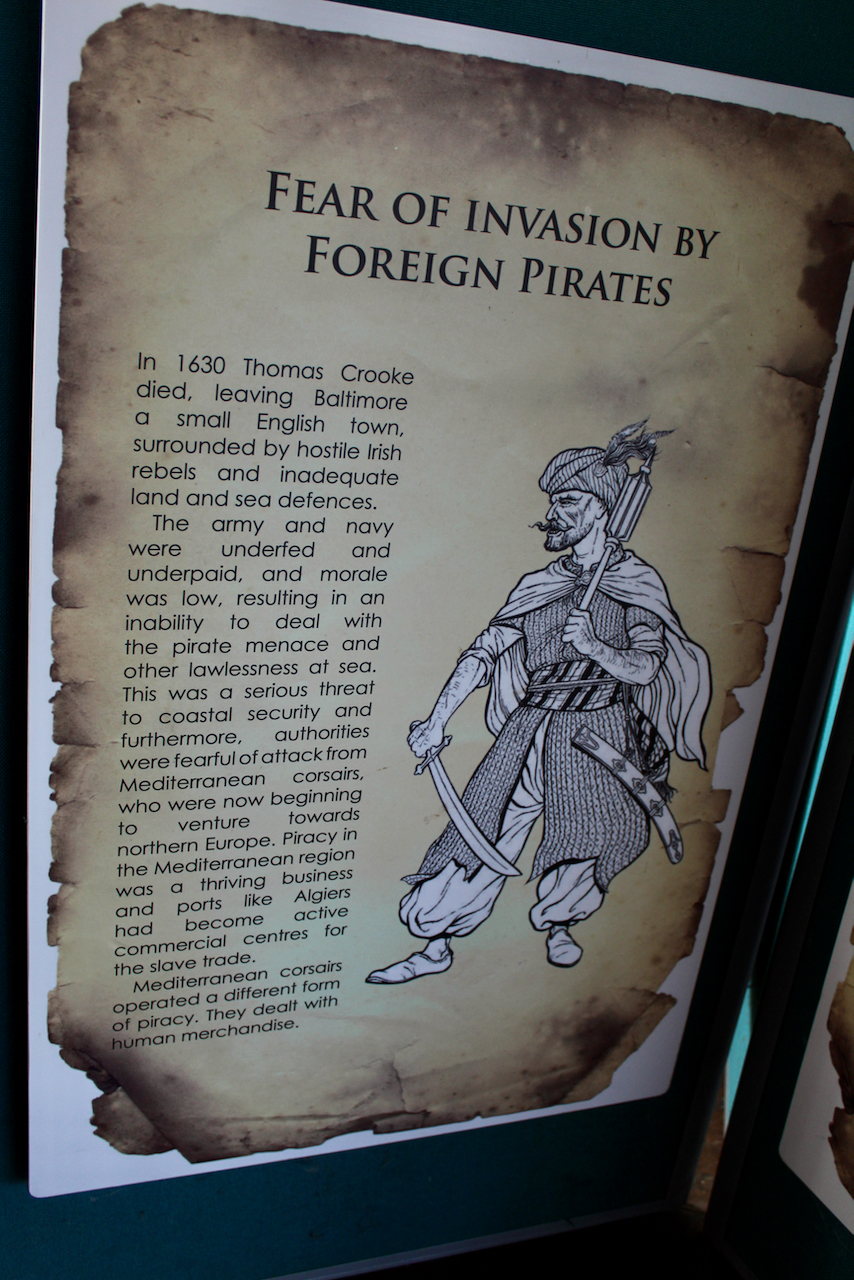
Crooke was meant to represent the Crown but he became involved in piracy, co-operating with English and Flemish pirates and profiting from their spoils.

There was, however, a system the Crown used for legitimising piracy by a system of “privateering” which was sanctioned by the State. A Privateer obtained a license, or letter of “Marque” to use their ships as a man-o-war against the State’s enemies in times of war. The marque permitted vessel owners to seize Crown enemies, acquire their cargo and make a profit. The captured ships were taken before the Prize Court and the captured cargo was referred to as the “prize,” and the privateer was awarded 90% of the prize, with 10% of the value going to the National Prize Fund. [3] Privateers took advantage of this legitimacy to capture illegitimate bounty, but in the case of Crooke, his work establishing a colony made the Crown turn a blind eye to his piracy.

Pirates would dock in Baltimore to repair ships or gather supplies, and this led to proliferation of taverns and brothels in Baltimore. A list of goods brought to Baltimore around 1615 by the pirate Campane includes wax, pepper, 100 Barbary hides, a chest of camphor, tobacco, cloves, elephants’ teeth (probably tusks), Muscovy hides, a chest of chenery roots and canopies of beds from the Canary Islands. [4]

In 1613, Baltimore was enabled by charter to send two MPs to the Dublin Parliament. Thomas Crooke was elected MP. Ironically, it was this parliament which introduced the Irish Statue against piracy.

Information board in Baltimore Castle.

By 1626, Crooke feared the consequences of foreign pirates, and he petitioned the House of Lords for protection of Baltimore. Unfortunately, any protection proved inadequate.

Information board in Baltimore Castle.
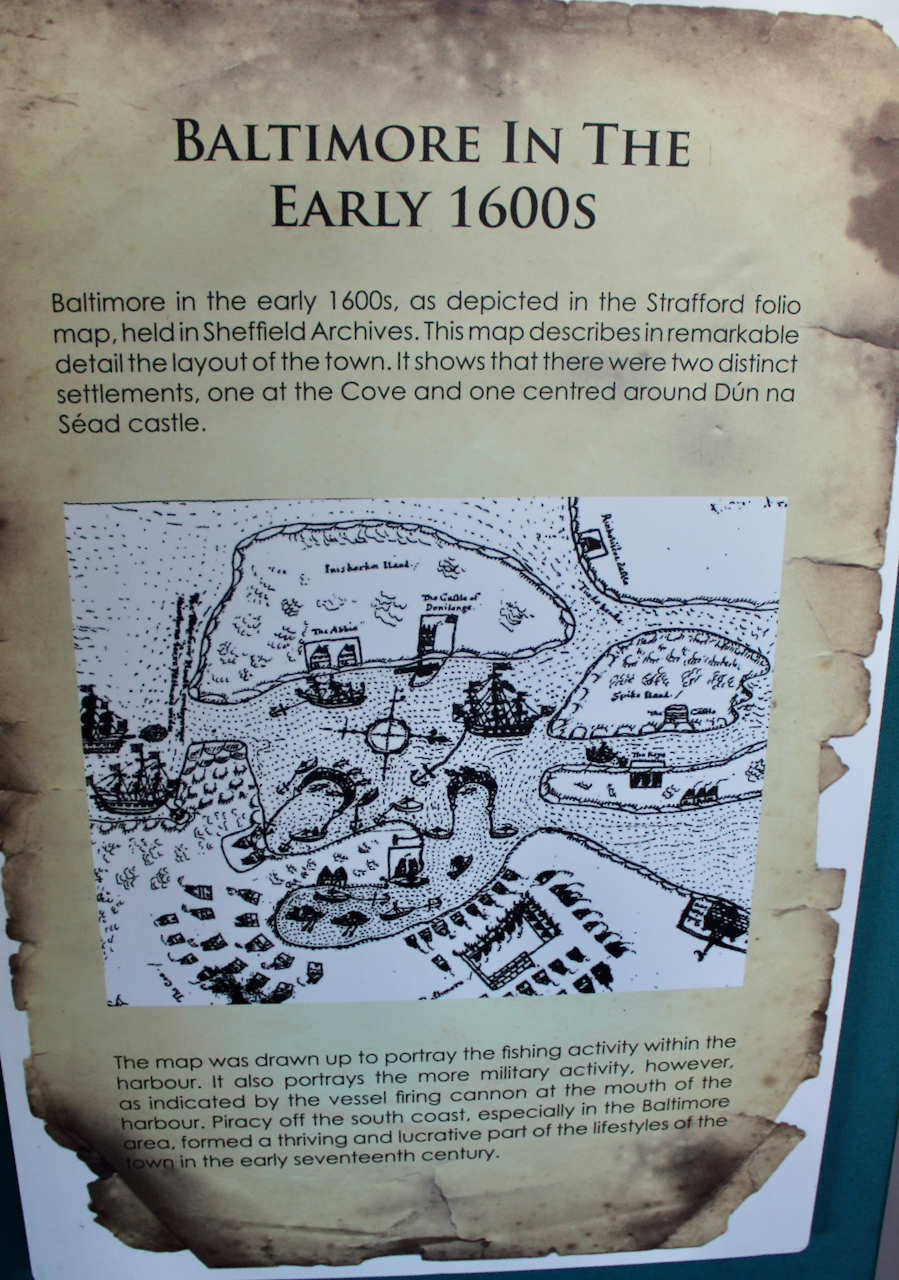
Early seventeenth century anti-pirate map of Baltimore, commissioned by the Dutch in order to facilitate an attack on local pirates, to render the adjacent seas safer for Dutch merchant vessels.
Baltimore Castle 16 August 2023. © Jennifer Winder-Baggot, www.irishhistorichouses.com

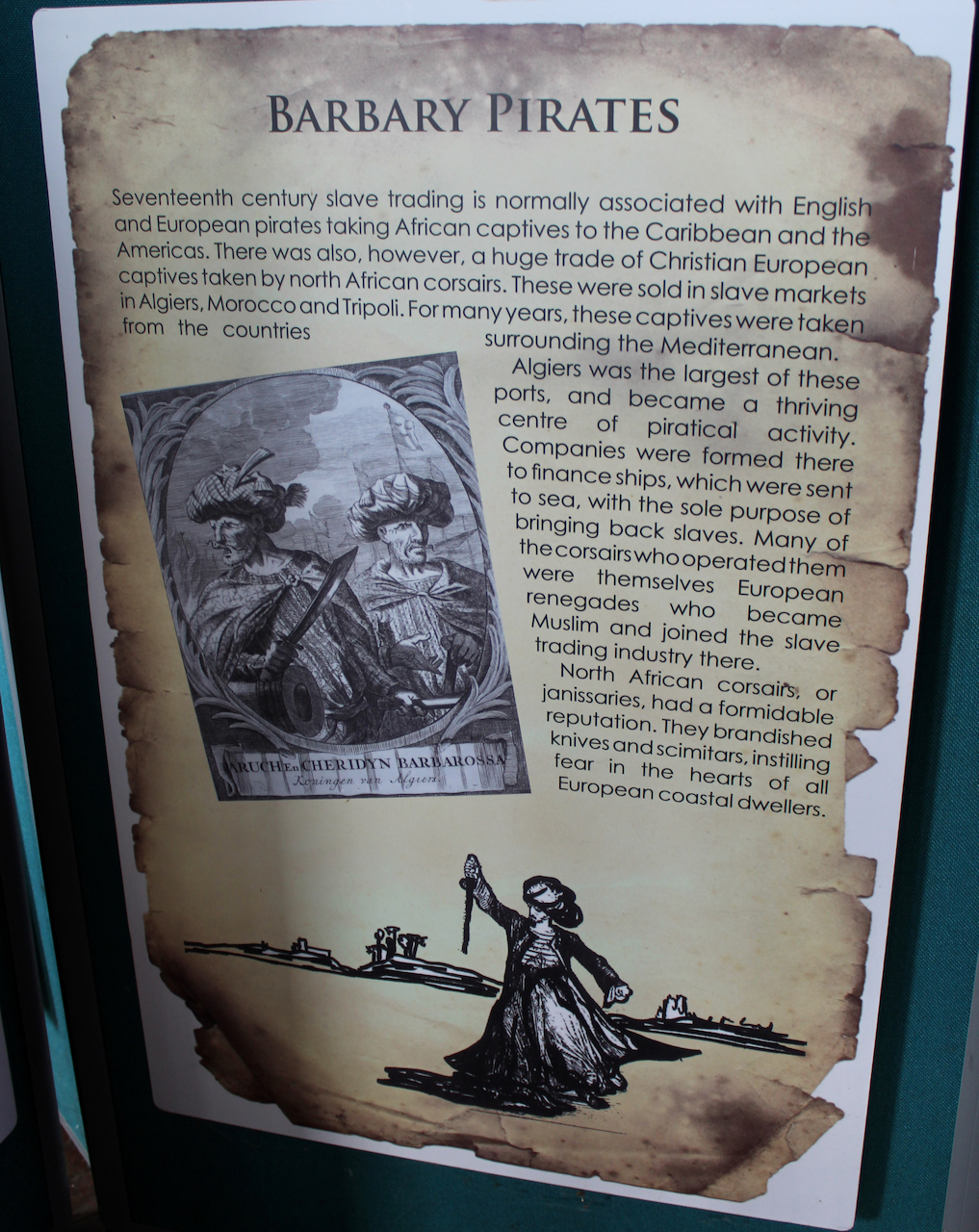
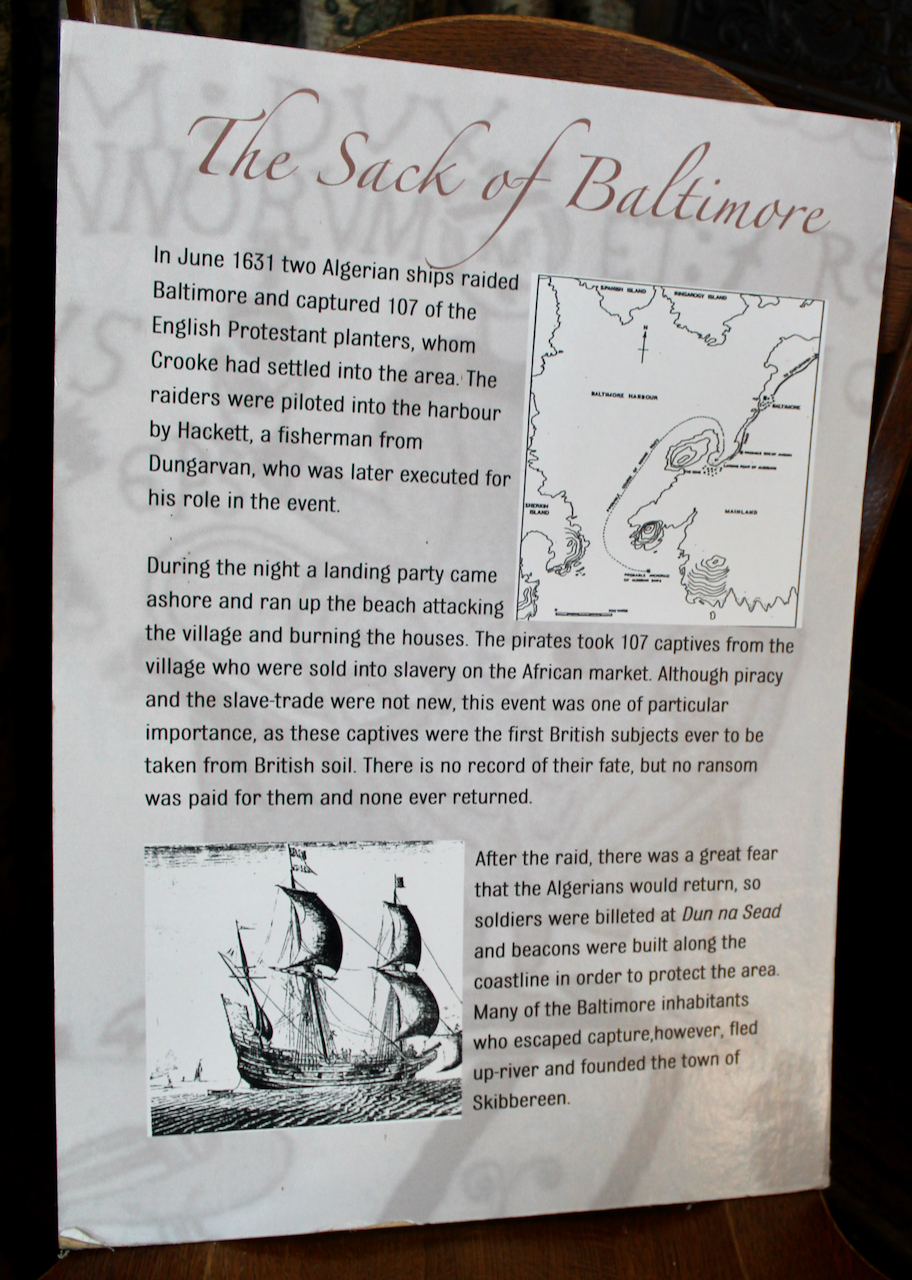
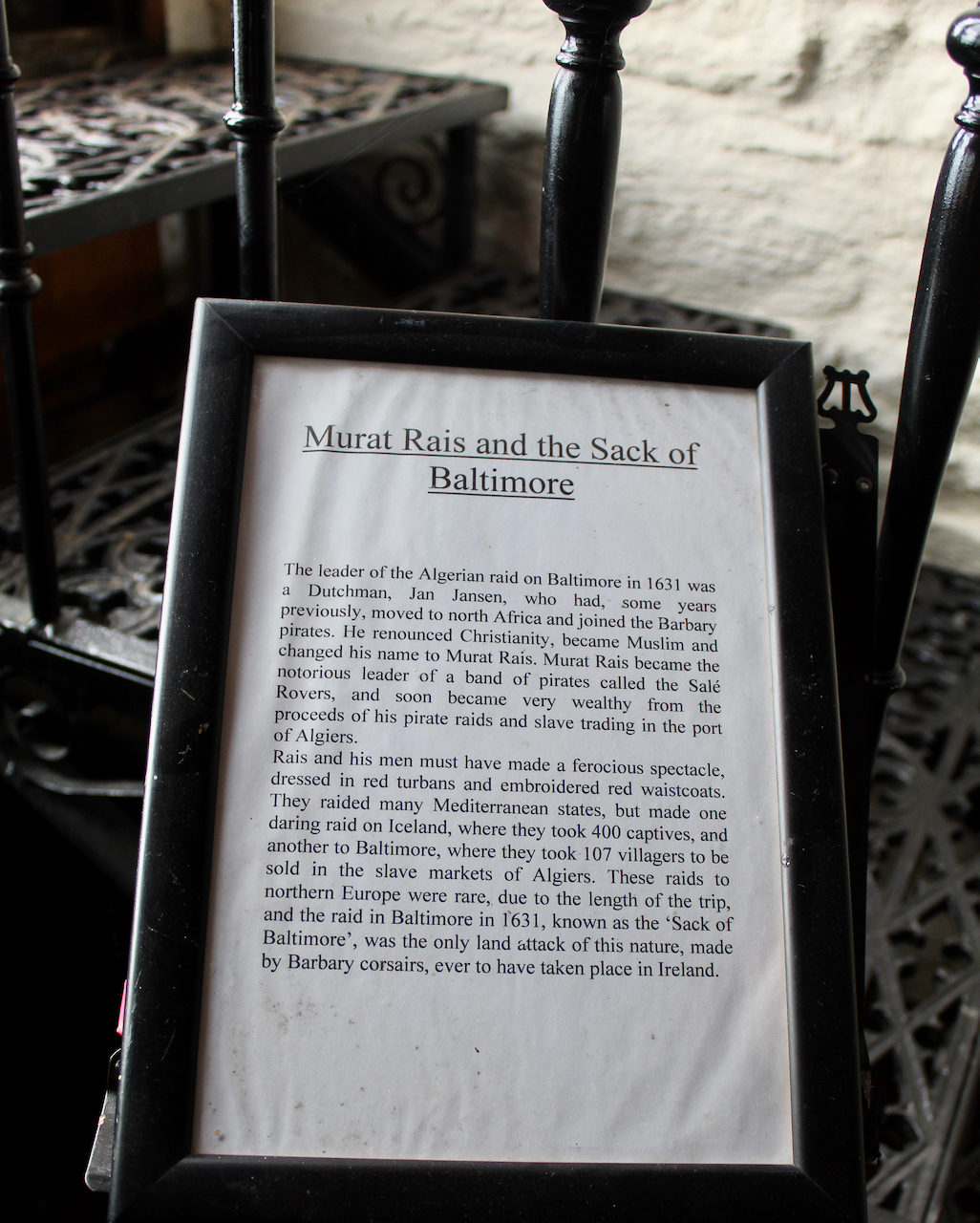
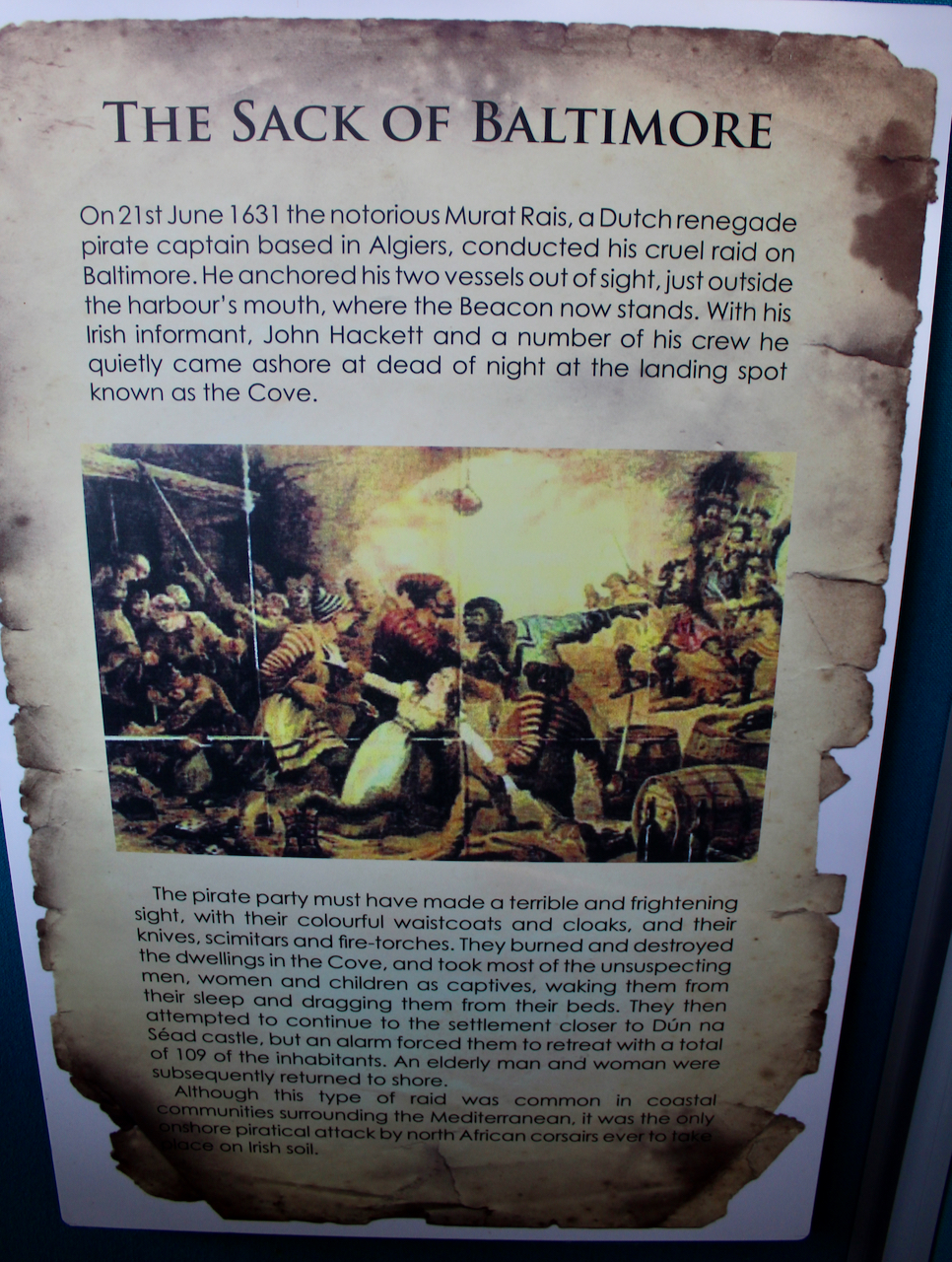
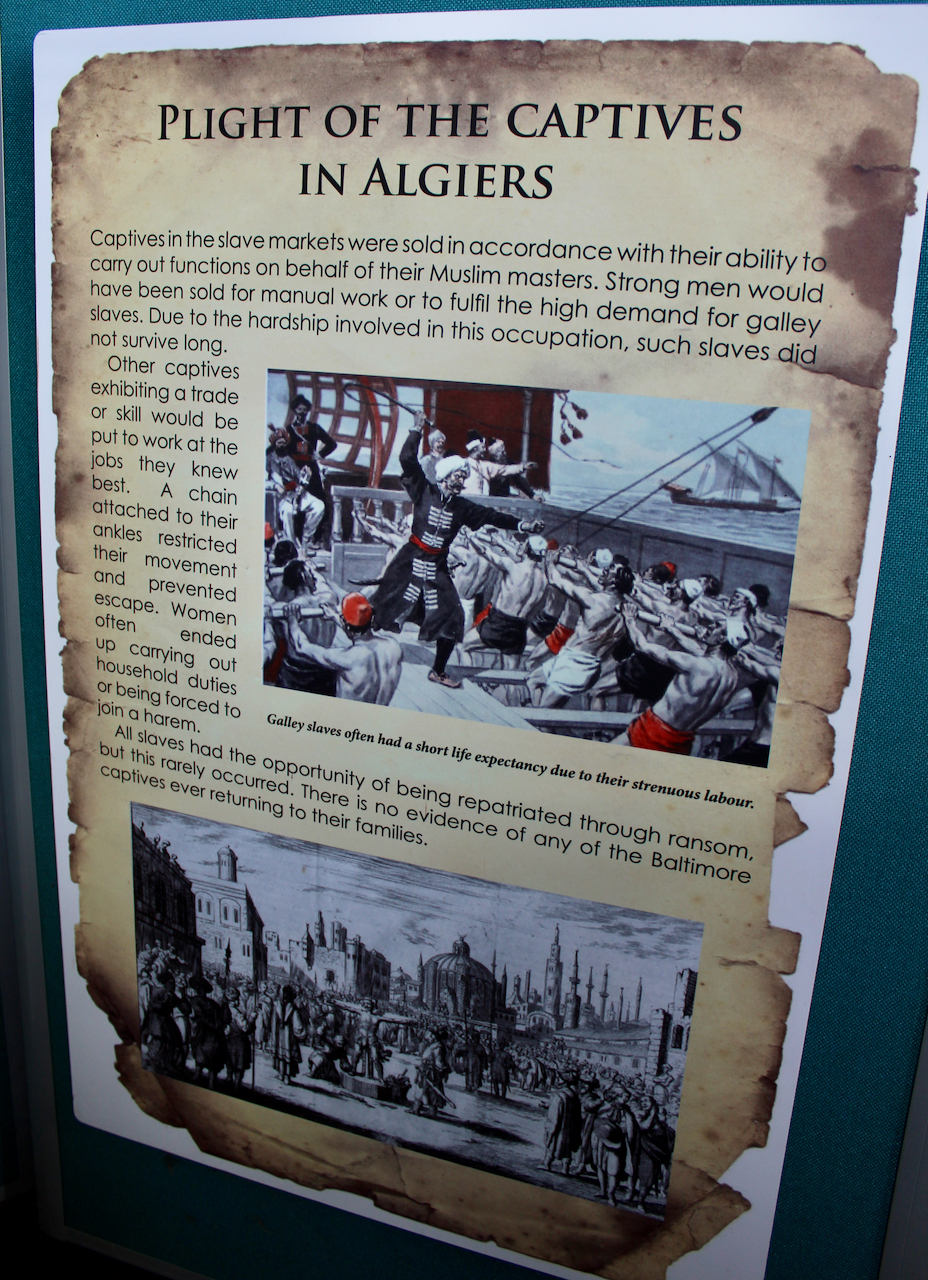
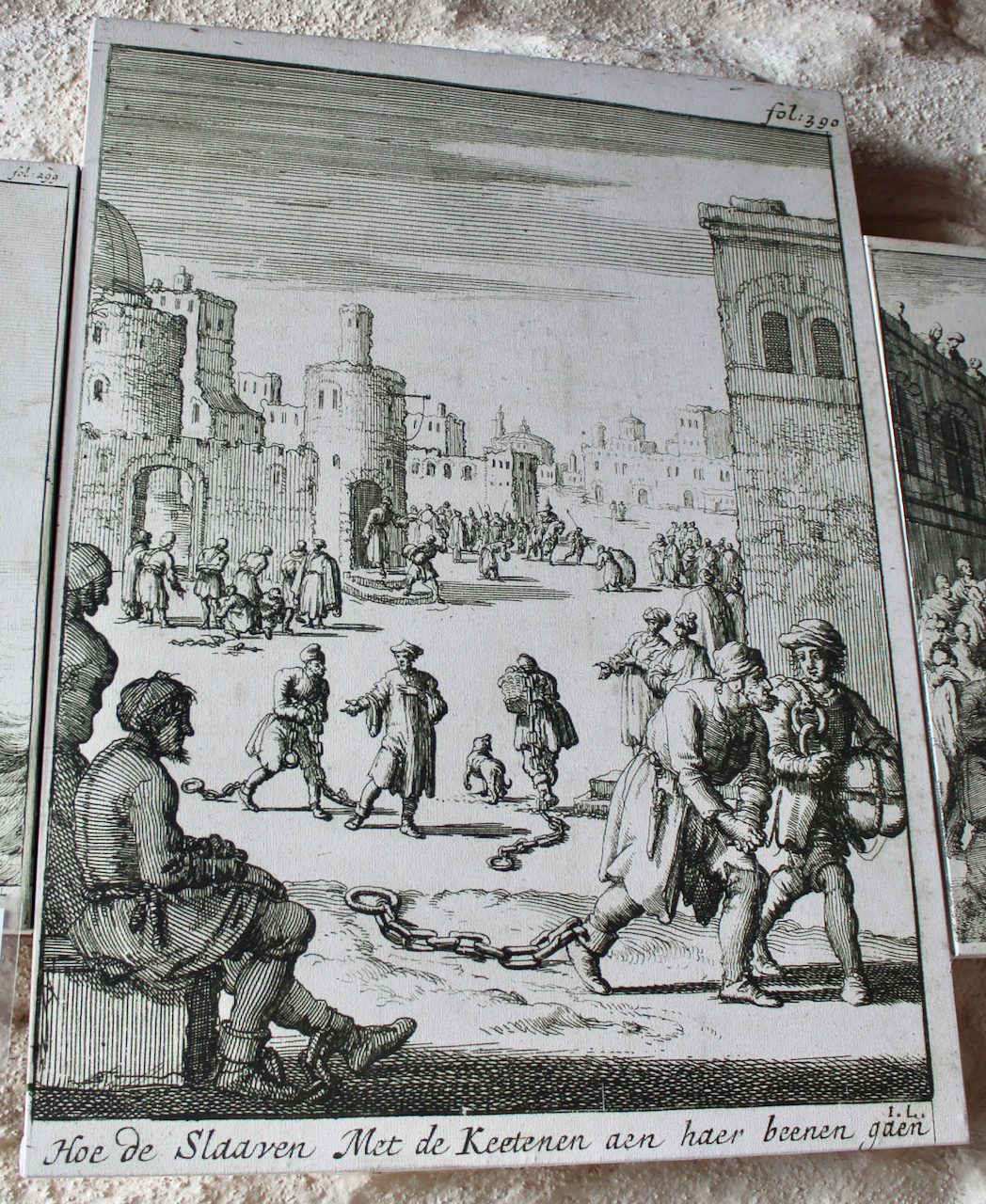
In 1631 a band of pirates from Algiers took 107 captives to a life of slavery in North Africa. Bernie McCarthy of Baltimore Castle has written a book called Pirates of Baltimore from the Middle Ages to the Seventeenth Century, Baltimore Castle Publications, 2012, which informs the educational material in the museum. [see 2]

Information board in Baltimore Castle.

At the time of the raid, Baltimore Castle was occupied by Thomas Bennett. He wrote to James Salmon of Castlehaven, County Cork, in an effort to send a ship from there to try to intercept the captives, and the Lord President of Munster ordered two of the king’s ships of war, the Lions Whelps, which were in Kinsale at the time, to go to the rescue, but none of the attempts were successful. [5]

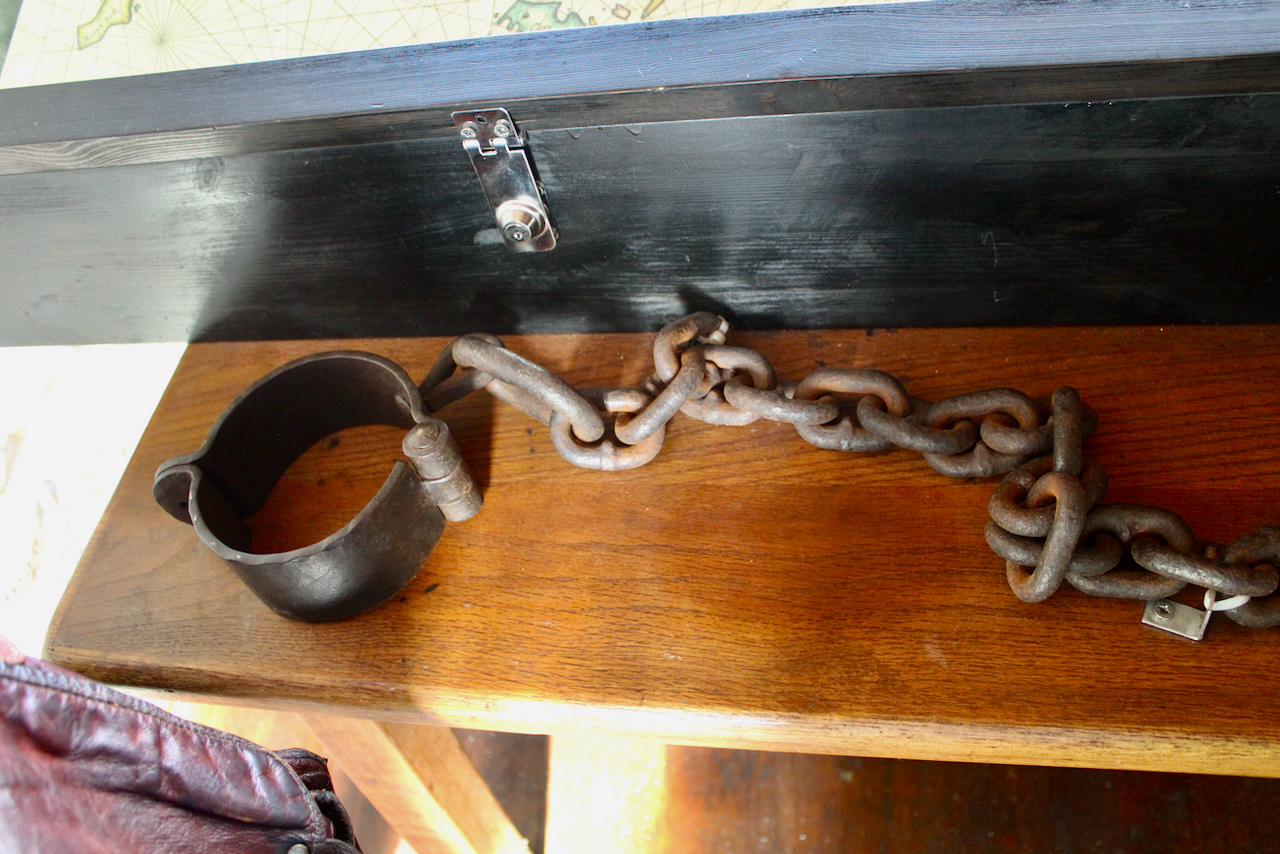
Slave bracelet. © Jennifer Winder-Baggot, www.irishhistorichouses.com
Information board in Baltimore Castle.
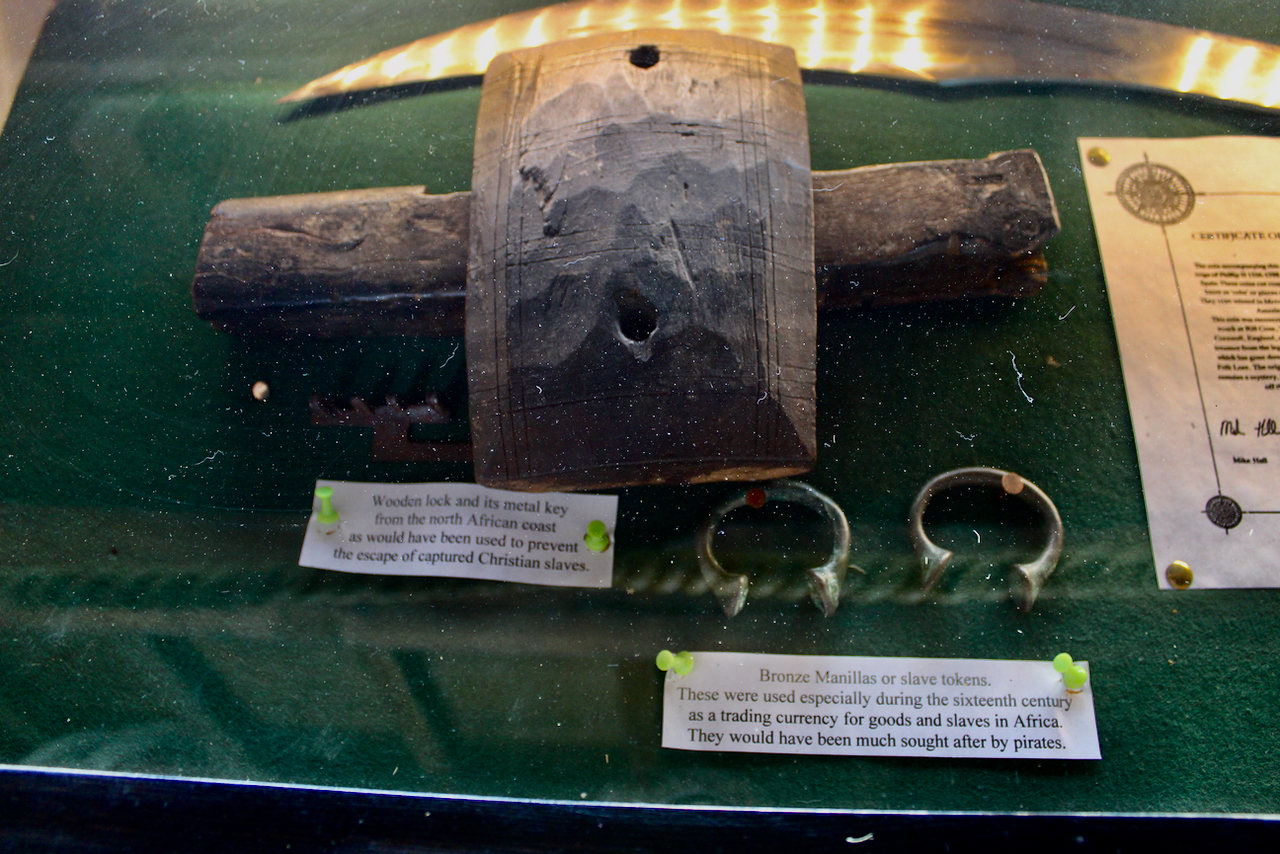
Wooden lock to prevent slaves from escaping, and bronze tokens used to trade for slaves. © Jennifer Winder-Baggot, www.irishhistorichouses.com
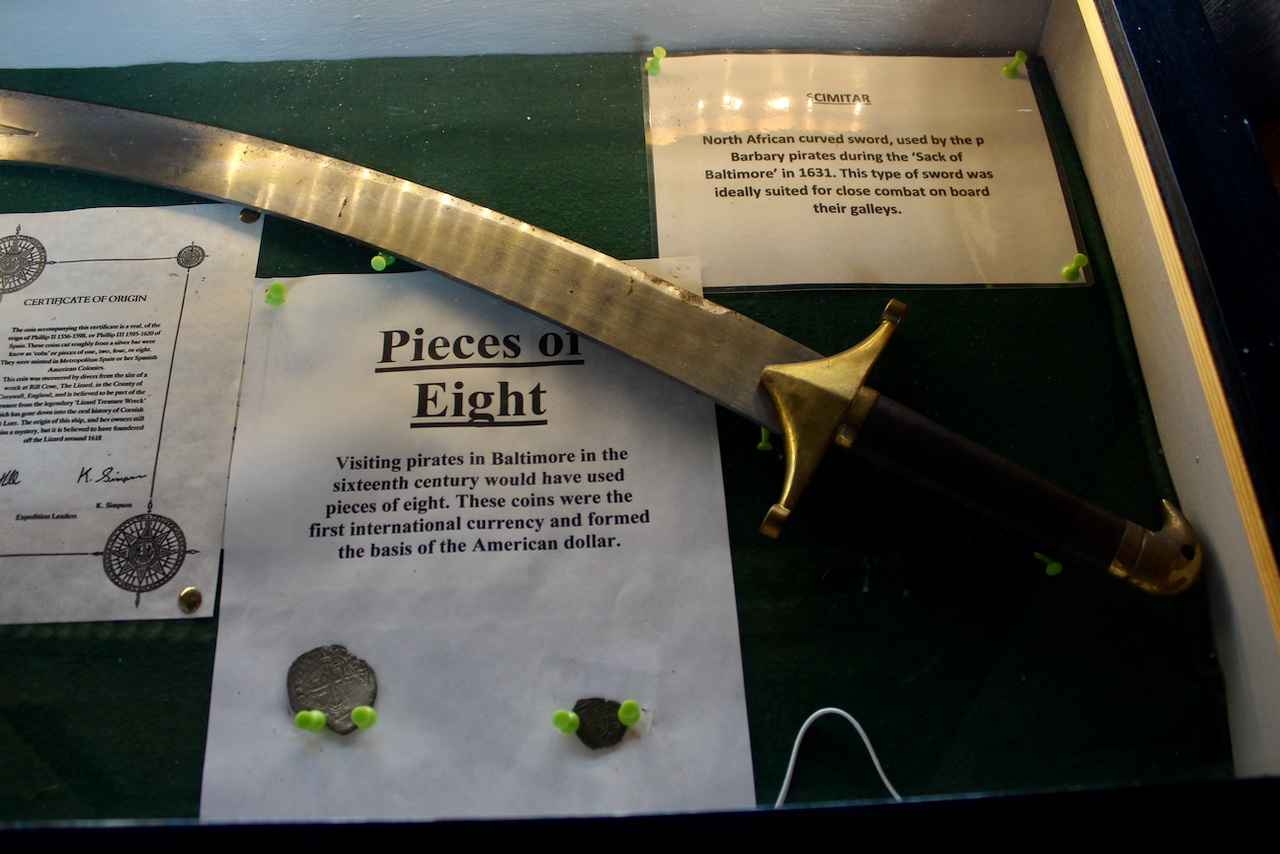
Coins that would have been used at the time, and a cimitar sword similar to those used by Barbary pirates. © Jennifer Winder-Baggot, www.irishhistorichouses.com

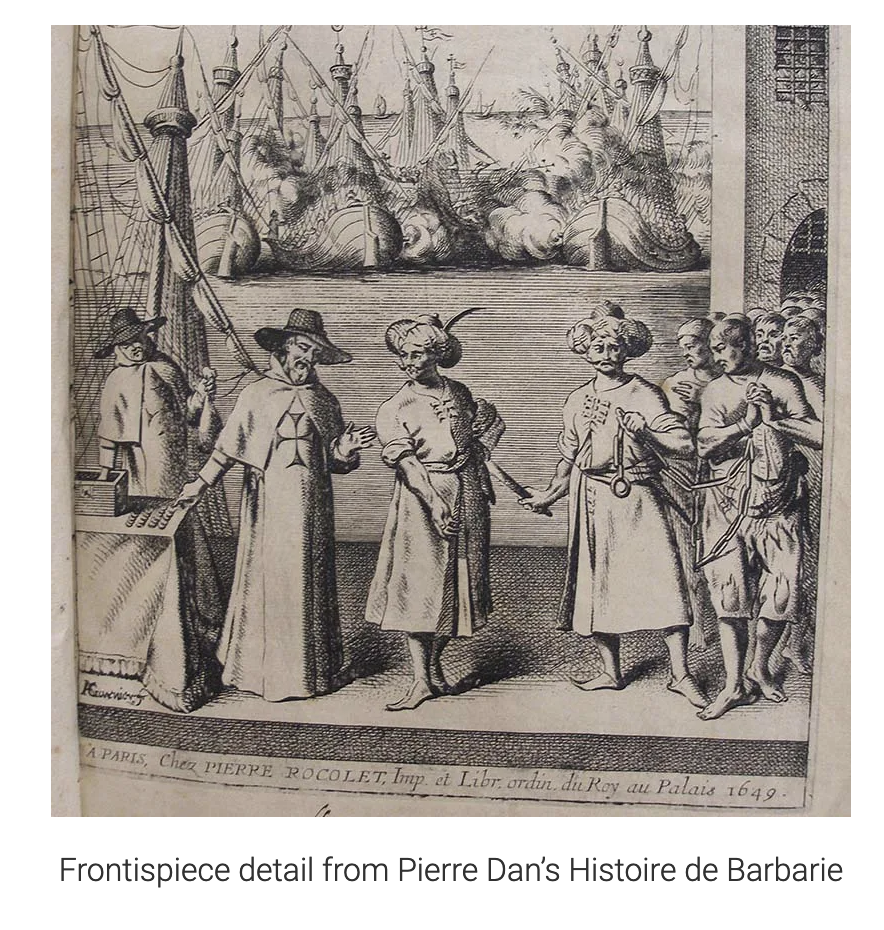
In 1624 the House of Lords in London instructed the House of Commons to grant Letters Patent for a collection to be made for the redemption of English captives, and an “Algerian Duty” was set aside from Customs tax. There were also ransom charities, but at the same time, it was feared that paying ransoms would encourage the taking of captives. An account of Barbary pirates was written by a French priest who worked in Algeria trying to negotiate the release of captives, Pierre Dan, “Histoire de Barbarie et de ses corsairs.” He worked for the Catholic charity the Order of the Holy Trinity and Redemption of Slaves.

Courtesy of DePaul University, Chicago [6]

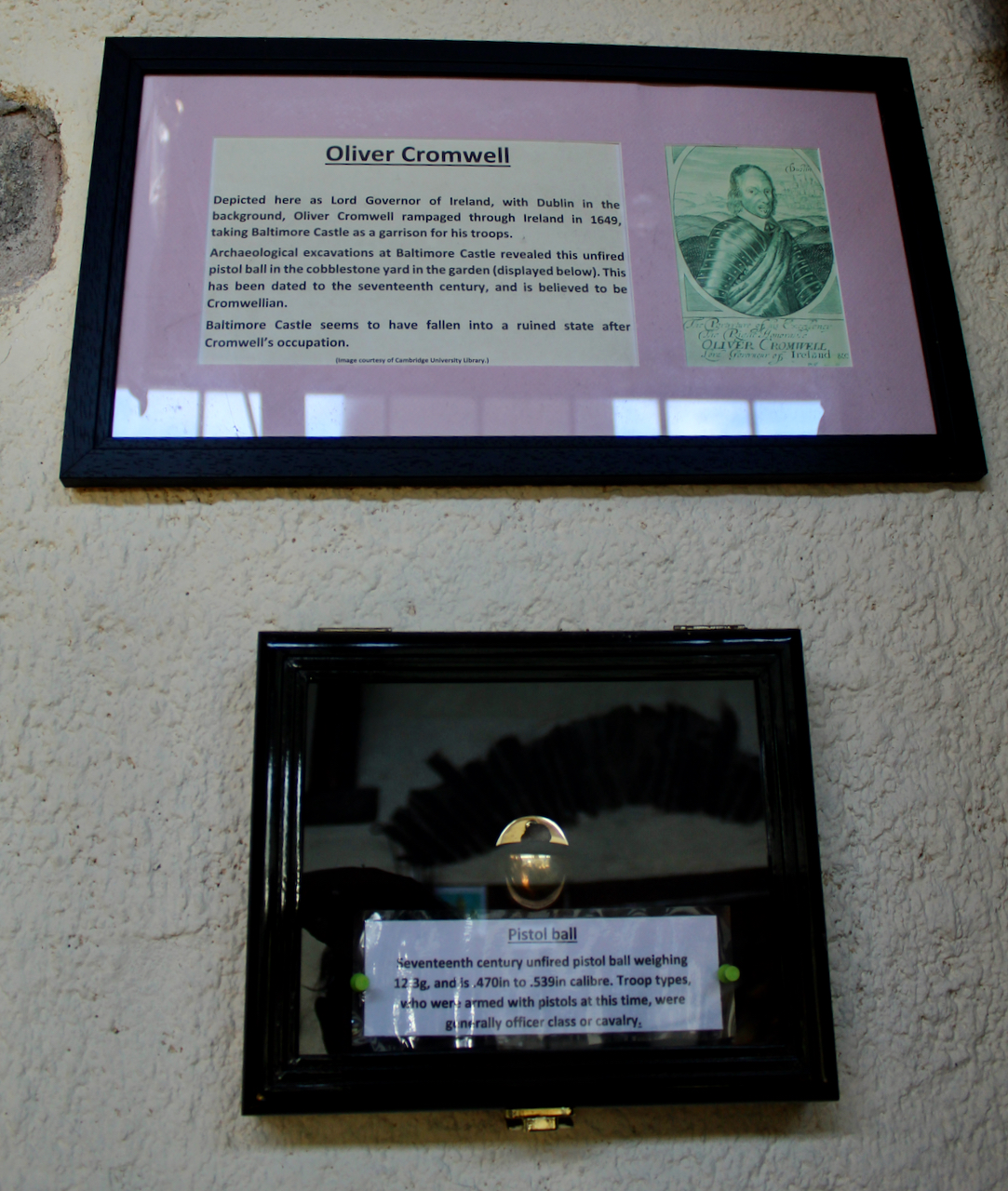
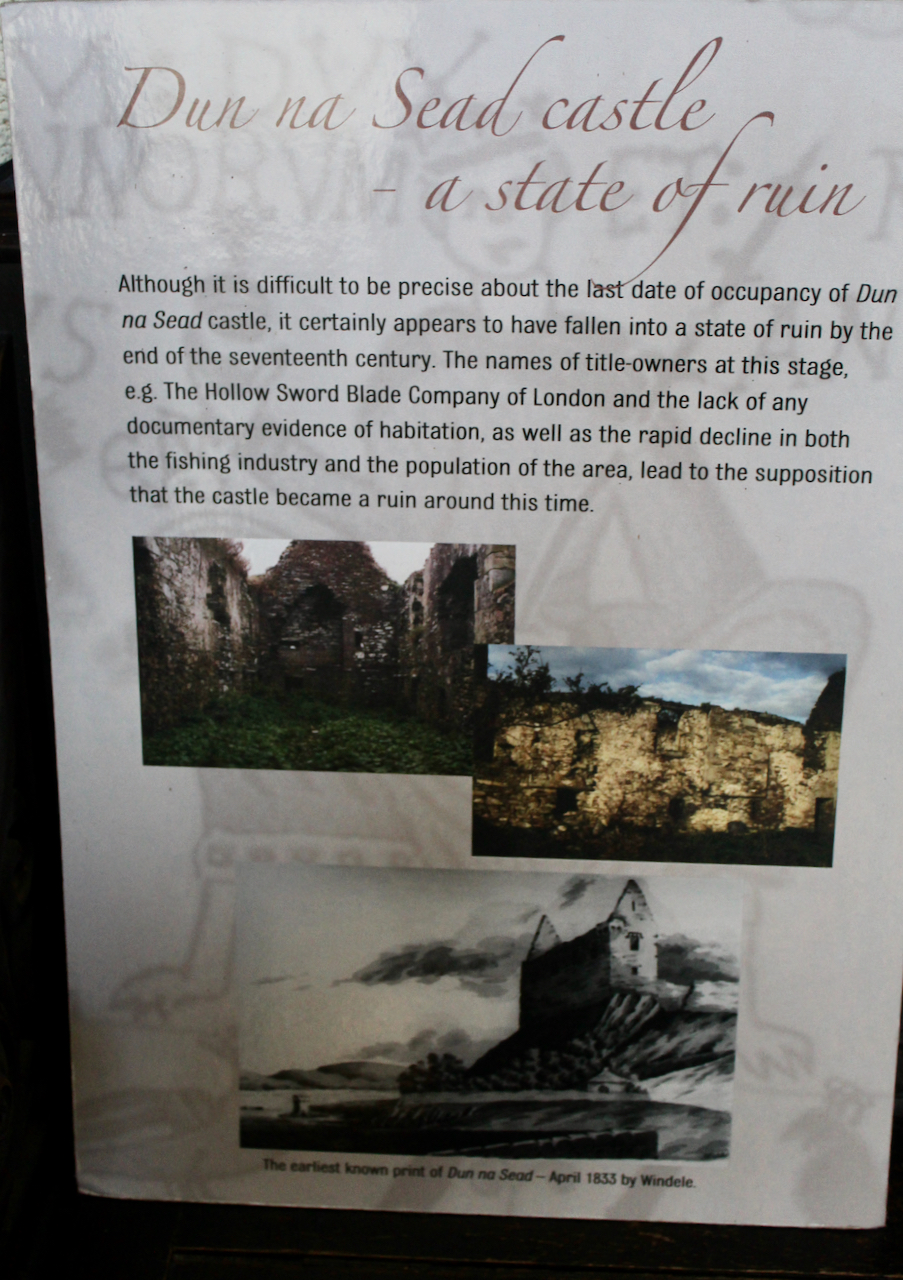
The website tells us that in the 1640s the castle was surrendered to Oliver Cromwell’s forces and passed to the Coppingers. In 1642 the O’Driscolls attempted to recover the castle by force. In the 1690s the Coppingers had to forfeit their property. After the 17th century the castle fell to ruin.

Information board in Baltimore Castle.
A canonball like those used by the French Armada in 1796. © Jennifer Winder-Baggot, www.irishhistorichouses.com
Information board in Baltimore Castle.

According to the information board in the castle, Percy Freke obtained the castle in 1703 from the investment company the Hollow Sword Blade Company. This company also owned Blarney Castle in County Cork for a period.

The Landed Estates database tells us:

The Hollow Sword Blades Company was set up in England in 1691 to make sword blades. In 1703 the company purchased some of the Irish estates forfeited under the Williamite settlement in counties Mayo, Sligo, Galway, and Roscommon. They also bought the forfeited estates of the Earl of Clancarty in counties Cork and Kerry and of Sir Patrick Trant in counties Kerry, Limerick, Kildare, Dublin, King and Queen’s counties (Offaly and Laois). Further lands in counties Limerick, Tipperary, Cork and other counties, formerly the estate of James II were also purchased, also part of the estate of Lord Cahir in county Tipperary. In June 1703 the company bought a large estate in county Cork, confiscated from a number of attainted persons and other lands in counties Waterford and Clare. However within about 10 years the company had sold most of its Irish estates. Francis Edwards, a London merchant, was one of the main purchasers.” [7]

As well as her work on the Pirates of Baltimore, Bernie McCarthy has published a book about Baltimore Castle which we did not purchase, unfortunately. Called Baltimore Castle, An 800 Year History, I would love to read it, as I’d love to know more about how the McCarthys rebuilt the ruin. I will purchase a copy next time we are in the area!

Percy Freke’s son Ralph (1675-1718) gained the title of 1st Baronet Freke, of Rathbarry, County Cork. The property then passed to Ralph’s daughter Grace who married John Evans, and their son was John Evans-Freke (1743-1777), who became 1st Baronet Freke of Castle Freke, County Cork. He married Elizabeth Gore, daughter of Arthur Gore (1703-1773) 1st Earl of Arran, 3rd Baronet of Newtown, Viscount Sudley.

John and Elizabeth had a son named also named John Evans-Freke (1765-1845), who succeeded as 6th Baron Carbery. This John Evans-Freke married Catherine Charlotte Gore, daughter of Arthur Saunders Gore, 2nd Earl of Arran of the Arran Islands. John Evans-Freke was MP for Donegal from 1784-1790 and MP for Baltimore 1790-1800. He had Catherine Charlotte did not have surviving children and the title passed down to his nephew, son of his brother Percy Evans-Freke. I don’t think the castle was inhabited after Cromwell’s time, however. The 6th and 7th Barons of Carbery (George Patrick Percy Evans-Freke) did make some improvements to the town, Frank Keohane tells us.

Finally the castle was purchased by Patrick and Bernadette McCarthy, who restored it.

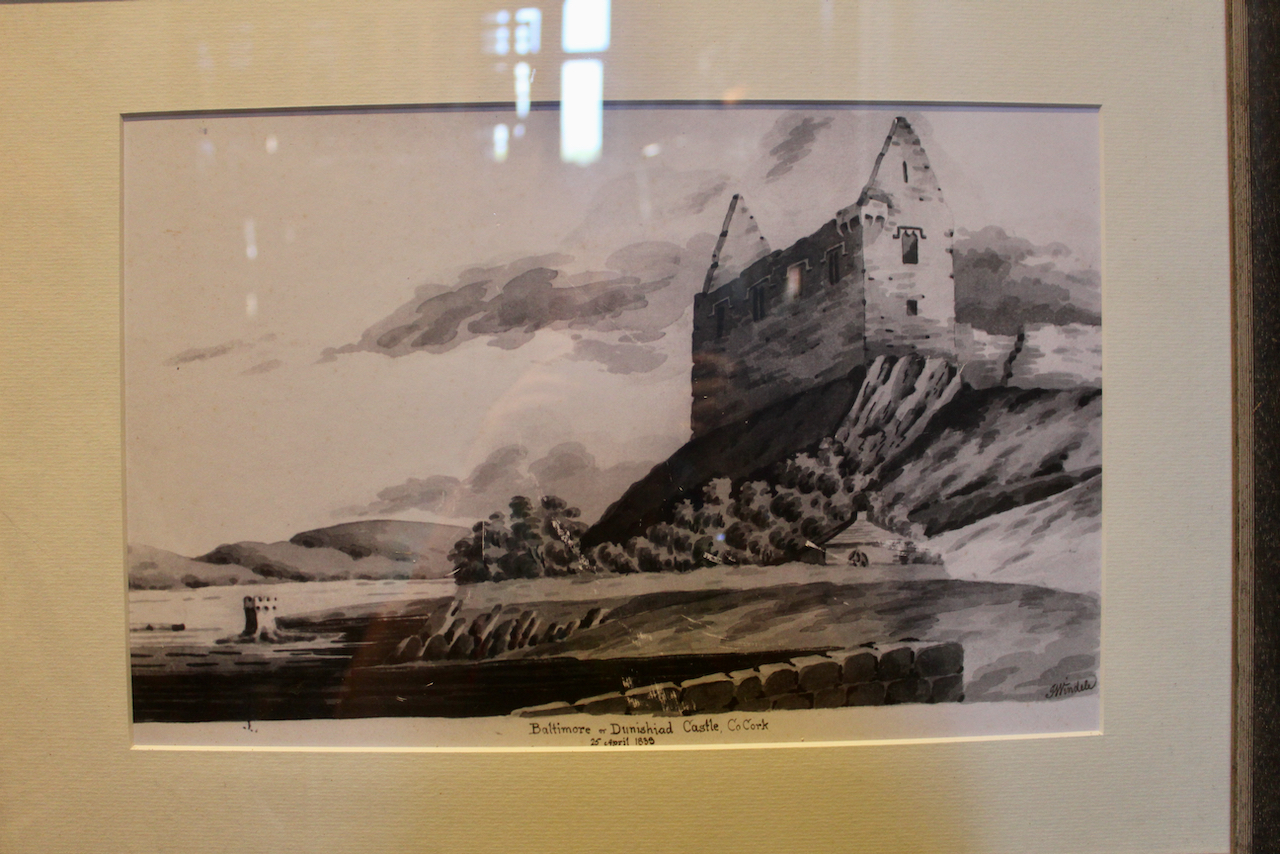
Baltimore Castle, 1835.
Baltimore Castle 16 August 2023. © Jennifer Winder-Baggot, www.irishhistorichouses.com

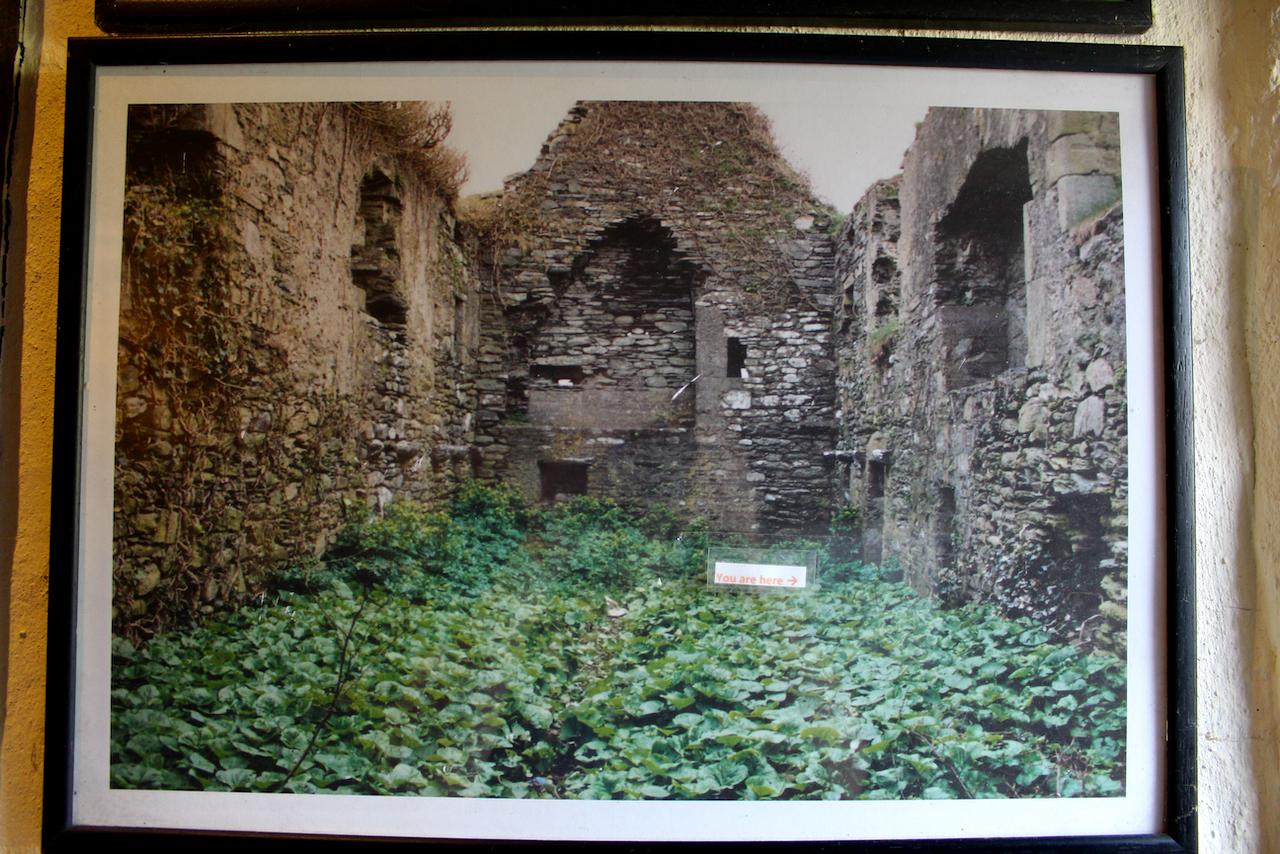
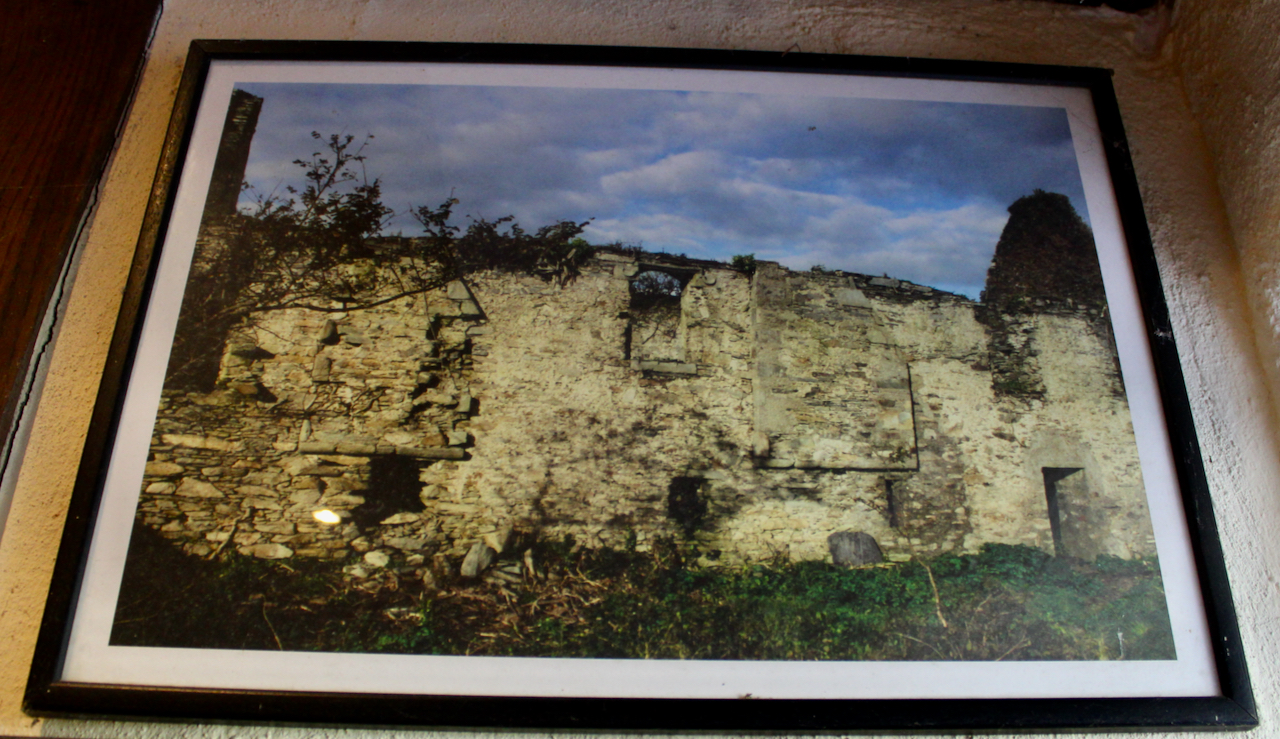
The castle was in a severely ruinous state when the McCarthys acquired it, as we can see from photographs in the noticeboards.

Baltimore Castle 16 August 2023.
Information board in Baltimore Castle.
Baltimore Castle 16 August 2023. © Jennifer Winder-Baggot, www.irishhistorichouses.com

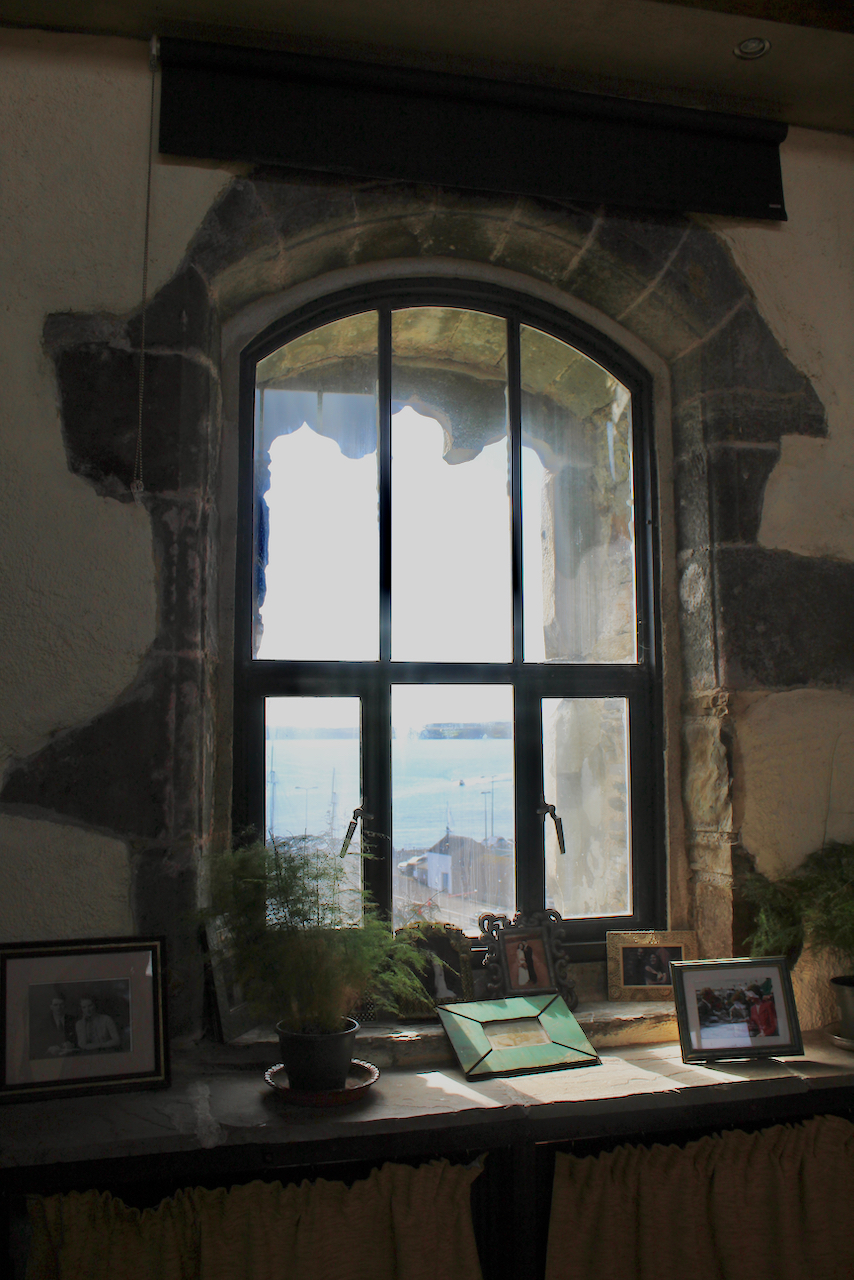
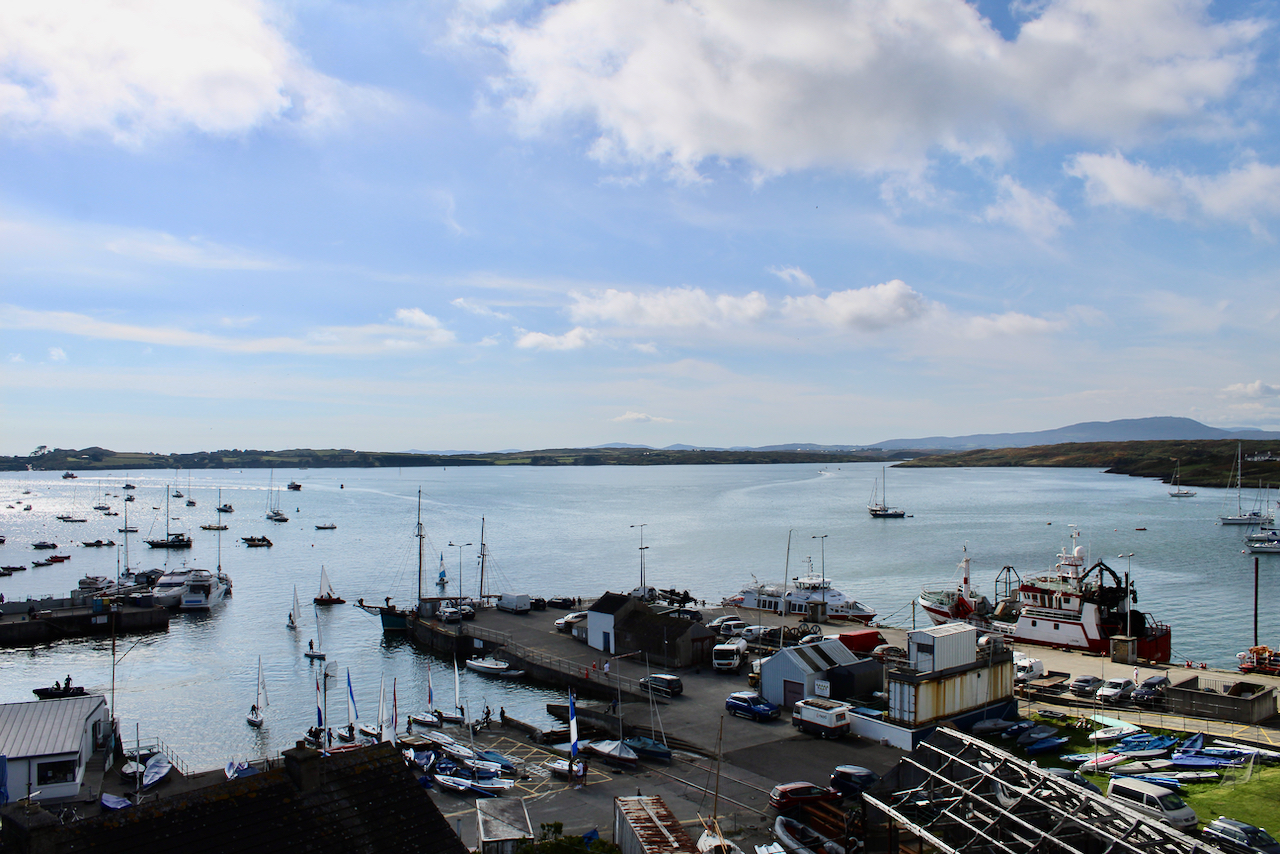
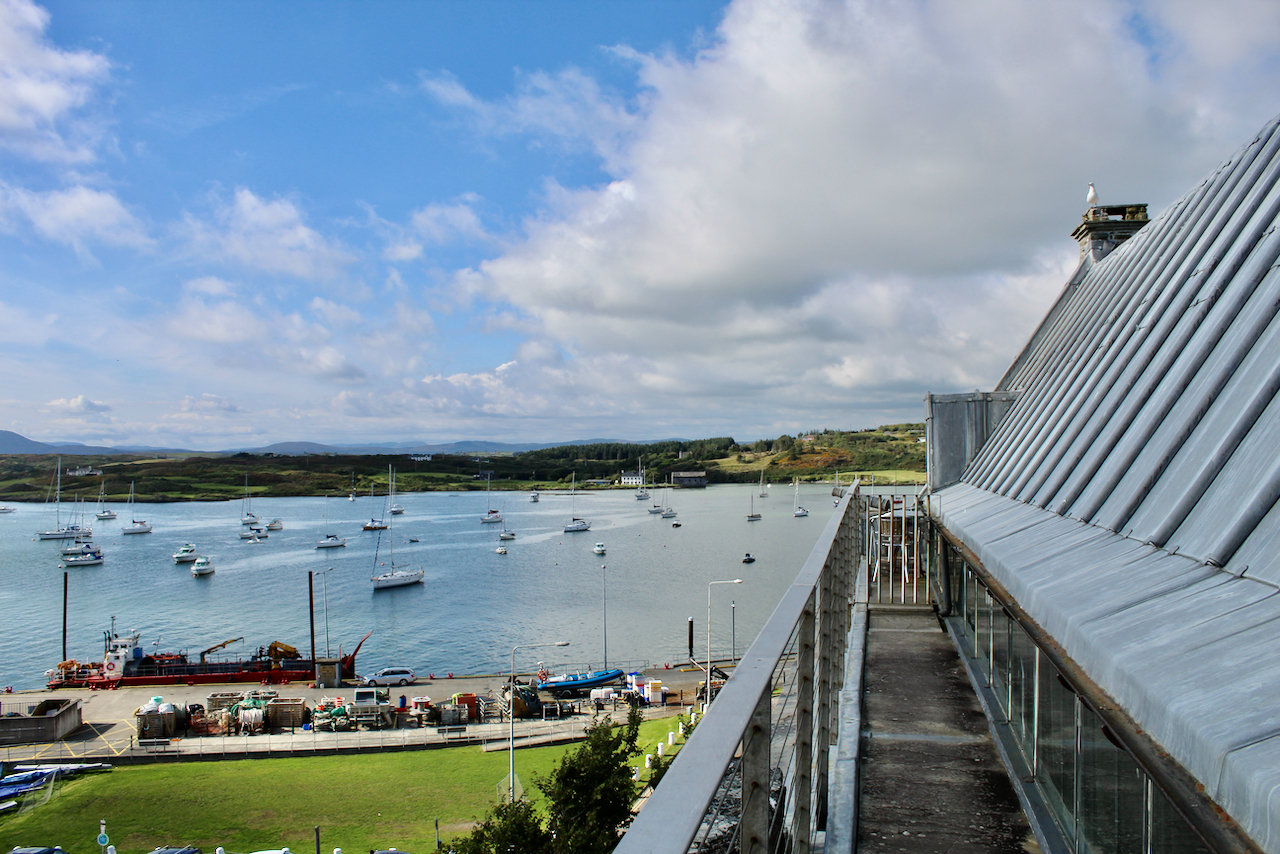
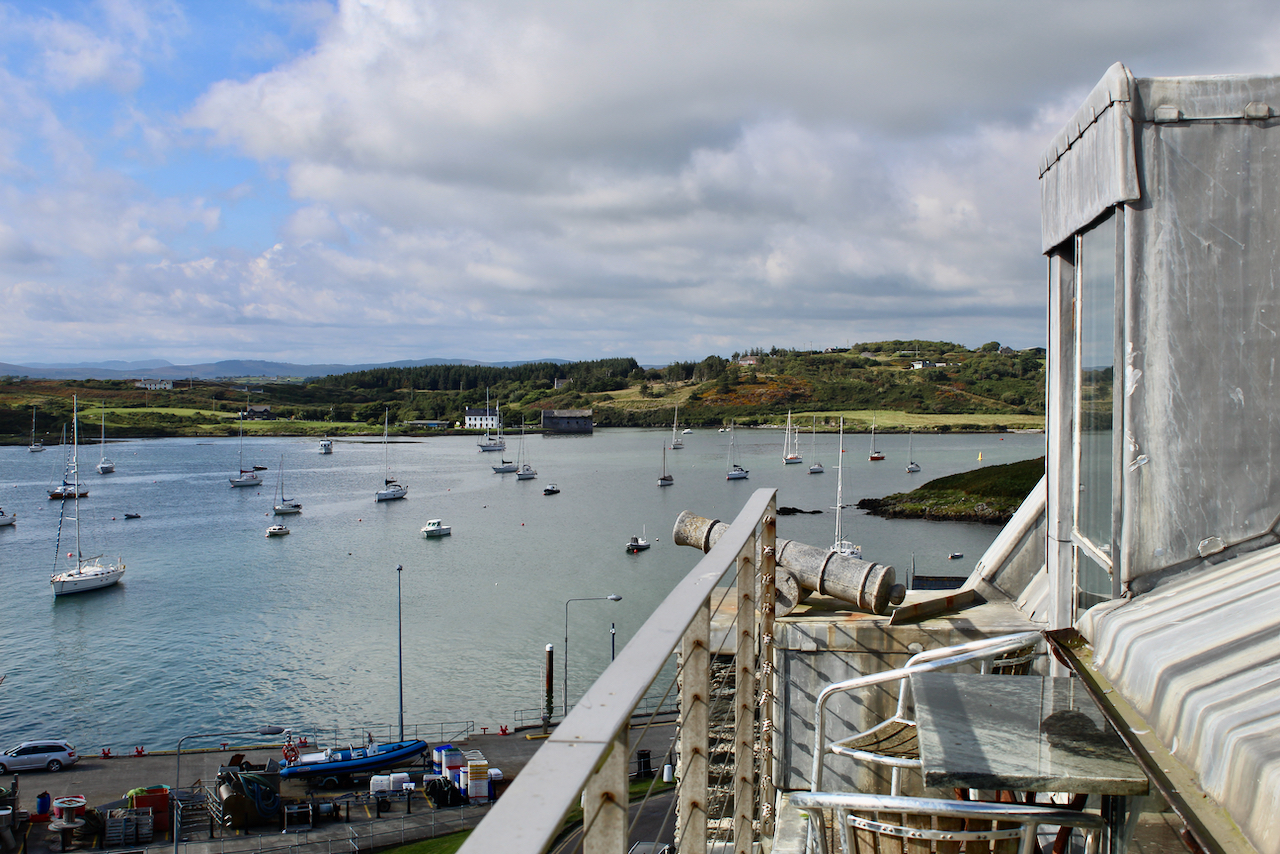
The castle now houses the museum and it contains wonderful artefacts and pieces of furniture. You can also go up to the ramparts and outside for beautiful views of the sea and of Baltimore.

Baltimore Castle 16 August 2023. © Jennifer Winder-Baggot, www.irishhistorichouses.com
Replica of a sixteenth century gallowglass sword, as would have been used by armies of the Irish Chieftains. Many Gallowglass fighters came from Scotland. A census from the end of the sixteenth century shows that McCarthy of Carbery had sixty horsemen, 80 gallowglass and 2000 kerne soldiers. O’Driscoll of Dún na Séad had six horsemen and 200 kerne. © Jennifer Winder-Baggot, www.irishhistorichouses.com
Baltimore Castle 16 August 2023. © Jennifer Winder-Baggot, www.irishhistorichouses.com
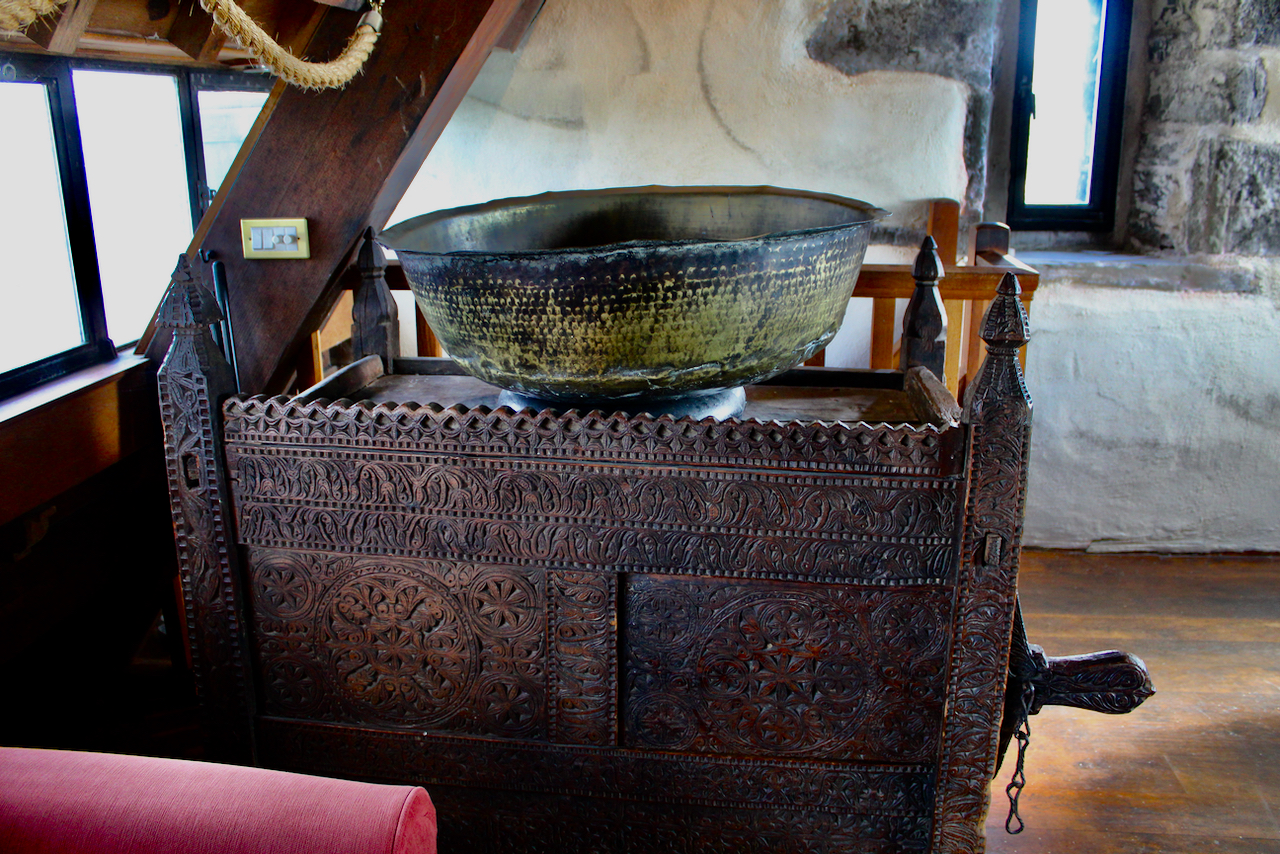
An oak wedding chest. © Jennifer Winder-Baggot, www.irishhistorichouses.com
The view from Baltimore Castle 16 August 2023. © Jennifer Winder-Baggot, www.irishhistorichouses.com
Baltimore Castle 16 August 2023. © Jennifer Winder-Baggot, www.irishhistorichouses.com

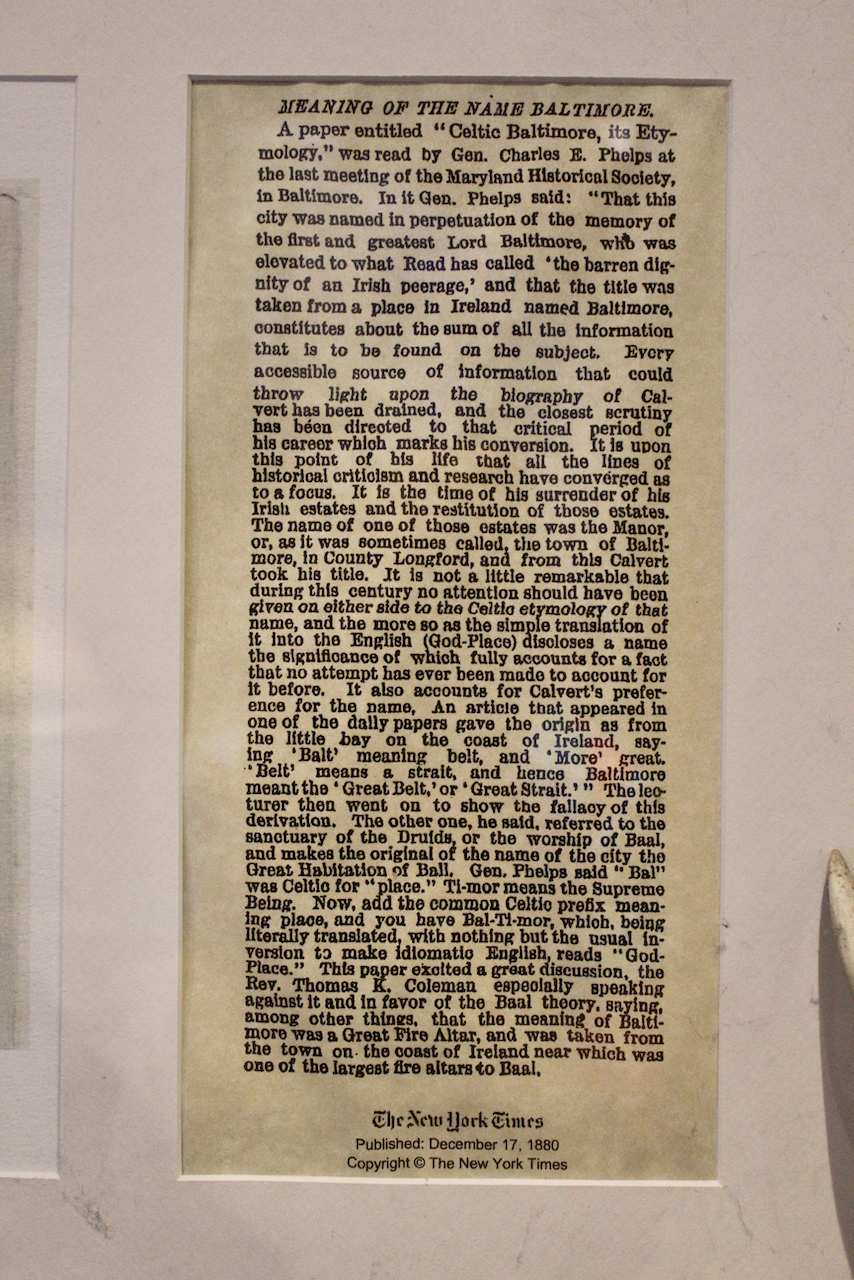
Finally, I always assumed that Baltimore in Maryland was named after Baltimore in Cork. It turns out that this is not the case! It is indeed named after a Lord Baltimore who had ties with Ireland, but his title was for a property in County Longford!

© Jennifer Winder-Baggot, www.irishhistorichouses.com

Baltimore Castle 16 August 2023. The 1st Lord Baltimore was George Calvert (1582-1632). I lived on Calvert Street in Baltimore, Maryland, from 2003-2005! He was granted an Irish peerage but it was named not after Baltimore in Cork but Baltimore Manor in County Longford.
George Calvert (1582-1632), 1st Baron Baltimore, Baltimore Castle 16 August 2023.

[1] p. 243. Keohane, Frank. The Buildings of Ireland. Cork City and County. Yale University Press: New Haven and London. 2020.

[2] p. 5, McCarthy, Bernie. Pirates of Baltimore from the Middle Ages to the Seventeenth Century, Baltimore Castle Publications, 2012. Footnoted reference is to Timothy O’Neill, Merchants and Mariners in Medieval Ireland, p. 30.

[3] p. 23, McCarthy.

[4] p 29, McCarthy.

[5] p. 49, McCarthy.

[6] https://news.library.depaul.press/full-text/2009/04/22/pirates-and-st-vincent-de-paul-who-knew/

Legend has it that from 1605 to 1607 when St. Vincent de Paul was a young priest he was captured by Algerian corsairs and sold to different masters before making a daring escape with one of his captors, a French renegade who wished to be reconciled with the Church. Although the account of Vincent’s captivity came from letters he wrote at the time to explain his two year disappearance, most historians today doubt the veracity of the account and speculate that the young Vincent had dropped out of sight because of his heavy debts, and the failure of his attempts to gain an ecclesiastical benefice. Nonetheless, the Vincentian (Lazarist) order also had missions in Algiers and Tunis to bring relief or freedom to captured Christians.

Fast fact: Between 1575 and 1869, there were 82 redemption missions where friars bought the freedom of an estimated 15,500 captives.

[7] https://landedestates.ie/family/2877