Howth Castle, Dublin
Howth Castle, Dublin

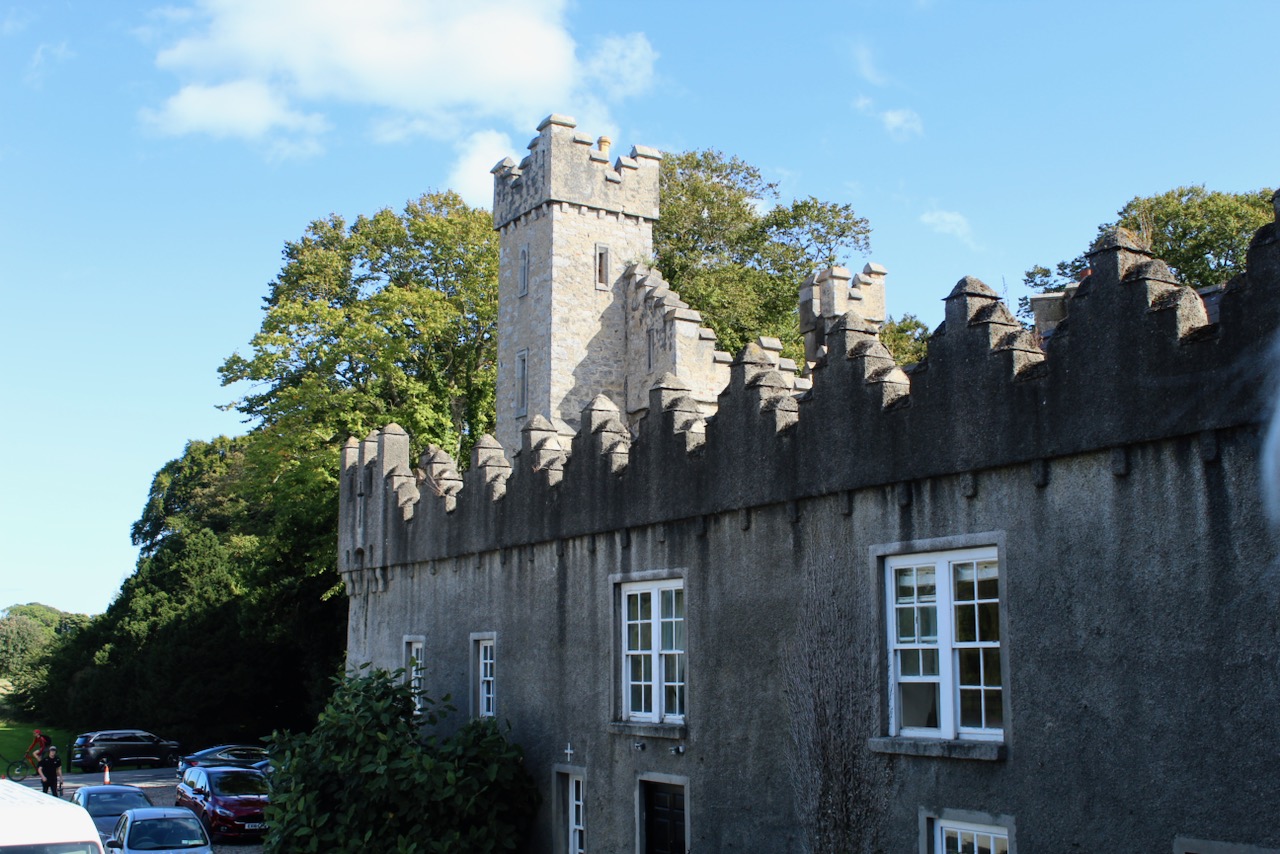
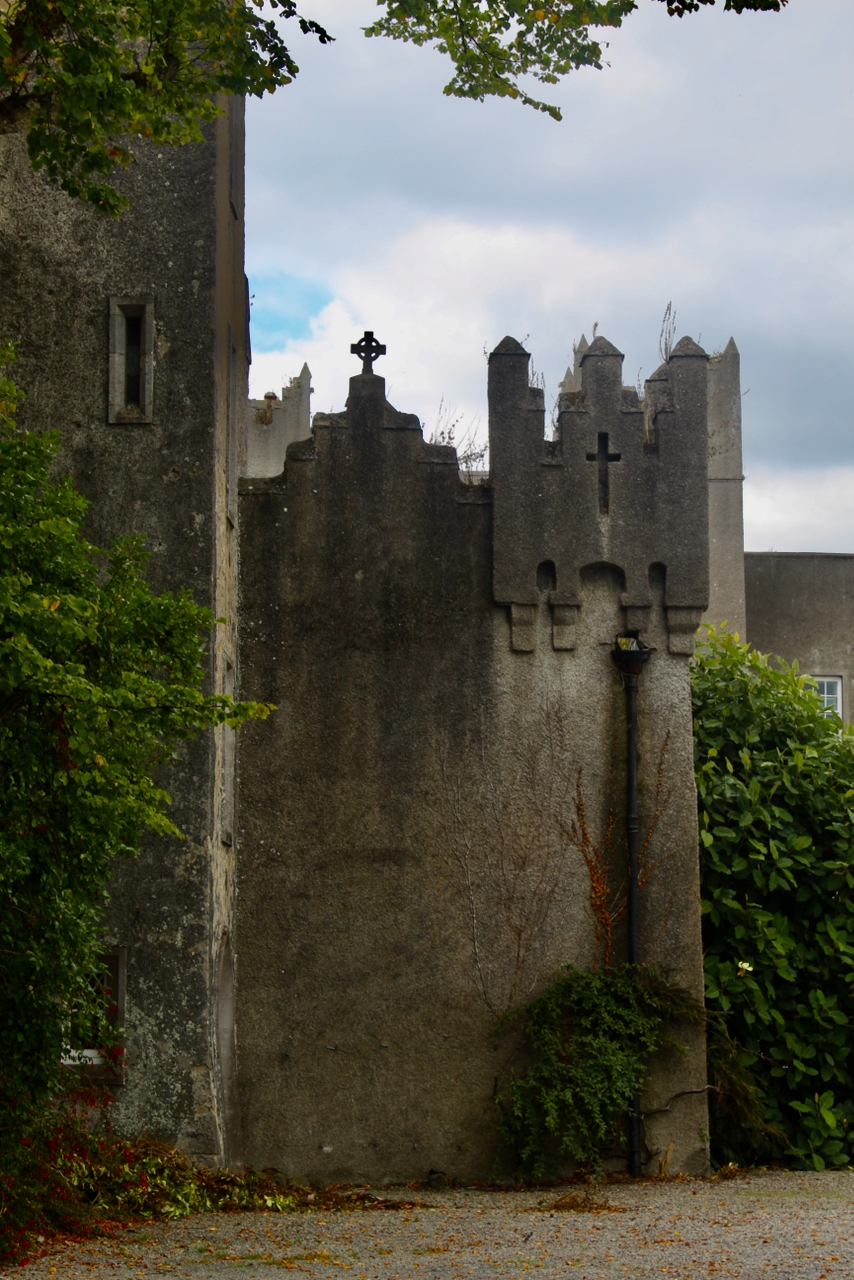
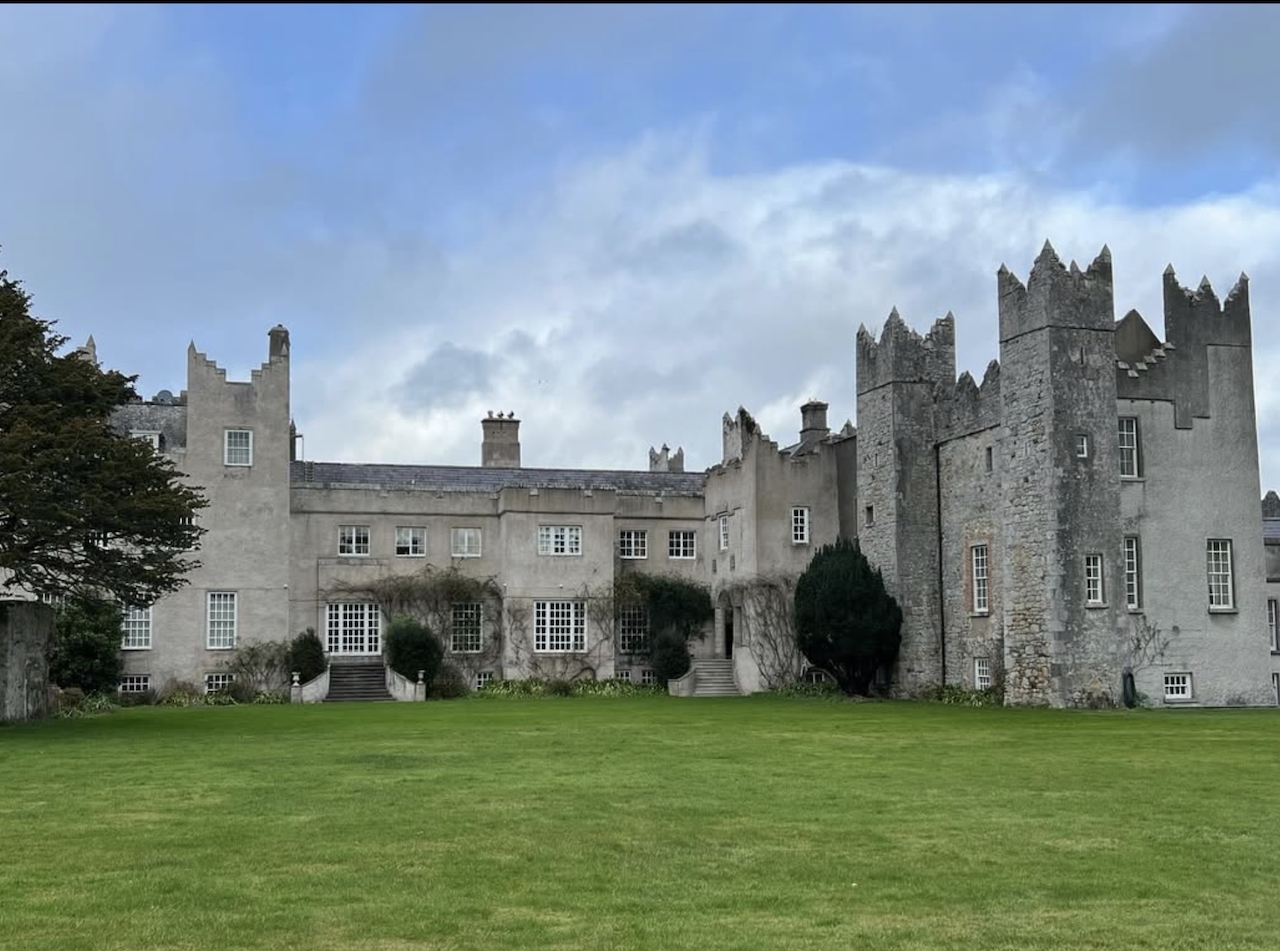
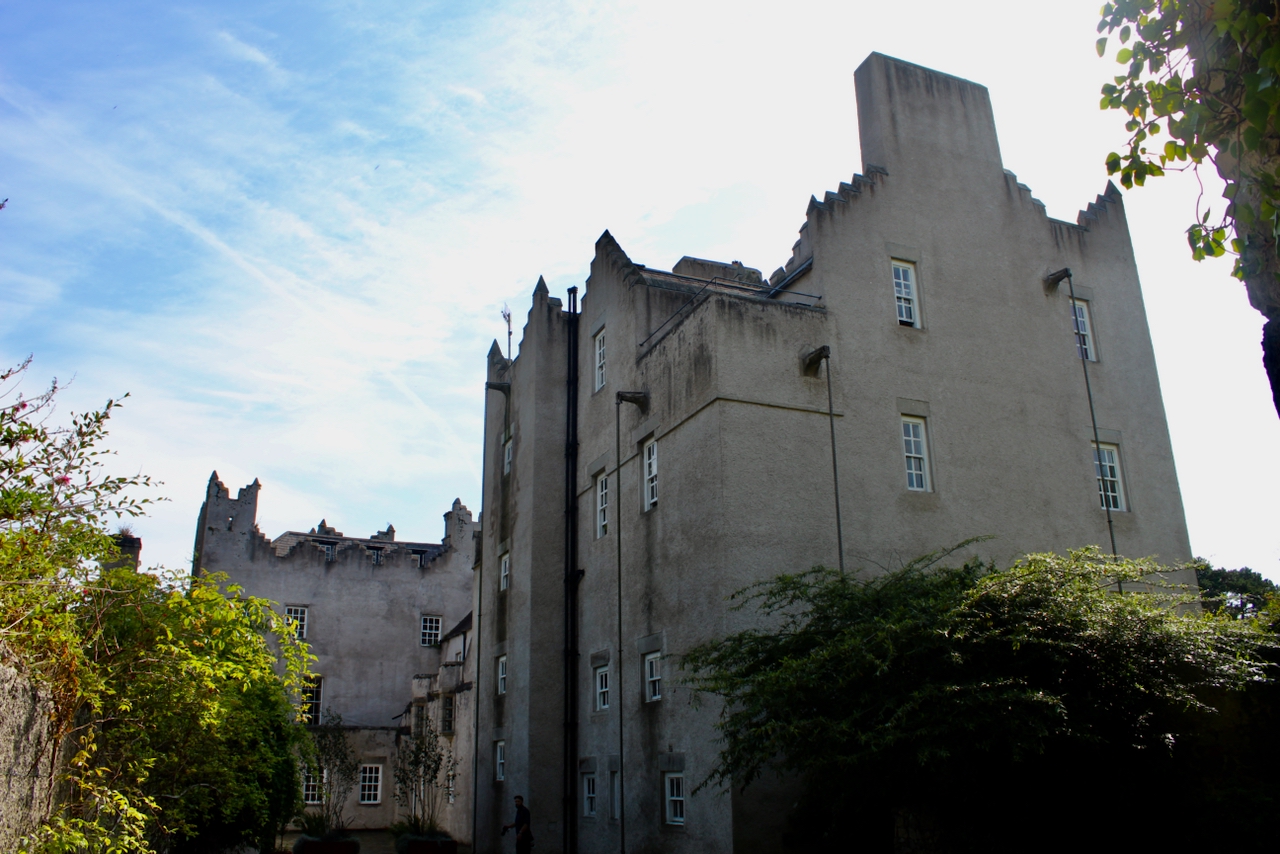
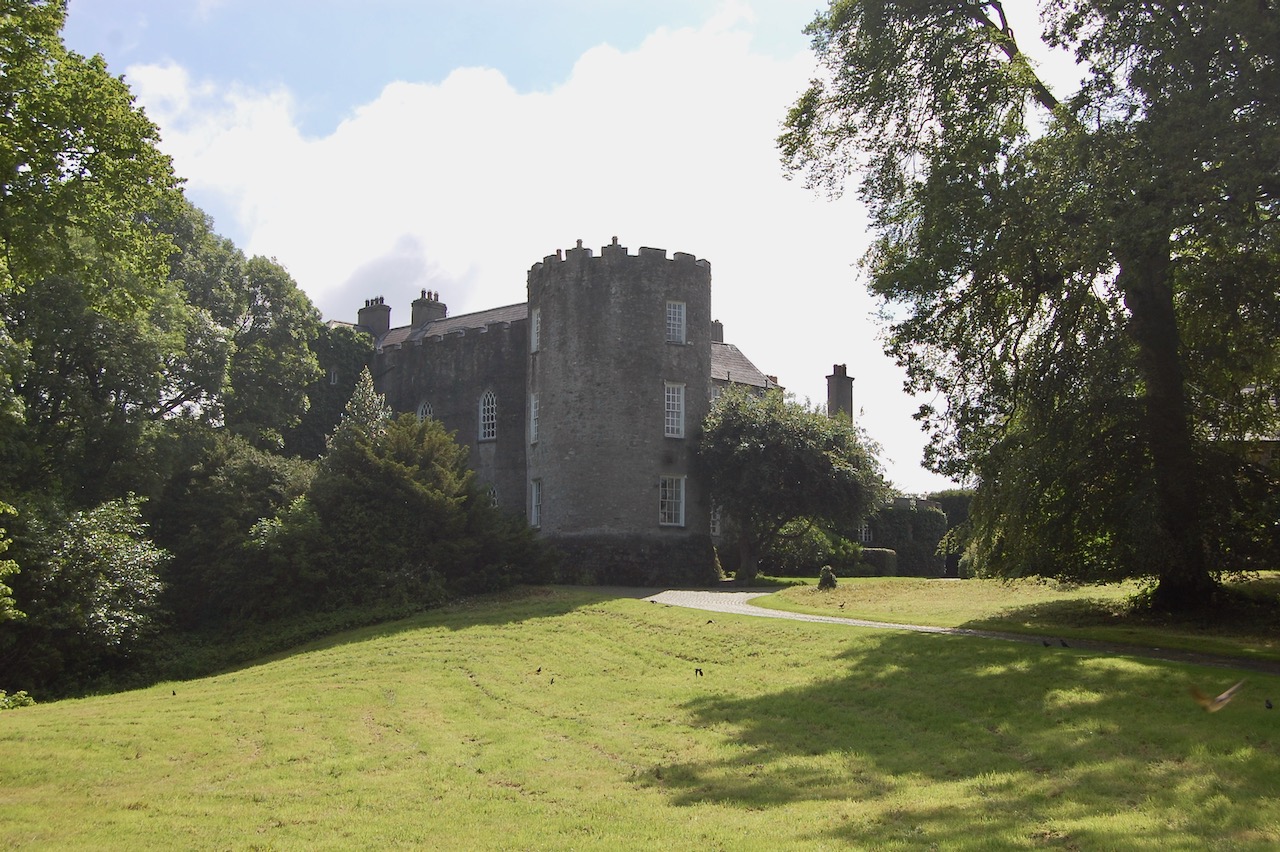
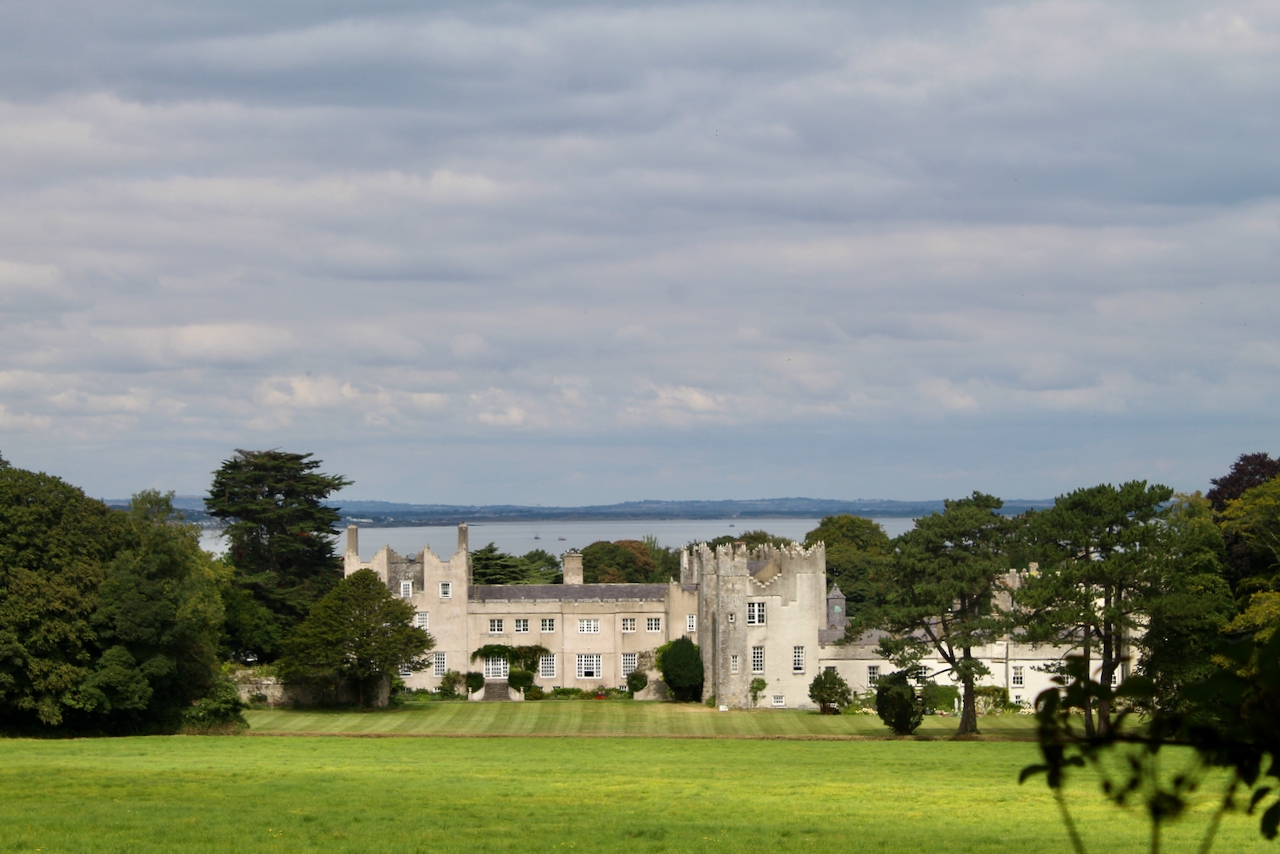
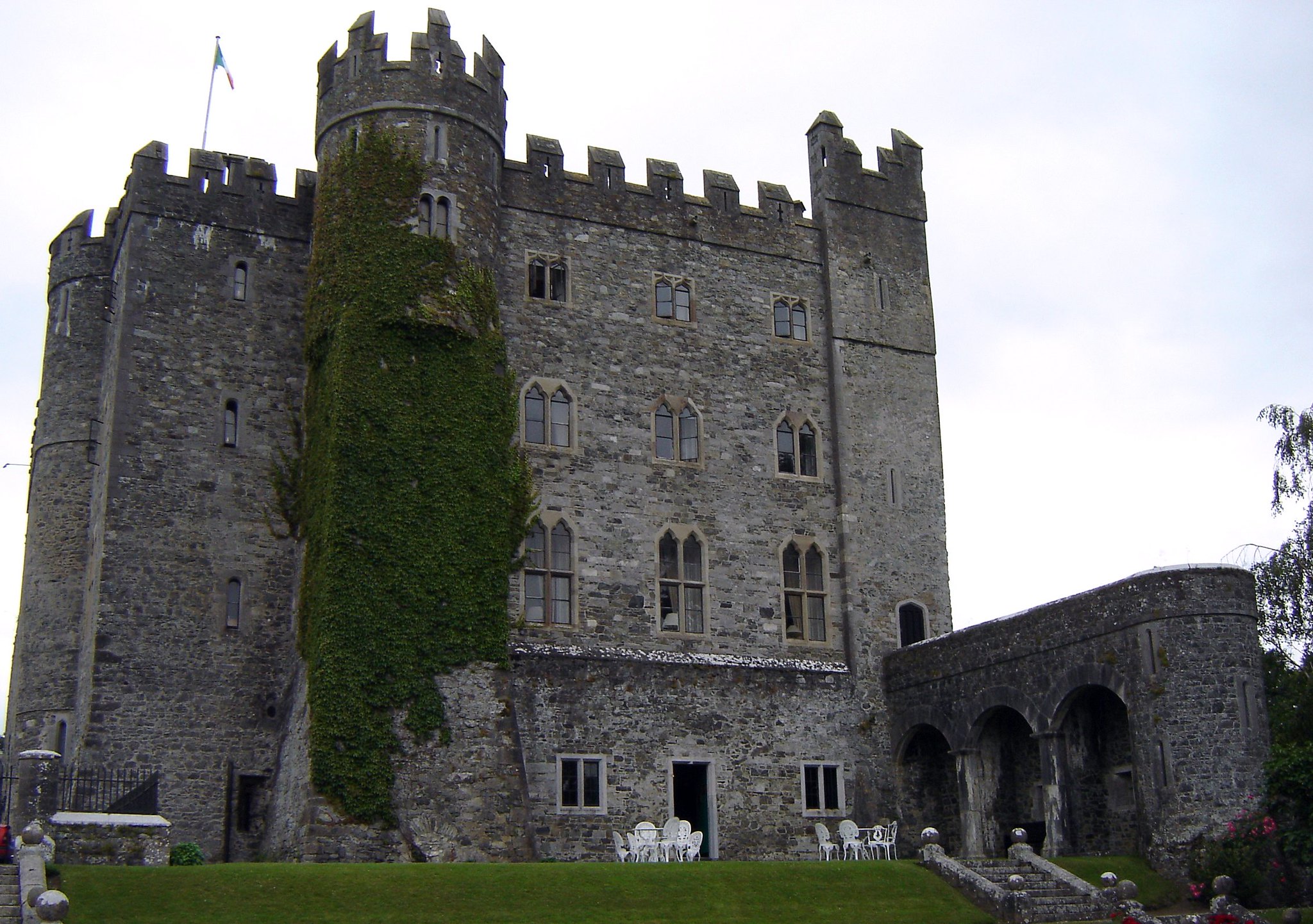
Howth Castle, Dublin, August 2025, overlooking Dublin bay. The medieval tower is the one to the right of the two storey part of the castle. Photograph © Jennifer Winder-Baggot, www.irishhistorichouses.com
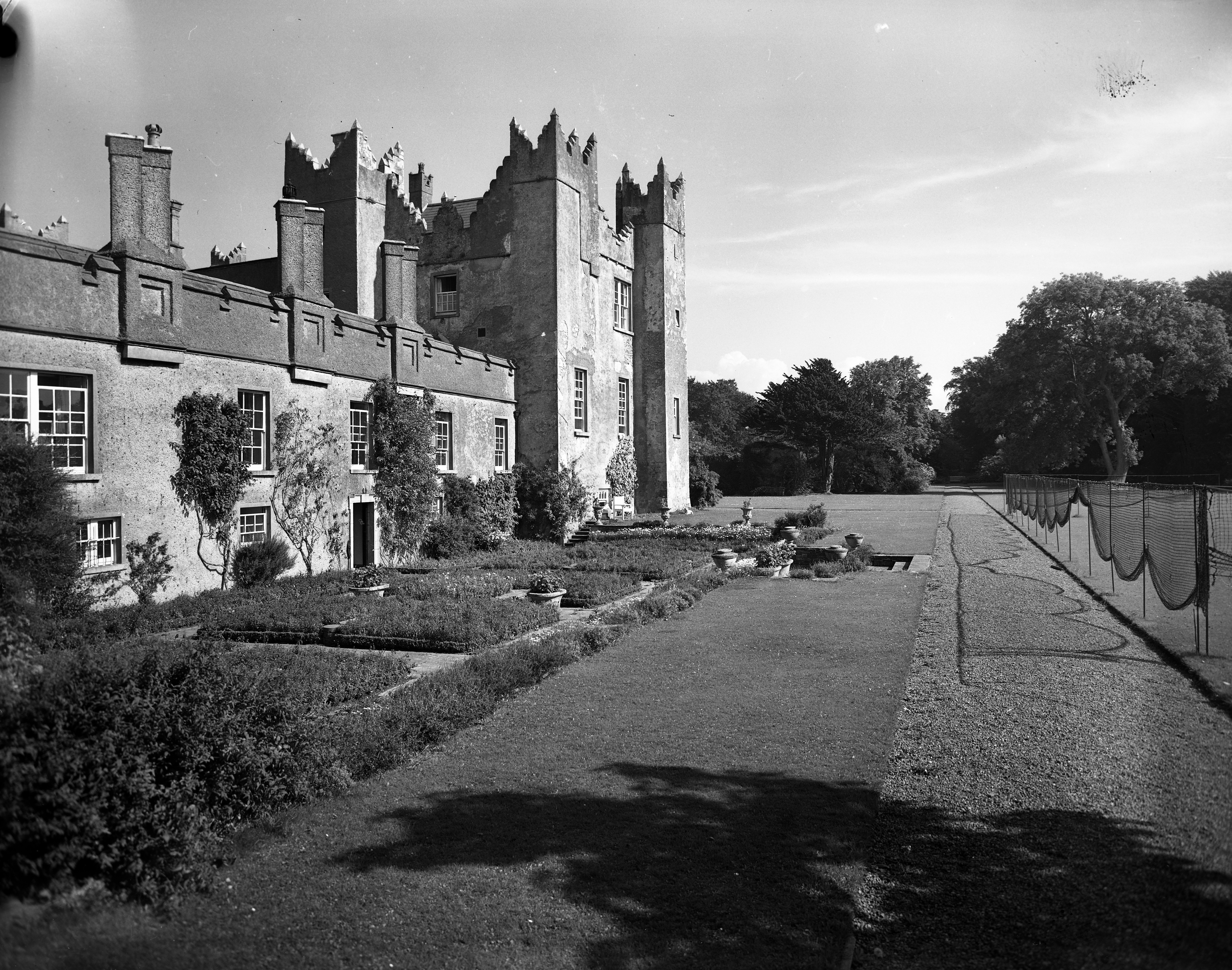
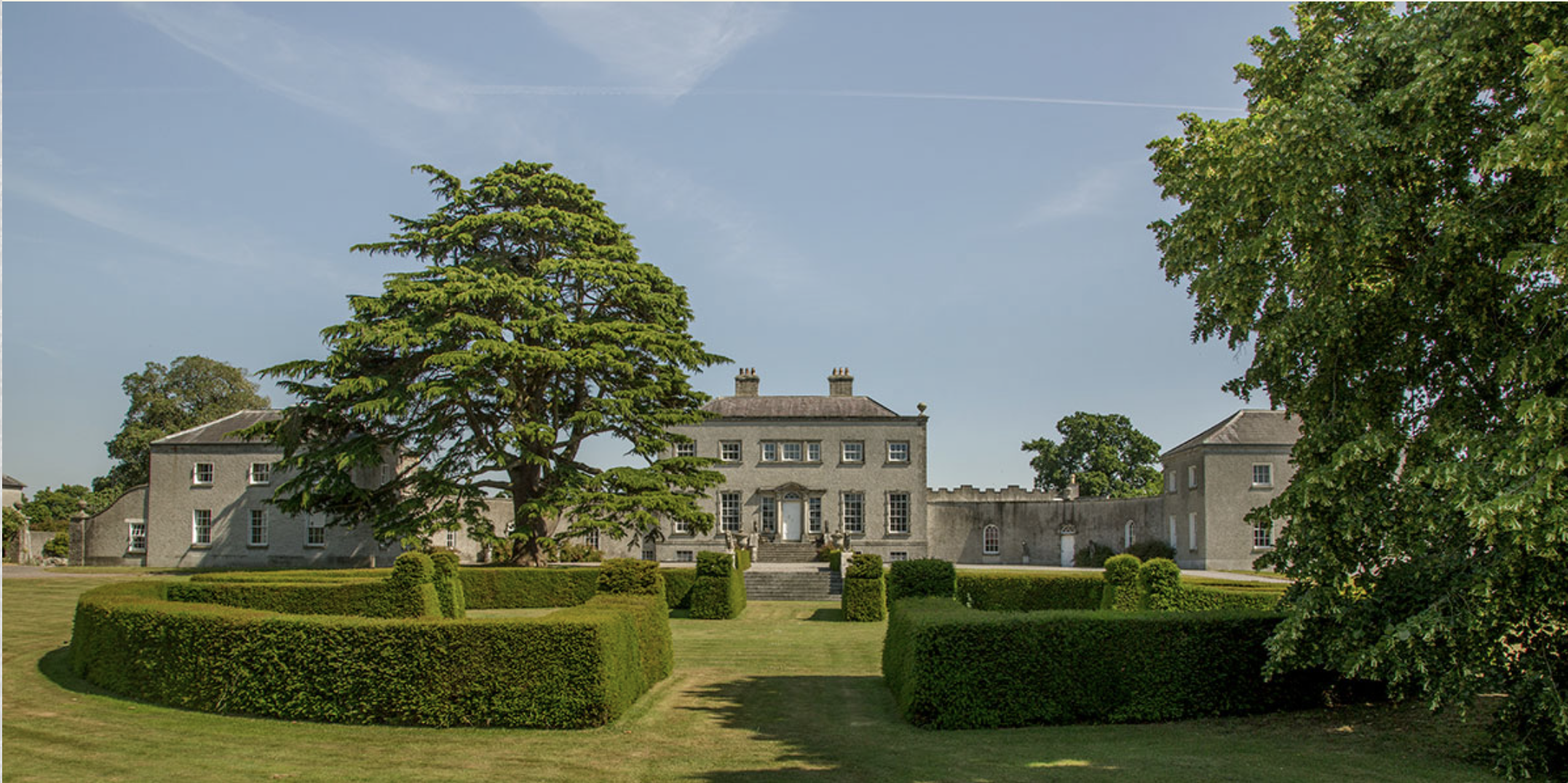
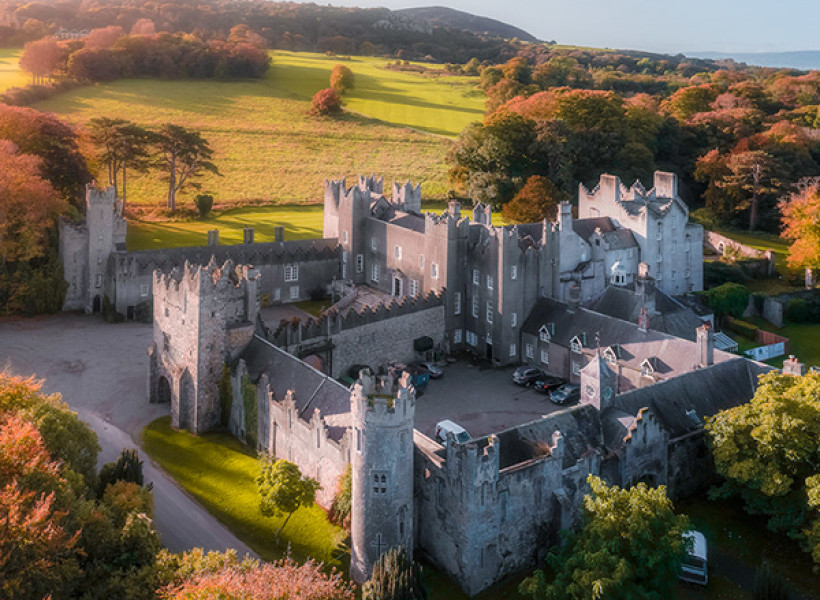
Howth Castle, photograph courtesy Howth Castle website.

My friend Gary and I went on a tour of Howth Castle in Dublin during Heritage Week in 2025. You can arrange a tour if you contact the castle in advance, see the website https://howthcastle.ie
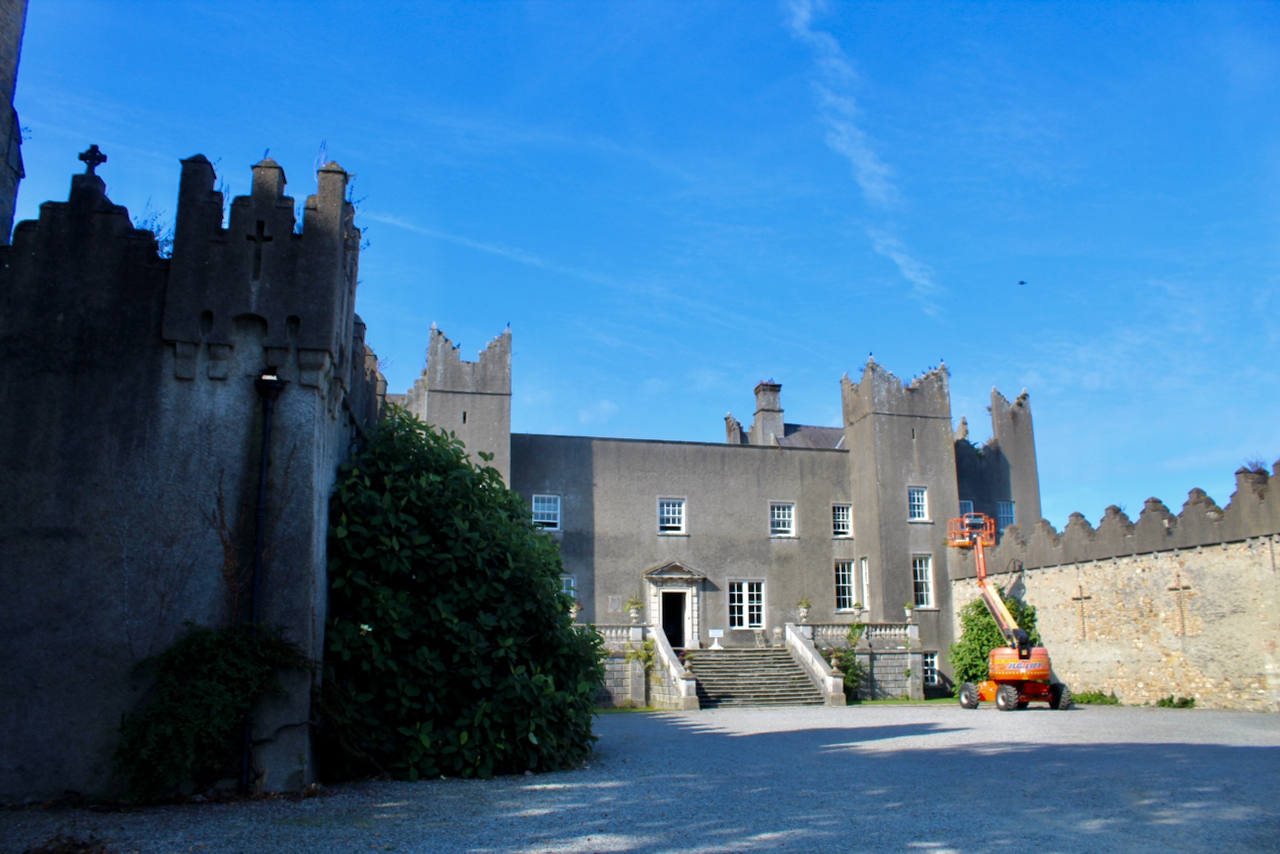
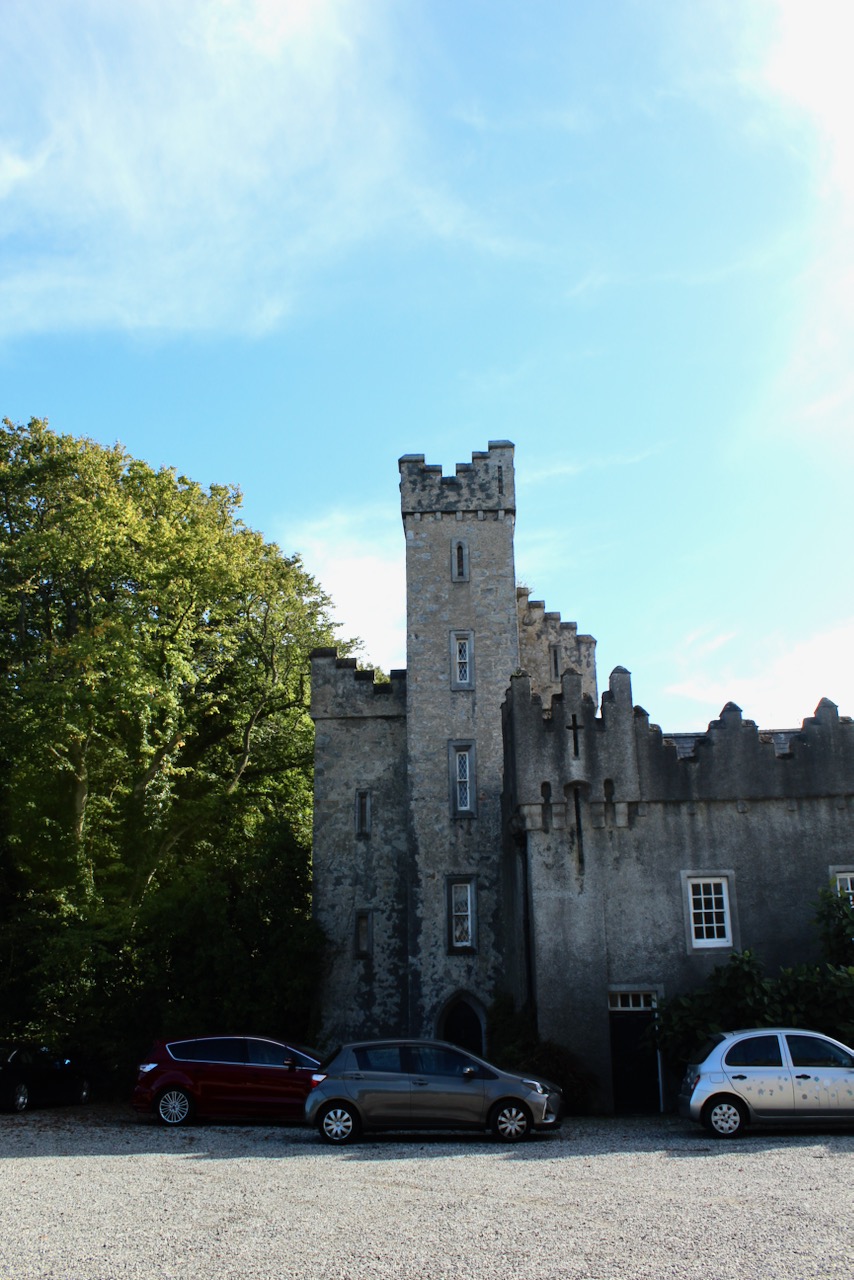
Entrance to Howth Castle, Dublin, August 2025. Photograph © Jennifer Winder-Baggot, www.irishhistorichouses.com

I envy historian Daniel, our tour guide, as he lives in the castle! Mark Bence-Jones describes the castle as a massive medieval keep, with corner towers crenellated in the Irish crow-step fashion, to which additions have been made through the centuries. [1]
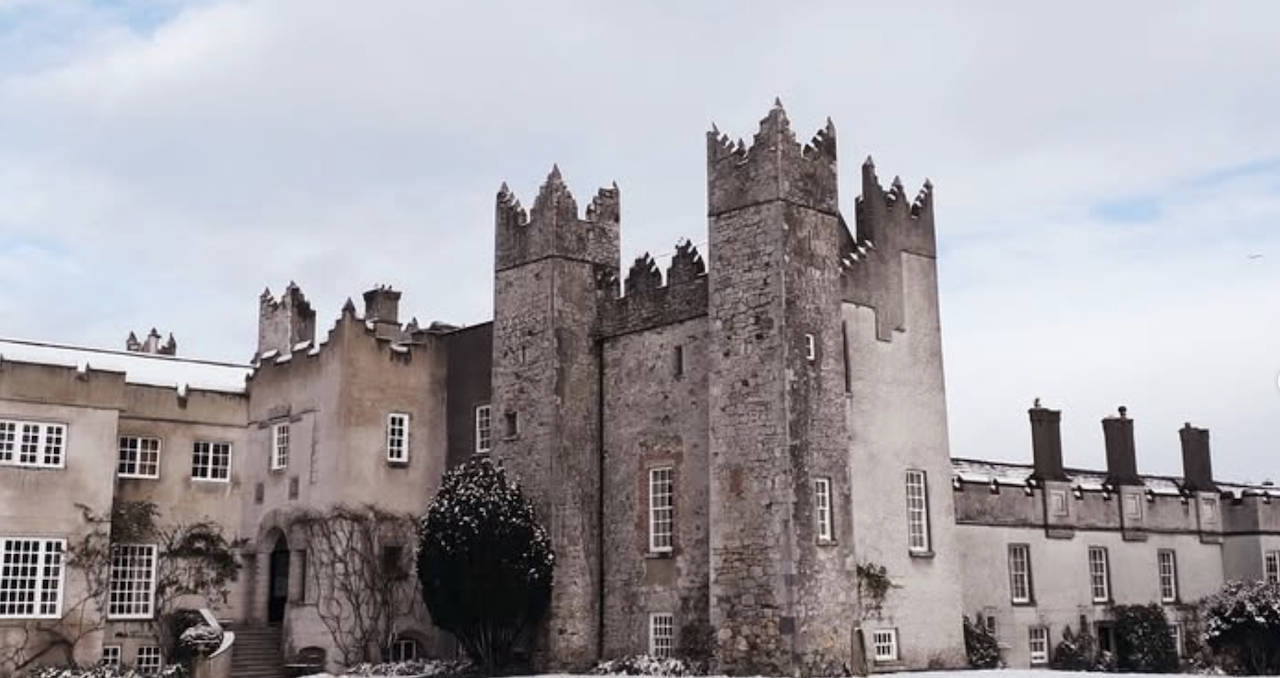
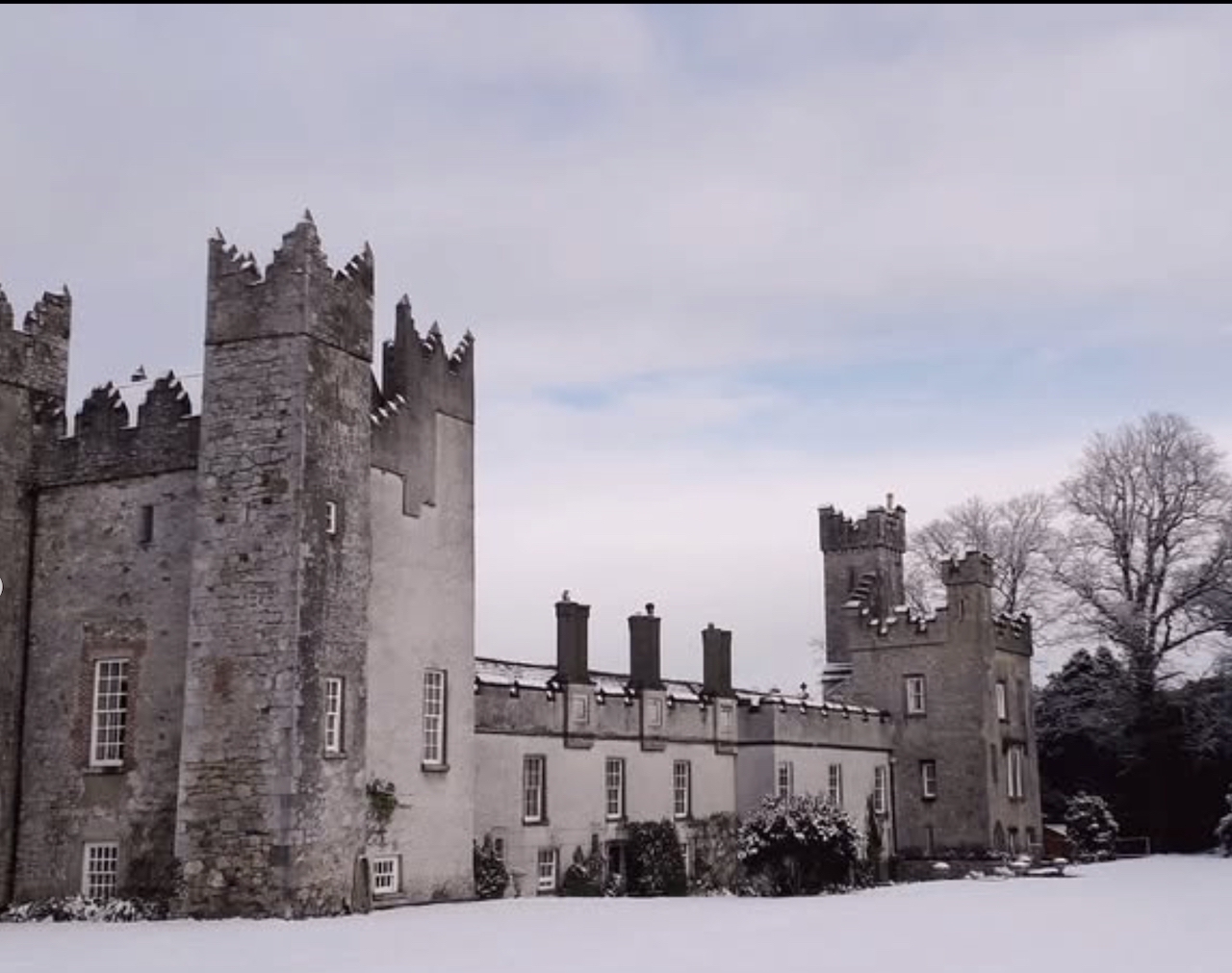
Howth Castle, courtesy of Howth Castle instagram. In the middle of the photograph is the old tower house.

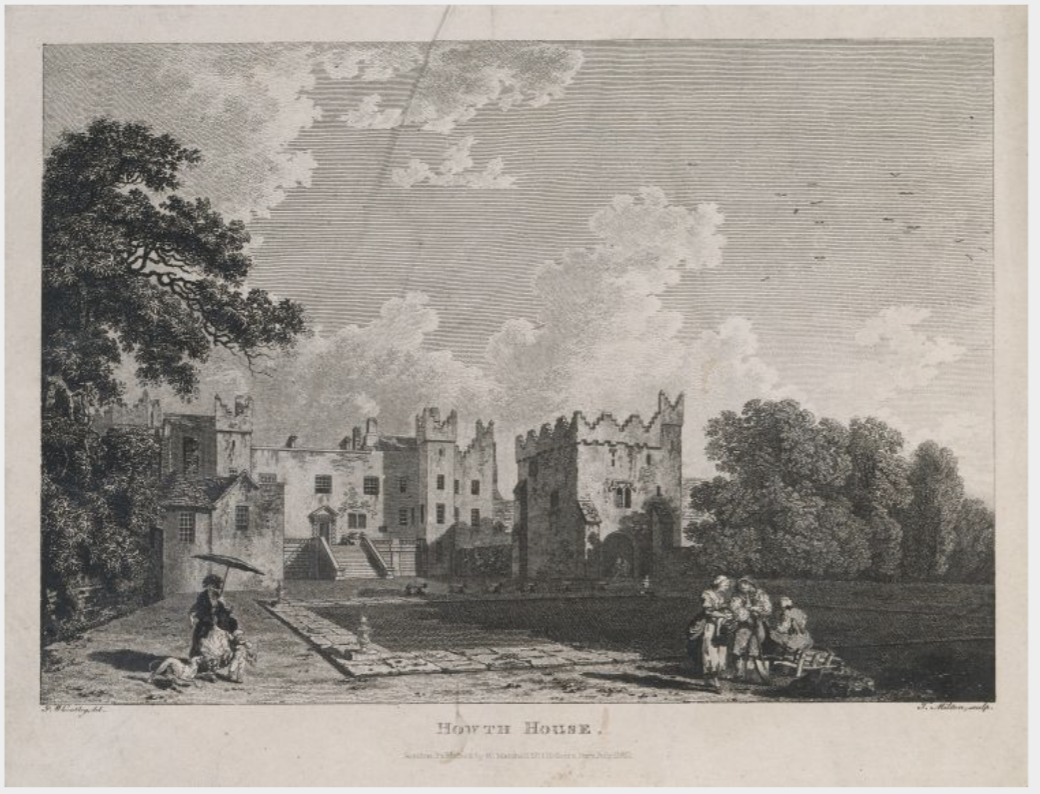
Timothy William Ferres tells us that the current building is not the original Howth Castle, which was on the high slopes by the village and the sea. [2]

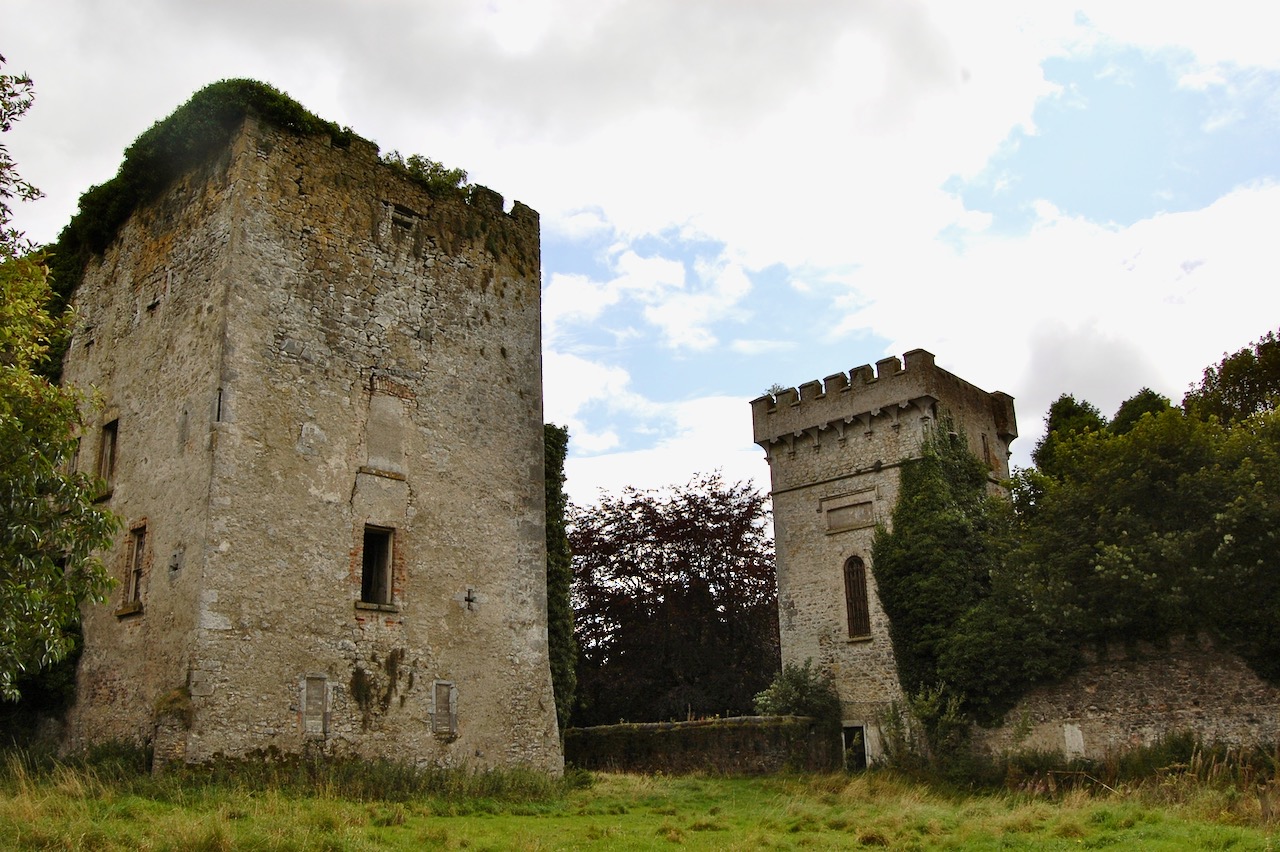
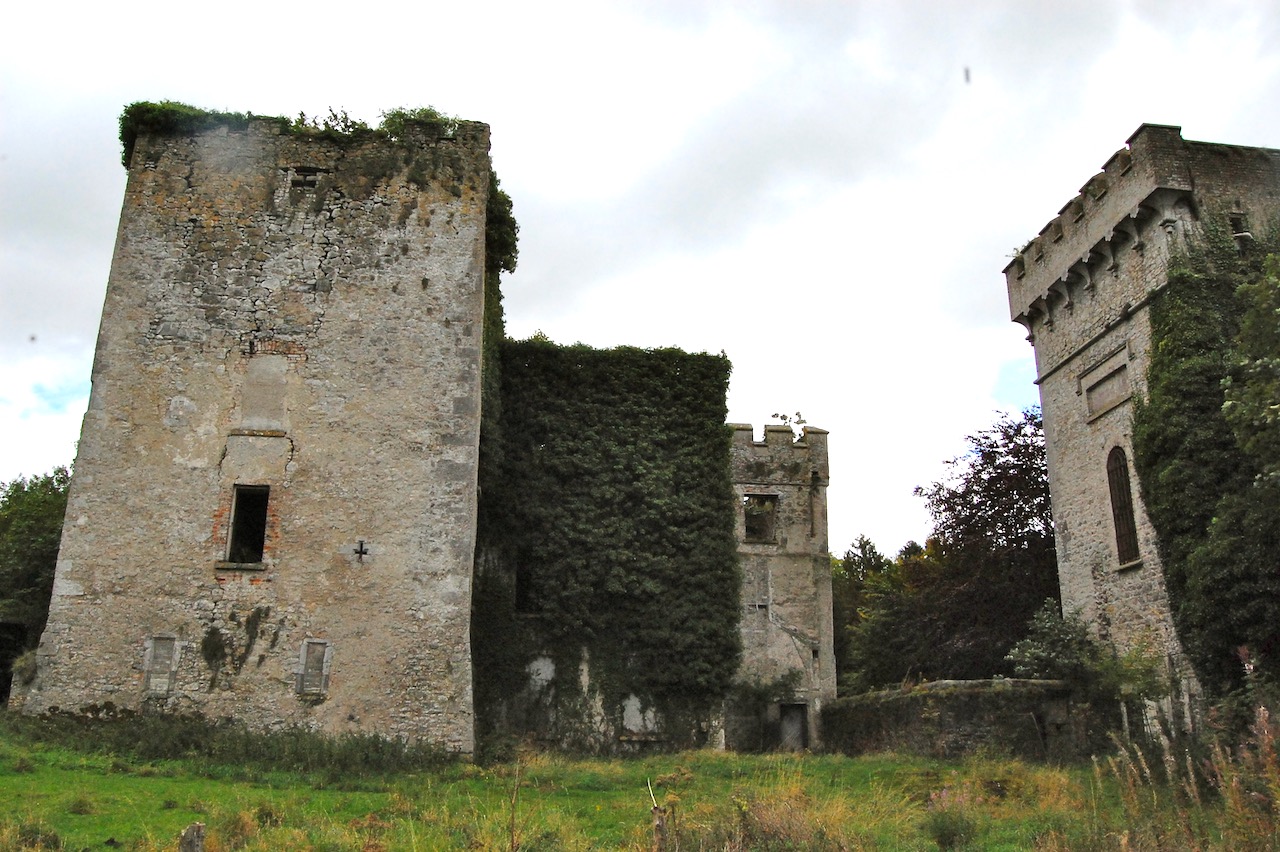
Howth Castle, Dublin. The old tower house in the centre, with a 1900s tower to the left. Photograph © Jennifer Winder-Baggot, www.irishhistorichouses.com

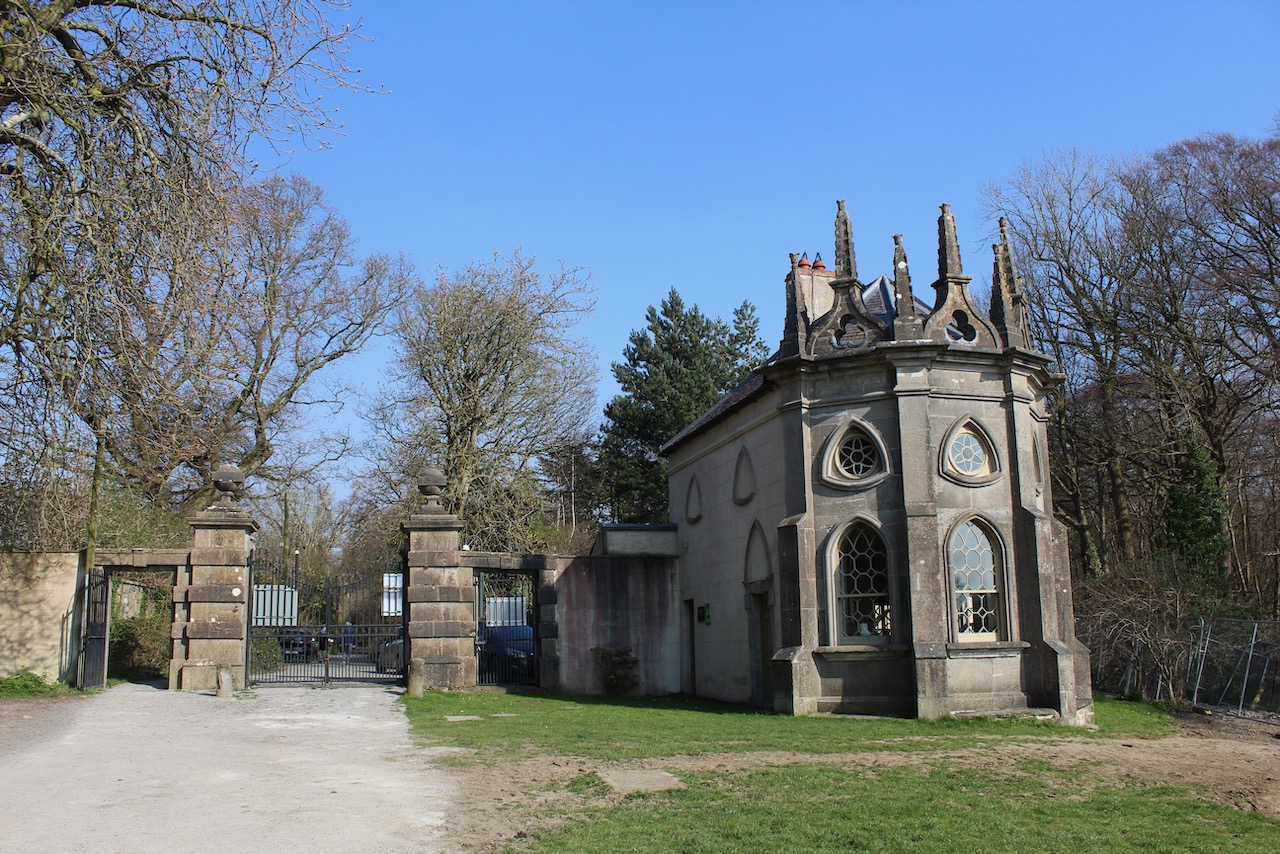
Until recently, the castle was owned by the Gaisford-St. Lawrence family. Irish investment group Tetrarch who purchased the property in 2019 plan to build a hotel on the grounds. It had been owned by the same family, originally the St. Lawrences, ever since it was built over eight hundred years ago. Over the years, wings, turrets and towers were added, involving architects such as Francis Bindon (the Knight of Glin suggests he may have been responsible for some work around 1738), Richard Morrison (the Gothic gateway, and stables, around 1810), Francis Johnson (proposed works for the 3rd Earl of Howth), and Edward Lutyens (for Julian Gaisford-St. Lawrence).
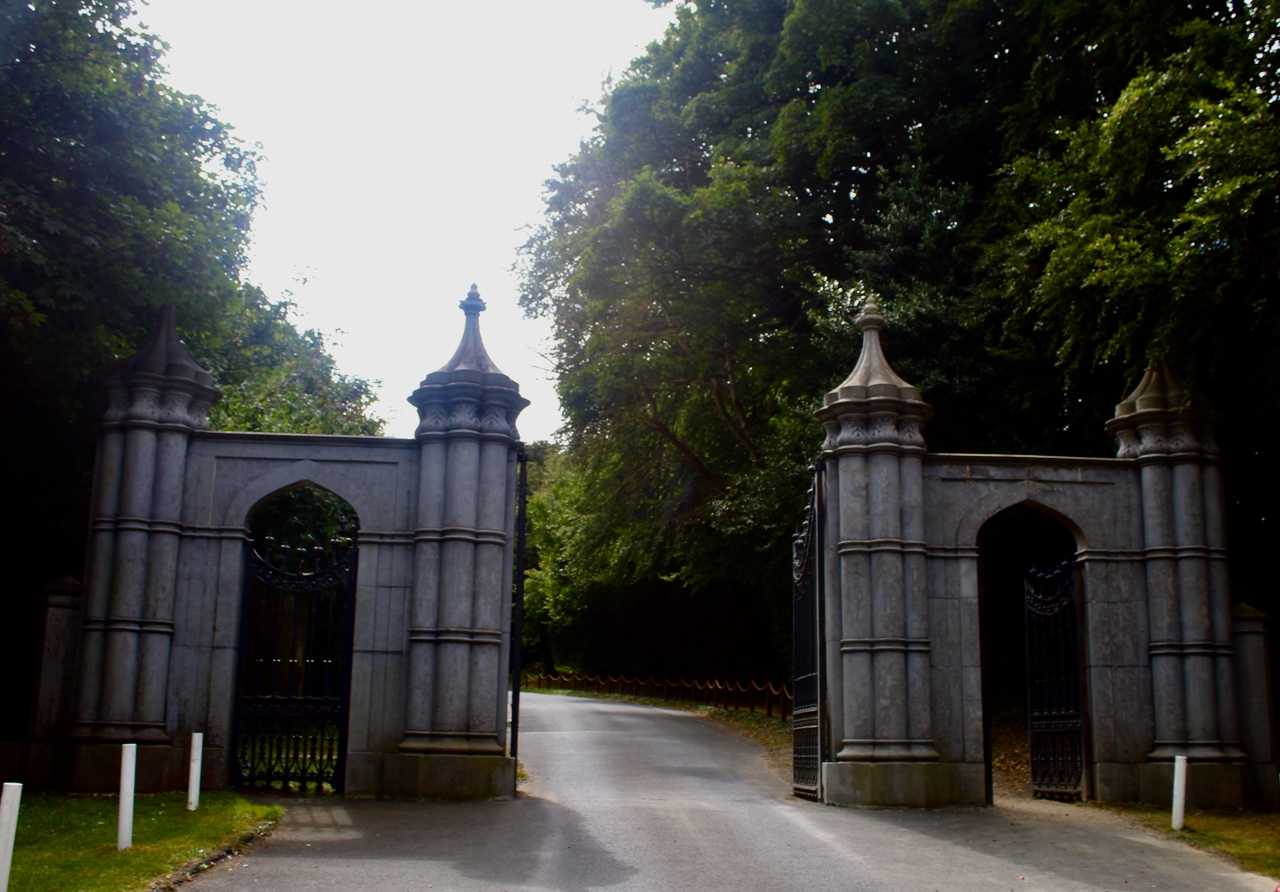
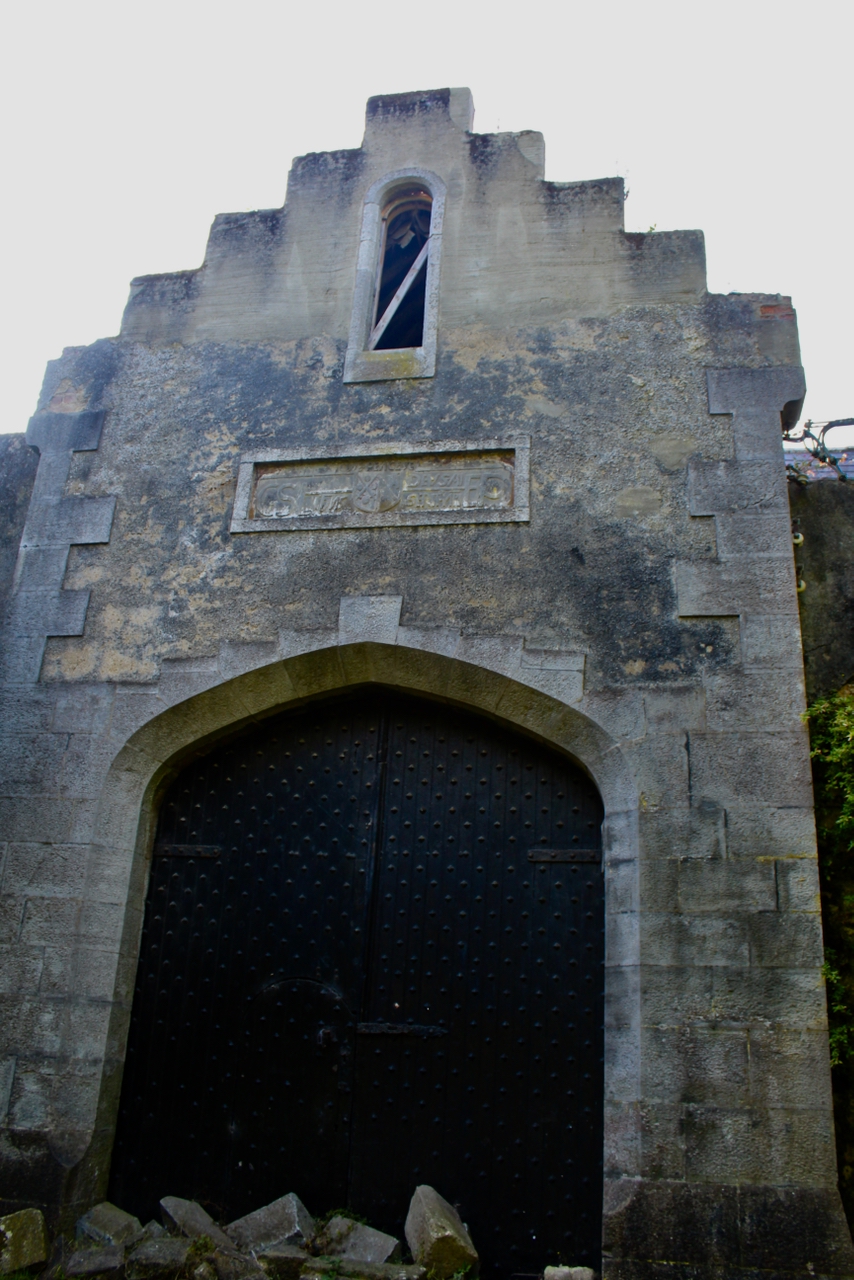
The Gothic gateway to Howth Castle, by Richard Morrison c. 1810. Photograph © Jennifer Winder-Baggot, www.irishhistorichouses.com

Timothy William Ferres tells us that the St. Lawrence family was originally the Tristram family. Sir Almeric Tristram took the name St. Lawrence after praying to the saint before a battle which took place on St. Lawrence’s Day near Clontarf in Dublin. Sir Almeric landed in Howth in 1177. After the battle he was rewarded for his valour in the conflict with the lands and barony of Howth. [see 2]

In an article in the Irish Times on Saturday August 14th 2021, Elizabeth Birthistle tells us that a sword that is said to have featured in the St. Lawrence’s Day battle is to be auctioned. A “more sober assessment” of the Great Sword of Howth, she tells us, dates it to the late 15th century. Perhaps, she suggests, Nicholas St. Lawrence 3rd Baron of Howth used it in 1504 at the Battle of Knockdoe. The sword is so heavy that it must be held with two hands. It is first recorded in an inventory of 1748, and is described and illustrated in Joseph C Walker’s An Historical Essay on the Dress of the Ancient and Modern Irish. [3]

Almeric went on to fight in Ulster and then Connaught. In Connaught, he was killed by the O’Conor head of the province, along with his thirty knights and two hundred infantry. He left three sons by his wife, a sister of John de Courcy, Earl of Ulster. The eldest son, Nicholas Fitz Almeric, relinquished his father’s Ulster conquests to religious houses, and settled in Howth. [see 2]

The first construction on the site would have been of wood.

The family coat of arms depicts a mermaid and a sea lion. The mermaid is often pictured holding a mirror. There is a coat of arms on the wall of the front of the castle which was probably moved from an older part of a castle. The Howth Castle website tells us:
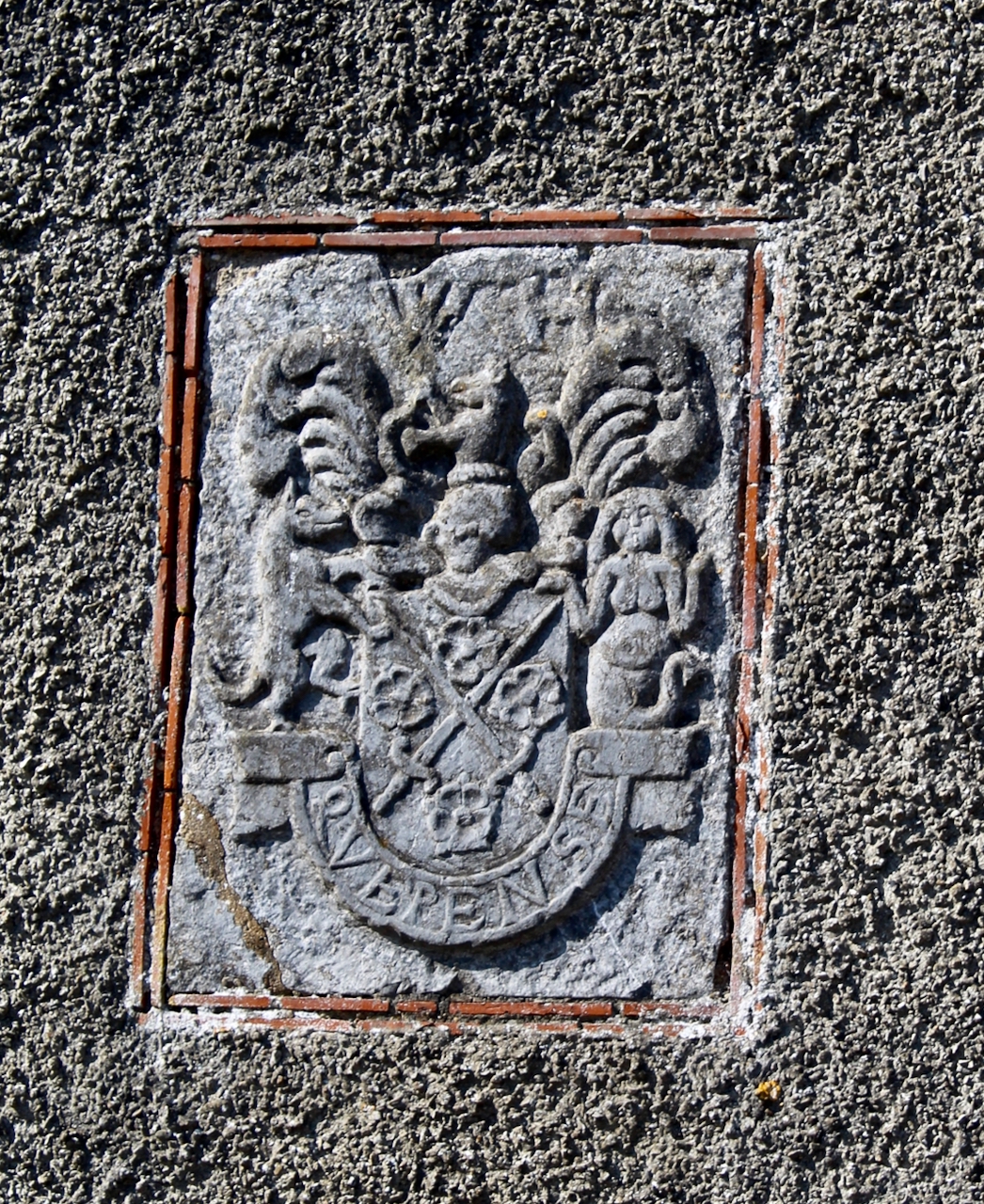
Plaque on the front of Howth Castle, with the family coat of arms depicting a mermaid holding a mirror. Photograph © Jennifer Winder-Baggot, www.irishhistorichouses.com

A mermaid is one of the supporters of the St. Lawrence family coat of arms, alongside a sea lion. The mermaid is often portrayed holding a small glass mirror. According to legend, the mermaid was once Dame Geraldine O’Byrne, daughter of The O’Byrne of Wicklow. She fell victim to dark magic at Howth Castle and was transformed into a mermaid. One item she left behind in her bedroom was a small glass mirror. The tower she slept in was from then always known as the ‘Mermaid’s Tower’. “

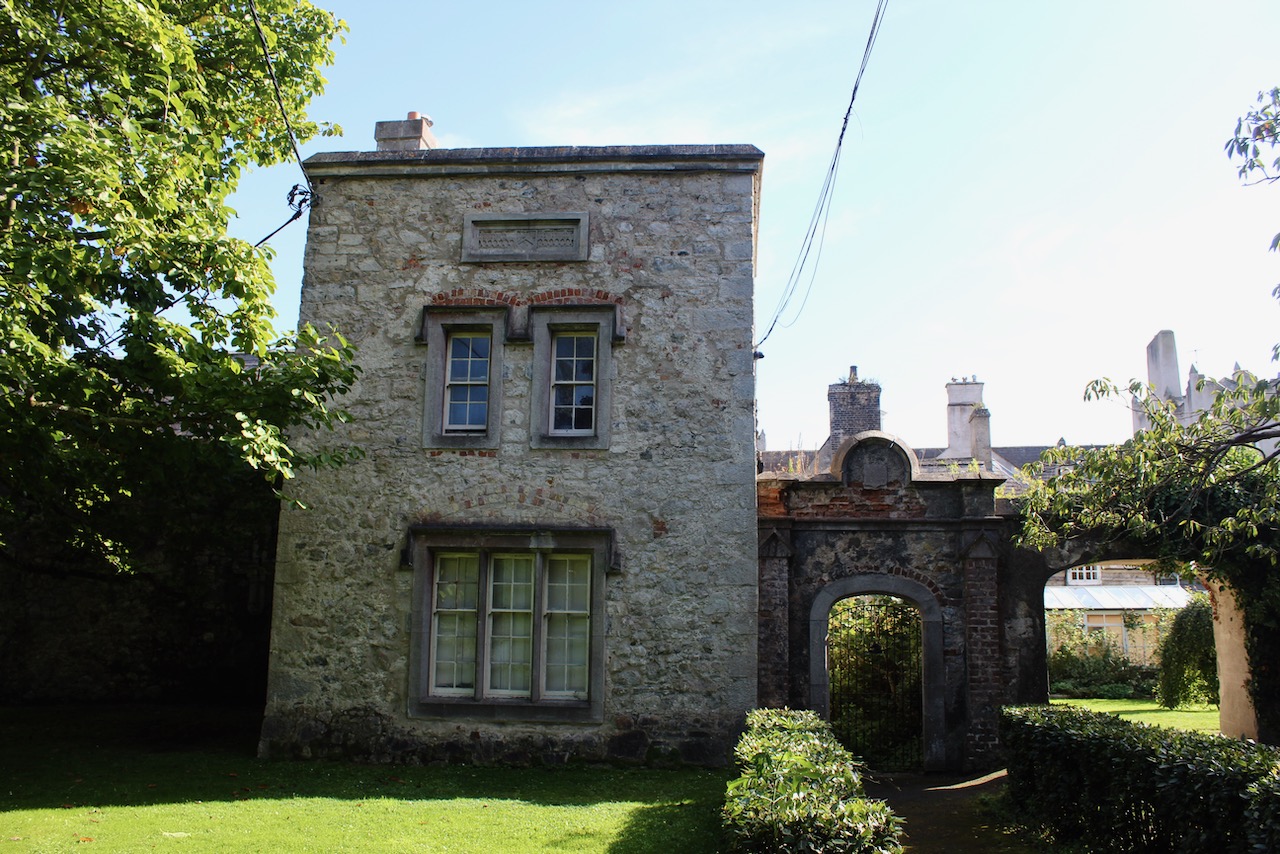
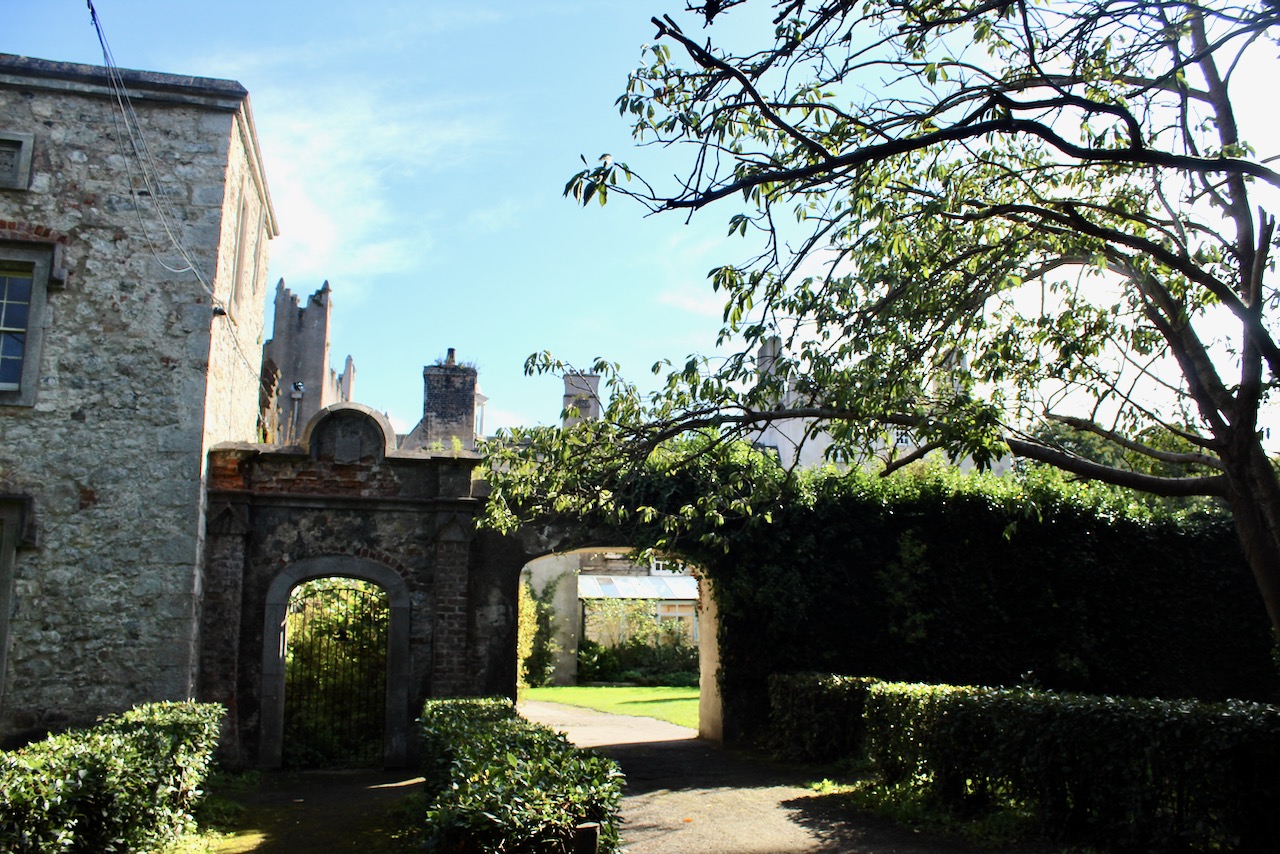
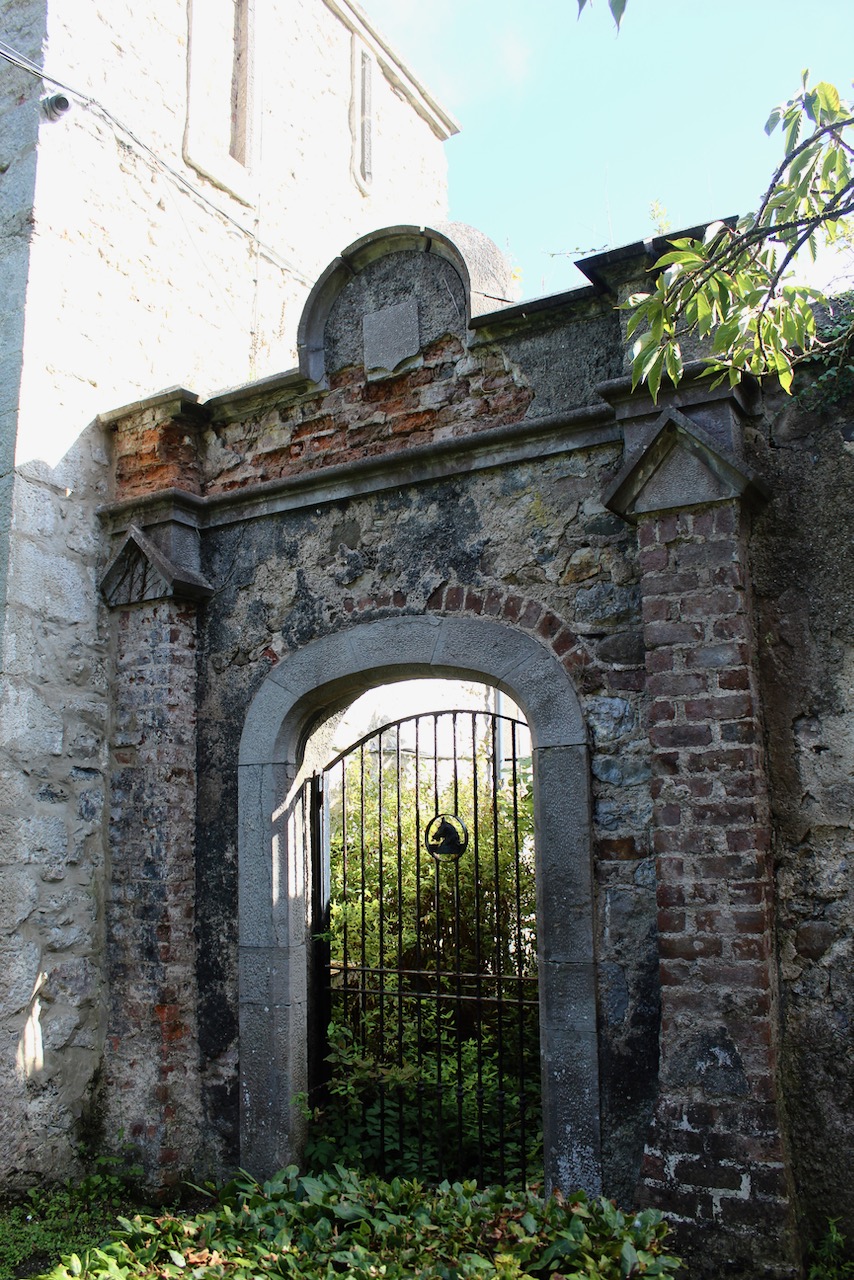
The Mermaid’s Tower at Howth Castle, built at the beginning of the nineteenth century. Photograph © Jennifer Winder-Baggot, www.irishhistorichouses.com
The Mermaid’s Tower, built at the beginning of the nineteenth century, Howth Castle. Photograph © Jennifer Winder-Baggot, www.irishhistorichouses.com

An article in the Irish Times tells us that there was a tryst between Dame Geraldine O’Byrne and Tristram St. Lawrence which left the Wicklow woman heartbroken and shamed, so she transformed into a mermaid. It is said her wails of melancholy are still carried through the winds at night near the Mermaid’s Tower on the estate. [3]

The Howth Castle website tells us that:

One Christmas, Thomas St. Lawrence, Bishop of Cork and Ross [(1755–1831), son of the 1st Earl, 15th Baron of Howth] returned to Howth Castle to find that the family had gone to stay with Lord Sligo for the holiday season. Bishop St. Lawrence was left alone in the cold and dark castle with just a housekeeper for company and his ancestors glaring at him from the portraits in the dark hallways. The housekeeper put him to bed in the ‘Mermaid’s Tower’. His room was described as if ‘designed as the locus in quo for a ghost scene. Its moth-eaten finery, antiquated and shabby – -its yellow curtains, fluttering in the air…the appearance of the room was enough to make a nervous spirit shudder.’

He was suddenly and violently awoken in the night by the feeling of a cold, wet hand clasping his wrist and a cold hand covering his mouth. He made one large leap from his bed, lit his candle and there he found not a sinner in the room with him but one bloody yellow glove lying on his bed. Was he visited in the night by the mermaid?”
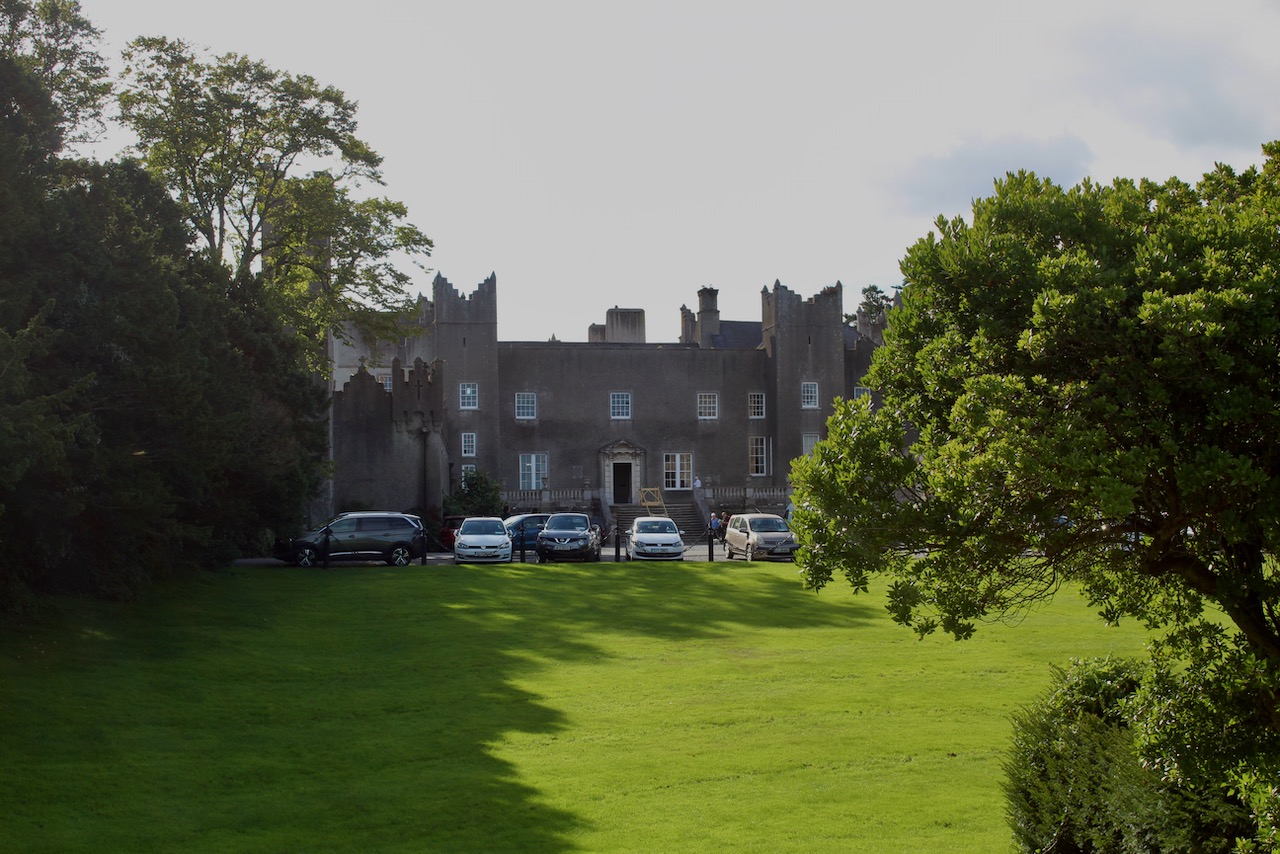
Howth Castle on the day we visited for the sale of its library, September 2021. Photograph © Jennifer Winder-Baggot, www.irishhistorichouses.com

I’m confused about Barons of Howth as different sources number the Barons differently. I will follow the numbering used on The Peerage website, which refers to  L. G. Pine, The New Extinct Peerage 1884-1971: Containing Extinct, Abeyant, Dormant and Suspended Peerages With Genealogies and Arms (London, U.K.: Heraldry Today, 1972), page 150. According to this, Christopher St. Lawrence (died around 1462) was 1st Baron Howth. He held the office of Constable of Dublin Castle from 1461.

The oldest surviving part of the castle is the gate tower in front of the main house. It dates to around 1450, the time of the 1st Baron Howth.
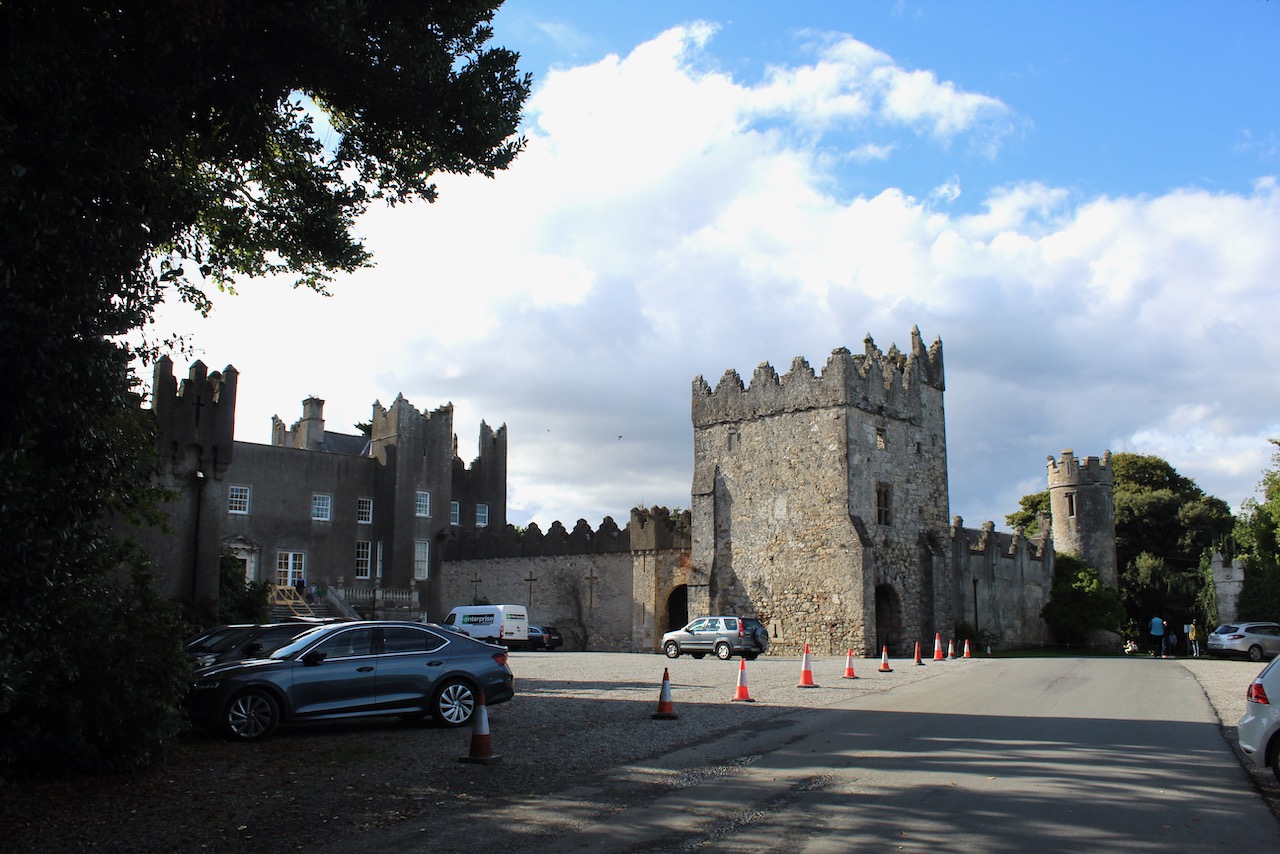
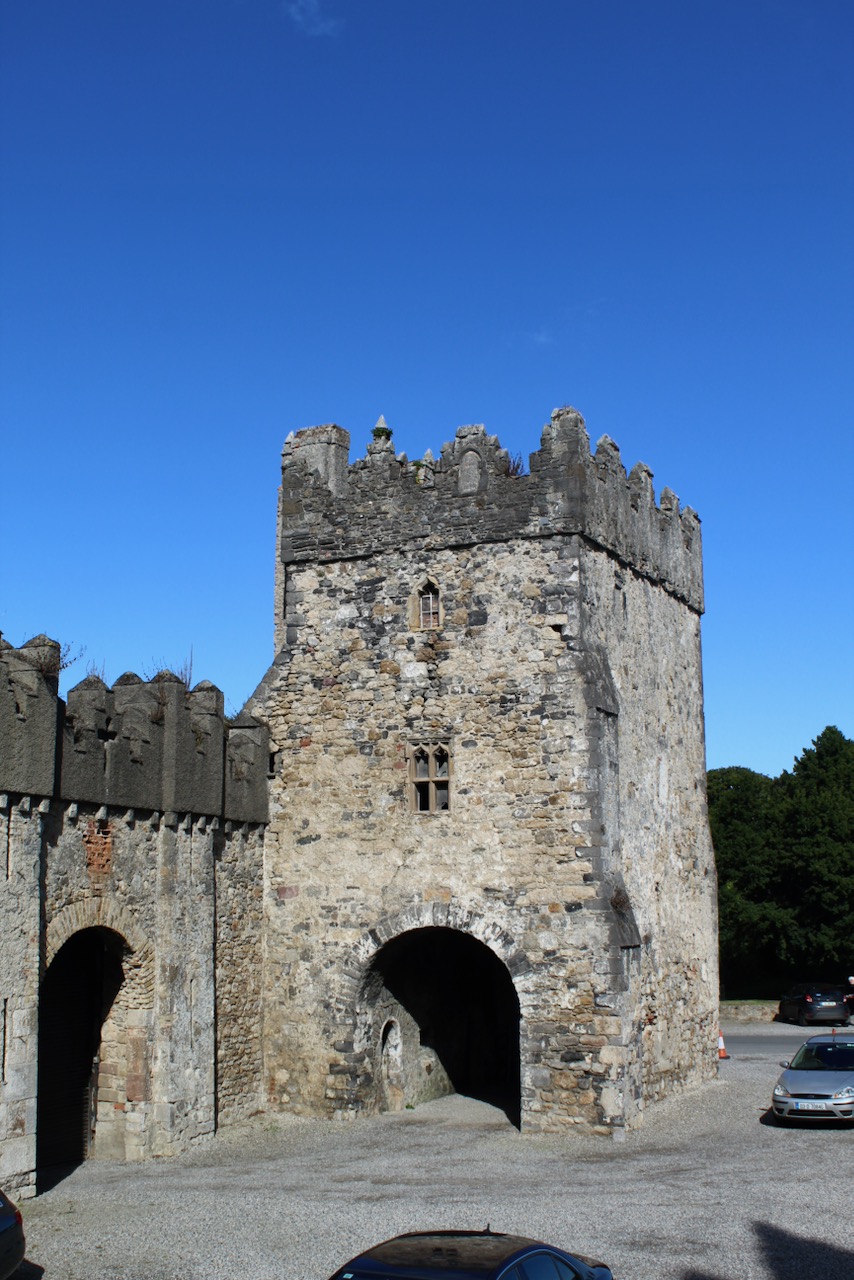
The front of Howth Castle with the Gate Tower, which dates to around 1450, the time of the 1st Baron Howth. Photograph © Jennifer Winder-Baggot, www.irishhistorichouses.com
The National Inventory tells us about the Gate Tower: “Attached single-bay three-storey rubble stone gate tower, c.1450, with round-headed integral carriageway to ground floor. Renovated 1738.” Photograph © Jennifer Winder-Baggot, www.irishhistorichouses.com
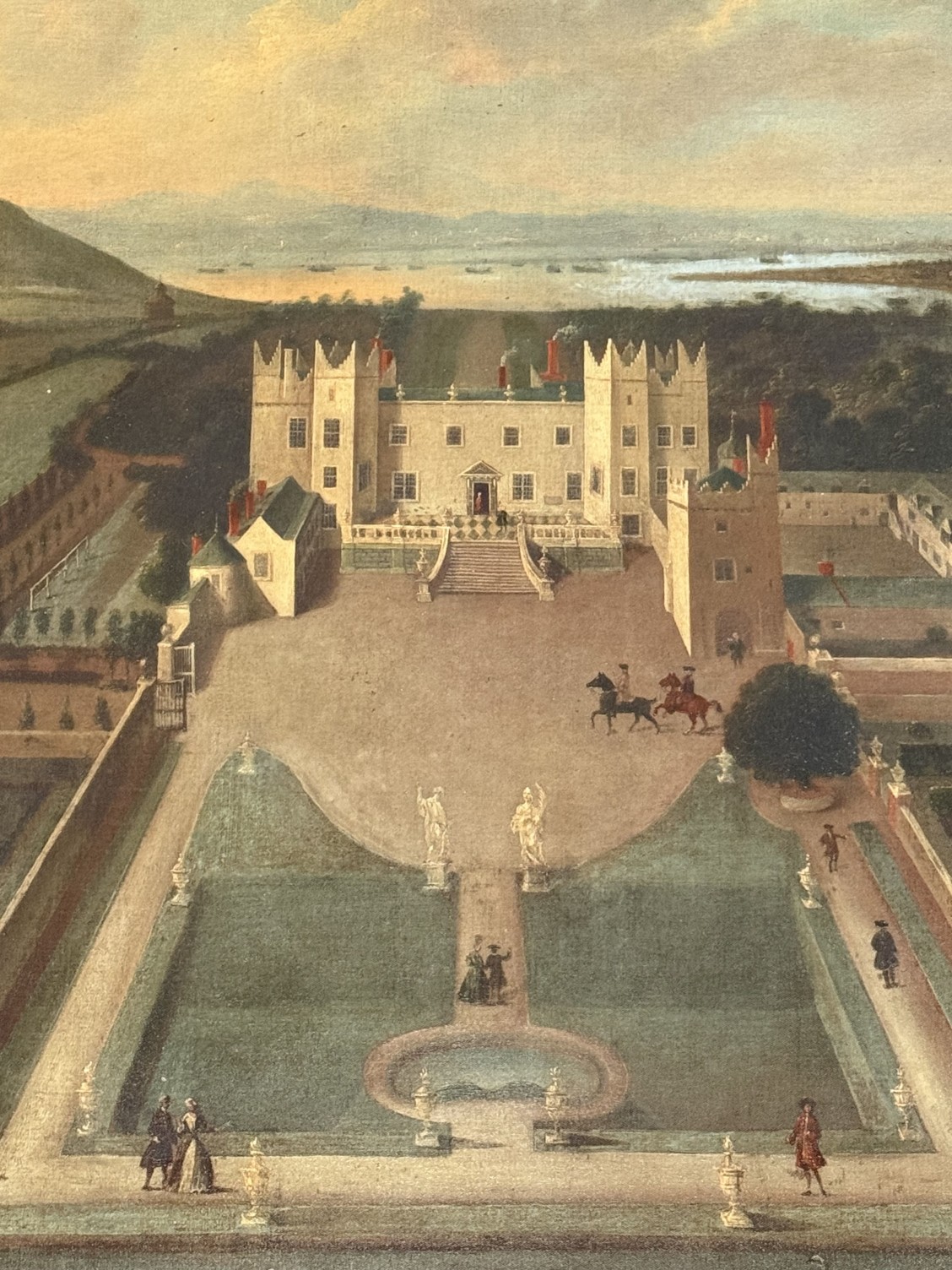
Detail of painting of Howth Castle attributed to William Van der Hagen (fl. 1720-1745) or Joseph Tudor (d. 1759), courtesy of Howth Castle website.

The Howth Castle website tells us that the Keep, the tower incorporated into the castle, also dates from the mid fifteenth century. Unfortunately I have misplaced the notes I took on my visit to the castle. Daniel pointed out the various parts of the castle as we stood on the balustrade looking out into the courtyard, telling us when each part was built. From the photograph of the painting above, the Keep is the large tower on the left of the front door, and the Gate House is slightly to the front of the building to the right. Traces remain in the gardens of the wall and turrets, which would have enclosed the area. You can’t fully see the keep from the front of the house.
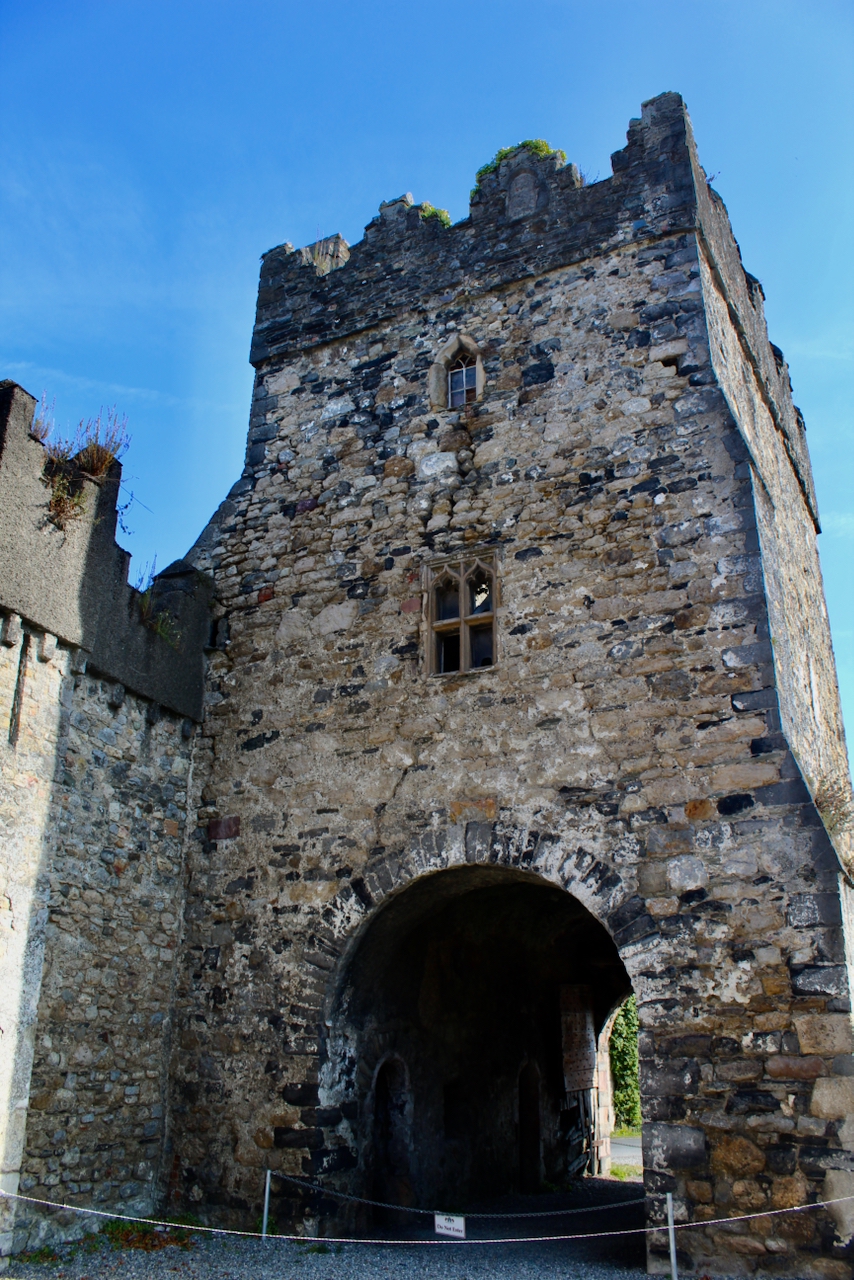
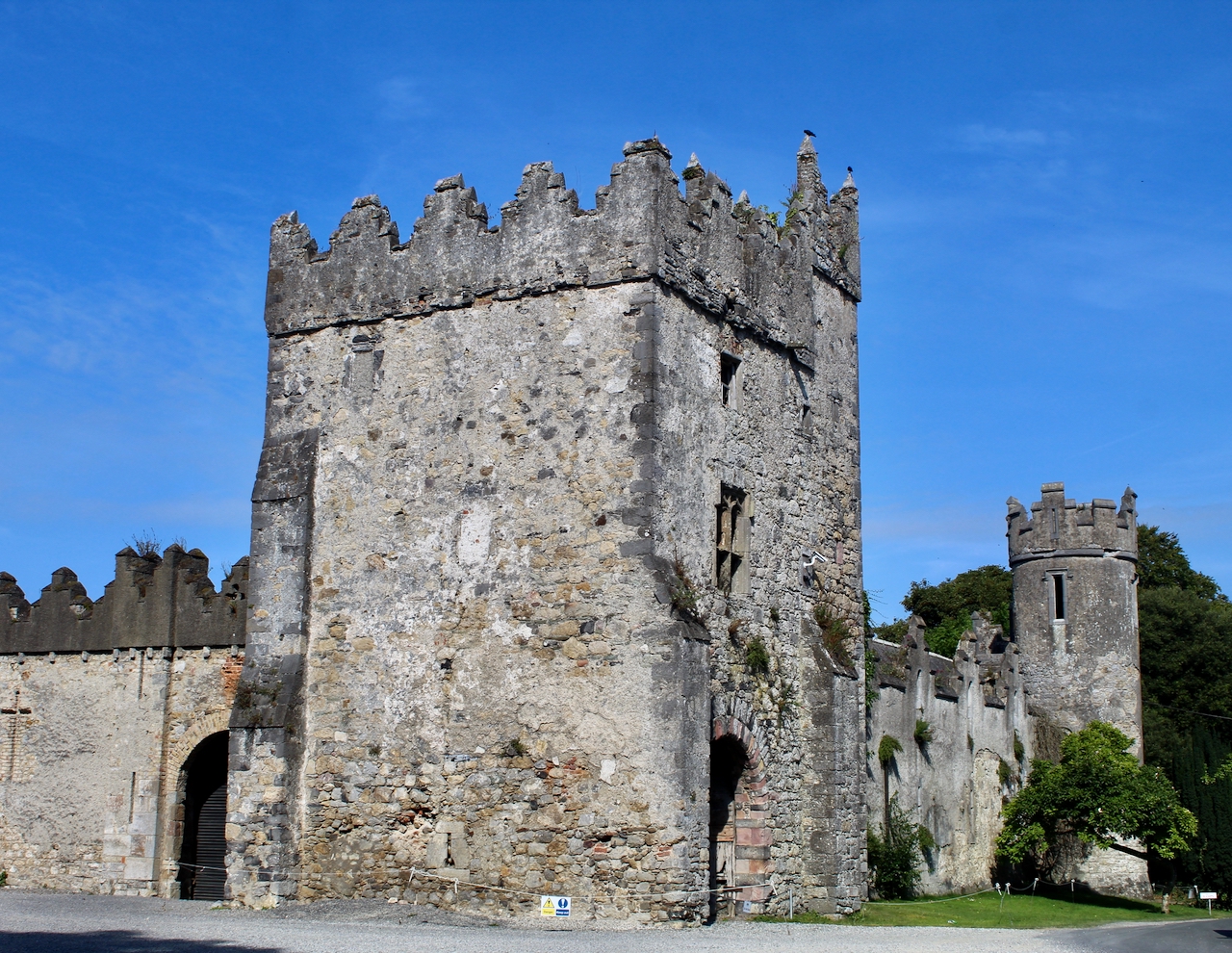
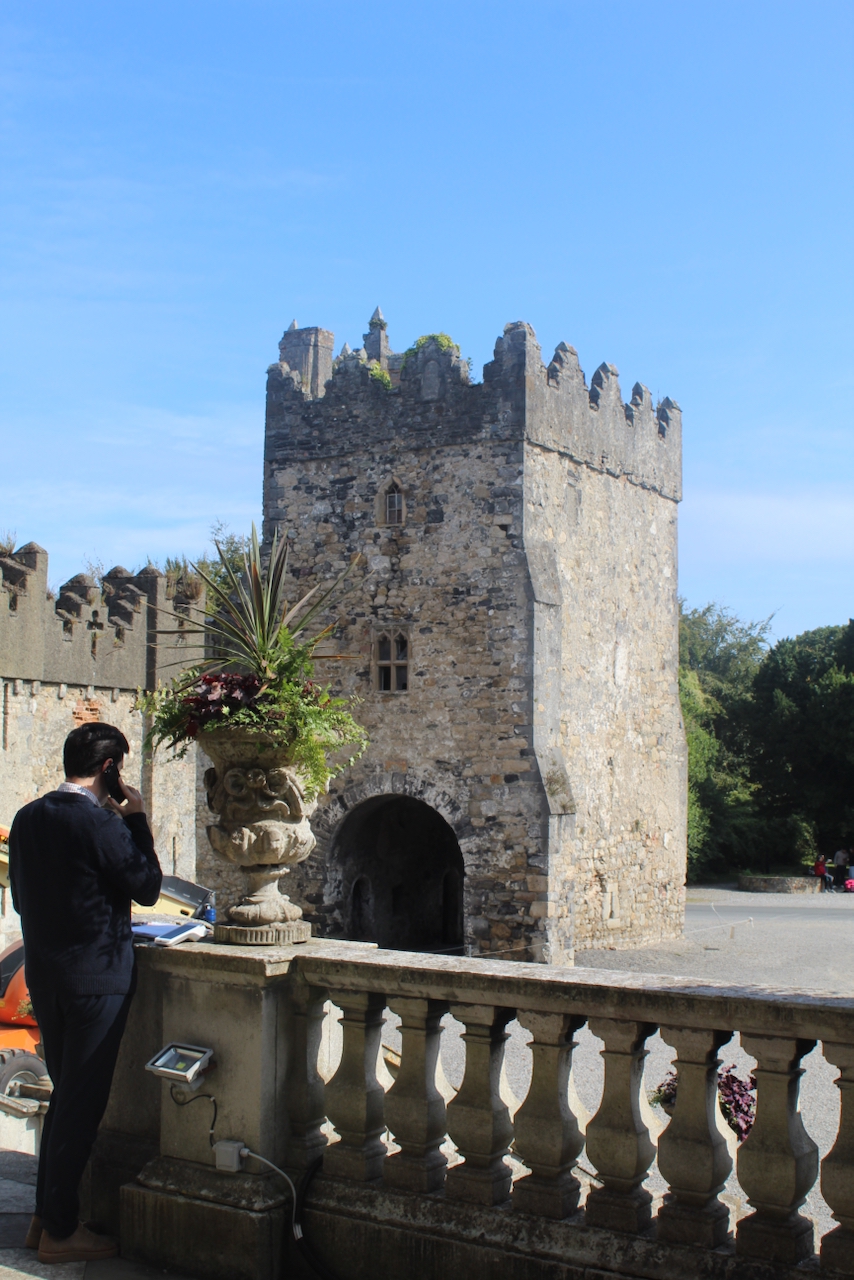
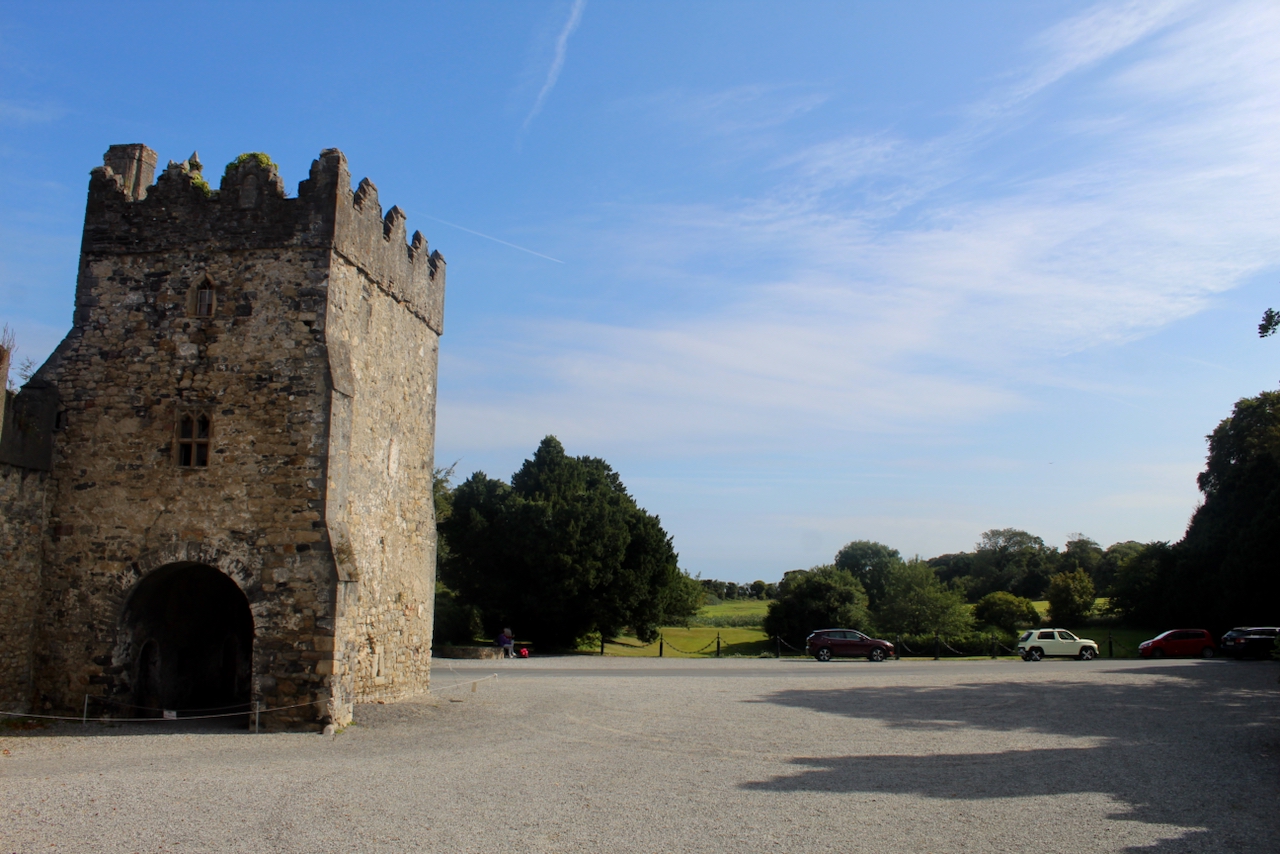
The Gate Tower, which dates to around 1450, the time of the 1st Baron Howth. Photograph © Jennifer Winder-Baggot, www.irishhistorichouses.com
The Gate Tower, Howth Castle, Dublin, August 2025. Photograph © Jennifer Winder-Baggot, www.irishhistorichouses.com

Christopher’s son Robert St. Lawrence (d. 1486) 2nd Baron Howth served as Lord Chancellor of Ireland, after first serving as “Chancellor of the Green Wax,” which was the title of the Chancellor of the Exchequer of Ireland. He married Joan, second daughter of Edmund Beaufort, 2nd Duke of Somerset, so by marriage, Timothy William Ferres tells us, Lord Howth’s descendants derived descent from King Edward III, and became inheritors of the blood royal. [see 2]

Nicholas St. Lawrence (d. 1526) was 3rd Baron Howth according to the Dictionary of Irish Biography. He also served as Lord Chancellor of Ireland. He married three times. The first bride was Janet, daughter of Christopher Plunkett 2nd Baron Killeen. We came across the Plunketts of Killeen and Dunsany when we visited Dunsany Castle in County Meath.
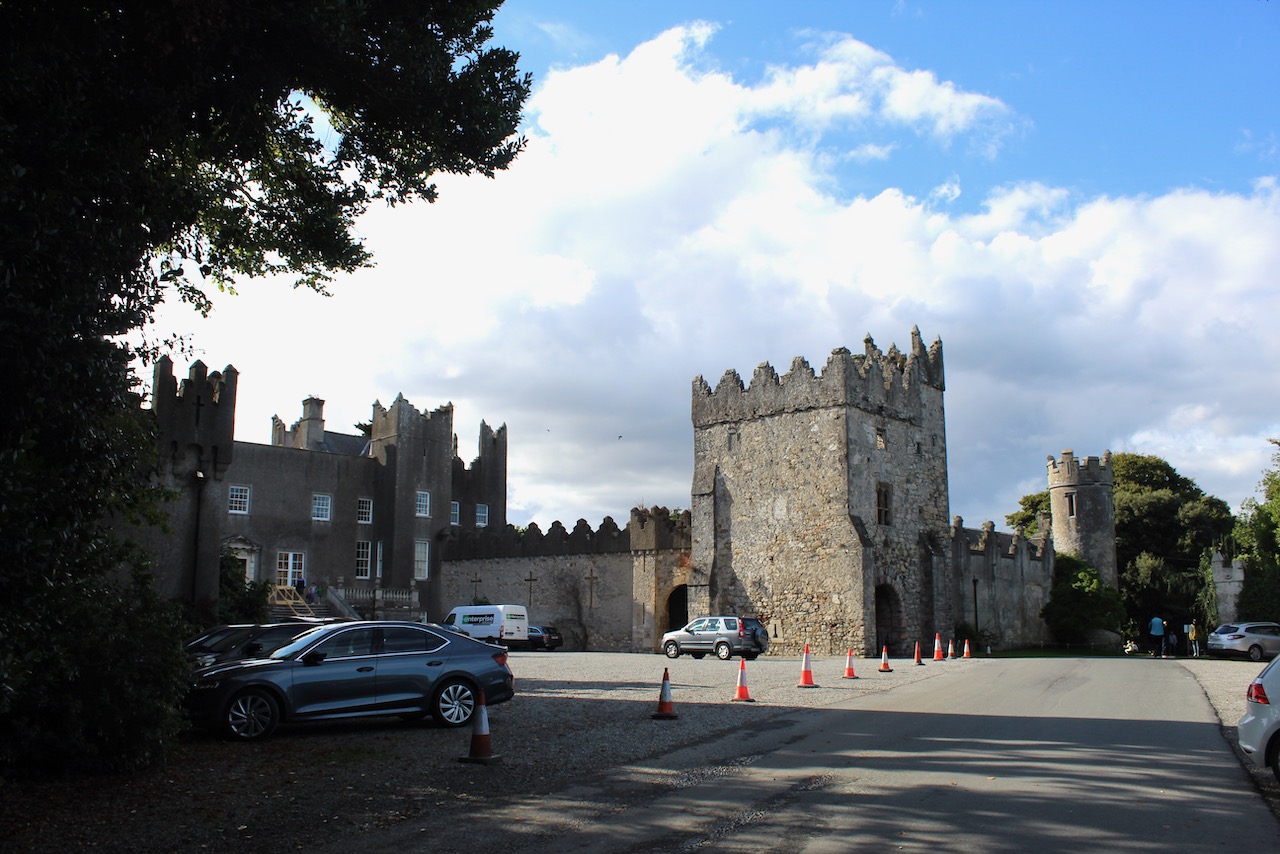
Howth Castle on the day we visited for the sale of its library, September 2021. Photograph © Jennifer Winder-Baggot, www.irishhistorichouses.com

The Dictionary of Irish Biography tells us that when Lambert Simnel came to Ireland in 1487 and was crowned as King Edward VI in Christchurch catheral in Dublin, Nicholas the 3rd Baron remained loyal to King Henry VII. [4] In 1504, as mentioned earlier, the 3rd Baron Howth played a significant role at the battle of Knockdoe in County Galway, where the lord deputy, 8th Earl of Kildare, defeated the MacWilliam Burkes of Clanricard and the O’Briens of Thomond. [see 4]

The family were well-connected. The third baron’s daughter Elizabeth married widower Richard Nugent, 3rd Baron Delvin, whose first wife had been the daughter of Gerald Fitzgerald 8th Earl of Kildare.

The son and heir of the 3rd Baron, Christopher (d. 1542), served as Sheriff for County Dublin. Christopher the 4th Baron was father to the 5th, Edward (d. 1549), 6th (Richard, d. 1558 and married Catherine, daughter of the 9th Earl of Kildare, but they had no children) and 7th Barons of Howth.

The Hall, which is the middle of the front facade, was added to the side of the Keep in 1558 by Christopher, who is the 20th Lord of Howth according to the Howth Castle website, or the 7th Baron. He was also called “the Blind Lord,” presumably due to weak eyesight. The 1558 hall is now entered by the main door of the Castle.

The old tower is on the left, behind the extending wing, and the hall is in the middle with the front door. Howth Castle. Photograph © Jennifer Winder-Baggot, www.irishhistorichouses.com

Christopher St. Lawrence (d. 1589) 7th Baron Howth was educated at Lincoln’s Inn, along with his two elder brothers, the 5th and 6th barons. Christopher entered Lincoln’s Inn in 1544 and was still resident ten years later in 1554. That year he was threatened with expulsion from Lincoln’s Inn for wearing a beard, which indicates, Terry Clavin suggests in the Dictionary of Irish Biography, a rakish side to his personality. He inherited his family estate of Howth and the title on the death of his brother Richard in autumn 1558 and was sworn a member of the Irish privy council soon afterward. [5]

The Dictionary of Irish Biography tells us that between December 1562 and February 1563 the 7th Baron represented Thomas Radcliffe 3rd Earl of Sussex’s views on the government of Ireland to Queen Elizabeth. [5]
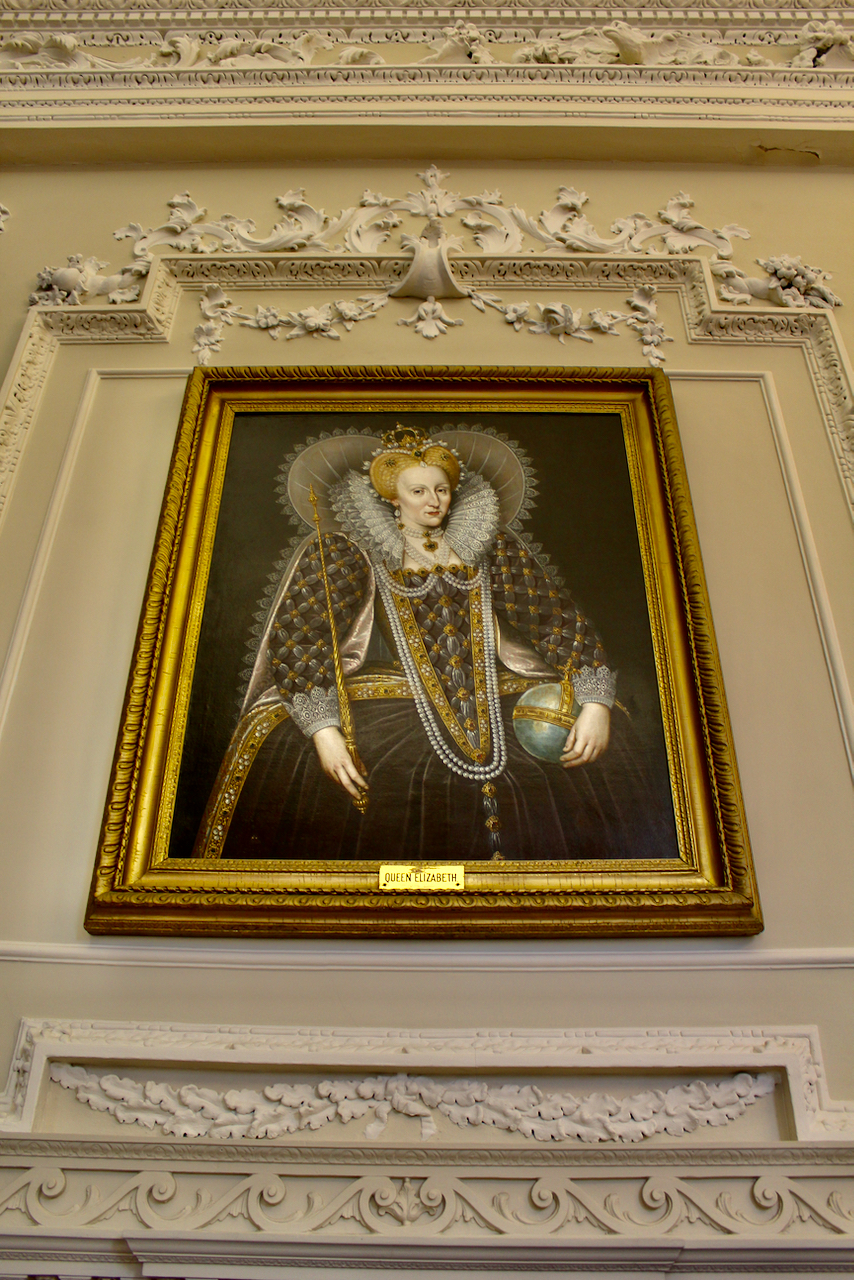
A portrait of Queen Elizabeth I in the Provost’s House, Trinity College Dublin. Photograph © Jennifer Winder-Baggot, www.irishhistorichouses.com.

The Dictionary tells us that from 1570 onward the 7th Baron Howth ceased to play an active role in the privy council and became increasingly estranged from the government. By 1575, concerned about his loyalty, the government briefly imprisoned him, following the arrest of his close associate Gerald Fitzgerald, 11th Earl of Kildare, upon charges of treason.

Christopher St. Lawrence (d. 1589) 7th Baron Howth compiled a book, The Book of Howth, in which he rebutted Henry Sidney’s views of Ireland.
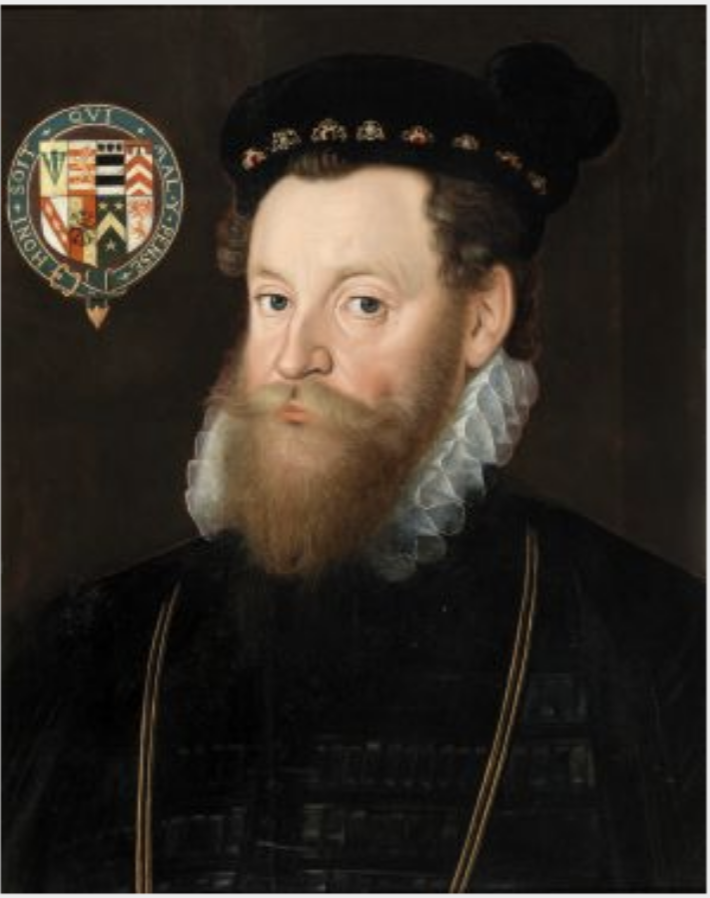
Sir Henry Sidney (1529-1586), Lord Deputy of Ireland, after painter Arnold Van Brounkhorst, courtesy of National Gallery of Ireland.

Sidney believed that the medieval conquest of Ireland failed due to the manner in which the descendants of the Norman colonists, the so-called ‘Old English,’ embraced Gaelic customs. He regarded as especially pernicious the system of ‘coign and livery.’ Under ‘coign and livery,’ landowners maintained private armies. Sidney believed this impoverished the country and institutionalised violence. Clavin writes that Lord Howth produced the ‘Book of Howth’ to rebut this interpretation of Irish history and to provide a thinly-veiled critique of Sidney’s reliance on and promotion of English-born officials and military adventurers at the expense of the Old English community. Howth held that the abolition of ‘coign and livery’ would leave the Old English exposed to the depredations of the Gaelic Irish. [5]

Instead of “coign and livery,” the English maintained a royal army, with landowners providing for the soldiers with the “cess.” Christopher St. Lawrence 7th Baron opposed the “cess.” Sidney suggested that a tax be imposed instead of the cess. Lord Howth objected and was imprisoned for six months. He and others similarly imprisoned were released when they acknowledged that the queen was entitled to tax her subjects during times of necessity. [5]

In 1579, Christopher was convicted cruelty towards his wife and children. His wife Elizabeth Plunket was from Beaulieu in County Louth (see my entry https://irishhistorichouses.com/2021/03/17/beaulieu-county-louth/). After he whipped his thirteen year old daughter Jane to punish her, she died. He beat his wife so badly that she had to remain in bed for two weeks, and then fled to her brother. Howth was tried before the court of castle chamber on charges of manslaughter and domestic abuse. Clavin writes that: “In an unprecedented step, given Howth’s social status, the court accepted testimony providing lurid details of his dissolute private life. This may reflect either the crown’s desire to discredit a prominent opposition figure or simply the savagery of his crimes.” [5] He was imprisoned and fined, and made to pay support for his wife and children, from whom he separated, and he fell out of public life.

Amazingly, he later married for a second time, this time to Cecilia Cusack (d. 1638), daughter of an Alderman of Dublin, Henry Cusack. After Christopher died in 1589, she married John Barnewall of Monktown, Co. Meath, and after his death, John Finglas, of Westpalstown, Co. Dublin.

Another legend of the castle stems from around the time of Christopher 7th Baron. When we visited the castle, the dining room was set with a place for a guest. The tradition is to keep a place for any passing guest. This stems from a legend about Grace O’Malley (c.1530-1603), “the pirate queen.”
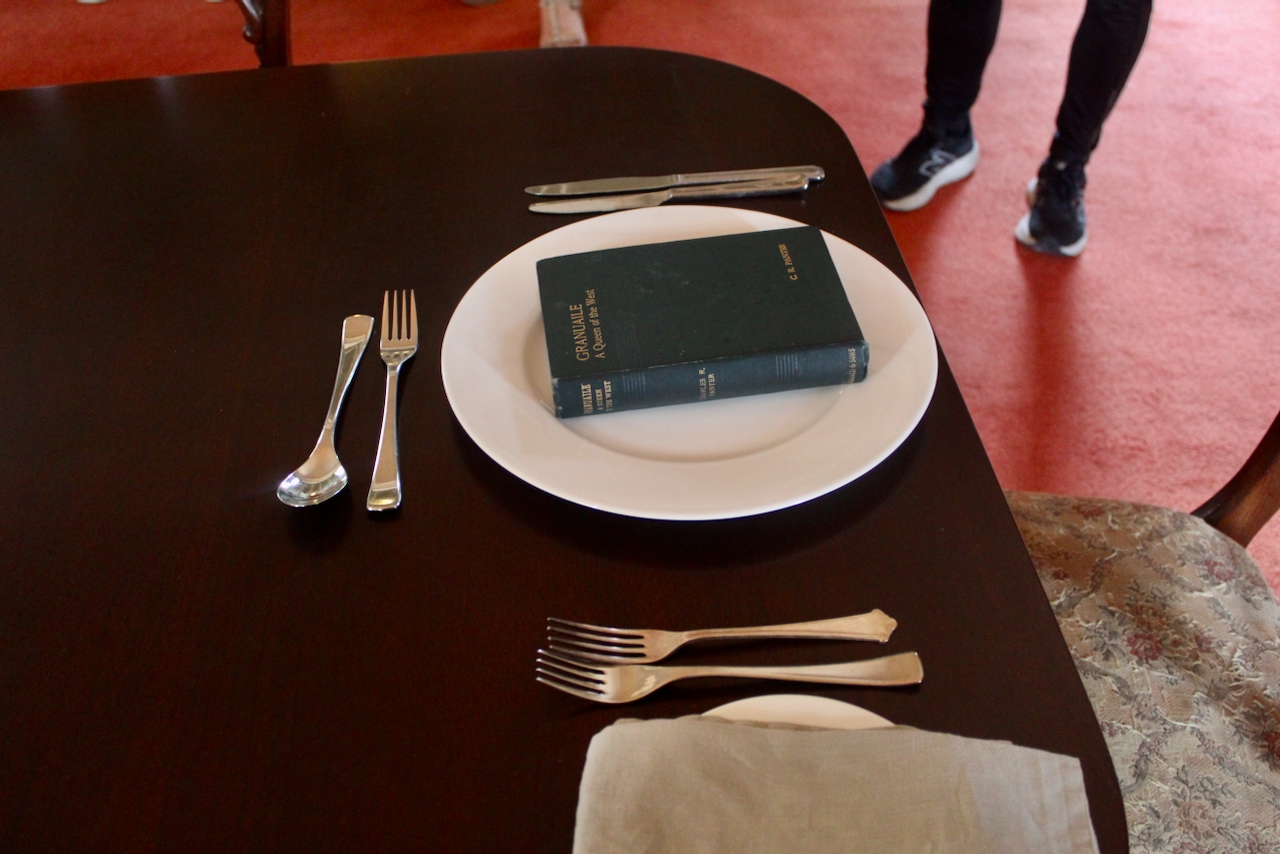
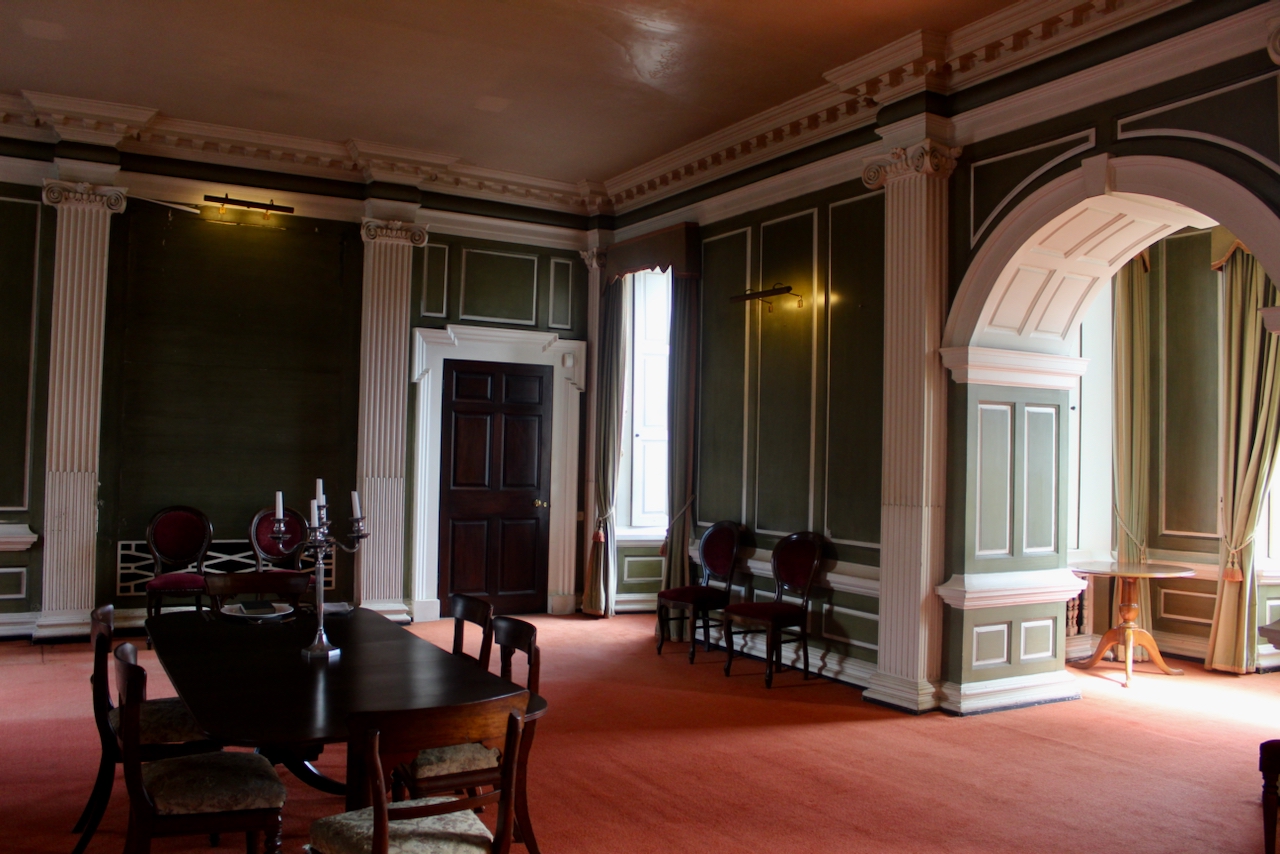
A spare place setting at Howth Castle. Photograph © Jennifer Winder-Baggot, www.irishhistorichouses.com
A spare place setting in the dining room at Howth Castle. Photograph © Jennifer Winder-Baggot, www.irishhistorichouses.com

Grace O’Malley was nicknamed ‘Grainne Mhaol’ (Grace the Bald) because when she was a child she cut her hair when her father Eoghan refused to take her on a voyage to Spain because he believed that a ship was no place for a girl. She cropped her hair to look like a boy. [6]

Grace O’Malley, 18th century Irish school, courtesy of Fonsie Mealy auction for Howth Castle, 2021.

The story is told that in around 1575, Grace O’Malley landed in Howth on her return from a visit to Queen Elizabeth. However, the Howth website tells us that Grace O’Malley did not visit Queen Elizabeth until 1593. She was in Dublin, however, in 1576, visiting the Lord Deputy. The story tells us that Grace O’Malley proceeded to Howth Castle, expecting to be invited for dinner, and to obtain supplies for her voyage home to Mayo. However, the gates were closed against her. This breached ancient Irish hospitality.

Later, when Lord Howth’s heir was taken to see her ship, she abducted him and brought him back to Mayo. She returned him after extracting a promise from Lord Howth that his gates would never be closed at the dinner hour, and that a place would always be laid for an unexpected guest.

Nicholas the 8th Baron fought with the British against the rebels in the Nine Years War (1594–1603). He fought alongside Henry Bagenal (d. 1598) against Hugh O’Neill (c.1540–1616) 2nd Earl of Tyrone, and accompanied Lord Deputy William Russell, later 1st Baron Russell of Thornhaugh, on his campaign against the O’Byrnes in County Wicklow. In 1601 he went to London to discuss Irish affairs, and the Queen formed a high opinion of him. She was also impressed by Howth’s eldest son Christopher, later 9th Baron Howth. [7]
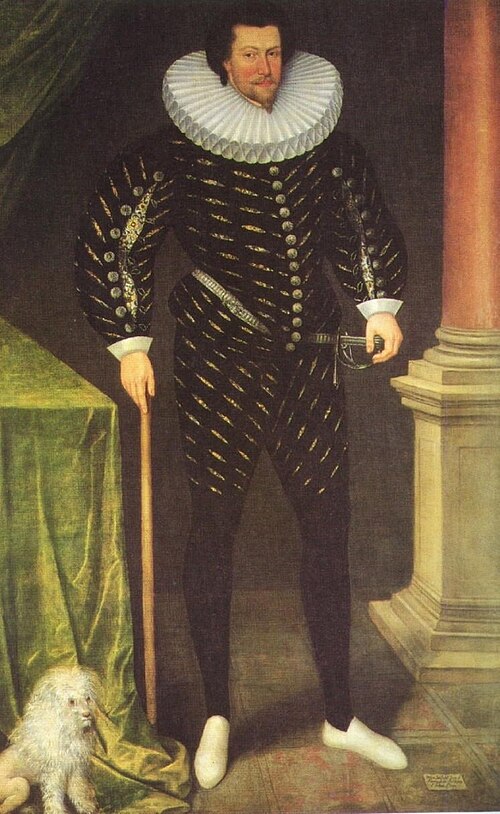
William Russell (d. 1613) 1st Baron of Thornhaugh, painting attributed to Marcus Gheeraerts the Younger. Nicholas the 8th Baron accompanied Lord Deputy William Russell 1st Baron Russell of Thornhaugh on his campaign against the O’Byrnes in County Wicklow.

Nicholas married Margaret, daughter of Christopher Barnewall of Turvey in Dublin. She gave birth to the heir, and her daughter Margaret married Jenico Preston, 5th Viscount Gormanston. When widowed, daughter Margaret married Luke Plunkett, 1st Earl of Fingall.

After his wife Margaret née Barnewall’s death, Nicholas married secondly Mary, daughter of Sir Nicholas White of Leixlip, Master of the Rolls in Ireland, who lived in Leixlip Castle. See my entry https://irishhistorichouses.com/2020/09/04/leixlip-castle-county-kildare-desmond-guinnesss-jewelbox-of-treasures/

Nicholas and Margaret’s son Christopher (d. 1619) succeeded as 9th Baron Howth. Christopher 9th Baron also fought against the rebels in the Nine Years War. At some point Christopher converted to Protestantism. He conducted a successful siege at Cahir Castle in County Tipperary against Catholic Butlers. See my entry https://irishhistorichouses.com/2024/03/29/cahir-castle-county-tipperary-an-office-of-public-works-property/

In 1599, Christopher St. Lawrence 9th Baron was one of six who accompanied Robert Devereux 2nd Earl of Essex on his unauthorised return to England, riding with the earl to the royal palace at Nonesuch, where Essex burst in to Queen Elizabeth’s bedchamber. 
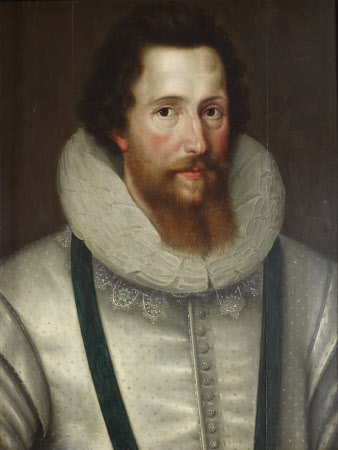
Robert Devereux, 2nd Earl of Essex (1566-1601) by Marcus Geeraerts the younger (Bruges 1561/2 – London 1635/6) and Studio, dated, top left: 1599. From a full-length portrait at Woburn Abbey (Duke of Bedford), courtesy of National Trust.

Rumour circulated that Christopher St. Lawrence pledged to kill Essex’s arch-rival Sir Robert Cecil. The Dictionary of Irish Biography tells us:

In late October he was summoned before the English privy council, where he denied having threatened Cecil’s life. One of the counsellors then referred to his Irishness, the clear implication being that as such he could not be trusted, at which he declared: ‘I am sorry that when I am in England, I should be esteemed an Irish Man, and in Ireland, an English Man; I have spent my blood, engaged and endangered my Liffe, often to doe Her Majestie Service, and doe beseech to have yt soe regarded’ (Collins, Letters and memorials of state, i, 138). His dignified and uncharacteristically tactful response eloquently summed up the quandary of the partially gaelicised descendants of the medieval invaders of Ireland (the Old English), who were regarded with suspicion by the Gaelic Irish and English alike. It also mollified his accusers, who, in any case, recognised that his martial prowess was urgently required in Ireland. Prior to his return to Dublin on 19 January, the queen reversed an earlier decision to cut off his salary, and commended him to the authorities in Dublin.” [8]

Christopher married Elizabeth Wentworth, daughter of Sir John Wentworth of Little Horkesley and Gosfield Hall, Essex, but by 1605 they separated, and the Privy Council ruled that he must pay for her maintenance. The St. Lawrence family inherited estates near Colchester from her family.

By 1601, while fighting in Ulster alongside the Lord Deputy Charles Blount, 8th Baron Mountjoy, many of the men Christopher commanded were Gaelic Irish. Increasingly dissatisfied, Christopher St. Lawrence began to alienate leading members of the political establishment.
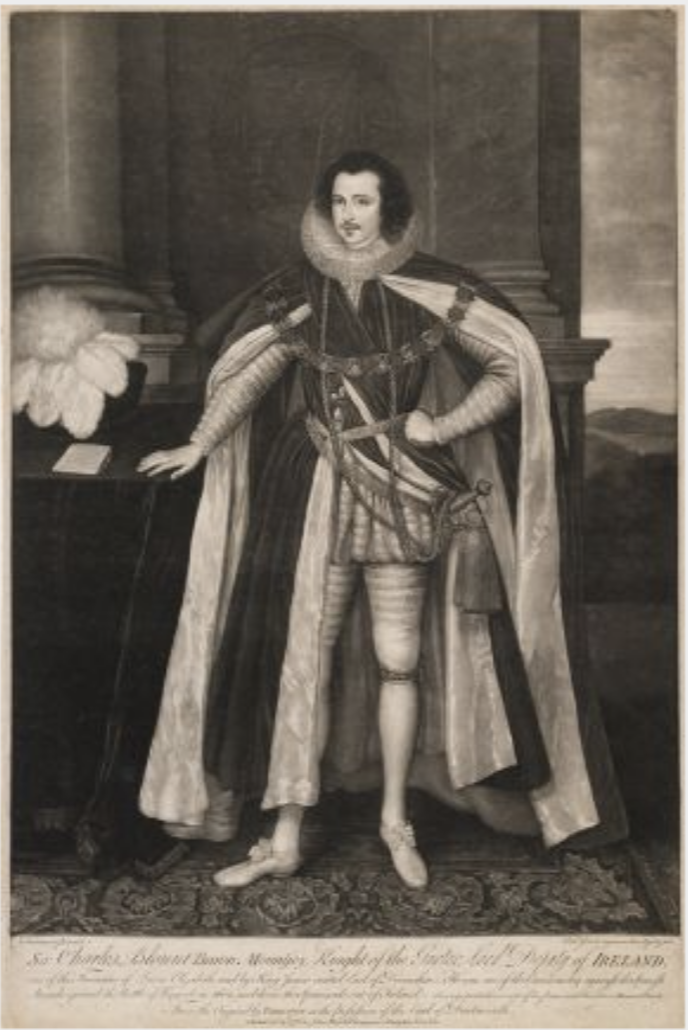
Charles Blount (1563-1606), 8th Baron Mountjoy, Lord Deputy of Ireland, 1775, engraver Valentine Green after Paulus Van Somer; photograph courtesy of National Gallery of Ireland.

In 1605 the government began prosecuting prominent Catholics for failing to attend Church of Ireland services. Although Protestant, St. Lawrence’s family connections led him to identify with the Catholic opposition. The Dictionary of Irish Biography tells us that he became involved in the planning of an uprising in late 1605, along with Hugh O’Neill, despite his father having previously battled against O’Neill. [8]
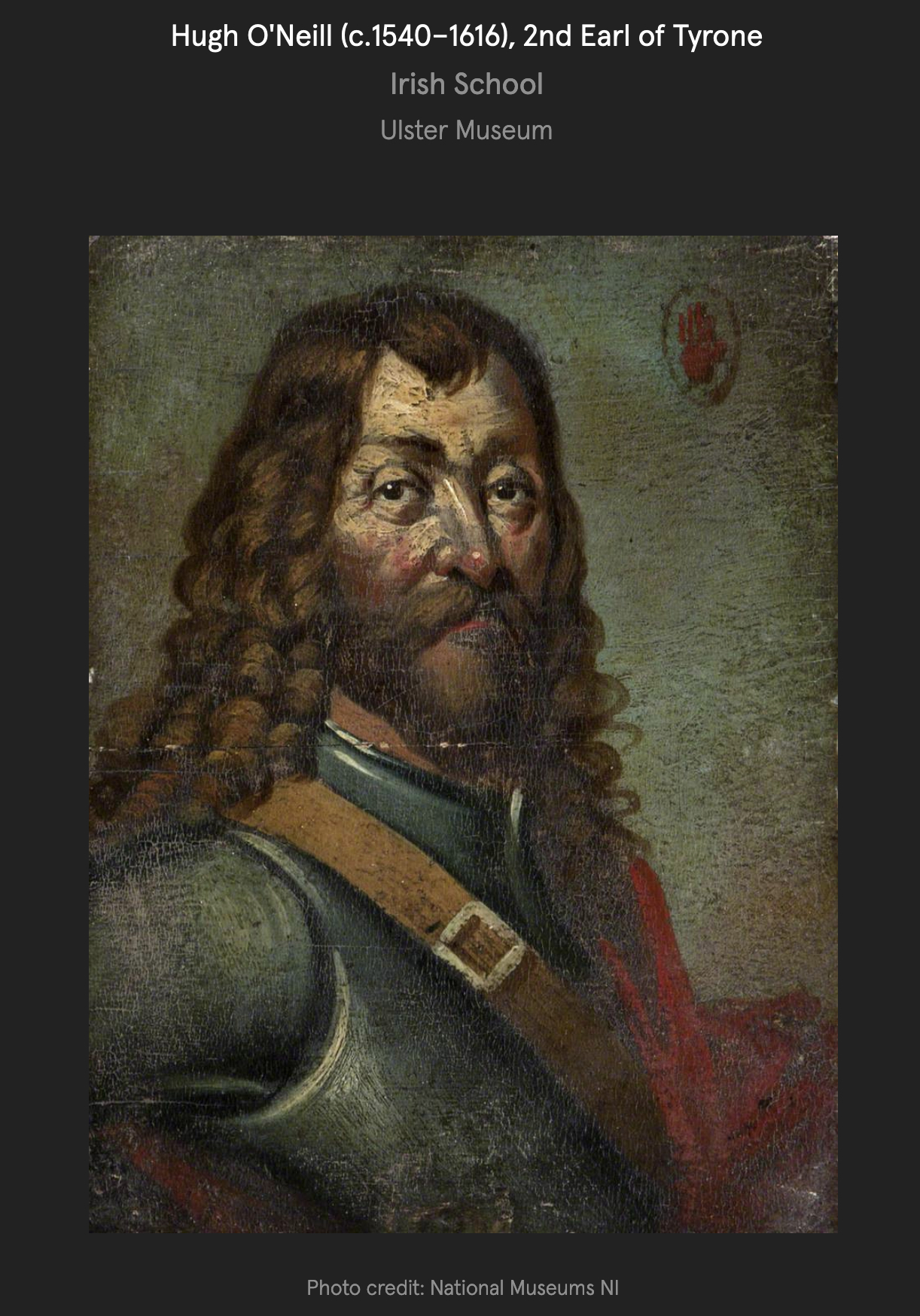
Hugh O’Neill (c. 1540-1616) 2nd Earl of Tyrone, courtesy of National Museums Northern Ireland. In Irish Portraits 1660-1860 by Anne Crookshank and the Knight of Glin, we are told that this was painted during his exile in Rome.

Low on funds, and not having yet inherited Howth, he sought to join the Spanish army in Flanders, where an Irish regiment had been established in 1605. He wanted support for a rebellion against the British crown. However, perhaps realising that an uprising would fail, he turned into an informant for the government. The Dictionary of Irish Biography tells us that he sought to consolidate ties to the establishment by arranging the marriage of his son and heir Nicholas to a daughter of the Church of Ireland bishop of Meath, George Montgomery, in 1615.
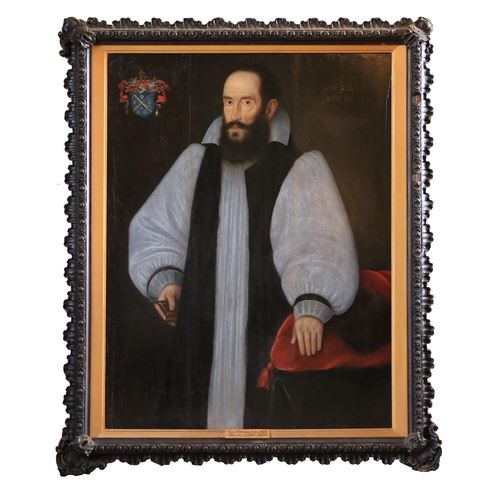
George Montgomery, Bishop of Meath (c. 1566-1621), courtesy of Fonsie Mealy auction 2021.
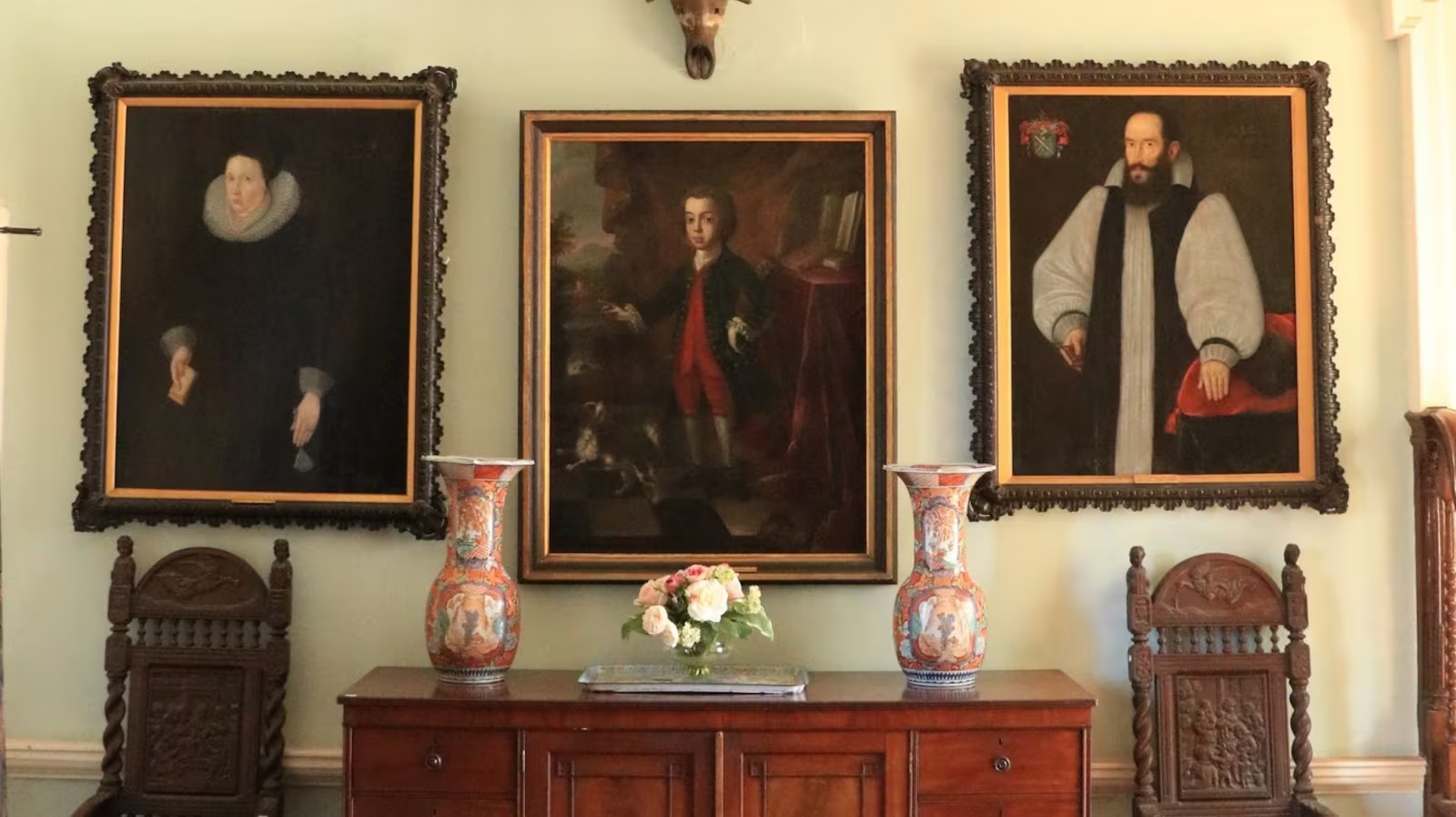
Inside Howth Castle before the interiors auction, photograph courtesy of Irish Times, Saturday August 14th 2021. Pictured here is George Montgomery, Bishop of Meath (c. 1566-1621). On the left is a painting of George Montgomery’s wife Susan Steyning (1573-1614). In the middle is William St. Lawrence, son of William, 14th Baron Howth c 1740, Attributed to John Lewis (fl 1745-60). The auction catalogue tells us: “Born sometime around 1732, William was given the same name as his father, William St. Lawrence, 14th Baron Howth. Although William’s mother, Lucy Gorges, was twenty years younger than her husband, they were happily married and had three children; a daughter named Mary, and two sons, Thomas (who became 1st Earl of Howth), and William, the sitter in this portrait. The St. Lawrences were friends of Jonathan Swift, who was a frequent visitor to Howth Castle and also to Kilfane, their country house in Co. Kilkenny, where William Snr indulged his passion for horses and hunting…The attribution of this painting to the Dublin artist John Lewis, in Toby Bernard’s “Making the Grand Figure: Lives and Possessions in Ireland 1641-1770”, is convincing. Although not well-known as a portrait painter, Lewis was at the centre of Dublin’s theatre and cultural life in the mid eighteenth century, when he worked as a scene painter at the Smock Alley Theatre. He painted portraits of actor Peg Woffington, and dramatist Henry Brooke. While on a visit to Quilca House in Co. Cavan with Thomas Sheridan, he painted mural decorations, with images of Milton, Shakespeare and Jonathan Swift. He may have painted the portrait of William St. Lawrence after the boy’s untimely death. Although destined for a life as a professional soldier, and appointed an ensign in the army while still just fourteen years old, William’s military career was shortlived. While still a teenager, in April 1749, he died of smallpox. Dr. Peter Murray 2021.”

Christopher acted as a secret agent for the Crown, while pretending to be part of the rebellion against the Crown. He was afraid of being discovered as a traitor. The Dictionary of Biography has a long entry about his and his double dealings. He died in 1619 at Howth and was buried at Howth abbey on 30 January 1620. He and his wife had two sons and a daughter; he was succeeded by his eldest son, Nicholas. [8]

Nicholas St. Lawrence (d. 1643/44) 10th Baron Howth added the top floor above the hall of Howth Castle sometime prior to 1641. He and his wife Jane née Montgomery had two daughters: Alison, who married Thomas Luttrell of Luttrellstown Castle (now a wedding venue), and Elizabeth.

Luttrellstown Castle, courtesy of Luttrellstown Castle Resort for Failte Ireland 2019, Ireland’s Content Pool. [9]

Nicholas’s brother Thomas (d. 1649) succeeded as 11th Baron. Thomas’s son, William St. Lawrence (1628-1671), succeeded as 12th Baron Howth. The 12th Baron was appointed Custos Rotulorum for Dublin in 1661, and sat in the Irish House of Lords.

Nicholas the 10th Baron’s daughter Elizabeth married, as her second husband, her cousin William St. Lawrence 12th Baron Howth. She gave birth to the 13th Baron Howth.

Thomas St. Lawrence (1659-1727) 13th Baron Howth inherited the title when he was only twelve years old. Thomas Butler, 6th Earl of Ossory was appointed by his father as his legal guardian.
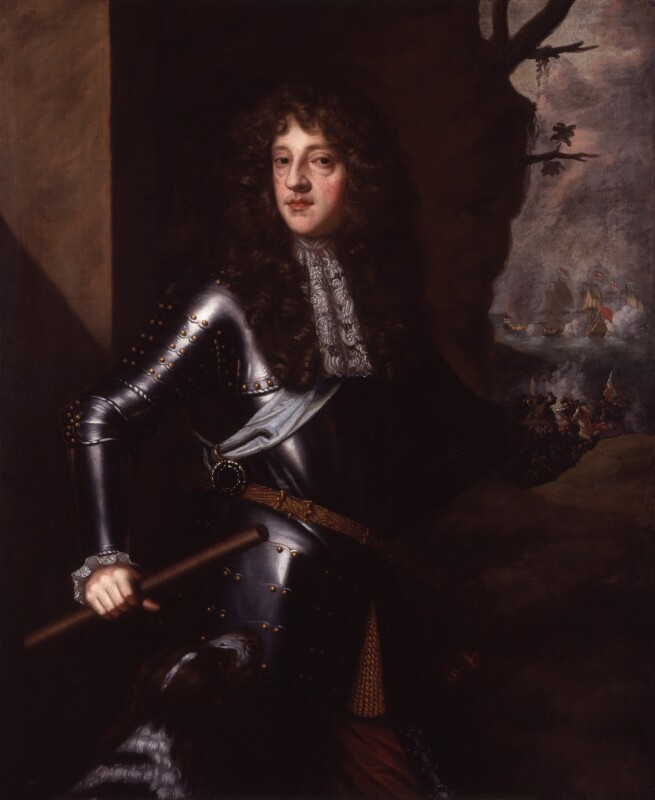
Thomas Butler (1634-1680) 6th Earl of Ossory, studio of Sir Peter Lely, circa 1678, courtesy of National Portrait Gallery NPG 371. Second son of the Duke and Duchess of Ormond and father of 2nd Duke of Ormonde. He was appointed as Thomas St. Lawrence (1659-1727) 13th Baron Howth’s legal guardian.

Thomas St. Lawrence married Mary, daughter of Henry Barnewall, 2nd Viscount Barnewall of Kingsland, County Dublin. After first backing King James II, in 1697 he signed the declaration in favour of King William III.

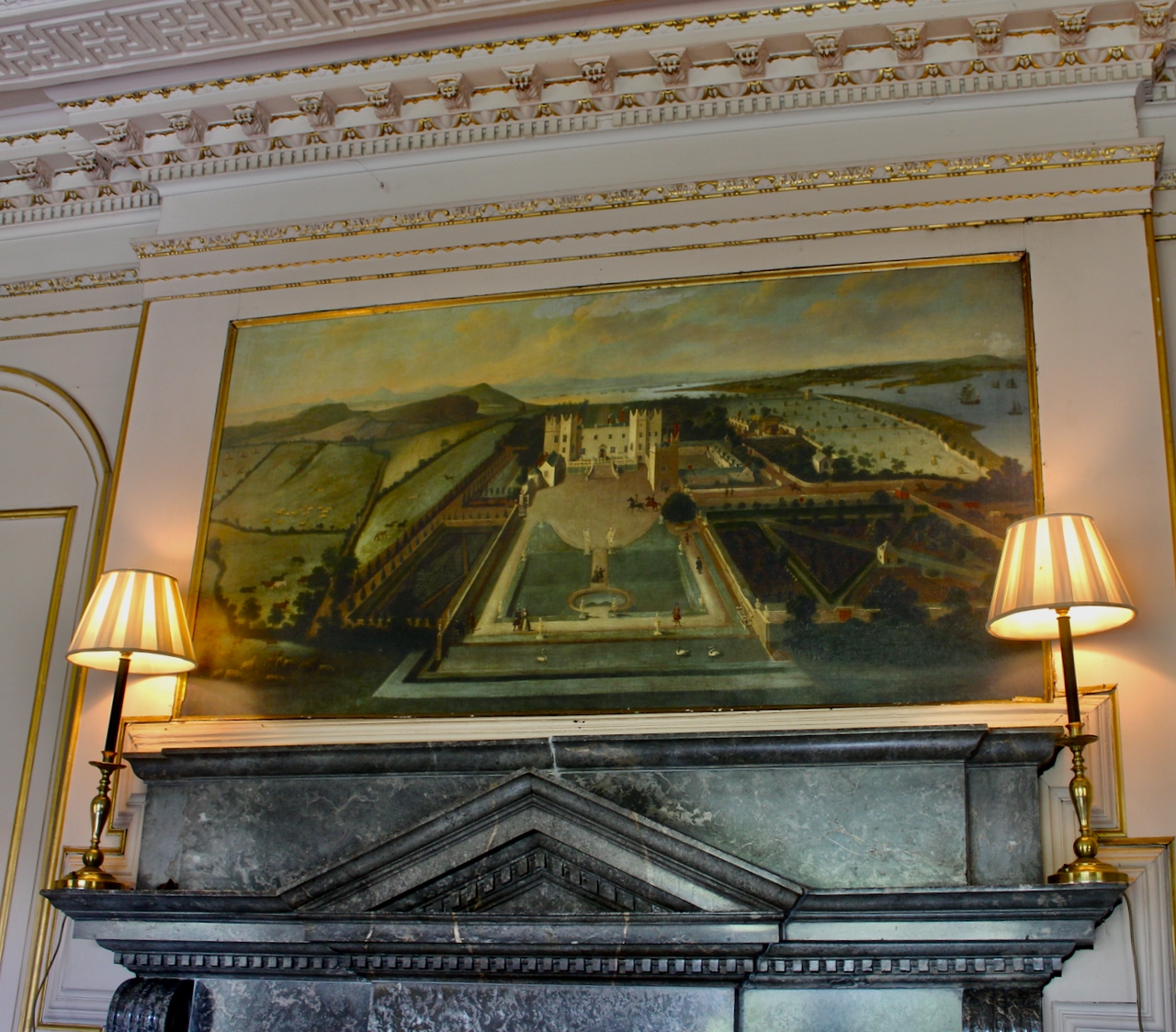
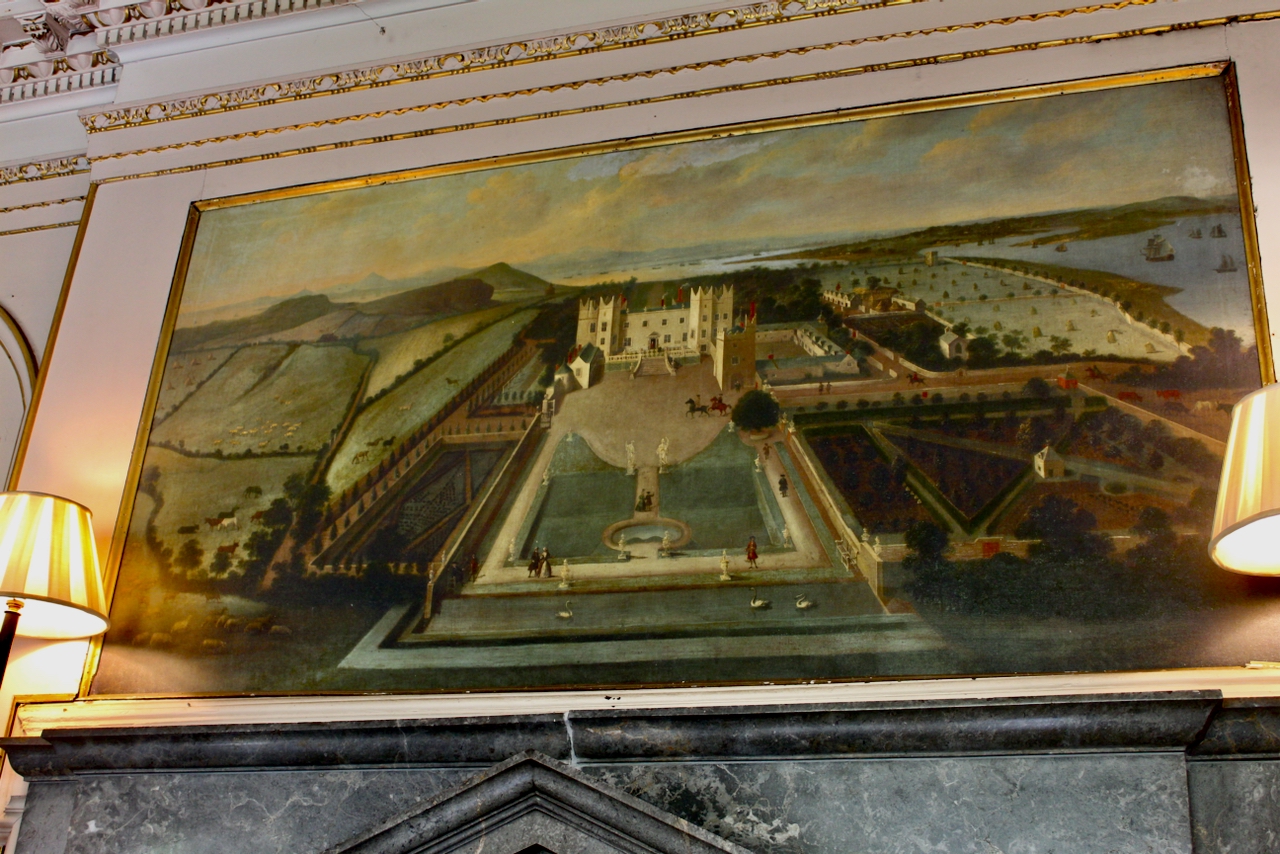
His son William (1688-1748) succeeded as 14th Baron, and carried out extensive work on Howth Castle, completing the project in 1738. A painting dating from this period commemorates the work.
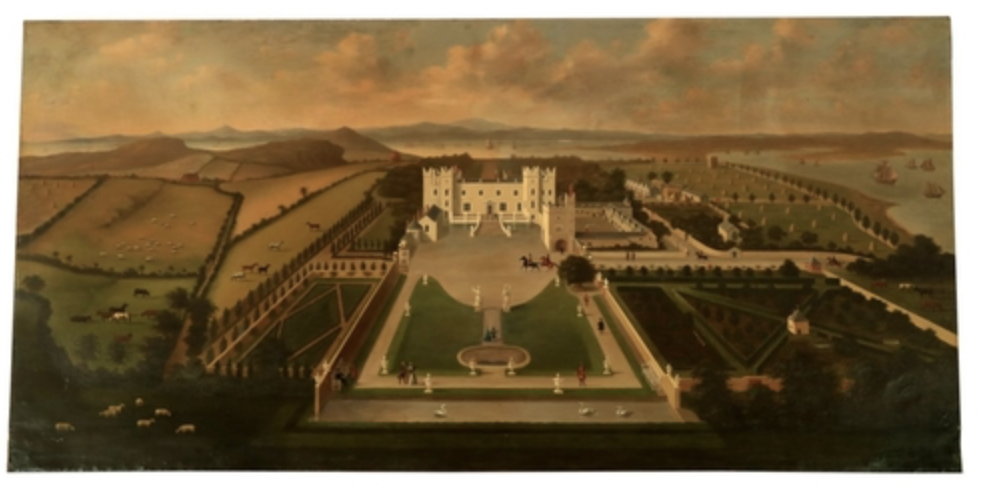
Dating from around 1740, this bird’s eye view of Howth Demesne commemorates the extensive rebuilding of Howth Castle, a project completed in 1738 under the direction of William St. Lawrence, 14th Baron of Howth. Attributed to William Van der Hagen (fl. 1720-1745) or Joseph Tudor (d. 1759). Photograph courtesy of Sales Catalogue, Fonsie Mealy auction of Howth Castle contents, 2021.

Mark Bence-Jones writes that the castle is “Basically a massive medieval keep, with corner towers crenellated in the Irish crow-step fashion, to which additions have been made through the centuries. The keep is joined by a hall range to a tower with similar turrets which probably dates from early C16; in front of this tower stands a C15 gatehouse tower, joined to it by a battlemented wall which forms one side of the entrance court.” [see 1]
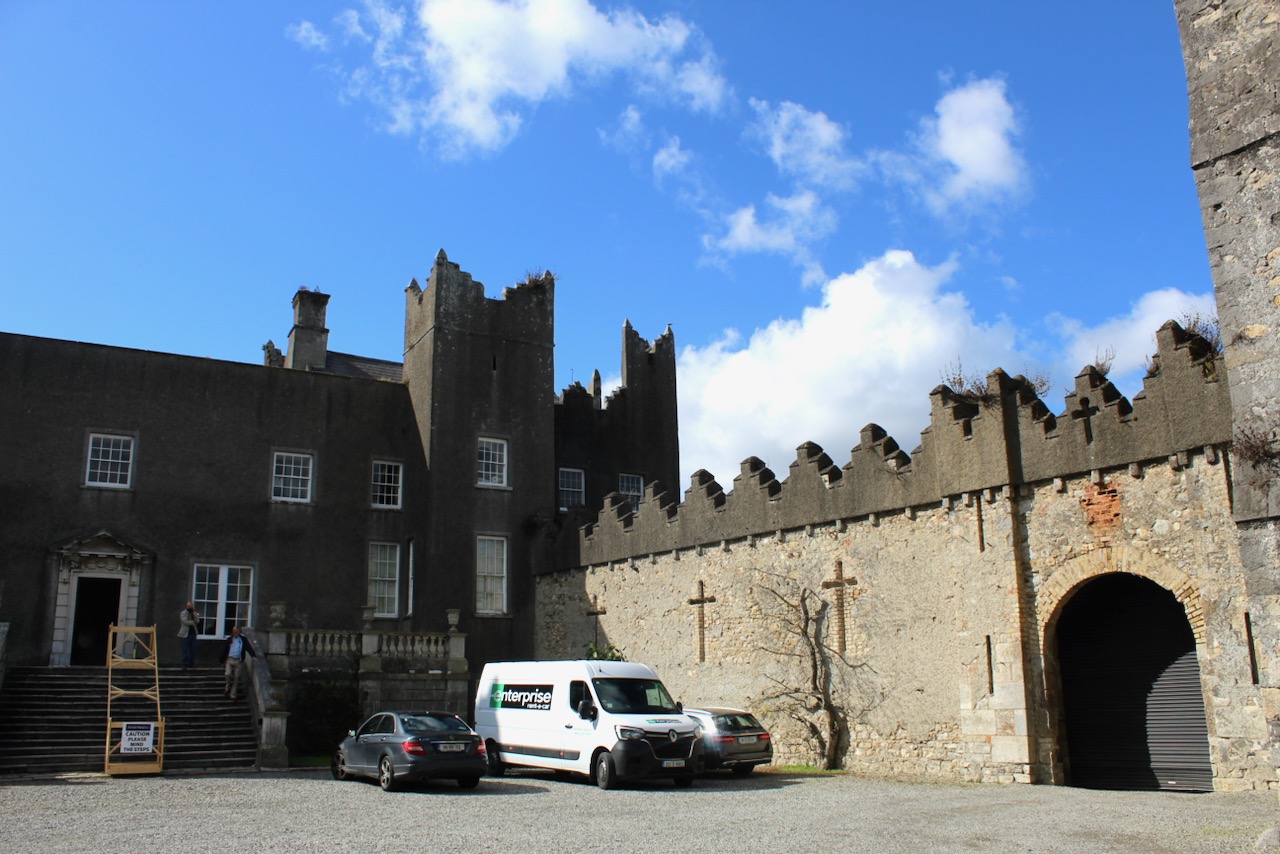
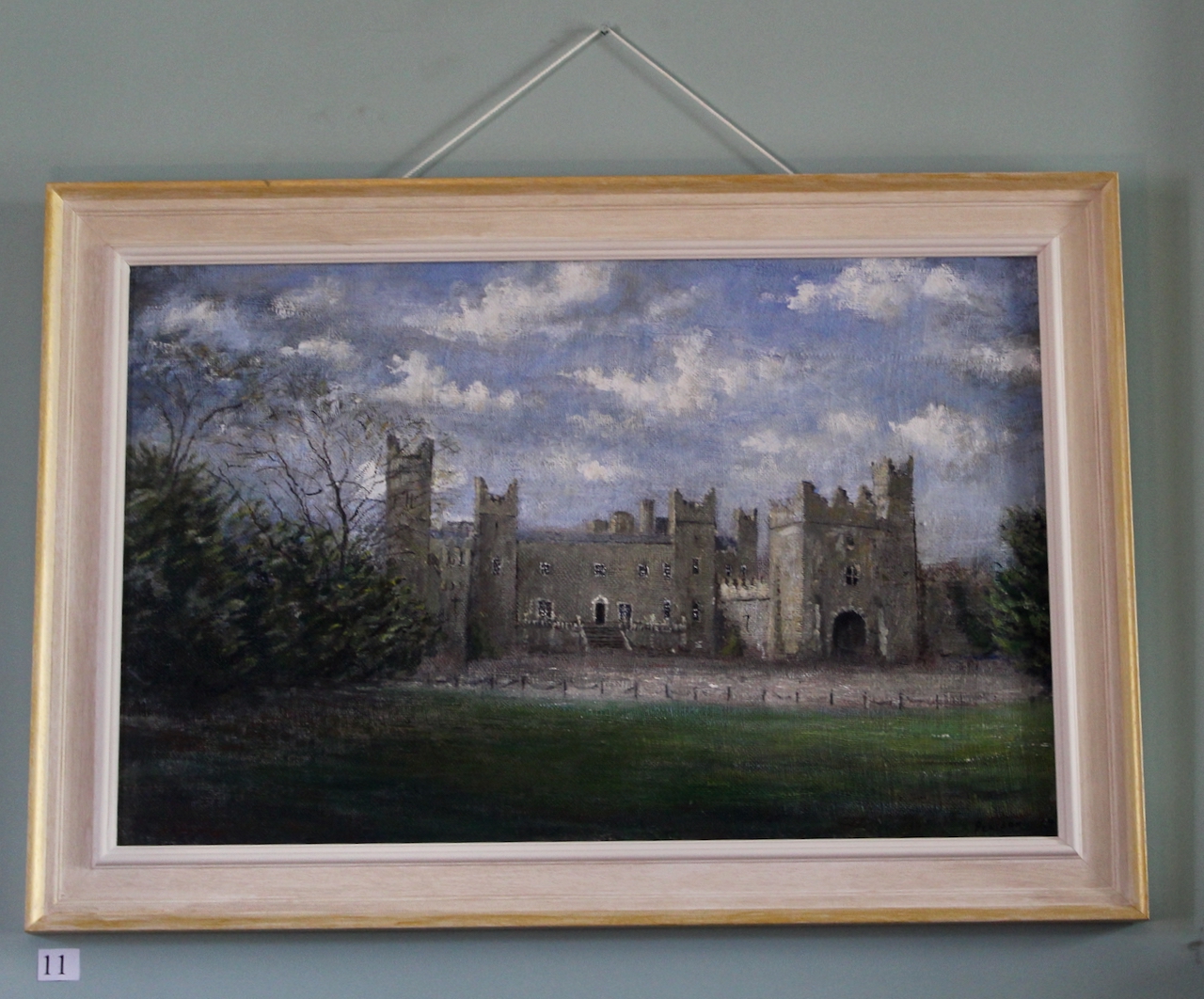
Howth Castle on the day we visited for the sale of its library. Photograph © Jennifer Winder-Baggot, www.irishhistorichouses.com
Howth Castle, Dublin, painting by Peter Pearson.

Mark Bence-Jones describes the central part of the front of the house:

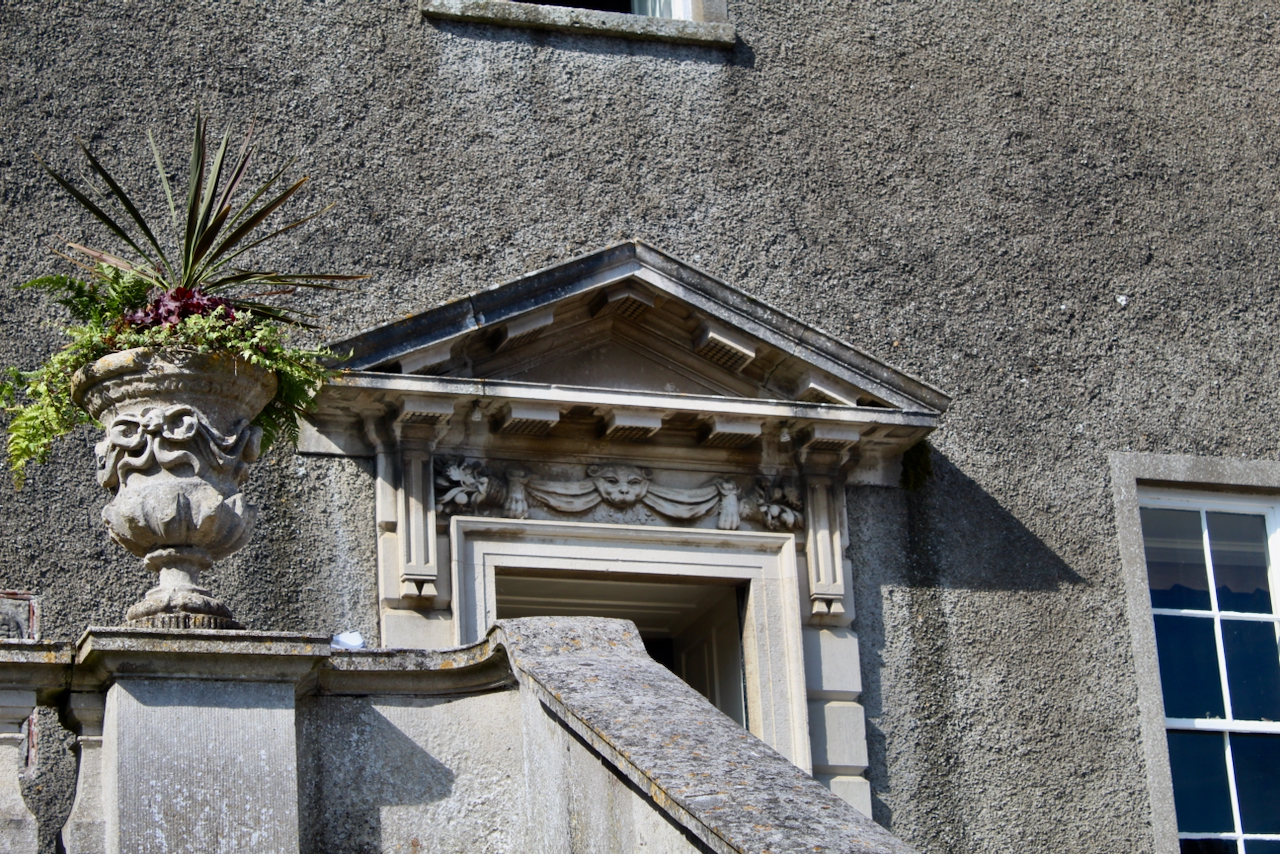
The hall range, in the centre, now has Georgian sash windows and in front of it runs a handsome balustraded terrace with a broad flight of steps leading up to the entrance door, which has a pedimented and rusticated Doric doorcase. These Classical features date from 1738, when the castle was enlarged and modernized by William St. Lawrence, 14th Lord Howth, who frequently entertained his friend Dean Swift here.” [see 1]
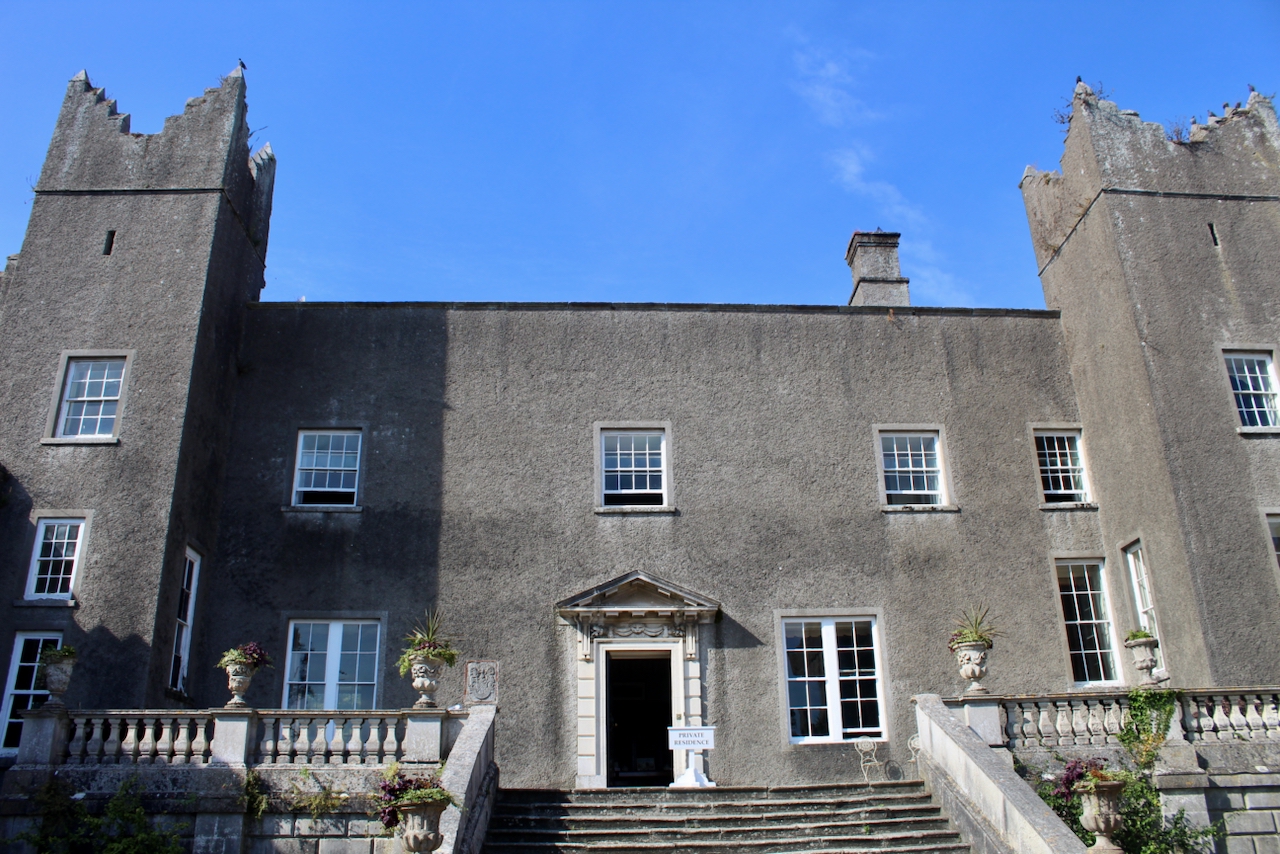
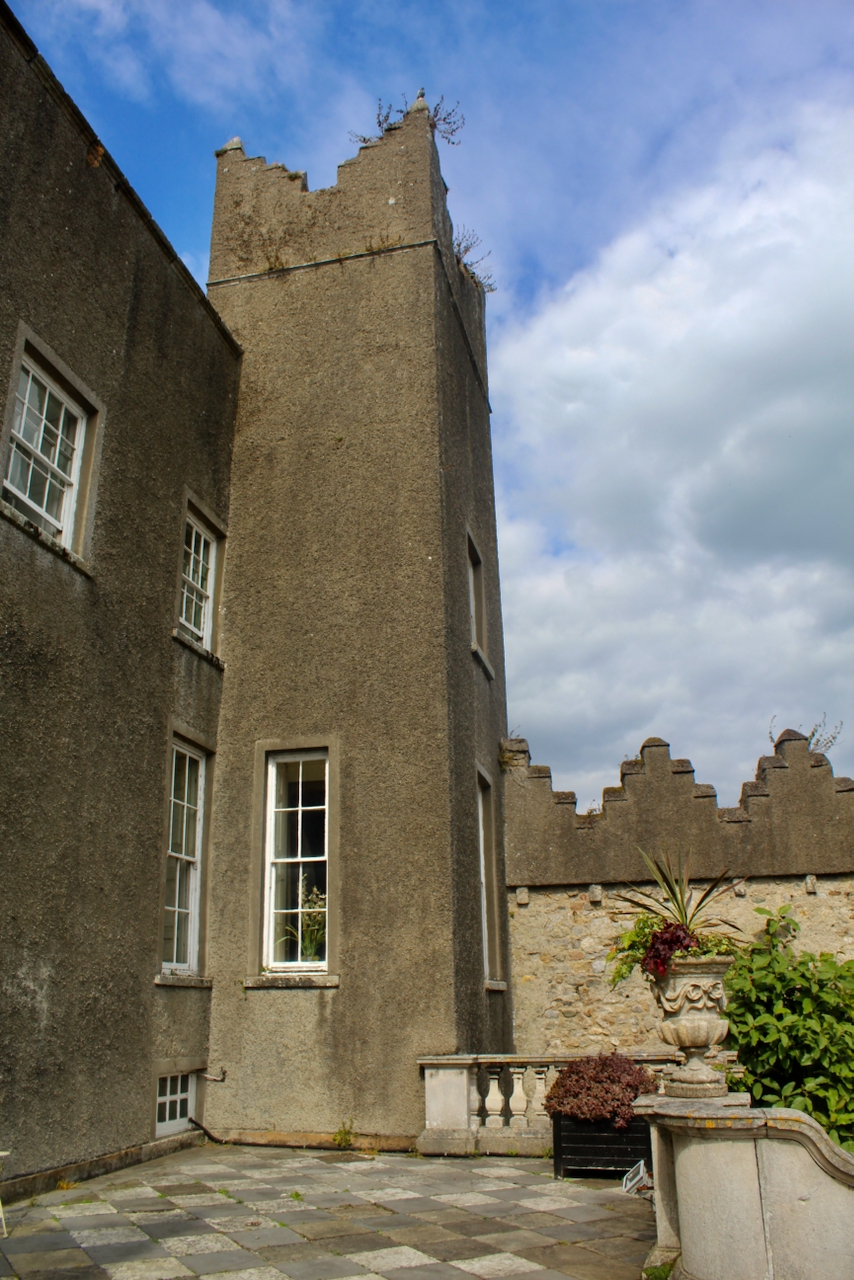
The hall range of Howth Castle. Photograph © Jennifer Winder-Baggot, www.irishhistorichouses.com
Howth Castle. Photograph © Jennifer Winder-Baggot, www.irishhistorichouses.com
Our tour guide Daniel at Howth Castle, looking out from the balustraded terrace at the entrance. Photograph © Jennifer Winder-Baggot, www.irishhistorichouses.com
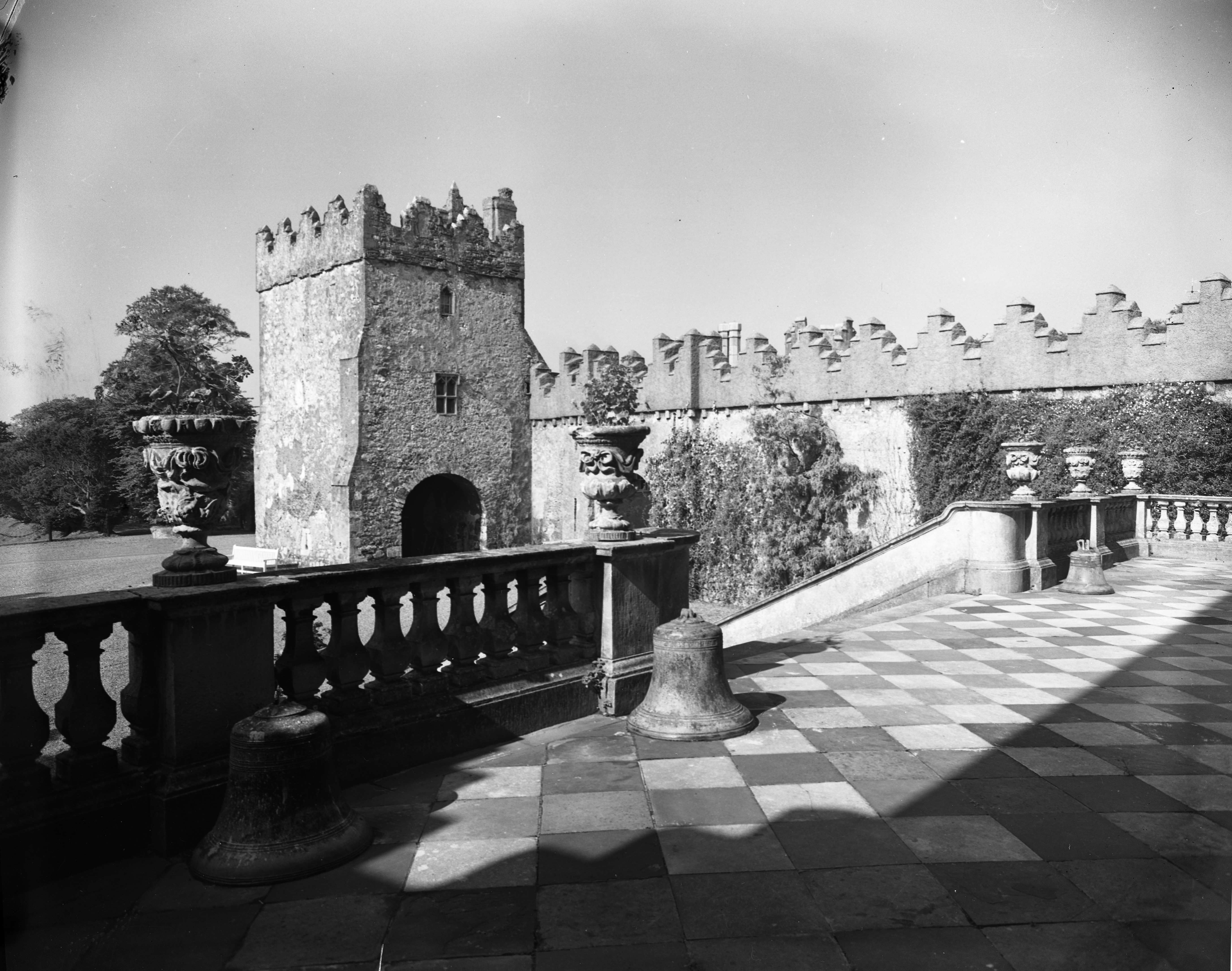
Howth Castle, Dublin City Library and Archives [10]. I think the photograph is reversed, as the Gate Tower should be on the left, when looking out from the balustraded terrace.
Looking out from the balustraded terrace at the entrance to Howth Castle, toward the Gate Tower. Photograph © Jennifer Winder-Baggot, www.irishhistorichouses.com
Howth Castle: the range on the right side when looking out from the front of the castle. This is the East wing, or Tower House – you can see the tower better from the other side, see the photograph below, which was added by William St. Lawrence (1628-1671), 12th Baron Howth or 25th Lord of Howth as the website refers to him, sometime between the Restoration in 1660 and his death in 1671. The tower at the end, called the Kenelm Tower, was not added until the Victorian period, by the 3rd Earl of Howth. Photograph © Jennifer Winder-Baggot, www.irishhistorichouses.com
The other side of the East wing with its Tower House, added by William St. Lawrence (1628-1671), 12th Baron Howth sometime between the Restoration in 1660 and his death in 1671. Howth Castle, Dublin City Library and Archives. (see [10])
Howth Castle: this is the medieval tower house with the East wing and Tower House. The narrow tower at the end, called the Kenelm Tower, was not added until the Victorian period, by the 3rd Earl of Howth. Photograph courtesy of Howth Castle instagram.
Howth Castle: the Kenelm Tower. Photograph © Jennifer Winder-Baggot, www.irishhistorichouses.com
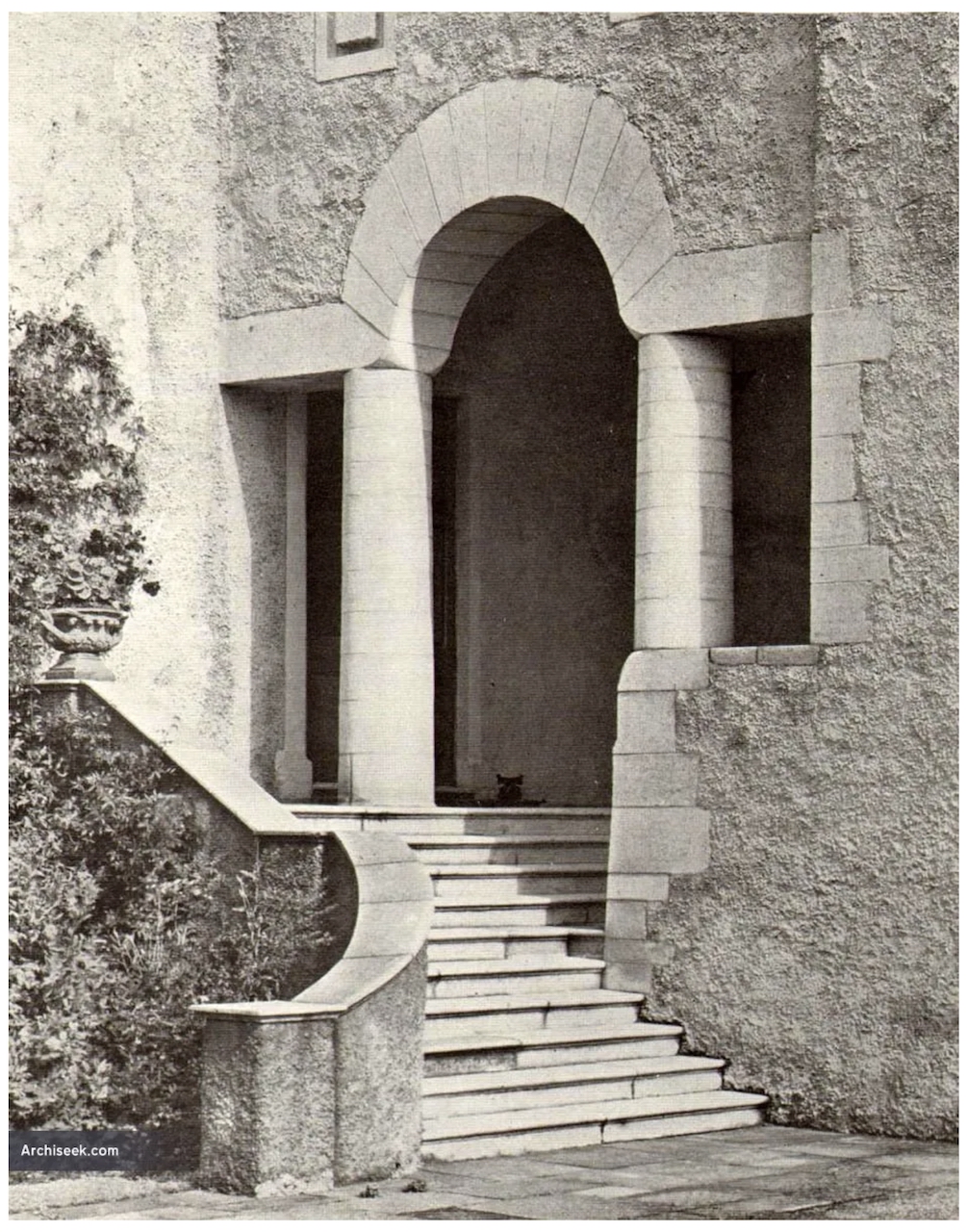
Front entrance to Howth Castle. Photograph © Jennifer Winder-Baggot, www.irishhistorichouses.com
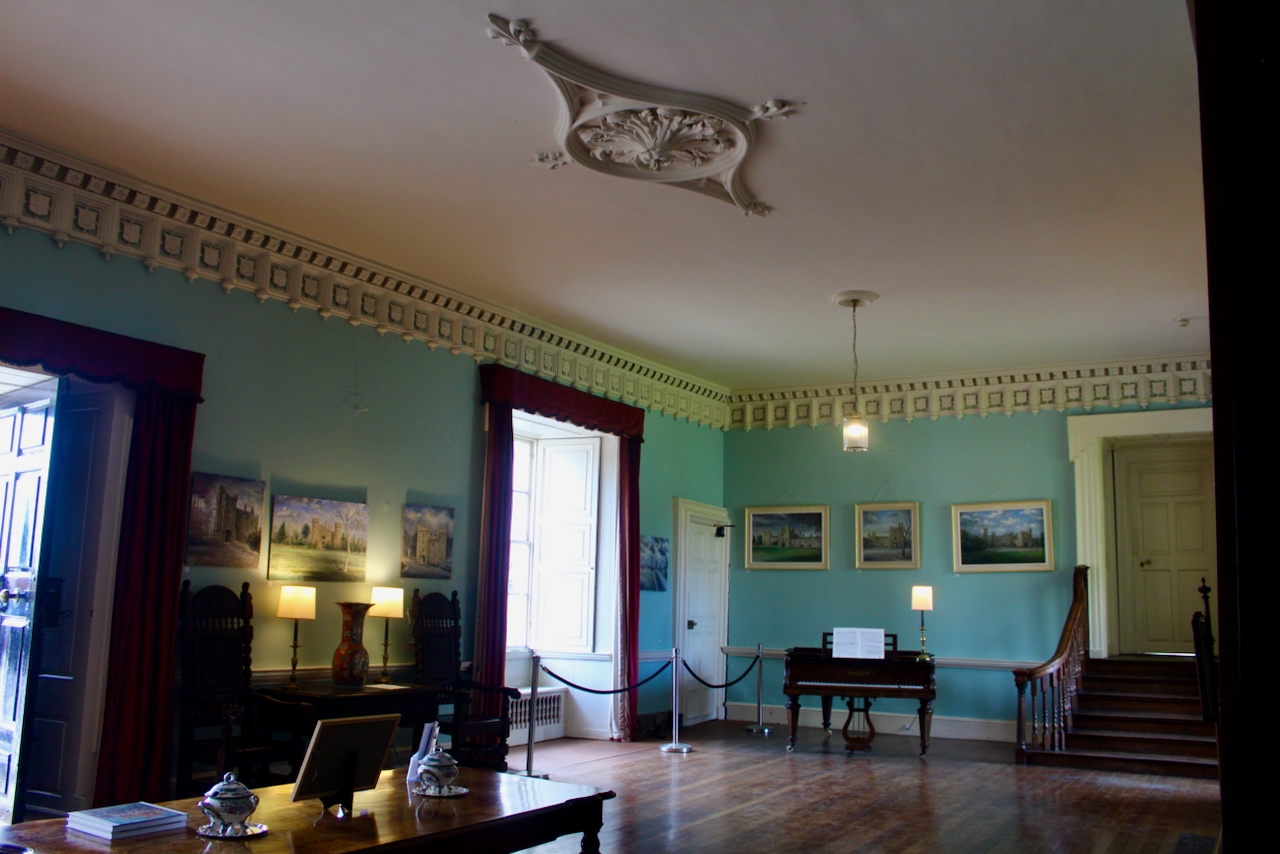
Front hall, Howth Castle. Photograph © Jennifer Winder-Baggot, www.irishhistorichouses.com

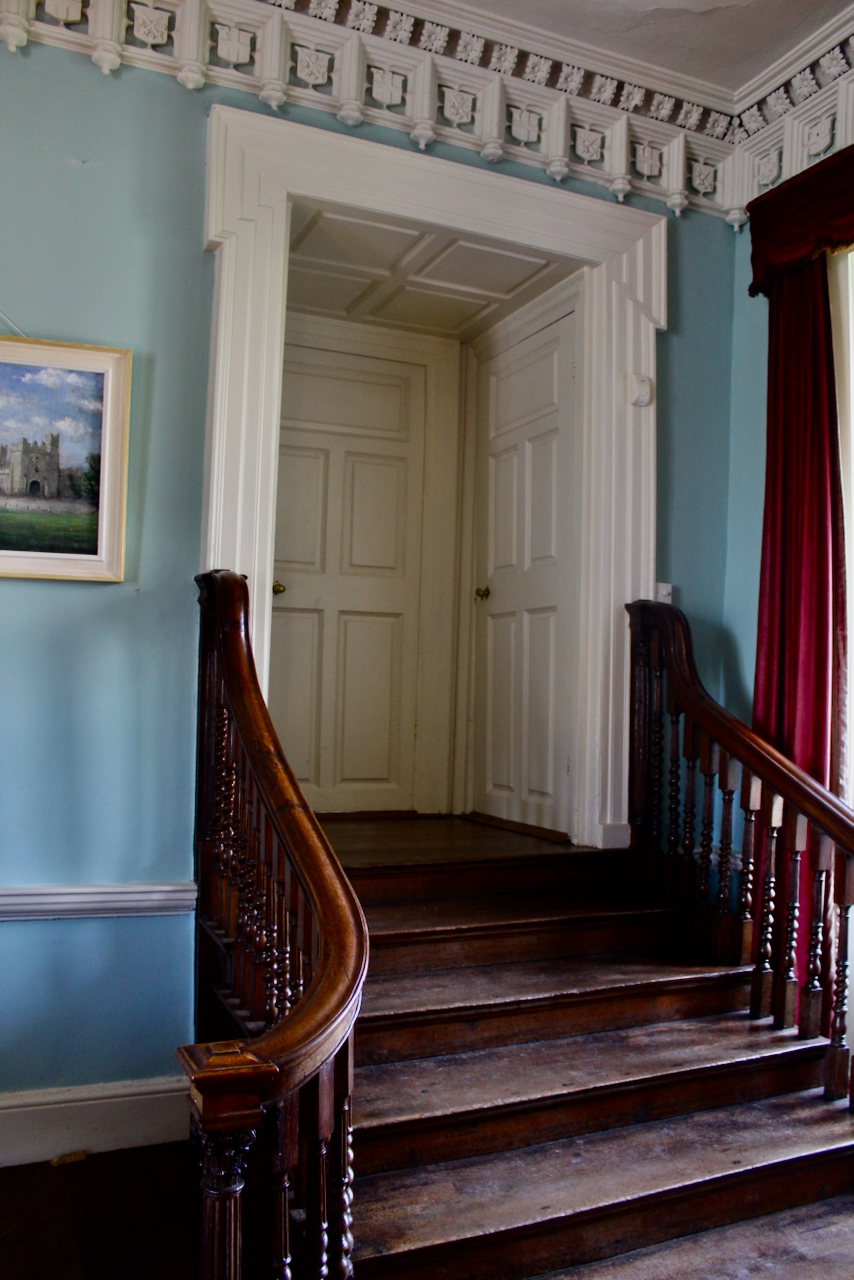
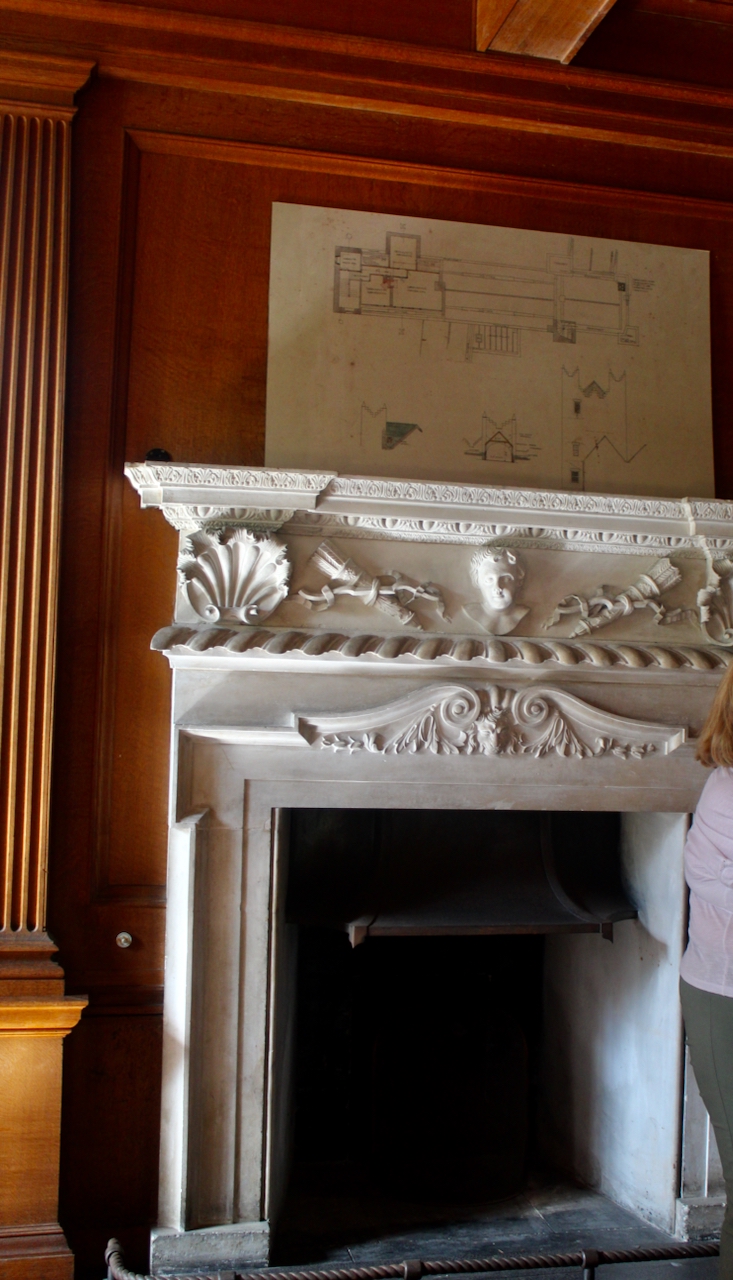
Mark Bence-Jones describes: “The hall has eighteenth century doorcases with shouldered architraves, an early nineteenth century Gothic frieze and a medieval stone fireplace with a surround by Lutyens.” [see 1] The hall was added to the medieval tower in 1558 by Christopher, who is the 20th Lord of Howth according to the Howth Castle website, or the 7th Baron. It was later adapted by Edwin Lutyens in around 1911.
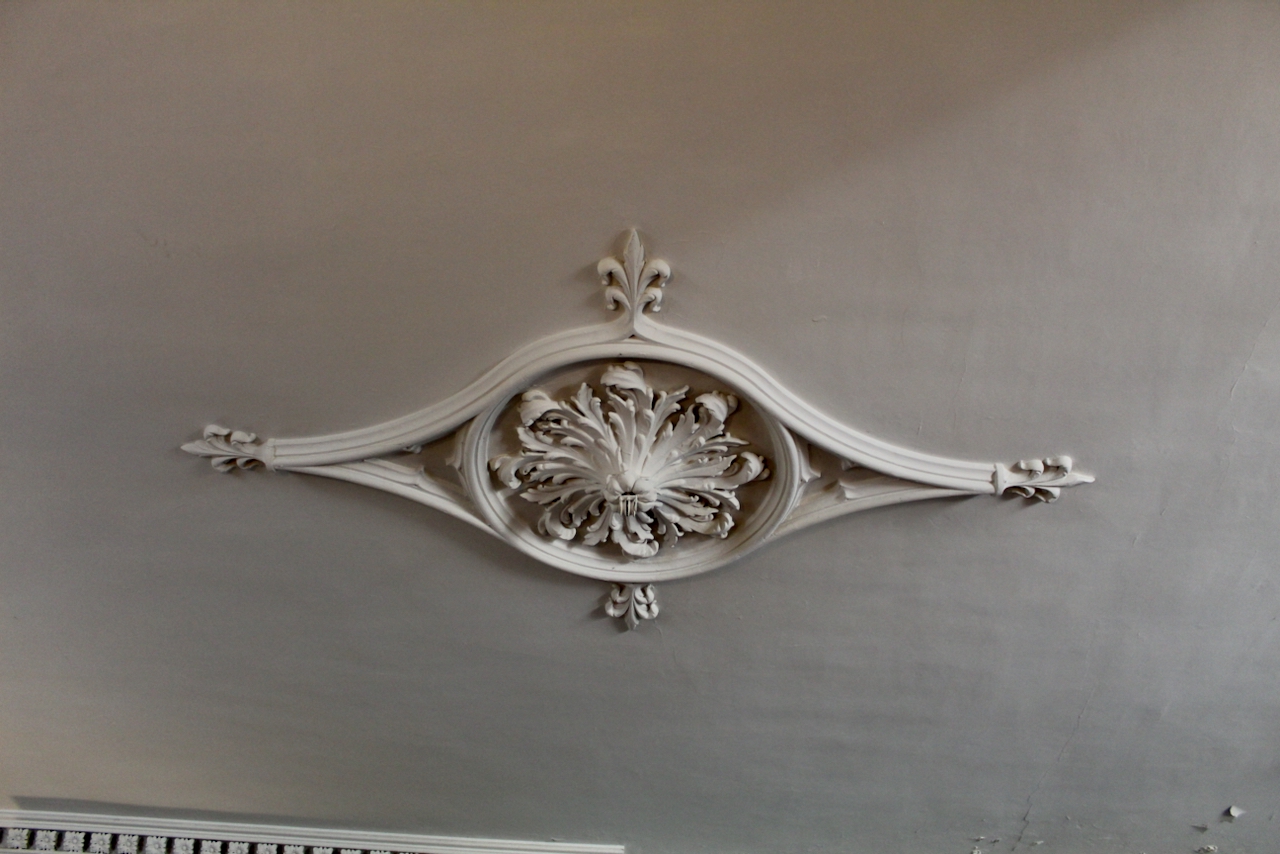
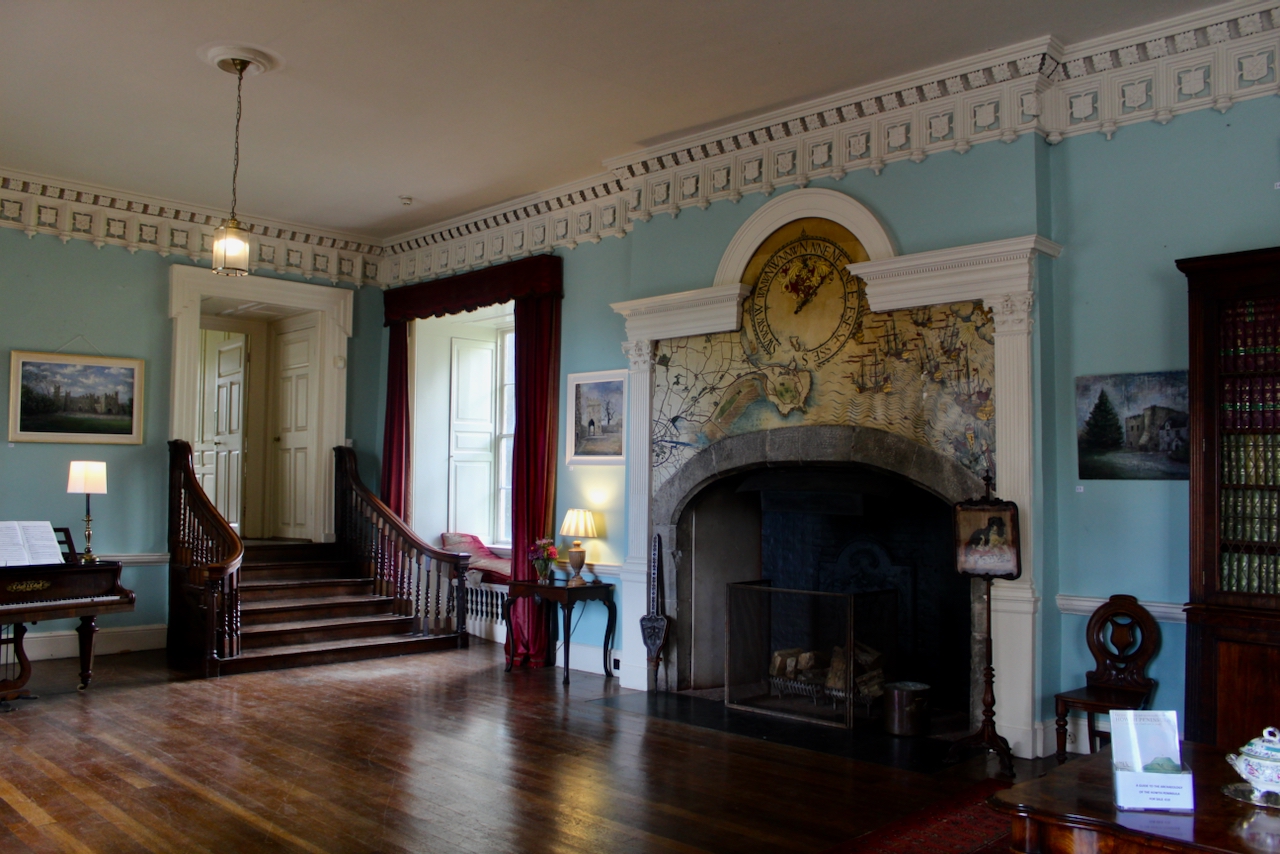
Ceiling of Front hall, Howth Castle. Photograph © Jennifer Winder-Baggot, www.irishhistorichouses.com
Front hall, Howth Castle. Photograph © Jennifer Winder-Baggot, www.irishhistorichouses.com

In Irish Houses and Gardens. From the Archives of Country Life, Sean O’Reilly writes about the article written about Howth Castle by Weaver for Country Life:

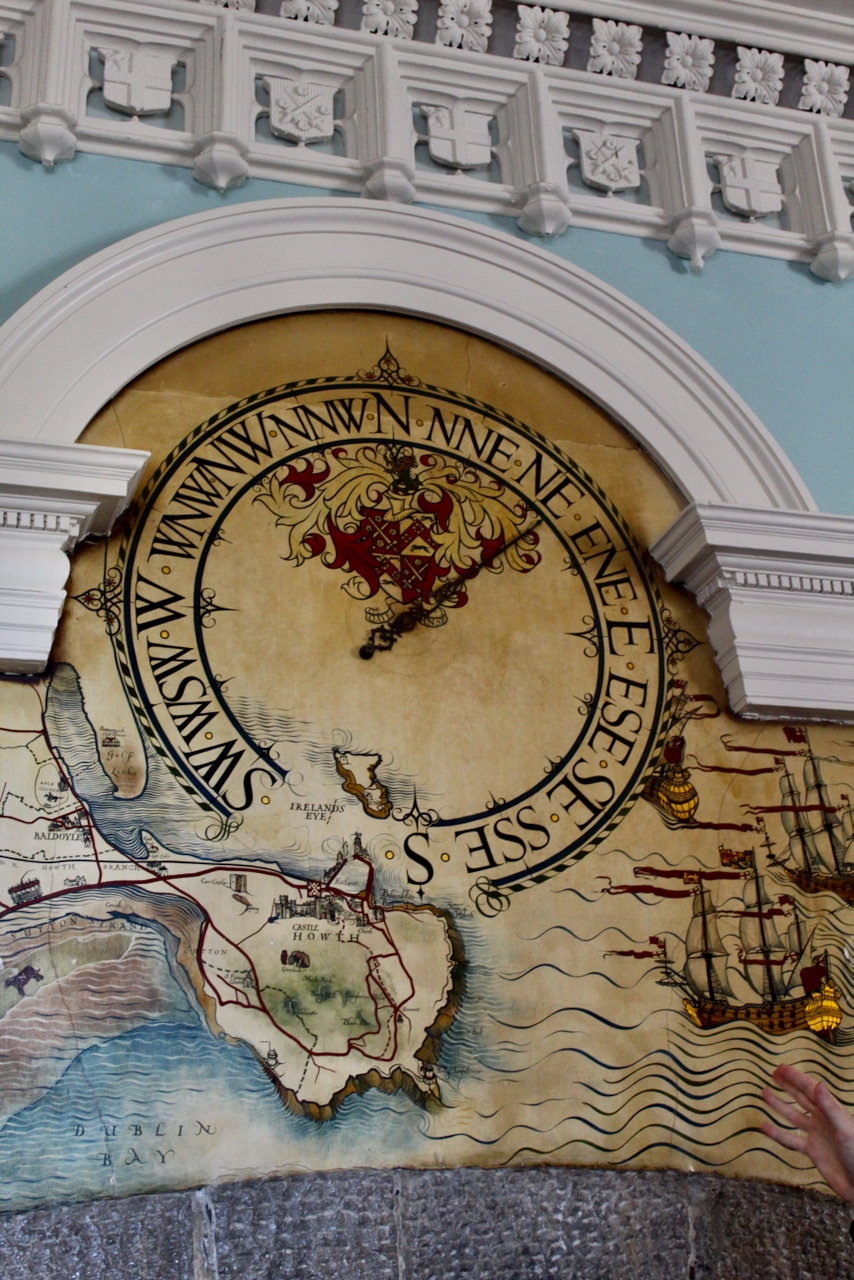
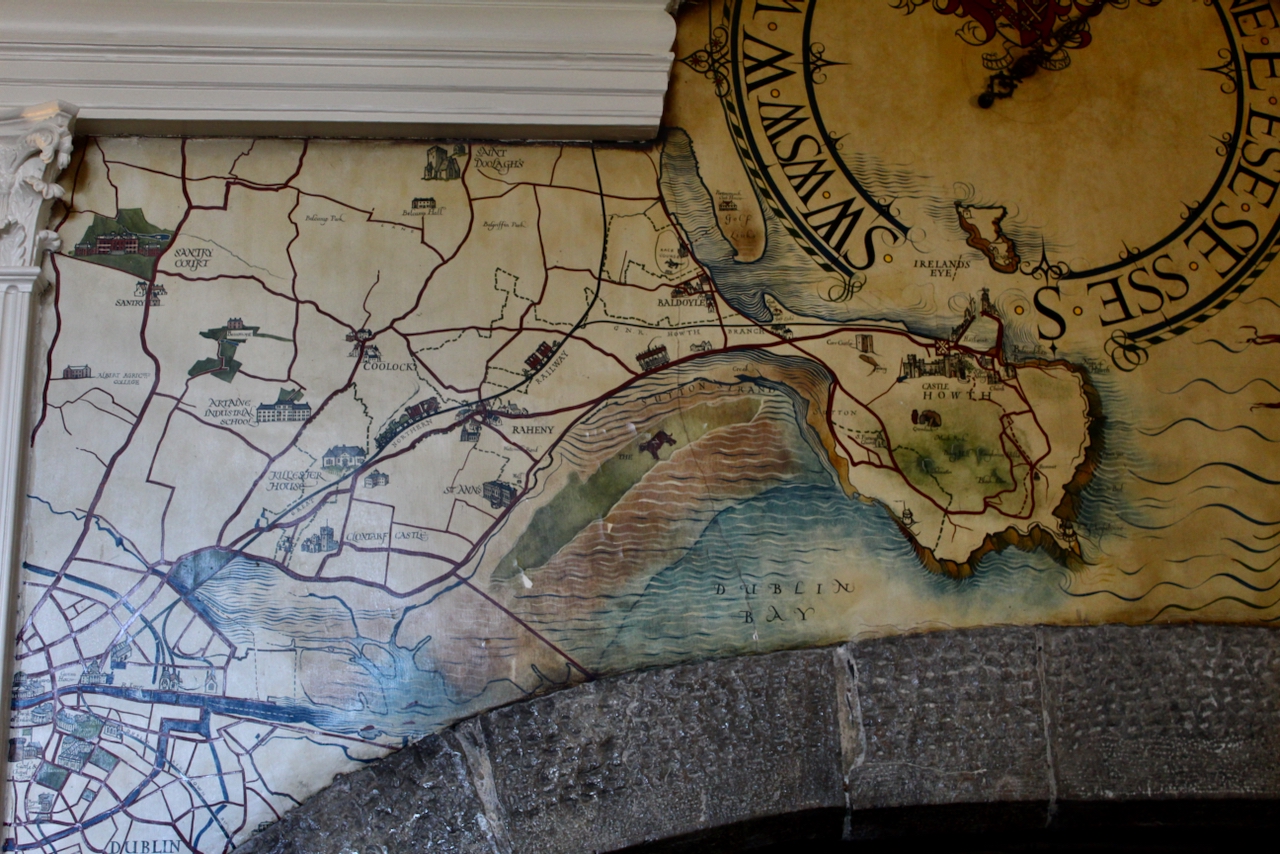
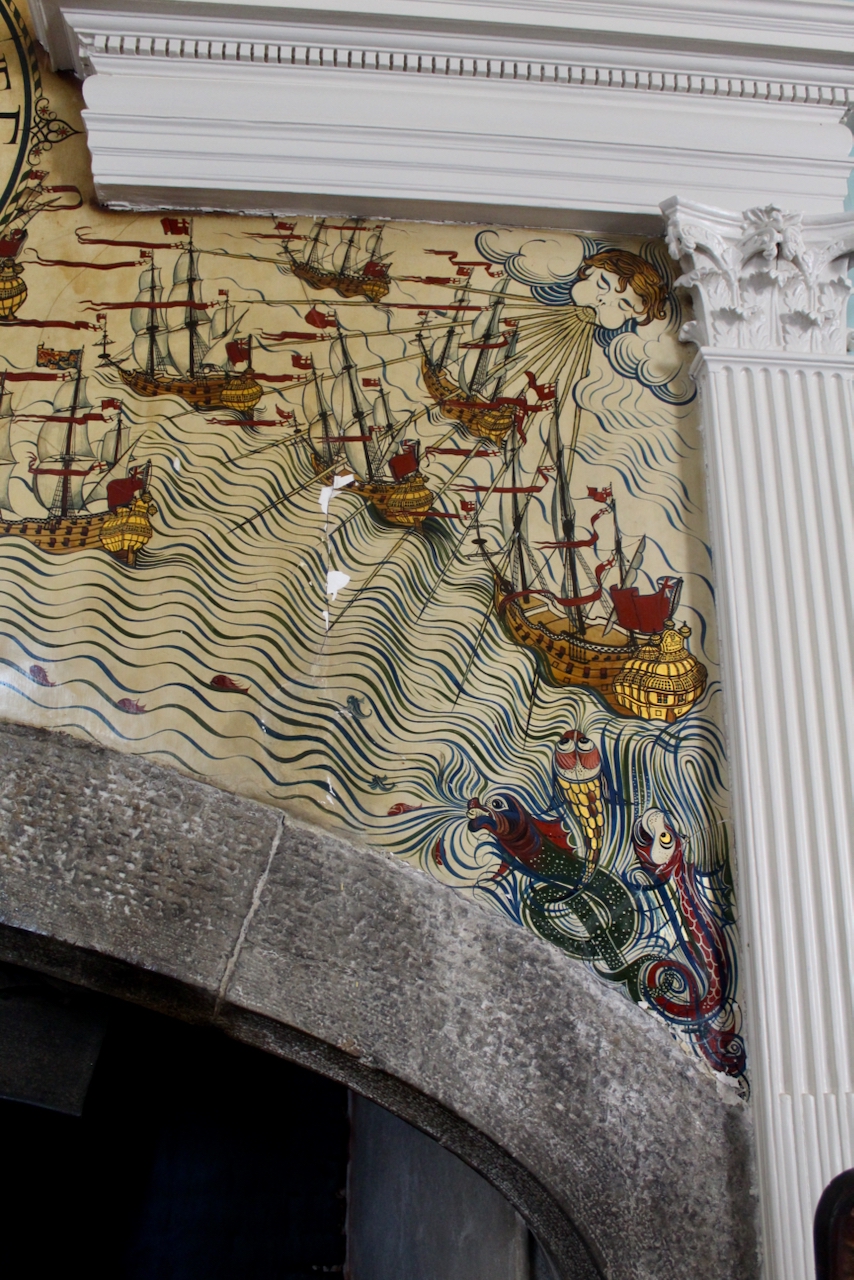
It is Lutyens’s selective retention and sensitive recovery of surviving original fabric from a variety of eras that distinguishes his work at Howth. The entrance hall, at the head of a wide flight of stairs, displays best his ability to empathise. While the photographs, by an unknown photographer and by Henson, convey his success, Weaver’s summary clarifies the architect’s methodology: ‘The general work of reparation in the interior revealed in the hall fireplace an old elliptical arch which enabled the original open hearth to be used once more. Above it Mr Macdonald Gill had painted, under Mr Lutyens’ direction, a charming conventional map of Howth and the neighbouring sea and a dial which records the movement of a wind gauge.’ ” [11]

The chimneypiece in the entrance hall was developed from existing Georgian and Victorian features, Seán O’Reilly tells us, with medieval fabric recovered during renovation, providing a mix of styles typical of Lutyens’ restorations. I wish I could find my notes to tell you more about the map painted by MacDonald Gill! I will just have to return so historian Daniel can tell me again.
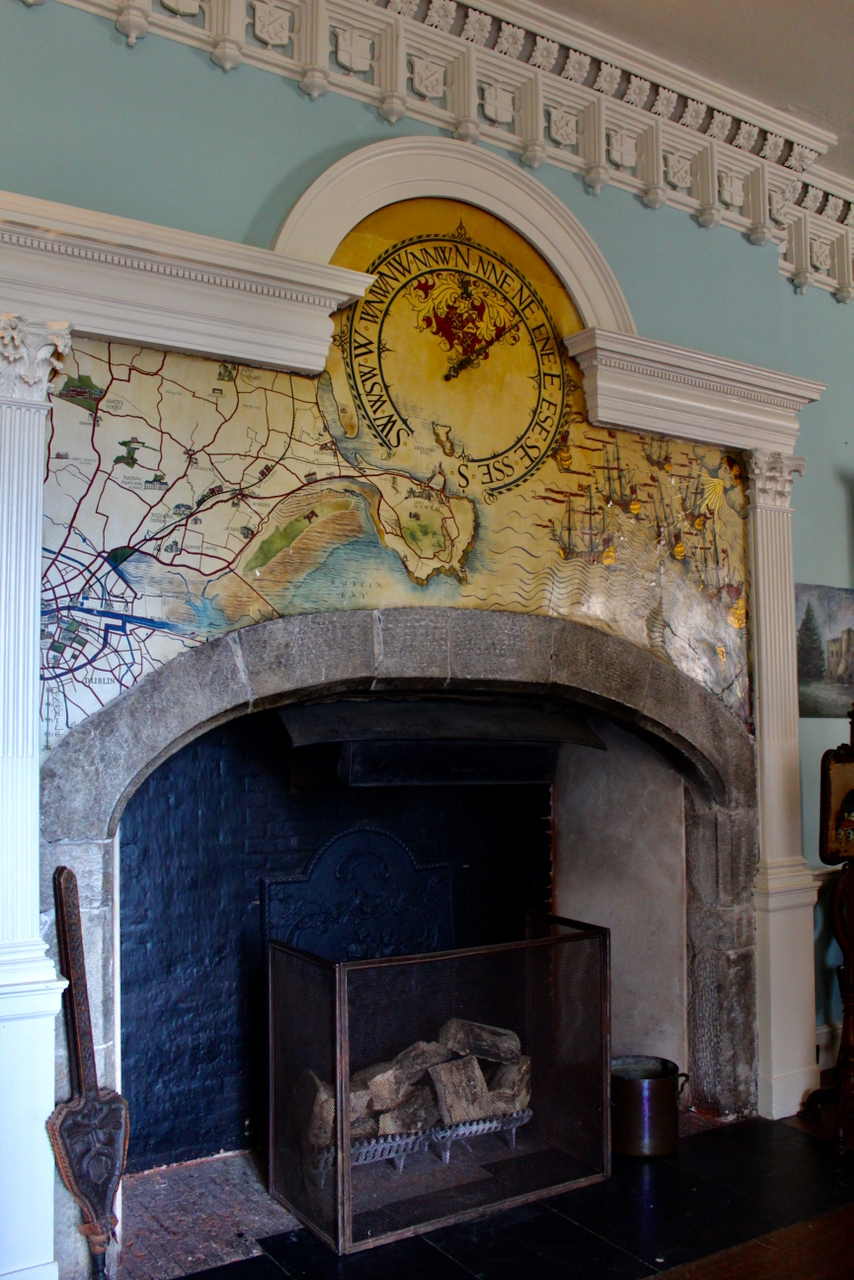
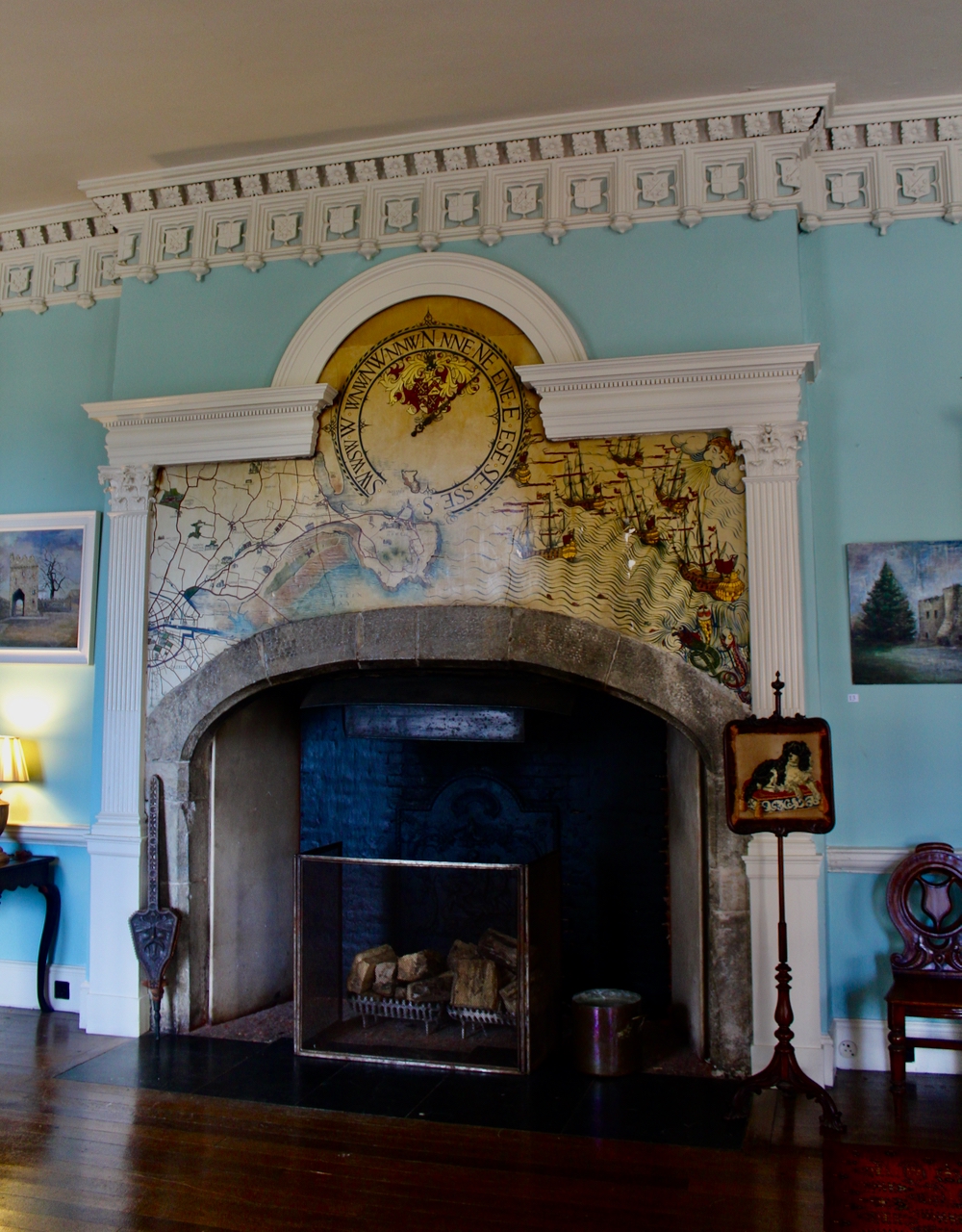
Mr Macdonald Gill painted, under Mr Lutyens’ direction, a charming conventional map of Howth and the neighbouring sea and a dial which records the movement of a wind gauge.’ Front hall, Howth Castle. Photograph © Jennifer Winder-Baggot, www.irishhistorichouses.com
Front hall, Howth Castle. Photograph © Jennifer Winder-Baggot, www.irishhistorichouses.com

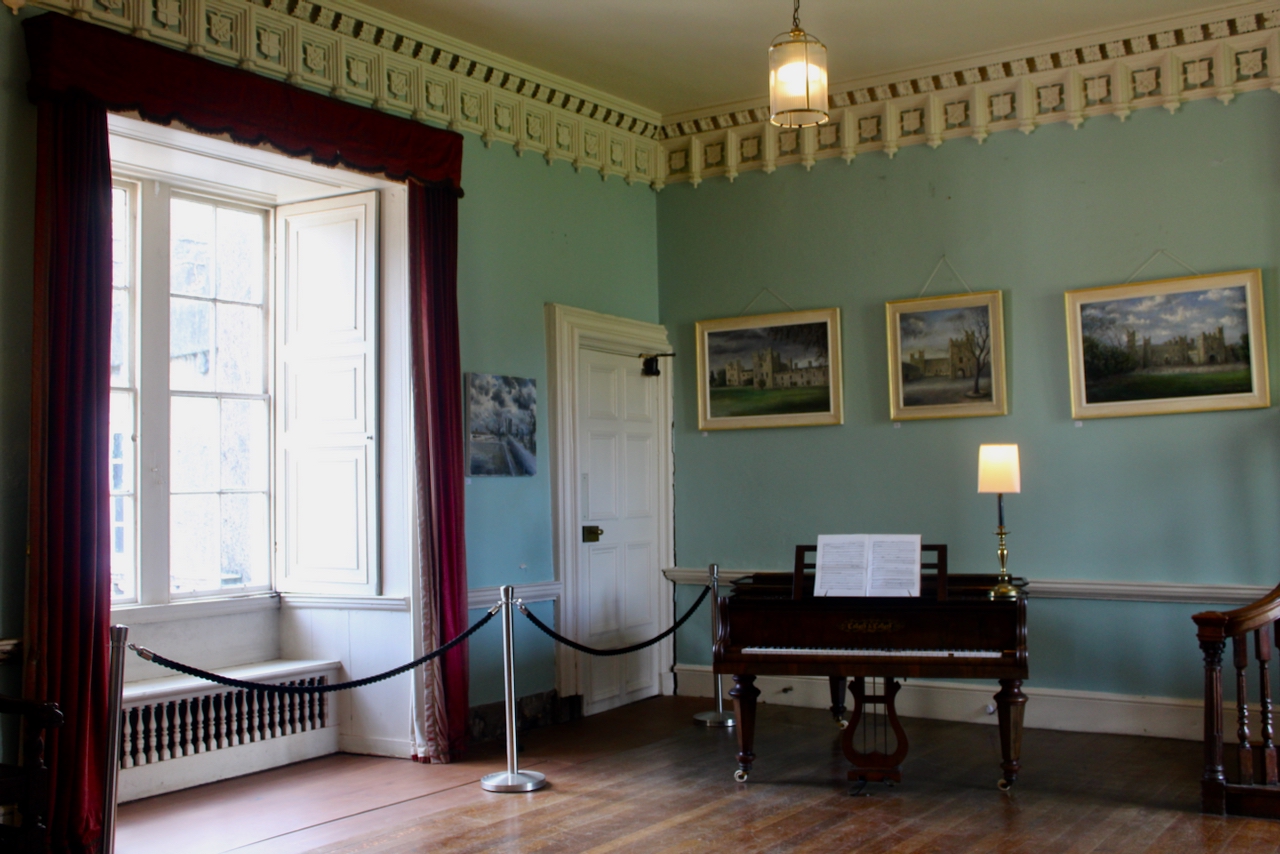
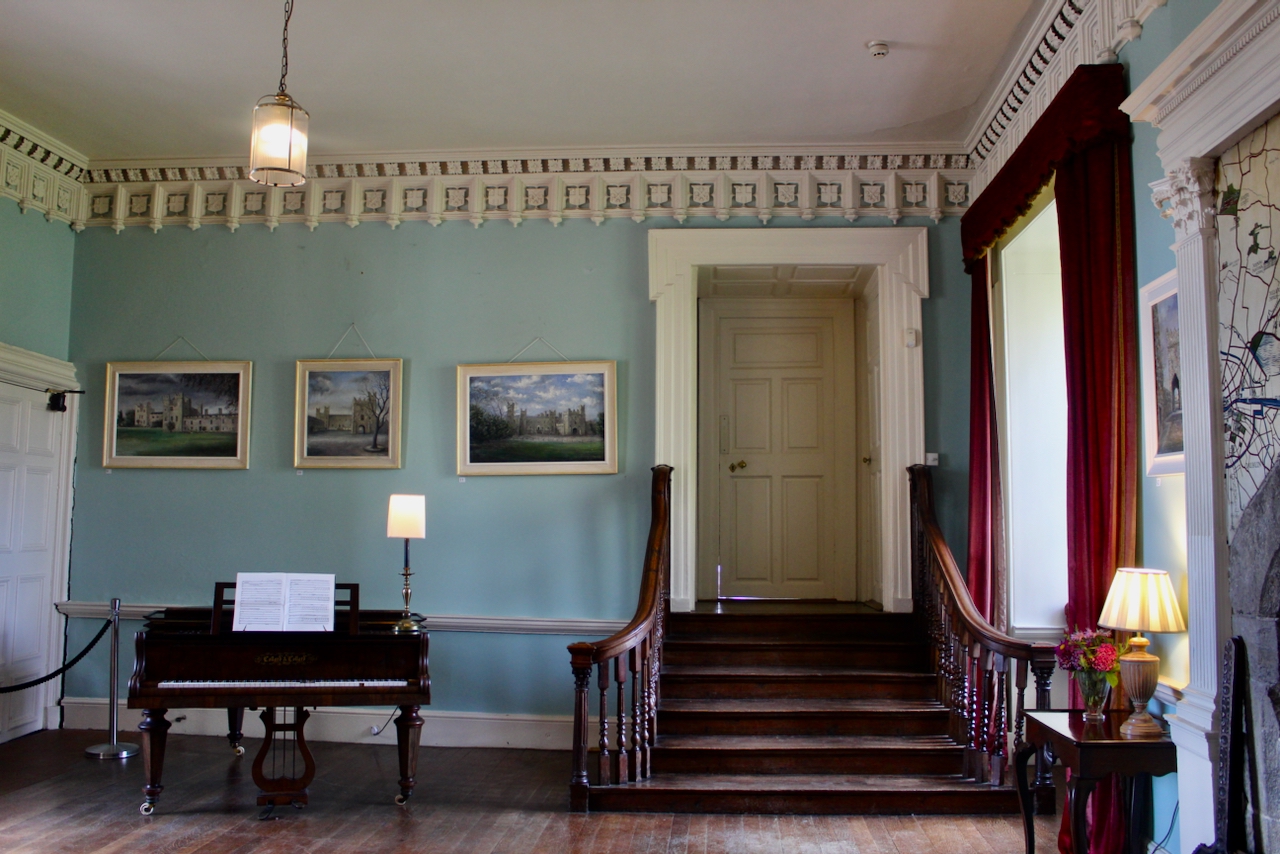
We were lucky enough to visit the castle when it hosted an exhibition of paintings by Peter Pearson, which feature in a book: Of Sea and Stone: Paintings 1974-2014.
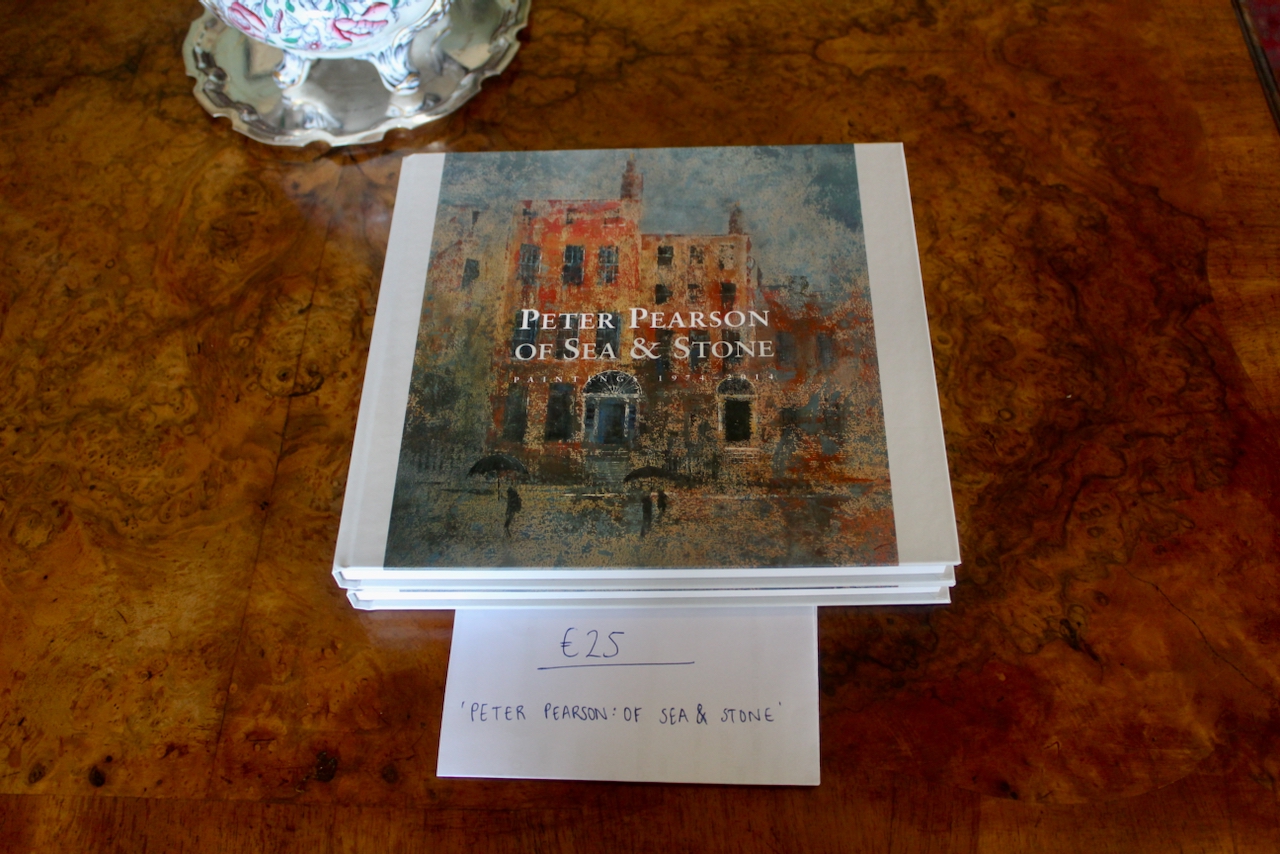
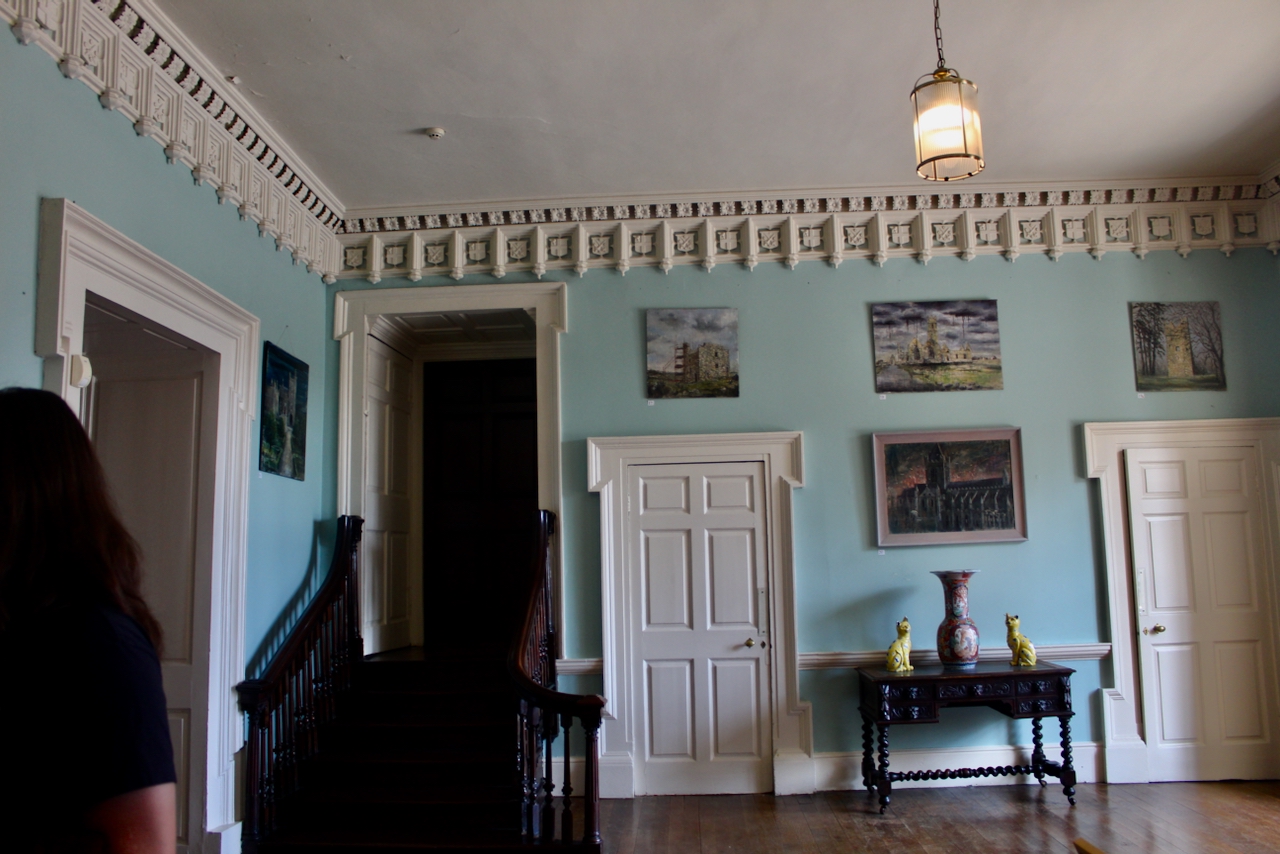
Peter Pearson, Of Sea and Stone: Paintings 1974-2014.
Front hall, Howth Castle. Photograph © Jennifer Winder-Baggot, www.irishhistorichouses.com

William the 14th Baron (1688-1748) married Lucy, younger daughter of Lieutenant-General Richard Gorges of Kilbrew, County Meath. Her mother was Nicola Sophia Hamilton, who before marrying Richard Gorges, had been married to Tristram Beresford, 3rd Baronet of Coleraine.

The Howth Castle website reminds us of a story that our guide on our visit to Curraghmore in County Waterford told us:

For many years in the Drawing Room of the castle hung the portrait of a handsome woman. To the back of the portrait was attached an unsigned and undated note stating that the painting once had a black ribbon round the wrist but that this had been removed during cleaning. The woman is Nicola Hamilton born 1667 who married firstly Sir Tristram Beresford and subsequently General Richard Gorges. The younger daughter of this marriage was Lucy Gorges, wife of the 27th Lord Howth, Swift’s ‘blue-eyed nymph’.”
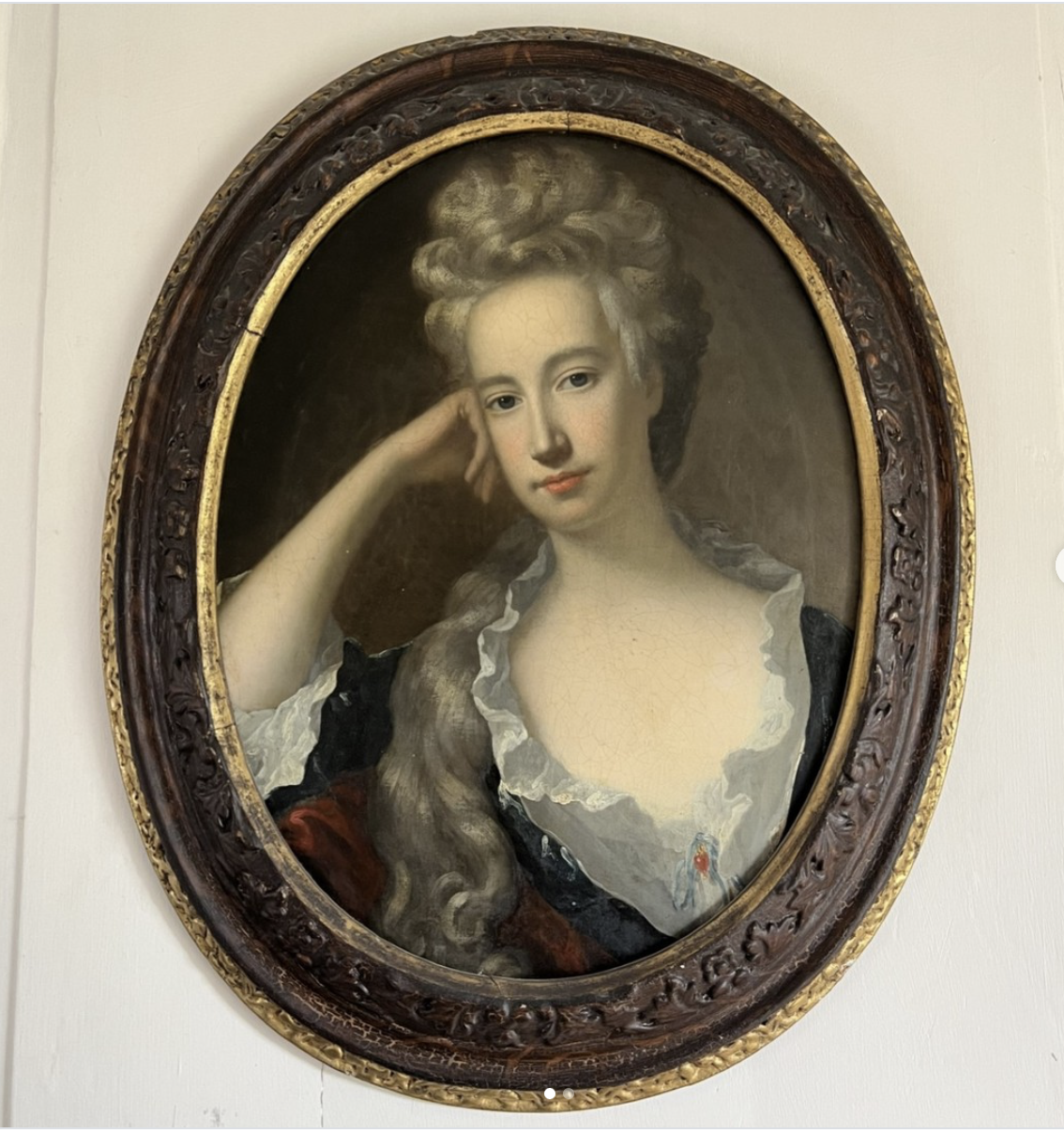
Nicola Hamilton (1666-1713) by 17th century Irish portraitist, Garrett Morphy, courtesy of Howth Castle instagram.

The legend is that when she was quite young, she made an agreement with John Le Poer, Earl of Tyrone that whoever died first would come back and appear to the other. On dying Lord Tyrone came to her in the night, assured her of the truth of the Christian Revelation and made various predictions, that her first husband would soon die, that her son would marry the Tyrone heiress, and that she herself would die in her forty-seventh year, all of which came true. To convince her of the reality of his presence, he grasped her wrist causing her an injury and permanent scar which she concealed beneath a black ribbon.

The ease with which the ribbon was removed from the portrait does little to enhance the veracity of the story.

Nicola’s son was Marcus Beresford (1694-1763) 4th Baronet of Coleraine and as the ghost predicted, he married Catherine Le Poer of Curraghmore, daughter and heiress of James, 3rd Earl of Tyrone.

William St. Lawrence 14th Baron of Howth spent much time at another house he owned in Ireland, Kilfane in County Kilkenny. [12] He sat in the Irish House of Commons as MP for Ratoath between 1716 and 1727, and became a member of the Privy Council of Ireland in 1739.

William 14th Baron came to know Jonathan Swift through his wife. Swift became a regular visitor to Howth Castle and they exchanged numerous letters. At Howth’s request, Swift had his portrait painted by Francis Bindon.
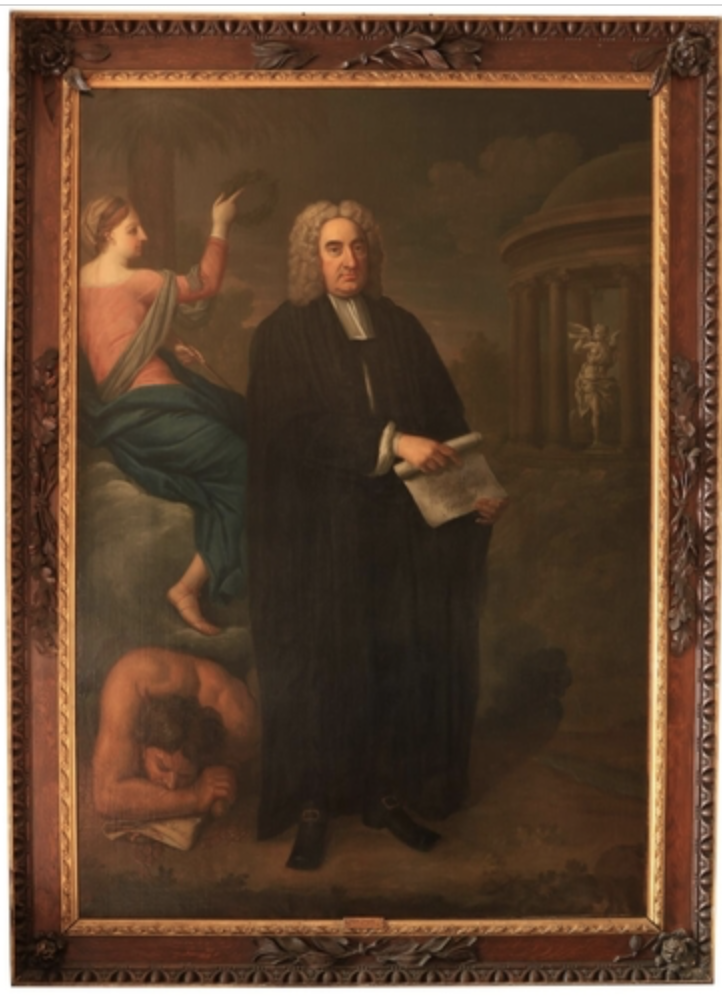
Jonathan Swift by Francis Bindon, courtesy of Howth auction by Fonsie Mealy, 2021.

The painting of Jonathan Swift by Francis Bindon was offered at auction in 2021. A very similar painting by Bindon is owned by the Deanery of St. Patrick’s Cathedral. An obituary notice about Bindon in Faulkner’s Journal from 1765 describes Bindon as “one of the best painters and architects this nation has ever produced” and a copy of the Swift picture, painted by Robert Home, hangs in the Examination Hall at Trinity College, Dublin.
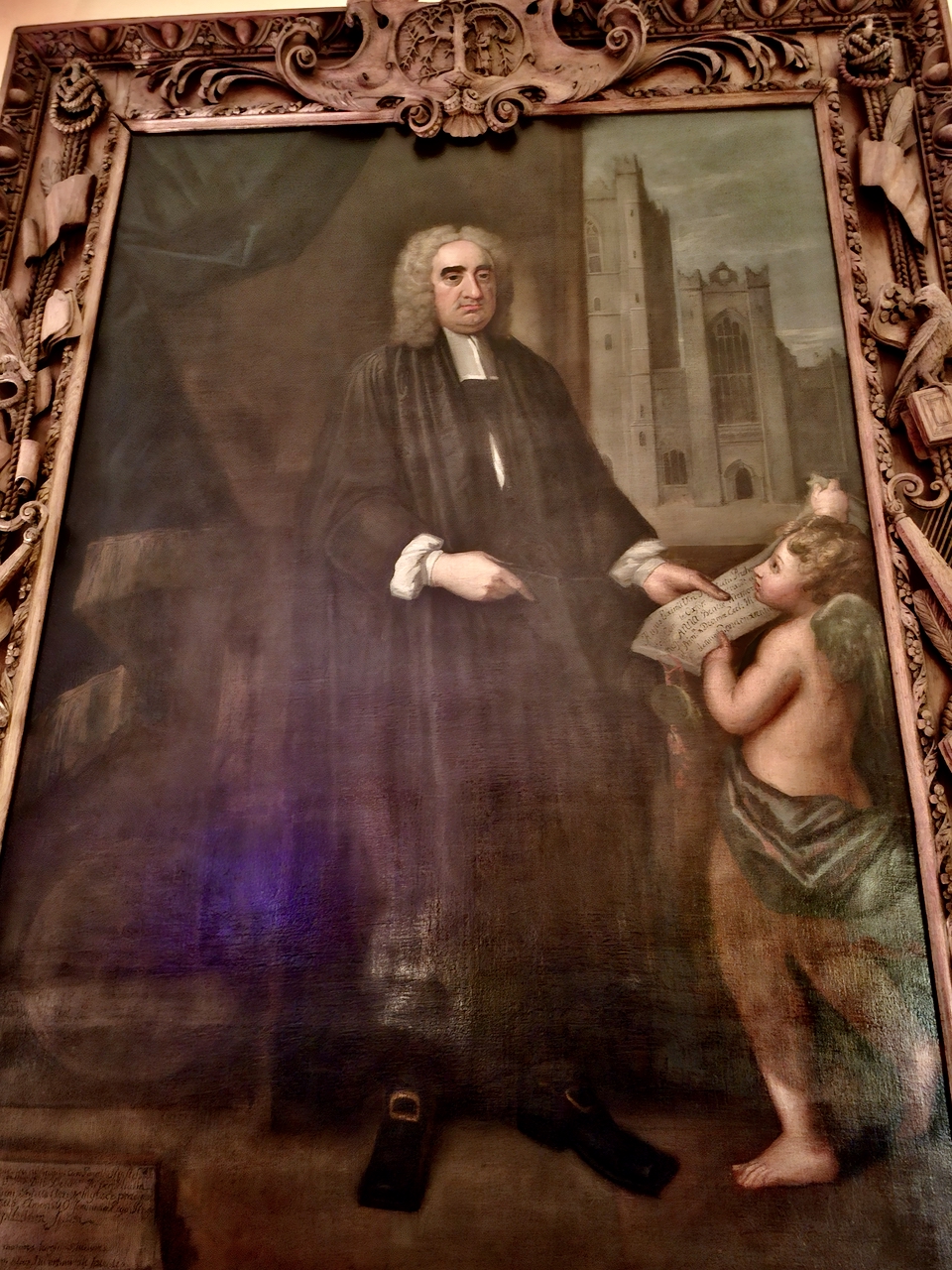
Portrait of Jonathan Swift (1667-1745) by Francis Bindon owned by St. Patrick’s Cathedral Deanery.

In 1736, Lady Lucy Howth’s brother Hamilton Gorges killed Lord Howth’s brother Henry St. Lawrence in a duel. Gorges was tried for murder but acquitted.

After her husband died, Lucy married Nicholas Weldon of Gravelmount House in County Meath, a Section 482 property which we visited. (see my entry https://irishhistorichouses.com/2024/06/13/gravelmount-house-castletown-kilpatrick-navan-co-meath/ )

William 14th Baron and Lucy’s son Thomas (1730-1801) succeeded as 15th Baron. He was educated in Trinity College Dublin, and succeeded to the title when he was eighteen years old, after his father’s death. He became a barrister, and was elected as a “Bencher,” or Master of the Bench of King’s Inn in Dublin in 1767.

In 1750 he married Isabella, daughter of Henry King, 3rd Baronet of Boyle Abbey in County Roscommon.

Isabella King, daughter of Henry King 3rd Baronet of Boyle Abbey in County Roscommon and wife of Thomas, 1st Earl of Howth courtesy Adam’s 6 Oct 2009 Robert Hunter (c.1715/20-c.1803).

In 1767 Thomas was created Viscount St. Lawrence and then Earl of Howth. He was appointed to Ireland’s Privy Council in 1768. Timothy William Ferres tells us that in consideration of his own and his ancestors’ services, he obtained, in 1776, a pension of £500 a year. 

His daughter Elizabeth married Dudley Alexander Sydney Cosby, 1st and last Baron Sydney and Stradbally, whom we came across when we visited Stradbally Hall in County Laois (see my entry https://irishhistorichouses.com/2021/10/14/stradbally-hall-stradbally-co-laois/ ). A younger son, Thomas St. Lawrence (1755-1831), became Lord Bishop of Cork and Ross. He’s the one who supposedly heard the mermaid in the tower!

Thomas’s son William (1752-1822) succeeded as 2nd Earl. William married firstly, in 1777, Mary Bermingham, 2nd daughter and co-heiress of Thomas, 1st Earl of Louth. Mary gave birth to several daughters.

Harriet St. Lawrence (d. 1830), daughter of William 2nd Earl of Howth. She married Arthur French St. George (1780-1844).

A daughter of the 2nd Earl of Howth, Isabella (d. 1837), married William Richard Annesley, 3rd Earl Annesley of Castlewellan, County Down.
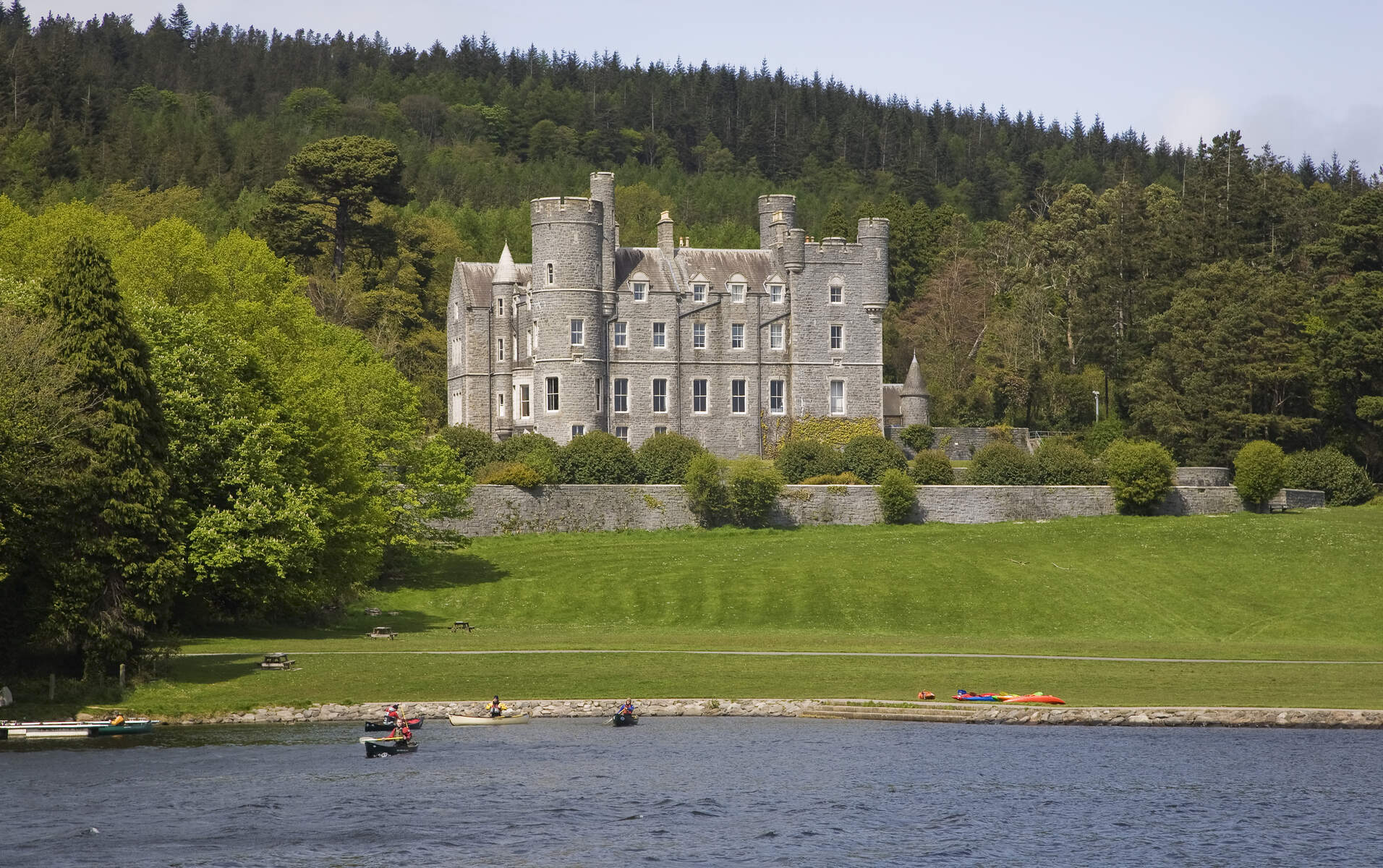
Castlewellan Castle, County Down, 2014 © George Munday/Tourism Ireland.

Mary née Bermingham died in 1773 and William 2nd Earl of Howth then married Margaret Burke, daughter of William Burke of Glinsk, County Galway.

Howth Harbour was constructed from 1807, and in 1821, King George IV visited Ireland, landing at Howth pier.

Margaret the second wife, Countess of Howth, gave birth to a daughter Catherine, who married Charles Boyle, Viscount Dungarvan, son of the 8th Earl of Cork. She also gave birth to the heir, Thomas (1803-1874), who succeeded as 3rd Earl of Howth in 1822.

Thomas the 3rd Earl served as Vice-Admiral of the Province of Leinster, and Lord-Lieutenant of County Dublin. He married Emily, daughter of John Thomas de Burgh, the 1st Marquess of Clanricarde.
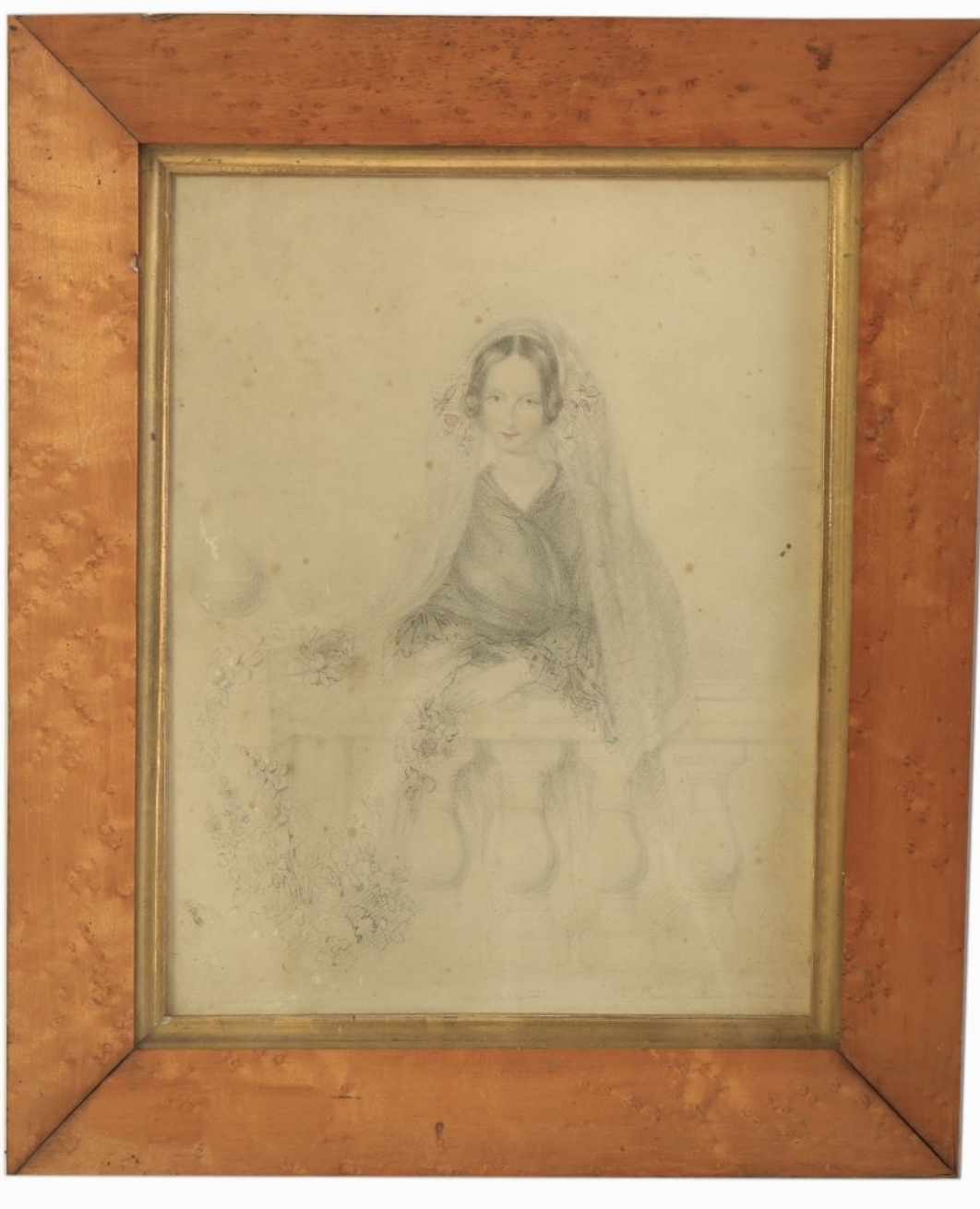
Emily, Countess of Howth, courtesy Fonsie Mealy Howth Castle sale.

Around 1840, Richard Morrison drew up plans for alterations in the castle, which were only partially executed, including Gothicizing the stables. [see 2]

Emily gave birth to several children, including the heir, but died of measles at the age of thirty-five, in 1842.

Emily and Thomas had a daughter, Emily (d. 1868), who married Thomas Gaisford (d. 1898). Another daughter, Margaret Frances, married Charles Compton William Domvile, 2nd Baronet of Templeogue and Santry.

The 3rd Earl married for a second time in 1851, to Henriette Elizabeth Digby Barfoot. She had a daughter, Henrietta Eliza, who married Benjamin Lee Guinness (1842-1900), and two other children.

In 1855 the 3rd Earl had the Kenelm Lee Guinness Tower built at the end of the east range at the front of the castle. Kenelm was the son of Henrietta née St. Lawrence and Benjamin Lee Guinness. The tower must have been named later, as Kenelm was born in 1887.
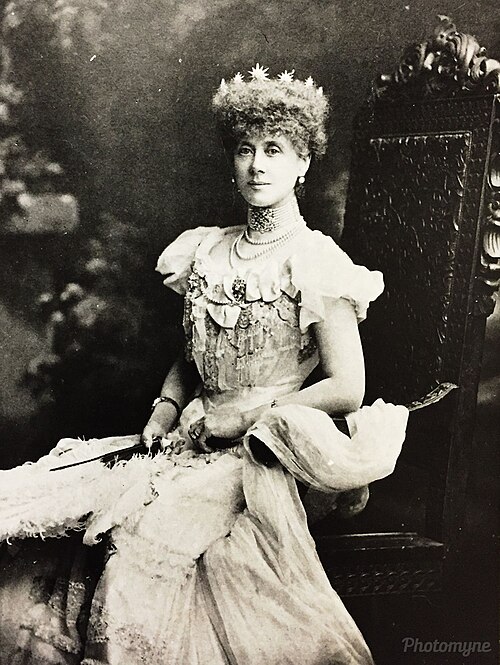
Henrietta Guinness née St. Lawrence (1851-1935), she married Benjamin Lee Guinness. By Unknown – https://www.findagrave.com/memorial/287500312/henrietta_eliza-guinness#view-photo=331837388, Public Domain, https://commons.wikimedia.org/w/index.php?curid=179111290
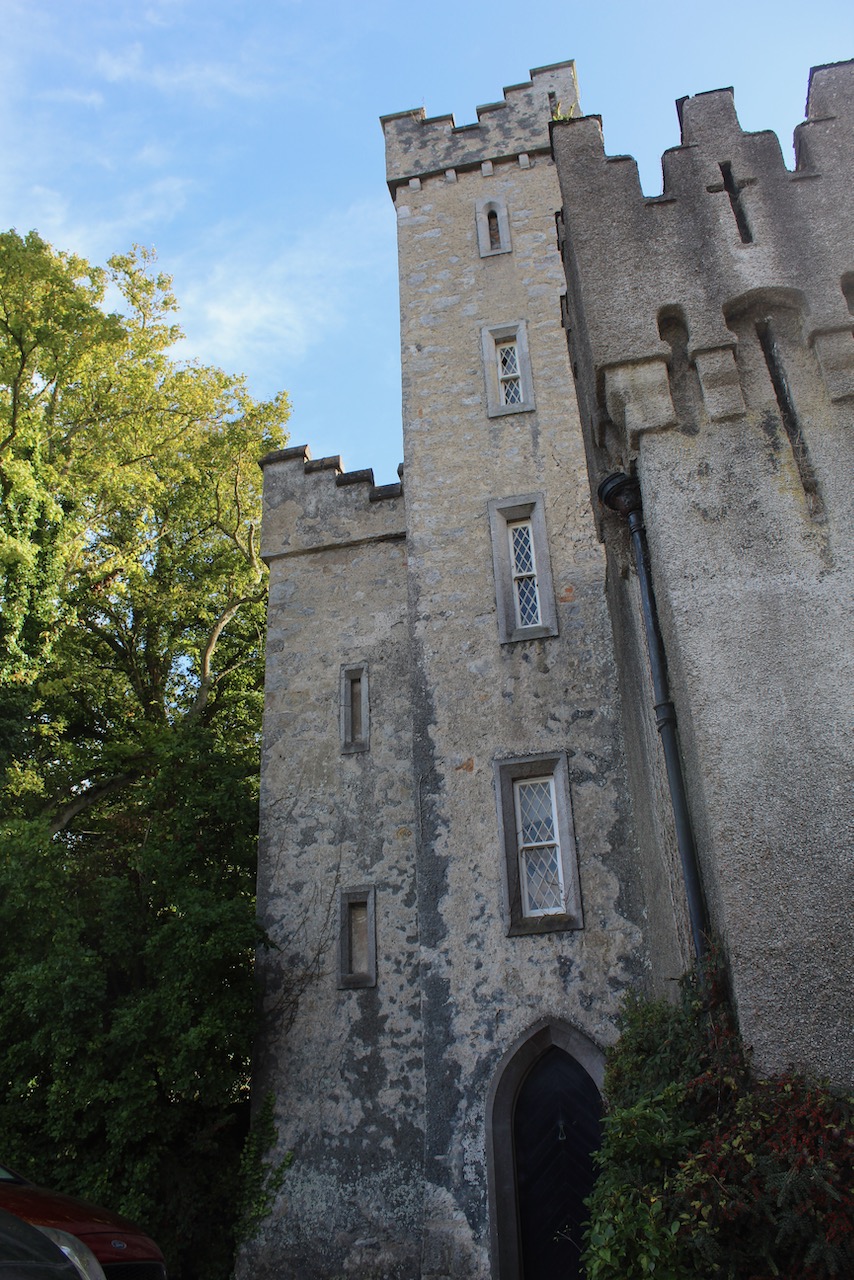
In 1855 the 3rd Earl had the Kenelm Lee Guinness Tower built at the end of the east range at the front of the castle. Photograph © Jennifer Winder-Baggot, www.irishhistorichouses.com
The Kenelm Lee Guinness Tower at Howth Castle, Dublin, August 2025. Photograph © Jennifer Winder-Baggot, www.irishhistorichouses.com
Howth Castle, August 2025. Photograph © Jennifer Winder-Baggot, www.irishhistorichouses.com

Thomas and Emily’s son William Ulick Tristram (1827-1909) succeeded as 4th Earl in 1874. He served as Captain in the 7th Hussars 1847-50. He was High Sheriff of County Dublin in 1854 and State Steward to the Lord Lieutenant of Ireland from 1855 until 1866. In the English House of Commons he served as Liberal MP for Galway Borough from 1868 until 1874.

He had no children and the titles died with him.

The property passed to his sister Emily’s family, and her son added St. Lawrence to his surname to become Julian Charles Gaisford-St. Lawrence (d. 1932). In 1911 he hired Edwin Lutyens to renovate and enlarge the castle.

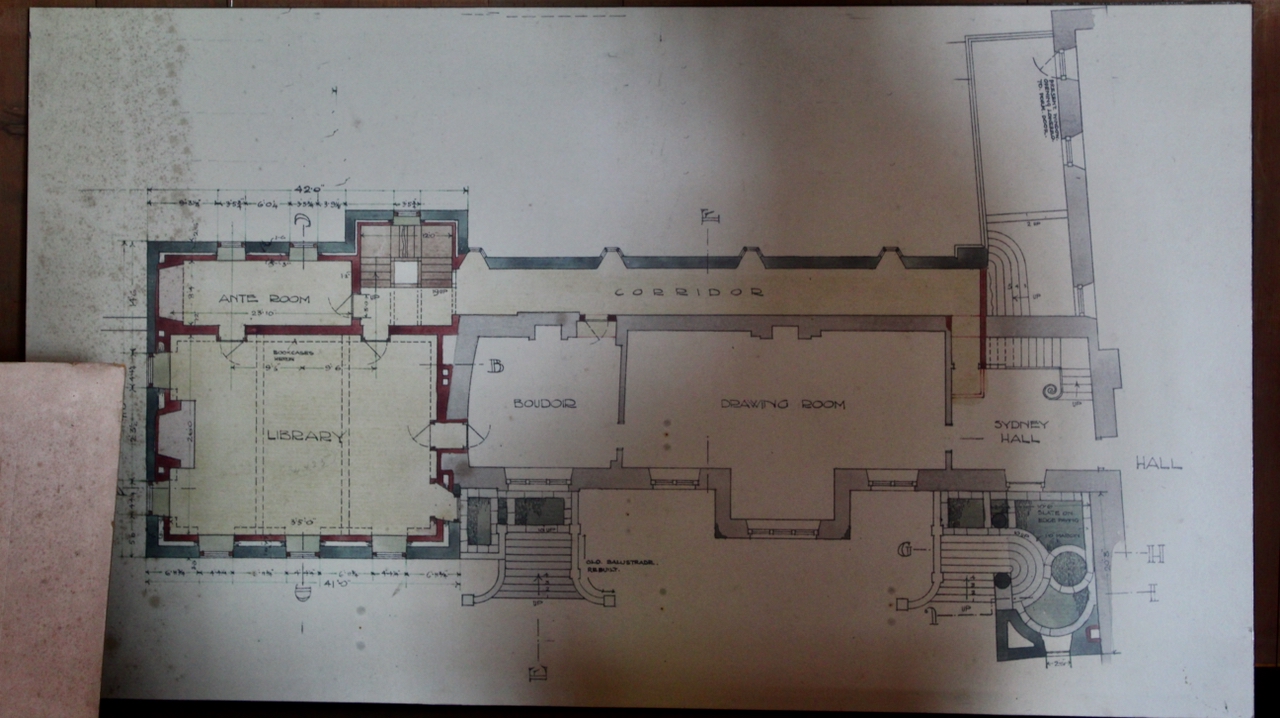
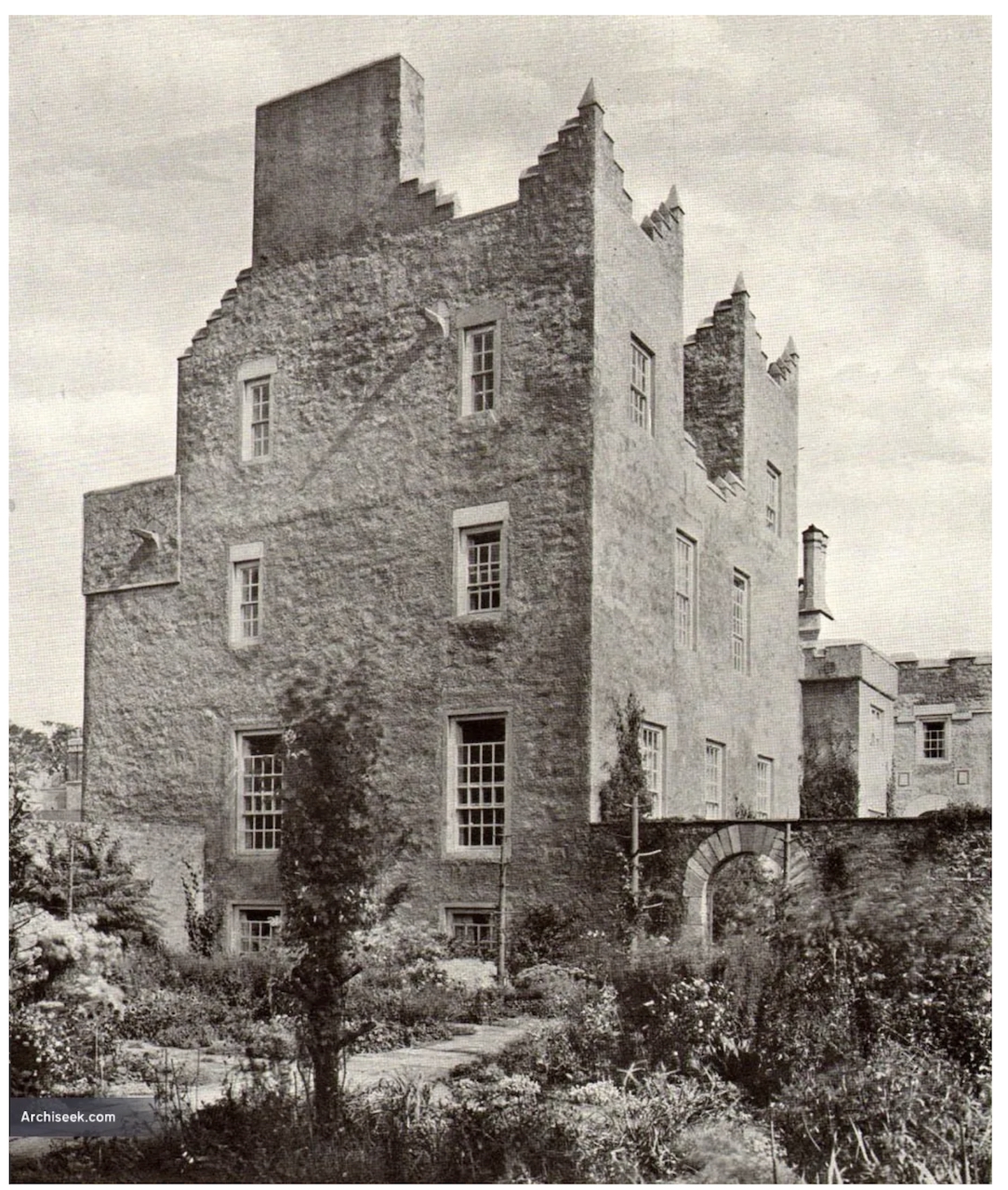
The most substantial addition was the three bay two storey Gaisford Tower, with basement and dormer attic, at the end of the west wing, which he built to house his library. This tower picked up many of the motifs distinguishing the earlier fabric, from its irregular massing to the use of stepped battlements with pyramidal pinnacles, all moulding it into the meandering fabric of the earlier buildings. [see 11] Other work included the steps to the east of the new tower, a loggia with bathrooms above between the old hall and the west wing and a sunken garden. He also added square plan corner turrets to the south-west and north-east facades, incorporating fabric of earlier structures, 1738 and ca 1840. [see 2]
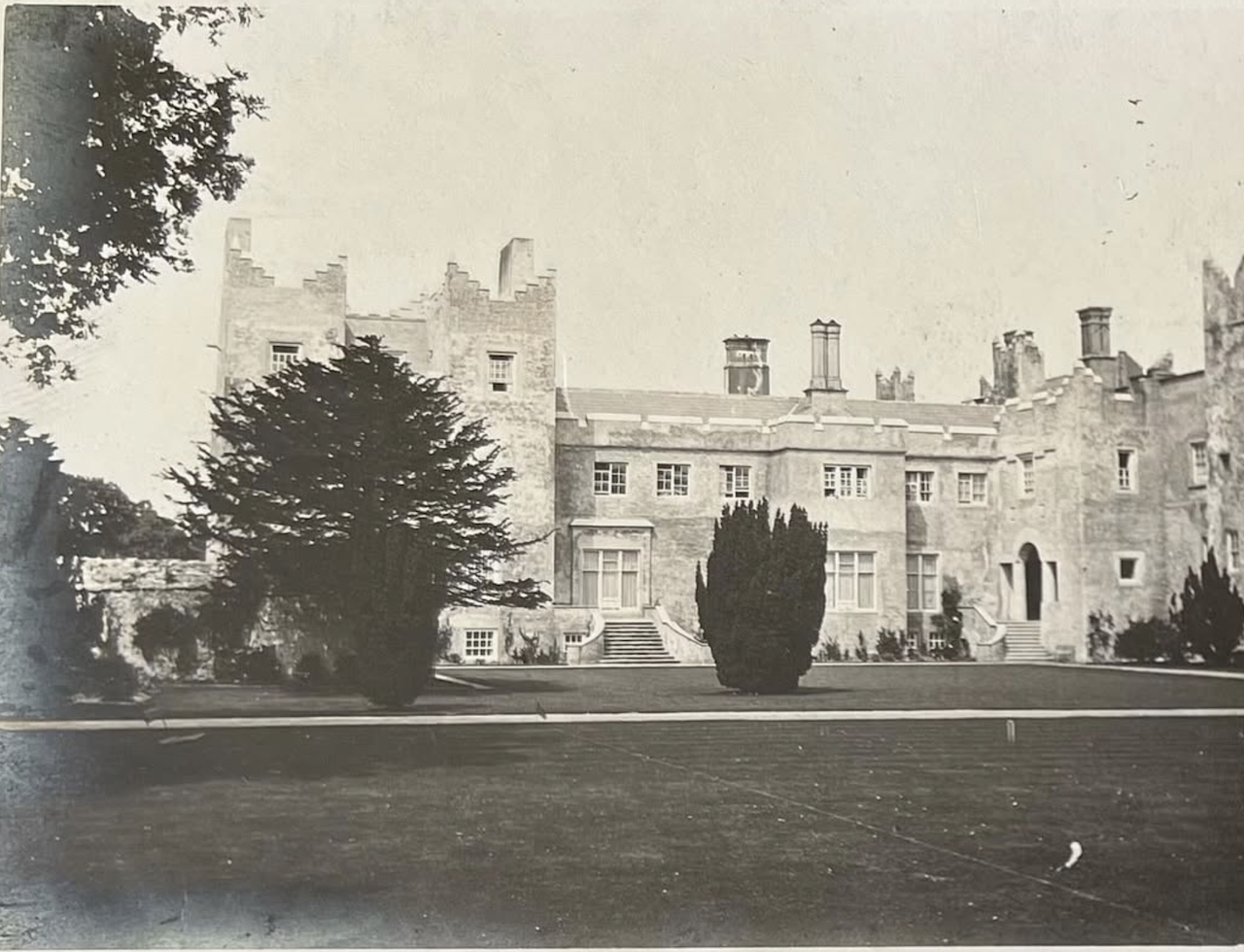
New facade on the west wing introduced by Lutyens, with library tower on the left, photograph courtesy of Howth Castle instagram.
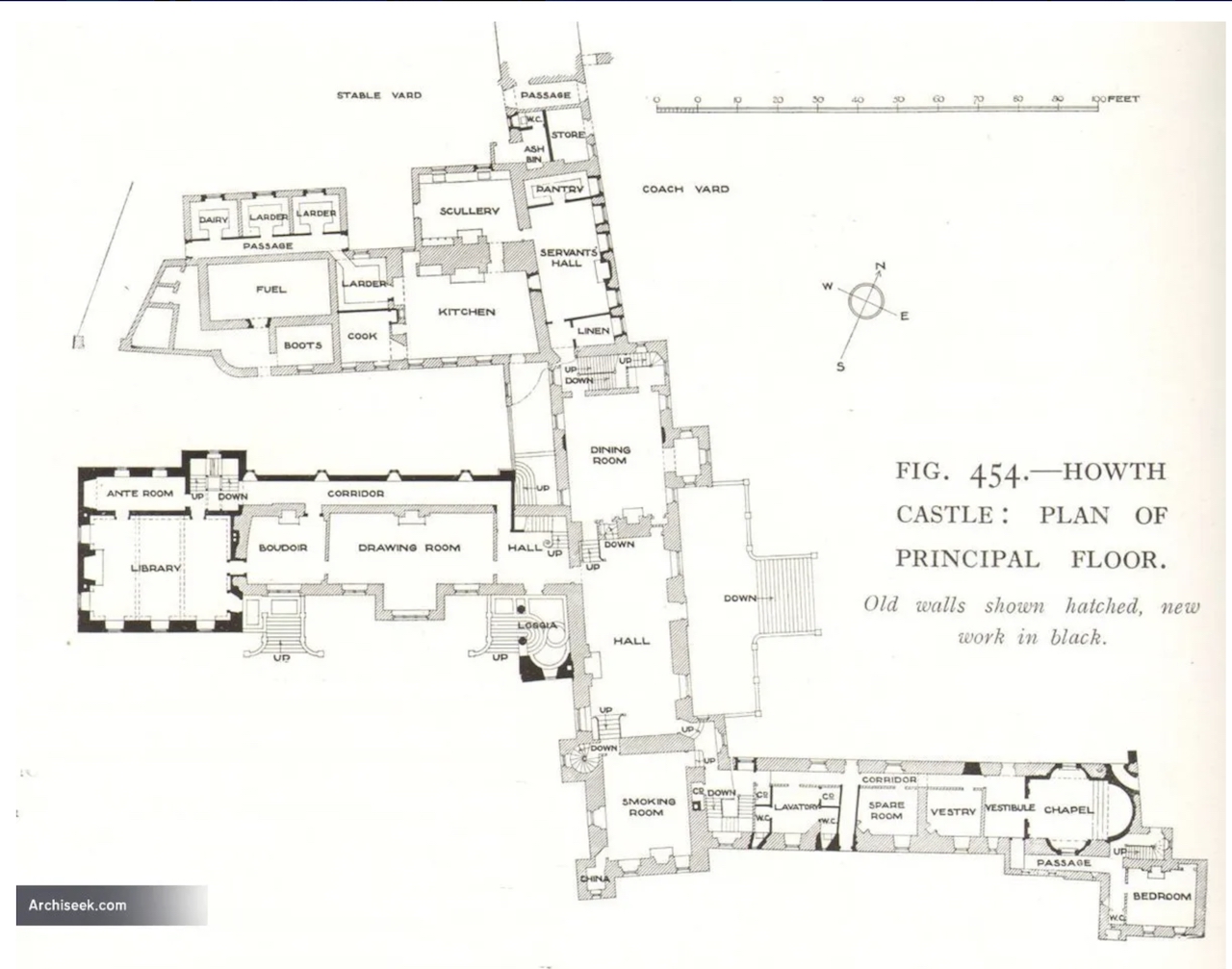
Plan of Howth Castle, courtesy Archiseek.
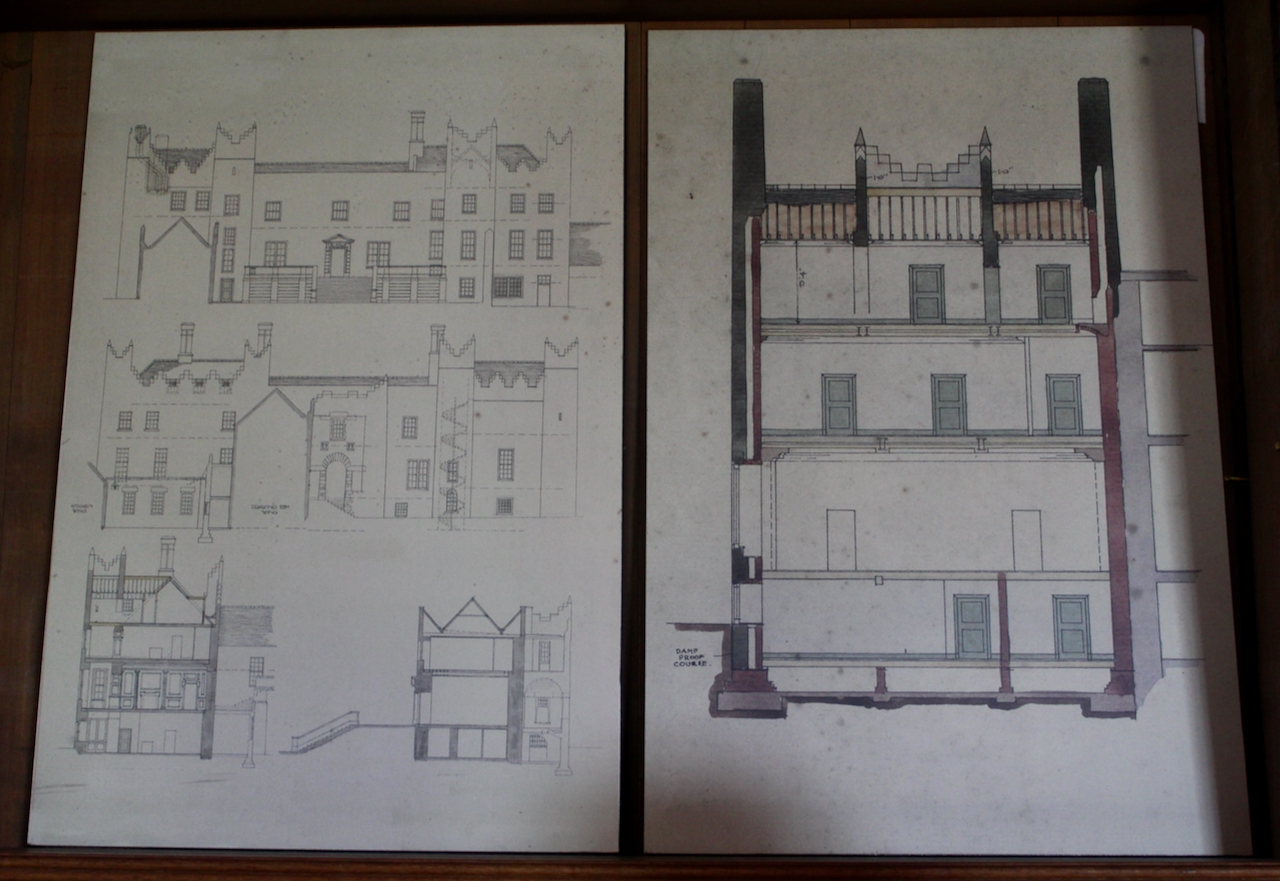
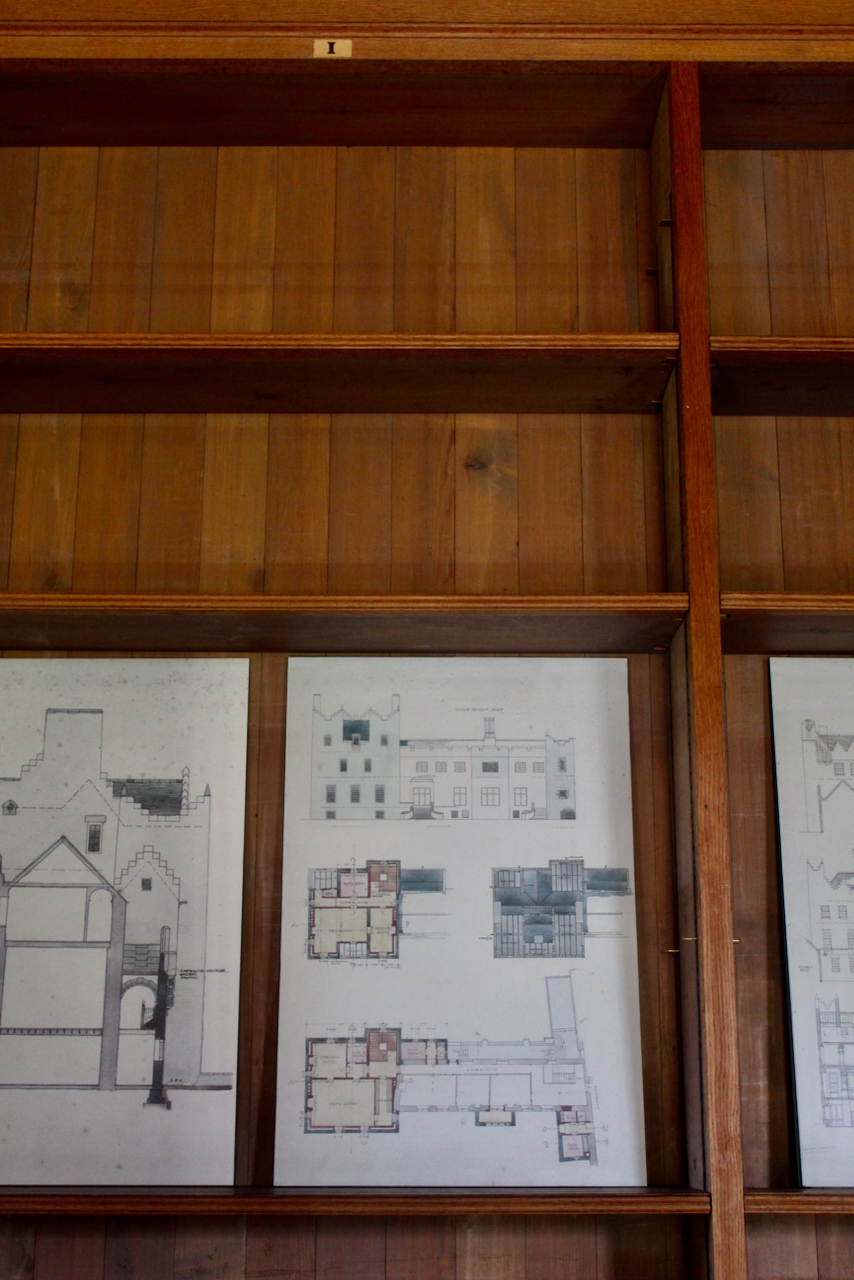
Drawings by Lutyens for Howth Castle.

Mark Bence-Jones writes:

On the other side of the hall range, a long two storey wing containing the drawing room extends at right angles to it, ending in another tower similar to the keep, with Irish battlemented corner turrets. This last tower was added 1910 for Cmdr Julian Gaisford-St. Lawrence, who inherited Howth from his maternal uncle, 4th and last Earl of Howth, and assumed the additional surname of St Lawrence; it was designed by Sir Edward Lutyens, who also added a corridor with corbelled oriels at the back of the drawing room wing and a loggia at the junction of the wing with the hall range; as well as carrying out some alterations to the interior.”
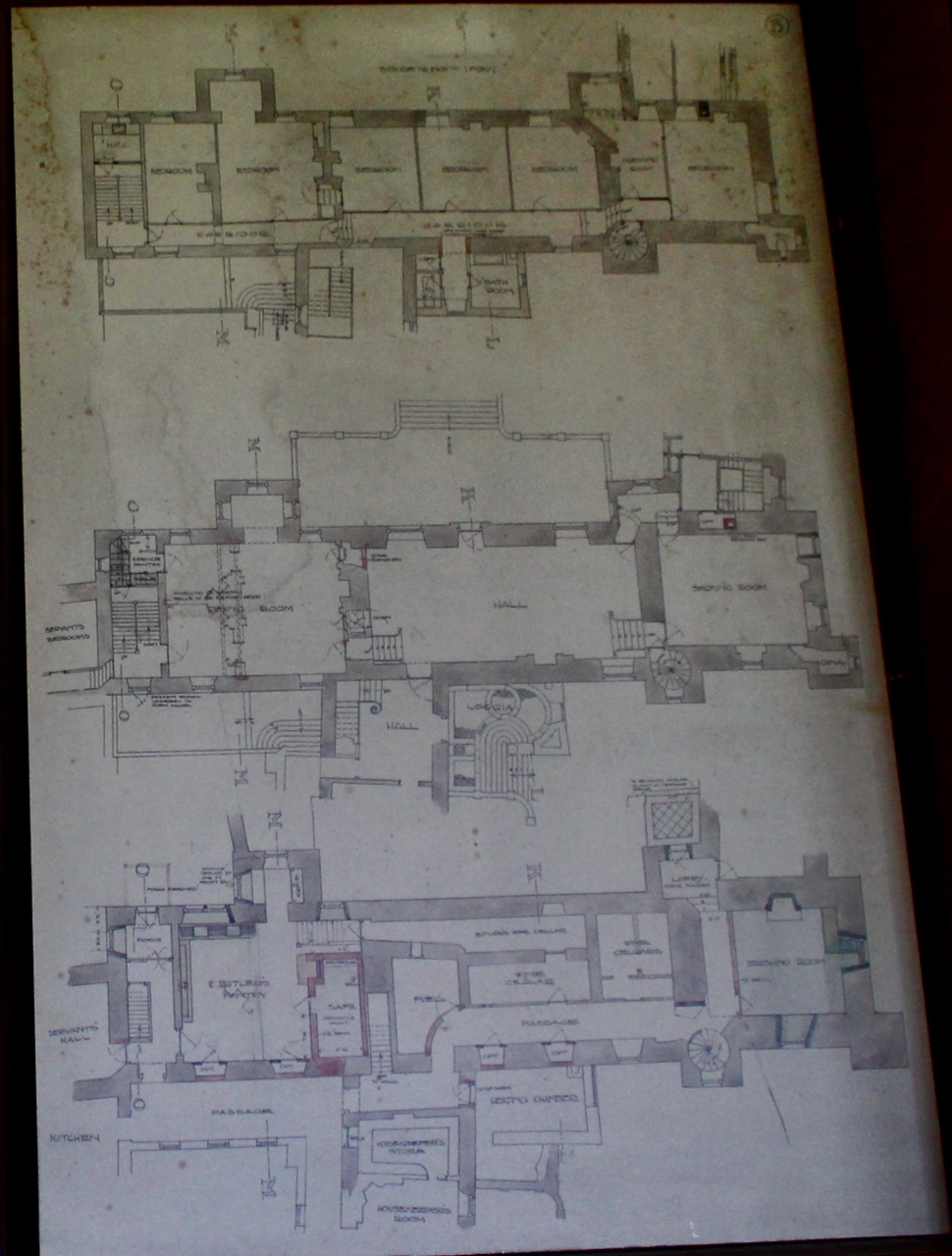
This architectural sketch by Lutyens shows in the middle drawing, the balustraded terrace to the front door, the hall, with “smoking room” on the right and dining room on the left.
The Gaisford Tower, I think, containing the library, by Lutyens. Photograph courtesy of Archiseek. [13]
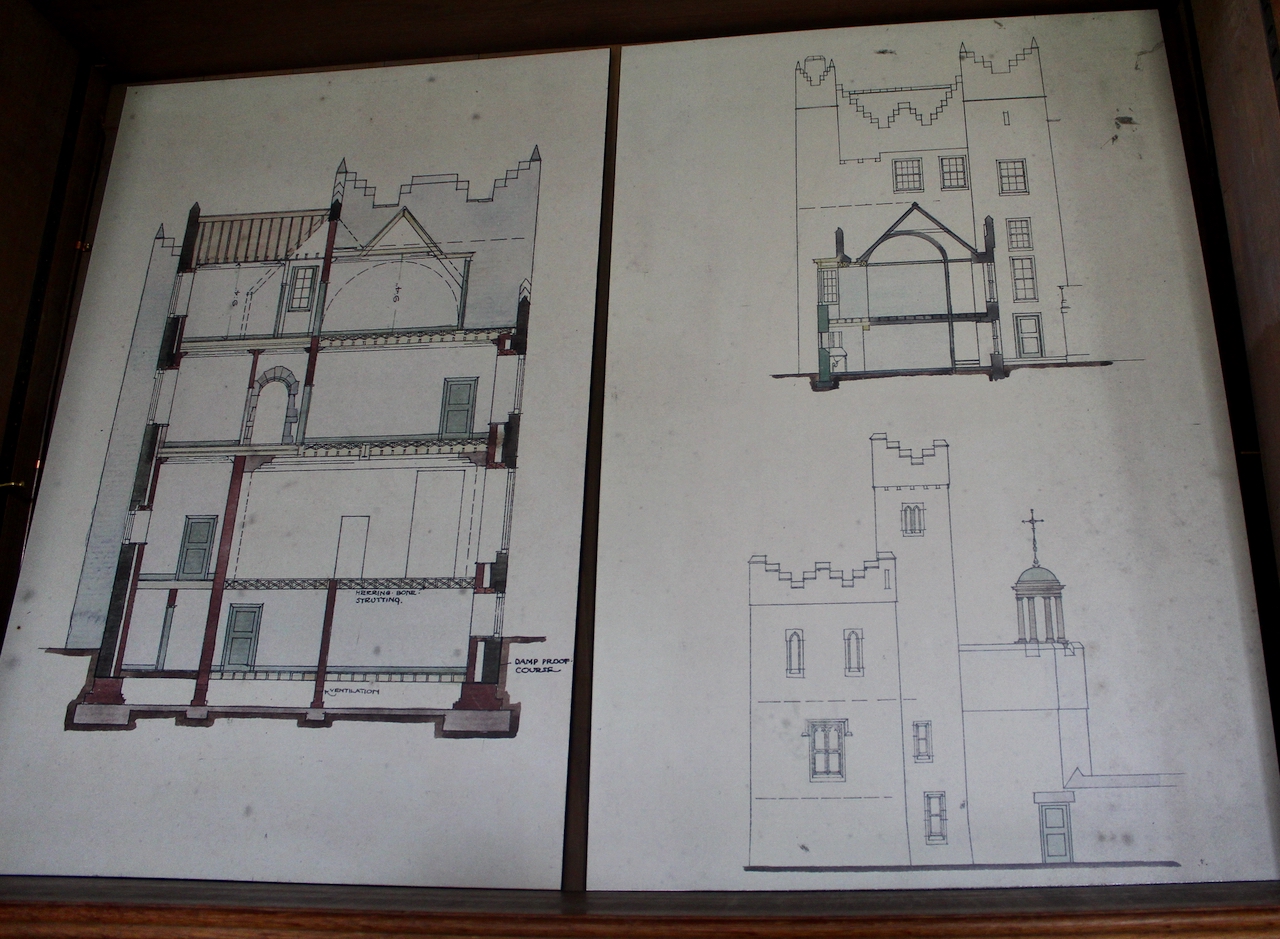
Drawings by Lutyens for Howth Castle.

From the front hall, to the right, when facing the fireplace, is the dining room. It has surviving eighteeth century panelling.
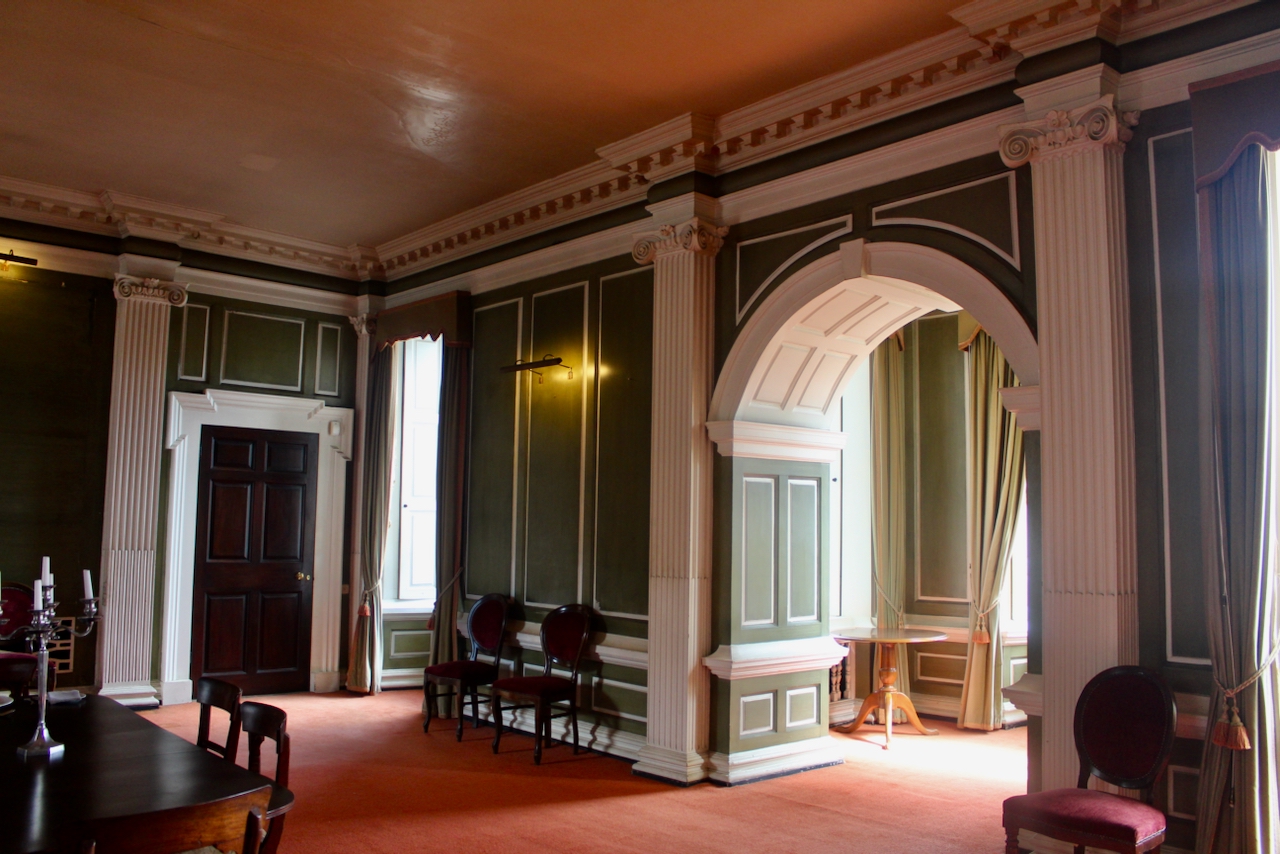
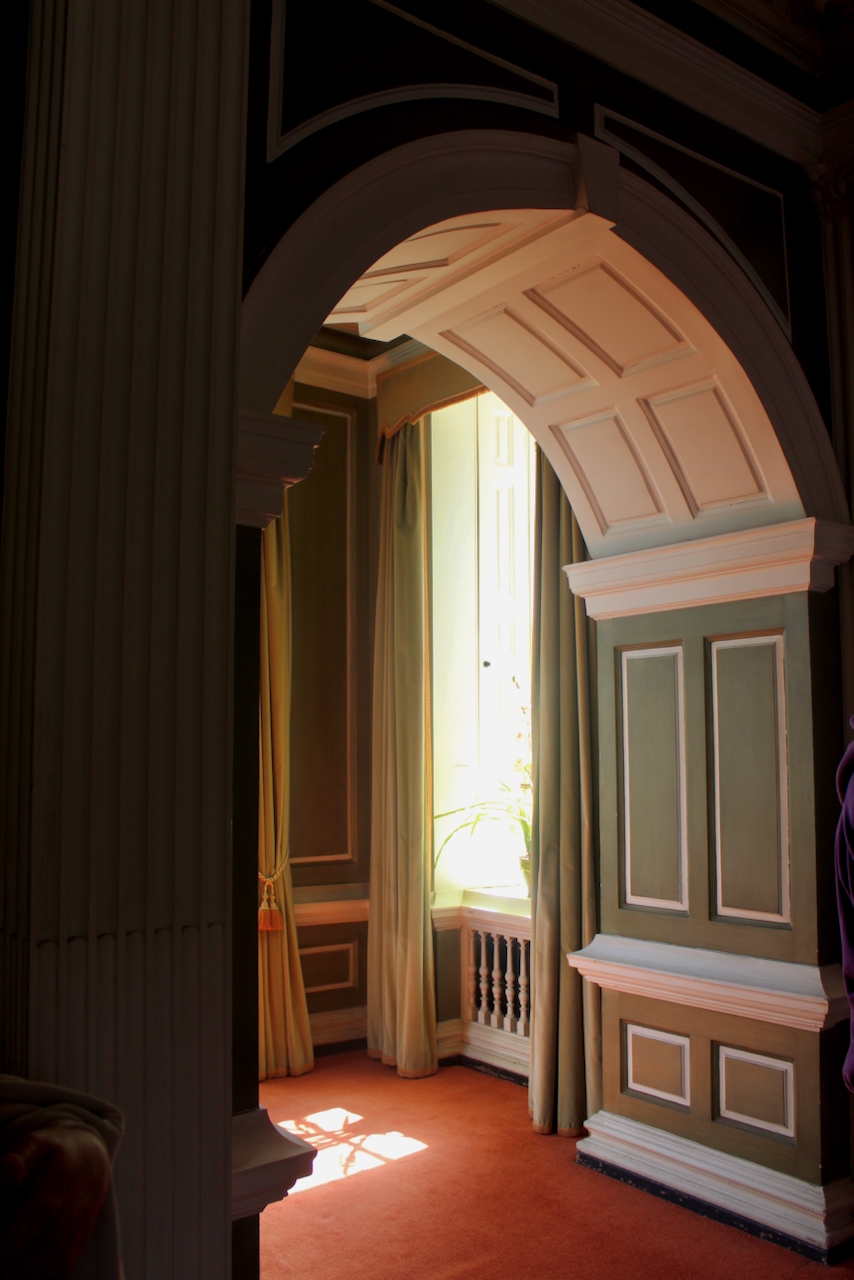
The dining room at Howth Castle. Photograph © Jennifer Winder-Baggot, www.irishhistorichouses.com

Bence-Jones writes that Lutyens restored the dining room to its original size after it had been partitioned off into several smaller rooms. It has a modillion cornice and eighteenth century style panelling with fluted Corinthian pilasters.
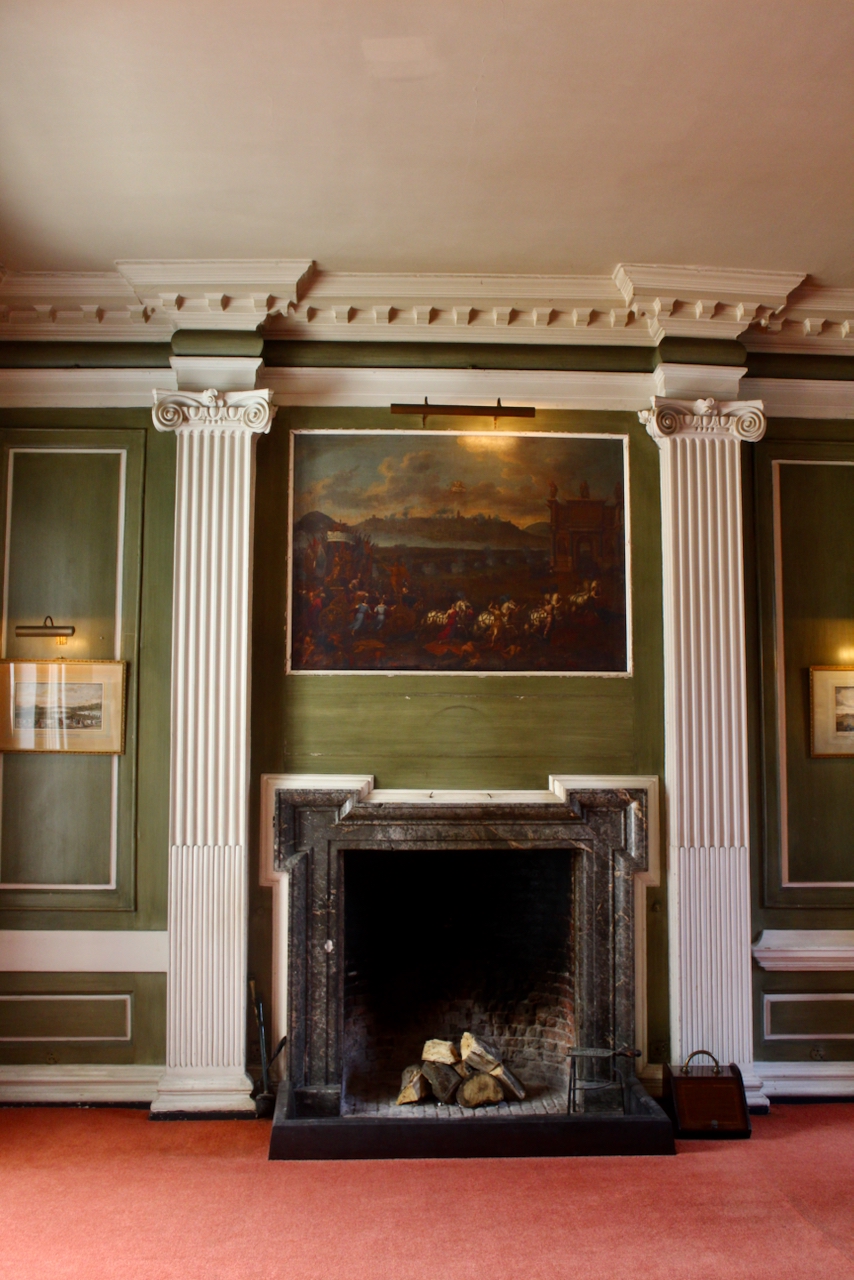
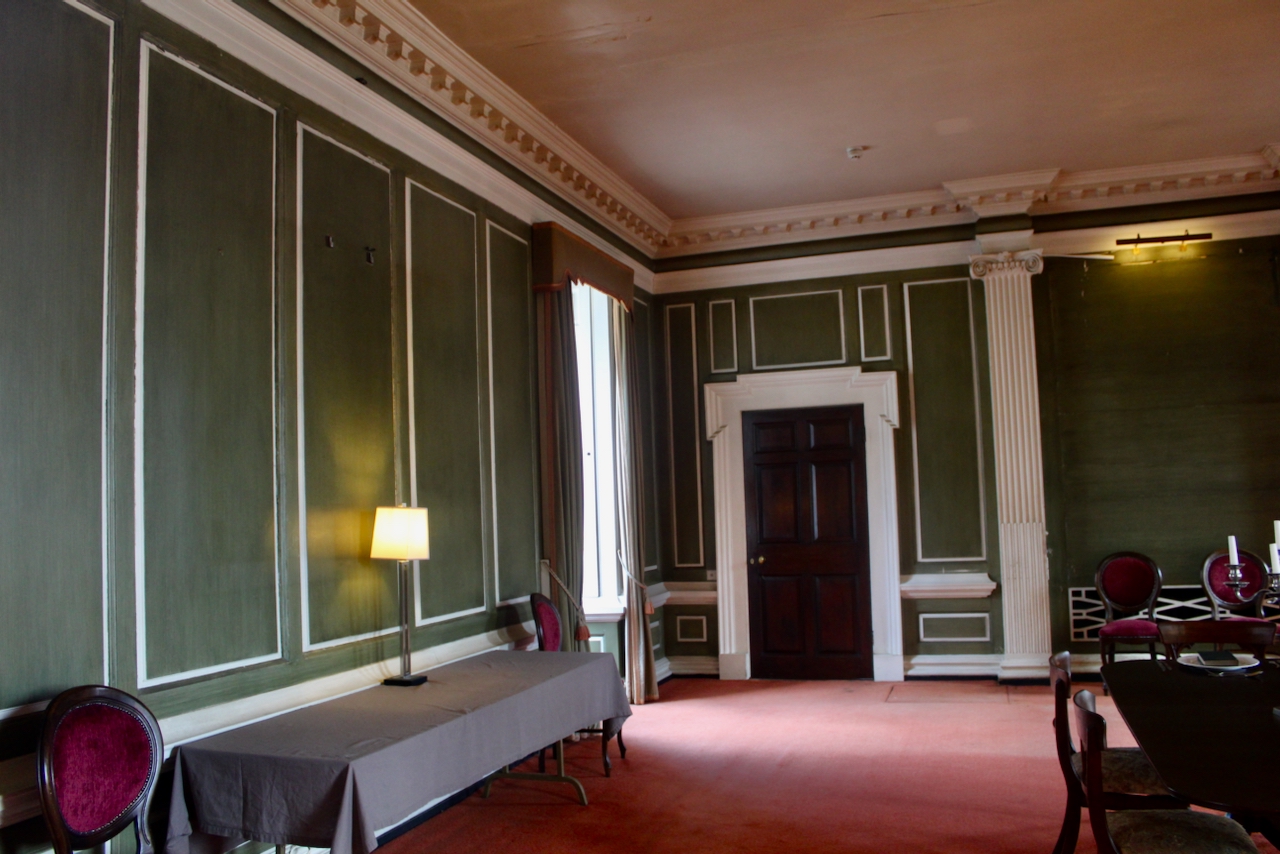
The dining room at Howth Castle. Photograph © Jennifer Winder-Baggot, www.irishhistorichouses.com
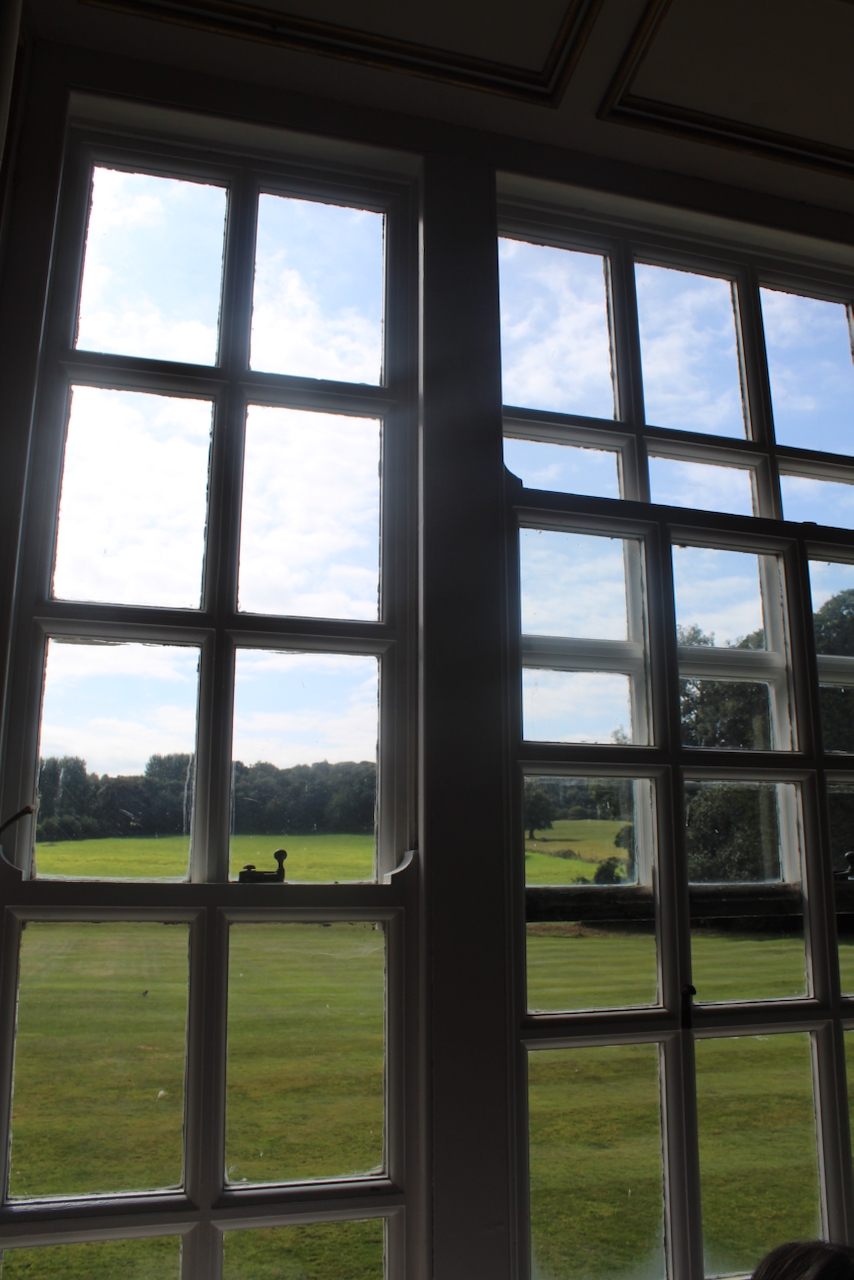
The view from the dining room at Howth Castle. Photograph © Jennifer Winder-Baggot, www.irishhistorichouses.com

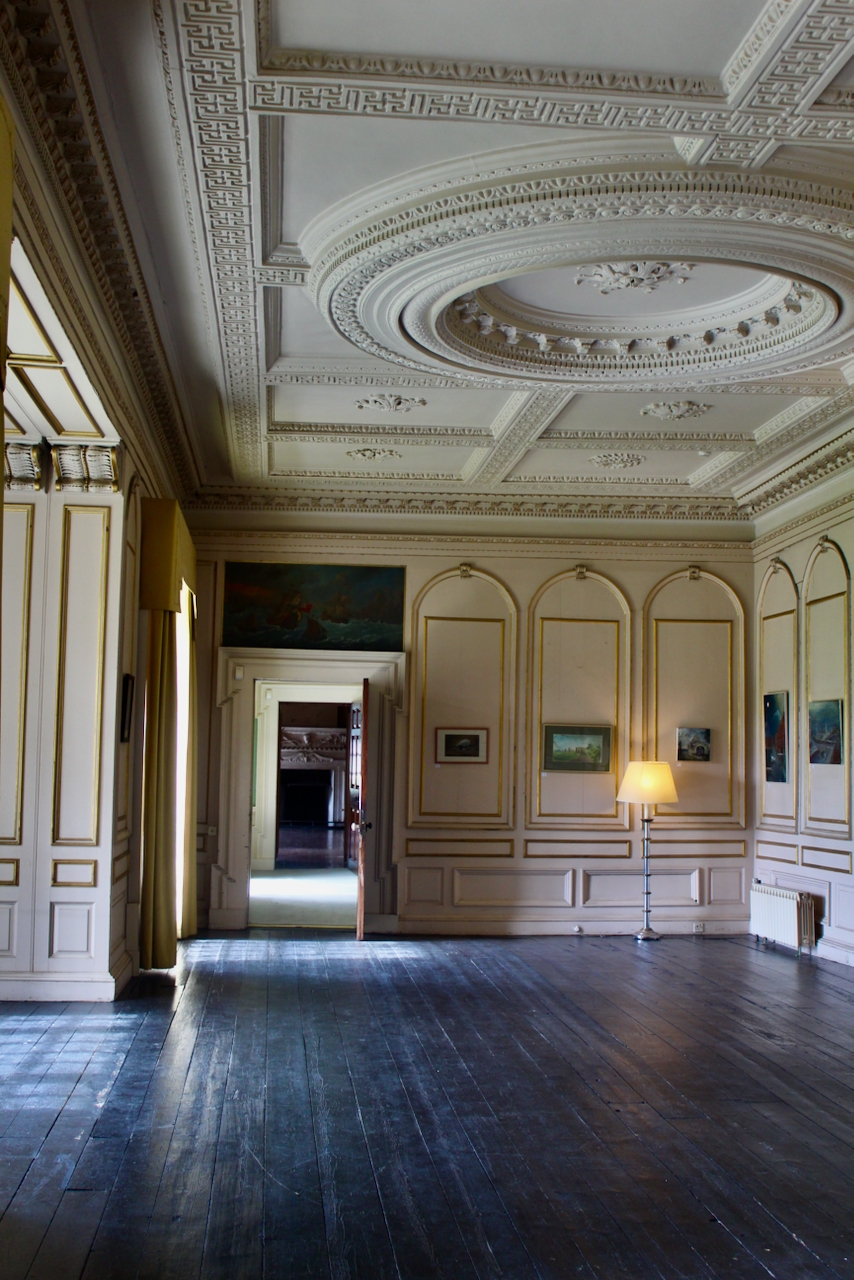
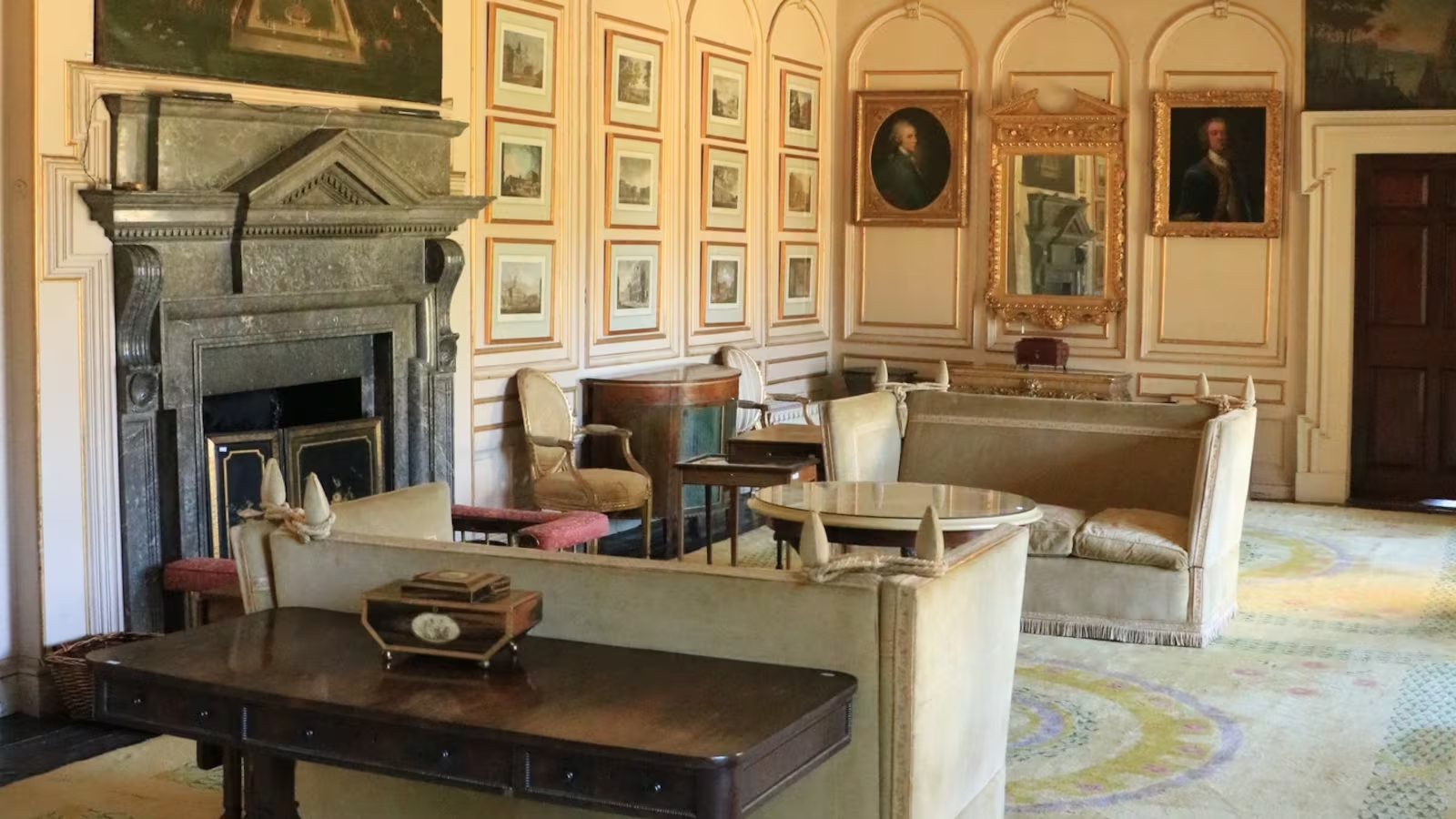
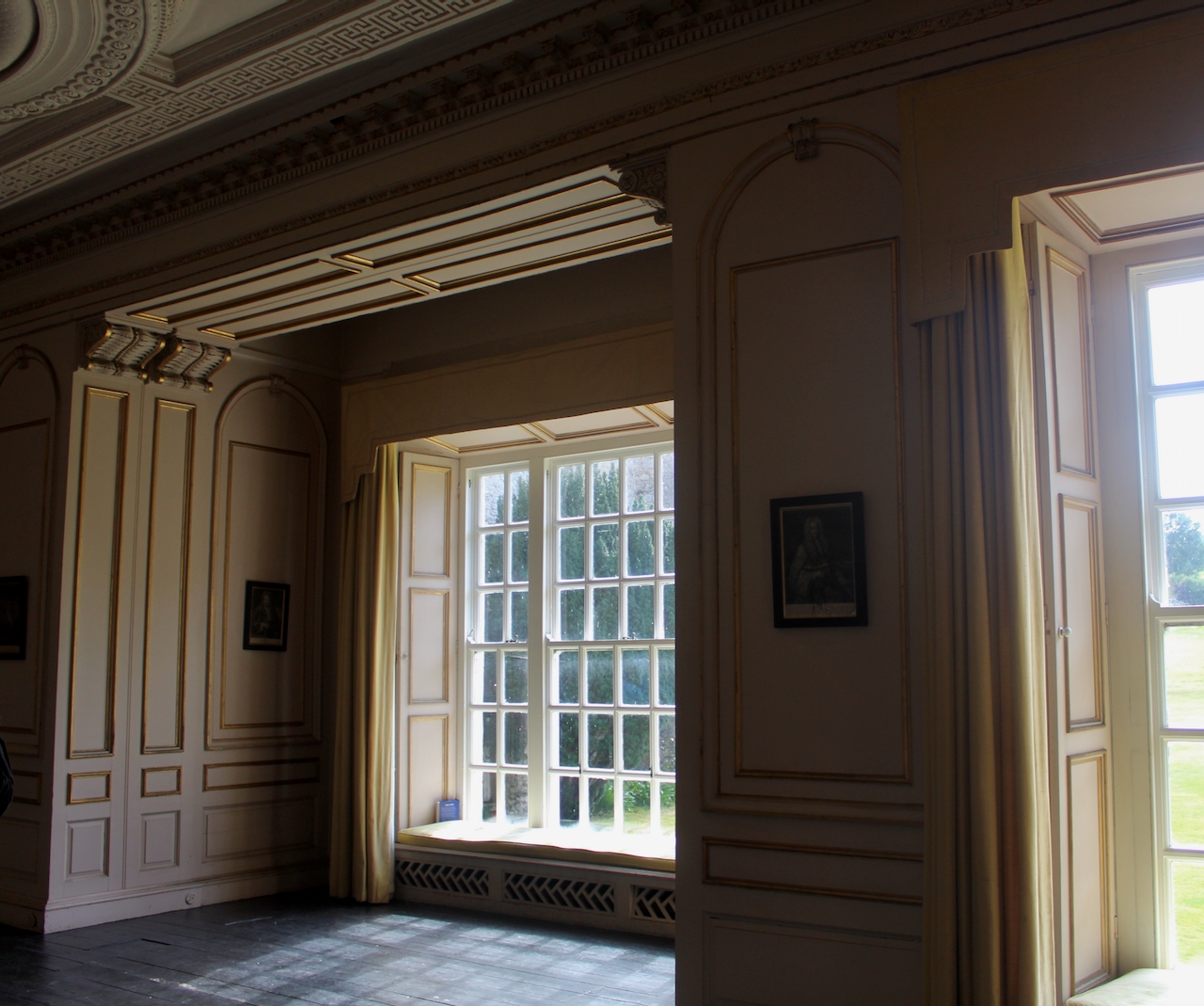
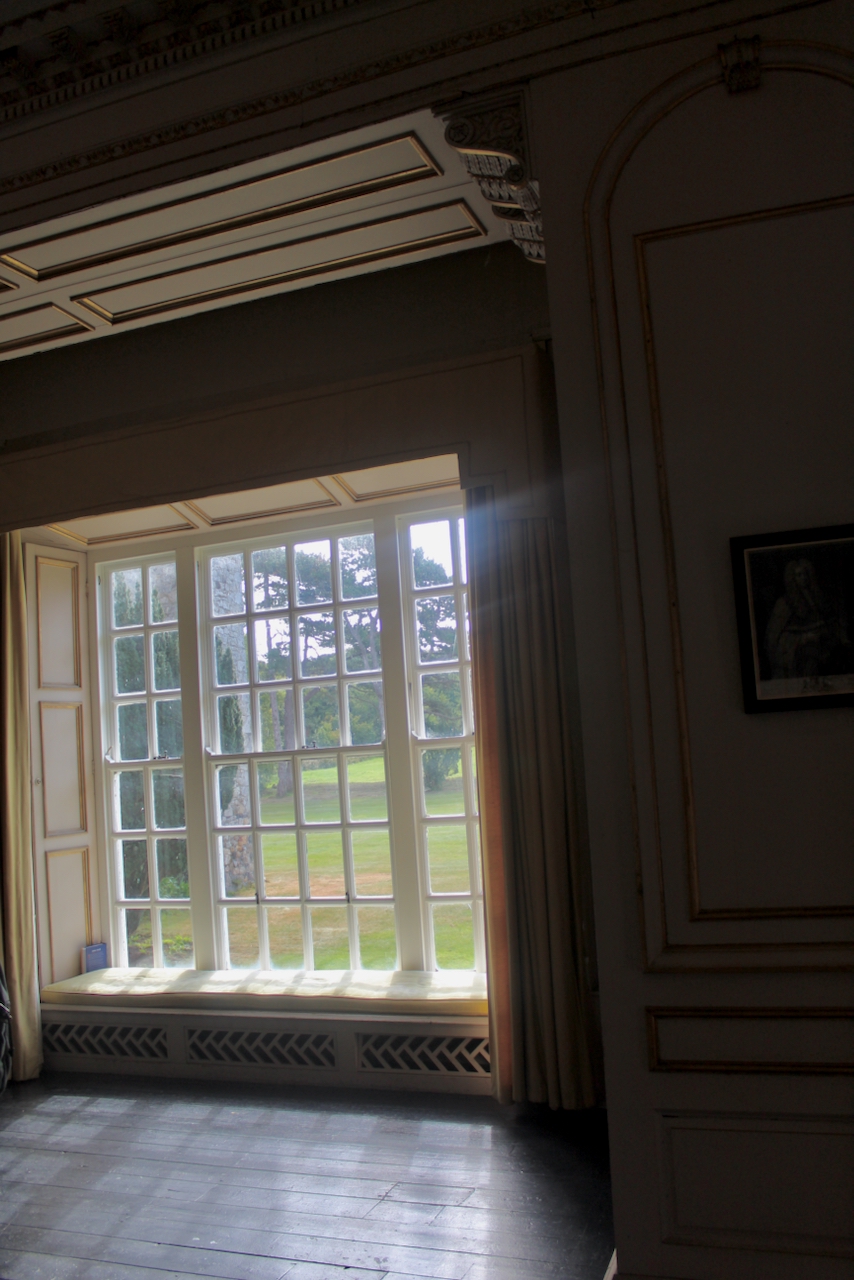
The drawing room was left largely untouched by Lutyens.
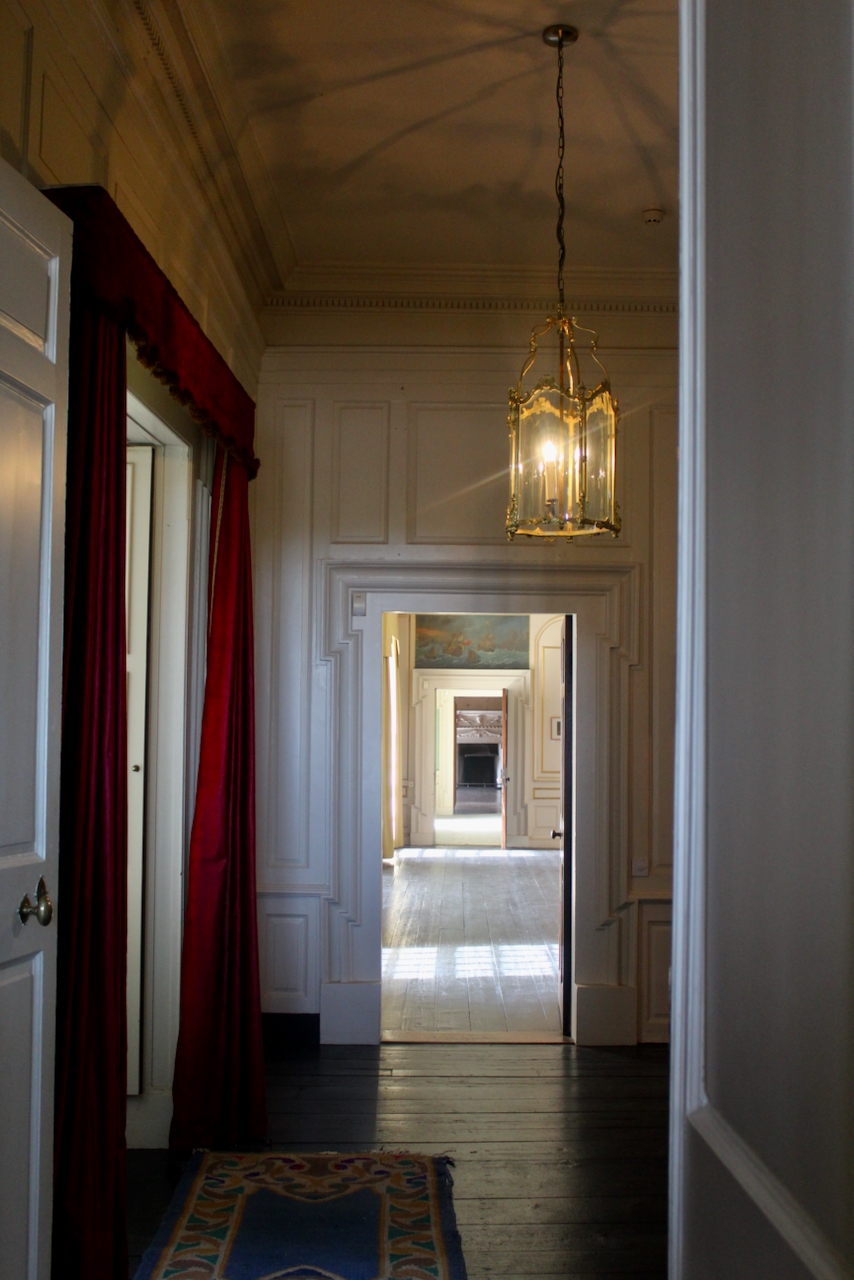
Enfilade toward the Library, through the Drawing room at Howth Castle. Photograph © Jennifer Winder-Baggot, www.irishhistorichouses.com
The Drawing room at Howth Castle. Photograph © Jennifer Winder-Baggot, www.irishhistorichouses.com

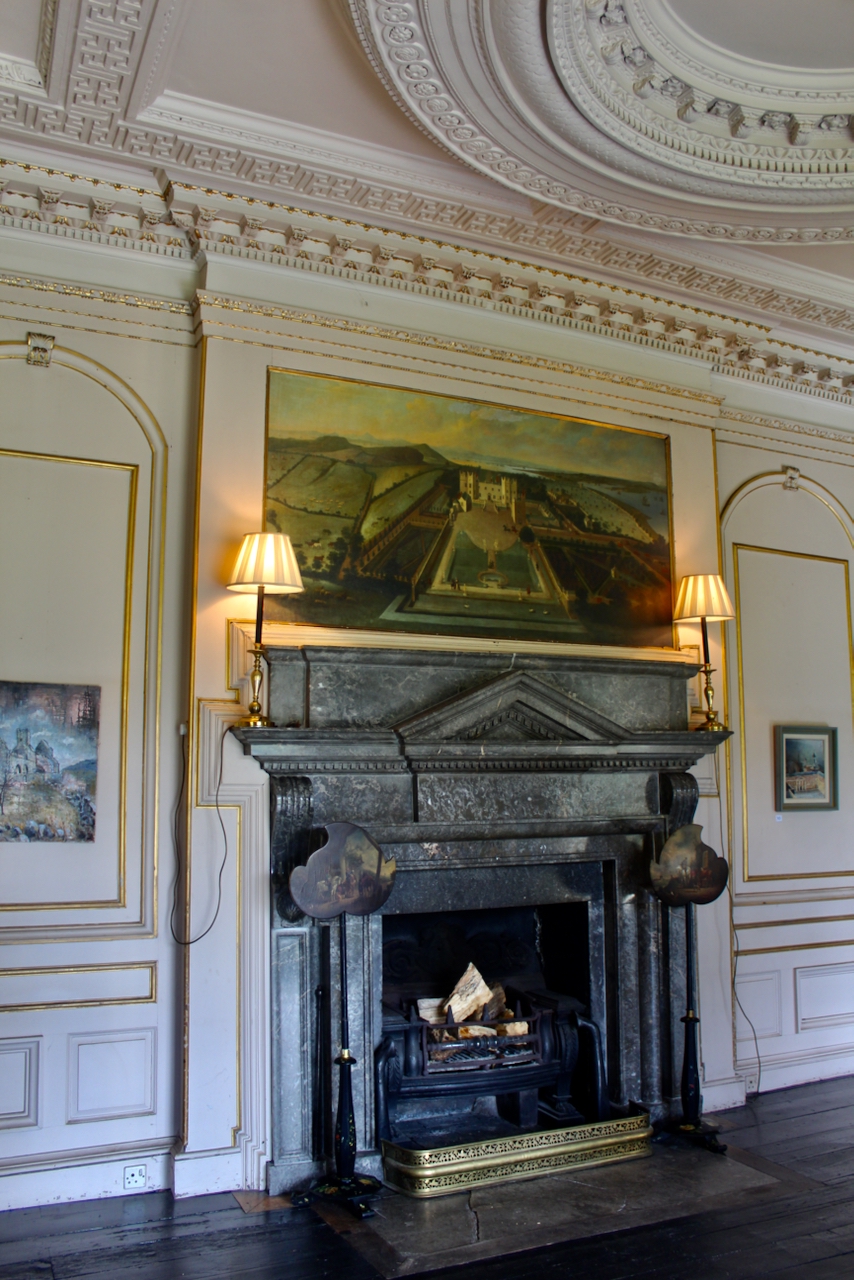
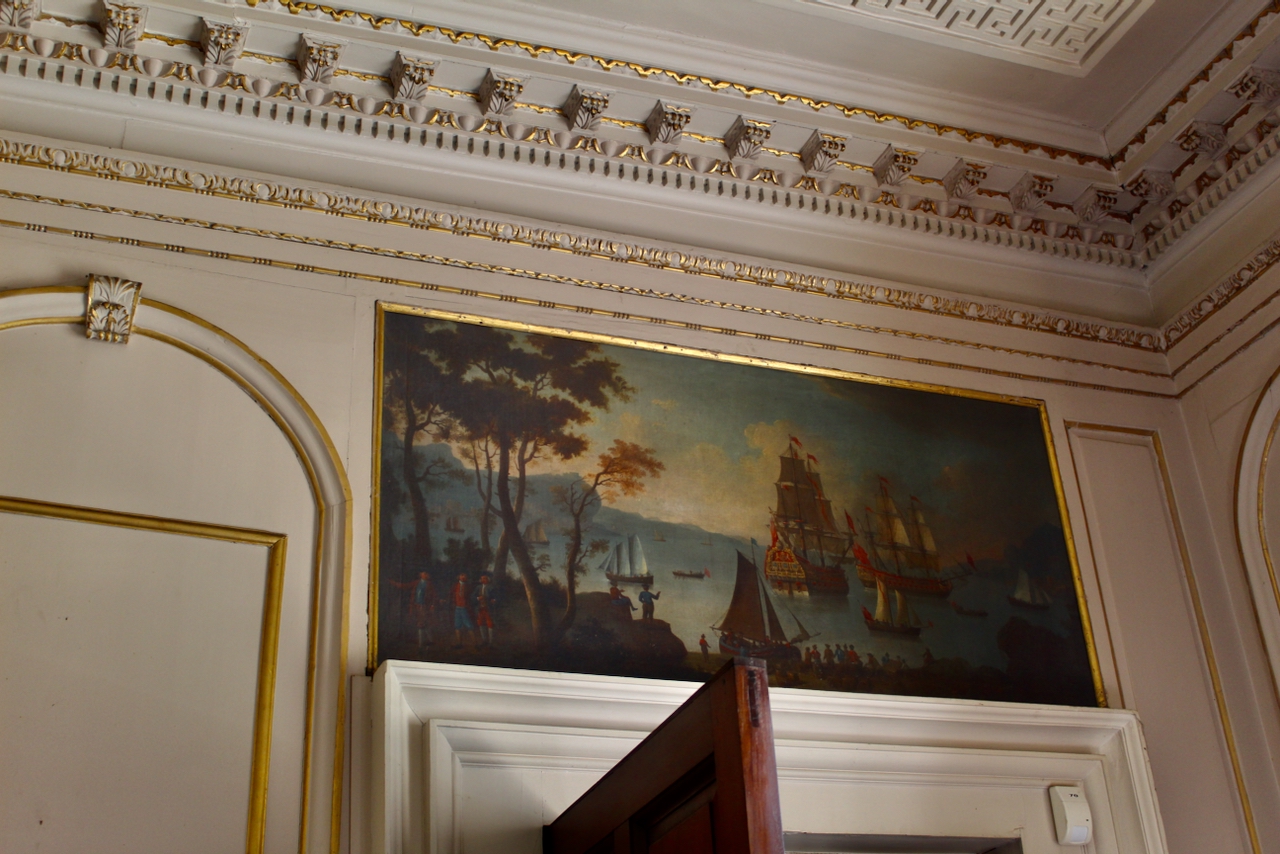
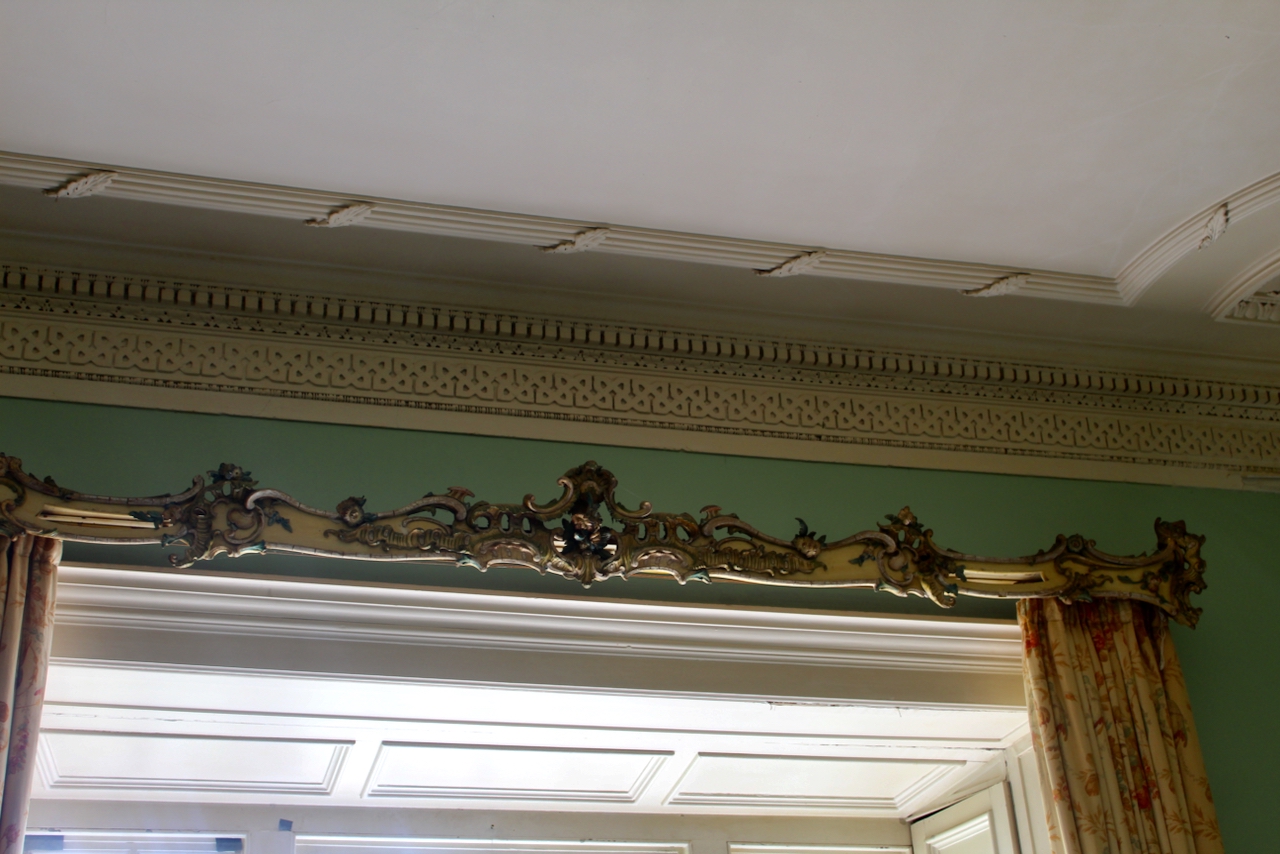
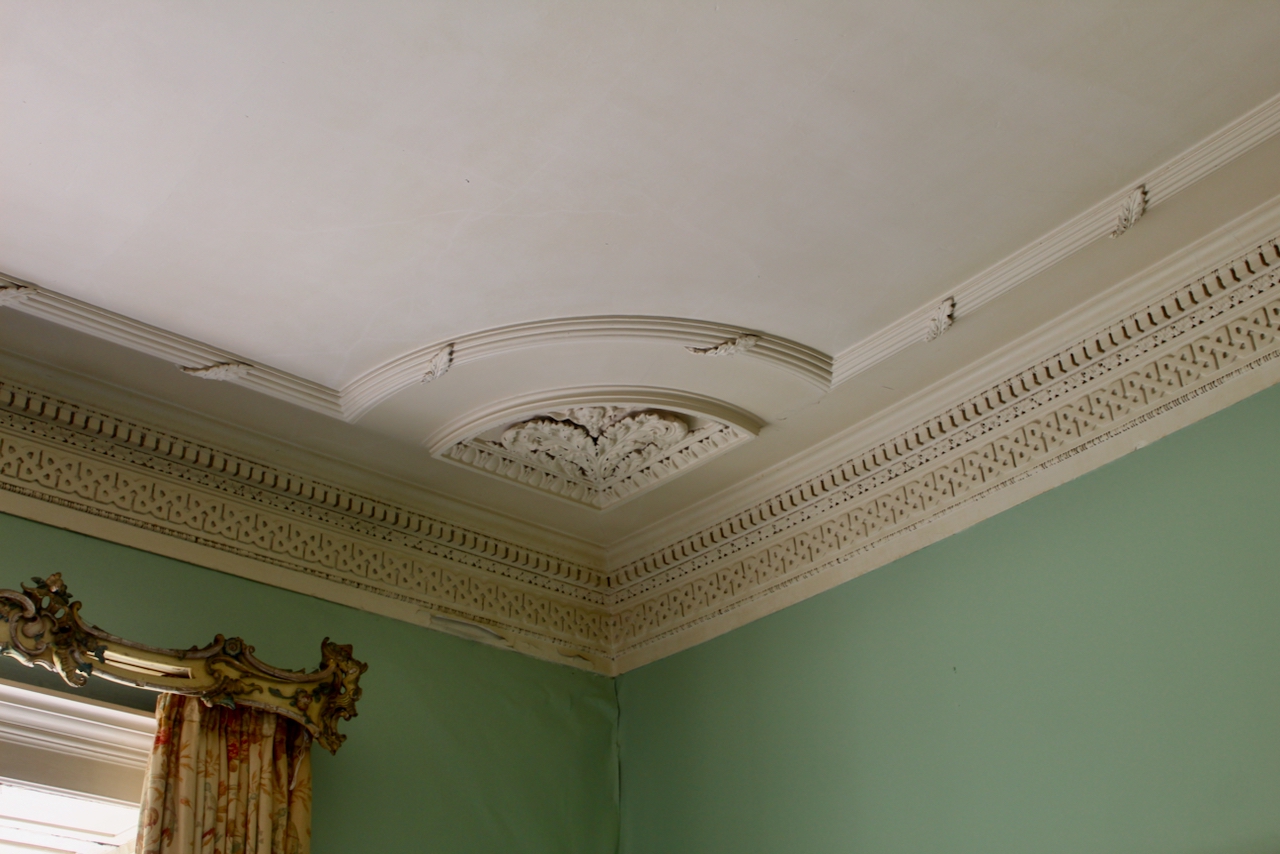
Mark Bence-Jones writes: “The drawing room has a heavily moulded mid-C18 ceiling, probably copied from William Kent’s Works of Inigo Jones; the walls are divided into panels with arched mouldings, a treatment which is repeated in one of the bedrooms.”
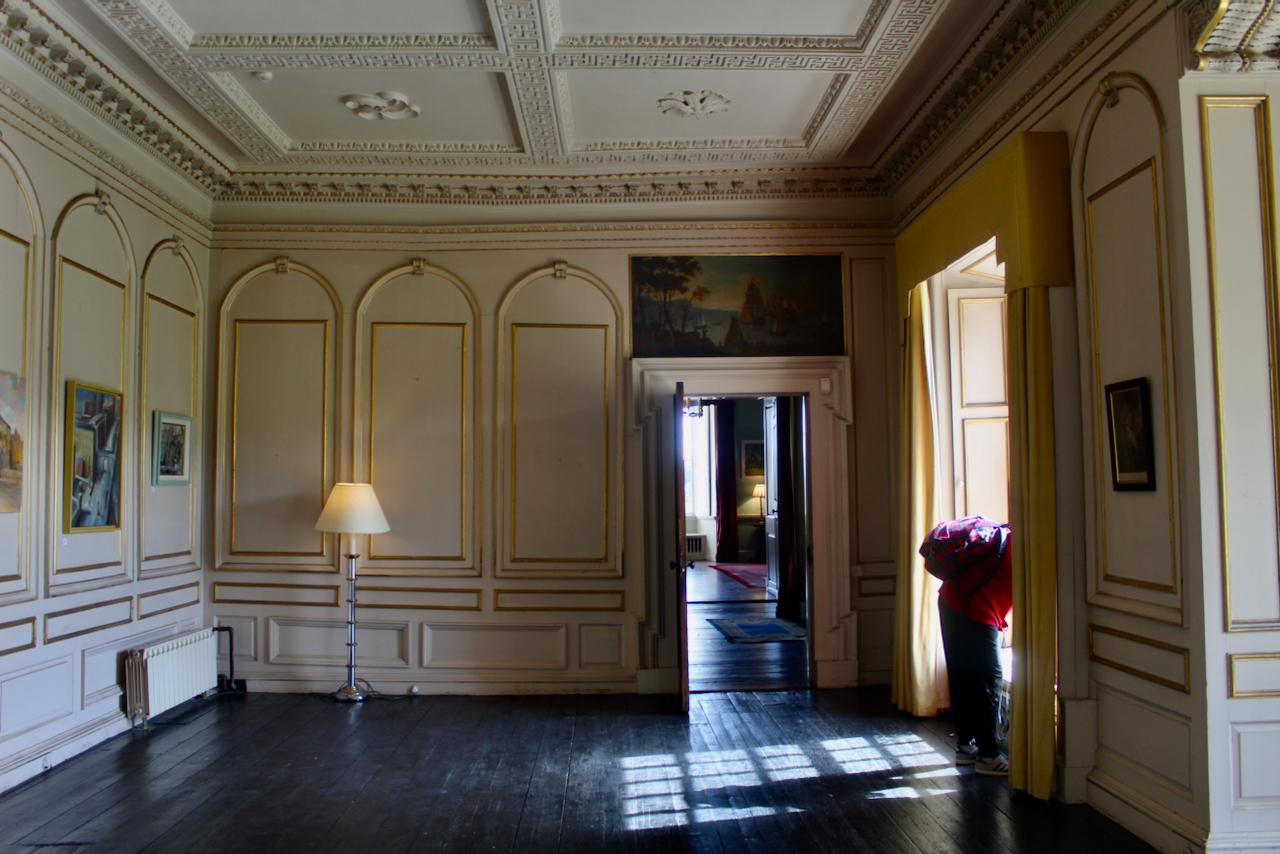
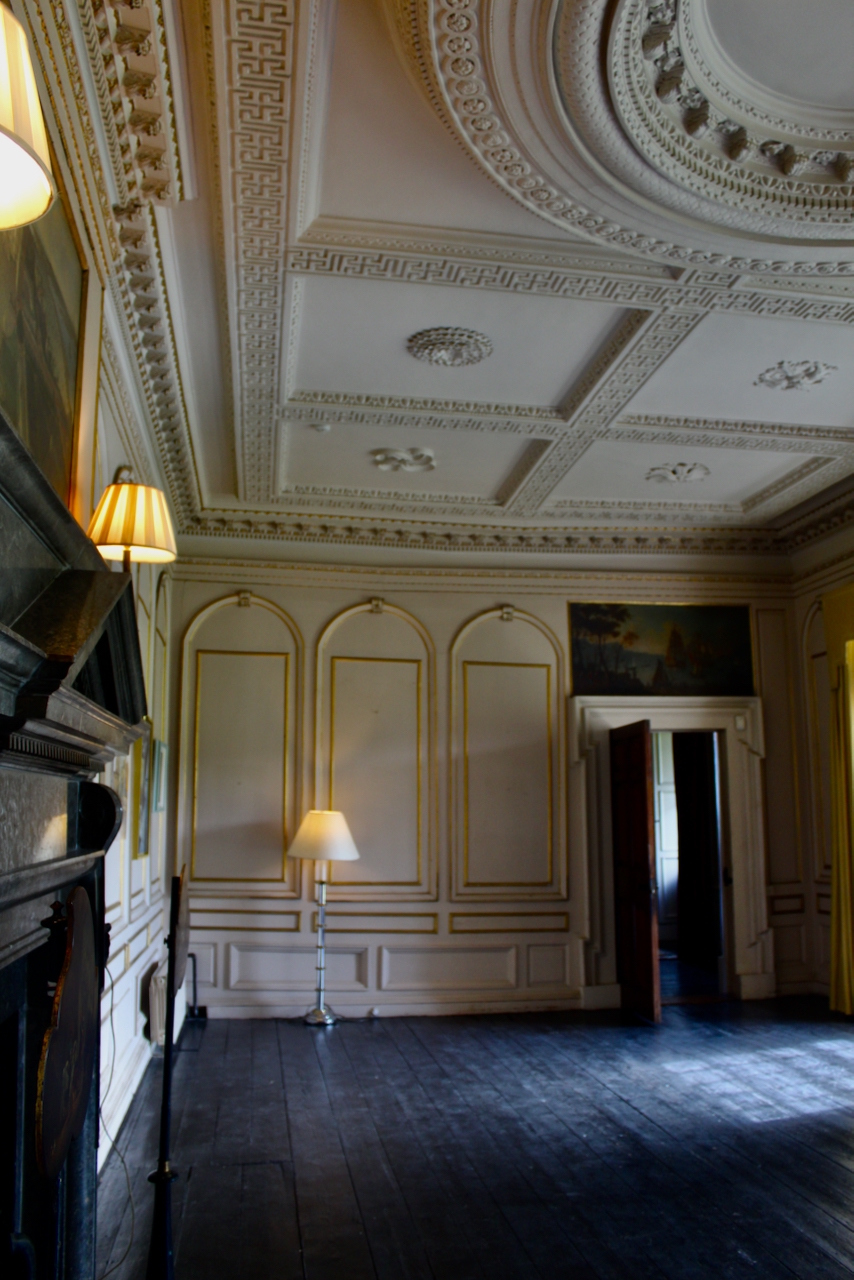
The Drawing room at Howth Castle. Photograph © Jennifer Winder-Baggot, www.irishhistorichouses.com
Drawing room at Howth Castle before auction, photograph courtesy of Irish Times Saturday August 14th 2021.
The Drawing room at Howth Castle. Photograph © Jennifer Winder-Baggot, www.irishhistorichouses.com
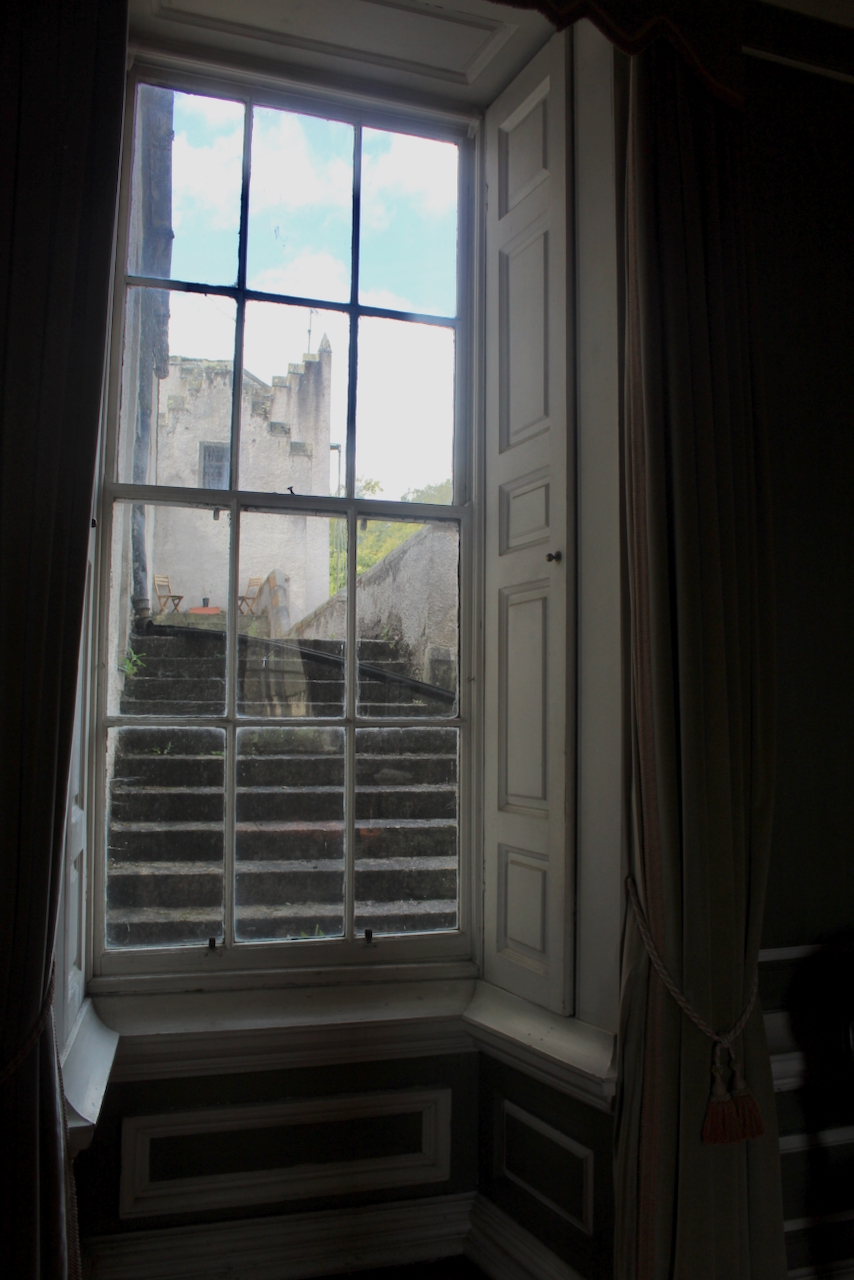
Window in the Drawing room at Howth Castle. Photograph © Jennifer Winder-Baggot, www.irishhistorichouses.com
Here you can see the drawing room windows from the outside. The drawing room is perpendicular to the Hall, and the old tower is to the right in the photograph. Howth Castle, courtesy of Howth Castle instagram.
The view from The Drawing room at Howth Castle. Photograph © Jennifer Winder-Baggot, www.irishhistorichouses.com
Drawing by Lutyens of the wing including the library.

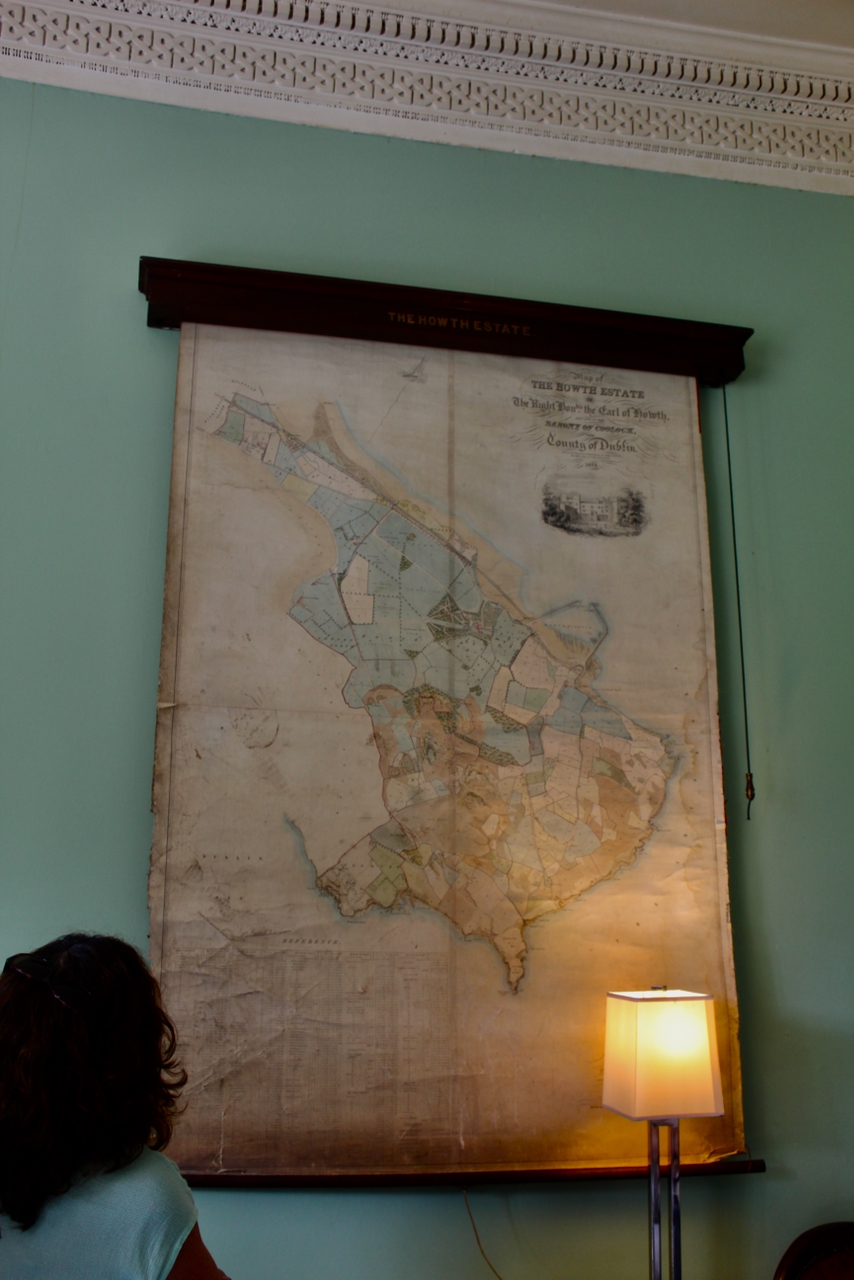
Before entering the library we entered another room, the Boudoir, which contains an old map of the estate. At its height, the Howth Estate covered about 15,000 acres. This estate stretched from Howth to Killester and partially through North County Dublin and Meath. 
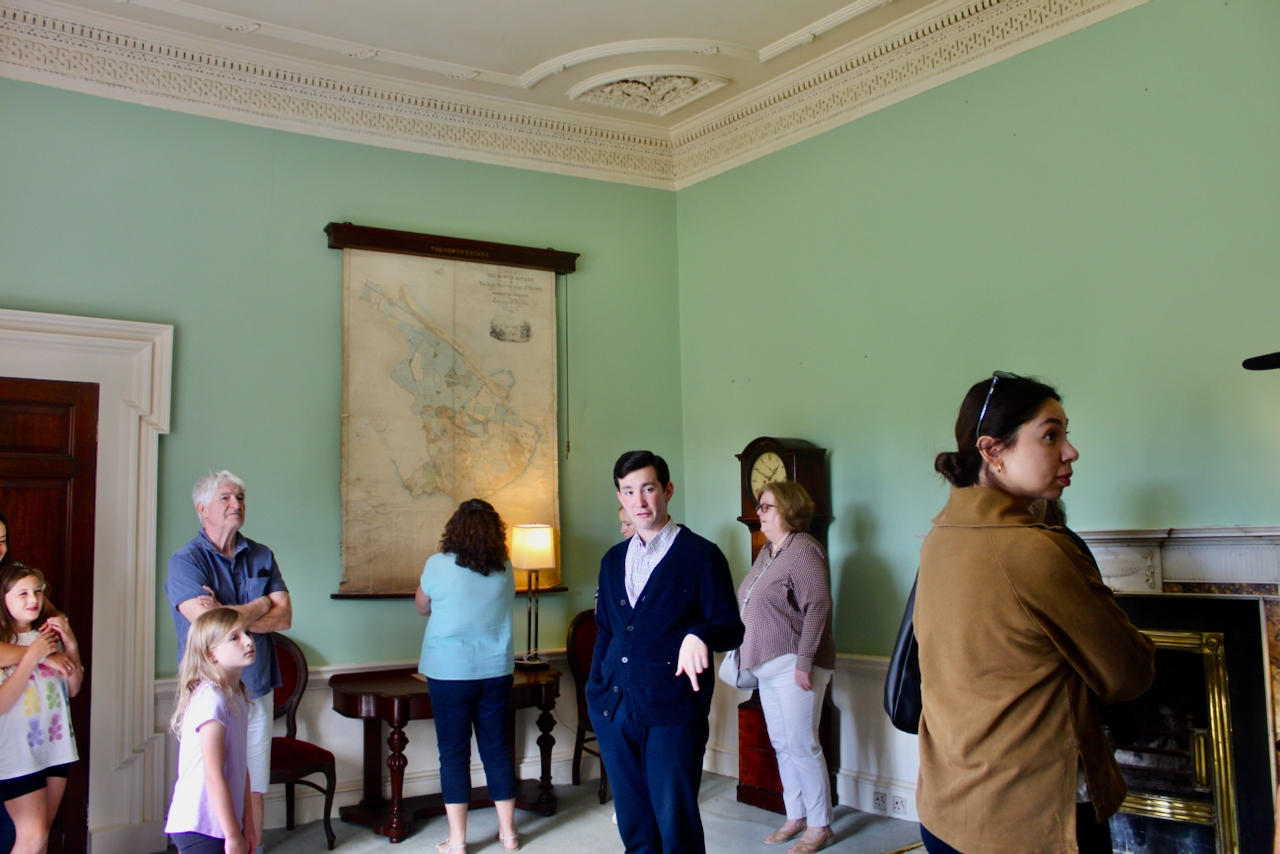
Daniel tells us about the estate map at Howth Castle. Photograph © Jennifer Winder-Baggot, www.irishhistorichouses.com
The estate map at Howth Castle. Photograph © Jennifer Winder-Baggot, www.irishhistorichouses.com

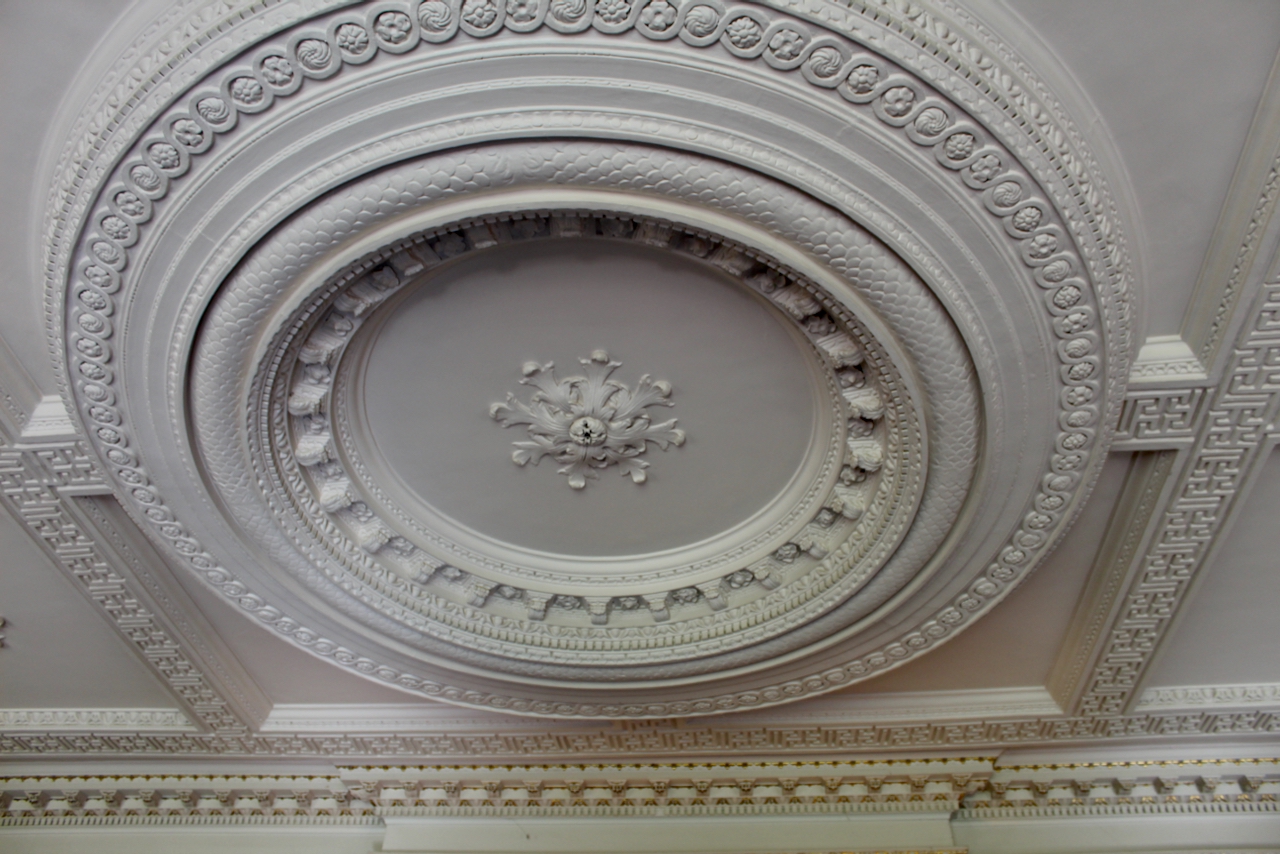
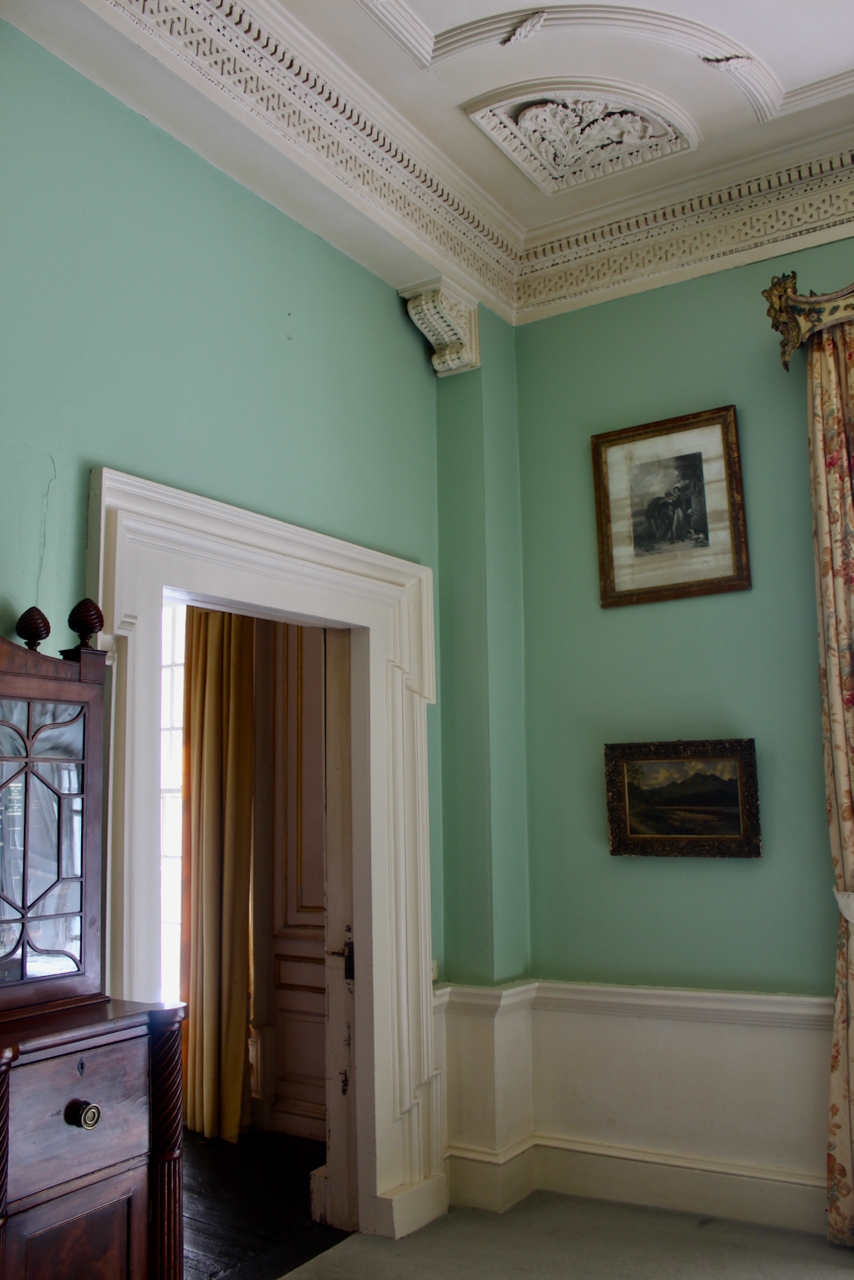
This room also has a beautiful decorative ceiling.
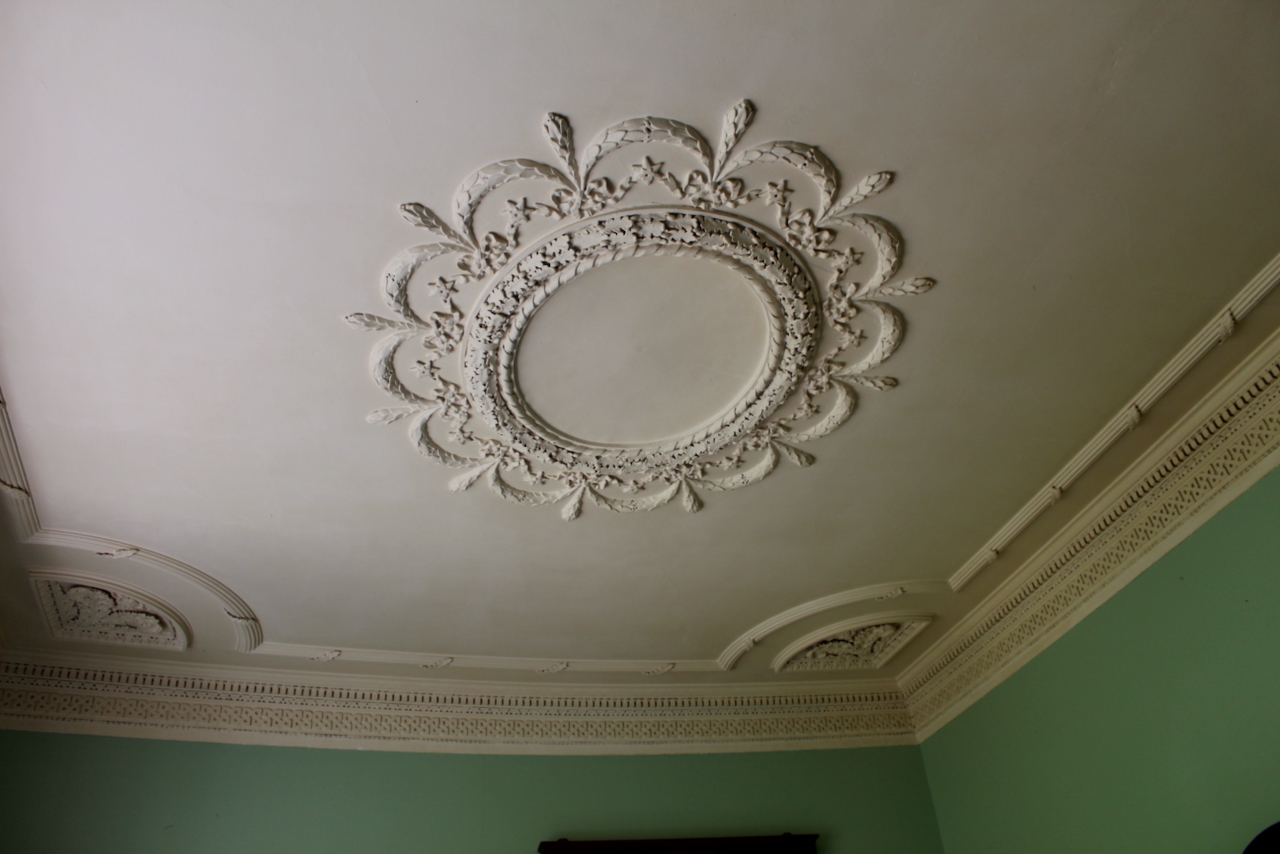
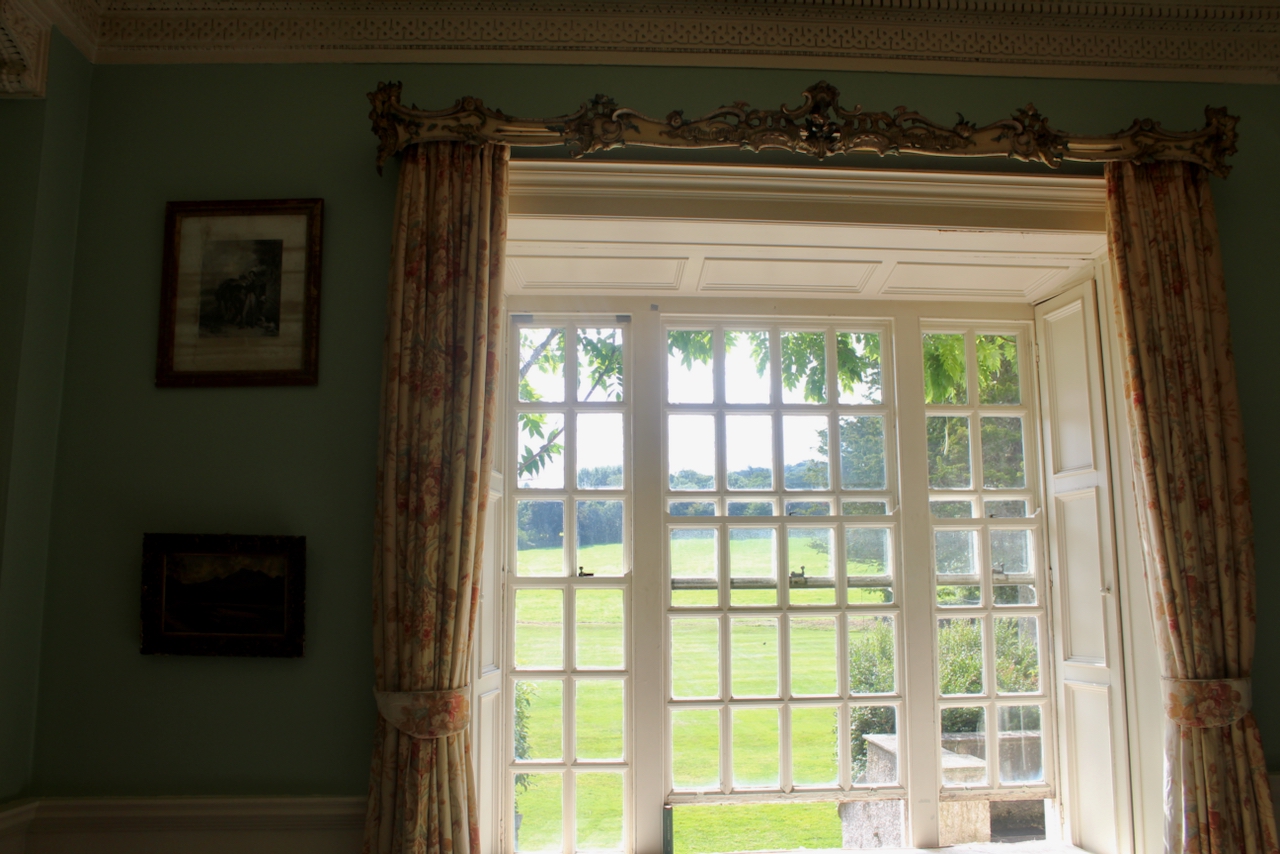
Howth Castle. Photograph © Jennifer Winder-Baggot, www.irishhistorichouses.com

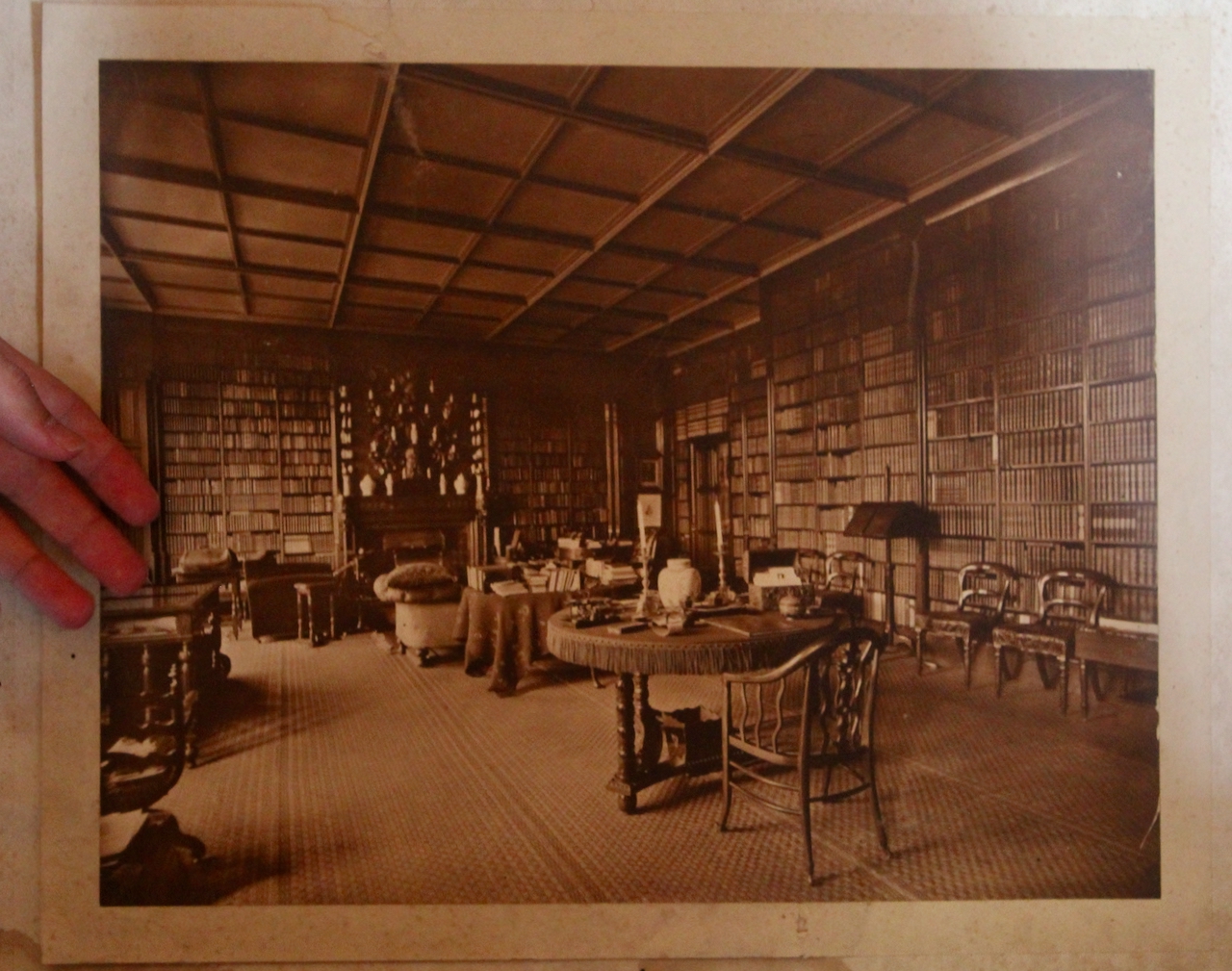
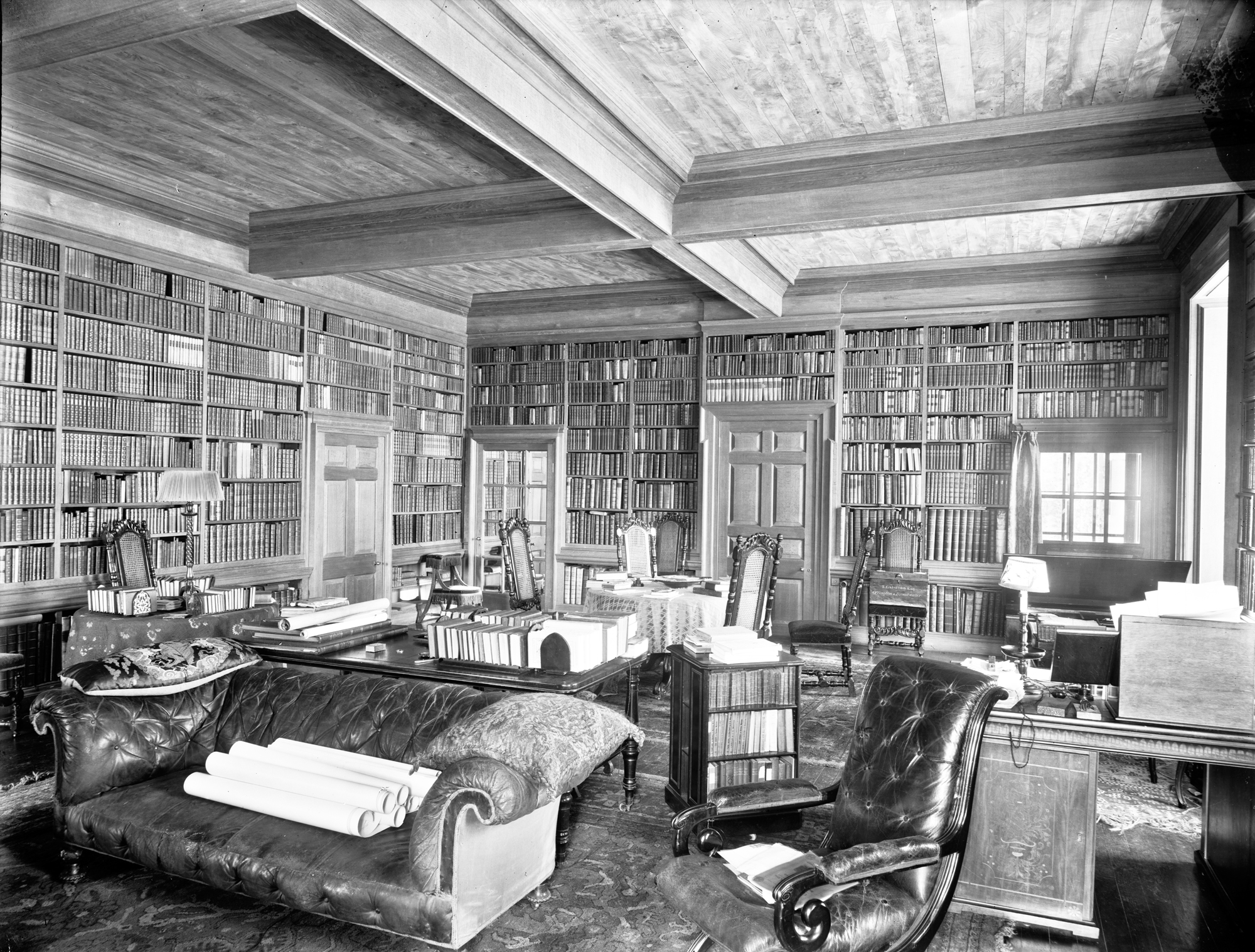
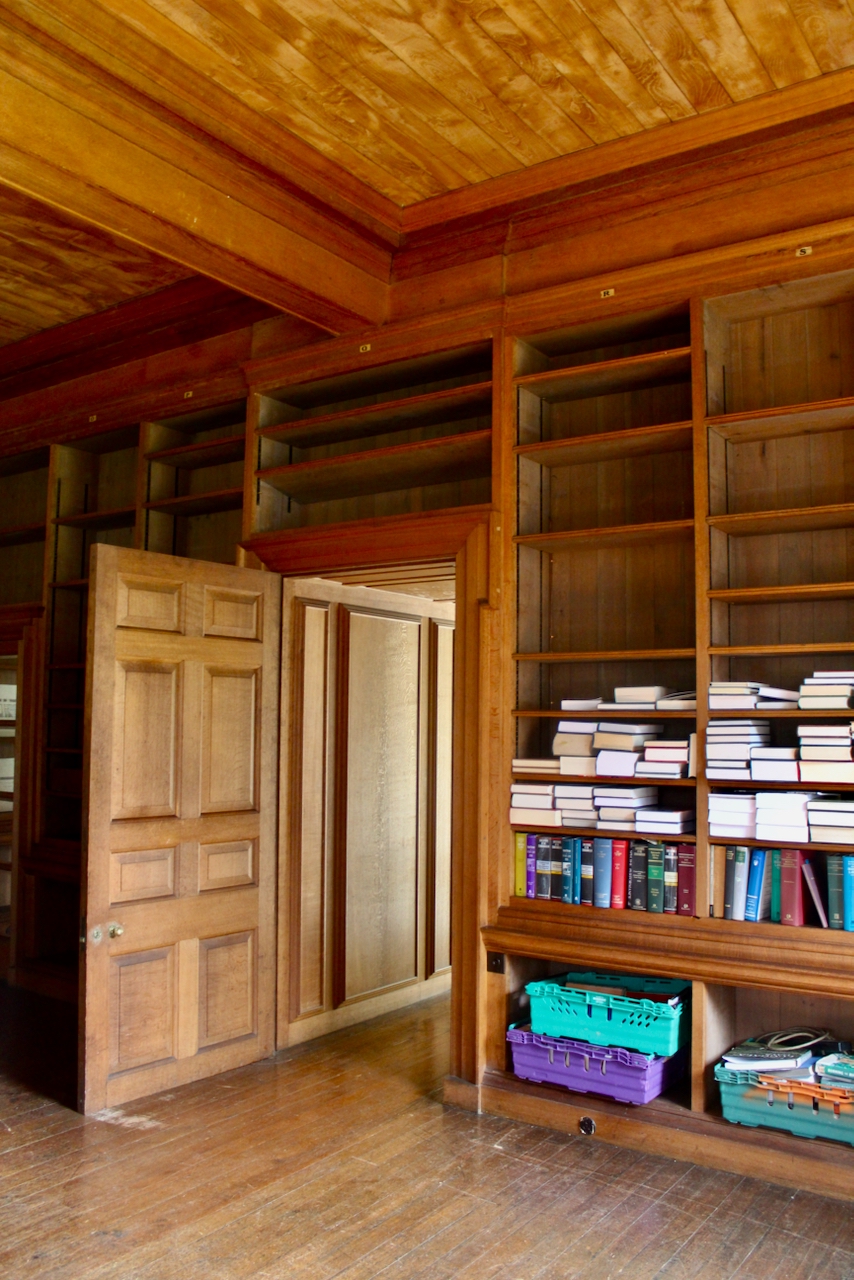
The library, by Lutyens, in his tower, has bookcases and panelling of oak and a ceiling of elm boarding.
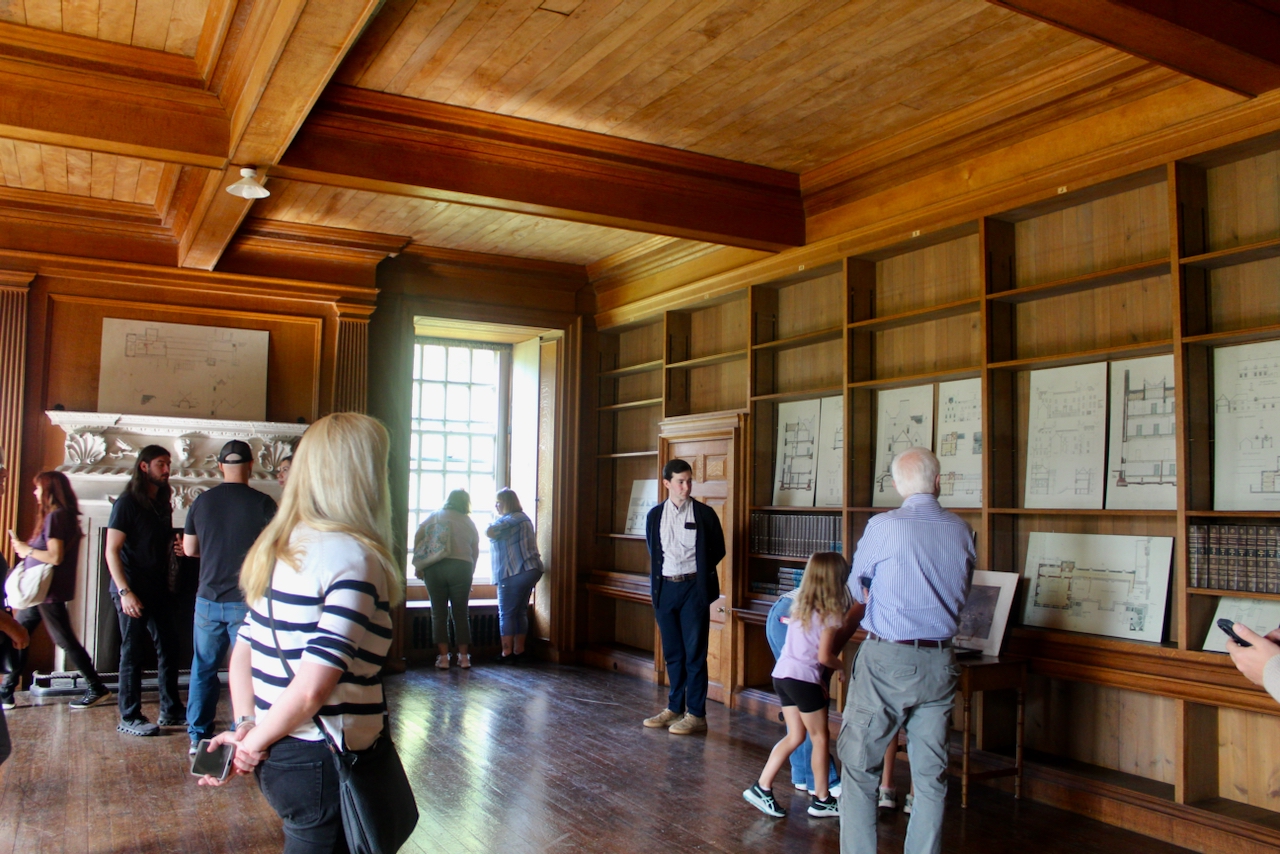
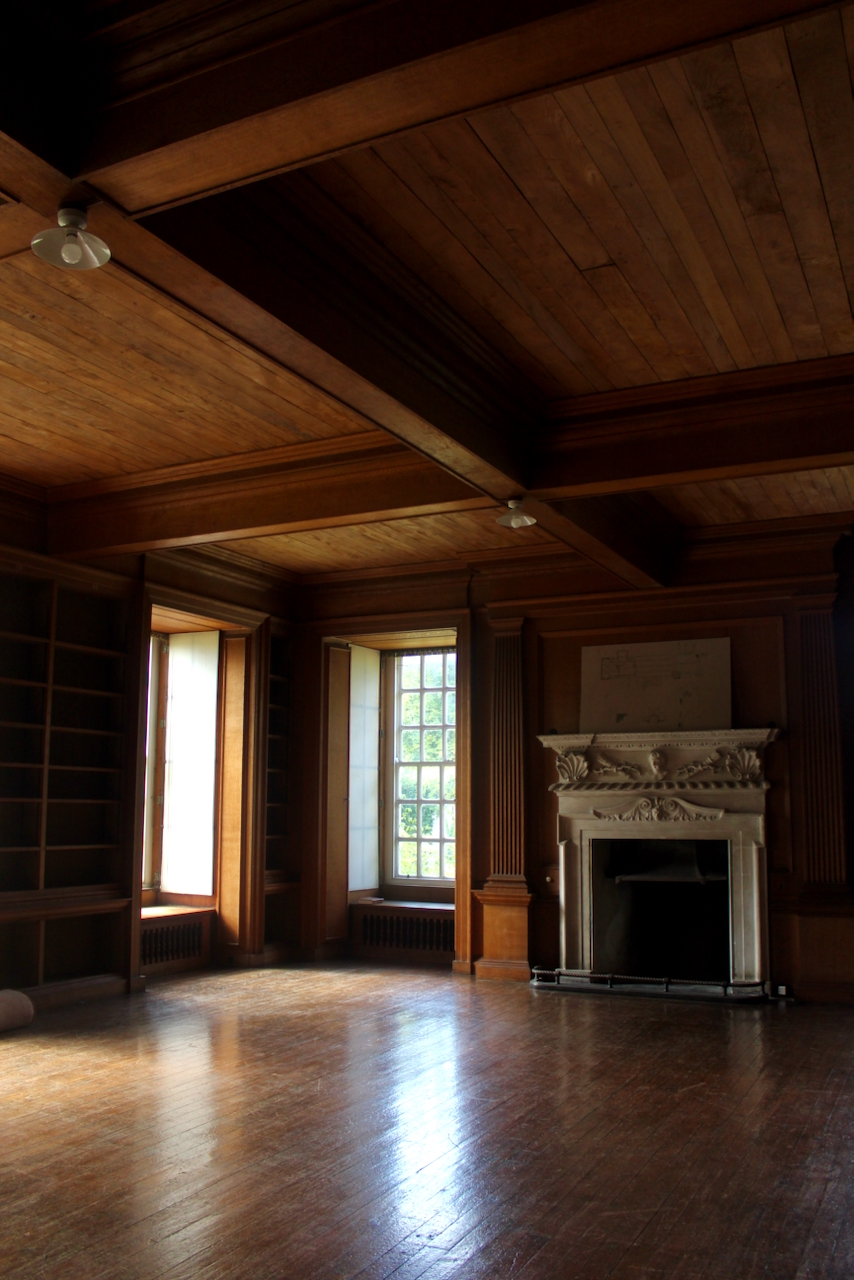
The Library, Howth Castle. Photograph © Jennifer Winder-Baggot, www.irishhistorichouses.com
A photograph in the library which Daniel showed us.
Howth Castle library, National Library of Ireland, from constant commons on flickr.
The elaborate chimmeypiece in the library in Howth Castle. Photograph © Jennifer Winder-Baggot, www.irishhistorichouses.com. Much of the interiors and even some of the windows of Killester House, a former dower house of the Howth estate, were moved to Howth Castle following its dereliction and eventual demolition, including a marble fireplace which stands in the Lutyens library.
Howth Castle. Photograph © Jennifer Winder-Baggot, www.irishhistorichouses.com
The 2021 Fonsie Mealy auction included A Series of 10 Prototype Architect Drawings and Sketches by Edwin Lutyens, Alterations and Additions for J.C. Gaisford St. Lawrence, Esq at Howth Castle, all with original hand-coloured decoration. The drawings include: West Wing of Tower; Entrance Loggia; Ground Floor Plans; Principle Floor; Second Floor; Attic & Roof Plans; South Elevation; North Elevation; Back & Front Elevations; Elevation to Coach House; Kitchen Block; Longitudinal Sections etc.

Lutyens added a long corridor to one side of the drawing room and boudoir.
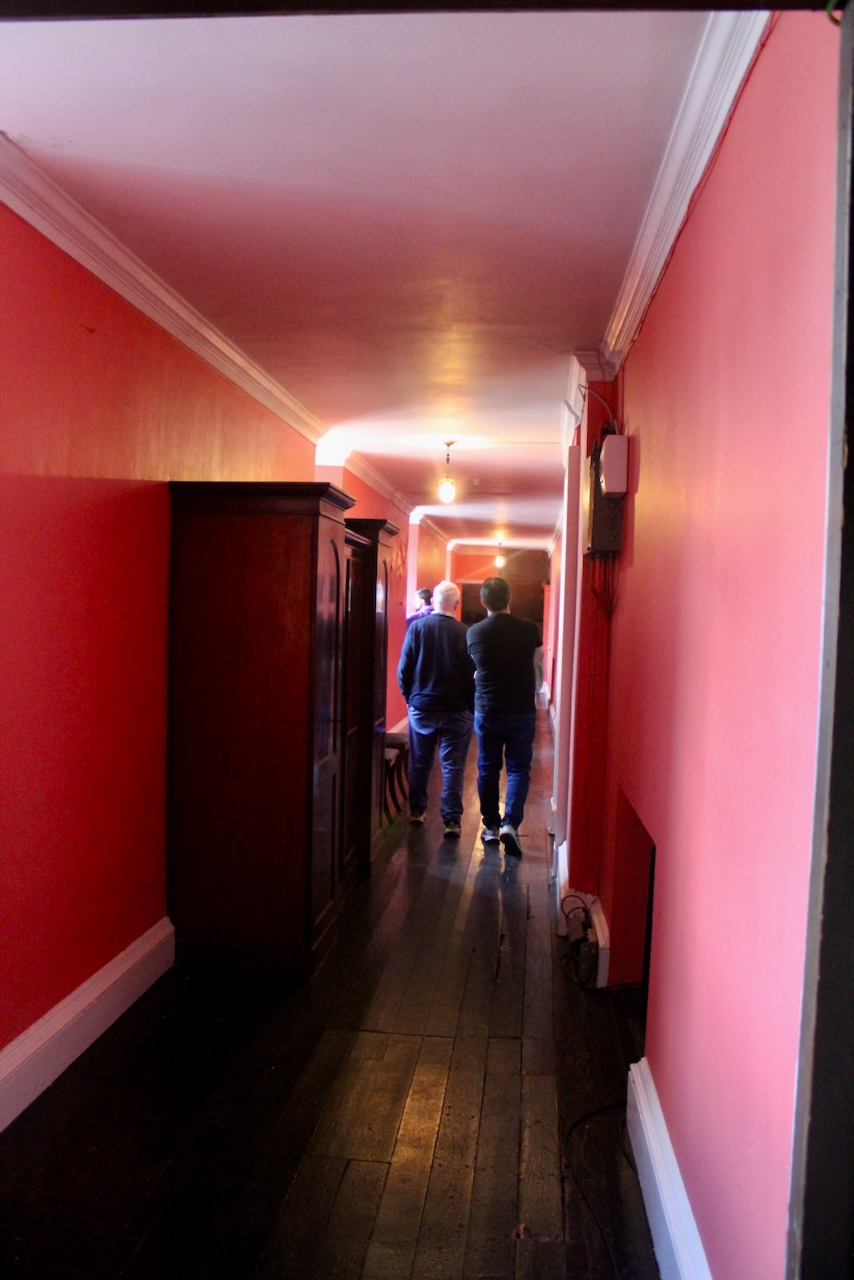
The corridor, Howth Castle. Photograph © Jennifer Winder-Baggot, www.irishhistorichouses.com

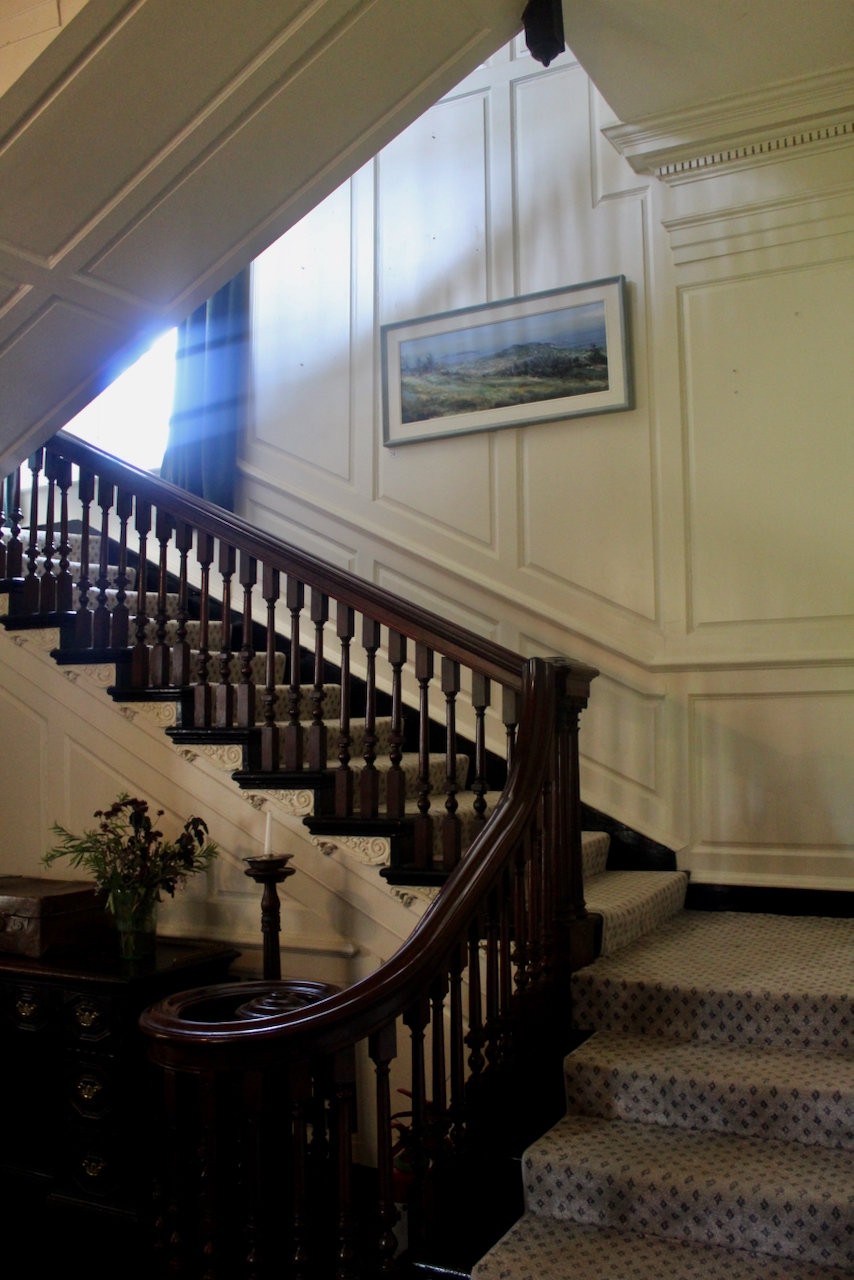
We also passed the staircase, but the tour did not include upstairs.
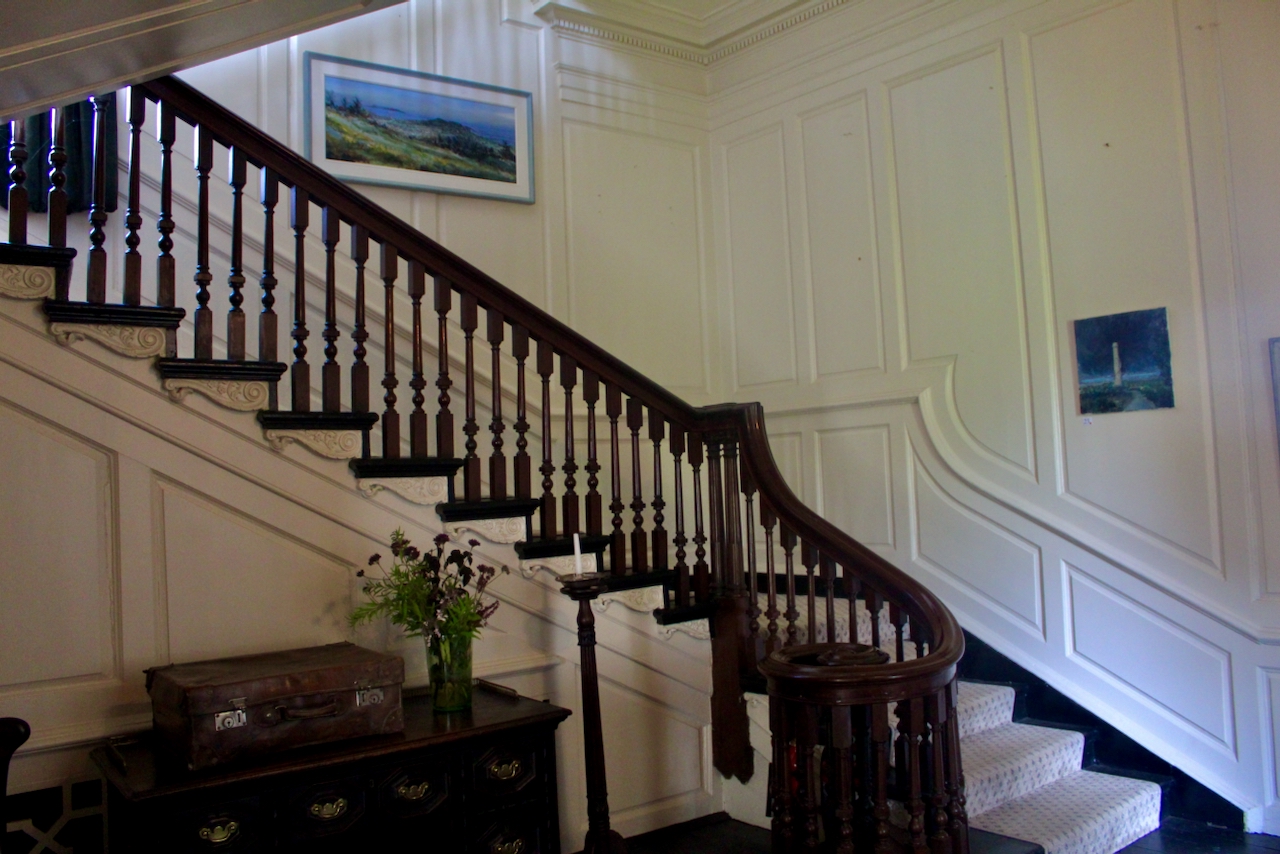
Howth Castle. Photograph © Jennifer Winder-Baggot, www.irishhistorichouses.com

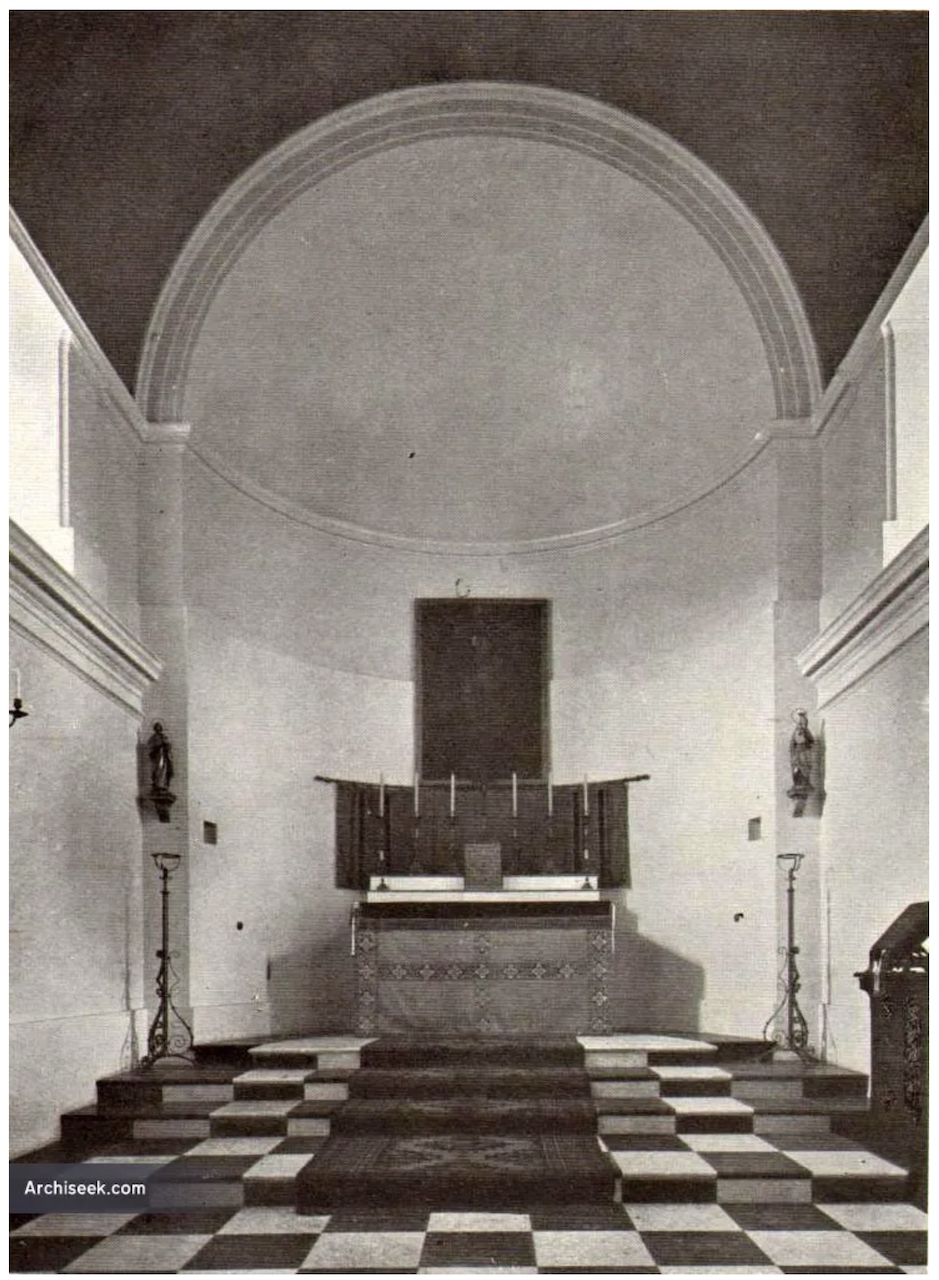
Mark Bence-Jones tells us: “Lutyens also made a simple and dignified Catholic chapel in early C19 range on one side of the entrance court; it has a barrel-vaulted ceiling and an apse behind the altar.”

The addition to the east wing by Lutyens in around 1911 contains the chapel. Unfortunately we did not get to see inside this wing.
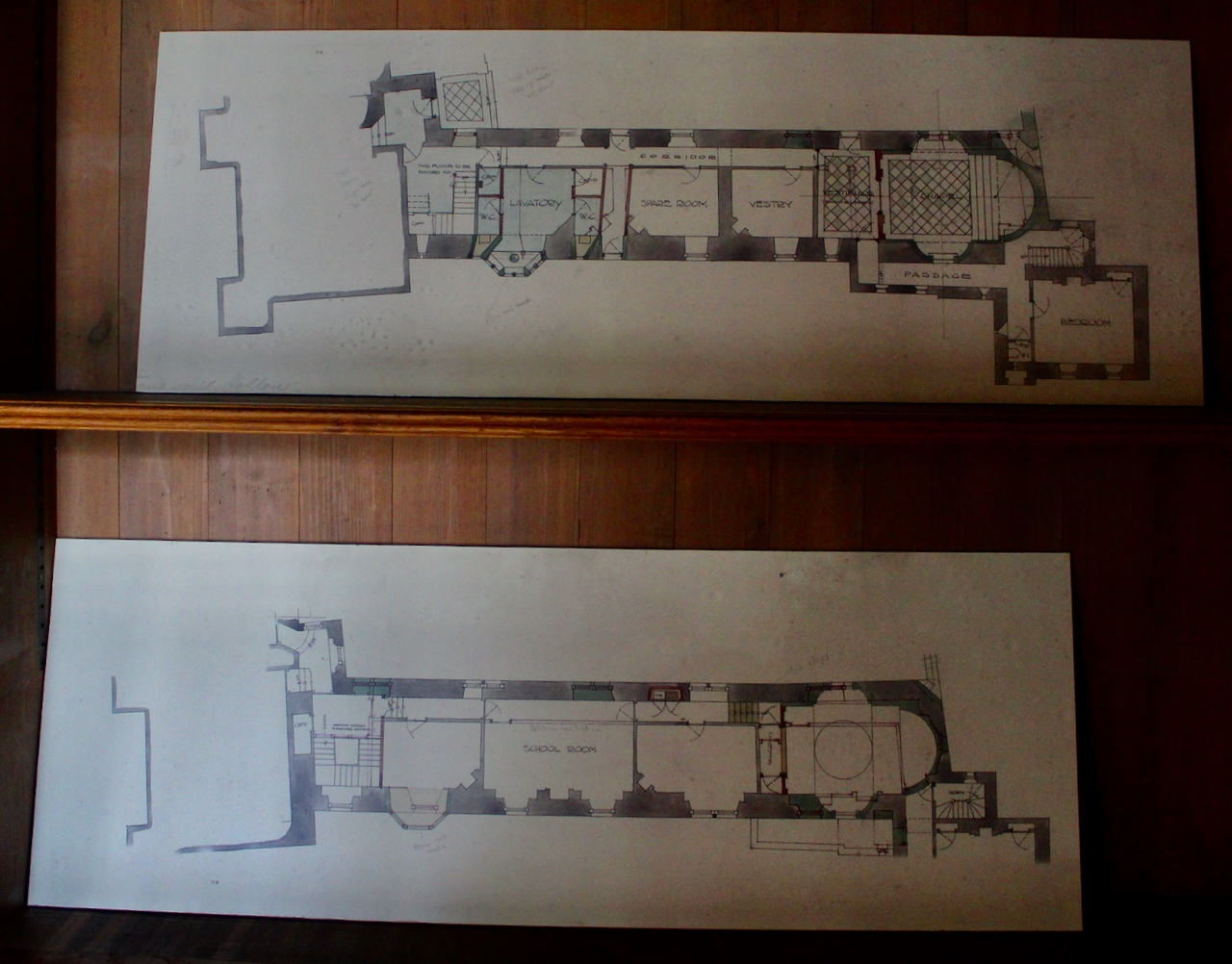
Drawings by Lutyens for Howth Castle, the east wing.
The Chapel, Howth Castle, photograph courtesy of Archiseek. [13]

Bence-Jones also tells us that the castle has famous gardens, with a formal garden laid out around 1720, gigantic beech hedges, an early eighteenth century canal, and plantings of rhododendrons. I will have to return to see the gardens!
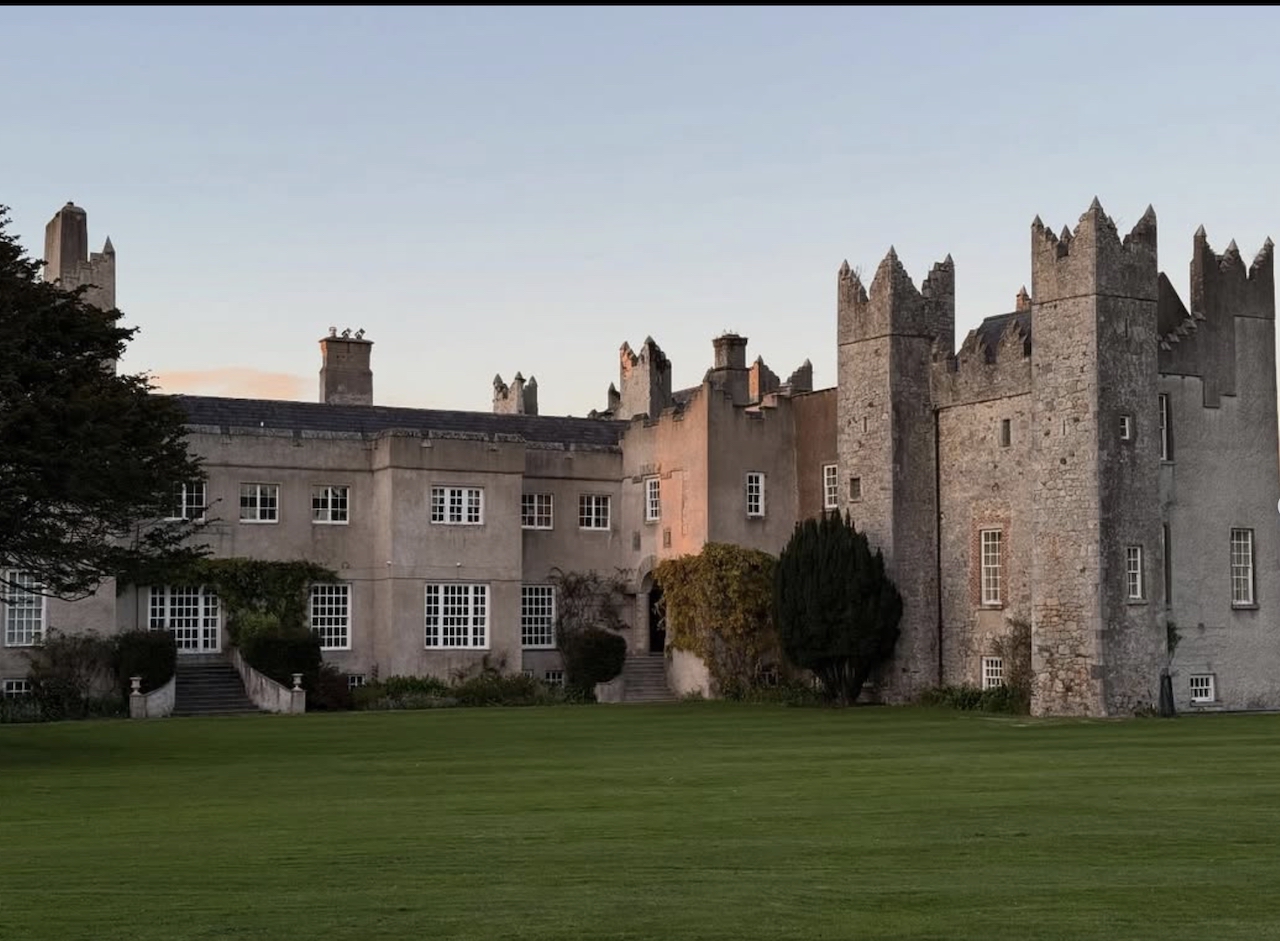
Howth Castle, courtesy of Howth Castle instagram. This has the windows of the boudoir, with steps leading to it, and of the drawing room overlooking the lawn, The medieval tower house is on the right.
An addition by Lutyens, I believe: the Loggia. Photograph courtesy of Archiseek.
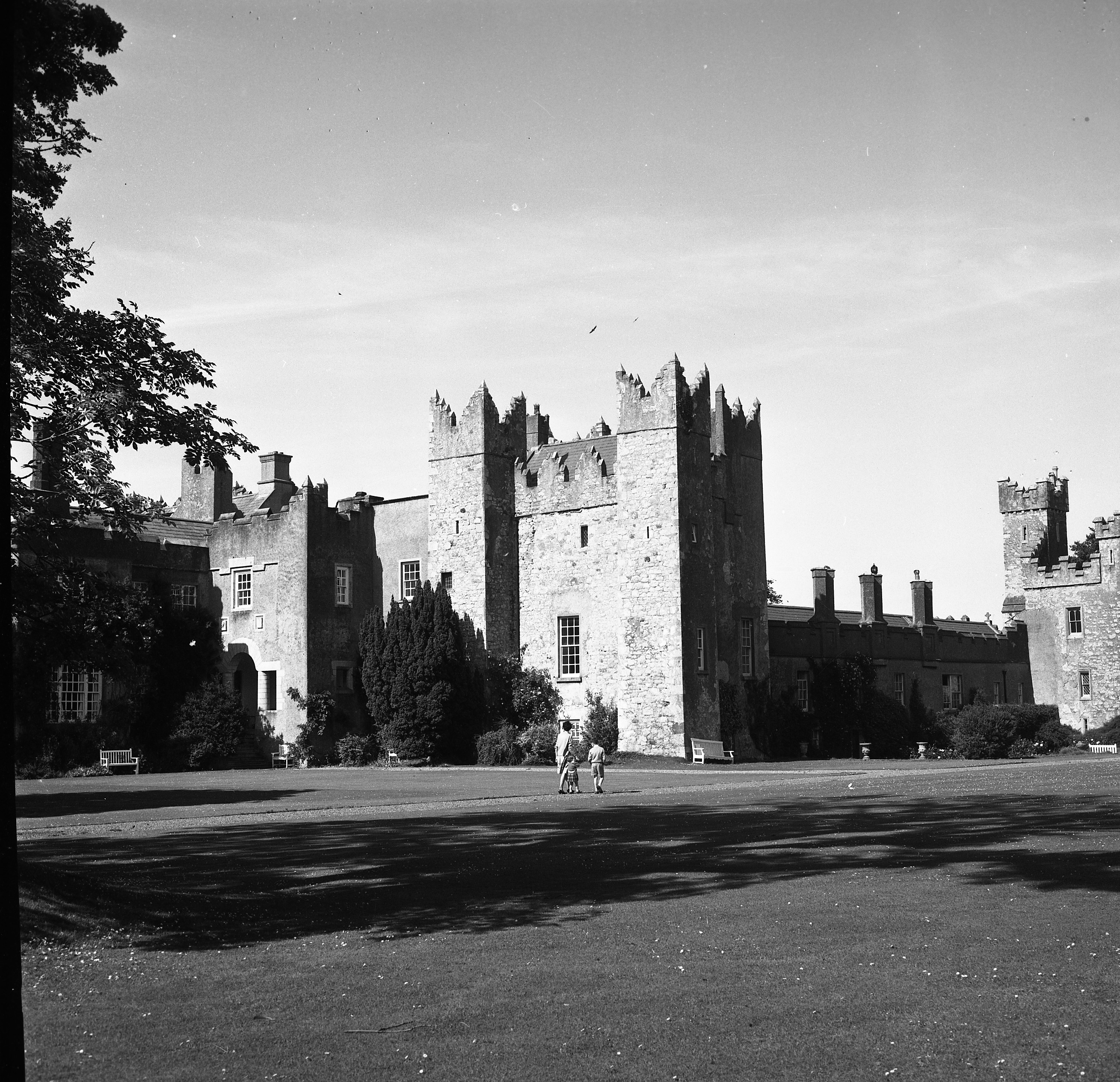
Howth Castle 1966, Dublin City Library and Archives. This is the medieval tower house, with the chapel wing to the right, and the Kenelm Tower on the far right. (see [10]).
The Lutyens Gaisford tower is on the left here. Howth Castle, Dublin. Photograph © Jennifer Winder-Baggot, www.irishhistorichouses.com

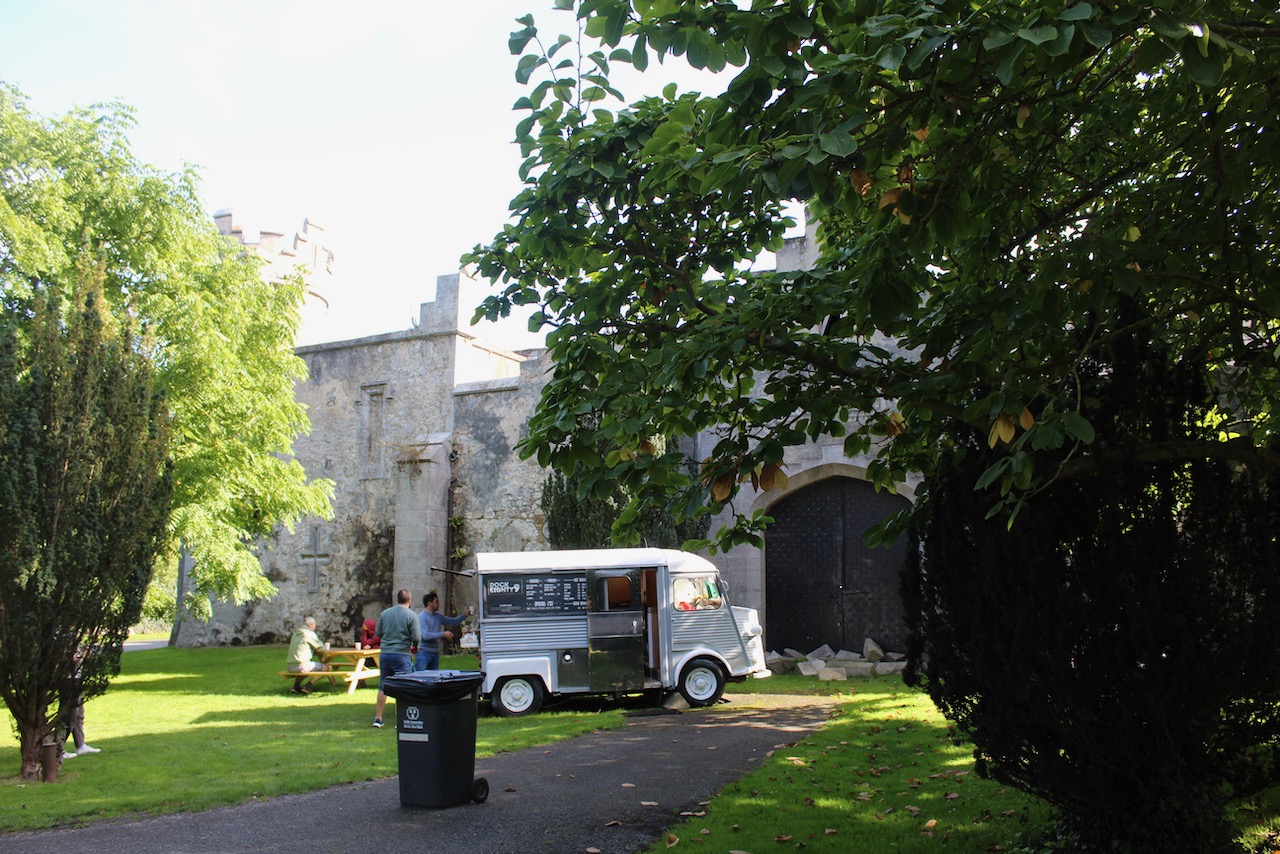
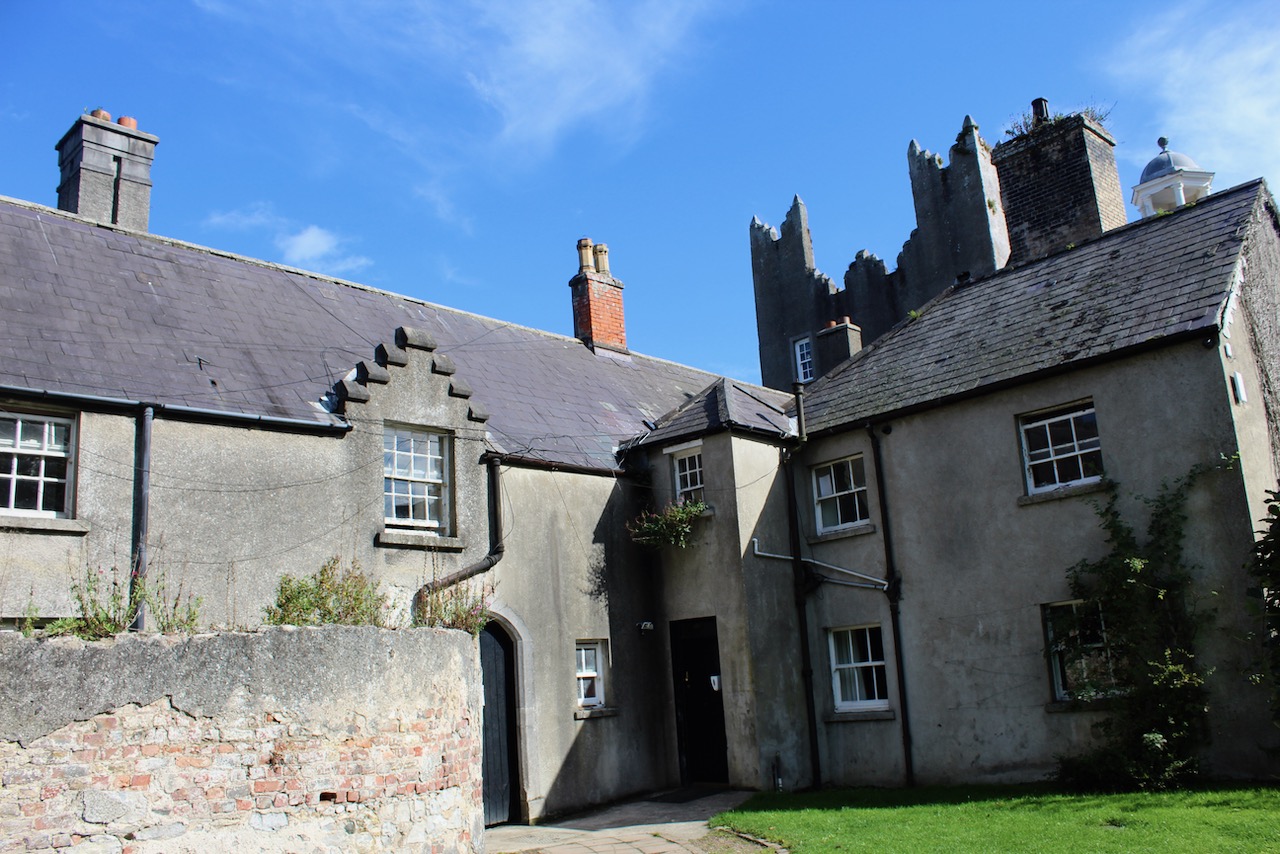
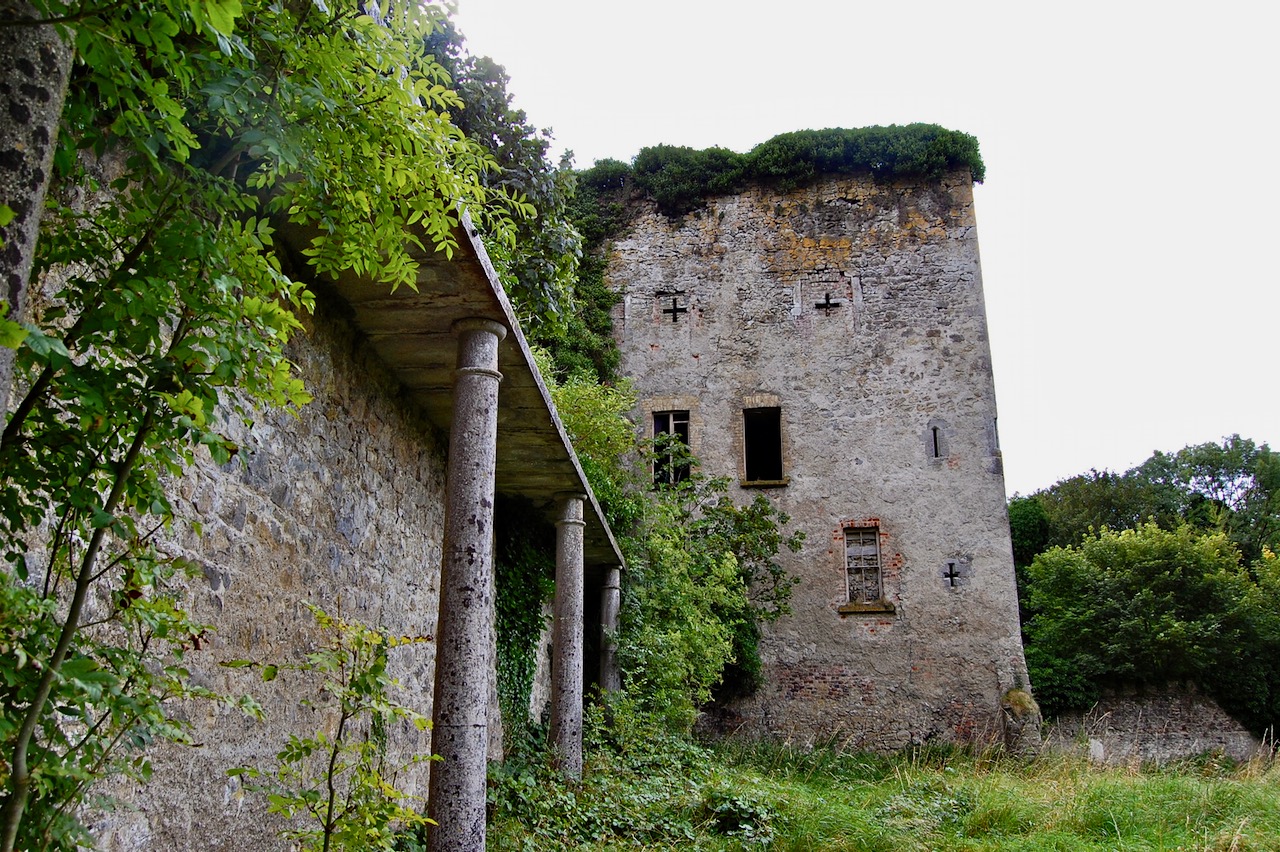
We walked around the side, around what I think is the stable block, past the Mermaid Tower.
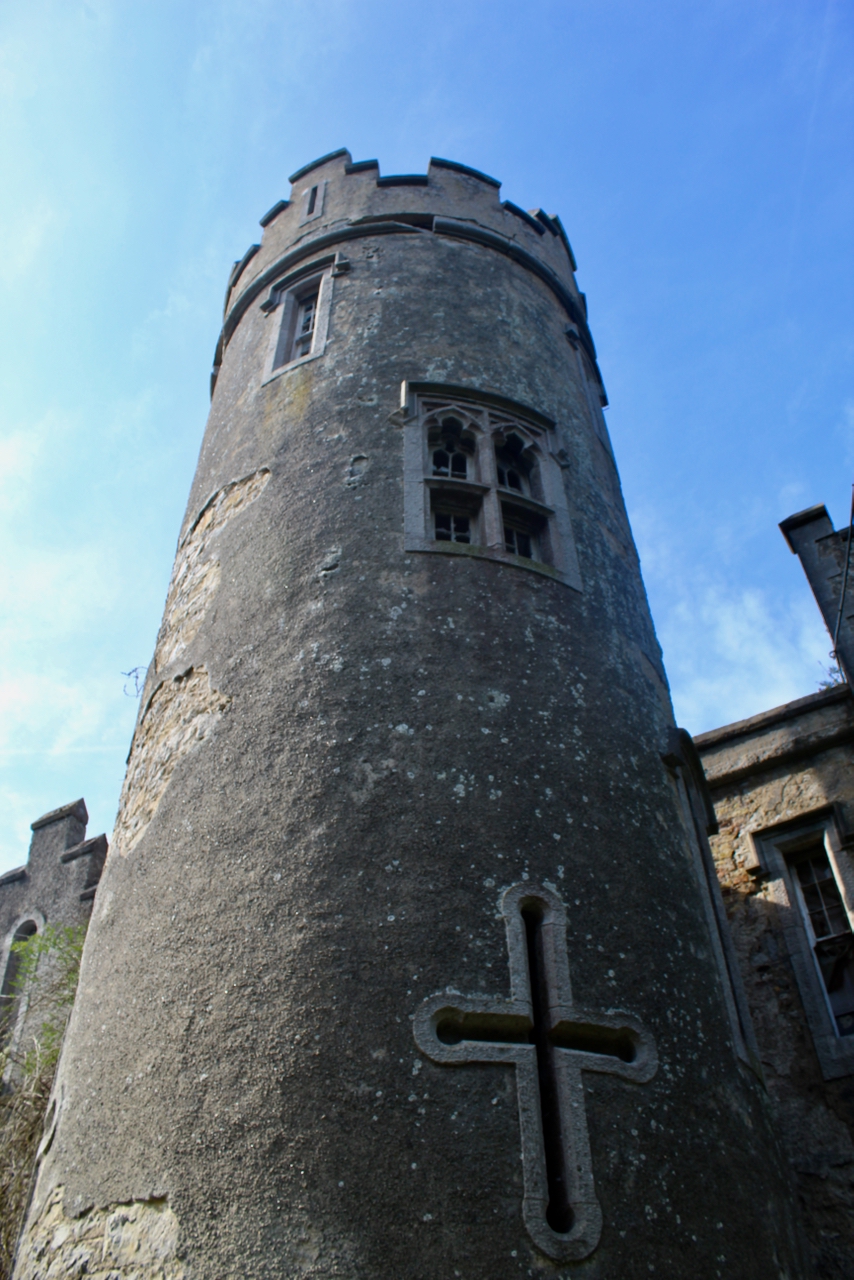
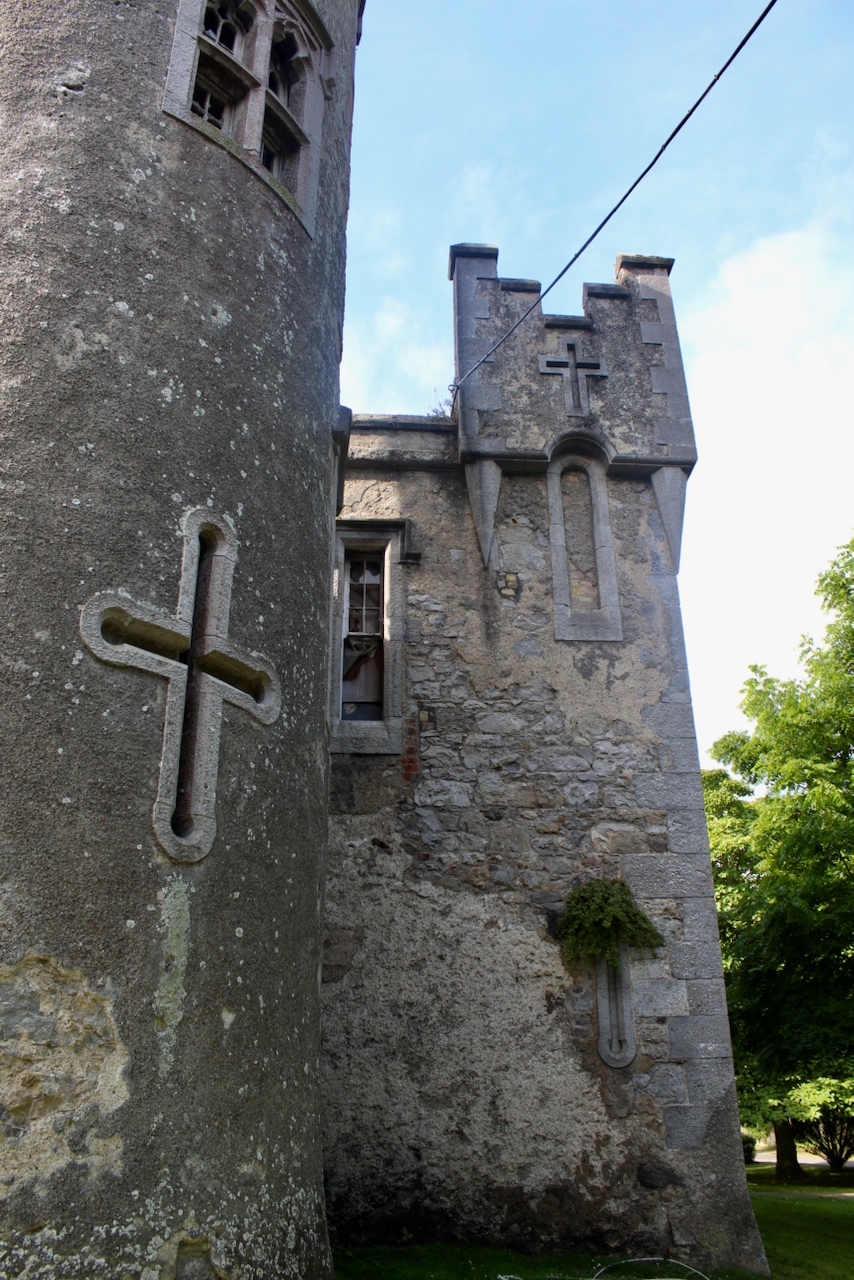
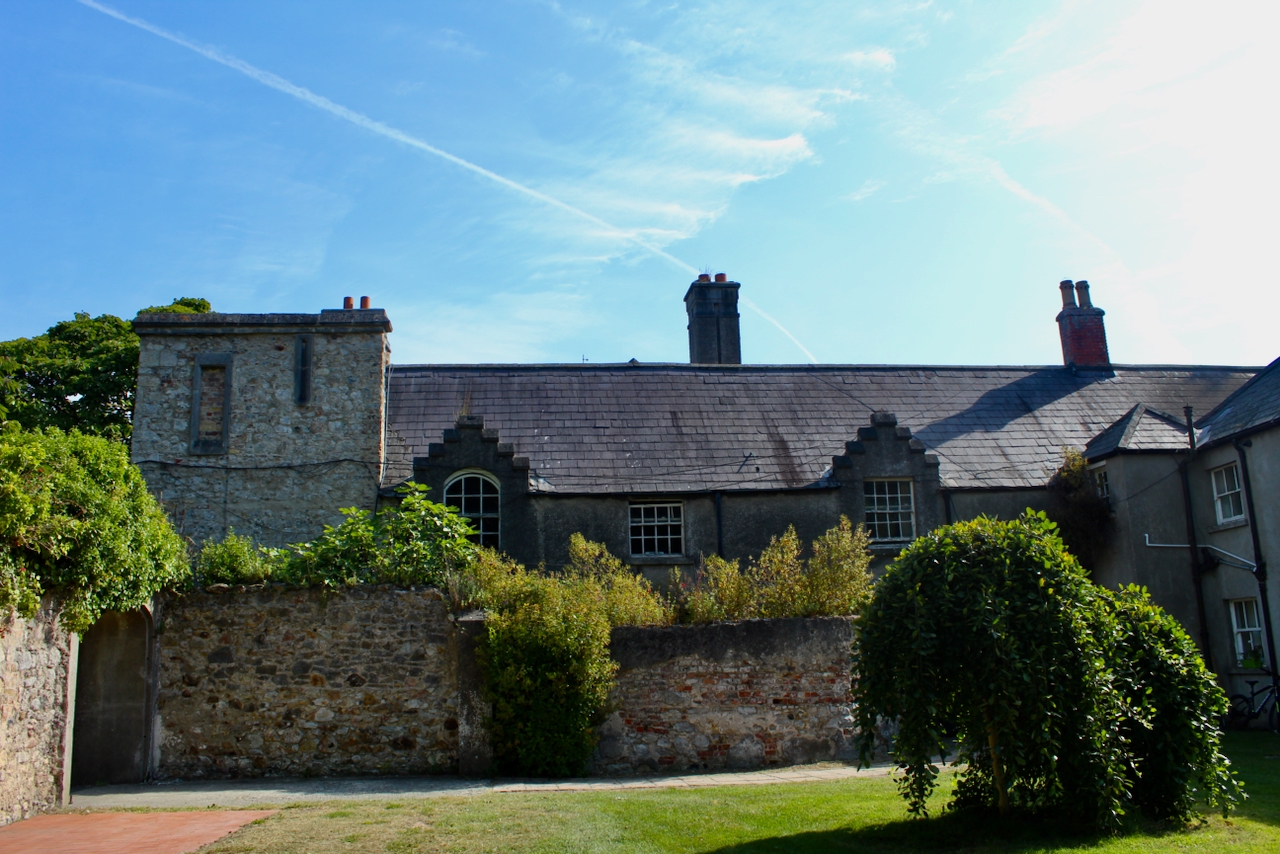
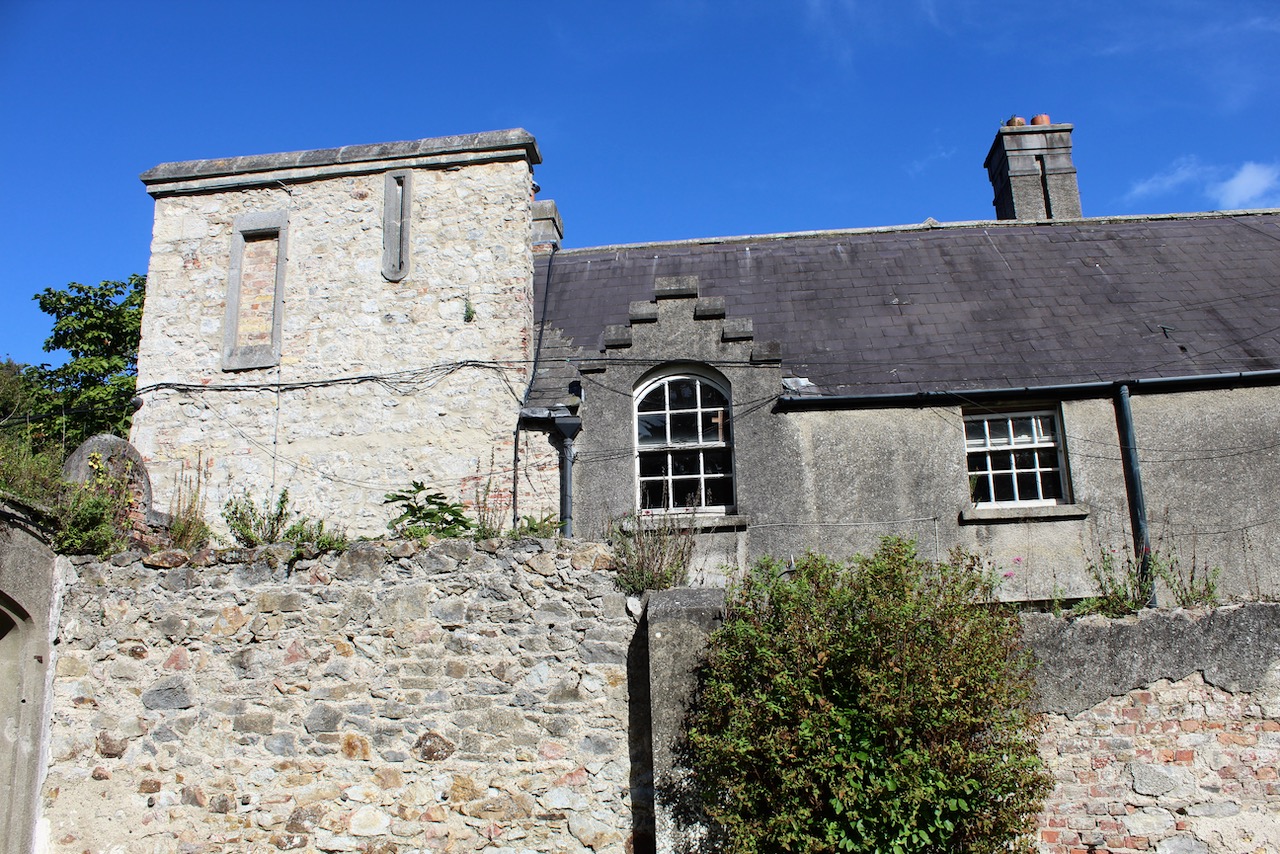
The Mermaid Tower, Howth Castle, August 2025. Photograph © Jennifer Winder-Baggot, www.irishhistorichouses.com
Howth Castle, August 2025. Photograph © Jennifer Winder-Baggot, www.irishhistorichouses.com
Howth Castle on the day we visited for the sale of its library, 2021. The stable block. Photograph © Jennifer Winder-Baggot, www.irishhistorichouses.com
I think this is the stable block. Photograph © Jennifer Winder-Baggot, www.irishhistorichouses.com
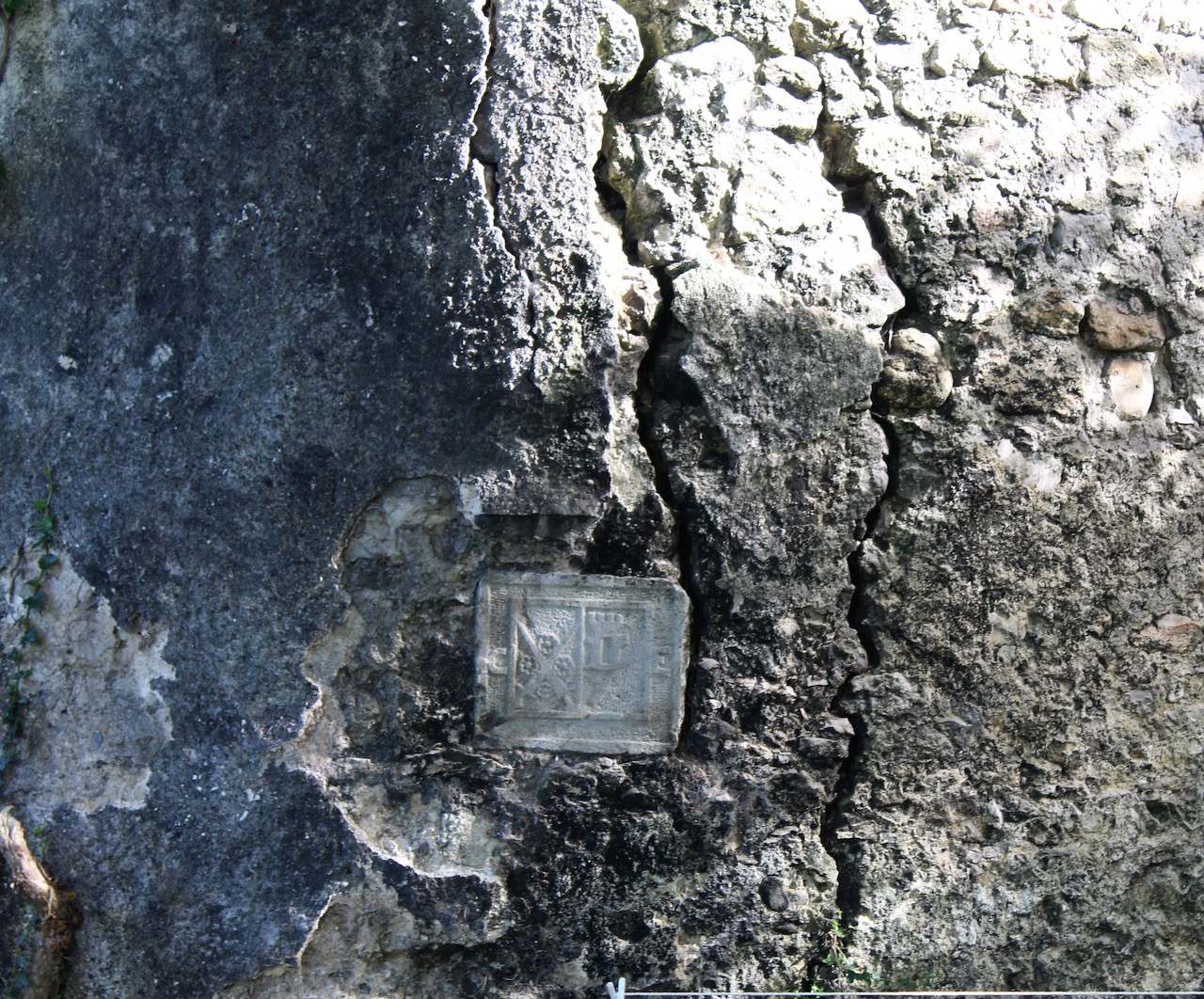
Marriage plate Howth Castle, Dublin City Library and Archives. (see [10])
Howth Castle on the day we visited for the sale of its library, 2021. Photograph © Jennifer Winder-Baggot, www.irishhistorichouses.com
Howth Castle on the day we visited for the sale of its library, 2021. The Lutyens Gaisford library tower is on the right. Photograph © Jennifer Winder-Baggot, www.irishhistorichouses.com
Howth Castle, August 2025. Photograph © Jennifer Winder-Baggot, www.irishhistorichouses.com
Howth Castle on the day we visited for the sale of its library, 2021. Photograph © Jennifer Winder-Baggot, www.irishhistorichouses.com
Howth Castle, August 2025. Photograph © Jennifer Winder-Baggot, www.irishhistorichouses.com
Howth Castle on the day we visited for the sale of its library, 2021. Photograph © Jennifer Winder-Baggot, www.irishhistorichouses.com
Howth Castle on the day we visited for the sale of its library. Photograph © Jennifer Winder-Baggot, www.irishhistorichouses.com
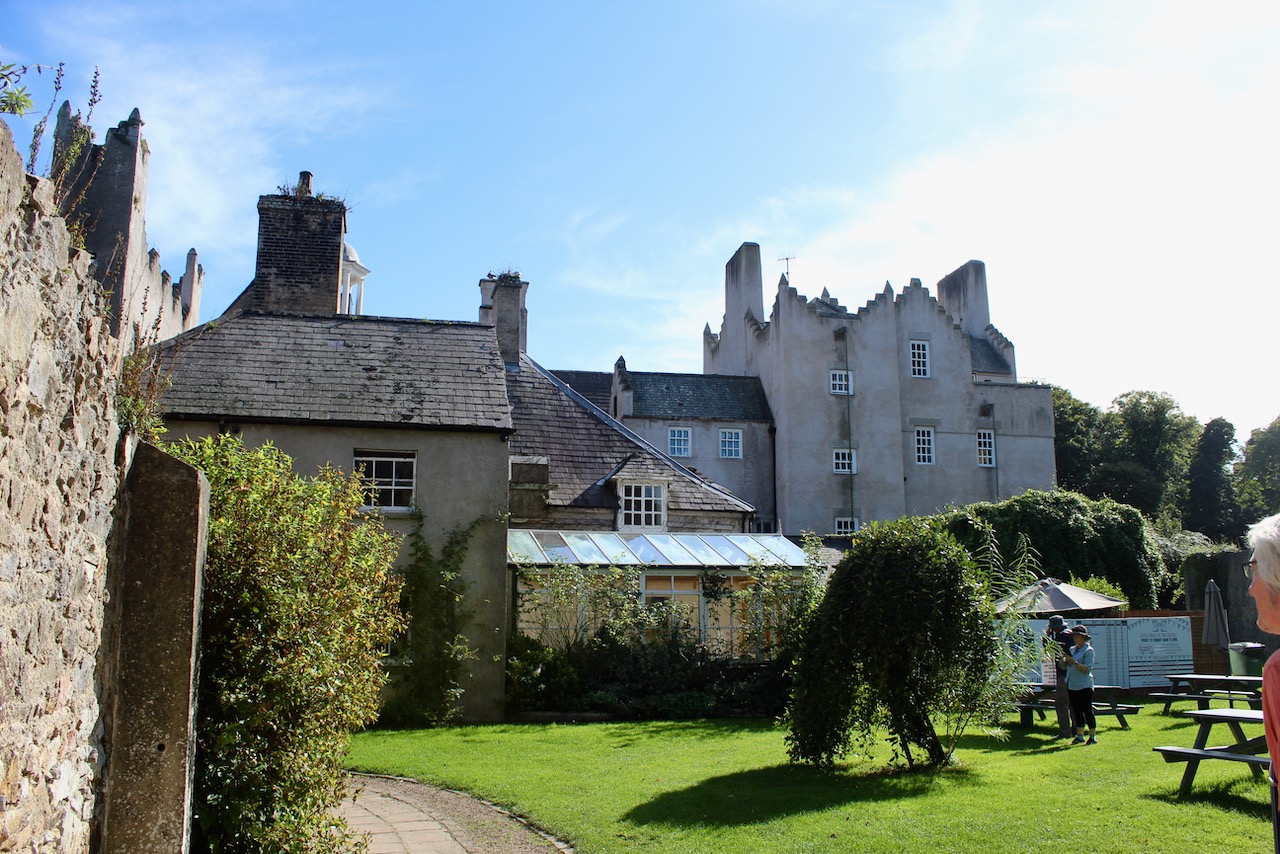
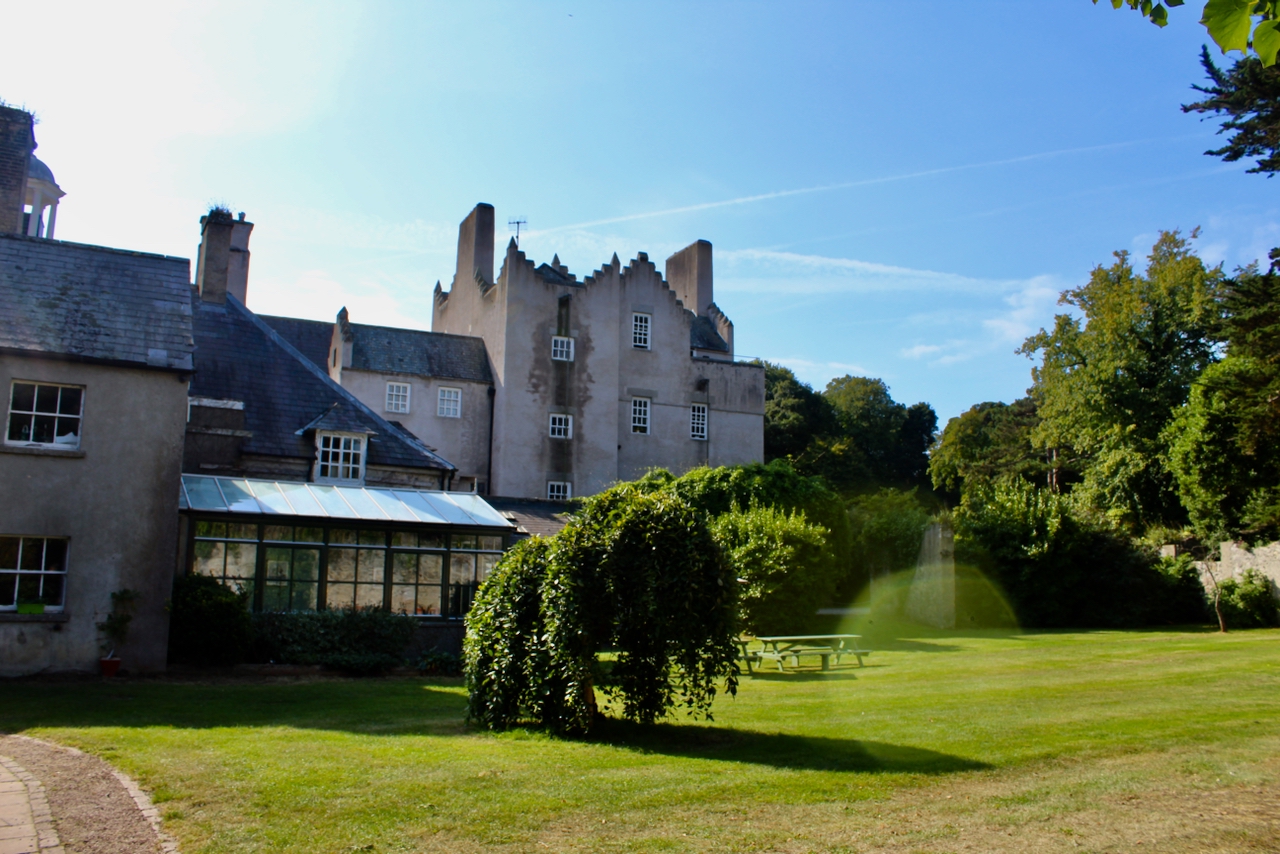
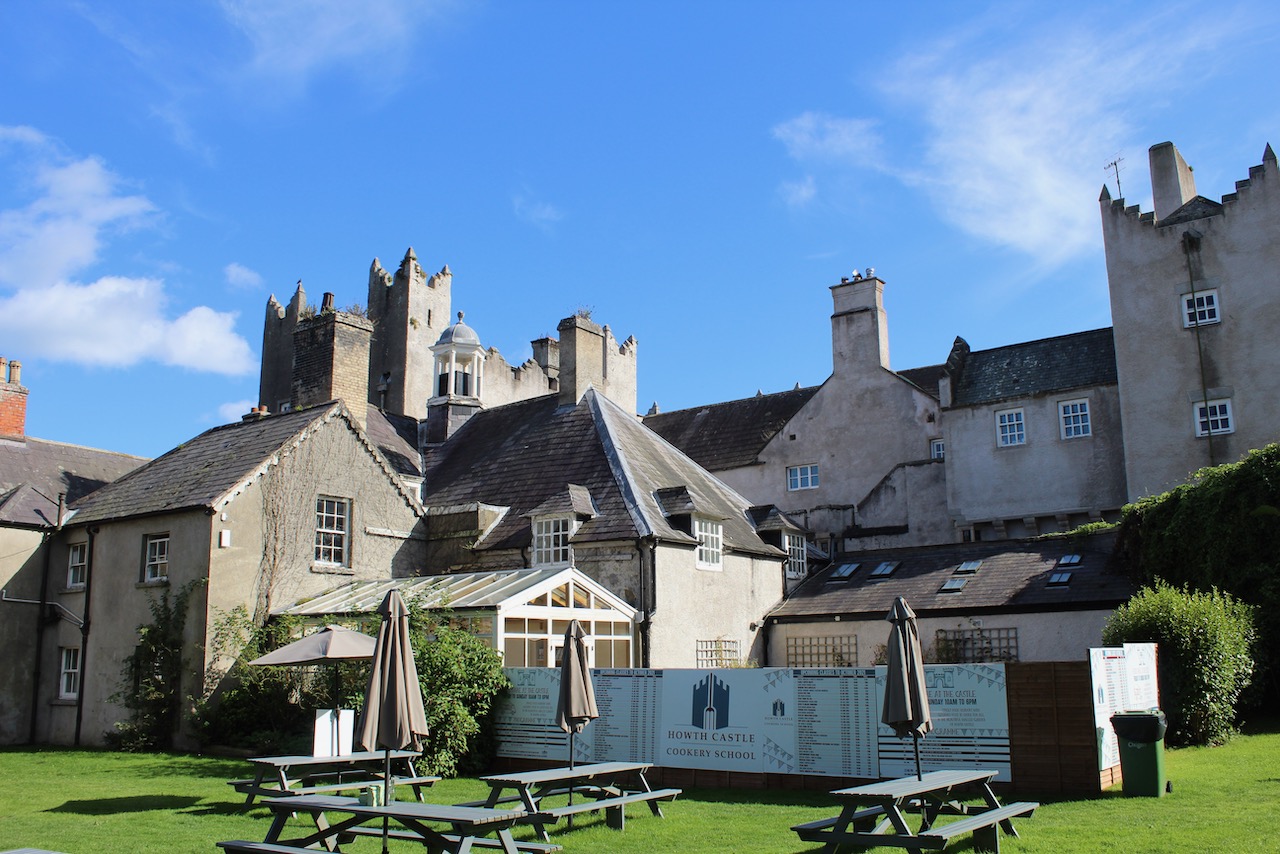
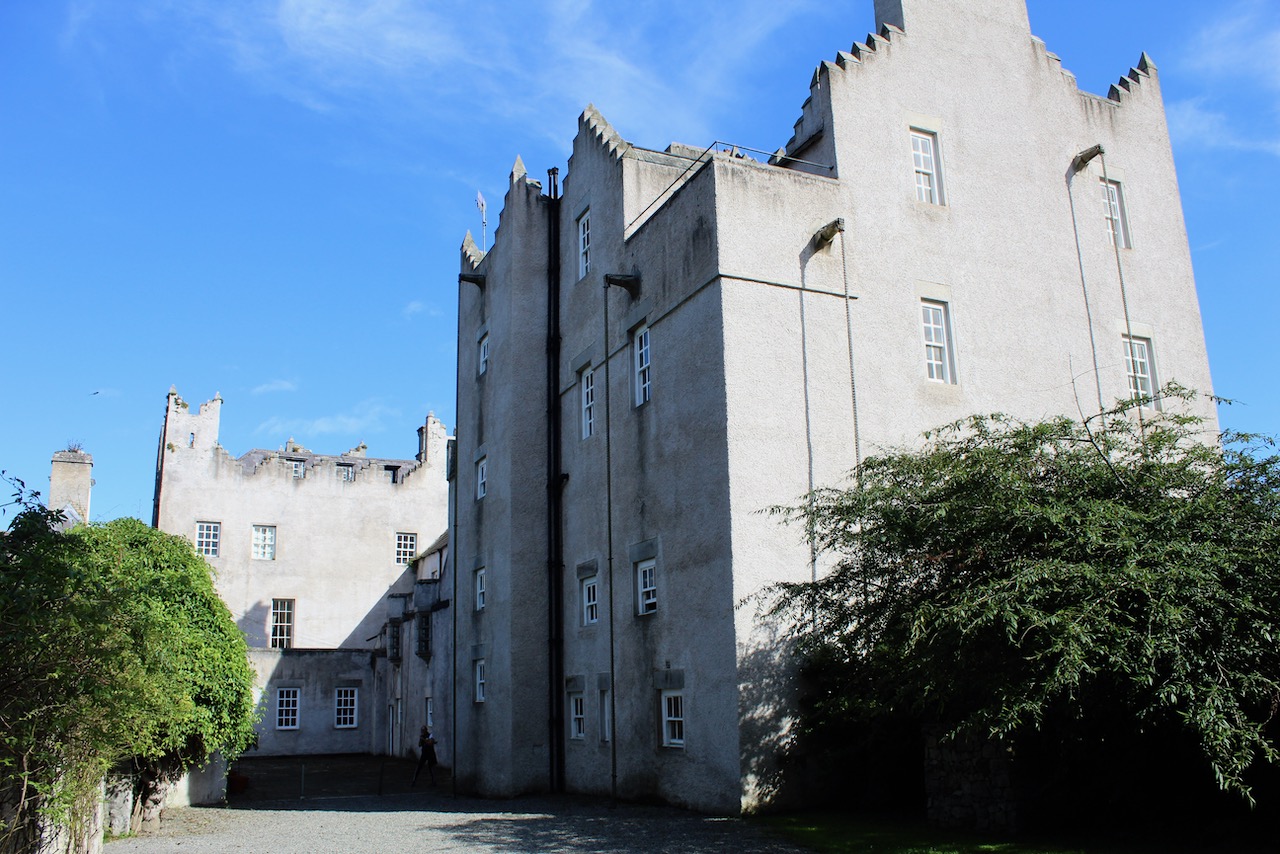
Castle from the back view: At the background end of this photograph is what the National Inventory describes: “Attached four-bay three-storey medieval tower house with dormer attic, c.1525, with turret attached to north-east. Renovated c.1650. Renovated and openings remodelled, 1738. Renovated with dormer attic added, 1910.” The Lutyens tower is on the right in the foreground. Photograph © Jennifer Winder-Baggot, www.irishhistorichouses.com
Howth Castle, August 2025. Photograph © Jennifer Winder-Baggot, www.irishhistorichouses.com
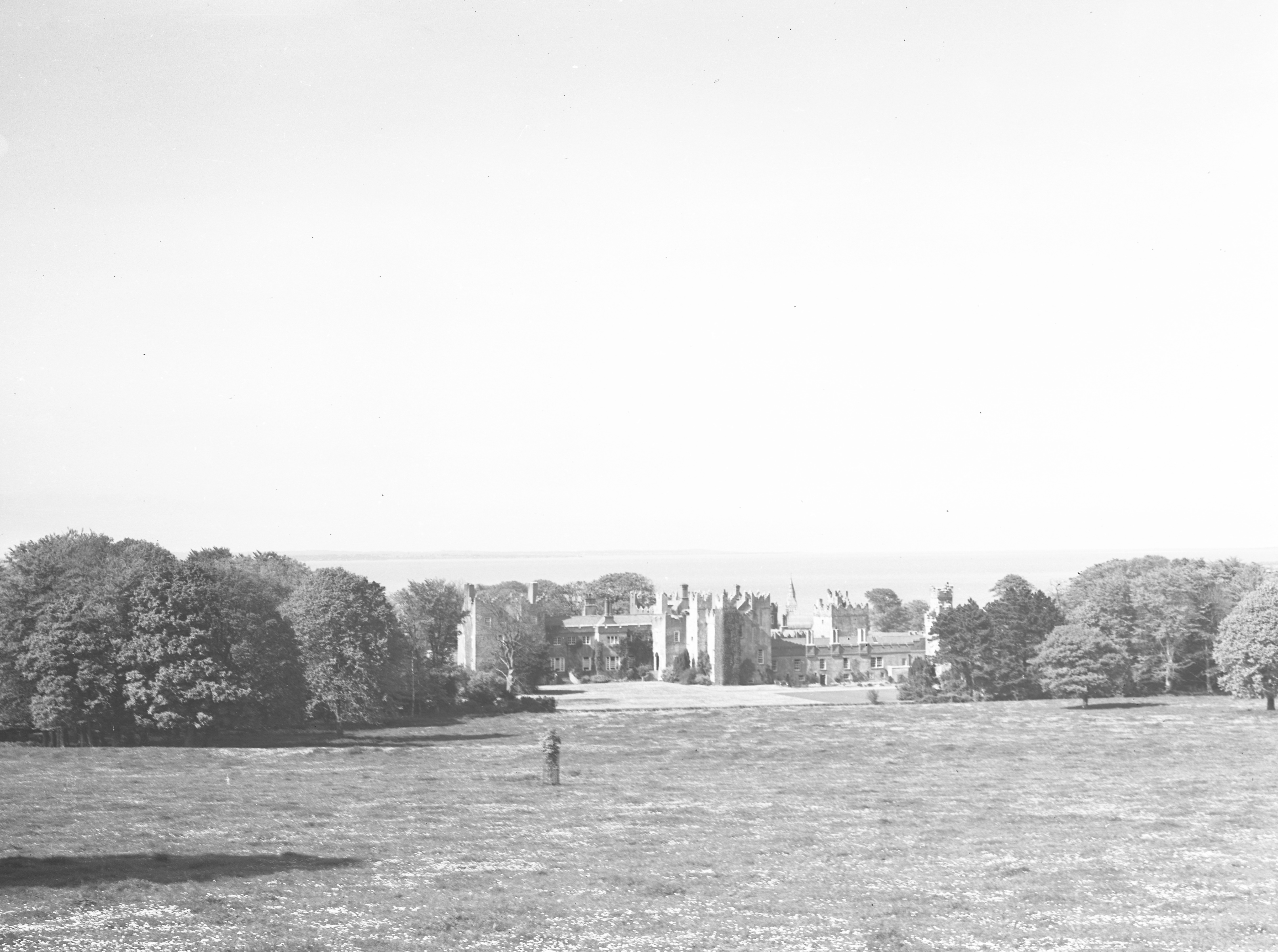
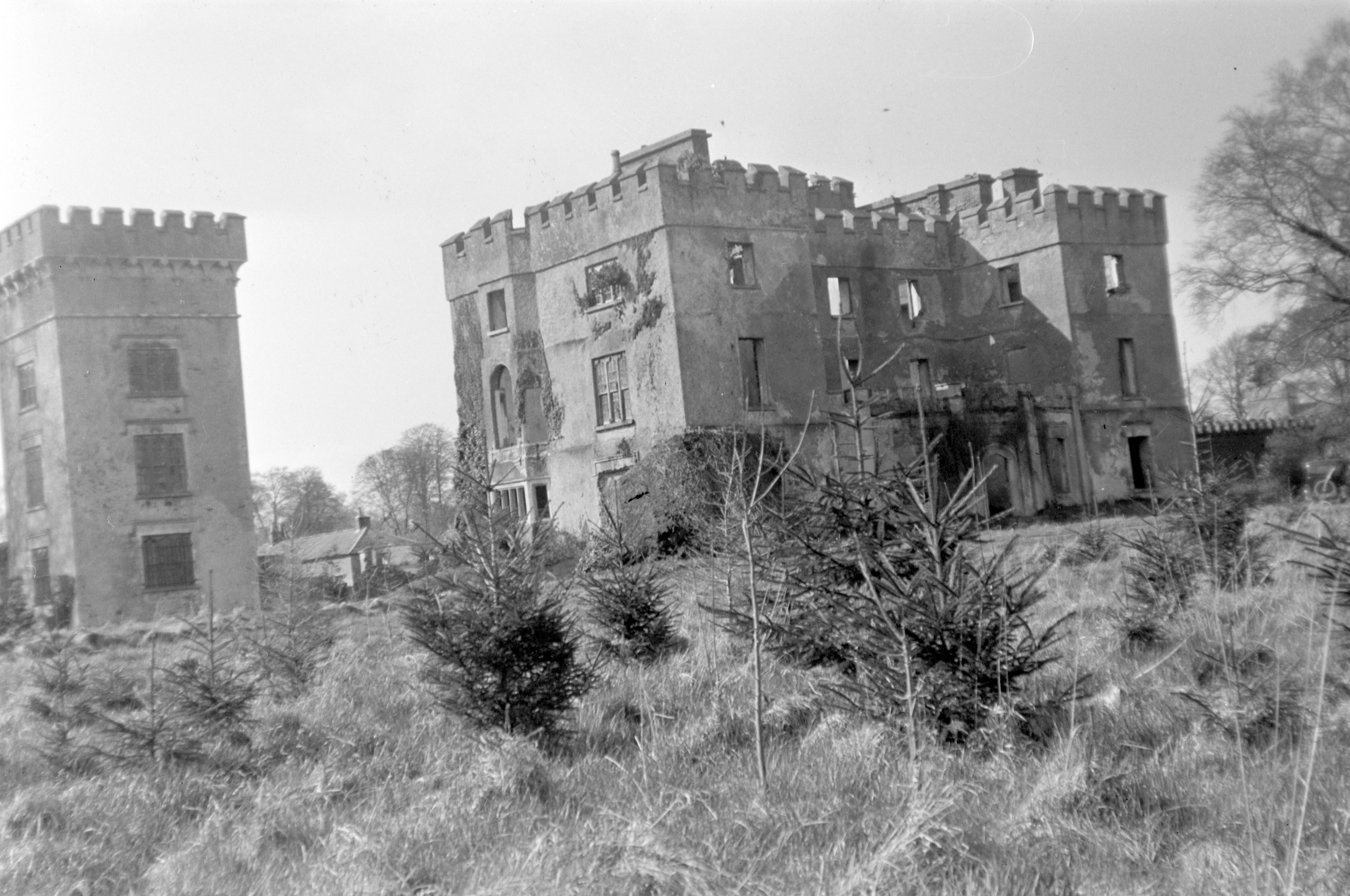
Howth Castle 1940, Dublin City Library and Archives (see [10]). The English architect Sir Edwin Lutyens restyled a 14th century castle overlooking Dublin Bay.

2025 Diary of Irish Historic Houses (section 482 properties)

To purchase an A5 size 2025 Diary of Historic Houses (opening times and days are not listed so the calendar is for use for recording appointments and not as a reference for opening times) send your postal address to jennifer.baggot@gmail.com along with €20 via this payment button. The calendar of 84 pages includes space for writing your appointments as well as photographs of the historic houses. The price includes postage within Ireland. Postage to U.S. is a further €10 for the A5 size calendar, so I would appreciate a donation toward the postage – you can click on the donation link.

€20.00

donation

Help me to pay the entrance fee to one of the houses on this website. This site is created purely out of love for the subject and I receive no payment so any donation is appreciated!

€15.00
Donation towards website.

I receive no funding nor aid to create and maintain this website, it is a labour of love. The website costs €300 annually on wordpress. Help to fund the website.

€150.00

[1] p. 155. Bence-Jones, Mark. A Guide to Irish Country Houses (originally published as Burke’s Guide to Country Houses volume 1 Ireland by Burke’s Peerage Ltd. 1978); Revised edition 1988 Constable and Company Ltd, London.

[2] http://lordbelmontinnorthernireland.blogspot.com/2013/07/howth-castle.html

[3] https://www.irishtimes.com/life-and-style/homes-and-property/fine-art-antiques/swift-portrait-included-in-howth-castle-contents-sale-could-fetch-up-to-400-000-1.4644698

[4] https://www.dib.ie/index.php/biography/st-lawrence-sir-nicholas-a8221

[5] https://www.dib.ie/index.php/biography/st-lawrence-christopher-a8219

[6] https://www.dib.ie/biography/omalley-grainne-grace-granuaile-a6886

[7] Ball, F. Elrington History of Dublin 6 Volumes Alexander Thoms and Co. Dublin 1902–1920.

[8] https://www.dib.ie/index.php/biography/st-lawrence-sir-christopher-a8220

[9] https://www.irelandscontentpool.com/en/media-assets/medp://tia/100792

[10] Dublin City Library and Archives. https://repository.dri.ie

[11] p. 38. Irish Houses and Gardens. From the Archives of Country Life. Sean O’Reilly. Aurum Press Ltd, London, 1998. 

[12] Ball, F. Elrington History of Dublin Vol. 5 “Howth and its Owners” University Press Dublin 1917 pp. 135-40

[13] www.archiseek.com
Places to visit and stay in County Kildare

2025 Diary of Irish Historic Houses (section 482 properties)

To purchase an A5 size 2025 Diary of Historic Houses (opening times and days are not listed so the calendar is for use for recording appointments and not as a reference for opening times) send your postal address to jennifer.baggot@gmail.com along with €20 via this payment button. The calendar of 84 pages includes space for writing your appointments as well as photographs of the historic houses. The price includes postage within Ireland. Postage to U.S. is a further €10 for the A5 size calendar, so I would appreciate a donation toward the postage – you can click on the donation link.
€20.00

donation

Help me to pay the entrance fee to one of the houses on this website. This site is created purely out of love for the subject and I receive no payment so any donation is appreciated!

€15.00

I have been working to save all my photographs on USB sticks so do not have a new property to post, although I have lots to write up. I am therefore reposting this entry.

On the map above:

blue: places to visit that are not section 482

purple: section 482 properties

red: accommodation

yellow: less expensive accommodation for two

orange: “whole house rental” i.e. those properties that are only for large group accommodations or weddings, e.g. 10 or more people.

green: gardens to visit

grey: ruins

Carlow, Dublin, Kildare, Kilkenny, Laois, Longford, Louth, Meath, Offaly, Westmeath, Wexford and Wicklow are the counties that make up the Leinster region.

As well as places to visit, I have listed separately places to stay, because some of them are worth visiting – you may be able to visit for afternoon tea or a meal.

For places to stay, I have made a rough estimate of prices at time of publication:

€ = up to approximately €150 per night for two people sharing (in yellow on map);

€€ – up to approx €250 per night for two;

€€€ – over €250 per night for two.

For a full listing of accommodation in big houses in Ireland, see my accommodation page: https://irishhistorichouses.com/accommodation/

Kildare:

1. Blackhall Castle, Calverstown, Kilcullen, Co. Kildare – section 482

2. Burtown House and Garden, Athy, Co. Kildare – section 482

3. Castletown House, County Kildare – OPW

4. Coolcarrigan House & Gardens, Coolcarrigan, Coill Dubh, Naas, Co. Kildare – section 482

5. Donadea Forest Park and ruins of Donadea Castle, County Kildare

6. Farmersvale House, Badgerhill, Kill, Co. Kildare – section 482

7. Griesemount House, Ballitore, Co Kildare – section 482

8. Harristown House, Brannockstown, Co. Kildare – section 482

9. Kildrought House, Celbridge Village, Co. Kildare – section 482

10. Larchill, Kilcock, Co. Kildare – section 482

11. Leixlip Castle, Leixlip, Co. Kildare – section 482

12. Maynooth Castle, County Kildare – OPW

13. Millbrook House, County Kildare: House and limited garden access for groups only

14. Moone Abbey House & Tower, Moone Abbey, Moone, Co. Kildare – section 482

15. Moyglare Glebe, Moyglare, Maynooth, Co. Kildare – section 482

16. Steam Museum Lodge Park Heritage Centre, Lodge Park, Straffan, Co. Kildare – section 482

17. Templemills House, Newtown Road, Celbridge, Co. Kildare, W23 YK26 – section 482

Places to stay, County Kildare:

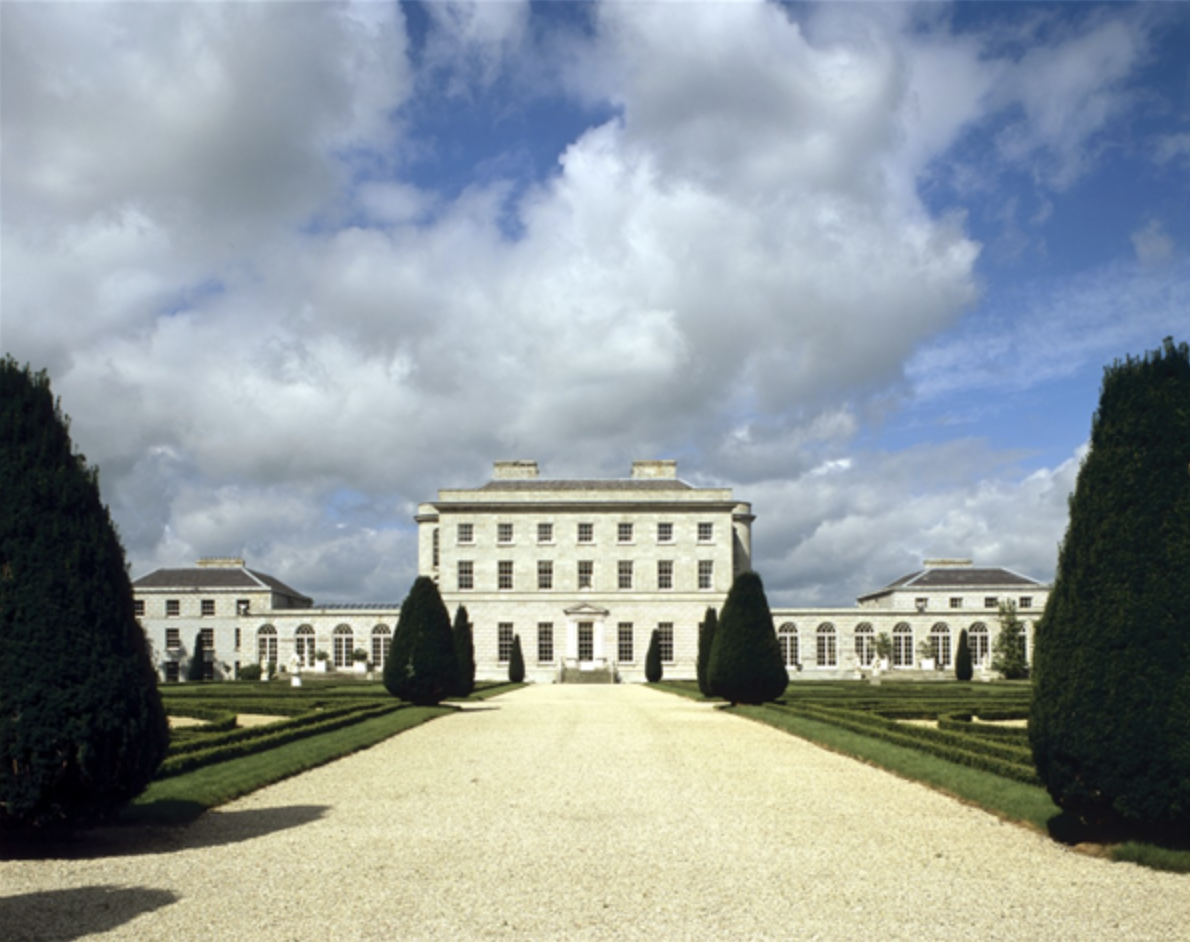
1. Balyna, Moyvalley, Co Kildare – Moyvalley Hotel 

2. Barberstown Castle, Kildare – hotel 

3. Batty Langley Lodge, Celbridge, County Kildare €€

4. Burtown House holiday cottages

5. Carton House, Kildare – open to public, hotel 

6. Castletown Gate Lodge, Celbridge, County Kildare: Irish Landmark € for 3

7. Castletown Round House, Celbridge, County Kildare: Irish Landmark € for 3-6 

8. The Cliff at Lyons, County Kildare

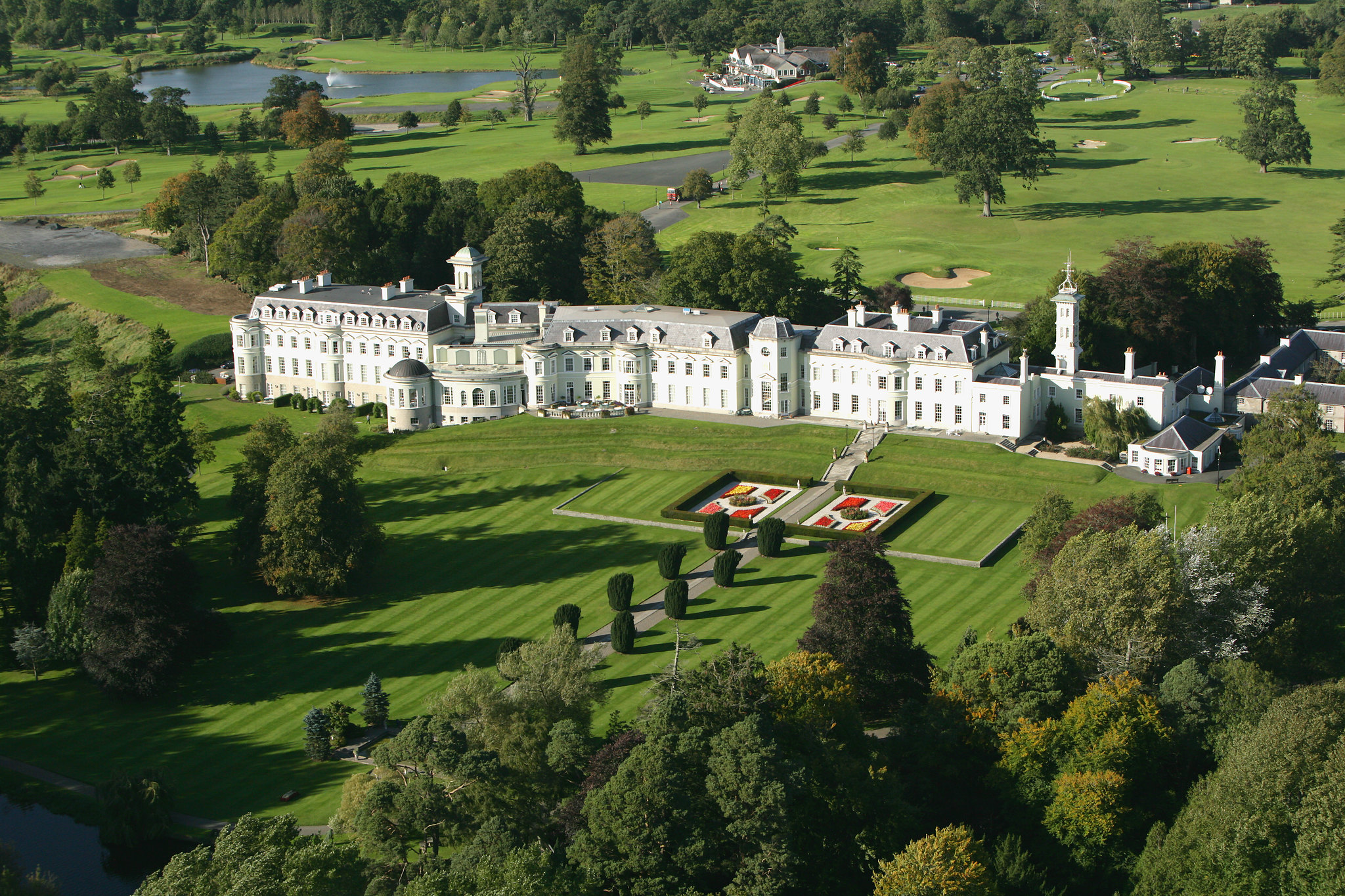
9. The K Club, Straffan House, County Kildare

10. Kilkea Castle, Castledermot, Kildare – hotel 

11. Leixlip Manor hotel (formerly St. Catherine’s Park) Leixlip, Co Kildare

12. Martinstown House, Kilcullen, Co Kildare – accommodation  

13. Moone Abbey, County Kildare holiday cottages

Whole house accommodation in County Kildare:

1. de Burgh (or Bert) Manor, Kilberry, County Kildare – whole house accommodation

2. Firmount, Clane, County Kildare – whole house or weddings.

3. Griesemount House, County Kildare

Kildare

1. Blackhall Castle, Calverstown, Kilcullen, Co. Kildare R56 CR68 – section 482

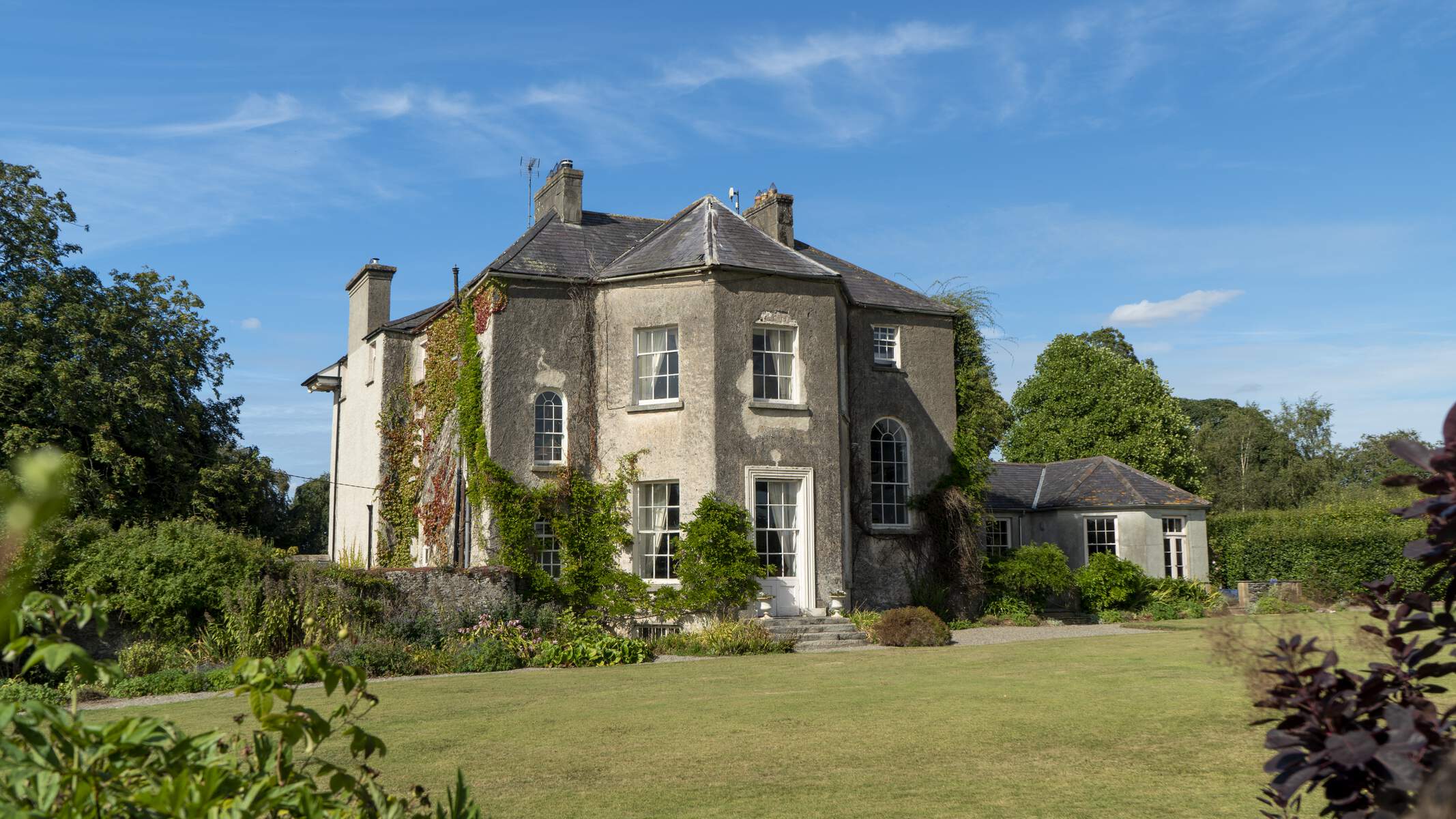
Blackhall Castle, County Kildare. Photograph © Jennifer Winder-Baggot, www.irishhistorichouses.com

See my entry:

https://irishhistorichouses.com/2020/05/14/blackhall-castle-calverstown-kilcullen-county-kildare/

Open dates in 2025: May 1-31, Aug 17-25, Sept 1-15, Dec 1-20, 2pm-May 1-31, Aug 16-24, Sept 1-15, Dec 1-20, 2pm-6pm

Fee: Free

2. Burtown House and Garden, Athy, Co. Kildare R14 AE67 – section 482

Burtown House, County Kildare, June 2021. Photograph © Jennifer Winder-Baggot, www.irishhistorichouses.com

www.burtownhouse.ie
Open dates in 2025: June 4-7, 11-14, 18-21, 25-28, July 2-5, 9-12, 16-19, 23-26, 30-31, August 1-2, 6-9, 13-24, 27-30, Sept 3-6, 10am-2pm

Fee: adult €10, OAP/student/child €5

Burtown House and Gardens, Athy, Co Kildare, photograph by Sonder Visuals, 2022, Courtesy Failte Ireland.

The Historic Houses of Ireland website tells us:

Ballytore, in County Kildare, was a stronghold of the Irish Quakers and the centre of a sizeable Quaker community. One of their members, Robert Power, built Burtown House as the hub of a two thousand acre farming enterprise in the 1720s. His Georgian villa, shown on early maps as “Power’s Grove,” was only one room deep so wings were added later in the century. These were subsequently removed, though their faint outlines can still be identified and Burtown was further extended in the early nineteenth century when a full height bow was added on the garden front. 

The new extension provided a bow ended room on the garden front, a large bedroom above and a grand staircase, lit by a tall round-headed window. Pretty plasterwork in the manner of James Wyatt was also introduced at the time, most notably in an arched alcove in the bow-ended room, which is likely to have been the original dining room. The alcove is filled with a shallow fan, and delightfully cursive sprays of vine leaves, and is flanked by a pair of classical vases on pilasters of foliage with naive Corinthian capitals.

Burtown has never been sold in all its three hundred years. The house passed from the Power family to the Houghtons and thence to the Wakefields, who gave it a new roof with widely projecting eaves in the early nineteenth century. They also lengthened the sash windows, installed a new front door with a fanlight in a deep recess, and carried out a number of other alterations.

When Mr. Wakefield was killed playing cricket Burtown passed to his sister, who had married a fellow Quaker from County Tipperary, William Fennell. Their son, William James was a keen horseman but “was asked to leave the Quaker congregation because of his fondness for driving a carriage with two uniformed flunkeys on the back”.

Today Burtown is in the midst of two hundred acres of parkland, including ten acres of lush flower, vegetable and woodland gardens with many fine walks. The house has now been home to five generations of the Fennell family, and to the acclaimed botanical artist and illustrator, Wendy Walsh. Coincidentally, the leading Irish botanical artist of the early twentieth century, Lydia Shackleton, also came from the same small Quaker community.” [1]

3. Castletown House, County Kildare – OPW

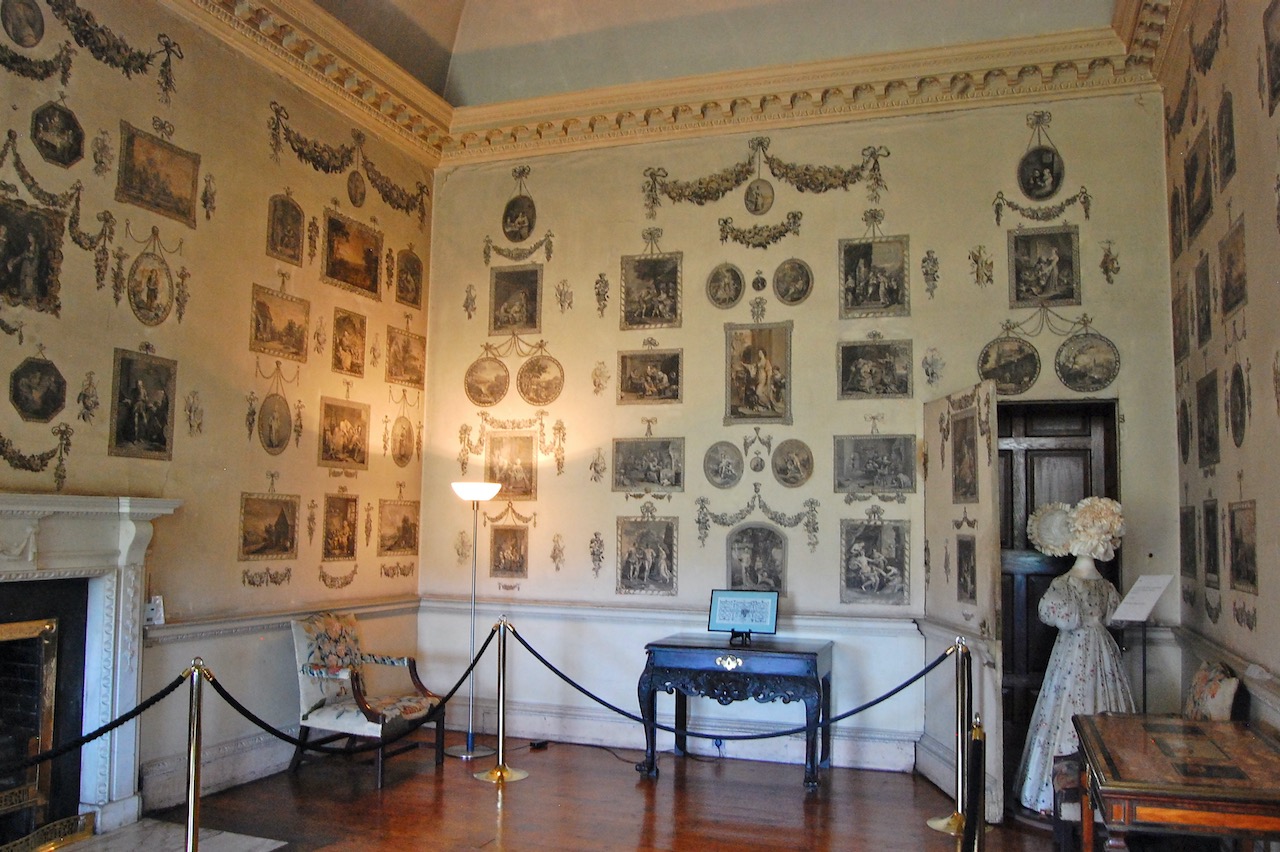
The Print Room, Castletown House, County Kildare. Photograph © Jennifer Winder-Baggot, www.irishhistorichouses.com

see my entry: https://irishhistorichouses.com/2024/03/15/castletown-house-and-parklands-celbridge-county-kildare-an-office-of-public-works-property/

4. Coolcarrigan House & Gardens, Coolcarrigan, Coill Dubh, Naas, Co. Kildare – section 482

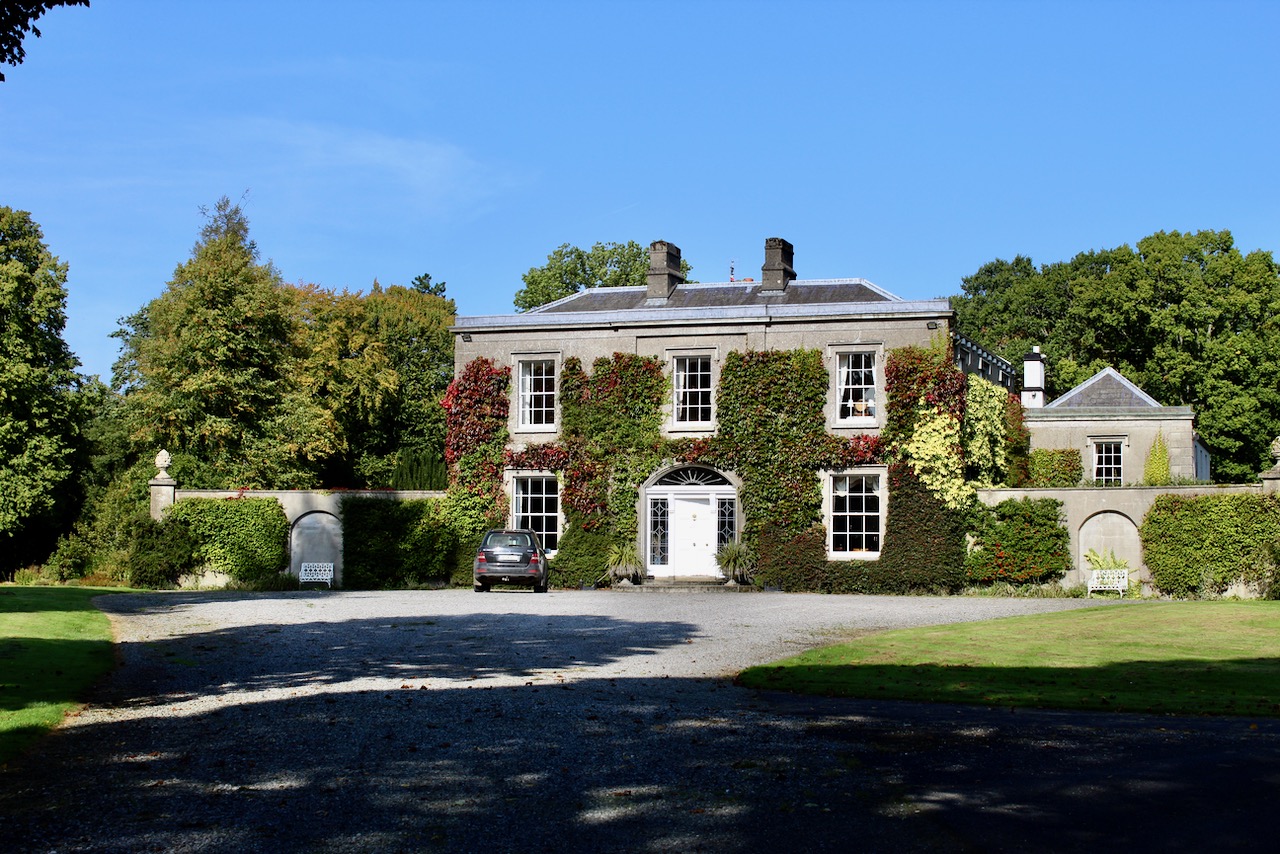
Coolcarrigan, County Kildare, September 2019. Photograph © Jennifer Winder-Baggot, www.irishhistorichouses.com

See my write-up:

https://irishhistorichouses.com/2020/05/31/coolcarrigan-house-and-gardens-coill-dubh-naas-county-kildare/

www.coolcarrigan.ie
Open dates in 2025: Feb 10-14, 17-21, Aug 5-31, Sept 1-7, 22-26, 29-30, Oct 1-3, 6-10, 13, 9am-1pm

Fee: adult €10, OAP/student €7, child free

5. Donadea Forest Park and ruins of Donadea Castle, County Kildare

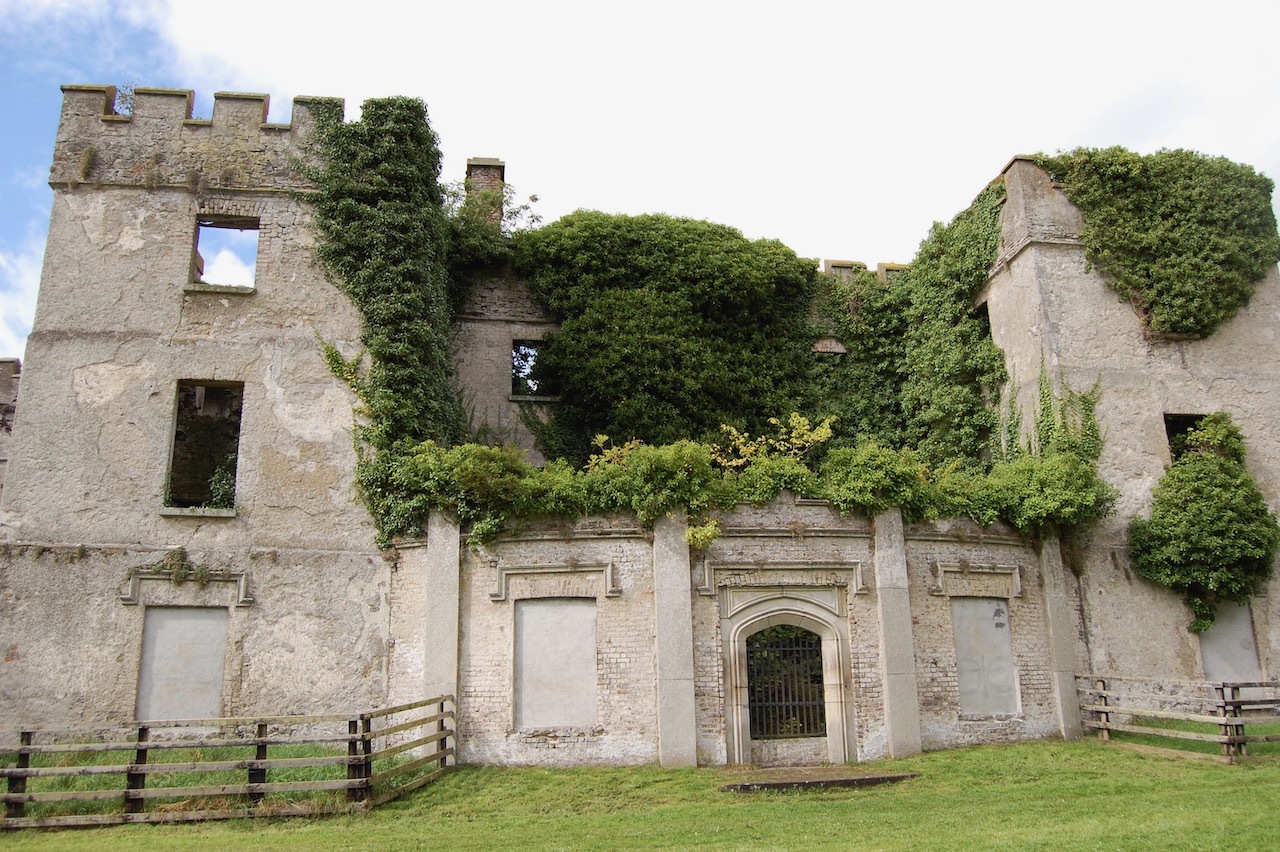
Donadea Castle, County Kildare, Septemeber 2017. Photograph © Jennifer Winder-Baggot, www.irishhistorichouses.com

https://www.coillte.ie/site/donadea-forest-park/

The website tells us:

Donadea Forest Park includes Donadea Castle and estate, the former home of the Aylmer family up until 1935. There are many historical features including the remains of the castle and walled gardens, St. Peter’s church, an ice house and boat house. The Lime tree avenue planted in the 19th century formed the original entrance to the estate. Another feature of the park is the 9/11 Memorial, a scaled replica of the twin towers carved in limestone. The small lake is brimming with ducks, waterhens and has a beautiful display of water lilies in the summer. There is a café open throughout the year.

Donadea Castle, County Kildare, Septemeber 2017. Photograph © Jennifer Winder-Baggot, www.irishhistorichouses.com
It has looked much the same for over fifty years: Donadea County Kildare by James P. O’Dea Circa 1958 National Library of Ireland on flickr

In 1581 Gerald Aylmer, (1548-1634), Knight, of Donadea, son of George Aylmer, of Cloncurry, and grandson of Richard Aylmer, of Lyons, built a new tower in Donadea, not fully completed until 1624 and it is now the oldest part of the Castle. [2]

Donadea Castle, County Kildare, Septemeber 2017. Photograph © Jennifer Winder-Baggot, www.irishhistorichouses.com

In 1626, he repaired the medieval Church in Donadea and built a new extension in which he established his family burial plot. In the extension he also constructed an Altar Tomb monument as a burial memorial for his family. Gerald was titled by the Crown and became the first Baronet of Donadea.  
 
The Aylmers were connected with the various conflicts and rebellions over the next two centuries. During the wars of the 1640s, Sir Andrew, 2nd Baronet (c. 1610-c. 1671), supported the rebels and was imprisoned at the beginning of the war. 
 
Although he was a brother-in-law of the Lord Lieutenant of Ireland, James Butler, 1st Duke of Ormond, there were no favours granted to him. The Aylmers rebuilt the castle after it was burned by James Butler’s troops. 

Donadea Castle, County Kildare, Septemeber 2017. Photograph © Jennifer Winder-Baggot, www.irishhistorichouses.com
Photograph © Jennifer Winder-Baggot, www.irishhistorichouses.com

In 1689, after the battle of the Boyne, Lady Helen Aylmer, widow of the 3rd Baronet, (born Plunkett, daughter of Luke Plunkett 3rd Earl of Fingall) was in charge of the Castle. She was outlawed due to her support for James II, but she managed to hold on to the Castle and lands under the terms of the Treaty of Limerick. 

In 1736, Sir Gerald, 5th Baronet, died leaving an only son FitzGerald who became the 6th Baronet. 

He was only one year old when his father died and was subsequently raised by his mother (Ellice or Ellen, daughter of Gerald Aylmer, 2nd Baronet of Balrath, County Meath) and her relatives who were members of the established church. FitzGerald subsequently conformed to the established religion. In 1773, he built a new house in front of the Castle and incorporated the Tower in his new residence. 

Donadea Castle, County Kildare, Septemeber 2017. Photograph © Jennifer Winder-Baggot, www.irishhistorichouses.com
Photograph © Jennifer Winder-Baggot, www.irishhistorichouses.com

Gerald, 8th Baronet, held the lands of Donadea between 1816 and 1878 and he is accredited with most of the construction work that is visible in Donadea demesne today. He began his building program in the 1820s by re-routing the roads away from the Castle and the construction of a high wall enclosing the demesne. Gate lodges were then built at all the entrances. 

He also built a new grand entrance known as the Lime Avenue. 

In 1827 he completely remodelled the front of the Castle which gave it an attractive bow shaped appearance. It has been suggested that he employed the renowned architect Richard Morrison to design this new structure. 

The older cabin-type dwellings close to the castle were demolished and new estate houses built at the Range. To the west of the Castle he built an eight acre area of gardens and paddocks, surrounded and sub-divided by walls. In the Castle yard he built dwellings for staff and elaborative farm buildings. He also constructed the artificial lake and the Ice House. Large areas of the demesne were planted and, by the time of his death, Donadea demesne was listed as one of the finest parkland settings in the county. 

Photograph © Jennifer Winder-Baggot, www.irishhistorichouses.com

Outside the demesne he was involved in numerous construction projects including the famous ‘Aylmer Folly’, viz. the Tower on the summit of the hill of Allen. (see [2]) Sir Gerald’s grandson Justin, 10th Baronet, died unmarried in 1885. His sister Caroline inherited the castle and much of the demesne, while the baronetcy passed to a cousin. Caroline Maria Aylmer, who was the daughter of Sir Gerald George Aylmer, 9th Baronet, was the last Aylmer to live at Donadea. She died in 1935, leaving the estate to the Church of Ireland who, in turn, passed it bequeathed to the Irish state. 

The castle remained unoccupied and its roof was removed in the late 1950s. 

For more on the Aylmer family, see The Landed Gentry & Aristocracy of County Kildare by Turtle Bunbury & Art Kavanagh (published by Irish Family Names, 2004). 

6. Farmersvale House, Badgerhill, Kill, Co. Kildare W91 PP99 – section 482

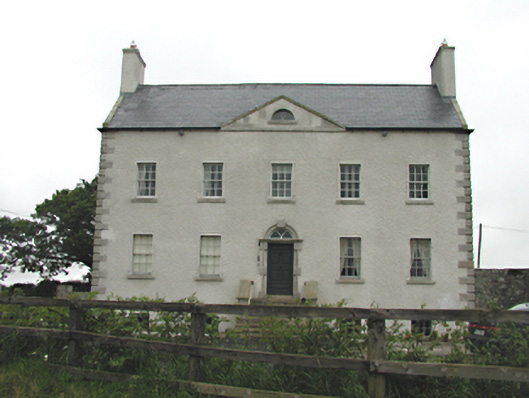
Farmersvale House, County Kildare, photograph from National Inventory of Architectural Heritage.

Open dates in 2025: Jan 6-21, Mar 3-6, July 18-31, Aug 1-26, 9.30am-1.30pm

Fee: adult €5, student/child/OAP €3, (Irish Georgian Society members free)

7. Griesemount House, Ballitore, Co Kildare R14 WF64 – section 482

www.griesemounthouse.ie
Open dates in 2025: Feb 9-28, May 11-30, June 23-30, July 1-4, Aug 16-24, 2pm-6pm

Fee: adult €6, OAP/child/student €5

The Historic Houses of Ireland website tells us:

In 1685, the village of Ballitore on the river Griese in the southern corner of County Kildare became the first planned Quaker village in England and Ireland. The Shackleton family from Yorkshire settled here some decades later and besides establishing wool and corn mills, founded the famous village school in 1726. Thanks to an entry by Mary (née Shackleton) Leadbetter in her ‘Annals of Ballitore’, we know that the first stone of Griesemount House (also known as Ballitore Hill House) was laid on Midsummer Day in 1817. While the three-bay side elevation is symmetrical, the two-bay front façade with the front door under the left window is quite modest, as was often the case with Quaker houses. It was built by George Shackleton, who had grown up in Griesebank House beside the now-ruinous Ballitore Mills on the river just below. He married Hannah Fisher and they raised 13 children in the new house, including the noted botanical artist Lydia Shackleton, the first artist-in-residence at the Botanic Gardens in Dublin. One of her first recorded sketches is of the house. The family lived here until the early 20th century; the house then changed hands several times. It was briefly owned and restored by the mother of mezzosoprano Frederica von Stade, and has recently come into new ownership.” [3]

8. Harristown House, Brannockstown, Co. Kildare, W91 E710 – section 482

Harristown House, County Kildare, August 2019. Photograph © Jennifer Winder-Baggot, www.irishhistorichouses.com

See my write-up:

https://irishhistorichouses.com/2020/09/27/harristown-brannockstown-county-kildare/

https://www.harristownhouse.ie/
Open dates in 2025: Feb 3-7, 24-28, Mar 10-14, 17-21, May 1-14, July 23-25, 28-31, Aug 1, 5-24,

9am-1pm

Fee: adult €15, OAP/student/child €10

9. Kildrought House, Celbridge Village, Co. Kildare W23 N9P2 – section 482

Open dates in 2025: Jan 6-20, Feb 3-7, May 19-31, June 1-2, July 12-21, Aug 11-25, 10am-2pm

Fee: adult €10, OAP €8, student €5, child €5 under 12 years, school groups €3 per person

See my entry, https://irishhistorichouses.com/2023/06/22/kildrought-house-celbridge-village-co-kildare-w23-n9p2/

Kildrought, County Kildare. Photograph © Jennifer Winder-Baggot, www.irishhistorichouses.com

10. Larchill, Kilcock, Co. Kildare W23 Y44P – section 482

Larchill, County Kildare. Photograph © Jennifer Winder-Baggot, www.irishhistorichouses.com

www.larchill.ie
Open dates in 2025: May 3-31, June 1-6, 10-13, 17-20, 24-27, Aug 16-29, 10am-2pm

Fee: adult/OAP/student €8, child €4, under 4 years free, groups discount

See my entry: https://irishhistorichouses.com/2022/09/02/larchill-kilcock-co-kildare/

11. Leixlip Castle, Leixlip, Co. Kildare W23 N8X6 – section 482

Leixlip Castle, County Kildare, June 2019. Photograph © Jennifer Winder-Baggot, www.irishhistorichouses.com

See my entry:

https://irishhistorichouses.com/2020/09/04/leixlip-castle-county-kildare-desmond-guinnesss-jewelbox-of-treasures/

Open dates in 2025: Feb 17-21, 24-28, Mar 3-7, 10-14, May 12-23, June 9-20, Aug 16-24, Sept 1-7,

Fee: adult €8, OAP/student/child €4, no charge for local school visits/tours

12. Maynooth Castle, County Kildare – OPW

https://irishhistorichouses.com/2022/02/21/office-of-public-works-properties-leinster-carlow-kildare-kilkenny/

Open in 2025: May 17-31, Aug 12-31, Sept 7-16, Dec 17-31, 9am-1pm

Fee: adult €8, student/OAP/child €5

The Historic Houses of Ireland website tells us:

The forebears of the Greenes of Millbrook House in the far south of County Kildare lived at Kilmanaghan Castle and Moorestown Castle [now a ruin] in County Tipperary. A great grandson of the family patriarch Captain Godfrey Greene moved up to settle near Carlow. William Nassau Greene (1714-1781) was a businessman and magistrate, and built a residence known as Kilkea Lodge (c. 1740) adjacent to the ancient Fitzgerald seat at Kilkea Castle, where his descendants are still resident. A younger son, John (1751-1819), who became High Sheriff of Kildare and Captain of the Castledermot Yeomanry, built a neighbouring house at Millbrook with the help of his father. It was completed in 1776 with its attendant mill and millrace off the River Griese, which had replaced an earlier mill in the nearby Kilkea Castle demesne. The house passed through generations of the family until finally the mill ceased operating under Thomas Greene (1843-1900), a poet and author who was made High Sheriff of Kildare in 1895. The house was left by inheritance to one of the cousins from Kilkea Lodge, father of the present owner. Throughout WWII, he had served as a frontline doctor in the 4th Indian Division in North Africa, Italy and Greece, and returned with his wife in 1950 to an utterly neglected house. Millbrook is still in the process of being restored to its former state.” [5]

See also the entry by Robert O’Byrne, https://theirishaesthete.com/tag/millbrook/

14. Moone Abbey House & Tower, Moone Abbey, Moone, Co. Kildare R14 XA40 – section 482

Moone Abbey House, County Kildare, May 2019. Photograph © Jennifer Winder-Baggot, www.irishhistorichouses.com

https://irishhistorichouses.com/2020/06/13/moone-abbey-house-and-tower-moone-county-kildare/

Open dates in 2025: May 1-31, Aug 16-24, Sept 1-20, 12 noon- 4pm

Fee: adult €10, OAP/student/child €5

15. Moyglare Glebe, Moyglare, Maynooth, Co. Kildare W23K285 – section 482

Open dates in 2025: Jan 13-17, 20-24, 27-31, Feb 4-7, 10, May 1-2, 6-18, 26-30, July 1-11, Aug 16-24, 8am-12 noon

Fee: adult €6, OAP/student/child €3

16. Steam Museum Lodge Park Heritage Centre, Lodge Park, Straffan, Co. Kildare – section 482

www.steam-museum.com
Open dates in 2025: Apr 19-21, 26-27, May 3-5, 10-11, 17-18, 24-25, 31, June 12, 14-15, 18, 21-22, 28-29, July 5-6, 12-13, 19-20, 26-27, Aug 2-4, 9-10, 16-24, 30-31, Sept 6-7, 13-14, 20-21, 27-28, Oct 5,12, 19, 26-27, 1pm-5pm

Fee: Garden and Museum, adult/OAP €15, €20 with steam, student/child free

Lodge Park, photograph courtesy of Historic Houses of Ireland.

The Historic Houses of Ireland website tells us about Lodge Park:

Lodge Park, overlooking a fine stretch of the River Liffey, was built by Hugh Henry who had married his cousin, Lady Anne Leeson from Russborough [daughter of Joseph Leeson 1st Earl of Milltown]. Completed in about 1776, the centre block forms the core of an unusual composition with curved quadrants leading to a pair of two-storey wings, both attached to two further pavilions by curtain walls to form a unique elongated ensemble of five interconnected buildings, “perhaps the most extreme example of the Irish Palladian style.”

Henry’s father was the merchant banker Hugh Henry, who had purchased the entire Straffan estate with 7,000 acres. Lodge Park was long thought to be the last building by Nathaniel Clements, who died in 1777, but has now been attributed to John Ensor. The hipped roof is surrounded by a granite-topped parapet, and the walls are finished in rough cast, with ashlar block quoins and granite window surrounds with detailing. It is Ireland’s best exampe of concatenation, having curtain walls attached to the main house, leading to two pavilions, attached by two gateways to two further buildings. Hugh’s son Arthur built the Victorian walled garden, now beautifully restored and open to the public, as well as the fine gate lodge. The house was bought by the Guinness family in 1948. 

The walled garden has been beautifully restored while a disused Victorian church has been re-erected in the grounds to house a magnificent Steam Museum with early inventor’s models, scientific engineering models and historic works of mechanical art. The Power Hall displays six huge stationary steam engines, which are run on special occasions.https://www.ihh.ie/index.cfm/houses/house/name/Lodge%20Park

17. Templemills House, Newtown Road, Celbridge, Co. Kildare W23 YK26

Open dates in 2025: Jan 6-18, Feb 10-19, May 1-31, Aug 16-24, 9am-1pm

Fee: adult €12, child/student/OAP €8

Places to stay, County Kildare:

1. Balyna, Moyvalley, Co Kildare – weddings, accommodation 

Now called Moyvalley Hotel. https://www.moyvalley.com/aboutus.html

The website tells us:

Balyna House lies to the south of Moyvalley Bridge over the Grand Canal, about half way between Enfield and Kinnegad on the old Dublin — Galway road. The house lies in the centre of the estates 500 acres. Balyna Estate was granted in 1574 by Queen Elizabeth I to the O’Moore family because they had lost their land in Laois and were reinstated in Balyna.

Major Ambrose O’Ferrall married Letitia More in 1796. Their  eldest son Richard More O’Ferrall was born in 1797. [ I don’t think this is correct. I believe that Letitia More married Richard O’Ferrall (1729-1790) and that their son was Ambrose More O’Ferrall who married Ann Baggot daughter of John Baggot of Castle Baggot, Rathcoole. Richard More O’Ferrall (1797-1880) was their son]. He is reputed for having been responsible for the erection of the Celtic cross which now stands to the rear of the house. It is said that this Cross, along with another was  transported from Europe, the two being encased in wooden crates and towed behind the ship on a barge. Legend has it that one was lost at sea, but its twin survives to this day.

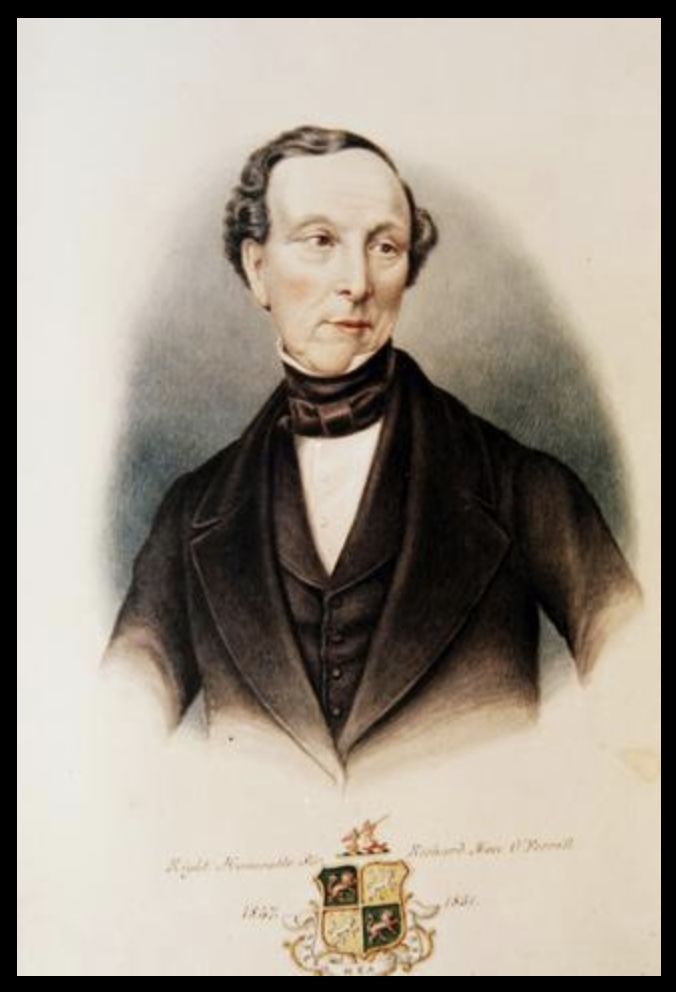
Richard More O’Ferrall, Governor of Malta 1847-1851, courtesy of Giuseppe Calì, National Archives of Malta, Photographic Collection, Creator Government of Malta, The Palace, Valletta
Castle Bagot, Rathcoole. Photograph © Jennifer Winder-Baggot, www.irishhistorichouses.com

Mark Bence-Jones writes (1988):

p. 30. [More O’Ferrall] “The ancestral home of the O’More family, the land having been granted to them by Eliz I as a small compensation for their forfeited territories in Laois… A new house was built 1815, which was burnt 1878; this was replaced by the present house, built 1880s. It is slightly Italianate, with a Mansard roof carried on a bracket cornice; of 2 storeys with a dormered attic. Entrance front with two 3 sided bows and a single-storey Ionic portico, 5 by garden front with pediment, the windows on either side being larger than those in the centre. Imposing staircase with handrail of decorative ironwork; ceiling of staircase hall has modillion cornice. Chapel in garden. Sold 1960s, subsequently owned by Bewleys Oriental Cafe Ltd” [6]

The website continues: “The first real record of any house dates from 1815 when Ambrose built a large mansion. That Georgian house was burned down and replaced in the 1880’s by the present Italianate mansion.

The estate was a refuge for bishops and priests for centuries and Dr. Forstall, Bishop of Kildare, ordained priests here in the year 1678 — 1680. For this loyalty, the family was granted Papal permission to build a private Chapel on the estate (located to the rear of the house) and up to approximately 1914 Sunday Mass was offered. It was only used intermittently after that, with the last occasion being in the summer of 1959.

The estate remained in the More O’Ferrall family until May 1960 when it was sold to the Bewley family (of Café fame). The wonderful milk and cream in the Cafes came from the pedigree Jersey herd at Balyna. In 1984 the estate was sold to Justin Keating; it was sold again in 1990-1991 to George Grant. Moyvalley was developed into a Hotel & Golf Resort in 2007.

Balyna House consists of 10 luxurious ensuite bedrooms, 3 reception rooms to cater for up to 100 guests, Balyna Bar and Cellar Bar. The house is available exclusively for private events and weddings.

In 2014 the resort was purchased by the late Oliver Brady (well-known horse trainer from Co. Monaghan) with his business partner a well know entrepreneur Rita Shah owner of Shabra Recycling Plastic’s Group, Thai business woman Jane Tripipatkul and her son Mark McCarthy who are based in London.

It is likely that several Irish and European military campaigns were discussed and argued over at Balyna, as apart from the fierce-some O’More’s and the well documented Irish battles in which they took part, several later generations saw service in European armies. All three sons of Richard and Letitia O’Ferrall saw service abroad. The eldest, Ambrose, and his youngest brother, Charles, rose to the rank of Major in the Royal Sardinian Army, while the middle brother, James attained the rank of Major General in the Austrian Hohenzollern Army.

Incidentally, there was a Bagot family of “Castle Baggot” in Rathcoole, and neither son had children so all the Bagot property, which included land around Smithfield in Dublin and extensive property in County Carlow, passed to the daughter, Ann, who married the above-mentioned Ambrose More O’Ferrall.

As a digression, it is worth noting that Rory O’ More’s eldest daughter, Anne, married Patrick Sarsfield, 1st Earl of Lucan and famous military leader. His father in law was the man behind the Irish Rebellion of 1641.

King James had adopted the policy of remodelling the Irish army so as to turn it from a Protestant-led force to a Roman Catholic led one, and Sarsfield, whose family were Roman Catholics, was selected to assist in this reorganisation. Colonel Sarsfield went to Ireland with Richard Talbot, 1st Earl of Tyrconnell , who was appointed commander-in-chief by the king.

2. Barberstown Castle, Kildare – hotel 

www.barberstowncastle.ie

Barberstown Castle, photograph courtesy of barberstowncastle.ie

Mark Bence-Jones writes (1988): p. 31. “A tower-house with a long plain 2 storey wing attached. In 1814, the residence of Jos Atkinson, in 1837, of Capt Robinson.” 

The website gives a timeline:

1288: Nicholas Barby built the original Castle towards the end of the 13th Century on the land which was originally owned by the Great Norman family the Fitzgerald’s.

1310: The Castle was built as a fortress to protect the village and people of Barberstown from the attack of the rebellious Ui Faolain tribesmen who tried to burn the town (among others) in 1310. It has traditionally found itself in the middle of political struggle and local wars which generally resulted in change of ownership.

Retaining Ownership: Some of its previous owners have gone to extreme lengths to retain ownership. Just how far some went is illustrated by the story of the body that is said to be interred in the tower of the Castle Keep (the original part of the Castle). His fate can be explained by reading the lease on the Castle at the time in which was written that the lease would expire when he was buried underground (ie. his death). The ending of a lease normally resulted in an increase in rent so after the man’s death he was buried in the tower above the earth which ensured the family continued to hold the lease to the Castle!

The walls of the Castle Keep walls slope inwards so as to prevent an enemy getting out of range by closing up to the building. Ironically however the rooms on the upper floors of the Castle are larger than those on the ground level as their walls are somewhat thinner.

Penal Times: The neighbouring village of Straffan is named after St. Straffan, one of the early sixth century missionaries. Its close linkages with the local town and people were proven when an underground tunnel from the Church in Straffan to the Castle was found in 1996 during renovations. A ‘Priest’s Hole’ can be also found in the Castle which was originally made to protect the priests of the town during Penal Times.

1630: William Sutton of one of the most important families in the area owned the property. The population of Barberstown at the time was 36!

1689: Lord Kingston [I’m not sure who they mean here – Robert King (d. 1693) was the 2nd Baron of Kingston at the time] had his ownership confiscated by Earl of Tyrconnell after the accession to power of James 11 of England. It was around this time that it fell into the less glamorous hands of the Commissioners of the Revenue who let it out to a Roger Kelly for £102 annual rent in the late 1600s.

1703: It was purchased by Bartholomew Van Homreigh in 1703 for £1,033 the sixth owner in six years. At the time the property was 335 acres. Van Homreigh had been mayor of Dublin in 1697 and his greatest ‘claim to fame’ lies in the fact that he was the father of Vanessa of whom Swift wrote so passionately about. He sold it to the Henrys who were prone to excessive spending at the time….

1830: The Henry’s had no option but to sell it to Mr. Hugh Barton [1766-1854] who completed the last wing of the house in the 1830s which added to the present day unique architectural status of Barberstown. He is also famed for constructing Straffan House known today at the K-Club.

1900: As the property became too expensive to retain as a residence, the Huddlestons who owned Barberstown Castle in the 1900s sold it to Mrs. Norah Devlin who converted it into a hotel in 1971. Barberstown was one of the first great Irish country houses to display its splendour to the outside world when it opened as a hotel in 1971. It has maintained the elegance of design over the centuries by sympathetically blending its Victorian and Elizabethan extensions with the original Castle Keep.

1979: The acclaimed Musician, Singer, Songwriter & Record Producer Mr. Eric Clapton CBE purchased the property in 1979 and lived in the property until 1987. Music sessions took place in the Green Room and original Castle Keep during the time Eric lived here with many famous Rockstars from all over the world coming here to stay.

1987 to Present Day: Upon purchasing Barberstown Castle from Eric Clapton in 1987, this beautiful historic house has since been transformed from a 10-bedroom property with three bathrooms to a 55-bedroom Failte Ireland approved 4 Star Hotel. They are a proud member of Ireland’s Blue Book of properties and Historic Hotels of Europe.

Since 1288 Barberstown has had 37 owners all of whom had the foresight to protect its heritage and character. Look out for the names of all the owners of Barberstown Castle painted on the bedroom doors of the hotel!

3. Batty Langley Lodge, Celbridge, County Kildare €€

https://www.irishlandmark.com/propertytag/cottages-and-houses/?gclid=Cj0KCQiApL2QBhC8ARIsAGMm-KFInICcRSxwLSiDxfFNk5WFytNcVrLvOQYhzJbIBes4V-M65iXz0gYaAln_EALw_wcB

Batty Langley Lodge, Castletown, County Kildare. Photograph © Jennifer Winder-Baggot, www.irishhistorichouses.com

One of the entrances to the Castletown demesne has a Gothic lodge, from a design published by Batty Langley (1696-1751) 1741. Batty Langley was an English garden designer who produced a number of engraved “Gothick” designs for garden buildings and seats. He was named “Batty” after his father’s patron, David Batty. He also published a wide range of architectural books.

4. Burtown House holiday cottages – see above

www.burtownhouse.ie

5. Carton House, Kildare – open to public, hotel 

https://www.cartonhouse.com/

See my entry https://irishhistorichouses.com/2024/06/04/carton-house-county-kildare-a-hotel/

The house was built in 1739 to designs by Richard Castle and remodelled in 1815 by Richard Morrison. This is now the front of the building – it was formerly the back, and was changed when Richard Morrison carried out the remodelling. Photograph © Jennifer Winder-Baggot, www.irishhistorichouses.com

6. Castletown Gate Lodge, Celbridge, County Kildare € for 3

Castletown Gate Lodge, a Landmark Trust property. Photograph © Jennifer Winder-Baggot, www.irishhistorichouses.com

https://www.irishlandmark.com/propertytag/cottages-and-houses/?gclid=Cj0KCQiApL2QBhC8ARIsAGMm-KFInICcRSxwLSiDxfFNk5WFytNcVrLvOQYhzJbIBes4V-M65iXz0gYaAln_EALw_wcB

7. Castletown Round House, Celbridge, County Kildare: Irish Landmark € for 3-6 

Castletown Round House, a Landmark Trust property. Photograph © Jennifer Winder-Baggot, www.irishhistorichouses.com

https://www.irishlandmark.com/property/castletown-round-house/

8. The Cliff at Lyons, County Kildare

www.cliffatlyons.ie

Robert O’Byrne writes about the Cliff at Lyons:

The Village at Lyons, County Kildare is often described as a restoration but to be frank it is more a recreation. By the time the late Tony Ryan bought the estate in 1996, the buildings beside the Grand Canal, which had once included a forge, mill and dwelling houses, were in a state of almost total ruin. Therefore the work undertaken here in the years prior to his death in 2007 involved a great deal of architectural salvage, much of it brought from France, although some Irish elements were incorporated such as a mid-19th century conservatory designed by Richard Turner, originally constructed for Ballynegall, County Westmeath. Today the place primarily operates as a wedding venue, providing an alluring stage set for photographs but bearing little resemblance to what originally stood here.”[9]

The entrance front of Lyons House, designed by Oliver Grave for Nicholas Lawless, 1st baron Cloncurry circa 1786 and remodelled by his son Richard Morrison in 1802-05. Pub Orig Country Life 16/01/2003, vol. CXCVII by Photographer Paul Barker. (see[7])

Mark Bence-Jones writes of Lyons:

p. 196. “(Alymer/IFR; Lawless, Cloncurry, B/PB1929; Winn, sub St. Oswalds, B/PB) Originally the seat of the Aylmer family. Sold 1796 by Michael Aylmer to Nicholas Lawless,the 1st Lord Cloncurry, son of a wealthy blanket manufacturer, who had a new house built in 1797, to the design of an architect named Grace. 

Three storey block with a curved bow on either side of its entrance front, joined to two-storey wings by curved sweeps. About 1801, shortly after his release from the Tower of London, where he had been imprisoned for two years on account of his advanced political views and friendship wiht some of the United Irishmen, the 2nd Lord Cloncurry hired Richard Morrison to undertake improvements and alterations to his father’s house, work continuing till 1805. 

During this period, Lord Cloncurry was in Italy, collecting antiques and  modern sculpture for the house; he also acquired three antique columns of red Egyptian granite from the Golden House of Nero, afterwards at the Palazzo Farnese, which were used as three of the four columns in a single-storey portico at Lyons, with a triangular pediment surmounted by a free-standing coat-of-arms.The other notable alteration made to the exterior of the house at this time was the substitution of straight colonnades for the curved sweeps linking the main block to the winds, a change similar to that which Morrison made a few years later at Carton. Also the main block and wings were faced with rusticated ashlar up to the height of one storey on the entrnace front. The hall was given a frieze of ox-skulls and tripods based on the Temple of Fortuna Virilis in Rome, doorcases with fluted entablatures and overdoor panels with classical reliefs; a pair of free-standing antique marble Corinthian columns were set against one wall, and vaarous items from Lord Cloncurry’s collection fo sculpture disposed around the other walls. The walls of the dining room and music rom were painted with Irish waterfalls – and other enchanting decoration by Gaspare Gabrielli, an artist brought by Lord Cloncurry from Rome. The bow-ended dining room was also decorated with a wall painting, of Dublin Bay; and was adorned with reliefs of the story of Daedalus.” 

The garden front of Lyons House, The new orangery and pool house are the single-storey buildings flanking the central block. Pub Orig Country Life 16/01/2003, vol. CXCVII by Photographer Paul Barker. (see [7])
GASPARE GABRIELLI A Group of Five Mythological Landscapes a preparatory scheme for the murals at Lyons, County Kildare courtesy Adams Irish Old Masters 15 May 2025

Bence-Jones continues: “The seven-bay garden front was left fairly plain, but before it a vast  formal garden was laid out, with abundant statuary and urns and an antique column supporting a statue of Venus half way along the broad central walk leading from the house to what is the largest artificial lake in Ireland. Beyond the lake rises the wooded Hill of Lyons. 

The Grand Canal passes along one side of the demesne, and there is a handsome Georgian range of buildings beside it which would have been Lord Cloncurry’s private canal station. A daughter of 3rd Lord Cloncurry was Emily Lawless, the poet, a prominent figure in the Irish Revival of the early yars of the present century. Her niece, Hon Kathleen Lawless, bequeathed the Lyons estate to a cousin, Mr G M V Winn, who sold it about 1962 to University College, Dublin, which has erected a handsome pedimented arch from Browne’s Hill, Co Carlow at one of the entrances to the demesne.” 

Art Kavanagh’s book on the Landed Gentry and Aristocracy: Meath, volume 1, tells us more about the Aylmers of Balrath. During the reign of Henry VI, Richard Aylmer of Lyons was a Keeper of the Peace for both Dublin and Kildare. He was in charge of protecting the settler community from attack by the neighbouring O’Toole and O’Byrne septs. The family rose to become one of the most prominent families in Meath and Kildare and key figures in the Dublin administration. Before the end of the 16th century they had established two independent branches at Donadea in Kildare and Dollardstown in County Meath.

The first Aylmer of real significance, Art Kavanagh tells us, was John Aylmer (c. 1359 – c. 1415) who married Helen Tyrell of Lyons, an heiress, at the end of the 14th century, and so the family acquired Lyons. [p. 1, Kavanagh, published by Irish Family Names, Dublin 4, 2005]

Mary Aylmer, daughter of Richard Aylmer of Lyons by Hugh Douglas Hamilton courtesy of House Contents Auction by deVeres 2011.

9. The K Club, Straffan House, County Kildare

Straffan House, the K Club, courtesy of the K Club Resort, 2005.

https://www.kclub.ie

The Straffan estate formed part of the original land grant bestowed upon Maurice Fitzgerald by Strongbow for his role in the Anglo-Norman invasion of 1169. In 1679, the property was purchased by Richard Talbot, the Duke of Tyrconnell who commanded the Jacobite army in Ireland during the war between James II and William of Orange. Tyrconnell’s estates were forfeited to the crown in the wake of the Williamite victory. In about 1710, the property was purchased by Hugh Henry, a prosperous merchant banker, who also owned Lodge Park. He married Anne Leeson, a sister of Joseph Leeson, 1st Earl of Milltown. Straffan passed to their son, Joseph, who travelled in Europe and collected art. In April 1764 he married Lady Catherine Rawdon, eldest daughter of the 1st Earl of Moira.

Joseph Henry of Straffan, Co. Kildare by Francis Hayman, R.A. (c. 1708-1776) courtesy of Christies Irish Sale 2001.

Their son John Joseph (1777-1846) married Lady Emily Fitzgerald, the 23-year-old daughter of the 2nd Duke of Leinster. He was an extravagant spender and had to sell Straffan in 1831.

Hugh Barton (1766-1854) acquired Straffan House from the Henry family in 1831 and his descendents remained there until the 1960s. The Barton family were part of the Barton & Guestier winemakers. Hugh soon commissioned Dublin architect, Frederick Darley, to build a new house, based on Madame Dubarry’s great Château at Louveciennes to the west of Paris. [10] The house passed through many hands subsequently.

Mark Bence-Jones writes of Straffan House (1988):

p. 266. “(Barton/IFR)  An imposing C19 house in a style combining Italianate and French chateau. Main block of two storeys with an attic of pedimented dormers in a mansard roof; seven bay entrance front, the centre bay breking forward and having a tripartite window above a single-storey balustraded Corinthian portico. Entablatures on console brackets over ground-floor windows; triangular pediments over windows above and segmental pediment of central window. Decorated band between storeys; balustraded roof parapet; chimneystacks with recessed panels and tooth decoration. The main block prolonged at one side by a lower two storey wing, from which rises a tall and slender campanile tower, with two tiers of open belvederes. Formal garden with elaborate Victorian fountain. Capt F.B. Barton sold Straffan ca 1949 to John Ellis. It was subsequently the home of Kevin McClory, the film producer, and later owned by Mr Patrick Gallagher, who restored the main block to its original size.” 

10. Kilkea Castle, Castledermot, Kildare – hotel 

Kilkea Castle County Kildare by Elena on flickr constant commons 2005.

https://www.kilkeacastle.ie/

Mark Bence-Jones writes (1988):

p. 167. “(Fitzgerald, Leinster, D/PB) A medieval castle of the FitzGeralds, Earls of Kildare, especially associated with C16 11th Earl of Kildare, the most famous “wizard Earl.” [Gerald (1525-1585)] After Carton became the family seat in C18, it was leased to a succession of tenants; one of them being the Dublin silk merchant, Thomas Reynolds, friend of Lord Edward Fitzgerald through whom he became a United Irishman, only to turn informer when he realised the full aims of the movement. His role as informer did not prevent the unhappy Reynolds from having the castle, which he had only recently done up in fine style, sacked by the military; who tored up the floorboards and tore down the panelling on the pretext of searching for arms. Subsequent tenants caused yet more damage and there was a serious fire 1849; after which the third Duke of Leinster resumed possession of the castle and restored and enlarged it as a dower-house for his family. The work was sympathetically done, so that the tall grey castle keeps its air of medieval strength with its bartizans and its massively battered stone walls; though its battlements and its rather too regularly placed trefoil headed windows are obviously C19. AT one side of the caslte a long, low, gabled office range was added, in a restrained Tudor Revival style. The interior is entirely of 1849, for the lofty top storey, where the principal rooms were originally situated, was divided to provide a storey extra. The ceilings are mostly beamed, with corbels bearing the Leinster saltire. In 1880s the beautiful Hermione, Duchess of Leinster (then Marchioness of Kildare) lived here with her amiable but not very inspiring husband [Gerald the 5th Duke of Leinster]; finding the life not much to her taste, she composed the couplet “Kilkea Castle and Lord Kildare/are more than any woman can bear.” After the sale of Carton 1949, Kilkea became the seat of the 8th and Present Duke of Leinster (then Marquess of Kildare), but it was sold ca 1960 and is now an hotel.” 

11. Leixlip Manor hotel (formerly Liffey Valley House hotel, formerly St. Catherine’s Park), Leixlip, Co Kildare

http://www.leixlipmanorhotel.ie/about-us/the-manor-kildare

The house that stood before the current Manor House was taller and was tenanted by the Earl of Lanesborough. Then in 1792, it was occupied by David La Touche, of the Huguenot banking family. It shortly thereafter burned to the ground and in around 1798 a new house, also called St Catherine’s Park, was built in the same townland to the design of Francis Johnston; it is now Leixlip Manor Hotel & Gardens.

Rt. Hon. David La Touche of Marlay (1729-1817) Date c.1800 by Hugh Douglas Hamilton, Irish, 1740-1808, courtesy of National Gallery of Ireland.

12. Martinstown House, Kilcullen, Co Kildare – accommodation

Martinstown House 2012, photograph courtesy of Martinstown House on flickr constant commons.

http://martinstownhouse.com/wordpress/ 

featured in Great Irish Houses. Forewards by Desmond FitzGerald, Desmond Guinness. IMAGE Publications, 2008. 

p. 232. “Martinstown House is one of the finest cottage ornee style buildings in Ireland today. Originally part of the huge estates of the Dukes of Leinster, this fine house was commissioned by Robert Burrowes [d. 1850, son of Kildare Dixon Borrowes, 5th Baronet] and completed by the Burrowes family between 1832 and 1840, when decorative effects such as thatched roofs, undressed stonework and verandahs made of free growing branches were being incorporated into rural Irish dwellings. While experts feel the house was built in 1833, it may have been started years earlier, with many of the outbuildings including stables and also the walled gardens dating to some time between 1815 and 1820.” The book’s authors add that Decimus Burton was involved in the creation of this house.

See also Robert O’Byrne’s entry, which has lovely pictures: https://theirishaesthete.com/2022/03/07/martinstown/

13. Moone Abbey, County Kildare holiday cottages – see above

Whole house accommodation in County Kildare:

1. de Burgh Manor (or Bert), Kilberry, County Kildare – whole house accommodation

Bert House or De Burgh, photograph courtesy of National Inventory of Architectural Heritage.

https://www.deburghmanor.ie

Beautiful self catering, Georgian Manor centrally located in the hearth of Kildare in a very private setting. De Burgh Manor comprises of 15 bedrooms all ensuite. The ground floor consists of a double reception room, drawing room, dining room, bar, library , breakfast room and kitchen. Situated on c. 6 acres of grounds overlooking the River Barrow.

The website also tells us about the history:

De Burgh Manor was built circa 1709 [the National Inventory says it was built around 1780] by Thomas Burgh [1670-1730] of Oldtown [built ca 1709 by Thomas Burgh (1670-1730), MP, Engineer and Surveyor-General for Ireland, to his own design. The centre block was burned 1950s. A house has now been made out of one of the wings. He also designed Kildrought house, a Section 482 property] for his brother William Burgh later known as Captain William De Burgh and who became Comptroller and Auditor General for Ireland. Thomas Burgh was Barracks Overseer for Ireland from 1701 and was also responsible for [building] – the Library at Trinity College Dublin, Collins Barracks Dublin – now a museum – and Dr Steeven Hospital Dublin.

William De Burgh was born in 1667 and had a son, Thomas, and a daughter, Elisabeth. Thomas, born in 1696, eventually became a Member of Parliament for Lanesboro, Co. Longford. Freeman of Athy Borough and Sovereign of Athy, in 1755 he married Lady Ann Downes, daughter of the Bishop of Cork & Ross. Her mother was a sister to Robert Earl of Kildare. Her brother, Robert Downes, was the last MP for Kildare in 1749 and was Sovereign of Athy.

Thomas had two sons, William and Ulysses [Ulysses was actually the grandson of Thomas, son of another Thomas]. William born in 1741 went on to represent Athy as an MP in Parliament between 1768 and 1776. A monument to his memory by Sculptor Sir Richard Westmacott, a statue of faith, which depicts him with a book in one hand and a scroll in the other and stands in York Minster. He wrote two books on religion and faith.

Ulysses, born in 1788 succeeded to the title of Lord Downes [2nd Baron Downes of Aghanville] on the death of his cousin William Downes who was made Lord Chief Justice in 1803 and created Lord Downes on his retirement in 1822. It was Ulysses De Burgh who presented the Town Hall Clock to Athy in 1846 and it was he who had the wings added to Bert House. [Mark Bence-Jones writes of Bert: “enlarged early in C19 by the addition of two storey Classical overlapping wings, of the same height as the centre block; which is of three storeys over basement with two seven bay fronts.”]

Ulysses’ daughter Charlotte was the last of the De Burgh’s to call Bert House home with her husband Lt. General James Colbourne [2nd Baron Seaton of Seaton, co. Devon]. Charlotte and James came to Bert House in 1863 as Lord and Lady Seaton after the death of Lord Downes. It was sold by them in 1909 to Lady Geoghegan who then sold it onto her cousin, Major Quirke.

2. Firmount, Clane, County Kildare – whole house or weddings

https://www.firmounthouse.com/

The website tells us:

Firmount House is a unique and stunning venue just outside Clane in County Kildare, only 40minutes from Dublin city centre. Lovingly restored by the owners, the house is known for flexibility and creativity and is now open for weddings, private parties, film shoots, yoga retreats and corporate events. Enjoy visiting the Firmount website and see for yourself the lifelong journey these restoration warriors have taken to provide you with the perfect location in a wonderful, natural setting.

This fabulous house consists of a sitting room, breakfast room and dining room downstairs reached from a large hallway, alongside a commercial kitchen and butlers pantry. The first floor consists of seven large and sumptuous bedrooms – five doubles and two twin rooms with plenty of room for two travel cots which are also provided. There are also six bathrooms. Heated by oil fired radiators, there are also two stoves in the main entertaining space.

Firmount House has a colourful history dating from the 13th century when there was reputed to be a fortified house on the current site. The Down Survey of 1655 seems to show a house on the land (then known as Keapock). In the 18th century the house was owned by the Warburtons and sat on extensive grounds. The story of the current house really begins in 1878 when Hugh Henry Snr having married his cousin Emily Henry (of Lodge Park, site of the current K-club) bought Firmount house and renovated it extensively. It seems he took what was a Georgian house, wrapped it in concrete (one of the first houses of it’s kind) and added a Victorian wing to the South.

The estate consisted of 409 acres at that point. Hugh Henry’s son, imaginatively named Hugh Jr, inherited the house in 1888 and lived there until 1917. It is rumoured that his wife, Eileen, had nightmares of the house going down in flames – although given it was made of concrete, we think she would have been ok. The house became a WWI hospital in 1917 and 390 soldiers were treated there until 1919, with no deaths registered – thank goodness for that. However the next decades were not so lucky for the house. In 1929 the house was bought by Kildare County Council and turned into a TB sanatorium. It ran as such until 1961. There are local stories of movies being run in the ballroom for patients with the now Mayor of Clane, at the projector. And of patients sitting on the elevated banks at the very front of the house on the roadside, watching life on the road go by but being unable to participate. 1964 brought the purchase of the house by the Department of Defence who ran it as a Control Centre for Nuclear Tracking and named it Section Seven Regional Control.

Here things get really interesting as the basement of the house was intended to house senior officials, media and communications personel in the event of nuclear fall out. It is rumoured the Taoiseach (Irish prime-minister) was supposed to have a bunker on site and the house can still be found on Russian nuclear maps!  This picture shows one of the several signs found in the house.  The downside of government and county council ownership is that many original period features were lost through ignorance, neglect and the reinforcement of windows, floors, porticos and doors with concrete.

The current “madthings” bought the house in 2012 with the aim of slowly bringing Firmount house back to life, window by window and floor by floor aswell as bringing Firmount forward into a gathering place with a welcome for all.

3. Griesemount House, County Kildare, whole house rentals – see above

[1] https://www.ihh.ie/index.cfm/houses/house/name/Burtown%20House

[2] http://lordbelmontinnorthernireland.blogspot.com/search/label/County%20Kildare%20Landowners

[3] https://www.ihh.ie/index.cfm/houses/house/name/Griesemount%20House

[4] https://www.buildingsofireland.ie/buildings-search/building/11805062/kildrought-house-main-street-celbridge-celbridge-co-kildare

[5] https://www.ihh.ie/index.cfm/houses/house/name/Millbrook%20House

[6] Bence-Jones, Mark. A Guide to Irish Country Houses (originally published as Burke’s Guide to Country Houses volume 1 Ireland by Burke’s Peerage Ltd. 1978); Revised edition 1988 Constable and Company Ltd, London.

[7] https://www.irelandscontentpool.com/en

[8] https://archiseek.com/2014/carton-maynooth-co-kildare/

[9] https://theirishaesthete.com/2020/01/08/a-stage-set/

[10] http://www.turtlebunbury.com/history/history_family/hist_family_barton.html

Text © Jennifer Winder-Baggot, www.irishhistorichouses.com