Johnstown Castle, County Wexford, a Heritage Trust property

Maintained by the Irish Heritage Trust
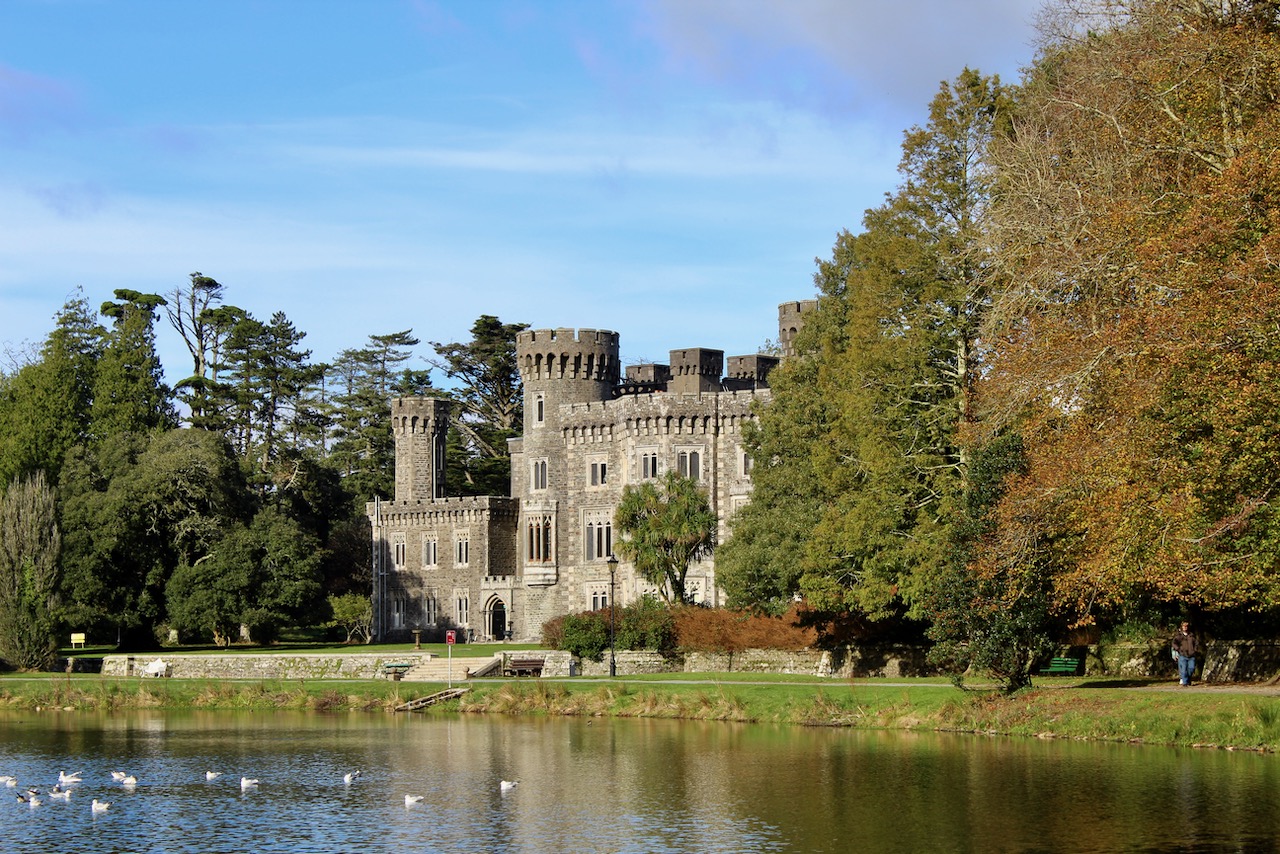
Johnstown Castle, County Wexford. The house was designed by Daniel Robertson (d. 1849). It envelops a seventeenth-century house (perhaps by Thomas Hopper) [1] remodelled (1810-4) by James Pain (1779-1877) of Limerick. Photograph © Jennifer Winder-Baggot, www.irishhistorichouses.com

https://johnstowncastle.ie/

Photograph on display from 1890.

An information board in the museum tells us that Geoffrey and Maurice Esmonde were the estate’s first owners, who arrived as part of the Anglo-Norman invasion in 1169. Geoffrey Esmonde built the original Johnstown Castle, which was a plain and modest tower house. His son Maurice built a second tower house at Rathlannon Castle, the remains of which are on the grounds to this day.
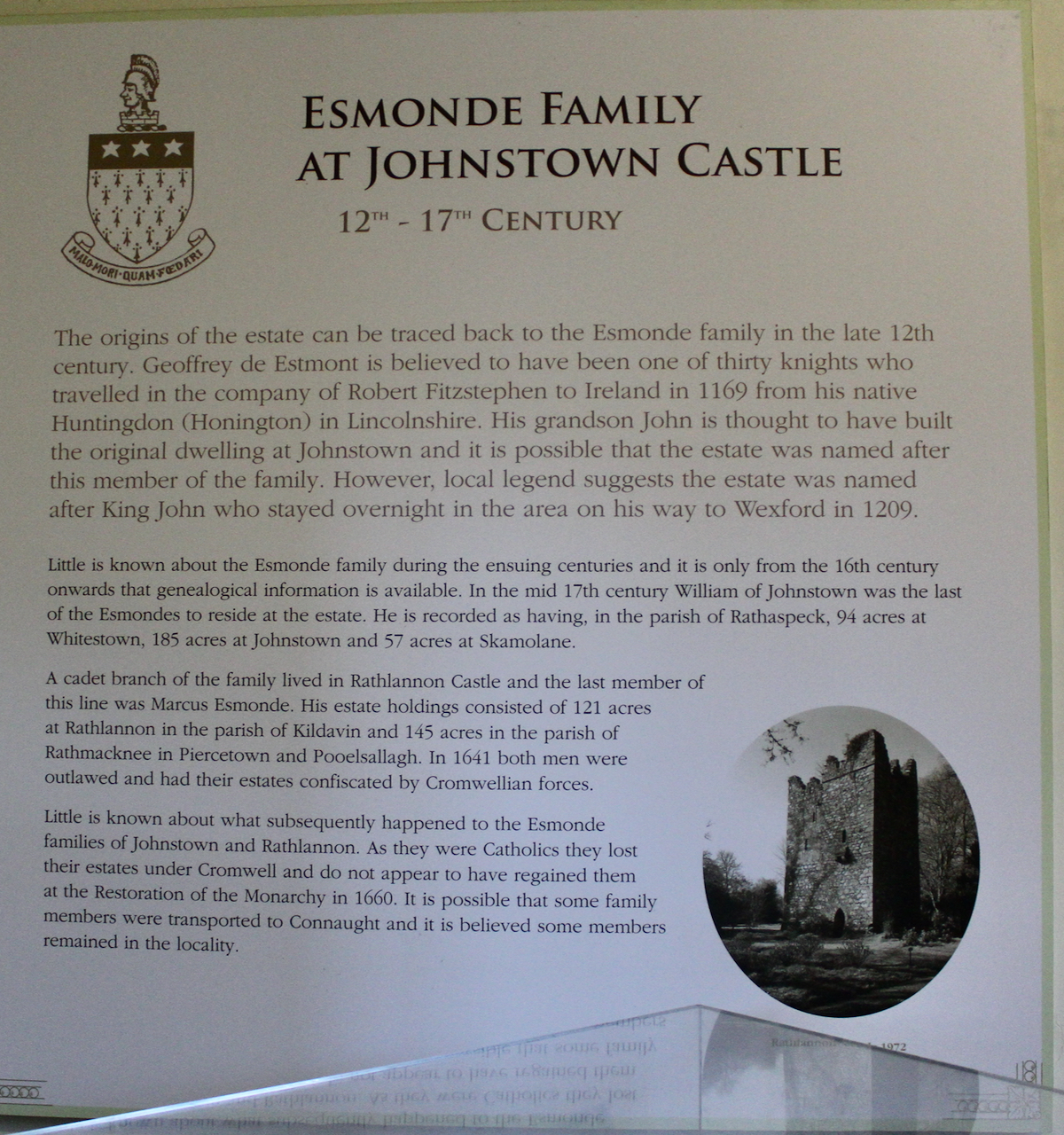
Information board at Johnstown Castle.

Our guide Mary told us that the Esmondes tower house used to stand in front of the current Johnstown Castle, but it was taken down. See below an old photograph – the old tower is the part covered in ivy in the photo.
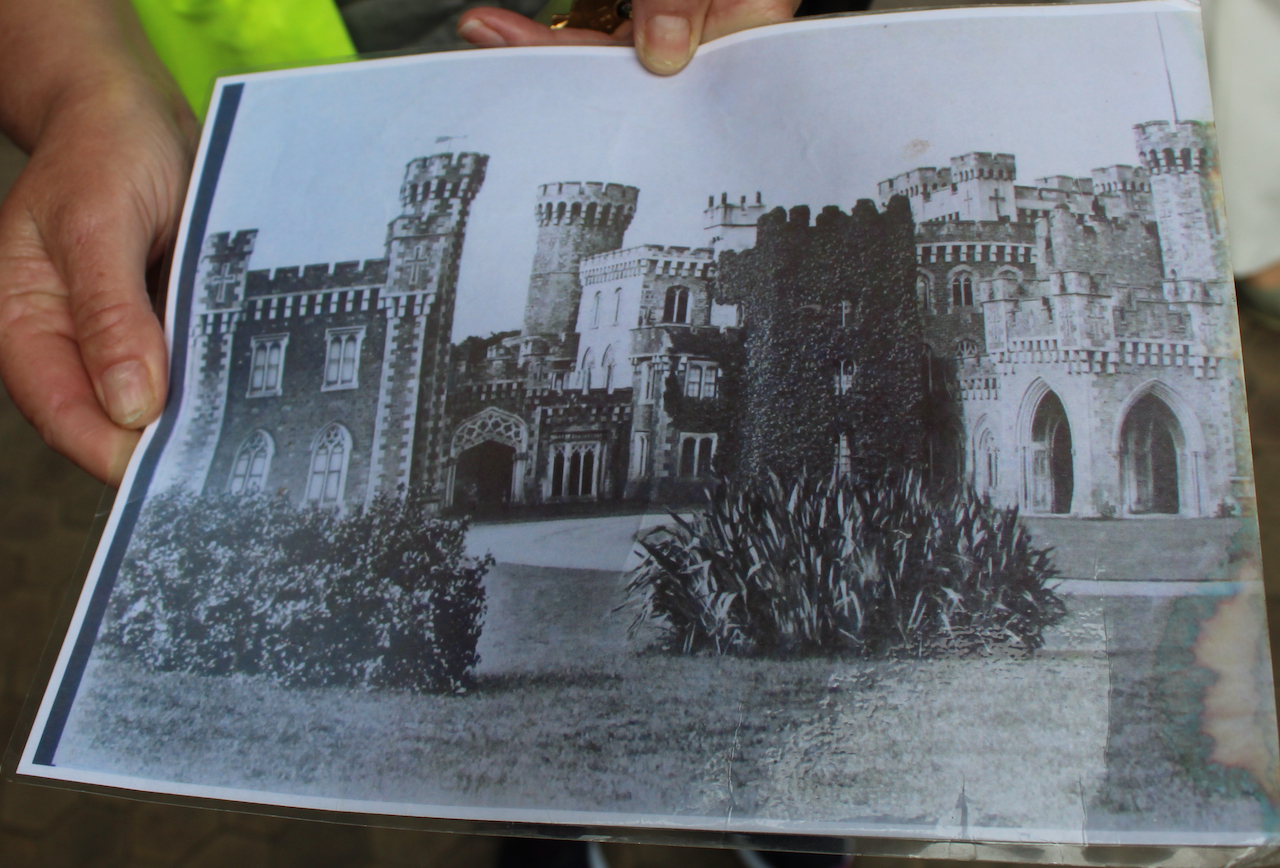
The original tower house of the Esmondes was the ivy covered one in this photograph. It has since been taken down.
Rathlannon Castle, built by Maurice Esmonde in the 1200s. Photograph © Jennifer Winder-Baggot, www.irishhistorichouses.com

The Esmondes lived here for 500 years until they lost their lands during the invasion of Oliver Cromwell, as they were Catholics. Our guide Mary told us that Cromwell slaughtered over 3000 people in Wexford.

There is a chapter on the Esmonds of Ballynastragh in The Wexford Gentry by Art Kavanagh and Rory Murphy. They tell us that it is believed that Geoffrey de Estmont was one of the thirty knights who accompanied Robert FitzStephen to Ireland in 1169 when the latter lead the advance force that landed at Bannow in county Wexford. Geoffrey built a motte and baily at Lymbrick in the Barony of Forth in Wexford, and his son Maurice built a castle on the same site. After Maurice’s death in 1225 the castle was abandoned and his son John built a castle on a new site which was called Johnstown Castle. John died in 1261. [2]

James Esmonde, an early Esmonde living at Johnstown Castle, married Isabel Rosseter, daughter of Thomas Rosseter who owned Rathmacknee Castle in County Wexford – this is a tower house that still stands and is a National Monument. It remained occupied until 1760s and in the nineteenth century it was restored by Hamilton Knox Grogan-Morgan who also owned Johnstown Castle.

James’s grandson, Walter or William, married Margaret Furlong, daughter of Michael of Horetown, County Wexford. They had several children. Their younger son Patrick held the office of Sheriff of Carlow in 1627. He married Katherine Gough and their son Laurence (about 1570-1645) was created 1st Lord Esmonde, Baron of Lymbrick, Co. Wexford, for his services to the crown.

Laurence Esmonde converted to Anglicanism and served in the armies of British Queen Elizabeth I and then James I. He is the ancestor of the Esmondes who owned Huntington Castle in County Carlow (see my entry https://irishhistorichouses.com/2019/06/28/huntington-castle-county-carlow/).

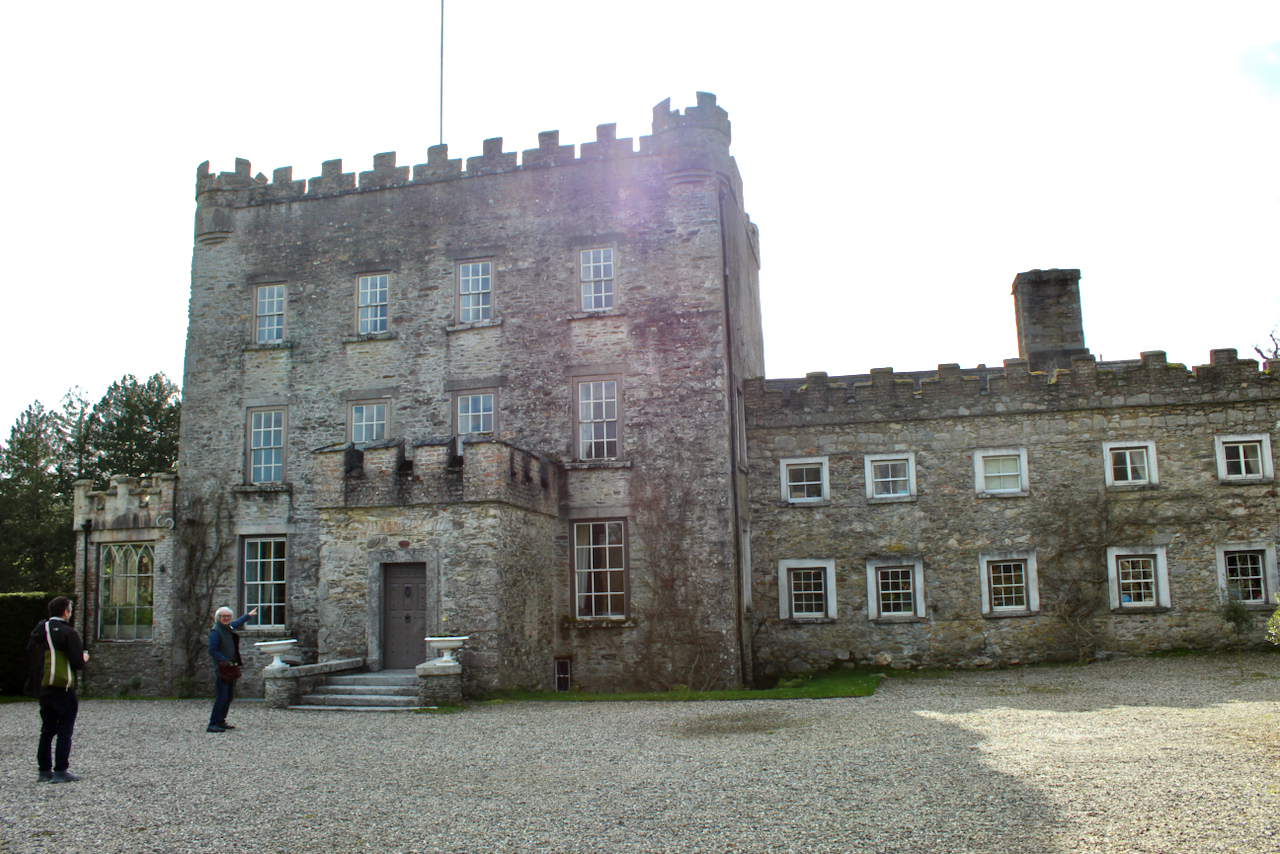
Huntington Castle, 2023. Photograph © Jennifer Winder-Baggot, www.irishhistorichouses.com

It was an elder son of Walter or William Esmonde and Margaret Furlong, Robert, who inherited the Johnstown estate, which then passed to Robert’s son William. William was MP for Wexford in 1634. However, in the following decades the Esmondes lost the estate.

Lieutenant Colonel John Overstreet was granted Johnstown Castle estate in 1652 in lieu of payment for fighting in Cromwell’s army. When Overstreet died, his wife married another Cromwellian, Edward Withers, who took over the ownership of the castle as Overstreet had no offspring. Withers and his new wife also had no children. Withers and his wife sold the castle to John Reynolds, who had married a niece of John Overstreet, Elizabeth Lacy.

John Reynolds and his wife had three daughters, who were co-heirs to the Johnstown estate. Their daughter Mary married John Grogan (1653-1720), and this is how the property passed into Grogan ownership in 1692. [3]

John Grogan was the son of Cornelius Grogan, a yeoman who brought some property in the town of Wexford. [see 3]
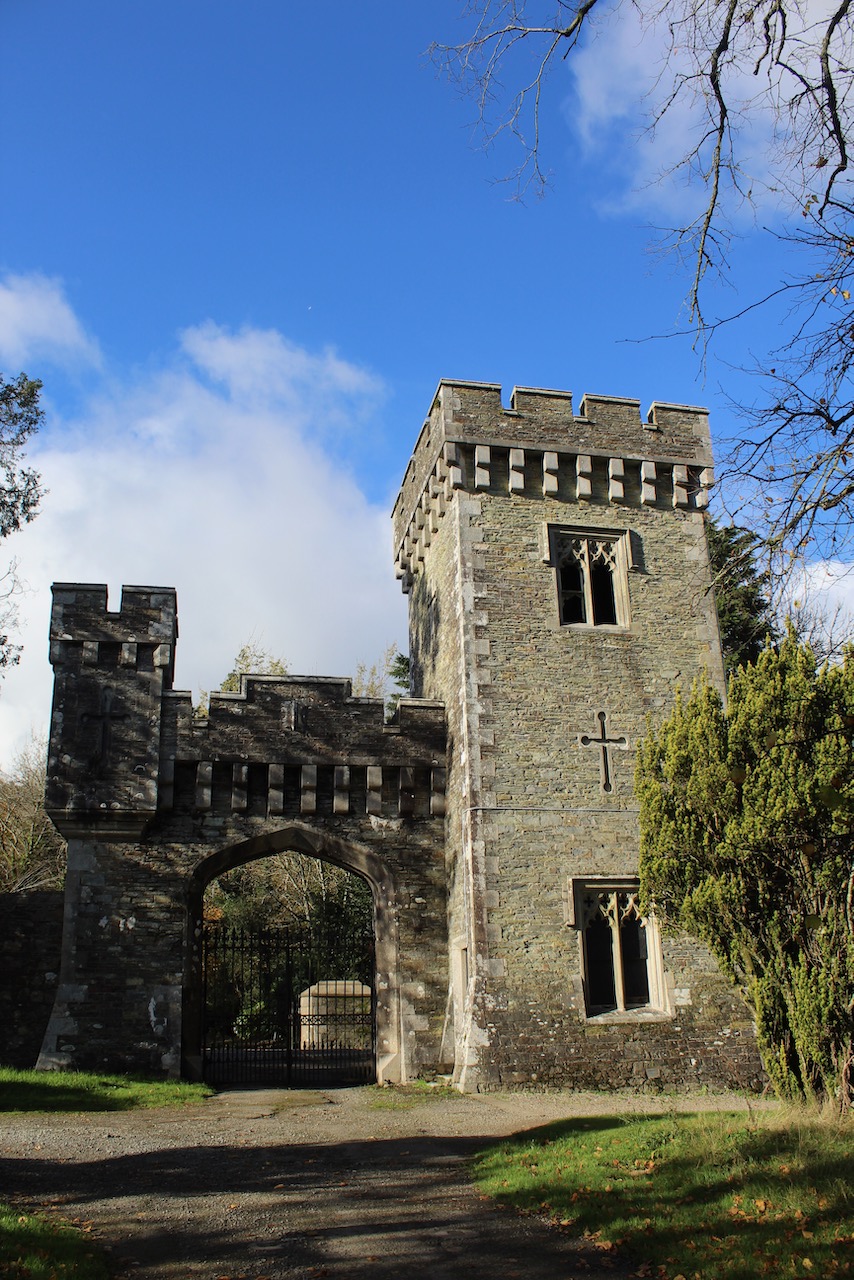
A tower like gate lodge erected to a design (1846) by Martin Day of Gallagh, with an oriel window similar to the Daniel Robertson designed gate lodge at Shankill Castle, County Kilkenny. Photograph © Jennifer Winder-Baggot, www.irishhistorichouses.com

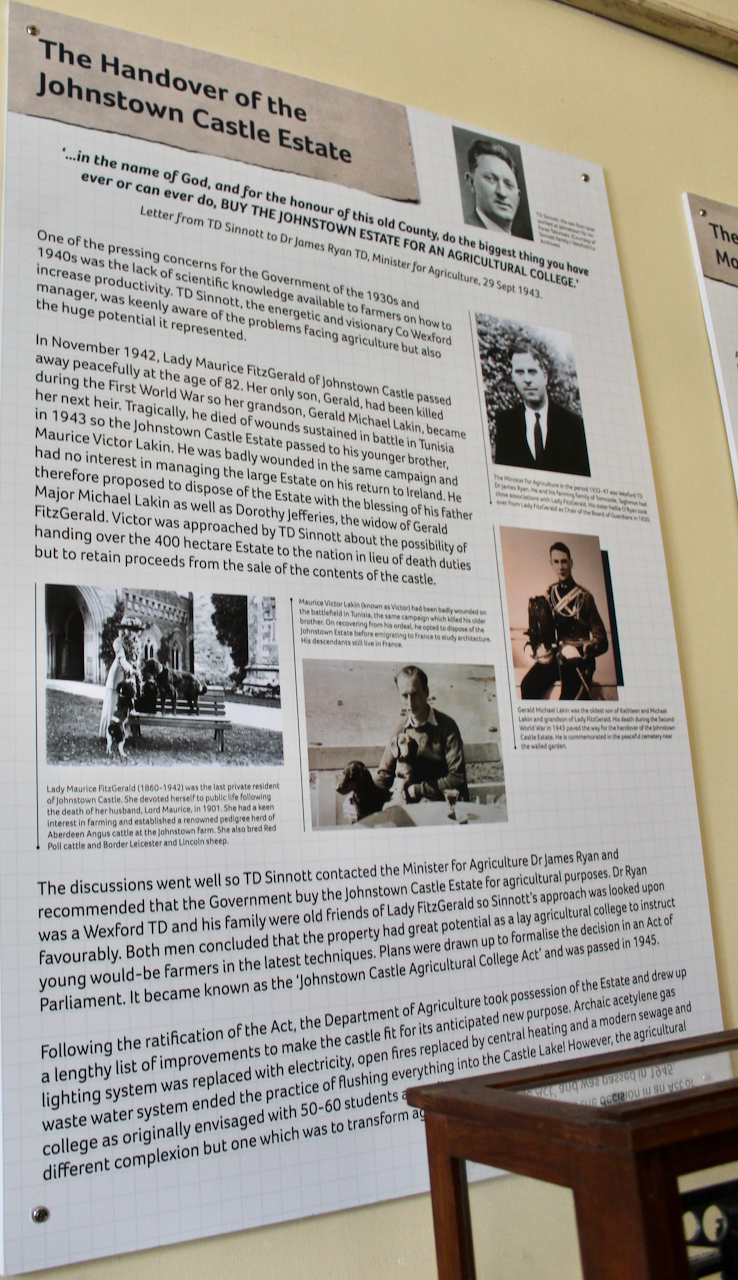
The Grogan family and their descendants lived at Johnstown Castle until 1945 when it was handed over to the state. Our guide told us that it was given in lieu of death duties. Nearly all of the furniture was sold, but fortunately some has been recovered.

John Grogan (1653-1720) and Mary Reynolds had a son Cornelius (1687-1724). Cornelius’s son John (1717-1783) married an heiress, Catherine Knox of Rathmacknee, County Wexford. Catherine’s father was Andrew Knox, and her mother was Mary Grogan, daughter of John Grogan (1653-1720) who had acquired Johnstown Castle by his wife, Mary Reynolds. Mary Grogan was John’s daughter by his second wife, Anne Livingston.

After Mary’s husband Andrew Knox died, she married a second and third time. Her second husband was William Hore (1680-1745) of Wexford, whose first wife had been Dorothy Ponsonby, daughter of William, 1st Viscount Duncannon. After William Hore died, Mary née Grogan married Charles Tottenham (1685-1758, Tottenham “in his boots” as he was called for once wearing his boots into parliament, since he was running late).

Charles Tottenham “in his Boots”, 1731 by James Latham, National Gallery of Ireland 411. He married Mary née Grogan after her previous husband died. In 1731 a proposal that an Irish tax surplus be given to the British treasury caused consternation, and Tottenham, though ill, rode up to Dublin from County Wexford as he was MP for New Ross and he was anxious to vote on the proposal. A serjeant-at-arms tried to stop Tottenham from entering the Parliament house in his muddy boots but Tottenham strode inside, ever after being given the nickname “Tottenham in his boots.”

Another daughter of John and Anne née Livingston was Sarah (1699-1777). She married William Morgan, Mayor of Waterford. They had a son, Samuel, who left a fortune to a later occupant of Johnstown Castle, as we shall see later.

John Grogan (1717-1783) and Catherine Knox had a son Cornelius (1738-1798) who succeeded to the family estates and served as high sheriff of County Wexford and from 1783-1790, MP for Enniscorthy in the Irish parliament.

Cornelius had a bridge built, Wexford bridge, and charged a toll from those crossing. During the rebellion of 1798 Cornelius joined the insurgents, the United Irishmen and he was beheaded for his treason in 1798 and his head was hung on Wexford bridge, along with two other landlords turned rebels, John Henry Colclough and Bagenal Beauchamp Harvey.

The Johnstown estate was restored to his younger brother, John Knox Grogan (1760-1814), on payment of a heavy fine.
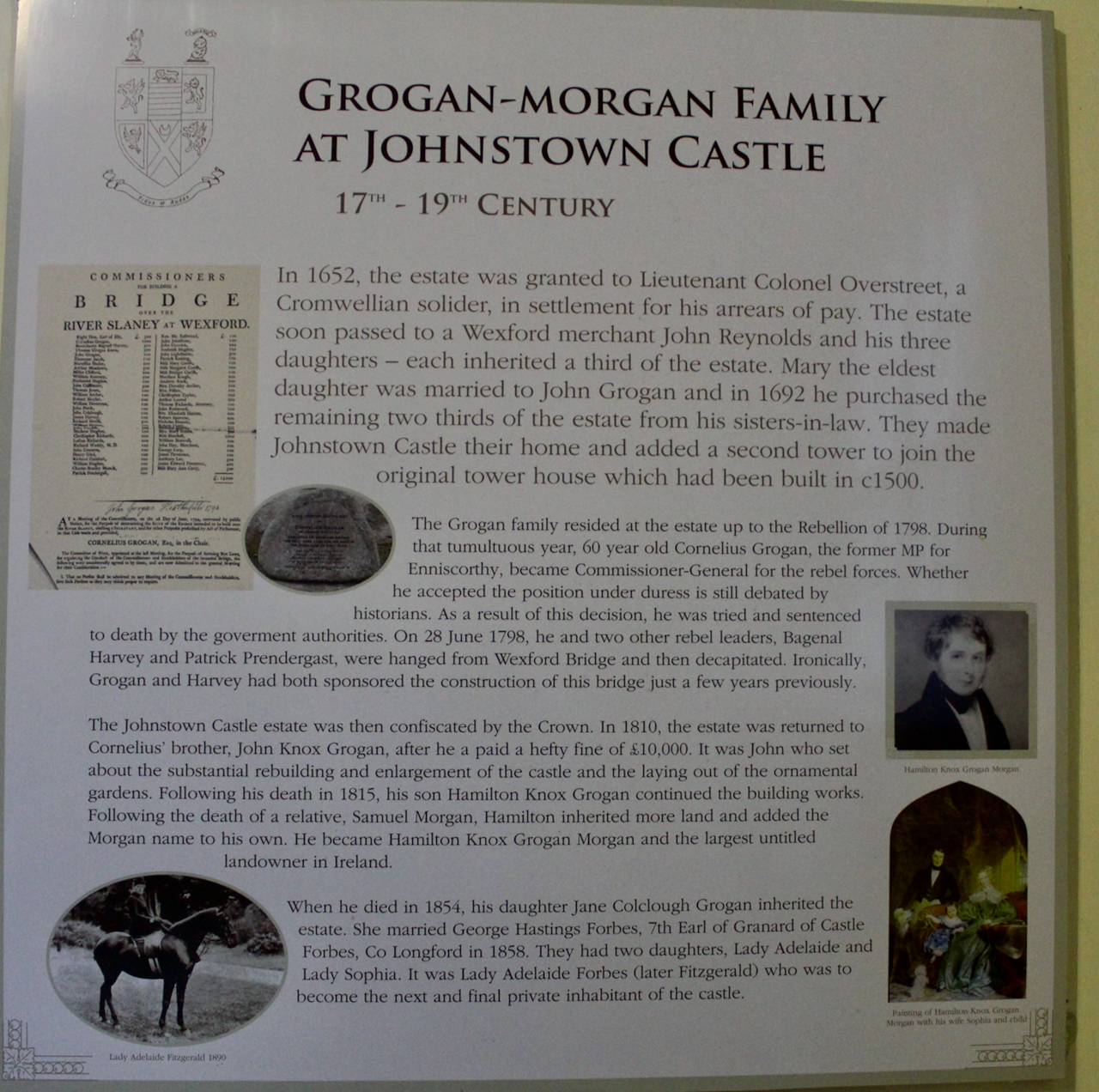
Information board at Johnstown Castle.

The information board tells us that the younger brother John Knox Grogan (1760-1814) set about rebuilding and enlarging the castle, and laying out the ornamental gardens. According to the National Inventory, he hired James Pain (1779-1877) of Limerick and work was carried out from 1810-1814.

John Knox Grogan married Anne Coote, daughter of Chidley Coote of Ash Hill, County Limerick (a section 482 property – see my entry https://irishhistorichouses.com/2023/04/06/ash-hill-kilmallock-co-limerick/). She died in childbirth after giving birth to her daughter Anne.

Second, John Knox Grogan (1760-1814) married Elizabeth Fitzgerald, daughter of James Stephen Fitzgerald of Ballythomas, County Laois.

Following John Knox Grogan’s death, his son Hamilton Knox Grogan (1808-54) continued the building works. He hired Daniel Robertson, who created the castle as we see it today.

In 1827 Hamilton Knox Grogan inherited more land from a cousin of his father, Samuel Morgan (1737-1827) of Ardcandrisk, County Wexford (see above; the house has been demolished). He added Morgan to his surname then, to become Hamilton Knox Grogan-Morgan, becoming the largest landowner without a title in Ireland.

Mark Bence-Jones tells us about Johnstown Castle (1988):

Front of Johnstown Castle. Photograph © Jennifer Winder-Baggot, www.irishhistorichouses.com

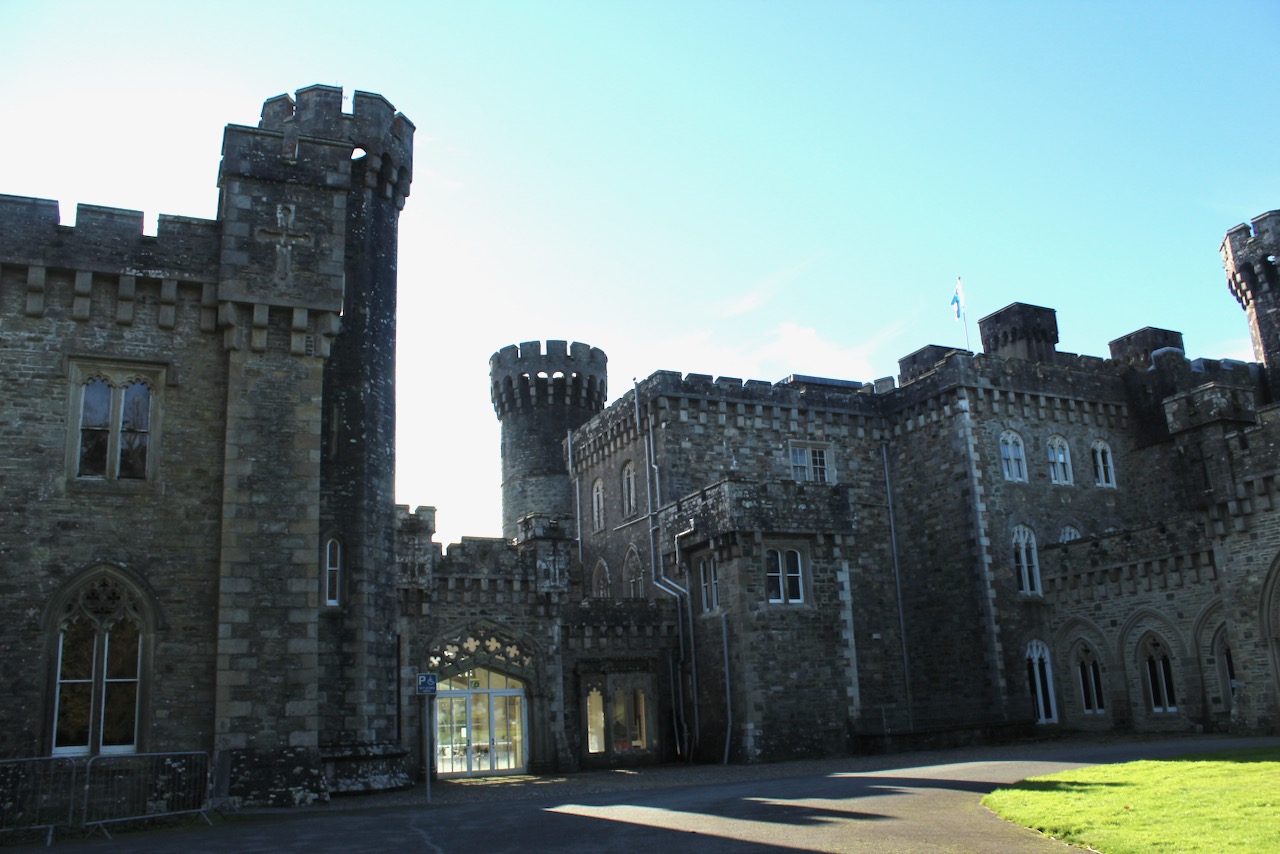
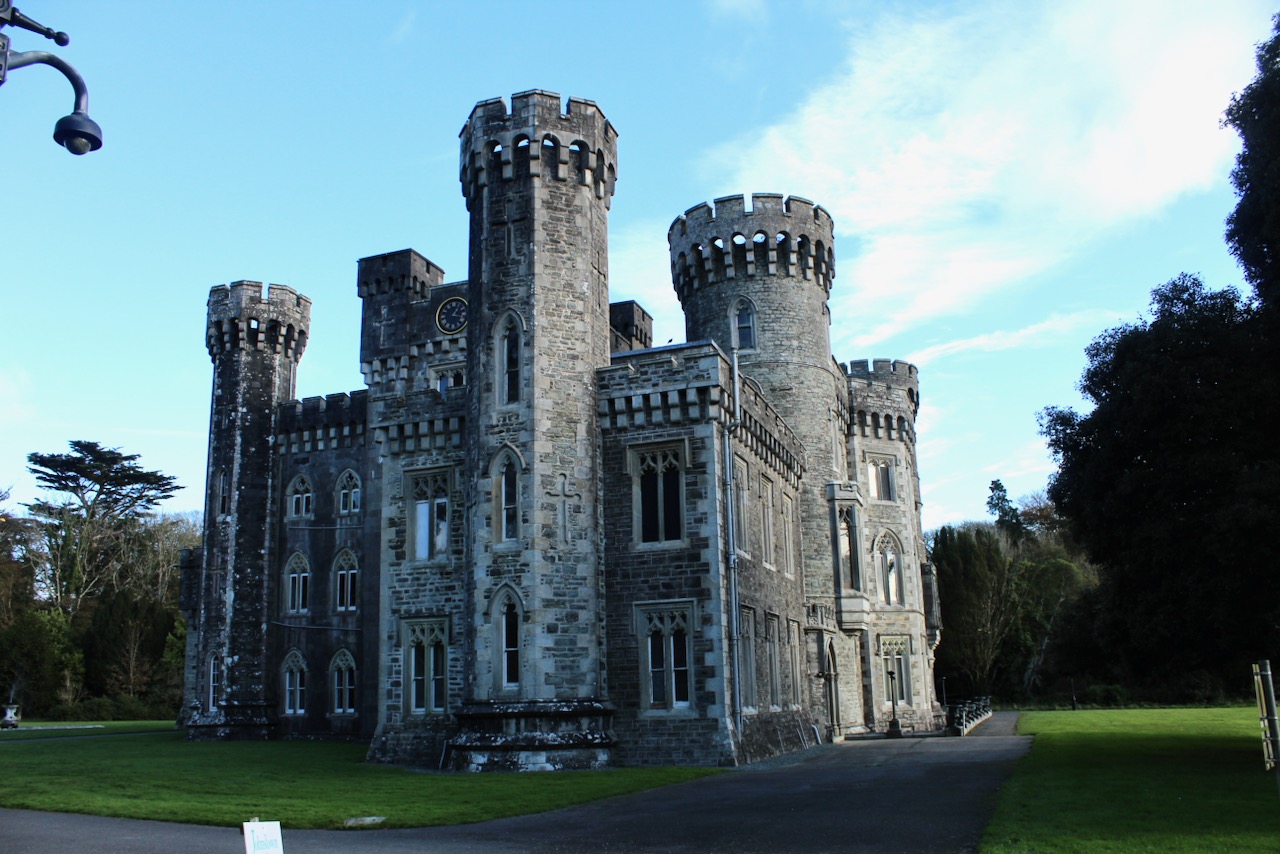
p. 161. “(Esmonde, bt/PB; Grogan-Morgan; LG1863; Forbes, Granard, E/PB; FitzGerald, sub Leinster, D/PB) An old tower house of the Esmondes, engulfed in an impressively turreted, battlemented and machicolated castle of gleaming silver-grey ashlar built ca 1840 for Hamilton Knox Grogan Morgan [1808-54], MP, to the design of Daniel Robertson [d. 1849], of Kilkenny. The entrance front is dominated by a single frowning tower with a porte-cochere projecting at the end of an entrance corridor and a Gothic conservatory at one end.”

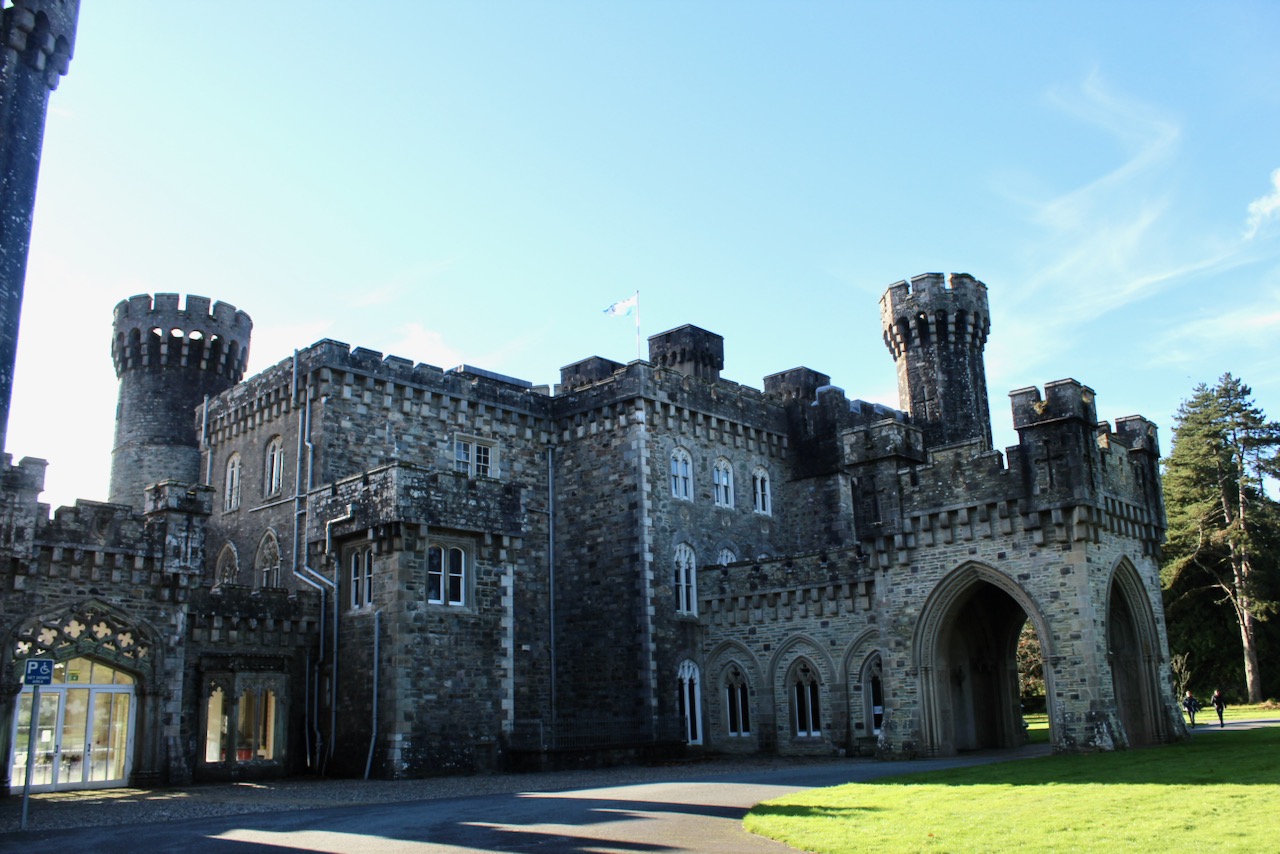
The entrance front is dominated by a single frowning tower with a porte-cochere projecting at the end of an entrance corridor and a Gothic conservatory at one end. Photograph © Jennifer Winder-Baggot, www.irishhistorichouses.com
Inside the front arch of Johnstown Castle. Photograph © Jennifer Winder-Baggot, www.irishhistorichouses.com
The Gothic conservatory in the middle. Photograph © Jennifer Winder-Baggot, www.irishhistorichouses.com
Johnstown Castle, County Wexford. Photograph © Jennifer Winder-Baggot, www.irishhistorichouses.com

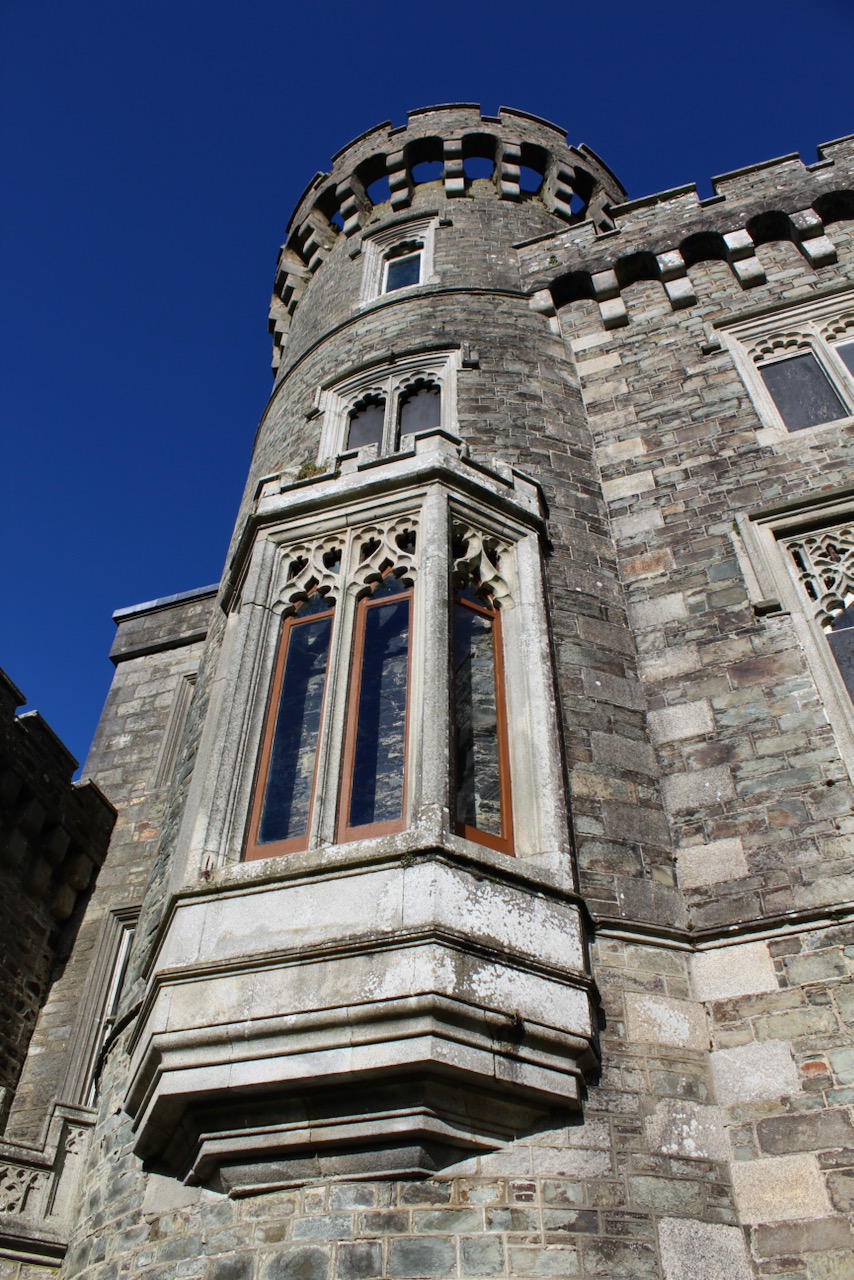
Mark Bence-Jones continues: “The garden front has two round turrets, a three-sided central bow with tracery windows. Lower wing with polygonal tower.”
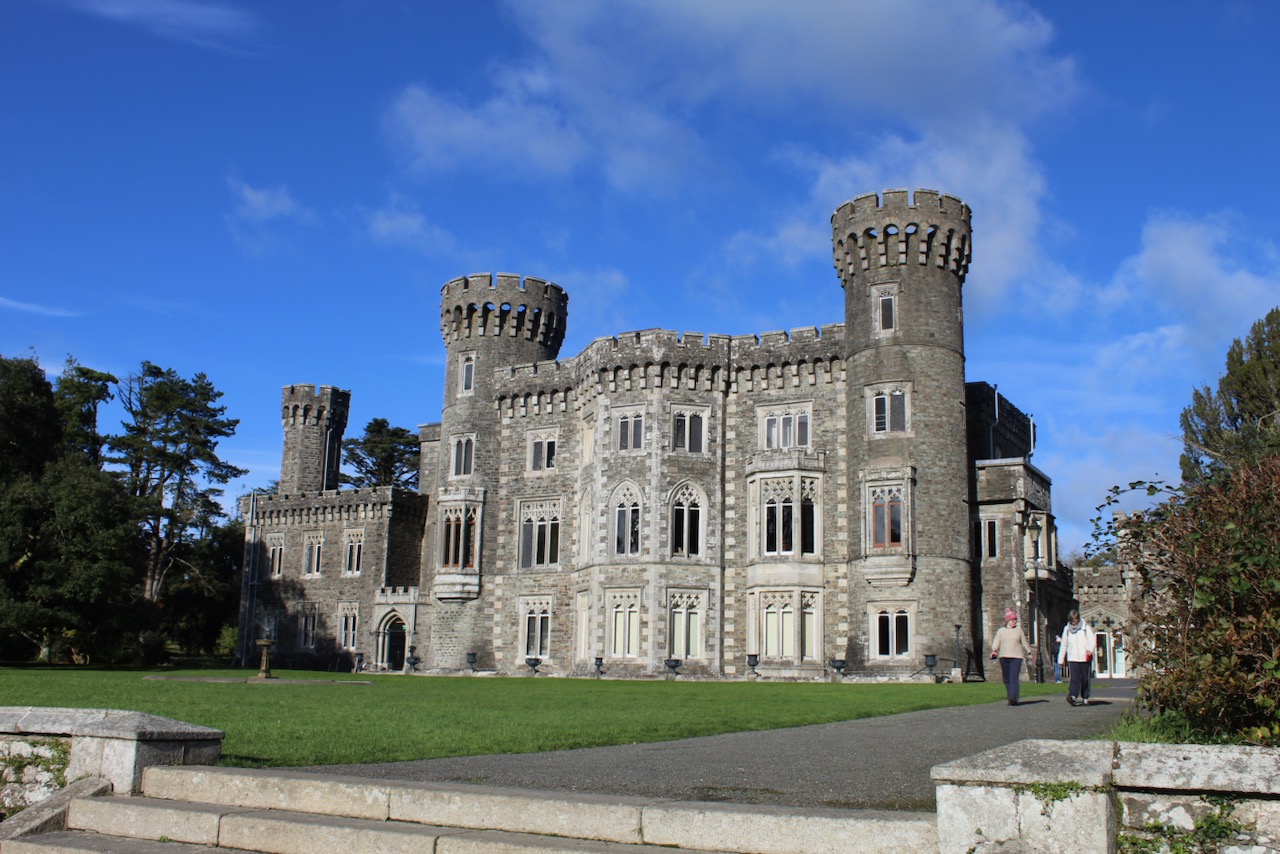
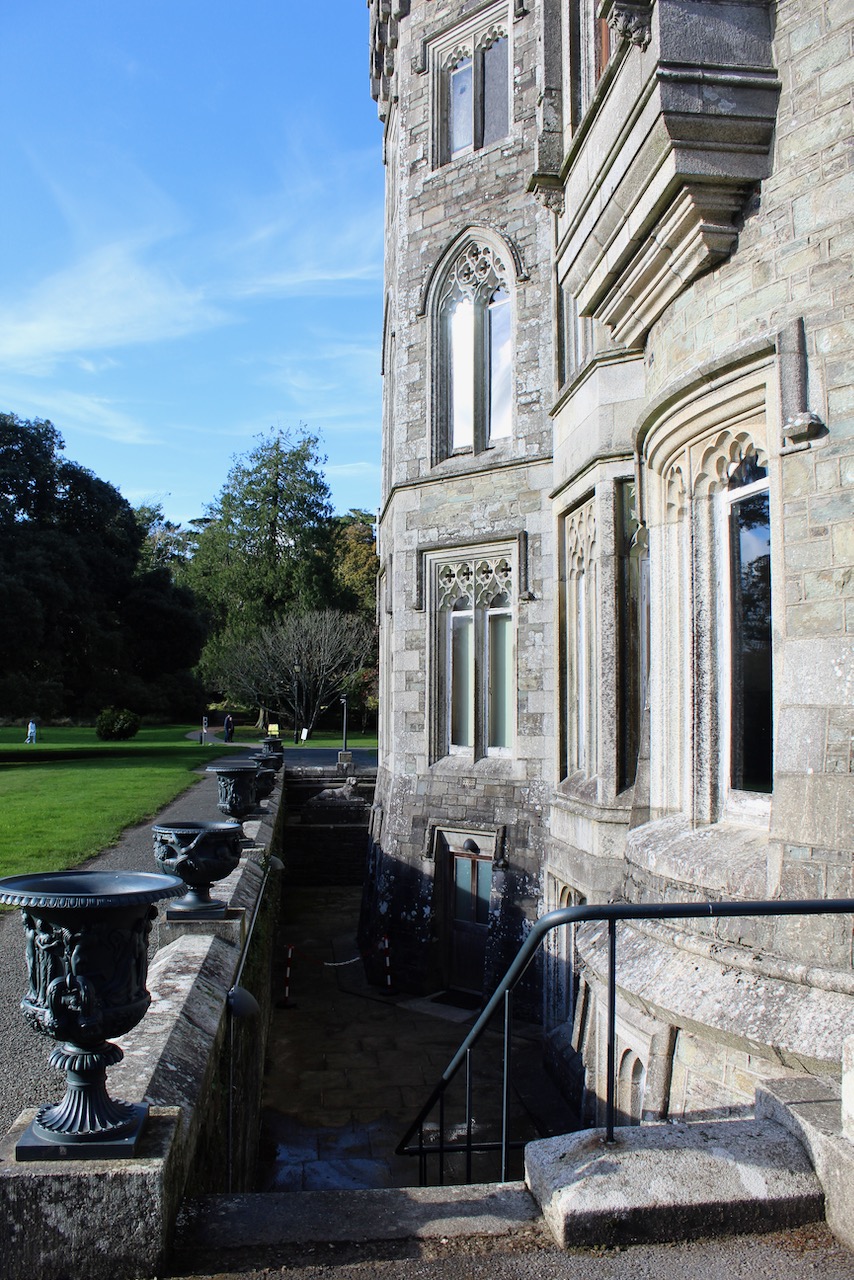
Garden front, Johnstown Castle, County Wexford: The garden front has two round turrets, a three-sided central bow with tracery windows. Photograph © Jennifer Winder-Baggot, www.irishhistorichouses.com

The National Inventory describes it:

Detached three-bay three-storey over basement country house, built 1836-72, on an asymmetrical plan centred on single-bay full-height breakfront with single-bay (four-bay deep) single-storey projecting porch-cum-“porte cochère” to ground floor; five-bay three-storey Garden Front (south) with single-bay four-stage turrets on circular plans centred on single-bay full-height bow on an engaged half-octagonal plan…A country house … enveloping a seventeenth-century house remodelled (1810-4) by James Pain (1779-1877) of Limerick (DIA), confirmed by such attributes as the asymmetrical plan form centred on ‘a splendid porch…formed by beautiful Gothic arches with neat light groinings’ (Lacy 1852, 259); the construction in a blue-green rubble stone offset by glimmering Mount Leinster granite dressings not only demonstrating good quality workmanship, but also producing a sober two-tone palette; the diminishing in scale of the multipartite openings on each floor producing a graduated visual impression with the principal “apartments” defined by a polygonal bow; and the battlemented turrets producing an eye-catching silhouette: meanwhile, aspects of the composition clearly illustrate the continued development or “improvement” of the country house ‘under the munificent and highly-gifted Lady Esmonde who never tires of affording employment to the skilful artisans whom she herself has trained’.”

Hamilton Knox Grogan Morgan married Sophia Maria Rowe (1805-1867), daughter of Ebenezer Radford Rowe of Ballyharty, County Wexford.
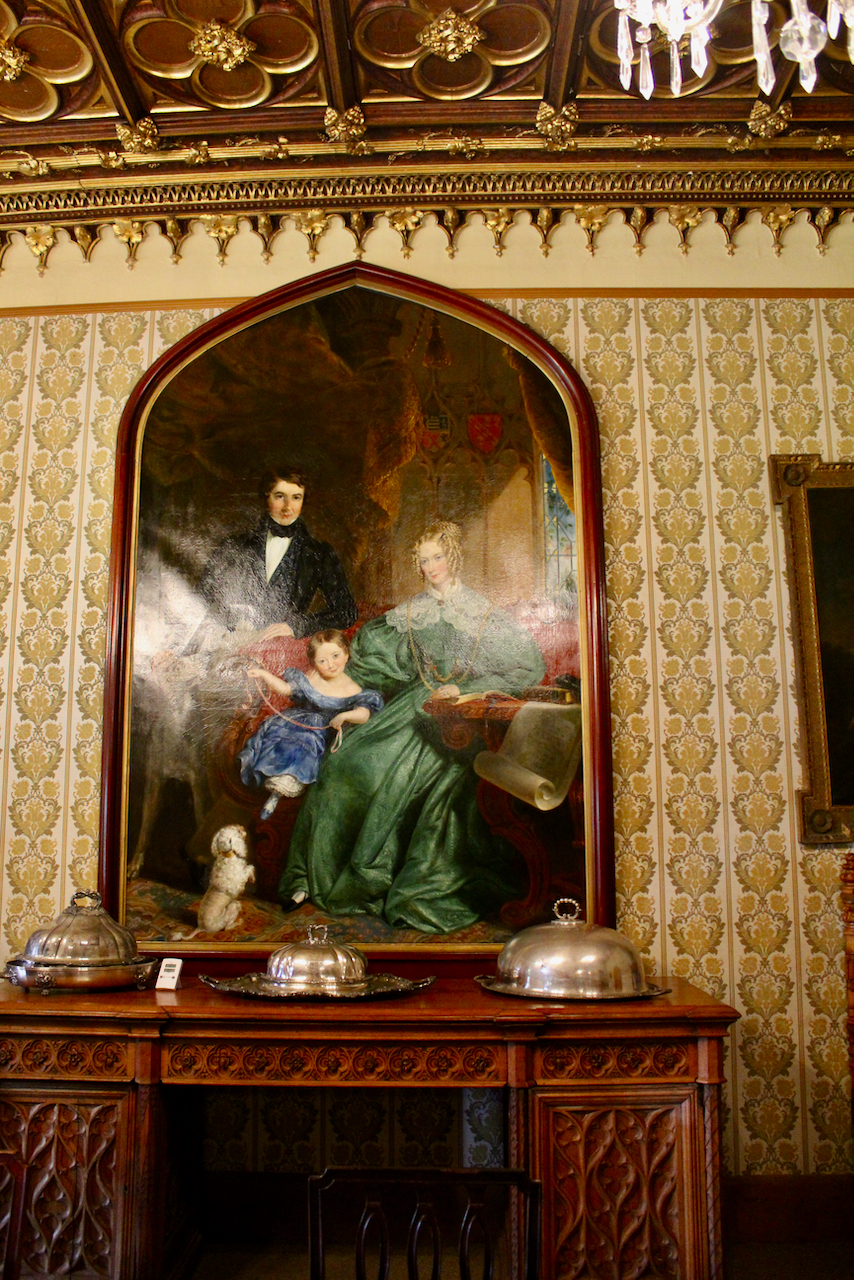
Hamilton Knox Grogan-Morgan (1807-1854) and his family. Photograph © Jennifer Winder-Baggot, www.irishhistorichouses.com
You can see the basement on the garden front. Photograph © Jennifer Winder-Baggot, www.irishhistorichouses.com
Johnstown Castle, County Wexford. Photograph © Jennifer Winder-Baggot, www.irishhistorichouses.com
The clock tower side of Johnstown Castle. Photograph © Jennifer Winder-Baggot, www.irishhistorichouses.com
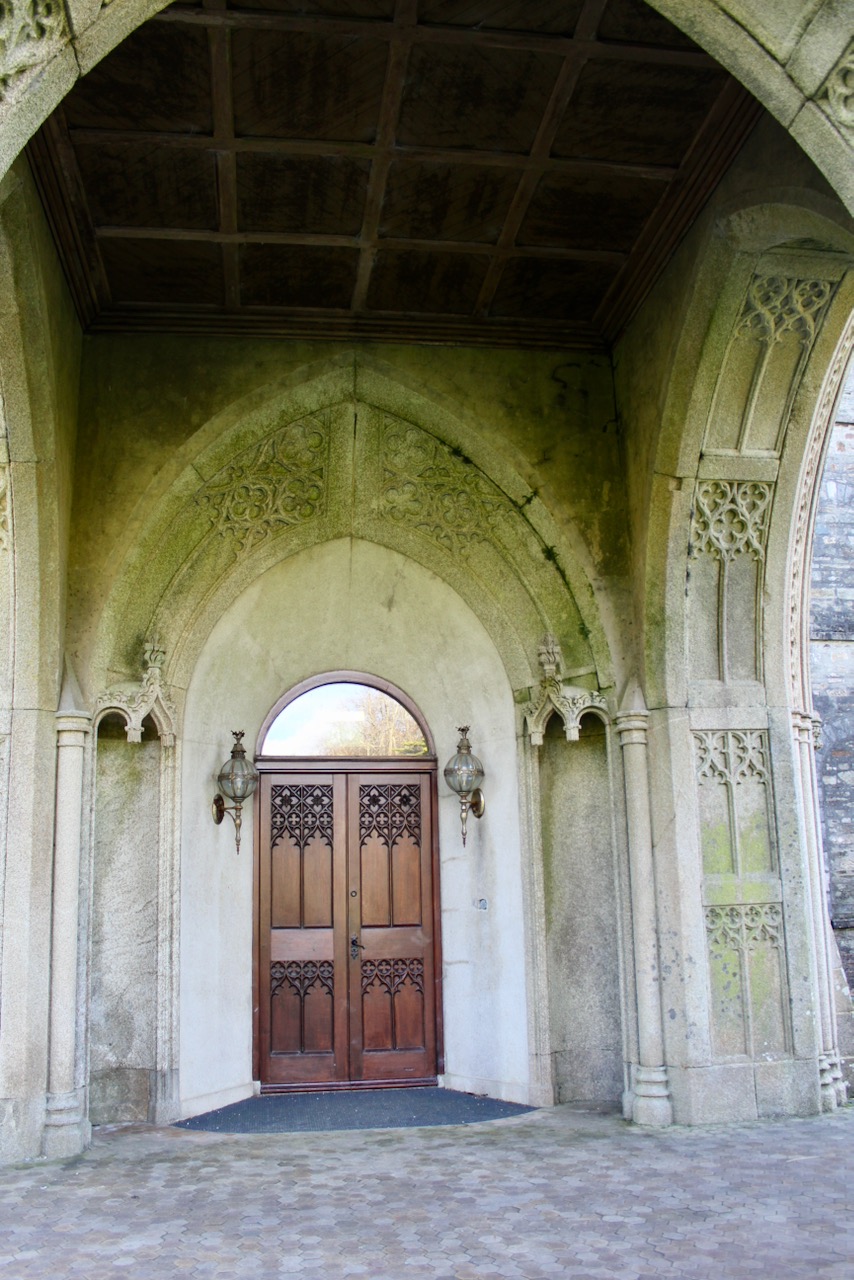
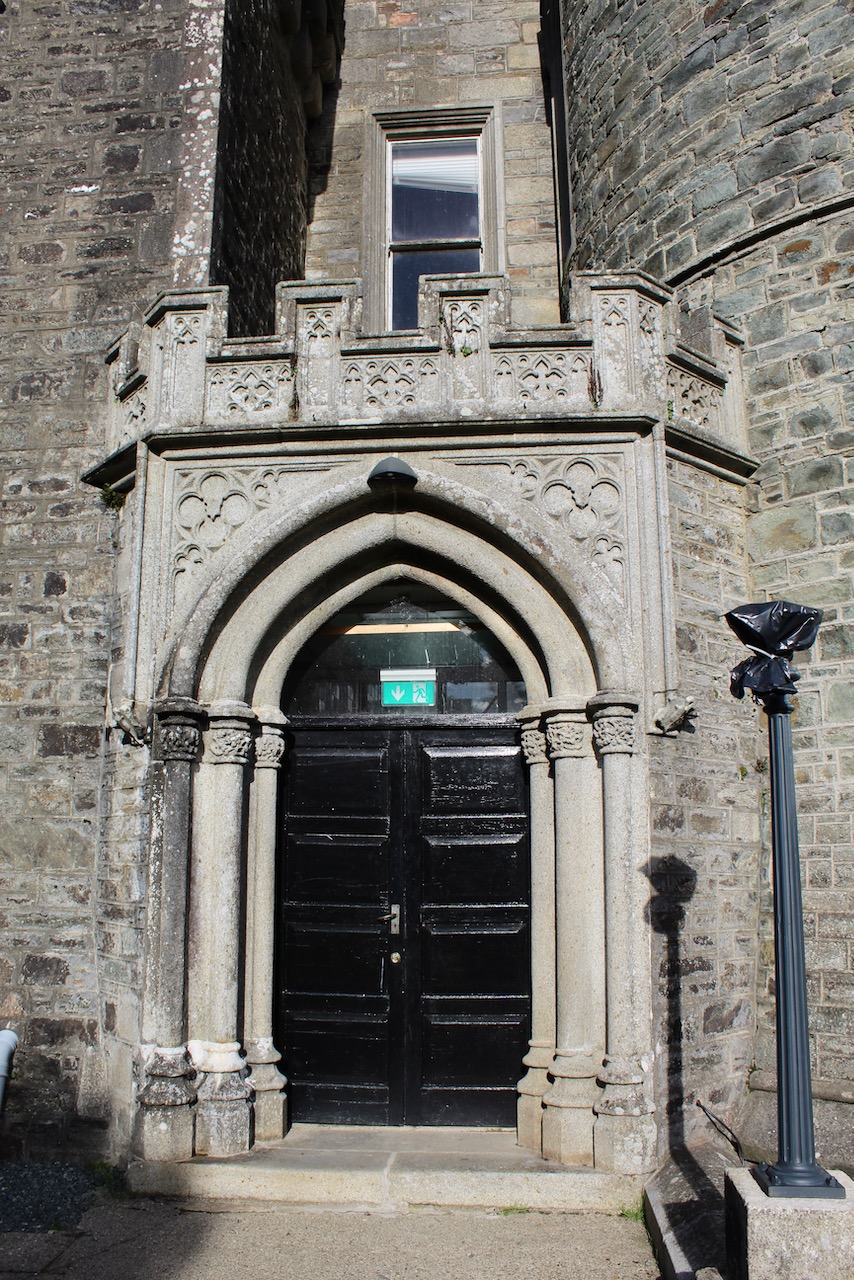
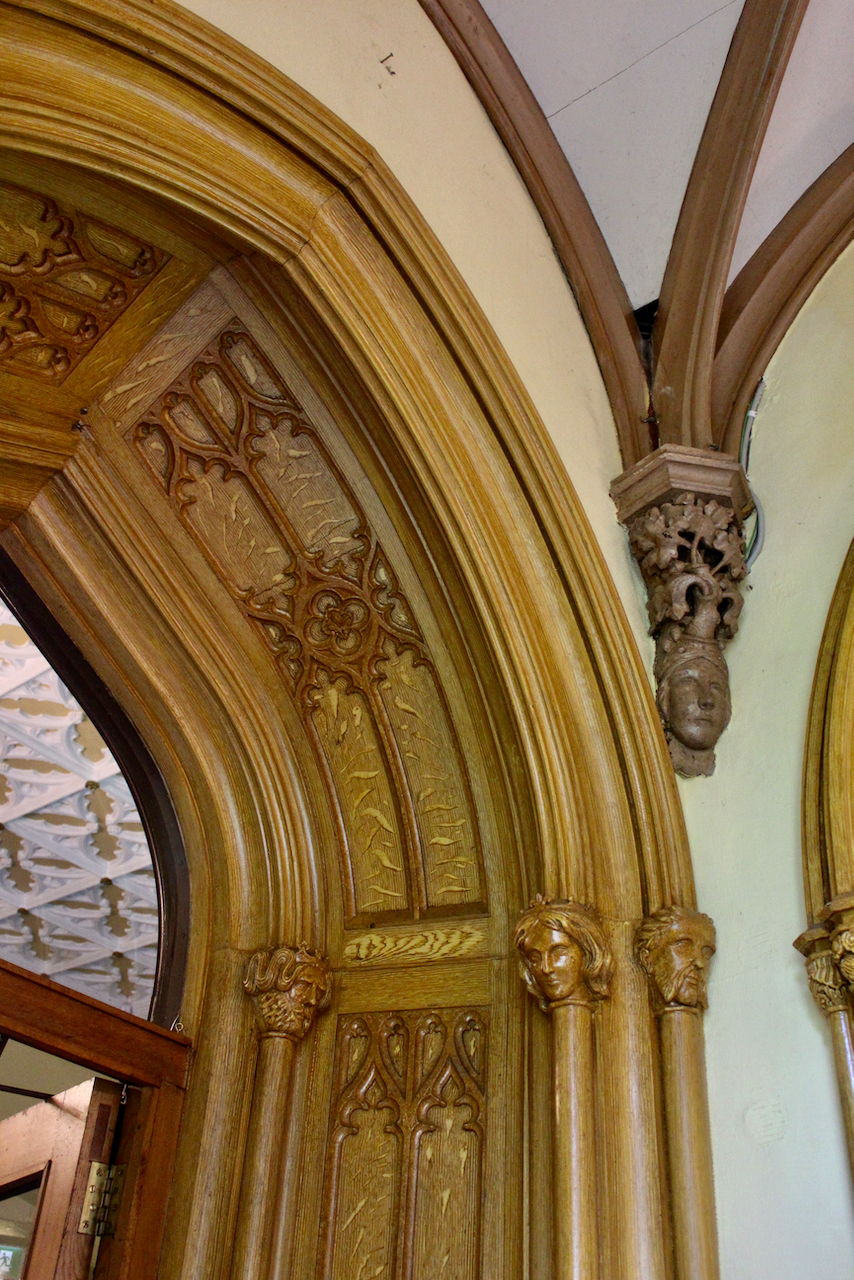
Spectacular doorway arch to one side of Johnstown Castle. Photograph © Jennifer Winder-Baggot, www.irishhistorichouses.com
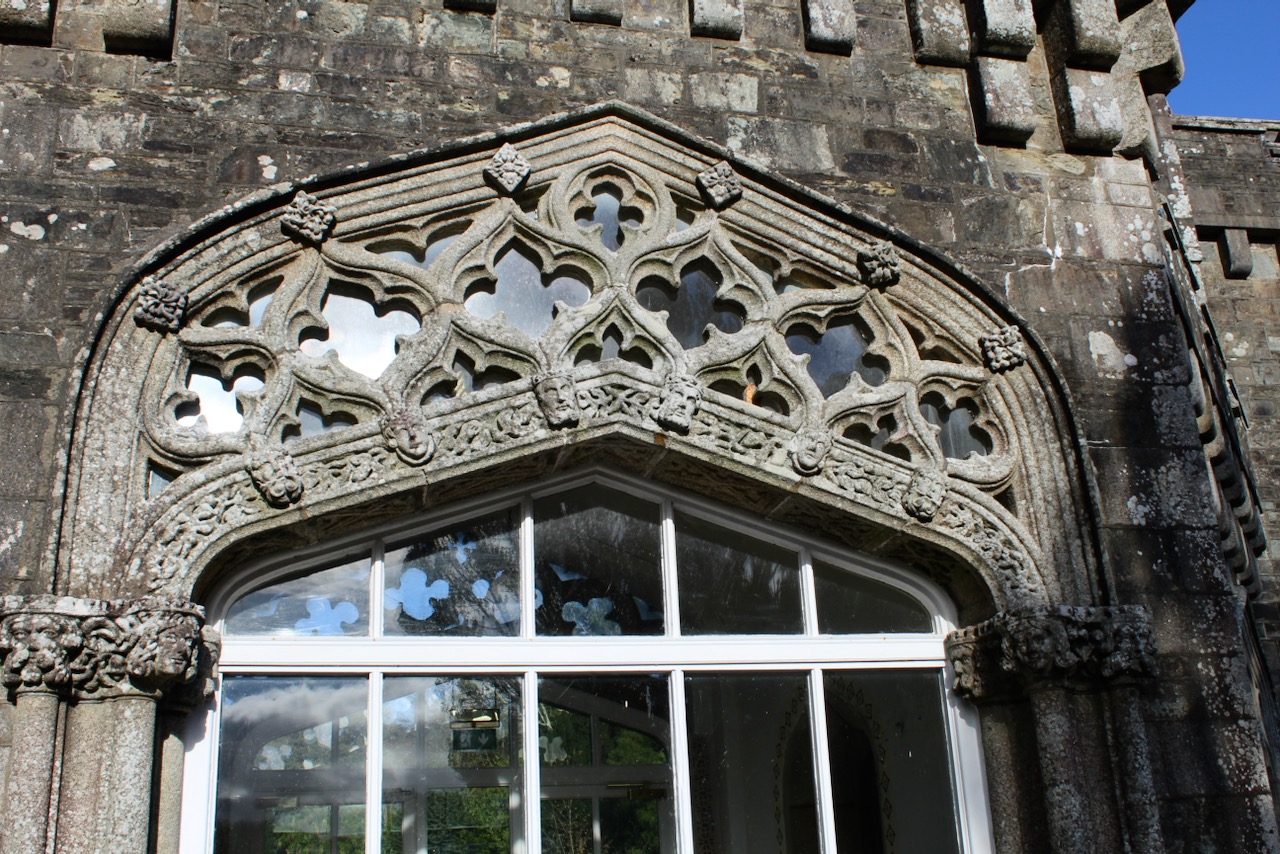
The doorway arch at Johnstown Castle features a border of carved stone heads. Photograph © Jennifer Winder-Baggot, www.irishhistorichouses.com
Carved stone heads at Johnstown Castle. Photograph © Jennifer Winder-Baggot, www.irishhistorichouses.com
Window surround detail and tracery at Johnstown Castle. Photograph © Jennifer Winder-Baggot, www.irishhistorichouses.com
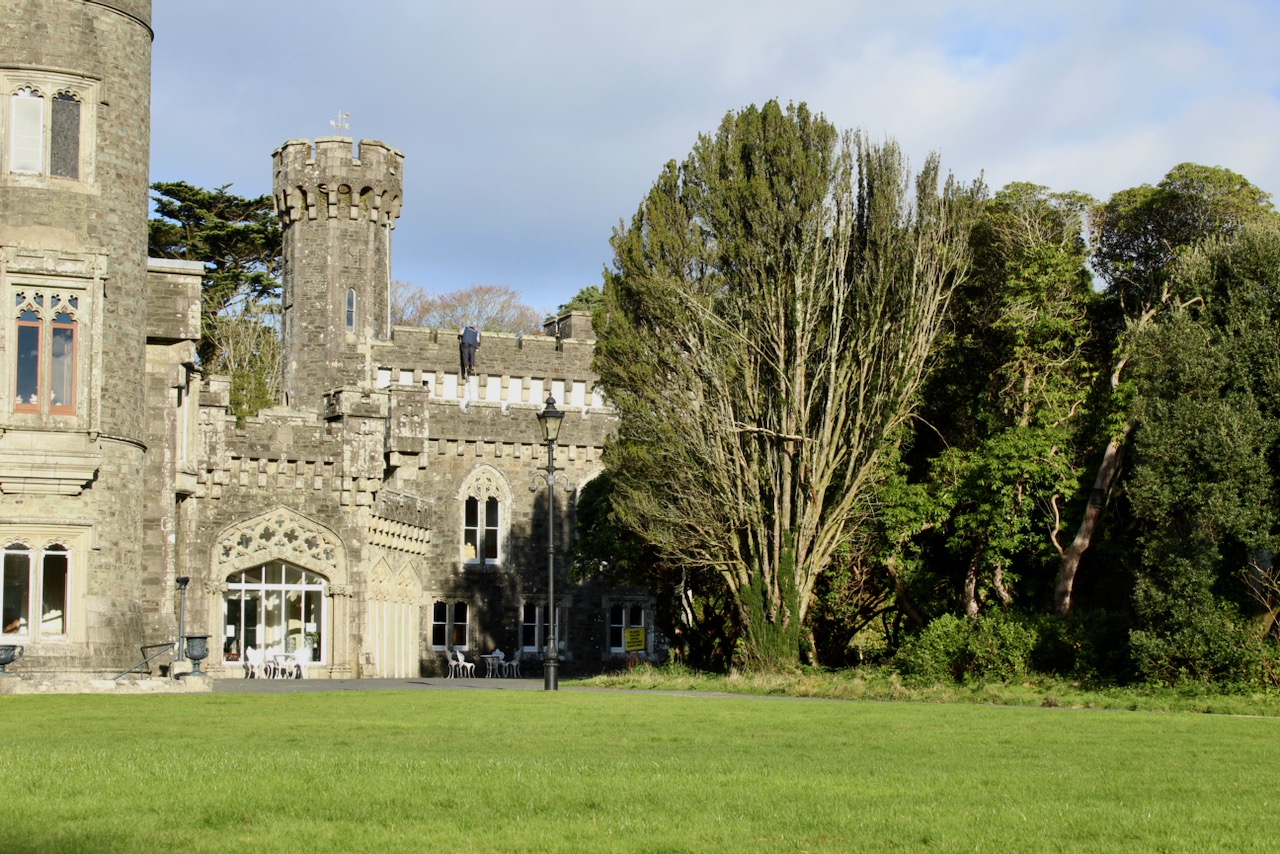
A workman at Johnstown Castle. Photograph © Jennifer Winder-Baggot, www.irishhistorichouses.com

We did not get to see the inside of Johnstown Castle when we visited in November 2021 as it was closed that day, but we visited again in May 2023.

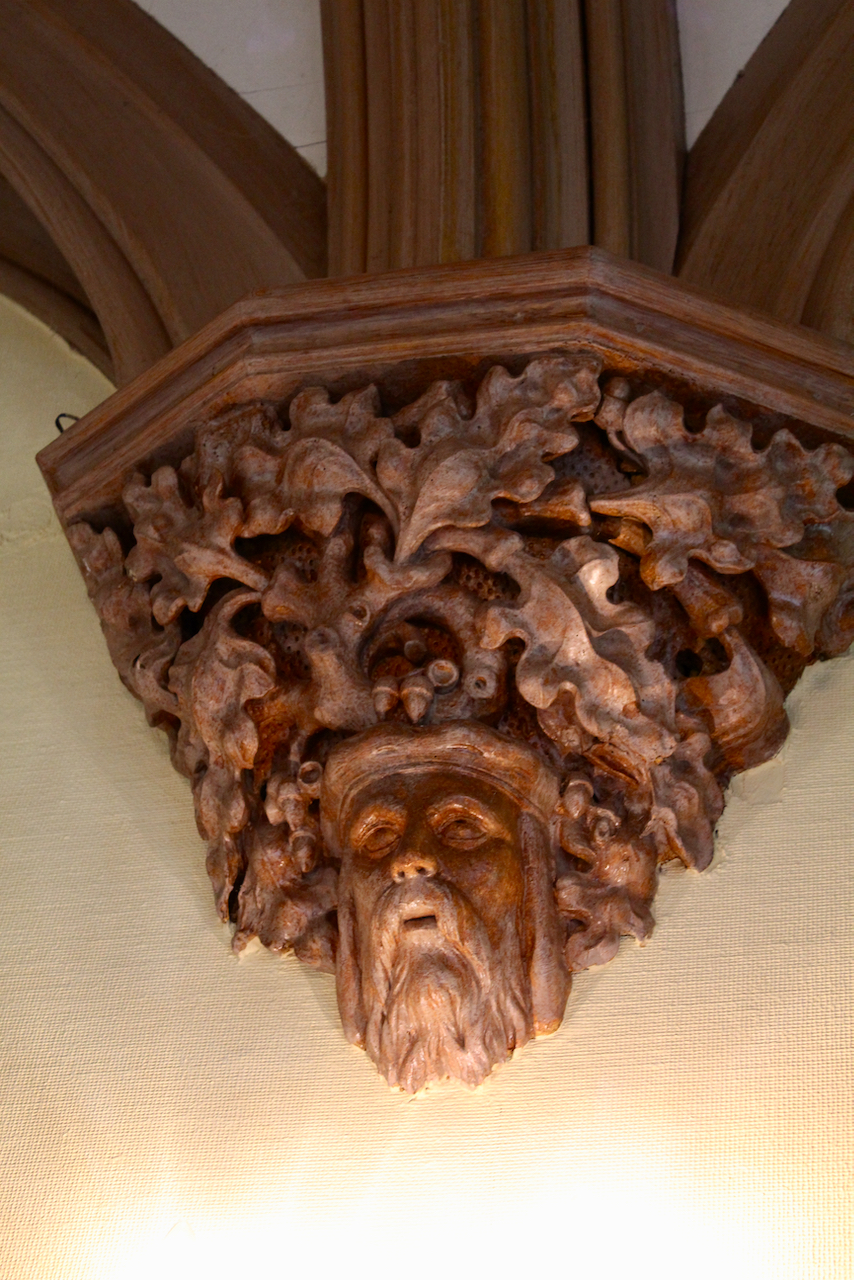
The portico corridor, Johnstown Castle, National Inventory of Architectural Heritage tells us: “corridor on a rectangular plan retaining encaustic tiled floor, Gothic-style timber panelled wainscoting supporting carved timber dado rail, clustered colonette-detailed carved timber surrounds to window openings framing Gothic-style timber panelled shutters on Gothic-style timber panelled risers, and groin vaulted ceiling with carved timber ribs on portrait-detailed oak leaf corbels.” [4] Photograph © Jennifer Winder-Baggot, www.irishhistorichouses.com
Detail of carving in the portico corridor. Photograph © Jennifer Winder-Baggot, www.irishhistorichouses.com
More decorative head carvings. Photograph © Jennifer Winder-Baggot, www.irishhistorichouses.com
Tile floor of the corridor, Johnstown Castle, photograph from National Inventory of Architectural Heritage. [4]

Hamilton Knox Grogan Morgan’s daughter Jane inherited the estate. Sophia and Hamilton were not happily married, our guide told us. They had no sons, just two daughters. After Hamilton died his wife remarried in 1856, this time to Thomas Esmonde (1786-1868) 9th Baronet of Ballynastragh, County Wexford.

Sophia Maria Knox Grogan Morgan née Rowe (1805-1867) and her second husband, Thomas Esmonde (1786-1868) 9th Baronet.

Sophia was allowed to remain living in the house, and her husband moved in with her.

There is a story that in order to inherit the estate, the daughters were made to run a race to see who would win, and thus inherit! Jane won the race.
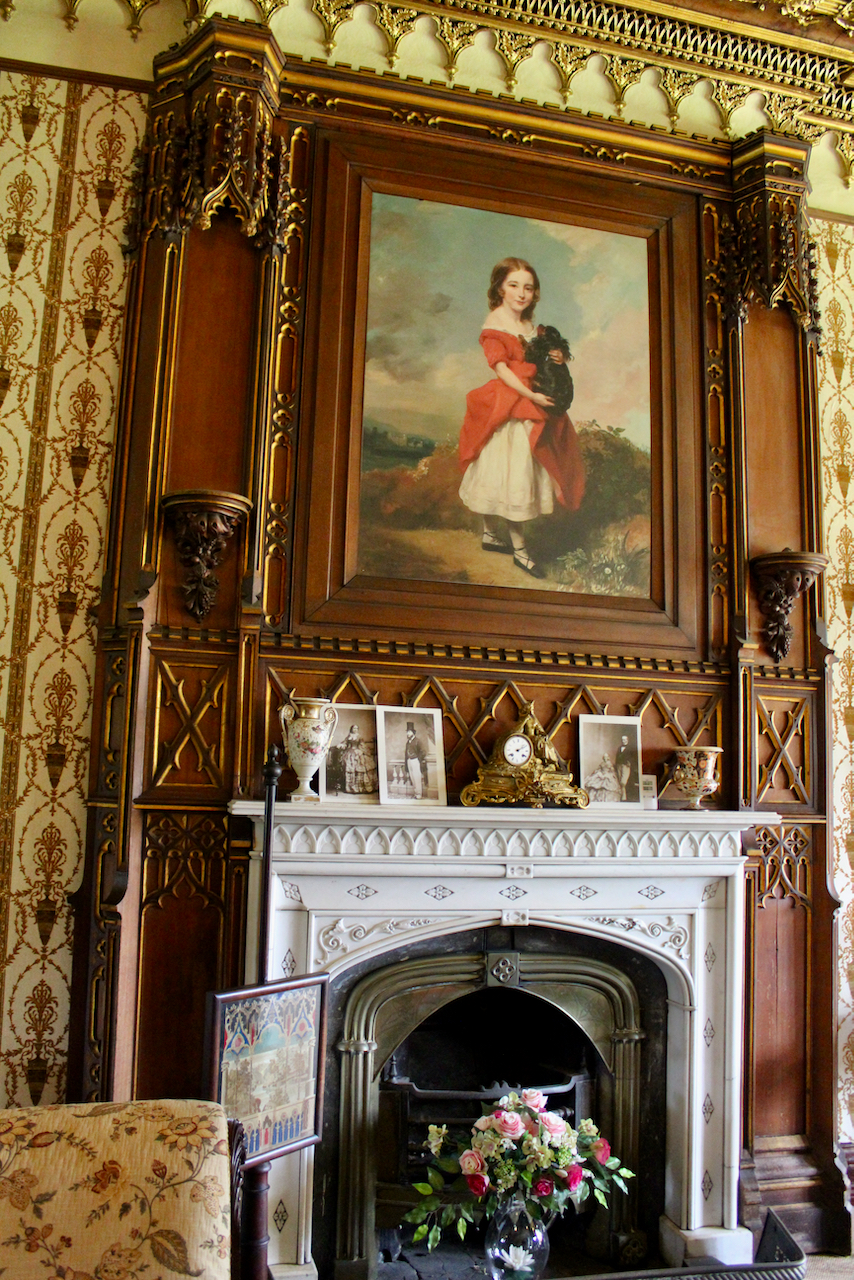
Johnstown Castle. Jane Colclough Grogan-Morgan portrait by Margaret Carpenter, 1846. Photograph © Jennifer Winder-Baggot, www.irishhistorichouses.com

The other daughter of Hamilton Knox Grogan Morgan, Elizabeth Geraldine, married Robert Tilson FitzMaurice Deane (1826-1857), son of Matthew Fitzmaurice Deane, 3rd Baron Muskerry of County Cork. In 1854 his name was legally changed to Robert Tilson FitzMaurice Deane-Morgan by Royal Licence.

Jane married George Arthur Forbes (1833-1889), 7th Earl of Granard, County Longford. Jane did not get along well with her mother. Her mother was a Protestant, and Jane and her husband converted to Catholicism. They built a church in Newtown Forbes in Longford. Jane’s mother tried to disinherit her but her new will was signed with an “x” and the judge said it didn’t stand up in court.
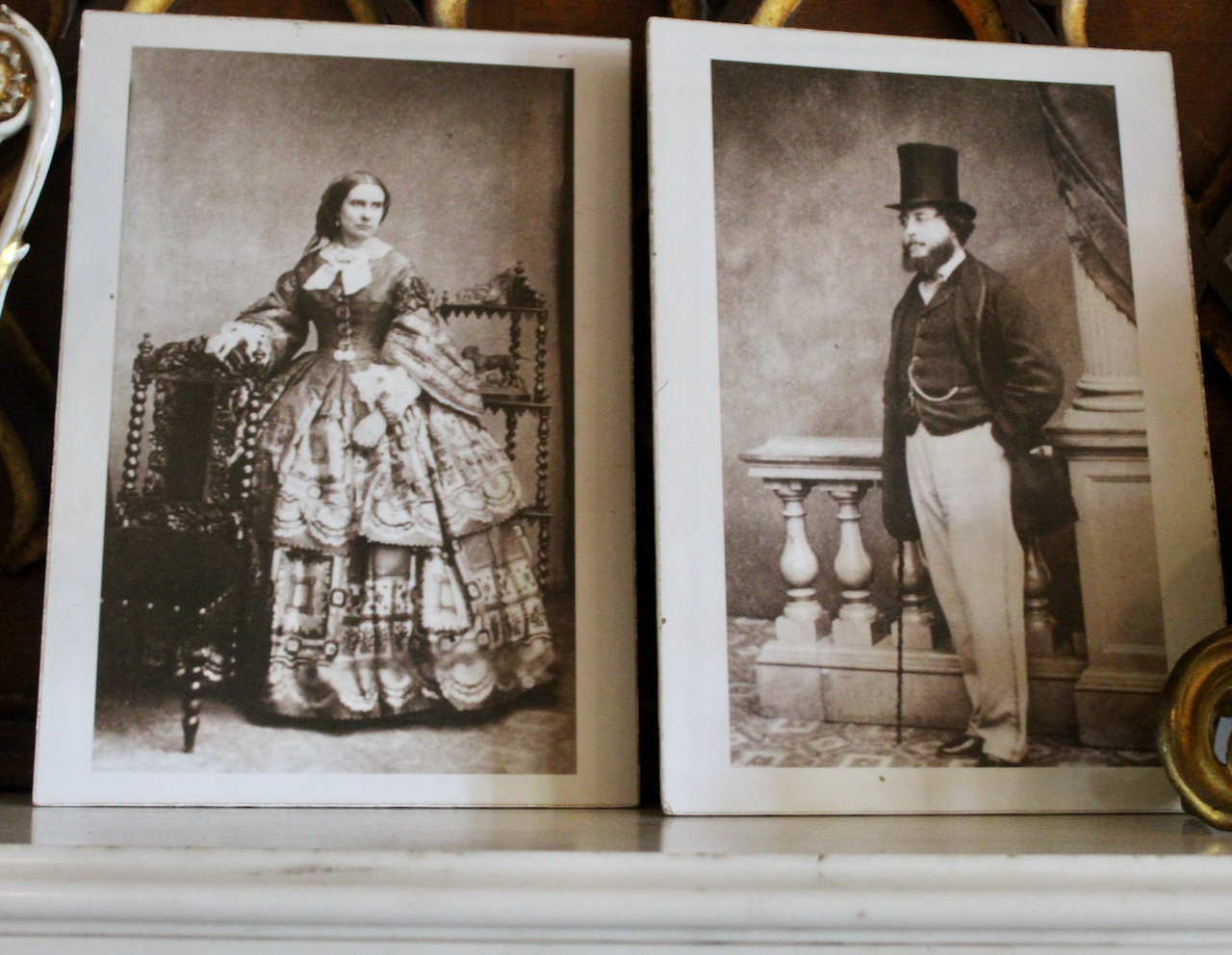
Jane Colclough Grogan-Morgan (1834-1872), and next to her picture is George Arthur Forbes (1833-1889) 7th Earl of Granard.

Jane was charitable and on her death there was a headline announcing “death of princess,” our guide told us. The Earl of Granard married a second time after Jane died, and had several more children. He lived in Castle Forbes in County Longford. He married Frances Mary Petre, daughter of William Bernard Petre, 12th Baron Petre of Writtle, Co. Essex in England.

Jane and George Arthur had two daughters, Sophia Maria Elizabeth and Adelaide Jane Frances. Sophia married Henry Christopher Grattan-Bellew, 3rd Baronet Bellew, of Mount Bellew, Co. Galway. Adelaide married Maurice Fitzgerald (1852-1901), son of the 4th Duke of Leinster, of Carton House in County Kildare. They inherited the estate at Johnstown Castle.
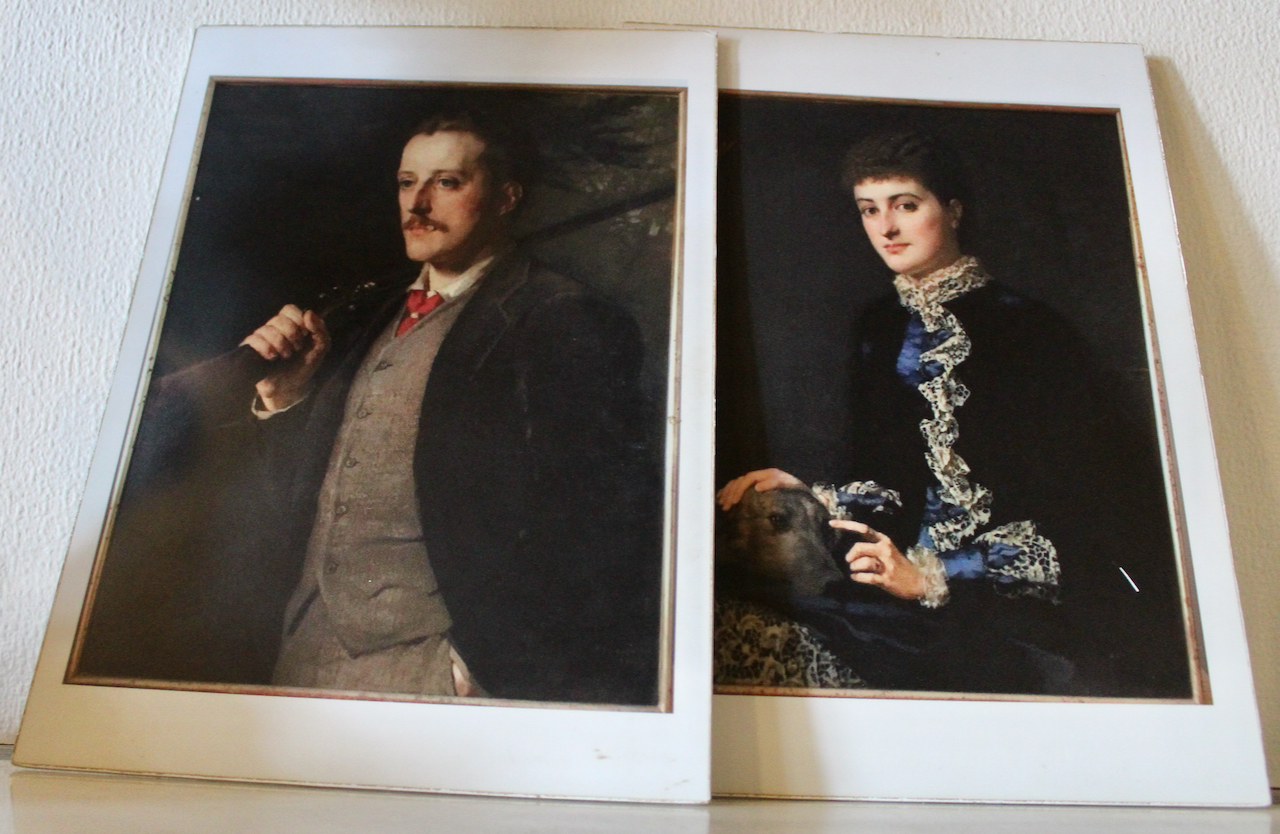
Maurice Fitzgerald (1852-1901) and his wife, Adelaide.
Henry Grattan Bellew, 3rd Baronet, b.1860, married Sophia Forbes, daughter of the Earl of Granard, by Dermod O’Brien, courtesy of Adam’s auction 10 Oct 2017. He represented one of the few Catholic aristocratic families who survived Cromwellian deportation to Connaught. Mount Bellow was an architecturally significant house with a fine library of books; the former destroyed, the latter dispersed.
Information board at Johnstown Castle.

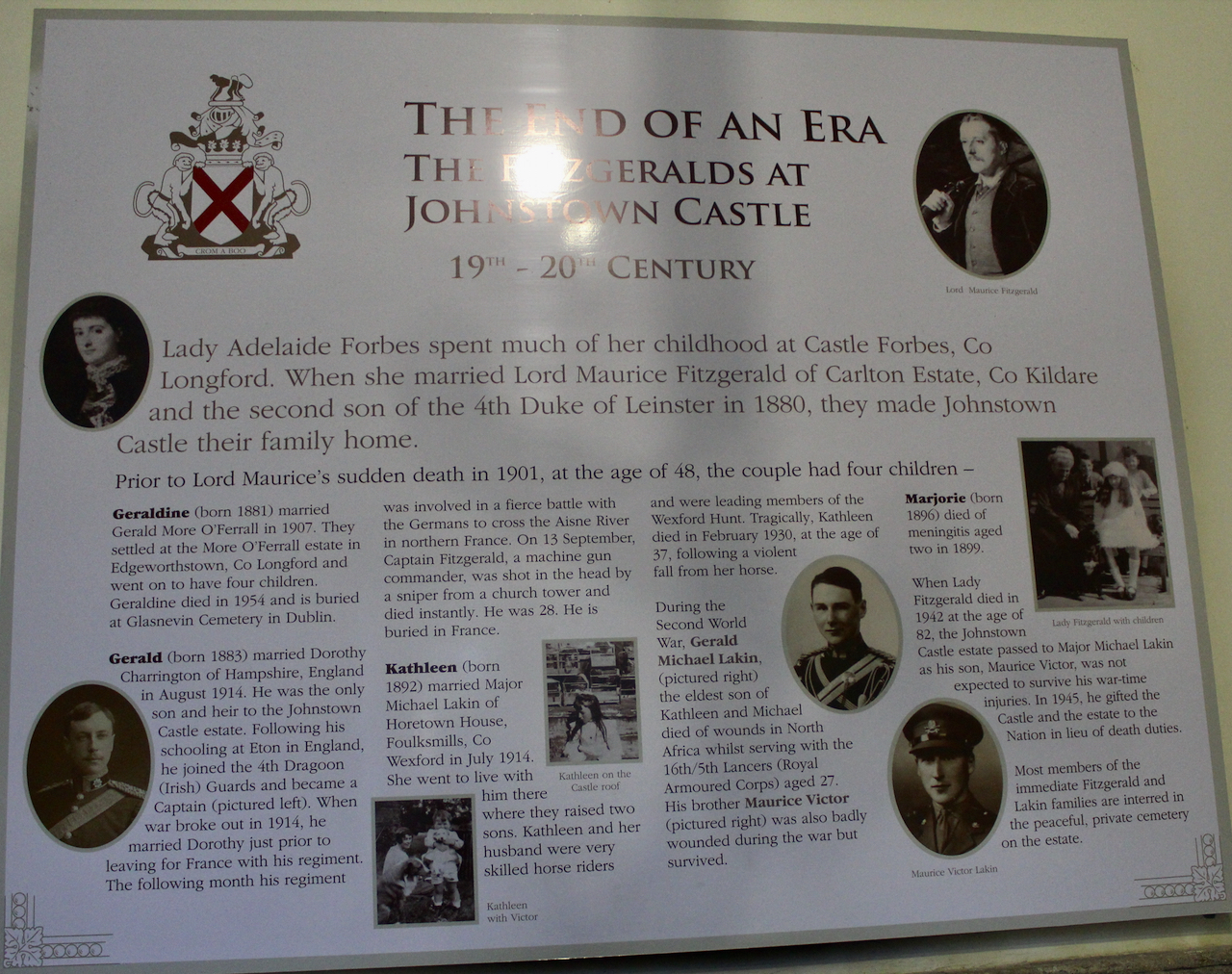
Adelaide (1860-1942) converted to Protestantism to marry the Maurice Fitzgerald (1852-1901). Like her mother, she undertook much charity work. She brought the first motorised ambulance to County Wexford.

Adelaide and Maurice had four children: Geraldine (1881-1954), Gerald Hugh (1886-1914), Kathleen (1892-1930) and Marjorie (1896-1899).

Geraldine married Gerald More O’Ferrall (d. 1951) of Lissard House, County Longford (now demolished). Adelaide and Maurice’s son Gerald died in WWI in France. He had married Dorothy Violet Charrington from England. After his death, she remarried, to Thomas William Jefferies of Wexford.
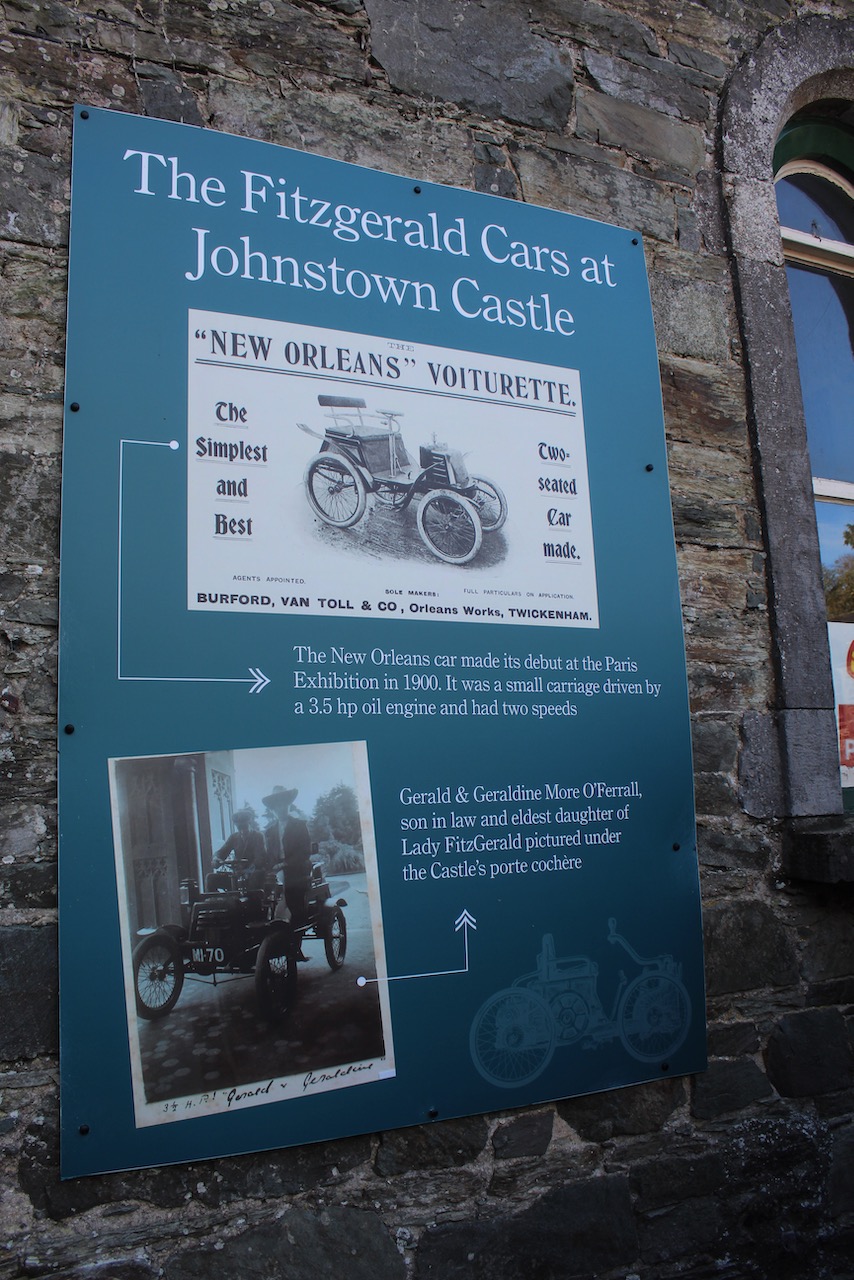
A daughter of Maurice Fitzgerald and Adelaide Jane, Geraldine, married Gerald More O’Ferrall.

Kathleen married Major Michael Lakin (1881-1960) of Horetown House, County Wexford, and it was their son Maurice Victor Lakin (d. 1919) who inherited the estate. His brother Gerald fought in World War II and died in Africa in 1943. Kathleen died tragically in a horse riding accident when she was just 37 years old.
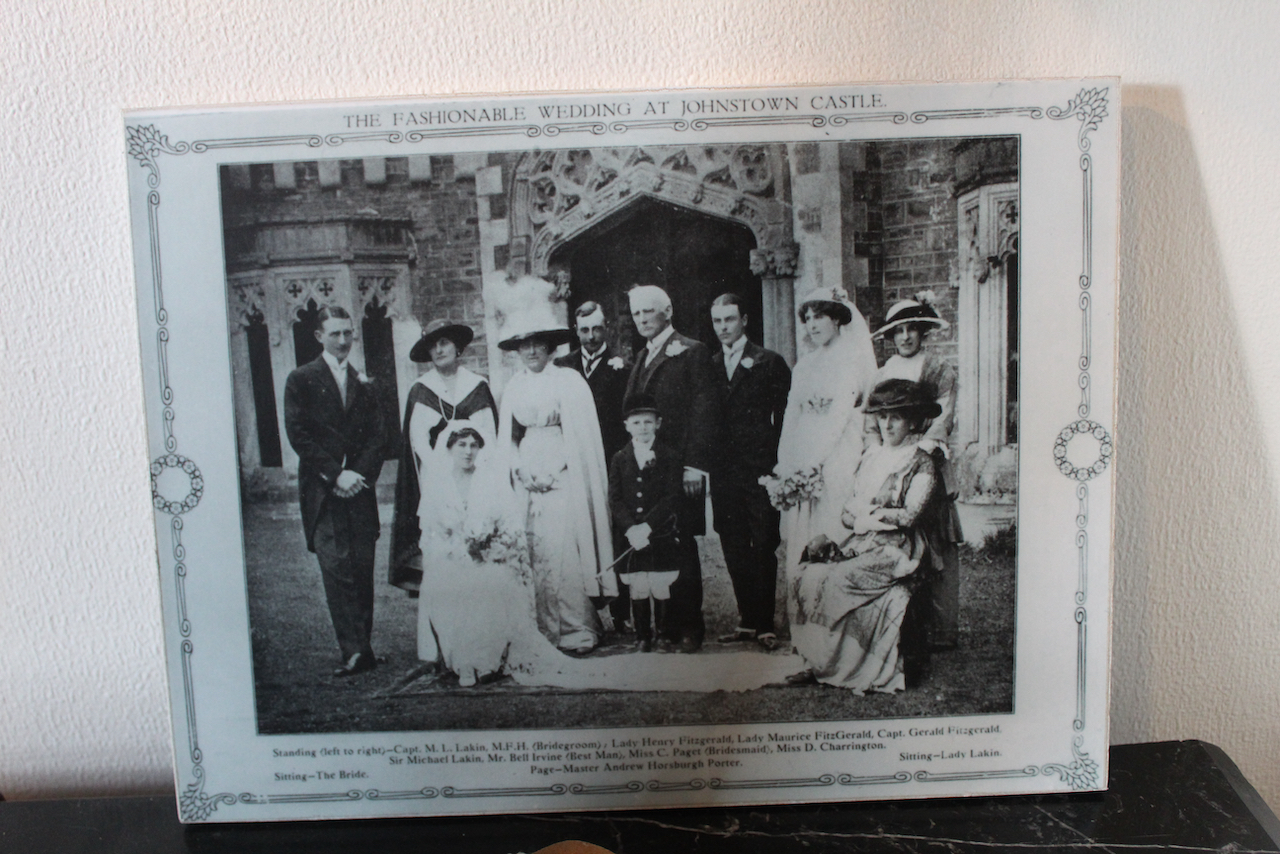
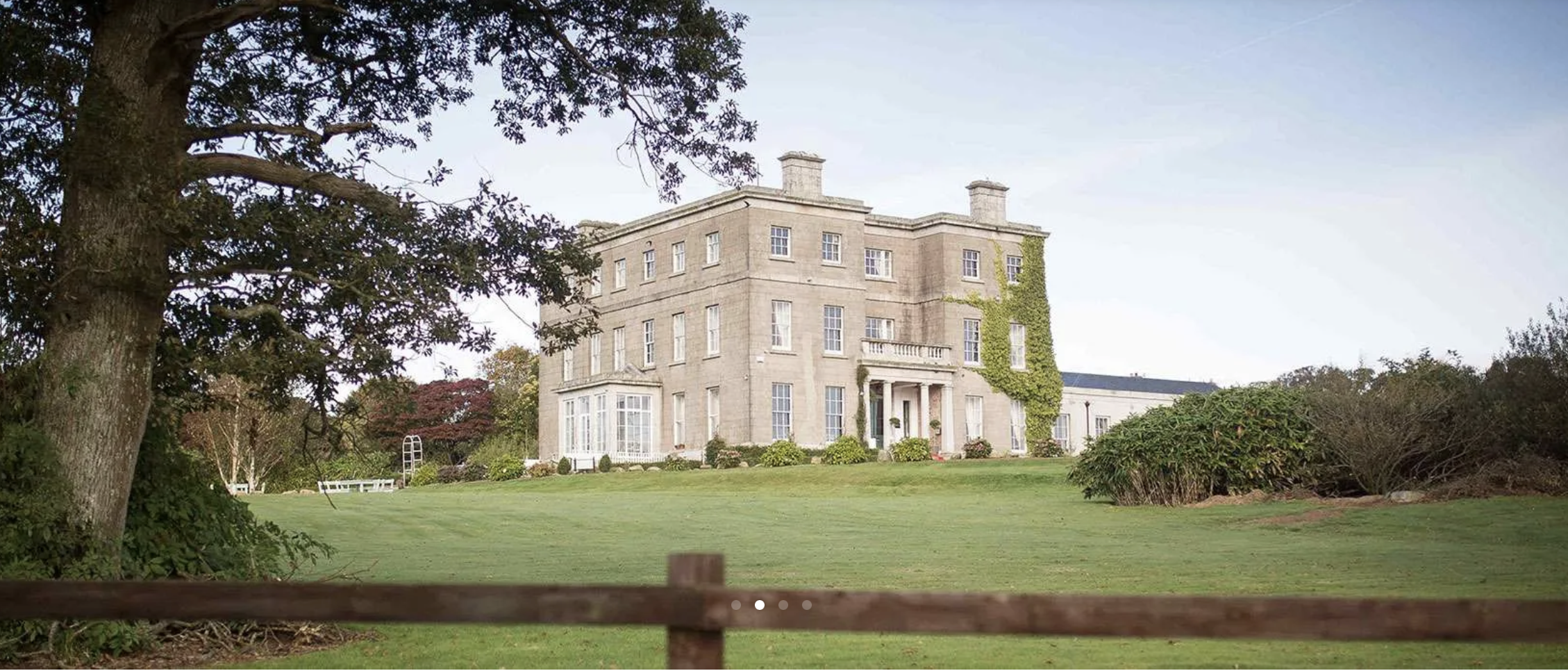
Wedding photograph of Michael Lakin (1881-1960) of Horetown House who married Kathleen Fitzgerald (1892-1930) in 1914. He is next to Inez Charlotte Grace Casberd-Boteler, I presume as she is listed as Lady Henry Fitzgerald, and Henry was another son of Charles William Fitzgerald, 4th Duke of Leinster. She is next to the wife of Maurice Fitzgerald, Adelaide Jane Frances née Forbes, who is next to Captain Gerald Fitzgerald (1851-1893), 5th Duke of Leinster. Is the centre is Captain Michael Lakin’s father, also Michael, 1st Baronet Lakin, of The Cliff, Co. Warwick. He is next to Bell Irvine, best man, who is next to Miss C. Paget (bridesmaid), and Miss. D Charrington. The page is Andrew Horsburgh Porter, and Kathleen the bride is seated.
Horetown House, County Wexford, photograph courtesy of Horetown website.

Maurice Victor Lakin, pictured below, was the last man to privately own the castle and estate before handing it over to the state.
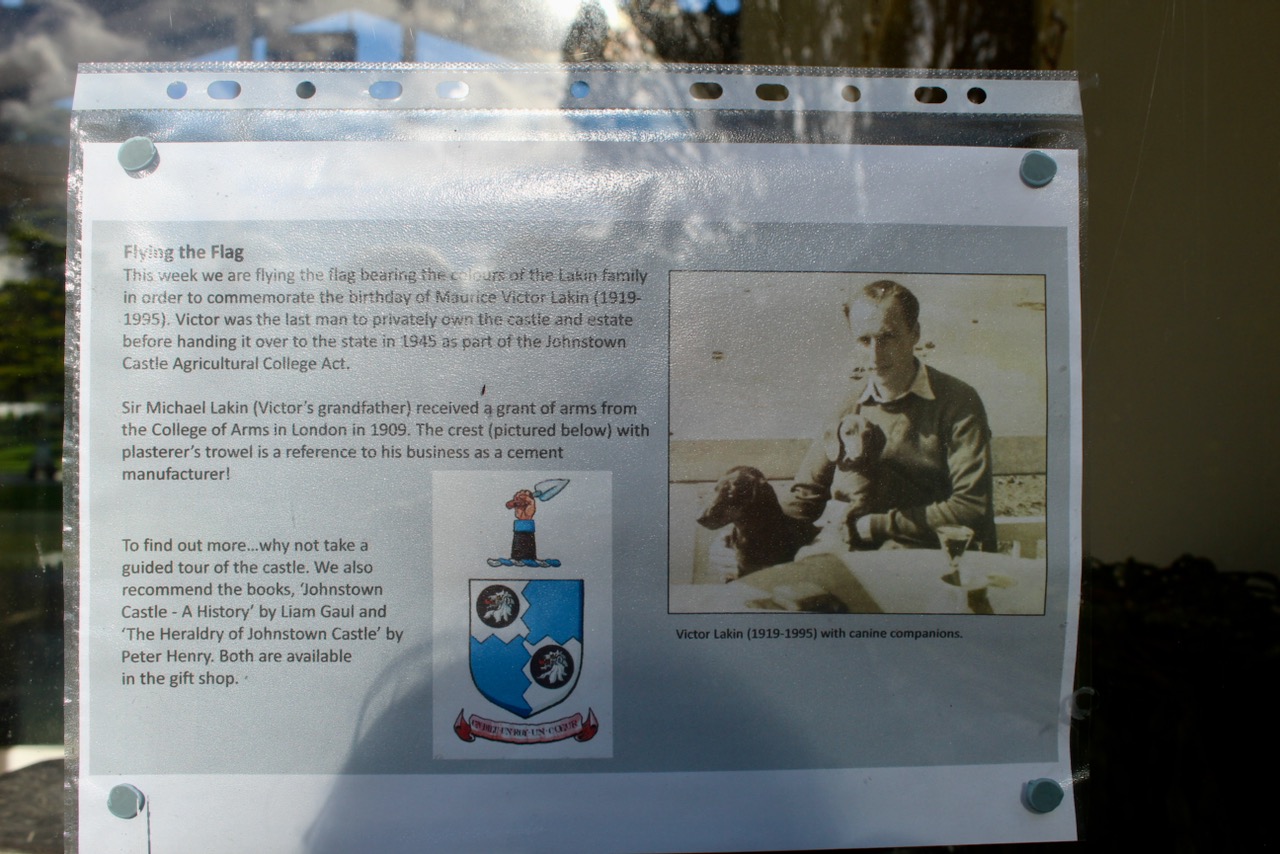
Johnstown Castle, County Wexford.

Maurice Victor Lakin gifted it to the state in 1945.

The Grogan-Morgan family tree.
Explanation of the handover to the state and Department of Agriculture.

After walking through the entrance corridor a room is reached called the “Apostles’ Hall” due to the wooden carvings. The National Inventory continues:

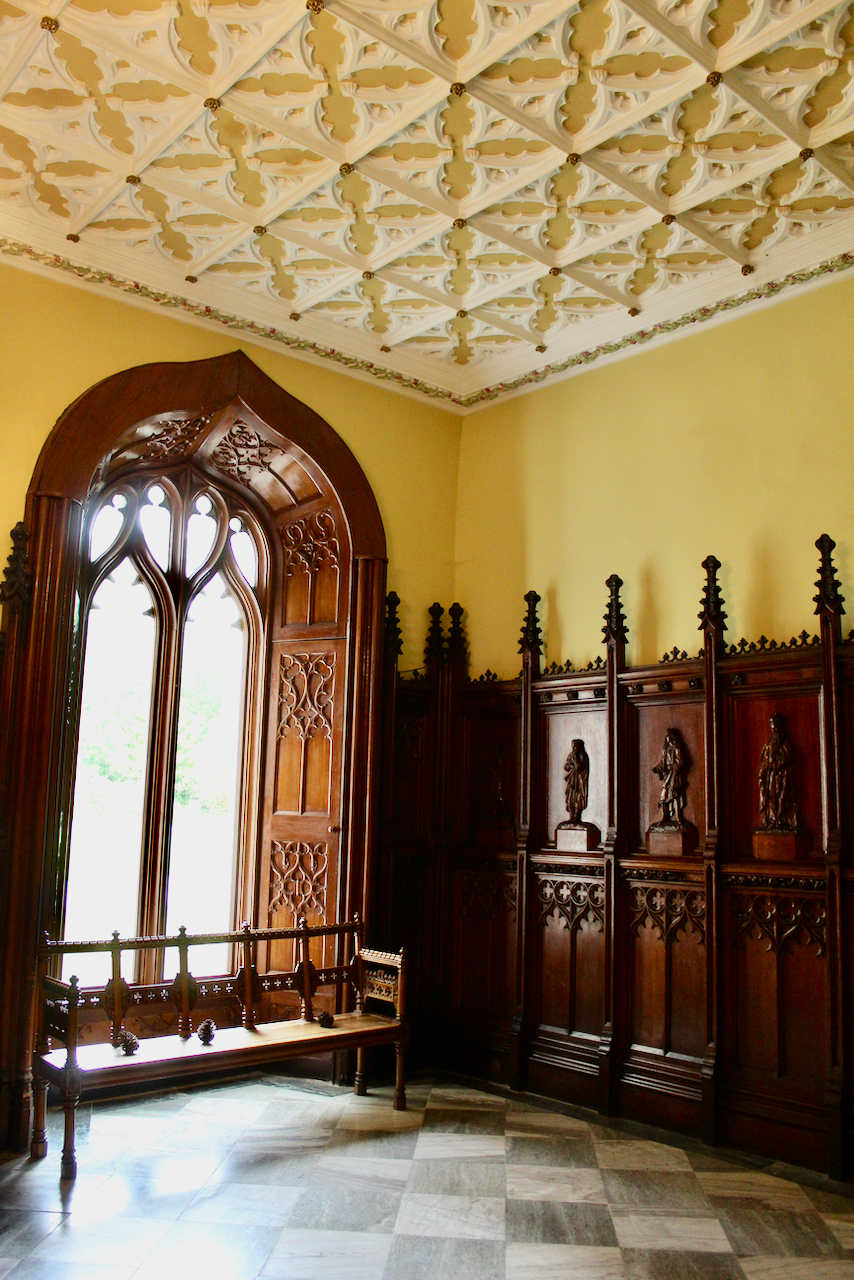
A prolonged period of unoccupancy notwithstanding, the elementary form and massing survive intact together with substantial quantities of the original fabric, both to the exterior and to the interior where encaustic tile work; the so-called “Apostles Hall” with ‘oak panelling and carving of the most costly description’ (Lacy 1852, 268); contemporary joinery ‘by poor Mooney who may be said to have lived and died in the employment of the munificent proprietor [and who was] succeeded by another native genius [named] Sinnott’ (ibid., 269); restrained chimneypieces in contrasting neo-Classical or Egyptian Revival styles; and geometric ceilings recalling the Robertson-designed Wells House (1836-45), all highlight the considerable artistic significance of the composition.

The “Apostles Hall,” Johnstown Castle, County Wexford. Photograph © Jennifer Winder-Baggot, www.irishhistorichouses.com
The Apostles in the Apostles Hall. Photograph © Jennifer Winder-Baggot, www.irishhistorichouses.com
Johnstown Castle, Apostles Hall. Photograph © Jennifer Winder-Baggot, www.irishhistorichouses.com
Wood carving in the Apostles Hall. Photograph © Jennifer Winder-Baggot, www.irishhistorichouses.com

From the Apostles Hall you enter a top-lit three storey galleried space. Our guide told us that this used to be a music room. The National Inventory of Architectural Heritage describes it: “top-lit triple-height “Grand Hall” on a square plan retaining tessellated “Asphaltum” tiled floor, clustered colonette-detailed carved timber surrounds to door openings framing Gothic-style timber panelled doors, arcaded galleries (upper floors) with carved timber hand rails, and fan vaulted plasterwork ceiling centred on replacement glass block-filled mass concrete dome.” [4]

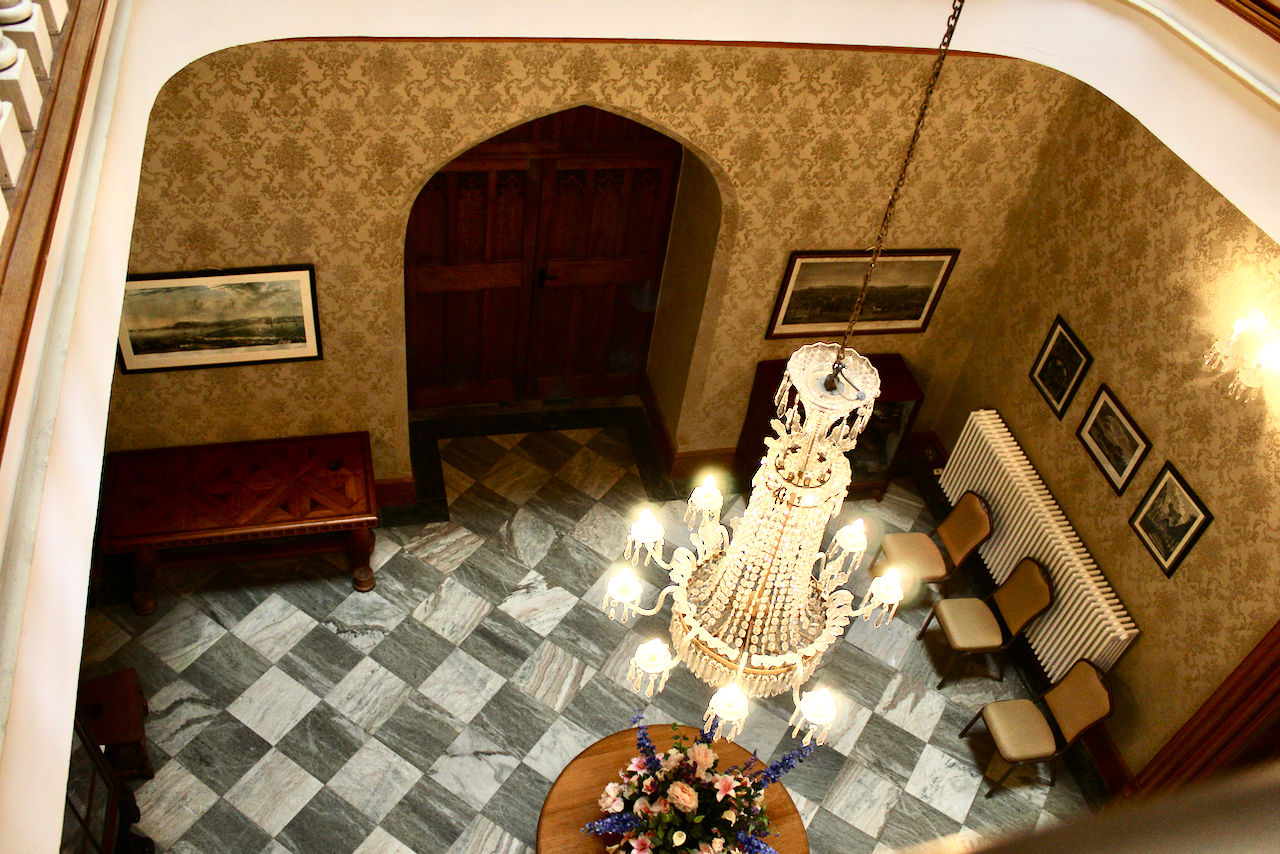
The Waterford Crystal chandelier in the former music room. Photograph © Jennifer Winder-Baggot, www.irishhistorichouses.com
Ground floor of the three tiered gallery space. Photograph © Jennifer Winder-Baggot, www.irishhistorichouses.com
Ground floor of the three tiered gallery space. The table with quatrefoil carving belonged to the Knox Grogan Morgans. Photograph © Jennifer Winder-Baggot, www.irishhistorichouses.com

As well as hosting musical events in this space, tenants would be given Christmas dinner here. Mary told us that the owners were good to their tenants.
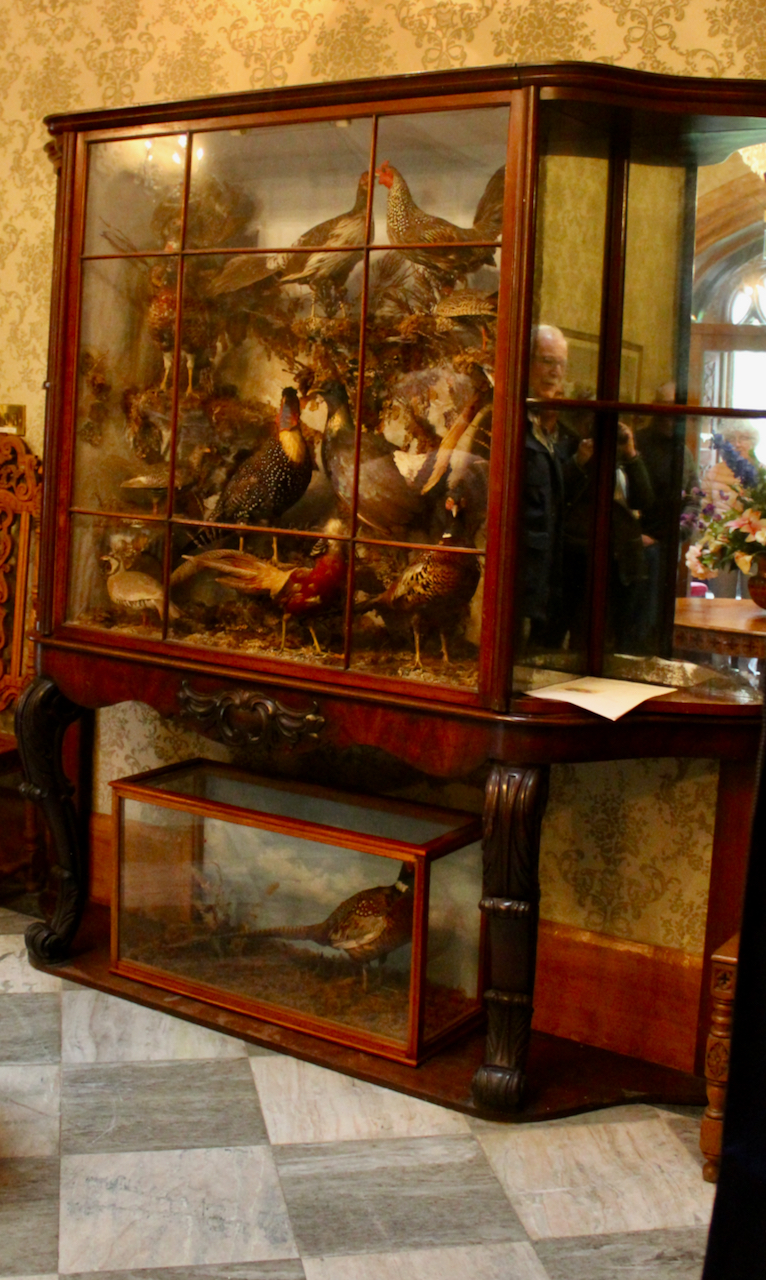
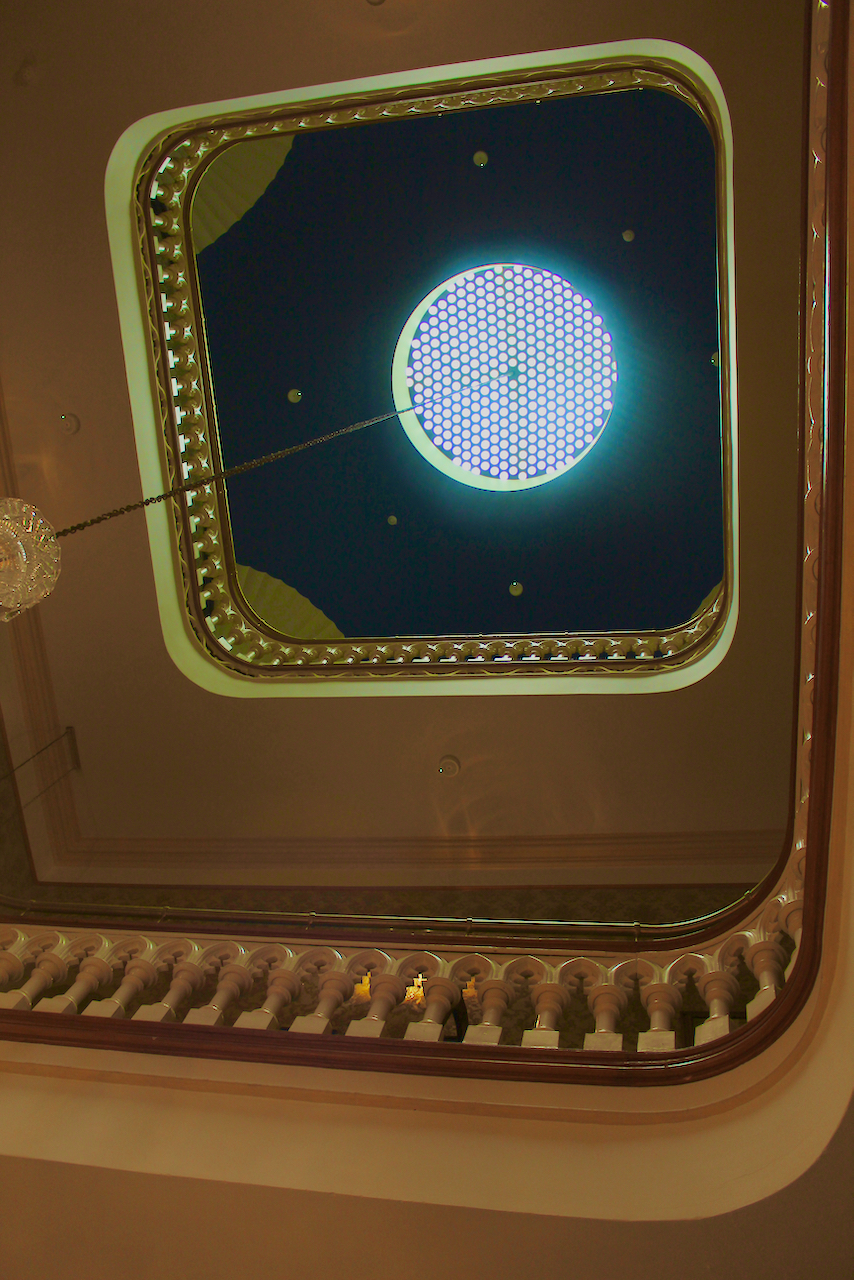
Johnstown Castle, ground floor of the three tiered gallery space. This cabinet of birds is original to the castle. Photograph © Jennifer Winder-Baggot, www.irishhistorichouses.com
Top-lighting in the fan vaulted gallery, Johnstown Castle. The guide told us there used to be stained glass here. Photograph © Jennifer Winder-Baggot, www.irishhistorichouses.com
The fan vaulted plasterwork has funny heads around the edges. Photograph © Jennifer Winder-Baggot, www.irishhistorichouses.com
Johnstown Castle, first floor and second floor galleries. Photograph © Jennifer Winder-Baggot, www.irishhistorichouses.com
Photograph © Jennifer Winder-Baggot, www.irishhistorichouses.com

A grand staircase was removed, and the balcony remains:
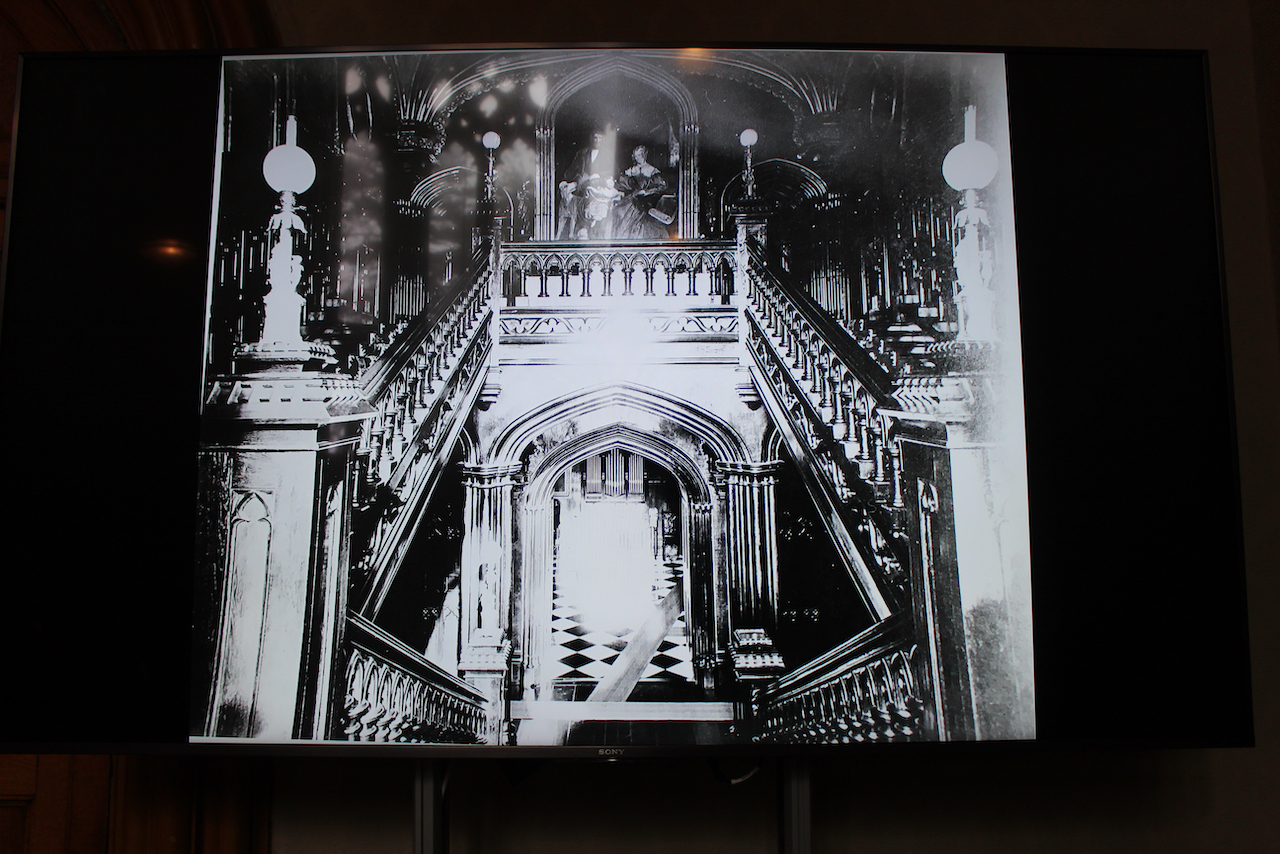
The grand staircase was removed, unfortunately – see this picture with staircase intact.
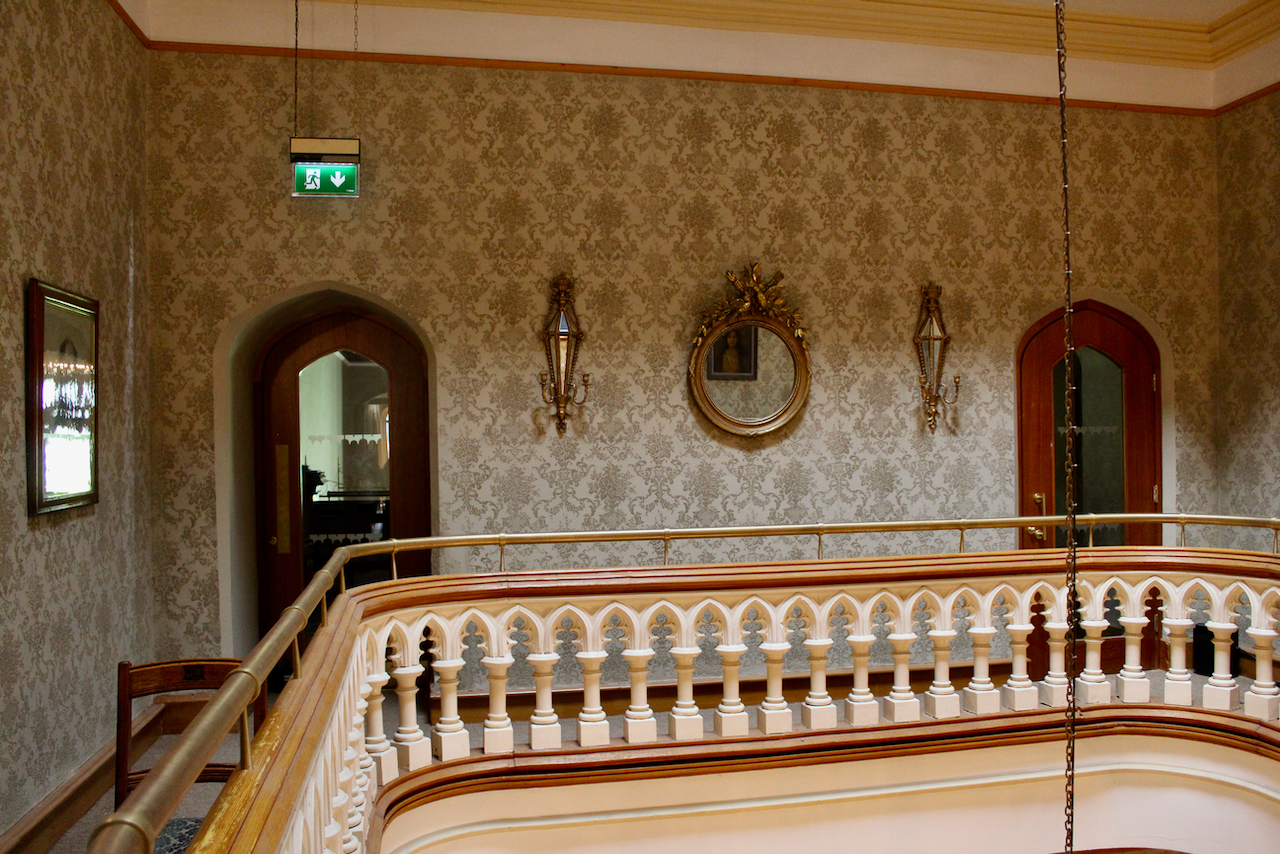
The balustrade was extended, and the armorial shield added, after the staircase was removed. Photograph © Jennifer Winder-Baggot, www.irishhistorichouses.com
The doorway under where the stairs used to be, and the remaining balustrade. Photograph © Jennifer Winder-Baggot, www.irishhistorichouses.com

The next room is the: “bow-ended dining room (south) retaining clustered colonette-detailed carved timber surround to door opening framing timber panelled door with clustered colonette-detailed carved timber surrounds to opposing window openings framing Gothic-style timber panelled shutters on Gothic-style timber panelled risers.”
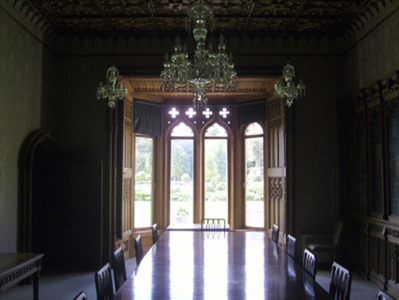
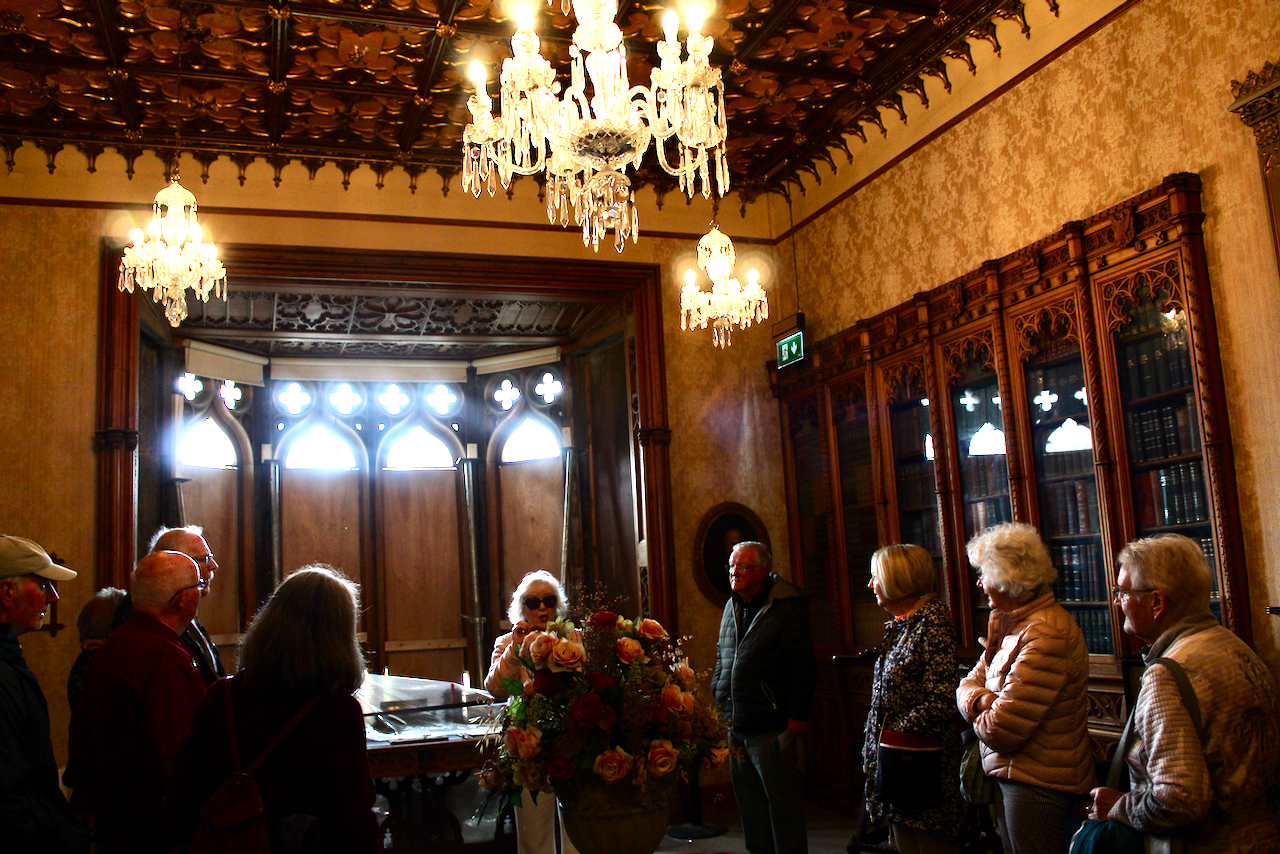
Johnstown Castle, photograph from National Inventory of Architectural Heritage: “bow-ended dining room” [4]
The windows were boarded up for repair when we visited. This room is identified as the dining room in the National Inventory, but holds bookcases so was probably not the dining room. Photograph © Jennifer Winder-Baggot, www.irishhistorichouses.com
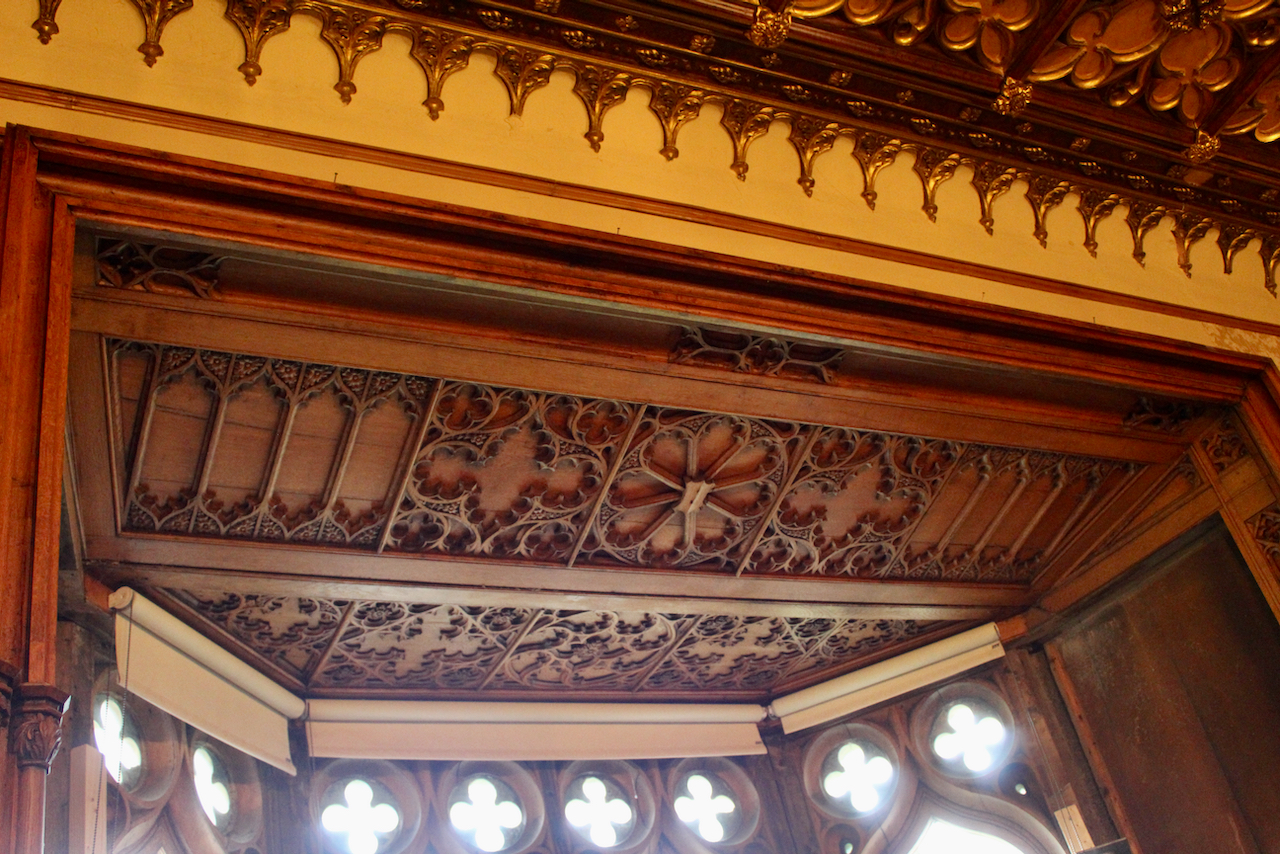
The carving on the window embrasure is very complex. Photograph © Jennifer Winder-Baggot, www.irishhistorichouses.com
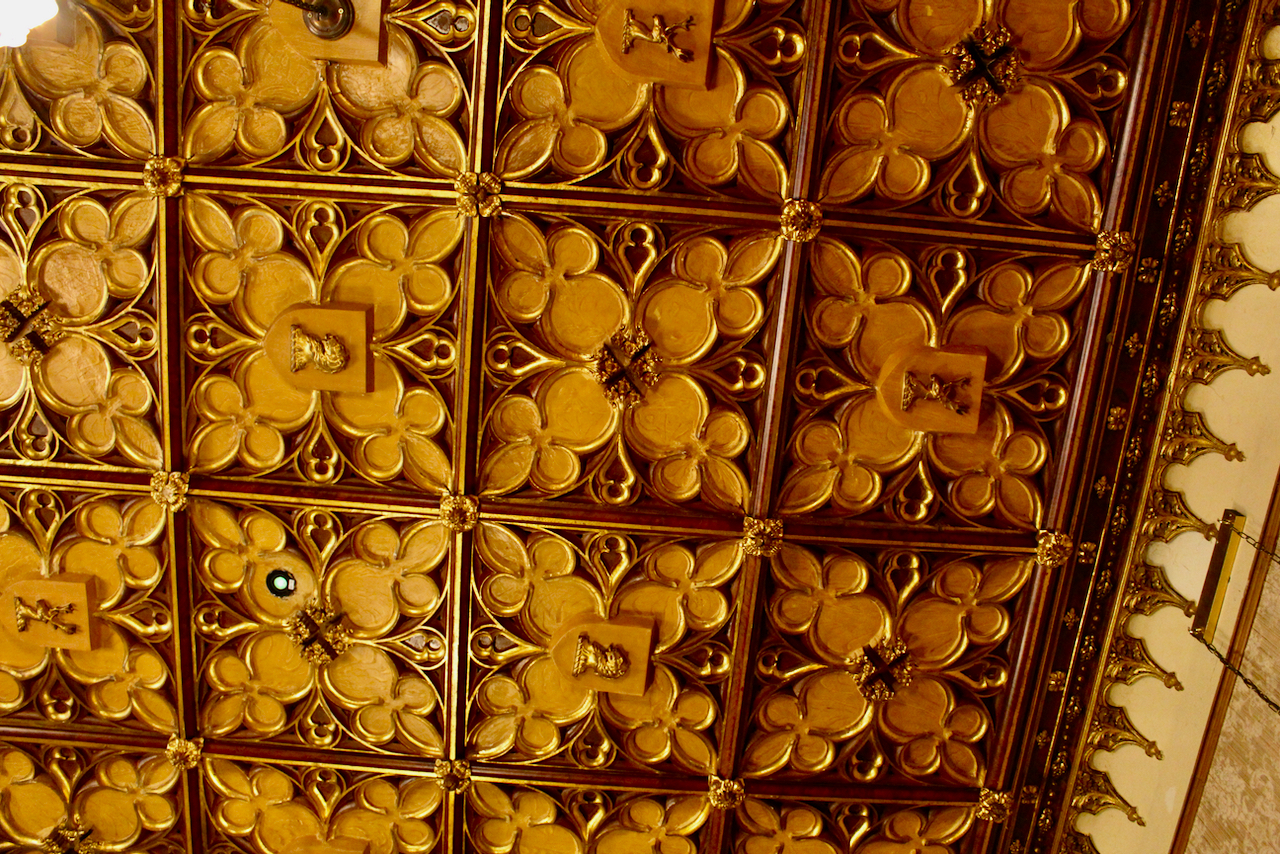
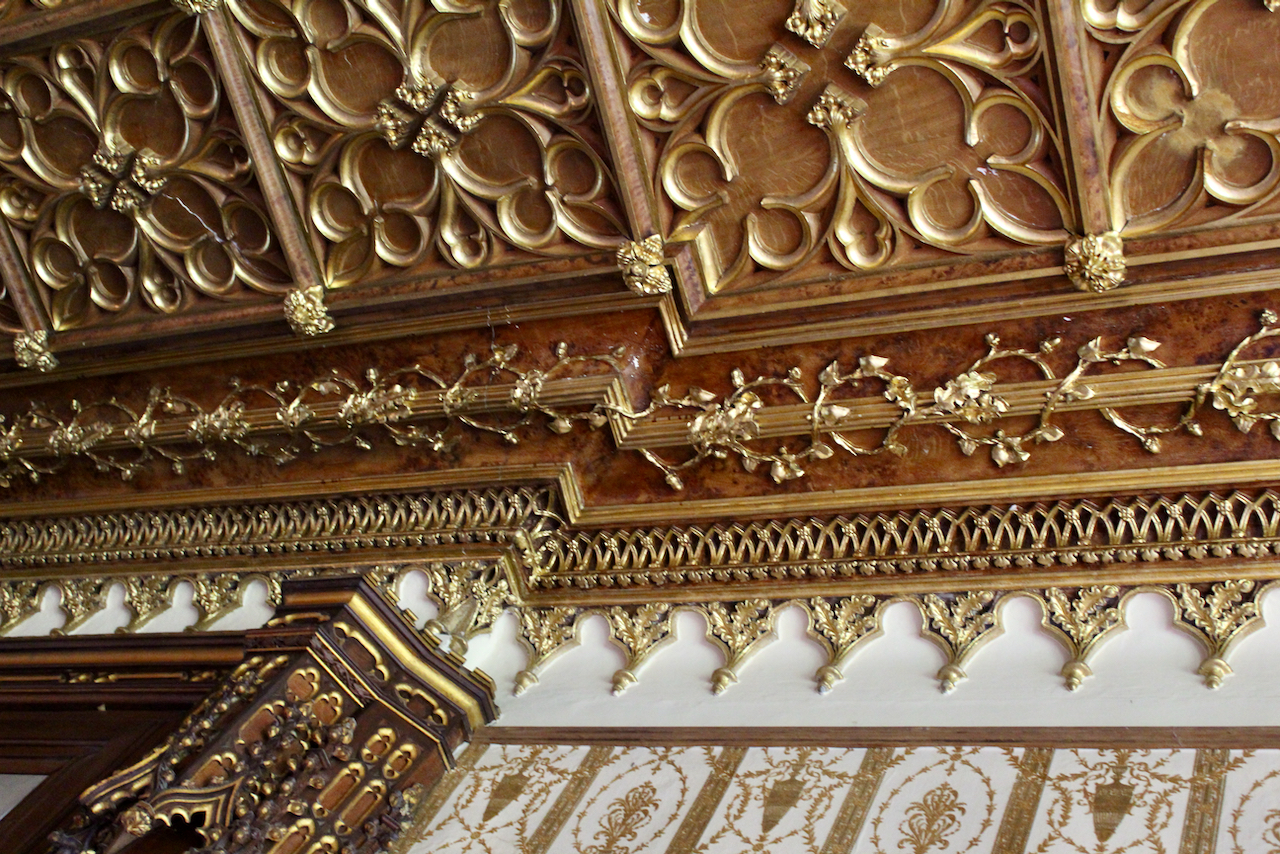
Johnstown Castle, detail of ceiling. Photograph © Jennifer Winder-Baggot, www.irishhistorichouses.com
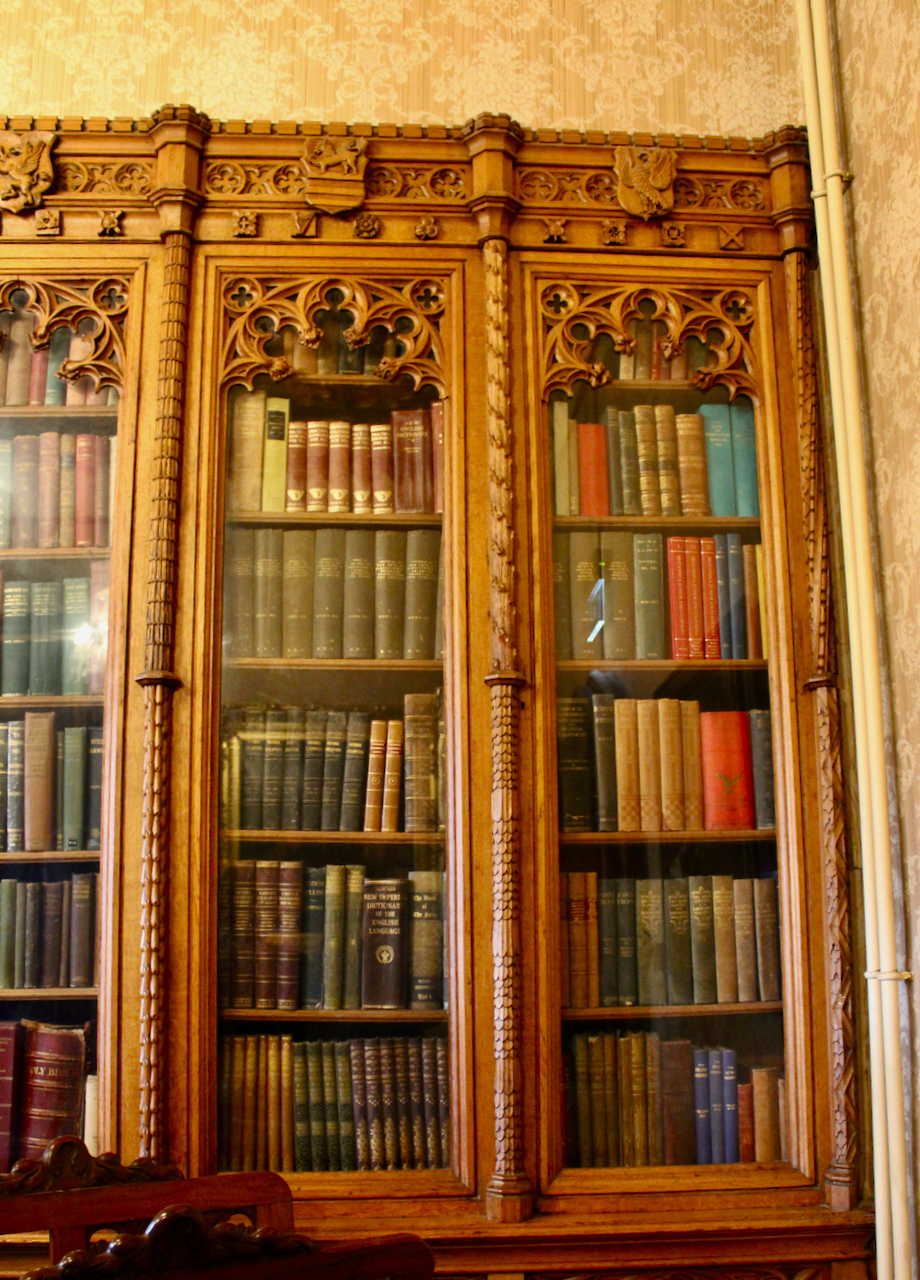
Bookcases. Photograph © Jennifer Winder-Baggot, www.irishhistorichouses.com
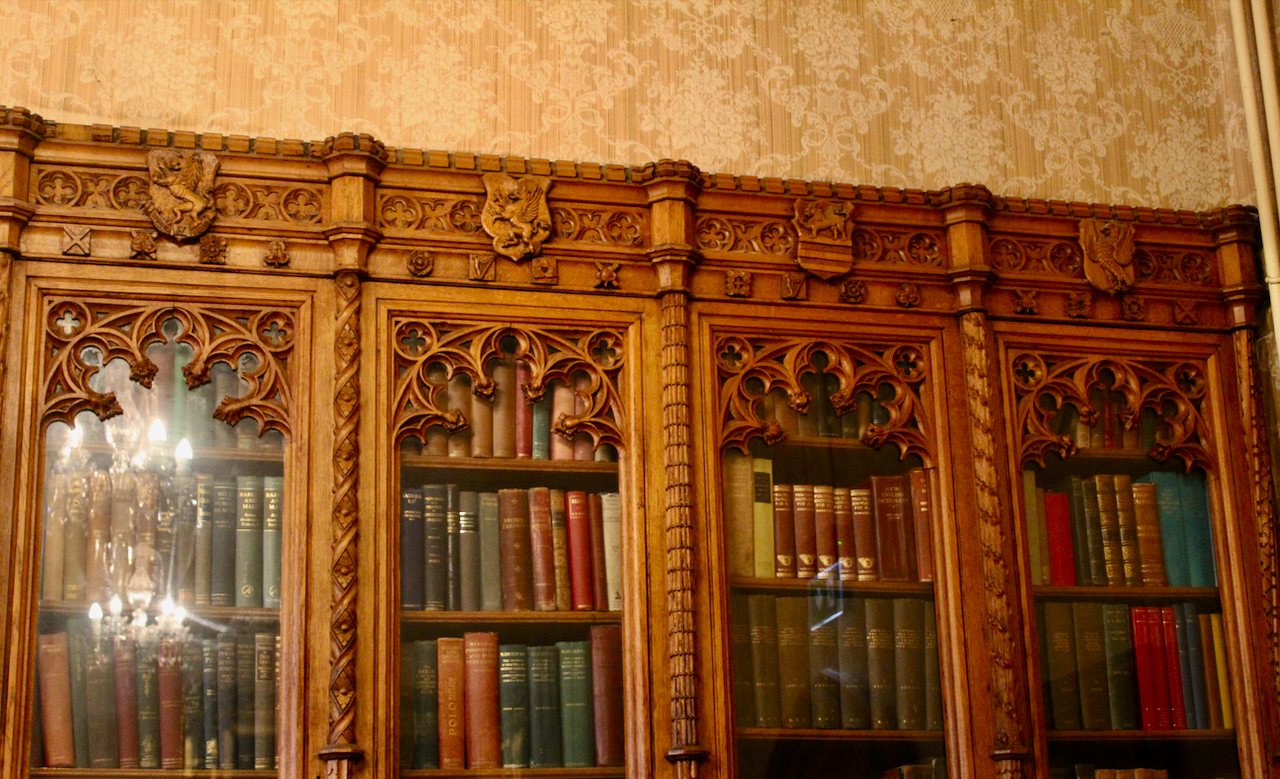
The bookcases are beautifully carved. Photograph © Jennifer Winder-Baggot, www.irishhistorichouses.com
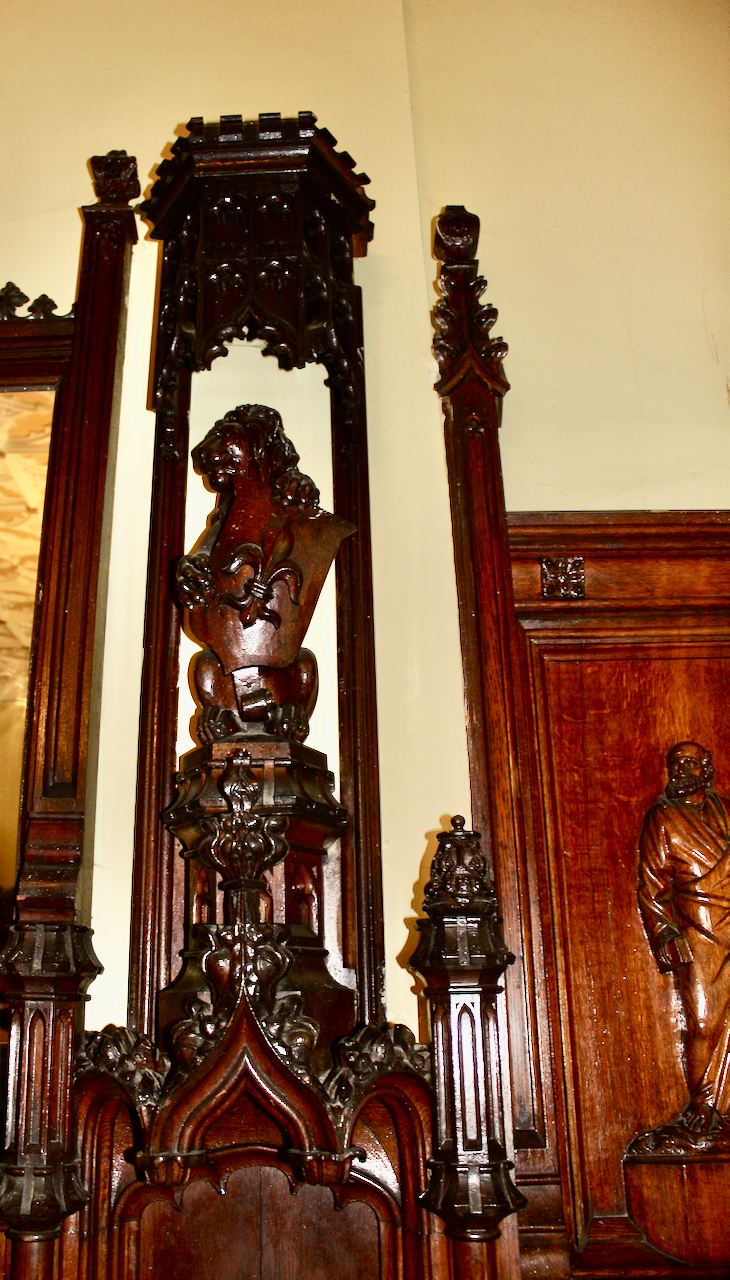
The bookcases are topped with armorial shields. Photograph © Jennifer Winder-Baggot, www.irishhistorichouses.com
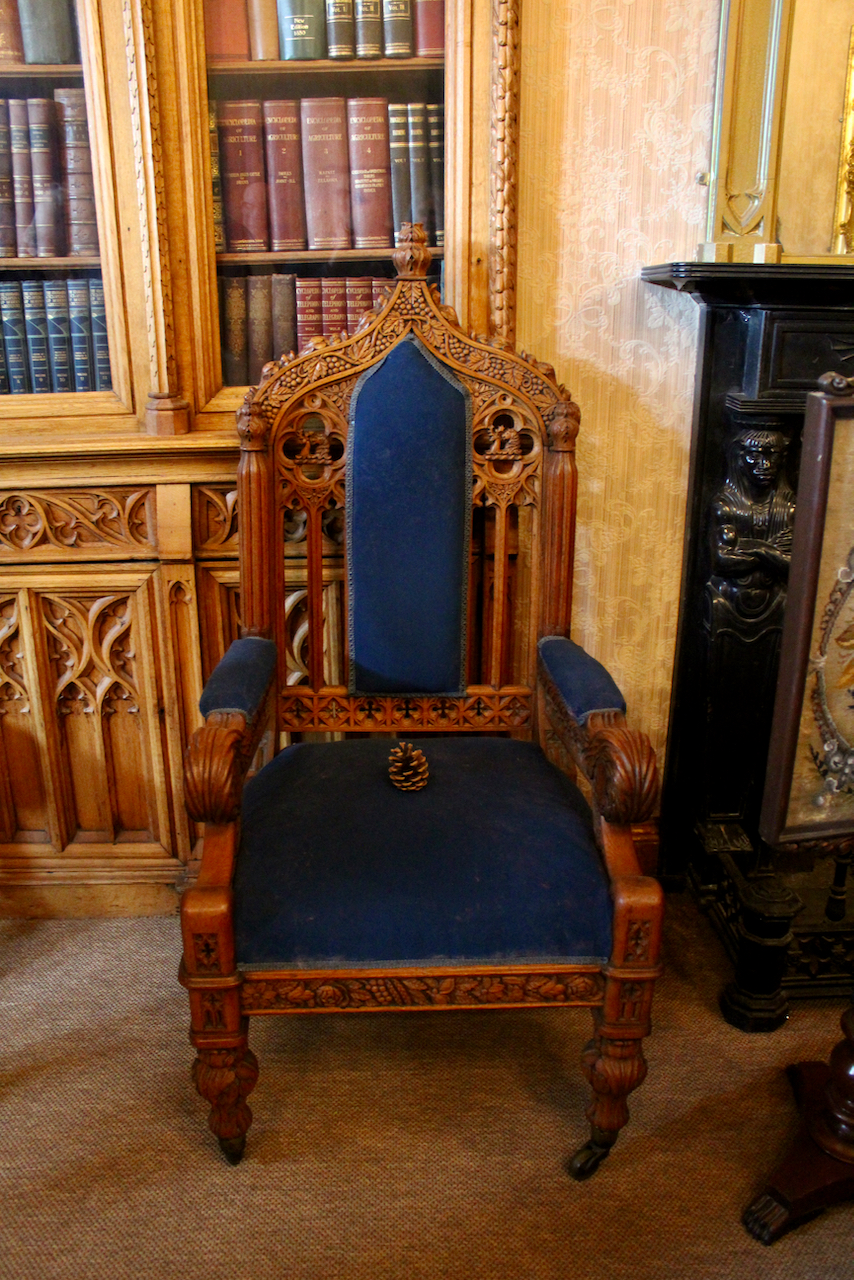
Some of the original furniture has been brought back to the castle. Photograph © Jennifer Winder-Baggot, www.irishhistorichouses.com
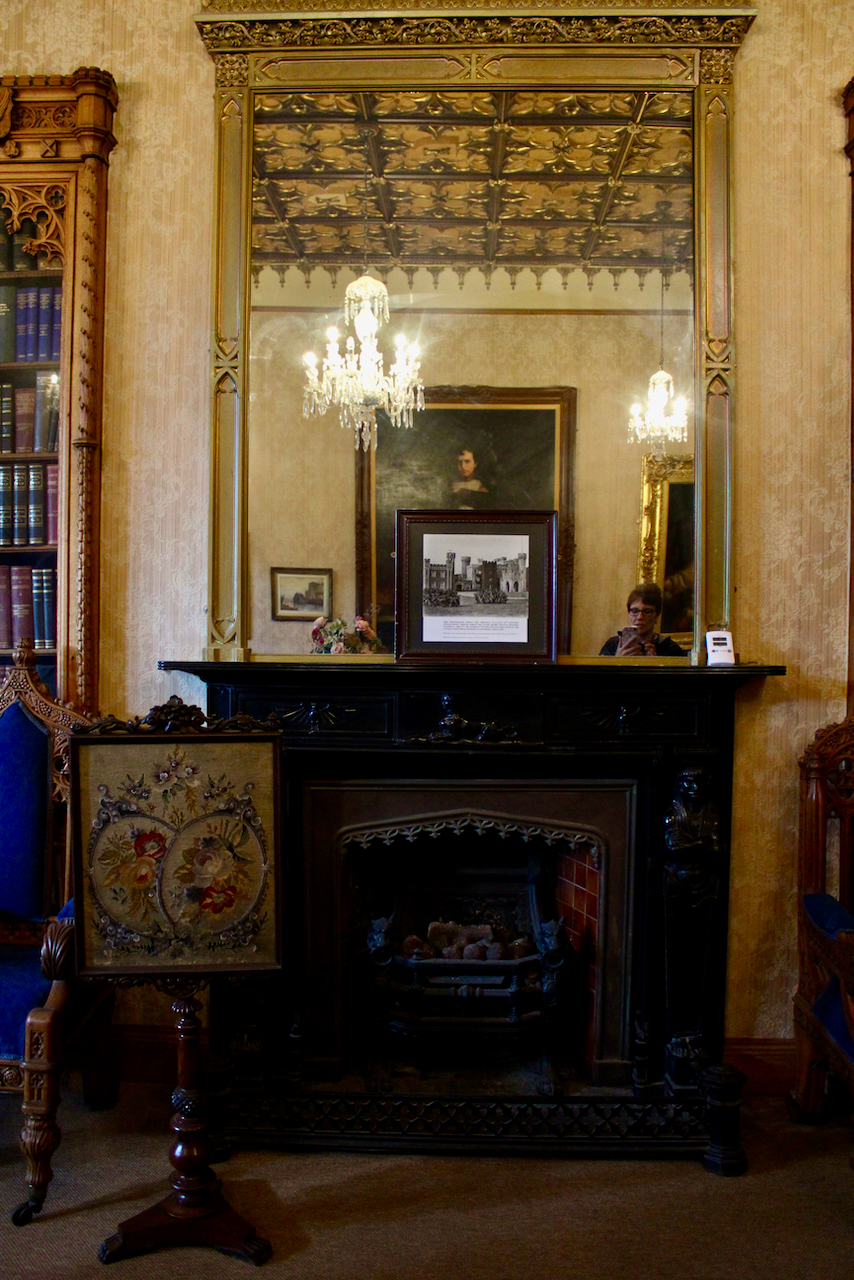
Gothic style chimneypiece. Photograph © Jennifer Winder-Baggot, www.irishhistorichouses.com

The National Inventory tells us that Armorial panels over the glazed-in carriageway and on the dining room chimneypiece show a coat of arms combining three bears heads couped and muzzled [Forbes] centred on a griffin sergeant [Morgan] representing the marriage of George Arthur Hastings Forbes (1833-89), seventh Earl of Granard, and Jane Colclough Morgan (1840-72) with Order of Saint Patrick motto “QUIS SEPARABIT MDCCLXXXIII [Who Will Separate Us 1783]” recognising the earl’s investment as a Knight of the Order of Saint Patrick (K.P.) in 1857. 
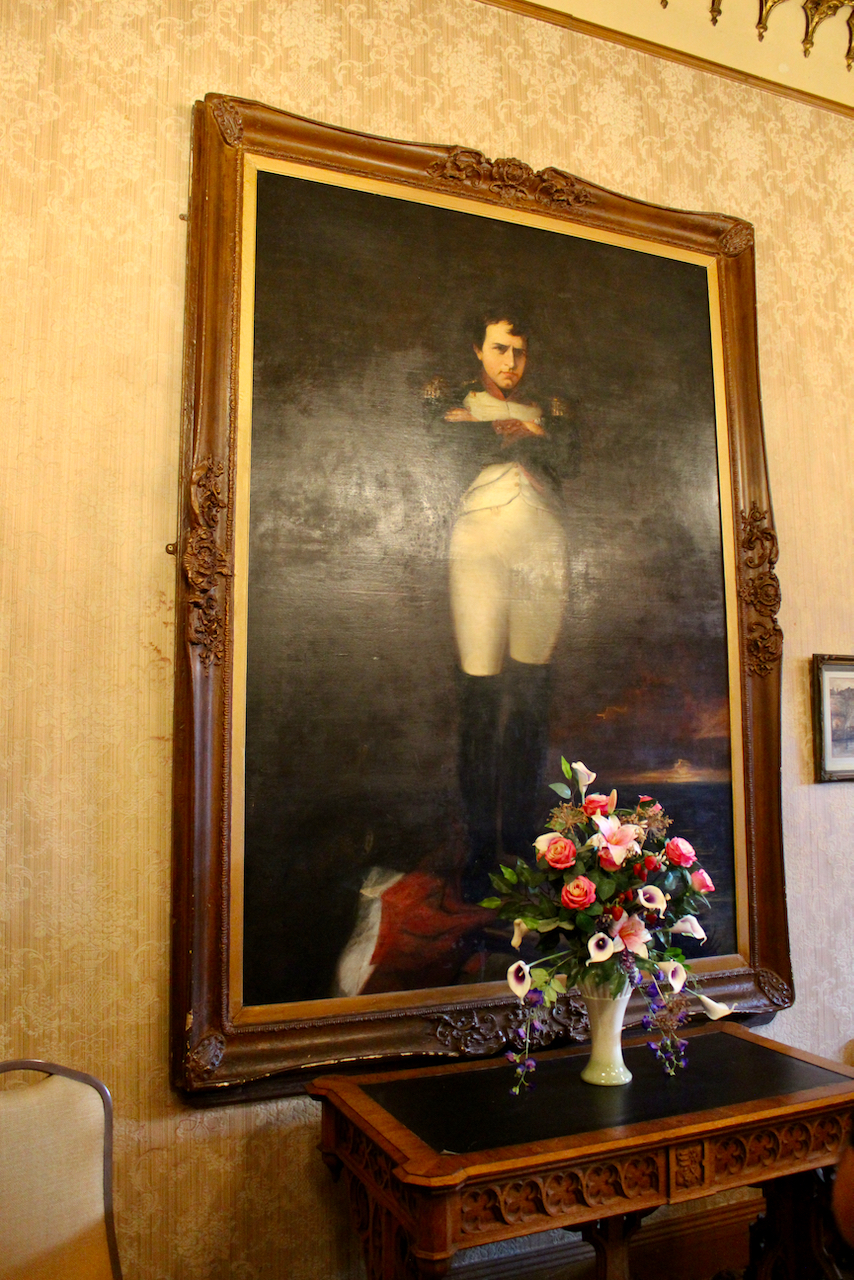
Napolean scowls into the room.
Ceiling detail in Johnstown Castle. Photograph © Jennifer Winder-Baggot, www.irishhistorichouses.com
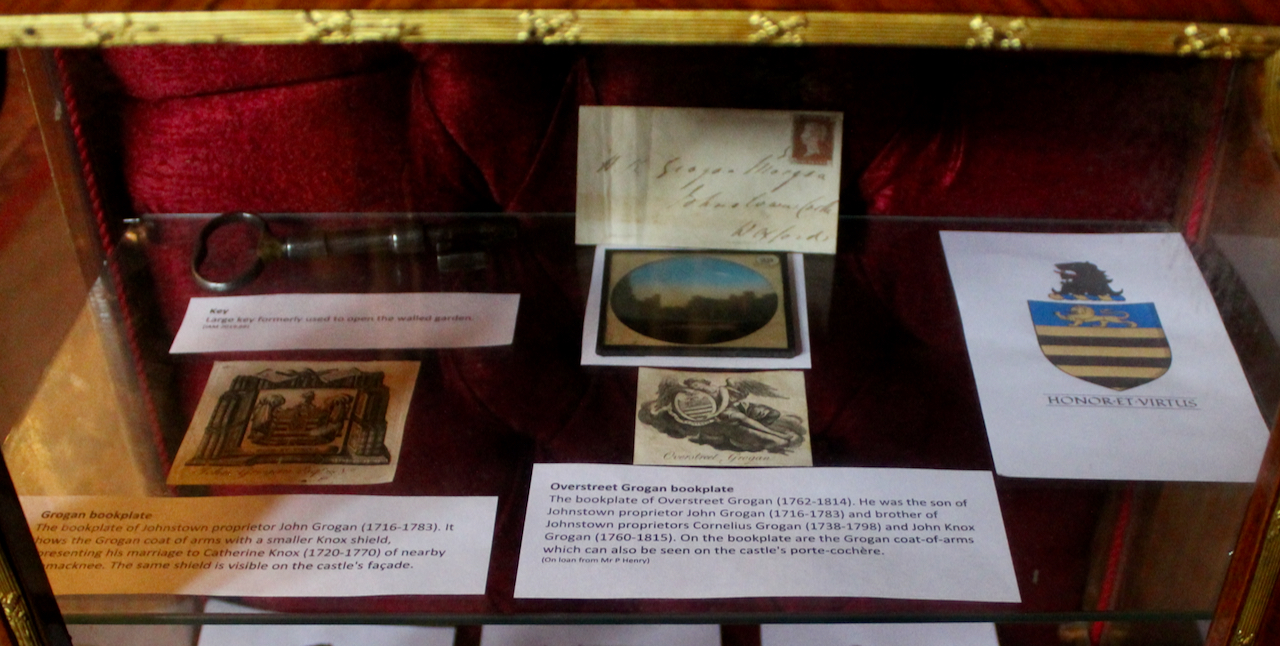
Grogan bookplates. We see the bookplate of Overstreet Grogan (1762-1814), a son of John Grogan (1716-1783) and his wife Catherine Knox.
Grogan livery buttons.

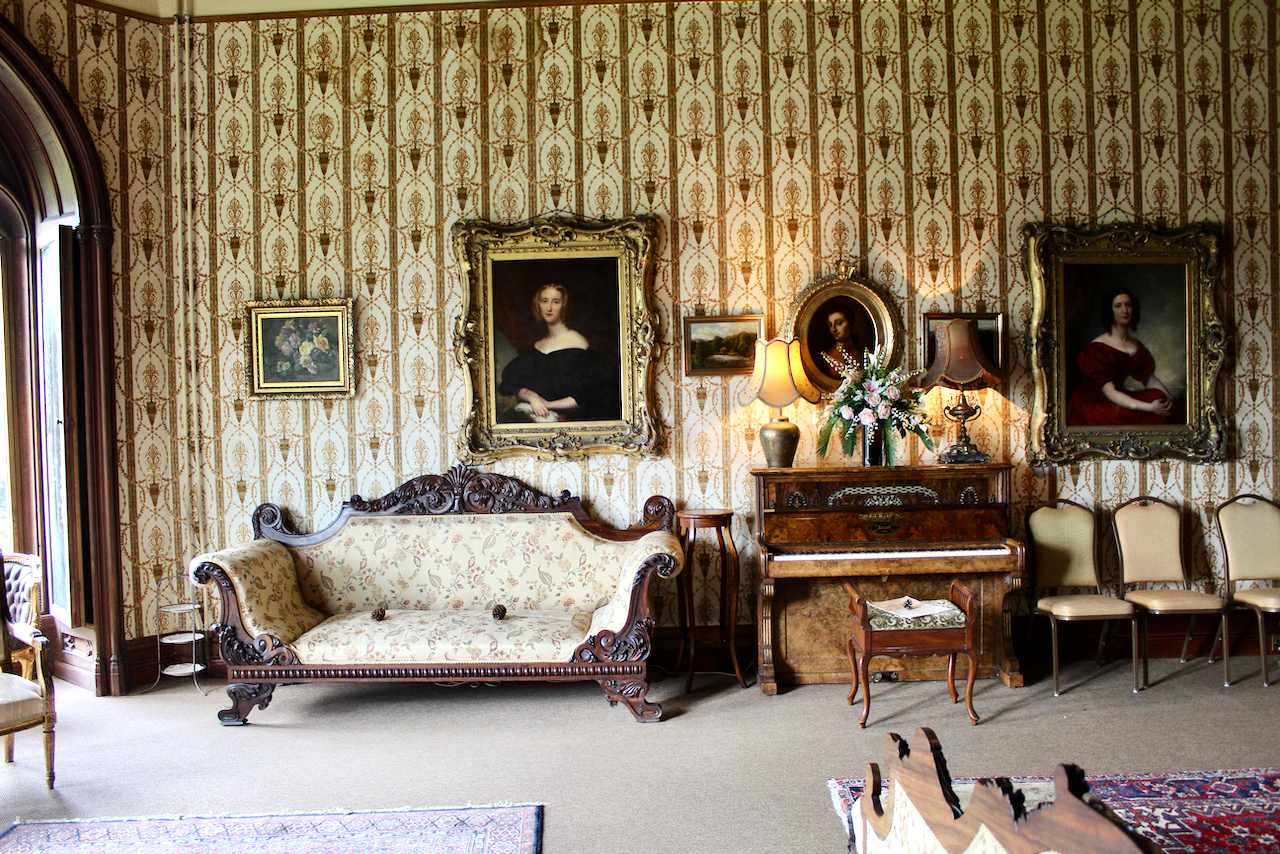
The next room contains the Hamilton Knox portrait.

Johnstown Castle. Photograph © Jennifer Winder-Baggot, www.irishhistorichouses.com
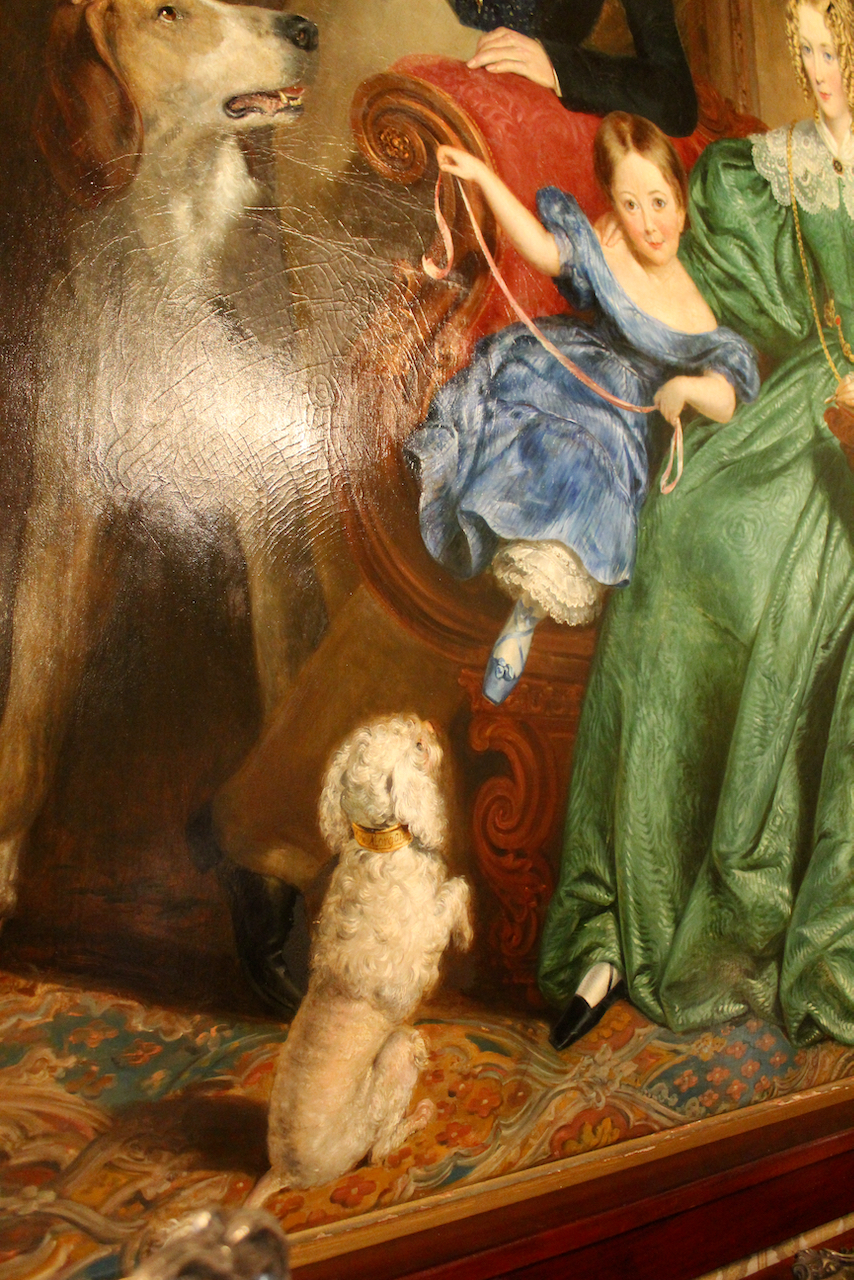
The painting of Hamilton Knox Grogan Morgan and his family.
The little dog Lady Morgan, who sports a rather unattractive haircut, makes up for it with her gold collar. Photograph © Jennifer Winder-Baggot, www.irishhistorichouses.com
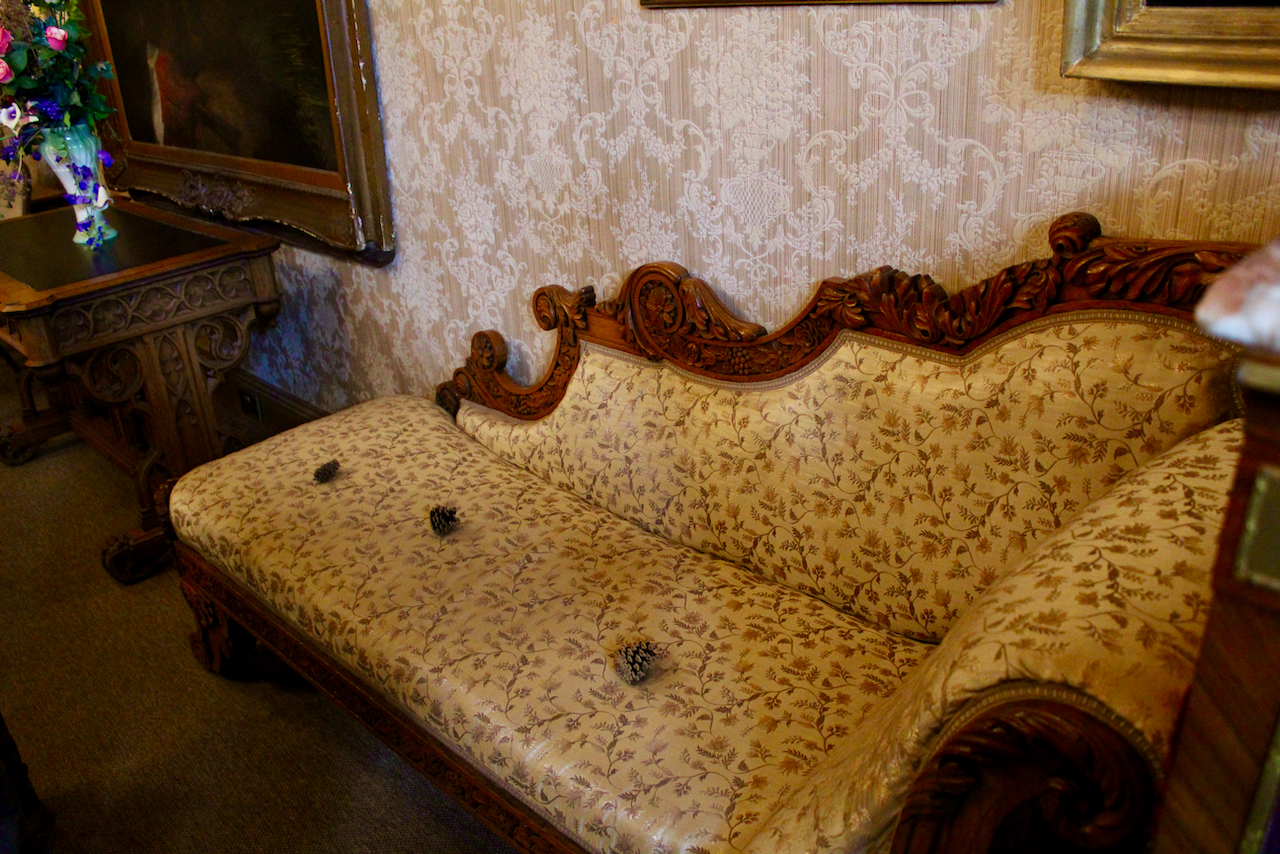
The pinecones stops anyone sitting on the original furniture! This couch is the same one as in the painting of Hamilton Knox Grogan Morgan and his family. Photograph © Jennifer Winder-Baggot, www.irishhistorichouses.com

It was quite a process to situate the newly restored couch into the castle’s room upstairs, as we see in this photograph below:
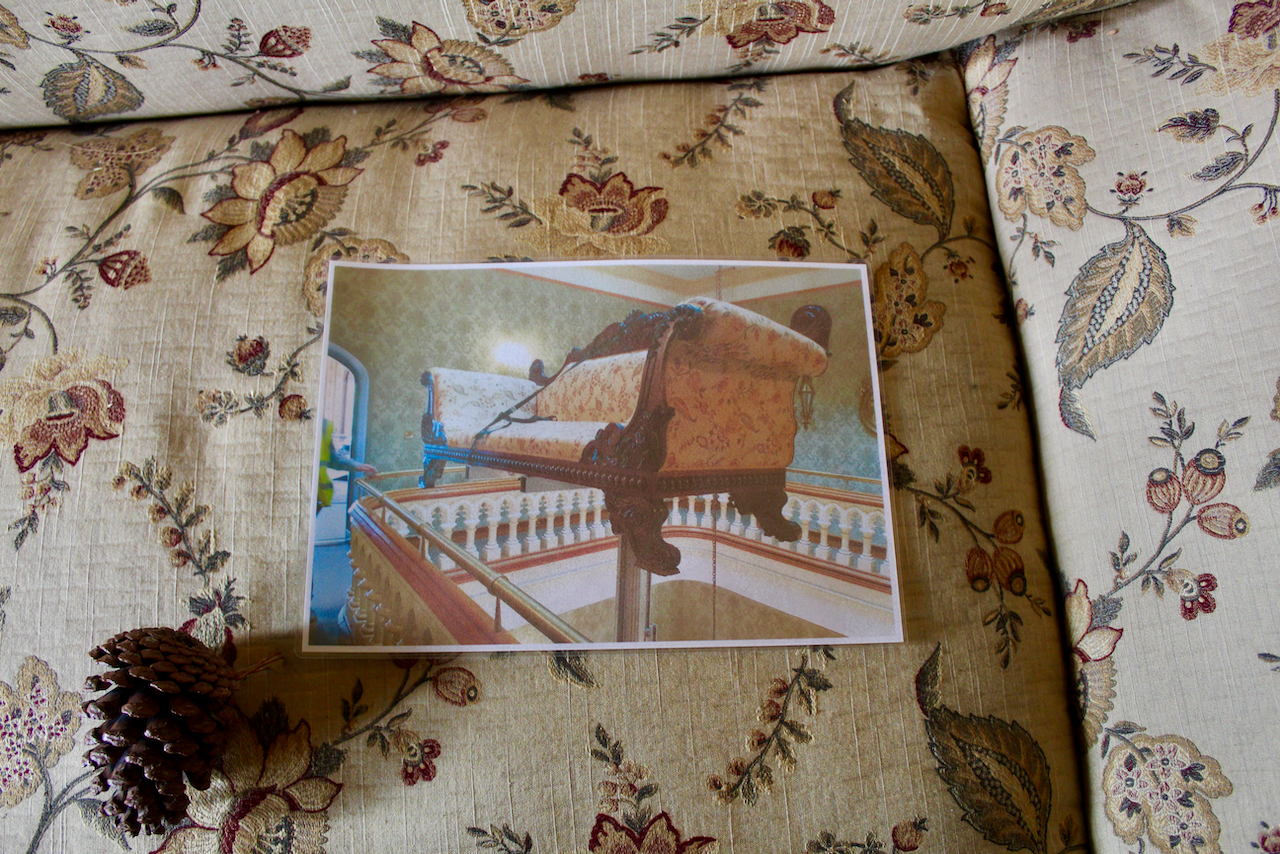
Moving the couch. Photograph © Jennifer Winder-Baggot, www.irishhistorichouses.com

After giving the property to the state, the Lackin family moved to France. They retained the hunting, fishing and burial rights to the property. Recently Victor Lackin’s grandson visited, and he fished in the lake, and had his photograph taken by his ancestor’s portrait. He is very like Hamilton Knox Grogan-Morgan!
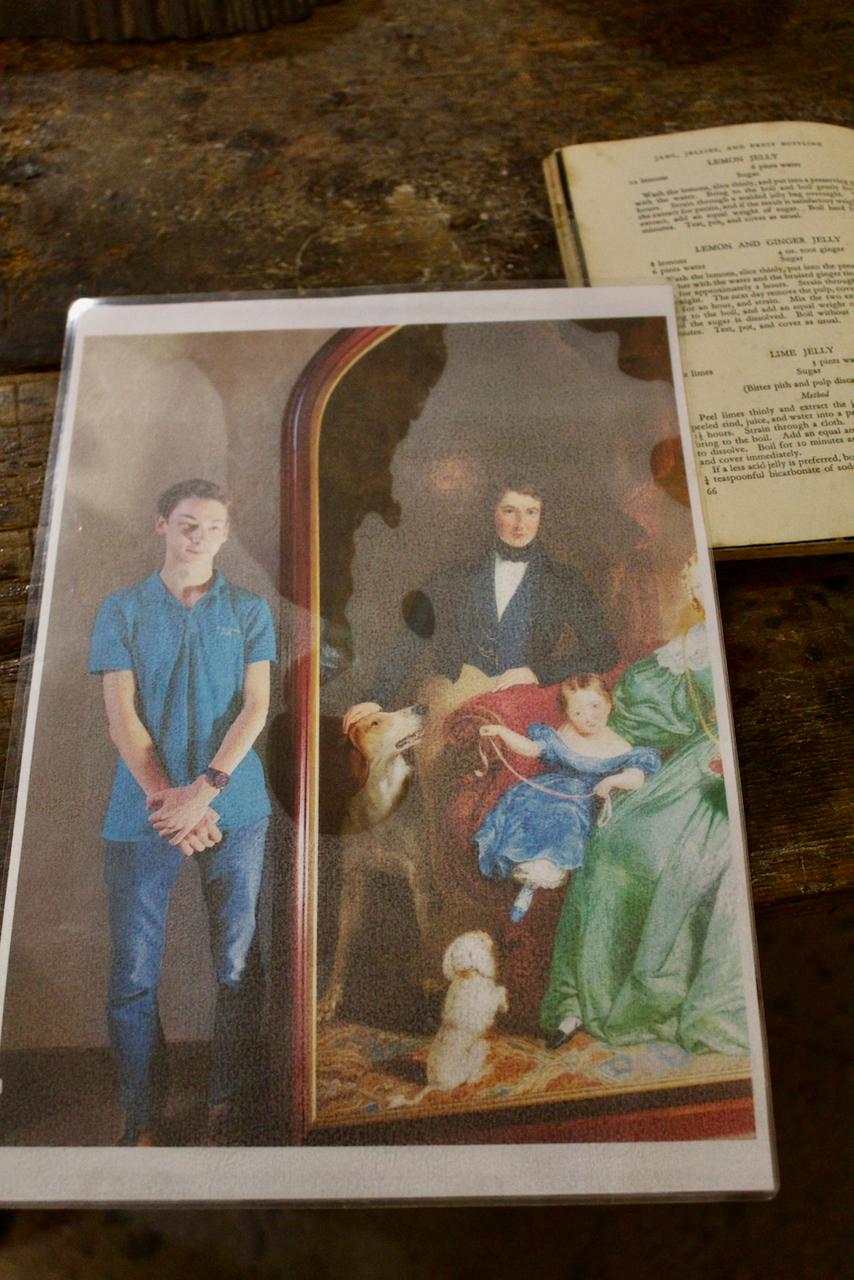
A descendant of Hamilton Knox Grogan-Morgan.
18th Century Irish School “Portrait of John Stratford, 1st Earl of Aldborough,” Photograph © Jennifer Winder-Baggot, www.irishhistorichouses.com
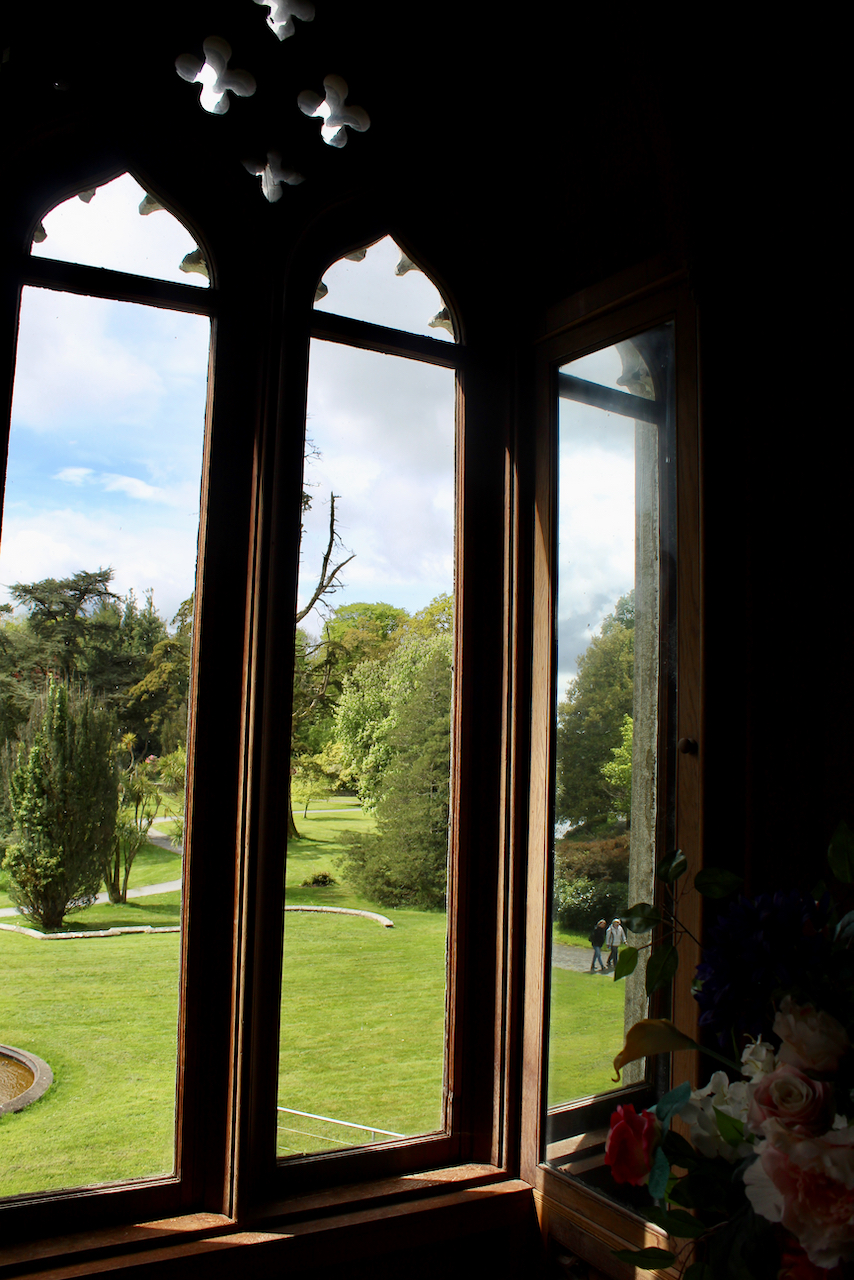
Beautiful views of the parkland. Photograph © Jennifer Winder-Baggot, www.irishhistorichouses.com
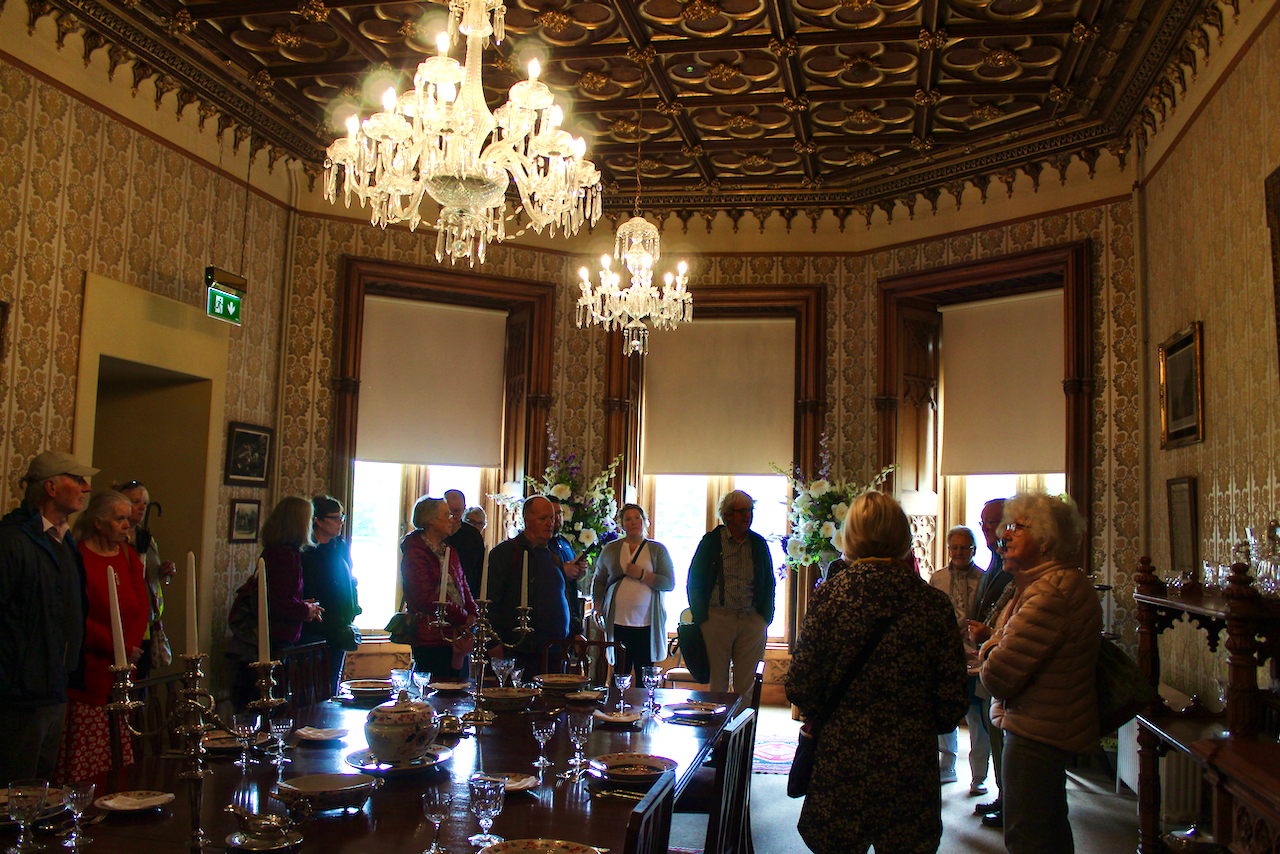
The dining room. Photograph © Jennifer Winder-Baggot, www.irishhistorichouses.com
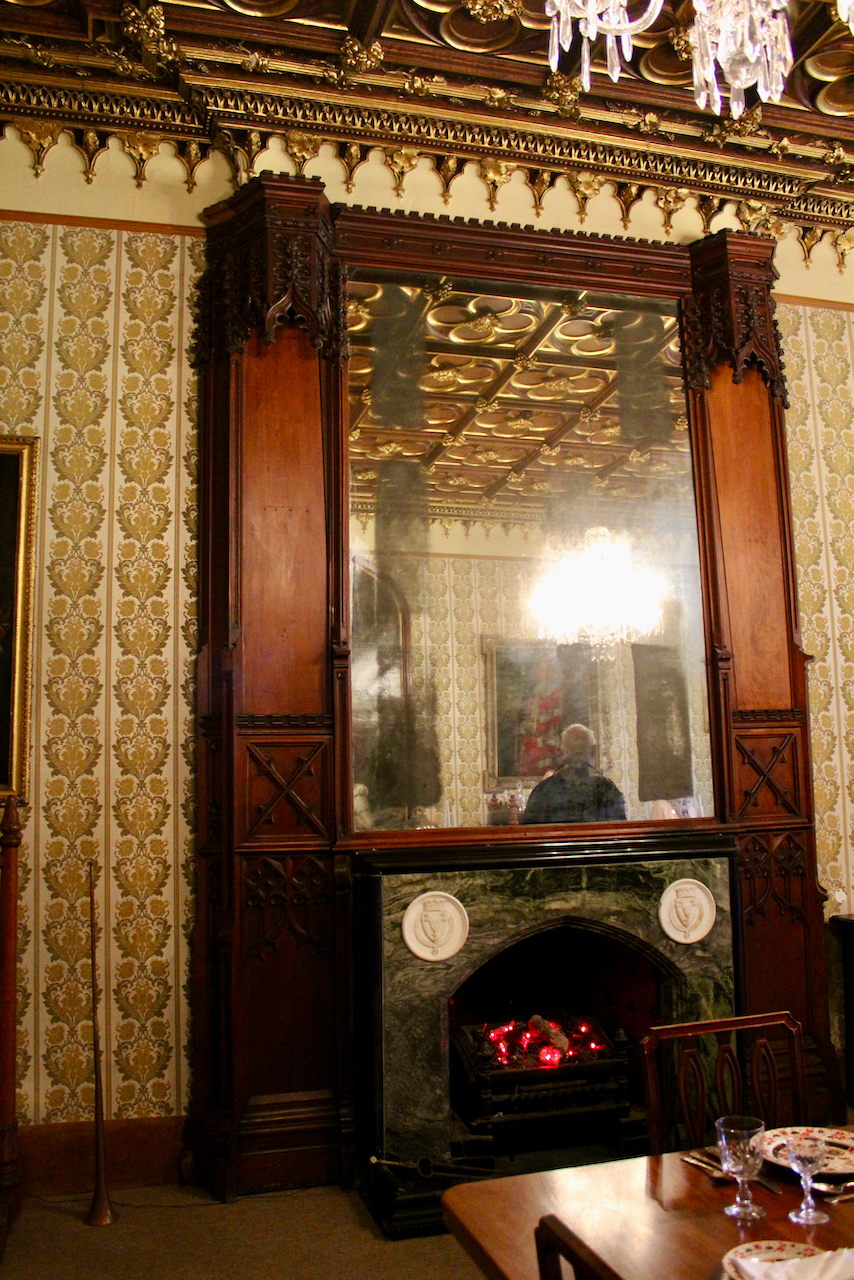
Coat-of-arms-detailed cut-veined green marble Gothic-style chimneypiece in Gothic-style timber surround, and picture railing below grape-and-vine-detailed cornice to quatrefoil-detailed compartmentalised ceiling in carved timber frame” from National Inventory of Architectural Heritage. [4]
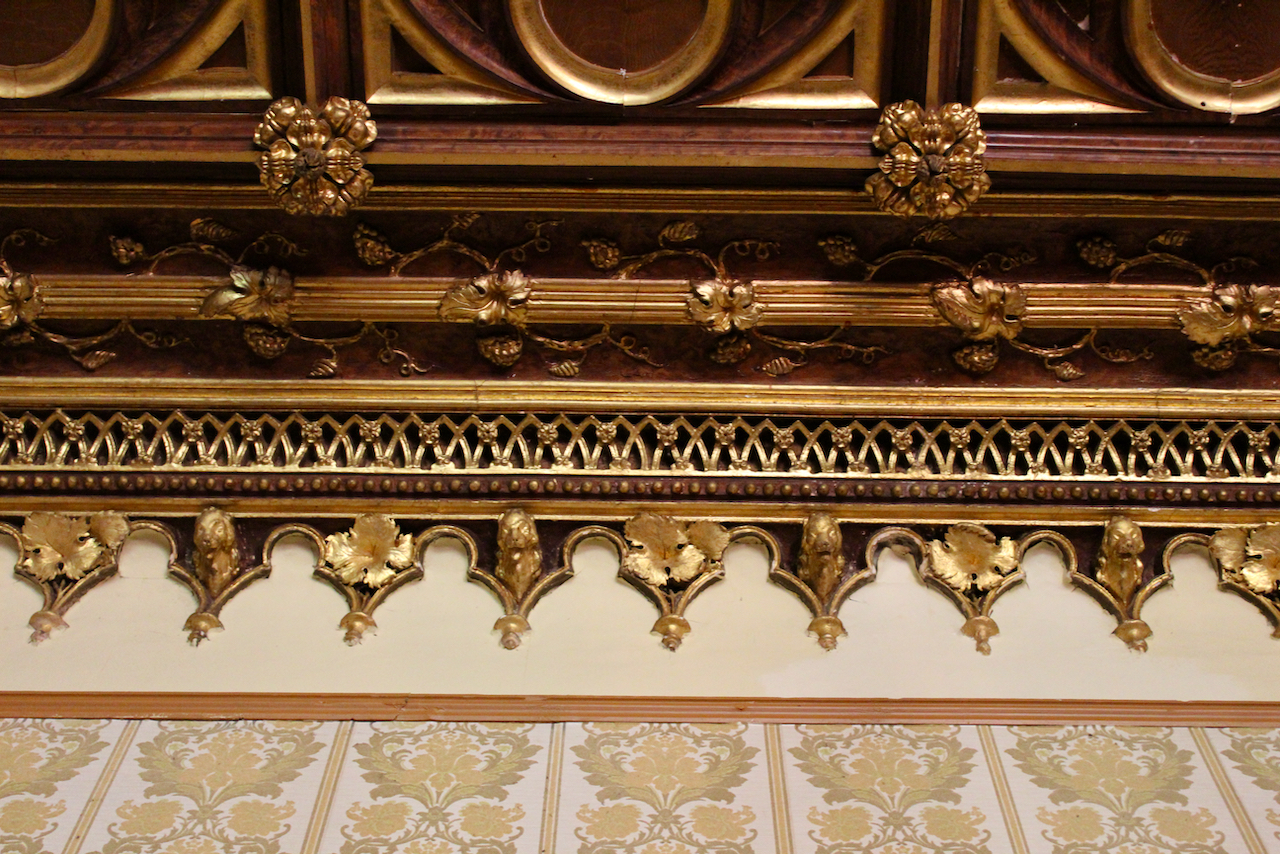
Grape-and-vine-detailed cornice. Photograph © Jennifer Winder-Baggot, www.irishhistorichouses.com
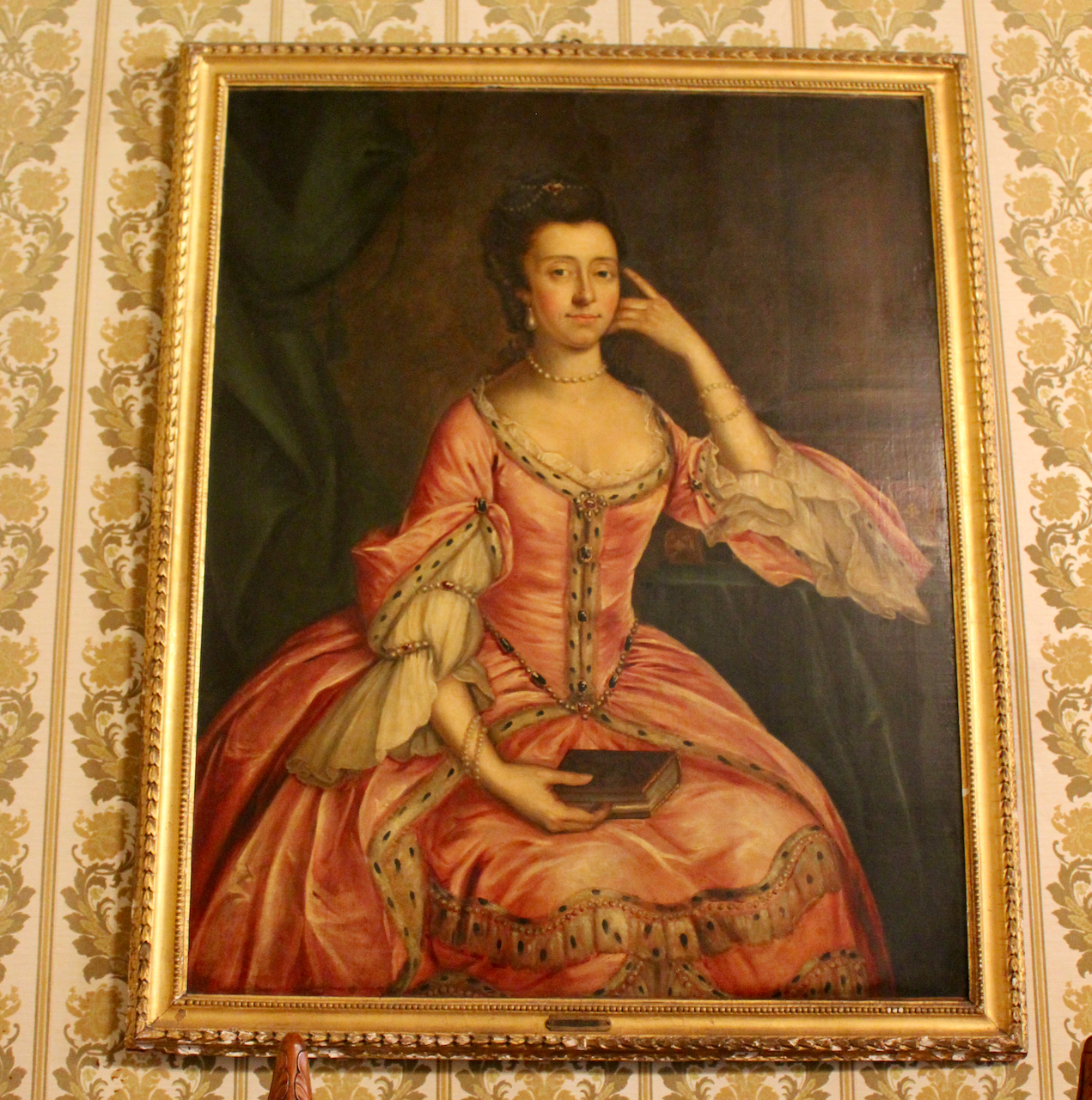
A portrait in Johnstown Castle – 18th Century Irish School “Portrait of the 2nd Countess of Aldborough,” a charming three-quarter length study, seated in pink dress, with jewels, and seated by a table with coronet. She was the wife of Edward Augustus Stratford, 2nd Earl of Aldborough.
Beside the Grogan Morgan family portrait is 18th Century Irish School “Portrait of Martha, 1st Countess Aldborough.” She is Martha O’Neale (1707-1796), daughter of Benjamin O’Neale, Archdeacon of Leighlin and Ferns. Photograph © Jennifer Winder-Baggot, www.irishhistorichouses.com
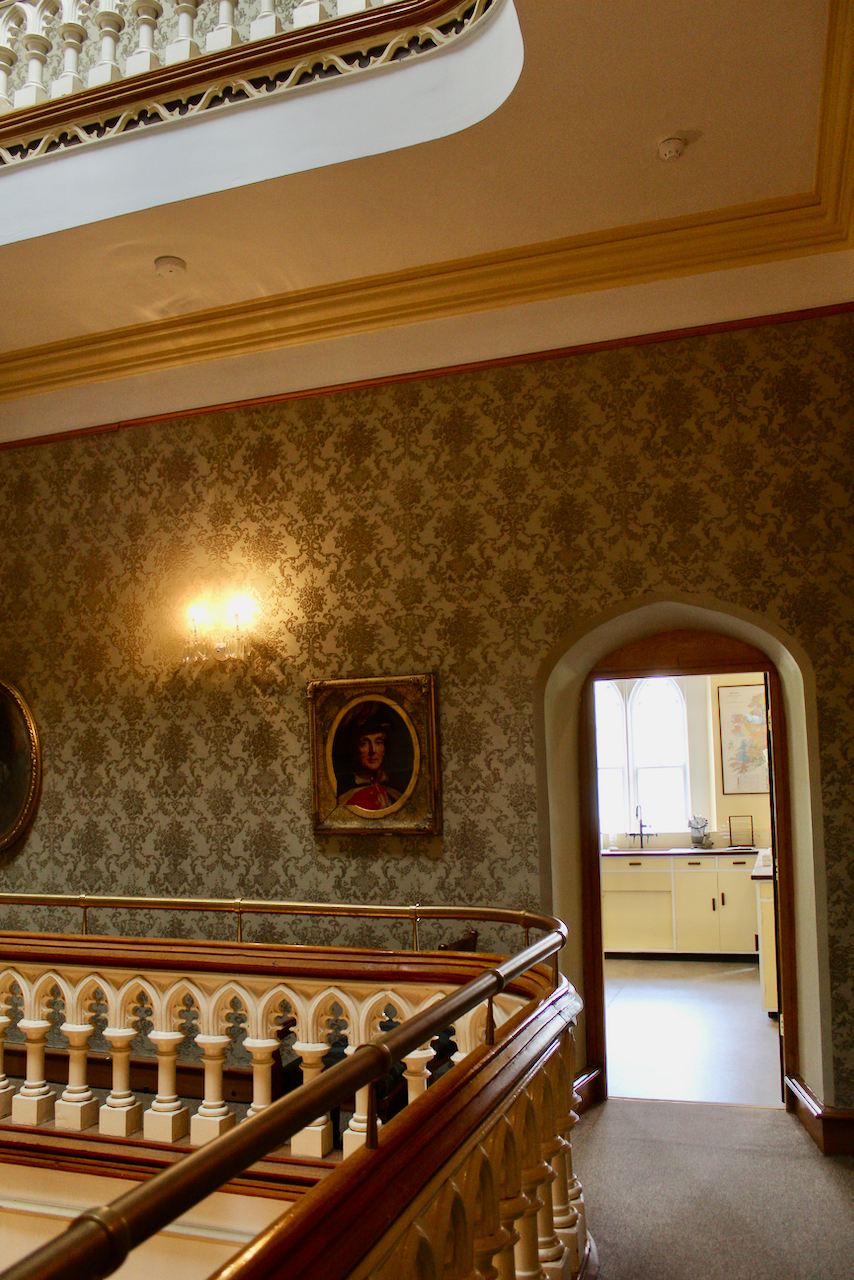
Johnstown Castle, hallway. Photograph © Jennifer Winder-Baggot, www.irishhistorichouses.com
Detail of the carved door frames at Johnstown Castle. Photograph © Jennifer Winder-Baggot, www.irishhistorichouses.com
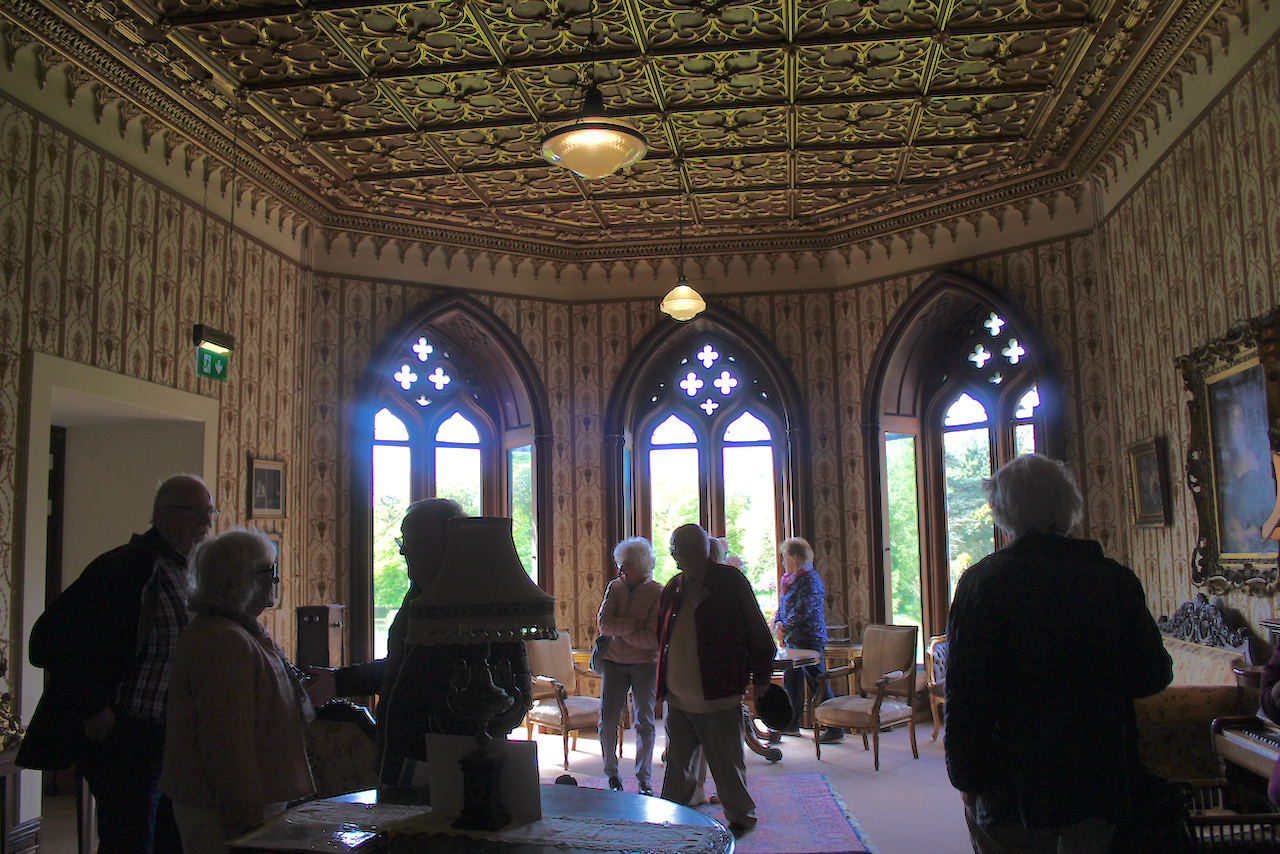
The principal Drawing Room in Johnstown Castle. Photograph © Jennifer Winder-Baggot, www.irishhistorichouses.com

The next room, the principal Drawing Room, features two huge mirrors brought from Paris at one end of the room, installed in about 1860.
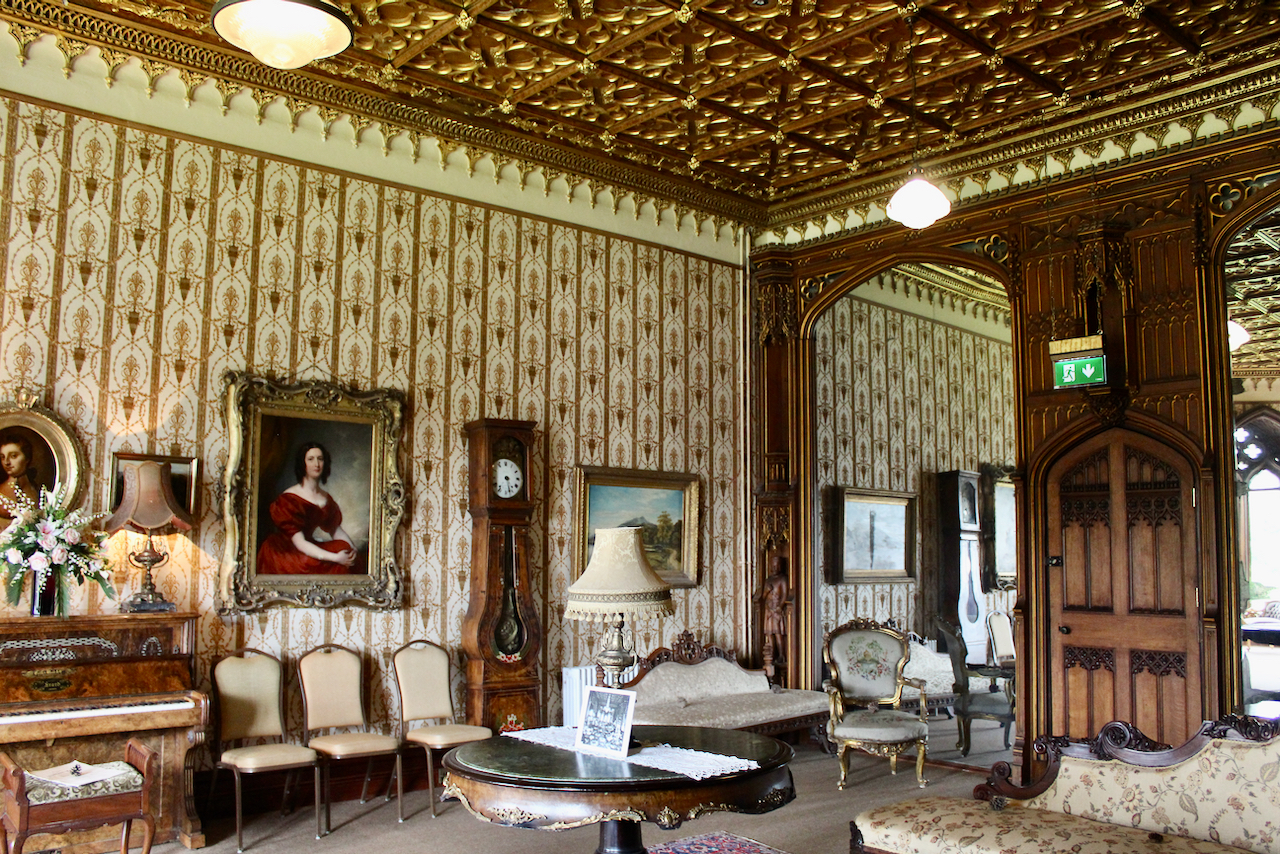
The Principal Drawing Room in Johnstown Castle. Photograph © Jennifer Winder-Baggot, www.irishhistorichouses.com
Johnstown Castle, our tour guide, Mary. Photograph © Jennifer Winder-Baggot, www.irishhistorichouses.com
A photograph of how the room with the large mirrors used to look.
Detail of the ceiling. Photograph © Jennifer Winder-Baggot, www.irishhistorichouses.com
The principal Drawing Room. Photograph © Jennifer Winder-Baggot, www.irishhistorichouses.com
Jane Colclough Grogan Morgan – who married George Arthur Hastings Forbes and became Countess Granard.
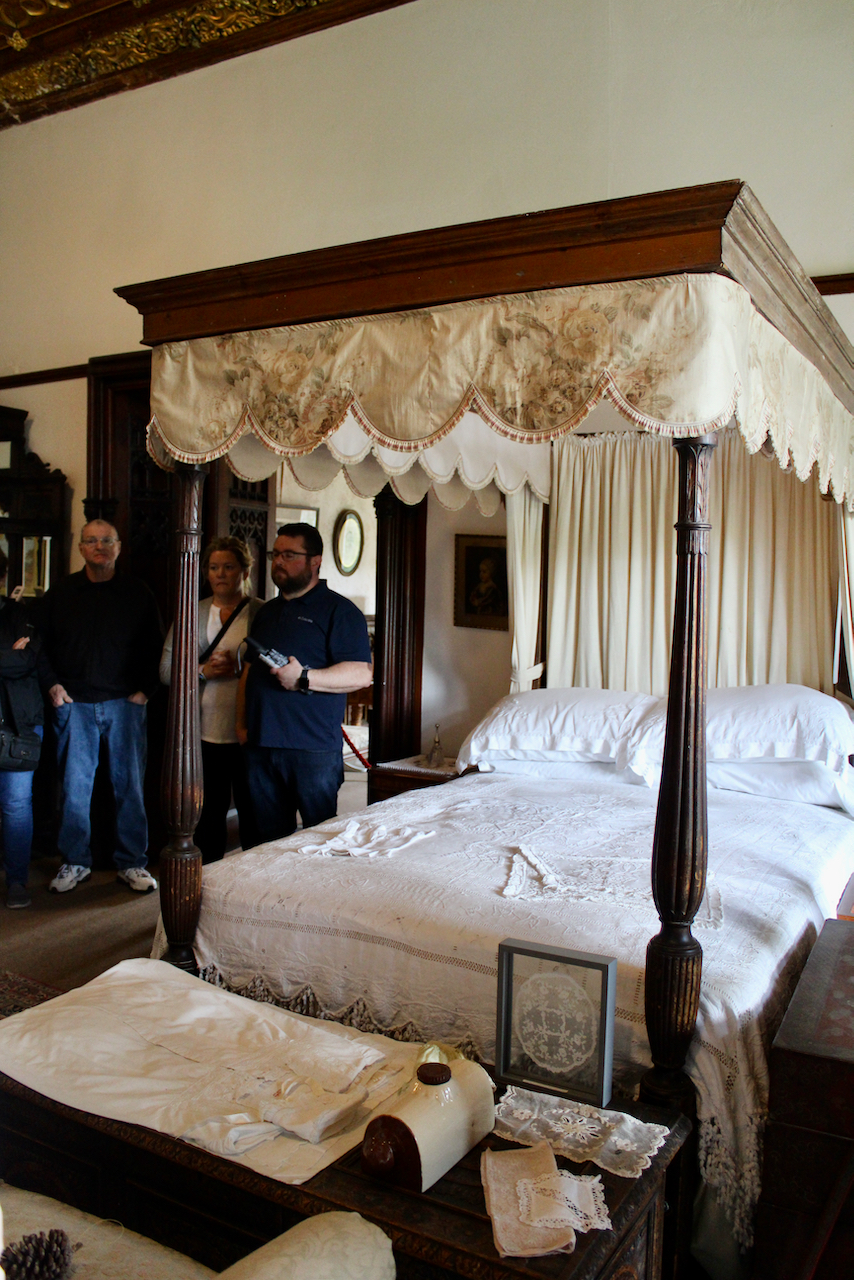
A bedroom in Johnstown Castle. Photograph © Jennifer Winder-Baggot, www.irishhistorichouses.com
The door carvings are magnificent, even into a bathroom. Photograph © Jennifer Winder-Baggot, www.irishhistorichouses.com
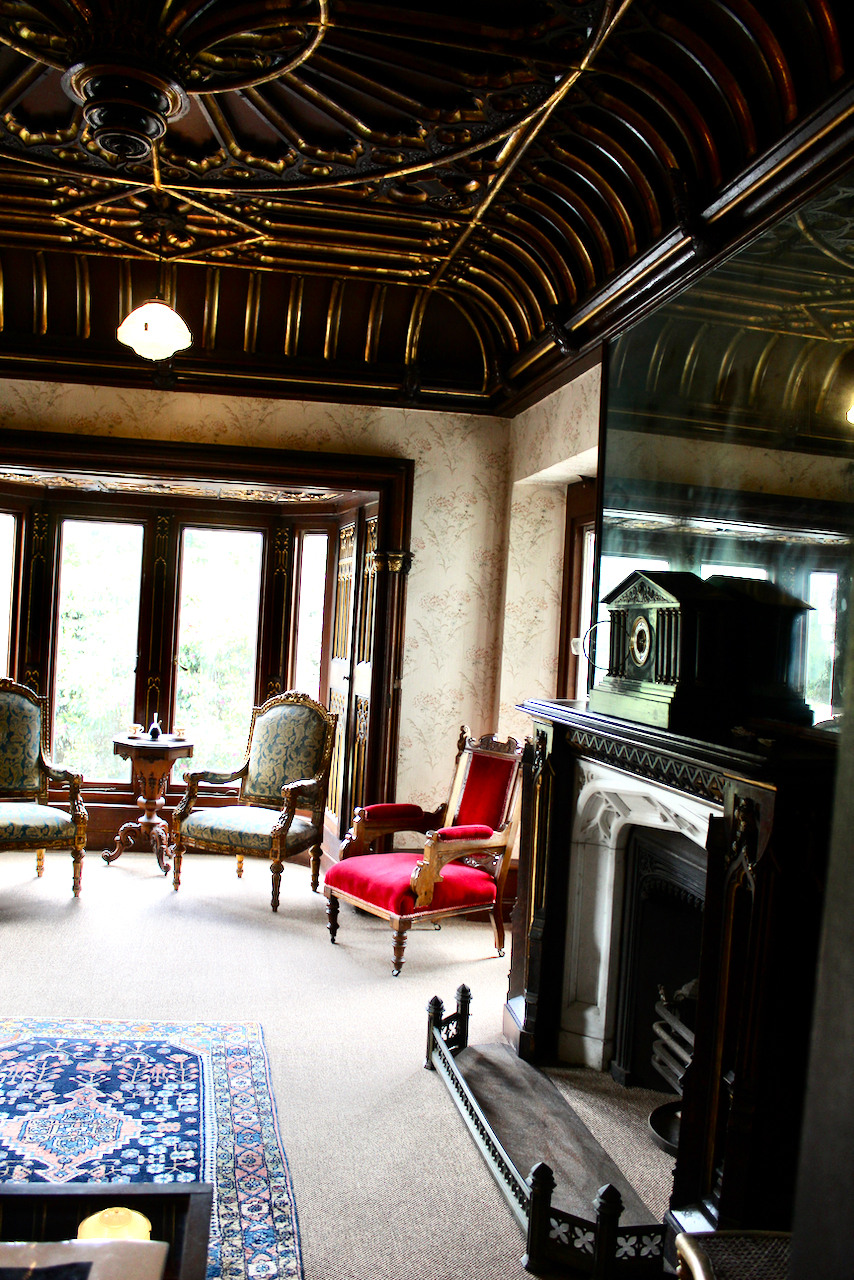
Chimneypiece detail in Johnstown Castle. Photograph © Jennifer Winder-Baggot, www.irishhistorichouses.com
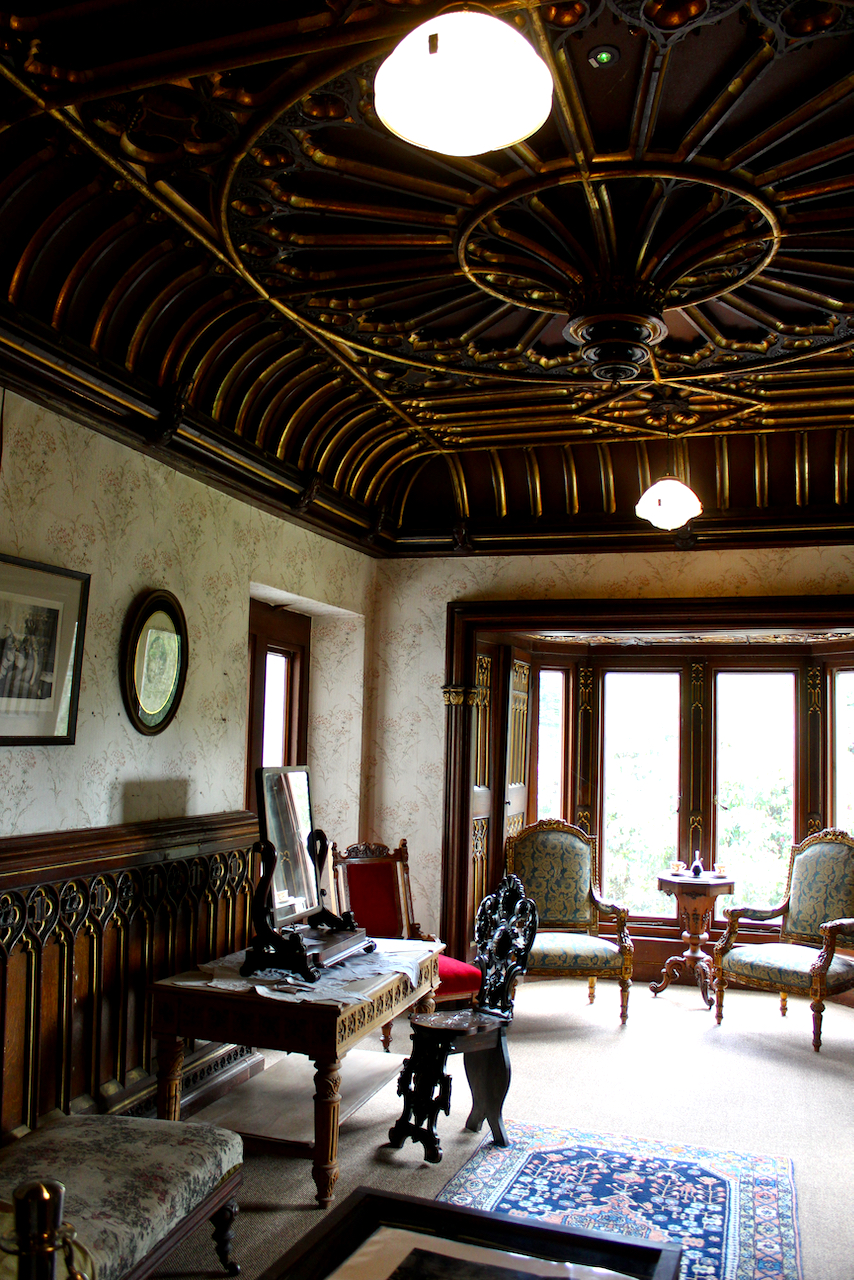
Another splendid ceiling in Johnstown Castle. Photograph © Jennifer Winder-Baggot, www.irishhistorichouses.com
This room has a fine chimneypiece also, in Johnstown Castle. Photograph © Jennifer Winder-Baggot, www.irishhistorichouses.com
I liked this tabletop mirror with its detailed carvings that remind me of Jacobean furniture carvings. Photograph © Jennifer Winder-Baggot, www.irishhistorichouses.com
In this photograph we see the old laboratory that was set up for the agricultural school. Photograph © Jennifer Winder-Baggot, www.irishhistorichouses.com
The laboratory room in Johnstown Castle. Photograph © Jennifer Winder-Baggot, www.irishhistorichouses.com

The castle hosted students from the Botanic Gardens from 1949-56. Our guide told us about Tom Walsh, I jotted down a note that he was the first agricultural student in Ireland, who sent students to America. They returned and took soil samples, and now we have the best quality beef and dairy industry in the world, due to the work done with soil. It was another Tom Walsh who started the Wexford Opera Festival.
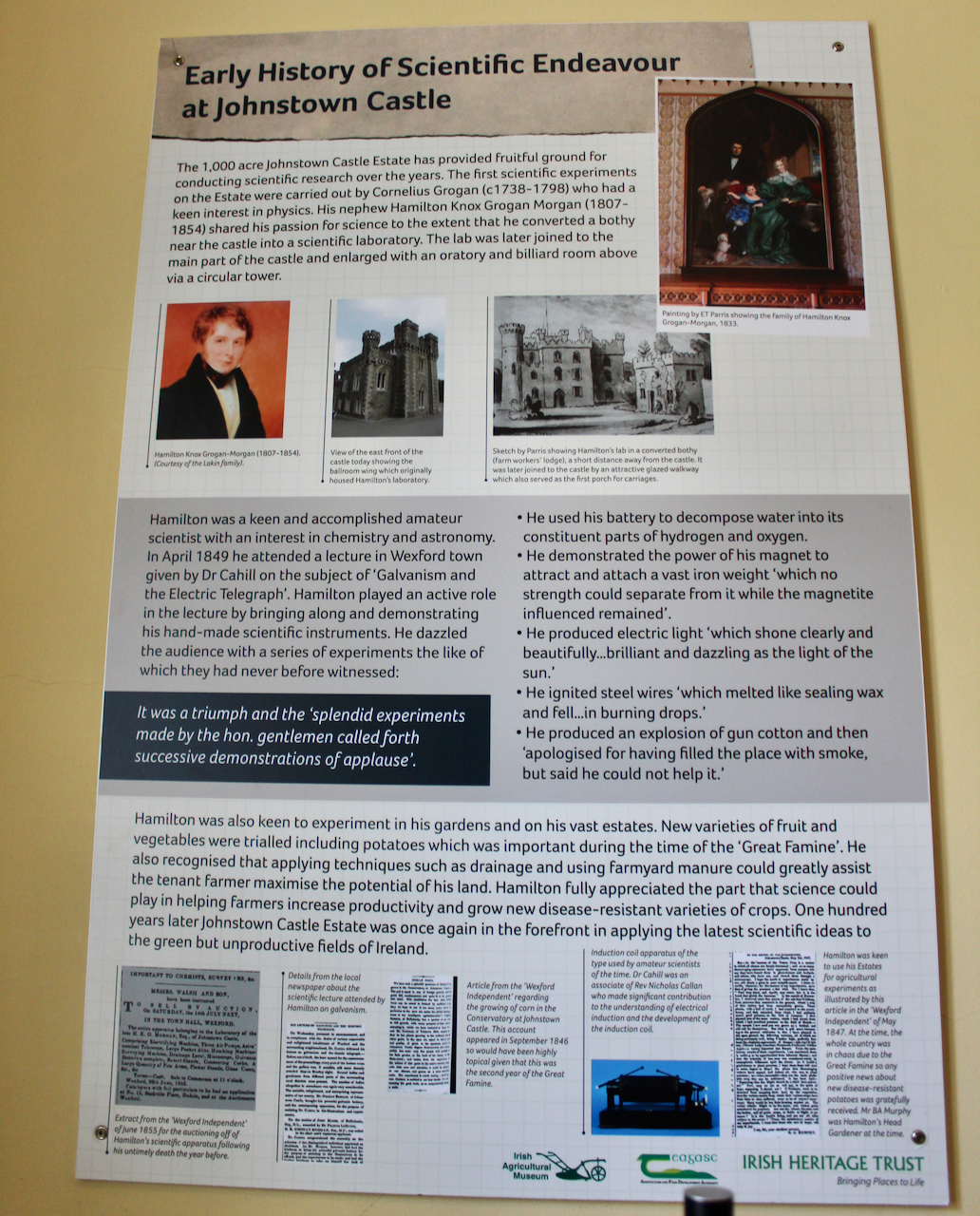
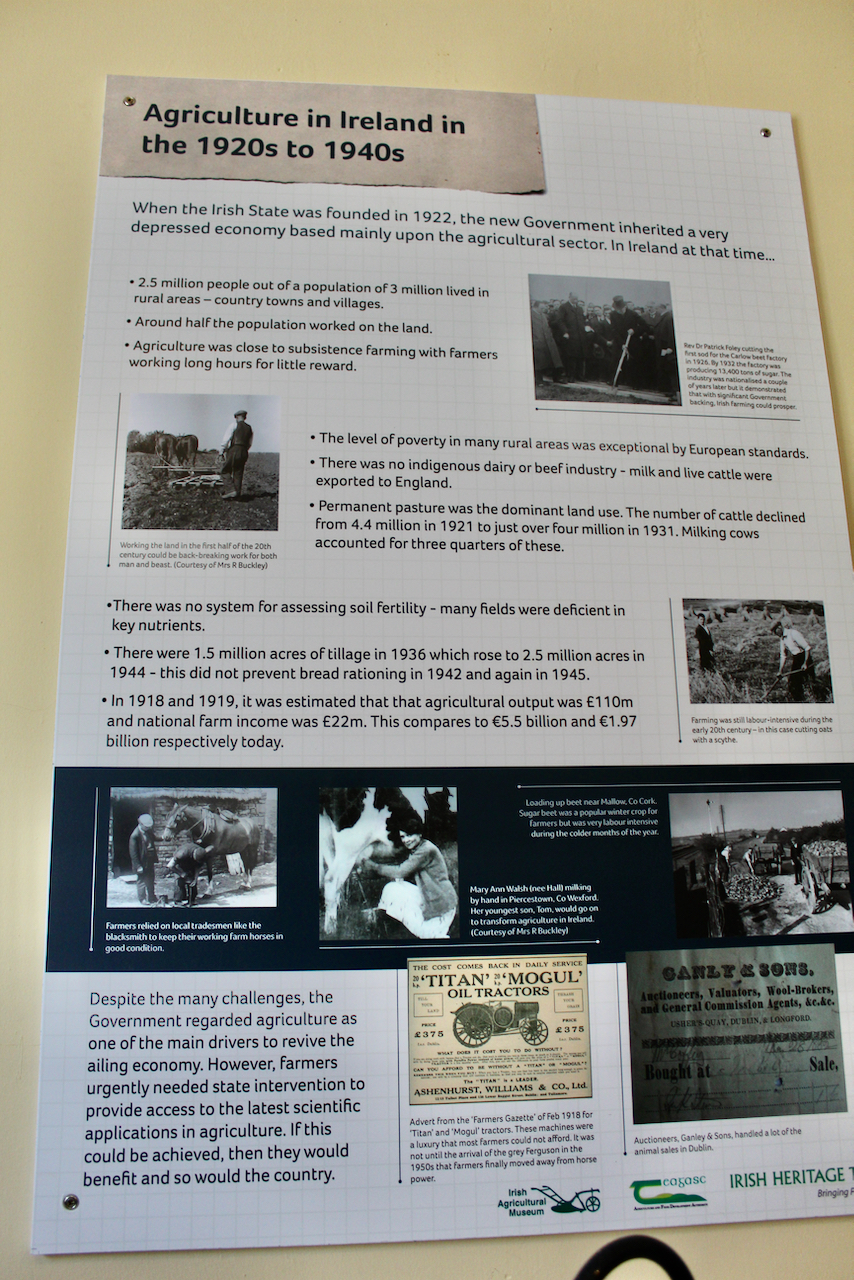
Information board at Johnstown Castle.

After learning about the agricultural work carried out in Johnstown Castle we went to the basement to see the kitchen and servants areas.
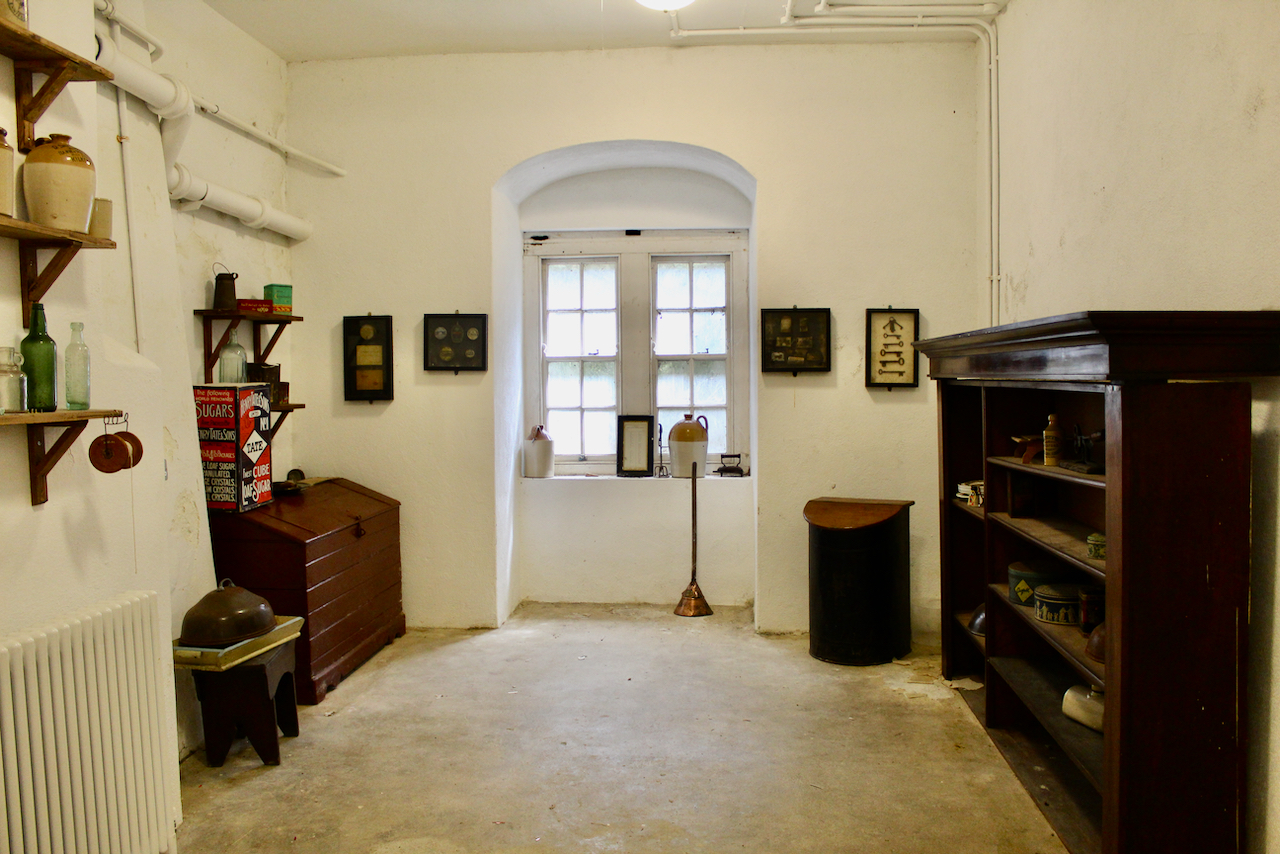
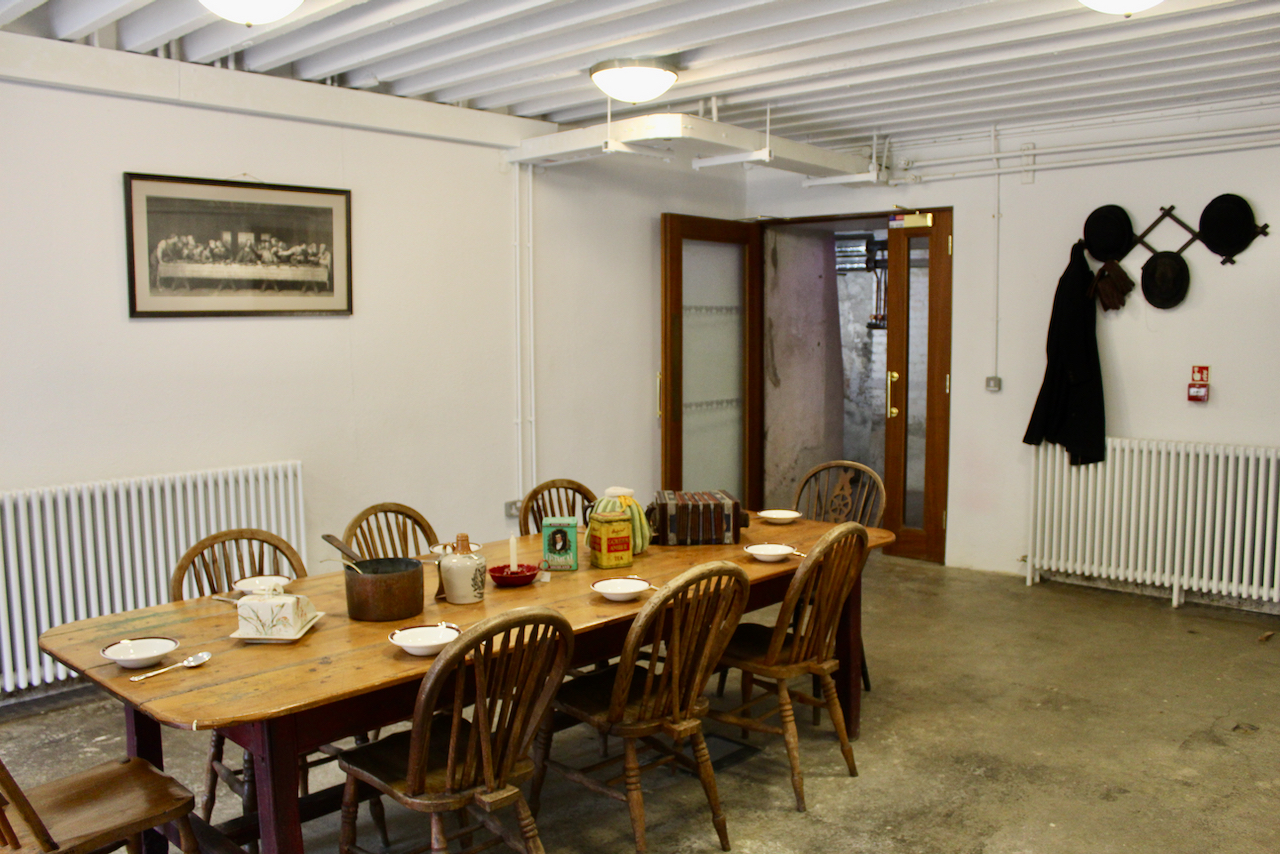
Basement of Johnstown Castle. Photograph © Jennifer Winder-Baggot, www.irishhistorichouses.com
The Servants dining area. Photograph © Jennifer Winder-Baggot, www.irishhistorichouses.com
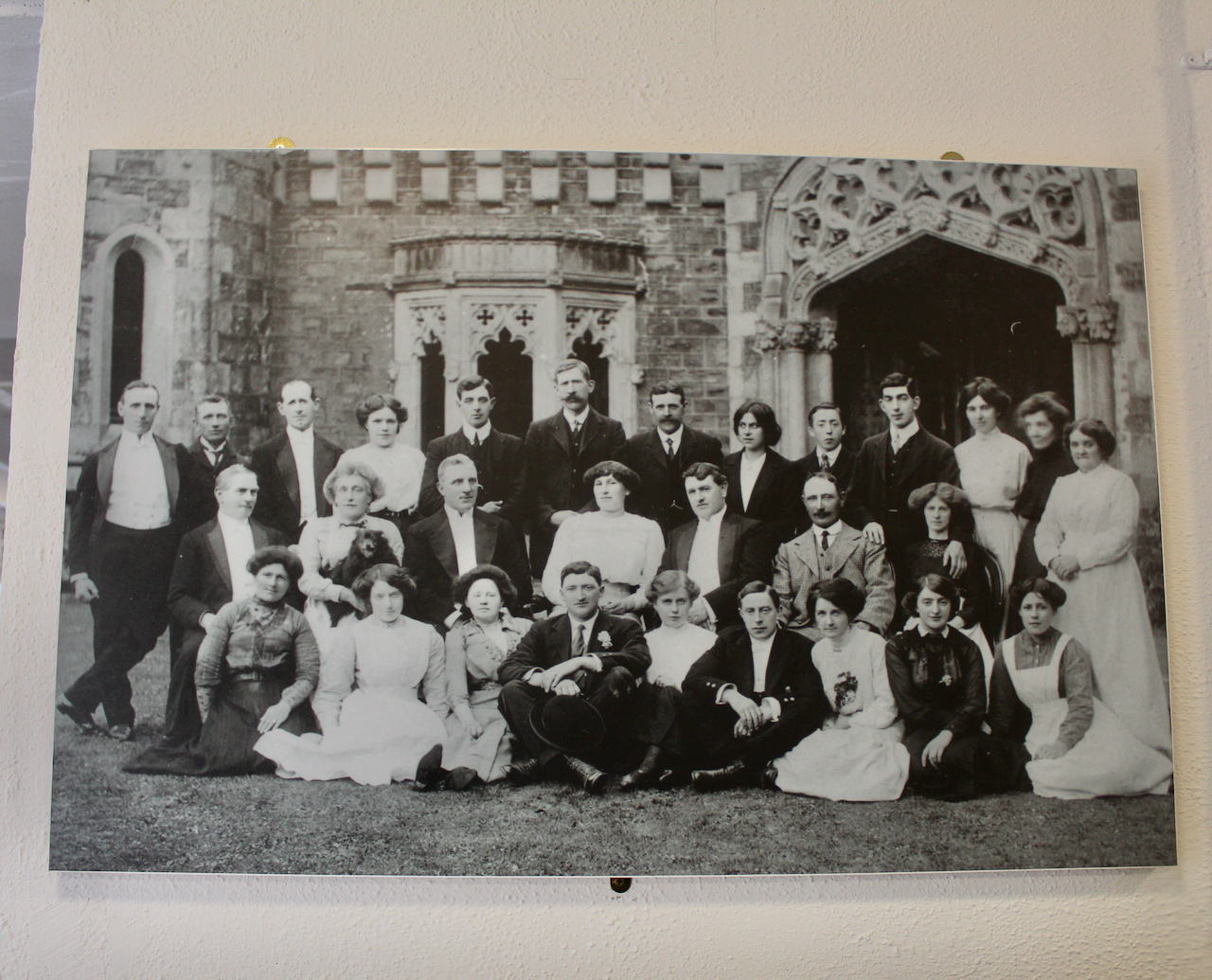
The servants.
Information at Johnstown Castle.
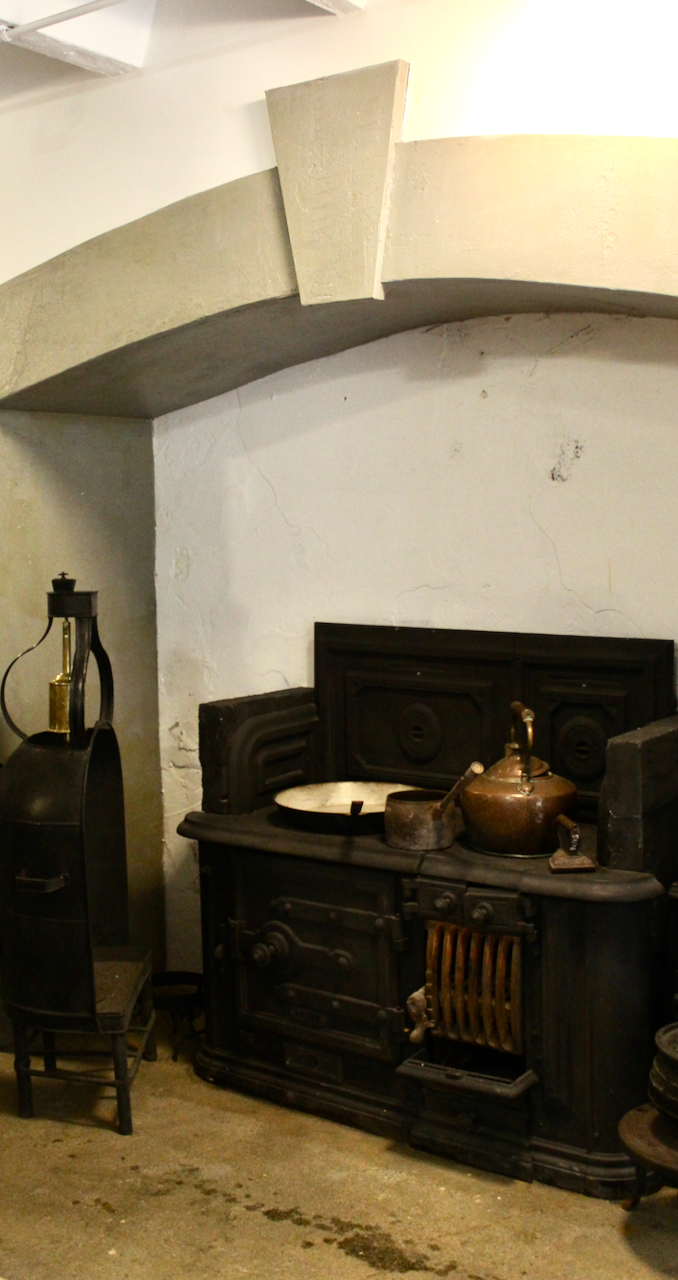
The range in the kitchenit is not the original. Photograph © Jennifer Winder-Baggot, www.irishhistorichouses.com
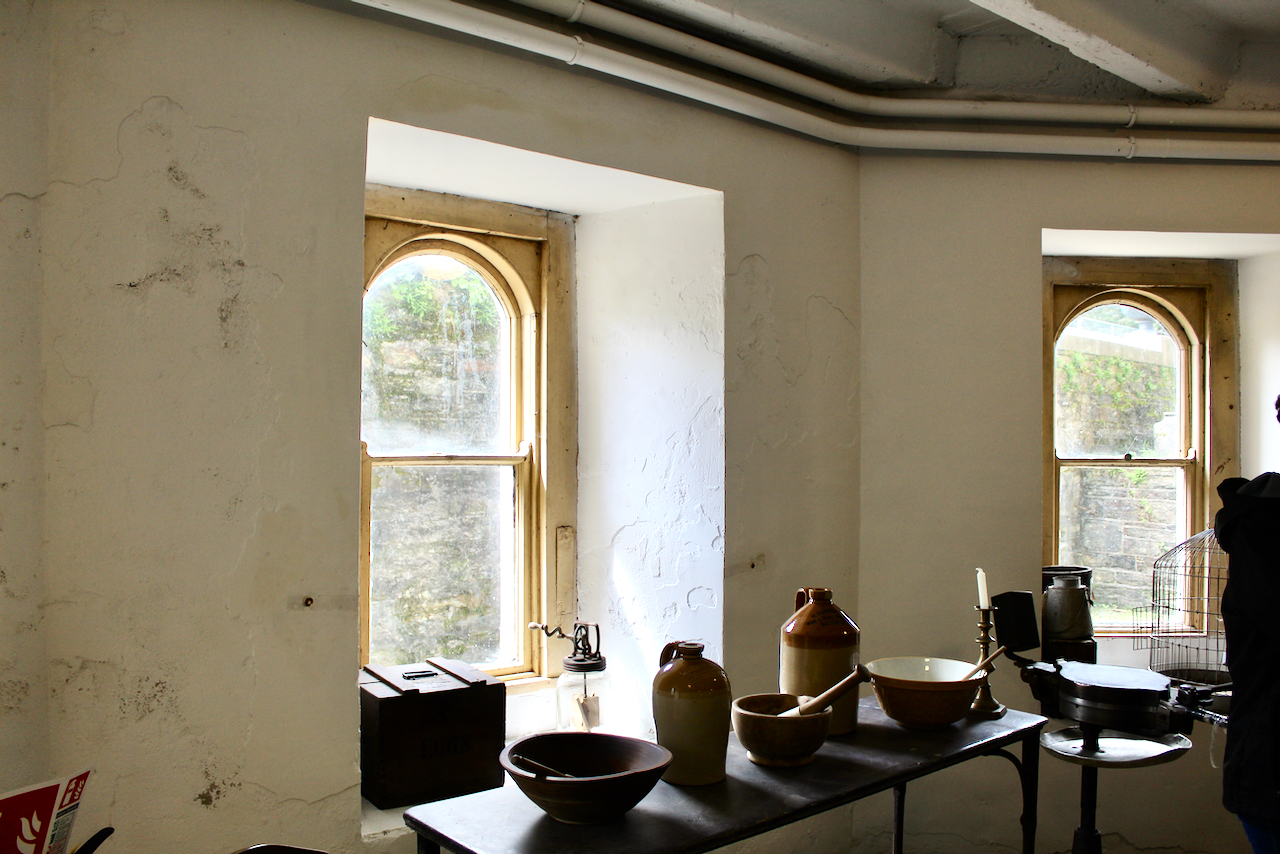
Despite being in the basement, windows let in the light. Photograph © Jennifer Winder-Baggot, www.irishhistorichouses.com
The bright basement. Photograph © Jennifer Winder-Baggot, www.irishhistorichouses.com
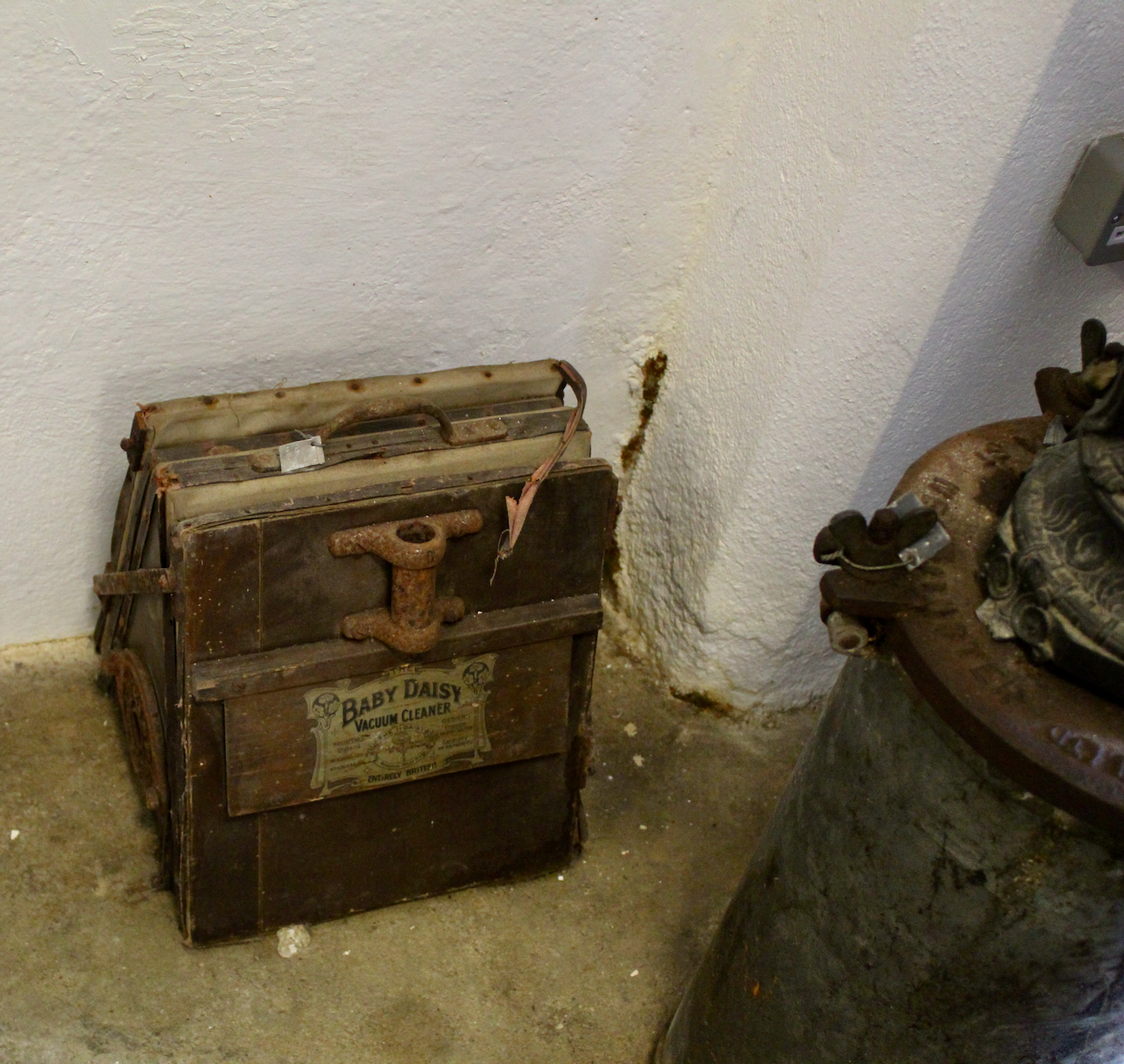
Part of an old vacuum cleaner! Photograph © Jennifer Winder-Baggot, www.irishhistorichouses.com

We left the castle through the servants and goods entrance, a tunnel from the basement that is 85 metres long! It is the longest such tunnel in Ireland.

The beginning of the 85 metre servants tunnel. Photograph © Jennifer Winder-Baggot, www.irishhistorichouses.com
The tunnel exits through this white door. The tower is called the Meat House. Photograph © Jennifer Winder-Baggot, www.irishhistorichouses.com
Map of the estate.
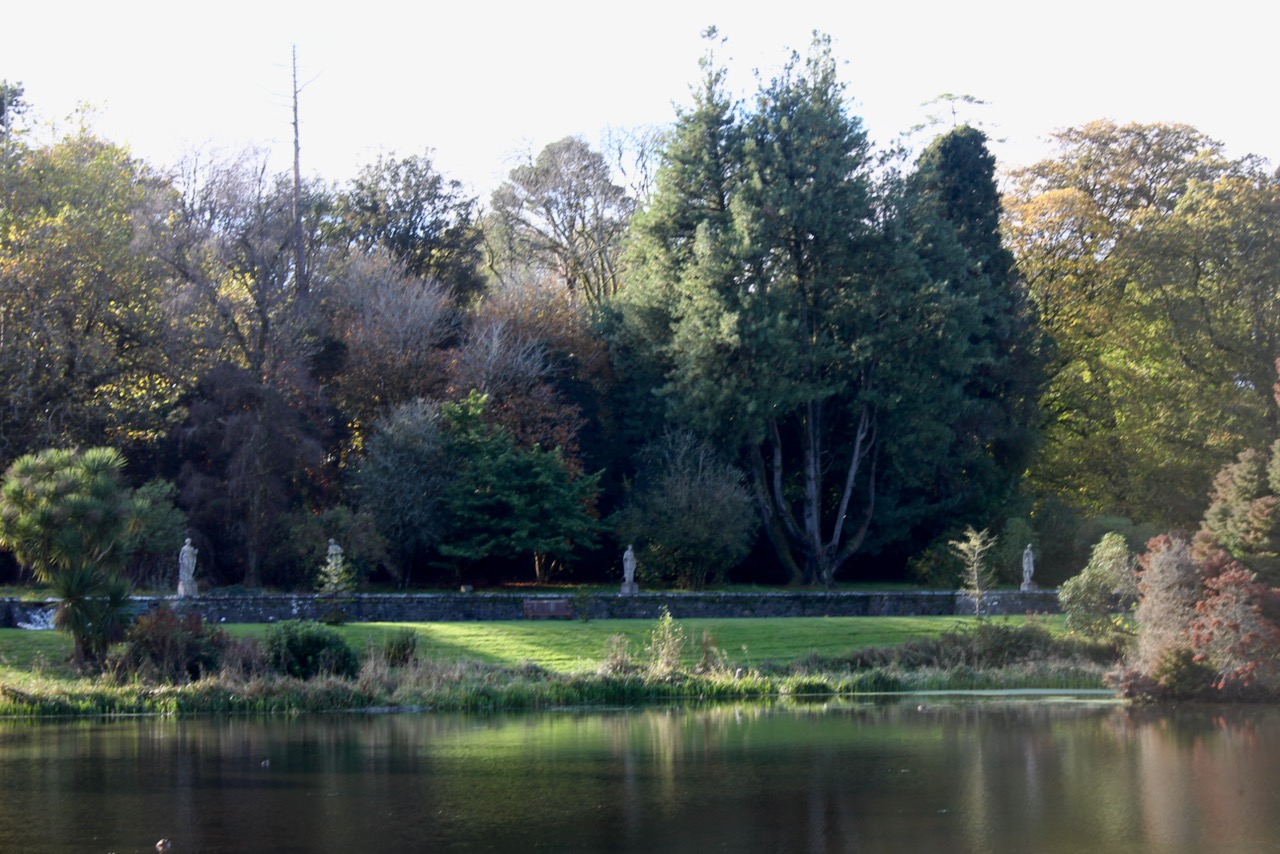
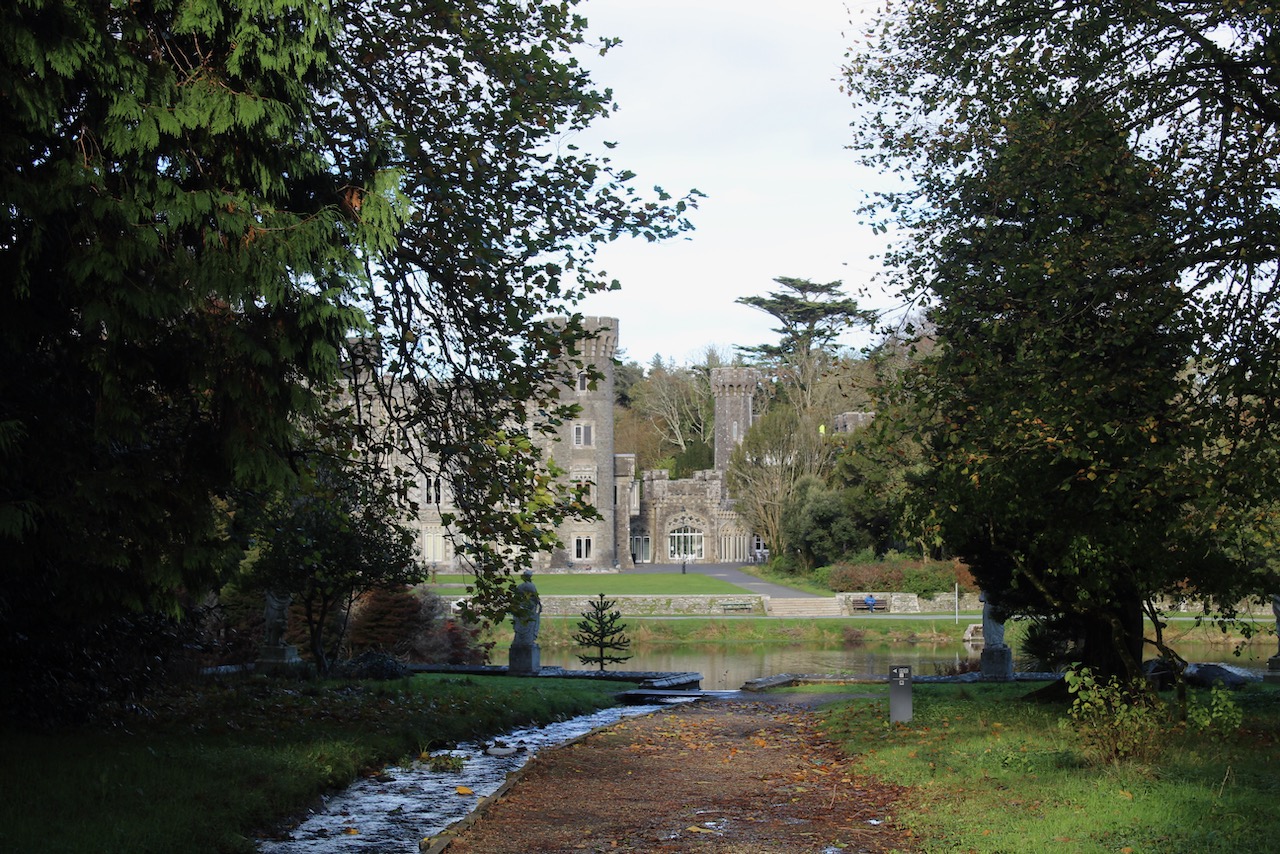
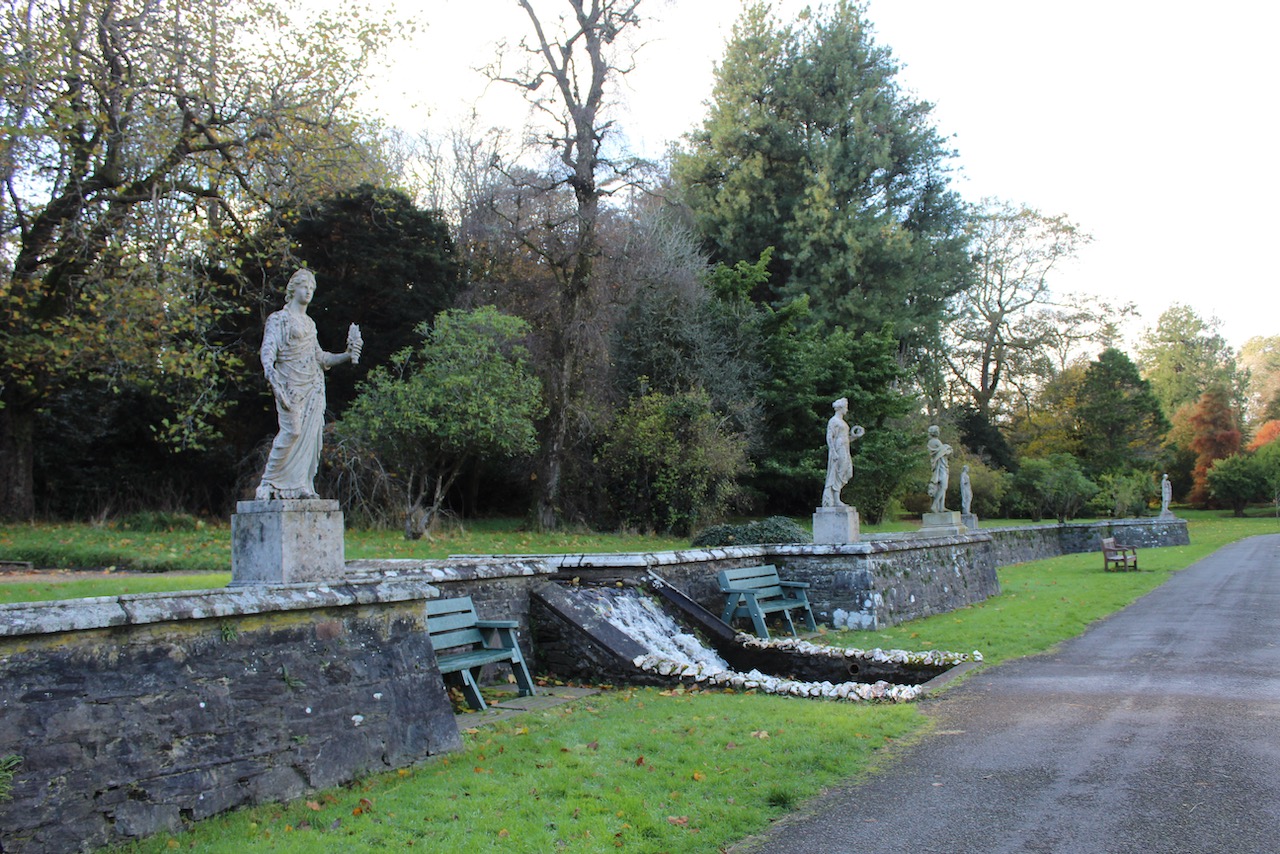
Johnstown Castle stands in a lush setting of lawns and exotic trees and shrubs, overlooking a lake with has a Gothic tower rising from its waters and a terrace lined with statues on its far side. Photograph © Jennifer Winder-Baggot, www.irishhistorichouses.com
Johnstown Castle, County Wexford. Photograph © Jennifer Winder-Baggot, www.irishhistorichouses.com
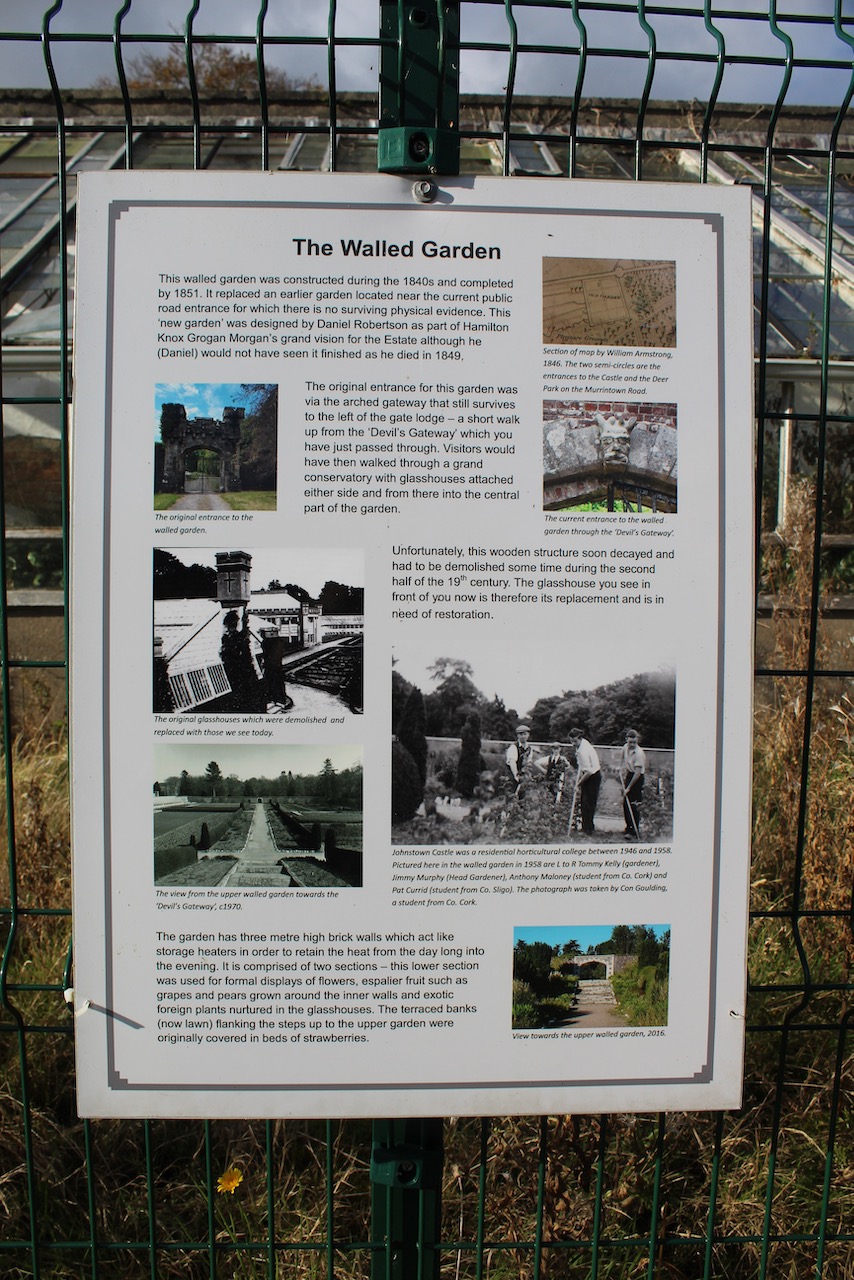
The National Inventory continues: “Furthermore, a “Terrace Garden”; a stable complex; folly-like towers and turrets overlooking an artificial lake ; a walled garden; and nearby gate lodges, all continue to contribute positively to the group and setting values of a largely intact estate.

Johnstown Castle, County Wexford. Photograph © Jennifer Winder-Baggot, www.irishhistorichouses.com
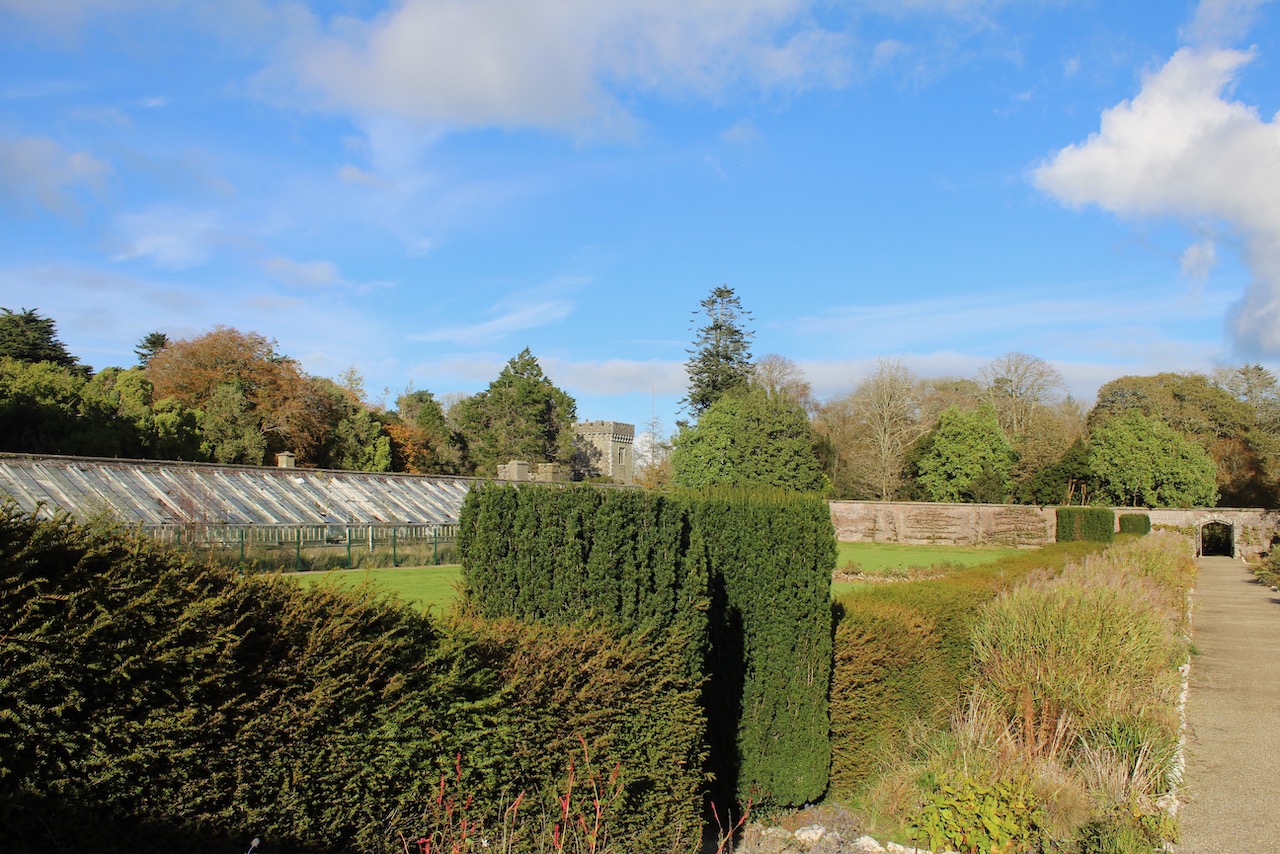
Walled garden, Johnstown Castle, County Wexford, November 2021. Photograph © Jennifer Winder-Baggot, www.irishhistorichouses.com
Entrance to Johnstown Castle estate, County Wexford.
Johnstown Castle, County Wexford. Photograph © Jennifer Winder-Baggot, www.irishhistorichouses.com
Stable Complex, Johnstown Castle, County Wexford, November 2021.

[1] https://www.archiseek.com/2014/johnstown-castle-county-wexford/

[2] Kavanagh, Art and Rory Murphy, The Wexford Gentry. Published by Irish Family Names, Bunclody, Co Wexford, Ireland, 1994.

[3] Gaul, Liam. Johnstown Castle A History. The History Press, 2014.

[4] https://www.buildingsofireland.ie/buildings-search/building/15704226/johnstown-castle-johnstown-fo-by-wexford

Text © Jennifer Winder-Baggot, www.irishhistorichouses.com

Portraits F

Today I am continuing to publish the portraits I have gathered so far. I’ll be adding to this list as I go. Eventually I hope to create a new website with a virtual gallery of portraits. Maybe we can find a home for an in-person museum at some point! Wouldn’t the Bank of Ireland on College Green, the former Parliament House, make a wonderful building for a National Portrait Gallery?

Also, I notice that we can welcome a new property to the Section 482 list:

Millbrook House
Kilkea, Beaconstown, Castledermot, Co. Kildare
R14Y319
Open dates in 2024: May 17- 31, Aug 12-31, Sept 7-16, Dec 17-31, 9am-1pm
Fee: Adult €8, student/OAP/groups €5

I look forward to visiting!

I usually like to publish a new post every Thursday, but I’m publishing one today as I’ll hopefully publish another tomorrow! I still have eighteen properties I have already visited to write up, so I’m working away. Also I’m gearing up for Heritage week August 12-20th when I hope to visit as many properties as possible. All of the Section 482 properties, except those listed as “Tourist Accommodation” should be open, so I hope you get to visit some as well!

F

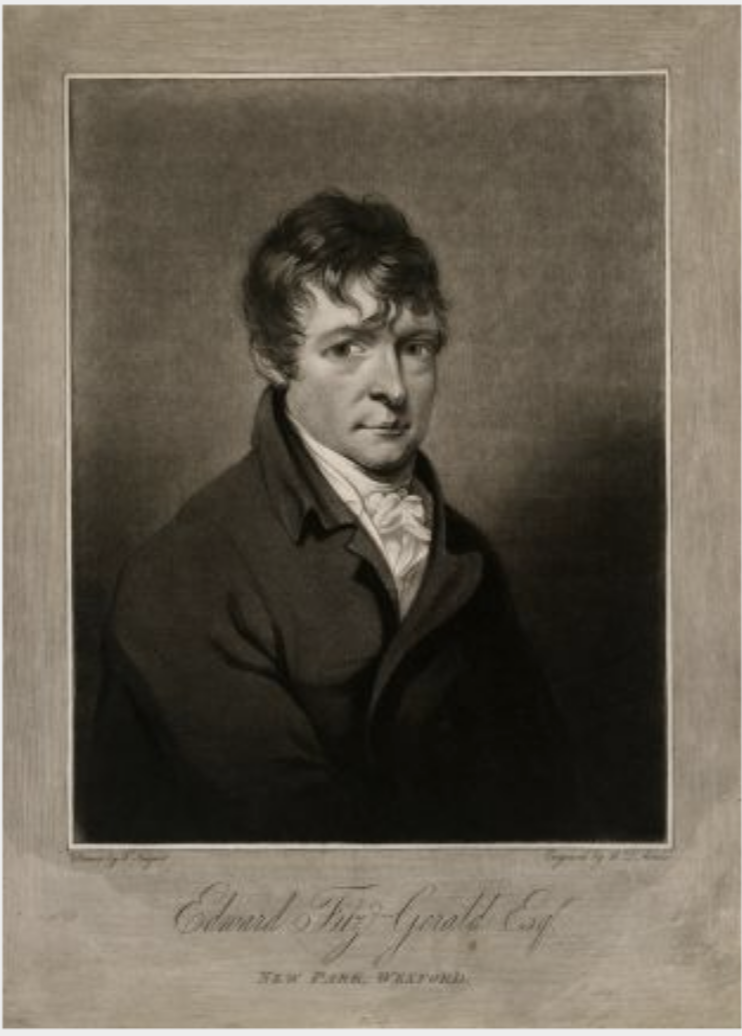
Edward Fitzgerald of New Park, County Wexford (1770-1807), Revolutionary Engraver W.T. Annis After Thomas Nugent, courtesy of National Gallery of Ireland.
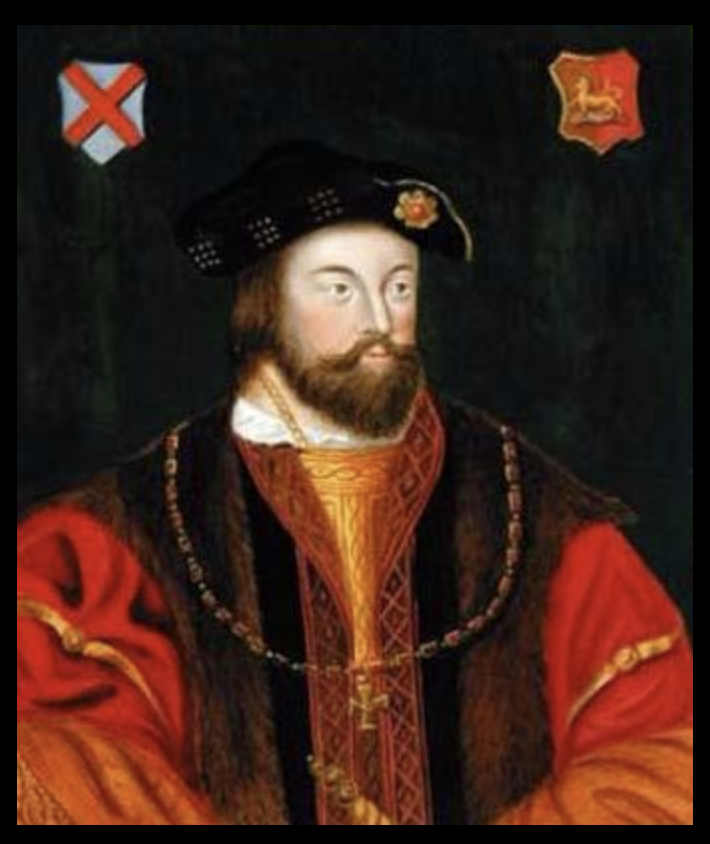
Gerald Fitzgerald (1487-1534) 9th Earl of Kildare, courtesy of Bodleian Libraries.

Gerald Fitzgerald (1487-1534) 9th Earl of Kildare was the son of Gerald FitzGerald, 8th Earl of Kildare and Alison Eustace. He married, first, Elizabeth Zouche (d. 1517).

Their daughter Catherine married Jenico Preston, 3rd Viscount Gormanston, and secondly, Richard St. Lawrence 6th Baron Howth. Their daughter Cecilia married Cahir Mac Art Boy Kavanagh, Baron of Ballyanne, The MacMorrough. Their daughter Ellis married James Fleming 9th Lord Slane. Their son Thomas Fitzgerald (1513-1536/7) became 10th Earl of Kildare.

Thomas FitzGerald (1513-1536/7) 10th Earl of Kildare, “Silken Thomas,” c. 1530 attributed to Anthony Van Dyck. He had no offspring.

Gerald Fitzgerald (1487-1534) 9th Earl of Kildare married secondly Elizabeth daughter of Thomas Grey 1st Marquess of Dorset, and they had several more children. Their daughter Elizabeth (1528-1589/90) married first Anthony Browne, Joint Keeper of Windsor Great Park on 29 January 1528/29, with his brother 1st Earl of Southampton. She married secondly Edward Clinton, 1st Earl of Lincoln. Gerald 9th Earl and Elizabeth had a son Gerald FitzGerald (1525-1585) who became 1st/11th Earl of Kildare. He was called ‘The Wizard Earl’. He held the office of Master of Horse to Cosimo de’ Medici, Duke of Florence.

A younger brother of the Wizard Earl, Edward (1528-1590), was the father of Gerald FitzGerald (d. 1611/12) 14th Earl of Kildare.

The 11th Earl, the Wizard Earl, married his cousin Mabel Browne. Their daughter Elizabeth (d. 1617) married Donough O’Brien 3rd Earl of Thomond. The 11th Earl’s daughter Mary (d. 1610) married Christopher Nugent 5th Baron Delvin.

A son of the 11th Earl, Henry (1562-1597) became the 12th Earl and was also known as “Henry of the Battleaxes.” He had only daughters so his brother became the 13th Earl. The 12th Earl’s daughter Elizabeth married Lucas Plunkett 1st Earl of Fingall. His daughter Bridget married first Ruaidhri O’Donnell, 1st Earl of Tyrconnell, then Nicholas Barnewall, 1st Viscount Barnewall of Kingsland.

William FitzGerald (d. 1599) 3rd/13th Earl of Kildare was another son of Gerald FitzGerald, 1st/11th Earl of Kildare. He died circa April 1599, lost at sea while crossing from England to Ireland, unmarried. The title went to his uncle Edward’s (1528-1590) son Gerald FitzGerald (d. 1611/12) who became 14th Earl of Kildare.

Gerald FitzGerald (d. 1611/12) 14th Earl of Kildare married Elizabeth daughter of Christopher Nugent, 5th Baron Delvin, who gave birth to Gerald FitzGerald (1611-1620) who became 15th Earl of Kildare. The 15th Earl died young. The title passed the 14th Earl’s younger brother’s son, George FitzGerald (1611/12-1660) who became 16th Earl of Kildare.

The 16th Earl married Joan Boyle (1611-1656/7), daughter of Richard Boyle 1st Earl of Cork. Their daughter Elizabeth (d. 1697/98) married Callaghan MacCarty, 3rd Earl of Clancarty. Their daughter Eleanor (d. 1681) married Walter Borrowes, 2nd Bt of Grangemellon, County Kildare. Their son Wentworth FitzGerald (1634-1663/64) became 17th Earl of Kildare.

The 17th Earl married Elizabeth daughter of John Holles, 2nd Earl of Clare.

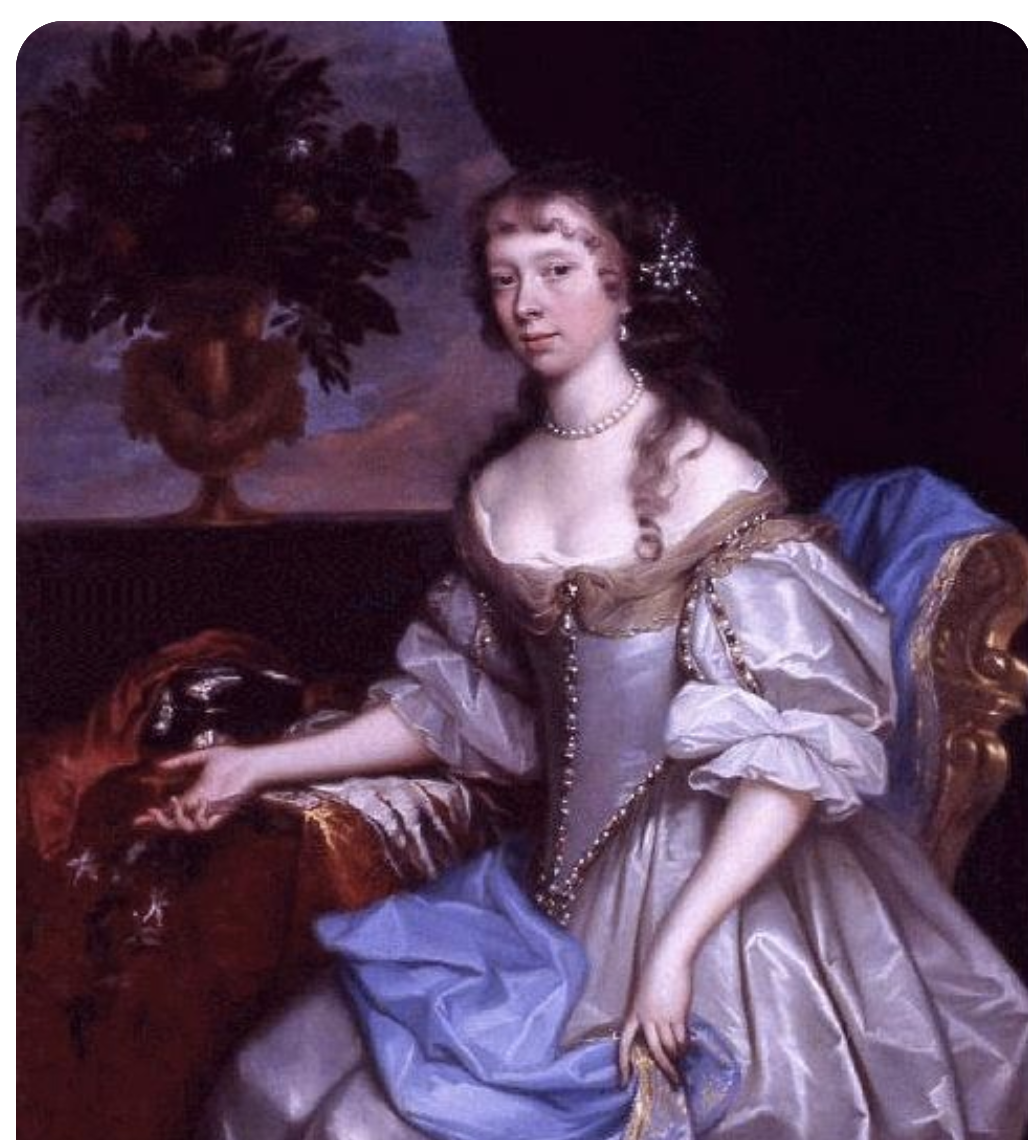
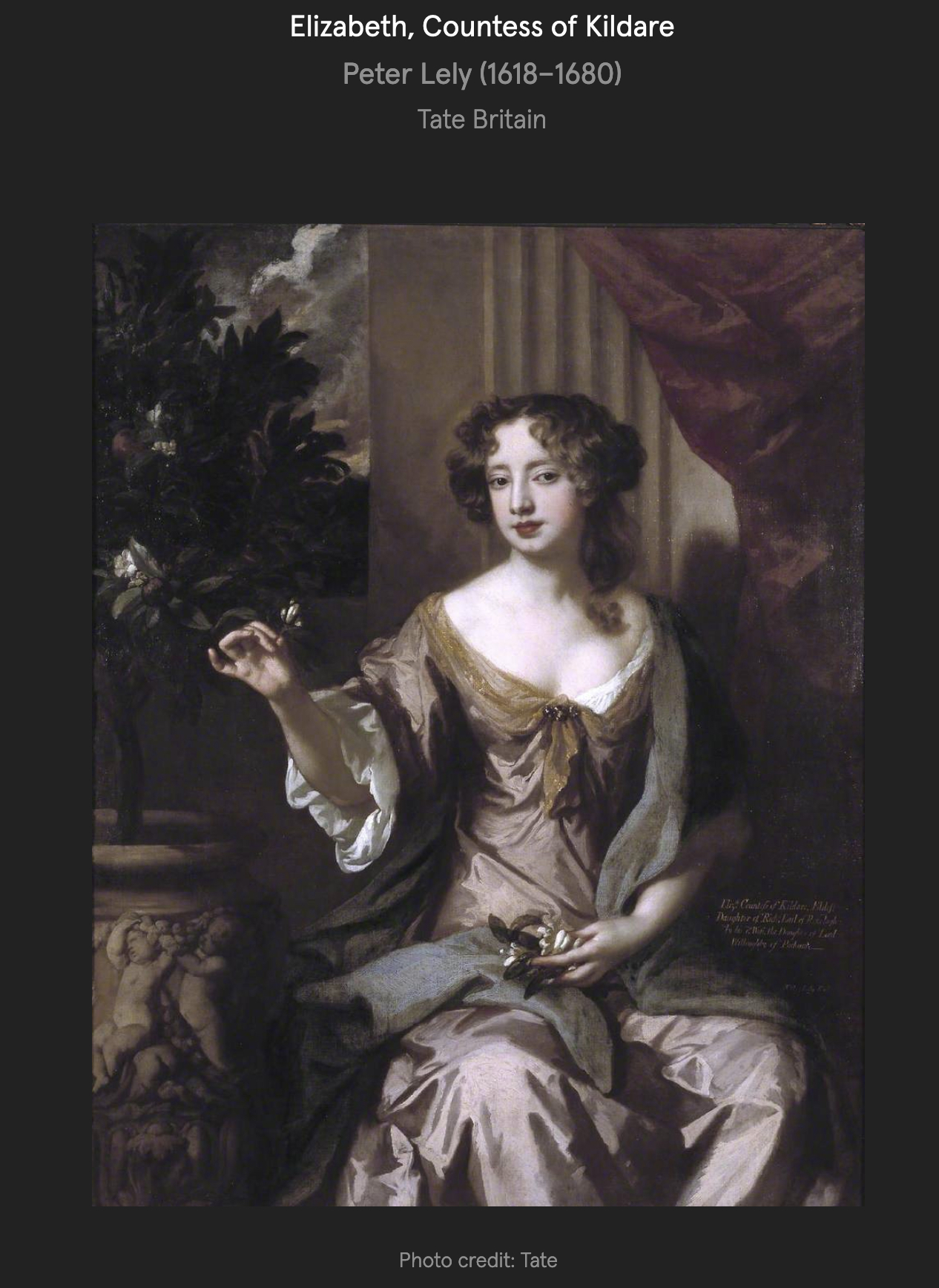
Elizabeth FitzGerald, née Holles, Countess of Kildare, 1660, by John Michael Wright, wife of Wentworth Fitzgerald 17th Earl of Kildare.

Elizabeth and the 17th Earl of Kildare had a son, John FitzGerald (1661-1707) who became 18th Earl of Kildare. The 18th Earl married Mary O’Brien (1662-1683), daughter of Henry O’Brien (d. 1678) , MP for Clare. She gave birth to a son but he died in his first year. The 18th Earl then married Elizabeth daughter Richard Jones, 1st and last Earl of Ranelagh but they had no children.

Elizabeth née Jones (d. 1758), Countess of Kildare wife of 18th Earl, daughter of Richard Jones 1st Earl of Ranelagh by Peter Lely.
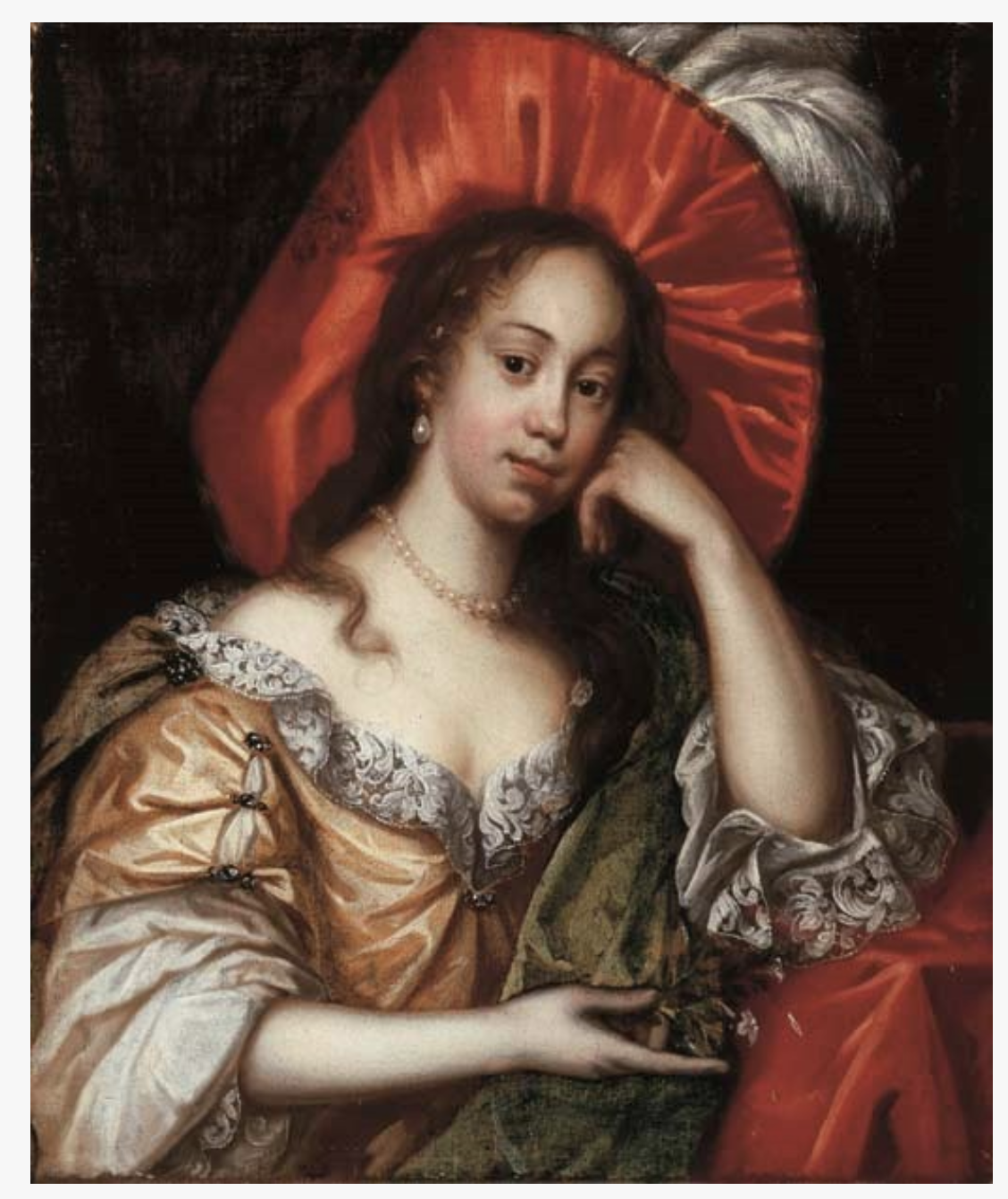
Traditionally identified as Lady Elizabeth Jones, Countess of Kildare (1665-1758), English school c. 1680 courtesy Christies Irish Sale 2003

The title passed to a cousin, Robert Fitzgerald (1675-1744), who became 19th Earl of Kildare. He was the son of Robert Fitzgerald (d. 1697/98), a younger son of George Fitzgerald 16th Earl of Kildare. The 19th Earl’s sister Mary (1666-1697) married John Allen, 1st Viscount Allen of County Kildare.

Robert, 19th Earl of Kildare (1675-1744) after Frederick Graves, courtesy of Adam’s auction 15th Oct 2019. Robert FitzGerald was married to Mary O’Brien, daughter of William O’Brien 3rd Earl of Inchiquin. They had 12 children but only 2 survived to majority. They had lived quietly at Kilkea Castle, near Athy, but in 1739 Robert bought back the lease of Carton, in Maynooth, for £8,000. He commissioned Richard Castle, the eminent architect, to reconstruct the existing house. In the pediment over the South front, previously the main entrance, is the coat of arms of Robert FitzGerald and his wife Mary O’Brien. Robert also employed the La Franchini brothers to construct the wonderful ceiling in the Gold Salon. The additions to Carton were not finished when Robert died in 1744 but he left instructions in his will to finish the restoration according to his plans. A monument dedicated to Robert FitzGerald is situated in Christ Church Cathedral, Dublin. (This portrait hung in Carton until 1949 when the Fitzgerald family sold the estate. It hung in Kilkea Castle until 1960. It was in the FitzGerald family collection in Oxfordshire until 2013.)

Robert FitzGerald 19th Earl of Kildare married Mary O’Brien, daughter of William O’Brien 3rd Earl of Inchiquin. Their daughter Margaretta (d. 1766) married Wills Hill, 1st Earl of Hillsborough, Co. Down, 1st Marquess of Downshire.

Margaretta Fitzgerald (d. 1766) Countess of Hillsborough, daughter of Robert Fitzgerald, 19th Earl of Kildare, attributed to Charles Jervas, courtesy of Fonsie Mealy auction. She married Wills Hill, 1st Earl of Hillsborough, Co. Down, 1st Marquess of Downshire.

A son of Robert 19th Earl and Mary was Richard Fitzgerald who lived at Mount Ophaly in County Kildare and married Margaret (d. 1763) daughter of James King, 4th Baron Kingston. Their other son was James FitzGerald (1722-1773) who became 20th Earl of Kildare and later, 1st Duke of Leinster.

Caroline King née Fitzgerald (c. 1754-1823), daughter of Richard (1733-1776) who was son of Robert, 19th Earl of Kildare. She married Robert King (1754-1799), 2nd Earl of Kingston. Photograph © Jennifer Winder-Baggot, www.irishhistorichouses.com
James Fitzgerald (1722-1773) 20th Earl of Kildare later 1st Duke of Leinster, by Robert Hunter c. 1803, courtesy of National Gallery of Ireland.

James Fitzgerald (1722-1773) 20th Earl of Kildare later 1st Duke of Leinster married Emilia Mary née Lennox (1731-1814), daughter of Charles Lennox, 2nd Duke of Richmond. They had many children, including William Robert Fitzgerald (1749-1804), 2nd Duke of Leinster.

Emilia Mary Fitzgerald née Lennox (1731-1814) Duchess of Leinster, courtesy of National Gallery of Ireland.
Emily Margaret FitzGerald (1751-1818), daughter of 1st Duke of Leinster wife of Charles Coote 1st Earl of Bellomont by H D Hamilton courtesy Fine Art Sale Cheffins 2014.
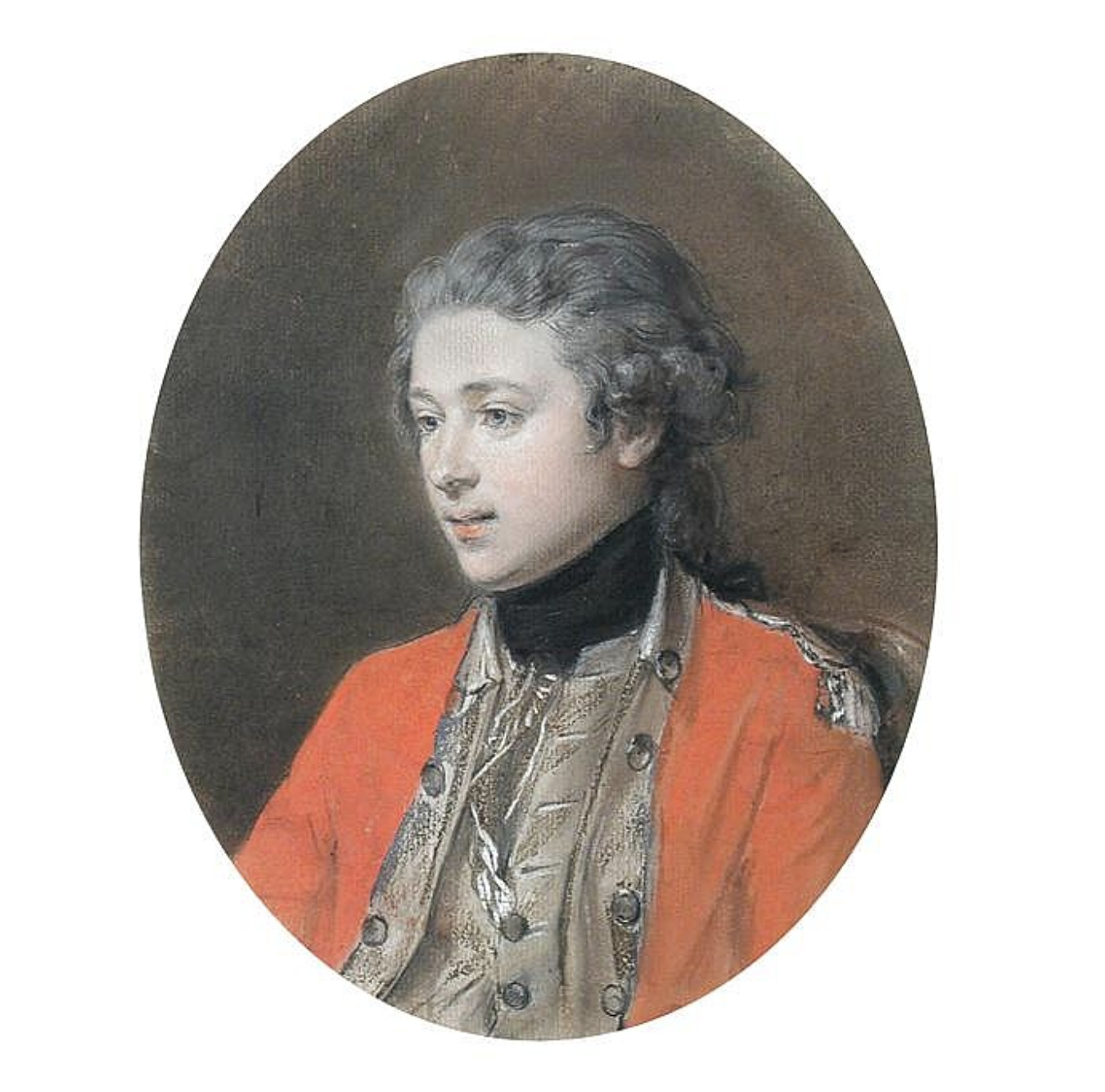
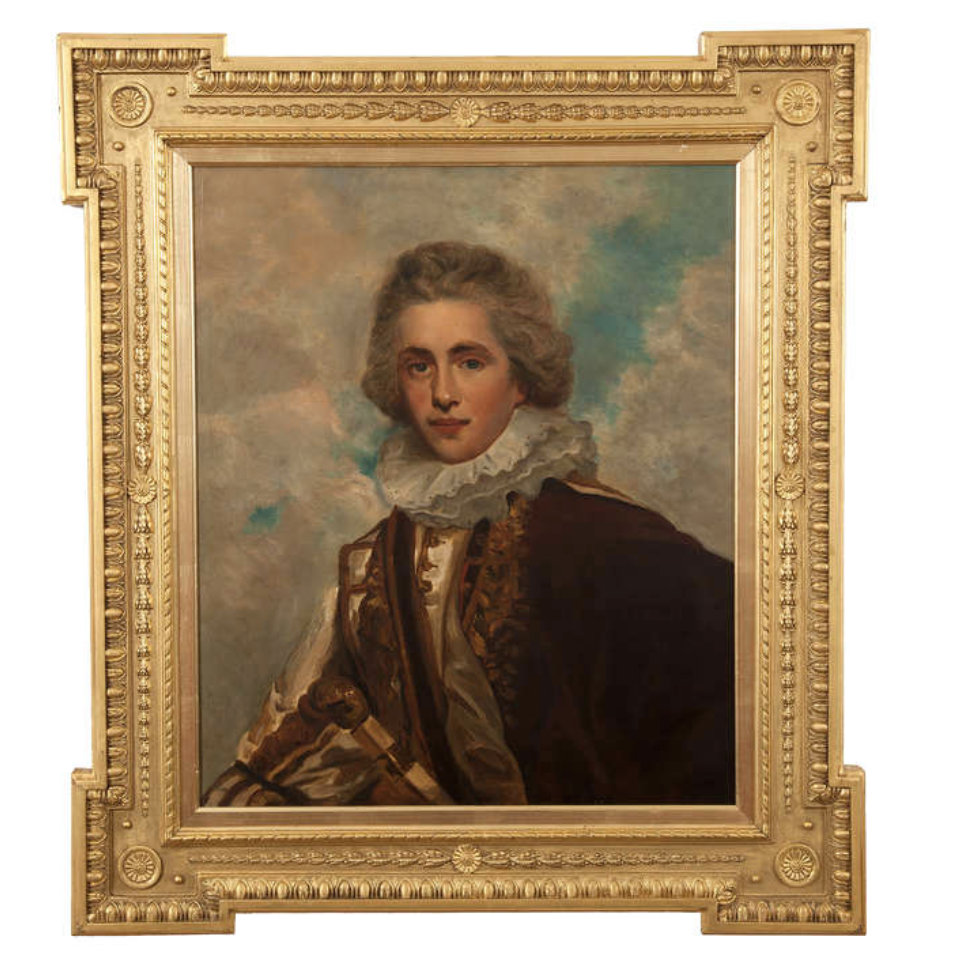
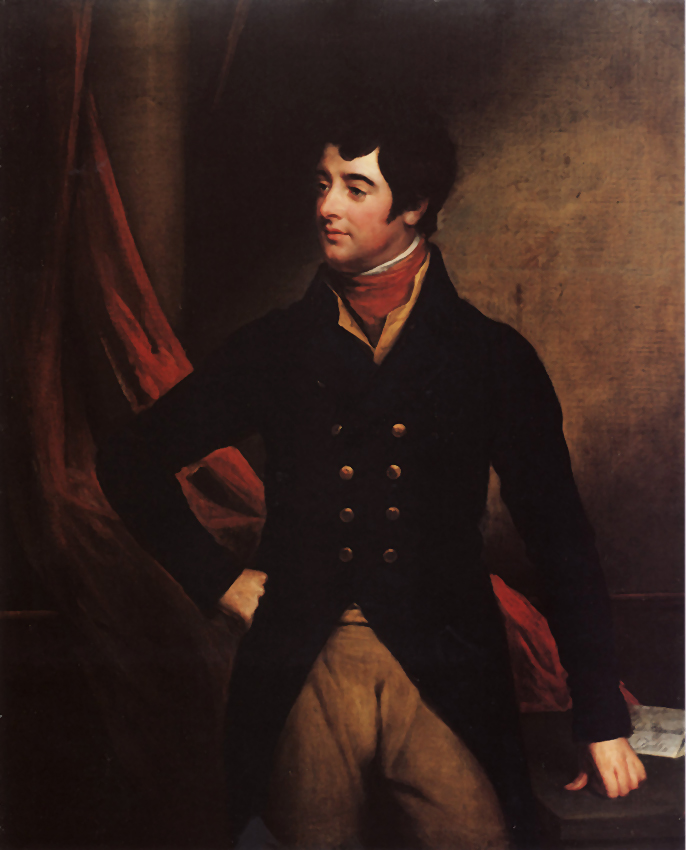
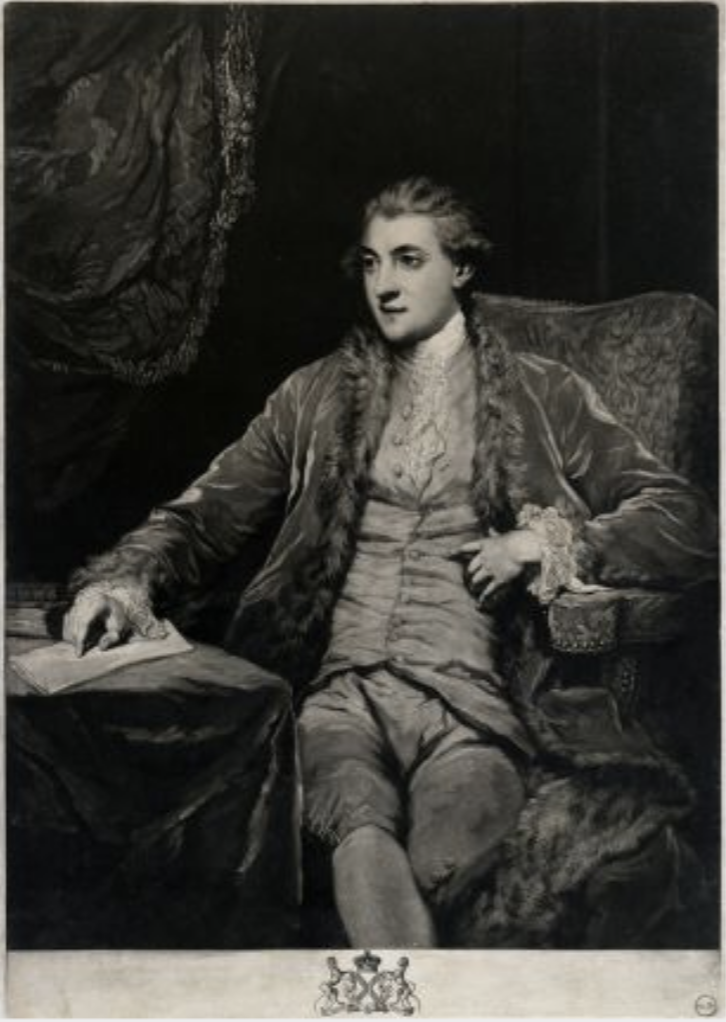
Henry FitzGerald (1761-1829) by Hugh Douglas Hamilton courtesy of Cheffins Fine Art sale 2013. He was a son of the 1st Duke of Leinster and Emily Lennox.
Henry Fitzgerald 1761-1829, son of the 1st Duke of Leinster and Emily Lennox, attributed to John Hoppner, courtesy of Adam’s auction 13 Oct 2015
Edward Fitzgerald (1763-1798), the rebel son of the 1st Duke of Leinster. Photograph © Jennifer Winder-Baggot, www.irishhistorichouses.com
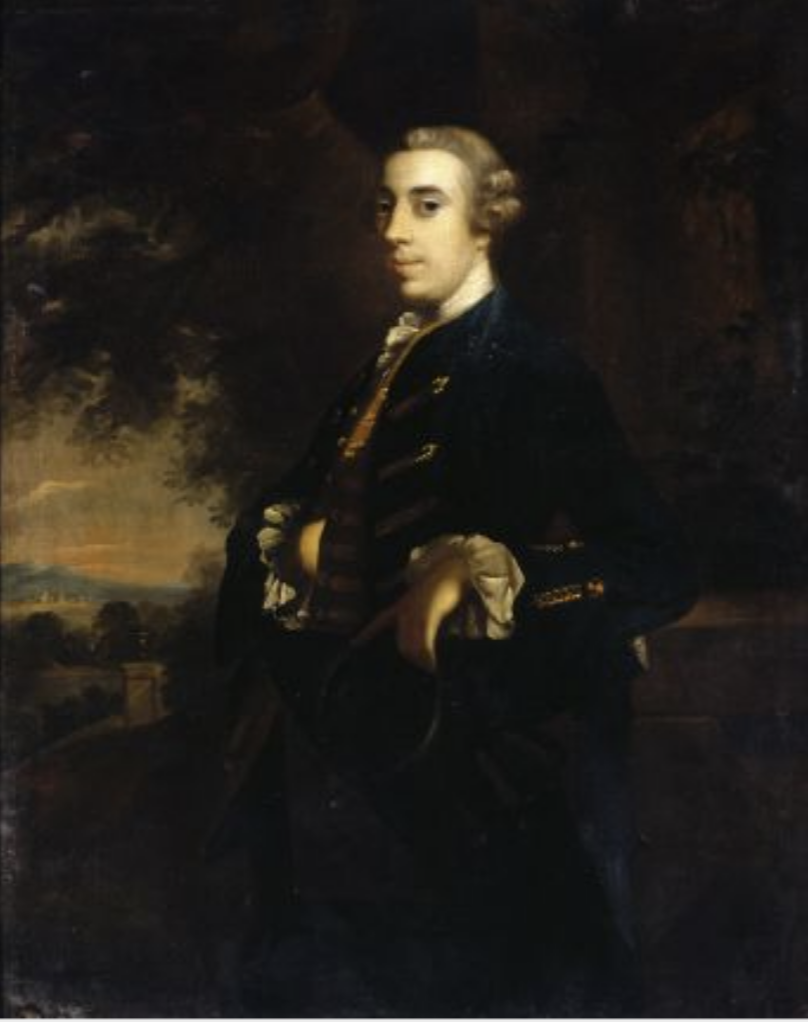
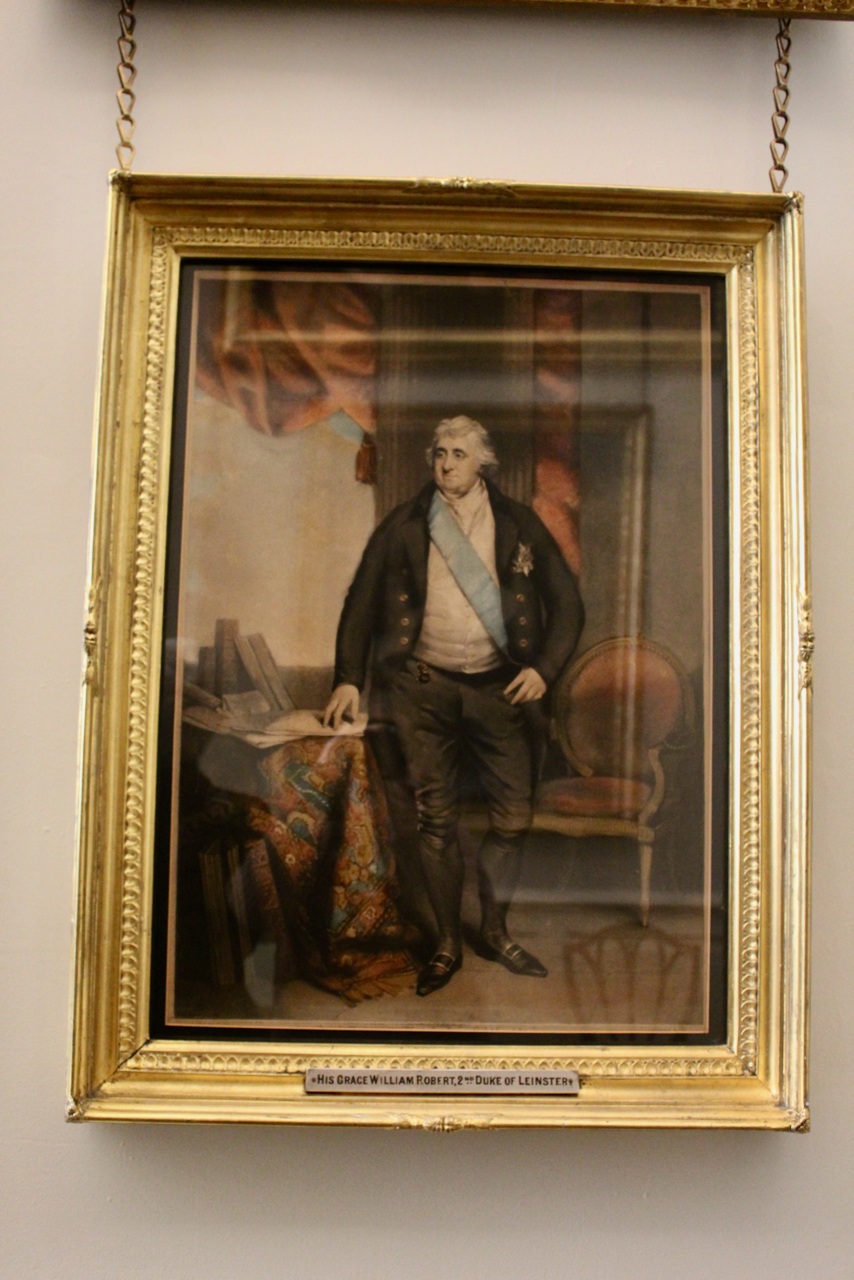
William Robert Fitzgerald (1749-1804), 2nd Duke of Leinster, 1775 by engraver John Dixon, after Joshua Reynolds, courtesy of National Gallery of Ireland.
William Robert FitzGerald (1748-1804), 2nd Duke of Leinster. Photograph © Jennifer Winder-Baggot, www.irishhistorichouses.com
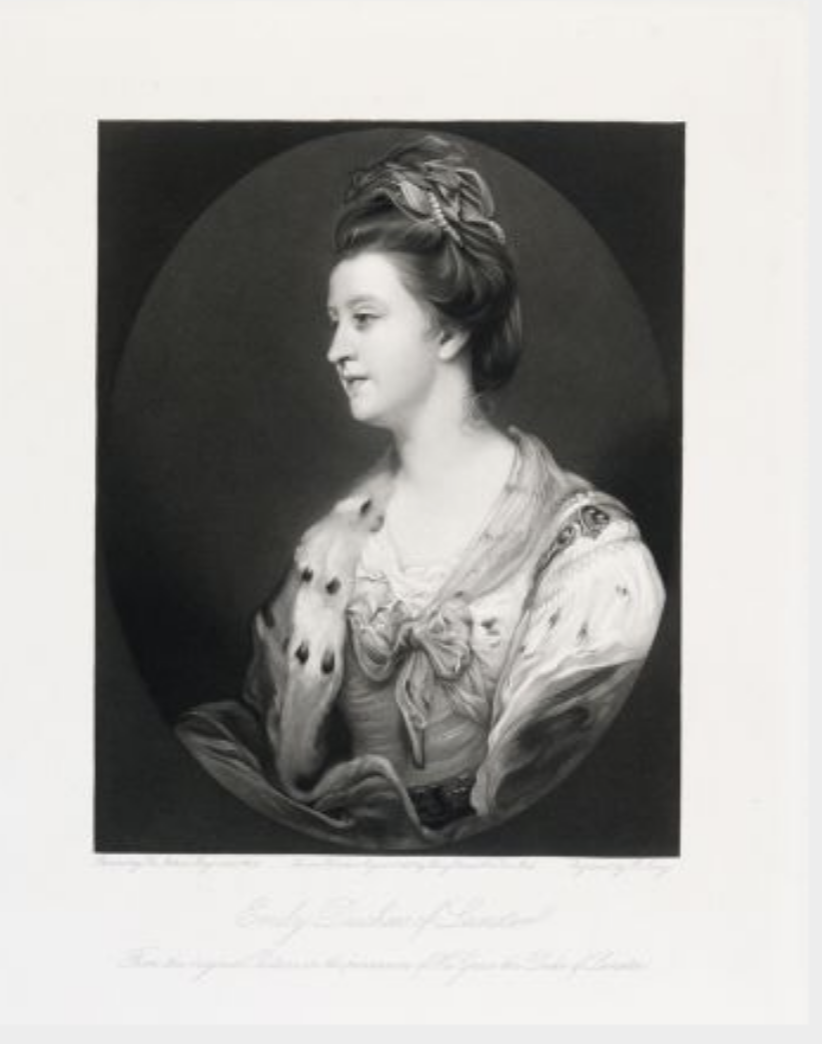
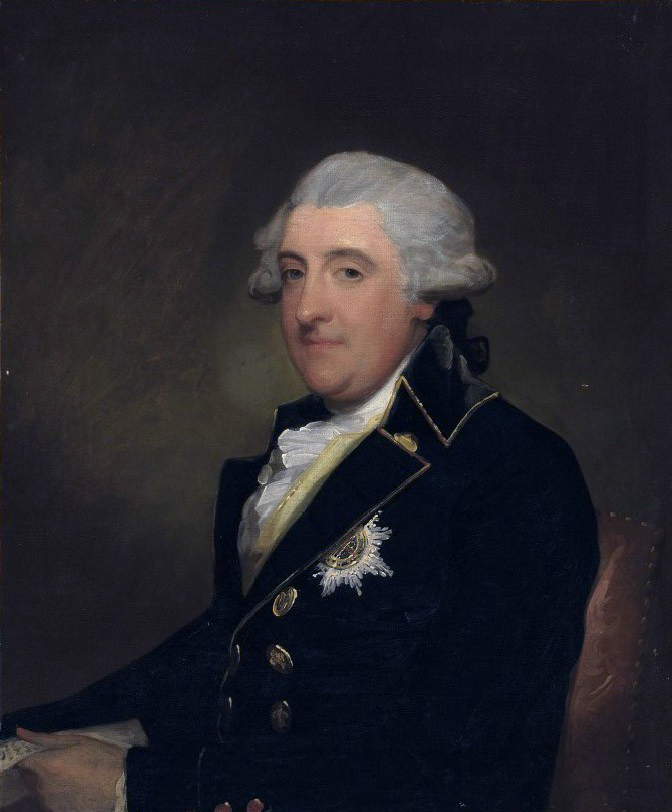
William Robert Fitzgerald (1749-1804) 2nd Duke of Leinster wearing Order of St. Patrick, by Gilbert Stuart, courtesy Christies.
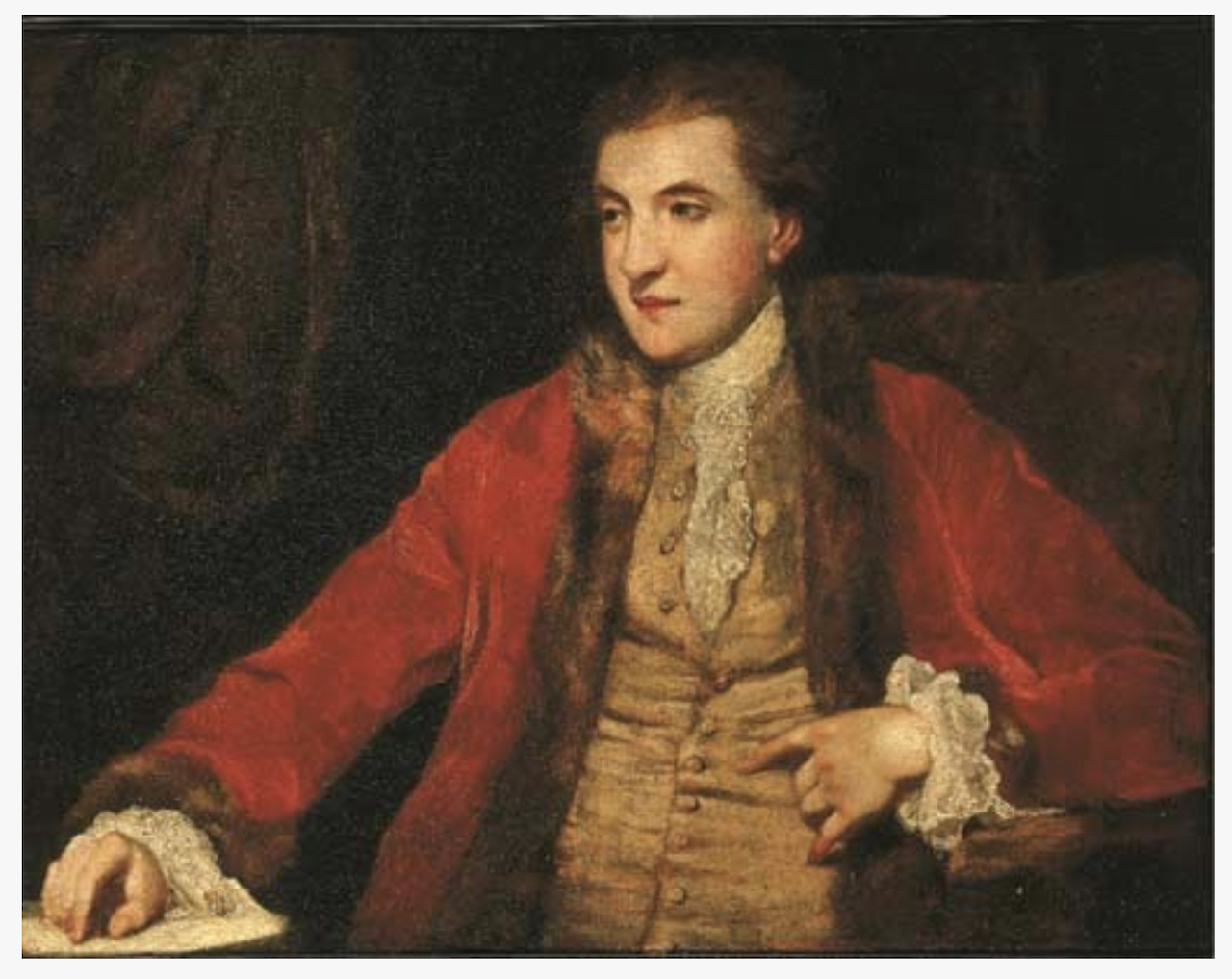
William Robert Fitzgerald, 2nd Duke of Leinster, K.P. (1749-1804), circle of Joshua Reynolds courtesy of Christie’s Irish Sale 2002.
HUGH DOUGLAS HAMILTON portrait of Emilia Olivia née St. George, 2nd Duchess of Leinster courtesy of Bonhams Old Master Paintings 2018. She gave birth to Augustus Frederick FitzGerald, 3rd Duke of Leinster.
Augustus Frederick Fitzgerald (1791-1874), 3rd Duke of Leinster, engraver George Saunders after Stephen Catterson Smith, courtesy of National Gallery of Ireland. He married Charlotte Augusta Stanhope, and she gave birth to their heir, Charles William FitzGerald, 4th Duke of Leinster.
Maurice Fitzgerald (1852-1901) and his wife, Adelaide Jane Frances Forbes (1860-1942). Maurice was a son of Charles William FitzGerald, 4th Duke of Leinster and his wife Caroline Sutherland-Leveson-Gower. Photograph © Jennifer Winder-Baggot, www.irishhistorichouses.com
Thomas Geancach Fitzgerald (d. 1730/31) 18th Knight of Glin, courtesy of The Knights of Glin: A Geraldine family, by J. Anthony Gaughan (1978).

Thomas Fitzgerald (d. 1730/31) was the son of Gerald Fitzgerald (d. 1689) 17th Knight of Glin and Joan daughter of Donough O’Brien of Carrigogunnell Castle, County Limerick. Gerald 17th Knight held the office of Member of Parliament (M.P.) for Limerick City in 1661, and High Sheriff of Limerick in 1680. He fought in the Battle of Windmill Hill in 1689, after the Siege of Derry. He was Member of Parliament (M.P.) for County Limerick in 1689, in King James II Patriot Parliament.

Thomas Fitzgerald (d. 1730/31) 18th Knight of Glin obtained a Certificate in 1701 for not having taken part in the wars of King James II, although he was an active supporter of Jacobite cause. In 1713/14 he was one of the Catholic nobility of Ireland licensed to carry arms. [1] His wife Mary née Fitzgerald of Ballymartyr gave birth to, among other children, the 19th, 20th, 21st and 22nd Knights of Glin. A daughter, Catherine (d. 1759) married first Thomas Freke Crosbie and second, Robert Fitzgerald, 17th Knight of Kerry.

John Fitzgerald (d. 1737) 19th Knight of Glin courtesy of The Knights of Glin: A Geraldine family, by J. Anthony Gaughan (1978).
Edmond Fitzgerald (d. 1763) 20th Knight of Glin, a brother of the 19th, 21st and 22nd Knights of Glin.
Richard Fitzgerald (1710-1775) 21st Knight of Glin, by Heroman Van Der Mijn, photograph courtesy of Glin Castle website. He conformed to the Protestant faith. He had only daughters so the title passed to his brother.
Thomas Fitzgerald, 22nd Knight of Glin By Philip Hussey courtesy of https//:theirishaesthete.com/tag/knight-of-glin/, Public Domain, commons.wikimedia.org/w/index.php?curid=81941595

Thomas Fitzgerald (d. 1781) 22nd Knight of Glin married Mary Bateman. She gave birth to his heir, John Bateman FitzGerald (d. 1803) who became 23rd Knight of Glin. His wife Margaretta Maria Gwyn (d. 1801) gave birth to their heir, John Fraunceis FitzGerald (1791-1854) 24th Knight of Glin.

Glin Castle, photograph courtesy of Glin Castle website. The picture of Colonel John Bateman FitzGerald (1765-1803) the 23rd Knight of Glin, the builder of the house, wearing the uniform of his volunteer regiment the Royal Glin Artillery. In his portrait, which hangs over the Portland stone chimneypiece, he is proudly pointing at his cannon.
Photograph courtesy of Glin castle website. The portrait is Margaretta Maria Gwyn (1769-1801), wife of John Bateman Fitzgerald (1765-1803) 23rd Knight of Glin, I believe.
John Fraunceis Fitzgerald (1803-1854), “Knight of the Women,” the 24th Knight, photograph courtesy of the castle website.

As well as the Earls of Kildare, who became Dukes of Leinster, and Knights of Glin, Fitzgeralds were also Lords of the Decies, and Knights of Kerry, and Earls of Desmond.

Maurice FitzGerald (d. 1729) 14th Knight of Kerry fought for King James II in the Battle of the Boyne. He married Elizabeth Crosbie, who gave birth to their heir, John FitzGerald (d. 1741) who became 15th Knight of Kerry.

John FitzGerald (d. 1741) 15th Knight of Kerry had a son Maurice (d. 1780) who became 16th Knight of Kerry, and a daughter Elizabeth who married Richard Townsend of Castletownshend in County Cork.

Elizabeth Townsend née Fitzgerald, wife of Richard Townsend. Elizabeth Fitzgerald was daughter of John Fitzgerald (1706-1741), 15th Knight of Kerry, and married to Richard Townsend (1725-1783). Photograph © Jennifer Winder-Baggot, www.irishhistorichouses.com
Maurice (d. 1780) 16th Knight of Kerry married Anna Maria, daughter of William FitzMaurice, 2nd Earl of Kerry. They did not have children, and Maurice’s uncle Robert (1716-1781) became the 17th Knight of Kerry.

Maurice Fitzgerald, Knight of Kerry – I’m not sure whether he’s the 14th or 16th Knight. Photograph © Jennifer Winder-Baggot, www.irishhistorichouses.com
Katherine Fitzgerald (c.1504-1604) daughter of John Fitzgerald 2nd Lord of the Decies, wife of Thomas Fitzgerald (1454-1534) 11th Earl of Desmond. Photograph © Jennifer Winder-Baggot, www.irishhistorichouses.com
Thought to be a Portrait of Catherine, Countess of Desmond (née Fitzgerald), (c.1510-1604), 2nd wife of Thomas Fitzgerald, 11th Earl of Desmond, photograph courtesy of National Gallery of Ireland.
Mary née Hervey (1726-1815) was George “Fighting Fitzgerald”s mother, of Turlough Park, County Mayo. She was the granddaughter of John Hervey 1st Earl of Bristol, sister of Frederick Augustus Hervey 4th Earl of Bristol, Bishop of Derry who built Downhill, Co Derry. She married George Fitzgerald (c. 1712-1782) of Turlough Park, County Mayo.
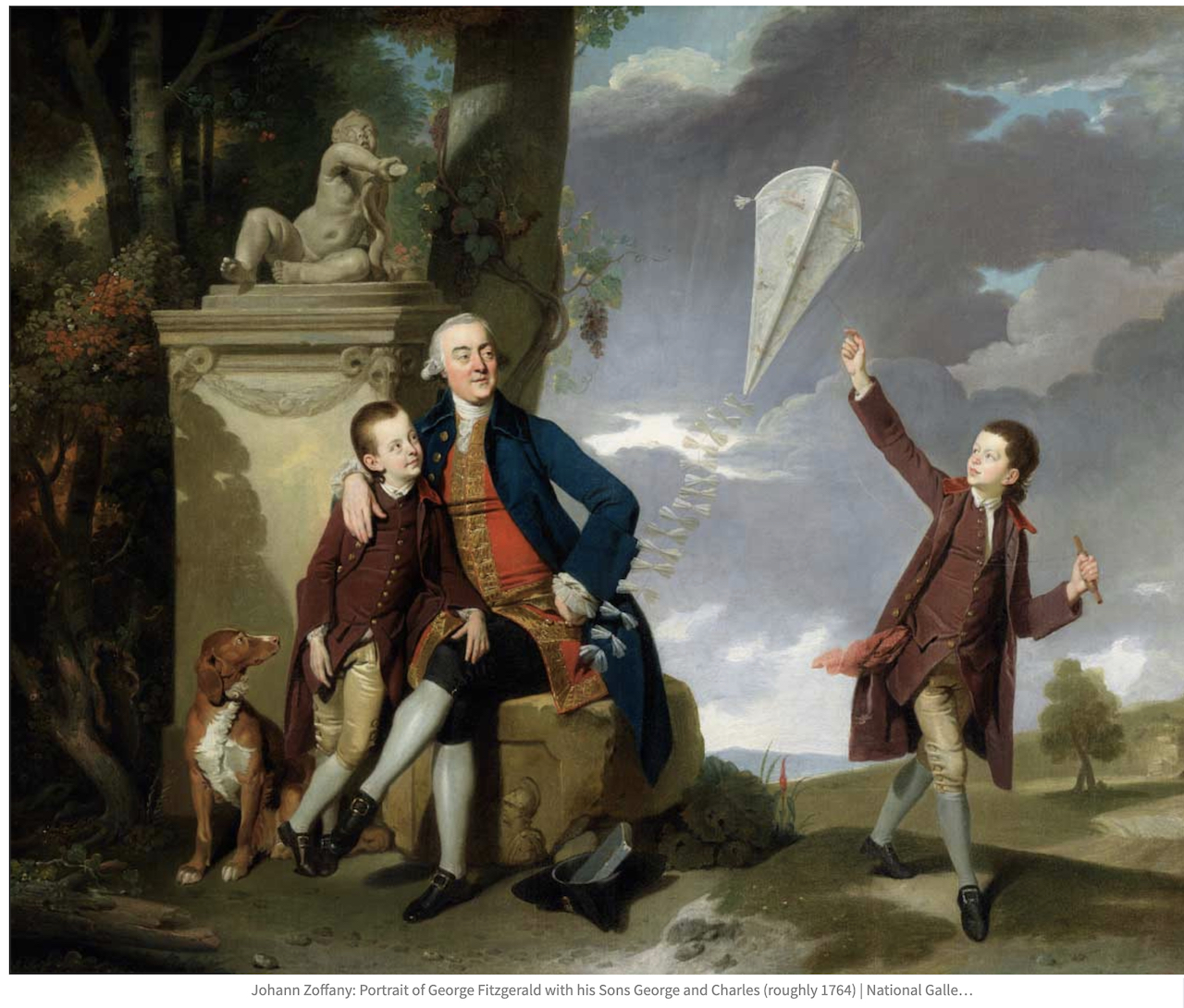
Johann Zoffany Portrait of George Fitzgerald (1748-1786) with his Sons George and Charles (roughly 1764) courtesy of National Gallery of Ireland and Crawford Gallery.
John Fitzgibbon, 1st Earl of Clare (1749-1802) Date c.1799-1800 by Hugh Douglas Hamilton, Irish, 1740-1808, courtesy of National Gallery of Ireland.
William Fitzmaurice (1694-1747), 2nd earl and 21st Baron of Kerry by Stephen Slaughter, courtesy of The Irish Sale by Sotheby’s May 18, 2001.
John FitzPatrick, 2nd Earl of Upper Ossory (1745–1818) by Thomas Beach (1738-1806) c.1765, Great Britain Immediate source Christie’s, South Kensington, London.
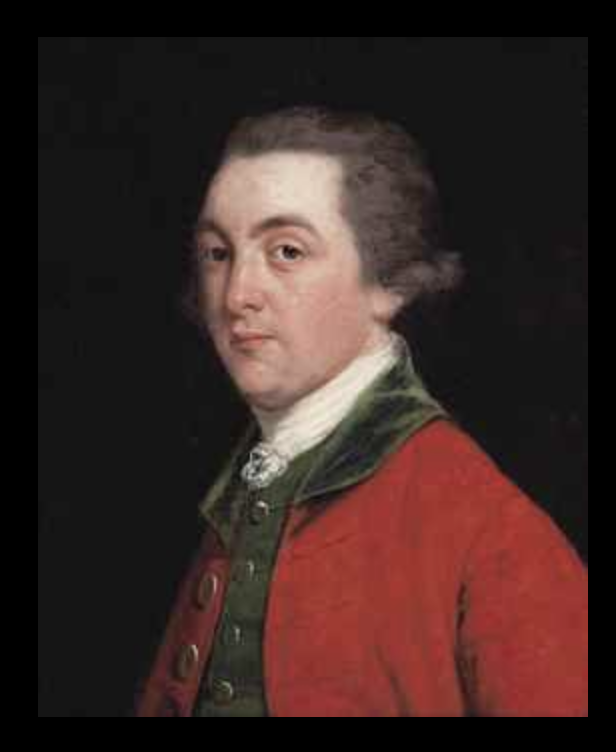
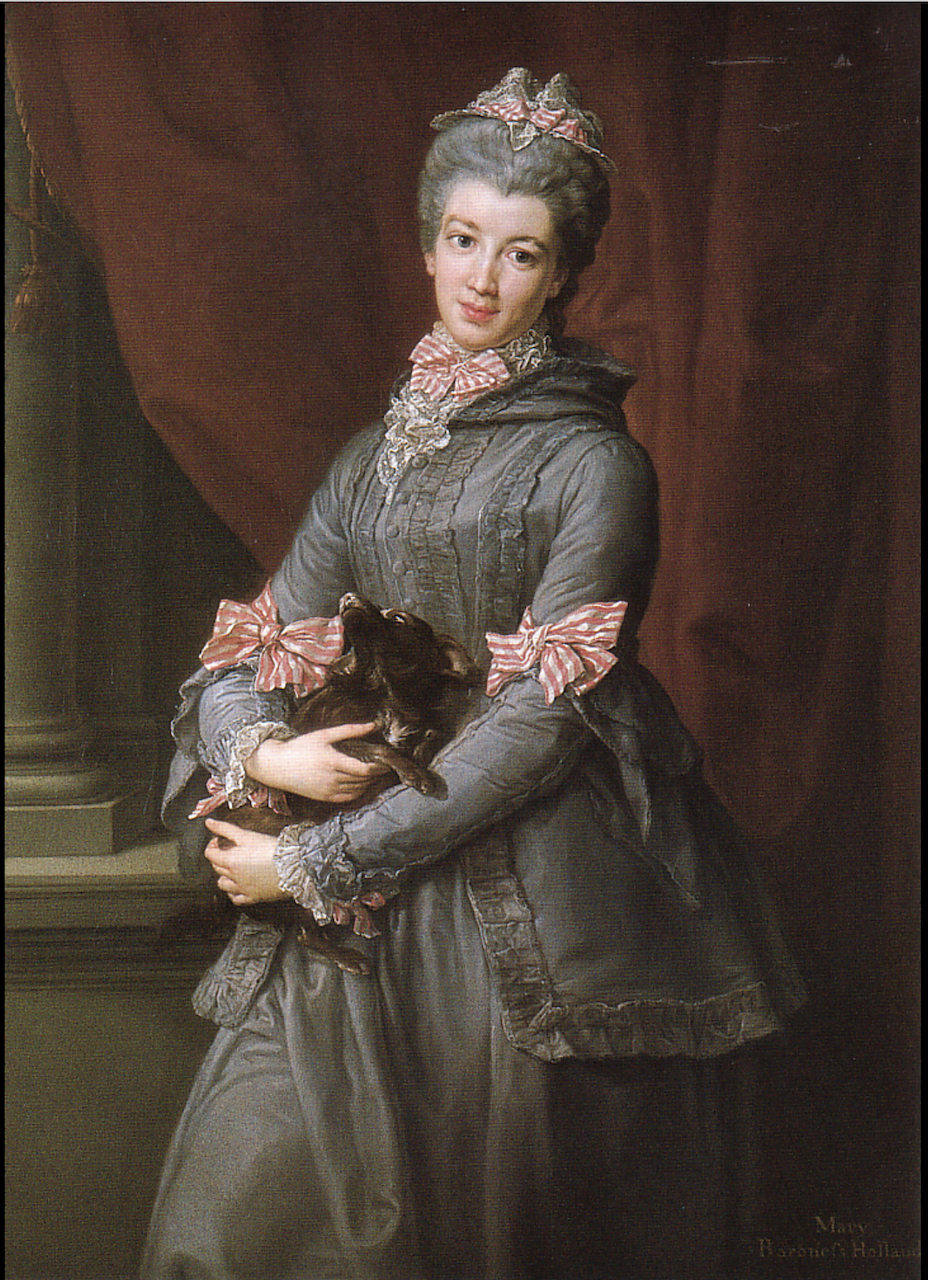
Mary Fox née Fitzpatrick (1746-1778), wife of Stephen Fox 2nd Baron Hollard, by Pompeo Batoni. She was a daughter of John FitzPatrick 1st Earl of Upper Ossory.
Louisa Lansdowne née Fitzpatrick, wife of William Petty 1st Marquess of Lansdowne by Joshua Reynolds from Catalogue of the pictures and drawings in the National loan exhibition, in aid of National gallery funds, Grafton Galleries, London. She was a daughter of John FitzPatrick 1st Earl of Upper Ossory.
Richard FitzWilliam, 7th Viscount FitzWilliam (1745-1816), founder of the Fitzwilliam Museum Cambridge, Vice-Admiral of Leinster, Engraver Richard Earlom, English, 1743-1822 After Hugh Howard, Irish, 1675-1737, courtesy of National Gallery of Ireland.
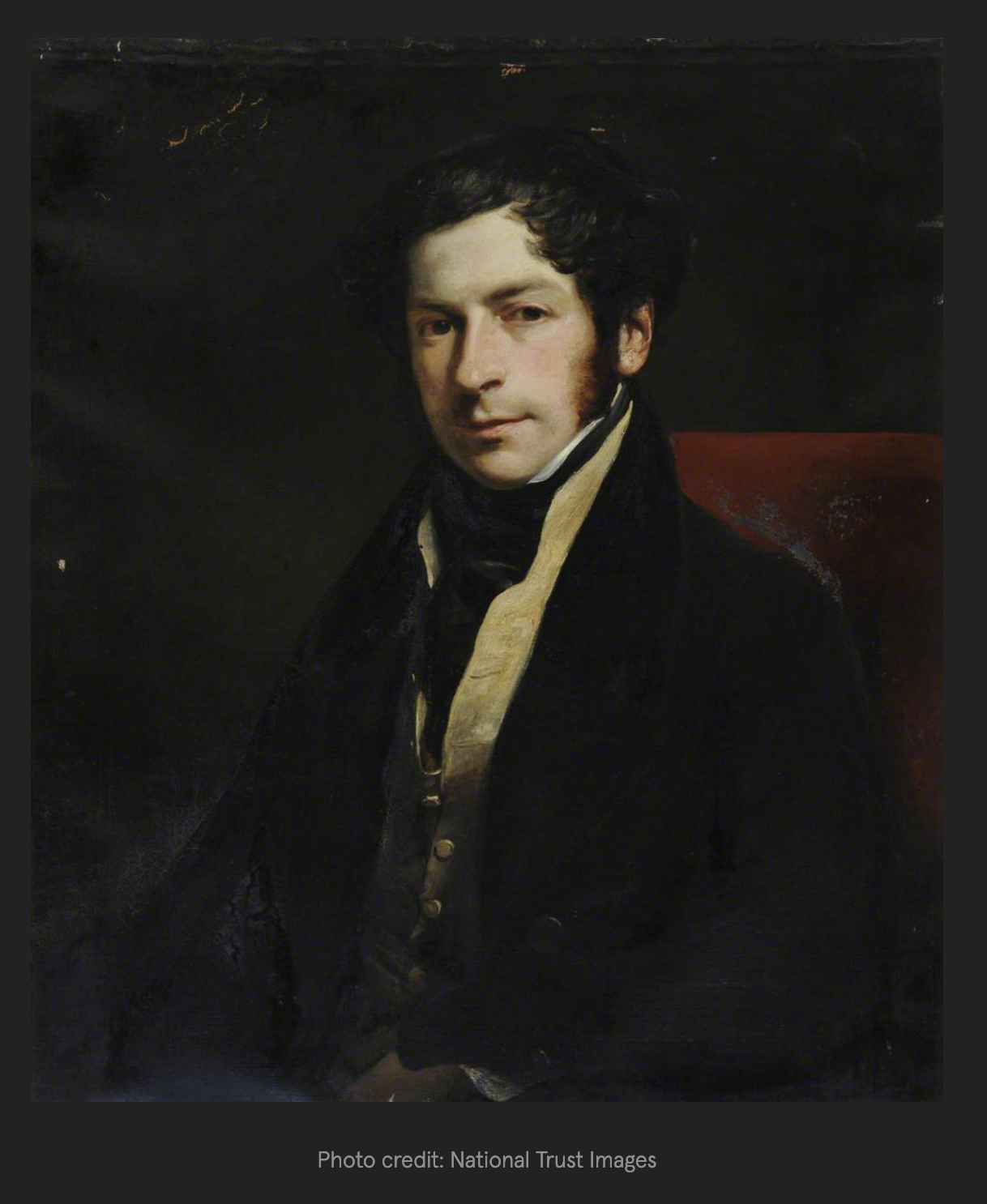
John Michael Henry Fock 3rd Baron De Robeck (1790-1856).
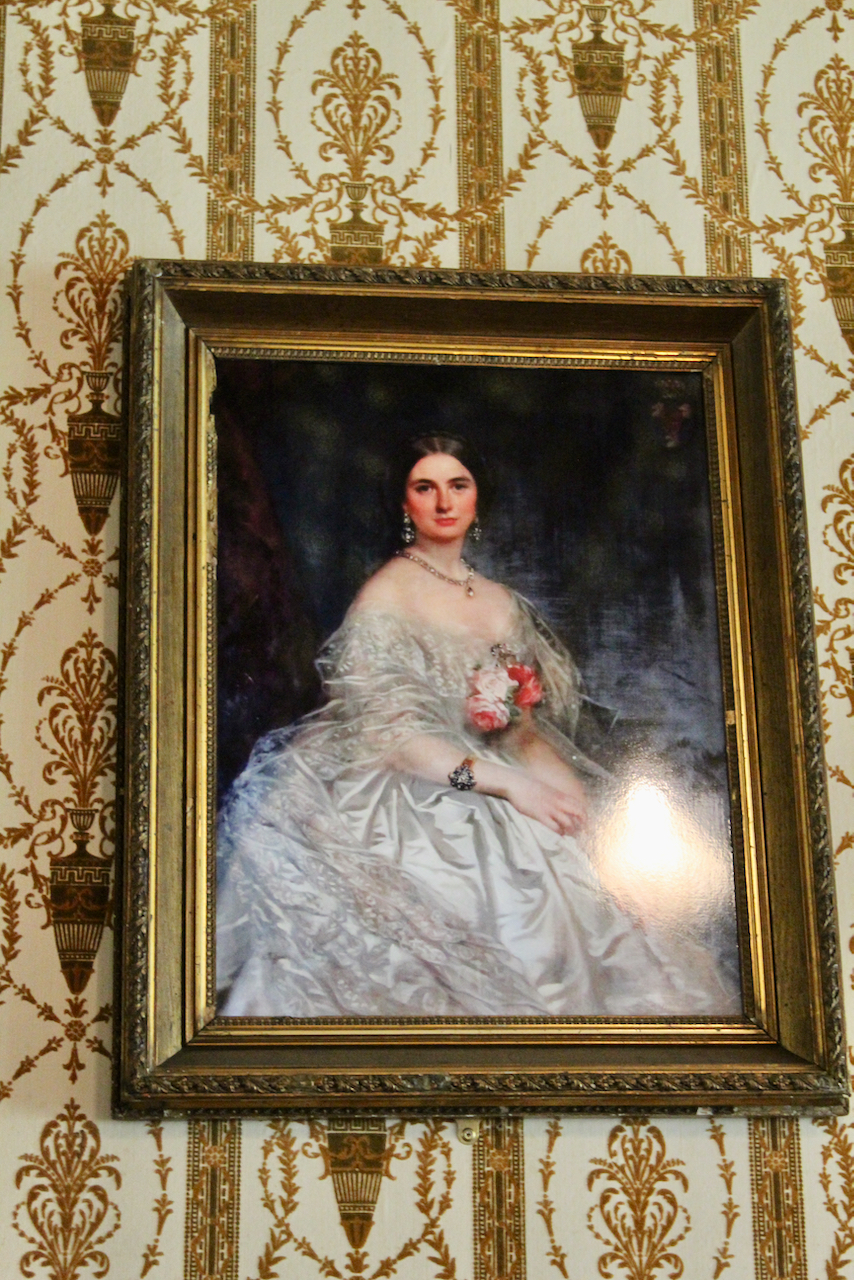
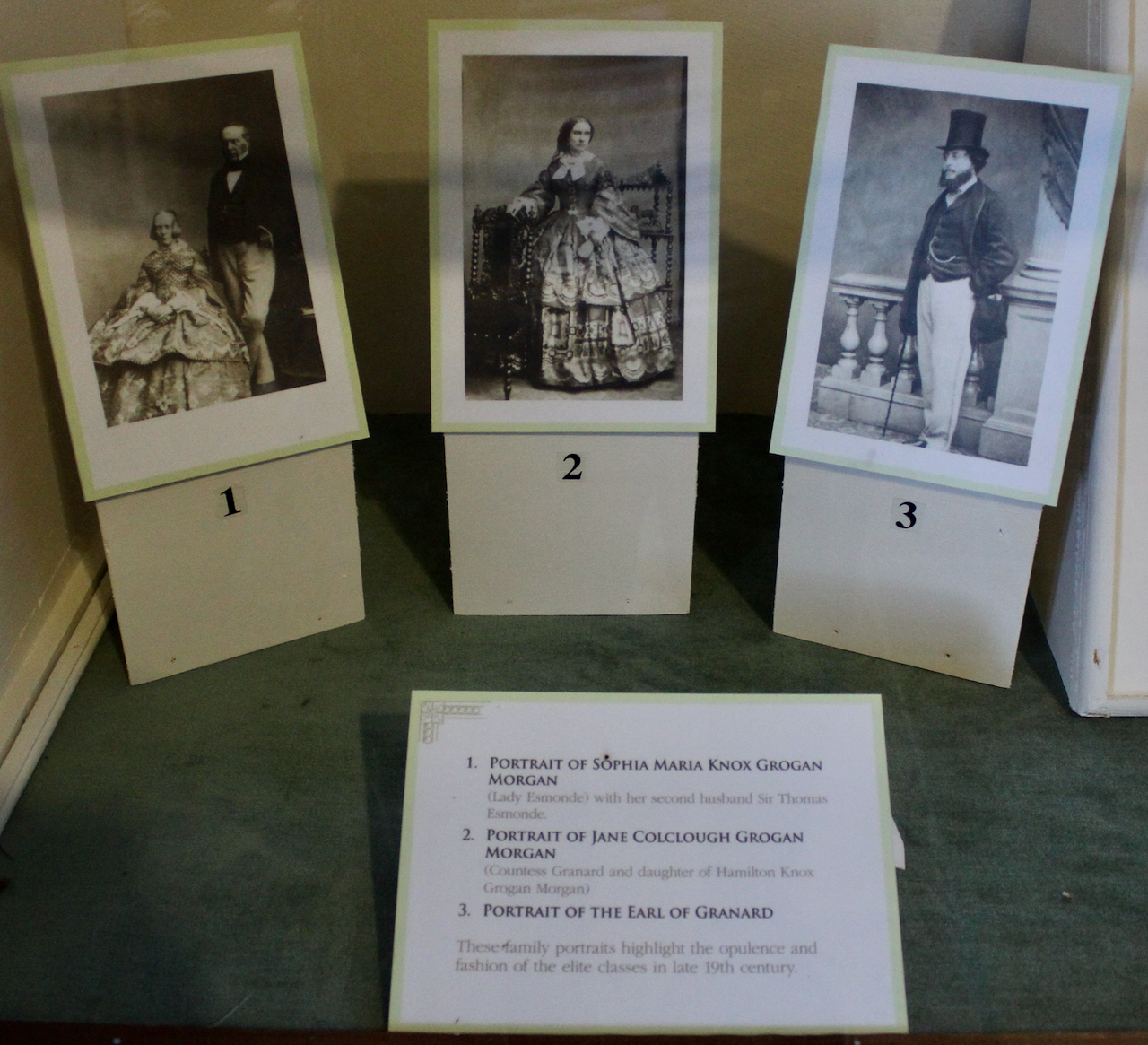
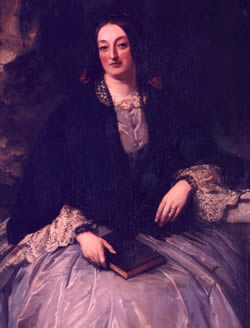
Sophia Maria Knox Grogan Morgan (1805-1867) née Rowe, with her second husband Thomas Esmonde 9th Baronet (1786-1868); Jane Colclough Grogan Morgan (1834-1872), she married George Arthur Forbes (1833-1889), 7th Earl of Granard, who is in the third portrait. Photograph © Jennifer Winder-Baggot, www.irishhistorichouses.com
Maurice Fitzgerald (1852-1901) and his wife, Adelaide Jane Frances Forbes (1860-1942). Photograph © Jennifer Winder-Baggot, www.irishhistorichouses.com
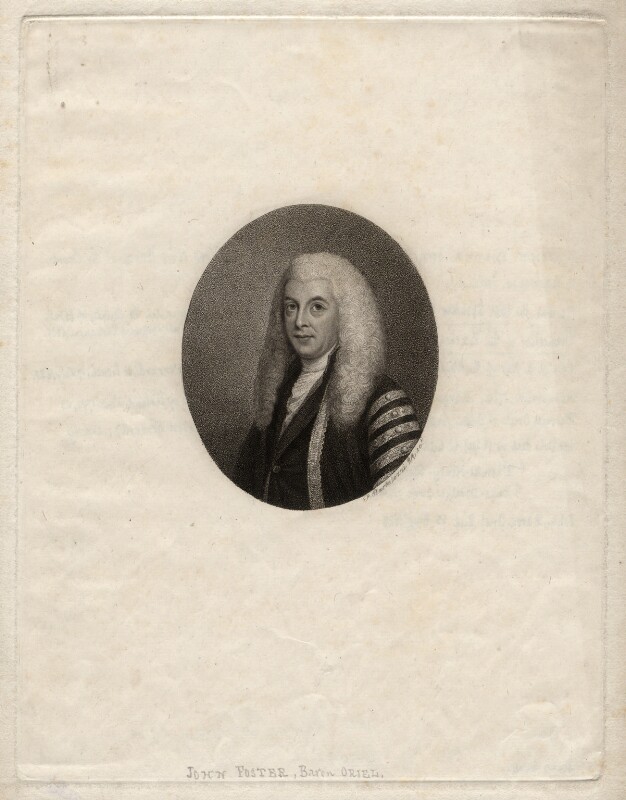
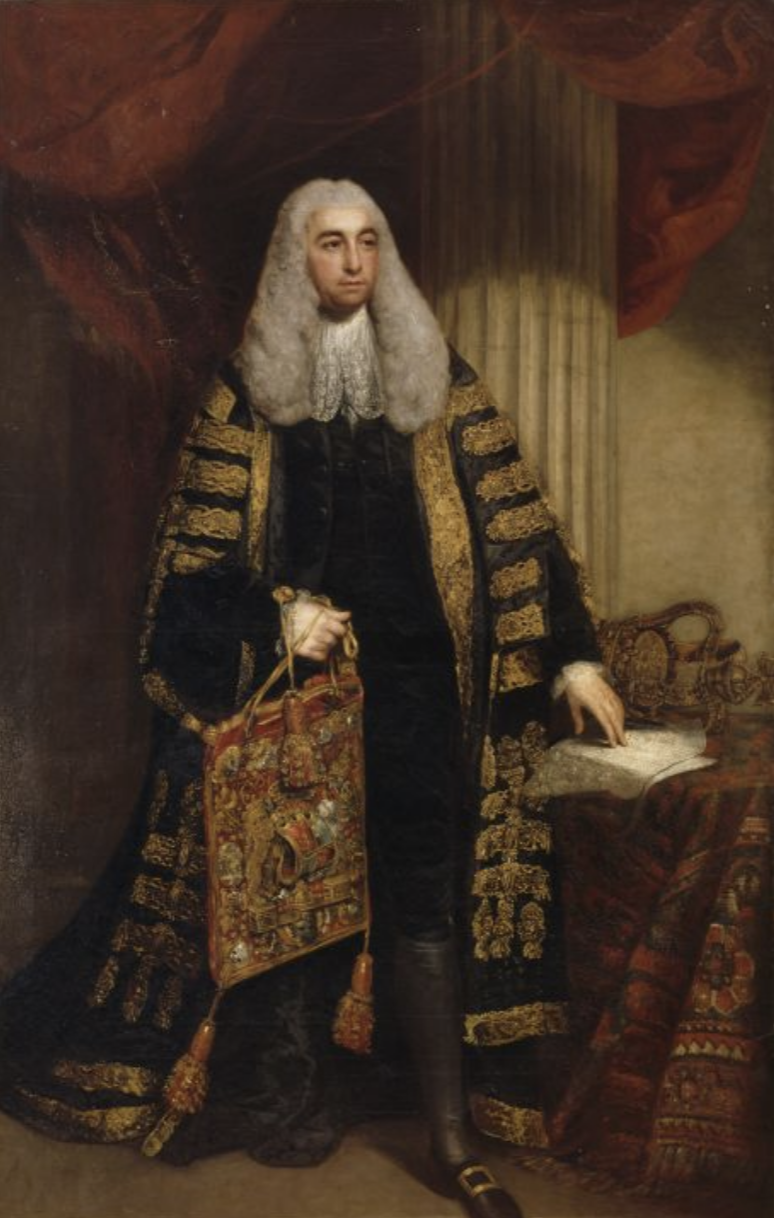
John Foster, (1740-1828), Last Speaker of the Irish House of Commons, later 1st Baron Oriel Date 1799 Engraver/ Patrick Maguire, Irish, fl.1783-1820 After Gilbert Stuart, American, 1755-1828, courtesy of National Gallery of Ireland.
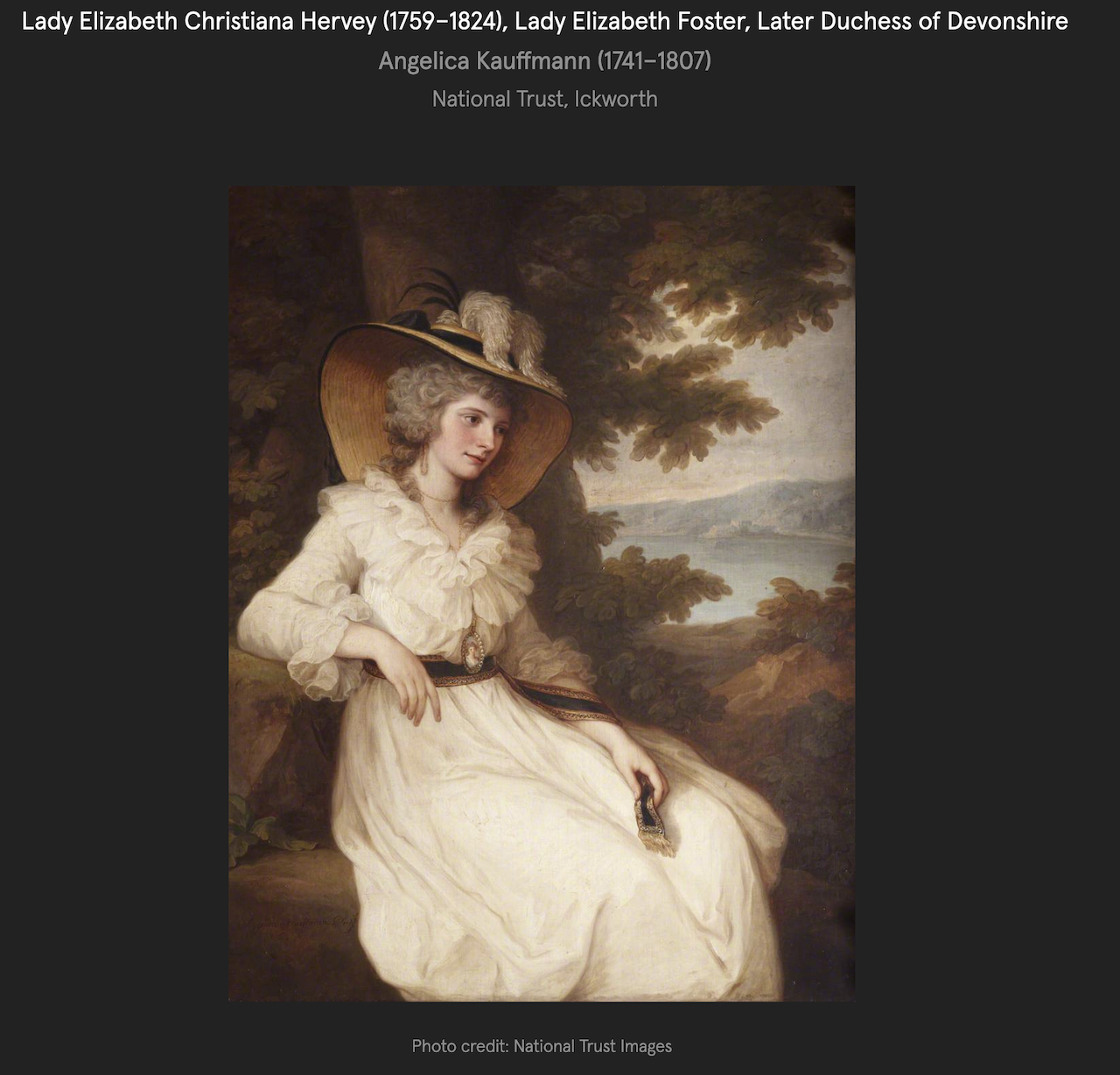
Elizabeth Christina Foster née Hervey (1759-1824) later Duchess of Devonshire by Angelica Kauffmann courtesy of National Trust Ickworth. She was the daughter of Frederick Augustus Hervey 4th Earl of Bristol, Bishop of Derry who built Downhill, Co Derry. She married John Thomas Foster MP (1747-1796) and later, William Boyle Cavendish 5th Duke of Devonshire. Last, she married Valentine Richard Quin 1st Earl of Dunraven and Mount Earl.
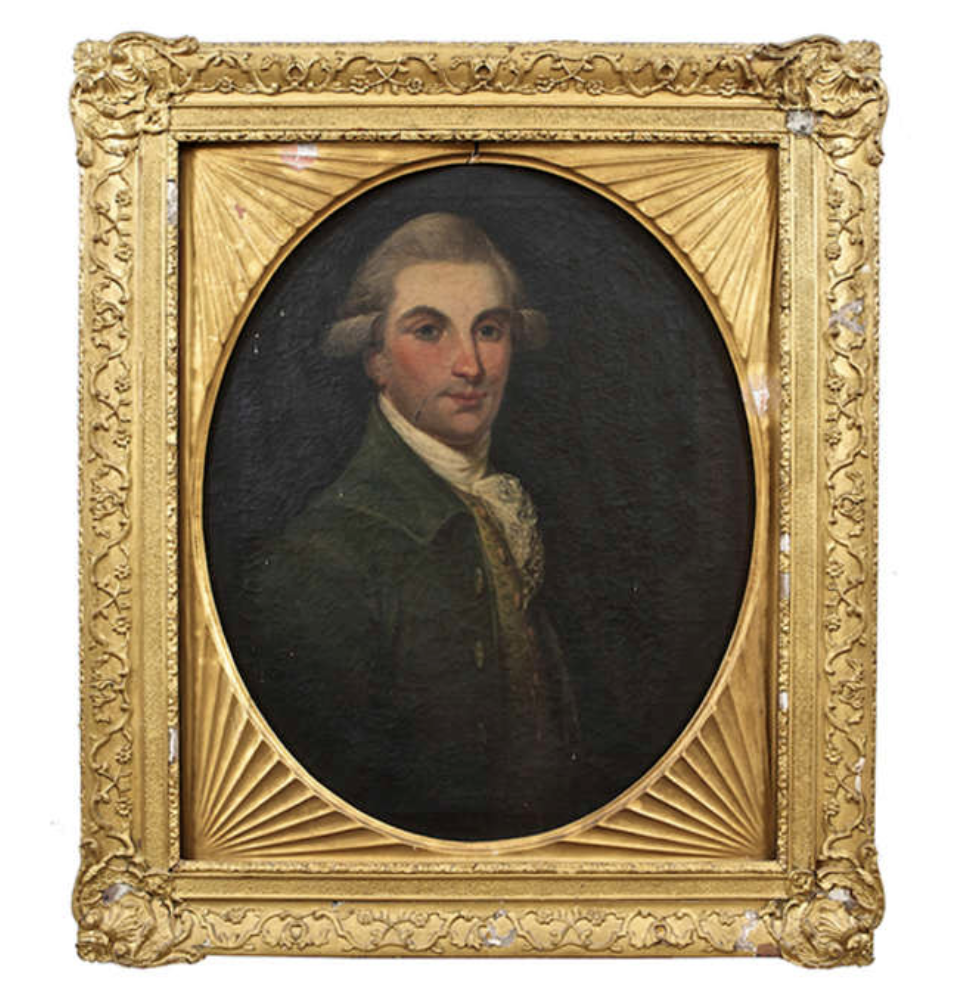
Archibald Hamilton Foulkes of Coolawinna Co. Wicklow, c.1780 courtesy of Adam’s auction 13 Oct 2013
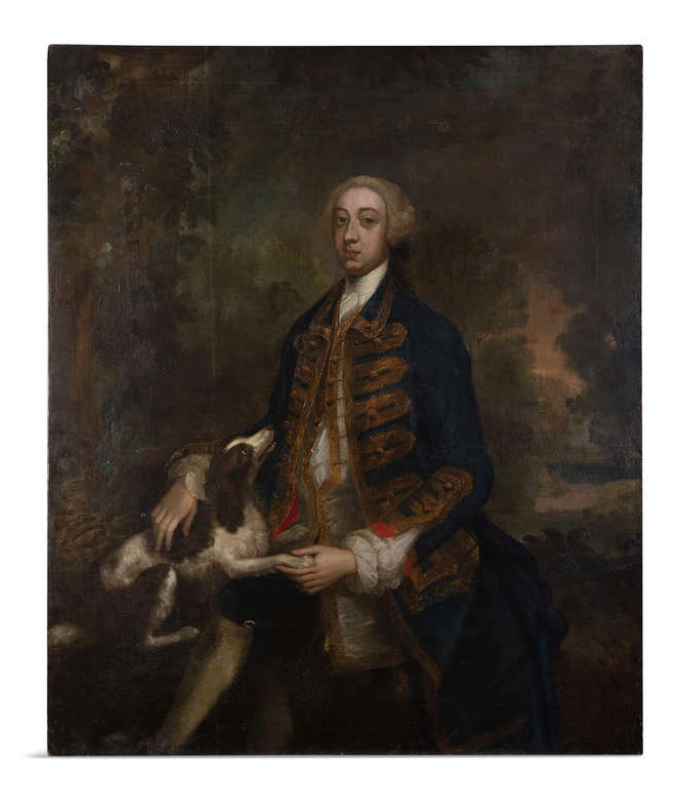
John Freke of Castle Freke, Co. Cork. attributed to John Lewis, courtesy of Adam’s auction 16th Oct 2018. From the same sale was the signed and dated (1757) conversation piece by Lewis called Sir John Freke, Lady Freke and Mr Jeffries of Blarney (sold Sothebys at Slane Castle Lot 423, 26/6/1979). The present lot is likely to be an individual study of the same sitter, perhaps Sir John Redmond Freke M.P. for Cork. John Evans whose mother was Grace Freke inherited from his maternal uncle,founding the family of Evans Freke, whose baronetcy was only created in 1768. The Evans title of Baron Carbery was subsequently inherited by this family.
[1] Montgomery-Massingberd, Hugh. Burke’s Irish Family Records. London, U.K.: Burkes Peerage Ltd, 1976.