Royal Hospital Kilmainham, Military Road, Dublin 8.
Since the 2025 Revenue Section 482 list has not yet been published, today’s entry is about the Royal Hospital Kilmainham: not a Historic House, but of relevance since designed by several important architects: William Robinson, Thomas Burgh and Francis Johnson.
The most decorative rooms have been closed to the public for years for renovation, but I am writing now as I had an opportunity to enter the magnificently baroque chapel in order to see a film. Excuse the poor quality of my photographs in the chapel – I didn’t want to disturb the other film viewers.
The website www.rhk.ie tells us:
“Since 2018, The North Range has been closed due to remedial works and essential upgrades, including fire safety improvements, mechanical and electrical system replacements, and the meticulous restoration of the Baroque Chapel ceiling, historic timber panelling, and stained glass. This extensive project, operated by the Office of Public Works (OPW), was completed in July 2024, and it was announced the reopening after 6.5 years. We are more than proud to share the news that we are preparing to host events in The North Range.“
Aww, events? But what about access to the wonderful dining room with its portraits? We shall have to see if it is open…


“Kilmainham” is named after St. Maighneann who established a church and monastery in the area around AD 606. In 1174 the Knights Hospitaller, a Catholic order that focussed on aiding the sick and the poor, founded a Priory in Kilmainham, with the aid of Richard de Clare, 2nd Earl of Pembroke, better known as Strongbow. The Priory was destroyed in 1530s with the dissolution of the monasteries by King Henry VIII.
With this history, it seemed appropriate to locate the Royal Hospital here when Arthur Forbes, later Earl of Granard, proposed the idea of building an institution to accommodate veteran soldiers, similar to Les Invalides in Paris. The building was founded by King Charles II in 1679 to accommodate 300 soldiers and construction was overseen by the King’s representative in Ireland, known as the viceroy or Lord Lieutenant, James Butler 1st Duke of Ormond. He was Lord Lieutenant of Ireland from 1661-1669 then again 1677-1684.
Over the next 247 years, thousands of army pensioners lived out their final days within its walls.


The building is arranged around four sides of a cloistered courtyard. Three of these wings now house the Irish Museum of Modern Art (IMMA). [1]
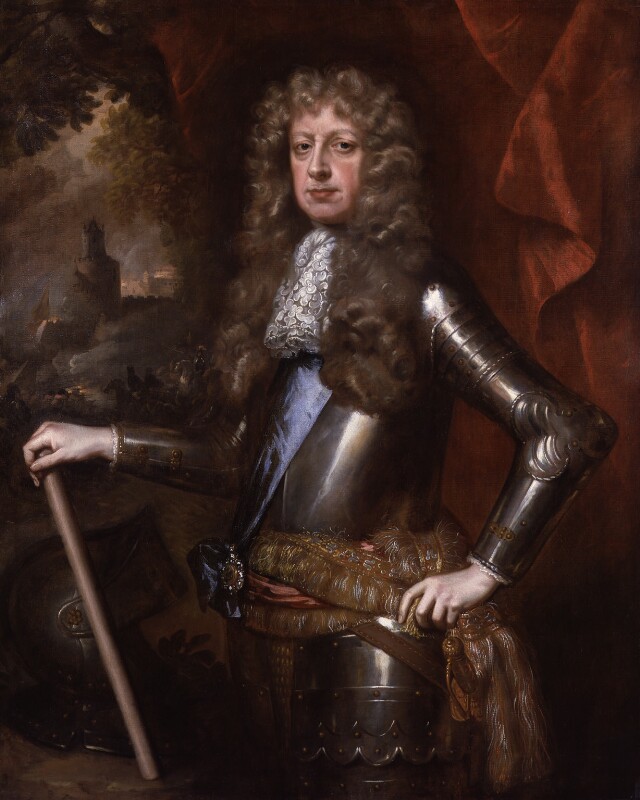


The information board from the Royal Hospital tells us that it was hoped that care for injured and elderly soldiers would promote recruitment. After the Civil War between Cromwellian Parliamentarians and Royalists, Charles II was naturally concerned to have a strong military force.
The building was designed by the Chief Engineer and Surveyor General for Fortifications, Buildings, Works, Mines and Plantations for Ireland, William Robinson (1645-1712).


The information board tells us: “Born in England, Robinson went on to hold a great number of public positions. When he resigned as Surveyor General in 1700 due to ill health, he was knighted and given the position of Deputy Receiver-General at the Privy Council of Ireland. However, he was implicated in a financial scandal and following a period of imprisonment at Dublin Castle, he fled to England. He died in 1712 and is buried in Westminster Abbey.”
He must have been forgiven if buried in the Abbey! The notice board also tells us that he personally acquired the portion of the original site near Islandbridge, and built himself a house with a view of the Royal Hospital, but it no longer stands.


The next Surveyor General, Thomas Burgh (1670-1730), added more to the building. In 1704 he added the tower and steeple over the north range, and designed the infirmary.


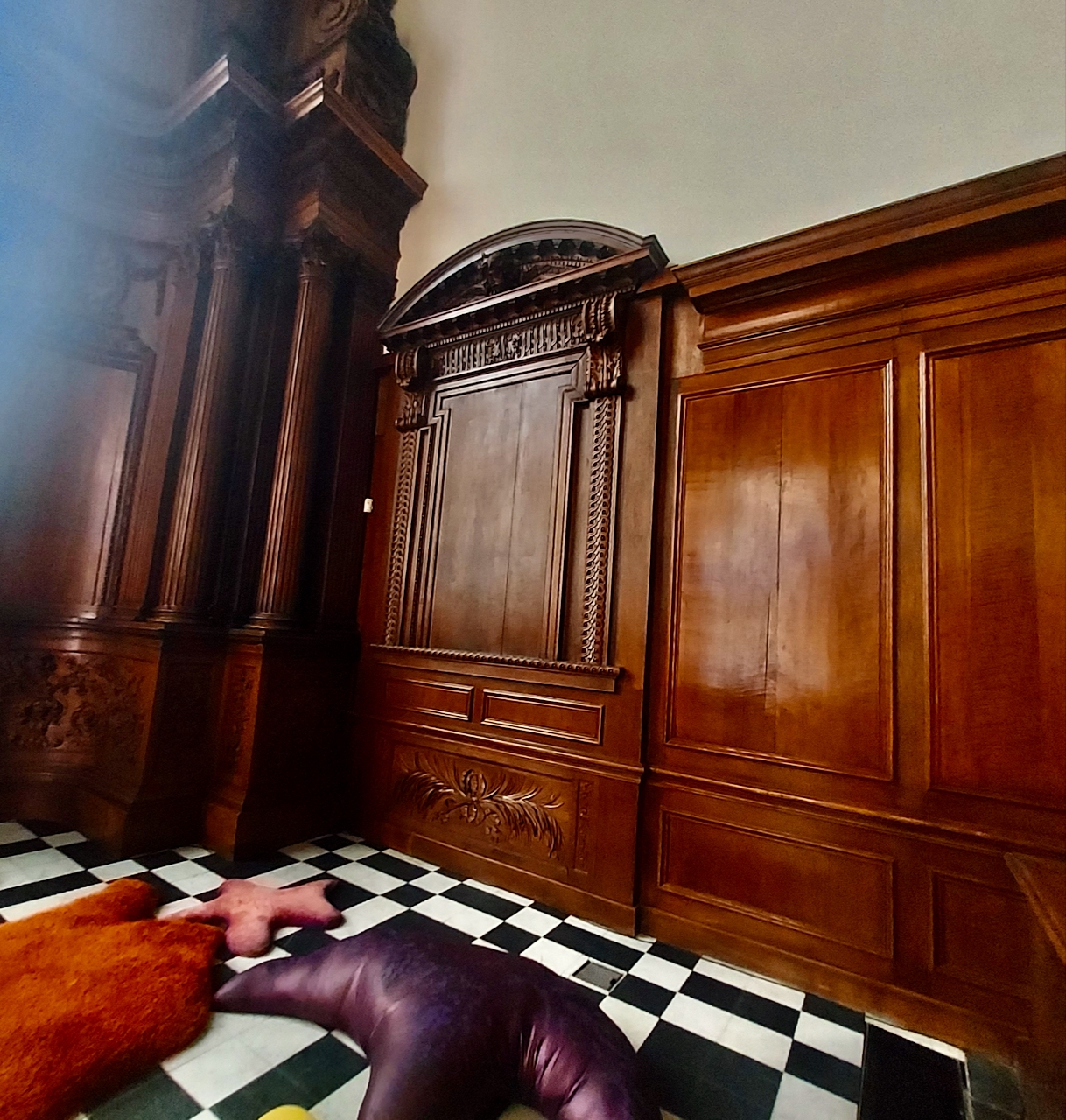
In the fourth wing, not generally open to the public, is the splendid Robinson’s Chapel with a baroque plaster ceiling, carved oak and beautiful stained glass window, and the Geat Hall. You can see an online tour at https://my.matterport.com/show/?m=ce2pG4J1huc&mls=1
The chapel is dedicated to the memory of King Charles I and its ceiling is beautifully Baroque, a profusion of cherubs’ heads, geometrical shapes, borders, garlands and flowers. Amazingly, the ceiling is a papier-maché replica of the original. The original was too heavy, and the replica was installed in 1901. The artist of the original is unknown. The room is panelled in Baltic pine with ornate oak carving and Corinthian pilasters.

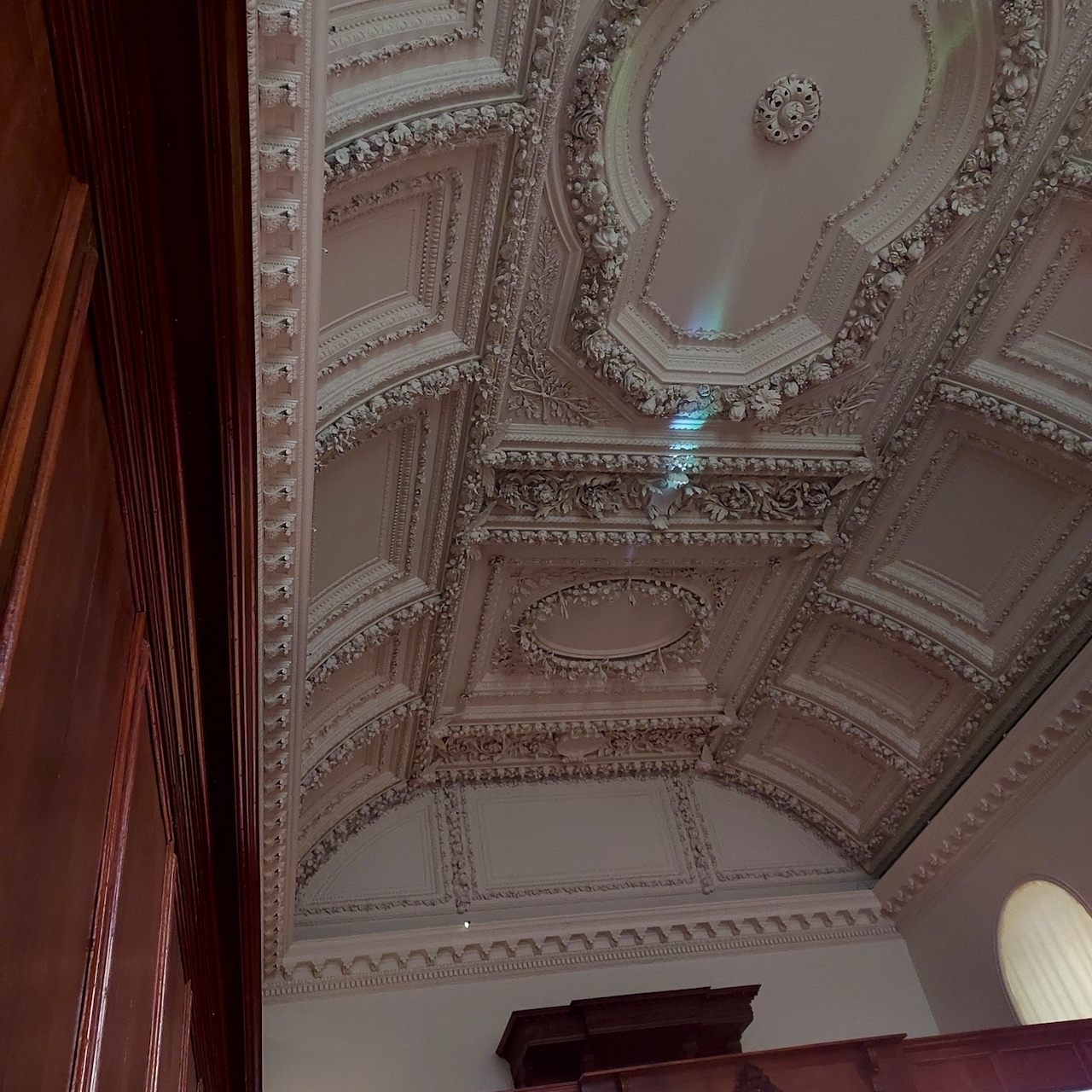


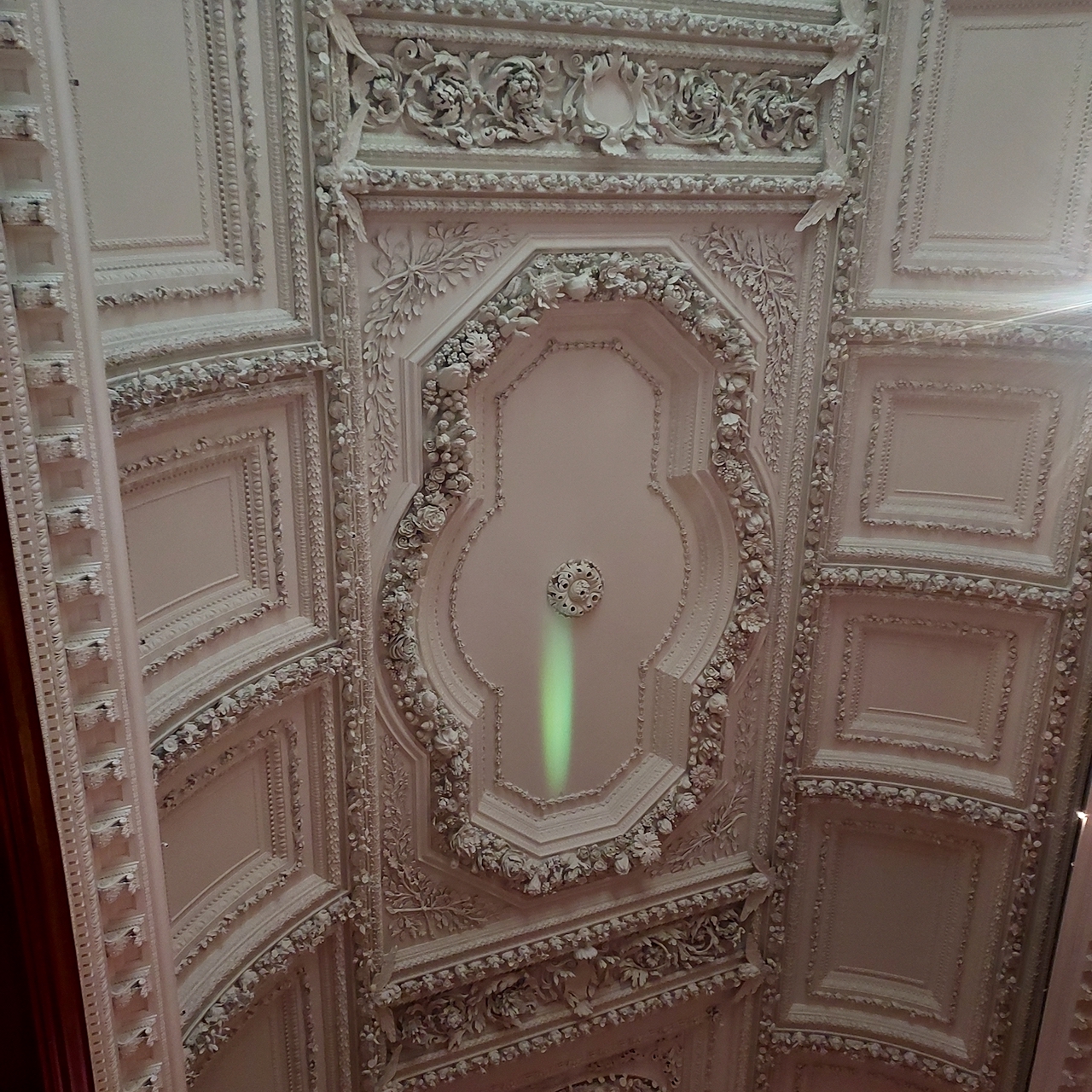
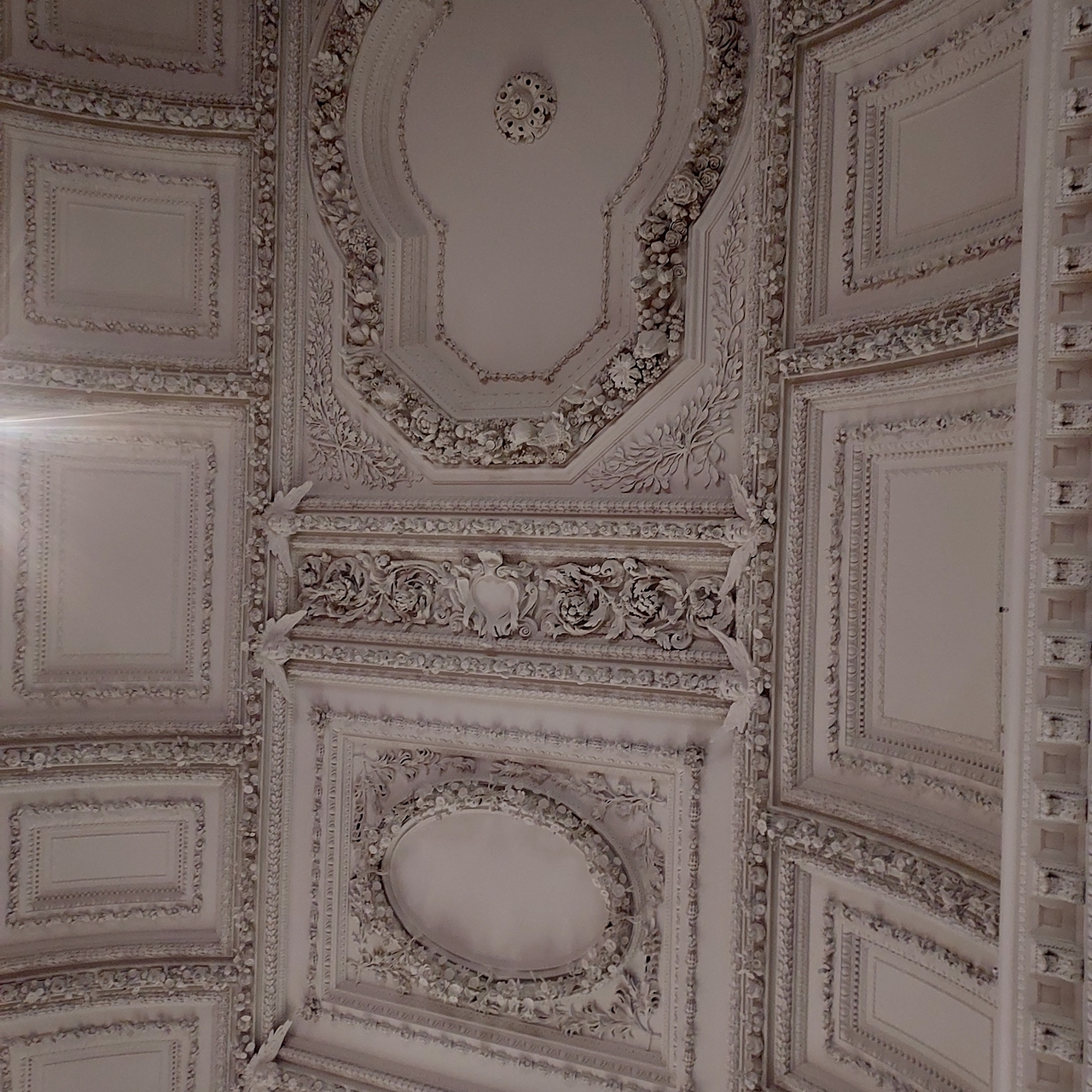
The oak carving of the altar is by Huguenot refugee from Paris, James Tabary. The carvings above the south, east and west Hospital entrances, which are made of wood but painted to look like stone, may also be by Tabary.

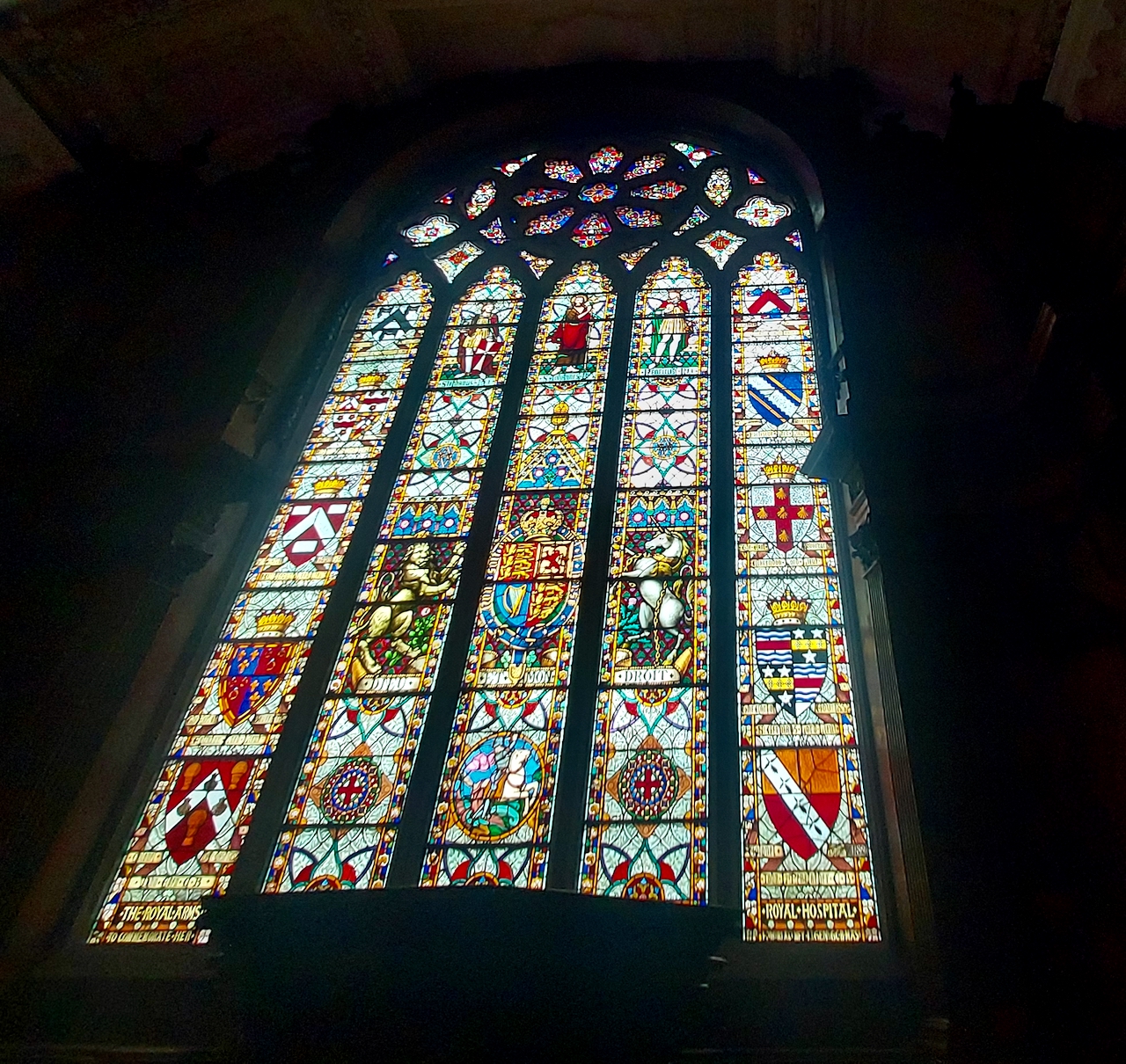
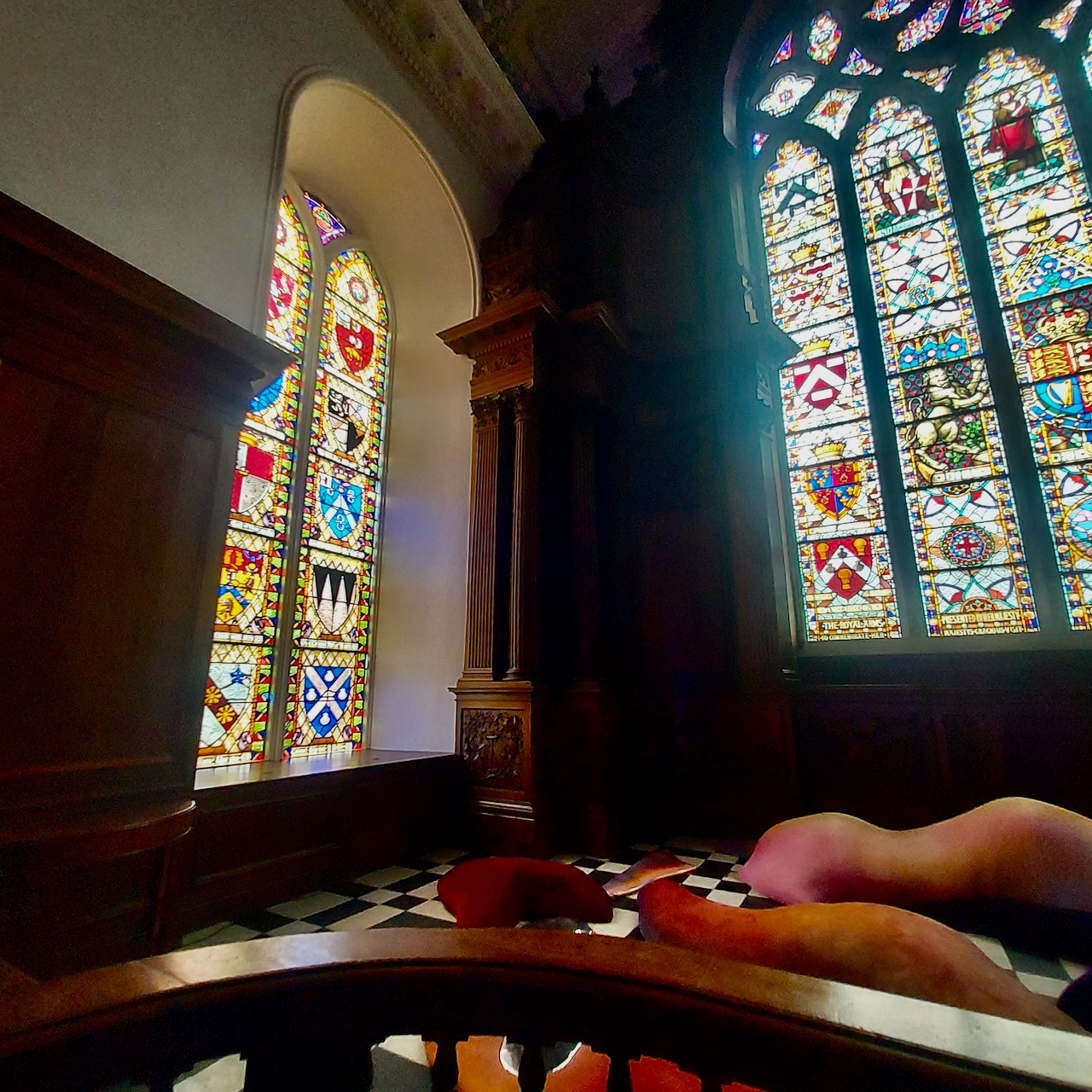
The stained glass in the Chapel’s large east window mostly dates to the 19th century, although some of it is said to come from the medieval Priory of St. John the Hospitaller.

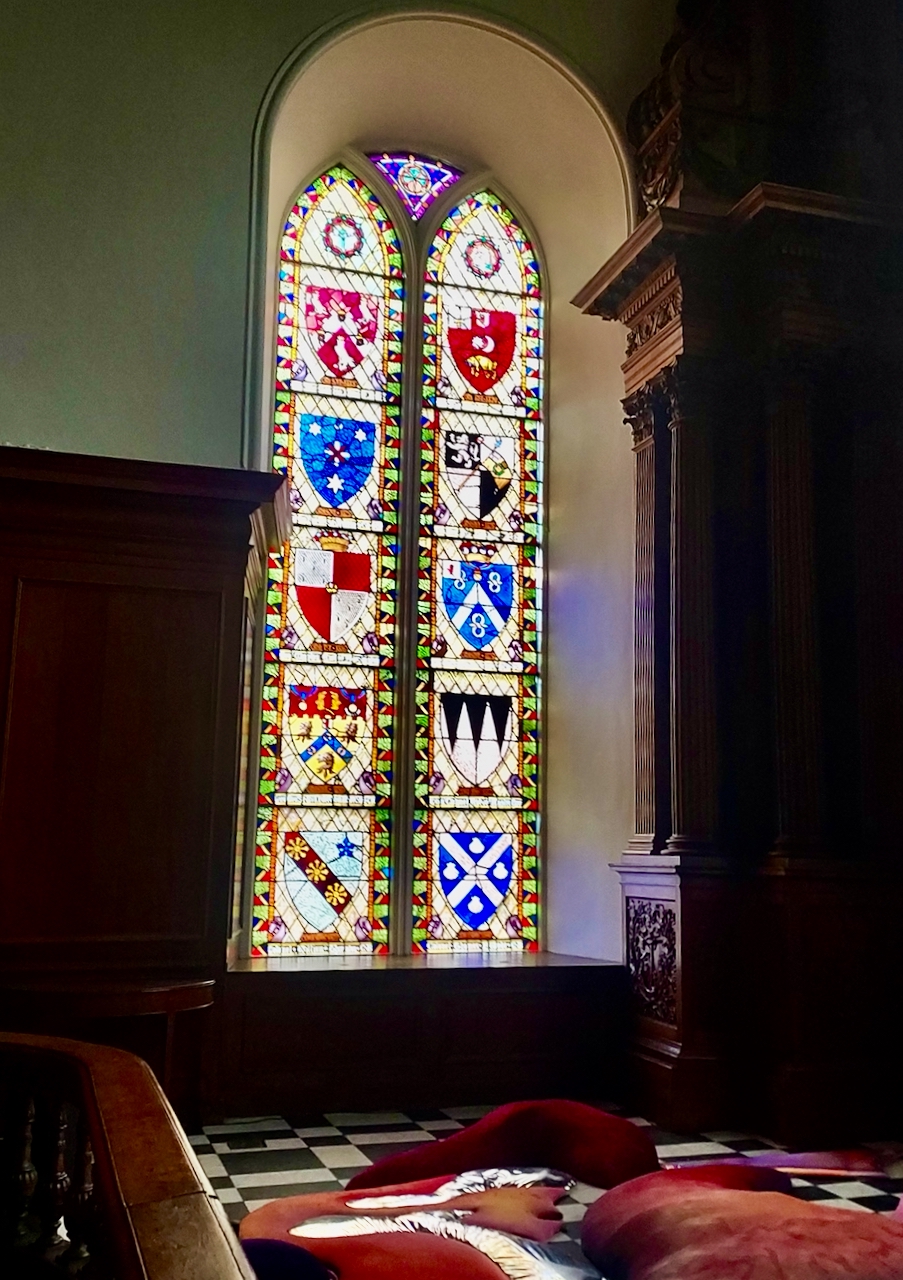
In 1849 young Queen Victoria visited the hospital and bestowed a gift of stained glass which shows the coats of arms of the various Masters of the Hospital, which was made c. 1852 in London by Irish artist Michael O’Connor.


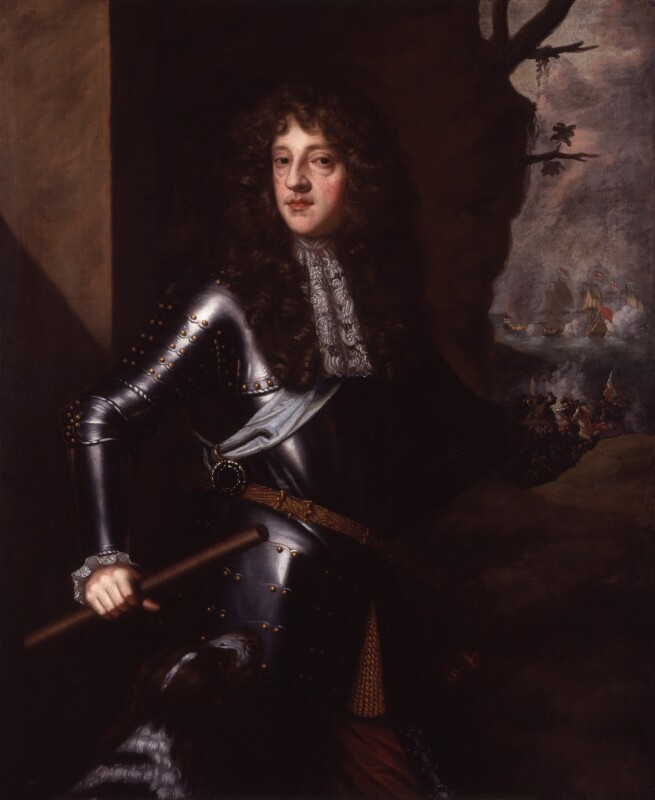
The Great Hall contains portraits that have hung here since 1713, and splendidly carved trophies over the doors remind me of those at Beaulieu in County Louth. The portaits include Queen Anne, Queen Mary, William III, Narcissus Marsh, Charles II, James 1st Duke of Ormond and the Richard Butler Earl of Arran and Earl of Ossory (sons of the Duke of Ormond), amongst others. A library which belonged to the original hospital is also cared by the OPW. The northern wing also contains the Master’s Lodgings, made for the Master of the Royal Hospital.


In 1805, Francis Johnston carried out restoration work, and in the 1820s remodelled the Master’s Quarters in the northwest corner. He also designed the Adjutant General’s office and the Richmond Tower which stands at the west entrance to the hospital grounds.


The garden, known as the Master’s Garden, has been restored to its formal glory under the suprvision of architect Elizabeth Morgan. In 1693 Chambré Brabazon 5th Earl of Meath was Master of the Hospital and a Minute of the Royal Hospital Committee notes that he was asked to prepare an account for an estimate of works necessary to put some order on the garden. The work was not carried out at the time.


The Garden house is included in a painting by Joseph Tudor in 1750. It was probably designed as a small dining pavilion or banqueting house, with a high coved ceiling on the first floor, and it is attributed to Edward Lovett Pearce circa 1734.
The house was extended in the late 19th century into ahouse for the head gardener.


[1] See also https://rhk.ie/about-us/
William Robinson also built Marsh’s Library in Dublin.

 Irish Historic Houses