orange: “whole house rental” i.e. those properties that are only for large group accommodations or weddings, e.g. 10 or more people.
green: gardens to visit
grey: ruins
donation
Help me to pay the entrance fee to one of the houses on this website. This site is created purely out of love for the subject and I receive no payment so any donation is appreciated!
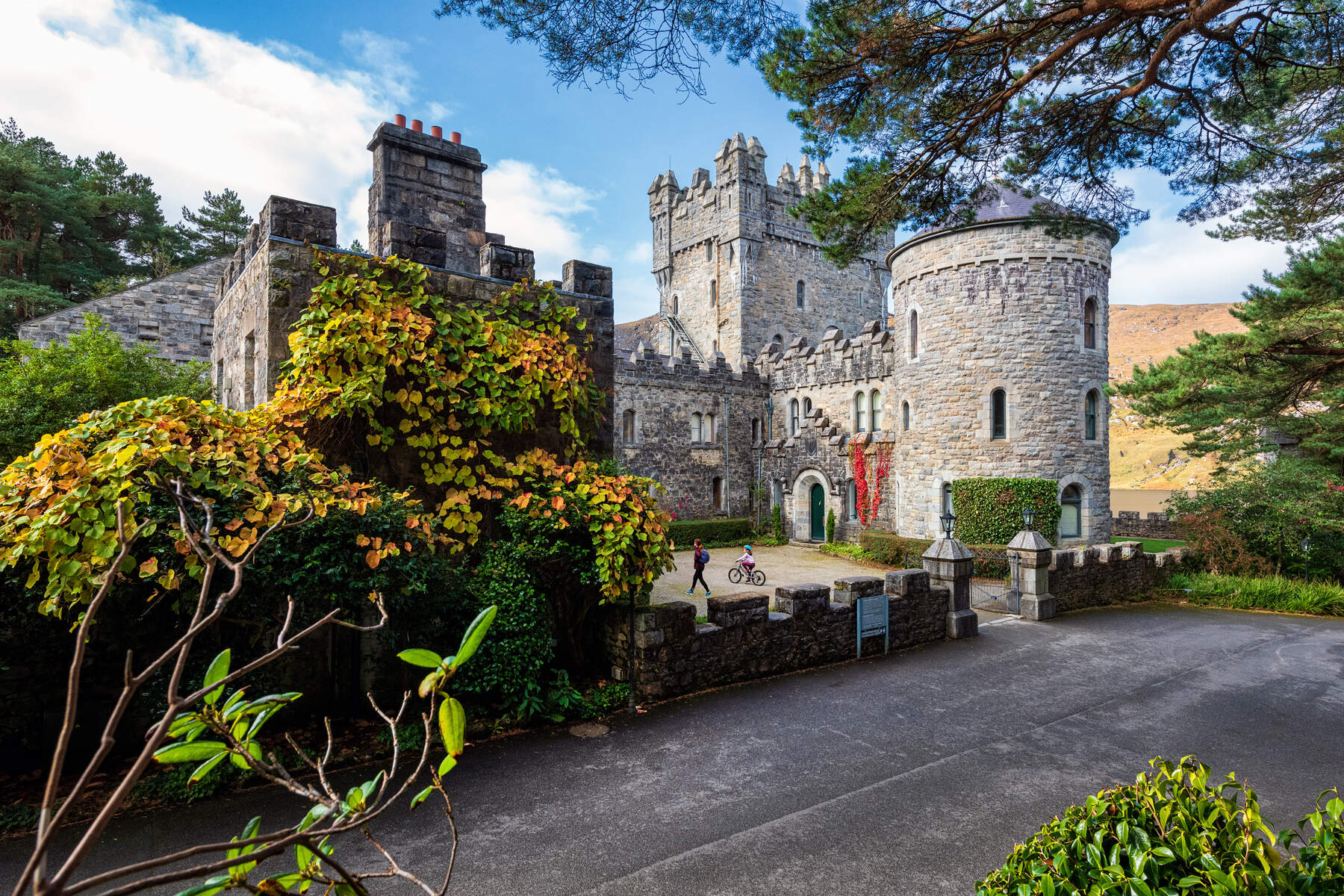
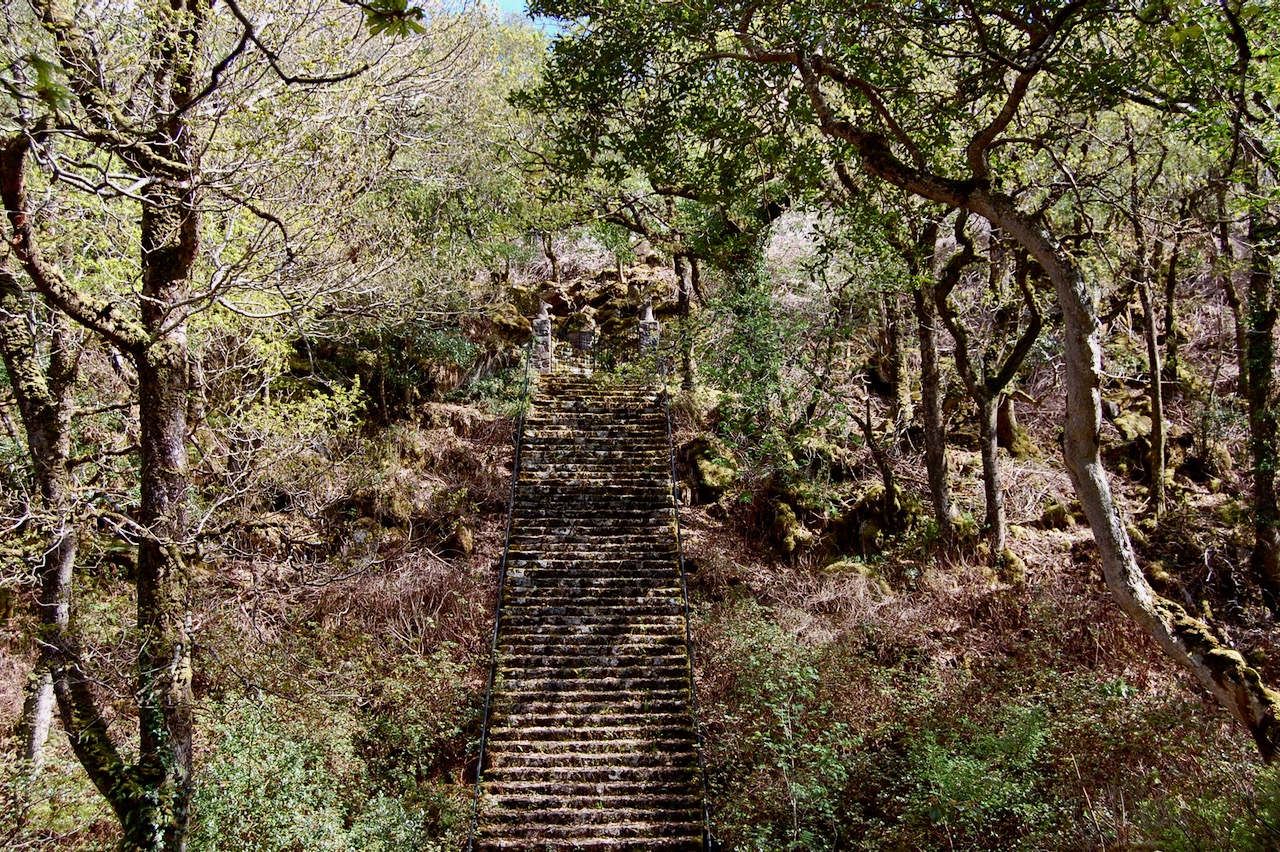
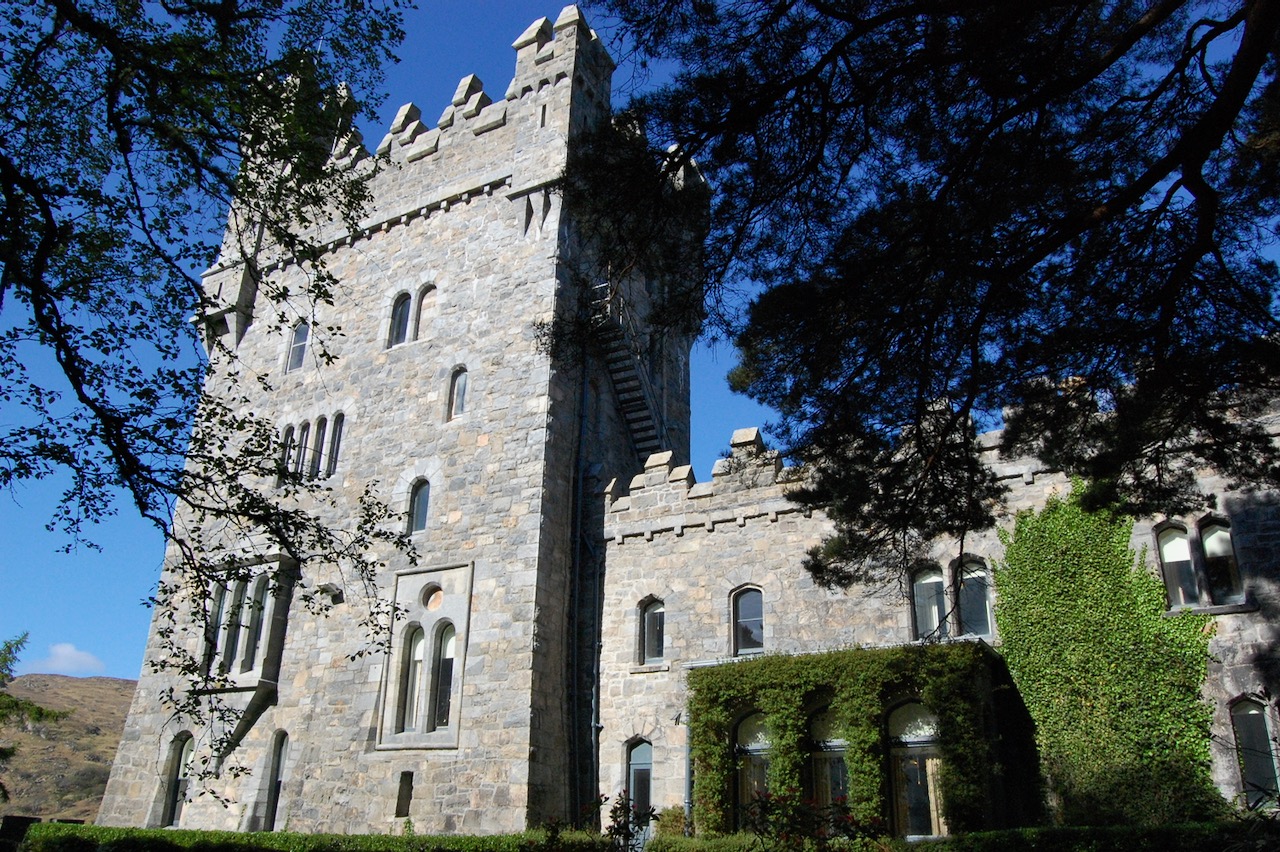
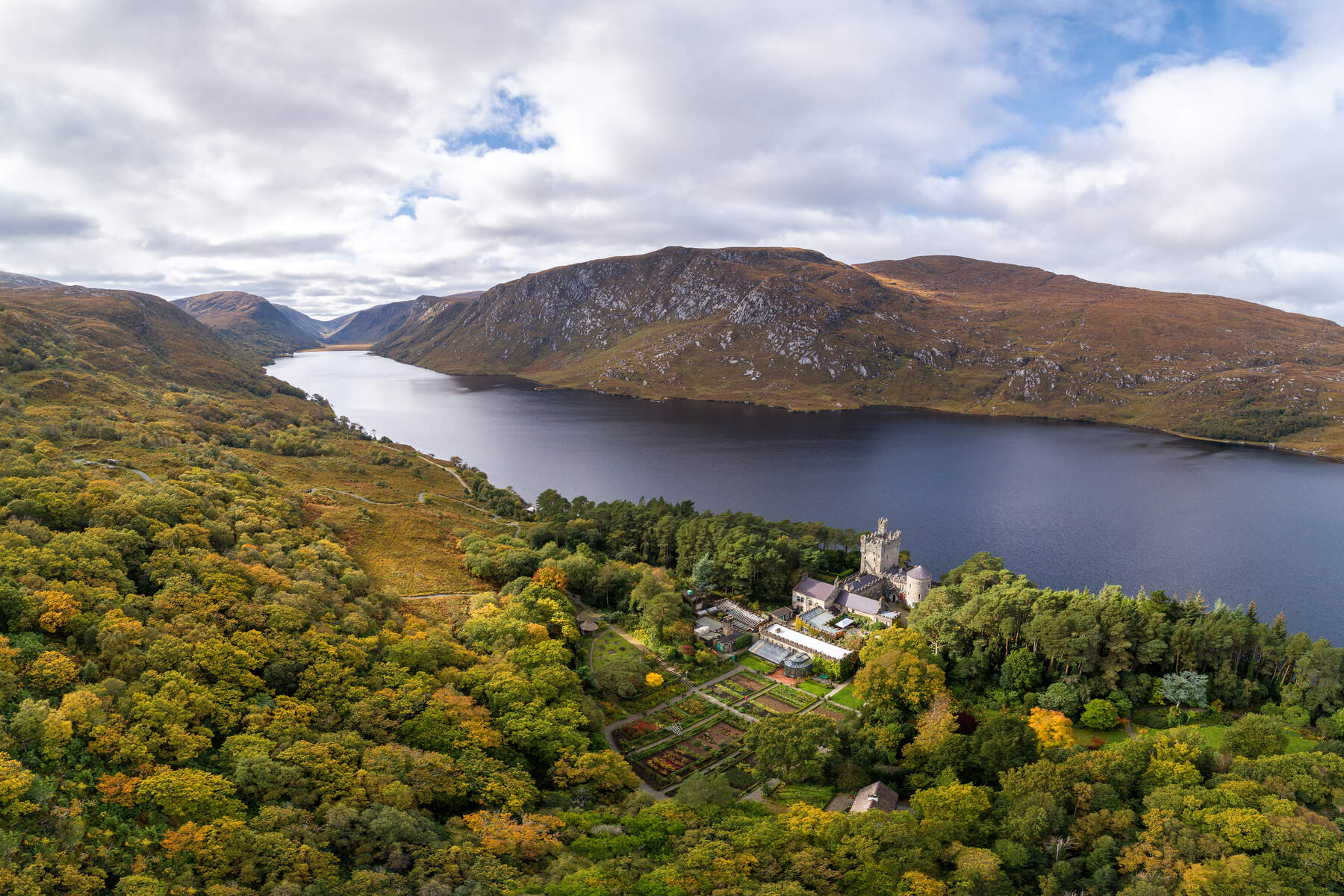
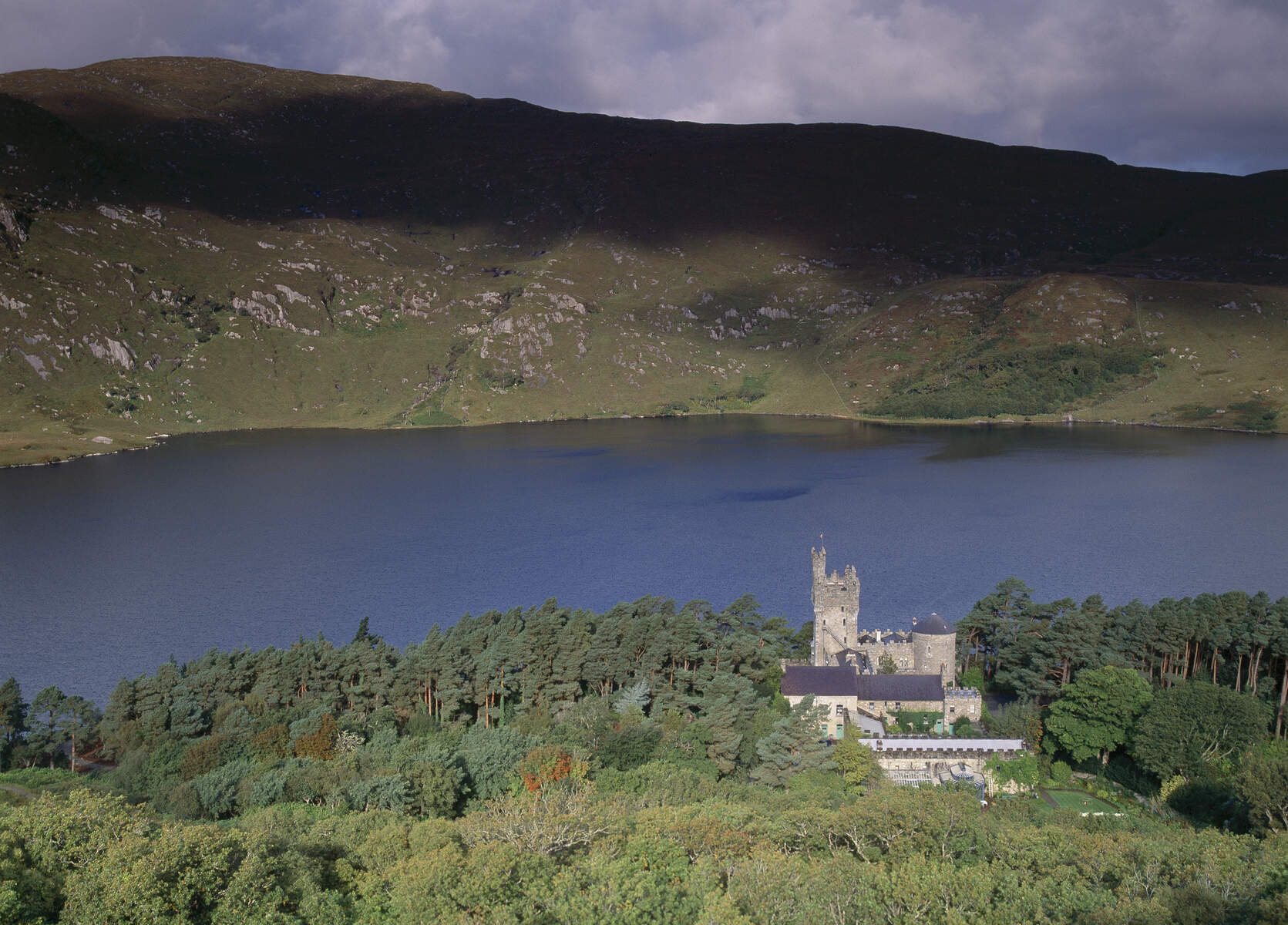
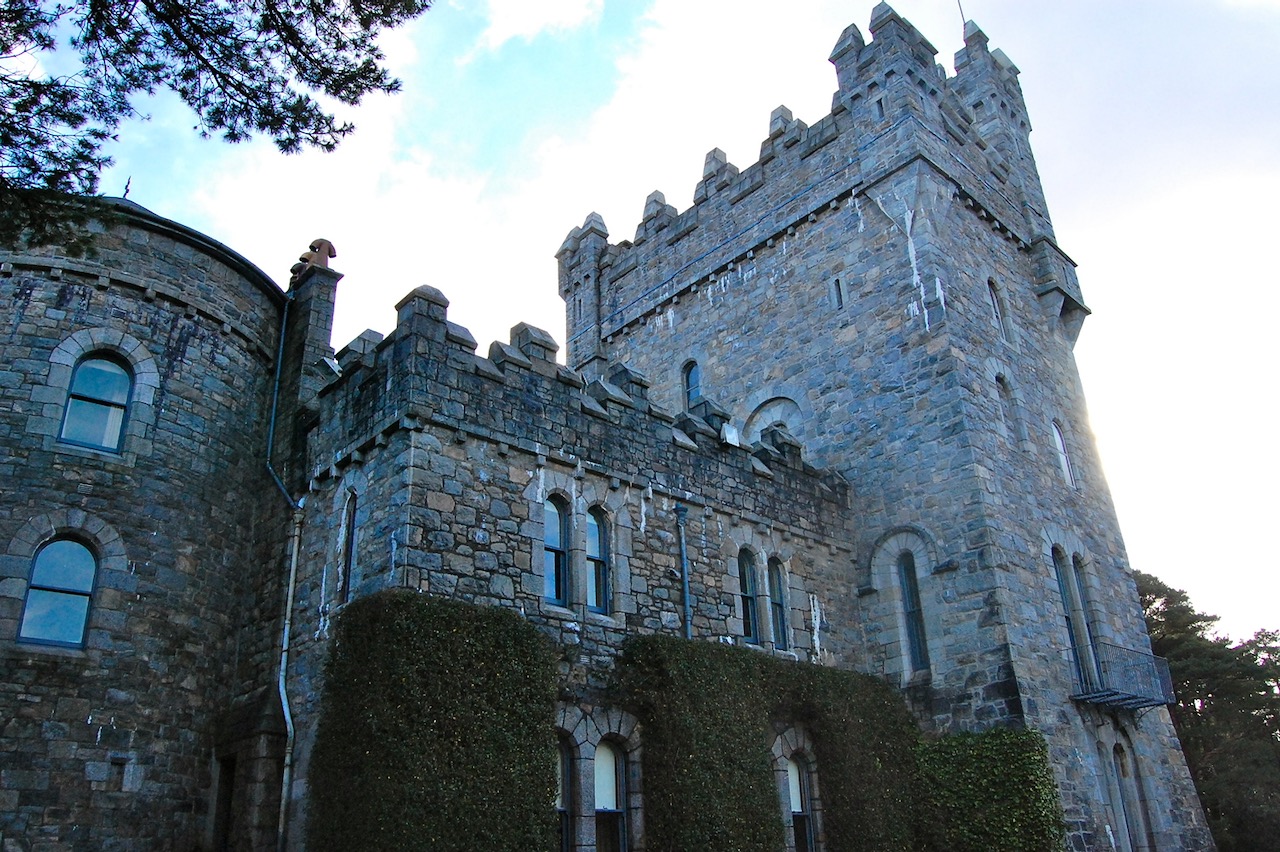
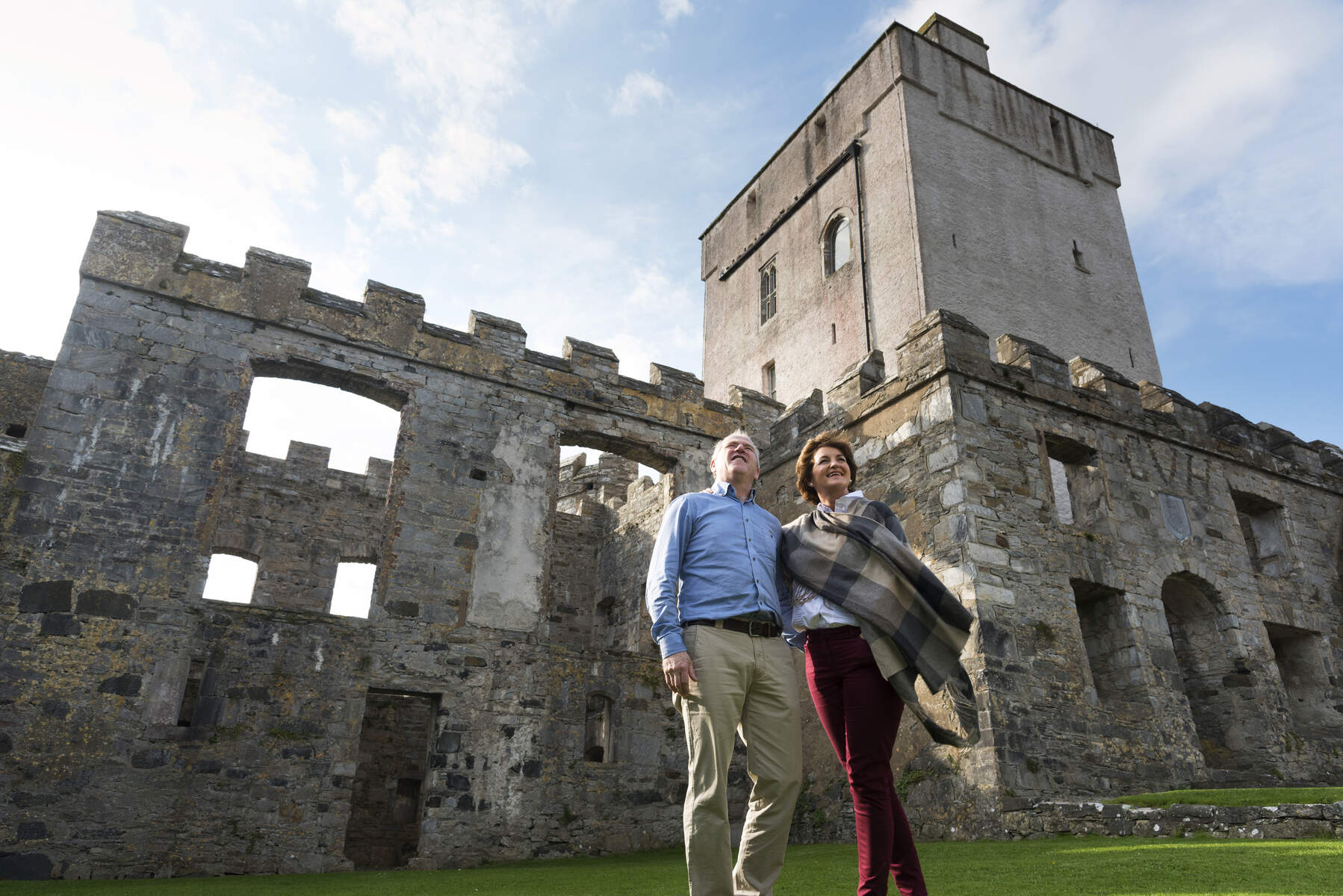
Glenveagh Castle, County Donegal, photograph by Gareth Wray, 2020 for Tourism Ireland, Ireland’s Content Pool
The website tells us about the gardens:
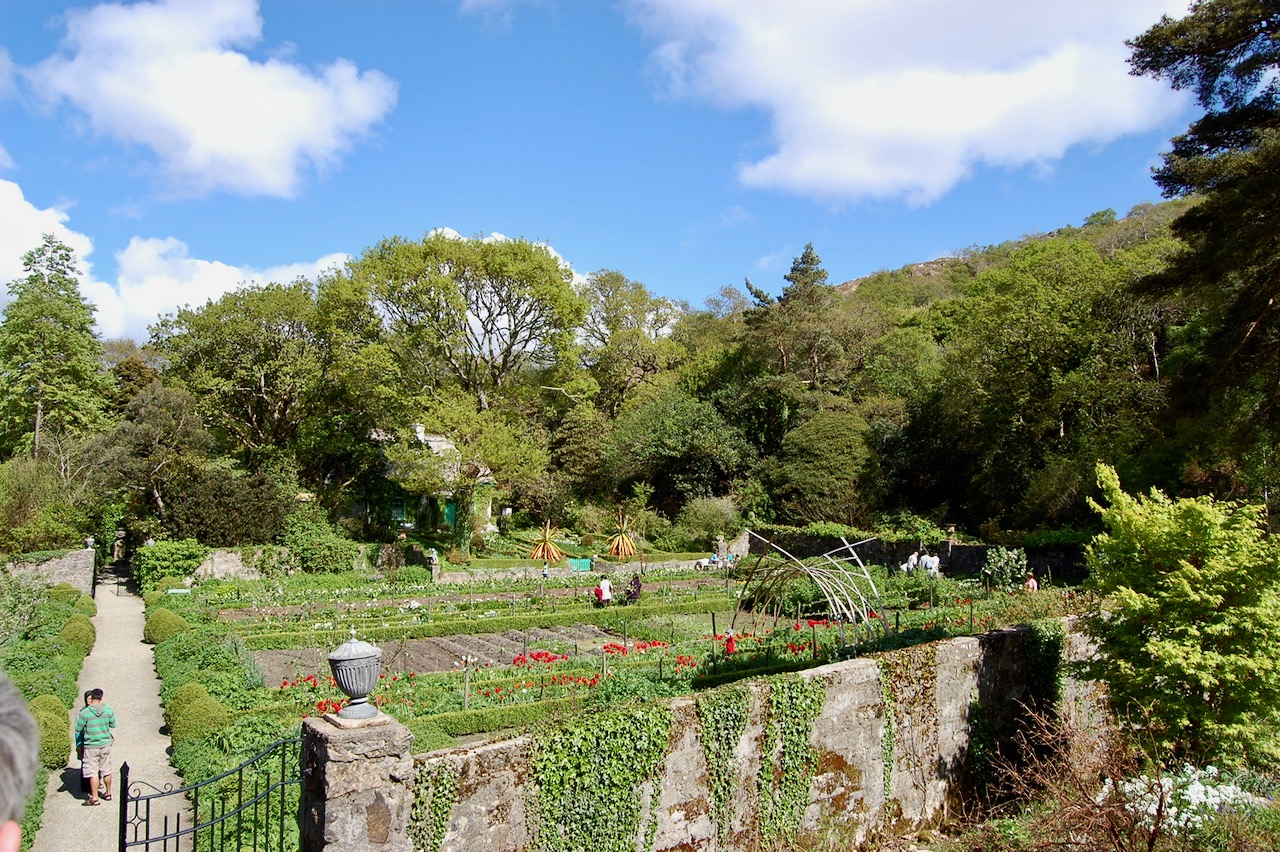
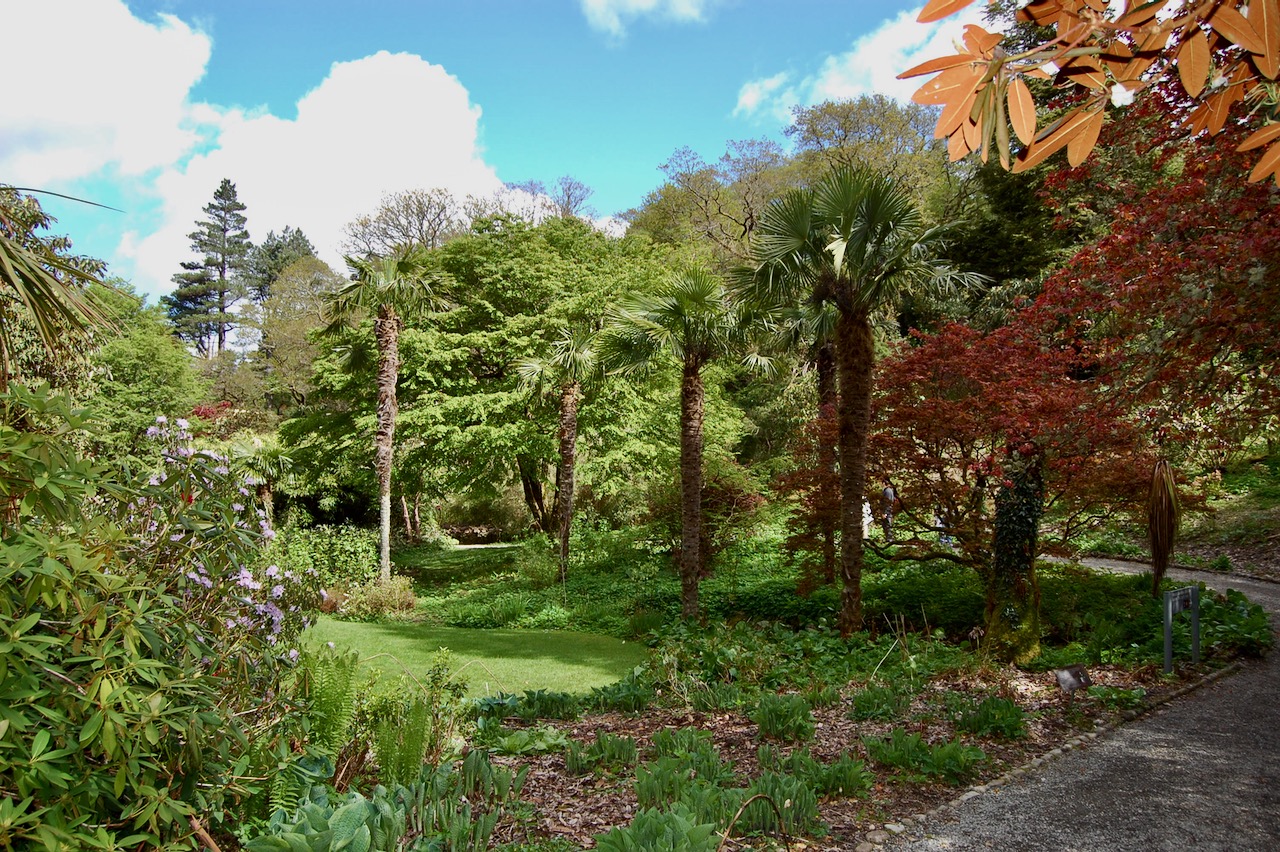
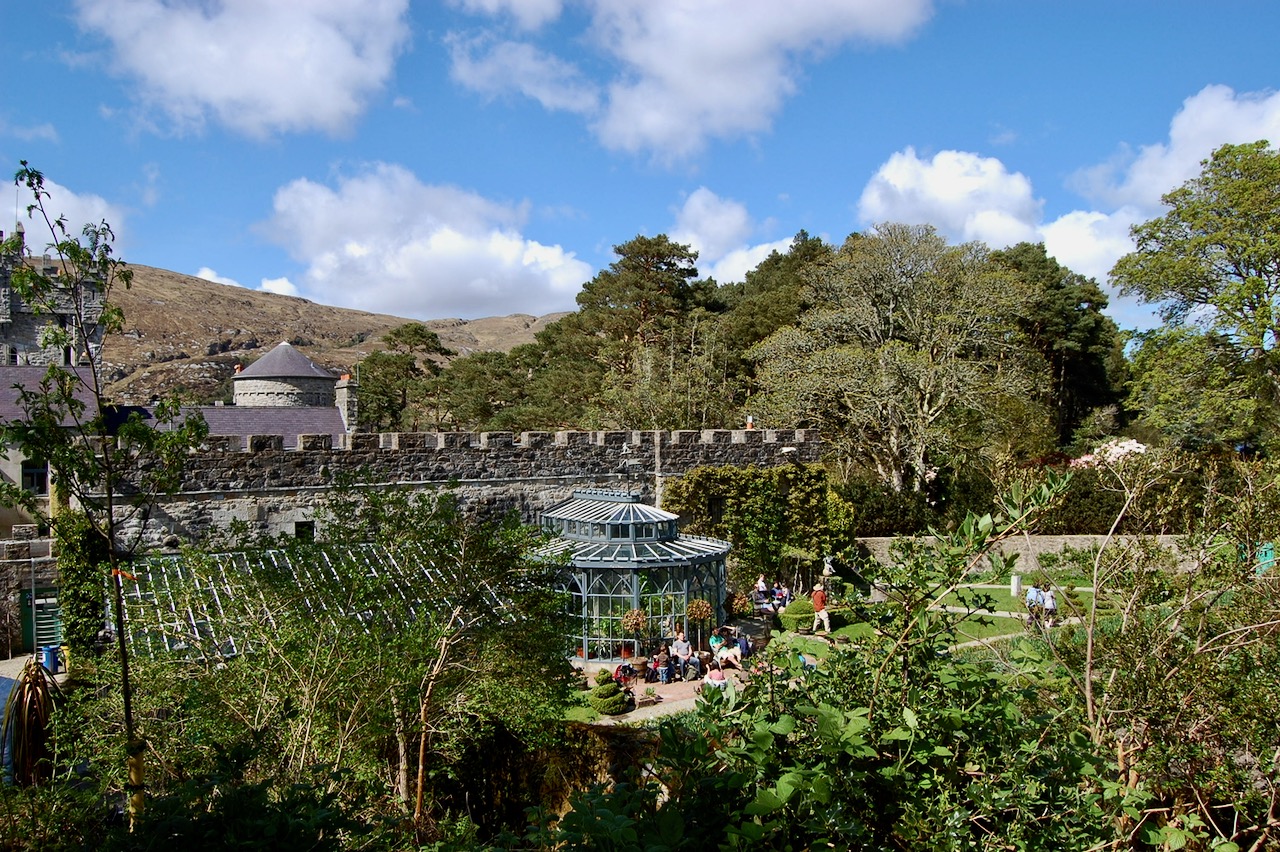
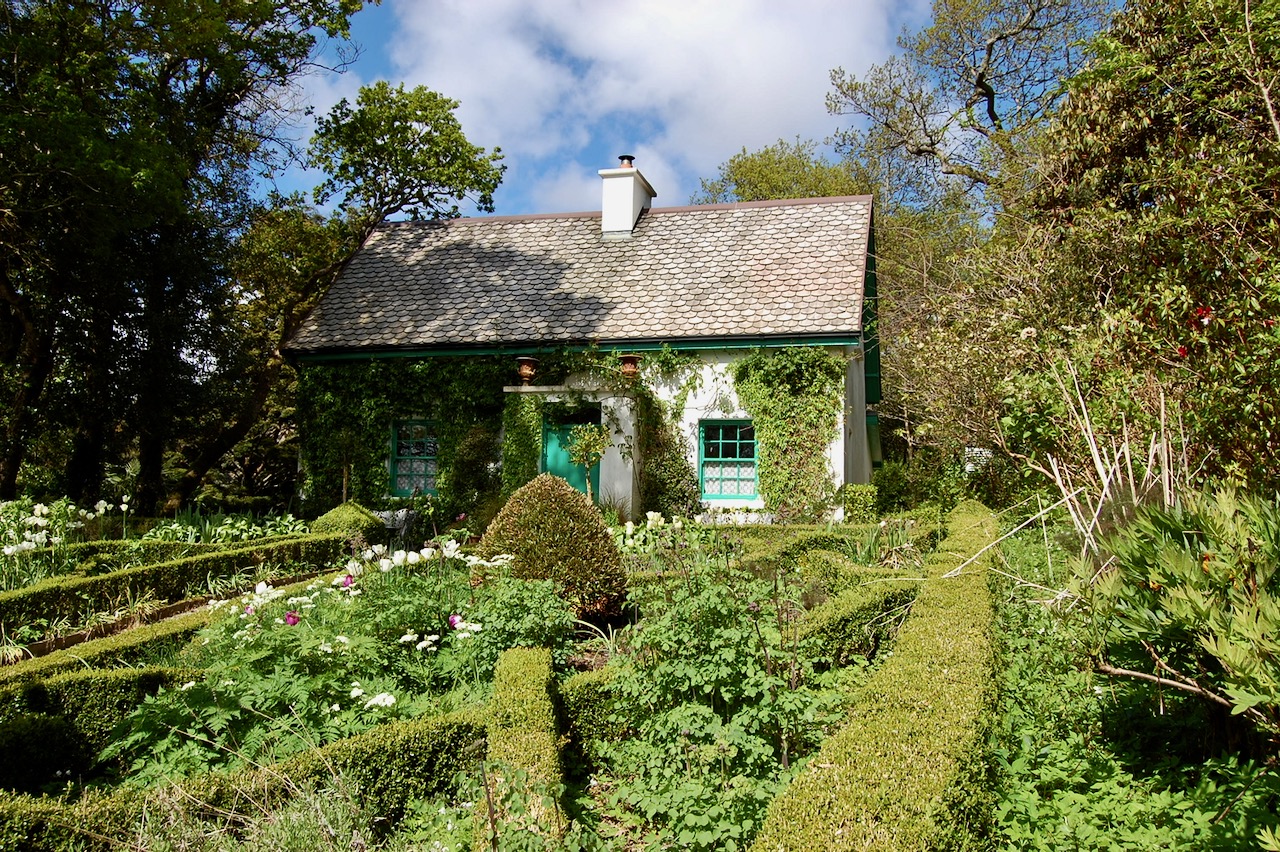
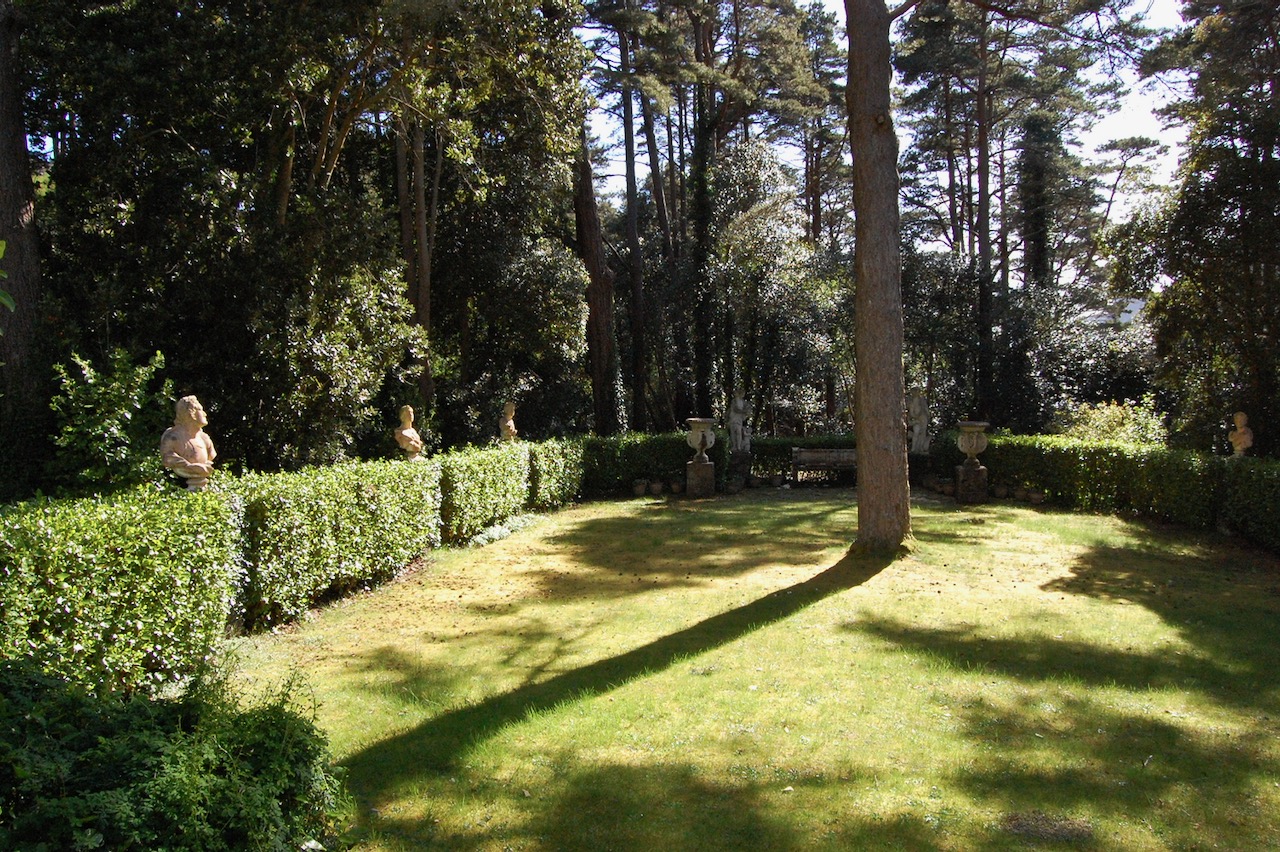
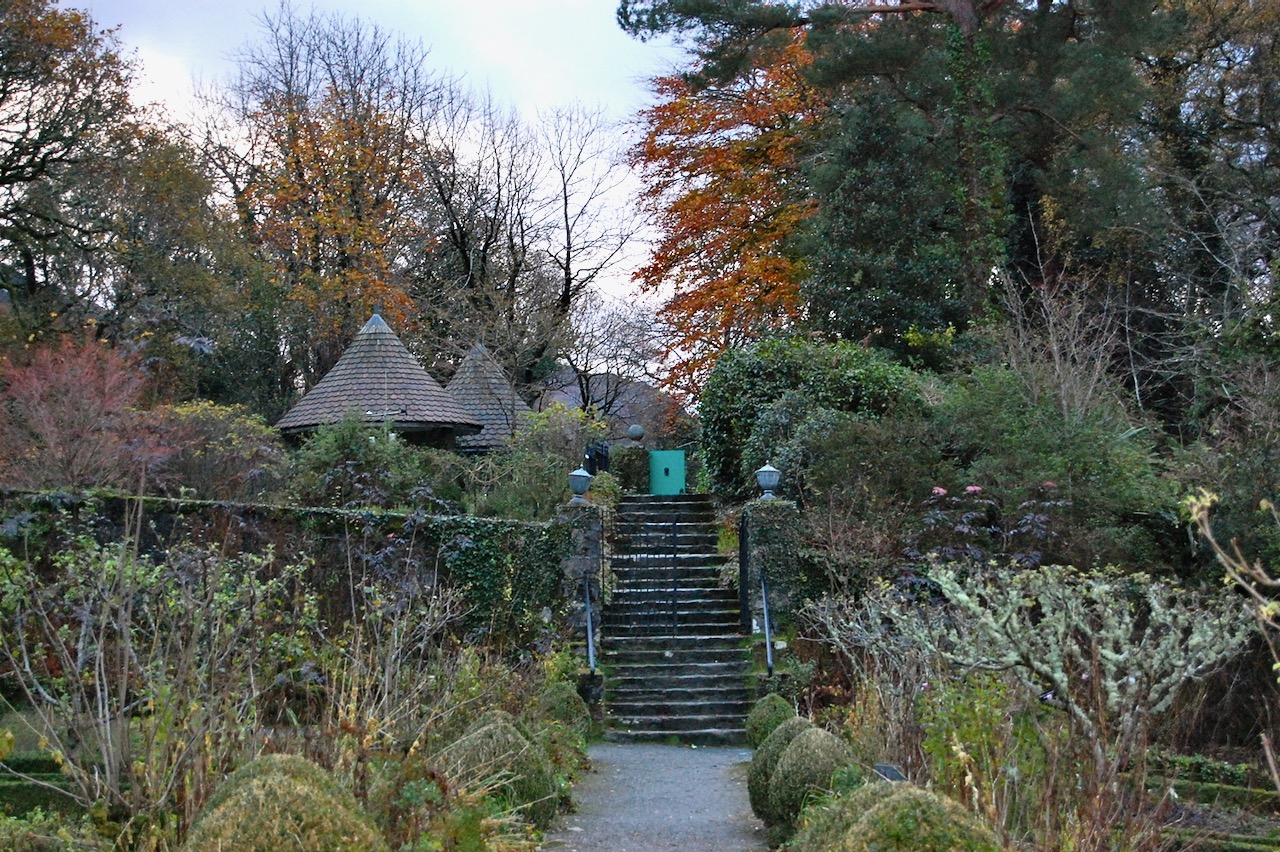
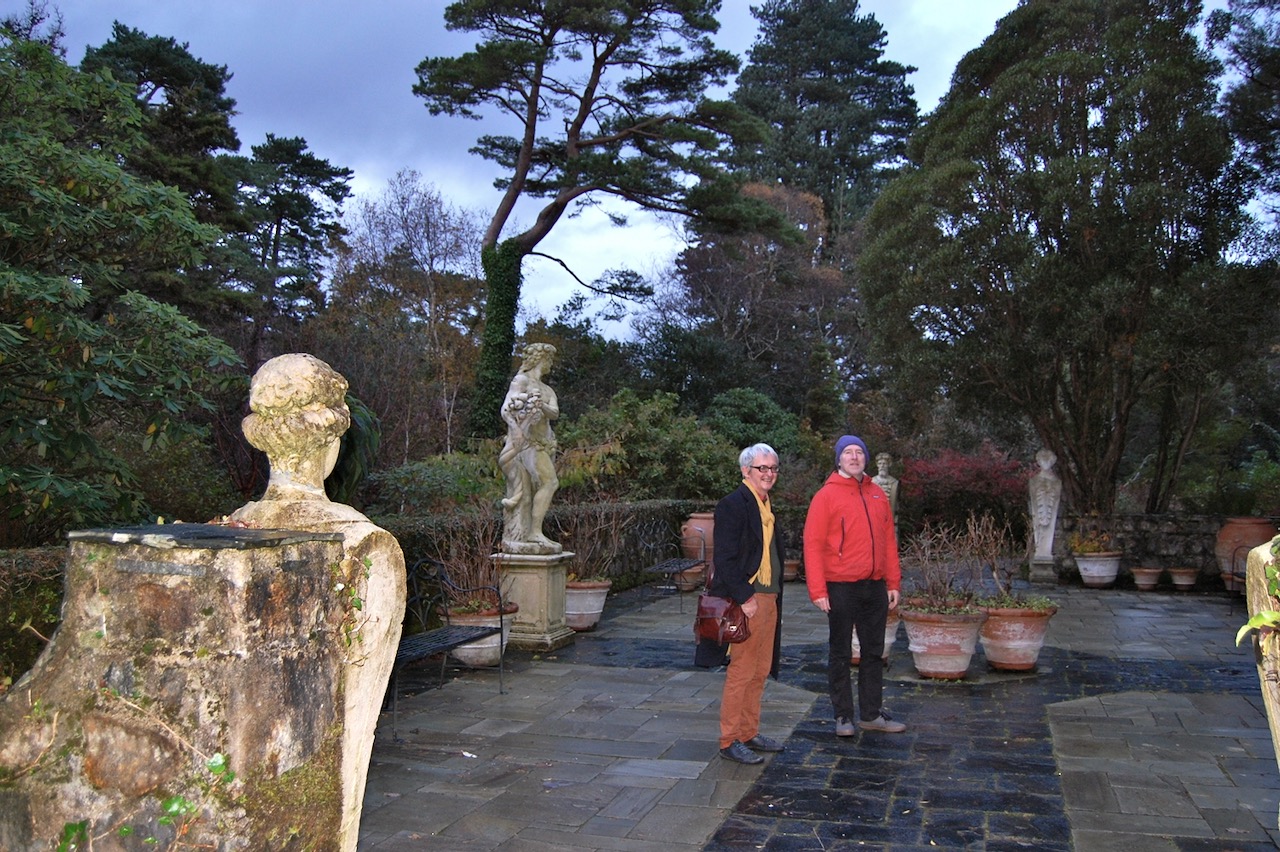
“The two major elements of the Garden, the Pleasure Gardens and the Walled Garden were constructed in the late 1880’s. The original Victorian Garden layout remains intact. It was for Mrs. Cornelia Adair that the gardens were constructed. Mrs. Adair had a Gardener’s House constructed at the top of the Walled Garden and employed a Kew trained gardener to lay out the gardens. Some of the planting in the Pleasure Grounds such as the purple maples and the shelter belt of Scots pine trees were planted at this time.…”
“…Glenveagh is well known today for its rich collection of trees and shrubs specialising in southern hemisphere species and a diverse Rhododendron collection. Displays of Rhododendrons are at their best from late March to the end of May. A large collection of old narcissi varieties from Donegal gardens fills the walled garden in March and April. Displays of colour in the Walled Garden are at their best through the summer months. Fine specimens of the white flowered Eucryphia adorn the gardens in late summer. Dramatic autumn colour follows in October.“
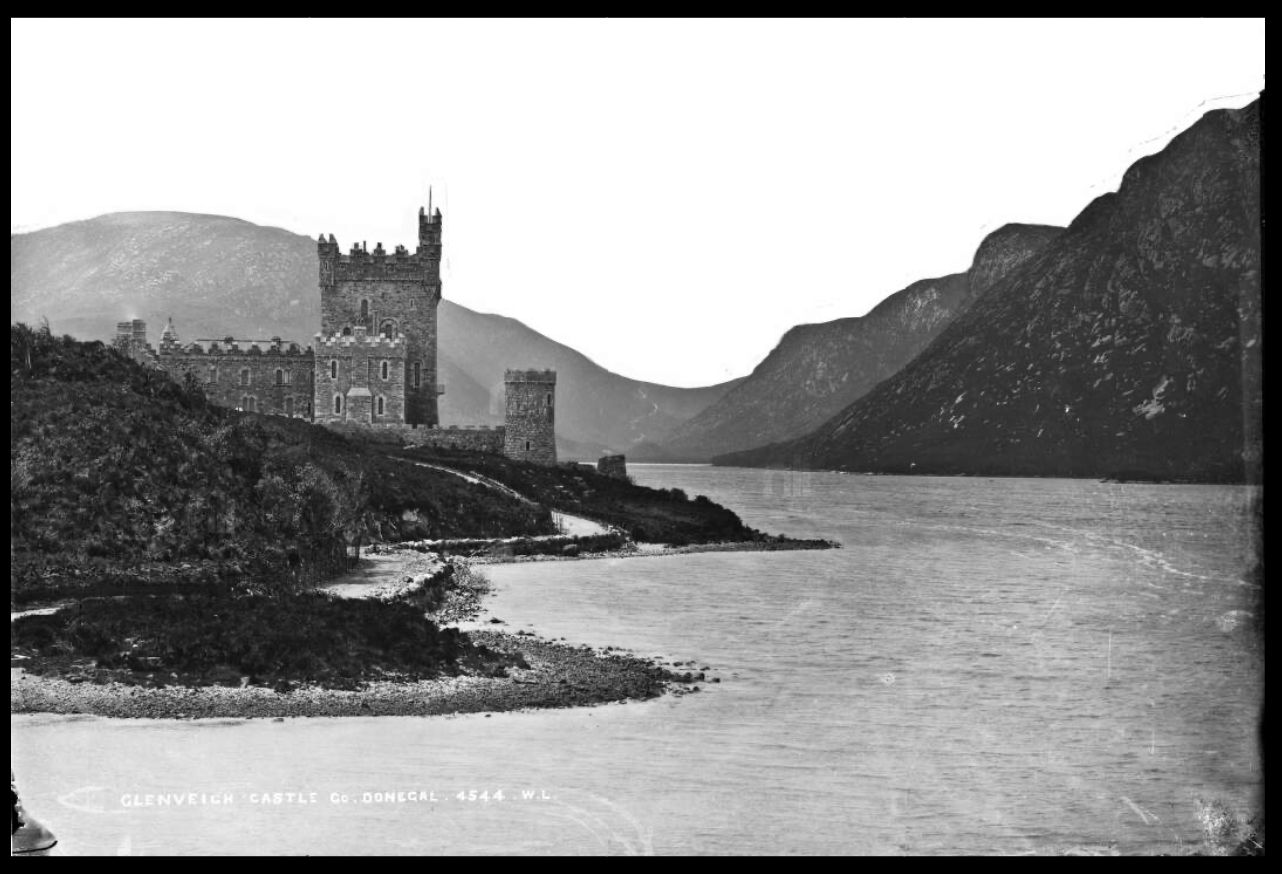
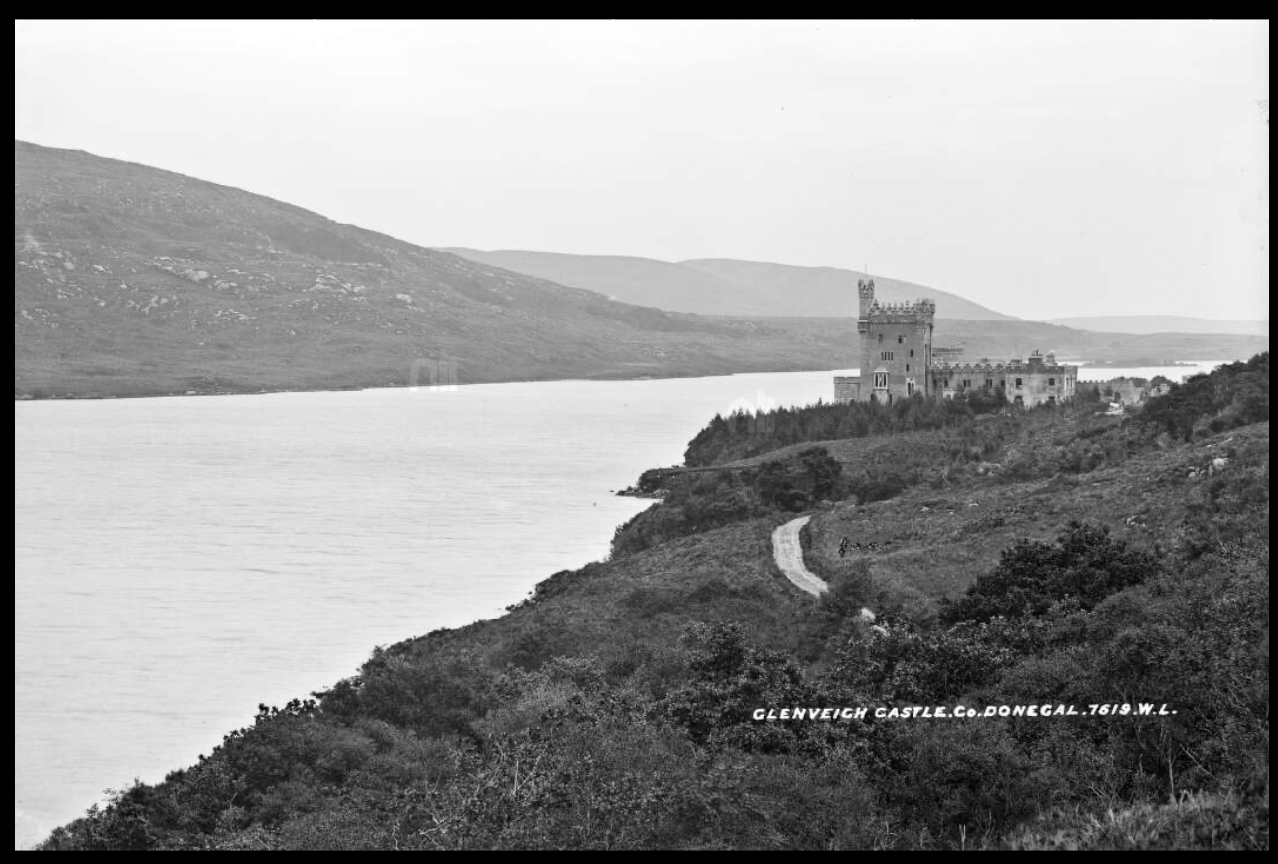
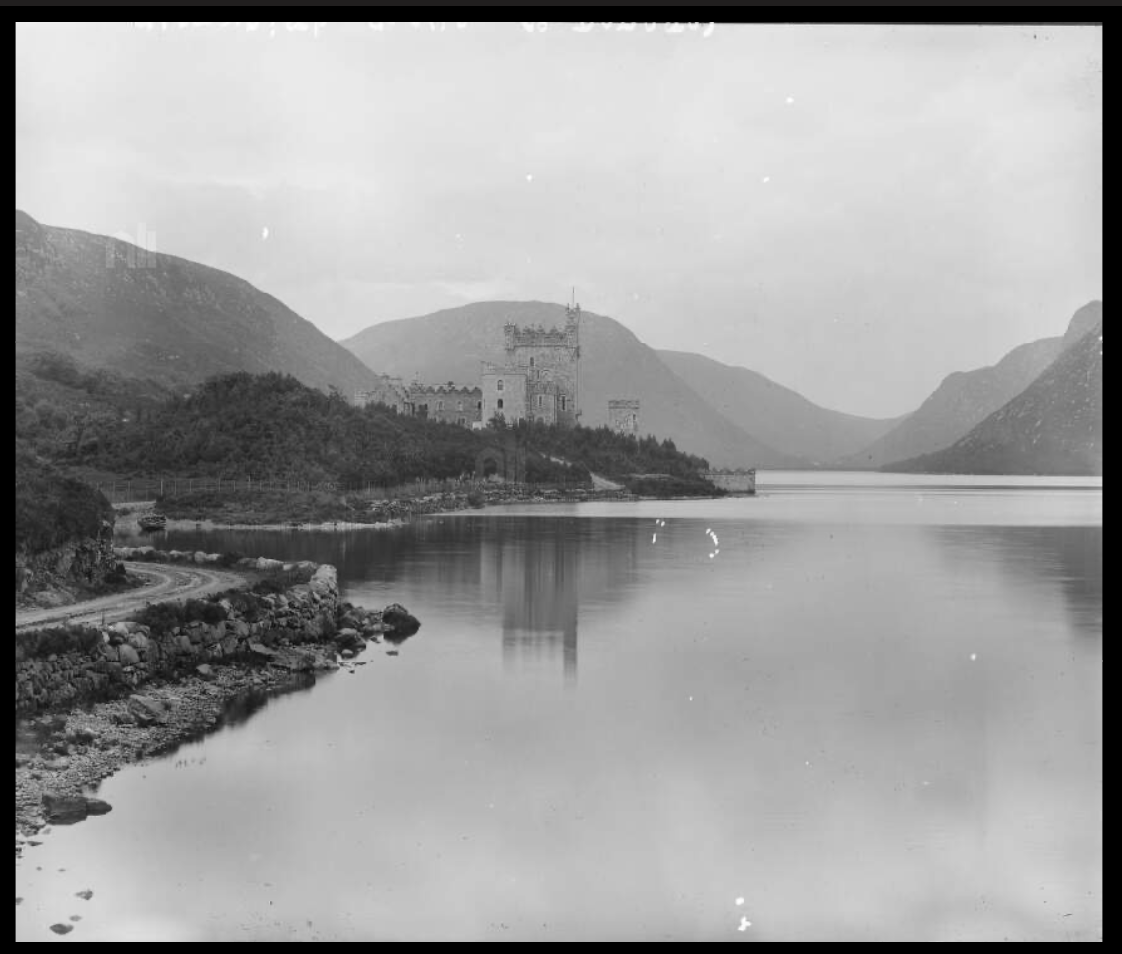
Glenveagh Castle, County Donegal, photograph by Robert French, Lawrence Photograph Collection, National Library of Ireland.
You can take a virtual tour online on the website. Sorry for the cut and paste entry today – I published this previously under “Places to visit and stay in County Donegal.” Stephen and I are still in the throes of buying and selling a property so I still haven’t had time to visit Section 482 properties. I shall try to put all of that on hold in order to take advantage of Heritage Week, August 17-25th, 2024! See https://www.heritageweek.ie/
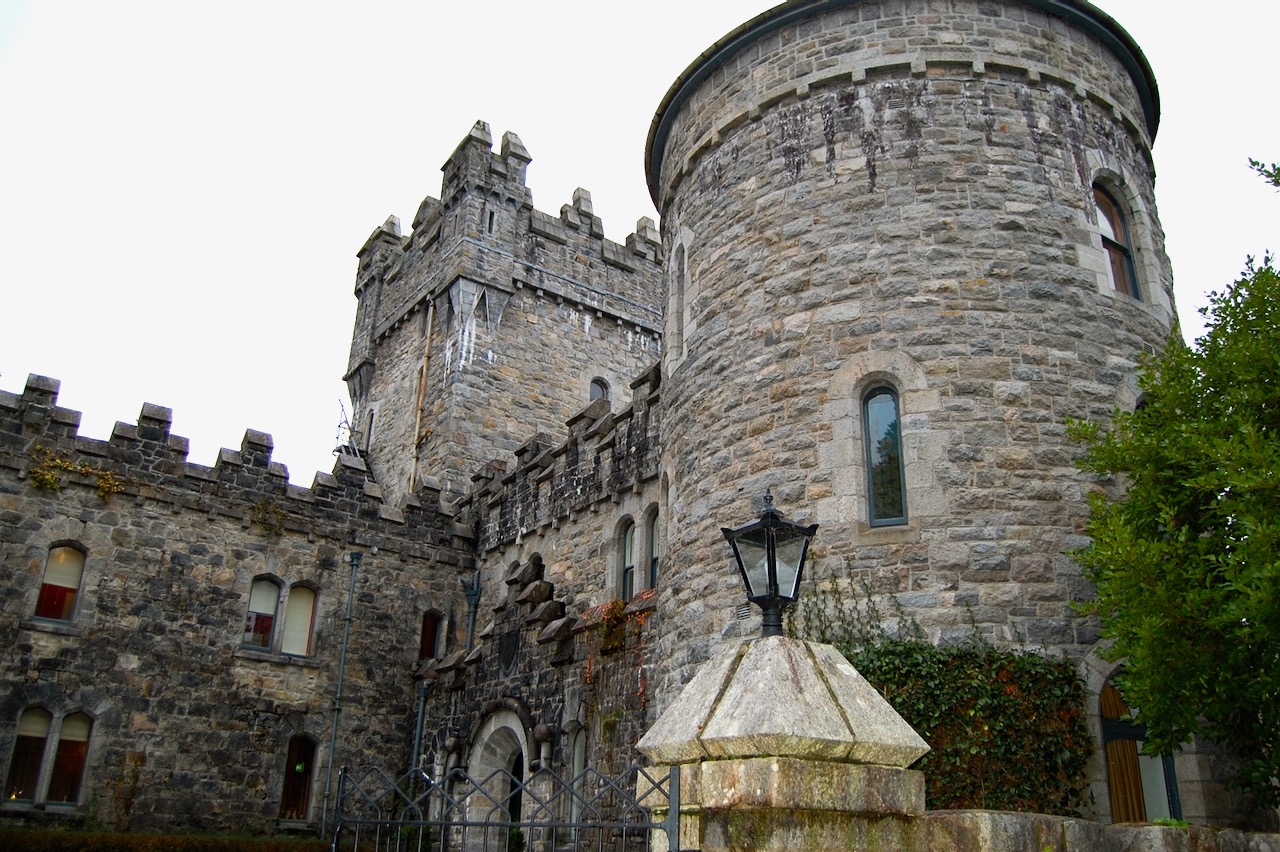
Glenveagh Castle, County Donegal, photograph by Gareth Wray, 2020 for Tourism Ireland, Ireland’s Content Pool [see 2]
Mark Bence-Jones writes in A Guide to Irish Country Houses (1988):
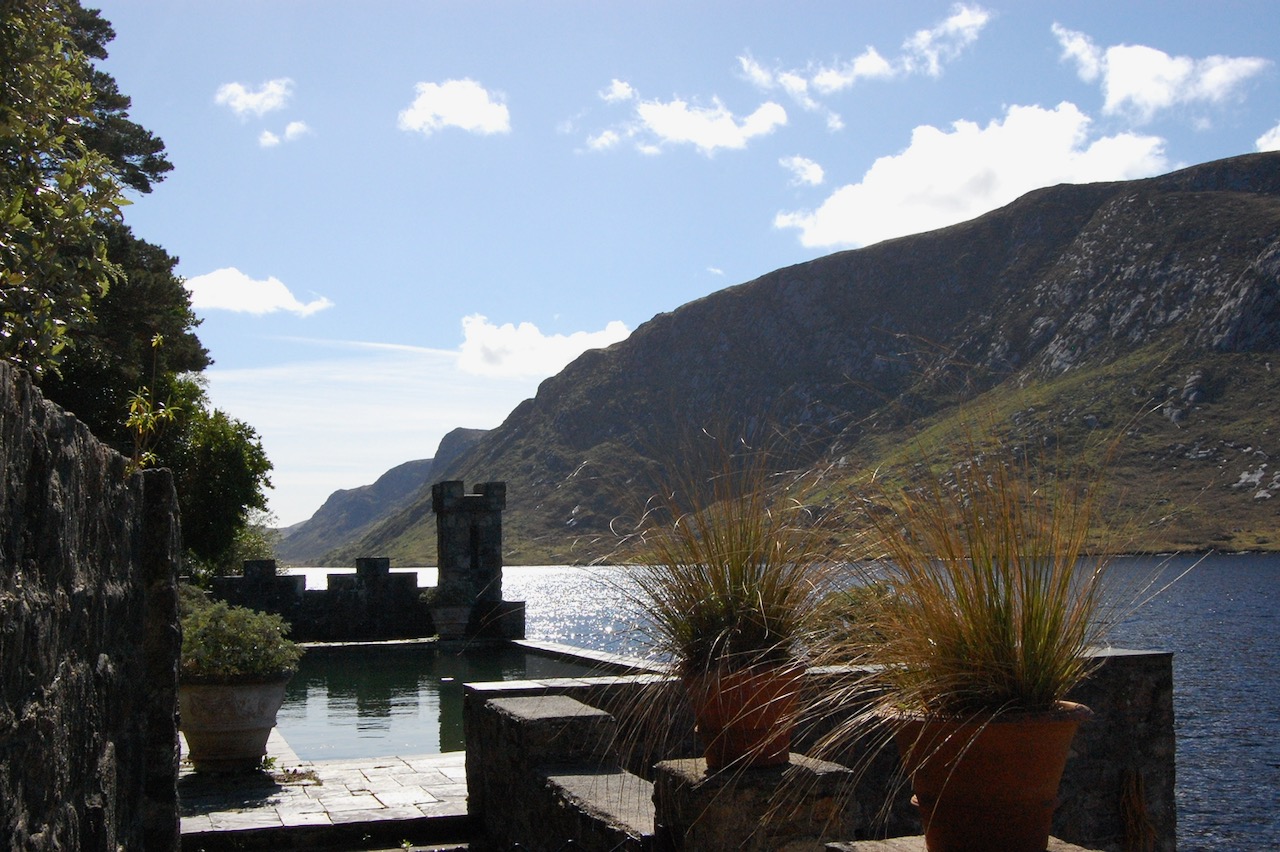
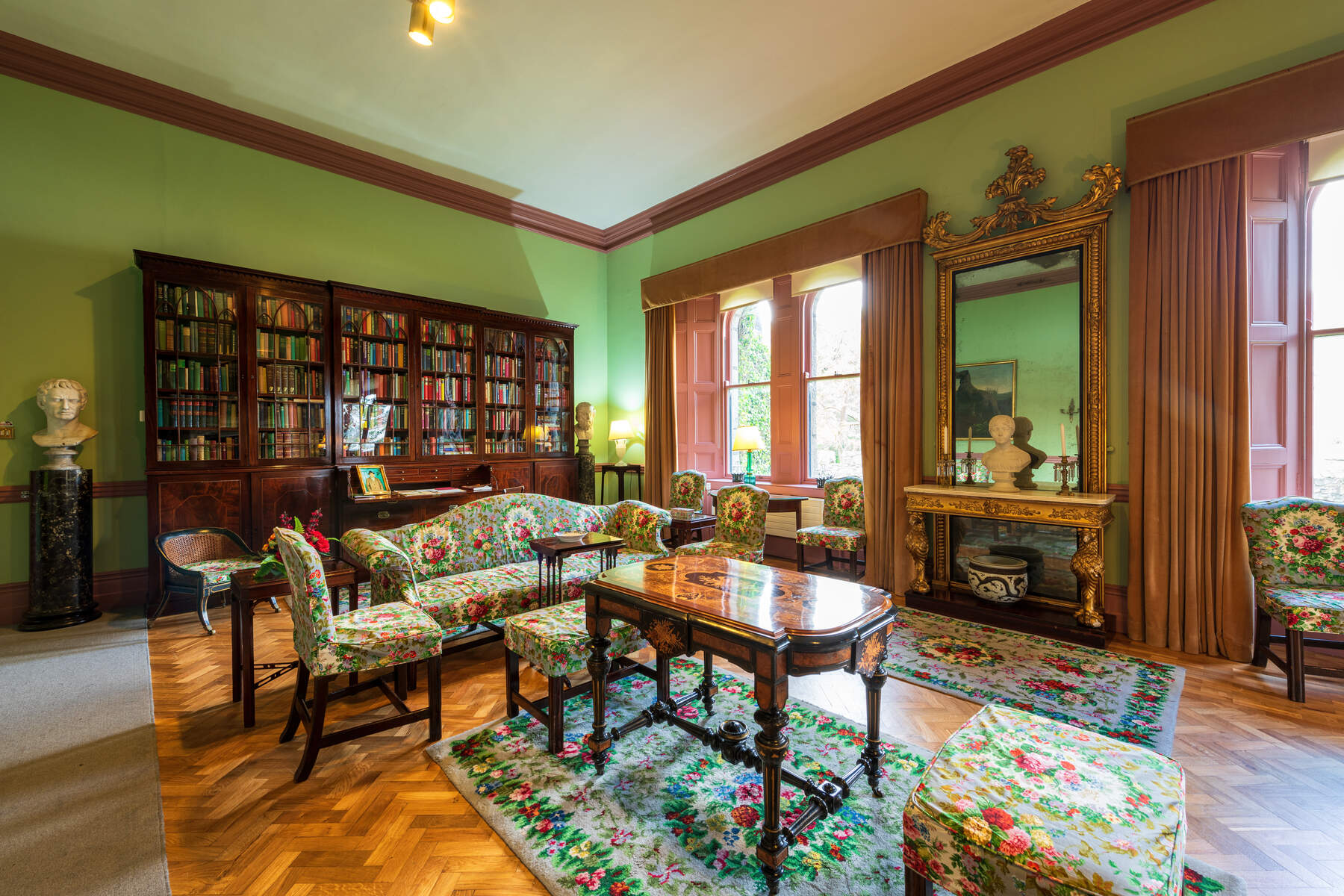
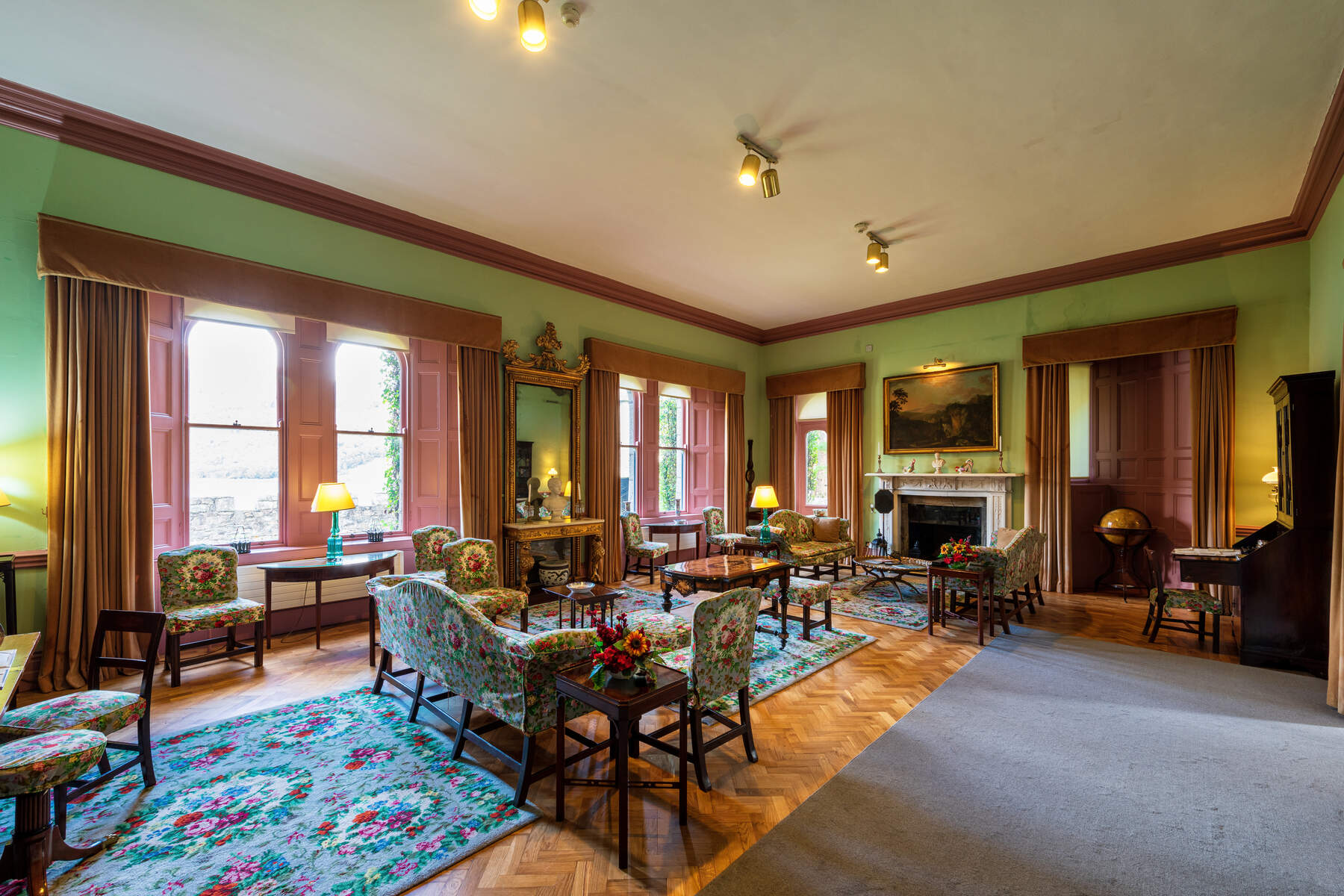
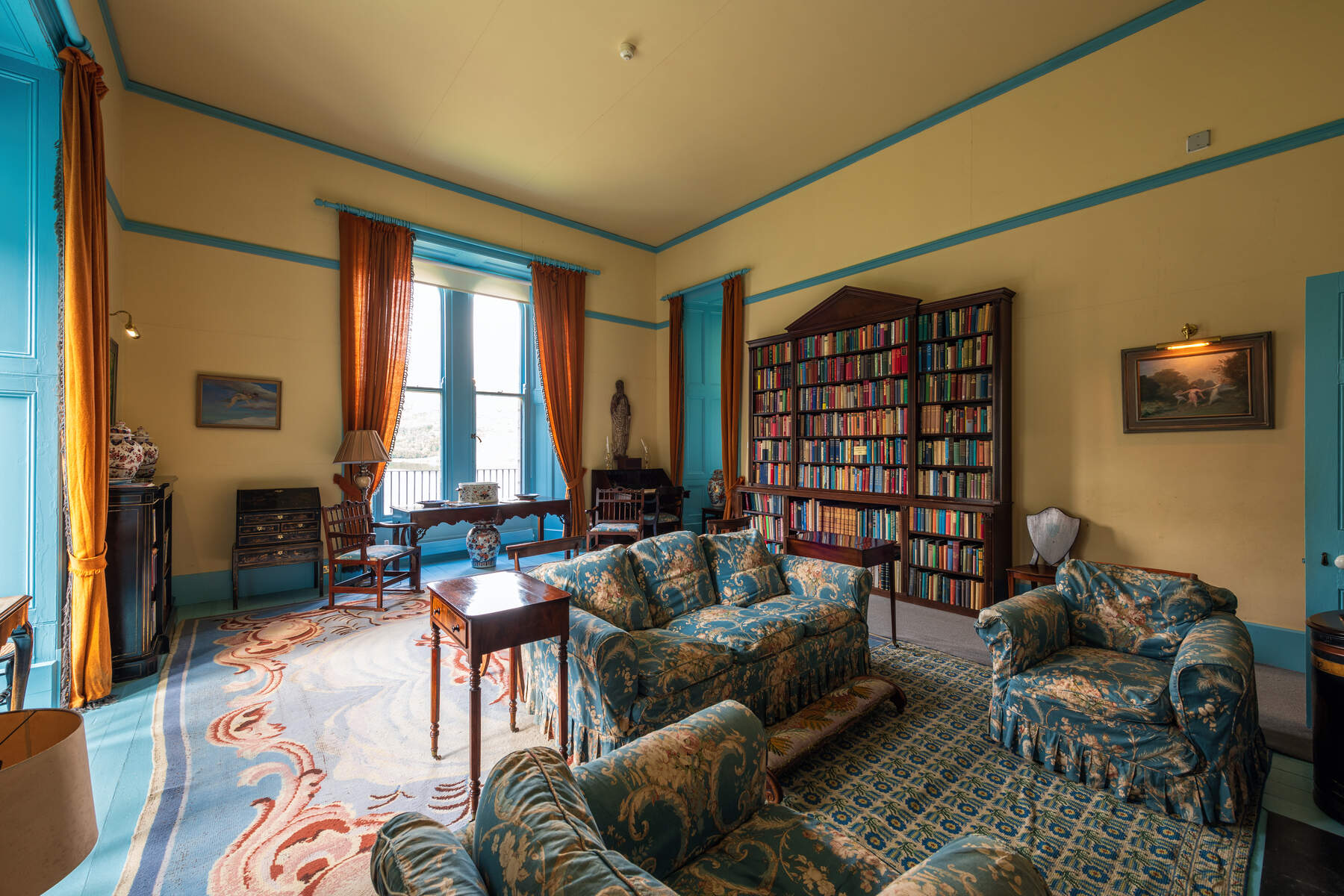
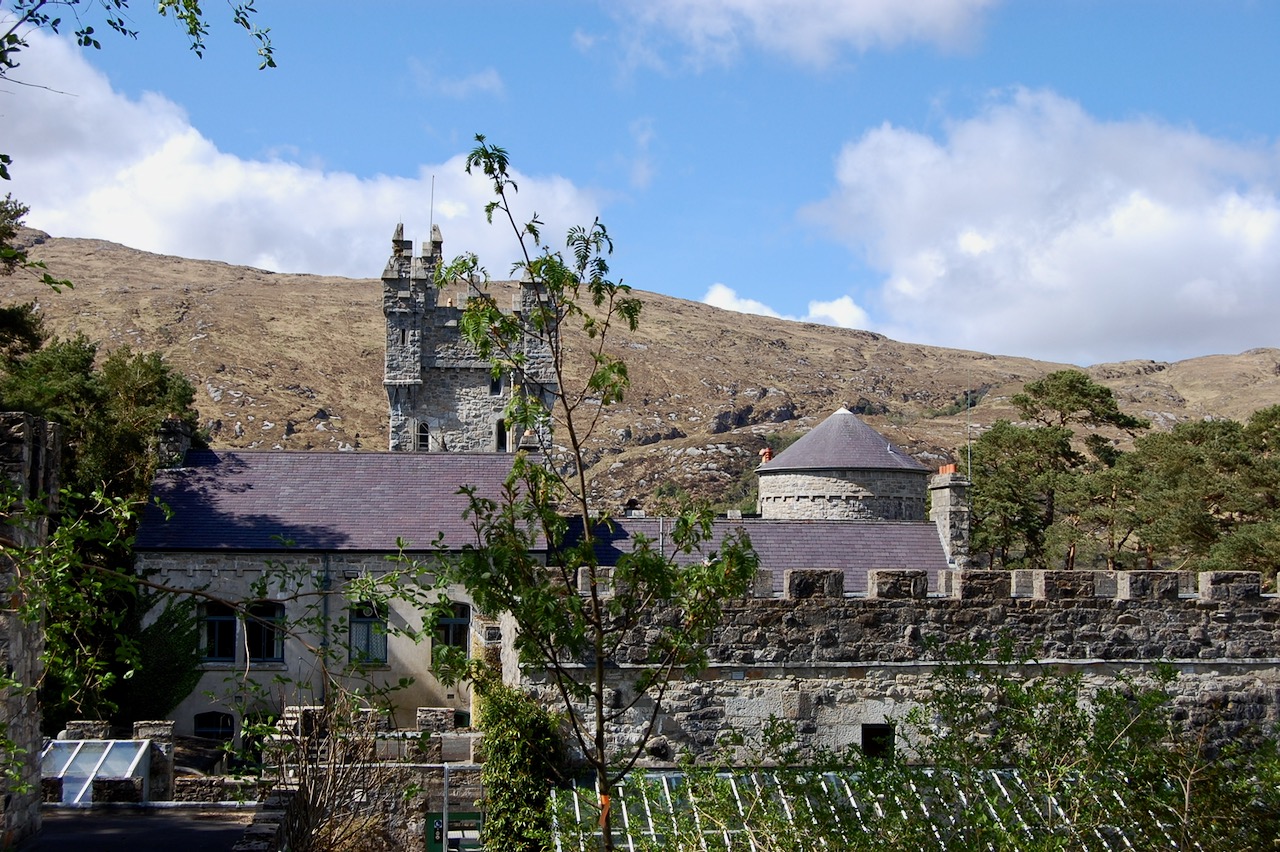
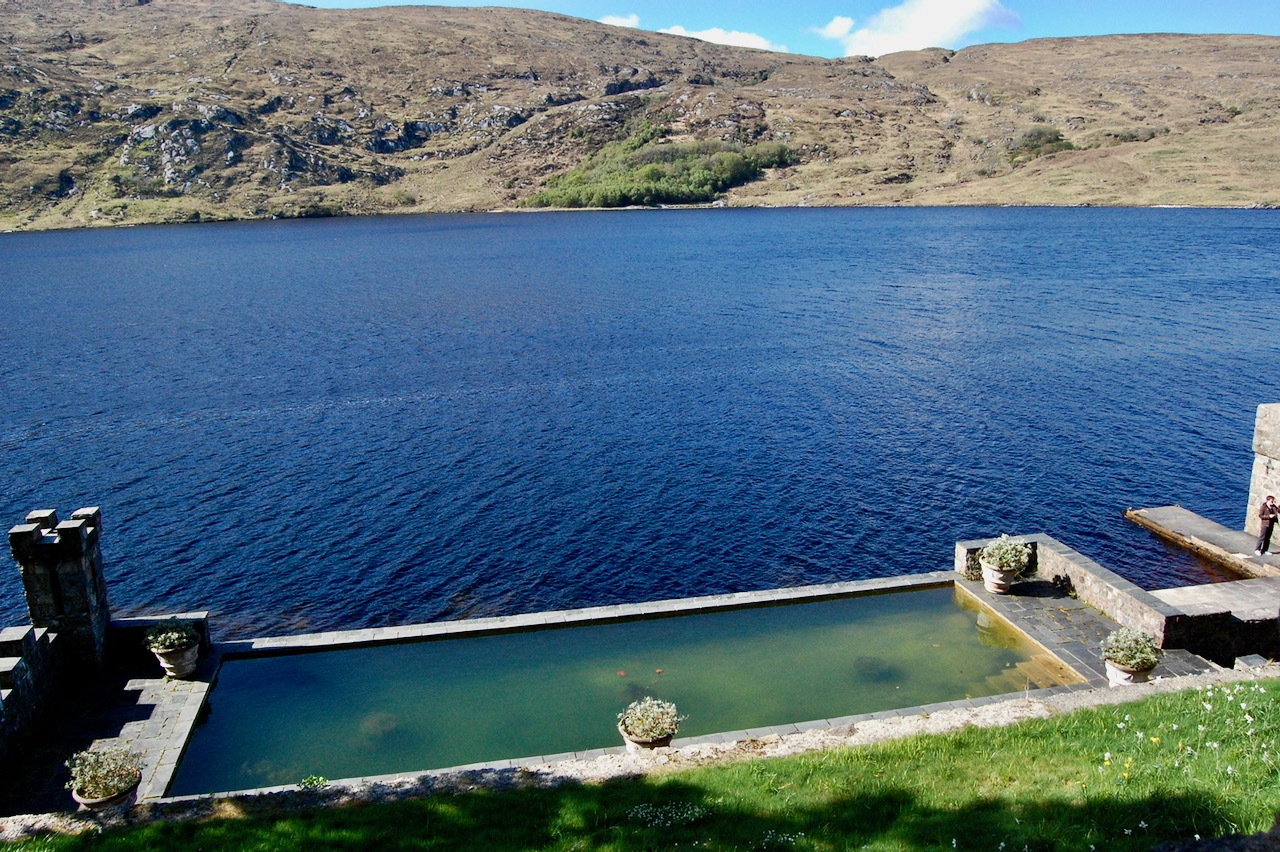
p. 139. “(Adair/LG1863) A Victorian Baronial castle of rough-hewn granite at the end of a wooded promontory jutting out into Lough Veagh, surrounded by the bare and desolate hills of a deer-forest, so large as to seem like a world apart. Built 1870 [the website tells us 1857-9] by J.G. [John George] Adair, of Bellegrove, Co Leix, whose wife was a rich American heiress [Cornelia Wadsworth]; designed by his cousin, J.T. Trench. The castle consists of a frowning keep with Irish battlements, flanked by a lower round tower and other buildings; the effect being one of feudal strength. The entrance is by way of a walled courtyard. Glenveagh has always had an American connection; after the death of Mrs Adair, it was bought by the distinguished American archaeologist, Prof Kingsley Porter; then, in 1938, it was bought by its late owner, Mr Henry McIlhenny, of Philadelphia. Mr McIlhenny, whose hospitality was legendary, decorated and furnished the interior of the castle in a way that combined the best of the Victorian age with Georgian elegance and modern luxury; and which contrasted splendidly with the rugged medievalism of the exterior and the wildness of the surrounding glen. He also made what is now one of the great gardens of the British Isles. There are terraces with busts and statues, there is a formal pool by the side of the lough, an Italian garden, a walled garden containing a Gothic orangery designed by M. Philippe Jullian; while the hillside above the castle is planted with a wonderful variety of rare and exotic trees and shrubs.” [1]
Glenveagh Castle, County Donegal, photograph by Gareth Wray, 2020 for Tourism Ireland, Ireland’s Content Pool [2]Glenveagh Castle, County Donegal, photograph by Robert French, Lawrence Photograph Collection, National Library of Ireland.
The website tells us:
“The estate of Glenveagh was created in 1857-9 by the purchase of several smaller holdings by John George Adair, a wealthy land speculator from Co. Laois. John Adair was to later incur infamy throughout Donegal and Ireland by ruthlessly evicting some 244 tenants in the Derryveagh Evictions.
“After marrying his American born wife Cornelia, Adair began the construction of Glenveagh Castle in 1867, which was completed by 1873. Adair however was never to fulfil his dream of creating a hunting estate in the highlands of Donegal and died suddenly in 1885 on return from a business trip to America.
“After her husband’s death Cornelia took over the running of the estate and introduced deer stalking in the 1890’s. She continually sought to improve the castle’s comforts and the beauty of its grounds, carrying out major improvements to the estate and laying out the gardens. Over the next 30 years she was to become a much noted society hostess and continued to summer at the castle until 1916.
“Following the death of Mrs Adair in London in 1921, Glenveagh fell much into decline and was occupied by both the Anti-treaty and Free State Army forces during the Irish civil war.
“Glenveagh’s next owner was not to be until 1929 when purchased by Professor Arthur Kingsley Porter of Harvard University who came to Ireland to study Irish archaeology and culture. The Kingsley Porters mainly entertained Irish literary and artistic figures including close friend AE Russell whose paintings still hang in the library of the castle. Their stay was to be short however as Arthur Kingsley Porter mysteriously disappeared from Inishbofin Island in 1933 while visiting the island.
“The last private owner was Mr Henry McIlhenny of Philadelphia who bought the estate in 1937. Henry McIlhenny was an Irish American whose Grandfather John McIlhenny grew up in Milford a few miles north of Glenveagh. After buying the estate Mr McIlhenny devoted much time to restoring the castle and developing its gardens.
“Eventually Henry McIlhenny began to find travelling to and from Ireland too demanding and the upkeep of the estate was also becoming a strain. In 1975 he agreed the sale of the estate to the Office of Public Works allowing for the creation of a National Park. In 1983 he bestowed the castle to the nation along with its gardens and much of the contents.
“Glenveagh National Park opened to the public in 1984 while the castle opened in 1986. Today as under private ownership Glenveagh continues to attract and inspire visitors from all over the world.”
“The two major elements of the Garden, the Pleasure Gardens and the Walled Garden were constructed in the late 1880’s. The original Victorian Garden layout remains intact. It was for Mrs. Cornelia Adair that the gardens were constructed. Mrs. Adair had a Gardener’s House constructed at the top of the Walled Garden and employed a Kew trained gardener to lay out the gardens. Some of the planting in the Pleasure Grounds such as the purple maples and the shelter belt of Scots pine trees were planted at this time.
“In 1929 Lucy and Arthur Kingsley-Porter became the new owners. They were also keen gardeners and Mrs Porter introduced the dahlia seed from which was grown the unique cultivar known as Dahlia ‘Matt Armour’ to Glenveagh.
“The last private owner, Henry P McIlhenny began to develop the gardens in the late 1940’s with the assistance of Jim Russell of Sunningdale Nurseries and Lanning Roper his Harvard classmate, both well-known garden design consultants. From the late 1950’s through to the early 1980’s the design and layout of the garden was developed and refined to include the Gothic Orangery, the Italian Terrace, the Tuscan Garden, an ornamental Jardin Potager and the development of the plant collection.
“Glenveagh is well known today for its rich collection of trees and shrubs specialising in southern hemisphere species and a diverse Rhododendron collection. Displays of Rhododendrons are at their best from late March to the end of May. A large collection of old narcissi varieties from Donegal gardens fills the walled garden in March and April. Displays of colour in the Walled Garden are at their best through the summer months. Fine specimens of the white flowered Eucryphia adorn the gardens in late summer. Dramatic autumn colour follows in October.“
[1] Bence-Jones, Mark. A Guide to Irish Country Houses (originally published as Burke’s Guide to Country Houses volume 1 Ireland by Burke’s Peerage Ltd. 1978); Revised edition 1988 Constable and Company Ltd, London.
The province contains counties Antrim, Armagh, Cavan, Donegal, Down, Fermanagh, Derry, Monaghan and Tyrone. Since the OPW operates in the Republic of Ireland, the Ulster counties in the OPW are Cavan, Donegal and Monaghan. Only Donegal contains OPW properties, and so far, I have only visited one of them.
I have noticed that an inordinate amount of OPW sites are closed ever since Covid restrictions, if not even before that (as in Emo, which seems to be perpetually closed) I must write to our Minister for Culture and Heritage to complain.
Donegal:
1. Doe Castle, County Donegal – grounds only open.
2. Donegal Castle, County Donegal
3. Glebe Art Museum, County Donegal
4. Newmills Corn and Flax Mills, County Donegal – site closed at present
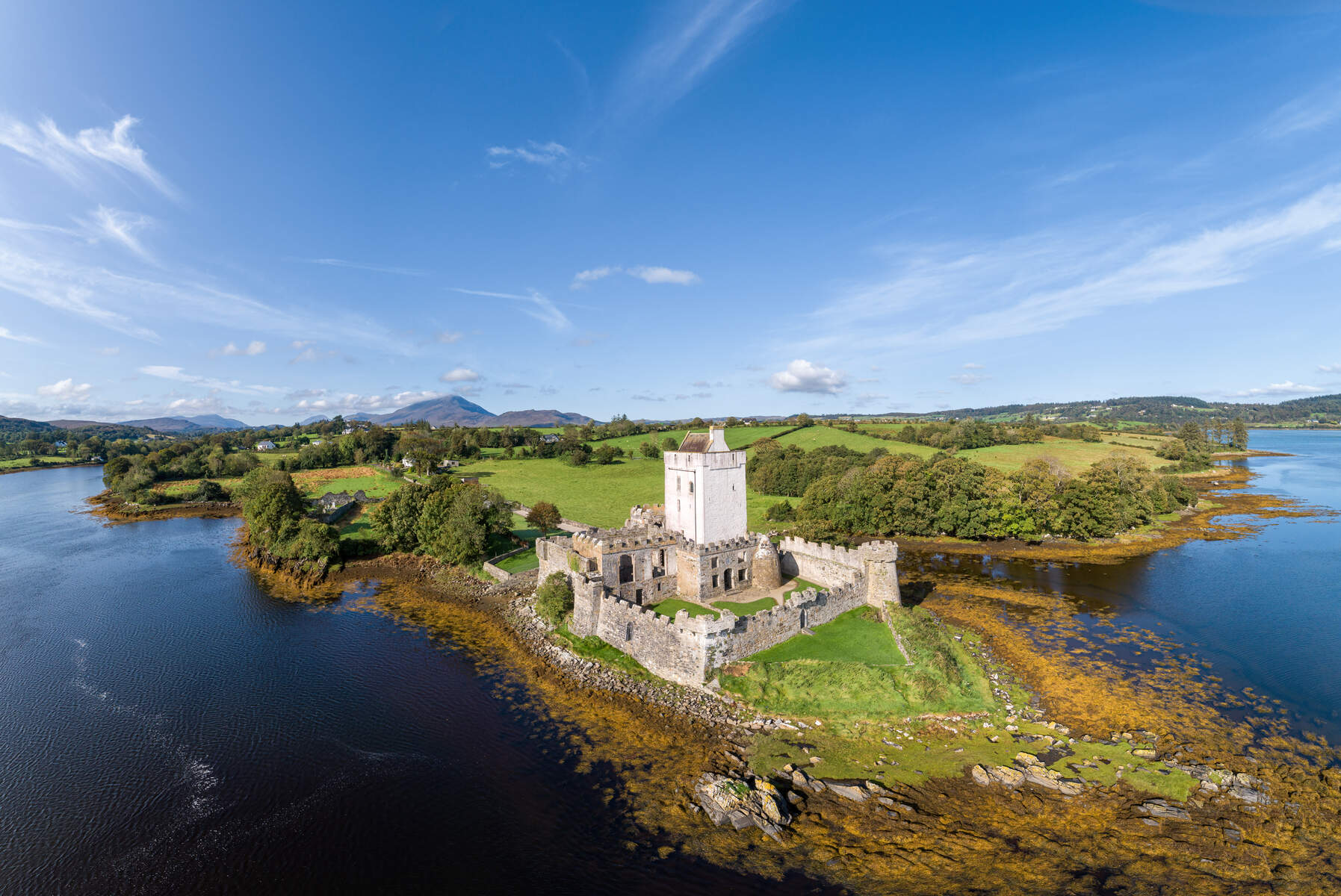
“Nestled in an inlet of Sheephaven Bay in County Donegal, skirting the wild waters of the Atlantic, stands Doe Castle – the medieval stronghold of the MacSweeneys.
The fortress was built in the 1420s. For almost 200 years it served as home, refuge and bastion for at least 13 MacSweeney chiefs – some of whom were party and witness to the most seismic events of Irish history.
For example, MacSweeney chief Eoghan Og II gave shelter to survivors of the 1588 Spanish Armada fleet at Doe. The last chief of the castle, Maolmhuire an Bhata Bhui, marched out with Red Hugh O’Donnell, lord of Tyrconnell, to the Battle of Kinsale in 1601.
An exquisite carved and ornamented Mac Sweeney grave-slab, dating from 1544, is on show inside the tower house. Display panels onsite chronicle the castle’s history in fascinating detail.” [2]
Doe Castle, Donegal, photograph from Ireland’s Content Pool, photograph by Chris Hill, 2017, for Tourism Ireland.
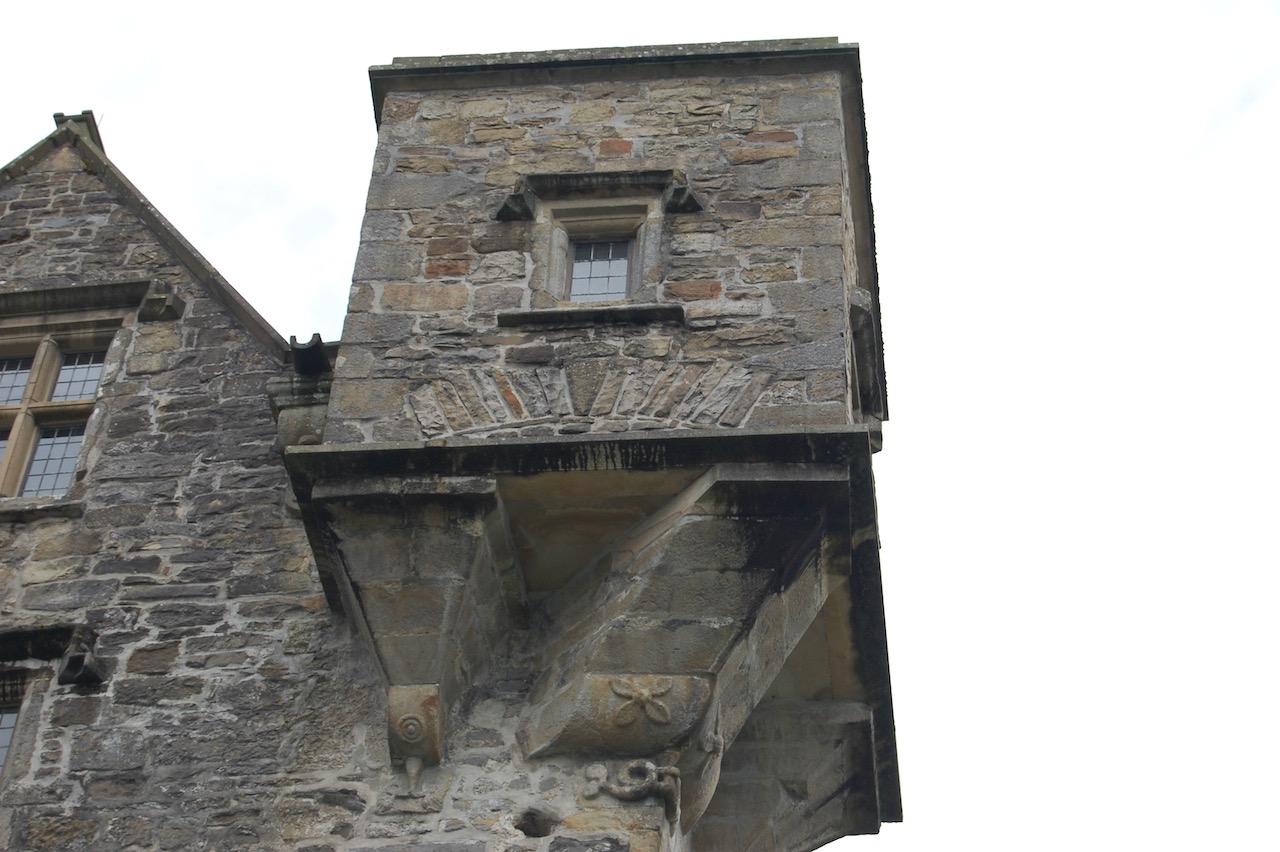
The MacSweeneys were originally Gallowglasses or mercenaries, from Scotland. The castle tower is believed to have been built in the 1420s; the bawn walls and two storey hall beside the tower in the 1620s. In the 1790s, the castle came into the possession of Retired General, George Vaughan Hart, who raised the bawn walls and built the new entrance beside the tower where his initials can still be seen. Doe was later purchased by a neighbouring landlord, Stewart of Ards, and was occupied until the 1890s. It came under government control in the 1930s. The deeply carved and highly ornamented Mac Sweeney grave-slab from the nearby Ballymacsweeney graveyard, now inside the tower house, dates from 1544. [3]
In 1761 the Court of Chancery confirmed George Vaughan of Buncrana to be the owner of Doe Castle. Towards the end of the 18th century General George Vaughan Hart (grandson of George Vaughan) acquired the castle and began to renovate it. He repaired the bawn wall and placed on the seaward section a number of cannon captured at Seringapatam, India. He erected a ground floor annex and a staircase against the southern wall of the keep and altered the interior of the keep by inserting arched recesses and fireplaces. The barbican across the trench at the western entrance is a nineteenth century Hart addition.
I found in the Dictionary of National Biography a George Vaughan Hart (1752-1832) who was fifth in descent from General Henry Hart, military governor of Londonderry and Culmore forts in the seventeenth century. He fought in the American War, West Indies and India. He represented Donegal county in parliament from 23 October 1812 till the dissolution of 1831. Hart died at his seat at Kilderry, Donegal, 14 June 1832. He married Charlotte, daughter of John Ellerker of Ellerker, in 1792, and by her had five sons and three daughters. [4]
General Hart’s descendants owned Doe Castle until 1864 when William Edward Hart sold Doe Castle in the Landed Estate Courts and the Stewart family of nearby Ards purchased it. From then on Doe Castle was rented to tenants. In 1932 Doe Castle was sold to the Irish Land Commission and is now a National Monument.
General Enquiries: 074 972 2405, donegalcastle@opw.ie
The OPW website states:
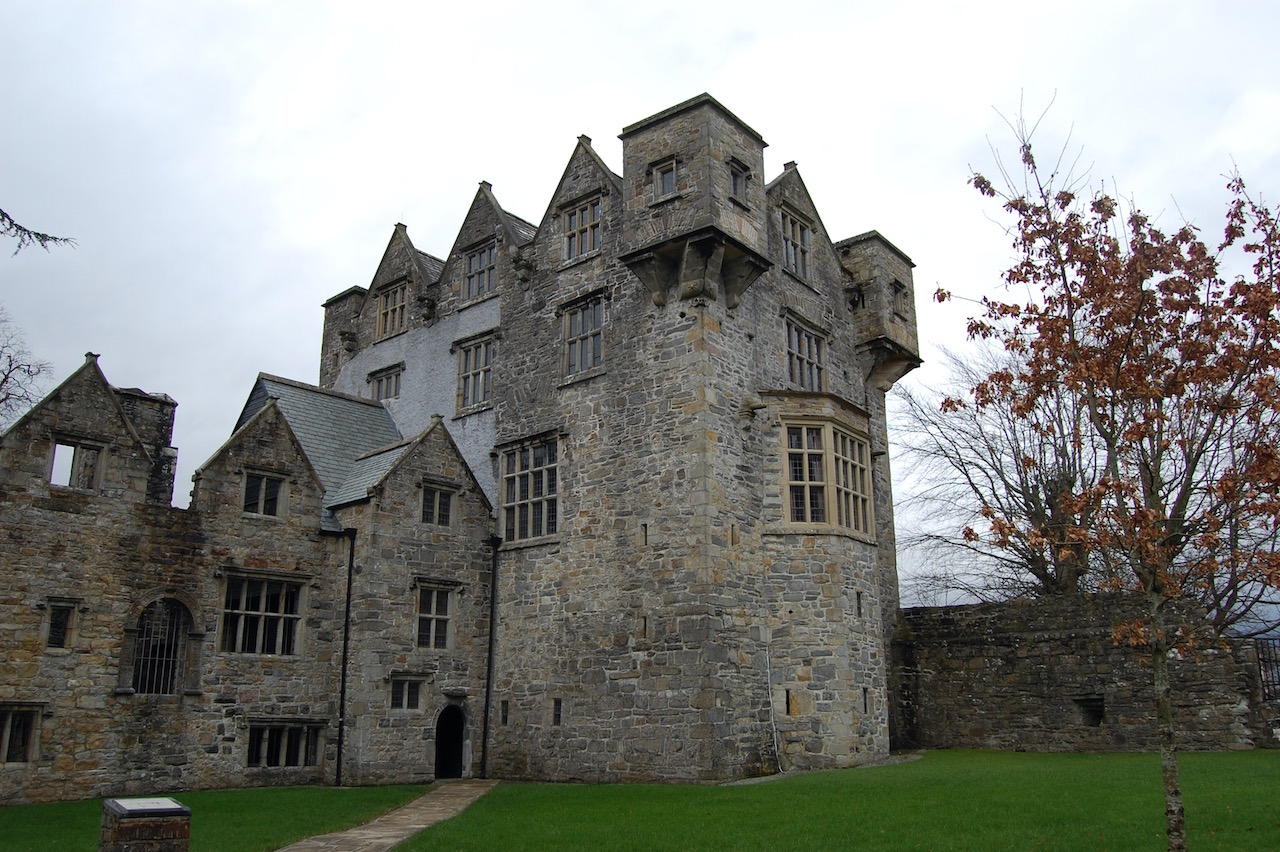
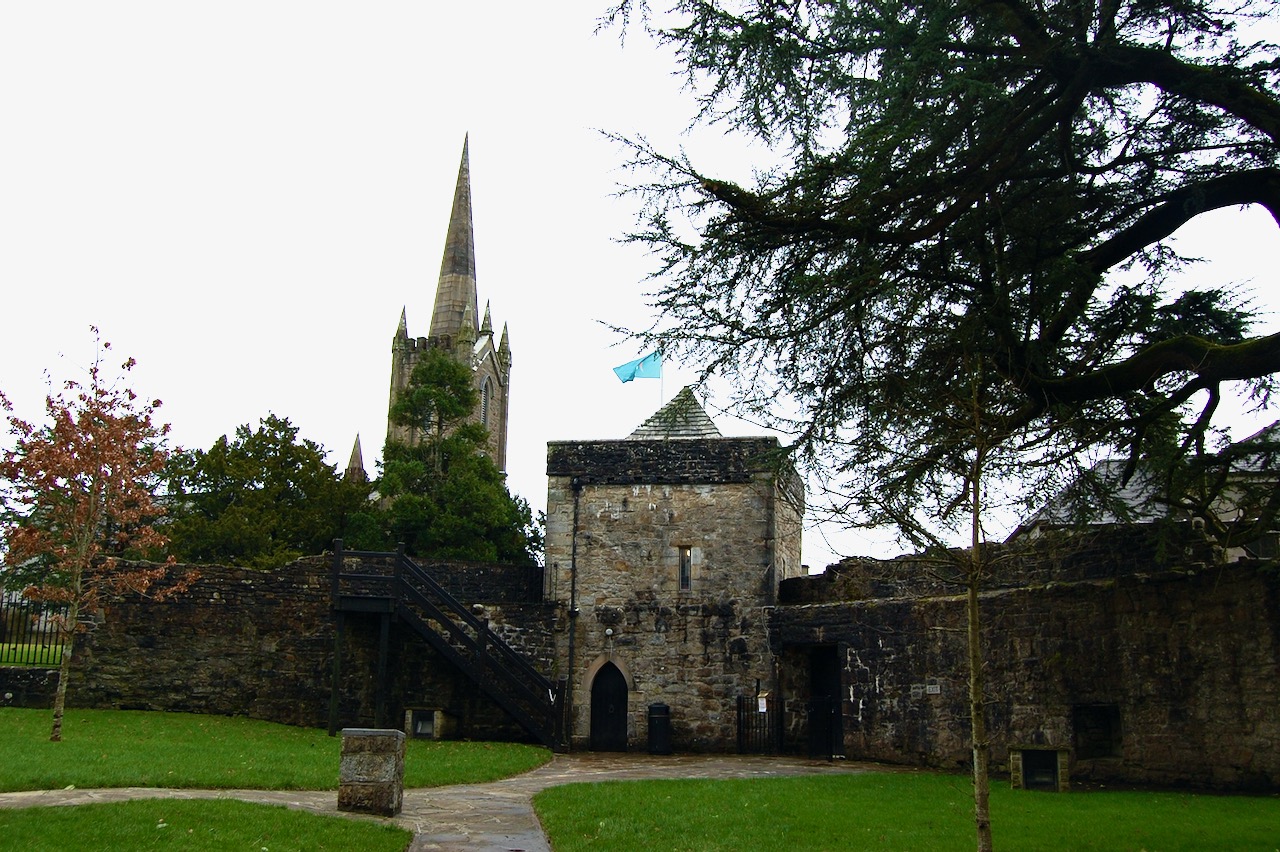
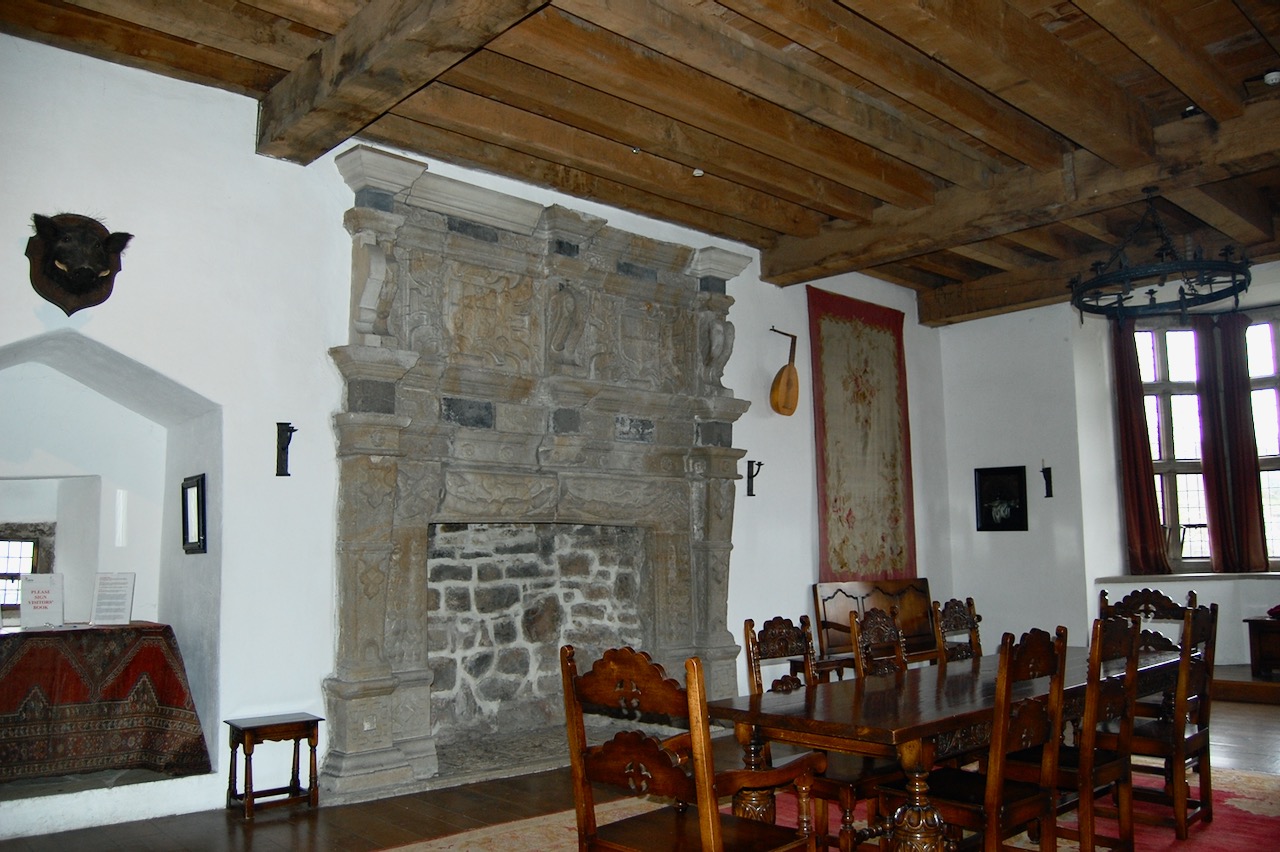
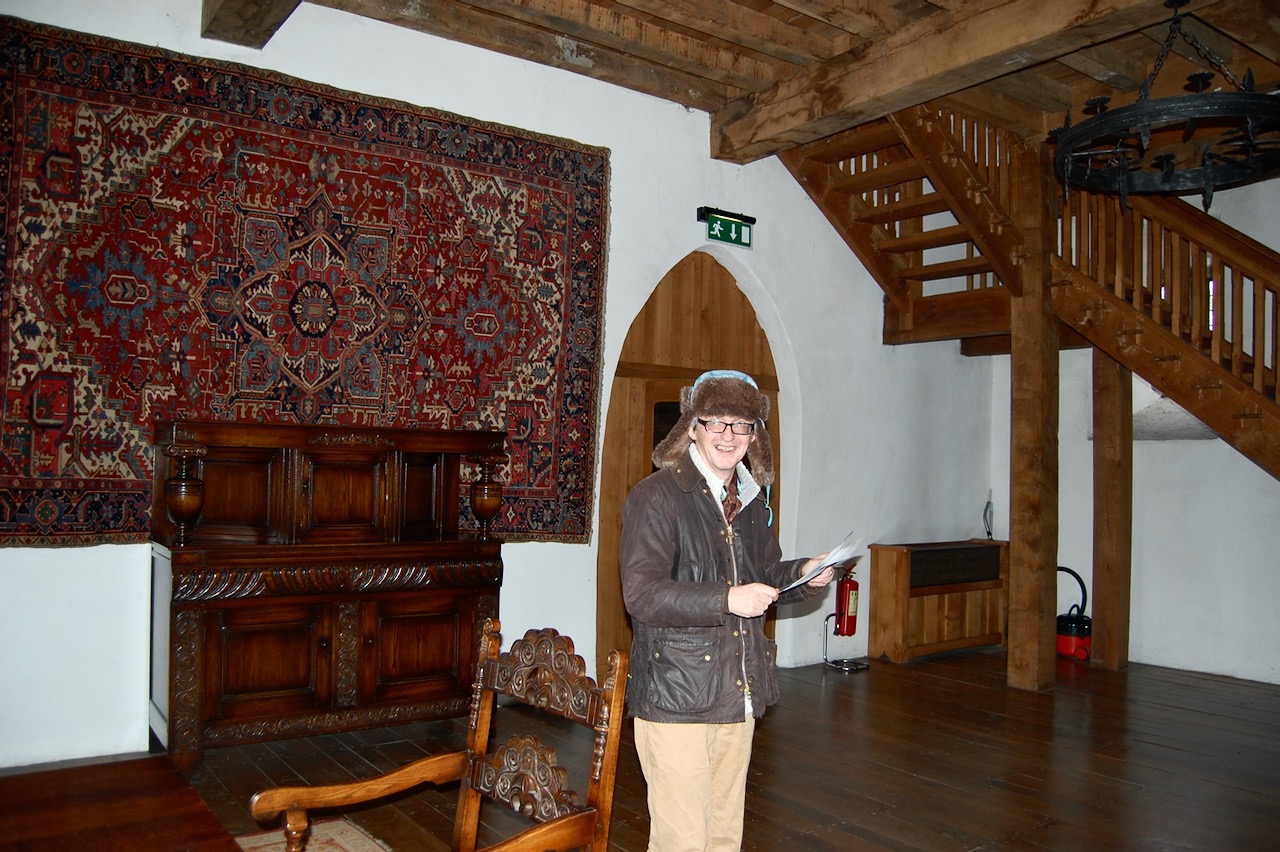
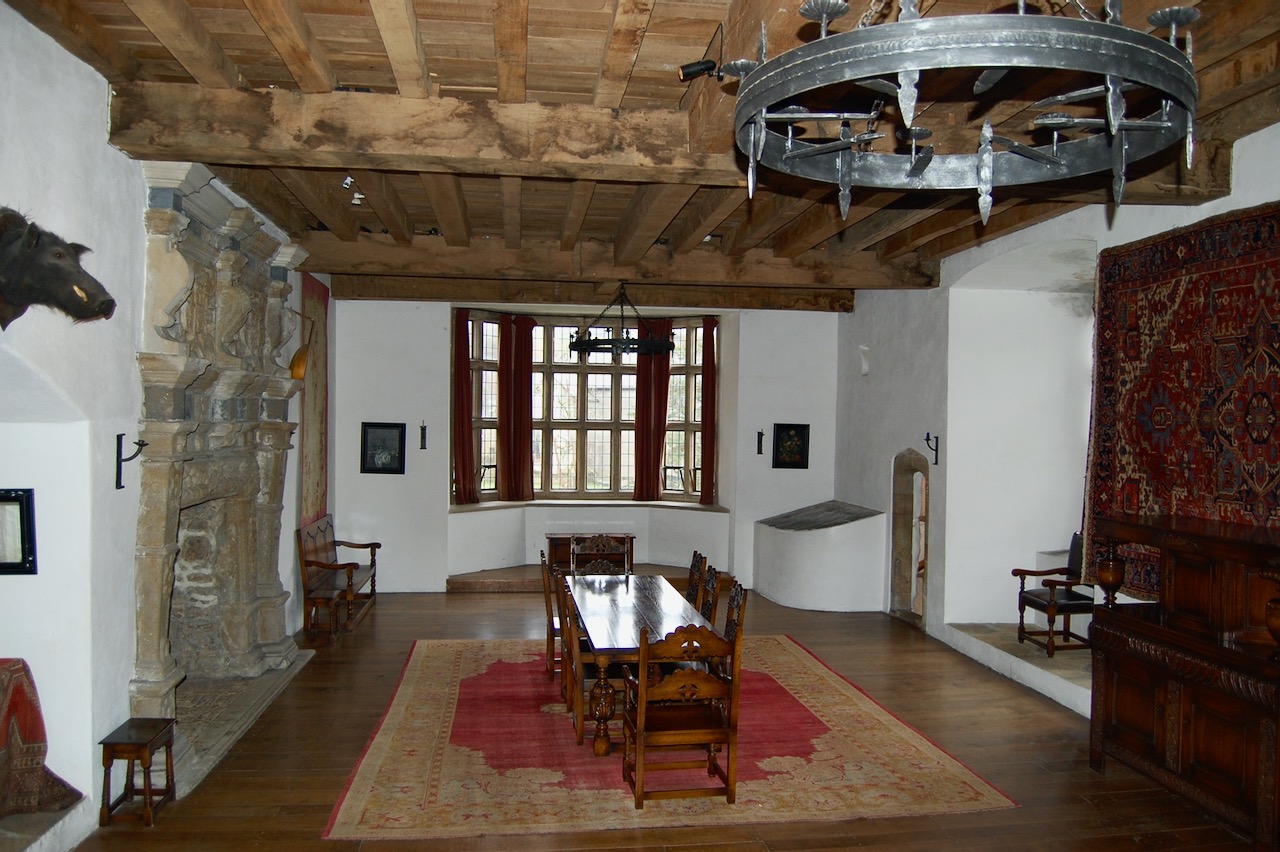
“In the very heart of the county town, towering over the River Eske, stands Donegal Castle. Red Hugh O’Donnell [Lord of Tyrconnell, died in 1602] himself built it as his personal fortress in the fifteenth century. It is said that, leaving to seek succour in Spain in the wake of the Battle of Kinsale [in the Flight of the Earls], Hugh determined to make sure his castle would never ever fall into English hands – by setting it on fire.
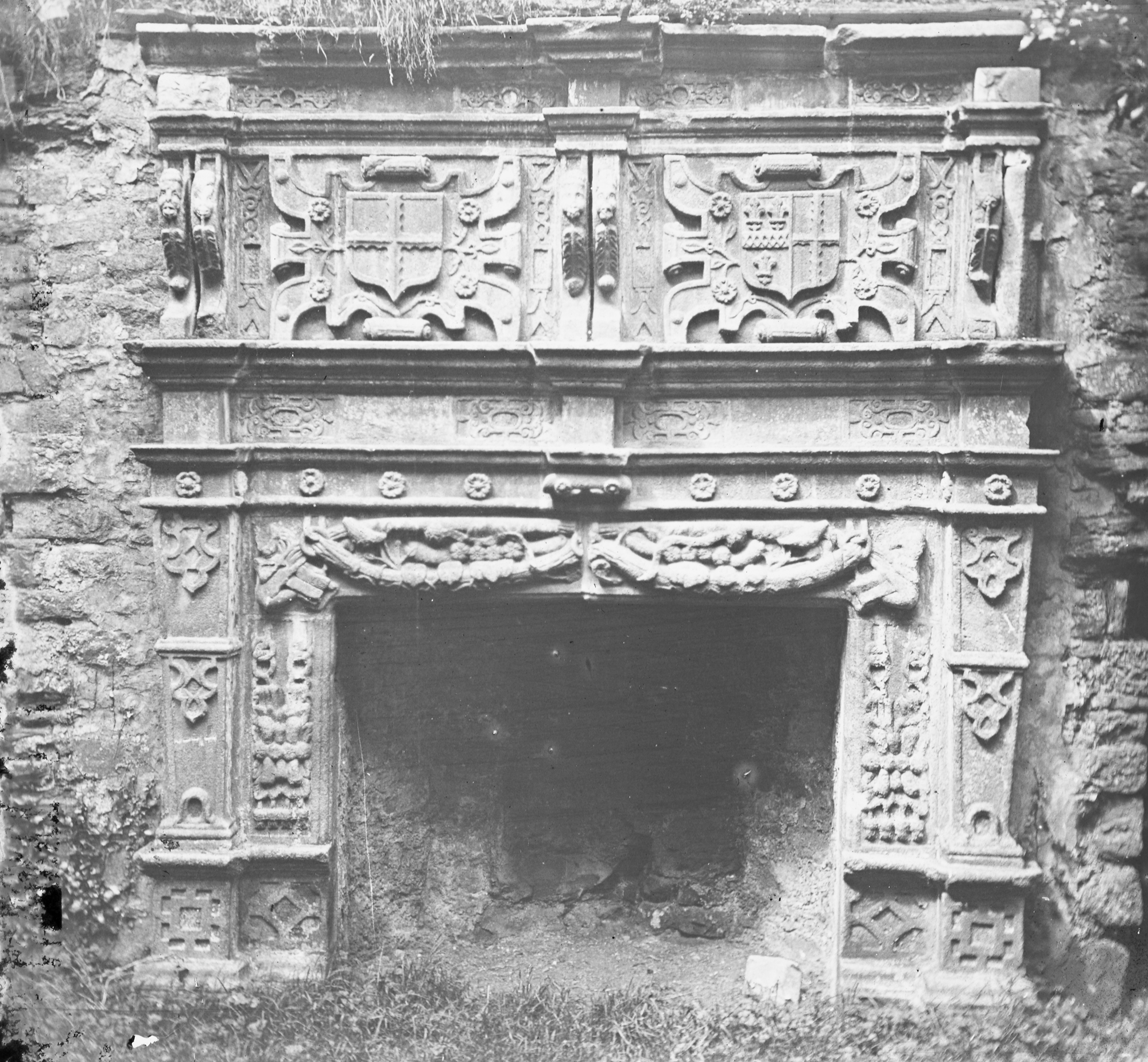
“But he was to be disappointed. English captain Sir Basil Brooke became the castle’s new lord in 1616. As part of a massive programme of improvements, Brooke built a handsome manor house beside the tower. He also commissioned the magnificent chimney-piece, finely decorated with carved fruit and his own imperious coat of arms.
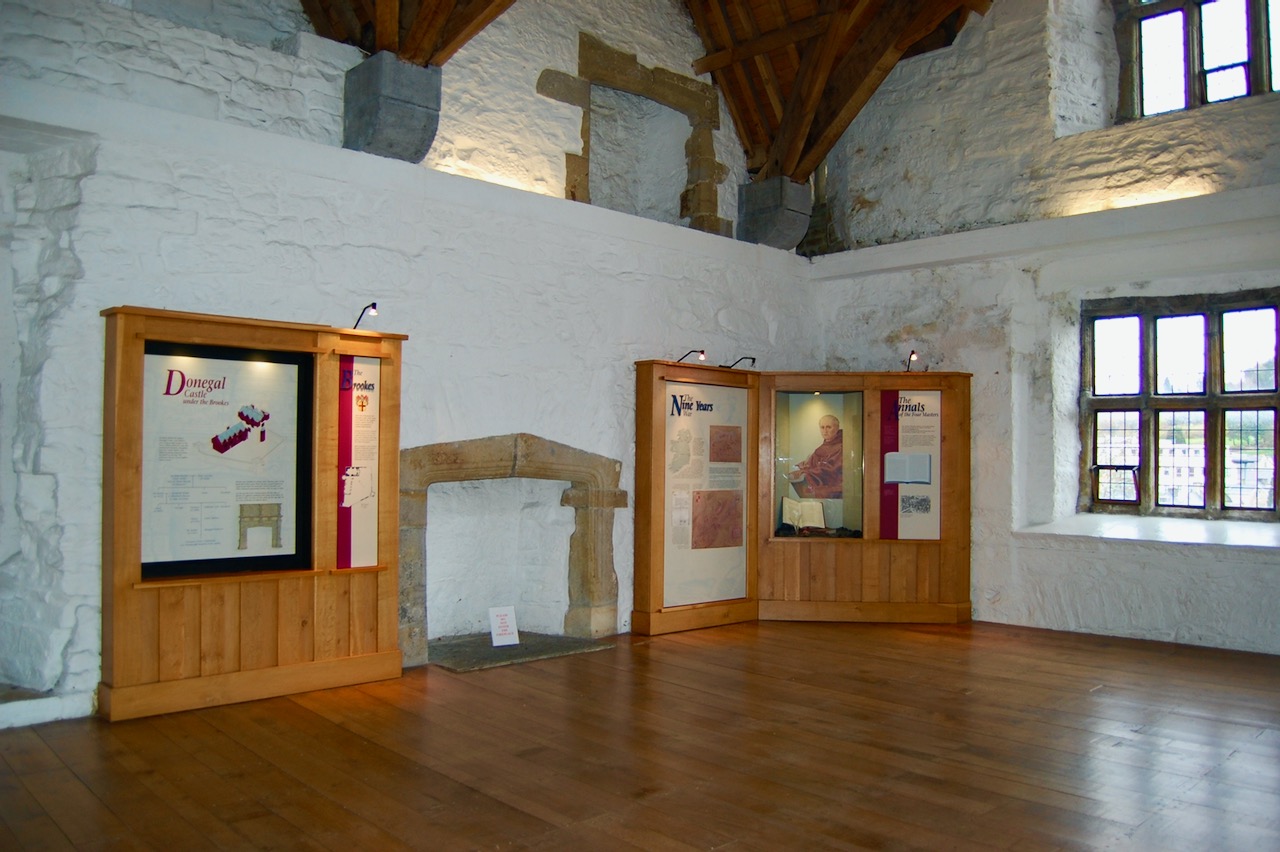
“The building complex fell into ruin in the twentieth century, but was brought back to its former glory in the 1990s. Currently, a suite of information panels illuminates the chequered history of the castle and its disparate owners.“
The Brooke family had the castle until the 1670s, when they moved to Brookeborough, County Fermanagh, and sold it to the Gore family, who later became Earl of Arran. In 1898 the 5th Earl of Arran gave it to the state, and the OPW has partially restored it.
“This elegant Regency house, dating from 1828, is set in woodland gardens near the town of Letterkenny in County Donegal. The celebrated painter Derek Hill lived and worked here from the 1950s until the 1980s, when he presented the house to the Irish state – along with an extraordinary collection of art.
“Hill was a man of exquisite taste. The house itself, is as he left it – beautifully decorated with William Morris textiles and furniture of oriental design. His collection includes hundreds of works by some of the leading lights of the art world, such as Pablo Picasso, Georges Braque, Louis le Brocquy and Auguste Renoir. There are also choice pieces from further afield, including Japan and the Islamic world.
“Hill’s studio, which adjoins the house, has been transformed into a modern and stylish gallery, which now plays host to changing exhibitions.“
The Glebe House was originally known as St. Columb’s. The OPW website tells us:
“It was built in the Regency style in 1828 as the rectory to St Columba’s (Church of Ireland), Churchill, in the Parish of Gartan. The first Rector lived in the house for less than three years to be succeeded, in 1831, by the Rev. Henry Maturin.
“In 1861, Reverend Maturin was closely involved in the event that brought the names of Gartan and Church Hill to national prominence. John George Adair, owner of the Glenveagh Estate, believed that his tenants were stealing his sheep, had killed his steward, John Murray, and were even threatening his own life. Consequently, he was determined to evict them. Maturin acted as mediator and joined with Father Kerr, the Catholic Parish Priest, in sending an open letter to Adair appealing for clemency for the tenants. Their appeal fell on deaf ears and in April 1861, 244 people from 46 families were evicted. For his ecumenical action Reverend Maturin was censured by the Dublin Protestant press.
“Reverend Maturin died in 1880. Following this, the Glebe, now too large and expensive for the Church to keep up, was leased to tenants for some years before eventually being sold. After renovations, it opened in 1898 as St Columb’s Hotel, taking guests for the salmon and trout fishing in spring and summer and for the shooting in the autumn. Apart from the years 1916-1922, when the hotel was taken over for a short while by the IRA and later by the Royal Irish Constabulary, the hotel was open every year until the death of its Owner, Mrs Kitty Johnstone in 1950. It was then run by her daughter until it was acquired by Derek Hill.” [5]
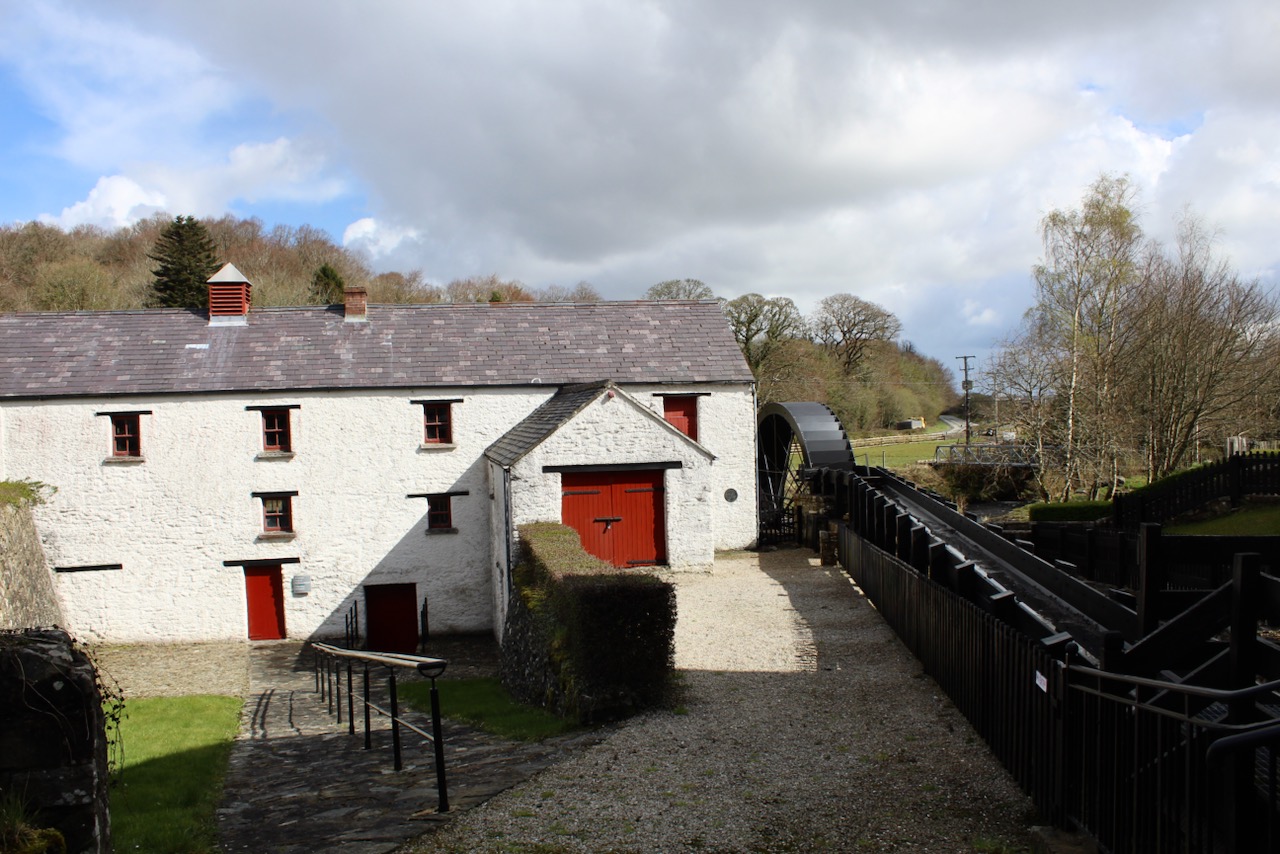
“Take a short trip out of Letterkenny for a first-hand look at the technology that powered the Industrial Revolution.
“The oldest surviving building at Newmills is 400 years old and there have been mills at Newmills since the early nineteenth century. In Victorian times a flax mill lay at the core of the complex, providing crucial supplies to the linen industry, the backbone of Ulster’s economy at the time. A corn mill ground barley, oats and imported maize.
“Newmills steadily expanded to include a public house, a scutcher’s cottage and a forge. By the early 1900s Newmills was also exporting food – the earliest supplies of butter, bacon and eggs for Sir Thomas Lipton’s nascent grocery empire in Glasgow came from there.
“The waterwheel that drove the corn mill can still be seen in action. It is one of the largest working waterwheels in the country.“





 Irish Historic Houses