Open dates in 2026: Mar 16-29, Apr 13-26, May 4-31, June 2-12, Aug 15-23, 9am-1pm
Fee: adult €5, child/OAP/student free
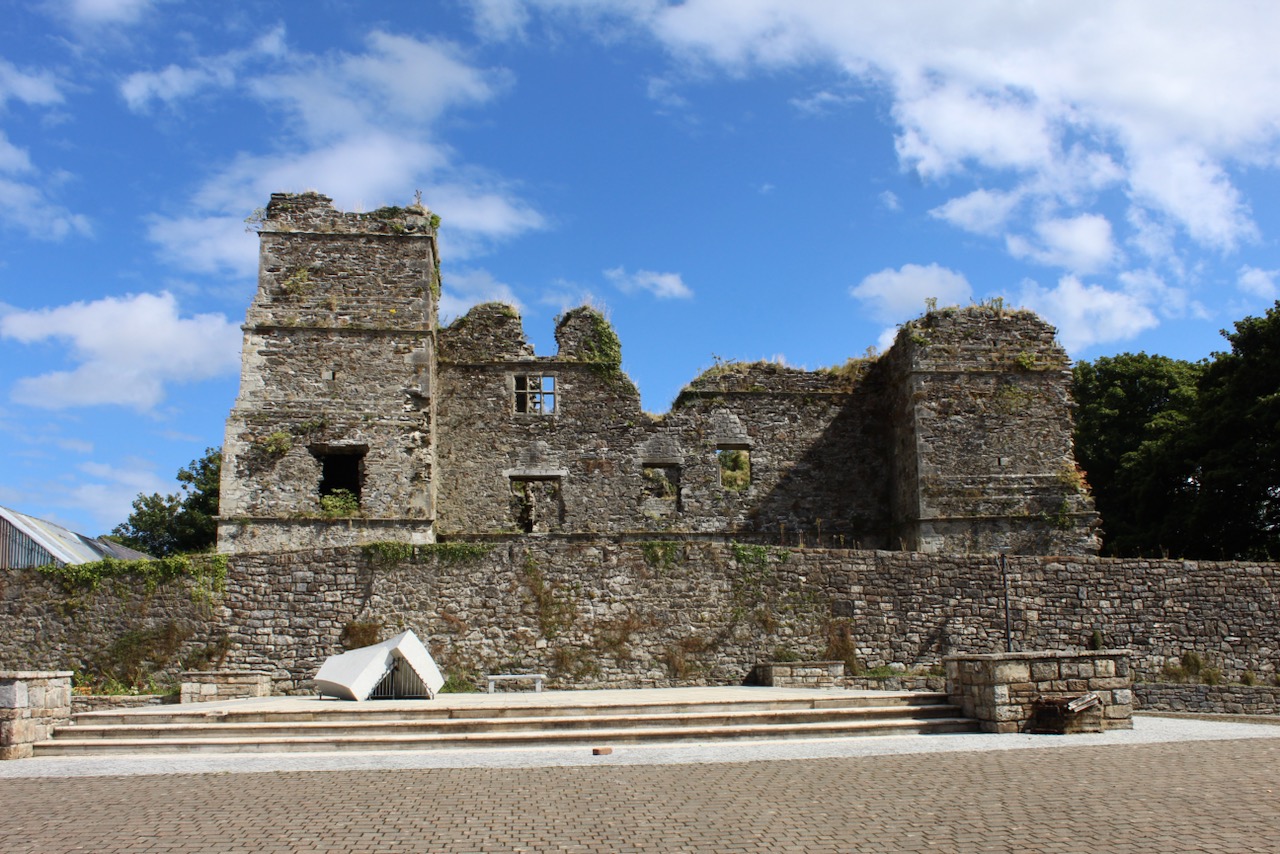
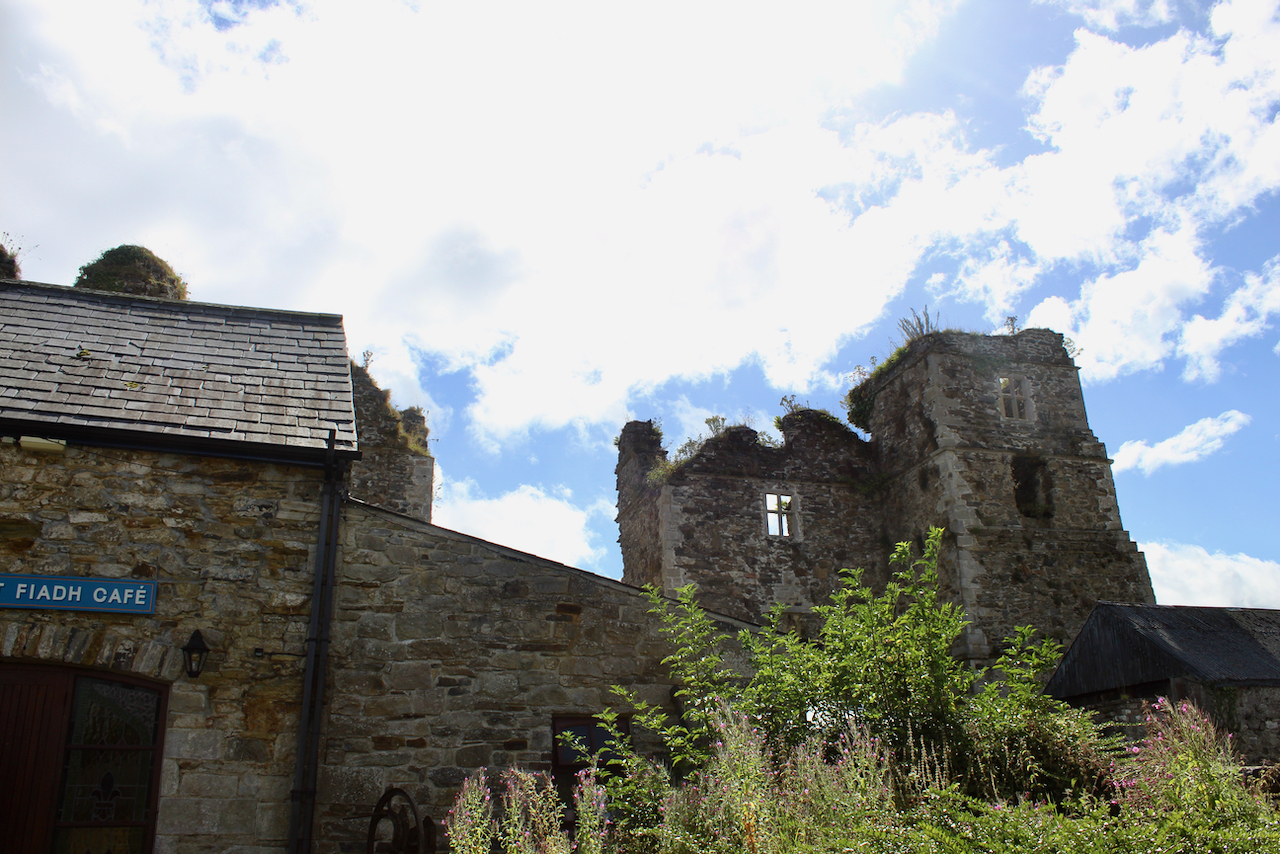
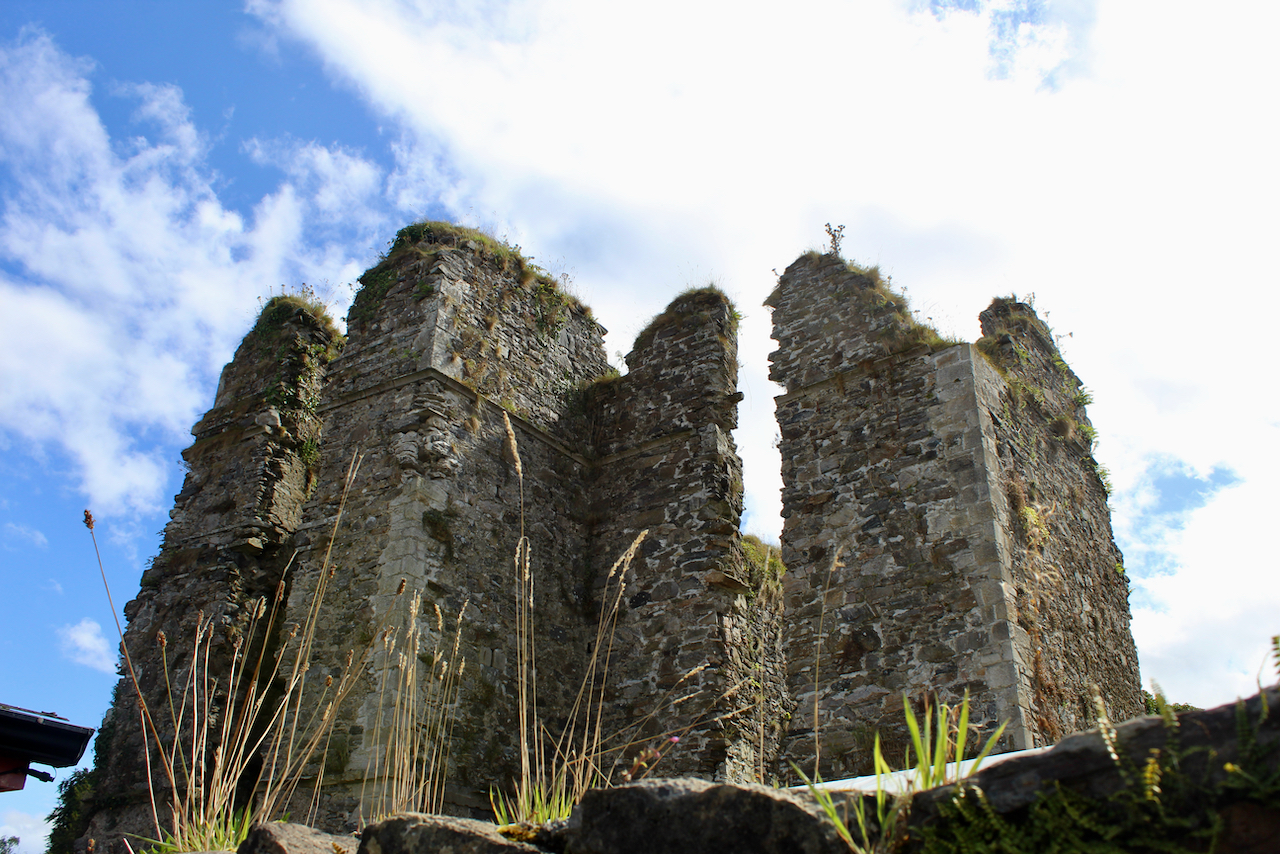
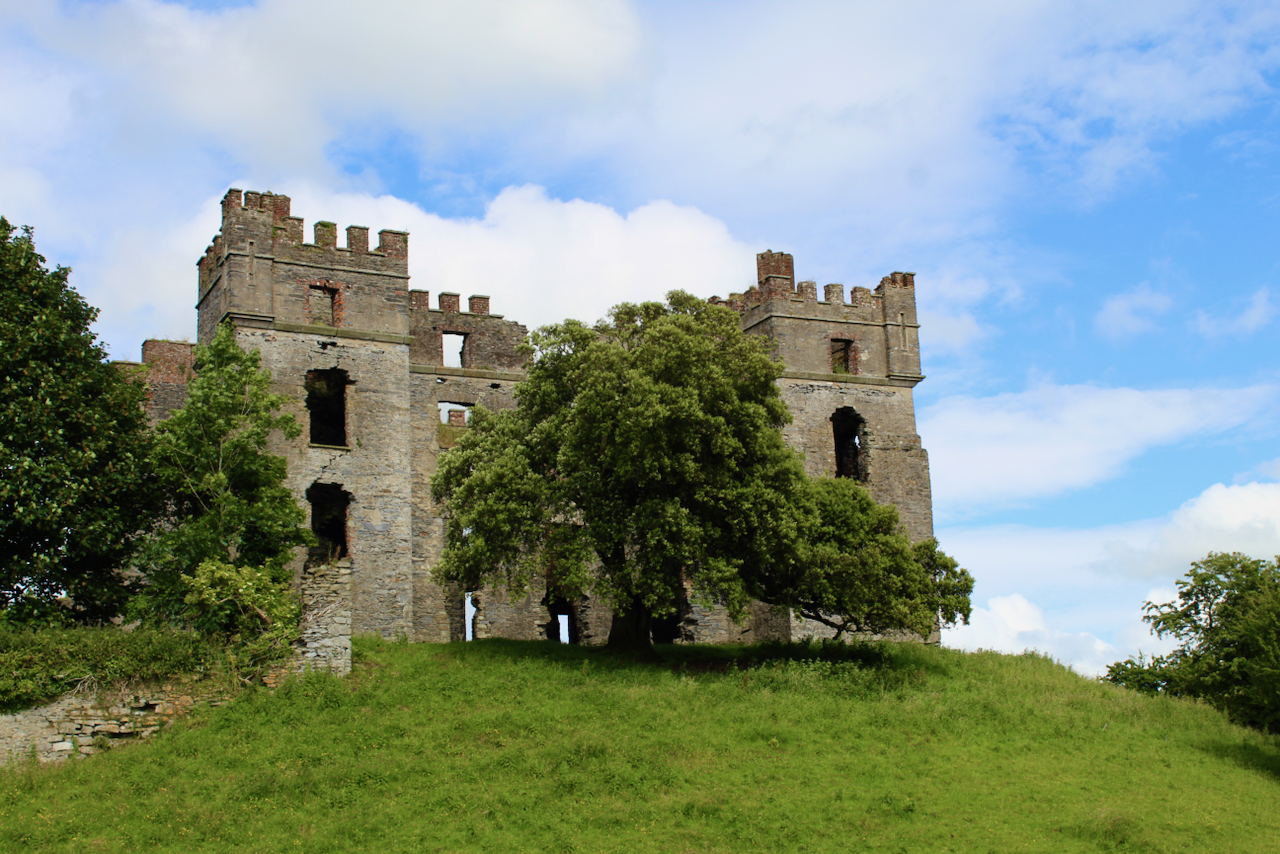
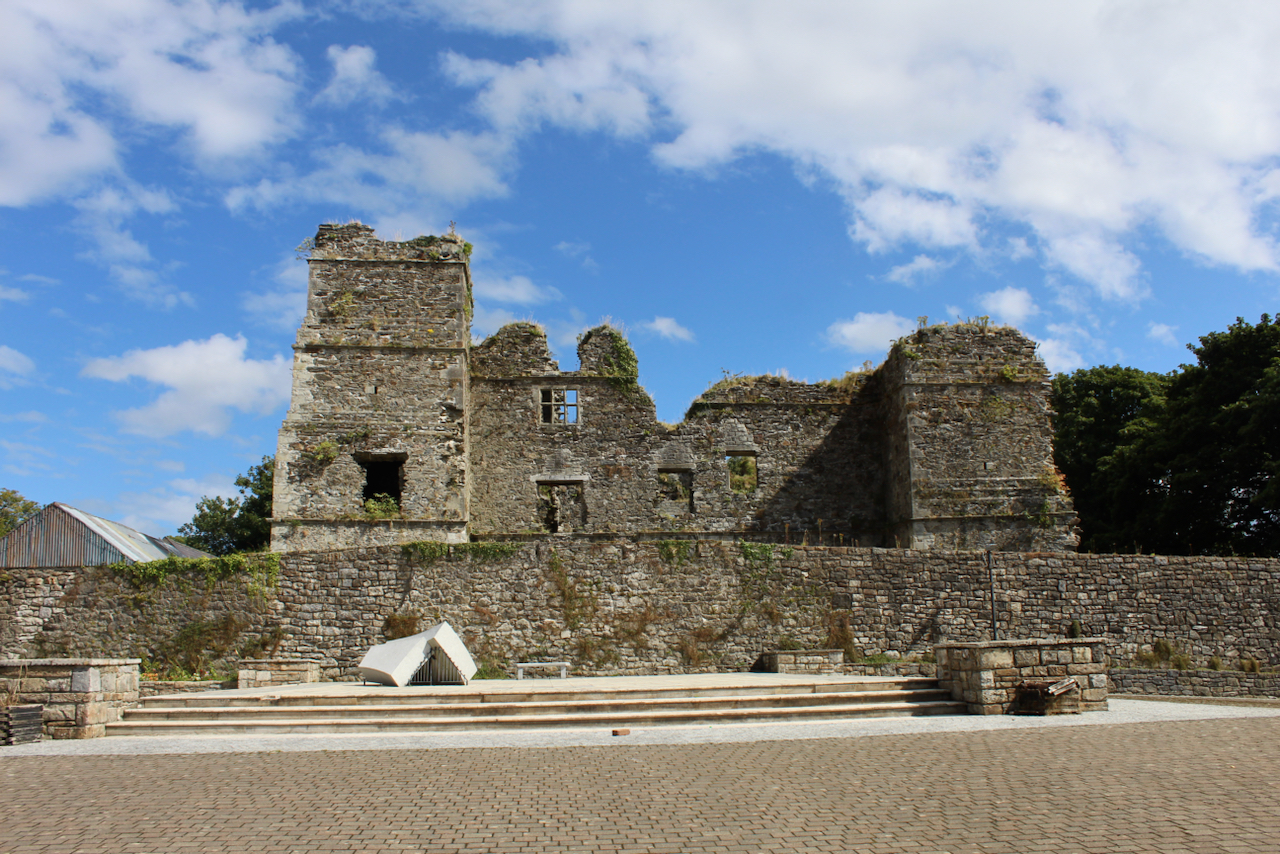
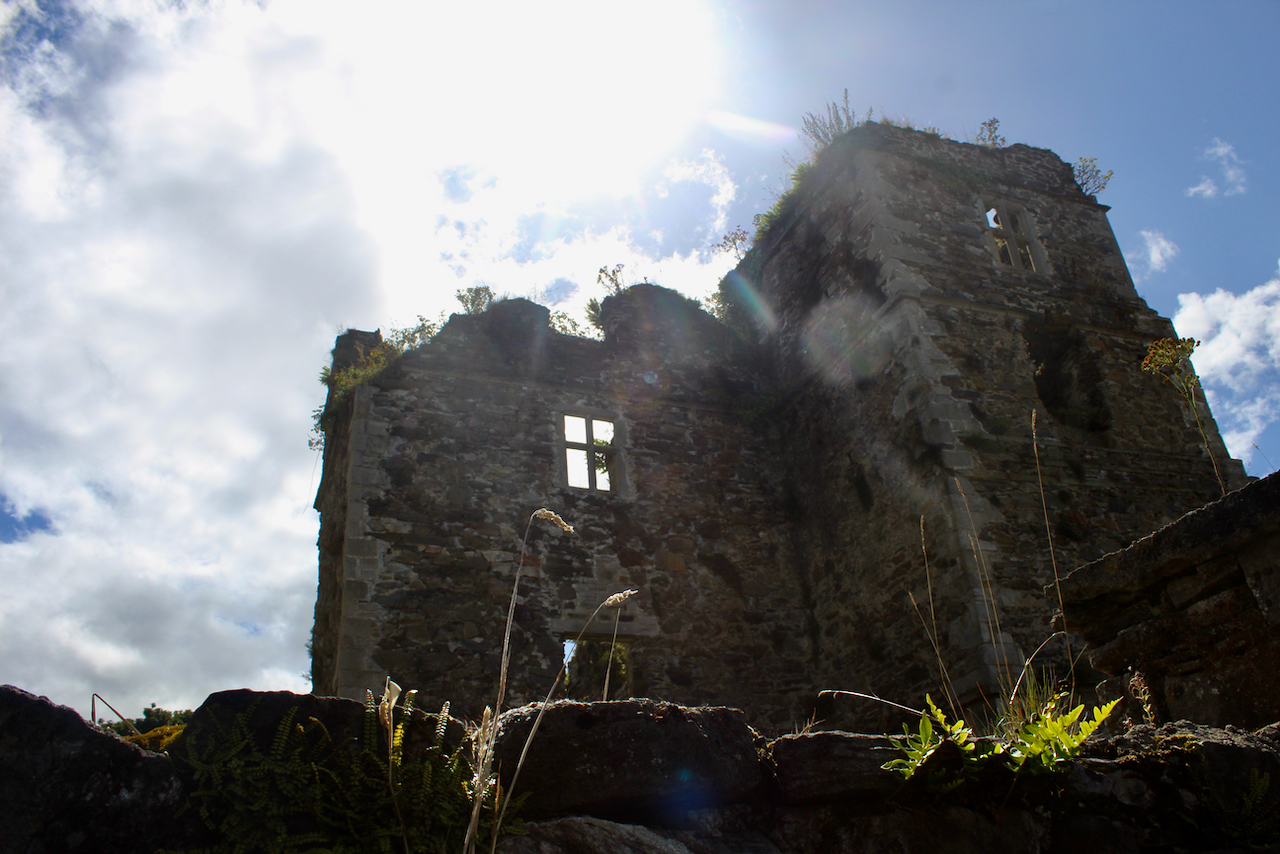
The Revenue section 482 list still hasn’t been published for 2025, so today I am publishing about Manorhamilton Castle in County Leitrim.
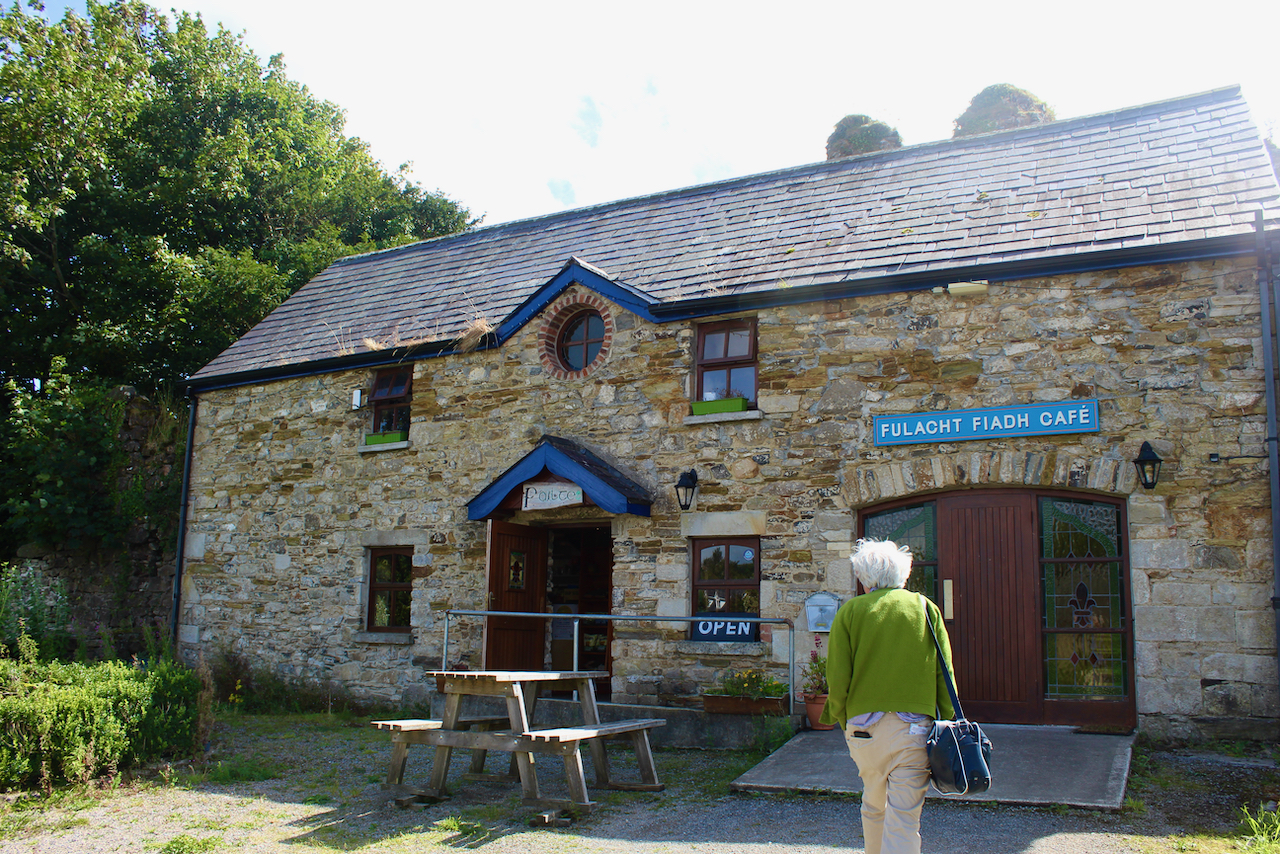
We attempted a visit during Heritage Week in 2022 but were informed in the café next door that it was not accessible as they were preparing for an event. I was unimpressed, having driven there specially! We were driving from Sligo to Monaghan that day, so we continued on our way.
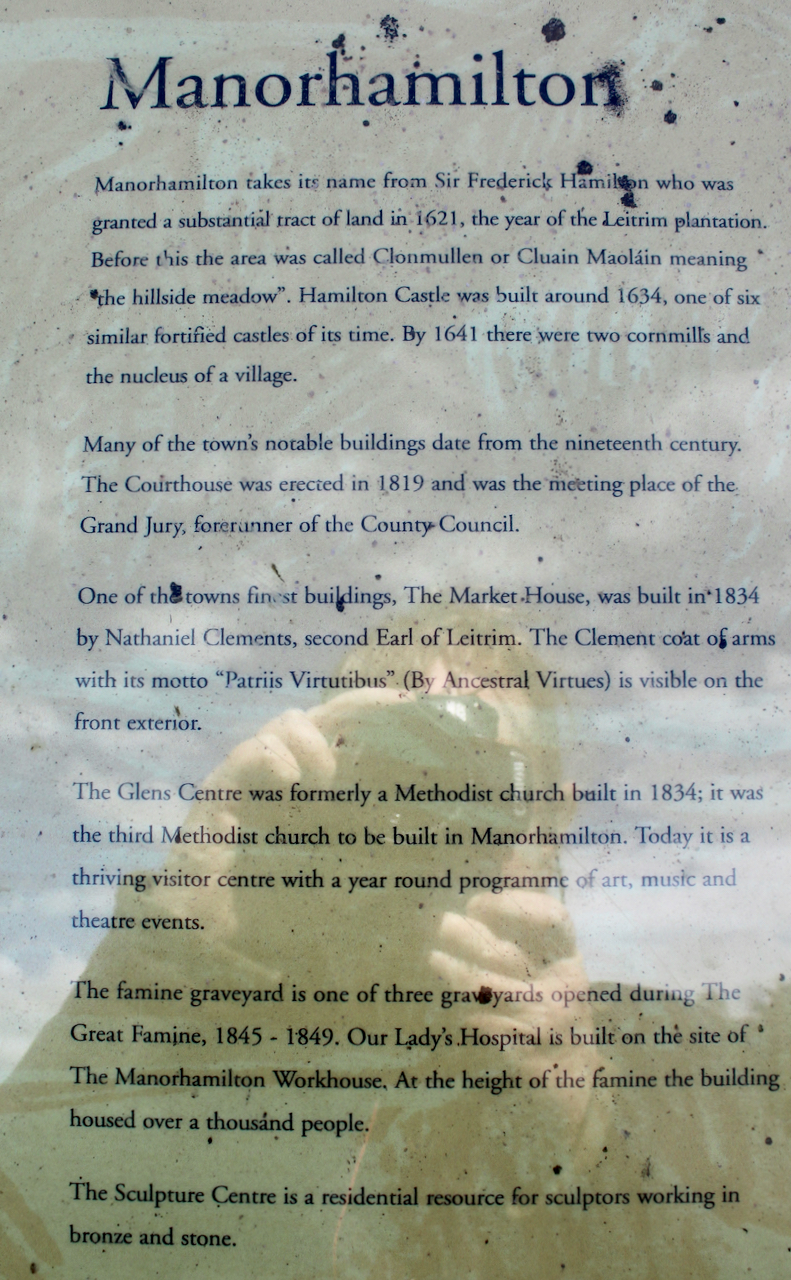
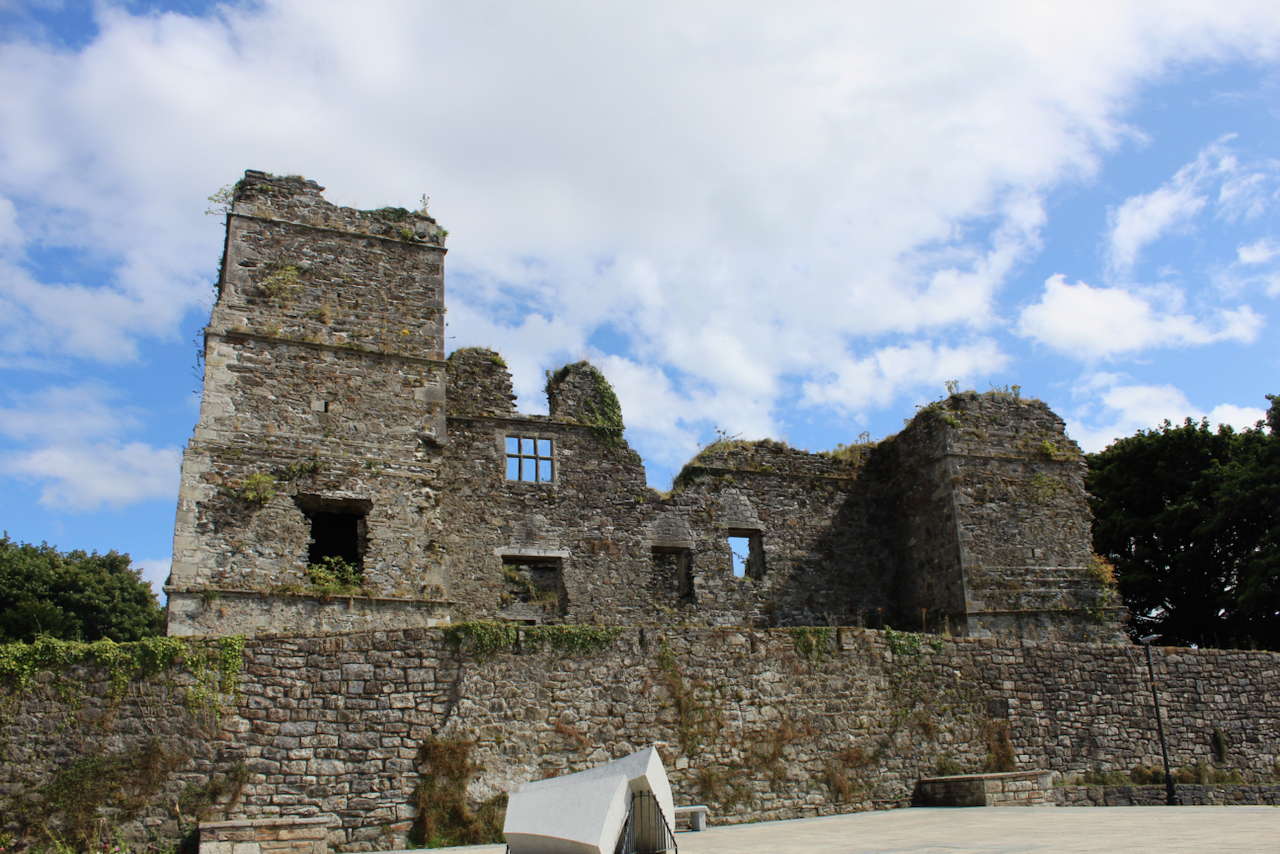
The castle was built between 1634 and 1636 for Frederick Hamilton (d. 1646), who was originally from Paisley in Scotland. He was the son of Claud Hamilton, 1st Lord Paisley, County Renfew, Scotland. Frederick was the younger brother of James 1st Earl of Abercorn in Scotland, who was Gentleman of the Bedchamber to King James VI of Scotland who became King James I of England.
In 1620 Frederick married Sidney Vaughan, daughter of John Vaughan who was a member of the Privy Council for Ireland and Governor of Londonderry, responsible for commanding the garrison and fortifications of Derry, and of nearby Culmore Fort. [1]
In 1621, Frederick was given a grant of land in Dromahair in County Leitrim, seized from the O’Rourke family. [2] There he commanded a troop of horse, and constantly battled with his neighbours. Three of his brothers, including the Earl of Abercorn, received large land grants in Co. Tyrone in 1610–11. These land holdings were part of the Plantation of Ulster.
From a Catholic family, Frederick converted to Protestantism. In 1631 he was granted a commission to raise 1,200 Scottish and Irish men for the service of Gustavus Adolphus, King of Sweden, in order to defeat the Habsburg-Catholic coalition. He spent about two years in the Swedish king’s German campaigns in the Thirty Years’ War.
He returned to Leitrim and built his castle in Manorhamilton.
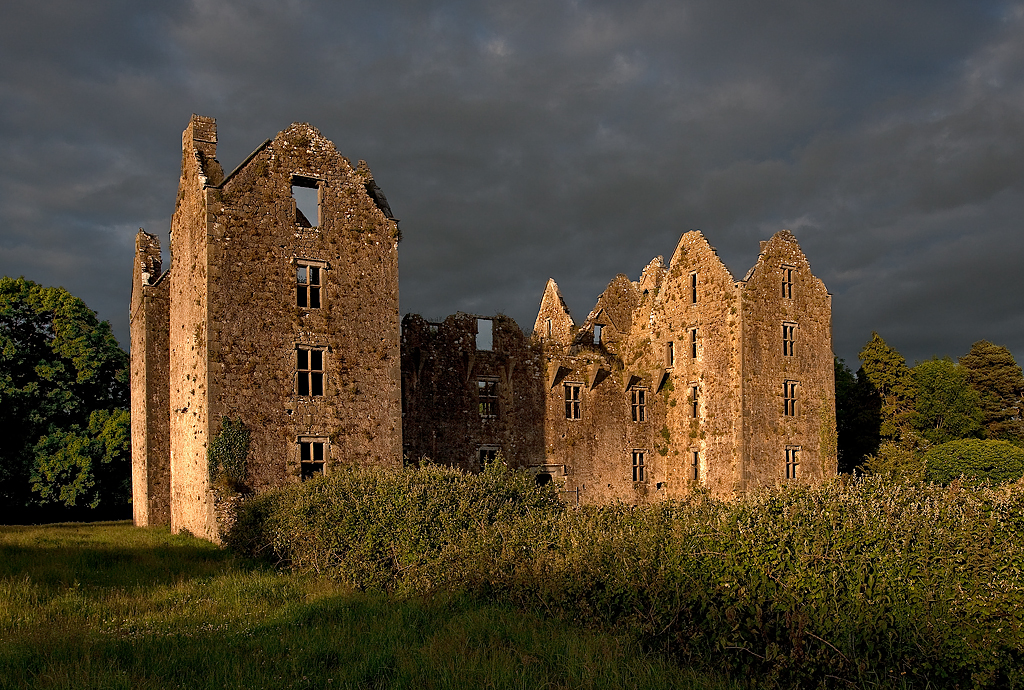
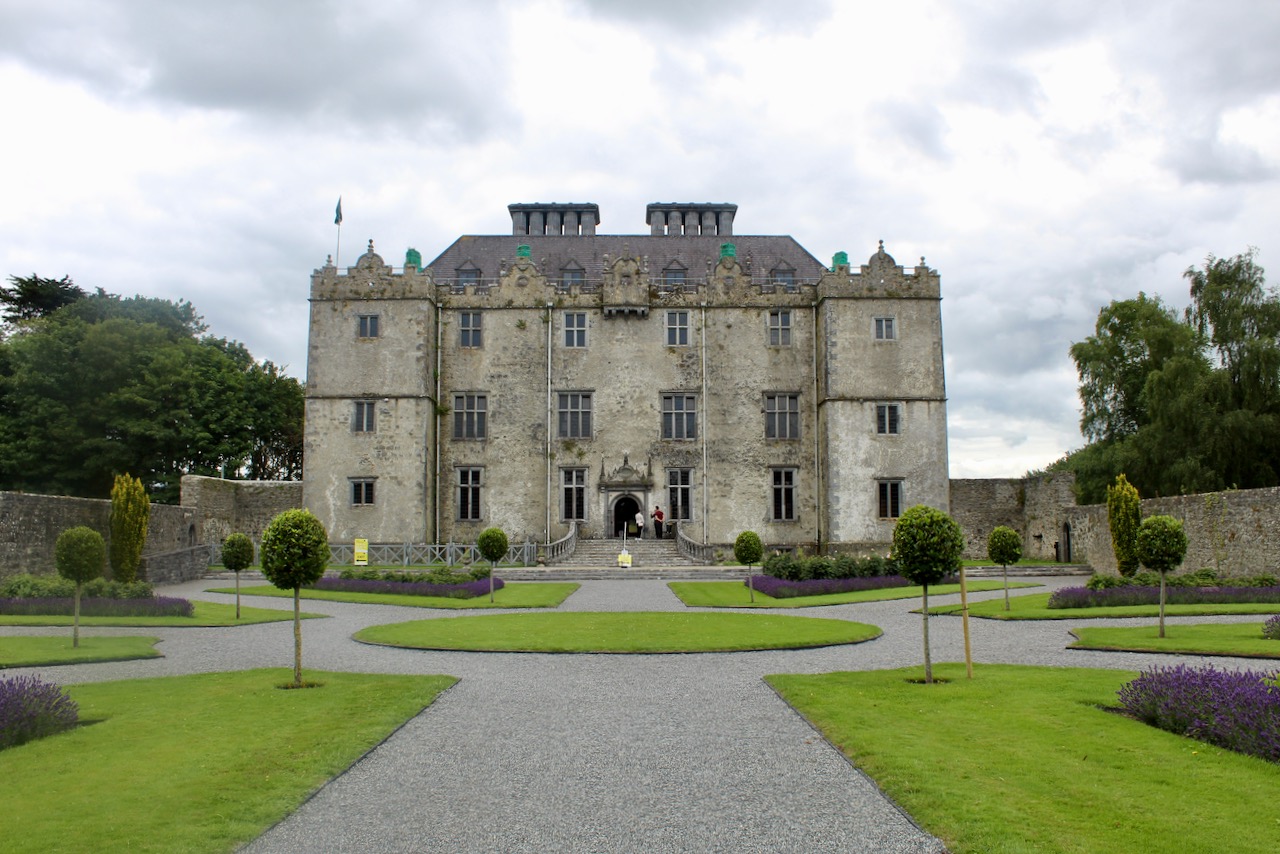
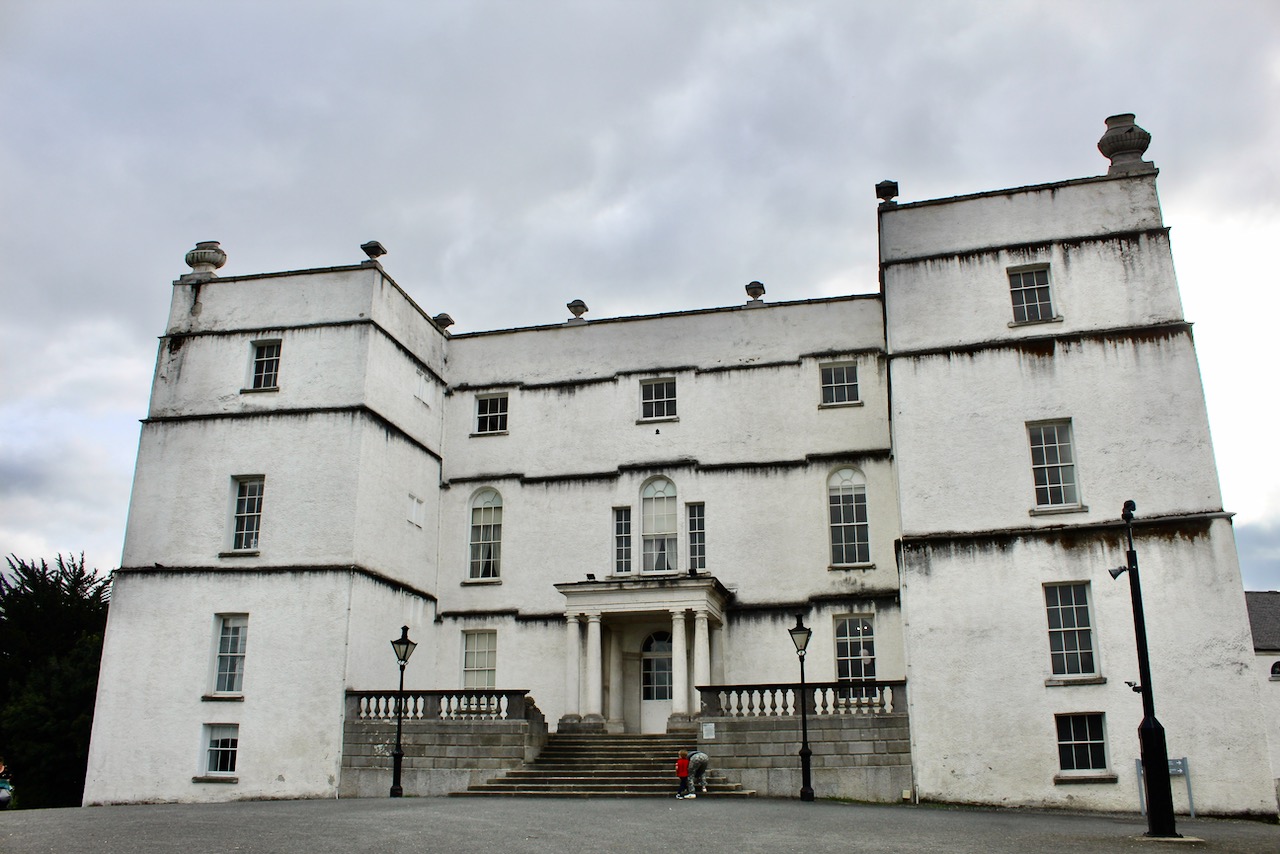
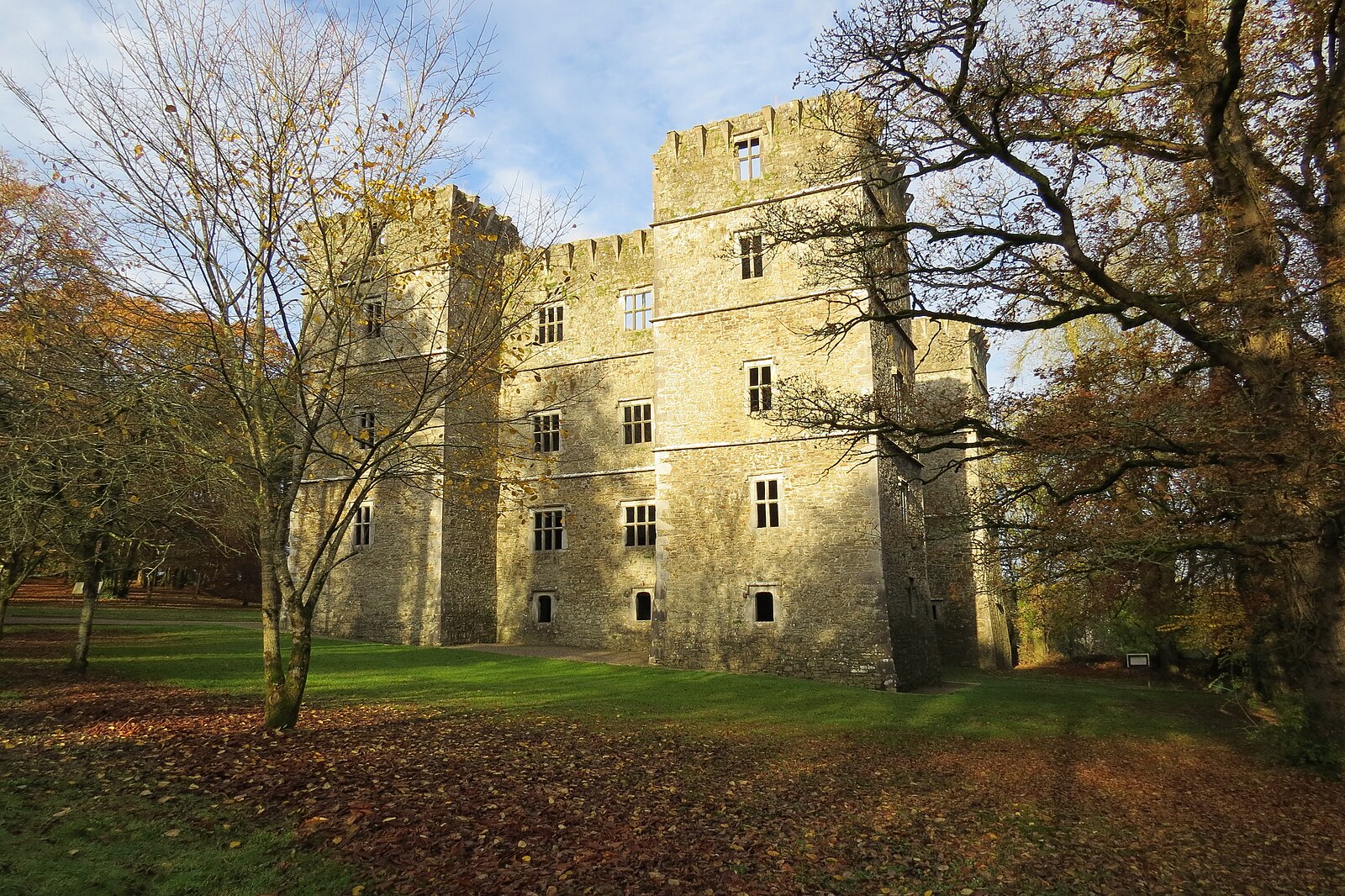
Maurice Craig points out in his The Architecture of Ireland from the earliest times to 1880 that there are a group of similar buildings, built over a period of fifty years or more: Rathfarnham Castle in Dublin; Kanturk for MacDonagh MacCarthy, before 1609; Portumna for the Earl of Clanrickarde, before 1618; Manorhamilton for Sir Frederick Hamilton, probably around 1634; Raphoe, for Bishop John Leslie (the “Fighting Bishop” – see my entry on Castle Leslie https://irishhistorichouses.com/2020/08/07/castle-leslie-glaslough-county-monaghan/) in 1636, and Burntcourt for Sir Richard Everard before 1650. We visited Portumna in County Galway – see my entry https://irishhistorichouses.com/2022/02/14/office-of-public-works-properties-connacht/. The buildings resemble a fort, such as Mountjoy Fort in County Tyrone built 1600-1605. Killenure, County Tipperary, now also a Section 482 property, is similar but has cylindrical flankers, Craig tells us. This last was unroofed by 1793.
Manorhamilton Castle was attacked in the 1641 Rebellion. The fighting only ended in 1643, when James Butler, later 1st Duke of Ormond, negotiated a cessation of hostilities with the Catholic Confederation.
Robert O’Byrne tells us on his wonderful site, The Irish Aesthete, that Frederick Hamilton attacked the Catholics in Sligo in retribution for their 1641 uprising:
“In July 1642, in retaliation for their latest assault, he sacked Sligo and burnt much of the town, including the abbey. In 1643, after Manorhamilton was unsuccessfully attacked again, he hanged 58 of his opponents from a scaffold erected outside the castle.” [3]
O’Byrne shares with us an extract from a short story written by W. B. Yeats, called The Curse of the Fires and of the Shadows (1897), about the sack of the abbey in Sligo:
‘One summer night, when there was peace, a score of Puritan troopers, under the pious Sir Frederick Hamilton, broke through the door of the Abbey of White Friars at Sligo. As the door fell with a crash they saw a little knot of friars gathered about the altar, their white habits glimmering in the steady light of the holy candles. All the monks were kneeling except the abbot, who stood upon the altar steps with a great brass crucifix in his hand. “Shoot them!” cried Sir Frederick Hamilton, but nobody stirred, for all were new converts, and feared the candles and the crucifix. For a little while all were silent, and then five troopers, who were the bodyguard of Sir Frederick Hamilton, lifted their muskets, and shot down five of the friars.’
In the story, the five soldiers who shoot the monks are cursed by the abbot. Hamilton orders the soldiers to intercept two messengers who have been sent by the people of Sligo to call for help. Due to the curse, the soldiers lose their way in the forest, and a vengeful “sidhe” (fairy) leads them to their death falling from a cliff. [4]
In 1645 Frederick Hamilton was back on the road, commanding a regiment in the Scottish covenanters’ army against the royal forces. After he left Manorhamilton, his castle was burned in 1652. [5] It was burnt by the army of Ulick Burke, 5th Earl of Clanricarde, Catholic leader of the Royalist army in Ireland. [see 1]
Frederick and his wife Sidney had a daughter, Christina, and three sons, all of whom became soldiers. James and Frederick both fought in their father’s regiment in 1645–6, and Frederick died in 1647 in the Irish wars, in Connacht. The youngest son, Gustavus Hamilton (1642-1723), later 1st Viscount Boyne, fought in the Irish campaigns of King William. [see 2] He took part in the Battle of the Boyne (during which his horse was shot under him and he was almost killed), the Siege of Athlone, the Battle of Aughrim and the Siege of Limerick.
After his first wife’s death, Frederick married again, this time he married Agnes, or Alice, daughter of Sir Robert Hepburn of Alderstown, in Scotland. They had no children. The castle was not rebuilt after it was burned.
Gustavus Hamilton 1st Viscount Boyne sat in the Irish House of Commons for County Donegal from 1692 to 1713. Subsequently he was returned for Strabane until 1715. He was granted 3,500 acres of confiscated land at Stackallan in Co. Meath where he built an imposing residence. In 1715 he was elevated to the peerage and two years later created Viscount Boyne. He married Elizabeth Brooke of Brookeborough in Co. Fermanagh and they had three sons and a daughter. Gustavus died in 1723 at the age of eighty.
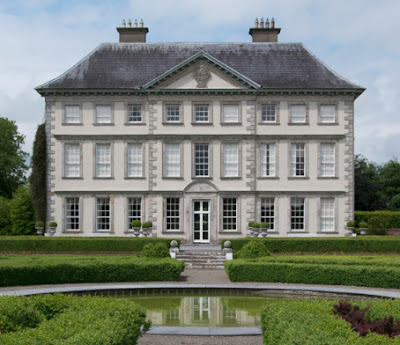
Gustavus Hamilton (1642-1723) 1st Viscount Boyne, c. 1680 unknown artist.Stackallan house, County Meath, built for Gustavus Hamilton 1st Viscount Boyne, photograph courtesy of Timothy William Ferres. [6]
The Manorhamilton website tells us that the marriage of Hannah, Frederick’s grand-daughter, to Sir William Gore 3rd Baronet Gore, of Magherabegg, Co. Donegal, carried the Manorhamilton portion of the estate into the Gore family. Hannah was the daughter of Frederick’s son James (d. 1652). James married Catherine Hamilton (1623-1670/71) who was the daughter of Claud Hamilton (d. 1638) 2nd Baron of Strabane, who was the son of James Hamilton 1st Earl of Abercorn.
In February 1759 a descendant, Ralph Gore, sold the 5393 acre Manorhamilton estate to his cousin by marriage, Nathaniel Clements (d. 1777). It was Nathaniel Clements who built the Ranger’s Lodge in Dublin’s Phoenix Park for himself which, much enlarged and altered, became the Vice-Regal Lodge and is now the residence of the President of Ireland, Áras an Uachtaráin.
Open dates in 2026: May 1-31, June 1-5, 8-12, 15-19, 22-26, Aug 15-23, 11am -3pm,
Fee: adult €14, OAP/student €12.50, child €8.40
donation
Help me to pay the entrance fee to one of the houses on this website. This site is created purely out of love for the subject and I receive no payment so any donation is appreciated!
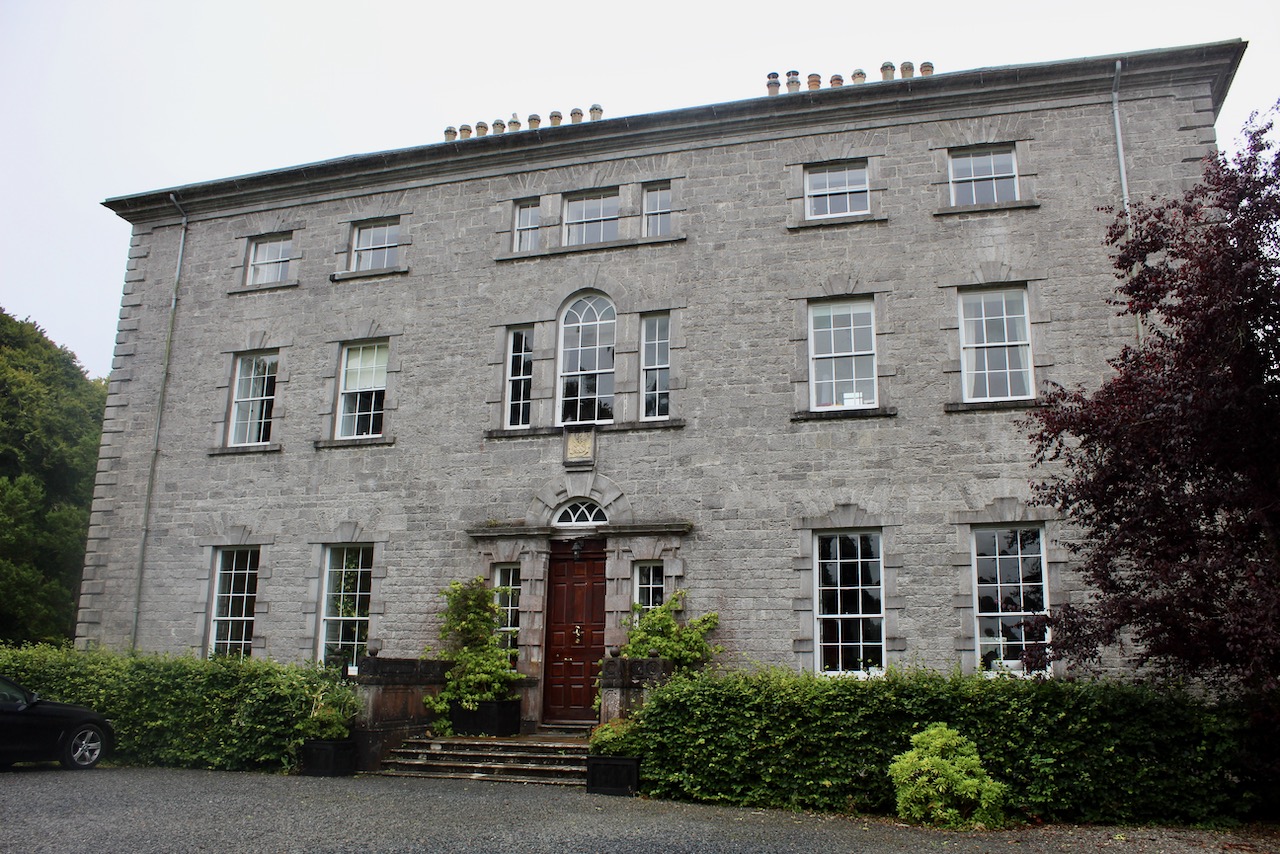
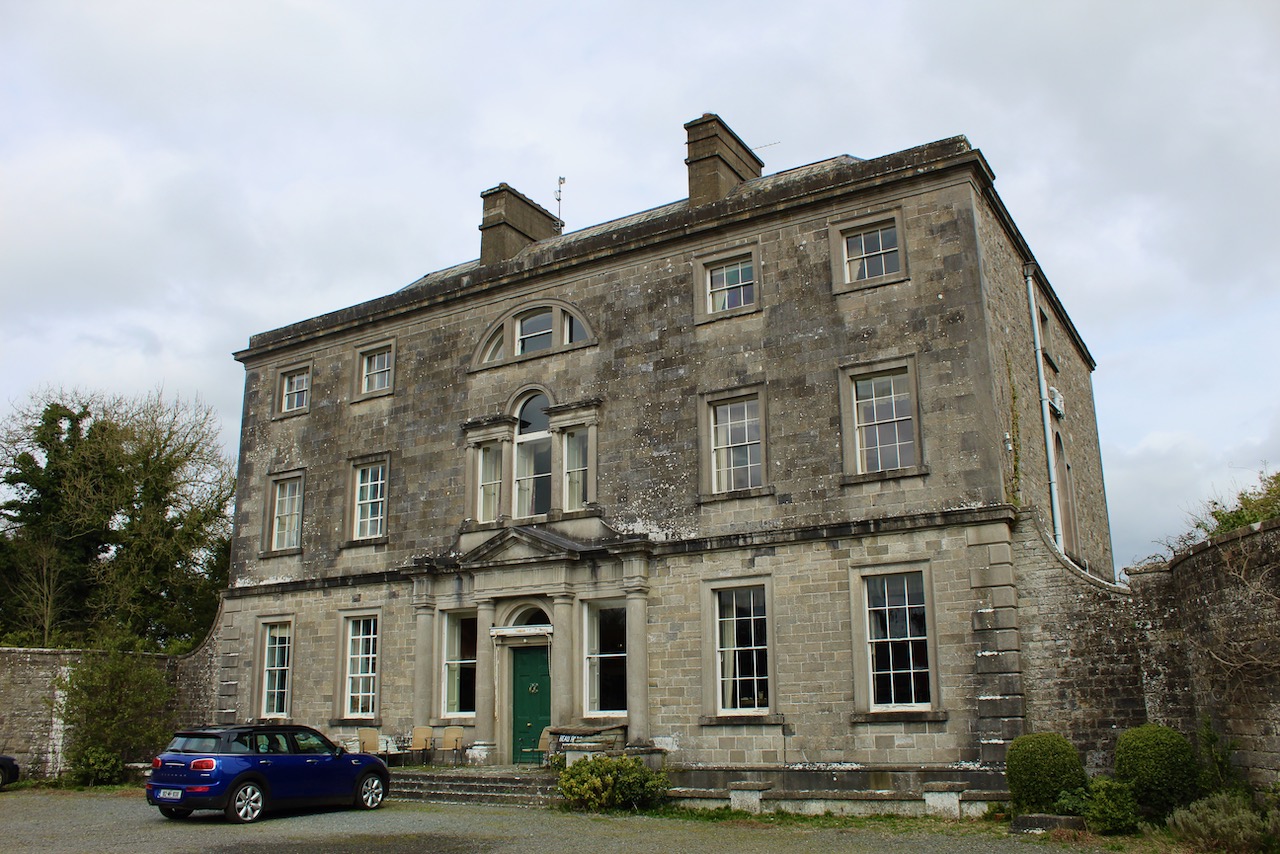
Beauparc House has been in the one family since it was built around 1755. It is a beautiful ashlar stone faced three storey over basement house with the classic sequence of Diocletian window above a Venetian window above a tripartite doorway. The architecture is attributed to Nathaniel Clements (or it could have been Richard Castle, Iona told us, although if built in 1755 that is after Castle’s death in 1751. The central window arrangement is reminiscent of Richard Castle [1]). The door is framed by two pairs of Doric columns topped by a central pediment. The Dictionary of Irish Biography tells us about the architecture of Nathaniel Clements: “A talented architect, he is credited with an important part in developing the Palladian villa-farm style of Irish country houses. In the 1750s and ‘60s he may have designed or advised on the design of several country houses, for example at Brooklawn and Colganstown in Co. Dublin [also a Section 482 property, see my entry], at Belview, Co. Cavan, Beauparc, Co. Meath, and at Newberry Hall and Lodge Park, Co. Kildare [another Section 482 property which I have yet to visit], all of which show the influence of his mentor Richard Castle. His residences were Manor Hamilton and Bohey, Co. Leitrim; Ashfield, Cootehill, Co. Cavan; and Woodville, Lucan, Co. Dublin.”
The house reminds me of Coopershill in County Sligo which was designed around 1755 by Francis Bindon, who also worked with Richard Castle.
Approximately twenty years after it was built, two three-bay two-storey wings were added by Charles Lambart, in around 1778, joined to the house by quadrant walls, the design attributed to the Reverend Daniel Beaufort. Beaufort was the Rector of Navan, County Meath, from 1765. He is associated also with the architecture of Ardbraccan House in County Meath (along with Thomas Cooley and James Wyatt) and Collon church in County Louth (where his daughter Louisa designed the stained glass window).
We were greeted at the door by Iona Conyngham, who gave us a tour of her home.
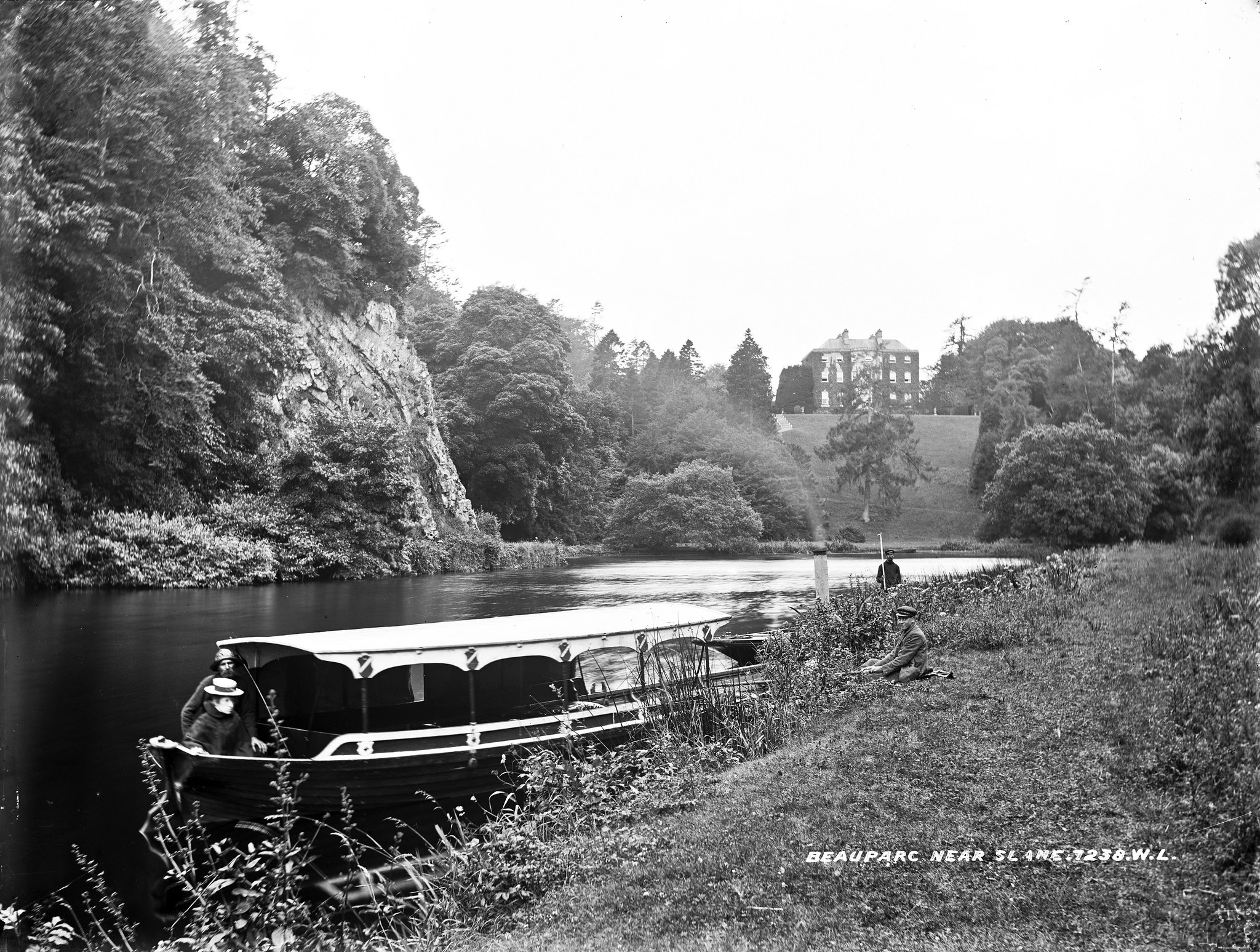
The back of the house, or garden front, as Mark Bence-Jones tells us, is of two bays on either side of a curved central bow, which you can just about see in the photograph taken around 1900 by Robert French (see below). [2] We did not see the back of the house.
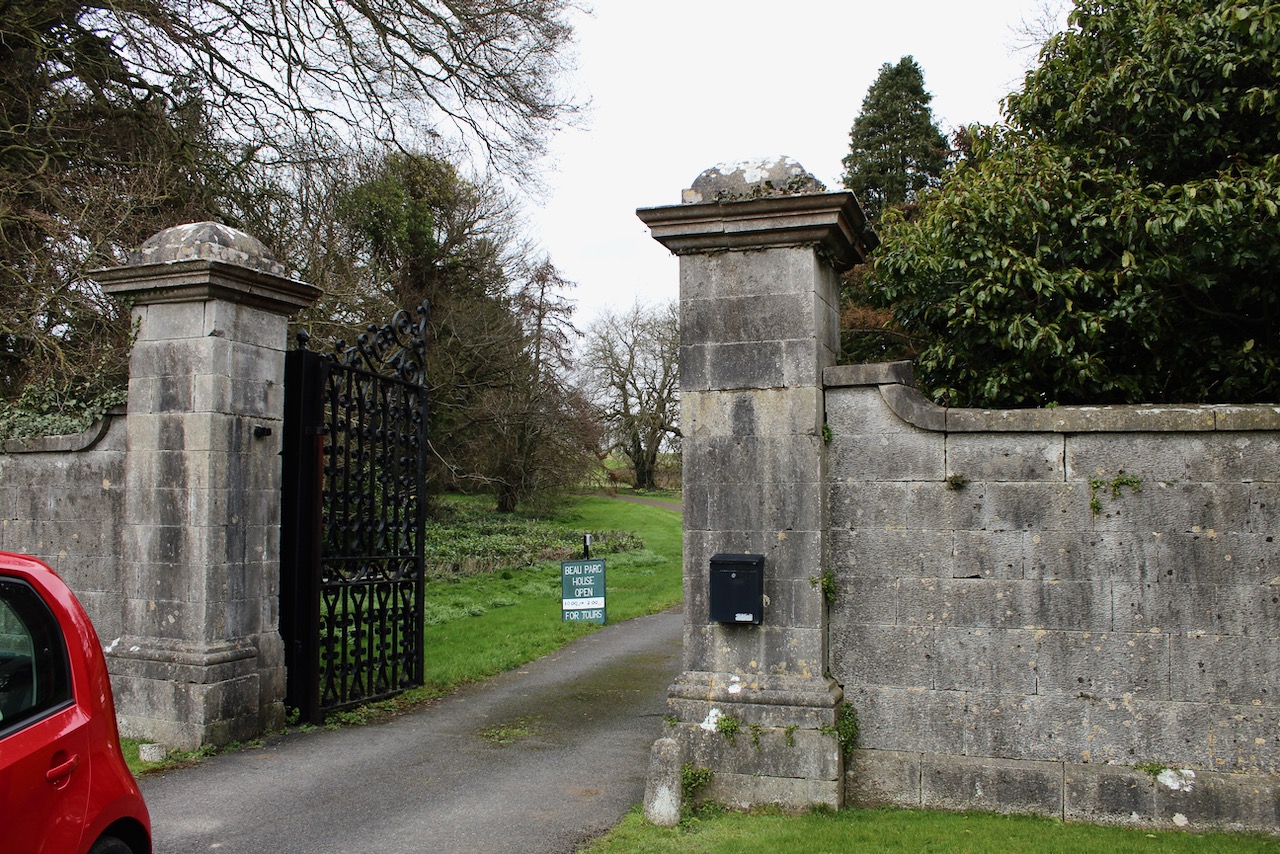
The estate has fine stone entrance piers and a cast iron gate, and a long sweeping drive to the house. The house is beautifully situated above the Boyne River, at the back of the house, giving beautiful views.
The house was built for Gustavus Lambart (born in 1717). He was MP for Kilbeggan from 1741-1776 and Collector of the Revenue for Trim, County Meath, from 1746-1760. He received excise tax from Kilbeggan Whiskey, a distillery that was established in 1757 under Gustavus Lambart’s patronage, by Matthias McManus. Iona told us that before Gustavus Lambart changed the name to Beauparc, it was previously called Fair Park.
It passed rather indirectly but within the same family to its current owner Lord Henry Mount Charles Conyngham of Slane Castle (and his wife Iona) after the death of the previous owner, Sir Oliver Lambart, in 1986. The Navan History website tells us:
“[The previous owner] willed the house and estate to Lord Henry Mount Charles a distant relative. Sir Oliver never told him and it came as a shock to Lord Henry.”
It must indeed have been a pleasant surprise to Lord Henry Mount Charles, since he already owned Slane Castle, and although Sir Oliver Lambart had no siblings nor children, his father had eleven siblings. However, only four of those siblings, Oliver’s aunts, lived longer than his father Gustavus, and none of Gustavus’s brothers had children. Oliver had several first cousins, but most, if not all of them, predeceased him. Sir Oliver’s grandmother was Frances Caroline Maria Conyngham, daughter of the 2nd Marquess. Henry Mount Charles Conyngham is the 8th Marquess, which makes him only distantly related to Sir Oliver Lambart, the previous owner.
It is fortunate that the Conynghams inherited Beauparc before the disaster of the fire at Slane Castle in 1991, so they had somewhere to live when Slane Castle was being renovated. Lord Mount Charles had already started to host rock concerts to raise money for the upkeep of the castle so perhaps Sir Lambart admired his enterprising spirit and felt that he was leaving his house to someone who would be able to undertake the upkeep of Beauparc. Henry Mountcharles also earns some of his money from the making of whiskey as in 2015 he opened a whiskey distillery at Slane Castle, the Slane Irish Whiskey Brand. Kilbeggan Whiskey still continues today also.
Gustavus Lambart married Thomasine Rochfort of Gaulstown, County Westmeath, the sister of the “wicked” Robert Rochfort, 1st Earl of Belvedere, who imprisoned his wife at her home for allegedly having an affair with his brother (see my entry about Belvedere [3]). She was the daughter of George Rochfort.
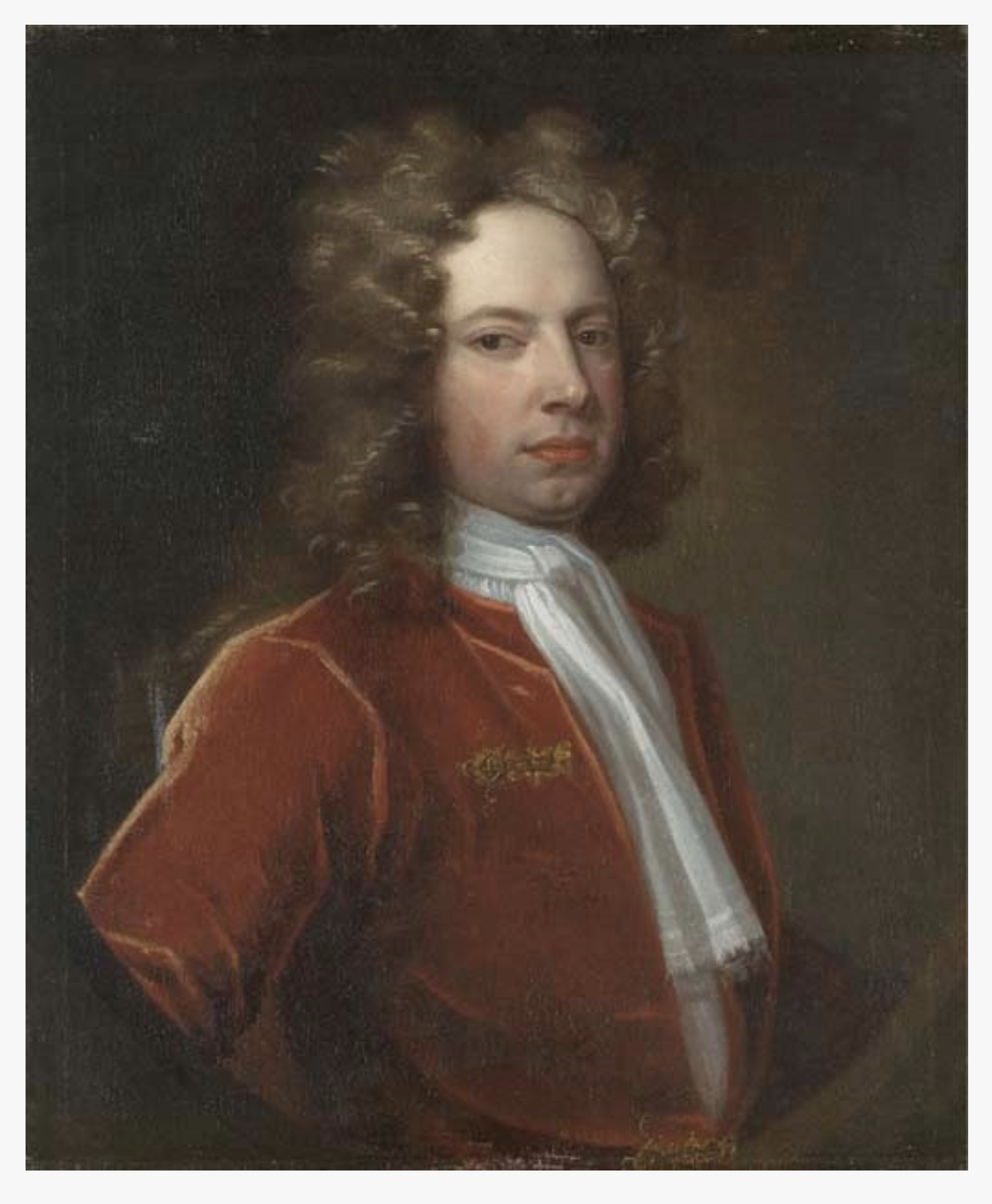
George Rochfort, of Gaulstown, Co. Westmeath, M.P. for Co. Westmeath by Charles Jervas courtesy of Christies Auction 2002.
The Navan History website tells us of the history of the Lambart family:
“Oliver Lambart, first Baron Lambart [1573-1618], acquired lands in Cavan.” [4]
Oliver Lambart was a military commander and came to Ireland with the 2nd Earl of Essex and fought in the Nine Year’s War (1593-1603). Earlier he had fought against Spain and was knighted. In 1597 he was an MP for Southampton in England. In 1603 he served as Privy Counsellor in Ireland and In 1613 he was elected as MP for County Cavan in the Irish House of Parliament. He is buried in Westminster Abbey. [5]
His son Charles Lambart(1600-1660) succeeded him in 1618 as the 2nd Lord Lambart, Baron of Cavan, County Cavan. He followed in his father’s footsteps as MP, Privy Counsellor, and the military: He was commander of the forces of Dublin in 1642, helping to suppress the 1641 Uprising with a 1000 strong infantry regiment. [6] Previous to this, he had lived in England as an absentee landlord, due to debts which he inherited from his father. He took a seat in the Irish House of Lords in 1640 after failing to secure a seat in the English Parliament. He allied himself with the Catholic opposition to the government at first, criticising Thomas Wentworth (1593–1641), Earl of Strafford, Lord Lieutenant of Ireland. However, with the rebellious uprising in 1641, Lambart fled to Dublin and there took up arms against the Catholic rebels. He became an ally of the Duke of Ormond. The king rewarded his loyalty by creating him 1st Earl of Cavan in April 1647. [7]
His son Richard became the 2nd Earl of County Cavan. However, it was the 1st Earl of Cavan’s younger son Oliver (1628-1700) who inherited the family estates. The Navan History website tells us:
“Oliver Lambart was third son of Charles Lambart, and lived at Painstown. His elder brother, the second Earl [Richard], was deprived of his reason by a deep melancholy by which he was seized before, from a sense of injuries put upon him by his younger brother, Oliver, who by his father’s will got the estate of the family settled upon him. His son, Charles, succeeded him at Beau Parc.”
Oliver married four times. He married, firstly, Catharine Bridges from England, daughter of John Bridges, circa 1662. He and Eleanor Crane of Dublin obtained a marriage license on 6 September 1671. They had several children. He and Dorothy Whitfield obtained a marriage license on 12 December 1681, but they had no children together. He married, fourthly, Anne Tighe, daughter of Richard Tighe, Alderman of Dublin, circa 1688.
He was Anne Tighe’s third husband. Anne had been previously married to John Preston (d. 1686), Alderman of Dublin, who lived in Ardsallagh, County Meath. By him she had a son Nathaniel Preston (d. 1760) who lived at Swainstown in County Meath, another Section 482 property. Her second husband was Theophilus Sandford who lived in Moyglare, County Meath.
He held the office of Member of Parliament (M.P.) for Kilbeggan in 1661. He died in 1700.
His son Charles (d. 1753) was MP for Kilbeggan and later for Cavan. He lived at Painstown, County Meath. He married Elizabeth Hamilton, daughter of Gustavus Hamilton (1642-1723), 1st Viscount Boyne. It was their son, Gustavus Lambart who had the house at Beauparc built. Gustavus was the second son. His elder brother Charles predeceased their father, unmarried.
We stepped into the impressive front hall. The plasterwork reminded me of that in Leinster House, which I have seen in photographs. A portrait of Lady Conyngham looks down over a map table, which was a gift to her, with shamrock, thistle and rose, symbols of Ireland, Scotland and England. The hall has stone flags. The interior is laid out, Christine Casey and Alistair Rowan tell us, in a variant of the standard mid-eighteenth century double-pile plan (see [1]). The house is two rooms deep. The hall has a large Doric cornice and six doors in lugged (i.e. shouldered) frames.
The Navan History website tells us: “Gustavus Lambert, son of Charles, was MP for Kilbeggan from 1741 to 1776 and was collector of Revenue for Trim from 1746-60. His son, Charles Lambart [c. 1740-1819], was M.P. for Kilbeggan between 1768 and 1783.” As mentioned earlier, Gustavus married Thomasine Rochfort. His son Charles married Frances Dutton, whose father was born James Lenox Naper (c. 1713-1776) but later took the surname Dutton after his mother, daughter of Ralph Dutton 1st Baronet Dutton, of Sherborne, Co. Gloucester. James Lenox Naper lived at lived at Loughcrew, County Meath, which is also a Section 482 property. It was Charles Lambart who added the wings to Beauparc.
The hall opens directly into the drawing room, with its wonderful view of the Boyne. The dining room and sitting room are on either side. The sitting room retains its original modillion cornice and two stuccoed niches flanking the chimneybreast (see [1]). The main stair is located off the hall to one side and is lit by the big Venetian window. The staircase is mahogany, with two Tuscan balusters per tread and side modillion motifs carved into the tread ends.
The Navan website continues: “Charles’s son, Gustavus [1772-1850], was born in 1772. As M.P. for Kilbeggan Gustavus voted against the Act of Union in 1800.” He married in 1810. Casey and Rowan tell us that Gustavus Lambart II may have had minor alterations made to Beauparc. He may have added Neoclassical chimneypieces, plasterwork, and some “vaguely Gothick joinery” in different rooms (see [1]).
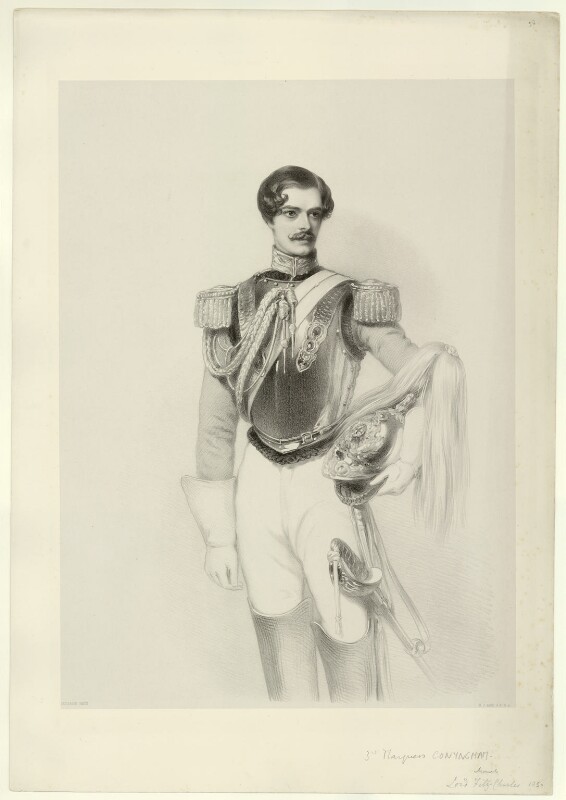
His eldest son, Gustavus William Lambart (1814-1886), married Lady Frances Caroline Maria Conyngham, daughter of the 2nd Marquess Conyngham (Francis Nathaniel Burton Conyngham (1797-1876), of Slane Castle) in 1847.
Francis Nathaniel Conyngham 2nd Marquess Conyngham, by Richard James Lane, after Stephen Catterson Smith, lithograph, 1850, photograph from the National Portrait Gallery. [8]
The Navan website tells us about Gustavus William Lambart: “A graduate of Trinity College he was State Steward to the Lord Lieutenant of Ireland. In 1876 Gustavus W. Lambart of Beauparc held 512 acres in County Meath. It is said that a Miss Lambart danced a jig in front of Queen Victoria and asked for the head of the Prime Minister, Gladstone. Gladstone was a supporter of Home Rule for Ireland, a cause which did not find favour among the Irish gentry and nobles. Gustavus William died in 1886.“
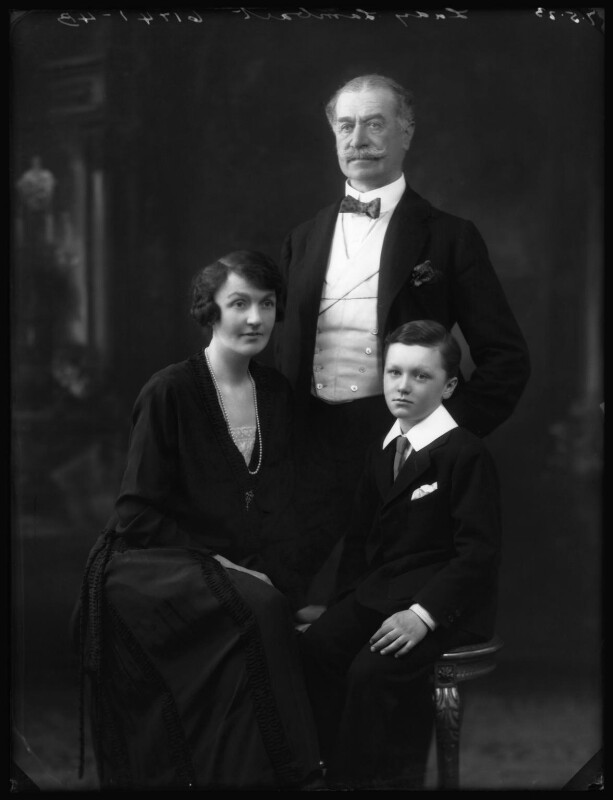
The Navan website continues: “His eldest son, Gustavus Francis William Lambart, was Chamberlain to the Lord-Lieutenant of Ireland between 1876 and 1880. He gained the rank of Major in the service of the 5th Battalion, Leinster Regiment. High Sheriff of County Meath in 1901, Gustavus was Comptroller and Chamberlain to the Lord-Lieutenant of Ireland between 1902 and 1905. He held the office of Secretary of the Order of St. Patrick. He was created 1st Baronet Lambart, of Beau Parc on 13 July 1911. He married Kathleen [Moore] Brabazon in 1911.” Kathleen Moore-Brabazon was daughter of John Arthur Henry Moore-Brabazon of Tara Hall, County Meath, who was born with the surname Moore but changed his name on the death of his uncle, the Reverend William John Moore-Brabazon, son of John Moore and Barbara Brabazon.
Kathleen Barbara Sophia nee Moore-Brabazon, Lady Lambart, with her son Sir Oliver Francis Lambart 2nd Baronet, and husband, Sir Gustavus Francis Lambart 1st Baronet by Bassano Ltd, whole-plate glass negative, 7 May 1923, photograph from National Portrait Gallery. [8]
The Navan history website tells us that: “In January 1890 Cyril, brother of Gustavus, experimented with chasing kangaroos with the Beau Parc Staghounds. He also tried hunting Barbary sheep and Tralaia deer. Cyril later emigrated to Australia.” It sounds like he must have imported kangaroos to Beauparc! Unless the Navan website does not imply that he moved to Australia after chasing kangaroos!
The website continues, telling us of the final generation of Lambart who lived in Beauparc: “Gustavus’s son, Sir Oliver Francis Lambart, born in 1913, became the 2nd Baronet on his father’s death in 1926. He served as 2nd Lieutenant in the service of the Royal Ulster Rifles. He fought in the Second World War between 1939 and 1944, with the Royal Army Service Corps. Sir Oliver’s uncle was Lord Brabazon of Tara and Minister of Aircraft Production during the Second World War. Sir Oliver Lambart was last of the Lambarts to live in the house. A popular local figure Sir Oliver had an interest in cricket and took part in the local team. He donated a field to the local GAA club as a football pitch. The Land Commission acquired 300 acres of the estate in the 1960s for distribution. Sir Oliver’s mother died in 1980 at 100 years of age. Sir Oliver died in 1986 aged 72. He willed the house and estate to Lord Henry Mount Charles a distant relative. Sir Oliver never told him and it came as a shock to Lord Henry.”
Sir Oliver Lambart’s mother, Kathleen Moore-Brabazon, seems to have been quite a character. Iona told us that she bred German Shepherd dogs, had racehorses, and also raced hot air balloons! There was a photograph of her in a hot air balloon! When I “googled” her I found a wonderful resource, the National Portrait Gallery of England’s website, that allows downloads for non-commercial use. [8]
Iona pointed out an 1853 portrait of a young boy, and asked us to notice that his belt is red. It was Queen Victoria, she told us, who changed the traditional colour for male babies to blue!
Casey and Rowan tell us that the cross-corridor of the double-pile plan appears in the basement and at the bedroom-floor level, where it is vaulted. We did not see either the basement nor the bedroom floor level of the house. Casey and Rowan tell us that the large central bedroom at the rear of the house has an internal apse backing onto this cross-corridor, which echoes its bow windows. The room must have a splendid view over the River Boyne.
Henry Mount Charles and his wife brought some of the family heirlooms from Slane Castle, which join the historic portraits and photographs of the Lambarts. Beauparc is a beautiful secluded family home. Unfortunately we did not explore the grounds. I must make a return trip to Slane Castle, which is now occupied by Henry Mount Charles’s son and his family.
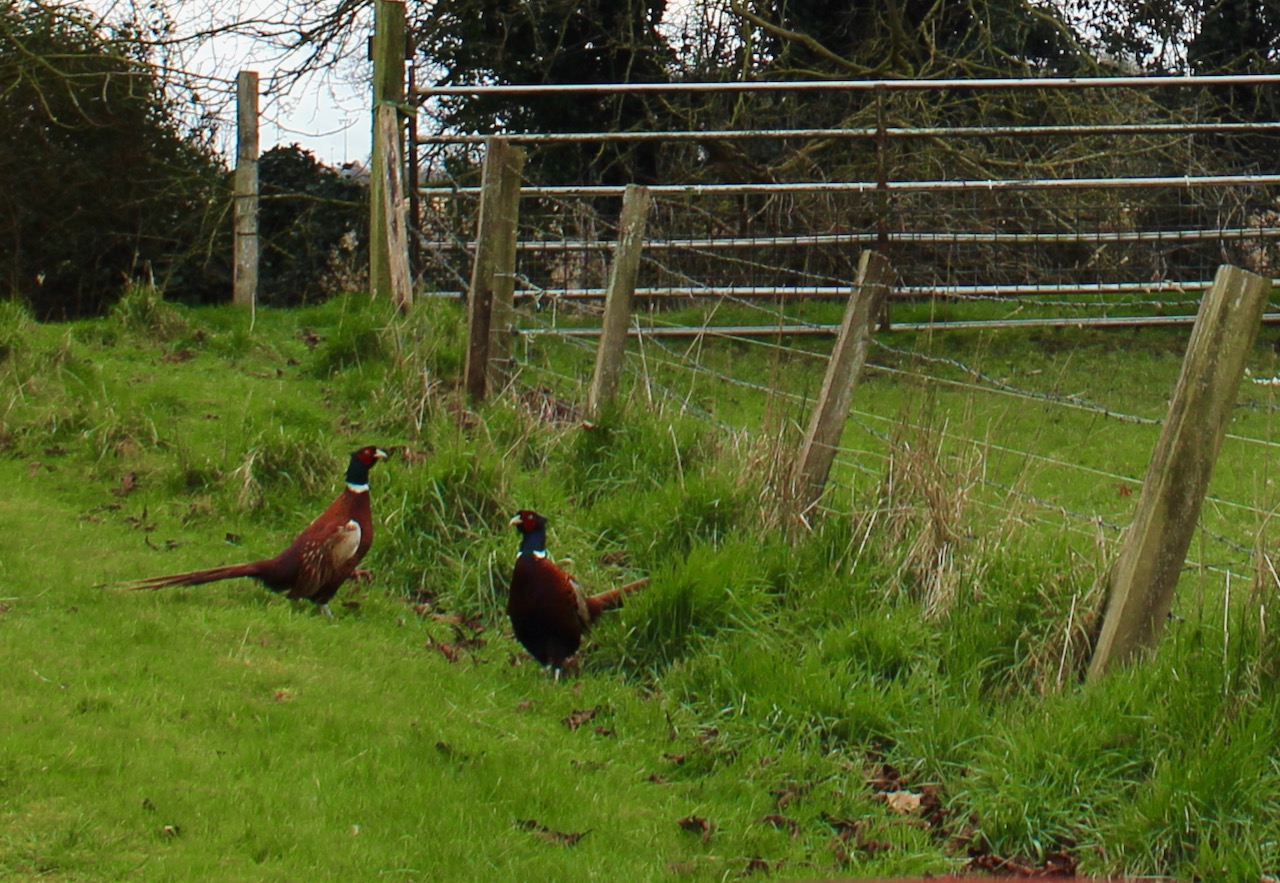
On our way out along the drive we stopped to photograph a lovely pair of pheasants.
[1] p. 157. Casey, Christine and Alistair Rowan, The Buildings of Ireland: North Leinster. The Counties of Longford, Louth, Meath and Westmeath. Penguin Books, London, 1993.
[2] Bence-Jones, Mark. A Guide to Irish Country Houses (originally published as Burke’s Guide to Country Houses volume 1 Ireland by Burke’s Peerage Ltd. 1978); Revised edition 1988 Constable and Company Ltd, London.
[5] G.E. Cokayne; with Vicary Gibbs, H.A. Doubleday, Geoffrey H. White, Duncan Warrand and Lord Howard de Walden, editors, The Complete Peerage of England, Scotland, Ireland, Great Britain and the United Kingdom, Extant, Extinct or Dormant, new ed., 13 volumes in 14 (1910-1959; reprint in 6 volumes, Gloucester, U.K.: Alan Sutton Publishing, 2000), volume III, page 116. Hereinafter cited as The Complete Peerage.




 Irish Historic Houses