Listed Open dates in 2026: From June 21 -Aug 31, Mon – Sat, open all of Heritage Week 15-23 Aug,
11am-3pm
Fee: adult €14, OAP/student €12, child €5

donation
Help me to pay the entrance fee to one of the houses on this website. This site is created purely out of love for the subject and I receive no payment so any donation is appreciated!
€15.00
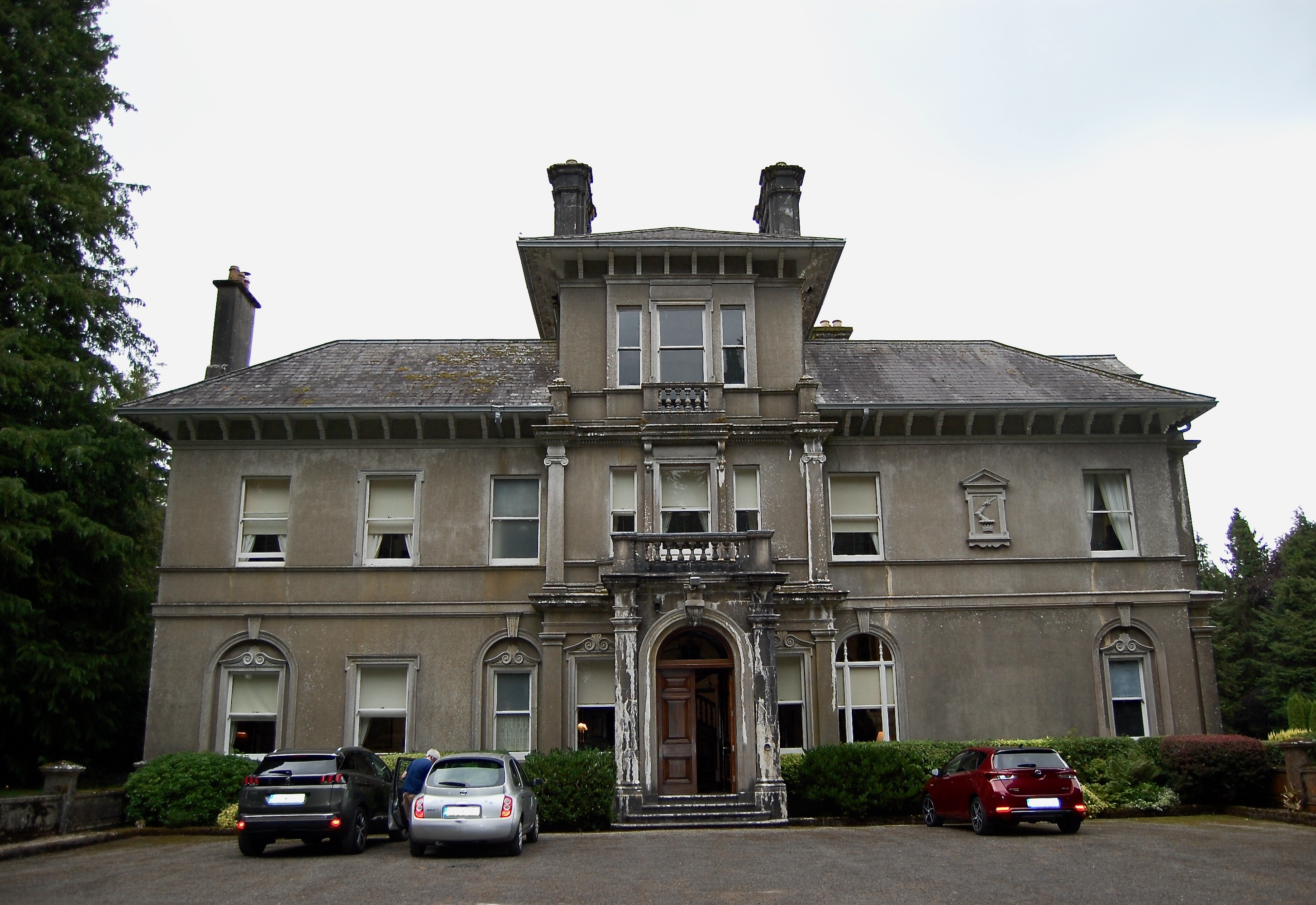
Stephen and I were invited to join friends for a weekend in County Westmeath and took the opportunity to visit Clonalis House in County Roscommon. We were particularly eager to visit the house once Stephen heard that it is the house belonging to the O’Conor Dons. The O’Conor Dons are descended from the last High Kings of Ireland. Stephen knew the last O’Conor Don, Father Charles O’Conor, at school, as a gentle elderly priest sweeping leaves in Clongowes Wood College. Stephen has affectionate memories of him, and was impressed by his humility and contentedness. Unfortunately since Father Charles became a Catholic priest, the line died out. The house was bequeathed to Father Charles’s sister, Gertrude, who married Richard Rupert Nash, and passed then to her son Pyers, who added the name O’Conor to his last name Nash. The term “Don” refers originally to hair colour, and there was another branch of the O’Conor family called “Rua” or red, but the line has died out. However, the term “O’Conor Don” is a title, applying to the Chieftain of the O’Conors of Connacht.
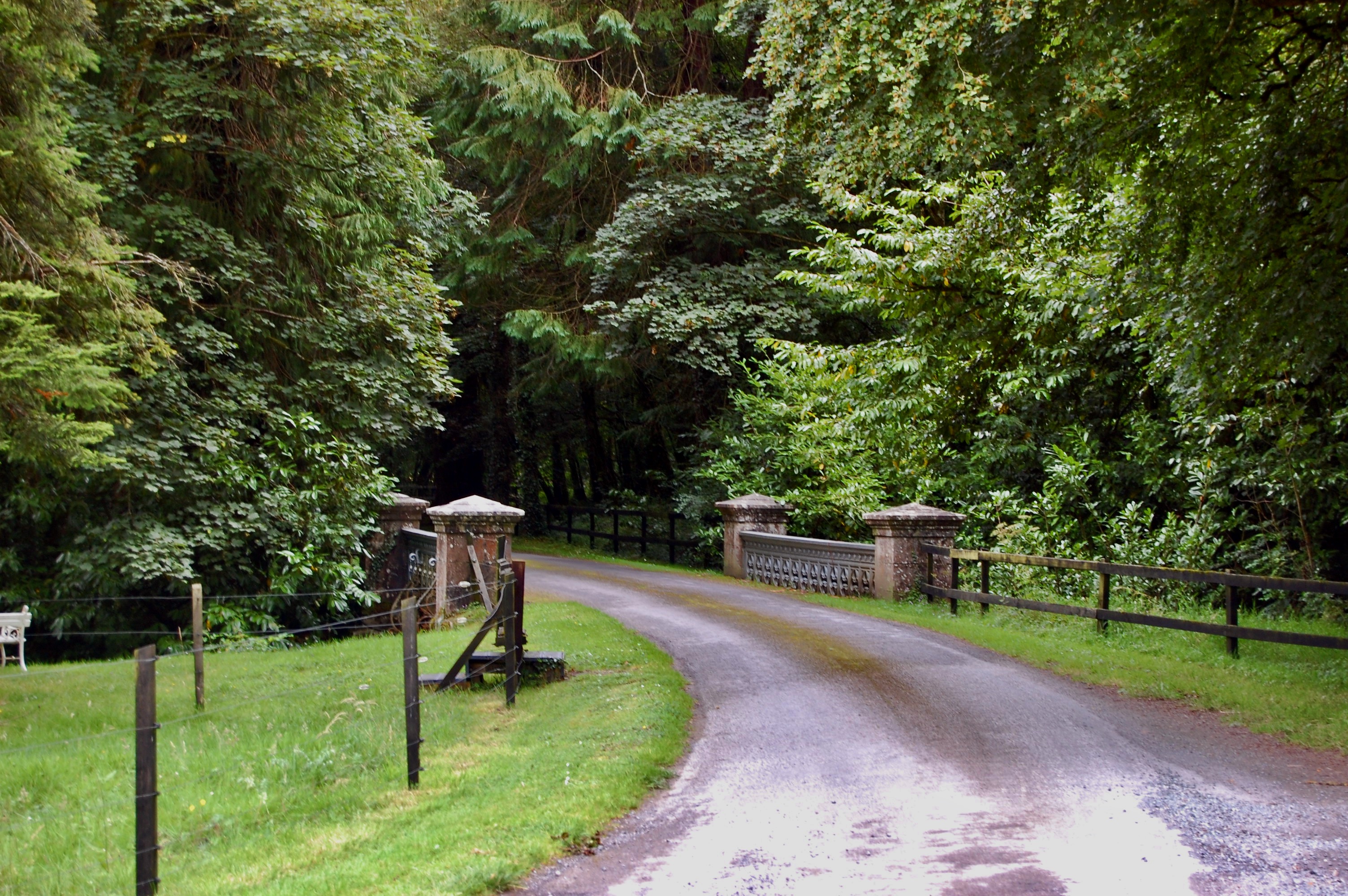
We were running late as I find Google always underestimates the time it will take to any destination over an hour away, so we arrived just in time for the last house tour at 4pm. I took the wrong turn as we drove up the long entrance driveway, turning off to the self-catering holiday homes in a former courtyard, by mistake. I was in such a rush that I didn’t notice the beauty of the drive up to the house, which I stopped to appreciate on the way out. The drive is one third of a mile long, stretching through parkland.
We had contacted the O’Conor Nashes in advance, and a young historian who now gives tours of the house welcomed us. She has a lot of facts to learn! The house is bursting with history. The family, impressively, can date their genealogical tree back to 1100 BC; there is a book detailing their pedigree in the library, signed and legitimised by Sir William Betham, Ulster King of Arms, in 1825. There is also a chart in the library listing the male line, which goes back to 75AD. The family produced 11 high kings of Ireland and 24 kings of Connacht. [1]

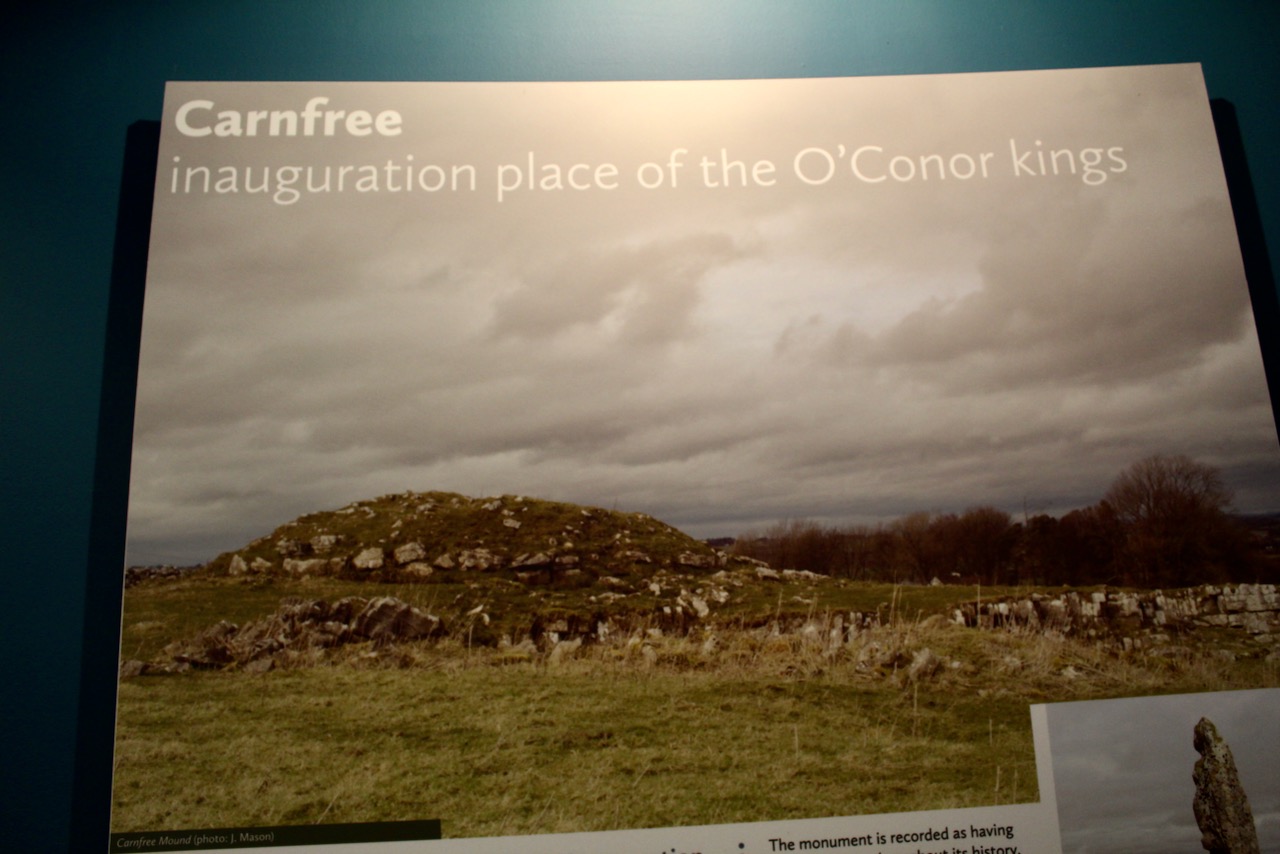
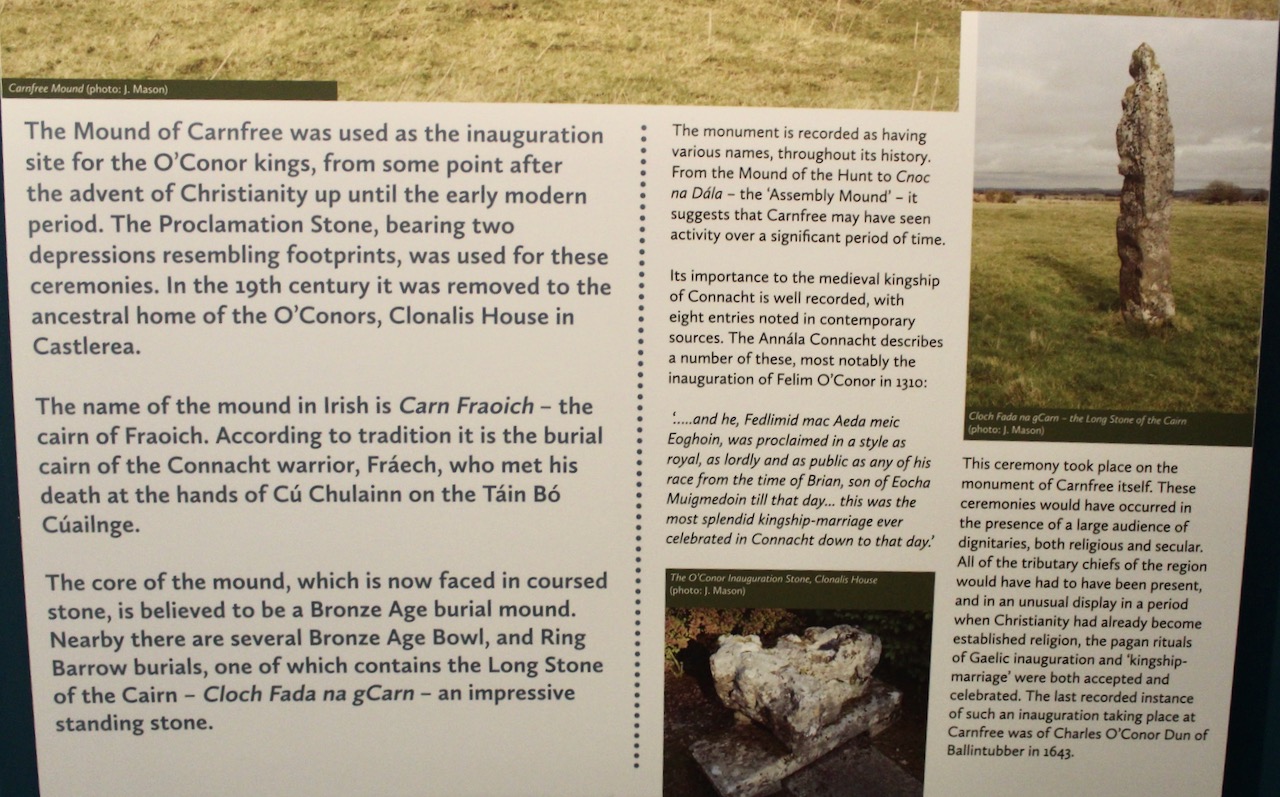
Our guide began the tour outside. She pointed out a large stone in front of the house. It was brought from Rathcroghan in County Roscommon, about nine miles from the house. Upon this stone, called the Coronation Stone, the High Kings of Ireland were crowned.

There is an indentation like a footprint on the top of the stone, and this is supposed to be where each king put a foot during his coronation. According to Mrs. Pyers O’Conor-Nash’s entry in Sybol Connolly’s book, In An Irish House, published by Weidenfeld and Nicolson in London in 1988, one of the last to be crowned king of Connaught was Felim O’Conor, who was killed in the battle of Athenry when fighting against his Connaught neighbours the de Burghs and the de Berminghams in 1316.

The Clonalis website describes the ceremony of inauguration of a king. He symbolically married the soil over which he was to rule, and the sacred stone acted as the King’s bride in the ceremony known as “Banais Ri” (the King’s Marriage”). This stone was probably used to inaugurate thirty O’Conor kings!
I was impressed immediately by the symbol on the house of the arm holding the sword:
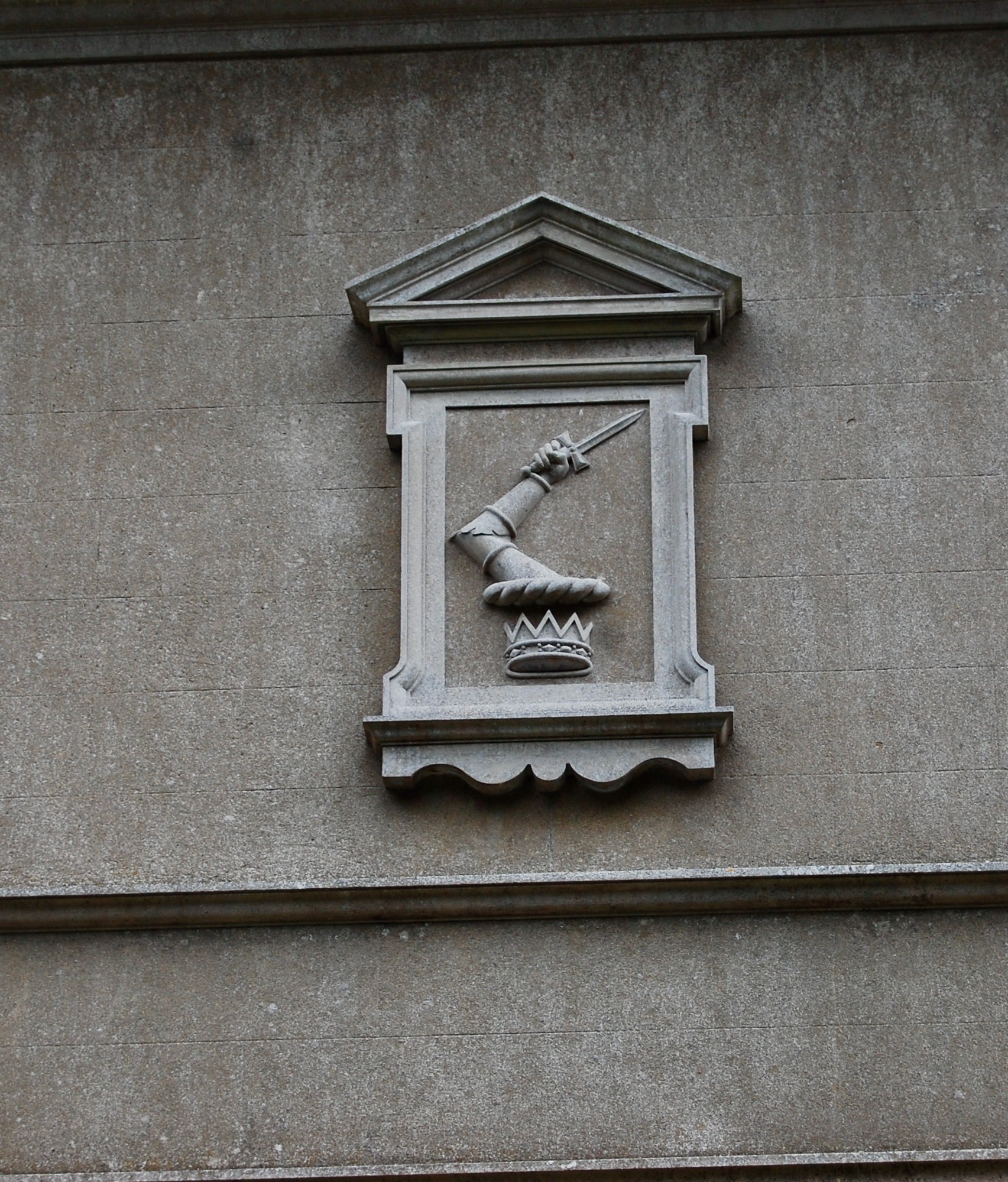
Randall MacDonnell tells us in his book The Lost Houses of Ireland that in 1175 Roderick O’Conor, the High King of Ireland, agreed to the following: “Henry [King Henry II of England] grants to Roderick, his liege King of Connacht, as long as he faithfully serves him, that he shall be King under him…and as his man.” This agreement is known to history as the Treaty of Windsor, which St. Laurence O’Toole had negotiated on behalf of the Irish High King. Sadly, Roderick’s own sons plotted against him so, in 1187, he abdicated and spent the remainder of his life as a religious in the Abbey of Cong in the west of Ireland. According to the website, at the height of O’Conor\O’Connor power, as High Kings of Ireland in the 12th century, Tuam and Dunmore in Galway were their Ecclesiastic and Administrative centres. O’Conor castles from the 14th century can be found in Ballintubber, County Roscommon, and in Roscommon town, and the one is Ballintubber is still owned by the family, although they have not resided there since the seventeenth century.
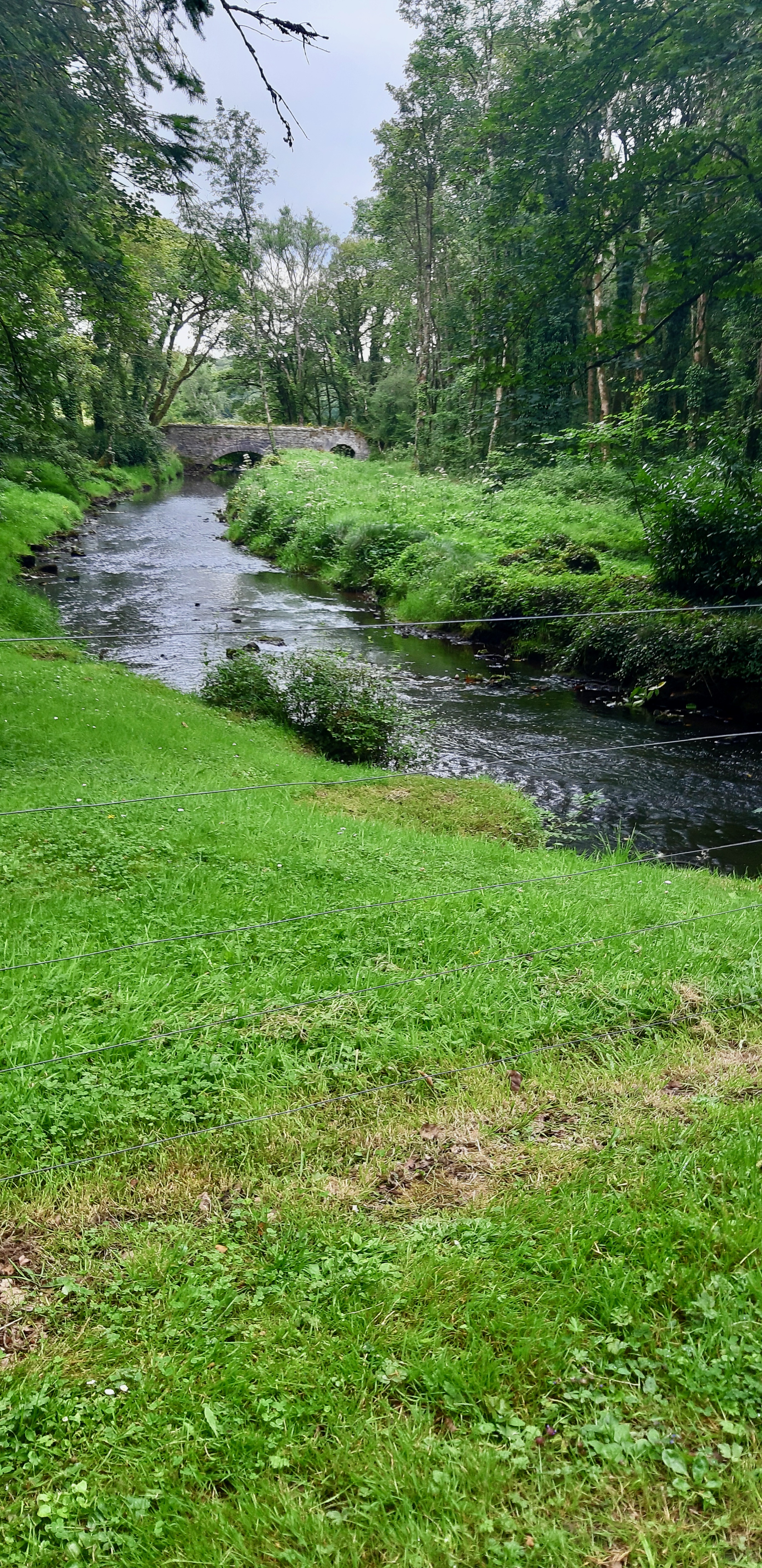
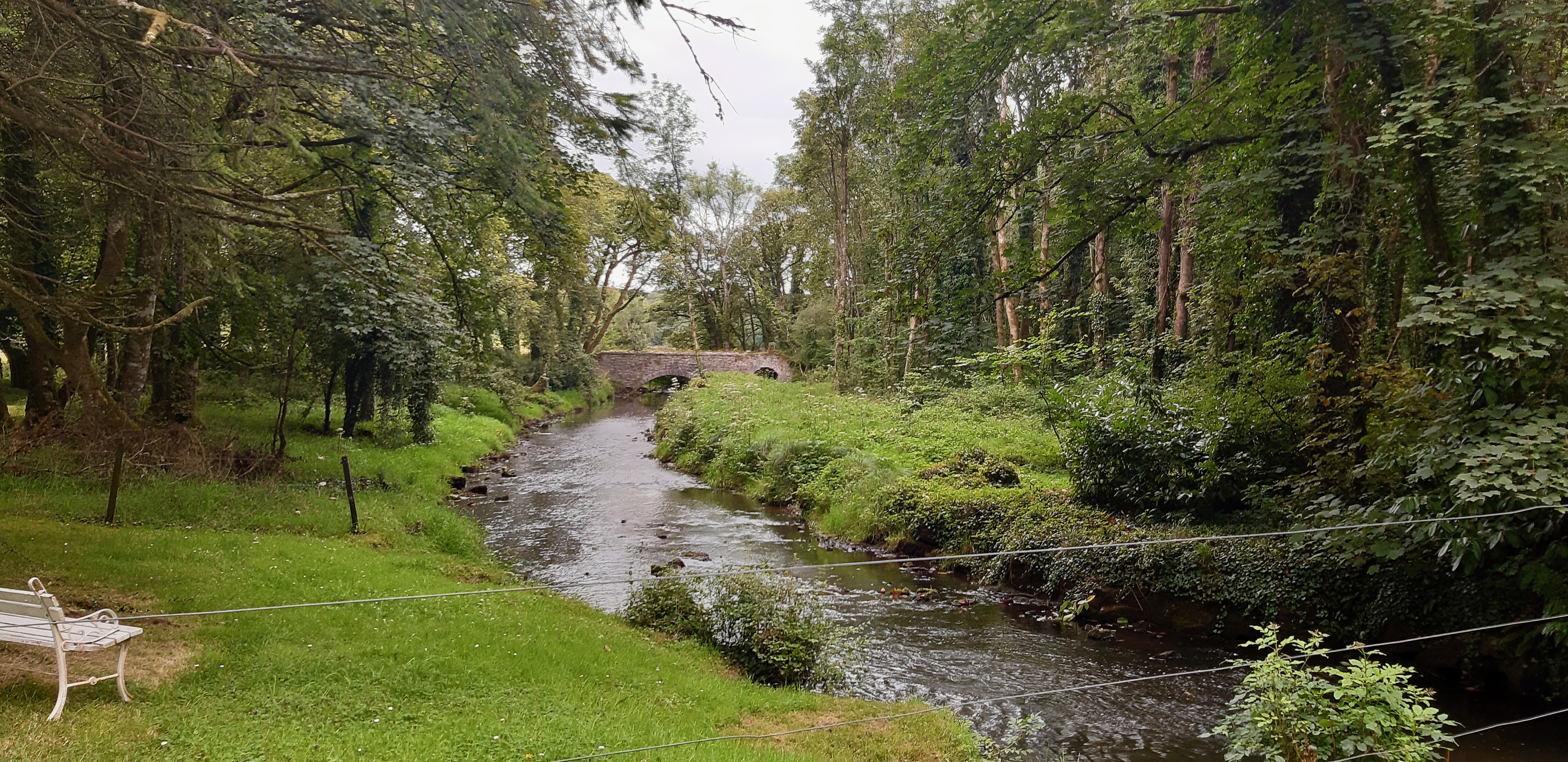
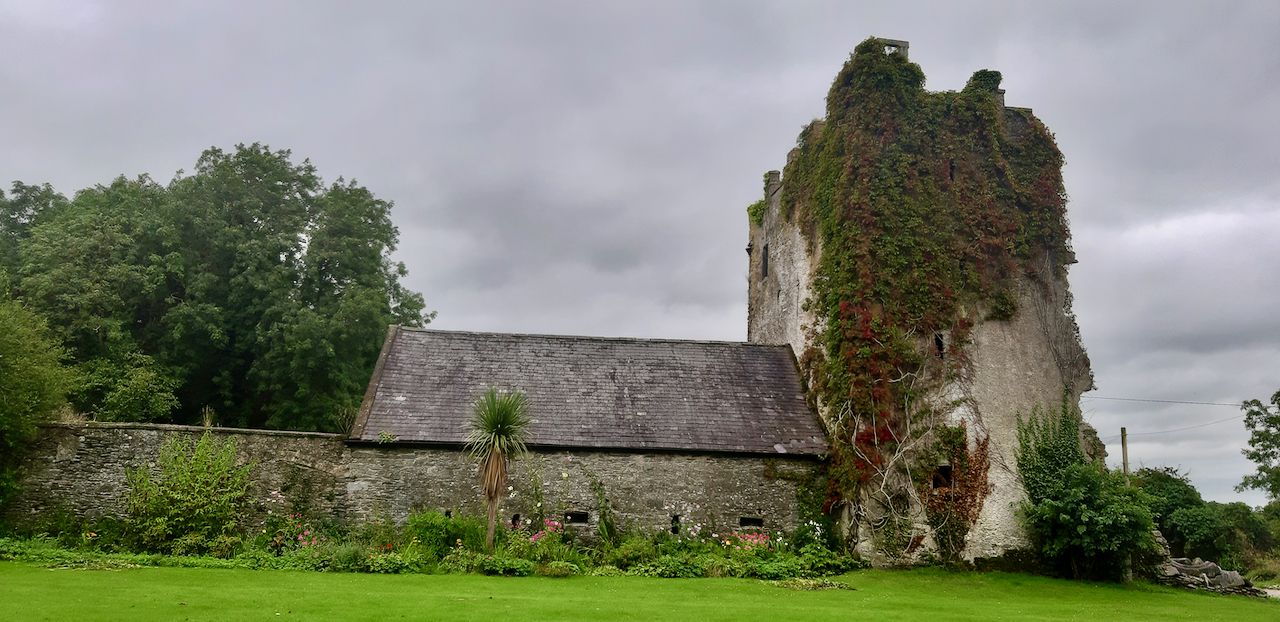
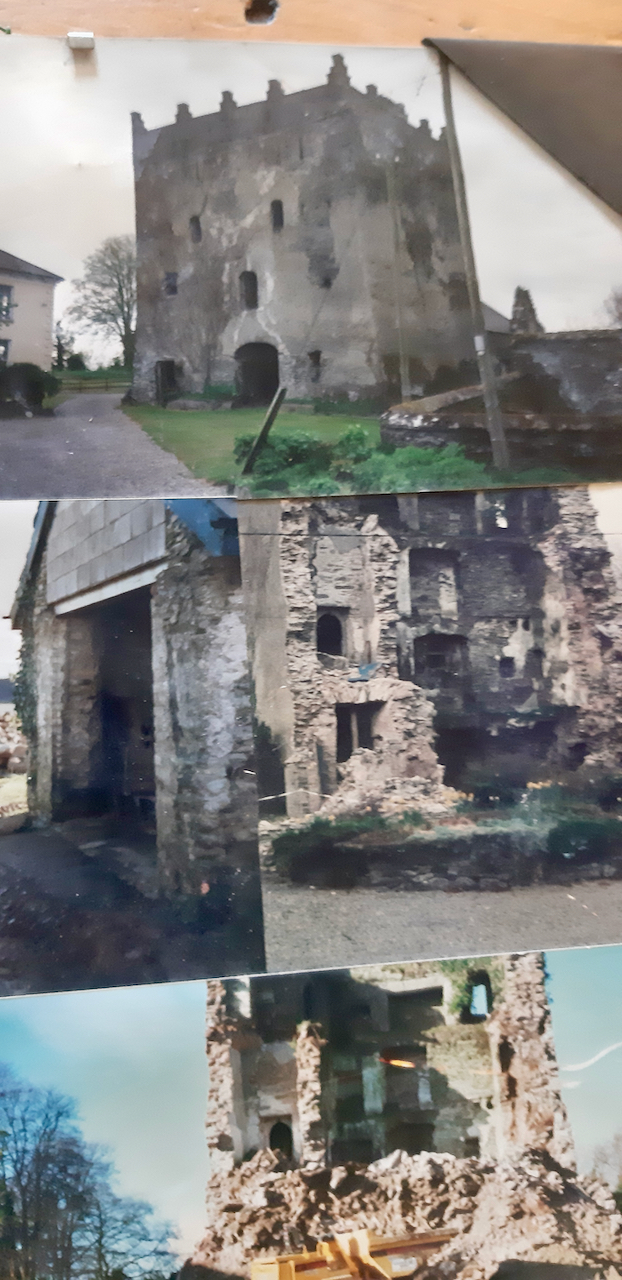
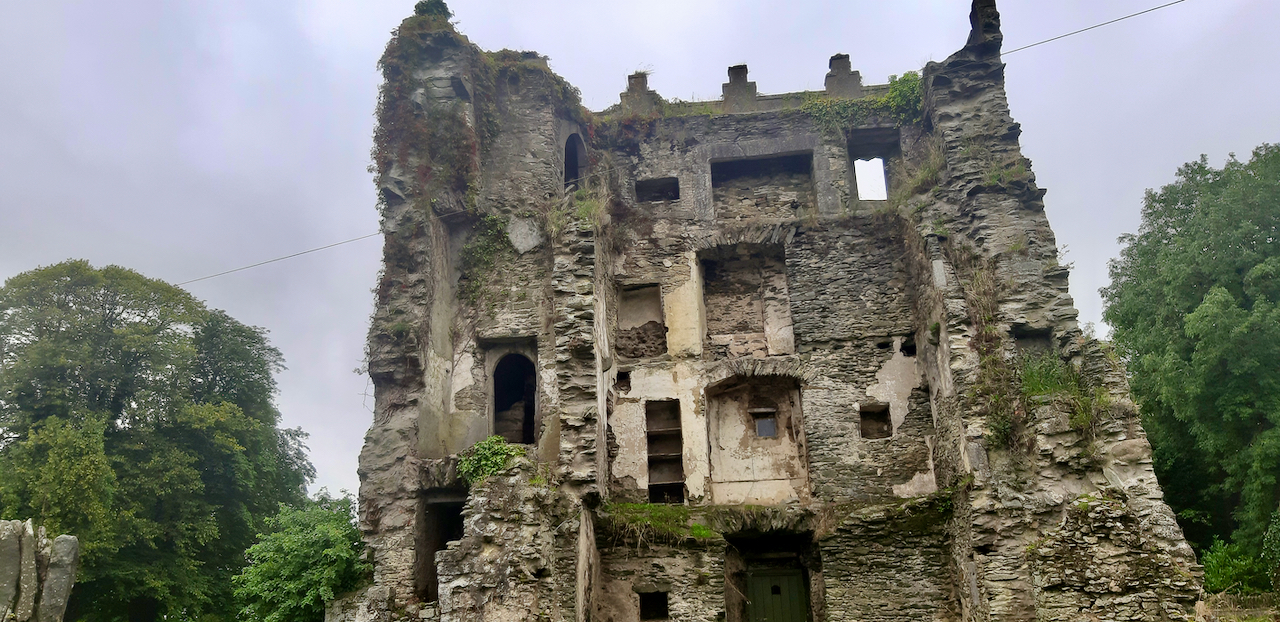
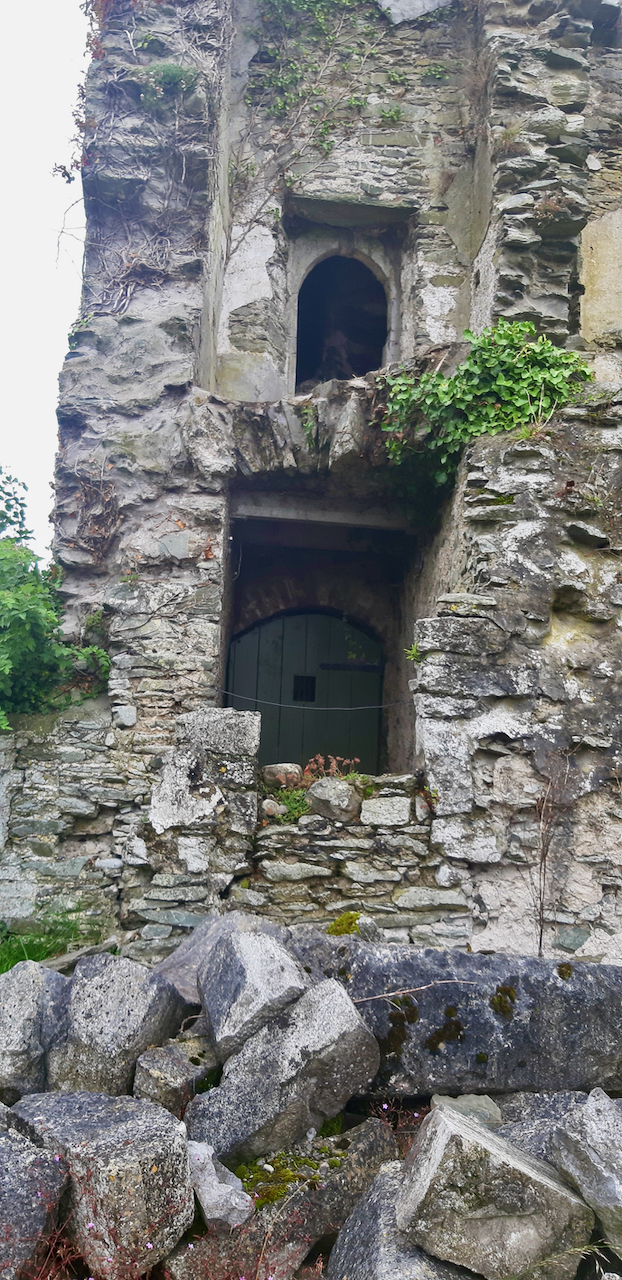
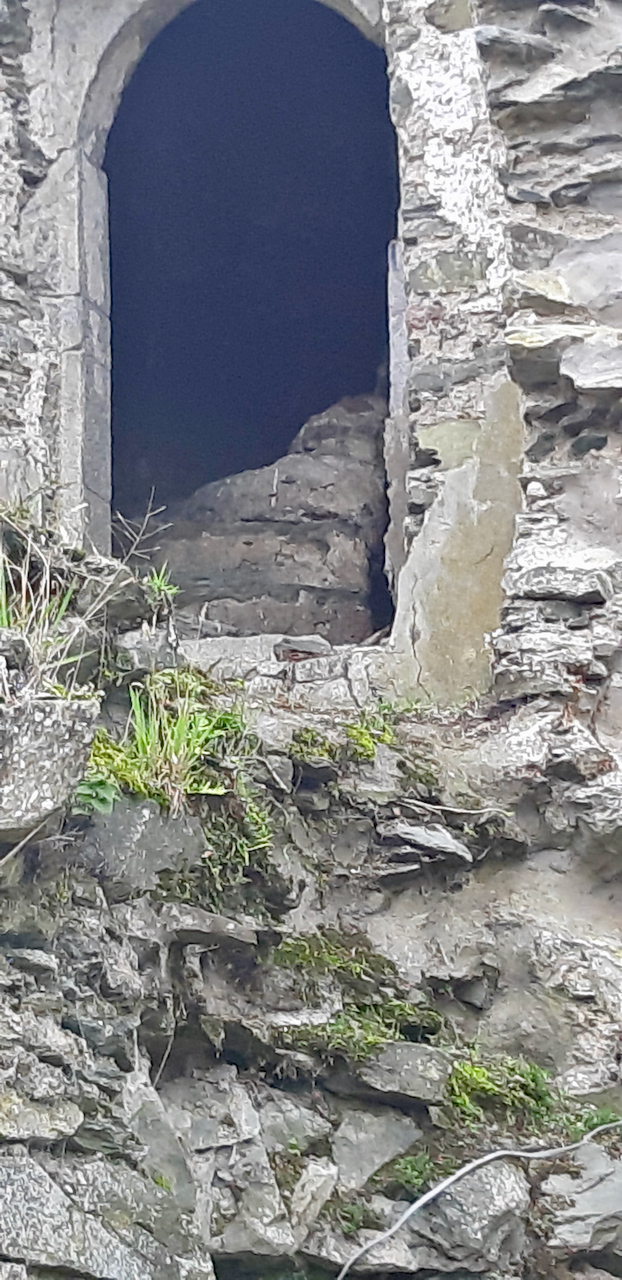
Possession of the lands can be traced back to the O’Conor Dons for over 1,500 years. The original house was built in the late seventeenth century, and incorporated a medieval castle, but it flooded regularly due to its position by the River Suck, so a new house was built by Charles Owen O’Conor Don (1838-1906) and the family moved in 1880 to the present house. The old house is now a ruin and can be seen from the driveway. On the official website, the current resident, Pyers O’Conor Nash writes touchingly that Charles Owen built the new house also because the old house made him too sad, as he lost his parents when living there at the age of seven, and then at the age of 27, lost his wife Georgina.
The branch of the O’Conor family who now live at Clonalis only came into the title of “O’Conor Don” in 1820. This branch descend from a younger son, Cathal (1597-1634), of Hugh O’Conor Don who died in 1627.
The title O’Conor Don passed to Hugh’s son Calvach but he did not have surviving children, so it passed to the grandson of his brother Hugh, who married Jane Dillon, daughter of Theobald, 1st Viscount of Costello-Gallin in County Mayo. Hugh and Jane’s son Daniel married Anne Bermingham, daughter of Francis, 12th Lord Athenry, and their son was Andrew, the O’Conor Don. The title passed then to one then the other of Andrew’s sons, but they did not have children and so the title passed to the branch that now live in Clonalis. Before this branch, the O’Conor Don branch lived at Clonalis in the older house, and the branch that lives in Clonalis now lived previously in Belanagare.
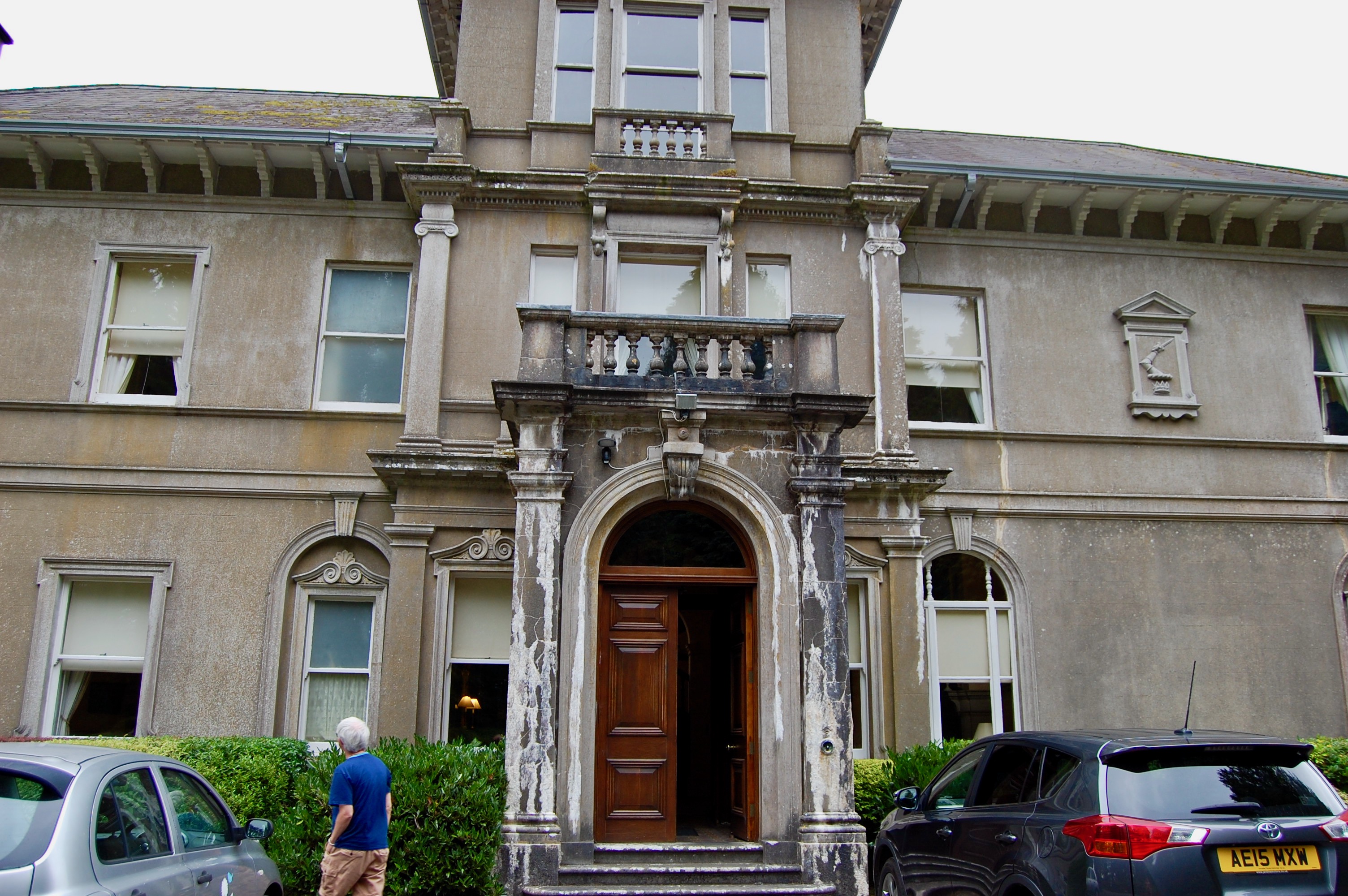
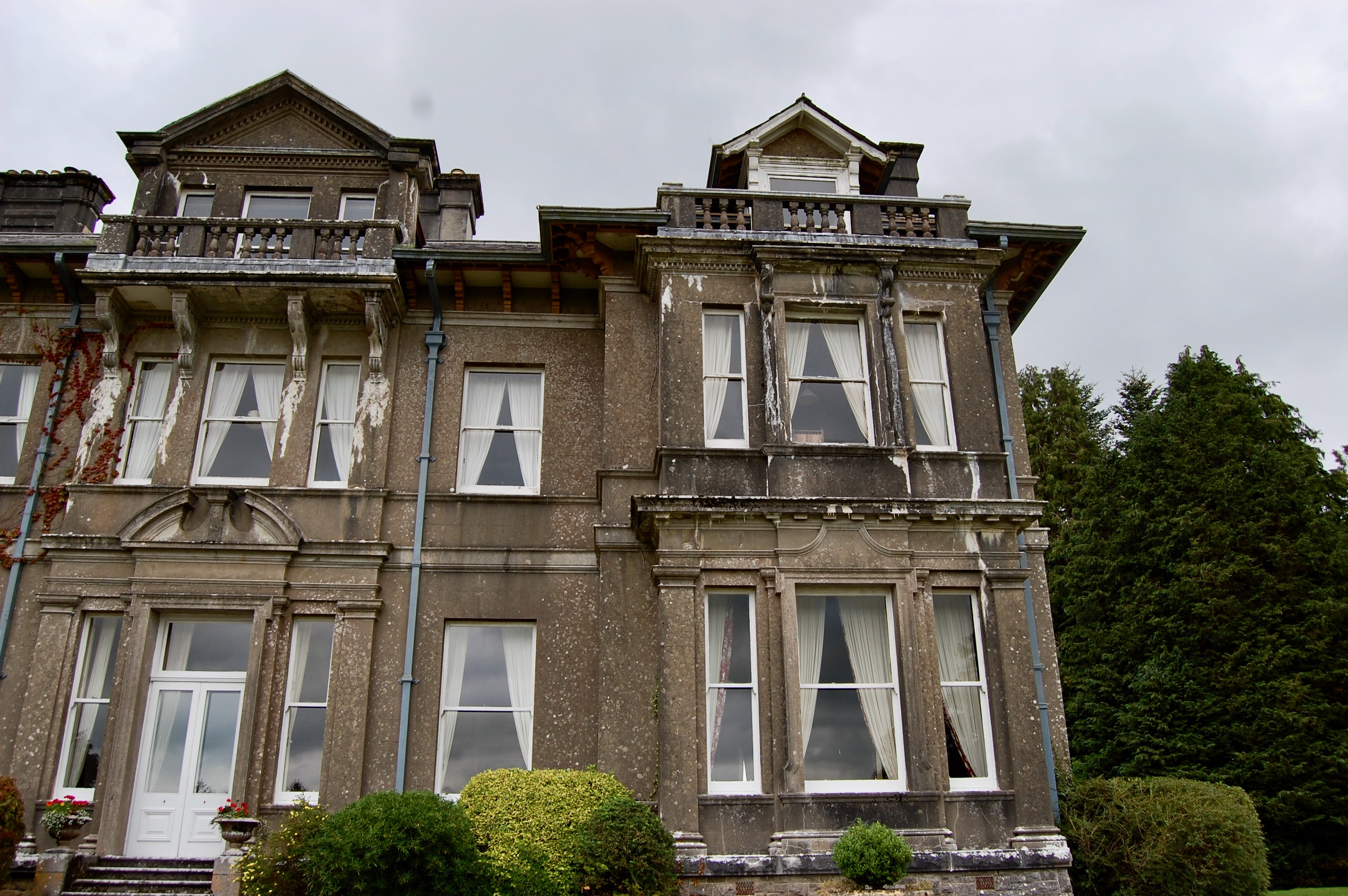
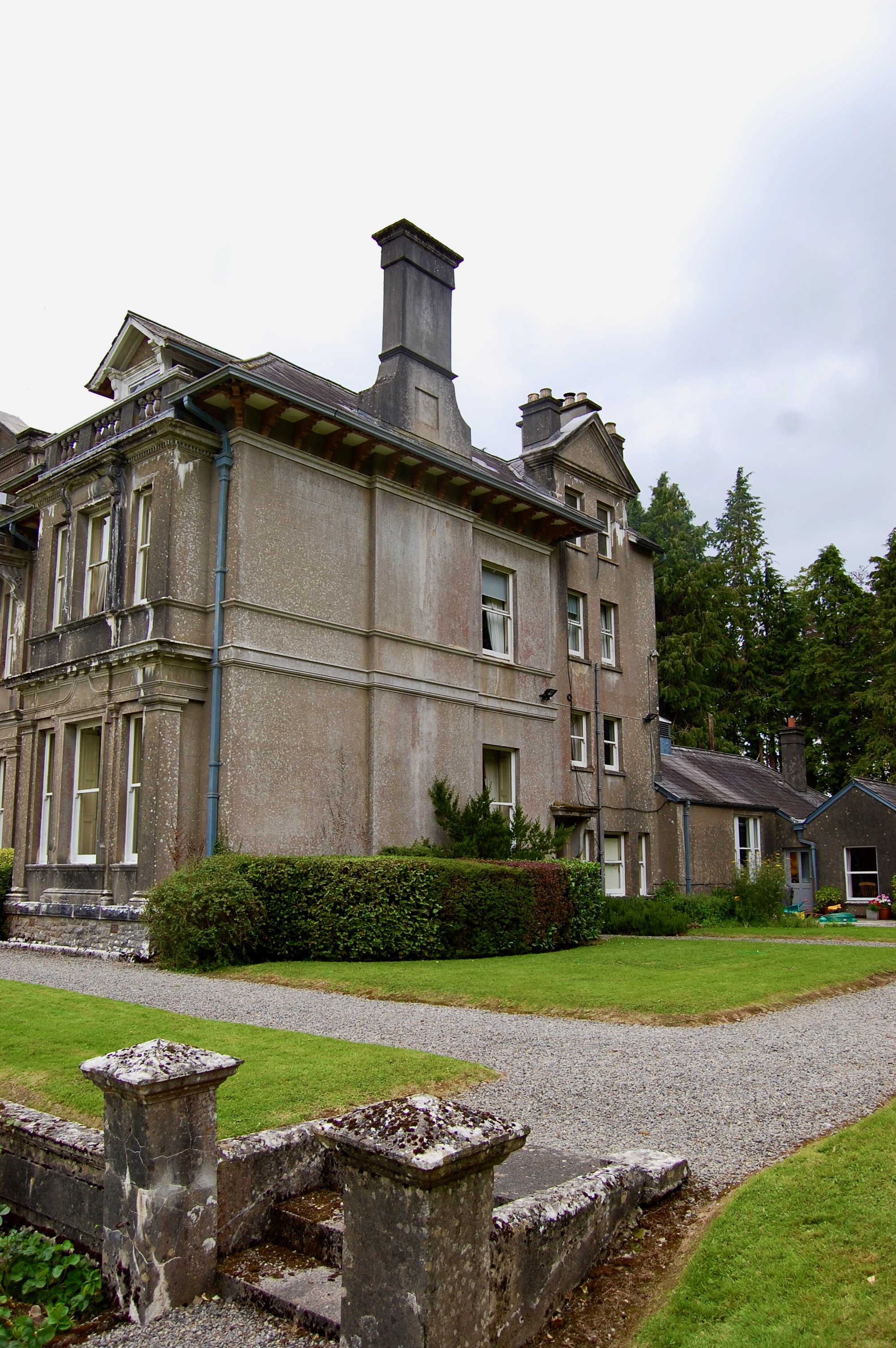
The current house is two storeys over basement with a dormered attic. It was designed by a young English architect Frederick Pepys Cockerell. It is a mixture of Queen Anne Revival and Victorian Italianate style. Frederick Pepys Cockerell had spent time studying architecture in Italy, and established a practice in Ireland. He also built Blessingbourne in County Tyrone for the Montgomery family [2].
Clonalis has a rendering of cement and is one of the first concrete houses constructed in Ireland [3]. Cockerell died shortly after building work at Clonalis began in 1879.
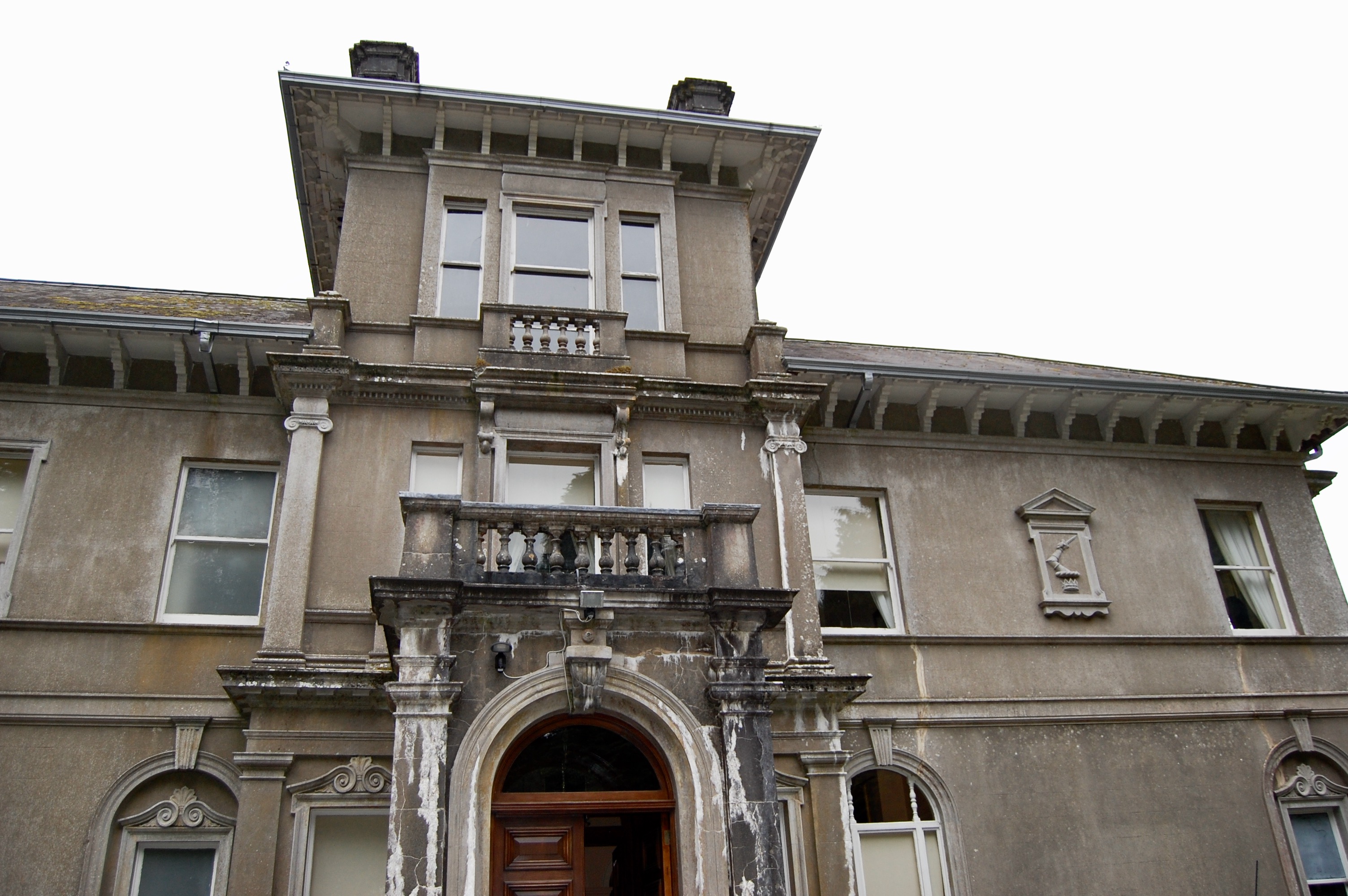
The Italianate feature is the central projecting tower, containing the main entrance in a balustraded porch, and a pyramidal roof. The front double-leaf door inside the porch is timber-panelled and glazed, and is flanked in the porch by sidelights. The porch has Doric pilasters, and Ionic pilasters on the storey above. Mark Bence-Jones, in his Irish Country Houses, points out the scroll-pediments over the windows on the ground floor, some set in round-headed recesses. [4]
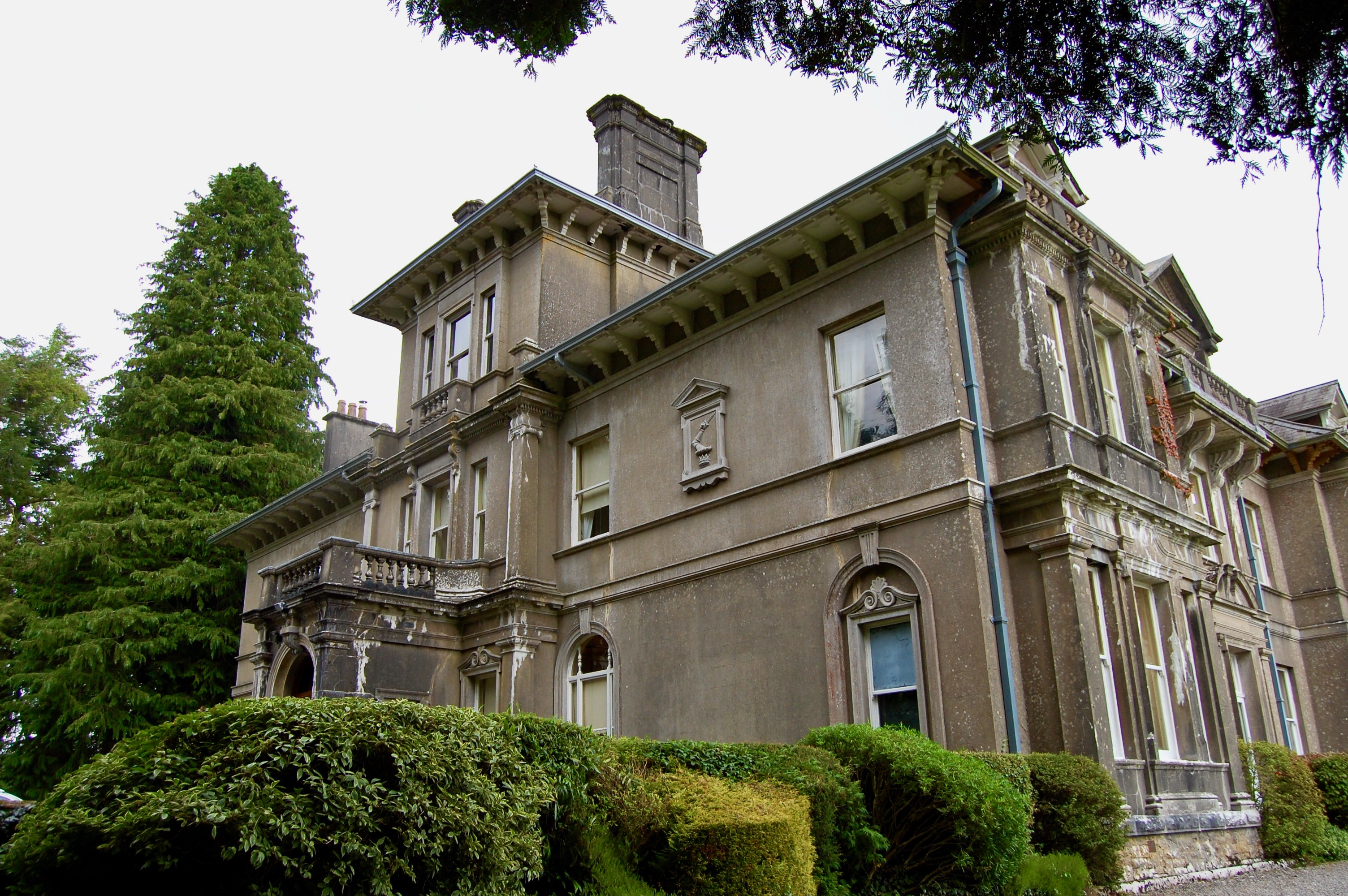
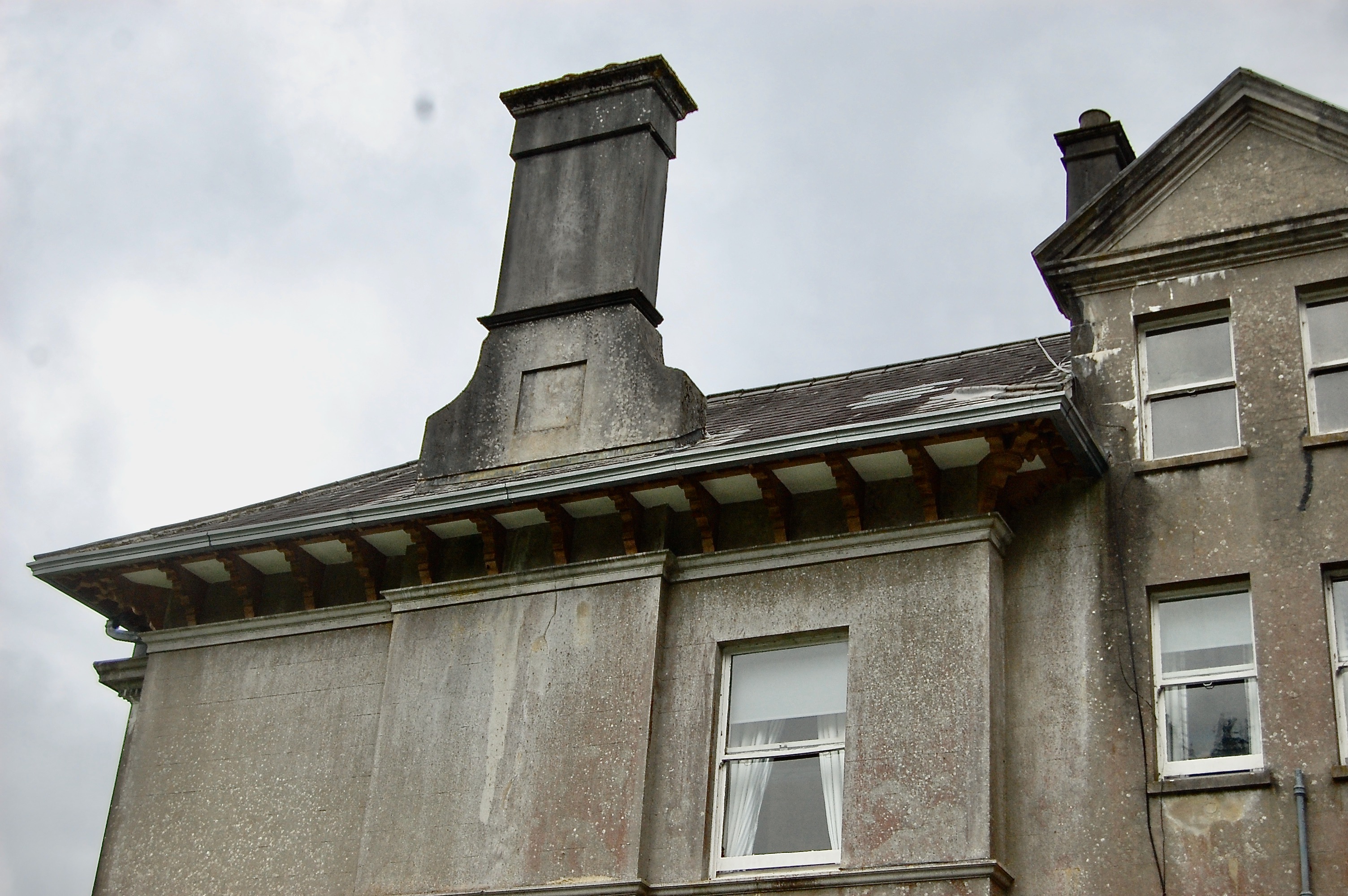
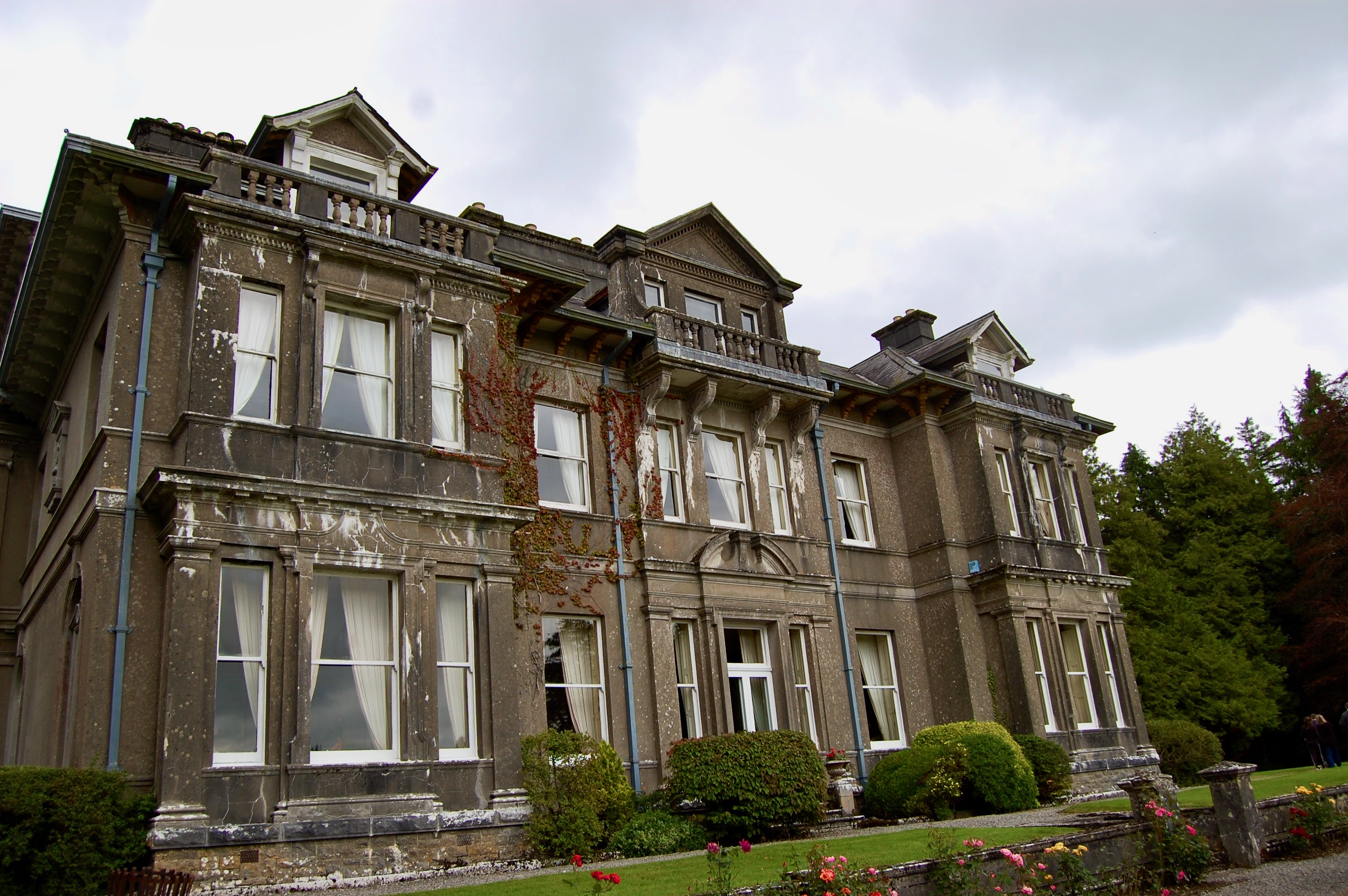
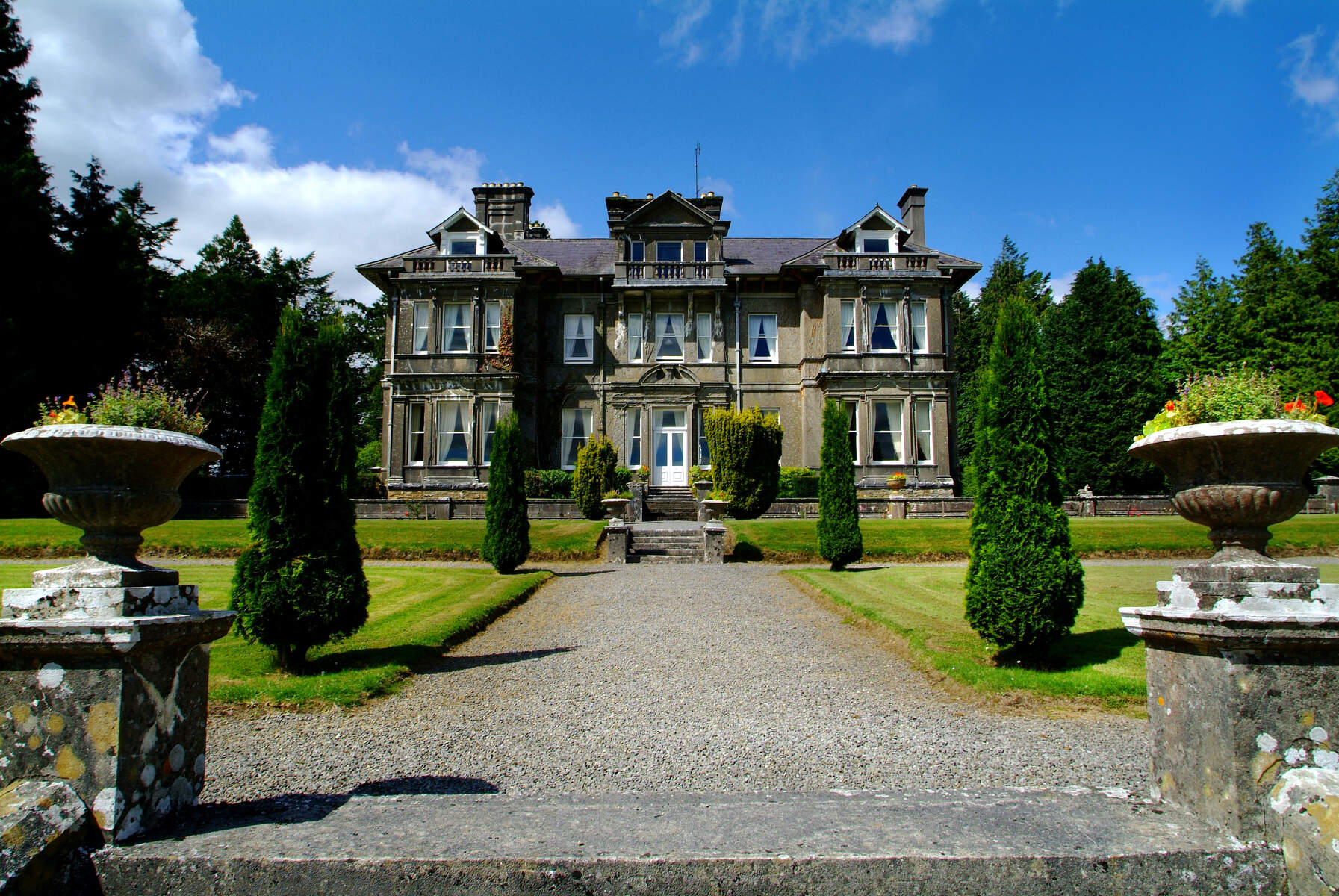
The garden front has projecting ends, and a centre which breaks forward. Bence-Jones describes how the centre is crowned with a pedimented dormer gable and a balustraded balcony on very heavy console brackets. The side projections are also surmounted with balustrades and smaller dormer gables. In the centre is a doorcase with scrolled pediment. [5]
You can see photographs of the interior of the house on the Clonalis website.
We entered the large Hall. To my untrained eye, the décor looked quite medieval. This is probably due to the large oak staircase beyond an archway, the fireplace, and the banner hanging over the stairs, which reminded me of the tattered banners than hang in St. Patrick’s Cathedral in Dublin. The banner, our guide explained, was carried by Denis O’Conor Don (1869-1917) at the coronation of George V in 1911. Later we saw the military uniform which Denis wore to the coronation in a museum room in the house. Denis O’Conor Don was the first person to represent Irish Gaelic families at an English coronation. Our guide referred us to the Ionic columns of marble, explaining that the pink colour of the marble is unusual, and is from Mallow in County Cork. The ceiling of the hall has a modillion cornice and arches. [6]

We walked though the broad arched corridor which leads from one side of the hall to the main reception rooms: the Drawing Room, Dining Room and Library. Terence Reeves-Smyth describes:
“The first of these to be entered is the large and rather charming drawing room, which has fine Boulle furniture and some beautifully modelled figures of Meissen, Limoges and Minton porcelain.“

The room is bright and airy with large windows and lovely mirrors, and marble chimneypieces which were transferred by Cockerell from the old house. Reeves-Smyth continues:
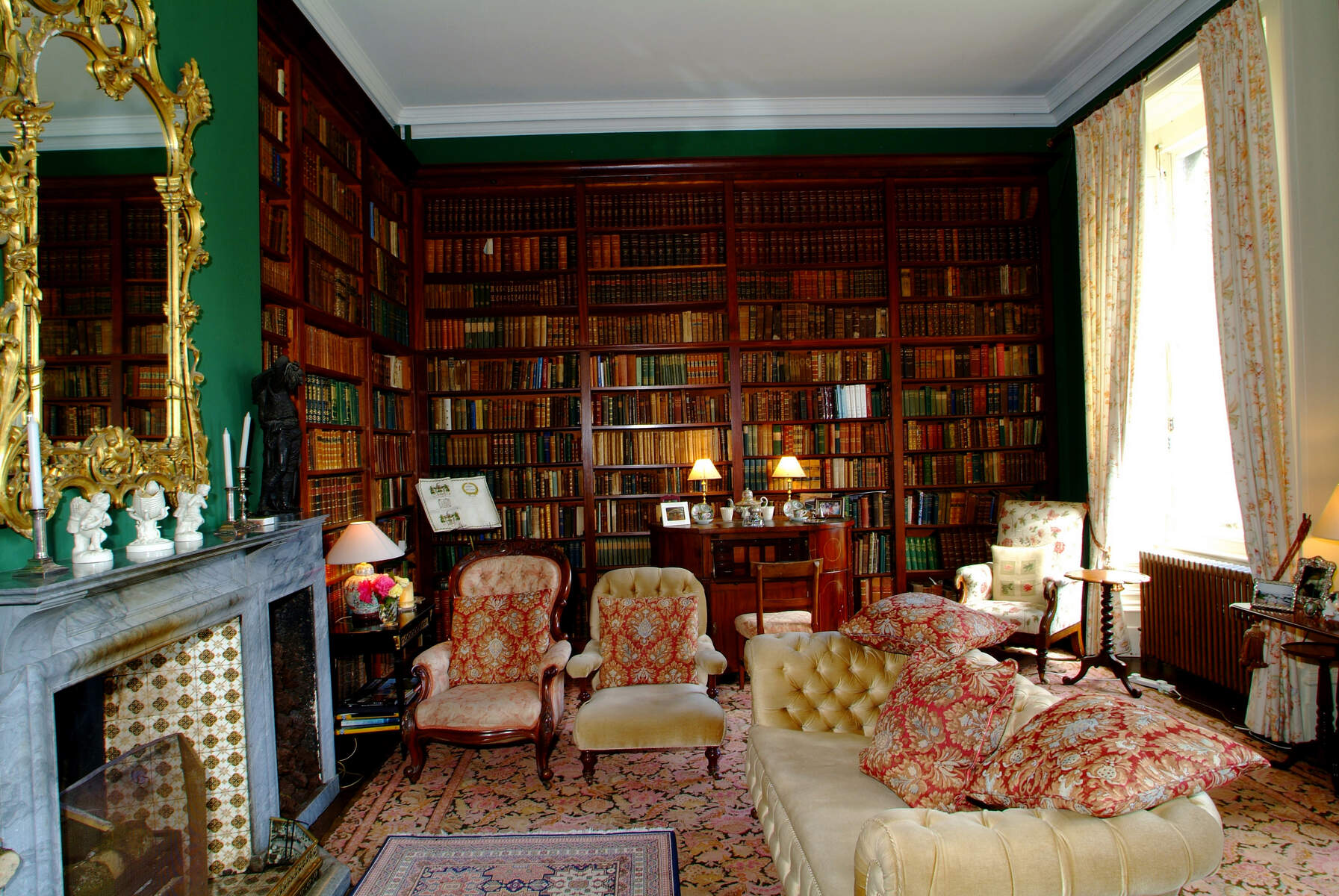
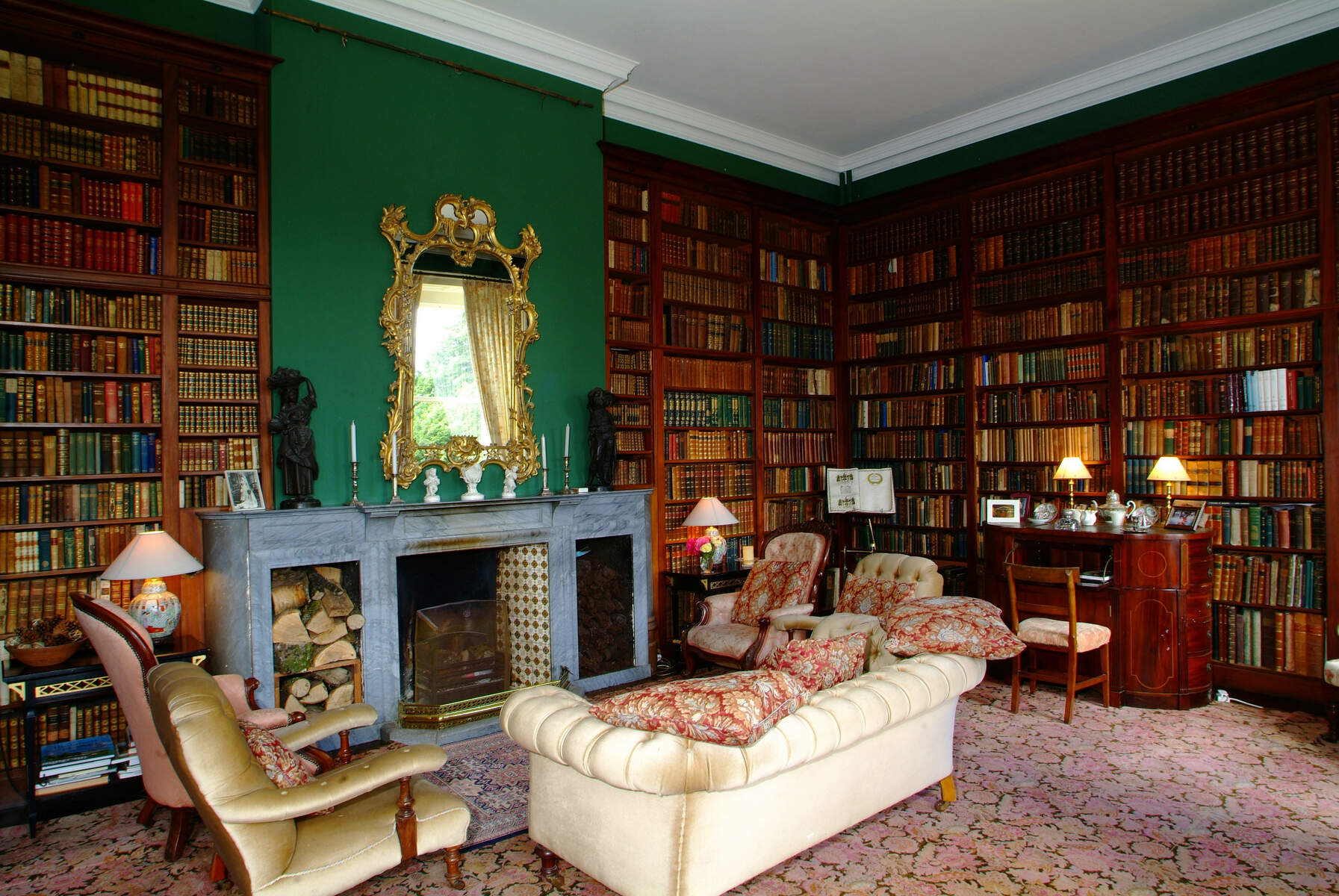
“In the library mahogany bookcases are over 5000 books, including the diaries of Charles O’Conor of Belnagare (1710-90), the great historian and antiquary.”
We were bowled over by the library, as is our tour guide, as she told us that she would not dare touch any of the books – and we are not allowed to either! We itched to, of course. I longed to see if the cream bound set of Jane Austen was a first edition. Bence-Jones writes that the bookcases are mahogany, designed by Pepys-Cockerell. Much of the library was collected by Charles O’Conor of Belanagare (1710–1791). We saw the genealogical pedigrees, and our guide used the portraits, mostly in the dining room, to tell us more about the history of the family. You can see great photographs of the library on the Irish Aesthete’s website. [7] The marble chimneypiece is flanked by niches for turf, and was also designed by Pepys-Cockerell.
I was interested to hear that one of the family, Hugh O’Conor (1734-1779), a younger son of Daniel (1694–1769) O’Conor Don, founded Tucson, Arizona! When I visit my sister in the U.S., I fly in to Tucson.
The branch of the O’Conor family descend from Cathal O’Conor (1597-1634) of Belanagare. His son Major Owen of Ballintubber lost his lands under Cromwell, regained them under Charles II and mortgaged them to raise troops for James II. He served as Governor of Athlone for King James II. He married Elinor O’Ferrall, the widow of Oliver Tuite 2nd Baronet of Sonagh, County Westmeath, but Owen did not have any sons.
The family were able to buy back some of the land but some was never recovered. Major Owen backed the wrong man, as indeed did my Baggot ancestors, being loyal to the Catholic James II rather than supporting William III, James’s son-in-law and nephew (Charles II arranged for his brother James’s daughter Mary to marry William III, to appease the Protestants, to prove that despite his brothers’ leaning toward Catholicism, he was raising his children to be good Protestants).
Parliament invited William III to be King of England and to replace James II when James had a son, since the son was the heir to the throne and could be Catholic. To fight this, James II came to Ireland to raise troops. William however brought troops from nearly a dozen countries, and James II left Ireland after lack of success at the Battle of the Boyne. I hate to hear the bad names James has been called, as he was in fact an excellent military man, as proven by his earlier leadership of the British navy. But ultimately William III was crowned king alongside his wife Mary, and the O’Conors were no longer in favour!
The website tells us that the fortunes of the family were devastated and they were reduced to peasantry. Major Owen did not have children, and it was the son of Major Owen’s brother Charles, Denis O’Conor (1674-1750), who recovered 600 acres of their former land, while living in a mud cottage in Kilmactranny in County Sligo.
The website has terrific accounts of the family history. You can read more about the Penal Laws and about Denis O’Conor, who regained the O’Conor property, which is now farmed by the O’Conor Nash family.

Denis’s son Charles (1710-1791) wrote the book Dissertations on the History of Ireland. He was an antiquarian and Irish language scholar. He was also co-founder of the Catholic Committee, which helped to secure the repeal of most of the Penal Laws.
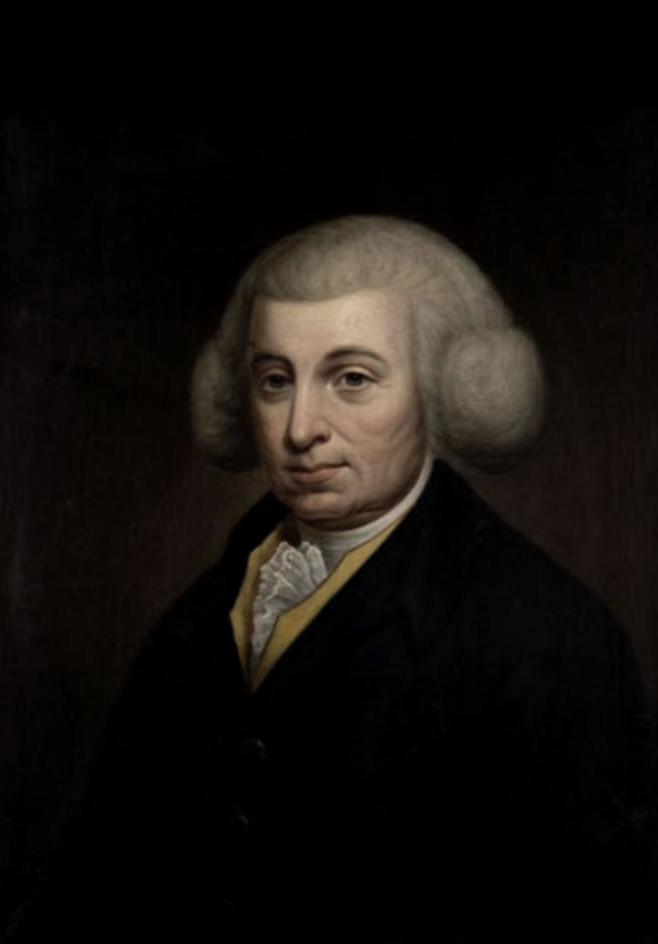

Charles’s son Denis (1732-1804) married in 1760 and took over care of the family lands.

In 1820 the “Ballanagare” [there seems to be a variety of spellings of this townland] O’Conors succeeded to the O’Conor estates at Clonalis as the Clonalis branch became extinct in the male line.
Denis’s son Owen (1763-1831) became the next O’Conor Don in 1820.
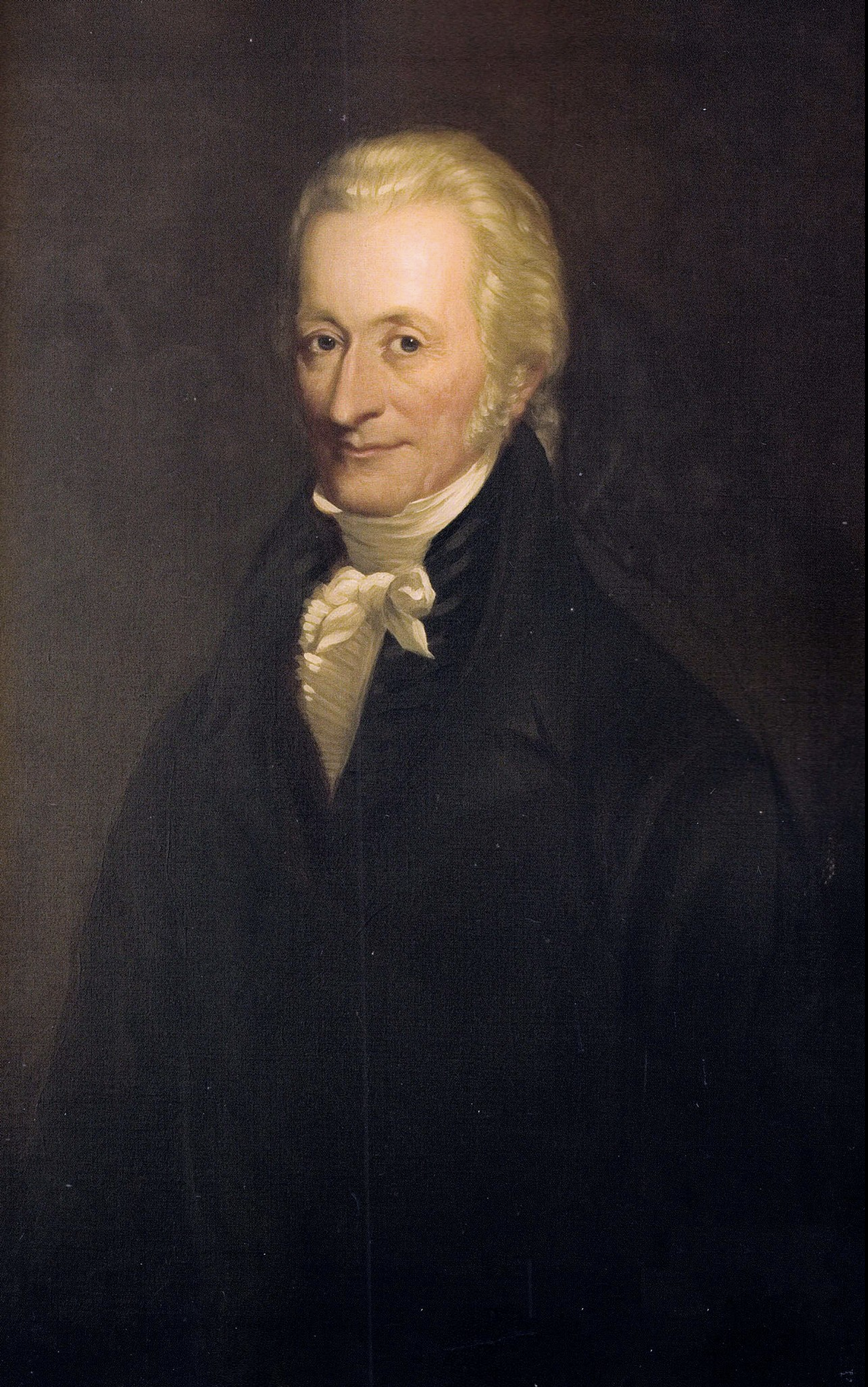
Owen (1763-1831), the O’Conor Don, served as MP for County Roscommon.
The O’Conor family remained Catholic, and they have a Catholic chapel in the house. Our guide pointed out a chalice on the altar. It can be taken apart into three pieces, to be more easily hidden, as required during the time when Catholic priests were outlawed. The chalice belonged to Bishop Thaddeus O’Rourke, consecrated in 1722. He had to go into hiding and stayed with the O’Conor family – Denis O’Conor (b. 1674) had married Mary O’Rourke, daughter of Colonel Tiernan O’Rourke of the noble Ó Ruairc family of Breifne, and Thaddeus O’Rourke was her brother.
Many houses have secret “priest’s holes” where Catholic priests could hide. The altar in the chapel is called a penal altar as it was taken from the original house and dates to the time when masses had to be celebrated in secret.
There is a photograph of the Father Charles whom Stephen knew in Clongowes standing next to a cross in the National Museum. The cross was commisssioned by Turlough Mor O’Conor, who reigned from 1119 to 1156, so is nine hundred years old! It is called the Cross of Cong. Turlough Mor O’Conor was not just king of Connacht but High King of Ireland. See the website for more about this King and his cross. It bears the inscription, “A prayer for Turlough O’Conor, King of Erin, for whom this shrine was made.” [8] Turlough Mor founded a port in 1124 which was later developed into the city of Galway. He is buried in Clonmacnoise. [see 3].
Owen moved his family to Clonalis. His son Denis (1794-1847) was the next O’Conor Don, and also served as MP for County Roscommon, as well as a Lord of Treasury. His two sons became MPs, one for Roscommon and one for Sligo. His five daughters all became nuns.
Denis’s son Charles Owen O’Conor (1838-1906) built the present house at Clonalis, into which the family moved in 1880. He married Georgina Mary Perry and they had several children. His wife died in 1872, and he married for a second time seven years later, just before the family moved into their new home. His second wife was Ellen Letitia More O’Ferrall, daughter of John Lewis More O’Ferrall (whose mother was an Ann Bagot – so maybe related to me!)
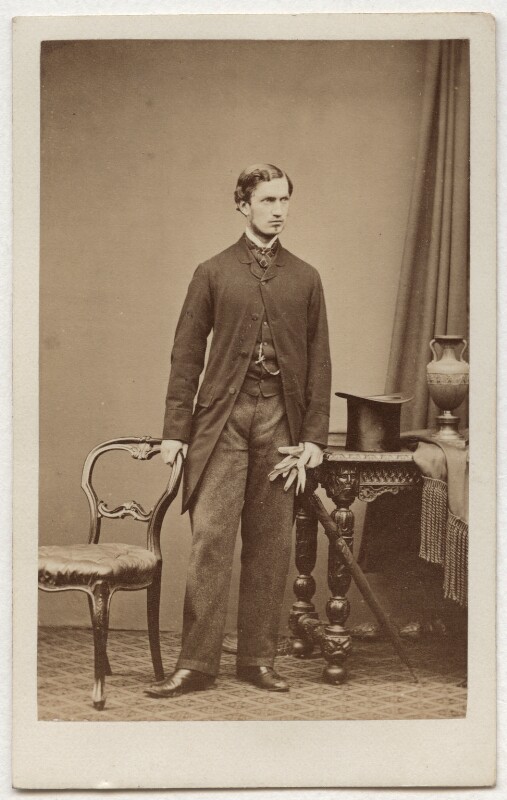
The house contains two museum-style rooms, displaying historical items from the family. One room displays letters and documents. The first president of Ireland, Douglas Hyde, was a neighbour, so there are letters from him. Charles Owen O’Conor (1838-1906), who joined the Irish Liberal Party and became MP for Roscommon, was President of the Society for the Preserving the Irish Language, a precursor to the Gaelic League. When he died, Douglas Hyde wrote of him: “It was owing to his foresighted statesmanship that the Irish language was originally placed by Parliament upon the curriculum of the Board of Intermediate Education and from that day until his death he never ceased… to champion its cause. Few men in Ireland know how much they owe to the watchful care of the O’Connor Don in this matter.” Charles Owen wrote the book, The O’Conors of Connacht.
One of the oldest documents is, according to Marguerite O’Conor-Nash, “the last judgement handed down by the Brehon lawmakers.” Stephen and I puzzled over that, wondering who exactly determined Brehon laws, but that is research for another day! The day we visited, I was most excited to see the signature of King Louis XVI of France, the king who was beheaded, husband of Marie Antoinette. I was also excited to see a letter penned by the author (and surprisingly, cleric – surprising if you read his novel The Life and Opinions of Tristram Shandy, Gentleman, as it contains rather risqué material!) Laurence Sterne. Reeves-Smyth also notes that there are pieces written by such famous personalities as O’Connell, Parnell, Gladstone, Trollope, Napper Tandy, and Samuel Johnson. It was a pity we were on the last tour of the day; I could see that Stephen longed to linger.
After Catholic Emancipation the O’Conor family played a pivotal role in Ireland’s history as Members of Parliament for County Roscommon, as one can see from the letters.
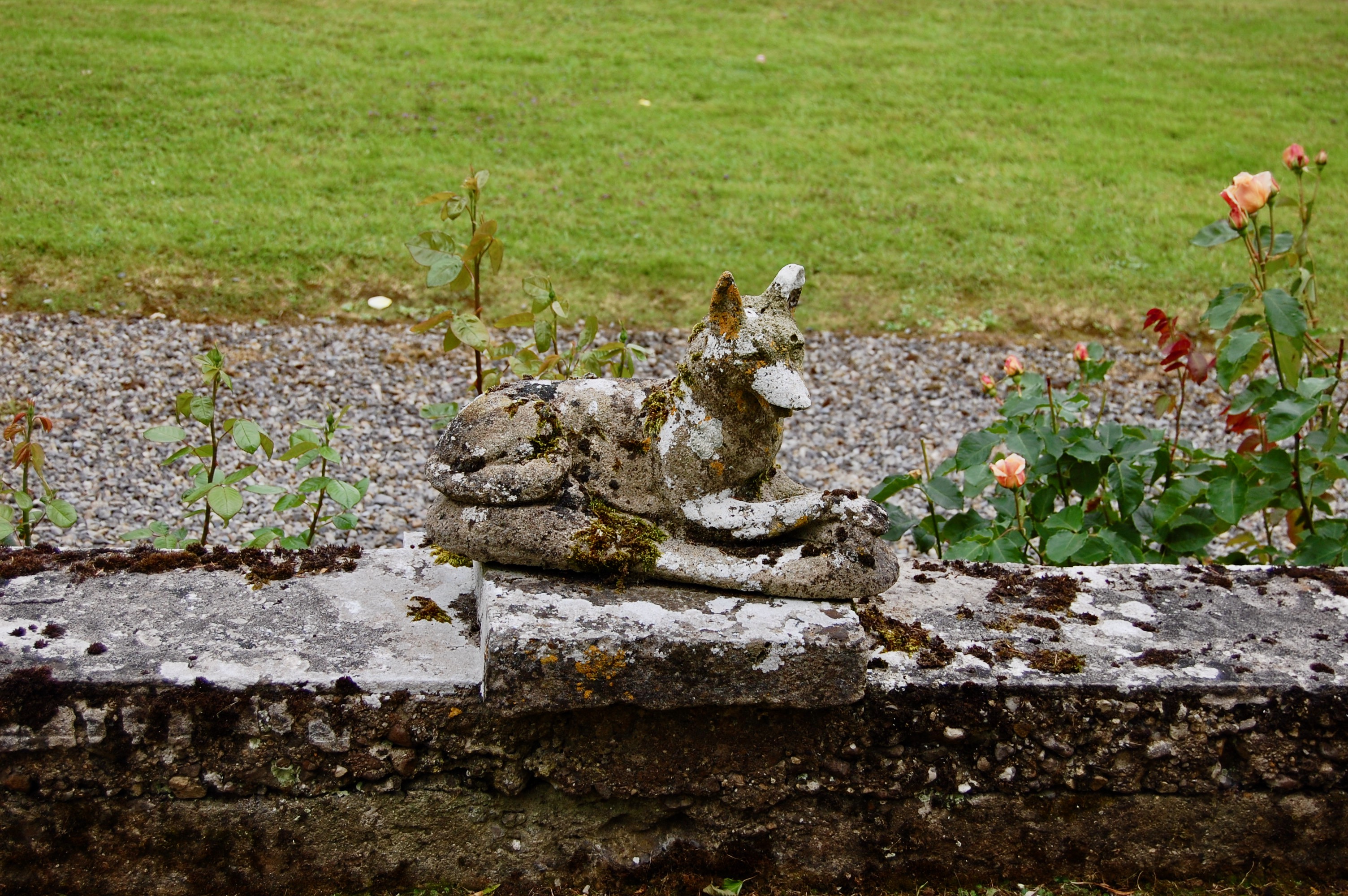
The other museum room had artefacts such as clothing and antiques, armour, etc. The family treasure their piece of history from the famous blind musician Turlough Carolan (1670-1738) whose memorial one can see in St. Patrick’s Cathedral in Dublin, who often played at Clonalis, and once remarked “When I am with the O’Conors, the harp has the old sound in it.”
Charles Owen O’Conor’s son Denis inherited the title. It was he who attended the King’s coronation in 1911. He didn’t marry, and when he died his brother Owen Phelim became the next O’Conor Don. He had only a daughter so the next to inherit the title and land was the son of another brother, Charles Hugh O’Conor. Charles Hugh married Ellen Letitia More O’Ferrall. It was their son, Reverend Charles Denis Mary Joseph Anthony O’Conor, who became the next O’Conor Don, who was the priest Stephen knew at Clongowes. His sister Gertrude married Richard Rupert Nash of Shannon View, Castletroy, County Limerick, father of the current owner of Clonalis. Another sister, Fearga, married a brother of Richard Rupert Nash.
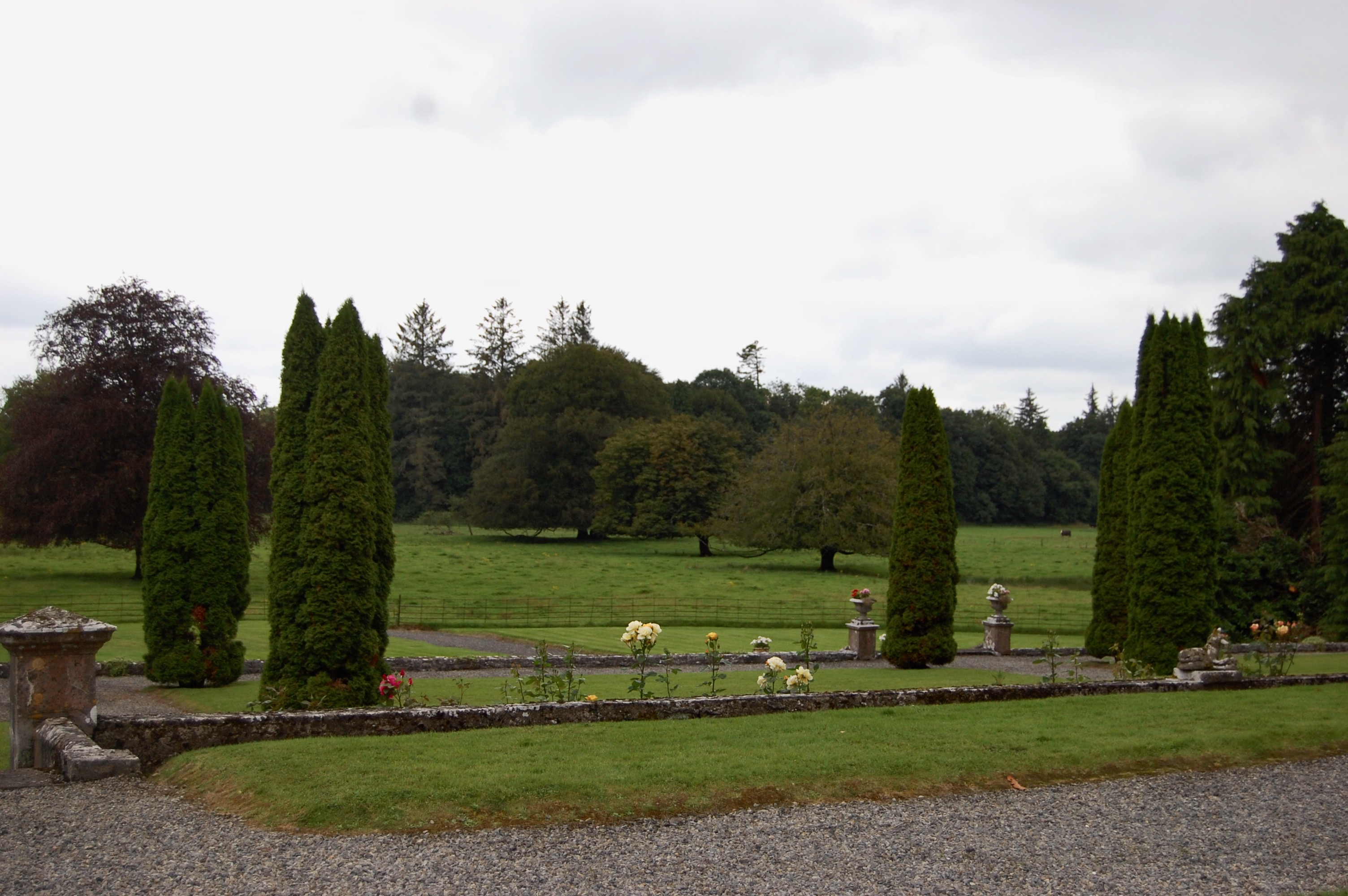
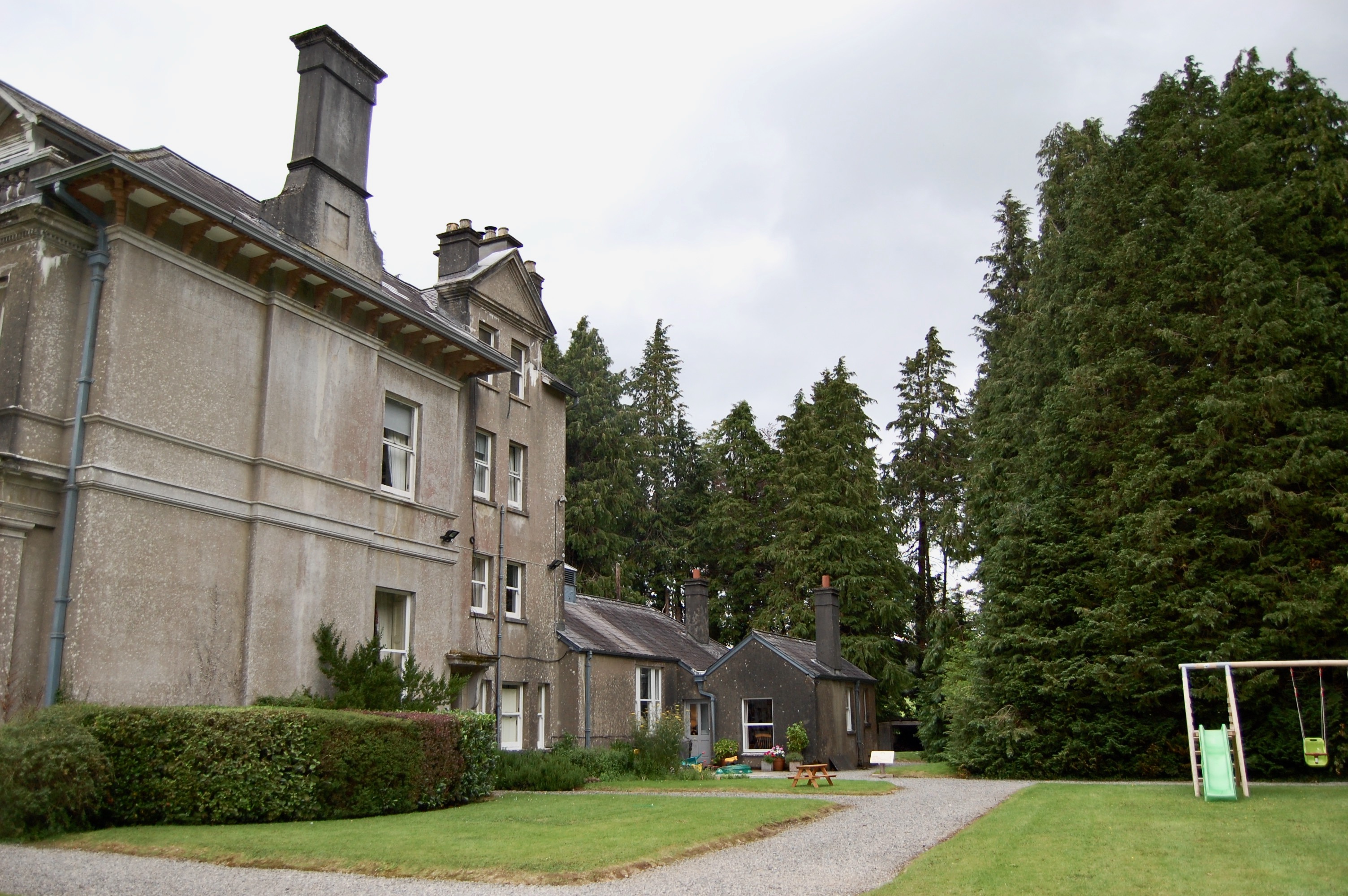
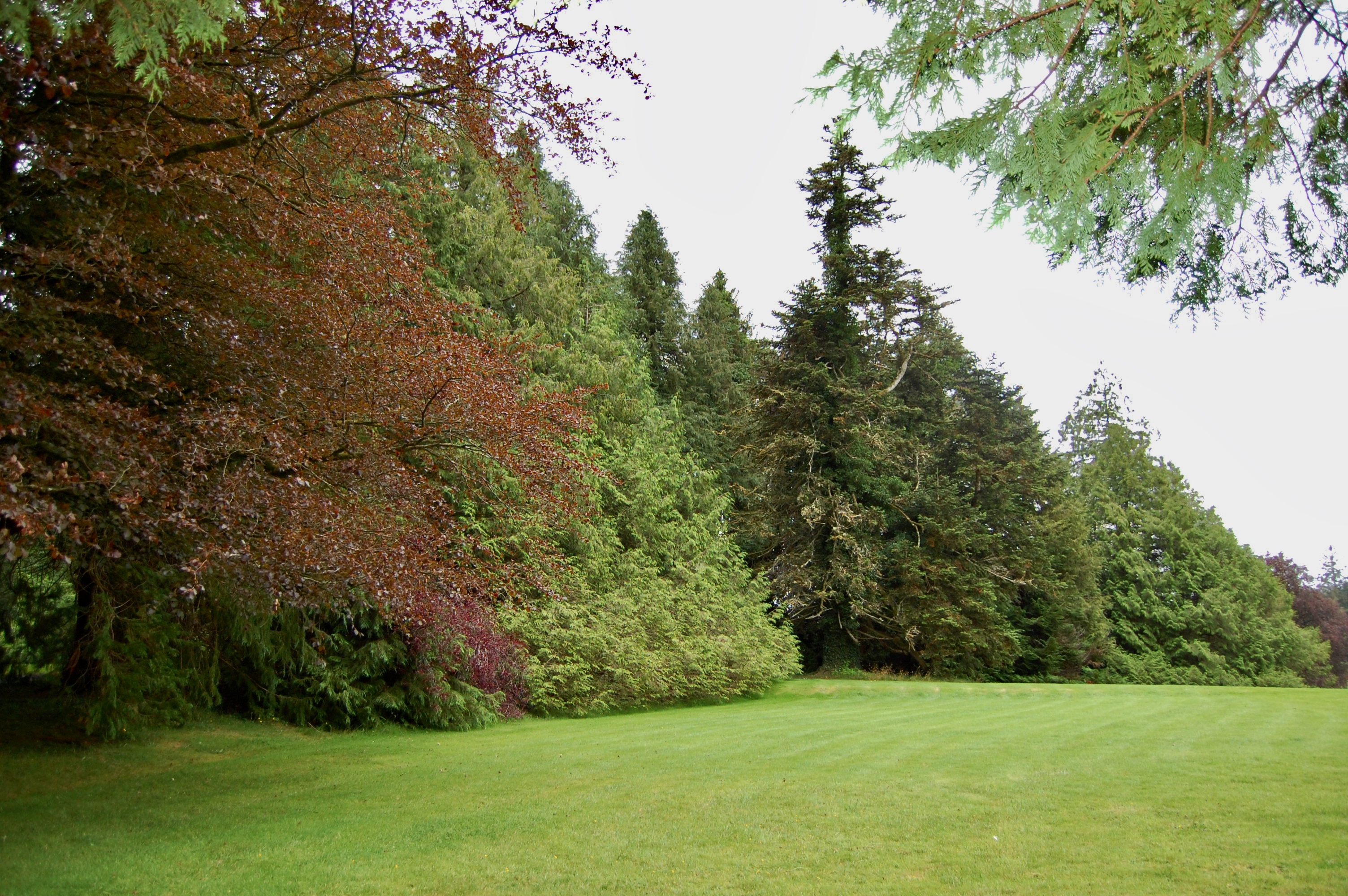
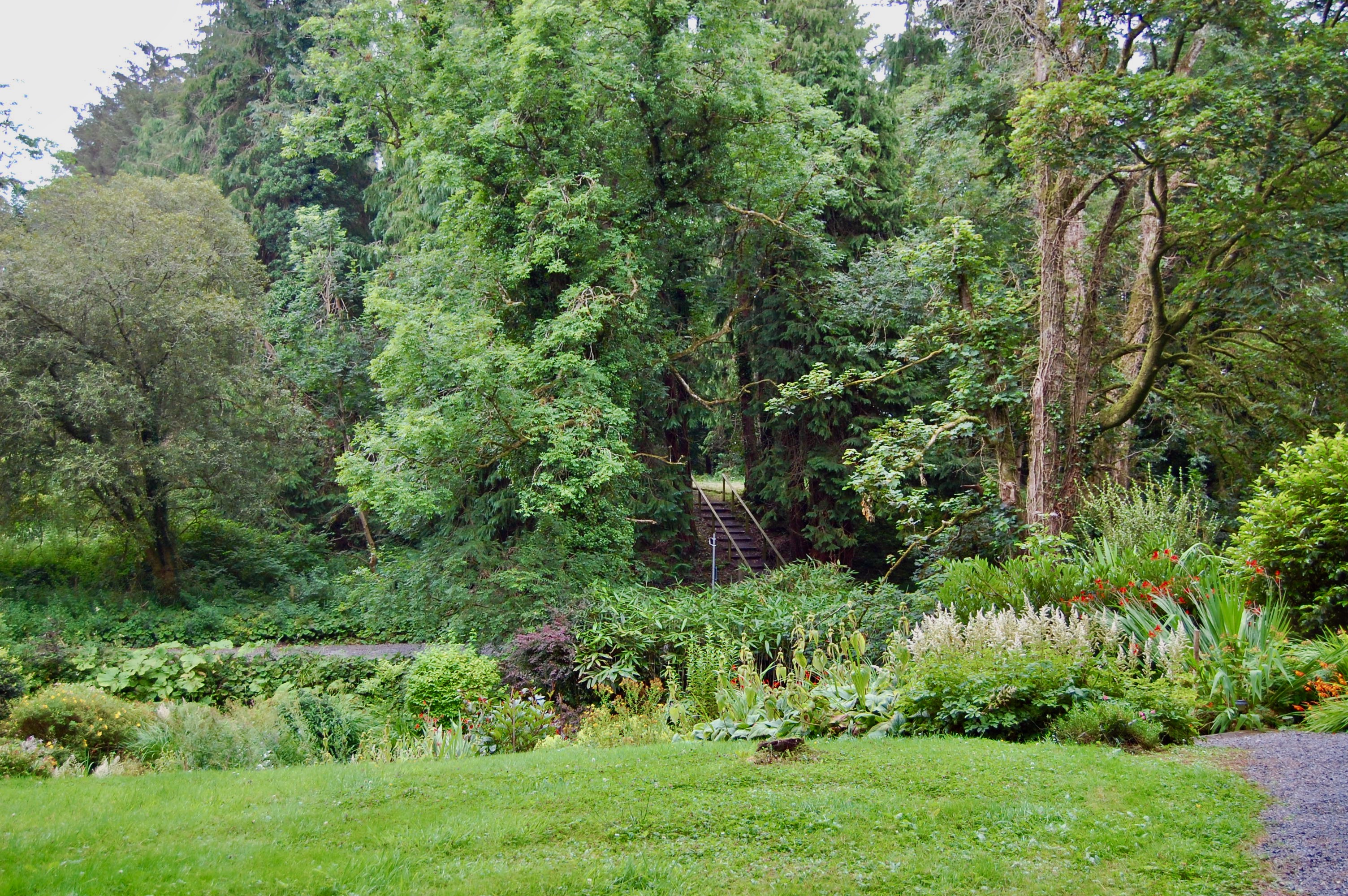
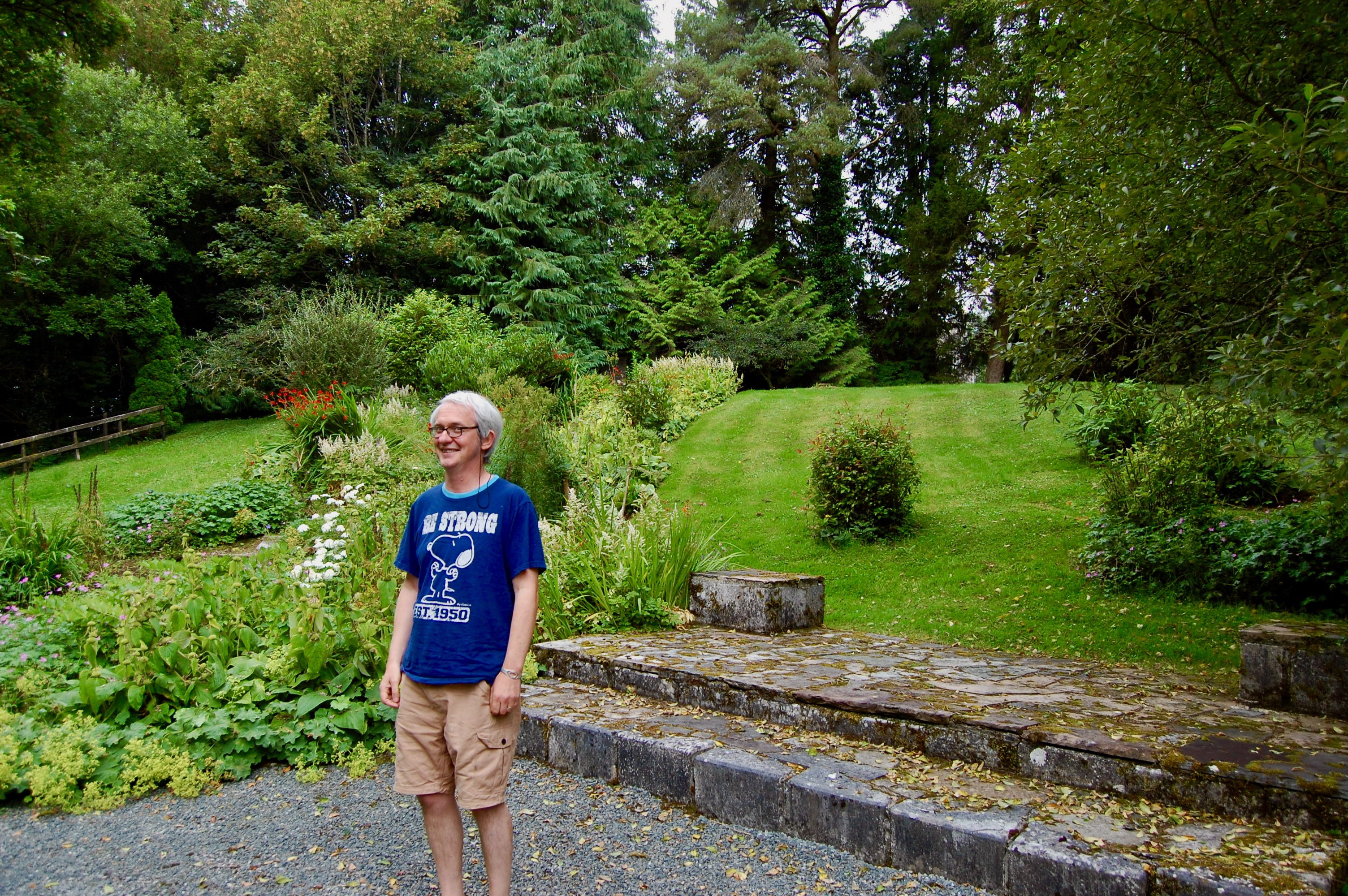
The house is surrounded by formal lawns and terraces, with fine views over the park. We wanted to start our drive back to Westmeath before darkness, but took a few minutes to walk outside, and the beauty of the gardens enticed us to explore further.

Then we walked further around to the back of the house, down a path past the sweeping view of parkland trees, into a wooded area leading into a splendid garden.

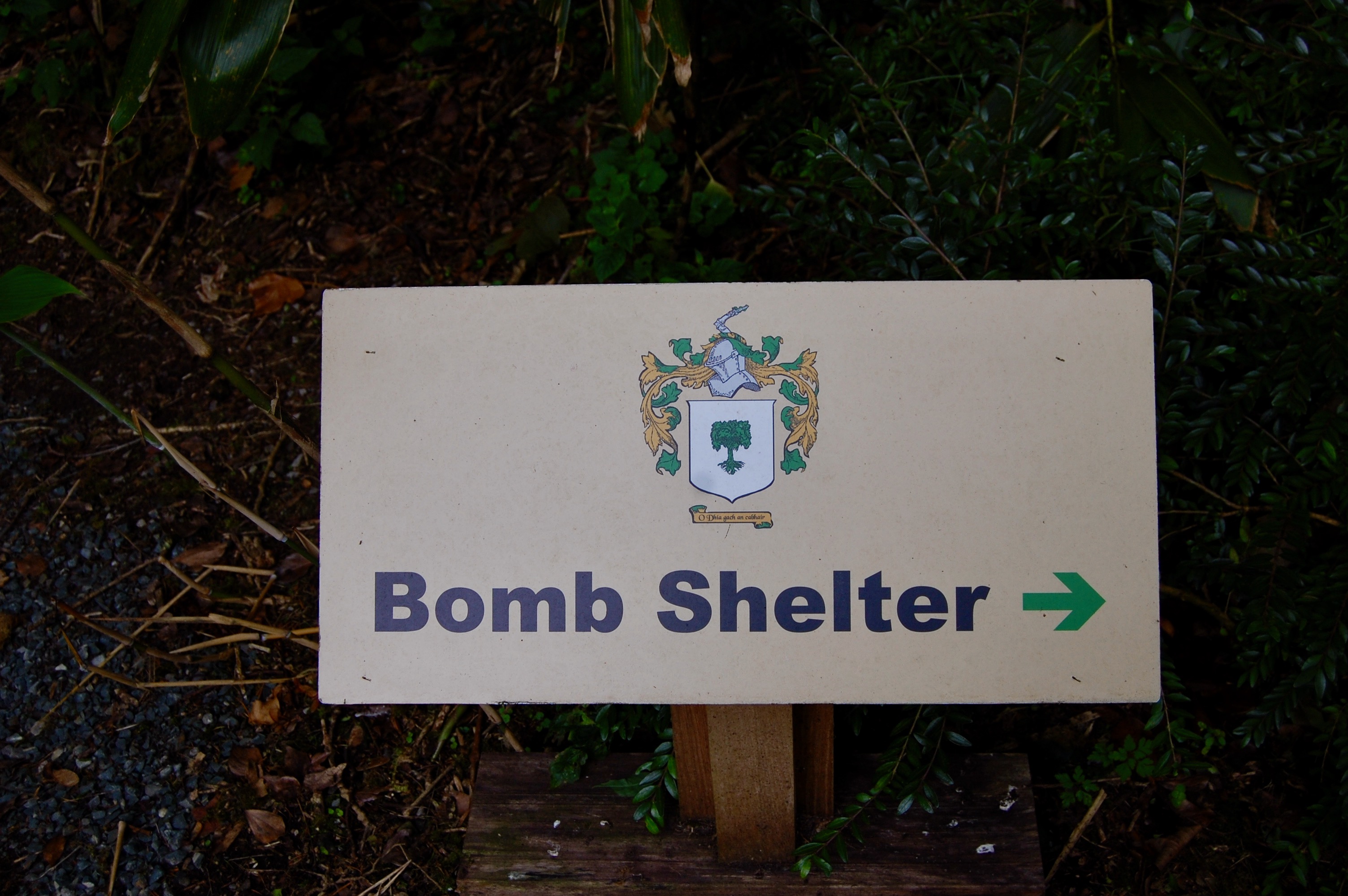
We saw the signs for the “penal grave” and a bomb shelter, so couldn’t leave without seeing those!

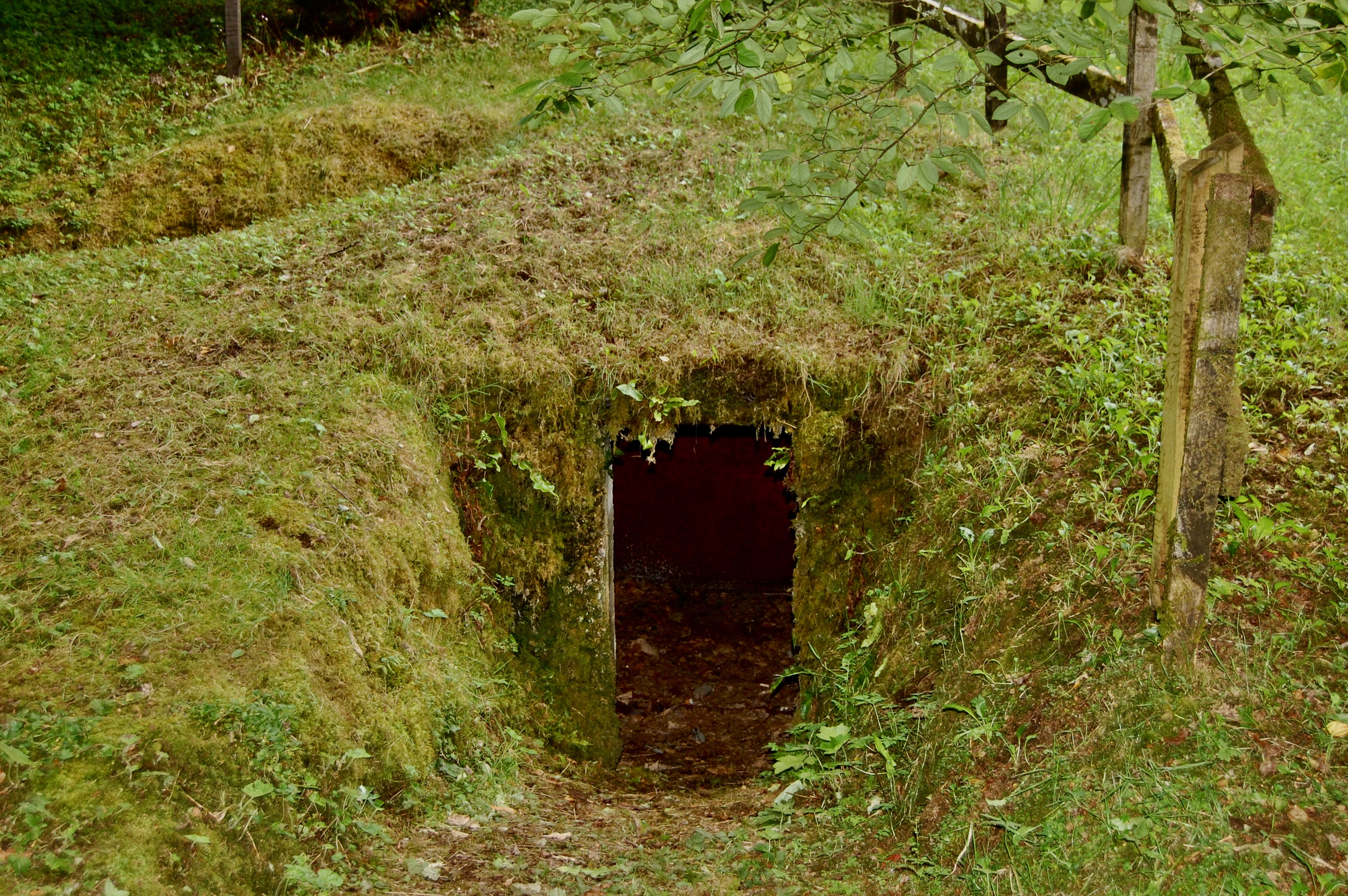
One of the residents of the house during World War I worried that the area would be bombed by a Zeppelin, and built the bomb shelter:



With sadness at leaving such a wonderful place, we slowly drove away up the driveway.


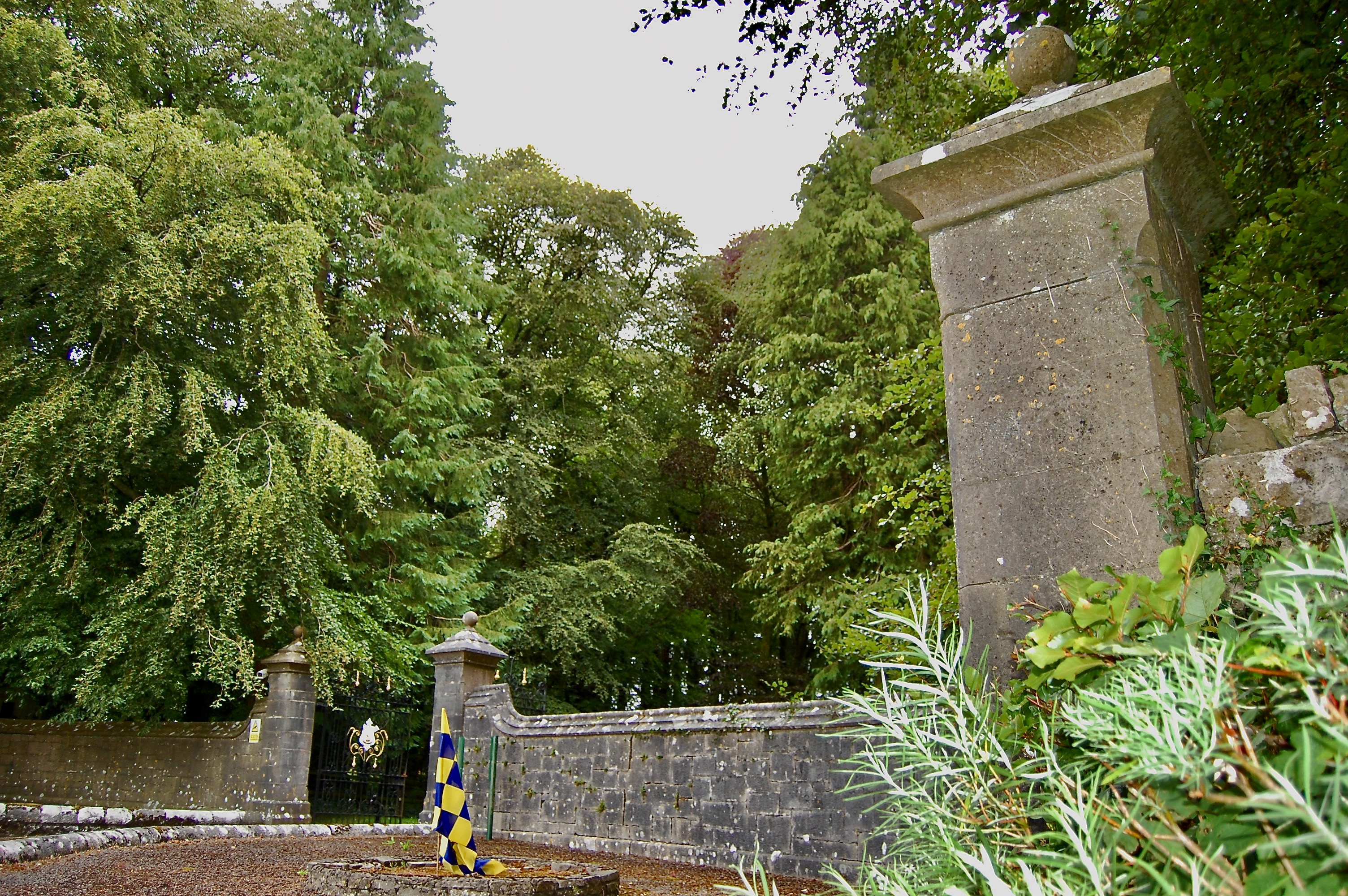
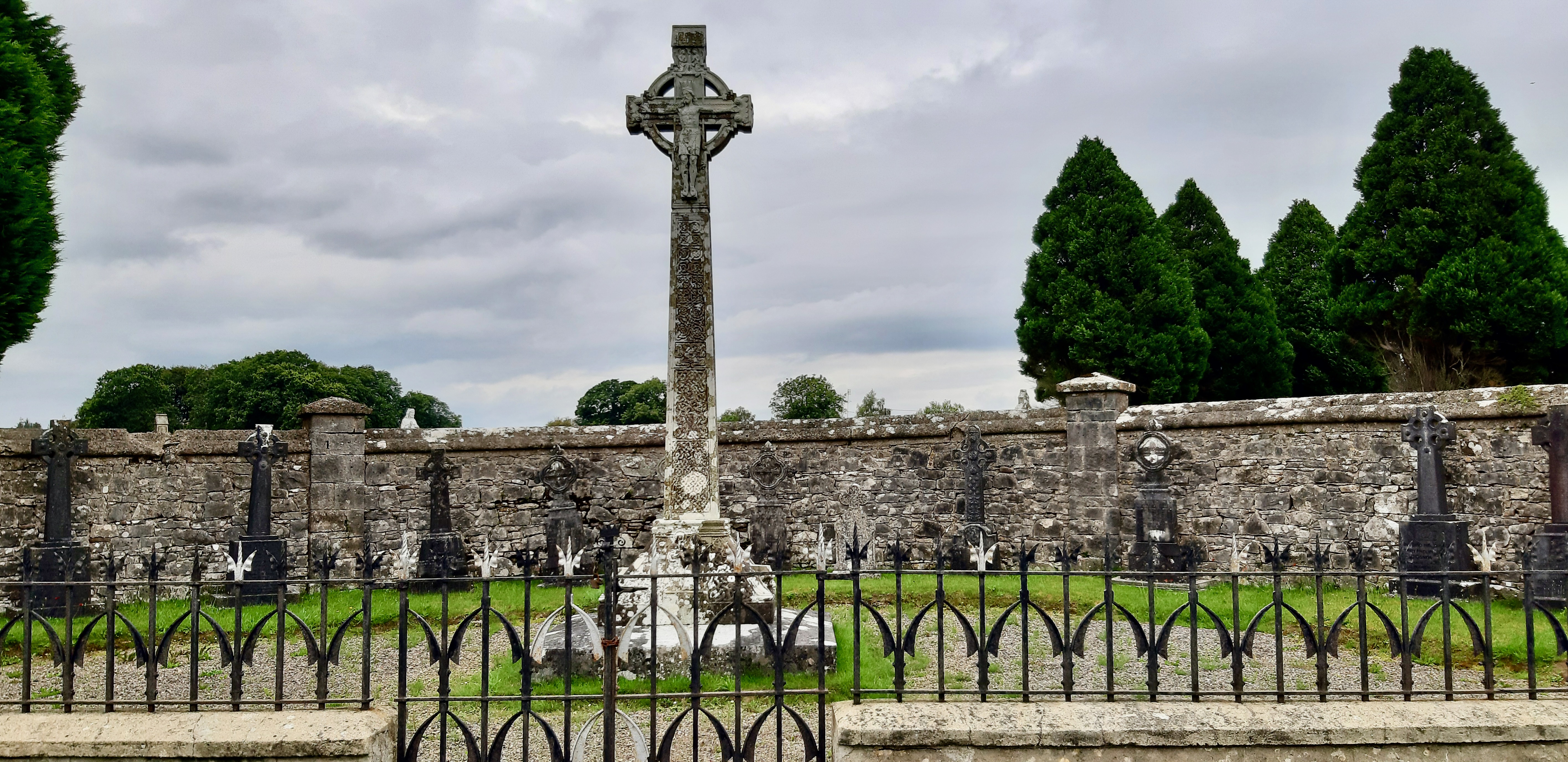
But we still couldn’t quite yet drag ourselves from the area. How could we leave without trying to find the intriguingly named location on our map, the “elephant’s grave”? We could see pillar in the near distance in a graveyard and wondered if that could be it, so abandoned the car to have a look. Unfortunately it was not the elephant’s grave and we didn’t find it, but we did come across the O’Conor graves. [9]
[1] MacDonnell, Randal. The Lost Houses of Ireland. A chronicle of great houses and the families who lived in them. Weidenfeld and Nicolson. London, 2002
[2] Terence Reeves-Smyth, Irish Big Houses, published in 2009 by Appletree Press Ltd, Belfast. See https://www.blessingbourne.com/
Also http://www.ihh.ie/index.cfm/houses/house/name/Clonalis%20House
[3] Paul Connolly, The Landed Estates of County Roscommon. Published by Paul Connolly, 2018.
and Mark Bence-Jones. A Guide to Irish Country Houses [originally published as Burke’s Guide to Country Houses volume 1 Ireland by Burke’s Peerage Ltd. 1978]; Revised edition 1988 Constable and Company Ltd, London.
[5] Mark Bence-Jones. A Guide to Irish Country Houses [originally published as Burke’s Guide to Country Houses volume 1 Ireland by Burke’s Peerage Ltd. 1978]; Revised edition 1988 Constable and Company Ltd, London.
[6] https://irishhistorichouses.com/2020/04/18/architectural-definitions/
[7] https://theirishaesthete.com/2019/01/07/the-books-will-still-be-there/
[8] https://clonalis.com/oconors-kings-of-connacht-high-kings-of-ireland/
[9] For more about the elephant grave, I am grateful to Stephen who found an article about it online: https://roscommonherald.ie/2014/09/23/memorial-stone-now-marks-cindy-elephants-final-resting-place/
Text © Jennifer Winder-Baggot, www.irishhistorichouses.com






 Irish Historic Houses