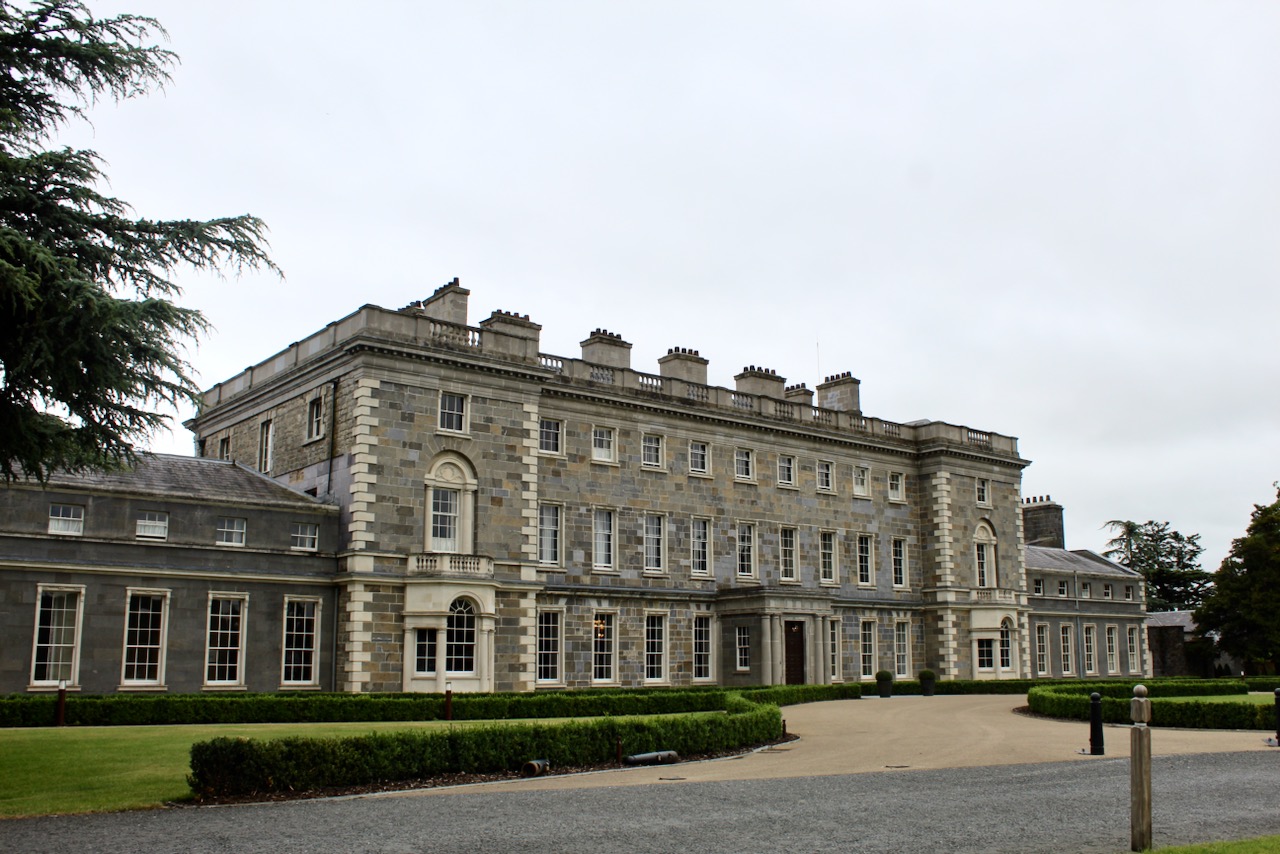
p. 60. “(Talbot de Malahide, B/PB; Fitzgerald, Leinster, D/PB; Nall-Cain, sub Brocket, P/BP) The lands of Carton always belonged to the Fitzgeralds, Earls of Kildare, whose chief castle was nearby, at Maynooth; in C17, however, they were leased to a junior branch of the Talbots of Malahide, who built the original house there.” [1]
The Carton website tells us that the lands of Carton first came into the ownership of the FitzGerald family shortly after Maurice FitzGerald (d. 1176) played an active role in the capture of Dublin by the Normans in 1170. He was rewarded by being appointed Lord of Maynooth, and given an area covering townlands which include what is now Carton. The website goes on to tell us:
“His son became Baron Offaly in 1205 and his descendant John FitzGerald [5th Baron Offaly, d. 1316], became Earl of Kildare in 1315. Under the eighth earl, [Gerald FitzGerald (1455-1513)] the FitzGerald family reached pre-eminence as the virtual rulers of Ireland between 1477 and 1513.“
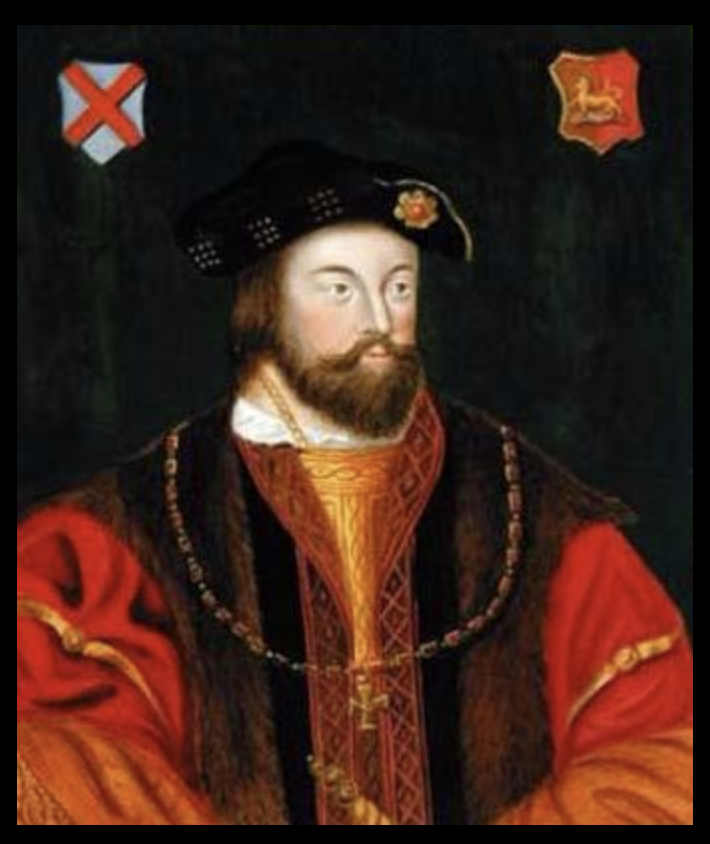
Thomas FitzGerald, 10th Earl of Kildare, “Silken Thomas,” c. 1530 attributed to Anthony Van Dyck.
“However, the eighth earl’s grandson, the eloquently titled Silken Thomas [the 10th Earl of Kildare] was executed in 1537, with his five uncles, for leading an uprising against the English. Although the FitzGeralds subsequently regained their land and titles, they did not regain their position at the English Court until the 18th century when Robert, the 19th Earl of Kildare, became a noted statesman.“
It surprises me that after Silken Thomas’s rebellion that his brother was restored to the title and became the 11th Earl on 23 February 1568/69, restored by Act of Parliament, about thirty years after his brother was executed.
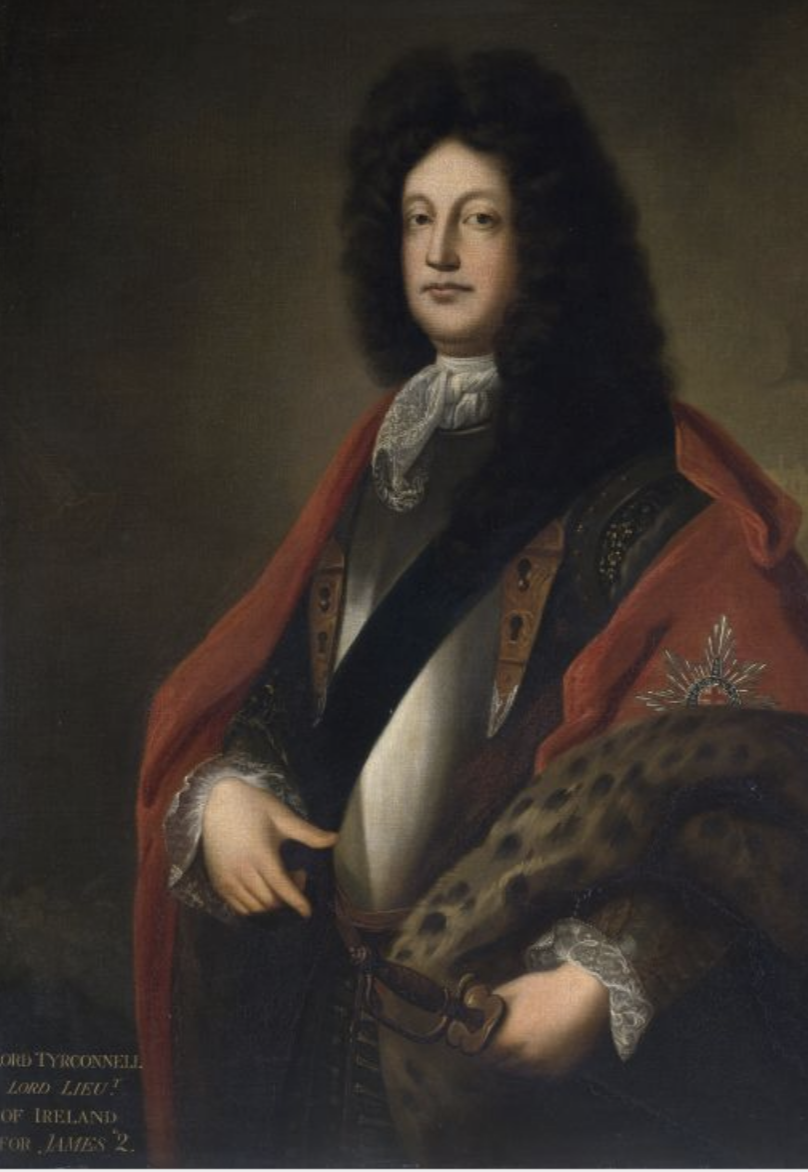
It was William Talbot, Recorder of the city of Dublin, who leased the lands from Gerald FitzGerald, 14th Earl of Kildare (1547-1612). William Talbot was created 1st Baronet Talbot, of Carton, Co. Kildare on 4 February 1622/23. He was MP for Kildare in 1613-1615. He built a house at Carton. His son Richard was created 1st Duke of Tyrconnell in 1689 by King James II, after he had been James’s Groom of the Bedchamber. He fought in the Battle of the Boyne and was loyal to the Stuarts, so was stripped of his honours when William of Orange (William III) came to power.
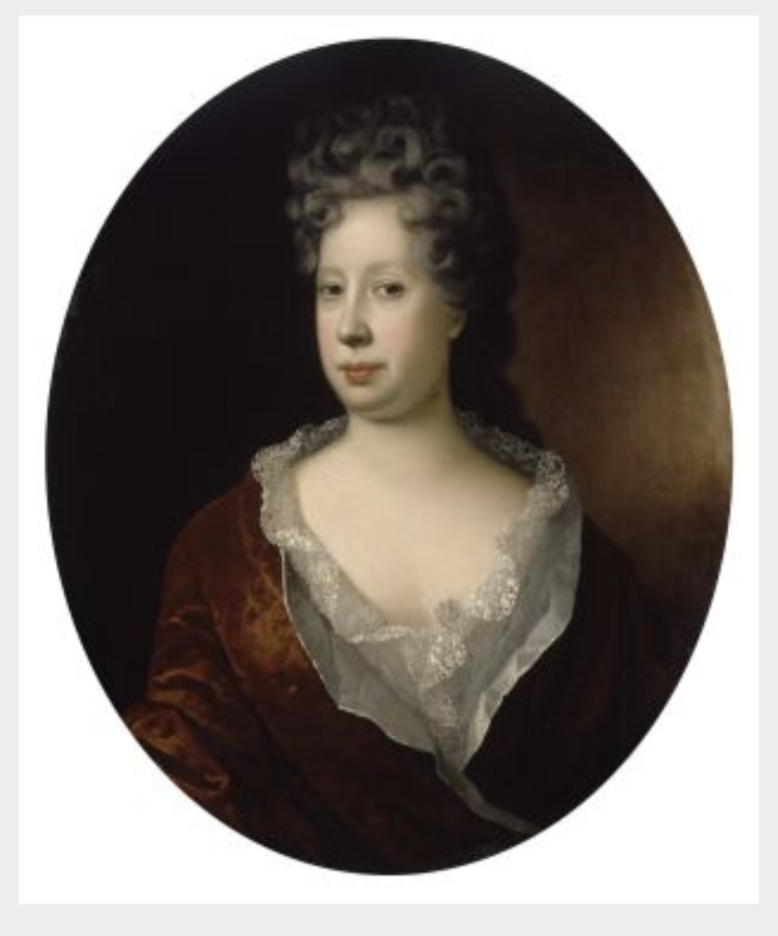
Richard Talbot, Duke of Tyrconnell (1630-1691), courtesy of National Gallery of Ireland.Frances Talbot (c.1670-1718) by Garret Morphy courtesy National Gallery of Ireland NGI 4150. She was the daughter of Robert Talbot, 2nd Baronet of Carton, County Kildare, who was a brother of the Duke of Tyrconnell, and wife of Richard Talbot (1638-1703) of Malahide.Tyrconnell Tower in grounds of Carton House, photograph 2014 for Tourism Ireland. [2]
Mark Bence-Jones continues: “After the attainder of Richard Talbot, Duke of Tyrconnell, James II’s Lord Deputy of Ireland, Carton was forfeited to the crown and sold 1703 to Major-Gen Richard Ingoldsby, Master-General of the Ordnance and a Lord Justice of Ireland; who added a two storey nine bay pedimented front to the old house, with wings joined to the main block by curved sweeps, in the Palladian manner. In 1739 Thomas Ingoldsby sold the reversion of the lease back to 19th Earl of Kildare [Robert FitzGerald (1675-1744)], who decided to make Carton his principal seat and employed Richard Castle to enlarge and improve the house.“
Richard Ingoldsby (c.1664/5–1712) was the son of George, who came to Ireland with the Cromwellian army in 1651 and became a prominent landowner in Limerick. Richard fought in the Williamite army. The Dictionary of Irish Biography tells us that Richard Ingoldsby purchased Carton House and demesne in Co. Kildare for £1,800 in 1703 from the Talbot family. He also owned a town house in Mary St., Dublin. He married Frances, daughter of Col. James Naper of Co. Meath; they had at least one son, Henry Ingoldsby (d. 1731). Henry lived the high life in London and Carton had to be sold to pay his debts in 1738, and he sold it back to Robert Fitzgerald the 19th Earl of Kildare.
Robert Fitzgerald (1675-1744) 19th Earl of Kildare, after Frederick Graves, courtesy of Adam’s auction 15th Oct 2019.
Robert FitzGerald the 19th Earl of Kildare married Mary O’Brien, daughter of William, 3rd Earl of Inchiquin.
The Archiseek website tells us:
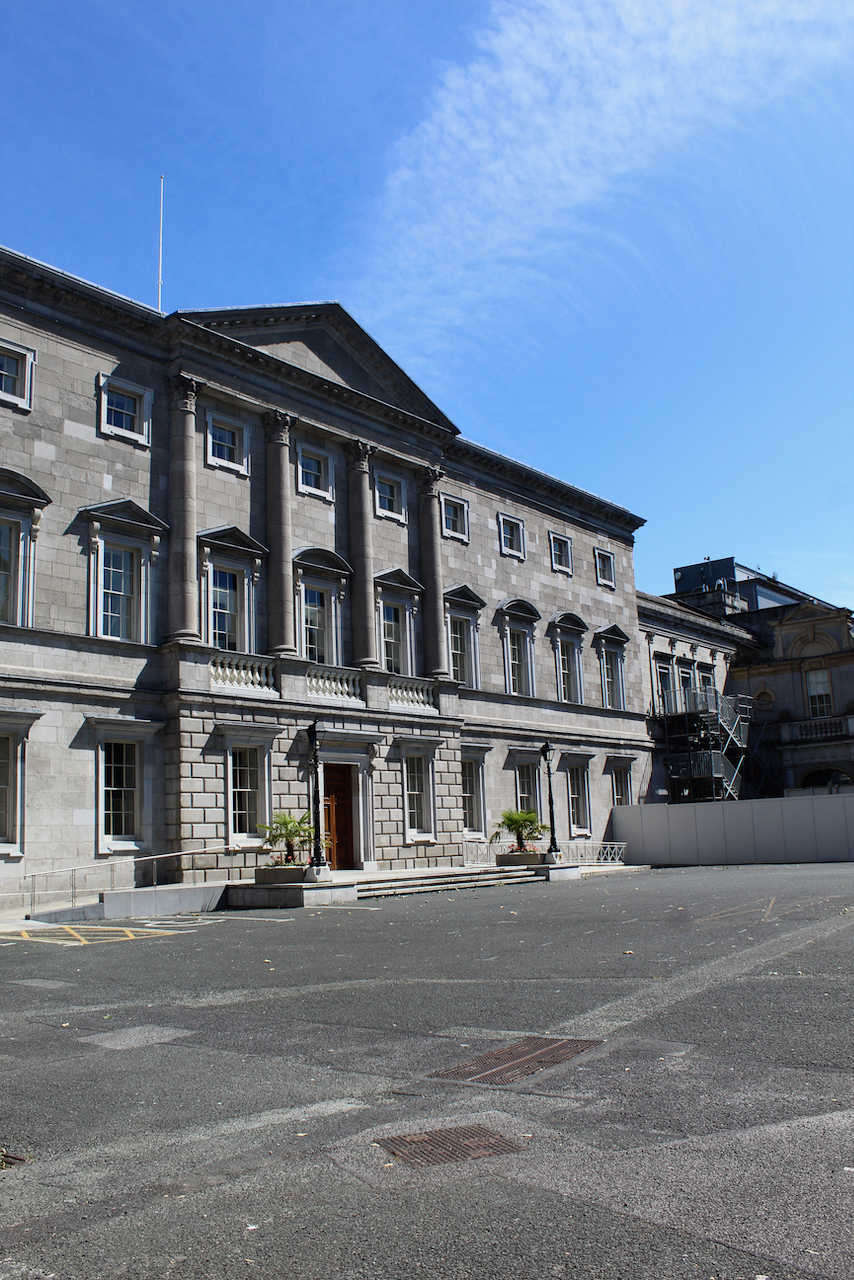
“In 1739, the 19th Earl of Kildare employed Richard Castle to build the existing house replacing an earlier building. Castle (originally Cassels) was responsible for many of the great Irish houses, including Summerhill, Westport, Powerscourt House and in 1745, Leinster House, which he also built for the FitzGeralds.” [3]
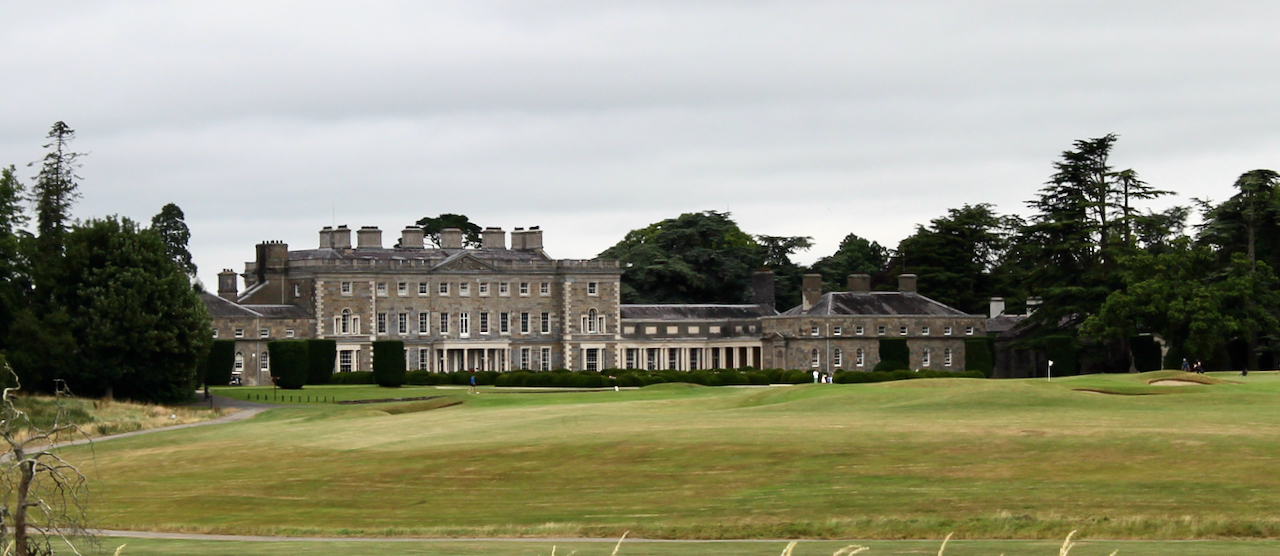
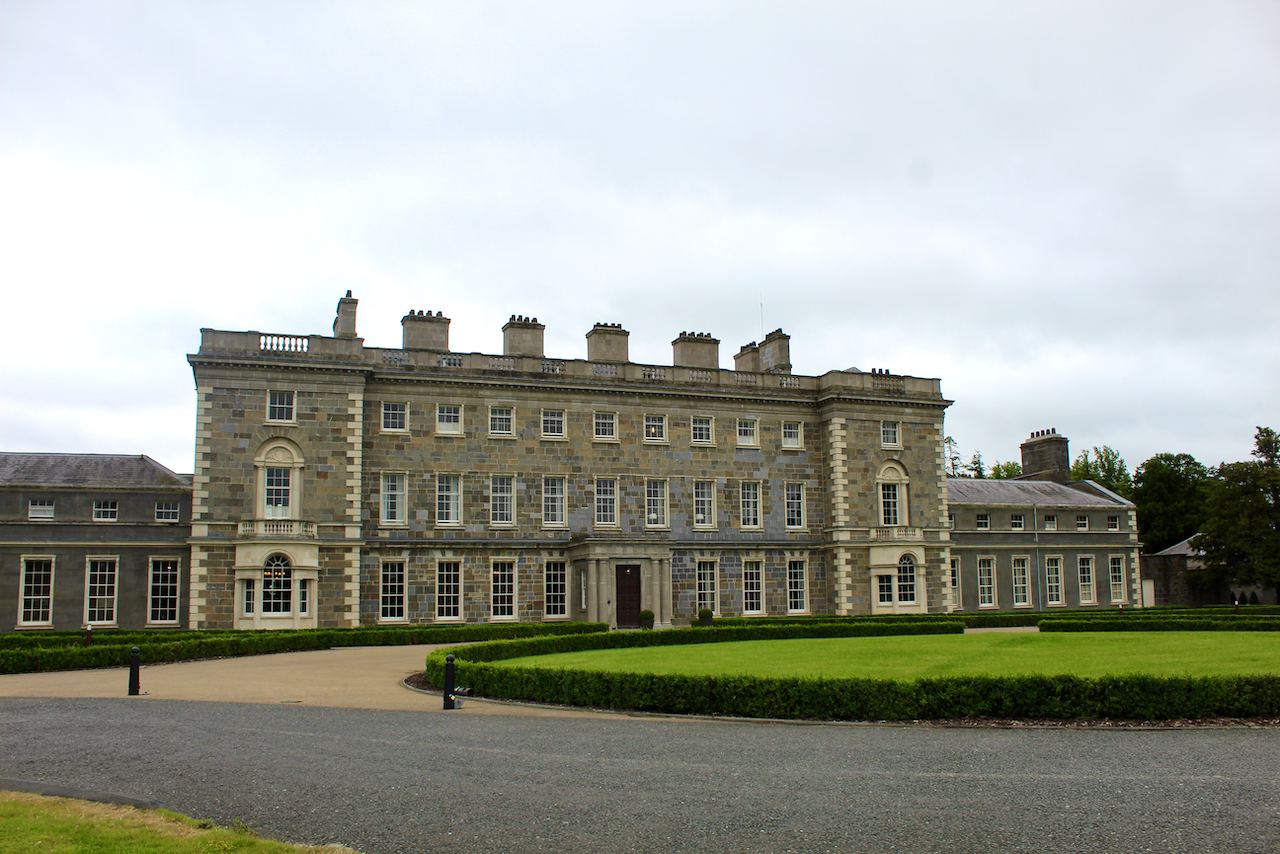
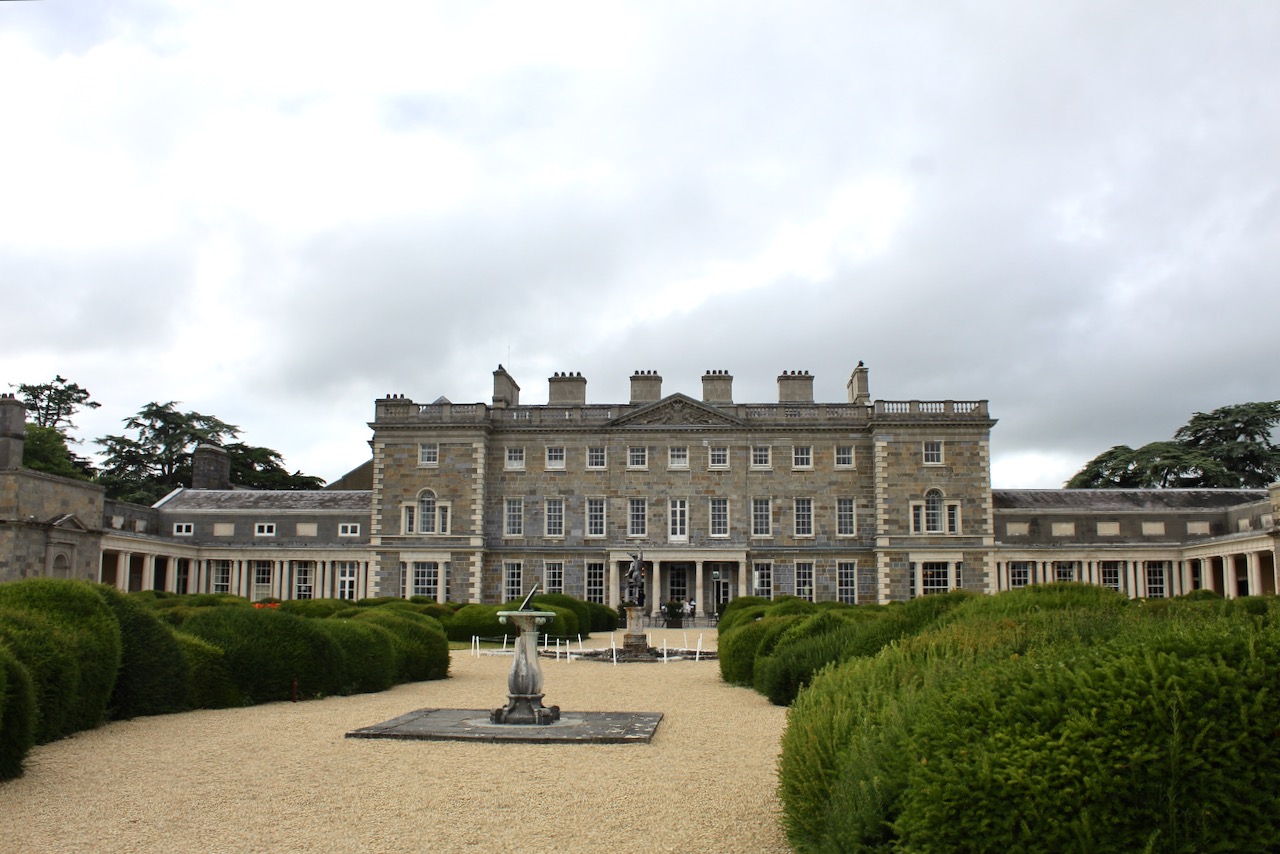
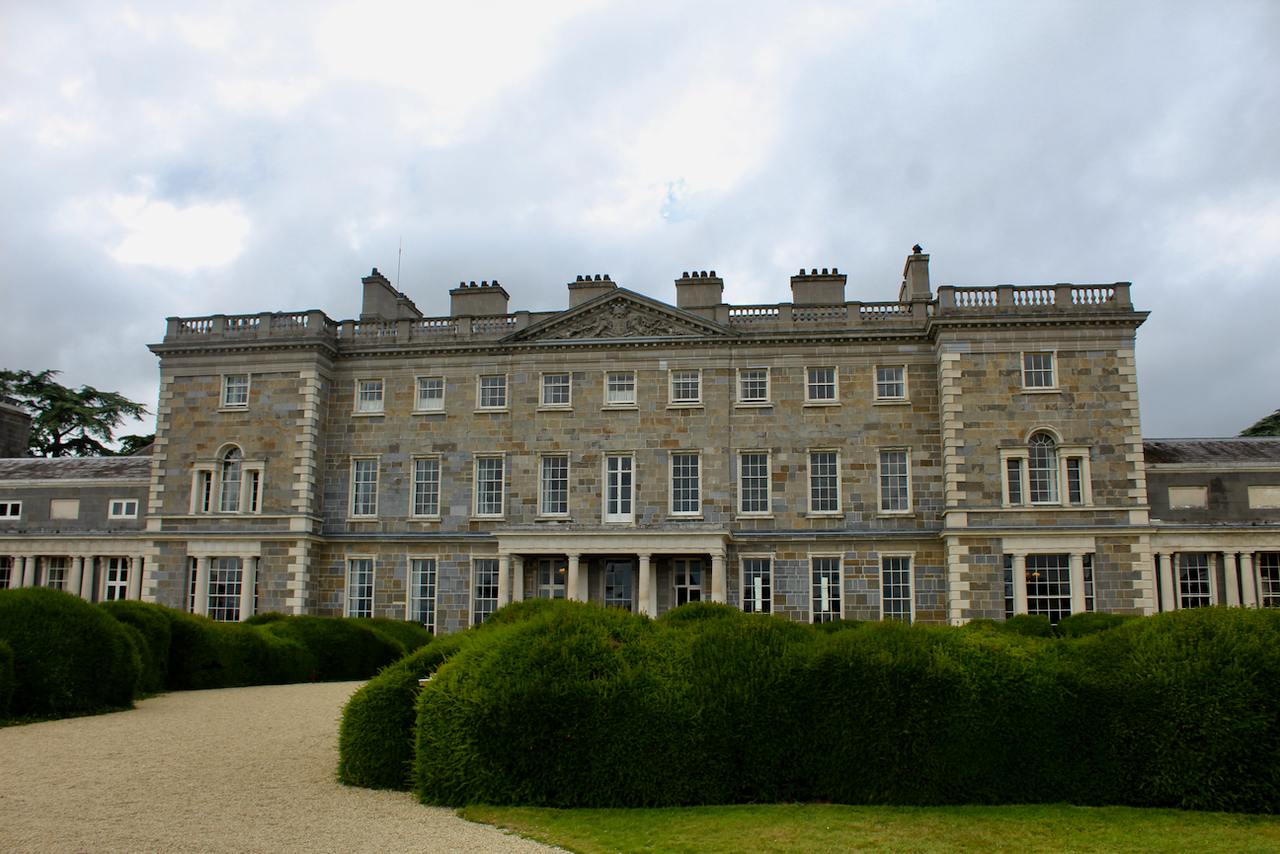
Bence-Jones tells us about the rebuilding of Carton by Richard Castle: “Castle’s rebuilding obliterated all traces of the earlier house, except for a cornice on what is now the entrance front and the unusually thick interior walls. He added a storey, and lengthened the house by adding a projecting bay at either end; he also refaced it. He gave the entrance front a pediment, like its predecessor; but the general effect of the three storey 11 bay front, which has a Venetian window in the middle storey of each of its end bays, is one of massive plainness. As before, the house was joined to flanking office wings; but instead of simple curved sweeps, there were now curved colonnades.”
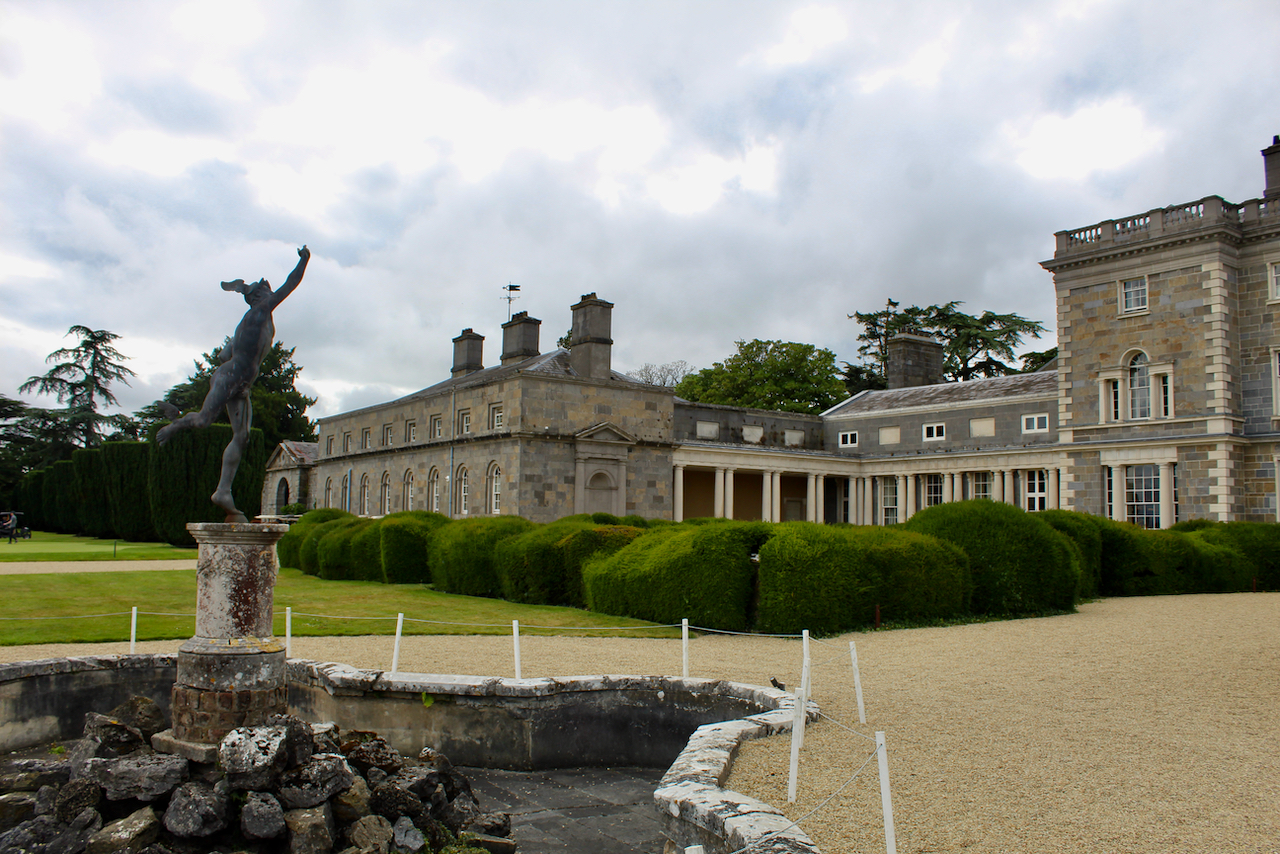
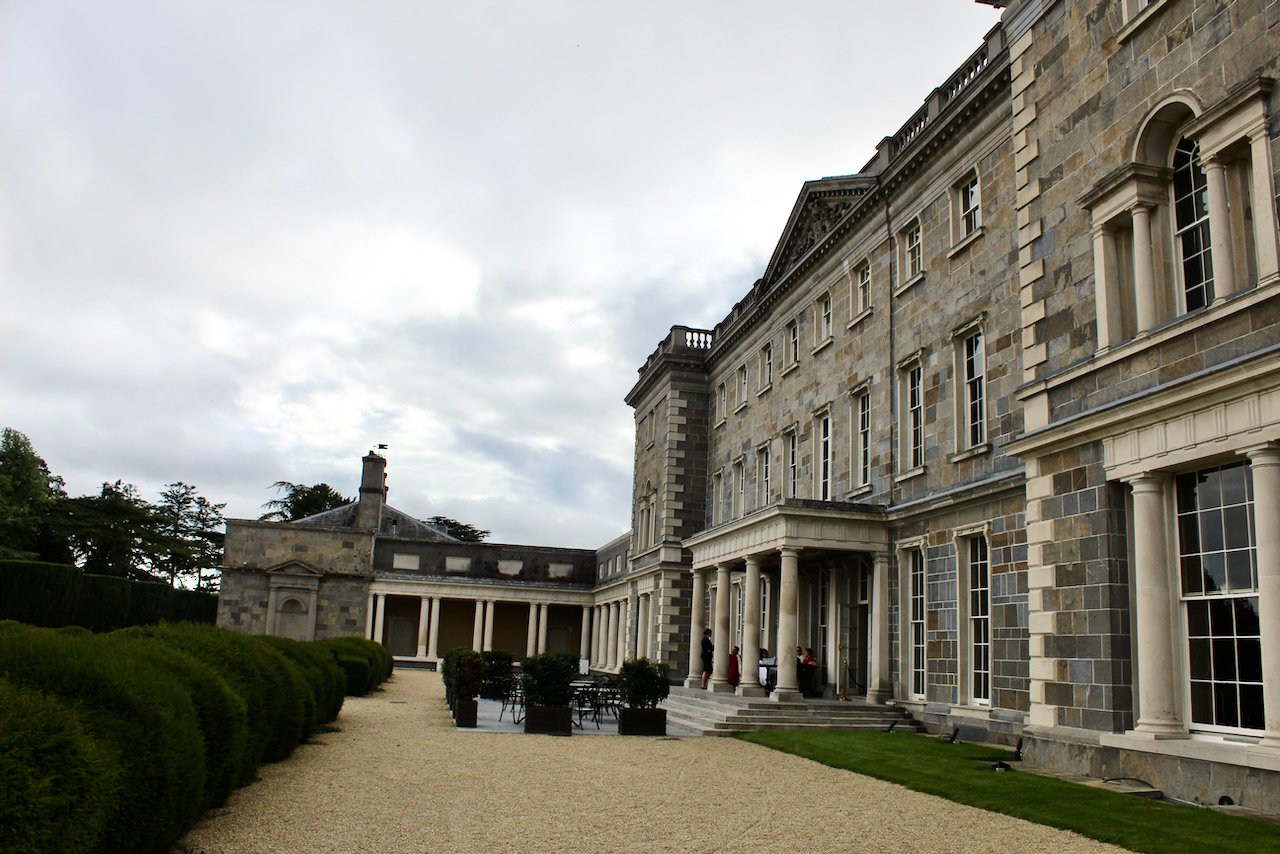
There is a projecting bay on either side of the garden front facade with a Venetian window in the middle storey of either projecting bay. According to Mark Bence-Jones, these were designed by Richard Castle. The flanking wings were joined initially by curved colonnades, later replaced by straight connecting links.
Mark Bence-Jones continues: “The work was completed after the death of 19th Earl for his son [James (1722-1773)], 20th Earl, who later became 1st Duke of Leinster and was the husband of the beautiful Emily, Duchess of Leinster [Emily Lennox, daughter of the 2nd Duke of Richmond] and the father of Lord Edward Fitzgerald, the United Irish Leader.”
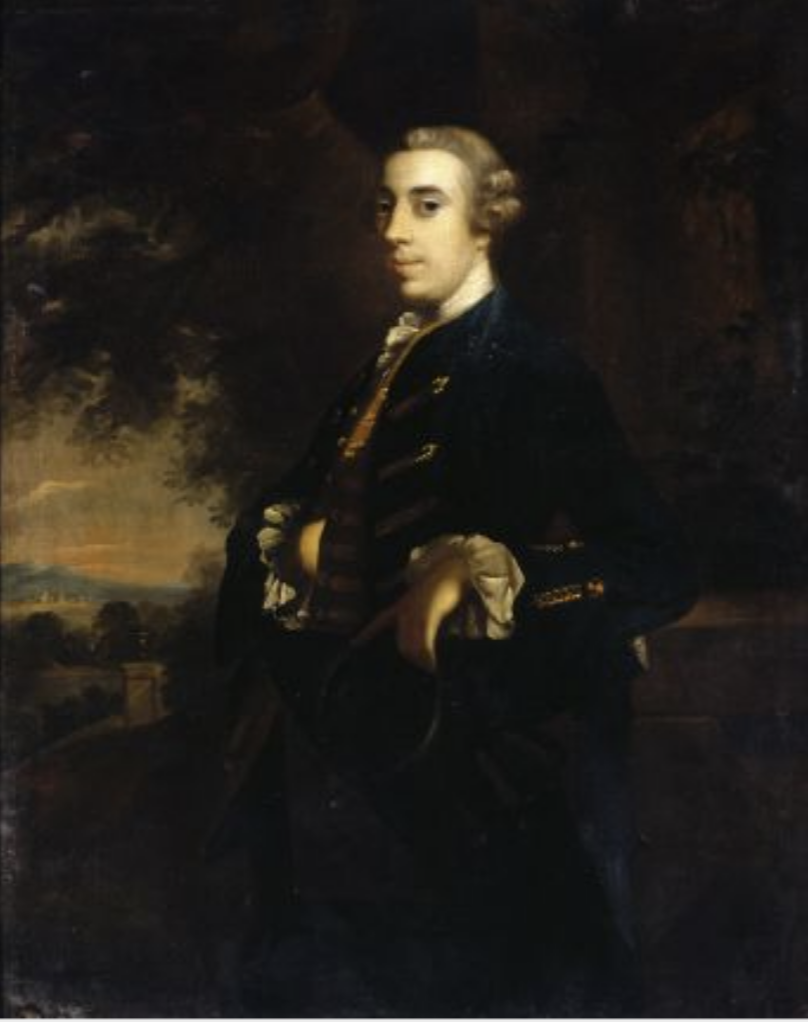
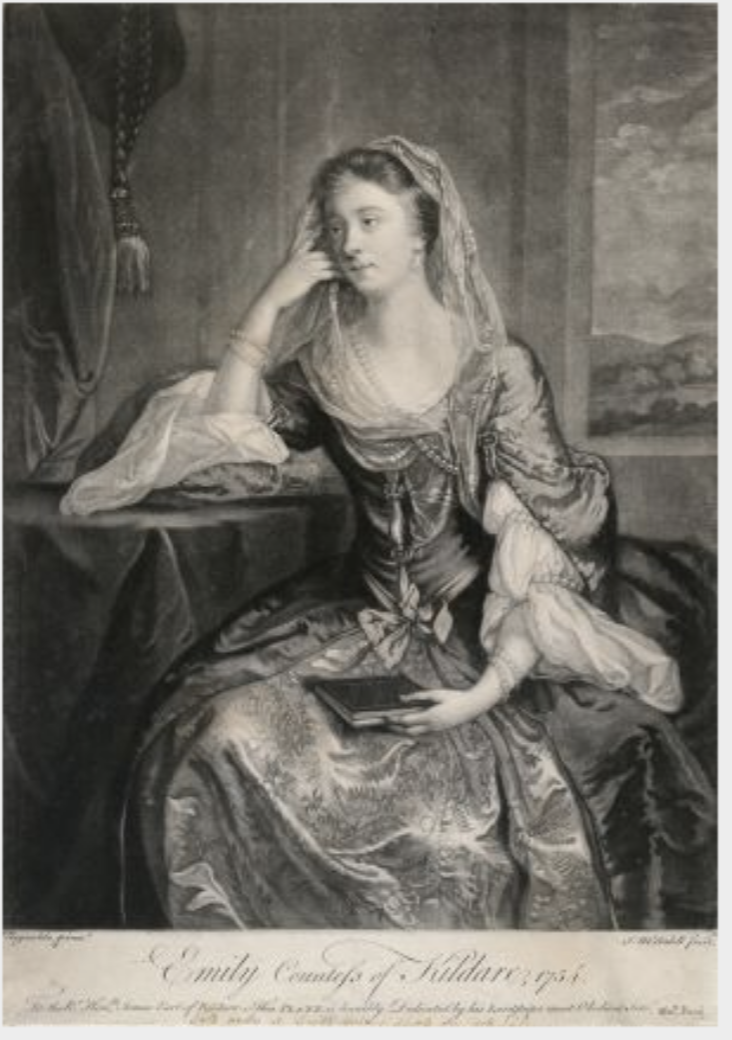
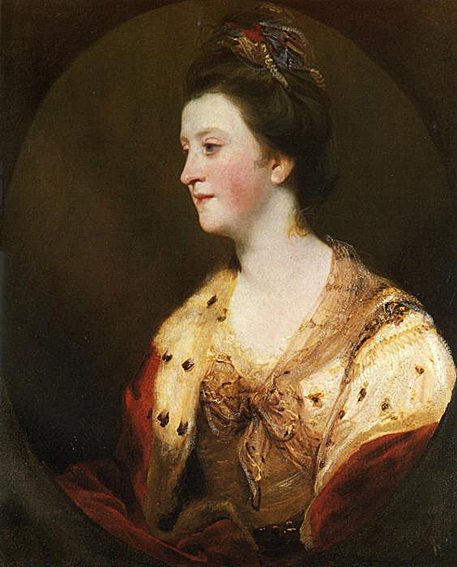
James Fitzgerald, 20th Earl of Kildare, later 1st Duke of Leinster by Robert Hunter, Irish, 1715/1720-c.1803. Photograph courtesy of National Gallery of Ireland.Emilia Mary, Countess of Kildare (née Lennox) (1731-1814), Wife of the 20th Earl of Kildare and future 1st Duke of Leinster After Joshua Reynolds, English, 1723-1792, photograph courtesy of National Gallery of Ireland.Emily née Lennox (1731-1814) Countess of Kildare, wife of the 1st Duke of Leinster, by Allan Ramsay (1713-1784). Oil on canvas, painted 1765. Purchased 1951, No. 1356, Walker Art Gallery, Liverpool, UK, Photograph by Mike Peel (www.mikepeel.net)Emily Fitzgerald née Lennox (1731-1814) Duchess of Leinster 1770s by Joshua Reynolds.Margaretta Fitzgerald (d. 1766) Countess of Hillsborough, daughter of Robert Fitzgerald, 19th Earl of Kildare, attributed to Charles Jervas, courtesy of Fonsie Mealy auction. She married Wills Hill, 1st Earl of Hillsborough, Co. Down, 1st Marquess of Downshire.Edward Fitzgerald (1763-1798) by Hugh Douglas Hamilton – http://www.galleryofthemasters.com/h-folder/hamilton-hugh-douglas-lord-edward-fitzgerald.html, Public Domain, https://commons.wikimedia.org/w/index.php?curid=3835564
They certainly were a rebellious family! It is said that this saved the house from being burnt by Irish rebels in 1920s, as a portrait of Edward Fitzgerald the United Irishman was shown to the would-be arsonists. Emily Lennox’s sister, Louisa, married Thomas Conolly and lived across the parkland in Castletown House. Stella Tillyard writes of the life and times of the sisters, Emily and Louisa and it was made into a mini series for the BBC, entitled “The Aristocrats” which was filmed on site at Carton House. I’d love to read the book and see the movie! She also wrote about Edward FitzGerald.
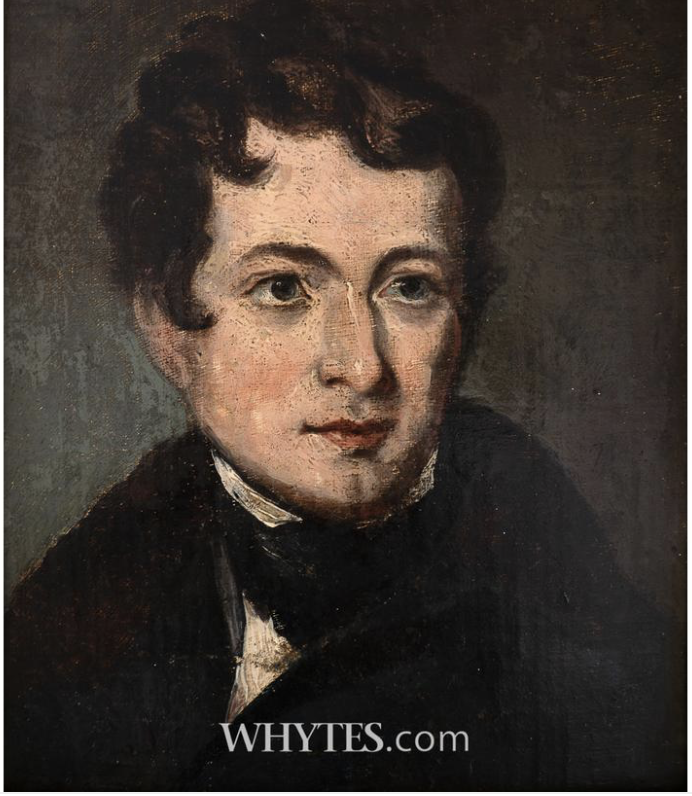
Edward Fitzgerald (1763-1798), circa 1780, courtesy Whytes March 2025.
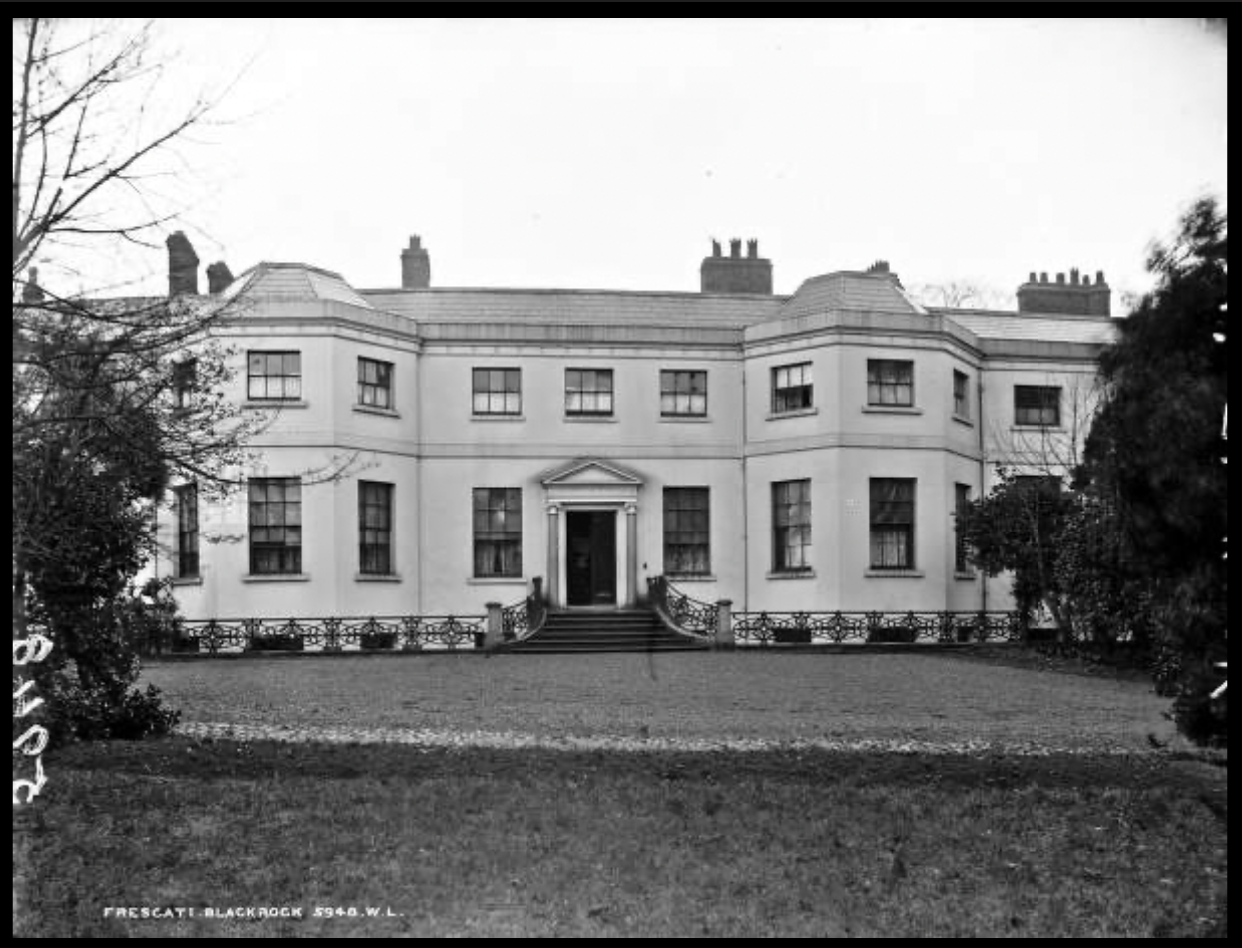
When the 1st Duke died, Emily married her children’s tutor and lived very happily with him. She had enjoyed spending time with him and the children at their house in Blackrock, Frascati, which no longer exists, and the children swam in the sea.
Frescati House, County Dublin, photograph by Robert French, Lawrence Photograph Collection, National Library of Ireland.
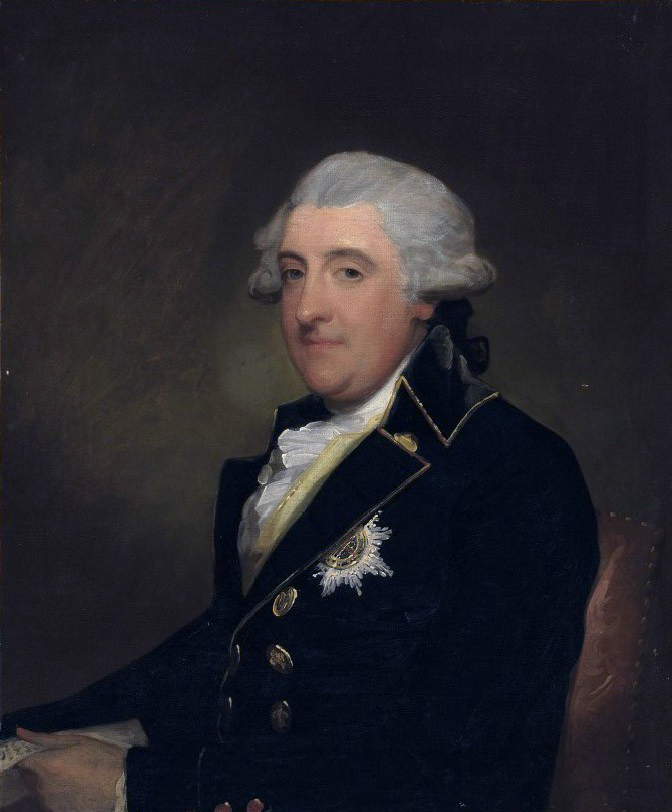
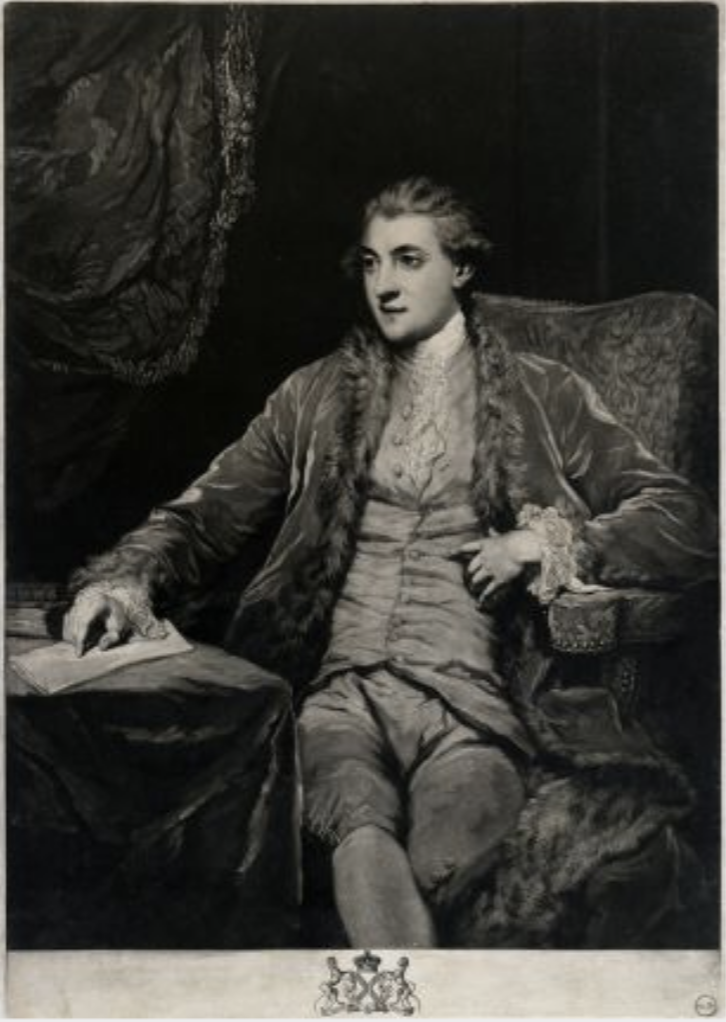
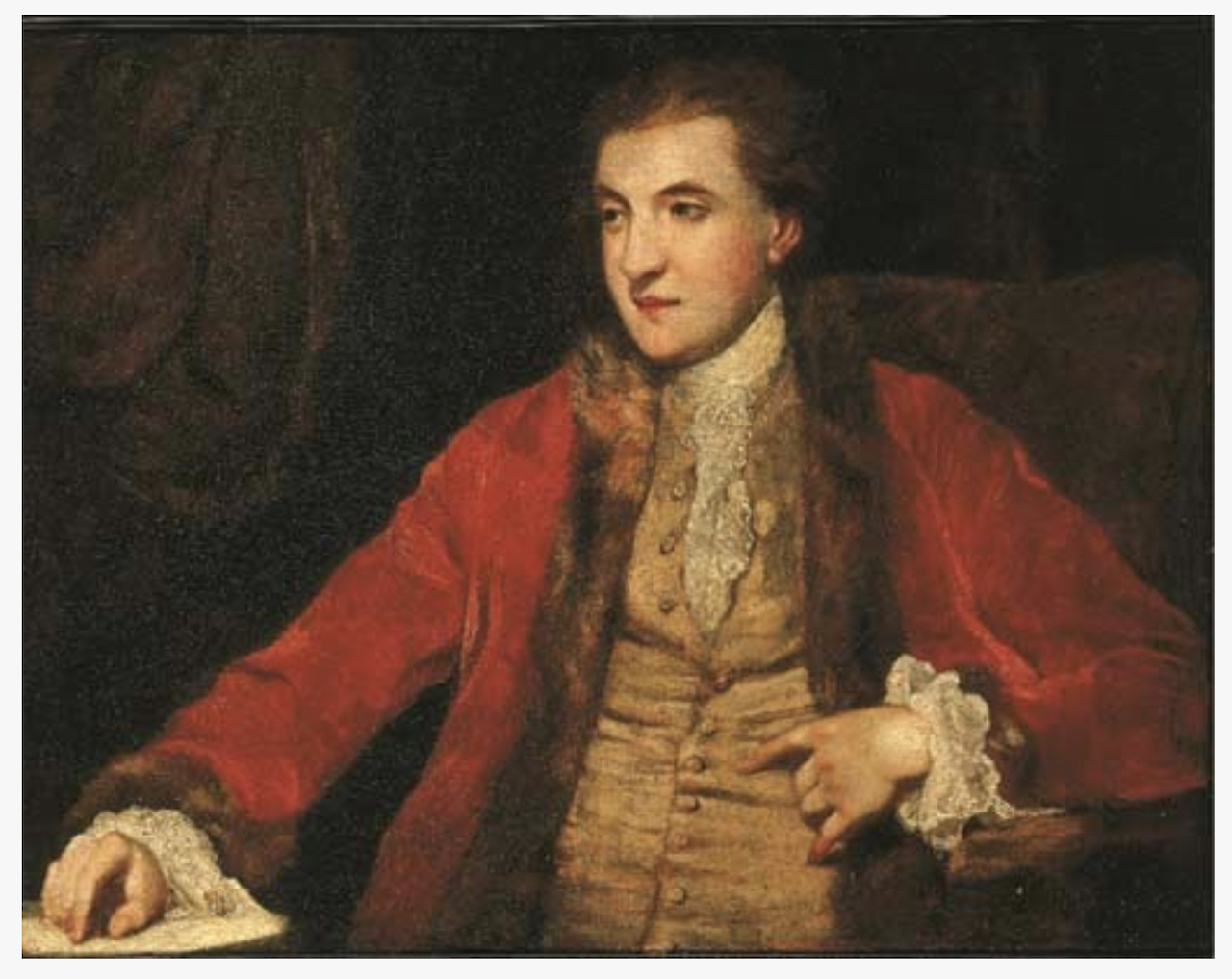
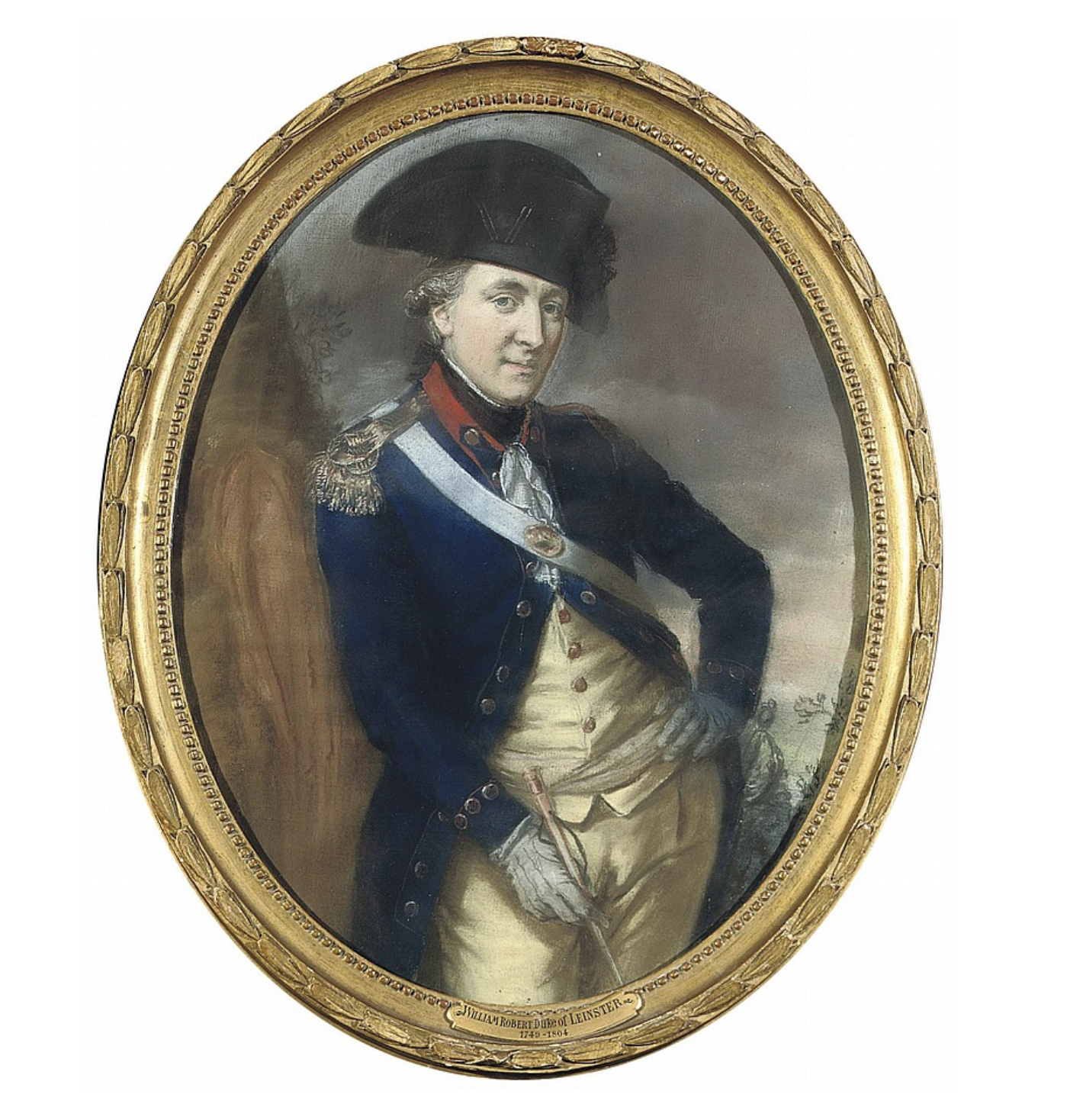
Emily and the 1st Duke’s heir was William Robert Fitzgerald (1749-1804) 2nd Duke of Leinster. He married Emilia Olivia née Usher St. George (1759-1798).
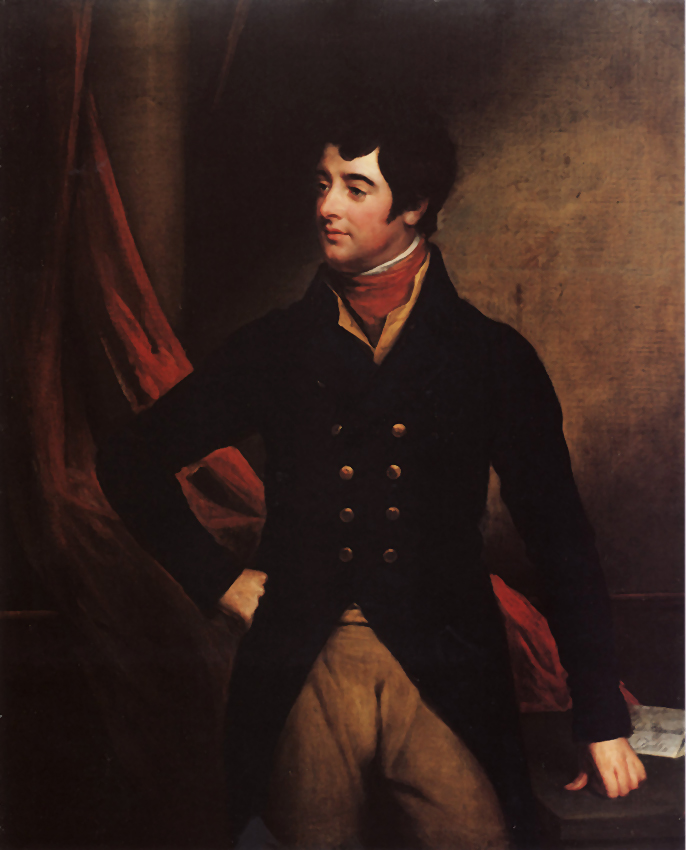
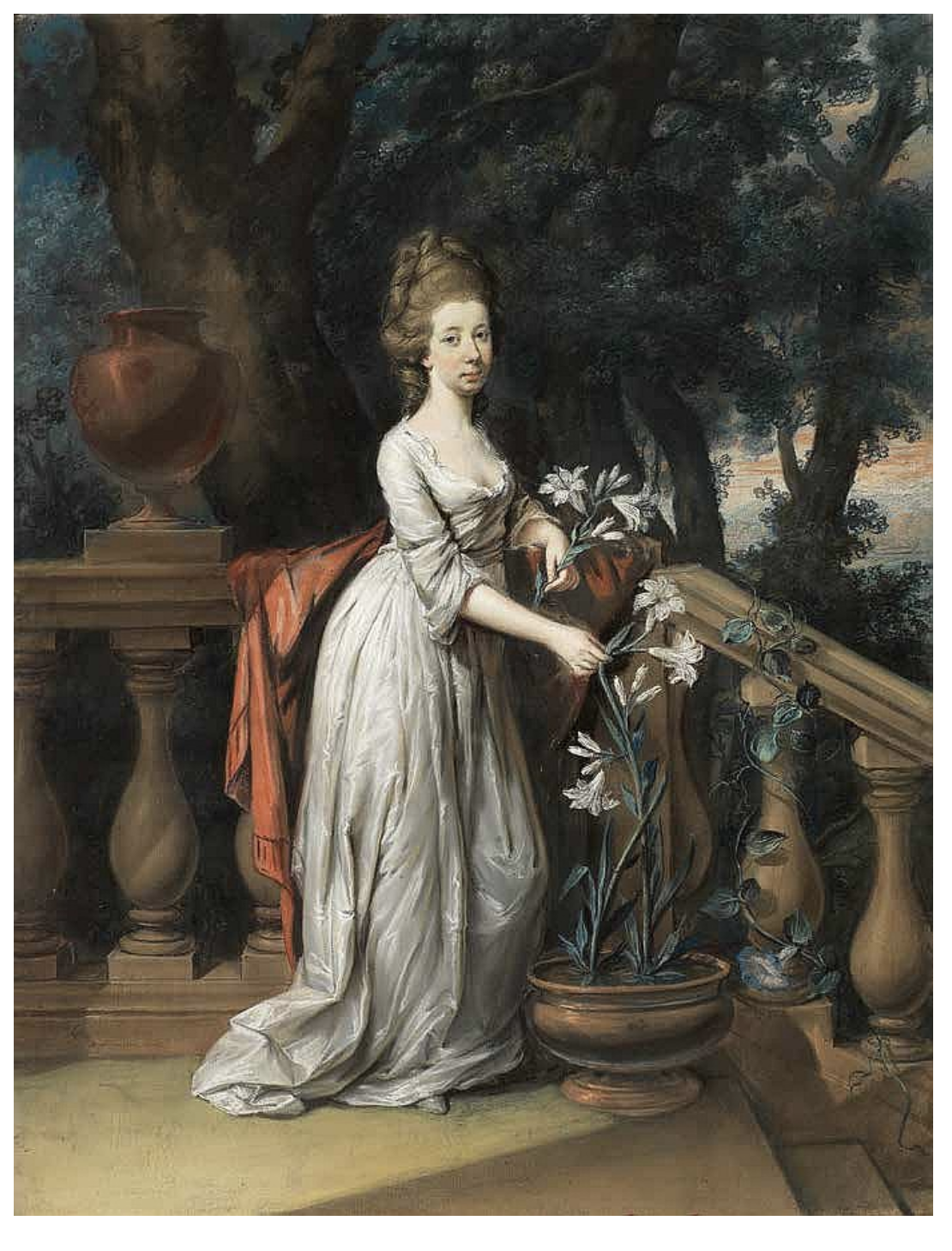
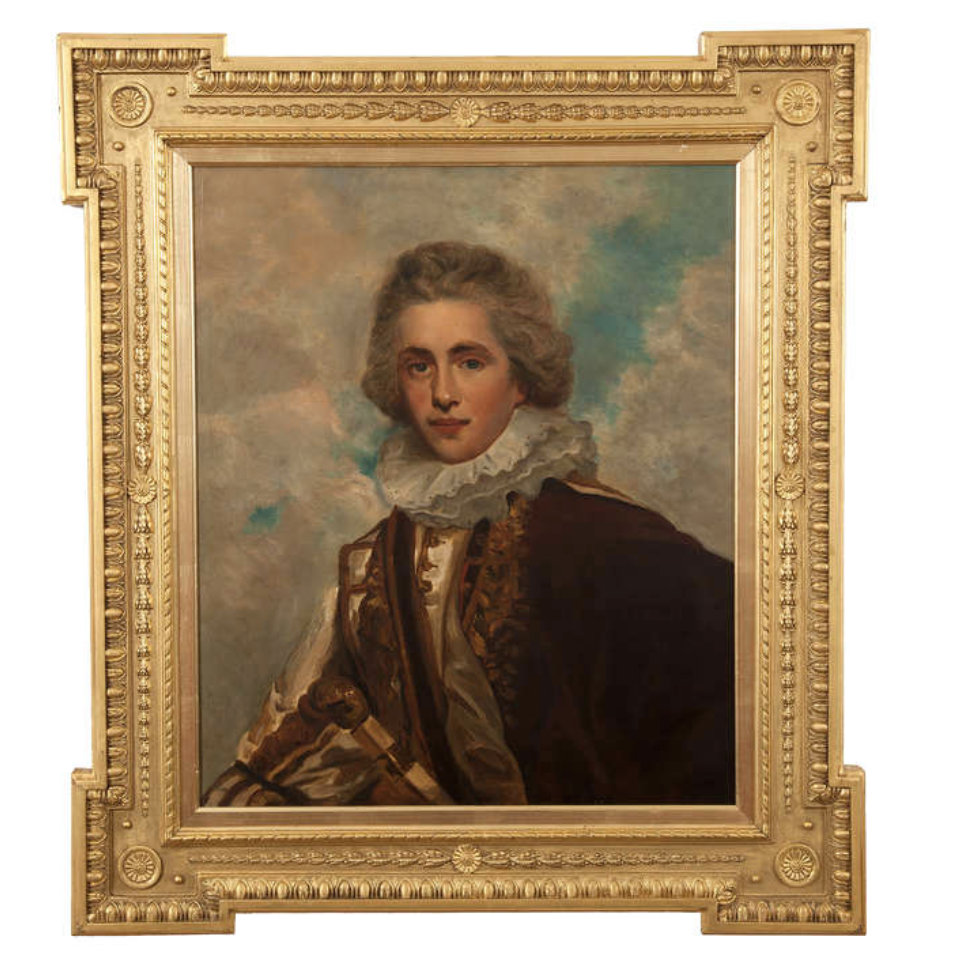
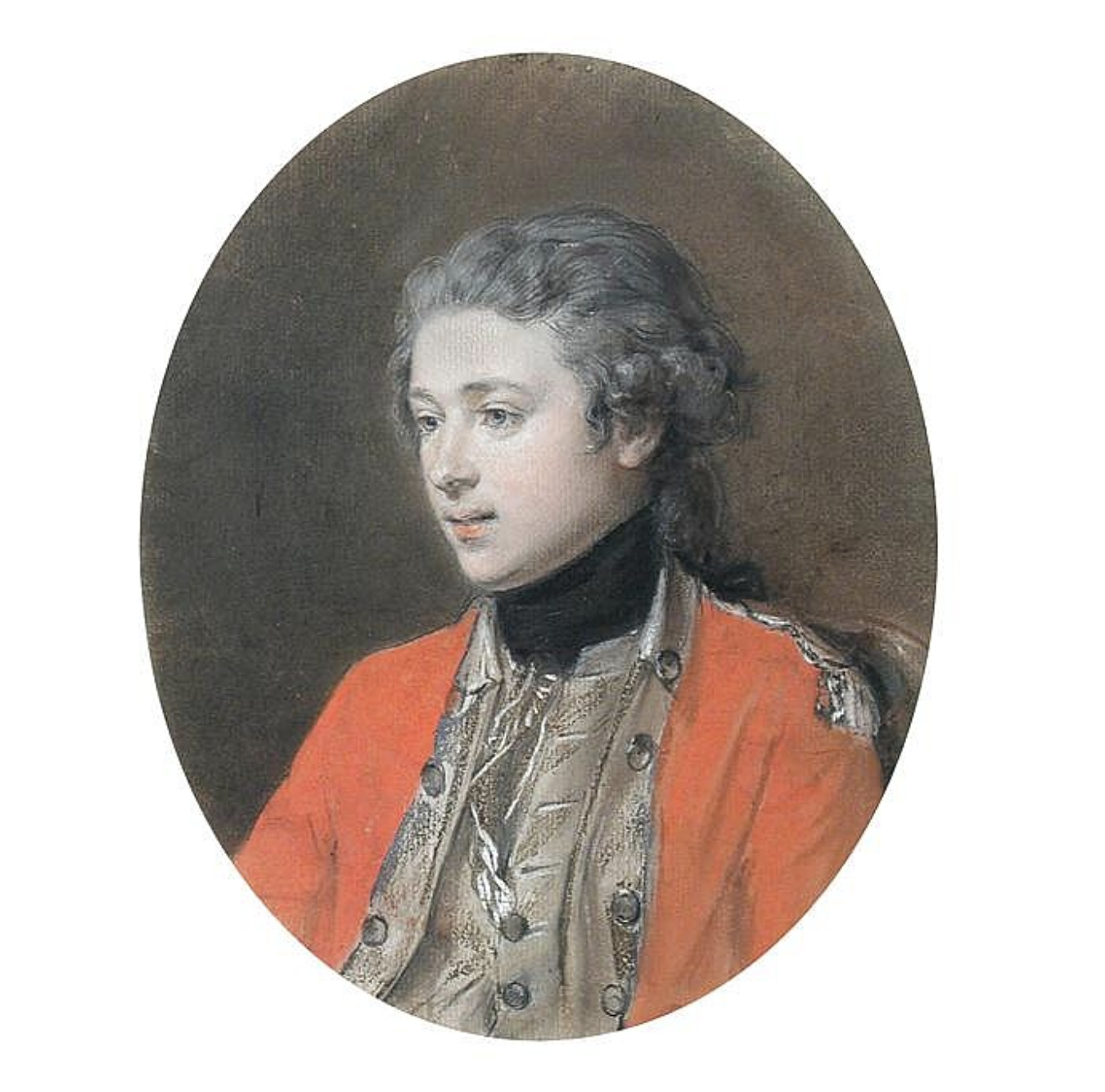
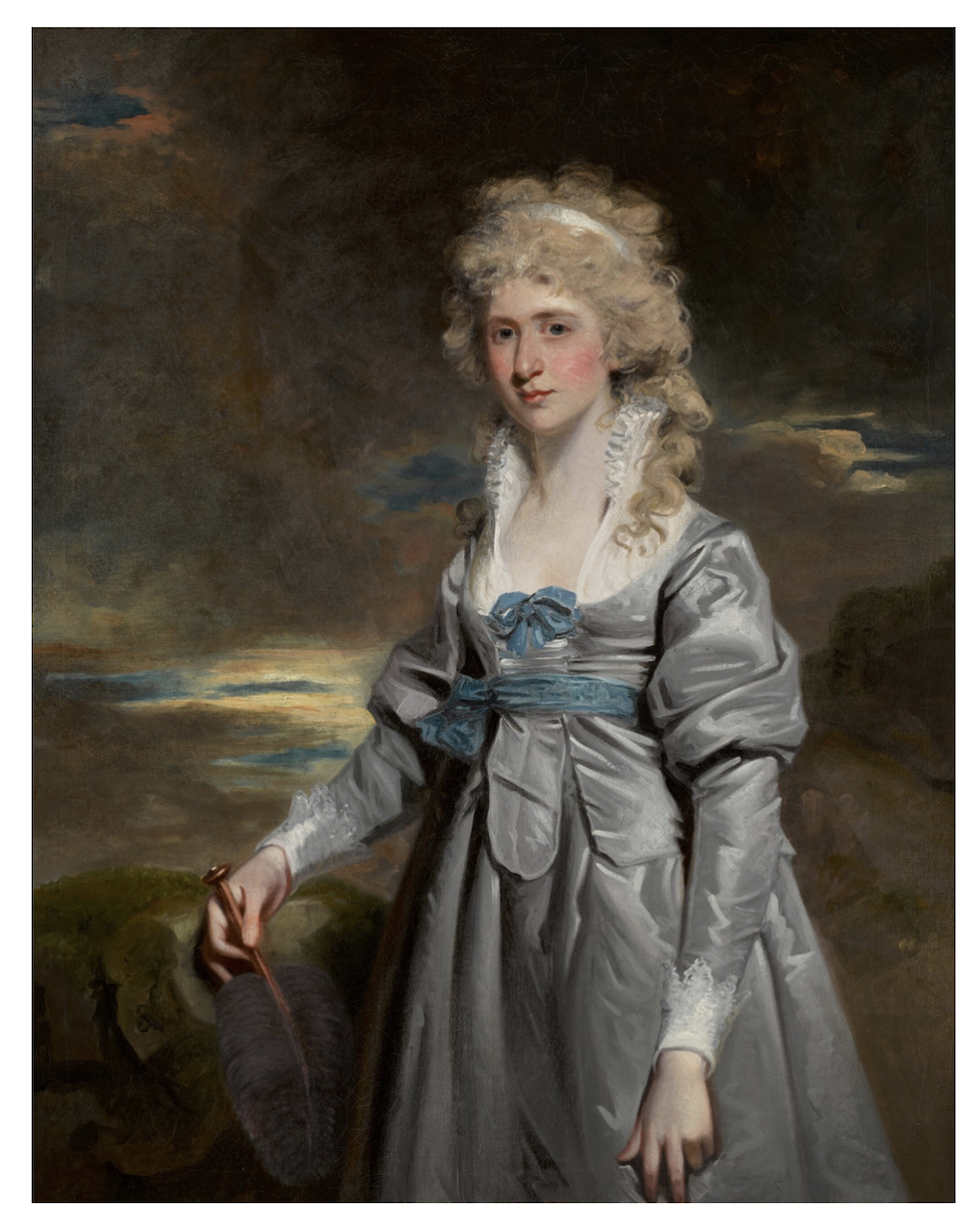
William Robert Fitzgerald (1749-1804) 2nd Duke of Leinster wearing Order of St. Patrick, by Gilbert Stuart, courtesy Christies.William Robert Fitzgerald, 2nd Duke of Leinster, (1749-1804) Date 1775 by Engraver John Dixon, Irish, c.1740-1811 After Joshua Reynolds, English, 1723-1792. Photograph courtesy of National Gallery of Ireland.William Robert Fitzgerald, 2nd Duke of Leinster, K.P. (1749-1804), circle of Joshua Reynolds courtesy of Christie’s Irish Sale 2002.William Robert FitzGerald, 2nd Duke of Leinster (1749-1804) in the uniform of the Dublin Volunteers by Hugh Douglas Hamilton courtesy of Sotheby’s, London, 18 May 2001.Hugh Douglas Hamilton portrait of Emilia Olivia née St. George, 2nd Duchess of Leinster courtesy of Bonhams Old Master Paintings 2018.Emily Margaret FitzGerald (1751-1818), daughter of 1st Duke of Leinster wife of Earl of Bellomont by H D Hamilton courtesy Fine Art Sale Cheffins 2014.Henry Fitzgerald 1761-1829, son of the 1st Duke of Leinster and Emily Lennox, attributed to John Hoppner, courtesy of Adam’s auction 13 Oct 2015.Henry FitzGerald (1761-1829) by Hugh Douglas Hamilton courtesy of Cheffins Fine Art sale 2013. He was a son of the 1st Duke of Leinster and Emily Lennox.Charlotte Boyle-Walsingham, Lady FitzGerald (1769–1831) by John Hoppner, R.A courtesy Sotheby’s Old Masters Day Auction.She was the wife Henry Fitzgerald (1761-1829), of a brother of the 2nd Duke of Leinster.
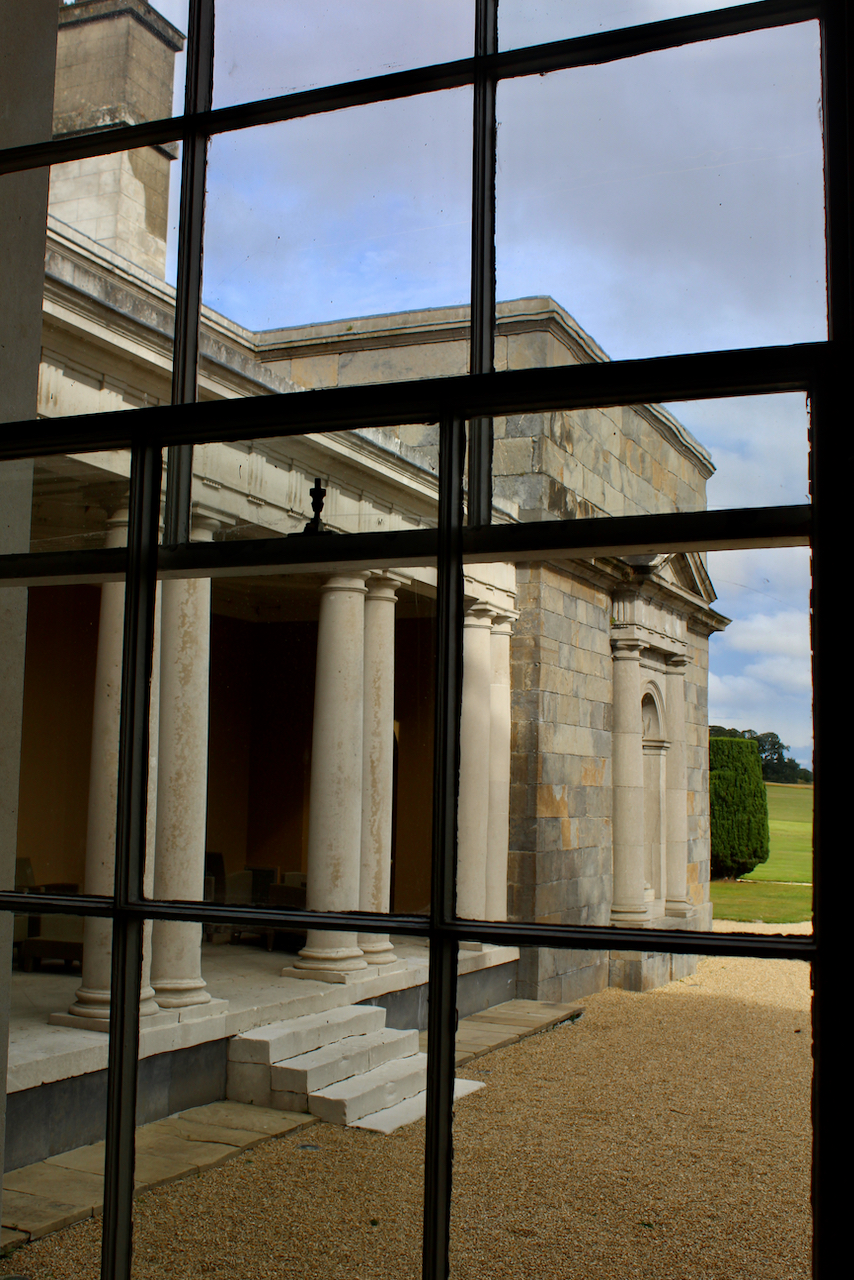
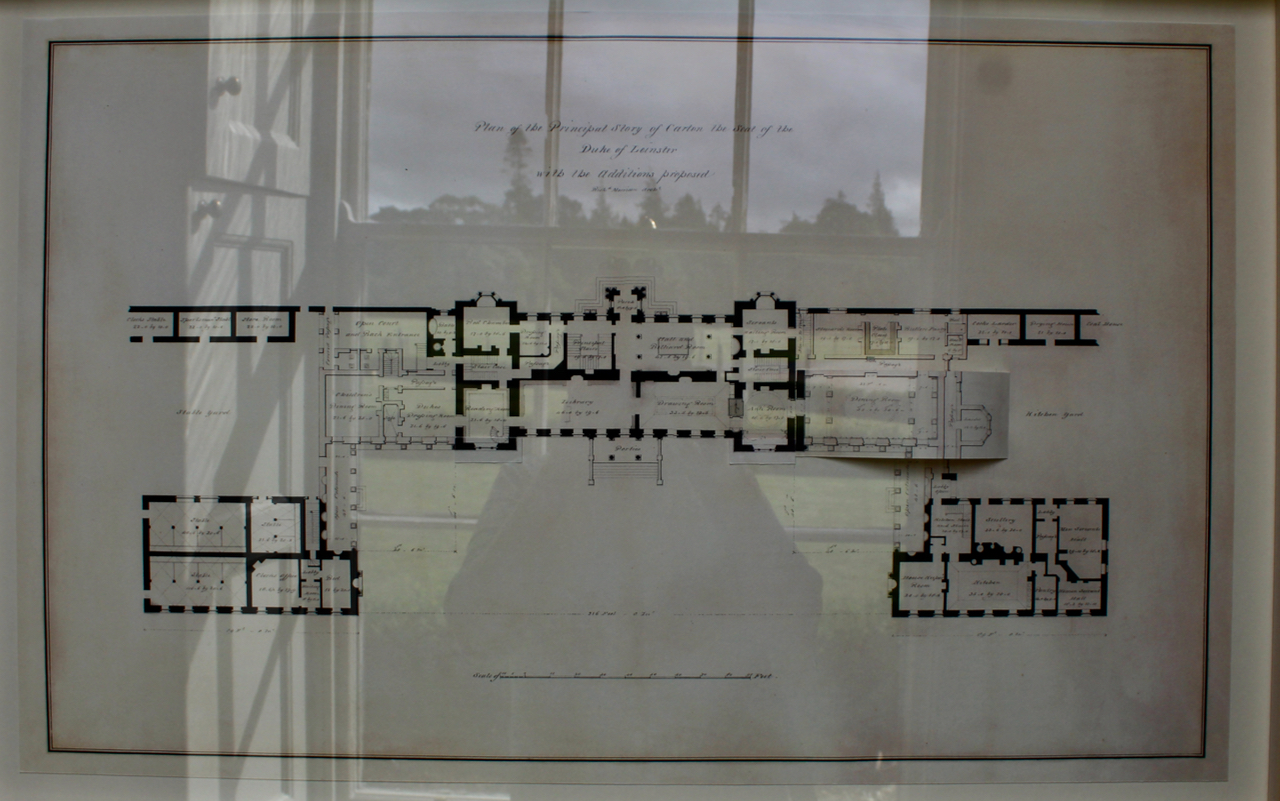
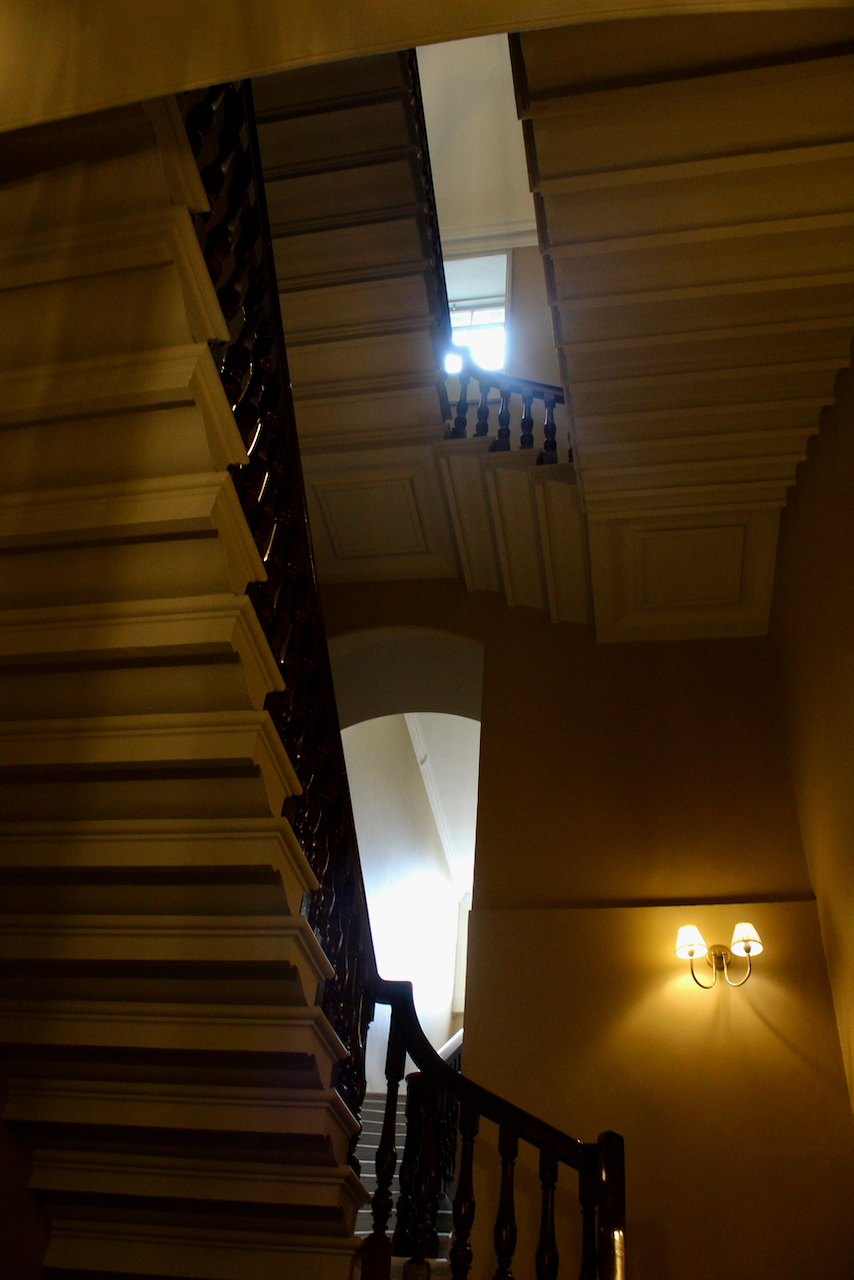
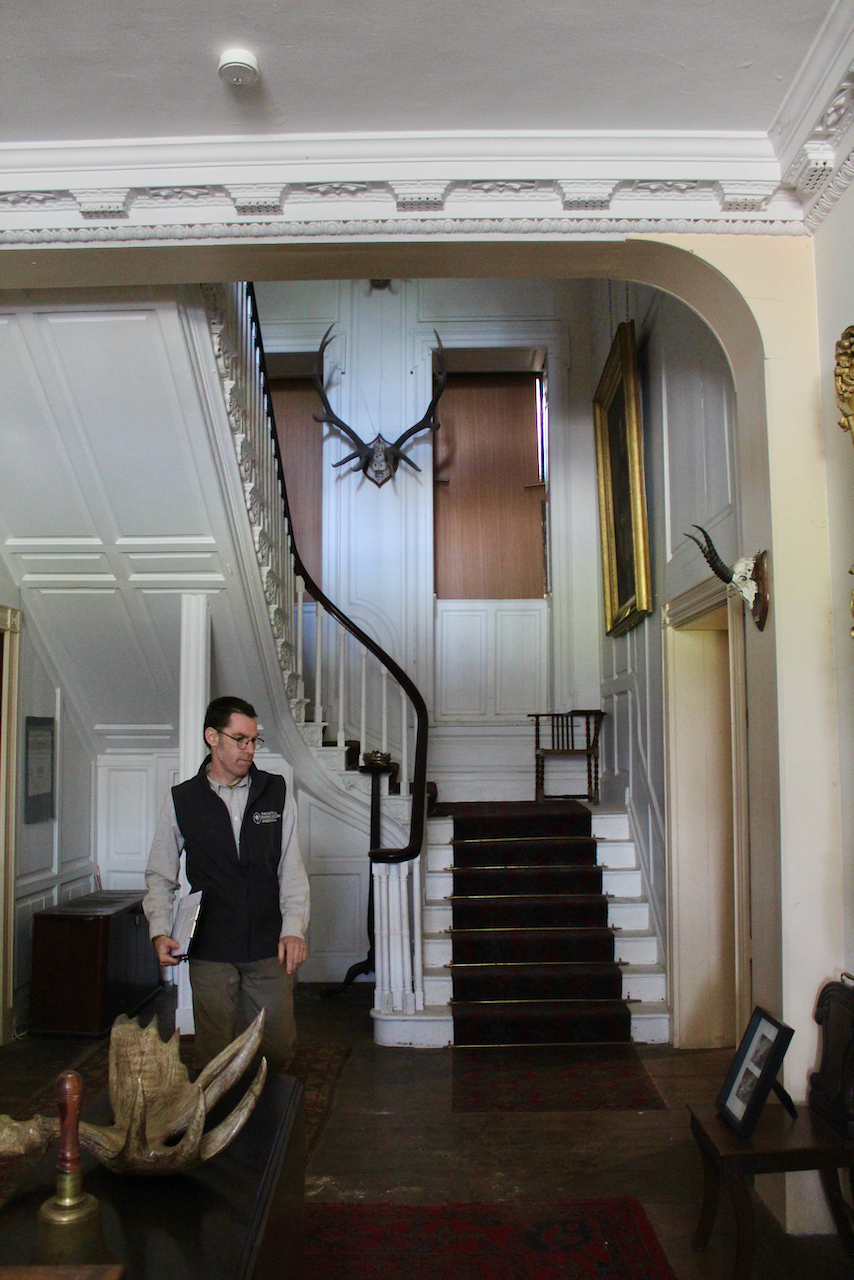
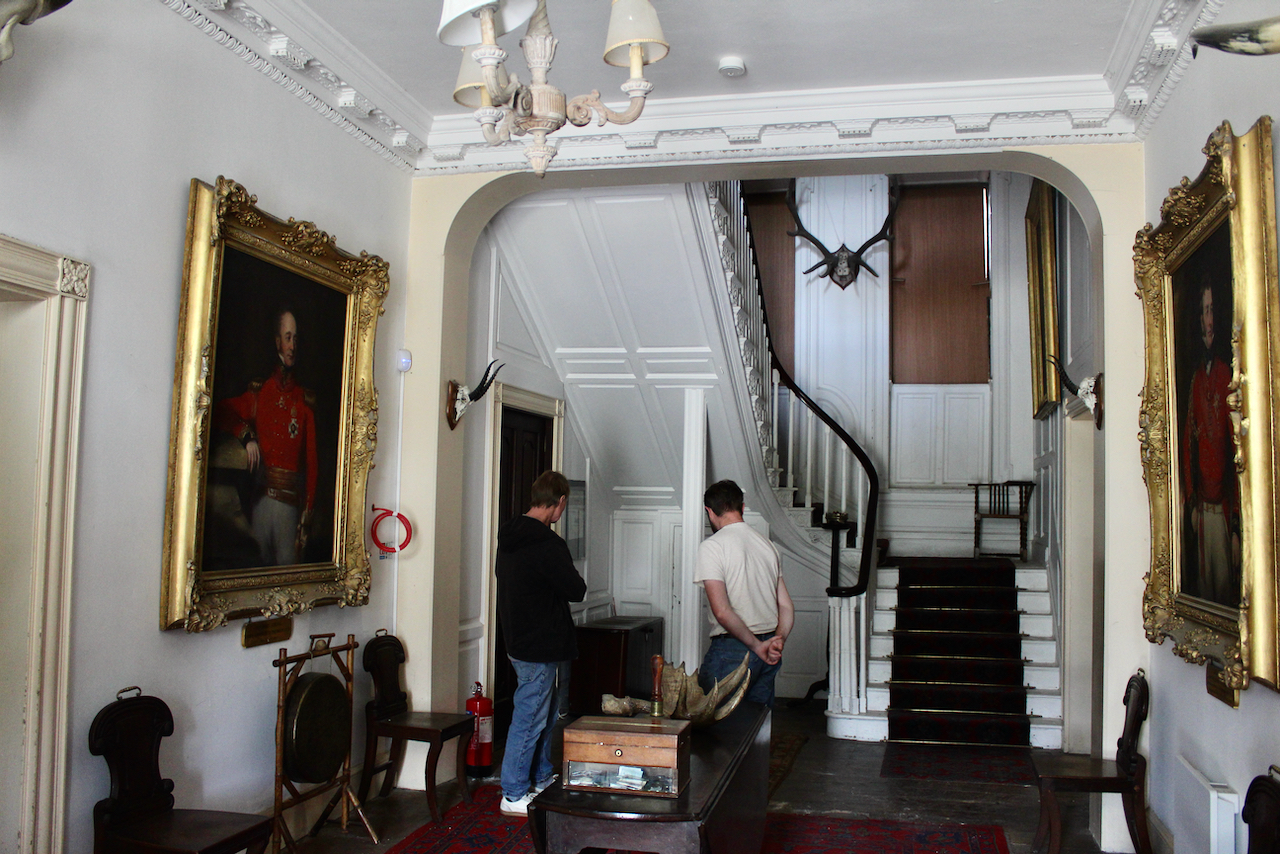
Mark Bence-Jones continues: “3rd Duke, Lord Edward’s nephew, [Augustus Frederick Fitzgerald (1791-1874)] employed Sir Richard Morrison to enlarge and remodel the house ca 1815, having sold Leinster House in Dublin. Morrison replaced the curved colonnades with straight connecting links containing additional rooms behind colonnades of coupled Doric columns, so as to form a longer enfilade along what was now the garden front; for he moved the entrance to the other front [the north side], which is also of 11 bays with projecting end bays, but has no pediment. The former music room on this side of the house became the hall; it is unassuming for the hall of so important a house, with plain Doric columns at each end. On one side is a staircase hall by Morrison, again very unassuming; indeed, with the exception of the great dining room, Morrison’s interiors at Carton lack his customary neo-Classical opulence.”
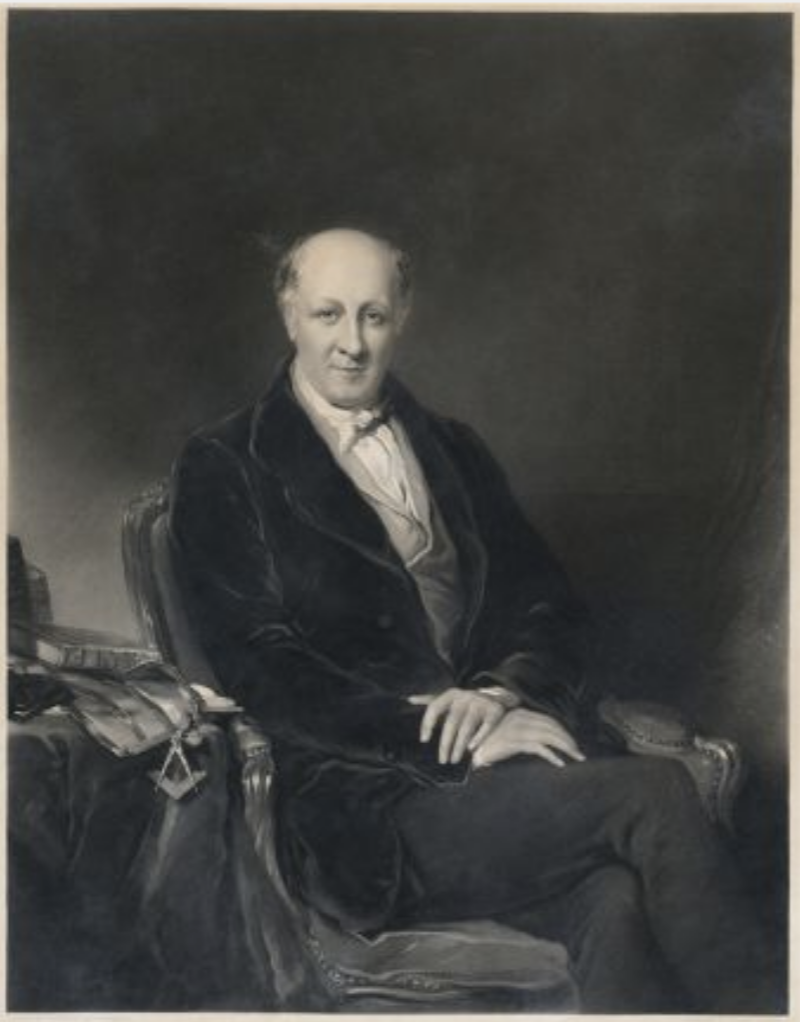
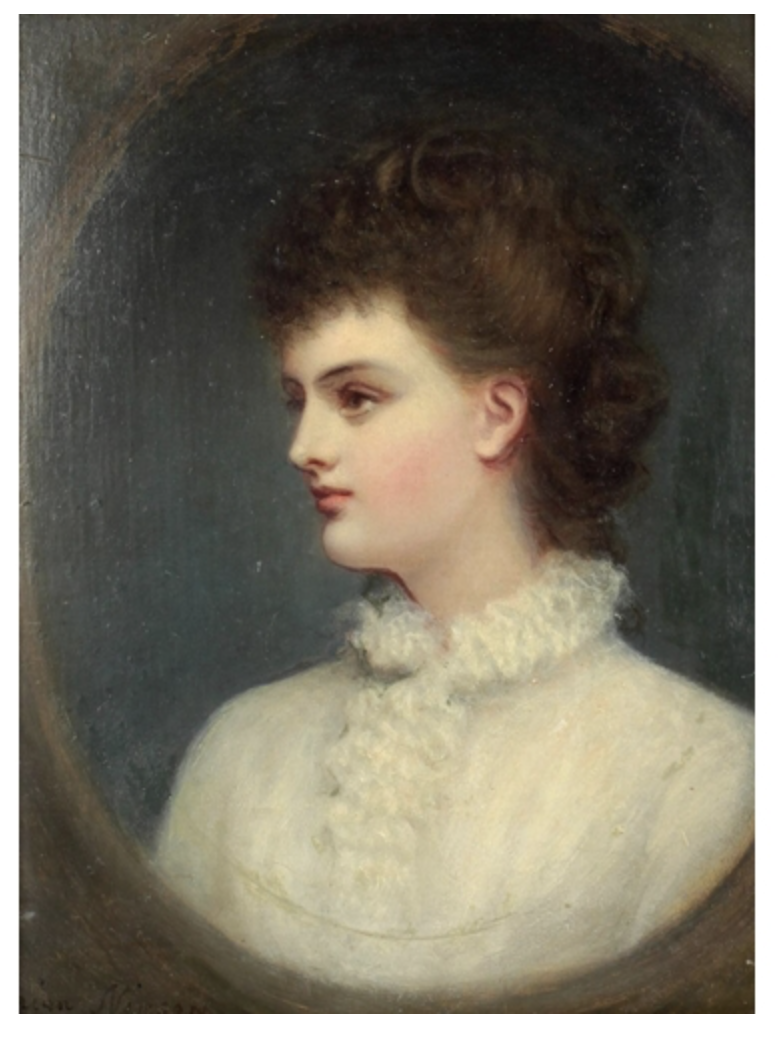
Augustus Frederick FitzGerald, 3rd Duke of Leinster, (1791-1874) engraver George Sanders, Scottish, 1810 – c.1876 after Stephen Catterson Smith, Irish, 1806-1872. Photograph courtesy of National Gallery of Ireland.Hermione Dunscombe – Duchess of Leinster,” O.O.B., signed lower left ‘Marian Nixon, 1878,” courtesy Fonsie Mealy auction July 2018.
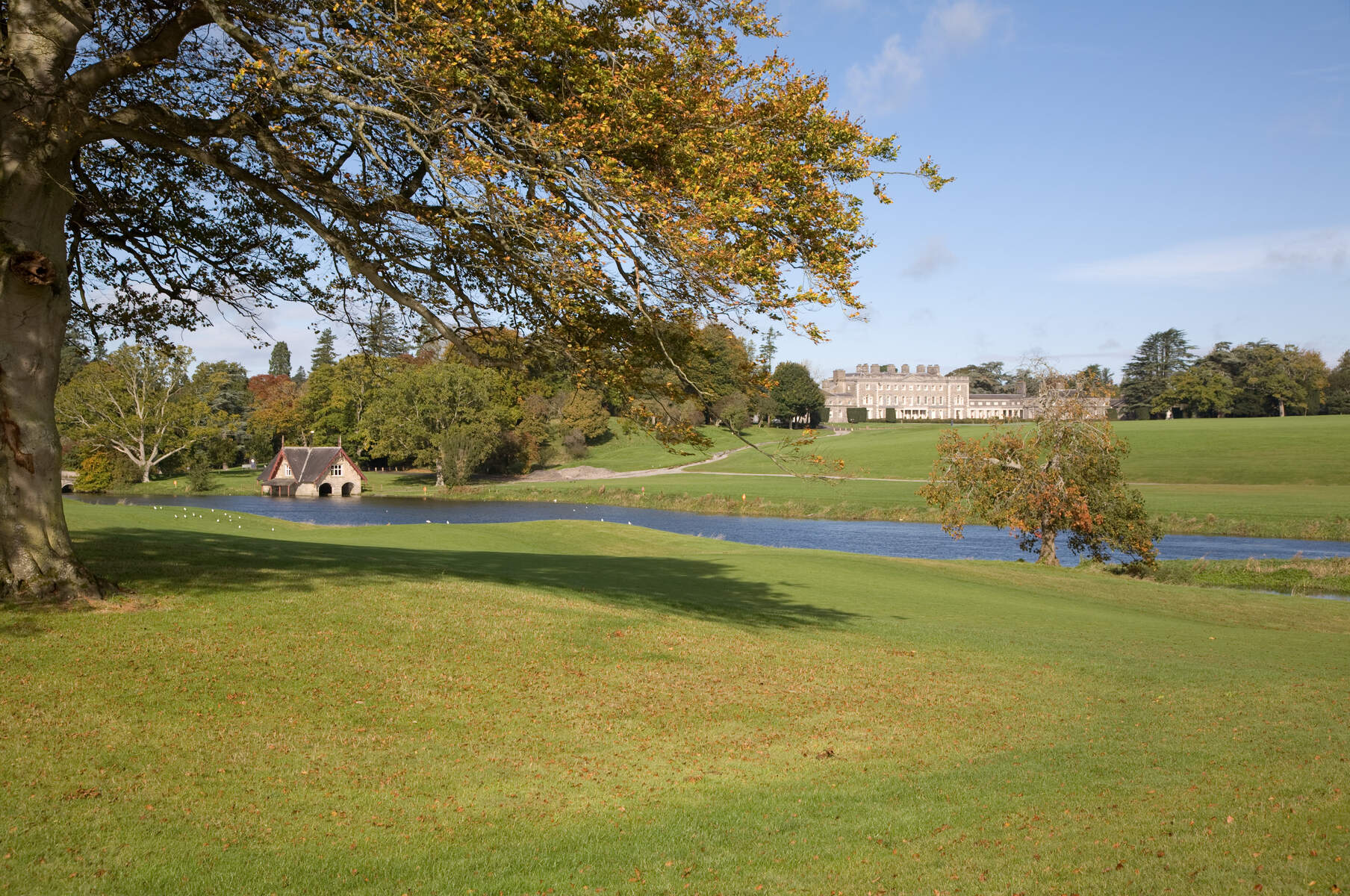
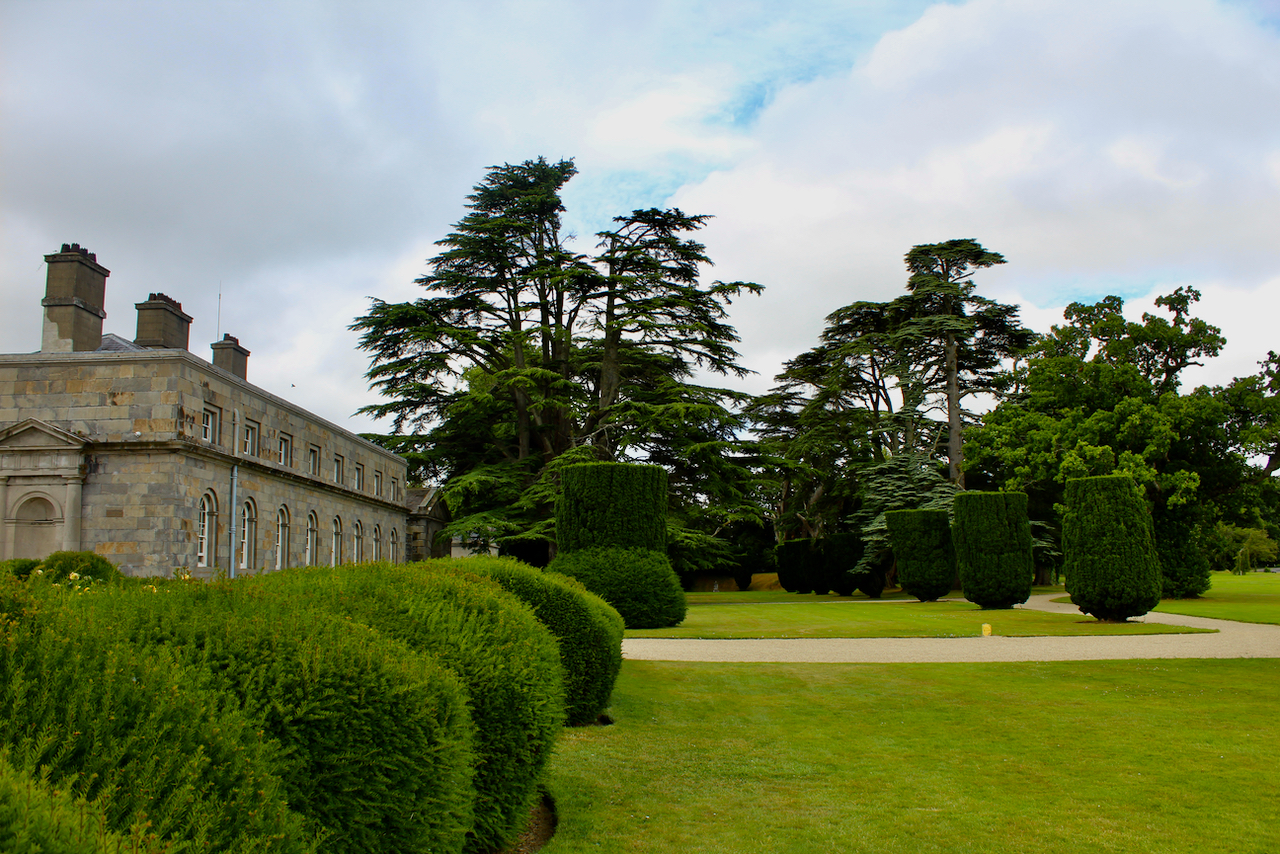
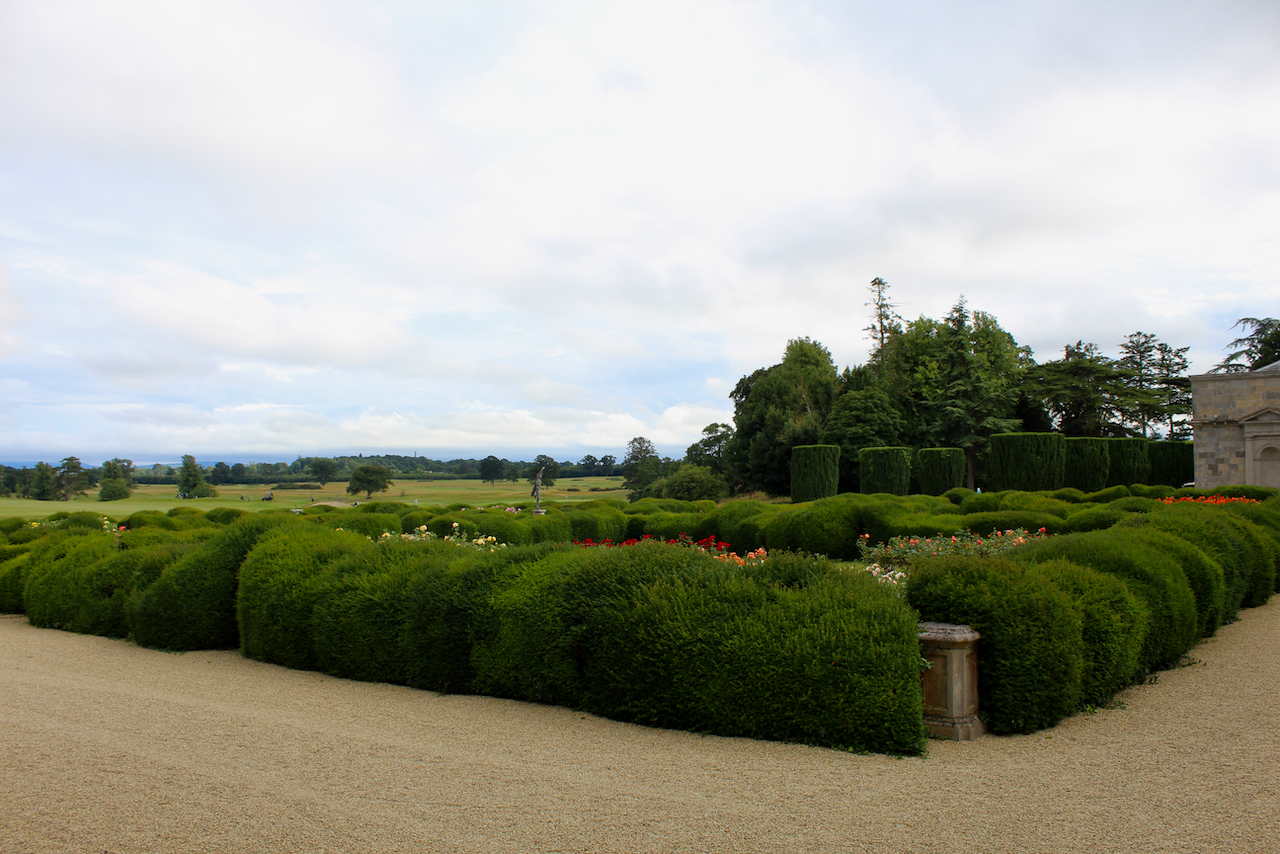
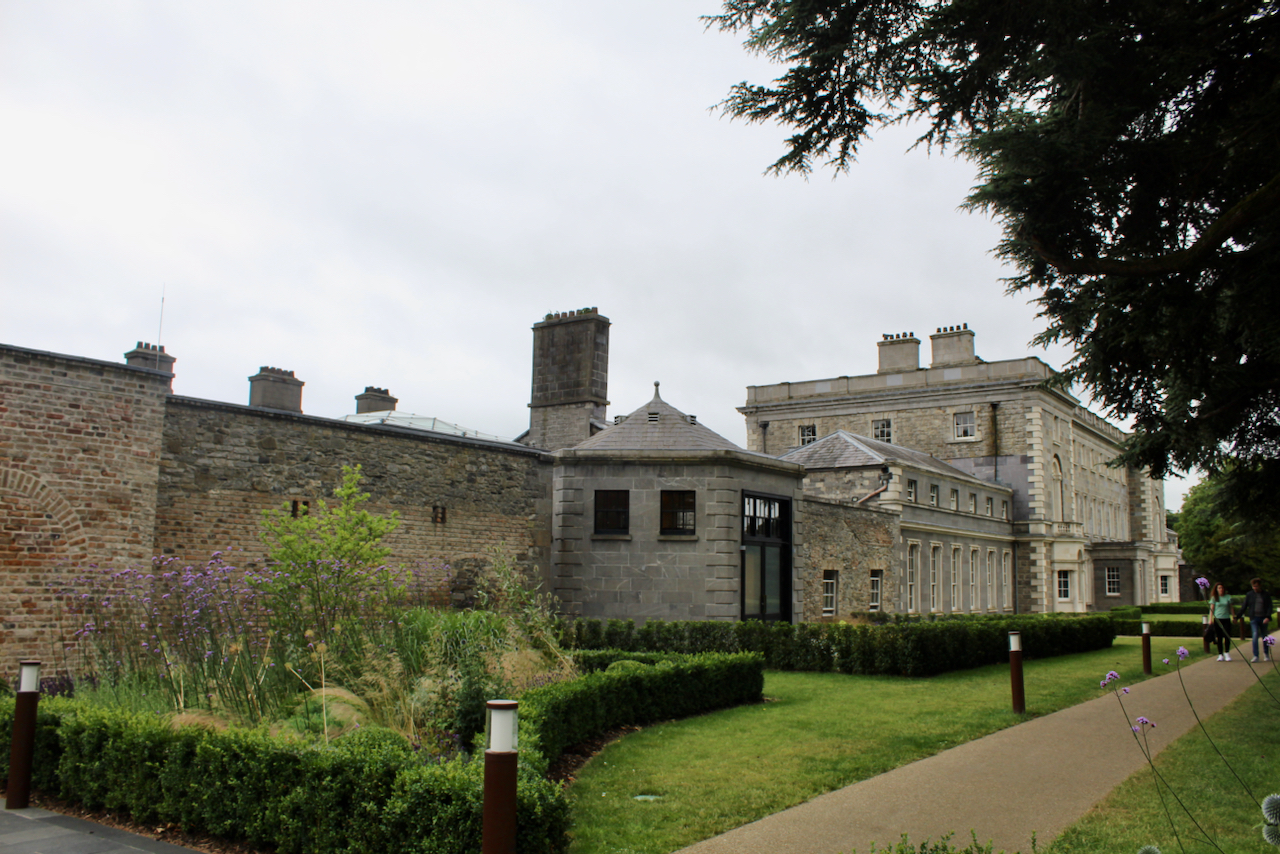
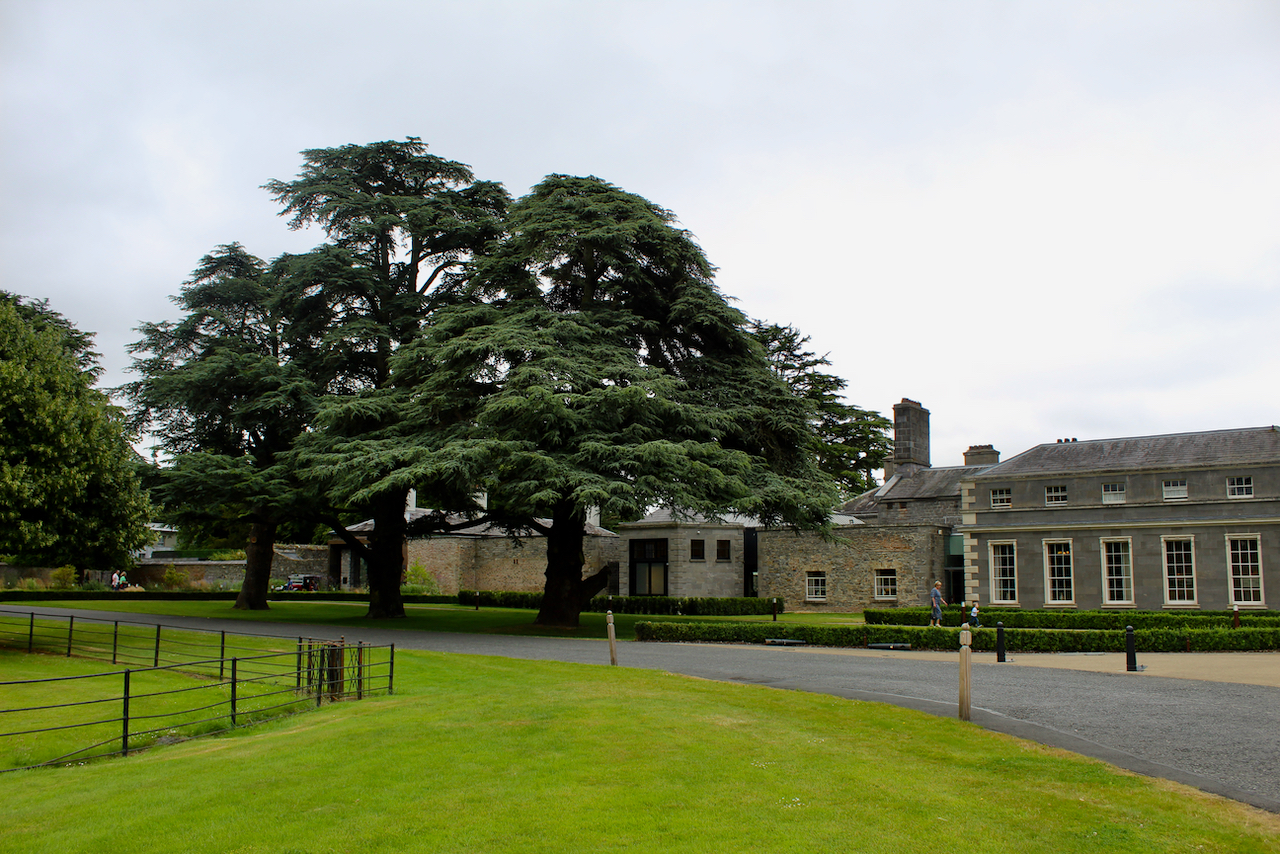
Archiseek continues: “Carton remained in the control of the FitzGeralds until the early 1920s when the 7th Duke sold the estate and house to pay off gambling debts of £67,500. In 2000, Carton was redeveloped as a “premier golf resort and hotel”. A hotel was added to the main house, and the estate’s eighteenth-century grounds and landscaping were converted into two golf courses.” [3]
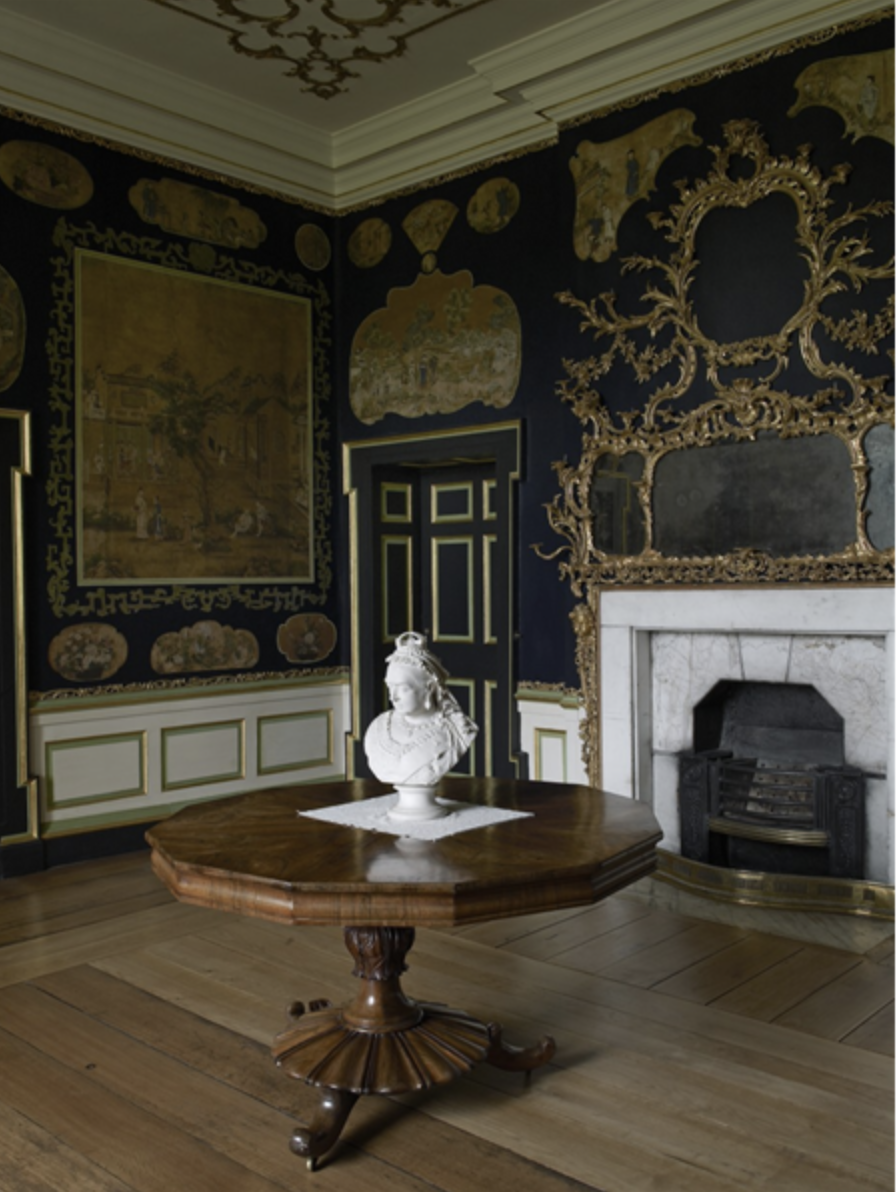
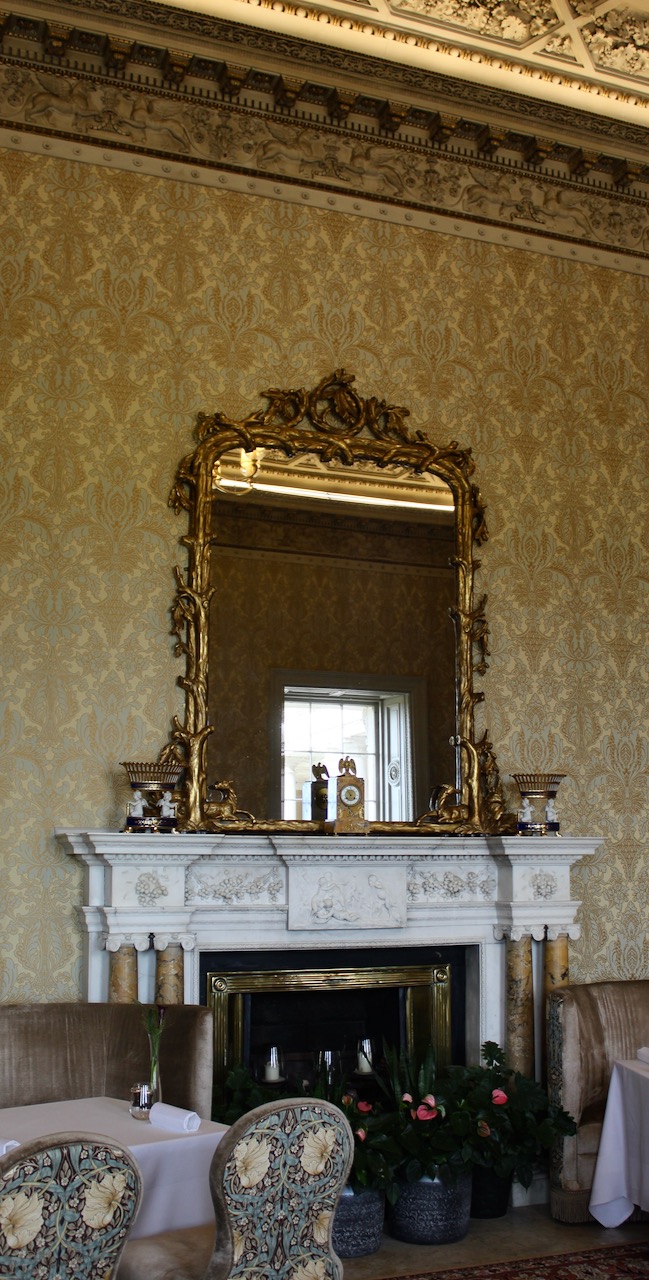
Mark Bence-Jones continues: “Beyond the staircase, on the ground floor, is the Chinese bedroom, where Queen Victoria slept when she stayed here; it remains as it was when decorated 1759, with Chinese paper and a Chinese Chippendale giltwood overmantel.” Unfortunately we didn’t get to see this room.
The Chinese Room at Carton House, decorated by Emily, Countess of Kildare in the mid 18th century. Above the chimneypiece is a Chippendale mirror erupting into a series of gilded branches, some of which are sconces. Pub. Orig Country Life 18/02/2009 vol CCIII.
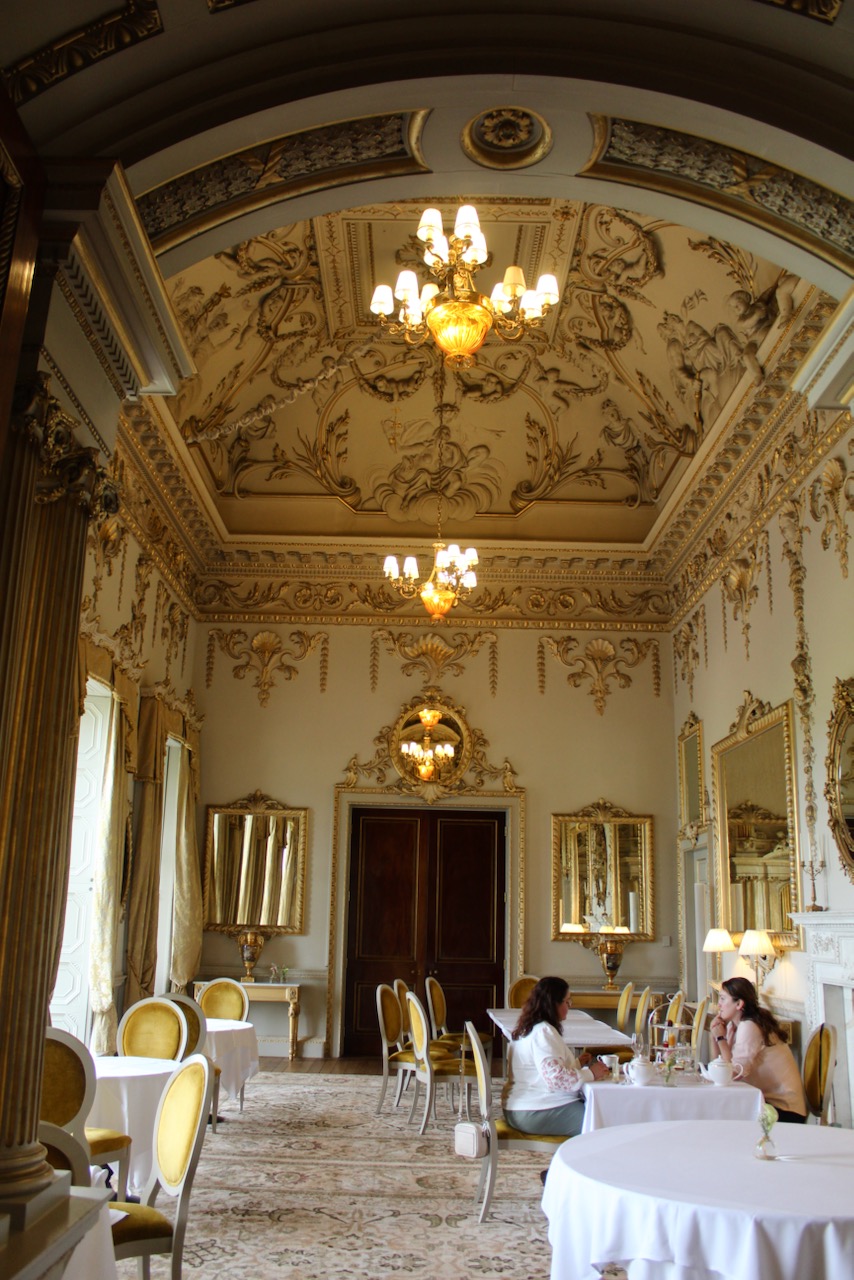
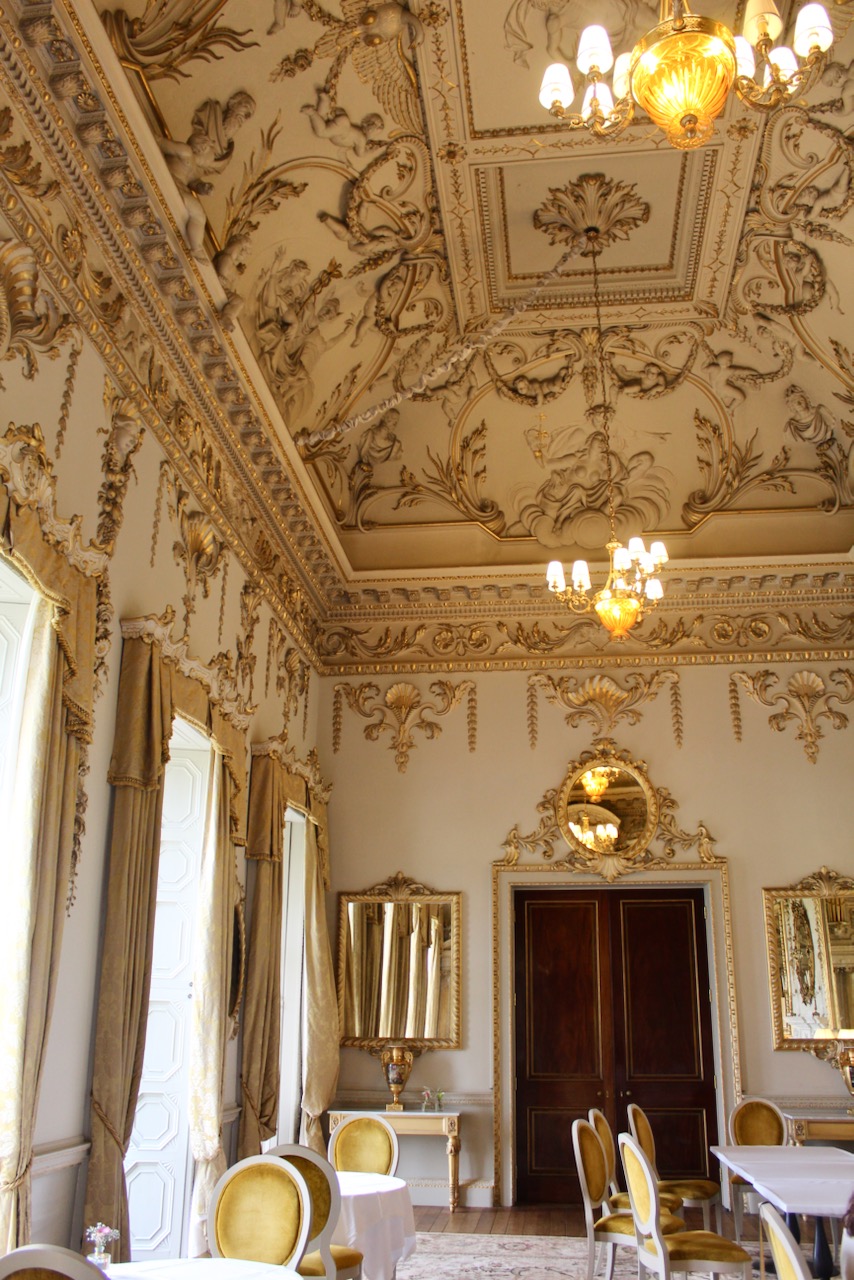
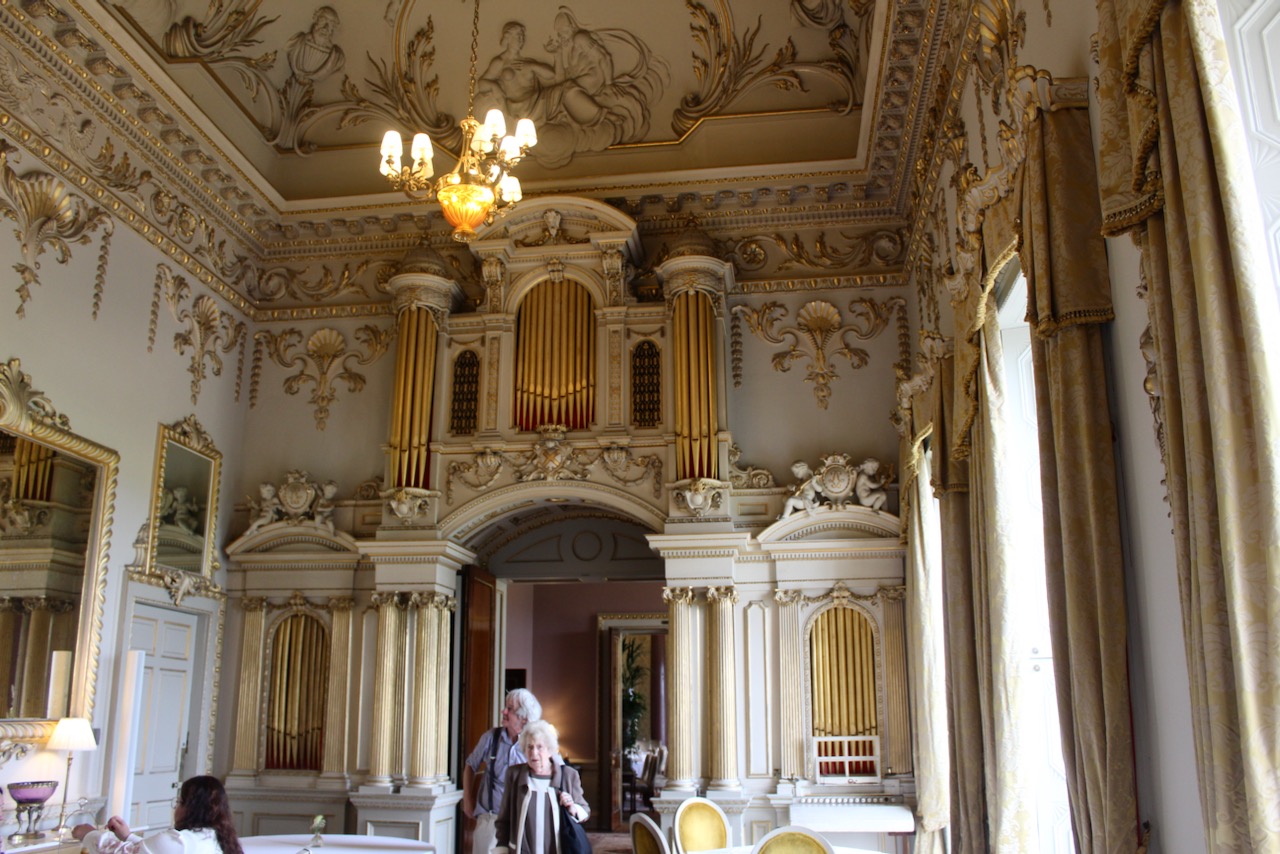
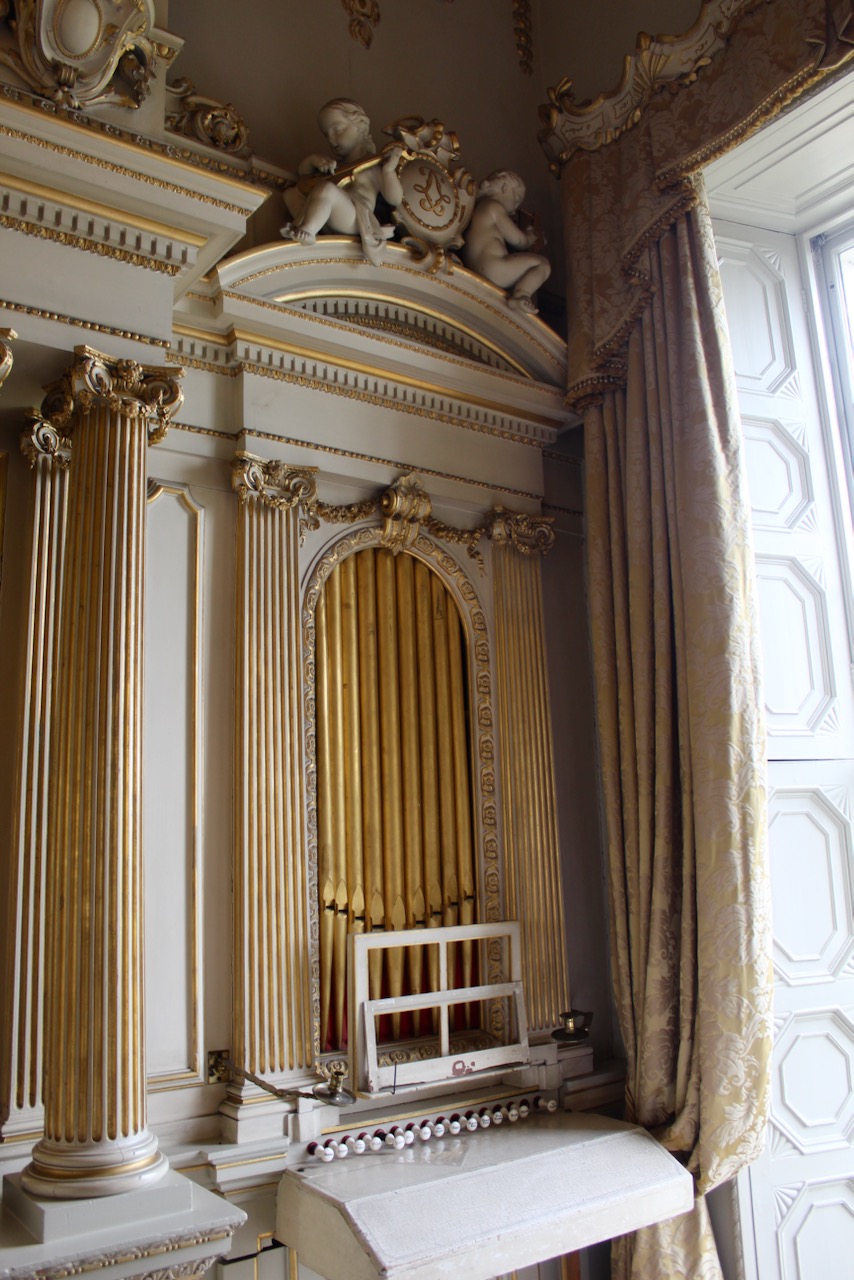
Bence-Jones continues: “The other surviving mid-C18 interior is the saloon, originally the dining room, in the garden front, dating from 1739 and one of the most beautiful rooms in Ireland. It rises through two storeys and has a deeply coved ceiling of Baroque plasterwork by the Francini brothers representing “the Courtship of the Gods”; the plasterwork, like the decoration on the walls, being picked out in gilt. At one end of the room is an organ installed 1857, its elaborate Baroque case designed by Lord Gerald Fitzgerald [1821-1886], a son of the 3rd Duke.“
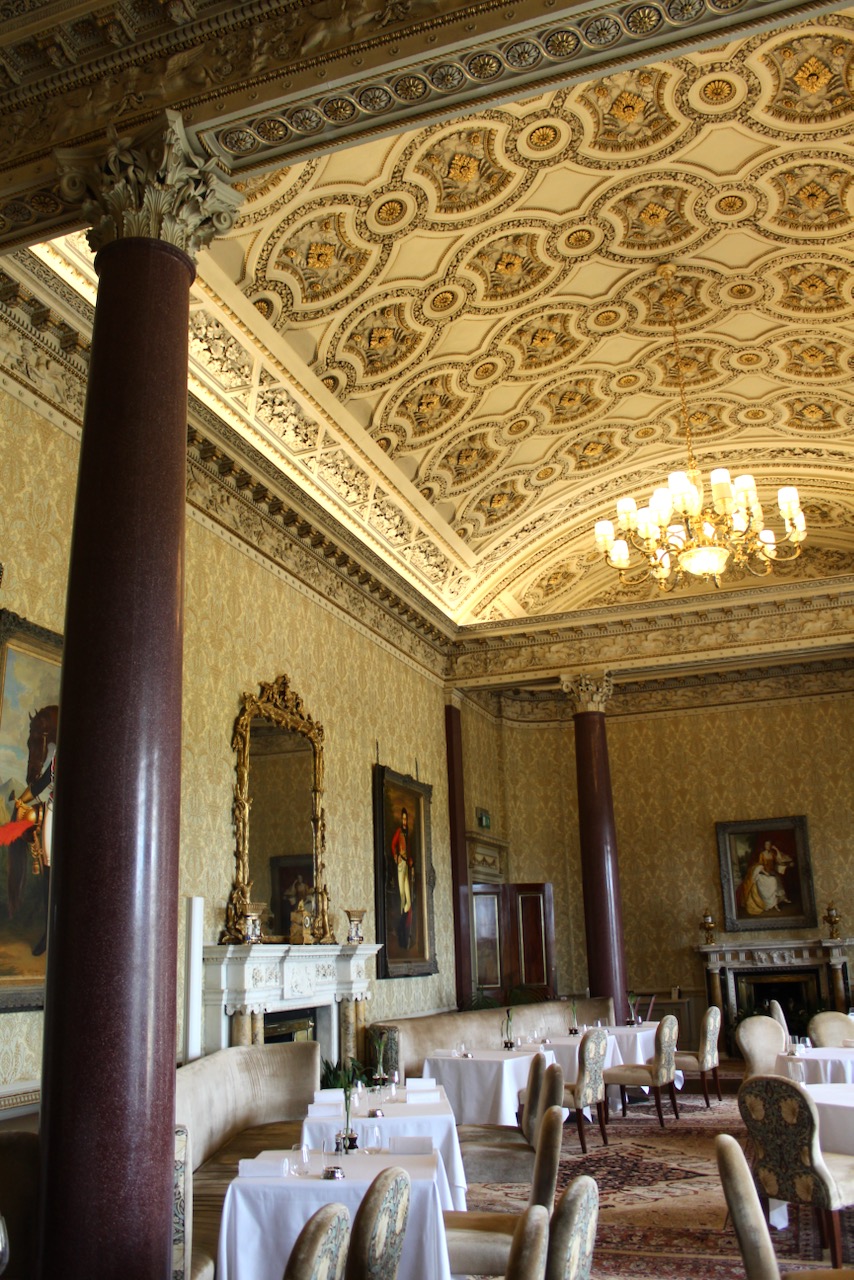
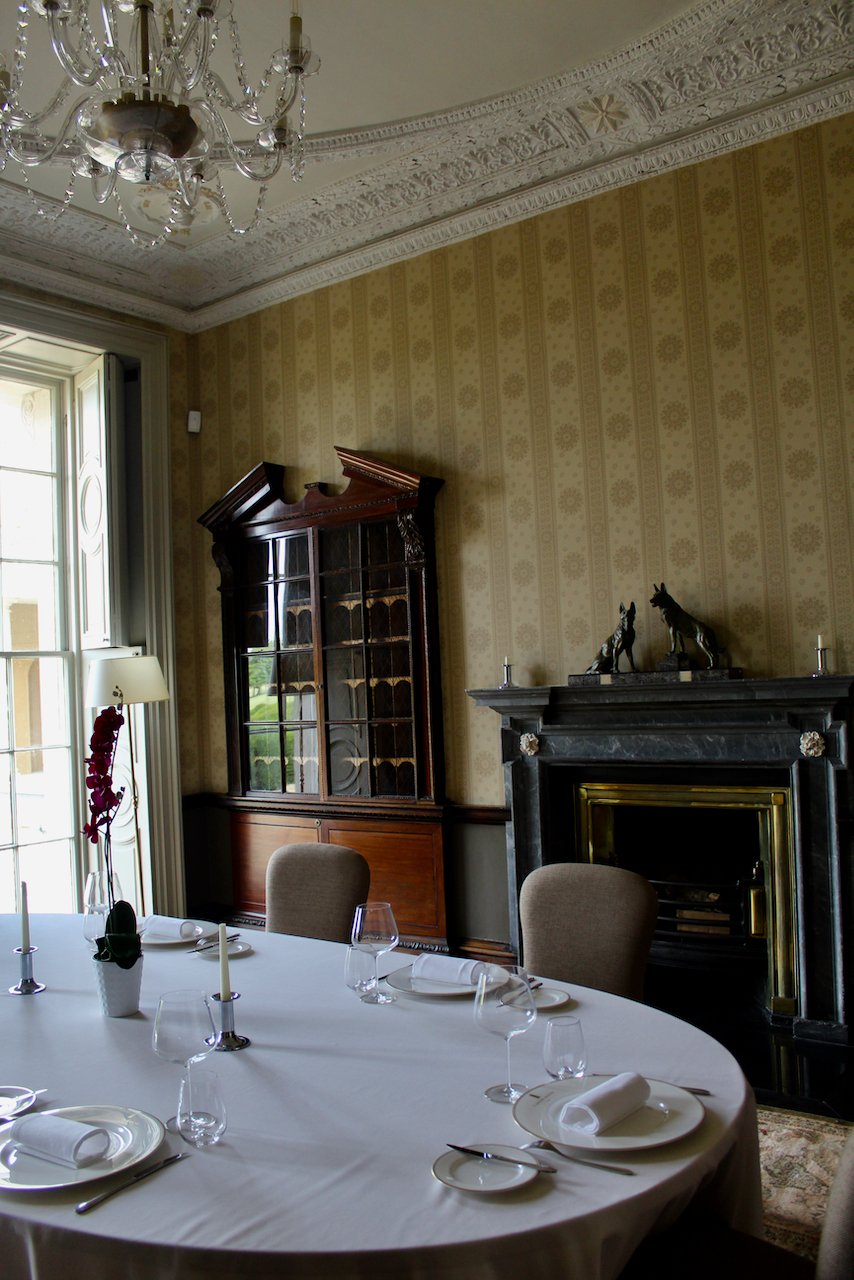
“The door at this end of the saloon leads, by way of an anteroom, to Morrison’s great dining room, which has a screen of Corinthian columns at each end and a barrel-vaulted ceiling covered in interlocking circles of oak leaves and vine leaves.
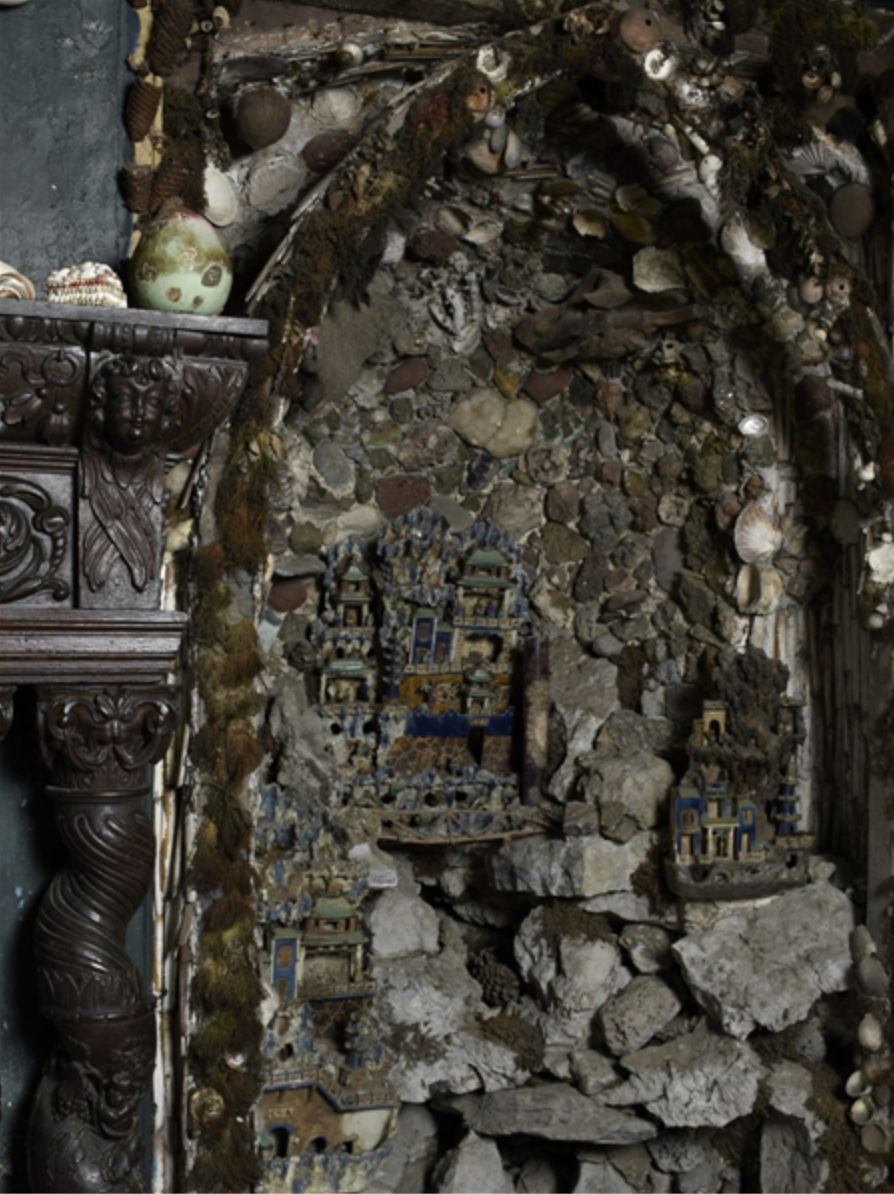
Bence-Jones tells us: “The demesne of Carton is a great C18 landscape park, largely created by 1st Duke and Emily Duchess; “Capability” Brown was consulted, but professed himself too busy to come to Ireland. By means of a series of dams, a stream has been widened into a lake and a broad serpentine river; there is a bridge by Thomas Ivory, built 1763, an ornamental dairy of ca 1770 and a shell house. Various improvements were carried out to the gardens toward the end of C19 by Hermione, wife of 5th Duke, who was as famous a beauty in her day as Emily Duchess was in hers; she was also the last Duchess of Leinster to reign at Carton, for her eldest son, 6th Duke, died young and unmarried, and her youngest son, 7th Duke, was unable to live here having, as a young man, signed away his expectations to the “50 Shilling Tailor” Sir Henry Mallaby-Deeley, in return for ready money and an annuity. As a result of this unhappy transaction, Carton had eventually to be sold. It was bought 1949 by 2nd Lord Brocket, and afterwards became the home of his younger son, Hon David Nall-Cain, who opened it to the public. It was sold once again in 1977.”
[1] Bence-Jones, Mark. A Guide to Irish Country Houses (originally published as Burke’s Guide to Country Houses volume 1 Ireland by Burke’s Peerage Ltd. 1978); Revised edition 1988 Constable and Company Ltd, London.
Open in 2026: Jan 12-Dec 22, Jan-Feb, Nov-Dec 10.30am-4pm, Mar-Apr, Sept-Oct, 10am-5pm, May-Aug, 10am-6pm
Fee: adult house €15, tour of house €19, child €7.50, tour of house €10.50, OAP/student €12.50, tour of house €15, family €31.50, tour of house €39.50
donation
Help me to pay the entrance fee to one of the houses on this website. This site is created purely out of love for the subject and I receive no payment so any donation is appreciated!
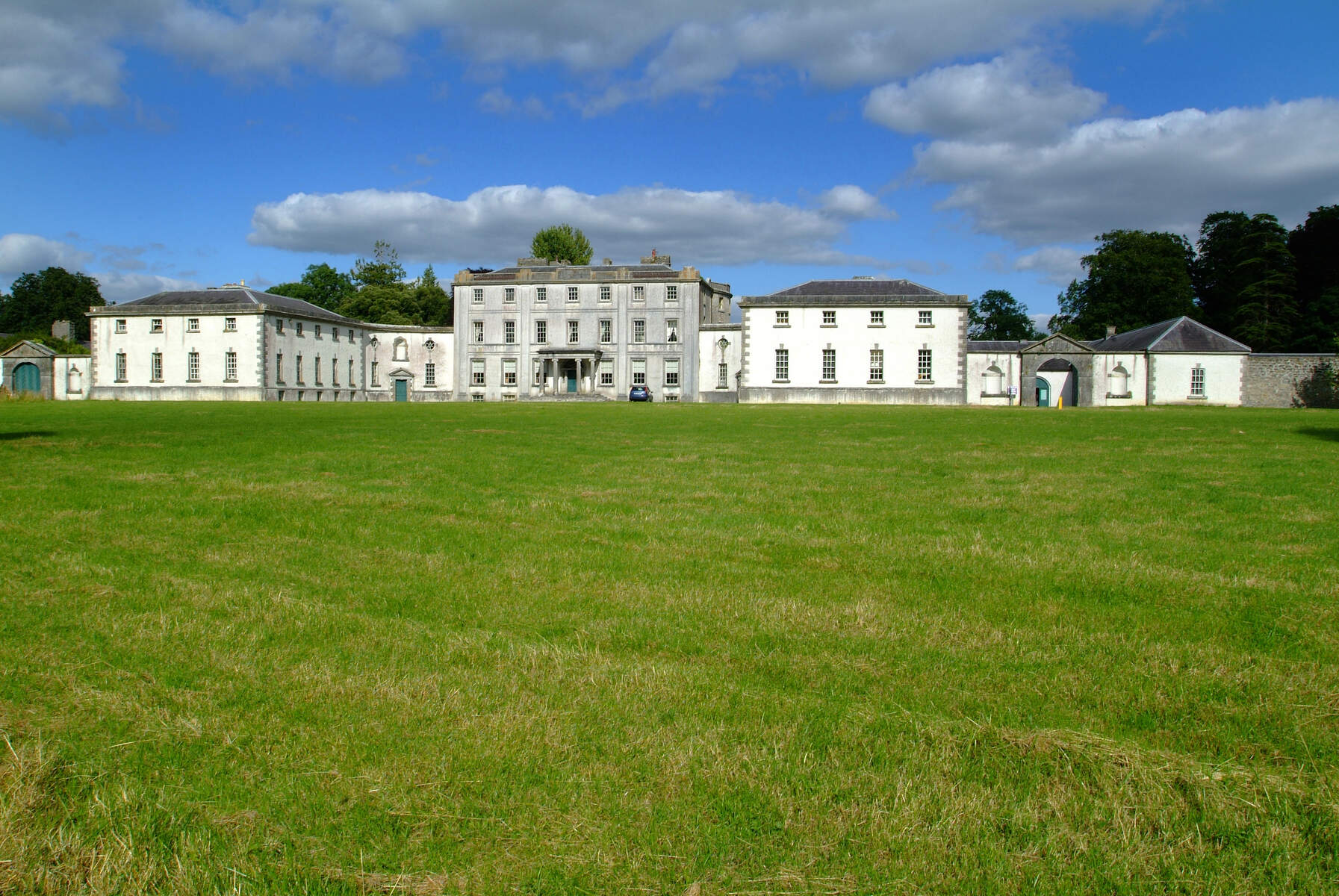
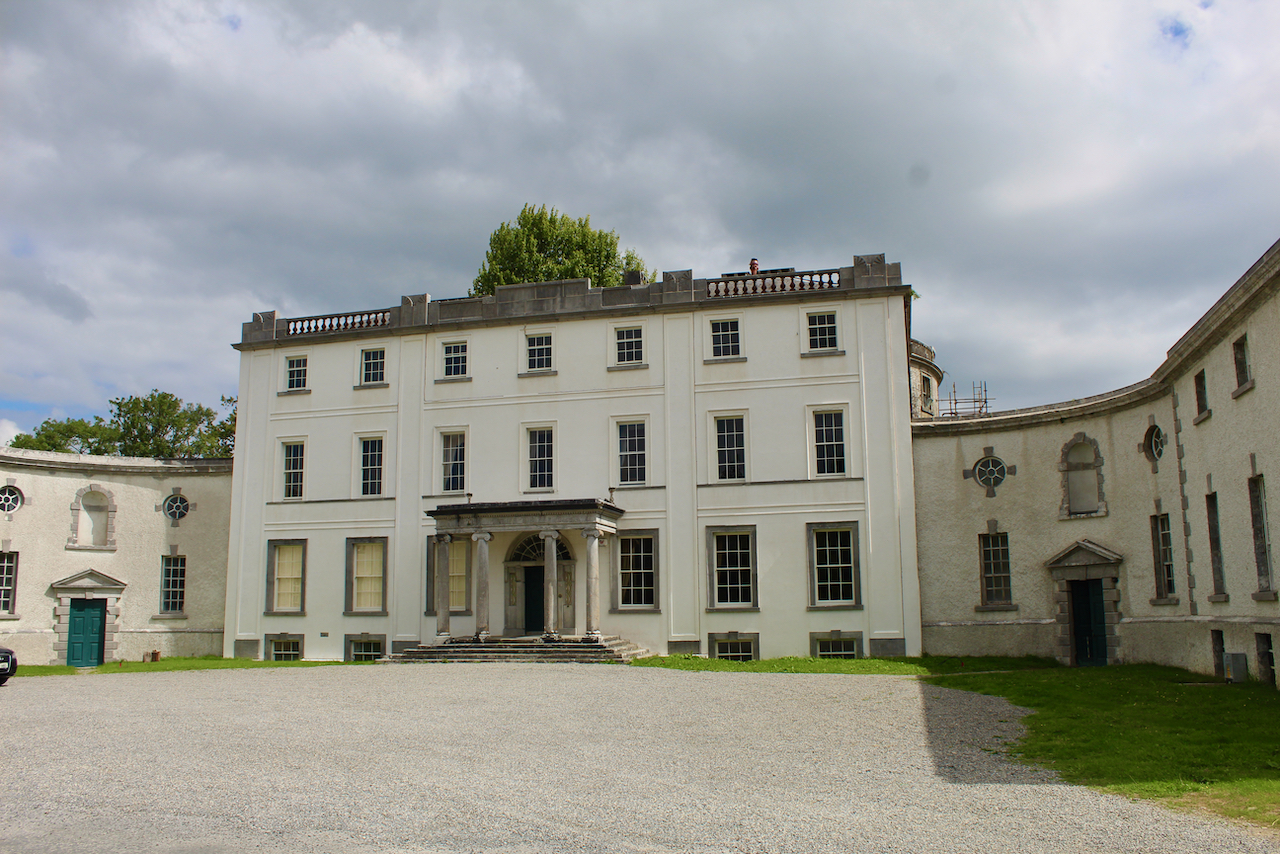
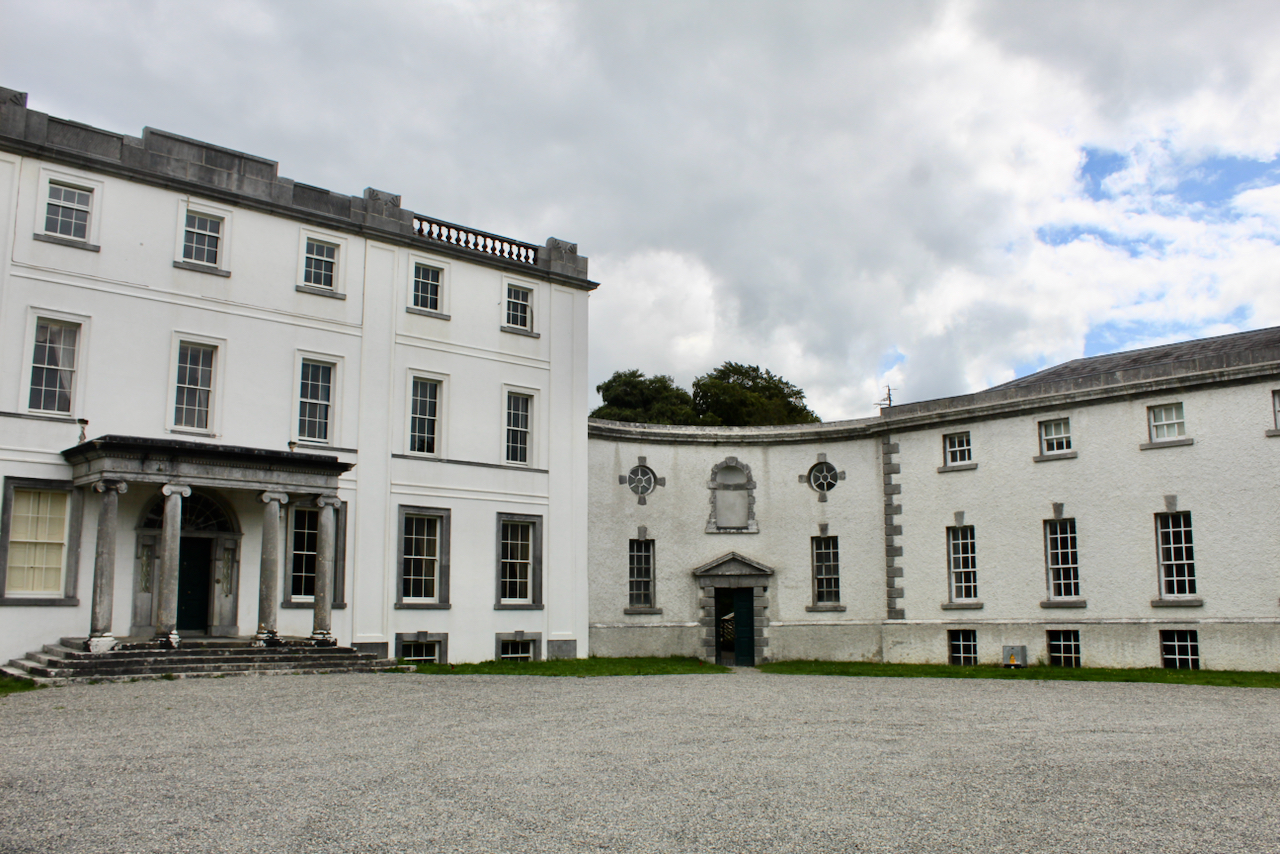
The Archiseek website describes Strokestown Park house as “a substantial house in the Palladian manner of a central block flanked by wings and curved sweeps. The centre block was completed in 1696 but extended around 1730 by Richard Cassels who added the substantial wings. The house was further altered in 1819 by J. Lynn.” [2]
Strokestown Park, County Roscommon.
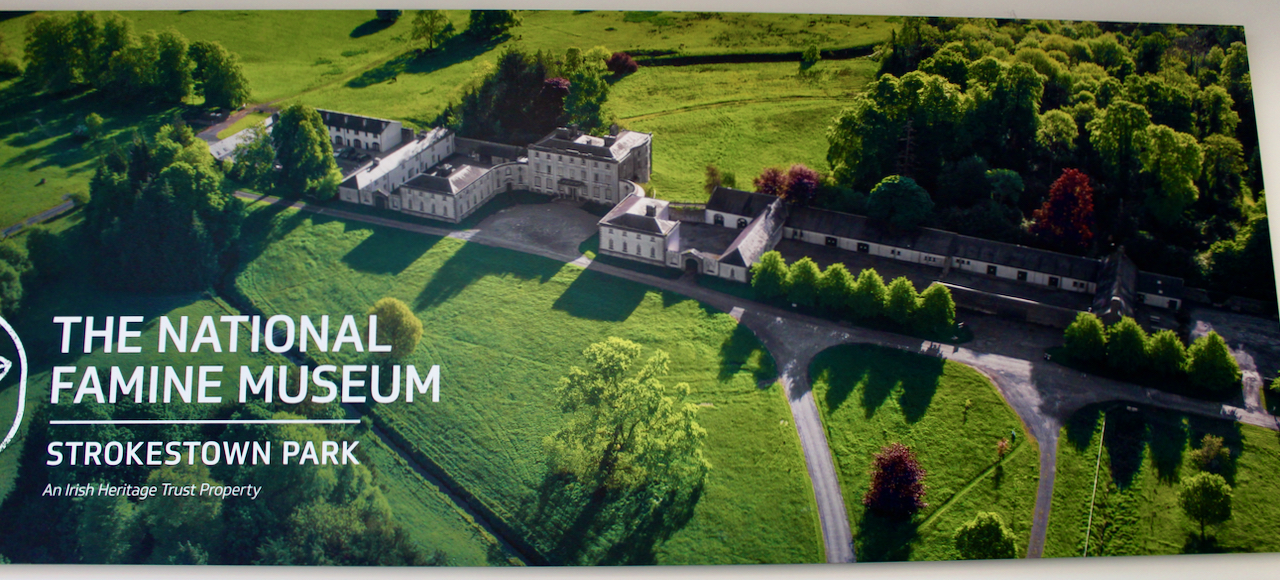
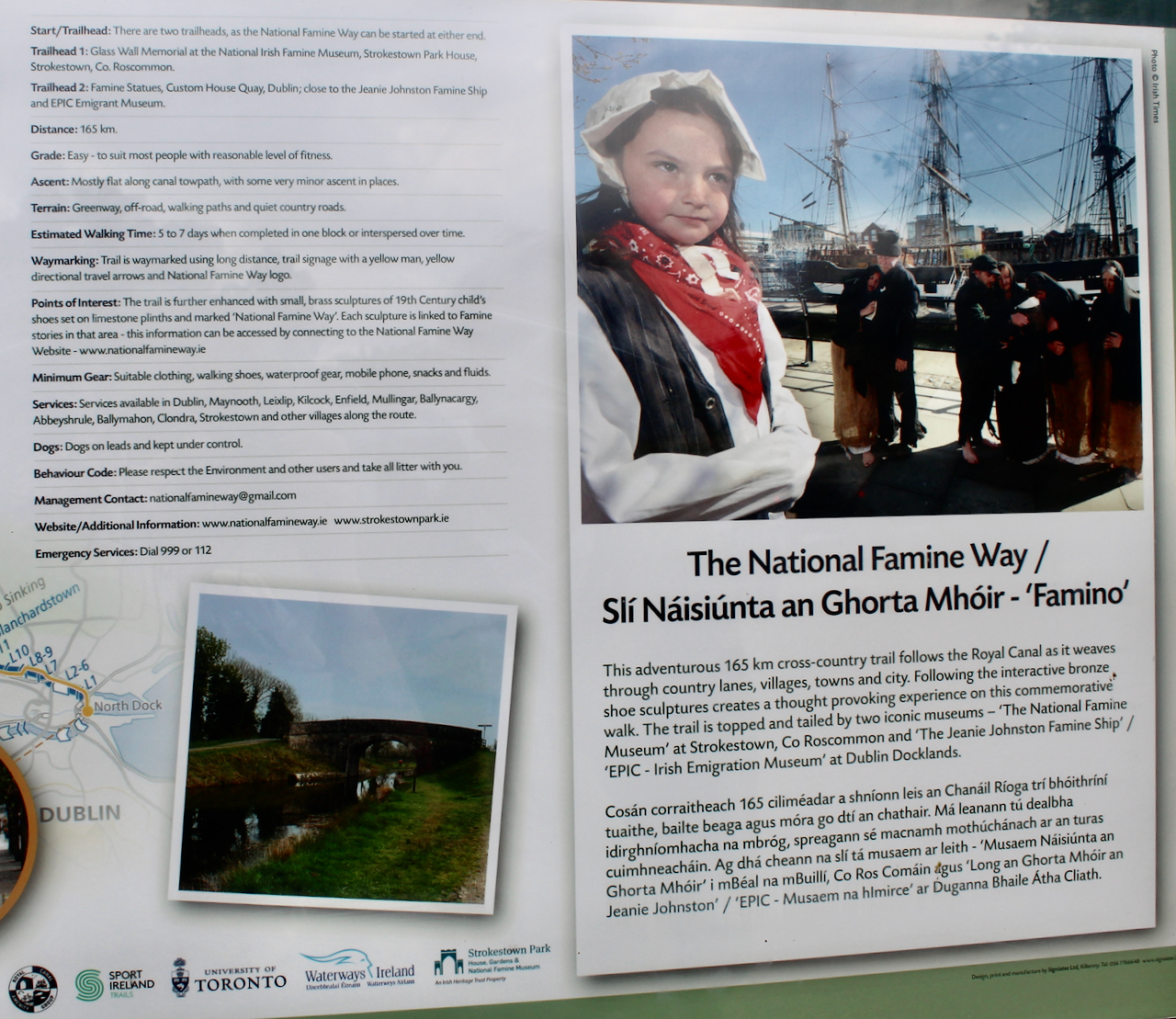
We visited Strokestown Park in County Roscommon during Heritage Week 2022. It houses the excellent National Famine Museum and Archive, which is really worth visiting. It sounds grim, but it is a great exhibition and it tells us so much about people’s lives that it is not a grim museum at all. It also tells us about the Pakenham-Mahons, the family who lived in the impressive Strokestown Park. Strokestown Park was the home of the first landlord to be assassinated during the height of the Great Famine of Ireland the 1840s, and it is therefore ideal for the location of the Famine Museum.
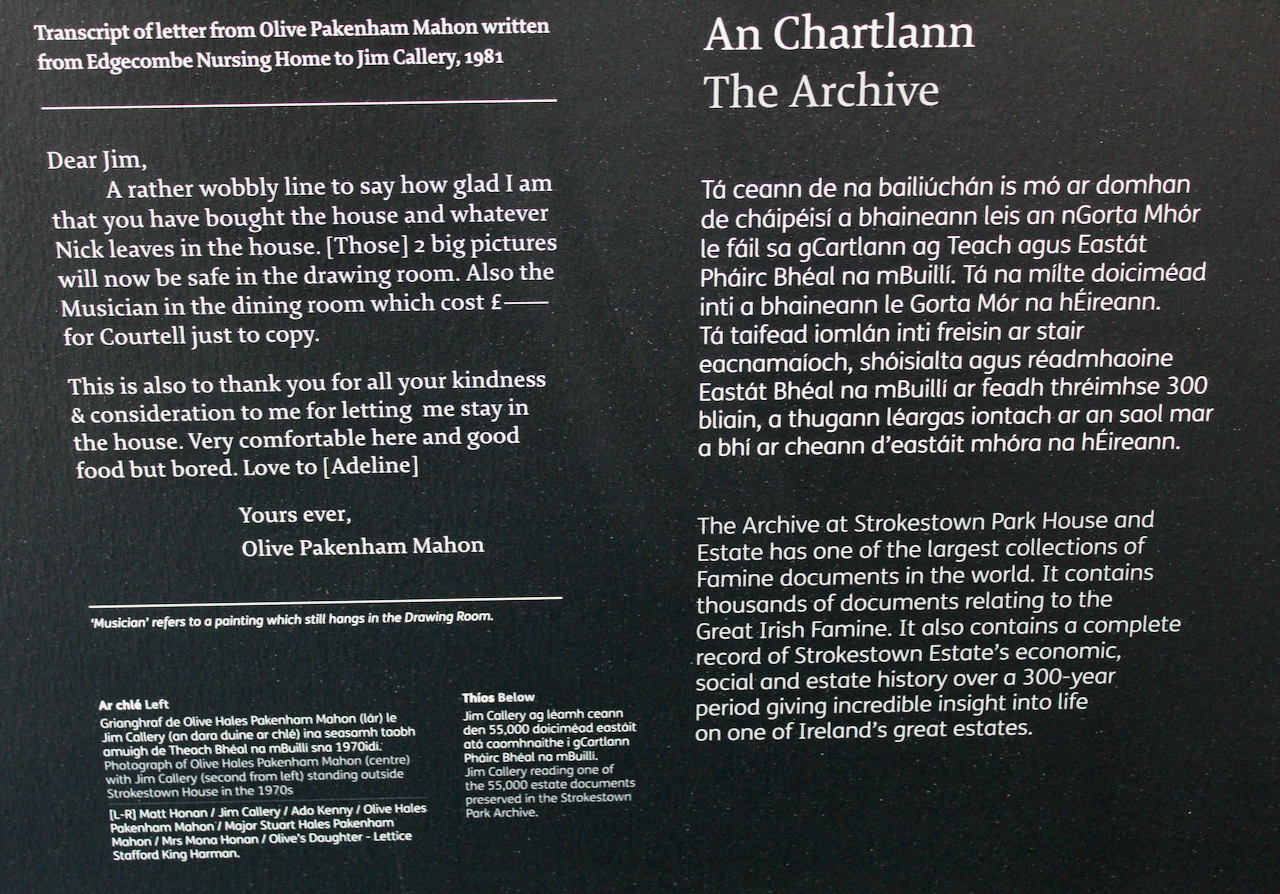
In 1979 Nicholas Hales Pakenham Mahon sold the estate to Westward Garage, founded by Jim Callery. The new owners allowed the last of the Mahon family, Olive and her husband Wilfrid Stuart Hales Pakenham Mahon, to remain living in the house until she moved to a nursing home.
Despite no longer being in the hands of the original owners, the house contains the original furnishings and fittings. The house is unchanged from the time when the Mahons lived there.
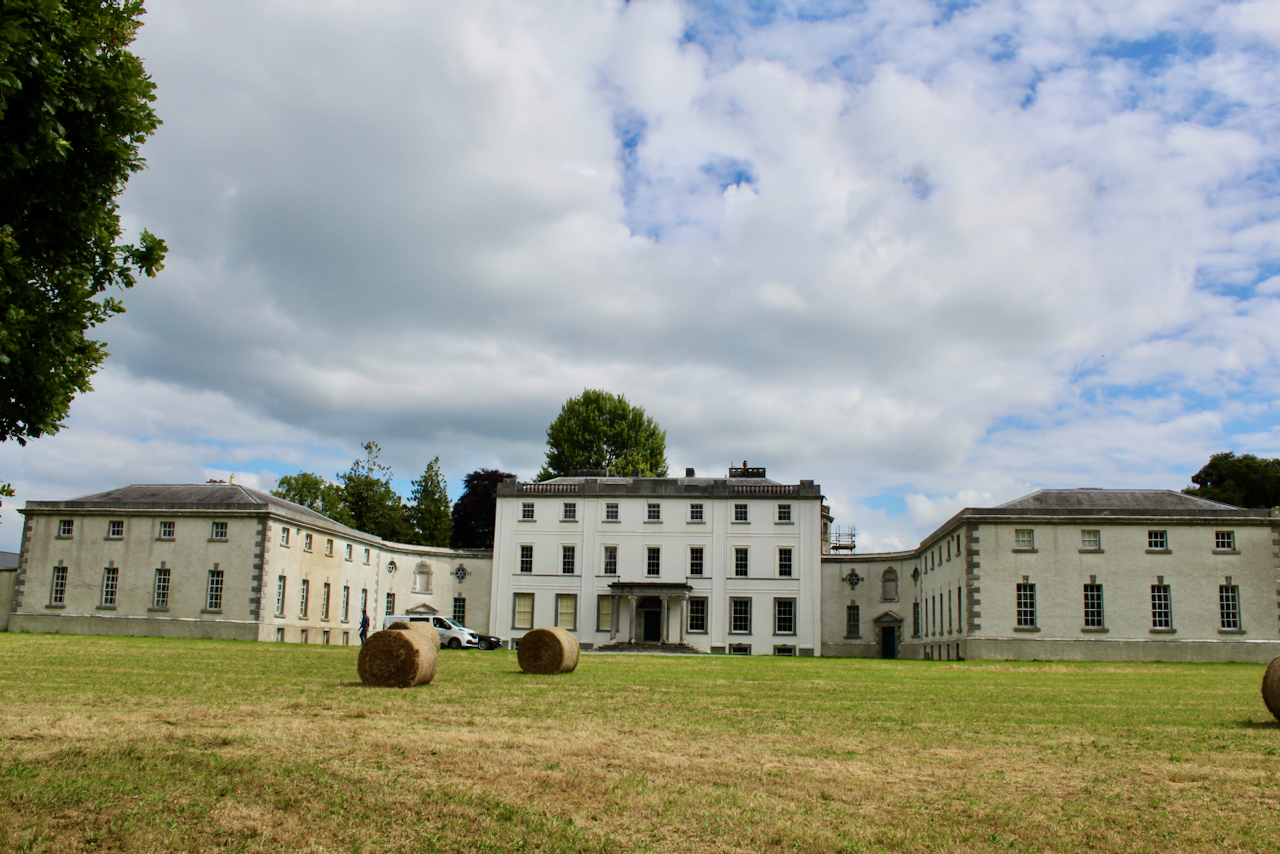
Strokestown Park, County Roscommon, August 2022.
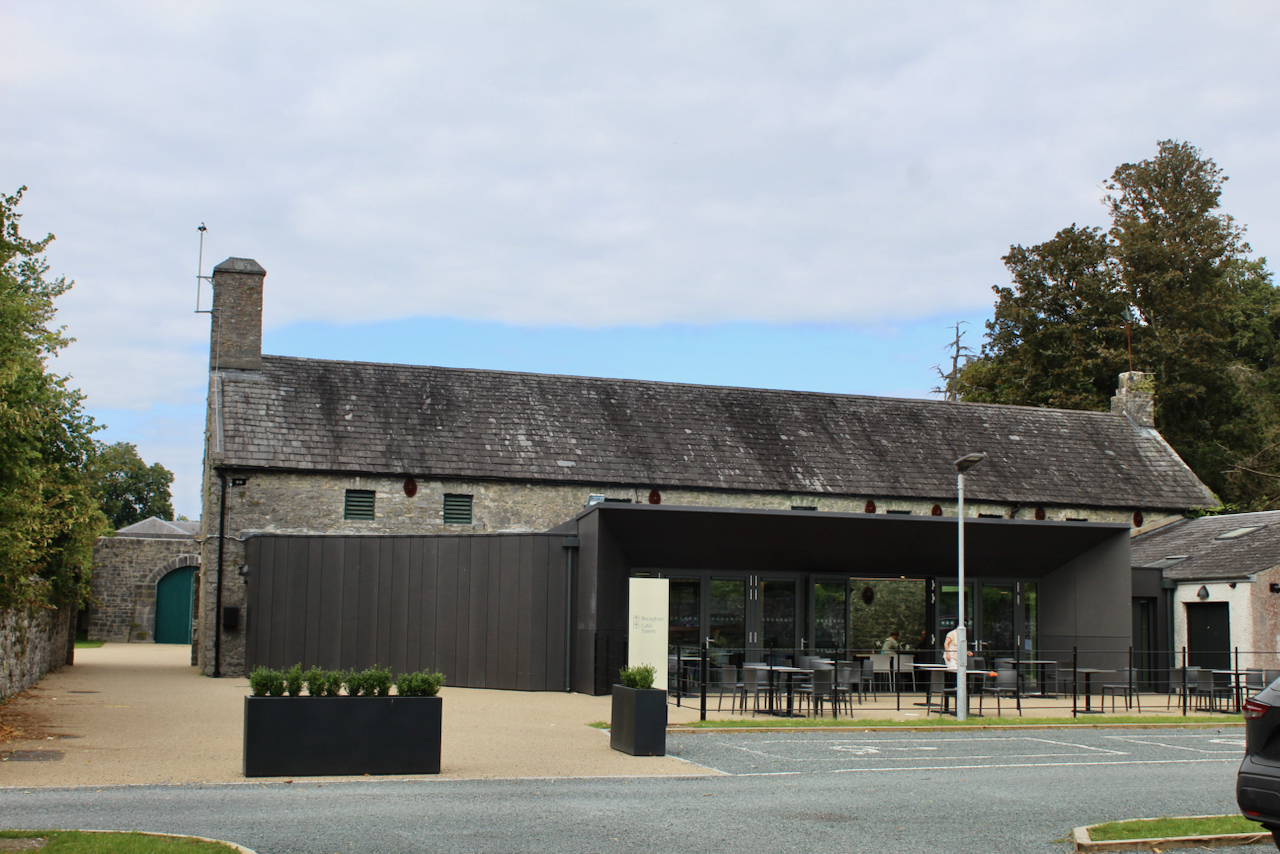
The Museum was created when Jim Callery, founder of the Westward Garage which purchased the property, found documents relating to the famine in the family archives. Jim Callery and the Westward Garage carried out a major restoration programme and opened the property to the public. Since 2015, Strokestown Park is cared for by the Irish Heritage Trust, an independent charity. Produce from the original working gardens are grown by volunteers and used in the Strokestown Park Café.
Strokestown Park, County Roscommon, August 2022.
The website tells us that the house is built on the site of the 16th-century castle, home of the O Conor-Roe Gaelic Chieftains. Before being called “Strokestown House” the property was called “Bawn,” in reference to the bawn of the O Conor-Roe castle.
Nicholas Mahon, a captain in King Charles I’s army, was granted Strokestown as a royal deer park in 1653. Later, after pledging allegiance to King Charles II, he received more land. He was High Sheriff of County Roscommon, 1664-76. [3] He received over 3000 acres in 1678. He started to build a house, which was completed after his death in 1680, in 1696. Terence Reeves-Smyth tells us in his book Irish Big Houses that there is a stone by the door which has 1696 carved into it – the stone is now inside the house.
Strokestown Park featured as Building of the Month in December 2015 on the National Inventory of Architectural Heritage, and it tells us about the 1696 house:
“Evidence of this house survives to the present day at basement level where a panelled still room, previously one of the principal reception rooms, retains a rosette-detailed Jacobean chimneypiece, an egg-and-dart-detailed plasterwork overmantle decorated with fruits and shells, and a compartmentalised ceiling with dentilated moulded plasterwork cornices. Some earlier remains of the castle are also found in the basement where sections of the walls measure almost three metres deep. Memories of the medieval past were carried through into the nineteenth century when the house was still officially called, and was referred to by Isaac Weld (1832) and Samuel Lewis (1837) as “Bawn”.” [4] [5]
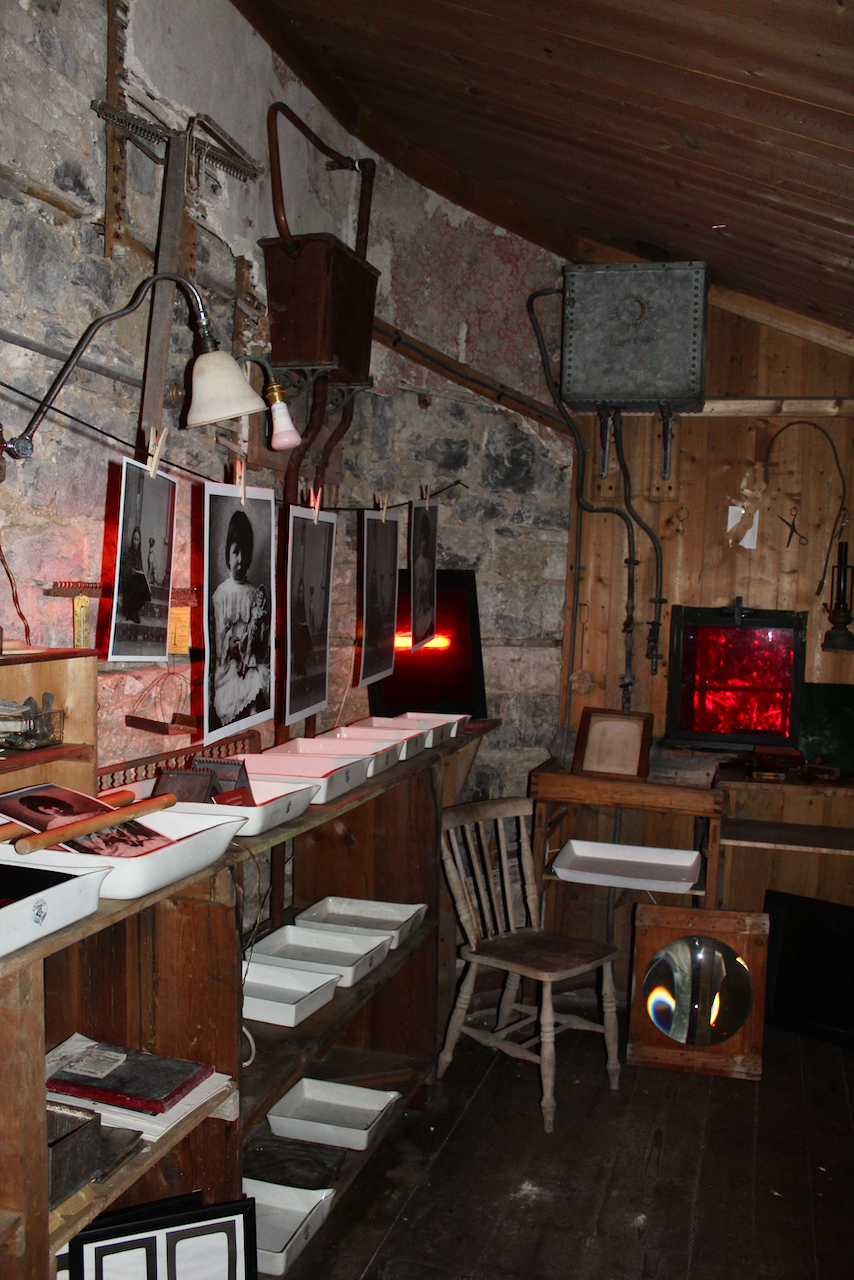
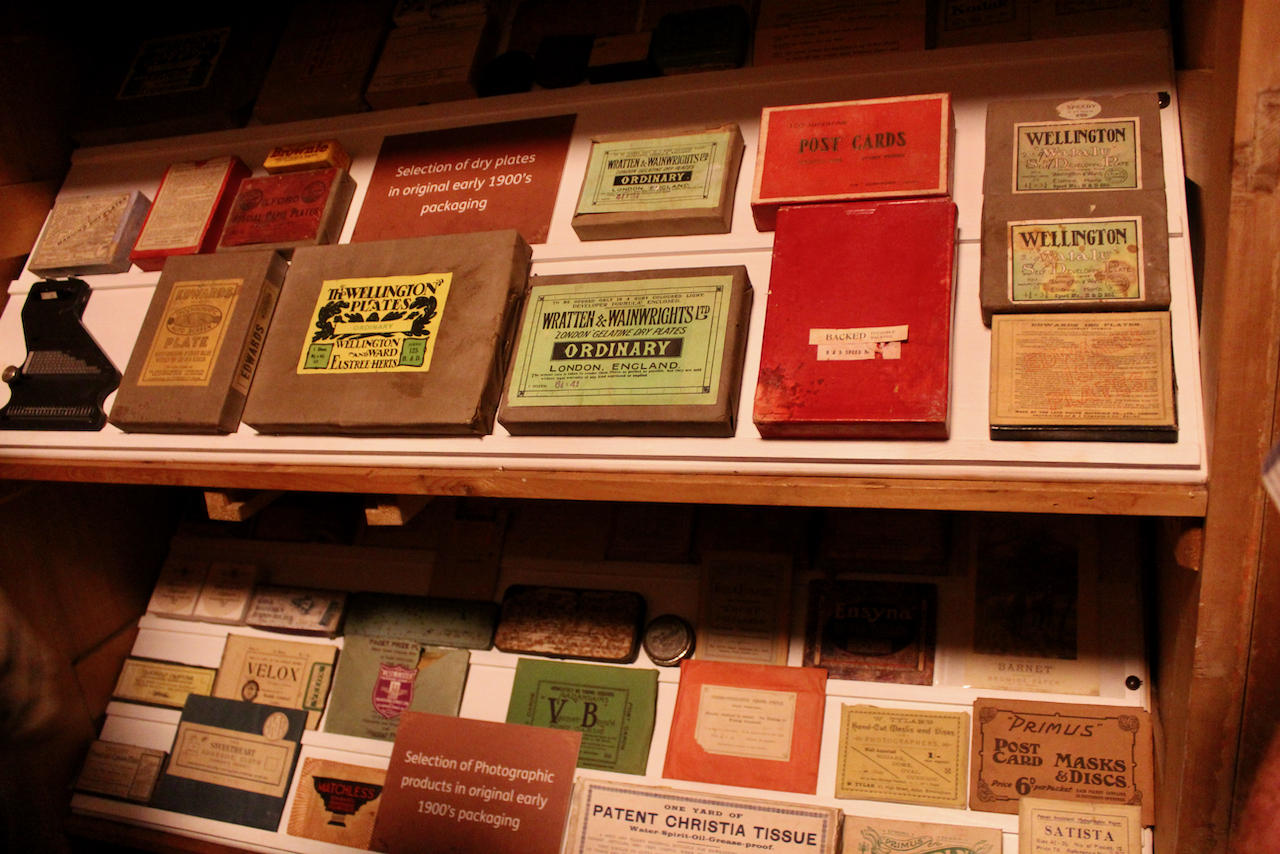
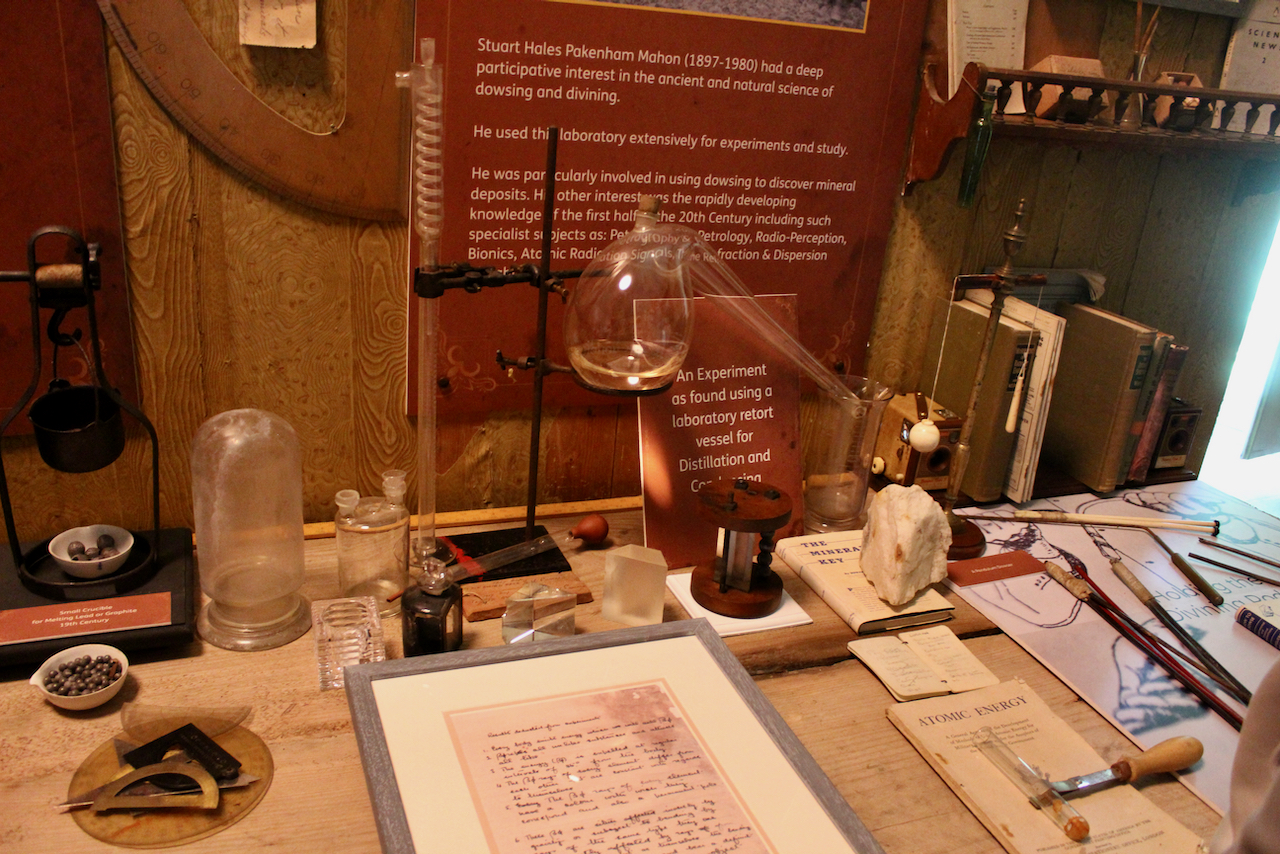
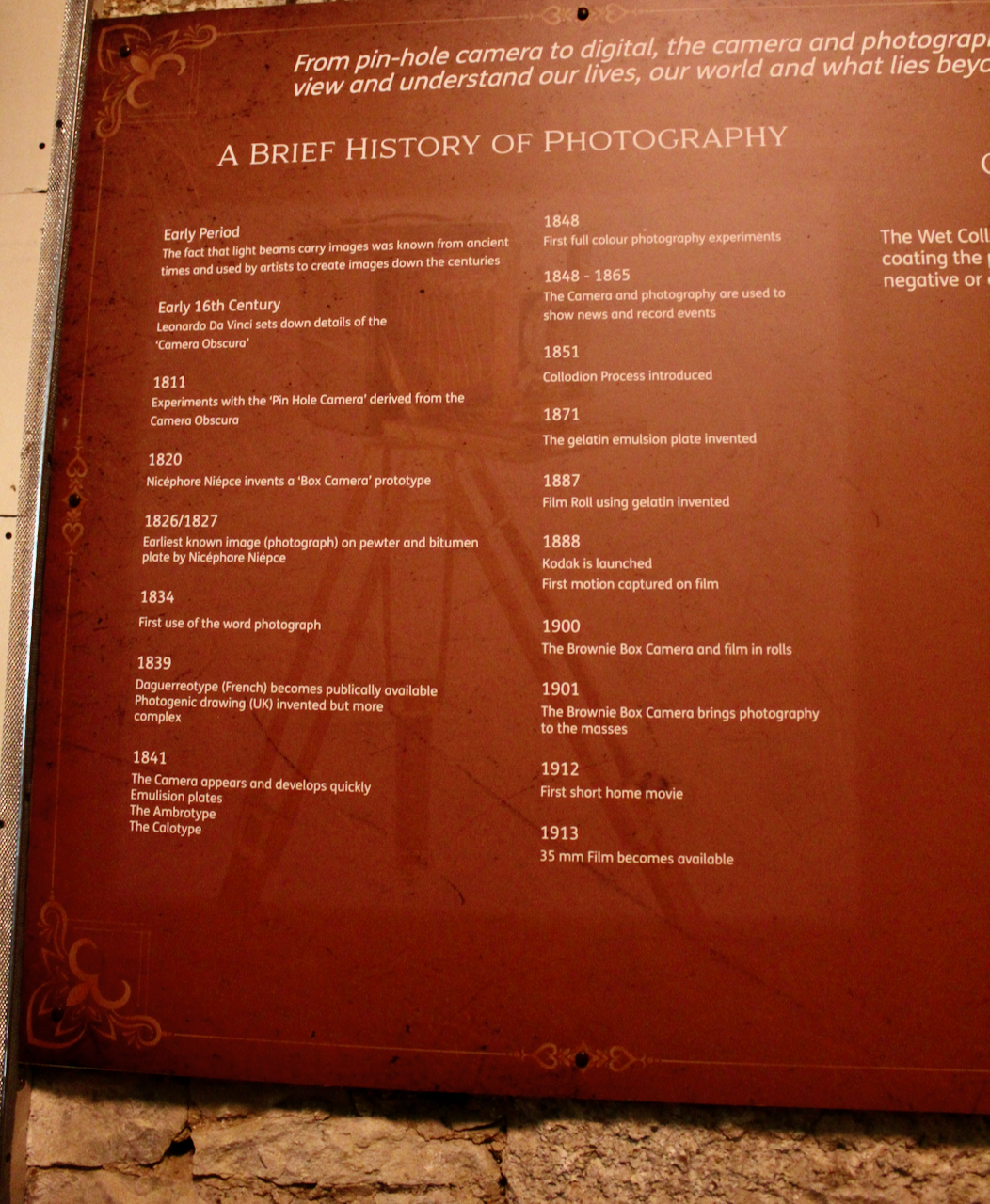
Stephen and I were able to see part of the interior of the house, despite the house being closed for restoration work at the time, by joining a Heritage Week talk about a photographic dark room which had been created in the house by one of its residents. Unfortunately we did not get to see the basement or the galleried kitchen.
Captain Nicholas married Magdalena French, daughter of Arthur French of Movilla Castle, County Galway. [6] They had several children. Their son Reverend Peter (d. 1739) became Dean of Elphin and married Catherine, daughter of Paul Gore of Castle Gore, County Mayo (otherwise known as Deel Castle, now a ruin), who was son of Arthur, 1st Baronet Gore, of Newtown Gore, otherwise known as Parkes Castle in Leitrim (see my Office of Public Works in Connaught, Counties Leitrim, Mayo and Roscommon entry).
Another son, Nicholas (c. 1671-1781) married Eleanor Blayney, daughter of Henry Vincent, 5th Baron Blayney of Castle Blayney, County Monaghan.
A daughter, Margaret, married Edward Cooper of Markree Castle, County Sligo (another Section 482 property which we visited).
Strokestown passed via another son, John (d. 1708), who married Eleanor Butler (daughter of Thomas, 3rd Baronet Butler, of Cloughgrenan, Co. Carlow), to their son Thomas (1701-1782). It was Thomas who built on to the 1696 house, to create a residence designed by Richard Cassells, in about 1730.
Terence Reeves-Smyth tells us in his Irish Big Houses that the top storey and balustrade were added probably around 1740 when Richard Castle built the wings for Thomas Mahon. [7]
Richard Castle, or Cassells, (c.1690/95–1751) probably came to Ireland to work for Sir Gustavus Hume to design Castle Hume, Co. Fermanagh. [8] He then worked under Edward Lovett Pearce when Pearce worked on the Parliament Building in Dublin. Pearce died young and Castle succeeded to his practice. The Dictionary of Irish Biography tells us:
“He contributed significantly to the development of Dublin, designing the first imposing town houses in cut stone for the nobility, notably Tyrone House, Marlborough St. (1740–45), built for Marcus Beresford (1694–1793), later earl of Tyrone, and Leinster House, Kildare St. (1745–51), for James Fitzgerald, earl of Kildare, the grandest town house and since the 1920s the seat of Dáil Éireann. His commissions included 85 Stephen’s Green (c.1738), the first stone-fronted house on the Green, latterly part of Newman House; houses in Kildare St., notably Doneraile House (designed c.1743); and Sackville Place...Castle designed many country houses, including Belvedere, Co. Westmeath (designed 1740), which incorporated the ‘Venetian’ window, a common feature of his designs, and Ballyhaise, Co. Cavan (c.1733). By altering and enlarging many houses, he created grand country mansions (often with vaulted stables), notably Powerscourt, Co. Wicklow, with its magnificent Egyptian hall (built 1731×1740; damaged by fire 1974, and since partly restored), Westport House, Co. Mayo (1731–40), and Carton House, Co. Kildare (c.1739–45). Conolly’s Folly at Castletown estate, Co. Kildare (1740), a tall obelisk mounted on multiple arches, is attributed to him. He possibly collaborated with Francis Bindon on Belan House, Co. Kildare, complete with temple and three obelisks (1743), and Russborough, Co. Wicklow (c.1742–55).” [9]
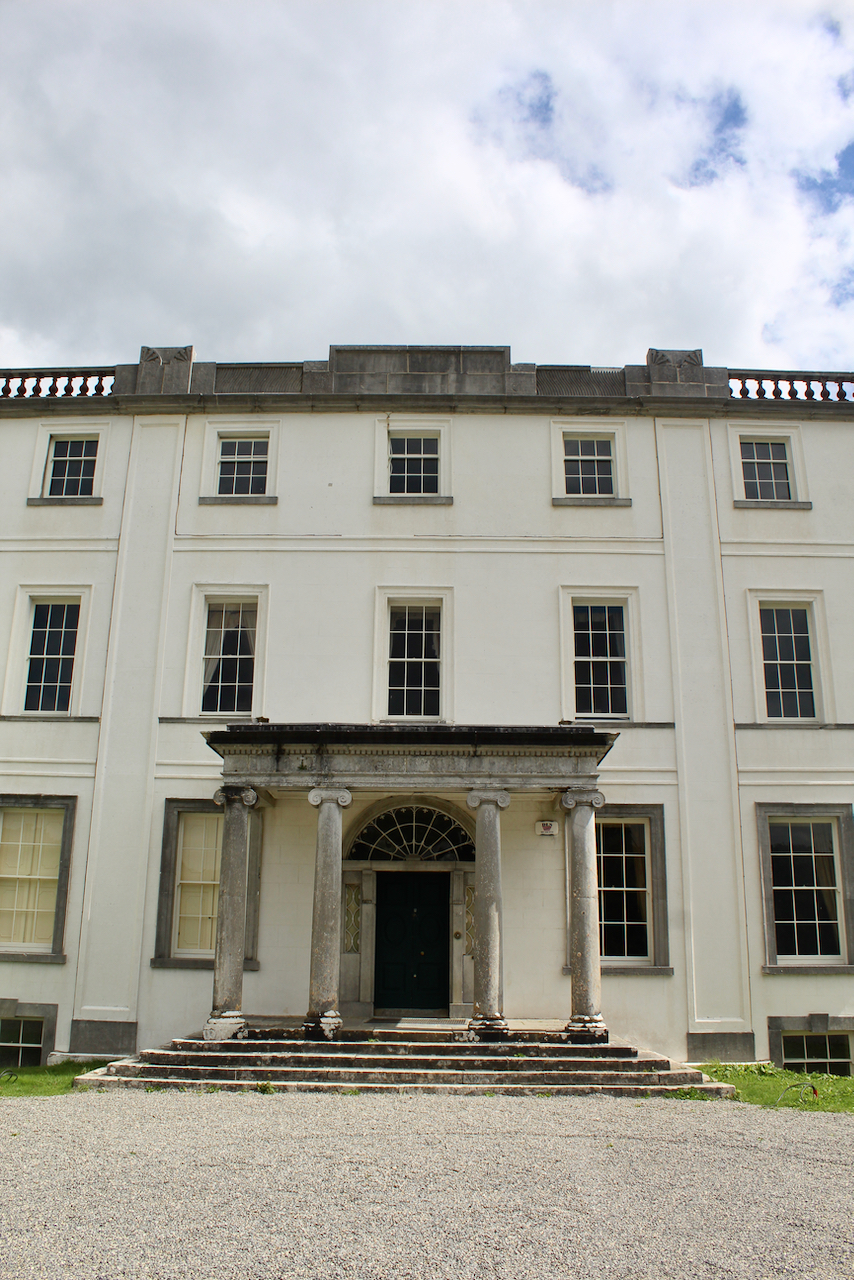
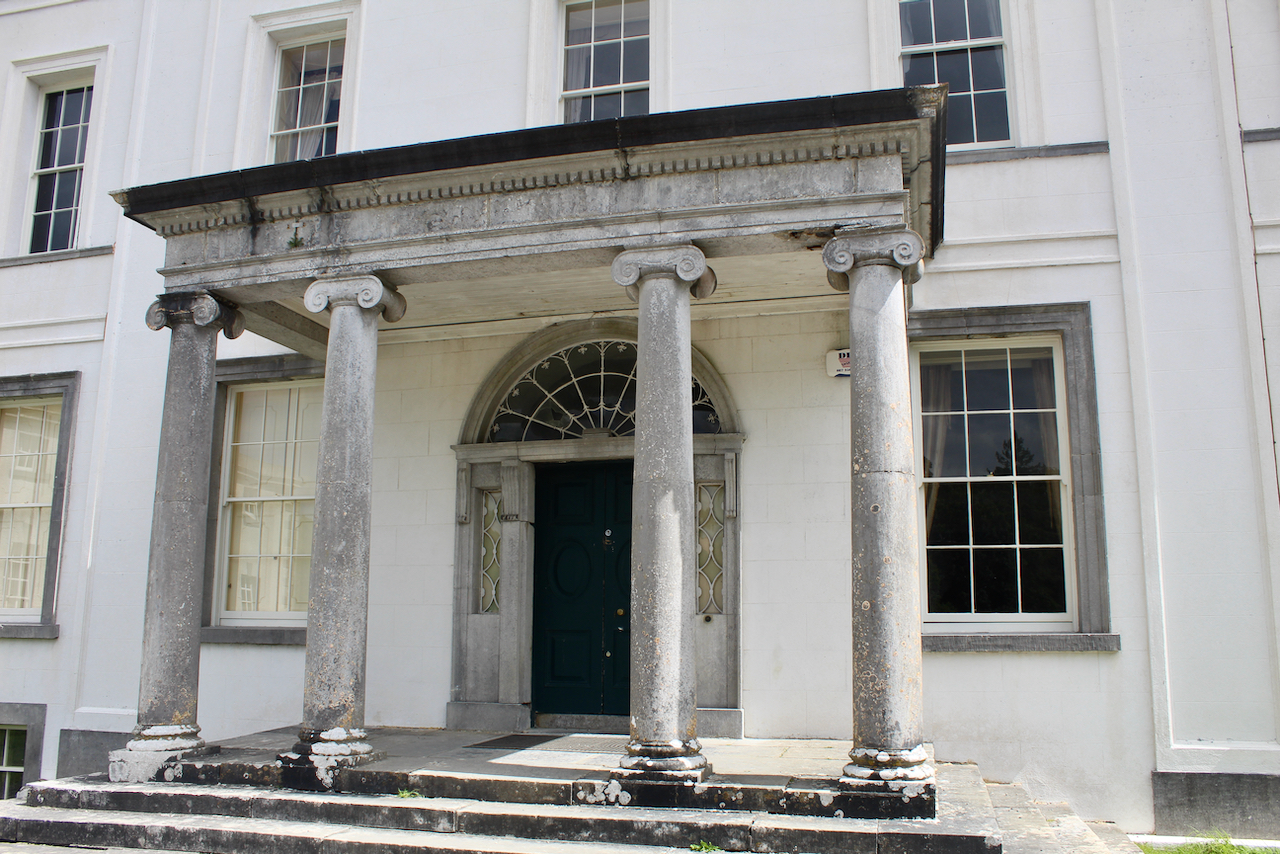
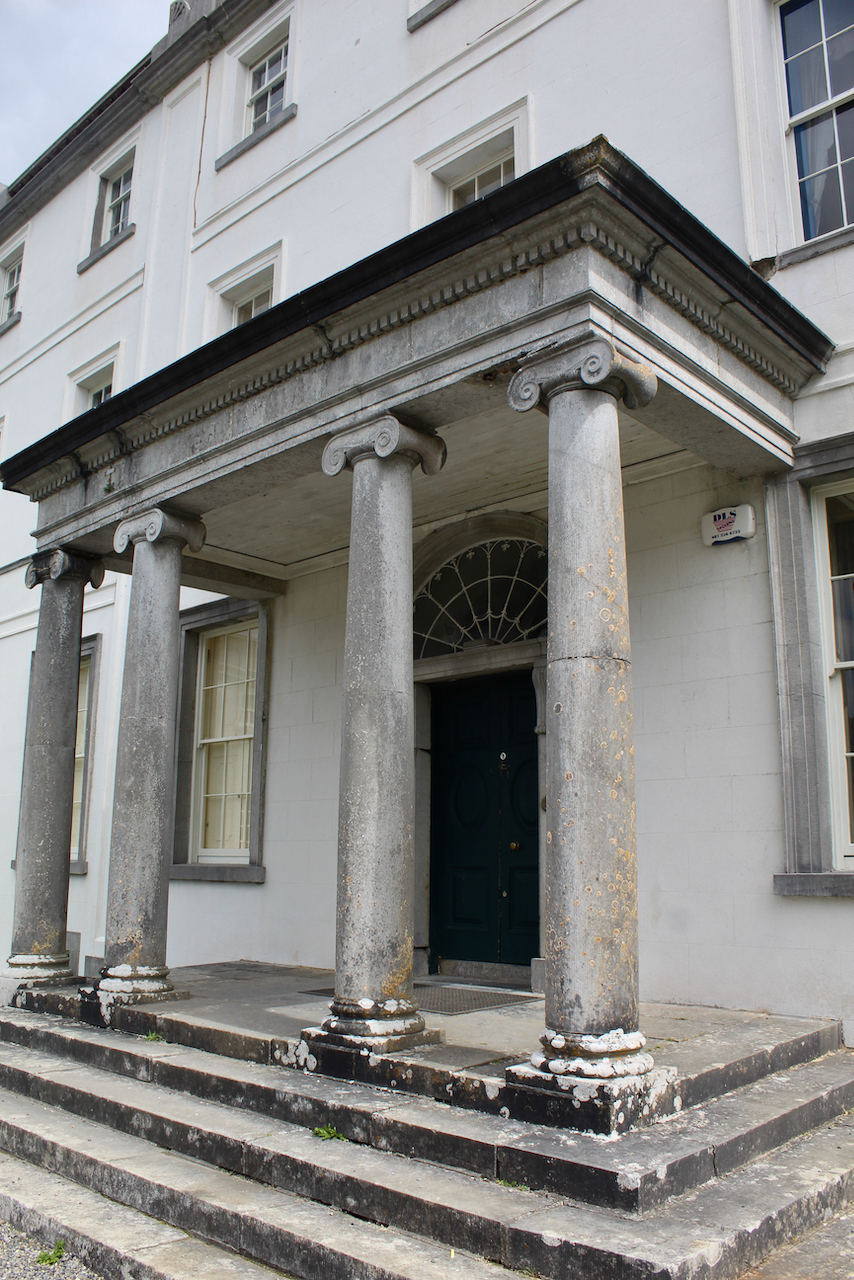
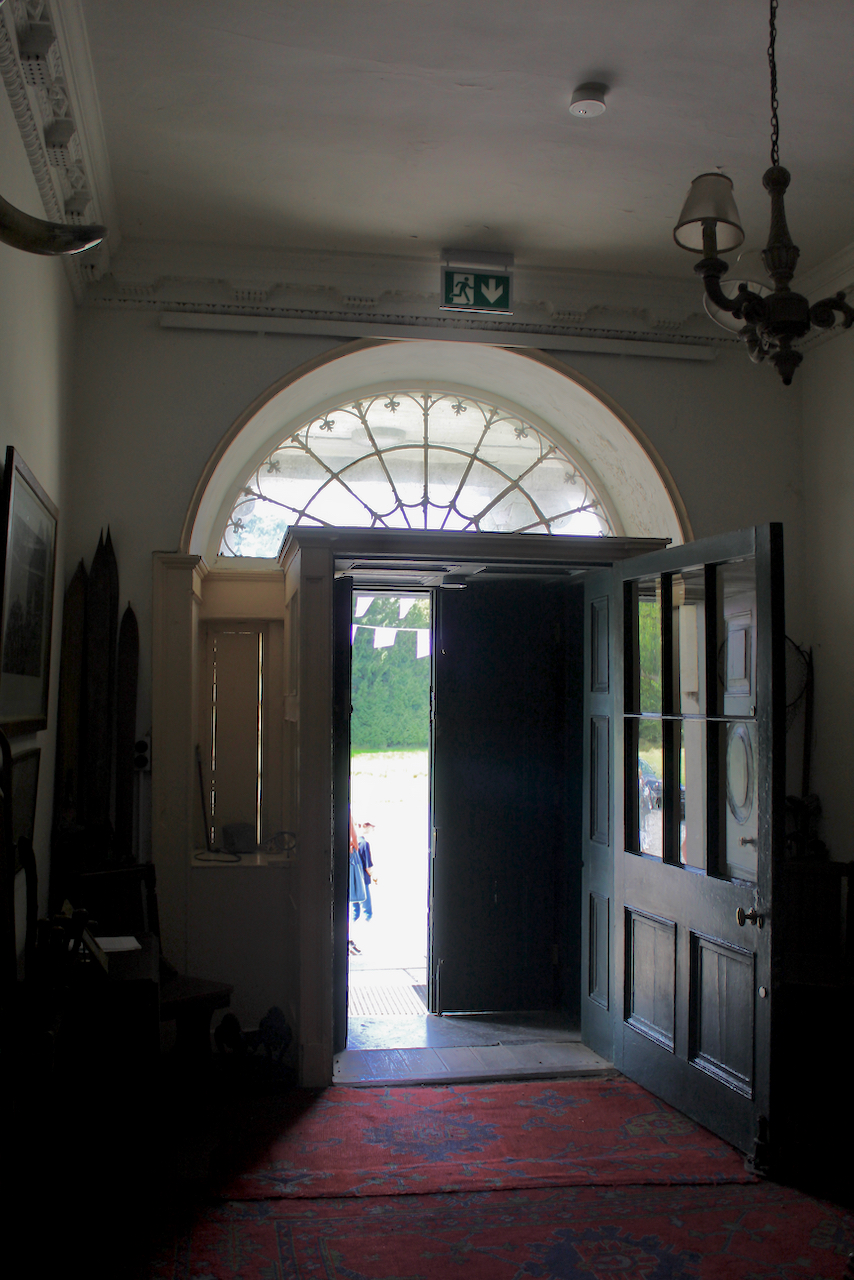
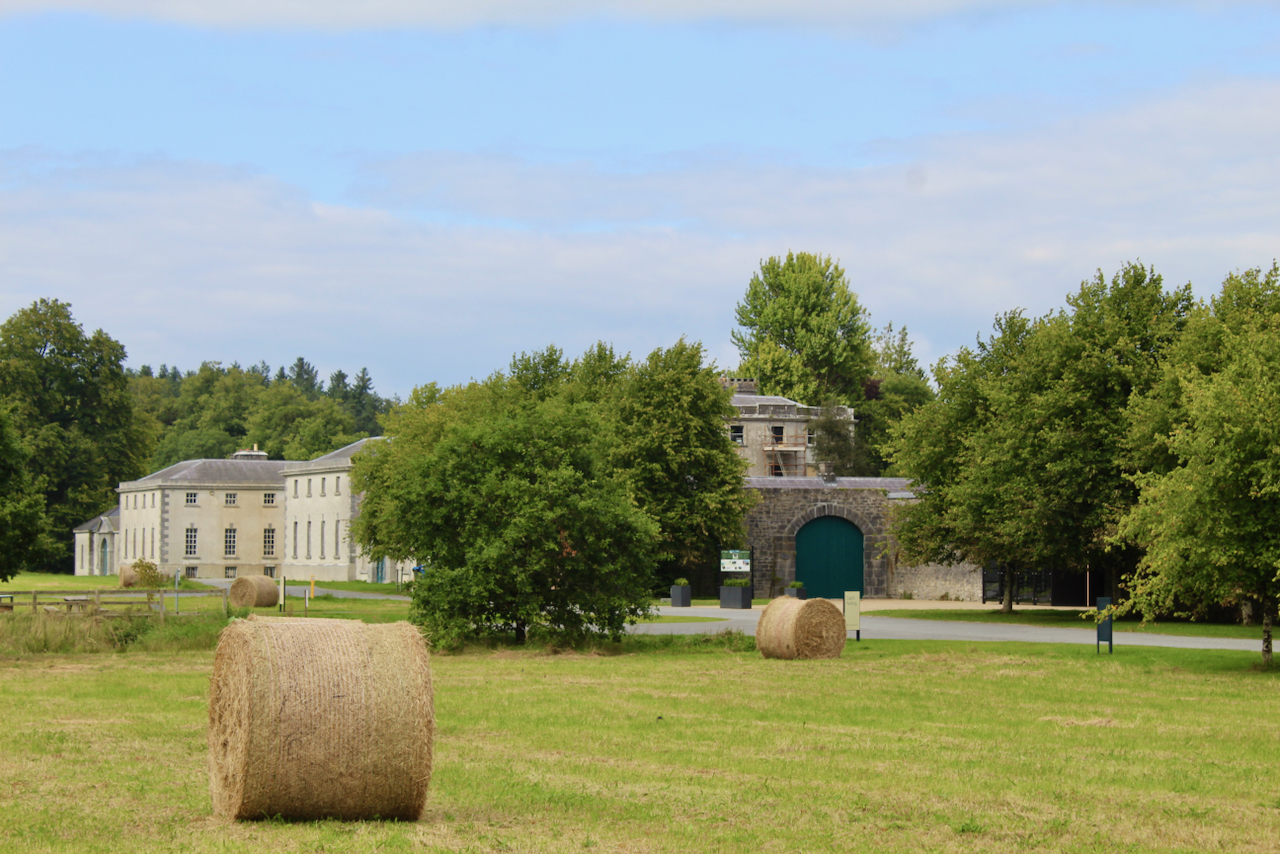
The house has a seven-bay, three-storey over basement central block, with curved curtain walls linking it to flanking pavilions with four-bay principal façades. The centre block front facade has three bays in the centre with giant pilasters either side and two bays beyond on either side. The centre three bays have a central panel on the pediment and the two bays on either side of the pilasters have a balustraded pediment. The front door is set in a tooled stone doorcase with decorative brackets, with an ornate spoked fanlight, and is flanked by traceried sidelights.
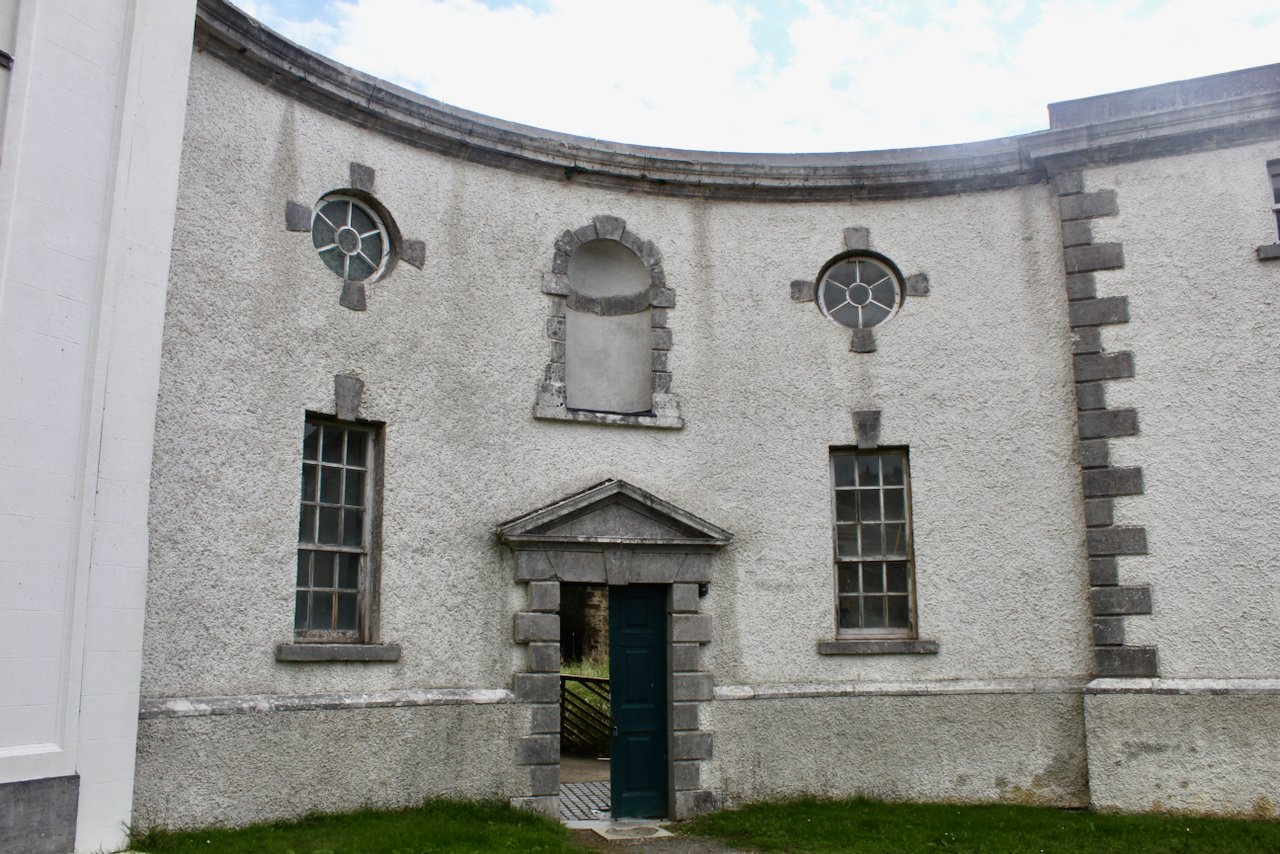
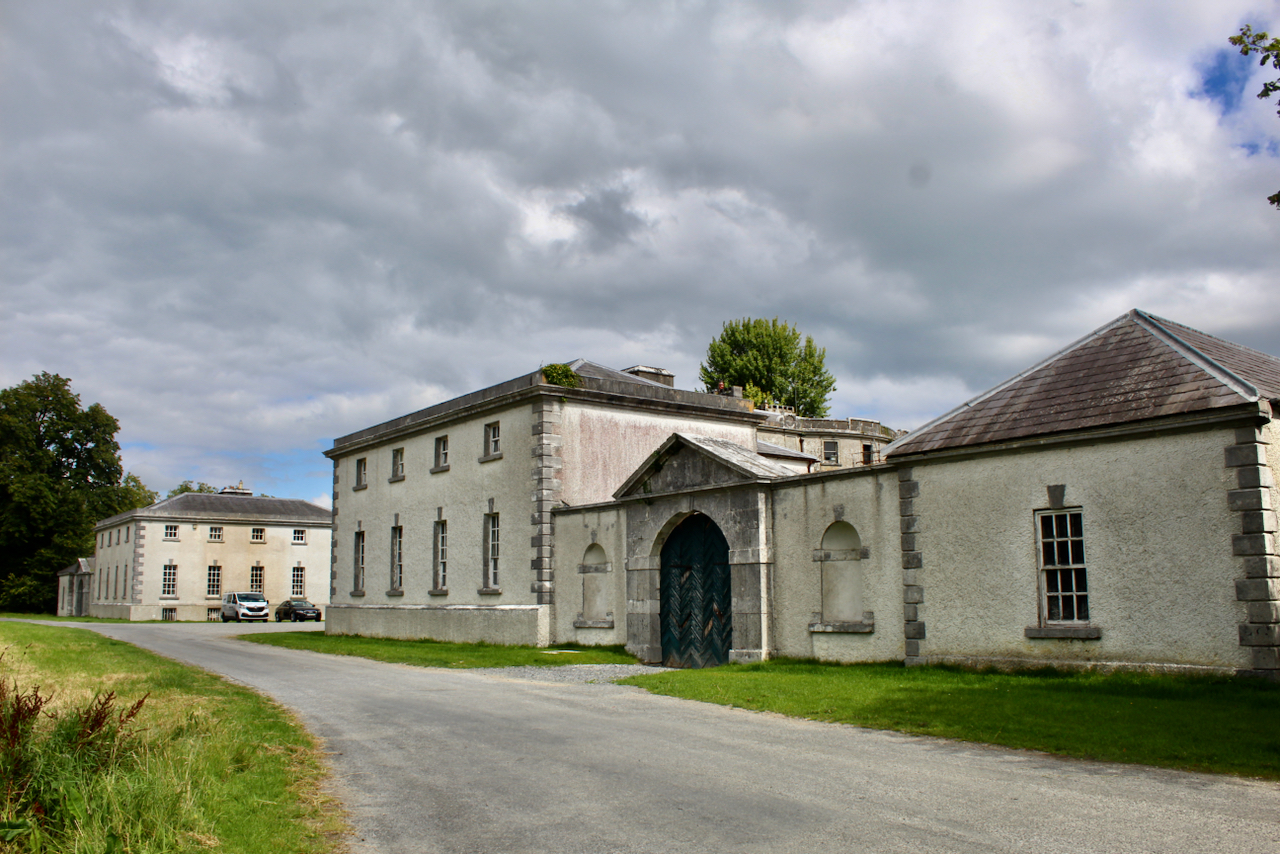
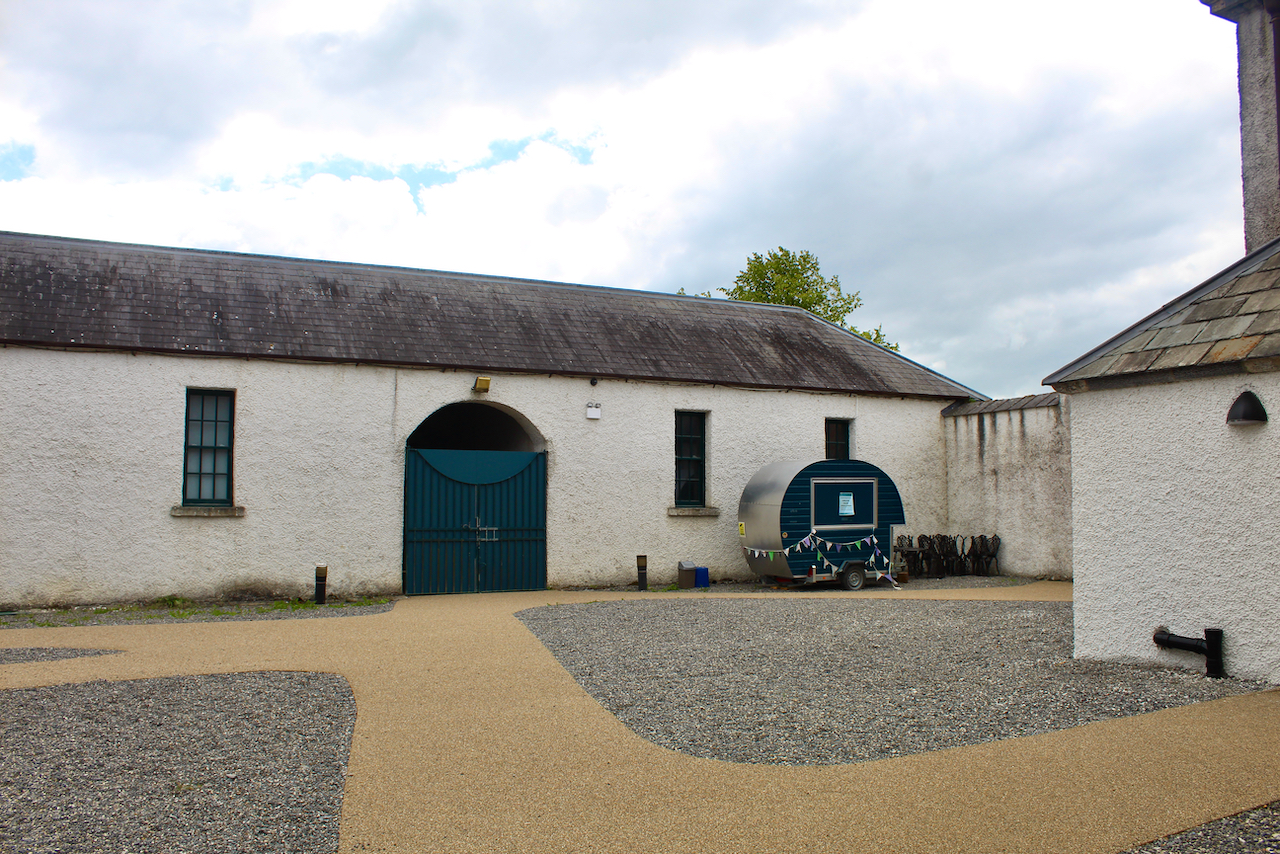
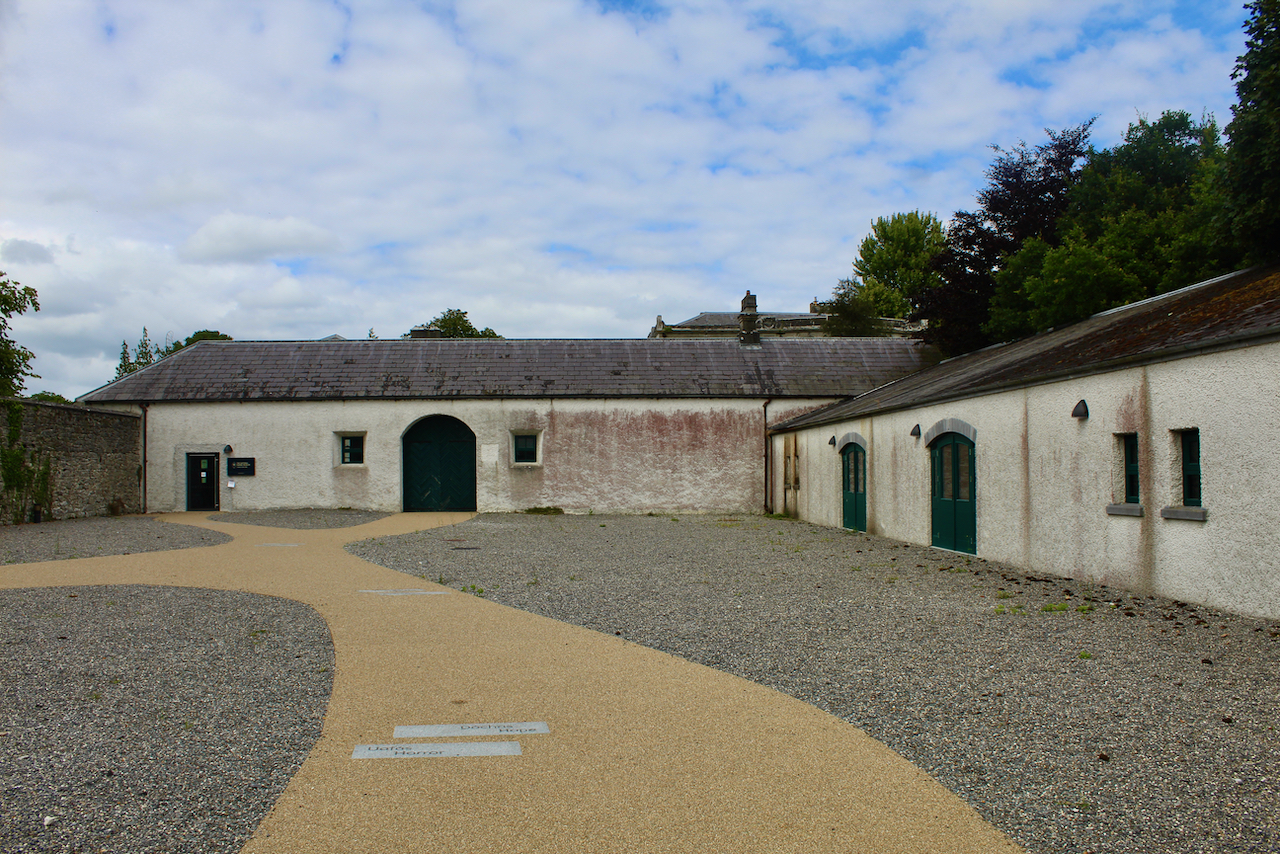
The National Inventory of Architectural Heritage tells us that the pedimented archways to outer walls extending from pavilions give access to stable complex and kitchen yards. [10]
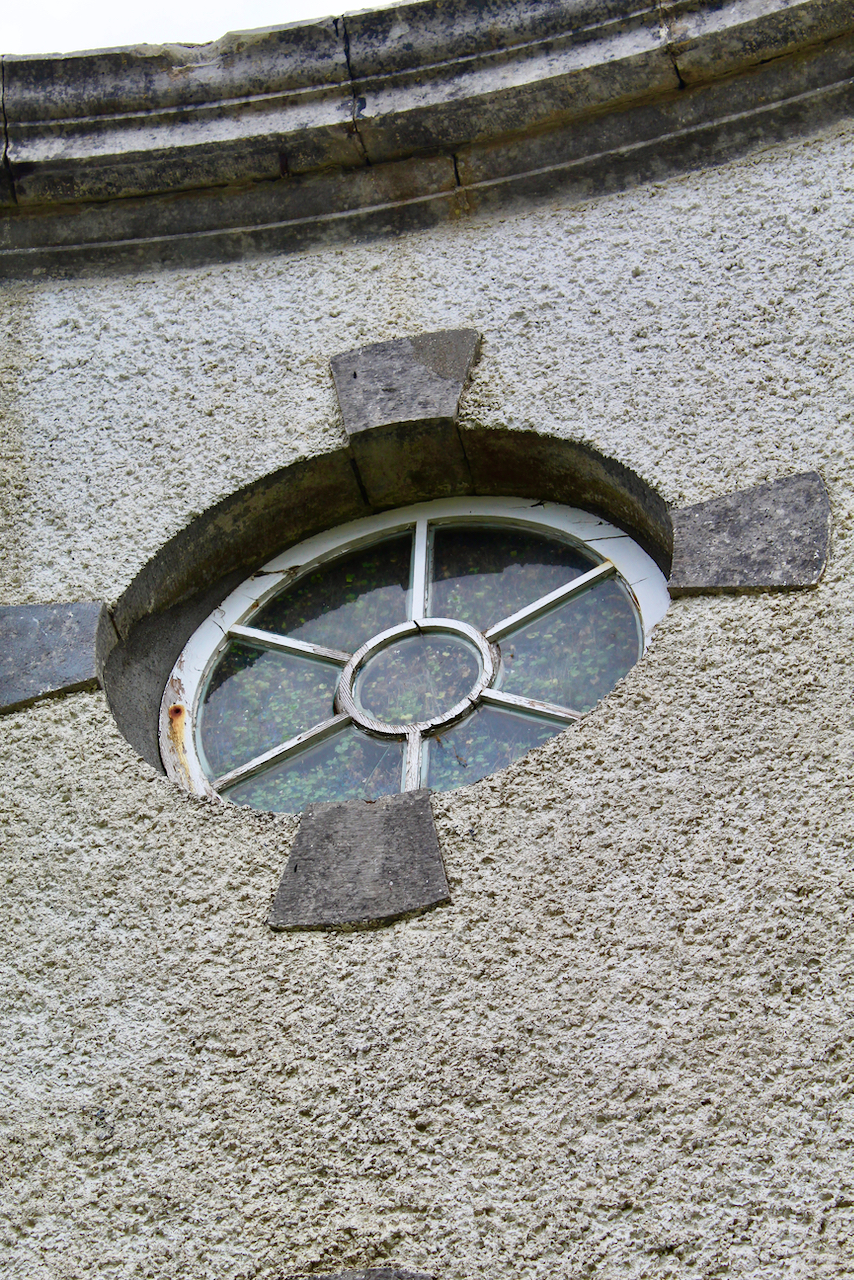
The flanking curtain walls have niches flanked by oculus windows on the upper part with tooled stone surrounds, and a Gibbsean doorcase with pediment over.
In 1735, Thomas married Jane Crosbie, daughter of Maurice, 1st Baron Branden, of Ardfert, County Kerry, MP for County Kerry. Thomas Mahon later became MP, first for the Borough of Roscommon in 1739-1763 then for County Roscommon 1763-82, when he was called the “Father of the House.” [11]
Thomas’s son Maurice (1738-1819), named after Jane’s father, married Catherine, daughter of Stephen Moore, 1st Viscount Mountcashell, in 1765. He inherited when his father died in 1782. He was granted a peerage for his support of the Act of Union, and created 1st Baron Hartland, of Strokestown, Co. Roscommon in 1800.
Terence Reeves-Smyth tells us:
“His son Maurice, who became Baron Hartland upon accepting a Union Peerage in 1800, made further additions and modifications to the house, including the inlaid mahogany doors, chimney-pieces and cornices as well as the library.”
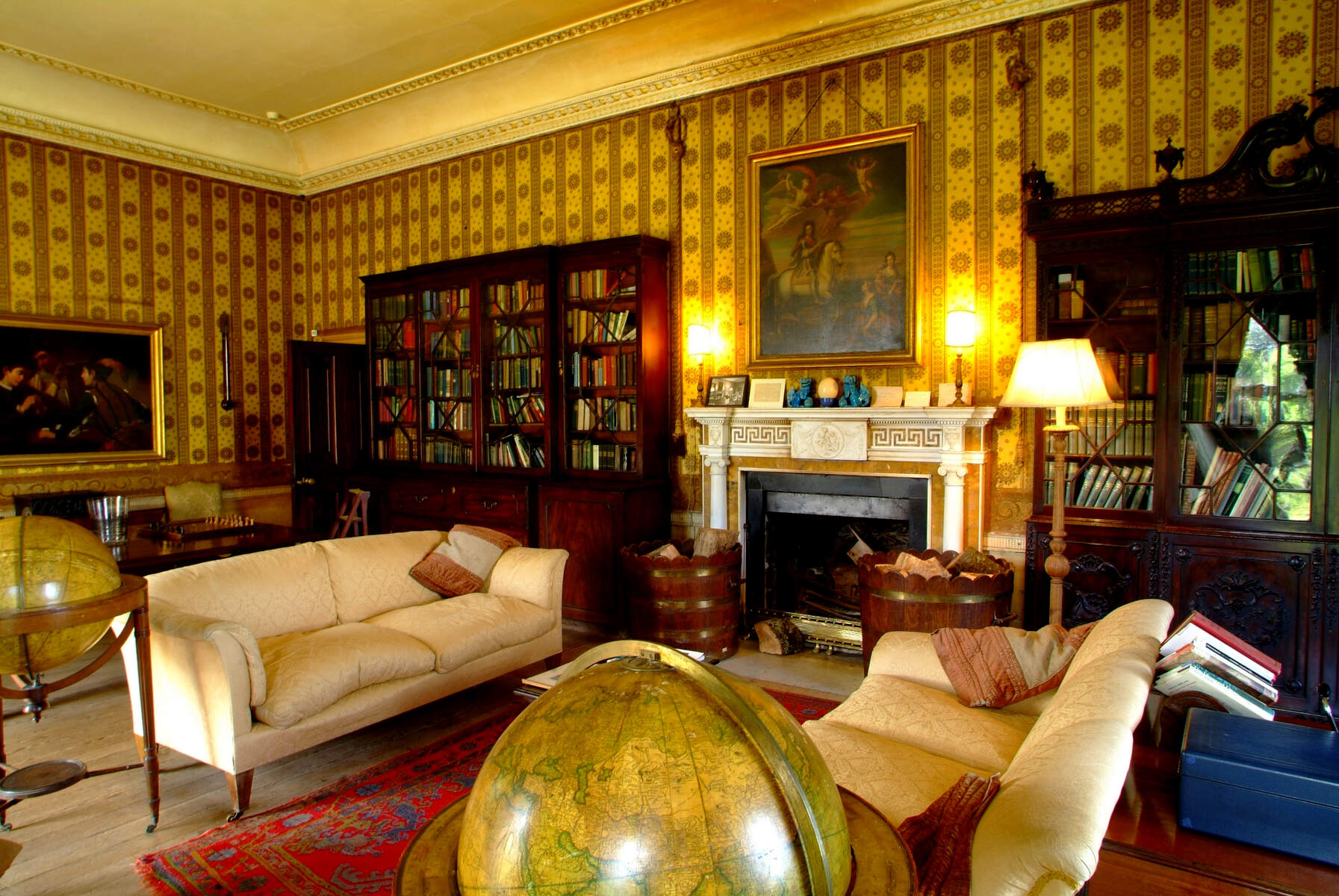
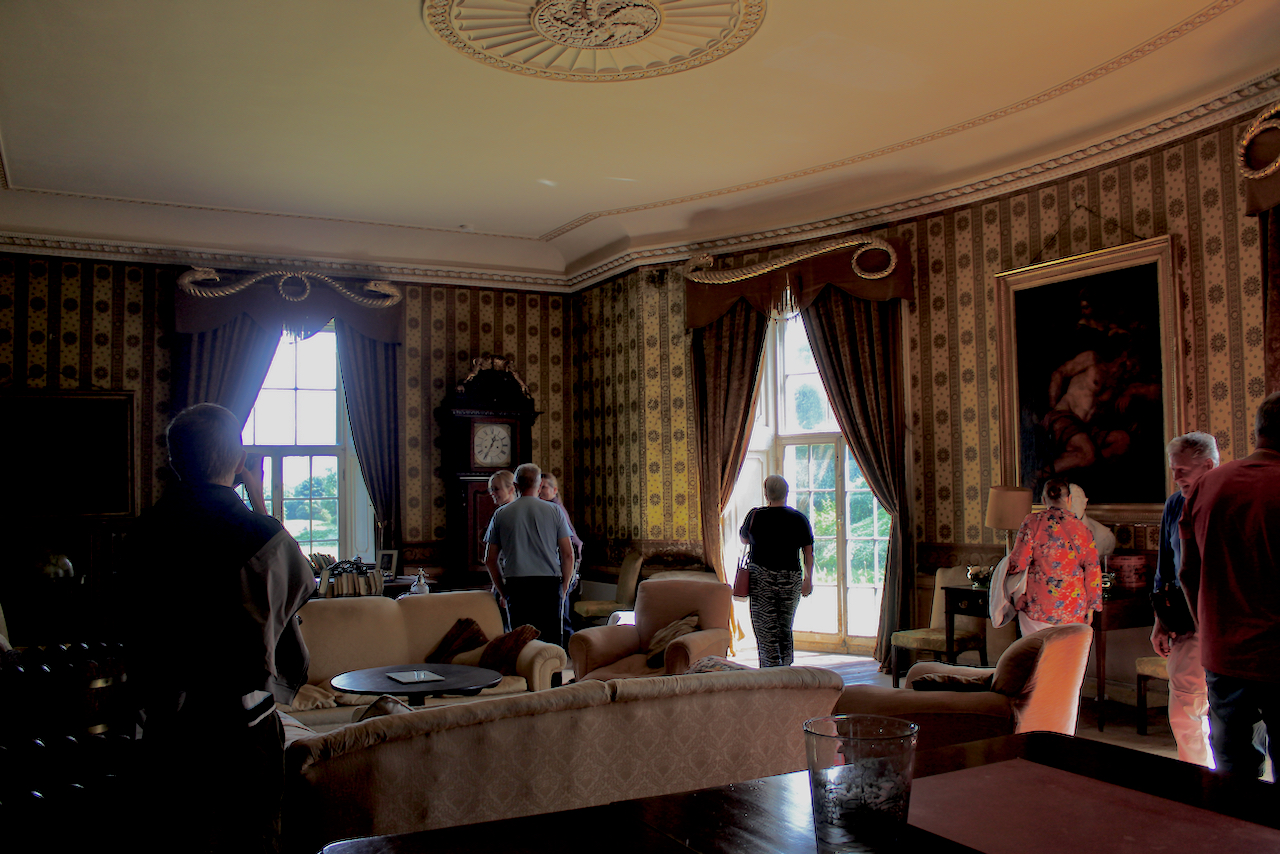
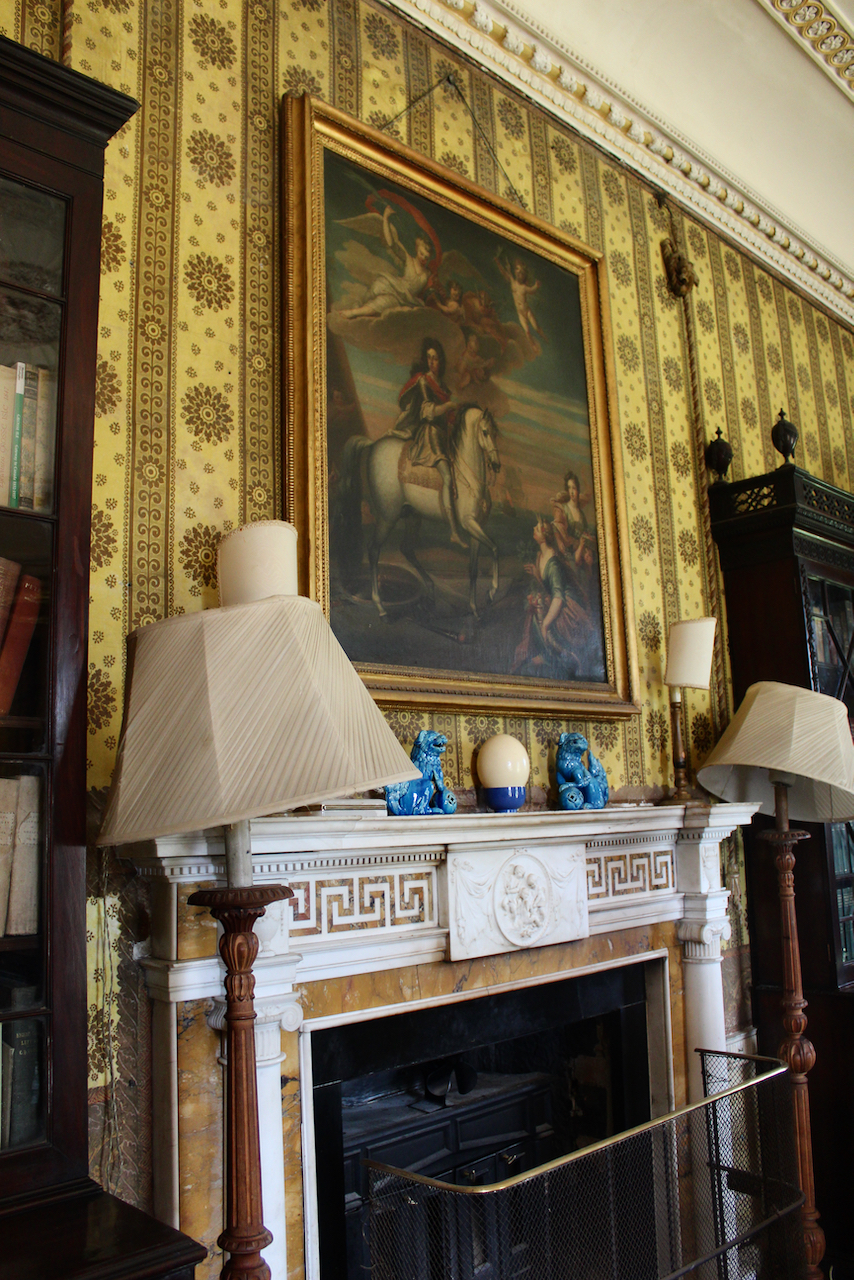
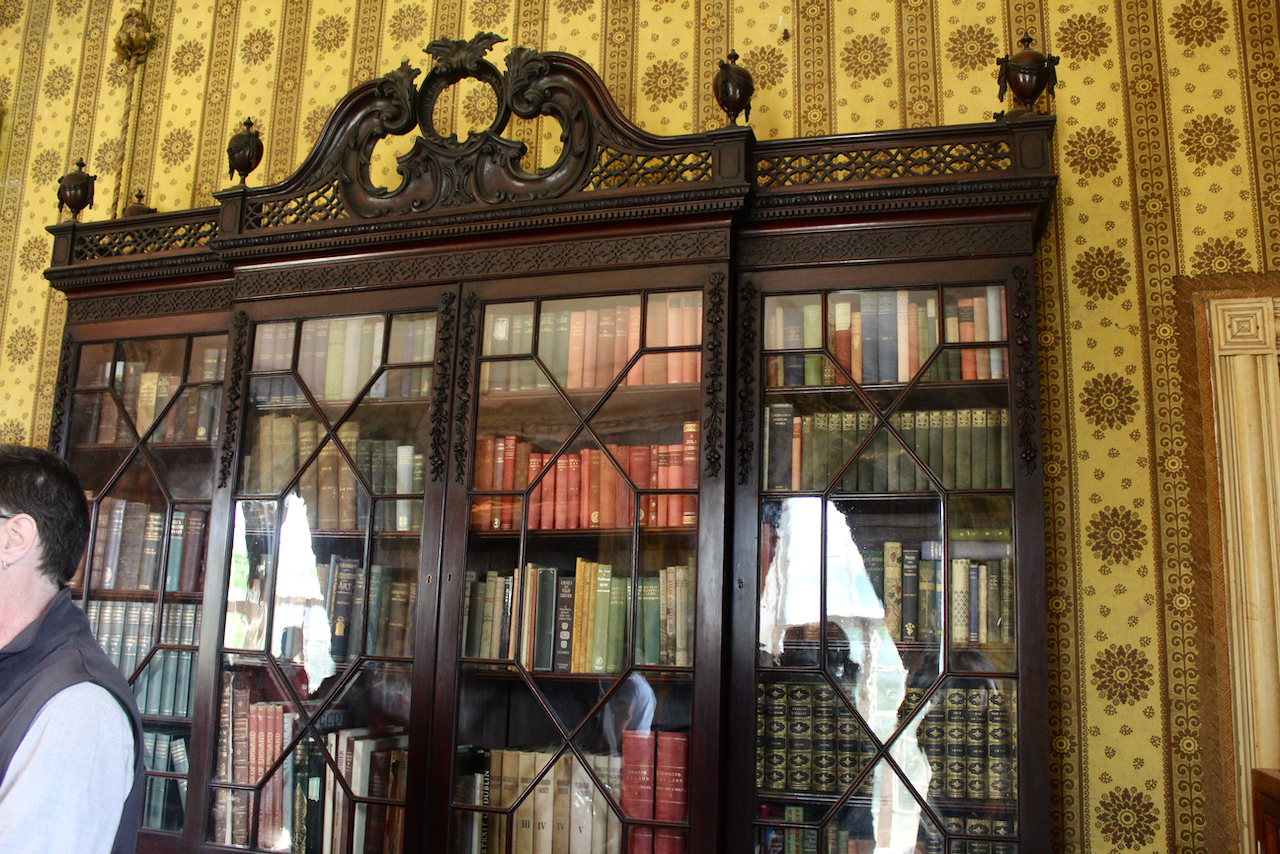
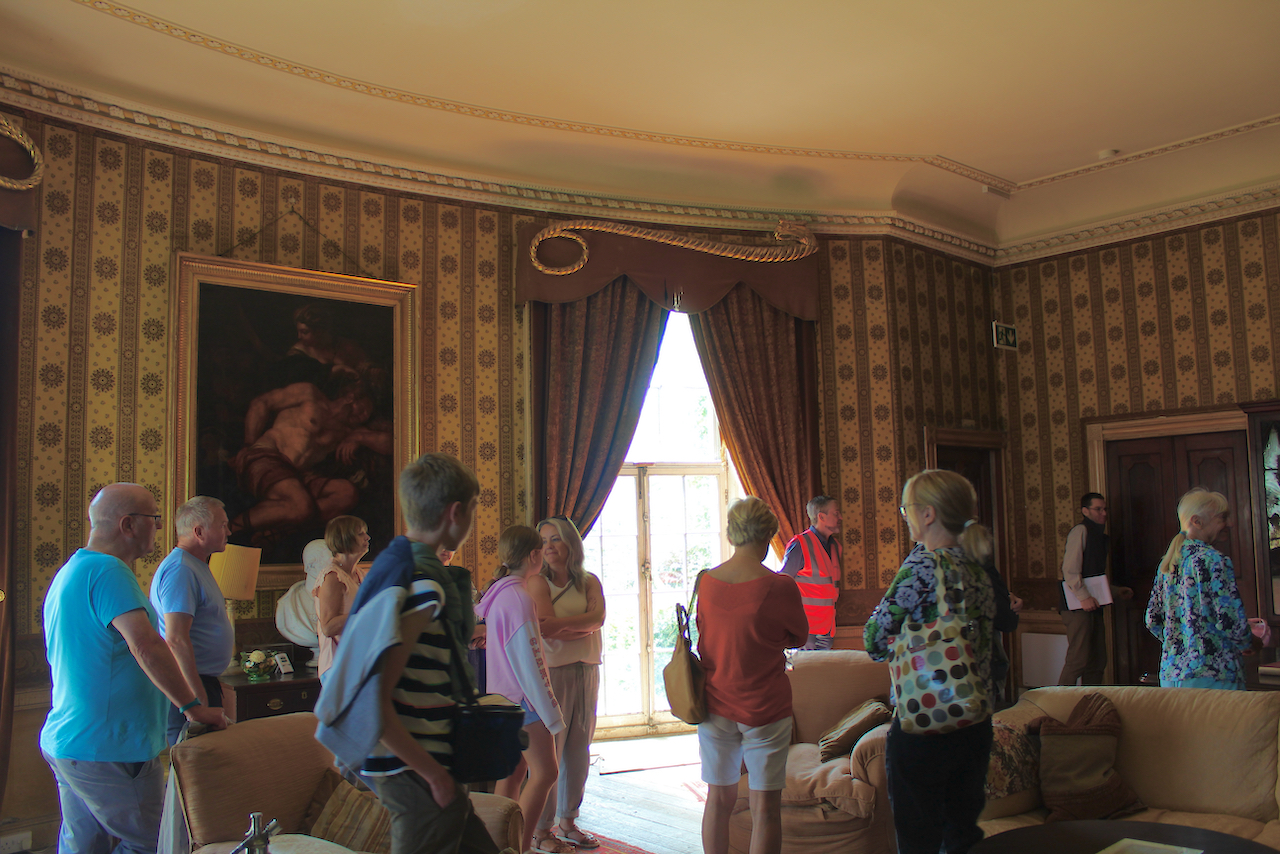
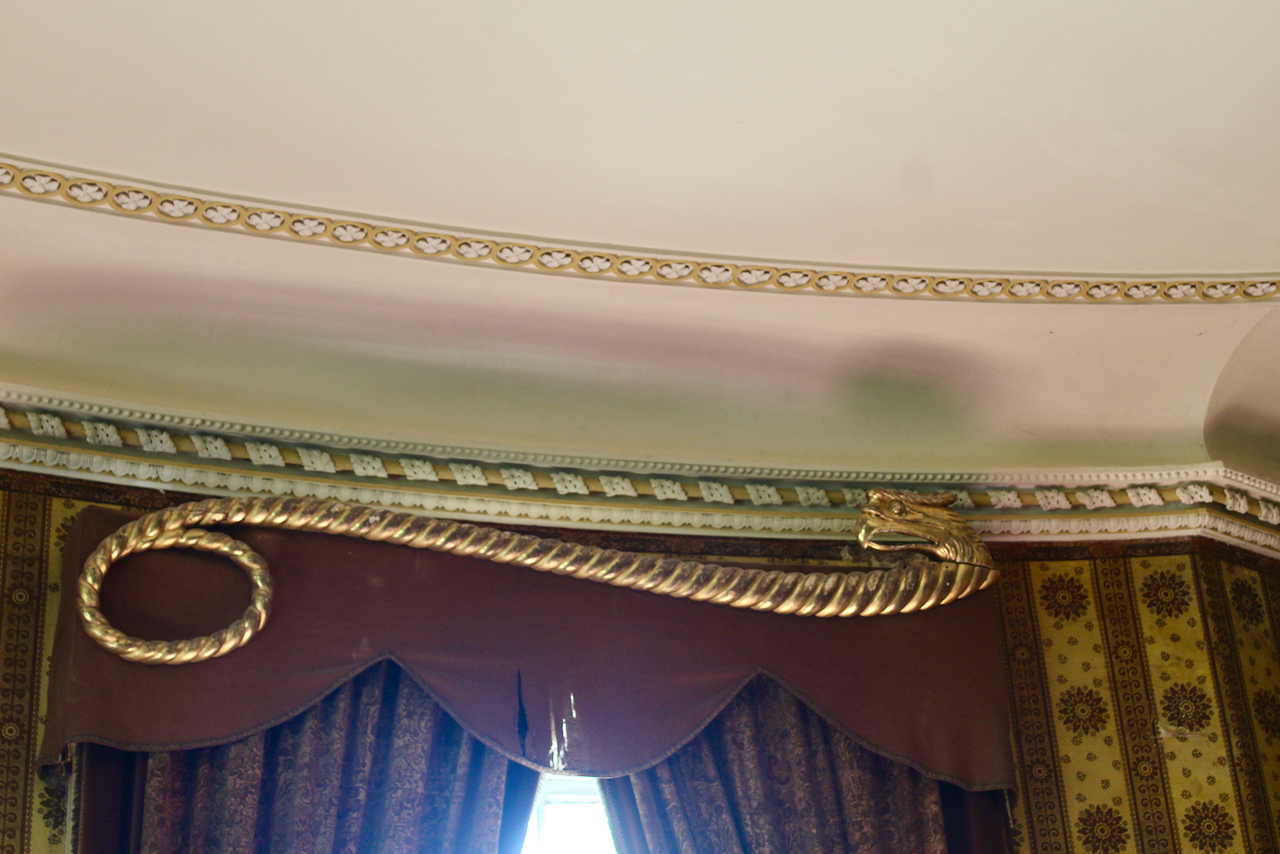
Strokestown, image by Chris Hill, 2014, Tourism Ireland, from Ireland’s Content Pool. [1] Mark Bence-Jones writes that in a late-Georgian addition at the back of the house there is a splendid library with a coved ceiling and an original early nineteenth century wallpaper of great beauty, in yellow and brown, which gives the effect of faded gold. [12]
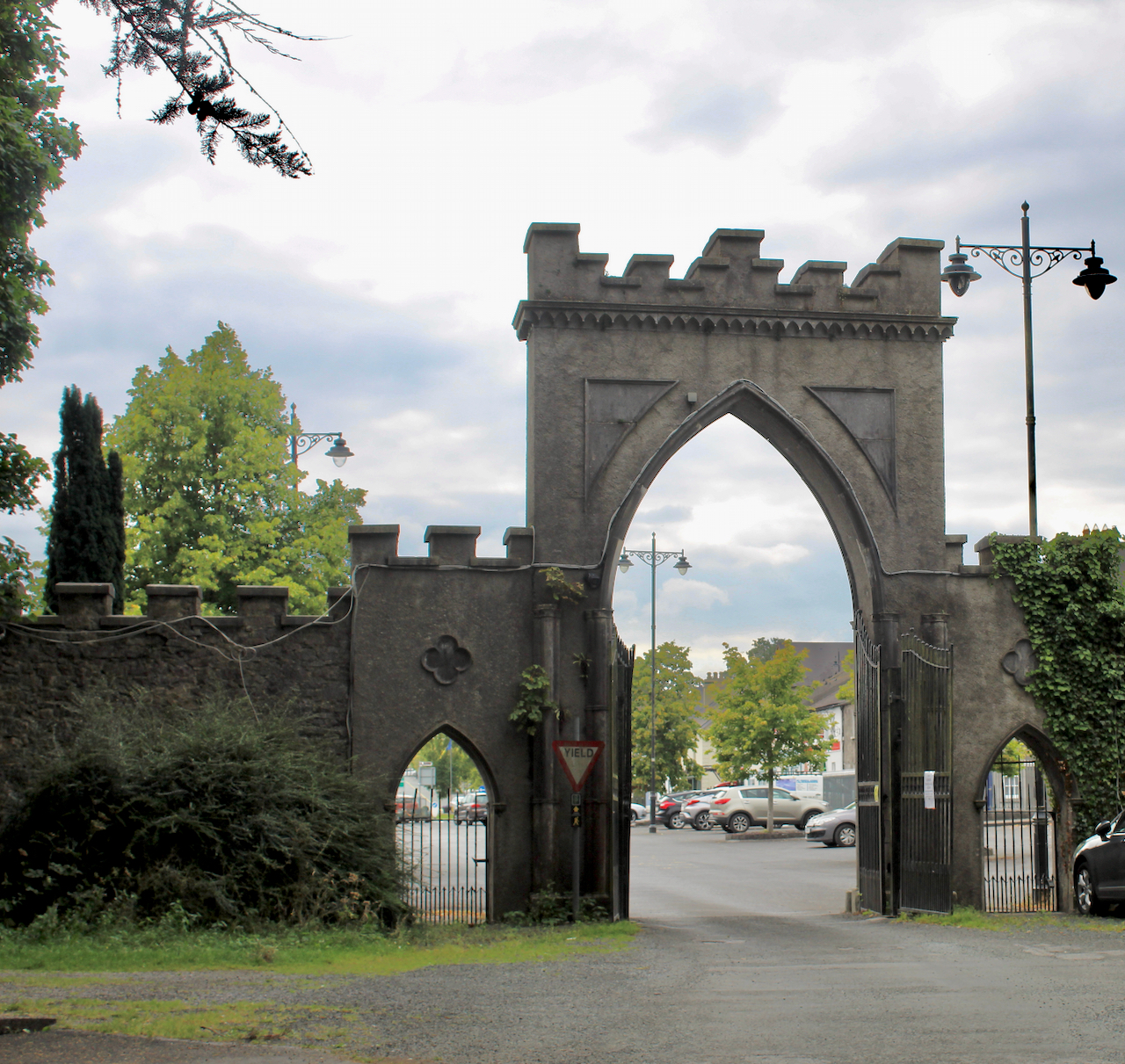
Maurice Mahon also had the main street of Strokestown laid out between 1810 and 1815, and had a tall Georgian Gothic arch erected at the entrance to Strokestown Park, at one end of the main street. At almost one hundred and fifty feet wide, the main thoroughfare, leading up to the gates of the estate, was said to be the widest in Ireland at the time. Apparently Baron Hartland wanted it to be wider than the Ringstrasse in Vienna. [see 12]
Maurice, 1st Baron Hartland had three sons. The first, Thomas (1766-1835) succeeded as 2nd Baron Hartland in 1819. His mother lived another fifteen years after her husband died in 1819, and the museum tells us that receipts for her extravagant spending are kept in the archive.
When Thomas inherited the property in 1819 he hired John Lynn who created the porch, among other renovations. Lynn had served as clerk of works for the building of Rockingham House in County Roscommon, erected in 1810 for Robert, 1st Viscount Lorton to designs by John Nash. We saw pictures of Rockingham House when we visited King House, see my entry. Rockingham House no longer exists. Soon after working in Strokestown, Lynn moved up to Downpatrick, County Down. [13]
Terence Reeves-Smyth continues in Irish Big Houses: “In 1819 Lieutenant General Thomas Mahon, second Lord Hartland, employed the architect J[ohn] Lynn to carry out some more improvements, such as the addition of the porch and giant pilasters to the front. Except for the gardens, few changes were later carried out at Strokestown and it remained the centre of a vast 30,000 acre estate until the present century.”
Thomas the second baron was educated at the Royal School in Armagh, Trinity College Dublin and St. John’s College, Cambridge. He joined the military and became Major in the 24th Light Dragoons. In 1798 he was in command of a garrison in Carlow, where he trapped and killed many rebels. [14] In 1811 he married Catherine Topping, but they did not have any children. He later fought in the Napoleonic wars and in Argentina.
Terence Reeves-Smyth continues:
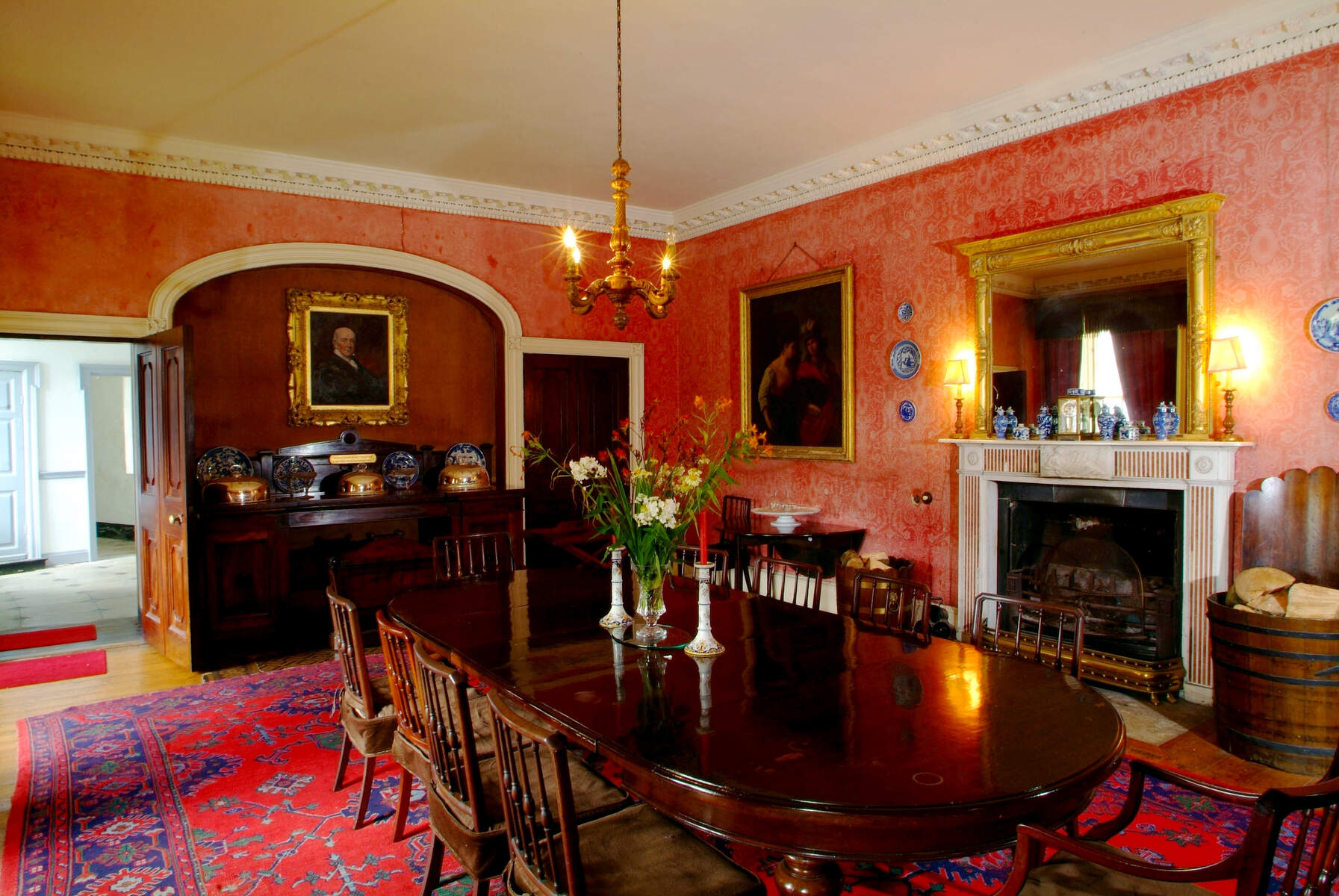
“In contrast to the exterior, the interior is quite intimate, with surprisingly small rooms – a product of the early date of much of the building. Early 18th century wood panelling survives in parts of the house including the main staircase hall, but many rooms were redecorated in regency times, such as the dining room which still has its early 19th century furniture, including a bath-sized turf bucket and pinkish-red damask wallpaper.“
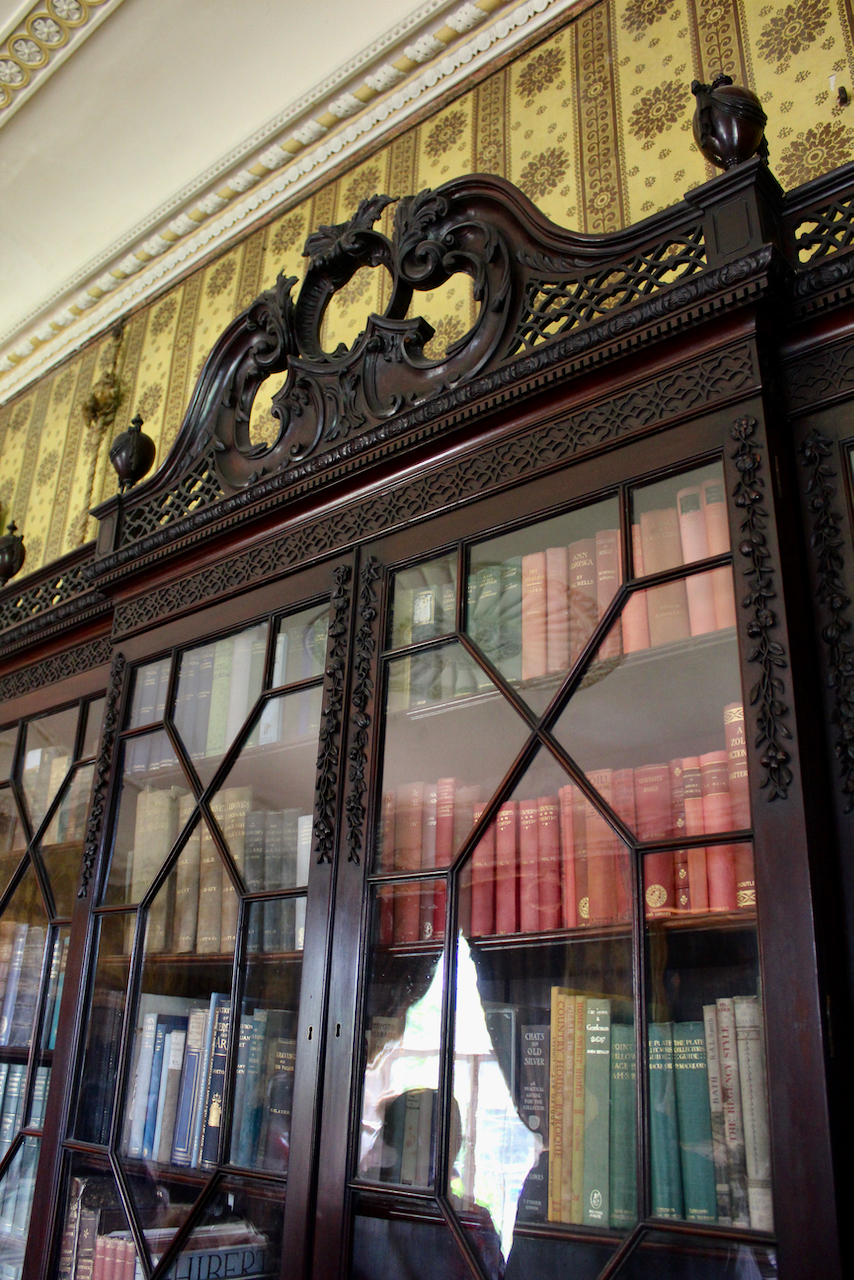
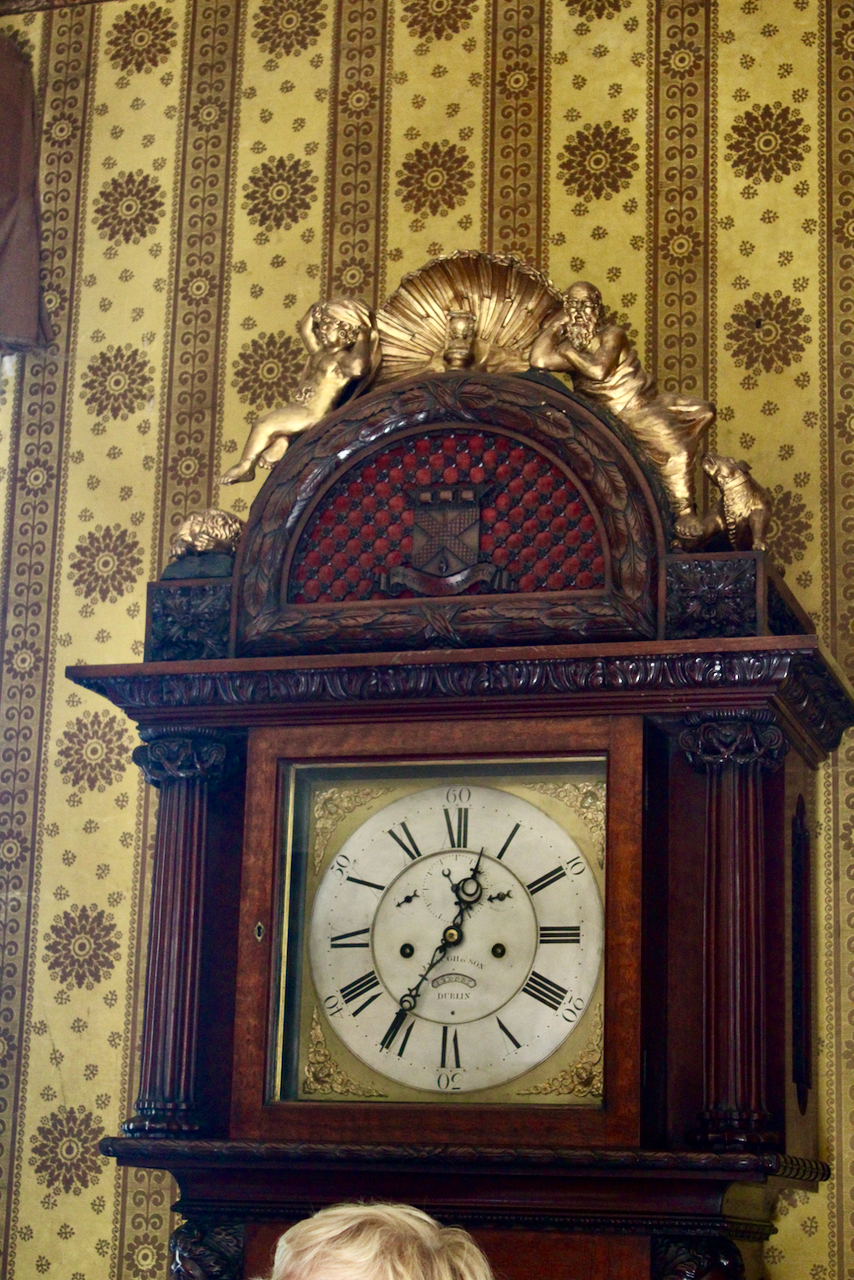
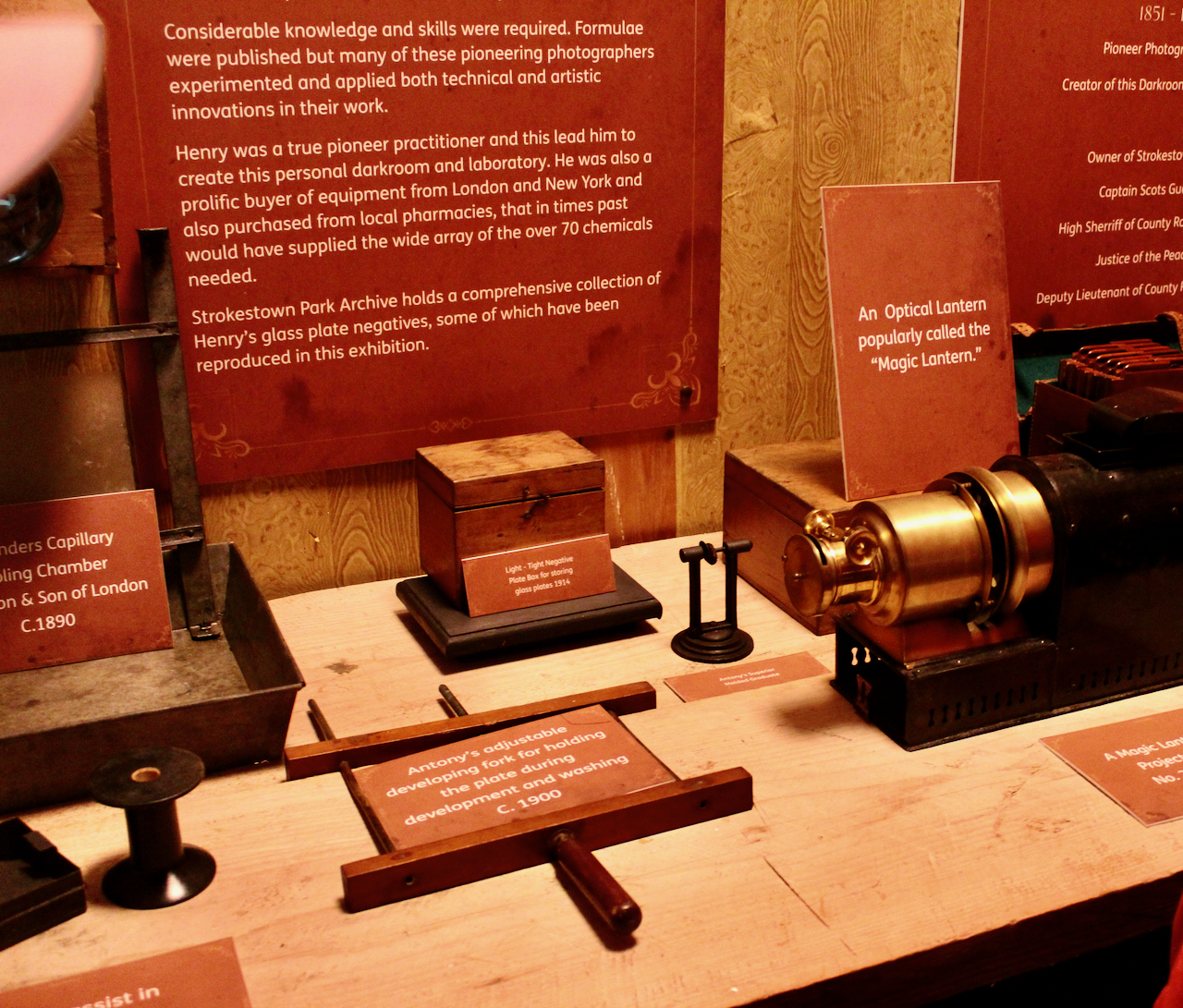
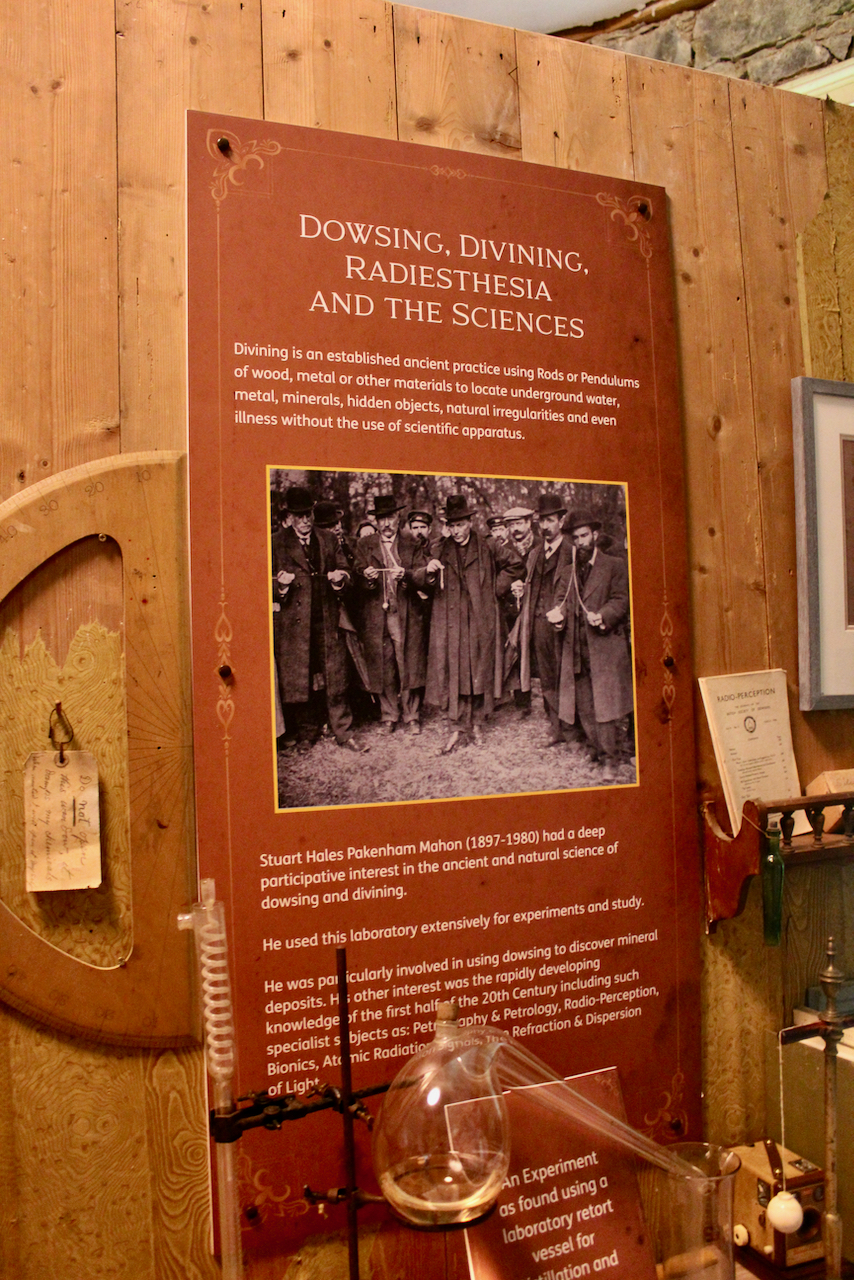
Terence Reeves-Smyth continues: “Regency additions incorporated the study, which also retains its original furnishings, and the smoking room, which was converted into a laboratory and photography darkroom by Henry Pakenham-Mahon, an amateur scientist, in the 1890’s. The finest regency addition is the library at the back, originally built as a ballroom with a bowed wall at one end to accommodate musicians. This contains Chippendale bookcases and beautiful brown and gold wallpaper, made especially for the walls in the early 19th century.“
Reeves-Smyth continues, describing the kitchen which we did not see: “The old kitchen in the left wing of the house is approached from the dining room along a curved corridor, past store rooms for kitchen utensils and sporting equipment. Fitted with spits and ovens for baking, roasting and smoking, this kitchen has its original balustraded gallery which crosses the high ceilinged room lengthwise, the only example of its kind to survive in Ireland, especially in houses designed by Richard Castle. These galleries allowed the housekeeper to supervise the affairs below – one tradition has it that menus were dropped from the balcony on Monday mornings with instructions to the cook for the week’s meals.
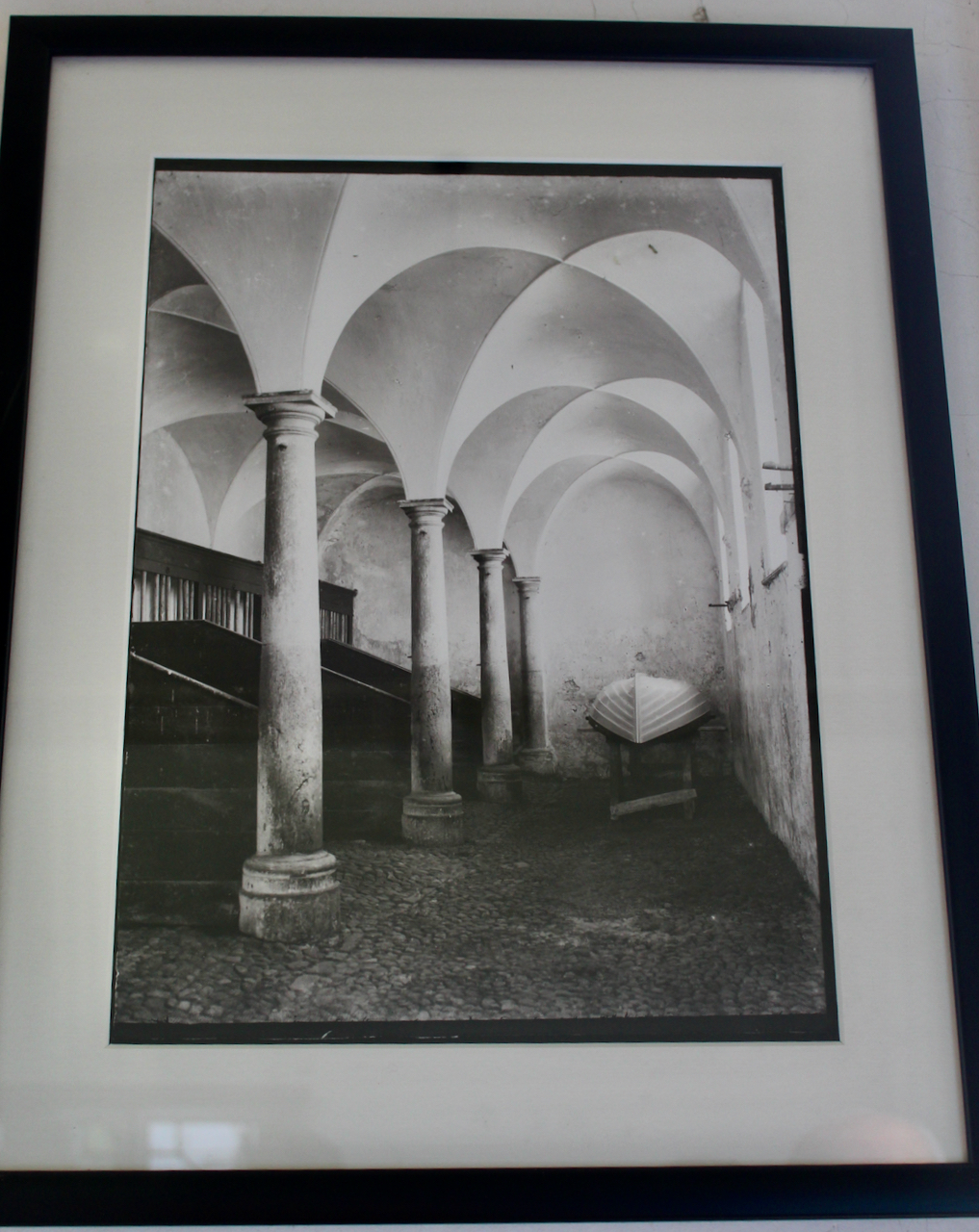
“The wing to the right of the central block contains magnificent vaulted stables carried on Tuscan columns, similar to stables built by Castle for Carton (1739) and Russborough (1741). An underground passage links these stables to the yard on the north side of the house. The estate office was also in this wing, which meant the tenantry had to come here rather than to an office in the village to pay their rent.“
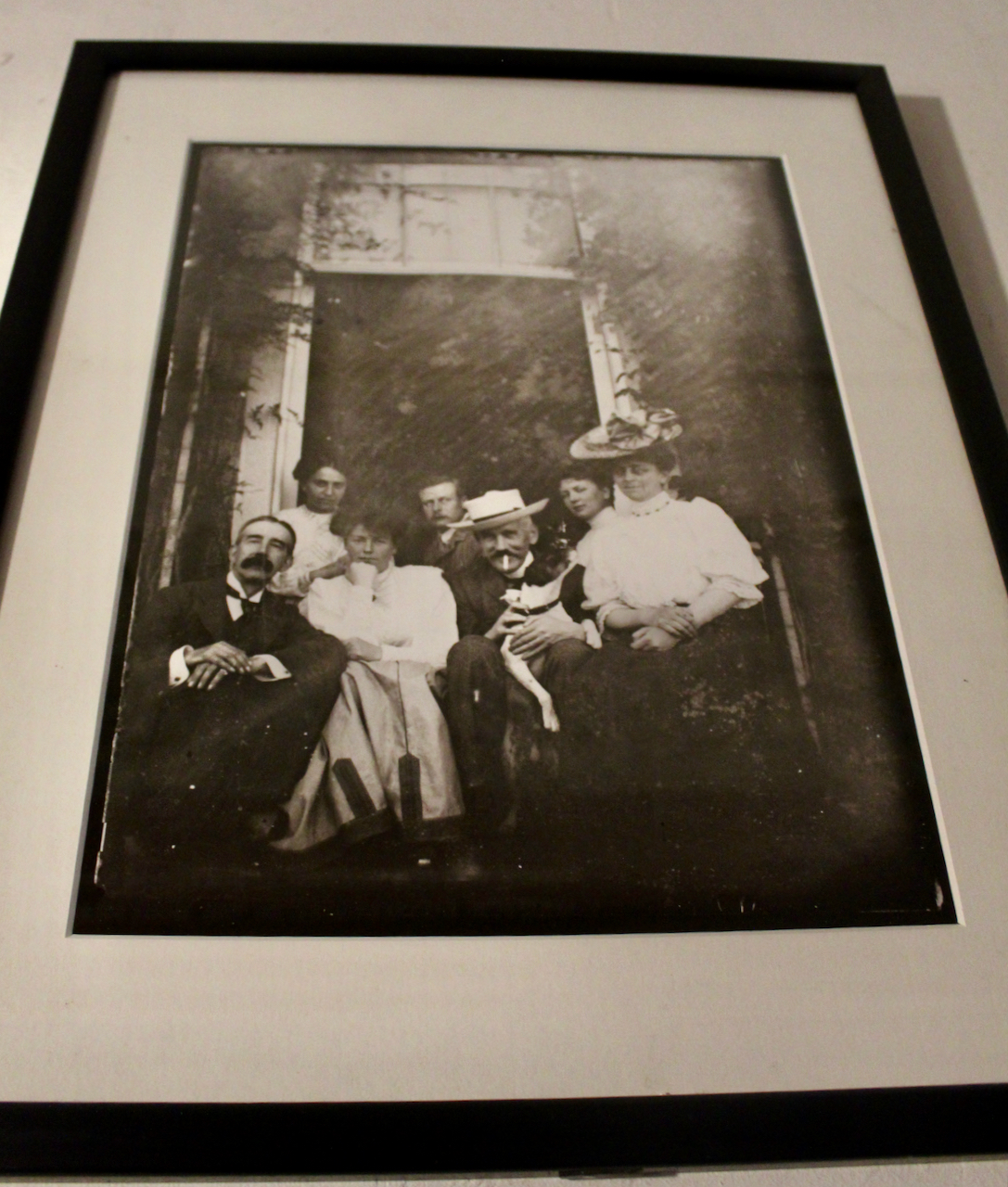
A photograph of the vaulted stables, by Henry Pakenham Mahon (1851-1922).
Maurice Craig tells us in his Irish Country Houses of the Middle Size: p. 21. “The practice of connecting the house with outlying offices by a tunnel seems to be peculiar to Ireland…Strokestown, Bellamont, Castle Coole and Lucan are amongst the Irish examples. In the nature of things, this is a feature of the grander houses, though it has been reported in connection with some of modest size.”
Thomas 2nd Baron married but had no children and his brother Maurice (1772-1845) succeeded as 3rd Baron Hartland when Thomas died in 1835. Maurice had joined the clergy, and was awarded a prebendary (an administrative role) in Tuam Cathedral in 1804.
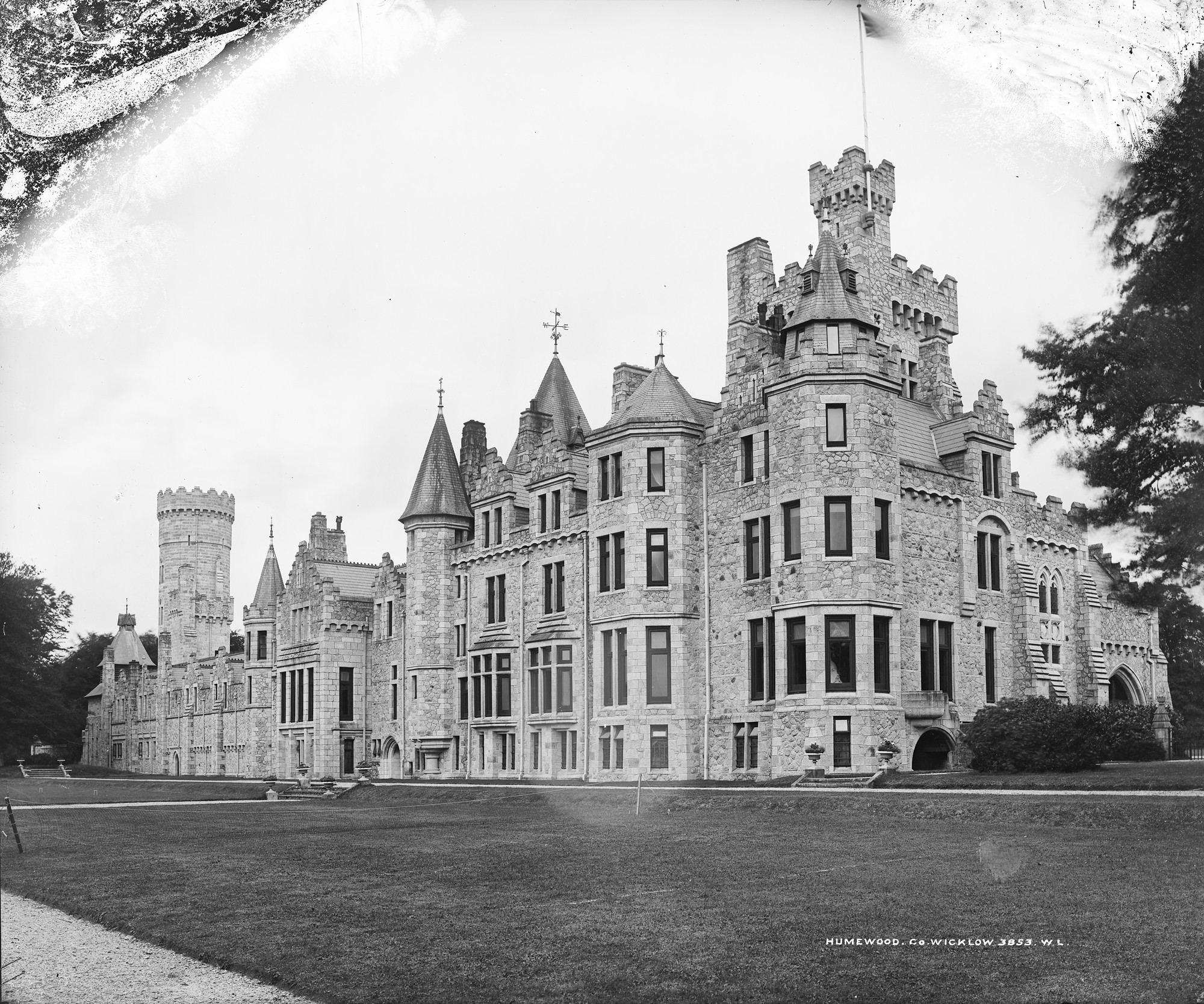
In 1813 the 3rd Baron Hartland married Jane Isabella Hume of Humewood, County Wicklow, but also had no children and the title became extinct. He had another brother, Stephen, but he predeceased his brothers and had no children. The museum tells us that the 3rd Baron suffered with mental illness, though it does not give us specifics. He was declared insane just a year after he inherited the property in 1835.
The 3rd Baron Hartland married Jane Isabella Hume of Humewood, County Wicklow. Humewood, County Wicklow photograph courtesy of National Library of Ireland, photographer Robert French, Lawrence Collection Circa 1865 – 1914 NLI Ref. L_IMP_3853.
The Dictionary of Irish Biography tells us that it was Denis Mahon who brought a motion against Maurice claiming that he was mentally ill and incapable of caring for the estate. Maurice had allowed the lease to lapse for a portion of the estate and stopped collecting rent from the town of Ballykilcline and its surrounding area. This led to an official declaration stating Maurice was a “lunatic.” Denis was named executor of the estate as well as being named Maurice’s legal guardian.
The museum tells us that when he was declared insane in 1836, two cousins battled in the courts to inherit the property: Denis Mahon (1787-1847) and Marcus McCausland.
Marcus McCausland owned the property of Drenagh, Limavady in County Derry (now a wedding venue). His mother was Theodosia Mahon, a sister of the 1st Baron Hartland, who had married Conolly McCausland-Gage. The nine year court case decided in favour of Denis Mahon. As well as the now poorly managed property, he inherited debts.
Denis was the son of a brother of 1st Baron Hartland, Reverend Thomas Mahon (1740-1811). Reverend Thomas married Honoria Kelly, daughter of Denis Kelly of Castle Kelly, County Galway (also called Aughrane Castle, it has been demolished. It was purchased by Bagots in 1910, I’m haven’t found an ancestral link to these Bagots).
Strokestown Park, County Roscommon, August 2022.
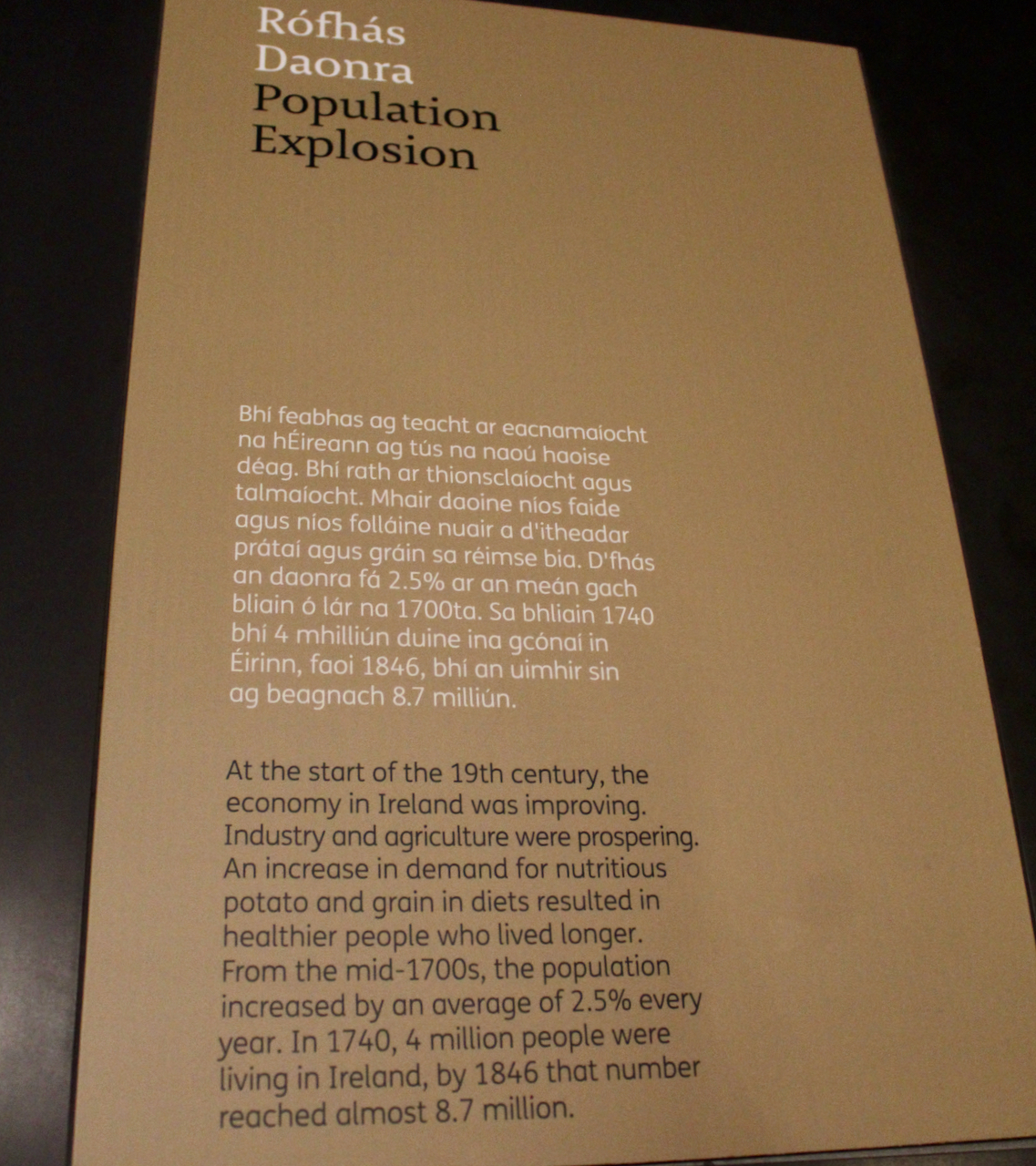
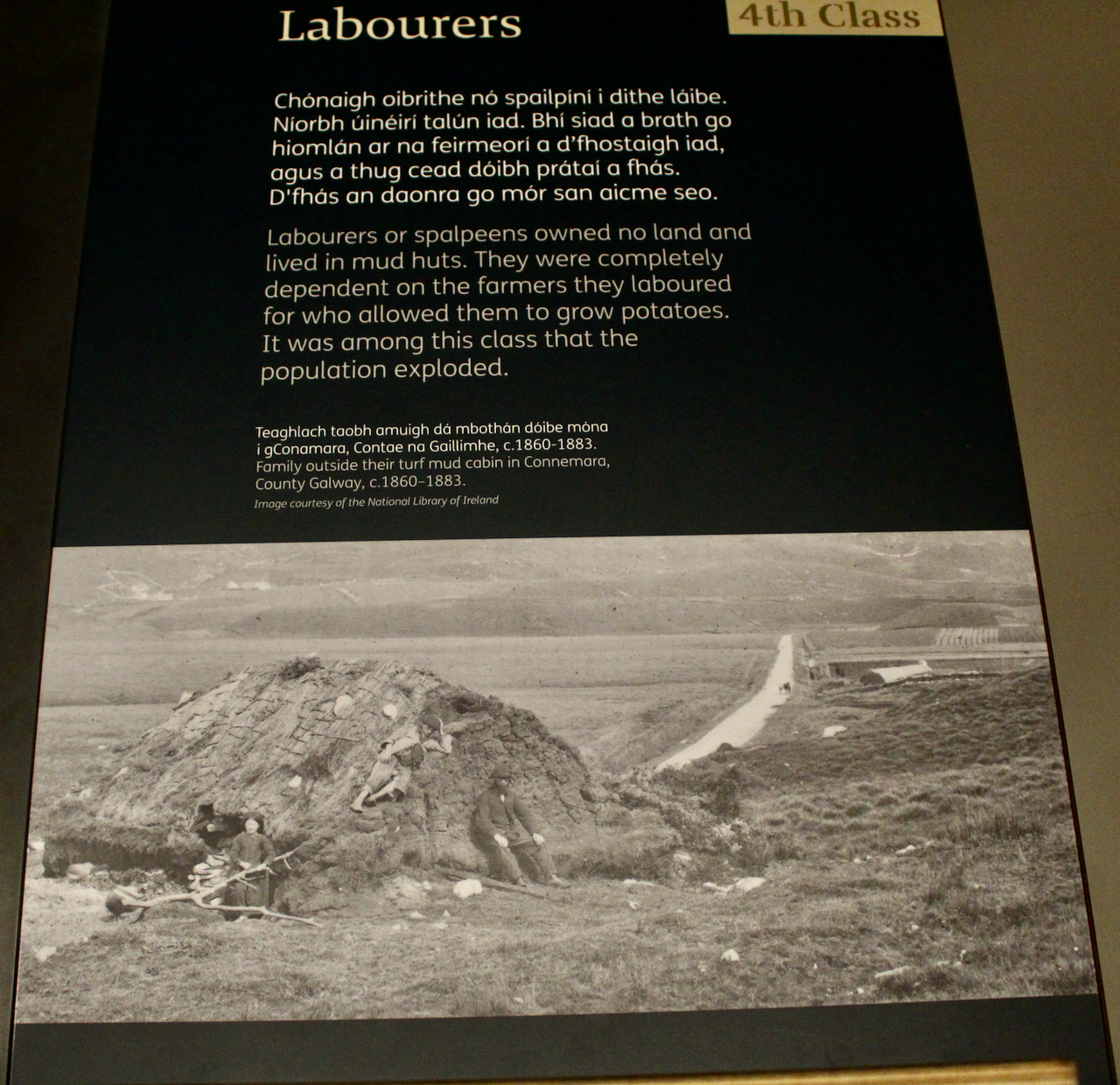
It was Denis Mahon who was then murdered during the Famine. The story is told in detail in the Famine Museum. The estate was badly run and tenants let and sublet their parcels of land, hence owned smaller and smaller portions of land to grow their crops.
Reeves-Smyth tells us: “Major Denis Mahon, who succeeded to Strokestown on the death of the third and last Lord Hartland in 1845 was so unpopular a landlord during the famine years that he was shot whilst returning from a meeting of the Roscommon Relief Committee in 1848, apparently on suspicion of chartering unseaworthy ships to transport emigrants from his estate to America. His successors were much better regarded and his great-granddaughter and last owner, Mrs. Olive Hales-Packenham-Mahon, was a much loved figure in this part of Ireland. She died in 1981, leaving a house filled with the trappings of three centuries of unbroken family occupation.“
Strokestown Park, County Roscommon, August 2022.
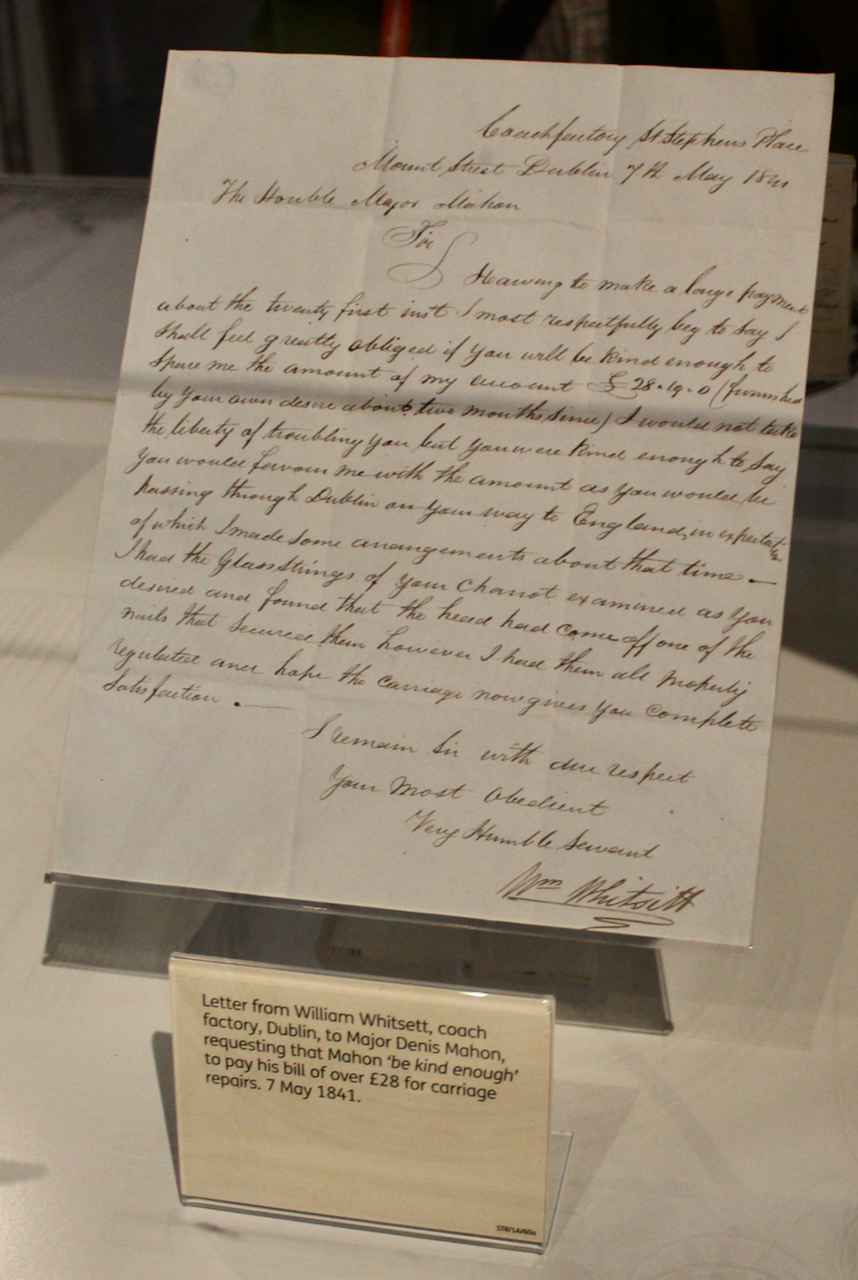
Captain Denis Mahon chose to help his tenants to leave Ireland. He wanted to reduce his number of tenants. The 1838 Poor Law made a local tax for poor rates. In 1843 the act was amended and introduced new rates, charging landlords a tax for each tenant who had holdings of less than a value of £4. Landlords therefore tried to reduce the number of tenants.
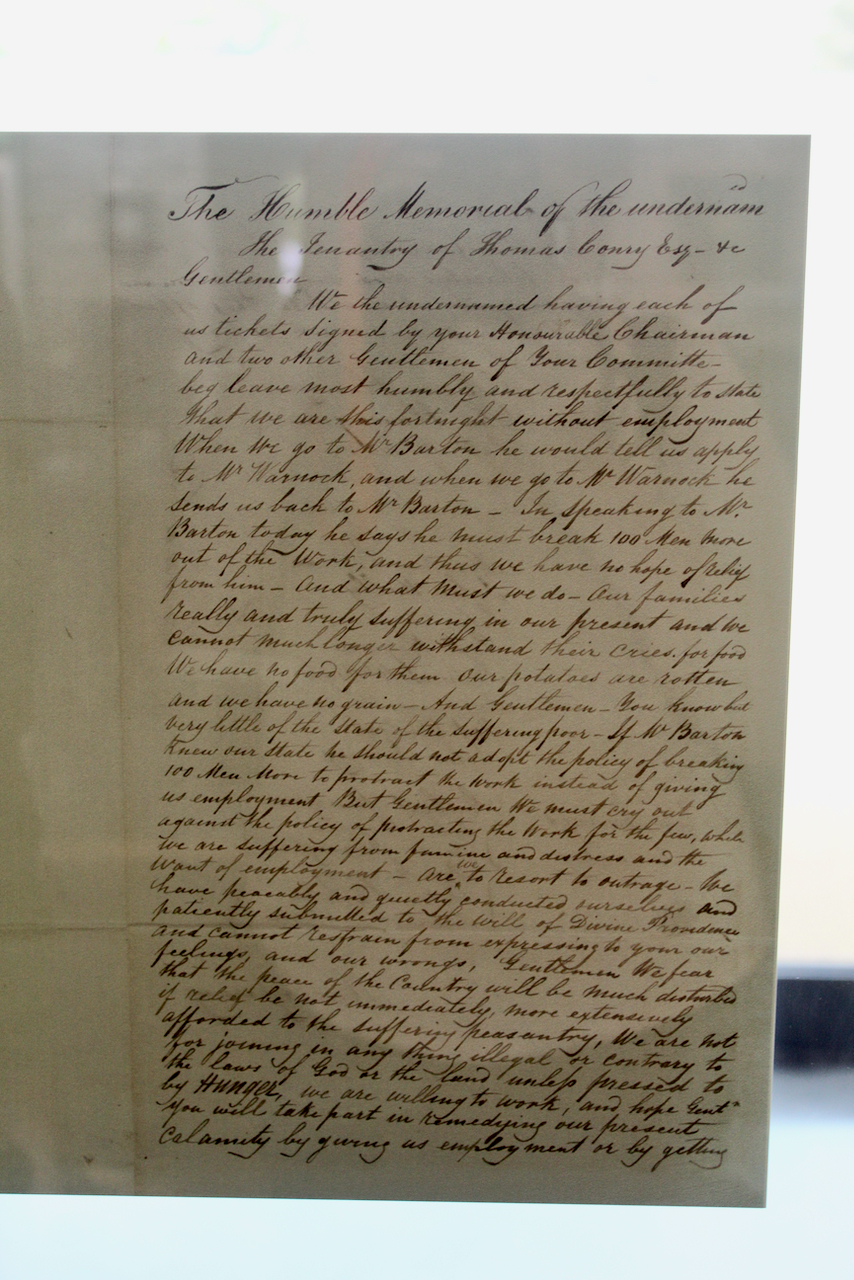
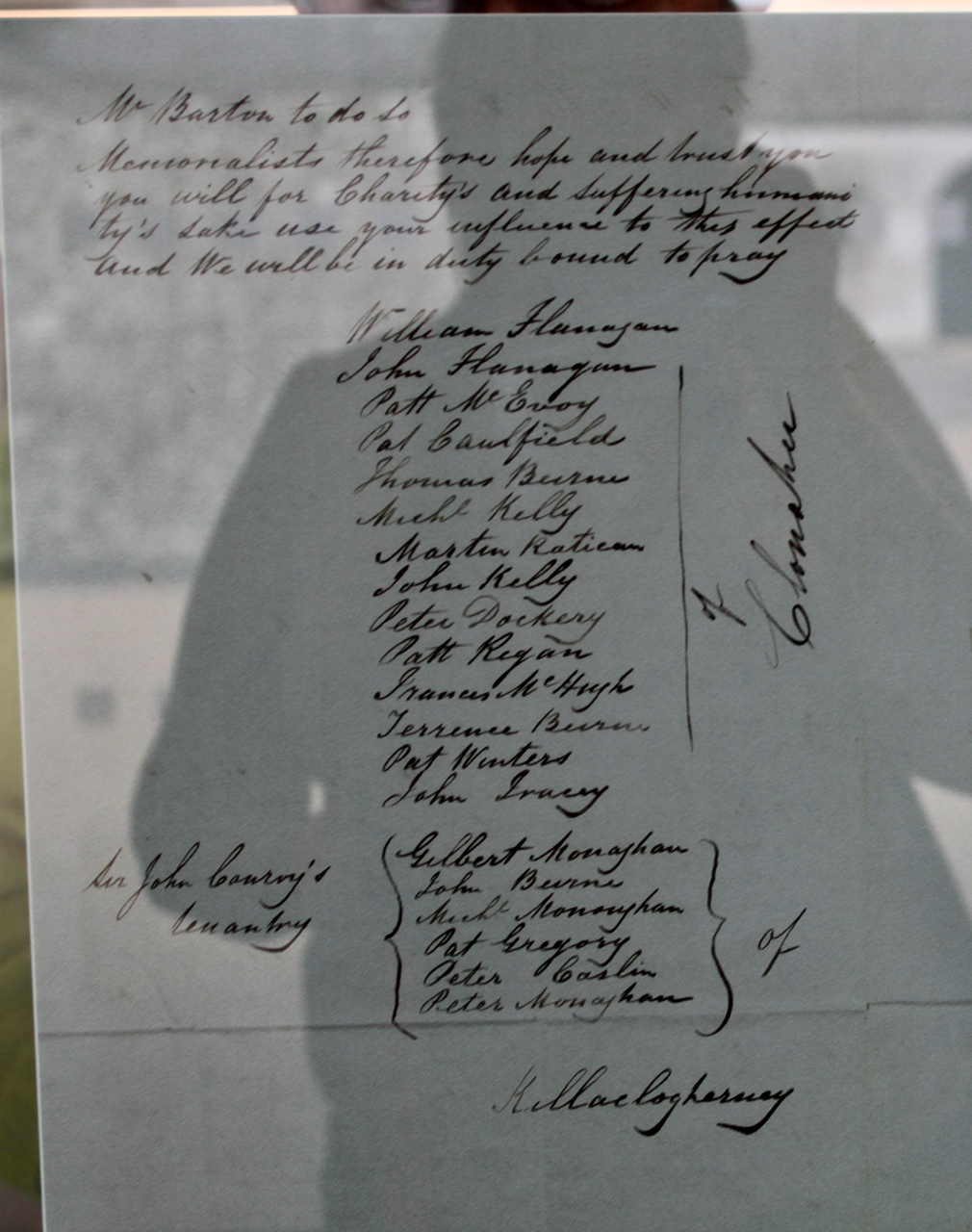
The Famine Museum is introduced by a beautifully handwritten letter by tenants asking not for money or food, but work. The eloquent letter humanises those who were experiencing the poverty of the famine in the 1840s.
Strokestown Park, County Roscommon, August 2022.Strokestown Park, County Roscommon, August 2022.
Arthur Young writes in his A Tour in Ireland in 1799 that “the poor live on potatoes and milk, it is their regular diet, very little oat bread being used and no flesh meat at all except on Easter Sunday and Christmas day.”
Strokestown Park, County Roscommon, August 2022.Strokestown Park, County Roscommon, August 2022.Strokestown Park, County Roscommon, August 2022.
Denis Mahon tried to make the estate pay for itself, to pay off the debts he had inherited. He also tried to take care of his tenants. He had two agents, John Ross Mahon and Thomas Conry. He began relief efforts for his tenants in March 1846. 4000 people were provided with corn on a weekly basis at low or no cost, and after a harsh winter, he distributed free seed to his most needy tenants. He also had a soup kitchen set up.
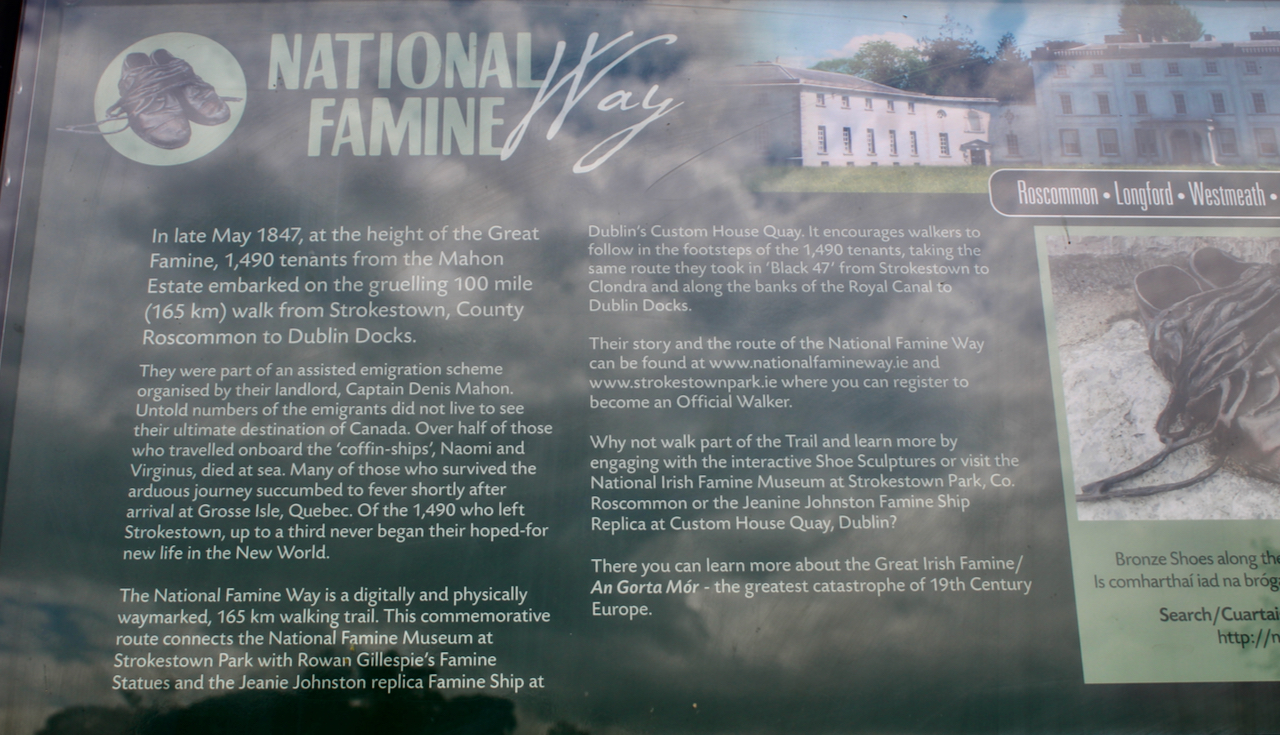
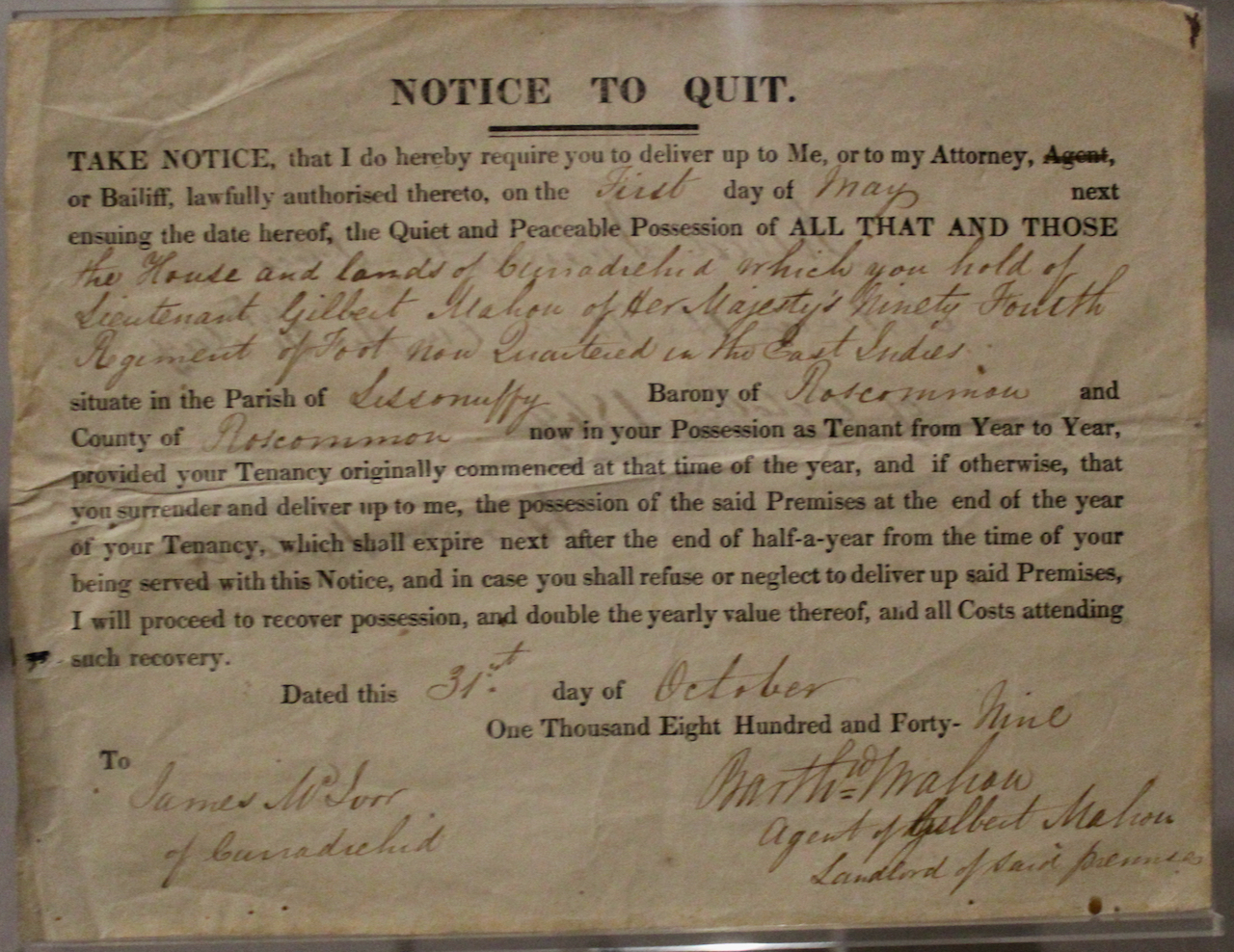
John Ross Mahon wrote to him that the poor rates would exceed receipts of rent. By 1847 the conditions were worse and there was unrest amongst the tenants. Mahon began to evict tenants and to encourage others to emigrate. The Freeman’s Journal in 1848 states that “The evictions on the estate since Major Mahon had taken over amounted to 3006 people, including the 1,490 who were selected to emigrate.” Fewer than half of those who emigrated survived the trek to Dublin and the journey on the ship.
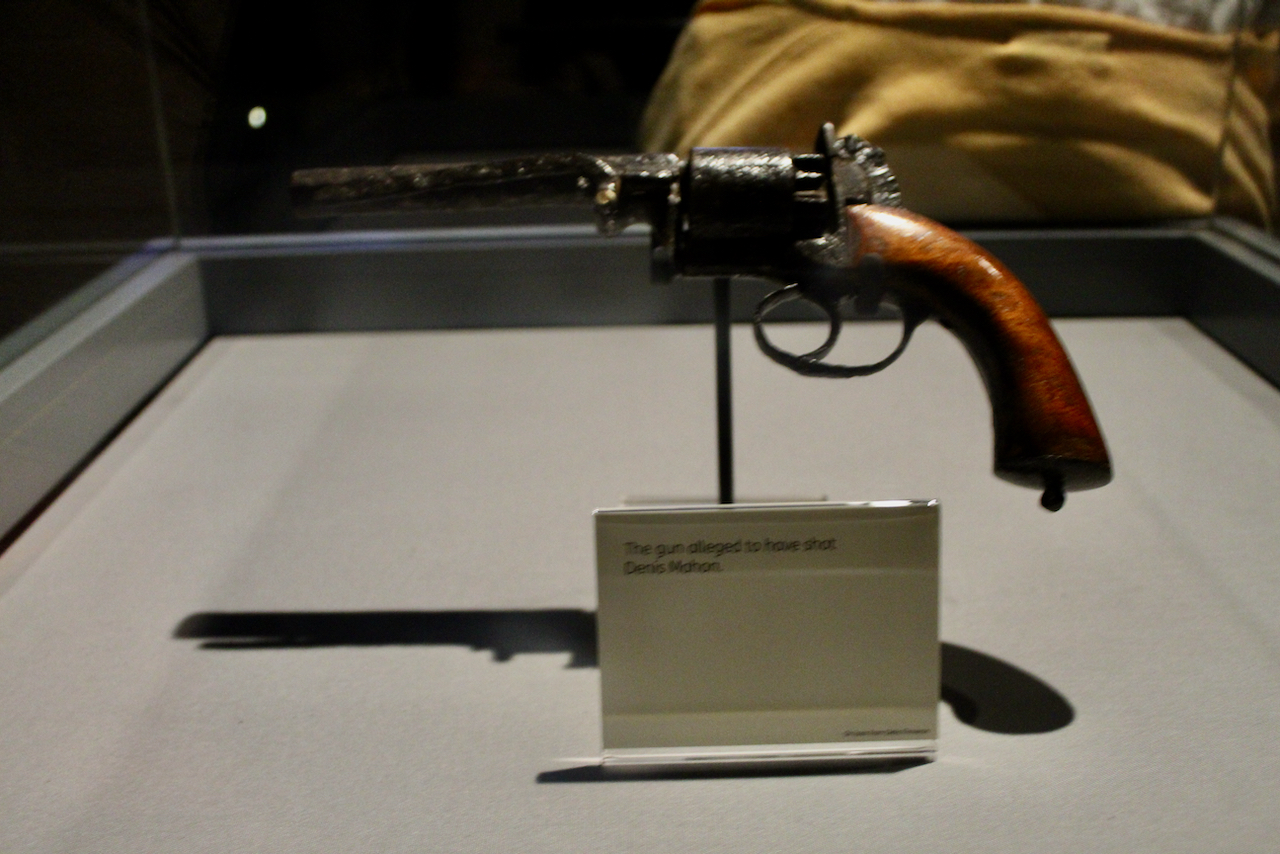
The building of the month entry in the National Inventory summarises: “Major Mahon, an improving landlord, sought to alleviate the situation by judicious depopulation and in 1847 organised the voluntary emigration of almost one thousand of his tenants to North America. However, a far greater number refused to move and were the subject of evictions involving almost 600 families and 3000 individuals. Returning from an evening meeting in Roscommon, where he had urged the Board of Guardians to keep the workhouse open for needy paupers, Major Mahon was fatally shot on the 2nd of November 1847. Three men were hanged for the murder and two were transported, but the true identity of the assassin or assassins has been debated ever since.”
Strokestown Park, County Roscommon, August 2022.
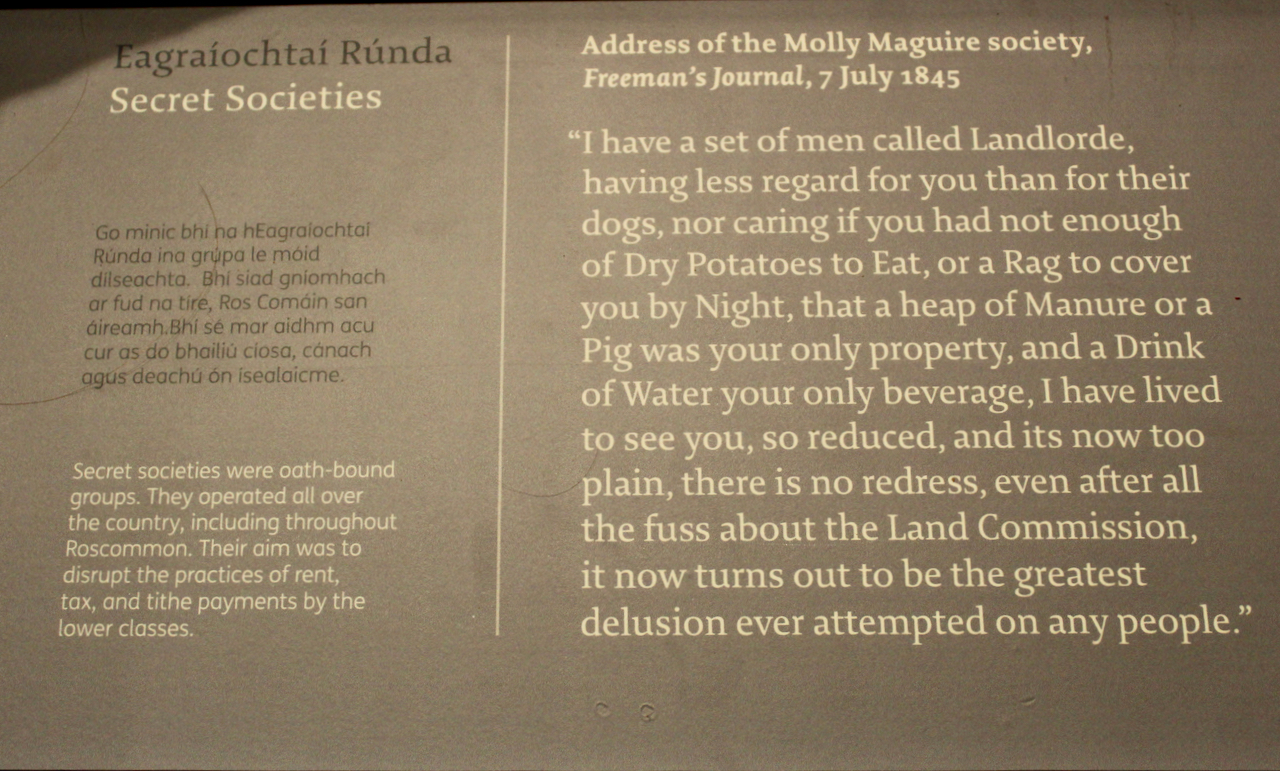
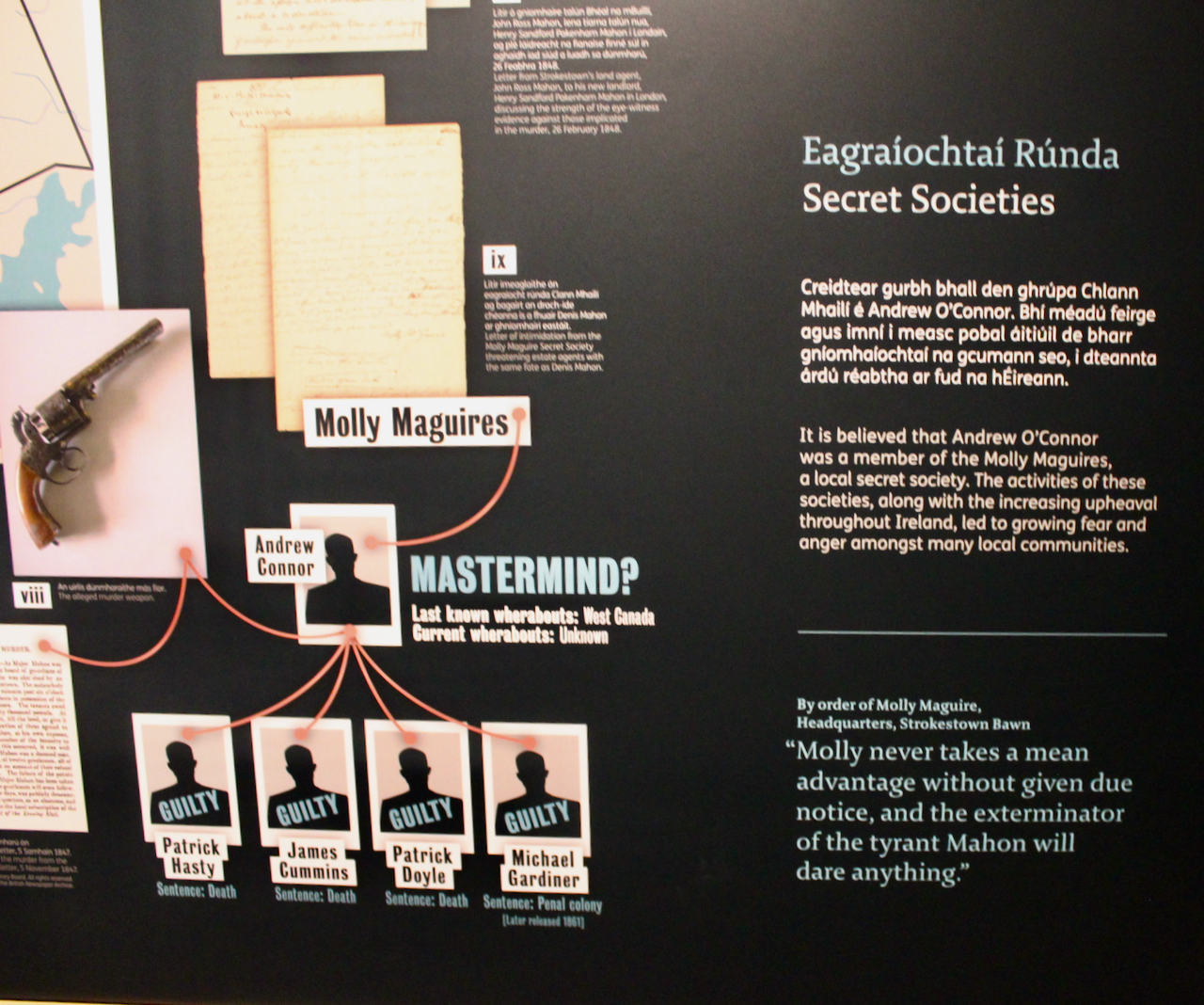
The Famine Museum tells us that there were secret societies who sought to improve the conditions of the poor. A local one in Roscommon was called the “Molly Maguires.”
Strokestown Park, County Roscommon, August 2022.Strokestown Park, County Roscommon, August 2022.
The man suspected to be the mastermind of the murder, Andrew Connor, probably escaped to Canada. Police followed to Canada to try to capture him but to no avail. A man named Patrick Hasty was hanged for the murder, along with two others.
Strokestown Park, County Roscommon, August 2022.
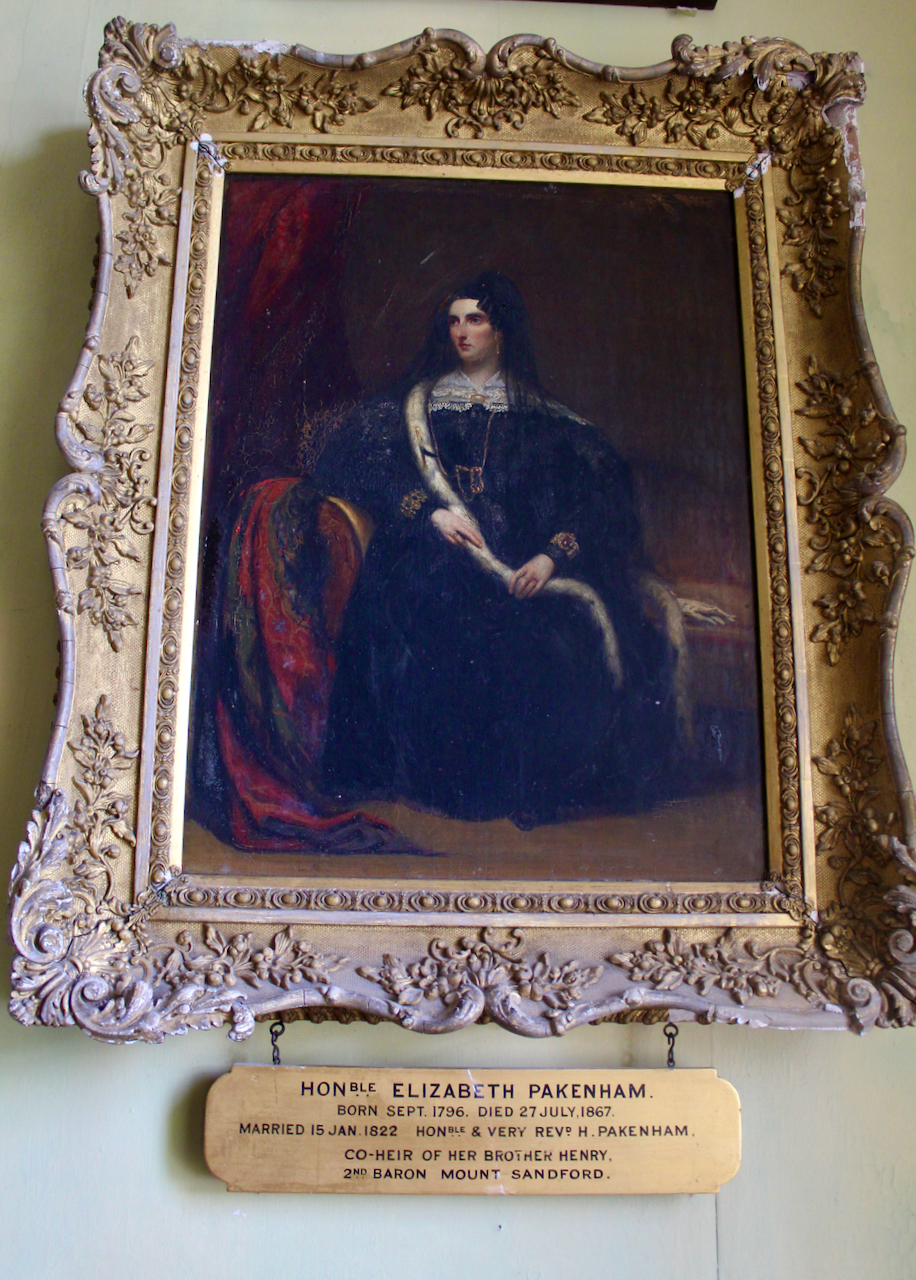
Denis’s son Thomas predeceased him, childless, and the house passed to his daughter, Grace Catherine. Earlier in 1847, Grace had married Henry Sandford Pakenham (1823-1893), son of Reverend Henry Pakenham, Dean of St. Patrick’s Cathedral in Dublin, who was from Pakenham Hall in County Westmeath, now called Tullynally (see my entry, it is another Section 482 property which can be visited).
Henry Sandford Pakenham held the office of High Sheriff of County Roscommon in 1830. He was heir to the vast Pakenham and Sandford estates in counties Longford, Westmeath and Roscommon. He legally changed his name to Henry Sandford Pakenham Mahon by Royal Licence in 1847.
After Denis Mahon was killed his devastated daughter Grace moved to the Isle of Wight with her husband, who continued to manage the estate with the help of his agent.
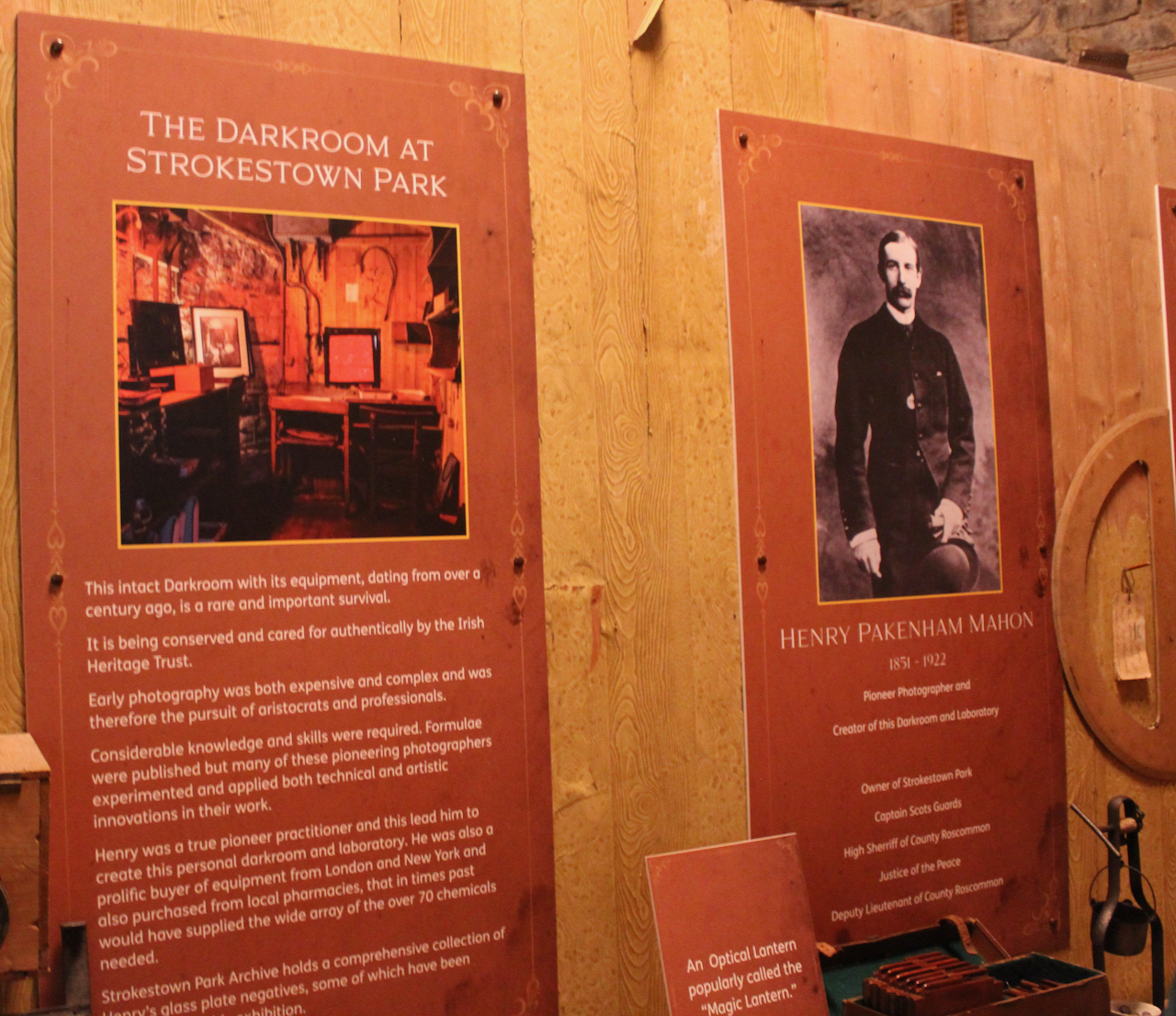
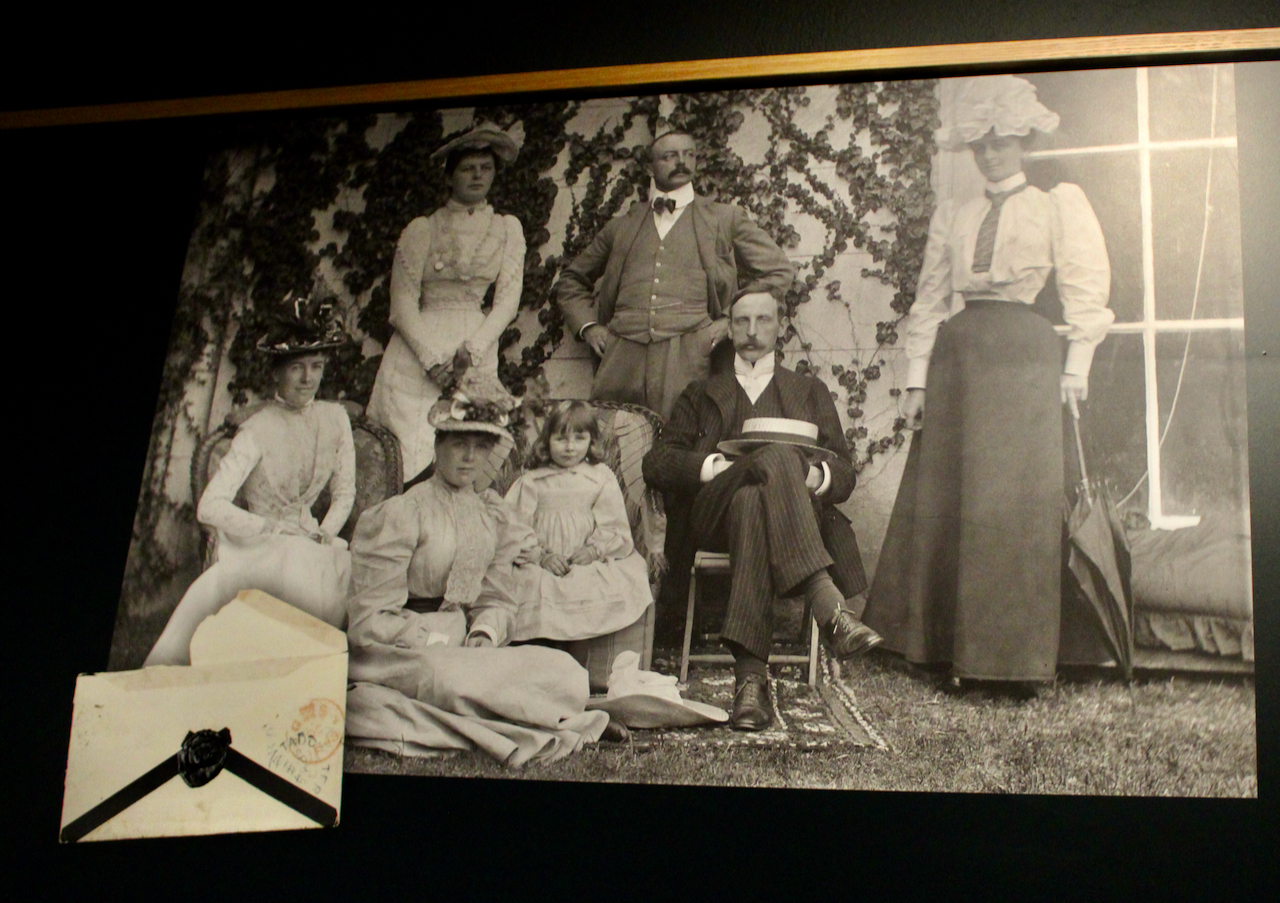
He and Grace Catherine had several daughters, and a son, Henry Pakenham-Mahon (1851-1922).
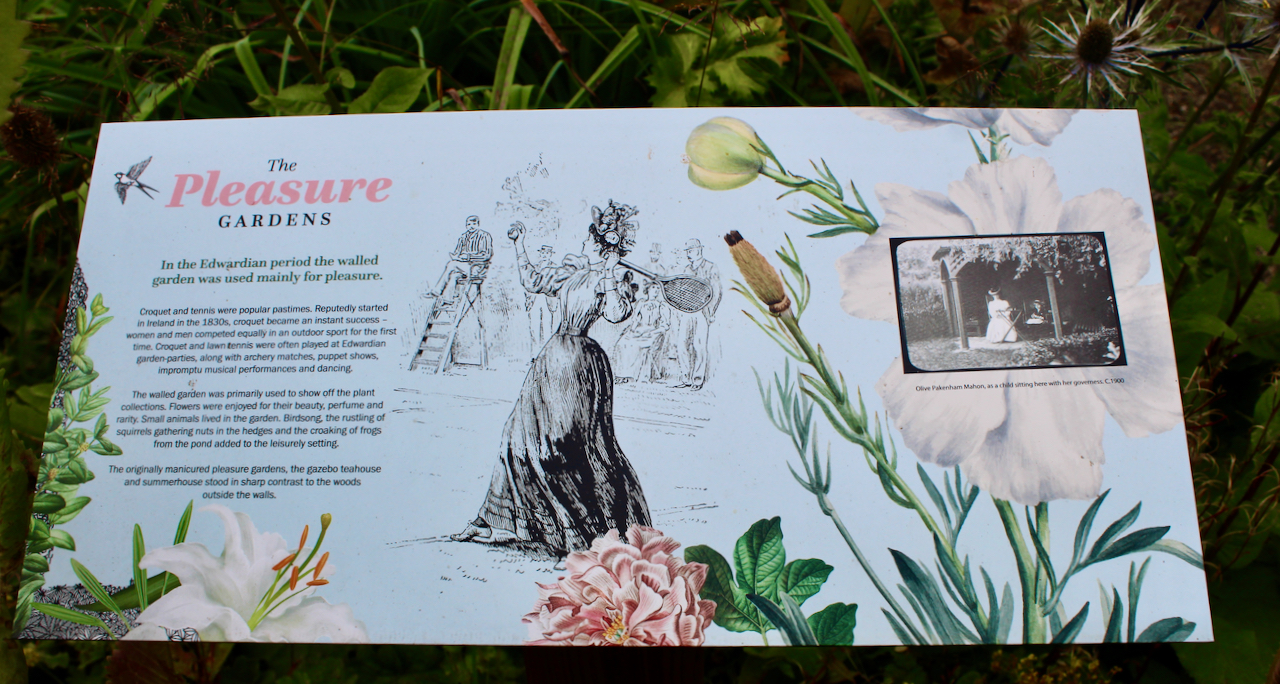
Henry moved back to live in Strokestown. He was High Sheriff, Justice of the Peace and Deputy Lieutenant of County Roscommon, following in the footsteps of his father. He married Mary Burrard and Olive, as mentioned by Reeves-Smyth, was their daughter.
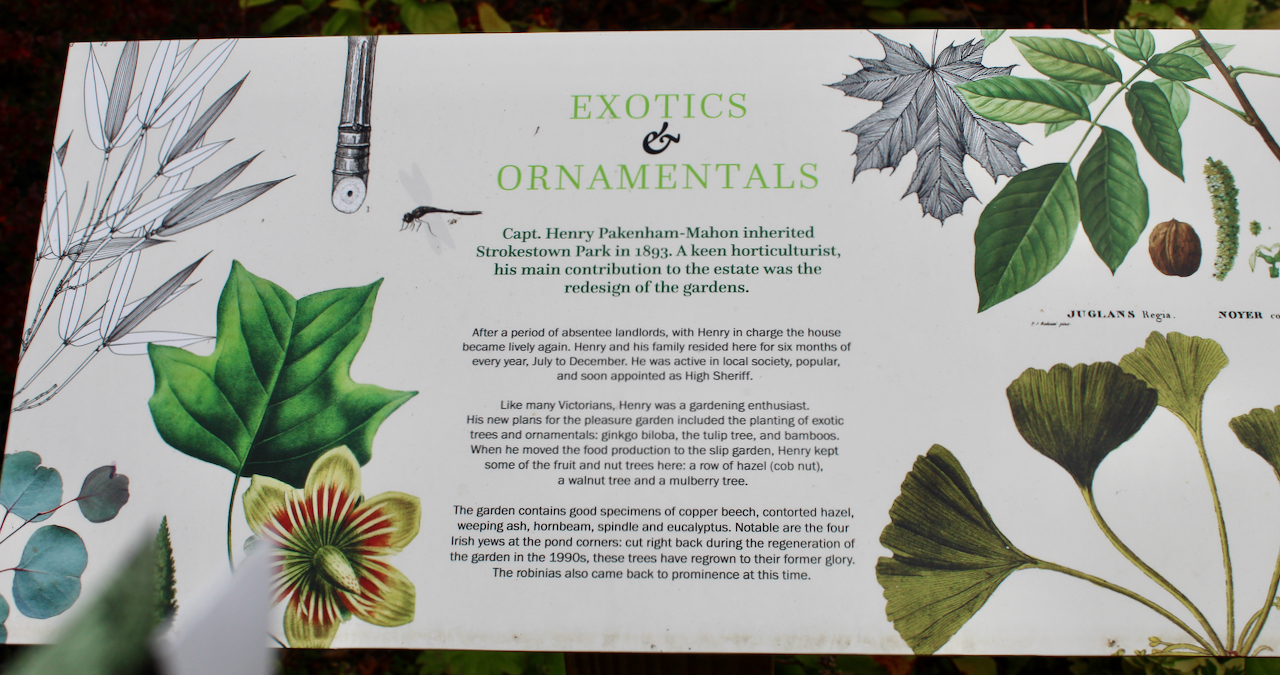
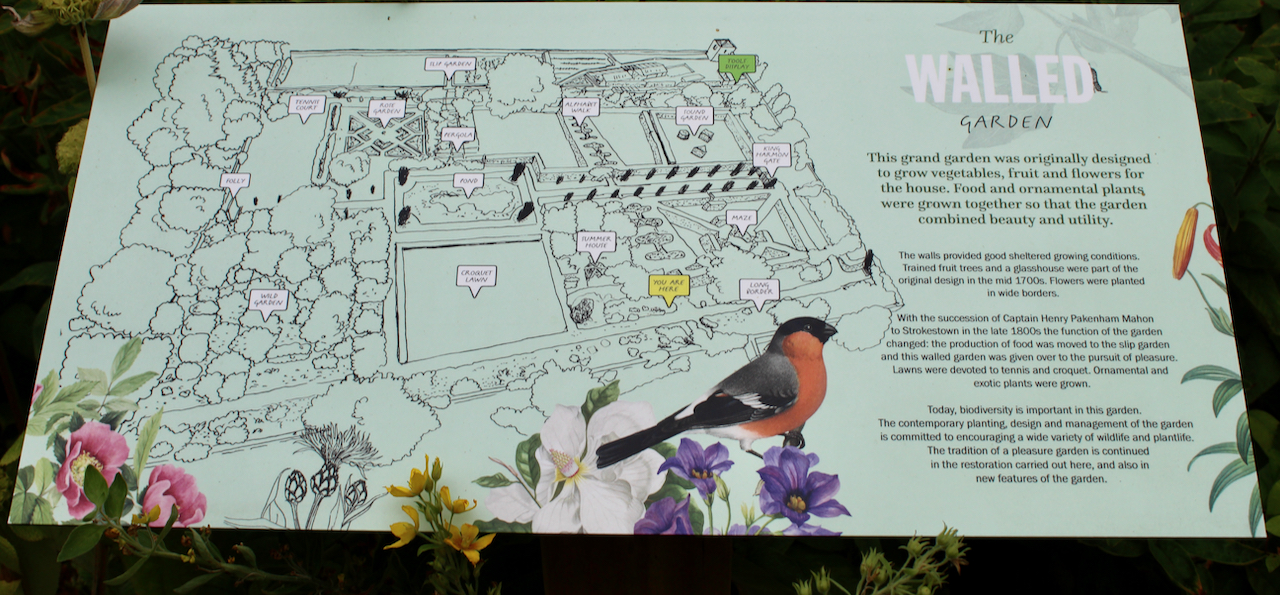
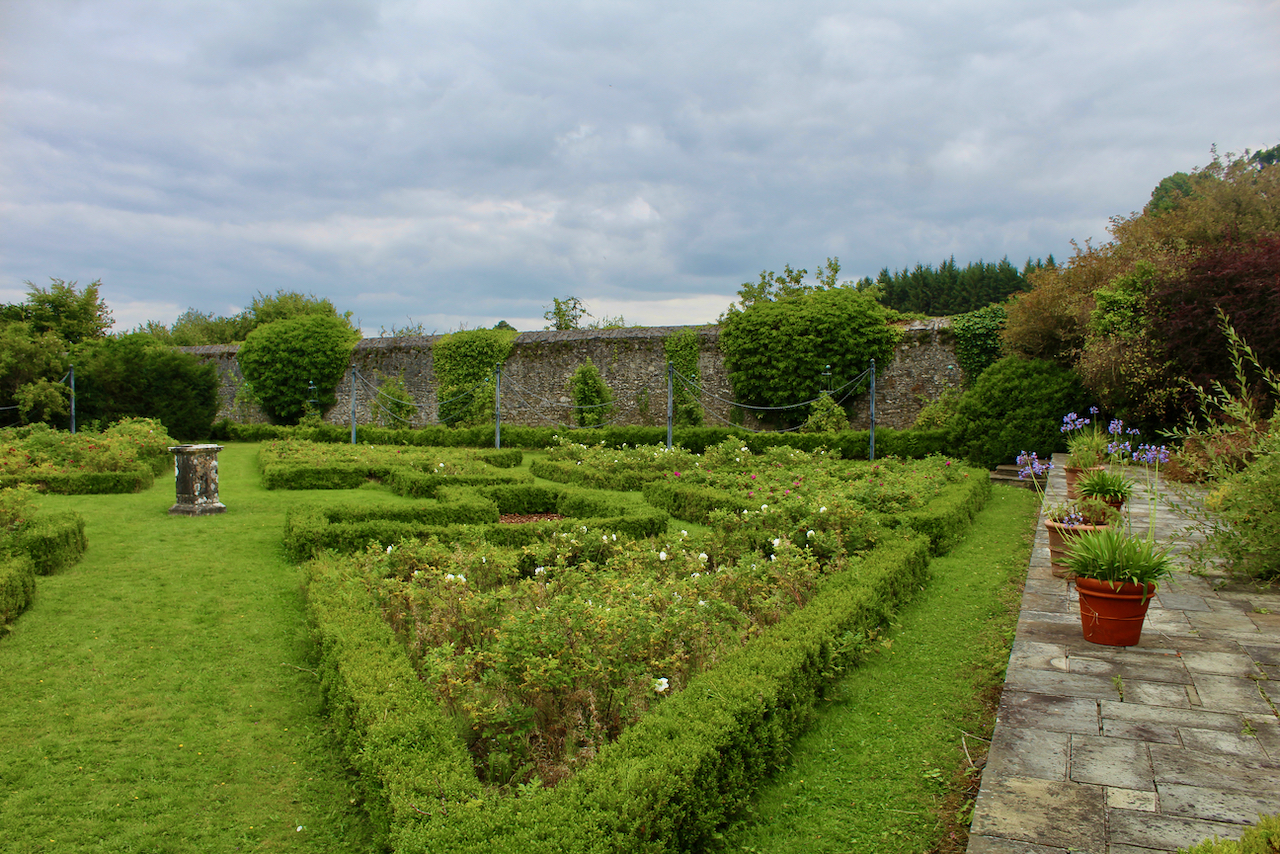
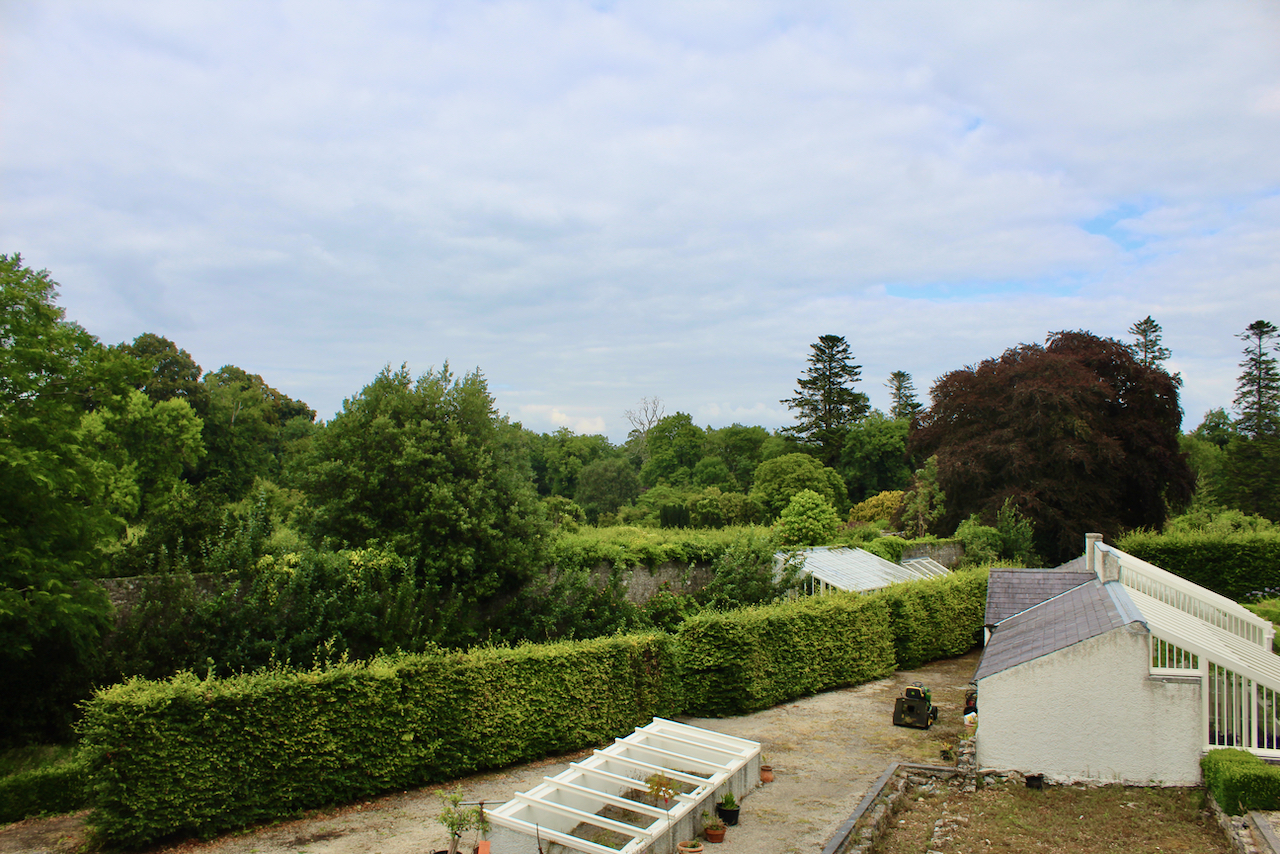
Henry Pakenham-Mahon was a keen horticulturalist and his main contribution to the estate was the development of the gardens. The family lived part-time in Strokestown Park and part-time in England. He developed a Pleasure Garden in the walled garden.
Strokestown Park, County Roscommon, August 2022.
He also had an interest in photography, and he built a darkroom in Strokestown House.
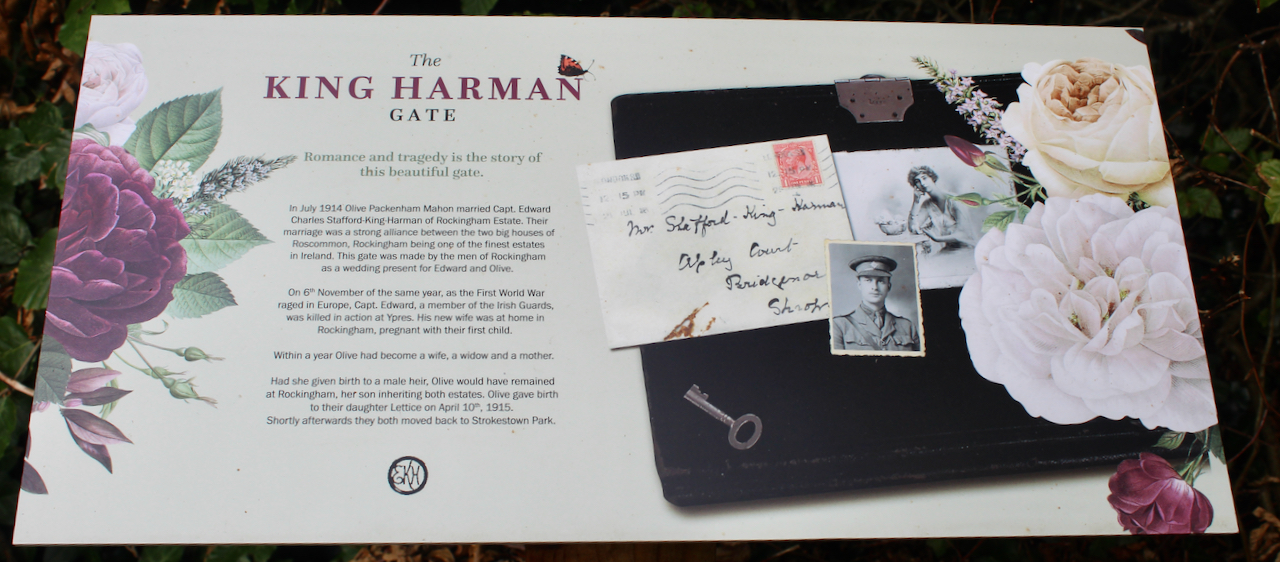
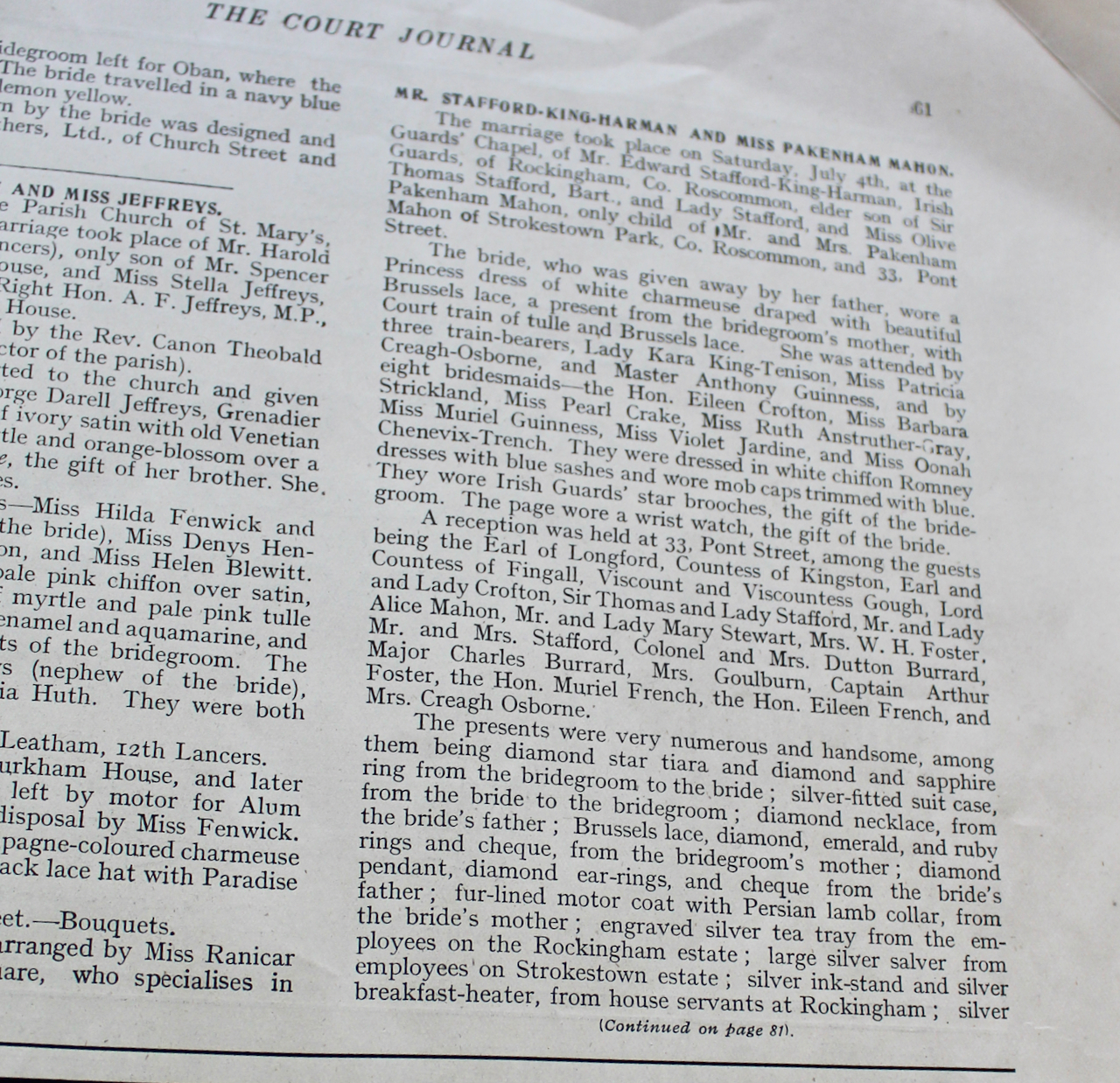
His daughter Olive, born in 1894, first married Captain Edward Charles Stafford-King-Harman, from Rockingham House, County Roscommon, whom we came across in King House. Tragically, he died in the first world war in 1914. They had one daughter, Lettice. If Lettice had been a boy she would have inherited Rockingham. Olive and Lettice returned to live in Strokestown Park.
Olive married again, this time to Wilfrid Stuart Atherstone Hales, who also fought in the first world war, and later, in the second. A British garrison was set up in Strokestown House during the War of Independence. After an ambush nearby, Wilfrid Stuart Hales was sent to investigate, and he and Olive fell in love. On 18 April 1923 his name was legally changed to Wilfrid Stuart Atherstone Hales Pakenham Mahon by Deed Poll. He married Olive in 1921 and he changed his name after the death of her father in 1922. They went on to have several children. It was her son who sold the estate.
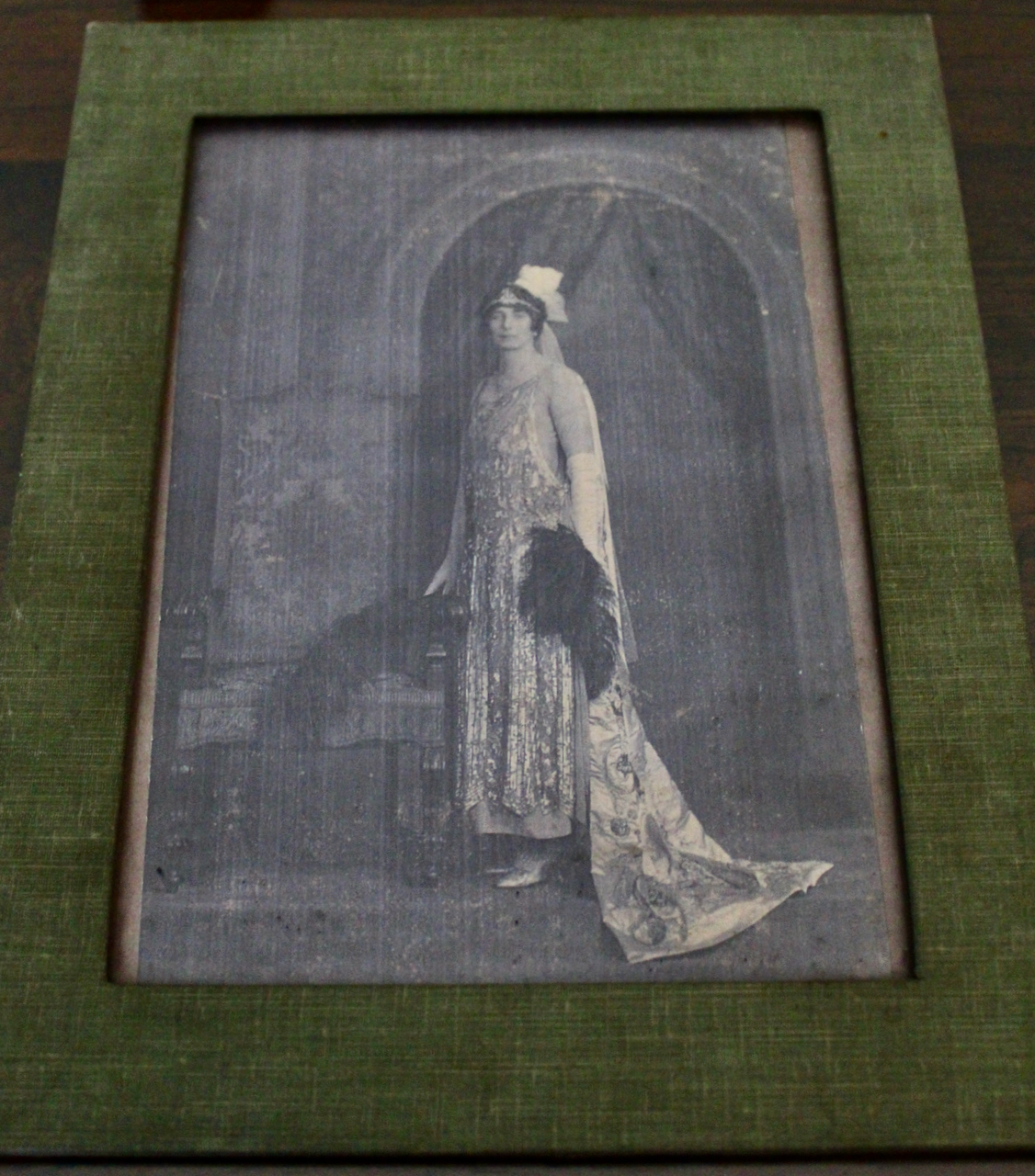
Olive Hales Pakenham Mahon dressed for a visit to Buckingham Palace in the 1930s.Strokestown Park, County Roscommon, August 2022.
The Pakenham Mahons did not spent much time in Strokestown due to Stuart Hales Pakenham Mahon’s military career, until they returned to live there in the 1950s.
Stuart Hales Pakenham Mahon was interested in finding water and mineral deposits by “dousing,” and the photography display we saw in the house also had information on this topic.
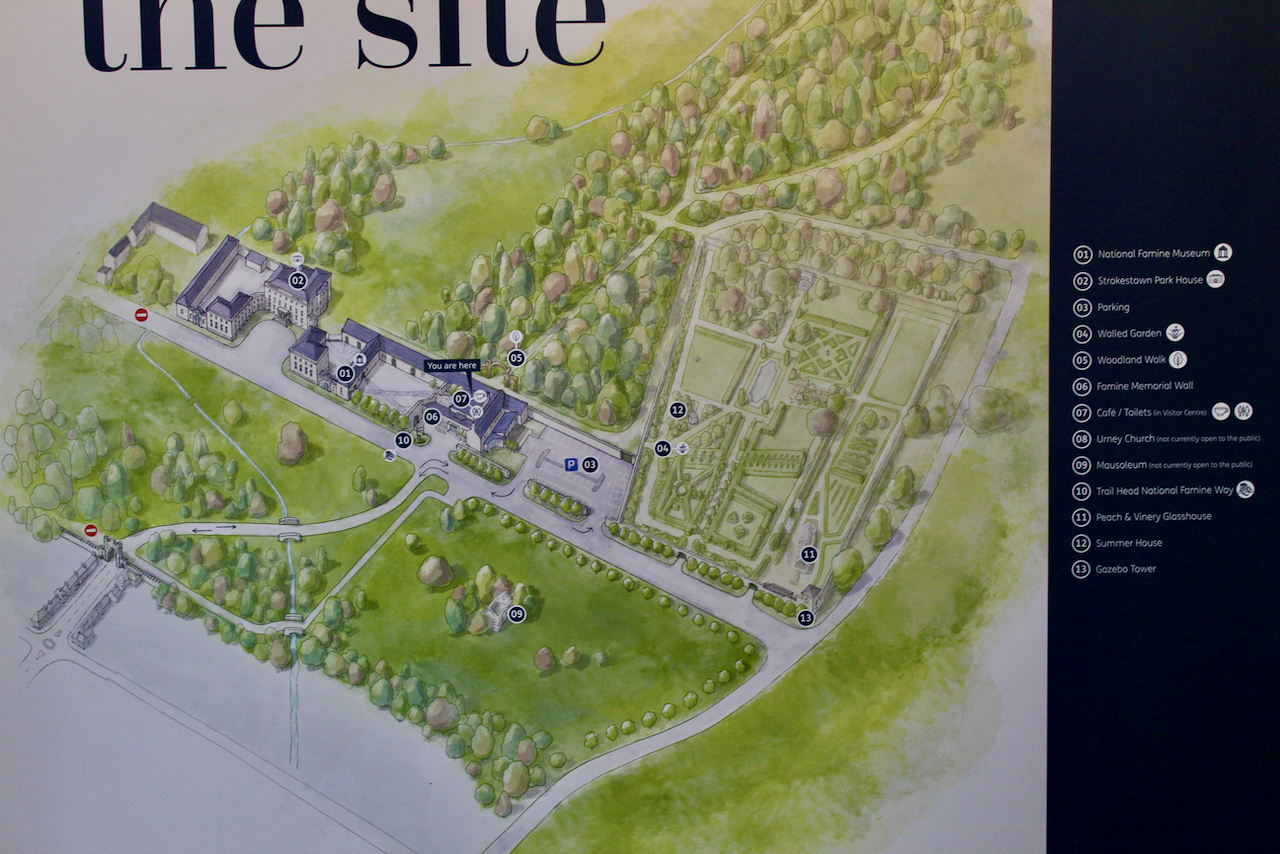
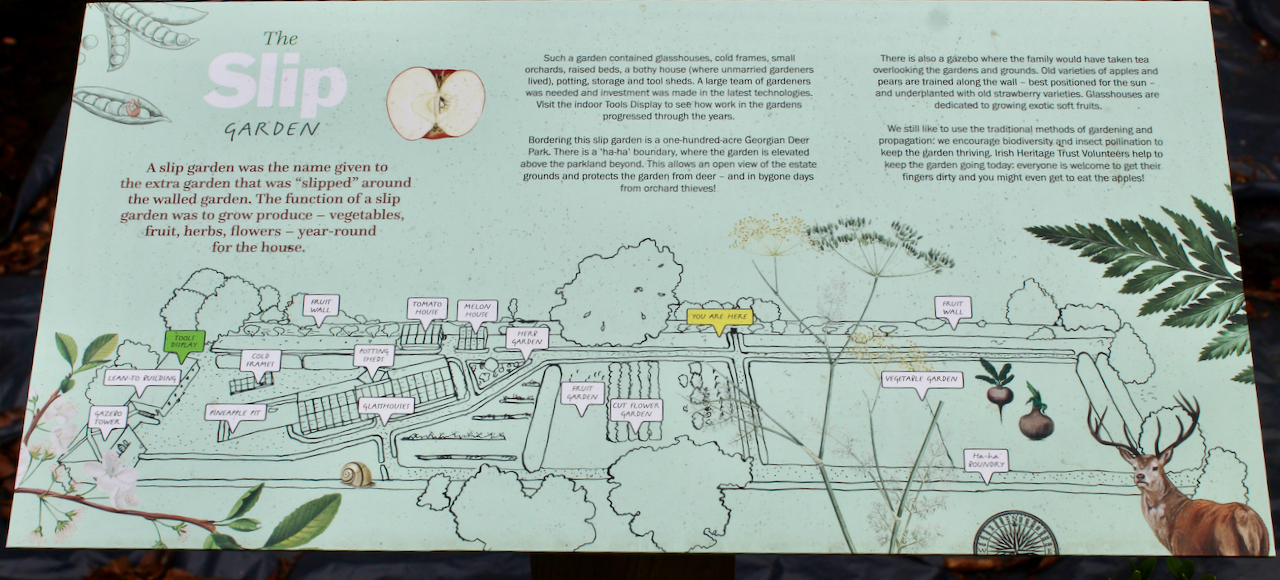
The property has a six acre walled garden and woodlands.
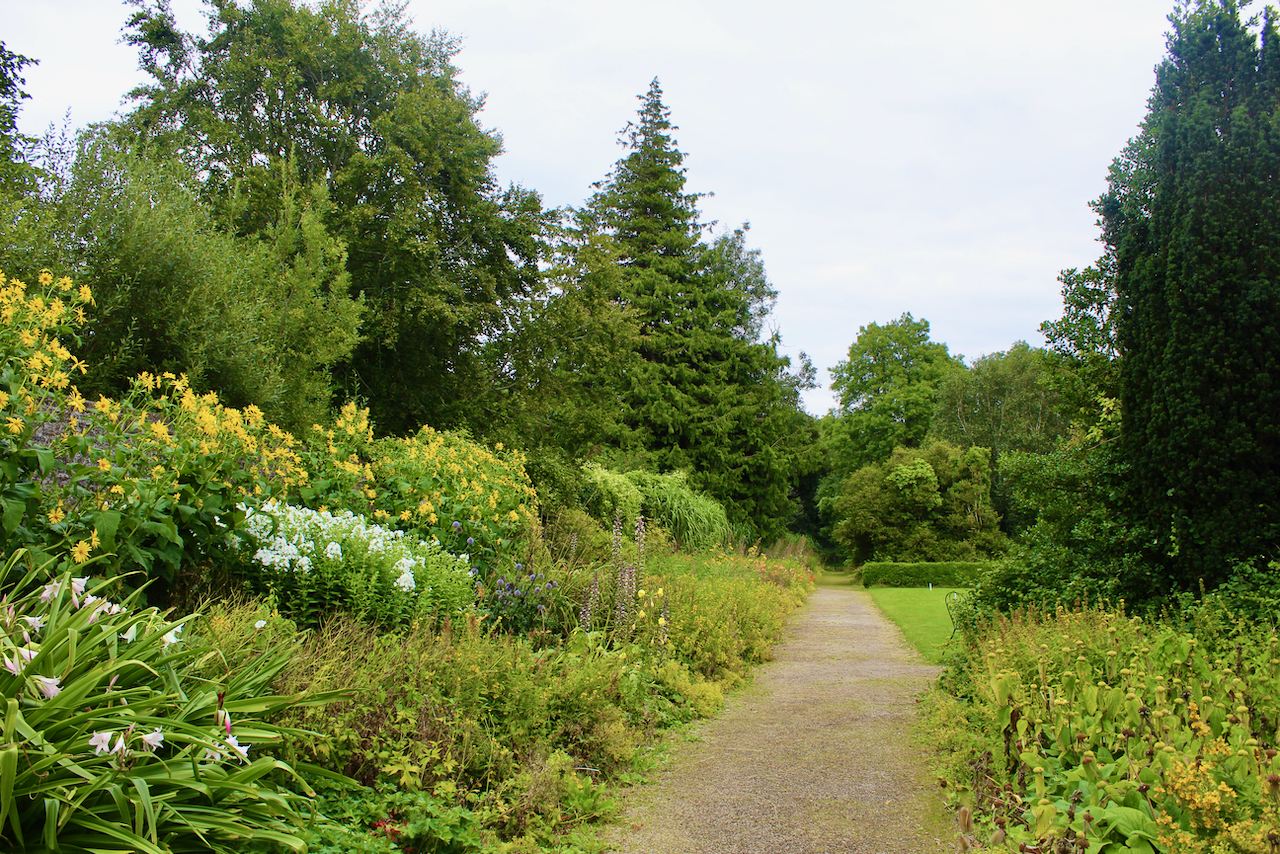
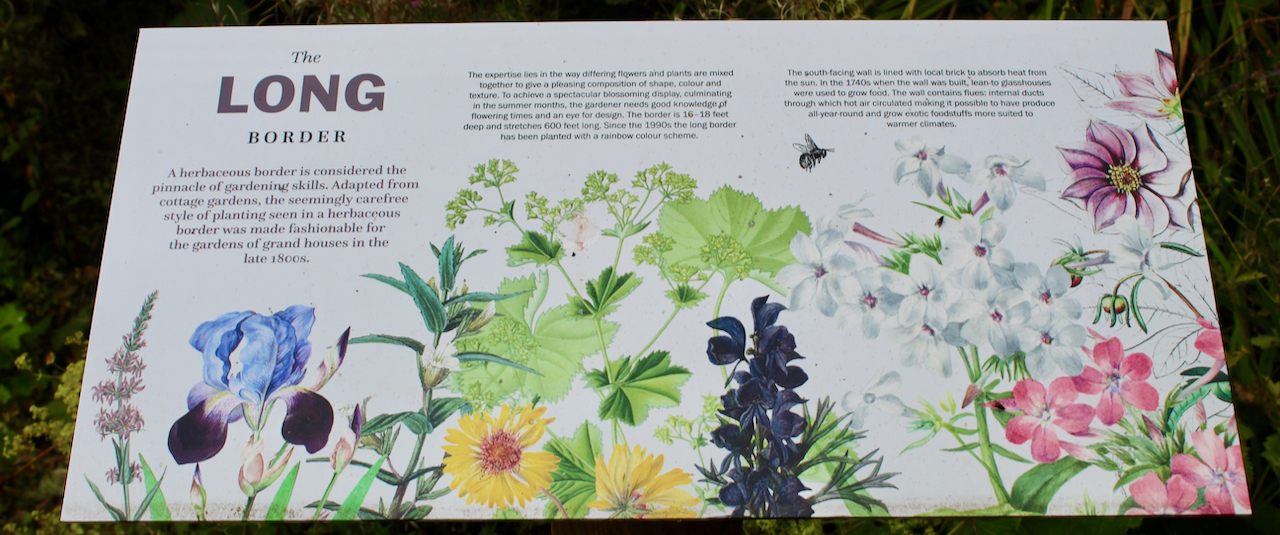
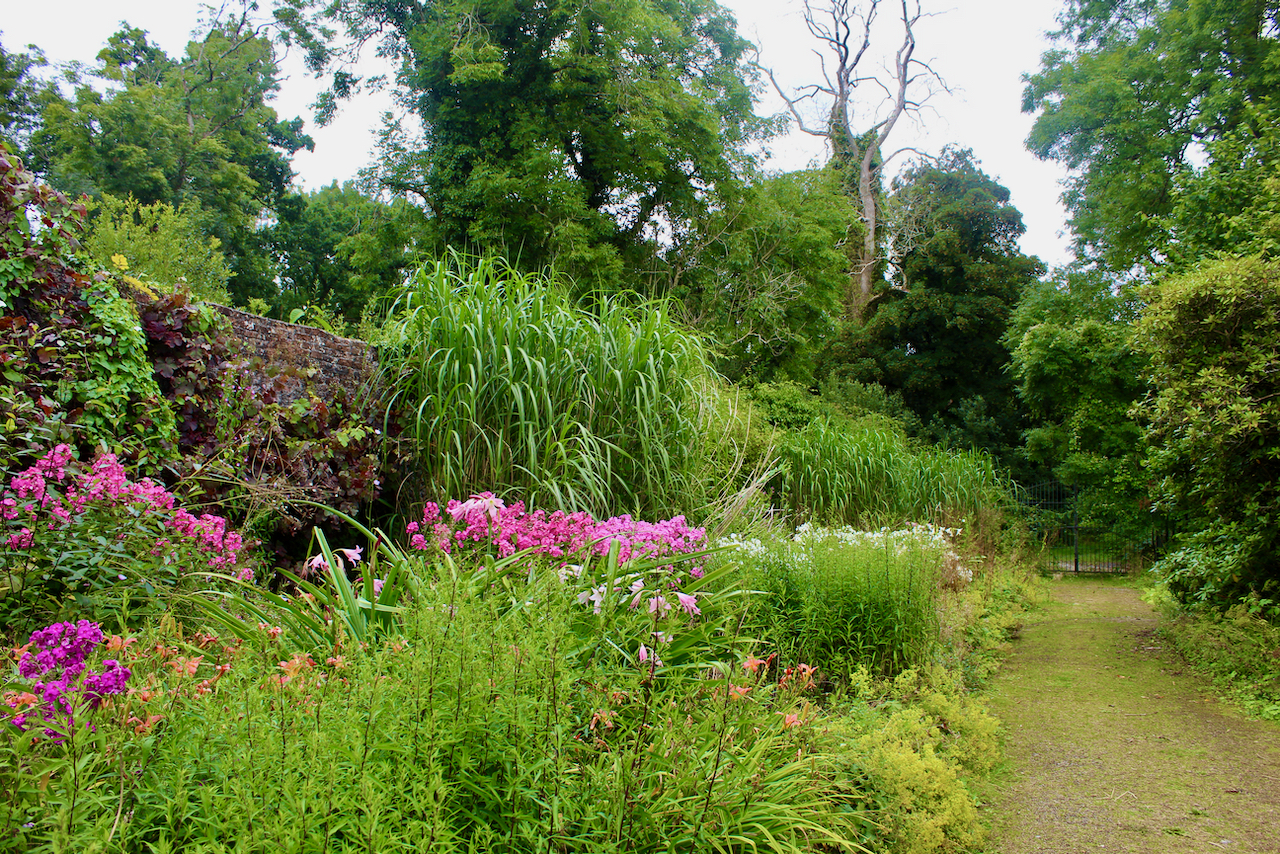
Westward Garage Ltd approached the Pakenham Mahons to buy their land, and terms were agreed. At first the garage only wanted to keep some land and they planned to sell the house, but then Jim Callery found the documents relating to the famine, and had the idea of setting up a famine museum. The company let Olive and her husband remain in the house. Jim Callery employed his cousin Luke Dodd to oversee restoration of the house. [15] In 1987 the house opened to the public, and the Famine Museum opened in 1994. The walled garden opened in 1997, and the herbaceous border is said to be the longest in either Ireland or the UK.
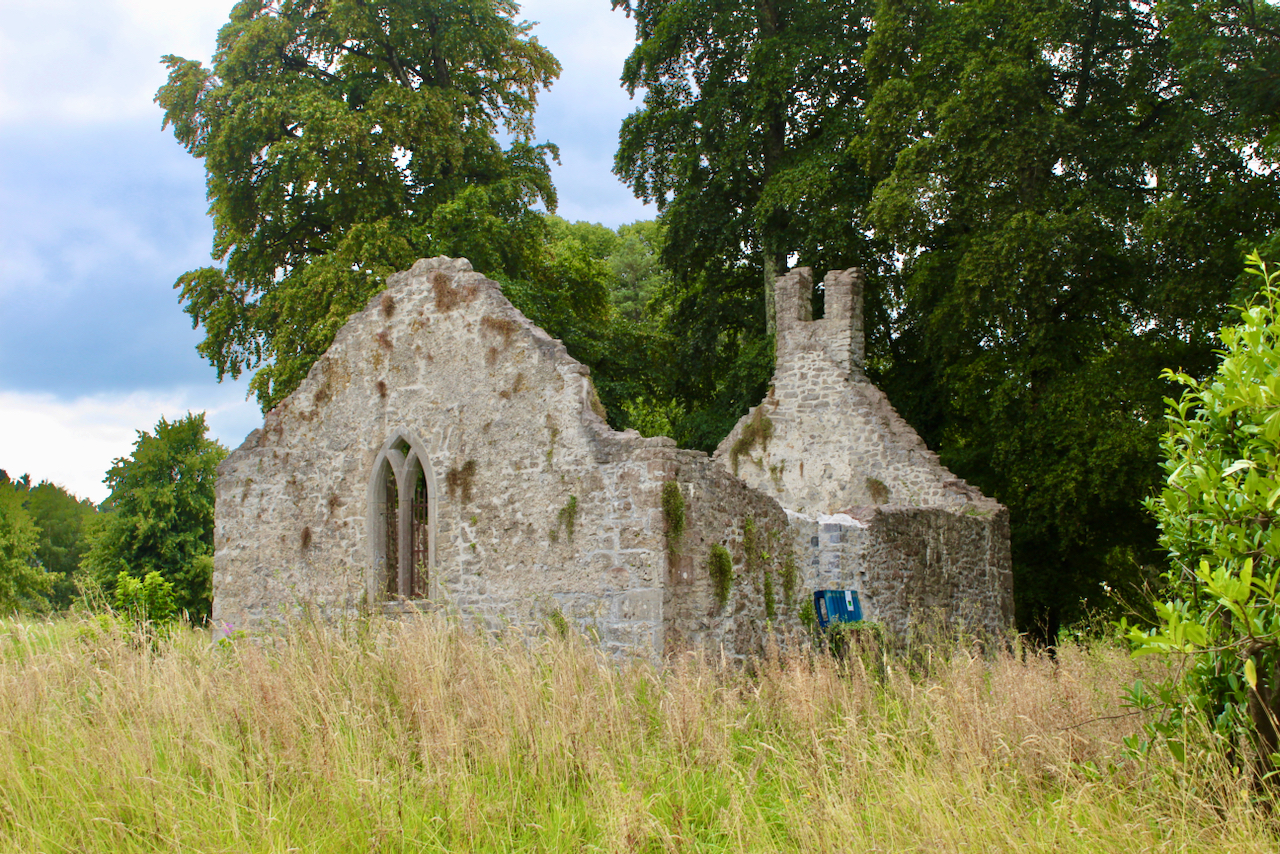
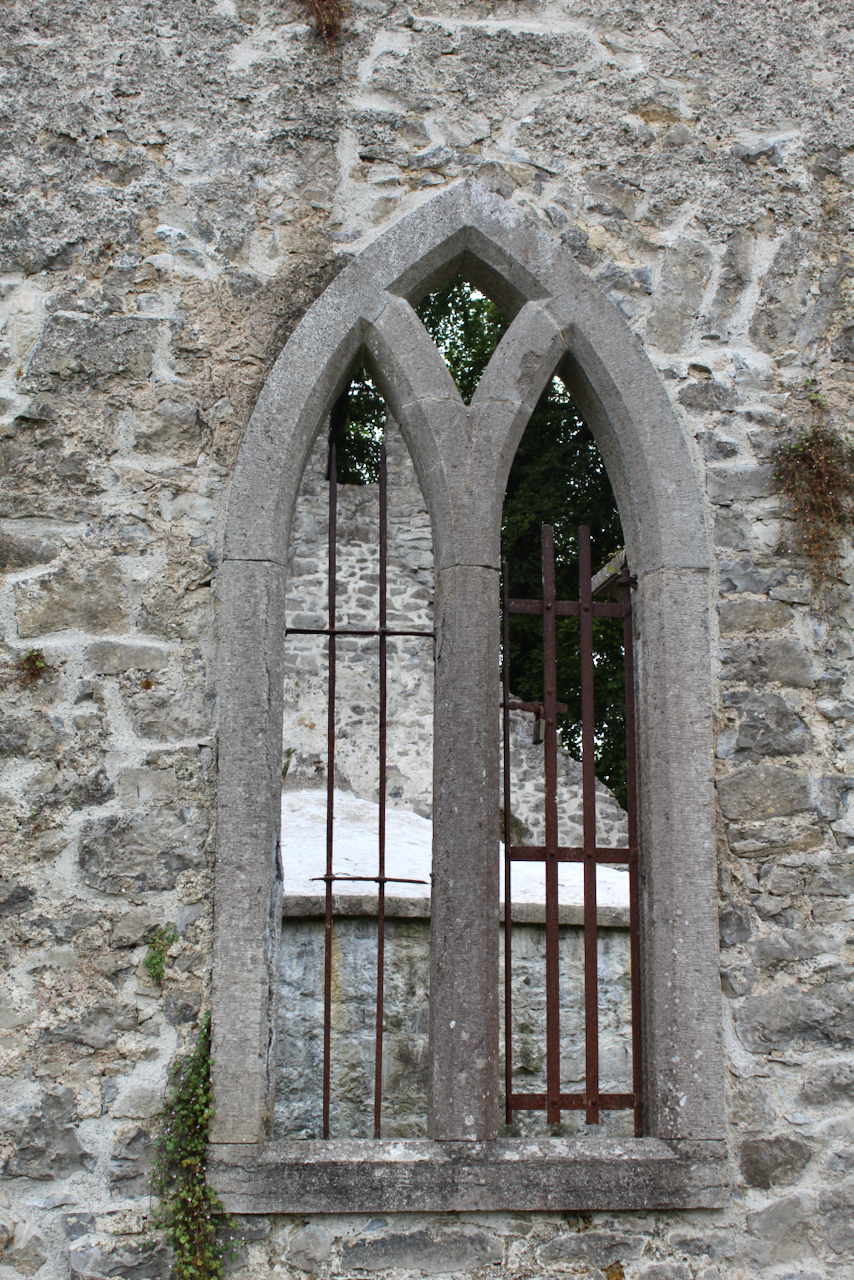
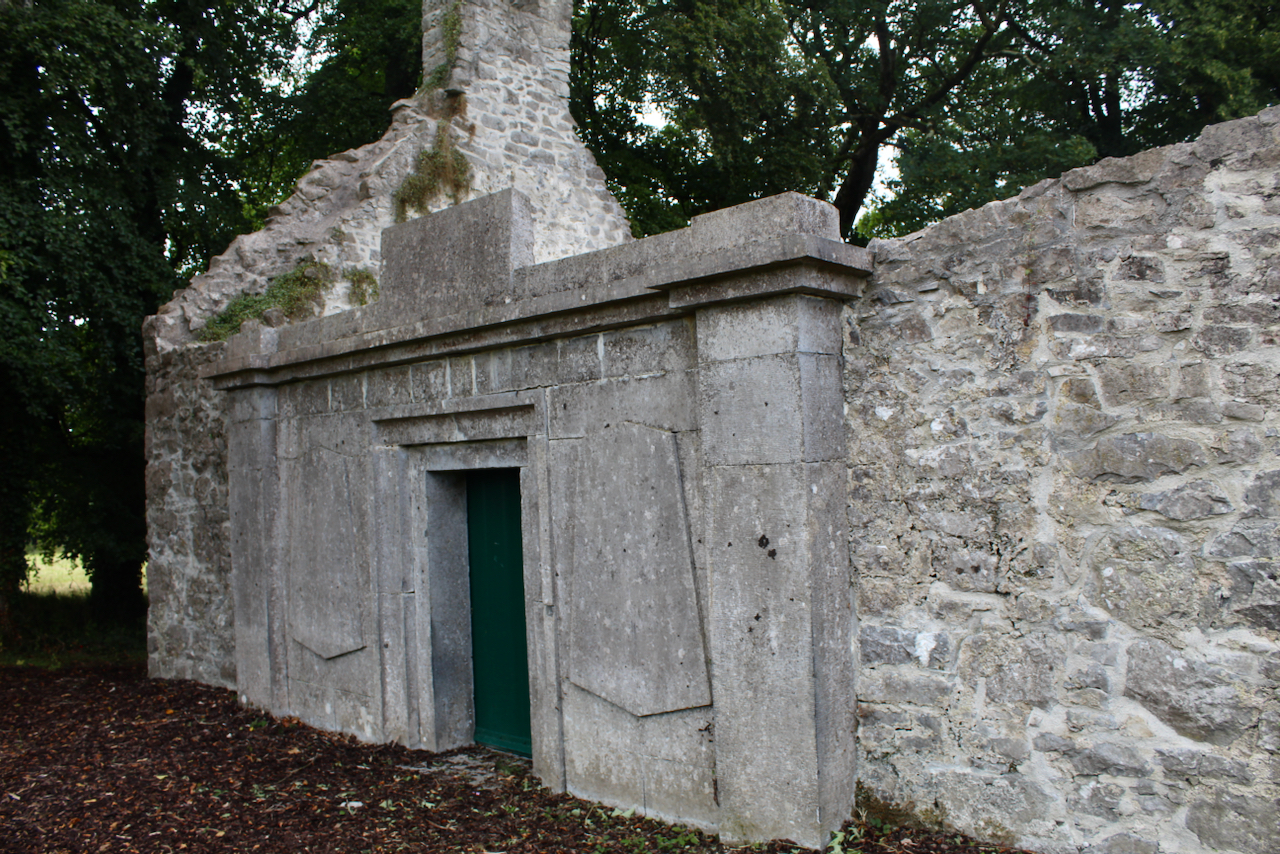
The following day there was a talk about the mausoleum at Strokestown, but we had to move on with our Heritage Week plans. The mausoleum was constructed within an earlier 17th century church and contains a crypt in which members of the Mahon Family were buried. Following years of careful and professional conservation and sympathetic landscaping, this ruin is again accessible and visible to visitors to Strokestown Park.
[6] Bernard, Sir Burke, editor, Burke’s genealogical and heraldic history of the landed gentry of Ireland, 4th ed. (London, U.K.: Burkes Peerage Ltd, 1958), page 471. I’m not sure if “Movilla” mentioned here refers to Moyveela townland.
[7] Reeves-Smyth, Terence. Irish Big Houses. Appletree Press Ltd (22 April 2009)
[12] Bence-Jones, Mark. A Guide to Irish Country Houses (originally published as Burke’s Guide to Country Houses volume 1 Ireland by Burke’s Peerage Ltd. 1978); Revised edition 1988, Constable and Company Ltd, London. Note that Mark Bence-Jones claims that it was the 2nd Baron Hartland who laid out the main street of Strokestown and had the entrance built, but the National Inventory tells us that it was Maurice, 1st Baron Hartland.
























 Irish Historic Houses