
Donation
Help me to fund my creation and update of this website. It is my “full time job” and created purely out of love for the subject and I receive no payment so any donation is appreciated! My costs include travelling to our destinations from Dublin, accommodation if we need to stay somewhere nearby, and entrance fees. Your donation could also help with the cost of the occasional book I buy for research (though I mostly use the library – thank you Kevin Street library!). Your donation could also help with my Irish Georgian Society membership or attendance for talks and lectures, or the Historic Houses of Ireland annual conference in Maynooth.
€15.00
MOLI (Museum of Literature Ireland), Newman House, 85-86 St. Stephen’s Green, Dublin
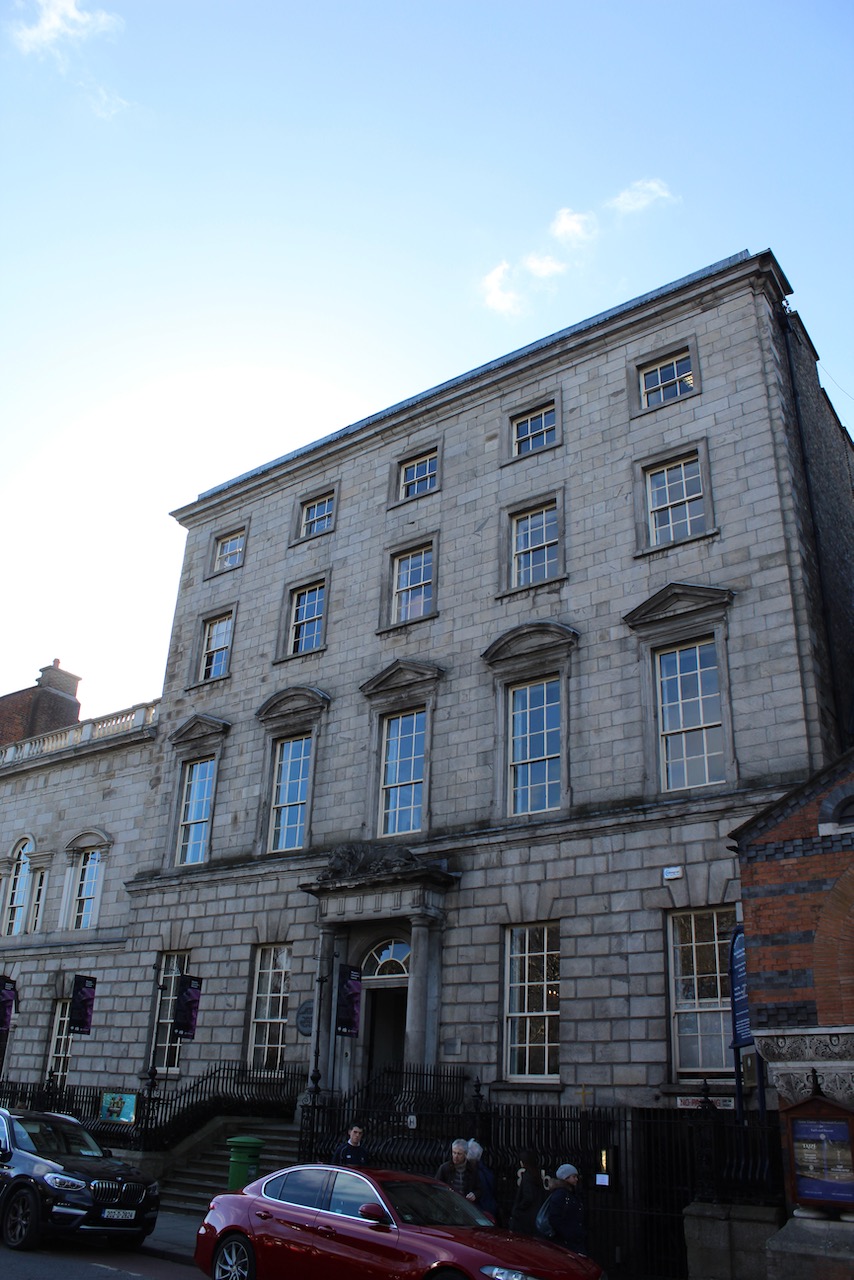
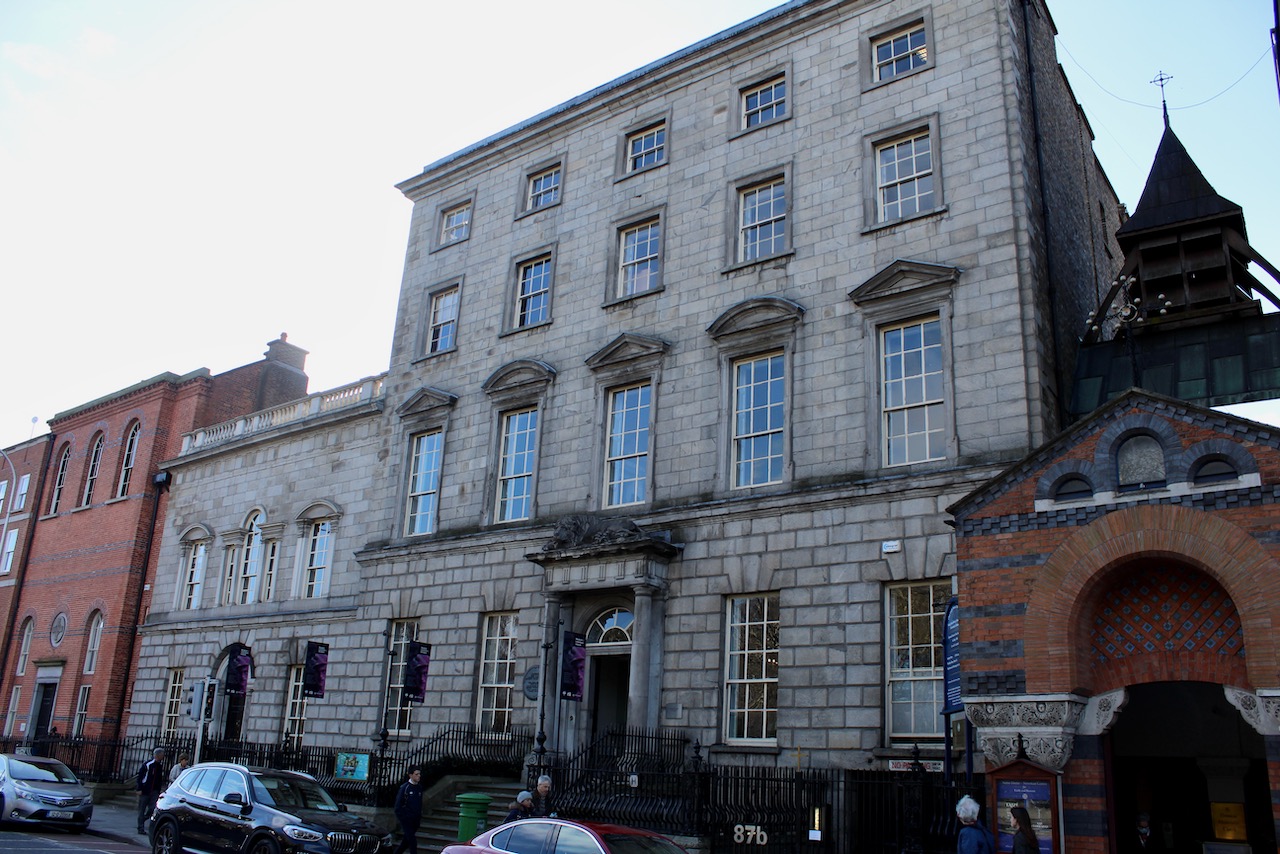
The website tells us:
“No. 85 St. Stephen’s Green was built in 1738 by Richard Cassels, architect of Powerscourt House and Russborough House, and is notable for its exquisite baroque plasterwork by the Lafranchini brothers. The adjoining townhouse at No. 86 was constructed in 1765 and features superb examples of rococo stuccowork by the distinguished Dublin School of Plaster Workers.“
85 St. Stephen’s Green was built for Captain Hugh Montgomerie. Robert O’Byrne tells us that Hugh was one of five children born to Sir Thomas Montgomerie and Clemence Hovell. Clemence was married to Charles Stuart, who died in 1709, and her children with Thomas Montgomerie were born before her husband’s death so were illegitimate. [1]
In 1738 Hugh Montgomerie married Mary Bingham, eldest daughter of Sir John Bingham 5th Baronet of Castlebar, County Mayo, and it may have been her wealth that helped to build their new house on St. Stephen’s Green designed by Richard Castle (or Cassels). After Hugh Montgomerie’s death, Mary married Vesey Colclough (1734-1745), whom we came across when we saw Tintern Abbey in County Wexford.
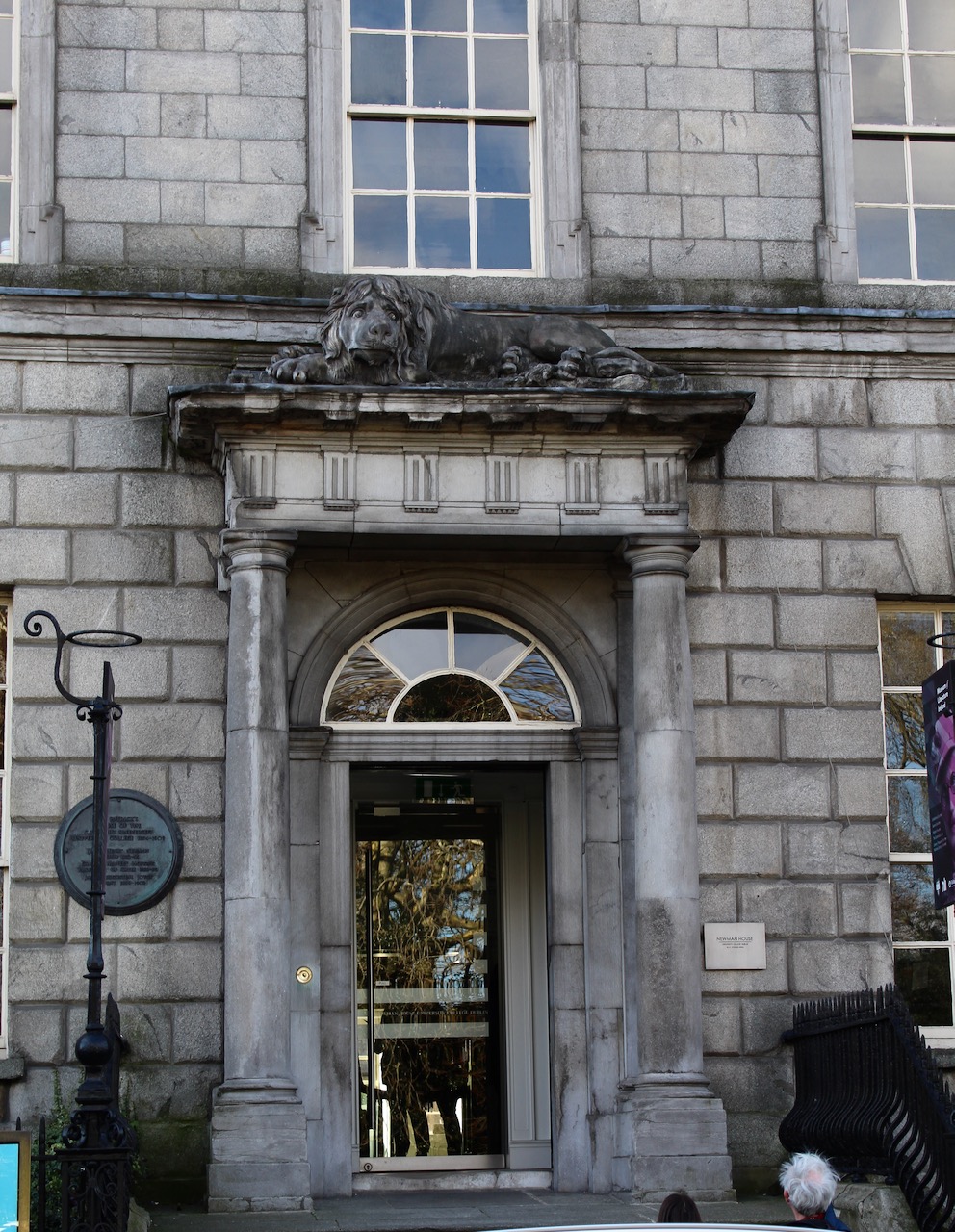
86 St Stephen’s Green is a granite-faced townhouse built in 1765 for Richard Chapel Whaley (d. 1796) who was called “Burn Chapel” Whaley due to his anti-Catholic sentiment. The “Chapel” or “Chapell” was really part of his name, from his mother’s family. The Dictionary of Irish Biography tells us “he was a fervent priest-hunter, and once while hunting a priest burned down a catholic chapel when he fired his fowling-piece into the roof and the wadding lodged in the thatch. Forever afterwards he was known as ‘Burn-Chapel ’ Whaley.”
It is ironic that Richard Chapel Whaley’s house is now owned by the Catholic university, University College Dublin, and named for Cardinal John Henry Newman (1801-1890) who famously converted from Protestantism to Catholicism, and by his example, encouraged many others to convert to Catholicism! The house may have been designed by Robert West, more famous as a stuccadore [2]. Much of the stucco work inside is in the style of Robert West – he may have done some of the work and it is thought that others were involved also. [2]
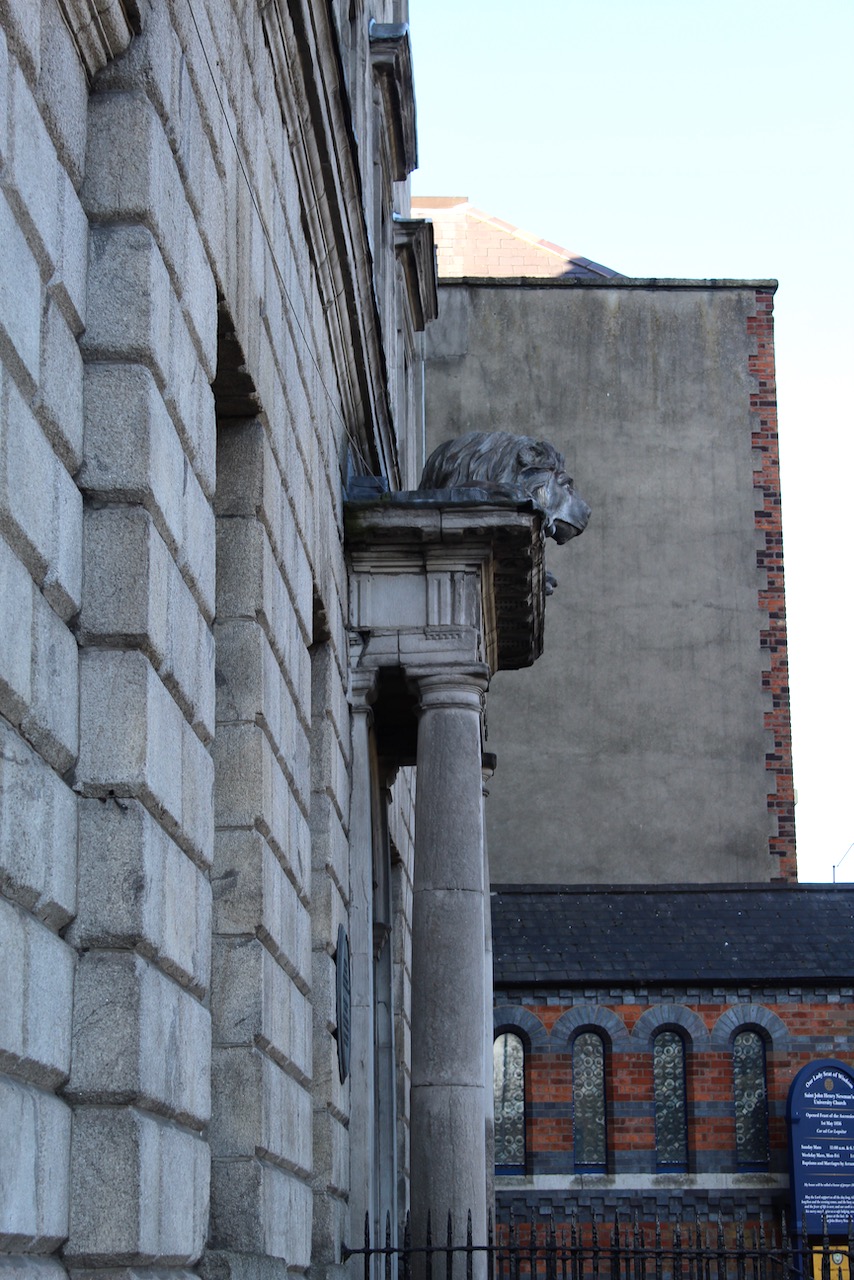
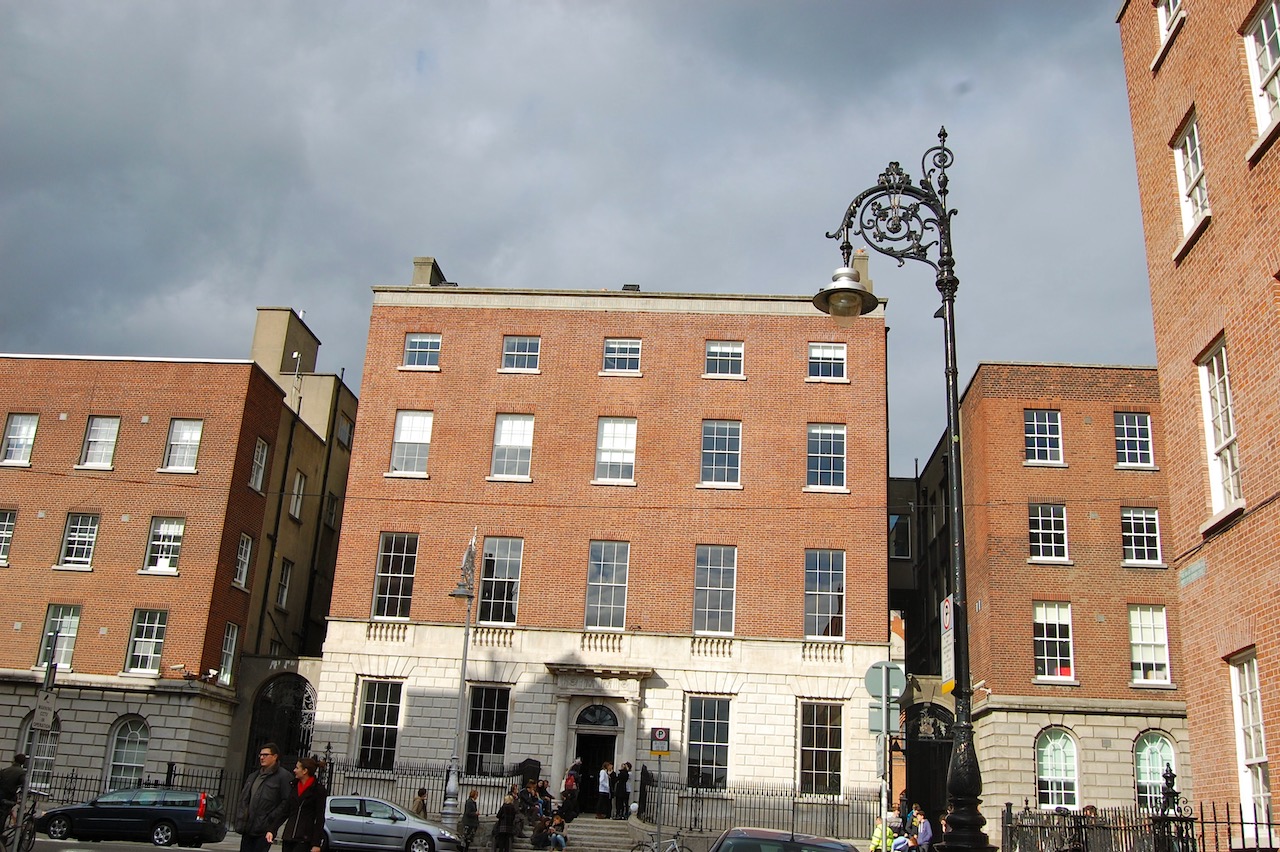
Richard Chapel Whaley (1700–69) wanted to create a house that dwarfed his neighbour in number 85, which was owned at that time by John Meade, 1st Earl Clanwilliam. 85 St. Stephen’s Green was known as Clanwilliam House.
The two houses, 85 and 86, were joined in the mid 19th century and named after Cardinal Newman (1801-90). Together they contain some of the most spectacular plasterwork in Ireland.
The MOLI website continues: “The building takes its name from the theologian and educationalist Dr. John Henry Newman, who was rector when the Catholic University was founded in 1854. UCD Newman House also boasts many literary and cultural associations. The poet Gerard Manley Hopkins lived here during his time as Professor of Classics at the university, and James Joyce was a student here before graduating with a BA in 1902. Other famous Irish writers to have studied at UCD Newman House include Flann O’Brien, Kate O’Brien and Maeve Binchy.
“Explore the stunning surroundings and turbulent history of Numbers 85 and 86 St Stephen’s Green on MoLI’s Historic House Tour.
“These beautiful examples of Georgian opulence – with lavish stuccowork by the famous Lafranchini brothers – have served not only as a university and a museum, but also as the townhouse of Buck Whaley, one of Ireland’s most infamous playboys and adventurers.
“Join your guide as they bring you on a journey through these hidden historic rooms, witness these architectural treasures up close, and learn about the many fascinating characters that have passed through over the centuries.“
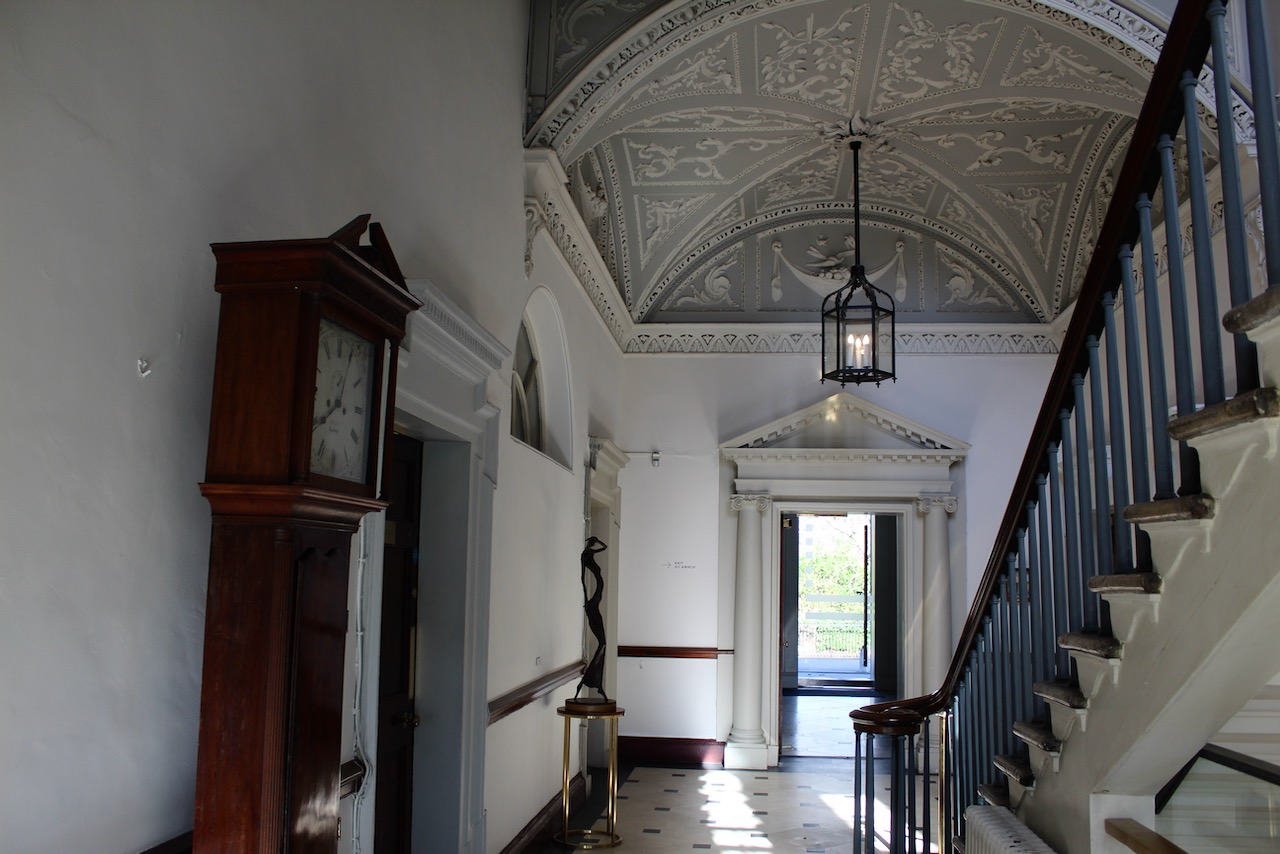
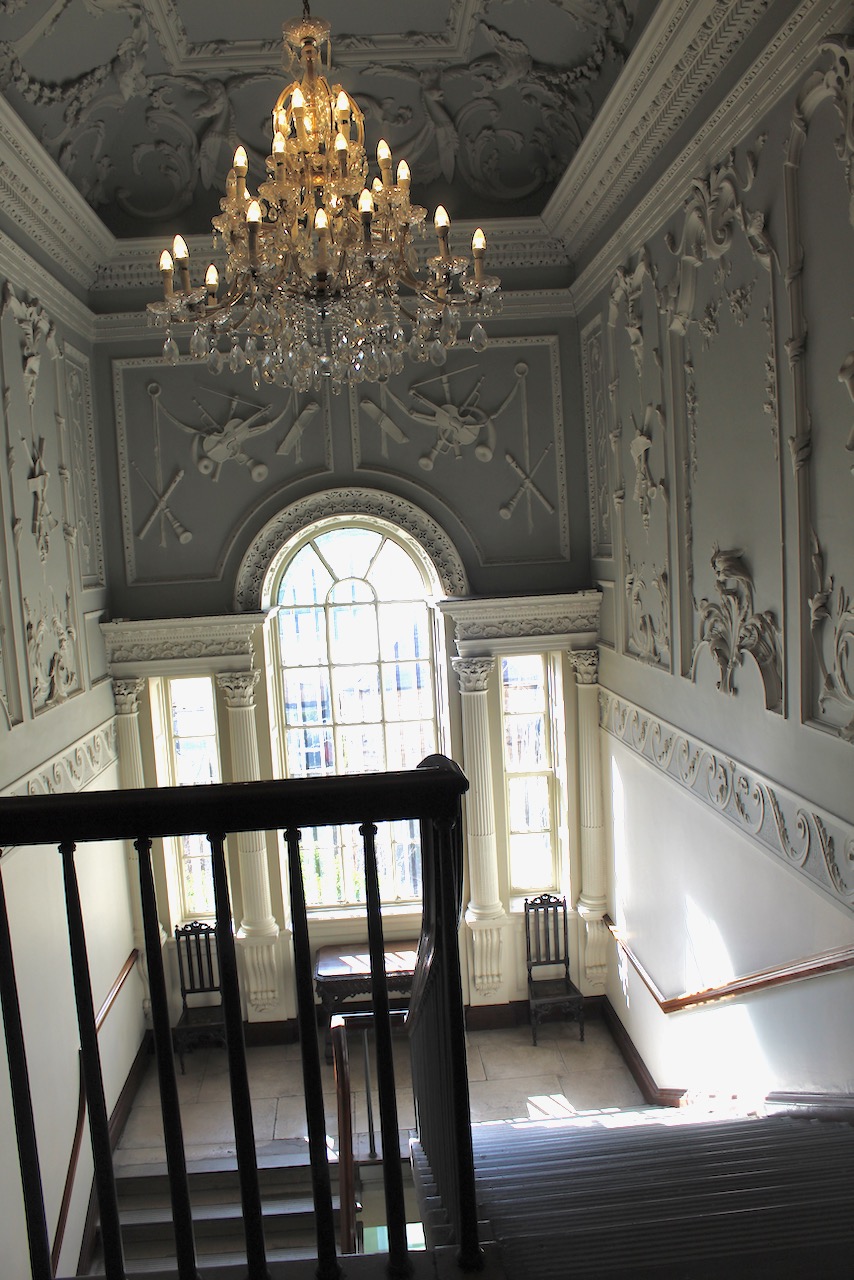
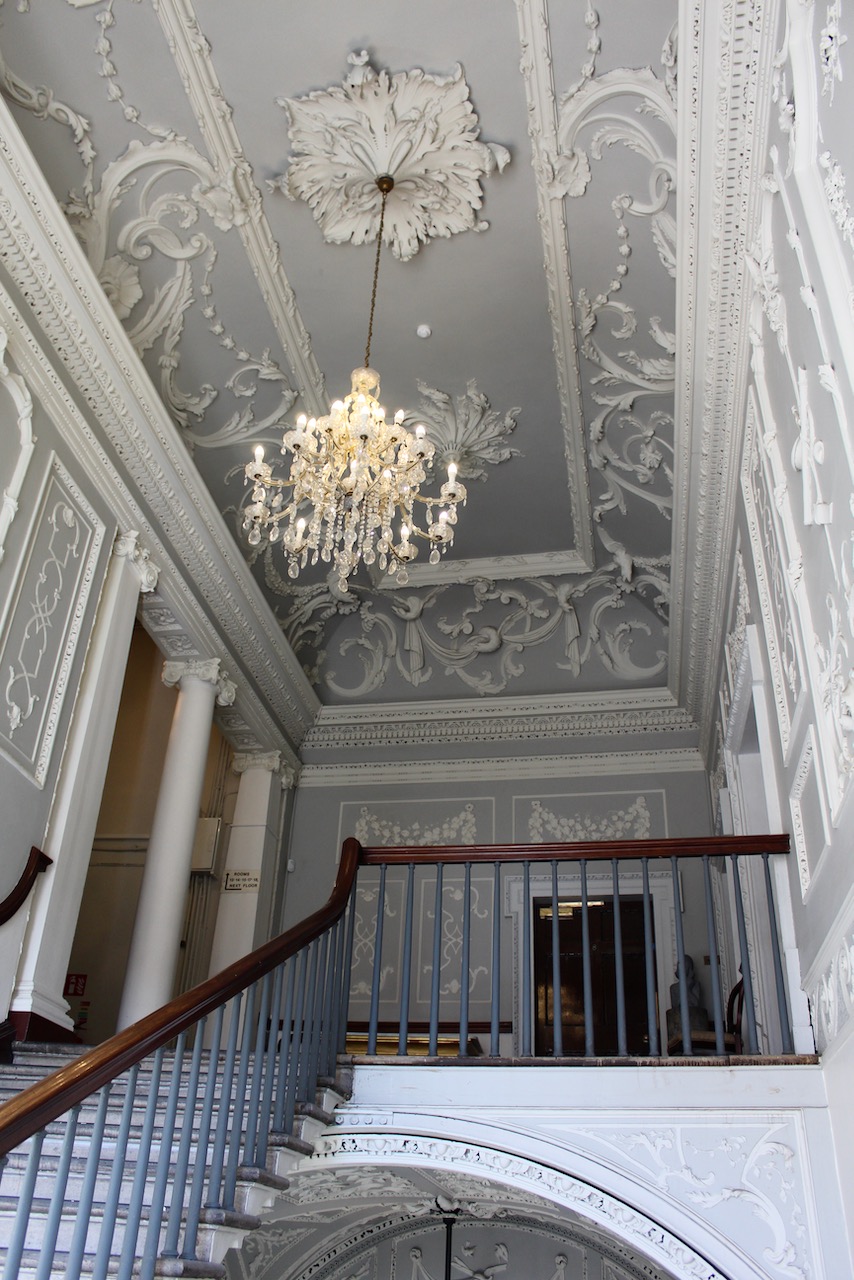
86 St. Stephen’s Green is of five bays across, of four storeys over basement. It has a two bay entrance hall flanked by two further rooms, and the service stair is on the transverse axis between the entrance hall and the rear right-hand parlour, Christine Casey tells us. [3]

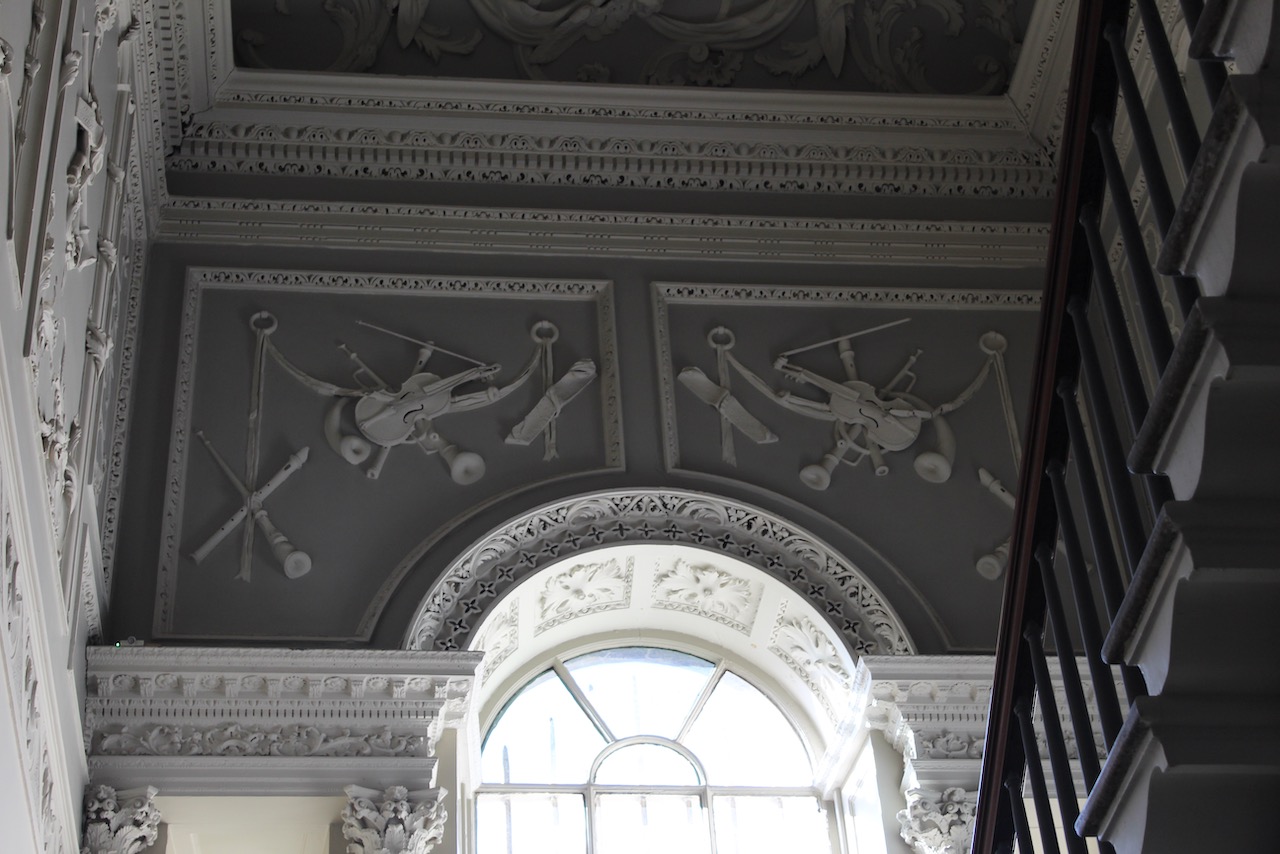
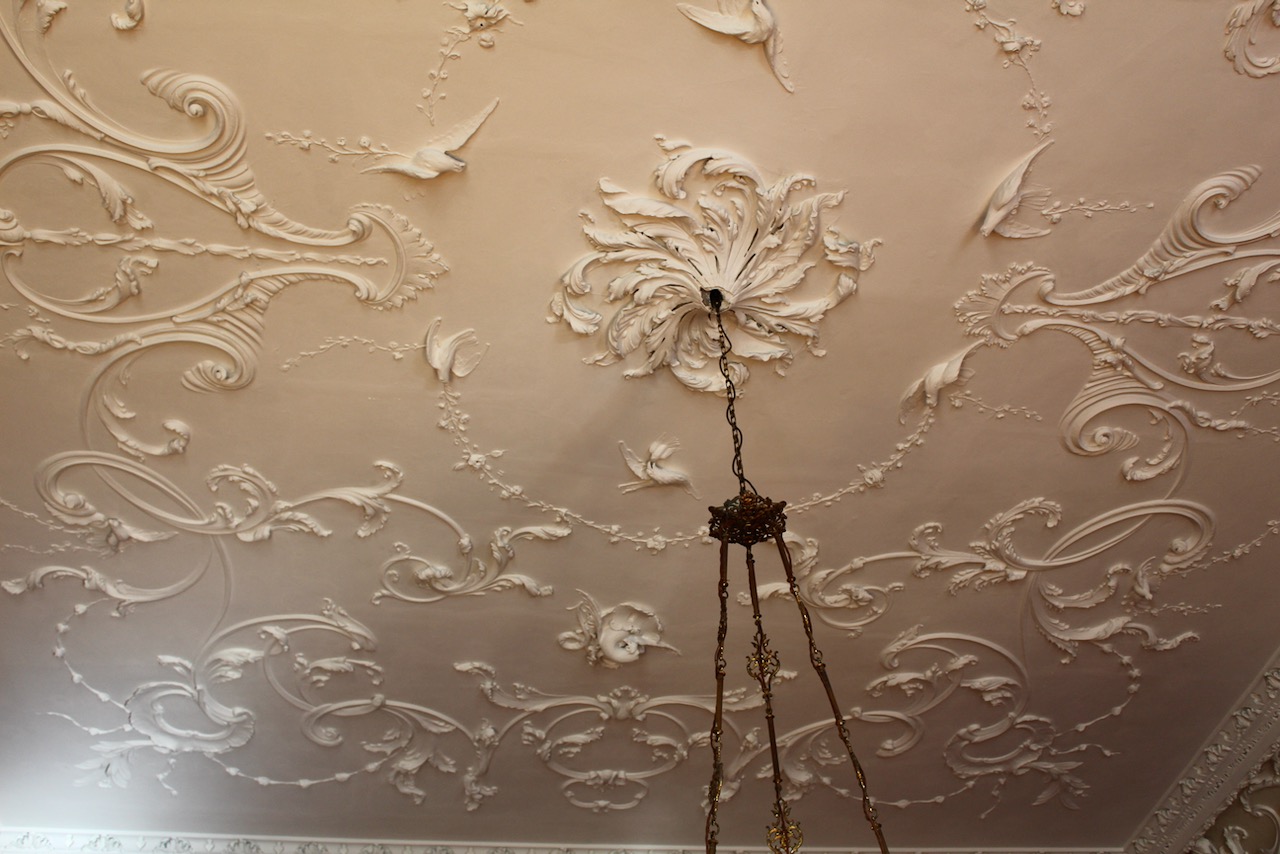
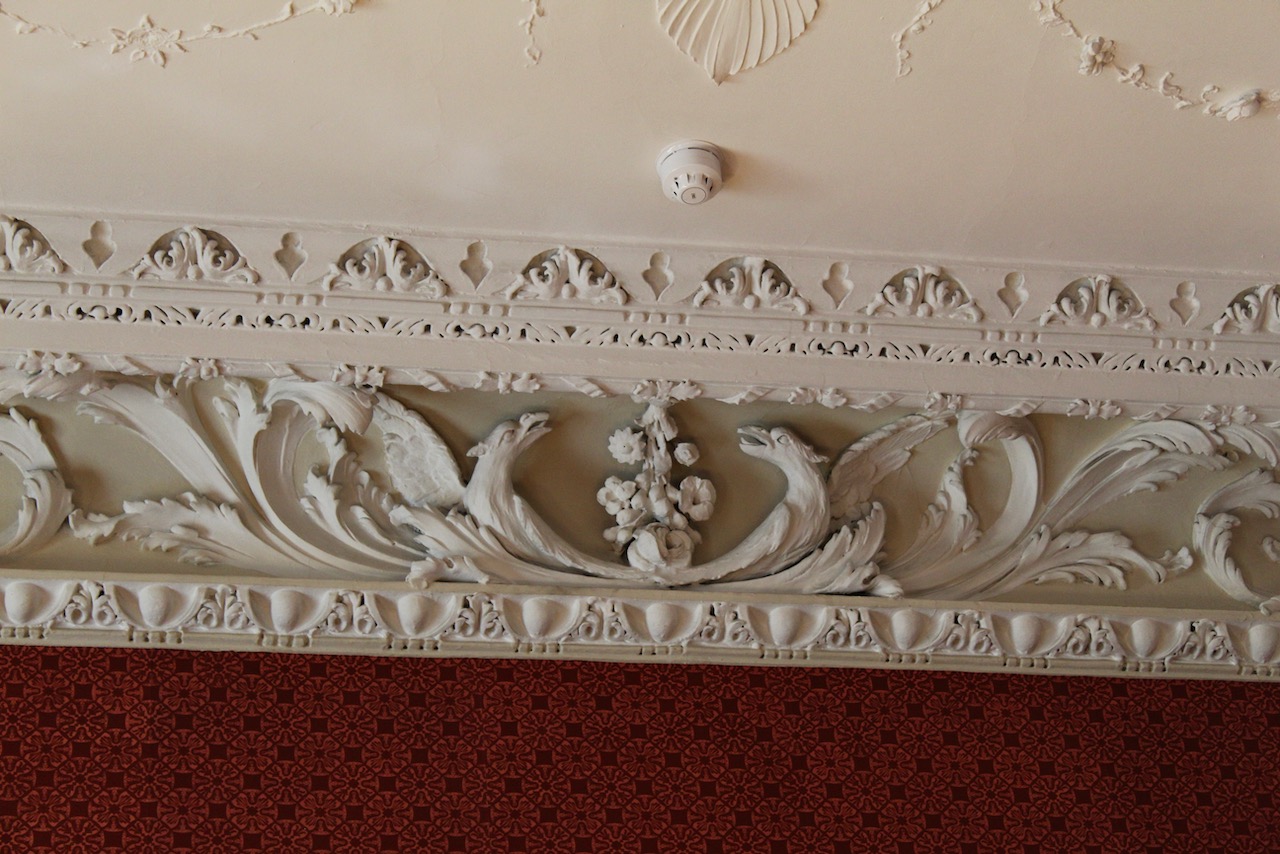
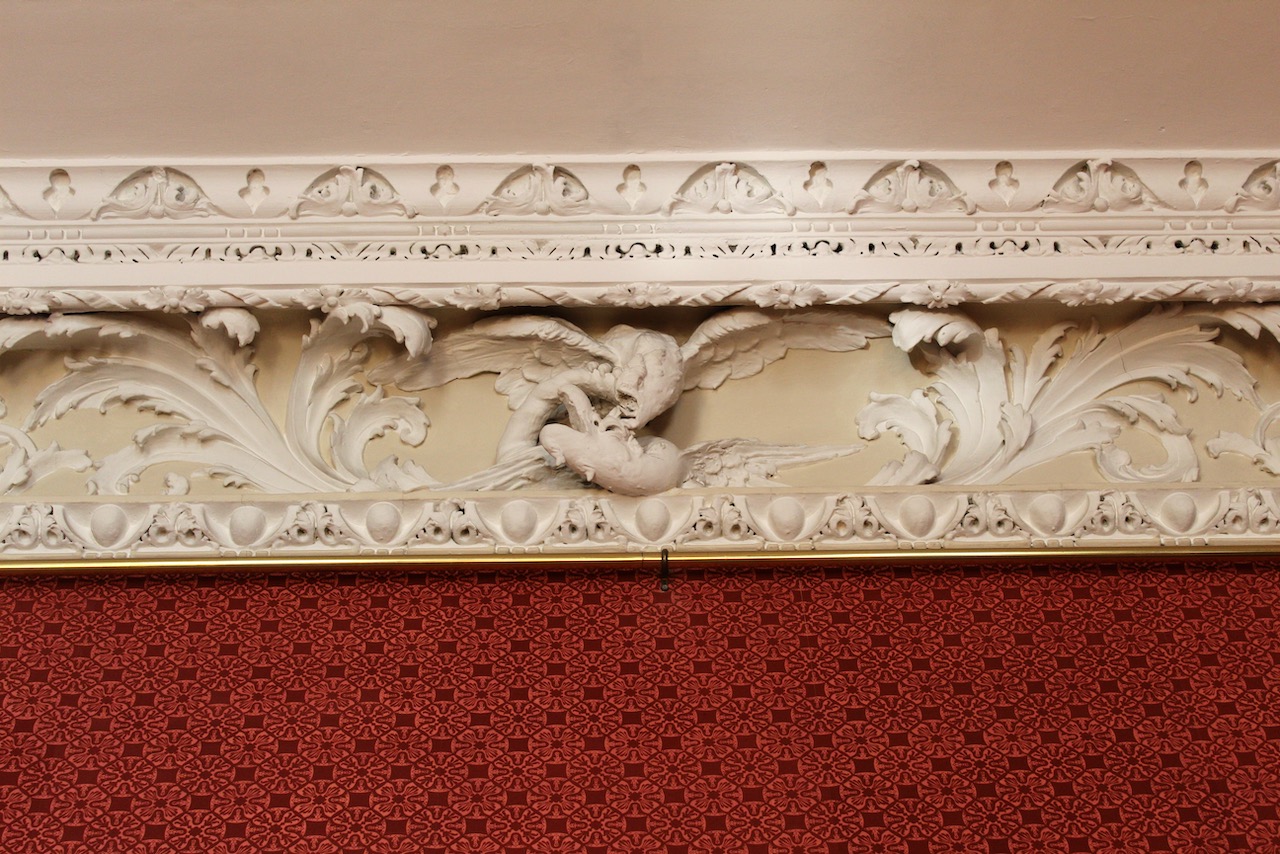
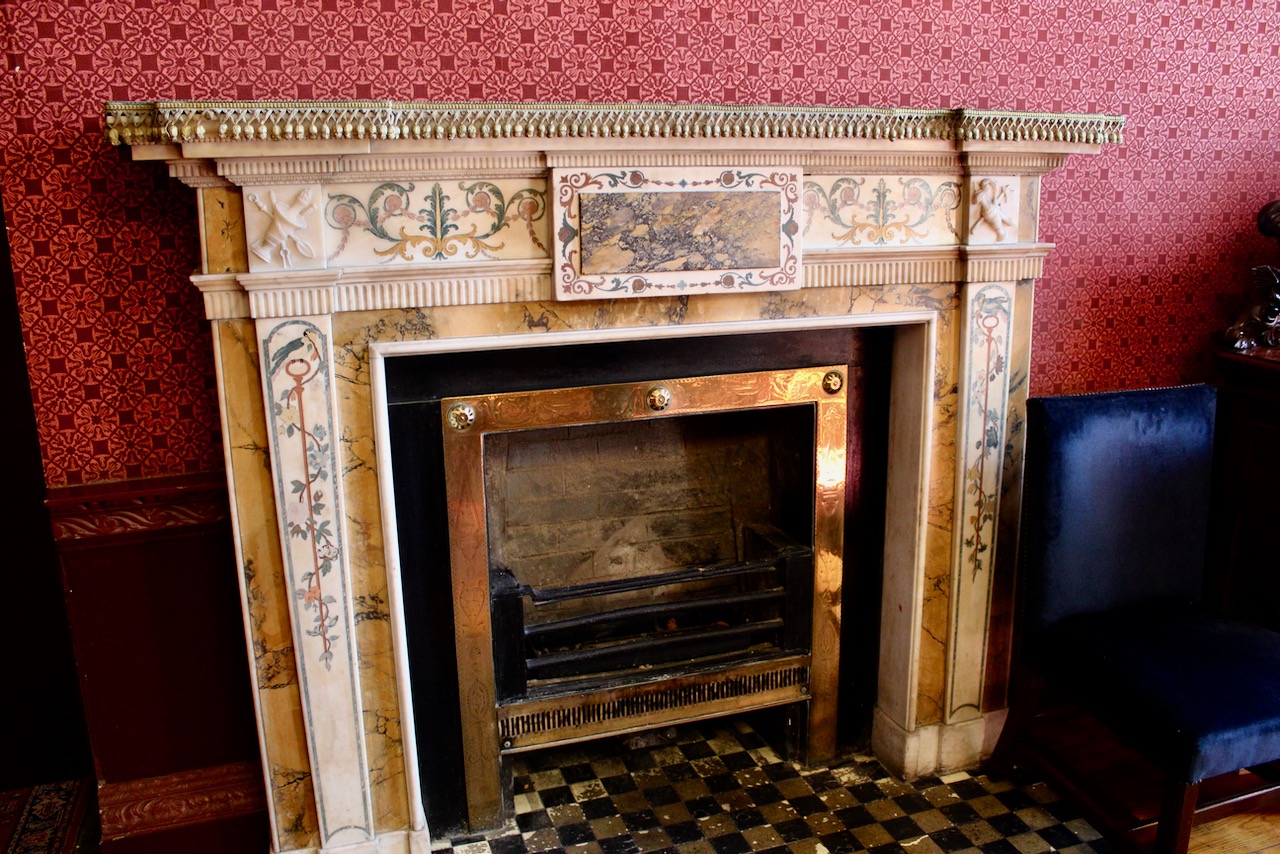
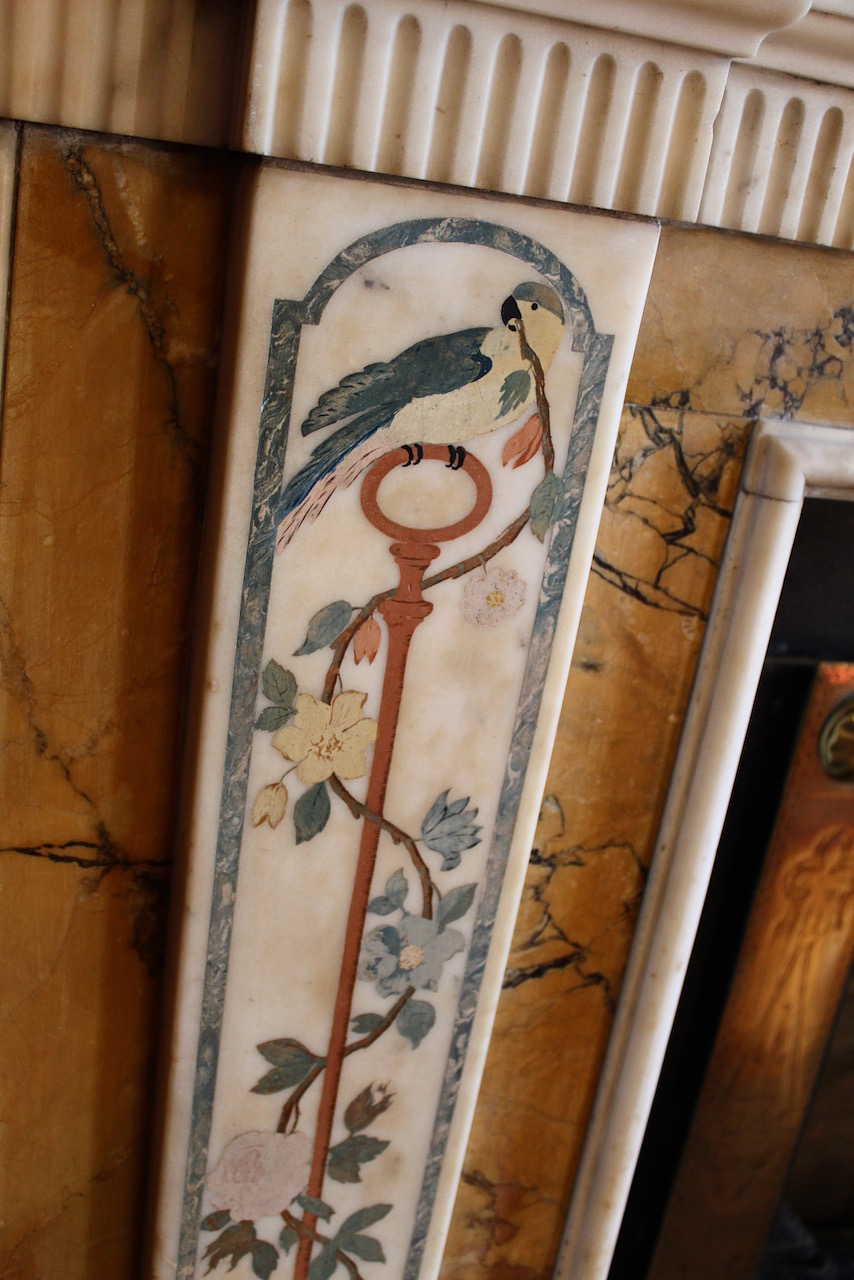
The stair hall decoration is particularly splendid. Acanthus ornament mixes with Rococo elements such as trophies of musical instruments, asymmetrical scrolls and birds distinctive of the Dublin school of plasterwork.
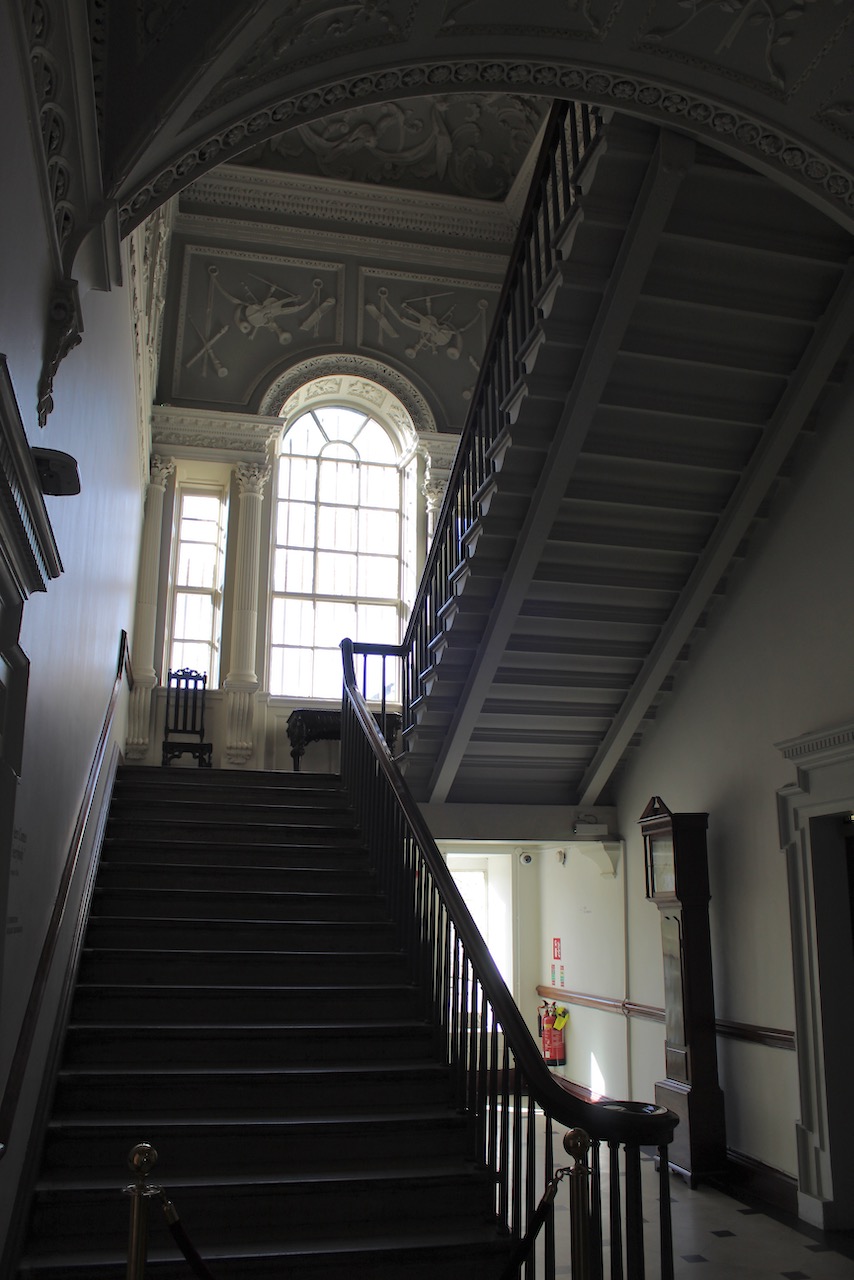
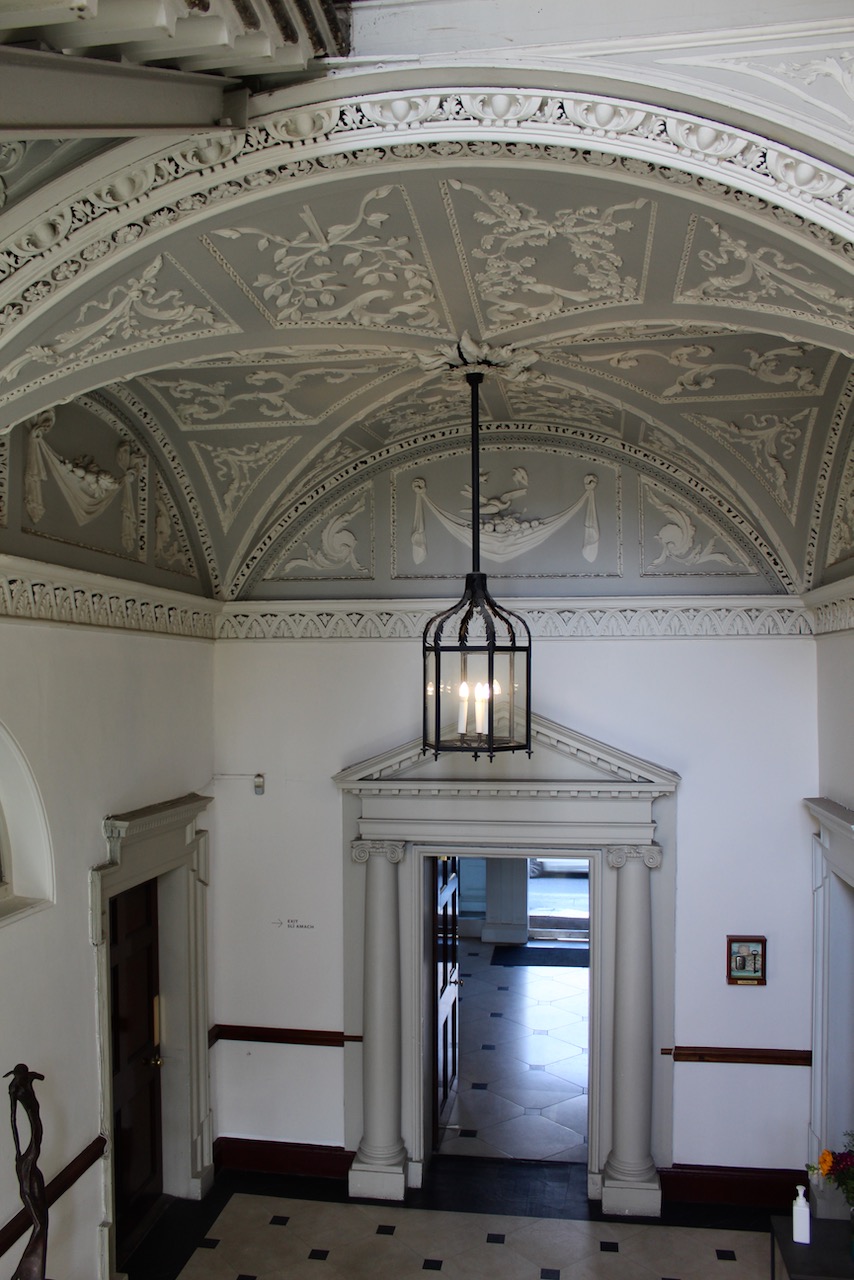
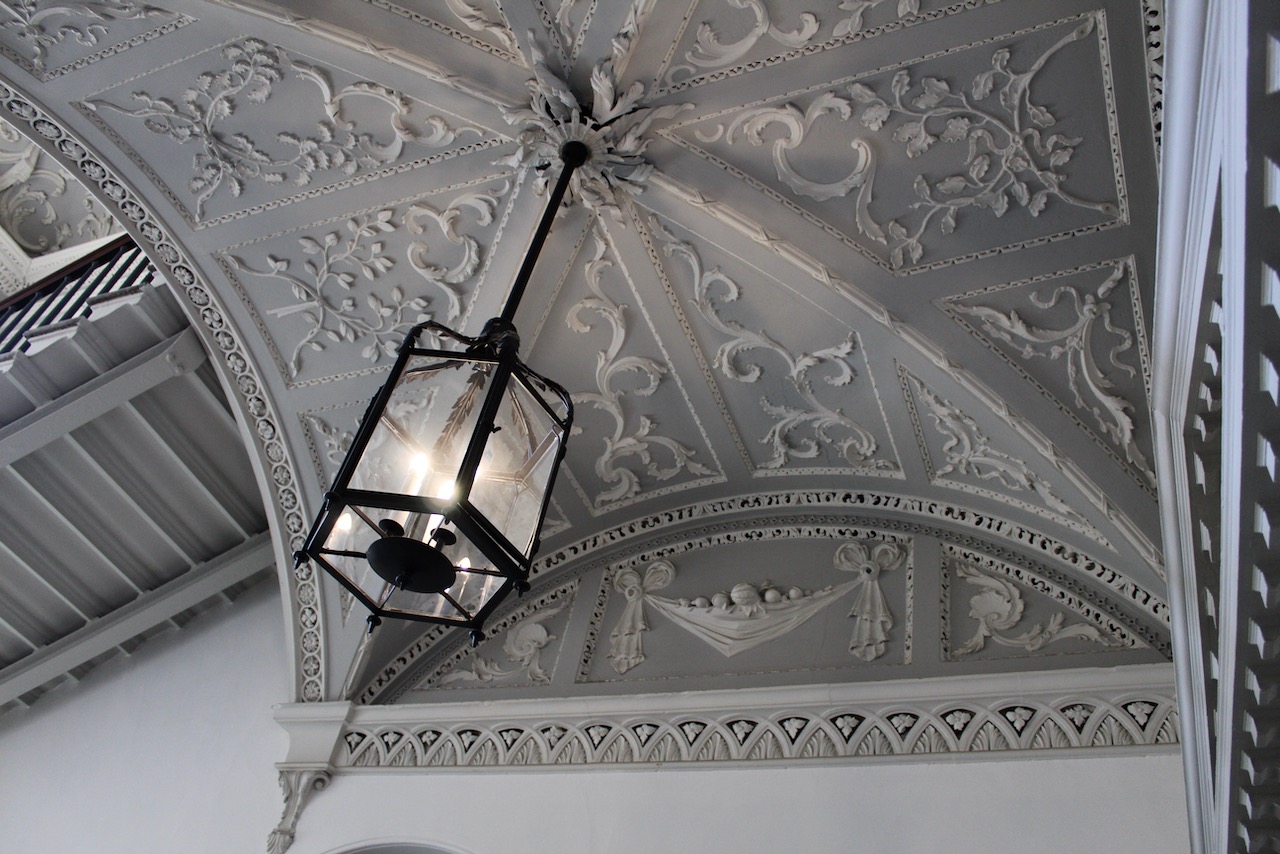


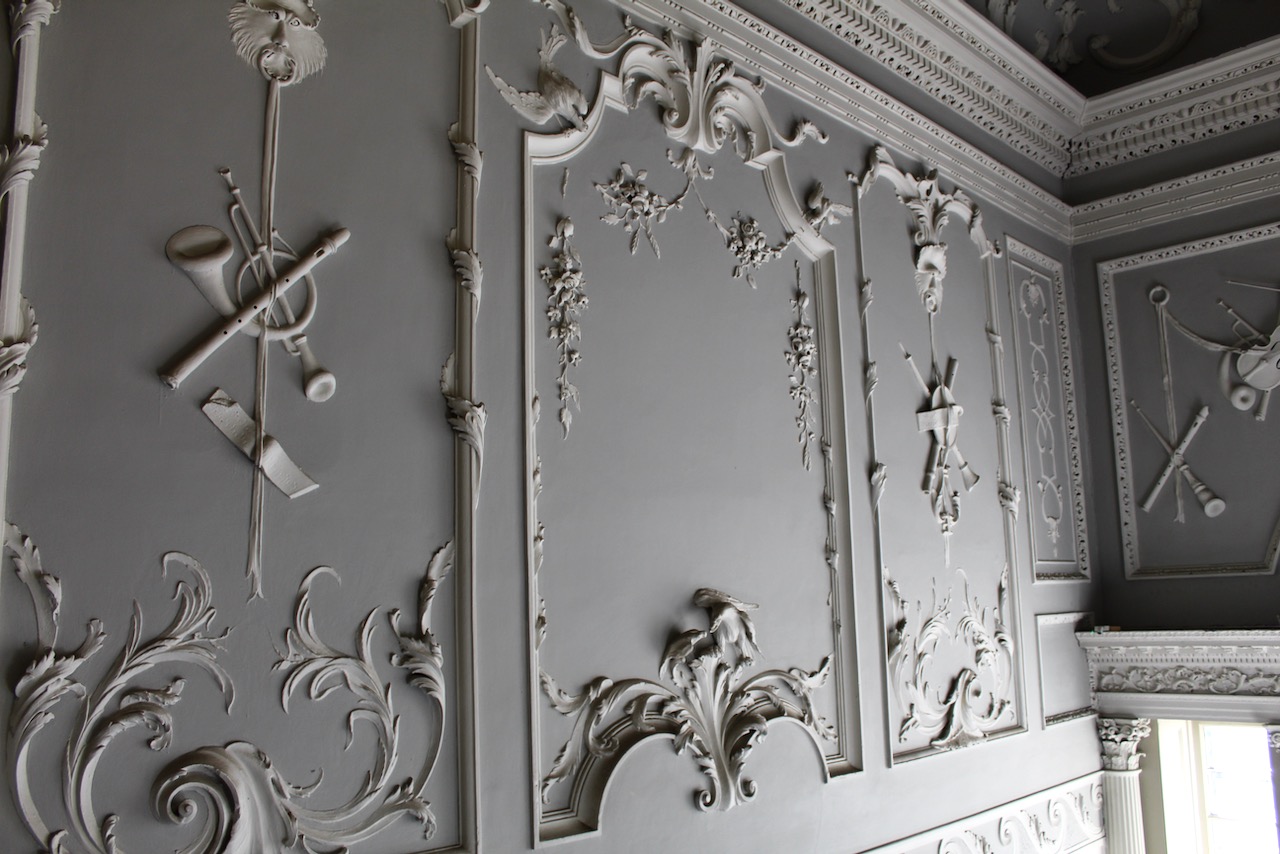

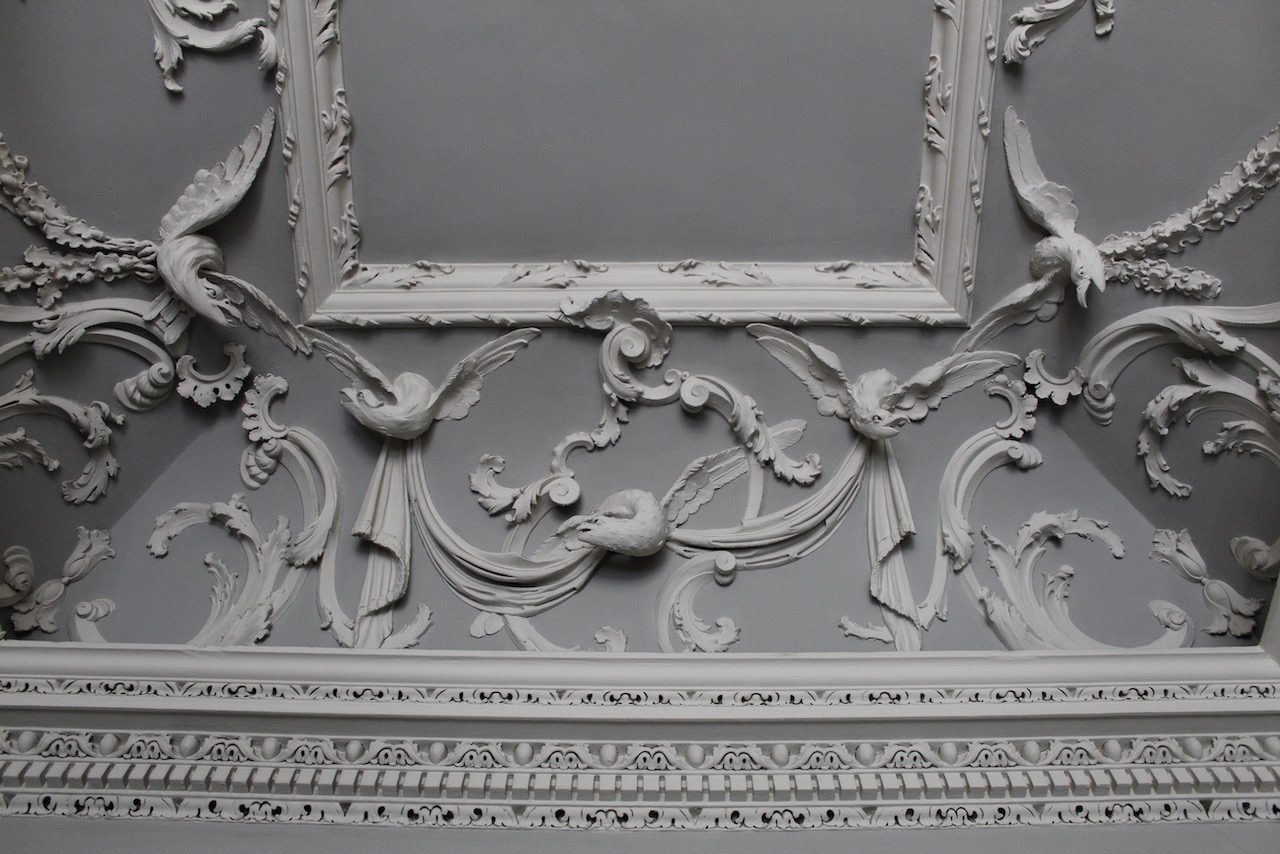
Richard Chapel Whaley was the father of Thomas “Buck” Whaley (1766-1800). Thomas’s father died when he was only three years old, and Thomas inherited much property and wealth. He gambled away nearly everything he owned and died almost penniless aged just 34. [4] Another house he inherited was Castletown in County Carlow – not to be confused with the more well-known Castletown in County Kildare (or Castletown “Cox” in County Kilkenny), and also Whaley Abbey in County Wicklow. Jimmy O’Toole tells us that his annual income was the equivalent of about £700,000 today. Poor Buck Whaley was a gambler, and he made a bet that he could travel to Israel and back within two years. He won the wager, and £15,000. I read his memoir and he comes across as a lovely man despite his foibles.

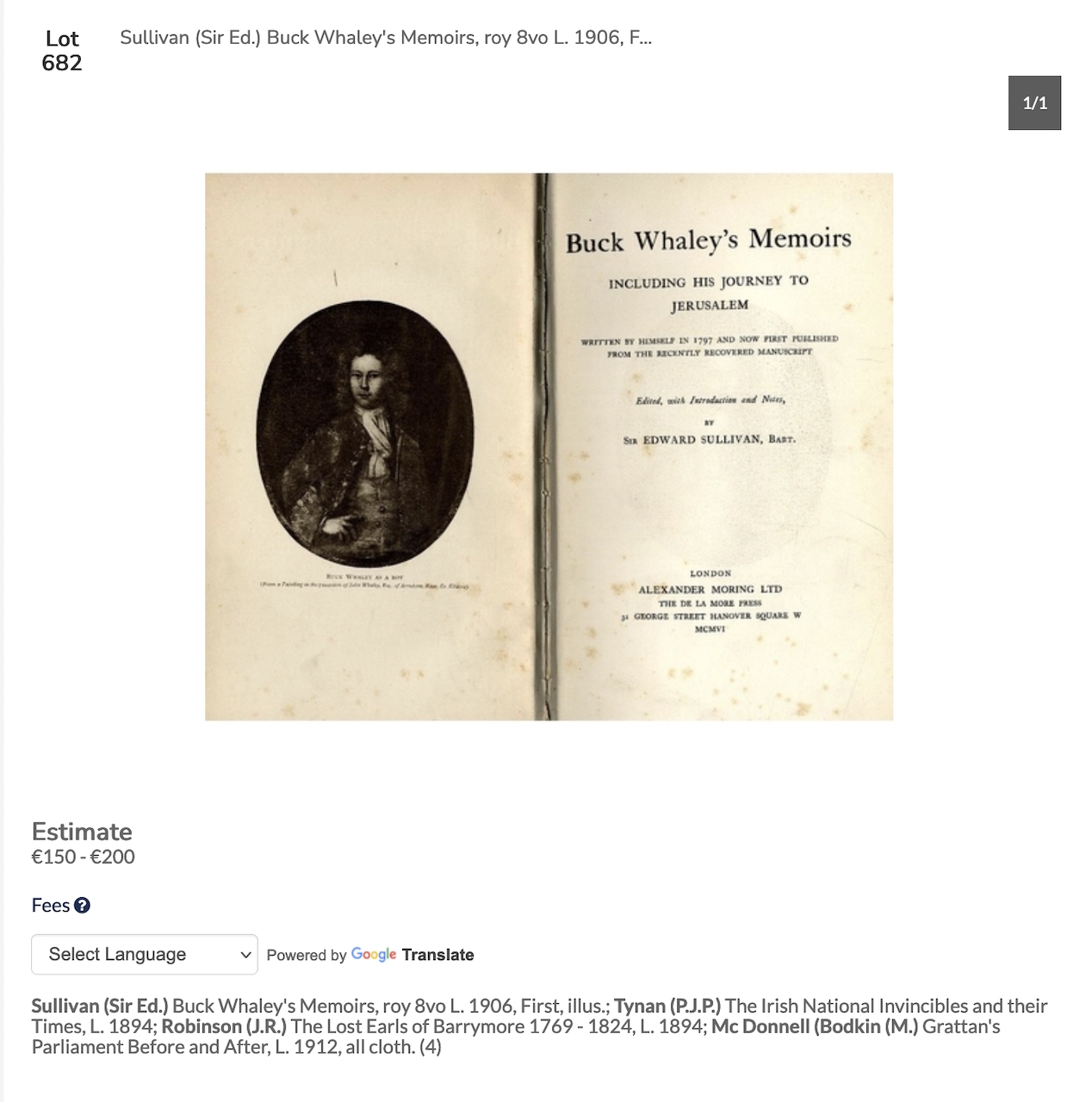

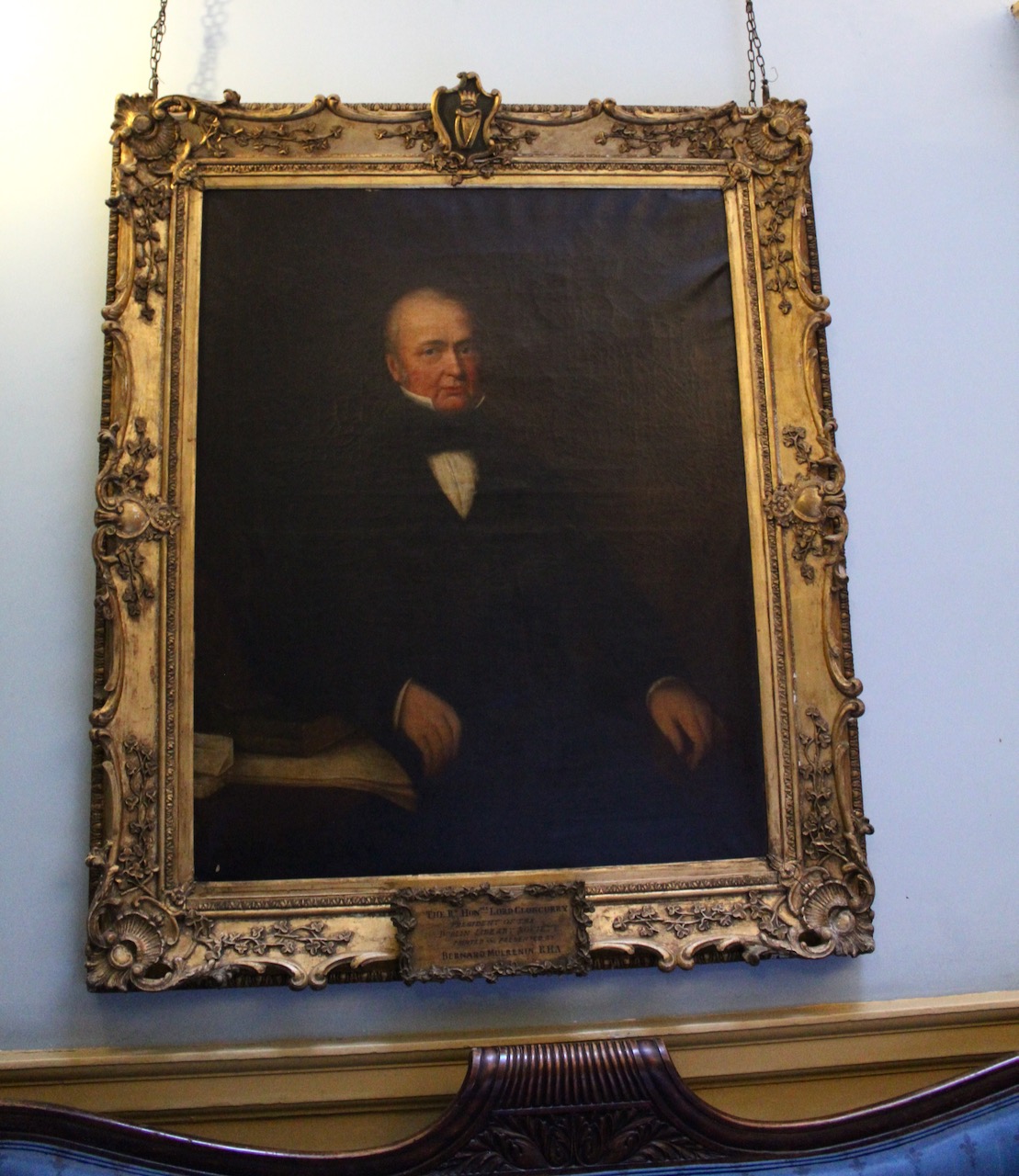
After his lover Maria Courtney died, he married Mary Catherine Lawless, sister of Valentine Lawless 2nd Baron Cloncurry.
Thomas “Buck” Whaley’s sister Anne married John Fitzgibbon, later 1st Earl of Clare, who became Lord Chancellor of Ireland.
The front ground-floor drawing room is, Casey tells us, virtually identical to the now lost French Room at Charlemont House, the home of James Caulfeild, 1st Earl of Charlemont, a house built in 1763. The plaster and timber panels of the walls, Casey writes, appear to emulate the boiserie interiors of mid eighteenth century France.
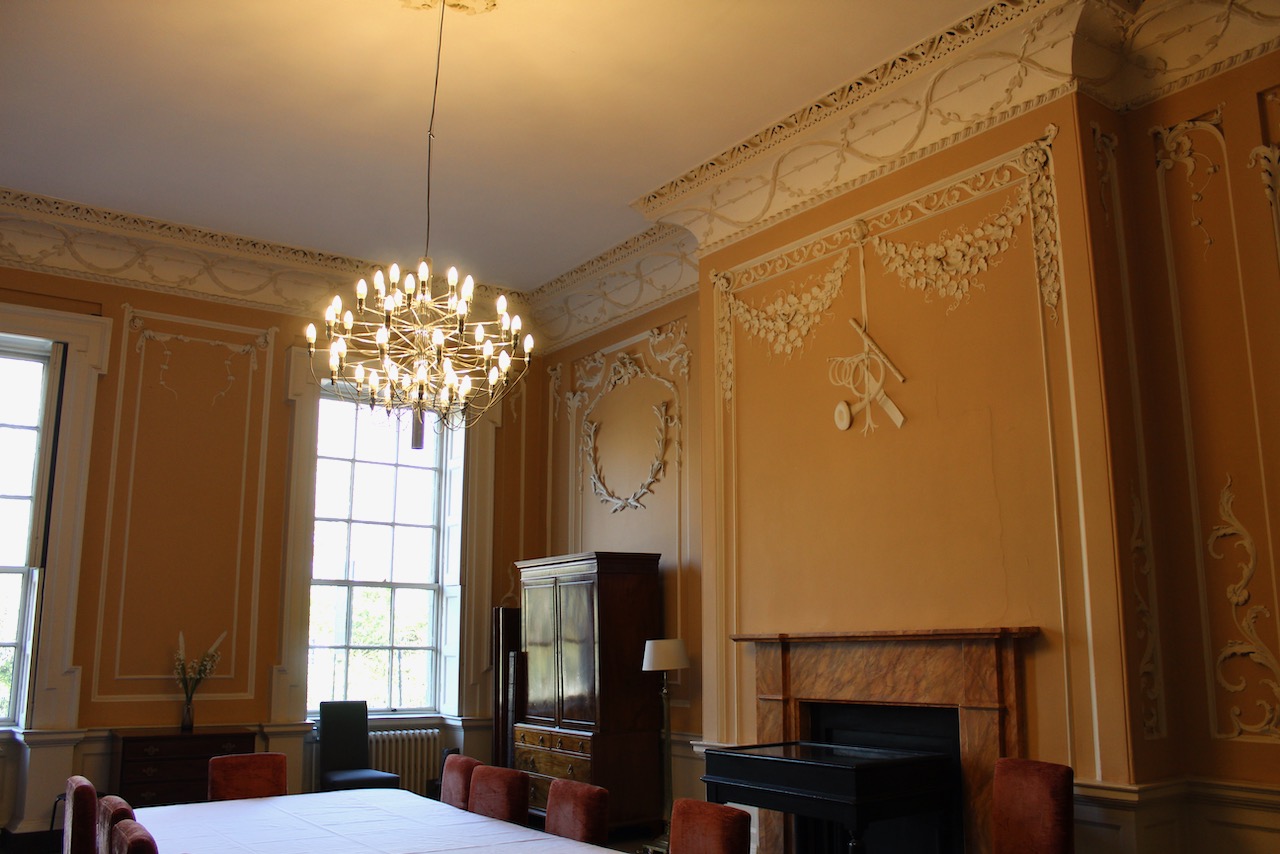
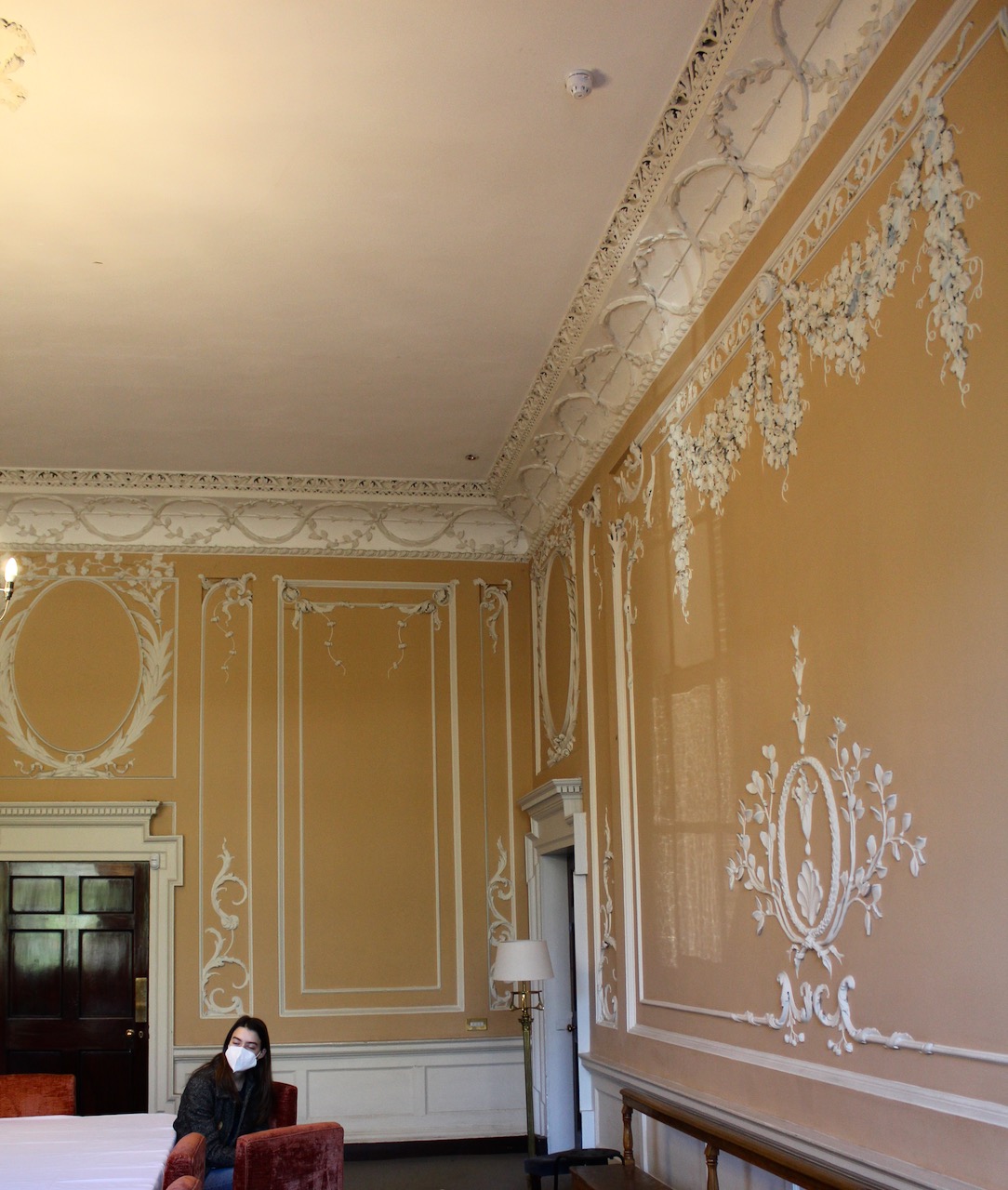
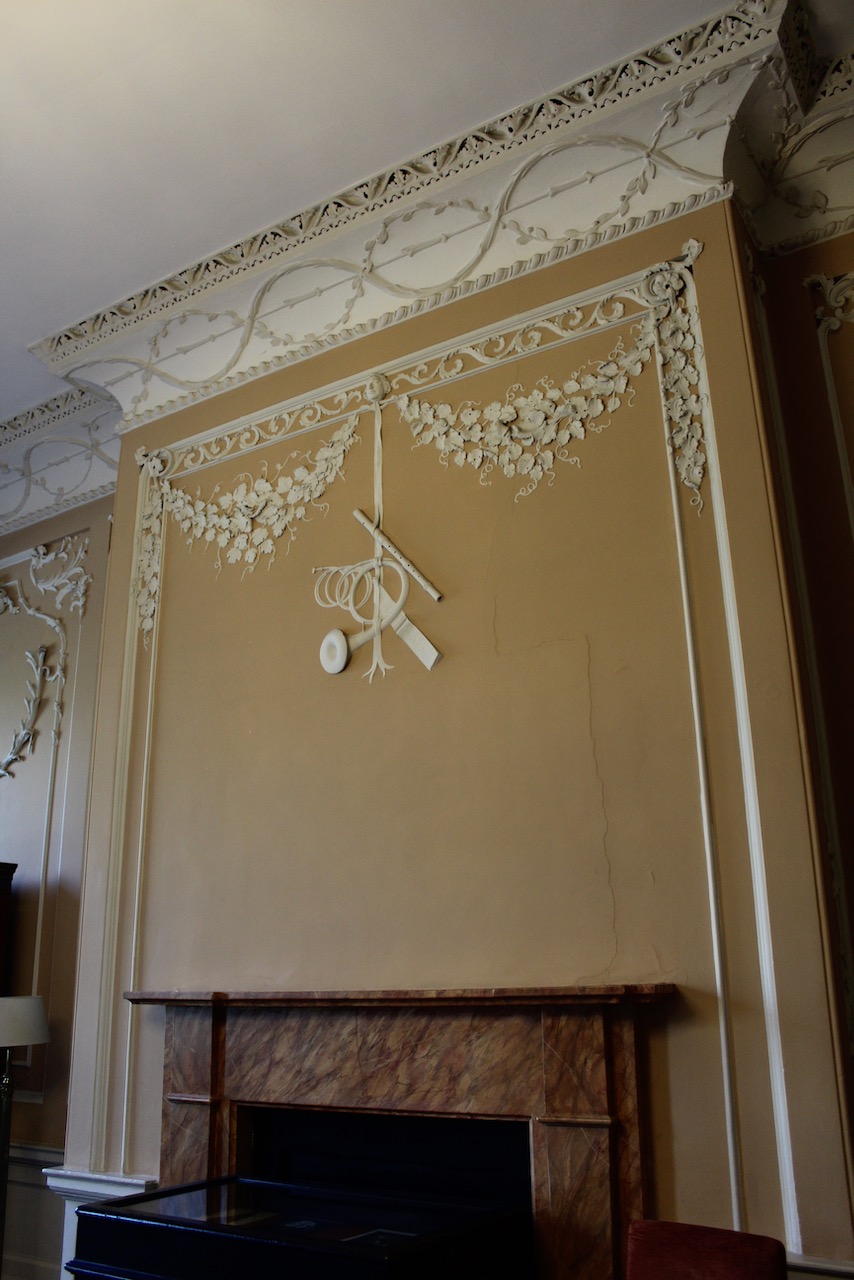
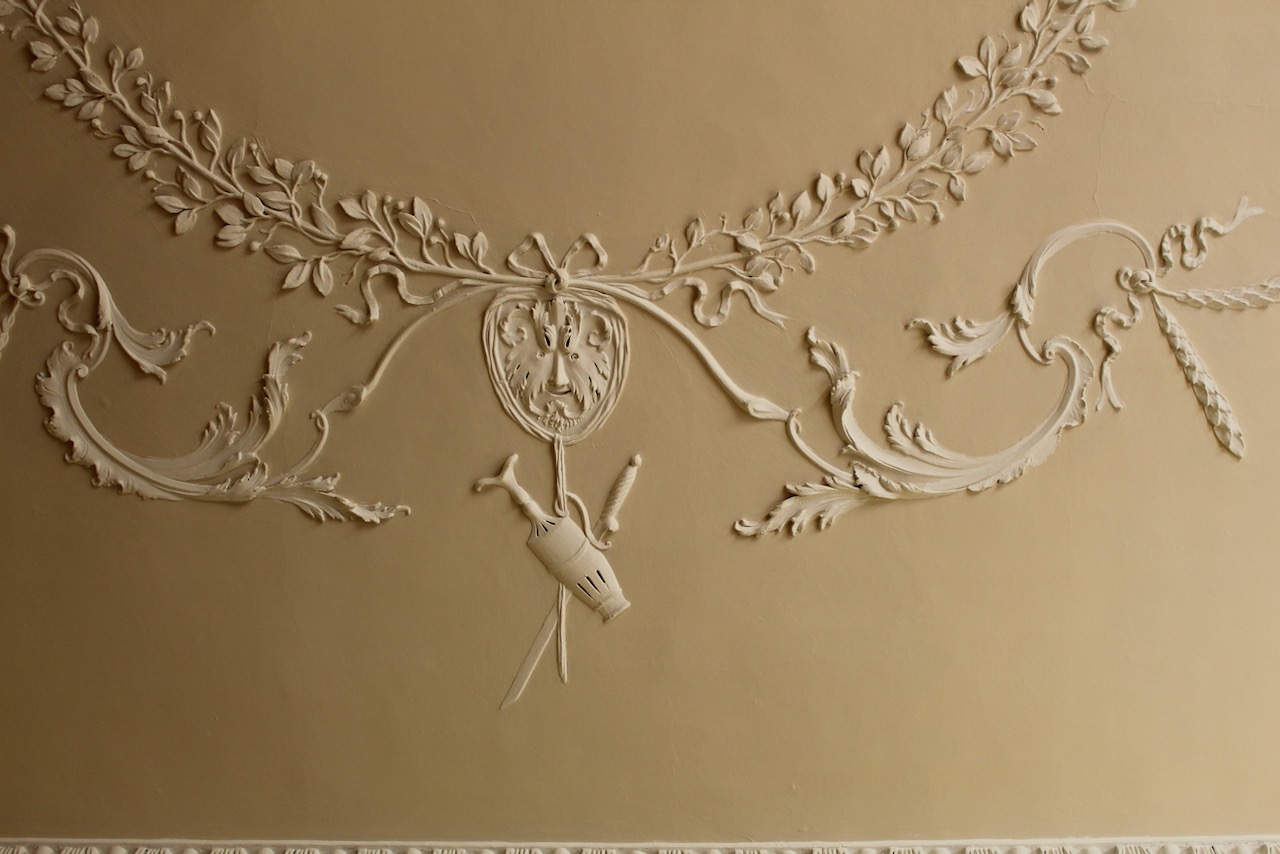

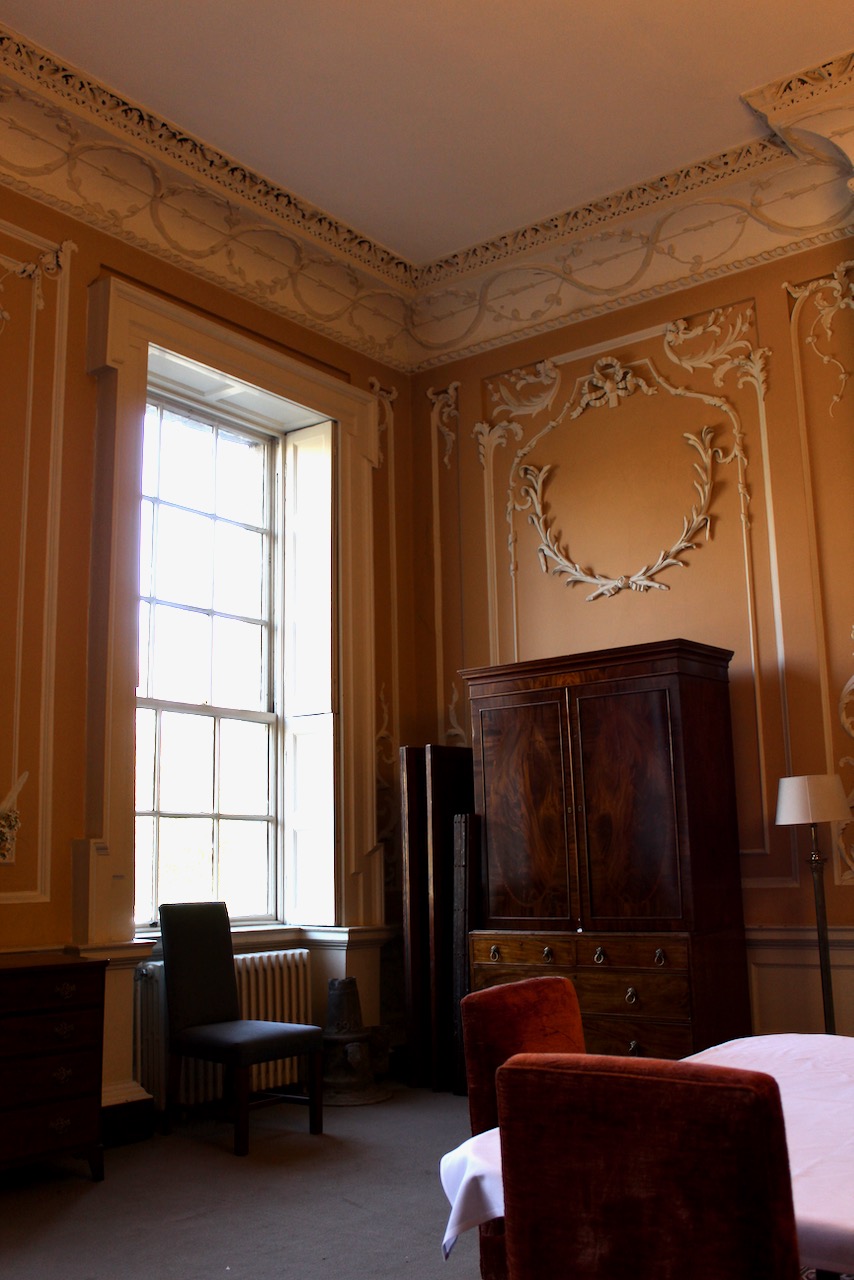
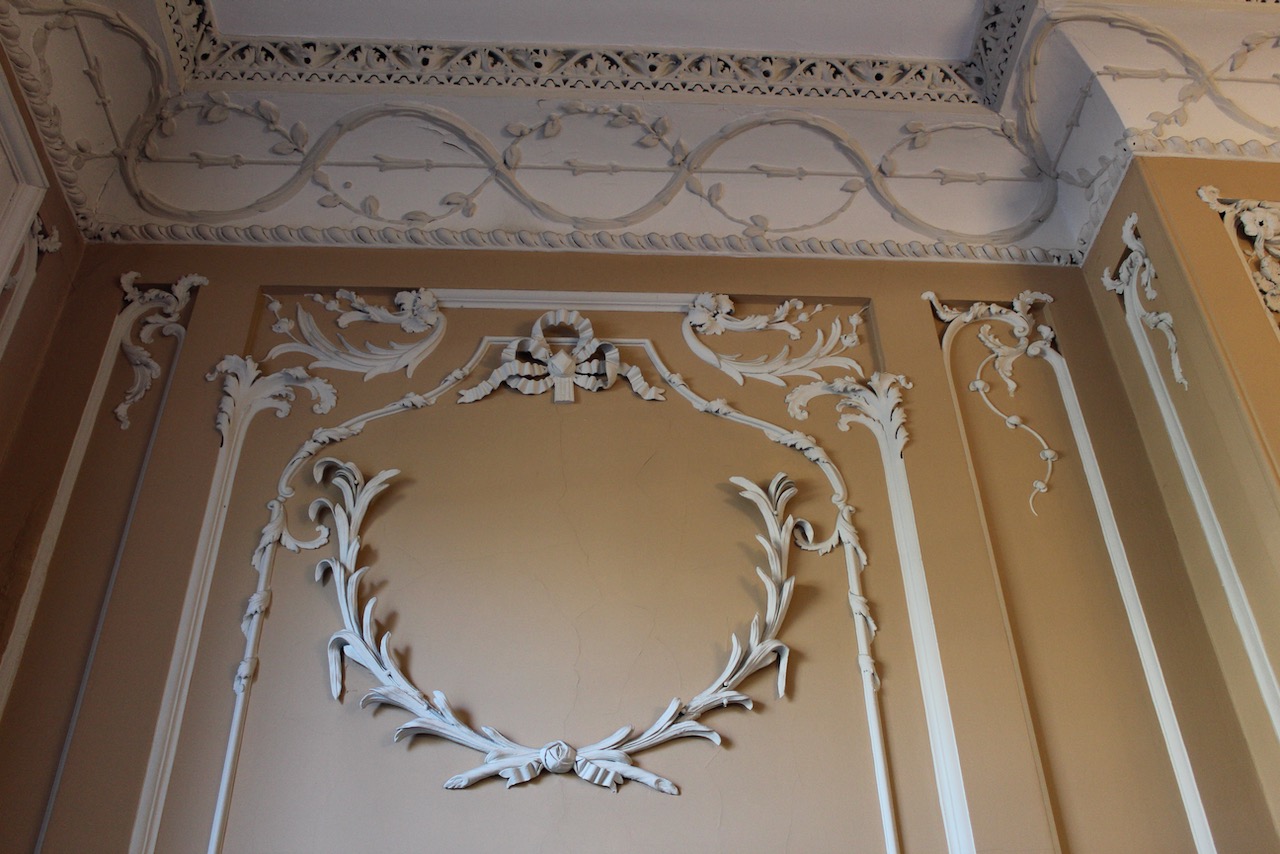

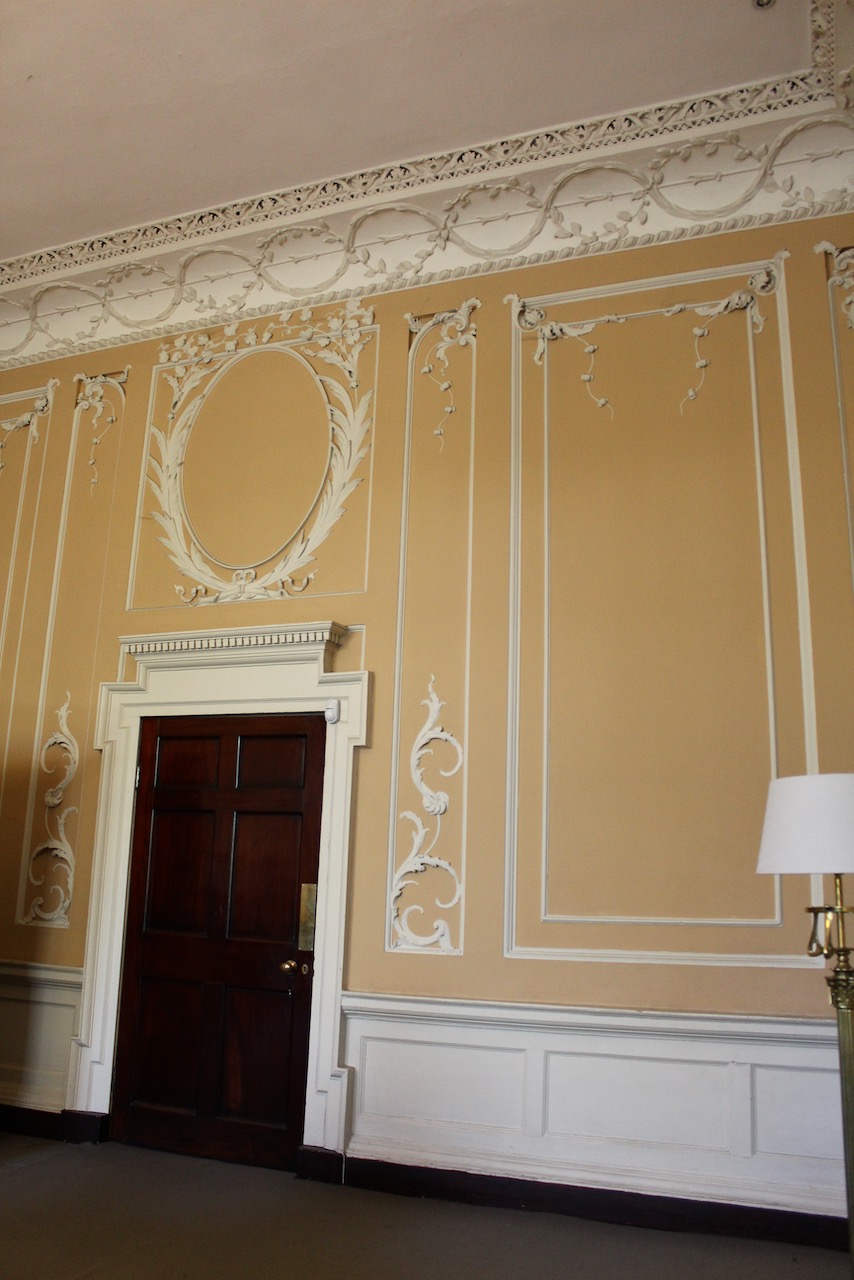
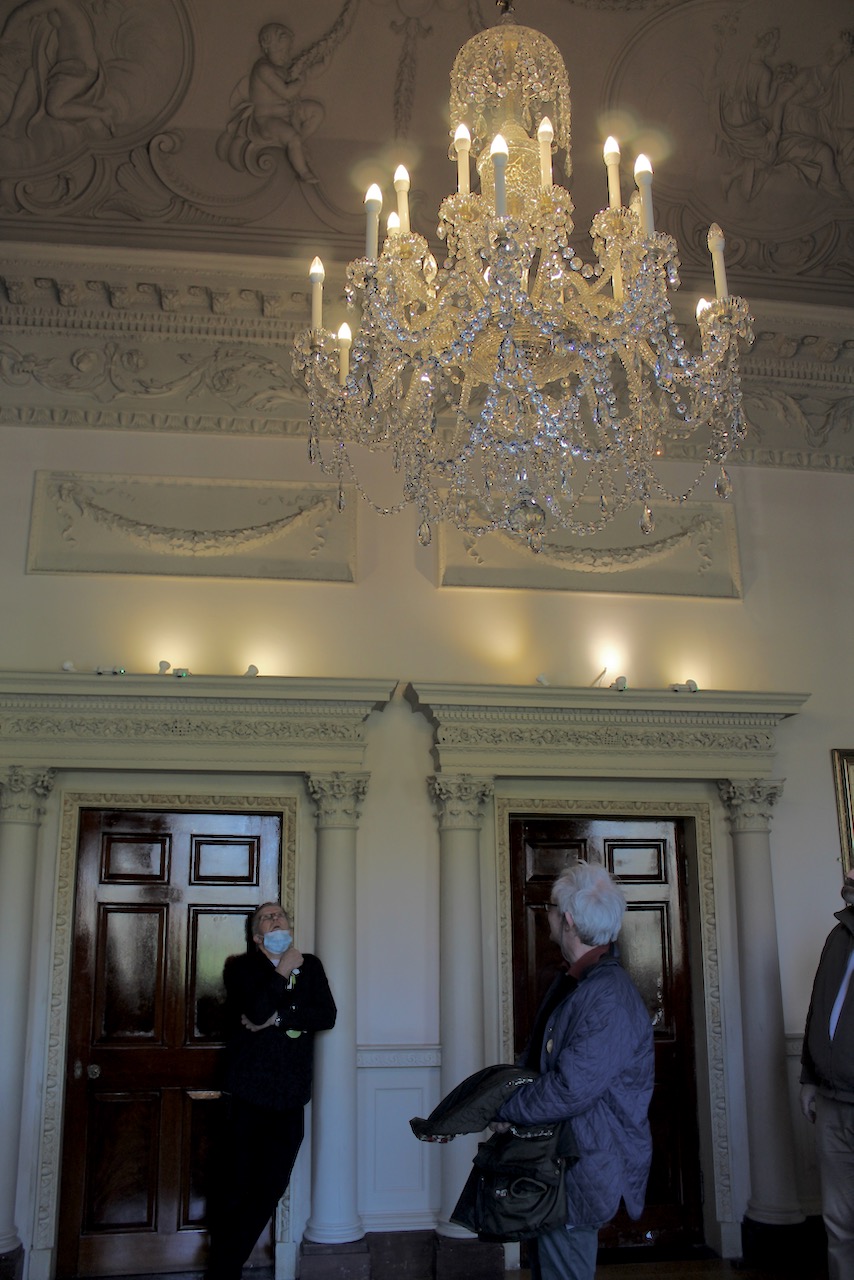
The Great Room, three bays wide and overlooking St. Stephen’s Green, is not normally part of the MOLI tour, but our guide let us pop our heads in to marvel at the plasterwork. It is let to the School of Music. It has an elaborate and stylized bird ceiling, similar to one by Filippo Lafranchini at 9 St. Stephen’s Green. [see 3].
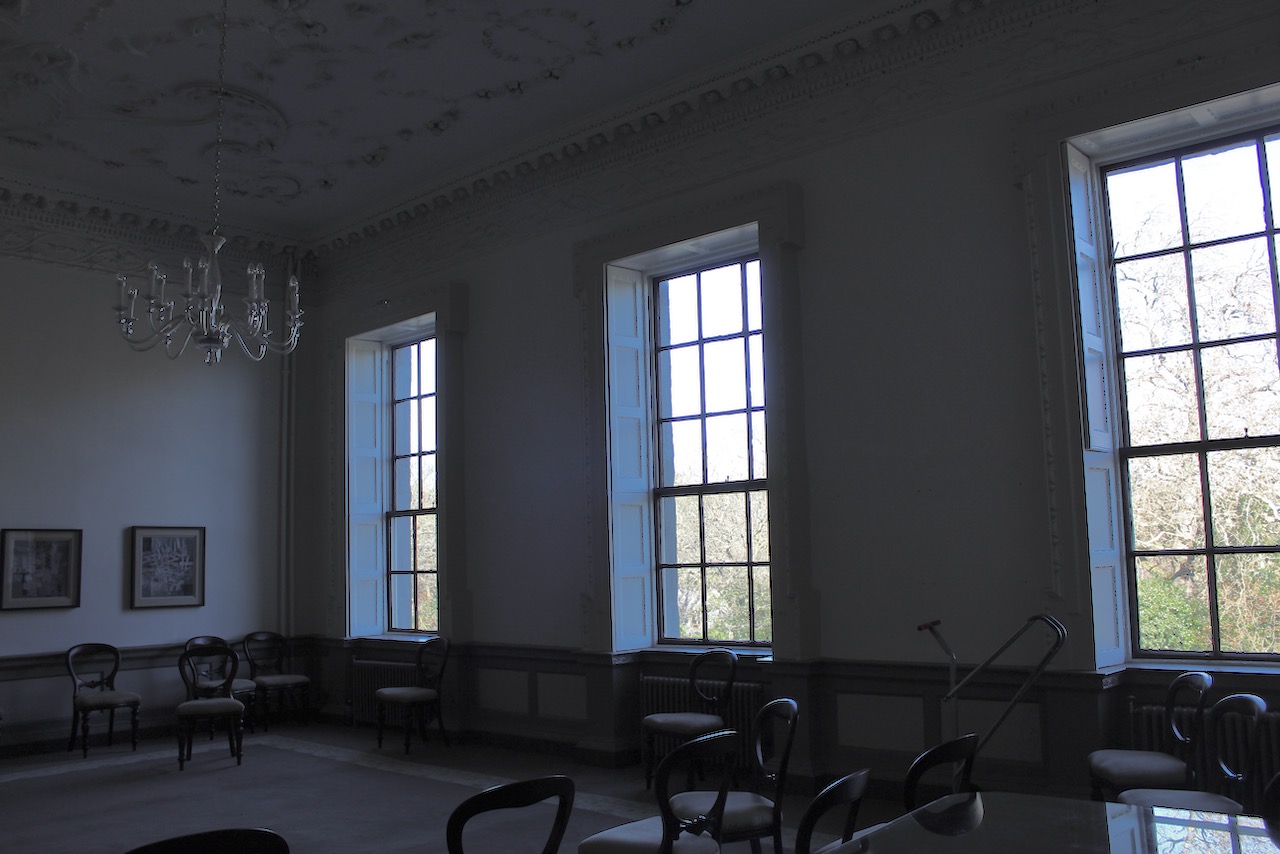
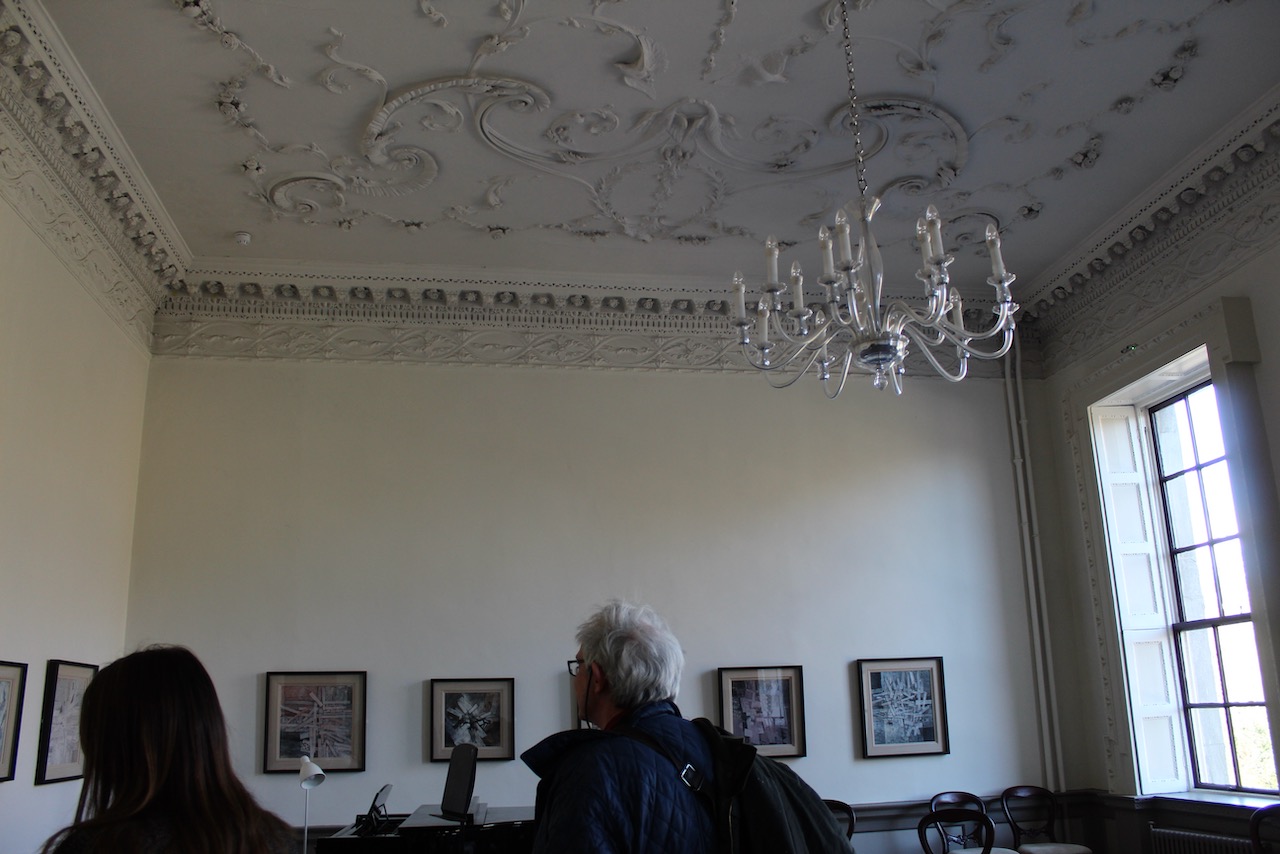
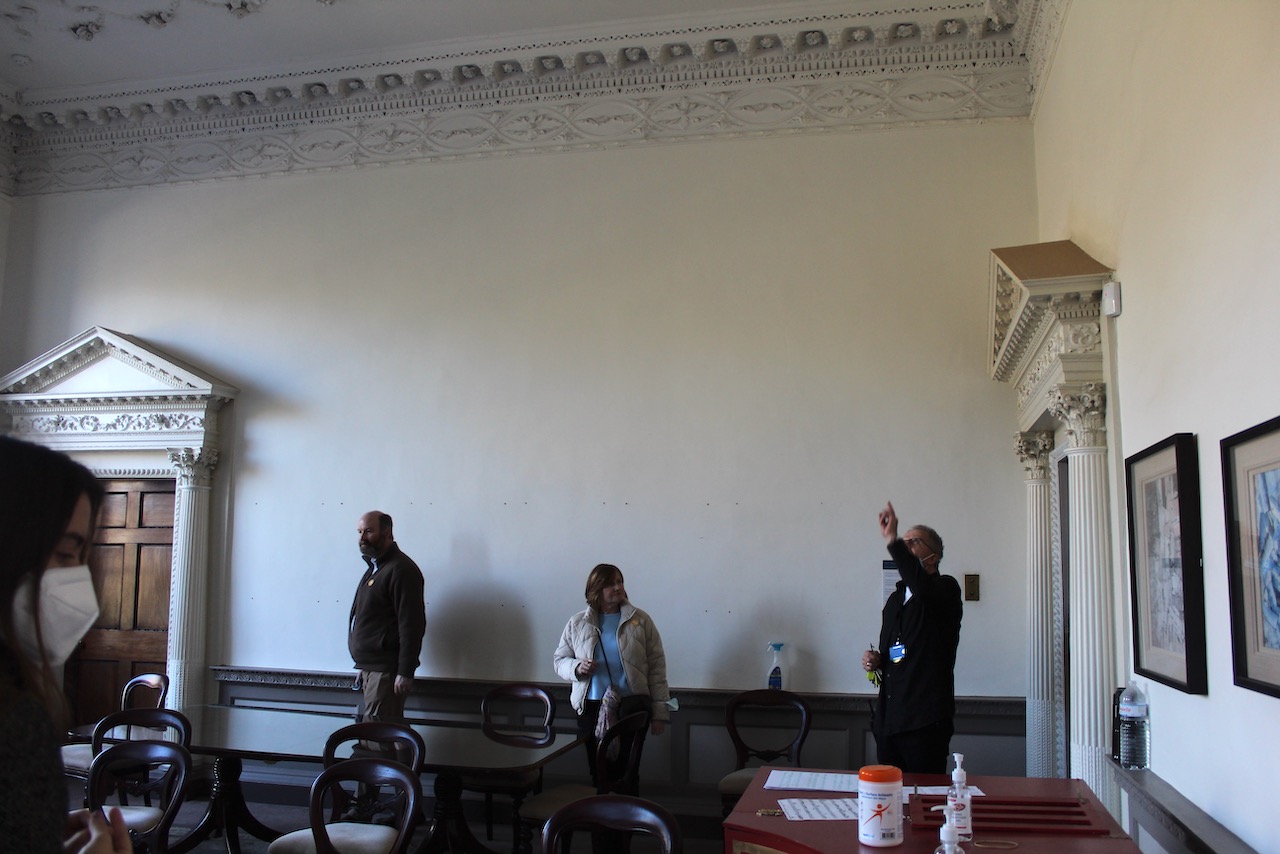

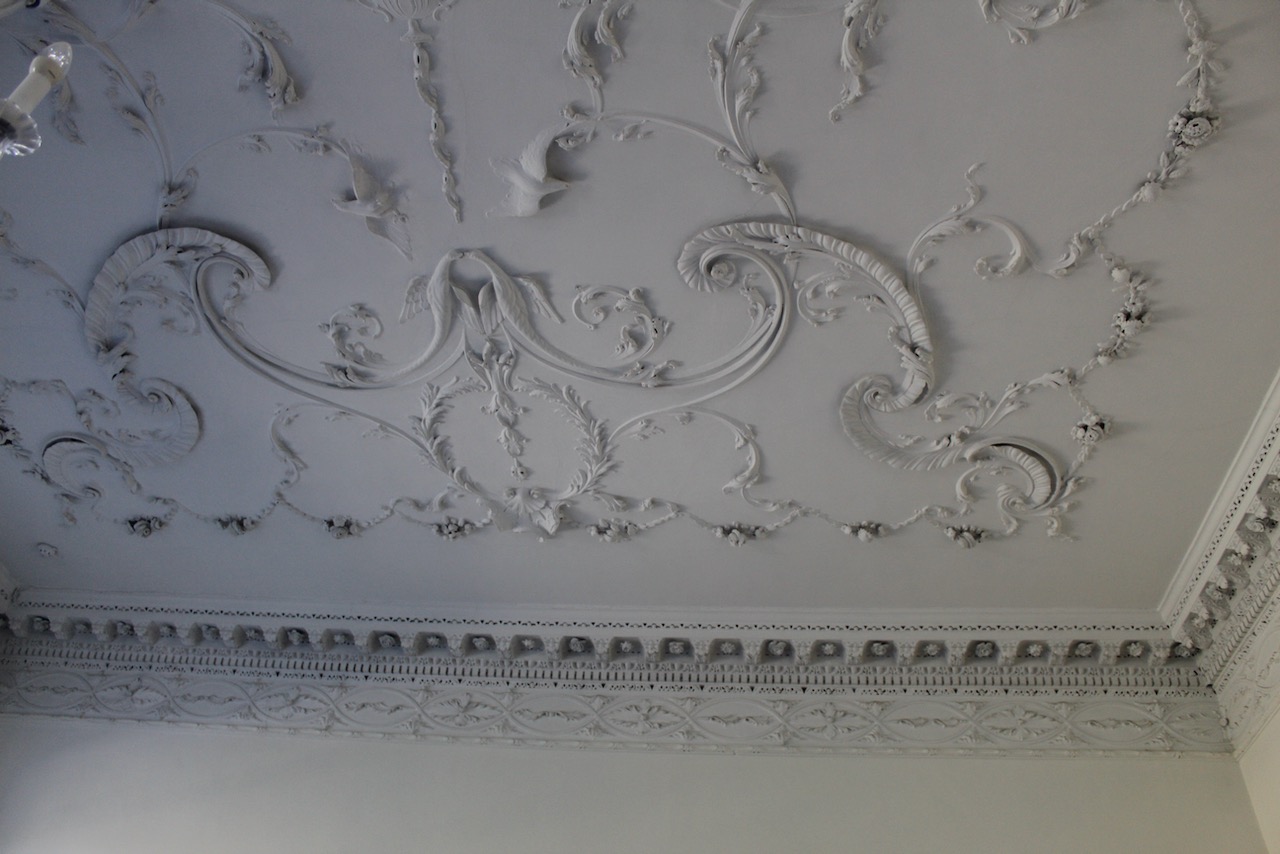
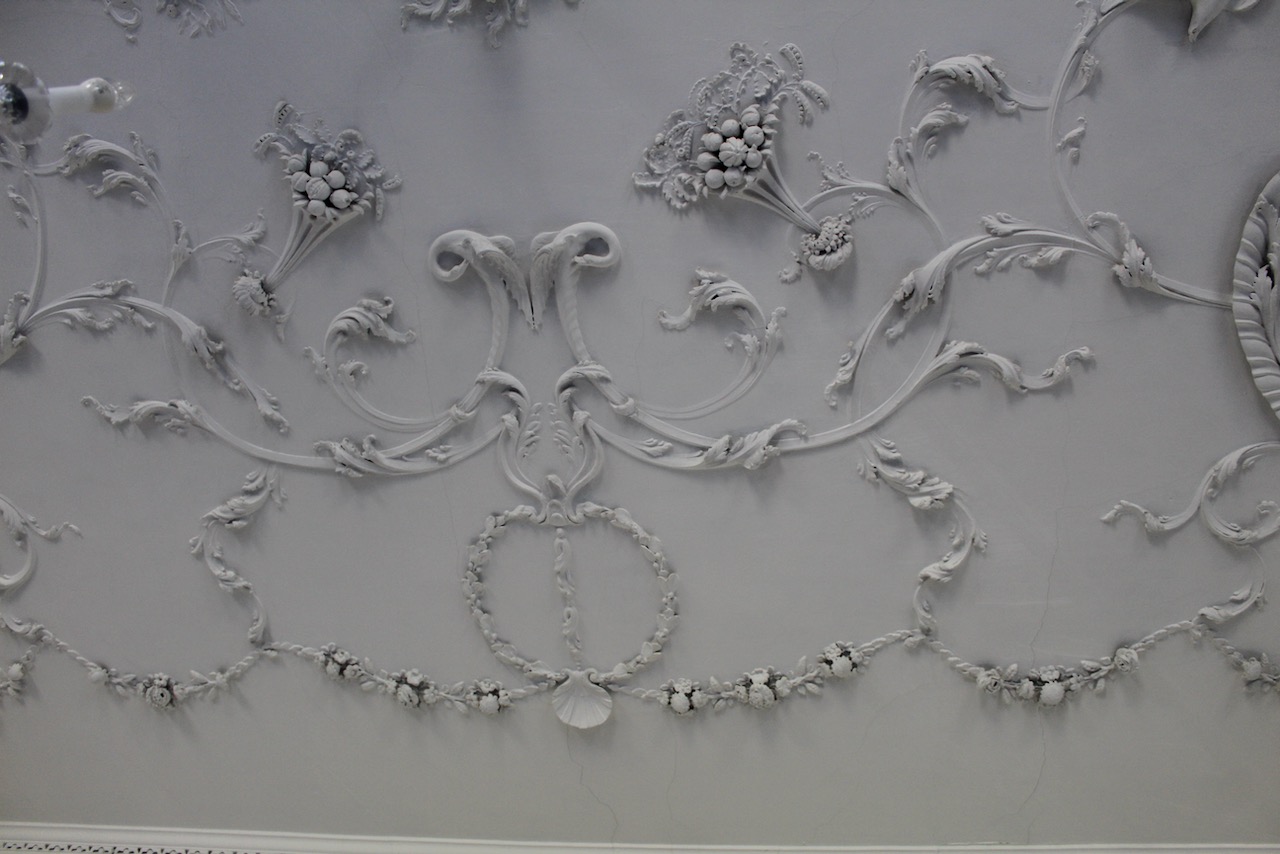

The Bishop’s Room is to the rear of the house. It has a Rococo ceiling composed of interlocking C-scrolls and acanthus ornament. The front drawing room has a Rococo ceiling with a flock of birds encircling the central boxx, “rocaille-backed scrolls” in the corners, flower baskets and garlands of flowers.

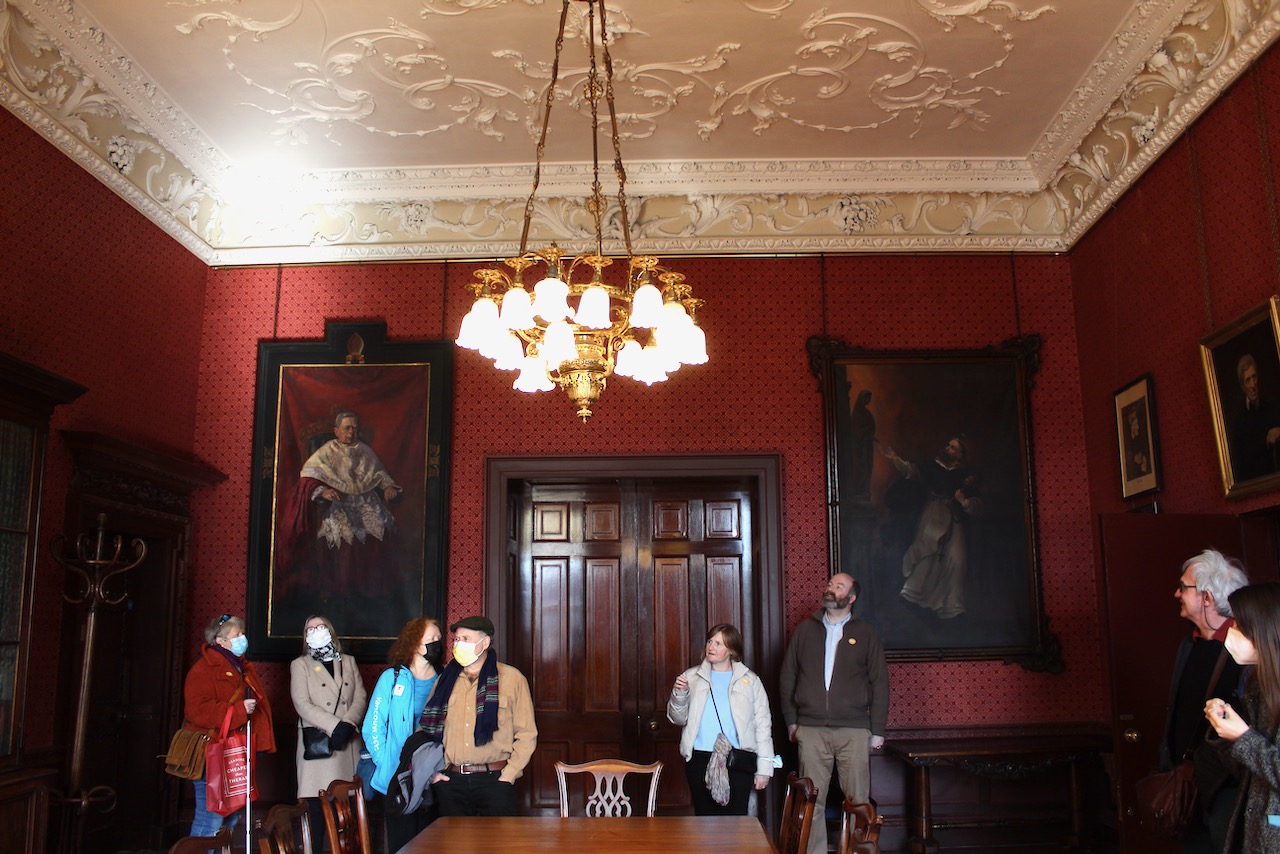

We then went outside on the tour to enter 85 St Stephen’s Green, next door. This is a smaller building, a Neo-Palladian urban palazzo designed by Richard Castle for Captain Hugh Montgomerie (d. 1741), built for entertaining! It has a rusticated granite street front, a Venetian window overhead formed by pedimented openings, and a balustraded parapet. The strict symmetry of the front hides an asymmetrical interior.
85 St. Stephen’s Green is of three bays and two storeys. Its lower floor is rusticated, and the first floor has a central Venetian window. Inside, it has a two bay entrance hall with a screen of two rounded arches opeing to the stair hall behind. On the right is a single bay front parlour, called the Apollo Room. The stair hall is flanked by a back parlour, and their is a service stair behind the stair hall, and a third room projecting out the back. [3] Christine Casey describes the spatial sequence as Baroque, and points out that it shows us the link Castle had to the Vanbrugh-Pearce circle of architects. The hall retains its eighteenth century flagsone, wainscoting and Kilkenny marble chimneypiece.

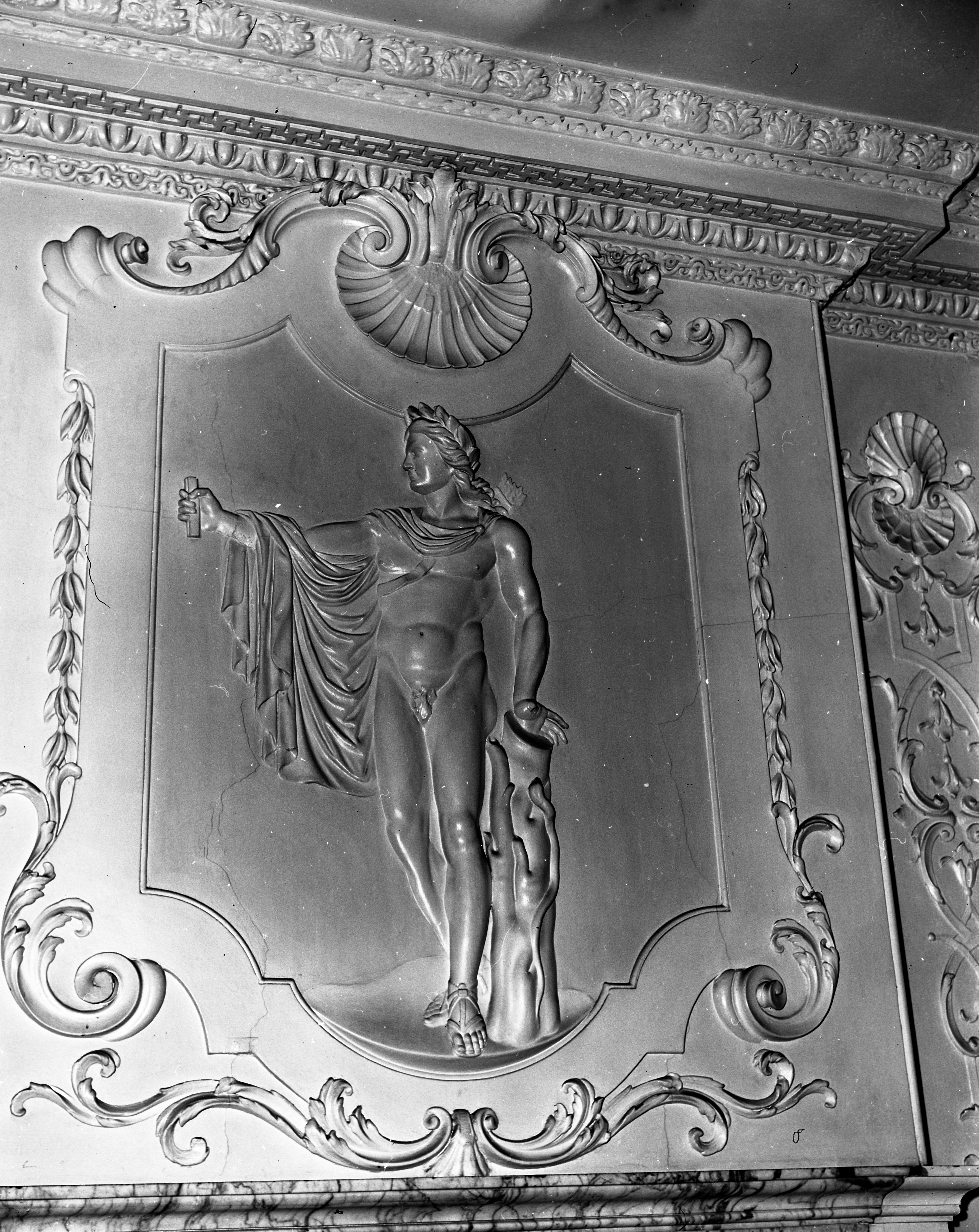
I don’t think we entered the Apollo room. Christine Casey tells us that it is rich in stucco ornament, which is accepted to be by Paolo and Filippo Lafranchini. Around the walls are high-relief almost Neoclassical figures of the Nine Muses set in moulded rectangular frames. I mistook the picture in Dublin City Library and Archives (below) to be of Riverstown House in County Cork, which is very similar.

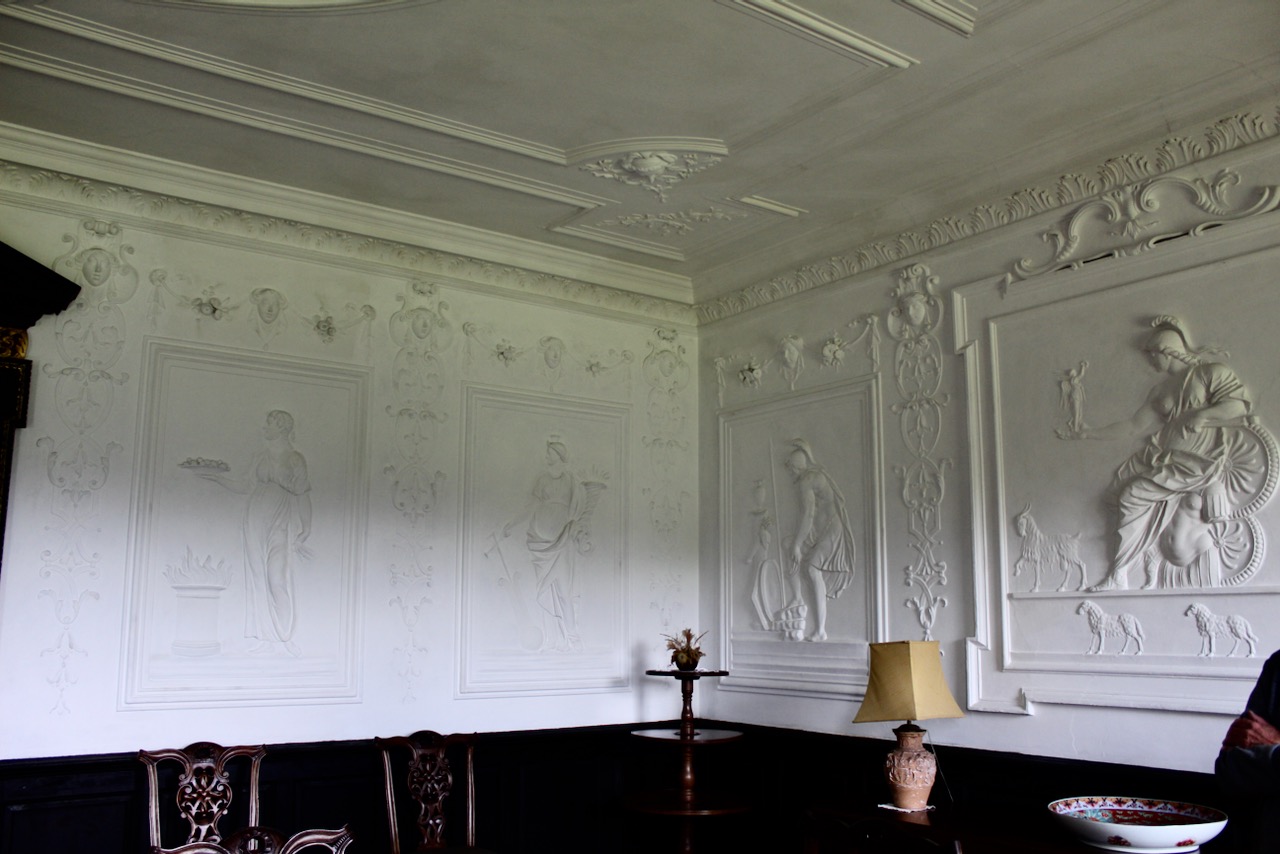
Christine Casey tells us that the stair is mahogany with finely crafted Tuscan balusters and carved tread ends. The upper stair hall, she tells us, was much altered in the nineteenth century and a reconstruction of its ceiling and plasterwork was recently installed, based on an outline of the original scheme found behind the nineteenth century plaster.


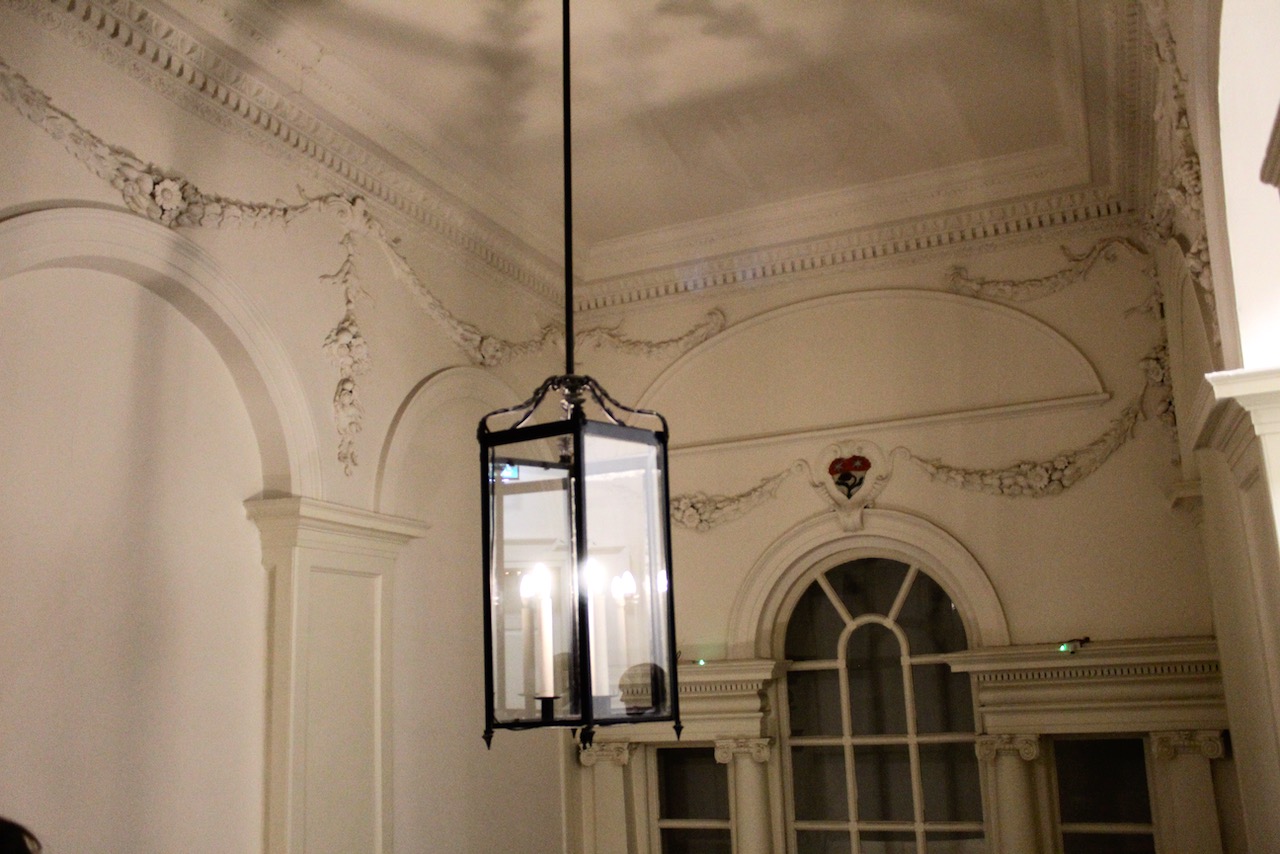

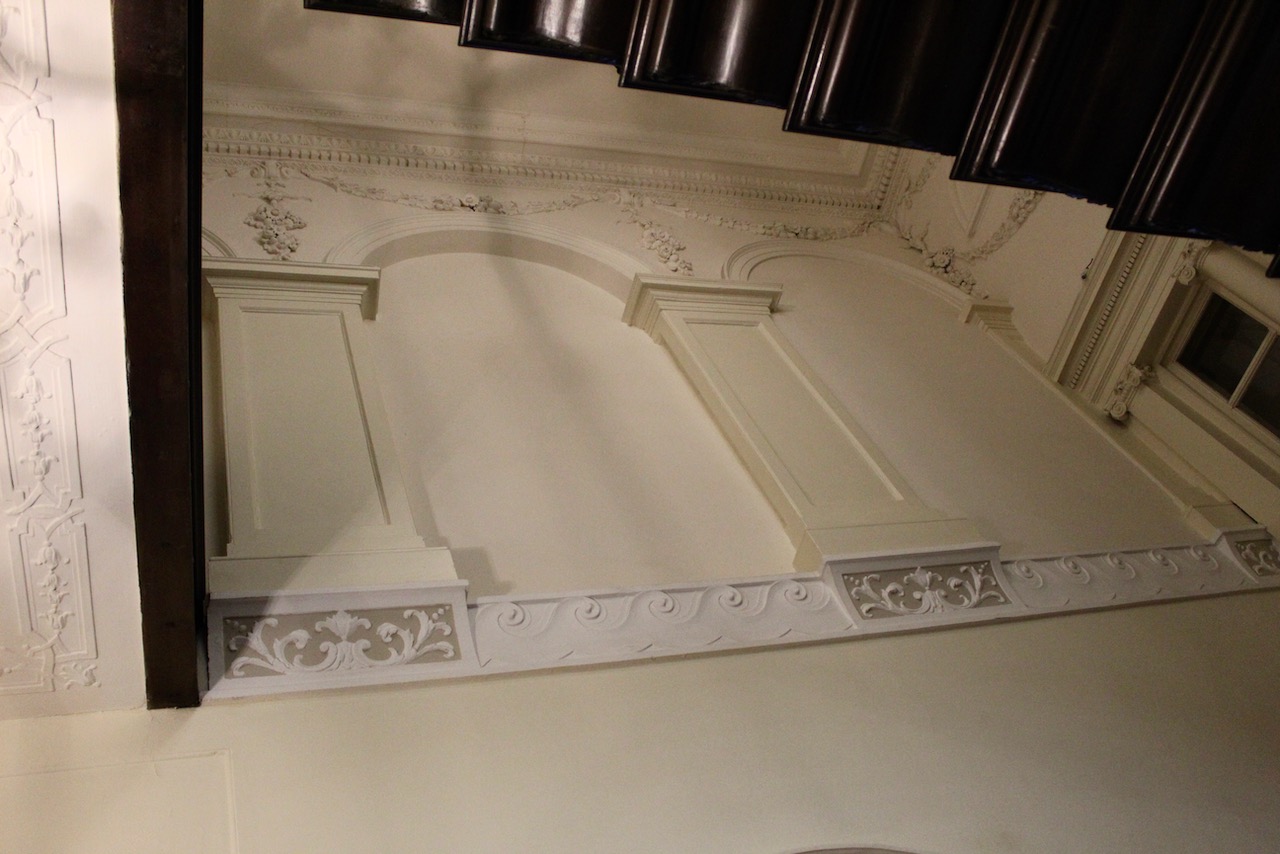

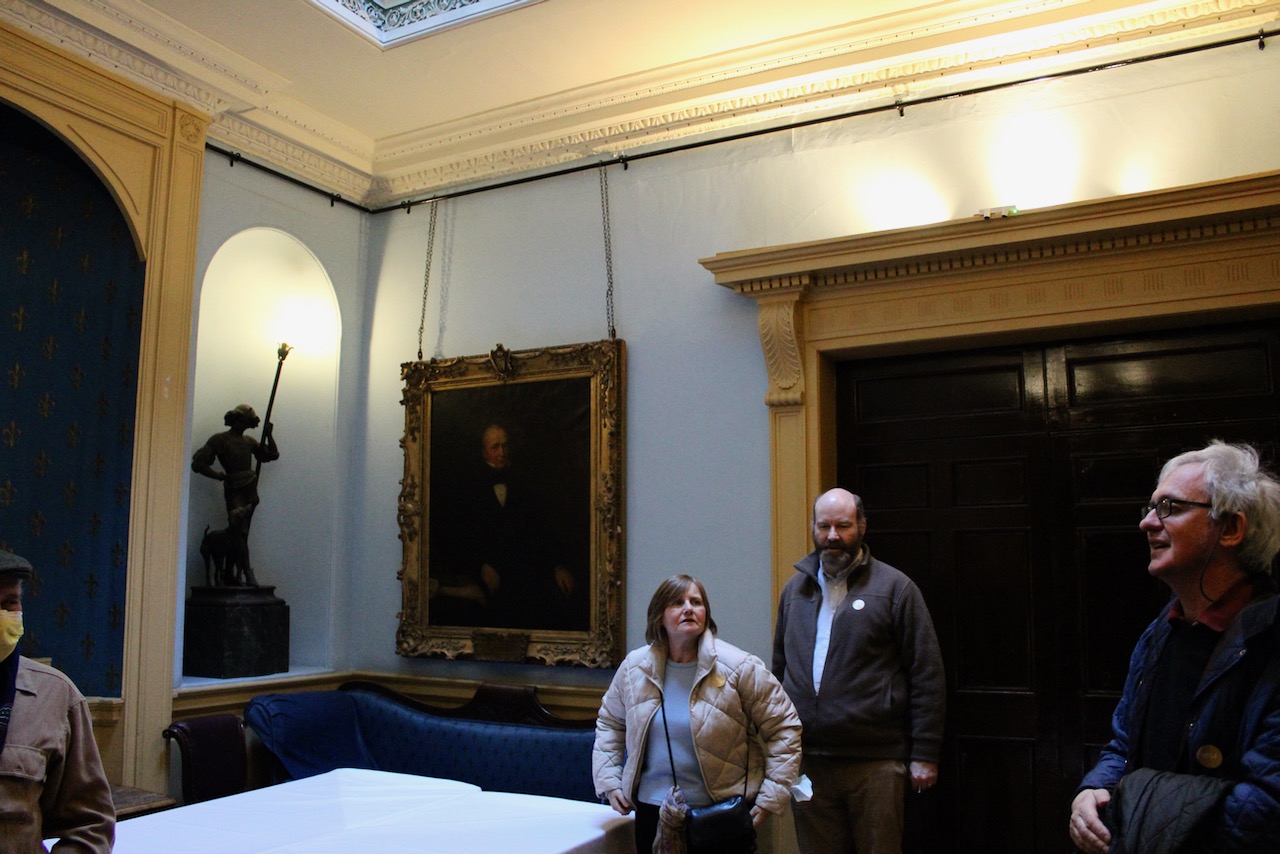
At the head of the stair is the ante-room to the saloon, which was much altered c. 1830 by Judge Nicholas Ball (the last private owner), who cut through the ceiling and created an elegant top-lit galleried library. A large extension with a canted bow was built across the back wall of the house in the early nineteenth century, creating a new reception room on each floor, blocking the light into the now windowless ground floor parlour and first floor ante-room.


The Great Room or Saloon is the full width of the house and overlooks St. Stephen’s Green. The stucco work is by the Lafranchini brothers Paolo and Filippo. The room is entered by a pair of Corinthian doorcases. It is lit by a central Venetian window flanked by two sash windows, all with Corinthian frames.
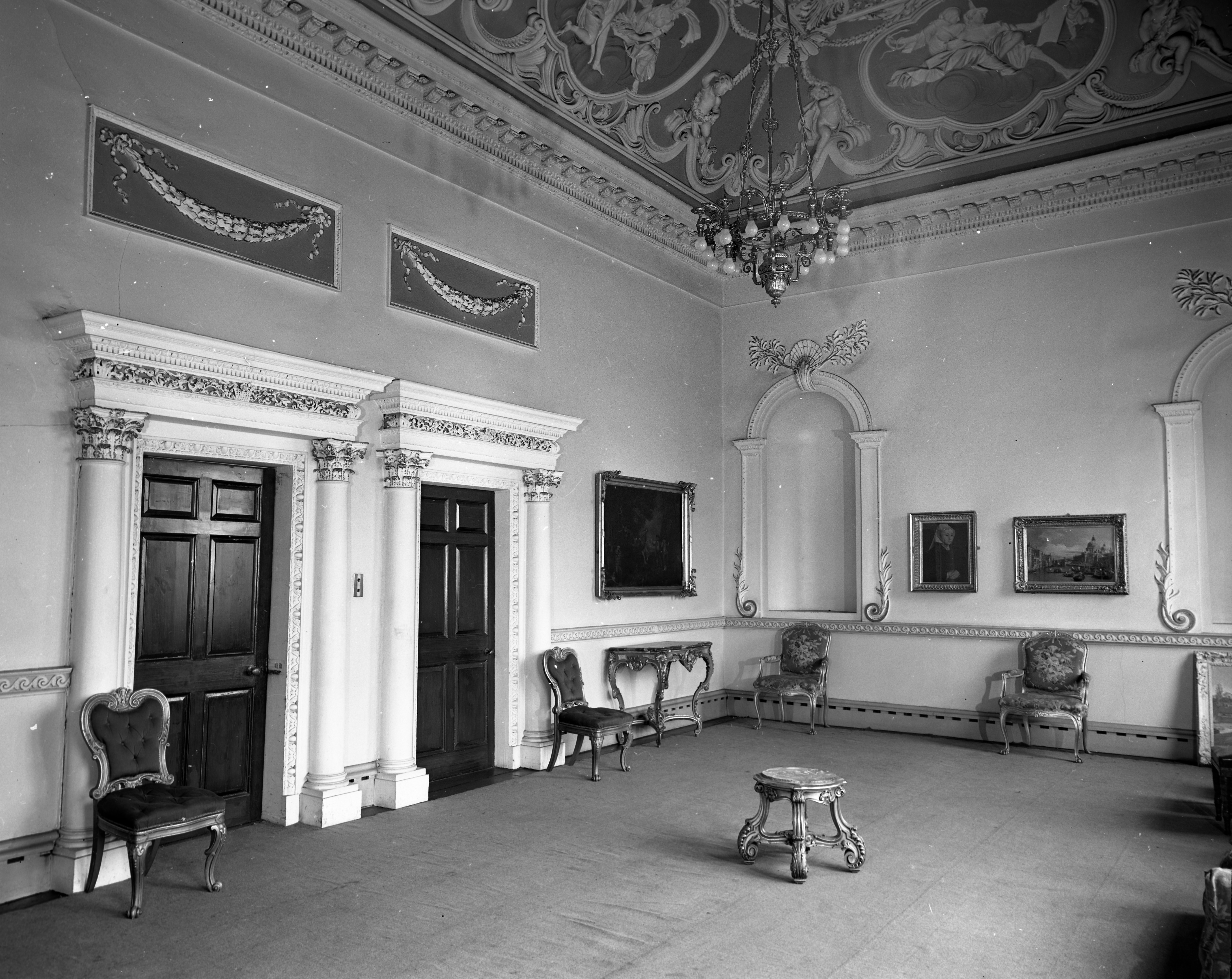
The frieze below the dentil cornice was deed relatively recently and was copied from the saloon frieze at Tyrone House. [see 3]
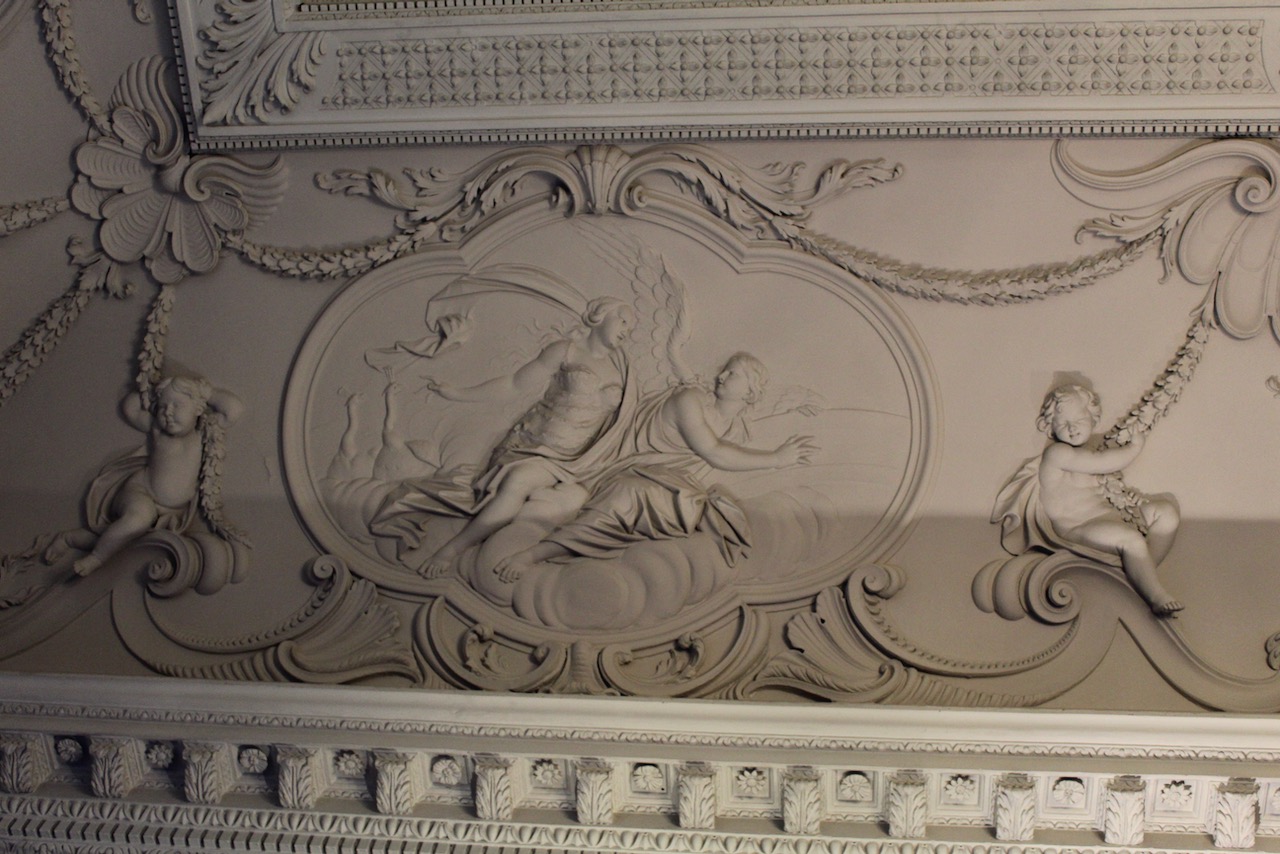
The cove, Christine Casey tells us, is ornamented with six lobed ovals containing figure groups, two on each of the long walls and one at each end. These are linked by a frieze of putti who grasp and swing from the oak garlands!
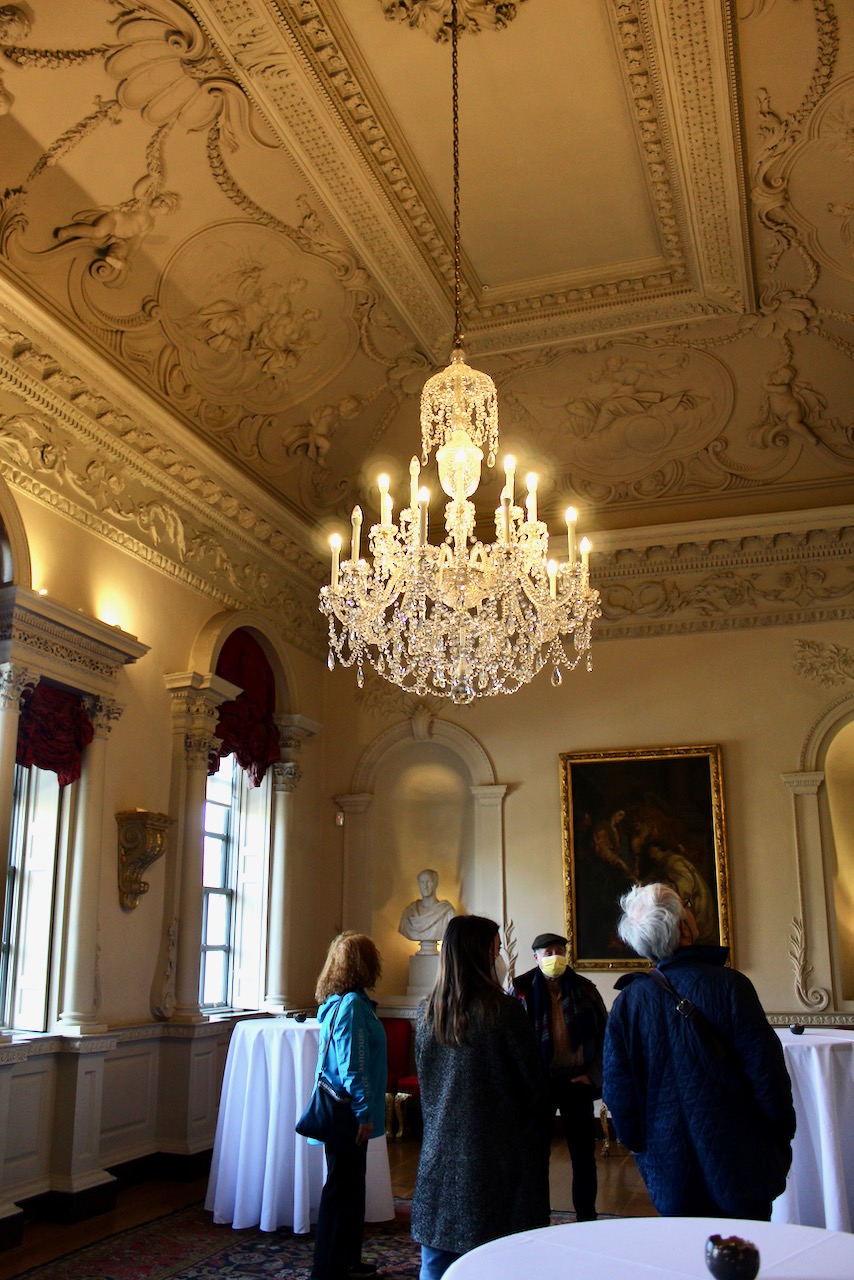


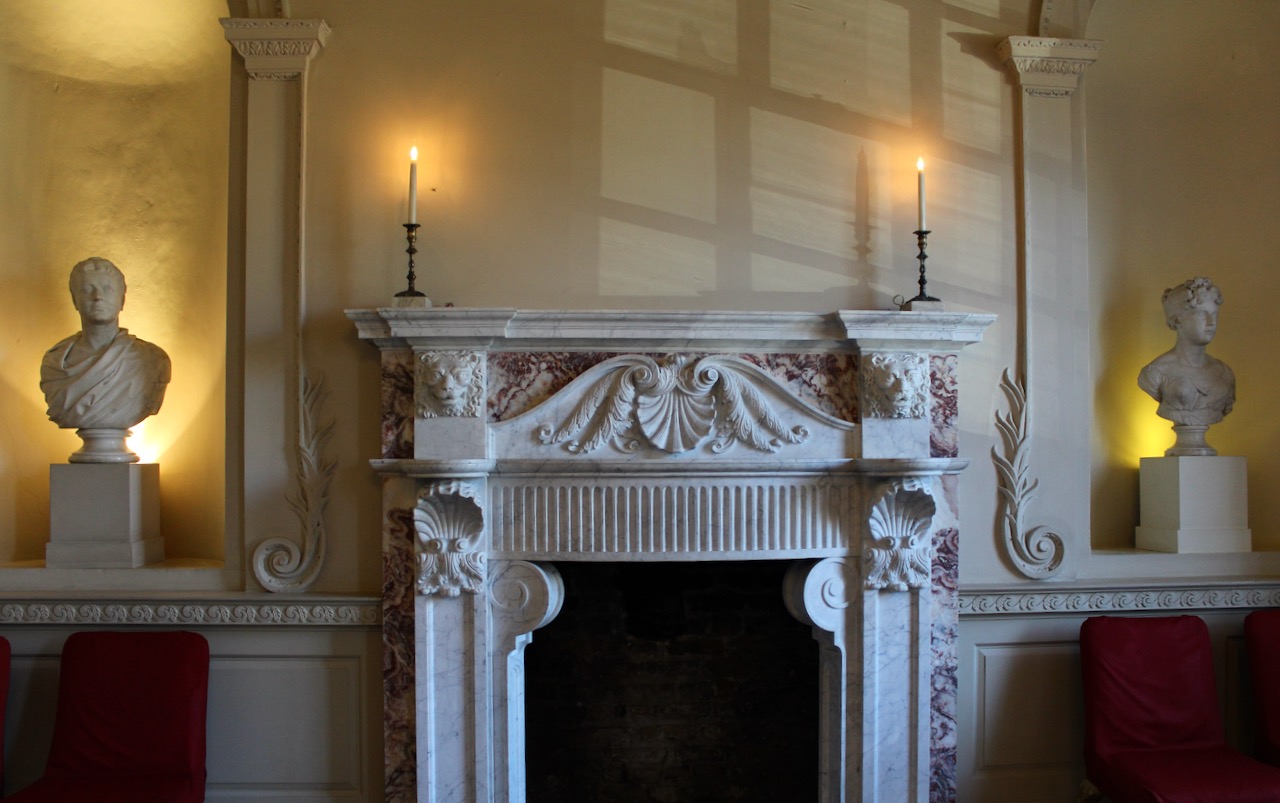
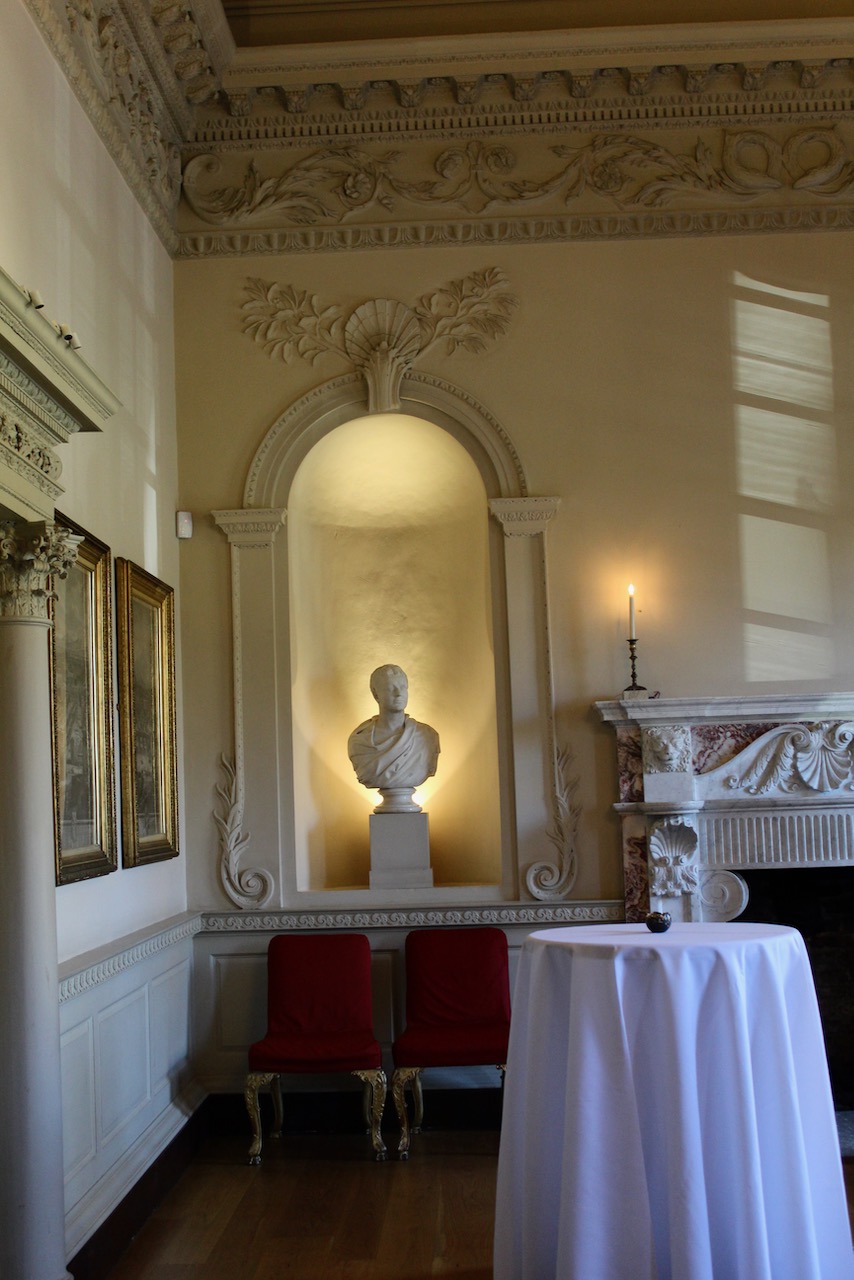

The figures of Prudence and Justice at each end of the room derive from paintings by Simon Vouet in the Salon de Mars at Versailles, Christine Casey tells us.

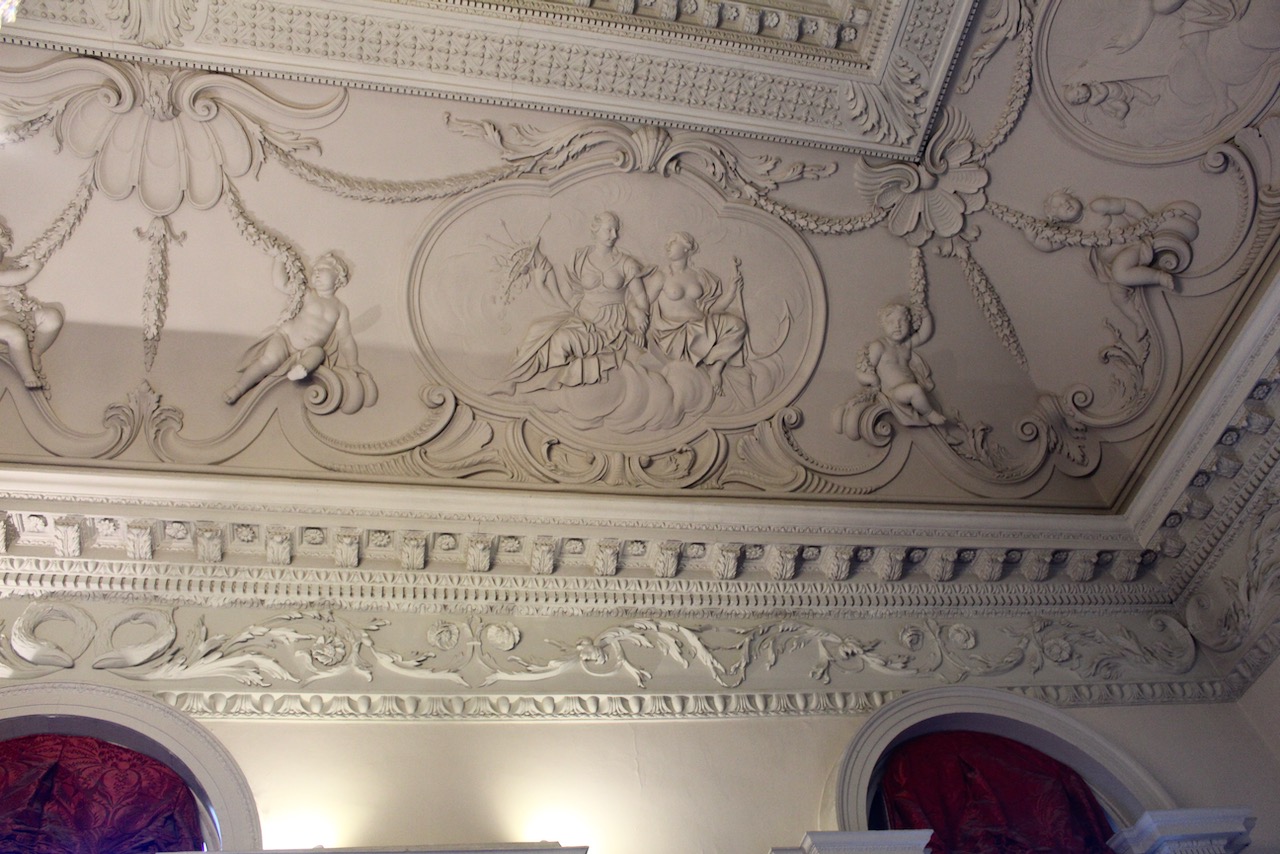
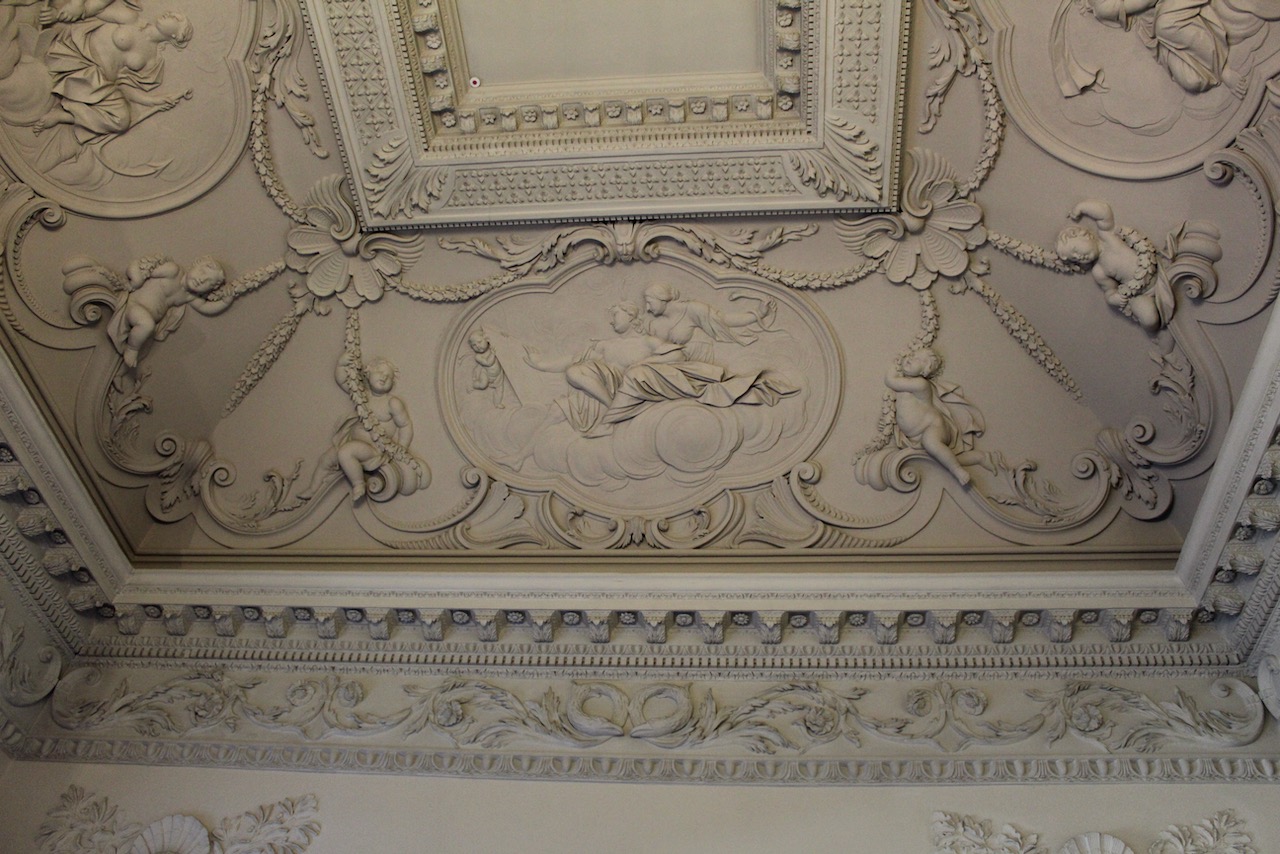
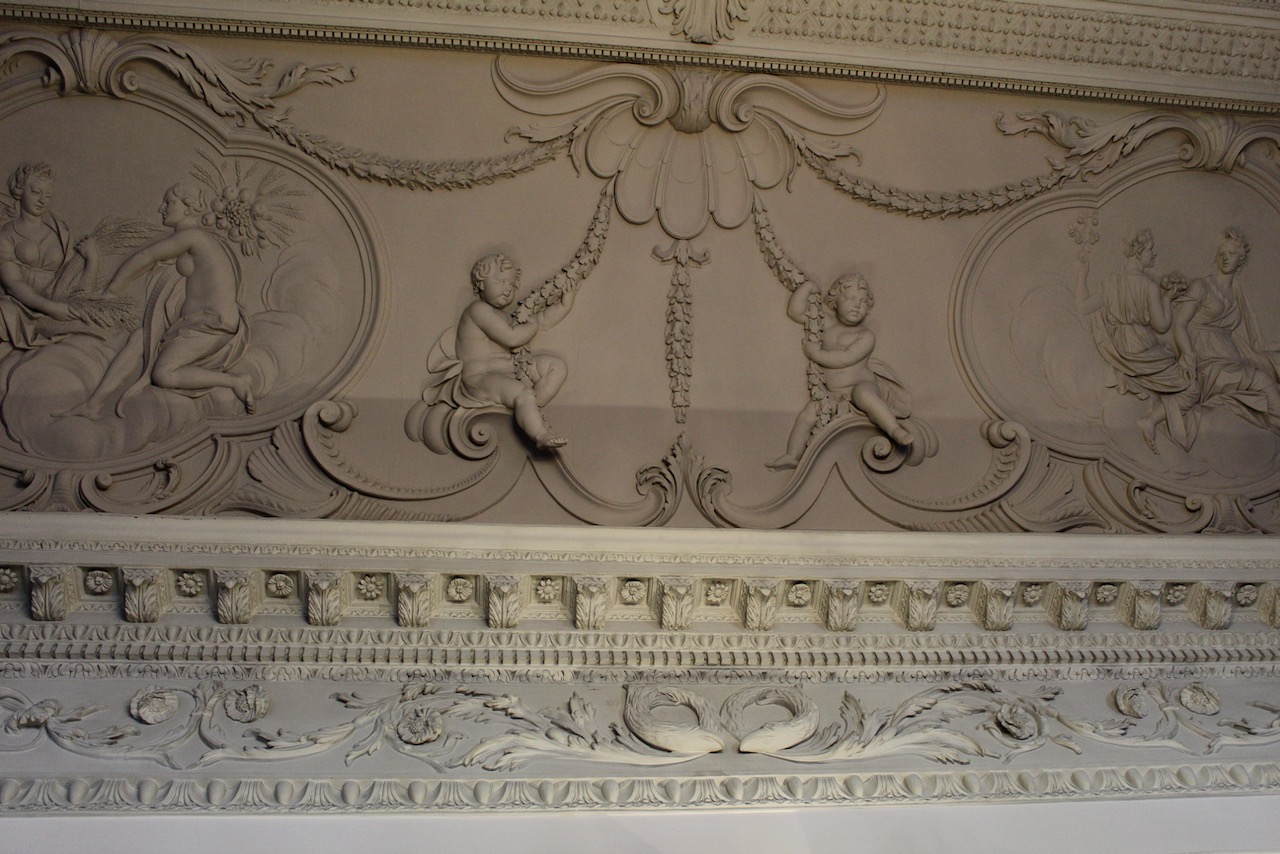
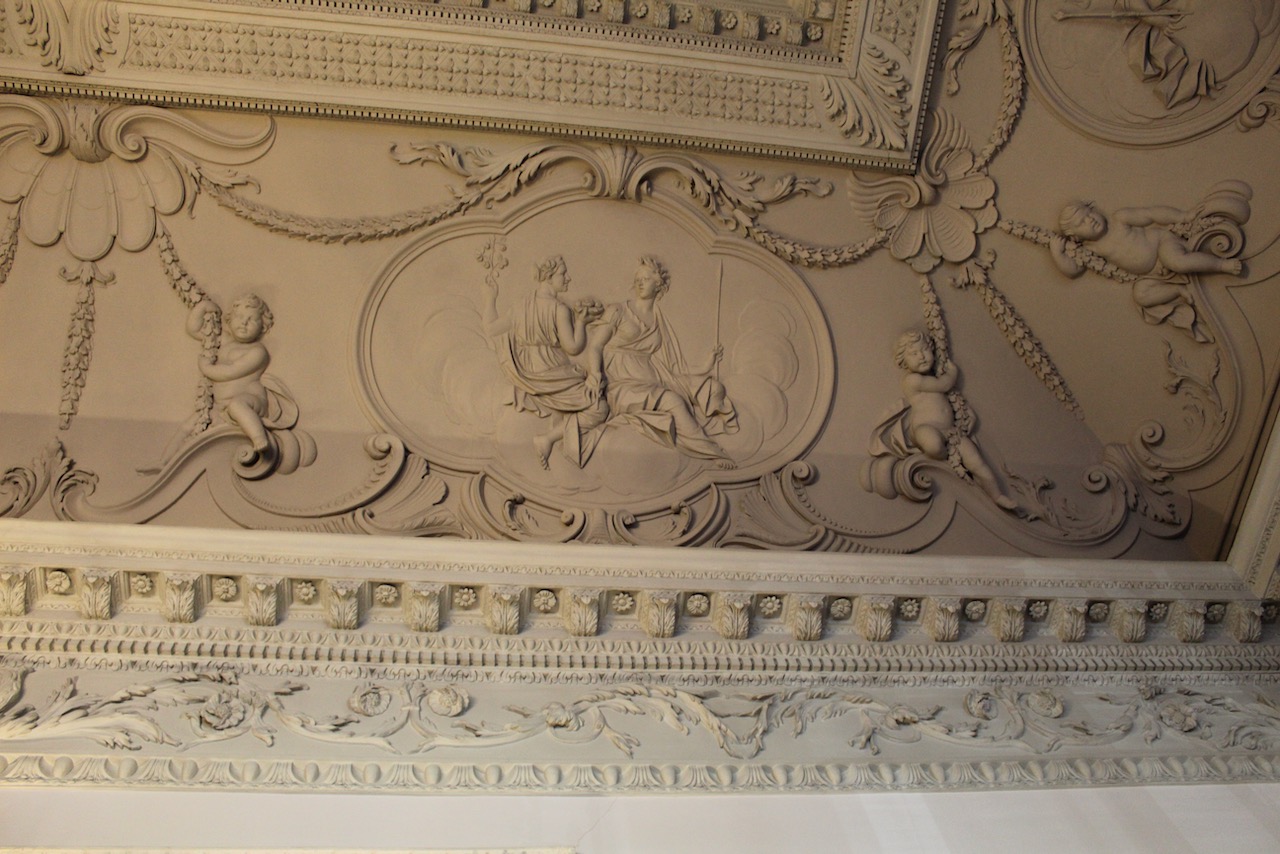


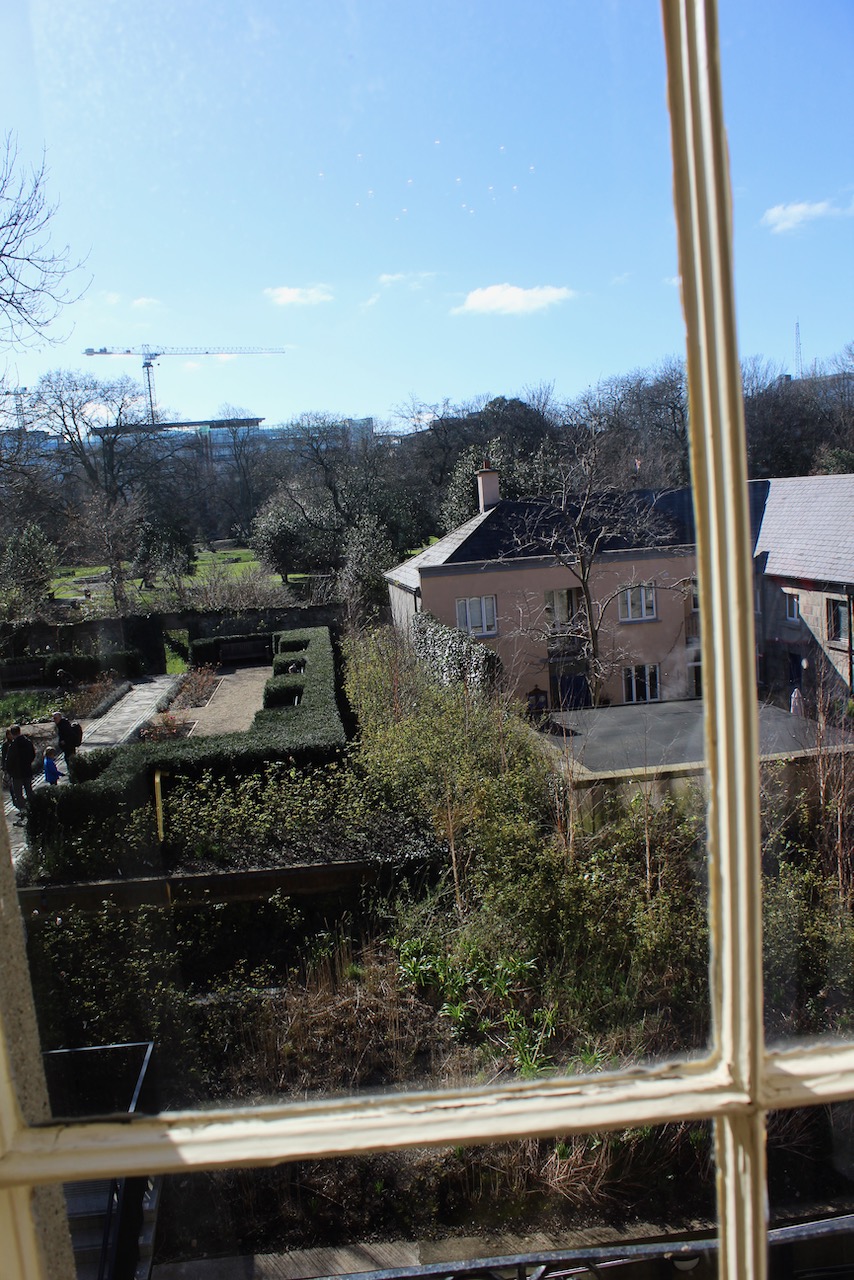
The canted bow room at the back of 85 St. Stephen’s Green looks on to the Iveagh Gardens.


From this room we went through a narrow door cut in the wall and up a flight of stairs to the Bishop’s Room, which is back in 86 St Stephen’s Green.
The main part of the Museum of Literature is in back rooms of number 86.
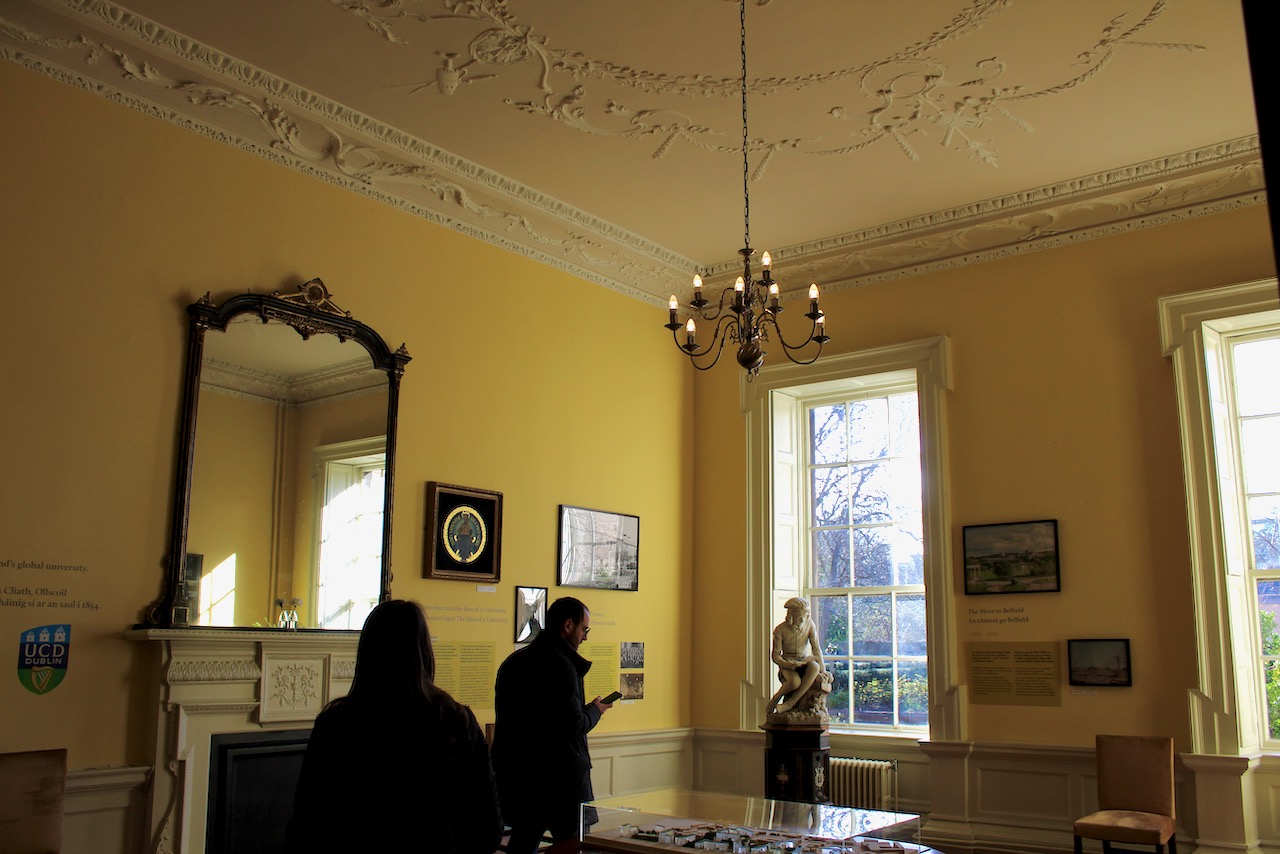
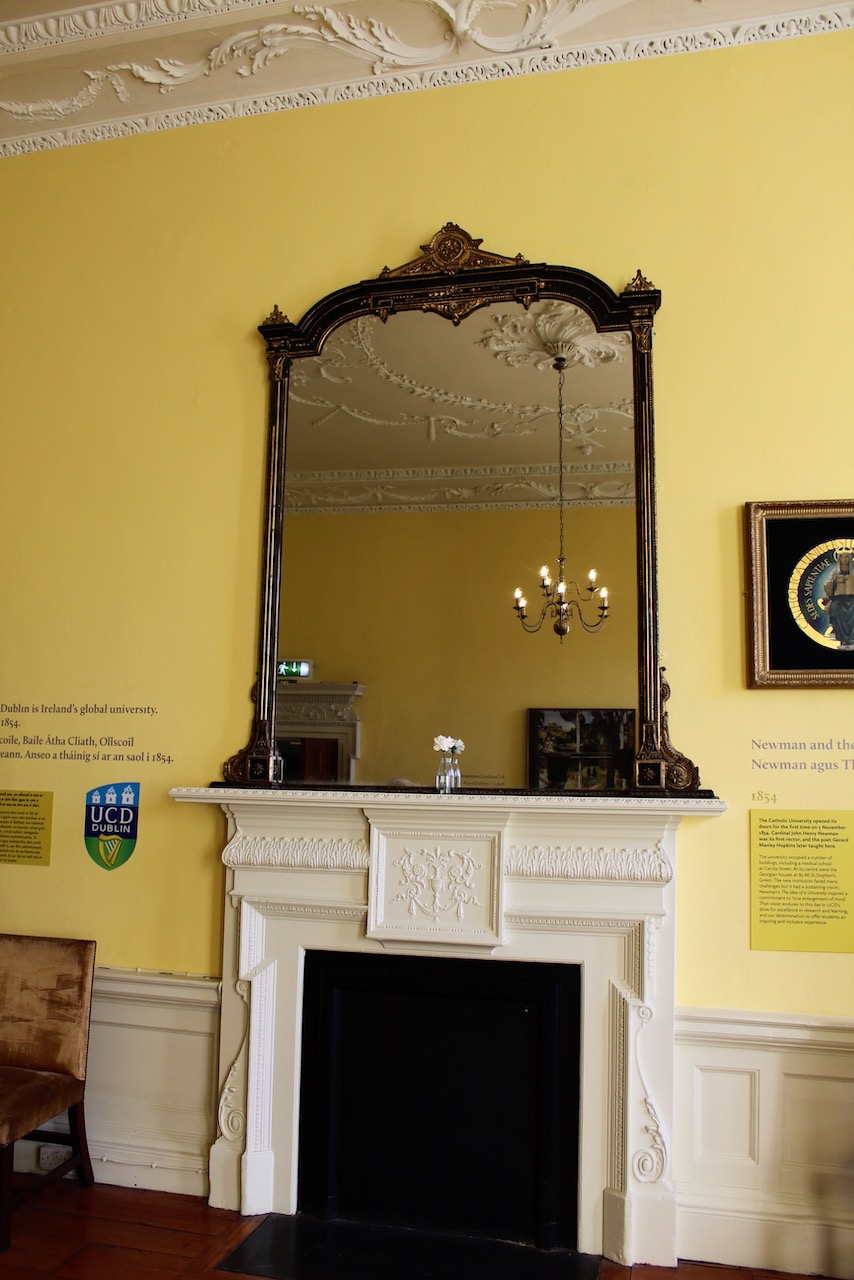
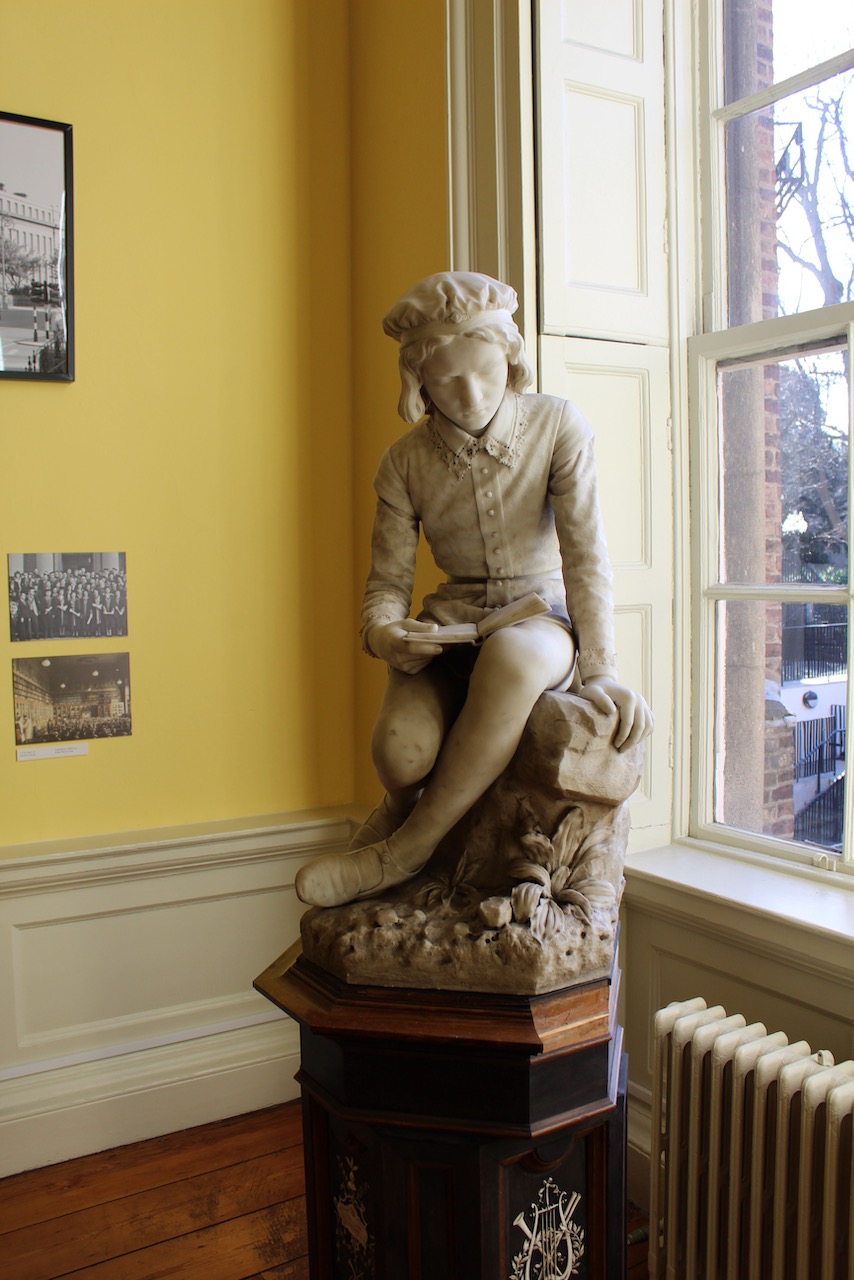
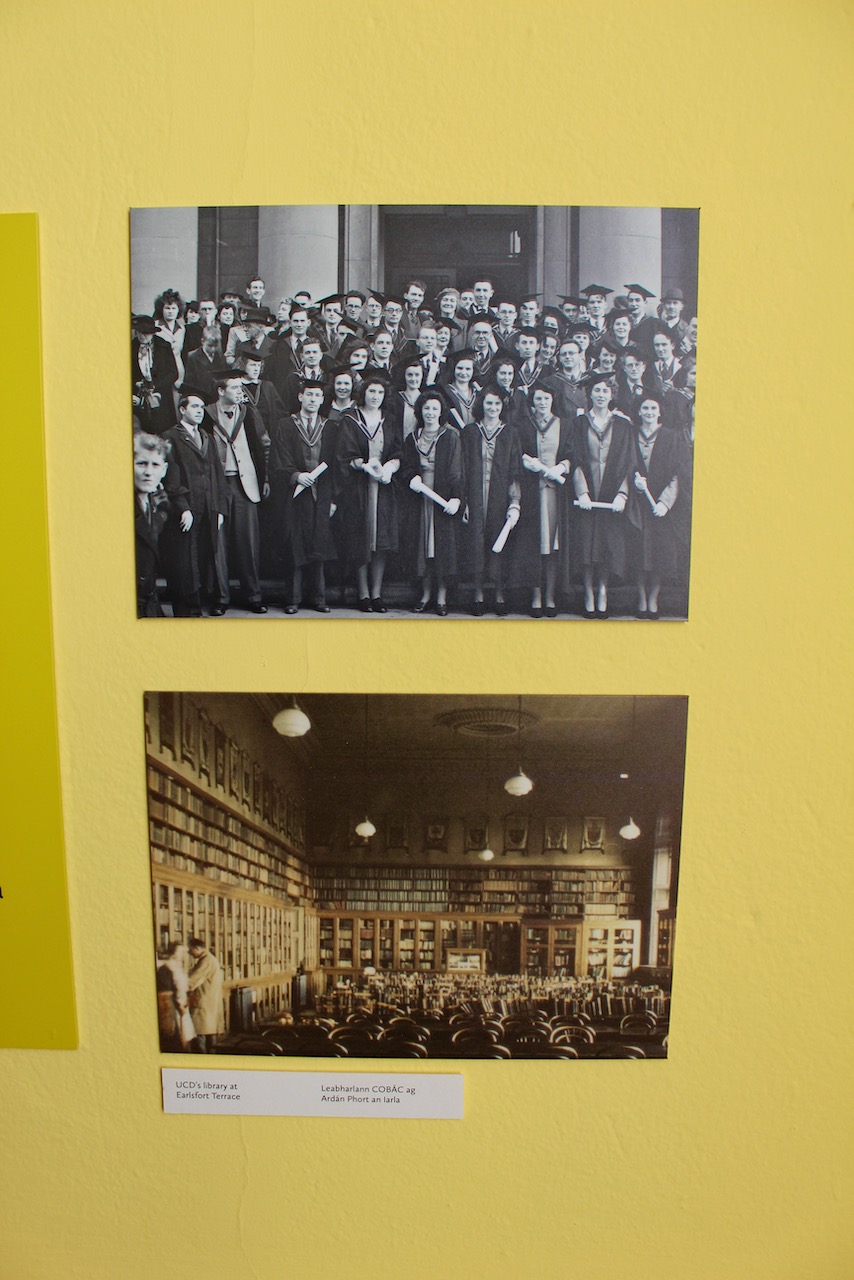
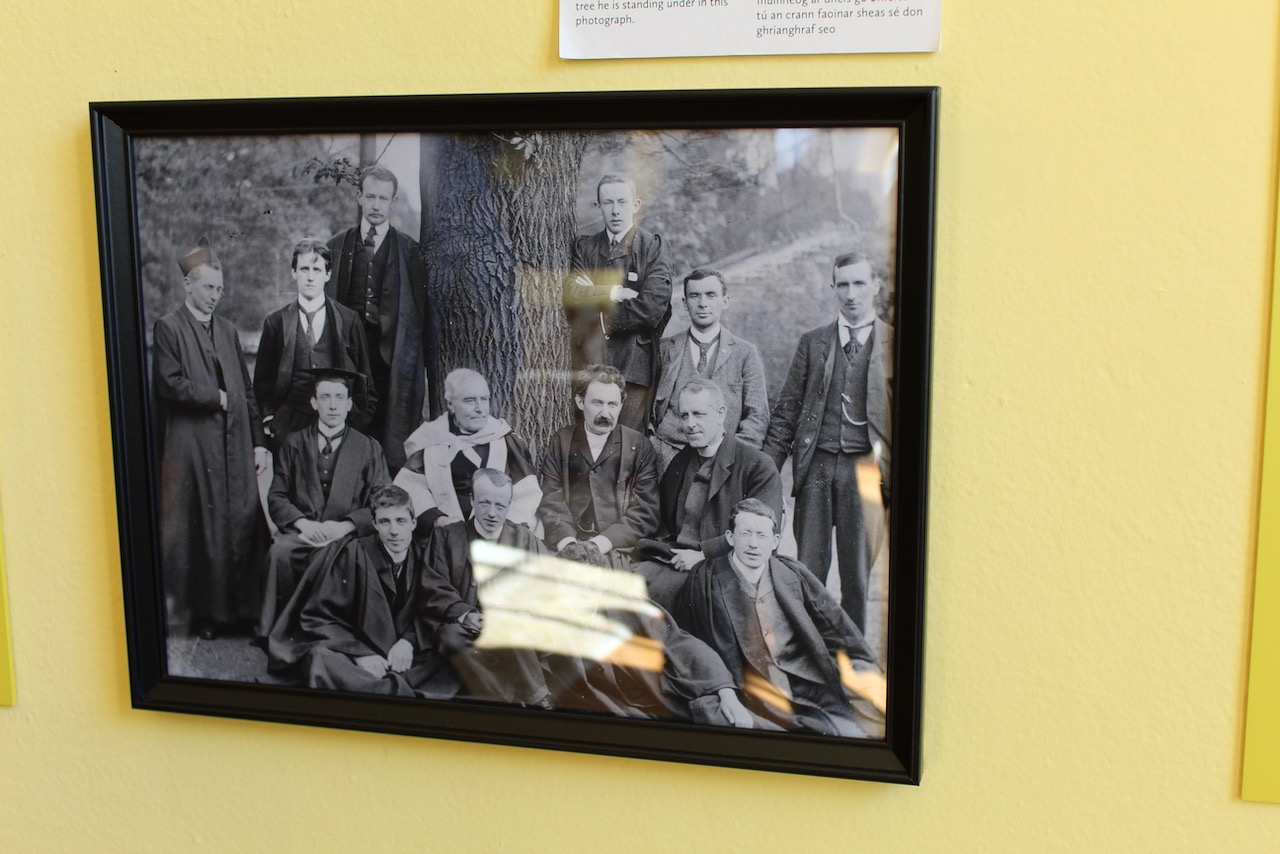
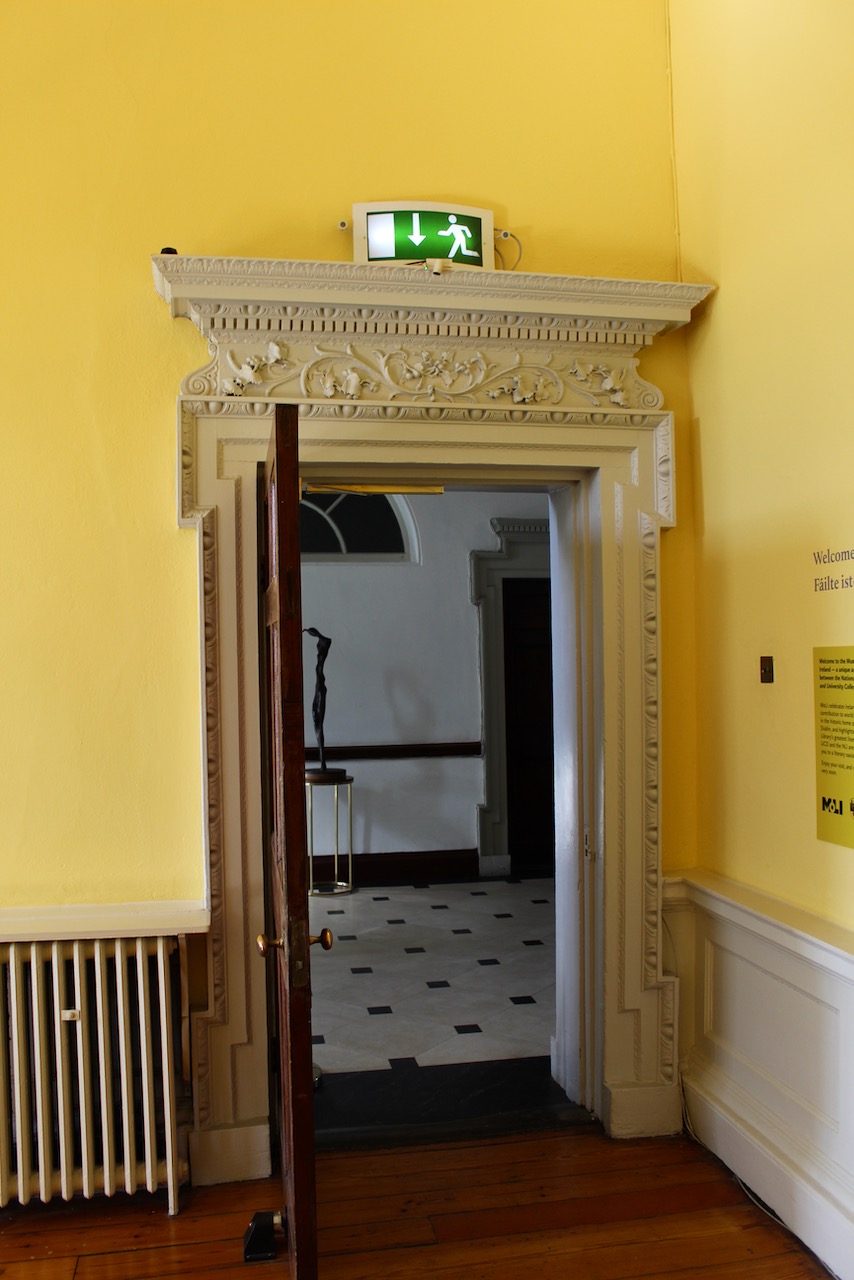
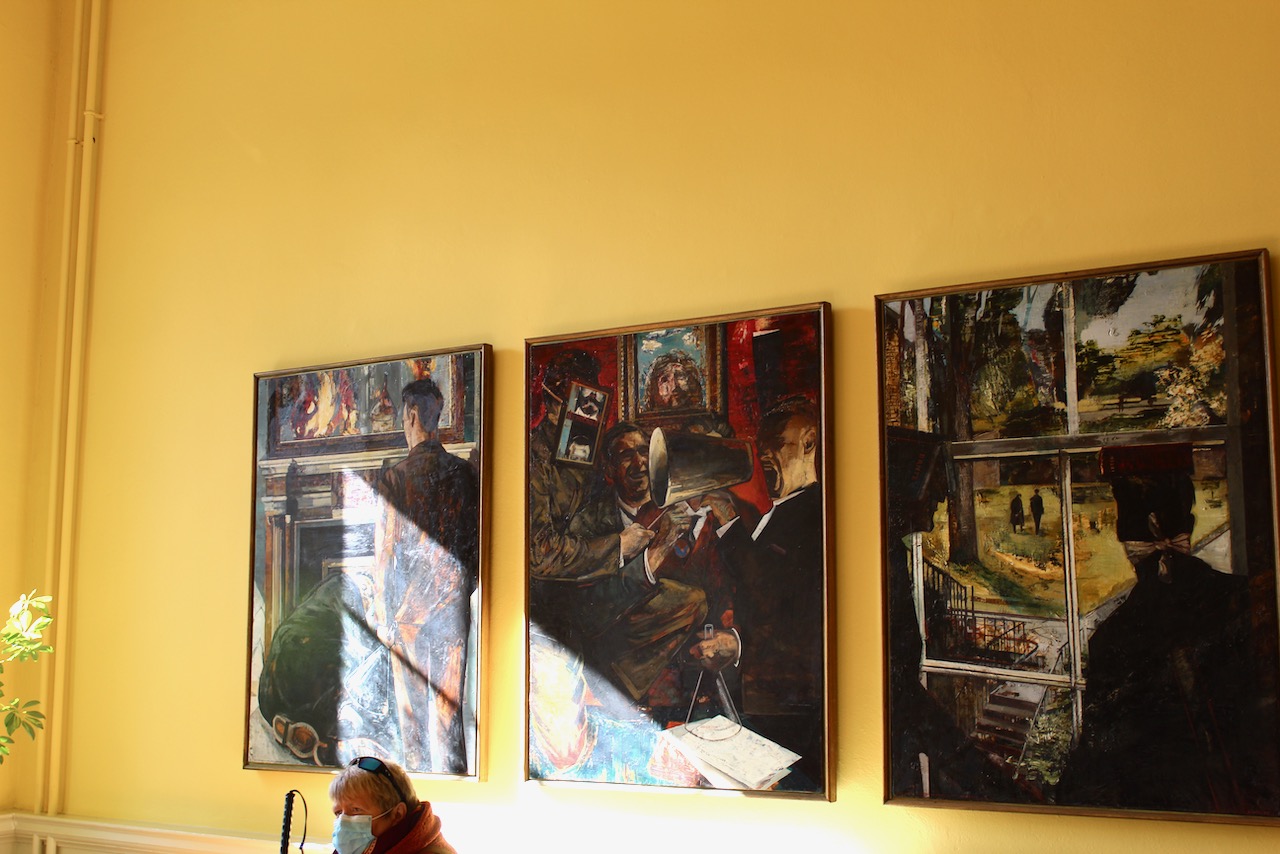
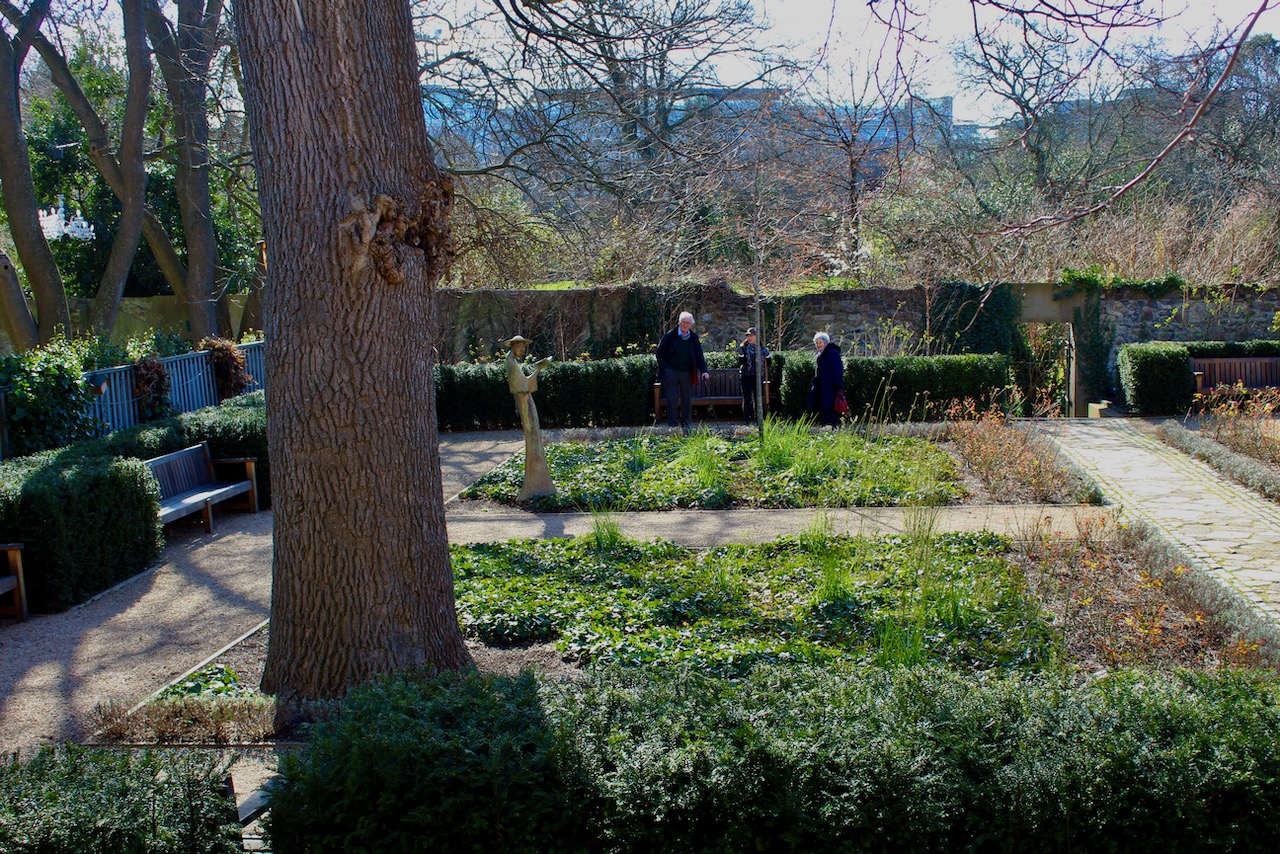
After our house tour we browsed the Museum, then went for a delicious sandwich in the cafe and sat in the gardens.

[1] https://theirishaesthete.com/2014/11/17/the-most-beautiful-room-in-ireland/
[2] https://theirishaesthete.com/2015/02/25/virtuosic/
[3] Casey, Christine. The Buildings of Ireland: Dublin. The City Within the Grand and Royal Canals and the Circular Road with the Phoenix Park. Yale University Press, New Haven and London, 2005.
[4] p. 125, O’Toole, Jimmy, The Carlow Gentry: What will the neighbours say! Published by Jimmy O’Toole, Carlow, Ireland, 1993. Printed by Leinster Leader Ltd, Naas, Kildare.
[5] Dublin City Library and Archives. https://repository.dri.ie
[6] https://www.greystonesahs.org/gahs3/index.php/talks-and-visits?view=article&id=214
 Irish Historic Houses