Munster’s counties are Clare, Cork, Kerry, Limerick, Tipperary and Waterford.
I have noticed that an inordinate amount of OPW sites are closed ever since Covid restrictions, if not even before that (as in Emo, which seems to be perpetually closed) [these sites are marked in orange here]. I must write to our Minister for Culture and Heritage to complain.
Clare:
1. Ennis Friary, County Clare
2. Scattery Island, County Clare
Limerick:
3. Askeaton Castle, County Limerick
4. Desmond Castle, Adare, County Limerick
5. Desmond Banqueting Hall, Newcastlewest, County Limerick
6. Lough Gur, County Limerick

donation
Help me to pay the entrance fee to one of the houses on this website. This site is created purely out of love for the subject and I receive no payment so any donation is appreciated!
€15.00
Clare:
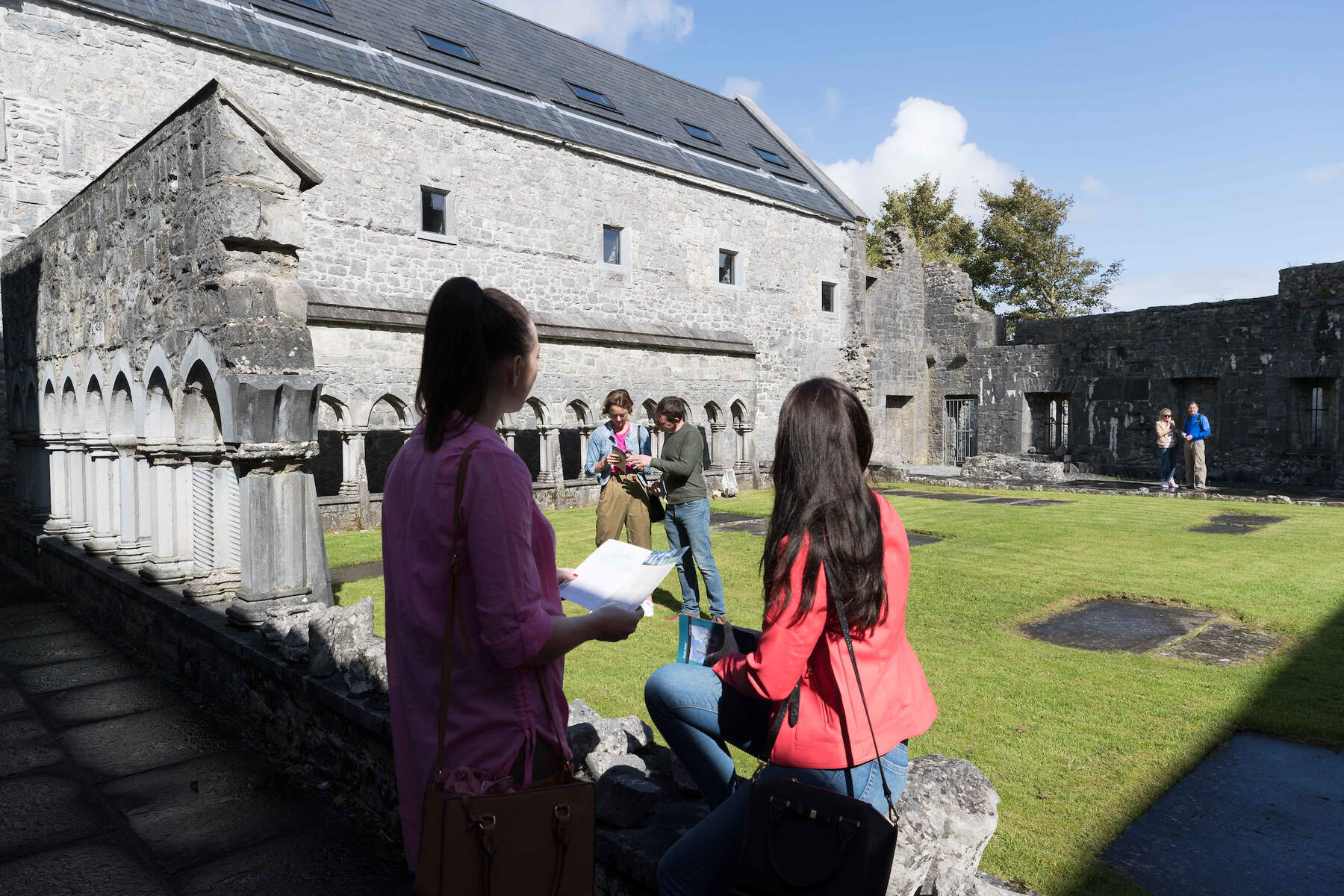
1. Ennis Friary, Abbey Street, Ennis, County Clare:
General Enquiries: 065 682 9100, ennisfriary@opw.ie
From the OPW website https://heritageireland.ie/visit/places-to-visit/ennis-friary/:
“The O’Briens of Thomond, who once ruled much of north Munster, founded this medieval Franciscan friary. It grew quickly into a huge foundation, with 350 friars and a famed school of 600 pupils by 1375. It was the very last school of Catholic theology to survive the Reformation.
The building contains an exceptional wealth of fifteenth- and sixteenth-century sculptures carved in the local hard limestone, including one of St Francis himself displaying the stigmata. An arch between the nave and transept bears a remarkable image of Christ with his hands bound.
Don’t forget to visit the sacristy, an impressive structure with a ribbed, barrel-vaulted ceiling. Take especial note of the beautiful east window, with its five lancets, as it lights up the chancel.” [2]

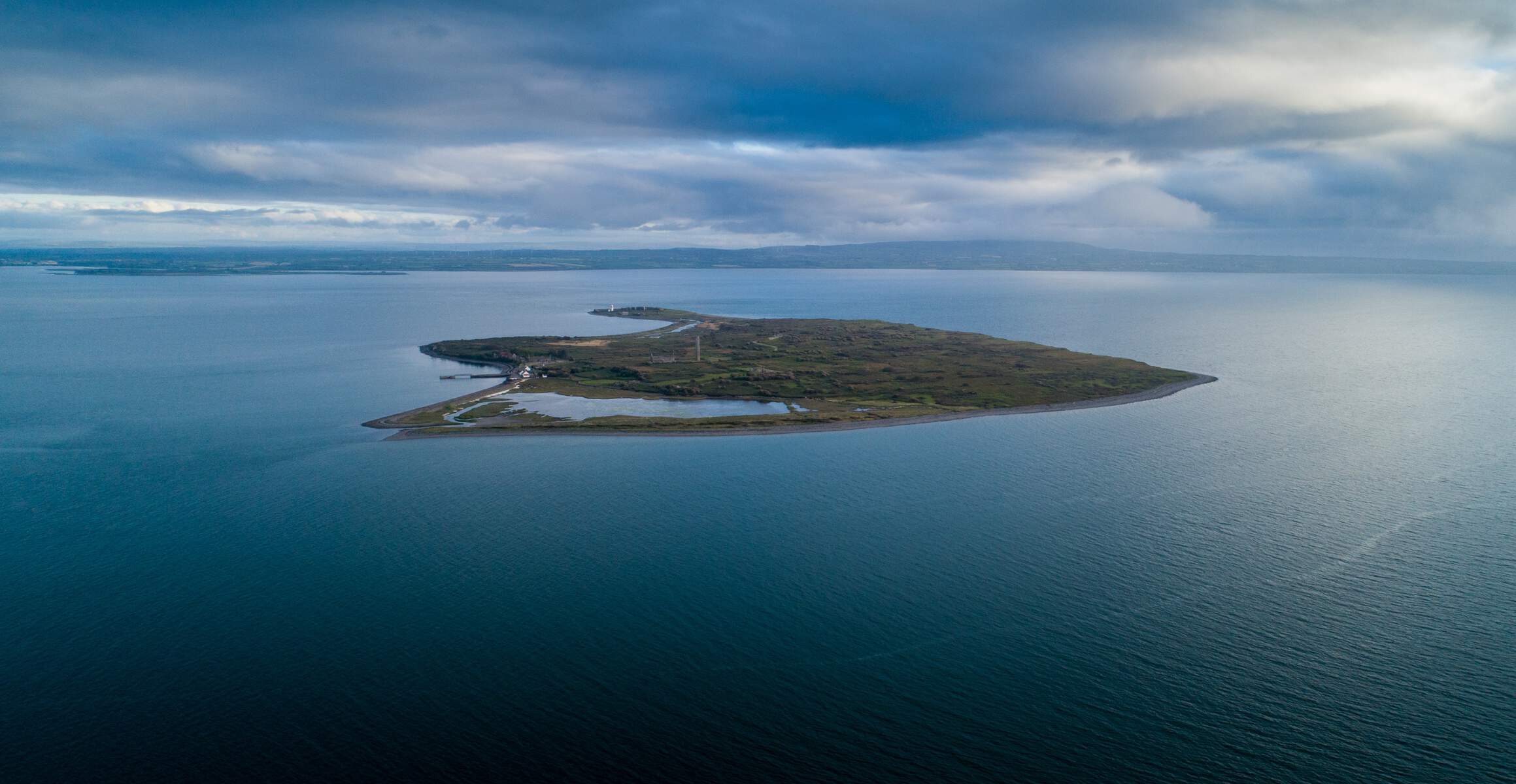
2. Scattery Island, County Clare:
General Information: 087 995 8427, scatteryisland@opw.ie
From the OPW website https://heritageireland.ie/visit/places-to-visit/scattery-island-centre/:
“Off the northern bank of the Shannon Estuary lies Scattery Island, the site of an early Christian settlement founded by an extraordinary man.
St Senan, who was born in the area, built his monastery in the early sixth century. It included a mighty round tower, which at 36 metres is one of the tallest in Ireland.
There are six ruined churches on the site too. The Church of the Hill stands on a high spot, the very place where, legend has it, an angel placed Senan so that he could find – and then banish – the terrible sea-monster called the Cathach. It is believed that Senan is buried beside another of the medieval churches.
Scattery was invaded many times over the centuries. The Vikings in particular believed that the monastery held many riches and returned several times to ravage it.
A short boat trip will take you to the island, where you can explore its multi-layered, 1,500-year history.“
Limerick:
3. Askeaton Castle, County Limerick:
General information: 087 113 9670, askeatoncastle@opw.ie
From the OPW website https://heritageireland.ie/visit/places-to-visit/askeaton-castle/:
“In the very heart of this County Limerick town stand the impressive remains of a medieval fortress. Askeaton Castle dates from 1199, when William de Burgo built it on a rock in the River Deel.
Over the centuries, the castle proved itself key to the history of Munster. It was the power base of the earls of Desmond after 1348. In 1579 it held out against the English general Sir Nicholas Malby, an incident that helped spark the second Desmond Rebellion.
The banqueting hall is one of the finest medieval secular buildings in Ireland. The tower is partly ruined, but some fine windows and an exquisite medieval fireplace have remained.
The early eighteenth-century building nearby was used as a Hellfire Club. These clubs were rumoured to be dens of excess in which wealthy gentlemen indulged in drink, mock ritual and other nefarious activities.“
The Fitzgeralds, Earls of Desmond, held the castle for over 200 years and ruled Munster from it.
4. Desmond Castle, Adare, County Limerick:
General information: 061 396666, info@adareheritagecentre.ie
From the OPW website https://heritageireland.ie/visit/places-to-visit/desmond-castle-adare/:
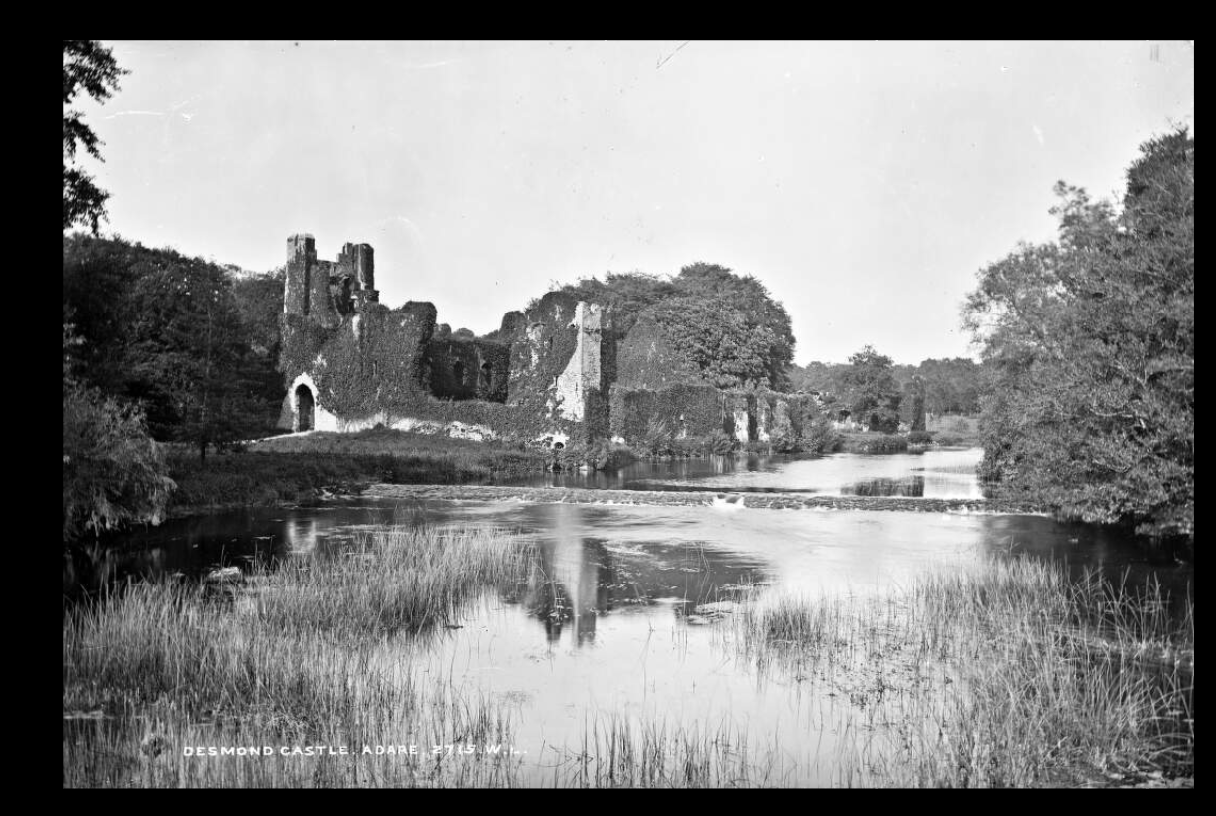
“Desmond Castle Adare epitomises the medieval fortified castle in Ireland. It is strategically situated on the banks of the River Maigue, from where its lords could control any traffic heading to or from the Shannon Estuary.
The castle was built for strength and security. A formidable square keep forms its core; the keep stands within a walled ward surrounded by a moat.
Desmond Castle Adare changed hands several times before becoming a key bastion of the earls of Desmond in the sixteenth century. During the Second Desmond Rebellion, however, it fell to the English after a bloody siege. Cromwellian forces laid waste to the building in 1657, although restorers have since helped to recall its former glory.
Guided tours are now available for anyone who wants to walk in the footsteps of the FitzGeralds and experience their courageous spirit.“
This castle belonged to the Earls of Kildare for nearly 300 years until the rebellion in 1536, when it was forfeited and granted to the Earls of Desmond who gave the castle its present name.
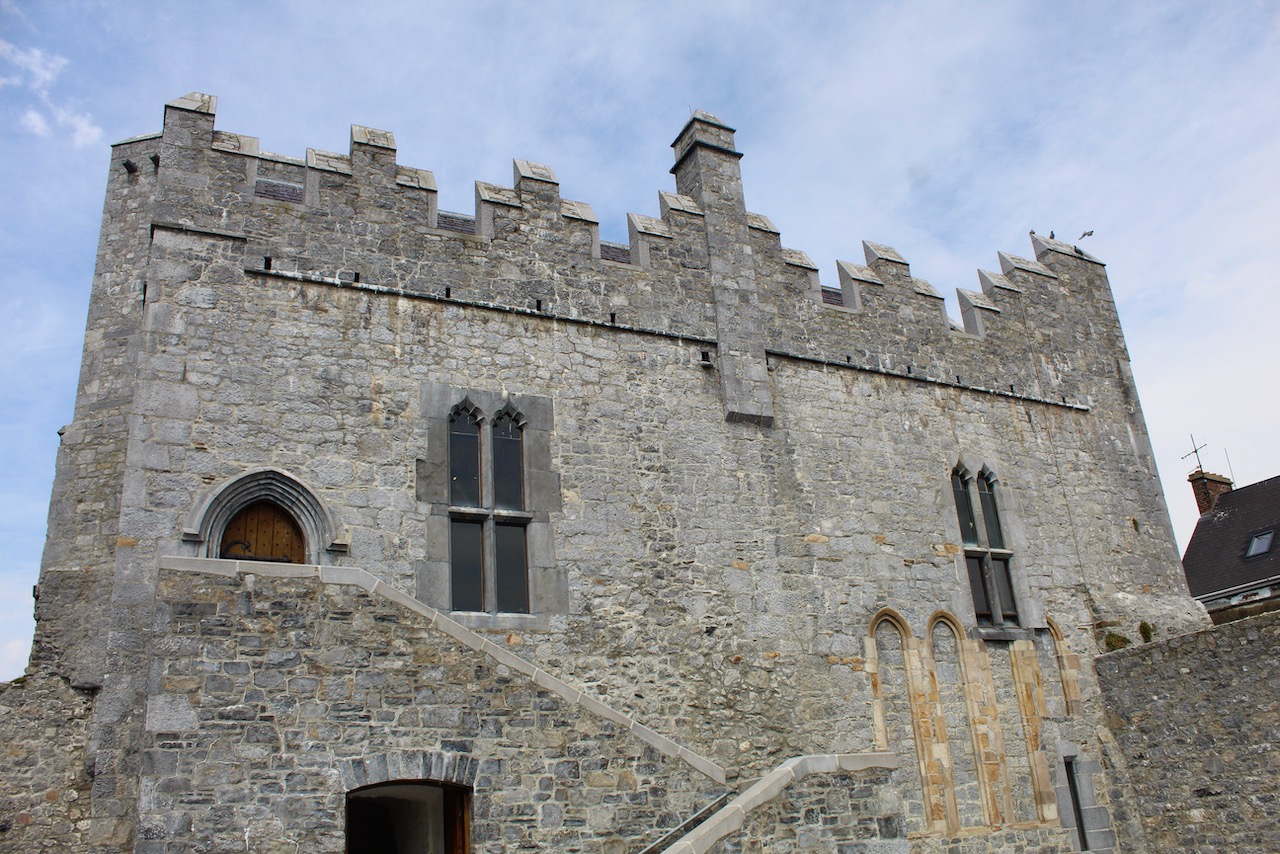
5. Desmond Banqueting Hall, Newcastlewest, County Limerick:
General information: 069 77408, desmondhall@opw.ie

See my entry https://irishhistorichouses.com/2024/12/03/desmond-banqueting-hall-newcastlewest-county-limerick/
From the OPW website https://heritageireland.ie/visit/places-to-visit/desmond-castle-newcastlewest/:
“Many of Ireland’s surviving medieval halls are in west Limerick. The Desmond Banqueting Hall in Newcastle West is one of the most impressive among them.
It was begun in the thirteenth century by Thomas ‘the Ape’ FitzGerald, so named because of the story that an ape took him from his cradle to the top of Tralee Castle – and delivered him safely back again.
However, most of the spacious, imposing structure was created in the fifteenth century, at the height of the Desmond earls’ power, and used as a venue for frequent and lavish banquets.
The oak gallery, from which musicians would provide a raucous soundtrack for the revelry below, has been fully restored.“

6. Lough Gur, County Limerick:

The Irish Homes and Gardens website tells us that Ireland’s first settlers arrived around 8000BC. The introduction of farming in 4000BC saw a move to a more settled lifestyle and the building of farmsteads, with both circular and rectangular house styles being used. The first rectangular house and the largest concentration of Neolithic structures were found in Lough Gur dating back to 3500BC.
Although none of these houses remain, the lasting legacy from this period on the Irish landscape is the megalithic tomb: the Dolmen or Portal tomb with its huge capstone or lintel, balanced on smaller stones and the Passage tombs, with their dry-stone passages leading to corbelled ceilings (circular layers of flattish stones closed with a single stone at the top). [ https://www.irishhomesandgardens.ie/irish-architecture-history-part-1/ ]
From the OPW website https://heritageireland.ie/visit/places-to-visit/lough-gur/:
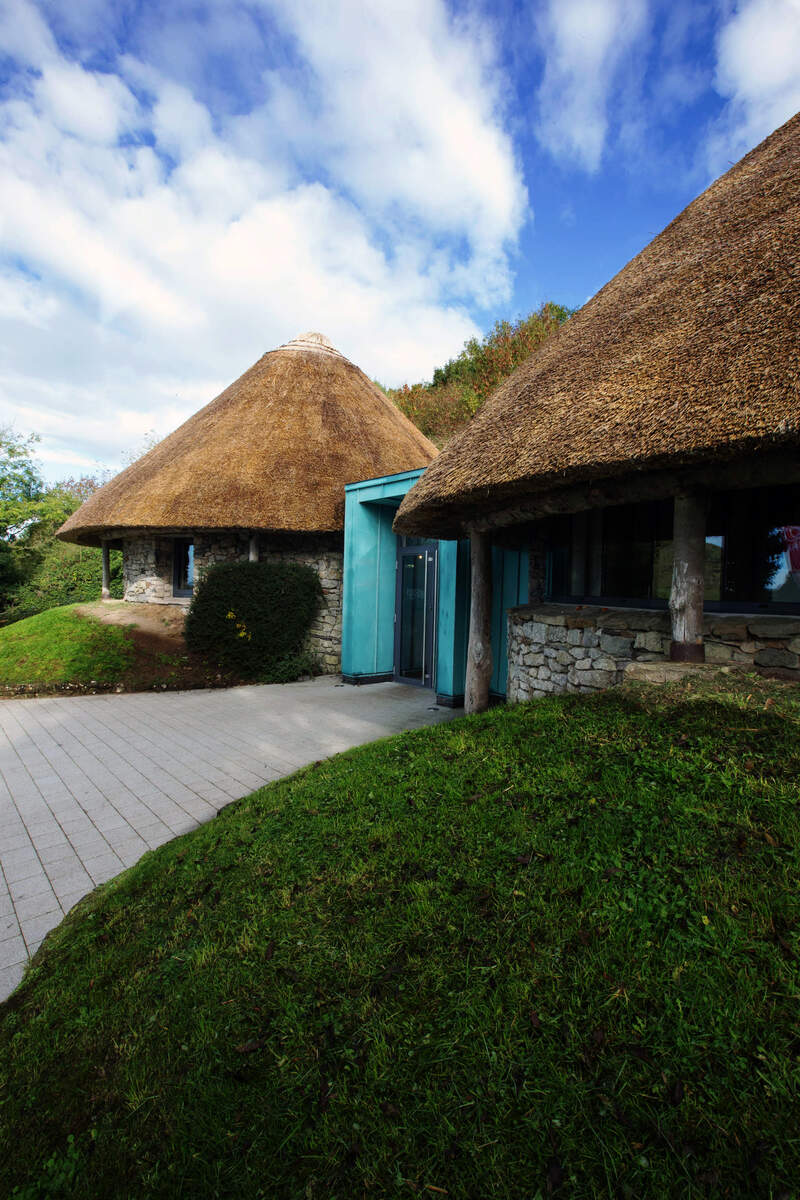
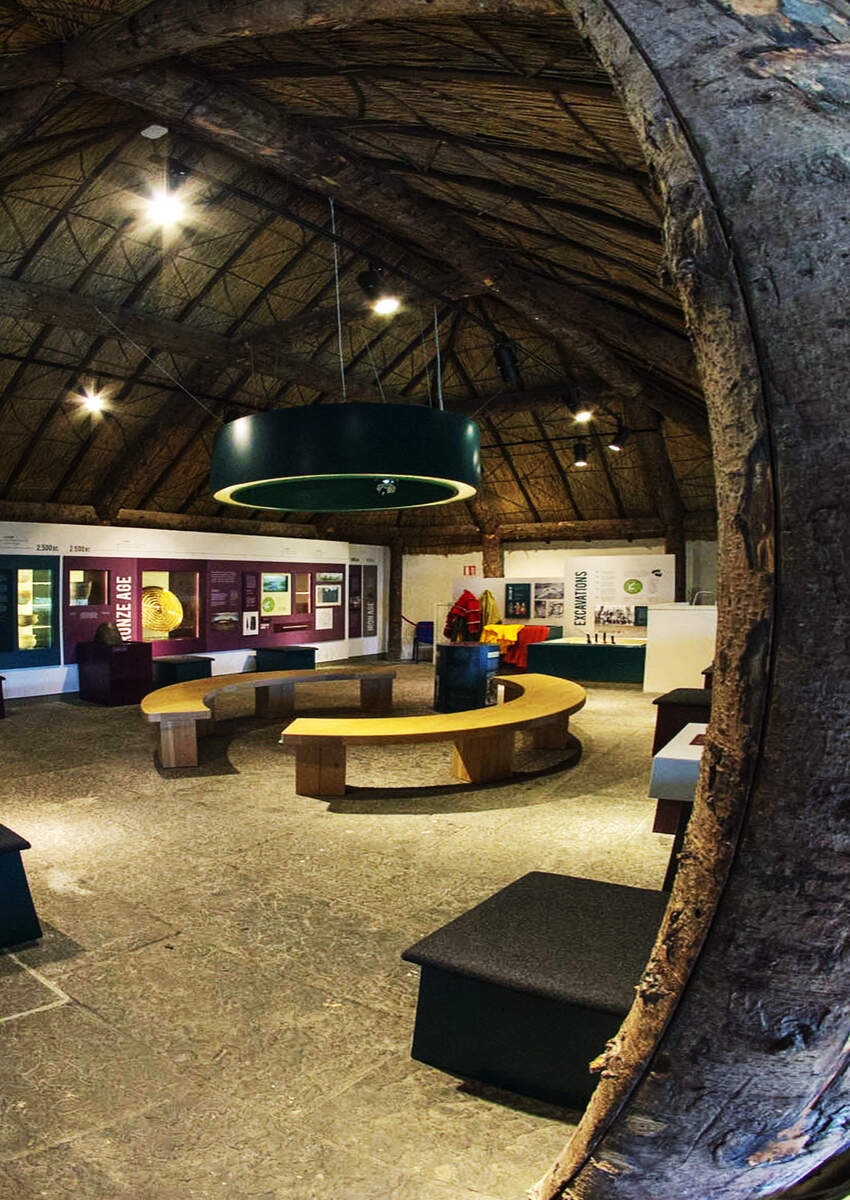
“Lough Gur is a site of international significance due to the area’s rich archaeology and environment. It is home to Ireland’s oldest and largest stone circle and the only natural lake of significance in South East Limerick. Lough Gur also has an abundance of ancient monuments in State care with a reported 2,000 archaeological monuments in a 5km radius. Visitors to Lough Gur Lakeshore Park will find a hillside visitor centre where you can take part in a guided or self guided tour of the exhibition. There is also an option to take a full outdoor guided tour of the archaeological monuments. Tours are tailor made and can range from 30 minutes to 3 hours. The Lakeshore Park and tours are run by Lough Gur Development Group.“
[1] https://www.irelandscontentpool.com/en
[2] https://heritageireland.ie/visit/places-to-visit/
Text © Jennifer Winder-Baggot, www.irishhistorichouses.com
 Irish Historic Houses