On the map above:
blue: places to visit that are not section 482
purple: section 482 properties
red: accommodation
yellow: less expensive accommodation for two
orange: “whole house rental” i.e. those properties that are only for large group accommodations or weddings, e.g. 10 or more people.
green: gardens to visit
grey: ruins

donation
Help me to pay the entrance fee to one of the houses on this website. This site is created purely out of love for the subject and I receive no payment so any donation is appreciated!
€15.00
1. Ballydugan House, County Down – wedding venue
2. Barr Hall Barns, Portaferry, County Down – self-catering accommodation
3. Castle Ward, County Down – accommodation in holiday cottages
4. Culloden, County Down – hotel
5. Florida Manor, 22 Florida Road, Killinchy, Newtownards, Co Down, BT23 6RT Northern Ireland – self-catering accommodation in cottages, not the house itself
6. Kiltariff Hall, County Down – B&B
7. Narrow Water Castle, apartment, Newry Road, Warrenpoint, Down, Northern Ireland, BT34 3LE – self catering apartment
8. The Old Inn, Bangor, County Down
9. Slieve Donard hotel and spa, County Down
10. St John’s Point Lighthouse Sloop, Killough, County Down – Irish Landmark accommodation
11. Tullymurry House, Tullymurry road, Donaghmore, Newry, County Down – whole house holiday accommodation
12. Tullyveery House, County Down – whole house holiday rental
13. Tyrella, Downpatrick, County Down, BT30 8SU – accommodation

donation
Help me to pay the entrance fee to one of the houses on this website. This site is created purely out of love for the subject and I receive no payment so any donation is appreciated!
€15.00
1. Ballydugan House, County Down – accommodation
They no longer have a website but it’s listed on booking.com
“At Ballydugan we can provide accommodation and an oasis of relative calm for the Bride’s immediate family. Also if absolute adherence to tradition is important then we have Ballymote Country House nearby, where we can ensure that the paths of the Bride and Groom will not cross prior to the wedding.“
2. Barr Hall Barns, Portaferry, County Down – self catering
https://www.barrhallbarns.co.uk/
The website tells us:
“Barr Hall Barns are 18th Century period cottages in an outstanding tranquil location with panoramic views across Strangford Lough to the Mourne Mountains.
“We are based just outside the seaside village of Portaferry, at the very southern tip of the Ards Peninsula, overlooking Barr Hall Bay which is protected by the National Trust.
“With idyllic walking routes right at our doorstep, come escape to an area of natural outstanding beauty and enter the truly magical setting of Barr Hall Barns.“
3. Castle Ward, County Down – cottage holiday rental
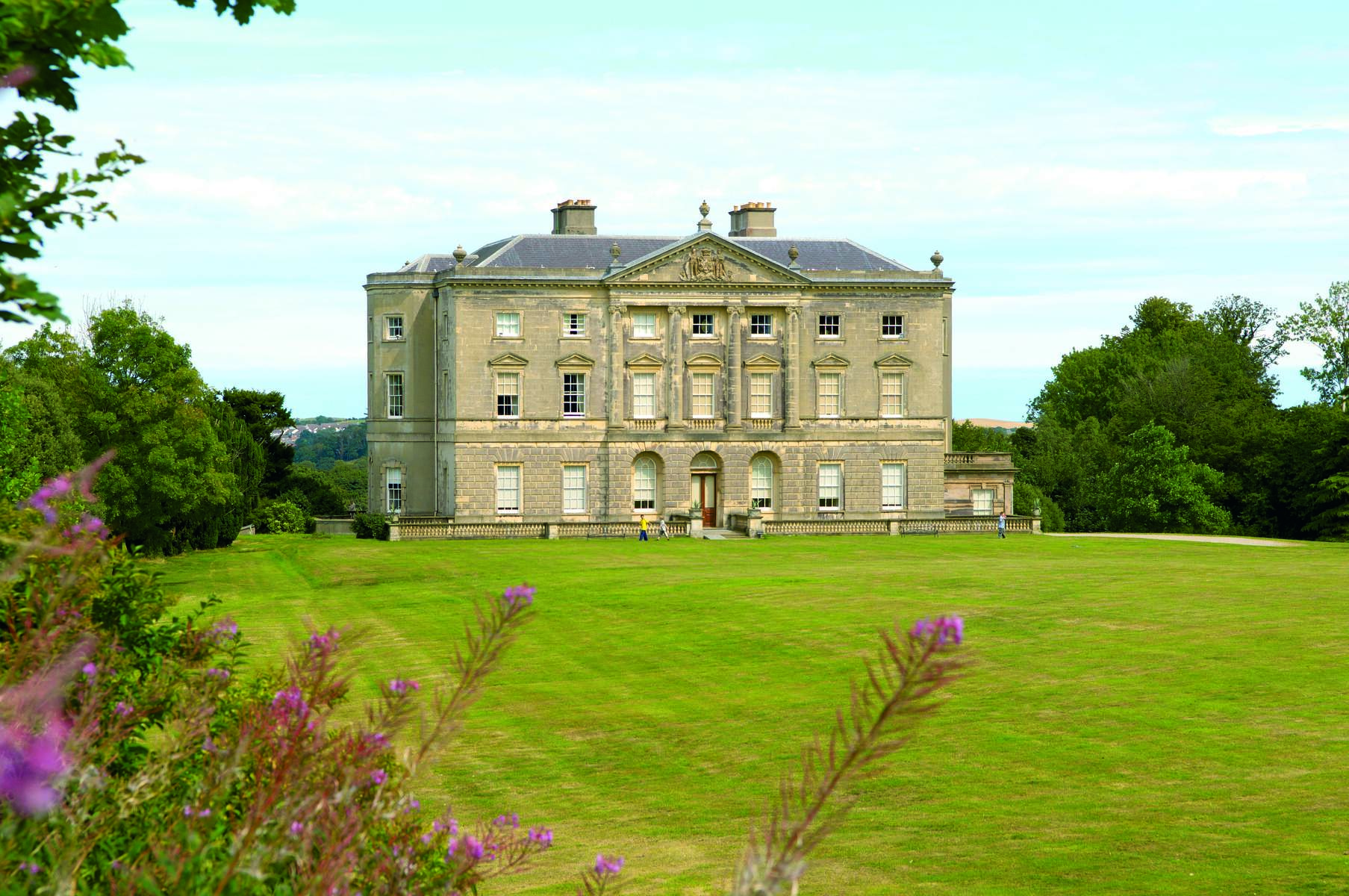
Potter’s Cottage in farmyard:
https://www.nationaltrust.org.uk/holidays/the-potters-cottage-northern-ireland
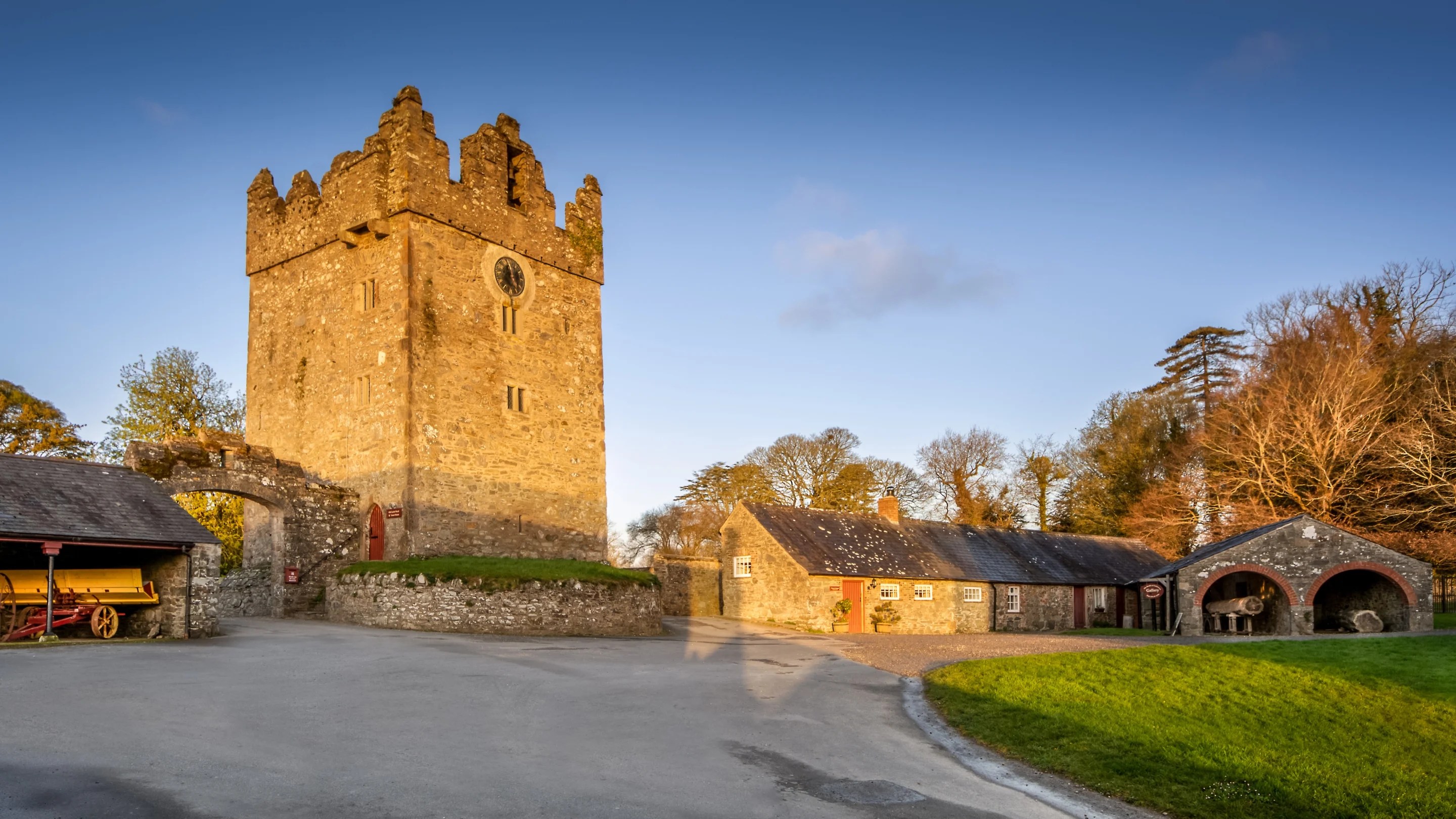
Quaint, two-bedroom Potter’s Cottage is in what was the working farmyard of Castle Ward Estate, on the shores of Strangford Lough. The cottage was occupied by a potter in the 1960s, but long before this was an integral part of the farmyard, being the place where the feed was prepared for the livestock housed there.
It’s a very short stroll to the shore of the largest sea lough in the British Isles. You’ll have the whole of the estate to explore with 820 acres of woodland, miles of footpaths, an 18th-century mansion and formal gardens all set along the shores of the beautiful Strangford Lough. In spring and summer 2025, you’ll find an independently-run traditional Finnish sauna on the estate.
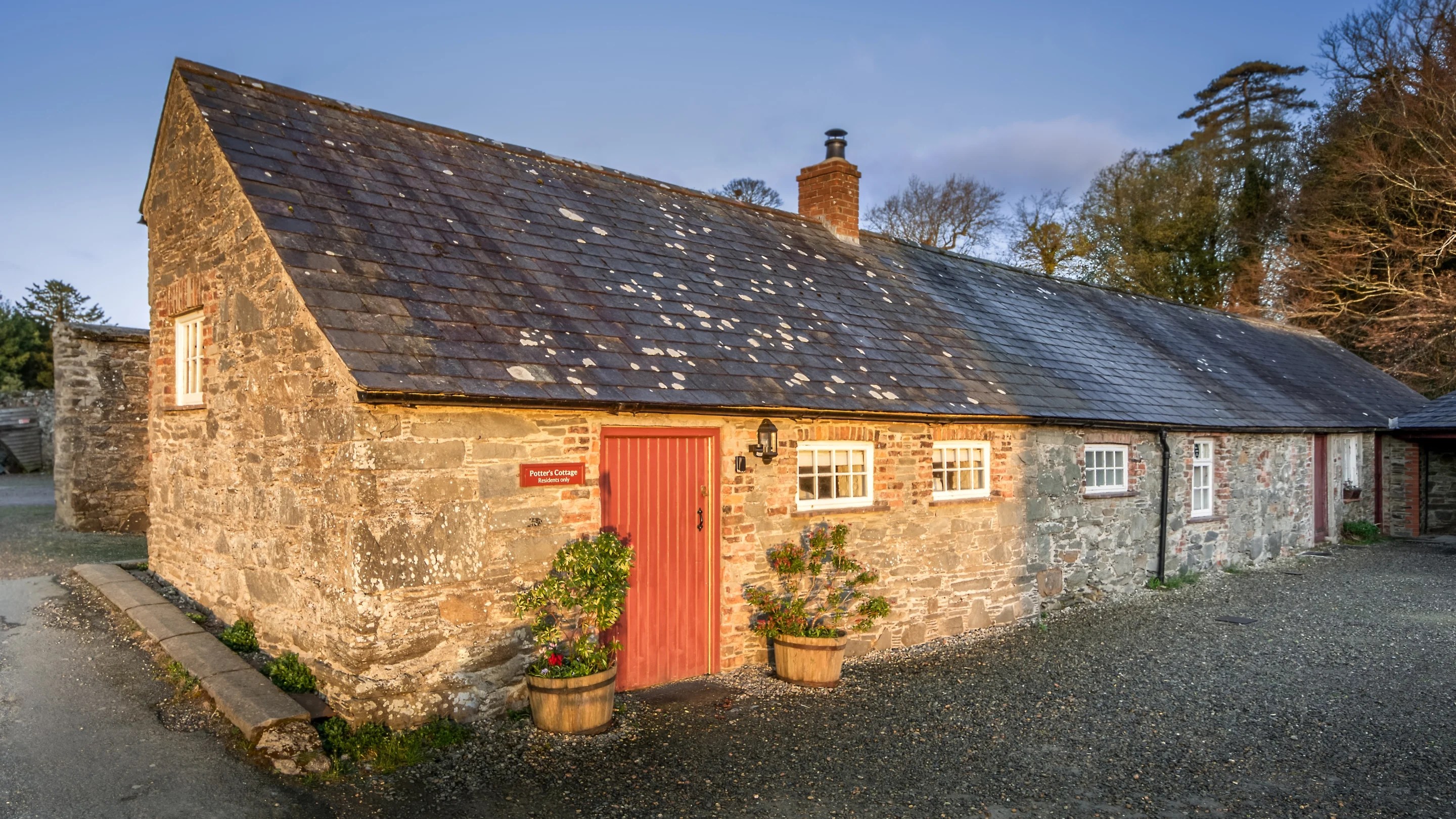
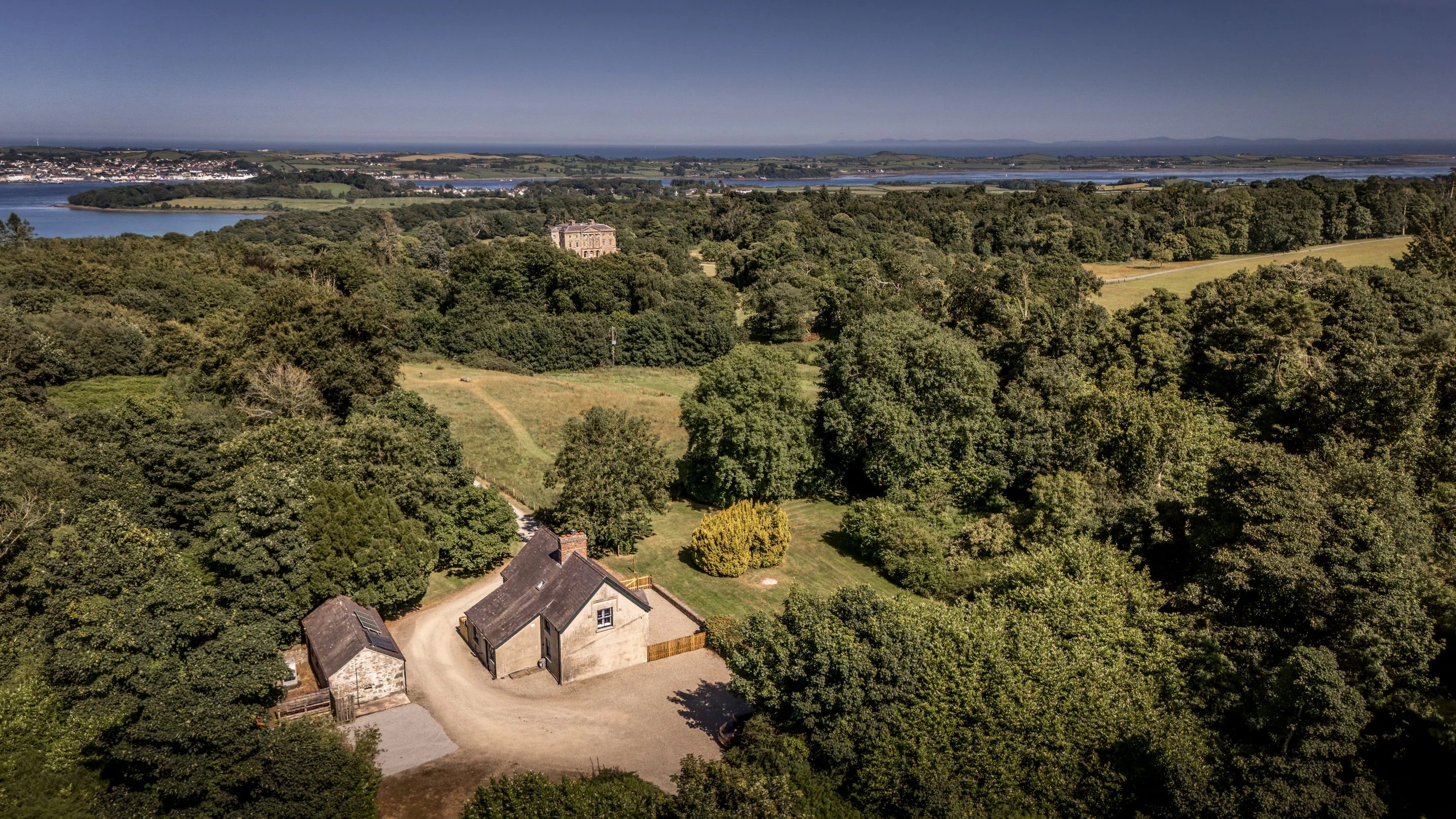
Castle Ward Gamekeeper’s Lodge is surrounded by woodland and meadow in a tucked-away part of the Castle Ward estate. The lodge has distinctive stone details and a porch that catches the sun. You’ll see original features inside too – including ornamental brass gas lamps and the gamekeeper’s gun cupboard.
One of the many trails that criss-cross the estate passes the cottage, so you can explore it all on foot looking out for red squirrels and other wildlife. There are trails for every level of walking, and it’s also a great place to bring or hire bikes. You could bring a kayak or canoe to launch onto Strangford Lough, to explore its many islands and spot seals and sea birds.
Castle Ward was once known for its eccentric owners and unusual mansion house, and you’ll have free entry here and at all other National Trust places during your stay.
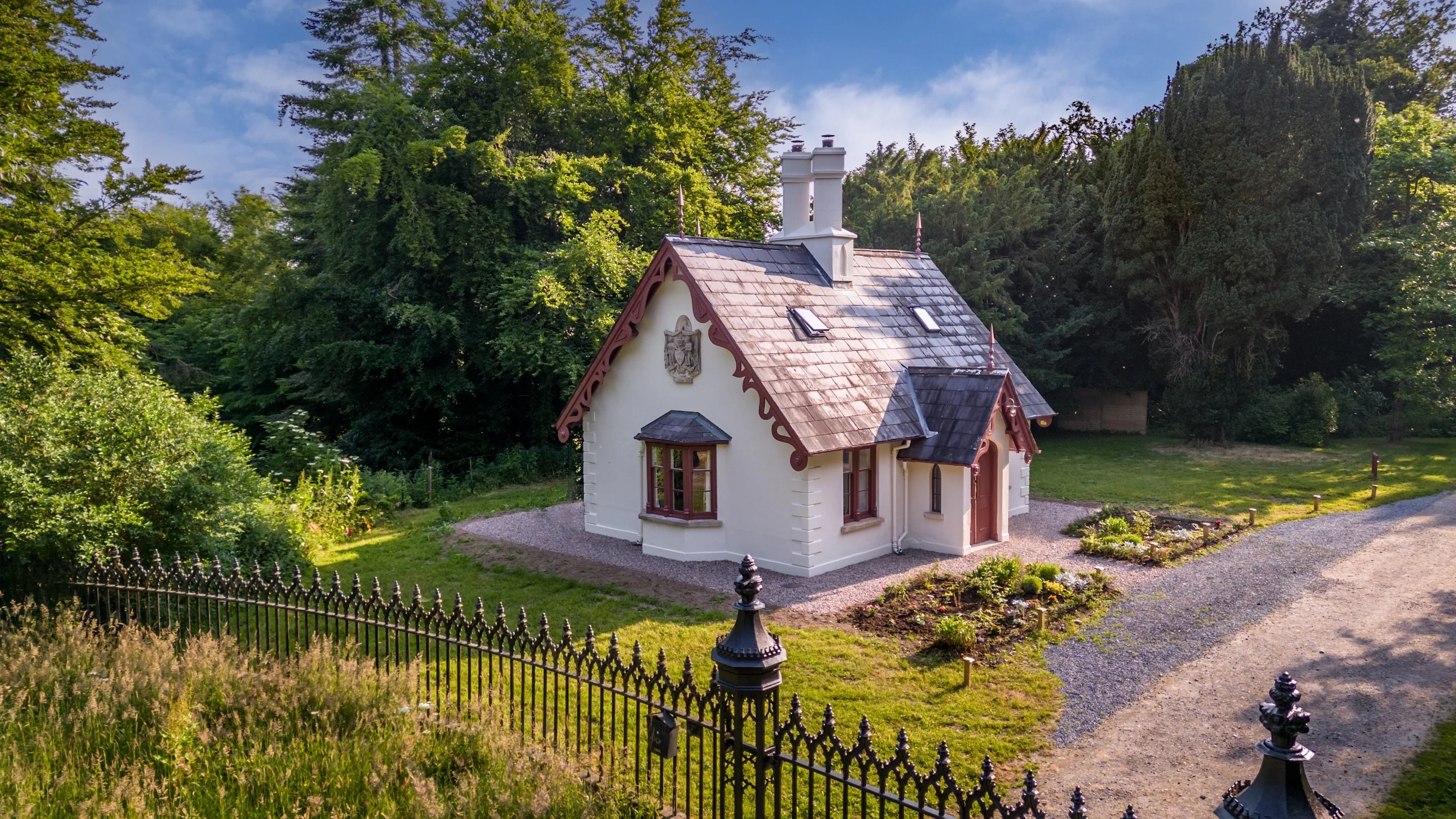
Downpatrick Gate Lodge is a secluded period cottage, built in the late 1700s. It sits beyond gothic, wrought-iron gates, on a quiet avenue on the Castle Ward estate; you’ll see the Ward arms on its western gable. There’s a woodburning stove in the sitting room, a view of the stars from the bed, and a roll-top bath for a relaxing soak. The cottage is surrounded by woodland and grazing land, with bay windows to take in the rolling views.
https://www.nationaltrust.org.uk/castle-ward
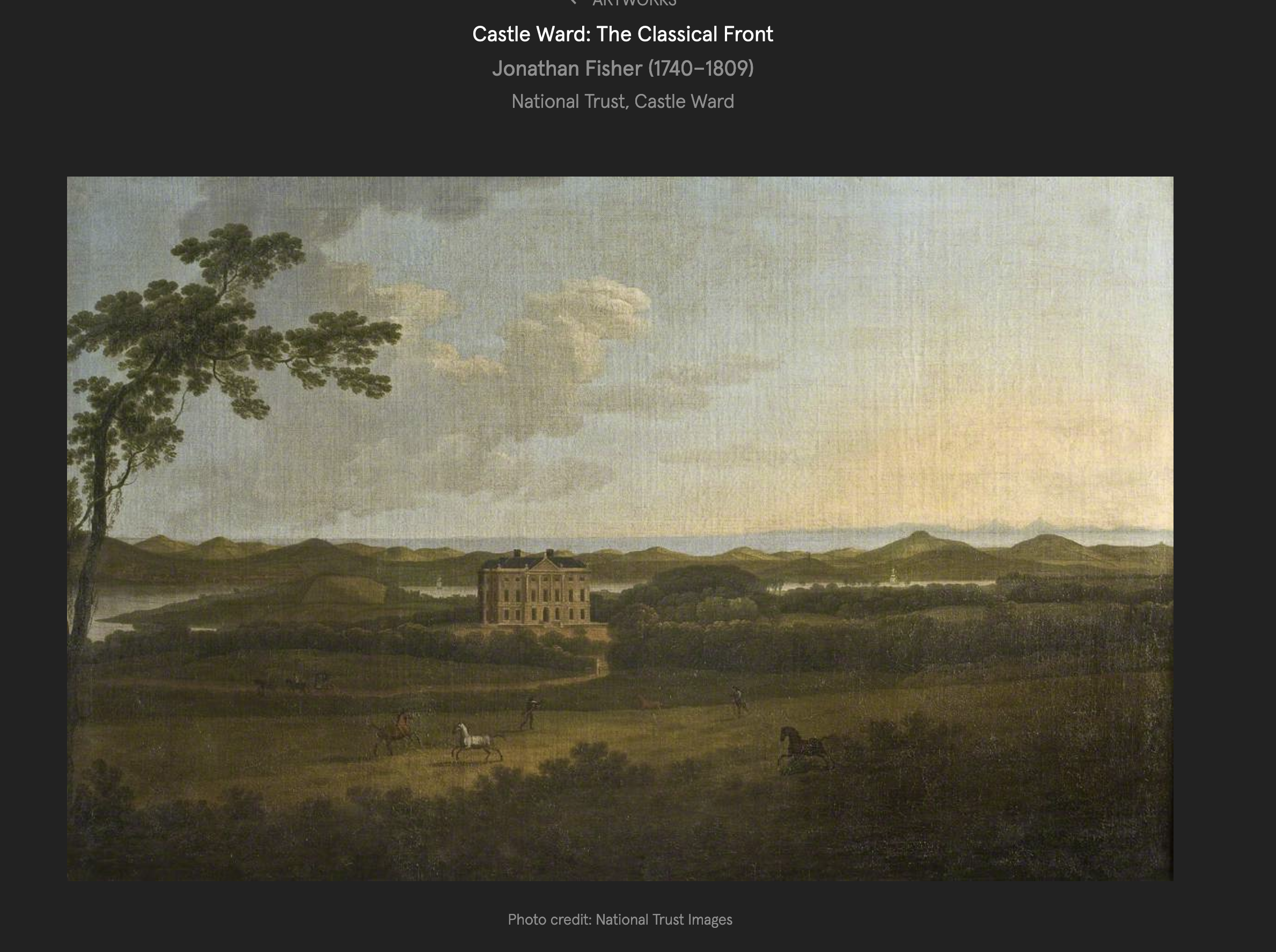
“When Bernard and Lady Anne inherited the estate in 1759 they set about building themselves a fine new house, one which would be symbolic of their union and exist as a statement of the Ward family’s bold and forward-thinking place in the world. Castle Ward was completed in 1766 and by 1781 they had been created Viscount and Viscountess Bangor in the Peerage of Ireland.“
“Please check the homepage for opening times of the mansion house before planning your visit, as they may change seasonally. There is no need to book your visit in advance.“
4. Culloden, County Down – hotel

https://www.cullodenestateandspa.com
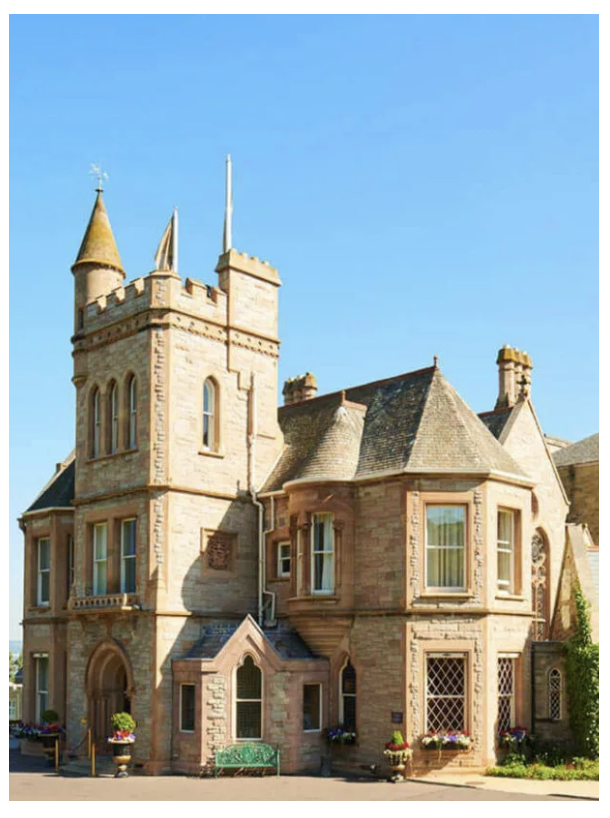
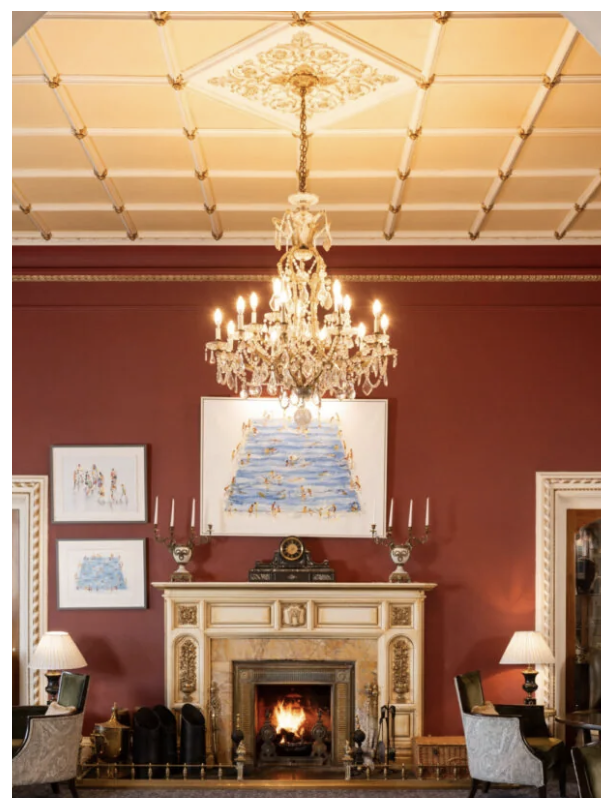
The website tells us: “Standing high on the Holywood Hills, with sweeping views overlooking Belfast Lough and the County Antrim Coastline, the majestic Culloden Estate and Spa is located on the outskirts of Belfast city centre. Built as the official palace for the Bishops of Down in the 18th century, this five-star hotel and spa in Belfast features 12 acres of beautifully secluded gardens, a palatial spa, three restaurants, and more, making it the perfect blend of historic grandeur and modern luxury. And your new favourite sanctuary.“
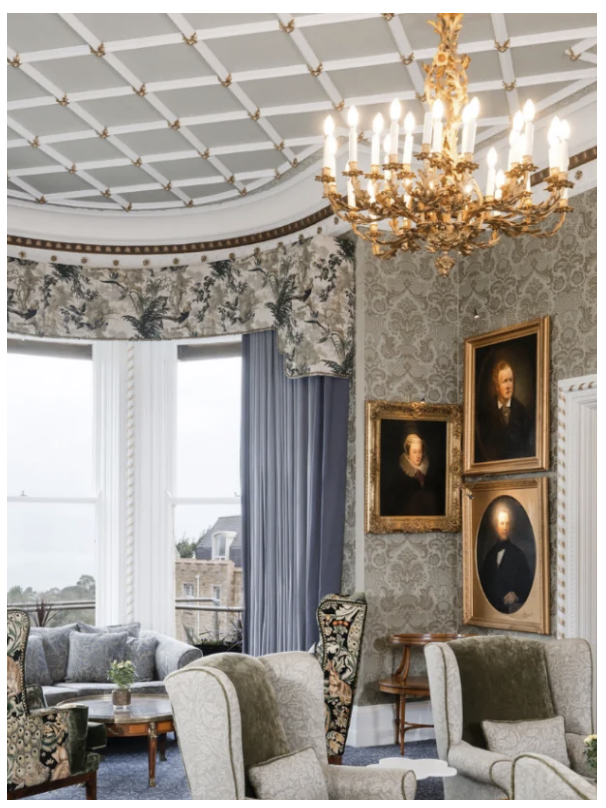
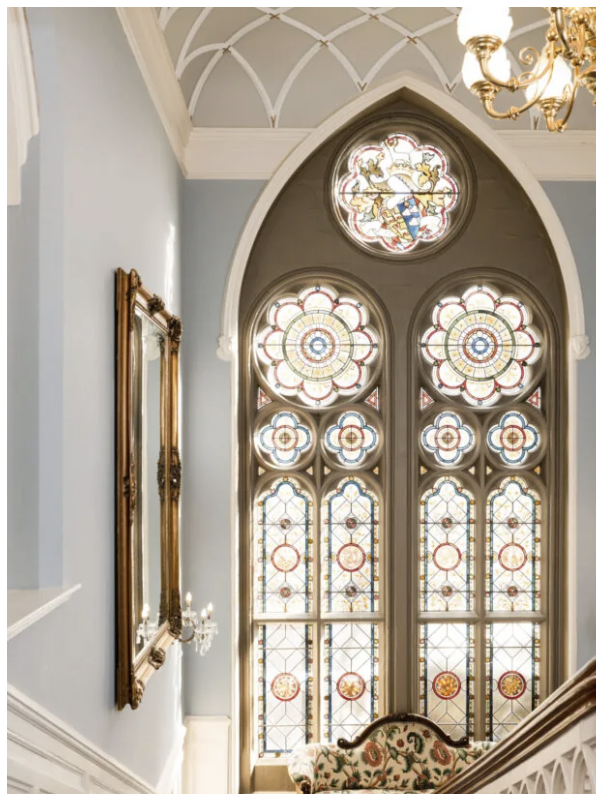
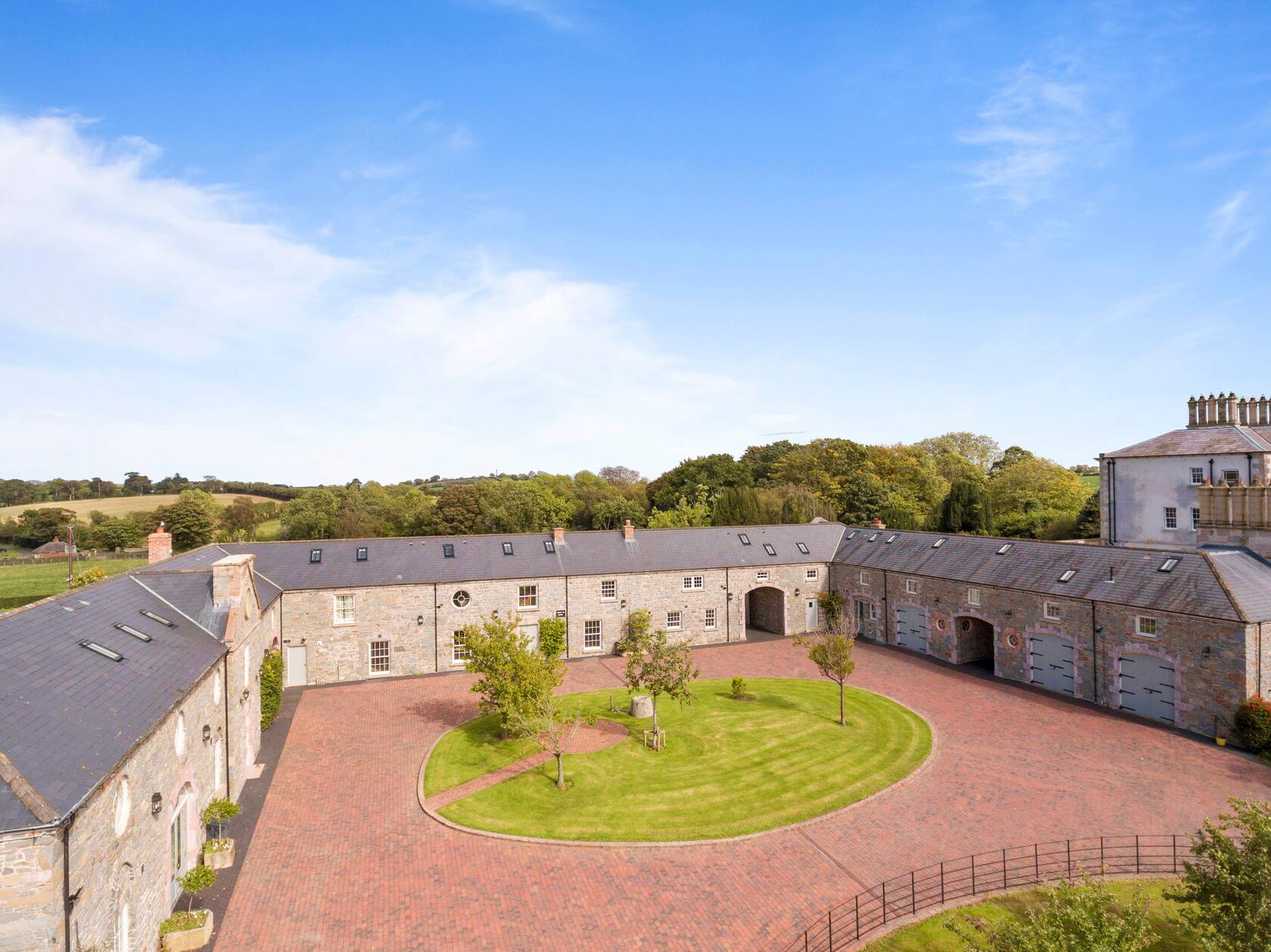
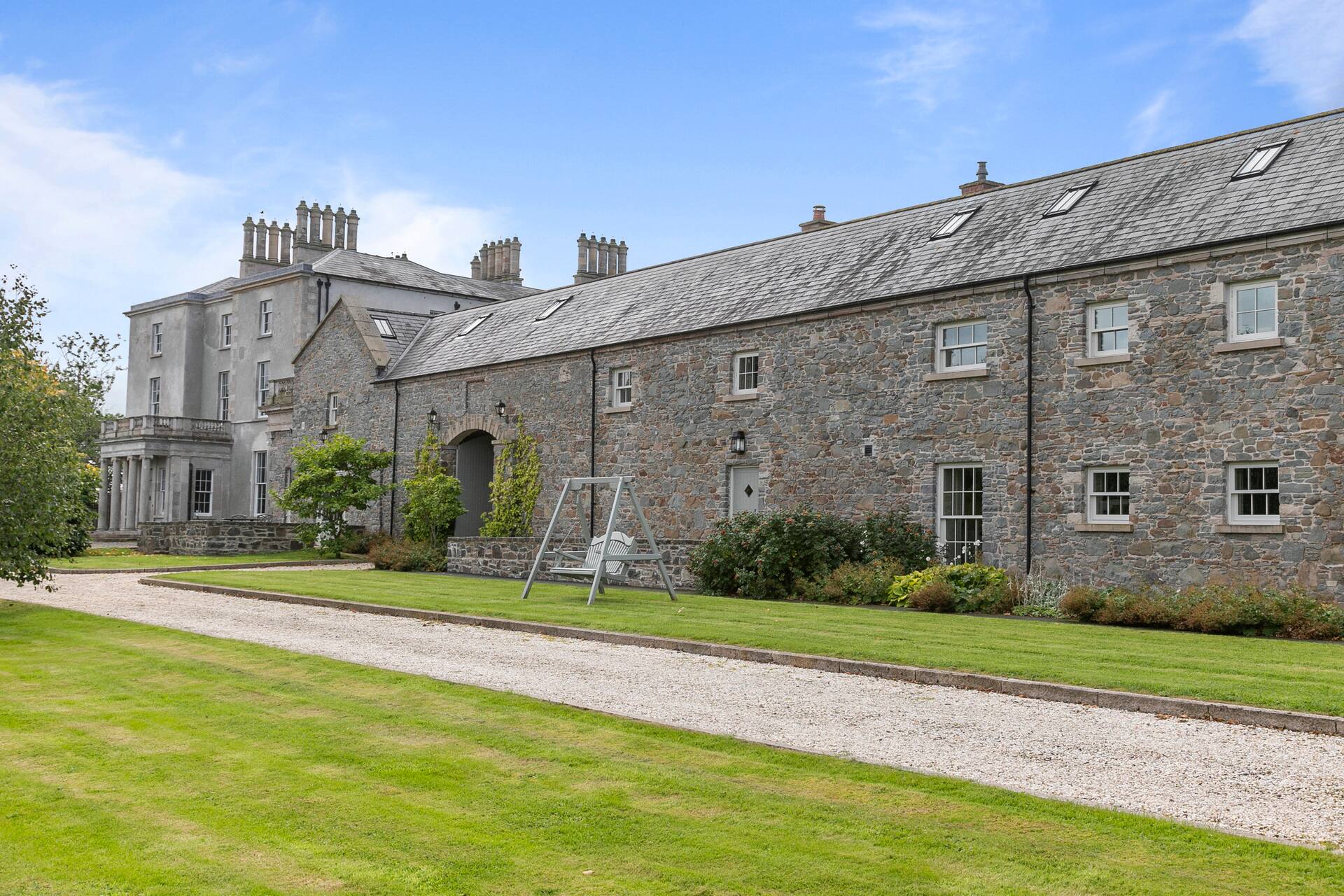
5. Florida Manor, 22 Florida Road, Killinchy, Newtownards, Co Down, BT23 6RT Northern Ireland – self-catering cottages and birch cabins – not the house itself.
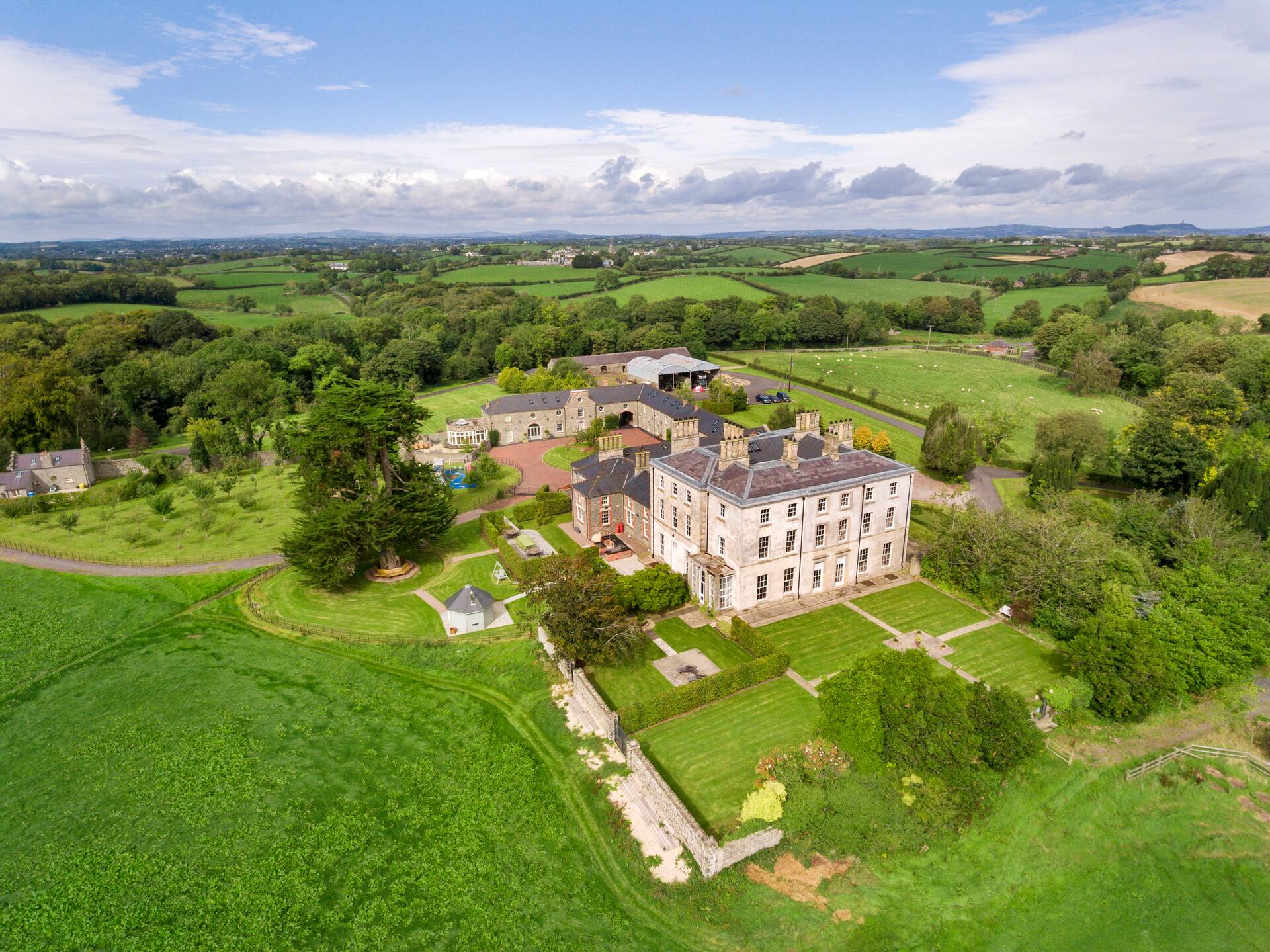
The apartment available for self-catering, Meadow Green, sleeps 6 with a king size bed and cot in the master bedroom and 3 singles in the other bedroom. There are also birch cabins, and two other places for accommodation: Hollow view https://www.airbnb.ie/rooms/28235628?source_impression_id=p3_1776591203_P3VrxdP9MDIldB_x and Gambles Patch.
The house itself is not available for accommodation.
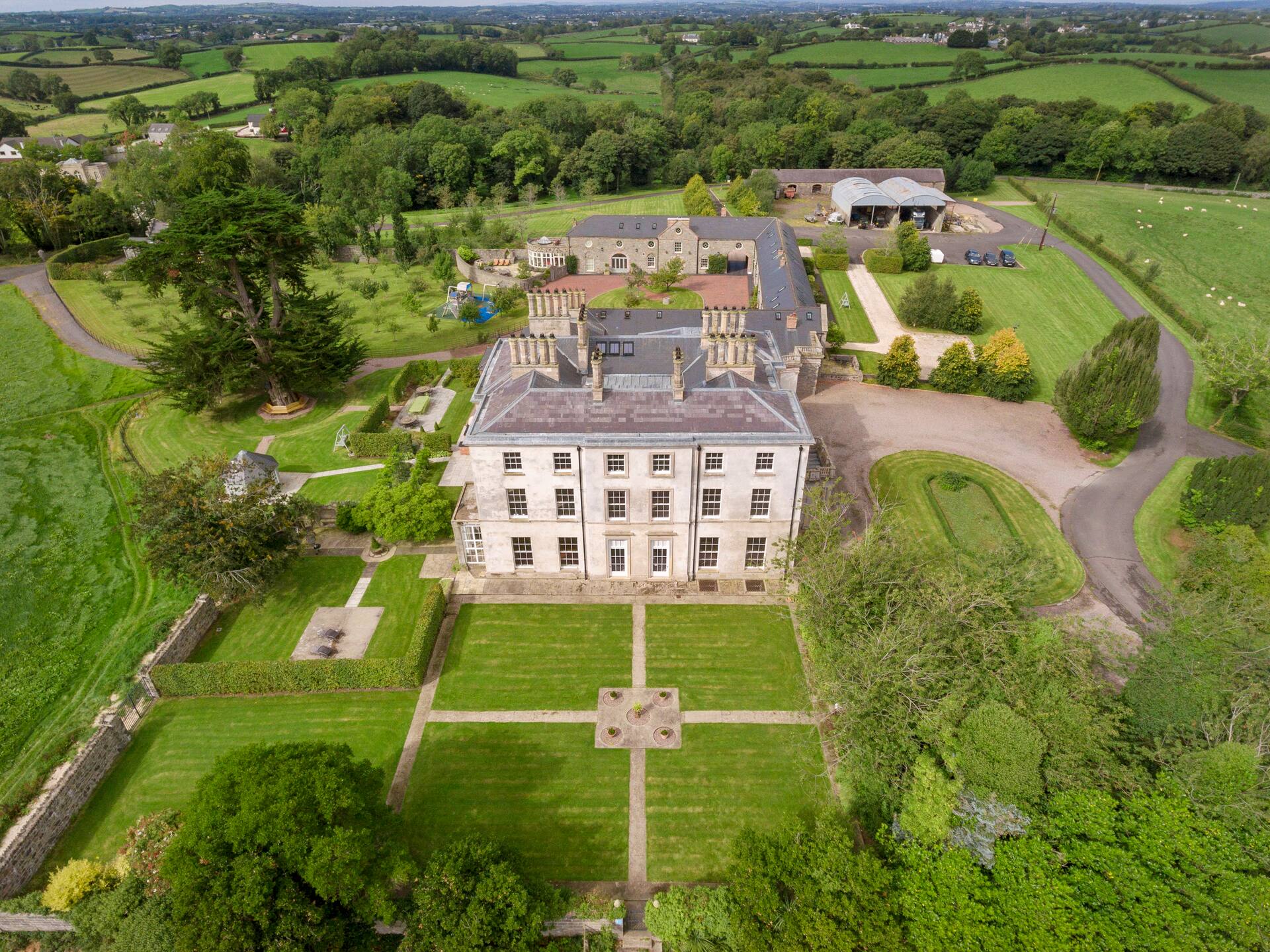
The website tells us: “Dating back to 1676, Florida Manor, an original Irish Georgian Estate has undergone sympathetic refurbishment. Within the estates original stone perimeter wall lies 200 acres of extensive landscaped grasslands, private lakes, walkways and bridal paths.“
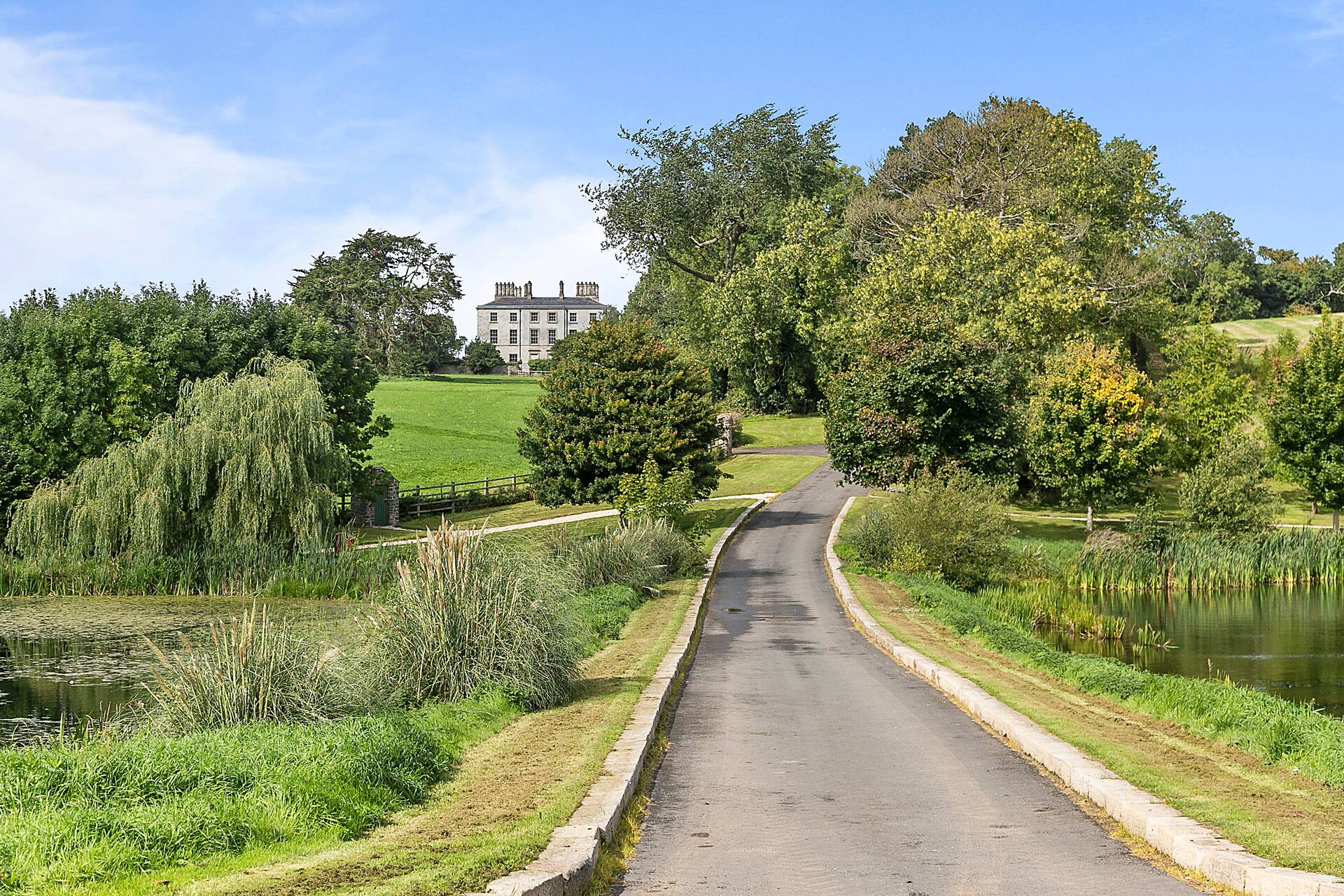
Mark Bence-Jones writes in his A Guide to Irish Country Houses (1988):
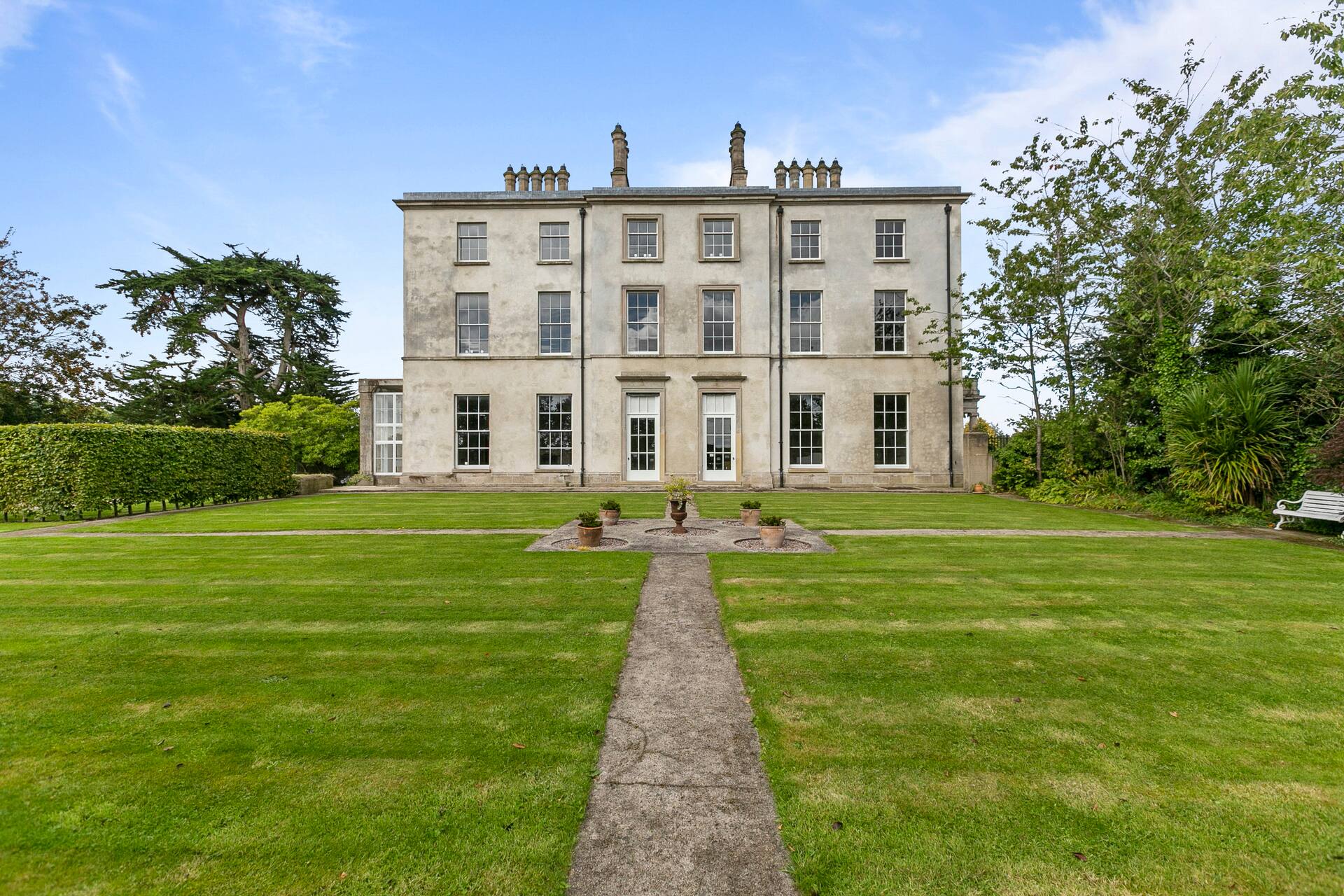
p. 297. “(Gordon/IFR) A C18 house consisting of a three storey principal block with a recessed centre, linked to lower wings by curved sweeps with balustrades and pilasters. Projecting enclosed porch, also balustraded and with Ionic columns. quoins. Originally the seat of the Crawfords; passed by marriage to the Gordons C18. The house became ruinous in the present century but has been restored as two dwellings.”
https://ulsterarchitecturalheritage.org.uk/case-studies/florida-manor/
“Nestled in 200 acres of countryside to the West of the village of Killinchy lies the spectacular Florida Manor estate. The Grade B+ Listed Manor house, listed some 42 years ago, retains its original stables courtyard, two gate lodges, a steward’s house and extensive landscaped grounds. The buildings have been the subject of an extensive phased programme of restoration works to bring the demesne back to life. The centrepiece of the estates’ architectural asset is the impressive three storey Palladian Mansion built in c. 1780-1800 enhanced by an Ionic columned portico entrance and an impressive compendium of Victorian Chimney pots.
“The origin of the Manor of Florida extends back to 1638 when it was created on lands previously acquired by Sir James Montgomery (2nd son of Viscount Montgomery) from Con O’Neill. Where the name ‘Florida’ was apparently derived from Sir James’ love of flowers. During the Commonwealth (1649-60) the lands were placed in the custody of a Colonel Barrow, but returned to Montgomery hands after much quarrelling in 1664.
“It is thought the Manor came into the possession of the Crawford family and passed to Robert Gordon through marriage, in c.1770. Information supplementing the buildings listing document outlines that the Manor was unquestionably built by one of the Gordons in c.1780-1800 and probably constructed around an earlier Montgomery dwelling. In the later 1800s, with the passing of successive Land Acts, much of the lands began to be sold off and by at least 1917 the demesne and its buildings had been acquired by a William Devenney, a local farmer who appears to have lived in the steward’s house. Thus the Manor of Florida, unoccupied, fell into disrepair until after the Second World War it was bought by Milo Pickaar, who renovated a number of the buildings.“
6. Kiltariff Hall, County Down – B&B
https://www.kiltariffhall.co.uk
The website tells us: “Kiltariff Hall is a Victorian Country House on the outskirts of the small market town of Rathfriland. Built by our great-grandfather William Fegan in 1888, the house is set at the end of a short drive and is surrounded by mature oak, sycamore and pine trees. It is run myself, Catherine and my sister Shelagh who grew up in Kiltariff when it was a working farm. We are both passionate and knowledgeable about the Mourne area and believe that providing good locally produced food is key to ensuring guests enjoy their stay.“
7. Narrow Water Castle apartment, Newry Road, Warrenpoint, Down, Northern Ireland, BT34 3LE – self catering apartment
http://narrowwatercastle.co.uk

The website tells us:
“Narrow Water Castle is the private home of the Hall family who have lived at Narrow Water since 1670, originally in the Old Narrow Water Keep situated on the shoreline of Carlingford Lough which is now a national monument.
“As a private home the castle is not open for public admission. It does however occasionally open its doors for weddings and exclusive events.
“In 1816 construction began on the new Castle by Thomas Duff, a well-known Newry architect who also designed the Cathedrals in Newry, Armagh and Dundalk. The Elizabethan revival style castle is made from local granite and built next to the existing house, Mount Hall (1680). It was completed in 1836.
“The self catering apartments are located in the original hub of the castle (Mount Hall), dating back to 1680. Mount Hall joins the Elizabethan revival part of the castle to the courtyard.“
“Number 2: The apartment opens into an elegant open plan, living room and dining room with open fire. We have used several antique pieces of furniture to hint of times gone by. We are happy to provide logs if our guests wish to use the fire.
“There are two spacious, beautifully furnished bedrooms, one of which is en-suite.
“Number 6: This 2 bedroom luxury apartment is the perfect place to escape and unwind. Both bedrooms are en-suite. There is a grand open plan living /dining area with a unique feature skylight and exposed beams. The living area is adorned with antique furniture has a wood burning stove for cosy nights by the fire. The modern kitchen is fully equipped and the dining area seats six comfortably. A quality sofa bed allows this apartment to accommodate up to six guests. This apartment is on the first floor with access via the original stone staircase dating to the 1680s.“
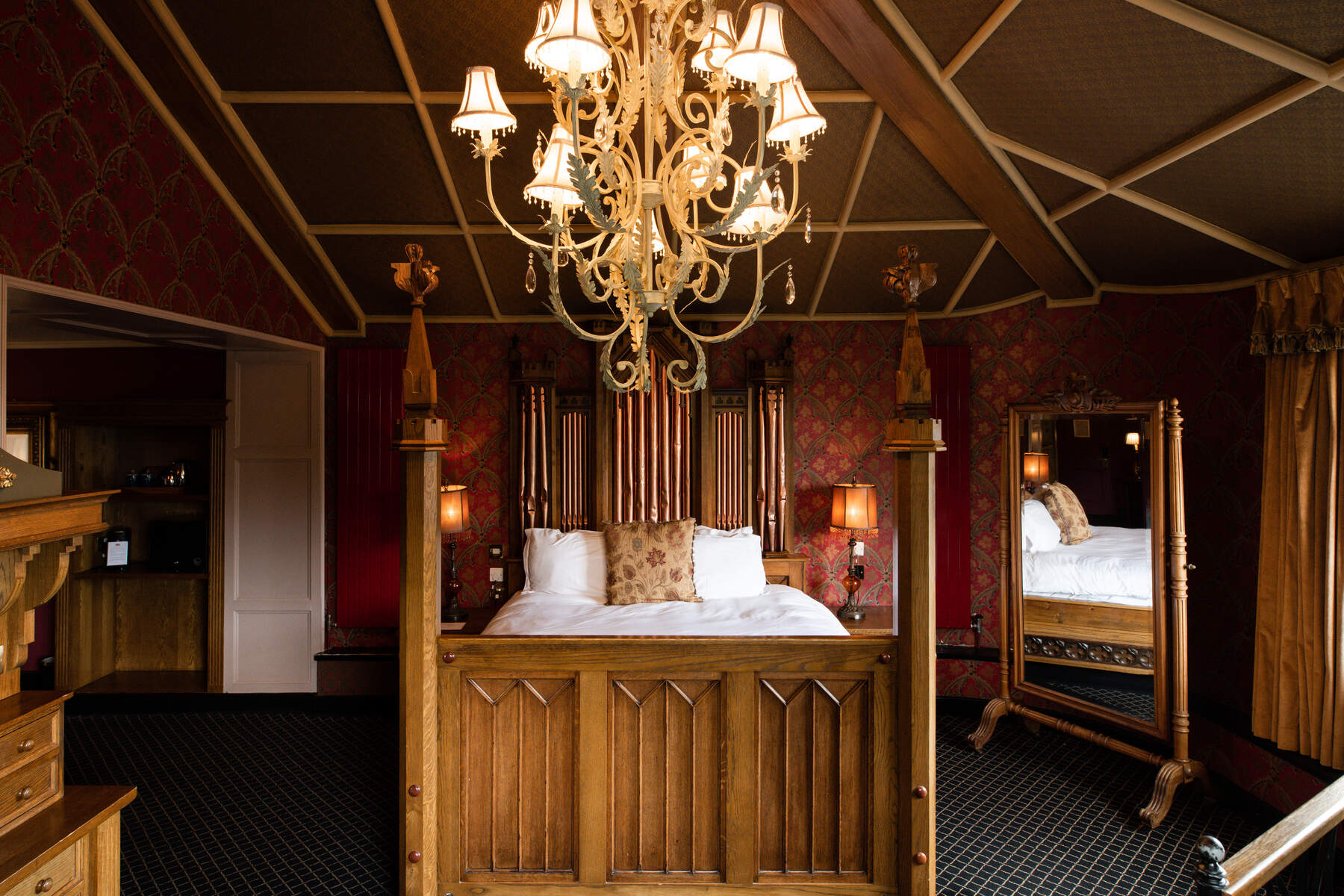
8. The Old Inn, Bangor, County Down
Established in 1614!
9. Slieve Donard hotel and spa, County Down
https://www.slievedonardhotel.com
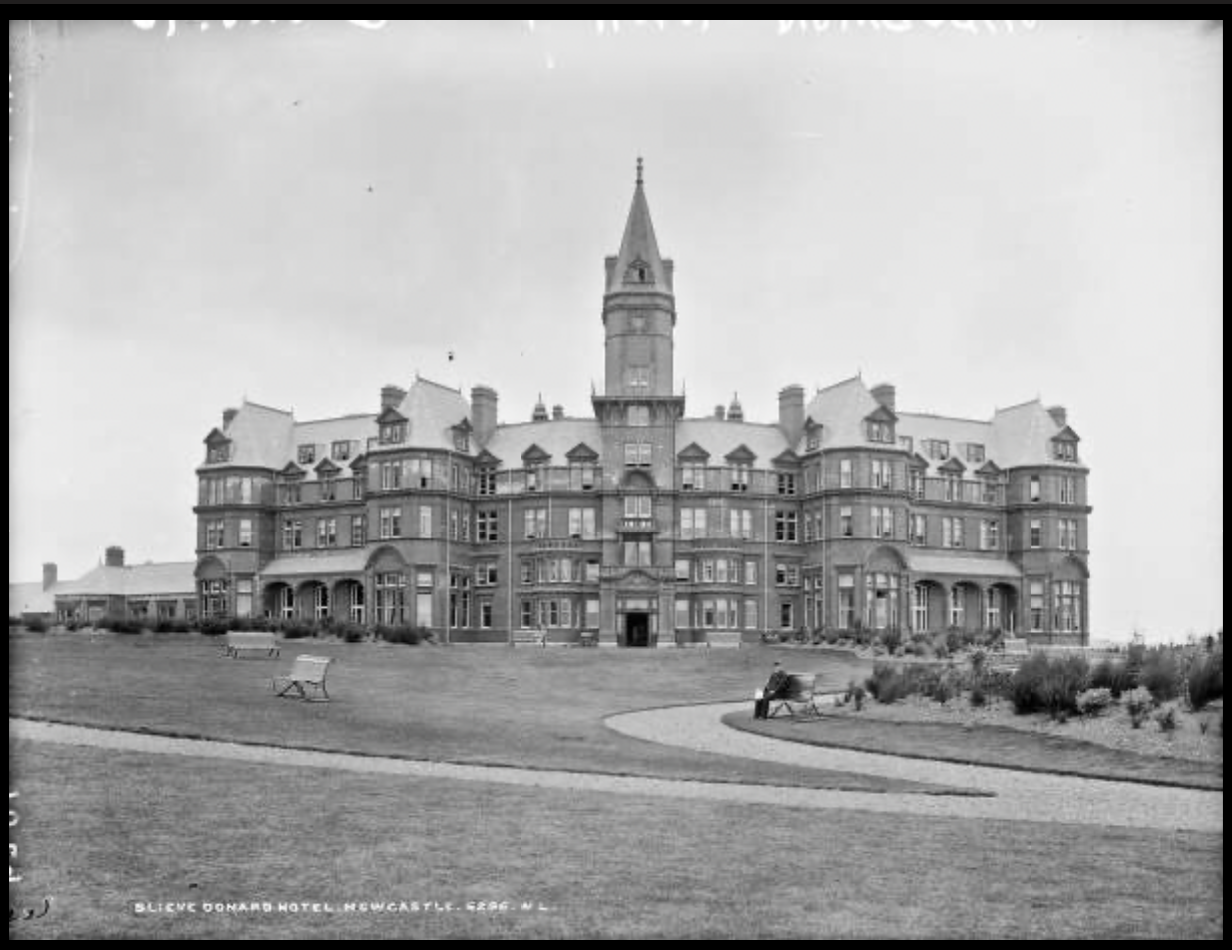
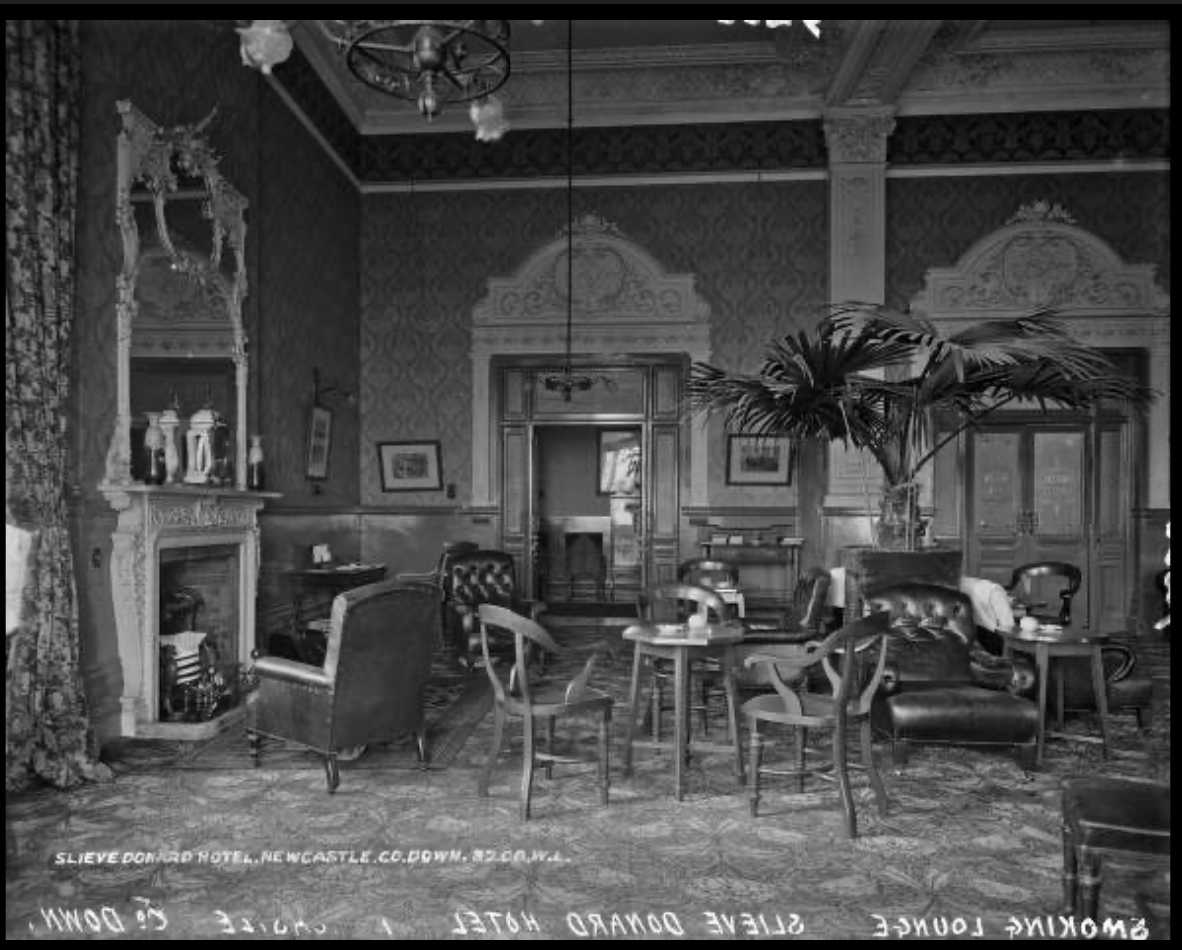
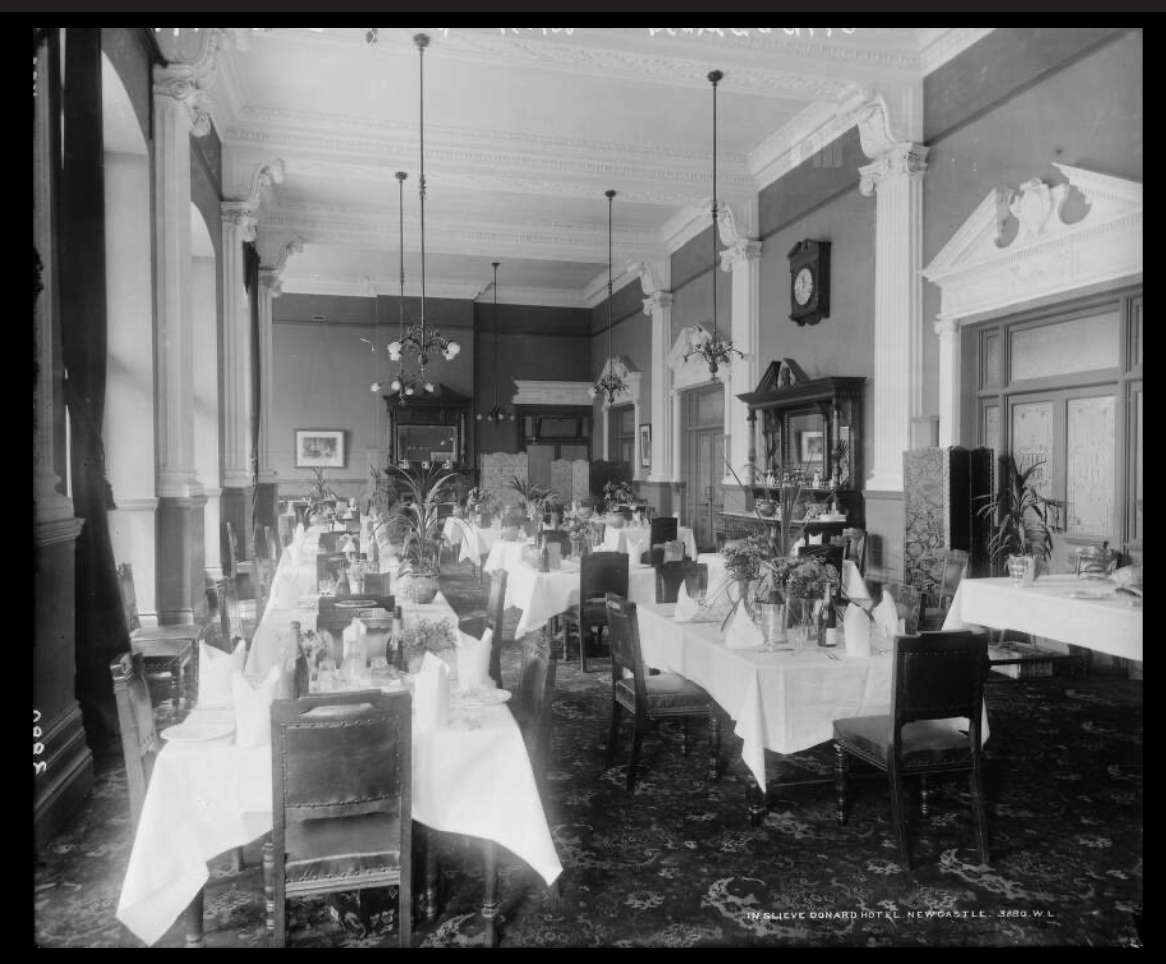
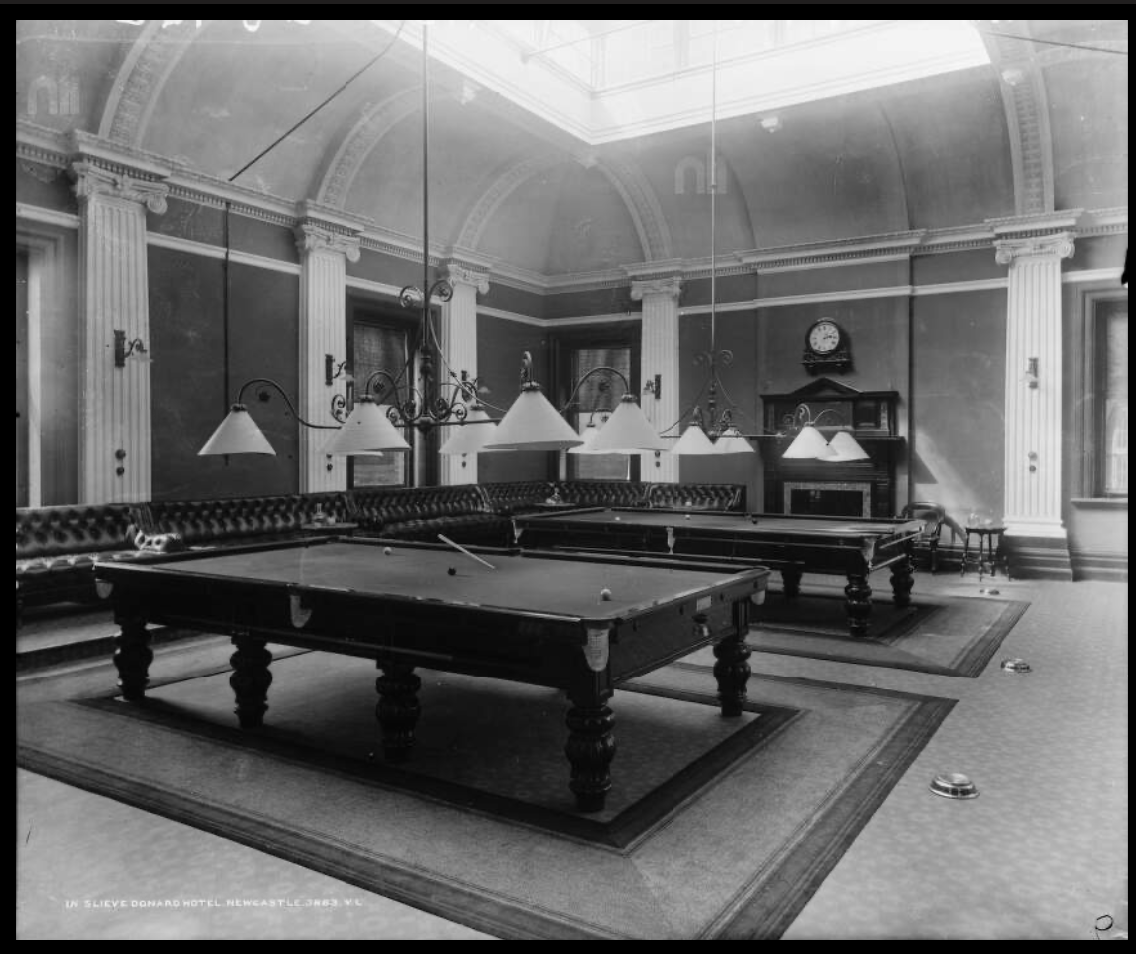
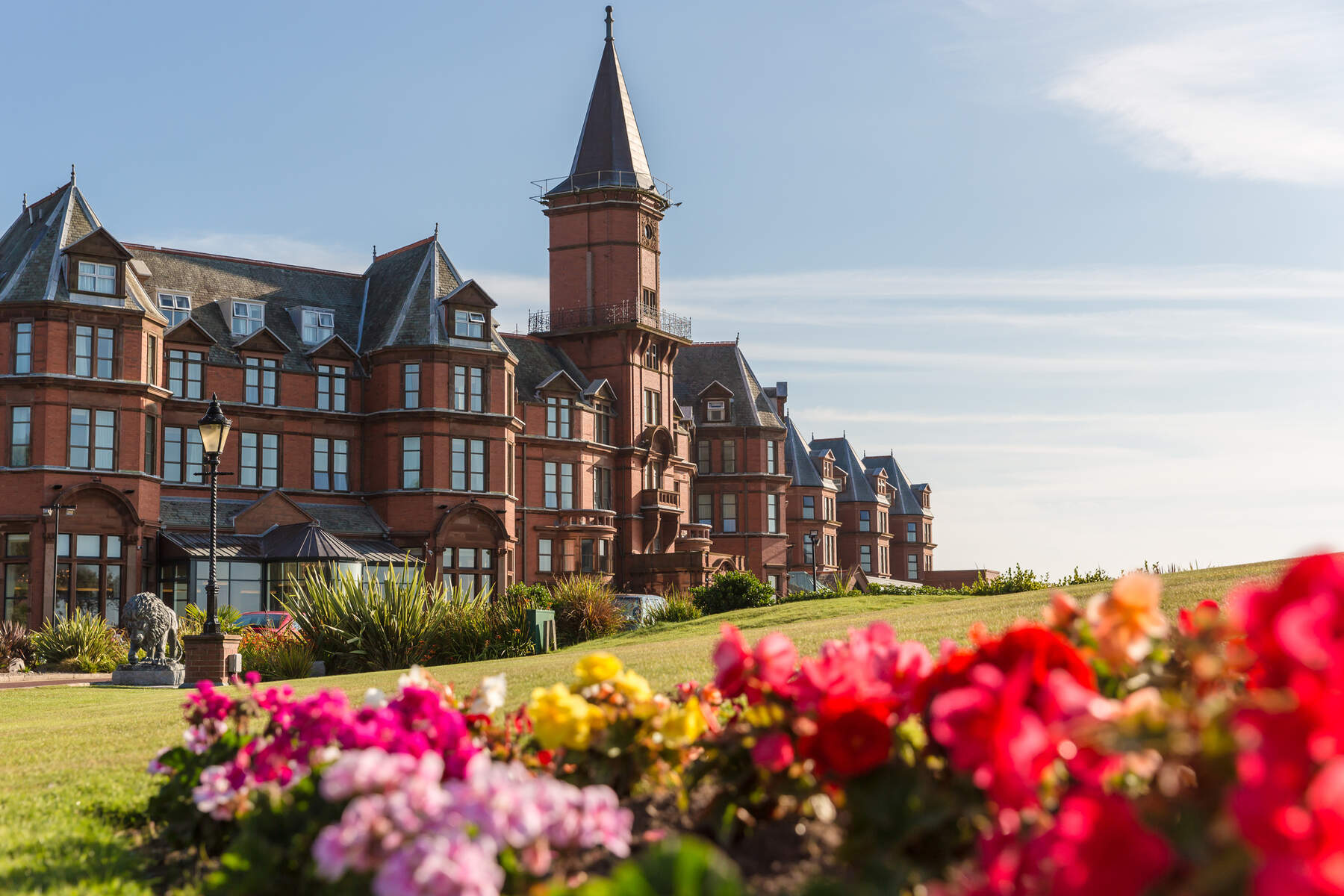
The website tells us: “Slieve Donard was originally built by the Belfast and County Down Railway as an ‘end of the line’ luxury holiday destination. Construction started in 1896 and was completed and officially opened on 24th June 1898 at the cost of £44,000. It was one of the most majestic hotels of its time and was almost self-sufficient with its own bakery, vegetable gardens, pigs, laundry and innovatively a power plant, which also provided electricity for the railway station.“
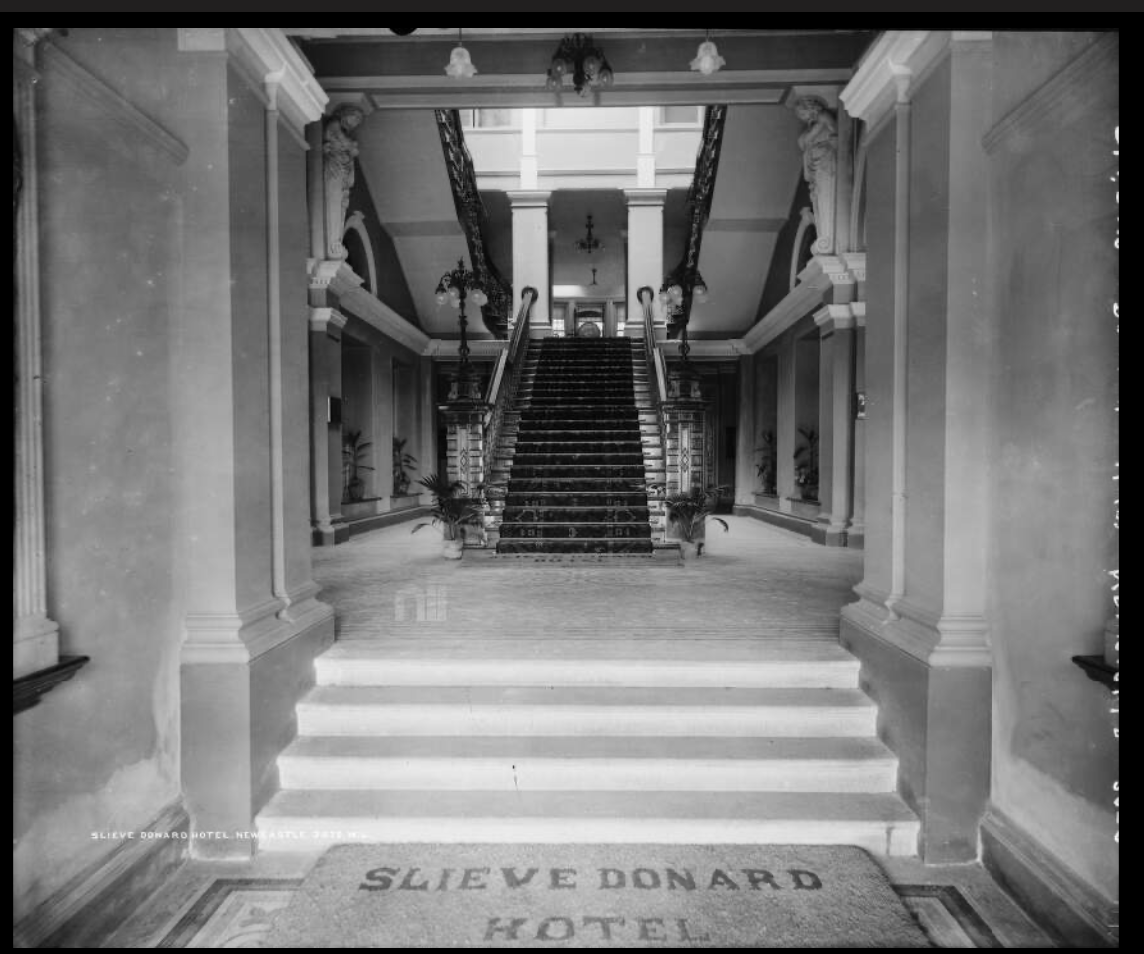
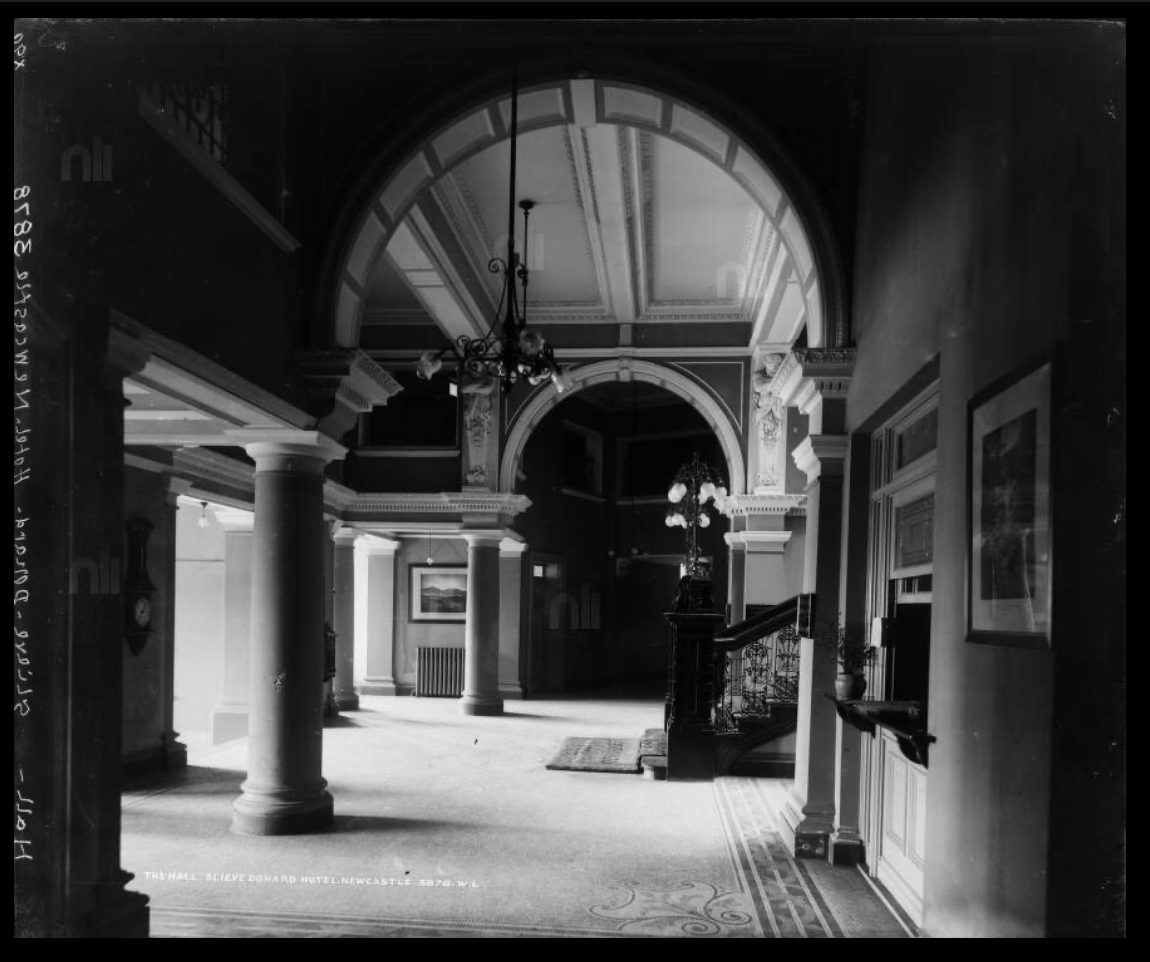
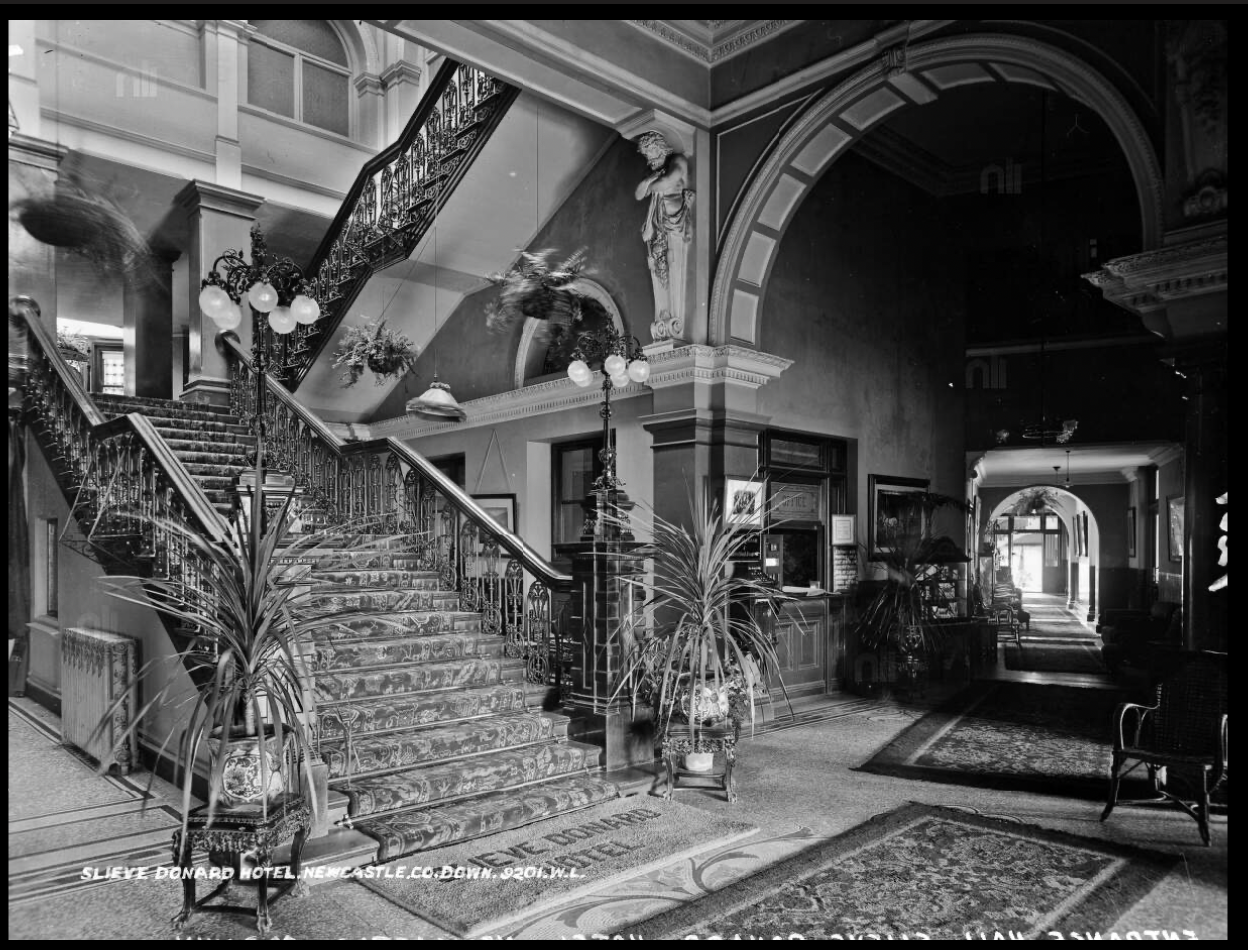
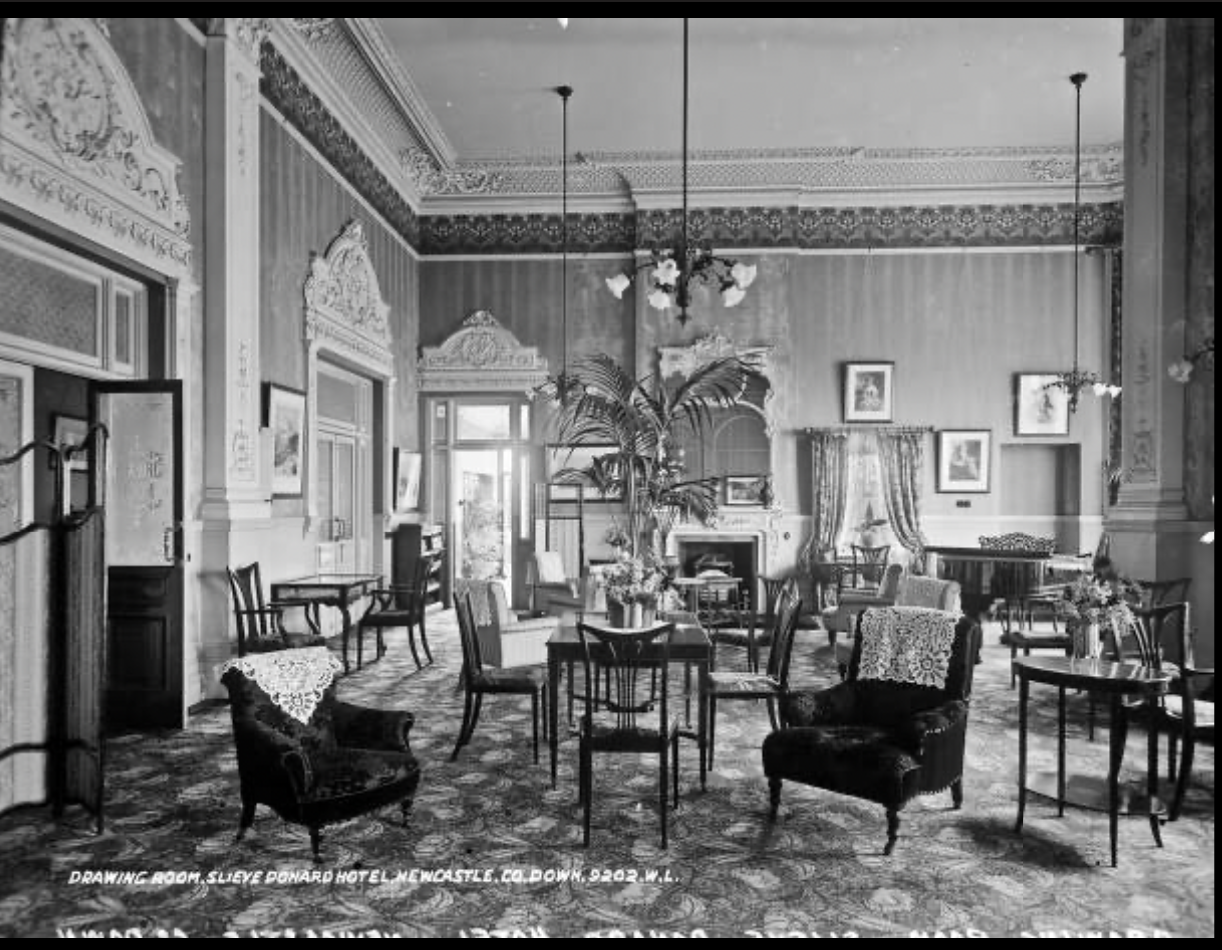
“Slieve Donard typified the idea of Victorian grandeur and luxury with its Drawing Room, Grand Coffee Room, Reading and Writing Room, Smoking Room, Billiard Room and Hairdressing Rooms—you can’t help but conjure up scenes of great style and decadence. ‘One could even partake of seawater baths, douche, spray, needle and Turkish baths all provided by an electric pump straight from the sea.“
“In 2021, Adventurous Journeys (AJ) Capital Partners acquired Slieve Donard Resort and Spa, which will become the first Marine & Lawn Hotels & Resorts property in Northern Ireland and the fourth hotel in the collection.“
10. St. John’s Point Lighthouse Sloop, Killough, County Down – Irish Landmark accommodation
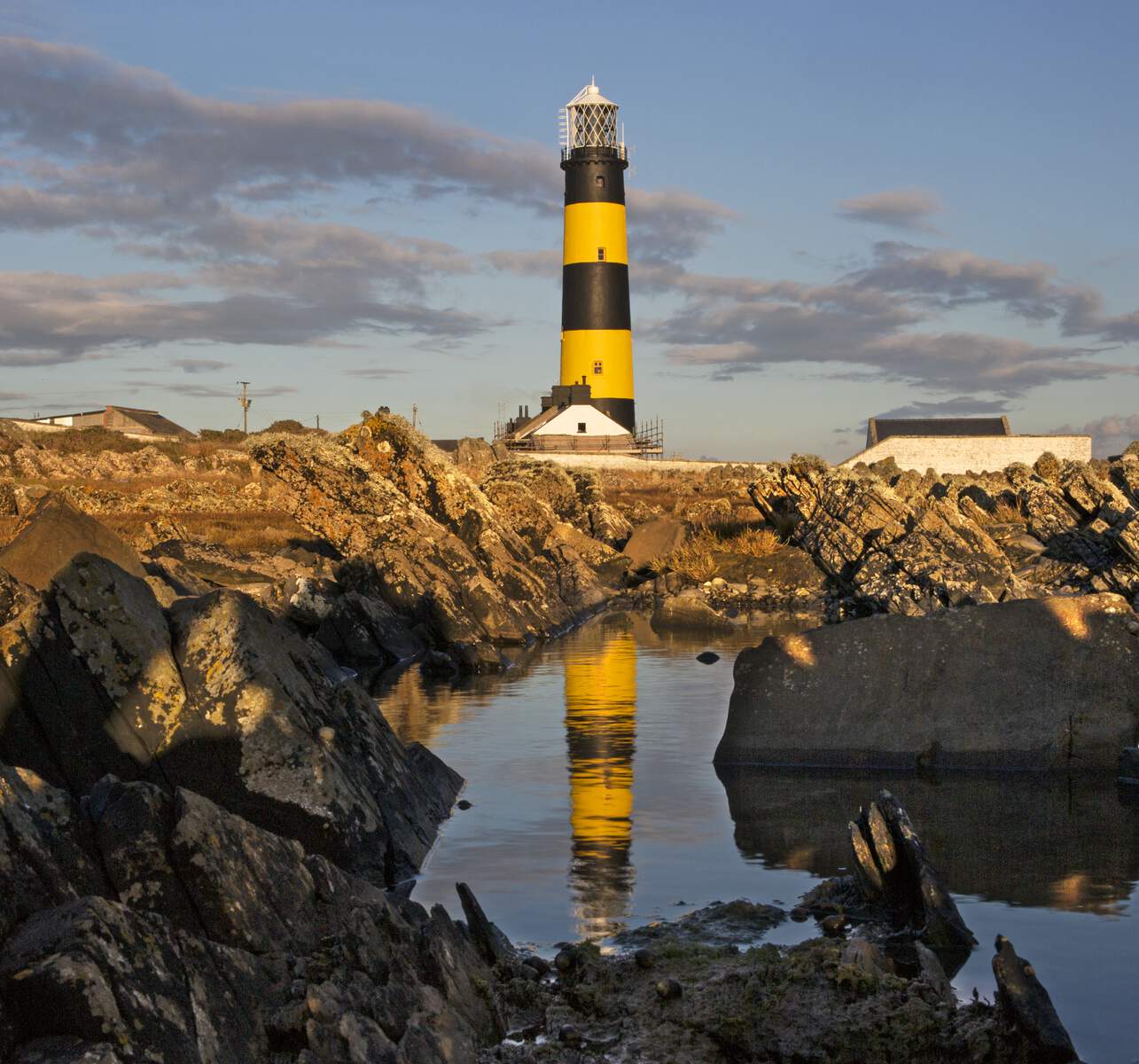
JP Ketch and JP Sloop. Each sleeps four people.
11. Tullymurry House, Tullymurry road, Donaghmore, Newry, County Down – self catering whole house holiday rental
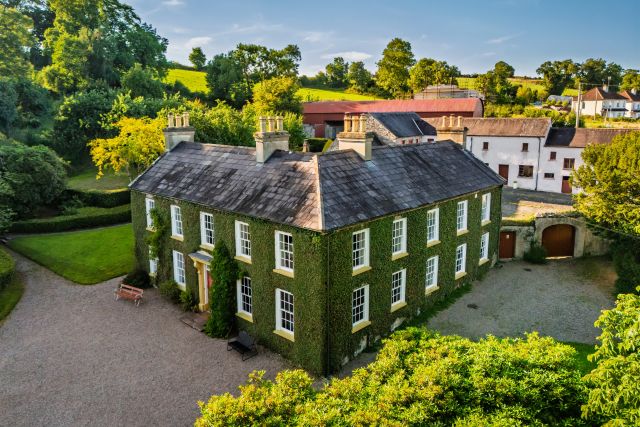
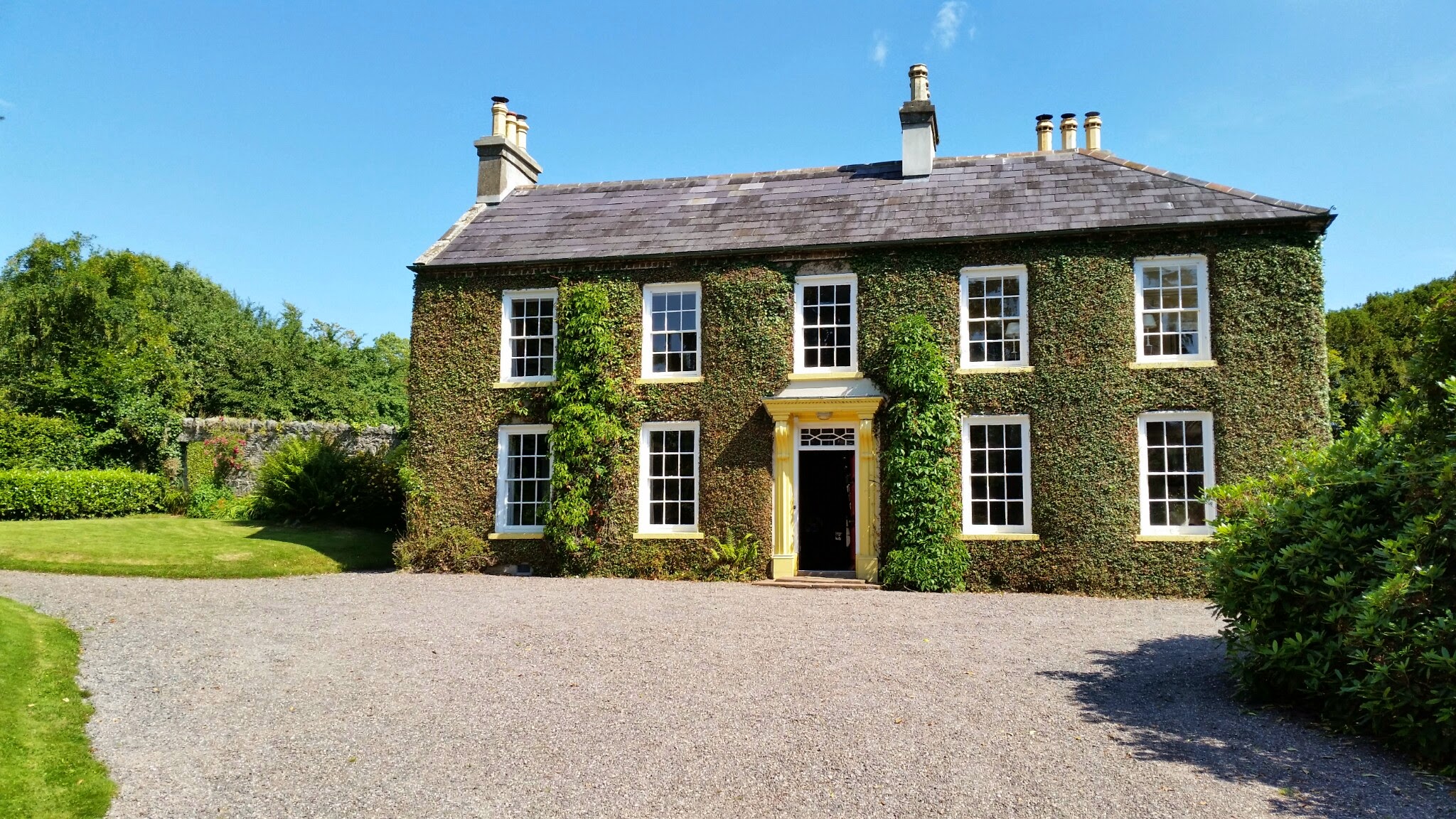
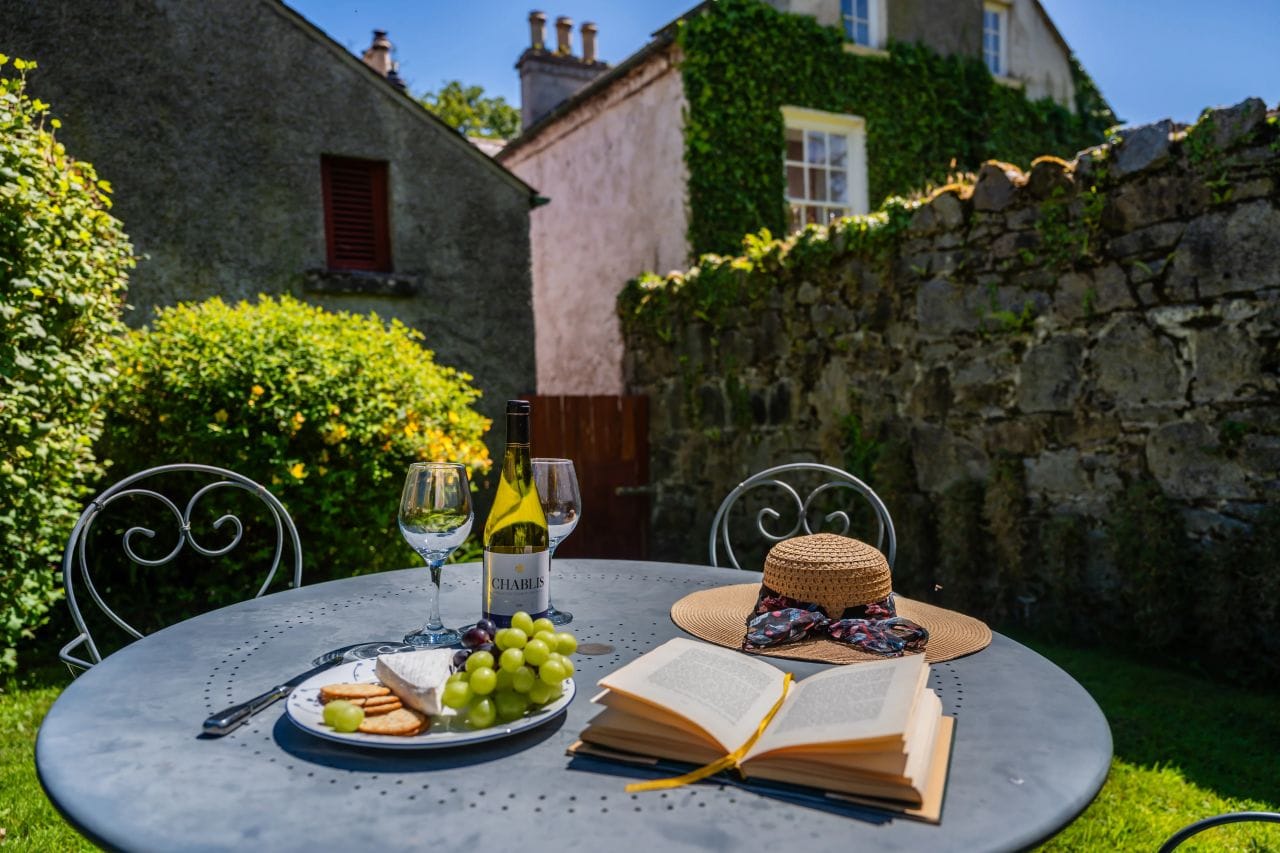
“Nestled amidst rolling parklands and orchards, Tullymurry House stands as a timeless witness to centuries gone by, its elegant Georgian form now graces the landscape. It has evolved through the ages, whilst retaining the soul of the past. This historic house has occupied its site since the 17th century; the original dwelling was built circa 1650 and evolved through the centuries to its present Georgian form – circa 1740.
“The very bones of the house tell their tale — roof timbers, hand-hewn from nearby trees, speak of craftsmanship and care. 52 acres of fertile farmland stretch beyond the house, where once the rhythm of rural life filled the air. The house stands on an area of land known as the Tullymurry Triangle, marked by Donaghmore Presbyterian Church, the Church of Ireland and McGaffin’s corner.“
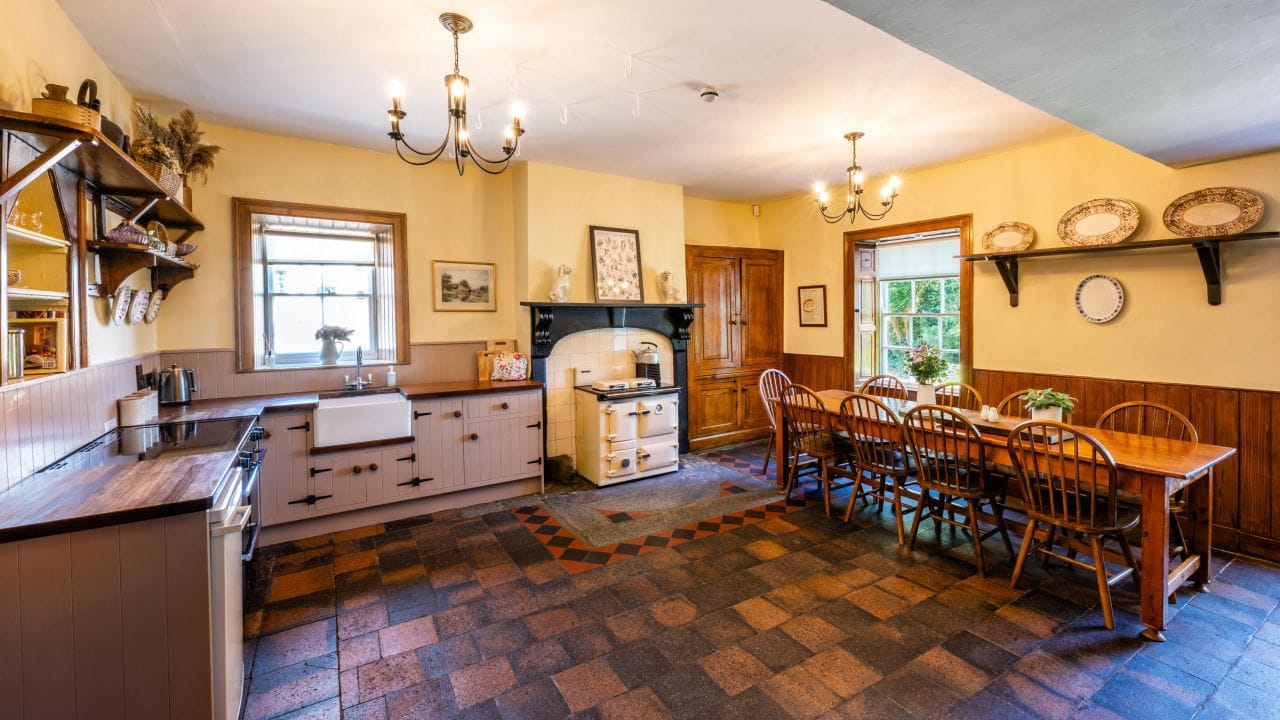
“Tullymurry was a mixed working dairy, beef, and arable farm, its fields abundant with potatoes, grain, and orchard fruit, sustaining both family and farmhands alike. In the kitchen — the true heart of the home — candles and soaps were once lovingly handmade, their warm glow and scent infusing every corner with lavender and beeswax, mixed in with the delicious smells of homemade bread baking on the griddle.
“The Weir family were the owners who established Tullymurry, and they married into the Marshall family, comprising two brothers. One of the brothers was responsible for landscaping the beautiful gardens and “Park” Field with its magnificent trees, the other brother was a bit too fond of gambling and the “devil’s buttermilk” – alcohol, and unfortunately, ended up insolvent in 1890.
“Joseph McMinn a farmer from Castle Ennigan, near Rathfriland bought the farm and Tullymurry House in 1895, his brother Robert McMinn standing surety on the deal from Haddon Partnership, Insolvency Practitioners from London. In 1903 Jospeh fell in love and married Margaret Heron from Rathfriland, she moved into Tullymurry House as a bride. Joseph raised the ceiling in the kitchen to allow bacon and ham to hang, and you can still see the hooks in the ceiling to this day.
“They were blessed with 5 children – Joseph, Malcolm (born 1908), Robert, Bessie & Mary. Malcolm, who is the grandfather of the current owner David McMinn, trained as a doctor and tended his patients in the kitchen. He used to ride his bicycle to Belfast and on one eventful afternoon encountered one of the cows which had been sold at market earlier in the day. The cow so loved Tullymurry House, she escaped twice, to return to the farm.
“The house’s music room, still resonates with the memories of Mary McMinn (David’s Aunt) who lived with her brother Joseph in Tullymurry, who would have hosted and played for the local church choir from Donaghmore Presbyterian Church (which you pass on the way to the house), their voices rising in harmony beneath the ornate plaster ceilings. Joseph and Mary ran the farm – all the business was conducted in the kitchen, where all the cooking was once done on an open fire, until Jospeh installed the Range when Mary was ill. She was not best pleased and saw no need for it.“
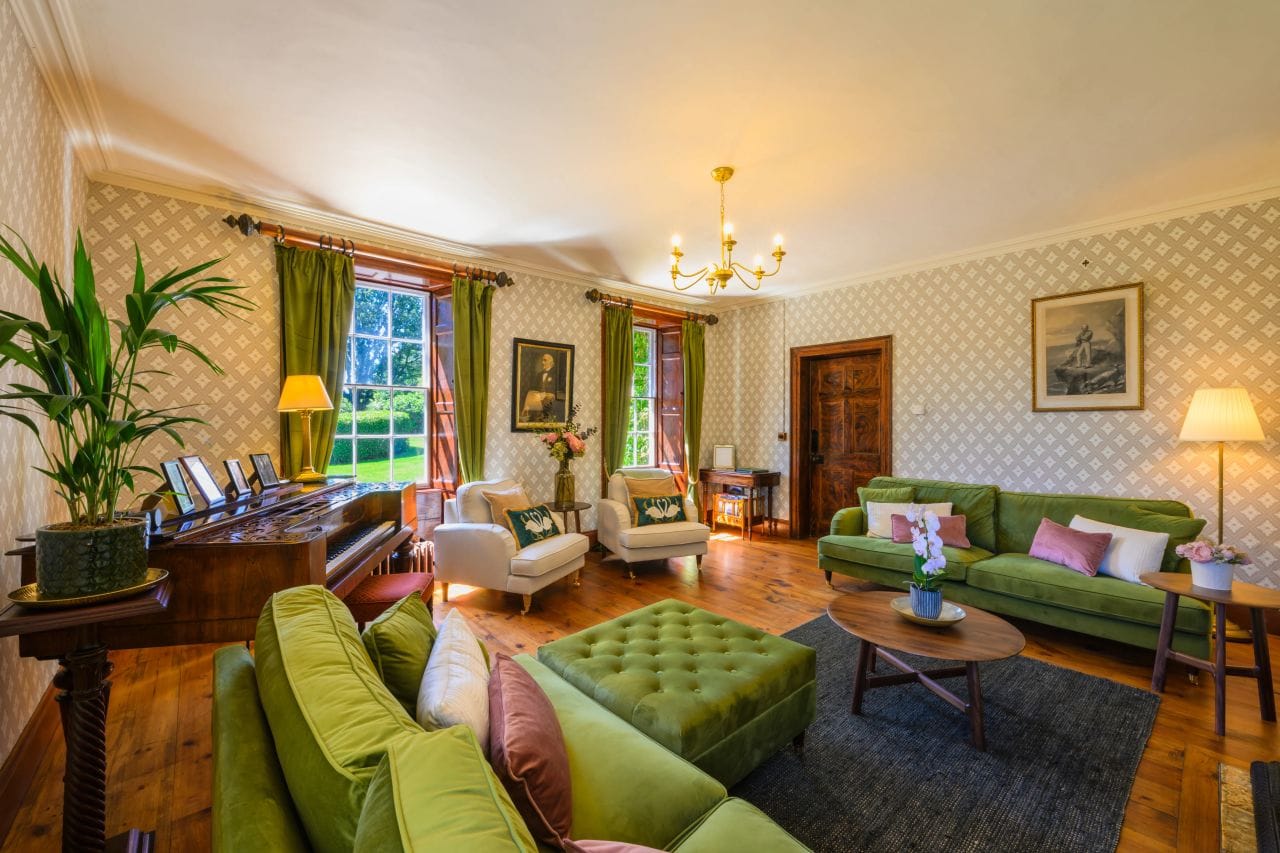
“Dr Malcolm McMinn relocated to England and bought a general practice in Lydbrook, Gloucestershire. He married Annie Caldwell from Ballynaskeagh near Banbridge in 1938 and she joined him in England just before WWII. Joseph and Mary didn’t get married, they stayed at Tullymurry House to help their mother, who had been sadly widowed at a young age.
“When labourers or workmen called, they never got further than the kitchen, the fire was there along with a table, telephone and radio and all business was conducted there and if you arrived at mealtimes, you got fed as well. Up until 2005 there was no fridge freezer or running water – the well and pump was out along the edge of the Well Field, windows froze over on the inside in winter. The pantry was the coldest room in the house and when a new fridge freezer was installed Mary was not impressed, she didn’t like change and continued to set the milk on top of the fridge. To make matters worse the fridge freezer was delivered on a Sunday, and she was scandalised as to what the neighbours would think.
“Most visitors were not allowed into the main part of the House, so when the House was completely renovated by David’s father Richard McMinn in 2012 and central heating installed, along with the spa in what was the cowshed, Tullymurry House opened to the public and the locals couldn’t wait to explore the rest of the House which very few ever got to see.
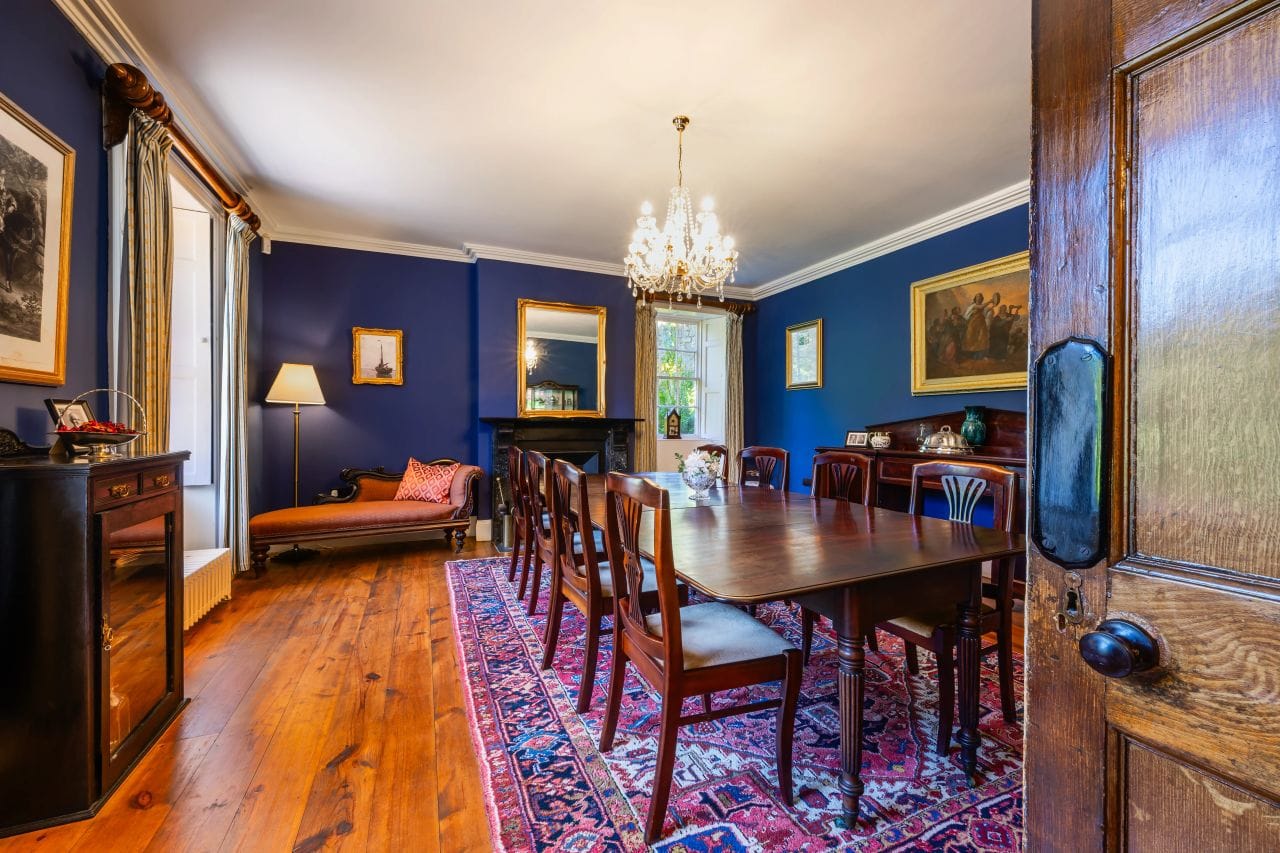
“And among the many tales woven into Tullymurry’s fabric, none is more captivating than that of the family Bible — lost for generations, only to find its way home again, as though guided by the house’s enduring legacy.
“David McMinn (4th generation) with his lovely wife Kristin and daughters Emma and Olivia (5th generation) are now the custodians of Tullymurry House. In the footsteps of his father, David undertook a refurbishment of the House in 2025 and is in the process of returning the gardens to their original landscape design. This is just the latest chapter in this much-loved House.
“Through the centuries, the Marshall, Weir, and McMinn families have each left their mark on Tullymurry, bound by love, legacy, and the deep sense of belonging that only a place like this can inspire. Today, the house stands not just as a piece of history, but as a living story — elegant, enduring, and forever welcoming and the McMinn Family invite you to step inside and be part of its long-cherished history.
“Everyone falls in love with Tullymurry House, it’s like a warm embrace and like the many stories above, you will, no doubt want to return again and again.
“We look forward to welcoming you.
The McMinn Family”
12. Tullyveery House, County Down – holiday rental and weddings
The website tells us:
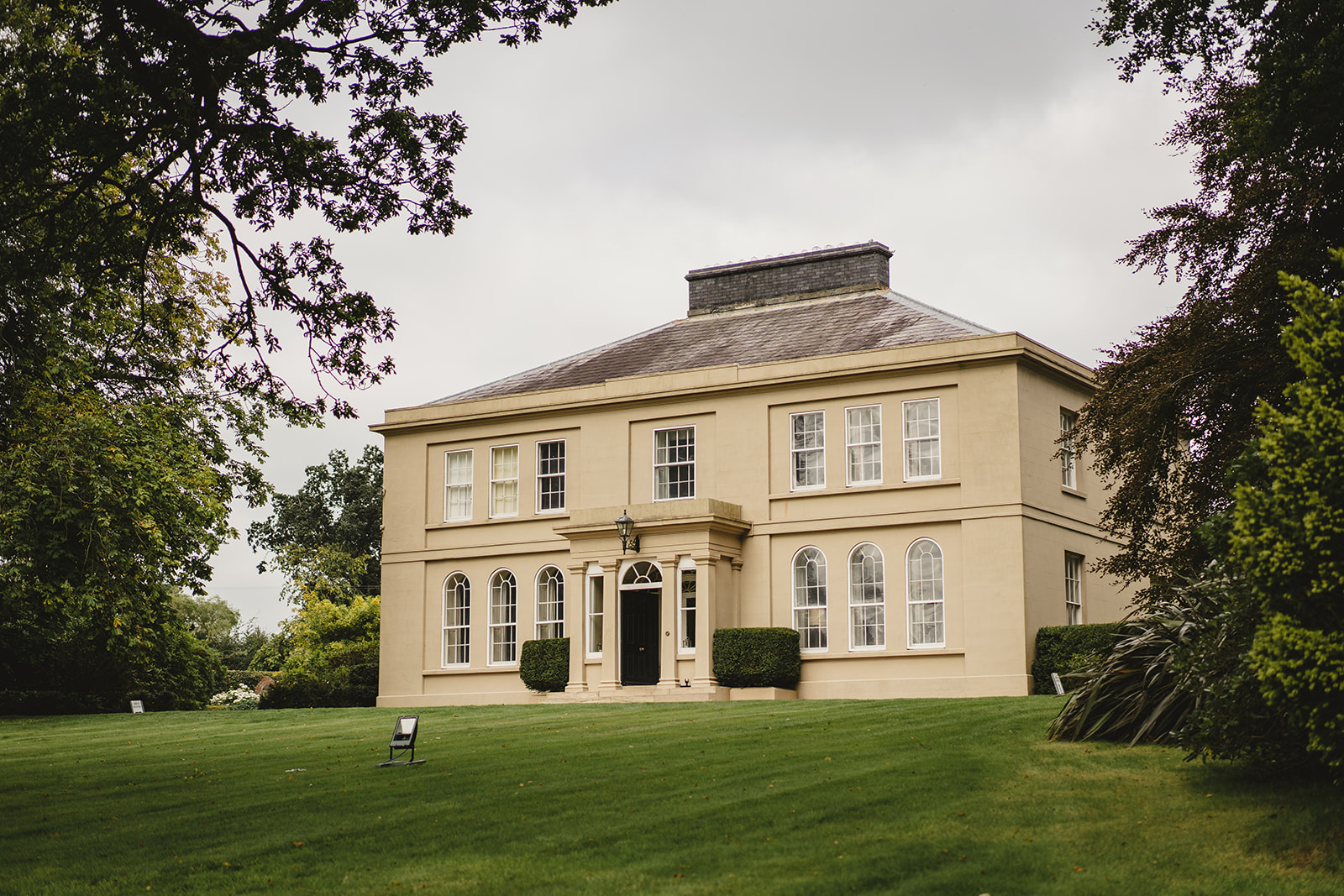
“Tullyveery House is an exclusive and intimate wedding and private events venue nestled in the rolling drumlins of County Down, convenient to Belfast. The family-owned Georgian House and Victorian courtyard area surrounded by mature private grounds and gardens provide a stunning rural backdrop overlooking the Mourne Mountains.
“Tullyveery House remains a family home and working farm. The Georgian house, built between 1825 and 1828, was extended between 1867 and 1890.
“Thomas Heron (1711-1776), one of the grandsons of a trio of brothers, decided in 1752 to move from his home at Killinchy and rent land and a house in Tullyveery townland, near Killyleagh.
“Surviving farm survey maps made in 1760 show a dwelling and a farm of over 100 acres, the majority of which was let out to under-tenants. The family continued to expand and prosper, by growing flax and having it spun into thread in the local area, prior to carting to Belfast.
“Thomas had a son, Francis (1750-1810), who was raised at Tullyveery, decided to move his household to an existing and somewhat better quality house at Ardigon townland, about a mile away, leaving Tullyveery as the ‘junior’ house. The Tullyveery freehold was subsequently bought in 1804.
“Thomas’s son, James (1785-1839), inherited Tullyveery in 1816 and, as a 31 year old bachelor, then built between 1825-1828 the Georgian house that stands there today. In 1866-1867, his son, also called James, eventually demolished the remains of the single-story thatched house and used the square-cut stone masonry to face the existing courtyard buildings, now being used today to host weddings and events. A large three-story Victorian rear extension was finally added in the 1890s.
“More recently, in 1973, the custodianship of Tullyveery passed to Colin Heron, from his father. Colin’s career resulted in him spending extended periods of time away from Tullyveery during which Michael, Colin’s brother, maintained the house and grounds, and operated a working farm. Colin returned to live in Tullyveery permanently in 2000. In 2012 he decided to diversify from farming. After much research and consideration, he decided to offer a private alternative to a hotel wedding and opened the home and grounds to couples for weddings and events. Colin also worked with TV’s Apprentice Nick Hewer as he travelled around Northern Ireland helping farms diversify on the BBC programme ‘The Farm Fixer’, which spurred him on to pursue this new path for Tullyveery.
“In 2019 the custodianship of Tullyveery was passed down to the next generation and Charles (Colin’s nephew) is looking forward to taking Tullyveery from strength to strength. However, the vision for, and philosophy of, Tullyveery has not changed and you can be assured of the same high standards, seamless weddings and memorable parties that Tullyveery has become renowned for.
“The latest project at Tullyveery has been to convert our private Orchard Garden into a space suitable for ceremonies, receptions and parties. Charles remembers sneaking into the Orchard as a child to ‘steal’ apples and to go into the fruit cage to pick fresh raspberries and gooseberries. It is fantastic to now be able to share this space with our guests while also adding a much needed covered garden area to the list of spaces available.“
13. Tyrella, Downpatrick, County Down, BT30 8SU – B&B accommodation and wedding venue
The website tells us:
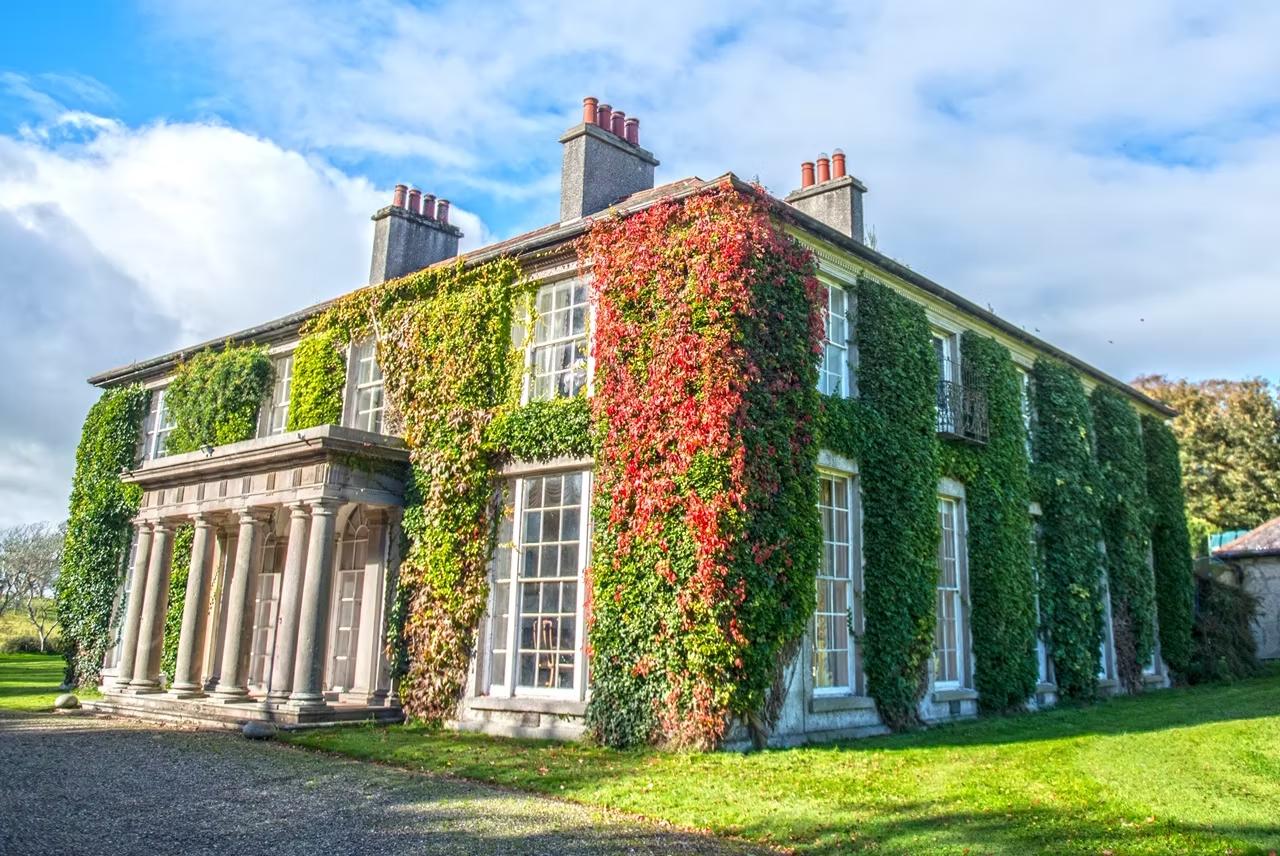
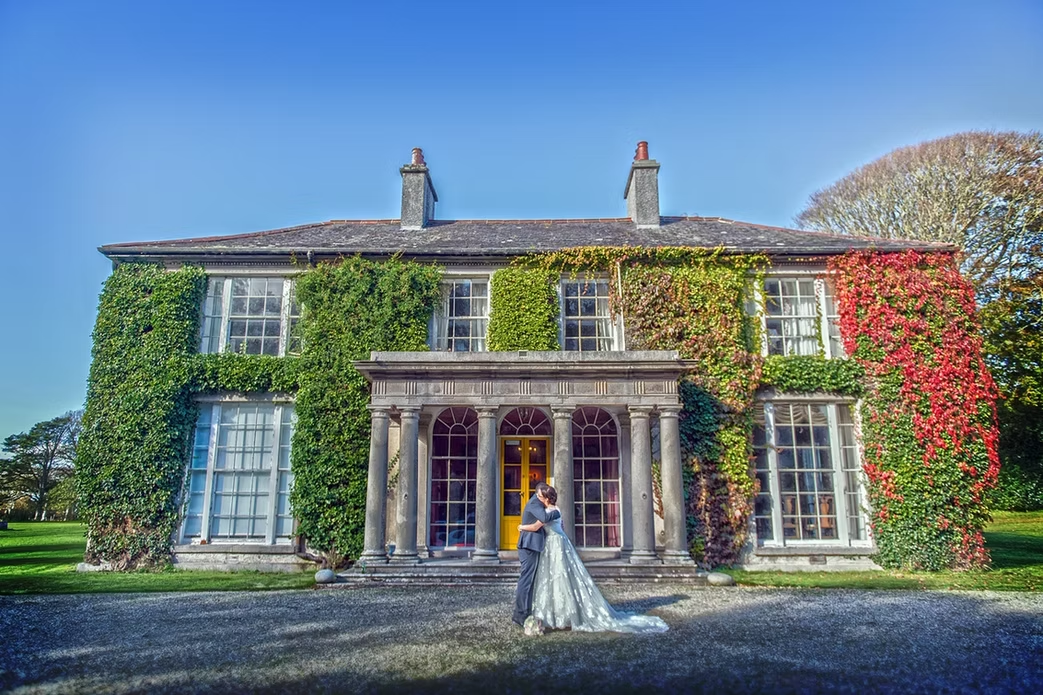
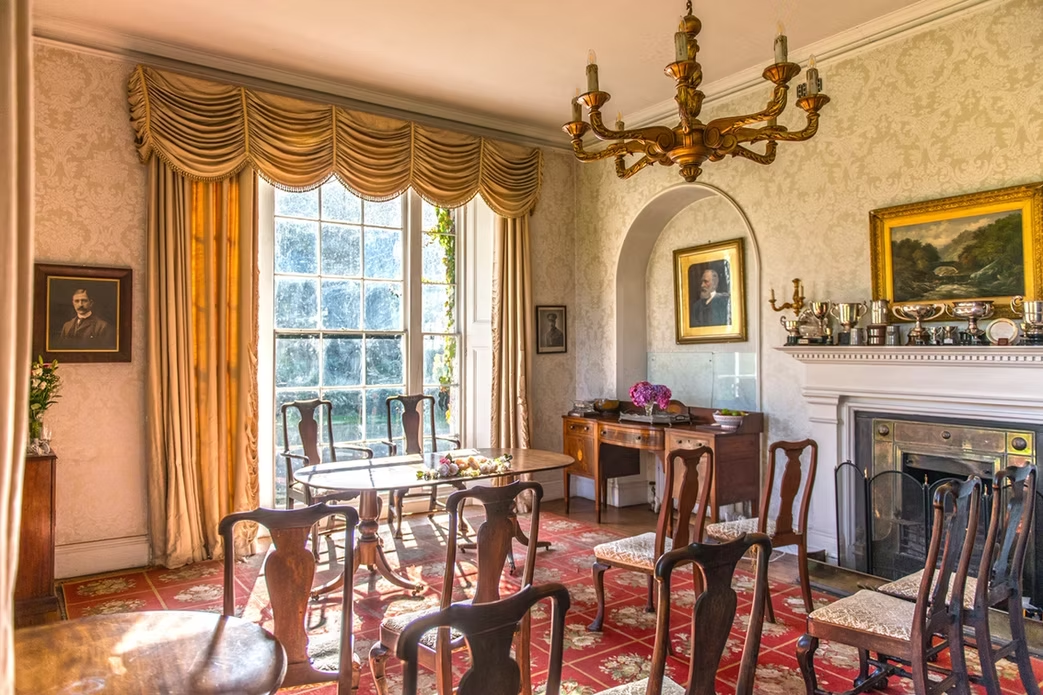
“Tyrella House is a luxury B&B and wedding venue located in the heart of picturesque County Down, with its necklace of pretty fishing villages. A fine 18th century house surrounded by glorious wooded parkland with its own private beach just a short walk from the house, Tyrella offers a tranquil and relaxing getaway.
Tyrella House has been owned by the Corbett family for over 60 years, and was bought by John Corbett after the Second World War to train race horses.
His son, David Corbett began running B&B in the 1990s, which continues to this day. In 2020, the day to day running of the B&B was taken over by his son, John and his wife Hannah.“
[1] Ireland’s Content Pool, https://www.irelandscontentpool.com/en
Text © Jennifer Winder-Baggot, www.irishhistorichouses.com
 Irish Historic Houses